Category Archives: Francis Schaeffer

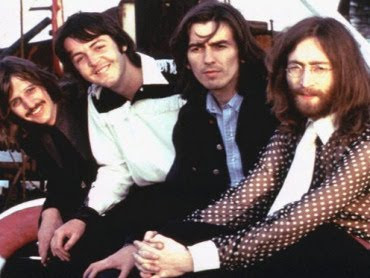
FRANCIS SCHAEFFER ANALYZES ART AND CULTURE Part 99 THE BEATLES (Breaking down the song “Penny Lane”Part B) Featured artist is Clive Barker

In the book THE GOD WHO IS THERE, Francis Schaeffer noted:

In this flow there was also the period of psychedelic rock, an attempt to find this experience without drugs, by the use of a certain type of music. This was the period of the Beatles’ Revolver (1966) and Strawberry Fields Forever (1967). In the same period and in the same direction was Blonde on Blond (1966) by Bob Dylan….No great illustration could be found of the way these concepts were carried to the masses than “pop” music and especially the work of the BEATLES. The Beatles moved through several stages, including the concept of the drug and psychedelic approach. The psychedelic began with their records REVOLVER, STRAWBERRY FIELDS FOREVER, AND PENNY LANE. This was developed with great expertness in their record SERGEANT PEPPER’S LONELY HEARTS CLUB BAND in which psychedelic music, with open statements concerning drug-taking, was knowingly presented as a religious answer. The religious form was the same vague pantheism which predominates much of the new mystical thought today. One indeed does not have to understand in a clear way the modern monolithic thought in order to be infiltrated by it. SERGEANT PEPPER’S LONELY HEARTS CLUB BAND was an ideal example of the manipulating power of the new forms of “total art.” This concept of total art increases the infiltrating power of the message involved.

I love the music of the Beatles, but I realize that they did not have a Christian Worldview and they did very often pointed their audiences to the empty answers the world usually gives. I would hope that both Ringo and Paul would turn to Christ like both Kerry Livgren and Dave Hope of the rock group KANSAS did. The answer to find meaning in life is found in putting your faith and trust in Jesus Christ. The Bible is true from cover to cover and can be trusted.  

______________

__________________

The Beatles Penny Lane


___________

Great Album


Paul McCartney- Penny Lane (Live)

Here is an excerpt of a fine article about Schaeffer’s take on the Beatles’ album:

Soli Deo Gloria

Wednesday, January 8, 2014

Music and The General Culture’s Shift Away From Absolute Truth

By

Pastor Stephen Feinstein

Two days ago, I wrote about artists plunging below the line of despair soon after the philosophers. By way of reminder, the line of despair, according Francis Schaeffer, is when people abandon the idea of absolutes and instead see reality as being relative to each individual. Relativity makes sense in a godless, accidental universe. Since many philosophers and artists bought into the philosophy of atheism, they gave up absolute truth with it. The end result is everyone can make up their own truth since ultimately everyone is wrong anyway.

Well, after the artists went below the line of despair, music went next, and then the general culture was soon to follow. Thus, today I will talk about the plunge of music and general culture below the line. As I have said before, the things that Schaffer points out are even more relevant for our day than his.

Just as Hegel was the doorway for philosophy and Impressionism was the doorway for art, Debussy (1862-1918) was the doorway for music to drop below the line of despair. He abandoned traditional musical Musique Concrete. Sound was seriously and deliberately distorted. They would take real sounds, but break them up, rearrange the parts, and throw them back together in any chaotic way they chose. Their message was loud and clear. Everything is relative, all things are in change, and nothing (not even sound) is absolute. This seems to be the uniform message of postmodern man. They see us as arising by chance and chaos, and eventually all will return to that state. So in the meantime, they say we must reject all meaning since there is no purpose or plan that unifies all of the particulars in the universe. For those who are interested, Schaffer gives some very interesting examples on page 36 of The God Who is There, of real samples from these types of composers, scales, eschewed tone in unnatural ways, and utilized chromaticism to alter music’s basic diatonic organization. In other words, our ears naturally make sense out of patterned scales and predictable tones, but he decided to jumble these around allowing for nonsensical sounds. This opened the door for music composers to deliberately go below the line of despair, as seen by the first large movement to do so. That movement was, well, it did not stop with music. This progression below the line moved onto a fourth step—general culture. Schaeffer covers the different elements of general culture in this chapter to make his point. He begins with literature and claims that Henry Miller (1891-1980) started to move the general culture below the line. His writings were certainly pornographic, but his purpose was more philosophical than perverse. His goal was to smash everything, including sex. He rejected that there is any meaning, so his goal was to smash all traditional thoughts of meaning, and he even sought to show that sex is meaningless. Without meaning or standards, he can write about whatever he wants, no matter how perverse…

Next Schaeffer moves onto drama and focuses in on John Osborne (1929-1980). As brilliant as a playwright as this man was, he too was part of this movement towards absurdity. In his famous play Martin Luther, he deliberately distorts history to promote his view of truth. Luther was a man that was absolutely committed to truth and he was convinced that he was right in his doctrinal stances against the Roman Catholic Church. Well, in Osborne’s play, the story ends with one of Luther’s old Catholic mentors asking, “Martin, do you know you are right?” And contrary to all history, Osborne has Luther answer, “Let’s hope so.” The curtain rolls, and the audience is left with the mood that nothing is certain. What a moving way to end a play! If someone missed the point in a philosophy textbook, they certainly would have gotten it from the emotional pit in their stomach after watching the play. This is how drama works. It has the unique power, like music, to bypass the intellect and go straight for the emotions.

Poetry also fell below the line. Dylan Thomas (1914-1953) wrote a poem called Elegy, which is a depressing verbal expression of total meaningless. They are the words of a tortured soul. He put to poetic form the musings of the philosophers, and in so doing he capture the emotional torment caused by such a worldview. Once again, his poetic form could speak to more people than the philosophers could ever hope to.

Modern Cinema is no different. Good movies are not labeled as good because they are morally right, but instead because they are technically good with good camera shots, artistic flavor, and a philosophical message. It is much the same today. Often the movies that win the awards are the movies that the general public did not care for. The general public often likes to see a good guy overcome a bad guy amidst a two hour roller coaster of action and suspense. But in the opinion of the cultural elites, this is nothing more than bad writing and bad filming meant to appease the masses with romantic illusions of escape. The elites want none of that!  Instead, the films that are dubbed as “good” are almost always created by people who agree with the postmodern view of man. Their films have plots that ultimately blur morality, certainty, and truth. They are at their core existentialist.

If you were to explain the drift of modern thought to the average person, they probably would not understand what you are talking about, but as Schaeffer points out, it does not mean they are not influenced by the things they see and hear in movies and on TV, and what they sing along to in pop music. In fact, it is from these areas that the masses have probably been most influenced. It is in these areas that the average “Joe” fell below the line of despair, whether he realized it or not.

For example, the psychedelic music of the Beatles were a deliberate attempt to destroy antithesis, promote relativism, undermined the truths of Christianity, and promote New Age Spirituality and drug use. The musicians that followed them simply brought more of the wickedness. Since the message was set to catchy tunes and directed toward drug-battered minds, an entire generation bought into the counterculture movement of the 1960s, and we are still living in the ramifications of it today. Music has only become more relative and meaningless. It has only promoted more drug use, violence, and sexual promiscuity…

This all stems from the fact that fallen man rejects absolute truth because they reject the God of the Bible. In the past, they clung to idolatry so that they could appeal to some authority other than God in order to account for their absolute standards. But when the chief thinkers rejected any purpose or meaning to things, and instead insisted upon an atheistic existence, absolute standards were rejected. The philosophers wrote and articulated it, the artists painted it on canvas, the musicians promoted it with their new styles, and the general culture (literature, poetry, drama, cinema, TV, and pop music) unwittingly accepted it. Now this is the default mode of thinking for the people of Western Civilization. People reject absolutes even if they don’t know why. Most people would not call themselves atheists, but their entire view of truth and reality stems from an atheist worldview. It is amazing how the absurd ideas of a few philosophers were able to change the way of thought for the entire modern world.

So Christian, what is your view on truth? In a world where antithesis is rejected, we need to push the antithesis again and again until the culture understands they cannot escape it. There are ways to do this, and perhaps they will be shared in later posts. We know that it is impossible to live without absolutes. We know the universe does have meaning. Therefore we are not hypocritical or inconsistent when we live as such. But the culture is hypocritical and inconsistent when it rejects God’s absolutes and yet forms its own, while with the same breath claiming such absolutes do not really exist. We need to confront them with God’s absolute truth, which is the only absolute truth that exists.

Penny Lane

From Wikipedia, the free encyclopedia
For other uses, see Penny Lane (disambiguation).

Coordinates: 53°23′13″N 2°55′10″W

“Penny Lane”

US picture sleeve
Single by The Beatles
A-side Strawberry Fields Forever
Released 13 February 1967 (US)
17 February 1967 (UK)
Format 7″
Recorded 29 November 1966 –
17 January 1967
EMI Studios, London
Genre
Length 3:03
Label Parlophone (UK)
Capitol (US)
Writer(s) Lennon–McCartney
Producer(s) George Martin
Certification Gold (RIAA)[4]
The Beatles singles chronology
Yellow Submarine” / “Eleanor Rigby
(1966)
Strawberry Fields Forever” / “Penny Lane
(1967)
All You Need Is Love
(1967)
Music sample
MENU
0:00
Magical Mystery Tour track listing

Penny Lane” is a song by The Beatles.[5] It was written by Paul McCartney but credited to the Lennon–McCartney songwriting partnership. The song was created in response to John Lennon’s “Strawberry Fields Forever“, and its lyrics refer to a real street in Liverpool, England.

Recorded during the Sgt. Pepper sessions, “Penny Lane” was released in February 1967 as one side of a double A-sided single, along with “Strawberry Fields Forever”. The single was the result of the record company wanting a new release after several months of no new Beatles releases. Although the song did not top the charts in Britain, it was still a top ten hit across Europe. The song was later included on the band’s US album, Magical Mystery Tour, despite not appearing on the British double EP of the same name.

In 2004, Rolling Stone ranked “Penny Lane” at number 456 on its list of the 500 Greatest Songs of All Time.[6]

Background[edit]

‘Penny Lane’ was kind of nostalgic, but it was really a place that John and I knew; it was actually a bus terminus. I’d get a bus to his house and I’d have to change at Penny Lane, or the same with him to me, so we often hung out at that terminus, like a roundabout. It was a place that we both knew, and so we both knew the things that turned up in the story.[7]

– Paul McCartney, discussing “Penny Lane” in a 2009 interview with Clashmagazine

The song’s title is derived from the name of a street near Lennon’s childhood home for his first five years (9 Newcastle Road, just off Church Road), in the band’s hometown, Liverpool, England. McCartney and Lennon would meet at Penny Lane junction to catch a bus into the centre of the city. During the 1960s, this was a significant bus terminus for several routes, and buses with “Penny Lane” displayed were common throughout Liverpool. The name Penny Lane is also used for the area that surrounds its junction withSmithdown Road, Smithdown Place (where the terminus was located) and Allerton Road, including a busy shopping area. Penny Lane is believed to be named after James Penny, an 18th-century slave trader.[8]

The street is an important landmark, sought out by many Beatles fans touring Liverpool. In the past, street signs saying “Penny Lane” were constant targets of tourist theft and had to be continually replaced. Eventually, city officials gave up and simply began painting the street name on the sides of buildings. This practice was stopped in 2007 and more theft-resistant “Penny Lane” street signs have since been installed, although some are still stolen.[9]

Recording[edit]

Production began in Studio 2 at Abbey Road on 29 December 1966 with piano as the main instrument.[10] On 17 January 1967, trumpet player David Mason recorded the piccolo trumpet solo.[11] The solo, inspired by a performance of Johann Sebastian Bach‘s second Brandenburg Concerto,[12] is in a mock-Baroque style for which the piccolo trumpet (a small instrument built about one octave higher than the standard instrument) is particularly suited, having a clean and clear sound which penetrates well through thicker midrange textures.[13] According to lead sound engineer Geoff Emerick, David Mason “nailed it” at some point during the recording; Paul McCartney tried to get him to do another take but producer George Martin insisted it wasn’t necessary, sensing Mason’s fatigue. This is known[by whom?] as one of the few times the producer’s decision overruled that of the already superstar Beatles. Emerick also notes in his book that prior to this recording, the high “E” was considered unobtainable by trumpet players and has been expected of them since said performance on the record. Mason was paid 27 pounds and 10 shillings for his performance on the recording. “Penny Lane”‘s production effects include percussion effects and piano through a Vox guitar amplifier with added reverb.[14]

The original US promo single mix of “Penny Lane” had an additional flourish of piccolo trumpet notes at the end of the song. This mix was quickly superseded by one without the last trumpet passage, but not before a handful of copies had been pressed and sent to radio stations. These recordings are among the rarest and most valuable Beatles collectibles. A stereo mix of the song with the additional trumpet added back in was included on the USRarities compilation and the UK album: The Beatles Box in 1980, and is included on an alternate take of the song released on Anthology 2 in 1996.

Composition[edit]

The song has a double tonic structure of B major verse (in I-vi-ii-V cycles) and A major chorus connected by formal pivoting dominant chords.[15] In the opening bars in B major, after singing “In Penny Lane” (in an F#-B-C#-D# melody note ascent) McCartney sings the major third of the first chord in the progression (on “Lane”) and major 7th (on “barber”) then switches to a Bm chord, singing the flattened 3rd notes (on “know” with a i7 [Bm7] chord) and flattened 7th notes (on “come and go” [with a ♭VImaj7 [Gmaj7] chord] and “say hello” [with a V7sus4 [F#7sus4] chord]).[16] This has been described as a profound and surprising innovation involving abandoning mid-cycle what initially appears to be a standard I-vi-ii-V Doo Wop pop chord cycle.[17] To get from the verse “In the pouring rain – very strange” McCartney uses an E chord as a pivot, (it is a IV chord in the preceding B key and a V in the looming A key) to take listeners back into the chorus (“Penny Lane is in my ears …”). Likewise to get back from the chorus of “There beneath the blue suburban skies I sit, and meanwhile back … , McCartney uses an F#7 pivot chord (which is a VI in the old A key and a V in the new B key). The lyrics “very strange” and “meanwhile back” can be viewed as hinting at these complex tonal changes.[18]

A feature of the song was the piccolo trumpet solo played by Mason. This is thought to be the first use of this instrument (a distinctive, speciality instrument, pitched an octave higher than the standard B-flat trumpet) in pop music. Martin later wrote, “The result was unique, something which had never been done in rock music before.”[19] McCartney was dissatisfied with the initial attempts at the song’s instrumental fill (one of which, featuring cors anglais, was released on Anthology 2), and was inspired to use the instrument after seeing Mason’s performance on a BBC television broadcast of the second Brandenburg Concerto by Johann Sebastian Bach.[20][21]

The song features contrasting verse-chorus form.[22] Lyrically there are several ambiguous and surreal images. The song is seemingly narrated on a fine summer day (“beneath the blue suburban skies”), yet at the same time it is raining (“the fireman rushes in from the pouring rain”) and approaching winter (“selling poppies from a tray” implies Remembrance Day, 11 November). Ian MacDonald has stated: “Seemingly naturalistic, the lyric scene is actually kaleidoscopic. As well as raining and shining at the same time, it is simultaneously summer and winter.”.[23] Macdonald suggests an LSD influence, and that the lyrical imagery points to McCartney first taking LSD in late 1966. However, he also cites a different story, which dates McCartney’s first LSD trip to 21 March 1967. Macdonald finishes with the comment: “Despite its seeming innocence, there are few more LSD-redolent phrases in the Beatles’ output than the line … in which the Nurse ‘feels as if she’s in a play’ … and ‘is anyway’.”

Context[edit]

A Liverpool Penny Lane street sign

The “shelter in the middle of the roundabout” refers to the old bus shelter, later developed into a cafe/restaurant with a Beatles theme, but now derelict and abandoned, despite its popularity as a tourist attraction. This is also Penny Lane Bus Terminus, where the numbers 46 (Penny Lane to Walton) and 99 (Penny Lane to Old Swan) buses terminated and is officially on Smithdown Place.

The mysterious lyrics “Four of fish and finger pies” are British slang. “A four of fish” refers to fourpennyworth of fish and chips, while “finger pie” is sexual slang of the time, apparently referring to intimate fondlings between teenagers in the shelter, which was a familiar meeting place. The combination of “fish and finger” also puns on fish fingers.[24] The lyrics as printed on the compilation album The Beatles: 1967–1970, however, are “Full of fish and finger pies” which are incorrect[citation needed]. In the remastered version, the lyrics read as “For a fish and finger pies”, which is also incorrect[citation needed].

Release[edit]

When a new Beatles single was requested for by manager Brian Epstein, producer George Martin told him that the band had recorded “Penny Lane” and “Strawberry Fields Forever”, which Martin considered to be the band’s best songs up to that point.[25] At the suggestion of Epstein, the two songs were released as a double A-side single, in a fashion identical to that of their previous single, “Yellow Submarine” / “Eleanor Rigby“. Released in the US on 13 February 1967 and in the United Kingdom on 17 February 1967, the single failed to top the British charts, making it the first time since “Love Me Do” in 1962 for a Beatles single to peak lower than number one. The song stalled at number two, one place below Engelbert Humperdinck‘s “Release Me“.[26] On the national chart compiled by Melody Maker magazine, however, the combination topped the singles list for three weeks.[27] In the United States, the song became the band’s 13th single to reach number 1 on the Billboard Hot 100, doing so for a week before being knocked off by the Turtles‘ song “Happy Together“.

Since the Beatles usually did not include songs released as singles on their British albums, both songs were left off the Sgt. Pepper’s Lonely Hearts Club Band album, a decision Martin later regretted.[28] Both songs were later included on the US Magical Mystery Tour album in November 1967.

This was also the first single by the Beatles to be sold with a picture sleeve in the UK, a practice rarely used there at that time but common in the US and various other countries (such as Japan).

Penny Lane today[edit]

A view down Penny Lane at the opposite end from the roundabout, approaching the junction with Greenbank Road near to Sefton Park.

Tony Slavin (the white building on the corner) now occupies the location of the original Bioletti’s barbershop mentioned in the song as “barber showing photographs / of every head he’s had the pleasure to know”.

Prior to securing international fame, Penny Lane’s chief renown was as the terminus for the No 46 and No 99 bus routes to Walton, Old Swan and the city centre. The terminus included a purpose-built bus shelter, with waiting room and toilets for waiting passengers. The shelter is located on its own “island” which is the mentioned “shelter on the roundabout” in the Beatles song. In the 1980s, the shelter was bought privately and converted to the Sergeant Pepper’s Bistro, though it has since closed and now stands in the middle of its roundabout looking in a very sorry state. The shelter is actually situated in Smithdown Place, though the terminus was named Penny Lane because of its proximity to Penny Lane.

Towards the end of the 1970s, businesses in Penny Lane included Penny Lane Records and a wine bar known in the early years as Harper’s Bizarre, now called Penny Lane Wine Bar (this was actually a doctors’ surgery, previously Drs Walton, Endbinder and Partners); the practice moved to Smithdown Place in the 1980s. Following privatisation, the Merseyside Passenger Transport Executive bus depot, slightly up the hill past Bioletti’s, was demolished and replaced with a shopping precinct complete with a supermarket and a public house.

Since then, the general Penny Lane area has acquired a distinct trendiness and desirability.[citation needed] The “alternative” businesses (wholefood outlets, charity shops), the now expanded array of cafés, bars, bistros, and takeaway food emporiums, as well as handily located traditional businesses (WHSmiths and Clarke’s cake shop), make the neighbourhood the most sought-after among Liverpool’s large student population.[citation needed] Though the song refers to Penny Lane junction on Smithdown Road, the street itself also leads down at the other end to the University of Liverpool‘s student halls of residence, near Sefton Park.

In July 2006, a Liverpool Councillor proposed renaming certain streets because their names were linked to the slave trade. It was soon discovered that Penny Lane, named after James Penny, a wealthy 18th-century slave ship owner and strong opponent of abolitionism, was one of these streets. Ultimately, city officials decided to forgo the name change and re-evaluate the entire renaming process. On 10 July 2006, it was revealed that Liverpool officials said they would modify the proposal to exclude Penny Lane.[29]

According to Barry Miles, the fireman and fire engine referred to in the lyrics are based upon the fire station at Mather Avenue, which is “about half a mile down the road” from Penny Lane.[30] The station is still in use today.

Promotional film[edit]

This is the “shelter in the middle of the roundabout.” As of March 2008, it is in a state of disrepair.

The promotional film for “Penny Lane” was, together with the video for “Strawberry Fields Forever“, one of the first examples of what later became known as a music video.[31] The music video for the song was not filmed at Penny Lane, as the Beatles were reluctant to travel to Liverpool. Street scenes were filmed in and around Angel Lane in London’s East End. The broken sequence of Lennon walking alone was filmed on the King’s Road (at Markham Square) in Chelsea. The outdoor scenes were filmed at Knole Park in Sevenoaks on 30 January 1967. The promotional film for “Strawberry Fields Forever” was also shot at the same location, during the same visit.[32] Both films – directed by the Swede Peter Goldmann – were selected by New York‘s MoMA to be among the most influential promotional music films of the late 1960s. Film of “Penny Lane” was included – with some scenes of green Liverpool buses and a brief overhead view of the bus shelter – but none of the Beatles attended.

Song ownership[edit]

Northern Songs, the publishing company that owned all but four of the Beatles songs, was acquired by ATV – a media company owned by Lew Grade in 1969. By 1985 the company was being run by serial Australian entrepreneur Robert Holmes à Court, who decided to sell the catalogue to Michael Jackson.

Before the sale, he offered his 16-year-old daughter Catherine the chance to keep any song “in her name” from the catalogue. She chose “Penny Lane” as it was her favourite – despite her father’s urging to choose “Yesterday”, which was by far the biggest royalty-earning song on the books (and is in the top four global royalty earning songs of all time).

Catherine Holmes à Court-Mather is still the owner of “Penny Lane”‘s copyright today, one of only five Beatles songs not owned by Sony/ATV Music Publishing.[33]

  • ______

_

Image result for beatles

The Beatles – In my Life

Published on Feb 25, 2011

Image result for beatles

Here Comes The Sun – The Beatles Tribute

Not sung by George but good nonetheless!!

Francis Schaeffer’s favorite album was SGT. PEPPER”S and he said of the album “Sergeant Pepper’s Lonely Hearts Club Band…for a time it became the rallying cry for young people throughout the world. It expressed the essence of their lives, thoughts and their feelings.”  (at the 14 minute point in episode 7 of HOW SHOULD WE THEN LIVE? ) 

Image result for francis schaeffer how should we then live

How Should We Then Live – Episode Seven – 07 – Portuguese Subtitles

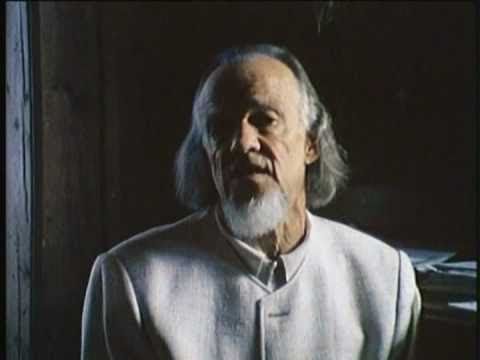
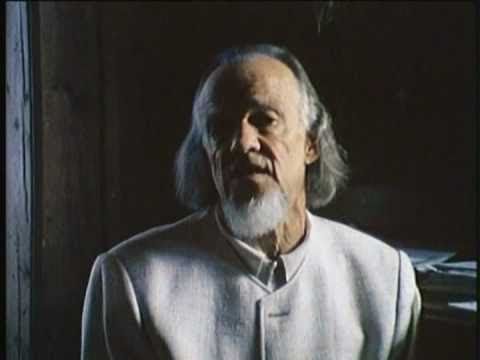
Francis Schaeffer
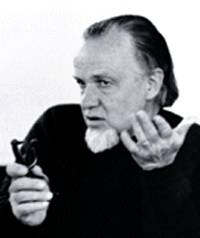
Image result for francis schaeffer

_

_

Image result for beatles

The Beatles – Revolution

Published on Oct 20, 2015
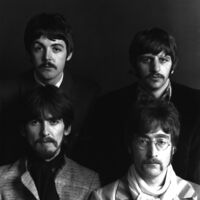
Image result for beatles
_

CLIVE BAKER IS FEATURED ARTIST TODAY!!!

Continue reading

“Truth Tuesday” Someone I knew through my business in 1985 grew up in Germany and was part of the Hitler Youth Program, Was he wrong in his beliefs?

Someone I knew through my business in 1985 grew up in Germany and was part of the Hitler Youth Program, Was he wrong in his beliefs? 

On what basis does the atheist have to say “Hitler was wrong!!!”

Early in his career Hitler was popular and many of the German people bought into his anti-semetic views. Does the atheist have an intellectual basis to condemn Hitler’s actions?

____________________________________

I personally met someone who was part of the Hitler youth movement in Germany in the 1930′s and until his dying day he believed that Hitler was right. I had a basis for knowing that Hitler was wrong and here it is below.
It is my view that according the Bible all men are created by God and are valuable.  However, the atheist has no basis for coming to this same conclusion. Francis Schaeffer put it this way:
We cannot deal with people like human beings, we cannot deal with them on the high level of true humanity, unless we really know their origin—who they are. God tells man who he is. God tells us that He created man in His image. So man is some- thing wonderful.
Francis Schaeffer died in 1984, but there is a website dedicated to his works. In 1972 he wrote the book “He is There and He is Not Silent.” Here is the statement that sums up that book:

One of philosophy’s biggest problems is that anything exists at all and has the form that it does. Another is that man exists as a personal being and makes true choices and has moral responsibility. The Bible gives sufficient answers to these problems. In fact, the only sufficient answer is that the infinite-personal triune God is there and He is not silent. He has spoken to man in the Bible.

The basic question Woody Allen is presenting to his own agnostic humanistic worldview is: If you really believe there is no God there to punish you in an afterlife, then why not murder if you can get away with it?  The secular humanist worldview that modern man has adopted does not work in the real world that God has created. God “has planted eternity in the human heart…” (Ecclesiastes 3:11). This is a direct result of our God-given conscience. The apostle Paul said it best in Romans 1:19, “For that which is known about God is evident to them and made plain in their inner consciousness, because God  has shown it to them” (Amplified Version).

It’s no wonder, then, that one of Allen’s fellow humanists would comment, “Certain moral truths — such as do not kill, do not steal, and do not lie — do have a special status of being not just ‘mere opinion’ but bulwarks of humanitarian action. I have no intention of saying, ‘I think Hitler was wrong.’ Hitler WAS wrong.” (Gloria Leitner, “A Perspective on Belief,” The Humanist, May/June 1997, pp.38-39). Here Leitner is reasoning from her God-given conscience and not from humanist philosophy. It wasn’t long before she received criticism.

Humanist Abigail Ann Martin responded, “Neither am I an advocate of Hitler; however, by whose criteria is he evil?” (The Humanist, September/October 1997, p. 2.). Humanists don’t really have an intellectual basis for saying that Hitler was wrong, but their God-given conscience tells them that they are wrong on this issue.

Here is fine film by Francis Schaeffer and Dr. C. Everett Koop that makes the case for human dignity.

Also here is the link for  another fine article on this same issue by Chuck Colson.

Crimes? What Crimes?

The Grand ‘Sez Who’

Let us take a close look at how you are going to come up with morality as an atheist. When you think about it there is no way around the final conclusion that it is just your opinion against mine concerning morality. There is no final answers. However, if God does exist and he has imparted final answers to us then everything changes.

Take a look at a portion of this paper by Greg Koukl. In this article he points out that atheists don’t even have a basis for saying that Hitler was wrong:

What doesn’t make sense is to look at the existence of evil and question the existence of God. The reason is that atheism turns out being a self-defeating philosophic solution to this problem of evil. Think of what evil is for a minute when we make this kind of objection. Evil is a value judgment that must be measured against a morally perfect standard in order to be meaningful. In other words, something is evil in that it departs from a perfect standard of good. C.S. Lewis made the point, “My argument against God was that the universe seemed so cruel and unjust. But how had I got this idea of just and unjust? A man does not call something crooked unless he has some idea of a straight line.”[ 1 ] He also goes on to point out that a portrait is a good or a bad likeness depending on how it compares with the “perfect” original. So to talk about evil, which is a departure from good, actually presumes something that exists that is absolutely good. If there is no God there’s no perfect standard, no absolute right or wrong, and therefore no departure from that standard. So if there is no God, there can’t be any evil, only personal likes and dislikes–what I prefer morally and what I don’t prefer morally.

This is the big problem with moral relativism as a moral point of view when talking about the problem of evil. If morality is ultimately a matter of personal taste–that’s what most people hold nowadays–then it’s just your opinion what’s good or bad, but it might not be my opinion. Everybody has their own view of morality and if it’s just a matter of personal taste–like preferring steak over broccoli or Brussels sprouts–the objection against the existence of God based on evil actually vanishes because the objection depends on the fact that some things are intrinsically evil–that evil isn’t just a matter of my personal taste, my personal definition. But that evil has absolute existence and the problem for most people today is that there is no thing that is absolutely wrong. Premarital sex? If it’s right for you. Abortion? It’s an individual choice. Killing? It depends on the circumstances. Stealing? Not if it’s from a corporation.

The fact is that most people are drowning in a sea of moral relativism. If everything is allowed then nothing is disallowed. Then nothing is wrong. Then nothing is ultimately evil. What I’m saying is that if moral relativism is true, which it seems like most people seem to believe–even those that object against evil in the world, then the talk of objective evil as a philosophical problem is nonsense. To put it another way, if there is no God, then morals are all relative. And if moral relativism is true, then something like true moral evil can’t exist because evil becomes a relative thing.

An excellent illustration of this point comes from the movie The Quarrel . In this movie, a rabbi and a Jewish secularist meet again after the Second World War after they had been separated. They had gotten into a quarrel as young men, separated on bad terms, and then had their village and their family and everything destroyed through the Second World War, both thinking the other was dead. They meet serendipitously in Toronto, Canada in a park and renew their friendship and renew their old quarrel.

divider

To paraphrase the late Dr. Francis Schaeffer, the person who argues against the existence of God based on the existence of evil in the world has both feet firmly planted in mid-air.

divider

Rabbi Hersch says to the secularist Jew Chiam, “If a person does not have the Almighty to turn to, if there’s nothing in the universe that’s higher than human beings, then what’s morality? Well, it’s a matter of opinion. I like milk; you like meat. Hitler likes to kill people; I like to save them. Who’s to say which is better? Do you begin to see the horror of this? If there is no Master of the universe then who’s to say that Hitler did anything wrong? If there is no God then the people that murdered your wife and kids did nothing wrong.”

That is a very, very compelling point coming from the rabbi. In other words, to argue against the existence of God based on the existence of evil forces us into saying something like this: Evil exists, therefore there is no God. If there is no God then good and evil are relative and not absolute, so true evil doesn’t exist, contradicting the first point. Simply put, there cannot be a world in which it makes any sense to say that evil is real and at the same time say that God doesn’t exist. If there is no God then nothing is ultimately bad, deplorable, tragic or worthy of blame. The converse, by the way, is also true. This is the other hard part about this, it cuts both ways. Nothing is ultimately good, honorable, noble or worthy of praise. Everything is ultimately lost in a twilight zone of moral nothingness. To paraphrase the late Dr. Francis Schaeffer, the person who argues against the existence of God based on the existence of evil in the world has both feet firmly planted in mid-air.

Francis Schaeffer

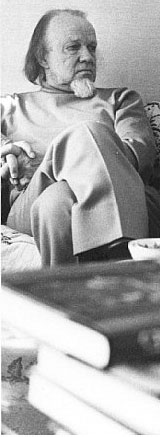
Francis Schaeffer pictured above.

_______

Related posts:

Taking on Ark Times Bloggers on various issues Part L “On what basis do you say murder is wrong?”Part 2 (includes the film THE BASIS FOR HUMAN DIGNITY)

I have gone back and forth and back and forth with many liberals on the Arkansas Times Blog on many issues such as abortion, human rights, welfare, poverty, gun control  and issues dealing with popular culture. Here is another exchange I had with them a while back. My username at the Ark Times Blog is Saline […]

Taking on Ark Times Bloggers on various issues Part K “On what basis do you say murder is wrong?”Part 1 (includes film ABORTION OF THE HUMAN RACE)

I have gone back and forth and back and forth with many liberals on the Arkansas Times Blog on many issues such as abortion, human rights, welfare, poverty, gun control  and issues dealing with popular culture. Here is another exchange I had with them a while back. My username at the Ark Times Blog is Saline […]

“Woody Wednesday” Atheists have no basis for saying that Hitler was wrong!!!!!

On April 30, 2012 (67 years after Hitler killed himself) I stated on the Arkansas Times Blog: Hitler’s last few moments of life were filled with anxiety as they should have been. He went on to face his maker and pay dearly for his many sins. When I look at the never before released pictures […]

Atheists have no basis for saying that Hitler was wrong!!!!!

On April 30, 2012 (67 years after Hitler killed himself) I stated on the Arkansas Times Blog: Hitler’s last few moments of life were filled with anxiety as they should have been. He went on to face his maker and pay dearly for his many sins. When I look at the never before released pictures […]

Did Hitler go to hell?

My debating opponent, Elwood, on the Arkansas Times Blog is at it again. He claims that the place hell is fiction. He stated, “… your imaginary place called ‘Hell.’ ” However, I responded that this life does count and those like Hitler that have done evil deeds will be punished in the afterlife. Early on […]

Hitler’s last few hours before entering hell (never before released photos)

Below are several never released before pictures of Hitler’s bunker. These are the sights that Hitler took in last before entering hell. How do I know he entered hell? Read below and you will see why I can say that with confidence. LIFE: Hitler’s Bunker On Monday, April 30, on the anniversary of the day […]

Was Hitler Right in 1919 letter about Jews? (Humanists have no answer!!)

In an earlier post I went into great detail about this. Today I am only going to show that the atheist and humanist has no intellectual basis for saying that one group of humans versus another group should survive at all. Of course, Christians have the Bible which teaches that all are created in God’s […]

Humanist asserts: “Neither am I an advocate of Hitler; however, by whose criteria is he evil?” (Hitler’s letter from 1919 revealed)

  The Associated Press reported today:   The signature under the typewritten words on yellowing sheets of nearly century-old paper is unmistakable: Adolf Hitler, with the last few scribbled letters drooping downward. The date is 1919 and, decades before the Holocaust, the 30-year-old German soldier — born in Austria — penned what are believed to be […]

By Everette Hatcher III | Posted in Francis Schaeffer | Edit | Comments (0)

SCHAEFFER SUNDAY Review of HOW SHOULD WE THEN LIVE?   by Kevin Rhyne MODERN PHILOSOPHY AND MODERN THEOLOGY THESIS: Modern people have put various things “upstairs” in the area of nonreason in a desperate attempt to find some optimism about meaning and values.

Two Minute Warning: How Then Should We Live?: Francis Schaeffer at 100

A Christian Manifesto Francis Schaeffer

Francis Schaeffer “BASIS FOR HUMAN DIGNITY” Whatever…HTTHR

How Should We Then Live? (9)

MODERN PHILOSOPHY AND MODERN THEOLOGY

THESIS:

Modern people have put various things “upstairs” in the area of nonreason in a desperate attempt to find some optimism about meaning and values.

Schaeffer, F. A. (1982). The complete works of Francis A. Schaeffer: a Christian worldview (Vol. 5, p. 183). Westchester, IL: Crossway Books.

Where does that get them?

Starts with Sartre: reason is absurd, but a person can authenticate himself by an act of the will…not by A=A and A not = non-A. But by his own declaration.

Francis Schaeffer | This Bread Always

Where does that put man?

I loved the display of contradiction in Satre. No one can live this way. No one can live apart from reason. And, if untethered reason leads us to all being part of a machine, then reason was meant to be tethered.

So, philosophers continue to search for meaning beyond reason, in the “upper story.”

What examples does he give of these attempts?

Humanistic man tried to make himself self-sufficient and demanded that one start from himself and the individual details and build his own universals. His great hope that he could begin from himself and produce a uniformity of knowledge led him, however, to the sad place where his mind told him that he was only a machine, a bundle of molecules. Then he tried desperately to find meaning in the area of nonreason, until, with those following Jaspers, the problem became how one could be sure he would ever have a big enough final experience (or, even if he had one, how he could ever have another) and there was no way to be sure.

Schaeffer, F. A. (1982). The complete works of Francis A. Schaeffer: a Christian worldview (Vol. 5, p. 185). Westchester, IL: Crossway Books.

Where does the ultimate experience lead you?

The drug culture spurred by Aldux Huxley. Hendrix’ “Are you Experienced? Have you ever been experienced?”

Then Eastern religious systems: Hinduism and Buddhism. “Both seek truth inside one’s own head and both negate reason.”

What effect on theology?

Rationalism tried to throw out the supernatural elements of the Bible.

The rationalistic theologians could not separate the historic Jesus from the supernatural events connected with Him. History and the supernatural were too interwoven in the New Testament. If one retained any of the historical Jesus, one had to keep some of the supernatural. If one got rid of all the supernatural, one had no historical Jesus.

Schaeffer, F. A. (1982). The complete works of Francis A. Schaeffer: a Christian worldview (Vol. 5, p. 190). Westchester, IL: Crossway Books.

In steps existentialism to save the day:

Karl Barth held until the end of his life the “higher critical” views of the Bible which the nineteenth-century liberal theologians held, and thus he viewed the Bible as having many mistakes. But he then taught that a religious “word” breaks through from it. This was the theological form of existentialism and the dichotomy. In other words, the existential methodology was applied to theology. This meant that theology has now been added to all the other things which had been put into the area of nonreason.

Schaeffer, F. A. (1982). The complete works of Francis A. Schaeffer: a Christian worldview (Vol. 5, pp. 190–191). Westchester, IL: Crossway Books.

Rather than the Word of God, they held to the word “God” and put into it any meaning they wanted so that it held no meaning at all.

If God has not revealed Himself, then there are no absolutes. Good is evil and evil is good. We see this in Hinduism.

The new theologians also have no way to explain why evil exists, and thus they are left with the same problem the Hindu philosophers have; that is, they must say that finally everything that is is equally in God. In Hindu thought one of the manifestations of God is Kali, a feminine representation of God with fangs and skulls hanging about her neck. Why do Hindus picture God this way? Because to them everything that exists now is a part of what has always been, a part of that which the Hindus would call “God”—and therefore cruelty is equal to noncruelty. Modern humanistic man in both his secular and his religious forms has come to the same awful place. Both have no final way to say what is right and what is wrong, and no final way to say why one should choose noncruelty instead of cruelty.

Schaeffer, F. A. (1982). The complete works of Francis A. Schaeffer: a Christian worldview (Vol. 5, p. 192). Westchester, IL: Crossway Books.

Religious feeling without content: George Harrison, “My Sweet Lord”

Dr. Francis Schaeffer: How Should We Then Live? Episode 1 of 10

HowShouldWeThenLive Episode 2

HowShouldWeThenLive Episode 3

HowShouldWeThenLive Episode 4

HowShouldWeThenLive Episode 5

HowShouldweThenLive Episode 6 Scientific Age

How Should We then Live Episode 7 small (Age of Nonreason)

https://vimeo.com/19640017

How Should We Then Live – Episode 8 – The Age of Fragmentation

How Should We Then Live – Episode 9 – The Age of Personal Peace & Affluence

___________

Related posts:

FRANCIS SCHAEFFER ANALYZES ART AND CULTURE Part 58 THE BEATLES (Part J, Why was Carl Gustav Jung on the cover of Stg. Pepper’s?) (Feature on artist Richard Merkin)

______________ The Beatles documentary || A Long and Winding Road || Episode 5 (This video discusses Stg. Pepper’s creation   I have dedicated several posts to this series on the Beatles and I don’t know when this series will end because Francis Schaeffer spent a lot of time listening to the Beatles and talking and writing […]

FRANCIS SCHAEFFER ANALYZES ART AND CULTURE Part 57 THE BEATLES (Part I, Schaeffer loved the Beatles’ music and most of all SERGEANT PEPPER’S LONELY HEARTS CLUB BAND ) (Feature on artist Heinz Edelmann )

_______________________ When I’m Sixty-Four- The Beatles The Beatles first radio interview (10/27/1962) Published on Mar 3, 2013 The Beatles (John Lennon, Paul McCartney, George Harrison and Ringo Starr) with Monty Lister at their first radio interview, 27 October 1962. Before their fourth and final live appearance at the Hulme Hall in Birkenhead, The Beatles recorded […]

FRANCIS SCHAEFFER ANALYZES ART AND CULTURE Part 56 THE BEATLES (Part H, Stg. Pepper’s and Relativism) (Feature on artist Alberto Vargas )

Great Album   I have dedicated several posts to this series on the Beatles and I don’t know when this series will end because Francis Schaeffer spent a lot of time listening to the Beatles and talking and writing about them and their impact on the culture of the 1960’s. In this series we have […]

Review: How Should We Then Live? by Francis Schaeffer Apr 16th, 2013

________________ _____________________________ Francis Schaeffer pictured below: ______________ I was impacted by this film series by Francis Schaeffer back in the 1970’s and I wanted to share it with you. Schaeffer makes three key points concerning the Reformation: “1. Erasmian Christian humanism rejected by Farel. 2. Bible gives needed answers not only as to how to be right […]

Truth Tuesday:How Should We Then Live? outline

How Should We Then Live? outline Episode VII – The Age of Non Reason ____________________ Episode 8: The Age Of Fragmentation Published on Jul 24, 2012 Dr. Schaeffer’s sweeping epic on the rise and decline of Western thought and Culture _______________________ I love the works of Francis Schaeffer and I have been on the internet […]

FRANCIS SCHAEFFER ANALYZES ART AND CULTURE Part 11 Thomas Aquinas and his Effect on Art and HOW SHOULD WE THEN LIVE? Episode 2: THE MIDDLES AGES (Feature on artist Tony Oursler )

___________________________________ 프란시스 쉐퍼 – 그러면 우리는 어떻게 살 것인가 introduction (Episode 1) How Should We then Live Episode 7 small (Age of Nonreason) #02 How Should We Then Live? (Promo Clip) Dr. Francis Schaeffer The clip above is from episode 9 THE AGE OF PERSONAL PEACE AND AFFLUENCE 10 Worldview and Truth In above clip […]

Open letter to President Obama (Part 491) (Review of Francis Schaeffer’s book and film series “How should we then live?” by Douglas Groothuis, Ph.D.)

Open letter to President Obama (Part 491) (Emailed to White House on 5-3-13.) President Obama c/o The White House 1600 Pennsylvania Avenue NW Washington, DC 20500 Dear Mr. President, I know that you receive 20,000 letters a day and that you actually read 10 of them every day. I really do respect you for trying to get […]

FRANCIS SCHAEFFER ANALYZES ART AND CULTURE Part 1 HOW SHOULD WE THEN LIVE? “The Roman Age” (Feature on artist Tracey Emin)

__________________ Francis Schaeffer pictured below: _______________- I want to make two points today. First, Greg Koukl has rightly noted that the nudity of a ten year old girl in the art of Robert Mapplethorpe is not defensible, and it demonstrates where our culture is  morally. It the same place morally where  Rome was 2000 years […]

Truth Tuesday:Review of Francis Schaeffer’s book and film series “How should we then live?” by Douglas Groothuis, Ph.D.

Review of Francis Schaeffer’s book and film series “How should we then live?” by Douglas Groothuis, Ph.D. Episode VII – The Age of Non Reason ____________________ Episode 8: The Age Of Fragmentation Published on Jul 24, 2012 Dr. Schaeffer’s sweeping epic on the rise and decline of Western thought and Culture _______________________ I love the […]

“Schaeffer Sunday” The following essay explores the role that Francis Schaeffer played in the rise of the pro-life movement. It examines the place of How Should We Then Live?, Whatever Happened to the Human Race?, and A Christian Manifesto in that process.

Francis Schaeffer Whatever Happened to the Human Race (Episode 1) ABORTION   This essay below is worth the read. Schaeffer, Francis – “Francis Schaeffer and the Pro-Life Movement” [How Should We Then Live?, Whatever Happened to the Human Race?, A Christian Manifesto] Editor note: <p> </p> [The following essay explores the role that Francis Schaeffer played […]

How Should We Then Live? outline

How Should We Then Live? outline Episode VII – The Age of Non Reason ____________________ Episode 8: The Age Of Fragmentation Published on Jul 24, 2012 Dr. Schaeffer’s sweeping epic on the rise and decline of Western thought and Culture _______________________ I love the works of Francis Schaeffer and I have been on the internet […]

Review of Francis Schaeffer’s book and film series “How should we then live?” by Douglas Groothuis, Ph.D.

Review of Francis Schaeffer’s book and film series “How should we then live?” by Douglas Groothuis, Ph.D. How Should We then Live Episode 7 small (Age of Nonreason) #02 How Should We Then Live? (Promo Clip) Dr. Francis Schaeffer The clip above is from episode 9 THE AGE OF PERSONAL PEACE AND AFFLUENCE 10 Worldview […]

Francis Schaeffer’s “How should we then live?” Video and outline of episode 4 “The Reformation” (Schaeffer Sundays)

How Should We Then Live 4-1 I was impacted by this film series by Francis Schaeffer back in the 1970’s and I wanted to share it with you. Schaeffer makes three key points concerning the Reformation: “1. Erasmian Christian humanism rejected by Farel. 2. Bible gives needed answers not only as to how to be right with […]

FRANCIS SCHAEFFER ANALYZES ART AND CULTURE Part 98 THE BEATLES (Breaking down the song “Penny Lane”Part A) Featured artist is Marty Balin

Francis Schaeffer noted concerning the Beatles:

The Beatles moved through several stages, including the concept of the drug and psychedelic approach. The psychedelic began with their records REVOLVER, STRAWBERRY FIELDS FOREVER, AND PENNY LANE. This was developed with great expertness in their record SERGEANT PEPPER’S LONELY HEARTS CLUB BAND in which psychedelic music, with open statements concerning drug-taking, was knowingly presented as a religious answer. 

The Beatles were looking for lasting satisfaction in their lives and their journey took them down many of the same paths that other young people of the 1960’s were taking. No wonder in the video THE AGE OF NON-REASON Schaeffer noted,  ” Sergeant Pepper’s Lonely Hearts Club Band…for a time it became the rallying cry for young people throughout the world. It expressed the essence of their lives, thoughts and their feelings.” 

How Should We then Live Episode 7 small (Age of Nonreason)

_

_____________

Lucy in the sky with diamonds is pretty obvious. what are the others?
1 Answer

Jon Pennington

Jon Pennington, I love music, any kind of music…

2.7k Views

Psychedelia is in the ear of the beholder, but telltale signs of psychedelic rock usually include unusual sounds and timbres (e.g., sitars, fuzz tone, mellotron, electronically distorted sounds), upwardly moving melodies that give the sensation of “flight,” oscillating or lurching rhythms, slowed-down rhythms, speeded-up rhythms, abrupt changes in rhythm to signify disorientation, use of musical modes that sound “Oriental” or “Indian,” lyrical references to bright colors, and an inward lyrical focus on the singer’s interior life.  Psychedelic influences start to creep into the Beatles’ work in 1965, but they haven’t necessarily produced any full-fledged psychedelic songs by then.

The songs from 1965 most likely believed to have some psychedelic influence, but probably can’t be classified as fully psychedelic, include:

  • Help! (recorded April 13, 1965; one theory has it that it was inspired by the soul searching that John Lennon did after his coffee was dosed with LSD by George’s dentist in March 1965; not too psychedelic, but supposedly written as a Roy Orbison-style ballad that later became more uptempo)
  • Norwegian Wood (recorded October 12, 21, 1965; except for George’s sitar, it was more inspired by American folk rock than psychedelic drugs per se)
  • Day Tripper (recorded October 16, 1965; uses “trip” as a drug double entendre, but otherwise more influenced by R&B than psychedelia)

The Beatles’ purest psychedelic period doesn’t begin until the band takes three months off after finishing Rubber Soul:

  • Tomorrow Never Knows (recorded April 6-7, 1966; includes Indian tamboura, a melody similar to an Indian raga drone that barely moves out of the key of C, lyrics borrowed from Timothy Leary, swirly vocals modified using a Leslie speaker cabinet, tape loops with unusual sounds at random intervals, drumming from Ringo that sounds like a tape loop but isn’t)
  • Love You To (recorded April 11, 1966; George’s first song written in Indian raga style)
  • Rain (recorded April 14, 16, 1966; included multiple overdubs recorded at slow speed and high speed to fatten up the sound and make the tempo slightly more draggy, includes drone-like textures)
  • I’m Only Sleeping (recorded April 27-May 6, 1966; inspired by how John’s LSD use encouraged his desire to be lazy, use of dreamlike imagery, backward guitar sounds)
  • I Want to Tell You (recorded June 2-3, 1966; lurching and oscillating harmonies, lyrics focusing on internal confusion, sounds of a piano that sounds out of tune)
  • She Said She Said (recorded June 21, 1966; “fattened” vocals similar to “Rain,” lyrics inspired by an encounter John Lennon had with Peter Fonda while taking an LSD trip, tapes of Ringo’s drums may have been manipulated to sound choppier)
  • Strawberry Fields Forever (recorded November 24 thru December 22, 1966; mellotron, George playing an Indian instrument called a svarmandal, two melodies in different keys combined into one song by playing them at slightly different speeds, introspective lyrics focused on self-doubt, insistence that “nothing is real”)
  • Penny Lane (recorded December 29, 1966 thru January 17, 1967; may have been Paul’s first song reacting to LSD, lyrics mention poppies on a tray, use of harmonium and piccolo trumpet, focus on returning to childhood experience)
  • Carnival of Light (recorded January 5, 1967; avant-garde free form piece still not yet released, possibly could be viewed as Paul’s version of Revolution #9)
  • A Day in the Life (recorded January 19, 1967 thru February 22, 1967; disorienting time-shifts between verses written by John and Paul, symphony orchestra crescendos chaotically until ended in a long, droning chord)
  • Only A Northern Song (recorded February 13-20, 1967; ethereal organ, musical instruments speeded up, in-studio chatter)
  • Being for the Benefit of Mr. Kite (recorded February 17, 1967; features tape manipulation and swirly organ sounds to approximate the sound of being in the middle of a circus)
  • Lucy in the Sky with Diamonds (recorded February 28, 1967 thru March 2, 1967; lyrics feature considerable color imagery, atmposhere shifts from slow and dreamy tempo on the verses to more uptempo on the chorus, ethereal vocals)
  • Within You Without You (recorded March 15, 1967 thru April 4, 1967; inspired by both Indian music and philosophy, song rarely moves out of the key of C)
  • Magical Mystery Tour (recorded April 25, 1967 thru May 3, 1967; partially inspired by the LSD-soaked tours of Ken Kesey and his “magic bus” in the mid-1960s, uses “trip” as a double entendre)
  • Baby, You’re A Rich Man (recorded May 11, 1967; not very psychedelic lyrically, but the clavioline keyboard gives the songs a very unusual texture)
  • It’s All Too Much (recorded May 25, 1967-June 2, 1967; distorted guitar, Hammond organ with lots of sustained drones, main melody rarely moves out of key of G)
  • I Am the Walrus (recorded September 5 thru September 29, 1967; surrealistic lyrics, disorienting tempo changes between verses, nonsense chants, random radio noise from a BBC broadcast of King Lear)
  • Blue Jay Way (recorded September 6 thru October 6, 1967; lyrics inspired by the disorientation of being lost in L.A., includes phasing and backward tapes, oscillates between C major and C diminished)
  • The Inner Light (recorded January 12 thru February 8, 1968; Indian influence on melody, lyrics focus on how you can “travel” without leaving your house)
  • Across the Universe (recorded February 4-8, 1968; the original version before it was modified by Phil Spector features floating Lennon vocals with droning noises and unusual wildlife sounds, a child’s voice matching John’s voice also appears in the mix)

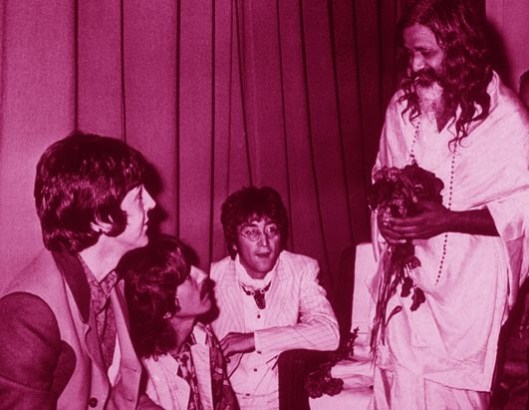
Listing the recording dates is instructive here, because some of these songs   would not get released until the Yellow Submarine LP (It’s Only A Northern Song, It’s All Too Much) or the Let It Be LP (Across the Universe in its Phil Spector version), but were definitely made during the period when psychedelic drugs had the biggest effect on the Beatles creative output.  After February 1968, the Beatles went to Rishikesh to commune with the Maharishi, where they were told not to bring any drugs along, because Trascendental Meditation was a more natural high.  Although the Beatles probably did take some marijuana along to Rishikesh, their use of strong hallucinogens ended at that point, except for John, who used LSD a few more times after Rishikesh.

The Beatles celebrate the completion of their album, ‘Sgt Pepper’s Lonely Hearts Club Band’, on May 19th, 1967 in London.

_____________

_____________

I just wanted to point out what an impact that the short 119 page book ESCAPE FROM REASON has had. Below is a story of Paul McGuire who had never been exposed to Christianity until he read that book and it changed his whole worldview.

SEARCHING FOR TRUTH IN THE NEW AGE

By Paul McGuire
My spiritual pilgrimage began at a very young age when the questions, “Who am I? What is my purpose in life?” and “What am I doing here?” haunted me and burned in my mind night and day. While other children were content to play, I was driven to ask questions about the meaning of life. Raised in New York City, I came from a liberal, educated family. Both my parents were teachers, and neither believed in God.

As a young boy, I thought science could give me the answers to my questions about life. Reading every book I could get my hands on about science and the lives of the great scientists, I often devoured ten books a week. I read about men like Albert Einstein, Nicola Tesla, Thomas Edison, Enrico Fermi, Louis Pasteur, and John Oppenheimer. Building a huge laboratory in my bedroom, I undertook amateur experiments on cryogenics and nuclear physics. Soon, however, I realized that these brilliant men did not have the answers I was looking for. Thus, at an early age I discovered the bankruptcy of scientific materialism.

After exhausting science as a means of finding the meaning of life, I next investigated the occult and Eastern religions. Biblical Christianity was not even an option for me. I had never once met a Bible-believing Christian or seen an evangelist on television, and the churches in my neighborhood were steeped in liberal theology or dead orthodoxy.

The only religion we had at home was secular humanism – the belief that there is no God and man is the center of the universe. As a result, I was raised to believe that there was no absolute right or wrong. Around the dinner table, my parents taught me that human evil was due to ignorance and that the concept of a personal God was an archaic belief any educated person should transcend. In addition, they told me that Christians were intellectually pathetic people who were “anti-love,” “anti-joy,” and “anti-sex.” Instead of promoting anything good, Christians were responsible for the crusades and the Inquisition.

One Thanksgiving evening my grandmother asked my father to pray. Instead, he launched into a thunderous tirade about how there was no reason to thank God – everything we had came from man’s hard work.

In the atheistic environment of my home, the spiritual void within me grew deeper, and I plunged headlong into the New Age philosophy and radical politics. Soon after I reached puberty, my parents divorced, ripping my world apart. My spiritual pilgrimage merged with a growing hatred of all authority and society. I was ripe to be seduced by the counterculture and the psychedelic philosophy of the ’60s which has now become the New Age Movement.

Although my mother held a secular humanist worldview, she was always full of loving concern and discipline. She spent thousands of hours reading me books and taking me to museums and libraries. Genuinely concerned about her rebellious son, my mother sent me to a psychotherapist whom she hoped would solve my problems.

I told my therapist that I wanted to know why I was alive, who I was, and what purpose there was for my life. He could not help me and only provided a listening board. In the vain hope of finding answers, I began reading Sigmund Freud, Carl Rogers, and Carl Jung. But all the leading psychological theorists seemed to contradict each other, and I was left more confused than ever.

Then the “hippie” movement with its drugs and “free love” exploded across the nation. I remember the first time I saw Timothy Leary. Wearing a white outfit and grinning like the “Cheshire Cat” from Alice In Wonderland, he said on national television “Tune in, turn on, and drop out.” This psychedelic prophet of LSDwas in distinct contrast to the people involved in organized religion. Then the Beatles recorded “Sgt. Pepper’s Lonely Hearts Club Band,” and the psychedelic invasion of drugs, Eastern religion, and promiscuous sex spread.

At the age of fifteen, I was wearing long hair and boots and demonstrating with Abbie Hoffman in New York City. I organized demonstrations and was even made an honorary member of the Black Panther Party for protesting outside a prison against the arrest of Panther leaders.

Simultaneously, I deepened my activities in Eastern mysticism and was introduced to drugs by an “honor student” in my high school. I read a book by Aldous Huxley titled Heaven and Hell and the Doors of Perception, which describes Huxley’s experimentation with hashish and mescaline as a means to enter a higher state of consciousness. This fellow student, whose father was a doctor, “turned me on” to hashish and mescaline as part of a serious scientific experiment. Together, we passed through the “doors of perception” and entered a higher realm of consciousness.

Fueled by drugs like LSD and mescaline, it was the psychedelic ’60s that ushered in the current New Age Movement. Powerful mind altering drugs like LSD blasted people into the spiritual realm and forced them to acknowledge the presence of a spiritual reality. This opened the door to the occult and the myriad practices of Eastern mysticism that gave birth to the New Age Movement.

In my own life, the use of powerful psychedelic drugs like LSD intensified my plunge into the New Age philosophy and Eastern Mysticism. Thus began an electric pilgrimage into Hinduism, Buddhism, the teachings of Don Juan, yoga, mental telepathy, altered states of consciousness, hypnotherapy, astral projection, reincarnation, the occult, devil’s weed, spirit guides, and a smorgasbord of mystical experiences. I was greatly influenced by men like Baba Ram Dass, Ken Kesey, Timothy Leary, and Stephen Gaskin.

In fact, my major at the University of Missouri was called “Altered States of Consciousness,” a brand-new accredited field within the Department of Psychology. We studied different means of entering higher states of consciousness and engaged in exercises based on Eastern mystical teaching and experiences by men like Carlos Castaneda. It was during this time of intense New Age activity that I developed spiritual powers and “cosmic consciousness.”

My professor at the University of Missouri was a practicing mystic and taught a number of courses on mental illness. He believed, as did popular psychologists like R.D. Laing, that mental illness or madness could be a means of entering higher consciousness. In this theory, insane people are considered spiritual pilgrims caught between two realities.

My professor invited gurus to teach and perform supernatural feats of levitation. Once while my professor was lecturing, I heard a distinct voice within me shout, “Surrender to the dark forces within!” At this point in my life I noticed a growing intensity in the manifestation of strong paranormal experiences. Yet at the same time, I had a growing feeling that things were getting out of control. The more bizarre things became, however, the more I believed I was moving toward “enlightenment.” I became convinced that everything happening was due to my excess “karma” burning off.

As is often the case with people involved in drugs and the occult, I experienced mixed feelings of great elation and depression. I became a kind of mystical “wildman,” hiking into the woods while on psychedelic drugs and communing with what I thought was God. But I was like a comet crashing into the atmosphere, burning more brightly as I moved through the heavens and consuming myself in flames. One evening I broke into my psychology professor’s office and wrote him an anonymous note warning him of the dangers of “the journey.”

Invasion Of The Jesus Movement

In the early ’70s, a strange thing happen at the University of Missouri: The Jesus Movement spread from the West Coast and entered the campus town of Columbia, Missouri. I remember seeing an article on the Jesus Movement in a national magazine. Reading about these Christians, who I thought were going to regress mankind into a new Dark Age with their “primitive blood-stained religion,” made me furious. I hated them because I thought they would stop the “revolution” and the establishment of the new world order based on higher consciousness.

People involved in the New Age Movement hold the very same beliefs, for their goal is to create a one-world government and unify the planet under a spiritual system of higher consciousness. Like many New Agers, I viewed Christians with all their talk of Jesus Christ being the “only way” as an anachronism and a threat to the spiritual/political revolution coming to the planet.

About this time, however, I finally came face to face with genuine Christians who moved in the supernatural flow of the Holy Spirit and had the glory of God shining on their countenances. I encountered Spirit-filled Christians everywhere and thought it was my duty to defend the faith of Eastern mysticism and the religion of “higher consciousness.” Attacking and debating believers in philosophy classes whenever they spoke out about their faith, I delighted in trying to humiliate them and prove them wrong through intellectual arguments.

In addition, I increased my “outrageous” behavior in front of Christians in an attempt to mock and ridicule them. Since I studied film, I made X-rated animation movies with Barbie dolls in an attempt to sneer at Judeo-Christian morality.

Despite my bitter hatred, a couple of true Christians began to zero in on me and share the love of Jesus Christ. Beneath all my bravado was a hurting, frightened individual reaching out for answers. At first, my mind completely rejected everything they were saying. But they continued to love me with a pure, deep, spiritual agape love. Even though I thought what they were saying was complete idiocy, I felt myself being wooed and convicted by the Holy Spirit as they talked.

For the first time in my life, I sensed God’s love for me. All my intellectual arguments were reduced to nothing as I encountered something far more real than anything I had experienced before. This was not some “trip” or mystical high. The purity and love that I felt had to be God.

Empowered by the Holy Spirit, these supernatural Christians opened up their lives to me. They cared about me as a person and loved me. They invited me to their prayer meetings and had me over for dinner. Through their personal ministry to me, I felt the arms of the living God embrace me and hug me like my father never had. As the Lord touched me deep within my heart, the hurt and bruised child locked inside me emerged and responded to His love.

Although I wasn’t yet ready to surrender, the Holy Spirit continued to work in my life. I had all kinds of intellectual questions, so my Christian friends gave me a book by Dr. Francis Schaeffer called ESCAPE FROM REASON. It changed my life. I was shocked to discover that a person could be both intelligent and a Christian. Talking about God, film, art, and philosophy in brilliant and articulate terms, Dr. Schaeffer explained contemporary culture in a way I had never understood.

Still I fought with the Holy Spirit, and the forces of darkness did not want to let me go. As these Christians prayed for me, the Holy Spirit continued to convict me. Sometimes I found myself walking alone by the highway, and, even though I was “stoned,” I would begin sobbing and weeping as Almighty God touched me.

The Hand Of Providence

One afternoon a guy named Tim invited me to a retreat in a wooded area about an hour away from the campus. I had mysteriously met Tim in the hallway of a dormitory, where he sat reading the Bible that he carried with him everywhere. He was in the hallway to meet someone else, but providentially he met me and invited me to this Christian retreat. Tim’s eyes shone with sincerity and the love of God, so I accepted his invitation.

Dressed in boots, blue jeans, and long hair, I arrived at the retreat center. A brief look at the place quickly convinced me that these people didn’t have what I was looking for. They were the kind of Christians I had seen before – religious but lacking the depth and dimension of people who have had a personal encounter with Jesus Christ.

While at the retreat center, I noted vague references to the Bible, but primarily we played games like “spin the bottle.” I was totally disgusted, for these people reinforced my worst preconceptions about Christianity. After spending the night I told Tim during breakfast that I was going to hitchhike back to the university. Tim walked me to the highway and said, “Paul, God will take care of your ride home.” Wondering if he was some kind of religious nut but hoping to humor him, I said, “Yeah, yeah sure.” Then I stuck out my thumb and tried to hitch a ride.

The first person to pick me up was a Pentecostal preacher. He and his wife talked to me about Jesus the entire ride. Stunned, I chalked it up as coincidence; after all, this was the Bible Belt. After they let me out, I stuck out my thumb and was picked up by a Bible salesman with a station wagon filled with Bibles! As we whizzed down the highway, he opened a giant Bible and began reading. With no hands on the wheel, he asked me if I wanted to receive Jesus into my life. I managed to gulp a “yes,” and he pulled off the road.

As we rolled to a stop, the thought raced through my mind, “What have I got myself into? Is this guy some kind of religious psychopath or axe murderer?” Growing up in New York City had taught me to suspect everybody’s motives and not to trust strangers.

The next thing I knew this Bible salesman was leading me in a prayer. With head bowed and hands clasped, I heard myself saying, “Jesus Christ, I ask you to forgive me of my sins. I invite you to come into my life and make me born again. In Jesus’ name. Amen.” I couldn’t believe I had said this prayer. I wasn’t even sure what sin was, although it seemed to me like an archaic concept. But I prayed in faith and meant it.

Hours later, I forgot the incident had even occurred and “partied” the night away with friends. The next day I woke up hung over and decided to visit a Christian girl named Laura. She and her boyfriend, Burgess, had spent a lot of time ministering and witnessing to me about Jesus.

As Laura and I talked, we were walking next to some giant Roman columns in the university quadrangle. I told her about my highway experience, and another girl sitting on the lawn overheard our conversation. It turned out that she was a minister’s daughter wrestling with the question of whether or not Christianity was really true. Looking at me pointblank, she said, “Do you believe that Jesus Christ was the Son of God?”

All of a sudden the words, “Yes, I believe that Jesus Christ is the Son of God!” leapt from deep within me. I was shocked. I had never said anything like that before. As I spoke, I had the most powerful spiritual experience of my life. It seemed that the sky had cracked open, and the presence of God overwhelmed me. A giant veil was lifted from my eyes as I realized God truly did exist.

I understand that I risk losing credibility by relating this experience exactly as it happened. True miracles can be cheapened by relating them in either a glib or a sensational manner. Many Christians carelessly utter the word “miracle” with such arrogance that it loses all its value. In addition, I understand that many people have had quiet but profound experiences with Jesus Christ that have just as much validity as mine.

But for me to minimize or reduce what happened to more logical terms just to make it more plausible would be inaccurate. I felt as if every dream I had ever had within the depths of my soul came true in an instant. Literally caught up in the Holy Spirit, I felt I was floating for weeks. Although I was higher than I had ever been in my entire life, I knew that the experience was genuine and pure.

Everything I had searched for in Eastern mysticism, human relationships, and the New Age Movement, I now found in Jesus Christ. This was not just another higher state of consciousness, an “upper story leap” without rational content, or a mystical trip. Nothing about this was artificial or mystical.

One could easily misconstrue my involvement in the New Age Movement and my encounter with Jesus Christ as the path of someone hopping from experience to experience lacking rational and verifiable content. Let me assure you that when I began my spiritual journey I did so as a scientist and a skeptic.

The contrast between mystical experiences and my encounter with Jesus Christ was as different as night and day. All of the New Age and Eastern mystical experiences I was involved in had an illusory quality no matter how real they seemed at the time. Jesus Christ was not just another “experience.” My newfound relationship with Him conveyed a reality so strong that I knew I had found God.

PAUL’S PERSONAL TESTIMONY ABOUT HOW HE ESCAPED THE NEW AGE MOVEMENT AND HOW JESUS CHRIST RESCUED HIM FROM DECEPTION?

How Should We then Live Episode 7 small (Age of Nonreason)

Marty Balin. art-50339-Grace-mirror-c

MARTY BALIN – MUSIC OF MY LIFE – A Journey Into His Art & Music

MARTY BALIN – JEFFERSON AIRPLANE TAKES OFF

Marty Balin. art-50347-Hendrex-montage-c-

MARTY BALIN – JEFFERSON AIRPLANE TAKES OFF – Part2

MARTY BALIN – JEFFERSON AIRPLANE SURREALISTIC PILLOW SONGS

Marty Balin – Hearts

Marty Balin / Jefferson Airplane by mstrychowska Marty Balin / Jefferson Airplane by mstrychowska

Featured artist is Marty Balin

MARTY BALIN – I SPECIALIZE IN LOVE – THE BEGINNING……*

MARTY BALIN “VOLUNTEERS” with Jorma Kaukonen & Jack Casady

Marty Balin – Rock & Roll with a Splash of Color

_

web1DSC_7122

By Ashley Bates
photos SJBuchwald®

It’s not every day that a Rock & Roll Hall of Fame inductee graces downtown St. Augustine, belting out rock hits.
In September, art enthusiasts at the First Friday Art Walk had the chance to see just that when Marty Balin of famed Jefferson Airplane came to town.But when Balin made his appearance at the art walk in September, it was to showcase his art work not his music.

Even though many of us know Balin for his historic rock hits like “Hearts,” “Atlantic Lady” and “Volunteers,” he was a painter long before he began recording hit songs. Actually, Balin got his start painting when he was a child and says painting was his first artistic expression.“I’ve been painting since I was young…selling my artwork in shows. I actually did that before I played music,” said Balin, who has lived in Tampa for the last 20 years.Balin’s full art collection, featuring rock legends many of whom Balin knew personally, can be found at 130 King Fine Art Gallery in downtown St. Augustine.

You wouldn’t be too surprised at what images Balin portrays in his artwork–rock legends from years past including several paintings of the Grateful Dead’s lead singer Jerry Garcia, the queen of rock Janis Joplin, The Door’s Jim Morrison and Elton John, all grace Balin’s canvases. 
Balin said he chooses specific musicians from certain time periods to relive a personal memory. 
“Really it’s a way for me to go back to those memories, like when you see a picture,” said Balin, who has been known to journal while painting to jot down special memories.


web2DSC_4764

When asked what his favorite pieces in his own collection are, Balin explains that the French Le Pétomane pieces are his favorites. 
Le Pétomane was a French entertainer from the Belle Époque era (French for “Beautiful Era”). The famous cabaret, the Moulin Rouge in Paris, also became famous during that time. 
“I just love the idea of the Moulin Rouge, the top hats, the colors,” Balin said. 
The bright, whimsical colors can be seen in his Le Pétomane pieces complete with carousels, elephants and of course the French entertainer Le Pétomane.

The whimsical nature of nature of Balin’s artwork could be attributed to where he was raised as a young boy. Balin was born in Cincinnati but grew up in the San Francisco area, which is where he found his calling to rock music by none other than pop music legend Johnny Mathis. It has been said that Balin was one of the musicians that catapulted San Francisco onto the music scene in the 1960s. Balin formed Jefferson Airplane in the summer of 1965, in San Francisco, as a folk-rock group but the band later came to be known in the psychedelic scene, scoring a gold record with their 1967 second album, “Surrealistic Pillow.” Balin wrote hit songs for the band including “Comin’ Back To Me,” “Plastic Fantastic Lover” and “Share a Little Joke.”

Later, in the early 1970s, Jefferson Starship was formed by several members of the original band Jefferson Airplane.
 Balin and Jefferson Airplane were inducted into the Rock & Roll Hall of Fame in 1996, with the likes of David Bowie, Pink Floyd and Gladys Knight & the Pips, to name a few. “Rock and Roll will never die, good music will always be around,” commented Balin on the evolution of modern rock music.

Balin continues to record his brand of rock ‘n’ roll in the studio and is currently recording an album at the studio in Tampa. “Currently I’m in the studio. (The album) will be Marty Balin music…I haven’t come up with a name for the album just yet.”

Today some of the musicians he says are on his radar are Katy Perry and Madonna. “I guess Katy Perry is pretty good,” he said. “I was watching Madonna’s new tour on TV the other day and she’s still pretty good.”
Even though Balin has enjoyed supreme success in rock ‘n’ roll, he says his greatest accomplishment is “that I’m still here today and alive.”

Jefferson Airplane – Volunteers (Live at Woodstock Music & Art Fair, 1969)

__

Image result for sergent peppers album cover

Francis Schaeffer’s favorite album was SGT. PEPPER”S and he said of the album “Sergeant Pepper’s Lonely Hearts Club Band…for a time it became the rallying cry for young people throughout the world. It expressed the essence of their lives, thoughts and their feelings.”  (at the 14 minute point in episode 7 of HOW SHOULD WE THEN LIVE? ) 

Image result for francis schaeffer how should we then live

How Should We Then Live – Episode Seven – 07 – Portuguese Subtitles

Francis Schaeffer

Image result for francis schaeffer

______

FRANCIS SCHAEFFER ANALYZES ART AND CULTURE PART 202 the BEATLES’ last song FREE AS A BIRD (Featured artist is Susan Weil )

February 15, 2018 – 1:45 am

FRANCIS SCHAEFFER ANALYZES ART AND CULTURE Part 200 George Harrison song HERE ME LORD (Featured artist is Karl Schmidt-Rottluff )

FRANCIS SCHAEFFER ANALYZES ART AND CULTURE PART 184 the BEATLES’ song REAL LOVE (Featured artist is David Hammonds )

FRANCIS SCHAEFFER ANALYZES ART AND CULTURE Part 170 George Harrison and his song MY SWEET LORD (Featured artist is Bruce Herman )

FRANCIS SCHAEFFER ANALYZES ART AND CULTURE Part 168 George Harrison’s song AWAITING ON YOU ALL Part B (Featured artist is Michelle Mackey )

FRANCIS SCHAEFFER ANALYZES ART AND CULTURE Part 167 George Harrison’s song AWAITING ON YOU Part A (Artist featured is Paul Martin)

RESPONDING TO HARRY KROTO’S BRILLIANT RENOWNED ACADEMICS!! Part 133 Louise Antony is UMass, Phil Dept, “Atheists if they commit themselves to justice, peace and the relief of suffering can only be doing so out of love for the good. Atheist have the opportunity to practice perfect piety”

FRANCIS SCHAEFFER ANALYZES ART AND CULTURE Part 166 George Harrison’s song ART OF DYING (Featured artist is Joel Sheesley )

FRANCIS SCHAEFFER ANALYZES ART AND CULTURE Part 165 George Harrison’s view that many roads lead to Heaven (Featured artist is Tim Lowly)

FRANCIS SCHAEFFER ANALYZES ART AND CULTURE Part 164 THE BEATLES Edgar Allan Poe (Featured artist is Christopher Wool)

PART 163 BEATLES Breaking down the song LONG AND WINDING ROAD (Featured artist is Charles Lutyens )

FRANCIS SCHAEFFER ANALYZES ART AND CULTURE PART 162 A look at the BEATLES Breaking down the song ALL WE NEED IS LOVE Part C (Featured artist is Grace Slick)

PART 161 A look at the BEATLES Breaking down the song ALL WE NEED IS LOVE Part B (Featured artist is Francis Hoyland )


FRANCIS SCHAEFFER ANALYZES ART AND CULTURE PART 160 A look at the BEATLES Breaking down the song ALL WE NEED IS LOVE Part A (Featured artist is Shirazeh Houshiary)

FRANCIS SCHAEFFER ANALYZES ART AND CULTURE Part 159 BEATLES, Soccer player Albert Stubbins made it on SGT. PEP’S because he was sport hero (Artist featured is Richard Land)

FRANCIS SCHAEFFER ANALYZES ART AND CULTURE Part 158 THE BEATLES (breaking down the song WHY DON’T WE DO IT IN THE ROAD?) Photographer Bob Gomel featured today!

FRANCIS SCHAEFFER ANALYZES ART AND CULTURE Part 118 THE BEATLES (Why was Tony Curtis on cover of SGT PEP?) (Feature on artist Jeffrey Gibson )

FRANCIS SCHAEFFER ANALYZES ART AND CULTURE Part 117 THE BEATLES, Breaking down the song WITHIN YOU WITHOUT YOU Part B (Featured artist is Emma Amos )

Related posts:

Francis Schaeffer’s “How should we then live?” Video and outline of episode 6 “The Scientific Age” (Schaeffer Sundays)

E P I S O D E 6 How Should We Then Live 6#1 Uploaded by NoMirrorHDDHrorriMoN on Oct 3, 2011 How Should We Then Live? Episode 6 of 12 ________ I am sharing with you a film series that I saw in 1979. In this film Francis Schaeffer asserted that was a shift in […]

Francis Schaeffer’s “How should we then live?” Video and outline of episode 5 “The Revolutionary Age” (Schaeffer Sundays)

E P I S O D E 5 How Should We Then Live? Episode 5: The Revolutionary Age I was impacted by this film series by Francis Schaeffer back in the 1970′s and I wanted to share it with you. Francis Schaeffer noted, “Reformation Did Not Bring Perfection. But gradually on basis of biblical teaching there […]

Francis Schaeffer’s “How should we then live?” Video and outline of episode 4 “The Reformation” (Schaeffer Sundays)

Dr. Francis Schaeffer – Episode IV – The Reformation 27 min I was impacted by this film series by Francis Schaeffer back in the 1970′s and I wanted to share it with you. Schaeffer makes three key points concerning the Reformation: “1. Erasmian Christian humanism rejected by Farel. 2. Bible gives needed answers not only as to […]

“Schaeffer Sundays” Francis Schaeffer’s “How should we then live?” Video and outline of episode 3 “The Renaissance”

Francis Schaeffer’s “How should we then live?” Video and outline of episode 3 “The Renaissance” Francis Schaeffer: “How Should We Then Live?” (Episode 3) THE RENAISSANCE I was impacted by this film series by Francis Schaeffer back in the 1970′s and I wanted to share it with you. Schaeffer really shows why we have so […]

Francis Schaeffer’s “How should we then live?” Video and outline of episode 2 “The Middle Ages” (Schaeffer Sundays)

  Francis Schaeffer: “How Should We Then Live?” (Episode 2) THE MIDDLE AGES I was impacted by this film series by Francis Schaeffer back in the 1970′s and I wanted to share it with you. Schaeffer points out that during this time period unfortunately we have the “Church’s deviation from early church’s teaching in regard […]

Francis Schaeffer’s “How should we then live?” Video and outline of episode 1 “The Roman Age” (Schaeffer Sundays)

Francis Schaeffer: “How Should We Then Live?” (Episode 1) THE ROMAN AGE   Today I am starting a series that really had a big impact on my life back in the 1970′s when I first saw it. There are ten parts and today is the first. Francis Schaeffer takes a look at Rome and why […]

By Everette Hatcher III | Posted in Francis Schaeffer | Edit | Comments (0)

______

SCHAEFFER SUNDAY Review of HOW SHOULD WE THEN LIVE?   by Kevin Rhyne THE BREAKDOWN IN PHILOSOPHY AND SCIENCE THEME: IF THERE ARE NO ABSOLUTES, THEN THE PARTICULARS, THE INDIVIDUAL THINGS, HAVE NO MEANING.

10 Worldview and Truth

In above clip Schaeffer quotes Paul’s speech in Greece from Romans 1 (from Episode FINAL CHOICES)

How Should We Then Live? (8)

THE BREAKDOWN IN PHILOSOPHY AND SCIENCE

THEME: IF THERE ARE NO ABSOLUTES, THEN THE PARTICULARS, THE INDIVIDUAL THINGS, HAVE NO MEANING.

What is meant by universal?  What is meant by particular? Examples?

Francis Schaeffer | This Bread Always

Francis Schaeffer | This Bread Always

Clear place we see this is in morals: “Who are you to be judge over us?”  If no universal giving meaning to marriage and sex, then each man defines marriage and sex according to what is right in his own eyes.

Why is that the result?

If there is no absolute beyond man’s ideas, then there is no final appeal to judge between individuals and groups whose moral judgments conflict. We are merely left with conflicting opinions.

Schaeffer, F. A. (1982). The complete works of Francis A. Schaeffer: a Christian worldview (Vol. 5, p. 166). Westchester, IL: Crossway Books.

Schaeffer makes the point that it is not just morality that takes a hit without absolutes, meaning in existence itself, knowing that we know what we know, takes a hit without absolutes.

What were the characteristics of the non-Christian philosophers before the shift he describes in this chapter?

  1. Rationalists – man (though he is finite and limited) can begin from himself and gather enough particulars to make his own universals.
  2. Serious about reason – thought in terms of antithesis. A is A, and A is not non-A.
  3. Optimistic that man could find an absolute to give meaning starting with himself.

What were the shifts that came?

Shifts in science, shifts in philosophy and shift in theology.

SCIENCE

Move from the uniformity of natural causes in an open system to a uniformity of natural causes in a closed system.  Everything within the cause-and-effect machine, including psychology and sociology.

Notice especially that the scientists who gave birth to the earlier great breakthroughs of science would not have accepted this concept. It arose not because of that which could be demonstrated by science, but because the scientists who took this new view had accepted a different philosophic base. The findings of science, as such, did not bring them to accept this view; rather, their world-view brought them to this place. They became naturalistic or materialistic in their presuppositions.

Schaeffer, F. A. (1982). The complete works of Francis A. Schaeffer: a Christian worldview (Vol. 5, p. 168). Westchester, IL: Crossway Books.

What is the effect of this presupposition?

Man becomes part of the machine.  Life is pointless and devoid of meaning.

In moving to a completely closed system, Schaeffer says that “man disappears”?  Why?

Everything is a part of the cosmic machine, including people. To say this another way: prior to the rise of modern modern science (that is, naturalistic science, or materialistic science), the laws of cause and effect were applied to physics, astronomy, and chemistry. Today the mechanical cause-and-effect perspective is applied equally to psychology and sociology.

Schaeffer, F. A. (1982). The complete works of Francis A. Schaeffer: a Christian worldview (Vol. 5, pp. 167–168). Westchester, IL: Crossway Books.

What does this totally mechanized system do to the concept of freedom of choice?

“Love dies, there is no place for love in a totally closed cause-and-effect system.”

How is this different from a worldview where God determines all things according to the counsel of His will?


The mechanized cause-and-effect world led to another principle called “survival of the fittest.”  What has been the logical conclusion of that concept?

Abortion of black babies.  Abortion of only the girls or the boys.  Social engineering is a more subtle gas chamber.  As is socialized medicine…

PHILOSOPHY

The trend was from optimism to pessimism.  Why?

Move from reason is king to feeling is king.  Happiness is the trutha…

You see the tension between “lower story” – reason leads to the closed system, but we can’t live that way.  So, gradual movement to the “upper story” – irrational “leap of faith” to give the basis for meaning without reason.

It became clear that those who held the rationalistic position on the sole basis of their own reason increasingly were forced to conclude that everything, including man, is a machine. But one could not hold simultaneously the concept of everything’s being a machine and the ideal of a person’s having freedom. Thus, the concept of a unified knowledge of what reality is (on the basis of reason alone)—which almost all previous thinkers had as their aspiration—was under great strain. By the time of Rousseau and his followers there was a tendency for the concepts (everything as a machine and man’s autonomous freedom) to split apart and go marching off in divergent directions.

Schaeffer, F. A. (1982). The complete works of Francis A. Schaeffer: a Christian worldview (Vol. 5, p. 177). Westchester, IL: Crossway Books.

There was discussion of making nature the moral basis, the idea of Natural Law.  What’s the problem with that?

Nature is both cruel and non-cruel.  “What is is right.”  Leads to Sadism.

What was Hegel’s solution to the tension?

Synthesis rather than antithesis.  Truth in both thesis and antithesis, so synthesize them.  Another contradiction in the new synthesis and whole process starts again.  Thus the universe and man’s understanding of it unfolds in a series of teachable moments.  “In short, the universe with its consciousness – man – evolves.”

Man is the consciousness of the universe?

Is this not the mentality of our day?  “Only the Sith deal in absolutes.”

Here, then, becomes the synthesis of the “upper story” and the “lower story”:

This equation of the impersonal plus time plus chance producing the total configuration of the universe and all that is in it, modern people hold by faith. And if one does in faith accept this, with what final value is he left? In his lecture at Acapulco, George Wald finished with only one final value. It was the same one with which English philosopher Bertrand Russell (1872–1970) was left. For Wald and Russell and for many other modern thinkers, the final value is the biological continuity of the human race. If this is the only final value, one is left wondering why this then has importance.

Schaeffer, F. A. (1982). The complete works of Francis A. Schaeffer: a Christian worldview (Vol. 5, pp. 181–182). Westchester, IL: Crossway Books.

The unifying principle is biological continuity of the human race.

If that’s the unifying principle, then why same-sex marriage?

Two Minute Warning: How Then Should We Live?: Francis Schaeffer at 100

A Christian Manifesto Francis Schaeffer

Francis Schaeffer “BASIS FOR HUMAN DIGNITY” Whatever…HTTHR

Dr. Francis Schaeffer: How Should We Then Live? Episode 1 of 10

HowShouldWeThenLive Episode 2

HowShouldWeThenLive Episode 3

HowShouldWeThenLive Episode 4

HowShouldWeThenLive Episode 5

HowShouldweThenLive Episode 6 Scientific Age

How Should We then Live Episode 7 small (Age of Nonreason)

How Should We Then Live – Episode 8 – The Age of Fragmentation

How Should We Then Live – Episode 9 – The Age of Personal Peace & Affluence

___________

Related posts:

FRANCIS SCHAEFFER ANALYZES ART AND CULTURE Part 58 THE BEATLES (Part J, Why was Carl Gustav Jung on the cover of Stg. Pepper’s?) (Feature on artist Richard Merkin)

______________ The Beatles documentary || A Long and Winding Road || Episode 5 (This video discusses Stg. Pepper’s creation   I have dedicated several posts to this series on the Beatles and I don’t know when this series will end because Francis Schaeffer spent a lot of time listening to the Beatles and talking and writing […]

FRANCIS SCHAEFFER ANALYZES ART AND CULTURE Part 57 THE BEATLES (Part I, Schaeffer loved the Beatles’ music and most of all SERGEANT PEPPER’S LONELY HEARTS CLUB BAND ) (Feature on artist Heinz Edelmann )

_______________________ When I’m Sixty-Four- The Beatles The Beatles first radio interview (10/27/1962) Published on Mar 3, 2013 The Beatles (John Lennon, Paul McCartney, George Harrison and Ringo Starr) with Monty Lister at their first radio interview, 27 October 1962. Before their fourth and final live appearance at the Hulme Hall in Birkenhead, The Beatles recorded […]

FRANCIS SCHAEFFER ANALYZES ART AND CULTURE Part 56 THE BEATLES (Part H, Stg. Pepper’s and Relativism) (Feature on artist Alberto Vargas )

Great Album   I have dedicated several posts to this series on the Beatles and I don’t know when this series will end because Francis Schaeffer spent a lot of time listening to the Beatles and talking and writing about them and their impact on the culture of the 1960’s. In this series we have […]

Review: How Should We Then Live? by Francis Schaeffer Apr 16th, 2013

________________ _____________________________ Francis Schaeffer pictured below: ______________ I was impacted by this film series by Francis Schaeffer back in the 1970’s and I wanted to share it with you. Schaeffer makes three key points concerning the Reformation: “1. Erasmian Christian humanism rejected by Farel. 2. Bible gives needed answers not only as to how to be right […]

Truth Tuesday:How Should We Then Live? outline

How Should We Then Live? outline Episode VII – The Age of Non Reason ____________________ Episode 8: The Age Of Fragmentation Published on Jul 24, 2012 Dr. Schaeffer’s sweeping epic on the rise and decline of Western thought and Culture _______________________ I love the works of Francis Schaeffer and I have been on the internet […]

FRANCIS SCHAEFFER ANALYZES ART AND CULTURE Part 11 Thomas Aquinas and his Effect on Art and HOW SHOULD WE THEN LIVE? Episode 2: THE MIDDLES AGES (Feature on artist Tony Oursler )

___________________________________ 프란시스 쉐퍼 – 그러면 우리는 어떻게 살 것인가 introduction (Episode 1) How Should We then Live Episode 7 small (Age of Nonreason) #02 How Should We Then Live? (Promo Clip) Dr. Francis Schaeffer The clip above is from episode 9 THE AGE OF PERSONAL PEACE AND AFFLUENCE 10 Worldview and Truth In above clip […]

Open letter to President Obama (Part 491) (Review of Francis Schaeffer’s book and film series “How should we then live?” by Douglas Groothuis, Ph.D.)

Open letter to President Obama (Part 491) (Emailed to White House on 5-3-13.) President Obama c/o The White House 1600 Pennsylvania Avenue NW Washington, DC 20500 Dear Mr. President, I know that you receive 20,000 letters a day and that you actually read 10 of them every day. I really do respect you for trying to get […]

FRANCIS SCHAEFFER ANALYZES ART AND CULTURE Part 1 HOW SHOULD WE THEN LIVE? “The Roman Age” (Feature on artist Tracey Emin)

__________________ Francis Schaeffer pictured below: _______________- I want to make two points today. First, Greg Koukl has rightly noted that the nudity of a ten year old girl in the art of Robert Mapplethorpe is not defensible, and it demonstrates where our culture is  morally. It the same place morally where  Rome was 2000 years […]

Truth Tuesday:Review of Francis Schaeffer’s book and film series “How should we then live?” by Douglas Groothuis, Ph.D.

Review of Francis Schaeffer’s book and film series “How should we then live?” by Douglas Groothuis, Ph.D. Episode VII – The Age of Non Reason ____________________ Episode 8: The Age Of Fragmentation Published on Jul 24, 2012 Dr. Schaeffer’s sweeping epic on the rise and decline of Western thought and Culture _______________________ I love the […]

“Schaeffer Sunday” The following essay explores the role that Francis Schaeffer played in the rise of the pro-life movement. It examines the place of How Should We Then Live?, Whatever Happened to the Human Race?, and A Christian Manifesto in that process.

Francis Schaeffer Whatever Happened to the Human Race (Episode 1) ABORTION   This essay below is worth the read. Schaeffer, Francis – “Francis Schaeffer and the Pro-Life Movement” [How Should We Then Live?, Whatever Happened to the Human Race?, A Christian Manifesto] Editor note: <p> </p> [The following essay explores the role that Francis Schaeffer played […]

How Should We Then Live? outline

How Should We Then Live? outline Episode VII – The Age of Non Reason ____________________ Episode 8: The Age Of Fragmentation Published on Jul 24, 2012 Dr. Schaeffer’s sweeping epic on the rise and decline of Western thought and Culture _______________________ I love the works of Francis Schaeffer and I have been on the internet […]

Review of Francis Schaeffer’s book and film series “How should we then live?” by Douglas Groothuis, Ph.D.

Review of Francis Schaeffer’s book and film series “How should we then live?” by Douglas Groothuis, Ph.D. How Should We then Live Episode 7 small (Age of Nonreason) #02 How Should We Then Live? (Promo Clip) Dr. Francis Schaeffer The clip above is from episode 9 THE AGE OF PERSONAL PEACE AND AFFLUENCE 10 Worldview […]

Francis Schaeffer’s “How should we then live?” Video and outline of episode 4 “The Reformation” (Schaeffer Sundays)

How Should We Then Live 4-1 I was impacted by this film series by Francis Schaeffer back in the 1970’s and I wanted to share it with you. Schaeffer makes three key points concerning the Reformation: “1. Erasmian Christian humanism rejected by Farel. 2. Bible gives needed answers not only as to how to be right with […]

FRANCIS SCHAEFFER ANALYZES ART AND CULTURE Part 97 THE BEATLES (The Beatles and Paramhansa Yogananda ) (Feature on artist Ronnie Wood)


Today I am going to look at Paramhansa Yogananda who appeared on the cover of SGT. PEPPERS because the Beatles were at the time interested in what Eastern Religions had to offer. One of the problems with Hinduism is that has no way to explain the existence of evil in the world today. However, Christianity explains evil entering into the world in a space and time event called the fall. Concerning Paramhansa Yogananda Francis Schaeffer says the following in his book GENESIS IN SPACE AND TIME: 

Words have become so devalued today that we often have to use cumbersome terms to make what we mean understood. The word fact does not necessarily mean anything anymore. Fact can just mean upperstory religious truth, and therefore we have to use an awkward term like brute fact. In this particular case, we are fortunate because the liberal theologians themselves use the term brute fact for what they don’t mean by facts. The historic Fall is not an interpretation: It is a brute fact. There is no room for hermeneutics here, if by hermeneutics we mean explaining away the brute factness of the Fall. That there was a Fall is not an upper-story statement that is, it is not in this sense a “theological” or “religious” statement. Rather, it is a historic, space-time, brute fact, propositional statement. There was time, spacetime history, before the Fall, and then man turned from his proper integration point by choice, and in so doing there was moral discontinuity; man became abnormal.

In speaking of facts and brute facts, we are speaking of facts in the space-time sense, that which is open to the normal means of verification and falsification. As I stress in the Appendix to The Church before the Watching World, this does not mean they are then to be taken as sterile facts. These biblical facts are facts in past history, but they have, and should have, meaning in our present existential, moment by-moment lives.

Furthermore, in speaking of the Bible’s statements as propositional truth we are not saying that all communication is on the level of mathematical formula. There can be other levels (for example, figures of speech or the special force of poetry); but there is a continuity-a unity not a discontinuity-between these “other levels” and a flow of propositions given in normal syntax and using words in their normal definition, and this is a continuity which reason can deal with. Take an example outside of the Bible: Shakespeare’s communication with his figures of speech is a much richer human communication than is mere mathematical formula. The “other levels” (for example, his figures of speech) add enrichment. Yet, if, as in far-out modern prose and poetry, there are only, or almost only, figures of speech, with no adequate running continuity that can be stated in propositional form using normal syntax and words with normal meanings, no one knows what is being said. As a matter of fact, some modern writers and artists deliberately work this way so that this will be the case. Their work becomes only a quarry for subjective experiences and interpretations inside of the head of the reader or viewer. The early chapters of Genesis quickly come to this place if they are read other than as in propositional form using normal syntax and words in their normal meaning. As an example, Paramahansa Yogananda did this in his book Autobiography of a Yogi and most easily turned these chapters into a powerful Hindu tract.

I Am The Walrus With Lyrics

Monday, February 25, 2013

Besides his devotion to God, George was also devoted to Hindu teachers, especially Paramahansa Yogananda. Paramanhansa Yogananda is famous for being the wisdom of Hinduism to the West, and he taught the fundamental unity between Yoga and Christianity. George wrote his song, Fish on the Sand, from the 1987 Cloud Nine album about his devotion and reliance on Yogananda. George often enjoyed visits to the Self-Realization Fellowship Center in Encinitas, California, which was founded by Yogananda.

“India India” rare Beatles song and pictures


How Should We then Live Episode 7 small (Age of Nonreason)

How Should We Then Live – Episode 8 – The Age of Fragmentation

How Should We Then Live – Episode 9 – The Age of Personal Peace & Affluence

“The people of India have a tremendous spiritual strength, which I don’t think is found elsewhere. The spirit of the people, the beauty, the goodness—that’s what I’ve been trying to learn about.” – George Harrison, 1966 

1974, George Harrison and Ravi Shankar pose in front of musicians from the album Ravi Shankar Family and Friends.


___________

Press conference, 1969, with members of the London Radha Krishna Temple


___________


(left to right) John Lennon, Paul McCartney, the Maharishi, George Harrison, Mia Farrow and Donovan. Photo:THE HINDU ARCHIVES

__

If God has not revealed Himself, then there are no absolutes. Good is evil and evil is good. We see this in Hinduism.

The new theologians also have no way to explain why evil exists, and thus they are left with the same problem the Hindu philosophers have; that is, they must say that finally everything that is is equally in God. In Hindu thought one of the manifestations of God is Kali, a feminine representation of God with fangs and skulls hanging about her neck. Why do Hindus picture God this way? Because to them everything that exists now is a part of what has always been, a part of that which the Hindus would call “God”—and therefore cruelty is equal to noncruelty. Modern humanistic man in both his secular and his religious forms has come to the same awful place. Both have no final way to say what is right and what is wrong, and no final way to say why one should choose noncruelty instead of cruelty.

IN THE VIDEO BELOW take notice at the 14:00 minute mark Schaeffer talks about the BEATLES and at the 22:30 minute mark  Schaeffer mentions the Hindu god Kali.

How Should We then Live Episode 7 small (Age of Nonreason)

Rishikesh – Beatles With The Maharishi (1968)

The Biblical view concerning how sin entered the world is explained in the book GENESIS  IN SPACE AND TIME by Francis Schaeffer, Chapter 5  pages 33  -41:

chapter 5

The space-time fall and its results

Eve was faced with a choice, she pondered the situation and then she put her hand into the history of man and changed the course of human events.

The Fruit Is Eaten

The Genesis account is short and to the point: “And when the woman saw that the tree was good for food, and that it was pleasant to the eyes, and a tree to be desired to make one wise, she took of the fruit thereof, and did eat, and gave also unto her husband with her; and he did eat” (Gen. 3:6).1 The flow is from the internal to the external; the sin began in the thought-world and flowed outward. The sin was, therefore, committed in that moment she believed Satan instead of God. At this point the whole matter was decided. Nonetheless, a history is involved, for first she believed Satan, then she ate, and then she gave the fruit to Adam.

Genesis 3:17 refers to this historical flow, for God in speaking to Adam says that he has “hearkened unto the voice of thy wife, and hast eaten of the tree.” And we are reminded, as we have seen in 2 Corinthians 11:3, that as the serpent beguiled Eve through his subtlety (at her point of history) so our own minds (at our point of history) may also be corrupted from the simplicity that is in Christ.

Paul in 1 Timothy 2:14 points out something further: “And Adam was not deceived, but the woman being deceived was in the transgression.” Temptation is extremely hard to resist when it is bound up with the man-woman relationship. For example, in Exodus 34:16 we are warned not to let the man-woman relationship lead us into idolatry (spoken of as going “a whoring after their gods”).

Two great drives are built into man. The first is his need for a relationship to God, and the second his need for a relationship to the opposite sex. A special temptation is bound up with this sexual drive. How many young women are there who are faithful as Christians until they come to a certain age and feel with their whole being, without ever analyzing it, the need for marriage and are then swept over into marrying a non-Christian man? And how many men are there who are faithful until they feel the masculine drive and give up their faithfulness to God by marrying a woman who carries them into spiritual problems for the rest of their life? I look upon such young men and young women as I see them going through this, and I cry for them, because in a way there is no greater agony than suddenly to fall in love and then to realize that one must say no to this natural drive because it leads in that particular case to a severing of our greater relationship-our relationship to God. While what happened in the Garden of Eden was a spacetime historic event, the man-woman relationship and force of temptation it must have presented to Adam is universal.

The Results of the Fall for the Human Race

The results of Adam and Eve’s action are recorded in many places in Scripture, but nowhere more clearly than in Romans 5:12-19 where Paul emphasizes that Adam and Eve’s action marked the entrance of sin into the human  race. I will quote here part of this passage: “Therefore, as through one man sin entered into the world, and death through sin; and so death passed [spread] unto all men, for that all sinned:-for until the law sin was in the world; but sin is not imputed when there is no law. Nevertheless death reigned from Adam until Moses, even over them that had not sinned after the likeness of Adam’s transgression, who is a figure of him that was to come…. For if by the trespass of the one the many died…. For if, by the trespass of the one, death reigned through the one…. So then as through one trespass the judgment came unto all men to condemnation…. For as through the one man’s disobedience the many were made sinners . . .” (ASV).

The repetition makes the point obvious: By the action of one man in a historic, space-time situation, sin entered into the world of men. But this is not just a theoretical statement that gives us a reasonable and sufficient answer to man’s present dilemma, explaining how the world can be so evil and God still be good. It is that in reality, from this time on, man was and is a sinner. Though some men do not like the teaching, the Bible continues like a sledge hammer, driving home the fact that evil has entered into the world of man, all men are now sinners, all men now sin. Listen to God’s declaration concerning the human race in Jeremiah 17:9: “The heart is deceitful above all things, and desperately wicked: who can know it?”

Incidentally, in one way it is easier today than it was a few years ago to proclaim the sinfulness of man. On every side artists, novelists and protest singers are saying, “What’s wrong with man? Something’s wrong with man.” The Bible agrees and gives us a realistic view of life: “The heart is deceitfully wicked.”

I think the strongest words were spoken by Jesus himself in John 8:44, where he turns on those who are claiming the fatherhood of God and says: “Ye are of your father the devil, and the lusts of your father it is your will to do” (ASV). In other words, Jesus is saying, “You choose to be in Satan’s parade.”

Isaiah writes, “All we like sheep have gone astray; we have turned every one to his own way” (Is. 53:6). It is obvious that if “all we like sheep have gone astray,” I can no longer merely say they have gone astray, but I must say I have gone astray. I, too, sin. Paul picks this up in the letter to the Romans as he summarizes the status of all the races-first the Gentiles and then the Jews: “As it is written, There is none righteous, no, not one: There is none that understandeth, there is none that seeketh after God. They are all gone out of the way, they are together become unprofitable; there is none that doeth good, no, not one” (Rom. 3:10-12). If there is none that is righteous, no, not one, then I am included. I have written the word me in the margin of my Bible at this place. Galatians 3:10 carries the force: “For as many as are of the works of the law are under the curse: for it is written, Cursed is everyone that continueth not in all things which are written in the book of the law to do them.” All mankind stands in this place. Not only the revealed law of God but also every moral motion of every man who has ever lived condemns men, because men keep neither the revealed law of God nor even live consistently according to their own moral motions. This is the point of Romans 2:1-2: “Therefore thou art inexcusable, O man, whosoever thou art that judgest: for wherein thou judgest another, thou condemnest thyself; for thou that judgest doest the same things. But we are sure that the judgment of God is according to truth against them which commit such things.”

What Paul says involves the whole man as he comes to Scripture. The Bible never leaves this as a generalization or as an abstraction. Paul writes, “Therefore thou art inexcusable, O man.” Perhaps the most important part of this is that it is in the singular, for it speaks to every individual who hears or reads: “Whosoever thou art that judgest: for wherein thou judgest another, thou condemnest thyself; for thou that judgest doest the same things.” The simple fact is that it is not only the man who has the written law of God, the Bible, who stands under the judgment of law, but every man who ever lived. I have pointed out elsewhere that wherever anthropologists and sociologists have been, they have found that men have moral motions. The specific standards may be different, but all men operate under moral categories. So Paul says here that a man stands condemned on the basis of his own moral motions, for every time he condemns another man he has put himself under the same condemnation. Every man makes moral judgments concerning other men and then does not keep them himself. The results? All men are sinners, and all men sin.

This indictment includes those who are now Christians as well as non-Christians. Men are not born Christians, a sort of special race. Every single man who is now a child of God was at one time a rebel. We are all hewn from the same rock, whether we come from a church background or a non-church background. No sacerdotalism can help man.

Am I a Christian today? Never forget, then, that yesterday I was as much a rebel as anyone who walks on the face of the earth. As Ephesians 2:2-3 says in burning words: “Wherein in time past ye walked according to the course of this world, according to the prince of the power of the air, the spirit that now worketh in the children of disobedience.” He is talking here to the church at Ephesus. But he continues and adds himself to the list, he steps over and joins us, for it is not just “ye” but “we”: “Among whom also we all had our conversation [meaning here our total way of life, our “life-form”] in the lusts of our flesh, fulfilling the desires of the flesh and of the mind; and were by nature the children of wrath, even as others.” This is who we are. If we are Christians today, this is who we have been. We had a different king-the father of lies. We must not be proud, for as Ephesians 5:8 says, “For ye were sometimes darkness, but now ye are light in the Lord.” Remember, you were also marked by Adam’s sin, and you were sinners: “And you, that were sometime alienated and enemies in your mind by wicked works, yet now hath he reconciled” (Col. 1:21).

Don’t be proud. As you look out across the world of sinners, weep for them. Be glad indeed if you are redeemed, but never forget as you look at others that you have been one of them, and in a real sense we are still one with them, for we still sin. Christians are not a special group of people who can be proud; Christians are those who are redeemed-and that is all!

Everywhere we turn we find the same thing: “For we ourselves [notice the “we” again] also were sometimes foolish, disobedient, deceived, serving divers lusts and pleasures, living in malice and envy, hateful, and hating one another” (Tit. 3:3). Paul never allowed those who followed his teaching to forget that they were not a special kind just because they may have been Jews at the beginning and circumcised or just because they were now baptized Christians. Each one must say, “I have been the rebel, I have been the sinner.” The force of this is perhaps brought most fully in the great statement in 1 John 1:10: “If we say that we have not sinned, we make him [God] a liar, and his word is not in us.” To forget in our emotional reactions as well as in our words that we indeed have been sinners, not only involved in the results of Adam’s sin but deliberately sinning ourselves over and over and over again -to forget this is to call God a liar.

Thus, all men are under the judgment of God. Even the marvelous chapter that speaks so clearly of hope, the third go chapter of the Gospel of John, twice emphasizes that men are under God’s judgment. We read, for example, these words in John 3:18: “He that believeth on him is not condemned: but he that believeth not is condemned already, because he hath not believed in the name of the only begotten Son of God.” The testimony of John the Baptist in the last verse of this chapter is even more emphatic: “He that believeth on the Son has everlasting life: but he that believeth not the Son shall not see life; but the wrath of God abideth on him” (v. 36). In a world that loves synthesis, the Bible stands with a message of total antithesis: He who believes has life but he who does not is subject to the wrath, the judgment, of God. Here, then, is the basic result of the space-time fall that we are considering in the flow of history-men are rebels and under the judgment of God.

Guilt before God

Other results of sin were immediately evident in the Garden of Eden: “And the eyes of them both were opened, and they knew that they were naked; and they sewed fig leaves together, and made themselves aprons” (Gen. 3:7). The word aprons in the Hebrew is interesting. Actually, it simply means to “gird yourself about,” so people have translated the word in various ways. One Bible, the Breeches Bible of 1608, got its name from the way it translated this word. But whatever an apron is, it is something one puts around himself.

The significance is that Adam and Eve were brought to a realization of what they had done. They began to feel afraid and to feel guilt-and well they might, for their guilt feelings were rooted in true guilt. When a man has sinned against God, he not only has guilt feelings, he has true guilt; and he has true guilt even if he does not have feelings of guilt.

“And they heard the voice of the LORD God walking in the garden in the cool of the day: and Adam and his wife hid themselves from the presence of the LORD God amongst the trees of the garden” (v. 8). This is the verse we have used in our previous studies to indicate the wonder of the open communication which God had with man. In the garden in the cool (or the wind) of the day, there was open fellowship, open communion-open propositional communication between God and man before the Fall. But now that which was his wonder and his joy, the fulfillment of his need, an infinite, personal reference point with whom he could have communion and communication became the reason for his fear. He was going to meet God face to face! Once man had shaken his fist in the face of God, what had been so wonderful became a just reason for fear, because God was really there.

So we read: “And the LORD God called unto Adam, and said unto him, Where art thou? And he said, I heard the voice in the garden, and I was afraid, because I was naked; and I hid myself. And he said, Who told thee that thou wast naked? Hast thou eaten of the tree, whereof I commanded thee that thou shouldst not eat? And the man said, The woman whom thou gavest to be with me, she gave me of the tree, and I did eat. And the LORD God said unto the woman, What is this that thou hast done? And the woman said, The serpent beguiled me, and I did eat” (vv. 9-13).

The first thing we notice here is that Adam and Eve immediately begin to try to pass the guilt from themselves to another, and we have, therefore, the division which is at the very heart of man’s relationship with man from this point on. The human race is divided-man against man. We do not have to wait for modern psychologists to talk about alienation. Here it is. Man is alienated from his wife-the wife from her husband-as they turn against each other, especially at the points of blame and guilt. All the alienation that any poet will ever write about is here already. In a way, both Adam and Eve were right. Eve had given the fruit to Adam, and Satan had tempted Eve. But that does not shift the responsibility. Eve was responsible and Adam was responsible, and they stood in their responsibility before God.

God’s Judgment on Man and Nature

As God speaks to the parties involved at this moment of history, we find four steps in his judgment of their action. First, he speaks to the serpent who has been used by Satan: “And the LORD God said unto the serpent, Because thou hast done this, thou art cursed above [from among] all cattle, and above [from among] every beast of the field; upon thy belly shalt thou go, and dust shalt thou eat all the days of thy life” (v. 14). As we shall see, all nature becomes abnormal yet the serpent is singled out in a special way “from among all cattle.'”

Second, in verse 15 he speaks to Satan; we will return to that.

Third, he speaks to the woman: “Unto the woman he said, I will greatly multiply thy pain [this is more accurate than the King James word sorrow] and thy conception; in pain thou shalt bring forth children; and thy desire shall be to thy husband, and he shall rule over thee.” There are two parts here: the first relates to the womanness of the woman-the bearing of children-and the second to her relationship to her husband. In regard to the former, God says that he will multiply two things-not just the pain but also the conception. It seems clear that if man had not rebelled there would not have been as many children born.

In regard to the relationship to her husband, he says, “And thy desire shall be to thy husband, and he shall rule over thee.” This one sentence puts an end to any pure democracy. In a fallen world pure democracy is not possible. Rather, God brings structure into the primary relationship of man-the man-woman relationship. In a fallen world (in every kind of society-big and smalland in every relationship) structure is needed for order. God himself here imposes it on the basic human relationship. Form is given and without such form freedom would only be chaos.

It is not simply because man is stronger that he is to have dominion (that’s the argument of the Marquis de Sade). But rather he is to have dominion because God gives this as structure in the midst of a fallen world. The Bible makes plain that this relationship is not to be without love. As the New Testament puts it, the husband is to love his wife as Christ loved the church (Eph. 5:23). In a fallen world it is not surprising to find that men have turned this structure into a kind of slavery. It is not meant to be a slavery. In fact, it is in cultures where the Bible has been influential that the balance has been substantially restored. The Bible balances the structure and the love.

Nevertheless, it is still true: Since the Fall what God. says in verse 16 is to be the structure or the form of the basic human relationship-the man-woman relationship. It is right that a woman should feel a need for freedom, a feeling of being a “human being” in the world. But when she tries to smash the structure of this basic relationship, finally what she does is to hurt herself. It is like unravelling the knot that holds the string of human relationships together. All other things flow from it-the loss of her own children’s obedience and the crumbling of society about her. In a fallen world we need structure in every social relationship.

The Abnormal Universe

Fourth, God speaks to the man: “And unto Adam he said, Because thou hast hearkened unto the voice of thy wife, and hast eaten of the tree, of which I commanded thee, saying, Thou shalt not eat of it: cursed is the ground for thy sake; in toil [the word sorrow in the King James is inaccurate] shalt thou eat of it all the days of thy life” (v. 17). In other words, at this point the external world is changed.

It is interesting that almost all of the results of God’s judgment because of man’s rebellion relate in some way to the external world. They are not just bound up in man’s thought life; they are not merely psychological. Profound changes make the external, objective world abnormal. In the phrase for thy sake God is relating these external abnormalities to what Adam has done in the Fall.

All of these changes came about by fiat. Creation, as we have already seen, came by fiat. And, though we have come to the conclusion of creation with the creation of Eve, yet fiat has not ceased. The abnormality of the external world was brought about by fiat. Putting it into twentieth-century terminology, we can say this: The universe does not display a uniformity of cause and effect in a closed system; God speaks and something changes. We are reminded here of the long arguments that date back to the time of Lyell and Darwin concerning whether there could be such a thing as catastrophe-something that cut across the uniformity of cause and effect. Scripture answers this plainly: Yes, God spoke and that which he had created was changed.

So now the earth itself is abnormal. We read, for example, in Genesis 5:29, which speaks of the world before the flood: “And he [Noah’s father] called his name Noah, saying, This same shall comfort us concerning our work and toil of our hands, because of the ground which the LORD hath cursed.” The name Noah itself simply means rest or comfort. The Scripture says that at this point in the flow of biblical history men knew very well that the toil of their hands was a result of God’s having changed the earth.

Why is it like this? Because, one might say, you, O unprogrammed and significant Adam, have revolted. Nature has been under your dominion (in this sense it is as an extension of himself, as a king’s empire is an extension of himself). Therefore, when you changed, God changed the objective, external world. It as well as you is now abnormal.

It is interesting that in each of the steps of God’s judgment toil is involved: The serpent goes upon his belly; the woman has pain in childbirth; the man has toil in his work.

Verse 18 continues: “Thorns also and thistles shall it bring forth to thee.” The word thistles here means luxuriously-growing but useless plants. The phrase it shall bring forth to thee has in the Hebrew the sense of “it shall be caused to bud.” This phrase, therefore, suggests that here, too, the change was wrought by fiat. Furthermore, the phrase suggests the modern biological term mutation, a non-sterile sport. That is, the plants had been one kind of thing and were reproducing likewise, and then God spoke and the plants began to bring forth something else and continue to reproduce in that new and different form.

The introduction of toil does not mean the introduction of work, because in Genesis 2:15, as we have seen, God took man and put him in the Garden of Eden “to dress it and to keep it.” There was work before the Fall, but certainly we can see the force of the distinction before and after the Fall, in the language of Genesis 5:29, where labor is called the “toil of our hands, because of the ground which the LORD hath cursed.” Since the whole structure of the external world has changed, the meaning of work has changed. Thus Genesis 3:19 says: “In the sweat of thy face shalt thou eat bread, till [the concept of “until” is important here] thou return unto the ground; for out of it was thou taken: for dust thou art, and unto dust shalt thou return.”

The results are twofold. First, man shall have his food (and all else) by the sweat of his brow. Second, there is an end to this-an end that is not a release. The end is the greatest abnormality in the external world-the dissolution of the total man. A time will come at the end of each man’s life when he physically dies and the unity of man the unity of body and soul-is torn asunder. Christianity is not platonic; the soul is not considered all-important. Rather, at physical death that unity which man is meant to be is fractured. This is the second kind of death brought about by the Fall, the first being immediate separation from fellowship with God and the third being eternal death as men are judged in their rebellion and separated from God forever.

Christianity as a system does not begin with Christ as Savior, but with the infinite-personal God who created the world in the beginning and who made man significant in the flow of history. And man’s significant act in revolt has made the world abnormal. Thus there is not a total unbroken continuity back to the way the world originally was. Non-Christian philosophers almost universally agree in seeing everything as normal, assuming things are as they have always been. The Christian sees things now as not the way they have always been. And, of course, this is very important to the explanation of evil in the world. But it is not only that. It is one way to understand the distinction between the naturalistic, non-Christian answers (whether spoken in philosophic, scientific or even religious language) and the Christian answer. The distinction is that as I look about me I know I live in an abnormal world.

Among contemporary philosophers Martin Heidegger in his later writings has suggested a sort of space-time fall. He says that prior to Aristotle, the pre-Socratic Greeks thought in a different way. Then when Aristotle introduced the concept of rationality and logic, there was an epistemological fall. His notion, of course, has no moral overtones at all, but it is intriguing to me that Heidegger has come to realize that philosophy cannot explain reality if it begins with the notion that the world is normal. This the Bible has taught, but the Bible’s explanation for the present abnormal world is in a moral Fall by a significant man, a fall which has changed the external flow of history as no epistemological fall could do. Heidegger’s problem is that, while he well sees the need of a fall, he will not bow before the existence of the God who is there and the knowledge that God has given us. Hence he ends up with an insufficient fall and an insufficient answer.

Separations

Another way to look at the results of the Fall is to notice the separations that are caused by sin. First is the great separation, the separation between God and man. It underlies all other separations, not only in eternity but right now. Man no longer has the communion with God he was meant to have. Therefore, he cannot fulfill the purpose of his existence-to love God with all his heart, soul and mind-to stand as a finite personal point before an infinite-personal reference point and be in relationship with God himself. When man sinned, the purpose of his existence was smashed. And modern man is right when he says that man is dead. It is not that man is nothing, but that he is no longer able to fulfill his mannishness. Genesis 3:23-24 shows this separation between man and God in a real, historic, graphic sense.

As evangelicals we sometimes emphasize the first separation and fail to properly emphasize all the others that now exist. The second great separation is separation of man from himself. Man has fear. Man has psychological problems. How does a Christian understand these? Primarily as the abnormal separation of man from himself. Man’s basic psychosis is his separation from God carried into his own personality as a separation from himself. Thus we have self-deception. All men are liars, but, most importantly, each man lies to himself. The greatest falsehood is not lying to other men but to ourselves. A related aspect is the loss of ability to acquire true knowledge. All his knowledge is now out of shape because the perspective is wrong, the framework is wrong. That is, man does not lose all his knowledge, but he loses “true knowledge,” especially as he makes extensions from the bits and pieces of knowledge he does have.

Furthermore, man has separated his sexual life from its original high purpose as a vehicle of communication of person to person. Sexuality loses its personal dimension; men and women treat each other as things to be exploited. Finally, at physical death comes the separation of the soul from the body, the great separation of a man from himself.

The third of the great separations is man from man. This is the sociological separation. We have seen already how Adam was separated from Eve. Both of them immediately tried to pass off the blame for the Fall. This signals the loss of the possibility of their walking truly side by side in utopian democracy. Not only was man separated from his wife, but soon brother became separated from brother, Cain killing Abel. And, as we will see in the following chapter, there is a separation between the godly and the ungodly line of men. The godly line (those men who have returned to God) and the ungodly line (the unsaved humanity going on in rebellion) constitute two humanities. In one sense, of course, there is one humanity because we all come from one source. We are one blood, one flesh. But in the midst of one humanity, there are two humanities the humanity that still stands in rebellion and the humanity that is redeemed.

Soon in the flow of history we come to the tower of Babel, and with it we have the division of languages. Modern linguistics has helped us to understand how great the issues are here. So much is involved with language. Then after the time of Abraham comes the division between Jew and Gentile. These separations (and others related to them) are like titanic sonic booms in the sociological upheavals coming down to, and perhaps especially in, our day.

The fourth separation is a separation of man from nature and nature from nature. Man has lost his full dominion, and now nature itself is often a means of judgment. There is, for example, the flood at the time of Noah and, of course, nature pitted against Job. The separation of man from nature and nature from nature seems also to have reached a climax in our day.

Man’s sin causes all these separations between man and God, man and himself, man and man, and man and nature. The simple fact is that in wanting to be what man as a creature could not be, man lost what he could be. In every area and relationship men have lost what finite man could be in his proper place.

But there is one thing which he did not lose, and that is his mannishness, his being a human being. Man still stands in the image of God-twisted, broken, abnormal, but still the image-bearer of God. Man did not stop being human. As we have seen in Genesis 9:6 and in James 3:9, even after the Fall men are still in the image of God. Modern man does not see man as fallen, but he can find no significance for man. In the Bible’s teaching man is fallen but significant.

Let us not be misled: Man is still man. The unsaved painter can still paint. The unsaved lover can still love. He still has moral motions. And, though twisted, the unsaved thinker can still think. And furthermore, he lives on after his own death. He doesn’t just come to the end of his life and suddenly the clock stops. Man has meaning and significance. He may think that his history is just trash and junk, but it is not so.

Watch a man as he dies. Five minutes later he still exists. There is no such thing as stopping the existence of man. He still goes on. He has not lost his being as a human being. He has not lost those things which he intrinsically is as a man. He has not become an animal or a machine. And as I look out over the human race and see the lost-separated from God, separated from themselves, separated from other man, separated from nature-they are still men. Man still has tremendous value.


During the filming of the movie Help!, on location in the Bahamas,

____________

Today’s featured artist is Ronnie Wood!!

Not just a guitarist after all: Ronnie Wood cashes in on his artistic abilities as he puts £300,000 piece he painted up for sale

Read more: http://www.dailymail.co.uk/news/article-2382566/Ronnie-Woods-art-including-300-000-piece-painted-sale.html#ixzz3veZ5PoYJ
Follow us: @MailOnline on Twitter | DailyMail on Facebook

Rolling Stones guitarist Ronnie Wood could be in for some satisfaction after putting one of his paintings of the band up for sale for £300,000.

The rock ‘n’ roll legend’s painting of his band is 1.5 metres by two metres in size and on display at Castle Fine Art, at the ICC, in Birmingham City Centre.

The 66-year-old, who listens to Mozart at his easel and whose first love was art, took formal training at Ealing College of Art, London.

Star treatment: This painting by Rolling Stones guitarist Ronnie Wood of the band has gone on sale for £300,000

Star treatment: This painting by Rolling Stones guitarist Ronnie Wood of the band has gone on sale for £300,000

Talent: Ronnie Wood (in front of a previous painting he put on display) took formal training at Ealing College of Art in London

Talent: Ronnie Wood (in front of a previous painting he put on display) took formal training at Ealing College of Art in London

Wood said: ‘When I get inspired, I get almost possessed and I just have to paint.

‘There is no kind of therapy like the one you have from starting and seeing a picture through to the end.’

It was as a child Wood showed early signs of artistic skill.

Read more: http://www.dailymail.co.uk/news/article-2382566/Ronnie-Woods-art-including-300-000-piece-painted-sale.html#ixzz3veZ15LqW
Follow us: @MailOnline on Twitter | DailyMail on Facebook

At school, he was pulled out of science classes to paint murals. When he was 14, his music teacher paid him £4 for a snow scene.

Wood said: ‘My dad used to slave away all week for that. I gave half to my mum.’

'He could have been a professional artist': Beth McCarthy, gallery manager at Castle Fine Art at the ICC Birmingham, with some of Wood's other works

‘He could have been a professional artist’: Beth McCarthy, gallery manager at Castle Fine Art at the ICC Birmingham, with some of Wood’s other works

I can get a lot of satisfaction: Prices for Wood's Raw Instinct collection range from £1,500 for a signed limited edition print

I can get a lot of satisfaction: Prices for Wood’s Raw Instinct collection range from £1,500 for a signed limited edition print

Prices for Wood’s Raw Instinct collection range from £1,500 for a signed limited edition print.

Gallery manager Beth McCarthy said of the 40 original works, about 20 were still available.

She said the art gave an insight into Wood’s mind.

‘His life has been very well documented,’ she said. ‘He could have been a professional artist.

‘If you’re not necessarily a singer, but a musician, someone who creates music and writes songs, that gives people a sort of poetic sensibility.

Prolific: Gallery manager Beth McCarthy said of the 40 original works, about 20 were still available

Prolific: Gallery manager Beth McCarthy said of the 40 original works, about 20 were still available

‘They’re also, just by virtue of doing that, quite brave. It’s a similar thing with painting.’

The exhibition runs until August 9.

It will be followed by never-before-seen works by Bob Dylan in his Drawn Blank 2013 Collection. Beth said Dylan told the gallery he found art relaxing.

She said: ‘It’s physically hard work touring night after night.

‘For Ronnie Wood and Bob Dylan it’s almost like meditation making a drawing. Hours and hours go by without you noticing.’

Read more: http://www.dailymail.co.uk/news/article-2382566/Ronnie-Woods-art-including-300-000-piece-painted-sale.html#ixzz3veYlfJYd
Follow us: @MailOnline on Twitter | DailyMail on Facebook

Image result for sergent peppers album cover

Francis Schaeffer’s favorite album was SGT. PEPPER”S and he said of the album “Sergeant Pepper’s Lonely Hearts Club Band…for a time it became the rallying cry for young people throughout the world. It expressed the essence of their lives, thoughts and their feelings.”  (at the 14 minute point in episode 7 of HOW SHOULD WE THEN LIVE? ) 

Image result for francis schaeffer how should we then live

How Should We Then Live – Episode Seven – 07 – Portuguese Subtitles

Francis Schaeffer

Image result for francis schaeffer

______

FRANCIS SCHAEFFER ANALYZES ART AND CULTURE PART 202 the BEATLES’ last song FREE AS A BIRD (Featured artist is Susan Weil )

February 15, 2018 – 1:45 am

FRANCIS SCHAEFFER ANALYZES ART AND CULTURE Part 200 George Harrison song HERE ME LORD (Featured artist is Karl Schmidt-Rottluff )

FRANCIS SCHAEFFER ANALYZES ART AND CULTURE PART 184 the BEATLES’ song REAL LOVE (Featured artist is David Hammonds )

FRANCIS SCHAEFFER ANALYZES ART AND CULTURE Part 170 George Harrison and his song MY SWEET LORD (Featured artist is Bruce Herman )

FRANCIS SCHAEFFER ANALYZES ART AND CULTURE Part 168 George Harrison’s song AWAITING ON YOU ALL Part B (Featured artist is Michelle Mackey )

FRANCIS SCHAEFFER ANALYZES ART AND CULTURE Part 167 George Harrison’s song AWAITING ON YOU Part A (Artist featured is Paul Martin)

RESPONDING TO HARRY KROTO’S BRILLIANT RENOWNED ACADEMICS!! Part 133 Louise Antony is UMass, Phil Dept, “Atheists if they commit themselves to justice, peace and the relief of suffering can only be doing so out of love for the good. Atheist have the opportunity to practice perfect piety”

FRANCIS SCHAEFFER ANALYZES ART AND CULTURE Part 166 George Harrison’s song ART OF DYING (Featured artist is Joel Sheesley )

FRANCIS SCHAEFFER ANALYZES ART AND CULTURE Part 165 George Harrison’s view that many roads lead to Heaven (Featured artist is Tim Lowly)

FRANCIS SCHAEFFER ANALYZES ART AND CULTURE Part 164 THE BEATLES Edgar Allan Poe (Featured artist is Christopher Wool)

PART 163 BEATLES Breaking down the song LONG AND WINDING ROAD (Featured artist is Charles Lutyens )

FRANCIS SCHAEFFER ANALYZES ART AND CULTURE PART 162 A look at the BEATLES Breaking down the song ALL WE NEED IS LOVE Part C (Featured artist is Grace Slick)

PART 161 A look at the BEATLES Breaking down the song ALL WE NEED IS LOVE Part B (Featured artist is Francis Hoyland )


FRANCIS SCHAEFFER ANALYZES ART AND CULTURE PART 160 A look at the BEATLES Breaking down the song ALL WE NEED IS LOVE Part A (Featured artist is Shirazeh Houshiary)

FRANCIS SCHAEFFER ANALYZES ART AND CULTURE Part 159 BEATLES, Soccer player Albert Stubbins made it on SGT. PEP’S because he was sport hero (Artist featured is Richard Land)

FRANCIS SCHAEFFER ANALYZES ART AND CULTURE Part 158 THE BEATLES (breaking down the song WHY DON’T WE DO IT IN THE ROAD?) Photographer Bob Gomel featured today!

FRANCIS SCHAEFFER ANALYZES ART AND CULTURE Part 118 THE BEATLES (Why was Tony Curtis on cover of SGT PEP?) (Feature on artist Jeffrey Gibson )

FRANCIS SCHAEFFER ANALYZES ART AND CULTURE Part 117 THE BEATLES, Breaking down the song WITHIN YOU WITHOUT YOU Part B (Featured artist is Emma Amos )

Related posts:

FRANCIS SCHAEFFER ANALYZES ART AND CULTURE PART 85 (Breaking down the song “When I’m Sixty-Four” Part B) Featured Photographer and Journalist is Bill Harry

One would think that the young people of the 1960’s thought little of death but is that true? The most successful song on the  SGT PEPPER’S album was about the sudden death of a close friend and the album cover was pictured in front of a burial scene.   Francis Schaeffer’s favorite album was SGT. […]

FRANCIS SCHAEFFER ANALYZES ART AND CULTURE PART 84 (Breaking down the song “When I’m Sixty-Four”Part A) Featured Photographer is Annie Leibovitz

_________ I think it is revolutionary for a 18 year old Paul McCartney to write a song about an old person nearing death. This demonstrates that the Beatles did really think about the process of life and its challenges from birth to day in a  complete way and the possible answer. Solomon does that too […]

FRANCIS SCHAEFFER ANALYZES ART AND CULTURE Part 83 THE BEATLES (Why was Karlheinz Stockhausen on the cover of Sgt. Pepper’s? ) (Feature on artist Nam June Paik )

_____________ Karlheinz Stockhausen was friends with both Lennon and McCartney and he influenced some of their music. Today we will take a close look at his music and his views and at some of the songs of the Beatles that he influenced.   Dr. Francis Schaeffer: How Should We Then Live? Episode 9 (Promo Clip) […]

FRANCIS SCHAEFFER ANALYZES ART AND CULTURE Part 82 THE BEATLES, Breaking down the song DEAR PRUDENCE (Photographer featured is Bill Eppridge)

Mia and Prudence Farrow both joined the Beatles in their trip to India to check out Eastern Religions. Francis Schaeffer noted, ” The younger people and the older ones tried drug taking but then turned to the eastern religions. Both drugs and the eastern religions seek truth inside one’s own head, a negation of reason. […]

FRANCIS SCHAEFFER ANALYZES ART AND CULTURE Part 81 THE BEATLES Why was Dylan Thomas put on the cover of SGT PEPPERS? (Featured artist is sculptor David Wynne)

    Dylan Thomas was included on SGT PEPPER’S cover because of words like this, “Too proud to cry, too frail to check the tears, And caught between two nights, blindness and death.” Francis Schaeffer noted: This is sensitivity crying out in darkness. But it is not mere emotion; the problem is not on this […]

FRANCIS SCHAEFFER ANALYZES ART AND CULTURE Part 80 THE BEATLES (breaking down the song “Lucy in the Sky with Diamonds” ) (Featured artist is Saul Steinberg)

John Lennon was writing about a drug trip when he wrote the song LUCY IN THE SKY WITH DIAMONDS and Paul later confirmed that many years later. Francis Schaeffer correctly noted that the Beatles’ album Sgt. Pepper’s brought the message of drugs and Eastern Religion to the masses like no other means of communication could. Today […]

FRANCIS SCHAEFFER ANALYZES ART AND CULTURE Part 79 THE BEATLES (Why was William Burroughs on Sgt. Pepper’s cover? ) (Feature on artist Brion Gysin)

______________ Why was William S. Burroughs put on the cover of Sgt. Pepper’s Lonely Hearts Club Band? Burroughs was challenging the norms of the 1960’s but at the same time he was like the Beatles in that he was also searching for values and he never found the solution. (In the last post in this […]

FRANCIS SCHAEFFER ANALYZES ART AND CULTURE PART 78 THE BEATLES (Breaking down the song TOMORROW NEVER KNOWS) Featured musical artist is Stuart Gerber

The Beatles were “inspired by the musique concrète of German composer and early electronic music pioneer Karlheinz Stockhausen…”  as SCOTT THILL has asserted. Francis Schaeffer noted that ideas of  “Non-resolution” and “Fragmentation” came down German and French streams with the influence of Beethoven’s last Quartets and then the influence of Debussy and later Schoenberg’s non-resolution which is in total contrast […]

FRANCIS SCHAEFFER ANALYZES ART AND CULTURE Part 77 THE BEATLES (Who got the Beatles talking about Vietnam War? ) (Feature on artist Nicholas Monro )

It was the famous atheist Bertrand Russell who pointed out to Paul McCartney early on that the Beatles needed to bring more attention to the Vietnam war protests and Paul promptly went back to the group and reported Russell’s advice. We will take a closer look at some of Russell’s views and break them down […]

FRANCIS SCHAEFFER ANALYZES ART AND CULTURE Part 76 THE BEATLES (breaking down the song STRAWBERRY FIELDS FOREVER) (Artist featured is Jamie Wyeth)

Francis Schaeffer correctly noted: In this flow there was also the period of psychedelic rock, an attempt to find this experience without drugs, by the use of a certain type of music. This was the period of the Beatles’ Revolver (1966) and Strawberry Fields Forever (1967). In the same period and in the same direction […]

_______________

SCHAEFFER SUNDAY Review of HOW SHOULD WE THEN LIVE?   by Kevin Rhyne THE SCIENTIFIC AGE

____

Francis Schaeffer pictured below:

_______________________________________________

프란시스 쉐퍼 – 그러면 우리는 어떻게 살 것인가 introduction (Episode 1)


#02 How Should We Then Live? (Promo Clip) Dr. Francis Schaeffer

The clip above is from episode 9 THE AGE OF PERSONAL PEACE AND AFFLUENCE

How Should We Then Live? (7)

Francis Schaeffer | This Bread Always

It’s been a while since I’ve posted anything. Alas, so much to be done, so little time. Here is the next set of notes and quotes from our study through Frances Schaeffer’sHow Should We Then Live?

What gave rise to modern science?

The rise of modern science did not conflict with what the Bible teaches; indeed, at a crucial point the Scientific Revolution rested upon what the Bible teaches. Both Alfred North Whitehead (1861–1947) and J. Robert Oppenheimer (1904–1967) have stressed that modern science was born out of the Christian world-view.

Schaeffer, F. A. (1982). The complete works of Francis A. Schaeffer: a Christian worldview (Vol. 5, p. 157).

Based on what? What was it about the Christian world-view that ignited the era of modern science?

Whitehead also spoke of confidence “in the intelligible rationality of a personal being.” He also says in these lectures that because of the rationality of God, the early scientists had an “inexpugnable belief that every detailed occurrence can be correlated with its antecedents in a perfectly definite manner, exemplifying general principles. Without this belief the incredible labors of scientists would be without hope.” In other words, because the early scientists believed that the world was created by a reasonable God, they were not surprised to discover that people could find out something true about nature and the universe on the basis of reason.

Was this new to the Reformation?

First, the reasonableness of the created order on the basis of its creation by a reasonable God was not a distinctive emphasis of the Reformation, but was held in common by both the pre-Reformation church and the Reformers.

Was this thrust to understand the natural world only among those in the Protestant Reformation?

These creative stirrings are rooted in the fact that people are made in the image of God, the great Creator, whether or not an individual knows or acknowledges it, and even though the image of God in people is now contorted.

The world-view determines the direction such creative stirrings will take, and how—and whether the stirrings will continue or dry up.

Whether the stirrings will continue or dry up…what does he mean by that? What examples does he give: Chinese, Arab (fate), Greek.

The Greeks, the Moslems, and the Chinese eventually lost interest in science. As we said before, the Chinese had an early and profound knowledge of the world. Joseph Needham (1900–), in his book The Grand Titration (1969), explains why this never developed into a full-fledged science: “There was no confidence that the code of Nature’s laws could ever be unveiled and read, because there was no assurance that a divine being, even more rational than ourselves, had ever formulated such a code capable of being read.”

Schaeffer, F. A. (1982). The complete works of Francis A. Schaeffer: a Christian worldview (Vol. 5, pp. 163–164).

Was the creativity in the sciences only brought about by Christians?

No, many were not consistent Christians.

But, what made the difference?

They were all living within the thought-forms brought forth by Christianity. And in this setting man’s creative stirring had a base on which to continue and develop.

So, here is the big ten million dollar question for me:

If it is the Christian base that spurs science, why did this not happen prior to the Reformation?

Schaeffer points out that the Renaissance had an influence and the awakenings of the Middle Ages “exerted their influence.” But, it was because the pre-Reformation Church was trapped in the mindset based on human authority rather than observation. Aristotle reigned supreme, pointing to reasoning about the natural world through logic rather than just watching and testing it with the expectation of predictable results.

In other words, skepticism of human assumptions broke the stagnation. But, as is noted at the end of the chapter, skepticism of human assumptions, coupled with the biblical world-view released the creativity of the curious. The natural world reflected the Person Who created it and He created it with cause and effect.

More importantly to me, the scientists of that era were not merely concerned with the how, but also the why. Philosophy was not yet divorced from science. Or rather, Naturalistic Materialism as a philosophy had not yet overshadowed creative scientific thought.

Many of them were personally Christians, but even those who were not, were living within the thought-forms brought forth by Christianity, especially the belief that God as the Creator and Lawgiver has implanted laws in His creation which man can discover.

On the Christian base, one could expect to find out something true about the universe by reason. There were certain other results of the Christian world-view. For example, there was the certainty of something “there”—an objective reality—for science to examine.

Cause and effect does not mandate that we are part of a machine. We are in what he calls, “an open universe.” God and man are outside of the uniformity of natural causes.

Of what significance is this?

There is a place for God, outside of the natural order and above the natural order, but there is also a proper place for man – who is not God, but at a point in time can change the direction of natural order.

In what way can man change the direction of the natural order?

First thing I think of is medicine. What others can you think of?

10 Worldview and Truth

In above clip Schaeffer quotes Paul’s speech in Greece from Romans 1 (from Episode FINAL CHOICES)

Two Minute Warning: How Then Should We Live?: Francis Schaeffer at 100

A Christian Manifesto Francis Schaeffer

Francis Schaeffer “BASIS FOR HUMAN DIGNITY” Whatever…HTTHR

Dr. Francis Schaeffer: How Should We Then Live? Episode 1 of 10

HowShouldWeThenLive Episode 2

HowShouldWeThenLive Episode 3

HowShouldWeThenLive Episode 4

HowShouldWeThenLive Episode 5

HowShouldweThenLive Episode 6 Scientific Age

How Should We then Live Episode 7 small (Age of Nonreason)

How Should We Then Live – Episode 8 – The Age of Fragmentation

How Should We Then Live – Episode 9 – The Age of Personal Peace & Affluence

___________

Related posts:

FRANCIS SCHAEFFER ANALYZES ART AND CULTURE Part 58 THE BEATLES (Part J, Why was Carl Gustav Jung on the cover of Stg. Pepper’s?) (Feature on artist Richard Merkin)

______________ The Beatles documentary || A Long and Winding Road || Episode 5 (This video discusses Stg. Pepper’s creation   I have dedicated several posts to this series on the Beatles and I don’t know when this series will end because Francis Schaeffer spent a lot of time listening to the Beatles and talking and writing […]

FRANCIS SCHAEFFER ANALYZES ART AND CULTURE Part 57 THE BEATLES (Part I, Schaeffer loved the Beatles’ music and most of all SERGEANT PEPPER’S LONELY HEARTS CLUB BAND ) (Feature on artist Heinz Edelmann )

_______________________ When I’m Sixty-Four- The Beatles The Beatles first radio interview (10/27/1962) Published on Mar 3, 2013 The Beatles (John Lennon, Paul McCartney, George Harrison and Ringo Starr) with Monty Lister at their first radio interview, 27 October 1962. Before their fourth and final live appearance at the Hulme Hall in Birkenhead, The Beatles recorded […]

FRANCIS SCHAEFFER ANALYZES ART AND CULTURE Part 56 THE BEATLES (Part H, Stg. Pepper’s and Relativism) (Feature on artist Alberto Vargas )

Great Album   I have dedicated several posts to this series on the Beatles and I don’t know when this series will end because Francis Schaeffer spent a lot of time listening to the Beatles and talking and writing about them and their impact on the culture of the 1960’s. In this series we have […]

Review: How Should We Then Live? by Francis Schaeffer Apr 16th, 2013

________________ _____________________________ Francis Schaeffer pictured below: ______________ I was impacted by this film series by Francis Schaeffer back in the 1970’s and I wanted to share it with you. Schaeffer makes three key points concerning the Reformation: “1. Erasmian Christian humanism rejected by Farel. 2. Bible gives needed answers not only as to how to be right […]

Truth Tuesday:How Should We Then Live? outline

How Should We Then Live? outline Episode VII – The Age of Non Reason ____________________ Episode 8: The Age Of Fragmentation Published on Jul 24, 2012 Dr. Schaeffer’s sweeping epic on the rise and decline of Western thought and Culture _______________________ I love the works of Francis Schaeffer and I have been on the internet […]

FRANCIS SCHAEFFER ANALYZES ART AND CULTURE Part 11 Thomas Aquinas and his Effect on Art and HOW SHOULD WE THEN LIVE? Episode 2: THE MIDDLES AGES (Feature on artist Tony Oursler )

___________________________________ 프란시스 쉐퍼 – 그러면 우리는 어떻게 살 것인가 introduction (Episode 1) How Should We then Live Episode 7 small (Age of Nonreason) #02 How Should We Then Live? (Promo Clip) Dr. Francis Schaeffer The clip above is from episode 9 THE AGE OF PERSONAL PEACE AND AFFLUENCE 10 Worldview and Truth In above clip […]

Open letter to President Obama (Part 491) (Review of Francis Schaeffer’s book and film series “How should we then live?” by Douglas Groothuis, Ph.D.)

Open letter to President Obama (Part 491) (Emailed to White House on 5-3-13.) President Obama c/o The White House 1600 Pennsylvania Avenue NW Washington, DC 20500 Dear Mr. President, I know that you receive 20,000 letters a day and that you actually read 10 of them every day. I really do respect you for trying to get […]

FRANCIS SCHAEFFER ANALYZES ART AND CULTURE Part 1 HOW SHOULD WE THEN LIVE? “The Roman Age” (Feature on artist Tracey Emin)

__________________ Francis Schaeffer pictured below: _______________- I want to make two points today. First, Greg Koukl has rightly noted that the nudity of a ten year old girl in the art of Robert Mapplethorpe is not defensible, and it demonstrates where our culture is  morally. It the same place morally where  Rome was 2000 years […]

Truth Tuesday:Review of Francis Schaeffer’s book and film series “How should we then live?” by Douglas Groothuis, Ph.D.

Review of Francis Schaeffer’s book and film series “How should we then live?” by Douglas Groothuis, Ph.D. Episode VII – The Age of Non Reason ____________________ Episode 8: The Age Of Fragmentation Published on Jul 24, 2012 Dr. Schaeffer’s sweeping epic on the rise and decline of Western thought and Culture _______________________ I love the […]

“Schaeffer Sunday” The following essay explores the role that Francis Schaeffer played in the rise of the pro-life movement. It examines the place of How Should We Then Live?, Whatever Happened to the Human Race?, and A Christian Manifesto in that process.

Francis Schaeffer Whatever Happened to the Human Race (Episode 1) ABORTION   This essay below is worth the read. Schaeffer, Francis – “Francis Schaeffer and the Pro-Life Movement” [How Should We Then Live?, Whatever Happened to the Human Race?, A Christian Manifesto] Editor note: <p> </p> [The following essay explores the role that Francis Schaeffer played […]

How Should We Then Live? outline

How Should We Then Live? outline Episode VII – The Age of Non Reason ____________________ Episode 8: The Age Of Fragmentation Published on Jul 24, 2012 Dr. Schaeffer’s sweeping epic on the rise and decline of Western thought and Culture _______________________ I love the works of Francis Schaeffer and I have been on the internet […]

Review of Francis Schaeffer’s book and film series “How should we then live?” by Douglas Groothuis, Ph.D.

Review of Francis Schaeffer’s book and film series “How should we then live?” by Douglas Groothuis, Ph.D. How Should We then Live Episode 7 small (Age of Nonreason) #02 How Should We Then Live? (Promo Clip) Dr. Francis Schaeffer The clip above is from episode 9 THE AGE OF PERSONAL PEACE AND AFFLUENCE 10 Worldview […]

Francis Schaeffer’s “How should we then live?” Video and outline of episode 4 “The Reformation” (Schaeffer Sundays)

How Should We Then Live 4-1 I was impacted by this film series by Francis Schaeffer back in the 1970’s and I wanted to share it with you. Schaeffer makes three key points concerning the Reformation: “1. Erasmian Christian humanism rejected by Farel. 2. Bible gives needed answers not only as to how to be right with […]

__________

FRANCIS SCHAEFFER ANALYZES ART AND CULTURE PART 96 THE BEATLES (Breaking down the song “Eleanor Rigby” Part B and the issue of LONELINESS) Featured artist is Robert Morris


_

The song ELEANOR RIGBY was a huge hit because it connected so well with “all the lonely people.” The line that probably best summed up how many people felt was: “All the lonely people, Where do they all come from? All the lonely people, Where do they all belong?”

Francis Schaeffer believed in engaging the secular society and attempting to answer the big questions of life from a Biblical perspective. However, some Christians opposed this approach. In Robert M. Price’s book BEYOND BORN AGAIN we read the reason that many Christians had avoided Beatles’ music:

Bob Larson warns, ” Lyrical content which is directly opposed to Biblical standards and accepted Christian behavior should definitely be avoided. For teenagers listening to the Beatles sing NOWHERE MAN or ELEANOR RIGBY would stop to realize the philosophical implications of the lyrics of these sayings. Nevertheless, the philosophical outlook conveyed will influence their thoughts.”

Eleanor Rigby-The Beatles

| On Apr 05, 2013

Jake Meador writes on Edith (and Francis) Schaeffer over at Mere Orthodoxy.

Without the Schaeffers, I sincerely wonder if we’d have magazines like Relevant and Cardus or journals like Books & Culture or the Mars Hill Audio Journal. I know that the nonprofit Ransom Fellowship, run by two very dear friends of mine, would not exist as it does. And even as some of the work they inspired has fallen out of favor in recent years (most notably the Christian worldview movement spearheaded by Charles Colson and Nancy Pearcey), I suspect its critics would not be nearly so well equipped to address the movement’s shortcomings were it not for the trailblazing work of the Schaeffers. After all, the worldview movement’s most astute critic, Jamie Smith, is drawing from the same (reformed) theological well as the Schaeffers.

The Schaeffers made it possible in a way it had not been before to be thoughtfully engaged with (and even delighted by) much of popular culture while still holding to Christian orthodoxy. That is a tremendous accomplishment when one considers that today’s evangelicals are, by and large, the theological descendants of fundamentalists who emphasized separation from the world. When Francis Schaeffer first came to Wheaton in 1968, he spoke on the music of The Rolling Stones and THE BEATLES and Pink Floyd. He talked about the films of Bergman and Antonioni–and at a time when Wheaton’s honor code forbade students from seeing any movies at all! That the Schaeffers accomplished such an enormous cultural work while also modeling a tremendously generous, sacrificial hospitality at L’Abri that imaged the Gospel to thousands of guests over nearly 30 years is nothing short of remarkable.

(Francis Schaeffer pictured below)

______________

“Eleanor Rigby” is a song about loneliness and depression representing a departure from the Beatles’ early pop love songs.

This is an early example of the Beatles taking risks and dabbling in other genres; in this particular its baroque pop, as made evident by the string arrangements. During the Beatles’ experimental phase, their producer George Martin experimented with studio techniques to satiate the Beatles’ artistic desires. To achieve the aggressive punchy sound of the strings, Martin had the microphones set up really close to the instruments, much to the chagrin of the session players, who were not used to such a unique set-up.

Eleanor Rigby – PAUL McCARTNEY

The Beatles Cartoon – Eleanor Rigby.

Uploaded on Feb 21, 2012

Ah, look at all the lonely people

Eleanor Rigby picks up the rice in the church where a
wedding has been
Lives in a dream
Waits at the window, wearing the face that she keeps
in a jar by the door
Who is it for?

All the lonely people
Where do they all come from?
All the lonely people
Where do they all belong?

Father McKenzie writing the words of a sermon that
no one will hear
No one comes near
Look at him working, darning his socks in the night
when there’s nobody there
What does he care?

All the lonely people
Where do they all come from?
All the lonely people
Where do they all belong?

Ah, look at all the lonely people

Eleanor Rigby died in the church and was buried along with her name
Nobody came
Father McKenzie wiping the dirt from his hands as he walks from the grave
No one was saved

All the lonely people (Ah, look at all the lonely people)
Where do they all come from?
All the lonely people (Ah, look at all the lonely people)
Where do they all belong?

___

Eleanor Rigby’s despair reminds me of another song called  DUST IN THE WIND by Kerry Livgren of the group KANSAS which was a hit song in 1978 when it rose to #6 on the charts because so many people connected with the message of the song.

I close my eyes
Only for a moment and the moment’s gone
All my dreams
Pass before my eyes with curiosity

Dust in the wind
All they are is dust in the wind

Same old song
Just a drop of water in an endless sea
All we do
Crumbles to the ground, though we refuse to see

Now don’t hang on
Nothin’ last forever but the earth and sky
It slips away
And all your money won’t another minute buy

Dust in the wind
All we are is dust in the wind
(All we are is dust in the wind)

Kerry Livgren himself said that he wrote the song because he saw where man was without a personal God in the picture. Solomon pointed out in the Book of Ecclesiastes that those who believe that God doesn’t exist must accept three things. FIRST, death is the end and SECOND, chance and time are the only guiding forces in this life.  FINALLY, power reigns in this life and the scales are never balanced. The Christian can  face death and also confront the world knowing that it is not determined by chance and time alone and finally there is a judge who will balance the scales.

(Kerry Livgren)

Both Kerry Livgren and the bass player Dave Hope of Kansas became Christians eventually. Kerry Livgren first tried Eastern Religions and Dave Hope had to come out of a heavy drug addiction. I was shocked and elated to see their personal testimony on The 700 Club in 1981 and that same  interview can be seen on You Tube today. Livgren lives in Topeka, Kansas today where he teaches “Diggers,” a Sunday school class at Topeka Bible ChurchDAVE HOPE is the head of Worship, Evangelism and Outreach at Immanuel Anglican Church in Destin, Florida.

(Dave Hope)

The answer to find meaning in life is found in putting your faith and trust in Jesus Christ. The Bible is true from cover to cover and can be trusted.

Thank you again for your time and I know how busy you are.

Everette Hatcher, everettehatcher@gmail.com, http://www.thedailyhatch.org, cell ph 501-920-5733, Box 23416, LittleRock, AR 72221, United States


You can hear DAVE HOPE and Kerry Livgren’s stories from this youtube link:

(part 1 ten minutes)

(part 2 ten minutes)

Kansas – Dust in the Wind (Official Video)

Help for the Suicidal

God offers you true, living hope–not a false hope based on your death.
By David Powlison

WHAT YOU NEED TO DO

It’s easy to see the risk factors for suicide—depression, suffering, disillusioning experiences, failure—but there are also ways to get your life back on track by building protective factors into your life.

Ask for help

How do you get the living hope that God offers you in Jesus? By asking. Jesus said, “Ask and it will be given to you; seek and you will find; knock and the door will be opened to you. For everyone who asks receives; he who seeks finds; and to him who knocks, the door will be opened” (Matthew 7:7-8).

Suicide operates in a world of death, despair, and aloneness. Jesus Christ creates a world of life, hope, and community. Ask God for help, and keep on asking. Don’t stop asking. You need Him to fill you every day with the hope of the resurrection.

At the same time you are asking God for help, tell other people about your struggle with hopelessness. God uses His people to bring life, light, and hope. Suicide, by definition, happens when someone is all alone. Getting in relationship with wise, caring people will protect you from despair and acting out of despair.

But what if you are bereaved and alone? If you know Jesus, you still have a family—His family is your family. Become part of a community of other Christians. Look for a church where Jesus is at the center of teaching and worship. Get in relationship with people who can help you, but don’t stop with getting help. Find people to love, serve, and give to. Even if your life has been stripped barren by lost relationships, God can and will fill your life with helpful and healing relationships.

Grow in godly life skills

Another protective factor is to grow in godly living. Many of the reasons for despair come from not living a godly, fruitful life. You need to learn the skills that make godly living possible. What are some of those skills?

    • Conflict resolution. Learn to problem-solve by entering into human difficulties and growing through them. (See Ask the Christian Counselor article, “Fighting the Right Way.”)
    • Seek and grant forgiveness. Hopeless thinking is often the result of guilt and bitterness.
    • Learn to give to others. Suicide is a selfish act. It’s a lie that others will be better off without you. Work to replace your faulty thinking with reaching out to others who are also struggling. Take what you have learned in this article and pass it on to at least one other person. Whatever hope God gives you, give to someone who is struggling with despair.

Live for God

When you live for God, you have genuine meaning in your life. This purpose is far bigger than your suffering, your failures, the death of your dreams, and the disillusionment of your hopes. Living by faith in God for His purposes will protect you from suicidal and despairing thoughts. God wants to use your personality, your skills, your life situation, and even your struggle with despair to bring hope to others.

He has already prepared good works for you to do. Paul says, “For we are his workmanship, created in Christ Jesus for good works, which God prepared beforehand, that we should walk in them” (Ephesians 2:10). As you step into the good works God has prepared for you—you will find that meaning, purpose, and joy.


Eleanor Rigby

From Wikipedia, the free encyclopedia
For other uses, see Eleanor Rigby (disambiguation).
“Eleanor Rigby”

US picture sleeve
Single by The Beatles
from the album Revolver
A-side Yellow Submarine
Released 5 August 1966
Format 7″
Recorded 28–29 April and 6 June 1966,
EMI Studios, London
Genre Baroque pop[1]
Length 2:08
Label
Writer(s) Lennon–McCartney
Producer(s) George Martin
The Beatles singles chronology
Paperback Writer
(1966)
Eleanor Rigby” / “Yellow Submarine
(1966)
Strawberry Fields Forever” / “Penny Lane
(1967)
Revolver track listing
Music sample
MENU
0:00

Eleanor Rigby is a song by the Beatles, released on the 1966 albumRevolver and as a 45 rpm single. It was written by Paul McCartney, and credited to Lennon–McCartney.[2]

The song continued the transformation of the Beatles from a mainly rock and roll / pop-oriented act to a more experimental, studio-based band. With a double string quartet arrangement by George Martin and striking lyrics about loneliness, “Eleanor Rigby” broke sharply with popular music conventions, both musically and lyrically.[3]Richie Unterberger of Allmusic cites the band’s “singing about the neglected concerns and fates of the elderly” on the song as “just one example of why the Beatles’ appeal reached so far beyond the traditional rock audience”.[4] In 1987, American poet Allen Ginsberg stated that when they sang “look at all the lonely people,” the Beatles were referring to their fans, specifically the screaming members of their live audiences.

Composition[edit]

A promotional poster for the single from the UK.

Paul McCartney came up with the melody of “Eleanor Rigby” as he experimented with his piano. However, the original name of the protagonist that he chose was not Eleanor Rigby but Miss Daisy Hawkins.[5] The singer-composer Donovan reported that he heard McCartney play it to him before it was finished, with completely different lyrics.[6] In 1966, McCartney recalled how he got the idea for his song:

I was sitting at the piano when I thought of it. The first few bars just came to me, and I got this name in my head … “Daisy Hawkins picks up the rice in the church”. I don’t know why. I couldn’t think of much more so I put it away for a day. Then the name Father McCartney came to me, and all the lonely people. But I thought that people would think it was supposed to be about my Dad sitting knitting his socks. Dad’s a happy lad. So I went through the telephone book and I got the name “McKenzie”.[7]

Others believe that “Father McKenzie” refers to “Father” Tommy McKenzie, who was the compere at Northwich Memorial Hall.[8][9]

McCartney said he came up with the name “Eleanor” from actress Eleanor Bron, who had starred with the Beatles in the film Help!. “Rigby” came from the name of a store in Bristol, “Rigby & Evens Ltd, Wine & Spirit Shippers”, which he noticed while seeing his girlfriend of the time, Jane Asher, act in The Happiest Days of Your Life. He recalled in 1984, “I just liked the name. I was looking for a name that sounded natural. ‘Eleanor Rigby’ sounded natural.” However, it has been pointed out that the graveyard of St Peter’s Church in Liverpool, where John Lennon and Paul McCartney first met at the Woolton Village garden fete in the afternoon of 6 July 1957, contains the gravestone of an individual called Eleanor Rigby. Paul McCartney has conceded he may have been subconsciously influenced by the name on the gravestone.[10] The real Eleanor Rigby lived a lonely life similar to that of the woman in the song.[11]

McCartney wrote the first verse by himself, and the Beatles finished the song in the music room of John Lennon’s home at Kenwood. John Lennon, George Harrison, Ringo Starr, and their friend Pete Shotton all listened to McCartney play his song through and contributed ideas. Harrison came up with the “Ah, look at all the lonely people” hook. Starr contributed the line “writing the words of a sermon that no one will hear ” and suggested making “Father McCartney” darn his socks, which McCartney liked. It was then that Shotton suggested that McCartney change the name of the priest, in case listeners mistook the fictional character in the song for McCartney’s own father.[12]

The song is often described as a lament for lonely people[13] or a commentary on post-war life in Britain.[14][15]

McCartney could not decide how to end the song, and Shotton finally suggested that the two lonely people come together too late as Father McKenzie conducts Eleanor Rigby’s funeral. At the time, Lennon rejected the idea out of hand, but McCartney said nothing and used the idea to finish off the song, later acknowledging Shotton’s help.[12] The Rolling Stones’ song “Paint It Black” with its oblique reference to a funeral “a line of cars … all painted black” was in the charts when the recording of “Eleanor Rigby” was being completed.[16]

Lennon was quoted in 1971 as having said that he “wrote a good half of the lyrics or more”[17] and in 1980 claimed that he wrote all but the first verse,[18] but Shotton (who was Lennon’s childhood friend) remembered Lennon’s contribution as being “absolutely nil”.[19] McCartney said that “John helped me on a few words but I’d put it down 80–20 to me, something like that.”[20]

Harmony[edit]

The song is a prominent example of mode mixture, specifically between the Aeolian mode, also known as natural minor, and the Dorian mode. Set in E minor, the song is based on the chord progression Em-C, typical of the Aeolian mode and utilising notes ♭3, ♭6, and 7 in this scale. The lead melody, however, is taken primarily from the somewhat lighter Dorian mode, a minor scale with sharpened sixth degree.[21] “Eleanor Rigby” opens with a C-major vocal harmony (“Aah, look at all …”), before shifting to E-minor (on “lonely people”). The Aeolian C-natural note returns later in the verse on the word “dre-eam” (C-B) as the C chord resolves to the tonic Em, giving an urgency to the melody’s mood.

The Dorian mode appears with the C# note (6 in the Em scale) at the beginning of the phrase “in the church”. The chorus beginning “All the lonely people” involves the viola in a chromatic descent to the 5th; from 7 (D natural on “All the lonely peo-“) to 6 (C on “-ple”) to 6 (C on “they) to 5 (B on “from”). This is said to “add an air of inevitability to the flow of the music (and perhaps to the plight of the characters in the song)”.[22]

Historical artefacts[edit]

The gravestone of the “real” Rigby, St. Peter’s Parish Church, Woolton, August 2008

In the 1980s, a grave of an Eleanor Rigby was “discovered” in the graveyard of St. Peter’s Parish Church in Woolton, Liverpool, and a few yards away from that, another tombstone with the last name “McKenzie” scrawled across it.[23][24] During their teenage years, McCartney and Lennon spent time sunbathing there, within earshot of where the two had met for the first time during a fete in 1957. Many years later, McCartney stated that the strange coincidence between reality and the lyrics could be a product of his subconscious (cryptomnesia), rather than being a meaningless fluke.[23]

An actual Eleanor Rigby was born in 1895 and lived in Liverpool, possibly in the suburb of Woolton, where she married a man named Thomas Woods. She died on 10 October 1939 at age 44. Regardless of whether this Eleanor was the inspiration for the song or not, her tombstone has become a landmark to Beatles fans visiting Liverpool. A digitised version was added to the 1995 music video for the Beatles’ reunion song “Free as a Bird“.

In June 1990, McCartney donated to Sunbeams Music Trust[25] a document dating from 1911 which had been signed by the 16-year-old Eleanor Rigby; this instantly attracted significant international interest from collectors because of the coincidental significance and provenance of the document.[26] The nearly 100-year-old document was sold at auction in November 2008 for £115,000 ($250,000).[27] The Daily Telegraph reported that the uncovered document “is a 97-year-old salary register from Liverpool City Hospital”. The name “E. Rigby” is printed on the register, and she is identified as a scullery maid.

Recording[edit]

Statue of Eleanor Rigby in Stanley Street, Liverpool. A plaque to the right describes it as “Dedicated to All the Lonely People

“Eleanor Rigby” does not have a standard pop backing. None of the Beatles played instruments on it, though John Lennon and George Harrison did contribute harmony vocals.[28] Like the earlier song “Yesterday“, “Eleanor Rigby” employs a classical string ensemble—in this case an octet of studio musicians, comprising four violins, two cellos, and two violas, all performing a score composed by producer George Martin.[28] Where “Yesterday” is played legato, “Eleanor Rigby” is played mainly in staccato chords with melodic embellishments. For the most part, the instruments “double up”—that is, they serve as a single string quartet but with two instruments playing each of the four parts. Microphones were placed close to the instruments to produce a more vivid and raw sound; George Martin recorded two versions, one with and one without vibrato, the latter of which was used. McCartney’s choice of a string backing may have been influenced by his interest in the composer Antonio Vivaldi, who wrote extensively for string instruments (notably “the Four Seasons“). Lennon recalled in 1980 that “Eleanor Rigby” was “Paul’s baby, and I helped with the education of the child … The violin backing was Paul’s idea. Jane Asher had turned him on to Vivaldi, and it was very good.”[29] The octet was recorded on 28 April 1966, in Studio 2 at Abbey Road Studios; it was completed in Studio 3 on 29 April and on 6 June. Take 15 was selected as the master.[30]

George Martin, in his autobiography All You Need Is Ears, takes credit for combining two of the vocal parts—”Ah! look at all the lonely people” and “All the lonely people”—having noticed that they would work together contrapuntally. He cited the influence of Bernard Herrmann‘s work on his string scoring. (Originally he cited the score for the film Fahrenheit 451,[31] but this was a mistake as the film was not released until several months after the recording; Martin later stated he was thinking of Herrmann’s score for Psycho.)[32]

The original stereo mix had Paul’s voice only in the right channel during the verses, with the string octet mixed to one channel, while the mono single and mono LP featured a more balanced mix. On the Yellow Submarine Songtrack and Love versions, McCartney’s voice is centred and the string octet appears in stereo, creating a modern-sounding mix.

Releases[edit]

The “Eleanor Rigby”/”Yellow Submarine” single issued byParlophone in the UK. “Eleanor Rigby” stayed at #1 for four weeks on the British pop charts.

Simultaneously released on 5 August 1966 on both the album Revolver and on a double A-side single with “Yellow Submarine” on Parlophone in the United Kingdom and Capitol in the United States,[33] “Eleanor Rigby” spent four weeks at number one on the British charts,[28] but in America it only reached the eleventh spot.[34]

The song was nominated for three Grammys and won the 1966 Grammy for Best Contemporary (R&R) Vocal Performance, Male or Female for McCartney. Thirty years later, a stereo remix of George Martin’s isolated string arrangement (without the vocal) was released on the Beatles’ Anthology 2. A decade after that, a remixed version of the track was included in the 2006 album Love.

It is the second song to appear in the Beatles’ 1968 animated film Yellow Submarine. The first is “Yellow Submarine”; it and “Eleanor Rigby” are the only songs in the film which the animated Beatles are not seen to be singing. “Eleanor Rigby” is introduced just before the Liverpool sequence of the film; its poignancy ties in quite well with Ringo Starr (the first member of the group to encounter the submarine), who is represented as quietly bored and depressed. “Compared with my life, Eleanor Rigby’s was a gay, mad world.”

In 1984, a re-interpretation of the song was included in the film and album Give My Regards to Broad Street, written by and starring McCartney. It segues into a symphonic extension, “Eleanor’s Dream.”

A fully remixed stereo version of the original “Eleanor Rigby” song was issued in 1999 on the Yellow Submarine Songtrack, with some minor fixes to the vocals.

Significance[edit]

The “Eleanor Rigby”/”Yellow Submarine” single from Japan. The photo shows The Beatles on stage in Tokyo in 1966.

“Eleanor Rigby” was important in the Beatles’ evolution from a pop, live-performance band to a more experimental, studio-orientated band, though the track contains little studio trickery. In a 1967 interview, Pete Townshend of The Who commented, “I think ‘Eleanor Rigby’ was a very important musical move forward. It certainly inspired me to write and listen to things in that vein.”[35]

Though “Eleanor Rigby” was far from the first pop song to deal with death and loneliness, according to Ian MacDonald it “came as quite a shock to pop listeners in 1966”.[28] It took a bleak message of depression and desolation, written by a famous pop band, with a sombre, almost funeral-like backing, to the number one spot of the pop charts.[28] The bleak lyrics were not the Beatles’ first deviation from love songs, but were some of the most explicit.

In some reference books on classical music, “Eleanor Rigby” is included and considered comparable to art songs (lieder). Classical and theatrical composer Howard Goodall said that the Beatles’ works are “a stunning roll-call of sublime melodies that perhaps only Mozart can match in European musical history” and that they “almost single-handedly rescued the Western musical system” from the “plague years of the avant-garde“. About “Eleanor Rigby”, he said it is “an urban version of a tragic ballad in the Dorian mode“.[36]

Celebrated songwriter Jerry Leiber said: “The Beatles are second to none in all departments. I don’t think there has ever been a better song written than ‘Eleanor Rigby’.”[37]

Barry Gibb of the Bee Gees once said that their 1969 song “Melody Fair” was influenced by “Eleanor Rigby”[38]

In 2004, this song was ranked number 138 on Rolling Stone‍ ’​s list of “The 500 Greatest Songs of All Time“.[39]

Personnel[edit]

Personnel per Ian MacDonald[28]

Cover versions[edit]

Studio versions[edit]

The following artists have recorded “Eleanor Rigby” in a variety of styles, at least 62 released on albums by one count:[40]

Live performances[edit]

Samples[edit]

  • In 1993, Marky Mark together with Prince Ital Joe sampled “Eleanor Rigby” for his single “Happy People” which became a Top 10 hit in Germany and Finland, reaching Top 40 in Austria, Sweden and Switzerland.
  • In 1994, Irish singer Sinéad O’Connor used the lyrics of the song’s chorus for her song “Famine“, which appears on Universal Mother. The song was later remixed and released as a single in 1995, and was a Top 40 UK hit.
  • In 2000, Dru Hill frontman Sisqo sampled the “Eleanor Rigby” song on the hit single “Thong Song“.
  • In 2004, Brooklyn rapper Talib Kweli released “Lonely People”, using “Eleanor Rigby” as the main sample.
  • In 2006, mashup artist team9 created a remix of “Eleanor Rigby” using Queens of the Stone Age‘s “In My Head”.
  • In 2009, a beat produced by J-Dilla that sampled the live “Eleanor Rigby” cover by The Four Tops was used for Raekwon‘s “House of the Flying Daggers”, three years after J-Dilla’s death in 2006.
  • In 2009, rapper Game (rapper) sampled this song for his single “Dope Boys”.
  • In 2010, the Trans-Siberian Orchestra used the opening harmony as a guitar riff in their live performances of the “Gutter Ballet Medley,” which also features a cover version of The Beatles’ “Help!“.
  • Immortal Technique “The Martyr” (from the compilation album, The Martyr) uses an interpolation of the string backing from “Eleanor Rigby”.
  • In 2013, No’Side mixed “Eleanor Rigby” with the instrumental and hook of Bob Marley‘s Sun is Shining, dubbing it Eleanor Rigby is Shining.

Charts[edit]

Chart (1966) Peak
position
UK Singles Chart 1
Canadian CHUM Chart 1
US Billboard Hot 100 11
Chart (1986) Peak
position
UK Singles Chart 63
  • UK, starting 11 August 1966: 8-1-1-1-1-3-5-9-18-26-30-33-42
  • UK, starting 30 August 1986: 63-81

References[edit]

Categories:

__________________

Robert Morris is featured artist today!!

_____

Great article 

Robert Morris Life and Art Periods

“Simplicity of shape does not necessarily equate with simplicity of experience.”

Robert Morris

ROBERT MORRIS SYNOPSIS

Robert Morris was one of the central figures of Minimalism. Through both his own sculptures of the 1960s and theoretical writings, Morris set forth a vision of art pared down to simple geometric shapes stripped of metaphorical associations, and focused on the artwork’s interaction with the viewer. However, in contrast to fellow MinimalistsDonald Judd and Carl Andre, Morris had a strikingly diverse range that extended well beyond the Minimalist ethos and was at the forefront of other contemporary American art movements as well, most notably, Process art and Land art. Through both his artwork and his critical writings, Morris explored new notions of chance, temporality, and ephemerality.

ROBERT MORRIS KEY IDEAS

In the mid-1960s, Morris created some of the key exemplars of Minimalist sculpture: enormous, repeated geometric forms, such as cubes and rectangular beams devoid of figuration, surface texture, or expressive content. These works forced the viewer to consider the arrangement and scale of the forms themselves, and how perception shifted as one moved around them, which was a central preoccupation of Minimalism.
Morris’s 1966 essay “Notes on Sculpture” was among the first to articulate the experiential basis of Minimalist artwork. It called for the use of simple forms, such as polyhedrons, which could be grasped intuitively by the viewer. and also described Minimalist sculptures as dependent on the context and conditions in which they were perceived, essentially upending the notion of the artwork as independent in and of itself.
In the late 1960s, Morris began introducing indeterminacy and temporality into the artistic process, referred to as Process art or Anti-Form. By cutting, dropping, or stacking everyday materials such as felt or rags, Morris emphasized the ephemeral nature of the artwork, which would ultimately change every time it was installed in a new space. This replaced what Morris posited as the fixed, static nature of Minimalist, or “object-type,” art.

Absolutely no spam, we promise!

Like The Art Story Foundation on Facebook

MOST IMPORTANT ART

Box with the Sound of Its Own Making (1961)
As its title indicates, Morris’s Box with the Sound of Its Own Making consists of an unadorned wooden cube, accompanied by a recording of the sounds produced during its construction. Lasting for three-and-a-half hours, the audio component of the piece denies the air of romantic mystery surrounding the creation of the art object, presenting it as a time-consuming and perhaps even tedious endeavor. In so doing, the piece also combines the resulting artwork with the process of artmaking, transferring the focus from one to the other. Fittingly, the first person in New York Morris invited to see the piece was John Cage-whose silent 1952 composition 4’33” is famously composed of the sounds heard in the background while it is being performed. Cage was reportedly transfixed by Box with the Sound of Its Own Making, as Morris later recalled: “When Cage came, I turned it on… and he wouldn’t listen to me. He sat and listened to it for three hours and that was really impressive to me. He just sat there.”
Walnut and recorded audio tapes (original) and compact disc (reformatted by artist) – Seattle Art Museum, gift of Mr. and Mrs. Bagley Wright
Like TheArtStory

ROBERT MORRIS BIOGRAPHY

Childhood

Robert Morris grew up in a suburban area of Kansas City. Early in life, he began reproducing comic strip images, a habit that helped him discover a talent for drawing. A flexible outlook at his elementary school allowed him to spend additional time honing his artistic skills. He also participated in a weekend enrichment program that encouraged the students to sketch artwork in the local Nelson Gallery (now the Nelson Atkins Museum of Art) and draw at the art studios of the Kansas City Art Institute.

MORE

ROBERT MORRIS LEGACY

Morris’s pioneering role in Minimalism and Post-Minimalist movements such asProcess art and Land art made him one of the most significant figures in American art of the 1960s and 1970s. His use of repeated geometric forms, industrial materials and focus on the viewer’s pure engagement with the object influenced the work of contemporaries such as Donald Judd, as well as later adherents of Minimalism such asFred Sandback and Jo Baer. Morris’s embrace of simple actions such as cutting and dropping and his use of unconventional materials resonated in the works of artists likeEva Hesse and Felix Gonzalez-Torres, as seen, for example, in the former’s coiled rope pieces and the latter’s works composed of spilled black licorice.

Morris also has an important critical legacy. His pivotal essay “Notes on Sculpture” directly prompted a negative response from critic Michael Fried who composed his famous 1967 essay “Art and Objecthood” as a response to Morris. In “Art and Objecthood,” Fried expressed his objection to Minimalist sculpture for abandoning the concern with the nuances of composition and form in favor of engagement with the viewer, or “theatricality,” which, in Fried’s eyes, removed the work from the realm of art and transformed the act of viewing into a spectacle.

Original content written by Tracee Ng
Robert Morris. [Internet]. 2015. TheArtStory.org website. Available from:
http://www.theartstory.org/artist-morris-robert.htm [Accesed 03 May 2015]

ROBERT MORRIS QUOTES

“Have I reasons? The answer is my reasons will soon give out. And then I shall act, without reasons.”

“There’s information and there’s the object; there’s the sensing of it; there’s the thinking that connects to process. It’s on different levels. And I like using those different levels.”

“I’ve been interested in memory and forgetting, fragments and wholes, theories and biographies, disasters and absurdities, and drawing but not dancing in the dark.”

“So long as the form (in the broadest possible sense: situation) is not reduced beyond perception, so long as it perpetuates and upholds itself as being in the subject’s field of vision, the subject reacts to it in many particular ways when I call it art. He reacts in other ways when I do not call it art. Art is primarily a situation in which one assumes an attitude of reacting to some of one’s awareness as art…”

INFLUENCES

ARTISTS

Marcel Duchamp

Jackson Pollock
FRIENDS

Simone Forti

Donald Judd

Yvonne Rainer
MOVEMENTS

Abstract Expressionism

Dada
Robert Morris Bio Photo
Robert Morris
Years Worked: 1960 – Present
ARTISTS

Felix Gonzalez-Torres Overview

Felix Gonzalez-Torres

Barry Le Va Overview

Barry Le Va

Bruce Nauman Overview

Bruce Nauman
FRIENDS

Richard Bellamy Overview

Richard Bellamy

Leo Castelli Overview

Leo Castelli

Rosalind Krauss Overview

Rosalind Krauss
MOVEMENTS

Minimalism Overview

Minimalism

Post-Minimalism Overview

Post-Minimalism

Process Art Overview

Process Art

Robert Morris at Sprüth Magers

March 21st, 2012

Artist: Robert Morris

Venue: Sprüth Magers, Berlin

Date: February 10 – April 05, 2012

Click here to view slideshow

Full gallery of images, press release and link available after the jump.

Images:

Images courtesy of Sprüth Magers, Berlin. Photos by Jens Ziehe.

Press Release: 

Monika Sprüth and Philomene Magers are pleased to present the second solo exhibition by Robert Morris in Berlin. The American artist is displaying a selection of space-related works which offer an historical overview of his involvement with sculpture.

The interdisciplinary work of Robert Morris, which extends from objects, sculptures, and drawings through performances all the way to films and texts, has exercised a strong influence on developments in art ever since the 1960s. As an important thinker at the end of the avant-gardes of modernism, proceeding from Minimal Art, he detached himself early on from a rigid concept of the work of art and from the autonomous aura of the object, addressing above all the process of artistic production, which he displayed as an essential component of his works. During the 1960s, he was involved with the Judson Dance Theater in New York, where he participated in performances by Yvonne Rainer and Simone Forti and conceived his own choreographies. The engagement with postmodern dance gave rise to a significant constant within his sculptural works: The investigation of an inclusion of the viewer which focuses on the temporal perception of sculpture by means of bodily movement through space, and which furthermore directs the view from the institutional space out onto social aspects in the real world. Thus in the current exhibition as well, Robert Morris activates, through a specific spatial arrangement of his works, performative and self-reflective modes of perception in the viewers.

Prominently placed in the Garden Room at the beginning of the exhibition is Scatter Piece (1968), whose setting gives the viewer control over how he experiences the objects by moving through the space. The elements made of felt, copper, steel, lead zinc, and brass aluminum unfold a confrontation between industrial and biomorphic materials, and they lay out a sculptural production site whose arrangement reacts directly to the site which it occupies at the moment. In this way, the installation manifests a temporary and changeable state of completion. The bringing to light of a processual artistic activity, such as Morris called for in his theoretical texts Notes on Sculpture, Part 1-4 (1966-69) and Anti-Form (1968), likewise addresses the social context of production and labor, a perspective which is also to be seen against the background of the institutional criticism of Concept Art as well as the social expectations during the 1970s with regard to art production.

Situated in the Main Room are Untitled (Corner Beam) and Untitled (Floor Beam), which are made out of plywood and painted gray. Along with the works Untitled (Corner Piece) and Untitled (Wall/Floor Slab), presented on the Upper Floor, they were first shown by Morris in 1964 at the Green Gallery in New York as components of a seven-part group. The objects trace out simple actions in space: They connect architectural structures with each other, emphasize corner situations, or lean against walls. They are reminiscent of stage props such as Column, which Morris used in 1960 as a substitute for the human body in one of his first performances at the Living Theater in New York.

Morris’ early Minimal Art works, to which Untitled (Ring with Light) (1965-66) also belongs, are closely linked to his dance compositions such as Site (1964) or Waterman Switch (1965) in which the dancers partly executed onstage task-oriented movements with geometrical objects.

Also in another work on display, Steel Mesh Ls (1988), the different positioning of the three identical L-shapes can be read as anthropomorphic movements such as sitting, lying, or standing. Whereas Morris conceived of the plywood sculptures from 1964 as temporary objects which can be taken apart and reproduced on site at any time, the Steel Mesh Ls are made out of metal mesh. Thus they conform on the one hand to industrial production and to the solid, cool surfaces of Minimal Art, but they contradict this correspondence through the semi-transparent grid which renders unstable and disconcerting perspectives onto the objects. Morris often works with interchangeable structures, inasmuch as he reconstructs and repeats forms such as the L-Beams in materials as wood, aluminum, or steel mesh and thereby dissolves the notion of original or seriality within his own work.

In addition, part of the exhibition consists of selected works made of felt: Lead and Felt from 1969 spreads out in the Main Room as a sculptural mass made from pieces of lead and felt and creates a structure which oscillates between positive and negative forms, between light-reflecting and light-absorbing textures. In this work, Morris directs attention to the relationship between material and gravity as well as between spatial arrangement and random indeterminacies. This turning away from permanent sculptures by means of temporary formations is achieved through fleeting and mutable materials such as felt, steam, or soil. Morris thereby aims at functional and economic considerations, in order to introduce social connotations of everyday life into the exhibition space, which has also been pursued by artists such as Eva Hesse, Robert Rauschenberg, and Claes Oldenburg. The works Untitled (1976) and Untitled (2010) belong to a series of wall works in felt which the artist developed from 1974 onward. As an important aspect of the works, the metal grommets imply the possibility of mounting the felt pieces onto the wall which Morris realized in pocket- or diamond-shaped folds. Here, too, the artist follows the force of gravitation: In his arrangements, he integrates the flowing physical movement of the material as a factor determining how it hangs from the wall and into which forms it is directed. By further endeavoring to compel the flexible texture of felt into rigid, geometrical forms, Morris reflects ironically upon the formal severity of the visual icons of abstract art or Cubism.

Furthermore, there are two installations which use sound to create an altered spatial situation. Both works take up the aspect of an assembly or an inner dialogue whose speakers, however, remain absent. Chairs (2001), one of Morris’ more recent works, consists of a circle of small-sized chairs which are covered by lead elements that are shaped by hand into the form of textile sheets. In contrast to the older works, there ensues here a narrative scene which indicates a possible meeting of children who, accompanied by a sonnet, exchange their thoughts. The 8-track sound installation Voices from 1974, which can be heard for the first time as a digitally synchronized version, consists of a complex choreography of several voices and soundtracks emanating into the empty space from eight loudspeakers. The abstract audio-play lasts three-and-a-half hours and brings together spoken texts, some of which were written by Robert Morris while others comprise excerpts from Emil Kraepelin’s Dementia Praecox (1919) and Manic Depressive Insanity and Paranoia (1921) which he edited. Voices consists of four sequences, whereby each differs from the next with respect to the subject matter and the editing technique. The mental, introspective narrative space built up by the speakers is connected with a discontinuous experience of the real space, inasmuch as the voices from the various sources of sound can only be followed through a physical movement.

In his exhibition, Robert Morris combines various spatial conceptions which emphasize the experience of art as a process and employ sculptural works to create situations of change, displacement, and disorientation so as to initiate for the viewer constantly unexpected and evolving possibilities of perception.

Robert Morris (born 1931 in Kansas City, Missouri, USA) lives and works in New York State. His works have been presented throughout the world in solo exhibitions at such institutions as the Green Gallery, New York (1964), the Whitney Museum, New York (1970), the Tate Gallery, London (1971), the Art Institute of Chicago (1980), and the Museum of Contemporary Art Chicago (1986). Morris was represented with his works at the documenta 6 (1977) and the documenta 8 (1987), as well as at the Venice Biennials in 1978 and 1980. In 1994, the Guggenheim Museum in New York organized the extensive retrospective The Mind/Body Problem, which was displayed further at the Deichtorhallen in Hamburg and at the Musée National d’Art Moderne in Paris. Recently, the artist has shown his work in solo exhibitions at the Tate Modern, London (Bodyspacemotionthings, 2009); at the Museum Abteiberg, Mönchengladbach (Notes on Sculpture – Objects, Installations, Film, 2009/2010) as well as in a group exhibition at the Hayward Gallery, London (Move: Choreographing You – Art & Dance, 2010/2011).

_____________

Image result for sergent peppers album cover

Francis Schaeffer’s favorite album was SGT. PEPPER”S and he said of the album “Sergeant Pepper’s Lonely Hearts Club Band…for a time it became the rallying cry for young people throughout the world. It expressed the essence of their lives, thoughts and their feelings.”  (at the 14 minute point in episode 7 of HOW SHOULD WE THEN LIVE? ) 

Image result for francis schaeffer how should we then live

How Should We Then Live – Episode Seven – 07 – Portuguese Subtitles

Francis Schaeffer

Image result for francis schaeffer

______

FRANCIS SCHAEFFER ANALYZES ART AND CULTURE PART 202 the BEATLES’ last song FREE AS A BIRD (Featured artist is Susan Weil )

February 15, 2018 – 1:45 am

FRANCIS SCHAEFFER ANALYZES ART AND CULTURE Part 200 George Harrison song HERE ME LORD (Featured artist is Karl Schmidt-Rottluff )

FRANCIS SCHAEFFER ANALYZES ART AND CULTURE PART 184 the BEATLES’ song REAL LOVE (Featured artist is David Hammonds )

FRANCIS SCHAEFFER ANALYZES ART AND CULTURE Part 170 George Harrison and his song MY SWEET LORD (Featured artist is Bruce Herman )

FRANCIS SCHAEFFER ANALYZES ART AND CULTURE Part 168 George Harrison’s song AWAITING ON YOU ALL Part B (Featured artist is Michelle Mackey )

FRANCIS SCHAEFFER ANALYZES ART AND CULTURE Part 167 George Harrison’s song AWAITING ON YOU Part A (Artist featured is Paul Martin)

RESPONDING TO HARRY KROTO’S BRILLIANT RENOWNED ACADEMICS!! Part 133 Louise Antony is UMass, Phil Dept, “Atheists if they commit themselves to justice, peace and the relief of suffering can only be doing so out of love for the good. Atheist have the opportunity to practice perfect piety”

FRANCIS SCHAEFFER ANALYZES ART AND CULTURE Part 166 George Harrison’s song ART OF DYING (Featured artist is Joel Sheesley )

FRANCIS SCHAEFFER ANALYZES ART AND CULTURE Part 165 George Harrison’s view that many roads lead to Heaven (Featured artist is Tim Lowly)

FRANCIS SCHAEFFER ANALYZES ART AND CULTURE Part 164 THE BEATLES Edgar Allan Poe (Featured artist is Christopher Wool)

PART 163 BEATLES Breaking down the song LONG AND WINDING ROAD (Featured artist is Charles Lutyens )

FRANCIS SCHAEFFER ANALYZES ART AND CULTURE PART 162 A look at the BEATLES Breaking down the song ALL WE NEED IS LOVE Part C (Featured artist is Grace Slick)

PART 161 A look at the BEATLES Breaking down the song ALL WE NEED IS LOVE Part B (Featured artist is Francis Hoyland )


FRANCIS SCHAEFFER ANALYZES ART AND CULTURE PART 160 A look at the BEATLES Breaking down the song ALL WE NEED IS LOVE Part A (Featured artist is Shirazeh Houshiary)

FRANCIS SCHAEFFER ANALYZES ART AND CULTURE Part 159 BEATLES, Soccer player Albert Stubbins made it on SGT. PEP’S because he was sport hero (Artist featured is Richard Land)

FRANCIS SCHAEFFER ANALYZES ART AND CULTURE Part 158 THE BEATLES (breaking down the song WHY DON’T WE DO IT IN THE ROAD?) Photographer Bob Gomel featured today!

FRANCIS SCHAEFFER ANALYZES ART AND CULTURE Part 118 THE BEATLES (Why was Tony Curtis on cover of SGT PEP?) (Feature on artist Jeffrey Gibson )

FRANCIS SCHAEFFER ANALYZES ART AND CULTURE Part 117 THE BEATLES, Breaking down the song WITHIN YOU WITHOUT YOU Part B (Featured artist is Emma Amos )

____________

Related posts:

“Woody Wednesday” ECCLESIASTES AND WOODY ALLEN’S FILMS: SOLOMON “WOULD GOT ALONG WELL WITH WOODY!” (Part 7 MIDNIGHT IN PARIS Part F, SURREALISTS AND THE IDEA OF ABSURDITY AND CHANCE)

Woody Allen believes that we live in a cold, violent and meaningless universe and it seems that his main character (Gil Pender, played by Owen Wilson) in the movie MIDNIGHT IN PARIS shares that view. Pender’s meeting with the Surrealists is by far the best scene in the movie because they are ones who can […]

“Woody Wednesday” ECCLESIASTES AND WOODY ALLEN’S FILMS: SOLOMON “WOULD GOT ALONG WELL WITH WOODY!” (Part 6 MIDNIGHT IN PARIS Part E, A FURTHER LOOK AT T.S. Eliot’s DESPAIR AND THEN HIS SOLUTION)

In the last post I pointed out how King Solomon in Ecclesiastes painted a dismal situation for modern man in life UNDER THE SUN  and that Bertrand Russell, and T.S. Eliot and  other modern writers had agreed with Solomon’s view. However, T.S. Eliot had found a solution to this problem and put his faith in […]

“Woody Wednesday” ECCLESIASTES AND WOODY ALLEN’S FILMS: SOLOMON “WOULD GOT ALONG WELL WITH WOODY!” (Part 5 MIDNIGHT IN PARIS Part D, A LOOK AT T.S. Eliot’s DESPAIR AND THEN HIS SOLUTION)

In MIDNIGHT IN PARIS Gil Pender ponders the advice he gets from his literary heroes from the 1920’s. King Solomon in Ecclesiastes painted a dismal situation for modern man in life UNDER THE SUN  and many modern artists, poets, and philosophers have agreed. In the 1920’s T.S.Eliot and his  house guest Bertrand Russell were two of […]

“Woody Wednesday” ECCLESIASTES AND WOODY ALLEN’S FILMS: SOLOMON “WOULD GOT ALONG WELL WITH WOODY!” (Part 4 MIDNIGHT IN PARIS Part C, IS THE ANSWER TO FINDING SATISFACTION FOUND IN WINE, WOMEN AND SONG?)

Ernest Hemingway and Scott Fitzgerald left the prohibitionist America for wet Paris in the 1920’s and they both drank a lot. WINE, WOMEN AND SONG  was their motto and I am afraid ultimately wine got the best of Fitzgerald and shortened his career. Woody Allen pictures this culture in the first few clips in the […]

“Woody Wednesday” ECCLESIASTES AND WOODY ALLEN’S FILMS: SOLOMON “WOULD GOT ALONG WELL WITH WOODY!” (Part 3 MIDNIGHT IN PARIS Part B, THE SURREALISTS Salvador Dali, Man Ray, and Luis Bunuel try to break out of cycle!!!)

In the film MIDNIGHT IN PARIS Woody Allen the best scene of the movie is when Gil Pender encounters the SURREALISTS!!!  This series deals with the Book of Ecclesiastes and Woody Allen films.  The first post  dealt with MAGIC IN THE MOONLIGHT and it dealt with the fact that in the Book of Ecclesiastes Solomon does contend […]

“Woody Wednesday” ECCLESIASTES AND WOODY ALLEN’S FILMS: SOLOMON “WOULD GOT ALONG WELL WITH WOODY!” (Part 2 MIDNIGHT IN PARIS Part A, When was the greatest time to live in Paris? 1920’s or La Belle Époque [1873-1914] )

In the film MIDNIGHT IN PARIS Woody Allen is really looking at one main question through the pursuits of his main character GIL PENDER. That question is WAS THERE EVER A GOLDEN AGE AND DID THE MOST TALENTED UNIVERSAL MEN OF THAT TIME FIND TRUE SATISFACTION DURING IT? This is the second post I have […]

“Woody Wednesday” ECCLESIASTES AND WOODY ALLEN’S FILMS: SOLOMON “WOULD GOT ALONG WELL WITH WOODY!” (Part 1 MAGIC IN THE MOONLIGHT)

I am starting a series of posts called ECCLESIASTES AND WOODY ALLEN’S FILMS: SOLOMON “WOULD GOT ALONG WELL WITH WOODY!” The quote from the title is actually taken from the film MAGIC IN THE MOONLIGHT where Stanley derides the belief that life has meaning, saying it’s instead “nasty, brutish, and short. Is that Hobbes? I would have […]

_____________

_________

SCHAEFFER SUNDAY Review of HOW SHOULD WE THEN LIVE?   by Kevin Rhyne THE REVOLUTIONARY AGE


___________________

Francis Schaeffer pictured below:


_________

______________

___________

프란시스 쉐퍼 – 그러면 우리는 어떻게 살 것인가 introduction (Episode 1)

How Should We then Live Episode 7 small (Age of Nonreason)

#02 How Should We Then Live? (Promo Clip) Dr. Francis Schaeffer

The clip above is from episode 9 THE AGE OF PERSONAL PEACE AND AFFLUENCE

10 Worldview and Truth

In above clip Schaeffer quotes Paul’s speech in Greece from Romans 1 (from Episode FINAL CHOICES)

Two Minute Warning: How Then Should We Live?: Francis Schaeffer at 100

A Christian Manifesto Francis Schaeffer

How Should We Then Live? (6)

Francis Schaeffer | This Bread Always

Here are my notes from our continuing discussion on How Should We Then Live?by Francis Schaeffer where he makes the ultimate point that the Enlightenment was an attempt at a Reformation without the biblical worldview. What resulted was about what you would expect.

From what stream did the Enlightenment develop, the Reformation or the Renaissance? Was there a lesser desire for freedom, harmony, knowledge?  Why do you say it was the Renaissance?

The utopian dream of the Enlightenment can be summed up by five words: reason, nature, happiness, progress, and liberty. It was thoroughly secular in its thinking. The humanistic elements which had risen during the Renaissance came to flood tide in the Enlightenment. Here was man starting from himself absolutely. And if the humanistic elements of the Renaissance stand in sharp contrast to the Reformation, the Enlightenment was in total antithesis to it. The two stood for and were based upon absolutely different things in an absolute way, and they produced absolutely different results.

Schaeffer, F. A. (1982). The complete works of Francis A. Schaeffer: a Christian worldview (Vol. 5, p. 148). Westchester, IL: Crossway Books.

Schaeffer makes the point that the religion of the Renaissance, if any, was deism.  Why do you think that is where they landed?

If these men had a religion, it was deism. The deists believed in a God who had created the world but who had no contact with it now, and who had not revealed truth to men. If there was a God, He was silent. And Voltaire demanded no speech from Him—save when, after the Lisbon earthquake in 1755, Voltaire illogically complained of His nonintervention.

Schaeffer, F. A. (1982). The complete works of Francis A. Schaeffer: a Christian worldview (Vol. 5, pp. 148–149). Westchester, IL: Crossway Books.

Without an appeal to the biblical God Who has spoken, what options remain for those seeking to transform their society?

As in the later Russian Revolution, the revolutionaries on their humanist base had only two options—anarchy or repression.

Schaeffer, F. A. (1982). The complete works of Francis A. Schaeffer: a Christian worldview (Vol. 5, p. 150). Westchester, IL: Crossway Books.

In crude geopolitical terms, there is a contrast between the north of Europe and the south and east. Allowing for local influences, it would seem that the inspiration for most revolutionary changes in the south of Europe was a copy, but often in contorted form, of the freedoms gained from the Reformation in the north.

Schaeffer, F. A. (1982). The complete works of Francis A. Schaeffer: a Christian worldview (Vol. 5, p. 150). Westchester, IL: Crossway Books.

What argument does Schaeffer make that humanistic based governments never allow for human flourishing and freedom?

And what the Reformation produced—by native growth as in England or by borrowing as in Italy—is all in gigantic contrast to what Communist countries continue to produce. Marxist-Leninist Communists have a great liability in arguing their case because so far in no place have the Communists gained and continued in power, building on their materialistic base, without repressive policies. And they have not only stifled political freedom but freedom in every area of life, including the arts.

Schaeffer, F. A. (1982). The complete works of Francis A. Schaeffer: a Christian worldview (Vol. 5, p. 150). Westchester, IL: Crossway Books.

Elites always look out for themselves.  They play golf in their comfortable retreats when it hits the fan.

Solzhenitsyn says in Communism: A Legacy of Terror (1975), “I repeat, this was March 1918—only four months after the October Revolution—all the representatives of the Petrograd factories were cursing the Communists, who had deceived them in all their promises. What is more, not only had they abandoned Petrograd to cold and hunger, themselves having fled from Petrograd to Moscow, but had given orders to machine gun the crowds of workers in the courtyards of the factories who were demanding the election of independent factory committees.”

Schaeffer, F. A. (1982). The complete works of Francis A. Schaeffer: a Christian worldview (Vol. 5, p. 151). Westchester, IL: Crossway Books.

The “temporary dictatorship of the proletariat” has proven, wherever the Communists have had power, to be in reality a dictatorship by a small elite—and not temporary but permanent. No place with a communistic base has produced freedom of the kind brought forth under the Reformation in northern Europe.

Schaeffer, F. A. (1982). The complete works of Francis A. Schaeffer: a Christian worldview (Vol. 5, p. 152). Westchester, IL: Crossway Books.

Example of arbitrary morality when a society is intentionally humanistic in its base:

A good illustration [of arbitrary morality when we start with man] is that at first in Russia, on the basis of Karl Marx’s (1818–1883) teaching in the 1848 Manifesto of the Communist Party, marriage was considered a part of capitalism (private prostitution, as he expressed it) and the family was thus minimized.

Later, the state decreed a code of strict family laws. This was simply an “arbitrary absolute” imposed because it worked better. There is no base for right or wrong, and the arbitrary absolutes can be reversed for totally opposite ones at any time. For the Communists, laws always have a ground only in the changing historic situation brought about by the ongoing of history.

Schaeffer, F. A. (1982). The complete works of Francis A. Schaeffer: a Christian worldview (Vol. 5, pp. 152–153). Westchester, IL: Crossway Books.

Reformation Response:

Therefore, because God exists and there are absolutes, justice can be seen as absolutely good and not as merely expedient.

Schaeffer, F. A. (1982). The complete works of Francis A. Schaeffer: a Christian worldview (Vol. 5, p. 153). Westchester, IL: Crossway Books.

Does this have any relevance to what we are seeing in the U.S. today?

Everywhere we see a jettison of objective truth in Scripture, we see encroaching and increasing chaos which destroys freedom through anarchy (each man does what is right in his own eyes) or repression (every man does what is right in the eyes of a few), rather than a people self-governed (each is responsible to do what is right).

Francis Schaeffer “BASIS FOR HUMAN DIGNITY” Whatever…HTTHR

___________

Related posts:

FRANCIS SCHAEFFER ANALYZES ART AND CULTURE Part 58 THE BEATLES (Part J, Why was Carl Gustav Jung on the cover of Stg. Pepper’s?) (Feature on artist Richard Merkin)

______________ The Beatles documentary || A Long and Winding Road || Episode 5 (This video discusses Stg. Pepper’s creation   I have dedicated several posts to this series on the Beatles and I don’t know when this series will end because Francis Schaeffer spent a lot of time listening to the Beatles and talking and writing […]

FRANCIS SCHAEFFER ANALYZES ART AND CULTURE Part 57 THE BEATLES (Part I, Schaeffer loved the Beatles’ music and most of all SERGEANT PEPPER’S LONELY HEARTS CLUB BAND ) (Feature on artist Heinz Edelmann )

_______________________ When I’m Sixty-Four- The Beatles The Beatles first radio interview (10/27/1962) Published on Mar 3, 2013 The Beatles (John Lennon, Paul McCartney, George Harrison and Ringo Starr) with Monty Lister at their first radio interview, 27 October 1962. Before their fourth and final live appearance at the Hulme Hall in Birkenhead, The Beatles recorded […]

FRANCIS SCHAEFFER ANALYZES ART AND CULTURE Part 56 THE BEATLES (Part H, Stg. Pepper’s and Relativism) (Feature on artist Alberto Vargas )

Great Album   I have dedicated several posts to this series on the Beatles and I don’t know when this series will end because Francis Schaeffer spent a lot of time listening to the Beatles and talking and writing about them and their impact on the culture of the 1960’s. In this series we have […]

Review: How Should We Then Live? by Francis Schaeffer Apr 16th, 2013

________________ _____________________________ Francis Schaeffer pictured below: ______________ I was impacted by this film series by Francis Schaeffer back in the 1970’s and I wanted to share it with you. Schaeffer makes three key points concerning the Reformation: “1. Erasmian Christian humanism rejected by Farel. 2. Bible gives needed answers not only as to how to be right […]

Truth Tuesday:How Should We Then Live? outline

How Should We Then Live? outline Episode VII – The Age of Non Reason ____________________ Episode 8: The Age Of Fragmentation Published on Jul 24, 2012 Dr. Schaeffer’s sweeping epic on the rise and decline of Western thought and Culture _______________________ I love the works of Francis Schaeffer and I have been on the internet […]

FRANCIS SCHAEFFER ANALYZES ART AND CULTURE Part 11 Thomas Aquinas and his Effect on Art and HOW SHOULD WE THEN LIVE? Episode 2: THE MIDDLES AGES (Feature on artist Tony Oursler )

___________________________________ 프란시스 쉐퍼 – 그러면 우리는 어떻게 살 것인가 introduction (Episode 1) How Should We then Live Episode 7 small (Age of Nonreason) #02 How Should We Then Live? (Promo Clip) Dr. Francis Schaeffer The clip above is from episode 9 THE AGE OF PERSONAL PEACE AND AFFLUENCE 10 Worldview and Truth In above clip […]

Open letter to President Obama (Part 491) (Review of Francis Schaeffer’s book and film series “How should we then live?” by Douglas Groothuis, Ph.D.)

Open letter to President Obama (Part 491) (Emailed to White House on 5-3-13.) President Obama c/o The White House 1600 Pennsylvania Avenue NW Washington, DC 20500 Dear Mr. President, I know that you receive 20,000 letters a day and that you actually read 10 of them every day. I really do respect you for trying to get […]

FRANCIS SCHAEFFER ANALYZES ART AND CULTURE Part 1 HOW SHOULD WE THEN LIVE? “The Roman Age” (Feature on artist Tracey Emin)

__________________ Francis Schaeffer pictured below: _______________- I want to make two points today. First, Greg Koukl has rightly noted that the nudity of a ten year old girl in the art of Robert Mapplethorpe is not defensible, and it demonstrates where our culture is  morally. It the same place morally where  Rome was 2000 years […]

Truth Tuesday:Review of Francis Schaeffer’s book and film series “How should we then live?” by Douglas Groothuis, Ph.D.

Review of Francis Schaeffer’s book and film series “How should we then live?” by Douglas Groothuis, Ph.D. Episode VII – The Age of Non Reason ____________________ Episode 8: The Age Of Fragmentation Published on Jul 24, 2012 Dr. Schaeffer’s sweeping epic on the rise and decline of Western thought and Culture _______________________ I love the […]

“Schaeffer Sunday” The following essay explores the role that Francis Schaeffer played in the rise of the pro-life movement. It examines the place of How Should We Then Live?, Whatever Happened to the Human Race?, and A Christian Manifesto in that process.

Francis Schaeffer Whatever Happened to the Human Race (Episode 1) ABORTION   This essay below is worth the read. Schaeffer, Francis – “Francis Schaeffer and the Pro-Life Movement” [How Should We Then Live?, Whatever Happened to the Human Race?, A Christian Manifesto] Editor note: <p> </p> [The following essay explores the role that Francis Schaeffer played […]

How Should We Then Live? outline

How Should We Then Live? outline Episode VII – The Age of Non Reason ____________________ Episode 8: The Age Of Fragmentation Published on Jul 24, 2012 Dr. Schaeffer’s sweeping epic on the rise and decline of Western thought and Culture _______________________ I love the works of Francis Schaeffer and I have been on the internet […]

Review of Francis Schaeffer’s book and film series “How should we then live?” by Douglas Groothuis, Ph.D.

Review of Francis Schaeffer’s book and film series “How should we then live?” by Douglas Groothuis, Ph.D. How Should We then Live Episode 7 small (Age of Nonreason) #02 How Should We Then Live? (Promo Clip) Dr. Francis Schaeffer The clip above is from episode 9 THE AGE OF PERSONAL PEACE AND AFFLUENCE 10 Worldview […]

Francis Schaeffer’s “How should we then live?” Video and outline of episode 4 “The Reformation” (Schaeffer Sundays)

How Should We Then Live 4-1 I was impacted by this film series by Francis Schaeffer back in the 1970’s and I wanted to share it with you. Schaeffer makes three key points concerning the Reformation: “1. Erasmian Christian humanism rejected by Farel. 2. Bible gives needed answers not only as to how to be right with […]

__________

FRANCIS SCHAEFFER ANALYZES ART AND CULTURE PART 95 THE BEATLES (Breaking down the song “Eleanor Rigby” Part A and the issue of DEATH ) Featured artist is Joe Tilson

Eleanor Rigby-The Beatles

No one remembered Eleanor Rigby enough to come to her funeral. It is sad but Francis Schaeffer points out King Solomon’s words on death from 3000 years ago and they seem similar to the song’s conclusion.

Eleanor Rigby – PAUL McCARTNEY

The Beatles Cartoon – Eleanor Rigby.

Uploaded on Feb 21, 2012

Ah, look at all the lonely people

Eleanor Rigby picks up the rice in the church where a
wedding has been
Lives in a dream
Waits at the window, wearing the face that she keeps
in a jar by the door
Who is it for?

All the lonely people
Where do they all come from?
All the lonely people
Where do they all belong?

Father McKenzie writing the words of a sermon that
no one will hear
No one comes near
Look at him working, darning his socks in the night
when there’s nobody there
What does he care?

All the lonely people
Where do they all come from?
All the lonely people
Where do they all belong?

Ah, look at all the lonely people

Eleanor Rigby died in the church and was buried along with her name
Nobody came
Father McKenzie wiping the dirt from his hands as he walks from the grave
No one was saved

All the lonely people (Ah, look at all the lonely people)
Where do they all come from?
All the lonely people (Ah, look at all the lonely people)
Where do they all belong?

________

Here the Beatles take on the subject of death and they point out that no one came to the funeral of Eleanor Rigby. It reminds us of the words of Solomon in the Book of Ecclesiastes (1:11):

No one remembers the former generations, and even those yet to come will not be remembered by those who follow them.

When we die we return naked back into the earth.

Steve Jobs noted:

Remembering that I’ll be dead soon is the most important tool I’ve ever encountered to help me make the big choices in life. Because almost everything — all external expectations, all pride, all fear of embarrassment or failure — these things just fall away in the face of death, leaving only what is truly important. Remembering that you are going to die is the best way I know to avoid the trap of thinking you have something to lose. You are already naked. There is no reason not to follow your heart. — Steve Jobs, speaking at Stanford University’s commencement, June 2005.

Three thousand years ago, Solomon took a look at life “under the sun” in his book of Ecclesiastes. Christian scholar Ravi Zacharias has noted, “The key to understanding the Book of Ecclesiastes is the term ‘under the sun.’ What that literally means is you lock God out of a closed system, and you are left with only this world of time plus chance plus matter.”

(Pictured below: Tolerance Under Fire – Ravi Zacharias at Dartmouth College)

Let me show you some inescapable conclusions if you choose to live without God in the picture according to Francis Schaeffer. Solomon came to these same conclusions when he looked at life “under the sun.”

(Francis Schaeffer below)

__

  1. Death is the great equalizer (Eccl 3:20, “All go to the same place; all come from dust, and to dust all return.”)
  2. Chance and time have determined the past, and they will determine the future.  (Ecclesiastes 9:11-13 “I have seen something else under the sun:  The race is not to the swift
    or the battle to the strong, nor does food come to the wise
    or wealth to the brilliant  or favor to the learned; but time and chance happen to them all.  Moreover, no one knows when their hour will come: As fish are caught in a cruel net,
    or birds are taken in a snare, so people are trapped by evil times  that fall unexpectedly upon them.”)

The Message (MSG)

Ecclesiastes 9

v 2-3 It’s one fate for everybody—righteous and wicked, good people, bad people, the nice and the nasty, worshipers and non-worshipers, committed and uncommitted. I find this outrageous—the worst thing about living on this earth—that everyone’s lumped together in one fate. Is it any wonder that so many people are obsessed with evil? Is it any wonder that people go crazy right and left? Life leads to death. That’s it.

4-6 Still, anyone selected out for life has hope, for, as they say, “A living dog is better than a dead lion.” The living at least know something, even if it’s only that they’re going to die. But the dead know nothing and get nothing. They’re a minus that no one remembers. Their loves, their hates, yes, even their dreams, are long gone. There’s not a trace of them left in the affairs of this earth.


Ecclesiastes: The Voice of Experience

Solomon then sought pleasure in wine, women and song. He experienced every physical sensation he could: “I denied myself nothing my eyes desired; I refused my heart no pleasure” (Ecclesiastes 2:10). But pleasure did not bring him happiness either: “Everything was meaningless, a chasing after the wind; nothing was gained under the sun” (verse 11)….Solomon was bitter that, having had every advantage in life, he had no advantage in death. This bitterness increased until he ended up hating even life itself (verse 17).

(Francis Schaeffer pictured below)

Francis Schaeffer comments on the Book of Ecclesiastes and the subject of death:

Ecclesiastes 9:11

11 Again I saw that under the sun the race is not to the swift, nor the battle to the strong, nor bread to the wise, nor riches to the intelligent, nor favor to those with knowledge, but time and chance happen to them all.

Chance rules. If a man starts out only from himself and works outward it must eventually if he is consistent seem so that only chance rules and naturally in such a setting you can not expect him to have anything else but finally a hate of life.

Ecclesiastes 2:17-18a

17 So I hated life, because what is done under the sun was grievous to me, for all is vanity and a striving after wind. 18 I hated all my toil in which I toil under the sun…

That first great cry “So I hated life.” Naturally if you hate life you long for death and you find him saying this in Ecclesiastes 4:2-3:

And I thought the dead who are already dead more fortunate than the living who are still alive. But better than both is he who has not yet been and has not seen the evil deeds that are done under the sun.

He lays down an order. It is best never have to been. It is better to be dead, and worse to be alive. But like all men and one could think of the face of Vincent Van Gogh in his final paintings as he came to hate life and you watch something die in his self portraits, the dilemma is double because as one is consistent and one sees life as a game of chance, one must come in a way to hate life. Yet at the same time men never get beyond the fear to die. Solomon didn’t either. So you find him in saying this.

Ecclesiastes 2:14-15

14 The wise person has his eyes in his head, but the fool walks in darkness. And yet I perceived that the same event happens to all of them. 15 Then I said in my heart, “What happens to the fool will happen to me also. Why then have I been so very wise?” And I said in my heart that this also is vanity.

The Hebrew is stronger than this and it says “it happens EVEN TO ME,” Solomon on the throne, Solomon the universal man. EVEN TO ME, even to Solomon.

Ecclesiastes 3:18-21

18 I said in my heart with regard to the children of man that God is testing them that they may see that they themselves are but beasts. 19 For what happens to the children of man and what happens to the beasts is the same; as one dies, so dies the other. They all have the same breath, and man has no advantage over the beasts, for all is vanity.[n] 20 All go to one place. All are from the dust, and to dust all return.21 Who knows whether the spirit of man goes upward and the spirit of the beast goes down into the earth?

What he is saying is as far as the eyes are concerned everything grinds to a stop at death.

Ecclesiastes 4:16

16 There was no end of all the people, all of whom he led. Yet those who come later will not rejoice in him. Surely this also is vanity and a striving after wind.

That is true. There is no place better to feel this than here in Switzerland. You can walk over these hills and men have walked over these hills for at least 4000 years and when do you know when you have passed their graves or who cares? It doesn’t have to be 4000 years ago. Visit a cemetery and look at the tombstones from 40 years ago. Just feel it. IS THIS ALL THERE IS? You can almost see Solomon shrugging his shoulders.

Ecclesiastes 8:8

There is no man that hath power over the spirit to retain the spirit; neither hath he power in the day of death: and there is no discharge in that war; neither shall wickedness deliver those that are given to it. (King James Version)

A remarkable two phrase. THERE IS NO DISCHARGE IN THAT WAR or you can translate it “no casting of weapons in that war.” Some wars they come to the end. Even the THIRTY YEARS WAR (1618-1648) finally finished, but this is a war where there is no casting of weapons and putting down the shield because all men fight this battle and one day lose. But more than this he adds, WICKEDNESS WON’T DELIVER YOU FROM THAT FIGHT. Wickedness delivers men from many things, from tedium in a strange city for example. But wickedness won’t deliver you from this war. It isn’t that kind of war. More than this he finally casts death in the world of chance.

Ecclesiastes 9:12

12 For man does not know his time. Like fish that are taken in an evil net, and like birds that are caught in a snare, so the children of man are snared at an evil time, when it suddenly falls upon them.

Death can come at anytime. Death seen merely by the eye of man between birth and death and UNDER THE SUN. Death too is a thing of chance. Albert Camus speeding in a car with a pretty girl at his side and then Camus dead. Lawrence of Arabia coming up over a crest of a hill 100 miles per hour on his motorcycle and some boys are standing in the road and Lawrence turns aside and dies.

 Surely between birth and death these things are chance. Modern man adds something on top of this and that is the understanding that as the individual man will dies by chance so one day the human race will die by chance!!! It is the death of the human race that lands in the hand of chance and that is why men grew sad when they read Nevil Shute’s book ON THE BEACH. 

____

__

By the way, the final chapter of Ecclesiastes finishes with Solomon emphasizing that serving God is the only proper response of man. Solomon looks above the sun and brings God back into the picture.  I am hoping that Woody Allen will also come to that same conclusion that Solomon came to concerning the meaning of life and man’s proper place in the universe in Ecclesiastes 12:13-14:
13 Now all has been heard;
here is the conclusion of the matter:
Fear God and keep his commandments,
for this is the whole duty of man.

14 For God will bring every deed into judgment,
including every hidden thing,
whether it is good or evil

SONG FACTS:

  • Paul McCartney wrote most of this song. He got “Rigby” from the name of a store (Rigby and Evens Ltd Wine and Spirit Shippers) and “Eleanor” from actress Eleanor Bron. He liked the name “Eleanor Rigby” because it sounded natural.
  • McCartney explained at the time that his songs came mostly from his imagination. Regarding this song, he said, “It just came. When I started doing the melody I developed the lyric. It all came from the first line. I wonder if there are girls called Eleanor Rigby?”

    McCartney wasn’t sure what the song was going to be about until he came up with the line, “Picks up the rice in a church where a wedding has been.” That’s when he came up with the story an old, lonely woman. The lyrics, “Wearing the face that she keeps in a jar by the door” are a reference to the cold-cream she wears in an effort to look younger.

  • “Father Mackenzie” was originally “Father McCartney.” Paul decided he didn’t want to freak out his dad and picked a name out of the phone book instead.
  • A string section scored by Beatles producer George Martin consisting of four violins, two violas and two cellos were used in recording. Paul may have been inspired by the classic composer Vivaldi.
  • The Beatles didn’t play any of the instruments on this. All the music came from the string players, who were hired as session musicians.
  • Paul McCartney (from Observer Music Monthly November 2008): “When I was a kid I was very lucky to have a real cool dad, a working-class gent, who always encouraged us to give up our seat on the bus for old people. This led me into going round to pensioners’ houses. It sounds a bit goody-goody, so I don’t normally tell too many people. There were a couple of old ladies and I used to go round and say, ‘Do you need any shopping done?’ These lonely old ladies were something I knew about growing up, and that was what ‘Eleanor Rigby’ was about – the fact that she died and nobody really noticed. I knew this went on.”
  • There is a gravestone for an Eleanor Rigby in St. Peter’s Churchyard in Woolton, England. Woolton is a suburb of Liverpool and Lennon first met McCartney at a fete at St Peter’s Church. The gravestone bearing the name Eleanor Rigby shows that she died in October 1939, aged 44. However Eleanor was not like the lonely people in McCartney’s song, as she was married. Another of the gravestones there has the word “McKenzie” written on it. McCartney has denied that that is the source of the names, though he has agreed that they may have registered subconsciously.
  • This was originally written as “Miss Daisy Hawkins.” According to Rolling Stone magazine, when McCartney first played the song for his neighbor Donovan Leitch, the words were “Ola Na Tungee, blowing his mind in the dark with a pipe full of clay.” (thanks, Bertrand – Paris, France)
  • The lyrics were brainstormed among The Beatles. In later years, Lennon and McCartney gave different accounts of who contributed more of the words to this.
  • Microphones were placed very close to the instruments to create and unusual sound.
  • Ray Charles and Aretha Franklin both had hits with cover versions of this.
  • Because of the string section, this was difficult to play live, which The Beatles never did. On his 2002 Back In The US tour, Paul McCartney played this without the strings. Keyboards were used to compensate.
  • This song was not written in a normal chord, it is in the dorian mode – the scale you get when you play one octave up from the second note of a major scale. This is usually found in old songs such as “Scarborough Fair.” (thanks, Rachel – Bath, England)
  • Vanilla Fudge covered this in a slowed-down, emotional style. They’ve done this with many songs, including hits by *NSYNC, and The Backstreet Boys. Their version of “You Keep Me Hangin’ On” was a #6 US hit in 1968. Says Fudge drummer Carmine Appice: “Most of the songs we did, we tried to take out of the realm they were in and try to put them where they were supposed to be in our eyes. ‘Eleanor Rigby’ was always a great song by The Beatles. It was done with the orchestra, but the way we did it, we put it into an eerie graveyard setting and made it spooky, the way the lyrics read. Songs like Ticket To Ride, that’s a hurtin’ song, so we slowed it down so it wouldn’t be so happy. We would look at lyrics and the lyrics would dictate if it was feasible to do something with it or not.” (Thanks to Carmine for speaking with us about this song. His website iscarmineappice.net.)
  • Former US President Bill Clinton has stated that this is his favorite Beatles song. (thanks, Adrian – Wilmington, DE)
  • In 1966, this song took home the Grammy Award for Best Contemporary Pop Vocal Performance, Male. It was awarded to Paul McCartney. (thanks, Tommy – Flower Mound, TX)
  • In August 1966, the long-defunct British music magazine Disc And Music Echo asked Kinks frontman Ray Davies to review the then newly released Revolver album. This is how he reacted to this song: “I bought a Haydn LP the other day and this sounds just like it. It’s all sort of quartet stuff and it sounds like they’re out to please music teachers in primary schools. I can imagine John saying: ‘I’m going to write this for my old schoolmistress’. Still it’s very commercial.”
  • See the statue of Eleanor Rigby in Song Images
  • The chorus of this song was sampled as part of Sinead O’Connor’s 1994 song “Famine,” which is based on the story of the potato famine in Ireland. (thanks, Annabelle – Eugene, OR)
  • In 2008 a document came to light that showed that McCartney may have had an alternative source for the Eleanor Rigby name. In the early 1990s a lady named Annie Mawson had a job teaching music to children with learning difficulties. Annie managed to teach a severely autistic boy to play “Yellow Submarine,” on the piano, which won him a Duke of Edinburgh Silver Award. She wrote to the former Beatle telling him what joy he’d brought. Months later, Annie received a brown envelope bearing a ‘Paul McCartney World Tour’ stamp. Inside was enclosed a page from an accounts log kept by the Corporation of Liverpool, which records the wages paid in 1911 to a scullery maid working for the Liverpool City Hospital, who signed her name “E. Rigby.” There was no accompanying letter of explanation. Annie said in an interview that when she saw the name Rigby, “I realized why I’d been sent it. I feel that when you’re holding it you’re holding a bit of history.”

    When the slip went up for auction later that year, McCartney told the Associated Press: “Eleanor Rigby is a totally fictitious character that I made up. If someone wants to spend money buying a document to prove a fictitious character exists, that’s fine with me.”

  • This was released simultaneously on August 5, 1966 on both the album Revolver and as a double A-side with “Yellow Submarine.”
  • The thrash band Realm covered this song on their 1988 album Endless War. It is a speed metal version of the song that got them signed to Roadrunner Records. (thanks, Ben – Phoenix, AZ)
  • McCartney told Q magazine June 2010 that after recording the song, he felt he could have done better. He recalled: “I remember not liking the vocal on Eleanor Rigby, thinking, I hadn’t nailed. I listen to it now and it’s… very good. It’s a bit annoying when you do Eleanor Rigby and you’re not happy with it.”

____________

422. Beatles – ‘Eleanor Rigby’ (1966)

“Eleanor Rigby picks up the rice in the church where a wedding has been
Lives in a dream
Waits at the window
Wearing the face that she keeps in the jar by the door
Who is it for?”

Taken from the album Revolver

UK #1, US #11

‘Eleanor Rigby’ was a very important part of the Beatles’ shift from pop group to pioneers. It was one of the first Beatles songs to not deal at all with love, and was in fact a move in the opposite direction. I put ‘Eleanor Rigby’ is the same league as some of my favourite pop songs to ever deal with loneliness and solidarity. ‘Eleanor Rigby’, ABBA’s ‘The Day Before You Came’, Darren Hayes’ ‘Darkness’, Michael Jackson’s ‘Who Is It?’ – all of these songs are associated in my mind. Each one has a perfect marriage of music and lyrics to evoke a feeling of complete isolation.

The song tells the story of two characters, Eleanor Rigby and Father McKenzie, who simultaneously live lives of loneliness, connected by a church where they both work, together but alone. Father McKenzie is preaching to an empty church, and Eleanor spends her time cleaning up after weddings, a constant reminder that she never got to experience a wedding of her own. She dies in the church, and the only person to attend her funeral is Father McKenzie. In between all this is the chorus: “All the lonely people/Where do they all come from?”. ‘Eleanor Rigby’ isn’t just about the title character, it’s about everybody.

And all of it is contained in just over two minutes. Before you know it, ‘Eleanor Rigby’ is over. But it is an experience even in that small time frame. I don’t think I knew of ‘Eleanor Rigby’ before I bought the staggering hits album 1, and I was transfixed by immediately. On that album, it is track 16 out of 27, and it is a tremendous leap forward. It sounds almost nothing like any of the songs that come before it – it is the moment in which they became a new band, the incarnation of the Beatles that made them the most respected band in the world. ‘Eleanor Rigby’ is a turning point, a landmark for the band, and a true classic.

_____

Joe Tilson is the featured artist today!!!

Art dealer John Kasmin with artists Joe Tilson and David Hockney

Joe Tilson

Joe Tilson, LOOK!, 1964, oil, acrylic on plywood 73-1/2 x 76-3/4 x 3 in. unframed Collection Walker Art Center, Minneapolis Art Center Acquisition Fund, 1966, © Joe Tilson, 2010.

Pop Art Legend Joe Tilson to Exhibit at the Bohun Gallery

Joe Tilson Taste 1999 Joe Tilson Sky Two 1967 (1) Joe Tilson Secret Wood Relief 2003 (1)

Over its 40 Year history, Bohun Gallery has had the opportunity to work with some of Britain’s greatest printmakers and we are delighted to introduce the work of Joe Tilson RA and to celebrate his achievements in this long-overdue solo show between 1-22 February 2014.

One of the founding figures of British Pop art in the early 1960s, Joe Tilson was famous long before the Beatles and David Hockney. He studied at St. Martin’s School of Art and then at the Royal College of Art. In 1955 he won the much coveted Rome Prize, which took him to live in Italy where the octogenarian continues to live and work today. He is a Royal Academician and his artistic career was celebrated at the Royal Academy in a retrospective exhibition in 2002. Despite his success and perhaps due to his relocation to Italy, his work remains one of the most affordable artists of his generation.

A lifelong dedicated printmaker, Joe Tilson has gained a reputation as one of Britain’s foremost artists producing prints, multiples, constructions, paintings and reliefs. His enduring appeal relies on his consistent refusal to recognise the artificial divisions between the unique and the editioned artwork. Many of his prints are largely hand-painted and his ‘paintings’ are based around print-making techniques. His early work embraced the hedonism and optimism of the 1960s and he became a natural exponent of the ‘Pop Art’ era.

The 1970s saw a shift in his work when he moved to Italy as he began to reflect on the five elements and Greek and Roman mythology. Italy remains a strong focus in his work and some of his most recent imagery is inspired by the churches of Venice. All periods of the artist’s career will be represented in Bohun Gallery’s show with a wide selection of prints, multiples and constructions.

Bohun Gallery, 15 Reading Road, Henley on Thames, Oxon RG9 1AB
Tel: 01491 576 228    www.bohungallery.co.uk

___________________

BRITISH POP ART PIONEERS

This autumn Christie’s auction house will be showcasing the Pioneers of British Pop Art in the first UK exhibition devoted to these international innovators since a touring show from Germany visited York in 1976. We’re taking the opportunity to introduce some of the fantastic early British pop artists, whose achievements have often been overlooked.

Christie’s head of postwar and contemporary art Frances Outred has said that early British pop art is crying out for serious appraisal, “What’s really interesting here is that it’s not like the British were second – they were the first. Britain invented the term Pop Art and it is now a global phenomenon which is known principally as an American phenomenon.”

The Christie’s exhibition, titled ‘Britain Went Pop!’, will show how British artists went on to influence the big American pop artists such as Andy Warhol and Roy Lichtenstein, “As the Americans became more and more popular and strong it seems the Brits became a bit more shy and went more esoteric”, Outred explained.

Christie’s have been working with living artists such as Peter Blake and Allen Jones and the families of other artists to showcase over 70 works, many of which have not been since the 1960s, if at all. One of the earliest works will be a 1948 proto-pop art collage by Eduardo Paolozzi. Whilst the British pop artists were mostly men, the exhibition will also feature the work of two women artists, Jann Haworth and Pauline Boty, who were both innovators of the international movement.

Here’s an introduction to some of the renowned and lesser known British artists who led the way in the cutting-edge exploration of the paradoxical imagery of popular culture. Meet the forgotten women, the father, the godfather and the king of Pop Art…

RICHARD HAMILTON

Richard Hamilton is regarded by many as the father of Pop Art. His best known work was his 1956 collage ‘Just What is it That Makes Today’s Homes so Different, so Appealing?’, considered by some historians to mark the birth of the pop art movement.

Hamilton is credited with coining the phrase ‘pop art’ itself. In words dating from 1957, that are seen as prescient of the likes of Andy Warhol and Damien Hirst, he wrote, “Pop art is popular (designed for a mass audience), transient (short term solution), expandable (easily forgotten), low cost, mass produced, young (aimed at youth), witty, sexy, gimmicky, glamorous, big business.”

Hamilton hung out with the musicians of the Sixties; his silkscreen ‘Swingeing London’ shows Mick Jagger in the back of a police car and Paul McCartney asked him to design The Beatles’ ‘White Album’ sleeve. René Magritte andMarcel Duchamp were among his close friends and David Hockney and Peter Blake were among those he taught and influenced.

PETER BLAKE

During the late 1950s, Peter Blake became one of the best known pioneers of British pop art. Studying at the Royal College of Art (1953-7), he was placed in the centre of Swinging London and came into contact with the leading figures of popular culture.

He came to wider public attention when, along with Pauline Boty, Derek Boshier and Peter Philips, he featured in Ken Russell’s ‘Monitor’ film on pop art, ‘Pop Goes the Easel’ (broadcast on the BBC in 1962). Blake’s art captured the effervescent and optimistic ethos of the sixties and reflected his fascination with icons and the ephemera of popular culture.

The ‘Godfather of Pop Art’ is best known for co-creating the sleeve design for the Beatle’s ‘Sgt. Pepper’s Lonely Hearts Club Band’ with fellow pop art pioneer Jan Howarth. Still creating exceptional artwork today, he continues to explore the beauty to be found in everyday objects.

GERALD LAING

Gerald Laing loomed large in the British pop art movement, helping to define the 1960s with huge canvases based on newspaper photographs of famous models, astronauts and film stars. His portrait of Brigitte Bardot is one of his most famous works.

Laing’s earliest pop art pieces presented young starlets or bikini-clad beauties bursting with sex appeal, capturing the excitement and exuberance of the 1960s. His work frequently commented on current events, such as the painting ‘Souvenir’ (1962), a response to the Cuban missile crisis which used a 3D effect allowing the viewer to see Khruschev from one side and Kennedy from the other.

At the end of his third year at St Martin’s (1963) he spent the summer in New York, having been given introductions to Andy Warhol, Roy Lichtenstein, James Rosenquist and Robert Indiana, all of whom were still on the brink of fame. Indiana employed him as a studio assistant and Andy Warhol became a friend and lifelong influence.

ALLEN JONES

Allen Jones is one of the most renowned British pop sculptors. While living in New York (1964-5) he discovered a rich fund of imagery in the sexually motivated popular illustrations of the 1940s and 1950s. Henceforth, in paintings such as ‘Perfect Match’, he made explicit previously subdued eroticism. The full extent of his Pop sensibility emerged in sexually provocative fibreglass sculptures such as ‘Chair’ (1969), life-size images of women as furniture with fetishist and sado-masochist overtones.

In the late 1950s Jones studied at the Royal College of Art with David Hockney and R.B.Kitaj. He credits Richard Hamilton, Eduardo Paolozzi and the writer Lawrence Alloway for introducing him to new ways of thinking about representation. Living on the Kings Road in the 60s and 70s he witnessed the liberation of the body and socio-political situation that followed the austerity of the post war years. These things fed into his artwork and with the passage of time his sculptures now encapsulate the spirit of swinging London.

PAULINE BOTY

Pauline Boty was a founder of British pop art and the only female painter in the British wing of the movement. She has been described by the Independent as “the heartbreaker of the Sixties art scene.” In 1959, she entered the Royal College of Art (a year ahead of Boshier, David Hockney and Allen Jones).

Boty, who died in 1966 aged just 28, was a key player in the frenetic Swinging London social scene; she was reportedly loved by countless men including Peter Blake, she escorted Bob Dylan around London on his first visit to Britain, and was a dancer on ‘Ready Steady Go!’. Her work was, in the pop art manner, uncompromising, sensational, gaudy, and frequently explicitly sexual. Her rebellious art, combined with her free-spirited lifestyle, made her a herald of 1970s feminism.

JANN HAWORTH

Although Jann Haworth is an American born artist she spent many years living in England, moving to London in 1961 to study art history at the Courtauld Institute of Art and studio art at the Slade. She experimented with sewn and stuffed soft sculptures which often contained specific references to American culture, for examples her dummies of Mae West and Shirley Temple. Her use of soft materials was unprecedented at the time and she soon became an innovative leading figure of the British pop art movement.

Haworth married Peter Blake, with whom she created the iconic album cover design of The Beatles’ ‘Sgt Pepper’s Lonely Hearts Club Band’. The original concept was to have The Beatles dressed in their new “Northern brass band” uniforms appearing at an official ceremony in a park. For the great crowd gathered at this imaginary event, John Lennon, Paul McCartney, and George Harrison, as well as Haworth and Blake all submitted a list of characters they wanted to see in attendance. Blake and Haworth then pasted life-size, black-and-white photographs of all the approved characters onto hardboard, which Haworth subsequently hand-tinted. Haworth also added several cloth dummies to the assembly, including one of her “Old Lady” figures and a Shirley Temple doll who wears a ‘Welcome The Rolling Stones’ sweater. Inspired by the municipal flower-clock in Hammersmith, West London, Haworth came up with the idea of writing out the name of the band in civic flower-bed lettering.

JOE TILSON

The Telegraph has declared Joe Tilson “the forgotten king of British pop art” He was one of the first in the group of young art stars to have a highly successful show in the Swinging Sixties (1961). “I was famous before the Beatles and Hockney,” Tilson says.

Following national service, he studied alongside Frank Auerback, Leon Kossoff and Peter Blake at the Royal College of Art. Part of the gilded circle, he made lasting friendships with Blake and David Hockney. He responded quickly to the emergence of pop art, adapting his earlier, highly formalised abstract language to the creation of objects reminiscent of children’s toys in their construction, bold colours and schematised imagery.

‘Britain Went Pop!’ will also be showcasing work by David Hockney, Patrick Caulfield, R.B. Kitaj, Colin Self, Clive Barker, Derek Boshier, Antony Donaldson, Jann Haworth, Nicholas Monro, Eduardo Paolozzi, Peter Phillips and Richard Smith.

_______________

Image result for sergent peppers album cover

Francis Schaeffer’s favorite album was SGT. PEPPER”S and he said of the album “Sergeant Pepper’s Lonely Hearts Club Band…for a time it became the rallying cry for young people throughout the world. It expressed the essence of their lives, thoughts and their feelings.”  (at the 14 minute point in episode 7 of HOW SHOULD WE THEN LIVE? ) 

Image result for francis schaeffer how should we then live

How Should We Then Live – Episode Seven – 07 – Portuguese Subtitles

Francis Schaeffer

Image result for francis schaeffer

______

FRANCIS SCHAEFFER ANALYZES ART AND CULTURE PART 202 the BEATLES’ last song FREE AS A BIRD (Featured artist is Susan Weil )

February 15, 2018 – 1:45 am

FRANCIS SCHAEFFER ANALYZES ART AND CULTURE Part 200 George Harrison song HERE ME LORD (Featured artist is Karl Schmidt-Rottluff )

FRANCIS SCHAEFFER ANALYZES ART AND CULTURE PART 184 the BEATLES’ song REAL LOVE (Featured artist is David Hammonds )

FRANCIS SCHAEFFER ANALYZES ART AND CULTURE Part 170 George Harrison and his song MY SWEET LORD (Featured artist is Bruce Herman )

FRANCIS SCHAEFFER ANALYZES ART AND CULTURE Part 168 George Harrison’s song AWAITING ON YOU ALL Part B (Featured artist is Michelle Mackey )

FRANCIS SCHAEFFER ANALYZES ART AND CULTURE Part 167 George Harrison’s song AWAITING ON YOU Part A (Artist featured is Paul Martin)

RESPONDING TO HARRY KROTO’S BRILLIANT RENOWNED ACADEMICS!! Part 133 Louise Antony is UMass, Phil Dept, “Atheists if they commit themselves to justice, peace and the relief of suffering can only be doing so out of love for the good. Atheist have the opportunity to practice perfect piety”

FRANCIS SCHAEFFER ANALYZES ART AND CULTURE Part 166 George Harrison’s song ART OF DYING (Featured artist is Joel Sheesley )

FRANCIS SCHAEFFER ANALYZES ART AND CULTURE Part 165 George Harrison’s view that many roads lead to Heaven (Featured artist is Tim Lowly)

FRANCIS SCHAEFFER ANALYZES ART AND CULTURE Part 164 THE BEATLES Edgar Allan Poe (Featured artist is Christopher Wool)

PART 163 BEATLES Breaking down the song LONG AND WINDING ROAD (Featured artist is Charles Lutyens )

FRANCIS SCHAEFFER ANALYZES ART AND CULTURE PART 162 A look at the BEATLES Breaking down the song ALL WE NEED IS LOVE Part C (Featured artist is Grace Slick)

PART 161 A look at the BEATLES Breaking down the song ALL WE NEED IS LOVE Part B (Featured artist is Francis Hoyland )


FRANCIS SCHAEFFER ANALYZES ART AND CULTURE PART 160 A look at the BEATLES Breaking down the song ALL WE NEED IS LOVE Part A (Featured artist is Shirazeh Houshiary)

FRANCIS SCHAEFFER ANALYZES ART AND CULTURE Part 159 BEATLES, Soccer player Albert Stubbins made it on SGT. PEP’S because he was sport hero (Artist featured is Richard Land)

FRANCIS SCHAEFFER ANALYZES ART AND CULTURE Part 158 THE BEATLES (breaking down the song WHY DON’T WE DO IT IN THE ROAD?) Photographer Bob Gomel featured today!

FRANCIS SCHAEFFER ANALYZES ART AND CULTURE Part 118 THE BEATLES (Why was Tony Curtis on cover of SGT PEP?) (Feature on artist Jeffrey Gibson )

FRANCIS SCHAEFFER ANALYZES ART AND CULTURE Part 117 THE BEATLES, Breaking down the song WITHIN YOU WITHOUT YOU Part B (Featured artist is Emma Amos )

Related posts:

“Woody Wednesday” ECCLESIASTES AND WOODY ALLEN’S FILMS: SOLOMON “WOULD GOT ALONG WELL WITH WOODY!” (Part 7 MIDNIGHT IN PARIS Part F, SURREALISTS AND THE IDEA OF ABSURDITY AND CHANCE)

Woody Allen believes that we live in a cold, violent and meaningless universe and it seems that his main character (Gil Pender, played by Owen Wilson) in the movie MIDNIGHT IN PARIS shares that view. Pender’s meeting with the Surrealists is by far the best scene in the movie because they are ones who can […]

“Woody Wednesday” ECCLESIASTES AND WOODY ALLEN’S FILMS: SOLOMON “WOULD GOT ALONG WELL WITH WOODY!” (Part 6 MIDNIGHT IN PARIS Part E, A FURTHER LOOK AT T.S. Eliot’s DESPAIR AND THEN HIS SOLUTION)

In the last post I pointed out how King Solomon in Ecclesiastes painted a dismal situation for modern man in life UNDER THE SUN  and that Bertrand Russell, and T.S. Eliot and  other modern writers had agreed with Solomon’s view. However, T.S. Eliot had found a solution to this problem and put his faith in […]

“Woody Wednesday” ECCLESIASTES AND WOODY ALLEN’S FILMS: SOLOMON “WOULD GOT ALONG WELL WITH WOODY!” (Part 5 MIDNIGHT IN PARIS Part D, A LOOK AT T.S. Eliot’s DESPAIR AND THEN HIS SOLUTION)

In MIDNIGHT IN PARIS Gil Pender ponders the advice he gets from his literary heroes from the 1920’s. King Solomon in Ecclesiastes painted a dismal situation for modern man in life UNDER THE SUN  and many modern artists, poets, and philosophers have agreed. In the 1920’s T.S.Eliot and his  house guest Bertrand Russell were two of […]

“Woody Wednesday” ECCLESIASTES AND WOODY ALLEN’S FILMS: SOLOMON “WOULD GOT ALONG WELL WITH WOODY!” (Part 4 MIDNIGHT IN PARIS Part C, IS THE ANSWER TO FINDING SATISFACTION FOUND IN WINE, WOMEN AND SONG?)

Ernest Hemingway and Scott Fitzgerald left the prohibitionist America for wet Paris in the 1920’s and they both drank a lot. WINE, WOMEN AND SONG  was their motto and I am afraid ultimately wine got the best of Fitzgerald and shortened his career. Woody Allen pictures this culture in the first few clips in the […]

“Woody Wednesday” ECCLESIASTES AND WOODY ALLEN’S FILMS: SOLOMON “WOULD GOT ALONG WELL WITH WOODY!” (Part 3 MIDNIGHT IN PARIS Part B, THE SURREALISTS Salvador Dali, Man Ray, and Luis Bunuel try to break out of cycle!!!)

In the film MIDNIGHT IN PARIS Woody Allen the best scene of the movie is when Gil Pender encounters the SURREALISTS!!!  This series deals with the Book of Ecclesiastes and Woody Allen films.  The first post  dealt with MAGIC IN THE MOONLIGHT and it dealt with the fact that in the Book of Ecclesiastes Solomon does contend […]

“Woody Wednesday” ECCLESIASTES AND WOODY ALLEN’S FILMS: SOLOMON “WOULD GOT ALONG WELL WITH WOODY!” (Part 2 MIDNIGHT IN PARIS Part A, When was the greatest time to live in Paris? 1920’s or La Belle Époque [1873-1914] )

In the film MIDNIGHT IN PARIS Woody Allen is really looking at one main question through the pursuits of his main character GIL PENDER. That question is WAS THERE EVER A GOLDEN AGE AND DID THE MOST TALENTED UNIVERSAL MEN OF THAT TIME FIND TRUE SATISFACTION DURING IT? This is the second post I have […]

“Woody Wednesday” ECCLESIASTES AND WOODY ALLEN’S FILMS: SOLOMON “WOULD GOT ALONG WELL WITH WOODY!” (Part 1 MAGIC IN THE MOONLIGHT)

I am starting a series of posts called ECCLESIASTES AND WOODY ALLEN’S FILMS: SOLOMON “WOULD GOT ALONG WELL WITH WOODY!” The quote from the title is actually taken from the film MAGIC IN THE MOONLIGHT where Stanley derides the belief that life has meaning, saying it’s instead “nasty, brutish, and short. Is that Hobbes? I would have […]

_____________