
____________
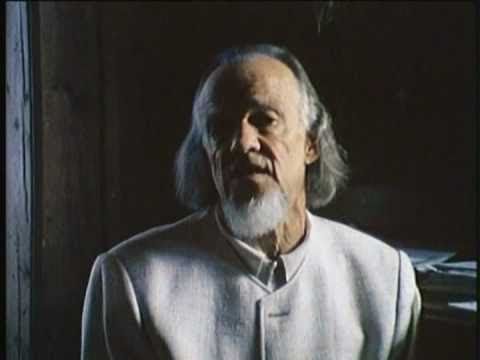
Francis Schaeffer noted “If there are no absolutes by which to judge society, then society is absolute.” This is very similar to what I heard John Zmirak say on American Family Radio on 10-28-14. Here is a review of his latest book.
Book Review: ‘The Race To Save Our Century’
Blog author: ehilton
Monday, September 29, 2014
By Elise Hilton
RaceSaveCentury-finalforrealthistimeWe are only 14 years into this century, and things are grim…but not hopeless. That’s the message of the book, The Race to Save Our Century: Five Principles to Promote Peace, Freedom and a Culture of Life. The book is a collaboration between Jason Scott Jones and John Zmirak. Jones is a human-rights activist and filmmaker (his works include Bella and Crescendo.) Zmirak is a prolific author, known best for his theologically accurate but tongue-in-cheek books on Catholicism, such as The Bad Catholic’s Guide to the Catechism: A Faithful, Fun-Loving Look at Catholic Dogmas, Doctrines, and Schmoctrines.
The Race to Save Our Century is a slim volume, but not a quick read. There is much to mull over here. With chapters like “Total War” and “Utopian Collectivism,” it’s best to take this book slowly. You don’t want to miss any of the good stuff.
The 20th century, by any account, was a bloody mess, and the authors of this book don’t want us to repeat the terrible mistakes humanity visited upon itself in that 100 years. What do they propose?
Part of their prescription for what ails us is to closely examine our mistakes. That is: look at evil from the inside. They point to the likes of Solzhenitsyn and C. S. Lewis as guides. “Like an autopsy,” the authors say, “it’s an ugly but sometimes necessary work.” Therefore, they dig into the dirt of racism, collectivism, distributism, hedonism. What makes these ideologies evil? Why must we reject them? And even more important, are we humans capable of sustaining goodness?
Can we be good? When we are faced with the grave temptation to cooperate with evil, to “go along to get along,” rather than speak out and take a risk, how will subhumanism help us?…The only effective answer to the banality of evil is a thriving, vigorous, spirited sense of what is good. Mankind is good, and it is good that he flourishes in freedom and dignity, even if sometimes he suffers.
The second part of the book then takes up what we must do in order to bolster this good. We must base all that we do on the radical ideal that each human being is precious, unique, valuable and made in God’s image and likeness. To proceed without this basis is foolhardy at best, deadly at worst. We must recognize a transcendent moral order, a law etched in the heart of man, that gives us a “firm anchor” rather than warm fuzzy platitudes.
Only such a code, carved in stone with the chisel of rigorous reasoning, will serve to restrain selfish interests and ideological passions and preserve the dignity of the human person.
The authors go on to explain both the essence and the need for subsidiarity and solidarity, ideas familiar to those who know Catholic social teaching. Subsidiarity is the remedy for totalitarianism, which is government run amok, invading all aspects of an individual’s life. Truth is trampled and “rights” are granted and taken away by government, not by God. Subsidiarity allows for the people to form their own associations of their own free will, solve issues on a personal and local level, and not be restricted by the “blunt force of the state.”
Solidarity, say the authors, is the simple and timeless act of doing unto others as you would have them do unto you. It is the “debt of respect” we owe each person, because we recognize their unique nature, made in the image and likeness of God.
Finally, the authors state that we need a “humane economy,” as envisioned by Wilhelm Röpke:
The word “humane” conveys what we mean, both in its literal meaning and in the connotations of kindness that it carries: man’s dignity demands an economic system that provides for his needs, enables his efforts, and takes account of both his self-centered drives and his fundamentally social nature.
In the book’s final chapter, Jones and Zmirak ask, “How did we get here?” That is, how did we find ourselves mired in this subhuman, post-Christian, hostile and often deadly world? Bluntly: we created it. We humans have spent much of the past 100 years telling ourselves the age-old lie that we know better than God, we have a better plan for humanity, faith is archaic and unnecessary and reliance on God passé. We ate the apple.
Again, this is a short book, but heavy on both ideas and ideals. The authors kindly add suggested reading at the end of each chapter; a necessary feature, as they tackle big issues in a short space. However, the book stands on its own as both history lesson and sound warning: we are in danger of repeating the bloody century that preceded this one. We are both at fault and in control. Jones and Zmirak make sense of chaos, “cruelty and smallness of soul” and raise the call for loyalty, decency and courage.
E P I S O D E 9
Dr. Francis Schaeffer – Episode IX – The On 700 club
T h e Age of Personal Peace and Afflunce
I. By the Early 1960s People Were Bombarded From Every Side by Modern Man’s Humanistic Thought
II. Modern Form of Humanistic Thought Leads to Pessimism
Regarding a Meaning for Life and for Fixed Values
A. General acceptance of selfish values (personal peace and affluence) accompanied rejection of Christian consensus.
1. Personal peace means: I want to be left alone, and I don’t care what happens to the man across the street or across the world. I want my own life-style to be undisturbed regardless of what it will mean — even to my own children and grandchildren.
2. Affluence means things, things, things, always more things — and success is seen as an abundance of things.
B. Students wish to escape meaninglessness of much of adult society.
1. Watershed was Berkeley in 1964.
2. Drug Taking as an ideology: “turning on” the world.
3. Free Speech Movement on Sproul Plaza.
a) At first neither Left nor Right.
b) Soon became the New Left.
(1) Followed Marcuse.
(2) Paris riots.
4. Student analysis of problem was right, but solution wrong.
5. Woodstock, Altamont, and the end of innocence.
6. Drug taking survives the death of ideology but as an escape.
7. Demise of New Left: radical bombings.
8. Apathy supreme. The young accept values of the older generation: their own idea of personal peace and affluence, even though adopting a different life-style.
C. Marxism and Maoism as pseudo-ideals.
1. Vogue for idealistic communism which is another form of leap into the area of non-reason.
2. Solzhenitsyn: violence and expediency as norms of communism.
3. Communist repression in Hungary and Czechoslovakia.
4. Communism has neither philosophic nor historic base for freedom. There is no base for “Communism with a human face.”
5. Utopian Marxism steals its talk of human dignity from Christianity.
6. But when it comes to power, the desire of majority has no meaning.
7. Two streams of communism.
a) Those who hold it as an idealistic leap.
b) Old-line communists who hold orthodox communist ideology and bureaucratic structure as it exists in Russia.
8. Many in West might accept communism if it seemed to give peace and affluence.
III. Legal and Political Results of Attempted Human Autonomy
A. Relativistic law.
1. Base for nonarbitrary law gone; only inertia allows a few principles to survive.
2. Holmes and sociological (variable) law.
3. Sociological law comes from failure of natural law (see evolution of existential from rationalistic theology).
4. Courts are now generating law.
5. Medical, legal, and historical arbitrariness of Supreme Court ruling on abortion and current abortion practice.
B. Sociological law opens door to racism, abrogation of freedoms, euthanasia, and so on.
IV. Social Alternatives After Death of Christian Consensus
A. Hedonism? But might is right when pleasures conflict.
B. Without external absolute, majority vote is absolute. But this justifies a Hitler.
V. Conclusion
A. If there is no absolute by which to judge society, then society is absolute.
B. Humanist thinking—making the individual and mankind the center of all things (autonomous) — has led to death in our culture and in our political life.
Note: Social alternatives after the death of Christian consensus are continued in Episode Ten.
Questions
1. What was the basic cause of campus unrest in the sixties? What has happened to the campus scene since, and why?
2. What elements — in the life and thought of the communist and noncommunist world alike — suggest a possible base for world agreement?
3. “To prophesy doom about Western society is premature. We are, like all others who have lived in times of great change, too close to the details to see the broader picture. One thing we do know:
Society has always gone on, and the most wonderful epochs have followed the greatest depressions. To suggest that our day is the exception says more about our headache than it does about our head.” Debate.
4. As Dr. Schaeffer shows, many apparently isolated events and options gain new meaning when seen in the context of the whole. How far does your own involvement in business, law, financing, and so on reveal an acquiescence to current values?
Key Events and Persons
Oliver Wendell Holmes: 1841-1935
Herbert Marcuse: 1898-1979
Alexander Solzhenitsyn: 1917-
Hungarian Revolution: 1956
Free Speech Movement: 1964
Czechoslovakian repression: 1968
Woodstock and Altamont: 1969
Radical bombings: 1970
Supreme Court abortion ruling: 1973
Solzhenitsyn’s The Gulag Archipelago: 1973-74
Further Study
Keeping one’s eyes and ears open is the most useful study project: the prevalence of pornographic films and books, more and more suggestive advertising and TV shows, and signs of arbitrary absolutes.
The following books will repay careful reading, and Solzhenitsyn, though long and horrifying, should not be skipped.
Os Guinness, The Dust of Death (1973).
Alexander Solzhenitsyn, The Gulag Archipelago: Parts I-II (1973), Parts III-IV (1974).
Related posts:
“Schaeffer Sunday” Francis Schaeffer noted “If there are no absolutes by which to judge society, then society is absolute.”
___________________________________________ Francis Schaeffer is a hero of mine and I want to honor him with a series of posts on Sundays called “Schaeffer Sundays” which will include his writings and clips from his film series. I have posted many times in the past using his material. Philosopher and Theologian, Francis A. Schaeffer has argued, “If […]
Francis Schaeffer noted “If there are no absolutes by which to judge society, then society is absolute.” (“Schaeffer Sundays” Part 4)
___________________________________________ Francis Schaeffer is a hero of mine and I want to honor him with a series of posts on Sundays called “Schaeffer Sundays” which will include his writings and clips from his film series. I have posted many times in the past using his material. Philosopher and Theologian, Francis A. Schaeffer has argued, “If […]
“Schaeffer Sunday” Taking on Ark Times Bloggers on the “Absurdity of Life without God!!” Part 5 (Do atheists avoid serving God so they can do what they want?)
The Bible and Science (Part 05) Why Can’t Morals Be Grounded In Society? Published on Aug 31, 2012 Dr William Lane Craig was invited by the School of Oriental and African Studies (SOAS) Christian Union, London to give a lecture titled “Can we be good without God?” In this video Dr Craig answers a question about […]
FRANCIS SCHAEFFER ANALYZES ART AND CULTURE Part 30 Rene Descartes and “How do we know we know?” (Feature on artist Olafur Eliasson)
__________________________ Episode VII – The Age of Non Reason NoMirrorHDDHrorriMoN· _____________________________________________________________________________________________________________________________________ Francis Schaeffer pictured below: _________ Francis Schaeffer has written extensively on art and culture spanning the last 2000years and here are some posts I have done on this subject before : Francis Schaeffer’s “How should we then live?” Video and outline of episode 10 “Final […]
“Schaeffer Sunday” Taking on Ark Times Bloggers on the “Absurdity of Life without God!!” Part 4 (According to the Christian worldview, God does exist, and man’s life does not end at the grave)
The Bible and Science (Part 04) Eastwooding Richard Dawkins’ Moral Argument Objections Published on Oct 20, 2012 For more information and resources visit: http://www.reasonablefaith.org On September 29th, 2012, William Lane Craig participated in the Contending with Christianity’s Critics Conference held at Watermark Community Church in Dallas, TX. In this short clip, Dr. Craig uses the technique of […]
Series “FRANCIS SCHAEFFER ANALYZES ART AND CULTURE” traces Schaeffer’s comments on modern culture and can be found weekly on www.thedailyhatch.org !!!!! Impressionism down to Modern Art examined!!
_______ Francis Schaeffer pictured below: ______________ Francis Schaeffer pictured below: _____________ This series of posts entitled “FRANCIS SCHAEFFER ANALYZES ART AND CULTURE” touches things that affect our culture today. The first post took a look at the foundations of our modern society today that were set by the Roman Democracy 2000 years ago and […]
FRANCIS SCHAEFFER ANALYZES ART AND CULTURE Part 29 W.H. Thorpe and “The Search for an Adequate World-View: A Question of Method” (Feature on artist Jeff Koons)
_____________________________ The Scientific Age Uploaded by NoMirrorHDDHrorriMoN on Oct 3, 2011 Francis Schaeffer “BASIS FOR HUMAN DIGNITY” Whatever…HTTHR Francis Schaeffer pictured below: ________ Francis Schaeffer has written extensively on art and culture spanning the last 2000years and here are some posts I have done on this subject before : Francis Schaeffer’s “How should we then live?” Video and […]
Truth Tuesday:Francis Schaeffer — Review of “Polution and the Death of Man”
Francis Schaeffer — Review of “Polution and the Death of Man” Episode VII – The Age of Non Reason Dr. Schaeffer’s sweeping epic on the rise and decline of Western thought and Culture _______________________ I love the works of Francis Schaeffer and I have been on the internet reading several blogs that talk about […]
“Schaeffer Sunday” Taking on Ark Times Bloggers on the “Absurdity of Life without God!!” Part 3 (If there is no lasting meaning to our lives then isn’t life utterly without reason?)
_________________________________________________________ The Bible and Science (Part 03) There Is A Difference Between Absolute and Objective Moral Values Published on Dec 6, 2012 For more resources visit: http://www.reasonablefaith.org The Bethinking National Apologetics Day Conference: “Countering the New Atheism” took place during the UK Reasonable Faith Tour in October 2011. Christian academics William Lane Craig, John Lennox, Peter J […]

 Many people have criticized the decision. Clarke Forsythe, Senior Counsel at Americans United for Life, takes on a more difficult task in



 The Daily Hatch

Thank you, professor. I only originally knew of Schaeffer through Piper’s “Pastor As Scholar” discussion. Recently when our church gave away our library books, I found The God Who Is There, Death In the City, and Genesis In Space and Time. I had those books on my shelf for a year l, but started reading the God Who Is There a couple of weeks ago. I absolutely fell in love with his thinking and understanding if man’s despair, need for a universal unifying truth, and the way Schaeffer opened up my eyes to famous artists and what they were trying to accomplish. (I knew of John Cage years ago and hated his music, but Schaeffer really made sense of him for me.) So I have decided to plow through everything else Schaeffer wrote.
By the way, I enjoyed this article of yours. I am a GGBTS student in California, possibly transferring my units to SEBTS online. I hope to have the privilege of taking a course with you.
Your comment is awaiting moderation.
By the way I have reblogged this fine article today on my blog.
I am Everette Hatcher and in the 1970’s and 1980’s I was a member of Bellevue Baptist in Memphis where Adrian Rogers was pastor and was a student at Evangelical Christian School from the 5th grade to the 12th grade where I was introduced to the books and films of Francis Schaeffer. At ECS my favorite teacher was Mark Brink who actually played both film series to us (WHATEVER HAPPENED TO THE HUMAN RACE? and HOW SHOULD WE THEN LIVE?) during our senior year and believe it or not after I graduated I would come back and join some of his future classes when the film was playing again because I couldn’t get enough of Schaeffer’s film series!!!!
During this time I was amazed at how many prominent figures in the world found their way into the works of both Adrian Rogers and Francis Schaeffer and I wondered what it would be like if these individuals were exposed to the Bible and the gospel. Therefore, over 20 years ago I began sending the messages of Adrian Rogers and portions of the works of Francis Schaeffer to many of the secular figures that they mentioned in their works. Let me give you some examples and tell you about some lessons that I have learned.
I have learned several things about atheists in the last 20 years while I have been corresponding with them. First, they know in their hearts that God exists and they can’t live as if God doesn’t exist, but they will still search in some way in their life for a greater meaning. Second, many atheists will take time out of their busy lives to examine the evidence that I present to them. Third, there is hope that they will change their views.
Let’s go over again a few points I made at the first of this post. My first point is backed up by Romans 1:18-19 (Amplified Bible) ” For God’s wrath and indignation are revealed from heaven against all ungodliness and unrighteousness of men, who in their wickedness REPRESS and HINDER the truth and make it inoperative. For that which is KNOWN about God is EVIDENT to them and MADE PLAIN IN THEIR INNER CONSCIOUSNESS, because God has SHOWN IT TO THEM,”(emphasis mine). I have discussed this many times on my blog and even have interacted with many atheists from CSICOP in the past. (I first heard this from my pastor Adrian Rogers back in the 1980’s.)
My second point is that many atheists will take the time to consider the evidence that I have presented to them and will respond. The late Adrian Rogers was my pastor at Bellevue Baptist when I grew up and I sent his sermon on evolution and another on the accuracy of the Bible to many atheists to listen to and many of them did. I also sent many of the arguments from Francis Schaeffer also.
Francis Schaeffer’s words would be quoted in many of these letters that I would send to famous skeptics and I would always include audio messages from Adrian Rogers. Perhaps Schaeffer’s most effective argument was concerning Romans 1 and how a person could say that he didn’t believe that the world had a purpose or meaning but he could not live that way in the world that God created and with the conscience that every person is born with.
Google “Adrian Rogers Francis Schaeffer” and the first 4 things that come up will be my blog posts concerning effort to reach these atheists. These two great men proved that the scriptures Hebrews 4:12 and Isaiah 55:11 are true, “For the word of God is alive and active. Sharper than any double-edged sword, it penetrates even to dividing soul and spirit, joints and marrow; it judges the thoughts and attitudes of the heart.” and “so is my word that goes out from my mouth: It will not return to me empty, but will accomplish what I desire and achieve the purpose for which I sent it.”