A heavy heart is the beginning of misery, and we were never meant to carry the load.
A burdened soul breaks the spirit. A broken spirit thins the immunity of the body. The body then begins to wither, and we get ill. In fact, studies have shown that emotions largely contribute to one’s overall state of health. Doctors call it Emotionally Induced Illness (E.I.I.), and it is the idea that physical sickness can be a result of emotional illness.
The entire body is affected by a heavy heart. But God has given us a remedy for the soul, the spirit, and the body. And it is good medicine…Joy!
Not mere laughter, not mere joking, not mere fun and games, but deep, abiding joy is our strongest medicine and greatest weapon. Joy doesn’t depend upon material things or circumstances. It doesn’t depend upon thrills. It comes straight from the heart.
In the Gospel of John, Jesus spoke of the joy in His own heart, and He promised to give us a dose of it; not just some cheap imitation… He wants to give us the real thing. “My joy have I given unto you.” Jesus said, “I want that joy to remain in you.”
We don’t root our happiness in circumstances, because those can change in an instant and leave us emotionally stranded. We root our joy in Christ alone, who is the same yesterday, today, and forever. (Hebrews 13:8)
“Without joy, life is meaningless!” Acclaimed pastor and teacher, Adrian Rogers says, “That joy is found only in Jesus. And we ought to share the secret, the source of our joy —the Lord Jesus Christ.”
Apply it to your life
Joy is something freely given, but it must be received, day by day. Today, seek it out through prayer and in Scripture. Let it be seen in your countenance as you go about your day, and share it with someone else.
I am thinking about moving MUSIC MONDAYS to a monthly feature on http://www.thedailyhatch.org. My passion has been recent years to emphasize the works of Francis Schaeffer in my apologetic efforts and most of those posts are either on Tuesdays or Thursdays. I have already done so many ahead that MUSIC MONDAYS will remain weekly for now, but at some point I will be making them weekly.
The Mamas & the Papas were an American folk rockvocal group that recorded and performed from 1965 to 1968, and were a defining force in the music scene of the Counterculture of the 1960s. The band reunited briefly in 1971. The group was composed of John Phillips, Denny Doherty, Cass Elliot, and Michelle Phillipsnée Gilliam. Their sound was based on vocal harmonies arranged by John Phillips,[2] the songwriter, musician, and leader of the group who adapted folk to the new beat style of the early sixties.
They released a total of five studio albums and seventeen singles over a four-year period, six of which made the Billboard top ten, and have sold close to 40 million records worldwide.[3]The band was inducted into the Rock and Roll Hall of Fame in 1998 for their contributions to the music industry.[1]
The group was formed by husband and wife John and Michelle Phillips, formerly of the New Journeymen, and Denny Doherty, formerly of the Mugwumps. Both of these earlier acts were folk groups active from 1964 to 1965. The last member to join was Cass Elliot, Doherty’s bandmate in the Mugwumps, who had to overcome John Phillips’ concern that her voice was too low for his arrangements, that her physical appearance would be an obstacle to the band’s success, and that her temperament was incompatible with his.[4] The group considered calling itself the Magic Cyrcle before switching to the Mamas and the Papas as apparently inspired by the Hells Angels, whose female associates were called “mamas”.[5][6]
The quartet spent the period from early spring to midsummer 1965 in the Virgin Islands “to rehearse and just put everything together”, as John Phillips later recalled.[7] Phillips acknowledged that he was reluctant to abandon folk music.[8] Others, including Doherty and guitarist Eric Hord, have said he hung on to it “like death”.[9]Roger McGuinn’s more measured view is that “It was hard for John to break out of folk music, because I think he was real good at it, conservative, and successful, too.”[10] Phillips also acknowledged that it was Doherty and Elliot who awakened him to the potential of contemporary pop, as epitomized by the Beatles. While previously, the New Journeymen had played acoustic folk, with banjo; and the Mugwumps played something closer to folk rock, with bass and drums.[11][12] Their rehearsals in the Virgin Islands were “the first time that we tried playing electric”.[13][14]
The band then traveled from New York to Los Angeles for an audition with Lou Adler, co-owner of Dunhill Records. The audition was arranged by Barry McGuire, who had befriended Cass Elliot and John Phillips independently over the previous two years, and who had recently signed with Dunhill himself.[15][16] It led to “a deal in which they would record two albums a year for the next five years”, with a royalty of 5 percent on 90 percent of retail sales.[17][18]Dunhill also tied the band to management and publishing deals, commonly known as a “triple hat” relationship.[19][20] Cass Elliot’s membership was not formalized until the paperwork was signed, with Adler, Michelle Phillips, and Doherty overruling John Phillips.[21]
The Mamas and the Papas made their inaugural recording singing backing vocals on McGuire’s album This Precious Time, although they had already released a single of their own by the time the album appeared in December 1965.[22] This single was “Go Where You Wanna Go”, which was given a limited release in November but failed to chart.[23] There are few copies of this single extant and the follow-up, “California Dreamin’“, has the same B-side, suggesting that “Go Where You Wanna Go” had been withdrawn.[24][25] “California Dreamin’” was released in December, supported by a full-page ad in Billboard on the 18th of that month.[26] It peaked at number four in the United States and number twenty-three in the United Kingdom. “Go Where You Wanna Go” was subsequently covered by the 5th Dimension, who included it on their album Up, Up and Away and it became a Top 20 pop hit for them.
Their second album, The Mamas & the Papas, is sometimes referred to as Cass, John, Michelle, Dennie, whose names appear thus above the band’s name on the cover, including the unexplained misspelling of Doherty’s first name. Recording was reportedly interrupted when Michelle Phillips became indiscreet about her affair with Gene Clark of the Byrds.[27][28] A liaison the previous year between Michelle Phillips and Denny Doherty had been forgiven by her husband John Phillips; Doherty and John Phillips had reconciled and written “I Saw Her Again” about the episode.[29][30] They later disagreed about how much Doherty contributed to the song.[31][32] But after Michelle’s affair with Clark, John Phillips was determined to fire her.[33] After consulting their attorney and record label, he, Elliot, and Doherty served Michelle Phillips with a letter expelling her from the group on June 28, 1966.[27]
Jill Gibson was hired to replace Michelle. Gibson was a visual artist and singer-songwriter who had recorded with Jan and Dean.[34] After being introduced to the band by its producer, Lou Adler, she was soon taking part in concerts (at Forest Hills, New York, Denver, Colorado, and Phoenix, Arizona)[35] television appearances (Hollywood Palace on ABC), and recording sessions[36] While Gibson was a quick study and well regarded, the three original members concluded that she lacked her predecessor’s “stage charisma and grittier edge”, and Michelle Phillips was reinstated on August 23, 1966.[37][38] “Jill Gibson, so nearly a full-time Mama, left and was paid a lump sum from the group’s funds.”[39]
The Mamas & the Papas peaked at number four in the US, continuing the band’s success, but only made number twenty-four in the UK. “I Saw Her Again” was released as a single in June 1966 and reached number five in the US and number eleven in the UK. There is a false start to the final chorus of the song at 2’42”. While mixing the record, Bones Howe inadvertently punched in the coda vocals too early. He then rewound the tape and inserted the vocals in their proper position. On playback, the mistaken early entry could still be heard, making it sound as though Doherty repeated the first three words, singing “I saw her … I saw her again last night”. Lou Adler liked the effect, and told Howe to leave it in the final mix.[40] “That has to be a mistake: nobody’s that clever,” Paul McCartney told the group.[41] The device was imitated by John Sebastian in the Lovin’ Spoonful song, “Darlin’ Be Home Soon” (1966), and by Kenny Loggins in the song “I’m Alright” (1980). “Words of Love” was the second single from the album, appearing in November 1966. In the US it was released as a double A-side with “Dancing in the Street” and reached number five (“Dancing in the Street,” which had been a hit two years earlier for Martha and the Vandellas, struggled to number seventy-three). In the UK it was backed with “I Can’t Wait” and peaked at number forty-seven.
With Michelle Phillips reinstated, the group embarked on a small tour on the East coast to promote the record in the fall of 1966, playing a series of precarious and reportedly bizarre shows. At a September 1966 concert at Fordham University in New York City, the band was noted by Gus Duffy and Jim Mason of their co-headlining band, Webster’s New Word, as being clearly “high, drunk, or tripping. When they got on stage, it was clear that these people shouldn’t be on stage… They tumbled onto the stage, shambled around, and just got nowhere.[42]
The Mamas & the Papas on ABC‘s The Songmakers, 1967
After completing their brief East coast tour, the group started work immediately on its third album, The Mamas & The Papas Deliver, which was recorded in the autumn of 1966. The first single from the album, “Look Through My Window“, was released in September 1966 (before the last single from The Mamas and the Papas). It reached number twenty-four in the US, but did not chart in the UK. The second single, “Dedicated to the One I Love” (February 1967), did much better, peaking at number two in both the US and the UK. That success helped the album, also released in February 1967, reach number two in the US and number four in the UK. The third single, “Creeque Alley” (April 1967), chronicled the band’s early history. It peaked at number five in the US and number nine in the UK.
The strain on the group was apparent when they performed indifferently at the first Monterey International Pop Festival in June 1967, as can be heard on Historic Performances Recorded at the Monterey International Pop Festival (1970). The band was badly under-rehearsed – partly because John and Michelle Phillips and Lou Adler were preoccupied with organizing the festival, partly because Doherty arrived at the last minute from another sojourn in the Virgin Islands,[43][44][45] and partly, it is said, because he was drinking heavily in the aftermath of his affair with Michelle Phillips.[46] They rallied for their performance before 18,000 people at the Hollywood Bowl in August (with Jimi Hendrix as the opener), which both John and Michelle Phillips would remember as the apex of the band’s career: “There would never be anything quite like it again.”[47][48]
Deliver was followed in October 1967 by the non-album single “Glad to Be Unhappy“, which reached number twenty-six in the US. “Dancing Bear” from the group’s second album was released as a single in November. It peaked at number fifty-one in the US. Neither of these singles charted in the UK.
The Mamas and the Papas cut their first three albums at United Western Recorders in Hollywood,[49] while the group’s subsequent releases were recorded at the eight-track studio John and Michelle Phillips built at their home in Bel Air – this at a time when four-track recording was still the norm.[50][51] John Phillips said, “I got the idea to transform the attic into my own recording studio, so I could stay high all the time and never have to worry about studio time. I began assembling the state-of-the-art equipment and ran the cost up to about a hundred grand.”[52]
While this gave him the autonomy he craved, it also removed the external discipline that may have been beneficial to a man who described himself as an “obsessive perfectionist”.[24] Doherty, Elliot, and Adler all found the arrangement uncongenial, with Elliot later complaining to Rolling Stone (October 26, 1968): “We spent one whole month on one song, just the vocals for ‘The Love of Ivy’ took one whole month. I did my [debut solo] album in three weeks, a total of ten days in the studio. Live with the band, not prerecorded tracks sitting there with earphones.”[53] The recording sessions for the fourth album eventually stalled completely, and in September 1967 John Phillips called a press conference to announce that The Mamas and the Papas were taking a break, which they confirmed on the Ed Sullivan Show on the 24th of that month.[54][55][56]
The plan was to give concerts at the Royal Albert Hall in London and the Olympia in Paris, before taking time out on Majorca to “get the muse going again”, as John Phillips put it.[57][58] When they docked at Southampton on October 5, Elliot was arrested on a charge of having stolen two blankets and a hotel key worth ten guineas (US$28) when in England the previous February. Elliot was transferred to London, strip-searched, and spent a night in custody, before the case was dismissed in the West London Magistrates’ Court the next day.[59] The hotel was actually less interested in the blankets than in an unpaid bill; it transpired that Elliot had entrusted the money to her companion, Pic Dawson (1943–1986),[60][61] who neglected to settle the account.[62] The police, in turn, were less interested in the blankets or the bill than in Dawson, who was suspected of international drug trafficking and was “the sole subject” of their questioning.[63]
Later, at a party hosted by the band to celebrate Elliot’s acquittal, John Phillips interrupted Elliot as she was telling Mick Jagger about her arrest and trial: “Mick, she’s got it all wrong, that’s not how it was at all.” Elliot “screamed” at Phillips “before storming out of the room”.[64][65] Elliot was ready to quit, the Royal Albert Hall and Olympia dates were cancelled, and the four went their separate ways; John and Michelle Phillips to Morocco, Doherty back to the United States, and Elliot either back to the United States (according to John Phillips) or to a rendezvous in Paris with Pic Dawson (according to Michelle Phillips).[65][66] In an interview with Melody Maker, Elliot unilaterally announced that The Mamas and the Papas had disbanded: “We thought this trip would give the group some stimulation, but this has not been so.”[67]
In fact, Phillips and Elliot did patch things up sufficiently to complete The Papas & The Mamas, which was released in May 1968. It was relatively successful in both the UK and US, although it was their first not to go gold or reach the top ten in America. “12:30 (Young Girls Are Coming to the Canyon)” had been released as a single in August 1967;[2] it peaked at number twenty in the US, but failed to chart in the UK. After the second single, “Safe in My Garden” (May 1968), made it only to number fifty-three, Dunhill released Elliot’s solo feature from the album, a cover of “Dream a Little Dream of Me“, as a single credited to “Mama Cass with the Mamas and the Papas” in June 1968 – against John Phillips’ wishes.[68] It reached number twelve in the US and became the band’s first single to chart in the UK after five failures, peaking at number eleven. It was the only Mamas and Papas single to chart higher in the UK than in the US. The fourth and final single from The Papas and the Mamas was “For the Love of Ivy” (July 1968), which peaked at number eighty-one in the US and did not chart in the UK. For the second time, Dunhill returned to their earlier work for a single. In this case it was “Do You Wanna Dance” from the debut album, released as a single in October 1968. It failed to chart in the UK and reached number seventy-six in the US.[69]
The success of “Dream a Little Dream of Me” confirmed Elliot’s desire to embark on a solo career, and by the end of 1968 it appeared that the group had split. Its chart performance had become increasingly erratic, with three of its last four singles failing on both sides of the Atlantic. As John Phillips recalled, “Times had changed. The Beatles showed the way. Music itself was heading toward a technological and compositional complexity that would leave many of us behind. It was tough to keep up.”[70] The group “made it official” at the beginning of 1969: “Dunhill released us from our contracts and we were history, though we still owed the label another album.”[71] Elliot (billed as Mama Cass) had released her solo debut Dream a Little Dream in 1968, Phillips released John Phillips (John, the Wolf King of L.A.) in 1970, and Denny Doherty followed with Watcha Gonna Do? in 1971.
Dunhill maintained momentum by releasing The Best of the Mamas and the Papas: Farewell to the First Golden Era in 1967, Golden Era Vol. 2 in 1968, 16 of Their Greatest Hits in 1969, and the Monterey live album in 1970. It was also determined to get the promised last LP, for which it had given the band an extension until September 1971.[72] It warned that each member of the group would be sued for $250,000 if they did not deliver (about $1.4 million apiece in 2010 values).[73][74] There was suit and counter suit but these were settled out of court and it was reported that the band would record under John Phillips own label, Warlock Records, distributed by Dunhill.[75] Phillips wrote another collection of songs, which was arranged, rehearsed, and recorded in fits and starts over about a year, depending on the availability of the other group members: “It was rare we were all together. Most tracks were dubbed, one vocal at a time.”[76]
The Mamas and the Papas’ last album of new material, People Like Us, was released in November 1971. The only single, “Step Out” (January 1972), reached number eighty-one in the US. The album peaked at number eighty-four on the Billboard 200, making it the only Mamas and Papas LP not to reach the top twenty in the US. Neither single nor album charted in the UK. Contractual obligations fulfilled, the band’s split was now final.
Cass Elliot had a successful solo career, touring the U.S. and Europe; appearing frequently on television, including in two specials (The Mama Cass Television Program on ABC in January 1969 and Don’t Call Me Mama Anymore on CBS in September 1973); and producing hits such as “Make Your Own Kind of Music” and “It’s Getting Better”. That said, she never surpassed her two Dunhill albums, Dream a Little Dream (1968) and Bubblegum, Lemonade, and … Something for Mama (1969). None of the three albums she recorded for RCA – Cass Elliot (1972), The Road Is No Place for a Lady (1972), and Don’t Call Me Mama Anymore (1973) – produced a charting single.
Elliot died of heart failure in London on July 29, 1974, after completing a two-week engagement at the Palladium. The shows were mostly sold out and prompted standing ovations. Her former bandmates and Lou Adler attended her funeral in Los Angeles. Elliot was survived by her only child, Owen Vanessa Elliot (b. 1967).
John Phillips’ country-influenced solo album, John Phillips (John, the Wolf King of L.A.), was not a commercial success, despite featuring the single “Mississippi”, which reached number thirty-two in the US. Nevertheless, it continues to enjoy critical favor. Rolling Stone gave it four stars when it was reissued in 2006, calling it “a genuine lost treasure”.[77] Denny Doherty said that if the Mamas and the Papas had recorded the album, it might have been their best.[78]Phillips wrote songs for the soundtrack to Brewster McCloud (Robert Altman, 1970)[79] and original music for the soundtracks to Myra Breckinridge (Michael Sarne,1970)[80] and The Man Who Fell to Earth (Nicolas Roeg, 1976).[81]He also wrote the ill-fated stage musical Man on the Moon (1975) and songs with and for other artists, including most of the tracks on the album Romance Is on the Rise (1974) by his then wife Geneviève Waïte, which he also produced;[82] and “Kokomo” (1988), which was a number-one hit for the Beach Boys.
Phillips was lost to heroin addiction through much of the 1970s, a period that culminated in his arrest and conviction in 1980 on a charge of conspiring to distribute narcotics, for which he spent a month in jail in 1981.[83][84][85] In later years he performed with the New Mamas and the Papas (see below) and appeared in revival shows and television specials. He told his side of the Mamas and Papas’ story in the memoir Papa John (1986),[86] and in the PBStelevision documentary, Straight Shooter: The True Story of John Phillips and the Mamas and the Papas (1988).[87] John Phillips died of heart failure in Los Angeles on March 18, 2001.[88]
Two albums were released immediately after his death: Pay Pack and Follow (April 2001), which included material recorded in London and New York with members of the Rolling Stones in 1976 and 1977;[89][90] and Phillips 66(August 2001), an album of new material and reworkings that “takes its title from the age Phillips would have been when the album was originally slated for its release”.[91] A later archival series on Varèse Sarabande included a reissue of John Phillips (John, the Wolf King of L.A.) with bonus tracks (2006); the sessions he recorded for Columbia with the Crusaders in 1972 and 1973, released as Jack of Diamonds (2007);[92] his preferred mix of the Rolling Stones sessions, released with other material as Pussycat (2008);[93] and his demos for Man on the Moon, released as Andy Warhol Presents Man on the Moon: The John Phillips Space Musical (2009).[94]
Phillips had five children:
the businessman Jeffrey Phillips (b. 1957) and the actor and singer Laura Mackenzie Phillips (b. 1959) by his first wife Susan Adams Phillips;
Denny Doherty’s solo career faltered after the appearance of Whatcha Gonna Do? in 1971. The follow-up, Waiting for a Song (1974), was not released in the US, although a 2001 reissue by Varèse Sarabande gained wider distribution and the album is now available as a digital download. It features Michelle Phillips and Cass Elliot as backing vocalists, the latter in what proved to be her last recorded performances. A single from the album, “You’ll Never Know“, made the adult contemporary charts. Doherty then turned to the stage, making a disastrous start in John Phillips’ Man on the Moon (1975). In 1977, he returned to his birthplace, Halifax, Nova Scotia, and started playing legitimate roles, including Shakespeare, at the Neptune Theatre under the tutelage of John Neville.[97][98] This led to television work, beginning with a variety program, Denny’s Sho*, which ran for one season in 1978. He went on to host and voice parts in the children’s program, Theodore Tugboat, and to act in various series, including twenty-two episodes of the drama Pit Pony.[99] Doherty also performed with the New Mamas and the Papas (see below). An alcoholic through the 1960s and 1970s, Doherty recovered in the early 1980s and stayed sober for the remainder of his life.[100][101]In 1996, he was inducted into the Canadian Music Hall of Fame.[97]
Doherty answered John Phillips’ PBS documentary with the autobiographical stage musical Dream a Little Dream (the Nearly True Story of the Mamas and the Papas), which he wrote with Paul Ledoux and performed sporadically, starting in Halifax in 1997,[102] and eventually reaching the off-Broadway Village Theater in New York in 2003.[103] The original cast recording – featuring Doherty and supporting band – was released by Lewlacow in 1999.[104]
Doherty died of an abdominal aortic aneurysm at his home in Mississauga, Ontario, on January 19, 2007.[105] He was survived by his three children, Jessica Woods, Emberly Doherty, and John Doherty. A documentary by Paul Ledoux, Here I Am: Denny Doherty and the Mamas and the Papas, premiered at Halifax’s Atlantic Film Festival in September 2009 and screened on the Bravo cable network as part of the Great Canadian Biographies series in February 2010.[106][107]
Phillips published a memoir, California Dreamin’, in 1986,[109] the same year John Phillips published his. Reading the two books together was, according to one reviewer, “like reading the transcripts in a divorce trial.”[110] As the co-writer and owner of the copyright to California Dreamin’, Phillips was an important contributor to the 2005 PBS television documentary California Dreamin’: The Songs of the Mamas and the Papas.[111]
The New Mamas and the Papas were a by-product of John Phillips’ desire to “round out the picture of reform” as he awaited sentencing on narcotics charges in 1980.[112] He invited his children Jeffrey and Mackenzie, both living in Los Angeles, and Denny Doherty, who was living in Canada, to join him at the Fair Oaks Hospital in Summit, New Jersey, where he was undergoing rehabilitation. The children arrived around Thanksgiving and Doherty around Christmas. The idea of reviving the group was born at this time, with Phillips and Doherty in their original roles, Mackenzie Phillips taking Michelle Phillips’ part and Elaine “Spanky” McFarlane of Spanky and Our Gang taking the part of Cass Elliot.[113] Little progress was made until after Phillips had been sentenced and served his time in jail. The quartet began rehearsing in earnest and recording demos in the summer of 1981. Their first performances were in March 1982, when they were praised for their “verve and expertise”, the “impressive precision” of the harmonies, and the “feeling … of genuine celebration” on stage.[114]
The group toured the United States, including residencies in Las Vegas and Atlantic City, but lost $150,000 in their first eighteen months. Phillips called a halt in August 1983 and the New Mamas and the Papas did not perform again until February 1985.[115] They then resumed touring, with concerts in Europe, East Asia, and South America, as well as in Canada and the United States; at their height, they were playing up to 280 nights a year.[116] John Phillips stayed off heroin, but remained addicted to alcohol, cocaine, and pills, as did his daughter. This affected the group’s performance, as they were occasionally booed off stage.[117]
Doherty quit in 1987 and was replaced by Scott McKenzie (1939–2012). In 1991, Mackenzie Phillips was replaced by Laurie Beebe Lewis,[118] a former vocalist with the Buckinghams who had earlier (1986–1987) temped with the band when Mackenzie Phillips was pregnant. John Phillips dropped out after a liver transplant in 1992 and Doherty returned. Lewis and McFarlane left in 1993, to be replaced by Lisa Brescia and Deb Lyons. The band continued to perform with varying line-ups, including Barry McGuire (1997–1998) and the recovering Phillips, until 1998, by which time, according to one critic, “the jingle singers who sang those fabulous Cass, Michelle, John, and Denny parts were an aural cartoon”.[119] In 1998 the lineup was Phillips, Scott McKenzie, Chrissy Faith, David Baker and Janelle Sadler. After Phillips and McKenzie retired permanently from touring, another singer, Mark Williamson, was brought in.
Phillips wanted the New Mamas and the Papas to make an album, “but I just couldn’t bring myself to commit to it”.[120][121]Varèse Sarabande released the 1981 demos with other material as Many Mamas, Many Papas in 2010. Beyond that, the band is represented on record only by live albums of uncertain provenance, including The Mamas and the Papas Reunion Live (1987) featuring the Phillips-Doherty-Phillips-McFarlane line-up and released by Teichiku in Japan;[104] and Dreamin’ Live (2005) on a label called Legacy (not the Columbia-Sony imprint), which features John and Mackenzie Phillips, Spanky McFarlane, and (probably) Scott McKenzie.[122]
In 1986, John and Michelle Phillips were featured in the music video for the Beach Boys‘ second recording of “California Dreamin’“, which appeared on the album Made in U.S.A. Denny Doherty was unavailable. The Mamas and the Papas’ own version of “California Dreamin'” was reissued in the UK and peaked at number nine in 1997. The song received a Grammy Hall of Fame Award in 2001.
The Mamas and the Papas were inducted into the Rock and Roll Hall of Fame in 1998, the Vocal Group Hall of Fame in 2000, and the Hit Parade Hall of Fame in 2009. Cass Elliot and Michelle Phillips, as “the Mamas”, were ranked number twenty-one on the VH1 network’s list of the 100 Greatest Women of Rock.
In a review by Matthew Greenwald, he stated, “One of the best anthologies of the Mamas & the Papas, A Gathering of Flowers was put together immediately after the group’s demise, and gives the listener an excellent overview of one of the most revolutionary and appealing groups to emerge from the folk-rock era. Although it may seem slim at first, with only 20 tracks spread out over two LPs, there is much more to be found. In between most cuts there are not only rehearsals and outtakes, but also interview snippets from John Phillips and Cass Elliot. These interviews create an aural documentary of the group in between great cuts like “California Dreamin’,” “Monday, Monday,” “I Saw Her Again,” and others. Excellent liner notes by Andy Wickham and a generous collection of rare photos top this collection off in grand style.” This anthology was never produced on CD but was available on vinyl and cassette tape for many years. Some companies are offering a CDR ripped version of this engaging look into the history of the Mamas & the Papas, normally including the source material to preserve copyrights.
The band finally received a box set when the four-CD Complete Anthology was released in the UK in September 2004 and in the US in January 2005. It contains the five studio albums, the live album from Monterey, selections from their solo work, and rarities including their first sessions with Barry McGuire, all in “uniformly excellent” sound.[123] A blogger on BBC Music called it “a treasure chest of pop gold”.[124]
In addition to the three documentaries (Straight Shooter, California Dreamin’ and Here I Am), Doherty’s musical, and the memoirs by John, Michelle, and Mackenzie Phillips, the group is the subject of Doug Hall’s The Mamas and the Papas: California Dreamin’ (2000)[125] and Matthew Greenwald’s Go Where You Wanna Go: The Oral History of the Mamas and the Papas (2002).[126] Cass Elliot is the subject of Jon Johnson’s Make Your Own Kind of Music: A Career Retrospective of Cass Elliot (1987)[127] and Eddi Fiegel’s Dream a Little Dream of Me: The Life of Mama Cass Elliot (2005).[128] John Phillips’ estate has authorized Chris Campion to write a biography of the group’s leader, provisionally called Wolfking.[129][130][131]
Fox acquired the rights to make a film about the Mamas and the Papas in 2000.[132] It was reported in 2007 that “The right script is in the process of being written.”[133] Peter Fitzpatrick’s stage musical, Flowerchildren: The Mamas and Papas Story, was produced by Magnormos in Melbourne, Australia, in 2011 and revived in 2013.[134][135]
Sources:
Hall, Doug (2000). The Mamas and the Papas: California DreamIn’. Kingston, Ontario: Quarry Music Books. ISBN1-88052-216-0.
Greenwald, Matthew (2002). Go Where You Wanna Go: The Oral History of the Mamas & the Papas. Cooper Square Press. ISBN978-0-815-41204-5.
Johnson, Jon (1987). Make Your Own Kind of Music: A Career Retrospective of Cass Elliot. Hollywood, C.A.: Archives Press. ISBN0-94084-901-1.
Fiegel, Eddie (2005). Dream a Little Dream of Me: The Life of Mama Cass Elliot. London: Sidgwick & Jackson. ISBN0-283-07331-4.
Blazek, Matthias (2014). The Mamas and The Papas: Flower-Power-Ikonen, Psychedelika und sexuelle Revolution. Stuttgart: ibidem-Verlag. ISBN978-3-8382-0577-9.
_ Washed Out – Within and Without (Full Album) Published on Aug 16, 2013 Within and Without is the 2011 debut album by the artist Washed Out. Track List: 1. “Eyes Be Closed” 00:00 2. “Echoes” 4:48 3. “Amor Fati” 8:56 4. “Soft” 13:23 5. “Far Away” 18:54 6. “Before” 22:55 7. “You and I (Ft. Caroline Polachek)” 27:41 8. “Within and […]
Washed Out – It All Feels Right (Live on KEXP) Washed Out – Eyes Be Closed (Live on KEXP) Published on Feb 8, 2012 Washed Out performs “Eyes Be Closed” live in the KEXP studio. Recorded on 10/11/2011. Host: DJ El Toro Engineer: Kevin Suggs Cameras: Jim Beckmann, Shelly Corbett & Scott Holpainen Editing: Christopher […]
_ Feel It All Around by Washed Out – Portlandia Theme Published on Dec 24, 2011 This is the song Feel It All Around used in the opening for the TV Series on IFC called Portlandia. I claim no rights to the song or any rights to the show. All rights go to IFC, the […]
____________________ Sixteen Candles Final Scene Movie Ending Video if you were here i could deceive you and if you were here you would believe but would you suspect my emotion wandering, yeah do not want a part of this anymore The rain water drips through a crack in the ceiling and i’ll have to spend […]
________ Elvis Presley – Scene from “Viva Las Vegas” (MGM 1964) Elvis & Ann Margret Elvis Presley, Ann Margret – The Lady Loves Me – Viva Las Vegas Come On Everybody – Elvis and Ann-Margret HD. Hollywood Legend Ann-Margret on Faith, Love and Recovery Julie Blim – 700 Club Producer Scott Ross Ann-Margret interview on […]
__ Barry McGuire – Eve Of Destruction Barry McGuire Eve of Destruction [1965] Eve of Destruction (song) From Wikipedia, the free encyclopedia This article needs additional citations for verification. Please help improve this article by adding citations to reliable sources. Unsourced material may be challenged and removed. (April 2010)(Learn how and when to remove this […]
Barry McGuire – Eve Of Destruction Machine Gun by Jimi Hendrix Marvin Gaye ” What’s Going On ” Live 1972 Bob Dylan – Knockin’ On Heaven’s Door “Blowin’ in the Wind” – Bob Dylan | Vietnam War Montage Edwin Starr – War (Original Video – 1969) Uploaded on Dec 6, 2007 Original […]
__ Faces “Stay With Me” The Faces – Had Me A Real Good Time Stay with Me (Faces song) From Wikipedia, the free encyclopedia “Stay with Me” Single by Faces from the album A Nod Is As Good As a Wink… to a Blind Horse B-side “You’re So Rude” (US) “Debris” (Intl.) Released December 1971 […]
__ It is Enough – The Waiting Published on Feb 26, 2014 John 3:16-17 King James Version (KJV) 16,For God so loved the world, that he gave his only begotten Son, that whosoever believeth in him should not perish, but have everlasting life. 17,For God sent not his Son into the world to condemn […]
__ Religious Songs That Secular People Can Love: Bob Dylan, The Byrds, Sam Cooke, Johnny Cash & Your Favorites in Music, Religion| December 15th, 2015 7 Comments There are good reasons to find the onslaught of religious music this time of year objectionable. And yet—though I want to do my part in the War on […]
Be not wise in thine own eyes: fear the LORD, and depart from evil. It shall be health to thy navel, and marrow to thy bones. Honour the LORD with thy substance, and with the firstfruits of all thine increase: So shall thy barns be filled with plenty, and thy presses shall burst out with new wine.Proverbs 3:7-10
Finances are a topic everyone is interested in! In fact, perhaps your mind is racing with details of taxes. In order to have a proper perspective, take some time right now and evaluate your financial freedom.
God wants all of us to be at peace with possessions and to experience freedom from bondage to anyone or anything. He wants His children to master their money, rather than be mastered by it. So what does God’s Word say about our financial planning and how we can achieve financial freedom? What do you think? – Are you at peace financially? – Do you feel enslaved by financial matters or possessions? – Is God honored with the way you handle your money? – Why do you think Jesus spoke more often about money and possessions than any other subject in the gospels?
The Ruin of Financial Bondage There is much haggling and squabbling over money. Almost every family has experienced this. Marriages even sometimes split over debt disagreements. Perhaps you are in financial bondage; why not ask yourself the following questions: – Do you charge daily expenditures because you don’t have enough cash to pay for them? – Do you find yourself putting off paying bills or paying them at the last minute because of a lack of money? – Do you borrow money to pay fixed expenses such as taxes, insurance, or rent? – Do you find yourself unaware of just how much you owe? – Do you have creditors and bill collectors calling or writing you about past due bills? – Have you taken new loans to pay off old ones? – Do you argue over finances with your spouse? – Have you ever thought about being dishonest about money, such as cheating on income tax or participating in an unethical financial deal? – Do you find it difficult to return God’s tithe? – Do you rationalize withholding from His offering?
If you answered yes to several of these questions, you are in financial bondage. If you don’t agree, then how would you define financial bondage?
God is opposed to any kind of bondage that enslaves us. He wants to break those shackles and set us free to be slaves of Christ, Who is the only Master Who wants His servants to have freedom, fulfillment, prosperity, and power.
Even a wealthy person may feel the false self-assurance. You may feel you have plenty of security, so financial bondage is the least of your worries. Yet you may be in great trouble. – Do you find yourself putting more faith in your money than in God? – Do you continue to ask God for your daily bread?
If you think that is unnecessary, you are putting your faith in your wealth. If your personal goals in life are no longer God’s goals, you are in bondage.
The Avoidance of Financial Bondage The Principle of Priority God is our priority, and we shouldn’t let possessions get in the way. When this priority is maintained, life is successful. What do Deuteronomy 26:2 and Matthew 6:33 say about our priorities?
The Principle of Industry Many people want more money so they won’t have to work anymore. But God created us to work. As His workmanship, we have the need to work built into us. To cease being productive in life is disastrous. Even retirement simply means more time to serve God. What do Proverbs 10:4 and Proverbs 20:4 have to say about God’s attitude towards laziness?
The Principle of Generosity God blesses us when we learn to share. The more we share, the more we have. The more we hoard, the less we have. What do Proverbs 11:24 and Luke 6:38 say about generosity?
The Principle of Reliability God is reliable. As we handle our possessions and our industry, we can, and must, trust God at all times. We know He will provide and care for us. What does God say in Philippians 4:19 about relying on God?
The Principle of Integrity We must be faithful in what we have. Luke 16:10tells us to be faithful even in the little. What is integrity? What warning does 1 Timothy 6:9-10offer?
The Principle of Sufficiency God is far more than sufficient to care for His children. What does Ecclesiastes 5:19 say about our possessions? If we will honor God with what He has already given us, He will pour out more blessings than we have the ability to handle (Malachi 3:10).
Conclusion Poverty is no sign of godliness, and wealth is no sign of wickedness. God wants us to have wealth with godliness. Prosperity is simply having what we need to do what God wants us to do.
Now you are armed with what God’s word says. Why not start now and evaluate your finances based on what you’ve read and if necessary, take some immediate steps to find the financial freedom that God promises and desires for you.
Ecclesiastes 8-10 | Still Searching After All These Years Published on Oct 9, 2012 Calvary Chapel Spring Valley | Sunday Evening | October 7, 2012 | Pastor Derek Neider _______________________ Ecclesiastes 11-12 | Solomon Finds His Way Published on Oct 30, 2012 Calvary Chapel Spring Valley | Sunday Evening | October 28, 2012 | Pastor Derek Neider […]By Everette Hatcher III | Posted in Current Events | Edit | Comments (0)
Over and over in Proverbs you hear the words “fear the Lord.” In fact, some of he references are Proverbs 1:7, 29; 2:5; 8:13; 9:10;14:26,27; 15:16 and many more. Below is a sermon by John MacArthur from the Book of Luke on 3 reasons we should fear the Lord. (I have posted John MacArthur’s amazing […]By Everette Hatcher III | Posted in Adrian Rogers, Current Events | Edit | Comments (0)
Over and over in Proverbs you hear the words “fear the Lord.” In fact, some of he references are Proverbs 1:7, 29; 2:5; 8:13; 9:10;14:26,27; 15:16 and many more. Below is a sermon by John MacArthur from the Book of Luke on 3 reasons we should fear the Lord. (I have posted John MacArthur’s amazing […]By Everette Hatcher III | Posted in Adrian Rogers, Current Events | Edit | Comments (0)
Over and over in Proverbs you hear the words “fear the Lord.” In fact, some of he references are Proverbs 1:7, 29; 2:5; 8:13; 9:10;14:26,27; 15:16 and many more. Below is a sermon by John MacArthur from the Book of Luke on 3 reasons we should fear the Lord. (I have posted John MacArthur’s amazing […]By Everette Hatcher III | Posted in Adrian Rogers, Current Events | Edit | Comments (0)
Over and over in Proverbs you hear the words “fear the Lord.” In fact, some of he references are Proverbs 1:7, 29; 2:5; 8:13; 9:10;14:26,27; 15:16 and many more. Below is a sermon by John MacArthur from the Book of Luke on 3 reasons we should fear the Lord. (I have posted John MacArthur’s amazing […]By Everette Hatcher III | Posted in Adrian Rogers, Current Events | Edit | Comments (0)
Over and over in Proverbs you hear the words “fear the Lord.” In fact, some of he references are Proverbs 1:7, 29; 2:5; 8:13; 9:10;14:26,27; 15:16 and many more. Below is a sermon by John MacArthur from the Book of Luke on 3 reasons we should fear the Lord. (I have posted John MacArthur’s amazing […]By Everette Hatcher III | Posted in Adrian Rogers, Current Events | Tagged Gene Bartow, John Wooden | Edit | Comments (0)
Over and over in Proverbs you hear the words “fear the Lord.” In fact, some of he references are Proverbs 1:7, 29; 2:5; 8:13; 9:10;14:26,27; 15:16 and many more. Below is a sermon by John MacArthur from the Book of Luke on 3 reasons we should fear the Lord. (I have posted John MacArthur’s amazing […]By Everette Hatcher III | Posted in Adrian Rogers, Current Events | Edit | Comments (0)
Over and over in Proverbs you hear the words “fear the Lord.” In fact, some of he references are Proverbs 1:7, 29; 2:5; 8:13; 9:10;14:26,27; 15:16 and many more. Below is a sermon by John MacArthur from the Book of Luke on 3 reasons we should fear the Lord. (I have posted John MacArthur’s amazing […]By Everette Hatcher III | Posted in Adrian Rogers, Current Events | Edit | Comments (0)
Over and over in Proverbs you hear the words “fear the Lord.” In fact, some of he references are Proverbs 1:7, 29; 2:5; 8:13; 9:10;14:26,27; 15:16 and many more. Below is a sermon by John MacArthur from the Book of Luke on 3 reasons we should fear the Lord. It is tough to guard your […]By Everette Hatcher III | Posted in Adrian Rogers, Current Events | Edit | Comments (0)
Over and over in Proverbs you hear the words “fear the Lord.” In fact, some of he references are Proverbs 1:7, 29; 2:5; 8:13; 9:10;14:26,27; 15:16 and many more. Below is a sermon by John MacArthur from the Book of Luke on 3 reasons we should fear the Lord. What does it mean to fear […]By Everette Hatcher III | Posted in Current Events, Uncategorized | Edit | Comments (0)
Ecclesiastes 6-8 | Solomon Turns Over a New Leaf Published on Oct 2, 2012 Calvary Chapel Spring Valley | Sunday Evening | September 30, 2012 | Pastor Derek Neider _____________________ I have written on the Book of Ecclesiastes and the subject of the meaning of our lives on several occasions on this blog. In this series on Ecclesiastes I […]By Everette Hatcher III | Posted in Current Events | Edit | Comments (0)
Ecclesiastes 1 Published on Sep 4, 2012 Calvary Chapel Spring Valley | Sunday Evening | September 2, 2012 | Pastor Derek Neider _____________________ I have written on the Book of Ecclesiastes and the subject of the meaning of our lives on several occasions on this blog. In this series on Ecclesiastes I hope to show how […]By Everette Hatcher III | Posted in Current Events | Edit | Comments (0)
Ecclesiastes 1 Published on Sep 4, 2012 Calvary Chapel Spring Valley | Sunday Evening | September 2, 2012 | Pastor Derek Neider _____________________ I have written on the Book of Ecclesiastes and the subject of the meaning of our lives on several occasions on this blog. In this series on Ecclesiastes I hope to show how […]By Everette Hatcher III | Posted in Current Events | Edit | Comments (0)
Ecclesiastes 8-10 | Still Searching After All These Years Published on Oct 9, 2012 Calvary Chapel Spring Valley | Sunday Evening | October 7, 2012 | Pastor Derek Neider _______________________ Ecclesiastes 11-12 | Solomon Finds His Way Published on Oct 30, 2012 Calvary Chapel Spring Valley | Sunday Evening | October 28, 2012 | Pastor Derek Neider […]By Everette Hatcher III | Posted in Current Events | Edit | Comments (0)
Ecclesiastes 6-8 | Solomon Turns Over a New Leaf Published on Oct 2, 2012 Calvary Chapel Spring Valley | Sunday Evening | September 30, 2012 | Pastor Derek Neider _____________________ I have written on the Book of Ecclesiastes and the subject of the meaning of our lives on several occasions on this blog. In this series […]By Everette Hatcher III | Posted in Current Events | Edit | Comments (0)
Ecclesiastes 4-6 | Solomon’s Dissatisfaction Published on Sep 24, 2012 Calvary Chapel Spring Valley | Sunday Evening | September 23, 2012 | Pastor Derek Neider ___________________ I have written on the Book of Ecclesiastes and the subject of the meaning of our lives on several occasions on this blog. In this series on Ecclesiastes I hope […]By Everette Hatcher III | Posted in Current Events | Edit | Comments (0)
Ecclesiastes 8-10 | Still Searching After All These Years Published on Oct 9, 2012 Calvary Chapel Spring Valley | Sunday Evening | October 7, 2012 | Pastor Derek Neider _______________________ Ecclesiastes 11-12 | Solomon Finds His Way Published on Oct 30, 2012 Calvary Chapel Spring Valley | Sunday Evening | October 28, 2012 | Pastor Derek Neider […]By Everette Hatcher III | Posted in Current Events | Edit | Comments (0)
Ecclesiastes 8-10 | Still Searching After All These Years Published on Oct 9, 2012 Calvary Chapel Spring Valley | Sunday Evening | October 7, 2012 | Pastor Derek Neider _______________________ Ecclesiastes 11-12 | Solomon Finds His Way Published on Oct 30, 2012 Calvary Chapel Spring Valley | Sunday Evening | October 28, 2012 | Pastor Derek Neider […]By Everette Hatcher III | Posted in Current Events | Edit | Comments (0)
Tom Brady “More than this…” Uploaded by EdenWorshipCenter on Jan 22, 2008 EWC sermon illustration showing a clip from the 2005 Tom Brady 60 minutes interview. _______________________ Tom Brady ESPN Interview Tom Brady has famous wife earned over 76 million dollars last year. However, has Brady found lasting satifaction in his life? It does not […]By Everette Hatcher III | Posted in Current Events | Edit | Comments (0)
Adrian Rogers: How to Be a Child of a Happy Mother Published on Nov 13, 2012 Series: Fortifying Your Family (To read along turn on the annotations.) Adrian Rogers looks at the 5th commandment and the relationship of motherhood in the commandment to honor your father and mother, because the faith that doesn’t begin at home, […]By Everette Hatcher III | Posted in Adrian Rogers, Current Events | Edit | Comments (0)
Ecclesiastes 1 Published on Sep 4, 2012 Calvary Chapel Spring Valley | Sunday Evening | September 2, 2012 | Pastor Derek Neider _____________________ I have written on the Book of Ecclesiastes and the subject of the meaning of our lives on several occasions on this blog. In this series on Ecclesiastes I hope to show how secular humanist man […]By Everette Hatcher III | Posted in Current Events | Edit | Comments (0)
Adrian Rogers – How to Cultivate a Marriage Another great article from Adrian Rogers. Are fathers necessary? “Artificial insemination is the ideal method of producing a pregnancy, and a lesbian partner should have the same parenting rights accorded historically to biological fathers.” Quoted from the United Nations Fourth World Conference on Women, summer of 1995. […]By Everette Hatcher III | Posted in Adrian Rogers, Current Events | Edit | Comments (0)
Tom Brady “More than this…” Uploaded by EdenWorshipCenter on Jan 22, 2008 EWC sermon illustration showing a clip from the 2005 Tom Brady 60 minutes interview. To Download this video copy the URL to http://www.vixy.net ________________ Obviously from the video clip above, Tom Brady has realized that even though he has won many Super Bowls […]
It was amusing, of course, but also made a serious point about “moral hazard,” which is what happens when government policy rewards bad behavior.
I’m in favor of risk taking, and I certainly don’t object to people earning lots of income when they make astute choices.
But it sends a terrible signal if we bail them out when they make bad choices.
That approach tells others to go overboard with speculation. After all, heads they win, tails the taxpayers lose (as illustrated by this clever cartoon).
And now we can add union pension plans to the list. Here are some excerpts from an editorial in yesterday’s Wall Street Journal.
Democrats sold their $1.9 trillion spending bill in 2021 as Covid “relief,” but it included some $86 billion to shore up more than 200 ailing union multi-employer pension plans. The $36 billion for the Teamsters’ Central States Pension Fund is the largest tranche awarded so far, but Mr. Biden assured his labor friends on Thursday that more is on the way. …Central States last year was only 17% funded and projected to collapse in a few years. …Congress in 2014 acted to prevent this death spiral by passing bipartisan legislation that let sick plans reduce benefits and make other changes to avoid insolvency. Eighteen plans took advantage of the law, but Democrats then had second thoughts and decided to ding taxpayers instead. …Last year’s union, er, Covid relief bill lets the PBGC make lump sum payments to keep some sick 200 multi-employer plans solvent through 2051 and fully restore benefits in the 18 plans that had cuts. Notably, the law prohibits the PBGC from conditioning aid on governance reforms or funding rules. But it doesn’t forbid benefit increases. So the failings that got these plans in trouble will continue and may lead to future bailouts. Government unions with under-funded pensions in New Jersey and Illinois will surely demand one too.
Back in July, Eric Boehm of Reason warned that this was going to happen and that it would be a very bad idea.
The bailout was approved last year as part of the American Rescue Plan, the $1.9 trillion emergency spending bill…the multiemployer pension plan bailout is arguably the least defensible provision in a bill that was full of indefensible spending.…Reps. Virginia Foxx (R–N.C.) and Rick Allen (R–Ga.), respectively the top Republicans on the Education and Labor Committee and the Health, Employment, Labor, and Pensions Subcommittee, in a joint statement…added, “creates perverse incentives for further mismanagement and underfunding and leaves the taxpayer holding the bag.” …this is something of a no-brainer. Biden delivered a major win to his labor union allies, put the cost on the taxpayers’ tab, and took a victory lap for doing it. …And everyone else gets to pay for it.
That same month, Howard Adler and Alex Pollock made similar points in a column for the Wall Street Journal.
Multiemployer plans often promise beneficiaries more benefits than they can afford. Many are governed by a board of trustees with equal representation from unions and employers—a recipe for increasing benefits but not funding them. …Congress and the Biden administration wrote a blank check to political supporters under the guise of Covid relief.…The most egregious aspect of the bailout is that it made no attempt at structural reform. Plans are free to continue the practices that got them into trouble in the first place. …The PBGC’s new projected insolvency date is 2055, four years after the bailout funds end. The pension scheme is set up for failure—or another bailout—in three decades. Bailouts should be conditioned on reforms. In prior bailout legislation…Congress tried to address the causes of the failures that made a bailout necessary. But with multiemployer pension plans, lawmakers made no attempt to fix anything—they merely spent taxpayer money.
What’s most upsetting about this bailout is not the money that’s being squandered today.
But future spending on additional bailouts is just part of the problem. There’s also a macro cost to the economy because the allocation of capital will be distorted.
Investors will take imprudent risks because there is a greater-than-zero chance (in some cases, probably close to 100 percent) that politicians will shift future losses on to the backs of taxpayers.
In his book “Capitalism and Freedom” (1962) Milton Friedman (1912-2006) advocated minimizing the role of government in a free market as a means of creating political and social freedom.
An excerpt from an interview with Phil Donahue in 1979.
“Well first of all, tell me: Is there some society you know that doesn’t run on greed? You think Russia doesn’t run on greed? You think China doesn’t run on greed? What is greed? Of course, none of us are greedy, it’s only the other fellow who’s greedy. The world runs on individuals pursuing their separate interests. The great achievements of civilization have not come from government bureaus. Einstein didn’t construct his theory under order from a bureaucrat. Henry Ford didn’t revolutionize the automobile industry that way. In the only cases in which the masses have escaped from the kind of grinding poverty you’re talking about, the only cases in recorded history, are where they have had capitalism and largely free trade. If you want to know where the masses are worse off, worst off, it’s exactly in the kinds of societies that depart from that. So that the record of history is absolutely crystal clear, that there is no alternative way so far discovered of improving the lot of the ordinary people that can hold a candle to the productive activities that are unleashed by the free-enterprise system.” ― Milton Friedman
Many of my left-leaning friends, by contrast, assert that “Wall Street greed” was the real culprit.
I have no problem with the notion that greed plays a role in financial markets, but people on Wall Street presumably were equally greedy in the 1980s and 1990s. So why didn’t we also have financial crises during those decades?
Isn’t it more plausible to think that one-off factorsmay have caused markets to go awry?
I took that trip down Memory Lane because of a rather insipid tweet from my occasionalsparringpartner, Robert Reich. He wants his followers to think that inflation is caused by “corporate greed.”
For what it’s worth, I agree that corporations are greedy. I’m sure that they are happy when they can charge more for their products.
But that’s hardly an explanation for today’s inflation.
After all, corporations presumably were greedy back in 2015. And in 2005. And in 1995. So why didn’t we also have high inflation those years as well?
If Reich understood economics, he could have pointed out that today’s inflation was caused by the Federal Reserve and also absolved Biden by explaining that the Fed’s big mistake occurred when Trump was in the White House.
I don’t expect Reich to believe me, so perhaps he’ll listen to Larry Summers, who also served in Bill Clinton’s cabinet.
But I won’t hold my breath.
As Don Boudreaux has explained, Reich is not a big fan of economic rigor and accuracy.
P.S. Reich also blamed antitrust policy, but we have had supposedly “weak antitrust enforcement” since the 1980s. So why did inflation wait until 2021 to appear?
P.P.S. In addition to being wrong about the cause of the 2008 crisis, my left-leaning friends also were wrong about the proper response to the crisis.
For a very recent example, Chris Griswold assertedearlier this month in Newsweek that Republicans should reduce their infatuation with economic liberty.
American workers are intensely tired of getting, well, railroaded by libertarian economic ideology that treats them as cogs in the free-market machine rather than human beings whose dignity, family lives, and communities matter. And they want an economic agenda that will do something about it. It is the task of responsible conservative leaders to articulate such an agenda.…Capitalism only works when pursuing profit results in investment in domestic production and employment. When the pursuit of profit leads instead to offshoring, reckless financial speculation, and the destructive exercise of monopoly power, it’s time for public policy to step in. …The great mistake of Republican policymakers in recent decades has been to confuse their policies for principles, as if “Tax Cuts” and “Free Trade” are the essence of conservatism and must be upheld regardless of circumstances. …Many working families are weary of economic policy that treats them as disposable. The political party that best responds to them stands to earn the support of a governing working-class majority.
I actually laughed out loud when reading the above column. How can anyone who lived through the big-spending Bush years or the big-spending Trump years think that Republicans in recent decades have been motivated by “libertarian economic ideology”?
But the bigger problem with the article is that Griswold apparently thinks that there’s an alternative to “free markets” that would produce better results for the working class.
You’ll notice he offers no evidence for that assertion. That’s because all the evidence clearly shows that you get more prosperity where government plays a smaller role.
What we should be doing, of course, is helping workers by getting government out of the way.
Scott Lincicome’s column in today’s Wall Street Journal correctly summarizes some of the best ways of making that happen.
‘Standing up for the American worker” has long been a slogan synonymous with bigger government in Washington. …this pro-worker chorus has become loud and bipartisan—trumpeting tariffs, wage subsidies, benefits mandates and stricter labor regulations. Its champions have coalesced on the assumption that “free markets” have failed the working class. …the claim that markets have failed American workers ignores the panoply of federal, state and local policiesthat distort markets and raise the cost of healthcare, child care, housing and other necessities; lower workers’ total compensation; inhibit their employment or personal improvement; and deny them the lives they actually want. …modest changes to existing regulations would lower child-care prices by thousands of dollars with little effect on quality. …eliminating tariffs on food, clothes, shoes and other household essentials would increase parents’ real incomes even more. …reforming housing, licensing, criminal justice, K-12 education, welfare and other harmful policies would boost workers’ mobility, bargaining power and lifetime earnings. …many in Washington think of American workers as helpless, static and in need of government protection from cradle to grave, despite their registered preferences and the documented harms that such policies as European-style labor regulations can inflict on them and the U.S. economy more broadly.
Speaking of questions, maybe Mr. Griswold can be the first person to successfully answer this question. I won’t be holding my breath.
Every Friday you need to click on www.theDailyHatch.org if you would like to see a video clip of Milton Friedman as he shares his common sense conservative economic views. Many of his articles are posted too. I remember growing up and reading those great articles every week in Newsweek. They are just as relevant today as they were then.
So many points brought up by liberals sound so good at first but really are easy to answer logically. Take the example below.
I remember like yesterday when I saw Milton Friedman on the Phil Donahue Show. Donahue had thrown up one of those liberal accusations against the free enterprise system. Below is the exchange that I saw that day:
Phil Donahue: When you see around the globe, the mal-distribution of wealth, a desperate plight of millions of people in underdeveloped countries. When you see so few “haves” and so many “have-nots.” When you see the greed and the concentration of power. Did you ever have a moment of doubt about capitalism and whether greed is a good idea to run on?
Milton Friedman: Well first of all tell me is there some society you know that doesn’t run on Greed? You think Russia doesn’t run on greed? You think China doesn’t run on greed? What is greed? Of course none of us are greedy, it’s only the other fellow who is greedy. The world runs on individuals pursuing their separate interests.
The great achievements of civilization have not come from government bureaus. Einstein didn’t construct his theory under order from a bureaucrat. Henry Ford didn’t revolutionize the automobile industry that way.
In the only cases in which the masses have escaped from the kind of grinding poverty you’re talking about – the only cases in recorded history – are where they have had capitalism and largely free trade.
If you want to know where the masses are worst off, it’s exactly in the kinds of societies that depart from that. So that the record of history is absolutely crystal clear that there is no alternative way so far discovered of improving the lot of the ordinary people that can hold a candle to the productive activities that are unleashed by a free enterprise system.
Donahue: But it seems to reward not virtue as much as ability to manipulate the system…
Friedman: And what does reward virtue? You think the Communist commissar rewarded virtue? You think a Hitler rewarded virtue? You think – excuse me – if you’ll pardon me – do you think American Presidents reward virtue ?
Do they choose their appointees on the basis of the virtue of the people appointed or on the basis of their political clout ?
Is it really true that political self-interest is nobler somehow than economic self-interest ? You know, I think you’re taking a lot of things for granted. Just tell me where in the world you find these angels who are going to organize society for us ? Well, I don’t even trust you to do that.
Milton Friedman – Redistribution of Wealth Uploaded by LibertyPen on Feb 12, 2010 Milton Friedman clears up misconceptions about wealth redistribution, in general, and inheritance tax, in particular. http://www.LibertyPen.com __________________ Check out this excellent article below on equality from today’s Arkansas Democrat-Gazette (paywall): What is equality? By Bradley Gitz This article was published today at 3:00 […]
Milton Friedman: Life and ideas – Part 05 99th anniversary of Milton Friedman’s birth (Part 13) Milton Friedman was born on July 31, 1912 and he died November 16, 2006. I started posting tributes of him on July 31 and I hope to continue them until his 100th birthday. Here is another tribute below: Sheldon […]
Milton Friedman on the Causes of Inflation (“Friedman Friday” Part 4) FRIEDMAN FRIDAY APPEARS EVERY FRIDAY AND IS HONOR OF THE NOBEL PRIZE WINNING ECONOMIST MILTON FRIEDMAN Famous Friedman Quotes By John Beagle Milton Friedman – University of Chicago School of Economics Professor As I read the comments by Milton Friedman, I can’t help but think […]
FRIEDMAN FRIDAY APPEARS EVERY FRIDAY AND IS HONOR OF THE NOBEL PRIZE WINNING ECONOMIST MILTON FRIEDMAN. The Power Of Choice By John Beagle An interesting compilation of Milton Freeman as an economic freedom philosopher. Milton makes the case for economic freedom as a precondition for political freedom. The title of this video, The Power of Choice […]
Happy Birthday, Milton Friedman! Author: Jonathan Wood Milton Friedman, one of the greatest minds of the 20th century, would have turned 99 on Sunday. Though few individuals have been as deserving of praise, Milton Friedman was “much more interested in having people thinking about the ideas” than the person having them. In that spirit, we […]
Ep. 8 – Who Protects the Worker [1/7]. Milton Friedman’s Free to Choose (1980) Speakers at the First Richmond Tea Party, October 8-9, 2010 John Fund John Fund is a columnist for The Wall Street Journal and its OpinionJournal.com and an on-air contributor to 24-hour cable news networks CNBC and MSNBC. He is the […]
Dallas Fed president and CEO Richard W. Fisher sat down with economist Milton Friedman on October 19, 2005, as part of ongoing discussions with the Nobel Prize winner. In this clip, Friedman argues for a reduction in government spending. I really wish that Senator Pryor would see the wisdom of supporting the Balanced Budget amendment. […]
Senator Mark Pryor wants our ideas on how to cut federal spending. Take a look at this video clip below: Senator Pryor has asked us to send our ideas to him at cutspending@pryor.senate.gov and I have done so in the past and will continue to do so in the future. Here are a few […]
I remember like yesterday when I first heard my former pastor Adrian Rogers first preach on the topic “God’s Grace in the Workplace.” That was the first time in his first 35 years of ministry that he had dedicated a complete message to the subject of how a Christian should look at his secular job.
Rogers noted, “Does work have eternal significance? Daniel may have wondered the same thing, as he was handling taxation, public relations, law enforcement, building projects, meetings and diplomacy. But yet he served God continually (see Daniel 6:16 and 20).”
Daniel 6:16-20
The Message (MSG)
16 The king caved in and ordered Daniel brought and thrown into the lions’ den. But he said to Daniel, “Your God, to whom you are so loyal, is going to get you out of this.”
17 A stone slab was placed over the opening of the den. The king sealed the cover with his signet ring and the signet rings of all his nobles, fixing Daniel’s fate.
18 The king then went back to his palace. He refused supper. He couldn’t sleep. He spent the night fasting.
19-20 At daybreak the king got up and hurried to the lions’ den. As he approached the den, he called out anxiously, “Daniel, servant of the living God, has your God, whom you serve so loyally, saved you from the lions?”
I remember hearing Dr. Adrian Rogers say that if he had to do it over again he would read from Proverbs every day to his kids. They turned out to be great kids and they were raised right. Nevertheless, if he had to do it over again he thought a more emphasis on Proverbs is the way to go. That is why I am spending so much time in Proverbs with my kids today.
John MacArthur does a great job on Proverbs and here is a portion of his sermon on Proverbs.
Number eight. Teach your sons…”Son, pursue your work…pursue your work.” Teach your boys how to work, father, by word and example. Look at the ant, he says in chapter 6, he’s giving this lesson to his son…Son, go to the ant, in verse 6 in chapter 6, and look at this ant, observe her ways and be wise, which having no chief officer or ruler. The first thing you want to do is teach your children how to work without a boss around, even an ant does that. Now your children will work if you stand there with a whip. But the issue is…will they if you won’t? Because they’re going to have to in life. And they also need to be taught how to plan ahead. The ant even knows to prepare her food in the summer anticipating the coming winter. She gathers her provision in the harvest. Teach them to work. How long will you lie down, O lazy son? When will you arise from your sleep? Get your children up. And they’ll say…a little sleep, a little slumber, a little folding of the hands to rest. Sure. And your poverty will come in like a vagabond and your need like an armed man.
You’re going to make yourself poor if you don’t learn how to work. Teach them to pursue work. A sluggard is a lazy man. He’s just an ordinary man really, with too many excuses, too many refusals, too many postponements. According to Proverbs the lazy man will suffer hunger, poverty, failure. Why? Because he sleeps through the harvest. He wants but he won’t work. He loves sleep, is glued to his bed and will follow worthless pursuits trying to get rich quick. On the other hand, the man who pursues his work earns a good living, has plenty of food, is rewarded for his effort and earns respect even before kings…it says in chapter 22 verse 29. Teach your sons to pursue their work…so very important.
Chapter 10 verse 4, “Poor is he who works with a negligent hand but the hand of the diligent makes rich. He who gathers in summer is a son who acts wisely. But he who sleeps in harvest is a son who acts shamefully. Teach your son to work and to plan ahead in his work.”
___________
Adrian Rogers: God’s Grace in the Workplace [#1019] (Audio)
In all labour there is profit: but the talk of the lips tendeth only to penury.
Proverbs 14:23
So many people wake up in the morning, take a shower, scald their throat with a cup of coffee because they’re running a little late, fight traffic, and get to work. Then, they come home, take a couple of aspirin, watch the evening news, perhaps discuss a few things with a roommate or spouse, maybe putter around the house or yard a little bit, then go to bed.
Now, I’m not saying they don’t love and serve God, perhaps they do. But most of these people think the only time they serve God is when they get off work! They end up giving their prime time to the employer and their leftovers to God!
Jesus said, “No man can serve two masters: for either he will hate the one, and love the other; or else he will hold to the one, and despise the other. Ye cannot serve God and mammon” (Matthew 6:24). I call this split-level living.
You may think there’s nothing exciting about you or your job, but God takes ordinary people and He gives them extraordinary power to do extraordinary things for His glory!
Your job may be putting hub caps on tires. You may be keying data at a computer. You may be digging ditches or washing dishes. You may be doing one of a myriad of what you think are mundane things. But I want to tell you, if you are a Christian, your work is to be the temple of your devotion and the platform of your witness. Every Christian is a minister doing full-time Christian service.
The Sacredness of Everday Work
Your job does not become sacred when you become a minister, missionary, or a staff member of a Christian organization! Every job, if it is done in the power of the Holy Spirit, is a sacred job. Every one!
Let’s look at someone who lived this out from the Word of God – his name was Daniel. In the book of Daniel, we learn that he was taken captive by Nebuchadnezzar and carried to Babylon from Israel. There, he found a secular job as a government bureaucrat (see Daniel 8:27). The government trained him, then pressed him into service.
In this ordinary line of work, Daniel served the Lord Jesus. When Daniel was thrown into the lions’ den because he refused to bow to another god, King Nebuchadnezzar and many others came to believe in our Almighty God.
If you work in the name of Jesus, unto His glory, and in the power of the Holy Spirit, you will receive the same reward for doing that job that I receive for doing my job. God knows about you and is watching you. Every Christian, wherever he serves, is in full-time Christian work.
The SERVICE of Everday Work
Does work have eternal significance? Daniel may have wondered the same thing, as he was handling taxation, public relations, law enforcement, building projects, meetings and diplomacy. But yet he served God continually (see Daniel 6:16 and 20).
Even the home of Jesus was the cottage of a workingman. And whether He was mending plows or mending souls, Jesus was doing the work of God because people need houses to live in and furniture to sit on.
If you know you’re serving the Lord, that’ll put dignity in whatever you are doing: running a machine, greasing automobiles, typing letters, carrying mail, painting houses, digging ditches, cutting yards. Tell the Lord, “I’m doing it for You! And I’ll do it with all my might! As much as any missionary or preacher or evangelist!” That kind of attitude will put a spring in your step.
Simply said, God wants His people to prosper wherever He plants them. You are a priest of God, a minister of God, and in full-time Christian service, and if that doesn’t ring your bell, your clapper’s broken.
Remember, God uses ordinary people to do extraordinary things. Ephesians 3:20 promises that, “God is able to do exceeding abundantly above all that we ask or think, according to the power that worketh in us.”
This article is taken from a sermon by Adrian Rogers
One final question: WHAT DOES THIS VERSE MEAN?
Proverbs 14:23
Amplified Bible (AMP)
23 In all labor there is profit, but idle talk leads only to poverty.
The Message (MSG)
23 Hard work always pays off;
mere talk puts no bread on the table.
Republican lawmakers weigh in on the Respect for Marriage Act, which passed the House Thursday. Rep. Chip Roy, R-Texas, said the bill is an “abomination to religious liberty.” Roy pictured here at a House Republican Caucus meeting in the U.S. Capitol Building Nov. 14, 2022. (Photo: Anna Moneymaker/Getty Images)
The House of Representatives passed the Respect for Marriage Act, 258-169, on Thursday and it now heads to President Joe Biden’s desk. The measure, which seeks to codify the legalization of same-sex marriage into federal law, has come under attack from Republican lawmakers who see it as a threat to religious liberty.
“It’s an absolute abomination with respect to… religious liberty,” Rep. Chip Roy, R-Texas, told reporters after a press conference on his Texas border plan this Thursday. “It’s purposefully undermining religious liberty.”
Roy introduced an amendment in the House which would have offered religious liberty protections for those who see marriage as a union between one man and one woman. The amendment failed after House Rules Committee Chairman Rep. James McGovern, D-Mass., blocked Roy’s amendment from moving to the House floor in a Monday hearing. McGovern did not respond to The Daily Signal’s request for comment.
In separate comments to The Daily Signal, Roy expounded on the bill’s threats to religious freedom.
“Today, Congress passed a law that violates the very core of the First Amendment, the Constitution, and the rights we hold dear as Americans,” he said. “The so-called Respect for Marriage Act will result in predatory, activist lawsuits against good people of faith for simply living out their lives in line with their beliefs.”
“The anemic religious liberty protections in the Respect for Marriage would be laughable if the stakes weren’t so high,” he added. “In good faith, I offered a common sense solution, identical to the bipartisan amendment offered by Senator Mike Lee. It would have prohibited the federal government from discriminating against Americans based on their views on marriage, but Democrats on the House Rules Committee blocked it.”
Roy framed the bill’s passage as “another example of how Congress is broken.”
“Before the Rules Committee hearing on Tuesday, not a single committee held a hearing, heard from witnesses, or deliberated the details of this legislation,” he said. “Until we fundamentally change how we do business here, we will continue to fail the American people.”
“I offered an amendment,” Roy told reporters Thursday. “They shut it down on a technicality under a budget point of order.”
The Senate passed the Respect for Marriage Act, 61-36, last week. Twelve Republicans voted for the bill. The Senate passed the bill without the religious liberty amendment proposed by Sen. Mike Lee, R-Utah, though proponents of the bill added protections for “religious service and solemnization of marriage.”
But there’s “no indication” this religious liberty provision would protect people of faith, Roy said Thursday.
“The 12 Senate Republicans who voted for it in the Senate are either stupid or deceitful because you can’t possibly tell me that that’s actually going to protect religious liberty,” Roy said.
House Republican Whip Steve Scalise, R-La., told The Daily Signal on Thursday:
Under complete Democrat party rule, we have seen too many Americans have their religious freedoms trampled upon, and the lack of religious liberty protections in this bill will open Americans of faith up to attacks by unelected bureaucrats in Washington. As we move into the majority next year, House Republicans are committed to protecting religious freedoms as a top priority of the new Congress.
“People can have disagreements on that, but that’s not a protection of your, of your religious liberty, culturally held religious beliefs,” Rep. Roy of Texas said. “It’s an abomination.”
Editor’s Note: This story has been updated with a further comment from Chip Roy.
November 17, 2022
Cynthia Lummis of Wyoming, United States Senate Washington, D.C. 20510
This is an OPEN LETTER TO SENATOR Cynthia Lummis of Wyoming, on the NOVEMBER 16, 2022 CONCERNING THE SENATOR’S “YES” VOTE IN SENATE TO PASS BILL THAT “provides statutory authority for same-sex…marriages,” repealing provisions that define marriage as between a man and a woman!
I am familiar with your church and their traditional view on marriage. Here is a summary of it:
QUESTION: In light of all the recent publicity about same-sex marriage, where does The Lutheran Church—Missouri Synod stand on the issue?
ANSWER: God gave marriage as a picture of the relationship between Christ and His bride the Church (Eph. 5:32). Homosexual behavior is prohibited in the Old and New Testaments (Lev. 18:22, 24, 20:13; 1 Cor. 6:9–20; 1 Tim. 1:10) as contrary to the Creator’s design (Rom. 1:26–27).
The LCMS affirms that such behavior is “intrinsically sinful” and that, “on the basis of Scripture, marriage [is] the lifelong union of one man and one woman (Gen. 2:2-24; Matt. 19:5-6)” (2004 Res. 3-05A).
It has also urged its members “to give a public witness from Scripture against the social acceptance and legal recognition of homosexual ‘marriage’ ” (2004 Res. 3-05A).
At the same time, the Synod firmly believes “the redeeming love of Christ, which rescues humanity from sin, death, and the power of Satan, is offered to all through repentance and faith in Christ, regardless of the nature of their sinfulness” (1992 Res. 3-12A).
—-
Your church’s view is the view the Bible takes and I want to say that I am glad you belong to a Bible affirming church that respects the truth about what the Bible says about homosexuality. Maybe you don’t fully understand fully what the Bible says about homosexuality and that is why you voted the way you did on November 16th?
I heard Greg Koukl talk on this subject and he did a great job. Especially notice the section entitled, “Natural Desire or Natural Function?”
The first chapter of Paul’s letter to the Romans contains what most readers consider the Bible’s clearest condemnation of same-sex relations. Recent scholarship reads the same text and finds just the opposite. Who is right?
To most readers, the first chapter of Paul’s letter to the Romans contains the Bible’s clearest condemnation of same-sex relations–both male and female. Recent scholarship, though, reads the same text and finds just the opposite–that homosexuality is innate and therefore normal, moral, and biblical.
Reconstructing Romans
In Romans, Paul seems to use homosexuality as indicative of man’s deep seated rebellion against God and God’s proper condemnation of man. New interpretations cast a different light on the passage.
Paul, the religious Jew, is looking across the Mediterranean at life in the capital of Graeco-Roman culture. Homosexuality in itself is not the focus of condemnation. Rather, Paul’s opprobrium falls upon paganism’s refusal to acknowledge the true God.
It’s also possible Paul did not understand the physiological basis of genuine homosexuality. John Boswell, professor of history at Yale, is among those who differ with the classical interpretation. In Christianity, Social Tolerance, and Homosexualityhe writes:
The persons Paul condemns are manifestly not homosexual: what he derogates are homosexual acts committed by apparently heterosexual persons….It is not clear that Paul distinguished in his thoughts or writings between gay persons (in the sense of permanent sexual preference) and heterosexuals who simply engaged in periodic homosexual behavior. It is in fact unlikely that many Jews of his day recognized such a distinction, but it is quite apparent that–whether or not he was aware of their existence–Paul did not discuss gay persons but only homosexual acts committed by heterosexual persons.[1] [emphasis in the original]
Paul is speaking to those who violate their natural sexual orientation, Boswell contends, those who go against their own natural desire: “‘Nature’ in Romans 1:26, then, should be understood as the personal nature of the pagans in question.”[2] [emphasis in the original]
Since a homosexual’s natural desire is for the same sex, this verse doesn’t apply to him. He has not chosen to set aside heterosexuality for homosexuality; the orientation he was born with is homosexual. Demanding that he forsake his “sin” and become heterosexual is actually the kind of violation of one’s nature Paul condemns here.
Romans 1:18-27
Both views can’t be correct. Only a close look at the text itself will give us the answer. The details of this passage show why these new interpretations are impossible:[3]
For the wrath of God is revealed from heaven against all ungodliness and unrighteousness of men, who suppress the truth in unrighteousness, because that which is known about God is evident within them; for God made it evident to them.
For since the creation of the world His invisible attributes, His eternal power and divine nature, have been clearly seen, being understood through what has been made, so that they are without excuse. For even though they knew God, they did not honor Him as God, or give thanks; but they became futile in their speculations, and their foolish heart was darkened. Professing to be wise, they became fools, and exchanged the glory of the incorruptible God for an image in the form of corruptible man and of birds and four-footed animals and crawling creatures.
Therefore, God gave them over in the lusts of their hearts to impurity, that their bodies might be dishonored among them. For they exchanged the truth of God for a lie, and worshipped and served the creature rather than the Creator, who is blessed forever. Amen.
For this reason God gave them over to degrading passions; for their women exchanged the natural function for that which is unnatural, and in the same way also the men abandoned the natural function of the woman and burned in their desire toward one another, men with men committing indecent acts and receiving in their own persons the due penalty of their error.
Let me start by making two observations. First, this is about God being mad: “For the wrath of God [orge] is revealed from heaven against all ungodliness and unrighteousness of men….”
Second, there is a specific progression that leads to this “orgy” of anger. Men “suppress the truth in unrighteousness” (v. 18). They exchanged “the truth of God for a lie, and worshipped and served the creature rather than the Creator” (v. 25). Next, “God gave them over in the lusts of their hearts to impurity…” (v. 24). They “exchanged the natural [sexual] function for that which is unnatural (v. 26). Therefore, the wrath of God rightly falls on them (v. 18); they are without excuse (v. 20).
This text is a crystal clear condemnation of homosexuality by the Apostle Paul in the middle of his most brilliant discourse on general revelation. Paul is not speaking to a localized aberration of pedophilia or temple prostitution that’s part of life in the capital of Graeco-Roman culture. He is talking about a universal condition of man.
Regarding the same-sex behavior itself, here are the specific words Paul uses: a lust of the heart, an impurity and dishonoring to the body (v. 24); a degrading passion that’s unnatural (v. 29); an indecent act and an error (v. 27); not proper and the product of a depraved mind (v. 28).
There’s only one way the clear sense of this passage can be missed: if someone is in total revolt against God. According to Paul, homosexual behavior is evidence of active, persistent rebellion against one’s Creator. Verse 32 shows it’s rooted in direct, willful, aggressive sedition against God–true of all so-called Christians who are defending their own homosexuality. God’s response is explicit: “They are without excuse” (v. 20).
Born Gay?
What if one’s “natural” desire is for the same sex, though. What if his homosexuality is part of his physical constitution? There are four different reasons this is a bad argument. The first three are compelling; the fourth is unassailable.
First, this rejoinder assumes there is such a thing as innate homosexuality. The scientific data is far from conclusive, though. Contrary to the hasty claims of the press, there is no definitive evidence that homosexuality is determined by physiological factors (see “Just Doing What Comes Naturally,” Clear Thinking, Spring, 1997).
There’s a second problem. If all who have a desire for the same sex do so “naturally,” then to whom does this verse apply? If everybody is only following their natural sexual desires, then which particular individuals fall under this ban, those who are not aroused by their own gender, but have sex anyway? Generally, for men at least, if there is no arousal, there is no sex. And if there is arousal, according to Boswell et al, then the passion must be natural.
Third, this interpretation introduces a whole new concept–constitutional homosexuality–that is entirely foreign to the text. Boswell himself admits that it was “in fact unlikely that many Jews of [Paul’s] day recognized such a distinction,” and that possibly even Paul himself was in the dark.
If Paul did not understand genuine homosexuality, though, then how can one say he excepted constitutional homosexuals when he wrote that they “exchanged the natural function for that which is unnatural”? This argument self-destructs.
Further, if Paul spoke only to those violating their personal sexual orientation, then wouldn’t he also warn that some men burned unnaturally towards women, and some women towards men? Wouldn’t Paul warn against both types of violation–heterosexuals committing indecent acts with members of the same sex, and homosexuals committing indecent acts with members of the opposite sex?
What in the text allows us to distinguish between constitutional homosexuals and others? Only one word: “natural.” A close look at this word and what it modifies, though, leads to the most devastating critique of all.
Natural Desire or Natural Function?
Paul was not unclear about what he meant by “natural.” Homosexuals do not abandon natural desires; they abandon natural functions: “For this reason God gave them over to degrading passions; for their women exchanged the natural function for that which is unnatural, and in the same way also the men abandoned the natural function of the woman and burned in their desire toward one another…” (1:26-27)
The Greek word kreesis, translated “function” in this text, is used only these two times in the New Testament, but is found frequently in other literature of the time. According to the standard Greek language reference A Greek/English Lexicon of the New Testament and Other Early Christian Literature,[4] the word means “use, relations, function, especially of sexual intercourse.”
Paul is not talking about natural desires here, but natural functions. He is not talking about what one wants sexually, but how one is built to operatesexually. The body is built to function in a specific way. Men were not built to function sexually with men, but with women.
This conclusion becomes unmistakable when one notes what men abandon in verse 27, according to Paul. The modern argument depends on the text teaching that men abandoned their own natural desire for woman and burned toward one another. Men whose natural desire was for other men would then be exempted from Paul’s condemnation. Paul says nothing of the kind, though.
Paul says men forsake not their own natural desire (their constitutional make-up), but rather the “natural function of the woman..” They abandoned the female, who was built by God to be man’s sexual compliment.
The error has nothing to do with anything in the male’s own constitution that he’s denying. It is in the rejection of the proper sexual companion God has made for him–a woman: “The men abandoned the natural function of the woman and burned in their desire toward one another, men with men committing indecent acts….” (v. 27)
Natural desires go with natural functions. The passion that exchanges the natural function of sex between a man and a woman for the unnatural function of sex between a man and a man is what Paul calls a degrading passion.
Jesus clarified the natural, normal relationship: “Have you not read that He who created them from the beginning made them male and female and said ‘For this cause a man shall leave his father and mother and shall cleave to his wife and the two shall become one flesh [sexual intercourse].’?” (Matthew 19:4-5)
Homosexual desire is unnatural because it causes a man to abandon the natural sexual compliment God has ordained for him: a woman. That was Paul’s view. If it was Paul’s view recorded in the inspired text, then it is God’s view. And if it is God’s view, it should be ours if we call ourselves Christian.
[1]John Boswell, Christianity, Social Tolerance, and Homosexuality(Chicago: University of Chicago Press, 1980), p. 109.
[3]Citations are from the New American Standard Bible, copyright 1977, The Lockman Foundation.
[4]Bauer, Arndt and Gingrich (University of Chicago Press).
I want to object to your recent vote on November to do away with traditional marriage special position in our laws!!! Take a look at this letter I wrote to President Obama that applies to you!!!
Francis Schaeffer
December 28, 2020
Office of Barack and Michelle Obama P.O. Box 91000 Washington, DC 20066
Dear President Obama,
I wrote you over 700 letters while you were President and I mailed them to the White House and also published them on my blog http://www.thedailyhatch.org .I received several letters back from your staff and I wanted to thank you for those letters.
There are several issues raised in your book that I would like to discuss with you such as the minimum wage law, the liberal press, the cause of 2007 financial meltdown, and especially your pro-choice (what I call pro-abortion) view which I strongly object to on both religious and scientific grounds, Two of the most impressive things in your book were your dedication to both the National Prayer Breakfast (which spoke at 8 times and your many visits to the sides of wounded warriors!!
I have been reading your autobiography A PROMISED LAND and I have been enjoying it.
Let me make a few comments on it, and here is the first quote of yours I want to comment on:
On page 286 you talk about speaking at the 2009 National Prayer Breakfast and in fact you spoke at 2 of those in 2009 and one each February you were President!! Let me quote from one of those speeches of yours below!
June 19, 2009 REMARKS BY THE PRESIDENT AT THE ESPERANZA NATIONAL HISPANIC PRAYER BREAKFASTJ.W. Marriott Washington, D.C: “At a time when there’s no shortage of challenges to occupy our time, it’s even more important to step back, and to give thanks, and to seek guidance from each other — but most importantly, from God. That’s what we’ve come here to do.”
ARE YOU LOOKING FOR GUIDANCE FROM GOD’S WORD OR FROM OTHER SOURCES LIKE LIBERAL THEOLOGIANS DO?
As a Christian I accept that the Bible is the word of God and inerrant. I understand that you take a much more liberal view of the Bible. Your church denomination includes very liberal theologians and Paul Tillich is probably the most prominent in the past.
Schaeffer went on to analyze how neo-orthodoxy ultimately gives way to radical mysticism:
Karl Barth opened the door to the existentialistic leap in theology… He has been followed by many more, men like Reinhold Niebuhr, Paul Tillich, Bishop John Robinson, Alan Richardson and all the new theologians. They may differ in details, but their struggle is still the same—it is the struggle of modern man who has given up [rationality]. As far as the theologians are concerned … their new system is not open to verification, it must simply be believed.10
As Francis Schaeffer warned nearly thirty years ago in The God Who Is There, the church is following the irrationality of secular philosophy. Consequently, reckless faith has overrun the evangelical community. Many are discarding doctrine in favor of personal experience.
The United States Senate voted November 16, 2022 to advance the so-called Respect for Marriage Act.
HR 8404, which passed the House of Representatives in July, “provides statutory authority for same-sex…marriages,” repealing provisions that define marriage as between a man and a woman. YOU VOTED YES!!!!
Senator I bet don’t like to be compared to President Obama but why did you vote like he would have done on this vote!!!!
President Obama c/o The White House 1600 Pennsylvania Avenue NW Washington, DC 20500 Dear Mr. President, I know that you receive 20,000 letters a day and that you actually read 10 of them every day. I really do respect you for trying to get a pulse on what is going on out here. There have […]By Everette Hatcher III | Posted in David Barton, Founding Fathers, President Obama | Edit |Comments (0)
There have been many articles written by evangelicals like me who fear that our founding fathers would not recognize our country today because secular humanism has rid our nation of spiritual roots. I am deeply troubled by the secular agenda of those who are at war with religion in our public life. Lillian Kwon quoted somebody […]By Everette Hatcher III | Posted in David Barton, Founding Fathers | Edit | Comments (0)
There have been many articles written by evangelicals like me who fear that our founding fathers would not recognize our country today because secular humanism has rid our nation of spiritual roots. I am deeply troubled by the secular agenda of those who are at war with religion in our public life. Lillian Kwon quoted somebody […]By Everette Hatcher III | Posted in David Barton, Founding Fathers | Edit | Comments (0)
There have been many articles written by evangelicals like me who fear that our founding fathers would not recognize our country today because secular humanism has rid our nation of spiritual roots. I am deeply troubled by the secular agenda of those who are at war with religion in our public life. Lillian Kwon quoted somebody […]By Everette Hatcher III | Posted in David Barton, Founding Fathers | Edit | Comments (0)
There have been many articles written by evangelicals like me who fear that our founding fathers would not recognize our country today because secular humanism has rid our nation of spiritual roots. I am deeply troubled by the secular agenda of those who are at war with religion in our public life. Lillian Kwon quoted somebody […]By Everette Hatcher III | Posted in David Barton, Founding Fathers | Edit | Comments (0)
There have been many articles written by evangelicals like me who fear that our founding fathers would not recognize our country today because secular humanism has rid our nation of spiritual roots. I am deeply troubled by the secular agenda of those who are at war with religion in our public life. Lillian Kwon quoted somebody […]By Everette Hatcher III | Posted in Founding Fathers | Edit | Comments (0)
President Obama Speaks at The Ohio State University Commencement Ceremony Published on May 5, 2013 President Obama delivers the commencement address at The Ohio State University. May 5, 2013. You can learn a lot about what President Obama thinks the founding fathers were all about from his recent speech at Ohio State. May 7, 2013, […]By Everette Hatcher III | Posted in Founding Fathers, President Obama | Edit | Comments (0)
Dr. C. Everett Koop with Bill Graham. Francis Schaeffer: “Whatever Happened to the Human Race” (Episode 4) THE BASIS FOR HUMAN DIGNITY Published on Oct 7, 2012 by AdamMetropolis The 45 minute video above is from the film series created from Francis Schaeffer’s book “Whatever Happened to the Human Race?” with Dr. C. Everett Koop. This […]By Everette Hatcher III | Posted in Founding Fathers, Francis Schaeffer, Prolife | Edit |Comments (1)
America’s Founding Fathers Deist or Christian? – David Barton 4/6 There have been many articles written by evangelicals like me who fear that our founding fathers would not recognize our country today because secular humanism has rid our nation of spiritual roots. I am deeply troubled by the secular agenda of those who are at […]By Everette Hatcher III | Posted in David Barton, Founding Fathers | Tagged governor of connecticut, john witherspoon, jonathan trumbull | Edit | Comments (1)
3 Of 5 / The Bible’s Influence In America / American Heritage Series / David Barton There were 55 gentlemen who put together the constitution and their church affliation is of public record. Greg Koukl notes: Members of the Constitutional Convention, the most influential group of men shaping the political foundations of our nation, were […]By Everette Hatcher III | Posted in Founding Fathers | Edit | Comments (0)
I do not think that John Quincy Adams was a founding father in the same sense that his father was. However, I do think he was involved in the early days of our government working with many of the founding fathers. Michele Bachmann got into another history-related tussle on ABC’s “Good Morning America” today, standing […]By Everette Hatcher III | Posted in David Barton, Founding Fathers | Edit | Comments (0)
I have gone back and forth and back and forth with many liberals on the Arkansas Times Blog on many issues such as abortion, human rights, welfare, poverty, gun control and issues dealing with popular culture. Here is another exchange I had with them a while back. My username at the Ark Times Blog is Saline […]By Everette Hatcher III | Posted in Arkansas Times, Francis Schaeffer, Prolife | Edit |Comments (0)
I truly believe that many of the problems we have today in the USA are due to the advancement of humanism in the last few decades in our society. Ronald Reagan appointed the evangelical Dr. C. Everett Koop to the position of Surgeon General in his administration. He partnered with Dr. Francis Schaeffer in making the […]By Everette Hatcher III | Posted in Adrian Rogers, Francis Schaeffer | Edit | Comments (0)
Francis Schaeffer: “Whatever Happened to the Human Race” (Episode 4) THE BASIS FOR HUMAN DIGNITY Published on Oct 7, 2012 by AdamMetropolis ____________ The 45 minute video above is from the film series created from Francis Schaeffer’s book “Whatever Happened to the Human Race?” with Dr. C. Everett Koop. This book really helped develop my political […]By Everette Hatcher III | Posted in Francis Schaeffer | Edit | Comments (0)
9 Wisdom has built her house; she has carved its seven columns. 2 She has prepared a great banquet, mixed the wines, and set the table. 3 She has sent her servants to invite everyone to come. She calls out from the heights overlooking the city. 4 “Come in with me,” she urges the simple. To those who lack good judgment, she says, 5 “Come, eat my food, and drink the wine I have mixed. 6 Leave your simple ways behind, and begin to live; learn to use good judgment.”
7 Anyone who rebukes a mocker will get an insult in return. Anyone who corrects the wicked will get hurt. 8 So don’t bother correcting mockers; they will only hate you. But correct the wise, and they will love you. 9 Instruct the wise, and they will be even wiser. Teach the righteous, and they will learn even more.
10 Fear of the Lord is the foundation of wisdom. Knowledge of the Holy One results in good judgment.
11 Wisdom will multiply your days and add years to your life. 12 If you become wise, you will be the one to benefit. If you scorn wisdom, you will be the one to suffer.
Folly Calls for a Hearing
13 The woman named Folly is brash. She is ignorant and doesn’t know it. 14 She sits in her doorway on the heights overlooking the city. 15 She calls out to men going by who are minding their own business. 16 “Come in with me,” she urges the simple. To those who lack good judgment, she says, 17 “Stolen water is refreshing; food eaten in secret tastes the best!” 18 But little do they know that the dead are there. Her guests are in the depths of the grave.[a]
—
–
Bill Elliff
Proverbs 9
New International Version Proverbs 9:9 Instruct the wise and they will be wiser still; teach the righteous and they will add to their learning.
David was one of the greatest leaders in human history and unparalleled in Israel’s history. Of all of his characteristics, his humility was at the foundation of his success. And nowhere was this more evident that at moments of needed reproof. His humility made him dependent upon God and also open to others.
THE STING OF REBUKE
Everybody makes mistakes—no one likes to be corrected. But Proverbs tells us that a “”wise man”” will receive reproof and become “”wiser still.”” Reproof is one of God’s greatest tools to lead leaders.
When David had committed sin with Bathsheba, it was Nathan that was sent by God to correct His servant. David could have continued to hide his sin or blame others, but instead, he quickly and fully repented. He even recorded that repentance for all of humanity to see in Psalm 51. (Would you want your specific prayers of confession recorded?)
IN ABUNDANCE OF COUNSELORS
In 2 Samuel 19, David’s armies have won a great victory over his enemy who had usurped his throne. The problem, of course, was that the usurper was none other than his own son, Absalom. After the battle (in which David’s men had risked their lives), instead of commending and leading his men, David retreats into mourning.
This is absolutely understandable and a sign of one of David’s other great traits—his love that would even overlook his son’s treachery. But quickly, David’s commander, Joab, comes and reproves his king.
“”Today you have covered with shame the faces of all your servants, who today have saved your life and the lives of your sons and daughters…by loving those who hate you and hating those who love you. For you have shown today that princes and servants are nothing to you; for I know this day that if Absalom were alive and all of us were dead today, then you would be pleased. Now therefore arise, go out and speak kindly to your servants…”” (2 Samuel 19:5-7)
THE VALUE OF REPENTANCE
The next verse records David’s immediate response. He heeded Joab’s rebuke, rose up before the people and led them back into Jerusalem to reclaim the kingdom. If your son had died, regardless of the circumstances, you would want to do nothing but mourn. But this self-sacrificing, kingly step “”turned the hearts of all the men of Judah as one man”” (verse 14). Joab had been right in his assessment and wise in his rebuke.
CURRENT HISTORY
. . . is being written by you. Has your humility paved the way for others around you to be able to come and help you? Do your colleagues know that you are humble enough to be approachable when they observe things that need correction? And, if so, are you responding with thankful, immediate turning or do you shoot the messenger?
“Never let the sharks know you’re bleeding,” is a common leadership axiom. But apparently, authentic leadership does not always follow this humanistic thought. The people saw David’s mourning for his son, but they always witnessed his love for the masses and the mission. And that turned their hearts as one man.
How to Be the Father of a Wise Child Proverbs 1:1-5, 20-22
HOW TO BE THE FATHER OF A WISE CHILD | PROVERBS 1:1-5, 20-22 | #1932 So what has happened in the last years? Well, prayer is out, policemen are in. Bibles are out, values clarification is in. The Ten Commandments are out, rape and armed robbery, gang warfare, murder and cheating are in. Instruction that tells us that we were created in the image of God is out, evolution is in. Corporal punishment is out, disrespect and rebellion is in. Traditional values are out and unwed motherhood is in. Abstinence is out and condoms and abortion are in. Learning is out and social engineering is in. History is out and revisionism is in. And the problem primarily, believe it or not, is with fathers. Arrogant fathers who fail to accept their responsibility. I want to talk to dads today, and I want to tell you how not to be the father of a fool. How to be the father of a wise child. Now go back to these three categories of persons that we looked at here in verse 22, and let me describe them more carefully and I think you’ll recognize some children that you know. First of all, let’s think of the ignorance of the simple. How is he described? Look if you will in Romans 1 verse 22, “How long ye simple ones will ye love simplicity?” That’s his first mark. He loves his simplicity. He enjoys being a child. He enjoys the carefree life. He doesn’t like any serious thoughts. One teenager said, “I am worried. My Dad slaves away at his job so I won’t have to need for a thing and so I can have a college education. My mom spends every day washing and ironing and picking up my things and looking after me. And she takes care of me when I’m sick.” His friend said, “You’re worried? What are you worried about?” He said, “I’m afraid they might try to escape.” The children just love having everything done for them, the carefree simple life. That’s the life of the simple.
HOW TO BE THE FATHER OF A WISE CHILD | PROVERBS 1:1-5, 20-22 | #1932 there, out there on the front porch is a guy 17 feet tall. You’re looking in his knee caps. And let’s say he has a voice like thunder. And he begins to talk to you and tell you what to do. My soul! Well, if he’s that big and sounds like that, one thing you sure do hope is that he’s gentle, don’t you? That’s what the children want out of their dad; somebody who’s gentle. Oh, they want a dad they can look up to. They want a dad who’s the strongest, wisest, smartest, fastest, richest, goodest dad. I know goodest is not a word. The best dad in all the world! But they want him to be gentle! Touch them, hug them, show other non-verbal language. Be transparent. Let them know of your fears, and your joys, and your disappointments, your failures, and your goals. They already know you’re not perfect; they just don’t want you to be a phony. And then, be available to them. Oh, l wish l had more time for that, but just take it as a priority that you’re going to be available to your child. You say, “Pastor Rogers, very frankly I’m not adequate for what you’ve just described.” I know you’re not. I’m not adequate. Listen to me, none of us has what it takes to be this kind of a dad or mom. That’s the reason we need Jesus isn’t it? That’s the reason we need the Lord. That’s the reason we’ve got to have Christ in our hearts! Because the Christian life is not difficult, it is impossible. So there’s only one who can do it and that’s Jesus. But He will do it in us and through us if we’ll let Him. So the best thing you can do for your children is to love God will all of your heart. Give your heart to Jesus. Let’s bow our heads in prayer. Heads are bowed and eyes are closed. If you would like to be saved today, to be a child of God, if you’d like to know that your sin is forgiven, if you would like to know that Heaven is your home, if you would like to have the power and wisdom that Jesus alone can give, I want to help you to invite Christ into your heart and trust Him. Would you pray like this? “Dear Lord, I need You. I need to be saved. I’m a sinner. My sin deserves judgment. But l need mercy, not judgment. I want You to forgive me, God. I want You to cleanse me. I want You to save me. Lord Jesus, You said if I would trust You, You would save me. I trust You right now, right this moment. I don’t ask for a sign. I don’t look for a feeling. I just stand on Your Word, and I receive You now as my Lord and Savior. Come into my heart, forgive my sin, save me Jesus.” Pray that prayer. Pray it. Pray it from your heart. “Save me, Jesus.” Pray it. Ask Him to save you. “Save me, Jesus.” Did you ask Him? By faith, pray this way, “Thank You for saving me, Lord Jesus. I receive it by faith, like a little child. You’re now my Lord and Savior. Give me the courage to make it public. In Your name I pray, Amen.”
John Lennon shot 12-8-80 Howard Cosell tells the world twice John Lennon…
On this day, December 8, 1980, John Lennon of the Beatles, was shot and fatally wounded outside of his home in the Dakota, in New York City. Lennon was shot and killed by Mark David Chapman, a Beatles fan who was enraged by Lennon’s lifestyle and his comments back in 1966 where John Lennon had stated that the Beatles were “more popular than Jesus”.
Chapman had waited for Lennon at the Dakota on the 8th of December. Earlier that evening, Chapman had actually met Lennon, who signed his copy of the album Double Fantasy. Afterward, John left for a recording session. Later that night, Lennon and his wife, Yoko Ono, returned to the Dakota. As Lennon and Ono approached the entrance of the building, Chapman fired five rounds from a .38 special revolver, four of which hit Lennon in the back. Chapman remained at the scene reading The Catcher in the Ryeuntil he was arrested by the police. Later Chapman said he was inspired by the fictional character Holden Caulfield from the novel The Catcher in the Rye, a “phony-killer” who despises hypocrisy. Lennon was rushed to Roosevelt Hospital in a police car, where he was pronounced dead on arrival at 11:15 p.m.
After the news broke a world of fans came out to share their grief, crowds gathered at Roosevelt Hospital and in front of the Dakota. There were even reports of fans committing suicide over the tragedy. The next day, Lennon was cremated at Ferncliff Cemetery in Hartsdale, New York. Chapman later pleaded guilty to murdering Lennon and was given a sentence of 20 years to life imprisonment. He has been denied parole 12 times since he became eligible in 2000.
Today marks the 42nd anniversary of John Lennon’s tragic death. Even decades later, few deaths in the history of music have had the same kind of worldwide response, John Lennon was truly a revolutionary in the world of rock music. No band can compare to what The Beatles had done for music in the 1960s especially in the west creating a sound that pushed rock music and “youth culture” to new horizons never seen or heard before.
While there is no bringing John Lennon back, we can be grateful that what he left behind from the Beatles to his solo work will continue to live on forever.
John Lennon’s song, “Imagine,” is one of the enduring classics from the 1970s. Lennon was a member of the Beatles and an avid political activist. “Imagine” is an anthem of Secularism and remains extremely popular to this day. In fact, it practically sums up the secular worldview in three minutes. You can listen to a modern version here.
Living for Today
Imagine there’s no heaven It’s easy if you try No hell below us Above us only sky Imagine all the people living for today
According to Jacques Berlinerblau, professor and director of the program for Jewish civilization at Georgetown University, “The secularish are here-and-now people. They live for this world, not the next.”1 Secularism is all about this world. In fact, this world is all there is—no heaven, no hell. Lennon asks us to imagine what the world would be like if we didn’t have ideas like heaven and hell. According to Secularists, there would be a lot fewer wars and less hatred. If we all just lived for today, there could finally be peace.
While Christians disagree with this view, we can admit that some Christians have been “so heavenly minded that they were no earthly good.” As Christians, we cannot deny the doctrines of heaven and hell, but we often get confused in how we think about those concepts.2 We imagine heaven as the final destination where we will escape from the evil world. But Genesis 1-2 tells us that God created a good world of order and beauty. He created humans to live in relationship with him and set them about the task of bringing more of his goodness and beauty into the world. God’s world is not an evil place, it is a broken place that God is going to restore.
Revelation 21-22 is a vision of heaven and earth finally uniting. God isn’t going to discard the world; he’s going to redeem and remake it. Our final hope is not in the clouds, but here in God’s restored world, when heaven and earth are unified as the Kingdom of God.
Living Life in Peace
Imaginethere’s no countries It isn’t hard to do Nothing to kill or die for And no religion too Imagine all the people living life in peace
Secularism ultimately envisions a kind of utopia where humans, working together without the interference of God or religion, can create a world of peace and harmony. Lennon’s vision sounds wonderful, but it is a denial of the sin nature in human beings. Since the Fall in Genesis 3, all people have inherited a sin nature (Rom 5:12), which means that left to our own devices we will look to our own interests.
According to Francis Schaeffer, when Adam and Eve sinned, four separations occurred. Man was separated from God, from himself, from his neighbor, and from creation.3 The Bible and the history of the world affirm that we cannot repair these rifts on our own. The doctrine of sin isn’t just about humans being imperfect beings who make mistakes; rather, it is about rebels going against their Creator, incapable of doing what is good on their own.
Part of Jesus’ mission on earth was to initiate the Kingdom of God, bringing peace and healing those separations caused by the fall. Though the Kingdom of God will not be fully established until Christ returns, we can anticipate his arrival by working through the power of the Holy Spirit as Christ’s ambassadors (2 Cor 5:20) to a lost and dying world.
Sharing All the World
Imagine no possessions I wonder if you can No need for greed or hunger A brotherhood of man Imagine all the people sharing all the world
For Lennon and Secularists, utopia will be people doing what feels good in a world with no religious rules or regulations, everyone living in peace and sharing everything. And we will get there only when we shed religion, personal possessions, and outdated morality. If we are going to get to utopia, we all have to do it together. According to secularist Sam Harris, part of the problem with religion is that religious people identify “with a subset of humanity rather than with humanity as a whole.”4
In reality however, Lennon, Harris, and other secularists have identified themselves with their own subset. Secularism is as much a religion as Christianity is. But Christianity (contra Harris and Lennon) is for the world. The heaven we imagine (and the one that Scripture speaks of) will be one in which God’s Kingdom is finally established and all the world is living together in harmony under his just rule.
However, we won’t get there on our own merits. To be part of that kingdom we must be reconciled to God through his son, Jesus. When that relationship is restored, we are loosed upon the world to anticipate God’s Kingdom by bringing his justice and peace into our homes, communities, and indeed, the whole world.
Sign up here to receive weekly Reflect emails in your inbox!
Come Together – John Lennon (Live In New York City)
George Harrison – Here comes the sun Subtitulada en Español
“Sergeant Pepper’s Lonely Hearts Club Band, became the rallying cry for young people throughout the world. It expressed the essence of their lives, thoughts and their feelings…” Francis Schaeffer (1912-1984). We take a look today at how the Beatles were featured in Schaeffer’s film. How Should We then Live Episode 7 small On You Tube […]By Everette Hatcher III | Posted in Francis Schaeffer | Tagged peter max | Edit|Comments (0)
Woody Allen believes that we live in a cold, violent and meaningless universe and it seems that his main character (Gil Pender, played by Owen Wilson) in the movie MIDNIGHT IN PARIS shares that view. Pender’s meeting with the Surrealists is by far the best scene in the movie because they are ones who can […]By Everette Hatcher III | Posted in Francis Schaeffer, Woody Allen | Edit|Comments (0)
In the last post I pointed out how King Solomon in Ecclesiastes painted a dismal situation for modern man in life UNDER THE SUN and that Bertrand Russell, and T.S. Eliot and other modern writers had agreed with Solomon’s view. However, T.S. Eliot had found a solution to this problem and put his faith in […]By Everette Hatcher III | Posted in Francis Schaeffer, Woody Allen | Edit|Comments (0)
In MIDNIGHT IN PARIS Gil Pender ponders the advice he gets from his literary heroes from the 1920’s. King Solomon in Ecclesiastes painted a dismal situation for modern man in life UNDER THE SUN and many modern artists, poets, and philosophers have agreed. In the 1920’s T.S.Eliot and his house guest Bertrand Russell were two of […]By Everette Hatcher III | Posted in Woody Allen | Edit|Comments (0)
Ernest Hemingway and Scott Fitzgerald left the prohibitionist America for wet Paris in the 1920’s and they both drank a lot. WINE, WOMEN AND SONG was their motto and I am afraid ultimately wine got the best of Fitzgerald and shortened his career. Woody Allen pictures this culture in the first few clips in the […]By Everette Hatcher III | Posted in Woody Allen | Edit|Comments (0)
In the film MIDNIGHT IN PARIS Woody Allen the best scene of the movie is when Gil Pender encounters the SURREALISTS!!! This series deals with the Book of Ecclesiastes and Woody Allen films. The first post dealt with MAGIC IN THE MOONLIGHT and it dealt with the fact that in the Book of Ecclesiastes Solomon does contend […]By Everette Hatcher III | Posted in Woody Allen | Edit|Comments (0)
In the film MIDNIGHT IN PARIS Woody Allen is really looking at one main question through the pursuits of his main character GIL PENDER. That question is WAS THERE EVER A GOLDEN AGE AND DID THE MOST TALENTED UNIVERSAL MEN OF THAT TIME FIND TRUE SATISFACTION DURING IT? This is the second post I have […]By Everette Hatcher III | Posted in Woody Allen | Edit|Comments (0)
I am starting a series of posts called ECCLESIASTES AND WOODY ALLEN’S FILMS: SOLOMON “WOULD GOT ALONG WELL WITH WOODY!” The quote from the title is actually taken from the film MAGIC IN THE MOONLIGHT where Stanley derides the belief that life has meaning, saying it’s instead “nasty, brutish, and short. Is that Hobbes? I would have […]By Everette Hatcher III | Posted in Atheists Confronted, Woody Allen | Edit|Comments (0)
Because politicians have built-in incentives to expand the size and scope of government, it is very rare to find elected officials who actually deliver more liberty.
Some of them will offer rhetoric, of course, but very few of them produce results.
And it’s almost certainly true at the state level.
Though I found an exception, and that is the topic of today’s column.
The outgoing governor of Arizona, Doug Ducey, deserves praise from libertarians and small-government conservatives.
George Will is especially impressed with Ducey’s education reforms (and I agree).
Here are some excerpts from his Washington Post column.
With two trenchant sentences, the nation’s most successful governor of the 21st century defines the significance of his signature achievement: “Fifty years ago, politicians stood in the schoolhouse door and wouldn’t let minorities in. Today, union-backed politicians stand in the schoolhouse door and won’t let minorities out.” Hence Gov. Doug Ducey’s Empowerment Scholarship Account program,which was enacted this year to provide universal school choice in grades K-12. Every Arizona family is eligible to receive about $7,000 per student per year to pay for private school tuition, home schooling, tutoring, textbooks, online courses, programs for special-needs pupils and more. …ESA was ferociously opposed by the teachers’ unions, whose confidence in the quality of their schools can be gauged by their fear of competition. A union attempt to repeal ESA by referendum failed to get enough signatures to qualify for the ballot, partly because of a group (Decline to Sign) in which, Ducey said here last week, Black leaders were disproportionately active.
The Wall Street Journal is impressed with his tax reform (and I agree).
Arizonans who fled California for sunnier tax climes can breathe easier after a court ruling that has saved the day from a punitive 8% top state tax rate. A state judge…struck down Arizona’s Proposition 208, which placed a 3.5% surtax on incomes above $250,000, or $500,000 for joint filers.…Nixing the surtax means Arizona will soon have a flat tax of 2.5% on individual incomes, the lowest flat rate among states with an income tax. Gov. Doug Ducey slashed the previous 4.5% top rate in his 2022 budget… Tax competition has helped Arizona draw residents and businesses from neighbors like California, but the surtax would have sent the Grand Canyon State down a Golden State path. The tax’s $250,000 income threshold made it a particular burden on small businesses that pay taxes under the individual code. The episode is a reminder of the value of constitutional guardrails on state taxes and spending. Arizona voters in 1980 placed limits on school spending through a ballot initiative, preventing unrestrained budget bloat.
In a column for National Affairs, James Glassman mentions school choice and the flat tax, but also a few of his other accomplishments.
Since Arizona’s governor is limited to eight years in office, Ducey’s second term — which ends in January — will be his last. This makes it an opportune time to consider Ducey’s legacy… This past January, Ducey told the state legislature, “[l]et’s think big and find more ways to get kids into the school of their parents’ choice…” In July, he did just that. The Empowerment Scholarship Account program — the most expansive school-choice program in America — is a pure choice-based systemthat provides $6,500 per student to any family that prefers an alternative to public schools. …When he entered office, he announced that he wanted the state’s personal income tax rate, which stood at 4.5%, to be “as close to zero as possible.” He started by indexing brackets to inflation, then chipped away at the rate with dozens of specific reductions. Finally, last year, he signed into law the largest tax cut in the state’s history, which will achieve a flat tax of 2.5% within three years. On regulatory policy, …he axed or modified more than 3,000 regulations. …he signed the first universal occupational-licensing law in the nation: Arizona now automatically recognizes occupational licenses issued by any other state. He also eliminated initial licensing fees for applicants from families making less than 200% of the federal poverty level.
Ducey’s licensing reform is especially impressive. For all intents and purposes, he adopted an approach based on “mutual recognition,” and that makes it much easier for people in other states to shift economic activity to Arizona.
P.S. George Will’s column also notes that Ducey is not a fan of Republicans who want to surrender to bigger government.
During a September speech at the Ronald Reagan Presidential Library in California, Ducey deplored the fact that “a dangerous strain of big-government activism has taken hold” in the Republican Party, and “for liberty’s sake we need to fight it with every fiber in our beings”.
In the late 1940s, Milton Friedman was considered an important economist who had made significant technical contributions. At the beginning of the 1950s, however, he moved away from Keynesian economics and as a result was increasingly viewed as a bit of a nut. Two decades later, however, Friedman had become far and away the most important macroeconomist in the world. Much of the ongoing macro debate revolved around economists addressing Friedman’s ideas, pro or con. How did this happen?
Edward Nelson’s outstanding two volume study of Friedman provides the most complete answer that I have seen. During the 1960s, Friedman rejected 4 key tenets of Keynesian economics. And within less than a decade, all four of his critiques were shown to be correct. As a result, Keynesian economics absorbed much of monetarism, and this led to the creation of a new macroeconomic framework called New Keynesianism. Keep in mind that when I talk about “Keynesians”, I am not describing the views of J.M. Keynes or the views of modern Keynesians, I am describing the views of many of the most prominent Keynesian economists during the 1960s. (Samuelson, Tobin, Modigliani, Solow, Heller, etc.)
Here are the four Keynesian ideas that Friedman rejected:
1. Nominal interest rates are the correct indicator of the stance of monetary policy. The Fisher effect is not an important factor in the US.
2. Fiscal austerity (higher taxes) is the best way to reduce excessive aggregate demand.
3. There is a stable (negative) relationship between inflation and unemployment (the “Phillips Curve”).
4. Modern economies face an increasing problem of cost/push inflation, and hence wage/price controls are often the best way to control inflation.
Let’s take these one at a time.
In the mid-1960s, Friedman argued that nominal interest rates were rising because of increasing inflation expectations. Nelson points out that Keynesians like James Tobin rejected this claim (vol. 2, p. 113.) By the 1970s, inflation and nominal interest rates had increased much further, and there was almost universal agreement that Friedman was right and Tobin was wrong. Nominal interest rates are not a good indicator of the stance of monetary policy.
Thus the Keynesians were saying that if you want tight money to reduce inflation, you need high interest rates. Friedman basically said no, high interest rates are not the solution; you need to reduce growth in the money supply. By the late 1960s, the US had both high interest rates and a fast growing money supply, and inflation kept rising. It turned out that Friedman was right.
But Keynesians did not draw the correct inferences from this episode. Rather they decided that monetary policy must not be very effective, and instead advocated higher taxes as a way to reduce inflation (the MMT approach.) In 1968, LBJ raised income taxes so high that the US budget went into surplus, but inflation continued to increase.
Friedman had two reasons for doubting the efficacy of higher taxes. First, his permanent income theory suggested that temporary tax changes would be offset by changes in private saving, leaving aggregate demand almost unaffected. More importantly, he saw that a tax increase could only slow inflation by reducing velocity, which would have only a one-time effect. Even if velocity fell one or two percent, the contractionary effects (on M*V) would soon be overwhelmed by increasingly rapid growth in the money supply.
Thus Keynesians assumed that tax increases could slow inflation, while Friedman said no, you need to reduce the growth rate of the money supply.
When the tax increases failed to slow inflation, Keynesians began to focus on the Phillips curve, which suggested that there was an inverse relationship between inflation and unemployment. A policy of higher inflation would lead to lower unemployment, and vice versa. Friedman said this was wrong, as workers would eventually catch on to changes in the rate of inflation and demand compensating changes in nominal wage rates. In the long run, unemployment would return to the natural rate, regardless of the trend rate of inflation. By 1970, we had high inflation and high unemployment, which showed that Friedman was right. (Note that this was three years before the first oil shock.)
Thus the Keynesians thought that high unemployment was the solution to inflation. Friedman said no, you need to reduce the growth rate of the money supply.
When the high unemployment of 1970 did not work, Keynesian economists blamed inflation on “cost-push factors”, such as monopoly power or strong labor unions. They supported wage/price controls, which President Nixon implemented in August 1971. After a brief decline in inflation, the problem got much worse during the mid and late-1970s. Friedman saw that while wage/price controls might lead to a one-time drop in the price level of a few percentage points, as long as the money supply was growing rapidly, any gains from wage/price controls would be soon overwhelmed by a rising money supply.
Thus Keynesians said that the solution for high inflation is wage-price controls, whereas Friedman said no, these controls will not work; you need to reduce the growth rate of the money supply. See a pattern here?
In the early 1980s, the Fed finally began reducing the growth rate of the money supply, and inflation fell sharply.
Why isn’t the amazing success of Friedman’s ideas better understood? It’s partly because his preferred policy target—stable growth in a monetary aggregate such as M2—was not adopted due to concerns about unstable velocity. Even Friedman eventually accepted inflation targeting as a reasonable alternative. And the other four ideas discussed above all got incorporated in 1990s-era New Keynesianism. NKs accepted the importance of the Fisher effect, switching their focus from nominal to real interest rates. They accepted that monetary policy is the appropriate tool to control inflation, not fiscal policy. They accepted Friedman’s Natural Rate Hypothesis, the idea that higher inflation will not permanently reduce unemployment. And they accepted that a contractionary monetary policy, not wage/price controls, is the solution to inflation.
In one important respect, Friedman’s achievement is even more amazing than what I have outline here. In all four cases, Friedman’s claims were made at a time when they looked wrong. The Fisher effect had not been a very important factor in the setting of US interest rates when inflation expectation were near zero, including the period when the price of gold was pegged at $20.67/oz (1879-1933). And during 1934-68, when gold was $35/oz, inflation expectation were generally pretty low (even as actual inflation bounced around unpredictably.) During the early to mid-1960s, inflation expectations were probably not much more than 1%. The Fisher effect became a major factor afterFriedman began warning about the issue. Similarly, in the mid-1960s it was widely believed that tax changes had a big impact on aggregate demand, as the Kennedy tax cuts of 1964 were followed by a strong economy (albeit perhaps for supply-side reasons.) Keynesians were genuinely surprised when the big tax increase of 1968 failed to slow inflation. When Friedman gave famous AEA Presidential address outlining the Natural Rate Hypothesis in late 1967, a stable Phillips curve seemed quite plausible, indeed the 1960s fit the model better than almost any other decade. It was in the 1970s that the relationship completely broke down. And the Nixon wage/price controls seemed to work at first; it was only a few years later that they began to fall apart. Thus in all four cases Friedman rejected the orthodox view at a time when the orthodox approach seemed to be working fine, and in all four cases his views were eventually vindicated.
Milton Friedman’s achievements in the late 1960s and early 1970s were truly amazing, and deserve to be better known.
In a subsequent post, I’ll try to explain how Friedman was able to see the flaws in mainstream Keynesianism before most other economists. Why was his model better? We’ll see that all four of his successful critiques have something in common.
Milton Friedman’s FREE TO CHOOSE “Who protects the consumer?” Transcript and Video (60 Minutes)
In 1980 I read the book FREE TO CHOOSE by Milton Friedman and it really enlightened me a tremendous amount. I suggest checking out these episodes and transcripts of Milton Friedman’s film series FREE TO CHOOSE: “The Failure of Socialism” and “What is wrong with our schools?” and “Created Equal” and From Cradle to Grave, and – Power of the Market. From the original Free To Choose series Milton asks: “Who Protects the Consumer?”. Many government agencies have been created for this purpose, yet they do so by restricting freedom and stifling beneficial innovation, and eventually become agents for the groups they have been created to regulate.
Allowing the free market to work is the best thing for consumers. Milton Friedman noted, “Over a quarter of a century ago, I bought, second hand, a desk calculator for which I paid $300. One of these little calculators today which I can buy for $10 or so, will do everything that did and more besides. What produced this tremendous improvement in technology? It was self-interest or if your prefer, greed. The greed of producers who wanted it to produce something that they can made a dollar on. The greed of consumers who wanted to buy things as cheaply as they could. Did government play a role in this? Very little. Only by keeping the road clear for human greed and self-interest to promote the welfare of the consumer.”
Volume 7 – Who Protects the Consumer?
Abstract:
Do consumers need protection? Increasingly the public answer to this question has been “yes.” Increasingly, too, the Federal government has been identified as the source of this protection. Milton Friedman disputes the views that (1) consumers are in dire need of governmental protection against the wiles of the business community and that (2) governmental actions tend to make consumers better off. He argues that consumers’ problems more frequently than not can be attributed to failures of government rather than to failures of free markets. The best protection for the consumer, in Dr. Friedman’s view, is the free market. Despite popular mythology, business interests do not have the power to make people purchase something they do not want. Consider, for example, the failure of the highly touted Edsel, a product that was heavily promoted by the best advertising brains at the Ford Motor Company and its advertising agencies.When people have alternatives, they will not accept products they do not want. In a competitive market system, business people’s recognition that consumers have alternatives provides a powerful stimulus to keep product quality high. Fear of losing business to competitors provides a strong protective shield for the consumer. Armed with the protection offered by the free market, the consumer, says Dr. Friedman, really needs very little protection by the government. Indeed, many government attempts to protect consumers have made them worse off than they were beforehttp://www.youtube.com/watch?v=KgVvUz6mUkY
Volume 7 – Who Protects the Consumer?
Transcript:
Friedman: The 1960’s Corvair, condemned by Ralph Nader as unsafe at any speed. Since Nader’s attack it is being increasingly accepted that we need government protection in the marketplace. Today there are agencies all over Washington where bureaucrats decide what’s good for us. Agencies to control the prices we pay, the quality of goods we can buy, the choice of products available. It’s already costing us more than $5 billion a year. Since the attack on the Corvair the government has been spending more and more money in the name of protecting the consumer. This is hardly what the 3rd president of the United States, Thomas Jefferson, whose monument this is, had in mind when he defined a wise and frugal government as, one, which restrains men from injuring each other and leaves them otherwise free to regulate their own pursuits of industry and improvement. Ever since the Corvair affair the U.S. government has been increasingly been muscling in between buyer and seller in the marketplaces of America. By Thomas Jefferson’s standards, what we have today is not a wise and frugal government but a spendthrift and snooping government.
The federal regulations that govern our lives are available in many place. One set is here, in the Library of Congress in Washington, D.C. In 1936, the Federal Government established the Federal Register to record all of the regulations, hearings and other materials connected with the agencies in Washington. This is volume 1, number 1. In 1936 it took three volumes like this to record all these matters. In 1937 it took four and then it grew and grew and grew. At first rather slowly and gradually, but even so, year by year it took a bigger and bigger pile to hold all the regulations and hearings for that year. Then around 1970 came a veritable explosion so that one pile is no longer enough to hold the regulations for that year. It takes two and then three piles. Until on one day in 1977, September 28, the Federal Register had no fewer than 1,754 pages and these aren’t exactly what you’d call small pages either.
Many of those regulations come from this building.
Worker: Consumer Protection Safety hotline _ can you hold please?
Friedman: The Consumer Product Safety Commission is one of the newest agencies set up on our behalf. One of its jobs is to give advice to consumers.
Workers: The clue that gave it away….. What has been done about the flammability of children’s garments?
Friedman: But its main function is to produce rules and regulations. Hundreds and hundreds of them. Designed to assure safety of products on the market. It’s hard to escape the invisible hand of the Consumer Product Safety Commission except for food and drugs, ammunition and automobiles that are covered by other agencies. It has power to regulate just about anything you can imagine. Already it costs $41 million a year to test and regulate all these products on our behalf and that’s just the beginning. The Commission employees highly trained technicians to carry out tests like this, checking the brakes on a bike. But the fact is that 80% of bike accidents are caused by human error. These tests may one day lead to safer brakes, but even that isn’t sure. The one thing that is sure is that the regulations that come out of here will make bikes more expensive and will reduce the variety available. Yes, they really are testing how matches strike. And the tests are very precise. The pressure must be exactly one pound, the match exactly at right angles.
No matter how many tests are done, children’s swings are never going to be totally safe. You cannot outlaw accidents. If you try, you end up with ludicrous results. It hardly seems possible but they really do use highly skilled people to devise regulations that will prevent toy guns from making to big of a bang.
The Commission, in effect, is deciding what they think is good for us. They are taking away our freedom to choose.
Consumers don’t have to be hemmed in by rules and regulations. They’re protected by the market itself. They want the best possible products at the lowest price. And the self-interest of the producer leaves him to provide those products in order to keep customers satisfied. After all, if they bring goods of low quality here, your not going to keep coming back to buy. If they bring goods that don’t serve your needs, you’re not going to buy them. And therefore, they search out all over the world, the products that might meet your needs and might appeal to you. And they stand in back of them because if they don’t they’re going to go out of business. You see the difference between the market and the political action, the governmental agencies. Here nobody forces you, your free, you do what you want to. There’s no policemen to take money out of your pocket or to make sure that you do what you’re told to. Over a quarter of a century ago, I bought, second hand, a desk calculator for which I paid $300. One of these little calculators today which I can buy for $10 or so, will do everything that did and more besides. What produced this tremendous improvement in technology? It was self-interest or if your prefer, greed. The greed of producers who wanted it to produce something that they can made a dollar on. The greed of consumers who wanted to buy things as cheaply as they could. Did government play a role in this? Very little. Only by keeping the road clear for human greed and self-interest to promote the welfare of the consumer.
__________________________________
Milton Friedman noted how the government usually messes up things when they start regulating: “When governments do intervene in business, innovation is stifled. Railroads have been regulated for nearly a century and they are one of our most backward industries.”
Part 2
When governments do intervene in business, innovation is stifled. Railroads have been regulated for nearly a century and they are one of our most backward industries. The railroad story shows what so often results from the good intentions of consumer protection groups. In the 1860’s railroad rates were lower in the United States than anywhere else in the world. Yet many customers thought they were too high. They complained bitterly about the profits of the railroads.
Now the railway men of the time had their problems too. Problems that arose out of the fierce competitiveness among them. Many railroads all trying to get their share of the market, all trying to make a name for themselves. If you want to see what their problems were as they saw them, come and have a look at this.
From inside this private railroad car it may not look as if the people who ran the railroads had any real problems. Some, like the owner of this private car, had done very well. This was the equivalent of the private jet of today’s business tycoons. But for each one who succeeded, many didn’t survive the cutthroat competition.
What we have here is a railroad map of the United States for the year 1882. It shows every railroad then in existence. The country was literally crisscrossed with railroads going to every remote hamlet and covering the nation from coast to coast. Between points far distant like for example New York and Chicago, there might be a half a dozen lines that would be running between those two points. Each of the half dozen trying to get business would cut rates and rates would get very low. The people who benefited most from this competition were the customers shipping goods on a long trip.
On the other hand, between some segments of that trip, say for example, Harrisburg and Pittsburgh, there might be only a single line that was running and that line would take full advantage of its monopoly position. It would charge all that the traffic would bear. The result was that the sum of the fares charged for the short haul was typically larger than the total sum charged for the long haul between the two distant points. Of course, none of the consumers complained about the low price for the long haul, but the consumer certainly did complain about the higher prices for the short hauls. And that was one of the major sources of agitation leading ultimately to the establishment of the Interstate Commerce Commission.
The cartoonists of the day delighted in pointing out that railroads had tremendous political instinct. As indeed they did. They used the consumer’s complaints to get the government to establish a commission that would protect the railroad’s interest. It took about a decade to get the commission into full operation. By that time, needless to say, the consumer advocates had moved on to their next crusade. But the railway men were still there. They had soon learned how to use the commission to their own advantage. They solved the long haul/short haul problem, by raising the long haul rates. The customers ended up paying more, some protection. The first commissioner was Thomas Cooley, a lawyer who had represented the railroads for many years. The railroads continued to dominate the Commission.
In the 1920’s and 30’s when trucks emerged as serious competitors for long distance hauling, the railroads induced the Commission to extend control over trucking. Truckers, in their turn, learned how to use the Commission to protect themselves from competition. This firm carries freight to and from the Dayton, Ohio International Airport. Its the only one serving some routes and its customers depend on it. But Dayton Airfreight has real problems. Its ICC license only permits it to carry freight from Dayton to Detroit. To serve other routes it’s had to buy rights from other ICC license holders including one who doesn’t own a single truck. It’s paid as much as $100,000 a year for the privilege.
Secretary: Our company is in the process of trying to get rights to go there now. Yes, we’ll do that and thank you for calling sir.
The owners of the firm have been trying for years to get their license extended to cover more routes.
Air freight company: Now I don’t have any argument with the people who already have ICC permits except for the fact that this is a big country and since the inception of the ICC in 1936, there has been very few entrants into the business. They do not allow new entrants to come in and compete with those who are already in.
Unnamed individual: Of course, Dayton Airfreight suffers but so do the customers who pay higher freight charges. Quite frankly, I don’t know why the ICC is sitting on its hands doing nothing. This is the third time to my knowledge that we’ve support the application of Dayton Airfreight to help us save money, help free enterprise, help the country save energy, help, help, help. It all comes down to consumers ultimately going to pay for all of this and they are the blame. The ICC has to be the blame.
Friedman: Dayton Airfreight now has many of its trucks lying idle. Trucks that could be providing a valuable service. Far from protecting consumers, the ICC has ended up making them worse off.
As far as I’m concerned, there is no free enterprise in interstate commerce. It no longer exists in this country. You have to pay the price and you have to pay the price very dearly and I don’t mean we have to pay the price, it means that the consumer is paying that price.
The price consumers pay when it comes to medicine could be their lives. In the 19th Century pharmacies contained an impressive array of pills and potions. Most were ineffective and some were deadly. There was an outcry about drugs that maimed or killed. The Food and Drug Administration in response to consumer pressure succeeded in banning a whole range of medicines. The tonics and lotions with their excessive claims disappeared from the market. In 1962 the Kefauver Amendment gave the FDA power to regulate all drugs for effectiveness as well as for safety. Today, every drug marketed in the United States must pass the FDA. It’s clear that this has protected us from some drugs with horrific side effects like thalidomide. And we all know of people who have benefited from modern drugs. What we don’t hear much about however, are the beneficial drugs that the FDA has prohibited.
Well, if you examine the therapeutic benefits of significant drugs that haven’t arrived in the U.S. but are available somewhere in the rest of the world, such as in Britain, you can come across numerous examples where the patient has suffered. For example, there are one or two drugs called beta blockers which now can prevent death after heart attack, we call it secondary prevention of coronary death after myocardial infarction, which if available here, could be saving about 10,000 lives a year in the United States. In the ten years after the 1962 amendments no drug was approved for hypertension. That’s for the control the blood pressure in the United States, where as several were approve in Britain. In the entire cardiovascular area, only one drug was approved in the five year period from 67 to 72. And this can be correlated with known organizational problems at FDA.
These carts are taking to an FDA official the documents required to get just one drug approved.
Worker: Well, hi there, must be the new one they called me about.
Friedman: It took six years work by the drug company to get this drug passed.
Worker: This one right here, all 119 volumes.
_____________________________________
Milton Friedman noted, “The men and women who have fostered this movement… believe that we as consumers are not able to protect ourselves… But as so often happens the results have been very different from the intentions. Not only have our pockets been picked of billions of dollars, but also we are left less well protected than we were before.”
Part 3
Friedman: The implications for the patients are that therapeutic decisions that used to be the preserve of the doctor and the patient are increasingly becoming made at a national level by committees of experts. And these committees and the agencies for whom they are acting, FDA, are highly skewed to avoid risks. So there is a tendency for us to have drugs that are safer but not to have those that are effective. Now, I’ve heard some remarkable statement from these advisory committees in considering drugs. One has seen the statement, there are not enough patients with the disease of this severity to warrant marketing this drug for general use. Now that’s fine if what you are trying to do is to minimize drug toxicity for the whole population. But if you happen to be one of these “not enough patients” and you have a disease that’s of high severity or a disease that’s very rare than that’s just tough luck on you.
For ten years Mrs. Esther Usdane suffered from severe asthma. The medication she received had serious side effects. Her condition was getting worse. But the drug her doctor preferred is prohibited by the FDA. So, twice a year Mrs. Usdane had to set out on a journey.
Mrs. Usdane: I had been very sick. I had been in and out of the hospital several times and they couldn’t seem to find a way to control the asthma and I had to change my lifestyle once I was out even for a short time, mainly because the cortisone derivatives were softening the bones and causing a puffiness of the face and other changes in my body. The doctors were pretty anxious to get me off the cortisone derivative.
Friedman: The drug her doctor wanted her to have had been available for use for five years in Canada. Once across the boarder of Niagara Falls, Mrs. Usdane could make use of the prescription that she obtained from a Canadian doctor. All she had to do was go to any pharmacy. There she could buy the drug that was totally prohibited in her own country. The drug worked immediately.
Mrs. Usdane: This one made such a difference in my life both because of the shortness of breath being resolved and also because now we don’t have to worry so much about the softening of the bones. Fortunately, once I got that medicine, very quickly, everything sort of reverted back to a much more the normal lifestyle and I’m very grateful that I was able to find relief.
Friedman: It was easy for Mrs. Usdane to get around the FDA regulations because she happens to live near the Canadian boarder. Not everyone is so lucky. It’s no accident that despite the best of intentions, the Food and Drug Administration operates so as to discourage the development and prevent the marketing of new and potentially useful drugs. Put yourself in the position of a bureaucrat who works over there. Suppose you approve a drug that turns out to be dangerous, a thalidomide. Your name is going to be on the front page of every newspaper. You will be in deep disgrace. On the other hand, what if you make the mistake of failing to approve a drug that could have saved thousands of lives. Who will know? The people whose lives might have been saved will not be around. Their relatives are unlikely to know that there was something that could have saved their lives. A few doctors, a few research workers, they will be disgruntled, they will know. You or I, if we were in the position of that bureaucrat, we’d behave exactly the same way. Our own interests would demand that we take any chance, whatsoever, almost, of refusing to approve a good drug in order to be sure that we never approve a bad one.
Drug companies can no longer afford to develop new drugs in the United States for patients with rare diseases. Increasing, they must rely on drugs with high volume sales. Four drug firms have already gone out of business and the number of new drugs introduced is going down.
Where will it all lead? We simply haven’t learned from experience. Remember Prohibition? In a burst of moral righteousness at the end of the first world war, when many young men were oversees, the non-drinkers imposed on all of us prohibition of alcohol. They did it for our own good. And there is no doubt that alcohol is a dangerous substance. Unquestionably, more lives are lost each year through alcohol and also the smoking of cigarettes than through all the dangerous substances the FDA controls. But where did it lead?
This place is today a legitimate business. It’s the oldest bar in Chicago. But during Prohibition days it was a speakeasy. Al Capone, Buggs Moran, and many of the other gangsters of the day sat around this very bar planning the exploits that made them so notorious; murder, extortion, highjacking, bootlegging. Who were the customers who came here? They were people who regarded themselves as respectable individuals, who would never had approved of the activities that Al Capone and Moran were engaged in. They wanted a drink but in order to have a drink they had to break the law. Prohibition didn’t stop drinking, but it did convert a lot of otherwise law obedient citizens into law breakers. Fortunately, we’re a very long way from that today with the Prohibition on cyclamate and DDT. But make no mistake about it, there is already something of a gray market in drugs that are prohibited by the FDA. Many a conscientious physicians fees himself in a dilemma caught between what he regards as the welfare of his patient and strict obedience to the law. If we continue down this path, there is no doubt where it will end. After all, if it is appropriate for the government to protect us from using dangerous guns and bicycles for logic calls for prohibiting still more dangerous activities such as hand gliding, motorcycling, skiing. If the government is to protect us from ingesting dangerous substances, the logic calls for prohibiting alcohol and tobacco. Even the people who administered the regulatory agencies are appalled at this prospect and withdrawal from it. As for the rest of us, we want no part of it. Let the government give us information but let us decide for ourselves what chances we want to take with our own lives.
As you can see all sorts of silly things happen when government starts to regulate our lives. Setting up agencies to tell us what we can buy, what we can’t buy, what we can do.
Remember, we started out this program with a Corvair and on the bill that was castigated by Ralph Nader as unsafe at any speed. The reaction to his crusade led to the establishment of a whole series of agencies designed to protect us from ourselves. Well, some ten years later, one of the agencies that was set up in response to that, now finally got around to testing the Corvair that started the whole thing off. What do you suppose they found? They spent a year and a half comparing the performance of the Corvair with the performance of other comparable vehicles and they concluded and I quote “The 1960_63 Corvair compared favorably with the other contemporary vehicles used in the test.”
__________________________
Milton Friedman correctly noted, “It’s time all of us stopped being fooled by those well-meaning bureaucrats who claim to protect us because they say we can’t protect ourselves.”
Pt 4
Nowadays, there are Corvair fan clubs throughout the country. Corvair’s have become collector items. Consumers have given their verdict on Ralph Nader and the government regulations. As Abraham Lincoln said, you can’t fool all of the people all of the time. It’s time all of us stopped being fooled by those well-meaning bureaucrats who claim to protect us because they say we can’t protect ourselves. The men and women who have fostered this movement have been sincere. They believe that we as consumers are not able to protect ourselves. That we need the help of a wise and effervescent government. But as so often happens the results have been very different from the intentions. Not only have our pockets been picked of billions of dollars, but also we are left less well protected than we were before.
DISCUSSION
Participants: Robert McKenzie, Moderator; Milton Friedman; Kathleen O’Reilly, Consumer Federation of America; Richard Landau, Professor of Medicine, University of Chicago; Joan Claybrook, National Highway Traffic Safety Administration; Robert Crandall, Brookings Institute
MCKENZIE: Now back at the University of Chicago the consumerists, themselves, get their chance to argue their case.
O’REILLY: I agree with Mr. Friedman with respect to those agencies which have had the major purpose of economically propping up a certain industry which is why consumer advocates like myself advocate the elimination of the ICC, the CAB, the Maritime Commission. But when you’re talking about consumer protection in the marketplace and when you’re talking about government watchdog in competition, consumers need and as every poll is showing, they’re demanding more and more protection. And to give just two examples of how information is simply not enough to protect the consumer, five years ago I could not have bought a child’s crib in this country that would have had the slats sufficiently close together that I did not have to worry about the child strangling. Not until the government and the Consumer Product Safety Commission stepped in did consumers then have the choice to buy that type of a crib, strangulation’s down 50 percent. And in 1975, if I had wanted to lease a Xerox machine, I could not have done it. And not until the Federal Trade Commission antitrust stepped in and forced competition into that marketplace did I have that choice and in one year the price went from 14,000 dollars to 5,000 dollars. Those are dollars back in our pocketbooks to say nothing of minimized emotional trauma.
MCKENZIE: Well, before we ask Milton Friedman to come back on that, lets establish the viewpoint of our other participants and experts. Dr. Richard Landau, what’s your reaction?
LANDAU: Well I think the cost is certainly outrageously large and the benefits are trivial if any. I think that perhaps Milton overstates it slightly to make his point, but basically I would have to agree with it in the area that I know best, which is the regulation of new drug development.
MCKENZIE: And Joan Claybrook.
CLAYBROOK: Well in the auto safety field we’ve saved about 55,000 lives and millions of injuries because of auto safety regulations since the mid_1960s. I might also comment that the cost of auto crashes each year, the American public is 48 billion dollars a year, fairly substantial when you compare it to other things, much less, again, the human trauma.
MCKENZIE: Bob Crandall.
CRANDALL: Well I think it’s impossible to disagree with Milton Friedman on the effects of economic rate regulation of the sort that the railroads and the trucking industry have been through. The intent of that legislation was, of course, to protect the railroad and to protect the trucks, and the same thing is true for maritime regulation. What sustains regulation is sort of a populist theory that somehow through government we will redistribute wealth from people who own business firms to consumers. In fact it doesn’t work that way. It doesn’t work that way in economic regulation and there’s very little evidence that it works that way in any kind of regulation. As to whether we get any value from health and safety regulation, I think much of it is too new to know.
MCKENZIE: Well now that’s the area I want to start with because remember that was the first part of his argument. The whole idea of consumer product safety action by the state. Now, is that so far working? Very close to your interest I know. What’s your reaction, Kathleen O’Reilly?
O’REILLY: Well in product safety in the state of that, the lawnmower industry had said for twenty years they could not design a safe lawnmower. Only when the Consumer Product Safety Commission forced them with the new standard suddenly their creative genius was overnight. They came up with net whips that were made out of plastic and they came up with very innovative forces. Which is why __ where that government presence actually triggered innovation that otherwise would have been left uncovered.
FRIEDMAN: It’s very easy to see the good results. The bad result it’s very much harder to see. You haven’t mentioned the products that aren’t there because the extra cost imposed by Consumer Product Safety Commission have prevented them from existing. You haven’t mentioned the case of the triss (phonetic) problem on the flammable garments. Here you had a clear case where the __ regulation of the CPSC essentially had the effect of requiring all manufacturers of children’s sleepwear to impregnate them with triss.
O’REILLY: Oh, but that’s not true at all.
FRIEDMAN: Three years __ five years later the regulation required that garments to be nonflammable and as it happened, triss was the most readily available chemical which could do it.
MCKENZIE: Kathleen O’Reilly.
O’REILLY: It’s absolutely not true.
FRIEDMAN: But let me finish the story first. Because the second half of the story is the important part of it. It turned out that triss was a carcinogen. And five years later or three years later, I’m not sure the exact time, the same agency had to prohibit the use of those sleepwear garments forcing them to be disposed of at great cost to everybody concerned.
O’REILLY: All right, lets look at the real interesting history here. In 1968, when Congress passed the Flammable Fabric Act, they did not tell the CPSC what chemicals would comply with that and what would not. And so initially when industry said, “we’re going to use triss,” the Consumer Product Safety Commission, from their initial tests, were disturbed by it and had announced informally to industry that they were not going to allow triss to be used. Industry balked and said, “we’re gonna to take you to court because the Act only says it has to be flame retardant.” You, the government, cannot tell us how to comply. And it was the industry that forced the hand of CPSC away. And they don’t even deny that now.
FRIEDMAN: I’m not trying to defend the industry. Go slowly. I am not pro-industry. I am pro-consumer. I’m like you. I’m not pro-industry. and, of course, industry will do a lot of bad things. The whole question at issue is what mechanism is more effective in protecting the interests of the consumers, the disbursed, widespread forces of the market. Take the case of the flammable fabrics, suppose you had not had the requirements.
MCKENZIE: But you believe it was right to test them, don’t you? For a government agency to test it?
FRIEDMAN: No, not at all.
MCKENZIE: No, no.
FRIEDMAN: There are private consumer testing agencies. There’s the Consumers Research. There’s Consumers Union. You speak about a widespread demand for more protection, those agencies have never __ those organizations __
CLAYBROOK: Oh, of course, they have all these publications on cars __
FRIEDMAN: Of course.
CLAYBROOK:__ but what they do is they test the brakes and steering. They never crash test them and the most important thing to know about a car when you buy it is if the car crashes are you going to be killed unnecessarily?
FRIEDMAN: The reason they __
CLAYBROOK: You can’t even get that information.
FRIEDMAN: But the reason they don’t test __
CLAYBROOK: It’s too expensive, that’s the reason why.
FRIEDMAN: Of course. Anyway it is too expensive for them because the number of consumers who are willing to buy their service and take it is very, very small.
CLAYBROOK: That is not why. The reason why is because it’s enormously expensive.
FRIEDMAN: Of course, but if they had a large enough number of customers, if there were enough customers, enough consumers who wanted the __
CLAYBROOK: Yes, but that’s a chicken and egg situation which is ridiculous.
FRIEDMAN: It’s not a chicken and egg situation. The whole situation __
CLAYBROOK: If you believe that technological information is important for consumer to have, which is that basis ad the thesis of your argument, surely that you would say that one of the things that society does as it groups together to provide basic services to the public; police, traffic services, all sorts of basic kinds of things, the mail service and the fire service and all the rest of it. Why is that they shouldn’t even do testing of technological subjects which the public has no way of knowing?
MCKENZIE: Before you reply, I want one or two others in on this, Bob Crandall.
CRANDALL: It seems to me that Professor Friedman could give a little bit on this ground. Certainly in the dissemination of information there’s a free rider problem. And one of the problems is that while you and I might value the results from a Consumer Union rather highly, we don’t have to pay for it. We can look over the shoulder of someone else, borrow the magazine from the library and so forth. I wouldn’t go so far as to say that the government should not at all be in the business of generating information though I am concerned about exactly the same forces, this evil industry that Miss O’Reilly talks about, having its influence on how this information is prepared. I don’t see how we guard ourselves against that.
FRIEDMAN: We don’t
CRANDALL: But it seems to me that there is a case to be made that the market does not supply enough information.
FRIEDMAN: It may not. But the market supplies a great deal and there is also a free rider problem in the negative sense on government provision of information because people who have no use for that information are required to pay for it.
_____________________________________
Milton Friedman rightly noted, “The most anti-consumer measures on our statute books are restrictions on foreign trade.”
Pt 5
MCKENZIE: Milton, I don’t quite understand your position on this. Are you saying, though, that there’s no place for government to test consumer product safety at all?
FRIEDMAN: I am saying, lets separate issues. I am saying there is no place for government to prohibit consumers from buying products, the effect of which will be to harm themselves. There is, of course, a place __
MCKENZIE: But how do they know that effect?
FRIEDMAN: Well, for a moment I’m trying to separate the issues. There is a place for government to protect third parties. If we go to your automobile case __
CLAYBROOK: Well, how about children? Children don’t __ aren’t choosers.
FRIEDMAN: No, no.
CLAYBROOK: They don’t make choices because they ride in the cars.
FRIEDMAN: The parents make their choices. But let’s go __
O’REILLY: But if the industry has it there’s no choice.
FRIEDMAN: We can only take one issue at a time. We’re a little difficult to take them all at once. Let’s take one at a time. I say there is no place for government to require me to do something to protect myself.
(Applause)
FRIEDMAN: Now if government has information __
MCKENZIE: Has of obtains?
FRIEDMAN: __ for a moment, suppose it has information, then it should make that public and available. The next question is: are there circumstances under which it’s appropriate for government to collect information? There may be some such circumstances. They have to be considered one at a time. Sometimes there is and sometimes there isn’t. But you see, I want to get back. Take your area Miss Claybrook, you are now involved on the airbag problem.
CLAYBROOK: That’s right.
FRIEDMAN: If I understand the situation, I don’t know anything about the technical aspects of it, but the airbag, in a car, is there to protect me as a driver. It doesn’t prevent me from having an accident, hurting somebody else because it’s only activated by an accident. All right then, why shouldn’t I make that decision? Who are you to tell me that I have to spend whatever it is, two hundred, three hundred, four hundred dollars on that airbag.
CLAYBROOK: Well we don’t tell you that. What we say is that when a car crashes into a brick wall at 30 miles an hour, the front seat occupants have to have automatic protection built into that car.
FRIEDMAN: Have to, why have to?
CLAYBROOK: And it’s a very __ it’s a very minimal __
FRIEDMAN: Why have to? I don’t care whether it’s an airbag or a seatbelt.
CLAYBROOK: The reason why __ well, there are two reasons why. One is that the sanctity of life is a fairly precious entity in this country.
FRIEDMAN: It’s more precious to me than it is to you. My life is more precious to me than to you.
MCKENZIE: Well, you know.
CLAYBROOK: Do you wear you seatbelt?
FRIEDMAN: Sometimes I do and sometimes I don’t.
CLAYBROOK: I see. Well then it couldn’t be too precious to you because if it were you’d wear it all the time.
FRIEDMAN: I beg you pardon.
CLAYBROOK: Yes.
FRIEDMAN: Other things are precious too.
CLAYBROOK: Yes. Okay, but wearing your seatbelt is a relatively simple thing to go into.
FRIEDMAN: But now my question is __ but I want an answer, a direct answer.
CLAYBROOK: But there is a very __ there’s a very basic reason why.
FRIEDMAN: Yes.
CLAYBROOK: And it’s because a person does not know when they buy a car what that car is gonna do when it performs in various and sundry different ways. That’s number one. Number two, there’s a basic minimum standard, it’s performance standard. It’s not a requirement that you have certain pieces of products in your cars, but it’s a basic performance standard built into your car that when you buy it no one’s going to have less than that. So that you don’t have people needlessly injured on the highway, the cost to society, the cost to the individuals, the trauma to their families and so on. You’re suggesting theoretically that it’s much better to let people go out and kill themselves even though they really don’t know that that’s what’s gonna happen to them when they have that crash.
FRIEDMAN: Excuse me. You’re evading the fundamental issue. If you have the information, give it to them. The question is not a question of giving them the information. The question is what is your right to force somebody to spend money to protect his own life, not anybody else, but only himself and the next question I’m gonna ask you: do you doubt for a moment that prohibiting alcohol would save far more lives on the highways than an airbag, seatbelts and everything else, and on what grounds are you opposed to prohibition on grounds of principle or only because you don’t think you can get it by the legislature?
CLAYBROOK: I’m opposed to prohibition because I don’t think it’s gonna work. That’s the reason I’m opposed to it.
FRIEDMAN: But suppose it would work? I want to get to the __ I want to get to the principle.
CLAYBROOK: Can I answer you __ sure.
FRIEDMAN: I want to __ suppose you could believe it would work. Suppose you could believe__
MCKENZIE: Prohibition?
FRIEDMAN: Prohibition could work. Would you be in favor of it?
CLAYBROOK: No. What I am in favor of is building products __ I am in favor of building products so that at least they service the public.
FRIEDMAN: I was fascinated by some of the initial comments. Everybody agrees that the old agencies are bad, but the new agencies that we haven’t had a chance ___
MCKENZIE: No. You’re trying to sweep them into your net. They didn’t agree to that. But anyway __ hole on to your point.
O’REILLY: When you talk about __ the basic principle is: give me the information. Let me choose for myself. If that’s the ultimate goal, why is it that in any hearings that you’ve every gone to and I beg anyone to find me an exception, whether it’s airbags or DES, saccharine, whatever, you never; you never have the victims of the injury who lost their arm because of a lawnmower, standing up and saying “thank God that you gave me the right to become incapacitated.” Never do you hear a victim thanking the government for backing off. Never do you hear the victim of an anti-competitive action thanking the Justice Department for not bring a suit.
MCKENZIE: Dr. Landau, I promised you could make an observation on that without going into great detail.
LANDAU: Now, when DES was used to preserve pregnancies in women 25 and 30 years ago, there was absolutely zero evidence that it would cause cancer in anybody, certainly not in the children of the women who were pregnant and for you to say that it is __
O’REILLY: Then you’re ignoring the 1941 studies that show just that.
LANDAU: There is no 1941 study. This happens to be my area of expertise, I’m an endocrinologist. There was nothing.
O’REILLY: Well, there are a lot __
MCKENZIE: Now let’s not go any further down that road.
CRANDALL: Let me ask you __ yeah, let me ask Miss O’Reilly a question. I don’t see __ if the problem in drugs is that there is a lack of competition, there are a number of drug companies in the United States __
O’REILLY: That’s one of them.
CRANDALL: __ and around the world; and a lack of innovation, how regulation, which is designed to keep products off the market, that is further restrict the supply of drugs is going to enhance either competition or innovation; as a matter of fact, everything that I have learned in economics would tell me that that is likely to reduce innovation and reduce competition. And one of the great benefits of drug regulation is that if I’m a pharmaceutical company with an old tried and true drug on the market, I really want the FDA to keep new drugs off the market. It will enhance the market value of that drug. I think that’s the lesson that you learn from government regulation, whether it’s National Highway Traffic Safety Administration regulation of fuel economy standards, be it drugs, be it pollution controls, their effect is anti-competitive, it’s not pro-competitve at all.
FRIEDMAN: It I go on with Bob’s point for just a moment. He and I, I’m sure, and all economists would agree that the most effective way to stimulate competition would be to have complete free trade and eliminate tariffs. The most anti-consumer measures on our statute books are restrictions on foreign trade.
MCKENZIE: Milton __
FRIEDMAN: Has the Consumer Federation of America testified against tariffs?
O’REILLY: We haven’t even been asked to.
(Laughter)
___________________________________________
Milton Friedman noted, “I would agree with his general position that there is a role for government in pollution. I would agree secondly that the present techniques of controlling pollution are terrible and they are terrible and they are what they are for precisely the reasons he specifies because they are an effective way in which you could use the excuse of pollution to serve some very different objectives.”
Pt 6
MCKENZIE: Now the Food and Drug Administration, and here, Doctor, I know you’re keenly interested in this __ what was your reaction to Milton’s analysis of where it’s fallen down?
LANDAU: Well, I think it’s even worse than Milton’s analysis or Dr. Wordell’s (phonics) analysis of it. If one could look at the past 25 or 30 years of new drug innovation, one could see that most of the drugs that you all would regard as miracle drugs were developed before the Kefauver Amendments.
MCKENZIE: That’s the 1962 amendments __
LANDAU: The 1962 amendments.
MCKENZIE: Which ruled what now again, just a rundown.
LANDAU: Well, the 1962 amendments as Milton said, added efficacy to the regulation of safety. Actually it’s what the regulators did with this law that went haywire. I don’t see how one can object to the law in itself. What the regulators did was go mad with respect to safety. When the only thing that was added to the law was the point of efficacy.
MCKENZIE: Yeah.
LANDAU: After all the two are intertwined inextricably fir a very hazardous disease like cancer you will tolerate a very dangerous drug and for a headache it’s got to be very, very safe. Now this we’ve know all the time, but the regulators have gone to the point of utilizing some hysteria over thalidomide and new legislation which I think was originally designed by Kefauver to get himself to be president by lowering the cost of drugs, to make regulations which are absolutely obstructive. Now instead of 75 percent of the new drugs used in this country being developed in this country, less than 25 percent of them are. They’re being developed elsewhere.
MCKENZIE: Yeah, now could we just clarify this point, though. Are you saying there should not be government intervention in the food and drug field of that kind, or is it simply the policy adopted by the FDA or imposed on it by the Kefauver Amendment is where it went wrong?
LANDAU: I believe that certain guidelines are necessary and it’s possible to construct guidelines based upon the Kefauver Amendment taking the responsibility for decision making away from the bureaucrats in the Food and Drug Administration. You say, how? I would say by giving it to panels of impartial experts to make this decision.
MCKENZIE: Now, Milton, do you take that? Do you buy that?
FRIEDMAN: Nope. I’m not gonna buy that.
O’REILLY: Can I comment?
MCKENZIE: Why not?
FRIEDMAN: Because I have never seen __ have you ever seen a cat that barked?
MCKENZIE: Not especially, no.
FRIEDMAN: Well, governmental agencies and governmental laws follow their own laws just as the physical laws say that cats don’t bark. These laws of social science say that when you start and set up a regulatory agency with power, those powers are going to be used.
MCKENZIE: I want to move on, though, to the third area that Milton chose, the Interstate Commerce Commission as an illustration. Now this is closer to you line, Robert. What is your reaction, first to his analysis and what do you think needs doing about it?
CRANDALL: Well, you’re not going to get much dispute from, I don’t think anybody’s sitting around here as to what the benefits of __ or costs of rate regulation in transportation are. The only group that you will find now supporting continued regulation would be the American Trucking Association and they can’t even make a very persuasive case or one that is consistent from one day to the next. There simply is no good reason for continuing this type of regulation. If might continue longer then, say, airline regulation did because the number of people whose wealth has been enhanced by this regulation, that is people who drive trucks, people who won licenses to operate, to haul only hardbound books between Peoria and Springfield, Illinois or something of that sort. Those people are very numerous. And it’s going to very hard to o something about it.
MCKENZIE: Does this prove anything about the nature of government intervention and regulation or is it simply an example of where the thing was done extremely badly and not in the interest of the public.
CRANDALL: It proves _ _ I think it proves a great deal about government regulation and it is no different. I don’t think in the area of health and safety regulations. Let me give you one piece of information about one area of very important health and safety regulation which I think eve Milton Friedman would be in favor of in some form and that is the regulation of pollution control or at least the establishment of property rights, so as to somehow reduce pollutant levels from what they would be if we allowed unlimited pollution. In the case of environmental policy, the strongest proponents in the Congress for environmental policy come from the northeastern part of the United States and the weakest proponents, those with the worst voting records in the Congress come from the Southwest and Alaska. You might ask yourself why is that. And one possible answer I guess is that well the air’s dirty in New York City, but I don’t think you find many people really worried about the quality of the air in New York City. What they’re worried about is their future employment and the value of their assets in New York City. What would happen in the absence of environmental policy in this country is that more business would move to the southwest and the western part of the United States. As a result, eastern Congressmen are very much in favor of a policy which prohibits through pollution control regulations, prohibits a gravitation.
MCKENZIE: Do you favor that too?
CRANDALL: I don’t prohibit the form it takes, but they use this as an excuse, just as they will use various excuses, let’s say, before the __ Miss Claybrook’s agency, for a very tight standards in order to promote the value of their product.
MCKENZIE: Well before we go back to ICC and I want to do that; Milton, what’s your reaction to his pollution point because I know he’s very keenly interested in it.
FRIEDMAN: Well he and I would __ I would agree with his general position that there is a role for government in pollution. I would agree secondly that the present techniques of controlling pollution are terrible and they are terrible and they are what they are for precisely the reasons he specifies because they are an effective way in which you could use the excuse of pollution to serve some very different objectives. That’s part of the way in which governments meow, if I may go back to my cat. We’ve discussed this at greater lengths in a book that we’ve written to go along with this program on Free to Choose. The program itself was too short for us to be able to get much in about pollution, indeed, we really had to skip it because it’s such a complicated and difficult subject. But there is a real role for government because that is a case in which you’re protecting third parties. And every one of the valid cases, in my opinion, for government entering in has to do with third parties. There’s a case for requiring brakes because that’s to protect the person you might hit. That’s wholly different. There’s no case for requiring an airbag in my opinion, but there is a case for requiring good brakes.
MCKENZIE: Do you accept that distinction, by the way?
O’REILLY: No because when you’re injured because of a failure to us a passive restraint, I am in a sense going to have to help pick up part of your medical bills, part of your insurance rates __
FRIEDMAN: Absolutely.
O’REILLY: __ because they’re spread across.
FRIEDMAN: Absolutely.
O’REILLY: And so only on Gilligan’s Island, when you have six or nine people not interacting such that all of society is affected, does your distinction have any validity?
FRIEDMAN: Go slowly.
CRANDALL: The same thing is true in alcohol. When you’re sick from alcoholism, who pays for it?
O’REILLY: On the alcohol, the studies have only shown excessive amounts of alcohol to be injurious.
CRANDALL: I’m not speaking of accidents. What about cirrhosis of the liver, my dear, it’s a very common disease.
O’REILLY: All of the reasons why we need a stronger __
LANDAU: Because it’s a long and expensive disease.
MCKENZIE: Could we pause on __ Milton’s made a very interesting distinction here, that you can damage yourself, you’ve been saying. Or it’s up to you if you want to run the risk of damaging yourself, but if __ but can you make the distinction.
FRIEDMAN: But let me go back to her question because she says, “no, we mustn’t do that because the fellow who hurts himself is going to go to a government subsidized hospital.”
O’REILLY: Not just government, no, no.
CRANDALL: Oh, but it’s more than that. It’s all the parties and liability as well, answer that issue with it. Because my __
FRIEDMAN: Go slowly. Let me separate the two issues because I really want to get to this because you’re answer is a very favorite one and there is an element of validity to it. Of course. Well, it’s only because we’ve made two mistakes.
O’REILLY: But you don’t have to be in a government hospital for it to be valid because when you’re in traction __
FRIEDMAN: Excuse me. Hold on for a moment. Hold on for a moment. The problem with your answer is that you’re saying one wrong justifies another. I believe that we ought to have much less government intervention into those areas as well. And I don’t __ am not willing to follow a policy which implies saying, you __ that every person goes around with a sign on his back saying, “Property of the U.S. Government do not mutilate, spindle or bend.”
_______________________________
The best point Milton Friedman made below about the Consumer Protection Agency is this:
“When government intervenes into these affairs that harms third parties. It picks my pocket. It reduces my freedom.”
Pt 7
O’REILLY: Do you favor the government intervention in those areas where, for example, the bar associations and the eyeglass industry were not allowing their members to advertise and then the Federal Trade Commission stepped in and now consumers have the ability to make those kinds of comparisons?
FRIEDMAN: You’re getting into another area, but the answer, a brief answer because we oughtn’t to discuss this here. I am against those governmental measures which have enabled the organizations to have the power to prevent advertising.
O’REILLY: But they were no government __
MCKENZIE: Now, now look, Bob Crandall said __ Bob Crandall said that in an area like the Interstate Commerce Commission there is nothing really to be said in defense at all. Does anybody dissent from that or have we knocked them down flat?
FRIEDMAN: That happens to be the one area on which, so far as I know, you cannot find any dissent anywhere, even __ one of the most effective presentations of what was wrong with ICC was done by one of Ralph Nader’s groups, maybe you were associated with that group. That’s the thing that really baffles me. Fundamentally, here are people, like Ralph Nader and his groups who look at ICC and what is their solution to the problem? More of the same, a different kind of regulation __
CLAYBROOK: No.
FRIEDMAN: __ the only problem is that the wrong people were in there regulating.
CLAYBROOK: No, no, no. That’s not true. No, that’s a complete misrepresentation.
MCKENZIE: You work with Nader now, that’s __
CLAYBROOK: Yes.
FRIEDMAN: That’s Dr. Landau’s solution for the medical problem. Let’s have the right people doing the regulating.
CLAYBROOK: No, no, no. That’s a complete misnomer about the difference between ICC and Health and Safety regulation. There are a number of differences. One is, one involves the economic and the benefits of profits to industry and the other involves the sanctity of life in __ among people.
FRIEDMAN: Excuse me.
MCKENZIE: Now let her finish this point, Milton.
FRIEDMAN: Okay.
MCKENZIE: Yes.
CLAYBROOK: The second one and it deals with your third party relationship is that __ what you’re talking about there is brakes because they’re gonna affect somebody else, but there are also other third-party effects. For example, if you don’t have a helmet used by someone and you hit them with your motorcycle, you’re gonna have huge damage payments to make because they didn’t properly take proper precautions on the public highways. And the question is: Should the public highways be used so that they’re gonna harm somebody else, potentially?
FRIEDMAN: There is nothing that two people do in a world. No man is an island to himself, everything has third-party issues; but you’ve got to have a sense of proportion and the important thing is that government intervention has third-party issues. When government intervenes into these affairs that harms third parties. It picks my pocket. It reduces my freedom. It restricts many activities around the world.
CLAYBROOK: That’s what you question is: what are the benefits? And if the benefits in the auto field, for example, are 55,000 deaths saved, it means __
FRIEDMAN: That’s a very dubious statistic because once again every study has looked at the benefits and not looked at the costs.
CLAYBROOK: Oh no, that’s not true at all. Absolutely not that they haven’t looked at the costs.
FRIEDMAN: I mean the costs in life. You haven’t looked at the fact, for example __
MCKENZIE: Let me clarify this, Milton. I don’t quite follow you.
FRIEDMAN: Sure.
MCKENZIE: Would you explain what you mean exactly?
FRIEDMAN: Of course.
MCKENZIE: Yeah.
FRIEDMAN: Look, take the automobile, by making automobiles more expensive it makes it more profitable to keep older automobiles on the road. The increased age of the automobile is an anti-safety factor by making automobiles safer so people are __ can drive them, people drive them faster or more recklessly then they otherwise would. There are more pedestrian deaths.
CLAYBROOK: That’s a totally unproven and indeed fully rebutted theory. And, in fact, all the savings in lives could __
MCKENZIE: By whom? You or __
CLAYBROOK: Well, no, there are numerous studies, including from__
MCKENZIE: Yeah, I see.
CLAYBROOK: __ Yale and Cooper from Yale and so on, but the key issue has been shown by the regulation that’s been in in the last ten years, you’ve had a huge saving in lives, a decrease in the __ the vehicle deaths that have occurred, the rate of vehicle deaths occurred and so on.
FRIEDMAN: Let me go back again for a moment.
CLAYBROOK: Yes.
FRIEDMAN: You see, the major effect on the saving of life has been from 55_mile_an_hour speed limits.
CLAYBROOK: Oh no, that’s not true.
FRIEDMAN: Which is not after all in there __
CLAYBROOK: Well that is also a regulation.
FRIEDMAN: __ as a safety regulation. That primarily is a fuel regulation.
CLAYBROOK: Yeah, that’s right. It’s a regulation.
MCKENZIE: Yeah.
CLAYBROOK: But your statement’s not accurate.
FRIEDMAN: All right.
CLAYBROOK: That the savings in life have not been primarily __ they’ve been, they’re important from 55. But there have been 55,000 deaths saved by vehicle crash safety regulations.
FRIEDMAN: Excuse me.
CLAYBROOK: Uh_huh.
FRIEDMAN: There have been 55,000 deaths that you have estimated to have been saved by it. Other estimates __
CLAYBROOK: Not me, the General Accounting Office.
FRIEDMAN: Excuse me. Other estimates as well, the estimate by Professor Sam Peltzman (phonetic) of this university, a very, very serious study estimated that there were no lives saved in you took into account all of the indirect effects. Now maybe his study isn’t exactly right.
CLAYBROOK: I don’t think it is.
FRIEDMAN: I’m not going to try to __ but maybe the other study isn’t exactly right either.
CLAYBROOK: Yes, okay, right.
(Laughter)
O’REILLY: But if you’re somewhere in between. If you look at __ consumers have done well if it’s even in between.
FRIEDMAN: No, no. I beg your pardon. If people voluntarily want to risk their lives. Are you saying again you really would not be in favor of prohibiting hand gliding.
CLAYBROOK: We asked the auto __ we asked the auto industry if __
FRIEDMAN: That’s far more dangerous. Did you prohibit the 500_mile speedway?
CLAYBROOK: I think the __ let me answer this. We asked the auto industry if they would remove all the safety standards that have been in effect since 1968 and what would be the savings to the public if they did that. And the answer, sir, that they came back with was, “We couldn’t remove those, they expect them now.” The laminated windshields that don’t crack their head open and the collapsible steering assemblies and the padded dashboards. That __ why the public __ that is now the societal norm. Regulation has changed the thinking of the public and the understanding of what’s possible and so the, you know , what you’re suggesting is that government regulation is willy-nilly and it produces things the public doesn’t want, but you don’t have any__
FRIEDMAN: Excuse me for a moment. You can’t take credit for everything that’s happened in this area. Four-wheel brakes were introduced before there were safety regulations. Many of these developments would have __
MCKENZIE: Well, we leave the matter now for this week and we hope you’ll join us again for the next episode in a week’s time.
Milton Friedman The Power of the Market 1-5 How can we have personal freedom without economic freedom? That is why I don’t understand why socialists who value individual freedoms want to take away our economic freedoms. I wanted to share this info below with you from Milton Friedman who has influenced me greatly over the […]
Milton Friedman: Free To Choose – The Failure Of Socialism With Ronald Reagan (Full) Published on Mar 19, 2012 by NoNationalityNeeded Milton Friedman’s writings affected me greatly when I first discovered them and I wanted to share with you. We must not head down the path of socialism like Greece has done. Abstract: Ronald Reagan […]
Worse still, America’s depression was to become worldwide because of what lies behind these doors. This is the vault of the Federal Reserve Bank of New York. Inside is the largest horde of gold in the world. Because the world was on a gold standard in 1929, these vaults, where the U.S. gold was stored, […]
George Eccles: Well, then we called all our employees together. And we told them to be at the bank at their place at 8:00 a.m. and just act as if nothing was happening, just have a smile on their face, if they could, and me too. And we have four savings windows and we […]
Milton Friedman’s Free to Choose (1980), episode 3 – Anatomy of a Crisis. part 1 FREE TO CHOOSE: Anatomy of Crisis Friedman Delancy Street in New York’s lower east side, hardly one of the city’s best known sites, yet what happened in this street nearly 50 years ago continues to effect all of us today. […]
Friedman Friday” Free to Choose by Milton Friedman: Episode “What is wrong with our schools?” (Part 3 of transcript and video) Here is the video clip and transcript of the film series FREE TO CHOOSE episode “What is wrong with our schools?” Part 3 of 6. Volume 6 – What’s Wrong with our Schools Transcript: If it […]
Here is the video clip and transcript of the film series FREE TO CHOOSE episode “What is wrong with our schools?” Part 2 of 6. Volume 6 – What’s Wrong with our Schools Transcript: Groups of concerned parents and teachers decided to do something about it. They used private funds to take over empty stores and they […]
Here is the video clip and transcript of the film series FREE TO CHOOSE episode “What is wrong with our schools?” Part 1 of 6. Volume 6 – What’s Wrong with our Schools Transcript: Friedman: These youngsters are beginning another day at one of America’s public schools, Hyde Park High School in Boston. What happens when […]
Friedman Friday” Free to Choose by Milton Friedman: Episode “Created Equal” (Part 3 of transcript and video) Liberals like President Obama want to shoot for an equality of outcome. That system does not work. In fact, our free society allows for the closest gap between the wealthy and the poor. Unlike other countries where free enterprise and other […]
Free to Choose by Milton Friedman: Episode “Created Equal” (Part 2 of transcript and video) Liberals like President Obama want to shoot for an equality of outcome. That system does not work. In fact, our free society allows for the closest gap between the wealthy and the poor. Unlike other countries where free enterprise and other freedoms are […]
Milton Friedman and Ronald Reagan Liberals like President Obama (and John Brummett) want to shoot for an equality of outcome. That system does not work. In fact, our free society allows for the closest gap between the wealthy and the poor. Unlike other countries where free enterprise and other freedoms are not present. This is a seven part series. […]
I am currently going through his film series “Free to Choose” which is one the most powerful film series I have ever seen. PART 3 OF 7 Worse still, America’s depression was to become worldwide because of what lies behind these doors. This is the vault of the Federal Reserve Bank of New York. Inside […]
I am currently going through his film series “Free to Choose” which is one the most powerful film series I have ever seen. For the past 7 years Maureen Ramsey has had to buy food and clothes for her family out of a government handout. For the whole of that time, her husband, Steve, hasn’t […]
Friedman Friday:(“Free to Choose” episode 4 – From Cradle to Grave, Part 1 of 7) Volume 4 – From Cradle to Grave Abstract: Since the Depression years of the 1930s, there has been almost continuous expansion of governmental efforts to provide for people’s welfare. First, there was a tremendous expansion of public works. The Social Security Act […]
_________________________ Pt3 Nowadays there’s a considerable amount of traffic at this border. People cross a little more freely than they use to. Many people from Hong Kong trade in China and the market has helped bring the two countries closer together, but the barriers between them are still very real. On this side […]
Aside from its harbor, the only other important resource of Hong Kong is people __ over 4_ million of them. Like America a century ago, Hong Kong in the past few decades has been a haven for people who sought the freedom to make the most of their own abilities. Many of them are […]
“FREE TO CHOOSE” 1: The Power of the Market (Milton Friedman) Free to Choose ^ | 1980 | Milton Friedman Posted on Monday, July 17, 2006 4:20:46 PM by Choose Ye This Day FREE TO CHOOSE: The Power of the Market Friedman: Once all of this was a swamp, covered with forest. The Canarce Indians […]
Milton Friedman: Free To Choose – The Failure Of Socialism With Ronald Reagan (Full) Published on Mar 19, 2012 by NoNationalityNeeded Milton Friedman’s writings affected me greatly when I first discovered them and I wanted to share with you. We must not head down the path of socialism like Greece has done. Abstract: Ronald Reagan […]





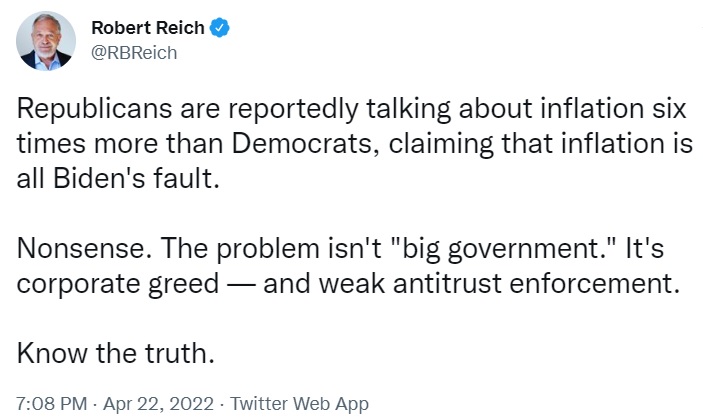





 Now, I’m not saying they don’t love and serve God, perhaps they do. But most of these people think the only time they serve God is when they get off work! They end up giving their prime time to the employer and their leftovers to God!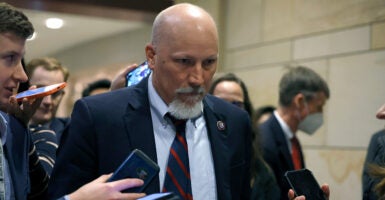


 True discernment has suffered a horrible setback in the past few decades because reason itself has been under attack within the church. As Francis Schaeffer warned nearly thirty years ago in The God Who Is There, the church is following the irrationality of secular philosophy. Consequently, reckless faith has overrun the evangelical community. Many are discarding doctrine in favor of personal experience. Others say they are willing to disregard crucial biblical distinctives in order to achieve external unity among all professing Christians. True Christianity marked by intelligent, biblical faith seems to be declining even among the most conservative evangelicals.THE ABANDONMENT OF OBJECTIVE TRUTHThe visible church in our generation has become astonishingly tolerant of aberrant teaching and outlandish ideas—and frighteningly intolerant of sound teaching. The popular evangelical conception of “truth” has become almost completely subjective. Truth is viewed as fluid, always relative, never absolute. To suggest that any objective criterion might be used to distinguish truth from error is to be egregiously out of step with the spirit of the age. In some circles, Scripture itself has been ruled out as a reliable test of truth. After all, the Bible can be interpreted in so many different ways—who can say which interpretation is right? And many believe there is truth beyond the Bible.All this relativity has had disastrous effects on the typical Christian’s ability to discern truth from error, right from wrong, good from evil. The plainest teachings of the Bible are being questioned among people who declare themselves believers in the Bible. For example, some Christians are no longer certain whether homosexuality should be classed as a sin. Others argue that the feminist agenda is compatible with biblical Christianity. “Christian” television, radio, books, and magazines serve up a preposterous smorgasbord of ideas from the merely capricious to the downright dangerous—and the average Christian is woefully ill-equipped to sort out the lies from the truth.Even to suggest that a sorting between lies and truth is necessary is viewed by many as perilously intolerant. There is a notion abroad that any dispute over doctrine is inherently evil. Concern for orthodoxy is regarded as incompatible with Christian unity. Doctrine itself is labeled divisive and those who make doctrine an issue are branded uncharitable. No one is permitted to criticize anyone else’s beliefs, no matter how unbiblical those beliefs seem to be. A recent article in Christianity Today exemplifies the trend. The article, titled “Hunting for Heresy,” profiled two well-known Christian leaders who had “come under withering attack for controversial writings.”1One is a popular speaker on the college lecture circuit and a bestselling author. He wrote a book in which he encouraged homosexuals to establish permanent live-together relationships (albeit celibate ones). He suggests the evangelical community suffers from “homophobia.” He is convinced that permanent living arrangements between homosexuals are the only alternative to loneliness for people he believes are “born with a homosexual orientation.” This man’s wife has published an article in a homosexual magazine in which she enthusiastically affirms” monogamous sexual relationships between homosexuals. The speaker-author says he has a “very, very strong” disagreement with his wife’s approval of homosexual sex, but his own view seems to allow homosexuals to engage in other kinds of physical intimacy short of actual intercourse.The other Christian leader profiled in the Christianity Today article is a woman who, with her husband, is a featured speaker for a popular, nationally-syndicated radio and television ministry. Their ministry is not a weird offshoot from some fringe cult, but an established, well-respected mainstay from the evangelical heartland. She also serves as chairperson of one of the largest evangelical student organizations in the world. This woman has written a book in which she chronicles some rather peculiar spiritual experiences. She dedicates the book to her male alter ego, an imaginary person named “Eddie Bishop” who romances her in her dreams. This woman says she also has visions of “the Christ child that is within” her. He appears to her as a drooling, emaciated, barefoot “idiot child” in a torn undershirt—”its head totally bald and lolled to one side.” The woman has engaged the services of a Catholic nun who serves as her “spiritual director,” helping to interpret her dreams and fantasies. The book mingles mysticism, Jungian psychology, out-of-body experiences, feminist ideas, subjective religious experience, and this woman’s romantic fantasies into an extraordinary amalgam. The book is frankly so bizarre that it is disturbing to read.The remarkable thing about the Christianity Today article is that the story was not written to expose the aberrant ideas being taught by these two leading evangelicals. Instead, what the magazine’s editors deemed newsworthy was the fact that these people were under attack for their views.In the world of modern evangelicalism, it is allowable to advocate the most unconventional, unbiblical doctrines—as long as you afford everyone else the same privilege. About the only thing that is taboo nowadays is the intolerance of those who dare to point out others’ errors. Anyone today who is bold enough to suggest that someone else’s ideas or doctrines are unsound or unbiblical is dismissed at once as contentious, divisive, unloving, or unchristian. It is all right toespouse any view you wish, but it is not all right to criticize another person’s views—no matter how patently unbiblical those views may be.When tolerance is valued over truth, the cause of truth always suffers. Church history shows this to be so. Only when the people of God have mounted a hardy defense of truth and sound doctrine has the church flourished and grown strong. The Reformation, the Puritan era, and the Great Awakenings are all examples of this. The times of decline in the history of the church have always been marked by an undue emphasis on tolerance—which leads inevitably to carelessness, worldliness, doctrinal compromise, and great confusion in the church.ADRIFT ON A SEA OF SUBJECTIVITYThat the church would lose her moorings in this particular age, however, poses greater dangers than ever. For in the past hundred years or so, the world has changed in a dramatic and very frightening way. People no longer look at truth the way they used to. In fact, we live under a prevailing philosophy that has become hostile to the very idea of absolute truth.From the beginning of recorded history until late last century, virtually all human philosophy assumed the necessity of absolute truth. Truth was universally understood as that which is true, not false; factual, not erroneous; correct, not incorrect; moral, not immoral; just, not unjust; right, not wrong. Practically all philosophers since the time of Plato assumed the objectivity of truth. Philosophy itself was a quest for the highest understanding of truth. Such a pursuit was presumed to be possible, even necessary, because truth was understood to be the same for every person. This did not mean that everyone agreed what truth was, of course. But virtually all agreed that whatever was true was true for everyone.That all changed in the nineteenth century with the birth of existentialism. Existentialism defies precise definition, but it includes the concept that the highest truth is subjective (having its source in the individual’s mind) rather than objective (something that actually exists outside the individual). Existentialism elevates individual experience and personal choice, minimizing or ruling out absolute standards of truth, goodness, morality, and such things. We might accurately characterize existentialism as the abandonment of objectivity. Existentialism is inherently anti-intellectual, against reason, irrational.Danish philosopher Søren Kierkegaard first used the term “existential.” Kierkegaard’s life and philosophy revolved around his experiences with Christianity. Christian ideas and biblical terminology reverberate in many of his writings. He wrote much about faith and certainly regarded himself as a Christian. Many of his ideas began as a legitimate reaction against the stale formalism of the Danish Lutheran state church. He was rightly offended at the barren ritualism of the church, properly outraged that people who had no love for God called themselves Christians just because they happened to be born in a “Christian” nation.But in his reaction against the lifeless state church, Kierkegaard set up a false antithesis. He decided that objectivity and truth were incompatible. To counter the passionless ritualism and lifeless doctrinal formulas he saw in Danish Lutheranism, Kierkegaard devised an approach to religion that was pure passion, altogether subjective. Faith, he suggested, means the rejection of reason and the exaltation of feeling and personal experience. It was Kierkegaard who coined the expression “leap of faith.” Faith to him was an irrational experience, above all a personal choice. He recorded these words in his journal on August 1, 1835: “The thing is to find a truth which is true for me, to find the idea for which I can live and die.”2Clearly, Kierkegaard had already rejected as inherently worthless the belief that truth is objective. His journal continues with these words:What would be the use of discovering so-called objective truth …. What good would it do me if truth stood before me, cold and naked, not caring whether I recognized her or not, and producing in me a shudder of fear rather than a trusting devotion? … I am left standing like a man who has rented a house and gathered all the furniture and household things together, but has not yet found the beloved with whom to share the joys and sorrows of his life…. It is this divine side of man, his inward action, which means everything—not a mass of [objective] information.3Having repudiated the objectivity of truth, Kierkegaard was left longing for an existential experience, which he believed would bring him a sense of personal fulfillment. He stood on the precipice, preparing to make his leap of faith. Ultimately, the idea he chose to live and die for was Christianity, but it was a characteristically subjective brand of Christianity that he embraced.Though Kierkegaard was virtually unknown during his lifetime, his writings have endured and have deeply influenced all subsequent philosophy. His idea of “truth that is true for me” infiltrated popular thought and set the tone for our generations radical rejection of all objective standards.Kierkegaard knew how to make irrationalism sound profound. “God does not exist; He is eternal,” he wrote. He believed Christianity was full of “existential paradoxes,” which he regarded as actual contradictions, proof that truth is irrational.Using the example of Abraham’s willingness to sacrifice Isaac (Gen. 22:1-19), Kierkegaard suggested that God called Abraham to violate moral law in slaying his son. For Kierkegaard, Abraham’s willingness to “suspend” his ethical convictions epitomized the leap of faith that is demanded of everyone. Kierkegaard believed the incident proved that “the single individual [Abraham] is higher than the universal [moral law].”4 Building on that conclusion, the Danish philosopher offered this observation: “Abraham represents faith…. He acts by virtue of the absurd, for it is precisely [by virtue of] the absurd that he as the single individual is higher than the universal.”5 “[I] cannot understand Abraham,” Kierkegaard declared, “even though in a certain demented sense I admire him more than all others.”6It is not difficult to see how such thinking thrusts all truth into the realm of pure subjectivity—even to the point of absurdity or dementia. Everything becomes relative. Absolutes dematerialize. The difference between truth and nonsense becomes meaningless. All that matters is personal experience.And one person’s experience is as valid as another’s—even if everyone’s experiences lead to contradictory conceptions of truth. “Truth that is true for me” might be different from someone else’s truth. In fact, our beliefs might be obviously contradictory, yet another person’s “truth” in no way invalidates mine. Because “truth”is authenticated by personal experience, its only relevance is for the individual who makes the leap of faith. That is existentialism.Existentialism caught on in a big way in secular philosophy. Friedrich Nietzsche, for example, also rejected reason and emphasized the will of the individual. Nietzsche probably knew nothing of Kierkegaard’s works, but their ideas paralleled at the key points. Unlike Kierkegaard, however, Nietzsche never made the leap of faith to Christianity. Instead, he leapt to the conclusion that God is dead. The truth that was “true for him,” it seems, turned out to be the opposite of the truth Kierkegaard chose. But their epistemology (the way they arrived at their ideas) was exactly the same.Later existentialists, such as Martin Heidegger and Jean-Paul Sartre, refined Kierkegaard’s ideas while following the atheism of Nietzsche. Heidegger and Sartre both believed that reason is futile and life basically meaningless. Those ideas have been a powerful force in twentieth-century thought. As the world continues to grow more atheistic, more secular, and more irrational, it helps to understand that it is being propelled in that direction by strong existentialist influences.EXISTENTIALISM INVADES THE CHURCH But don’t get the idea that existentialism’s influence is limited to the secular world. From the moment Kierkegaard wedded existentialist ideas with Christianity, neo-orthodox theology was the inevitable outcome.Neo-orthodoxy is the term used to identify an existentialist variety of Christianity. Because it denies the essential objective basis of truth—the absolute truth and authority of Scripture—neo-orthodoxy must be understood as pseudo-Christianity. Its heyday came in the middle of the twentieth century with the writings of Karl Barth, Emil Brunner, Paul Tillich, and Reinhold Niebuhr. Those men echoed the language and the thinking of Kierkegaard, speaking of the primacy of “personal authenticity,” while downplaying or denying the significance of objective truth. Barth, the father of neo-orthodoxy, explicitly acknowledged his debt to Kierkegaard.7Neo-orthodoxy’s attitude toward Scripture is a microcosm of the entire existentialist philosophy: the Bible itself is not objectively the Word of God, but it becomes the Word of God when it speaks to me individually. In neo-orthodoxy, that same subjectivism is imposed on all the doctrines of historic Christianity. Familiar terms are used, but are redefined or employed in a way that is purposely vague—not to convey objective meaning, but to communicate a subjective symbolism. After all, any “truth” theological terms convey is unique to the person who exercises faith. What the Bible means becomes unimportant. What it means to me is the relevant issue. All of this resoundingly echoes Kierkegaard’s concept of “truth that is true for me.”Thus while neo-orthodox theologians often sound as if they are affirming traditional beliefs, their actual system differs radically from the historic understanding of the Christian faith. By denying the objectivity of truth, they relegate all theology to the realm of subjective relativism. It is a theology perfectly suited for the age in which we live.And that is precisely why it is so deadly.Francis Schaeffer’s 1968 work The God Who Is There included a perceptive analysis of Kierkegaard’s influence on modern thought and modern theology.8 Schaeffer named the boundary between rationality and irrationality “the line of despair.” He noted that existentialism pushed secular thought below the line of despair sometime in the nineteenth century. Religious neo-orthodoxy was simply a johnny-come-lately response of theologians who were jumping on the existentialist bandwagon, following secular art, music, and general culture: “Neo-orthodoxy gave no new answer. What existential philosophy had already said in secular language, it now said in theological language…. [With the advent of neo-orthodoxy,] theology too has gone below the line of despair.”9Schaeffer went on to analyze how neo-orthodoxy ultimately gives way to radical mysticism:Karl Barth opened the door to the existentialistic leap in theology… He has been followed by many more, men like Reinhold Niebuhr, Paul Tillich, Bishop John Robinson, Alan Richardson and all the new theologians. They may differ in details, but their struggle is still the same—it is the struggle of modern man who has given up [rationality]. As far as the theologians are concerned … their new system is not open to verification, it must simply be believed.10Such a system, Schaeffer points out, has no integrity. Those who espouse it cannot live with the repercussions of their own illogic. “In practice a man cannot totally reject [rationality], however much his system leads him to it, unless he experiences … some form of mental breakdown.” Thus people have been forced to an even deeper level of despair: “a level of mysticism with nothing there.”11MYSTICISM: IRRATIONALITY GONE TO SEEDMysticism is the idea that spiritual reality is found by looking inward. Mysticism is perfectly suited for religious existentialism; indeed, it is its inevitable consequence. The mystic disdains rational understanding and seeks truth instead through the feelings, the imagination, personal visions, inner voices, private illumination, or other purely subjective means. Objective truth becomes practically superfluous. Mystical experiences are therefore self-authenticating; that is, they are not subject to any form of objective verification. They are unique to the person who experiences them. Since they do not arise from or depend upon any rational process, they are invulnerable to any refutation by rational means.Arthur L. Johnson writes,The experience convinces the mystic in such a way, and to such a degree, that lie simply cannot doubt its value and the correctness of what he believes it “says.”…In its crudest form this position says that believing something to be so makes it so. The idea is that ultimate reality is purely mental; therefore one is able to create whatever reality one wishes. Thus the mystic “creates” truth through his experience. In a less extreme form, the view seems to be that there are “alternate realities,” one as real as another, and that these “break in upon” the mystic in his experiences. Whatever form is taken, the criterion of truth is again a purely private and subjective experience that provides no means of verification and no safeguard against error. Nevertheless, it is seen by the mystic as being above question by others.The practical result of all this is that it is nearly impossible to reason with any convinced mystic. Such people are generally beyond the reach of reason.12Mysticism is therefore antithetical to discernment. It is an extreme form of reckless faith.Mysticism is the great melting pot into which neo-orthodoxy, the charismatic movement, anti-intellectual evangelicals, and even some segments of Roman Catholicism have been synthesized. It has produced movements like the Third Wave (a neo-charismatic movement with excessive emphasis on signs, wonders, and personal prophecies); Renovaré (an organization that blends teachings from monasticism, ancient Catholic mysticism, Eastern religion, and other mystical traditions); the spiritual warfare movement (which seeks to engage demonic powers in direct confrontation); and the modern prophecy movement (which encourages believers to seek private, extrabiblical revelation directly ftom God). The influx of mysticism has also opened evangelicalism to New-Age concepts like subliminal thought- control, inner healing, communication with angels, channeling, dream analysis, positive confession, and a host of other therapies andpractices coming directly from occult and Eastern religions. The face of evangelicalism has changed so dramatically in the past twenty years that what is called evangelicalism today is beginning to resemble what used to be called neo-orthodoxy. If anything, some segments of contemporary evangelicalism are even more subjective in their approach to truth than neo-orthodoxy ever was.It could be argued that evangelicalism never successfully resisted neo-orthodoxy. Twenty years ago evangelicals took a heroic stand against neo-orthodox influences on the issue of biblical inerrancy. But whatever victory was gained in that battle is now being sacrificed on the altar of mysticism. Mysticism renders biblical inerrancy irrelevant. After all, if the highest truth is subjective and comes from within us, then it doesn’t ultimately matter if the specifics of Scripture are true or not. If the content of faith is not the real issue, what does it really matter if the Bible has errors or not?In other words, neo-orthodoxy attacked the objective inspiration of Scripture. Evangelical mysticism attacks the objective interpretation of Scripture. The practical effect is the same. By embracing existential relativism, evangelicals are forfeiting the very riches they fought so hard to protect. If we can gain meaningful guidance from characters who appear in our fantasies, why should we bother ourselves with what the Bible says? If we are going to disregard or even reject the biblical verdict against homosexuality, what difference does it make if the historical and factual matter revealed in Scripture is accurate or inaccurate? If personal prophecies, visions, dreams, and angelic beings are available to give us up-to-the-minute spiritual direction—”fresh revelation” as it is often called—who cares if Scripture is without error in the whole or in the parts?Mysticism further nullifies Scripture by pointing people away from the sure Word of God as the only reliable object of faith. Warning of the dangers of mysticism, Schaeffer wrote,Probably the best way to describe this concept of modern theology is to say that it is faith in faith, rather than faith directed to an object which is actually there…. A modern man cannot talk about the object of his faith, only about the faith itself. So he can discuss the existence of his faith and its “size” as it exists against all reason, but that is all. Modern man’s faith turns inward…. Faith is introverted, because it has no certain object … it is rationally not open to discussion. This position, I would suggest, is actually a greater despair and darkness than the position of those modern men who commit suicide.“13The faith of mysticism is an illusion. “Truth that is true for me” is irrelevant to anyone else, because it lacks any objective basis. Ultimately, therefore, existential faith is impotent to lift anyone above the level of despair. All it can do is seek more experiences and more feelings. Multitudes are trapped in the desperate cycle of feeding off one experience while zealously seeking the next. Such people have no real concept of truth; they just believe. Theirs is a reckless faith.MEANWHILE, AT THE OTHER END OF THE SPECTRUM…Mysticism, however, is not the only form of reckless faith that threatens the contemporary church. A new movement has been gaining strength lately. Evangelicals are leaving the fold and moving into Eastern Orthodoxy, Roman Catholicism, and liturgical high-church Protestantism. Rejecting the ever-changing subjectivism of a free- wheeling existential Protestantism, they seek a religion with historical roots. Turned off by the shallow silliness that has overrun the evangelical movement, they desire a more magisterial approach. Perhaps sensing the dangers of a religion that points people inward, they choose instead a religion that emphasizes external ceremonies and dogmatic hierarchical authority.I listened to the taped testimony of one of these converts to Roman Catholicism, a former Protestant minister. He said he had graduated with highest honors from a leading Protestant seminary. He told his audience that as a student he was rabidly anti-Catholic and fully committed to Protestant Reformed doctrine (although he refuted this himself by admitting he had already rejected the crucial doctrine of justification by faith). After college he began to read Roman Catholic writings and found himself drawn to Catholic theology and liturgy. He described his initial resistance to the doctrines of purgatory, the perpetual virginity of Mary, transubstantiation, and prayers to Mary and the saints. All of those doctrines are easily disproved by the Bible.14 But this man—acknowledging that he could find no warrant anywhere in Scripture for praying to Mary—nevertheless completely changed his outlook on such matters after he tried praying the rosary and received an answer to a very specific prayer. He concluded that it must have been Mary who answered his prayer and immediately began praying regularly to her. Ultimately, he decided the Bible alone was not a sufficient rule of faith for believers, and he put his faith in papal authority and church tradition.That man’s leap of faith may not have been of the existential variety, but it was a blind leap nonetheless. He chose the other extreme of reckless faith, the kind that makes extrabiblical religious tradition the object of one’s faith.This kind of faith is reckless because it subjugates the written Word of God to oral tradition, church authority, or some other human criterion. It is an uncritical trust in an earthly religious authority—the pope, tradition, a self-styled prophet like David Koresh, or whatever. Such faith rarely jettisons Scripture altogether—but by forcing God’s Word into the mold of religious tradition, it invalidates the Word of God and renders it of no effect (cf. Matt. 15:6).The man whose taped testimony I heard is now an apologist for the Roman Catholic Church. He speaks to Catholic congregations and tells them how to counter biblical arguments against Catholicism. At the end of his testimony tape, he deals briefly with the official Catholic attitude toward Scripture. He is eager to assure his listeners that the modern Roman Catholic Church has no objection if Catholic people want to read Scripture for themselves. Even personal Bible study is all right, he says—but then hastens to add that it is not necessary to go overboard. “A verse or two a day is enough.” This man, a seminary graduate, surely should be aware that a comment like that seriously understates the importance of the written Word of God. We are commanded to meditate on Scripture day and night (Josh. 1:8; Ps. 1:2). We are to let it fill our hearts at all times (Deut. 6:6-9). We must study it diligently and handle it rightly (2 Tim. 2:15). The Bible alone is able to give us the wisdom that leads to salvation, then adequately equip us for every good work (2 Tim. 3:15-17).Discernment depends on a knowledge of Scripture. Those who are content to listen gullibly to some voice of human authority rather than hearing God’s Word and letting it speak for itself cannot be discerning. Theirs is a reckless, irrational faith.We identified the inward-looking extreme of reckless faith as mysticism. We could call this other variety rote tradition. In Isaiah 29:13, that is precisely how God Himself characterized it: “This people their lip service, but draw near with their words and honor Me with their lip service, but they remove their hearts far from Me, and their reverence for Me consists of tradition learned by rote” (emphasis added).Scripture has nothing but condemnation for rote tradition. Barren religious ritual, sacerdotal formalism, or liturgy out of a book are not the same as worship. Real worship, like faith, must engage the mind. Jesus said, “The true worshipers … worship the Father in spirit and truth; for such people the Father seeks to be His worshipers” (John 4:23).Did you realize that rote tradition was the very error for which Jesus condemned the Pharisees? He told them,“Rightly did Isaiah prophesy of you hypocrites, as it is written, ‘This people honors Me with their lips, but their heart is far away from Me. But in vain do they worship Me. teaching as doctrines the precepts of men.’ Neglecting the commandment of God, you hold to the tradition of men.”He was also saying to them, “You nicely set aside the commandment of God in order to keep your tradition” (Mark 7:6-9).Rote tradition is not unlike mysticism in that it also bypasses the mind. Paul said this of the Jews who were so absorbed in their empty religious traditions:I bear them witness that they have a zeal for God, but not in accordance with knowledge. For not knowing about God’s righteousness, and seeking to establish their own, they did not subject themselves to the righteousness of God. For Christ is the end of the law for righteousness to everyone who believes (Rom. 10:2-4).Their problem was not a lack of zeal. It was not that they were short on enthusiasm, emotionally flat, or slothful about religious observances. The issue was that the zeal they displayed was rote tradition, “not in accordance with knowledge.” They were not sufficiently discerning, and therefore their faith itself was deficient.Paul is specific in stating that their ignorance lay in trying to establish their own righteousness rather than submitting to the righteousness of God. This passage comes at the culmination of Paul’s doctrinal discussion in Romans. In context it is very clear that he was talking about the doctrine ofjustification by faith. He had thoroughly expounded this subject beginning in chapter 3. He said we are “justified as a gift by His grace through the redemption which is in Christ Jesus” (3:24). Justification is “by faith apart from works of the Law” (v.28). “God reckons righteousness apart from works” (Rom. 4:6).But instead of seeking the perfect righteousness of Christ, which God reckons to those who believe, the unbelieving Jews had set out to try to establish a righteousness of their own through works. That is where rote tradition always leads. It is a religion of works. Thus the ritualistic, unbelieving Pharisees are an exact parallel to Roman Catholicism, Eastern Orthodoxy, and most forms of ritual-laden Protestantism. All of them deny justification by faith.If the Pharisees or their followers had used the Scriptures as their standard of truth rather than rabbinical tradition, they would have known that God justifies sinners by faith. Repeatedly, Jesus said things to them like “Did you never read in the Scriptures . . . ?” (Matt. 21:42); “You are mistaken, not understanding the Scriptures, or the power of God” (22:29); and, “Are you the teacher of Israel, and do not understand these things?” (John 3:10). What He continually chided them for was their ignorance of the Scriptures. They had set rote tradition in place of the written Word of God (Matt. 15:6), and they were condemned for it.Contrast the way Luke commended the Bereans for their noblemindedness: “For they received the word [the New Testament gospel from the apostles] with great eagerness, examining the Scriptures [the Old Testament books] daily, to see whether these things were so” (Acts 17:1 1). What made the Bereans worthy of commendation? Their eagerness to be discerning. They rightly refused to blindly accept anyone’s teaching (even that of the apostles) without clear warrant from God’s Word.Spiritual discernment is, I believe, the only antidote to the existentialism of our age. Until’Christians regain the will to test everything by the rule of Scripture, reject what is false, and hold fast to what is true, the church will struggle and falter, and our testimony to a world in sin will be impaired.But if the church will rise up and stand for the truth of God’s Word against all the lies of this evil world, then we will begin to see the power of truth that sets people free (John 8:32).Endnotes1. John W. Kennedy, “Hunting for Heresy,” Christianity Today (16 May 1994).2. Robert Bretall, cd., A Kierkegaard Anthology (Princeton, N. J.: Princeton University Press, 1946), 5 (emphasis in original).3. Ibid.4. Søren Kierkegaard, Fear and Trembling, Howard V. Hong and Edna H. Hong, trans. (Princeton, N. J.: Princeton University Press, 1983), 55.5. Ibid.6. Ibid., 57.7. Karl Barth, The Epistle to the Romans, Edwyn C. Hoskyns, trans. (London: Oxford University Press, 1933). Barth cites Kierkegaard repeatedly in this, one of his earliest works.8. Francis Schaeffer, The God Who Is There, in The Complete Works of Francis A. Schaeffer, Volume I (Wheaton, Ill.: Crossway Books, 1982).9. Ibid., 53.10. Ibid., 55.11. Ibid., 58.12. Arthur L. Johnson, Faith Misguided: Exposing the Dangers of Mysticism (Chicago: Moody Press, 1988), 31-32.13. Schaeffer, 64-65, emphasis added.14. Purgatory: Luke 23:42-43 and 2 Cor. 5:8 indicate that believers go immediately to be with Christ at death. Perpetual Virginity of Mary: Matt. 1:25 states that Joseph kept Mary a virgin only until Jesus’ birth, and John 2:12 and Acts 1:14 reveal that Jesus had brothers. Transubstantiation: Heb. 7:27 and 10:12 teach that Christ made one sacrifice for sins forever; there is no need for the daily sacrifice of the Mass. Prayers to Mary and the saints: prayers, adoration, and spiritual veneration offered to anyone but God is expressly forbidden by the first commandment and elsewhere throughout Scripture (Ex. 20:3; Matt. 4:10; Acts 10:25-26; Rev. 19:10; Rev. 22:8-9).Excerpt from Reckless Faith: When the Church Loses Its Will to Discern, © 1994 by John MacArthur.We do pray this article has blessed you in some way. Our prayer is that you will use this message to better understand what is happening in our churches today.Blessings,





 The Daily Hatch