Who ever said Solomon didn’t have a sense of humor? The lazy person claims, “There’s a lion on the road! Yes, I’m sure there’s a lion out there!”
Proverbs 26 New Living Translation
Proverbs 26
New Living Translation
26 Honor is no more associated with fools than snow with summer or rain with harvest.
2 Like a fluttering sparrow or a darting swallow, an undeserved curse will not land on its intended victim.
3 Guide a horse with a whip, a donkey with a bridle, and a fool with a rod to his back!
4 Don’t answer the foolish arguments of fools, or you will become as foolish as they are.
5 Be sure to answer the foolish arguments of fools, or they will become wise in their own estimation.
6 Trusting a fool to convey a message is like cutting off one’s feet or drinking poison!
7 A proverb in the mouth of a fool is as useless as a paralyzed leg.
8 Honoring a fool is as foolish as tying a stone to a slingshot.
9 A proverb in the mouth of a fool is like a thorny branch brandished by a drunk.
10 An employer who hires a fool or a bystander is like an archer who shoots at random.
11 As a dog returns to its vomit, so a fool repeats his foolishness.
12 There is more hope for fools than for people who think they are wise.
13 The lazy person claims, “There’s a lion on the road! Yes, I’m sure there’s a lion out there!”
14 As a door swings back and forth on its hinges, so the lazy person turns over in bed.
15 Lazy people take food in their hand but don’t even lift it to their mouth.
16 Lazy people consider themselves smarter than seven wise counselors.
17 Interfering in someone else’s argument is as foolish as yanking a dog’s ears.
18 Just as damaging as a madman shooting a deadly weapon 19 is someone who lies to a friend and then says, “I was only joking.”
20 Fire goes out without wood, and quarrels disappear when gossip stops.
21 A quarrelsome person starts fights as easily as hot embers light charcoal or fire lights wood.
22 Rumors are dainty morsels that sink deep into one’s heart.
23 Smooth[a] words may hide a wicked heart, just as a pretty glaze covers a clay pot.
24 People may cover their hatred with pleasant words, but they’re deceiving you. 25 They pretend to be kind, but don’t believe them. Their hearts are full of many evils.[b] 26 While their hatred may be concealed by trickery, their wrongdoing will be exposed in public.
27 If you set a trap for others, you will get caught in it yourself. If you roll a boulder down on others, it will crush you instead.
28 A lying tongue hates its victims, and flattering words cause ruin.
Adrian Rogers: How to Answer a Skeptic [#1534] (Audio)
How To Answer A Skeptic
Sermon Summary by Bro. Adrian Rogers
We live in a day of accelerating skepticism, humanism and scientism. We as Christians
are going to be ridiculed and made to look ignorant and uneducated because we believe
in God. Do we have sound reason for believing what we believe? Are we not worthy of
real, honest thought? How do you respond to this skepticism in this day and age in
which we live?
The Bible tells us how to respond to skeptics in 1 Peter 3:10-17, especially verse 15
which states, “But sanctify the Lord God in your hearts, and be ready always to give an
answer to every man who ask you to give a reason of the hope that is in you, with
meekness and fear.” (As a believer, you must understand what you believe and why we
are Christians, and then be able to explain your beliefs humbly, thoughtfully,
reasonably, and biblically.)
Often we are told to keep the faith, but not only should we keep it but we need to give
it away. If you have no desire to give it away, you ought to give it up, because what you
have is not the real thing. Any man that has been born of the spirit of God, has an innate
desire to share his faith with others.
There are two things that must be true of you before you are ready to share your faith
with anybody. First, you must be Real. You are to have a full-hearted, burning,
compassionate, overflowing love for God. You are to be a zealot for the Lord Jesus.
Yours is to be a full faith, a fearless faith. Don’t let anybody intimidate you because you
are a Christian. They can hurt you but they cannot harm you, therefore don’t be afraid.
Second you must be Ready. When you live a Christian lifestyle, people will start asking
questions about you when they see something in you that cannot be explained. They
are going to want to know why you believe what you believe and why you act the way
you act. Do you know how to respond to a skeptic? There are four basic ideas to
remember as you respond to this skeptical age: 1) Forego the Folly of Fools – Some skeptics are fools, not all but some. In the Bible,
fool means someone who is morally depraved, not mentally deficient. Don’t
argue with someone who shows himself to be a fool. Give him the mind of God;
tell him what God says then go your way. In Proverbs 26:4 it says, “answer not a
fool according to his folly, less you be like unto him.” Don’t answer him; don’t get
in a debate with a fool. You won’t be able to do much with these type of people.
Also see what Jesus says about this in Mark 6:11. 2) Learn the Limits of Logic – Logic is a valuable tool but it can only carry you so far.
When you get to a chasm that logic can’t leap, then faith will have to fly. The logic
for God is found in creation and design and universal moral beliefs. It is logical to
reason that if we have a creation, we must have a Creator since nothing comes
out of nothing. Also logic tells us that if there is design in nature, there must be a
Designer; and the more complex the design, the greater the designer. The
creation found throughout the earth and universe is immensely complex and
organized. The logic of there being universally held beliefs in a moral law shared
throughout mankind also says there is a god. If anyone ever comes up to you and
says, “Prove there is a god.” Be Bold and say, “I can’t, but can you prove there is
no god?” He’ll say he can’t either. Then if he says “You just think there is a god
because it is just what you believe.” You can say, “I believe there is a god and you
believe there is no god. I have faith that there is, and you have faith that there
isn’t.” What we as Christians believe is reasonable, but it goes beyond reason. 3) Remember the Resource of Revelation –If we are to know a god, he is going to
have to reveal himself to us. The finite can never understand the infinite, unless
the infinite explains himself and reveals himself to the finite. 2 Peter 1:19-21
shows us three things about the word of God: 1) The Inspiration of the word of
God. The Bible is like no other book – it was inspired by the Holy Spirit. 2) The
Illumination of the word of God. It shines into our hearts – it enlightens us. It
reveals to us what we could not know without it. 3) The Confirmation of the
word of God. We believe not only because of what any other person has said, but
also because of what the Bible has said. The Bible is power whether you believe it
or not. It does not matter what we believe; what matters is what is true. Use the Bible because you know it is true. 4) Fortify the Force of Faith – A Christian with a glowing testimony is worth a library
of arguments. Share what Jesus means to you and what God has done for you
and how He has changed your life. Let Jesus be real to you. Sanctify God in your
heart. Strengthen your faith by staying in contact with God through prayer,
reading and listening to His word, and sharing your faith with other believers as
well as non-believers. Your faith will be as much caught as it will be taught.
Remember 1 Peter 3:15, “But sanctify the Lord God in your hearts, and be ready
always to give an answer to everyone who ask you to give a reason of the hope
that is in you, with meekness and fear.”
Adrian Rogers: Does a Loving God Believe in Capital Punishment? [#2183] (Audio) Kenneth D. Williams was executed at 11:05 pm in Grady, Arkansas on April 27, 2017. In this post I want to take a short look at Adrian Rogers’ sermon THE BIBLE AND CAPITAL PUNISHMENT and then look at the life of Kenneth […]
On 11-15-05 Adrian Rogers passed over to glory and since it is the 10th anniversary of that day I wanted to celebrate his life in two ways. First, I wanted to pass on some of the material from Adrian Rogers’ sermons I have sent to prominent atheists over the last 20 years. Second, I wanted […]
Francis Schaeffer I remember like yesterday hearing my pastor Adrian Rogers in 1979 going through the amazing fulfilled prophecy of Ezekiel 26-28 and the story of the city of Tyre. In 1980 in my senior year (taught by Mark Brink) at Evangelical Christian High School, I watched the film series by Francis Schaeffer called WHATEVER HAPPENED […]
My good friend Rev. Sherwood Haisty Jr. and I used to discuss which men were the ones who really influenced our lives and Adrian Rogers had influenced us both more than anybody else. During the 1990′s I actually made it a practice to write famous atheists and scientists that were mentioned by Adrian Rogers and […]
Clips of Adrian Rogers and Francis Schaeffer from the film “With God on our side” ______________________ I grew up in Memphis going to Bellevue Baptist Church and Adrian Rogers was our pastor and he had a great impact on me. He had a lot to say on the issues of the day and that included […]
______________ Francis and Edith Schaeffer pictured below: _____________ Milton and Rose Friedman pictured with Ronald Reagan: My heroes in 1980 were the economist Milton Friedman, the doctor C. Everett Koop, the politician Ronald Reagan, the Christian philosopher Francis Schaeffer, the evangelist Billy Graham, and my pastor Adrian Rogers. I have been amazed at how many […]
How can I know the Bible is the Word of God? by Adrian Rogers ________________________ _______________________________________ How can I know the Bible is the Word of God? How Can I Know the Bible is the Word of God? By Dr. Adrian Rogers Overview The historical, scientific, and prophetic accuracy of Scripture, along with its life-changing […]
Adrian Rogers: How You Can Be Certain the Bible Is the Word of God [#1725] (Audio) What evidence is there that the Bible is in fact God’s Word? Adrian Rogers ___________ I want to give you five reasons to affirm the Bible is the Word of God. First, I believe the Bible is the Word […]
Adrian Rogers: An Old Testament Portrait of Christ Published on Jan 27, 2014 I own nothing, all the rights belong to Adrian Rogers (R.I.P.) & his website http://www.lwf.org. Story of Abraham is told. ______________________________________ Adrian Rogers: Why I Believe in Jesus Christ Adrian Rogers: The Biography of the King Published on Dec 19, 2012 Series: […]
Adrian Rogers: 3 Truths to pass on to the next generation Published on Feb 7, 2013 Just a few weeks before Glory ___________________ Adrian Rogers pictured below: ________________________________ Adrian Rogers, ‘rising star of Memphis,’ elected 35 years ago by David Roach, posted Wednesday, May 21, 2014 (5 months ago) NASHVILLE (BP) — Thousands of […]
25 These are more proverbs of Solomon, collected by the advisers of King Hezekiah of Judah.
2 It is God’s privilege to conceal things and the king’s privilege to discover them.
3 No one can comprehend the height of heaven, the depth of the earth, or all that goes on in the king’s mind!
4 Remove the impurities from silver, and the sterling will be ready for the silversmith. 5 Remove the wicked from the king’s court, and his reign will be made secure by justice.
6 Don’t demand an audience with the king or push for a place among the great. 7 It’s better to wait for an invitation to the head table than to be sent away in public disgrace.
Just because you’ve seen something, 8 don’t be in a hurry to go to court. For what will you do in the end if your neighbor deals you a shameful defeat?
9 When arguing with your neighbor, don’t betray another person’s secret. 10 Others may accuse you of gossip, and you will never regain your good reputation.
11 Timely advice is lovely, like golden apples in a silver basket.
12 To one who listens, valid criticism is like a gold earring or other gold jewelry.
13 Trustworthy messengers refresh like snow in summer. They revive the spirit of their employer.
14 A person who promises a gift but doesn’t give it is like clouds and wind that bring no rain.
15 Patience can persuade a prince, and soft speech can break bones.
16 Do you like honey? Don’t eat too much, or it will make you sick!
17 Don’t visit your neighbors too often, or you will wear out your welcome.
18 Telling lies about others is as harmful as hitting them with an ax, wounding them with a sword, or shooting them with a sharp arrow.
19 Putting confidence in an unreliable person in times of trouble is like chewing with a broken tooth or walking on a lame foot.
20 Singing cheerful songs to a person with a heavy heart is like taking someone’s coat in cold weather or pouring vinegar in a wound.[a]
21 If your enemies are hungry, give them food to eat. If they are thirsty, give them water to drink. 22 You will heap burning coals of shame on their heads, and the Lord will reward you.
23 As surely as a north wind brings rain, so a gossiping tongue causes anger!
24 It’s better to live alone in the corner of an attic than with a quarrelsome wife in a lovely home.
25 Good news from far away is like cold water to the thirsty.
26 If the godly give in to the wicked, it’s like polluting a fountain or muddying a spring.
27 It’s not good to eat too much honey, and it’s not good to seek honors for yourself.
28 A person without self-control is like a city with broken-down walls.
There are some people who make excuses for their anger. They say, “It just runs in my family.” They are like a loaded shotgun with a hair trigger. Anytime they are jostled, they blast away. Then they say, “Oh, well, my anger only lasts a little while.” Well, so do tornadoes, but look at what damage they can cause!
Let’s see what the Bible, particularly the book of Proverbs has to say about being quick to get angry:
* “The discretion of a man deferreth his anger; and it is his glory to pass over a transgression. The king’s wrath is as the roaring of a lion; but his favour is as dew upon the grass” (Proverbs 19:11-12).
* “A wrathful man stirreth up strife: but he that is slow to anger appeaseth strife” (Proverbs 15:18).
* “Go not forth hastily to strive, lest thou know not what to do in the end thereof, when thy neighbor hath put thee to shame” (Proverbs 25:8).
When you are quick to get angry, you can lose so much — your job, friends, children, wife, health, testimony — there is nothing more debilitating to your Christian testimony than for you to fly off the handle.Confess Our Anger If we repress our anger rather than confess it, our anger can do all kinds of damage. You may say that you’re not angry but your stomach will keep the score. So, the first thing you must do to control your anger is to confess it to the Lord. Tell Him, “There’s something moving in me I don’t like. And I need You to take control of me and prevent me from acting uncontrollably or unrighteously.”
Someone has well said that if you repress anger it is like lighting a wastebasket, putting it in a closet, and closing the door. It may burn itself out or it may burn the house down. If you want to get control, the very first thing you need to do is open the closet door and say. “There it is, Lord. It’s in there. Put out the fire.”
Consider Our Anger When you take a step back from your anger and begin to seek understanding from the Lord, He will show you the answer. It is so important to analyze the source of your anger, so you don’t go off half-cocked. Psalm 4:4 says, “Stand in awe, and sin not: commune with your own heart upon your bed, and be still.”
God promises He will show us the way if we will seek Him. “I will instruct thee and teach thee in the way which thou shalt go: I will guide thee with Mine eye” (Psalm 32:8). And don’t look around at the world to see how they are handling it, look to God. Romans 12:2 says, “And be not conformed to this world: but be ye transformed by the renewing of your mind, that ye may prove what is that good, and acceptable, and perfect, will of God.”Control Your Anger Now, you’re ready to work on controlling your anger. You say, “I can’t control it.” Oh, yes you can. One day you may be having one of those discussions that can be heard about two blocks away and suddenly the phone rings. One of you stomps over to the phone, jerks it off its base, and says, “Hellooooo.” Now, don’t tell me you can’t turn it on and off. You can! Proverbs 29:11 says, “A fool uttereth all his mind: but a wise man keepeth it in till afterwards.” Fools spout off anything and everything, but a wise man can choose to control his tongue.
There it is, confess, consider, and control. Now, I don’t guarantee that you will no longer struggle with anger, but if you can get down these basics, you are well on your way. For further study, you may want to look at ordering one of the following sermons at the LWF bookstore (http://www.lwf.org), which target residual affects of anger, including bitterness, an unforgiving spirit, and more:
2027 The Blight of Bitterness Heb. 12:14
1272 How to Turn Bitterness into Blessings II Kings 2:19
1425 Forgiveness Matt. 18:21-35
1694 The Freedom of Forgiveness Matt. 6:9-15
If you feel you have an anger issue that needs immediate professional attention, we recommend that you contact one of the following national Christian counseling referral agencies:
Ecclesiastes 8-10 | Still Searching After All These Years Published on Oct 9, 2012 Calvary Chapel Spring Valley | Sunday Evening | October 7, 2012 | Pastor Derek Neider _______________________ Ecclesiastes 11-12 | Solomon Finds His Way Published on Oct 30, 2012 Calvary Chapel Spring Valley | Sunday Evening | October 28, 2012 | Pastor Derek Neider […]By Everette Hatcher III | Posted in Current Events | Edit | Comments (0)
Over and over in Proverbs you hear the words “fear the Lord.” In fact, some of he references are Proverbs 1:7, 29; 2:5; 8:13; 9:10;14:26,27; 15:16 and many more. Below is a sermon by John MacArthur from the Book of Luke on 3 reasons we should fear the Lord. (I have posted John MacArthur’s amazing […]By Everette Hatcher III | Posted in Adrian Rogers, Current Events | Edit | Comments (0)
Over and over in Proverbs you hear the words “fear the Lord.” In fact, some of he references are Proverbs 1:7, 29; 2:5; 8:13; 9:10;14:26,27; 15:16 and many more. Below is a sermon by John MacArthur from the Book of Luke on 3 reasons we should fear the Lord. (I have posted John MacArthur’s amazing […]By Everette Hatcher III | Posted in Adrian Rogers, Current Events | Edit | Comments (0)
Over and over in Proverbs you hear the words “fear the Lord.” In fact, some of he references are Proverbs 1:7, 29; 2:5; 8:13; 9:10;14:26,27; 15:16 and many more. Below is a sermon by John MacArthur from the Book of Luke on 3 reasons we should fear the Lord. (I have posted John MacArthur’s amazing […]By Everette Hatcher III | Posted in Adrian Rogers, Current Events | Edit | Comments (0)
Over and over in Proverbs you hear the words “fear the Lord.” In fact, some of he references are Proverbs 1:7, 29; 2:5; 8:13; 9:10;14:26,27; 15:16 and many more. Below is a sermon by John MacArthur from the Book of Luke on 3 reasons we should fear the Lord. (I have posted John MacArthur’s amazing […]By Everette Hatcher III | Posted in Adrian Rogers, Current Events | Edit | Comments (0)
Over and over in Proverbs you hear the words “fear the Lord.” In fact, some of he references are Proverbs 1:7, 29; 2:5; 8:13; 9:10;14:26,27; 15:16 and many more. Below is a sermon by John MacArthur from the Book of Luke on 3 reasons we should fear the Lord. (I have posted John MacArthur’s amazing […]By Everette Hatcher III | Posted in Adrian Rogers, Current Events | Tagged Gene Bartow, John Wooden | Edit | Comments (0)
Over and over in Proverbs you hear the words “fear the Lord.” In fact, some of he references are Proverbs 1:7, 29; 2:5; 8:13; 9:10;14:26,27; 15:16 and many more. Below is a sermon by John MacArthur from the Book of Luke on 3 reasons we should fear the Lord. (I have posted John MacArthur’s amazing […]By Everette Hatcher III | Posted in Adrian Rogers, Current Events | Edit | Comments (0)
Over and over in Proverbs you hear the words “fear the Lord.” In fact, some of he references are Proverbs 1:7, 29; 2:5; 8:13; 9:10;14:26,27; 15:16 and many more. Below is a sermon by John MacArthur from the Book of Luke on 3 reasons we should fear the Lord. (I have posted John MacArthur’s amazing […]By Everette Hatcher III | Posted in Adrian Rogers, Current Events | Edit | Comments (0)
Over and over in Proverbs you hear the words “fear the Lord.” In fact, some of he references are Proverbs 1:7, 29; 2:5; 8:13; 9:10;14:26,27; 15:16 and many more. Below is a sermon by John MacArthur from the Book of Luke on 3 reasons we should fear the Lord. It is tough to guard your […]By Everette Hatcher III | Posted in Adrian Rogers, Current Events | Edit | Comments (0)
Over and over in Proverbs you hear the words “fear the Lord.” In fact, some of he references are Proverbs 1:7, 29; 2:5; 8:13; 9:10;14:26,27; 15:16 and many more. Below is a sermon by John MacArthur from the Book of Luke on 3 reasons we should fear the Lord. What does it mean to fear […]By Everette Hatcher III | Posted in Current Events, Uncategorized | Edit | Comments (0)
Ecclesiastes 6-8 | Solomon Turns Over a New Leaf Published on Oct 2, 2012 Calvary Chapel Spring Valley | Sunday Evening | September 30, 2012 | Pastor Derek Neider _____________________ I have written on the Book of Ecclesiastes and the subject of the meaning of our lives on several occasions on this blog. In this series on Ecclesiastes I […]By Everette Hatcher III | Posted in Current Events | Edit | Comments (0)
Ecclesiastes 1 Published on Sep 4, 2012 Calvary Chapel Spring Valley | Sunday Evening | September 2, 2012 | Pastor Derek Neider _____________________ I have written on the Book of Ecclesiastes and the subject of the meaning of our lives on several occasions on this blog. In this series on Ecclesiastes I hope to show how […]By Everette Hatcher III | Posted in Current Events | Edit | Comments (0)
Ecclesiastes 1 Published on Sep 4, 2012 Calvary Chapel Spring Valley | Sunday Evening | September 2, 2012 | Pastor Derek Neider _____________________ I have written on the Book of Ecclesiastes and the subject of the meaning of our lives on several occasions on this blog. In this series on Ecclesiastes I hope to show how […]By Everette Hatcher III | Posted in Current Events | Edit | Comments (0)
Ecclesiastes 8-10 | Still Searching After All These Years Published on Oct 9, 2012 Calvary Chapel Spring Valley | Sunday Evening | October 7, 2012 | Pastor Derek Neider _______________________ Ecclesiastes 11-12 | Solomon Finds His Way Published on Oct 30, 2012 Calvary Chapel Spring Valley | Sunday Evening | October 28, 2012 | Pastor Derek Neider […]By Everette Hatcher III | Posted in Current Events | Edit | Comments (0)
Ecclesiastes 6-8 | Solomon Turns Over a New Leaf Published on Oct 2, 2012 Calvary Chapel Spring Valley | Sunday Evening | September 30, 2012 | Pastor Derek Neider _____________________ I have written on the Book of Ecclesiastes and the subject of the meaning of our lives on several occasions on this blog. In this series […]By Everette Hatcher III | Posted in Current Events | Edit | Comments (0)
Ecclesiastes 4-6 | Solomon’s Dissatisfaction Published on Sep 24, 2012 Calvary Chapel Spring Valley | Sunday Evening | September 23, 2012 | Pastor Derek Neider ___________________ I have written on the Book of Ecclesiastes and the subject of the meaning of our lives on several occasions on this blog. In this series on Ecclesiastes I hope […]By Everette Hatcher III | Posted in Current Events | Edit | Comments (0)
Ecclesiastes 8-10 | Still Searching After All These Years Published on Oct 9, 2012 Calvary Chapel Spring Valley | Sunday Evening | October 7, 2012 | Pastor Derek Neider _______________________ Ecclesiastes 11-12 | Solomon Finds His Way Published on Oct 30, 2012 Calvary Chapel Spring Valley | Sunday Evening | October 28, 2012 | Pastor Derek Neider […]By Everette Hatcher III | Posted in Current Events | Edit | Comments (0)
Ecclesiastes 8-10 | Still Searching After All These Years Published on Oct 9, 2012 Calvary Chapel Spring Valley | Sunday Evening | October 7, 2012 | Pastor Derek Neider _______________________ Ecclesiastes 11-12 | Solomon Finds His Way Published on Oct 30, 2012 Calvary Chapel Spring Valley | Sunday Evening | October 28, 2012 | Pastor Derek Neider […]By Everette Hatcher III | Posted in Current Events | Edit | Comments (0)
Tom Brady “More than this…” Uploaded by EdenWorshipCenter on Jan 22, 2008 EWC sermon illustration showing a clip from the 2005 Tom Brady 60 minutes interview. _______________________ Tom Brady ESPN Interview Tom Brady has famous wife earned over 76 million dollars last year. However, has Brady found lasting satifaction in his life? It does not […]By Everette Hatcher III | Posted in Current Events | Edit | Comments (0)
Adrian Rogers: How to Be a Child of a Happy Mother Published on Nov 13, 2012 Series: Fortifying Your Family (To read along turn on the annotations.) Adrian Rogers looks at the 5th commandment and the relationship of motherhood in the commandment to honor your father and mother, because the faith that doesn’t begin at home, […]By Everette Hatcher III | Posted in Adrian Rogers, Current Events | Edit | Comments (0)
Ecclesiastes 1 Published on Sep 4, 2012 Calvary Chapel Spring Valley | Sunday Evening | September 2, 2012 | Pastor Derek Neider _____________________ I have written on the Book of Ecclesiastes and the subject of the meaning of our lives on several occasions on this blog. In this series on Ecclesiastes I hope to show how secular humanist man […]By Everette Hatcher III | Posted in Current Events | Edit | Comments (0)
Adrian Rogers – How to Cultivate a Marriage Another great article from Adrian Rogers. Are fathers necessary? “Artificial insemination is the ideal method of producing a pregnancy, and a lesbian partner should have the same parenting rights accorded historically to biological fathers.” Quoted from the United Nations Fourth World Conference on Women, summer of 1995. […]By Everette Hatcher III | Posted in Adrian Rogers, Current Events | Edit | Comments (0)
Tom Brady “More than this…” Uploaded by EdenWorshipCenter on Jan 22, 2008 EWC sermon illustration showing a clip from the 2005 Tom Brady 60 minutes interview. To Download this video copy the URL to http://www.vixy.net ________________ Obviously from the video clip above, Tom Brady has realized that even though he has won many Super Bowls […]
I normally share this video from Reason every Thanksgiving.
But this year I’m going to recycle instead a videofrom John Stossel.
The moral of the story is that societies based on collectivism do not succeed.
People don’t work hard when the rewards of their labor go to others.Even in small communities, that approach does not work.
By contrast, they have a much greater incentive to be productive when the benefits accrue to themselves and their families.
In a nutshell, redistributionism does not work. This is why the original Plymouth Colony was failing. And it’s why places such as Cuba today are so miserably poor.
This is a lesson to keep in mind when people on the left or right try to tell you that bigger government is a good idea.
Indeed, I have an entire collection of socialism humor (along with jabs at communism, its authoritarian cousin).
For what it’s worth, I think the meme should have targeted Bernie Sanders (a true believer) rather than Joe Biden (a run-of-the-mill careerist politician).
Speaking of Sanders, he and AOC have a starring role in this joke.
Sticking with that theme, the Babylon Beesatirically explainsthat our socialist friends are incapable of learning from real-world experience. And not just in the field of economics.
Local socialist man Brandon Paul was doing some gardening in his front yard this morning when he had a really good idea: to step on a rake.He’d previously stepped on 79 other rakes, each time resulting in the gardening implement smacking him in the face. But those times weren’t “real stepping on a rake,” he insisted. …Paul stepped on the rake, and sure enough, the handle came flying up and conked him on the face. …At publishing time, Paul had decided he would try democratic stepping on a rake, where his friends all vote on whether he steps on the rake, and then he steps on it and smacks his face.
Ouch, figuratively and literally.
Socialist nations are famous for empty shelves in supermarkets. As this next meme illustrates, they also have empty bookshelves.
Some of my left-leaning readers are probably saying, “Wait, what about Denmark?” And my response is, “Well, what about it?”
As per my tradition, I’ve saved my favorite example for the conclusion.
What makes this final meme both amusing and unfortunate is that it does capture the inherent problem in systems where the link between effort and reward is weakened or broken.
Washington Post congressional reporter Erica Werner is reporting, more or less live on Twitter, about a conference call among House Democrats discussing why the 2020 elections did not go anywhere near as well as they expected. Apparently Virginia congresswoman Abigail Spanberger, who is narrowly ahead in her race, is quite angry with the more outspoken members of the progressive wing of her party:
Spanberger on the Dem caucus call: We lost races we shouldn’t have lost. Defund police almost cost me my race bc of an attack ad. Don’t say socialism ever again. Need to get back to basics. (Is yelling.)
It is rather refreshing to hear a congressional Democrat vehemently opposed to Democratic candidates touting socialism, even if it is just for purposes of campaigning. Maybe in the near future, we can see elected Democrats proclaiming, “America will never be a socialist country.”
This might make it tougher for Republicans to win races against Democrats, but we’re all better off if enthusiasm for socialism returns to the graveyard of political ideas.
Around 150 violent demonstrators participated in a march called “Capitalism is Scary” in Portland, Oregon, Saturday night. Pictured: Police detain passengers in a mutual aid van during an Indigenous Peoples Day of Rage protest Oct. 11, 2020, in Portland. Protesters tore down statues of two U.S. presidents and broke windows of downtown businesses before police intervened. (Photo: Nathan Howard/ Stringer/Getty Images)
Violent demonstrators smashed windows and police declared a riot during an anti-capitalist march in Portland Saturday night.
Around 150 violent demonstrators participated in a march called “Capitalism is Scary,” according to The Oregonian.
Rioters destroyed the windows of 10 separate businesses, including multiple phone stores, a coffee shop, a computer storefront, a hotel, a bank, a pair of realty offices, and a restaurant with patrons inside, a report from the Portland Police Bureau revealed.
Individuals donning black clothing were seen on video attempting to destroy a local business’ storefront, as the sound of glass shattering was audible, according to footage obtained by the local outlet.
Law enforcement declared the march a riot and demanded members of the group vacate the area or be exposed to non-lethal munitions, the Portland Police Bureau wrote.
“This is the Portland Police Bureau,” officers announced via a loudspeaker, according to the department’s report. “To those marching on NE Martin Luther King Jr Blvd: This has been declared a riot. Members of this group have been observed damaging multiple businesses along NE Martin Luther King Jr. Blvd.”
“All persons must immediately leave the area. Failure to adhere to this order may subject you to arrest, citation, or crowd control agents, including, but not limited to, tear gas and/or impact weapons. Disperse immediately.”
Cops quelled the crowd around 8:30 p.m. and no arrests were made, according to the release. Authorities are investigating the vandalism and future apprehensions are possible, the department concluded.
Content created by The Daily Caller News Foundation is available without charge to any eligible news publisher that can provide a large audience. For licensing opportunities of this original content, email licensing@dailycallernewsfoundation.org.
In Kenosha, Portland, Seattle, and Chicago, city officials have tolerated criminal activity performed by mobs for politically motivated reasons. Philadelphia appears to be the next hotspot for mob violence to go unchecked. Pictured: A barricade is set on fire during a night of looting and violence in Philadelphia on Oct. 27. (Photo: Gabriella Audi/AFP/Getty Images)
James Jay Carafano, a leading expert in national security and foreign policy challenges, is The Heritage Foundation’s vice president for foreign and defense policy studies, E. W. Richardson fellow, and director of the Kathryn and Shelby Cullom Davis Institute for International Studies. Read his research.
Like the replay of a bad movie, a law enforcement incident in Philadelphia triggered an excuse for violence and looting. It remains to be seen whether the City of Brotherly Love will become the next “Kenosha,” where city officials moved quickly to restore order and seek state and federal support—though sadly after 48 hours of opportunistic looting, violence, and destruction devastated the city.
Or perhaps Philadelphia will be the next Portland, Seattle, or Chicago, where systemic attacks seem to be a daily occurrence.
Police in Philadelphia are fully capable of restoring peace. The open question is whether the mayor and Larry Krasner, the former defense attorney-turned elected rogue prosecutor, will do their job and hold people accountable for their crimes.
When local, state, and federal governments work together, act quickly, and demonstrate no tolerance for organized violence to advance radical agendas, communities are kept safe and equal protection under the law is afforded for all citizens.
The left is actively working to undermine the integrity of our elections. Read the plan to stop them now. Learn more now >>
On the other hand, when local officials, the media, and politicians ignore, excuse, normalize, and enable violence, everyday Americans pay the price.
There is a plague sweeping this country that many don’t want to talk about: The deliberate use of street violence to advance radical political agendas, often under a smoke screen of campaigning for civil liberties. The evidence of organized criminal activity at the root of the outbreaks in American cities is mounting.
The list of people enabling this violence sadly includes some public officials, who are principally responsible for ensuring public safety. For example, a growing threat to peaceful communities is “rogue prosecutors,” former criminal defense attorneys recruited and funded by liberal billionaire backers, who—once elected—abuse their office by refusing to prosecute entire categories of crimes.
These rogue prosecutors are usurping the power of the legislature in the process, and ignoring victim’s rights—all to advance their politics.
Baltimore is a perfect example. Since being sworn into office, under the watch of Baltimore City State’s Attorney Marilyn J. Mosby.
Rogue prosecutors fuel street violence by refusing to prosecute rioters and looters. When confronted with the rising crimes rates, Mosby called the statistics “rhetoric.”
The only way to break the cycle of violence is for local and state officials to work with each other, and if necessary, the federal government. They need to stop enabling the destruction of property and lives on their streets, and start investigating and prosecuting the individuals (and organizations) behind the riots.
It’s time to start shaming and calling out the media, politicians, and advocates who excuse and normalize the violence.
There is a proven action plan for making our streets safe. It is past time for officials to start following this blueprint.
There is no time—zero time to waste. There are already fears of more violence in our streets, regardless of the outcome of the national elections.
In my hometown of Washington, D.C., downtown buildings are already boarding up in anticipation of violence on our streets after the election. If Trump wins, violence. If Biden wins, violence. This makes no sense, and it’s time for it to stop.
It is time for every official and public figure, every political party, in every part of the country to publically reject violence on American streets as a legitimate form of protected speech. Violence is not protected speech, period.
The notion of deliberately destroying the lives and property of our neighbors to advance a radical political agenda is abhorrent. American leaders—of all stripes—should stand up now as one and reject these violent acts. It has gone on for too long, well before the death of George Floyd.
Leaders in Philadelphia and across America must take a principled stand to demand the end to this violence, and they need to do it before the election. In one voice, they should demand: “Leave our streets alone.”
Looters hit businesses in Philadelphia on Tuesday for a second straight night, as authorities struggled to contain civil unrest sparked by a video showing police fatally shooting Walter Wallace Jr., a Black man who was holding a knife.
Police said late Tuesday about a thousand people were looting businesses northeast of downtown, miles from the West Philadelphia neighborhood where the violence was concentrated a night earlier.
Police urged residents in several parts of the city to stay indoors because those areas were experiencing widespread demonstrations that had turned violent with looting.
Police had arrested 91 people late Monday and early Tuesday, most in connection with looting of pharmacies, shoe stores and other retail outlets, police said. Thirty officers were injured, mostly from hurled bricks and other projectiles, police said, and a sergeant’s leg was broken when she was hit by a pickup truck.
Like other large U.S. cities, Philadelphia had already been preparing for potential violence around the Nov. 3 election, Police Commissioner Danielle Outlaw said at a news conference Tuesday. The city is the most-populous in Pennsylvania, a state viewed as key to deciding the presidential election.
Ms. Outlaw said unrest caused by Monday’s shooting of Mr. Wallace could spill into election-related disturbances. “There may be some bleeding together, just given the timeline, as far as how close we are to Election Day and the days after,” she said.
To help manage tensions, city officials have requested assistance from law-enforcement agencies in surrounding counties and from the state government. The Pennsylvania National Guard said Tuesday it was sending several hundred members to Philadelphia at the request of Gov. Tom Wolf.
“We are exploring all of our options at this time to do everything that we can to ensure that all of our PPD resources are focused on what’s in front of us, whether it’s the actual civil unrest or even again the crime that continues to occur throughout the city,” Ms. Outlaw said.
The White House said the Trump administration would deploy federal resources if requested.
Bystander video that captured the episode in West Philadelphia was distributed on social media. The video shows Mr. Wallace standing on a sidewalk with two police officers pointing their guns at him. At one point a woman appeared to try to stop Mr. Wallace as he crossed the street. Officers fired several times when he re-emerged onto the street from between two parked cars and walked toward them.
A demonstrator shouts at police during a protest near where Walter Wallace, Jr. was killed.PHOTO: MARK MAKELA/GETTY IMAGES
A police spokesman said officers ordered Mr. Wallace to drop the knife before they fired their guns.
The two officers, whose names haven’t been released, each fired about seven rounds, police Chief Inspector Frank Vanore said. He said he didn’t know how many bullets struck Mr. Wallace. Mr. Vanore said police received a call about a man who was screaming and armed with a knife.
Speaking at a news conference Tuesday evening, Shaka Johnson, a lawyer for the Wallace family, said Mr. Wallace had mental health problems and was taking lithium under a doctor’s care.
“The man was suffering,” he said. “When you come to a scene where somebody is in a mental crisis, [and] the only tool you have to deal with it is a gun, that’s a problem.”
Mr. Johnson said police had been called to the Wallace home twice earlier Monday. Their third appearance, which ended with the deadly confrontation, came after Mr. Wallace’s brother had requested an ambulance, Mr. Johnson said, but the police officers got there first.
Mr. Wallace’s father, Walter Wallace Sr., decried the looting and called for justice for his son. “I can’t even sleep at night,” he said. “Every time I close my eyes, I get flashbacks about multiple shots.”
Ms. Outlaw, noting that the two officers hadn’t yet been interviewed, didn’t answer a number of questions about the incident, such as whether the officers had any information ahead of time about possible mental-health concerns and whether police had contact with Mr. Wallace before Monday.
“There are many questions that demand answers. Residents have my assurance that those questions will be fully addressed by the investigation,” Ms. Outlaw said. “Everyone involved, including the officers, will forever be impacted by this tragedy.”
District Attorney Larry Krasner said his office will investigate the incident along with the police department.
Law enforcement and the state of U.S. cities have drawn attention in this year’s presidential election. Speaking in West Salem, Wis., on Tuesday, President Trump said he supported “the heroes of law enforcement.”
“Last night Philadelphia was torn up by Biden-supporting radicals,” he said.
Former Vice President and Democratic presidential candidate Joe Biden and his running mate, Sen. Kamala Harris, said in a statement Tuesday, “Walter Wallace’s life, like too many others,’ was a Black life that mattered—to his mother, to his family, to his community, to all of us.” At the same time, they said, there was no excuse for attacking police officers and vandalizing businesses.
Philadelphia Mayor Jim Kenney said that he had spoken with Mr. Wallace’s wife and parents.
“I have watched the video of this tragic incident, and it presents difficult questions that must be answered,” he said. “We need a speedy and transparent resolution for the sake of Mr. Wallace, his family, the officers and for all Philadelphia.”
John McNesby, president of the local police union, asked the public for patience while the investigation proceeds.
“Our police officers are being vilified this evening for doing their job and keeping the community safe, after being confronted by a man with a knife,” Mr. McNesby said Monday. “We support and defend these officers, as they too are traumatized by being involved in a fatal shooting.”
Demonstrators in Philadelphia confront police during a march Tuesday protesting the death of Walter Wallace.PHOTO: MATT SLOCUM/ASSOCIATED PRESS
As word of the incident spread late Monday, protesters took to the streets. Looters hit businesses around the city, including on 52nd Street, a West Philadelphia commercial corridor that sustained major damage on May 31 and June 1 during protests over the killing of George Floyd in Minneapolis. Ms. Outlaw said the people who gathered to protest the incident weren’t the same people whom police later arrested.
Among the businesses hit were five SunRay pharmacies in West Philadelphia, said owner Marc Tancredi. In June, two SunRay locations were looted, including the one on 52nd Street.
“They broke into the pharmacy and stole the drugs like they did last time,” Mr. Tancredi said Tuesday. “Not as much physical damage to the location.”
Some looting was still occurring at 8 a.m. Tuesday, said Jabari Jones, president of the West Philadelphia Corridor Collaborative, a business association. He said he had examined the damage.
“It’s just another day where unfortunately the situation has boiled to the point where people have resorted to vandalism and looting,” he said.
Mr. Jones described the video of Mr. Wallace’s killing as “sickening” and wondered why officers didn’t take less-lethal steps to resolve the situation.
“I can understand the pent-up anger and rage,” Mr. Jones said. But he said damaging businesses hurts owners and residents who rely on them. “It is a balance of making sure neighborhood stores and places that provide products and services for residents in the community can still be open and provide those things.”
A looted store following protests in Philadelphia.PHOTO: DAVID DELGADO/REUTERS
Portland absorbed another night of violent protests Sunday that resulted in the toppling of two statues in the city and reports of numerous buildings with their windows smashed in, including the Oregon Historical Society.
The unrest was reportedly tied to the “Day of Rage” on the eve of Columbus Day.
Andy Ngo, a journalist who has been documenting the unrest in the city, posted images of the destruction on Twitter. The Oregonian reported that protesters managed to bring down statues of Abraham Lincoln and Theodore Roosevelt.
Justin “Jussie” Smollett[1] (/ˈdʒʌsi/JUSS-ee,born June 21, 1982)[1] is an American actor and singer. He began his career as a child actor in 1987 acting in films including The Mighty Ducks (1992) and Rob Reiner‘s North (1994). In 2015, Smollett portrayed musician Jamal Lyon in the Fox drama series Empire, a role that was hailed as groundbreaking for its positive depiction of a black gay man on television. Smollett has also appeared in Ridley Scott‘s science fiction film Alien: Covenant (2017) as Ricks and in Marshall (2017) as Langston Hughes.
Smollett was indicted in February 2019, for disorderly conduct for allegedly staging a fake hate crime assault;[2] the charges were dropped the following month.[3] In February 2020, he was indicted on six counts of making false police reports.[4][5][6]
On January 29, 2019, Smollett told police that he was attacked outside his apartment building by two men in ski masks. He reported they called him racialand homophobic slurs and said “this is MAGA country,” a reference to President Donald Trump‘s slogan “Make America Great Again.”[36] He claimed they used their hands, feet, and teeth as weapons in the assault.[37][38] According to a statement released by the Chicago Police Department, the two suspects then “poured an unknown liquid” on Smollett and put a noose around his neck.[39]Smollett said that he fought them off. Smollett was treated at Northwestern Memorial Hospital; not seriously injured, he was released “in good condition” later that morning.[36][40][41] The police were called after 2:30 a.m.;[42] when they arrived around 2:40 am, Smollett had a white rope around his neck.[43] Smollett said that the attack may have been motivated by his criticism of the Trump administration[44] and that he believed that the alleged assault was linked to the threatening letter that was sent to him earlier that month.[35]
On February 20, 2019, Smollett was charged by a grand jury with a class 4 felony for filing a false police report.[45][46][47] The next day, Smollett surrendered himself at the Chicago Police Department’s Central Booking station.[48] Shortly thereafter, CPD spokesman Anthony Guglielmi stated that Smollett “is under arrest and in the custody of detectives”.[49] On March 26, 2019, all charges filed against Smollett were dropped, with Judge Steven Watkins ordering the public court file sealed.[3][50] First Assistant State’s Attorney Joseph Magats said the office reached a deal with Smollett’s defense team in which prosecutors dropped the charges upon Smollett performing 16 hours of community service[51][52][53] and forfeiting his $10,000 bond.[54][55][56]
On April 12, 2019, the city of Chicago filed a lawsuit in the Circuit Court of Cook County against Smollett for the cost of overtime authorities expended investigating the alleged attack, totalling $130,105.15.[57][58][6][59] In November 2019, Smollett filed a counter-suit against the city of Chicago alleging he was the victim of “mass public ridicule and harm” and arguing he should not be made to reimburse the city for the cost of the investigation.[60] On February 11, 2020, after further investigation by a special prosecutor was completed, Smollett was indicted again by a Cook County grand jury on six counts pertaining to making four false police reports.[4][6] On June 12, 2020, a judge struck down Smollett’s claim that his February charge violated the principle of double jeopardy.[61]
Ocasio-Cortez also appeared bothered by what she saw as “gender dynamics” at work during the debate, in which Pence was the only male participant. She accused Pence of demanding answers for the questions he posed to Harris, while trying to avoid directly answering questions put to him by the debate moderator, Susan Page of USA Today.
“Why is it that Mike Pence doesn’t seem to have to answer any of the questions asked of him in this debate?” she wrote.
“Pence demanding that Harris answer *his* own personal questions when he won’t even answer the moderator’s is gross, and exemplary of the gender dynamics so many women have to deal with at work,” she added.
But perhaps the most touchy subject for Ocasio-Cortez – a member of so-called “Squad” of far-left lawmakers on Capitol Hill — was climate change.
During the debate, Pence had suggested that the Green New Deal – the signature legislative proposal of Ocasio-Cortez – was a product of “climate alarmists” that would be expensive and cost many Americans their jobs. Estimates have placed the deal’s price tag at more than $90 trillion.
Pence claimed that the Democratic presidential ticket of former Vice President Joe Biden and Harris would fully embrace the plan if elected.
“Now, Joe Biden and Kamala Harris would put us back in the Paris climate accord, they’d impose the Green New Deal, which would crush American energy, would increase the energy costs of American families in their homes, and literally crush American jobs,” Pence said.
Ocasio-Cortez responded by claiming the Green New Deal “has been lied about nonstop.”
“It’s a massive job-creation and infrastructure plan to decarbonize & increase quality of work and life,” she wrote.
The vice president also accused Biden and Harris of wanting to steer the U.S. away from traditional energy sources and ban fracking – a process that has helped contribute to the nation’s resurgence in the energy sector but has been a divisive topic among Democrats, who are split between the economic benefits of the process and what many see as its potentially harmful environmental impact.
The debate performance of Vice President Mike Pence drew close scrutiny by U.S. Rep. Alexandria Ocasio-Cortez, D-N.Y.
Harris quickly shot down Pence’s assertion about fracking.
“The American people know Joe Biden will not ban fracking,” Harris said. “That is a fact. That is a fact.”
Ocasio-Cortez – perhaps mindful of accusations that she was less than enthusiastic for the Biden-Harris ticket after preferring progressive Sen. Bernie Sanders for president earlier in the campaign – kept her fracking response limited to a single sentence.
“Fracking is bad, actually,” she wrote.Dom Calicchio is a Senior Editor at FoxNews.com. Reach him at dom.calicchio@foxnews.com.
—-
Amy Coney Barrett was appointed to the U.S. Court of Appeals for the Seventh Circuit in November 2017. She serves on the faculty of the Notre Dame Law School, teaching on constitutional law, federal courts, and statutory interpretation, and previously served on the Advisory Committee for the Federal Rules of Appellate Procedure. She earned her bachelor’s degree from Rhodes College in 1994 and her J.D. from Notre Dame Law School in 1997. Following law school, Barrett clerked for Judge Laurence Silberman of the U.S. Court of Appeals for the D.C. Circuit and for Associate Justice Antonin Scalia of the U.S. Supreme Court. She also practiced law with Washington, D.C. law firm Miller, Cassidy, Larroca & Lewin.
I have gone back and forth and back and forth with many liberals on the Arkansas Times Blog on many issues such as abortion, human rights, welfare, poverty, gun control and issues dealing with popular culture. Here is another exchange I had with them a while back. My username at the Ark Times Blog is Saline […]By Everette Hatcher III | Posted in Francis Schaeffer, Prolife | Edit | Comments (0)
I have gone back and forth and back and forth with many liberals on the Arkansas Times Blog on many issues such as abortion, human rights, welfare, poverty, gun control and issues dealing with popular culture. Here is another exchange I had with them a while back. My username at the Ark Times Blog is Saline […]By Everette Hatcher III | Posted in Francis Schaeffer, President Obama, Prolife | Edit | Comments (0)
I have gone back and forth and back and forth with many liberals on the Arkansas Times Blog on many issues such as abortion, human rights, welfare, poverty, gun control and issues dealing with popular culture. Here is another exchange I had with them a while back. My username at the Ark Times Blog is Saline […]By Everette Hatcher III | Posted in Francis Schaeffer, President Obama, Prolife | Edit | Comments (0)
I have gone back and forth and back and forth with many liberals on the Arkansas Times Blog on many issues such as abortion, human rights, welfare, poverty, gun control and issues dealing with popular culture. Here is another exchange I had with them a while back. My username at the Ark Times Blog is Saline […]By Everette Hatcher III | Posted in Francis Schaeffer, Prolife | Edit | Comments (0)
I have gone back and forth and back and forth with many liberals on the Arkansas Times Blog on many issues such as abortion, human rights, welfare, poverty, gun control and issues dealing with popular culture. Here is another exchange I had with them a while back. My username at the Ark Times Blog is Saline […]By Everette Hatcher III | Posted in Francis Schaeffer, Prolife | Edit | Comments (0)
I have gone back and forth and back and forth with many liberals on the Arkansas Times Blog on many issues such as abortion, human rights, welfare, poverty, gun control and issues dealing with popular culture. Here is another exchange I had with them a while back. My username at the Ark Times Blog is Saline […]By Everette Hatcher III | Posted in Francis Schaeffer, Prolife | Edit | Comments (3)
I have gone back and forth and back and forth with many liberals on the Arkansas Times Blog on many issues such as abortion, human rights, welfare, poverty, gun control and issues dealing with popular culture. Here is another exchange I had with them a while back. My username at the Ark Times Blog is Saline […]By Everette Hatcher III | Posted in Francis Schaeffer, Prolife | Edit | Comments (2)
It is truly sad to me that liberals will lie in order to attack good Christian people like state senator Jason Rapert of Conway, Arkansas because he headed a group of pro-life senators that got a pro-life bill through the Arkansas State Senate the last week of January in 2013. I have gone back and […]By Everette Hatcher III | Posted in Arkansas Times, Francis Schaeffer, Max Brantley, Prolife | Edit | Comments (0)
I have gone back and forth and back and forth with many liberals on the Arkansas Times Blog on many issues such as abortion, human rights, welfare, poverty, gun control and issues dealing with popular culture. Here is another exchange I had with them a while back. My username at the Ark Times Blog is Saline […]By Everette Hatcher III | Posted in Francis Schaeffer, Prolife | Edit | Comments (0)
Proverbs 24:33-34 teaches us that you can’t be lazy!!!
A little extra sleep, a little more slumber, a little folding of the hands to rest— 34 then poverty will pounce on you like a bandit; scarcity will attack you like an armed robber.
Proverbs 24 New Living Translation
Proverbs 24New Living Translation
24 Don’t envy evil people or desire their company. 2 For their hearts plot violence, and their words always stir up trouble.
3 A house is built by wisdom and becomes strong through good sense. 4 Through knowledge its rooms are filled with all sorts of precious riches and valuables.
5 The wise are mightier than the strong,[a] and those with knowledge grow stronger and stronger. 6 So don’t go to war without wise guidance; victory depends on having many advisers.
7 Wisdom is too lofty for fools. Among leaders at the city gate, they have nothing to say.
8 A person who plans evil will get a reputation as a troublemaker. 9 The schemes of a fool are sinful; everyone detests a mocker.
10 If you fail under pressure, your strength is too small.
11 Rescue those who are unjustly sentenced to die; save them as they stagger to their death. 12 Don’t excuse yourself by saying, “Look, we didn’t know.” For God understands all hearts, and he sees you. He who guards your soul knows you knew. He will repay all people as their actions deserve.
13 My child,[b] eat honey, for it is good, and the honeycomb is sweet to the taste. 14 In the same way, wisdom is sweet to your soul. If you find it, you will have a bright future, and your hopes will not be cut short.
15 Don’t wait in ambush at the home of the godly, and don’t raid the house where the godly live. 16 The godly may trip seven times, but they will get up again. But one disaster is enough to overthrow the wicked.
17 Don’t rejoice when your enemies fall; don’t be happy when they stumble. 18 For the Lord will be displeased with you and will turn his anger away from them.
19 Don’t fret because of evildoers; don’t envy the wicked. 20 For evil people have no future; the light of the wicked will be snuffed out.
21 My child, fear the Lord and the king. Don’t associate with rebels, 22 for disaster will hit them suddenly. Who knows what punishment will come from the Lord and the king?
More Sayings of the Wise
23 Here are some further sayings of the wise:
It is wrong to show favoritism when passing judgment. 24 A judge who says to the wicked, “You are innocent,” will be cursed by many people and denounced by the nations. 25 But it will go well for those who convict the guilty; rich blessings will be showered on them.
26 An honest answer is like a kiss of friendship.
27 Do your planning and prepare your fields before building your house.
28 Don’t testify against your neighbors without cause; don’t lie about them. 29 And don’t say, “Now I can pay them back for what they’ve done to me! I’ll get even with them!”
30 I walked by the field of a lazy person, the vineyard of one with no common sense. 31 I saw that it was overgrown with nettles. It was covered with weeds, and its walls were broken down. 32 Then, as I looked and thought about it, I learned this lesson: 33 A little extra sleep, a little more slumber, a little folding of the hands to rest— 34 then poverty will pounce on you like a bandit; scarcity will attack you like an armed robber.
—-
How to Guard Your Heart
Adrian Rogers
| Love Worth Finding
2021
26 Apr
Above all else, guard your heart, for everything you do flows from it. Keep your mouth free of perversity; keep corrupt talk far from your lips. Let your eyes look straight ahead; fix your gaze directly before you. Give careful thought to the paths for your feet and be steadfast in all your ways. Do not turn to the right or the left; keep your foot from evil (Proverbs 4:23-27).
How does God intend for us to live?The book of Proverbs beautifully takes practical matters, interweaves the spiritual, and makes life the beautiful thing God wants it to be. When a person knows God and is right with God, they will find they live a perfectly natural, intensely practical, and deeply spiritual life all at the same time. That’s what God intends.
What Does it Mean to “Guard Your Heart”?
In the Old Testament the word “heart” is used more than 800 times, but more than 200 times it deals with one’s thought life, emotions, the wellsprings of life, those things that motivate and mold us. The Bible calls that the heart. I’m calling it the thought life.
Why is the thought life so important? Why did Solomon tell his son, “above all else, guard your heart; for out of it are the issues of life?” Because the thought life controls the rest of your life.
If you tell me what you think, I’ll tell you who you are and the life you live. What you think is what you are. The thought life controls you. “As a man thinketh in his heart, so is he” (Proverbs 23:7).
Your thoughts—positive, negative, good, or bad—control your attitudes. Your attitudes are the sum total of your thoughts. Your attitudes lead to your actions.
Your Thoughts Control Your Actions
All good psychologists will tell you that. Someone once said, “Sow a thought, reap a deed. Sow a deed, reap a habit. Sow a habit, reap a character. Sow a character, reap a destiny.”
Before you can do a thing you have to think it. Your thoughts lead to attitudes; attitudes lead to actions; actions lead to those achievements. It all begins with the thought life. Your achievements will be the sum total of your thoughts.
This is so fundamental that God destroyed an entire civilization because they had “heart trouble.”
“And God saw that the wickedness of man was great on the earth, and that every imagination of the thoughts of his heart was evil continually before God” (Genesis 6:5).
God said, “The thoughts of their heart are so evil, I’m going to have to destroy them,” and He sent the floodbecause of the thoughts of men’s hearts. The heart of the human problem is the problem of the human heart. We’re still having the same problem they had. Do the follow questions give you pause for the condition of the heart?
What lies do I believe about myself or the world around me, and how is that affecting my relationship with God?
What sins or bad habits in my life are weighing me down from a higher moral conduct?
What behaviors or habits do I know to be right, and yet avoid or ignore?
Am I selfishly trying to find physical or emotional fulfillment through my relationships?
How to Guard Your Heart
“Be not conformed to this world; but be transformed by the renewing of your mind” (Romans 12:2).
When God gets ready to change someone, how does He do it? By changing how they think. God changes the thought process.
What Solomon said to his son was, “Son, guard, protect, and be careful of your thought life. Keep your heart with all diligence; for out of it are the issues of life.” The Lord Jesus Christ wants us to present our bodies to Him, including our minds, that He might transform us. No wonder the devil battles for the mind. How important that we learn to keep our hearts, because a fierce battle is raging for the control of your mind.
When God is in the heart, then we think right, live right, do right. When God is absent, we think wrong, do wrong, live wrong.
Be careful what comes into your mind. You have to think pure thoughts. Now, a text without a context is a pretext, so context is important. In this passage Solomon is talking about the sexual affairs of a young man. Solomon is warning his son about having impure, immoral thoughts in his heart and life.
Let me tell you something wonderful. God made you where you can’t think two things at one time. So how do you keep from thinking what’s wrong? Just think what’s right. And if you’re thinking what’s right, you cannot be thinking what’s wrong.
It’s another way of saying, “Just load up on My Word. Get My Word into your heart.”
“I have hidden your word in my heart that I might not sin against you.”
“How can a young person stay on the path of purity? By living according to your word.”
“I seek you with all my heart; do not let me stray from your commands.” (Psalm 119:9-11)
Store up the word of God.
How are you going to think pure thoughts? By thinking positive thoughts. Not thinking about flowers and birds and trees, but the mighty Word of God. “The Word of God is quick and powerful, and sharper than a two-edged sword” (Hebrews 4:12). Get it in your heart. It has power to cleanse and keep you.
From your thought life and through your thought life God wants to minister to you. A God-controlled thought life will—
Govern your speech (v. 24)
Guard your sight (v. 25)
Guide your steps (v. 27)
If you want to know what is in your heart, just listen to what escapes your mouth. Jesus said, “Out of the abundance of the heart the mouth speaks” (Matthew 12:34). As they say in the country, “What’s down in the well comes up in the bucket.”
When your mind is clear and right with God, when you think the thoughts of Christ after Him, when you have the mind of Christ, when you’re being transformed by the word of God and the power of God and the Spirit of God in your thought life, then you’re going to be doing the will of God.
God has a plan for you, a wonderful plan. The book of Proverbs shows you His plan for having health, wealth, and wisdom. It begins in your thought life.
Proverbs 6:16-17 says, “These six things the Lord hates, yes, seven are an abomination to Him: a proud look, a lying tongue, hands that shed innocent blood…”
Every day in America, thousands of innocent babies will be slain as a result of the grizzly abortion industry. They will have no chance or trial; no jury or lawyer to argue their case, and they will be executed in a cruel and inhumane way. No matter the vocabulary social engineers use to soften it, abortion snuffs out innocent lives. A baby is not an extension of the mother’s body; this child is a new life, and the object of God’s love and affection.
God determines when life begins, not the Supreme Court. And in Jeremiah 1:5, God says, “Before I formed you in the womb I knew you; before you were born I sanctified you; I ordained you a prophet to the nations.”
Abortion transgresses the Golden Rule, which is to do to others as you want others to do to you (Matthew 7:12).It also goes against our God-given natural instinct to protect the unborn. To destroy that instinct is to go against God. Abortion is also primarily rooted in selfishness and greed.
No matter the explanations we receive from those who advocate for “choice,” we must stand our ground. We must speak up for the unborn child who cannot speak for himself.
We must also forget our self-righteousness and have more compassion toward unwed mothers. We should so-cover them in grace and prayer that our judgment never chases them into the abortion clinics.
Finally, we must pray fervently that God will have mercy on us and give us time to repent.
Adrian Rogers says, “I’m living for that day when we have a revival of righteousness in America. I want to believe it’s coming—that God, not any preacher or president, will do something in America; God is our only hope!”
Apply it to your life
We must stay informed about the shedding of innocent blood in this nation. As we work for and pray for a constitutional amendment to outlaw abortion, let us also see to it that sexual morality is being taught at home and in the church. Pray that God will have mercy upon us and give us space to repent.
Ecclesiastes 8-10 | Still Searching After All These Years Published on Oct 9, 2012 Calvary Chapel Spring Valley | Sunday Evening | October 7, 2012 | Pastor Derek Neider _______________________ Ecclesiastes 11-12 | Solomon Finds His Way Published on Oct 30, 2012 Calvary Chapel Spring Valley | Sunday Evening | October 28, 2012 | Pastor Derek Neider […]By Everette Hatcher III | Posted in Current Events | Edit | Comments (0)
Over and over in Proverbs you hear the words “fear the Lord.” In fact, some of he references are Proverbs 1:7, 29; 2:5; 8:13; 9:10;14:26,27; 15:16 and many more. Below is a sermon by John MacArthur from the Book of Luke on 3 reasons we should fear the Lord. (I have posted John MacArthur’s amazing […]By Everette Hatcher III | Posted in Adrian Rogers, Current Events | Edit | Comments (0)
Over and over in Proverbs you hear the words “fear the Lord.” In fact, some of he references are Proverbs 1:7, 29; 2:5; 8:13; 9:10;14:26,27; 15:16 and many more. Below is a sermon by John MacArthur from the Book of Luke on 3 reasons we should fear the Lord. (I have posted John MacArthur’s amazing […]By Everette Hatcher III | Posted in Adrian Rogers, Current Events | Edit | Comments (0)
Over and over in Proverbs you hear the words “fear the Lord.” In fact, some of he references are Proverbs 1:7, 29; 2:5; 8:13; 9:10;14:26,27; 15:16 and many more. Below is a sermon by John MacArthur from the Book of Luke on 3 reasons we should fear the Lord. (I have posted John MacArthur’s amazing […]By Everette Hatcher III | Posted in Adrian Rogers, Current Events | Edit | Comments (0)
Over and over in Proverbs you hear the words “fear the Lord.” In fact, some of he references are Proverbs 1:7, 29; 2:5; 8:13; 9:10;14:26,27; 15:16 and many more. Below is a sermon by John MacArthur from the Book of Luke on 3 reasons we should fear the Lord. (I have posted John MacArthur’s amazing […]By Everette Hatcher III | Posted in Adrian Rogers, Current Events | Edit | Comments (0)
Over and over in Proverbs you hear the words “fear the Lord.” In fact, some of he references are Proverbs 1:7, 29; 2:5; 8:13; 9:10;14:26,27; 15:16 and many more. Below is a sermon by John MacArthur from the Book of Luke on 3 reasons we should fear the Lord. (I have posted John MacArthur’s amazing […]By Everette Hatcher III | Posted in Adrian Rogers, Current Events | Tagged Gene Bartow, John Wooden | Edit | Comments (0)
Over and over in Proverbs you hear the words “fear the Lord.” In fact, some of he references are Proverbs 1:7, 29; 2:5; 8:13; 9:10;14:26,27; 15:16 and many more. Below is a sermon by John MacArthur from the Book of Luke on 3 reasons we should fear the Lord. (I have posted John MacArthur’s amazing […]By Everette Hatcher III | Posted in Adrian Rogers, Current Events | Edit | Comments (0)
Over and over in Proverbs you hear the words “fear the Lord.” In fact, some of he references are Proverbs 1:7, 29; 2:5; 8:13; 9:10;14:26,27; 15:16 and many more. Below is a sermon by John MacArthur from the Book of Luke on 3 reasons we should fear the Lord. (I have posted John MacArthur’s amazing […]By Everette Hatcher III | Posted in Adrian Rogers, Current Events | Edit | Comments (0)
Over and over in Proverbs you hear the words “fear the Lord.” In fact, some of he references are Proverbs 1:7, 29; 2:5; 8:13; 9:10;14:26,27; 15:16 and many more. Below is a sermon by John MacArthur from the Book of Luke on 3 reasons we should fear the Lord. It is tough to guard your […]By Everette Hatcher III | Posted in Adrian Rogers, Current Events | Edit | Comments (0)
Over and over in Proverbs you hear the words “fear the Lord.” In fact, some of he references are Proverbs 1:7, 29; 2:5; 8:13; 9:10;14:26,27; 15:16 and many more. Below is a sermon by John MacArthur from the Book of Luke on 3 reasons we should fear the Lord. What does it mean to fear […]By Everette Hatcher III | Posted in Current Events, Uncategorized | Edit | Comments (0)
Ecclesiastes 6-8 | Solomon Turns Over a New Leaf Published on Oct 2, 2012 Calvary Chapel Spring Valley | Sunday Evening | September 30, 2012 | Pastor Derek Neider _____________________ I have written on the Book of Ecclesiastes and the subject of the meaning of our lives on several occasions on this blog. In this series on Ecclesiastes I […]By Everette Hatcher III | Posted in Current Events | Edit | Comments (0)
Ecclesiastes 1 Published on Sep 4, 2012 Calvary Chapel Spring Valley | Sunday Evening | September 2, 2012 | Pastor Derek Neider _____________________ I have written on the Book of Ecclesiastes and the subject of the meaning of our lives on several occasions on this blog. In this series on Ecclesiastes I hope to show how […]By Everette Hatcher III | Posted in Current Events | Edit | Comments (0)
Ecclesiastes 1 Published on Sep 4, 2012 Calvary Chapel Spring Valley | Sunday Evening | September 2, 2012 | Pastor Derek Neider _____________________ I have written on the Book of Ecclesiastes and the subject of the meaning of our lives on several occasions on this blog. In this series on Ecclesiastes I hope to show how […]By Everette Hatcher III | Posted in Current Events | Edit | Comments (0)
Ecclesiastes 8-10 | Still Searching After All These Years Published on Oct 9, 2012 Calvary Chapel Spring Valley | Sunday Evening | October 7, 2012 | Pastor Derek Neider _______________________ Ecclesiastes 11-12 | Solomon Finds His Way Published on Oct 30, 2012 Calvary Chapel Spring Valley | Sunday Evening | October 28, 2012 | Pastor Derek Neider […]By Everette Hatcher III | Posted in Current Events | Edit | Comments (0)
Ecclesiastes 6-8 | Solomon Turns Over a New Leaf Published on Oct 2, 2012 Calvary Chapel Spring Valley | Sunday Evening | September 30, 2012 | Pastor Derek Neider _____________________ I have written on the Book of Ecclesiastes and the subject of the meaning of our lives on several occasions on this blog. In this series […]By Everette Hatcher III | Posted in Current Events | Edit | Comments (0)
Ecclesiastes 4-6 | Solomon’s Dissatisfaction Published on Sep 24, 2012 Calvary Chapel Spring Valley | Sunday Evening | September 23, 2012 | Pastor Derek Neider ___________________ I have written on the Book of Ecclesiastes and the subject of the meaning of our lives on several occasions on this blog. In this series on Ecclesiastes I hope […]By Everette Hatcher III | Posted in Current Events | Edit | Comments (0)
Ecclesiastes 8-10 | Still Searching After All These Years Published on Oct 9, 2012 Calvary Chapel Spring Valley | Sunday Evening | October 7, 2012 | Pastor Derek Neider _______________________ Ecclesiastes 11-12 | Solomon Finds His Way Published on Oct 30, 2012 Calvary Chapel Spring Valley | Sunday Evening | October 28, 2012 | Pastor Derek Neider […]By Everette Hatcher III | Posted in Current Events | Edit | Comments (0)
Ecclesiastes 8-10 | Still Searching After All These Years Published on Oct 9, 2012 Calvary Chapel Spring Valley | Sunday Evening | October 7, 2012 | Pastor Derek Neider _______________________ Ecclesiastes 11-12 | Solomon Finds His Way Published on Oct 30, 2012 Calvary Chapel Spring Valley | Sunday Evening | October 28, 2012 | Pastor Derek Neider […]By Everette Hatcher III | Posted in Current Events | Edit | Comments (0)
Tom Brady “More than this…” Uploaded by EdenWorshipCenter on Jan 22, 2008 EWC sermon illustration showing a clip from the 2005 Tom Brady 60 minutes interview. _______________________ Tom Brady ESPN Interview Tom Brady has famous wife earned over 76 million dollars last year. However, has Brady found lasting satifaction in his life? It does not […]By Everette Hatcher III | Posted in Current Events | Edit | Comments (0)
Adrian Rogers: How to Be a Child of a Happy Mother Published on Nov 13, 2012 Series: Fortifying Your Family (To read along turn on the annotations.) Adrian Rogers looks at the 5th commandment and the relationship of motherhood in the commandment to honor your father and mother, because the faith that doesn’t begin at home, […]By Everette Hatcher III | Posted in Adrian Rogers, Current Events | Edit | Comments (0)
Ecclesiastes 1 Published on Sep 4, 2012 Calvary Chapel Spring Valley | Sunday Evening | September 2, 2012 | Pastor Derek Neider _____________________ I have written on the Book of Ecclesiastes and the subject of the meaning of our lives on several occasions on this blog. In this series on Ecclesiastes I hope to show how secular humanist man […]By Everette Hatcher III | Posted in Current Events | Edit | Comments (0)
Adrian Rogers – How to Cultivate a Marriage Another great article from Adrian Rogers. Are fathers necessary? “Artificial insemination is the ideal method of producing a pregnancy, and a lesbian partner should have the same parenting rights accorded historically to biological fathers.” Quoted from the United Nations Fourth World Conference on Women, summer of 1995. […]By Everette Hatcher III | Posted in Adrian Rogers, Current Events | Edit | Comments (0)
Tom Brady “More than this…” Uploaded by EdenWorshipCenter on Jan 22, 2008 EWC sermon illustration showing a clip from the 2005 Tom Brady 60 minutes interview. To Download this video copy the URL to http://www.vixy.net ________________ Obviously from the video clip above, Tom Brady has realized that even though he has won many Super Bowls […]
According to the Fraser Institute’s Economic Freedom of the World, New Hampshire was the most economically free state in America in 2017, 2018, and 2019.
But the state famous for “Live Free or Die” has now been replaced by the Sunshine State.
The most-recent edition, which is based on 2020 data, informs us that Florida now enjoys more economic liberty than any other state.
New Hampshire still is ranked very high, coming in at #2, followed by South Dakota at #3. Texas and Tennessee are tied for #4.
What’s the one thing they all have in common? No state income tax.
Meanwhile, the report also highlights the states that (predictably) dominate the bottom of the rankings.
For the purpose of comparing jurisdictions within the same country, the subnational indices are the appropriate choice. …In the United States, the most economically free state was Florida at 7.94, followed by New Hampshire at 7.84, South Dakota at 7.75, and Texas and Tennessee at 7.66.(Note that since the indexes were calculated separately for each country, the numeric scores on the subnational indices are not directly comparable across countries.) The least-free state was again New York at 4.25, following California at 4.59, Hawaii at 4.65, Vermont at 4.70, and Oregon at 4.92. For the first time, we have made a preliminary attempt to include the US territory of Puerto Rico in the US subnational index. It came in with a score of 2.04. The next lowest score was more than twice as high.
Here are the full rankings at the subnational level (i.e., measuring the policies that are under the control of state lawmakers).
For the first time, the report assesses Puerto Rico. Hardly a surprise to see where it ranks.
The report also has an “all-government” ranking, which includes the effect of both national and subnational governments.
On that basis, New Hampshire is in first place.
The all-government index includes…comparisons among Canadian, Mexican, and US subnational jurisdictions that take into account national policies affecting all jurisdictions within each country. …The top jurisdiction is New Hampshire at 8.10, followed by Florida (8.05), Utah (8.03), and then Idaho and South Carolina, tied for fourth (8.02).
The all-government scores allow comparison of all the state and provinces in the US, Canada, and Mexico.
The one clear takeaway is that Mexico desperately needs pro-market reforms.
I’ll close by observing that almost every US state ranks above every Canadian province.
As the chief financial officer of the nation’s second-largest state, even I have found it hard to get a handle on how much governments are spending, and how much debt they’re taking on. Every level of government is piling up incredible bills. And they’re coming due, whether we like it or not. Even in low-tax Texas, property taxes have risen three times faster than the inflation rate and four times faster than our population growth since 1992. Our local governments, meanwhile, more than doubled their debt load in the last decade, to more than $7,500 in debt for every man, woman and child in the state. In Houston alone, city-employee pension plans are facing an unfunded liability of $2.4 billion. But too many taxpayers aren’t given the information they need to make informed decisions when they vote debt issues. Recently I spent several months holding about 40 town-hall meetings with Texans across our state. Each time, I asked the attendees if they could tell me how much debt their local governments are carrying. Not a single person in a single town had this information.
In other words, taxpayers need to be eternally vigilant, regardless of where they live. Otherwise the corrupt rectangle of politicians, bureaucrats, lobbyists, and interest groups will figure out hidden ways of using the political process to obtain unearned wealth.
23 1-3 When dining with a rich man,[a] be on your guard and don’t stuff yourself, though it all tastes so good; for he is trying to bribe you, and no good is going to come of his invitation.
4-5 Don’t weary yourself trying to get rich. Why waste your time? For riches can disappear as though they had the wings of a bird!
6-8 Don’t associate with evil men; don’t long for their favors and gifts. Their kindness is a trick; they want to use you as their pawn. The delicious food they serve will turn sour in your stomach, and you will vomit it and have to take back your words of appreciation for their “kindness.”
9 Don’t waste your breath on a rebel. He will despise the wisest advice.
10-11 Don’t steal the land of defenseless orphans by moving their ancient boundary marks, for their Redeemer is strong; he himself will accuse you.
12 Don’t refuse to accept criticism; get all the help[b] you can.
13-14 Don’t fail to correct your children; discipline won’t hurt them! They won’t die if you use a stick on them! Punishment will keep them out of hell.
15-16 My son, how I will rejoice if you become a man of common sense. Yes, my heart will thrill to your thoughtful, wise words.
17-18 Don’t envy evil men but continue to reverence the Lord all the time, for surely you have a wonderful future ahead of you. There is hope for you yet!
19-21 O my son, be wise and stay in God’s paths; don’t carouse with drunkards and gluttons, for they are on their way to poverty. And remember that too much sleep clothes a man with rags. 22 Listen to your father’s advice and don’t despise an old mother’s experience. 23 Get the facts at any price, and hold on tightly to all the good sense you can get. 24-25 The father of a godly man has cause for joy—what pleasure a wise son is! So give your parents joy!
26-28 O my son, trust my advice—stay away from prostitutes. For a prostitute is a deep and narrow grave. Like a robber, she waits for her victims as one after another become unfaithful to their wives.
29-30 Whose heart is filled with anguish and sorrow? Who is always fighting and quarreling? Who is the man with bloodshot eyes and many wounds? It is the one who spends long hours in the taverns, trying out new mixtures. 31 Don’t let the sparkle and the smooth taste of strong wine deceive you. 32 For in the end it bites like a poisonous serpent; it stings like an adder. 33 You will see hallucinations and have delirium tremens, and you will say foolish, silly things that would embarrass you no end when sober. 34 You will stagger like a sailor tossed at sea, clinging to a swaying mast. 35 And afterwards you will say, “I didn’t even know it when they beat me up. . . . Let’s go and have another drink!”
—
I started this serieson my letters andpostcards toHugh Hefner backin September when I read of thepassing of Mr. Hefner. There are manymore to come. It is my view that he may have taken time to look at glance at one or two of them since these postcards were short and from one of Hef’s favorite cities!!!!
Today is February 23 and I’m reading Proverbs chapter 23:
-28
A whore is a bottomless pit; a loose woman can get you in deep trouble fast. She’ll take you for all you’ve got; she’s worse than a pack of thieves.
__
29-35 Who are the people who are always crying the blues? Who do you know who reeks of self-pity? Who keeps getting beat up for no reason at all? Whose eyes are bleary and bloodshot? It’s those who spend the night with a bottle, for whom drinking is serious business. Don’t judge wine by its label, or its bouquet, or its full-bodied flavor. Judge it rather by the hangover it leaves you with— the splitting headache, the queasy stomach. Do you really prefer seeing double, with your speech all slurred, Reeling and seasick, drunk as a sailor? “They hit me,” you’ll say, “but it didn’t hurt; they beat on me, but I didn’t feel a thing. When I’m sober enough to manage it, bring me another drink!”
King Solomon in the Book of Proverbs takes a long look at the 6 L words and LIQUOR and LADIES are two of those words he looked into in the Book of Ecclesiastes!!!!
He looked into learning (1:16-18), laughter, ladies, luxuries, and liquor (2:1-3, 8, 10, 11), and labor (2:4-6, 18-20).
v. 1 I said in my heart, “Come now, I will test you with pleasure; enjoy yourself.” But behold, this also was vanity.[i]2 I said of laughter, “It is mad,” and of pleasure, “What use is it?”3 I searched with my heart how to cheer my body with wine—my heart still guiding me with wisdom—and how to lay hold on folly, till I might see what was good for the children of man to do under heaven during the few days of their life.
v. 8 I also gathered for myself silver and gold and the treasure of kings and provinces. I got singers, both men and women, and many concubines,[j] the delight of the sons of man. v 10-11 And whatever my eyes desired I did not keep from them. I kept my heart from no pleasure, for my heart found pleasure in all my toil, and this was my reward for all my toil.11 Then I considered all that my hands had done and the toil I had expended in doing it, and behold, all was vanity and a striving after wind, and there was nothing to be gained under the sun.
Solomon’s experiment was a search for meaning to life “under the sun.” Then in last few words in the Book of Ecclesiastes he looks above the sun and brings God back into the picture: “The conclusion, when all has been heard, is: Fear God and keep His commandments, because this applies to every person. For God will bring every act to judgment, everything which is hidden, whether it is good or evil.”
I wrote to Hefner in an earlier letter these words:
Francis Schaeffer observed concerning Solomon, “You can not know woman by knowing 1000 women.”
_______
THIS ARTICLE BELOW MAKES A GREAT POINT ABOUT MILLIE’S BETRAYAL AND HOW IT AFFECTED HEF, BUT SHOULD THAT CAUSE HEF TO ENCOURAGE MORE BETRAYALS OF TRUST?, I READ HEF’S BIOGRAPHY AND I SAW HOW HE LED HIS LIFE AND IT WAS FILLED WITH BETRAYAL OF TRUST!!!
So let’s put together the pieces of the Hugh Hefner puzzle that was at the heart of this week’s “Crossroads” podcast (click here to tune that in), which grew out of my earlier GetReligion post, “The crucial ‘M’ word — Methodist – that needed to be in every Hugh Hefner obituary.”
This is a journalism puzzle, but one rooted in theology.
Start with Hugh Hefner’s frequent references to his Puritan heritage (with a large “P” and a small “p”). Then you add the details of Methodist faith in which he was raised, in the conservative Midwest of the late 1940s and ’50s. We need more than the word “strict.”
Then you add the remarkable detail that Hefner was a virgin on his wedding day (with the help, he stressed, of lots of foreplay). In other words, young Hefner thought that true love waits. Ponder that.
Only he learned, as a married man, that his fiance had not waited. She had been unfaithful while he was away in the Army. In its lengthy Hefner obituary, The New York Times noted:
A virgin until he was 22, he married his longtime girlfriend. Her confession to an earlier affair, Mr. Hefner told an interviewer almost 50 years later, was “the single most devastating experience of my life.”
The Los Angeles Times added, literally, the doctrinal fallout from this event, in terms of the moral theology written into the Playboy philosophy.
Years later he said the experience set him up for a lifetime of promiscuity because “if you don’t commit,” he told The Times in 1994, “you don’t get hurt.” He said it also showed him what was wrong with traditional attitudes towards sex: “Thinking sex is sacred is the first step toward really turning it into something very ugly,” he said on another occasion.
Put all that together and you have what? Is this a “secular” story, as in a story devoid of faith content and issues? You can make a case that the old Hefner, after this crushing blow during his first marriage, died and then he sought escape from his past, seeking to rise again as a new and changed man – the ultimate playboy.
One more thing: Is it a “secular” story that Hefner openly stated that his goal in life was to knock down centuries of Judeo-Christian teachings on sexuality?
What’s my point? There are all kinds of newsworthy subjects linked to Hefner’s gospel of sex and trendy consumerism.
One of the biggest subjects – for modern religious groups – is the omnipresent role that porn plays in the lives of legions of men, including those in pews and pulpits. The statistics are stunning. Check out this Christianity Today feature – “Porn and the new normal” – on this side of Hefner’s legacy. At the same time, divorce culture looms over the lives of millions of children and, often, the church is afraid to address this reality.
However, I remain fascinated (“haunted” might be a better word) with that stunning, soul-shattering twist that took place when the young Hefner learned his wife had been unfaithful during their engagement.
So far, I have found only one newspaper story focusing on that angle – The Sun over in the U.K. Frankly, I’d kind of like to see the subject addressed in a non-tabloid (think Page 3 girls) format. Still the facts are strong, even presented in this format:
It was the betrayal a young Hefner suffered at the hands of his first wife that marked his formative years and one that he went on to describe as “the most devastating moment” of his life.
He married Mildred Williams in 1949 in the belief the pair had ‘saved themselves’ for one another. The couple had met at college in the mid 40s.
Little did Chicago-born Hefner know that his beloved Milly had slept with another man while her beau served in the US military during the Second World War.
Explaining his heartbreak, he said: “I think the relationship was probably held together by two years of foreplay.
“That wasn’t unusual for our time. In fact, most of my immediate friends didn’t have sex until they married. Milly and I had it just before. I had literally saved myself for my wife, but after we had sex she told me that she’d had an affair. That was the most devastating moment in my life.
“My wife was more sexually experienced than I was. After that, I always felt in a sense that the other guy was in bed with us, too.”
Hefner was determined to change the rules after that, through the birth of Playboy magazine. Meanwhile, the Hefners divorced in 1959, with two children – Christie and David.
There was no looking back after that, at least not that Hefner talked about. The old faith was gone and he dedicated his life to a new one.
Is that a secular story?
GETTY
COURTESY PLAYBOY ENTERPRISES
PAUL ARCHULETA/FILMMAGIC
RICH SCHMITT/AFP/GETTY
These comments below are from Francis Schaeffer’ study on Ecclesiastes and they reminded me of Hugh Hefner who was the closest person to a modern day King Solomon:
In Ecclesiastes 1:8 he drives this home when he states, “All things are wearisome; Man is not able to tell it. The eye is not satisfied with seeing, Nor is the ear filled with hearing.” Solomon is stating here the fact that there is no final satisfaction because you don’t get to the end of the thing. THERE IS NO FINAL SATISFACTION. This is related to Leonardo da Vinci’s similar search for universals and then meaning in life.
In Ecclesiastes 5:11 Solomon again pursues this theme, “When good things increase, those who consume them increase. So what is the advantage to their owners except to look on?” Doesn’t that sound modern? It is as modern as this evening. Solomon here is stating the fact there is no reaching completion in anything and this is the reason there is no final satisfaction. There is simply no place to stop. It is impossible when laying up wealth for oneself when to stop. It is impossible to have the satisfaction of completion.
_____
Hefner experienced great success with his PLAYBOY MAGAZINE, but the fame, fortune, and ladies that came with it did not give Hefner ultimate satisfaction.
He was the ultimate ladies’ man but sadly never found The One
Hugh Hefner was, without a doubt, the ULTIMATE ladies’ man.
But after years of looking for love in all the wrong places, the Playboy founder admitted that he never found his soulmate.
Despite three marriages and forever being surrounded by a bevy of bikini-clad Playboy bunnies, poor Hef never really knew true love.
The publishing magnate died of natural causes on Wednesday at the age of 91, surrounded by his loved ones at the Playboy mansion.
But back in 1992, he told the New York Times: “I’ve spent so much of my life looking for love in all the wrong places.”
And then at age 85, he said: “I never really found my soulmate.”
Hef married three times: his college sweetheart Mildred Williams in 1949, Playmate Kimberley Conrad in 1989, and Crystal Harris – 61 years his junior – in 2012.
And aside from that, he’s bragged about bedding more than 1,000 women.
It’s even been claimed that he had his pick of the bunnies living at his mansion every night, and he was known to regularly have multiple girlfriends at the same time.
________
Hefner was married with kids twice and both times he left the marriages and embraced the playboy lifestyle.
Ecclesiastes 2-3 Published on Sep 19, 2012 Calvary Chapel Spring Valley | Sunday Evening | September 16, 2012 | Derek Neider _____________________________ I have written on the Book of Ecclesiastes and the subject of the meaning of our lives on several occasions on this blog. In this series on Ecclesiastes I hope to show how secular […]
Is Love All You Need? Jesus v. Lennon Posted on January 19, 2011 by Jovan Payes 0 On June 25, 1967, the Beatles participated in the first worldwide TV special called “Our World”. During this special, the Beatles introduced “All You Need is Love”; one of their most famous and recognizable songs. In it, John Lennon […]
___________________ Something happened to the Beatles in their journey through the 1960’s and although they started off wanting only to hold their girlfriend’s hand it later evolved into wanting to smash all previous sexual standards. The Beatles: Why Don’t We Do It in the Road? _______ Beatle Ringo Starr, and his girlfriend, later his wife, […]
__________ Marvin Minsky __ I was sorry recently to learn of the passing of one of the great scholars of our generation. I have written about Marvin Minsky several times before in this series and today I again look at a letter I wrote to him in the last couple of years. It is my […]
Why was Tony Curtis on the cover of SGT PEPPERS? I have no idea but if I had to hazard a guess I would say that probably it was because he was in the smash hit SOME LIKE IT HOT. Above from the movie SOME LIKE IT HOT __ __ Jojo was a man who […]
__ Francis Schaeffer did not shy away from appreciating the Beatles. In fact, SERGEANT PEPPER’S LONELY HEARTS CLUB BAND album was his favorite and he listened to it over and over. I am a big fan of Francis Schaeffer but there are detractors that attack him because he did not have all the degrees that they […]
On 11-15-05 Adrian Rogers passed over to glory and since it is the 10th anniversary of that day I wanted to celebrate his life in two ways. First, I wanted to pass on some of the material from Adrian Rogers’ sermons I have sent to prominent atheists over the last 20 years. Second, I wanted […]
Looking back on his life as a Beatle Paul said at a certain age you start to think “Wow, I have to get serious. I can’t just be a playboy all of my life.” It is true that the Beatles wrote a lot about girls!!!!!! The Beatles – I Want To Hold your Hand [HD] Although […]
In Part I, I wrote about kleptocrats exploiting the issue to shake down western governments for enormous amounts of aid money.
In Part II, I noted how then-Secretary of State Hillary Clinton, using tens of billions of dollars from American taxpayers, wanted to bribe third-world governments into adopting anti-energy measures
In Part III, I explained how the Kyoto Protocol encourages the destruction of jobs in western nations.
In Part IV, I warned that environmental extremists were using government coercion to line their pockets and stifle dissent.
Now we have a fifth installment in the series.
Here are the details, based on a report in the New York Times by Brad Plumer, Max Bearak, Lisa Friedman and Jenny Gross.
Diplomats from nearly 200 countries concluded two weeks of climate talks on Sunday by agreeing to establish a fund that would help poor, vulnerable countries… The decision on payments for loss and damage caused by global warmingrepresented a breakthrough… the United States and other wealthy countries had long blocked the idea… Developing nations — largely from Asia, Africa, Latin America, the Caribbean and South Pacific — fought first to place the debate over a loss and damage fund on the formal agenda of the two-week summit. And then they were relentless in their pressure campaign.
The agreement is the bad news.
The good news is that having some bureaucrats sign an agreement does not automatically mean American tax dollars will wind up in the pockets of corrupt government officials overseas.
…major hurdles remain. There is no guarantee that wealthy countries will deposit money into the fund. …And while American diplomats agreed to a fund, money must be appropriated by Congress. …With Republicans set to take over the House in January, the prospects of Congress approving an entirely new pot of money for loss and damage appear dim. “Sending U.S. taxpayer dollars to a U.N. sponsored green slush fund is completely misguided,” said Senator John Barrasso, Republican of Wyoming. “The Biden administration should focus on lowering spending at home, not shipping money to the U.N.
At the risk of understatement, I agree with Sen. Barrasso.
The Wall Street Journal opined against the proposed wealth transfer.
The use of climate policy to soak Americans keeps getting worse, and the United Nation’s climate conference in Egypt ended this weekend with agreement on a new fund to pay reparations to poor countries. Welcome to the latest climate shakedown. …Details about the reparations fund—such as which countries will pay, how much, and which countries will benefit—will be fleshed out over the next year. Biden officials claim the agreement doesn’t create new liabilities for Americans. But the U.S. and Europe are conceding the principle… American taxpayers are being asked to pay because the U.S. industrialized first and then lifted billions of people out of poverty via investment and trade. …Countries might also shake down U.S. fossil-fuel producers in their own courts. Climate reparations will merely serve as another form of global income redistribution.
There’s one other issue worth mentioning.
As Andrew Follett explains for National Review, China’s getting a sweet deal.
…it is a total shakedown. A major beneficiary of the deal is China, despite the fact that it has much higher emissions than the United States. …That’s because “the United Nations currently classifies China as a developing country. Even though it is now the world’s biggest emitter of greenhouse gasses as well as the second-largest economy,” according to the New York Times. “China has fiercely resisted being treated as a developed nation in global climate talks,” and it makes sense why. …American taxpayers will be forced to directly or indirectly fund Communist China. …Despite emitting far less than our international rival.
For what it’s worth, it seems that major western nations want to make sure the new fund does not provide direct handouts to China.
But so long as China gets to self-classify as a developing nation, any expansion of climate schemes will enhance its competitive advantage over the United States and other western nations.
John Stossel: Through 50 years of reporting on scares, only COVID proved true
By John Stossel
Published November 17, 2020 at 7:06pm
I hear that climate change will destroy much of the world.
“There will be irreversible damage to the planet!” warns a CNN anchor.
Joe Biden says he’ll spend $500 billion a year to fight what his website calls an “existential threat to life.”
Really?
I’m a consumer reporter. Over the years, alarmed scientists have passionately warned me about many things they thought were about to kill Americans.
Asbestos in hair dryers, coffee, computer terminals, electric power lines, microwave ovens, cellphones (brain tumors!), electric blankets, herbicides, plastic residue, etc., are causing “America’s cancer epidemic”!
If those things don’t get us, “West Nile Virus will!” Or SARS, Bird Flu, Ebola, flesh-eating bacteria or “killer bees.”
Experts told me millions would die on Jan. 1, 2000, because computers couldn’t handle the switch from 1999. Machines would fail; planes would crash.
The scientists were well-informed specialists in their fields. They were sincerely alarmed. The more knowledge you have about a threat, the more alarmed you get.
Yet, mass death didn’t happen. COVID-19 has been the only time in my 50 years of reporting that a scare proved true.
Maybe you accepted the phrase I used above: “America’s cancer epidemic.” But there is no cancer epidemic. Cancer rates are down. We simply live long enough to get diseases like cancer. But people think there’s a cancer epidemic.
The opposite is true. As we’ve been exposed to more plastics, pesticides, mysterious chemicals, food additives and new technologies, we live longer than ever!
Advertisement – story continues below
That’s why I’m skeptical when I’m told: Climate change is a crisis!
Climate change is real. It’s a problem, but I doubt that it’s “an existential threat.”
Saying that makes alarmists mad.
When Marc Morano says it, activists try to prevent him from speaking.
“They do not want dissent,” says Morano, founder of ClimateDepot.com, a website that rebuts much of what climate activists teach in schools.
“It’s an indoctrination that’s so complete that by the time (kids) get to high school, they’re not even aware that there’s any scientific dissent.”
Morano’s new movie, “Climate Hustle 2,” presents that dissent. My new video this week features his movie.
Morano argues that politicians use fear of global warming to gain power.
“Climate Hustle 2” features Sen. Chuck Schumer shouting: “If we would do more on climate change, we’d have fewer of these hurricanes and other types of storms! Everyone knows that!”
But everyone doesn’t know that. Many scientists refute it. Congress’ own hearings include testimony about how our warmer climate has not caused increases in the number of hurricanes or tornadoes. “Climate Hustle 2” includes many examples like that.
“Why should we believe you?” I ask Morano. “You’re getting money from the fossil fuel industry.” After all, Daily Kos calls him “Evil Personified” and says ExxonMobil funds him.
“Not at all,” he replies. “I’m paid by about 90% individual contributions from around the country. Why would ExxonMobil give me money (when) they want to appear green?”
Morano’s movie frustrates climate activists by pointing out how hypocritical some are.
Actor Leonardo DiCaprio says he lives a “green lifestyle … (using) energy-efficient appliances. I drive a hybrid car.”
Then he flies to Europe to attend a party.
I like watching Morano point out celebrities’ hypocrisy, but think one claim in his movie goes too far.
“Stopping climate change is not about saving the planet,” says narrator Kevin Sorbo. “It’s about climate elites trying to convince us to accept a future where they call all the shots.”
I push back at Morano: “I think they are genuinely concerned, and they want to save us.”
“Their vision of saving us is putting them in charge,” he replies.
And if they’re in charge, he says, they will destroy capitalism.
—-
State of the Union 2013
Published on Feb 13, 2013
Cato Institute scholars Michael Tanner, Alex Nowrasteh, Julian Sanchez, Simon Lester, John Samples, Pat Michaels, Jagadeesh Gokhale, Michael F. Cannon, Jim Harper, Malou Innocent, Juan Carlos Hidalgo, Ilya Shapiro, Trevor Burrus and Neal McCluskey respond to President Obama’s 2013 State of the Union Address.
Video produced by Caleb O. Brown, Austin Bragg and Lester Romero.
Today I am taking a look at the response of the scholars of the Heritage Foundation and the Cato Institute scholars to the 2013 State of the Union Address.
Swept into office four years ago based, in part, on promises to slow sea-level rise, President Obama initiated a radical climate agenda. It seems we are seeing a rerun in 2013. It is worth asking what is different four years after his first State of the Union Address?
There have been four more years of no global warming. In 2010, there had been no significant world temperature increase for over a decade. The streak is now 16 years long. We have four years of costly lessons on the waste and inefficiency of green-energy subsidies.
The scientific basis for catastrophic climate change gets weaker and weaker. The economic argument for green subsidies has already collapsed. It is time for the administration to quit using both arguments to justify a regulatory and fiscal power grab.
– David W. Kreutzer, PhD, research fellow in energy economics and climate change, Center for Data Analysis
Is President Obama gutting the welfare reform that Bill Clinton signed into law? Morning Bell: Obama Denies Gutting Welfare Reform Amy Payne August 8, 2012 at 9:15 am The Obama Administration came out swinging against its critics on welfare reform yesterday, with Press Secretary Jay Carney saying the charge that the Administration gutted the successful […]
Senator Blunt Vows to Keep Pressure on President Obama Over Contraceptive Mandate Uploaded by HeritageFoundation on Feb 13, 2012 http://blog.heritage.org/2012/02/13/sen-blunt-vows-to-keep-pressure-on-obama-… | Sen. Roy Blunt (R-MO) introduced legislation to protect religious organizations from Obamacare’s overreach last summer. Now, as President Obama presses forward with his anti-conscience mandate, Blunt is prepared to keep the pressure on the […]
Max Brantley is wrong about Tom Cotton’s accusation concerning the rise of welfare spending under President Obama. Actually welfare spending has been increasing for the last 12 years and Obama did nothing during his first four years to slow down the rate of increase of welfare spending. Rachel Sheffield of the Heritage Foundation has noted: […]
Sen. Mitch McConnell: Americans Don’t Approve of Anything Obama Has Done Uploaded by HeritageFoundation on Dec 8, 2011 In an exclusive interview at The Heritage Foundation, Senate Minority Leader Mitch McConnell (R-KY) sharply criticized President Obama for engaging in class warfare and accused him of shifting the focus away from his own failed policies in […]
Obamanomics: A Legacy of Wasteful Spending Published on Aug 12, 2012 by CFPEcon101 This mini-documentary from the Center for Freedom and Prosperity Foundation highlights egregious examples of wasteful spending from the so-called stimulus legislation and explains why government spending hurts economic performance. **Links to additional reading material** Thomas Sowell, “Stimulus or Sedative?” http://www.realclearpolitics.com/articles/2010/03/09/stimulus_or_sedative_104… Veronique de […]
President Obama c/o The White House 1600 Pennsylvania Avenue NW Washington, DC 20500 Dear Mr. President, I know that you receive 20,000 letters a day and that you actually read 10 of them every day. I really do respect you for trying to get a pulse on what is going on out here. Is […]
President Obama c/o The White House 1600 Pennsylvania Avenue NW Washington, DC 20500 Dear Mr. President, I know that you receive 20,000 letters a day and that you actually read 10 of them every day. I really do respect you for trying to get a pulse on what is going on out here. The […]
Thomas Sowell (This letter was mailed before September 1, 2012) President Obama c/o The White House 1600 Pennsylvania Avenue NW Washington, DC 20500 Dear Mr. President, I know that you receive 20,000 letters a day and that you actually read 10 of them every day. I really do respect you for trying to get a […]
I have been writing letters to President Obama almost all of 2012. I have received several responses from the White House but none of the responses have been personal responses from the President. Below is a letter I wrote to the President and a form letter response that I got followed by links to other […]
22 Choose a good reputation over great riches; being held in high esteem is better than silver or gold.
2 The rich and poor have this in common: The Lord made them both.
3 A prudent person foresees danger and takes precautions. The simpleton goes blindly on and suffers the consequences.
4 True humility and fear of the Lord lead to riches, honor, and long life.
5 Corrupt people walk a thorny, treacherous road; whoever values life will avoid it.
6 Direct your children onto the right path, and when they are older, they will not leave it.
7 Just as the rich rule the poor, so the borrower is servant to the lender.
8 Those who plant injustice will harvest disaster, and their reign of terror will come to an end.[a]
9 Blessed are those who are generous, because they feed the poor.
10 Throw out the mocker, and fighting goes, too. Quarrels and insults will disappear.
11 Whoever loves a pure heart and gracious speech will have the king as a friend.
12 The Lord preserves those with knowledge, but he ruins the plans of the treacherous.
13 The lazy person claims, “There’s a lion out there! If I go outside, I might be killed!”
14 The mouth of an immoral woman is a dangerous trap; those who make the Lord angry will fall into it.
15 A youngster’s heart is filled with foolishness, but physical discipline will drive it far away.
16 A person who gets ahead by oppressing the poor or by showering gifts on the rich will end in poverty.
Sayings of the Wise
17 Listen to the words of the wise; apply your heart to my instruction. 18 For it is good to keep these sayings in your heart and always ready on your lips. 19 I am teaching you today—yes, you— so you will trust in the Lord. 20 I have written thirty sayings[b] for you, filled with advice and knowledge. 21 In this way, you may know the truth and take an accurate report to those who sent you.
22 Don’t rob the poor just because you can, or exploit the needy in court. 23 For the Lord is their defender. He will ruin anyone who ruins them.
24 Don’t befriend angry people or associate with hot-tempered people, 25 or you will learn to be like them and endanger your soul.
26 Don’t agree to guarantee another person’s debt or put up security for someone else. 27 If you can’t pay it, even your bed will be snatched from under you.
28 Don’t cheat your neighbor by moving the ancient boundary markers set up by previous generations.
29 Do you see any truly competent workers? They will serve kings rather than working for ordinary people.
Some parents have almost put themselves in an early grave because they have a wayward child. Someone has taken this proverb and beaten them over the head with it.
Friend, this verse is a proverb. If you read the book of Proverbs and try to turn proverbs into promises, you’ll lose your faith. A proverb is a proverb. A promise is a promise. A precept is a precept. A parable is a parable. A prophecy is a prophecy. You have to be careful.
Some proverbs tell you the way to be wealthy. Does that mean everyone who follows one of these proverbs is automatically going to be wealthy? A proverb is a general principle that when generally applied will bring a general result.
PRACTICE THIS:
Instead of grabbing Proverbs as promises, ask God for discernment. He desires us to “rightly divide the word of truth,” not use it as a club to beat up fellow believers. “Be diligent to present yourself approved to God, a worker who does not need to be ashamed, rightly dividing the word of truth” 2 Timothy 2:15.
The Incredible Steven Weinberg (1933-2021) – Sixty Symbols
—
In my April 30, 2019 letter to Dr. Weinberg I asked him about Francis Schaeffer’s words “Galileo’s and Copernicus’ works did not contradict the Bible but the elements of Aristotle’s teaching which had entered the Church”
April 30, 2019
Steven Weinberg
The University of Texas at Austin
Department of Physics
2515 Speedway Stop C1600
Austin, TX 78712-1192
Dear Dr. Weinberg,
I know after reading TO EXPLAIN THE WORLD that you are a not only a great scientist but also a very good science historian. Therefore, I am sure you have read about everything ever written about Alfred North Whitehead (1861-1947) and J. Robert Oppenheimer (1904-1967), and I hope you enjoy this letter!!
I noticed in your book THIRD THOUGHTS in the 22nd chapter entitled “Writing About Science” that you stated:
Galileo said “It is the sun not the earth at rest.”
In the episode “The Scientific Age” in the film series HOW SHOULD WE THEN LIVE? Francis Schaeffer asserted, “Galileo’s and Copernicus’ works did not contradict the Bible but the elements of Aristotle’s teaching which had entered the Church….In 1609 Galileo began to use the newly invented telescope and what he saw and wrote about indicated that aristotle had been mistaken in his pronouncements about the makeup of the universe. Galileo was not the first to rely on experimental evidence. Danish Tycho Brahe (1546-1601) had come to similar conclusions from observation, but Galileo articulated his findings publicly in his lifetime and in his native tongue so that all could read what he wrote. Condemned by the Roman Inquisition in 1632, he was forced to recant, but his writings continued to testify not only that Copernicus was right, but also that Aristotle was wrong.
Both Alfred North Whitehead (1861-1947) and J. Robert Oppenheimer (1904-1967) have stressed that modern science was born out of a Christian worldview. Whitehead was a widely respected mathematician and philosopher, and Oppenheimer, after he became director of the Institute for Advanced Study at Princeton in 1947, wrote on a wide-range of subjects related to science, in addition to writing in his own field on the structure of the atom and atomic energy. As far as I know, neither of the two men were Christians; yet both were straightforward in acknowledging that modern science was born out of the Christian world-view.
Oppenheimer, for example, described this in an article, “On Science and Culture” in ENCOUNTER in October 1962. In the Harvard University Lowell Lectures entitled “Science and the Modern World”(1925) Whitehead said that Christianity is the mother of modern science because of “the medieval insistence in the rationality of God.” With complete confidence “in the intelligible rationality of a personal being,” continued Whitehead, early scientists had an “inexpugnable belief that every detailed occurrence can be correlated with its’ antecedents in a perfectly definite manner, exemplifying general principles. Without this belief the incredible labors of scientists would be without hope.” In other words, because the early scientists believed that the world was created by a reasonable God, they were not surprised to discover that people could find out something true about nature and the universe in the basis of reason.
Below is the outline from the 27 min episode.
T h e
SCIENTIFIC AGE
I. Church Attacks on Copernican Science Were Philosophical
Galileo’s and Copernicus’ works did not contradict the Bible but the elements of Aristotle’s teaching which had entered the Church.
II. Examples of Biblical Influence
A. Pascal’s work.
1. First successful barometer; great writing of French prose.
2. Understood Man’s uniqueness: Man could contemplate, and Man had value to God.
B. Newton
1. Speed of sound and gravity.
2. For Newton and the other early scientists, no problem concerning the why, because they began with the existence of a personal God who had created the universe.
C. Francis Bacon
1. Stressed careful observation and systematic collection of information.
2. Bacon and the other early scientists took the Bible seriously, including its teaching concerning history and the cosmos.
D. Faraday
1. Crowning discovery was the induction of the electric current.
2. As a Christian, believed God’s Creation is for all men to understand and enjoy, not just for a scientific elite.
III. Scientific Aspects of Biblical Influence
A. Oppenheimer and Whitehead: biblical foundations of scientific revolution.
B. Not all early scientists individually Christian, but all lived within Christian thought forms. This gave a base for science to continue and develop.
C. The contrast between Christian-based science and Chinese and Arab science.
D. Christian emphasis on an ordered Creation reflects nature of reality and is therefore acted upon in all cultures, regardless of what they say their world view is.
1. Einstein’s theory of relativity does not imply relative universe.
2. Man acts on assumption of order, whether he likes it or not.
3. Master idea of biblical science.
a) Uniformity of natural causes in an open system: cause and effect works, but God and Man not trapped in a process.
b) All that exists is not a total cosmic machine.
c) Human choices therefore have meaning and effect.
d) The cosmic machine and the machines people make therefore not a threat.
IV. Shift in Modern Science
A. Change in conviction from earlier modern scientists.
B. From an open to a closed natural system: elimination of belief in a Creator.
1. Closed system derives not from the findings of science but from philosophy.
2. Now there is no place for the significance of Man, for morals, or for love.
C. Darwin taught that all life evolved through the survival of the fittest.
1. Serious problems inherent in Darwinism and Neo-Darwinism.
2. Extension of natural selection to society, politics and ethnics.
D. Natural selection and Nazi ideology.
E. The new authoritarianism: not the crudely dictatorial regimes of Hitler and Stalin. New regimes will be subtly manipulative, based on sophisticated arsenal of new techniques now available.
On the Shoulders of Giants: Steven Weinberg and the Quest to Explain the…
—
Steven Weinberg Discussion (1/8) – Richard Dawkins
—-
Whatever Happened To The Human Race? (2010) | Full Movie | Michael Hordern
——
The Bill Moyers Interview – Steven Weinberg
How Should We Then Live (1977) | Full Movie | Francis Schaeffer | Edith …
Steven Weinberg Discussion (2/8) – Richard Dawkins
RESPONDING TO HARRY KROTO’S BRILLIANT RENOWNED ACADEMICS!!
Steven Weinberg – Dreams of a Final Theory
—
Steven Weinberg Discussion (3/8) – Richard Dawkins
—
Steven Weinberg, Author
How Should We Then Live | Season 1 | Episode 6 | The Scientific Age
—-
Steven Weinberg Discussion (4/8) – Richard Dawkins
I am grieved to hear of the death of Dr. Steven Weinberg who I have been familiar with since reading about him in 1979 in WHATEVER HAPPENED TO THE HUMAN RACE? by Dr. C. Everett Koop and Francis Schaeffer. I have really enjoyed reading his books and DREAMS OF A FINAL REALITY and TO EXPLAIN THE WORLD were two of my favorite!
C. Everett Koop
—-
Steven Weinberg Discussion (5/8) – Richard Dawkins
—
Francis Schaeffer : Reclaiming the World part 1, 2
The Atheism Tapes – Steven Weinberg [2/6]
—
The Story of Francis and Edith Schaeffer
—
Steven Weinberg – What Makes the Universe Fascinating?
and you will hear what far smarter people than I have to say on this matter. I agree with them.
Harry Kroto
_________________
Below you have picture of Dr. Harry Kroto:
______________
I have attempted to respond to all of Dr. Kroto’s friends arguments and I have posted my responses one per week for over a year now. Here are some of my earlier posts:
In the 1st video below in the 50th clip in this series are his words.
50 Renowned Academics Speaking About God (Part 1)
Another 50 Renowned Academics Speaking About God (Part 2)
A Further 50 Renowned Academics Speaking About God (Part 3)
_________________________________
Steven Weinberg: To Explain the World
I have a friend — or had a friend, now dead — Abdus Salam, a very devout Muslim, who was trying to bring science into the universities in the Gulf states and he told me that he had a terrible time because, although they were very receptive to technology, they felt that science would be a corrosive to religious belief, and they were worried about it… and damn it, I think they were right. It is corrosive of religious belief, and it’s a good thing too.
The John Lennon and the Beatles really were on a long search for meaning and fulfillment in their lives just like King Solomon did in the Book of Ecclesiastes. Solomon looked into learning (1:12-18, 2:12-17), laughter, ladies, luxuries, and liquor (2:1-2, 8, 10, 11), and labor (2:4-6, 18-20). He fount that without God in the picture all […]
______________ George Harrison Swears & Insults Paul and Yoko Lucy in the Sky with Diamonds- The Beatles The Beatles: I have dedicated several posts to this series on the Beatles and I don’t know when this series will end because Francis Schaeffer spent a lot of time listening to the Beatles and talking […]
The Beatles in a press conference after their Return from the USA Uploaded on Nov 29, 2010 The Beatles in a press conference after their Return from the USA. The Beatles: I have dedicated several posts to this series on the Beatles and I don’t know when this series will end because Francis […]
__________________ Beatles 1966 Last interview I have dedicated several posts to this series on the Beatles and I don’t know when this series will end because Francis Schaeffer spent a lot of time listening to the Beatles and talking and writing about them and their impact on the culture of the 1960’s. In this […]
_______________ The Beatles documentary || A Long and Winding Road || Episode 5 (This video discusses Stg. Pepper’s creation I have dedicated several posts to this series on the Beatles and I don’t know when this series will end because Francis Schaeffer spent a lot of time listening to the Beatles and talking and writing about […]
_______________ Francis Schaeffer pictured below: _____________________ I have included the 27 minute episode THE AGE OF NONREASON by Francis Schaeffer. In that video Schaeffer noted, ” Sergeant Pepper’s Lonely Hearts Club Band…for a time it became the rallying cry for young people throughout the world. It expressed the essence of their lives, thoughts and their feelings.” How Should […]
Crimes and Misdemeanors: A Discussion: Part 1 ___________________________________ Today I will answer the simple question: IS IT POSSIBLE TO BE AN OPTIMISTIC SECULAR HUMANIST THAT DOES NOT BELIEVE IN GOD OR AN AFTERLIFE? This question has been around for a long time and you can go back to the 19th century and read this same […]
____________________________________ Francis Schaeffer pictured below: __________ Francis Schaeffer has written extensively on art and culture spanning the last 2000years and here are some posts I have done on this subject before : Francis Schaeffer’s “How should we then live?” Video and outline of episode 10 “Final Choices” , episode 9 “The Age of Personal Peace and Affluence”, episode 8 […]
Love and Death [Woody Allen] – What if there is no God? [PL] ___________ _______________ How Should We then Live Episode 7 small (Age of Nonreason) #02 How Should We Then Live? (Promo Clip) Dr. Francis Schaeffer 10 Worldview and Truth Two Minute Warning: How Then Should We Live?: Francis Schaeffer at 100 Francis Schaeffer […]
___________________________________ Francis Schaeffer pictured below: ____________________________ Francis Schaeffer “BASIS FOR HUMAN DIGNITY” Whatever…HTTHR Dr. Francis schaeffer – The flow of Materialism(from Part 4 of Whatever happened to human race?) Dr. Francis Schaeffer – The Biblical flow of Truth & History (intro) Francis Schaeffer – The Biblical Flow of History & Truth (1) Dr. Francis Schaeffer […]
President Abraham Lincoln supposedly sent his sincerest condolences to a grieving mother in the historic Bixby Letter on this day in history, Nov. 21, 1864.
In the fall of 1864, Gov. John A. Andrew of Massachusetts sent a request to then-President Lincoln asking him to send his regards to Mrs. Lydia Bixby.
Bixby of Boston was believed to have lost her five sons during the Civil War, according to Abraham Lincoln Online.
Lincoln accepted the request.
And as the story he goes, he penned a letter to the grieving mother.
A colorized antique photograph portrait of Abraham Lincoln. “I feel how weak and fruitless must be any word of mine which should attempt to beguile you from the grief of a loss so overwhelming,” the Bixby Letter reads in part. (iStock)
Dear Madam,
I have been shown in the files of the War Department a statement of the Adjutant General of Massachusetts that you are the mother of five sons who have died gloriously on the field of battle.
I feel how weak and fruitless must be any word of mine which should attempt to beguile you from the grief of a loss so overwhelming. But I cannot refrain from tendering to you the consolation that may be found in the thanks of the Republic they died to save.
I pray that our Heavenly Father may assuage the anguish of your bereavement and leave you only the cherished memory of the loved and lost, and the solemn pride that must be yours to have laid so costly a sacrifice upon the altar of freedom.
Yours, very sincerely and respectfully,
A. Lincoln
President Abraham Lincoln reportedly penned his condolences to Mrs. Bixby for the loss of her five sons during the Civil War on Nov. 21, 1864. But the letter is not without controversy. (AP)
The letter was printed and distributed by the Boston Evening Transcript.
It was soon cherished as “one of the best letters written in the history of the English language,” according to a Time report.
Among the praises it received: American poet and biographer Carl Sandburg called it “a piece of the American Bible” that “more darkly than the Gettysburg speech … wove its awful implication that human freedom so often was paid for with agony.”
But the letter is not without controversy.
The original copy was allegedly destroyed by either the newspaper’s editor or by Mrs. Bixby herself, who — as a sympathizer of the Confederacy — may have disliked Lincoln.
Bixby’s great-grandchildren recalled this as Bixby’s political stance, according to the New England Historical Society.
Field and staff officers of the 69th Pennsylvania Infantry, a volunteer regiment in the Union army, at Gettysburg, Pennsylvania, during the American Civil War, June 1865. (William Morris Smith/Library of Congress/Getty Images)
“I was advised by my father that my great-grandmother was an ardent southern sympathizer,” Bixby’s great-grandson said, according to the society.
“And when she received the letter, she destroyed it in anger … shortly after receipt without realizing its value.”
It was later revealed that Bixby lost not five but two of her sons, Charles and Oliver, in battle, according to the New England Historical Society.
Of the three others, the third son, Edward, reportedly deserted the Army; the fourth son, George, either deserted the Army or died as a prisoner of war; and the fifth son, Henry, was honorably discharged.
Whether Lincoln himself wrote the letter or not has also been debated.
President Abraham Lincoln with General George B. McClellan at his headquarters at Antietam, October 3, 1862. (Getty Images)
Many scholars believe that one of Lincoln’s White House secretaries, John Hay, was the one who put pen to paper.
The letter’s popularity, however, was revived by the 1998 Steven Spielberg film “Saving Private Ryan,”which the letter reportedly inspired.
Actor Harve Presnell, who played Gen. Marshall in the film, recites the letter in an emotional cinematic moment.
The letter has continued to be used to honor those who have sacrificed their lives for America.
A passage from the letter — “the solemn pride that must be yours to have laid so costly a sacrifice upon the altar of freedom” — is etched into stone at the base of the National Memorial Cemetery of the Pacific in Hawaii.
On the 10th anniversary of the September 11 terrorist attacks, former President George W. Bush read the Bixby Letter during a memorial service at Ground Zero.
In 2017, a team of forensic linguistics researchers used a tracing method that revealed 90% of the letter was identified as Hay’s writing, according to Time.
Saving Private Ryan D-Day Scene
Saving Private Ryan opening cemetery scene
HD – Saving Private Ryan – Death of Captain John H. Miller and Final Speech
An old man walks down a wide path through a colonnade of evergreens. He has a full head of gray hair, combed from a wavy peak to one side. His eyebrows spike with a grandfatherly flourish toward his temples. He wears a light blue Windbreaker over a golf shirt with a horizontal stripe, Sansabelt slacks, and the crepe-soled shoes his doctor recommended. His gait is quick but stiff – stiff like someone who has just gotten himself up. He marches forward with great intent and purpose, as if he’s hunting out something or someone.Behind him trail his family. His wife is closest, his son and daughter-in- law a step or two farther behind, bracketing their children.
The man’s eyes show that for the moment he’s not thinking of his family, although he seems to be dragging them in his wake. His eyes are at once wide-open yet fixed, poached by what can only be dread. His mouth works in a way that shows his stomach is in his throat. Off to the left his family can see the curve of a long shore, hear the soughing of the waves, and nearly breathe in the scent of the brine. But the man looks neither to his right nor to his left. He keeps stumbling forward, his body tense yet determined.
When he finally turns to his right, he steps onto a vast lawn striped with thousands of white crosses that extend toward the horizon. Here and there a Jewish star adds to the procession of markers that contrast starkly against the green sward. The old man’s pace speeds as he makes his way through this vast cemetery. His family struggles to keep up.
James Ryan’s determined march finally halts in front of a particular cross. The rims of his eyes show red. He wipes at them with a shaking hand, sniffs hard, tries again to breathe. Here it is, his captain’s cross, the name, the date: Captain John W. Miller, June 13, 1944.
He takes another sniff against his watering eyes, bites his lip. He’s almost choking as he struggles to breathe in the heavy air. His knees give way, and he kneels before the cross, his shoulders heaving. His wife is suddenly at one shoulder, his son at the other. He’s glad they are there, but they cannot help with what needs to be done.
He mumbles that he’s all right, and they retreat several steps, leaving him to the thoughts that press so hard he can’t bear the weight.
Not until this moment does he realize that what he has been looking forward to yet dreading is a transaction. An exchange of some kind. For him this visit to the Normandy American Cemetery is no sightseeing tour. It’s a profound action. Even now he cannot say why he believes this to be the case. The emotion that’s seized him declares it to be so, however.
Whatever must happen involves the question that’s dogged him his whole life. The unspoken question that’s brought him here. He feels its presence in every memory, and not only the good ones.
Now that he’s looking at his captain’s grave, Ryan has to ask the question.
Decades earlier, on June 6, 1944, Captain Miller and his men had landed at Omaha Beach, a horror James Ryan had been spared as part of the 101st Airborne. His unit had been dropped into Normandy the night before the sea assault. He later learned from the tales of his buddies and from seeing newsreel footage what D-day had been like. Although Germany had not been expecting the assault at the place Eisenhower chose, the air assault hadn’t softened their positions one whit, and when the armored front of the Higgins boats opened onto the beach, the men were ducks on a pond to the enemy’s machine guns. Many of those sitting forward in the landing craft never had a chance to move from their seats as the Germans opened fire. Those who jumped over the craft’s sides to swim and crawl ashore could only cling to the Belgian gates and iron hedgehogs – the jack-shaped defensive works strewn in rows all along the shingle that prevented tanks from making the initial assault.
The army rangers humped forward in waves, men falling to the right and left every few feet. They were getting hit not only by machinegun fire but by artillery as well. Bodies flew with the explosions. The wounded picked up their severed arms and stumbled a few more feet to their deaths. The waves washing onto the beaches ran red with blood, lapping at the dead, who lay scattered and senseless.
Captain Miller and a few of his company made it to the seawall. Although 50 percent of the men in the first waves to hit Omaha Beach were killed in action, the others broke the first line of German defenses.
Soon after the hell of D-Day, Captain Miller and a squad of seven men were assigned to find paratrooper James Ryan and bring him home – alive. The army’s chief of staff, General George C. Marshall, had personally issued the order for Private James Ryan to be taken out of the war. Ryan’s two older brothers had died in the great assault, and a third brother had been killed in action in New Guinea. Marshall thought that three sons were enough for any mother to contribute to the war.
Captain Miller and his squad found Ryan with remnants of the 506, Baker Company, which had orders to secure a bridge on the far side of a river. The company had been ordered to hold the bridge at all costs – or, as a final defense, to blow it up. When Captain Miller and his squad arrived to take Ryan home, Ryan refused to leave. Miller asked him what he was supposed to say to Ryan’s mother when she got another folded American flag. Ryan replied, “You can tell her that when you found me, I was with the only brothers I had left. And that there was no way I was deserting them. I think she’d understand that.”
Captain Miller and his squad told Ryan angrily that they had already lost two men in the search to find him. Miller finally decided that they’d make Ryan’s battle their own as well and save him in the process.
The Germans soon came at them – nearly a full company of men, two Panzer tanks, two Tigers. The Americans lured the Panzers down the village’s main street, where they staged an effective ambush. The only thing Ryan had been allowed to do was pitch mortar shells like hand grenades. Captain Miller never let Ryan leave his side, protecting the private every step of the way.
Still, one tank blew their sharpshooter to eternity. Another soldier died in hand-to-hand combat with a knife to his heart. No matter their ingenuity, the squad couldn’t hold off such an overpowering force, and the men made a strategic retreat to the other side of the bridge. In the retreat one of the sergeants was hit and collapsed.
Captain Miller took a shot beneath his ribs as he struggled to fix the wiring on a detonation device. Then an artillery blast knocked him nearly unconscious. All hope lost, Captain Miller began shooting at a tank coming straight at him.
Suddenly, Tankbuster aircraft shrieked down on them, blowing the enemy’s tanks to smithereens and routing their foot soldiers. The Allies’ own armored reinforcements rolled up minutes later.
Of the squad that had come to save Ryan, only two men escaped relatively unscathed. The others were dead or dying.
Captain Miller lay close by where he had been hit, his back slumped against the bridge’s wall. Ryan, in anguish, was alone with his rescuer in the final moments before Miller died. Ryan watched as the captain struggled in his last moments, shot clean through one lung. The captain wouldn’t take another breath, except to grunt, “James. Earn this . . . earn it.”
Were these dying words a final order or charge?
These memories rivet the aged James Ryan, who now finds himself staring at the grave marker and mumbling to his dead commander. He tells Captain Miller that his family is with him. He confesses that he wasn’t sure how he would feel about coming to the cemetery today. He wants Captain Miller to know that every day of his life he’s thought of their conversation at the bridge, of Miller’s dying words. Ryan has tried to live a good life, and he hopes he has. At least in the captain’s eyes, he hopes he’s “earned it,” that his life has been worthy of the sacrifice Captain Miller and the other men made of giving their lives for his.
As Ryan mutters these thoughts, he cannot help wondering how any life, however well lived, could be worthy of his friends’ sacrifice. The old man stands up, but he doesn’t feel released. The question remains unanswered.
His wife comes to his side again. He looks at her and pleads, “Tell me I’ve led a good life.”
Confused by his request, she responds with a question: “What?”
He has to know the answer. He tries to articulate it again: “Tell me I’m a good man.”
The request flusters her, but his earnestness makes her think better of putting it off. With great dignity, she says, “You are.”
His wife turns back to the other family members, whose stirring says they are ready to leave.
Before James Ryan joins them, he comes to attention and salutes his fallen comrade. What a gallant old soldier he is.
Who of us can see this scene from Steven Spielberg’s magnificent film Saving Private Ryan and not ask ourselves the same question: Have I lived a good life?
Does there exist an exact way of calculating the answer to this question? How do we define living a good life? What makes the good we do good enough? Is our life worthy of the sacrifice of others? The unavoidable question of whether we have lived a good life searches our hearts.
Not everyone experiences what Ryan did in such a dramatic way. Yet this question of the good life – and others like it – haunts every human being from the earliest years of our consciousness. Something stirs us at the very core of our being, demanding answers to so many questions: Is there some purpose in life? Are we alone in this universe, or does some force – call it fate, destiny, or providence – guide our lives?
These questions don’t often occur to us so neatly of course. Usually the hardest questions hit us at the hardest times. In the midst of tragedy or serious illness, when confronting violence and injustice, or after seeing our personal hopes shattered, we cry out, “Why is the world such a mess? Is there anything I can do about it?”
There’s a mystery at work in these perennial questions of human existence. I doubt anyone who has ever seen Saving Private Ryan or read great works of literature like Dostoyevsky’s The Brothers Karamazov or Camus’s The Plague has ever doubted the relevance of such questions. Neither does anyone who has ever marveled at the beauty of the Milky Way or sat weeping at the bedside of a dying loved one.
What distinguishes humans from all other creatures is our selfconsciousness: We know we are alive and that we will die, and we cannot keep from asking ourselves questions about why life is the way it is and what it all means.
And isn’t it odd that we all understand immediately why Private Ryan would feel compelled to live an honorable life? Does he believe that in doing so he can make his comrades’ sacrifice worthwhile? Evidently, he does, and we sense the rightness of this. But why does he feel in their debt? Why does he feel that their actions have to be recompensed by his own, as if blind justice with a sword in one hand and balancing scales in the other really existed? And why should goodness be the means of repaying this debt? Why not revenge? Why should he not set about killing as many former Nazis as possible? Somehow that does not satisfy, though. If sacrifice can be repaid at all, it can be done only by sacrifice, not by slaughter. We know this. But why do we know this?
A broad answer lies in our humanity. Because we are human, we ask questions about meaning and purpose. We have an innate sense of justice and our own need to meet the demands of justice. Moral attitudes differ from culture to culture, but take people from a Stone Age culture in a remote village in Papua New Guinea, sit them down in front of Saving Private Ryan, and they will immediately understand the issues involved. They will understand Ryan’s questions and his sense of gratitude.
The word should in the questions that arise from Private Ryan’s life immediately grounds us in ethical considerations. It implies there must be a variety of answers to these questions. It suggests that some answers are better than others – some are right while others are wrong. So, where does this should come from? What does it mean that we possess an innate sense of these things?
At the very least it points to the notion that we all live in a moral universe, which is one of the reasons human beings, regardless of background or economics or place of birth, are irresistibly religious. If nothing else, we know there is someone or something to which we owe a debt for our existence.
Our questions also presume that we can choose our answers to these questions and act on these choices. The freedom of the human will, even if circumscribed, is built into the way the human mind works.
Commenting on life’s questions, U.S. Supreme Court Justice Anthony M. Kennedy, in the case Planned Parenthood v. Casey, said, “At the heart of liberty is the right to define one’s own concept of existence, of meaning, of the universe, and of the mystery of human life.” Kennedy asserted that beliefs about these matters define the attributes of personhood. We are who we are, we are the type of creatures we are, because we are obliged to come to our own conclusions about the great questions. Although I disagree profoundly with the legal conclusion Justice Kennedy drew from this observation, I must admit his summary captures what makes us human.3
I can remember when I first began asking questions early in life. I have particularly vivid memories of the Sunday morning in December 1941 when our family was riveted to the radio, listening with growing anxiety to the reports of the Japanese attacks on Pearl Harbor. I was certain we’d be fighting Japanese soldiers or German SS officers in the streets of our sleepy Boston suburb. I remember asking my father, “Why does there have to be war and bloodshed and death?” He replied – mistakenly, as I now think – that it was all part of the natural process, like famines and plagues that prevented overpopulation.
During the war, I organized fund-raising campaigns in my school, even auctioned off my treasured model airplane collection to raise funds for the war effort. Instinctively I knew I was meant to do my part to protect our freedoms. I wanted my life – even at age twelve – to matter.
I also remember standing in our yard many nights, the world around me in darkness, blackout shades covering every window in the neighborhood, protecting us against the expected air raids. I would stare into the dazzling array of stars above me and wonder where the universe began, where it ended, and what I was doing here. As a student, I struggled to grasp the concept of infinity – what was beyond those stars.
I’ve continued to ask these kinds of questions, especially during times of stress. I’ve asked them in my life as a government official, as a husband and father, as a convicted felon, and then as a Christian leader. Many times in the inner recesses of my conscience I’ve asked Ryan’s questions: Have I been a good man? Have I lived a good life? Sometimes I’ve been unsure; other times I’ve been sure that I have failed. But where do we go to answer these questions? Whom do we ask? Who can tell us the truth about the value of our lives?
While the quest to find answers to such questions can be arduous at times, even heartbreaking, the search for the truth about life is the one thing that makes life worthwhile, exhilarating. The ability to pursue such a search makes us human. Emmanuel Mounier, the founder of the French “personalist” philosophical movement, writes that human life is characterized by a “divine restlessness.” The lack of peace within our hearts spurs us on a quest for the meaning of life – a command imprinted on “unextinguished souls.”4 Pope John Paul II sums up the matter elegantly: “One may define the human being, therefore, as the one who seeks the truth.”5
What will be the truth of our lives and our destinies? Most people want to arrive at Captain Miller’s cemetery cross – or whatever judgment seat they envision – with some confidence that they have lived a good life.
But what is a good life? How does such a life incorporate answers to the great questions? How can such a life be lived?
Have I lived one?
Have you?
(This scene includes violence and bad language) Saving Private Ryan Omaha Beach













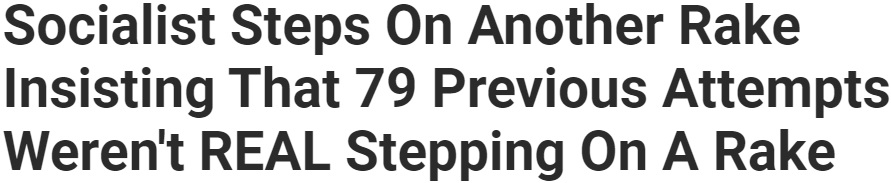





















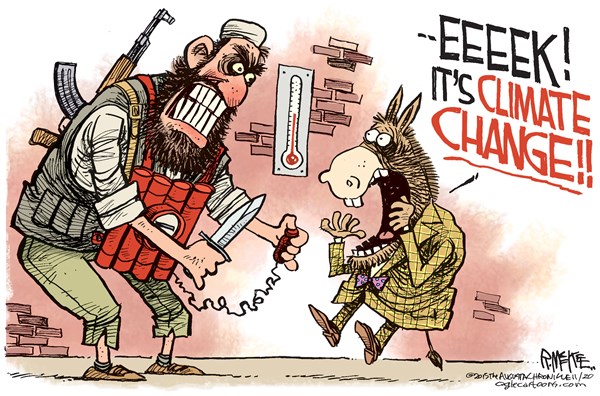








 The Daily Hatch
.jpg)