Ep. 4 – From Cradle to Grave [6/7]. Milton Friedman’s Free to Choose (1980)
March 9, 2021
President Biden c/o The White House
1600 Pennsylvania Avenue NW
Washington, DC 20500
Dear Mr. President,
Thank you for taking time to have your office try and get a pulse on what is going on out here in the country. I wanted to let you know what I think about the minimum wage increase you have proposed for the whole country and I wanted to quote Milton Friedman who you are familiar with and you made it clear in July that you didn’t care for his views!Let me challenge you to take a closer look at what he had to say!
Congress has just acted to increase unemployment. It did so by raising the legal minimum-wage rate from $1.25 to $1.60 an hour, effective in 1968, and extending its coverage. The result will be and must be to add to the ranks of the unemployed.
Does a merchant increase his sales by raising prices? Does higher pay of domestic servants induce more housewives to hire help? The situation is no different for other employers. The higher wage rate decreed by Congress for low-paid workers will raise the cost of the goods that these workers produce—and must discourage sales. It will also induce employers to replace such workers with other workers—either to do the same work or to produce machinery to do the same work or to produce machinery to do the work.
Some workers who already receive wages well above the legal minimum will benefit—because they will face less competition from the unskilled. That is why many unions are strong supporters of higher minimum-wage rates. Some employers and employees in places where wages are already high will benefit because they will face less competition from businessmen who might otherwise invest capital in areas that have large pools of unskilled labor. That is why Northern manufactures and unions, particularly in new England, are the principal sources of political pressure for higher legal minimum-wage rates.
The groups that will be hurt the most are the low-paid and the unskilled. The ones who remain employed will receive higher wage rates, but fewer will be employed. As Prof. James Tobin, who was a member of president Kennedy’s Council of Economic Advisers, recently wrote: “People who lack the capacity to earn a decent living need to be helped, but they will not be helped by minimum-wage laws, trade-union wage pressures or other devices which seek to compel employers to pay them more than their work is worth. The more likely outcome of such regulations is that the intended beneficiaries are not employed at all.”
The loss to the unskilled workers will not be offset by gains to others. Smaller total employment will result in a smaller total output. Hence the community as a whole will be worse off.
Women, teen-agers, Negroes and particularly Negro teen-agers, will be especially hard hit. I am convinced that the minimum-wage law is the most anti-Negro law on our statute books—in its effect not its intent. It is a tragic but undoubted legacy of the past—and one we must try to correct—that on the average Negroes have lower skills than whites. Similarly, teen-agers are less skilled than older workers. Both Negroes and teen-agers are only made worse off by discouraging employers from hiring them. On the-job training—the main route whereby the unskilled have become skilled—is thus denied them.
The shockingly high rate of unemployment among teen-age Negro boys is largely a result of the present Federal minimum-wage rate. And unemployment will be boosted still higher by the rise just enacted. Before 1956, unemployment among Negro boys aged 14 to 19 was around 8 to 11
per cent, about the same as among white boys. Within two years after the legal minimum was raised from 75 cents to $1 an hour in 1956, unemployment among Negro boys shot up to 24 per cent and among white boys to 14 per cent. Both figures have remained roughly the same ever since. But I am convinced that, when it becomes effective, the $1.60 minimum will increase unemployment among Negro boys to 30 per cent or more.
Many well-meaning people favor legal minimum-wage rates in the mistaken belief that they help the poor. These people confuse wage rates with wage income. It has always been a mystery to me to understand why a youngster is better off unemployed at $1.60 an hour than employed at $1.25. Moreover, many workers in low wage brackets are supplementary earners—that is, youngsters who are just getting started or elderly folk who are adding to the main source of family income. I favor governmental measures that are designed to set a floor under family income. Legal minimum-wage rates only make this task more difficult.
The rise in the legal minimum-wage rate is a monument to the power of superficial thinking.
_____________
Thank you so much for your time. I know how valuable it is. I also appreciate the fine family that you have and your commitment as a father and a husband.
Sincerely,
Everette Hatcher III, 13900 Cottontail Lane, Alexander, AR 72002, ph 501-920-5733
IT IS TRULY RARE TO HAVE The American Civil Liberties Union, the American Humanist Association, and the U.S. Conference of Catholic Bishops all filed friend-of-the-court briefs in support of an Evangelical wanting to share his faith!
Justice Clarence Thomas issued an opinion of the Supreme Court Monday that sided with Chike Uzuegbunam, a former student at Georgia Gwinnett College, affirming his right to share his Christian faith on campus. (Photo: Walter Bibikow/Getty Images)
The Supreme Court ruled in an 8-1 decision Monday that a Georgia college’s speech code policy violated the First Amendment and that a student who was harmed by the policy can seek damages.
Justice Clarence Thomas issued the opinion of the high court, siding with Chike Uzuegbunam, a former student at Georgia Gwinnett College, and affirming his right to share his Christian faith on campus.
The opinion reversed an 11th U.S. Circuit Court of Appeals decision, which said Uzuegbunam didn’t have standing to sue the college over a policy that severely restricted his speech.
“The Supreme Court has rightly affirmed that government officials should be held accountable for the injuries they cause,” Kristen Waggoner, general counsel for Alliance Defending Freedom, said in a statement Monday. “When public officials violate constitutional rights, it causes serious harm to the victims.”
Want to keep up with the 24/7 news cycle? Want to know the most important stories of the day for conservatives? Need news you can trust? Subscribe to The Daily Signal’s email newsletter. Learn more >>
In 2016, Uzuegbunam was told that he needed to use one of two “speech zones,” which made up less than 1% of the entire campus, if he wanted to continue sharing his Christian faith on campus, according to Alliance Defending Freedom. Uzuegbunam complied, but minutes after speaking in a reserved zone, campus police threatened him with discipline if he continued.
“School officials violated [Uzuegbunam’s] constitutional rights when they stopped him twice from speaking in an open area of campus,” Tyson Langhofer, the director of Alliance Defending Freedom’s Center for Academic Freedom, told The Daily Caller News Foundation in January. “The only permit students need to speak on campus is the First Amendment.”
School officials ultimately accused Uzuegbunam of violating a campus speech code, which prohibited offensive speech, Langhofer said. Georgia Gwinnett College initially defended its speech code in court after Alliance Defending Freedom sued on behalf of Uzuegbunam in 2016, but then reversed its speech policy and argued the case was moot as a result.
Thomas was joined in his opinion by seven justices from across the ideological spectrum. The justices agreed that because Uzuegbunam’s rights were violated, he can sue the school and receive nominal damages.
“It is undisputed that Uzuegbunam experienced a completed violation of his constitutional rights when respondents enforced their speech policies against him,” Thomas wrote.
Chief Justice John Roberts issued the lone dissent. Roberts agreed with the appeals court, which argued that because Georgia Gwinnett College changed its policy after Uzuegbunam sued, the case was moot.
“Today’s decision risks a major expansion of the judicial role,” Roberts wrote. “Until now, we have said that federal courts can review the legality of policies and actions only as a necessary incident to resolving real disputes.”
The American Civil Liberties Union, the American Humanist Association, the Frederick Douglass Foundation, and the U.S. Conference of Catholic Bishops all filed friend-of-the-court briefs in support of Uzuegbunam.
—-
December 5, 2020
Office of Barack and Michelle Obama P.O. Box 91000 Washington, DC 20066
Dear President Obama,
I wrote you over 700 letters while you were President and I mailed them to the White House and also published them on my blog http://www.thedailyhatch.org .I received several letters back from your staff and I wanted to thank you for those letters.
I have been reading your autobiography A PROMISED LAND and I have been enjoying it.
Let me make a few comments on it, and here is the first quote of yours I want to comment on:
“If we won, it would mean that I wasn’t alone in believing that the world didn’t have to be a cold, unforgiving place, where the STRONG PREYED ON THE WEAK and we inevitably fell back into clans and tribes, lashing out against the unknown and huddling against the darkness”
It seems obvious to me that you need to read the BOOK OF ECCLESIASTES.
Below are Francis Schaeffer’s comments on ECCLESIASTES and they deal with the fact that life UNDER THE SUN power reigns and the books will not be balanced!
The Christian Scholar Ravi Zacharias noted, “The key to understanding the Book of Ecclesiastes is the term UNDER THE SUN — What that literally means is you lock God out of a closed system and you are left with only this world of Time plus Chance plus matter.”
Oppressed have no comforter
Ecclesiastes 4:1
Then I looked again at all the acts of oppression which were being done under the sun. And behold I saw the tears of the oppressed and that they had no one to comfort them; and on the side of their oppressors was power, but they had no one to comfort them.
Francis Schaeffer: Between birth and death power rules. Solomon looked over his kingdom and also around the world and proclaimed that right does not rule but power rules.
Ecclesiastes 7:14-15
14 In the day of prosperity be happy, but in the day of adversity consider—God has made the one as well as the other so that man will not discover anything that will be after him.
15 I have seen everything during my lifetime of futility; there is a righteous man who perishes in his righteousness and there is a wicked man who prolongs his life in his wickedness.
Ecclesiastes 8:14
14 There is futility which is done on the earth, that is, there are righteous men to whom it happens according to the deeds of the wicked. On the other hand, there are evil men to whom it happens according to the deeds of the righteous. I say that this too is futility.
Francis Schaeffer: We could say it in 20th century language, “The books are not balanced in this life.”
Woody Allen’s 1989 movie, CRIMES AND MISDEMEANORS, was on this very subject of the Nazis that Lester Mondale and I discussed on that day in 1996 at Mondale’s cabin in Missouri. In this film, Allen attacks his own atheistic view of morality.Martin Landau plays a Jewish eye doctor named Judah Rosenthal raised by a religious father who always told him, “The eyes of God are always upon you.” However, Judah later concludes that God doesn’t exist. He has his mistress (played in the film by Anjelica Huston) murdered because she continually threatened to blow the whistle on his past questionable, probably illegal, business activities. She also attempted to break up Judah’s respectable marriage by going public with their two-year affair. Judah struggles with his conscience throughout the remainder of the movie and continues to be haunted by his father’s words: “The eyes of God are always upon you.” This is a very scary phrase to a young boy, Judah observes. He often wondered how penetrating God’s eyes are.
Later in the film, Judah reflects on the conversation his religious father had with Judah ‘s unbelieving Aunt May at the dinner table many years ago:
“Come on Sol, open your eyes. Six million Jews burned to death by the Nazis, and they got away with it because might makes right,” says aunt May
Sol replies, “May, how did they get away with it?”
Judah asks, “If a man kills, then what?”
Sol responds to his son, “Then in one way or another he will be punished.”
Aunt May comments, “I say if he can do it and get away with it and he chooses not to be bothered by the ethics, then he is home free.”
Judah ‘s final conclusion was that might did make right. He observed that one day, because of this conclusion, he woke up and the cloud of guilt was gone. He was, as his aunt said, “home free.”
Woody Allen has exposed a weakness in his own humanistic view that God is not necessary as a basis for good ethics. There must be an enforcement factor in order to convince Judah not to resort to murder. Otherwise, it is fully to Judah ‘s advantage to remove this troublesome woman from his life. CAN A MATERIALIST OR A HUMANIST THAT DOES NOT BELIEVE IN AN AFTERLIFE GIVE JUDAH ONE REASON WHY HE SHOULDN’T HAVE HIS MISTRESS KILLED?
The Bible tells us, “{God} has also set eternity in the hearts of men…” (Ecclesiastes 3:11 NIV). The secularist calls this an illusion, but the Bible tells us that the idea that we will survive the grave was planted in everyone’s heart by God Himself. Romans 1:19-21 tells us that God has instilled a conscience in everyone that points each of them to Him and tells them what is right and wrong (also Romans 2:14 -15).
It’s no wonder, then, that one of Allen’s fellow humanists would comment, “Certain moral truths — such as do not kill, do not steal, and do not lie — do have a special status of being not just ‘mere opinion’ but bulwarks of humanitarian action. I have no intention of saying, ‘I think Hitler was wrong.’ Hitler WAS wrong.” (Gloria Leitner, “A Perspective on Belief,” THE HUMANIST, May/June 1997, pp. 38-39)
Here Leitner is reasoning from her God-given conscience and not from humanist philosophy. It wasn’t long before she received criticism. Humanist Abigail Ann Martin responded, “Neither am I an advocate of Hitler; however, by whose criteria is he evil?” (THE HUMANIST, September/October 1997, p. 2)
On the April 13, 2014 episode of THE GOOD WIFE called “The Materialist,” Alicia in a custody case asks the father Professor Mercer some questions about his own academic publications. She reads from his book that he is a “materialist and he believes that “free-will is just an illusion,” and we are all just products of the physical world and that includes our thoughts and emotions and there is no basis for calling anything right or wrong. Sounds like to me the good professor would agree wholeheartedly with the humanist Abigail Ann Martin’s assertion concerning Hitler’s morality too! Jean-Paul Sartre noted, “No finite point has meaning without an infinite reference point.”
Christians agree with Judah ‘s father that “The eyes of God are always upon us.” Proverbs 5:21 asserts, “For the ways of man are before the eyes of the Lord, and He ponders all his paths.” Revelation 20:12 states, “…And the dead were judged (sentenced) by what they had done (their whole way of feeling and acting, their aims and endeavors) in accordance with what was recorded in the books” (Amplified Version). The Bible is revealed truth from God. It is the basis for our morality. Judah inherited the Jewish ethical values of the Ten Commandments from his father, but, through years of life as a skeptic, his standards had been lowered. Finally, we discover that Judah ‘s secular version of morality does not resemble his father’s biblically-based morality.
Woody Allen’s CRIMES AND MISDEMEANORS forces unbelievers to grapple with the logical conclusions of a purely secular morality, and the secularist has no basis for asserting that Judah is wrong.
Larry King actually mentioned on his show, LARRY KING LIVE, that Chuck Colson had discussed the movie CRIMES AND MISDEMEANORS with him. Colson asked King if life was just a Darwinian struggle where the ruthless come out on top. Colson continued, “When we do wrong, is that our only choice? Either live tormented by guilt, or else kill our conscience and live like beasts?” (BREAKPOINT COMMENTARY, “Finding Common Ground,” September 14, 1993)
Josef Mengele tortured and murdered many Jews and then lived the rest of his long life out in South America in peace. Will he ever face judgment for his actions?
The ironic thing is that at the end of our visit I that pointed out to Mr. Mondale that Paul Kurtz had said in light of the horrible events in World War II that Kurtz witnessed himself in the death camps (Kurtz entered a death camp as an U.S. Soldier to liberate it) that it was obvious that Humanist Manifesto I was way too optimistic and it was necessary to come up with another one. I thought that might encourage Mr. Mondale to comment further on our earlier conversion concerning evil deeds, but he just said, “That doesn’t surprise me that Kurtz would say something like that.”
The second Humanist Manifesto was written in 1973 by Paul Kurtz and Edwin H. Wilson, and was intended to update the previous one. It begins with a statement that the excesses of Nazism and world war had made the first seem “far too optimistic”, and indicated a more hardheaded and realistic approach in its seventeen-point statement, which was much longer and more elaborate than the previous version. Nevertheless, much of the unbridled optimism of the first remained, with hopes stated that war would become obsolete and poverty would be eliminated.
Let me show you some inescapable conclusions if you choose to live without God in the picture. Solomon came to these same conclusions when he looked at life “under the sun.”
Death is the great equalizer (Eccl 3:20, “All go to the same place; all come from dust, and to dust all return.”)
Chance and time have determined the past, and they will determine the future. (Ecclesiastes 9:11-13)
Power reigns in this life, and the scales are not balanced(Eccl 4:1)
Nothing in life gives true satisfaction without God including knowledge (1:16-18), ladies and liquor (2:1-3, 8, 10, 11), and great building projects (2:4-6, 18-20).
You can only find a lasting meaning to your life by looking above the sun and bring God back into the picture.
Sincerely,
Everette Hatcher III, 13900 Cottontail Lane, Alexander, AR 72002, ph 501-920-5733 everettehatcher@gmail.com
President Obama c/o The White House 1600 Pennsylvania Avenue NW Washington, DC 20500 Dear Mr. President, I know that you receive 20,000 letters a day and that you actually read 10 of them every day. I really do respect you for trying to get a pulse on what is going on out here. There have […]By Everette Hatcher III | Posted in David Barton, Founding Fathers, President Obama | Edit |Comments (0)
There have been many articles written by evangelicals like me who fear that our founding fathers would not recognize our country today because secular humanism has rid our nation of spiritual roots. I am deeply troubled by the secular agenda of those who are at war with religion in our public life. Lillian Kwon quoted somebody […]By Everette Hatcher III | Posted in David Barton, Founding Fathers | Edit | Comments (0)
There have been many articles written by evangelicals like me who fear that our founding fathers would not recognize our country today because secular humanism has rid our nation of spiritual roots. I am deeply troubled by the secular agenda of those who are at war with religion in our public life. Lillian Kwon quoted somebody […]By Everette Hatcher III | Posted in David Barton, Founding Fathers | Edit | Comments (0)
There have been many articles written by evangelicals like me who fear that our founding fathers would not recognize our country today because secular humanism has rid our nation of spiritual roots. I am deeply troubled by the secular agenda of those who are at war with religion in our public life. Lillian Kwon quoted somebody […]By Everette Hatcher III | Posted in David Barton, Founding Fathers | Edit | Comments (0)
There have been many articles written by evangelicals like me who fear that our founding fathers would not recognize our country today because secular humanism has rid our nation of spiritual roots. I am deeply troubled by the secular agenda of those who are at war with religion in our public life. Lillian Kwon quoted somebody […]By Everette Hatcher III | Posted in David Barton, Founding Fathers | Edit | Comments (0)
There have been many articles written by evangelicals like me who fear that our founding fathers would not recognize our country today because secular humanism has rid our nation of spiritual roots. I am deeply troubled by the secular agenda of those who are at war with religion in our public life. Lillian Kwon quoted somebody […]By Everette Hatcher III | Posted in Founding Fathers | Edit | Comments (0)
President Obama Speaks at The Ohio State University Commencement Ceremony Published on May 5, 2013 President Obama delivers the commencement address at The Ohio State University. May 5, 2013. You can learn a lot about what President Obama thinks the founding fathers were all about from his recent speech at Ohio State. May 7, 2013, […]By Everette Hatcher III | Posted in Founding Fathers, President Obama | Edit | Comments (0)
Dr. C. Everett Koop with Bill Graham. Francis Schaeffer: “Whatever Happened to the Human Race” (Episode 4) THE BASIS FOR HUMAN DIGNITY Published on Oct 7, 2012 by AdamMetropolis The 45 minute video above is from the film series created from Francis Schaeffer’s book “Whatever Happened to the Human Race?” with Dr. C. Everett Koop. This […]By Everette Hatcher III | Posted in Founding Fathers, Francis Schaeffer, Prolife | Edit |Comments (1)
America’s Founding Fathers Deist or Christian? – David Barton 4/6 There have been many articles written by evangelicals like me who fear that our founding fathers would not recognize our country today because secular humanism has rid our nation of spiritual roots. I am deeply troubled by the secular agenda of those who are at […]By Everette Hatcher III | Posted in David Barton, Founding Fathers | Tagged governor of connecticut, john witherspoon, jonathan trumbull | Edit | Comments (1)
3 Of 5 / The Bible’s Influence In America / American Heritage Series / David Barton There were 55 gentlemen who put together the constitution and their church affliation is of public record. Greg Koukl notes: Members of the Constitutional Convention, the most influential group of men shaping the political foundations of our nation, were […]By Everette Hatcher III | Posted in Founding Fathers | Edit | Comments (0)
I do not think that John Quincy Adams was a founding father in the same sense that his father was. However, I do think he was involved in the early days of our government working with many of the founding fathers. Michele Bachmann got into another history-related tussle on ABC’s “Good Morning America” today, standing […]By Everette Hatcher III | Posted in David Barton, Founding Fathers | Edit | Comments (0)
I have gone back and forth and back and forth with many liberals on the Arkansas Times Blog on many issues such as abortion, human rights, welfare, poverty, gun control and issues dealing with popular culture. Here is another exchange I had with them a while back. My username at the Ark Times Blog is Saline […]By Everette Hatcher III | Posted in Arkansas Times, Francis Schaeffer, Prolife | Edit |Comments (0)
I truly believe that many of the problems we have today in the USA are due to the advancement of humanism in the last few decades in our society. Ronald Reagan appointed the evangelical Dr. C. Everett Koop to the position of Surgeon General in his administration. He partnered with Dr. Francis Schaeffer in making the […]By Everette Hatcher III | Posted in Adrian Rogers, Francis Schaeffer | Edit | Comments (0)
Francis Schaeffer: “Whatever Happened to the Human Race” (Episode 4) THE BASIS FOR HUMAN DIGNITY Published on Oct 7, 2012 by AdamMetropolis ____________ The 45 minute video above is from the film series created from Francis Schaeffer’s book “Whatever Happened to the Human Race?” with Dr. C. Everett Koop. This book really helped develop my political […]By Everette Hatcher III | Posted in Francis Schaeffer | Edit | Comments (0)
The United States received its lowest ranking ever in the newly released 2021 Index of Economic Freedom, placing just 20th in the world in overall economic freedom. Pictured: Midtown Manhattan, the Empire State Building, and the towers of Hudson Yards in New York City as seen from Weehawken, New Jersey, on March 6. (Photo: Gary Hershorn/Getty Images)
Last week, two important reports were released, shining a light on one of the major challenges facing America—excessive government spending that is causing the poor and declining fiscal health of the federal government. This reduces economic freedom and threatens prosperity, making it more difficult for families to live the American dream.
In The Heritage Foundation’s 2021 Index of Economic Freedom, which was released March 5, the results weren’t pretty for the United States. The U.S. received its lowest ranking ever, just 20th in the world in overall economic freedom.
The reason? A dramatic drop in fiscal health, scored at only 34.9 out of 100. This is worse than 150 other countries and is a failing grade on anybody’s report card.
Later that same afternoon, the Congressional Budget Office released “The 2021 Long-Term Budget Outlook.” This report provides a snapshot of the nation’s fiscal health over the next 30 years.
Want to keep up with the 24/7 news cycle? Want to know the most important stories of the day for conservatives? Need news you can trust? Subscribe to The Daily Signal’s email newsletter. Learn more >>
The diagnosis is not good.
While tax revenues are projected to rise above their historical average as a share of the economy, the growth of spending will outpace that growth in revenue. Federal government spending as a percentage of gross domestic product was already above its historical average even before the pandemic, and is projected to continue growing.
Because of overspending, the national debt held by the public has already eclipsed the size of the economy, and is projected to continue rising much higher than it ever has before, reaching 202% of GDP by 2051.
The net interest costs for the taxpayers of financing this debt will skyrocket from 1.4% of GDP (about $300 billion) this year to 8.6% of GDP in 2051. For the sake of comparison, that would be more than 250% higher than what we currently spend on national defense as a percentage of GDP.
The primary drivers of the increases in spending are unsustainable entitlement programs, which require significant reform not only for the sake of the taxpayers, but also to allow better results for Americans in need.
Unless substantial reforms are implemented, Medicare’s Hospital Insurance Trust Fund will be exhausted in 2026. The Social Security Trust Fund is projected to be depleted by 2032, which could cause across-the-board benefit reductions for all retirees just 11 years from now.
Over the long term, government spending simply cannot continue growing faster than the economy.
The Congressional Budget Office has been warning for years about the significant negative consequences of the high and rising federal debt. As the recent “Long-Term Budget Outlook” report indicates, the current fiscal trajectory would “reduce business investment, and slow the growth of economic output,” and would “increase the risk of a fiscal crisis.”
The Congressional Budget Office also warns that high levels of debt would pose a threat to America’s national interests because it would cause “increase[d] interest payments to foreign holders of U.S. debt,” and “an erosion of confidence in the U.S. dollar as an international reserve currency.”
This current path is not acceptable.
The United States needs to get its fiscal health in order, not just to improve its ranking in the Index of Economic Freedom, but because of what that improved ranking would mean for the American people.
The index results demonstrate year after year that people living in countries with higher levels of economic freedom enjoy higher levels of per capita income, better health care and education, and cleaner environments than those living where economic freedom is significantly constrained. Even modest improvements in economic freedom can boost growth rates as well.
These two important reports should be a wake-up call for policymakers that they need to start slowing the growth of spending. Thankfully, there are solutions that could be implemented, such as those included in The Heritage Foundation’s “Blueprint for a Responsible Post-COVID-19 Budget.”
Some recommendations found in the blueprint include reforming benefit programs, preventing out-of-control spending, and maintaining a pro-growth economic policy, among many others.
Unfortunately, the longer we wait, the more difficult will be the climb out of the fiscal hole that politicians have been digging for years. The time for action is now.
Have an opinion about this article? To sound off, please email letters@DailySignal.com and we will consider publishing your remarks in our regular “We Hear You” feature.
—
National Debt Set to Skyrocket
Everyone wants to know more about the budget and here is some key information with a chart from the Heritage Foundation and a video from the Cato Institute.
In the past, wars and the Great Depression contributed to rapid but temporary increases in the national debt. Over the next few decades, runaway spending on Medicare, Medicaid, and Social Security will drive the debt to unsustainable levels.
PERCENTAGE OF GDP
Download
Source: Heritage Foundation calculations based on data from the U.S. Department of the Treasury, Institute for the Measurement of Worth, Congressional Budget Office, and White House Office of Management and Budget.
The charts in this book are based primarily on data available as of March 2011 from the Office of Management and Budget (OMB) and the Congressional Budget Office (CBO). The charts using OMB data display the historical growth of the federal government to 2010 while the charts using CBO data display both historical and projected growth from as early as 1940 to 2084. Projections based on OMB data are taken from the White House Fiscal Year 2012 budget. The charts provide data on an annual basis except… Read More
Authors
Emily GoffResearch Assistant
Thomas A. Roe Institute for Economic Policy StudiesKathryn NixPolicy Analyst
Center for Health Policy StudiesJohn FlemingSenior Data Graphics Editor
In 1980 I read Milton Friedman’s book FREE TO CHOOSE over and over again! I also had the opportunity to correspond with Milton Friedman and with several other libertarians including John Hospers. Here are the links to my correspondence with Hospers here, and here, and here, here, here, here, here, here, here, here, here, and here.
MARCH 3, 20219:59AM
Who Was the First Woman to Receive an Electoral Vote?
Depending on your age, you may think the answer to that question is Kamala Harris, Hillary Clinton, Sarah Palin, or Geraldine Ferraro. But in fact the first woman to receive an electoral vote, 12 years before the historic nomination of Ferraro in 1984, was Theodora (Tonie) Nathan, the 1972 Libertarian Party vice presidential nominee.
Tonie Nathan was a radio‐television producer in Eugene, Ore., when she attended the first presidential nominating convention of the Libertarian Party in 1972. She was selected to run for vice president with presidential candidate and philosophy professor John Hospers. Although the ticket received only 3,671 official votes, Virginia elector Roger L. MacBride chose to vote for Hospers and Nathan rather than Nixon and Agnew, thus making Nathan the first woman in American history to receive an electoral vote. MacBride, an author and former legislator, had been elected on the Republican slate. As I wrote in Liberty magazine when he died in 1995, “MacBride became a ‘faithless elector’—faithless to Nixon and Agnew, anyway, but faithful to the constitutional principles Rose [Wilder] Lane had instilled in him.”
Brian Doherty, author of Radicals for Capitalism: A Freewheeling History of the Modern American Libertarian Movement, writes:
It is a shame that her historical status for the advancement of woman’s role in what had been entirely a man’s world has been little noted or long remembered, mostly I suspect because the Libertarian Party is not much respected by institutional feminism (though it should be).
Nathan was also the first Jewish person to receive an electoral vote.
After her vice‐presidential run, she ran for office as a Libertarian candidate during the 1970s through the 1990s for numerous offices, vigorously though never successfully. In the 1980 U.S. Senate election in Oregon, Nathan participated in three statewide television debates with incumbent Bob Packwood (R) and then–state senator Ted Kulongoski (D). She served as national vice‐chair of the Libertarian Party, and at the 2012 Libertarian National Convention she announced former New Mexico governor Gary Johnson as the presidential nominee. She founded the Association of Libertarian Feminists in 1973 and served as its chair. Tonie Nathan died in 2014 at the age of 91.
—
Adrian Rogers: How to Answer a Skeptic [#1534] (Audio)
How To Answer A Skeptic Sermon Summary by Bro. Adrian Rogers We live in a day of accelerating skepticism, humanism and scientism. We as Christians are going to be ridiculed and made to look ignorant and uneducated because we believe in God. Do we have sound reason for believing what we believe? Are we not worthy of real, honest thought? How do you respond to this skepticism in this day and age in which we live? The Bible tells us how to respond to skeptics in 1 Peter 3:10-17, especially verse 15 which states, “But sanctify the Lord God in your hearts, and be ready always to give an answer to every man who ask you to give a reason of the hope that is in you, with meekness and fear.” (As a believer, you must understand what you believe and why we are Christians, and then be able to explain your beliefs humbly, thoughtfully, reasonably, and biblically.) Often we are told to keep the faith, but not only should we keep it but we need to give it away. If you have no desire to give it away, you ought to give it up, because what you have is not the real thing. Any man that has been born of the spirit of God, has an innate desire to share his faith with others. There are two things that must be true of you before you are ready to share your faith with anybody. First, you must be Real. You are to have a full-hearted, burning, compassionate, overflowing love for God. You are to be a zealot for the Lord Jesus. Yours is to be a full faith, a fearless faith. Don’t let anybody intimidate you because you are a Christian. They can hurt you but they cannot harm you, therefore don’t be afraid. Second you must be Ready. When you live a Christian lifestyle, people will start asking questions about you when they see something in you that cannot be explained. They are going to want to know why you believe what you believe and why you act the way you act. Do you know how to respond to a skeptic? There are four basic ideas to remember as you respond to this skeptical age: 1) Forego the Folly of Fools – Some skeptics are fools, not all but some. In the Bible, fool means someone who is morally depraved, not mentally deficient. Don’t argue with someone who shows himself to be a fool. Give him the mind of God; tell him what God says then go your way. In Proverbs 26:4 it says, “answer not a fool according to his folly, less you be like unto him.” Don’t answer him; don’t get in a debate with a fool. You won’t be able to do much with these type of people. Also see what Jesus says about this in Mark 6:11. 2) Learn the Limits of Logic – Logic is a valuable tool but it can only carry you so far. When you get to a chasm that logic can’t leap, then faith will have to fly. The logic for God is found in creation and design and universal moral beliefs. It is logical to reason that if we have a creation, we must have a Creator since nothing comes out of nothing. Also logic tells us that if there is design in nature, there must be a Designer; and the more complex the design, the greater the designer. The creation found throughout the earth and universe is immensely complex and organized. The logic of there being universally held beliefs in a moral law shared throughout mankind also says there is a god. If anyone ever comes up to you and says, “Prove there is a god.” Be Bold and say, “I can’t, but can you prove there is no god?” He’ll say he can’t either. Then if he says “You just think there is a god because it is just what you believe.” You can say, “I believe there is a god and you believe there is no god. I have faith that there is, and you have faith that there isn’t.” What we as Christians believe is reasonable, but it goes beyond reason. 3) Remember the Resource of Revelation –If we are to know a god, he is going to have to reveal himself to us. The finite can never understand the infinite, unless the infinite explains himself and reveals himself to the finite. 2 Peter 1:19-21 shows us three things about the word of God: 1) The Inspiration of the word of God. The Bible is like no other book – it was inspired by the Holy Spirit. 2) The Illumination of the word of God. It shines into our hearts – it enlightens us. It reveals to us what we could not know without it. 3) The Confirmation of the word of God. We believe not only because of what any other person has said, but also because of what the Bible has said. The Bible is power whether you believe it or not. It does not matter what we believe; what matters is what is true. Use the Bible because you know it is true. 4) Fortify the Force of Faith – A Christian with a glowing testimony is worth a library of arguments. Share what Jesus means to you and what God has done for you and how He has changed your life. Let Jesus be real to you. Sanctify God in your heart. Strengthen your faith by staying in contact with God through prayer, reading and listening to His word, and sharing your faith with other believers as well as non-believers. Your faith will be as much caught as it will be taught. Remember 1 Peter 3:15, “But sanctify the Lord God in your hearts, and be ready always to give an answer to everyone who ask you to give a reason of the hope that is in you, with meekness and fear.”
Adrian Rogers: Does a Loving God Believe in Capital Punishment? [#2183] (Audio) Kenneth D. Williams was executed at 11:05 pm in Grady, Arkansas on April 27, 2017. In this post I want to take a short look at Adrian Rogers’ sermon THE BIBLE AND CAPITAL PUNISHMENT and then look at the life of Kenneth […]
On 11-15-05 Adrian Rogers passed over to glory and since it is the 10th anniversary of that day I wanted to celebrate his life in two ways. First, I wanted to pass on some of the material from Adrian Rogers’ sermons I have sent to prominent atheists over the last 20 years. Second, I wanted […]
Francis Schaeffer I remember like yesterday hearing my pastor Adrian Rogers in 1979 going through the amazing fulfilled prophecy of Ezekiel 26-28 and the story of the city of Tyre. In 1980 in my senior year (taught by Mark Brink) at Evangelical Christian High School, I watched the film series by Francis Schaeffer called WHATEVER HAPPENED […]
My good friend Rev. Sherwood Haisty Jr. and I used to discuss which men were the ones who really influenced our lives and Adrian Rogers had influenced us both more than anybody else. During the 1990′s I actually made it a practice to write famous atheists and scientists that were mentioned by Adrian Rogers and […]
Clips of Adrian Rogers and Francis Schaeffer from the film “With God on our side” ______________________ I grew up in Memphis going to Bellevue Baptist Church and Adrian Rogers was our pastor and he had a great impact on me. He had a lot to say on the issues of the day and that included […]
______________ Francis and Edith Schaeffer pictured below: _____________ Milton and Rose Friedman pictured with Ronald Reagan: My heroes in 1980 were the economist Milton Friedman, the doctor C. Everett Koop, the politician Ronald Reagan, the Christian philosopher Francis Schaeffer, the evangelist Billy Graham, and my pastor Adrian Rogers. I have been amazed at how many […]
How can I know the Bible is the Word of God? by Adrian Rogers ________________________ _______________________________________ How can I know the Bible is the Word of God? How Can I Know the Bible is the Word of God? By Dr. Adrian Rogers Overview The historical, scientific, and prophetic accuracy of Scripture, along with its life-changing […]
Adrian Rogers: How You Can Be Certain the Bible Is the Word of God [#1725] (Audio) What evidence is there that the Bible is in fact God’s Word? Adrian Rogers ___________ I want to give you five reasons to affirm the Bible is the Word of God. First, I believe the Bible is the Word […]
Adrian Rogers: An Old Testament Portrait of Christ Published on Jan 27, 2014 I own nothing, all the rights belong to Adrian Rogers (R.I.P.) & his website http://www.lwf.org. Story of Abraham is told. ______________________________________ Adrian Rogers: Why I Believe in Jesus Christ Adrian Rogers: The Biography of the King Published on Dec 19, 2012 Series: […]
Adrian Rogers: 3 Truths to pass on to the next generation Published on Feb 7, 2013 Just a few weeks before Glory ___________________ Adrian Rogers pictured below: ________________________________ Adrian Rogers, ‘rising star of Memphis,’ elected 35 years ago by David Roach, posted Wednesday, May 21, 2014 (5 months ago) NASHVILLE (BP) — Thousands of […]
Rand Paul questions if US borrowing puts country on path to become Venezuela
Paul’s comments came just a day after the Senate passed President Biden’s $1.9 trillion COVID-19 relief bill
Sen. Rand Paul, one of the most outspoken Republicans about government spending, took to Twitter Sunday to ask if Congress’ borrowing is putting the U.S. economy on the same path as Venezuela’s.
“New 1,000,000 bolivar note in Venezuela worth 53 cents,” Paul tweeted, while linking to a Bloomberg report on hyperinflation in Caracas. “Will US be the next Venezuela with Congress borrowing over $6 trillion in one year?”
Paul’s comments came just a day after the Senate passed President Biden’s $1.9 trillion COVID-19 relief bill in a 50-49 vote. Sen. Mitt Romney, R-Utah, also expressed dismay over some of what he identified as wasteful spending in the bill, including providing billions in financial assistance to states that do not need it.
“We’re going to be asking the American people to allow us to borrow money from China and others, pass that on to our kids and grandkids so that we can send money to states like California and mine that don’t need the money,” Romney said. “That doesn’t make any sense at all.”
Venezuela’s economy has deteriorated due to, oil prices, the coronavirus and years of hyperinflation, according to Reuters. Its central bank issued a new banknote worth 1 million bolivars that will be worth 52 cents. The report said that many Venezuelans use U.S. currency to complete transactions.
—
March 31, 2021
President Biden c/o The White House
1600 Pennsylvania Avenue NW
Washington, DC 20500
Dear Mr. President,
Please explain to me if you ever do plan to balance the budget while you are President? I have written these things below about you and I really do think that you don’t want to cut spending in order to balance the budget. It seems you ever are daring the Congress to stop you from spending more.
“The credit of the United States ‘is not a bargaining chip,’ Obama said on 1-14-13. However, President Obama keeps getting our country’s credit rating downgraded as he raises the debt ceiling higher and higher!!!!
Washington Could Learn a Lot from a Drug Addict
Just spend more, don’t know how to cut!!! Really!!! That is not living in the real world is it?
Making more dependent on government is not the way to go!!
Why is our government in over 16 trillion dollars in debt? There are many reasons for this but the biggest reason is people say “Let’s spend someone else’s money to solve our problems.” Liberals like Max Brantley have talked this way for years. Brantley will say that conservatives are being harsh when they don’t want the government out encouraging people to be dependent on the government. The Obama adminstration has even promoted a plan for young people to follow like Julia the Moocher.
Imagine standing a baby carrot up next to the 25-story Stephens building in Little Rock. That gives you a picture of the impact on the national debt that federal spending in Arkansas on Medicaid expansion would have, while here at home expansion would give coverage to more than 200,000 of our neediest citizens, create jobs, and save money for the state.
Here’s the thing: while more than a billion dollars a year in federal spending would represent a big-time stimulus for Arkansas, it’s not even a drop in the bucket when it comes to the national debt.
Currently, the national debt is around $16.4 trillion. In fiscal year 2015, the federal government would spend somewhere in the neighborhood of $1.2 billion to fund Medicaid expansion in Arkansas if we say yes. That’s about 1/13,700th of the debt.
It’s hard to get a handle on numbers that big, so to put that in perspective, let’s get back to the baby carrot. Imagine that the height of the Stephens building (365 feet) is the $16 trillion national debt. That $1.2 billion would be the length of a ladybug. Of course, we’re not just talking about one year if we expand. Between now and 2021, the federal government projects to contribute around $10 billion. The federal debt is projected to be around $25 trillion by then, so we’re talking about 1/2,500th of the debt. Compared to the Stephens building? That’s a baby carrot.
______________
Here is how it will all end if everyone feels they should be allowed to have their “baby carrot.”
How sad it is that liberals just don’t get this reality.
While living in Europe in the 1760s, Franklin observed: “in different countries … the more public provisions were made for the poor, the less they provided for themselves, and of course became poorer. And, on the contrary, the less was done for them, the more they did for themselves, and became richer.”
Alexander Fraser Tytler, Lord Woodhouselee(15 October 1747 – 5 January 1813) was a Scottish lawyer, writer, and professor. Tytler was also a historian, and he noted, “A democracy cannot exist as a permanent form of government. It can only exist until the majority discovers it can vote itself largess out of the public treasury. After that, the majority always votes for the candidate promising the most benefits with the result the democracy collapses because of the loose fiscal policy ensuing, always to be followed by a dictatorship, then a monarchy.”
[Jefferson affirms that the main purpose of society is to enable human beings to keep the fruits of their labor.— TGW]
To take from one, because it is thought that his own industry and that of his fathers has acquired too much, in order to spare to others, who, or whose fathers have not exercised equal industry and skill, is to violate arbitrarily the first principle of association, “the guarantee to every one of a free exercise of his industry, and the fruits acquired by it.” If the overgrown wealth of an individual be deemed dangerous to the State, the best corrective is the law of equal inheritance to all in equal degree; and the better, as this enforces a law of nature, while extra taxation violates it.
[From Writings of Thomas Jefferson, ed. Albert E. Bergh (Washington: Thomas Jefferson Memorial Association, 1904), 14:466.]
_______
Jefferson pointed out that to take from the rich and give to the poor through government is just wrong. Franklin knew the poor would have a better path upward without government welfare coming their way. Milton Friedman’s negative income tax is the best method for doing that and by taking away all welfare programs and letting them go to the churches for charity.
_____________
_________
Thank you so much for your time. I know how valuable it is. I also appreciate the fine family that you have and your commitment as a father and a husband.
Sincerely,
Everette Hatcher III, 13900 Cottontail Lane, Alexander, AR 72002, ph 501-920-5733
We got to act fast and get off this path of socialism. Morning Bell: Welfare Spending Shattering All-Time Highs Robert Rector and Amy Payne October 18, 2012 at 9:03 am It’s been a pretty big year for welfare—and a new report shows welfare is bigger than ever. The Obama Administration turned a giant spotlight […]
We need to cut Food Stamp program and not extend it. However, it seems that people tell the taxpayers back home they are going to Washington and cut government spending but once they get up there they just fall in line with everyone else that keeps spending our money. I am glad that at least […]
Government Must Cut Spending Uploaded by HeritageFoundation on Dec 2, 2010 The government can cut roughly $343 billion from the federal budget and they can do so immediately. __________ Liberals argue that the poor need more welfare programs, but I have always argued that these programs enslave the poor to the government. Food Stamps Growth […]
Milton Friedman – The Negative Income Tax Published on May 11, 2012 by LibertyPen In this 1968 interview, Milton Friedman explained the negative income tax, a proposal that at minimum would save taxpayers the 72 percent of our current welfare budget spent on administration. http://www.LibertyPen.com Source: Firing Line with William F Buckley Jr. ________________ Milton […]
Dan Mitchell Commenting on Obama’s Failure to Propose a Fiscal Plan Published on Aug 16, 2012 by danmitchellcato No description available. ___________ After the Welfare State Posted by David Boaz Cato senior fellow Tom G. Palmer, who is lecturing about freedom in Slovenia and Tbilisi this week, asked me to post this announcement of his […]
Is President Obama gutting the welfare reform that Bill Clinton signed into law? Morning Bell: Obama Denies Gutting Welfare Reform Amy Payne August 8, 2012 at 9:15 am The Obama Administration came out swinging against its critics on welfare reform yesterday, with Press Secretary Jay Carney saying the charge that the Administration gutted the successful […]
Thomas Sowell – Welfare Welfare reform was working so good. Why did we have to abandon it? Look at this article from 2003. The Continuing Good News About Welfare Reform By Robert Rector and Patrick Fagan, Ph.D. February 6, 2003 Six years ago, President Bill Clinton signed legislation overhauling part of the nation’s welfare system. […]
Uploaded by ForaTv on May 29, 2009 Complete video at: http://fora.tv/2009/05/18/James_Bartholomew_The_Welfare_State_Were_In Author James Bartholomew argues that welfare benefits actually increase government handouts by ‘ruining’ ambition. He compares welfare to a humane mousetrap. —– Welfare reform was working so good. Why did we have to abandon it? Look at this article from 2003. In the controversial […]
Thomas Sowell If the welfare reform law was successful then why change it? Wasn’t Bill Clinton the president that signed into law? Obama Guts Welfare Reform Robert Rector and Kiki Bradley July 12, 2012 at 4:10 pm Today, the Obama Department of Health and Human Services (HHS) released an official policy directive rewriting the welfare […]
I have been writing President Obama letters and have not received a personal response yet. (He reads 10 letters a day personally and responds to each of them.) However, I did receive a form letter in the form of an email on July 10, 2012. I don’t know which letter of mine generated this response so I have […]
Suddenly one day, Neil or somebody said “Ringo’s gone on holiday”
I felt two things. I felt I wasn’t playing great
and the other three were really happy and I was an outsider
So I decided, fuck it, I’m leaving
I went to see John, who was living in my apartment in Montagu Square
I knocked on the door and said “Hi”
“I’m leaving the group because I feel unloved and out of it
“I’m not playing well and you three are really close”
And he said “I thought it was you three”
Then I went over to Paul’s, knocked on his door and said the same thing:
“I’m leaving the band. You three guys are really close and I’m out of it”
And he said “I thought it was you three”
So we had to reassure him that we did think he was great
You know, that’s what it’s like in life
You never stop and say “Hey, I think you’re great”
I don’t think we’d ever done any of that with Ringo
and he felt insecure, so we had to-and he left
So we had to say “You’re great, man, you’re the best”
Then he said “Oh, thank you.” I think he was pleased to hear that
I knew we were just in a messed up stage, all of us
It wasn’t just me, the whole thing was going down
I came back into the studio and George had had it decked out with flowers
Flowers everywhere and John had sent me telegrams saying:
“You’re the best rock drummer, come on home!”
I felt good about myself again and we’d got through that little crisis
It was great, and then the White Album really took off
Like Yer Blues was great
We all left the studio and went to a little room, so there’s no separation
There was lots of group activity going down. I loved the White Album
There was a lot more individual stuff
For the first time I think people were accepting that it was individual
I remember having three studios operating at the same time
Paul was doing some overdubs in one, John was doing something in another
I was doing horns on something else in another studio
because maybe they’d set a release date and time was running out
Hey, I’m getting cramp
If we do that again… are we ready, we’ll sing the song
I wanna hear that… I wanna hear that
OK, Robert? – Take 29
Reach for this one. Were any of them any good?
I’ll just be singing to guide you…
Can you turn it down in my cans a bit?
The last mistake was entirely when I just took my mind off it for a second
A lot of the recordings would have a basic idea, then a jam session to end it
which sometimes didn’t sound too good
But this is a fairly small criticism
When they did the White Album
George Martin Record Producer I thought we should have made a very good single album rather than a double
I agree, we should have put it out as two separate albums
the White and the Whiter album
A lot of information on a double album
What do you do when you’ve got all them songs?
You want to get rid of them so you can do more songs
There was a lot of ego in that band
and a lot of songs should have been elbowed or made into B sides
I think it could have been made a fantastically good album
if it had been condensed a bit
But a lot of people think it’s still the best album they made
It’s not my view but… horses for courses
You can always say that, you know. ‘Perhaps’ I’ll go with, not ‘definitely’
I think it’s fine. The fact that it’s got so much is one of the things that’s cool
It’s varied stuff, Rocky Raccoon, Piggies… Happiness is a Warm Gun, that kind of stuff
I think it’s a fine album
I’m not a great one for ‘maybe it was too many of that… ‘
It was great, it sold, it’s the bloody Beatles’ White Album, shut up!
There was a little trauma with a song called Revolution
I thought it was ‘au courant’ as they say
It was about what was going on at the time and I wanted it to be a single
I said “Put this out. We should say something and this is what I want to say”
And they said “No, it’s too slow”
Neil Aspinall Head of Apple The Apple boutique closed down
I think we just got to the point where we didn’t want it any more We ended up selling Marks and Spencer underwear
Not the image we started with of Simon and Marijke, all these colourful clothes
Great sixties hippy gear
Then to make it pay we ended up selling… St Michael underwear… and it wasn’t the image we wanted
Apple Shop Giveaway London 31st July 1968 We came up with the idea to give it all away
and stop fucking about with psychedelic clothes shops
We just gave it to the people who showed up on the day
You could have one item each, not take two, in the spirit of the thing
Well, they cleaned out the shop
Only one free dress for each customer
But I think personally it was a good way to do it
We weren’t seriously in the rag trade. It was “Look, it didn’t work, so…”
“That’s it!”
We went round the night before we gave everything away
and took what we felt we wanted
I didn’t go
Derek Taylor Apple Press Officer I saw a half-acquaintance outside Apple and said “Where are you going?”
He said “I’m going to join the queue to get some of those clothes”
I thought that was awful
I didn’t want them to close the shop and wrote an impassioned open letter:
“Dear boys, you know, if you do this…” and a lot of other hoo-ha
because I dreaded to see the thing falling apart
The Beatles Anthology 8 [Legendado/Parte 2] HD
Frost On Sunday 8th September 1968
Beautiful… absolute poetry
Welcome back to Part III with the greatest tea-room orchestra in the world
Are you in colour? – No, black and white at the moment
But as you can see, making their first audience appearance for over a year
Ladies and gentlemen, the Beatles! I was driving out to John’s house after John and Cynthia had got divorced I was just going out to say hello to Cynthia and Julian I came up with these words in my mind as if talking to Julian… Hey Jules, don’t take it bad. Take a sad song and make it better So I got the first idea on the way out there with this ‘Hey Jules’ as I thought it was going to be called It seemed a bit of a mouthful so I changed it to Jude I liked the song a lot and I played it to John and Yoko when I’d finished it I actually had finished but I thought there was a little more to go with the words: The movementyou need is on your shoulder I’m playing it and I say to John “I’ll fix that” – He said “What?” I said “The movement you needis on your shoulder…
“I’ve used the word ‘shoulder’ once and anyway it’s stupid, I’ll change it”
He said “You won’t, that’s the best line in the song”
He said “I know what it means. It’s great”
The great thing about John. I’d have knocked it out, he’d say it’s great
I’d see it through his eyes and go “Oh, OK”
So that is the line now, when I do that song
That’s the line when I think of John and sometimes get a little emotional
This was the period when everything was going up and up and rosy
Then suddenly it started to go down like everything goes in a cycle
Once it starts going down, as anybody can tell you…
when you get knocked to the ground, they start kicking you
The world was a problem but we weren’t
That was the best thing about the Beatles
Until we started to break up like White Album and stuff
then even the studio got a bit tense
It was evident on the White Album
I think it was evident in India
when George and I stayed there and Paul and Ringo left and it was a slow death
It was like the wind-down to a divorce
A divorce usually doesn’t just happen, there’s months and years of misery
They were going through a very revolutionary period at that time
They were trying to think of something new
They actually had a good idea which I thought was well worth working on
They wanted to write an album completely and rehearse it
then perform it in front of a large audience, a live album of new material
We started rehearsing at Twickenham Film Studio and I went with them
Twickenham Film Studios London I’m not sure whether everybody was behind the idea of going to Twickenham
They decided to film whatever they were doing
and they were going to start making a new album
The original idea was that you’d see the Beatles
rehearsing, jamming, making up stuff
getting their act together and then finally we’d perform somewhere
as the big end of show concert
Michael Lindsay-Hogg was going to direct it
This should be built like a film set
so you can glide all over the place on tracks with your cameras
Go places that TV cameras don’t go
You can come down from that roof on one long shot, down on a thing
Slowly like a chair-lift
Right down into Ringo’s face on the one shot from right back there
Have all sorts of cranes and lifts for your cameras to float around us
Just all that flowing movement and then the songs
Just stay with us and that will create your sets, with cameras hanging all over
I thought, it’s a new year and we’ve got a new approach
but it soon became apparent that it wasn’t anything new
It was just going to be painful again
The days were long and they could get boring
Twickenham wasn’t conducive to a great atmosphere. We were just in a big barn
I’d just spent six months producing a Jackie Lomax album
and hanging out with Bob Dylan and The Band in Woodstock, having a great time
For me to come back into the winter of discontent
with the Beatles in Twickenham
it was very unhealthy and unhappy
It was just a dreadful feeling, and being filmed all the time like that
I just wanted them to go away… and we’d be there at 8.00 in the morning
You couldn’t make music at 8.00 in the morning in a strange place
with people filming you and coloured lights
As everybody knows, we never had much privacy
They were filming us rehearsing
There was a bit of a row going on between Paul and I
You can see it where he’s saying “Well, don’t play this”, or something
I’m saying “You know I’ll play what you want, or I won’t play if you don’t want
“Just make up your mind.” That kind of stuff was going on
They were filming and recording us having a row. It was terrible
But it’s complicated in the bit… – It’s not complicated
I’ll play the chords if you like
I’m trying to help you, but I always hear myself annoying you
OK, look, look, I’m not trying to say that
You’re doing this as though I’m trying to say…
And what we said the other day, you know, I’m not trying to get you
I really am trying to just say… Iook, lads, the band…
Shall we try it like this?
It’s funny how it only occurs…
It’s like, should we play guitar all the way through Hey Jude…
I don’t mind, I’ll play whatever you want me to play
or I won’t play at all if you don’t want me to play
What it is that pleases you, I’ll do it
I thought, I’m quite capable of being relatively happy on my own
I’m not able to be happy in this situation, I’m getting out of here
The Beatles Anthology 8 [Legendado/Parte 3] HD
The whole pressure of it finally got to us
So like people do when they’re together, they start picking on each other
It was “You got the tambourine wrong so my life’s a misery.” It became petty
But the manifestations were on each other as we were the only ones we had
It was wait a minute, George has left and this isn’t good enough
I’m not sure what happened. Maybe Neil or one of the people looking after us
would probably ring George and say “They’re sorry, it was a mistake”
I remember being called to a meeting in Elstead in Surrey
It was Ringo’s house that he’d bought from Peter Sellers
It was decided it would be better
if we got back together and finished the record
Also, Twickenham Studio was very cold and not a nice atmosphere
so we abandoned that and went to the Savile Row recording studio
In the end we recorded in the Apple studios in Savile Row
There was a guy called Magic Alex, who was a great friend of John’s
John thought he was the bee’s knees because he gave John electronic toys
He said EMI was no good and he could build a better studio. Well, he didn’t
Hello. I’m Alexis from Apple Electronics
I would like to say hello to all my brothers around the world
and to all the girls and all the electronic people around the world
And that is Apple Electronics
When we finally got him to do a recording studio…
We had a 16-track studio and we walked in there, it was chaos
We had to rip it all out and start again
He had 16 little speakers all around the room
There wasn’t anything he did-except a toilet with a radio in it or something
So we just took the same portable equipment in there
But the studio itself, the actual room to play in there
was much cosier and much more at home
Apple Recording Studio Savile Row London
I think everyone was getting a little tired of us by then
because we were taking a long time
and there were many heated discussions
Billy Preston was a great help, a very good keyboard guy
His work on Get Back alone justified him being there
He was an amiable fellow, very nice
He was a kind of emollient, if you like
He helped to lubricate the friction that had been there
It’s interesting to see how people behave nicely when you bring a guest in
They don’t want everybody to know they’re so bitchy
This happened back in the White Album
when I brought Eric Clapton in to play on While My Guitar Gently Weeps
Suddenly everybody’s on their best behaviour
So I put a message out to find if Billy was in town
and told him to come into Savile Row, which he did
Straight away there was 100o/o improvement in the vibe in the room
Everybody was happier also to have somebody else playing in the band
Every number’s got a piano part
Normally we overdub it… but this time we want to do it live
We were working on a good track and that always excited us
His part was also part of it
Suddenly, when we were working on something good
the bullshit went out of the window
We got back down to doing what we did really, really well
I think it works OK with just the two verses… Sweet Loretta Martin, the first verse – Just have two for now
I’ll sing it and shout where I think it should go. If you disagree, I’ll change it
Maybe if we had an intro, a verse and a chorus…
To me the Beatles were always a great little band
Nothing more, nothing less, for all our success
When we sat down to play, we played good from the very beginning
From when we first got Ringo into the band, and before
But when we first got Ringo, the band really gelled. We played good!
We’ve never had too many of those times where it’s just not working
We had them like any other band but for a great little rock’n’roll band –
we could play any little blues or rock’n’roll thing-and it seemed to work
The original idea to rehearse all these new songs
and then make an album in a live show never really happened
because the album became us in the studio
As we rehearsed the songs, they were recorded
They were talking about doing a concert on a boat
or in an amphitheatre in Greece
or maybe at the Roundhouse in London
There were lots of ideas about where they should maybe do a concert
and nothing was ever really agreed
What do we want to do? – I’ll tell you what
We’re still rehearsing and we’ll get it together
So then you must collect…
We’ll all collect our thoughts on what we want
You still expect us to be on the chimney with a lot of people or something like that
Or even a stage at the Saville or anything
We won’t worry about that so don’t give us that one
‘Expecting’ is not a word we use any more… ‘thinking about’
‘Praying’
What about the move tomorrow, do you want to…
No, let’s decide on that a bit later, let’s keep off that
We’re getting into too diverse… we’ll do the numbers, we’re the band
Whatever, I’ll do it… if we’ve got to go on the roof
But I mean… I don’t want to go
I would like to
I’d like to go on the roof – It diverts people
That’s all right. Anyway, we won’t discuss it
I want to record them as tracks and I want to do 14 numbers
Any time is paradise when I’m with you
That was looking for an end to the film
and it was “How are we going to finish, there’s not going to be a big concert”
By then it was looking like… can we do this, finish in two weeks’ time?
Then it was suggested that we go up on the roof
and do a concert there,
The Beatles Anthology 8 [Legendado/Parte 4] HD
then we could all go home
30th January 1969
And in the end it started to filter up from our roadie, Mal
who crept in, trying to keep out of the camera:
“Police are complaining. You’ve got to stop.” We said “We’re not stopping”
He said “The police are going to arrest you”
“Good end to the film. Let ’em do it. Great!”
We thought that’s an end: “Beatles busted on rooftop gig”
The thing on the roof that always I feel let down about were the police
Someone called the police and I was playing away and I thought, oh great!
I wanted the cops to drag me off – “Get off those drums!”
We were being filmed and it would have been really great
Well, they didn’t. They just bumbled in: “You’ve got to turn that sound down”
It could have been fabulous
By the time we got to Let It Be we couldn’t play the game any more
It had come to the point where it was no longer creating magic
and the camera in the room with us made us aware that it was phoney situation
In fact what happened was when we got in there
we showed how the break-up of a group works
We didn’t realise we were actually breaking up as it was happening
Just the same as it was before
The year before when we were last in the studio
There was a lot of… kind of trivia
and games that were being played
I think it shows as an absolute fact that we were going different places
I’ve mentioned it before, the energy for the Beatles was waning
We put in 1000o/o but it was dwindling now
“Oh dear, do we have to turn up?” “Do we have to do that thing again!”
“I want to do this and John wants to do that”
And George was off and people were… you know, we had families
I remember thinking of it like army buddies
One of the songs we used to love in the past was Wedding Bells Those wedding bells are breakingup that old gang of mine…
and this idea that you’d been army buddies but one day…
you kiss the army goodbye and get married and act like normal people
It was like that for the Beatles, we always knew that day had to come
London, weepy time down south
The last bachelor Beatle was no longer a bachelor
12th March 1969 Paul McCartney married New Yorker Linda Eastman
at Marylebone Registrar’s office
Paul’s new step-daughter Heather
was one of the shrieking, sobbing, devoted fans
who surged round the newly-weds as they made for their car
London bobbies and photographers tangled with tear-stained teenagers
bidding farewell to the bachelordom of the Beatle who resisted marriage so long
At last the new threesome found sanctuary in their car
But clearly Paul’s plan for a quiet wedding had gone drastically wrong
Exit the McCartneys, a very popular group
And they chose Paul’s wedding day to bust me
George was in my office
Pattie rang, saying that Sgt Pilcher, if that was his name…
was swarming all over the house in Esher
George said to me “What should I do? What should I tell Pattie?”
I said just tell them where the stuff is because they’ll find it anyway
Save yourself a lot of hassle
He said he had a bit of grass and maybe some hash in a box on the mantelpiece
So he rang Pattie and told her to tell them where it was
By which time they had found a chunk this big
in a boot in his wardrobe
Sgt Pilcher was gaining great notoriety by busting pop stars
such as George, Mick, Keith and John – always was the same cop
Nobody realised, nobody put two and two together
There was a kind of social pecking order
that was in the pop world
The drug squad decided to go round
and this fellow thought he was Oliver Cromwell
He decided to go round and clean up what was going on
They busted Donovan first
Anybody who was in England at that time will remember
Then they bust the Rolling Stones and they worked their way up
They they busted John and Yoko and me
Sgt Pilcher’s successful career with the drug squad was short-lived
He was later sent to prison for perjury
Sentencing Pilcher to 4 years in prison, Mr Justice Melford Stevenson said:
The Beatles Anthology 8 [Legendado/Parte 5 (Final)] HD
But now my life has changedin oh so many ways
We wanted to get married on the cross-Channel ferry
That was the romantic part – when we went to Southampton
She couldn’t get on because she wasn’t English and couldn’t get a day visa
Anyway you can’t get married. The Captain’s not allowed to do it any more
We called Peter Brown from Paris. “We want to get married, where can we go?”
He said “Gibraltar’s the only place”
So “OK, let’s go” and it was beautiful
When John hooked up with Yoko so intensely
it was obvious there could be no looking back after that
I always felt he had to clear the decks of us in order to give her enough attention
It takes a lot to live with four people for years and years, which is what we did
We’d call each other every name under the sun
We’d got to blows, we’d been through the whole damn show
We knew where we were at, we still do
We’ve been through the mill together for more than ten years
We’ve been through our therapy together many times, you know
On a lot of days, even with all the craziness, it really worked still
Instead of working every day, it worked two days a month
There were still good days
We were still really close friends
then it would split off again into some madness
It was quite obvious that the Beatles became…
The thing that it started out being…
gave us a vehicle to be able to do so much
when we were younger, and we grew right through that
But it got to a point where it was stifling us, there was too much restriction
It had to self-destruct
It’s easy for people to say about Apple and the Beatles “Why didn’t you…?” You sit there with millions of dollars and try and work it out
It’s so easy afterwards to say “Why didn’t you?”
With Apple we were great creators and we could do all of that
but nobody had half an idea about a budget
So we were spending more than we were earning
There was nobody managing Apple
It was wasting away all this money
Nobody had any ability to be a business manager
So it was a question of who was going to do it
I was doing it but only on the basis
that I’ll do it until you find somebody you want to do it. Because I didn’t
That’s why somebody like Allen Klein
had the opportunity to say he could do it, but so did a lot of other people
Klein had been managing the Rolling Stones…
and I believe Donovan… and John had met him
He came in one day and said:
“I’m going to get Klein to manage me, and that’s what’s happening”
And Allen was… a human being
the same as Brian was a human being
It was the same thing with Brian in the early days, it was assessment
I make a lot of mistakes character-wise but now and then I make a good one
The alternative to Klein was possibly Lee Eastman
but I’m not at all sure
that Paul wanted Lee Eastman to be a manager
in the sense that Brian Epstein had been a manager
or Allen Klein to be a manager like Brian Epstein had been a manager
I put forward Lee Eastman, Linda’s dad
as a possible sort of lawyer and possibly someone to do it
But they said no, he would be too biased for you and against us
Oh yeah, we had great arguments with Paul
We felt the three of us have gone this way, why don’t you?
So there it was, and it was a three-to-one situation
In the Beatles, if any one doesn’t agree with the plan
it was always vetoed, it was very democratic that way
So the three-to-one thing was very awkward
Things would happen like…
at Olympic Studio one evening we were supposed to be doing Abbey Road
and we all showed up at the studio ready to record
and Allen Klein showed up as part of the party with his henchman
They said “You’ve got to sign a contract for Klein to take to his Board”
I said “It’s Friday night, he doesn’t work on a Saturday
“Anyway, Allen Klein’s a law unto himself, he doesn’t have to report
“We can easily do this on Monday. Let’s do our session now
“You’re not going to push me into this.” They said “You’re stalling”
They said “He wants 20o/o”
I said “Tell him he can have 15o/o.” They said “You’re stalling”
I said “No, I’m working for us. We’re a big act”
My exact words: “We’re a big act, the Beatles. He’ll take 15o/o”
I think they were so intoxicated with him that they said:
“He must have 20o/o and he’s got to report to his Board tomorrow
“Sign now or never”
I said “Right, that’s it. I’m not signing now”
There was a big argument and they all went, leaving me at the studio
What changed at Apple after he arrived? Everything!
It was a completely different situation
First and foremost, Paul wasn’t there Let It Be was such an unhappy record, even though it has some great songs
and I really thought that was the end of the Beatles
I thought, what a shame to go out like this
But Paul rang. “We’re making another record, would you produce it?”
My immediate answer was “Only if you let me produce it the way we used to”
“We want to do that.” “John included?” He said “Yes, honestly”
So I said “If you really want that, let’s get together again”
And it was a very happy record – everybody knew it was to be the last I think the deal was that through Let It Be
I left and we got back just to finish it, to make it tidy
Then everybody decided we ought to do one better album
I think it shows on the record
that when we were excited the track’s exciting
It really all comes together
It doesn’t matter what we’re going through individually on the bullshit level
When it gets to the music
you can see that it’s really cool, we’d all put in 1000o/o
Nobody was sure it was going to be the last one, but everybody felt it was
The Beatles had gone through so much, and it was a long time
They’d been incarcerated together for nearly a decade
It was a very happy album. Everybody worked frightfully well
And that’s why I’m very fond of it
There was always a possibility that we could have carried on
We weren’t sitting in the studio saying “OK, this is it
“Last record, last track, last take”
But when we’d finished Abbey Road the game was up, we all accepted that
It was magical
There were some really loving, caring moments between four people
A hotel room here and there
A really amazing closeness, just…
four guys who really loved each other. It was pretty sensational
They gave their money and they gave their screams
but the Beatles gave their nervous systems
which is a much more difficult thing to give
I’m really glad that most of the songs
dealt with love, peace, understanding
Hardly any said “Go on kids, tell them to sod off, leave your parents”
It’s all very “all you need is love” or John’s “give peace a chance”
There was a very good spirit behind it all
It’s just natural. It’s not a great disaster
People talk as if it’s the end of the earth. It’s only a rock group that split up
You have all the old records there if you want to reminisce
22nd August 1969
That’s what they ask you. On tours round the world and press conferences:
“Getting the Beatles back together?” You say “What are you talking about?”
They say “How about Julian?” I feel sorry for him in the middle of all that
Or Sean or somebody
Well, let me ask you this way: “Are you getting back together?” No!
And yet with Free as a Bird we somehow did, yeah
Subtitles: Screentext
CNN’s “Facts First” took aim at former Vice President Mike Pence’s recent commentary in The Daily Signal about HR 1, putting its bias on full display. (Photo: Chris Carlson-Pool/Getty Images)
The so-called “mainstream” media, including CNN, is apoplectic over former Vice President Mike Pence’s recent commentary in The Daily Signal in which he says that “election integrity is a national imperative.”
Apparently, they disagree, and don’t like that he points out the serious problems with HR 1, which just passed the House of Representatives, that would “trample the First Amendment” and “increase opportunities for fraud.”
Pence is absolutely correct in that assessment. CNN published its supposed refutation by claiming that he got his facts wrong about what the legislation designated HR 1 does. But they are the ones who are wrong—and some of their claims border on the absurd.
For example, they assert that Pence is wrong when he said that HR 1 bans voter ID laws. But the bill requires states to allow individuals to vote who sign statements in which they claim they are who they say they are.
Want to keep up with the 24/7 news cycle? Want to know the most important stories of the day for conservatives? Need news you can trust? Subscribe to The Daily Signal’s email newsletter. Learn more >>
This federal requirement eviscerates state voter ID laws and, in essence, bans them; states obviously can’t enforce their voter ID requirements if federal law say they have to allow anyone who just signs a form to vote.
CNN’s characterization of the vice president’s claim as “not true” is disingenuous and should earn them a Pinocchio award.
Next, CNN claims that Pence is wrong over his concern that imposing automatic voter registration requirements on the states will lead to noncitizens, i.e., illegal aliens (although CNN follows the politically correct rule of referring to them as “undocumented immigrants”) being registered to vote. But there seems little doubt that will happen, and has already happened in places like California that have implemented automatic voter registration.
The complex sections of HR 1 on automatic voter registration require numerous state and federal agencies to send information on individuals to state election officials so they can be registered. Many state and federal agencies don’t have citizenship data on the individuals they deal with. In fact, most “public secondary schools” and “institution[s] of higher learning” that are included in this automatic voter registration requirement studiously avoid getting citizenship information on their students, especially illegal aliens.
So it is highly likely that they will send information on all of the individuals they deal with, regardless of their citizenship status, to state election officials. Moreover, HR 1 specifically states that no alien can be “prosecuted under any Federal or State law” or “adversely affected in any civil adjudication concerning immigration status or naturalization” due to being automatically registered.
CNN does acknowledge that Pence is correct about felons voting. While admitting that the legislation would require states to allow what CNN terms “formerly incarcerated persons” to vote “the moment they set foot out of prison,” as the former vice president said, CNN fails to add that this particular provision is blatantly unconstitutional.
The Fourteenth Amendment specifically gives states the right to decide if felons lose their ability to vote and if and when they can get it back. You can’t override a constitutional amendment with a bill passed by Congress.
CNN says that the accuracy of Pence’s assertion that HR 1 “would force states to adopt universal mail-in-ballots” depends on how you “define” that term.
Wrong. By forcing states to allow anyone to vote using absentee ballots without an excuse—requiring states to mail an absentee ballot request form to every registered voter—and specifying that states must create a permanent absentee ballot list for any voter that wants to be sent an absentee ballot in all elections, the legislation, in essence, creates a nearly universal mail-in voting system.
CNN’s “fact check” on redistricting is also amusing in what it reveals about the network’s view of government. Pence said in his commentary that “congressional districts would be redrawn by unelected, unaccountable bureaucrats.”
CNN is forced to admit that HR 1 does take the power to redraw political boundaries away from state legislatures and forces states to set up so-called “independent” redistricting commissions. But CNN claims that what “constitutes” an unaccountable bureaucrat is “up for debate.”
Really? State legislators who redraw political boundaries after each census are accountable to the voters who put them in office—and voters can try to vote them out of office if they don’t like how those legislators conduct themselves, including the way they do redistricting.
But the members of the commissions required by the legislation all would be appointed. That means they would be unaccountable to voters who would have no recourse against commissioners whom they view as having drawn unfair, overly partisan, or inequitable political lines in the redistricting process.
That sounds like “unaccountable bureaucrats” to me—and any member of the public with common sense.
Finally, CNN admits that Pence was correct when he said that the bill requires that illegal aliens and citizens be given equal representation in Congress. But it tries to excuse that by saying “this is already the case,” and that President Joe Biden has ordered that the population used for reapportionment include aliens, legal and illegal.
This “equal representation” may be true relative to apportionment, but Pence’s comment had nothing to do with apportionment.
What CNN fails to explain is that Pence is talking about redistricting, and it is not currently a requirement under federal law for state legislatures to draw new congressional district lines using total population data that includes aliens. Each state sets its own criteria.
In fact, in the interest of fundamental fairness and equal protection principles, states legislatures should all switch to using citizen population rather than total population when drawing new congressional districts lines. If HR 1 becomes law, they won’t have that option.
Contrary to CNN’s biased, partisan review, Pence assessed the legislation accurately and succinctly. As he said, it “mandates the most questionable and abuse-prone election rules nationwide” and would “prevent states from implementing new, needed reforms.”
Pence added that we should be working to “restore public confidence in our elections.” He is absolutely right. If it becomes law, HR 1 will do the exact opposite of that.
Have an opinion about this article? To sound off, please email letters@DailySignal.com and we will consider publishing your remarks in our regular “We Hear You” feature.
So here are some additions to our collection of communism humor.
I’m among the small minority of people who have never watched Game of Thrones, so I don’t know the backstory on these characters, but this meme has a very appropriate message about the nuclear-level naivete needed to believe Marx’s nonsense.
Though maybe the first frame should say “Readers of Teen Vogue.”
It’s bad news that we’re suffering from a coronavirus that has killed several million people globally, but there’s another virus that has butchered 100 million people.
This next image reminds me of the joke about communism and electricity.
Per my tradition, here’s my favorite item from today’s collection.
I’m always very impressed by the people who are clever enough to create these Venn diagrams, and this one is better than most.
Though I’m tempted to ask who is worse, the soulless Marxist who rambles and can’t be reasoned with, or the people who rationalize, glorify, and justify Marxism?
—-
November 24, 2020
Office of Barack and Michelle Obama P.O. Box 91000 Washington, DC 20066
Dear President Obama,
I wrote you over 700 letters while you were President and I mailed them to the White House and also published them on my blog http://www.thedailyhatch.org .I received several letters back from your staff and I wanted to thank you for those letters.
I have been reading your autobiography A PROMISED LAND and I have been enjoying it.
Let me make a few comments on it, and here is the first quote of yours I want to comment on: Looking back, it’s embarrassing to recognize the degree to which my intellectual curiosity those first two years of college paralleled the interests of various women I was attempting to get to know: Marx and Marcuse so I had something to say to the long-legged socialist who lived in my dorm,”
I noticed you mentioned Herbert Marcuse, and I have read of his influence in Francis Schaeffer’s book How should we then live?:
At Berkeley the Free Speech Movement arose simultaneously with the hippie world of drugs. … but rather a call for the freedom to express any political views on Sproul Plaza. … followed the teaching of Herbert Marcuse (1898-). Marcuse was a German professor of philosophy related to the neo-Marxist.
Moral Support: “One Dimensional Man” author Herbert Marcuse accompanies Bettina Aptheker, center, and Angela Davis’ mother, Sallye Davis, to Angela Davis’ 1972 trial in San Jose. Associated Press
_
______________Francis Schaeffer is a hero of mine and I have posted many times in the past using his material. This post below is a result of his material..Communism catches the attention of the young at heart but it has always brought repression wherever it is tried. TrueCommunism has never been tried is something I was told just a few months ago by a well meaning young person who was impressed with the ideas of Karl Marx. I responded that there are only 5 communist countries in the world today and they lack political, economic and religious freedom.WHY DOES COMMUNISM FAIL?Communism has always failed because of its materialist base. Francis Schaeffer does a great job of showing that in this clip below. Also Schaeffer shows that there were lots of similar things about the basis for both the French and Russia revolutions and he exposes the materialist and humanist basis of both revolutions.
Schaeffer compares communism with French Revolution and Napoleon.
1. Lenin took charge in Russia much as Napoleon took charge in France – when people get desperate enough, they’ll take a dictator.
Other examples: Hitler, Julius Caesar. It could happen again.
2. Communism is very repressive, stifling political and artistic freedom. Even allies have to be coerced. (Poland).
Communists say repression is temporary until utopia can be reached – yet there is no evidence of progress in that direction. Dictatorship appears to be permanent.
3. No ultimate basis for morality (right and wrong) – materialist base of communism is just as humanistic as French. Only have “arbitrary absolutes” no final basis for right and wrong.
How is Christianity different from both French Revolution and Communism?
Contrast N.T. Christianity – very positive government reform and great strides against injustice. (especially under Wesleyan revival).
Bible gives absolutes – standards of right and wrong. It shows the problems and why they exist (man’s fall and rebellion against God).
WHY DOES THE IDEA OF COMMUNISM CATCH THE ATTENTION OF SO MANY IDEALISTIC YOUNG PEOPLE? The reason is very simple.
In HOW SHOULD WE THEN LIVE? The Rise and Decline of Western Thought and Culture, the late Francis A. Schaeffer wrote:
Materialism, the philosophic base for Marxist-Leninism, gives no basis for the dignity or rights of man. Where Marxist-Leninism is not in power it attracts and converts by talking much of dignity and rights, but its materialistic base gives no basis for the dignity or rights of man. Yet is attracts by its constant talk of idealism.
To understand this phenomenon we must understand that Marx reached over to that for which Christianity does give a base–the dignity of man–and took the words as words of his own. The only understanding of idealistic sounding Marxist-Leninism is that it is (in this sense) a Christian heresy. Not having the Christian base, until it comes to power it uses the words for which Christianity does give a base. But wherever Marxist-Leninism has had power, it has at no place in history shown where it has not brought forth oppression. As soon as they have had the power, the desire of the majority has become a concept without meaning.
Let me share with you the story of Paul Robeson and it demonstrates that he had to lie about how cruel communism was and the killing of his friend Itzik Feffer.
Paul Leroy Robeson (/ˈroʊbsən/ROHB-sən;[2][3] April 9, 1898 – January 23, 1976) was an American bass baritone concert artist and stage and film actor who became famous both for his cultural accomplishments and for his political activism
Robeson traveled to Moscow in June, and tried to find Itzik Feffer. He let Soviet authorities know that he wanted to see him.[207] Reluctant to lose Robeson as a propagandist for the Soviet Union,[208] the Soviets brought Feffer from prison to him. Feffer told him that Mikhoels had been murdered, and he would be summarily executed.[209] To protect the Soviet Union’s reputation,[210] and to keep the right wing of the United States from gaining the moral high ground, Robeson denied that any persecution existed in the Soviet Union,[211] and kept the meeting secret for the rest of his life, except from his son.[210]
DANIEL J. FLYNN tells a few details in this sad story: Why Did ESPN Showcase a Stalinist on Monday NightFootball?Stalin Peace Prize laureate Paul Robeson lauded on America’s No. 1 sports network. In 1949, Robeson again traveled to the Soviet Union, where he had sent his namesake to school during the 1930s. Robeson had met poet Itzik Feffer and actor Solomon Mikhoels at a Polo Grounds rally of 50,000 people — the largest pro-Soviet event in the history of the United States — that welcomed their Jewish Anti-Fascist Committee in 1943. But by 1949 Stalin wished to kill Jews rather than use them for propaganda purposes. He murdered Mikhoels and later Feffer — but not before Robeson could visit his old friend the poet one last time.
David Horowitz describes this meeting in Radical Son:
In America, the question “What happened to Itzik Feffer?” entered the currency of political debate. There was talk in intellectual circles that Jews were being killed in a new Soviet purge and that Feffer was one of them. It was to quell such rumors that Robeson asked to see his old friend, but he was told by Soviet officials that he would have to wait. Eventually, he was informed that the poet was vacationing in the Crimea and would see him as soon as he returned. The reality was that Feffer had already been in prison for three years, and his Soviet captors did not want to bring him to Robeson immediately because he had become emaciated from lack of food. While Robeson waited in Moscow, Stalin’s police brought Feffer out of prison, put him the care of doctors, and began fattening him up for the interview. When he looked sufficiently healthy, he was brought to Moscow. The two men met in a room that was under secret surveillance. Feffer knew he could not speak freely. When Robeson asked how he was, he drew his finger nervously across his throat and motioned with his eyes and lips to his American comrade. “They’re going to kill us,” he said. “When you return to America you must speak out and save us.”
Instead, Robeson, who later confessed what happened to his son, spoke out in praise of his friends’ murderer.
“Yes, through his deep humanity, by his wise understanding, he leaves us a rich and monumental heritage,” Robeson recalled of Stalin. “Most importantly — he has charted the direction of our present and future struggles. He has pointed the way to peace — to friendly co-existence — to the exchange of mutual scientific and cultural contributions — to the end of war and destruction. How consistently, how patiently, he labored for peace and ever increasing abundance, with what deep kindliness and wisdom. He leaves tens of millions all over the earth bowed in heart-aching grief.”
Sincerely,
Everette Hatcher III, 13900 Cottontail Lane, Alexander, AR 72002, ph 501-920-5733 everettehatcher@gmail.com
President Obama c/o The White House 1600 Pennsylvania Avenue NW Washington, DC 20500 Dear Mr. President, I know that you receive 20,000 letters a day and that you actually read 10 of them every day. I really do respect you for trying to get a pulse on what is going on out here. There have […]By Everette Hatcher III | Posted in David Barton, Founding Fathers, President Obama | Edit |Comments (0)
There have been many articles written by evangelicals like me who fear that our founding fathers would not recognize our country today because secular humanism has rid our nation of spiritual roots. I am deeply troubled by the secular agenda of those who are at war with religion in our public life. Lillian Kwon quoted somebody […]By Everette Hatcher III | Posted in David Barton, Founding Fathers | Edit | Comments (0)
There have been many articles written by evangelicals like me who fear that our founding fathers would not recognize our country today because secular humanism has rid our nation of spiritual roots. I am deeply troubled by the secular agenda of those who are at war with religion in our public life. Lillian Kwon quoted somebody […]By Everette Hatcher III | Posted in David Barton, Founding Fathers | Edit | Comments (0)
There have been many articles written by evangelicals like me who fear that our founding fathers would not recognize our country today because secular humanism has rid our nation of spiritual roots. I am deeply troubled by the secular agenda of those who are at war with religion in our public life. Lillian Kwon quoted somebody […]By Everette Hatcher III | Posted in David Barton, Founding Fathers | Edit | Comments (0)
There have been many articles written by evangelicals like me who fear that our founding fathers would not recognize our country today because secular humanism has rid our nation of spiritual roots. I am deeply troubled by the secular agenda of those who are at war with religion in our public life. Lillian Kwon quoted somebody […]By Everette Hatcher III | Posted in David Barton, Founding Fathers | Edit | Comments (0)
There have been many articles written by evangelicals like me who fear that our founding fathers would not recognize our country today because secular humanism has rid our nation of spiritual roots. I am deeply troubled by the secular agenda of those who are at war with religion in our public life. Lillian Kwon quoted somebody […]By Everette Hatcher III | Posted in Founding Fathers | Edit | Comments (0)
President Obama Speaks at The Ohio State University Commencement Ceremony Published on May 5, 2013 President Obama delivers the commencement address at The Ohio State University. May 5, 2013. You can learn a lot about what President Obama thinks the founding fathers were all about from his recent speech at Ohio State. May 7, 2013, […]By Everette Hatcher III | Posted in Founding Fathers, President Obama | Edit | Comments (0)
Dr. C. Everett Koop with Bill Graham. Francis Schaeffer: “Whatever Happened to the Human Race” (Episode 4) THE BASIS FOR HUMAN DIGNITY Published on Oct 7, 2012 by AdamMetropolis The 45 minute video above is from the film series created from Francis Schaeffer’s book “Whatever Happened to the Human Race?” with Dr. C. Everett Koop. This […]By Everette Hatcher III | Posted in Founding Fathers, Francis Schaeffer, Prolife | Edit |Comments (1)
America’s Founding Fathers Deist or Christian? – David Barton 4/6 There have been many articles written by evangelicals like me who fear that our founding fathers would not recognize our country today because secular humanism has rid our nation of spiritual roots. I am deeply troubled by the secular agenda of those who are at […]By Everette Hatcher III | Posted in David Barton, Founding Fathers | Tagged governor of connecticut, john witherspoon, jonathan trumbull | Edit | Comments (1)
3 Of 5 / The Bible’s Influence In America / American Heritage Series / David Barton There were 55 gentlemen who put together the constitution and their church affliation is of public record. Greg Koukl notes: Members of the Constitutional Convention, the most influential group of men shaping the political foundations of our nation, were […]By Everette Hatcher III | Posted in Founding Fathers | Edit | Comments (0)
I do not think that John Quincy Adams was a founding father in the same sense that his father was. However, I do think he was involved in the early days of our government working with many of the founding fathers. Michele Bachmann got into another history-related tussle on ABC’s “Good Morning America” today, standing […]By Everette Hatcher III | Posted in David Barton, Founding Fathers | Edit | Comments (0)
I have gone back and forth and back and forth with many liberals on the Arkansas Times Blog on many issues such as abortion, human rights, welfare, poverty, gun control and issues dealing with popular culture. Here is another exchange I had with them a while back. My username at the Ark Times Blog is Saline […]By Everette Hatcher III | Posted in Arkansas Times, Francis Schaeffer, Prolife | Edit |Comments (0)
I truly believe that many of the problems we have today in the USA are due to the advancement of humanism in the last few decades in our society. Ronald Reagan appointed the evangelical Dr. C. Everett Koop to the position of Surgeon General in his administration. He partnered with Dr. Francis Schaeffer in making the […]By Everette Hatcher III | Posted in Adrian Rogers, Francis Schaeffer | Edit | Comments (0)
Francis Schaeffer: “Whatever Happened to the Human Race” (Episode 4) THE BASIS FOR HUMAN DIGNITY Published on Oct 7, 2012 by AdamMetropolis ____________ The 45 minute video above is from the film series created from Francis Schaeffer’s book “Whatever Happened to the Human Race?” with Dr. C. Everett Koop. This book really helped develop my political […]By Everette Hatcher III | Posted in Francis Schaeffer | Edit | Comments (0)
Billboards such as this one graced the busy Atlanta streets a couple of years ago.
After rejecting the Christianity of his staid Anglican upbringing in the late-’50s and flirting with a form of Hinduism embraced wholeheartedly by George Harrison in the late-’60s, wasn’t John Lennon finally done with religion and spirituality during the last decade of his life? Didn’t he become a hard-nosed philosophical materialist?
No—although we might be forgiven for thinking otherwise: After all, according to his 1970 song “God,” Jesus and Buddha were two of many persons or things he no longer believed in. And in the song that has become an anthem to atheism, “Imagine,” Lennon challenges us to imagine no religion or heaven—that the world would be a better place without faith in God.
But his expressed atheism of 1970 and ’71 told only part of the story. Throughout the ’70s, Lennon regularly consulted psychics and dabbled in Tarot cards, séances, astrology, numerology, and other occult practices. Upon reading (and recently re-reading) Steve Turner’s Gospel According to the Beatles, however, what surprises me most was Lennon’s renewed interest in, and tantalizingly brief embrace of, that thing to which he seemed most adamantly opposed: Christianity.
This change of heart didn’t come from reading, say, Chesterton or Lewis, as we might have liked. It came by way of televangelists such as Oral Roberts and Pat Robertson. Turner describes it as follows:
Next came one of the most extraordinary turnabouts in John’s life. A television addict for many years…, he enjoyed watching some of America’s best-known evangelists—Pat Robertson, Billy Graham, Jim Bakker, and Oral Roberts. In 1972 he had written a desperate letter to Roberts confessing his dependence on drugs and his fear of facing up to “the problems of life.” He expressed regret that he had said that the Beatles were more popular than Jesus and enclosed a gift for the Oral Roberts University… “Explain to me what Christianity can do for me. Is it phony? Can He love me? I want out of hell.”[1]
Lennon and Roberts exchanged a series of friendly, heartfelt letters, which can be found at the library of Oral Roberts University.
The correspondence and his exposure to TV evangelism didn’t appear to have any effect until he suddenly announced to close friends in the spring of 1977 that he’d become a born-again Christian… Over the following months he baffled those close to him by constantly praising “the Lord,” writing Christian songs with titles like “Talking with Jesus” and “Amen” (the Lord’s Prayer set to music), and trying to convert nonbelievers. He also called the prayer line of The 700 Club, Pat Robertson’s program.[2]
Yoko Ono, who always discouraged Lennon from following “gurus,” opposed his newfound faith, although he took Ono and his son Sean to church at least once.
Those close to the couple sensed that the real reason [Ono] was concerned was that it threatened her control over John’s life. If he became a follower of Jesus he would no longer depend on her an the occultists. During long, passionate arguments she attacked the key points of his fledgling faith. They met with a couple of Norwegian missionaries whom Yoko questioned fiercely about the divinity of Christ, knowing that this was the teaching that John had always found the most difficult to accept. Their answers didn’t satisfy her, and John began to waver in his commitment.[3]
Such is often the case with freelance conversions, I suppose, separated as they are from the wisdom and guidance of mature Christians. It’s hard enough to maintain one’s Christian faith within a healthy community of believers!
When Dylan’s Christian conversion became public in 1979 with the release of Slow Train Coming, Lennon—Dylan’s nearest rival in the pantheon of rock idols—reacted strongly. In response to Dylan’s “Gotta Serve Somebody,” Lennon wrote a bitter “answer song” called “Serve Yourself,” posthumously released on the John Lennon Anthology.
When asked in 1980 about his response to Dylan’s conversion, John was less than honest. He said he was surprised that “old Bobby boy did go that way,” but “if he needs it, let him do it.” His only objection, he said, was that Dylan was presenting Christ as the only way. He disliked this because “There isn’t one answer to anything.”… In what can now be seen as an allusion to his own born-again period, which hadn’t yet been made public, he said, “But I understand it. I understand him completely, how he got in there, because I’ve been frightened enough myself to want to latch onto something.[4]
Steve Turner wrote an article about Lennon’s short-lived conversion in Christianity Today back in 2000, which you can read here.
1. Steve Turner, The Gospel According to the Beatles(Louisville: WJK, 2006), 187-8.
“Sergeant Pepper’s Lonely Hearts Club Band, became the rallying cry for young people throughout the world. It expressed the essence of their lives, thoughts and their feelings…” Francis Schaeffer (1912-1984). We take a look today at how the Beatles were featured in Schaeffer’s film. How Should We then Live Episode 7 small On You Tube […]By Everette Hatcher III | Posted in Francis Schaeffer | Tagged peter max | Edit|Comments (0)
Woody Allen believes that we live in a cold, violent and meaningless universe and it seems that his main character (Gil Pender, played by Owen Wilson) in the movie MIDNIGHT IN PARIS shares that view. Pender’s meeting with the Surrealists is by far the best scene in the movie because they are ones who can […]By Everette Hatcher III | Posted in Francis Schaeffer, Woody Allen | Edit|Comments (0)
In the last post I pointed out how King Solomon in Ecclesiastes painted a dismal situation for modern man in life UNDER THE SUN and that Bertrand Russell, and T.S. Eliot and other modern writers had agreed with Solomon’s view. However, T.S. Eliot had found a solution to this problem and put his faith in […]By Everette Hatcher III | Posted in Francis Schaeffer, Woody Allen | Edit|Comments (0)
In MIDNIGHT IN PARIS Gil Pender ponders the advice he gets from his literary heroes from the 1920’s. King Solomon in Ecclesiastes painted a dismal situation for modern man in life UNDER THE SUN and many modern artists, poets, and philosophers have agreed. In the 1920’s T.S.Eliot and his house guest Bertrand Russell were two of […]By Everette Hatcher III | Posted in Woody Allen | Edit|Comments (0)
Ernest Hemingway and Scott Fitzgerald left the prohibitionist America for wet Paris in the 1920’s and they both drank a lot. WINE, WOMEN AND SONG was their motto and I am afraid ultimately wine got the best of Fitzgerald and shortened his career. Woody Allen pictures this culture in the first few clips in the […]By Everette Hatcher III | Posted in Woody Allen | Edit|Comments (0)
In the film MIDNIGHT IN PARIS Woody Allen the best scene of the movie is when Gil Pender encounters the SURREALISTS!!! This series deals with the Book of Ecclesiastes and Woody Allen films. The first post dealt with MAGIC IN THE MOONLIGHT and it dealt with the fact that in the Book of Ecclesiastes Solomon does contend […]By Everette Hatcher III | Posted in Woody Allen | Edit|Comments (0)
In the film MIDNIGHT IN PARIS Woody Allen is really looking at one main question through the pursuits of his main character GIL PENDER. That question is WAS THERE EVER A GOLDEN AGE AND DID THE MOST TALENTED UNIVERSAL MEN OF THAT TIME FIND TRUE SATISFACTION DURING IT? This is the second post I have […]By Everette Hatcher III | Posted in Woody Allen | Edit|Comments (0)
I am starting a series of posts called ECCLESIASTES AND WOODY ALLEN’S FILMS: SOLOMON “WOULD GOT ALONG WELL WITH WOODY!” The quote from the title is actually taken from the film MAGIC IN THE MOONLIGHT where Stanley derides the belief that life has meaning, saying it’s instead “nasty, brutish, and short. Is that Hobbes? I would have […]By Everette Hatcher III | Posted in Atheists Confronted, Woody Allen | Edit|Comments (0)
“Sergeant Pepper’s Lonely Hearts Club Band, became the rallying cry for young people throughout the world. It expressed the essence of their lives, thoughts and their feelings…” Francis Schaeffer (1912-1984). We take a look today at how the Beatles were featured in Schaeffer’s film. How Should We then Live Episode 7 small On You Tube […]By Everette Hatcher III | Posted in Francis Schaeffer | Tagged peter max | Edit|Comments (0)
Woody Allen believes that we live in a cold, violent and meaningless universe and it seems that his main character (Gil Pender, played by Owen Wilson) in the movie MIDNIGHT IN PARIS shares that view. Pender’s meeting with the Surrealists is by far the best scene in the movie because they are ones who can […]By Everette Hatcher III | Posted in Francis Schaeffer, Woody Allen | Edit|Comments (0)
In the last post I pointed out how King Solomon in Ecclesiastes painted a dismal situation for modern man in life UNDER THE SUN and that Bertrand Russell, and T.S. Eliot and other modern writers had agreed with Solomon’s view. However, T.S. Eliot had found a solution to this problem and put his faith in […]By Everette Hatcher III | Posted in Francis Schaeffer, Woody Allen | Edit|Comments (0)
In MIDNIGHT IN PARIS Gil Pender ponders the advice he gets from his literary heroes from the 1920’s. King Solomon in Ecclesiastes painted a dismal situation for modern man in life UNDER THE SUN and many modern artists, poets, and philosophers have agreed. In the 1920’s T.S.Eliot and his house guest Bertrand Russell were two of […]By Everette Hatcher III | Posted in Woody Allen | Edit|Comments (0)
Ernest Hemingway and Scott Fitzgerald left the prohibitionist America for wet Paris in the 1920’s and they both drank a lot. WINE, WOMEN AND SONG was their motto and I am afraid ultimately wine got the best of Fitzgerald and shortened his career. Woody Allen pictures this culture in the first few clips in the […]By Everette Hatcher III | Posted in Woody Allen | Edit|Comments (0)
In the film MIDNIGHT IN PARIS Woody Allen the best scene of the movie is when Gil Pender encounters the SURREALISTS!!! This series deals with the Book of Ecclesiastes and Woody Allen films. The first post dealt with MAGIC IN THE MOONLIGHT and it dealt with the fact that in the Book of Ecclesiastes Solomon does contend […]By Everette Hatcher III | Posted in Woody Allen | Edit|Comments (0)
In the film MIDNIGHT IN PARIS Woody Allen is really looking at one main question through the pursuits of his main character GIL PENDER. That question is WAS THERE EVER A GOLDEN AGE AND DID THE MOST TALENTED UNIVERSAL MEN OF THAT TIME FIND TRUE SATISFACTION DURING IT? This is the second post I have […]By Everette Hatcher III | Posted in Woody Allen | Edit|Comments (0)
I am starting a series of posts called ECCLESIASTES AND WOODY ALLEN’S FILMS: SOLOMON “WOULD GOT ALONG WELL WITH WOODY!” The quote from the title is actually taken from the film MAGIC IN THE MOONLIGHT where Stanley derides the belief that life has meaning, saying it’s instead “nasty, brutish, and short. Is that Hobbes? I would have […]By Everette Hatcher III | Posted in Atheists Confronted, Woody Allen | Edit|Comments (0)

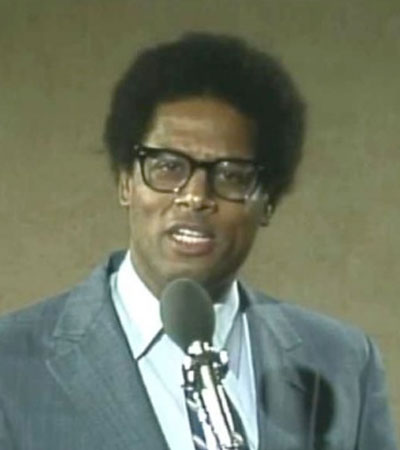





 Total Tax Burden Is Rising to Highest Level in History
 Each American’s Share of National Debt Is Growing





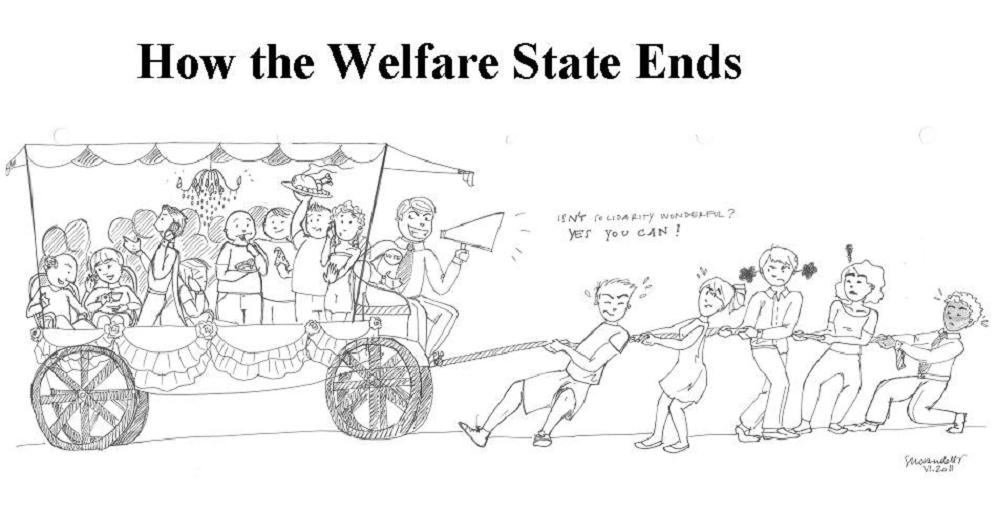



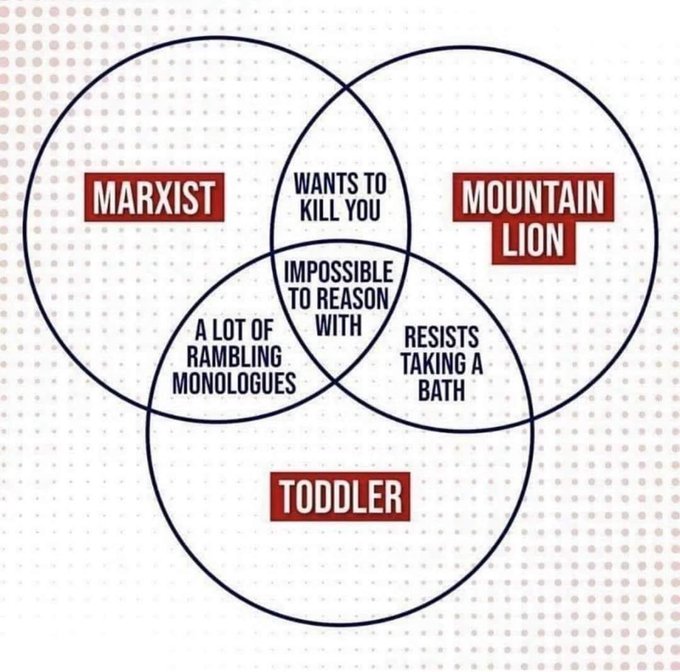


 brentwhite8 years ago


 The Daily Hatch
