On September 29th, 2012, William Lane Craig participated in the Contending with Christianity’s Critics Conference held at Watermark Community Church in Dallas, TX. In this short clip, Dr. Craig uses the technique of Eastwooding to deal with Richard Dawkins’ attempted refutations of the moral argument for God’s existence.
The statements ascribed to Richard Dawkins in this presentation are statements actually made by Prof. Dawkins. The following is a list of the sources of such statements:
Dawkins, Richard. “Afterword.” In Lawrence Krauss, A Universe from Nothing. New York: Free Press, 2012.
Citations of these statements with references may be found in:
“Richard Dawkins on Arguments for God.” In God Is Great, God Is Good, pp. 13-31. Ed. Wm. L Craig and Chad Meister. Downers Grove, Ill.: Inter-Varsity, 2009.
I have discussed many subjects with my liberal friends over at the Ark Times Blog in the past and I have taken them on now on the subject of the absurdity of life without God in the picture. Most of my responses included quotes from William Lane Craig’s book THE ABSURDITY OF LIFE WITHOUT GOD. Here is the result of one of those encounters from June of 2013:
I wrote:
Doigotta, I know you were referring to something else entirely when you wrote, “I repent.” However, that is the key to finding a lasting meaning to life. Without God there is no meaning in life.
William Lane Craig notes:
First, the area of meaning. We saw that without God, life has no meaning. Yet philosophers continue to live as though life does have meaning. For example, Sartre argued that one may create meaning for his life by freely choosing to follow a certain course of action. Sartre himself chose Marxism.
Now this is utterly inconsistent. It is inconsistent to say that life is objectively absurd and then to say that one may create meaning for his life. If life is really absurd, then man is trapped in the lower story. To try to create meaning in life represents a leap to the upper story. But Sartre has no basis for this leap. Without God, there can be no objective meaning in life. Sartre’s program is actually an exercise in self-delusion. For the universe does not really acquire meaning just because I happen to give it one. This is easy to see: for suppose I give the universe one meaning, and you give it another. Who is right? The answer, of course, is neither one. For the universe without God remains objectively meaningless, no matter how we regard it. Sartre is really saying, “Let’s pretend the universe has meaning.” And this is just fooling ourselves.
The point is this: if God does not exist, then life is objectively meaningless; but man cannot live consistently and happily knowing that life is meaningless; so in order to be happy he pretends that life has meaning. But this is, of course, entirely inconsistent—for without God, man and the universe are without any real significance.
E P I S O D E 1 0 Dr. Francis Schaeffer – Episode X – Final Choices 27 min FINAL CHOICES I. Authoritarianism the Only Humanistic Social Option One man or an elite giving authoritative arbitrary absolutes. A. Society is sole absolute in absence of other absolutes. B. But society has to be […]
E P I S O D E 9 Dr. Francis Schaeffer – Episode IX – The Age of Personal Peace and Affluence 27 min T h e Age of Personal Peace and Afflunce I. By the Early 1960s People Were Bombarded From Every Side by Modern Man’s Humanistic Thought II. Modern Form of Humanistic Thought Leads […]
E P I S O D E 8 Dr. Francis Schaeffer – Episode VIII – The Age of Fragmentation 27 min I saw this film series in 1979 and it had a major impact on me. T h e Age of FRAGMENTATION I. Art As a Vehicle Of Modern Thought A. Impressionism (Monet, Renoir, Pissarro, Sisley, […]
E P I S O D E 7 Dr. Francis Schaeffer – Episode VII – The Age of Non Reason I am thrilled to get this film series with you. I saw it first in 1979 and it had such a big impact on me. Today’s episode is where we see modern humanist man act […]
E P I S O D E 6 How Should We Then Live 6#1 Uploaded by NoMirrorHDDHrorriMoN on Oct 3, 2011 How Should We Then Live? Episode 6 of 12 ________ I am sharing with you a film series that I saw in 1979. In this film Francis Schaeffer asserted that was a shift in […]
E P I S O D E 5 How Should We Then Live? Episode 5: The Revolutionary Age I was impacted by this film series by Francis Schaeffer back in the 1970′s and I wanted to share it with you. Francis Schaeffer noted, “Reformation Did Not Bring Perfection. But gradually on basis of biblical teaching there […]
Dr. Francis Schaeffer – Episode IV – The Reformation 27 min I was impacted by this film series by Francis Schaeffer back in the 1970′s and I wanted to share it with you. Schaeffer makes three key points concerning the Reformation: “1. Erasmian Christian humanism rejected by Farel. 2. Bible gives needed answers not only as to […]
Francis Schaeffer’s “How should we then live?” Video and outline of episode 3 “The Renaissance” Francis Schaeffer: “How Should We Then Live?” (Episode 3) THE RENAISSANCE I was impacted by this film series by Francis Schaeffer back in the 1970′s and I wanted to share it with you. Schaeffer really shows why we have so […]
Francis Schaeffer: “How Should We Then Live?” (Episode 2) THE MIDDLE AGES I was impacted by this film series by Francis Schaeffer back in the 1970′s and I wanted to share it with you. Schaeffer points out that during this time period unfortunately we have the “Church’s deviation from early church’s teaching in regard […]
Francis Schaeffer: “How Should We Then Live?” (Episode 1) THE ROMAN AGE Today I am starting a series that really had a big impact on my life back in the 1970′s when I first saw it. There are ten parts and today is the first. Francis Schaeffer takes a look at Rome and why […]
Francis Schaeffer: “Whatever Happened to the Human Race” (Episode 5) TRUTH AND HISTORY Published on Oct 7, 2012 by AdamMetropolis This crucial series is narrated by the late Dr. Francis Schaeffer and former Surgeon General Dr. C. Everett Koop. Today, choices are being made that undermine human rights at their most basic level. Practices once […]
The opening song at the beginning of this episode is very insightful. Francis Schaeffer: “Whatever Happened to the Human Race” (Episode 4) THE BASIS FOR HUMAN DIGNITY Published on Oct 7, 2012 by AdamMetropolis This crucial series is narrated by the late Dr. Francis Schaeffer and former Surgeon General Dr. C. Everett Koop. Today, choices […]
Francis Schaeffer: “Whatever Happened to the Human Race” (Episode 3) DEATH BY SOMEONE’S CHOICE Published on Oct 6, 2012 by AdamMetropolis This crucial series is narrated by the late Dr. Francis Schaeffer and former Surgeon General Dr. C. Everett Koop. Today, choices are being made that undermine human rights at their most basic level. Practices […]
Francis Schaeffer: “Whatever Happened to the Human Race?” (Episode 2) SLAUGHTER OF THE INNOCENTS Published on Oct 6, 2012 by AdamMetropolis This crucial series is narrated by the late Dr. Francis Schaeffer and former Surgeon General Dr. C. Everett Koop. Today, choices are being made that undermine human rights at their most basic level. Practices […]
It is not possible to know where the pro-life evangelicals are coming from unless you look at the work of the person who inspired them the most. That person was Francis Schaeffer. I do care about economic issues but the pro-life issue is the most important to me. Several years ago Adrian Rogers (past president of […]
Ecclesiastes 2-3 Published on Sep 19, 2012 Calvary Chapel Spring Valley | Sunday Evening | September 16, 2012 | Derek Neider _____________________________ I have written on the Book of Ecclesiastes and the subject of the meaning of our lives on several occasions on this blog. In this series on Ecclesiastes I hope to show how secular […]
Ecclesiastes 1 Published on Sep 4, 2012 Calvary Chapel Spring Valley | Sunday Evening | September 2, 2012 | Pastor Derek Neider _____________________ I have written on the Book of Ecclesiastes and the subject of the meaning of our lives on several occasions on this blog. In this series on Ecclesiastes I hope to show how […]
Ecclesiastes 8-10 | Still Searching After All These Years Published on Oct 9, 2012 Calvary Chapel Spring Valley | Sunday Evening | October 7, 2012 | Pastor Derek Neider _______________________ Ecclesiastes 11-12 | Solomon Finds His Way Published on Oct 30, 2012 Calvary Chapel Spring Valley | Sunday Evening | October 28, 2012 | Pastor Derek Neider […]
Ecclesiastes 6-8 | Solomon Turns Over a New Leaf Published on Oct 2, 2012 Calvary Chapel Spring Valley | Sunday Evening | September 30, 2012 | Pastor Derek Neider _____________________ I have written on the Book of Ecclesiastes and the subject of the meaning of our lives on several occasions on this blog. In this series […]
Ecclesiastes 4-6 | Solomon’s Dissatisfaction Published on Sep 24, 2012 Calvary Chapel Spring Valley | Sunday Evening | September 23, 2012 | Pastor Derek Neider ___________________ I have written on the Book of Ecclesiastes and the subject of the meaning of our lives on several occasions on this blog. In this series on Ecclesiastes I hope […]
Overview of the Book of Ecclesiastes Overview of the Book of EcclesiastesAuthor: Solomon or an unknown sage in the royal courtPurpose: To demonstrate that life viewed merely from a realistic human perspective must result in pessimism, and to offer hope through humble obedience and faithfulness to God until the final judgment.Date: 930-586 B.C. Ecclesiastes 2-3 Published on Sep 19, […]
Ecclesiastes 1 Published on Sep 4, 2012 Calvary Chapel Spring Valley | Sunday Evening | September 2, 2012 | Pastor Derek Neider _____________________ I have written on the Book of Ecclesiastes and the subject of the meaning of our lives on several occasions on this blog. In this series on Ecclesiastes I hope to show how […]
Ecclesiastes 8-10 | Still Searching After All These Years Published on Oct 9, 2012 Calvary Chapel Spring Valley | Sunday Evening | October 7, 2012 | Pastor Derek Neider _______________________ Ecclesiastes 11-12 | Solomon Finds His Way Published on Oct 30, 2012 Calvary Chapel Spring Valley | Sunday Evening | October 28, 2012 | Pastor Derek Neider […]
Solzhenitsyn’s prophetic warning about the depersonalization of medicine.
By
MILTON FRIEDMAN
Updated March 20, 2010 12:01 a.m. ET
Editor’s note: The following is excerpted from an article with the same headline by Nobel Prize winning economist Milton Friedman that was published in the Wall Street Journal on April 17, 1996. Friedman died in 2006. A related editorial appears nearby:
In a chapter in his novel “The Cancer Ward” titled “The Old Doctor,” Alexander Solzhenitsyn compares “private medical practice” with “universal, free, public health service” through the words of an elderly physician whose practice predated 1918. . .
Mr. Solzhenitsyn himself had no personal experience on which to base his account and yet, in what I have long regarded as a striking example of creative imagination, his character presents an accurate and moving vision. The essence of that vision is the consensual relation between the patient and the physician. The patient was free to choose his physician, and the physician free to accept or reject the patient.
In Mr. Solzhenitsyn’s words, “among all these persecutions [of the old doctor] the most persistent and stringent had been directed against the fact that Doctor Oreschenkov clung stubbornly to his right to conduct a private medical practice, although this was forbidden.”
In the words of Dr. Oreschenkov in conversation with Lyudmila Afanasyevna, a longtime patient and herself a physician in the cancer ward: “In general, the family doctor is the most comforting figure in our lives. But he has been cut down and foreshortened. . . . Sometimes it’s easier to find a wife than to find a doctor nowadays who is prepared to give you as much time as you need and understands you completely, all of you.”
Lyudmila Afanasyevna: “All right, but how many of these family doctors would be needed? They just can’t be fitted into our system of universal, free, public health services.”
Dr. Oreschenkov: “Universal and public—yes, they could. Free, no.”
Lyudmila Afanasyevna: “But the fact that it is free is our greatest achievement.”
Dr. Oreschenkov: “Is it such a great achievement? What do you mean by ‘free’? The doctors don’t work without pay. It’s just that the patient doesn’t pay them, they’re paid out of the public budget. The public budget comes from these same patients. Treatment isn’t free, it’s just depersonalized. If the cost of it were left with the patient, he’d turn the ten rubles over and over in his hands. But when he really needed help he’d come to the doctor five times over. . . .
“Is it better the way it is now? You’d pay anything for careful and sympathetic attention from the doctor, but everywhere there’s a schedule, a quota the doctors have to meet; next! . . . And what do patients come for? For a certificate to be absent from work, for sick leave, for certification for invalids’ pensions: and the doctor’s job is to catch the frauds. Doctor and patient as enemies—is that medicine?”
“Depersonalized,” “doctor and patient as enemies”—those are the key phrases in the growing body of complaints about health maintenance organizations and other forms of managed care. In many managed care situations, the patient no longer regards the physician who serves him as “his” or “her” physician responsible primarily to the patient; and the physician no longer regards himself as primarily responsible to the patient. His first responsibility is to the managed care entity that hires him. He is not engaged in the kind of private medical practice that Dr. Oreschenkov valued so highly.
For the first 30 years of my life, until World War II, that kind of practice was the norm. Individuals were responsible for their own medical care. They could pay for it out-of-pocket or they could buy insurance. “Sliding scale” fees plus professional ethics assured that the poor got care. On entry to a hospital, the first question was “What’s wrong?” not “What is your insurance?” It may be that some firms provided health care as a benefit to their workers, but if so it was the exception not the rule.
The first major change in those arrangements was a byproduct of wage and price controls during World War II. Employers, pressed to find more workers under wartime boom conditions but forbidden to offer higher money wages, started adding benefits in kind to the money wage. Employer-provided medical care proved particularly popular. As something new, it was not covered by existing tax regulations, so employers treated it as exempt from withholding tax.
It took a few years before the Internal Revenue Service got around to issuing regulations requiring the cost of employer-provided medical care to be included in taxable wages. That aroused a howl of protest from employees who had come to take tax exemption for granted, and Congress responded by exempting employer- provided medical care from both the personal and the corporate income tax.
Because private expenditures on health care are not exempt from income tax, almost all employees now receive health care coverage from their employers, leading to problems of portability, third party payment and rising costs that have become increasingly serious. Of course, the cost of medical care comes out of wages, but out of before-tax rather than after-tax wages, so that the employee receives what he or she regards as a higher real wage for the same cost to the employer.
A second major change was the enactment of Medicare and Medicaid in 1965. These added another large slice of the population to those for whom medical care, though not completely “free,” thanks to deductibles and co-payments, was mostly paid by a third party, providing little incentive to economize on medical care. The resulting dramatic rise in expenditures on medical care led to the imposition of controls on both patients and suppliers of medical care in a futile attempt to hold down costs, further undermining the kind of private practice that Dr. Oreschenkov “cherished most in his work.”
The best way to restore freedom of choice to both patient and physician and to control costs would be to eliminate the tax exemption of employer-provided medical care. However, that is clearly not feasible politically. The best alternative available is to extend the tax exemption to all expenditures on medical care, whether made by the patient directly or by employers, to establish a level playing field, in terms of the currently popular cliche.
Many individuals would then find it attractive to negotiate with their employer for a higher cash wage in place of employer-financed medical care. With part or all of the higher cash wage, they could purchase an insurance policy with a very high deductible, i.e., a policy for medical catastrophes, which would be decidedly cheaper than the low-deductible policy their employer had been providing to them, and deposit all or part of the difference in a special “medical savings account” that could be drawn on only for medical purposes. Any amounts unused in a particular year could be allowed to accumulate without being subject to tax, or could be withdrawn with a tax penalty or for special purposes, as with current Individual Retirement Accounts—in effect, a medical IRA. Many employers would find it attractive to offer such an arrangement to their employees as an option. . . .
Milton Friedman – Health Care Reform (1992) pt 3/4
Milton Friedman – Health Care Reform (1992) pt 4/4
I have written about Obamacare over and over again on this blog. Dan Mitchell has shared many funny cartoons about Obamacare too. Milton Friedman has spoken out about government healthcare many times in the past and his film series FREE TO CHOOSE is on You Tube and I encourage you to watch it. It is clear that the federal government debt is growing so much that it is endangering us because if things keep going like they are now we will not have any money left for the national defense because we are so far in debt as a nation.
__________ Enzi statement on the Supreme Court’s King Vs. Burwell decision 5 Takeaways From Today’s Supreme Court Ruling on Obamacare Wicker Comments on King v Burwell Supreme Court Decision Senator Lankford Discusses the King v. Burwell Supreme Court Decision Congressman Steve King Response to SCOTUS King v. Burwell Ruling Obamacare and the Odious Anti-Constitutionalism of […]
Open letter to President Obama (Part 718) (Emailed to White House on 6-25-13.) President Obama c/o The White House 1600 Pennsylvania Avenue NW Washington, DC 20500 Dear Mr. President, I know that you receive 20,000 letters a day and that you actually read 10 of them every day. I really do respect you for trying to get […]
______ Milton Friedman’s Free to Choose (1980), episode 3 – Anatomy of a Crisis. part 1 The Region – Banking and Policy Issues Magazine – Interview with Milton Friedman June 1992 In his new book, Money Mischief, economist Milton Friedman compares inflation to alcoholism; blames the rise of Chinese communism, in large part, on an […]
______ Milton Friedman – A Conversation On Minimum Wage Milton Friedman Interview Milton Friedman is Professor Emeritus of Economics at the University of Chicago and Senior Fellow at the Hoover Institution.Dr. Friedman received the 1976 Nobel Memorial Prize for Economic Science. Member of the research staff of the National Bureau of Economic Research from 1937 […]
________ Milton Friedman on Donahue – 1979 Uploaded on Aug 26, 2009 Dr. Milton Friedman, Nobel Laureate, promoting “Free to Choose” on the show Donahue. Walter E. Williams: Milton Friedman was an economist’s economist Print Font [+] [-] Leave a comment » By Walter E. Williams Published: Wednesday, Dec. 6 2006 12:00 a.m. MST Walter […]
_______ José Niño José Niño is a graduate student based in Santiago, Chile. A citizen of the world, he has lived in Venezuela, Colombia, and the United States. He is currently an international research analyst with the Acton Circle of Chile. Follow@JoseAlNino. 40 Years Later: Milton Friedman’s Legacy in Chile “Chilean Miracle” Struck a Blow […]
____ Milton Friedman – The Negative Income Tax The Conservative Case for a Guaranteed Basic Income NOAH GORDON AUG 6, 2014 Creating a wage floor is an effective way to fight poverty—and it would reduce government spending and intrusion. Swiss backers of a minimum income spread out coins in Bern. Denis Balibouse/Reuters Last week, my […]
________________ Which Fed Bill Would Milton Friedman Have Liked? Posted on March 10, 2015by John Taylor Writing last week on the Cato at Liberty blog, Steve Hanke argued that Milton Friedman would have supported the “Audit the Fed” bill recently introduced in the Senate. Steve’s reasoning is based on Friedman’s 1962 essay “Should there be an […]
A great speech below: Here are the myths:Robber Baron Myth, The Cause of Great Depression Myth, The Demand for Government Service Myth, The Free Lunch Smith, and The Robin Hood Myth. 1) the Robber Baron Myth, 2) the Great Depression Myth, 3) the Demand for Government Service Myth, 4) the Free Lunch Myth, and 5) […]
_______________ FEATURED ARTICLE | SEPTEMBER 4, 2006 An Interview with Milton Friedman Milton Friedman* I recently sat down with Milton Friedman, a few days before his 94th birthday, to discuss the impact of two of his most important contributions to economics and liberty: A Monetary History of the United States, 1870-1960 [co-written] with Anna Schwartz, […]
Milton Friedman on Self-Interest and the Profit Motive 1of2 Milton Friedman on Self-Interest and the Profit Motive 2of2 The Social Responsibility of Business is to Increase its Profits by Milton FriedmanThe New York Times Magazine, September 13, 1970. Copyright @ 1970 by The New York Times Company. When I hear businessmen speak eloquently about the […]
____________ Levin on Milton Friedman: ‘One Thing to Have Free Immigration to Jobs, Another for Welfare’ By Michael Morris | January 16, 2015 | 5:12 PM EST During his show on January 15, 2015, Nationally syndicated radio host Mark Levin recalled the famed economist Milton Friedman and explored an important reason why open immigration, despite […]
I don’t agree with this review but I am putting it out there for you to make up your own opinions on. I do like the new album but over time I will rate it against the other albums.
There’s a lot to say about Coldplay’s new album. The guest list alone—Beyoncé, Stargate, Gwyneth Paltrow, Noel Gallagher, Khatia Buniatishvili, Barack Obama—is material for fan-fiction about dinner parties. The songs are about Chris Martin moving on from the spectacularly public “conscious uncoupling” between him and Paltrow with a sense of enlightened glee. Included are the sound of the famously soft-rock band playing disco and some “Bitch Better Have My Money”-style beats. The album was released a day after the announcement that the band would play the Super Bowl halftime show, and in a surprising move with industry-wide implications, it was put on Apple’s streaming music service a week before it hits Spotify. It’s supposedly Coldplay’s last album.
Fun talking points. Much more fun than the music itself.A Head Full of Dreams presents itself as shiny and hyperactive, adventuresome and openhearted, radically optimistic. What it really is, though, is a seminar in the many-splendored ways that music can be boring.
A common reaction here would be to say “it’s Coldplay, of course it’s boring.” The truth is that the best Coldplay is quite the opposite, and it’s worth thinking a bit about the different ways of defining musical boredom. One of those ways is through genre. Coldplay began their career playing rock that sounds like Oasis, which is to say it sounds like a zillion guitar bands before and since. Chris Martin has the kind of voice that reminds one of visiting CVS for Sudafed, and it’s usually delivering inspirational slogans so clumsy that even Upworthy wouldn’t bother with them. The band’s added more diverse sounds over the years—laser-show synthesizers, pompous classical touches—but its essential nature precludes the possibility of edge or aggression. It is soft, always. For people who favor noisier rock or electronica or rap or any sort of music in which challenging the listener matters, this is boring.
But as pure songcraft, Coldplay’s most popular material can be, and probably is, taught in musicology courses about inducing excitement through sound. Go back to “Clocks.” Its steady beat, insistent piano riff, and pleasingly repetitious vocal line jacket the listener snuggly, securing them within the song as surely as the lap bar does on a roller coaster. And then the rollercoaster takes you places. You’re pitched up for the chorus and pitched back down for the verse; sonic density also peaks—hear those strings in the glorious “nothing else compares” part?—and then dissipates. The highs feel very high, but there’s never any sense of careening away, never a possibility of disorientation. To extend the amusement-ride comparison, think Disneyland attractions: enough action to raise everyone’s pulse a bit, but not enough to truly frighten the kids or grandparents.
It basically works this way in all successful Coldplay songs. They strap you in and then scoot you along; uplift is both an emotional idea Martin’s lyrics obsess over and a metaphorical concept to describe what the choruses do. As for the melodies, I liked what my colleague Derek Thompson wrote in 2011 about “Every Teardrop Is a Waterfall”: “They draw clear lines. They take a shape. They pose a question, and they give a satisfying answer. They open the chord and resolve the fleeting dissonance, and it’s all done deftly enough that the hook comes into focus just as it’s ending.”
Okay. So the band creates excitement via a formula, and formulas are, by another definition of the term, boring. Even Coldplay seems to be a little bored, seven albums into their career. On A Head Full of Dreams you can hear the band trying out some other formula, or focusing on certain parts of the old recipe to the exclusion of others. But something’s not working. It’s not physiologically exciting anymore. You can admire many of the creative choices, but you quickly forget what you just listened to. Which might be the truest form of boring.
The opening title song fades in with distantly chiming bells, a synthetic dance pulse, a drum set shuffling complicatedly, and a guitar repeatedly drawing a high, short melody. It’s a cool, unusual arrangement. A lot of this stuff drops out for a bit before the two-minute mark, and you retroactively realized you just experienced the chorus, when Martin sang the title of the song twice to the tune of that guitar line you’d heard earlier. The second verse doesn’t end in a chorus, but rather launches into an Arcade Fire-style “ohh-ohhhh” refrain.
This experimentation with structure is, theoretically, worth applauding. But when artists screw with pop templates, it’s often to communicate something unconventional, to get a different emotional perspective, or to draw the listener along in some new way. Martin, though, is as banal and treacly as ever. As the title indicates, he’s telling-not-showing about how great it is to dream about the future. Most importantly, the song tires the ear. Pop songwriters talk about the “victim-to-victory” trope, where a downtrodden verse gives way to a transcendent chorus. Coldplay’s been great at that. But this song is all victory, all the time: essentially two plateaus with a valley in the middle. The main theme is catchy, but it’s hard to remember where it is in the song.
Because of that hook, “A Head Full of Dreams” is actually one of the better things on the album. Another semi-success is “Adventure of a Lifetime,” the Studio 54-indebted single whose cleverly interlocking elements make the song feel sturdy even as it denies a full singalong payoff. I have mixed feeling about the track with Beyoncé, “Hymn for the Weekend,” a transparent attempt at adding some spiritualistic pretense to YOLO-type pop songs. “Feeling drunk and high / so high / so high” is the ever-climbing chorus, and—despite its ridiculousness—it’s a good one. But the instrumentation, which sounds like a klezmer band attempting EDM, just plods. The effect is akin to being drowned in confetti.
Not all of the songs are departures, but even the most Coldplay-y ones are unusually inert. “Amazing Day” is like “Earth Angel” without any sense of space or scale; even for many people who’ve acquired a tolerance for Martin’s goopy delivery, the song will be too thick with sentiment to sit through more than once. The piano ballad “Everglow” has a lovely melody, but, again, the chorus doesn’t deliver the contrasting whoosh that you come to Coldplay for. What the band’s essentially delivered is an album about being high all the time, which might explain why it has almost no distinguishable heights.
Amazing Day – Coldplay (Live in Global Citizen 2015 – Only Audio + Lyrics in Descrip.)
“Amazing Day”
Sat on a roof
Named every star
Shed every bruise and
Showed every scarSat on a roof
Your hand in mine, singing
“Life has a beautiful, crazy design”
And time seemed to say
“Forget the world and it’s weight”
Here I just wanna stay
Amazing day [x2]
Sat on a roof
Named every star and
You showed me a place
Where you can be who you are
And the view
The whole Milky Way
In your eyes
I’m drifting away
And in your arms
I just wanna sway
Amazing day [x4]
And I asked every book
Poetry, chime
“Can there be breaks
In the chaos of times?”
Oh, thanks God
You must’ve heard when I prayed
Because now I always
Want to feel this way
Amazing day [x4]
Coldplay – Amazing Day (new song) (lyric) testo + traduzione (lyrics)
_________ Coldplay – Midnight At the bottom of this post are links to other articles about the spiritual implications of some Coldplay songs. Midnight (Coldplay song) From Wikipedia, the free encyclopedia “Midnight” Song by Coldplay Recorded 2013 at The Bakery and The Beehive (London, England) Genre Ambient, experimental rock,electronic[1] Label Parlophone, Atlantic Writer Guy Berryman, Jonny Buckland, Will Champion, Jon Hopkins, Chris Martin Producer […]
These are some of the most popular posts in the last 30 days about the spiritual quest of Chris Martin of Coldplay that can be found on http://www.thedailyhatch.org: Chris Martin of Coldplay unknowingly lives out his childhood Christian beliefs (Part 3 of notes from June 23, 2012 Dallas Coldplay Concert, Martin left Christianity because of […]
_________________________ (If you want to check out other posts I have done about about Steve Jobs:Some say Steve Jobs was an atheist , Steve Jobs and Adoption , What is the eternal impact of Steve Jobs’ life? ,Steve Jobs versus President Obama: Who created more jobs? ,Steve Jobs’ view of death and what the Bible has to say about it ,8 things you might not know about […]
Coldplay Live 2003 Backstage Chris Martin revealed in his interview with Howard Stern that he was rasied an evangelical Christian but he has left the church. I believe that many words that he puts in his songs today are generated from the deep seated Christian beliefs from his childhood that find their way out in […]
I wrote this article a couple of years ago. Are Gwyneth Paltrow and Chris Martin looking for Spiritual Answers? Just like King Solomon’s predicament in the Book of Ecclesiastes, both of these individuals are very wealthy, famous, and successful, but they still are seeking satisfying answers to life’s greatest questions even though it seems […]
Coldplay seeks to corner the market on earnest and expressive rock music that currently appeals to wide audiences Here is an article I wrote a couple of years ago about Chris Martin’s view of hell. He says he does not believe in it but for some reason he writes a song that teaches that it […]
Views:2 By waymedia Coldplay Coldplay – Life In Technicolor ii Back in 2008 I wrote a paper on the spiritual themes of Coldplay’s album Viva La Vida and I predicted this spiritual search would continue in the future. Below is the second part of the paper, “Coldplay’s latest musical lyrics indicate a Spiritual Search for the […]
Nobel Laureate Economist Milton Friedman explores the unsettling dynamics set into motion when government imposes itself into the health care system. (1978)
The genius of Milton Friedman is that his economic insights are as powerful as they are timeless. Despite the fact that these comments were made more than thirty years ago in 1978 at the Mayo Clinic, they ring as true today as they did then. Milton Friedman’s six-part video series below on the economics of medical care is especially timely, in light of the fact that the Supreme Court ruled in favor of Obamacare this week and Milton Friedman predicted in this lecture that increased government involvement in health care would lead inevitably to completely socialized medicine. This Mayo Clinic lecture is also a testament to Milton Friedman’s effectiveness at delivering the message of individual liberty and limited government in a convincing and non-threatening way, as Milton explains diplomatically to an audience of physicians how the “power of organized medicine” led to significant restrictions on entry to their profession through the American Medical Association’s control over occupational licensing for physicians, which has contributed to the rising costs of medical care.
Milton Friedman: “I’m going to talk today about the economics of medical care. This in an area, in which we all know there has been a trend toward ever-greater government involvement. One step in this area inevitably leads to another. We have had an expansion of government involvement in the spending of money – Medicare, Medicaid funds, expenditures by the Department of Health, Education and Welfare for other medical purposes have been growing by leaps and bounds. They have gone from a very tiny portion of the total national expenditures on medical care to a substantial portion. If this trend continues, it inevitably leads to completely socialized medicine. I believe that this trend is very much against the interest of patients, physicians, and other health care personnel. And in the brief time I have to today, I want to explain why I believe the trend is so much against their interest, why it has occurred, and what, if anything can be done about it.”
I have written about Obamacare over and over again on this blog. Dan Mitchell has shared many funny cartoons about Obamacare too. Milton Friedman has spoken out about government healthcare many times in the past and his film series FREE TO CHOOSE is on You Tube and I encourage you to watch it. It is clear that the federal government debt is growing so much that it is endangering us because if things keep going like they are now we will not have any money left for the national defense because we are so far in debt as a nation.
__________ Enzi statement on the Supreme Court’s King Vs. Burwell decision 5 Takeaways From Today’s Supreme Court Ruling on Obamacare Wicker Comments on King v Burwell Supreme Court Decision Senator Lankford Discusses the King v. Burwell Supreme Court Decision Congressman Steve King Response to SCOTUS King v. Burwell Ruling Obamacare and the Odious Anti-Constitutionalism of […]
Open letter to President Obama (Part 718) (Emailed to White House on 6-25-13.) President Obama c/o The White House 1600 Pennsylvania Avenue NW Washington, DC 20500 Dear Mr. President, I know that you receive 20,000 letters a day and that you actually read 10 of them every day. I really do respect you for trying to get […]
______ Milton Friedman’s Free to Choose (1980), episode 3 – Anatomy of a Crisis. part 1 The Region – Banking and Policy Issues Magazine – Interview with Milton Friedman June 1992 In his new book, Money Mischief, economist Milton Friedman compares inflation to alcoholism; blames the rise of Chinese communism, in large part, on an […]
______ Milton Friedman – A Conversation On Minimum Wage Milton Friedman Interview Milton Friedman is Professor Emeritus of Economics at the University of Chicago and Senior Fellow at the Hoover Institution.Dr. Friedman received the 1976 Nobel Memorial Prize for Economic Science. Member of the research staff of the National Bureau of Economic Research from 1937 […]
________ Milton Friedman on Donahue – 1979 Uploaded on Aug 26, 2009 Dr. Milton Friedman, Nobel Laureate, promoting “Free to Choose” on the show Donahue. Walter E. Williams: Milton Friedman was an economist’s economist Print Font [+] [-] Leave a comment » By Walter E. Williams Published: Wednesday, Dec. 6 2006 12:00 a.m. MST Walter […]
_______ José Niño José Niño is a graduate student based in Santiago, Chile. A citizen of the world, he has lived in Venezuela, Colombia, and the United States. He is currently an international research analyst with the Acton Circle of Chile. Follow@JoseAlNino. 40 Years Later: Milton Friedman’s Legacy in Chile “Chilean Miracle” Struck a Blow […]
____ Milton Friedman – The Negative Income Tax The Conservative Case for a Guaranteed Basic Income NOAH GORDON AUG 6, 2014 Creating a wage floor is an effective way to fight poverty—and it would reduce government spending and intrusion. Swiss backers of a minimum income spread out coins in Bern. Denis Balibouse/Reuters Last week, my […]
________________ Which Fed Bill Would Milton Friedman Have Liked? Posted on March 10, 2015by John Taylor Writing last week on the Cato at Liberty blog, Steve Hanke argued that Milton Friedman would have supported the “Audit the Fed” bill recently introduced in the Senate. Steve’s reasoning is based on Friedman’s 1962 essay “Should there be an […]
A great speech below: Here are the myths:Robber Baron Myth, The Cause of Great Depression Myth, The Demand for Government Service Myth, The Free Lunch Smith, and The Robin Hood Myth. 1) the Robber Baron Myth, 2) the Great Depression Myth, 3) the Demand for Government Service Myth, 4) the Free Lunch Myth, and 5) […]
_______________ FEATURED ARTICLE | SEPTEMBER 4, 2006 An Interview with Milton Friedman Milton Friedman* I recently sat down with Milton Friedman, a few days before his 94th birthday, to discuss the impact of two of his most important contributions to economics and liberty: A Monetary History of the United States, 1870-1960 [co-written] with Anna Schwartz, […]
Milton Friedman on Self-Interest and the Profit Motive 1of2 Milton Friedman on Self-Interest and the Profit Motive 2of2 The Social Responsibility of Business is to Increase its Profits by Milton FriedmanThe New York Times Magazine, September 13, 1970. Copyright @ 1970 by The New York Times Company. When I hear businessmen speak eloquently about the […]
____________ Levin on Milton Friedman: ‘One Thing to Have Free Immigration to Jobs, Another for Welfare’ By Michael Morris | January 16, 2015 | 5:12 PM EST During his show on January 15, 2015, Nationally syndicated radio host Mark Levin recalled the famed economist Milton Friedman and explored an important reason why open immigration, despite […]
I have written about Obamacare over and over again on this blog. Dan Mitchell has shared many funny cartoons about Obamacare too. Milton Friedman has spoken out about government healthcare many times in the past and his film series FREE TO CHOOSE is on You Tube and I encourage you to watch it. It is clear that the federal government debt is growing so much that it is endangering us because if things keep going like they are now we will not have any money left for the national defense because we are so far in debt as a nation.
Is the individual mandate at the heart of “ObamaCare” a conservative idea? Is it constitutional? And was it invented at The Heritage Foundation? In a word, no.
The U.S. Supreme Court will put the middle issue to rest. The answers to the first and last can come from me. After all, I headed Heritage’s health work for 30 years. And make no mistake: Heritage and I actively oppose the individual mandate, including in an amicus brief filed in the 11th Circuit Court of Appeals to the Supreme Court.
Nevertheless, the myth persists. ObamaCare “adopts the ‘individual mandate’ concept from the conservative Heritage Foundation,” Jonathan Alter wrote recently inThe Washington Post. MSNBC’s Chris Matthews makes the same claim, asserting that Republican support of a mandate “has its roots in a proposal by the conservative Heritage Foundation.” Former House speaker Nancy Pelosi and others have made similar claims.
The confusion arises from the fact that 20 years ago, I held the view that as a technical matter, some form of requirement to purchase insurance was needed in a near-universal insurance market to avoid massive instability through “adverse selection” (insurers avoiding bad risks and healthy people declining coverage). At that time, President Clinton was proposing a universal health care plan, and Heritage and I devised a viable alternative.
My view was shared at the time by many conservative experts, including American Enterprise Institute (AEI) scholars, as well as most non-conservative analysts. Even libertarian-conservative icon Milton Friedman, in a 1991 Wall Street Journal article, advocated replacing Medicare and Medicaid “with a requirement that everyU.S. family unit have a major medical insurance policy.”
My idea was hardly new. Heritage did not invent the individual mandate.
But the version of the health insurance mandate Heritage and I supported in the 1990s had three critical features. First, it was not primarily intended to push people to obtain protection for their own good, but to protect others. Like auto damage liability insurance required in most states, our requirement focused on “catastrophic” costs — so hospitals and taxpayers would not have to foot the bill for the expensive illness or accident of someone who did not buy insurance.
Second, we sought to induce people to buy coverage primarily through the carrot of a generous health credit or voucher, financed in part by a fundamental reform of the tax treatment of health coverage, rather than by a stick.
And third, in the legislation we helped craft that ultimately became a preferred alternative to ClintonCare, the “mandate” was actually the loss of certain tax breaks for those not choosing to buy coverage, not a legal requirement.
So why the change in this position in the past 20 years?
First, health research and advances in economic analysis have convinced people like me that an insurance mandate isn’t needed to achieve stable, near-universal coverage. For example, the new field of behavioral economics taught me that default auto-enrollment in employer or nonemployer insurance plans can lead many people to buy coverage without a requirement.
Also, advances in “risk adjustment” tools are improving the stability of voluntary insurance. And Heritage-funded research on federal employees’ coverage — which has no mandate — caused me to conclude we had made a mistake in the 1990s. That’s why we believe that President Obama and others are dead wrong about the need for a mandate.
Additionally, the meaning of the individual mandate we are said to have “invented” has changed over time. Today it means the government makes people buy comprehensive benefits for their own good, rather than our original emphasis on protecting society from the heavy medical costs of free riders.
Moreover, I agree with my legal colleagues at Heritage that today’s version of a mandate exceeds the constitutional powers granted to the federal government. Forcing those Americans not in the insurance market to purchase comprehensive insurance for themselves goes beyond even the most expansive precedents of the courts.
And there’s another thing. Changing one’s mind about the best policy to pursue — but not one’s principles — is part of being a researcher at a major think tank such as Heritage or the Brookings Institution. Serious professional analysts actually take part in a continuous bipartisan and collegial discussion about major policy questions. We read each other’s research. We look at the facts. We talk through ideas with those who agree or disagree with us. And we change our policy views over time based on new facts, new research or good counterarguments.
Thanks to this good process, I’ve altered my views on many things. The individual mandate in health care is one of them.
Stuart Butler, Ph.D., is a distinguished fellow at the Heritage Foundation (www.heritage.org), where he is the director of the Center for Policy Innovation.
Milton Friedman – Health Care Reform (1992) pt 3/4
Milton Friedman – Health Care Reform (1992) pt 4/4
__________ Enzi statement on the Supreme Court’s King Vs. Burwell decision 5 Takeaways From Today’s Supreme Court Ruling on Obamacare Wicker Comments on King v Burwell Supreme Court Decision Senator Lankford Discusses the King v. Burwell Supreme Court Decision Congressman Steve King Response to SCOTUS King v. Burwell Ruling Obamacare and the Odious Anti-Constitutionalism of […]
Open letter to President Obama (Part 718) (Emailed to White House on 6-25-13.) President Obama c/o The White House 1600 Pennsylvania Avenue NW Washington, DC 20500 Dear Mr. President, I know that you receive 20,000 letters a day and that you actually read 10 of them every day. I really do respect you for trying to get […]
______ Milton Friedman’s Free to Choose (1980), episode 3 – Anatomy of a Crisis. part 1 The Region – Banking and Policy Issues Magazine – Interview with Milton Friedman June 1992 In his new book, Money Mischief, economist Milton Friedman compares inflation to alcoholism; blames the rise of Chinese communism, in large part, on an […]
______ Milton Friedman – A Conversation On Minimum Wage Milton Friedman Interview Milton Friedman is Professor Emeritus of Economics at the University of Chicago and Senior Fellow at the Hoover Institution.Dr. Friedman received the 1976 Nobel Memorial Prize for Economic Science. Member of the research staff of the National Bureau of Economic Research from 1937 […]
________ Milton Friedman on Donahue – 1979 Uploaded on Aug 26, 2009 Dr. Milton Friedman, Nobel Laureate, promoting “Free to Choose” on the show Donahue. Walter E. Williams: Milton Friedman was an economist’s economist Print Font [+] [-] Leave a comment » By Walter E. Williams Published: Wednesday, Dec. 6 2006 12:00 a.m. MST Walter […]
_______ José Niño José Niño is a graduate student based in Santiago, Chile. A citizen of the world, he has lived in Venezuela, Colombia, and the United States. He is currently an international research analyst with the Acton Circle of Chile. Follow@JoseAlNino. 40 Years Later: Milton Friedman’s Legacy in Chile “Chilean Miracle” Struck a Blow […]
____ Milton Friedman – The Negative Income Tax The Conservative Case for a Guaranteed Basic Income NOAH GORDON AUG 6, 2014 Creating a wage floor is an effective way to fight poverty—and it would reduce government spending and intrusion. Swiss backers of a minimum income spread out coins in Bern. Denis Balibouse/Reuters Last week, my […]
________________ Which Fed Bill Would Milton Friedman Have Liked? Posted on March 10, 2015by John Taylor Writing last week on the Cato at Liberty blog, Steve Hanke argued that Milton Friedman would have supported the “Audit the Fed” bill recently introduced in the Senate. Steve’s reasoning is based on Friedman’s 1962 essay “Should there be an […]
A great speech below: Here are the myths:Robber Baron Myth, The Cause of Great Depression Myth, The Demand for Government Service Myth, The Free Lunch Smith, and The Robin Hood Myth. 1) the Robber Baron Myth, 2) the Great Depression Myth, 3) the Demand for Government Service Myth, 4) the Free Lunch Myth, and 5) […]
_______________ FEATURED ARTICLE | SEPTEMBER 4, 2006 An Interview with Milton Friedman Milton Friedman* I recently sat down with Milton Friedman, a few days before his 94th birthday, to discuss the impact of two of his most important contributions to economics and liberty: A Monetary History of the United States, 1870-1960 [co-written] with Anna Schwartz, […]
Milton Friedman on Self-Interest and the Profit Motive 1of2 Milton Friedman on Self-Interest and the Profit Motive 2of2 The Social Responsibility of Business is to Increase its Profits by Milton FriedmanThe New York Times Magazine, September 13, 1970. Copyright @ 1970 by The New York Times Company. When I hear businessmen speak eloquently about the […]
____________ Levin on Milton Friedman: ‘One Thing to Have Free Immigration to Jobs, Another for Welfare’ By Michael Morris | January 16, 2015 | 5:12 PM EST During his show on January 15, 2015, Nationally syndicated radio host Mark Levin recalled the famed economist Milton Friedman and explored an important reason why open immigration, despite […]
I truly believe that many of the problems we have today in the USA are due to the advancement of humanism in the last few decades in our society. Ronald Reagan appointed the evangelical Dr. C. Everett Koop to the position of Surgeon General in his administration. He partnered with Dr. Francis Schaeffer in making the video below. It is very valuable information for Christians to have. Actually I have included a video below that includes comments from him on this subject.
Francis Schaeffer “BASIS FOR HUMAN DIGNITY” Whatever…HTTHR
Dr. Francis Schaeffer: Whatever Happened to the Human Race Episode 1 ABORTION
Dr. Francis schaeffer – The flow of Materialism(from Part 4 of Whatever happened to human race?)
Dr. Francis Schaeffer – The Biblical flow of Truth & History (intro)
Francis Schaeffer – The Biblical Flow of History & Truth (1)
Dr. Francis Schaeffer – The Biblical Flow of Truth & History (part 2)
Olphart asserted, “You, obviously, have an intense hatred for Obama, comparing him to slave traders and murderers.”
I personally have good relationships with some of the most liberal people in the USA. We enjoy each others’ company and have always respected each other. I don’t know of anyone that I hate. I would like to sit down and have a meal with you Olphart. You have always struck me as a very learned person and have made some of the best points I have read for the liberal view.
Now do I disagree with President Obama? Yes, and I disagreed with President Clinton when he came out in favor of partial birth abortion. I deeply respect Clinton for being wise enough to realize that in order to get things accomplished the last 6 years he had to meant Newt halfway. President Obama does not share that same view.
Let’s see if Obama can be linked to Dr. Gosnell’s views in any way.
Murray Vasser noted:
Now it is true that what Gosnell did was technically illegal in America. Despite the efforts of Barack Obama and Planned Parenthood, abortion doctors are not supposed to kill babies outside of their mothers. However, there is absolutely nothing illegal or unusual about decapitating babies or cutting off their hands and feet. Furthermore, while the nurses and doctors cannot usually hear them screaming, there is nothing unusual about babies writhing and struggling during these procedures.
My name is Claire Culwell, and I am an abortion survivor…
__________
“Everyone needs to hear Claire’s story! Often times at pro-life events or banquets we can forget who is at stake in abortion. Claire’s passion reminds the audience that every life lost due to abortion cannot be taken back but every life saved from abortion is a profound witness of God’s hope and love for every human life. Having seen her speak multiple times, I know that Claire’s story captures an audience at a pregnancy center event like no other story because she is living proof of what we stand for, life!”–Shawn Carney, Co-founder 40 Days for Life, Host ofBeing Humanon EWTN
I found out I was affected by abortion about 3 years ago. This changed my life. I had walked into theCoalition For Lifewondering what their organization provided and 5 months later I met my birth mother who told me my life is a miracle.
My birth mother was 13 years old at the time she became pregnant with me. Her mother took her straight to an abortion clinic where she had a surgical abortion. After thinking she had “fixed the problem,” a few weeks later she realized her belly was still growing. Her mother took her back to the abortion clinic where she learned that she had been pregnant with twins…One was aborted; One survived.
My life is a miracle and I would be selfish to keep this GIFT of life to myself. I want to tell everyone what a gift I and even they have been given!! I want to encourage them to seek alternatives to abortion because I would never want any woman/man to go through the grief and the pain that my birth mother went through simply because she didn’t know she had any other option. I also want to be a vessel to offer God’s forgiveness to the men and women who have previously had abortions. I know healing is possible and I have been given the gift of surviving an abortion so that I can tell these men and women that they are forgiven…coming from an aborted child, I hope they know the power of forgiveness and healing through meeting me. My involvement in Coalition For Life transformed me, taught me how to stand up for life on the front lines, and how to share my story in a meaningful way. I have the staff at Coalition For Life to thank for encouraging me to get involved and to share my story not only on the sidewalk but in public (my biggest fear) because God is glorified when I publically proclaim that“I am here not because of anything I did, but ONLY because of God’s mercy and love for me.”
My life is a testimony that there are wonderful alternatives to abortion (such as adoption in my case) and an accident/unwanted child still deserves life…even a child with disabilities. I was born 2 1/2 months early, weighed 3 lbs 2 oz, had dislocated hips and club feet. I had to wear casts on my feet, a harness and eventually a body cast. The abortion still affects me today. All that to say,LIFE IS STILL WORTH IT.If my life can touch just one person who has had an abortion or considering an abortion or adoption, then I am fulfilling my purpose in the pro-life movement.
I will not be silent because each mother and child are in the same place my biological mother, my twin and I were in 22 years ago and I am here to sayTHERE IS HOPEandthere are options!
Traveling and sharing my story was not something that I had planned for myself, but God proved to have better plans for me than I had for myself.Sharing my story is as much of a gift to MYSELF as it is to others.
Many in the world today are taking a long look at the abortion industry because of the May 14, 2013 guilty verdict and life term penalty handed down by a jury (which included 9 out of 12 pro-choice jurors) to Dr. Kermit Gosnell. During this time of reflection I wanted to put forth some of the […]
Many in the world today are taking a long look at the abortion industry because of the May 14, 2013 guilty verdict and life term penalty handed down by a jury (which included 9 out of 12 pro-choice jurors) to Dr. Kermit Gosnell. During this time of reflection I wanted to put forth some of the […]
Many in the world today are taking a long look at the abortion industry because of the May 14, 2013 guilty verdict and life term penalty handed down by a jury (which included 9 out of 12 pro-choice jurors) to Dr. Kermit Gosnell. During this time of reflection I wanted to put forth some of the […]
Many in the world today are taking a long look at the abortion industry because of the May 14, 2013 guilty verdict and life term penalty handed down by a jury (which included 9 out of 12 pro-choice jurors) to Dr. Kermit Gosnell. During this time of reflection I wanted to put forth some of the […]
Many in the world today are taking a long look at the abortion industry because of the May 14, 2013 guilty verdict and life term penalty handed down by a jury (which included 9 out of 12 pro-choice jurors) to Dr. Kermit Gosnell. During this time of reflection I wanted to put forth some of the […]
Many in the world today are taking a long look at the abortion industry because of the May 14, 2013 guilty verdict and life term penalty handed down by a jury (which included 9 out of 12 pro-choice jurors) to Dr. Kermit Gosnell. During this time of reflection I wanted to put forth some of the […]
Many in the world today are taking a long look at the abortion industry because of the May 14, 2013 guilty verdict and life term penalty handed down by a jury (which included 9 out of 12 pro-choice jurors) to Dr. Kermit Gosnell. During this time of reflection I wanted to put forth some of the […]
Many in the world today are taking a long look at the abortion industry because of the May 14, 2013 guilty verdict and life term penalty handed down by a jury (which included 9 out of 12 pro-choice jurors) to Dr. Kermit Gosnell. During this time of reflection I wanted to put forth some of the […]
Many in the world today are taking a long look at the abortion industry because of the May 14, 2013 guilty verdict and life term penalty handed down by a jury (which included 9 out of 12 pro-choice jurors) to Dr. Kermit Gosnell. During this time of reflection I wanted to put forth some of the […]
Many in the world today are taking a long look at the abortion industry because of the May 14, 2013 guilty verdict and life term penalty handed down by a jury (which included 9 out of 12 pro-choice jurors) to Dr. Kermit Gosnell. During this time of reflection I wanted to put forth some of the […]
Many in the world today are taking a long look at the abortion industry because of the May 14, 2013 guilty verdict and life term penalty handed down by a jury (which included 9 out of 12 pro-choice jurors) to Dr. Kermit Gosnell. During this time of reflection I wanted to put forth some of the […]
Many in the world today are taking a long look at the abortion industry because of the May 14, 2013 guilty verdict and life term penalty handed down by a jury (which included 9 out of 12 pro-choice jurors) to Dr. Kermit Gosnell. During this time of reflection I wanted to put forth some of the […]
Many in the world today are taking a long look at the abortion industry because of the May 14, 2013 guilty verdict and life term penalty handed down by a jury (which included 9 out of 12 pro-choice jurors) to Dr. Kermit Gosnell. During this time of reflection I wanted to put forth some of the […]
Many in the world today are taking a long look at the abortion industry because of the May 14, 2013 guilty verdict and life term penalty handed down by a jury (which included 9 out of 12 pro-choice jurors) to Dr. Kermit Gosnell. During this time of reflection I wanted to put forth some of the […]
Many in the world today are taking a long look at the abortion industry because of the May 14, 2013 guilty verdict and life term penalty handed down by a jury (which included 9 out of 12 pro-choice jurors) to Dr. Kermit Gosnell. During this time of reflection I wanted to put forth some of the […]
Many in the world today are taking a long look at the abortion industry because of the May 14, 2013 guilty verdict and life term penalty handed down by a jury (which included 9 out of 12 pro-choice jurors) to Dr. Kermit Gosnell. During this time of reflection I wanted to put forth some of the […]
Francis Schaeffer: “Whatever Happened to the Human Race” (Episode 1) ABORTION OF THE HUMAN RACE Published on Oct 6, 2012 by AdamMetropolis ________________ What a great article below: Dr. Alveda King: Guilty Gosnell Verdict May Spark More Justice for Women and Babies Contact: Eugene Vigil, King for America, 470-244-3302 PHILADELPHIA, May 13, 2013 /Christian Newswire/ […]
Many in the world today are taking a long look at the abortion industry because of the May 14, 2013 guilty verdict and life term penalty handed down by a jury (which included 9 out of 12 pro-choice jurors) to Dr. Kermit Gosnell. During this time of reflection I wanted to put forth some of the […]
Francis Schaeffer: “Whatever Happened to the Human Race” (Episode 1) ABORTION OF THE HUMAN RACE Published on Oct 6, 2012 by AdamMetropolis ________________ May 14, 2013 Murdered Thousands, Convicted for Three: The Kermit Gosnell Verdict By Drew Belsky Read more: http://www.americanthinker.com/2013/05/murdered_thousands_convicted_for_three_the_kermit_gosnell_verdict.html#ixzz2TMstLk1c Follow us: @AmericanThinker on Twitter | AmericanThinker on FacebookPhiladelphia abortionist Kermit Gosnell was convicted […]
Many in the world today are taking a long look at the abortion industry because of the May 14, 2013 guilty verdict and life term penalty handed down by a jury (which included 9 out of 12 pro-choice jurors) to Dr. Kermit Gosnell. During this time of reflection I wanted to put forth some of the […]
Francis Schaeffer: “Whatever Happened to the Human Race” (Episode 1) ABORTION OF THE HUMAN RACE Published on Oct 6, 2012 by AdamMetropolis ________________ A Verdict Doesn’t End the Gosnell Story By: Chairman Reince Priebus (Diary) | May 13th, 2013 at 03:27 PM | 28 RESIZE: AAA The horrors that unfolded in the clinic of Dr. […]
Many in the world today are taking a long look at the abortion industry because of the May 14, 2013 guilty verdict and life term penalty handed down by a jury (which included 9 out of 12 pro-choice jurors) to Dr. Kermit Gosnell. During this time of reflection I wanted to put forth some of the […]
Francis Schaeffer: “Whatever Happened to the Human Race” (Episode 1) ABORTION OF THE HUMAN RACE Published on Oct 6, 2012 by AdamMetropolis ________________ All-American Horror Story: Top 10 Kermit Gosnell Trial Revelations by Kristan Hawkins | Washington, DC | LifeNews.com | 4/12/13 3:38 PM Since so many in the media have failed/refused to report on […]
Many in the world today are taking a long look at the abortion industry because of the May 14, 2013 guilty verdict and life term penalty handed down by a jury (which included 9 out of 12 pro-choice jurors) to Dr. Kermit Gosnell. During this time of reflection I wanted to put forth some of the […]
Francis Schaeffer: “Whatever Happened to the Human Race” (Episode 1) ABORTION OF THE HUMAN RACE Published on Oct 6, 2012 by AdamMetropolis _____________ Tony Perkins: Gosnell Trial – FOX News Published on May 13, 2013 Tony Perkins: Gosnell Trial – FOX News ________________ Hey Obama, Kermit Gosnell Is What a Real War on Women Looks Like […]
Many in the world today are taking a long look at the abortion industry because of the May 14, 2013 guilty verdict and life term penalty handed down by a jury (which included 9 out of 12 pro-choice jurors) to Dr. Kermit Gosnell. During this time of reflection I wanted to put forth some of the […]
Francis Schaeffer: “Whatever Happened to the Human Race” (Episode 1) ABORTION OF THE HUMAN RACE Published on Oct 6, 2012 by AdamMetropolis ___ _____________ Tony Perkins: Gosnell Trial – FOX News Published on May 13, 2013 Tony Perkins: Gosnell Trial – FOX News ________________ Family Research Council Praises Jury for Bringing Justice to Victims of Abortionist […]
Many in the world today are taking a long look at the abortion industry because of the May 14, 2013 guilty verdict and life term penalty handed down by a jury (which included 9 out of 12 pro-choice jurors) to Dr. Kermit Gosnell. During this time of reflection I wanted to put forth some of the […]
Many in the world today are taking a long look at the abortion industry because of the May 14, 2013 guilty verdict and life term penalty handed down by a jury (which included 9 out of 12 pro-choice jurors) to Dr. Kermit Gosnell. During this time of reflection I wanted to put forth some of the […]
Francis Schaeffer: “Whatever Happened to the Human Race” (Episode 1) ABORTION OF THE HUMAN RACE Published on Oct 6, 2012 by AdamMetropolis ________________ _____________ Tony Perkins: Gosnell Trial – FOX News Published on May 13, 2013 Tony Perkins: Gosnell Trial – FOX News ________________ Kermit Gosnell and the Logic of “Pro-Choice” by Matthew J. Franck within […]
Many in the world today are taking a long look at the abortion industry because of the May 14, 2013 guilty verdict and life term penalty handed down by a jury (which included 9 out of 12 pro-choice jurors) to Dr. Kermit Gosnell. During this time of reflection I wanted to put forth some of the […]
Many in the world today are taking a long look at the abortion industry because of the May 14, 2013 guilty verdict and life term penalty handed down by a jury (which included 9 out of 12 pro-choice jurors) to Dr. Kermit Gosnell. During this time of reflection I wanted to put forth some of the […]
Francis Schaeffer: “Whatever Happened to the Human Race” (Episode 1) ABORTION OF THE HUMAN RACE Published on Oct 6, 2012 by AdamMetropolis ________________ Fr. Pavone: Right to choose must yield to right to life STATEN ISLAND, NY — Father Frank Pavone, National Director of Priests for Life, had the following comment on the verdict in […]
Many in the world today are taking a long look at the abortion industry because of the May 14, 2013 guilty verdict and life term penalty handed down by a jury (which included 9 out of 12 pro-choice jurors) to Dr. Kermit Gosnell. During this time of reflection I wanted to put forth some of the […]
Francis Schaeffer: “Whatever Happened to the Human Race” (Episode 1) ABORTION OF THE HUMAN RACE Published on Oct 6, 2012 by AdamMetropolis ________________ The truth of abortion … the hope for Gosnell’s repentance A conviction in the murder trial of Philadelphia abortionist Kermit Gosnell has boosted the efforts of pro-lifers to demonstrate what abortion really […]
The Selfishness of Chris Evert Part 2 (Includes videos and Pictures) _________________________________ _____________________ _______________________ __________________________ Tennis – Wimbledon 1974 [ Official Film ] – 05/05 Published on May 1, 2012 John Newcombe, Ken Rosewall, Bjor Borg, Jimmy Connors, Cris Evert… ___________________ Jimmy Connors Reflects Published on May 13, 2013 Jimmy Connors visits “SportsCenter” to discuss his memoir, […]
I have written about Obamacare over and over again on this blog. Dan Mitchell has shared many funny cartoons about Obamacare too. Milton Friedman has spoken out about government healthcare many times in the past and his film series FREE TO CHOOSE is on You Tube and I encourage you to watch it. It is clear that the federal government debt is growing so much that it is endangering us because if things keep going like they are now we will not have any money left for the national defense because we are so far in debt as a nation.
“Deplorable, deeply regressive, a sign of the corporatization of the university.” That’s what Harvard Classics professor Richard F. Thomas calls the changes in Harvard’s health plan, which have a large number of the faculty up in arms.
Are Harvard professors being forced onto Medicaid? Has their employer denied coverage for cancer treatment? Do they need to sign a corporate loyalty oath in order to access health insurance? Not exactly. But copayments are being raised and deductibles altered, making their plan … well, actually, their plan is still extraordinarily generous by any standard:
The university is adopting standard features of most employer-sponsored health plans: Employees will now pay deductibles and a share of the costs, known as coinsurance, for hospitalization, surgery and certain advanced diagnostic tests. The plan has an annual deductible of $250 per individual and $750 for a family. For a doctor’s office visit, the charge is $20. For most other services, patients will pay 10 percent of the cost until they reach the out-of-pocket limit of $1,500 for an individual and $4,500 for a family.
The deepest irony is, of course, that Harvard professors helped to design Obamacare. And Obamacare is the reason that these changes are probably necessary.
The culprit is the “Cadillac Tax,” the hefty excise tax on high-cost plans. The purpose of that tax is to hold down health-care costs, by making it much more expensive for employers to offer the kind of gold-plated benefit plans that shield consumers from virtually all the costs of their health-care decisions.
The economic logic is impeccable. Milton Friedman famously divided spending into four kinds, which P.J. O’Rourke once summarized as follows:
1. You spend your money on yourself. You’re motivated to get the thing you want most at the best price. This is the way middle-aged men haggle with Porsche dealers.
2. You spend your money on other people. You still want a bargain, but you’re less interested in pleasing the recipient of your largesse. This is why children get underwear at Christmas.
3. You spend other people’s money on yourself. You get what you want but price no longer matters. The second wives who ride around with the middle-aged men in the Porsches do this kind of spending at Neiman Marcus.
4. You spend other people’s money on other people. And in this case, who gives a [damn]?
Most health-care spending in the U.S. falls into category three. In theory, the people who are funding our expenses–the proverbial middle-aged men in Porsches, except that they’re actually insurance executives and government bureaucrats–have every incentive to step in, cut up the charge cards, and substitute a gift-wrapped box of Hanes briefs with the comfort-soft waistband. In practice, legislators frequently intervene to stop them from exercising much cost-control. The managed care revolution of the 1990s died when patients complained to their representatives, and the representatives ran down to their offices to pass laws making it very hard to deny coverage for anything anyone wanted. Medicare cost-controls, such as the famed Sustainable Growth Rate, fell prey to similar maneuvers. The only system that exhibits sustained cost control is Medicaid, because poor people don’t vote, or exit the system for better insurance.
The result is a system where everyone complains that we spend much too much on health care–and the very same people get indignant if anyone suggests that they, personally, should maybe spend a little bit less. Everyone wants to go to heaven–but nobody wants to die.
Unfortunately, this is what cost-control actually looks like, which is to say, like people not being able to spend as much on health care. Oh, to be sure, we could achieve this end differently–instead of asking patients to pay a modest share of their own costs (the article suggests that this amount is less than 10 percent, in the case of Harvard professors)–we could simply set a schedule of covered treatment, and deny patients access to off-schedule treatments, or even better, not even tell them that those treatments exist. But people don’t like that solution either, which is why medical dramas are filled with rants about insurers who won’t cover procedures, and the law books are filled with regulations that sharply curtail the ability of insurers to ration care. And the third option, refusing to pay top-dollar for care, would be a bit tricky for Harvard to implement, given that they run exactly the sort of high-cost research facilities that help drive health-care costs skyward. Nor do I really think that the angry professors would be mollified by being given a cheap insurance package that wouldn’t let them go see the top-flight specialists their elite status now entitles them to access.
Instead, they persist in our mass delusion: that there is some magic pot of money in the health-care system, which can be painlessly tapped to provide universal coverage without dislocating any of the generous arrangements that insured people currently enjoy. Just as there are no leprechauns, there is no free money at the end of the rainbow; there are patients demanding services, and health-care workers making comfortable livings, who have built their financial lives around the expectation that those incomes will continue. Until we shed this delusion, you can expect a lot of ranting and raving about the hard truths of the real world.
This column does not necessarily reflect the opinion of Bloomberg View’s editorial board or Bloomberg LP, its owners and investors.
__________ Enzi statement on the Supreme Court’s King Vs. Burwell decision 5 Takeaways From Today’s Supreme Court Ruling on Obamacare Wicker Comments on King v Burwell Supreme Court Decision Senator Lankford Discusses the King v. Burwell Supreme Court Decision Congressman Steve King Response to SCOTUS King v. Burwell Ruling Obamacare and the Odious Anti-Constitutionalism of […]
Open letter to President Obama (Part 718) (Emailed to White House on 6-25-13.) President Obama c/o The White House 1600 Pennsylvania Avenue NW Washington, DC 20500 Dear Mr. President, I know that you receive 20,000 letters a day and that you actually read 10 of them every day. I really do respect you for trying to get […]
______ Milton Friedman’s Free to Choose (1980), episode 3 – Anatomy of a Crisis. part 1 The Region – Banking and Policy Issues Magazine – Interview with Milton Friedman June 1992 In his new book, Money Mischief, economist Milton Friedman compares inflation to alcoholism; blames the rise of Chinese communism, in large part, on an […]
______ Milton Friedman – A Conversation On Minimum Wage Milton Friedman Interview Milton Friedman is Professor Emeritus of Economics at the University of Chicago and Senior Fellow at the Hoover Institution.Dr. Friedman received the 1976 Nobel Memorial Prize for Economic Science. Member of the research staff of the National Bureau of Economic Research from 1937 […]
________ Milton Friedman on Donahue – 1979 Uploaded on Aug 26, 2009 Dr. Milton Friedman, Nobel Laureate, promoting “Free to Choose” on the show Donahue. Walter E. Williams: Milton Friedman was an economist’s economist Print Font [+] [-] Leave a comment » By Walter E. Williams Published: Wednesday, Dec. 6 2006 12:00 a.m. MST Walter […]
_______ José Niño José Niño is a graduate student based in Santiago, Chile. A citizen of the world, he has lived in Venezuela, Colombia, and the United States. He is currently an international research analyst with the Acton Circle of Chile. Follow@JoseAlNino. 40 Years Later: Milton Friedman’s Legacy in Chile “Chilean Miracle” Struck a Blow […]
____ Milton Friedman – The Negative Income Tax The Conservative Case for a Guaranteed Basic Income NOAH GORDON AUG 6, 2014 Creating a wage floor is an effective way to fight poverty—and it would reduce government spending and intrusion. Swiss backers of a minimum income spread out coins in Bern. Denis Balibouse/Reuters Last week, my […]
________________ Which Fed Bill Would Milton Friedman Have Liked? Posted on March 10, 2015by John Taylor Writing last week on the Cato at Liberty blog, Steve Hanke argued that Milton Friedman would have supported the “Audit the Fed” bill recently introduced in the Senate. Steve’s reasoning is based on Friedman’s 1962 essay “Should there be an […]
A great speech below: Here are the myths:Robber Baron Myth, The Cause of Great Depression Myth, The Demand for Government Service Myth, The Free Lunch Smith, and The Robin Hood Myth. 1) the Robber Baron Myth, 2) the Great Depression Myth, 3) the Demand for Government Service Myth, 4) the Free Lunch Myth, and 5) […]
_______________ FEATURED ARTICLE | SEPTEMBER 4, 2006 An Interview with Milton Friedman Milton Friedman* I recently sat down with Milton Friedman, a few days before his 94th birthday, to discuss the impact of two of his most important contributions to economics and liberty: A Monetary History of the United States, 1870-1960 [co-written] with Anna Schwartz, […]
Milton Friedman on Self-Interest and the Profit Motive 1of2 Milton Friedman on Self-Interest and the Profit Motive 2of2 The Social Responsibility of Business is to Increase its Profits by Milton FriedmanThe New York Times Magazine, September 13, 1970. Copyright @ 1970 by The New York Times Company. When I hear businessmen speak eloquently about the […]
____________ Levin on Milton Friedman: ‘One Thing to Have Free Immigration to Jobs, Another for Welfare’ By Michael Morris | January 16, 2015 | 5:12 PM EST During his show on January 15, 2015, Nationally syndicated radio host Mark Levin recalled the famed economist Milton Friedman and explored an important reason why open immigration, despite […]
Since racial tensions were extremely high in the 1960’s I am adding a part two to my last post. I grew up in Memphis and was a resident when MLK Jr. was unfortunately assassinated. Just two months later Paul McCartney wrote the song BLACKBIRD because of this assassination. Francis Schaeffer also spoke out strongly against racial segregation.
Francis Schaeffer never presented himself as an academic apologist, as a philosopher, as a theologian, or as a scholar. Instead, he spoke of himself as an evangelist and a pastor, and this truly is how he thought about the ministry that God had graciously given him.
Racial Equality
This sense of the unique dignity of all human persons also filled Schaeffer with a deep passion for racial equality and reconciliation, both in his own personal life and in his teaching. We can readily see this in examples from his college days when, as a very young believer, he would walk across the fields from the college to teach a class of African-American children each Sunday afternoon; and when he regularly visited the African-American janitor from the college when he became ill—Schaeffer would go to the man’s home to read the Scriptures and to pray with him.
This valuing of all men and women showed too in the way people of all races were welcomed to the Schaeffers’ home at L’Abri in Switzerland. He was happy to take the wedding service of Interracial couples, despite, in the case of two special friends of ours, the anger of the white parents (a minister in Britain and his wife) at Schaeffer’s “aiding and abetting marriage between blacks and whites.” I well remember how disturbed some white Christians were by his words in Whatever Happened to the Human Race?—at his speaking with such passion about the injustice and wickedness of slavery and the slave trade. These views on race may have seemed, particularly at that time, unusual for someone of Schaeffer’s strongly conservative views about the Bible and about moral and social issues. But he never felt constrained by a “system,” whether it was some particular detail of a theological system that seemed imposed on Scripture rather than drawn from it,15 or a political system of thought that had undermined evangelical concern for those who were discriminated against or downtrodden.
Human Life
This approach of always going back to biblical foundations enabled Schaeffer to have the freedom to think about subjects that were not normally matters of discussion or concern among evangelical Christians. This is true with regard to human life issues. He began to address the problems of abortion, infanticide, and euthanasia long before most other evangelicals. The reason for this was his deep sense that human persons are made in the image of God and are therefore to be treasured by us.
Just two years before his death, Schaeffer said in a lecture entitled “Priorities”: “We must understand that human life stands at a unique place. Human life stands at a crucial place because there is an unbreakable link between the existence of the infinite personal God and the unique dignity, intrinsic dignity of people. If God does not exist and he has not made people in his own image, there is no basis for an intrinsic, unique dignity of human life.”13 For Schaeffer, his conviction that Scripture teaches that we are God’s image-bearers continually fed his passion to help alienated young people see that they had dignity and value, and also challenged him to speak up for the unborn, for the newborn, for the handicapped, and for the elderly.
Francis Schaeffer’s favorite album was SGT. PEPPER”S and he said of the album “Sergeant Pepper’s Lonely Hearts Club Band…for a time it became the rallying cry for young people throughout the world. It expressed the essence of their lives, thoughts and their feelings.” (at the 14 minute point in episode 7 of HOW SHOULD WE THEN LIVE? )
How Should We Then Live – Episode Seven – 07 – Portuguese Subtitles
Lyrics-
Blackbird singing in the dead of night
Take these broken wings and learn to fly
All your life
You were only waiting for this moment to arise
Black bird singing in the dead of night
Take these sunken eyes and learn to see
all your life
you were only waiting for this moment to be free
Blackbird fly, Blackbird fly
Into the light of the dark black night.
Blackbird fly, Blackbird fly
Into the light of the dark black night.
Blackbird singing in the dead of night
Take these broken wings and learn to fly
All your life
You were only waiting for this moment to arise,
You were only waiting for this moment to arise,
You were only waiting for this moment to arise
THE SCHAEFFER LEGACY PROJECT – INTERVEW WITH SYLVESTER JACOBS
I’m Eric Metaxas. Today on BreakPoint we re-present Chuck Colson’s commentary on Martin Luther King Day and Dr. King’s dramatic defense of the moral law.
More than forty years ago, on August 28, 1963, a quarter million people gathered in front of the Lincoln Memorial. They marched here for the cause of civil rights. And that day they heard Martin Luther King Jr. deliver his famous “I Have a Dream” speech, a speech in which he challenged America to fulfill her promise.
“I have a dream,” he said, “that one day this nation will rise up and live out the true meaning of its creed. ‘We hold these truths to be self-evident that all men are created equal.’ ”
While we know of the speech, most people are unaware that King also penned one of the most eloquent defenses of the moral law: the law that formed the basis for his speech, for the civil rights movement, and for all of the law, for that matter.
In the spring of 1963, King was arrested for leading a series of massive non-violent protests against the segregated lunch counters and discriminatory hiring practices rampant in Birmingham, Alabama. While in jail, King received a letter from eight Alabama ministers. They agreed with his goals, but they thought that he should call off the demonstrations and obey the law.
King explained why he disagreed in his famous Letter from a Birmingham Jail. “One might well ask,” he wrote, “how can you advocate breaking some laws and obeying others?” The answer “is found in the fact that there are two kinds of laws: just laws … and unjust laws. One has not only a legal but a moral responsibility to obey just laws,” King said, “but conversely, one has a moral responsibility to disobeyunjust laws.”
How does one determine whether the law is just or unjust? A just law, King wrote, “squares with the moral law of the law of God. An unjust law … is out of harmony with the moral law.”
Then King quoted Saint Augustine: “An unjust law is no law at all.” He quoted Thomas Aquinas: “An unjust law is a human law not rooted in eternal or natural law.”
This is the great issue today in the public square: Is the law rooted in truth? Is it transcendent, immutable, and morally binding? Or is it, as liberal interpreters argue, simply whatever courts say it is? Do we discover the law, or do we create it?
Many think of King as a liberal firebrand, waging war on traditional values. Nothing could be further from the truth. King was a great conservative on this central issue, and he stood on the shoulders of Augustine and Aquinas, striving to restore our heritage of justice rooted in the law of God.
Were he alive today, I believe he’d be in the vanguard of the pro-life movement. I also believe that he would be horrified at the way in which out of control courts have trampled down the moral truths he advocated.
From the time of Emperor Nero, who declared Christianity illegal, to the days of the American slave trade, from the civil rights struggle of the sixties to our current battles against abortion, euthanasia, cloning, and same-sex “marriage,” Christians have always maintained exactly what King maintained.
King’s dream was to live in harmony with the moral law as God established it. So this Martin Luther King Day, reflect on that dream—for it is worthy of our aspirations, our hard work, and the same commitment Dr. King showed.
The original commentary first aired on August 28, 2003.
Isn’t it remarkable that atheists, who did virtually nothing to oppose slavery, condemn Christians, who are the ones who abolished it?
Consider atheist Sam Harris, who blames Christianity for supporting slavery. Harris is right that slavery existed among the Old Testament Jews, and Paul even instructs slaves to obey their masters. During the civil war both sides quoted the Bible. We know all this. (Yawn, yawn.)
But slavery pre-dated Christianity by centuries and even millennia. As we read from sociologist Orlando Patterson’s work, all known cultures had slavery. For centuries, slavery needed no defenders because it had no critics. Atheists who champion ancient Greece and pre-Christian Rome somehow seem to forget that those empires were based on large-scale enslavement.
Atheist Michael Shermer says Christians are “late comers” to the movement against slavery. Shermer advanced this argument in our Cal Tech debate in December. That debate is now online, and you can watch it at michaelshermer.com.
But if what Shermer says is true, who were the early opponents of slavery who got there before the Christians did? Actually, there weren’t any. Shermer probably thinks the Christians only got around to opposing slavery in the modern era.
Wrong. Slavery was mostly eradicated from Western civilization–then called Christendom–between the fourth and the tenth century. The Greco-Roman institution of slavery gave way to serfdom. Now serfdom has its problems but at least the serf is not a “human tool” and cannot be bought and sold like property. So slavery was ended twice in Western civilization, first in the medieval era and then again in the modern era.
In the American South, Christianity proved to be the solace of the oppressed. As historian Eugene Genovese documents in Roll, Jordan, Roll, when black slaves sought to find dignity during the dark night of slavery, they didn’t turn to Marcus Aurelius or David Hume; they turned to the Bible. When they sought hope and inspiration for liberation, they found it not in Voltaire or D’Holbach but in the Book of Exodus.
The anti-slavery movements led by Wilberforce in England and abolitionists in America were dominated by Christians. These believers reasoned that since we are all created equal in the eyes of God, no one has the right to rule another without consent. This is the moral basis not only of anti-slavery but also of democracy.
Jefferson was in some ways the least orthodox and the most skeptical of the founders. Yet when he condemned slavery he found himself using biblical language. In Notes on the State of Virginia Jefferson warned that those who would enslave people should reflect that “the Almighty has no attribute which can take side with us in such a contest.” Jefferson famously added, “And can the liberties of a nation be thought secure when we have removed their only firm basis, a conviction in the minds of the people that these liberties are the gift of God? That they are not to be violated but with His wrath? Indeed I tremble for my country when I reflect that God is just: that His justice cannot sleep for ever.”
But wasn’t Jefferson also a man of science? Yes he was, and it was on the basis of the latest science of his day that Jefferson expressed his convictions about black inferiority. Citing the discoveries of modern science, Jefferson noted that “there are varieties in the race of man, distinguished by their powers both of body and of mind…as I see to be the case with races of other animals.” Blacks, Jefferson continued, lack the powers of reason that are evident in whites and even in native Indians. While atheists today like to portray themselves as paragons of equal dignity, Jefferson’s scientific and skeptical outlook contributed not to his anti-slavery sentiments but to his racism. Somehow Harris and Shermer neglect to point this out.
In the end the fact remains that the only movements that opposed slavery in principle were mobilized in the West, and they were overwhelmingly led and populated by Christians. Sadly the West had to use force to stop slavery in other cultures, such as the Muslim slave trade off the coast of Africa. In some quarters the campaign to eradicate slavery still goes on.
So who killed slavery? The Christians did, while everyone else generally stood by and watched.
Aerial view of the 1963 March on Washington, looking north from the Washington Monument. (Martin S. Trikosko/Library …
On Aug. 28, 1963, a quarter of a million people peaceably gathered at the Lincoln Memorial for the March on Washington for Jobs and Freedom. Attendant celebrities lent their Hollywood credentials. The media coverage was international. More than 22,000 police officers, guards, soldiers, and paratroopers were placed on alert.
Yet all this has been submerged into the backdrop to Dr. Martin Luther King Jr.’s words in “I Have a Dream.” The speech was an afterthought, one that King crafted in the final hours before the momentous convocation, working its rhythms like a poem. It is one of the finest speeches delivered on American soil — the distillation of Old Testament wisdom, Shakespearean drama, the Founding Fathers’ vision, and King’s own sermons and his emergent understanding of what it meant to be free, equal, and American.
The March on Washington for Jobs and Freedom still ranks as the largest civil rights assembly in the country’s history. Before then, America’s largest demonstration had been in 1925, when an estimated 35,000 Ku Klux Klan members marched down Pennsylvania Avenue. King’s powerful oration was the “first of its kind” broadcast live on all three networks and around the world via the Telstar satellite.
“Five score years ago”: Abraham Lincoln and Psalms
King noted the Emancipation Proclamation’s centennial but referenced the first line — and its ideals — from Abraham Lincoln’s Gettysburg Address: “Fourscore and seven years ago, our fathers brought forth on this continent a new nation, conceived in liberty and dedicated to the proposition that all men are created equal.” King linked democratic values to biblical imagery of hellfires and then salvation, notably Psalms 30:5: “For his anger is but for a moment; his favor is for a lifetime. Weeping may linger for the night, but joy comes with the morning.”
The “chains of discrimination”: Frederick Douglass, Ida B. Wells, John Donne, and Exodus
This passage packs in several key literary influences. Abolitionists long evoked the images of chains to depict slavery’s dehumanizing nature. Frederick Douglass did so in his oft-repeated historic speech “The Meaning of of July Fourth for the Negro.” King’s link to Douglass is even more fundamental, points out Arizona State University English professor Keith Miller, author of “Voices of Deliverance.” Douglass “basically uses the Bible and the Declaration of Independence to indict slavery.” Other speakers who linked the Bible with America’s founding documents included journalist and suffragist Ida B. Wells, who also alluded to the lyrics of the patriotic song “My Country, ‘Tis of Thee” (“America”).
King, who wrote of the “paralyzing chains of conformity” in his pivotal “Letter from Birmingham City Jail,” also referred to “twenty million Negro brothers smothering in an airtight cage of poverty” in that letter. In this speech, though, the single man on the “lonely island of poverty” harks back to John Donne’s renowned poem, “No Man Is An Island.”
The notion of the exile points to Exodus — when the Jews lived in exile — and an allegory that King evokes throughout “I Have a Dream.”
To “cash a check”: The Constitution, the Declaration of Independence, and Clarence B. Jones
Besides the two documents that laid out America’s foundation, this passage includes a more contemporary metaphor about check-cashing and a promissory note. This decidedly mundane metaphor was suggested by his counsel and speechwriter, Clarence B. Jones. The religious link, however, reinforces the principles of equality not just as a contract but, as many scholars point out, as a covenant — a moral right, as much as a civil one.
The “Negro’s legitimate discontent”: Shakespeare, Gospel, and blunt words
“Now is the winter of our discontent made glorious summer by this sun of York.” The homage to William Shakespeare’s play “Richard III” is clear. Scholars have dug for more comparisons — the troubled relationship between brothers Richard and Edward is echoed in the troubled relationships between black and white brothers.
In the midst of Shakespearean allusions and Gospel-tinged language (“whirlwinds of revolt”), King plunks a cliché-laden sentence smack in the middle (“blow off steam,” “rude awakening,” “business as usual”). It’s as though he has stepped off the trail to the mountaintop for a moment for some blunt talk.
“[U]ntil justice rolls down like water”: Old Testament prophets
The audience of 1963 would have been far more versed in the Bible then today’s secular audiences. The next few passages dip heavily into the Old Testament, from Jeremiah to Amos. King’s talk about suffering finally gets to a New Testament reference, one he touched on his 1959 sermon “Unfulfilled Hopes” on the Apostle Paul. And in his repeated urgings to “go back” lay the sorrowful hope of Exodus — the dream of home.
“We hold these truths to be self-evident”: Thomas Jefferson
Thomas Jefferson wrote those key words in the Declaration of Independence, which King cited here. Of course, Jefferson was an active slave owner. But here, King is following the precedent that Abraham Lincoln established with the Gettysburg Address: He extended the Declaration and transformed it into an accountability doctrine to amend the Constitution.
The Constitution permitted slavery and the slave trade. There’s nothing explicit about privacy, sexual orientation, nor racial equality. The Constitution even rewarded the South’s political power by counting slaves as a fraction of one person, which greased census numbers.
“[It] had no legal power as a source to justify the moral imperative of blocking the expansion of slavery, and later, for emancipation,” said Gary Orfield, co-director of the Civil Rights Project at UCLA.
“I have a dream”: Sermon on the Mount and the Declaration of Independence
King told an interviewer that he ad-libbed the speech’s most famous repetition.
“I started out reading the speech, and I read it down to a point…the audience response was wonderful that day … And all of a sudden this thing came to me that … I’d used many times before … ‘I have a dream.’ And I just felt that I wanted to use it here … I used it, and at that point I just turned aside from the manuscript altogether. I didn’t come back to it.”
Of course, by the time King turned away from his scripted speech, he had spoken about this dream many times before. History professor Clayborne Carson, who oversees Stanford’s collection of King’s papers, said the phrase riffs on the song “My Country, ‘Tis of Thee” (“America”), a device that other speakers (see above) used, as did King’s family friend Archibald Carey. The Chicago lawyer, minister, and diplomat also referenced the lyrics while speaking in support of Dwight Eisenhower at the 1952 Republican Convention.
It is the emphasis on basic and universal appeals that makes the speech so memorable. Historians say that had King spoken of specifics — the March on Washington had been a rally for jobs and freedom, focusing on wages, among other issues — historical memory would be different.
“It’s about a direction, but it doesn’t have the same specific bite that some of his other speeches have, which makes it a lot more acceptable for a lot of people who don’t want to do anything specific or feel like we’ve already done it,” Orfield said.
The “dream” moves the speech’s movement from fiery Old Testament prophets to the New Testament. Its repetition echoes the Sermon on the Mount, where Jesus instructs his followers: Blessed are those who hunger and search after justice; blessed are those who suffer persecution for justice’s sake for theirs is the kingdom of heaven.
“Let freedom ring”: Samuel Francis Smith’s “My Country, ‘Tis of Thee” (“America”)
These words have their origins in Samuel Francis Smith’s “My Country ‘Tis of Thee.”
Freedom is “probably the most fundamental American value,” Orfield said. “Even as the opponents of civil rights were fighting for ‘freedom’ from government, King wanted Americans to understand that government had to act and that civil rights law and the social and cultural changes that would come with it would bring a great expansion of freedom.”
King’s geographic references, such as the mention of Stone Mountain in Georgia, were intended to take topological high ground away from resurgent antagonists, such as the KKK.
“Free at last, free at last:” Negro spirituals and the Book of Exodus
Some of King’s thinking can be traced back to the Book of Exodus in the Old Testament. King sometimes began his Sunday sermons reading from the book. Listeners recognized the symbolism in Pharaoh, hardship going through Egypt, and the arrival at the Promised Land.
“It’s very congruent with King’s speeches,” he said. “When you were listening to Dr. King, you would hear about how we were making the path to freedom and we’re going to take down the walls of Jericho. All of this had an incredibly powerful resonance in the black churches where he was organizing people, where it was in their hearts and their souls and it became redemptive politically.”
King’s speech had a powerful inflection point at its end. After his martyrdom, King became associated with street names, public schools and more widespread honors. Lost amid the celebrations, Orfield said, was the recognition, which King held, that the work is never finished.
“The arc [of history] doesn’t bend automatically toward justice,” he said. “Plessy v. Ferguson was the law of the land for 60 years. It took a long struggle to get to Brown v. Board of Education. Every generation has to win its own rights. Anyone who thinks it ends with a big speech 50 years ago is saying something Dr. King would’ve never believed for a second.”
My absolute favorite albums are Rubber Soul and Revolver. On both records you can hear references to other music — R&B, Dylan, psychedelia — but it’s not done in a way that is obvious or dates the records. When you picked up Revolver, you knew it was something different. Heck, they are wearing sunglasses indoors in the picture on the back of the cover and not even looking at the camera . . . and the music was so strange and yet so vivid. If I had to pick a favorite song from those albums, it would be “And Your Bird Can Sing” . . . no, “Girl” . . . no, “For No One” . . . and so on, and so on. . . .
Their breakup album, Let It Be, contains songs both gorgeous and jagged. I suppose ambition and human frailty creeps into every group, but they delivered some incredible performances. I remember going to Leicester Square and seeing the film of Let It Be in 1970. I left with a melancholy feeling.
The Beatles- Day Tripper
39
‘Day Tripper’
SSPL/Getty Images
Main Writer: Lennon Recorded: October 16, 1965 Released: December 6, 1965 10 weeks; no. 5
“Day Tripper” was “a drug song,” Lennon told Rolling Stone in 1970. “I’ve always needed a drug to survive. The [other Beatles], too, but I always had more, I always took more pills and more of everything, ’cause I’m more crazy.”
The song was Lennon’s indictment of poseurs. “Day trippers are people who go on a day trip, right? Usually on a ferryboat or something,” he said. “But [the song] was kind of ‘you’re just a weekend hippie.'” In contrast, “We saw ourselves as full-time trippers,” McCartney said, “fully committed drivers.”
The in-jokes didn’t stop with that bit of wordplay. The Beatles put in “references that we knew our friends would get but that the Great British Public might not,” McCartney said. “So ‘she’s a big teaser’ was ‘she’s a prick teaser.’ . . . We thought that’d be fun to put in.”
Lennon and McCartney conceded that “Day Tripper” had been a “forced” song, written on deadline for a scheduled December single. While Lennon’s blues-based guitar hook may have been his answer to the Rolling Stones’ recent Number One hit, “Satisfaction,” “Day Tripper” was more complex, a gleaming combination of muscle and intricate arranging.
Lennon’s riff builds to a midsong rave-up that climaxes with soaring harmonies and Harrison climbing a scale behind Lennon’s solo, until Starr’s tambourine roll brings back the original groove. Lennon’s half sister, Julia Baird, was perplexed by the complicated nature of the song when she attended the recording session. “It seemed like bits and pieces were being put together,” she said. “I can’t understand how they got the final version.”
“Day Tripper” was planned as a single, but just a few days later, the Beatles recorded “We Can Work It Out,” which was generally thought to be a more commercial song. Lennon objected to losing the spot, though, so the two songs were marketed as the first-ever double-A-side single.
Though “We Can Work It Out” charted higher, “Day Tripper” was the more popular live number. The Beatles played it every night on their final concert tour, up to the last show, at San Francisco’s Candlestick Park on August 29th, 1966.
Appears On:Past Masters
The Beatles – Blackbird (official video)
38
‘Blackbird’
Jan Persson/Redferns
Main Writer: McCartney Recorded: June 11, 1968 Released: November 25, 1968 Not released as a single
“Blackbird” was really about the struggle over civil rights: “I had in mind a black woman, rather than a bird,” McCartney said. “Those were the days of the civil rights movement, which all of us cared passionately about, so this was really a song from me to a black woman, experiencing these problems in the States: ‘Let me encourage you to keep trying, to keep your faith, there is hope.'”
In one sense, the song was an oblique response to Lennon’s “Revolution,” the other big political song on the White Album. “As is often the case with my things, a veiling took place,” said McCartney, “so, rather than say, ‘Black woman living in Little Rock,’ and be very specific, she became a bird, became symbolic.”
McCartney recorded “Blackbird” on his own. Harrison and Starr were in California (where Harrison was being filmed for Ravi Shankar’s movie Raga), and Lennon was in a different studio working on “Revolution 9.” McCartney has said that the fingerpicked guitar lines of “Blackbird,” written at his Scotland farm soon after he returned from India, were loosely based on Bach’s “Bourrée in E minor,” which he and Harrison used to practice in their early years. The blackbird heard on the track was from a sound-effects collection. “He did a very good job, I thought,” McCartney joked. “He sings very well on that.”
After he’d run through the song a number of times, McCartney told engineer Geoff Emerick that he wanted the song to sound as if he were singing it outdoors. “Fine,” Emerick said, “then let’s do it outdoors” — and they relocated to tape “Blackbird” outside Abbey Road Studios’ echo chamber.
McCartney gave the first semipublic performance of “Blackbird” to a group of fans outside his Cavendish Avenue home. “Paul opened the window and called out to us, ‘Are you still down there?'” one of them recalled. “Then he sat on the windowsill with his acoustic guitar and sang ‘Blackbird’ to us, standing down there in the dark.”
The traditional story has it that former Beatle bassist Stu Sutcliffe (living in Germany) was the first to wear the mop-top style haircut thanks to the barbering skills of his artist-girlfriend Astrid Kirchherr. The myth continues that while performing in Hamburg, Stu’s look was copied by George Harrison and soon after by John Lennon and Paul McCartney (Drummer Pete Best kept his D.A .) The problem with this story is that when the Beatles returned to Liverpool from Germany in July 1961, they all still sported “duck-arse” haircuts.
The true story was confirmed by both John and Paul in the Sixties and since then has been mostly ignored. In late September and early October, John and Paul decided to celebrate John’s 21st birthday by hitchhiking to Spain. They only made it as far as Paris where they met up with a friend from their frequent sojourns in Hamburg, Jürgen Vollmer (top-left with Paul McCartney). By this time Vollmer had been wearing the style for years since he apparently stumbled upon the look after going swimming. During a visit to Vollmer’s Left Bank hotel room, the two Beatles convinced him to cut their hair in a similar fashion. Vollmer wrote that after the haircuts, the trio visited a Paris flea market where John and Paul were tempted to abandon their old look completely for the mod French style of attire (collarless jackets, bell bottoms, etc.) . The two eventually decided that the haircut was about as much novelty as their home town of Liverpool and their rapidly expanding fan base was ready for. On their return to Liverpool they stopped off in London where they bought some Chelsea boots, which were later to become fashionable as ‘Beatle boots.’ During the trip, John and Paul also tried to incorporate bowler hats into their new look but abandoned them before returning to Liverpool.
Vollmer took several photographs of the two during their stay in Paris:
When they saw their bandmates’ new look, George was quick to adopt the hairstyle and, always the outsider, Pete Best kept his old haircut. The three haircuts grew a little longer until Brian Epstein took over management of the group near the end of the year and arranged for the Beatles to have their hair cut by a salon called Horne Brothers in Liverpool where the mop-top look was finally standardized. Pete Best insisted that his hair continue to be cut in a DA. When Pete Best was fired the following year, Ringo Starr dutifully showed up for his first day of work properly coiffed.
Jürgen Vollmer, with Astrid Kirchherr and Klaus Voormann (the “Exis“), befriended the Beatles during the band’s time in Hamburg in the early 1960s. The son of a professional army officer who died during World War II, Vollmer attended Hamburg’s Institute of Fashion at the time he met the Beatles, who at the time included drummer Pete Best and bassist Stu Sutcliffe. Vollmer quickly became one of the group’s photographers, and was responsible for some of their most iconic images in their leather-clad days prior to Brian Epstein. John Lennon was particularly impressed with Vollmer’s photos, and used one of his favourites on the cover of his 1975 album Rock ‘n’ Roll. During the time Vollmer lived in the US, he worked as a set photographer in several Hollywood film productions.
Francis Schaeffer’s favorite album was SGT. PEPPER”S and he said of the album “Sergeant Pepper’s Lonely Hearts Club Band…for a time it became the rallying cry for young people throughout the world. It expressed the essence of their lives, thoughts and their feelings.” (at the 14 minute point in episode 7 of HOW SHOULD WE THEN LIVE? )
How Should We Then Live – Episode Seven – 07 – Portuguese Subtitles
“Sergeant Pepper’s Lonely Hearts Club Band, became the rallying cry for young people throughout the world. It expressed the essence of their lives, thoughts and their feelings…” Francis Schaeffer (1912-1984). We take a look today at how the Beatles were featured in Schaeffer’s film. How Should We then Live Episode 7 small On You Tube […]
I really got a lot out of this article from the Cato Institute concerning Martin Luther King’s “I have a dream speech.” The Constitutional Foundations of Martin Luther King’s Dream By David Azerrad January 14, 2011 Nearly 50 years ago, Martin Luther King Jr. delivered one of the greatest speeches in American history. Standing […]
Why do liberals ignore these core principles that Martin Luther King Jr believed in? Martin Luther King’s Conservative Principles Matt Spalding January 15, 2012 at 9:00 am Martin Luther King Day has arrived once again, and like clockwork, liberals are invoking King’s name to support their causes. In an e-mail to activists, Obama’s former “green […]
Libertarian Jonathan Martin on Francis Schaeffer Episode 8: The Age Of Fragmentation Published on Jul 24, 2012 Dr. Schaeffer’s sweeping epic on the rise and decline of Western thought and Culture How Should We Then Live Episode 9: The Age Of Personal Peace & Affluence _______________________ I love the works of Francis Schaeffer and I […]
These are some of the most popular posts in the last 30 days about the spiritual quest of Chris Martin of Coldplay that can be found on http://www.thedailyhatch.org: Chris Martin of Coldplay unknowingly lives out his childhood Christian beliefs (Part 3 of notes from June 23, 2012 Dallas Coldplay Concert, Martin left Christianity because of […]
Nat Hentoff is an atheist, but he became a pro-life activist because of the scientific evidence that shows that the unborn child is a distinct and separate human being and even has a separate DNA. His perspective is a very intriguing one that I thought you would be interested in. I have shared before many […]
Anti Abortion Pro-Life Training Video by Scott Klusendorf Part 1 of 4 Francis Schaeffer: “Whatever Happened to the Human Race” (Episode 1) ABORTION OF THE HUMAN RACE Published on Oct 6, 2012 by AdamMetropolis This crucial series is narrated by the late Dr. Francis Schaeffer and former Surgeon General Dr. C. Everett Koop. Today, choices […]
Nat Hentoff is an atheist, but he became a pro-life activist because of the scientific evidence that shows that the unborn child is a distinct and separate human being and even has a separate DNA. His perspective is a very intriguing one that I thought you would be interested in. I have shared before many […]
Nat Hentoff is an atheist, but he became a pro-life activist because of the scientific evidence that shows that the unborn child is a distinct and separate human being and even has a separate DNA. His perspective is a very intriguing one that I thought you would be interested in. I have shared before many […]
The Selfishness of Chris Evert Part 3 (Includes videos and Pictures) ___________________ SportsCentury Chris Evert Part 1 SportsCentury Chris Evert Part 2 Chicago 1982 Michelob – Connors vs McEnroe flare-up In 1984 I traveled to Memphis and watched Jimmy Connors win the United States National Indoor tennis championships. I had been a big tennis fan […]
Francis Schaeffer: “Whatever Happened to the Human Race” (Episode 1) ABORTION OF THE HUMAN RACE Published on Oct 6, 2012 by AdamMetropolis ________________ The truth of abortion … the hope for Gosnell’s repentance A conviction in the murder trial of Philadelphia abortionist Kermit Gosnell has boosted the efforts of pro-lifers to demonstrate what abortion really […]
July 31st is the birth date of one of the great intellectuals of the freedom philosophy. Milton Friedman (1912–2006) would have been 101 today.
Friedman Legacy Day is being celebrated at 144 events: 90 in 44 states and Washington,D.C., and 54 events in 25 countries abroad. Here in Houston, a “Milton Friedman Rocks” party is tonight.
Friedman was more than a technical economist and early Nobel Laureate in this field; he was a popularizer of the case for free markets. His shorter tracts and biweekly column for Newsweek covered a variety of in-the-news issues, including energy. And he became more libertarian and appreciative of Austrian School economics (market-process economics), the rival to his Chicago School of economics, as time went on.
Friedman’s insight into the distortions from government intervention shortages are timeless. Consider this from Milton and Rose Friedmans’ classic, Free to Choose(1979: p. 219):
Economists may not know much. But we know one thing very well: how to produce surpluses and shortages. Do you want a surplus? Have the government legislate a minimum price that is above the price that would otherwise prevail…. Do you want a shortage? Have the government legislate a maximum price that is below the price that would otherwise prevail.
Still the major example of our time is the 1970s energy crisis in the United States–the result of price and allocation controls by the Department of Energy. But get ready for a new chamber of economic horrors.
With ObamaCare’s use of price and allocation controls–and the growing problem of Medicare today–shortages and strife are upon us in the all-important health care field. The Wall Street Journal article, More Doctors Steer Clear of Medicare, said as much this week:
Fewer American doctors are treating patients enrolled in the Medicare health program for seniors, reflecting frustration with its payment rates and pushback against mounting rules, according to health experts…. [T[he number [of doctors] who don’t participate in private insurance contracts, while smaller, is growing—just as millions of Americans are poised to gain access to such coverage under the new health law next year.
All said, health experts say the number of doctors going “off grid” isn’t enough to undermine the Affordable Care Act, but they say some Americans may have difficulty finding doctors who will take their new benefits or face long waits for appointments with those who do.
Rationing by time and inconvenience instead of dollars–just like those old gasoline lines! Anger, arguments, violence, waste, gaming–it will happen in waiting rooms just as it happened in the car queues.
Here is Friedman on the 1970s energy crisis:
“It is a mark of how far we have gone on the road to serfdom that government allocation and rationing of oil is the automatic response to the oil crisis.”
– Milton Friedman, “Why Some Prices Should Rise,” Newsweek, November 19, 1973.
“The present oil crisis has not been produced by the oil companies. It is a result of government mismanagement exacerbated by the Mideast war.”
– Milton Friedman, “Why Some Prices Should Rise,” Newsweek, November 19, 1973.
“Lines are forming at those gas stations that are open. The exasperated motorists are cursing; the service-station attendants are fuming; the politicians are promising. The one thing few people seem to be doing is thinking….
How can thinking people believe that a government that cannot deliver the mail can deliver gas better than Exxon, Mobil, Texaco, Gulf, and the rest?”
– Milton Friedman, “FEO and the Gas Lines,” Newsweek, Marc 4, 1974.
“The long gasoline lines that suddenly emerged in 1974 after the OPEC oil embargo … and again in the spring and summer of 1979 after the revolution in Iran, [came after] a sharp disturbance in the supply of crude oil from abroad.
But that did not lead to gasoline lines in Germany or Japan, which are wholly dependent on imported oil. It lead to long gasoline lines in the United States, even though … for one reason and one reason only: because legislation, administered by a government agency, did not permit the price system to function.”
– Milton and Rose Friedman, Free to Choose (New York: Harcourt Brace Jovanovich, 1979), p. 14.
“There is one simple way to end the energy crisis and gasoline shortages tomorrow—and we mean tomorrow and not six months from now, nor six years from now. Eliminate all controls on the prices of crude oil and other petroleum products.”
– Milton and Rose Friedman, Free to Choose (New York: Harcourt Brace Jovanovich, 1979), pp. 219.
“There has been an energy crisis because government created one. Of course, government has not done so deliberately. Presidents Nixon, Ford, or Carter never sent a message to Congress asking it to legislate an energy crisis and long gasoline lines. But he who says A must say B. Ever since President Nixon froze wages and prices on August 15, 1971, the government has imposed maximum prices on crude oil, gasoline at retail, and other petroleum products.”
– Milton and Rose Friedman, Free to Choose (New York: Harcourt Brace Jovanovich, 1979), pp. 219.
Appendix:Nixon’s Price Control Order (August 1971)
Richard Nixon is the father of the energy crisis–and the resulting politicization of energy. His price control order of August 15, 1971, one of the more infamous and devastating economic interventions in American peacetime history, caused oil shortages before the Arab Embargo of October 1973.
Here is what Milton Friedman said in ‘real time’ on Nixon’s surprise decision.
“I regret exceedingly that he decided to impose a ninety-day freeze on prices and wages. That is one of those ‘very plausible schemes … with very pleasing commencements, [that] have often shameful and lamentable conclusions’.”
– Milton Friedman, “Why the Freeze is a Mistake,” Newsweek, August 30, 1971.
“Individual price and wage changes will not be prevented. In the main, price changes will simply be concealed by taking the form of changes in discounts, service, and quality, and wage changes, in overtime, perquisites and so on…. But to whatever extent the freeze is enforced, it will do harm by distorting relative prices.”
– Milton Friedman, “Why the Freeze is a Mistake,” Newsweek, August 30, 1971
“By encouraging men to spy and report on one another, by making it in the private interest of large numbers of citizens to evade the controls, and by making actions illegal that are in the public interest, the controls undermine individual morality.”
– Milton Friedman, “Morality and Controls,” Newsweek, October 28, 1971.
Milton Friedman – Health Care Reform (1992) pt 3/4
Milton Friedman – Health Care Reform (1992) pt 4/4
I have written about Obamacare over and over again on this blog. Dan Mitchell has shared many funny cartoons about Obamacare too. Milton Friedman has spoken out about government healthcare many times in the past and his film series FREE TO CHOOSE is on You Tube and I encourage you to watch it. It is clear that the federal government debt is growing so much that it is endangering us because if things keep going like they are now we will not have any money left for the national defense because we are so far in debt as a nation.
__________ Enzi statement on the Supreme Court’s King Vs. Burwell decision 5 Takeaways From Today’s Supreme Court Ruling on Obamacare Wicker Comments on King v Burwell Supreme Court Decision Senator Lankford Discusses the King v. Burwell Supreme Court Decision Congressman Steve King Response to SCOTUS King v. Burwell Ruling Obamacare and the Odious Anti-Constitutionalism of […]
Open letter to President Obama (Part 718) (Emailed to White House on 6-25-13.) President Obama c/o The White House 1600 Pennsylvania Avenue NW Washington, DC 20500 Dear Mr. President, I know that you receive 20,000 letters a day and that you actually read 10 of them every day. I really do respect you for trying to get […]
______ Milton Friedman’s Free to Choose (1980), episode 3 – Anatomy of a Crisis. part 1 The Region – Banking and Policy Issues Magazine – Interview with Milton Friedman June 1992 In his new book, Money Mischief, economist Milton Friedman compares inflation to alcoholism; blames the rise of Chinese communism, in large part, on an […]
______ Milton Friedman – A Conversation On Minimum Wage Milton Friedman Interview Milton Friedman is Professor Emeritus of Economics at the University of Chicago and Senior Fellow at the Hoover Institution.Dr. Friedman received the 1976 Nobel Memorial Prize for Economic Science. Member of the research staff of the National Bureau of Economic Research from 1937 […]
________ Milton Friedman on Donahue – 1979 Uploaded on Aug 26, 2009 Dr. Milton Friedman, Nobel Laureate, promoting “Free to Choose” on the show Donahue. Walter E. Williams: Milton Friedman was an economist’s economist Print Font [+] [-] Leave a comment » By Walter E. Williams Published: Wednesday, Dec. 6 2006 12:00 a.m. MST Walter […]
_______ José Niño José Niño is a graduate student based in Santiago, Chile. A citizen of the world, he has lived in Venezuela, Colombia, and the United States. He is currently an international research analyst with the Acton Circle of Chile. Follow@JoseAlNino. 40 Years Later: Milton Friedman’s Legacy in Chile “Chilean Miracle” Struck a Blow […]
____ Milton Friedman – The Negative Income Tax The Conservative Case for a Guaranteed Basic Income NOAH GORDON AUG 6, 2014 Creating a wage floor is an effective way to fight poverty—and it would reduce government spending and intrusion. Swiss backers of a minimum income spread out coins in Bern. Denis Balibouse/Reuters Last week, my […]
________________ Which Fed Bill Would Milton Friedman Have Liked? Posted on March 10, 2015by John Taylor Writing last week on the Cato at Liberty blog, Steve Hanke argued that Milton Friedman would have supported the “Audit the Fed” bill recently introduced in the Senate. Steve’s reasoning is based on Friedman’s 1962 essay “Should there be an […]
A great speech below: Here are the myths:Robber Baron Myth, The Cause of Great Depression Myth, The Demand for Government Service Myth, The Free Lunch Smith, and The Robin Hood Myth. 1) the Robber Baron Myth, 2) the Great Depression Myth, 3) the Demand for Government Service Myth, 4) the Free Lunch Myth, and 5) […]
_______________ FEATURED ARTICLE | SEPTEMBER 4, 2006 An Interview with Milton Friedman Milton Friedman* I recently sat down with Milton Friedman, a few days before his 94th birthday, to discuss the impact of two of his most important contributions to economics and liberty: A Monetary History of the United States, 1870-1960 [co-written] with Anna Schwartz, […]
Milton Friedman on Self-Interest and the Profit Motive 1of2 Milton Friedman on Self-Interest and the Profit Motive 2of2 The Social Responsibility of Business is to Increase its Profits by Milton FriedmanThe New York Times Magazine, September 13, 1970. Copyright @ 1970 by The New York Times Company. When I hear businessmen speak eloquently about the […]
____________ Levin on Milton Friedman: ‘One Thing to Have Free Immigration to Jobs, Another for Welfare’ By Michael Morris | January 16, 2015 | 5:12 PM EST During his show on January 15, 2015, Nationally syndicated radio host Mark Levin recalled the famed economist Milton Friedman and explored an important reason why open immigration, despite […]
In MIDNIGHT IN PARIS Gil Pender ponders the advice he gets from his literary heroes from the 1920’s.
King Solomon in Ecclesiastes painted a dismal situation for modern man in life UNDER THE SUN and many modern artists, poets, and philosophers have agreed. In the 1920’s T.S.Eliot and his house guest Bertrand Russell were two of them. Russell remained a pessimistic atheist the rest of his life but T.S. Eliot found a solution to his pessimism and put his faith in Christ. Later Kerry Livgren of the rock group KANSAS wrote the hit song DUST IN THE WIND in 1978 and like T.S.Eliot Livgren put his faith in Christ.
(Kerry Livgren)
In 2006 in the publication CROSSWALK Livgren noted:
Dust In the Wind” was certainly the most well-known song, and the message was out of Ecclesiastes. I never ceased to be amazed at how the message resonates with people, from the time it came out through now. The message is true and we have to deal with it, plus the melody is memorable and very powerful. It disturbs me that there’s only part of the [Christian] story told in that song. It’s about someone yearning for some solution, but if you look at the entire body of my work, there’s a solution to the dilemma.
From the book ART AND THE BIBLE by Francis Schaeffer:
In our own day, men like Picasso and T. S. Eliot developed new styles in order to speak a new message…. Think, for example, of T. S. Eliot’s form of poetry in The Waste Land. The fragmented form matches the vision of fragmented man. But it is intriguing that after T. S. Eliot became a Christian — for example, in The Journey of the Magi — he did not use quite this same form. Rather, he adapted it for the message he was now giving — a message with a Christian character. But he didn’t entirely give up the form; he didn’t go back to Tennyson. Rather, he adapted the form that he used in The Waste Land, changing it to fit the message that he was now giving. In other words, T. S. Eliot the Christian wrote somewhat differently than T. S. Eliot the “modern man.” Therefore, while we must use twentieth-century styles, we must not use them in such a way as to be dominated by the world-views out of which they have arisen.
What Became of T.S. Eliot? [The Common Room]
Published on Aug 4, 2015
Torrey Common Room discussion with Joe Henderson, Matt Jenson, and Melissa Schubert
Actor David Lowe and poet T.S. Eliot.
In the film MIDNIGHT IN PARIS the main character has this short encounter with T.S. Eliot and he tells Eliot of his admiration for the poem “The Love Song of J. Alfred Prufrock.”
GIL PENDER WHILE GETTING INTO CAR: Gil Pender.-
T.S.EILIOT: Tom Eliot.
GIL PENDER: Tom Eliot? Tom Stearns Eliot? T.S Eliot? T.S. Eliot?
T.S.EILIOT: – Pender.-
GIL PENDER: PRUFROCK’S like my mantra! OK. Sorry. Sorry. Listen. Where I come from,people measure out their lives with coke spoons.-
In Woody Allen’s movie “Midnight in Paris,” writer Gil Pender (played by Owen Wilson) desperately wants to live in Paris of the 1920s, the city and time of Scott and Zelda Fitzgerald, Ernest Hemingway, Gertrude Stein, Pablo Picasso, Salvador Dali, Cole Porter and Josephine Baker. And he gets his wish, if only for a few hours each night at midnight. In one scene, he climbs into a taxi and finds T.S. Eliot, and he says that “Prufrock” is like his mantra, but where he comes from in Hollywood, people measure out their lives in coke spoons, not coffee spoons.
If you don’t know the poem, you miss the reference. In the poem, Eliot wrote, “I have measured out my life in coffee spoons.”
“The Love Song of J. Alfred Prufrock” was published in Poetry Magazine in 1915, when Eliot was all of 27, and it is still considered by many critics and scholars to be the most influential poem of the 20th century. It’s difficult to imagine any poem today having the kind of impact that “Prufrock” did. Published by Poetry with the urging of Ezra Pound, the poem played a major role in shaping and defining Modernism in poetry and literature generally.
Let us go then, you and I, When the evening is spread out against the sky Like a patient etherized upon a table…
The poem is longish, unfolding a series of scenes that seem unrelated. Scholars still argue about the subject and meaning of the poem, but it is clearly a poem about the disconnectedness of modern society and man’s disconnected place within that society. In that sense, it is as contemporary today as it was in 1915.
The yellow fog that rubs its back upon the window-panes, The yellow smoke that rubs its muzzle on the window-panes, Licked its tongue into the corners of the evening, Lingered upon the pools that stand in drains…
Eliot uses a combination of rhyme, free verse and repetition. The reader happens upon the rhyme but is soon swept away from it, only to return suddenly to it. There’s nothing predictable here, no planet in its orbit or star in its galaxy. But there are delightful lines, including some of the most famous in 20th century poetry:
In the room the women come and go Talking of Michelangelo.
When I was in high school, Eliot’s poetry always posed a problem – should it be taught in American literature (junior year) or English literature (senior year)? My school solved the problem by teaching Eliot in both years. In American literature, we learned “The Hollow Men” – This is the way the world ends, / Not with a bang but a whimper. In senior year, it was “Prufrock” and the poems published as Four Quartets. (I still have the paperback edition of Four Quartets published for 95 cents in 1968; underlined in many places with margin notes in my own handwriting.)
“Prufrock” was written more than two decades before Eliot embraced the Christian faith. And yet the sense of a broken world and broken people permeate it. In an odd way, to read it now is to see the poem anticipating the intellectual and spiritual frame of mind of the poet that would eventually lead the poet to faith.
Eliot might smile at that. Despite all of the scholarly hubbub about the themes and meanings of his poems, all he himself said was that he simply wanted people to read his poetry.
I grow old…I grow old… I shall wear the bottoms of my trousers rolled.
Shall I part my hair behind? Do I dare to eat a peach? I shall wear white flannel trousers, and walk upon the beach. I have heard the mermaids singing, each to each…
There are various recordings of Eliot reading the poem, and you can find these at YouTube, but one of the best I’ve come across is the reading by Spoken Verse, which allows you to follow the words as they are read.
The Love Song of J. Alfred Prufrock by T.S. Eliot (read by Tom O’Bedlam)


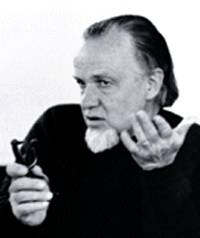
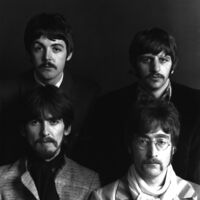
:format(jpeg):mode_rgb():quality(40)/discogs-images/A-82730-1519052220-3776.jpeg.jpg)


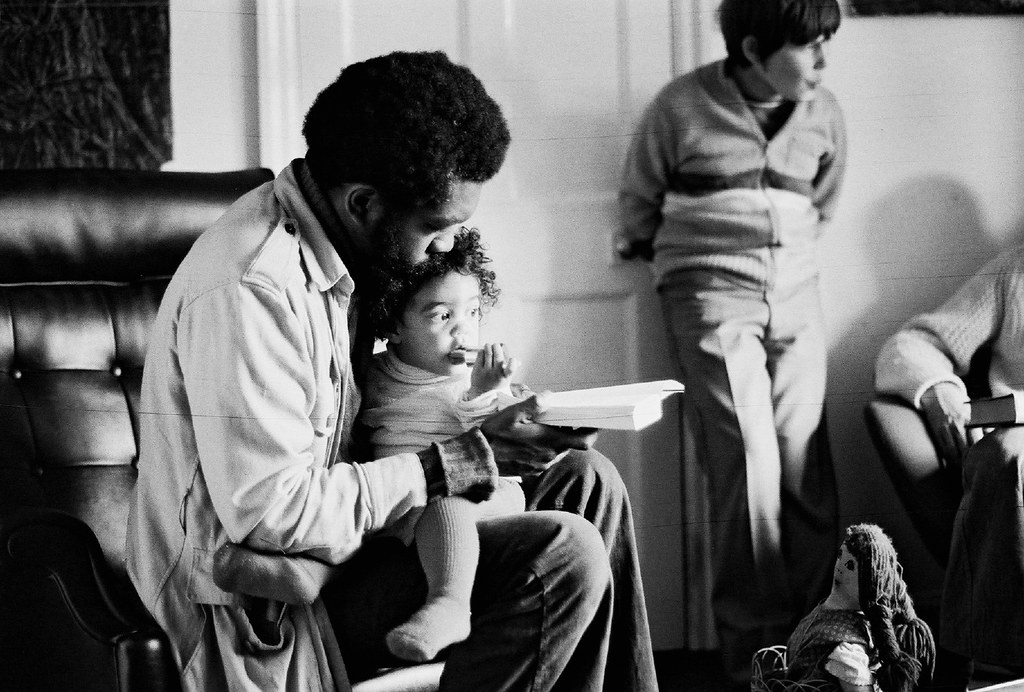


![Young, Glynn - 090925-107 [nym]](https://thedailyhatch.org/wp-content/uploads/2015/12/34a1e-6a00e3981f261e8833014e8a200c66970d-pi.jpg "Young, Glynn - 090925-107 [nym]")
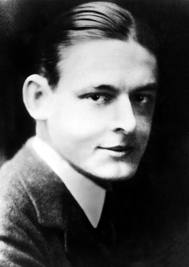


 The Daily Hatch