Monthly Archives: September 2015

RESPONDING TO HARRY KROTO’S BRILLIANT RENOWNED ACADEMICS!! Part 42 Peter Singer, Professor of Bioethics at Princeton University, THE PROBLEM OF EVIL


_______

On November 21, 2014 I received a letter from Nobel Laureate Harry Kroto and it said:

…Please click on this URL http://vimeo.com/26991975

and you will hear what far smarter people than I have to say on this matter. I agree with them.

Harry Kroto

_________________

Below you have picture of 1996 Chemistry Nobel Prize Winner Dr. Harry Kroto (on right and  Reg Colin on left):

______________________
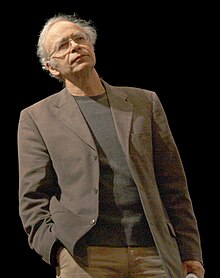
Singer1.jpg

Wikipedia notes:

Peter Albert David Singer, AC (born 6 July 1946) is an Australian moral philosopher. He is currently the Ira W. DeCamp Professor of Bioethics at Princeton University, and a Laureate Professor at the Centre for Applied Philosophy and Public Ethics at the University of Melbourne. He specializes in applied ethics and approaches ethical issues from a secular, utilitarianperspective. He is known in particular for his book, Animal Liberation (1975), a canonical text in animal rights/liberation theory. For most of his career, he supported preference utilitarianism, but in his later years became a classical or hedonistic utilitarian, when co-authoring The Point of View of the Universe with Katarzyna de Lazari-Radek.

On two occasions, Singer served as chair of the philosophy department at Monash University, where he founded its Centre for Human Bioethics. In 1996 he stood unsuccessfully as a Greenscandidate for the Australian Senate. In 2004 he was recognised as the Australian Humanist of the Year by the Council of Australian Humanist Societies, and in June 2012 was named a Companion of the Order of Australia for his services to philosophy and bioethics.[2] He serves on the Advisory Board of Incentives for Global Health, the NGO formed to develop the Health Impact Fund proposal. He was voted one of Australia’s ten most influential public intellectuals in 2006.[3] Singer currently serves on the advisory board of Academics Stand Against Poverty(ASAP).

_____________________________

In  the first video below in the 46th clip in this series are his words and  my response is below them. 

50 Renowned Academics Speaking About God (Part 1)

Another 50 Renowned Academics Speaking About God (Part 2)

A Further 50 Renowned Academics Speaking About God (Part 3)

I grew up at Bellevue Baptist Church under the leadership of our pastor Adrian Rogers and I read many books by the Evangelical Philosopher Francis Schaeffer and have had the opportunity to contact many of the evolutionists or humanistic academics that they have mentioned in their works. Many of these scholars have taken the time to respond back to me in the last 20 years and some of the names  included are  Ernest Mayr (1904-2005), George Wald (1906-1997), Carl Sagan (1934-1996),  Robert Shapiro (1935-2011), Nicolaas Bloembergen (1920-),  Brian Charlesworth (1945-),  Francisco J. Ayala (1934-) Elliott Sober (1948-), Kevin Padian (1951-), Matt Cartmill (1943-) , Milton Fingerman (1928-), John J. Shea (1969-), , Michael A. Crawford (1938-), Paul Kurtz (1925-2012), Sol Gordon (1923-2008), Albert Ellis (1913-2007), Barbara Marie Tabler (1915-1996), Renate Vambery (1916-2005), Archie J. Bahm (1907-1996), Aron S “Gil” Martin ( 1910-1997), Matthew I. Spetter (1921-2012), H. J. Eysenck (1916-1997), Robert L. Erdmann (1929-2006), Mary Morain (1911-1999), Lloyd Morain (1917-2010),  Warren Allen Smith (1921-), Bette Chambers (1930-),  Gordon Stein (1941-1996) , Milton Friedman (1912-2006), John Hospers (1918-2011), Michael Martin (1932-), John R. Cole  (1942-),   Wolf Roder,  Susan Blackmore (1951-),  Christopher C. French (1956-)  Walter R. Rowe Thomas Gilovich (1954-), Paul QuinceyHarry Kroto (1939-), Marty E. Martin (1928-), Richard Rubenstein (1924-), James Terry McCollum (1936-), Edward O. WIlson (1929-), Lewis Wolpert (1929), Gerald Holton (1922-), Martin Rees (1942-), Alan Macfarlane (1941-),  Roald Hoffmann (1937-), Herbert Kroemer (1928-), Thomas H. Jukes (1906-1999), Glenn BranchGeoff Harcourt (1931-), and  Ray T. Cragun (1976-).

QUOTE Peter Singer thinks

it is  “monstrous” to believe that “God would create a world where, let’s say, a two-year-old child would die a slow and lingering death from hunger and thirst…” because of Adam and Eve’s sin committed thousands of years before. Even if one thinks that baby’s suffering is “deserved,” “what about the suffering on non-human animals?”

Josh Wilson – Before The Morning (Official Music Video)

One of my favorite songs  is called “Before the Morning” and it is by  the Christian singer Josh Wilson. The lyrics start out: “Why do you have to feel the things that hurt you? If there’s a God who loves you where is He now?” Over the years I have corresponded with several atheists and many times they confront me on this  very issue such as this letter did from Dr. Brian Charlesworth, Dept of Ecology and Evolution, University of Chicago in letter dated May 10, 1994:

Thank you for your various communications. I am afraid that I formed the view many years ago that there is no foundation for any belief in a benevolent creator of the world. For me, there is too much suffering in the world to be compatible with the existence of such a being. 

Let me make three points concerning the problem of evil and suffering. First, the problem of evil and suffering hit this world in a big way because of Adam and what happened in Genesis Chapter 3. Second, if there is no God then there is no way to distinguish good from evil and there will be no ultimate punishment for Hitler and Josef Mengele. Third. Christ came and suffered and will destroy all evil from this world eventually forever.

Recently I went to see the movie GOD’S NOT DEAD in a local theater and that prompted me to read the book of the same name by Rice Broocks. In the movie the problem of evil and suffering is discussed just like it is in the book  and would love to interact further with anyone who would like to see the film is a big hit in theaters this year. On page 5 on the book you will find these words:
Atheists claim that the universe isn’t what you would expect
if a supernatural God existed. All this death and suffering, they say,
are plain evidence that a loving, intelligent God could not be behind
it all. The truth is that God has created a world where free moral
agents are able to have real choices to do good or evil. If God had
created a world without that fundamental choice and option to do
evil, then we wouldn’t be having this discussion. God made a world
where choices are real and humanity is affected by the choices of
other humans. Drunk drivers kill innocent people. Some murder
and steal from their fellow men. Though God gave clear com-
mandments to humanity, we have for the most part ignored these
directives. The mess that results is not God’s fault. It’s ours.
We are called to follow God and love Him with all our hearts
and minds. This means we have to think and investigate. Truth
is another word for reality. When something is true it’s true
everywhere. The multiplication tables are just as true in China
as they are in America. Gravity works in Africa the way it does
in Asia. The fact that there are moral truths that are true every-
where points to a transcendent morality that we did not invent
and from which we cannot escape (C.S.Lewis, MERE CHRISTIANITY,[1952:
New York: Harper Collins, 2001], p. 35).
As Creator, God has placed not only natural laws in the earth
but also spiritual laws. For instance, lying is wrong everywhere.
So is stealing. Cruelty to children is wrong regardless of what
culture you’re in or country you’re from. When these laws are
broken, people are broken. Not only does violating these spiritual
laws separate us from God, but it causes pain in our lives and
in the lives of those around us. The big question becomes, what
can be done about our condition? When we break these spiritual
laws, whom can we call for help? How can we be reconciled to
God as well as break free from this cycle of pain and dysfunction?

Francis Schaeffer in his fine book about modern man ESCAPE FROM REASON  states,

“the True Christian position is that, in space and time and history, there was an unprogrammed man who made a choice, and actually rebelled against God…without Christianity’s answer that God made a significant man in a significant history with evil being the result of Satan’s and then man’s historic space-time revolt, there is no answer but to accept Baudelaire’s answer [‘If there is a God, He is the devil’] with tears. Once the historic Christian answer is put away, all we can do is to leap upstairs and say that against all reason God is good.”(pg. 81)

Someone I knew in 1985 grew up in Germany and was part of the Hitler Youth Program, Was he wrong in his beliefs? 

On what basis does the atheist have to say “Hitler was wrong!!!”

Early in his career Hitler was popular and many of the German people bought into his anti-semetic views. Does the atheist have an intellectual basis to condemn Hitler’s actions?

____________________________________

My friend who grew up in Germany  believed until his dying day that Hitler was right. I had a basis for knowing that Hitler was wrong and here it is below.
It is my view that according the Bible all men are created by God and are valuable.  However, the atheist has no basis for coming to this same conclusion. Francis Schaeffer put it this way:
We cannot deal with people like human beings, we cannot deal with them on the high level of true humanity, unless we really know their origin—who they are. God tells man who he is. God tells us that He created man in His image. So man is some- thing wonderful.
In 1972 Schaeffer wrote the book “He is There and He is Not Silent.” Here is the statement that sums up that book:

One of philosophy’s biggest problems is that anything exists at all and has the form that it does. Another is that man exists as a personal being and makes true choices and has moral responsibility. The Bible gives sufficient answers to these problems. In fact, the only sufficient answer is that the infinite-personal triune God is there and He is not silent. He has spoken to man in the Bible.

In the movie CRIMES AND MISDEMEANORS the basic question Woody Allen is presenting to his own agnostic humanistic worldview is: If you really believe there is no God there to punish you in an afterlife, then why not murder if you can get away with it?   The secular humanist worldview that modern man has adopted does not work in the real world that God has created. God “has planted eternity in the human heart…” (Ecclesiastes 3:11). This is a direct result of our God-given conscience. The apostle Paul said it best in Romans 1:19, “For that which is known about God is evident to them and made plain in their inner consciousness, because God  has shown it to them” (Amplified Version).

It’s no wonder, then, that one of Allen’s fellow humanists would comment, “Certain moral truths — such as do not kill, do not steal, and do not lie — do have a special status of being not just ‘mere opinion’ but bulwarks of humanitarian action. I have no intention of saying, ‘I think Hitler was wrong.’ Hitler WAS wrong.” (Gloria Leitner, “A Perspective on Belief,” The Humanist, May/June 1997, pp.38-39). Here Leitner is reasoning from her God-given conscience and not from humanist philosophy. It wasn’t long before she received criticism.

Humanist Abigail Ann Martin responded, “Neither am I an advocate of Hitler; however, by whose criteria is he evil?” (The Humanist, September/October 1997, p. 2.). Humanists don’t really have an intellectual basis for saying that Hitler was wrong, but their God-given conscience tells them that they are wrong on this issue.

Here is fine film by Francis Schaeffer and Dr. C. Everett Koop that makes the case for human dignity.

Francis Schaeffer “BASIS FOR HUMAN DIGNITY” Whatever…HTTHR

Also here is the link for  another fine article on this same issue by Chuck Colson.

Crimes? What Crimes?

The Grand ‘Sez Who’

Let us take a close look at how you are going to come up with morality as an atheist. When you think about it there is no way around the final conclusion that it is just your opinion against mine concerning morality. There is no final answers. However, if God does exist and he has imparted final answers to us then everything changes.

Take a look at a portion of this paper by Greg Koukl. In this article he points out that atheists don’t even have a basis for saying that Hitler was wrong:

What doesn’t make sense is to look at the existence of evil and question the existence of God. The reason is that atheism turns out being a self-defeating philosophic solution to this problem of evil. Think of what evil is for a minute when we make this kind of objection. Evil is a value judgment that must be measured against a morally perfect standard in order to be meaningful. In other words, something is evil in that it departs from a perfect standard of good. C.S. Lewis made the point, “My argument against God was that the universe seemed so cruel and unjust. But how had I got this idea of just and unjust? A man does not call something crooked unless he has some idea of a straight line.”] He also goes on to point out that a portrait is a good or a bad likeness depending on how it compares with the “perfect” original. So to talk about evil, which is a departure from good, actually presumes something that exists that is absolutely good. If there is no God there’s no perfect standard, no absolute right or wrong, and therefore no departure from that standard. So if there is no God, there can’t be any evil, only personal likes and dislikes–what I prefer morally and what I don’t prefer morally.

This is the big problem with moral relativism as a moral point of view when talking about the problem of evil. If morality is ultimately a matter of personal taste–that’s what most people hold nowadays–then it’s just your opinion what’s good or bad, but it might not be my opinion. Everybody has their own view of morality and if it’s just a matter of personal taste–like preferring steak over broccoli or Brussels sprouts–the objection against the existence of God based on evil actually vanishes because the objection depends on the fact that some things are intrinsically evil–that evil isn’t just a matter of my personal taste, my personal definition. But that evil has absolute existence and the problem for most people today is that there is no thing that is absolutely wrong. Premarital sex? If it’s right for you. Abortion? It’s an individual choice. Killing? It depends on the circumstances. Stealing? Not if it’s from a corporation.

The fact is that most people are drowning in a sea of moral relativism. If everything is allowed then nothing is disallowed. Then nothing is wrong. Then nothing is ultimately evil. What I’m saying is that if moral relativism is true, which it seems like most people seem to believe–even those that object against evil in the world, then the talk of objective evil as a philosophical problem is nonsense. To put it another way, if there is no God, then morals are all relative. And if moral relativism is true, then something like true moral evil can’t exist because evil becomes a relative thing.

An excellent illustration of this point comes from the movie The Quarrel . In this movie, a rabbi and a Jewish secularist meet again after the Second World War after they had been separated. They had gotten into a quarrel as young men, separated on bad terms, and then had their village and their family and everything destroyed through the Second World War, both thinking the other was dead. They meet serendipitously in Toronto, Canada in a park and renew their friendship and renew their old quarrel.divider

Rabbi Hersch says to the secularist Jew Chiam, “If a person does not have the Almighty to turn to, if there’s nothing in the universe that’s higher than human beings, then what’s morality? Well, it’s a matter of opinion. I like milk; you like meat. Hitler likes to kill people; I like to save them. Who’s to say which is better? Do you begin to see the horror of this? If there is no Master of the universe then who’s to say that Hitler did anything wrong? If there is no God then the people that murdered your wife and kids did nothing wrong.”

That is a very, very compelling point coming from the rabbi. In other words, to argue against the existence of God based on the existence of evil forces us into saying something like this: Evil exists, therefore there is no God. If there is no God then good and evil are relative and not absolute, so true evil doesn’t exist, contradicting the first point. Simply put, there cannot be a world in which it makes any sense to say that evil is real and at the same time say that God doesn’t exist. If there is no God then nothing is ultimately bad, deplorable, tragic or worthy of blame. The converse, by the way, is also true. This is the other hard part about this, it cuts both ways. Nothing is ultimately good, honorable, noble or worthy of praise. Everything is ultimately lost in a twilight zone of moral nothingness. To paraphrase the late Dr. Francis Schaeffer, the person who argues against the existence of God based on the existence of evil in the world has both feet firmly planted in mid-air.

_____________

Ricky Gervais in a You Tube clip from the show Piers Morgan Tonight on  1-20-2011 said that he embraced the golden rule because it made sense to him to be good to others so they would be good to you. However, how would that work if there is no ultimate lawmaker that also is our final judge? Rabbi Hersch’s argument to the secularist Jew Chiam seems to point out that without God in the picture it really does come to : “If a person does not have the Almighty to turn to, if there’s nothing in the universe that’s higher than human beings, then what’s morality? Well, it’s a matter of opinion. I like milk; you like meat. Hitler likes to kill people; I like to save them. Who’s to say which is better?”

Francis Schaeffer

Francis Schaeffer pictured above.

_______

Many crime victims feel forsaken by God. So do many divorced people, war prisoners, and starving refugees. But this young man’s cry of desperation carried added significance because of its historical allusion.
The words had appeared about a thousand years earlier in a song written by a king. The details of the song are remarkably similar to the suffering the young man endured. It said, “All who see me mock me; they hurl insults, shaking their heads …. They have pierced my hands and my feet…. They divide my garments among them and cast lots for my clothing.”{2}
Historians record precisely this behavior during the young man’s execution.{3} It was as if a divine drama were unfolding as the man slipped into death.
Researchers have uncovered more than 300 predictions or prophesies literally fulfilled in the life and death of this unique individual. Many of these statements written hundreds of years before his birth-were beyond his human control. One correctly foretold the place of his birth. {4} Another said he would be born of a virgin. {5} He would be preceded by a messenger who would prepare the way for his work, {6} He would enter the capital city as a king but riding on a donkeys back {7} He would be betrayed for thirty pieces of Silver, {8} pierced, {9} executed among thieves, {10} and yet, though wounded, {11} he would suffer no broken bones.{12}
Peter Stoner, a California mathematics professor, calculated the chance probability of just eight of these 300 prophecies coming true in one person. Using conservative estimates, Stoner concluded that the probability is 1 in 10 to the 17th power that those eight could be fulfilled by a fluke.
He says 1017silver dollars would cover the state of Texas two feet deep. Mark one coin with red fingernail polish. Stir the whole batch thoroughly. What chance would a blindfolded person have of picking the marked coin on the first try? One in 1017, the same chance that just eight of the 300 prophecies “just happened” to come true in this man, Jesus. {13}
In his dying cry from the cross Jesus reminded His hearers that His life and death precisely fulfilled God’s previously stated plan. According to the biblical perspective, at the moment of death Jesus experienced the equivalent of eternal separation from God in our place so that we might be forgiven and find new life.
He took the penalty due for all the crime, injustice, evil, sin, and shortcomings of the world-including yours and mine.
Though sinless Himself, He likely felt guilty and abandoned. Then-again in fulfillment of prophecy{14} and contrary to natural law-He came back to life. As somewhat of a skeptic I investigated the evidence for Christ’s resurrection and found it to be one of the best-attested facts in history. {15} To the seeker Jesus Christ offers true inner peace, forgiveness, purpose, and strength for contented living.

SO WHAT?

“OK, great,” you might say, “but what hope does this give the crime or divorce victim, the hungry and bleeding refugee, the citizen paralyzed by a world gone bad?” Will Jesus prevent every crime, reconcile every troubled marriage, restore every refugee, stop every war? No. God has given us free will. Suffering–even unjust suffering–is a necessary consequence of sin.
Sometimes God does intervene to change circumstances. (I’m glad my assailant became nervous and left.) Other times God gives those who believe in Him strength to endure and confidence that He will see them through. In the process, believers mature.
Most significantly we can hope in what He has told us about the future. Seeing how God has fulfilled prophecies in the past gives us confidence to believe those not yet fulfilled. Jesus promises eternal life to all who trust Him for it: “Whoever hears my word and believes him who sent me has eternal life and will not be condemned; he has crossed over from death to life.”{16}
He promised He would return to rescue people from this dying planet.{17}
He will judge all evil.{18}
Finally justice will prevail. Those who have chosen to place their faith in Him will know true joy: “He shall wipe away every tear from their eyes; and there shall no longer be any death; there shall no longer be any mourning, or crying, or pain.”{19}
Does God intend that we ignore temporal evil and mentally float off into unrealistic ethereal bliss? Nor at all. God is in the business of working through people to turn hearts to Him, resolve conflicts, make peace. After my assailant went to prison, I felt motivated to tell him that I forgave him because of Christ. He apologized, saying he, too, has now come to believe in Jesus.
But through every trial, every injustice you suffer, you can know that God is your friend and that one day He will set things right. You can know that He is still on the throne of the universe and that He cares for you. You can know this because His Son was born (Christmas is, of course, a celebration of His birth), lived, died, and came back to life in fulfillment of prophecy. Because of Jesus, if you personally receive His free gift of forgiveness, you can have hope!
Will you trust Him?
Notes
1. Matthew 27:46.
2. Psalm 22.
3. Matthew 27:35-44; John 20:25.
4. Micah 5:2; Matthew 2:1.
5. Isaiah 7:14; Matthew 1:18, 24-25; Luke 1:26-35.
6. Malachi 3:1; Isaiah 40:3; Matthew 3:1-2.
7. Zechariah 9:9; John 12:15; Matthew 21: 1-9.
8. Zechariah 11:12; Matthew 26:15.
9. Zechariah 12:10; John 19:34, 37.
10. Isaiah 53:12.
11. Matthew 27:38; Isaiah 53:5; Zechariah 13:6; Matthew 27:26.
12. Psalm 34:20; John 19:33, 36.
13. Peter Stoner, Science Speaks, pp. 99-112.
14. Psalm 6:10; Acts 2:31-32.
15. Josh McDowell, Evidence That Demands a Verdict, pp. 185-273.
16. John 5:24.
17. 1 Thessalonians 4:13-18.
18. Revelation 20:10-15.
19. Revelation 21:4 NAS.
©1994 Rusty Wright. Used by permission. All rights reserved.
Reprinted with permission from Pursuit magazine (© 1994, Vol. III, No. 3)

About the Author
Rusty Wright, former associate speaker and writer with Probe Ministries, is an international lecturer, award-winning author, and journalist who has spoken on six continents. He holds Bachelor of Science (psychology) and Master of Theology degrees from Duke and Oxford universities, respectively. http://www.rustywright.com/

Dan Guinn posted on his blog at http://www.francisschaefferstudies.org concerning the Nazis and evolution: As Schaeffer points out, “…these ideas helped produce an even more far-reaching yet logical conclusion: the Nazi movement in Germany. Heinrich Himmler (1900-1945), leader of the Gestapo, stated that the law of nature must take its course in the survival of the fittest. The result was the gas chambers. Hitler stated numerous times that Christianity and its notion of charity should be “replaced by the ethic of strength over weakness.” Surely many factors were involved in the rise of National Socialism in Germany. For example, the Christian consensus had largely been lost by the undermining from a rationalistic philosophy and a romantic pantheism on the secular side, and a liberal theology (which was an adoption of rationalism in theological terminology) in the universities and many of the churches. Thus biblical Christianity was no longer giving the consensus for German society. After World War I came political and economic chaos and a flood of moral permissiveness in Germany. Thus, many factors created the situation. But in that setting the theory of the survival of the fittest sanctioned what occurred. ” 

Francis Schaeffer notes that this idea ties into today when we are actually talking about making infanticide legal in some academic settings. Look at what these three humanist scholars have written:

  • Peter Singer, who recently was seated in an endowed chair at Princeton’s Center for Human Values, said, “Killing a disabled infant is not morally equivalent to killing a person. Very often it is not wrong at all.”
  • In May 1973, James D. Watson, the Nobel Prize laureate who discovered the double helix of DNA, granted an interview to Prism magazine, then a publication of the American Medical Association. Time later reported the interview to the general public, quoting Watson as having said, “If a child were not declared alive until three days after birth, then all parents could be allowed the choice only a few are given under the present system. The doctor could allow the child to die if the parents so choose and save a lot of misery and suffering. I believe this view is the only rational, compassionate attitude to have.”
  • In January 1978, Francis Crick, also a Nobel laureate, was quoted in the Pacific News Service as saying “… no newborn infant should be declared human until it has passed certain tests regarding its genetic endowment and that if it fails these tests it forfeits the right to live.”

God Is A Luxury I Can’t Afford – From Crimes And Misdemeanors

___________

Is the Bible historically accurate? Here are some of the posts I have done in the past on the subject: 1. The Babylonian Chronicleof Nebuchadnezzars Siege of Jerusalem2. Hezekiah’s Siloam Tunnel Inscription. 3. Taylor Prism (Sennacherib Hexagonal Prism)4. Biblical Cities Attested Archaeologically. 5. The Discovery of the Hittites6.Shishak Smiting His Captives7. Moabite Stone8Black Obelisk of Shalmaneser III9A Verification of places in Gospel of John and Book of Acts., 9B Discovery of Ebla Tablets10. Cyrus Cylinder11. Puru “The lot of Yahali” 9th Century B.C.E.12. The Uzziah Tablet Inscription13. The Pilate Inscription14. Caiaphas Ossuary14 B Pontius Pilate Part 214c. Three greatest American Archaeologists moved to accept Bible’s accuracy through archaeology.

The Bible and Archaeology – Is the Bible from God? (Kyle Butt 42 min)

Related posts:

FRANCIS SCHAEFFER ANALYZES ART AND CULTURE Part 53 THE BEATLES (Part E, Stg. Pepper’s and John Lennon’s search in 1967 for truth was through drugs, money, laughter, etc & similar to King Solomon’s, LOTS OF PICTURES OF JOHN AND CYNTHIA) (Feature on artist Yoko Ono)

The John Lennon and the Beatles really were on a long search for meaning and fulfillment in their lives  just like King Solomon did in the Book of Ecclesiastes. Solomon looked into learning (1:12-18, 2:12-17), laughter, ladies, luxuries, and liquor (2:1-2, 8, 10, 11), and labor (2:4-6, 18-20). He fount that without God in the picture all […]

FRANCIS SCHAEFFER ANALYZES ART AND CULTURE Part 52 THE BEATLES (Part D, There is evidence that the Beatles may have been exposed to Francis Schaeffer!!!) (Feature on artist Anna Margaret Rose Freeman )

______________   George Harrison Swears & Insults Paul and Yoko Lucy in the Sky with Diamonds- The Beatles The Beatles:   I have dedicated several posts to this series on the Beatles and I don’t know when this series will end because Francis Schaeffer spent a lot of time listening to the Beatles and talking […]

FRANCIS SCHAEFFER ANALYZES ART AND CULTURE Part 51 THE BEATLES (Part C, List of those on cover of Stg.Pepper’s ) (Feature on artist Raqib Shaw )

  The Beatles in a press conference after their Return from the USA Uploaded on Nov 29, 2010 The Beatles in a press conference after their Return from the USA. The Beatles:   I have dedicated several posts to this series on the Beatles and I don’t know when this series will end because Francis […]

FRANCIS SCHAEFFER ANALYZES ART AND CULTURE Part 50 THE BEATLES (Part B, The Psychedelic Music of the Beatles) (Feature on artist Peter Blake )

__________________   Beatles 1966 Last interview I have dedicated several posts to this series on the Beatles and I don’t know when this series will end because Francis Schaeffer spent a lot of time listening to the Beatles and talking and writing about them and their impact on the culture of the 1960’s. In this […]

FRANCIS SCHAEFFER ANALYZES ART AND CULTURE Part 49 THE BEATLES (Part A, The Meaning of Stg. Pepper’s Cover) (Feature on artist Mika Tajima)

_______________ The Beatles documentary || A Long and Winding Road || Episode 5 (This video discusses Stg. Pepper’s creation I have dedicated several posts to this series on the Beatles and I don’t know when this series will end because Francis Schaeffer spent a lot of time listening to the Beatles and talking and writing about […]

FRANCIS SCHAEFFER ANALYZES ART AND CULTURE PART 48 “BLOW UP” by Michelangelo Antonioni makes Philosophic Statement (Feature on artist Nancy Holt)

_______________ Francis Schaeffer pictured below: _____________________ I have included the 27 minute  episode THE AGE OF NONREASON by Francis Schaeffer. In that video Schaeffer noted,  ” Sergeant Pepper’s Lonely Hearts Club Band…for a time it became the rallying cry for young people throughout the world. It expressed the essence of their lives, thoughts and their feelings.” How Should […]

FRANCIS SCHAEFFER ANALYZES ART AND CULTURE Part 47 Woody Allen and Professor Levy and the death of “Optimistic Humanism” from the movie CRIMES AND MISDEMEANORS Plus Charles Darwin’s comments too!!! (Feature on artist Rodney Graham)

Crimes and Misdemeanors: A Discussion: Part 1 ___________________________________ Today I will answer the simple question: IS IT POSSIBLE TO BE AN OPTIMISTIC SECULAR HUMANIST THAT DOES NOT BELIEVE IN GOD OR AN AFTERLIFE? This question has been around for a long time and you can go back to the 19th century and read this same […]

FRANCIS SCHAEFFER ANALYZES ART AND CULTURE PART 46 Friedrich Nietzsche (Featured artist is Thomas Schütte)

____________________________________ Francis Schaeffer pictured below: __________ Francis Schaeffer has written extensively on art and culture spanning the last 2000years and here are some posts I have done on this subject before : Francis Schaeffer’s “How should we then live?” Video and outline of episode 10 “Final Choices” , episode 9 “The Age of Personal Peace and Affluence”, episode 8 […]

FRANCIS SCHAEFFER ANALYZES ART AND CULTURE Part 45 Woody Allen “Reason is Dead” (Feature on artists Allora & Calzadilla )

Love and Death [Woody Allen] – What if there is no God? [PL] ___________ _______________ How Should We then Live Episode 7 small (Age of Nonreason) #02 How Should We Then Live? (Promo Clip) Dr. Francis Schaeffer 10 Worldview and Truth Two Minute Warning: How Then Should We Live?: Francis Schaeffer at 100 Francis Schaeffer […]

FRANCIS SCHAEFFER ANALYZES ART AND CULTURE Part 44 The Book of Genesis (Featured artist is Trey McCarley )

___________________________________ Francis Schaeffer pictured below: ____________________________ Francis Schaeffer “BASIS FOR HUMAN DIGNITY” Whatever…HTTHR Dr. Francis schaeffer – The flow of Materialism(from Part 4 of Whatever happened to human race?) Dr. Francis Schaeffer – The Biblical flow of Truth & History (intro) Francis Schaeffer – The Biblical Flow of History & Truth (1) Dr. Francis Schaeffer […]

“Truth Tuesday” Taking on Ark Times Bloggers on the “Absurdity of Life without God!!” Part 10 (Evolution’s time and chance impersonal universe is purposeless, but the alternative is God)

_________________

Is the Bible historically accurate? Here are some of the posts I have done in the past on the subject: 1. The Babylonian Chronicleof Nebuchadnezzars Siege of Jerusalem2. Hezekiah’s Siloam Tunnel Inscription. 3. Taylor Prism (Sennacherib Hexagonal Prism)4. Biblical Cities Attested Archaeologically. 5. The Discovery of the Hittites6.Shishak Smiting His Captives7. Moabite Stone8Black Obelisk of Shalmaneser III9A Verification of places in Gospel of John and Book of Acts., 9B Discovery of Ebla Tablets10. Cyrus Cylinder11. Puru “The lot of Yahali” 9th Century B.C.E.12. The Uzziah Tablet Inscription13. The Pilate Inscription14. Caiaphas Ossuary14 B Pontius Pilate Part 214c. Three greatest American Archaeologists moved to accept Bible’s accuracy through archaeology.

The Bible and Archaeology – Is the Bible from God? (Kyle Butt 42 min)

Existentialism and the Meaningful Life [The Common Room]

Published on Jul 7, 2015

Torrey Common Room Discussion with Janelle Aijian, Matt Jenson, and Diane Vincent

How Can We Demonstrate that Objective Moral Values Exist to a Nihilist Who Holds

Published on Dec 17, 2012

For more resources visit: http://www.reasonablefaith.org

The Bethinking National Apologetics Day Conference: “Countering the New Atheism” took place during the UK Reasonable Faith Tour in October 2011. Christian academics William Lane Craig, John Lennox, Peter J Williams and Gary Habermas lead 600 people in training on how to defend and proclaim the credibility of Christianity against the growing tide of secularism and New Atheist popular thought in western society.

In this session, William Lane Craig delivers his critique of Richard Dawkins’ objections to arguments for the existence of God, followed by questions and answers from the audience. In this clip, Dr Craig addresses a question about how objective moral values can be demonstrated to a Nihilist, who hold that they are illusory.

Richard Dawkins Vs. William Lane Craig Debate

Uploaded on Oct 23, 2011

Richard Dawkins TIMES:
7:20
32:15
1:03:05
1:19:33
1:39:33

William Lane Craig TIMES:
13:39
46:27
1:14:04
1:36:08

__________________

Francis Schaeffer – The Biblical Flow of History & Truth (1)

Francis and Edith Schaeffer pictured below:

HOW SHOULD WE THEN LIVE? was both a book and a film series.

______________

_________________

Life without God in the picture is absurdity!!!. That was the view of King Solomon when he wrote the Book of Ecclesiastes 3000 years ago and it is the view of many of the modern philosophers today. Modern man has tried to come up with a lasting meaning for life without God in the picture (life under the sun), but it is not possible. Without the infinite-personal God of the Bible to reveal moral absolutes then man is left to embrace moral relativism. In a time plus chance universe man is reduced to a machine and can not find a place for values such as love. Both of Francis Schaeffer’s film series have tackled these subjects and he shows how this is reflected in the arts.

Here are some posts I have done on the series “HOW SHOULD WE THEN LIVE? : Francis Schaeffer’s “How should we then live?” Video and outline of episode 10 “Final Choices” episode 9 “The Age of Personal Peace and Affluence”episode 8 “The Age of Fragmentation”episode 7 “The Age of Non-Reason” episode 6 “The Scientific Age”  episode 5 “The Revolutionary Age” episode 4 “The Reformation” episode 3 “The Renaissance”episode 2 “The Middle Ages,”, and  episode 1 “The Roman Age,” .

In the film series “WHATEVER HAPPENED TO THE HUMAN RACE?” the arguments are presented  against abortion (Episode 1),  infanticide (Episode 2),   euthenasia (Episode 3), and then there is a discussion of the Christian versus Humanist worldview concerning the issue of “the basis for human dignity” in Episode 4 and then in the last episode a close look at the truth claims of the Bible.

I have discussed many subjects with my liberal friends over at the Ark Times Blog in the past and I have taken them on now on the subject of the absurdity of life without God in the picture. Most of my responses included quotes from William Lane Craig’s book THE ABSURDITY OF LIFE WITHOUT GOD.  Here is the result of one of those encounters from June of 2013:

I have enjoyed discussing this big question about how to find lasting meaning in one’s life without God in the picture and I am betting that Zatharus, Doigotta, Citizen1, Hackett and Elwood who have all interacted with me on this, all firmly believe in evolution and I imagine that you all think their is a feeling of upward mobility somehow through that theory but if it is just an impersonal universe here from the combination of time and chance then there is no lasting meaning to our lives.

William Lane Craig touched on this issue too:

Finally, let’s look at the problem of purpose in life. Unable to live in an impersonal universe in which everything is the product of blind chance, atheists sometimes begin to ascribe personality and motives to the physical processes themselves. It is a bizarre way of speaking and represents a leap from the lower to the upper story. For example, the brilliant Russian physicists Zeldovich and Novikov, in contemplating the properties of the universe, ask, why did “Nature” choose to create this sort of universe instead of another? “Nature” has obviously become a sort of God-substitute, filling the role and function of God. Francis Crick halfway through his book The Origin of the Genetic Code begins to spell nature with a capital N and elsewhere speaks of natural selection as being “clever” and as “thinking” of what it will do. Sir Fred Hoyle, the English astronomer, attributes to the universe itself the qualities of God. For Carl Sagan the “Cosmos,” which he always spelled with a capital letter, obviously fills the role of a God-substitute. Though these men profess not to believe in God, they smuggle in a God-substitute through the back door because they cannot bear to live in a universe in which everything is the chance result of impersonal forces.

Moreover, the only way that most people who deny purpose in life live happily is either by making up some purpose—which amounts to self-delusion as we saw with Sartre—or by not carrying their view to its logical conclusions. Take the problem of death, for example. According to Ernst Bloch, the only way modern man lives in the face of death is by subconsciously borrowing the belief in immortality that his forefathers held to, even though he himself has no basis for this belief, since he does not believe in God. Bloch states that the belief that life ends in nothing is hardly, in his words, “sufficient to keep the head high and to work as if there were no end.” By borrowing the remnants of a belief in immortality, writes Bloch, “modern man does not feel the chasm that unceasingly surrounds him and that will certainly engulf him at last. Through these remnants, he saves his sense of self-identity. Through them the impression arises that man is not perishing, but only that one day the world has the whim no longer to appear to him.” Bloch concludes, “This quite shallow courage feasts on a borrowed credit card. It lives from earlier hopes and the support that they once had provided.”26 Modern man no longer has any right to that support, since he rejects God. But in order to live purposefully, he makes a leap of faith to affirm a reason for living.

Finding ourselves cast into a mindless universe with no apparent purpose or hope of deliverance from thermodynamic extinction, the temptation to invest one’s own petty plans and projects with objective significance and thereby to find some purpose to one’s life is almost irresistible.

Related posts:

Francis Schaeffer’s “How should we then live?” Video and outline of episode 10 “Final Choices” (Schaeffer Sundays)

E P I S O D E 1 0   Dr. Francis Schaeffer – Episode X – Final Choices 27 min FINAL CHOICES I. Authoritarianism the Only Humanistic Social Option One man or an elite giving authoritative arbitrary absolutes. A. Society is sole absolute in absence of other absolutes. B. But society has to be […]

Francis Schaeffer’s “How should we then live?” Video and outline of episode 9 “The Age of Personal Peace and Affluence” (Schaeffer Sundays)

E P I S O D E 9 Dr. Francis Schaeffer – Episode IX – The Age of Personal Peace and Affluence 27 min T h e Age of Personal Peace and Afflunce I. By the Early 1960s People Were Bombarded From Every Side by Modern Man’s Humanistic Thought II. Modern Form of Humanistic Thought Leads […]

Francis Schaeffer’s “How should we then live?” Video and outline of episode 8 “The Age of Fragmentation” (Schaeffer Sundays)

E P I S O D E 8 Dr. Francis Schaeffer – Episode VIII – The Age of Fragmentation 27 min I saw this film series in 1979 and it had a major impact on me. T h e Age of FRAGMENTATION I. Art As a Vehicle Of Modern Thought A. Impressionism (Monet, Renoir, Pissarro, Sisley, […]

Francis Schaeffer’s “How should we then live?” Video and outline of episode 7 “The Age of Non-Reason” (Schaeffer Sundays)

E P I S O D E 7 Dr. Francis Schaeffer – Episode VII – The Age of Non Reason I am thrilled to get this film series with you. I saw it first in 1979 and it had such a big impact on me. Today’s episode is where we see modern humanist man act […]

Francis Schaeffer’s “How should we then live?” Video and outline of episode 6 “The Scientific Age” (Schaeffer Sundays)

E P I S O D E 6 How Should We Then Live 6#1 Uploaded by NoMirrorHDDHrorriMoN on Oct 3, 2011 How Should We Then Live? Episode 6 of 12 ________ I am sharing with you a film series that I saw in 1979. In this film Francis Schaeffer asserted that was a shift in […]

Francis Schaeffer’s “How should we then live?” Video and outline of episode 5 “The Revolutionary Age” (Schaeffer Sundays)

E P I S O D E 5 How Should We Then Live? Episode 5: The Revolutionary Age I was impacted by this film series by Francis Schaeffer back in the 1970′s and I wanted to share it with you. Francis Schaeffer noted, “Reformation Did Not Bring Perfection. But gradually on basis of biblical teaching there […]

Francis Schaeffer’s “How should we then live?” Video and outline of episode 4 “The Reformation” (Schaeffer Sundays)

Dr. Francis Schaeffer – Episode IV – The Reformation 27 min I was impacted by this film series by Francis Schaeffer back in the 1970′s and I wanted to share it with you. Schaeffer makes three key points concerning the Reformation: “1. Erasmian Christian humanism rejected by Farel. 2. Bible gives needed answers not only as to […]

“Schaeffer Sundays” Francis Schaeffer’s “How should we then live?” Video and outline of episode 3 “The Renaissance”

Francis Schaeffer’s “How should we then live?” Video and outline of episode 3 “The Renaissance” Francis Schaeffer: “How Should We Then Live?” (Episode 3) THE RENAISSANCE I was impacted by this film series by Francis Schaeffer back in the 1970′s and I wanted to share it with you. Schaeffer really shows why we have so […]

Francis Schaeffer’s “How should we then live?” Video and outline of episode 2 “The Middle Ages” (Schaeffer Sundays)

  Francis Schaeffer: “How Should We Then Live?” (Episode 2) THE MIDDLE AGES I was impacted by this film series by Francis Schaeffer back in the 1970′s and I wanted to share it with you. Schaeffer points out that during this time period unfortunately we have the “Church’s deviation from early church’s teaching in regard […]

Francis Schaeffer’s “How should we then live?” Video and outline of episode 1 “The Roman Age” (Schaeffer Sundays)

Francis Schaeffer: “How Should We Then Live?” (Episode 1) THE ROMAN AGE   Today I am starting a series that really had a big impact on my life back in the 1970′s when I first saw it. There are ten parts and today is the first. Francis Schaeffer takes a look at Rome and why […]

Francis Schaeffer: “Whatever Happened to the Human Race” (Episode 5) TRUTH AND HISTORY

Francis Schaeffer: “Whatever Happened to the Human Race” (Episode 5) TRUTH AND HISTORY Published on Oct 7, 2012 by AdamMetropolis This crucial series is narrated by the late Dr. Francis Schaeffer and former Surgeon General Dr. C. Everett Koop. Today, choices are being made that undermine human rights at their most basic level. Practices once […]

Francis Schaeffer: “Whatever Happened to the Human Race” (Episode 4) THE BASIS FOR HUMAN DIGNITY

The opening song at the beginning of this episode is very insightful. Francis Schaeffer: “Whatever Happened to the Human Race” (Episode 4) THE BASIS FOR HUMAN DIGNITY Published on Oct 7, 2012 by AdamMetropolis This crucial series is narrated by the late Dr. Francis Schaeffer and former Surgeon General Dr. C. Everett Koop. Today, choices […]

Francis Schaeffer: “Whatever Happened to the Human Race” (Episode 3) DEATH BY SOMEONE’S CHOICE

Francis Schaeffer: “Whatever Happened to the Human Race” (Episode 3) DEATH BY SOMEONE’S CHOICE Published on Oct 6, 2012 by AdamMetropolis This crucial series is narrated by the late Dr. Francis Schaeffer and former Surgeon General Dr. C. Everett Koop. Today, choices are being made that undermine human rights at their most basic level. Practices […]

Francis Schaeffer: “Whatever Happened to the Human Race?” (Episode 2) SLAUGHTER OF THE INNOCENTS

Francis Schaeffer: “Whatever Happened to the Human Race?” (Episode 2) SLAUGHTER OF THE INNOCENTS Published on Oct 6, 2012 by AdamMetropolis This crucial series is narrated by the late Dr. Francis Schaeffer and former Surgeon General Dr. C. Everett Koop. Today, choices are being made that undermine human rights at their most basic level. Practices […]

Francis Schaeffer: “Whatever Happened to the Human Race” (Episode 1) ABORTION OF THE HUMAN RACE

It is not possible to know where the pro-life evangelicals are coming from unless you look at the work of the person who inspired them the most. That person was Francis Schaeffer.  I do care about economic issues but the pro-life issue is the most important to me. Several years ago Adrian Rogers (past president of […]

Ecclesiastes, Purpose, Meaning, and the Necessity of God by Suiwen Liang (Quotes Will Durant, Madalyn Murray O’Hair, Stephen Jay Gould,Richard Dawkins, Jean-Paul Sartre,Bertrand Russell, Leo Tolstoy, Loren Eiseley,Aldous Huxley, G.K. Chesterton, Ravi Zacharias, and C.S. Lewis.)

Ecclesiastes 2-3 Published on Sep 19, 2012 Calvary Chapel Spring Valley | Sunday Evening | September 16, 2012 | Derek Neider _____________________________ I have written on the Book of Ecclesiastes and the subject of the meaning of our lives on several occasions on this blog. In this series on Ecclesiastes I hope to show how secular […]

Robert Leroe on Ecclesiastes (Mentions Thomas Aquinas, Princess Diana, Mother Teresa, King Solomon, King Rehoboam, Eugene Peterson, Chuck Swindoll, and John Newton.)

Ecclesiastes 1 Published on Sep 4, 2012 Calvary Chapel Spring Valley | Sunday Evening | September 2, 2012 | Pastor Derek Neider _____________________ I have written on the Book of Ecclesiastes and the subject of the meaning of our lives on several occasions on this blog. In this series on Ecclesiastes I hope to show how […]

Super Bowl, Black Eyed Peas, and the Meaning of Life and Ecclesiastes

Ecclesiastes 8-10 | Still Searching After All These Years Published on Oct 9, 2012 Calvary Chapel Spring Valley | Sunday Evening | October 7, 2012 | Pastor Derek Neider _______________________ Ecclesiastes 11-12 | Solomon Finds His Way Published on Oct 30, 2012 Calvary Chapel Spring Valley | Sunday Evening | October 28, 2012 | Pastor Derek Neider […]

Brian LePort on Ecclesiastes

Ecclesiastes 6-8 | Solomon Turns Over a New Leaf Published on Oct 2, 2012 Calvary Chapel Spring Valley | Sunday Evening | September 30, 2012 | Pastor Derek Neider _____________________ I have written on the Book of Ecclesiastes and the subject of the meaning of our lives on several occasions on this blog. In this series […]

J.W. Wartick on Ecclesiastes

Ecclesiastes 4-6 | Solomon’s Dissatisfaction Published on Sep 24, 2012 Calvary Chapel Spring Valley | Sunday Evening | September 23, 2012 | Pastor Derek Neider ___________________ I have written on the Book of Ecclesiastes and the subject of the meaning of our lives on several occasions on this blog. In this series on Ecclesiastes I hope […]

Overview of the Book of Ecclesiastes

Overview of the Book of Ecclesiastes Overview of the Book of EcclesiastesAuthor: Solomon or an unknown sage in the royal courtPurpose: To demonstrate that life viewed merely from a realistic human perspective must result in pessimism, and to offer hope through humble obedience and faithfulness to God until the final judgment.Date: 930-586 B.C. Ecclesiastes 2-3 Published on Sep 19, […]

Doy Moyer on the Book of Ecclesiastes and Apologetics

Ecclesiastes 1 Published on Sep 4, 2012 Calvary Chapel Spring Valley | Sunday Evening | September 2, 2012 | Pastor Derek Neider _____________________ I have written on the Book of Ecclesiastes and the subject of the meaning of our lives on several occasions on this blog. In this series on Ecclesiastes I hope to show how […]

Solomon was the author of Ecclesiastes

Ecclesiastes 8-10 | Still Searching After All These Years Published on Oct 9, 2012 Calvary Chapel Spring Valley | Sunday Evening | October 7, 2012 | Pastor Derek Neider _______________________ Ecclesiastes 11-12 | Solomon Finds His Way Published on Oct 30, 2012 Calvary Chapel Spring Valley | Sunday Evening | October 28, 2012 | Pastor Derek Neider […]

By Everette Hatcher III | Posted in Current Events | Edit | Comments (0)

George Harrison – The Last Performance (John Fugelsang) with transcript too!!!

_____

George Harrison – The Last Performance (John Fugelsang)

Published on Aug 3, 2012

Due to the relentless spamming of the comment section by religious marketers, I’ve had to disable the comments. I asked nicely – repeatedly – for them to stop posting their crass sales garbage but they refused. Sorry to those who posted thoughtful comments.

Broadcast the day George Harrison died.

The last interview & last performance of a truly great individual.

__________

In the above video George Harrison says at the beginning:

FRIDAY, JUNE 02, 2006

George Harrison on VH1: Yin & Yang with John Fugelsang

Recorded: May 14, 1997

GH: It may sound like a lofty thing to say on VH1, but basically, you know, what are we doing on this planet? I think through the Beatle experience that we’d had, we’d grown so many years within a short period of time. I’d experienced so many things and met so many people but I realized there was nothing actually that was giving me a buzz anymore. I wanted something better. I remember thinking, I’d love to meet somebody who will really impress me. I don’t mean because somebody like you know, Burt Lancaster because he was in a movie. I mean, I met Burt Lancaster and he impressed me on that level, but I meant somebody who could really impress me. And that’s when I met Ravi, which was funny, because he’s this little fellow with an obscure instrument from our point of view, and yet it lead me into such depths. And that’s the most important thing, it still is for me. You know, I get confused when I look around at the world, and I see everybody’s running around. And you know, as Bob Dylan said, “He not busy being born is busy dying,” and yet nobody’s trying to figure out what’s the cause of death and what happens when you die. I mean, that to me is the only thing really that’s of any importance, the rest is all secondary.

Q: Do you think pop musicians are afraid to deal with subjects that are so big, or it just doesn’t occur to them, or do people think, Oh, it’s not commercial enough, who wants to talk about life itself?

GH: I don’t know what anybody else thinks and you know, as the years have gone by, I seem to have found myself more and more out on a limb, as far as, you know, that kind of thing goes. I mean, even close friends of mine, you know, they maybe don’t want to talk about it because they don’t understand it. But I believed in the thing that I read years ago, which I think was in the Bible, it said, “Knock and the door will be opened.” And it’s true, if you want to know anything in this life, you just have to knock on the door, whether that be physically on somebody else’s door and ask them a question, or, which I was lucky to find, is the meditation, is, you know, it’s all within. Because if you think about it, there isn’t anything, I mean, in creation, the whole of creation, that is perfect, you know, there is nothing that goes wrong with nature, only what man does, then it goes wrong. But we are made of that thing, the very essence of our being, of every atom in our body is made from this perfect knowledge, this perfect consciousness. But superimposed on that, is through, if I can use the word, the tidalwave of bullshit that goes through the world. . .

Q: It’s cable, you can say that.

GH: Yeah, so there’s this . . . we’re being barraged by, you know, bullshit. But not only that, the way the world is structured or the way creation is structured, we have duality which says, “Yes no. Good bad. Lost gained. Birth death.” And it’s this circle that you get trapped in, it’s like the “Memphis Blues Again,” and that’s the hardest thing to understand, what is causing both of these things. What’s causing day and night, good and bad, it’s all the cause and this is the effect. So, I mean, we’re getting really transcendental here, but to say that our physical being is really on a very very subtle level, it’s just like the sap in a tree is the sap and it runs throughout all the parts of the tree. Now, it’s like that, our bodies are manifesting into physical bodies, but the cause, the sap, is pure consciousness, pure awareness, and that is perfect knowledge. But we have to tap into that to understand it, and that’s really why for me this record’s important, because it’s another little key to open up the within for each individual to be able to see it, and turn off your mind, relax and float downstream.

Q: Ravi, you said a very beautiful thing a couple years back in an interview. They asked you what it was like for you to become a big rock star, quote unquote, a big pop star as it were, and I recall you saying that it was easier for you because you were older at the time as opposed to someone like George who was in his early twenties when it happened. Do you think that that may be a reason why you found a search for something deeper in life? I think about you embracing Eastern philosophy, I think about Dylan becoming born again. Do you think it drove you to search for something deeper because you were worshipped by millions and why do you think that it drove you to search for something deeper as opposed to someone like Elvis who had a hard time handling it?

GH: Actually, Elvis, I think looked for something deeper too, because I know that he was, you know, at different times he was involved with different organizations. And I mean, it was sad about Elvis, I think compared to the Beatles, Elvis, I always saw the problem for him was that he was the only one who had that experience. Whereas like hippies, you know, so it takes more people to have that, to share the experience. I mean, the four of us all experienced the thing, and in a way, we gained strength and supported each other in the turmoil. But yeah, I think fame is a good thing in terms of giving you heightened experience or at least more experience. But then, it’s what you do with that, or what that uncovers. I think for me, you know, as I say, I realize I just want more. This isn’t it, this isn’t it, you know. Fame is not the goal, money, although money is nice to have, it can buy you a bit of freedom, you know, you can go to the Bahamas when you want, but it doesn’t, it’s not the answer, and the answer, you know, is how to get peace of mind, and how to be happy, that’s really what we’re supposed to be here for. And the difficult thing is that we all go through our lives and through our days and we don’t experience bliss, and it’s a very subtle thing to experience that and to be able to know how to do that is something you don’t just stumble across, you’ve got to search for it.

Q: Did you experience bliss onstage or in the studio? In a way, did performing put you in touch with that bliss?

GH: Well, we had happiness at times, but you know, not the kind of bliss I mean, where like, every atom of your body is just buzzing, you know. Because, again, it’s beyond the mind, it’s when there’s no thought involved. I mean, it’s a pretty tricky thing to try to get to that stage because it means controlling the mind and being able to transcend the relative states of consciousness: waking, sleeping, dreaming, which is all we really know. But there is another state that goes beyond all that and it’s in that state, that’s where, you know, the bliss and the knowledge that’s available is.

Q: When you think about all the talent you assembled and all the money you raised for the album, it was a very controversial thing in Bangla Desh, John Lennon used to get in trouble all the time for his activism, did anyone tell you, you know, look, it’s a little bit hot, don’t go there. Were you discouraged at all by people for pursuing it?

GH: No, not really. I think that was one of the things that I developed just by being in the Beatles was being bold. And I think John had a lot to do with that, you know, because John Lennon, you know, if he felt something strongly, he just did it. And you know, I picked up a lot of that by being a friend of John’s, just that attitude of “well, just go for it, just do it.” Like when Ravi said to me, he wanted me and Peter Sellers to come and introduce the show and he could make $25,000. Straightaway I thought of the John Lennon aspect of it which was, you know, film it and make a record of it and you know, let’s make a million dollars. And you know, I think that boldness was by having that fame by learning through the Beatles, you know, that you get a bit more clout if you’re well known.

Q: Let’s talk about the concert, because it’s just such a great, I mean, it was really, it’s credited as being the first all-star benefit concert, the precusor to Live-Aid and all the benefit concerts of the eighties. How did you go about getting the talent who showed up? Eric Clapton, Ringo, Bob, Billy Preston.

GH: I just got on the telephone in Los Angeles. There was a fellow, there was an Indian astrologer who I’d met in L.A., and so I said to him, “Hey, is there any good particular day to put this concert on?” And he said, August something, August the 1st or August the 2nd. And I thought New York was the best place to put it, just because all the media, and you know, it’s in between Europe and L.A. And I checked Madison Square Garden, I found it was vacant on that day, on August, was it the 1st or the 2nd?

Q: The 1st.

GH: And I just got on the telephone and I started calling people and there was certain people I could really, I knew I could rely on, who was Ringo and Keltner, who were the drummers.

Q: Badfinger.

GH: We got Badfinger just to be acoustic guitar players. I was hanging out a lot of the time with Leon Russell and Leon said he’d come and bring Don Preston, and Leon actually was very helpful in the song itself, “Bangla Desh.” I kind of wrote the song, but he suggested to me to put, to write that intro, you know, where it kind of sets up the story.

Q: “My friend came to me. . .”

GH: Yeah, so, and then Leon of course played on the single, we quickly made the single to try and get it out on the radio before the show.

Q: How quick was it?

GH: We did it in one night, I think.

Q: Wrote it, recorded it?

GH: I wrote it, you know, one day, and a couple of days later assembled the people who played on it. And I was calling Eric all the time, Eric was in a bad way at that time, had a slight drinking problem or something, but he managed to make it eventually. But that’s why we ended up with Jesse Ed Davis, because he was around and so we started showing him the songs we were going to do in case Eric never made it. And then Eric came, and we decided to have them both on, because you couldn’t chase Jesse away.

Q: Those three guitarists on one show, it was terrific.

GH: Yeah, Don Preston as well, actually. He was Leon’s guitar player. And then Bob. . .

Q: Now tell me, how did you get Bob? How did you get Bob out of seclusion up in New York state to come up and do the show?

GH: I just asked him really, and I don’t know, my relationship with Bob is, I don’t know, I’ve always just tried to be straight with him, because he’s also been surrounded by a tidal wave of bullshit. And so, I just always tried to be straight with him and you know, he responded. The night before the show though, was a bit tricky, because we went down to Madison Square where they were setting it up and we stood on the stage and it suddenly was a whole frightening scenario. And Bob turned to me and he said, “Hey man, I don’t think I can make this. I’ve got a lot of things to do in New Jersey,” or something like that. And by that time I was so stressed out, because I’d just been on the telephone for like, I think it was three weeks, about three weeks of setting the entire thing up. I’d been on the phone about twelve hours a day. And at that point I said, “Look, don’t tell me about that. At least you’ve been on stage on your own, that’s all you’ve ever done. I’ve always been in a band, I’ve never stood out front and done that . . .”

Q: You had never done a tour before.

GH: “. . . so I don’t want to know about that.” And right up until he came on the stage, I didn’t know if he was going to come.

Q: When the show began, you didn’t know?

GH: Yeah, and I had on a list on my guitar and I had a bit where it said “Bob?” and if you look in the film, I turn around to see if he’s around and he’s so nervous that he’s just coming on, even before I announced him.

Q: He hadn’t been onstage in a long time.

GH: So, he delivered. And that really, I think, you know, it really made the show by having, you know, Ravi and myself is one thing, but Bob just gave it that extra bit of clout.

Related posts:

FRANCIS SCHAEFFER ANALYZES ART AND CULTURE Part 75 THE BEATLES (Part Z WHY DID LENNON CHOOSE HITLER FOR THE COVER OF STG. PEPPER’S? ) (Feature on artist Peter Kien )

Why did John Lennon submit Hitler as one of his selections to appear on the cover of Sgt. Pepper’s Album? It may have been the same reason that TIME MAGAZINE picked Hitler as the MAN OF THE YEAR in 1938 and that is they thought Hitler’s presence should not be ignored.  Francis Schaeffer holding up […]

FRANCIS SCHAEFFER ANALYZES ART AND CULTURE Part 74 THE BEATLES (Part Y, The link between the Beatles’ song HAPPINESS IS A WARM GUN and PEANUTS creator Charles Schulz) (Featured artist is Andrew Wyeth)

_ John Lennon wrote this song as a satirical attempt to damage the gun industry and it is truly ironic that this post which was scheduled weeks ago comes out less than 24 hours after the shooting on air of two journalists in Virginia that has sparked a national debate on guns.(I personally find gun […]

FRANCIS SCHAEFFER ANALYZES ART AND CULTURE Part 73 THE BEATLES (Part X, Why did Albert Einstein get chosen to be on the cover of SGT. PEPPER’S? ) (Feature on artist John Lennon)

______________ The Beatles were looking for lasting satisfaction in their lives and their journey took them down many of the same paths that other young people of the 1960’s were taking. No wonder in the video THE AGE OF NON-REASON Schaeffer noted,  ” Sergeant Pepper’s Lonely Hearts Club Band…for a time it became the rallying cry for young people throughout […]

FRANCIS SCHAEFFER ANALYZES ART AND CULTURE Part 72 THE BEATLES (Part V Breaking down the song ” The Walrus” ) (Featured artist is Brenda Bury)

______ The Beatles – I Am The Walrus   LYRIC BREAKDOWN – THE BEATLES – I AM THE WALRUS (REACT)   _____________ THE SONG “THE WALRUS” DOES A GREAT JOB OF PRESENTING HINDUISM TO THE WORLD IN THE OPENING LINE “I am he as you are he as you are me and we are all […]

FRANCIS SCHAEFFER ANALYZES ART AND CULTURE Part 71 THE BEATLES (Part U, WHY SO MANY ALCOHOLICS ON COVER OF SGT. PEPPER’S?) (Feature on Photographer Linda McCartney )

Who are the alcoholics on the cover of Sgt. Pepper’s Lonely Hearts Club Band Album cover? James Joyce, W.C. Fields, and Tony Curtis are three we can start off with.  Ronald Fields, W.C.Fields’ grandson,  in the video clip  below at the 17:40 noted that his grandfather said, “I only have one regret. I wonder what it […]

FRANCIS SCHAEFFER ANALYZES ART AND CULTURE Part 70 THE BEATLES (Part T, Lennon’s friend and drug guru Timothy Leary spent time at Swiss retreat L’Abri in 1971 with Francis Schaeffer) (Feature on artist Paul McCartney)

________________________ The Beatles at Apple Studios, Savile Row, London on Thursday 30 January 1969 This is not the first time I have written about Timothy Leary but I wanted to point out his connection with the Beatles in this post. What did Timothy Leary have to do with one of the songs on ABBEY ROAD […]

FRANCIS SCHAEFFER ANALYZES ART AND CULTURE Part 69 THE BEATLES (Part S, WHY WAS SIMON RODILLA CHOSEN TO BE ON COVER OF SGT. PEPPER’S? ) (Feature on artist John Outterbridge )

_______________ SIMON RODILLA was put on the cover of Sgt. Pepper’s because of the word LABOR!!! He dedicated his own life to his work and built something that impressed beyond his death and it impressed Jann Haworth and that is why she chose to put him on the cover. Read more about SIMON RODILLA and […]

FRANCIS SCHAEFFER ANALYZES ART AND CULTURE Part 68 THE BEATLES (PART R WHY WAS JOHNNY WEISSMULLER CHOSEN TO BE ON COVER OF SGT. PEPPER’S?) Artist featured today is Eduardo Paolozzi

________________ Tarzan Escapes (1936) – 2-Tarzan and Jane Waking in the Treehouse File:Johnny Weissmuller and Duke Kahanamoku at Olympics.jpg _______________ Tarzan Finds A Son 1939 PART 1 The Beatles, working on the movie “Eight arms To Hold You” in Nassau, Bahamas, went swimming in the pool at the Nassau Beach Hotel, with their clothes February […]

FRANCIS SCHAEFFER ANALYZES ART AND CULTURE Part 67 THE BEATLES (Part Q, RICHES AND LUXURIES NEVER SATISFIED THE BEATLES! ) (Feature on artist Derek Boshier )

_____________ The Beatles Money (That’s What I Want)  Julian and John Lennon meet the HAPPY DAYS crew: mick jagger john lennon and yoko ono by bob gruen nyc 1972   The Beatles were looking for lasting satisfaction in their lives and their journey took them down many of the same paths that other young people […]

FRANCIS SCHAEFFER ANALYZES ART AND CULTURE Part 66 THE BEATLES (Part P, The Beatles’ best song ever is A DAY IN THE LIFE which is on Sgt Pepper’s!) (Feature on artist and clothes designer Manuel Cuevas )

  SGT. PEPPER’S LONELY HEARTS CLUB BAND ALBUM was the Beatles’ finest work and in my view it had their best song of all-time in it. The revolutionary song was A DAY IN THE LIFE which both showed the common place part of everyday life and also the sudden unexpected side of life.  The shocking […]

MUSIC MONDAY Paul McCartney’s song BAND ON THE RUN

Paul McCartney & Wings – Band On The Run (Rockshow) [HD]

Band on the Run (song)

From Wikipedia, the free encyclopedia
“Band on the Run”

French single sleeve
Single by Paul McCartney and Wings
from the album Band on the Run
B-side Nineteen Hundred and Eighty-Five(US)
Zoo Gang(UK)
Released 8 April 1974 (US)
28 June 1974 (UK)
Format 7″ single
Recorded September 1973
Genre Rock
Length 5:09 (album and single versions)
3:50 (radio edit)
Label Apple
Writer(s) Paul McCartney, Linda McCartney
Producer(s) Paul McCartney
Certification Gold (RIAA, 4 June 1974)[1]
Gold (BPI, 1 September 1974)[2]
Paul McCartney and Wings singles chronology
Jet
(1974)
Band on the Run
(1974)
Junior’s Farm
(1974)
Band on the Run track listing
Alternative cover

Spanish cover with “Zoo Gang” on b-side

Band on the Run” is the title song of Paul McCartney and Wings‘ 1973 album Band on the Run. The song was released as a single in 1974, following the success of “Jet“, and became an international chart success. The song topped the charts in the United States, also reaching number 3 in the United Kingdom.[3][4] The single sold over one million copies in 1974 in America.[3] It has since become one of the band’s most famous songs.

A medley of song fragments that vary in style from folk rock to funk, “Band on the Run” is one of McCartney’s longest singles at 5:09. The song was partly inspired by a comment that George Harrisonhad made during a meeting of the BeatlesApple record label. The song-wide theme is one of freedom and escape, and its creation coincided with Harrison, John Lennon and Ringo Starr having parted with manager Allen Klein in March 1973, leading to improved relations between McCartney and his fellow ex-Beatles. The original demos for this and other tracks on Band on the Run were stolen shortly after Wings arrived in Lagos, Nigeria, to begin recording the album. With the band reduced to a trio consisting of McCartney, his wife Linda, and Denny Laine, “Band on the Run” was recorded atEMI‘s Lagos studio and completed at AIR Studios in London.

Background[edit]

It was symbolic: “If we ever get out of here … All I need is a pint a day” … [In the Beatles] we’d started off as just kids really, who loved our music and wanted to earn a bob or two so we could get a guitar and get a nice car. It was very simple ambitions at first. But then, you know, as it went on it became business meetings and all of that … So there was a feeling of “if we ever get out of here”, yeah. And I did.

– Paul McCartney, to Clash Music[5]

Paul McCartney noted the drug busts musicians of the late 1960s and early 1970s experienced as an inspiration for the “Band on the Run”, also referencing the “desperado” image he attributed to bands like The Byrds and Eagles as an influence.[6] McCartney, who had been having legal trouble involving pot possession, said, “We were being outlawed for pot … And our [Wings’] argument on [‘Band on the Run’] was ‘Don’t put us on the wrong side … We’re not criminals, we don’t want to be. So I just made up a story about people breaking out of prison.'”[6]

In a subsequent interview, McCartney stated that the lyric “If we ever get out of here” was inspired by George Harrison saying these words during one of the Beatles’ many business meetings.[7] McCartney recalled: “He was saying that we were all prisoners in some way [due to the ongoing problems with their company Apple] … I thought it would be a nice way to start an album.”[8][nb 1] McCartney added, referring to his inspiration for “Band on the Run”: “It’s a million things … all put together. Band on the run – escaping, freedom, criminals. You name it, it’s there.”[9]

According to Mojo contributor Tom Doyle, the song’s lyrics, recalled through memory following the robbery of the band’s demo tapes for the Band on the Run album, were altered to reflect on the band’s then-current status, “stuck inside the four walls of the small, cell-like studio, faced with grim uncertainty.”[10]

Nineteen Hundred and Eighty-Five“, the closing track of the Band on the Run album, concludes with a brief excerpt of the chorus.[11]

Composition[edit]

“Band on the Run” is a three-part medley, with the first section being a slow ballad, the second featuring a funk rock style,[12] and the final a country-esque section.[12] The lyrics of the entire song, however, are related, with all being based around a general theme of freedom and escape.[13][14]

Recording[edit]

The original demo recording for “Band on the Run”, as well as multiple other tracks from the album, was stolen from the McCartneys by a group of thugs while Paul McCartney and Wings were recording in Lagos, Nigeria.[5] Robbed at knife-point, they relinquished the demos, only recovering the songs through memory.[10] Paul McCartney later remarked, “It was stuff that would be worth a bit on eBay these days, you know? But no, we figured the guys who mugged us wouldn’t even be remotely interested. If they’d have known, they could have just held on to them and made themselves a little fortune. But they didn’t know, and we reckoned they’d probably record over them.”[5]

The song was recorded in two parts, in different sessions. The first two were taped in Lagos while the third section was recorded in October 1973 at AIR Studios in London.[15]

Release[edit]

Originally, Paul McCartney planned not to release any singles from Band on the Run, a strategy he compared to that used by The Beatles.[16] However, he was convinced by Capitol Records promotion man Al Coury to release singles from the album, resulting in the single release of “Jet” and “Band on the Run”.[17]

Al [Coury, promotion man for Capitol Records] released ‘Jet,’ which I wasn’t even thinking of releasing as a single, and ‘Band on the Run’ too. He single-handedly turned [Band on the Run] around.[17]

“Band on the Run”, backed with “Nineteen Hundred and Eighty-Five”, was released in America on 8 April 1974 as the follow-up single to Paul McCartney and Wings’ top-ten hit “Jet“. The song was a smash hit for the band, becoming McCartney’s third solo American chart-topping single and Wings’ second.[3] The single was later released in Britain (instead backed with “Zoo Gang“, the theme song to the television show of the same name), reaching number 3 on the British charts.[4] The song was also a top 40 single in multiple European countries, such as the Netherlands (number 7),[18] Belgium (number 21),[19] and Germany (number 22).[20]

The US radio edit was 3:50 in length. The difference was largely caused by the removal of the middle or the second part of the song, as well as the verse that starts with “Well, the undertaker drew a heavy sigh …”[21]

The single was certified Gold by the Recording Industry Association of America for sales of over one million copies.[22] It was the second of five number-one singles for the band on the Billboard Hot 100.[3] In 1974, Billboard ranked it number 22 on its Top Pop Singles year-end chart.[23] Billboard also listed the song as Paul McCartney’s sixth most successful chart hit of all time, excluding Beatles releases.[24]

“Band on the Run” has also been featured on numerous McCartney/Wings compilation albums, including Wings Greatest,[25] All the Best!,[26] and Wingspan: Hits and History.[27] The song is also performed in many of McCartney’s live shows, with a live version being included on the 1976 live album Wings over America.[28]

Videos[edit]

An official video, directed by Michael Coulson, was released along with the song. It served mostly as a tribute to The Beatles, featuring montages of still pictures from their career. Present-day McCartney and Wings were not shown. The video ends with a collage of Beatles pictures much like the album cover of Sgt. Pepper’s Lonely Hearts Club Band.[29]

In 2014, a new video for “Band on the Run” was created. The video designed by Ben Ib, an artist who created tour visuals for Paul McCartney (as well as Roger Waters and The Smashing Pumpkins) and the cover for Paul McCartney’s 2013 solo album New.[30] In the video, all of the objects, including the “band on the run” itself, are made up of words.[31]

Reception[edit]

The song was praised by former bandmate and songwriting partner, John Lennon, who considered it “a great song and a great album”.[32] In 2014, Billboard praised “Band on the Run” for having “three distinct parts that don’t depend on a chorus yet still manage to feel anthemic.”[24] AllMusic critic Stewart Mason called the track “classic McCartney”, lauding the song for “manag[ing] to be experimental in form yet so deliciously melodic that its structural oddities largely go unnoticed.”[12]

“Band on the Run” also won the “Best Pop Vocal Performance by a Duo, Group or Chorus” at the 17th Annual Grammy Awards.[33] NME ranked the song as the tenth best song of the 1970s, as well as the fifteenth best solo song by an ex-Beatle.[34][35] In 2010, AOL Radio listeners voted “Band on the Run” the best song of Paul McCartney’s solo career, achieving a better ranking than “Maybe I’m Amazed” and “Silly Love Songs“.[36] In 2012, Rolling Stone readers ranked the song as McCartney’s fourth best song of all time, behind “Maybe I’m Amazed“, “Hey Jude“, and “Yesterday“.[37] Rolling Stone readers also ranked the song the fifth best solo song by ex-members of The Beatles.[38]

Personnel[edit]

Chart positions[edit]

Weekly singles charts[edit]

Chart (1974) Peak
position
Belgium (Ultratop)[19] 21
Canada (RPM 100 Top Singles)[39] 1
Germany (Media Control)[20] 22
Japan (Oricon)[40] 58
Netherlands (Dutch Top 40)[18] 7
UK Singles Chart (Official Charts Company)[4] 3
US Billboard Hot 100[3] 1
US Easy Listening (Billboard)[3] 22

Year-end charts[edit]

Chart (1974) Position
Canada (RPM 100 Top Singles)[41] 20
UK Singles Chart (Official Charts Company)[42] 46
US Billboard Hot 100[43] 22

Other appearances[edit]

Cover versions[edit]

Notes[edit]

  1. Jump up^ Speaking to Clash Music in 2009, however, he said: “I don’t remember that being a George line. I don’t know about that.”[5]

References[edit]

Citations[edit]

  1. Jump up^ “RIAA Gold and Platinum”. RIAA. Retrieved2012-10-12.
  2. Jump up^ “Certified Awards Search”. BPI. Archived from the original on 2012-10-02. Retrieved 2012-10-12.
  3. ^ Jump up to:a b c d e f “Paul McCartney Charts and Awards”.allmusic. Retrieved 2011-10-13.
  4. ^ Jump up to:a b c “Official Charts: Paul McCartney”. The Official UK Charts Company. Retrieved 2011-10-13.
  5. ^ Jump up to:a b c d Harper 2010.
  6. ^ Jump up to:a b McGee 2003, pp. 223–224.
  7. Jump up^ “BBC – Radio 2 – Sold On Song – Song Library – Band On The Run”. BBC. Retrieved 21 March 2009.
  8. Jump up^ Spizer 2005, pp. 274.
  9. Jump up^ Gambaccini 1976.
  10. ^ Jump up to:a b Doyle 2014, pp. 92.
  11. Jump up^ Jackson 2012, pp. 122.
  12. ^ Jump up to:a b c Mason, Stewart. “Band on the Run (song) review”.AllMusic.
  13. Jump up^ Rodriguez 2010, pp. 160.
  14. Jump up^ Jackson 2012, pp. 108–109.
  15. Jump up^ Perasi 2013, pp. 103.
  16. Jump up^ Badman 2009.
  17. ^ Jump up to:a b McGee 2003, pp. 59–60.
  18. ^ Jump up to:a b “Dutchcharts.nl Paul McCartney discography”. Hung Medien. MegaCharts. Retrieved 2 August 2011.
  19. ^ Jump up to:a b “Belgian Chart”. ultratip.be/nl. Retrieved2014-11-17.
  20. ^ Jump up to:a b “charts.de”. GfK Entertainment. Retrieved24 February 2012.
  21. Jump up^ Wiener 1994, pp. 396.
  22. Jump up^ riaa.com
  23. Jump up^ “Top Pop Singles” Billboard December 26, 1974: TA-8
  24. ^ Jump up to:a b “Paul McCartney’s Top 10 Billboard Hits”. Billboard.
  25. Jump up^ Erlewine, Stephen Thomas. “Wings Greatest”. allmusic.
  26. Jump up^ Erlewine, Stephen Thomas. “All the Best”. allmusic. Retrieved 7 April 2015.
  27. Jump up^ Erlewine, Stephen Thomas. “Wingspan: Hits and History”. allmusic. Retrieved 7 April 2015.
  28. Jump up^ Erlewine, Stephen Thomas. “Wings Over America”.allmusic. Retrieved 7 April 2015.
  29. Jump up^ “Wings – Band On The Run (Original Video)”. Youtube. Retrieved April 6, 2013.
  30. Jump up^ “New Lyric Video: ‘Band on the Run'”. Paul McCartney. Retrieved 15 March 2015.
  31. Jump up^ Wilkening, Matthew. “Paul McCartney, ‘Band on the Run’ Lyric Video – Exclusive Premiere”. Ultimate Classic Rock. Retrieved 7 April 2015.
  32. Jump up^ Doyle 2014, pp. 100.
  33. Jump up^ “Paul McCartney – Awards”. Grammy Awards.
  34. Jump up^ “100 Best Tracks of the Seventies”. New Musical Express.
  35. Jump up^ Beaumont, Mark. “The Best Of The Post-Beatles”. New Musical Express. Retrieved 14 March 2015.
  36. Jump up^ Rae Votta, “10 Best Paul McCartney Songs”, AOL Radio, April 2010 (retrieved 25 June 2012).
  37. Jump up^ “Readers’ Poll: What Is the Best Paul McCartney Song of All Time?”. Rolling Stone. Retrieved 14 March 2015.
  38. Jump up^ “Readers’ Poll: The 10 Greatest Solo Beatle Songs”.Rolling Stone. Retrieved 14 March 2015.
  39. Jump up^ “Canadian Chart”. http://www.collectionscanada.gc.ca. Retrieved 2014-11-17.
  40. Jump up^ “Japanese Chart”. nifty.com. Retrieved 2014-11-17.
  41. Jump up^ “The Top 200 Singles of ’74”. RPM. 1974-12-28. Retrieved 2010-12-06.
  42. Jump up^ “Top 100 End of Year UK Charts – 1974”.
  43. Jump up^ “Billboard Top 100 – 1974”. Retrieved 2011-01-03.
  44. Jump up^ “Activision Unveils Full Guitar Hero(R) World Tour Set List”. Prnewswire.com. 2008-10-26. Retrieved2011-07-09.[dead link]
  45. Jump up^ “Paul McCartney watched by Yoko Ono in Liverpool as Dave Grohl helps out”. New Musical Express. Archivedfrom the original on 12 February 2009. Retrieved 21 March2009.
  46. Jump up^ “TORI AMOS | HEREINMYHEAD.COM | lyrics | band on the run”. Hereinmyhead.Com. Retrieved 2011-07-09.
  47. Jump up^ “Performs the Hits of Wings”. Allmusic. Retrieved28 December 2011.

Sources[edit]

  • Badman, Keith (2009). The Beatles: Off The Record 2 – The Dream is Over: Off the Record. Omnibus Press.
  • Doyle, Tom (2014). Man on the Run: Paul McCartney in the 1970s. Ballantine Books. ISBN 978-0804179140.
  • Gambaccini, Paul (1976). Paul McCartney: In His Own Words. Music Sales Corp. ISBN 978-0966264951.
  • Harper, Simon (2010). “The Making Of Paul McCartney”. Clash Music. Retrieved 14 March 2015.
  • Jackson, A.G. (2012). Still the Greatest: The Essential Solo Beatles Songs. Scarecrow Press. ISBN 9780810882225.
  • McGee, Garry (2003). Band on the Run: A History of Paul McCartney and Wings. Taylor Trade Publishing.
  • Perasi (2013). Paul McCartney: Recording Sessions (1969-2013). L.I.L.Y. Publishing. ISBN 978-88-909122-1-4.
  • Rodriguez, Robert (2010). Fab Four FAQ 2.0: The Beatles’ Solo Years, 1970-1980. Backbeat Books. ISBN 0879309687.
  • Spizer, Bruce (2005). The Beatles Solo on Apple Records. 498 Productions. ISBN 0-9662649-5-9.
  • Wiener, Allen J. (1994). The Beatles: The Ultimate Recording Guide. Bob Adams Press.

External links[edit]

Preceded by
The Streak” by Ray Stevens
Billboard Hot 100 number-one single
8 June 1974
Succeeded by
Billy Don’t Be a Hero” by Bo Donaldson and the Heywoods
Preceded by
The Streak” by Ray Stevens
Canadian RPM Singles Chart number-one single
8 June 1974
Succeeded by
Sundown” by Gordon Lightfoot

Related posts:

MUSIC MONDAY I’m Waiting for the Man sung by Nico in 1982 (about waiting for drug fix)

I’m Waiting for the Man sung by Nico in 1982 (about waiting for drug fix) __________ Nico Icon documentary part 3 Nico Icon documentary part 4 NICO – I’m Waiting For The Man – (1982, Warehouse, Preston, UK) One of the top 10 songs from The Velvet Underground and Nico is the song “I’m Waiting […]

MUSIC MONDAY Nico’s sad story of drugs and her interaction with Jim Morrison

Nico’s sad story of drugs and her interaction with Jim Morrison Nico – These Days The Doors (1991) – Movie Trailer / Best Parts The Doors Movie – Back Door Man/When The Music’s Over/Arrest of Jim Morrison Uploaded on Jul 30, 2009 A clip from “The Doors” movie with “Back Door Man”, “When The Music’s […]

MUSIC MONDAY Christian Singer’s Controversial Journey Revealed in New Documentary: ‘I Placed Homosexuality on Jesus’ Shoulders’ Oct. 2, 2014 2:23pm Billy Hallowell

Dennis Jernigan – You Are My All In All Uploaded on Oct 18, 2009 Dennis Jernigan – You Are My All In All __________________________________________ Christian Singer’s Controversial Journey Revealed in New Documentary: ‘I Placed Homosexuality on Jesus’ Shoulders’ Oct. 2, 2014 2:23pm Billy Hallowell Singer-songwriter Dennis Jernigan has been making Christian music for decades, recording […]

MUSIC MONDAY Cole Porter’s songs “De-Lovely” and “Let’s misbehave”

Cole Porter’s songs “De-Lovely” and “Let’s misbehave”   ‘At Long Last Love’: Let’s Misbehave/De-Lovely Uploaded on Apr 1, 2009 Burt Reynolds and Cybil Shepherd give an extraordinarily charming performance of Cole Porter’s songs in Peter Bogdanovich’s absolutely wonderful tribute to the golden age of film musicals, ‘At Long Last Love’. _____________________ De-Lovely   From Wikipedia, […]

MUSIC MONDAY Cole Porter’s song’s “My Heart Belongs to Daddy”

________ _______ Cole Porter’s song’s “My Heart Belongs to Daddy” My Heart Belongs To Daddy Uploaded on Jun 20, 2010 Mary Martin became popular on Broadway and received attention in the national media singing “My Heart Belongs to Daddy”. “Mary stopped the show with “My Heart Belongs to Daddy”. With that one song in the […]

MUSIC MONDAY Cole Porter’s song “Love for Sale”

______________ Love For Sale (De-Lovely) Love for Sale (song) From Wikipedia, the free encyclopedia Jump to: navigation, search This article needs additional citations for verification. Please help improve this article by adding citations to reliable sources. Unsourced material may be challenged and removed. (September 2008) “Love for Sale“ Written by Cole Porter Published 1930 Form […]

MUSIC MONDAY Cole Porter’s song “Ev’ry Time We Say Goodbye”

Cole Porter’s song “Ev’ry Time We Say Goodbye” _________________ Natalie Cole – Ev’ry Time We Say Goodbye Ev’ry Time We Say Goodbye   From Wikipedia, the free encyclopedia   Jump to: navigation, search   This article needs additional citations for verification. Please help improve this article by adding citations to reliable sources. Unsourced material may be […]

MUSIC MONDAY Cole Porter’s song “So in Love”

Cole Porter’s song “So in Love” __________________ So in love – De-lovely So in Love From Wikipedia, the free encyclopedia Jump to: navigation, search For the song by Orchestral Manoeuvres in the Dark, see So in Love (OMD song). For the song by Jill Scott, see So in Love (Jill Scott song). Not to be […]

MUSIC MONDAY Cole Porter’s song “Night and Day”

____________________ Cole Porter’s song “Night and Day” Cole Porter´s Day and Night by Fred Astaire & Ginger Rogers Night and Day (song) From Wikipedia, the free encyclopedia Jump to: navigation, search This article includes a list of references, but its sources remain unclear because it has insufficient inline citations. Please help to improve this article […]

MUSIC MONDAY John Lennon and Bob Dylan Conversation mention Johnny Cash and his song “Big River”

Johnny Cash – Big River Uploaded on Jan 16, 2008 Grand Ole Opry, 1962 _______________________________ John Lennon and Bob Dylan Conversation mention Johnny Cash and his song “Big River” _______________________ Big River (Johnny Cash song) From Wikipedia, the free encyclopedia Jump to: navigation, search This article may require cleanup to meet Wikipedia’s quality standards. No […]

THE ARTISTS, POETS and PROFESSORS of BLACK MOUNTAIN COLLEGE (the college featured in the film THE LONGEST RIDE) Part 20 Walter Gropius, Bauhaus,

_________________

Nicholas Sparks Talks Adapting ‘The Longest Ride’ to the Screen

The Longest Ride Official Trailer #1 (2015) – Britt Robertson Movie HD


My first post in this series was on the composer John Cage and my second post was on Susan Weil and Robert Rauschenberg who were good friend of CageThe third post in this series was on Jorge Fick. Earlier we noted that  Fick was a student at Black Mountain College and an artist that lived in New York and he lent a suit to the famous poet Dylan Thomas and Thomas died in that suit.

The fourth post in this series is on the artist  Xanti Schawinsky and he had a great influence on John Cage who  later taught at Black Mountain College. Schawinsky taught at Black Mountain College from 1936-1938 and Cage right after World War II. In the fifth post I discuss David Weinrib and his wife Karen Karnes who were good friends with John Cage and they all lived in the same community. In the 6th post I focus on Vera B. William and she attended Black Mountain College where she met her first husband Paul and they later  co-founded the Gate Hill Cooperative Community and Vera served as a teacher for the community from 1953-70. John Cage and several others from Black Mountain College also lived in the Community with them during the 1950’s. In the 7th post I look at the life and work of M.C.Richards who also was part of the Gate Hill Cooperative Community and Black Mountain College.

In the 8th post I look at book the life of   Anni Albers who is  perhaps the best known textile artist of the 20th century and at Paul Klee who was one  of her teachers at Bauhaus. In the 9th post the experience of Bill Treichler in the years of 1947-1949  is examined at Black Mountain College. In 1988, Martha and Bill started The Crooked Lake Review, a local history journal and Bill passed away in 2008 at age 84.

In the 10th post I look at the art of Irwin Kremen who studied at Black Mountain College in 1946-47 and there Kremen spent his time focused on writing and the literature classes given by the poet M. C. Richards. In the 11th post I discuss the fact that Josef Albers led the procession of dozens of Bauhaus faculty and students to Black Mountain.

In the 12th post I feature Wassily Kandinsky (1866-1944) who was featured in the film THE LONGEST RIDE and the film showed Kandinsky teaching at BLACK MOUNTAIN COLLEGE which was not true according to my research. Evidently he was invited but he had to decline because of his busy schedule but many of his associates at BRAUHAUS did teach there. In the 13th post I look at the writings of the communist Charles Perrow. 

Willem de Kooning was such a major figure in the art world and because of that I have dedicated the 14th15th and 16th posts in this series on him. Paul McCartney got interested in art through his friendship with Willem because Linda’s father had him as a client. Willem was a  part of New York School of Abstract expressionism or Action painting, others included Jackson Pollock, Elaine de Kooning, Lee Krasner, Franz Kline, Arshile Gorky, Mark Rothko, Hans Hofmann, Adolph Gottlieb, Anne Ryan, Robert Motherwell, Philip Guston, Clyfford Still, and Richard Pousette-Dart.

In the 17th post I look at the founder Ted Dreier and his strength as a fundraiser that make the dream of Black Mountain College possible. In the 18th post I look at the life of the famous San Francisco poet Robert Duncan who was both a student at Black Mountain College in 1933 and a professor in 1956. In the 19th post I look at the composer Heinrich Jalowetz who starting teaching at Black Mountain College in 1938 and he was one of  Arnold Schoenberg‘s seven ‘Dead Friends’ (the others being Berg, Webern, Alexander Zemlinsky, Franz Schreker, Karl Kraus and Adolf Loos). In the 20th post I look at the amazing life of Walter Gropius, educator, architect and founder of the Bauhaus.

Opening of the ’50 Years of the Bauhaus’ exhibition in Stuttgart: speech by Walter Gropius to students from the Hochschule für Gestaltung (College of Design) in Ulm, protesting about its closure, 1968

after 1933

The Bauhaus was forced to close down in 1933 due to pressure from the Nazis. However, its ideas continued to spread all over the world along with the emigrating Bauhaus members – to the USA, Switzerland, Russia, Israel and many other countries.

In the USA, Josef Albers became a respected art teacher at Black Mountain College (Asheville, North Carolina), which at times regarded itself as a successor to the Bauhaus. In 1937, László Moholy-Nagy founded the New Bauhaus in Chicago, which took up the educational programme developed in Weimar and Dessau by Walter Gropius and developed it further. Photography now played a more important part than it had earlier. The methodology of the New Bauhaus was adopted and modified by many other American colleges. This played a role in pushing back the Beaux Arts tradition that had predominated in the USA up to that time. In addition, the emigré former Bauhaus Directors Walter Gropius, Professor at the Graduate School of Design at Harvard University, and Ludwig Mies van der Rohe, Director of the Department of Architecture at the Armour Institute in Chicago, contributed to the further spread of Bauhaus thought in their work and teaching.

In West Germany, the Bauhaus idea of linking the arts and crafts was initially continued after the Second World War at crafts colleges such as those in Krefeld, Cologne and Kassel. From 1955, the College of Design in Ulm arrived on the scene with a claim to be working in the spirit of the Bauhaus. The goal was ‘to improve the quality, form and usefulness of consumer goods that are manufactured in Germany’. Although the college later tried to distance itself from the Bauhaus model by developing contours of its own, its beginnings under its first Rector, former Bauhaus student Max Bill, were clearly marked by the Bauhaus. The college in Ulm became the internationally most important college of design after the Bauhaus, and its products represented German design for many decades.

In East Germany, an initial attempt to revive the Bauhaus in Dessau failed one year after the end of the war. The college was politically unwelcome in the early period of the GDR, and a rapprochement with it only took place in 1976 with the reconstruction of the Dessau Bauhaus building in accordance with its historic monument status. A start was made on establishing a historical collection on the Bauhaus, and the Bauhaus theatre was revived. Ten years later, the GDR celebrated the reopening of the Bauhaus as a ‘Centre for Design’, under the aegis of the East German Construction Ministry. The fall of Communism in 1989 ended this chapter of the Bauhaus’s history.

Some elements of the Bauhaus teaching method – particularly the preliminary course – are still being used at college level. The Bauhaus’s influence continues to be seen above all in its fundamental ideas and methods, even more than in specific forms and products.


___________

Allegra Fuller Snyder – Black Mountain: The Start of a Critical Path

Published on Oct 12, 2012

Reviewing 4 Black Mountain College Museum International Conference
Allegra Fuller Snyder (Conference Keynote Speaker)
Black Mountain: The Start of a Critical Path

Allegra Fuller Snyder is Buckmister Fuller’s only living child and is the Founder, first President, and now Board member emeritus of the Buckminster Fuller Institute. She is also Professor Emerita of Dance and Dance Ethnology, UCLA; 1992 American Dance Guild Honoree of the Year; former Chair of the Department of Dance; and founding Coordinator of the World Arts and Cultures Program. She has been on the Dance Faculty at Cal Arts as well as Professor of Performance Studies at New York University, and Honorary Visiting Professor at the University of Surrey, Guildford, England. She began her career as a performer and choreographer and has been concerned with the relation of dance to film since the late 1940s. She has made several prize winning documentary films on dance. She has done dance research around the world, was the recipient of several Fulbright Scholarships. Among many special projects Snyder was a Core Consultant on the PBS series DANCING for WNET/Channel 13. Recently returning to performance, Jennifer Fisher of the LA times said of her in “Spirit Dances 6: Inspired by Isadora,” “She was a haiku and an epic.”

Sponsored by the Green Restaurants of AIR (Asheville Independent Restaurants)

Videography and Post by Michael Folliett
at Image Preservations.com

GIVING UP THE HORSE – TED DREIER AND WALTER GROPIUS

Theodore (‘Ted’) Dreier was – in many ways – the unsung hero of Black Mountain College. John Andrew Rice receives much of the credit for the College’s founding, though Dreier was at his side following the famous ‘Rollins fracas’ (1) and remained a central member of the College community for the first sixteen years of its existence. Dreier was never the outspoken and confrontational pedagogue that Rice was, nor was he a ground breaking artist like Josef or Anni Albers, the other longest-serving members of the BMC faculty. However, Dreier’s contributions to the College were just as – if not more – crucial to its survival than anyone else’s. Through his dogged commitment, patient accounting, and relentless fundraising, Black Mountain College continued operation through immense difficulty. Dreier gave much of his life to the College, which could never have survived without him.

Summer Arts Institute Faculty, Black Mountain College, 1946. Left to right: Leo Amino, Jacob Lawrence, Leo Lionni, Ted Dreier, Nora Lionni, Beaumont Newhall, Gwendolyn Lawrence, Ise Gropius, Jean Varda (in tree), Nancy Newhall (sitting), Walter Gropius, Mary "Molly" Gregory, Josef Albers, Anni Albers. Courtesy of Western Regional Archives.

An engineer with a degree from Harvard, Dreier always wished he could spend more time teaching at Black Mountain. He was listed in various Black Mountain Bulletins as the instructor in mathematics and physics. Later, he spent a great deal of time preparing a course on the ‘Philosophy of Science.’ Yet most of the time, he found himself in charge (first as treasurer, later as rector) of the College’s finances and its physical plant. Many of his wealthy contacts were called upon time and time again to rescue Black Mountain from collapse. Dreier had an unshakable belief in the College’s mission, so eloquently put forward by Rice from the beginning, but he matched that ideological commitment with a practical ability to raise funds and win supporters – the much-needed ‘Friends of the College.’ His family lived at Black Mountain, and his son – Ted Jr. – grew up and studied there. The distressing chapter of Dreier’s Black Mountain story came years after Rice’s departure, when – after the Second World War – the College went through its most difficult and trying period.

An American of German descent, Dreier had very close relationships with Josef and Anni Albers, and also – on even more personal terms – with Walter and Ise Gropius, and their daughter Ati, who graduated from Black Mountain College in 1946 and who was the godmother of the Dreiers’ daughter. Founder of the legendary German design school, the Bauhaus, Gropius exercised enormous influence over Black Mountain. Though he never served there permanently, he was a member of the Board of Advisors, taught at the famous summer art institutes, and acted in generous friendship toward Black Mountain and the Dreier family.

In the Bauhaus Archive, Berlin, a large portion of Gropius’ collected correspondence illustrates the close relationship his family had with the Dreiers. It also – quite painfully for one invested in the history of the College – tells the story of Dreier’s disillusionment and, finally, his departure from the radical institution he played such a large part in creating. One letter to Dreier shows the sacrifices Gropius was willing to make in order to allow his daughter Ati’s continued education at Black Mountain:

I had meant to write to you regarding Ati when your letter arrived. Meanwhile I have carefully checked up on my financial status regarding a second college year for Ati. I have given up my horse, our second car and we put up a roomer in Ati’s room. After this the utmost my shrunken budget allows me to spend for Ati’s next College year is 1000$. I should like to leave it to you to decide which may be the better way for Ati to make good on the difference either in your summer camp or here in war work.(2)

In response, Dreier assured Gropius that Ati might find work as part of the summer music institute – work that would not be so demanding as in a war factory or on the College farm, and which would allow her time and energy to pursue her studies in art. On April 26, Dreier wrote, ‘Ati was quite jealous of my having heard from you before she did but she was really extremely happy to think that there was a good chance now of her coming back next year […] I have a feeling myself that it would be a good thing and I believe that the Albers agree with me.’

Many other letters between Dreier and Gropius sketch a close, familial relationship. They invite one another and their families for visits to Cambridge, Mass., Black Mountain, and New York; they recount holidays together and hopes for putting the College’s affairs in order. Dreier even wrote to Ise Gropius about the possibility of moving to post-war Germany:

The other day we had a faculty candidate for history who had been in Military Government in Germany for a year speak. He had been Educational and Fine Arts Officer […] Most people liked his talk which was certainly very interesting, but there is something that bothers me terribly about the kind of aloof objectivity with which such a man can talk about Germany and the people and the problems of education and denazification. Although I am naturally not considering any such thing seriously because I still hope things may work out here at Black Mountain (and please consider my mentioning it confidential), the idea had crossed my mind that if I left maybe a place that I could be of as much use as any would be in Germany […] But the very thought of living comfortably in a country while everyone else was half-starving and discouraged is something that would be almost impossible to do if one has any feelings for the people at all. (3)

With the closeness of their relationship, it is no wonder that Dreier included Gropius in the mailing of his resignation from Black Mountain. On August 31, 1948, Dreier wrote to Walter and Ise, ‘This is just a line to say that the die is finally cast. A few days ago I came to the conclusion that I simply could not undertake another reorganization of the college […] I said I wanted to leave.’ (4) In fact, Dreier stayed on just a bit longer in order to help transition to the leadership of Josef Albers as College rector.

Beside personal correspondence, one of the most fascinating pieces in the Gropius collection is Ted Dreier’s ‘Summary Report – Black Mountain College: the First 15 ½ Years,’ written as part of his resignation. The ten-page document was written at a point when Dreier was understandably frustrated and bitter, yet the clarity (and even charity) of his writing still comes through when addressing the core principles of the Black Mountain experiment. He writes, ‘For 15 ½ years Black Mountain has stood for a non-political radicalism in higher education which, like all true radicalism, sought to find modern means for getting back to fundamentals.’ (5) This, he concedes, was largely achieved in the early years, and the character of the College under Albers exemplified these ideals. Dreier saw the reconstitution of the College after the War as the period in which things changed. Infighting was rampant. Younger members of staff who – Dreier points out – had no connection to the foundation of the College advocated divergent pedagogies. ‘There has to be agreement,’ Dreier wrote, ‘about method as well as about aim, and readiness to follow the method.’ (6)

Yet Dreier had not entirely given up hope for Black Mountain, even as he knew his time there was finished: ‘If the effort is made to continue the College it will have to be made by others who may or may not stand for what Black Mountain has stood for in the past.’ Even in despair, Dreier anticipated a rebirth of the College. This is exactly what would happen, very much in the way Dreier describes. When Charles Olson became the dominant force at Black Mountain in the early 1950s, he looked back to the founding principles laid out by Rice and Dreier, while also looking toward a future that would be, in many ways, quite different. Olson’s Black Mountain – and especially his style of leadership – would probably not have been met with Dreier’s enthusiasm. (We must recognize, Olson’s leadership finally failed; he was not the organizer and fundraiser that Dreier had been.) In the end, it was Olson – not Dreier – who had to spend years liquidating the College’s assets and setting its affairs in order. But, after Dreier’s departure, the College did gain new life. Many people today know of Black Mountain through the Olson phase, which included writers Robert Creeley and Robert Duncan, and the creation of the “Black Mountain Review”. However, Dreier must be given his due. If it were not for his strenuous efforts on behalf of the institution, there would have been no place at Lake Eden for those who followed.

by Jonathan Creasy
Trinity College Dublin/ New Dublin Press


(1) Rice was terminated from his tenured position as professor at Rollins College in Florida when the College’s President, Hamilton Holt, objected to Rice’s teaching practices and general demeanor. A famous hearing occurred, held by the American Association of University Professors (AAUP), in which Rice was vindicated, but he left Rollins anyway. This is the fabled beginning of the move toward Black Mountain. Most of the initial faculty and students at BMC followed Rice from Rollins. Dreier was a key member of this group. (For more detail, see Martin Duberman’s Black Mountain: An Exploration in Community, Dutton: 1972.)
(2) Letter from Walter Gropius to Theodore Dreier, April 16, 1944. The Bauhaus Archive, Berlin.
(3) Letter from Theodore Dreier to Ise Gropius, August 22, 1947. The Bauhaus Archive, Berlin.
(4) Letter from Theodore Dreier to Walter and Ise Gropius, August 31, 1948. The Bauhaus Archive.
(5) Dreier, Theodore. ‘Summary Report – Black Mountain College: The First 15 ½ Years.’ Walter Gropius Collection, The Bauhaus Archive, Berlin.
(6) Ibid.


XXXXXXXXXXXXXXXXX

Walter Gropius, educator, architect and founder of the Bauhaus, fled Germany for England where he worked with Maxwell Fry and the Isokon Group in London. In 1937, he accepted an invitation to teach architecture at the Graduate School of Design at Harvard University. From 1938-52 he was Chairman of the Department of Architecture.

Gropius first visited Black Mountain in December 1937. His former Bauhaus colleagues Josef and Anni Albers and Xanti Schawinksy were teaching there, and the visit was an occasion both for a visit with friends and for an informal discussion of plans for the development of the Lake Eden property which the college had purchased in June 1937. Gropius and his wife Ise Frank Gropius, along with their daugher Beate “Ati”, had arrived in the United States the previous May.

In January 1939, Gropius and Marcel Breuer, with whom he had formed a partnership, were commissioned by the college to design a complex of buildings for the Lake Eden campus. Had these buildings been constructed, they would have been the architects’ first major architectural project in the United States, and their influence undoubtedly would have been equal to that of the Bauhaus buildings at Dessau. (Gropius-Breuer designs)

A publicity and fundraising campaign for the buildings was launched with a meeting at the Museum of Modern Art in January 1940 and with a second meeting in June. For a number of reasons – the necessity of a move to Lake Eden in June 1941, the impending entry of the United States in the European conflict, and failure to raise the initial $75,000 to construct the first building – the buildings were never constructed.

From 1939 until 1949, when Josef and Anni Albers left the college, Gropius had a close relationship with Black Mountain. He was a member of the Advisory Council from April 1940 until the spring of 1949 and visited the college for meetings. He also was guest lecturer at the 1944, 1945 qnd 1946 Summer Art Institutes. After the war the college turned to the newly-formed Architects Collaborative, of which Gropius was a member, for plans for a women’s dorm. In May 1946 his house was one of three opened for a benefit for the college. His daughter Beate ‘Ati’ Gropius (Johansen) attended the college from the summer of 1943 through the summer of 1946.

At Harvard Gropius encountered an entrenched beaux-arts tradition, and the transition to a modern curriculum was a slow process. He invited Josef Albers to teach seminars and for a full semester, but he was never able to obtain a tenured professorship for him. On the other hand, Albers, when he observed the struggles Gropius encountered in effecting change at Harvard, was not eager to leave Black Mountain where there was no established tradition. Gropius encouraged his Harvard students to study with Albers at Black Mountain and to attend the summer program for practical building experience.

Black Mountain. An Interdisciplinary Experiment 1933 – 1957

from: 05.06.2015 to: 27.09.2015
Hamburger Bahnhof – Museum für Gegenwart – Berlin

The Hamburger Bahnhof – Museum für Gegenwart – Berlin presents the first comprehensive exhibition in Germany devoted to the legendary Black Mountain College. Founded in 1933 in North Carolina, USA, Black Mountain rapidly rose to fame on account of its progressive teaching methods and the many prominent figures who taught and studied there. Its influence upon the development of the arts in the second half of the 20th century was enormous; the performatisation of the arts, in particular, that emerged as from the 1950s derived vital impetus from the experimental practice at Black Mountain. The founders wanted to establish a democratic, experiential, interdisciplinary educational facility in line with the forward-thinking pedagogical ideas of philosopher John Dewey. The exhibition traces the history of this university experiment in its main outlines. In the first few years of its existence, the college was strongly shaped by German and European émigrés – among them several former Bauhaus members such as Josef and Anni Albers, Alexander “Xanti” Schawinsky and Walter Gropius. After the Second World War, the creative impulses issued increasingly from young American artists and academics, who commuted between rural Black Mountain and the urban centres on the East and West Coast. Right up to its closure in 1957, the college remained imbued with the ideas of European modernism, the philosophy of American pragmatism and teaching methods that aimed to encourage personal initiative as well as the social competence of the individual.

Within an architectural environment designed by the architects’ collective raumlabor_berlin, the exhibition at the Hamburger Bahnhof is showing works both by teachers at the college, such as Josef and Anni Albers, Richard Buckminster Fuller, John Cage, Merce Cunningham, Shoji Hamada, Franz Kline, Xanti Schawinsky and Jack Tworkov, and by a number of Black Mountain students, including Ruth Asawa, Ray Johnson, Ursula Mamlok, Robert Rauschenberg, Dorothea Rockburne and Cy Twombly. A wealth of photographs and documentary film footage, as well as publications produced by the college, offer an insight into the way in which the institute worked and into life on campus.

The interdisciplinary and experimental methods and community-based forms of living adopted at Black Mountain had a profound influence upon the artistic and social transformations of the 1960s and are still relevant today. In order to investigate the contemporary relevance of Black Mountain’s pedagogical approach, students from various colleges are presenting archival materials in the form of readings, concerts and performances within the exhibition itself over the entire duration of the show. Specifically for these performances, artist and composer Arnold Dreyblatt has developed a concept under the title “Performing the Black Mountain Archive”. Within the framework of a score drawn up by Dreyblatt, short performances will take place at various locations within the exhibition every morning between 11 a.m. and 1 p.m. and every afternoon between 3 p.m. and 5 p.m.

The project “Performing the Black Mountain Archive” will be implemented by students from the following colleges and universities: Universität der Künste Berlin (Sound Studies), Hochschulübergreifendes Zentrum Tanz, Berlin (Dance, Context, Choreography), Rheinische Friedrich-Wilhelms-Universität, Bonn (North American Studies Program / German Studies), Hochschule für Bildende Künste Dresden (Fine Art), Muthesius Kunsthochschule, Kiel (Media Art / Typography and Design), Hochschule der Künste Bern (Performance Art / Media Art CAP), Kunstakademiet i Oslo (Fine Art), Norwegian Theater Academy – Høgskolen i Østfold, Fredrikstad (Theatre), Konstfack – University College of Arts, Crafts and Design, Stockholm (Fine Art).

In collaboration with the Freie Universität Berlin (Institute of Theatre Studies, Prof. Annette Jael Lehmann) and the Dahlem Humanities Center, it has been possible to prepare two public symposia (in May 2014 and on September 25 + 26, 2015) and maintain a blog directly related to the exhibition.

For further information see www.black-mountain-research.com

Exhibition curators: Eugen Blume, Gabriele Knapstein

Curatorial assistance and project management: Matilda Felix

The exhibition is accompanied by a catalogue, published by Spector Books, Leipzig

For further information about the Black Mountain College see www.blackmountaincollege.org

An exhibition by the Nationalgalerie  in the Hamburger Bahnhof – Museum für Gegenwart – Berlin, Staatliche Museen zu Berlin, in cooperation with the Freie Universität Berlin and the Dahlem Humanities Center

With the support of the German Federal Cultural Foundation

The Longest Ride
The Longest Ride
The Longest Ride

Nicholas Sparks Flick ‘The Longest Ride’ With Scott Eastwood & Britt Robertson

Photo of Kevin JagernauthBy Kevin Jagernauth | The PlaylistDecember 22, 2014 at 9:59PM

0
The Longest Ride

“I cried at ‘The Notebook.’ If anybody said they didn’t cry in ‘The Notebook‘ they are just lying,” Scott Eastwood declared to ET. If you wept while watching the Nicholas Sparks adaptation Eastwood speaks of, then chances are you are the target demographic for “The Longest Ride.” And the first trailer is here.

Co-starring Eastwood and Britt Robertson and directed by George Tillman Jr. (“Notorious,” “Faster“), the movie tracks some intersecting storylines, first following a love affair between Luke, a former champion bull rider looking to make a comeback, and Sophia, a college student who is about to embark upon her dream job in New York City’s art world. Will the country boy and city bound gal make it? Well, good thing Sophia and Luke make an unexpected connection with Ira, whose memories of his own decades-long romance with his beloved wife deeply inspire the young couple. Cue tears, romance and hankies.

Alan Alda Talks ‘Longest Ride’ | TODAY

_____________

________________

Related posts:

FRANCIS SCHAEFFER ANALYZES ART AND CULTURE Part 55 THE BEATLES (Part G, The Beatles and Rebellion) (Feature on artist Wallace Berman )

FRANCIS SCHAEFFER ANALYZES ART AND CULTURE Part 54 THE BEATLES (Part F, Sgt Pepper’s & Eastern Religion) (Feature on artist Richard Lindner )

FRANCIS SCHAEFFER ANALYZES ART AND CULTURE Part 53 THE BEATLES (Part E, Stg. Pepper’s and John Lennon’s search in 1967 for truth was through drugs, money, laughter, etc & similar to King Solomon’s, LOTS OF PICTURES OF JOHN AND CYNTHIA) (Feature on artist Yoko Ono)

_____________

“Schaeffer Sunday” Debating Kermit Gosnell Trial, Abortion and infanticide with Ark Times Bloggers Part 1

C. Everett Koop, 1980s.jpg
Surgeon General of the United States
In office
January 21, 1982 – October 1, 1989
President Ronald Reagan
George H. W. Bush
Francis Schaeffer
Francis Schaeffer.jpg

Founder of the L’Abri community
Born Francis August Schaeffer
January 30, 1912

Died May 15, 1984 (aged 72)

I truly believe that many of the problems we have today in the USA are due to the advancement of humanism in the last few decades in our society. Ronald Reagan appointed the evangelical Dr. C. Everett Koop to the position of Surgeon General in his administration. He partnered with Dr. Francis Schaeffer in making the video below. It is very valuable information for Christians to have.  Actually I have included a video below that includes comments from him on this subject.

Dr. Francis Schaeffer: Whatever Happened to the Human Race Episode 1 ABORTION

Dr. Francis schaeffer – The flow of Materialism(from Part 4 of Whatever happened to human race?)

Dr. Francis Schaeffer – The Biblical flow of Truth & History (intro)

Francis Schaeffer – The Biblical Flow of History & Truth (1)


I have gone back and forth and back and forth with many liberals on the Arkansas Times Blog on many issues such as abortionhuman rightswelfarepovertygun control  and issues dealing with popular culture . This time around I have discussed morality with the Ark Times Bloggers and particularly the trial of the abortionist Dr. Kermit Gosnell and through that we discuss infanticide, abortion and even partial birth abortion. Here are some of my favorite past posts on the subject of Gosnell: ,Abby Johnson comments on Dr. Gosnell’s guilty verdict, Does President Obama care about Kermit Gosnell verdict?Dr. Gosnell Trial mostly ignored by mediaKermit Gosnell is guilty of same crimes of abortion clinics are says Jennifer MasonDenny Burk: Is Dr. Gosnell the usual case or not?, Pro-life Groups thrilled with Kermit Gosnell guilty verdict,  Reactions to Dr. Gosnell guilty verdict from pro-life leaders,  Kermit Gosnell and Planned Parenthood supporting infanticide?, Owen Strachan on Dr. Gosnell Trial, Al Mohler on Kermit Gosnell’s abortion practice, Finally we get justice for Dr. Kermit Gosnell .

In July of 2013 I went back and forth with several bloggers from the Ark Times Blog concerning Dr. Kermit Gosnell’s abortion practice and his trial which had finished up in the middle of May:

The Pro-abortionists on this blog have said over and over again that if we outlaw abortion then ladies will turn the coat hanger and we should offer safer abortions. YET IT IS THESE SAME PRO-ABORTION FORCES THAT ARGUE THAT REGULATIONS OF ABORTION CLINICS ARE INFRINGING ON THE RIGHTS OF LADIES TO HAVE ABORTIONS. THE NATURAL RESULT OF THAT IS DR. KERMIT GOSNELL BUT THESE SAME PRO-ABORTION FORCES DENOUNCE HIM. WHAT IRONY!!!!

Having our cake and eating too?

The main issue is the life of the unborn babies because they do seem to lose their lives more often than the mothers during the abortion procedure. Probably 55 million babies lost in comparison to just hundreds of mothers in the last 40 years. I wonder if one of those babies would have grown up and cured AIDS or CANCER? I guess we will never no until we get to heaven.

_________

Life News reported in January of 2013:

Forty years after Roe, we look back on what was hailed as a woman’s fundamental “right,” and we are saddened to see the negative impact it has had on our society, knowing that nearly 55,000,000 Americans are no longer with us after losing their lives to abortion. This championed “freedom of choice” has not only left millions upon millions dead, but it has also left countless women wounded from the abuses of the abortion industry. As a nation, we mourn the deaths of not only the unborn children, but also women like Tonya Reeves who died last July after complications from an abortion procedure at a Chicago Planned Parenthood.

More Than 400 Women Have Died From Legal Abortions Since 1973 according to Life News. That is a ratio of 137,500 unborn baby deaths per one mother death.

Olphart wrote, “Saline, somehow it surprises you that pro-choice people could denounce Dr. Gosnell. That’s what we call critical thinking. One thing in common, i.e. being pro-choice, does not mean that our minds are closed to other aspects of his behavior. The fact that he was criticized by pro-choice people is not ironic at all.”

The problem with the pro-abortion crowd is they have tried to focus on the reproductive rights of women and they have even defended partial birth abortion (which is infanticide). Therefore, when a doctor like Gosnell who is committed to women’s reproductive rights commits infanticide outright without any twinge of conscience the media tried their best to avoid his trial until the last minute when it was unavoidable. This is because the media loves to talk about abortion clinics as under siege from religious nuts but the Gosnell case did not fit their usual storyline.

Earlier I also pointed to a story by a Methodist minister that showed how the United Methodist Church is involved in ongoing debates on infanticide. Here is the link again.

http://www.mattoreilly.net/2013/05/gbcsumc…

THAT IS WHY I THOUGHT IT WAS IRONIC FOR THE CRITICISM TO COME FROM THE SAME GROUPS THAT DEFEND PARTIAL BIRTH ABORTION (WHICH IS INFANTICIDE) AND ARE CRITICAL OF REGULATIONS ON ABORTION CLINICS!!!!

Related posts:

GBCSUMC on Gosnell: What’s abortion got to do with it? #UMC

Many in the world today are taking a long look at the abortion industry because of the May 14, 2013 guilty verdict and life term penalty handed down by a jury (which included 9 out of 12 pro-choice jurors)  to Dr. Kermit Gosnell. During this time of reflection I wanted to put forth some of the […]

Kermit Gosnell and the irony of the coat hanger back alley argument

Many in the world today are taking a long look at the abortion industry because of the May 14, 2013 guilty verdict and life term penalty handed down by a jury (which included 9 out of 12 pro-choice jurors)  to Dr. Kermit Gosnell. During this time of reflection I wanted to put forth some of the […]

History’s Jury Is Out: Has Gosnell Rocked Our Conscience?

Many in the world today are taking a long look at the abortion industry because of the May 14, 2013 guilty verdict and life term penalty handed down by a jury (which included 9 out of 12 pro-choice jurors)  to Dr. Kermit Gosnell. During this time of reflection I wanted to put forth some of the […]

Evangelical Blogger Lists Eight Reasons the Media Are Ignoring the Gosnell Murder Trial

Many in the world today are taking a long look at the abortion industry because of the May 14, 2013 guilty verdict and life term penalty handed down by a jury (which included 9 out of 12 pro-choice jurors)  to Dr. Kermit Gosnell. During this time of reflection I wanted to put forth some of the […]

Cornerstone Executive Ashley Pratte on Gosnell Trial Verdict

Many in the world today are taking a long look at the abortion industry because of the May 14, 2013 guilty verdict and life term penalty handed down by a jury (which included 9 out of 12 pro-choice jurors)  to Dr. Kermit Gosnell. During this time of reflection I wanted to put forth some of the […]

Dr. Gosnell Trial ignored for a while by mainstream media

Many in the world today are taking a long look at the abortion industry because of the May 14, 2013 guilty verdict and life term penalty handed down by a jury (which included 9 out of 12 pro-choice jurors)  to Dr. Kermit Gosnell. During this time of reflection I wanted to put forth some of the […]

ANALYSIS: Will the Kermit Gosnell verdict change the abortion debate?

Many in the world today are taking a long look at the abortion industry because of the May 14, 2013 guilty verdict and life term penalty handed down by a jury (which included 9 out of 12 pro-choice jurors)  to Dr. Kermit Gosnell. During this time of reflection I wanted to put forth some of the […]

What’s So Bad About Kermit Gosnell?

Many in the world today are taking a long look at the abortion industry because of the May 14, 2013 guilty verdict and life term penalty handed down by a jury (which included 9 out of 12 pro-choice jurors)  to Dr. Kermit Gosnell. During this time of reflection I wanted to put forth some of the […]

Kermit Gosnell and the Gospel

Many in the world today are taking a long look at the abortion industry because of the May 14, 2013 guilty verdict and life term penalty handed down by a jury (which included 9 out of 12 pro-choice jurors)  to Dr. Kermit Gosnell. During this time of reflection I wanted to put forth some of the […]

VIDEO: Kermit Gosnell killings like ‘weeding your garden’

Many in the world today are taking a long look at the abortion industry because of the May 14, 2013 guilty verdict and life term penalty handed down by a jury (which included 9 out of 12 pro-choice jurors)  to Dr. Kermit Gosnell. During this time of reflection I wanted to put forth some of the […]

Gosnell: The Silence is Deafening

Many in the world today are taking a long look at the abortion industry because of the May 14, 2013 guilty verdict and life term penalty handed down by a jury (which included 9 out of 12 pro-choice jurors)  to Dr. Kermit Gosnell. During this time of reflection I wanted to put forth some of the […]

Five Thoughts on the Gosnell Conviction

Many in the world today are taking a long look at the abortion industry because of the May 14, 2013 guilty verdict and life term penalty handed down by a jury (which included 9 out of 12 pro-choice jurors)  to Dr. Kermit Gosnell. During this time of reflection I wanted to put forth some of the […]

Implications of the Kermit Gosnell Verdict

Many in the world today are taking a long look at the abortion industry because of the May 14, 2013 guilty verdict and life term penalty handed down by a jury (which included 9 out of 12 pro-choice jurors)  to Dr. Kermit Gosnell. During this time of reflection I wanted to put forth some of the […]

Godly comments on Dr. Kermit Gosnell

Many in the world today are taking a long look at the abortion industry because of the May 14, 2013 guilty verdict and life term penalty handed down by a jury (which included 9 out of 12 pro-choice jurors)  to Dr. Kermit Gosnell. During this time of reflection I wanted to put forth some of the […]

Dr. Gosnell Trial has prompted closer look at Albuquerque abortion clinic

Many in the world today are taking a long look at the abortion industry because of the May 14, 2013 guilty verdict and life term penalty handed down by a jury (which included 9 out of 12 pro-choice jurors)  to Dr. Kermit Gosnell. During this time of reflection I wanted to put forth some of the […]

Why won’t President Obama comment on Dr. Gosnell Trial?

Many in the world today are taking a long look at the abortion industry because of the May 14, 2013 guilty verdict and life term penalty handed down by a jury (which included 9 out of 12 pro-choice jurors)  to Dr. Kermit Gosnell. During this time of reflection I wanted to put forth some of the […]

Dr. Alveda King reacts to guilty verdict of Kermit Gosnell

Francis Schaeffer: “Whatever Happened to the Human Race” (Episode 1) ABORTION OF THE HUMAN RACE Published on Oct 6, 2012 by AdamMetropolis ________________ What a great article below: Dr. Alveda King: Guilty Gosnell Verdict May Spark More Justice for Women and Babies Contact: Eugene Vigil, King for America, 470-244-3302 PHILADELPHIA, May 13, 2013 /Christian Newswire/ […]

Kristen Hatten: Dr. Gosnell guilty verdict, but what about the rest?

Many in the world today are taking a long look at the abortion industry because of the May 14, 2013 guilty verdict and life term penalty handed down by a jury (which included 9 out of 12 pro-choice jurors)  to Dr. Kermit Gosnell. During this time of reflection I wanted to put forth some of the […]

Lila Rose of Live Action comments on Kermit Gosnell guilty verdict

Francis Schaeffer: “Whatever Happened to the Human Race” (Episode 1) ABORTION OF THE HUMAN RACE Published on Oct 6, 2012 by AdamMetropolis ________________ May 14, 2013 Murdered Thousands, Convicted for Three: The Kermit Gosnell Verdict By Drew Belsky Read more: http://www.americanthinker.com/2013/05/murdered_thousands_convicted_for_three_the_kermit_gosnell_verdict.html#ixzz2TMstLk1c Follow us: @AmericanThinker on Twitter | AmericanThinker on FacebookPhiladelphia abortionist Kermit Gosnell was convicted […]

Gerard M. Nadal: Dr. Gosnell Guilty, but now what?

Many in the world today are taking a long look at the abortion industry because of the May 14, 2013 guilty verdict and life term penalty handed down by a jury (which included 9 out of 12 pro-choice jurors)  to Dr. Kermit Gosnell. During this time of reflection I wanted to put forth some of the […]

Reince Priebus on Kermit Gosnell guilty verdict

Francis Schaeffer: “Whatever Happened to the Human Race” (Episode 1) ABORTION OF THE HUMAN RACE Published on Oct 6, 2012 by AdamMetropolis ________________ A Verdict Doesn’t End the Gosnell Story By: Chairman Reince Priebus (Diary)  |  May 13th, 2013 at 03:27 PM  |  28 RESIZE: AAA The horrors that unfolded in the clinic of Dr. […]

Kirsten Powers of USA Today on Dr. Gosnell Trial

Many in the world today are taking a long look at the abortion industry because of the May 14, 2013 guilty verdict and life term penalty handed down by a jury (which included 9 out of 12 pro-choice jurors)  to Dr. Kermit Gosnell. During this time of reflection I wanted to put forth some of the […]

Top 10 Revelations of Kermit Gosnell Trial

Francis Schaeffer: “Whatever Happened to the Human Race” (Episode 1) ABORTION OF THE HUMAN RACE Published on Oct 6, 2012 by AdamMetropolis ________________ All-American Horror Story: Top 10 Kermit Gosnell Trial Revelations by Kristan Hawkins | Washington, DC | LifeNews.com | 4/12/13 3:38 PM Since so many in the media have failed/refused to report on […]

Denny Burk: We have to learn from Dr. Gosnell’s Crimes

Many in the world today are taking a long look at the abortion industry because of the May 14, 2013 guilty verdict and life term penalty handed down by a jury (which included 9 out of 12 pro-choice jurors)  to Dr. Kermit Gosnell. During this time of reflection I wanted to put forth some of the […]

Tony Perkins on Kermit Gosnell Trial

Francis Schaeffer: “Whatever Happened to the Human Race” (Episode 1) ABORTION OF THE HUMAN RACE Published on Oct 6, 2012 by AdamMetropolis _____________ Tony Perkins: Gosnell Trial – FOX News Published on May 13, 2013 Tony Perkins: Gosnell Trial – FOX News ________________ Hey Obama, Kermit Gosnell Is What a Real War on Women Looks Like […]

Ross Douthat of NY Times on Dr. Gosnell

Many in the world today are taking a long look at the abortion industry because of the May 14, 2013 guilty verdict and life term penalty handed down by a jury (which included 9 out of 12 pro-choice jurors)  to Dr. Kermit Gosnell. During this time of reflection I wanted to put forth some of the […]

Family Research Council happy with Kermit Gosnell Guilty Verdict

Francis Schaeffer: “Whatever Happened to the Human Race” (Episode 1) ABORTION OF THE HUMAN RACE Published on Oct 6, 2012 by AdamMetropolis ___ _____________ Tony Perkins: Gosnell Trial – FOX News Published on May 13, 2013 Tony Perkins: Gosnell Trial – FOX News ________________ Family Research Council Praises Jury for Bringing Justice to Victims of Abortionist […]

Peter Jones on Infanticide and Dr. Gosnell

Many in the world today are taking a long look at the abortion industry because of the May 14, 2013 guilty verdict and life term penalty handed down by a jury (which included 9 out of 12 pro-choice jurors)  to Dr. Kermit Gosnell. During this time of reflection I wanted to put forth some of the […]

Is Dr. Gosnell a “one-of-a-kind anomaly”?

Many in the world today are taking a long look at the abortion industry because of the May 14, 2013 guilty verdict and life term penalty handed down by a jury (which included 9 out of 12 pro-choice jurors)  to Dr. Kermit Gosnell. During this time of reflection I wanted to put forth some of the […]

Kermit Gosnell and the Logic of “Pro-Choice”

Francis Schaeffer: “Whatever Happened to the Human Race” (Episode 1) ABORTION OF THE HUMAN RACE Published on Oct 6, 2012 by AdamMetropolis ________________ _____________ Tony Perkins: Gosnell Trial – FOX News Published on May 13, 2013 Tony Perkins: Gosnell Trial – FOX News ________________ Kermit Gosnell and the Logic of “Pro-Choice” by  Matthew J. Franck within […]

______________________

Do New York late term abortionists need more attention like Dr. Gosnell did?

Many in the world today are taking a long look at the abortion industry because of the May 14, 2013 guilty verdict and life term penalty handed down by a jury (which included 9 out of 12 pro-choice jurors)  to Dr. Kermit Gosnell. During this time of reflection I wanted to put forth some of the […]

Dr. Gosnell Trial has prompted Texas authorities to take closer look a Houston abortionist

Many in the world today are taking a long look at the abortion industry because of the May 14, 2013 guilty verdict and life term penalty handed down by a jury (which included 9 out of 12 pro-choice jurors)  to Dr. Kermit Gosnell. During this time of reflection I wanted to put forth some of the […]

Father Frank Pavone reacts to Kermit Gosnell guilty verdict

Francis Schaeffer: “Whatever Happened to the Human Race” (Episode 1) ABORTION OF THE HUMAN RACE Published on Oct 6, 2012 by AdamMetropolis ________________ Fr. Pavone: Right to choose must yield to right to life STATEN ISLAND, NY — Father Frank Pavone, National Director of Priests for Life, had the following comment on the verdict in […]

NAF reacts to Dr. Gosnell guilty verdict

Many in the world today are taking a long look at the abortion industry because of the May 14, 2013 guilty verdict and life term penalty handed down by a jury (which included 9 out of 12 pro-choice jurors)  to Dr. Kermit Gosnell. During this time of reflection I wanted to put forth some of the […]

Hope for Kermit Gosnell’s repentance?

Francis Schaeffer: “Whatever Happened to the Human Race” (Episode 1) ABORTION OF THE HUMAN RACE Published on Oct 6, 2012 by AdamMetropolis ________________ The truth of abortion … the hope for Gosnell’s repentance A conviction in the murder trial of Philadelphia abortionist Kermit Gosnell has boosted the efforts of pro-lifers to demonstrate what abortion really […]

The Selfishness of Chris Evert Part 5 (Includes videos and Pictures)

The Selfishness of Chris Evert Part 2 (Includes videos and Pictures) _________________________________ _____________________ _______________________ __________________________ Tennis – Wimbledon 1974 [ Official Film ] – 05/05 Published on May 1, 2012 John Newcombe, Ken Rosewall, Bjor Borg, Jimmy Connors, Cris Evert… ___________________ Jimmy Connors Reflects Published on May 13, 2013 Jimmy Connors visits “SportsCenter” to discuss his memoir, […]

By Everette Hatcher III | Posted in Current Events, Francis Schaeffer, Prolife | Tagged , | Edit | Comments (0)

SANCTITY OF LIFE SATURDAY Francis Schaeffer predicted August 4, 2015 would come when the video “ Intact Fetuses “Just a Matter of Line Items” for Planned Parenthood TX Mega-Center” would be released!!!!

Dr. Francis Schaeffer: Whatever Happened to the Human Race Episode 1 ABORTION

Scarborough rips Elizabeth Warren on Planned Parenthood: Don’t insult our intelligence

Francis Schaeffer predicted August 4, 2015 would come when the video “ Intact Fetuses “Just a Matter of Line Items” for Planned Parenthood TX Mega-Center” would be released!!!!
In Francis Schaeffer’s book HOW SHOULD WE THEN LIVE? in 1976 he wrote:
The door is opened for keeping bodies alive indefinitely (where there is a flat brain wave  but where the organs all continue to function) to harvest their blood  and organs for transplants and experimentation. The problem is clear: Without the absolute line which Christianity gives for the distinctiveness of people, even things which can be good in themselves lead to humanness being increasingly lost.

5th video August 4, 2015

Intact Fetuses “Just a Matter of Line Items” for Planned Parenthood TX Mega-Center

Published on Aug 4, 2015

FOR IMMEDIATE RELEASE

#PPSellsBabyParts “INTACT FETAL CADAVERS” AT 20-WEEKS “JUST A MATTER OF LINE ITEMS” AT PLANNED PARENTHOOD TX MEGA-CENTER: ABORTION DOCS CAN “MAKE IT HAPPEN”
Planned Parenthood Gulf Coast Director of Research Says Department Contributes Significantly to Bottom Line, Has History of Selling Aborted Fetal Tissue, Suggests “Splitting the Specimens into Different Shipments” to Hide Profit in 5th Undercover Video

Contact: David Daleiden, media@centerformedicalprogress.org, 949.734.0859

HOUSTON, Aug. 4–The fifth undercover video in the controversy over Planned Parenthood’s sale of aborted baby parts shows the Director of Research for Planned Parenthood Gulf Coast, Melissa Farrell, advertising the Texas Planned Parenthood branch’s track record of fetal tissue sales, including its ability to deliver fully intact fetuses.

In the video, actors posing as representatives from a human biologics company meet with Farrell at the abortion-clinic headquarters of Planned Parenthood Gulf Coast in Houston to discuss a potential partnership to harvest fetal organs.

“Where we probably have an edge over other organizations, our organization has been doing research for many many years,” explains Farrell. When researchers need a specific part from the aborted fetus, Farrell says, “We bake that into our contract, and our protocol, that we follow this, so we deviate from our standard in order to do that.”

Asked specifically if this means Planned Parenthood Gulf Coast can change abortion procedures to supply intact fetal specimens, Farrell affirms, “Some of our doctors in the past have projects and they’re collecting the specimens, so they do it in a way that they get the best specimens, so I know it can happen.”

The investigators ask Farrell how she will frame a contract in which they pay a higher price for higher quality fetal body parts, and she replies, “We can work it out in the context of–obviously, the procedure itself is more complicated,” suggesting that “without having you cover the procedural cost” and paying for the abortion, the higher specimen price could be framed as “additional time, cost, administrative burden.”

Farrell finally summarizes her affiliate’s approach to fetal tissue payments: “If we alter our process, and we are able to obtain intact fetal cadavers, we can make it part of the budget that any dissections are this, and splitting the specimens into different shipments is this. It’s all just a matter of line items.”

The sale or purchase of human fetal tissue is a federal felony punishable by up to 10 years in prison or a fine of up to $500,000 (42 U.S.C. 289g-2). Federal law also requires that no alteration in the timing or method of abortion be done for the purposes of fetal tissue collection (42 U.S.C. 289g-1).

Farrell also indicates to the investigators over lunch that the specimen sales from her department contribute significantly to Planned Parenthood Gulf Coast’s overall finances: “I think everyone realizes, especially because my department contributes so much to the bottom line of our organization here, you know we’re one of the largest affiliates, our Research Department is the largest in the United States. Larger than any the other affiliates’ combined.” In a Texas Senate hearing on July 29, former Planned Parenthood Gulf Coast clinic director Abby Johnson estimated that the affiliate had previously made up to $120,000 per month off of aborted fetal tissue.

The video is the fifth by The Center for Medical Progress documenting Planned Parenthood’s sale of aborted fetal parts. Project Lead David Daleiden notes: “This is now the fifth member of Planned Parenthood leadership discussing payments for aborted baby parts without any connection to actual costs of so-called tissue ‘donation.’ Planned Parenthood’s system-wide conspiracy to evade the law and make money off of aborted fetal tissue is now undeniable.” Daleiden continues, “Anyone who watches these videos knows that Planned Parenthood is engaged in barbaric practices and human rights abuses that must end. There is no reason for an organization that uses illegal abortion methods to sell baby parts and commit such atrocities against humanity to still receive over $500 million each year from taxpayers.”

###

See the video at: https://www.youtube.com/watch?v=egGUE…

Tweet: #PPSellsBabyParts

For more information on the Human Capital project, visit centerformedicalprogress.org.
The Center for Medical Progress is a 501(c)3 non-profit dedicated to monitoring and reporting on medical ethics and advances.

I love the works of Francis Schaeffer and I have been on the internet reading several blogs that talk about Schaeffer’s work and the work below was really helpful. Schaeffer’s film series “How should we then live?  Wikipedia notes, “According to Schaeffer, How Should We Then Live traces Western history from Ancient Rome until the time of writing (1976) along three lines: the philosophic, scientific, and religious.[3] He also makes extensive references to art and architecture as a means of showing how these movements reflected changing patterns of thought through time. Schaeffer’s central premise is: when we base society on the Bible, on the infinite-personal God who is there and has spoken,[4] this provides an absolute by which we can conduct our lives and by which we can judge society.  Here are some posts I have done on this series: Francis Schaeffer’s “How should we then live?” Video and outline of episode 10 “Final Choices” , episode 9 “The Age of Personal Peace and Affluence”, episode 8 “The Age of Fragmentation”, episode 7 “The Age of Non-Reason” , episode 6 “The Scientific Age”  episode 5 “The Revolutionary Age” , episode 4 “The Reformation” episode 3 “The Renaissance”, episode 2 “The Middle Ages,”, and  episode 1 “The Roman Age,” .

In the film series “WHATEVER HAPPENED TO THE HUMAN RACE?” the arguments are presented  against abortion (Episode 1), infanticide (Episode 2),euthanasia (Episode 3), and then there is a discussion of the Christian versus Humanist worldview concerning the issue of “the basis for human dignity” in Episode 4 and then in the last episode a close look at the truth claims of the Bible.

_________________
Francis Schaeffer

__________________________

I truly believe that many of the problems we have today in the USA are due to the advancement of humanism in the last few decades in our society. Ronald Reagan appointed the evangelical Dr. C. Everett Koop to the position of Surgeon General in his administration. He partnered with Dr. Francis Schaeffer in making the video below. It is very valuable information for Christians to have.  Actually I have included a video below that includes comments from him on this subject.

Francis Schaeffer “BASIS FOR HUMAN DIGNITY” Whatever…HTTHR

Dr. Francis schaeffer – The flow of Materialism(from Part 4 of Whatever happened to human race?)

Dr. Francis Schaeffer – The Biblical flow of Truth & History (intro)

Francis Schaeffer – The Biblical Flow of History & Truth (1)

Dr. Francis Schaeffer – The Biblical Flow of Truth & History (part 2)

__________

Dr. Francis Schaeffer: Whatever Happened to the Human Race Episode 1 ABORTION

Is the Bible historically accurate? Here are some of the posts I have done in the past on the subject: 1. The Babylonian Chronicleof Nebuchadnezzars Siege of Jerusalem2. Hezekiah’s Siloam Tunnel Inscription. 3. Taylor Prism (Sennacherib Hexagonal Prism)4. Biblical Cities Attested Archaeologically. 5. The Discovery of the Hittites6.Shishak Smiting His Captives7. Moabite Stone8Black Obelisk of Shalmaneser III9A Verification of places in Gospel of John and Book of Acts., 9B Discovery of Ebla Tablets10. Cyrus Cylinder11. Puru “The lot of Yahali” 9th Century B.C.E.12. The Uzziah Tablet Inscription13. The Pilate Inscription14. Caiaphas Ossuary14 B Pontius Pilate Part 214c. Three greatest American Archaeologists moved to accept Bible’s accuracy through archaeology.

The Bible and Archaeology – Is the Bible from God? (Kyle Butt 42 min)

Related posts:

Taking on Ark Times bloggers about abortion on the 40th anniversary date of Roe v. Wade (Part 7) “Poverty not good reason for abortion, why not give up for adoption?”

Dr Richard Land discusses abortion and slavery – 10/14/2004 – part 3 The best pro-life film I have ever seen below by Francis Schaeffer and Dr. C. Everett Koop “Whatever happened to the human race?” Over the years I have taken on the Ark Times liberal bloggers over and over and over concerning the issue […]

Taking on Ark Times bloggers about abortion on the 40th anniversary date of Roe v. Wade (Part 6) For many pro-abortionists ” …the problem is not determining when actual human life begins, but when the value of that life begins to out weigh other considerations”

The best pro-life film I have ever seen below by Francis Schaeffer and Dr. C. Everett Koop “Whatever happened to the human race?” Francis Schaeffer pictured above._________ The 45 minute video above is from the film series created from Francis Schaeffer’s book “Whatever Happened to the Human Race?” with Dr. C. Everett Koop. This book  really […]

Taking on Ark Times bloggers about abortion on the 40th anniversary date of Roe v. Wade (Part 5) “Slavery issue compared to rights of unborn child”

The best pro-life film I have ever seen below by Francis Schaeffer and Dr. C. Everett Koop “Whatever happened to the human race?” Over the years I have taken on the Ark Times liberal bloggers over and over and over concerning the issue of abortion. I asked over and over again for one liberal blogger […]

Taking on Ark Times bloggers about abortion on the 40th anniversary date of Roe v. Wade (Part 4) “How do pro-lifers react to the movie THE CIDER HOUSE RULES?”

Francis Schaeffer pictured above._________ The best pro-life film I have ever seen below by Francis Schaeffer and Dr. C. Everett Koop “Whatever happened to the human race?” Over the years I have taken on the Ark Times liberal bloggers over and over and over concerning the issue of abortion. I asked over and over again […]

Taking on Ark Times bloggers about abortion on the 40th anniversary date of Roe v. Wade (Part 3) “What should be the punishment for abortion doctors?”

The best pro-life film I have ever seen below by Francis Schaeffer and Dr. C. Everett Koop “Whatever happened to the human race?” On 1-24-13 I took on the child abuse argument put forth by Ark Times Blogger “Deathbyinches,” and the day before I pointed out that because the unborn baby has all the genetic code […]

Taking on Ark Times bloggers about abortion on the 40th anniversary date of Roe v. Wade (Part 2) “The pro-abortion child abuse argument destroyed here”

PHOTO BY STATON BREIDENTHAL from Pro-life march in Little Rock on 1-20-13. Tim Tebow on pro-life super bowl commercial. Over the years I have taken on the Ark Times liberal bloggers over and over and over concerning the issue of abortion. Here is another encounter below. On January 22, 2013 (on the 40th anniversary of the […]

Taking on Ark Times bloggers about abortion on the 40th anniversary date of Roe v. Wade (Part 1)

Dr Richard Land discusses abortion and slavery – 10/14/2004 – part 3 The best pro-life film I have ever seen below by Francis Schaeffer and Dr. C. Everett Koop “Whatever happened to the human race?” Over the years I have taken on the Ark Times liberal bloggers over and over and over concerning the issue […]

FRIEDMAN FRIDAY The Social Responsibility of Business is to Increase its Profits by Milton Friedman The New York Times Magazine, September 13, 1970.

Milton Friedman on Self-Interest and the Profit Motive 1of2

Milton Friedman on Self-Interest and the Profit Motive 2of2

The Social Responsibility of Business is to Increase its Profits

by Milton FriedmanThe New York Times Magazine, September 13, 1970. Copyright @ 1970 by The New York Times Company.

When I hear businessmen speak eloquently about the “social responsibilities of business in a free-enterprise system,” I am reminded of the wonderful line about the Frenchman who discovered at the age of 70 that he had been speaking prose all his life. The businessmen believe that they are defending free en­terprise when they declaim that business is not concerned “merely” with profit but also with promoting desirable “social” ends; that business has a “social conscience” and takes seriously its responsibilities for providing em­ployment, eliminating discrimination, avoid­ing pollution and whatever else may be the catchwords of the contemporary crop of re­formers. In fact they are–or would be if they or anyone else took them seriously–preach­ing pure and unadulterated socialism. Busi­nessmen who talk this way are unwitting pup­pets of the intellectual forces that have been undermining the basis of a free society these past decades.

The discussions of the “social responsibili­ties of business” are notable for their analytical looseness and lack of rigor. What does it mean to say that “business” has responsibilities? Only people can have responsibilities. A corporation is an artificial person and in this sense may have artificial responsibilities, but “business” as a whole cannot be said to have responsibilities, even in this vague sense. The first step toward clarity in examining the doctrine of the social responsibility of business is to ask precisely what it implies for whom.

Presumably, the individuals who are to be responsible are businessmen, which means in­dividual proprietors or corporate executives. Most of the discussion of social responsibility is directed at corporations, so in what follows I shall mostly neglect the individual proprietors and speak of corporate executives.

In a free-enterprise, private-property sys­tem, a corporate executive is an employee of the owners of the business. He has direct re­sponsibility to his employers. That responsi­bility is to conduct the business in accordance with their desires, which generally will be to make as much money as possible while con­forming to the basic rules of the society, both those embodied in law and those embodied in ethical custom. Of course, in some cases his employers may have a different objective. A group of persons might establish a corporation for an eleemosynary purpose–for exam­ple, a hospital or a school. The manager of such a corporation will not have money profit as his objective but the rendering of certain services.

In either case, the key point is that, in his capacity as a corporate executive, the manager is the agent of the individuals who own the corporation or establish the eleemosynary institution, and his primary responsibility is to them.

Needless to say, this does not mean that it is easy to judge how well he is performing his task. But at least the criterion of performance is straightforward, and the persons among whom a voluntary contractual arrangement exists are clearly defined.

Of course, the corporate executive is also a person in his own right. As a person, he may have many other responsibilities that he rec­ognizes or assumes voluntarily–to his family, his conscience, his feelings of charity, his church, his clubs, his city, his country. He ma}. feel impelled by these responsibilities to de­vote part of his income to causes he regards as worthy, to refuse to work for particular corpo­rations, even to leave his job, for example, to join his country’s armed forces. Ifwe wish, we may refer to some of these responsibilities as “social responsibilities.” But in these respects he is acting as a principal, not an agent; he is spending his own money or time or energy, not the money of his employers or the time or energy he has contracted to devote to their purposes. If these are “social responsibili­ties,” they are the social responsibilities of in­dividuals, not of business.

What does it mean to say that the corpo­rate executive has a “social responsibility” in his capacity as businessman? If this statement is not pure rhetoric, it must mean that he is to act in some way that is not in the interest of his employers. For example, that he is to refrain from increasing the price of the product in order to contribute to the social objective of preventing inflation, even though a price in crease would be in the best interests of the corporation. Or that he is to make expendi­tures on reducing pollution beyond the amount that is in the best interests of the cor­poration or that is required by law in order to contribute to the social objective of improving the environment. Or that, at the expense of corporate profits, he is to hire “hardcore” un­employed instead of better qualified available workmen to contribute to the social objective of reducing poverty.

In each of these cases, the corporate exec­utive would be spending someone else’s money for a general social interest. Insofar as his actions in accord with his “social responsi­bility” reduce returns to stockholders, he is spending their money. Insofar as his actions raise the price to customers, he is spending the customers’ money. Insofar as his actions lower the wages of some employees, he is spending their money.

The stockholders or the customers or the employees could separately spend their own money on the particular action if they wished to do so. The executive is exercising a distinct “social responsibility,” rather than serving as an agent of the stockholders or the customers or the employees, only if he spends the money in a different way than they would have spent it.

But if he does this, he is in effect imposing taxes, on the one hand, and deciding how the tax proceeds shall be spent, on the other.

This process raises political questions on two levels: principle and consequences. On the level of political principle, the imposition of taxes and the expenditure of tax proceeds are gov­ernmental functions. We have established elab­orate constitutional, parliamentary and judicial provisions to control these functions, to assure that taxes are imposed so far as possible in ac­cordance with the preferences and desires of the public–after all, “taxation without repre­sentation” was one of the battle cries of the American Revolution. We have a system of checks and balances to separate the legisla­tive function of imposing taxes and enacting expenditures from the executive function of collecting taxes and administering expendi­ture programs and from the judicial function of mediating disputes and interpreting the law.

Here the businessman–self-selected or appointed directly or indirectly by stockhold­ers–is to be simultaneously legislator, execu­tive and, jurist. He is to decide whom to tax by how much and for what purpose, and he is to spend the proceeds–all this guided only by general exhortations from on high to restrain inflation, improve the environment, fight poverty and so on and on.

The whole justification for permitting the corporate executive to be selected by the stockholders is that the executive is an agent serving the interests of his principal. This jus­tification disappears when the corporate ex­ecutive imposes taxes and spends the pro­ceeds for “social” purposes. He becomes in effect a public employee, a civil servant, even though he remains in name an employee of a private enterprise. On grounds of political principle, it is intolerable that such civil ser­vants–insofar as their actions in the name of social responsibility are real and not just win­dow-dressing–should be selected as they are now. If they are to be civil servants, then they must be elected through a political process. If they are to impose taxes and make expendi­tures to foster “social” objectives, then politi­cal machinery must be set up to make the as­sessment of taxes and to determine through a political process the objectives to be served.

This is the basic reason why the doctrine of “social responsibility” involves the acceptance of the socialist view that political mechanisms, not market mechanisms, are the appropriate way to determine the allocation of scarce re­sources to alternative uses.

On the grounds of consequences, can the corporate executive in fact discharge his al­leged “social responsibilities?” On the other hand, suppose he could get away with spending the stockholders’ or customers’ or employees’ money. How is he to know how to spend it? He is told that he must contribute to fighting inflation. How is he to know what ac­tion of his will contribute to that end? He is presumably an expert in running his company–in producing a product or selling it or financing it. But nothing about his selection makes him an expert on inflation. Will his hold­ ing down the price of his product reduce infla­tionary pressure? Or, by leaving more spending power in the hands of his customers, simply divert it elsewhere? Or, by forcing him to produce less because of the lower price, will it simply contribute to shortages? Even if he could an­swer these questions, how much cost is he justi­fied in imposing on his stockholders, customers and employees for this social purpose? What is his appropriate share and what is the appropri­ate share of others?

And, whether he wants to or not, can he get away with spending his stockholders’, cus­tomers’ or employees’ money? Will not the stockholders fire him? (Either the present ones or those who take over when his actions in the name of social responsibility have re­duced the corporation’s profits and the price of its stock.) His customers and his employees can desert him for other producers and em­ployers less scrupulous in exercising their so­cial responsibilities.

This facet of “social responsibility” doc­ trine is brought into sharp relief when the doctrine is used to justify wage restraint by trade unions. The conflict of interest is naked and clear when union officials are asked to subordinate the interest of their members to some more general purpose. If the union offi­cials try to enforce wage restraint, the consequence is likely to be wildcat strikes, rank­-and-file revolts and the emergence of strong competitors for their jobs. We thus have the ironic phenomenon that union leaders–at least in the U.S.–have objected to Govern­ment interference with the market far more consistently and courageously than have business leaders.

The difficulty of exercising “social responsibility” illustrates, of course, the great virtue of private competitive enterprise–it forces people to be responsible for their own actions and makes it difficult for them to “exploit” other people for either selfish or unselfish purposes. They can do good–but only at their own expense.

Many a reader who has followed the argu­ment this far may be tempted to remonstrate that it is all well and good to speak of Government’s having the responsibility to im­pose taxes and determine expenditures for such “social” purposes as controlling pollu­tion or training the hard-core unemployed, but that the problems are too urgent to wait on the slow course of political processes, that the exercise of social responsibility by busi­nessmen is a quicker and surer way to solve pressing current problems.

Aside from the question of fact–I share Adam Smith’s skepticism about the benefits that can be expected from “those who affected to trade for the public good”–this argument must be rejected on grounds of principle. What it amounts to is an assertion that those who favor the taxes and expenditures in question have failed to persuade a majority of their fellow citizens to be of like mind and that they are seeking to attain by undemocratic procedures what they cannot attain by democratic proce­dures. In a free society, it is hard for “evil” people to do “evil,” especially since one man’s good is another’s evil.

I have, for simplicity, concentrated on the special case of the corporate executive, ex­cept only for the brief digression on trade unions. But precisely the same argument ap­plies to the newer phenomenon of calling upon stockholders to require corporations to exercise social responsibility (the recent G.M crusade for example). In most of these cases, what is in effect involved is some stockholders trying to get other stockholders (or customers or employees) to contribute against their will to “social” causes favored by the activists. In­sofar as they succeed, they are again imposing taxes and spending the proceeds.

The situation of the individual proprietor is somewhat different. If he acts to reduce the returns of his enterprise in order to exercise his “social responsibility,” he is spending his own money, not someone else’s. If he wishes to spend his money on such purposes, that is his right, and I cannot see that there is any ob­jection to his doing so. In the process, he, too, may impose costs on employees and cus­tomers. However, because he is far less likely than a large corporation or union to have mo­nopolistic power, any such side effects will tend to be minor.

Of course, in practice the doctrine of social responsibility is frequently a cloak for actions that are justified on other grounds rather than a reason for those actions.

To illustrate, it may well be in the long run interest of a corporation that is a major employer in a small community to devote resources to providing amenities to that community or to improving its government. That may make it easier to attract desirable employees, it may reduce the wage bill or lessen losses from pilferage and sabotage or have other worthwhile effects. Or it may be that, given the laws about the deductibility of corporate charitable contributions, the stockholders can contribute more to chari­ties they favor by having the corporation make the gift than by doing it themselves, since they can in that way contribute an amount that would otherwise have been paid as corporate taxes.

In each of these–and many similar–cases, there is a strong temptation to rationalize these actions as an exercise of “social responsibility.” In the present climate of opinion, with its wide spread aversion to “capitalism,” “profits,” the “soulless corporation” and so on, this is one way for a corporation to generate goodwill as a by-product of expenditures that are entirely justified in its own self-interest.

It would be inconsistent of me to call on corporate executives to refrain from this hyp­ocritical window-dressing because it harms the foundations of a free society. That would be to call on them to exercise a “social re­sponsibility”! If our institutions, and the atti­tudes of the public make it in their self-inter­est to cloak their actions in this way, I cannot summon much indignation to denounce them. At the same time, I can express admiration for those individual proprietors or owners of closely held corporations or stockholders of more broadly held corporations who disdain such tactics as approaching fraud.

Whether blameworthy or not, the use of the cloak of social responsibility, and the nonsense spoken in its name by influential and presti­gious businessmen, does clearly harm the foun­dations of a free society. I have been impressed time and again by the schizophrenic character of many businessmen. They are capable of being extremely farsighted and clearheaded in matters that are internal to their businesses. They are incredibly shortsighted and muddle­headed in matters that are outside their businesses but affect the possible survival of busi­ness in general. This shortsightedness is strikingly exemplified in the calls from many businessmen for wage and price guidelines or controls or income policies. There is nothing that could do more in a brief period to destroy a market system and replace it by a centrally con­trolled system than effective governmental con­trol of prices and wages.

The shortsightedness is also exemplified in speeches by businessmen on social respon­sibility. This may gain them kudos in the short run. But it helps to strengthen the already too prevalent view that the pursuit of profits is wicked and immoral and must be curbed and controlled by external forces. Once this view is adopted, the external forces that curb the market will not be the social consciences, however highly developed, of the pontificating executives; it will be the iron fist of Government bureaucrats. Here, as with price and wage controls, businessmen seem to me to reveal a suicidal impulse.

The political principle that underlies the market mechanism is unanimity. In an ideal free market resting on private property, no individual can coerce any other, all coopera­tion is voluntary, all parties to such coopera­tion benefit or they need not participate. There are no values, no “social” responsibilities in any sense other than the shared values and responsibilities of individuals. Society is a collection of individuals and of the various groups they voluntarily form.

The political principle that underlies the political mechanism is conformity. The indi­vidual must serve a more general social inter­est–whether that be determined by a church or a dictator or a majority. The individual may have a vote and say in what is to be done, but if he is overruled, he must conform. It is appropriate for some to require others to contribute to a general social purpose whether they wish to or not.

Unfortunately, unanimity is not always feasi­ble. There are some respects in which conformity appears unavoidable, so I do not see how one can avoid the use of the political mecha­nism altogether.

But the doctrine of “social responsibility” taken seriously would extend the scope of the political mechanism to every human activity. It does not differ in philosophy from the most explicitly collectivist doctrine. It differs only by professing to believe that collectivist ends can be attained without collectivist means. That is why, in my book Capitalism and Freedom, I have called it a “fundamentally subversive doctrine” in a free society, and have said that in such a society, “there is one and only one social responsibility of business–to use it resources and engage in activities designed to increase its profits so long as it stays within the rules of the game, which is to say, engages in open and free competition without deception or fraud.”

___________________

“Friedman Friday” (“Free to Choose” episode 3 – Anatomy of a Crisis. part 7of 7)

TEMIN: We don’t think the big capital arose before the government did? VON HOFFMAN: Listen, what are we doing here? I mean __ defending big government is like defending death and taxes. When was the last time you met anybody that was in favor of big government? FRIEDMAN: Today, today I met Bob Lekachman, I […]

“Friedman Friday” (“Free to Choose” episode 3 – Anatomy of a Crisis. part 6of 7)

worked pretty well for a whole generation. Now anything that works well for a whole generation isn’t entirely bad. From the fact __ from that fact, and the undeniable fact that things are working poorly now, are we to conclude that the Keynesian sort of mixed regulation was wrong __ FRIEDMAN: Yes. LEKACHMAN: __ or […]

FRANCIS SCHAEFFER ANALYZES ART AND CULTURE Part 75 THE BEATLES (Part Z WHY DID LENNON CHOOSE HITLER FOR THE COVER OF STG. PEPPER’S? ) (Feature on artist Peter Kien )

Why did John Lennon submit Hitler as one of his selections to appear on the cover of Sgt. Pepper’s Album? It may have been the same reason that TIME MAGAZINE picked Hitler as the MAN OF THE YEAR in 1938 and that is they thought Hitler’s presence should not be ignored. 

Francis Schaeffer holding up Sgt. Pepper’s Album.

______

The Beatles Dont Let Me Down Rooftop Concert 1969

The Beatles documentary || A Long and Winding Road || Episode 1

A square quartered into four head shots of young men with moptop haircuts. All four wear white shirts and dark coats.

John Lennon, Paul McCartney, George Harrison, and Ringo Starr in 1966

The Beatles documentary || A Long and Winding Road || Episode 3

Revolver album cover

The Beatles Get Back Rooftop Concert, 1969 360p

Hitler’s Photos, and Letter from John Lennon at Auction

Peace or war, Hitler or Christ is the choice we all face. John Lennon & Yoko Ono

__________

Hitler pictured below

Why did John Lennon submit the name Adolf Hitler as one of his selections to appear on the cover of Sgt. Pepper’s Lonely Hearts Club Band Album? 3000 years ago King Solomon may have given us a hint at why Lennon was willing to put Hitler on the cover. The simple reason was that Hitler was the most powerful man of the 20th century and Lennon thought Hitler’s presence should not be ignored. This is the same reason that Hitler was chosen by TIME MAGAZINE in 1938 as the MAN OF THE YEAR. As German Chancellor, Hitler oversaw the unification of Germany with Austria and the Sudetenland in 1938, after the Anschluss and Munich Agreement respectively. Solomon noted that evil people like Hitler have always used power to hurt those that were powerless to do anything about it.

Ecclesiastes 4 1-3 Next I turned my attention to all the outrageous violence that takes place on this planet—the tears of the victims, no one to comfort them; the iron grip of oppressors, no one to rescue the victims from them. So I congratulated the dead who are already dead instead of the living who are still alive. But luckier than the dead or the living is the person who has never even been, who has never seen the bad business that takes place on this earth.

John Lennon recognized that Hitler had lived by the motto MIGHT MAKES RIGHT, but Lennon did not have an understanding of the Biblical Fall in Genesis 3 and the fact that the world was not always this way until sin entered in.

(Francis Schaeffer pictured below)

Francis Schaeffer asserted in the film series HOW SHOULD WE THEN LIVE? Episode 7:

There is one man who well understood the logical conclusion of the deification of nature, Marquis de Sade. “If nature is all then ‘what is’ is right and nothing more can be said….As nature has made us (the men) the strongest we can do with her (the woman) whatever we please.” The inevitable result was his cruelty to women. Thus there was no basis for either morals or law.
 
Let me dwell for a moment on the Dutch Reformation Painters who so rejoice fully painted the simple things of life. They knew that nature was created by a personal and a good God, but they also knew because of the fall, man’s revolt against God, that nature as it is now is abnormal. That is a very different thing than taking nature as it is now and making it the measure of goodness because when this is done there is no difference between cruelty and non-cruelty.

How Should We then Live Episode 7 small

John Lennon was an atheist and he embraced the humanist worldview. However, atheists do not believe in an afterlife. So what do they say happens to people such as Hitler after death? Do they get off without being punished fully for their actions? It seems to me that without an enforcement factor people can do what they want in this life and get away with it. This is a big glaring weakness in the Humanist Manifestos that have been published so far. All three of them do not recognize the existence of God who is our final judge. (I am not claiming that this is evidence that points to an afterlife, but this post will demonstrate that atheists many times have not thought through the full ramifications of their philosophy of life.)

I had the unique opportunity to discuss this very issue with Robert Lester Mondale and his wife Rosemary  on April 14, 1996 at his cabin in Fredricktown, Missouri , and my visit was very enjoyable and informative. Mr. Mondale had the distinction of being the only person to sign all three of the Humanist Manifestos in 1933, 1973 and 2003. I asked him which signers of Humanist Manifesto Number One did he know well and he said that Raymond B. Bragg, and Edwin H. Wilson  and him were known as “the three young radicals of the group.”  Harold P. Marley used to have a cabin near his and they used to take long walks together, but Marley’s wife got a job in Hot Springs, Arkansas and they moved down there.

Roy Wood Sellars was a popular professor of philosophy that he knew. I asked if he knew John Dewey and he said he did not, but Dewey did contact him one time to ask him some questions about an article he had written, but Mondale could not recall anything else about that. 

Mondale told me some stories about his neighbors and we got to talking about some of his church members when he was an Unitarian pastor. Once during the 1930’s he was told by one of his wealthier Jewish members that he shouldn’t continue to be critical of the Nazis. This member had just come back from Germany and according to him Hitler had done a great job of getting the economy moving and things were good.

Of course, just a few years later after World War II was over Mondale discovered on a second hand basis what exactly had happened over there when he visited with a Lutheran pastor friend who had just returned from Germany. This Lutheran preacher was one of the first to be allowed in after the liberation of the concentration camps in 1945, and he told Mondale what level of devastation and destruction of  innocent lives went on inside these camps. As Mondale listened to his friend he could feel his own face turning pale.

I asked, “If those Nazis escaped to Brazil or Argentina and lived out their lives in peace would they face judgment after they died?”

Mondale responded, “I don’t think there is anything after death.”

I told Mr. Mondale that there is sense in me that says  justice will be given eventually and God will judge those Nazis even if they evade punishment here on earth. I did point out that in Ecclesiastes 4:1 Solomon did note that without God in the picture  the scales may not be balanced in this life and power could reign, but at the same time the Bible teaches that all  must face the ultimate Judge.

Then I asked him if he got to watch the O.J. Simpson trial and he said that he did and he thought that the prosecution had plenty of evidence too. Again I asked Mr. Mondale the same question concerning O.J. and he responded, “I don’t think there is a God that will intervene and I don’t believe in the afterlife.”

Adrian Rogers shared this story below:

I was in Israel, I was a guest, there, of the Israeli government. They gave me the best guide that they had in Israel. And, that man in Israel—I’ll not call his name, because, thank God, I believe he listens to this program; and, I’m grateful he does, because I’m still trying to witness to him—but this man—a brilliant man, the curator of the Rockefeller Museum there—became a friend. We sat up, one night, late, talking. I said, “Sir, do you believe in God?” He said, “No, I do not.” I said, “Why don’t you believe—why don’t you believe—in God?” He said, “The Holocaust. What kind of a God would allow that to happen?” That deals with the message I preached this morning.

Because of the Holocaust. I said, “Then Hitler has caused you not to believe in God?” He said, “Yes, I detest Hitler.” I said, “Well, you’re on the same side as Hitler. Hitler didn’t believe in God, as such; you don’t believe in God. Hitler believed in evolution; you believe in evolution. Evolution is the survival of the fittest; you believe in the survival of the fittest. And, Hitler had his gas ovens, because he thought that the Aryan race was superior to your people, sir. You’ve become very much like the thing that you fight.” It’s only a short step from believing in evolution to the gas ovens, or whatever.

Dan Guinn posted on his blog at http://www.francisschaefferstudies.org concerning the Nazis and evolution: As Schaeffer points out, “…these ideas helped produce an even more far-reaching yet logical conclusion: the Nazi movement in Germany. Heinrich Himmler (1900-1945), leader of the Gestapo, stated that the law of nature must take its course in the survival of the fittest. The result was the gas chambers. Hitler stated numerous times that Christianity and its notion of charity should be “replaced by the ethic of strength over weakness.” Surely many factors were involved in the rise of National Socialism in Germany. For example, the Christian consensus had largely been lost by the undermining from a rationalistic philosophy and a romantic pantheism on the secular side, and a liberal theology (which was an adoption of rationalism in theological terminology) in the universities and many of the churches. Thus biblical Christianity was no longer giving the consensus for German society. After World War I came political and economic chaos and a flood of moral permissiveness in Germany. Thus, many factors created the situation. But in that setting the theory of the survival of the fittest sanctioned what occurred. ” 

Woody Allen’s 1989 movie, CRIMES AND MISDEMEANORS , was on this very subject of the Nazis that Lester Mondale and I discussed on that day in 1996 at Mondale’s cabin in Missouri.  In this film, Allen attacks his own atheistic view of morality. Martin Landau plays a Jewish eye doctor named Judah Rosenthal raised by a religious father who always told him, “The eyes of God are always upon you.” However, Judah later concludes that God doesn’t exist. He has his mistress (played in the film by Anjelica Huston) murdered because she continually threatened to blow the whistle on his past questionable, probably illegal, business activities. She also attempted to break up Judah’s respectable marriage by going public with their two-year affair. Judah struggles with his conscience throughout the remainder of the movie and continues to be haunted by his father’s words: “The eyes of God are always upon you.” This is a very scary phrase to a young boy, Judah observes. He often wondered how penetrating God’s eyes are.

Later in the film, Judah reflects on the conversation his religious father had with Judah ‘s unbelieving Aunt May at the dinner table many years ago:

“Come on Sol, open your eyes. Six million Jews burned to death by the Nazis, and they got away with it because might makes right,” says aunt May

Sol replies, “May, how did they get away with it?”

Judah asks, “If a man kills, then what?”

Sol responds to his son, “Then in one way or another he will be punished.”

Aunt May comments, “I say if he can do it and get away with it and he chooses not to be bothered by the ethics, then he is home free.”

Judah ‘s final conclusion was that might did make right. He observed that one day, because of this conclusion, he woke up and the cloud of guilt was gone. He was, as his aunt said, “home free.”

Woody Allen has exposed a weakness in his own humanistic view that God is not necessary as a basis for good ethics. There must be an enforcement factor in order to convince Judah not to resort to murder. Otherwise, it is fully to Judah ‘s advantage to remove this troublesome woman from his life. CAN A MATERIALIST OR A HUMANIST THAT DOES NOT BELIEVE IN AN AFTERLIFE GIVE JUDAH ONE REASON WHY HE SHOULDN’T HAVE HIS MISTRESS KILLED?

The Bible tells us, “{God} has also set eternity in the hearts of men…” (Ecclesiastes 3:11 NIV). The secularist calls this an illusion, but the Bible tells us that the idea that we will survive the grave was planted in everyone’s heart by God Himself. Romans 1:19-21 tells us that God has instilled a conscience in everyone that points each of them to Him and tells them what is right and wrong (also Romans 2:14 -15).

It’s no wonder, then, that one of Allen’s fellow humanists would comment, “Certain moral truths — such as do not kill, do not steal, and do not lie — do have a special status of being not just ‘mere opinion’ but bulwarks of humanitarian action. I have no intention of saying, ‘I think Hitler was wrong.’ Hitler WAS wrong.” (Gloria Leitner, “A Perspective on Belief,” THE HUMANIST, May/June 1997, pp. 38-39)

Here Leitner is reasoning from her God-given conscience and not from humanist philosophy. It wasn’t long before she received criticism. Humanist Abigail Ann Martin responded, “Neither am I an advocate of Hitler; however, by whose criteria is he evil?” (THE HUMANIST, September/October 1997, p. 2)

On the April 13, 2014 episode of THE GOOD WIFE called “The Materialist,” Alicia in a custody case asks the father Professor Mercer some questions about his own academic publications. She reads from his book that he is a “materialist and he believes that “free-will is just an illusion,” and we are all just products of the physical world and that includes our thoughts and emotions and there is no basis for calling anything right or wrong. Sounds like to me the good professor would agree wholeheartedly with the humanist Abigail Ann Martin’s assertion concerning Hitler’s morality too! Jean-Paul Sartre noted, “No finite point has meaning without an infinite reference point.”

Christians agree with Judah ‘s father that “The eyes of God are always upon us.” Proverbs 5:21 asserts, “For the ways of man are before the eyes of the Lord, and He ponders all his paths.” Revelation 20:12 states, “…And the dead were judged (sentenced) by what they had done (their whole way of feeling and acting, their aims and endeavors) in accordance with what was recorded in the books” (Amplified Version). The Bible is revealed truth from God. It is the basis for our morality. Judah inherited the Jewish ethical values of the Ten Commandments from his father, but, through years of life as a skeptic, his standards had been lowered. Finally, we discover that Judah ‘s secular version of morality does not resemble his father’s biblically-based morality.

Woody Allen’s CRIMES AND MISDEMEANORS forces unbelievers to grapple with the logical conclusions of a purely secular morality, and  the secularist has no basis for asserting that Judah is wrong.

Larry King actually mentioned on his show, LARRY KING LIVE, that Chuck Colson had discussed the movie CRIMES AND MISDEMEANORS with him. Colson asked King if life was just a Darwinian struggle where the ruthless come out on top. Colson continued, “When we do wrong, is that our only choice? Either live tormented by guilt, or else kill our conscience and live like beasts?” (BREAKPOINT COMMENTARY, “Finding Common Ground,” September 14, 1993)

Josef Mengele tortured and murdered many Jews and then lived the rest of his long life out in South America in peace. Will he ever face judgment for his actions?

The ironic thing is that at the end of our visit I that pointed out to Mr. Mondale that Paul Kurtz had said  in light of the horrible events in World War II that Kurtz witnessed himself in the death camps (Kurtz entered a death camp as an U.S. Soldier to liberate it) that it was obvious that Humanist Manifesto I was way too optimistic and it was necessary to come up with another one.  I thought that might encourage  Mr. Mondale to comment further on our earlier conversion concerning evil deeds, but he just said, “That doesn’t surprise me that Kurtz would say something like that.”

I noticed in Wikipedia:

The second Humanist Manifesto was written in 1973 by Paul Kurtz and Edwin H. Wilson, and was intended to update the previous one. It begins with a statement that the excesses of Nazism and world war had made the first seem “far too optimistic”, and indicated a more hardheaded and realistic approach in its seventeen-point statement, which was much longer and more elaborate than the previous version. Nevertheless, much of the unbridled optimism of the first remained, with hopes stated that war would become obsolete and poverty would be eliminated.

Rev Robert L “Lester” Mondale (1904 – 2003)

(Also surviving Lester Mondale are his three brothers: Walter Mondale, former vice president of the United States, Pete Mondale, and Morton Mondale.)

Hitler Did Not Make The Final Cut On The Beatles “Sgt. Peppers Lonely Hearts Club Band” Album Cover

The cover of The Beatles ”Sgt. Pepper’s Lonely Hearts Club Band” features John Lennon,Paul McCartney, George Harrison and RIngo Starr in front of a collage of life-sized cardboard models of famous people and some of their hero’s.  Most of the suggestions came from LennonMcCartney and Harrison.  Harrison opted for a number of Indian gurus to reflect his spiritual leanings while Lennon’s list, thought to be half-joking, included JesusHitler and Gandhi.
Sir Peter Blake who designed the set said,

“Hitler and Jesus were the controversial ones, and after what John said about Jesus we decided not to go ahead with him – but we did make up the image of Hitler. If you look at photographs of the out-takes, you can see the Hitler image in the studio. With the crowd behind there was an element of chance about who you can and cannot see, and we weren’t quite sure who would be covered in the final shot. Hitler was in fact covered up behind the band.”

Here is a photo of the Hitler cut-out on the stage before it was wisely removed and pushed over to the side…

________________

Where’s Adolf? The mystery of Sgt Pepper is solved

Lennon’s choice for album sleeve led to one of rock’s greatest cover-ups

The scene has become one of the world’s most imitated, iconic and widely owned artworks. Since its creation 40 years ago next month, the cover of the Beatles’ Sgt Pepper album has sparked debate about the cultural heroes who were picked or excluded for the final cut.

For generations it has been accepted that John Lennon’s wish to place Jesus Christ, Adolf Hitler and Mahatma Gandhi on the cover was ruled out because of the upset their inclusion would cause. But now the artist who created it, Sir Peter Blake, has revealed for the first time that Hitler did make the final line-up for the sleeve, but was simply obscured by the Fab Four.

Sir Peter told The Independent On Sunday: “Yes he is on there – you just can’t see him.”

The record, bought by around 32 million people since it was released in “the summer of love”, features a crowd of some of the most famous faces of the previous century, including Stan Laurel, Bob Dylan and Marlon Brando.

Each of the band members chose their favourites, with George Harrison opting for a number of Indian gurus to reflect his spiritual leanings, and Ringo Starr happy to go along with the others’ choices.

Lennon’s list, thought to be half-joking, included Jesus, Hitler and Gandhi. However, following his infamous comment the previous year, 1966, that the band was “bigger than Jesus”, it was thought best not to even commission a cardboard cut-out of Christ for the collage. Gandhi was included but edited from the final image, and Hitler has long been thought to have been pushed to the edge of the studio on the grounds of taste.

But Sir Peter said: “Hitler and Jesus were the controversial ones, and after what John said about Jesus we decided not to go ahead with him – but we did make up the image of Hitler. If you look at photographs of the out-takes, you can see the Hitler image in the studio. With the crowd behind there was an element of chance about who you can and cannot see, and we weren’t quite sure who would be covered in the final shot. Hitler was in fact covered up behind the band.”

Sir Peter has just healed a rift with the Beatles’ company Apple that had threatened a planned retrospective of all the record covers he has designed. They include albums by Paul Weller, Eric Clapton and Oasis.

Initially, Apple had refused to allow him to reproduce the Sgt Pepper image – he signed away the copyright when he was paid £200 for his work on the sleeve – but the firm has now relented. “I think they simply changed their minds. It does seem we are on a happier footing now,” Sir Peter said.

September 19, 2011

By Elvis Costello

My absolute favorite albums are Rubber Soul and Revolver. On both records you can hear references to other music — R&B, Dylan, psychedelia — but it’s not done in a way that is obvious or dates the records. When you picked up Revolver, you knew it was something different. Heck, they are wearing sunglasses indoors in the picture on the back of the cover and not even looking at the camera . . . and the music was so strange and yet so vivid. If I had to pick a favorite song from those albums, it would be “And Your Bird Can Sing” . . . no, “Girl” . . . no, “For No One” . . . and so on, and so on. . . .

Their breakup album, Let It Be, contains songs both gorgeous and jagged. I suppose ambition and human frailty creeps into every group, but they delivered some incredible performances. I remember going to Leicester Square and seeing the film of Let It Be in 1970. I left with a melancholy feeling.

88

‘Rain’

the beatles 100 greatest songs
Tom Hanley/Redferns

Main Writer: Lennon
Recorded: April 14 and 16, 1966
Released: May 30, 1966
7 weeks; no. 23 (B side)

“Rain” is a Lennon song about nothing much — “People moaning because . . . they don’t like the weather,” he said. But the song, released months before Revolver as the B side to “Paperback Writer,” was the Beatles’ first public attempt to capture the LSD experience on record. They did it by infusing the track with tantalizing sounds — melting-chant harmonies, the brusque, leadlike flair of McCartney’s bass, Starr’s disorienting drum fills — and the promise of a realm beyond the usual senses. “I can show you,” Lennon sings, “can you hear me?” — as if he’s already got a head start. The most surreal effect was an accident: While stoned, Lennon threaded a rough mix the wrong way on his home tape recorder. He was thrilled with the backward vocals he heard — so thrilled he demanded the sound be used on the song’s fade-out. “From that point on,” engineer Geoff Emerick wrote, “almost every overdub we did on Revolver had to be tried backwards as well as forwards.”

Appears On: Past Masters

87

‘Love Me Do’

the beatles 100 greatest songs
Michael Ochs Archives/Getty Images

Writers: McCartney-Lennon
Recorded: September 11, 1962
Released: April 27, 1964
14 weeks; No. 1

The Beatles’ first single, “Love Me Do,” was also one of the first songs Lennon and McCartney wrote together. They were just teenagers in 1958, scribbling songs in a school notebook, dreaming of stardom, always writing “Another Lennon-McCartney Original” at the top of the page. “Love Me Do” became their debut U.K. single in October 1962, with “P.S. I Love You” as the B side. It hit the charts and reached Number 17 — not bad for a band of scruffy Liverpool lads. But when released in the U.S. with Beatlemania in full effect, it hit Number One.

The Beatles first cut the song during their audition for George Martin, with drummer Pete Best. Martin made them redo it with replacement Ringo Starr and again with a hired session drummer, when Martin demoted Starr to tambourine. “He’s never forgiven me for it,” Martin said, laughing. “I do apologize to him publicly.” But it was Martin’s idea to have Lennon add a harmonica solo. As Mc­Cartney recalled, “John expected to be in jail one day and he’d be the guy who played the harmonica.”

Appears On: Past Masters and Please Please Me

Artist featured today is Peter Kien

____________

F.P.Kien. Portrait of František Jiroudek, circa 1937-1939

Peter Kien

From Wikipedia, the free encyclopedia

Peter Kien (born Varnsdorf, Czechoslovakia, 1 January 1919, died Auschwitz, October 1944) was a Jewish artist and poet active at the Theresienstadt concentration camp.[1][2] He died at the age of twenty-five.

His education[edit]

The name of Franz Peter Kien, a prominent figure among many outstanding artists imprisoned in the Terezín (Theresienstadt) ghetto during World War II, is usually associated with the opera The Emperor of Atlantis by Viktor Ullmann. In addition to the libretto of that opera, Kien left significant artwork, poetry, and plays.

Kien spent his first 10 years in Varnsdorf, an industrial town near the Czech-German border. During the financial crisis his family moved to Brno. In 1936, Kien graduated with honors from a German high school. The certificate contains special notes on his remarkable skills in writing and drawing. The same year, Kien enrolled in Prof. Willy Novak’s class at the Academy of Fine Arts in Prague and in the graphic design school Officina Pragensis under Prof. Hugo Steiner-Prag.

In 1939, after the racist laws were enforced, Kien was expelled from the Academy, but continued to work at the Officina Pragensis under Prof. Jaroslav Švab). He started to teach art at the Vinohrady synagogue. Married to Ilse Stranska in 1940, he tried to emigrate with his family.

In December 1941, Kien was deported to Terezin. Over a thousand drawings, sketches, designs and paintings originate from his pre-Terezin years. Consigned to the drafting room of the Technical Department in Terezin, Kien produced numerous portraits, landscapes, drawings and genre sketches. His artwork radiates light, hope and warmth. By contrast, his writings of this period are mostly tragic and hopeless.

In Terezin, Kien’s social satirical play Marionettes, staged by Gustav Schorsch. was performed 25 times. Gideon Klein set Kien’s poetic cycle Plague to music. His other plays written in the ghetto include Medea, Bad dream and On the Border. They found their way to the Wiener Library in London, but were never published and never performed.

On October 16, 1944, Kien was deported to Auschwitz with his parents and his wife in the final transport in October 1944. He died from disease soon after his arrival. None of the others survived.

His works[edit]

Between his arrival to Terezin in 1941 and his deportation to Auschwitz, Kien was officially the director of the Technical Drawing Office of the Jewish Self Administration. Using stolen paper, he sketched many depictions of living conditions in the Terezin ghetto. These works are among the most important works documenting that Terezin was a concentration camp rather than the model Jewish settlement the Nazis portrayed to outsiders. His works accurately reflect that its inhabitants were confined in inhuman conditions and treated severely.

Kien also wrote the libretto to Viktor Ullmann’s Der Kaiser von Atlantis, a one-act chamber opera that was composed in and rehearsed in Terezin between 1943 and 1944 but never performed there. It was first performed in 1975 in Amsterdamand was recorded for Decca in Leipzig in 1990.[3] An English Touring Opera production was performed at the Royal Opera House in London and toured England in 2012.[3]

JEWISH PAINTERS KILLED IN THE HOLOCAUST

by Santiago Raigorodsky

Santiago Raigorodsky was born in Buenos Aires, Argentina, in December 1944, where he lived until 1975, when he moved to Brazil. There, he continued his artistic activity as a painter, working in many cities but especially in Rio de Janeiro and Curitiva. In 1982, he moved to Israel, in Kfar Saba, where he continued his artistic and also teaching activity. He currently lives in Barcelona. He is also the director of “Fine Arts – Jewish Artists” of the cultural association Tarbut Sefarad and author of countless art reviews and presentations of exhibitions of Jewish art.

Some time ago, I had the opportunity to see, in the La Pedrera building in Barcelona, a magnificent exhibition by Zoran Music, entitled “From Dachau to Venice”, that moved me deeply because of various reasons. I should confess my ignorance of Zoran Music’s existence, his works and personal history. I could see the abundance of the same motifs in many of his artworks, regardless of their excellence. As you would expect, many of his artworks were marked by the time he had spent incarcerated in the Dachau concentration camp. Terrible characters and scenes fill up his artworks and must have populated his life and remained engraved in his mind, as we can also learn from his writings. But Zoran Music, after passing through this terrible experience, was fortunate. He managed to stay alive and he lived to tell us of it, carrying on with his paintings. He chose to live in Venice, the place where he died a few years ago.

Nevertheless, the vision of his works brought to my mind several visits that I had made, in the past, to Yad Vashem, the Holocaust Museum in Jerusalem and also the Lohamei Hagetaot Museum, located in the kibbutz with the same name (Fighters of the Ghetto). This is the reason why I felt the need to write this article, also motivated by some talks with several colleagues on the impossibility to know all the painting, all the painters. What we can see and know is, indisputably, only the tip of a huge iceberg.

How many painters, even important ones, did not have the chance to be engraved in art history, how many painters, like this one, saw their life and work reaped apart by the most terrible plague that happened to humanity, which is the lack of humanity itself. Nazism was an enormous tragedy for the whole world and the terrible and tragic consequences of this black episode in history, meant, undoubtedly, the greatest draw back in the history of civilization. Millions of lives were lost, among which the lives of black people, of gypsies, homosexuals, of the mentally challenged, the physically discapacitated and also millions of Jewish lives, only for being so.

Felix Nussbaum: Skeletten 1944

With these few lines, I would like to rescue from oblivion several names of Jewish painters, who, in this case, were murdered in concentration camps.

Trio – Félix Nussbaum (1944)

We should go back to mid-1930’s of the last century, when the influence of Nazism in Europe first began to be noted. Paris, at that time, was the epicenter of the European artistic activity and the place where many painters, some of them Jewish, lived. In 1937, after the Nazis’ ascent to power, they organized, in a gallery of Munich, what they called a show of “degenerate art” that included some 650 works of avant-garde art by artists like Van Gogh, Picasso, Chagall, Kokoschka, Klee, Feininger, Arp and many more. The majority of these paintings were subsequently sold in international auctions so as to finance the Nazi regime.

Even before that, in 1933, being Goebbels minister of illustration and propaganda, he gained control over all the written press, the radical media and especially over all cultural manifestations of any kind. Propaganda, lack of freedom and brutal repression constituted the best tools to affirm the total control of the Nazi regime. The libraries were cleaned of all that was considered “harmful” to the regime, avant-garde art, expressionism was declared “degenerate art” and they imposed a type of art derived from Greek-Roman classicism that exalted myths and Arian heroism above all. Thousands of scientists, intellectuals and artists, Jewish and non-Jewish had to exile themselves, trying to escape from the claws of Nazism. But many of them did not manage to save themselves. During those years, countless artworks were destroyed and many others got stolen by the Nazi high-ranks officials, many of them with a refined education and good aesthetical knowledge.

Nowadays, many European governments and international institutions are engaged in the attempt of restituting a great amount of the artworks stolen by the Nazis to their true owners. In a perfectly documented book, entitled “The Lost Museum” (Destino Publishing House, November 2004), the portoriquan investigator Hector Feliciano told, during a visit to Madrid: ”Hitler and Goering, as soon as they had captured Paris, set up a unity of artistic plunder, a team of 60 people with license to confiscate, catalogue artworks and photograph paintings, transport them in the best conditions, including restoration if necessary, and they did not even despise the degenerate art, prohibited in Germany. The Nazis stole 203 private collections, in which, aside from 100.000 artworks, many of them masterpieces, there were also half a million of furniture pieces and a million books”.

The history of crimes and deprivations of the Nazi regime is appalling and all of them are very well supported by tons of testimonials and documents proving it, despite all the negationists who try to bury or delegitimize the horrifying truth of those facts. The tragedy of so many human beings, among them, of so many artists, is only an episode of this terrible moment in history.

Peter Kien, Selfportrait, Theresienstadt Museum

A lesser known case is Theresienstadt. There, in the Checz city now called Terezin, some 60 km North of Prague, stood the concentration camp of Theresienstadt. In November 1941,

Adolphe (Aizik) Féder - 1943, Self-portait with Star of David

the Nazis built a walled ghetto where a great number of Jews were concentrated. Apart from the non-Jewish prisoners, they also imprisoned there Jews from Checoslovaquia, Germany, Austria, Holland, Denmark, Luxemburg, Hungary and many other countries. The twisted and evil mind of the Nazis inaugurated in Theresienstadt what was supposed to hide a huge operation of extermination of the Jews. Theresienstadt was meant to look like a “model Jewish colony” and they even recorded there a movie of propagandistic purposes, in an effort to show the world how well the regime treated the Jews. They explained that the Jews came to Theresienstadt voluntarily. The movie was called. “The Fürer offers a city to the Jews.” In June 1944, in the dying days of the regime, the Nazis allowed the visit of a delegation of the International Red Cross, for which, during a brief period, the life conditions improved. They installed cafés, nurseries, schools, even a bank, and certain cultural activity was allowed: conferences and study groups, a library and even opera and theatre.

Schleifer Savely, Still Life - 1941, Lohamei Haghetaot Museum

In fact, the Nazis had gathered there a great number of writers, intellectuals and artists and forced them to work in the technical and graphical department in order to exploit their knowledge for their own good and hide the reality of the regime. Many of the painters imprisoned and abused there and in other concentration camps, like Auschwitz, were able to face the hard and cruel reality thanks to the possibility of expressing themselves through art.

In some occasions, there were the Nazi officials themselves who, aware of their talent, asked them to make their and their families’ portraits. They worked on the sly, risking their lives.

Many of the works created in the concentration camp reached us in a variety of ways. In reality, the Nazis began to search for these works in order to destroy them and make sure that the truth could never be revealed, because the paintings and drawings testified of the reality of the camps. The artists, knowing of the search, used to hide their works in many parts of the ghetto. Fritta, one of them, hid his artwork in a metallic box underneath the earth, Ungar in a niche he dug in a wall, Haas in an attic.

Terezin 1942: Children's Deportation -- a drypoint etching by Leo Haas.

Leo Haas, Auschwitz

In Theresienstadt, a forth of the deportees (around 30.000) died (bear in mind that it was not an extermination camp), due to the harsh conditions, hunger and diseases. Towards the end of the war, some 88.000 persons were moved from there to Auschwitz and other extermination camps, where they were murdered.

Even at Auschwitz, between 1940 and 1945 thousands of artworks were created, and some 1500 of them are kept in the camp

Malva Schalek - 1942, Beit Lohamei Haghetaot

museum, in Poland. Numerous testimonials of the appalling reality of the concentration camps were documented in countless sketches and paintings made by Jewish painters. Many of them died in the gas chambers.

In an exhibition organized in Berlin, in 2005, the great amount of artworks of artists who had been prisoners of Auschwitz showed scenes depicting the realities of the life there. The recurring motifs were self-portraits and portraits of prisoners in the striped uniforms or with the distinctive Star of David, and also scenes for practical purposes, like how to avoid the louse propagation in the ghetto, or for instance, lines of people waiting to be deported (unaware that the final destination would be death), aspects of the streets of the ghetto, ill people, dying or dead.

However, they also painted landscapes of the surroundings, idealized by the mind of the artist, and even some paintings with a tone of humor, caricature characters or skies and mountains or funny scenes and writings. Such was the case of the Checz Peter Kien, whose works are exhibited in the Theresienstadt Museum.

Jacques Gotko – 1942, View of Front Stalag 1

In 1978, the Swiss collector Oscar Ghez del Castelnuovo donated 137 artworks to the University of Haifa, which had been created by 18

Deportation - 1942 - Julius Cohn (Turner)

painters who died in the Holocaust. This collection was a tribute to those artists and is part of the important archives that document the activity of those painters who belonged to what was called the Jewish School of Paris. This collection was exhibited in 2007, in the Hecht Museum of the University of Haifa. Naúm Arenson, from Latvia, Georges Ascher, born in Warsaw, Abraham Berline from Ukraine, Jacques Cytrynovich from Poland, Chaim Epstein from Poland, Shaul Feinsilber from Ukraine, Aizik Federfrom Ukraine, Jacques Gotko from Ukraine, Nathan Greunsweig from Poland, Karl Haber, also Polish , Joseph Hecht from Poland, Max Jacobfrom Great Britain, the Checz George Kars, Moshe Kogan from Bessarabia, Nathalie Kraemerfrom France, Roman Kramsztyk from Poland, Joachim Weingart and León Weissber from Galitzia, these are the names of the 18 artists who were part of that exhibition. They were all murdered by the Nazis between 1942 – 1944, in various extermination camps. Of course, I cannot note down all the names of the painters who were killed during those terrible years, however I would like to write a few more: Peter Kien, who died in Auschwitz, has hundreds of drawings and watercolors in the Terezin Museum, Félix Nussbaum, Charlotte Salomón, Otto Ungar, Bedrich Fritta, Ferdinand Bloch, Malva Schalek, Jacobo Macznik, Samuel Granovsky, David Brainin, Amalie Seckbach, Julius Cohn, Karel Fleischmann, Savely Schleifer, Szymos Szerman, Jerzy Fuks and so many more who would fill up never-ending lists. Artists from all over Europe, from Germany, Ukraine, France, Poland, Estonia, Latvia, Lithuania and other countries were arrested by the Nazi troops, put away in concentration camps where most of them were exterminated with brutal haste.

Moonscape by Petr Ginz

A particular case was that of Petr Ginz, a 14-year old boy who was taken away from his parents and imprisoned in the Terezin concentration camp. Petr was a very talented child and he had already written 8 novels, many articles and made lots of drawings. In Terezin, Petr founded the clandestine magazine Vedem that included essays, poems, short stories and science articles. Petr spent, as testimonials show, his days of hunger and suffering painting and writing, creating images of a free world in which men could sail on the seas and fly to the moon. Petr Ginz, at 16 years old, two years after his imprisonment, was deported to Auschwitz where he died in the gas chamber. His dreams were preserved in 120 drawings that remained hidden in Theresienstadt. After the war, a surviving child took them from their hiding place and gave them to Ginz’s parents who were more fortunate than their son. When they arrived in Israel, they donated these drawings to the Yad Vashem where they were exhibited. Ginz’s parents also managed to rescue some of his writings, in the form of a diary, which remained undiscovered until February 1st 2003.

On that day, the Columbia space shuttle exploded, a tragedy which claimed the lives of its crew of 7 people, among them

The Diary of Petr Ginz

the Israeli Ilan Ramon. Before the flight, Ramon had contacted the Yad Vashem Museum and asked to take with him an object related to the Holocaust, in order to render tribute to its victims, among whom was his own mother. He was given a drawing, Moonscape, by Petr Ginz, in which the Earth was shown as if seen from the Moon. The televisions broadcasted this drawing in the weeks following the tragedy.

Jiri Ruzicka, a resident of Prague, remembered having seen similar drawings in some old boxes. This is how many of Petr’s drawings and writings were discovered, which were afterwards published under the title “The Diary of Petr Ginz, 1941-1942”. As dramatic as Anna Frank’s diary, Petr’s reflects the harsh conditions imposed by the Nazi regime.

Fortunately, many artists were able to survive the Nazi horror and also give their own testimonials of what they lived through during those terrible years that remained forever engraved in their minds, bodies and souls. I would like to name some of them, as a tribute to their lives and their faith in art, which helped them to some extent to survive:Leo Haas, Otto Ungar, Charlote Buresova, Ester Lurie, Halina Olomucki, Karl Schwesig, Howard Oransky, Diana Kurz and many more who continued, without fatigue, to express their feelings through art.

Even if many of the painters and their drawings and paintings that I have mentioned here have more of a testimonial value, because of the poor conditions in which they worked, there are also many others of excellent artistic value.

Petr Ginz and his sister

Before the tragic accident of the Columbia space shuttle, Ilan Ramon said during a conference: “I feel that my journey fulfills the dream of Petr Ginz 58 years on. A dream that is ultimate proof of the greatness of the soul of a boy imprisoned within the ghetto walls, the walls of which could not conquer his spirit.”

Nowadays, we can admire in numerous places drawings and paintings of many of the painters murdered by the Nazis, whose spirit of freedom and life still prevails among us”.

Bibliography:

http://www.belt.es/noticias/2004/noviembre/25/saqueo_nazi.htm

http://www.dw-world.de/dw/article/0,2144,3324693,00.html (Cornelia Rabitz/eu)

http://www.derechos.org/nizkor/espana/doc/auschwitz.html (Araceli Viceconte, Berlín)

http://www.milimcultural.com.ar/artistas/ (Alicia y Salvador Benmergui)

http://www.dw-world.de/dw/article/0,2144,1594375,00.html

http://www.betshalom.cat/modules.php?name=News&file=article&sid=174 (Sonja Friedman – La Palabra Israelita)

http://www.yadvashem.org/

http://redescolar.ilce.edu.mx/redescolar/act_permanentes/historia/html/obrap.htm

http://wc4.worldcrossing.com/webx?14@@.1de1383d/255

http://www.forosegundaguerra.com/viewtopic.php?t=3078&highlight=artistas+theresenstadt

http://es.wikipedia.org/wiki/Campo_de_concentraci%C3%B3n_de_Theresienstadt

http://lastexpression.northwestern.edu/exhibition_fr_search.html

http://www.memoriales.net/topographie/israel/lohamei.htm (Dra. Pnina Rosenberg)

http://www.memoriales.net/topographie/israel/terezin.htm

Revista Raíces Nº 69 – Alberto Saúl – “Artistas judíos fallecido durante el holocausto”

“El museo desaparecido”- Héctor Feliciano, Ed. Destino

“Diario de Praga (1941-1942) – Petr Ginz – Edit. El Acantilado

Janet Blater y Sibil Milton_Art of the Holocaust, Pan Books, Londres 1982

Related posts:

Francis Schaeffer’s “How should we then live?” Video and outline of episode 10 “Final Choices” (Schaeffer Sundays)

E P I S O D E 1 0   Dr. Francis Schaeffer – Episode X – Final Choices 27 min FINAL CHOICES I. Authoritarianism the Only Humanistic Social Option One man or an elite giving authoritative arbitrary absolutes. A. Society is sole absolute in absence of other absolutes. B. But society has to be […]

Francis Schaeffer’s “How should we then live?” Video and outline of episode 9 “The Age of Personal Peace and Affluence” (Schaeffer Sundays)

E P I S O D E 9 Dr. Francis Schaeffer – Episode IX – The Age of Personal Peace and Affluence 27 min T h e Age of Personal Peace and Afflunce I. By the Early 1960s People Were Bombarded From Every Side by Modern Man’s Humanistic Thought II. Modern Form of Humanistic Thought Leads […]

Francis Schaeffer’s “How should we then live?” Video and outline of episode 8 “The Age of Fragmentation” (Schaeffer Sundays)

___________________

RESPONDING TO HARRY KROTO’S BRILLIANT RENOWNED ACADEMICS!! Bart Ehrman “Why should one think that God performed the miracle of inspiring the words in the first place if He didn’t perform the miracle of preserving the words?”

On November 21, 2014 I received a letter from Nobel Laureate Harry Kroto and it said:

…Please click on this URL http://vimeo.com/26991975

and you will hear what far smarter people than I have to say on this matter. I agree with them.

Harry Kroto

____________________

Below you have picture of 1996 Chemistry Nobel Prize Winner Dr. Harry Kroto:

________________________

Did Jesus Rise From The Dead -Bart Ehrman Vs William Lane Craig

Bart D. Ehrman

From Wikipedia, the free encyclopedia
“Ehrman” redirects here. For another historian, see John Ehrman.
Bart D. Ehrman
Bart-d-ehrman-2012-wikipedia.jpg

Professor Bart D. Ehrman, Ph.D., M.Div.
Born October 5, 1955 (age 59)
Lawrence, Kansas, United States
Nationality American
Education BA (1978), MDiv (1981), PhD (1985)
Alma mater Moody Bible Institute
Wheaton College
Princeton Theological Seminary
Employer The Department of Religious Studies, University of North Carolina at Chapel Hill.
Known for New Testament authenticationand textual variants, historical Jesus, early Christian writings, orthodox corruption of scripture.
Spouse(s) Sarah Beckwith
Children Kelly and Derek
Website www.bartdehrman.com

Bart D. Ehrman /ərmən/ (born October 5, 1955) is an American New Testament scholar, currently the James A. Gray Distinguished Professor of Religious Studies at the University of North Carolina at Chapel Hill. He is a leading scholar in his field, having written and edited over 25 books, including three college textbooks, and has also achieved acclaim at the popular level, authoring five New York Times bestsellers. Ehrman’s work focuses on textual criticism of the New Testament, the historical Jesus, and the development of early Christianity.

Bart Ehrman vs. James White Debate P1

Education[edit]

Ehrman grew up in Lawrence, Kansas, and attended Lawrence High School, where he was on the state champion debate team in 1973. He began studying the Bible and its original languages at Moody Bible Institute, where he earned the school’s three-year diploma in 1976.[1] He is a 1978 graduate of Wheaton College in Illinois, where he received his bachelor’s degree. He received his PhD and M.Div. from Princeton Theological Seminary, where he studied under Bruce Metzger. He received magna cum laude for both his BA in 1978 and PhD in 1985.[2]

Was the New Testament Forged? Darrell Bock vs. Bart D. Ehrman

Career[edit]

Ehrman became an Evangelical Christian as a teenager. In his books, he recounts his youthful enthusiasm as a born-again, fundamentalist Christian, certain that God had inspired the wording of the Bible and protected its texts from all error.[1] His desire to understand the original words of the Bible led him to the study of ancient languages and also textual criticism. During his graduate studies, however, he became convinced that there are contradictions and discrepancies in the biblical manuscripts that could not be harmonized or reconciled. He remained a liberal Christian for 15 years but later became an agnostic after struggling with the philosophical problems of evil and suffering.[1]

Ehrman has taught at the University of North Carolina at Chapel Hill since 1988, after four years of teaching at Rutgers University. At UNC he has served as both the Director of Graduate Studies and the Chair of the Department of Religious Studies. He was the recipient of the 2009 J. W. Pope “Spirit of Inquiry” Teaching Award, the 1993 UNC Undergraduate Student Teaching Award, the 1994 Phillip and Ruth Hettleman Prize for Artistic and Scholarly Achievement, and the Bowman and Gordon Gray Award for excellence in teaching.[2]

Ehrman currently serves as co-editor of the series New Testament Tools, Studies, and Documents (E. J. Brill), co-editor-in-chief for the journal Vigiliae Christianae, and on several other editorial boards for journals and monographs. Ehrman formerly served as President of the Southeast Region of the Society of Biblical Literature, chair of the New Testament textual criticism section of the Society, book review editor of the Journal of Biblical Literature, and editor of the monograph series The New Testament in the Greek Fathers (Scholars Press).[2]

Ehrman speaks extensively throughout the United States and has participated in many public debates, including debates with William Lane Craig, Dinesh D’Souza, Mike Licona, Craig A. Evans, Daniel B. Wallace, Richard Swinburne,Peter J. Williams, James White, Darrell Bock and Michael L. Brown.

In 2006 and 2009 he appeared on The Colbert Report,[3][4] as well as The Daily Show,[5] to promote his books Misquoting Jesus, and Jesus, Interrupted (respectively).

Ehrman has appeared on the History Channel, the National Geographic Channel, Discovery Channel, A&E, Dateline NBC, CNN, and NPR’s Fresh Air and his writings have been featured in TIME, Newsweek, The New York Times,The New Yorker, and The Washington Post.[6]

Bart Ehrman vs. James White Debate P2

_____________________________

In  the second video below in the 86th clip in this series are his words and  my response is below them. 

50 Renowned Academics Speaking About God (Part 1)

Another 50 Renowned Academics Speaking About God (Part 2)

A Further 50 Renowned Academics Speaking About God (Part 3)


___________

Quote from Bart Ehrman:

In the book THE TEXTUAL RELIABILITY OF THE NEW TESTAMENT: A DIALOGUE by Bart Ehrman and Daniel B. Wallace and in the film series RENOWNED ACADEMICS SPEAKING ABOUT GOD, Dr. Ehrman noted:

The Bible is the most widely purchased, most thoroughly read, most broadly misunderstood book in the history of human civilization. One of the things that people misunderstand, of course—especially my nineteen-year-old students from North Carolina—is that when we’re reading the Bible, we’re not actually reading the words of Matthew, Mark, Luke, John, or Paul. We’re reading translations of those words from the Greek of the New Testament. And something is always lost in translation. Not only that, we’re not reading translations of the originals of Matthew, Mark, Luke, John, or Paul, because we don’t have the originals of any of the books of the New Testament. What we have are copies made centuries later—in most instances, many centuries later. These thousands of copies that we have all differ from one another in lots of little ways, and sometimes in big ways. There are places where we don’t know what the authors of the New Testament originally wrote. For some Christians, that’s not a big problem because they don’t have a high view of Scripture. For others, it’s a big problem indeed. What does it mean to say that God inspired the words of the text if we don’t have the words? Moreover, why should one think that God performed the miracle of inspiring the words in the first place if he didn’t perform the miracle of preserving the words? If he meant to give us his very words, why didn’t he make sure we received them?

________

I have two responses to Dr. Ehrman’s assertions. First, the Bible is the most well preserved ancient historical document in the world today and you can look at the Dead Sea Scrolls if you want to see how well the Old Testament was preserved over the centuries or you can look the manuscript evidence that Matt Slick provides in the article below concerning the New Testament. In both cases it is amazing how well God preserved these manuscripts for us. I agree with Slick’s conclusion, “The Christian has substantially superior criteria for affirming the New Testament documents than he does for any other ancient writing.”

Second, I do have a “high view of Scripture” as Dr Ehrman used to when he was an evangelical  and I think that evidence from biblical archaeology backs up my view that the scriptures are historically accurate. I have included some of that evidence below and also a letter of April 14, 2015 written to Dr. Ehrman that included some evidence of that sort.

Manuscript evidence for superior New Testament reliability

by Matt Slick

The New Testament is constantly under attack, and its reliability and accuracy are often contested by critics. If the critics want to disregard the New Testament, then they must also disregard other ancient writings by Plato, Aristotle, and Homer.  This is because the New Testament documents are better preserved and more numerous than any other ancient writings. Because they are so numerous, they can be cross checked for accuracy . . . and they are very consistent.

There are presently 5,686 Greek manuscripts in existence today for the New Testament.1 If we were to compare the number of New Testament manuscripts to other ancient writings, we find that the New Testament manuscripts far outweigh the others in quantity.2

Author Date
Written
Earliest Copy Approximate Time Span between original & copy Number of Copies Accuracy of Copies
Lucretius died 55 or 53 B.C. 1,100 yrs 2 —-
Pliny A.D. 61-113 A.D. 850 750 yrs 7 —-
Plato 427-347 B.C. A.D. 900 1,200 yrs 7 —-
Demosthenes 4th Cent. B.C. A.D. 1100 800 yrs 8 —-
Herodotus 480-425 B.C. A.D. 900 1,300 yrs 8 —-
Suetonius A.D. 75-160 A.D. 950 800 yrs 8 —-
Thucydides 460-400 B.C. A.D. 900 1,300 yrs 8 —-
Euripides 480-406 B.C. A.D. 1100 1,300 yrs 9 —-
Aristophanes 450-385 B.C. A.D. 900 1200 10 —-
Caesar 100-44 B.C. A.D. 900 1,000 10 —-
Livy 59 BC-AD 17 —- ??? 20 —-
Tacitus circa A.D. 100 A.D. 1100 1,000 yrs 20 —-
Aristotle 384-322 B.C. A.D. 1100 1,400 49 —-
Sophocles 496-406 B.C. A.D. 1000 1,400 yrs 193 —-
Homer (Iliad) 900 B.C. 400 B.C. 500 yrs 643 95%
New
Testament
1st Cent. A.D. (A.D. 50-100) 2nd Cent. A.D.
(c. A.D. 130 f.)
less than 100 years 5600 99.5%


As you can see, there are thousands more New Testament Greek manuscripts than any other ancient writing. The internal consistency of the New Testament documents is about 99.5% textually pure. That is an amazing accuracy. In addition, there are over 19,000 copies in the Syriac, Latin, Coptic, and Aramaic languages. The total supporting New Testament manuscript base is over 24,000.

Almost all Biblical scholars agree that the New Testament documents were all written before the close of the First Century. If Jesus was crucified in A.D. 30., then that means the entire New Testament was completed within 70 years. This is important because it means there were plenty of people around when the New Testament documents were penned–people who could have contested the writings. In other words, those who wrote the documents knew that if they were inaccurate, plenty of people would have pointed it out. But, we have absolutely no ancient documents contemporary with the First Century that contest the New Testament texts.

Furthermore, another important aspect of this discussion is the fact that we have a fragment of the Gospel of John that dates back to around 29 years from the original writing (John Rylands Papyri A.D. 125). This is extremely close to the original writing date. This is simply unheard of in any other ancient writing, and it demonstrates that the Gospel of John is a First Century document.

Below is a chart with some of the oldest extant New Testament manuscripts compared to when they were originally penned. Compare these time spans with the next closest, which is Homer’sIliad, where the closest copy from the original is 500 years later. Undoubtedly, that period of time allows for more textual corruption in its transmission. How much less so for the New Testament documents?

Important
Manuscript
Papyri
Contents Date
Original Written
MSS
Date
Approx.
Time Span
Location
p52
(John Rylands
Fragment)3
John 18:31-33, 37-38 circa
A.D. 96
circa
A.D.
125
29 yrs John Rylands Library, Manchester, England
P46
(Chester Beatty Papyrus)
Rom. 5:17-6:3, 5-14, 8:15-25, 27-35,10:1-11, 22, 24-33, 35, 16:1-23, 25-27, Heb., 1 & 2 Cor., Eph., Gal., Phil., Col., 1 Thess. 1:1, 9-10, 2:1-3, 5:5-9, 23-28 50’s-70’s circa
A.D.
200
Approx.
150 yrs
Chester Beatty Museum, Dublin & Ann Arbor, Michigan, University of Michigan library
P66
(Bodmer Papyrus)
John 1:1-6:11, 35-14:26, fragment of 14:29-21:9 70’s circa
A.D.
200
Approx.
130 yrs
Cologne, Geneva
P67 Matt. 3:9, 15, 5:20-22, 25-28 circa
A.D.
200
Approx.
130 yrs
Barcelona, Fundacion San Lucas Evangelista, P. Barc.1

If the critics of the Bible dismiss the New Testament as reliable information, then they must also dismiss the reliability of the writings of Plato, Aristotle, Caesar, Homer, and the other authors mentioned in the chart at the beginning of the paper. On the other hand, if the critics acknowledge the historicity and writings of those other individuals, then they must also retain the historicity and writings of the New Testament authors, after all, the evidence for the New Testament’s reliability is far greater than the others. The Christian has substantially superior criteria for affirming the New Testament documents than he does for any other ancient writing. It is good evidence on which to base the trust in the reliability of the New Testament.


  • 1.Norman Geisler & Peter Bocchino, Unshakeable Foundations, (Minneapolis, MN: Bethany House Publishers, 2001) p. 256.
  • 2.The above chart was adapted from three sources: 1) Christian Apologetics, by Norman Geisler, 1976, p. 307, 2) the article “Archaeology and History attest to the Reliability of the Bible,” by Richard M. Fales, Ph.D., in The Evidence Bible, Compiled by Ray Comfort, Bridge-Logos Publishers, Gainesville, FL, 2001, p. 163, and 3) A Ready Defense, by Josh Mcdowell, 1993, p. 45.
  • 3.“Deissmann was convinced that p52 was written well within the reign of Hadrian (A.D. 117-38) and perhaps even during the time of Trajan (A.D. 98-117)” (Footnote #2 found on pg. 39 of The Text of the New Testament, by Bruce M. Metzger, 2nd Ed. 1968, Oxford University Press, NY, NY). Bruce Metzger has authored more than 50 books. He holds two Masters Degrees, a Ph.D. and has been awarded several honorary doctorates. “He is past president of the Society of Biblical Literature, the International Society for New Testament Studies, and the North American Patristic Society.”–From, The Case for Christ, by Lee Strobel, Zondervan Publishers, 1998, Grand Rapids, MI: pg. 57.


April 14, 2015

Dear Dr. Ehrman,

I have really enjoyed listening to your You Tube videos and I really liked the debate you did with William Lane Craig. In that debate you said you went to Moody Bible Institute and Wheaton College. I WONDER IF YOU GOT TO HEAR MY HERO FRANCIS SCHAEFFER SPEAK IN PERSON?  I know that he visited both locations  both in the 1960’s and 1970’s. I just purchased 88 of his messages given on Moody Bible Radio Broadcasts and I know that his first three books were actually transcripts from his speeches at Wheaton in 1967.

As you can tell from reading this letter I am an evangelical Christian and I have made it a hobby of mine to correspond with scientists or academics like yourself over the last 25 years. Some of those who corresponded back with me have been  Ernest Mayr (1904-2005), George Wald (1906-1997), Carl Sagan (1934-1996),  Robert Shapiro (1935-2011), Nicolaas Bloembergen (1920-),  Brian Charlesworth (1945-),  Francisco J. Ayala (1934-) Elliott Sober (1948-), Kevin Padian (1951-), Matt Cartmill (1943-) , Milton Fingerman (1928-), John J. Shea (1969-), , Michael A. Crawford (1938-), Paul Kurtz (1925-2012), Sol Gordon (1923-2008), Albert Ellis (1913-2007), Barbara Marie Tabler (1915-1996), Renate Vambery (1916-2005), Archie J. Bahm (1907-1996), Aron S “Gil” Martin ( 1910-1997), Matthew I. Spetter (1921-2012), H. J. Eysenck (1916-1997), Robert L. Erdmann (1929-2006), Mary Morain (1911-1999), Lloyd Morain (1917-2010),  Warren Allen Smith (1921-), Bette Chambers (1930-),  Gordon Stein (1941-1996) , Milton Friedman (1912-2006), John Hospers (1918-2011), Michael Martin (1932-).Harry Kroto (1939-), Marty E. Martin (1928-), Richard Rubenstein (1924-), James Terry McCollum (1936-), Edward O. WIlson (1929-), Lewis Wolpert (1929), Gerald Holton (1922-), Martin Rees (1942-), Alan Macfarlane (1941-),  Roald Hoffmann (1937-), Herbert Kroemer (1928-), Thomas H. Jukes (1906-1999), Glenn BranchGeoff Harcourt (1931-) and  Ray T. Cragun (1976-). I would consider it an honor to add you to this very distinguished list. 

I just finished reading the online addition of the book Darwin, Francis ed. 1892. Charles Darwin: his life told in an autobiographical chapter, and in a selected series of his published letters [abridged edition]. London: John Murray. There are several points that Charles Darwin makes in this book that were very wise, honest, logical, shocking and some that were not so wise. The Christian Philosopher Francis Schaeffer once said of Darwin’s writings, “Darwin in his autobiography and in his letters showed that all through his life he never really came to a quietness concerning the possibility that chance really explained the situation of the biological world. You will find there is much material on this [from Darwin] extended over many many years that constantly he was wrestling with this problem.”

I THINK DARWIN OPENED UP ABOUT HIS MOST INNER FEELINGS MUCH MORE THAN HE HAS BEEN GIVEN CREDIT FOR AND THAT IS WHAT I WROTE YOU ABOUT TODAY SINCE YOU ALSO DEALT WITH THIS SAME ISSUE OF LOSING YOUR BECAUSE OF THE PROBLEM OF EVIL!!!!!! Since I wrote you about that issue last time, I am going to just focus on the evolution of his religious views and I thought you could relate to these. By the way there is an article by J. Warner Wallace that discusses some of your views that I thought you may be interested in (Investigating Bart Ehrman’s Top Ten Troublesome Bible Verses).

 Just like Darwin you lost your faith not  overnight but it was  over time. I am sure that you love music like I do and that would make you even more curious about Darwin’s later life.  I read the book Charles Darwin: his life told in an autobiographical chapter, and in a selected series of his published letters  and was surprised because of what Darwin said about science causing him to lose his aesthetic tastes. I am going to quote some of Charles Darwin’s own words and then include the comments of Francis Schaeffer on those words. I have also enclosed a CD with two messages from Adrian Rogers and Bill Elliff concerning Darwinism.

 CHARLES DARWIN’S AUTOBIOGRAPHY. Addendum. Written May 1st, 1881 [the year before his death].

“I have said that in one respect my mind has changed during the last twenty or thirty years. Up to the age of thirty, or beyond it, poetry of many kinds, such as the works of Milton, Gray, Byron, Wordsworth, Coleridge, and Shelley, gave me great pleasure, and even as a schoolboy I took intense delight in Shakespeare, especially in the historical plays. I have also said that formerly pictures gave me considerable, and music very great delight. But now for many years I cannot endure to read a line of poetry: I have tried lately to read Shakespeare, and found it so intolerably dull that it nauseated me. I have also almost lost my taste for pictures or music. Music generally sets me thinking too energetically on what I have been at work on, instead of giving me pleasure. I retain some taste for fine scenery, but it does not cause me the exquisite delight which it formerly did….My mind seems to have become a kind of machine for grinding general laws out of large collections of facts, but why this should have caused the atrophy of that part of the brain alone, on which the higher tastes depend, I cannot conceive….The loss of these tastes is a loss of happiness, and may possibly be injurious to the intellect, and more probably to the moral character, by enfeebling the emotional part of our nature.”

Francis Schaeffer commented:

This is the old man Darwin writing at the end of his life. What he is saying here is the further he has gone on with his studies the more he has seen himself reduced to a machine as far as aesthetic things are concerned. I think this is crucial because as we go through this we find that his struggles and my sincere conviction is that he never came to the logical conclusion of his own position, but he nevertheless in the death of the higher qualities as he calls them, art, music, poetry, and so on, what he had happen to him was his own theory was producing this in his own self just as his theories a hundred years later have produced this in our culture. 

Darwin, C. R. to Fordyce, John7 May 1879

“I may state that my judgment often fluctuates . . . In my most extreme fluctuations I have never been an Atheist in the sense of denying the existence of a God. I think that generally (and more and more as I grow older), but not always, that an Agnostic would be the more correct description of my state of mind.”

Francis Schaeffer asserted:

What we find now is that he comes to the place in being agnostic, but as we read through this section on religion what we find is in reality his reason leads him against this position, which is interesting but his theory makes him accept the  position of agnosticism….. I think what you have in Darwin is a magnificent example, although a sad one of what I lecture on in apologetics,  and that is if a man takes a set of nonchristian presuppositions he is forced eventually to be in a place of tension. The more consistent he is with his own nonchristian presuppositions the more he is away from the real world. When he is closer to the real world then he is more illogical to his own presuppositions.

Darwin, C. R. to Doedes, N. D.2 Apr 1873

“But I  may say that the impossibility of conceiving that this grand and wondrous universe, with our conscious selves, arose through chance, seems to me the chief argument for the existence of God; but whether this is an argument of real value, I have never been able to decide.”

Francis Schaeffer observed:

So he sees here exactly the same that I would labor and what Paul gives in Romans chapter one, and that is first this tremendous universe [and it’s form] and the second thing, the mannishness of man and the concept of this arising from chance is very difficult for him to come to accept and he is forced to leap into this, his own kind of Kierkegaardian leap, but he is forced to leap into this because of his presuppositions but when in reality the real world troubles him. He sees there is no third alternative. If you do not have the existence of God then you only have chance. In my own lectures I am constantly pointing out there are only two possibilities, either a personal God or this concept of the impersonal plus time plus chance and Darwin understood this . You will notice that he divides it into the same exact two points that Paul does in Romans chapter one into and that Carl Gustav Jung (1875-1961) will in the problem of existence, the external universe, and man and his consciousness. Paul points out there are these two steps that man is confronted with…

______________

Here below is the Romans passage that Schaeffer is referring to and verse 19 refers to what Schaeffer calls “the mannishness of man” and verse 20 refers to Schaeffer’s other point which is  “the universe and it’s form.”Romans 1:18-22Amplified Bible (AMP) 18 For God’s [holy] wrath and indignation are revealed from heaven against all ungodliness and unrighteousness of men, who in their wickedness repress and hinder the truth and make it inoperative. 19 For that which is known about God is evident to them and made plain in their inner consciousness, because God [Himself] has shown it to them. 20 For ever since the creation of the world His invisible nature and attributes, that is, His eternal power and divinity, have been made intelligible and clearly discernible in and through the things that have been made (His handiworks). So [men] are without excuse [altogether without any defense or justification], 21 Because when they knew and recognized Him as God, they did not honor andglorify Him as God or give Him thanks. But instead they became futile andgodless in their thinking [with vain imaginings, foolish reasoning, and stupid speculations] and their senseless minds were darkened. 22 Claiming to be wise, they became fools [professing to be smart, they made simpletons of themselves]

In 1879 Charles Darwin was applied to by a German student, in a similar manner. The letter was answered by a member of my father’s family, who wrote:–

“Mr. Darwin…considers that the theory of Evolution is quite compatible with the belief in a God; but that you must remember that different persons have different definitions of what they mean by God.” 

Francis Schaeffer commented:

You find a great confusion in his writings although there is a general structure in them. Here he says the word “God” is alright but you find later what he doesn’t take is a personal God. Of course, what you open is the whole modern linguistics concerning the word “God.” is God a pantheistic God? What kind of God is God? Darwin says there is nothing incompatible with the word “God.”

This, however, did not satisfy the German youth, who again wrote to my father, and received from him the following reply:—

” Science has nothing to do with Christ, except in so far as the habit of scientific research makes a man cautious in admitting evidence. For myself, I do not believe that there ever has been any revelation.”

Francis Schaeffer observed:

So he has come to the place as an old man that he doesn’t believe there has been any revelation. In his younger years he held a different position.

The passages which here follow are extracts, somewhat abbreviated, from a part of the Autobiography, written in 1876, in which my father gives the history of his religious views:—“During these two years* (ft note *October 1836 to January 1839.) I was led to think much about religion. Whilst on board the Beagle I was quite orthodox, and I remember being heartily laughed at by several of the officers (though themselves orthodox) for quoting the Bible as an unanswerable authority on some point of morality.

Francis Schaeffer noted:

So you find that as a younger man he did accept the Bible. As an older man he has given up revelation but he is not satisfied with his own answers. He is caught in the tension that modern man is caught in. He is a prefiguration  of the modern man and he himself contributed to. Then Darwin goes on and tells us why he gave up the Bible.

Darwin went on to write:

I suppose it was the novelty of the argument that amused them. But I had gradually come by this time, i.e. 1836 to 1836, to see that the Old Testament was no more to be trusted than the sacred books of the Hindoos. The question then continually rose before my mind and would not be banished,—is it credible that if God were now to make a revelation to the Hindoos, he would permit it to be connected with the belief in Vishnu, Siva, &c., as Christianity is connected with the Old Testament? This appeared to me utterly incredible.

Francis Schaeffer asserted:

Darwin is saying that he gave up the New Testament because it was connected to the Old Testament. He gave up the Old Testament because it conflicted with his own theory. Did he have a real answer himself and the answer is no. At the end of his life we see that he is dehumanized by his position and on the other side we see that he never comes to the place of intellectual satisfaction for himself that his answers were sufficient.

Darwin continued:

“BUT I WAS VERY UNWILLING  TO GIVE UP MY BELIEF; I feel sure of this, for I can well remember often and often inventing day-dreams of old letters between distinguished Romans, and manuscripts being discovered at Pompeii or elsewhere, which confirmed in the most striking manner all that was written in the Gospels.

Francis Schaeffer commented:

This is very sad. He lies on his bunk and the Beagle tosses and turns and he makes daydreams, and his dreams and hopes are that someone would find in Pompeii or some place like this, an old manuscript by a distinguished Roman that would put his stamp of authority on it, which would be able to show that Christ existed. This is undoubtedly what he is talking about. Darwin gave up this hope with great difficulty. I think he didn’t want to come to the position where his accepted presuppositions were driving him. He didn’t want to give it up, just as an older man he understood where it would lead…

———–

The area of Biblical Archaeology has advanced so much since Darwin wrote these words in the 19th century!!!!! ASK YOURSELF THIS SIMPLE QUESTION BEFORE YOU PUT YOUR FAITH IN THE ACCURACY OF THE SCRIPTURES: Is the Bible historically accurate and have I taken the time to examine the evidence? Here are some of the posts I have done in the past on the subject and if you like you could just google these subjects: 1. The Babylonian Chronicleof Nebuchadnezzars Siege of Jerusalem2. Hezekiah’s Siloam Tunnel Inscription. 3. Taylor Prism (Sennacherib Hexagonal Prism)4. Biblical Cities Attested Archaeologically. 5. The Discovery of the Hittites6.Shishak Smiting His Captives7. Moabite Stone8Black Obelisk of Shalmaneser III9A Verification of places in Gospel of John and Book of Acts., 9B Discovery of Ebla Tablets10. Cyrus Cylinder11. Puru “The lot of Yahali” 9th Century B.C.E.12. The Uzziah Tablet Inscription13. The Pilate Inscription14. Caiaphas Ossuary14 B Pontius Pilate Part 214c. Three greatest American Archaeologists moved to accept Bible’s accuracy through archaeology.,

Darwin also noted:

“But I found it more and more difficult, with free scope given to my imagination, to invent evidence which would suffice to convince me. Thus disbelief crept over me at a very slow rate, but was at last complete. THE RATE WAS SLOW that I felt no distress. Although I did not think much about the existence of a personal God until a considerably later period of my life,”

Francis Schaeffer commented:

So there is something deficient in his position from the beginning. The word of God if it is going to mean something, must mean a personal God. The word “God” is without much meaning otherwise.

_________________

Francis Schaeffer noted that in Darwin’s 1876 Autobiography that Darwin he is going to set forth two arguments for God in this and again you will find when he comes to the end of this that he is in tremendous tension. Darwin wrote, 

“At the present day the most usual argument for the existence of an intelligent God is drawn from the deep inward conviction and feelings which are experienced by most persons.Formerly I was led by feelings such as those just referred to (although I do not think that the religious sentiment was ever strongly developed in me), to the firm conviction of the existence of God and of the immortality of the soul. In my Journal I wrote that whilst standing in the midst of the grandeur of a Brazilian forest, ‘it is not possible to give an adequate idea of the higher feelings of wonder, admiration, and devotion which fill and elevate the mind.’ I well remember my conviction that there is more in man than the mere breath of his body; but now the grandest scenes would not cause any such convictions and feelings to rise in my mind. It may be truly said that I am like a man who has become COLOUR-BLIND.”

Francis Schaeffer remarked:

Now Darwin says when I look back and when I look at nature I came to the conclusion that man can not be just a fly! But now Darwin has moved from being a younger man to an older man and he has allowed his presuppositions to enter in to block his logic, these things at the end of his life he had no intellectual answer for. To block them out in favor of his theory. Remember the letter of his that said he had lost all aesthetic senses when he had got older and he had become a clod himself. Now interesting he says just the same thing, but not in relation to the arts, namely music, pictures, etc, but to nature itself. Darwin said, “But now the grandest scenes would not cause any such convictions  and feelings to rise in my mind. It may be truly said that I am like a man who has become colour-blind…” So now you see that Darwin’s presuppositions have not only robbed him of the beauty of man’s creation in art, but now the universe. He can’t look at it now and see the beauty. The reason he can’t see the beauty is for a very, very , very simple reason: THE BEAUTY DRIVES HIM TO DISTRACTION. THIS IS WHERE MODERN MAN IS AND IT IS HELL. The art is hell because it reminds him of man and how great man is, and where does it fit in his system? It doesn’t. When he looks at nature and it’s beauty he is driven to the same distraction and so consequently you find what has built up inside him is a real death, not  only the beauty of the artistic but the beauty of nature. He has no answer in his logic and he is left in tension.  He dies and has become less than human because these two great things (such as any kind of art and the beauty of  nature) that would make him human  stand against his theory.

________________

Darwin like you was consistent with his view of the UNIFORMITY OF  NATURAL CAUSES in a closed system and it cost him the love of music, art and the beauty of nature. TWO OTHER ALSO HELD THIS SAME view  of uniformity of natural causes in a closed system in 1978 when their hit song DUST IN THE WIND rose to the top 10 in the music charts.

_______________________________________

IF WE ARE LEFT WITH JUST THE MACHINE THEN WHAT IS THE FINAL CONCLUSION IF THERE WAS NO PERSONAL GOD THAT CREATED US? I sent you a CD that starts off with the song DUST IN THE WIND by Kerry Livgren of the group KANSAS which was a hit song in 1978 when it rose to #6 on the charts because so many people connected with the message of the song. It included these words, “All we do, crumbles to the ground though we refuse to see, Dust in the Wind, All we are is dust in the wind, Don’t hang on, Nothing lasts forever but the Earth and Sky, It slips away, And all your money won’t another minute buy.”

Kerry Livgren himself said that he wrote the song because he saw where man was without a personal God in the picture. Solomon pointed out in the Book of Ecclesiastes that those who believe that God doesn’t exist must accept three things. FIRST, death is the end and SECOND, chance and time are the only guiding forces in this life.  FINALLY, power reigns in this life and the scales are never balanced. The Christian can  face death and also confront the world knowing that it is not determined by chance and time alone and finally there is a judge who will balance the scales.

Both Kerry Livgren and the bass player Dave Hope of Kansas became Christians eventually. Kerry Livgren first tried Eastern Religions and Dave Hope had to come out of a heavy drug addiction. I was shocked and elated to see their personal testimony on The 700 Club in 1981 and that same  interview can be seen on You Tube today. Livgren lives in Topeka, Kansas today where he teaches “Diggers,” a Sunday school class at Topeka Bible ChurchDAVE HOPE is the head of Worship, Evangelism and Outreach at Immanuel Anglican Church in Destin, Florida.

The answer to find meaning in life is found in putting your faith and trust in Jesus Christ. The Bible is true from cover to cover and can be trusted.

Thank you again for your time and I know how busy you are.

Everette Hatcher, everettehatcher@gmail.com, http://www.thedailyhatch.org, cell ph 501-920-5733, Box 23416, LittleRock, AR 72221, United States

You can hear DAVE HOPE and Kerry Livgren’s stories from this youtube link:

(part 1 ten minutes)

(part 2 ten minutes)

Kansas – Dust in the Wind (Official Video)

Uploaded on Nov 7, 2009

Pre-Order Miracles Out of Nowhere now at http://www.miraclesoutofnowhere.com

About the film:
In 1973, six guys in a local band from America’s heartland began a journey that surpassed even their own wildest expectations, by achieving worldwide superstardom… watch the story unfold as the incredible story of the band KANSAS is told for the first time in the DVD Miracles Out of Nowhere.

_____________________________

Adrian Rogers on Darwinism


The Bible and Archaeology – Is the Bible from God? (Kyle Butt 42 min)

Below is a piece of that evidence given by Francis Schaeffer concerning the accuracy of the Bible.

TRUTH AND HISTORY (chapter 5 of WHATEVER HAPPENED TO THE HUMAN RACE?, under footnote #96)

We should take one last step back into the history of the Old Testament. In the previous note we looked first at the Dead Sea Scrolls, dating to around 100 B.C. Then we went back to the period of the Late Monarchy and looked first at the siege of Hezekiah in Jerusalem by Sennacherib in 701 B.C. and also at the last years of Judah down to about 600 B.C. Then we went further back to about 850 B.C., to Ahab and Jezebel, the ivory house, the Black Obelisk, the Moabite Stone and so on–then back again to about 950 B.C., to the time of Solomon and his son Rehoboam and the campaign by Shishak, the Egyptian pharaoh.

This should have built up in our minds a vivid impression of the historic reliability of the biblical text, including even the seemingly obscure details such as the ration tablets in Babylon. We saw, in other words, not only that the Bible gives us a marvelous world view that ties in with the nature of reality and answers the basic problems which philosophers have asked down through the centuries, but also that the Bible is completely reliable, EVEN ON THE HISTORICAL LEVEL.

The previous notes looked back to the time of Moses and Joshua, the escape from Egypt, and the settlement in Canaan. Now we will go back further–back as far as Genesis 12, near the beginning of the Bible.

Do we find that the narrative fades away to a never-never land of myths and legends? By no means. For we have to remind ourselves that although Genesis 12 deals with events a long time ago from our moment of history (about 2000 B.C. or a bit later), the civilized world was already not just old but ancient when Abram/Abraham left “Ur of the Chaldeans” (see Genesis 11:31).

Ur itself was excavated some fifty years ago. In the British Museum, for example, one can see the magnificent contents of a royal burial chamber from Ur. This includes a gold headdress still in position about the head of a queen who died in Ur about 2500 B.C. It has also been possible to reconstruct from archaeological remains what the streets and buildings must have been like at the time.

Like Ur, the rest of the world of the patriarchs (that is, of Abraham, Isaac, and Jacob) was firm reality. Such places as Haran, where Abraham went first, have been discovered. So has Shechem from this time, with its Canaanite stone walls, which are still standing, and its temple.

Genesis 12:5-9New American Standard Bible (NASB)

Abram took Sarai his wife and Lot his nephew, and all their possessions which they had accumulated, and the [a]persons which they had acquired in Haran, and they [b]set out for the land of Canaan; thus they came to the land of Canaan. Abram passed through the land as far as the site of Shechem, to the[c]oak of Moreh. Now the Canaanite was then in the land. The Lord appeared to Abram and said, “To your [d]descendants I will give this land.” So he built an altar there to the Lord who had appeared to him. Then he proceeded from there to the mountain on the east of Bethel, and pitched his tent, with Bethel on the west and Ai on the east; and there he built an altar to the Lord andcalled upon the name of the Lord. Abram journeyed on, continuing toward the[e]Negev.

Haran and Shechem may be unfamiliar names to us but the Negrev (or Negeb) is a name we have all read frequently in the news accounts of our own day. 

Negev Nuclear Research Center – Israel

The Negev – Israel’s Desert

This article was first published in the Spring 2005 issue of Bible and Spade.
“If the full meaning of a passage [in the Bible] is to be grasped, the context of the passage needs to be appropriately developed” (Greenwold 2004: 72). In his pithy study of Luke’s Gospel account of Elizabeth and Zachariah, Greenwold gives an example of what he means: “All too often in our church lifetime, we end up being given many theological and doctrinal factual ornaments, but seldom are we shown the tree upon which to hang them. It’s as if we have been handed dozens of pieces to a puzzle, but have never seen what the finished picture on the top of the puzzle box looks like” (2004: 73). I think that Greenwold has it right.
Jesus and the woman at Jacob’s well in John 4 is an excellent case in point. The story takes place near the Old Testament city of Shechem. Shechem is mentioned 60 times in the Old Testament. The city had been abandoned by New Testament times, but Stephen reiterates its importance in his speech in Acts 7:16. A small village, Sychar, was near the ruins of Shechem in New Testament times and is mentioned in the John 4 account (Jn 4:5). Unfortunately, most Bible studies of events at or near Shechem, and commentaries on the Book of John, omit Shechem’s pivotal role in Bible history and how it fit into God’s salvation plan.
 
The narrow pass where ancient Shechem is located at the modern city of Nablus, view west. Mt. Gerizim is on the left and Mt. Ebal on the right. Dr. James C. Martin.
Archaeological investigations have corroborated much of what the Bible has to say about Shechem’s physical and cultural aspects. Archaeology has confirmed Shechem’s location, its history, and many Biblical details. In this article I will integrate what archaeology has illuminated about this important place and its geographical importance with a macro look at Shechem’s place in revealing God’s promise and plan to restore believers to Him.1
Map of Shechem area showing the location of Tell Balata (ancient Shechem), Joseph’s tomb and Jacob’s Well. ASOR, 2002.
Location and Exploration
About 30 mi (49 km) north of Jerusalem is a low, 15-acre mound, known as Tell Balata. This nondescript ruin covers what was ancient Shechem. The tell rests in a long, narrow, east-west valley with the two highest mountains in central Palestine towering over it, Mt. Ebal on the north and Mt. Gerizim on the south. The Hebrew word shekemmeans “back” or “shoulder,” which probably refers to Shechem’s placement between the two mountains. Coming from the south, the major road from Beersheba, Hebron and Jerusalem splits here. One branch goes east, around Mt. Ebal, and provides access to the Jordan Valley and cities like Beth Shan. The western arm leads to the coastal plain and cities to the north such as Samaria and Dothan. Thus, ancient Shechem and its modern counterpart, Nablus, are in a very strategic location along the watershed road between Judah, the Jordan Valley, Transjordan, and the Galilee.2
In 1903, a group of German scholars under the direction of H. Tiersch examined Tell Balata and concluded it was ancient Shechem. Until that time there had been controversy over whether Tell Balata, or the modern city of Nablus nearby, was the location of ancient Shechem. Tiersch’s identification has never been seriously questioned.
E. Sellin led an Austro-German excavation team to Tell Balata in 1913 and 1914. His work was interrupted by World War I. Sellin began work again in 1926 and continued until 1936. Work was resumed in 1956 by an American team under the direction of G. E. Wright and B. W. Anderson. The latest season of excavations at Tell Balata was in 1973 under the direction of W. G. Dever (Campbell 1993: 1347; Seger 1997:21).
Aerial view of the ruins of Shechem. On the right is the Middle Bronze fortification wall and in the upper center the “Migdal,” or fortress, temple. Holy Land Satellite Atlas, 1999, p. 100.
Abram at Shechem
The first mention of Shechem in the Bible is Genesis 12:6, when Abram first entered Canaan. It is succinctly described: “Abram traveled through the land as far as the site of the great tree of Moreh at Shechem.” At that time, God promised Abram, “To your offspring I will give this land” (Gn 12:7). The next mention of Shechem is 11 chapters, and about 200 years, later, when the Bible records that Jacob, Abram’s grandson, “camped within sight of the city” (Gn 33:18).
Assuming a conservative dating for the Patriarchal events in the Bible,3 note that Abram camped in Canaan about 2090 BC and there is no mention of a city. However, when Jacob arrived 200 hundred years later, around 1890 BC, the Bible notes that he “camped within sight of the city [Shechem].” In the original Hebrew, the word translated in our English Bible as “city” meant a permanent, walled settlement (Hansen 2003:81, Wood 1999:23). Genesis 34:20 and 24 report that Shechem had a city gate; therefore it was fortified.
Can archaeology clarify if there was or was not a city? Yes. The absence of a “city” and walls at Tell Balata when Abram came through and the existence of a city in the time of Jacob is in complete agreement with what the Bible indicates is Shechem’s early history.
Excavations have revealed that the earliest urbanization at Tell Balata was in MB I (Levels XXII-XXI), about 1900–1750 BC. MB I was when Jacob lived by the city of Shechem. Prior to MB I, in the time of Abram’s visit, archaeology has demonstrated that there was a gap in settlement and an absence of fortification walls. Thus, there was no “city” for Abram to reference, as the Bible correctly infers (Campbell 1993: 1347).
Jacob and Joseph at Shechem
What was the city like when Jacob settled there? Archaeologists have revealed that Tell Balata in MB I had structures with mudbrick walls on stone foundations and they have found an abundance of artifacts typical of domestic living (Toombs 1992: 1179). The Bible records that during Jacob’s stay he purchased land near Shechem. This parcel would become the place where his son, Joseph, would later be entombed (Jos 24:32). The tumultuous Dinah affair also occurred during Jacob’s stay at Shechem. Its aftermath resulted in the murder of Shechem’s male population by two of Jacob’s sons (Gn 33–34). Subsequently, God told Jacob to move to Bethel (Gn 35:1) and then on to Hebron (Gn 35:7).
The next Biblical mention of Shechem is in connection with the story of 17-year-old Joseph, Jacob’s son, who was sold into slavery by his jealous brothers (Gn 37). In the account, Joseph’s brothers were grazing the family’s flocks near Shechem when Jacob sent Joseph to inquire of them. After looking for them at Shechem, he found them a short distance north at Dothan. There, the brothers conspired to sell Joseph into slavery, setting the stage for the subsequent accounts of Joseph’s rise to power, Jacob and his family moving to Egypt and, later, Israel’s oppression by Egyptian Pharaohs.
The earliest known extra-Biblical written record of Shechem comes from the Middle Bronze period. It is an inscription on a stele (an upright standing stone) of an Egyptian, Khu-Sebek, who was a nobleman in the court of Sesostris III (ca. 1880–1840 BC). It was found in 1901 by the renowned archaeologist J. Garstang at Abydos, Egypt. King Sesostris III became ruler shortly after Jacob was at Shechem, and he was probably the king when Jacob died in Egypt. Khu-Sebek’s stele describes how the king’s army campaigned in a foreign country named Sekmem (Shechem) and how “Sekmem fell” (Toombs 1992: 1179). W. Shea believes that the campaign on Khu-Sebek’s stele is none other than the Egyptians’ account of the military encounters experienced by the entourage accompanying Joseph when Jacob’s embalmed body was brought to Canaan for entombment at Machpelah (Gn 50:12–14) (Shea 1992: 38 ff.).
Khu-Sebek’s stele reveals that as early as the 19th century BC, Shechem was an important strategic location and a place worthy of mention in a notable Egyptian’s biography.
Stela of Khu-Sebek. He is shown seated, accompanied by members of his family, his nurse, and the superintendent of the cabinet. Discovered by British archaeologist John Garstang at Abydos, Egypt, in 1901, the stela is now on display in the museum of the University of Manchester, England. Mike Luddeni.
Joshua at Shechem
A little over 400 years later, God rescued the Israelites from Egyptian bondage and led them through the desert wilderness for 40 years. Near the end of this sojourn, their leader Moses said that once they entered the land God had promised them (at Shechem, see Gn 12:7!), they were to erect an altar on Mt. Ebal (Dt 27:4) and read portions of the Law while the people were assembled before Mounts Ebal and Gerizim (Dt 11:26–30; 27:12, 13).
As I noted above, the mountains of Ebal and Gerizim overlook the valley wherein lay Shechem. The mountains form a natural amphitheater in which the recitation of the Law could easily be heard. Despite the mountains’ heights (Ebal is 3,083 ft [940 m] and Gerizim is 2,890 ft [881 m]), there are many contemporary accounts of people speaking from the slopes of the mountains and being heard in the valley below. Even with the noise of the busy modern city of Nablus, I myself have been in the park at the top of Gerizim and clearly heard the voices of children playing in the Balata refugee camp at Gerizim’s base.
Joshua fulfilled Moses’ instructions and led the people directly to Gerizim and Ebal after defeating the stronghold at Ai (Jos 7–8). Assuming an “early Exodus” date (1446 BC), the Israelite entry into Canaan, after 40 years in the wilderness, was approximately 1406 BC, in the Late Bronze (LB) IB period.4 LB IB corresponds with Tell Balata’s Level XIV (Campbell 1993: 1347; Toombs 1992: 1178). During the 350 years of the previous MB period, the city had been fortified with earthen embankments and cyclopean wall fortifications. However, Shechem was destroyed around 1540 BC. The ferocity of the destruction resulted in debris covering the city up to a depth of 5.25 ft (1.6 m). It is surmised that the Egyptian armies of Ahmose I or Amenhotep I were the aggressors (Toombs 1992: 1182).
About 90 years after that catastrophe the city was rebuilt early in the LB I period, around 1450 BC. Level XIV corresponds to this date and is noted for the reconstruction of the city’s defensive walls, homes, and a well built, fortress-type, temple. This Level XIV occupation was the city at which Joshua and the Israelites arrived to fulfill Moses’ orders to read the Law before Ebal and Gerizim around 1406 BC.
The Book of Joshua makes an interesting observation about that visit:
All Israel, aliens and citizens alike…. were standing on both sides of the ark of the covenant of the LORD, facing those who carried it…. There was not a word of all that Moses had commanded that Joshua did not read to the whole assembly of Israel, including the women and children, and the aliens who lived among them (Jos 8:33, 35).
It appears that the crowd who heard the words of the Law that day was composed of both Israelites and native Shechemites (aliens)! The Bible implies that both Shechemites and Israelites co-existed at Shechem. This unusual situation can be further confirmed by the fact that Shechem became one of only three Israelite Cities of Refuge on the west side of the Jordan River, as well as being a city of the Levitical priesthood (Jos 20:7; 21:21). All this occurred even though there is no record in the Bible of it being taken in battle.5
Years later, Joshua again gathered the Israelites at Shechem (Jos 24). He reminded them of God’s promises and how He had fulfilled those promises and delivered them from diversities. Joshua then challenged the people to say whom they would serve and they promised to serve God (Jos 24:14–20). The renewal ceremony between the Israelites and God recognized the promises God made to Abraham (Gn 12:7; 17:7, 8), Jacob, and the people at Sinai through Moses (Ex 24:8).
The next event at Shechem in the Bible was the fulfillment of another promise: the burial of the Patriarch Joseph. Just before his death in Egypt, Joseph asked his brothers to bring his body back to the land “promised to Abraham, Isaac and Jacob” when God delivered them from Egypt (Gn 50:24–25).
And Joseph’s bones, which the Israelites had brought up from Egypt, were buried at Shechem in the tract of land that Jacob bought for a hundred pieces of silver from the sons of Hamor, the father of Shechem. This became the inheritance of Joseph’s descendants (Jos 24:32).
Today, there is a place near Tell Balata venerated by the Jewish and Samaritan faiths as the traditional location of Joseph’s tomb. The shrine marking the tomb, and an associated Jewish school, were reduced to rubble in October 2000 in the wake of the most recent hostilities between the Palestinian Arabs and the State of Israel. Conflicting views have abounded as to whether this was, in fact, Joseph’s final resting place. Unfortunately, no archaeological excavations are known to have taken place at this site that could verify that this was the true location of the tomb of Joseph. Several ancient texts mention the site, but the exact location of Joseph’s tomb is still in question.
The discovery of a LB Egyptian library at Amarna has provided additional insights on the LB period. Letters in the library reveal Egypt’s relationship with Canaan’s rulers in the mid-14th century BC. Some of the letters disclose that the kings of Shechem were independent of Egypt. Further, Shechem’s rulers were criticized by other Canaanite rulers for cooperating with an invading group of desert people called the Habiru. Many conservative evangelical scholars (e.g., Wood 1997; 2003: 269–71) believe the Habiru were the Israelites of the early Judges period.
Letter from Labayu, king of Shechem, to the king of Egypt, probably Amenhotep III. It is defiant in tone, suggesting Labayu had a measure of independence from Egypt (Hess 1993). The letter, numbered El Amarna 252, is written in Akkadian cuneiform, albeit with Canaanite grammar and syntax, and is on display in the British Museum. Mike Luddeni.
Abimelech at Shechem
Later in Bible history, Abimelech, the son of Gideon’s Shechemite concubine (Jgs 8:31), colluded with some Shechemites to kill 70 of Abimelech’s brothers (Jgs 8:30–31; 9). However, Abimelech’s youngest brother Jotham survived (Jgs 9:5). Jotham climbed to the top of Mt. Gerizim and shouted to the Shechemites below. He foretold the destruction of the men of Shechem by fire (Jgs 9:7–21). Later in the same chapter we read that the people of Shechem rose against Abimelech’s leadership. In response, Abimelech fought against the city and razed it. During the attack the leaders of Shechem tried to save themselves in “the stronghold of the temple of El-berith” (Jgs 9:46). The story continues:
He [Abimelech] took an ax and cut off some branches, which he lifted to his shoulders. He ordered the men with him, “Quick! Do what you have seen me do!” So all the men cut branches and followed Abimelech. They piled them against the stronghold and set it on fire over the people inside. So all the people in the tower of Shechem, about a thousand men and women, also died (Jgs 9:48–49).
Archaeologists (e.g., E. Campbell, B. Mazar, G. E. Wright and L. Stager) refer to the “tower of Shechem” as “the Tower (migdal) Temple or Fortress-Temple” of Shechem (Campbell 1993: 1348, Stager 2003: 26 and 68 note 1). Stager recently reexamined the work of Wright who, in 1926, excavated a large building that has been reported to be this Fortress-Temple (Stager 2003). Stager’s conclusions are that this Temple, “Temple 1, ” was, in fact, the migdal referred to in Judges 9. It is the largest such Canaanite structure found in Israel and was 70 ft (21 m) wide, 86 ft (26 m) long with stone foundation walls 17 ft (5.1 m) thick. The foundation supported a multistory mudbrick and timber temple with an entrance flanked by two large towers. Stager hypothesized that the courtyard of this temple could have been where Joshua “took a large stone and set it up there under the oak near the holy place of the LORD” (Jos 24:26).
Stager (2003: 68) places the destruction of the Fortress-Temple around 1100 BC. So does Seger (1997: 22), who correlates the destruction debris found at Level XI as being from the Iron IA period. Campbell (1993: 1347) states that there was a “significant” destruction “around 1100 BCE” and guardedly concludes, “connecting Level XI with the story underlying Judges 9 is plausible” (1993: 1352).
Dating Shechem’s destruction to 1100 BC helps confirm the Biblical date of 1406 BC as the beginning of the Conquest in Canaan. To do this, it is necessary to know that immediately after we read in the Bible of Abimelech’s destruction of Shechem, Jephthah, the ninth Judge, appears (Jgs 11, 12). Jephthah was hired by Israelites who lived in Gilead, east of the Jordan River, to confront the Ammonites who had made war on them for 18 years. Jephthah first attempted diplomacy with the Ammonite king. He reminded the Ammonite king that the Israelites had been in the land east of the Jordan River for “300 years” (Jgs 11:21–26). Jephthah, of course, was referring to the time when Moses led the Israelites through that region and defeated numerous kings (Nm 21:21–31).
Thus, if Abimelech destroyed Shechem ca. 1125–1100 BC (Jgs 9), and Abimelech was a contemporary of Jephthah, the Conquest would have occurred about 300 years earlier, in ca. 1400 BC (1100 BC + 300 years = 1400 BC).
Shechem in the Time of the Divided Monarchy
The Bible sheds little light on Shechem’s role during the reigns of Saul, David or Solomon. Rehoboam, Solomon’s son, was next in line for the throne. All the Israelites assembled at Shechem to anoint Rehoboam king. Rehoboam, however, acted foolishly by chiding the northern tribes and telling them he would tax them heavily. In defense, the northern tribes retaliated by separating themselves from Rehoboam and the southern kingdom. The northern tribes made Jeroboam I king of their region. The country, formerly unified under David and Solomon, became divided. The northern region and tribes, led by Jeroboam I, was known as Israel. The southern area and tribes, first led by Rehoboam, is referred to as Judah in the Bible.
Levels X and IX at Tell Balata represent the Jeroboam I period and are noted for carefully built houses of selected stones. The discovery of stone foundations for stairs suggests two-story, four-room houses, typical homes of that period (Dever 1994: 80–81). Campbell concludes that Level IX (920–810 BC) has “tangible evidence of Jeroboam I’s rebuilding (1 Kg 12:25) and a return to city status” (1993: 1352–53).
The Assyrian invasion of Israel in 724 BC (2 Kgs 17:5–6) brought another destruction to Shechem. The evidence is in Level VII. Toombs noted that in Level VII the city was “reduced to a heap of ruins, completely covered by debris of fallen brickwork, burned beams and tumbled building stones,” typical examples of Assyrian thoroughness (1992: 1185). In addition to the destruction, the Assyrians placed exiled peoples from other nations into the region around Shechem, a common Assyrian practice (2 Kgs 17:23–24).
These new peoples added Yahweh to their own beliefs (2 Kgs 17:25–30). The new religion mimicked Judaism in many respects and Mt. Gerizim was made the center of its worship. New Testament practitioners of the cult are called “Samaritans,” which also referred to the people who lived in the vicinity (Mt 10:5; Lk 9:52, 10:53; 17:16; Jn 4:7, 9, 22, 39, 40; 8:48; Acts 8:25). A remnant of the ancient Samaritans still lives on Mt. Gerizim and they practice sacrifices there just as they did 2,700 years ago.7
Shechem in the Intertestamental Period
Between the Old and New Testaments, Shechem had a modest recovery and there is an abundance of evidence that excellent buildings were constructed in this, the Hellenistic, period (ca. 330–107 BC). It was during this time that the Samaritans built a large temple and sacrificial platform on Mt. Gerizim, the remains of which were still visible in Jesus’ day (Jn 4:20).
As fighting between the Ptolemies and Seleucids swirled around the country in the intertestamental period, physical decline again took place at Shechem. This decline culminated when the Jewish leader, John Hyrcanus, took advantage of the temporary absence of outside armies and destroyed the Samaritan temple on Mt. Gerizim (ca. 126 BC). He leveled the city in 107 BC. Shechem never recovered from this destruction and lay in ruins until identified by Tierschin 1901.
Shechem in the New Testament Period
Samaritans continued to live in the area during the following years, the Roman period. This is confirmed by the discovery of human burials from the period on the lower slopes of Mt. Ebal (Magen 1993: 1358–59). It is known that Samaritans also made several attempts to renew their cult worship on Mt. Gerizim. The Romans suppressed their efforts and in AD 72 constructed a new city, Flavia-Neapolis, about 1 mi (1.6 km) west of Tell Balata (Magen 2001: 40). This new city is now Nablus, a modern Arab city of about 120,000 people8 whose name is probably a corruption of Roman city, Neapolis.
About 500 yd (460 m) southeast of Tell Balata is an ancient well, venerated to be a well that Jacob, the Patriarch, dug when he lived there. Such a well is not mentioned in the Old Testament. There is a small Arab village, Askar, just north of the well. Most scholars associate Askar with Sychar, the village in John 4 near “Jacob’s well” (Jn 4:6). The authenticity of the well is not only based on its physical identification in John 4, but also on “the fact that all traditions-—Jewish, Samaritan, Christian and Muslim-—support it” (Stefanovic 1992: 608). Several churches in Christian history have been built on the site of the well and today it is located under a recently constructed Greek Orthodox church. Access to the well is gained by going down steps from the apse of the new church.
Jacob’s well as it appeared in the 1870s. In the right background is Mt. Gerizim with the tomb of the Arab sheikh, where the ruins of the Samaritan temple were located in New Testament times, visible at the peak.Todd Bolen.
Jacob’s well, at the base of Mt. Gerizim, is at the junction of the main road leading from Jerusalem in the south. Here, the road splits with the eastern branch going toward the Jordan Valley and the western branch leading to Nablus, and in NT times, Samaria and the Galilee. It is an excellent setting for one of the most important passages in the Bible-—the account of Jesus’ verbal Messianic announcement in the fourth chapter of John. In this passage Jesus meets a Samaritan woman at Jacob’s well, dialogues with her, and tells her He is the long-awaited Messiah.
Mt. Gerizim (left peak) as seen from Jacob’s well. When the Samaritan woman said to Jesus, “Our fathers worshipped on this mountain,” she was no doubt referring to the ruins of the Samaritan temple on top of Mt. Gerizim. The small structure on the peak marks the location of the ruins of the Samaritan temple that easily could have been seen from Jacob’s well in Jesus’ day. Bryant Wood.
Significance of Shechem in Understanding John 4
This article began by stating that context in reading the Bible was important to full understanding of what the original writers wanted the original hearers/listeners to know. In the case of Shechem, it is clear that the writer of John’s Gospel was appealing to the hearer/reader’s understanding of Shechem’s unique historical and theological context.
First, the author established that the event took place at Sychar (Jn 4:6). By making reference to Jacob he reminded his readers/hearers that this is where Jacob first settled when he returned to the Promised Land from Paddan Aram (Gn 33:18). At this spot Abram received God’s promise that “To your offspring I will give this land” (Gn 12:7). In addition to God’s promise given here to Abram, the writer wanted the hearer/reader to remember that many human agreements were made at Shechem in Bible history. Unfortunately, most were corrupted because of man’s sin. For example, Jacob made a promise to spare Hamor and the Shechemites after Dinah was sexually violated. Jacob’s use of circumcision to confirm the agreement with the Shechemites was the same symbol God had ordained as “the sign of the covenant between Me and you” (Gn 17:11). To seal a human agreement in this manner and have it subsequently abrogated as Jacob’s sons had done (Gn 34), could not have escaped the attention of the original hearers/reader.
Later, we read in the Bible that Jacob did not destroy family idols: rather he simply placed them under a tree near Shechem (Gn 35). This whole account is a testimony to the human condition and our willful tendency not to obey God. Jacob, who even had the privilege of a personal revelation from God, still could not totally eliminate idol worship; he played on the edge and placed the idols under a tree rather than destroying them.
The reader/hearer also should have been reminded that Shechem was near the place where Joseph’s brothers sold him into slavery and then concocted a lie to explain Joseph’s absence to their father Jacob (Gn 37)—another example of man’s deceit and deception.
All of these accounts are, in themselves, mini-stories that illustrate the human condition and how incapable we are of making a lasting promise to God. As a result, we are in need of rescue and restoration and only God, with His patience, could develop and execute a plan, seen throughout Bible history, for accomplishing a restoration that did not rely on man’s fallible nature.
Juxtaposed against the human failings, lies and deceits, the hearer/reader’s attention was brought to the fact that Shechem was where God reminded the people that He is faithful. Having given Abram the promise of the land, the Israelites were to remember that promise by going to Shechem, building an altar worshipping and re-reading God’s Law. This would refresh in the minds of the Israelites how God had led them out of bondage as He had promised and into a land He had promised. The rededication ceremony was accomplished and is described in Joshua 8. Following the conquest, Joshua again assembled the people at Shechem where he reviewed God’s promises and Israel’s obligations, eliciting from the people an agreement that they would “serve the Lord our God and obey Him” (Jos 24:24). This promise was another one that was repeatedly broken as revealed in the succeeding books of the Old Testament.
Earlier in Israel’s history Joseph, as he lay dying in Egypt, reminded the people that God would lead them to the land He had promised to Abraham, Isaac and his father Jacob. He asked that when they did return, they “carry my bones up from this place” (Gn 50:25). This was fulfilled in Joshua 24:32 when the body of Joseph was placed in a tomb in Shechem.
The Hebrew hearer/reader would also remember that Shechem became the center for the idolatrous worship practices that occurred following Israel’s capture by the Assyrians. Importing peoples from other lands and exporting Jewish believers, syncretism of pagan beliefs and Jewish practices resulted in a corrupted form of worship that became centered at Shechem and on Mt. Gerizim by people who were known as Samaritans. They chose to be worshippers of other gods despite their earlier promise in Joshua 24.

Ruins of a fifth century AD octagonal church on Mt. Gerizim, view north. The church, dedicated to Mary, was built on top of a temple built by the Samaritans in the late fifth century BC. John Hyrcanus destroyed the temple in the late second century BC. The small domed building at the northeast corner, the tomb of an Arab sheikh, is the structure visible from Jacob’s well in the valley below. IAA.
I believe the author of John wanted the reader and hearer to recognize and associate Shechem with God’s eternal unbroken promises, man’s corrupted state, the need for a Rescuer and how a Rescuer had been promised throughout history. In John 4 the Rescuer is revealed. The Samaritan woman makes known the promise: “I know that Messiah is coming (He who is called Christ); when that One comes, He will declare all things to us.” And the Rescuer, Jesus, replied that the Messiah was at hand: “I Who speak to you am He” (Jn 4:26)!
The Samaritan woman’s response was to immediately run into the village, leaving her water jar behind, and tell everyone that the Rescuer was there. What glorious news! The Samaritans rushed to the well, welcomed Him and exclaimed that Jesus was the Rescuer, “the Savior of the world” (Jn 4:42).
It should challenge us to remember that shortly after Jesus’ declaration that He was Messiah, He would complete the promise and achieve the rescue through His death, burial and ascension. As He prepared His disciples for their duties, He told them that they would be His “witnesses in Jerusalem, and in all Judea and Samaria, and to the ends of the earth” (Acts 1:8). The story of Shechem and the Samaritan region had come full circle—from the promises to the Patriarchs to fulfillment of salvation as heard by the woman at the well and declared to the disciples.
Now we have the contextual history of Shechem. It is apparent that the original hearer/reader of John’s Gospel fully understood how Shechem had been a focal point of God’s unbroken promises and man’s fallibility. Hopefully, for the reader of this essay, all pieces of the puzzle of Shechem can now be understood and assembled so one can see the finished picture. And what a wonderful picture it is!
Footnotes
1. The author wishes to express his appreciation to Dr. James C. Martin for permission to use the photographs credited to him in this article.
2. For a discussion of geographical criteria that make for strategic locations in ancient Israel, see Hansen 1991.
3. For these dates, see Davis 1975: 29.
4. For a brief discussion of how this date is derived, see Hansen 2003: 80.
5. See Wood 1997 for his explanation of this unusual situation.
6. For a more thorough discussion of the Amarna tablets and the identity of the Habiru, see Archer 1994: 288–95; Wood 1995 and 2003: 269–71.
7. For a description of the modern Samaritans and how they practice Passover, see Bolen 2001.
Bibliography
Archer, Gleason L.
1994 A Survey of Old Testament Introduction, new and revised ed. Chicago: Moody.
Bolen, Todd
2001 Samaritan Passover. Bible and Spade 14: 41–42.
Campbell, Edward F.
1993 Shechem. Pp. 1345–54 in The New Encyclopedia of Archaeological Excavations in the Holy Land4, ed. Ephraim Stern. New York: Simon & Schuster.
Davis, John J.
1975 Paradise to Prison: Studies in Genesis. Grand Rapids MI: Baker.
Dever, William G.
1994 Monumental Architecture in Ancient Israel in the Period of the United Monarchy. Bible and Spade 7: 68–87.
Greenwold, Douglas
2004 Zechariah & Elizabeth: Persistent Faith in a Faithful God. Rockville MD: Bible-in-Context Ministries.
Hansen, David G.
1991 The Case of Meggido [sic]. Archaeology and Biblical Research 4: 84–93.
2003 Large Cities that Have Walls up to the Sky: Canaanite Fortifications in the Late Bronze I Period.Bible and Spade 16: 78–88.
Hess, Richard S.
1993 Smitten Ant Bites Back: Rhetorical Forms in the Amarna Correspondence from Shechem. Pp. 95–111 in Verses in Ancient Near Eastern Prose, eds. Johannes C. de Moor and Wilfred G.E. Watson, Alter Orient und Altes Testament 42. Kevelaer, Germany: Butzon & Bercker.
Magen, Itzhak
1993 Neapolis. Pp. 1354–59 in The New Encyclopedia of Archaeological Excavations in the Holy Land4, ed. Ephraim Stern. New York: Simon & Schuster.
2001 The Sacred Precinct on Mount Gerizim. Bible and Spade 14:37–40.
Seger, Joe D.
1997 Shechem. Pp. 19–23 in The Oxford Encyclopedia of Archaeology in the Near East 5, ed. Eric M. Myers. New York: Oxford University Press.
Shea, William H.
1992 The Burial of Jacob: A New Correlation Between Genesis 50 and an Egyptian Inscription.Archaeology and Biblical Research 5:33–44.
Stager, Lawrence E.
2003 The Shechem Temple where Abimelech Massacred a Thousand. Biblical Archaeological Review28.4:26–35, 68–69.
Stefanovic, Zdravko
1992 Jacob’s Well. Pp. 608–609 in The Anchor Bible Dictionary 3, ed. David N. Freedman. New York: Doubleday.
Toombs, Lawrence E.
1992 Shechem. Pp. 1174–86 in The Anchor Bible Dictionary 5, ed, David N. Freedman. New York: Doubleday.
Wood, Bryant G.
1995 Reexamining The Late Bronze Era: An Interview with Bryant Wood by Gordon Govier. Bible and Spade 8: 47–53.
1997 The Role of Shechem in the Conquest of Canaan. Pp 245–56 in To Understand the Scriptures: Essays in Honor of William H. Shea, ed. David Merling. Berrien Springs MI: Institute of Archaeology/Siegfried H. Horn Archaeological Museum.
1999 The Search for Joshua’s Ai: Excavations at Kh. el-Maqatir. Bible and Spade 12:21–30.
21
FEB

Investigating Bart Ehrman’s Top Ten Troublesome Bible Verses

120On the final page of the paperback edition of Misquoting Jesus, Bart Ehrman famously listed the “Top Ten Verses That Were Not Originally in the New Testament.” In an effort to discredit the reliability of the New Testament text, Ehrman offered this list to demonstrate the existence of many late insertions in the text. He found this reality troubling as a young man, and eventually walked away from his Christian faith as a result:

“The Bible began to appear to me as a very human book. Just as human scribes had copied, and changed, the texts of scripture, so too had human authors originally written the texts of scripture. This was a human book from beginning to end.”  (from Misquoting Jesus)

Let’s take a look at Ehrman’s list of troublesome verses and examine how they impact the reliability of the New Testament text:

1 John 5:7
There are three that bear witness in heaven, the Father, the Word, and the Holy Spirit, and these three are one.

John 8:7
Let the one who is without sin among you be the first to cast a stone at her.

John 8:11
Neither do I condemn you. Go and sin no more.

Luke 22:44
In his anguish Jesus began to pray more earnestly, and his sweat became like great drops of blood falling to the ground.

Luke 22:20
And in the same way after supper Jesus took the cup and said, “This cup that is poured out for you is the new covenant in my blood.“

Mark 16:17
These signs will accompany those who believe: in my name they will cast out demons and they will speak with new tongues.

Mark 16:18
And they will take up snakes in their hands, and if they drink poison it will not harm them, and they will lay their hands on the sick and they will become well.

John 5:4
For an angel of the Lord went down at certain times into the pool and disturbed the waters; and whoever was the first to step in when the water was disturbed was healed of whatever disease he had.

Luke 24:12
But Peter rose up and ran to the tomb, and stooping down to look in, he saw the linen clothes by themselves. And he went away to his own home, marveling at what had happened.

Luke 24:51
And when Jesus blessed them he departed from them and he was taken up into heaven

While this list may seem large (and even surprising for those of us who haven’t examined the presence of textual variants in the New Testament), I think this list does little to impact the reliability of the text. In fact, I think Ehrman is profiting from the unfamiliarity that most Christians have with the presence of textual variants. The list does seem shocking and daunting if you’ve never taken the time to examine matters such as these. But if you stop and think about it and examine each verse listed here, the impact is actually very minimal. I recognize four truths about these verses:

The Verses are Designated Earlier
Seven of these passages (John 8:7, John 8:11, Luke 22:44, Luke 22:20, Mark 16:17, Mark 16:18 and John 5:4) are already clearly designated in my Bible (I’m using the ESV for this blog post). It’s not as though these specious verses are hidden; most modern translations do an excellent job of including everything, then identifying those verses that are variants. Check it out for yourself. You’ll see that these verses, like many others in the text, have been clearly marked.

The Verses are Described Elsewhere
Three of these passages (Luke 22:20, Luke 24:12 and Luke 24:51) are simply reiterations of information that is given to us in other gospels. So, although these verses could be removed from Luke, their claims are found elsewhere in passages that are uncontested (see Matthew 26:28, Mark 14:24, John 20:3-7, Acts 1:9-11).

The Verses are Decidedly Extraneous
That leaves only one verse on Ehrman’s list (1 John 5:7) that begs for explanation. But even if this verse can’t be reconciled, it’s clearly extraneous. The doctrine of the Trinity it addresses is found elsewhere in the scripture. Like other scribal variants, it may have been included by a scribe to make the doctrine clearer, but with all the other Biblical evidence for the triune nature of God, this verse has no impact on our understanding of the Trinity. The superfluous nature of this verse is similar to the vast majority of all Biblical textual variants; they have no impact on the theological or historical claims of the text.

The Verses are Detected Easily
Perhaps most importantly, these late entries were easy to detect, given the large number of ancient Biblical manuscripts we possess. By comparing these texts, we are able to determine which verses should not be in our Bible today, and the same discipline that allows us to determine what is specious, allows us to determine what is special. The skill set that allows us to identify what doesn’t belong is the very same skill set that allows us to identify what does belong.

I’ve written a lot more about this issue in a chapter in my book entitled, “Separating Artifacts from Evidence.” It turns out that Ehrman has the ability to complain about the existence of these passages only because we happen to possess the accurate methodology to remove them from consideration in the first place. As a result, we ought to have even more confidence that we possess documents today that are a reliable reflection of what was originally written thousands of years ago.

J. Warner Wallace is a Cold-Case Detective, a Christian Case Maker, and the author of Cold-Case Christianity

Comment or Subscribe to J. Warner’s Daily Email


Related posts:

FRANCIS SCHAEFFER ANALYZES ART AND CULTURE Part 53 THE BEATLES (Part E, Stg. Pepper’s and John Lennon’s search in 1967 for truth was through drugs, money, laughter, etc & similar to King Solomon’s, LOTS OF PICTURES OF JOHN AND CYNTHIA) (Feature on artist Yoko Ono)

The John Lennon and the Beatles really were on a long search for meaning and fulfillment in their lives  just like King Solomon did in the Book of Ecclesiastes. Solomon looked into learning (1:12-18, 2:12-17), laughter, ladies, luxuries, and liquor (2:1-2, 8, 10, 11), and labor (2:4-6, 18-20). He fount that without God in the picture all […]

FRANCIS SCHAEFFER ANALYZES ART AND CULTURE Part 52 THE BEATLES (Part D, There is evidence that the Beatles may have been exposed to Francis Schaeffer!!!) (Feature on artist Anna Margaret Rose Freeman )

______________   George Harrison Swears & Insults Paul and Yoko Lucy in the Sky with Diamonds- The Beatles The Beatles:   I have dedicated several posts to this series on the Beatles and I don’t know when this series will end because Francis Schaeffer spent a lot of time listening to the Beatles and talking […]

FRANCIS SCHAEFFER ANALYZES ART AND CULTURE Part 51 THE BEATLES (Part C, List of those on cover of Stg.Pepper’s ) (Feature on artist Raqib Shaw )

  The Beatles in a press conference after their Return from the USA Uploaded on Nov 29, 2010 The Beatles in a press conference after their Return from the USA. The Beatles:   I have dedicated several posts to this series on the Beatles and I don’t know when this series will end because Francis […]

FRANCIS SCHAEFFER ANALYZES ART AND CULTURE Part 50 THE BEATLES (Part B, The Psychedelic Music of the Beatles) (Feature on artist Peter Blake )

__________________   Beatles 1966 Last interview I have dedicated several posts to this series on the Beatles and I don’t know when this series will end because Francis Schaeffer spent a lot of time listening to the Beatles and talking and writing about them and their impact on the culture of the 1960’s. In this […]

FRANCIS SCHAEFFER ANALYZES ART AND CULTURE Part 49 THE BEATLES (Part A, The Meaning of Stg. Pepper’s Cover) (Feature on artist Mika Tajima)

_______________ The Beatles documentary || A Long and Winding Road || Episode 5 (This video discusses Stg. Pepper’s creation I have dedicated several posts to this series on the Beatles and I don’t know when this series will end because Francis Schaeffer spent a lot of time listening to the Beatles and talking and writing about […]

FRANCIS SCHAEFFER ANALYZES ART AND CULTURE PART 48 “BLOW UP” by Michelangelo Antonioni makes Philosophic Statement (Feature on artist Nancy Holt)

_______________ Francis Schaeffer pictured below: _____________________ I have included the 27 minute  episode THE AGE OF NONREASON by Francis Schaeffer. In that video Schaeffer noted,  ” Sergeant Pepper’s Lonely Hearts Club Band…for a time it became the rallying cry for young people throughout the world. It expressed the essence of their lives, thoughts and their feelings.” How Should […]

FRANCIS SCHAEFFER ANALYZES ART AND CULTURE Part 47 Woody Allen and Professor Levy and the death of “Optimistic Humanism” from the movie CRIMES AND MISDEMEANORS Plus Charles Darwin’s comments too!!! (Feature on artist Rodney Graham)

Crimes and Misdemeanors: A Discussion: Part 1 ___________________________________ Today I will answer the simple question: IS IT POSSIBLE TO BE AN OPTIMISTIC SECULAR HUMANIST THAT DOES NOT BELIEVE IN GOD OR AN AFTERLIFE? This question has been around for a long time and you can go back to the 19th century and read this same […]

FRANCIS SCHAEFFER ANALYZES ART AND CULTURE PART 46 Friedrich Nietzsche (Featured artist is Thomas Schütte)

____________________________________ Francis Schaeffer pictured below: __________ Francis Schaeffer has written extensively on art and culture spanning the last 2000years and here are some posts I have done on this subject before : Francis Schaeffer’s “How should we then live?” Video and outline of episode 10 “Final Choices” , episode 9 “The Age of Personal Peace and Affluence”, episode 8 […]

FRANCIS SCHAEFFER ANALYZES ART AND CULTURE Part 45 Woody Allen “Reason is Dead” (Feature on artists Allora & Calzadilla )

Love and Death [Woody Allen] – What if there is no God? [PL] ___________ _______________ How Should We then Live Episode 7 small (Age of Nonreason) #02 How Should We Then Live? (Promo Clip) Dr. Francis Schaeffer 10 Worldview and Truth Two Minute Warning: How Then Should We Live?: Francis Schaeffer at 100 Francis Schaeffer […]

FRANCIS SCHAEFFER ANALYZES ART AND CULTURE Part 44 The Book of Genesis (Featured artist is Trey McCarley )

___________________________________ Francis Schaeffer pictured below: ____________________________ Francis Schaeffer “BASIS FOR HUMAN DIGNITY” Whatever…HTTHR Dr. Francis schaeffer – The flow of Materialism(from Part 4 of Whatever happened to human race?) Dr. Francis Schaeffer – The Biblical flow of Truth & History (intro) Francis Schaeffer – The Biblical Flow of History & Truth (1) Dr. Francis Schaeffer […]