Anti Abortion Pro-Life Training Video by Scott Klusendorf Part 1 of 4
How Should We then Live Episode 7 small (Age of Nonreason)
#02 How Should We Then Live? (Promo Clip) Dr. Francis Schaeffer
The clip above is from episode 9 THE AGE OF PERSONAL PEACE AND AFFLUENCE
10 Worldview and Truth
In above clip Schaeffer quotes Paul’s speech in Greece from Romans 1 (from Episode FINAL CHOICES)
Two Minute Warning: How Then Should We Live?: Francis Schaeffer at 100
A Christian Manifesto Francis Schaeffer
Francis Schaeffer “BASIS FOR HUMAN DIGNITY” Whatever…HTTHR
Dr. Francis Schaeffer: Whatever Happened to the Human Race Episode 1 ABORTION
This crucial series is narrated by the late Dr. Francis Schaeffer and former Surgeon General Dr. C. Everett Koop. Today, choices are being made that undermine human rights at their most basic level. Practices once considered unthinkable are now acceptable – abortion, infanticide and euthanasia. The destruction of human life, young and old, is being sanctioned on an ever-increasing scale by the medical profession, by the courts, by parents and by silent Christians. The five episodes in this series examine the sanctity of life as a social, moral and spiritual issue which the Christian must not ignore. The conclusion presents the Christian alternative as the only real solution to man’s problems.
I have gone back and forth with Ark Times liberal bloggers on the issue of abortion, but I am going to try something new. I am going to respond with logical and rational reasons the pro-life view is true. All of this material is from a paper by Scott Klusendorf called FIVE BAD WAYS TO ARGUE ABOUT ABORTION .
___________________
Here is a common prochoice argument I have heard from Ark Times liberal bloggers.Take a look at “Spunkrat”:
I am so sick and tired of your ridiculous ability to fit two completely different ideas into a head the size and consistency of, a baking pumpkin!
You people will kill and murder doctors and anyone who is pro choice to protect, in YOUR words, the “unborn (and by this word unhuman)” from being “murdered,” while your ilk arm as many in this country as you can, so they can “protect” themselves by murdering anyone who gets in their way, AND once they do, you’ll try and strap them to a gurney and execute/murder them, IF you can! The reasoning ability you people have is at best–at BEST, mentally stooped and decrepit.
Find an Ozark cliff and jump. Just jump! But before you do, set fire to your housetrailer so we can clean up the neighborhood!
On July 11, 2000, a knife-wielding man attacked Vancouver (BC) abortionist Garson Romalis in a downtown clinic. Abortion advocacy groups seized on his brush with death to score cheap political points against their opponents, notably Canadian Alliance Party leader Stockwell Day, who opposes abortion.22
Day was quick to condemn the attack against Romalis as “outrageous and untenable,” but that did not satisfy local abortion advocates. Marilyn Wilson, president of the Canadian Abortion Rights Action League, said Day had “indirectly sanctioned” the violence against Romalis with his extremist rhetoric.
Why was Mr. Day responsible for the attack? It’s really quite simple: He disagrees with Ms. Wilson on abortion and has said publicly that elective abortion is the unjust killing of an innocent human being. “Day is going to try and deny that he would support any violence,” she said in a press release, “but his rhetoric does incite other people who share his beliefs against abortion to violence.” She then called Day a “fanatic” for “the amount of anti-choice, extremist rhetoric that’s out there.”
Bear in mind that to Ms. Wilson, “fanatic” and “extremist” mean anyone who deviates in the slightest from her own position, which is that abortion should be legal for any reason whatsoever during all nine months of pregnancy. If you say that elective abortion takes the life of a defenseless child, as Day believes it does, your irresponsible rhetoric will cost an abortionist his life.
Ms. Wilson is using scaremongering tactics to poison the public debate over abortion. Her statements are intellectually dishonest for at least four reasons. First, let’s assume that pro-life rhetoric does in fact lead to acts of violence against abortionists (though there is no good reason to suppose that this is so). Would this in anyway refute the pro-life argument that elective abortion unjustly takes the life of an innocent human being? Keep in mind that pro-life advocates do not merely state their case; they buttress it with scientific and philosophic reasoning. If Ms. Wilson thinks we are wrong about the humanity of the unborn and the inhumanity of abortion, she should patiently explain why our arguments are mistaken and why fetuses should be disqualified from membership in the human community. But instead of refuting the pro-life view, she attempts to silence it with personal attacks.
Second, it is blatantly unfair of Ms. Wilson to demonize pro-life advocates for espousing their sincerely held beliefs. Let’s assume that I’m an animal rights activist opposed to the sale of fur. If a deranged environmentalist firebombs a local clothing store, am I responsible? More to the point, is Ms. Wilson responsible if, upon reading her press release, a pro-abortion activist shoots Stockwell Day for the purpose of saving the community from such an awful extremist? (In a press release one day prior to the stabbing, Wilson accused Mr. Day of favoring “state-sanctioned violence against women by forcing them to bear children they may not want.”23) If she is serious that merely disagreeing with her on abortion is itself an incitement to violence, then let’s not fool around: Ms. Wilson should lead the charge to ban all pro-life speech. (Actually, she would like that, but lacks the courage to say so publicly.)
Third, it does not follow that because a lone extremist stabs an abortionist, the pro-life cause itself is unjust. Dr. Martin Luther King, for example, used strong language to condemn the evil of racism during the 1960s. In response to his peaceful but confrontational tactics, racists unjustly blamed him for the violent unrest that sometimes followed his public demonstrations. Mayor Richard Daley of Chicago argued that if Dr. King would stop exposing racial injustice, black people would be less likely to riot.24 The Mayor’s remarks, like those of Ms. Wilson, were an outrage. Are we to believe that a handful of rioters made Dr. King’s crusade for civil rights entirely unjust?
In his Letter from the Birmingham Jail, King rebuts this dishonest attempt to change the subject:
In your statement you asserted that our actions, though peaceful, must be condemned because they precipitate violence….[I]t is immoral to urge an individual to withdraw his efforts to gain…basic constitutional rights because the quest precipitates violence….Non-violent direct action seeks to create such a crisis and establish such a creative tension that a community…is forced to confront the issue. It seeks to dramatize the issue so it can be no longer ignored.
Footnotes:
22 The facts from this story, as well as some of the analysis, come from Andrew Coyne, “Opinions are not Crimes,” The National Post, July 14, 2000.
23 Canadian Abortion Rights Action League press release, July 10, 2000.
24 Gregg Cunningham, Why Abortion is Genocide, available from www.abortionno.org
I have gone back and forth and back and forth with many liberals on the Arkansas Times Blog on many issues such as abortion, human rights, welfare, poverty, gun control and issues dealing with popular culture. Here is another exchange I had with them a while back. My username at the Ark Times Blog is Saline […]
I have gone back and forth and back and forth with many liberals on the Arkansas Times Blog on many issues such as abortion, human rights, welfare, poverty, gun control and issues dealing with popular culture. Here is another exchange I had with them a while back. My username at the Ark Times Blog is Saline […]
I have gone back and forth and back and forth with many liberals on the Arkansas Times Blog on many issues such as abortion, human rights, welfare, poverty, gun control and issues dealing with popular culture. Here is another exchange I had with them a while back. My username at the Ark Times Blog is Saline […]
I have gone back and forth and back and forth with many liberals on the Arkansas Times Blog on many issues such as abortion, human rights, welfare, poverty, gun control and issues dealing with popular culture. Here is another exchange I had with them a while back. My username at the Ark Times Blog is […]
I have gone back and forth and back and forth with many liberals on the Arkansas Times Blog on many issues such as abortion, human rights, welfare, poverty, gun control and issues dealing with popular culture. Here is another exchange I had with them a while back. My username at the Ark Times Blog is Saline […]
I have gone back and forth and back and forth with many liberals on the Arkansas Times Blog on many issues such as abortion, human rights, welfare, poverty, gun control and issues dealing with popular culture. Here is another exchange I had with them a while back. My username at the Ark Times Blog is Saline […]
I have gone back and forth and back and forth with many liberals on the Arkansas Times Blog on many issues such as abortion, human rights, welfare, poverty, gun control and issues dealing with popular culture. Here is another exchange I had with them a while back. My username at the Ark Times Blog is Saline […]
I have gone back and forth and back and forth with many liberals on the Arkansas Times Blog on many issues such as abortion, human rights, welfare, poverty, gun control and issues dealing with popular culture. Here is another exchange I had with them a while back. My username at the Ark Times Blog is […]
I have gone back and forth and back and forth with many liberals on the Arkansas Times Blog on many issues such as abortion, human rights, welfare, poverty, gun control and issues dealing with popular culture. Here is another exchange I had with them a while back. My username at the Ark Times Blog is Saline […]
I have gone back and forth and back and forth with many liberals on the Arkansas Times Blog on many issues such as abortion, human rights, welfare, poverty, gun control and issues dealing with popular culture. Here is another exchange I had with them a while back. My username at the Ark Times Blog is Saline […]
I have gone back and forth and back and forth with many liberals on the Arkansas Times Blog on many issues such as abortion, human rights, welfare, poverty, gun control and issues dealing with popular culture. Here is another exchange I had with them a while back. My username at the Ark Times Blog is Saline […]
I have gone back and forth and back and forth with many liberals on the Arkansas Times Blog on many issues such as abortion, human rights, welfare, poverty, gun control and issues dealing with popular culture. Here is another exchange I had with them a while back. My username at the Ark Times Blog is Saline […]
I have gone back and forth and back and forth with many liberals on the Arkansas Times Blog on many issues such as abortion, human rights, welfare, poverty, gun control and issues dealing with popular culture. Here is another exchange I had with them a while back. My username at the Ark Times Blog is Saline […]
I have gone back and forth and back and forth with many liberals on the Arkansas Times Blog on many issues such as abortion, human rights, welfare, poverty, gun control and issues dealing with popular culture. Here is another exchange I had with them a while back. My username at the Ark Times Blog is Saline […]
I have gone back and forth and back and forth with many liberals on the Arkansas Times Blog on many issues such as abortion, human rights, welfare, poverty, gun control and issues dealing with popular culture. Here is another exchange I had with them a while back. My username at the Ark Times Blog is Saline […]
I have gone back and forth and back and forth with many liberals on the Arkansas Times Blog on many issues such as abortion, human rights, welfare, poverty, gun control and issues dealing with popular culture. Here is another exchange I had with them a while back. My username at the Ark Times Blog is Saline […]
I have gone back and forth and back and forth with many liberals on the Arkansas Times Blog on many issues such as abortion, human rights, welfare, poverty, gun control and issues dealing with popular culture. Here is another exchange I had with them a while back. My username at the Ark Times Blog is Saline […]
I have gone back and forth and back and forth with many liberals on the Arkansas Times Blog on many issues such as abortion, human rights, welfare, poverty, gun control and issues dealing with popular culture. Here is another exchange I had with them a while back. My username at the Ark Times Blog is Saline […]
I have gone back and forth and back and forth with many liberals on the Arkansas Times Blog on many issues such as abortion, human rights, welfare, poverty, gun control and issues dealing with popular culture. Here is another exchange I had with them a while back. My username at the Ark Times Blog is Saline […]
I have gone back and forth and back and forth with many liberals on the Arkansas Times Blog on many issues such as abortion, human rights, welfare, poverty, gun control and issues dealing with popular culture. Here is another exchange I had with them a while back. My username at the Ark Times Blog is Saline […]
Max Brantley of the Arkansas Times Blog reprinted a story of a 38 year old later telling her story. She got an abortion when she was 23 for just selfish reasons. The lady identified herself as a Christian. As a response to this I posted the following on 2-8-13 on the Arkansas Times Blog: You […]
Dr Richard Land discusses abortion and slavery – 10/14/2004 – part 3 The best pro-life film I have ever seen below by Francis Schaeffer and Dr. C. Everett Koop “Whatever happened to the human race?” Over the years I have taken on the Ark Times liberal bloggers over and over and over concerning the issue […]
The best pro-life film I have ever seen below by Francis Schaeffer and Dr. C. Everett Koop “Whatever happened to the human race?” Francis Schaeffer pictured above._________ The 45 minute video above is from the film series created from Francis Schaeffer’s book “Whatever Happened to the Human Race?” with Dr. C. Everett Koop. This book really […]
The best pro-life film I have ever seen below by Francis Schaeffer and Dr. C. Everett Koop “Whatever happened to the human race?” Over the years I have taken on the Ark Times liberal bloggers over and over and over concerning the issue of abortion. I asked over and over again for one liberal blogger […]
Francis Schaeffer pictured above._________ The best pro-life film I have ever seen below by Francis Schaeffer and Dr. C. Everett Koop “Whatever happened to the human race?” Over the years I have taken on the Ark Times liberal bloggers over and over and over concerning the issue of abortion. I asked over and over again […]
The best pro-life film I have ever seen below by Francis Schaeffer and Dr. C. Everett Koop “Whatever happened to the human race?” On 1-24-13 I took on the child abuse argument put forth by Ark Times Blogger “Deathbyinches,” and the day before I pointed out that because the unborn baby has all the genetic code […]
PHOTO BY STATON BREIDENTHAL from Pro-life march in Little Rock on 1-20-13. Tim Tebow on pro-life super bowl commercial. Over the years I have taken on the Ark Times liberal bloggers over and over and over concerning the issue of abortion. Here is another encounter below. On January 22, 2013 (on the 40th anniversary of the […]
Dr Richard Land discusses abortion and slavery – 10/14/2004 – part 3 The best pro-life film I have ever seen below by Francis Schaeffer and Dr. C. Everett Koop “Whatever happened to the human race?” Over the years I have taken on the Ark Times liberal bloggers over and over and over concerning the issue […]
The Arkansas Times blogger going by the username “Sound Policy” asserted, “…you do know there is a slight difference between fetal tissue and babies, don’t you? Don’t you?” My response was taken from the material below: Science Matters: Former supermodel Kathy Ireland tells Mike Huckabee about how she became pro-life after reading what the science books […]
I wrote a response to an article on abortion on the Arkansas Times Blog and it generated more hate than enlightenment from the liberals on the blog. However, there was a few thoughtful responses. One is from spunkrat who really did identify the real issue. WHEN DOES A HUMAN LIFE BEGIN? _______________________________________ Posted by spunkrat […]
Superbowl commercial with Tim Tebow and Mom. The Arkansas Times article, “Putting the fetus first: Pro-lifers keep up attack on access, but pro-choice advocates fend off the end to abortion right” by Leslie Newell Peacock is very lengthy but I want to deal with all of it in this new series. click to enlarge ROSE MIMMS: […]
The Arkansas Times article, “Putting the fetus first: Pro-lifers keep up attack on access, but pro-choice advocates fend off the end to abortion right” by Leslie Newell Peacock is very lengthy but I want to deal with all of it in this new series. click to enlarge ROSE MIMMS: Arkansas Right to Life director unswayed by […]
My good friend Rev. Sherwood Haisty Jr. and I used to discuss which men were the ones who really influenced our lives and Adrian Rogers had influenced us both more than anybody else. During the 1990′s I actually made it a practice to write famous atheists and scientists that were mentioned by Adrian Rogers and Francis Schaeffer and challenge them with the evidence for the Bible’s historicity and the claims of the gospel. Usually I would send them a cassette tape of Adrian Rogers’ messages “6 reasons I know the Bible is True,” “The Final Judgement,” “Who is Jesus?” and the message by Bill Elliff, “How to get a pure heart.” I would also send them printed material from the works of Francis Schaeffer and a personal apologetic letter from me addressing some of the issues in their work. My second cassette tape that I sent to both Antony Flew and George Wald was Adrian Rogers’ sermon on evolution and here at this link you can watch that very sermon on You Tube. Carl Sagan also took time to correspond with me about a year before he died.
(Francis Schaeffer’s books and films were introduced to me in the 1970’s by my high school teacher Mark Brink of EVANGELICAL CHRISTIAN SCHOOL and pictured below is Francis Schaeffer)
Colossians chapter 1—before I tell you what I don’t believe, let me tell you what I do
believe. I can give it to you in a few verses, with gratefulness. I want to join the Apostle Paul in saying, “Giving thanks unto the Father, which hath made us meet to be partakers of the inheritance of the saints in light: who hath delivered us from the power of darkness, and hath translated us into the kingdom of his dear Son: in whom we have redemption through his blood, even the forgiveness of sins: who”—this is Jesus—“is the image of the invisible God, the firstborn of every creature: for by him”—that is, “by Jesus”—“were all things created, that are in heaven, and that are in earth, visible and invisible, whether they be thrones, or dominions, or principalities, or powers: all things were created by him, and for him: and he is before all things, and by him all things consist” (Colossians 1:12–17). Can you say amen to that? Friend, that’s my faith. Without any stutter, stammer, apology, or fear of contradiction from above, that is what I believe.
The big question is this: Did God make man, or did man make God? That is, is man in the image of God, or is God in the imagination of man? Is man just an animal, just a clever creature? Did mankind come up here, somehow accidentally, and spontaneously? Did we all arrive from prehistoric slime? Well, if you go to public schools, that’s what you’re going to learn.
(Adrian Rogers pictured below with Bear Bryant)
Time Magazine carried an ad for the Time-Life Book Series. Now, the Time-Life Book Series is called The Emergence of Man. I want to read that advertisement to you. And, by the way, this book, The Emergence of Man, is found in almost all public libraries, and it’s found in most of our public schools—elementary and junior high schools, that is. So, let me read from the ad that is common fare in the public libraries and public schools. Here’s the ad—and I quote: “Today, that creature who first began to raise himself above other animals no longer exists. He has become unique, set apart from the two million other species living on the planet by a thumb that makes your hand a precision tool, by a means that locks you into a comfortable upright position, and by your capacity for abstract thought and speech.” You see, that’s what they say differentiates you from an ape or some other creature. And then, they go on to say: “All of this and more has enabled your species to dominate the earth and let you share with every other creature that ever lived the same origin.”
Now, listen to this: “The same accident that led to the spontaneous generation of the first-celled slimy algae, 3½ billion years ago.” It’s always interesting to me how they know these dates—“3½ billion years ago.” Then, they ask, in this advertisement: “How did it all happen? What was the evolutionary process that led man and his conquest of a harsh and hostile environment? You will find the amazing story in Time-Life Books’ new series, The Emergence of Man. You will feel a sense of immediacy, invisible adventure, in incredible lifelike, pictorial, technical photo painting.”
Now, I want you to listen to that phrase, “You will feel a sense of immediacy, invisible adventure, in incredible lifelike, pictorial, technical photo painting.” I mean, you look at it; you say, “Wow, here are the pictures. Just look at that! They all have pictures. Here are the ape-men. We can see them progressing. And, there’s the lifelike, technical photo painting of these creatures.”
Well, just what is evolution, anyway? Darwin wrote his book, The Origin of the Species.And, he was a famous evolutionist—the father of evolution. And, he says this, on page 23—Darwin says this: “Analogy would lead me to the belief that all animals and plants are descended from some one prototype. All organisms start from a common origin. From some low and intermediate forms both animals and plants have been developed. All organic things which have ever lived on Earth may be descended from some one primordial form.”
(Charles Darwin)
Now, what is the primary tool of evolution? Well, the primary tools of the evolutionary process, according to Darwin, are two things: One is mutation—that things keep changing; and then, next, natural selection, which has led to the survival of the fittest. And so, over billions of years, we see man—who starts out as some primordial ooze, slime—and, he becomes primitive protozoa. Somehow—magically, accidentally, mysteriously—non-organic matter, nonliving matter, gains a spark of life; and, you get a one-celled organism, a protozoa. And, given a few billion years, that becomes an un¬segmented worm. You didn’t know you were once a worm? And then, that un¬segmented worm becomes a fish. And then, that fish becomes an amphibian. And then, that amphibian becomes a reptile. And then, that reptile becomes a bird. And then, that, bird becomes a mammal. And, somehow, that mammal turns into man.
Now, here’s what they were asked to believe, and here’s what, in public schools, you must be taught: that nothing plus time plus chance changes amoebas to astronauts, molecules to monkeys, and then to man. Now, friend, I submit to you—and I’m not really trying to be funny—that is a fairy tale for adults. They believe that time plus chance can turn frogs into princes. The late great Dr. W. A. Criswell used to quote a little poem: Once I was a tadpole beginning to begin.
Then I was a frog with my tail tucked in.
Then I was a monkey in a banyan tree.
And now I am a professor with a Ph.D. (author unknown) That’s what they believe.
I. Three Reasons Why I Reject Evolution
Now, I want to say again, that I wholeheartedly reject this monkey mythology. And, I don’t want to be convoluted; I want to be very simple. I want to give you three basic reasons why I reject evolution.
A. Logical Reasons
First of all, I reject evolution for logical reasons—I reject it for logical reasons. Now, don’t get the idea that you have to check your brain behind the door not to believe in evolution. Many intelligent and well-trained scientists—listen to me—are moving away from this theory, and it is not necessarily because they are Bible believers; it is because of the lack of evidence for evolution. And, many of our kids are only hearing one side of the story.
Let me tell you what some scientists,not Baptist preachers, are saying—but some well-known, respected scientists like Dr. Newton Tahmisian, a physiologist for the Atomic Energy Commission. Here’s what he stated—and I’m quoting him: “Scientists who go about teaching that evolution is a fact of life are great con-men, and the story they are telling may be the greatest hoax ever. In explaining evolution, we do not have one iota of fact”—“In explaining evolution, we do not have one iota of fact.” That’s an eminent scientist who says that.
Robert Etheridge of the British Museum noted, “In all this great museum there is not a particle of evidence of transmutation of species. Nine-tenths of the talk of evolutionists is sheer nonsense, not founded on observation and wholly unsupported by fact. This museum is full of proofs of the utter falsity of their views.”
Let me quote you another. Sir Ambrose Fleming (1849-1949), president of the Philosophical Society of Great Britain, explained this—again, I quote: “The evolutional theory is purely the product of the imagination.” Now, this is a scientist—not an ordinary scientist, an extraordinary one—the president—the president—of the Philosophical Society of Great Britain.
The late president of the Royal College of Surgeons in Great Britain, a leading British surgeon,Dr. Cecil Wakeley (1892-1979) has said this—listen: “When I was a medical student, I was taught the theory of evolution, but I never believed it.” Now, this is a leading scientist and surgeon.
Swedish embryologist,Dr. Søren Løvtrup, wrote this—I want you to listen to this quote: “I believe that, one day, the Darwinian myth will be ranked the greatest deceit in the history of science. When this happens, many people will pose the question, ‘How did this ever happen?’” Now again, I want to remind you this is not some Bible-thumping preacher. I have nothing against Bible-thumping preachers, which I happen to be one. But, that’s not who’s saying this. This is an embryologist of no mean repute. (Løvtrup, Søren, 1987, Darwinism: The Refutation of a Myth, p.422, London: Croom and Helm).
Don’t get the idea that it’s just evangelical Christians—fundamentalists—who refuse evolution. Many of the greatest scientists who’ve ever lived in the past were creationists. Let me name some of them. This is the “Hall of Fame” in science: Michael Faraday, Lord Kelvin, Joseph Lister, Louis Pasteur, Isaac Newton, Johannes Kepler, Sir William Ramsey, Lord Francis Bacon, Samuel Morris. And, we could name others. All of these men were great scientists, and all of them were creationists.
1. Four Bridges that the Evolutionist Cannot Cross
Now, I said I rejected evolution. The first reason is for logical reasons. There are four bridges that the evolutionist cannot cross; and, I want to mention these, and this is all under the heading of logical reasons.
a. The Origin of Life
The first bridge the evolutionists cannot logically cross is the origin of life—the origin of life. Now, whence came life? Well, if you’re a Bible believer, you know what the Bible says, in Genesis 1, verse 24: “And God said, Let the earth bring forth the living creature after his kind, cattle, and creeping thing, and beast of the earth after his kind: and it was so” (Genesis 1:24). What does the evolutionist say? Well, he’s reduced to guesses. From whence came life?
One theory is—and you won’t believe this, but it’s been advanced by men who are supposed to be men of science—that some germ of life from some distant place in space hijacked a meteor, or was carried by a meteor, to Earth; and, that’s how life originated on Earth. All that does is just move the question back: How did life originate somewhere out yonder in space?
Others talk about something called spontaneous generation. That is—the way they love to explain it sounds so scientific—a fortuitous concourse of atoms. Well, that means, “kind of a flash of lightning through gas vapors, or green scum, or something.” Here’s this original soup; and now, ipso facto, it somehow just comes together—bing, there’s life.
(George Wald is pictured above and I had the opportunity to correspond with him)
Let me tell you something: Dr. George Wald–Professor Emeritus of Biology at Harvard University—he won the Nobel Prize in Biology in 1971—writing in Scientific American on the origin of life, has said this—and I want you to listen carefully: “There are only two possibilities as to how life arose: One is spontaneous generation arising to evolution. The other is a supernatural creative act of God. There is no third possibility.” And, we would all say amen. Either God did it, or it just happened accidentally. All right. But now, let’s go on. So far, he’s doing good. He said there’s no third possibility. “Spontaneous generation, that life arose from nonliving matter, was scientifically disproved 120 years ago”—that was 120 years from when he made this statement—“by Louis Pasteur and others. That leaves us with only one possible conclusion: that life arose as a supernatural creative act of God.” So far, so good. But now, tune your ears, and don’t miss this. I want you to hear what this Nobel Prize winning scientist, Professor Emeritus of Biology at Harvard, said. Now remember, he said there are only two possibilities: Either there’s a creative act of God, or it is spontaneous generation that arises or moves to evolution. He said—and I’m continuing to quote: “I will not accept that…”—what that is he referring to? That it is a supernatural creative act of God—“I will not accept that philosophically, because I do not want to believe in God. Therefore, I choose to believe what I know is scientifically impossible: spontaneous generation arising to evolution.” Two theories: God did it; it just happened. “To say it just happened is impossible, but I believe it, because I don’t want to believe in God”—written in Scientific American.
Let me tell you, another evolutionist, Sir Arthur Keith, confessed this: “The only alternative to some form of evolution is special creation, which is unthinkable.” “That’s the only alternative,” he says, “that God did it.” He said, “Man, that’s just unthinkable.”
Scientist D. M. S. Watson displayed his prejudice when he wrote, “Evolution is a theory universally accepted—not because it can be proved by logically coherent evidence to be true, but because the only alternative, special creation, is clearly incredible.” “We accept it,” he says, “not because it can be proven, but to believe in God—oh no. So, we have to believe it.”
Now, what I want you to see is, therefore, that evolution is not truly science; it is philosophy. It is a bias against God. It is the next best guess of those who will not accept divine creation—the origin of life. For 2,000 years, man believed in spontaneous generation of life, because they did not know what Louis Pasteur discovered. And so, men would see some slimy water; and, after a while, there’d be wiggle tails in that water. They say, “Ah, life comes from that.” They would see some putrefaction on the ground; and, after a while, they would see maggots working in that putrefaction. “Ah, life comes out of putrefaction.” Or, they would see some rags—cheese rags, or whatever— and, after a while, mice would appear; and so, they said, “Look, that’s where life comes from. It comes spontaneously.”
But then, more than a century ago, Pasteur said that was impossible, and he proved spontaneous generation of life impossible. And, I want to tell you a basic axiom of biology: that life only arises from life. That is a basic axiom of biology. No biologist today would dare say that you can get life from anything other than life. They would say, scientifically, it is impossible to get life from nonliving matter. This law in science is called the law of biogenesis. It is a basic law of science. And, the evolutionist, without any proof—none, nada, none—would say it happened: “We know it’s impossible, but it had to happen, because we don’t believe in God.” No evolutionist—none—can show the origin of life. But, in order to prove evolution, friend, he’s got to start with the origin of life. He cannot cross that bridge.
(Louis Pasteur)
______________________________________________
(NOT PART OF SERMON BUT MY COMMENT IN PARAGRAPH BELOW)
This might interest you that good friend in Little Rock Craig Carney had an uncle named Warren Carney and Warren was born in 1917 and he was the last living witness of the Scopes Monkey trial but he died in June of 2015. His father took him to the trial every day since they lived in Dayton and it was the biggest happening in the town’s history. Also I attended the funeral of Dr. Robert G. Lee (1886-1978) at Bellevue Baptist in Memphis and he is the minister who presided over William Jennings Bryan’s funeral in 1925. I have posted Dr. Lee’s most famous sermon PAYDAY SOME DAY on this blog and it continues to get lots of views everyday.
(William Jennings Bryan)
(Dr. Robert G. Lee )
_______________________________
b. The Fixity of the Species
The second bridge the evolutionist cannot cross is the steadfastness, the fixity, of the species—that is, “the basic categories of life.”
Now, what does the Bible say about the species? Well, Genesis 1, verses 11–12: “And God said, Let the earth bring forth grass, the herb yielding seed, and the fruit tree yielding fruit”—now, listen to this phrase—“after his kind, whose seed is in itself, upon the earth: and it was so. And the earth brought forth grass, and herb yielding seed after his kind, and the tree yielding fruit, whose seed was in itself, after his kind: and God saw that it was good” (Genesis 1:11–12). You continue this passage. Ten times God uses this phrase, “after his kind”—“after his kind,” “after his kind”—because like produces like.
Now, the evolutionist must believe that reproduction does not always come kind after kind. There has to be a mutation—or a transmutation, rather—between species—that you can become a protozoa; and then you can become an un-segmented worm; and then you may become a fish; and then you may become a reptile, and move from one species to another. Now, all of us know there is such a thing as mutation. If you have roses, you can get various varieties of roses. If you have dogs—canines—you can have everything from a poodle to a Great Dane, but they’re still canines; they’re still dogs. The scientists have bombarded fruit flies with gamma rays or some kind of rays to cause mutations, and they get all kinds of strange fruit flies. But, they never get June bugs; they’re still fruit flies. You see, there are variations and adaptations that God has built, but you never have one species turning to another species. You never have a cat turn into a dog that turns to a cow that turns to a horse. You just don’t have that.
Now, men have tried to do that. I heard, one time, about a marine biologist who tried to take one of these beautiful shell creatures called an abalone and cross it with a crocodile. What he got was a crock of baloney. And, anytime anybody tries this, that’s exactly what they come up with.
Now, you say, “Pastor Rogers, why are you so certain about the fixity of the species, the steadfastness of the species?” Number one: because the Bible teaches it, and that’s enough for me. But, let’s move beyond that. We’re not talking about theological reasons now; we’re talking about logical reasons. Friend, if this is true, you would expect to find transitional forms in the fossils. There are billions of fossils; there are trillions of fossils— multiplied fossils. In not one instance—are you listening?—in not one instance do we find a transitional form. None—there are none.
Now, there are some people who will attempt to show you a proof of these, but I can tell you that eminent scientists have proven that these are not true. You would think that if man has evolved for millions and billions of years, and that life has evolved from one-celled life, some amoeba, to what we have today, that, in the fossils in the earth, we would find these transitional forms. But, they’re not there. The people talking about finding the missing link… Friend, the whole chain is missing—the whole chain is missing. Now, you ask them to prove it—that that is not true; and, they cannot come up with evidence. Well, you say, “But Pastor, they seem to have the proof. What about these ape-men? What about these people who lived in caves—these cave dwellers?” We have cave dwellers today. People have lived in caves through the years. “But, what about these things that we see in the museum? What about these creatures in this Time-Life advertisement?” Those are the products of imagination, and artistry, and plaster of Paris.
Adrian Rogers pastor of Bellevue Baptist in Memphis visiting with Ronald Reagan in White House pictured above.
Below Bellevue Baptist pictured in 1975:
Some years ago—in 1925, I believe it was—in Tennessee—Dayton, Tennessee— we had something called The Monkey Trial. Clarence Darrow and William Jennings Bryan were in a court case. A teacher had taught evolution in school, and there were people who sued that evolution should not be taught in school. Now it is reversed— you’re sued if you don’t teach evolution in school. But, there was a great debate, and Clarence Darrow, who was a very brilliant lawyer, was presenting evidence for evolution. Part of the evidence that Clarence Darrow presented was Nebraska Man, and he had all of these pictures.
Now, what had happened is there was a man named Harold Cook. And, Harold Cook had found a piece of evidence, and out of that piece of evidence the artist had created this half-man, half-ape—this Nebraska Man. Well, what was it that Clarence Darrow used as evidence that Harold Cook had discovered? It was a tooth. I didn’t say, “teeth”; I said, “tooth.” He had a tooth; and, with that tooth, he had devised a race—male and female.
I was interested in reading, in my research for this message, where a creationist went to the University of Nebraska, where they have the campus museum. And, since he’s named Nebraska Man, they have the replica of Nebraska Man there, in the museum. So, this creationist went in there and said, “I want to see Nebraska Man.” So, they took him in there, and in a case were the skull and the skeleton of Nebraska Man. And, the creationist said, “Are these the actual bones of Nebraska Man?” “Oh,” he said, “no, they’re not the actual bones.” “Well,” the man said, “where could I see the actual bones?” “Oh,” he said, “well, we don’t have the bones. These are plaster of Paris casts of Nebraska Man.” “Well, you must have had the bones to make the cast.” The man in charge seemed embarrassed. “We don’t have any bones. All we have is a tooth.” That’s Nebraska Man. And, what they had done was to take a tooth, take some imagination, take an artist, take plaster of Paris, take some paste and some hair, and glue it on him—make a male, make a female, make a civilization called Nebraska Man out of one—one—tooth.
When I was in school, I studied about the Java ape-man. If you go back as far as I do, you studied about the Java ape-man. Where’d he come from? Well, in 1891, Sir Eugene Dubois found, in Java, the top of a skull, the fragment of a left thighbone, and three molar teeth. He announced the missing link had been found—750,000 years old. These bones that he found—these sparse bones—were not found together, and they were found scattered, over the space of one year. Twenty-four eminent scientists got together to investigate these bones; they were from Europe. There was no agreement. Ten said that they were the bones of an ape; seven said that they were the bones of a man; seven said that it was the missing link. Later, Dubois himself had to confess that it was the remains of an ape. But, in the museum, he is called Pithecanthropus Erectus— “the ape-man who stands up.” But, he’s just an ape.
What about the Piltdown man? I, in college, was introduced to the Piltdown man. Where’d we get his name? Well, Charles Dawson, in Piltdown, England, found in a gravel pit a piece of a jaw, two molar teeth, and a piece of a skull. For 50 years, this was known as “the Piltdown man,” but it was later shown to be a hoax. And, The Reader’s Digest, in 1958, said this—and I quote: “The great Piltdown hoax was an ape only 50 years old. Its teeth had been filed down and artificially colored.” Well, we laugh at that, and we say anybody could have a joke pulled on him. Yes, but friend, the scientists took this and put it in the museum for 50 years. Do you see how anxious man is to make a monkey of himself? I mean, it was a hoax.
The painting, entitled “A Discussion on the Piltdown Skull,”is based on a meeting at the Royal College of Surgeons on the afternoon of August 11, 1913, during which the participants presented their views on the anatomy of Piltdown man. One or more of these men may have been involved in committing the fraud, while others were the unwitting victims. The anthropologist Arthur Keith (wearing the white laboratory coat) is seated at the table examining the Piltdown skull. Seated to Keith’s left are the osteologist William Pycraft and the zoologist Ray Lankester. The dentist Arthur Underwood stands in front, to Keith’s right. Standing in the back (from Keith’s far left) are the geologist Arthur Smith Woodward, the amateur paleontologist Charles Dawson, the anatomist Grafton Elliot Smith, and Frank Barlow, an assistant to Woodward. Other notables in the Piltdown affair, such as Pierre Teilhard de Chardin, Lewis Abbot and Martin Hinton, were not present at the discussion. On the back wall, a portrait of Charles Darwin presides over the meeting. (Photograph courtesy of the Geological Society of London.)
______________________________________________
And, Dr. Austin H. Clark, noted biologist of the Smithsonian Institute, said this—listen to this, this is Smithsonian: “There is no evidence which would show man developing step-by-step from lower forms of life. There is nothing to show that man was in any way connected with monkeys. He appeared suddenly and in substantially the same form as he is today. There are no such things as missing links. So far as concerns the major groups of animals, the creationists appear to have the best argument. There is not the slightest evidence that any one of the major groups arose from any other.” Folks, again—not that I’m embarrassed at being a Baptist preacher—but that’s not a Baptist preacher speaking; that’s a biologist at the Smithsonian.
There’s a man today who’s going about speaking on college campuses. His name is Dr. Philip E. Johnson. He’s a Harvard gradate and also a graduate of the University of Chicago. He’s an attorney—and no mean attorney. He has served as a law clerk for the Chief Justice of the United State Supreme Court. I want you… And, by the way, Mr. Johnson, whose books are in our library and in our bookstore, I believe, is a true believer and does not believe in evolution. He’s brilliant. And, he tells the following story of a lecture given by Colin Patterson at the American Museum of Natural History in 1981. Let me tell you who Patterson is. Patterson is a senior paleontologist—that means, just simply, “someone who studies ancient events, and creatures, and so forth”—he is a senior paleontologist at the British Natural History Museum. And, I’ve been to that museum. As you walk in, the first thing you see is the head of Darwin there—the bust of Darwin. He is—Colin Patterson is—the senior paleontologist at the British Natural History Museum, and he is the author of that museum’s general text on evolution. So, this guy’s no “6” or “7.” When it comes to science, he’s a “9” or “10.”
(Phillip Johnson)
(Colin Patterson)
Now, Philip Johnson, who is this lawyer from Harvard, quotes Colin Patterson, and he says this happened: He says—Patterson is lecturing now, and Philip Johnson is talking about it; and, here’s what Philip Johnson says: “First, Patterson asked his audience of experts a question which reflected his own doubts about much of what has been thought to be secured knowledge about evolution.” Now, here’s this man; he’s asking his colleagues this question: “Can you tell me anything you know about evolution—any one thing—that is true?” A good question: “Can you tell me…”—now listen; it’s kind of funny—“Can you tell me anything—any one thing—you know is true?” Now, here are these learned men sitting out there. And, let me tell you what happened: He said, “I tried that question on the geology staff at the Field Museum of Natural History, and the only answer I got was silence. I tried it on the members of the Evolutionary Morphology Seminar in the University of Chicago”—morphology means, “to change from one form to another”—I tried it on the members of the Evolutionary Morphology Seminar in the University of Chicago, a very prestigious body of evolutionists, and all I got there was silence for a long time. Eventually, one person said, ‘I do know one thing: It ought not to be taught in high school.’”
Now, get the setting: Here is a man, a brilliant scientist from the British Museum, who has written a book on the thing. And, he gets these high muckety-mucks out there—these intellectual top waters—and he said, “
Can you tell me one thing that you know to be true—that you know to be true?” Silence. Only thing one of them said: “I know that it ought not to be taught in high school.”
You see, folks, there are some bridges that they cannot cross. One bridge is the origin of life. George Wald said, “That’s impossible, but I believe it—spontaneous generation—because I don’t want to believe in God.” The other is the fixity of the species. We don’t have any evolutionary fossilized remains, missing links.
c. The Second Law of Thermodynamics
The third bridge that the evolutionist cannot logically cross is the Second Law of Thermodynamics. Now, what is the Second Law of Thermodynamics? This law says that energy is never destroyed. Everything tends to wear out, to run down, to disintegrate, and, ultimately, to die, but energy just moves to some other form. All processes, by definition, involve change, but the change—now, listen very carefully—is not in the upward direction of complexity, as the evolutionist declares. But, change left to itself is always in disintegration, not in integration. Now, that’s the Second Law of Thermodynamics. It’s called…—to itself, everything collapses, deteriorates, grows old, and dies, sooner or later—it’s called entropy.
Well, why would that be? Well, I preached on that, this morning. We have a creation that is under judgment. And, because it’s under judgment, it involves decay and death. Romans 8:22: “For we know that the whole creation groaneth and travaileth in pain together until now.” Left to themselves, things do not organize; they disorganize. They collapse; they deteriorate. They grow old; they die. They wear out. You can have a beautiful garden. Leave it alone—what happens to it? Leave your body alone; don’t exercise. Don’t take care of it, and see what will happen to it. Take a brand new automobile; park it in the woods. Go off, and come back in a few years; and, see what has happened to it. Or, even a boy’s bedroom—leave it alone; see what is going to happen to it.
Now, the evolutionist says, given enough time, these molecules are going to organize themselves; they’re going to synthesize themselves. The parts are going to come together from simplicity to intricacy.
Well, if you would take the parts of a new automobile, and fly at the height of 10,000 feet, and dump them out, would they assemble themselves into an automobile, before they hit the ground? Suppose I drop the disassembled parts of a car from an airplane at 10,000 feet. Would they assemble themselves before they hit the ground? “Well,” you say, “of course not. They’d be just spread out all over.” Well, the evolutionist would say, “Well, you just don’t have enough time.” Okay, rather than 10,000 feet, let’s take it up to 100,000 feet. Now, is it going to be more organized or less organized?
You see, the more that time goes on, the more disintegration you have. Everything we see disintegrates, not integrates, when left alone by itself. That is called the Second Law of Thermodynamics.
d. The Non-Physical Properties Found in Creation Now, here’s the fourth bridge that the evolutionists cannot logically cross, and that is the non-physical properties found in creation. Now, what do I mean by the non-physical properties found in creation? Music, Brother Ken—the love of music, art, beauty, a hunger for God, worship. What is there in the survival of the fittest—what is there in the evolutionary process—that would produce these things? How can they be accounted for under the survival of the fittest? Where do these things come from? Genesis 1, verse 26: “And God said, Let us make man in our image, after our likeness…” (Genesis 1:26). You see, we have these inner things—this love for beauty, for art, for truth, for eternity. That didn’t come from some primordial ooze; that came from the God who created us.
Now, I’ve mentioned all of this under one heading. It’s the first of three reasons; all of this is the first of three reasons. I reject evolution for logical reasons. There are four bridges that the evolutionists cannot cross, has not crossed, will not cross.
(Charles Darwin as a young man)
B. Moral Reasons
I reject evolution for moral reasons—for moral reasons. Now, there were two atheists, who lived in the time of Darwin, who believed Darwin’s teaching and locked onto it. One was a man named Nietzsche, and the other was a man named Karl Marx. From Nietzsche we got Nazism. Hitler was a student of Nietzsche, who was a student of Charles Darwin. The other was Karl Marx. Karl Marx was the father of Communism—also a student of Darwin. And, you see, it’s easy to understand, if there is no God, how something like Communism, which is based on Godlessness, and Nazism, which is based on raw brutality, could come. People talk about all those who’ve died in religious wars—and many have, and that’s tragic. But, I want to say that far more—multiplied many more; millions, and millions, and multiplied millions—have died—not because of religion, but because of anti-godly evolution.
You think of those who were destroyed by Nazi Germany. Think of the gas camps. Think of the multiplied millions that were put to death under Stalin and the others, the atrocity of Communism. Well, why that? Why these immoral things? Well, if you believe that you came from animals, if you believe that everything is an accident, ultimately, there can be no standard of right or wrong. You teach people that they’ve come from animals; and, after a while, they’ll begin to live like animals. It follows as night follows day. What do animals live for? Self-gratification, self-preservation, self-propagation. And, that’s what the average American is living for. But, the Bible teaches that man did not spring from the beast; he is headed toward the Beast—that is, the Antichrist.
Peter Singer, who is an ethicist—so-called—at Princeton, believes that we ought to be able to kill little babies, if we don’t like them, if they’re not perfect enough for us. Now, I’m not talking about babies in the womb; I’m talking about pure infanticide. He believes that a live chimpanzee is of more value, if that chimpanzee is healthy, than an unhealthy baby.
Peter Singer
I was in Israel, I was a guest, there, of the Israeli government. They gave me the best guide that they had in Israel. And, that man in Israel—I’ll not call his name, because, thank God, I believe he listens to this program; and, I’m grateful he does, because I’m still trying to witness to him—but this man—a brilliant man, the curator of the Rockefeller Museum there—became a friend. We sat up, one night, late, talking. I said, “Sir, do you believe in God?” He said, “No, I do not.” I said, “Why don’t you believe—why don’t you believe—in God?” He said, “The Holocaust. What kind of a God would allow that to happen?” That deals with the message I preached this morning.
Because of the Holocaust. I said, “Then Hitler has caused you not to believe in God?” He said, “Yes, I detest Hitler.” I said, “Well, you’re on the same side as Hitler. Hitler didn’t believe in God, as such; you don’t believe in God. Hitler believed in evolution; you believe in evolution. Evolution is the survival of the fittest; you believe in the survival of the fittest. And, Hitler had his gas ovens, because he thought that the Aryan race was superior to your people, sir. You’ve become very much like the thing that you fight.” It’s only a short step from believing in evolution to the gas ovens, or whatever.
You see, folks, if there is no God, you can choose what you want. I said to this man, “Sir, if you don’t believe in God, then let me give you a proposition: If there’s a sick baby and a healthy dog, which one would you choose?” In a moment of honesty, he said, “If it were my dog, I would choose the dog.” Let the baby die; let the dog live—why? There’s no God, no creation. Man is not distinct from the animals. All we are is an animal with a thumb juxtaposed to five fingers, with a knee that causes him to stand upright, with the ability to articulate and to think abstractly. If that’s all the difference there is, I submit to you, the man was right. And, who can say what is right, or who can say what is wrong?
Therefore, I reject—I reject—evolution on the moral basis. And, I want to tell you, folks, the battle lines are being drawn today. Over what? Euthanasia. Over what? Genetic engineering. Over what? Abortion. Over what? A basic sense of right or wrong. Now, if evolution is true, then all of these things are up for grabs. We have morality by majority—whatever a person wishes to believe or think. Self-autonomous man wants to have it his way.
C. Theological Reasons
Now, here’s the third and final reason: I reject evolution not only for logical reasons, and not only for moral reasons, but I reject evolution for theological reasons. Now, this may not apply to others, but friend, it applies to me, because the Bible doesn’t teach it, and I believe the Bible. And, you cannot have it both ways. There are some people who say, “Well, I believe the Bible, and I believe in evolution.” Well, you can try that if you want, but you have pudding between your ears. You can’t have it both ways.
H.G. Wells
H. G. Wells, the brilliant historian who wrote The Outlines of History, said this—and I quote: “If all animals and man evolved, then there were no first parents, and no Paradise, and no Fall. If there had been no Fall, then the entire historic fabric of Christianity, the story of the first sin, and the reason for the atonement, collapses like a house of cards.” H. G. Wells says—and, by the way, I don’t believe that he did believe in creation—but he said, “If there’s no creation, then you’ve ripped away the foundation of Christianity.”
Now, the Bible teaches that man was created by God and that he fell into sin. The evolutionist believes that he started in some primordial soup and has been coming up and up. And, these two ideas are diametrically opposed. What we call sin the evolutionist would just call a stumble up. And so, the evolutionist believes that all a man needs—he’s just going up and up, and better and better—he needs a boost from beneath. The Bible teaches he’s a sinner and needs a birth from above. And, these are both at heads, in collision.
Now, remember that evolution is not a science. It may look like a science; it may talk like a science, but it is a philosophy; it is science fiction. It is anti-God; it is really the devil’s religion. And, the sad thing is that our public schools have become the devil’s Sunday School classes.
What is evolution? Evolution is man’s way of hiding from God, because, if there’s no creation, there is no Creator. And, if you remove God from the equation, then sinful man has his biggest problem removed—and that is responsibility to a holy God. And, once you remove God from the equation, then man can think what he wants to think, do what he wants to do, be what he wants to be, and no holds barred, and he has no fear of future judgment.
Aldous Huxley
Aldous Huxley admitted this in his book—and I’m almost finished, but listen to this; it’s very revealing—Aldous Huxley said in his book Ends and Means—I quote: “I had motives for not wanting the world to have a meaning. For myself, and no doubt for most of my contemporaries, the philosophy of meaninglessness was essentially an instrument of liberation. The liberation we desired was simultaneously liberation from a certain system of morality. We objected to the morality because it interfered with our sexual freedom; we objected to the political and economic system because it was unjust. The supporters of these systems claim that, in some way, they embodied meaning—a Christian meaning, they insisted—of the world. There was one admirably simple method of confuting these people and at the same time justifying ourselves in our political and erotic revolt: We could deny that the world had any meaning whatsoever.” Aldous Huxley: “We didn’t want anybody to tell us that our sexual ways and perversions were sin, so what we did—we just simply told God, ‘God, get out of the way.’”
But, as surely as I stand in this place, there is a God. He created us. And, God will bring every work in judgment, whether it be good or whether it be evil.
___________________________________
President Bush with Adrian Rogers at Prayer Breakfast
Conclusion
Those are the reasons I reject evolution: for logical reasons, for moral reasons, and for theological reasons.
Now, Darwin wrote about the destiny of the species. Man wants to know from whence he came. A bigger question than that is, “Where is he going?” Friend, where you came from is a settled thing—that’s over; it’s done. Where you’re going is not yet settled, if you don’t know Jesus. And, I want to tell you, friend, the wisest thing—the best thing you could ever do—would be to be concerned not with the origin, but the destiny, of the species, and, primarily, with your own personal destiny.
May I ask you a question? Are you saved? I didn’t ask if you were Baptist, or Methodist, Presbyterian, or whatever. Are you saved? I didn’t ask if you were moral or nice. Are you saved? I didn’t ask, “Do you know the plan of salvation?” I said, “Are you saved?” I didn’t ask, “Do you believe the plan of salvation?” I asked, “Are you saved?” You’re not saved by the plan of salvation—or even believing in it. You’re saved by Jesus Christ—and trusting in Him. Do you know Him? Do you know Him personally? Have you taken yourself off the throne and enthroned the Lord Jesus? Have you received Him as your Lord and Master, and have you yielded your life to Him? If not, I want to ask you to do that tonight, because I want to say again, from whence you came is already settled—that’s your origin. But, your destiny, right now, is in your hands.
May I lead you in a prayer? Would you pray this prayer? “Dear God, I’m a sinner; I’m lost. I need to be saved, and I want to be saved. Thank You for sending Your Son, the Lord Jesus, to pay my sin debt with His blood on the cross. Thank You, Jesus, for dying for me in agony and blood. Thank You for taking the Hell that I deserved. Thank You for being my substitute. Now, Lord Jesus, I want to invite You to come into my heart, into my life, and I want to turn my life over to You. I want You to be my Lord and Master. Save me, Lord Jesus. Jesus, You taught that salvation is a gift, so I just want to reach out my hand of faith and receive it now. Come into my life. Forgive my sin. Cleanse me. Save me, Jesus. Thank You for doing it, Jesus. I don’t deserve it. I never can earn it. It is the gift of Your love and Your grace, and I receive it now. Thank You for saving me. Begin now to make me the person You want me to be, and help me never to be ashamed of You. In Your name I pray. Amen.”
______________________
George Bush with Adrian and Joyce Rogers at Union University
The Long War against God-Henry Morris, part 6 of 6 _______________ I have debated with Ark Times Bloggers many times in the past on many different subjects. Here are some of the subjects: communism, morality, origin of evil, and the Tea Party. I have always loved to post about evolution and I have had a chance […]
The Long War against God-Henry Morris, part 5 of 6 _______________ I have debated with Ark Times Bloggers many times in the past on many different subjects. Here are some of the subjects: communism, morality, origin of evil, and the Tea Party. I have always loved to post about evolution and I have had a chance […]
The Long War against God-Henry Morris, part 4 of 6 _______________ I have debated with Ark Times Bloggers many times in the past on many different subjects. Here are some of the subjects: communism, morality, origin of evil, and the Tea Party. I have always loved to post about evolution and I have had a chance […]
The Long War against God-Henry Morris, part 1 of 6 Uploaded by FLIPWORLDUPSIDEDOWN3 on Aug 30, 2010 _________ I have debated with Ark Times Bloggers many times in the past on many different subjects. Here are some of the subjects: communism, morality, origin of evil, and the Tea Party. I have always loved to post about evolution […]
Ecclesiastes 8-10 | Still Searching After All These Years Published on Oct 9, 2012 Calvary Chapel Spring Valley | Sunday Evening | October 7, 2012 | Pastor Derek Neider _______________________ Ecclesiastes 11-12 | Solomon Finds His Way Published on Oct 30, 2012 Calvary Chapel Spring Valley | Sunday Evening | October 28, 2012 | Pastor Derek Neider […]
I was born July 31, 1912, in Brooklyn, N.Y., the fourth and last child and first son of Sarah Ethel (Landau) and Jeno Saul Friedman. My parents were born in Carpatho-Ruthenia (then a province of Austria-Hungary; later, part of inter-war Czechoslovakia, and, currently, of the Soviet Union). They emigrated to the U.S. in their teens, meeting in New York. When I was a year old, my parents moved to Rahway, N.J., a small town about 20 miles from New York City. There, my mother ran a small retail “dry goods” store, while my father engaged in a succession of mostly unsuccessful “jobbing” ventures. The family income was small and highly uncertain; financial crisis was a constant companion. Yet there was always enough to eat, and the family atmosphere was warm and supportive.
Along with my sisters, I attended public elementary and secondary schools, graduating from Rahway High School in 1928, just before my 16th birthday. My father died during my senior year in high school, leaving my mother plus two older sisters to support the family. Nonetheless, it was taken for granted that I would attend college, though, also, that I would have to finance myself.
I was awarded a competitive scholarship to Rutgers University (then a relatively small and predominantly private university receiving limited financial assistance from the State of New Jersey, mostly in the form of such scholarship awards). I was graduated from Rutgers in 1932, financing the rest of my college expenses by the usual mixture of waiting on tables, clerking in a retail store, occasional entrepreneurial ventures, and summer earnings. Initially, I specialized in mathematics, intending to become an actuary, and went so far as to take actuarial examinations, passing several but also failing several. Shortly, however, I became interested in economics, and eventually ended with the equivalent of a major in both fields.
In economics, I had the good fortune to be exposed to two remarkable men: Arthur F. Burns, then teaching at Rutgers while completing his doctoral dissertation for Columbia; and Homer Jones, teaching between spells of graduate work at the University of Chicago. Arthur Burns shaped my understanding of economic research, introduced me to the highest scientific standards, and became a guiding influence on my subsequent career. Homer Jones introduced me to rigorous economic theory, made economics exciting and relevant, and encouraged me to go on to graduate work. On his recommendation, the Chicago Economics Department offered me a tuition scholarship. As it happened, I was also offered a scholarship by Brown University in Applied Mathematics, but, by that time, I had definitely transferred my primary allegiance to economics. Arthur Burns and Homer Jones remain today among my closest and most valued friends.
Though 1932-33, my first year at Chicago, was, financially, my most difficult year; intellectually, it opened new worlds. Jacob Viner, Frank Knight, Henry Schultz, Lloyd Mints, Henry Simons and, equally important, a brilliant group of graduate students from all over the world exposed me to a cosmopolitan and vibrant intellectual atmosphere of a kind that I had never dreamed existed. I have never recovered.
Personally, the most important event of that year was meeting a shy, withdrawn, lovely, and extremely bright fellow economics student, Rose Director. We were married six years later, when our depression fears of where our livelihood would come from had been dissipated, and, in the words of the fairy tale, have lived happily ever after. Rose has been an active partner in all my professional work since that time.
Thanks to Henry Schultz’s friendship with Harold Hotelling, I was offered an attractive fellowship at Columbia for the next year. The year at Columbia widened my horizons still further. Harold Hotelling did for mathematical statistics what Jacob Viner had done for economic theory: revealed it to be an integrated logical whole, not a set of cook-book recipes. He also introduced me to rigorous mathematical economics. Wesley C. Mitchell, John M. Clark and others exposed me to an institutional and empirical approach and a view of economic theory that differed sharply from the Chicago view. Here, too, an exceptional group of fellow students were the most effective teachers.
After the year at Columbia, I returned to Chicago, spending a year as research assistant to Henry Schultz who was then completing his classic, The Theory and Measurement of Demand. Equally important, I formed a lifelong friendship with two fellow students, George J. Stigler and W. Allen Wallis.
Allen went first to New Deal Washington. Largely through his efforts, I followed in the summer of 1935, working at the National Resources Committee on the design of a large consumer budget study then under way. This was one of the two principal components of my later Theory of the Consumption Function.
The other came from my next job – at the National Bureau of Economic Research, where I went in the fall of 1937 to assist Simon Kuznets in his studies of professional income. The end result was our jointly published Incomes from Independent Professional Practice, which also served as my doctoral dissertation at Columbia. That book was finished by 1940, but its publication was delayed until after the war because of controversy among some Bureau directors about our conclusion that the medical profession’s monopoly powers had raised substantially the incomes of physicians relative to that of dentists. More important, scientifically, that book introduced the concepts of permanent and transitory income.
The catalyst in combining my earlier consumption work with the income analysis in professional incomes into the permanent income hypothesis was a series of fireside conversations at our summer cottage in New Hampshire with my wife and two of our friends, Dorothy S. Brady and Margaret Reid, all of whom were at the time working on consumption.
I spent 1941 to 1943 at the U.S. Treasury Department, working on wartime tax policy, and 1943-45 at Columbia University in a group headed by Harold Hotelling and W. Allen Wallis, working as a mathematical statistician on problems of weapon design, military tactics, and metallurgical experiments. My capacity as a mathematical statistician undoubtedly reached its zenith on V. E. Day, 1945.
In 1945, I joined George Stigler at the University of Minnesota, from which he had been on leave. After one year there, I accepted an offer from the University of Chicago to teach economic theory, a position opened up by Jacob Viner’s departure for Princeton. Chicago has been my intellectual home ever since. At about the same time, Arthur Burns, then director of research at the National Bureau, persuaded me to rejoin the Bureau’s staff and take responsibility for their study of the role of money in the business cycle.
The combination of Chicago and the Bureau has been highly productive. At Chicago, I established a “Workshop in Money and Banking”. which has enabled our monetary studies to be a cumulative body of work to which many have contributed, rather than a one-man project. I have been fortunate in its participants, who include, I am proud to say, a large fraction of all the leading contributors to the revival in monetary studies that has been such a striking development in our science in the past two decades. At the Bureau, I was supported by Anna J. Schwartz, who brought an economic historian’s skill, and an incredible capacity for painstaking attention to detail, to supplement my theoretical propensities. Our work on monetary history and statistics has been enriched and supplemented by both the empirical studies and the theoretical developments that have grown out of the Chicago Workshop.
In the fall of 1950, I spent a quarter in Paris as a consultant to the U.S. governmental agency administering the Marshall Plan. My major assignment was to study the Schuman Plan, the precursor of the common market. This was the origin of my interest in floating exchange rates, since I concluded that a common market would inevitably founder without floating exchange rates. My essay, The Case for Flexible Exchange Rates, was one product.
During the academic year 1953-54, I was a Fulbright Visiting Professor at Gonville & Caius College, Cambridge University. Because my liberal policy views were “extreme” by any Cambridge standards, I was acceptable to, and able greatly to profit from, both groups into which Cambridge economics was tragically and very deeply divided: D.H. Robertson and the “anti-Keynesians”; Joan Robinson, Richard Kahn and the Keynesian majority.
Beginning in the early 1960s, I was increasingly drawn into the public arena, serving in 1964 as an economic adviser to Senator Goldwater in his unsuccessful quest for the presidency, and, in 1968, as one of a committee of economic advisers during Richard Nixon’s successful quest. In 1966, I began to write a triweekly column on current affairs for Newsweek magazine, alternating with Paul Samuelson and Henry Wallich. However, these public activities have remained a minor avocation – I have consistently refused offers of full-time positions in Washington. My primary interest continues to be my scientific work.
In 1977, I retire from active teaching at the University of Chicago, though retaining a link with the Department and its research activities. Thereafter, I shall continue to spend spring and summer months at our second home in Vermont, where I have ready access to the library at Dartmouth College – and autumn and winter months as a Senior Research Fellow at the Hoover lnstitution of Stanford University.
From Nobel Lectures, Economics 1969-1980, Editor Assar Lindbeck, World Scientific Publishing Co., Singapore, 1992
This autobiography/biography was written at the time of the award and first published in the book series Les Prix Nobel. It was later edited and republished in Nobel Lectures. To cite this document, always state the source as shown above.
In 1977, when I reached the age of 65, I retired from teaching at the University of Chicago. At the invitation of Glenn Campbell, Director of the Hoover Institution at Stanford University, I shifted my scholarly work to Hoover where I remain a Senior Research Fellow. We moved to San Francisco, purchasing an apartment in a high-rise apartment building in which we still reside. The transition of my scholarly activities from Chicago to California was greatly eased by the willingness of Gloria Valentine, my assistant at Chicago, to accompany us west. She remains my indispensable assistant.
Hoover has provided excellent facilities for scholarly work. It enabled me to remain productive and an active member of a lively scholarly community.
Initially we continued to spend spring and summer quarters at Capitaf, our second home in Vermont. However, we soon came to appreciate the inconvenience of maintaining homes a continent apart and began to look in California for a replacement for Capitaf. In 1979, we purchased a house on the ocean in Sea Ranch, a lovely community 110 miles north of San Francisco. In 1981, we disposed of Capitaf and began to spend about half the year at Sea Ranch at intervals of a week or so, spread throughout the year, rather than in one solid block. It proved a fine locale for scholarly work. The Internet plus an assistant at Hoover more than made up for the absence of a library near at hand.
After more than two wonderful decades at Sea Ranch, we sold our house to simplify our lives. We now have one home, our apartment in San Francisco.
To return to the 1970s, not long after we arrived in California, Bob Chitester persuaded us to join him in producing a major television program presenting my economic and social philosophy. The resulting effort, spread over three years, proved the most exciting adventure of our lives. The end result was Free to Choose, ten one-hour programs, each consisting of a half-hour documentary and a half-hour discussion. The first of the ten programs appeared on PBS (Public Broadcasting System) in January 1980. Since then, the series has been shown in many foreign countries.
When we agreed to undertake the project, little did Rose and I realize what was involved in producing a major TV series. As a first step, I gave a series of fifteen lectures over a period of nine months at a wide variety of locations. The lectures and question-and-answer sessions were all videotaped to provide the producers with a basis for planning the programs.
The filming began in March 1978 and continued for the next eight months at locations in the United States and around the world, including Hong Kong, Japan, India, Greece, Germany, and the United Kingdom – in the process generating more than six miles of video and audiotape.
Three months after the end of filming, we returned to London to view the documentaries that Michael Latham, our wonderful producer, and his associates had created from that tape and to dub the voice-overs. Another six months passed before we gathered again in Chicago where we filmed the discussion sessions – one of the most stressful weeks I have ever experienced.
One distinguishing feature of the series was that there was no written script. I talked extemporaneously from notes. When we returned to Capitaf from London with the transcripts of the final documentaries, we set to work to convert them to a book to appear simultaneously with the TV program. The book, Free to Choose (Harcourt Brace Jovanovich, 1980) was the bestseller nonfiction book of 1980 and continues to sell well. It has been translated into more than fourteen foreign languages.
As Rose wrote in our memoirs, “As we look back at the events chronicled in this chapter, it all seems like something of a fairy tale. Who would have dreamed that after retiring from teaching, Milton would be able to preach the doctrine of human freedom to many millions of people in countries around the globe through television, millions more through our book based on the television program, and countless others through videocassettes” (p. 503).
Monetary Trends in the United States and the United Kingdom, published in 1982, was the final major product of a collaboration with Anna J. Schwartz under the auspices of the National Bureau of Economic Research that lasted more than three decades. Money Mischief (Harcourt Brace Jovanovich, 1992) collects assorted pieces of monetary history, some of which I had published elsewhere, some of which appear first in this book.
I have continued to be active in public policy since 1977. I continued my tri-weekly column in Newsweek until it was terminated in 1983. Since then, I have published numerous op-eds in major newspapers. I served as an unofficial adviser to Ronald Reagan during his candidacy for the presidency in 1980, and as a member of the President’s Economic Policy Advisory Board during his presidency. In 1988, President Reagan awarded me the Presidential Medal of Freedom and in the same year I was awarded the National Medal of Science.
We have traveled extensively since 1977, including a trip through Eastern Europe in 1990, where we filmed a documentary on former Soviet satellites. The documentary was included in a shortened reissue of Free to Choose.
Perhaps the most notable foreign travel consisted of three trips to China: one in 1980 when I gave a series of lectures under the auspices of the Chinese government; one in 1988 when I attended a conference in Shanghai on Chinese economic development and had a fascinating session in Beijing with Zhao Ziyang, at the time, the General Secretary of the Communist Party, deposed a few months later for his unwillingness to approve the use of force on Tiananmen Square; and one in 1993 when I traveled with a group of Chinese friends from Hong Kong throughout the country. The three visits covered a period of revolutionary economic growth and development, the first stage of a shift from an authoritarian, centrally planned economy to a largely free market economy.
Ever since the 1950s, Rose and I have been interested in the promotion of parental choice in schooling through the use of vouchers. Finally, in 1996, when it became clear that our personal involvement would have to be limited, we established a foundation, The Milton and Rose D. Friedman Foundation devoted to promoting parental choice in schooling. We were fortunate in being able to persuade Gordon St. Angelo to serve as president. He has done an outstanding job. Progress toward our objective of universal vouchers has been distressingly slow, but there has been progress. The pace of progress shows every sign of speeding up, and our foundation has made a significant contribution to that progress.
In 1998, the University of Chicago Press published our memoirs, Milton and Rose D. Friedman, Two Lucky People.
Milton Friedman – Power of Choice (Biography) Part 3 Published on May 21, 2012 by BasicEconomics Tribute to Milton Friedman English Pages, 8. 9. 2008 Dear colleagues, dear friends, (1) It is a great honor for me to be asked to say a few words to this distinguished and very knowledgeable audience about one of our greatest […]
Milton Friedman – Power of Choice (Biography) Part 2 Published on May 21, 2012 by BasicEconomics My Tribute to Milton Friedman: The Little Giant of Free Market Economics By: admin- 11/17/2006 09:49 AM RESIZE: AAA Milton Friedman, the intellectual architect of the free-market reforms of the post-World War II era, was a dear friend. I […]
Milton Friedman – Power of Choice – Biography (Part 1) Published on May 20, 2012 by BasicEconomics David R. Henderson The Pursuit of Happiness ~ Milton Friedman: A Personal Tribute May 2007 • Volume: 57 • Issue: 4 David Henderson (davidrhenderson1950@gmail.com) is a research fellow with the Hoover Institution and an economics professor at […]
Milton Friedman and Chile – The Power of Choice Uploaded on May 13, 2011 In this excerpt from Free To Choose Network’s “The Power of Choice (2006)”, we set the record straight on Milton Friedman’s dealings with Chile — including training the Chicago Boys and his meeting with Augusto Pinochet. Was the tremendous prosperity unleashed […]
RARE Friedman Footage – On Keys to Reagan and Thatcher’s Success Margaret Thatcher and Milton Friedman were two of my heroes. Thatcher praises Friedman, her freedom fighter By George Jones, Political Editor 12:01AM GMT 17 Nov 2006 A tireless champion of the free market Let’s not get misty eyed over the Friedman legacy Milton Friedman, […]
Milton Friedman was a great economist and a fine speaker. ___________________ I have written before about Milton Friedman’s influence on the economy of Chile. Now I saw this fine article below from http://www.heritage.org and below that article I have included an article from the Wall Street Journal that talks about Milton Friedman’s influence on Chile. I […]
December 06, 2011 03:54 PM Milton Friedman Explains The Negative Income Tax – 1968 0 comments By Gordonskene enlarge Milton Friedman and friends.DOWNLOADS: 36 PLAYS: 35 Embed The age-old question of Taxes. In the early 1960′s Economist Milton Friedman adopted an idea hatched in England in the 1950′s regarding a Negative Income Tax, to […]
RARE Friedman Footage – On Keys to Reagan and Thatcher’s Success Margaret Thatcher and Milton Friedman were two of my heroes. Milton Friedman on How Francois Mitterrand (and Failed Lefty Economics) Helped Re-elect Margaret Thatcher Matt Welch|Apr. 10, 2013 9:37 am Yesterday I wrote a column about how Margaret Thatcher liberated Western Europe from the […]
I have written about the tremendous increase in the food stamp program the last 9 years before and that means that both President Obama and Bush were guilty of not trying to slow down it’s growth. Furthermore, Republicans have been some of the biggest supporters of the food stamp program. Milton Friedman had a […]
Joaquin Phoenix plays a jaded professor, Emma Stone his young flirting buddy in another of the director’s underpowered satires about the fallacy of intellect
Woody Allen’s Irrational Man is another of the amiable but forgettable and underpowered jeux d’esprit that he produces with an almost somnambulist consistency and persistence. It’s a tongue-in-cheek mystery which is neither quite scary and serious enough to be suspenseful, nor witty or ironic enough to count as a comedy.
The idea is inspired by Dostoyevsky and Patricia Highsmith. Joaquin Phoenixplays Abe Lucas, a sketchily imagined philosophy professor with a reputation as a devilishly handsome wild man. He is a charismatic lecturer and a great seducer of women, both faculty members and students (the movie is notionally set in the present, but seems to come from a pre-90s age in which this latter campus activity was not rigorously policed and frowned upon). He is an alcoholic and depressive, deeply disenchanted with the meaning and usefulness of philosophy and indeed all cerebral activity and greatly disconcerts his starstruck colleagues with his cynicism. (The movie incidentally rather resembles Marc Lawrence’s comedy The Rewrite, with Hugh Grant as the former hotshot screenwriter forced to earn money by teaching in a provincial college.)
Soon, Abe begins an affair with science lecturer Rita (Parker Posey) and begins to flirt with a brilliant student Jill (Emma Stone) — who, with rather un-ironic absurdity, is also a brilliant pianist. The older woman’s relationship is clearly unimportant compared to the younger. But nothing raises Abe’s saturnine spirits until he just happens to overhear a woman tearfully complaining that a corrupt and vengeful judge intends to find against her in a custody case and ruin her life. It is a eureka moment for Abe: he could murder this judge, no-one could possibly suspect him and this bold act would be doing more real good than a thousand flatulent and meaningless philosophy papers on Kierkegaard. Murder is the answer.
There are one or two nice moments, and some clunkingly improbable and lazily written plot twists, for which the narrative path has been notionally cleared with stitchback references early in the script. They really should either have had more basic plausibility, more genuine hair-raising excitement, or been cleared for us as overtly comic and absurd. Emma Stone, Joaquin Phoenix and Parker Posey, mosey unconcernedly through a story that never quite grabs you. Abe is supposed to have an edge of melancholy because of a friend of his who died in Iraq — but this side to his personality is never satisfactorily illustrated or confirmed in the drama. There is much talk of leaving the US and going to “Spain” or, with another character, going to “London” and then studying at “Oxford”, places that seem as blandly unreal by repute as the small American town in which the action is unfolding. There is a nice finale, which raises a little laugh, or a smile at any rate, at something that isn’t quite ingenuity, more a sort of effrontery.Woody Allen has touched upon the notion of guilt before, in his heavy-going London drama Match Point, but most importantly in his wonderful Crimes And Misdemeanors, in which the crime is genuinely shocking. Irrational Man is a good idea, a sketch for a movie, but the movie itself is unrealised.
Cannes Update: The Lobster, Irrational Man
‘Irrational Man’ Review
Irrational Man: Is It Any Good? (Cannes 2015)
Cannes 2015 – IRRATIONAL MAN by Woody ALLEN (Press conference)
___________ Fifty Years Ago, Woody Allen PlottedMidnight in Paris in This Stand-up Routine By Kyle Buchanan Follow @kylebuchanan 341Shares Share254Tweet70Share8EmailPrint When Woody Allen won the Best Original Screenplay Oscar this year for writing Midnight in Paris, he set a record at age 76 as the oldest person to ever triumph in that category. Turns out, […]
_____ _______ Woody Allen Stand Up Comic 1964 1968 09 The Science Fiction Film Woody Allen’s stand-up comedy albums reissued in new box set BY JOSH TERRY ON DECEMBER 16, 2014, 12:10PM 1 COMMENT FACEBOOK TWITTER TUMBLR STUMBLEUPON REDDIT Before Woody Allen became the prolific director responsible for such classics as Manhattan and Annie Hall, he was a […]
Woody Allen Stand Up Comic 1964 1968 15 Brooklyn Separating The Art From the Artist With Woody Allen: The Stand-Up Years By Samantha Allen January 20, 2015 | 11:30am Share Tweet Share In the liner notes for Woody Allen: The Stand-Up Years 1964-1968, longtime director and producer Robert B. Weide (Curb Your Enthusiasm) waxes nostalgic […]
_ The first picture from Woody Allen’s new movie confirms that Joaquin Phoenix and Emma Stone are its stars. But what do we know about the bigger picture? Not saying much … Emma Stone and Joaquin Phoenix in Woody Allen’s Irrational Man. Photograph: PR Andrew Pulver @Andrew_Pulver Monday 13 April 2015 08.27 EDTLast modified on Monday […]
I love it when I find someone else who has a love for Woody Allen movies like I do. Evidently Paul Semel is person like that. Below is Paul Semel’s fine review: Woody Allen Stand Up Comic 1964 1968 01 The Vodka Ad JANUARY 12, 2015 Woody Allen The Stand-Up Years 1964-1968 Review Given that he’s […]
Woody Allen Stand Up Comic 1964 1968 05 Mechanical Objects Standing Up and Floating Out Our favorite things this week include Woody Allen’s “The Stand-Up Years,” “Inherent Vice” by Thomas Pynchon not Paul Thomas Anderson, and “Saga” by Brian K. Vaughan. MILK & HONEY Email this page Posted January 14, 2015 Allen’s Stand-Up Roots: On […]
____ Woody Allen’s past movies and the subject of the Meaning of Life examined!!! Out of the Past: Woody Allen, Nostalgia, the Meaning of Life, and Radio Days Kyle Turner Jul 25, 2014 Film, Twilight Time 1 Comment “I firmly believe, and I don’t say this as a criticism, that life is meaningless.” – Woody […]
Woody Allen Should Have Quoted Pascal: “Magic in the Moonlight” January 7, 2015 by Roger E. Olson 9 Comments Woody Allen Should Have Quoted Pascal: “Magic in the Moonlight” I am no Roger Ebert and don’t watch that many movies, but in my opinion, for what it’s worth, Woody Allen’s 2014 film “Magic in […]
______________ If anyone has read my blog for any length of time they know that I am the biggest Woody Allen fan of all time. No one except maybe Bergman has attacked the big questions in life as well as Woody Allen. Furthermore, Francis Schaeffer is my favorite Christian Philosopher and he spent a lot […]
___________ Woody Allen to make first TV series for Amazon Prime ‘I’m not sure where to begin,’ says 79-year-old Oscar-winner about his small screen debut, as streaming TV service seeks to gain march on rivals with exclusive content Comment: in signing Woody Allen, Amazon Prime has delivered a nuclear blast to the competition Woody […]
Ever want to buy an island and just get back to nature and forget about all society and leave all your problems behind? There was a time that the Beatles attempted to do just that!!!!
Tarzan Escapes (1936) – 2-Tarzan and Jane Waking in the Treehouse
File:Johnny Weissmuller and Duke Kahanamoku at Olympics.jpg
_______________
Tarzan Finds A Son 1939 PART 1
The Beatles, working on the movie “Eight arms To Hold You” in Nassau, Bahamas, went swimming in the pool at the Nassau Beach Hotel, with their clothes February 23, 1965. From left to right: RIngo Starr, John Lennon and George Harrison, with Paul McCartney in the back. (AP Photo)
Tarzan The Ape Man (1932) – Tarzan Returns Jane
Uploaded on Apr 10, 2011
After Tarzan (Johnny Weismuller) kidnaps Jane (Maureen O’Sullivan), she gradually warms to him, and when he sympathizes and returns her to her father, they do not want to part.
Johnny Weissmuller competes at the 1924 Olympic Games in Paris.
Tarzan Escapes (1936) – 1-Tarzan and Jane Sleeping in the Treehouse
__________
______________
Tarzan and His Mate; A Tribute
Why was Johnny Weissmuller on the cover of Sergeant Pepper’s Lonely Hearts Club Band?I have a theory and it is tied into the idea of the “noble savage” which I think intrigued the Beatles. We know that it was the Beatles that put forth Weissmuller’s name for inclusion on the cover (they probably grew up watching Tarzan movies rerun on TV like I did on Saturday afternoons) and we also know that the idea of getting away from civilization appealed to the Beatles.
Derek Taylor in the film THE BEATLES ANTHOLOGY said that in the summer of 1967 The Beatles, encouraged by John Lennon, agreed to buy a set of Greek islands where they intended to live and work alongside family and friends:
We were all going to live together now, in a huge estate. The four Beatles and Brian would have their network at the centre of the compound: a dome of glass and iron tracery (not unlike the old Crystal Palace) above the mutual creative/play area, from which arbours and avenues would lead off like spokes from a wheel to the four vast and incredibly beautiful separate living units. In the outer grounds, the houses of the inner clique: Neil, Mal, Terry [Doran] and Derek, complete with partners, families and friends. Norfolk, perhaps, there was a lot of empty land there. What an idea! No thought of wind or rain or flood, and as for cold… there would be no more cold when we were through with the world. We would set up a chain reaction so strong that nothing could stand in our way. And why the hell not? ‘They’ve tried everything else,’ said John realistically. ‘Wars, nationalism, fascism, communism, capitalism, nastiness, religion – none of it works. So why not this?’
It is true that the Beatles had tried about everything else to find some peace and nothing else worked. Many others through the ages have wondered if the problem with humanity is really civilization and if we could just start over simply on in a far away place in Africa or on an island somewhere then things would be different. This idea is what some people have called the idea of the “noble savage.”
Francis Schaeffer in his film HOW SHOULD WE THEN LIVE? in the episode THE AGE OF NONREASON Schaeffer talked about this idea of the “noble savage.” (see Schaeffer’s comments below.) Also in this same episode Schaeffer observed, ” Sergeant Pepper’s Lonely Hearts Club Band…for a time it became the rallying cry for young people throughout the world. It expressed the essence of their lives, thoughts and their feelings.”
How Should We then Live Episode 7 small (Age of Nonreason)
Schaeffer asserted:
(Jean-Jacques Rousseau pictured below)
Jean-Jacques Rousseau philosopher from Geneva, he lived in the 18th century, he thought that primitive man, the noble savage to be superior to civilized man. He felt that the enlightenment with its emphasis on reason, the arts and the sciences caused man to lose more than he gained.
Rousseau saw the restraints of civilization as evils.
“Man was born free but everywhere he is in chains!” He demanded not just freedom from God or the Bible but freedom from any kind of restraint, freedom from culture, freedom from authority, absolute freedom for the individual with the individual at the center of the universe. When applied to the individual his concept led to the bohemian ideal where the hero was the man who fought all standards, all values and all restraints of society.
When Rousseau applied his concept of autonomous freedom to society his concept would not function. “Whosoever refuses to obey the general shall be compelled to do so by the whole body.” Rousseau wrote this in 1762. This means nothing less than that he will be forced to be free. In other words tyranny. A tyranny that carried its position to its logical conclusion in the reign of terror in the French Revolution. Robespierre, the king of the terror, saw himself putting Rousseau‘s ideas into practice.
Paul Gauguin was a follower of Jean-Jacques Rousseau. In his hunt for total freedom he deserted his family. He went to Tahiti hoping to find there the noble savage.There he found the idea of the noble savage to be an illusion.
As he worked in this painting “Where Do We Come From? What Are We? Where Are We Going?” (1897), he also wrote about it. He called it a philosophic work comparable to the gospel, but what a gospel. Gauguin himself said, “Close to the death of an old woman a strange stupid bird concludes, ‘Wince, What, Wither. Oh sorrow thou art my master. Fate how cruel thou art and always vanquished I revolt.‘”
What he found in Tahiti was death and cruelty.
That man is good by nature as Rousseau claimed is no more true of primitive man than of civilized man. When Gauguin finished this painting he tried to commit suicide but he did not succeed.
(“Where Do We Come From? What Are We? Where Are We Going?” pictured below)
(Paul Gauguin pictured below)
Moving to an island or to Africa and finding the noble savage was not a satisfactory answer to the Beatles search for peace. However, there was one person the Beatles put on the cover of Sergeant Pepper’s Lonely Hearts Club Band that did have access to the answers to the big questions of life and we will look at this person’s life later in this series.
In the summer of 1967 The Beatles, encouraged by John Lennon, agreed to buy a set of Greek islands where they intended to live and work alongside family and friends.
We were all going to live together now, in a huge estate. The four Beatles and Brian would have their network at the centre of the compound: a dome of glass and iron tracery (not unlike the old Crystal Palace) above the mutual creative/play area, from which arbours and avenues would lead off like spokes from a wheel to the four vast and incredibly beautiful separate living units. In the outer grounds, the houses of the inner clique: Neil, Mal, Terry [Doran] and Derek, complete with partners, families and friends. Norfolk, perhaps, there was a lot of empty land there. What an idea! No thought of wind or rain or flood, and as for cold… there would be no more cold when we were through with the world. We would set up a chain reaction so strong that nothing could stand in our way. And why the hell not? ‘They’ve tried everything else,’ said John realistically. ‘Wars, nationalism, fascism, communism, capitalism, nastiness, religion – none of it works. So why not this?’
Derek Taylor
Anthology
The main island is often referred to as Leslo, although no island of that name appears to exist. It was apparently surrounded by four smaller islands upon which The Beatles were to have separate villas.
The group, minus Ringo Starr, who had left for England earlier in the day, were taken around the islands to the south of Athens aboard their hired yacht, the MV Arvi. The boat had 24 berths and a crew of eight, including the captain, a chef and two stewards.
We rented a boat and sailed it up and down the coast from Athens, looking at islands. Somebody had said we should invest some money, so we thought: ‘Well, let’s buy an island. We’ll just go there and drop out.’It was a great trip. John and I were on acid all the time, sitting on the front of the ship playing ukuleles. Greece was on the left; a big island on the right. The sun was shining and we sang ‘Hare Krishna’ for hours and hours. Eventually we landed on a little beach with a village, but as soon as we stepped off the boat it started pouring with rain. There were storms and lightning, and the only building on the island was a little fisherman’s cottage – so we all piled in: ”Scuse us, squire. You don’t mind if we come and shelter in your cottage, do you?’The island was covered in big pebbles, but Alex [Alexis ‘Magic Alex’ Mardas] said, ‘It doesn’t matter. We’ll have the military come and lift them all off and carry them away.’ But we got back on the boat and sailed away, and never thought about the island again.
The Beatles spent the early part of the day island-hopping, swimming, sunbathing and taking drugs. They then visited the island they intended to buy. NEMS employee Alistair Taylor was then sent back to London to arrange its purchase.
We went on the boat and sat around and took acid. It was good fun being with everyone, with nippier moments. For me the pace was a bit wearing. I probably could have done with some straight windows occasionally, I’d have enjoyed it a bit more. But nothing came of that, because we went out there and thought, We’ve done it now. That was it for a couple of weeks. Great, wasn’t it? Now we don’t need it. Having been out there, I don’t think we needed to go back. Probably the best way to not buy a Greek island is to go out there for a bit.It’s a good job we didn’t do it, because anyone who tried those ideas realised eventually there would always be arguments, there would always be who has to do the washing-up and whose turn it is to clean out the latrines. I don’t think any of us were thinking of that.
The Beatles were required to buy special export dollars before applying to the Greek government for permission to spend them. Alistair Taylor eventually got clearance for the purchase of the islands, but by that time the group had moved on. The £90,000-worth of dollars was sold back to the government, and the value had risen giving The Beatles £11,400 profit on the unrealised deal.
It was about the only time The Beatles ever made any money on a business venture. To make the purchase, we’d changed the money into international dollars or some currency. Then, when they changed the money back, the exchange rate had gone up and so we made about twenty shillings or so.
George Harrison
Anthology
The Beatles “Help” Live 1965 (Reelin’ In The Years Archives)
Published on Feb 21, 2013
This great live version of “Help” comes from a 6-song set filmed for British television in August of 1965, two weeks before their famed Shea Stadium concert in New York.
Johnny Weissmuller was born Peter Johann Weißmüller in Freidorf, near Timisoara, today Romania, then a part of the Austro-Hungarian Empire. Weissmuller would later claim to have been born in Windber, Pennsylvania, probably to ensure his eligibility to compete as part of the US Olympic team. Weissmüller was one of two boys born to Petrus Weissmuller, a miner, and his wife Elisabetha (Kersch), who were both Banat Swabians, an ethnic German population in Southeast Europe. A sickly child, he took up swimming on the advice of a doctor. He grew to be a 6′ 3″, 190-pound champion athlete – undefeated winner of five Olympic gold medals, 67 world and 52 national titles, holder of every freestyle record from 100 yards to the half-mile. In his first picture, Glorifying the American Girl (1929), he appeared as an Adonis clad only in a fig leaf. After great success with a jungle movie, MGM head Louis B. Mayer, via Irving Thalberg, optioned two of Edgar Rice Burroughs‘ Tarzan stories. Cyril Hume, working on the adaptation ofTarzan the Ape Man (1932), noticed Weissmuller swimming in the pool at his hotel and suggested him for the part of Tarzan. Weissmuller was under contract to BVD to model underwear and swimsuits; MGM got him released by agreeing to pose many of its female stars in BVD swimsuits. The studio billed him as “the only man in Hollywood who’s natural in the flesh and can act without clothes”. The film was an immediate box-office and critical hit. Seeing that he was wildly popular with girls, the studio told him to divorce his wife and paid her $10,000 to agree to it. After 1942, however, MGM had used up its options; it dropped the Tarzan series and Weissmuller, too. He then moved to RKO and made six more Tarzans. After that he made 16 Jungle Jim (1948) programmers for Columbia. He retired from movies to run private business in Fort Lauderdale, Florida.
The Beatles’ Sgt. Pepper’s Lonely Hearts Club Band album cover was designed by the pop artists Peter Blake and Jann Haworth from an ink drawing by McCartney. It was art-directed by Robert Fraser and photographed by Michael Cooper. The front of the LP included a colourful collage featuring the Beatles in costume as the Sgt. Pepper’s Lonely Hearts Club Band, standing with a group of life-sized cardboard cut-outs of famous people. The heavy moustaches worn by the group reflected the growing influence of hippie style trends, while their clothing “spoofed the vogue in Britain for military fashions”, writes the Beatles biographer Jonathan Gould. The centre of the cover depicts the Beatles standing behind a drum skin, on which the fairground artist Joe Ephgrave painted the words of the album’s title. In front of the drum skin is an arrangement of flowers that spell out “Beatles”. The group were dressed in satin day-glo-coloured military-style uniforms that were manufactured by the theatrical costumer M. Berman Ltd. in London.
Prior to a late night recording session at Abbey Road, The Beatles visited Michael Cooper’s London photographic studio where the cover photographs for Sgt Pepper’s Lonely Hearts Club Band were taken.
The shoot took place at 4 Chelsea Manor Studios, 1-11 Flood Street, just off King’s Road in Chelsea. The studios opened in 1902, and Cooper established his studio from 22 July 1966.
The Beatles arrived in the late afternoon. The soon-to-be-famous collage, designed by Peter Blake and his wife Jann Haworth, had been assembled in the studio during the preceding eight days.
A contract dated 14 April 1967 described the various fees for the session, including a misspelling of the album title:
Hire and use of Michael Cooper Studios for 8 days including personnel (3 fulltime assistants) plus overtime and expenses to staff for additional work during Easter weekend: £625.0.054 copy negatives @ 10/6 each: 28.7.054 20″x16″ prints @ 17/6 each: 47.5.0Photography fee (SGT. PEPPER’S LONELY HEARTS BAND set and centre spread, closeup): 250.0.0Art direction fee (Layout and co-ordination of sleeve and inserts, cutouts, song sheets, production of mechanical rough and artwork by Al Vandenberg for Michael Cooper Studios, including co-ordination and supervision of all aspects of design and artwork from Peter Blake and Simon & Marekka; supervision and co-ordination of printing, retouching and blockmaking): £350.0.0Special fee to Peter Blake: £200.0.0
In addition to the front cover shot, The Beatles also posed for the images used on the back cover and the gatefold sleeve.
The cover had come about after Paul McCartney came up with the album title. He took some ideas to his art dealer friend Robert Fraser, who suggested they use Blake, Haworth and Cooper to realise the concept.
We had an original meeting with all four Beatles, Robert Fraser and Brian Epstein; most of the subsequent talking was done with Paul at his house and with John there sometimes.
Peter Blake
McCartney’s initial idea was to stage a presentation featuring a mayor and a corporation, with a floral clock and a selection of photographs of famous faces on the wall behind The Beatles.
He asked the others to list their choices for the photographs; the original list, complete with misspellings, was given to Fraser and Blake:
Yoga’s; Marquis de Sade; Hitler; Neitch; Lenny Bruce; Lord Buckley; Alistair Crowley; Dylan Thomas; James Joyce; Oscar Wilde; William Burroughs; Robert Peel; Stockhausen; Auldus Huxley; H.G. Wells; Izis Bon; Einstein; Carl Jung; Beardsley; Alfred Jarry; Tom Mix; Johnny Weissmuller; Magritte; Tyrone Power; Carl Marx; Richard Crompton; Tommy Hanley; Albert Stubbins; Fred Astaire.
McCartney took the list and sketches to Peter Blake, who developed the concept further. Further names were added and others fell by the wayside.
Jesus and Hitler were among John Lennon’s choices, but they were left off the final list. Gandhi, meanwhile, was disallowed by Sir Joseph Lockwood, the head of EMI, after he told them they would have problems having the sleeve printed in India.
Related
________________
George Harrison and Eric Clapton – While my guitar gently weeps
Uploaded on Oct 30, 2010
Concierto realizado para The Princes Trust del año 1987.Con la participacion de :
George Harrison: Guitarra y voz
Eric Clapton: Guitarra (como curiosidad, es una lespaul)
Jeff Lyne: Guitarra
Phil Collins: Bateria
Ringo Starr: Bateria
Ray Cooper: Percusion
Mark King: Bajo
Elton John: Piano
Jool Holland: Piano
I first heard of the Beatles when I was nine years old. I spent most of my holidays on Merseyside then, and a local girl gave me a bad publicity shot of them with their names scrawled on the back.
This was 1962 or ’63, before they came to America. The photo was badly lit, and they didn’t quite have their look down; Ringo had his hair slightly swept back, as if he wasn’t quite sold on the Beatles haircut yet.
I didn’t care about that; they were the band for me. The funny thing is that parents and all their friends from Liverpool were also curious and proud about this local group. Prior to that, the people in show business from the north of England had all been comedians. The Beatles even recorded for Parlophone, which was a comedy label, as if they believed they might be a passing novelty act.
I was exactly the right age to be hit by them full-on. My experience — seizing on every picture, saving money for singles and EPs, catching them on a local news show — was repeated over and over again around the world. It wasn’t the first time anything like this had happened, but the Beatles achieved a level of fame and recognition known previously only to Charlie Chaplin, Brigitte Bardot and Elvis Presley, along with a little of the airless exclusivity of astronauts, former presidents and other heavyweight champions.
Every record was a shock. Compared to rabid R&B evangelists like the Rolling Stones, the Beatles arrived sounding like nothing else. They had already absorbed Buddy Holly, the Everly Brothers and Chuck Berry, but they were also writing their own songs. They made writing your own material expected, rather than exceptional.
And John Lennon and Paul McCartney were exceptional songwriters; McCartney was, and is, a truly virtuoso musician; George Harrison wasn’t the kind of guitar player who tore off wild, unpredictable solos, but you can sing the melodies of nearly all of his breaks. Most important, they always fit right into the arrangement. Ringo Starr played the drums with an incredibly unique feel that nobody can really copy, although many fine drummers have tried and failed. Most of all, John and Paul were fantastic singers.
Lennon, McCartney and Harrison had stunningly high standards as writers. Imagine releasing a song like “Ask Me Why” or “Things We Said Today” as a B side. They made such fantastic records as “Paperback Writer” b/w “Rain” or “Penny Lane” b/w “Strawberry Fields Forever” and only put them out as singles. These records were events, and not just advance notice of an album. Then they started to really grow up: simple love lyrics to adult stories like “Norwegian Wood,” which spoke of the sour side of love, and on to bigger ideas than you would expect to find in catchy pop lyrics.
They were the first group to mess with the aural perspective of their recordings and have it be more than just a gimmick. Engineers like Geoff Emerick invented techniques that we now take for granted, in response to the group’s imagination. Before the Beatles, you had guys in lab coats doing recording experiments, but you didn’t have rockers deliberately putting things out of balance, like a quiet vocal in front of a loud track on “Strawberry Fields Forever.” You can’t exaggerate the license that this gave to everyone from Motown to Jimi Hendrix.
My absolute favorite albums are Rubber Soul and Revolver. On both records you can hear references to other music — R&B, Dylan, psychedelia — but it’s not done in a way that is obvious or dates the records. When you picked up Revolver, you knew it was something different. Heck, they are wearing sunglasses indoors in the picture on the back of the cover and not even looking at the camera . . . and the music was so strange and yet so vivid. If I had to pick a favorite song from those albums, it would be “And Your Bird Can Sing” . . . no, “Girl” . . . no, “For No One” . . . and so on, and so on. . . .
Their breakup album, Let It Be, contains songs both gorgeous and jagged. I suppose ambition and human frailty creeps into every group, but they delivered some incredible performances. I remember going to Leicester Square and seeing the film of Let It Be in 1970. I left with a melancholy feeling.
Someone recently gave me an assembly of newsreel footage, which illustrates how swiftly the band was drained of the bright and joyful wit presented as a public face.
In one early sequence, McCartney tells reporters that they will soon appear on The Ed Sullivan Show and then points into the camera: “There he is, hi, Ed, and Mrs. Ed” — “and Mr. Ed,” chimes Ringo. It might have been practiced, but it plays entirely off-the-cuff.
Just a year later, they are seen at a press conference in Los Angeles for their final tour. Suits and ties are a thing of the past. Staring down a series of dismal attempts at provocation from the press corps, they look exhausted and disenchanted.
When probed by one blowhard to respond to a Time magazine critique that “Day Tripper” was about a prostitute and “Norwegian Wood” about a lesbian, McCartney responds, “We were just trying to write songs about prostitutes and lesbians.” In the laughter that follows, he mutters, “Cut.” They were giving the impression that the game was up, but in truth, they were just getting started.
The word “Beatlesque” has been in the dictionary for quite a while now. You hear them in Harry Nilsson’s melodies; in Prince’s Around the World in a Day; in the hits of ELO and Crowded House and in Ron Sexsmith’s ballads. You can hear that Kurt Cobain listened to the Beatles and mixed their ideas with punk and metal. They can be heard in all sorts of one-off wonders from the Knickerbockers’ “Lies” and the Flamin’ Groovies’ “Shake Some Action.” The scope and license of the White Album has permitted everyone from OutKast to Radiohead to Green Day to Joanna Newsom to roll their picture out on a broader, bolder canvas.
Now, I’ll admit that I’ve stolen my share of Beatles licks, but around the turn of the Nineties, I got to co-write 12 songs with Paul McCartney and even dared to propose that he too reference some of the Beatles’ harmonic signatures — as, astonishingly, he had made up another musical vocabulary for Wings and during his solo career.
In 1999, a little time after Linda McCartney’s passing, Paul performed at the Concert for Linda, organized by Chrissie Hynde. During the rehearsal, I was singing harmony on a Ricky Nelson song with him, and Paul called out the next tune: “All My Loving.”
I said, “Do you want me to take the harmony line the second time round?” And he said, “Yeah, give it a try.” I’d only had 35 years to learn the part. There was inevitably a poignant feeling to this song, written long before he had even met Linda:
Close your eyes and I’ll kiss you
Tomorrow I’ll miss you
Remember I’ll always be true.
At the show, it was very different. The second Paul sang the opening lines, the crowd’s reaction was so intense that it all but drowned the song out. It was very thrilling, but also disconcerting.
Perhaps I understood in that moment one of the reasons why the Beatles had to stop performing. The songs weren’t theirs anymore. They belonged to everybody.
This is an updated version of an essay that appeared in RS 946.
The Beatles – “Beatle Speech” (“Think For Yourself” – Vocal Overdubbing Session)
Published on Jun 3, 2012
Studio talk.
On the box containing this tape, George Martin wrote “Beatle Speech”, and that’s how it is described in Mark Lewisohn’s “The Complete Beatles Recording Sessions”. It was recorded during the vocal overdubbing session for “Think For Yourself”. The section of “And you’ve got time to rectify all the things that you should” that was used in the “Yellow Submarine” film is located between 10:51 and 10:58 of this track.
75
‘Think for Yourself’
Michael Ochs Archives/Getty Images
Writer: Harrison Recorded: November 8, 1965 Released: December 6, 1965 Not released as a single
In the fall of 1965, the Beatles were rushing to complete their new album, Rubber Soul, by Christmas. Short of material, the band took a stab at a new Harrison song, which had the working title “Won’t Be There With You.” Knocked out in one take, and clocking in at just 2:19, “Think for Yourself” clearly wasn’t a song the band spent much time on. Lennon flubbed attempt after attempt at the vocals, and fits of giggling — likely the result of joints being passed — couldn’t have helped. But the tune is better for it — from McCartney’s fuzzed-out bass to Starr’s skittering drums, “Think for Yourself” has an unchained, garage-band feel. And who was Harrison so angry at, anyway? Even he wasn’t quite sure. “All this time later,” Harrison wrote in 1980, “I don’t quite recall who inspired that! Probably the government.”
In the town where i was born
lived a man who sailed to sea
and he told us of his life
in the land of submarines
so we sailed up to the sun
till we found a sea of green
and we lived beneath the waves
in our yellow submarine
We all live in a yellow submarine
yellow submarine, yellow submarine
we all live in a yellow submarine
yellow submarine, yellow submarine
And our friends are all aboard
many more of them live next door
and the band begins to play
We all live in a yellow submarine
yellow submarine, yellow submarine
we all live in a yellow submarine
yellow submarine, yellow submarine
(full speed ahead mr. boatswain, full speed ahead
full speed ahead it is, sgt.
cut the cable, drop the cable
aye, sir, aye
captain, captain)
As we live a life of ease
every one of us has all we need
sky of blue and sea of green
in our yellow submarine
We all live in a yellow submarine
yellow submarine, yellow submarine
we all live in a yellow submarine
yellow submarine, yellow submarine
we all live in a yellow submarine
yellow submarine, yellow submarine.
Main Writer: McCartney Recorded: May 26 and June 1, 1966 Released: August 8, 1966 9 weeks; No. 2
The Beatles’ most beloved kiddie song was written for — who else? — Ringo. As McCartney explained, “I thought, with Ringo being so good with children — a knockabout-uncle type — it might not be a bad idea for him to have a children’s song.” Years later, “Yellow Submarine” remains the gateway drug that turns little children into Beatle fans, with that cheery singalong chorus. It inspired the Beatles’ 1968 animated film, as well as Starr’s unofficial sequel on Abbey Road, “Octopus’ Garden.”
George Martin drew on his experience as a producer of comedy records for Beyond the Fringe and The Goon Show, providing an array of zany sound effects to create the nautical atmosphere. Lennon blew bubbles, while he and McCartney shouted out orders to the faux submarine crew (“Full speed ahead!”) through a filter. A few friends even came by the studio to help out with sound effects, including Marianne Faithfull and the Rolling Stones’ Brian Jones.
Co-stars: Maureen O’Sullivan, Cheetah and Johnny Weissmuller in the 1932 film Tarzan The Ape Man
The Beatles – Everybody’s Got Something to Hide Except Me and My Monkey
Uploaded on Nov 30, 2009
The Beatles – Everybody’s Got Something to Hide Except Me and My Monkey, Album: ”The Beatles (White Album)” (1968)
Composed by Lennon/McCartney
73
‘Everybody’s Got Something to Hide Except for Me and My Monkey’
Cummings Archives/Redferns
Main Writer: Lennon Recorded: June 27, July 1 and 23, 1968 Released: November 25, 1968 Not released as a single
In 1980, Lennon said that this White Album explosion of blistering guitars and barking vocals was about his relationship with Yoko Ono: “Everybody seemed to be paranoid except for us two, who were in the glow of love. . . . Everybody was sort of tense around us. You know, ‘What is she doing here at the session?'”
But McCartney believed the song was really about heroin, which Lennon and Ono had begun taking without telling the others. “John started talking about fixes and monkeys,” he said. “It was a harder terminology, which the rest of us weren’t into.” Looking back, Lennon said, “We sniffed a little when we were in real pain. We took ‘H’ because of what the Beatles and their pals were doing to us.”
One of Hollywood’s most famous animals, Cheetah the chimpanzee from the Tarzan movies of the early 1930s, has died aged 80.
The Suncoast Primate Sanctuary in Palm Harbor, Florida, has revealed the chimp believed to be the iconic simian star of the golden age of film died on Christmas Eve of kidney failure.
It is claimed he outlived both of his co-stars Johnny Weissmuller, who died in 1984 aged 79, and Maureen O’Sullivan, who played Tarzan’s mate Jane and who died aged 87 in 1998.
SCROLL DOWN FOR VIDEO
Hollywood icon: Cheetah (left) was the most famous chimp in the world. Here he starred in the 1945 film Tarzan Escapes with Weissmuller, who died in 1984 aged 79, and Maureen O’Sullivan, who played Jane
King of the Swingers: Cheetah (right) In the 1939 hit Tarzan Finds a Son
However, the story of Cheetah is mired in mystery as some have claimed he was not the same animal and some have disputed his age.
In 2008 claims about another chimp, who in 2005 was handed a Guinness world record as the oldest non-human primate, were debunked after research carried out by the journalist Richard Rosen revealed he could not have been born until the 1960s.
Sanctuary outreach director Debbie Cobb said the recently departed Cheetah was outgoing, loved finger painting and American football and liked to see people laugh.
She added the jungle swinger seemed to be tuned into human feelings was soothed by nondenominational Christian music.
‘He was very compassionate,’ Ms Cobb said. ‘He could tell if I was having a good day or a bad day.
‘He was always trying to get me to laugh if he thought I was having a bad day. He was very in tune to human feelings.’
The character of Cheetah was the comic relief in the Tarzan series starring American Olympic gold medal swimmer Weissmuller.
Co-stars: Maureen O’Sullivan, Cheetah and Johnny Weissmuller in the 1932 film Tarzan The Ape Man
Ms Cobb said Cheetah came to the sanctuary from Weissmuller’s estate sometime around 1960. She added that he wasn’t a troublemaker.
However, sanctuary volunteer Ron Priest did admit that when the superstar chimp didn’t like what was going on, he would throw faeces.
‘When he didn’t like somebody or something that was going on, he would pick up some poop and throw it at them. He could get you at 30ft with bars in between.’
Outlived: Johnny Weissmuller as Tarzan and Maureen O’Sullivan is Jane in this scene from the classic 1936 movie Tarzan Escapes
‘CHEETA’ ON A ‘LIFETIME OF FAME’
In a 2008 spoof tell-all autobiography (pictured right)written by James Lever, Me Cheeta, revealed some of his thoughts on his Hollywood career:
On his career longevity: ‘I acted into my thirties. Most chimps retire by the age of ten because they won’t do what they’re told. I didn’t want to end up in a lab with an electrode in my forehead.’
On his Hollywood legacy: ‘I can’t deny that I’d like my own star on the Hollywood Walk of Fame, but I have been turned down for the last three years. I’m not bitter. I’ve had a rich career. Every day is a blessing.’
On painting: ‘The art world credits me with starting Ape-stract painting, but I don’t like to blow my own trumpet. I prefer the piano.’
On healthy living: ‘My only vices are hamburgers and caffeine-free Coke. Fresh fruit, vegetables and monkey chow are the key. It’s tough that the chow tastes like dog food.’
On Johnny Weissmuller: ‘Dear old Johnny was more typecast than I was. I remember we were both up for the role of Terry in On the Waterfront and the casting director told Johnny he was wasting his time. I got a callback but it came to nothing. He went off to start a swimming-pool company. Swimming was never my thing.’
He added Cheetah stood out because of his ability to stand up – shoulders tall, back straight – and walk like a person.
It was claimed the chimp in the films, who was 4ft and 10st 2lb, was ‘discovered’ as a newborn by an animal trainer on a trip to Africa in April 1932.
He appeared soon afterwards alongside Weissmuller in Tarzan And His Mate, and went on to star in a dozen films about the jungle hero who swung from tree to tree.
His character was a product of the movies, as a chimp never appeared in any of the Tarzan novels by Edgar Rice Burroughs that the films were based on.
It was claimed another chimp, Cheeta, appeared in 50 movies before his final appearance, as Chee-Chee in 1967’s Doctor Dolittle.
He was then cared for at a foundation in Palm Springs, California, paying for his keep with his ‘Ape-stract’ paintings which sell for £75 a time.
In 2008 Esquire magazine published his ‘memoirs’ which also joked that he made a small fortune working as a body double for actor Robin Williams.
Chimpanzees in captivity regularly live to about 50, a decade longer than those in the wild.
Another old-timer was Fifi, a star attraction at Sydney’s Taronga Zoo until her death at the age of 60 last July.
The character of Cheetah was honoured with a star on the Palm Springs Walk of Stars in 1995. His star is at 110 South Palm Canyon Drive.
There have been several unsuccessful campaigns to secure a star for the pretender Cheeta on the Hollywood Walk of Fame, which gained the support of Hillary Clinton.
Cheeta’s trainer, Tony Gentry, claimed that the chimp was born in the early 1930s, but other sources claim he was not born until 1960.
It is known various chimps played Cheetah in different scenes in the 1932 and 1934 films, Tarzan the Ape Man and Tarzan and His Mate.
But while one of the chimps is known to have died in 1938, the chimp that died on December 24 could be one of the other actors then known as Zippy or Harry but since renamed.
Sadly, the world may never know.
Imposter: Cheeta the chimp, when he was 76, making a promo music video to accompany his cover of the 1975 hit song ‘Convoy’
Monkeying around: Cheeta playing piano at his home in Palm Springs in 2003
Each week we pay homage to a select “Original Creator”—an iconic artist from days gone by whose work influences and informs today’s creators. These are artists who were innovative and revolutionary in their fields. Bold visionaries and radicals, groundbreaking frontiersmen and women who inspired and informed culture as we know it today. This week: Eduardo Paolozzi.
Mostly known for his sculptures of unprecedented composition, Eduardo Luigi Paolozzi (1924-2005) is also revered as one of the most instrumental underpinnings of British pop art. The collage-based works of this extraordinarily inventive printmaker remain as some of the finest fossils of pop art, fetishizing the unconventional, the crude and the gruff into a new and provocative milieu.
Born from Italian descent in Leith of Edinburgh in 1924, Paolozzi spent his early years refining his technique as a draftsman, drawing for hours on end in his parents’ ice cream parlour. The young artist also realized his curiosity for collecting knickknacks, a precursor to his future pop art collections, as he accrued an extensive collection of matchboxes, cigarette cards, clippings from American magazines and other found objects.
I was a Rich Man’s Plaything (1947)
Meet The People (1948)
Studying at the Edinburgh College of Art in 1943, St. Martin’s School of Art in 1944 and finally at the Scale School of Art in Oxford from 1945 to 1947, Paolozzi found himself continuously on the periphery of what was conventional, questioning boundaries and enjoying Picasso whilst his educators gravely disagreed. Still, his works as a student deemed recognition. In 1947, Paolozzi sold his works at his first solo exhibition at the Mayor Gallery in London.
For the next two years, the inquisitive artist moved to Paris, mingling with the likes of Arp, Giacometti and Brâncuși and immersing himself on the ideas of Dada, Surrealism and art brut. It was here Paolozzi produced his first mercurial collages, born out of inspiration from Dada photomontages. Snipping kitchen appliance adverts from American magazines, didactic illustrations from science books and meretricious covers from cheap reads, he cut and pasted the roots to what would become an iconoclastic movement less than a decade later.
Real Gold (1949)
An Empire of Silly Statistics . . . A Fake War for Public Relations (1968)
Returning to London, Paolozzi focused his collage technique in both printmaking and sculpture as well as film. During the 1950s, his works echoed a cut-and-paste mentality: a clash of culled sources intentionally displaced and randomly rearranged. His prints reveal abrupt seams, juxtaposing images of glamour girls and automotive machinery. Assembled from scrap yard junk, his roughly cast sculptures, as archetypes of the age of technology, are neither smooth nor subtle in composition or impression.
In 1952, Paolozzi co-founded the London-based Independent Group, an informal group of artists and thinkers at the Institute of Contemporary Arts that shared discussions on their uncommon interests on culture “as found,” by reinterpreting technology and popular culture. They were also considered the forerunners of British pop art. In their first meeting, Paolozzi projected a scrapbook of his collages that portrayed mished-mashed snippets of an all-American lifestyle. The notable I was a Rich Man’s Plaything was shown and was the first visual artwork described as ‘pop art’ (art critic Lawrence Alloway first coined the term in 1954). The exposition of this raw and radical aesthetic gave way to the decisive exploration for new approaches in contemporary visual culture.
Installation from Parallel of Life and Art exhibition (1953) Courtesy of The Independent Group
Poster for This Is Tomorrow exhibition (1956) Courtesy of The Independent Group
This cutting and clashing of ideas and information became significantly realized in the wildly pedagogical exhibitions he collaborated on with Alison and Peter Smithson and Nigel Henderson: Parallel Of Life and Art (1953) and This Is Tomorrow (1956). Combining notions of technology, ethnography and archaeology through art, photography and installation, Paolozzi, the Smithsons and Henderson found an unforeseen connection in the value and relevance of popular mass culture, further cementing the pillars towards a new medium of expression and thought.
Still from collaged film History is Nothing (1963)
Wittgenstein In New York (1965)
The 1950s and 1960s were probably the most prolific periods of Paolozzi’s creative career. In 1965, he produced a markedly affluent portfolio in the pop art genre, a collection of 12 screen prints, and also an ode to Austrian philosopher Ludwig Wittgenstein: As Is When. By arranging abstract patterns, text, images of airplanes and Disney characters, the collection—as many of Paolozzi’s works foreshadow—questions the relationship between man and machines, giving a historic peek into the personality of the era as well as one of its founders.
As a dedicated advocate of pop culture, not for its beauty but rather for its fickle and temporary nature, Paolozzi prodigiously sculpted and pasted an exemplary canon of disparate ideas and rash innovations that continue to seep into today’s world of art and technology. His legacy, his works born from his insatiable curiosity and his propensity to provoke, remain as an iconic scrapbook of 21st century visual culture.
Eduardo Paolozzi, sculptor/printmaker, born in Edinburgh of Italian descent. Many of his sculptures were assemblages of discarded pieces which he then cast into different metals. Some of his sculptures were deconstructed pieces so that the inside of the head becomes exposed. He used lots of different materials and created sculptures on a large scale.
He was also one of the key instigators of ‘Pop Art’. He collected images from American magazines and he was also given material by ex-servicemen. The images presented a seductive world of glamour and wealth which contrasted with war ravaged Europe. For Paolozzi this was the iconography of a New World He produced collages which showed his fascination with popular culture, technology and American consumerism.
I encountered this sculpture at the University of Birmingham last year. It was a gift to the University from Paolozzi a huge bronze statue ‘for Faraday’ a work in homage to the great 19th Century scientist.
Sculptor Eduardo Paolozzi’s collage work combining surrealism with elements of popular culture and technology led him to be credited as the inventor of Pop Art.
Synopsis
Eduardo Paolozzi was born on March 7, 1924, in Edinburgh, Scotland. In the 1940s and ’50s, he made sculptures and collages that combined surrealism with pop culture and modern machinery. In the 1960s, he further incorporated machinery into his art. He spent the 1970s working on abstract art reliefs. Through the 1980s and ’90s, he took public commissions. He died on April 22, 2005, in London, England.
Early Life
Eduardo Luigi Paolozzi was born on March 7, 1924, in Edinburgh, Scotland, an only child of parents of Italian descent. In 1943, Paolozzi enrolled at the Edinburgh College of Art, with the intention of becoming a commercial artist. After a brief stint in the Royal Pioneer Corps, he transferred to London’s St. Martin’s School of Art in 1944. By the following year, he had changed his career path and begun studying sculpture at the Slade School of Fine Art. Paolozzi completed his course load there in 1947.
Surrealism and Collage
In the late 1940s, Paolozzi spent time in Paris, France, shadowing such surrealist artists as Jean Dubuffet and Alberto Giacometti. During this time, Paolozzi started making sculptures and collages that uniquely combined the influences of surrealism with elements of popular culture and contemporary machinery. A collection of Paolozzi’s collages, comprised of clippings he pulled from magazines American soldiers had given him in Paris, were later displayed in a slideshow at the Institute of Contemporary Arts in 1952. To many, the slideshow designated Paolozzi as the “inventor of Pop Art.”
Teaching and the Human Form
In 1949, Paolozzi started teaching at the London’s Central School of Art and Design. He retained the position until 1955, after which he displayed his bronze cast sculptures in the “This is Tomorrow” exhibit at the White Chapel Art Gallery. During this period, Paolozzi’s primary focus was the suffering human form.
Throughout his career as an artist, Paolozzi would teach at a number of art institutions, including his alma mater, St. Martin’s School of Art.
Industrial Art
In the 1960s, Paolozzi further incorporated the theme of modern machinery into his art, through collaboration with industry engineering companies—which provided him with materials, equipment and workspace. Aluminum became Paolozzi’s new material of choice, as he littered his work with discarded machine parts. Fused together through drilling, bolting and welding, the sum total of the parts produced ground-breaking artwork with sharp geometric edges that still managed to be suggestive of the human form. Through his industrial art, Paolozzi made a social statement about man’s role in the age of technology.
Abstract Relief
Paolozzi spent much of the 1970s working on abstract art, including screen printing and reliefs. His color schemes were largely monochromatic during this time—a major departure from his previous, colorful work. One formidable product of this stage in Paolozzi’s career was a commission of panels for the ceiling of Cleish Castle in Kinross-shire, Scotland.
Public Commissions
Through the 1980s and ’90s, Paolozzi continued to accept public commissions. Among his best-known commissioned work is a 10-foot bronze statue of Sir Isaac Newton. Based on poet William Blake’s allegorical depiction of Newton, the statue was sculpted for the piazza of the British Library.
Death
After a long period of illness following a stroke in 2001, Eduardo Paolozzi died on April 22, 2005, in London, England. He was survived by his three daughters—Louise, Anna and Emma—from his former marriage to Freda Elliot.
_____________ The Beatles were looking for lasting satisfaction in their lives and their journey took them down many of the same paths that other young people of the 1960’s were taking. No wonder in the video THE AGE OF NON-REASON Schaeffer noted, ” Sergeant Pepper’s Lonely Hearts Club Band…for a time it became the rallying cry for young people throughout […]
SGT. PEPPER’S LONELY HEARTS CLUB BAND ALBUM was the Beatles’ finest work and in my view it had their best song of all-time in it. The revolutionary song was A DAY IN THE LIFE which both showed the common place part of everyday life and also the sudden unexpected side of life. The shocking […]
_ The Beatles wrote a lot about girls!!!!!! The Beatles – I Want To Hold your Hand [HD] The Beatles – ‘You got to hide your love away’ music video Uploaded on Nov 6, 2007 The Beatles – ‘You got to hide your love away’ music video. The Beatles – Twist and Shout [live] THE […]
__________ Melanie Coe – She’s Leaving Home – The Beatles Uploaded on Nov 25, 2010 Melanie Coe ran away from home in 1967 when she was 15. Paul McCartney read about her in the papers and wrote ‘She’s Leaving Home’ for Sgt.Pepper’s. Melanie didn’t know Paul’s song was about her, but actually, the two did […]
__________________ A Funny Press Interview of The Beatles in The US (1964) Funny Pictures of The Beatles Published on Oct 23, 2012 funny moments i took from the beatles movie; A Hard Days Night ___________________ Scene from Help! The Beatles Funny Clips and Outtakes (Part 1) The Beatles * Wildcat* (funny) Uploaded on Mar 20, […]
_____________________ Great article on Dylan and Sergeant Pepper’s Lonely Hearts Club Band Cover: A famous album by the fab four – The Beatles – is “Sergeant peppers lonely hearts club band“. The album itself is one of the must influential albums of all time. New recording techniques and experiments with different styles of music made this […]
__________________________ Beatles 1966 Last interview 69 THE BEATLES TWO OF US As a university student, Karl Marx (1818-1883) joined a movement known as the Young Hegelians, who strongly criticized the political and cultural establishments of the day. He became a journalist, and the radical nature of his writings would eventually get him expelled by the […]
____________ Aleister Crowley on cover of Stg. Pepper’s: _______________ I have dedicated several posts to this series on the Beatles and I don’t know when this series will end because Francis Schaeffer spent a lot of time listening to the Beatles and talking and writing about them and their impact on the culture of the 1960’s. […]
(HD) Paul McCartney & Ringo Starr – With a Little Help From My Friends (Live) John Lennon The Final Interview BBC Radio 1 December 6th 1980 A young Aldous Huxley pictured below: _______ Much attention in this post is given to the songs LUCY IN THE SKY WITH DIAMONDS and TOMORROW NEVER KNOWS which […]
I am here at the Cannes Film Festival this week and filing film reviews of some of the more significant titles on display. If you haven’t already, I highly urge you to check out my colleague Mike Fleming Jr’s sensational in-depth interview with Woody Allen. It opens a whole new window on the unique creative process of this remarkable filmmaker.
This year marked his 45th film as a director with Irrational Man, a dramedy in which a college professor played by Joaquin Phoenix goes off the deep end, personally and professionally. It may not be Annie Hall level, but it is also not at the bottom of the Woody scale either. In fact, it rests somewhere comfortably in the middle — maybe a little higher and comparable to Crimes And Misdemeanors and a little of Match Point.But as I say in my video review above, it has got a lighter touch than the latter. Woody is always well-received in Cannes and was again last week when this, his 12th film in the official lineup, premiered.
Phoenix plays a professor who is at the flame-out stage, not really sure of who he is or what he wants to be. Oddly for such a morose guy he is pursued by one of his students (the wonderful Emma Stone) as well as a bored campus housewife (the equally wonderful Parker Posey). Regarding the latter, Allen said at his Cannes news conference that he always wanted to work with Posey because he liked the idea of calling her name. At any rate, one day he overhears a woman in a restaurant say she would like to kill a judge in her child custody case. For some reason this re-invigorates him on every level and he embarks on a personally chose mission to kill the judge. The film has a few twists and turns from there, but is still pure Woody Allen.
Phoenix is perfect casting as the prof, while Stone is clearly the latest muse for Allen. Posey is also queen of the indies for good reason. Producers are Letty Aronson, Stephen Tenenbaum and Edward Walson. Sony Pictures Classics releases stateside on July 17. It premiered in an out-of-competition berth here.
Do you plan to see Irrational Man? Let us know what you think.
Irrational Man: Is It Any Good? (Cannes 2015)
Cannes 2015 – IRRATIONAL MAN by Woody ALLEN (Press conference)
___________ Fifty Years Ago, Woody Allen PlottedMidnight in Paris in This Stand-up Routine By Kyle Buchanan Follow @kylebuchanan 341Shares Share254Tweet70Share8EmailPrint When Woody Allen won the Best Original Screenplay Oscar this year for writing Midnight in Paris, he set a record at age 76 as the oldest person to ever triumph in that category. Turns out, […]
_____ _______ Woody Allen Stand Up Comic 1964 1968 09 The Science Fiction Film Woody Allen’s stand-up comedy albums reissued in new box set BY JOSH TERRY ON DECEMBER 16, 2014, 12:10PM 1 COMMENT FACEBOOK TWITTER TUMBLR STUMBLEUPON REDDIT Before Woody Allen became the prolific director responsible for such classics as Manhattan and Annie Hall, he was a […]
Woody Allen Stand Up Comic 1964 1968 15 Brooklyn Separating The Art From the Artist With Woody Allen: The Stand-Up Years By Samantha Allen January 20, 2015 | 11:30am Share Tweet Share In the liner notes for Woody Allen: The Stand-Up Years 1964-1968, longtime director and producer Robert B. Weide (Curb Your Enthusiasm) waxes nostalgic […]
_ The first picture from Woody Allen’s new movie confirms that Joaquin Phoenix and Emma Stone are its stars. But what do we know about the bigger picture? Not saying much … Emma Stone and Joaquin Phoenix in Woody Allen’s Irrational Man. Photograph: PR Andrew Pulver @Andrew_Pulver Monday 13 April 2015 08.27 EDTLast modified on Monday […]
I love it when I find someone else who has a love for Woody Allen movies like I do. Evidently Paul Semel is person like that. Below is Paul Semel’s fine review: Woody Allen Stand Up Comic 1964 1968 01 The Vodka Ad JANUARY 12, 2015 Woody Allen The Stand-Up Years 1964-1968 Review Given that he’s […]
Woody Allen Stand Up Comic 1964 1968 05 Mechanical Objects Standing Up and Floating Out Our favorite things this week include Woody Allen’s “The Stand-Up Years,” “Inherent Vice” by Thomas Pynchon not Paul Thomas Anderson, and “Saga” by Brian K. Vaughan. MILK & HONEY Email this page Posted January 14, 2015 Allen’s Stand-Up Roots: On […]
____ Woody Allen’s past movies and the subject of the Meaning of Life examined!!! Out of the Past: Woody Allen, Nostalgia, the Meaning of Life, and Radio Days Kyle Turner Jul 25, 2014 Film, Twilight Time 1 Comment “I firmly believe, and I don’t say this as a criticism, that life is meaningless.” – Woody […]
Woody Allen Should Have Quoted Pascal: “Magic in the Moonlight” January 7, 2015 by Roger E. Olson 9 Comments Woody Allen Should Have Quoted Pascal: “Magic in the Moonlight” I am no Roger Ebert and don’t watch that many movies, but in my opinion, for what it’s worth, Woody Allen’s 2014 film “Magic in […]
______________ If anyone has read my blog for any length of time they know that I am the biggest Woody Allen fan of all time. No one except maybe Bergman has attacked the big questions in life as well as Woody Allen. Furthermore, Francis Schaeffer is my favorite Christian Philosopher and he spent a lot […]
___________ Woody Allen to make first TV series for Amazon Prime ‘I’m not sure where to begin,’ says 79-year-old Oscar-winner about his small screen debut, as streaming TV service seeks to gain march on rivals with exclusive content Comment: in signing Woody Allen, Amazon Prime has delivered a nuclear blast to the competition Woody […]
CANNES, France — Only Woody Allen can open a film with a quote from Immanuel Kant set to a peppy classic jazz tune and get away with it.
And “getting away with it” is what Irrational Man is all about. While he’s re-teamed with Emma Stone, this is not another wafer-thin rom-com like last year’s Magic in the Moonlight. Set at a college campus, where it’s socially acceptable to go around quoting Kant, Irrational Man is a mostly serious, but highly energetic morality play.
The dinner table-like discussion boils down to this: We all think we know right from wrong, but don’t circumstances change things?
Abe (Joaquin Phoenix) is a brilliant philosophy professor in the process of burning out. He’s drunk, he’s impotent and now he’s at a new, none-too-prestigious school. He does make a new friend, a sharp gal in his summer session named Jill (Stone) with whom he takes long walks and talks about ethics. She falls in love with him, naturally, and not just because Woody Allen is a lech but because Jill is the romantic type who seems designed to have an important affair with her brilliant mentor. She’s in control here.
To Abe’s credit, he demurs, even with Stone, her eyes as wide as flying saucers, looking marvelous at sunset in all those summer dresses. One day at a diner they overhear a woman’s tale of woe. A corrupt judge is going to take custody of her children away, to do a friend a favor. Abe, sinking lower into depression, decides that society could only be a better place if this man with no family were to just disappear.
He plans a perfect murder while making notes in his copy of Crime and Punishment. He’s actually got quite the knack. And it looks like he’s going to get away with it, too, thanks to dumb luck. (This movie’s got one doozy of a scene at an outdoor summer carnival.)
But devising and committing this crime doesn’t just help someone in need, it brings the joy back into Abe’s life. He can laugh, he can love, he can teach. Slowly, however, that luck begins to turn. Or maybe it isn’t luck, it’s just the randomness of the universe. Irrational Man concludes with one of the finest spins on Chekov’s Gun I’ve ever seen.
Phoenix is terrific as ever, mopey and tortured at first, then emerging out into the sun. He leads from his gut, and that isn’t some acting term — I mean his surprisingly big beer belly is all over the frame. Stone is super right alongside him. She isn’t just a pretty girlfriend, she’s a strong-willed young woman trying to determine the ethical code by which she’ll live her life.
Some critics may say “nobody talks like that,” and, yes, that’s true. (No college student says “have you read the papers?”) As Woody Allen gets older and more insulated, we’re seeing him tap directly into the main vein. This movie is a thoughtful conversation about basic human themes. There’s a reason it’s set at a college campus.
That ivory tower sense — and all the Ramsey Lewis Trio on the soundtrack — adds just enough frivolity to turn this from an essay to an engaging movie.
The pieces all fit together rather rationally.
Have something to add to this story? Share it in the comments.
‘Irrational Man’ Review
Irrational Man: Is It Any Good? (Cannes 2015)
Cannes 2015 – IRRATIONAL MAN by Woody ALLEN (Press conference)
___________ Fifty Years Ago, Woody Allen PlottedMidnight in Paris in This Stand-up Routine By Kyle Buchanan Follow @kylebuchanan 341Shares Share254Tweet70Share8EmailPrint When Woody Allen won the Best Original Screenplay Oscar this year for writing Midnight in Paris, he set a record at age 76 as the oldest person to ever triumph in that category. Turns out, […]
_____ _______ Woody Allen Stand Up Comic 1964 1968 09 The Science Fiction Film Woody Allen’s stand-up comedy albums reissued in new box set BY JOSH TERRY ON DECEMBER 16, 2014, 12:10PM 1 COMMENT FACEBOOK TWITTER TUMBLR STUMBLEUPON REDDIT Before Woody Allen became the prolific director responsible for such classics as Manhattan and Annie Hall, he was a […]
Woody Allen Stand Up Comic 1964 1968 15 Brooklyn Separating The Art From the Artist With Woody Allen: The Stand-Up Years By Samantha Allen January 20, 2015 | 11:30am Share Tweet Share In the liner notes for Woody Allen: The Stand-Up Years 1964-1968, longtime director and producer Robert B. Weide (Curb Your Enthusiasm) waxes nostalgic […]
_ The first picture from Woody Allen’s new movie confirms that Joaquin Phoenix and Emma Stone are its stars. But what do we know about the bigger picture? Not saying much … Emma Stone and Joaquin Phoenix in Woody Allen’s Irrational Man. Photograph: PR Andrew Pulver @Andrew_Pulver Monday 13 April 2015 08.27 EDTLast modified on Monday […]
I love it when I find someone else who has a love for Woody Allen movies like I do. Evidently Paul Semel is person like that. Below is Paul Semel’s fine review: Woody Allen Stand Up Comic 1964 1968 01 The Vodka Ad JANUARY 12, 2015 Woody Allen The Stand-Up Years 1964-1968 Review Given that he’s […]
Woody Allen Stand Up Comic 1964 1968 05 Mechanical Objects Standing Up and Floating Out Our favorite things this week include Woody Allen’s “The Stand-Up Years,” “Inherent Vice” by Thomas Pynchon not Paul Thomas Anderson, and “Saga” by Brian K. Vaughan. MILK & HONEY Email this page Posted January 14, 2015 Allen’s Stand-Up Roots: On […]
____ Woody Allen’s past movies and the subject of the Meaning of Life examined!!! Out of the Past: Woody Allen, Nostalgia, the Meaning of Life, and Radio Days Kyle Turner Jul 25, 2014 Film, Twilight Time 1 Comment “I firmly believe, and I don’t say this as a criticism, that life is meaningless.” – Woody […]
Woody Allen Should Have Quoted Pascal: “Magic in the Moonlight” January 7, 2015 by Roger E. Olson 9 Comments Woody Allen Should Have Quoted Pascal: “Magic in the Moonlight” I am no Roger Ebert and don’t watch that many movies, but in my opinion, for what it’s worth, Woody Allen’s 2014 film “Magic in […]
______________ If anyone has read my blog for any length of time they know that I am the biggest Woody Allen fan of all time. No one except maybe Bergman has attacked the big questions in life as well as Woody Allen. Furthermore, Francis Schaeffer is my favorite Christian Philosopher and he spent a lot […]
___________ Woody Allen to make first TV series for Amazon Prime ‘I’m not sure where to begin,’ says 79-year-old Oscar-winner about his small screen debut, as streaming TV service seeks to gain march on rivals with exclusive content Comment: in signing Woody Allen, Amazon Prime has delivered a nuclear blast to the competition Woody […]
In his 45th feature, Woody Allen joins a long list of distinguished filmmakers, headed by Hitchcock, who have examined the issue of the “perfect” murder. Unfortunately, his film is more ambitious in conception than execution, and is not sufficiently grounded in any recognizable reality (I will explain later).
In its more serious theme and darker tone, “Irrational Man” continues Allen’s explorations in two previous–and better–pictures: “Crimes and Misdemeanors,” of 1989, and “Match Point,” a decade ago.
Commercial prospects are mediocre for a film that raises more questions than it can possibly answers, and is far less entertaining than recent comedies, such as “Midnight in Paris,” or the fabulously acted melodrama, “Blue Jasmine,” which was Woody Allen’s homage to Tennessee Williams’ “A Streetcar Named Desire.”
World premiering at the 2015 Cannes Film Fest, Irrational Man will be released on July 24 Sony Classics release as counterprogramming.
Joaquin Phoenix, who is quickly becoming a quintessential actor of his generation, having worked with Spike Jonze in “Her,” and more recently with Paul Thomas Anderson in “Inherent Vice,” is well cast as Abe Lucas, a philosophy professor who’s appointed to a small Rhode Island college.
I have been a university professor for over three decades but have never met anyone like Abe, an alcoholic academic, who drinks freely on campus grounds, and enjoys having affairs with his female students. Early on, we learn that Abe’s wife had recently left him for his best friend, and that he has observed the traumatic death of a friend killed by a land mine in Iraq.
The fictional Braylin College (actually Newport’s Salve Regina University) seems to be a liberal arts college so dormant and passive that it kind of eagerly awaits for (even expects) a man like Ave to arrive and stir some action and drama. And, boy, does Abe ever?
Behaving casually in the classroom, Abe tells his impressionable students that “much of philosophy is verbal masturbation.” Later on, he is seen playing Russian roulette in front of onlookers at an off-campus party.
Lacking the smooth flow of events in Allens’ good pictures, this tale relies not on one but on two voice-over narrations. Emotionally, I had arrived at Zabriskie Point,” Abe says, but it’s unclear whether he means what he says, or whether he understands the implications of his statement–if taken seriously.
Braylin’s female faculty and students seem sexually and/pr emotionally starved, judging by how they court and offer themselves to Abe. Take, for example, Jill Pollard (Emma Stone), a bright student in Abe’s summer “ethical strategies” class, who becomes more than intrigued by her professor, to the point of neglecting her own boyfriend.
Then there is the more mature (in age at least) Rita Richards (Parker Posey), an unhappily married professor who tries to seduce him over and over again until she succeeds. That Abe, who may suffer from impotence or depression (or both), is able to perform only after he commits murder, raises some unsettling issues about crime and (lack of) punishment.
The film’s livelier sessions are those depicting the growing affection between Abe and Jill, who ‘s trying to understand how and why a man who was once activist and relief worker Darfur and New Orleans, has lost interest not only in political activism but in life itself, reaching a point of unexplainable passivity.
The main stimulus that pulls Abe out of his depression is accidental, a random conversation in the local diner, in which a desperate woman discusses her custody battle with a creepy husband and corrupt judge. Out of the blue, Abe decides to dispose of the judge in a seemingly “perfect” murder, in broad daylight at a public park (no more can be revealed). His overt motivation is to make the world a better place to live, but there is something else going on a deeper, perhaps subconscious or unconscious level.
Unlike Hitchcock’s villainous murderers, Abe is inexperienced and makes a series of fatal mistakes, such as visiting he college’s lab to inquire about different kinds of poisons and getting spotted there by one of his students.
The movie is replete with references to Kierkegaard, Freud, Dostoevsky, Heidegger, Kant, Sartre and Simone de Beauvoir, most of which amount to name-dropping, contained in a rather shallow effort to explain or understand behavior in philosophically existential terms.
Spoiler Alert
The notion of murder arouses Abe not only intellectually but also emotionally and sexually. After the killing, which for a while goes well and undetected, there is no more creative block, no more erotic problems.
Allen has said that his movie’s title is inspired by a 1958 volume by philosopher and literary critic William Christopher Barrett, which sought to explain existentialism in simpler ways.
Credits
Running time: 94 Minutes.
Directed, written by Woody Allen.
Camera (Fotokem, Panavision widescreen), Darius Khondji
___________ Fifty Years Ago, Woody Allen PlottedMidnight in Paris in This Stand-up Routine By Kyle Buchanan Follow @kylebuchanan 341Shares Share254Tweet70Share8EmailPrint When Woody Allen won the Best Original Screenplay Oscar this year for writing Midnight in Paris, he set a record at age 76 as the oldest person to ever triumph in that category. Turns out, […]
_____ _______ Woody Allen Stand Up Comic 1964 1968 09 The Science Fiction Film Woody Allen’s stand-up comedy albums reissued in new box set BY JOSH TERRY ON DECEMBER 16, 2014, 12:10PM 1 COMMENT FACEBOOK TWITTER TUMBLR STUMBLEUPON REDDIT Before Woody Allen became the prolific director responsible for such classics as Manhattan and Annie Hall, he was a […]
Woody Allen Stand Up Comic 1964 1968 15 Brooklyn Separating The Art From the Artist With Woody Allen: The Stand-Up Years By Samantha Allen January 20, 2015 | 11:30am Share Tweet Share In the liner notes for Woody Allen: The Stand-Up Years 1964-1968, longtime director and producer Robert B. Weide (Curb Your Enthusiasm) waxes nostalgic […]
_ The first picture from Woody Allen’s new movie confirms that Joaquin Phoenix and Emma Stone are its stars. But what do we know about the bigger picture? Not saying much … Emma Stone and Joaquin Phoenix in Woody Allen’s Irrational Man. Photograph: PR Andrew Pulver @Andrew_Pulver Monday 13 April 2015 08.27 EDTLast modified on Monday […]
I love it when I find someone else who has a love for Woody Allen movies like I do. Evidently Paul Semel is person like that. Below is Paul Semel’s fine review: Woody Allen Stand Up Comic 1964 1968 01 The Vodka Ad JANUARY 12, 2015 Woody Allen The Stand-Up Years 1964-1968 Review Given that he’s […]
Woody Allen Stand Up Comic 1964 1968 05 Mechanical Objects Standing Up and Floating Out Our favorite things this week include Woody Allen’s “The Stand-Up Years,” “Inherent Vice” by Thomas Pynchon not Paul Thomas Anderson, and “Saga” by Brian K. Vaughan. MILK & HONEY Email this page Posted January 14, 2015 Allen’s Stand-Up Roots: On […]
____ Woody Allen’s past movies and the subject of the Meaning of Life examined!!! Out of the Past: Woody Allen, Nostalgia, the Meaning of Life, and Radio Days Kyle Turner Jul 25, 2014 Film, Twilight Time 1 Comment “I firmly believe, and I don’t say this as a criticism, that life is meaningless.” – Woody […]
Woody Allen Should Have Quoted Pascal: “Magic in the Moonlight” January 7, 2015 by Roger E. Olson 9 Comments Woody Allen Should Have Quoted Pascal: “Magic in the Moonlight” I am no Roger Ebert and don’t watch that many movies, but in my opinion, for what it’s worth, Woody Allen’s 2014 film “Magic in […]
______________ If anyone has read my blog for any length of time they know that I am the biggest Woody Allen fan of all time. No one except maybe Bergman has attacked the big questions in life as well as Woody Allen. Furthermore, Francis Schaeffer is my favorite Christian Philosopher and he spent a lot […]
___________ Woody Allen to make first TV series for Amazon Prime ‘I’m not sure where to begin,’ says 79-year-old Oscar-winner about his small screen debut, as streaming TV service seeks to gain march on rivals with exclusive content Comment: in signing Woody Allen, Amazon Prime has delivered a nuclear blast to the competition Woody […]
“…talk about religious experience and we don’t need as you will see in a minute, so we don’t need God so we can go along with Nietzsche God is dead as far as culture is concerned. There is no longer a religious culture. It is a secular culture, yet there is religious experience and lots of need for religion in our culture taking weird forms, fanatical forms and phenomenology may be able to help with that and bring religion back into the form where it gave meaning to people’s lives and didn’t need an all powerful creator kind of God.”
______________________________
IS DR. DREYFUS RIGHT ABOUT TRYING TO HELP OTHERS TO GET OVER THE “need an all powerful creator kind of God.” OR IS THERE A GOD THAT CREATED THE WORLD AND PUT THAT CONSCIENCE IN EVERYONE’S HEART THAT BEARS WITNESS THAT HE CREATED THEM FOR A PURPOSE?
Solomon wisely noted in Ecclesiastes 3:11 “God has planted eternity in the heart of men…” (Living Bible). No wonder Bertrand Russell wrote in his autobiography, “It is odd, isn’t it? I feel passionately for this world and many things and people in it, and yet…what is it all? There must be something more important, one feels, though I don’t believe there is. I am haunted. Some ghosts, for some extra mundane regions, seem always trying to tell me something that I am to repeat to the world, but I cannot understand that message.”
CSICOP experts commented 15 years ago on a lie-detector’s ability to detect one’s repressed belief in God!!!!
The Committee for the Scientific Investigation of Claims of the Paranormal is an organization of scientists, academics, magicians, and others dedicated to skeptical scrutiny of emerging or full-blown pseudo-sciences. It was founded by the University of Buffalo philosopher Paul Kurtz in 1976. I’ve been affiliated with it since its beginning. Its acronym, CSICOP, is pronounced sci-cop C as if it’s an organization of scientists performing a police function CSICOP publishes a bimonthly periodical called The Skeptical Inquirer. On the day it arrives, I take it home from the office and pore through its pages, wondering what new misunderstandings will be revealed (p. 299).
Back in the late 1990’s I corresponded with many scholars from CSICOP concerning the lie-detector’s ability to detect one’s repressed belief in God. I have a good friend who is a street preacher who preaches on the Santa Monica Promenade in California and during the Q/A sessions he does have lots of atheists that enjoy their time at the mic. When this happens he always quotes Romans 1:18-19 (Amplified Bible) ” For God’s wrath and indignation are revealed from heaven against all ungodliness and unrighteousness of men, who in their wickedness REPRESSandHINDER the truth and make it inoperative. For that which is KNOWN about God is EVIDENT to them andMADE PLAIN IN THEIR INNER CONSCIOUSNESS, because God has SHOWN IT TO THEM,”(emphasis mine). Then he tells the atheist that the atheist already knows that God exists but he has been suppressing that knowledge in unrighteousness. This usually infuriates the atheist.
My friend draws some large crowds at times and was thinking about setting up a lie detector test and see if atheists actually secretly believe in God. He discussed this project with me since he knew that I had done a lot of research on the idea about 20 years ago.
Nelson Price in THE EMMANUEL FACTOR (1987) tells the story about Brown Trucking Company in Georgia who used to give polygraph tests to their job applicants. However, in part of the test the operator asked, “Do you believe in God?” In every instance when a professing atheist answered “No,” the test showed the person to be lying. My pastor Adrian Rogers used to tell this same story to illustrate Romans 1:19 and it was his conclusion that “there is no such thing anywhere on earth as a true atheist. If a man says he doesn’t believe in God, then he is lying. God has put his moral consciousness into every man’s heart, and a man has to try to kick his conscience to death to say he doesn’t believe in God.”
It is true that polygraph tests for use in hiring were banned by Congress in 1988. Mr and Mrs Claude Brown on Aug 25, 1994 wrote me a letter confirming that over 15,000 applicants previous to 1988 had taken the polygraph test and EVERY TIME SOMEONE SAID THEY DID NOT BELIEVE IN GOD, THE MACHINE SAID THEY WERE LYING.
It had been difficult to catch up to the Browns. I had heard about them from Dr. Rogers’ sermon but I did not have enough information to locate them. Dr. Rogers referred me to Dr. Nelson Price and Dr. Price’s office told me that Claude Brown lived in Atlanta. After writing letters to all 9 of the entries for Claude Brown in the Atlanta telephone book, I finally got in touch with the Browns.
Adrian Rogers also pointed out that the Bible does not recognize the theoretical atheist. Psalms 14:1: The fool has said in his heart, “There is no God.” Dr Rogers notes, “The fool is treating God like he would treat food he did not desire in a cafeteria line. ‘No broccoli for me!’ ” In other words, the fool just doesn’t want God in his life and is a practical atheist, but not a theoretical atheist. Charles Ryrie in the The Ryrie Study Bible came to the same conclusion on this verse.
Here are the conclusions of the experts I wrote in the secular world concerning the lie detector test and it’s ability to get at the truth:
Professor Frank Horvath of the School of Criminal Justice at Michigan State University has testified before Congress concerning the validity of the polygraph machine. He has stated on numerous occasions that “the evidence from those who have actually been affected by polygraph testing in the workplace is quite contrary to what has been expressed by critics. I give this evidence greater weight than I give to the most of the comments of critics” (letter to me dated October 6, 1994).
There was no better organization suited to investigate this claim concerning the lie detector test than the Committee for the Scientific Investigation of Claims of the Paranormal (CSICOP). This organization changed their name to the Committe for Skeptical Inquiry in 2006. This organization includes anyone who wants to help debunk the whole ever-expanding gamut of misleading, outlandish, and fraudulent claims made in the name of science.
I read The Skeptical Review(publication of CSICOP) for several years during the 90’s and I would write letters to these scientists about taking this project on and putting it to the test. Below are some of their responses (15 to 20 years old now):
1st Observation: Religious culture of USA could have influenced polygraph test results. ANTONY FLEW (formerly of Reading University in England, now deceased, in a letter to me dated 8-11-96) noted, “For all the evidence so far available seems to be of people from a culture in which people are either directly brought up to believe in the existence of God or at least are strongly even if only unconsciously influenced by those who do. Even if everyone from such a culture revealed unconscious belief, it would not really begin to show that — as Descartes maintained— the idea of God is so to speak the Creator’s trademark, stamped on human souls by their Creator at their creation.”
2nd Observation: Polygraph Machines do not work.JOHN R. COLE,anthropologist, editor, National Center for Science Education, Dr. WOLF RODER, professor of Geography, University of Cincinnati, Dr. SUSAN BLACKMORE,Dept of Psychology, University of the West of England, Dr. CHRISTOPHER C. FRENCH, Psychology Dept, Goldsmith’s College, University of London, Dr.WALTER F. ROWE, The George Washington University, Dept of Forensic Sciences, Graduate School of Arts and Sciences.
3rd Observation: The sample size probably was not large enough to apply statistical inference. (These gentlemen made the following assertion before I received the letter back from Claude Brown that revealed that the sample size was over 15,000.) JOHN GEOHEGAN, Chairman of New Mexicans for Science and Reason, Dr. WOLF RODER, and Dr WALTER F. ROWE (in a letter dated July 12, 1994) stated, “The polygraph operator for Brown Trucking Company has probably examined only a few hundred or a few thousand job applicants. I would surmise that only a very small number of these were actually atheists. It seems a statistically insignificant (and distinctly nonrandom) sampling of the 5 billion human beings currently inhabiting the earth. Dr. Nelson Price also seems to be impugning the integrity of anyone who claims to be an atheist in a rather underhanded fashion.”
4th Observation: The question (Do you believe in God?) was out of place and it surprised the applicants. THOMAS GILOVICH, psychologist, Cornell Univ., Dr. ZEN FAULKES, professor of Biology, University of Victoria (Canada), ROBERT CRAIG, Head of Indiana Skeptics Organization, Dr. WALTER ROWE,
5th Observation: Proof that everyone believes in God’s existence does not prove that God does in fact exist. PAUL QUINCEY, Nathional Physical Laboratory,(England), Dr. CLAUDIO BENSKI, Schneider Electric, CFEPP, (France),
6th Observation: Both the courts and Congress recognize that lie-detectors don’t work and that is why they were banned in 1988. (Governments and the military still use them.)
Dr WALTER ROWE, KATHLEEN M. DILLION, professor of Psychology, Western New England College.
7th Observation:This information concerning Claude Brown’s claim has been passed on to us via a tv preacher and eveybody knows that they are untrustworthy– look at their history. WOLF RODER.
______________
Gene Emery, science writer for Providence Journal-Bulletin is a past winner of the CSICOP “Responsibility in Journalism Award” and he had the best suggestion of all when he suggested, “Actually, if you want to make a good case about whether Romans 1:19 is true, arrange to have a polygraph operator (preferably an atheist or agnostic) brought to the next CSICOP meeting. (I’m not a member of CSICOP, by the way, so I can’t give you an official invitation or anything.) If none of the folks at that meeting can convince the machine that they truly believe in God, maybe there is, in fact, an innate willingness to believe in God.”
_____________
____________
Let me share a story from a former atheist named Jamie Lash:
I grew up as an atheist. I thought that the reason I didn’t believe was the lack of evidence that I could see or touch. I kept asking God to show me a sign if He was really there. He didn’t. Despite nine months of searching, I was just as alienated from God as I had ever been.
I remember the shock it was when God revealed to me that what I thought was the obstacle wasn’t the obstacle at all! The obstacle was pride and hardness of heart. It wasn’t a head problem; it was a heart problem. I had to come to the place where I was willing to let God be God over my life. Was I willing to confess (i.e. admit) that Jesus is Lord?
Years ago Adrian Rogers counseled with a NASA scientist and his severely depressed wife. The wife pointed to her husband and said, “My problem is him.” She went on to explain that her husband was a drinker, a liar, and an adulterer. Dr. Rogers asked the man if he were a Christian. “No!” the man laughed. “I’m an atheist.”
“Really?” Dr. Rogers replied. “That means you’re someone who knows that God does not exist.”
“That’s right,” said the man.
“Would it be fair to say that you don’t know all there is to know in the universe?”
“Of course.”
“Would it be generous to say you know half of all there is to know?”
“Yes.”
“Wouldn’t it be possible that God’s existence might be in the half you don’t know?”
“Okay, but I don’t think He exists.”
“Well then, you’re not an atheist; you’re an agnostic. You’re a doubter.”
“Yes, and I’m a big one.”
“It doesn’t matter what size you are. I want to know what kind you are.”
“What kinds are there?”
“There are honest doubters and dishonest doubters. An honest doubter is willing to search out the truth and live by the results; a dishonest doubter doesn’t want to know the truth. He can’t find God for the same reason a thief can’t find a policeman.”
“I want to know the truth.”
“Would you like to prove that God exists?”
“It can’t be done.”
“It can be done. You’ve just been in the wrong laboratory. Jesus said, ‘If any man’s will is to do His will, he will know whether my teaching is from God or whether I am speaking on my own authority’ (John 7:17). I suggest you read one chapter of the book of John each day, but before you do, pray something like this, ‘God, I don’t know if You’re there, I don’t know if the Bible is true, I don’t know if Jesus is Your Son. But if You show me that You are there, that the Bible is true, and that Jesus is Your Son, then I will follow You. My will is to do your will.”
The man agreed. About three weeks later he returned to Dr. Rogers’s office and invited Jesus Christ to be his Savior and Lord.
A man might be convinced that he’s being very sincere in his search for God, but until he humbles himself, he will never find Him.
I’ve learned to test witnesses in my criminal investigations before trusting their testimony, and I evaluate them with the template we typically use in jury trials. One dimension of this template is corroboration: Is there any verifying evidence supporting the claims of the eyewitness? Corroborative evidence is what I refer to as “touch point” evidence. I don’t expect a surveillance video confirming every statement made by a witness, but I do expect small “touch point” corroborations. The authors of the Bible make a variety of historical claims, and many of these claims are corroborated by archaeological evidence. Archaeology is notoriously partial and incomplete, but it does offer us “touch point” verification of many Biblical claims. Here are just a few of the more impressive findings related to the Old Testament:
Related to the Customs of the Patriarchs
Critics of the Old Testament have argued against the historicity of the books of Moses, doubting the authenticity of many of the stories found in Genesis (and sometimes rejecting the authorship of Moses along the way). Skeptics doubted primitive people groups were capable of recording history with any significant detail, and they questioned the existence of many of the people and cities mentioned in the oldest of Biblical accounts. When the Ebla archive was discovered in Syria (modern Tell Mardikh) in the 1970′s, many of these criticisms became less reasonable. During the excavations of the Ebla palace in 1975, the excavators found a large library filled with tablets dating from 2400 -2300 BC. These tablets confirmed many of the personal titles and locations described in the patriarchal Old Testament accounts.
For years, critics also believed the name “Canaan” was used incorrectly in the early books of the Bible, doubting the term was used at this time in history and suspecting it was a late insertion (or evidence of late authorship). But “Canaan” appears in the Ebla tablets. The term was used in ancient Syria during the time in which the Old Testament was written. Critics were also skeptical of the word, “Tehom” (“the deep” in Genesis 1:2), believing it was also a late addition or evidence again of late authorship. But “Tehom” was also part of the vocabulary at Ebla, in use 800 years before Moses. In fact, there is a creation record in the Ebla Tablets remarkably similar to the Genesis account. In addition, the cities of Sodom and Gomorrah (once thought to be fictional) are also identified in the Ebla tablets, as well as the city of Haran. This latter city is described in Genesis as the city of Abram’s father, Terah. Prior to this discovery, critics doubted the existence of this ancient city. The Ebla discovery confirmed the locations of several ancient cities, corroborated the use of several terms and titles, and confirmed ancient people were capable of being eloquent and conscientious historians.
Related to the Hittites
The historicity and cultural customs of the Patriarchs have also been corroborated in clay tablets uncovered in the cities of Nuzi, Mari and Bogazkoy. Archaeological discoveries in these three cities have confirmed the existence of the Hittites. These findings also revealed an example of an ancient king with an incredible concentration of wealth. Prior to this discovery, skeptics doubted such ancient affluence was possible and considered the story of Solomon to be greatly exaggerated. This discovery provided an example of such a situation, however. Solomon’s prosperity is now considered to be entirely feasible.
Related to Sargon
The historicity of the Assyrian king, Sargon (recorded in Isaiah 20:1) has also been confirmed, in spite of the fact his name was not seen in any non-Biblical record. Archeology again proved the Biblical account to be true when Sargon’s palace was discovered in Khorsabad, Iraq. More importantly, the event mentioned in Isaiah 20, Sargon’s capture of Ashdod, was recorded on the palace walls, confirming the history recorded in Old Testament Scripture. Fragments of a stela (an inscribed stone pillar) were also found at Ashdod. This stela was originally carved to memorialize the victory of Sargon.
Related to Belshazzar
Belshazzar, king of Babylon, was another historic king doubted by critics. Belshazzar is named in Daniel 5, but according to the non-Biblical historic record, the last king of Babylon was Nabonidus. Tablets have been discovered, however, describing Belshazzar as Nabonidus’ son and documenting his service as coregent in Babylon. If this is the case, Belshazzar would have been able to appoint Daniel “third highest ruler in the kingdom” for reading the handwriting on the wall (as recorded in Daniel 5:16). This would have been the highest available position for Daniel. Here, once again, we see the historicity of the Biblical record has been confirmed by archaeology.
Related to Nebo-Sarsekim
It’s not just kings and well-known figures who have been verified by archeology over the years. There are thousands of “lesser known,” relatively unimportant characters in the Bible who would easily be overlooked if archeology did not continue to verify them. One such person is Nebo-Sarsekim. Nebo-Sarsekim is mentioned in the Bible in Chapter 39 of the Book of Jeremiah. According to Jeremiah, this man was Nebuchadnezzar II’s “chief officer” and was with him at the siege of Jerusalem in 587 BC, when the Babylonians overran the city. Many skeptics have doubted this claim, but in July of 2007, Michael Jursa, a visiting professor from Vienna, discovered Nebo-Sarsekim’s name (Nabu-sharrussu-ukin) written on an Assyrian cuneiform tablet. This tablet was used as a receipt acknowledging Nabu-sharrussu-ukin’s payment of 0.75 kg of gold to a temple in Babylon, and it described Nebo-Sarsekim as “the chief eunuch” of Nebuchadnezzar II, king of Babylon. The tablet is dated to the 10th year of the reign of Nebuchadnezzar II, 595BC, 12 years before the siege of Jerusalem, once again verifying the dating and record of the Old Testament.
Related to Nehemiah’s Wall Skeptical historians once doubted the historicity of Nehemiah’s account of the restoration of Jerusalem that is found in the Bible. Nehemiah lived during the period when Judah was a province of the Persian Empire, and he arrived in Jerusalem as governor in 445 BC. With the permission of the Persian king, he decided to rebuild and restore the city after the destruction of the First Temple by the Babylonians (which occurred a century earlier, in 586 BC). The Book of Nehemiah records the completion of this wall in just 52 days, and many historians did not believe this to be true, since the wall itself was never discovered. But in November of 2007, the remnants of the wall were uncovered in an archaeological excavation in Jerusalem’s ancient City of David, strengthening concurrent claims King David’s palace was also found at the site. Experts now agree that the wall has been discovered along with the palace. Once again the Old Testament has been corroborated.
Archaeology is an ever-developing discipline, providing new insight into the past with every new discovery. Many of these findings are featured at the Biblical Archaeology Society and at other similar sources. The claims of Judaism and Christianity are more than proverbial insights; they are claims about the historic past. As such, they can be verified or falsified. Archeology is one way we can test the claims of the Old and New Testament, and this discipline continues to provide “touch point” corroborative evidence affirming the claims of the Bible.
_____________________________ Crimes and Misdemeanors: A Discussion: Part 3 Uploaded by camdiscussion on Sep 23, 2007 Part 3 of 3: ‘Is Woody Allen A Romantic Or A Realist?’ A discussion of Woody Allen’s 1989 movie, Crimes and Misdemeanors, perhaps his finest. By Anton Scamvougeras.http://camdiscussion.blogspot.com/antons@mail.ubc.ca ______________ I have gone back and forth and back and forth with many liberals on the Arkansas Times […]
Friendly Fire with John Whitehead—Rob Boston (Part 1) Uploaded by RutherfordInstitute on Aug 20, 2007 An interview with Rob Boston, Assistant Director of Communications, Americans United for Separation of Church and State, Part 1. ____________ Above you see Rob Boston discuss the teaching of intelligent design in the class room. He was against it. Obama’s […]
_____________________________ Crimes and Misdemeanors: A Discussion: Part 3 Uploaded by camdiscussion on Sep 23, 2007 Part 3 of 3: ‘Is Woody Allen A Romantic Or A Realist?’ A discussion of Woody Allen’s 1989 movie, Crimes and Misdemeanors, perhaps his finest. By Anton Scamvougeras.http://camdiscussion.blogspot.com/antons@mail.ubc.ca ______________ I have gone back and forth and back and forth with many liberals on the Arkansas Times […]
________________ Kansas – Dust In The Wind “Live” HD Rolling Stones: “Satisfaction!” U2 Still Haven’t Found (with lyrics) Carl Sagan appears on CBC to discuss the importance of SETI [Carl Sagan Archives] __________________________________________________ On December 5, 1995, I got a letter back from Carl Sagan and I was very impressed that he took time to answer […]
I have gone back and forth and back and forth with many liberals on the Arkansas Times Blog on many issues such as abortion, human rights, welfare, poverty, gun control and issues dealing with popular culture. Here is another exchange I had with them a while back. My username at the Ark Times Blog is Saline […]
On March 17, 2013 at our worship service at Fellowship Bible Church, Ben Parkinson who is one of our teaching pastors spoke on Genesis 1. He spoke about an issue that I was very interested in. Ben started the sermon by reading the following scripture: Genesis 1-2:3 English Standard Version (ESV) The Creation of the […]
At the end of this post is a message by RC Sproul in which he discusses Sagan. Over the years I have confronted many atheists. Here is one story below: I really believe Hebrews 4:12 when it asserts: For the word of God is living and active and sharper than any two-edged sword, and piercing as far as the […]
In today’s news you will read about Kirk Cameron taking on the atheist Stephen Hawking over some recent assertions he made concerning the existence of heaven. Back in December of 1995 I had the opportunity to correspond with Carl Sagan about a year before his untimely death. Sarah Anne Hughes in her article,”Kirk Cameron criticizes […]
Most Woody Allen movies fall into simple categories — broadly defined as giddy comedies and sullen dramas — whether or not they succeed. But on certain occasions Allen approaches a rare hybrid, the comedy-drama, which generally produces more intriguing results. The last time Allen attempted such a combination, 2013’s “Blue Jasmine,” marked one of the more potent displays of the prolific writer-director’s talent in years, combining fiery performances with crackling, narcissistic dialogue pitched somewhere between unfettered anger and acerbic wit.
Now comes “Irrational Man,” a similar fusion of Allen’s dominant modes that’s decidedly more minor, but still a competent showcase of the way the productive filmmaker’s voice remains effective with the right synthesis of material and cast. There may be no more obvious premise for a Woody Allen movie this decade than Joaquin Phoenix as a possibly deranged philosophy professor who enters into a dangerous liaison with his student, spouting heady diatribes about Immanuel Kant in between bouts of unfulfilling sex and murderous schemes. After last year’s forgettable “Magic in the Moonlight,” the latest feature marks a small but welcome return to form.
At first a lighthearted romp that shifts into dark comedy midway through, “Irrational Man” owes much to Phoenix’s subversive energy and Allen’s capacity to write involving monologues loaded with existential ideas. That’s not quite enough to make up for a pair of under-realized female characters played by Emma Stone and Parker Posey, or the rather unconvincing depictions of romantic confusion that complicate the plot, but it’s close — and for Allen fans, it’s enough.
Phoenix portrays the philandering academic thinker Abe Lucas with an intensity that radiates from his beady eyes and erupts with his ongoing brainy declarations.
As with “Blue Jasmine,” which relied on Cate Blanchett to drive the movie forward, “Irrational Man” turns to Phoenix for its chief appeal. Beefier than you’ve ever seen him before (his puffed-up gut marks the best special effect in an Allen movie since “Zelig”), Phoenix portrays the philandering academic thinker Abe Lucas with an intensity that radiates from his beady eyes and erupts with his ongoing brainy declarations.
An esoteric thinker driven to psychotic extremes by his anxious tendencies, Abe is a typical outlet for Allen’s regular fixations. As the story begins, the lonely professor narrates his disillusioned state as he gears up for a teaching gig at a remote university and complains about the futility of his career. Gliding along on a vibrant jazz score, Allen quickly introduces his pompous leading man’s inevitable foil, Jill Pollard (Stone), the brainy student with whom he eventually falls in love. Jill gets her own voiceover, setting the stage for dueling perspectives on the decisions necessary to achieve happiness in life.
Naturally, things go awry, but “Irrational Man” holds plenty of appeal even before the twists take shape. Allen relishes the opportunity to explore the vulgar, cynical ecosystem of an isolated academic community. As one character puts it, anticipating Abe’s arrival on campus, the coarse professor has been hired to “put some viagra into the philosophy department” with his brooding, romantic perspective on moral relativism and other high-minded conceits. Before long, we’ve been treated to tidbits of his edgy lectures, where he assails the “theoretical bullshit” of classic philosophies and hopes to apply his ideas about behavior to a real-life situation.
Abe’s central conundrum, that he lacks the inspiration necessary to appreciate his life, leads him down a series of crummy encounters. He’s barely able to receive the affections of colleague Rita Richards (Posey), a married woman hoping to woo Abe so he’ll take her away from her own drab existence, and turns to the bottle as a cheap source of solace. After he drunkenly plays Russian Roulette with a loaded gun in front of horrified students at a house party, it seems as though Abe has hit rock-bottom — but he’s actually on the cusp of his darkest decision yet.
As Abe forms a questionable friendship with Jill that has the entire town whispering behind their backs, their bond naturally frustrates Jill’s young boyfriend Roy (Jamie Blackley, the only seemingly well-adjusted person in the entire script. (Naturally, this being an Allen movie, the one kind of normal guy plays a very small part in it.) But it’s not Abe’s eventual relationship with Jill that takes “Irrational Man” into refreshingly devious territory; instead, that comes with Abe’s sudden inspiration to commit a criminal act to help a random stranger.
With its grim turn of events, “Irrational Man” enters “Crimes and Misdemeanors” territory, catapulting its witty banter into increasingly nefarious developments. Even then, however, “Irrational Man” retains a playful tone. “He could always cloud the issues with words,” Jill recalls of her newfound lover — though one could just as easily apply that description to Allen, for whom even the more straightforward narrative trajectory is just a conduit for ruminative asides and one-liners. Though Abe complains that “much of philosophy is verbal masturbation,” Allen sure relishes every opportunity to indulge in its appeal.
But that’s ultimately part of the movie’s twisted charm, as Abe’s brilliance perpetually threatens to destroy him. Unsurprisingly in this male-centric tale, Stone’s gullible character is dispiritingly half-baked, to the point where she even confesses “I’m so dumb and vulnerable” when it comes to her relationships. No kidding. The actress manages a few moments where she gets to convey legitimate shock at her increasingly troubled connection to Abe, but well-honed reaction shots can only go so far.
Posey, who has developed subtler layers to her performances in recent years, obtains far greater depth in her depiction of a middle-aged woman dreaming of escaping her limited routine. A rain-soaked scene in which she confesses her infidelities to her despondent husband could fit right in with one of Allen’s straight dramas.
Though “Irrational Man” never settles the tension between its two modes, Allen has at least developed a scenario that fits both of them. In between the incident that inspires Abe’s violent act and the rushed conclusion, a pair of expertly-staged moments pair suspenseful endeavors with the absurdity of the motivations behind them. These scenes bear a closer resemblance to the black comedies of the Coen brothers’ oeuvre than anything in Allen’s standard routine.
If the genre elements sustain the work as a whole, the plot suffers from the meandering quality that frequently plagues late period Allen work. Still, the filmmaking finds its groove in individual moments. Cinematographer Darius Khondji latches onto delicate images rich with implications, none better than Phoenix gazing into a magnificent sunset from the beach while contemplating the liberating sensation he’s experienced from committing a deadly crime. Not since a smirking Michael Caine muttered “I’ve got my answer” after coming on to his character’s sister-in-law in “Hannah and Her Sisters” has Allen managed to strike an ironic note while evoking sympathy for his misguided protagonist.
These scattered moments of genuine depth never transport “Irrational Man” into foreign territory. This is, at the end of the day, a middle-of-the-road Allen picture — but one of the better ones among that fairly robust category. Per usual, Allen’s world has a notably outdated quality, with no cell phones or other internet technology in sight. But in this case it actually enhances the insular nature of small-town campus life — a place where crazy ideas can fuel decisive action and obsessive behavior is the norm. It’s the ideal playground for Allen’s usual routine, and anyone on board with that much will embrace the opportunity for another engaging round.
Grade: B
“Irrational Man” premiered this week at the Cannes Film Festival. Sony Pictures Classics will release it later this year.
___________ Fifty Years Ago, Woody Allen PlottedMidnight in Paris in This Stand-up Routine By Kyle Buchanan Follow @kylebuchanan 341Shares Share254Tweet70Share8EmailPrint When Woody Allen won the Best Original Screenplay Oscar this year for writing Midnight in Paris, he set a record at age 76 as the oldest person to ever triumph in that category. Turns out, […]
_____ _______ Woody Allen Stand Up Comic 1964 1968 09 The Science Fiction Film Woody Allen’s stand-up comedy albums reissued in new box set BY JOSH TERRY ON DECEMBER 16, 2014, 12:10PM 1 COMMENT FACEBOOK TWITTER TUMBLR STUMBLEUPON REDDIT Before Woody Allen became the prolific director responsible for such classics as Manhattan and Annie Hall, he was a […]
Woody Allen Stand Up Comic 1964 1968 15 Brooklyn Separating The Art From the Artist With Woody Allen: The Stand-Up Years By Samantha Allen January 20, 2015 | 11:30am Share Tweet Share In the liner notes for Woody Allen: The Stand-Up Years 1964-1968, longtime director and producer Robert B. Weide (Curb Your Enthusiasm) waxes nostalgic […]
_ The first picture from Woody Allen’s new movie confirms that Joaquin Phoenix and Emma Stone are its stars. But what do we know about the bigger picture? Not saying much … Emma Stone and Joaquin Phoenix in Woody Allen’s Irrational Man. Photograph: PR Andrew Pulver @Andrew_Pulver Monday 13 April 2015 08.27 EDTLast modified on Monday […]
I love it when I find someone else who has a love for Woody Allen movies like I do. Evidently Paul Semel is person like that. Below is Paul Semel’s fine review: Woody Allen Stand Up Comic 1964 1968 01 The Vodka Ad JANUARY 12, 2015 Woody Allen The Stand-Up Years 1964-1968 Review Given that he’s […]
Woody Allen Stand Up Comic 1964 1968 05 Mechanical Objects Standing Up and Floating Out Our favorite things this week include Woody Allen’s “The Stand-Up Years,” “Inherent Vice” by Thomas Pynchon not Paul Thomas Anderson, and “Saga” by Brian K. Vaughan. MILK & HONEY Email this page Posted January 14, 2015 Allen’s Stand-Up Roots: On […]
____ Woody Allen’s past movies and the subject of the Meaning of Life examined!!! Out of the Past: Woody Allen, Nostalgia, the Meaning of Life, and Radio Days Kyle Turner Jul 25, 2014 Film, Twilight Time 1 Comment “I firmly believe, and I don’t say this as a criticism, that life is meaningless.” – Woody […]
Woody Allen Should Have Quoted Pascal: “Magic in the Moonlight” January 7, 2015 by Roger E. Olson 9 Comments Woody Allen Should Have Quoted Pascal: “Magic in the Moonlight” I am no Roger Ebert and don’t watch that many movies, but in my opinion, for what it’s worth, Woody Allen’s 2014 film “Magic in […]
______________ If anyone has read my blog for any length of time they know that I am the biggest Woody Allen fan of all time. No one except maybe Bergman has attacked the big questions in life as well as Woody Allen. Furthermore, Francis Schaeffer is my favorite Christian Philosopher and he spent a lot […]
___________ Woody Allen to make first TV series for Amazon Prime ‘I’m not sure where to begin,’ says 79-year-old Oscar-winner about his small screen debut, as streaming TV service seeks to gain march on rivals with exclusive content Comment: in signing Woody Allen, Amazon Prime has delivered a nuclear blast to the competition Woody […]


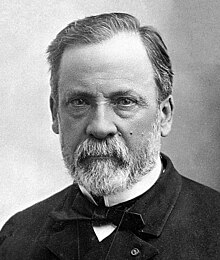


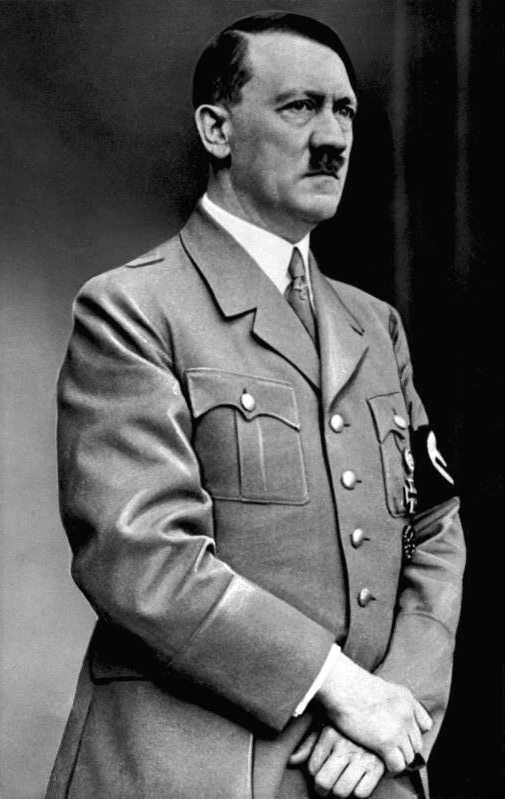


 I was born July 31, 1912, in Brooklyn, N.Y., the fourth and last child and first son of Sarah Ethel (Landau) and Jeno Saul Friedman. My parents were born in Carpatho-Ruthenia (then a province of Austria-Hungary; later, part of inter-war Czechoslovakia, and, currently, of the Soviet Union). They emigrated to the U.S. in their teens, meeting in New York. When I was a year old, my parents moved to Rahway, N.J., a small town about 20 miles from New York City. There, my mother ran a small retail “dry goods” store, while my father engaged in a succession of mostly unsuccessful “jobbing” ventures. The family income was small and highly uncertain; financial crisis was a constant companion. Yet there was always enough to eat, and the family atmosphere was warm and supportive.








 The cruise that recreates the Titanic’s voyage (everything…
 Ex-wife of minister dies after 24 years in a vegetative…





 professor played by



 Print
Print  PDF
PDF I’ve learned to


 The Daily Hatch