Francis Schaeffer “BASIS FOR HUMAN DIGNITY” Whatever…HTTHR
Dr. Francis schaeffer – The flow of Materialism(from Part 4 of Whatever happened to human race?)
Dr. Francis Schaeffer – The Biblical flow of Truth & History (intro)
Francis Schaeffer – The Biblical Flow of History & Truth (1)
WHO DID FRANCIS SCHAEFFER INFLUENCE? Here are some key people listed below:
Theologians Harold O. J. Brown, David Wells, Os Guinness, Timothy George, John Warwick Montgomery, John Piper, Norm Geisler, Wayne Grudem and L. Russ Bush, founders of ministries including James Dobson, D. James Kennedy, Jerry Falwell, R. C. Sproul, Chuck Colson and Tim and Beverley LaHaye, denomination leaders including Paige Patterson, Richard Land and James Montgomery Boice, publishers including Lane Dennis ofCrossway Books and Terry Eastland of The Weekly Standard, writers including Cal Thomas and Frank Peretti, and political leaders including Ronald Reagan, James and Susan Baker, C. Everett Koop, Jack Kemp and Gary Bauer—
I can honestly say that, besides my parents and Jesus Christ, no individual has influenced me more than Francis A. Schaeffer, a pastor-theologian most consider to have been among the greatest evangelical voices, and perhaps even the most influential, of the twentieth century. But Francis Schaeffer and his wife, Edith, were also close friends of my missionary grandparents. For me the Francis and Edith Schaeffer who inspired a generation of evangelicals, myself included, with the importance of engaging the culture for Christ, were also the family friends who nursed my grandparents to health after returning to the United States emaciated following release from a Japanese prison in a Prisoner of War exchange during World War II.
That is the reason my grandmother, Bertha Byram, was one of the earliest and most faithful prayer partners of the work called “L’Abri” founded in Europe by the Schaeffers after the war. That is why my grandmother is twice mentioned in The Tapestry. And that is why the communion table in the chapel the Schaeffer’s built in Huemoz, Switzerland, is dedicated to my grandmother. But I did not know this connection until after I was drawn to Schaeffer’s books for my own reasons.
I first became aware of Schaeffer while a student in high school struggling with matters of faith and culture, and on reading his first book, Escape from Reason, I found him so keenly in tune with my questions I devoured nearly all he wrote as it was published. That was in the late 1960s and early 1970s when Western culture, and especially American culture, was in turmoil from so many others of my age rebelling against all authority and tradition. Then, like many others on discovering Schaeffer, I also traveled to the mountains of Switzerland to meet him, and ended staying several months trying to understand what was taking place and what it meant to be authentically Christian in a world fast becoming radically post-Christian.
I learned much from Schaeffer that has affected me ever since, but as much from his life as from his thought, as much from his demonstrating Christian love as from his defending biblical truth, as much from how he respected the value and dignity of everyone he met however small or great as from what I learned from his writing. Schaeffer is the one who taught me that truth is a reality we must live and not just believe, and that if Christians do not live God’s truth the world has every right to reject what we claim is right and true. And Schaeffer is the one who taught me, more by example than words, how Christians can and must stand for purity and holiness without ugliness or harshness and should weep for those pursuing what we abhor.
Francis Schaeffer influenced my decision to become a culturally astute moral influence in Washington, D.C., an effort that resulted in affecting a wide range of issues in public policy. Schaeffer influenced my role in leading the fight against normalizing treatment of homosexual behavior in the military services. Schaeffer influenced my running for Congress in 2000. Schaeffer influenced my vision to develop what is now the strongest program in the world for training evangelicals in biblically uncompromising yet culturally engaged Christian ethics. And Schaeffer has influenced the sort of books I write, all of which have been written to resource evangelical witness on moral issues contested in the culture.
But while Schaeffer had a deep and lasting impact on evangelicals of my generation, shaping the those who led the Jesus Movement, the Moral Majority, the drafting of the Chicago Statement on Biblical Inerrancy, the first Lausanne Congress on World Evangelization, the rediscovery of classical Christian education, the formation of Crisis Pregnancy Centers, the Southern Baptist conservative resurgence, and the movement of evangelicals into politics now labeled the Christian Right—and while Schaffer played the major role in launching evangelical efforts to engage the culture on issues ranging from legalized abortion, euthanasia, sexual immorality, environmental stewardship, denying gender roles, reclaiming the arts, and education reform—and while Schaeffer was a major influence on many who rose to positions of significant leadership including theologians Harold O. J. Brown, David Wells, Os Guinness, Timothy George, John Warwick Montgomery, John Piper, Norm Geisler, Wayne Grudem and L. Russ Bush, founders of ministries including James Dobson, D. James Kennedy, Jerry Falwell, R. C. Sproul, Chuck Colson and Tim and Beverley LaHaye, denomination leaders including Paige Patterson, Richard Land and James Montgomery Boice, publishers including Lane Dennis ofCrossway Books and Terry Eastland of The Weekly Standard, writers including Cal Thomas and Frank Peretti, and political leaders including Ronald Reagan, James and Susan Baker, C. Everett Koop, Jack Kemp and Gary Bauer—the legacy of Francis A. Schaeffer is now in danger of being forgotten by a new generation that hardly knows his name much less understands how much they owe to the extraordinary influence of this passionate yet humble prophet used of God to transform and reenergize so much of what they inherit.
Of course, the ways in which any culture challenges authentically Christian witness change over time, but what Schaeffer taught evangelicals about the lordship of Christ over all areas of life, the timeless relevance of objectively reliable truth, the inerrancy of God’s Word, the marred nobility of human nature, the beauty of creation, and the meaninglessness of pretending to live in a self-centered mechanistic universe will never change and are as vitally important for evangelicals today as they were when Schaeffer held forth among us.
It is therefore strategic and absolutely critical that evangelicals revisit, reaffirm, and if necessary rediscover the legacy of Francis A. Schaeffer, lest we forget what we had and lose the art of engaging the culture without accommodating ourselves to the culture, of defending truth without being ugly, of loving those we engage without compromising purity, and of fitting our message to changing circumstances without compromising its content for fear of rejection or desire merely to be accepted by others.
The entrusting of the personal books, letters and papers of Frances A. Schaeffer, by the Francis A. Schaeffer Foundation, to the L. Russ Bush Center for Faith and Culture at Southeastern Baptist Theological Seminary could not be more timely or important. I am most grateful to my colleague, Bruce Little, and to the Schaeffer family for their vision and generosity, and I am certain this one very significant action will play a key role in revitalizing evangelical witness in contemporary culture. I pray it will also serve to inspire, benefit and aid in equipping of a new generation eager to make a biblically grounded, authentically Christian difference in the world of today.
Daniel R. Heimbach is Senior Professor of Christian Ethics at Southeastern Baptist Theological Seminary.
Benjamin Pennington • 5 months ago
Thank you, professor. I only originally knew of Schaeffer through Piper’s “Pastor As Scholar” discussion. Recently when our church gave away our library books, I found The God Who Is There, Death In the City, and Genesis In Space and Time. I had those books on my shelf for a year l, but started reading the God Who Is There a couple of weeks ago. I absolutely fell in love with his thinking and understanding if man’s despair, need for a universal unifying truth, and the way Schaeffer opened up my eyes to famous artists and what they were trying to accomplish. (I knew of John Cage years ago and hated his music, but Schaeffer really made sense of him for me.) So I have decided to plow through everything else Schaeffer wrote.
By the way, I enjoyed this article of yours. I am a GGBTS student in California, possibly transferring my units to SEBTS online. I hope to have the privilege of taking a course with you.
By the way I have reblogged this fine article today on my blog.
I am Everette Hatcher and in the 1970’s and 1980’s I was a member of Bellevue Baptist in Memphis where Adrian Rogers was pastor and was a student at Evangelical Christian School from the 5th grade to the 12th grade where I was introduced to the books and films of Francis Schaeffer. At ECS my favorite teacher was Mark Brink who actually played both film series to us (WHATEVER HAPPENED TO THE HUMAN RACE? and HOW SHOULD WE THEN LIVE?) during our senior year and believe it or not after I graduated I would come back and join some of his future classes when the film was playing again because I couldn’t get enough of Schaeffer’s film series!!!!
During this time I was amazed at how many prominent figures in the world found their way into the works of both Adrian Rogers and Francis Schaeffer and I wondered what it would be like if these individuals were exposed to the Bible and the gospel. Therefore, over 20 years ago I began sending the messages of Adrian Rogers and portions of the works of Francis Schaeffer to many of the secular figures that they mentioned in their works. Let me give you some examples and tell you about some lessons that I have learned.
I have learned several things about atheists in the last 20 years while I have been corresponding with them. First, they know in their hearts that God exists and they can’t live as if God doesn’t exist, but they will still search in some way in their life for a greater meaning. Second, many atheists will take time out of their busy lives to examine the evidence that I present to them. Third, there is hope that they will change their views.
Let’s go over again a few points I made at the first of this post. My first point is backed up by Romans 1:18-19 (Amplified Bible) ” For God’s wrath and indignation are revealed from heaven against all ungodliness and unrighteousness of men, who in their wickedness REPRESSandHINDER the truth and make it inoperative. For that which is KNOWN about God is EVIDENT to them andMADE PLAIN IN THEIR INNER CONSCIOUSNESS, because God has SHOWN IT TO THEM,”(emphasis mine). I have discussed this many times on my blog and even have interacted with many atheists from CSICOP in the past. (I first heard this from my pastor Adrian Rogers back in the 1980’s.)
My second point is that many atheists will take the time to consider the evidence that I have presented to them and will respond. The late Adrian Rogers was my pastor at Bellevue Baptist when I grew up and I sent his sermon on evolution and another on the accuracy of the Bible to many atheists to listen to and many of them did. I also sent many of the arguments from Francis Schaeffer also.
Third, there is hope that an atheist will reconsider his or her position after examining more evidence. Twenty years I had the opportunity to correspond with two individuals that were regarded as two of the most famous atheists of the 20th Century, Antony Flew and Carl Sagan. I had read the books and seen the films of the Christian philosopher Francis Schaeffer and he had discussed the works of both of these men. I sent both of these gentlemen philosophical arguments from Schaeffer in these letters and in the first letter I sent a cassette tape of my pastor’s sermon IS THE BIBLE TRUE? You may have noticed in the news a few years that Antony Flew actually became a theist in 2004 and remained one until his death in 2010. Carl Sagan remained a skeptic until his dying day in 1996.Antony Flew wrote me back several times and in the June 1, 1994 letter he commented, “Thank you for sending me the IS THE BIBLE TRUE? tape to which I have just listened with great interest and, I trust, profit.” I later sent him Adrian Rogers’ sermon on evolution too.
The ironic thing is back in 2008 I visited the Bellevue Baptist Book Store and bought the book There Is A God – How the World’s Most Notorious Atheist Changed His Mind, by Antony Flew, and it is in this same store that I bought the message by Adrian Rogers in 1994 that I sent to Antony Flew. Although Antony Flew did not make a public profession of faith he did admit that the evidence for God’s existence was overwhelming to him in the last decade of his life. His experience has been used in a powerful way to tell others about Christ. Let me point out that while on airplane when I was reading this book a gentleman asked me about the book. I was glad to tell him the whole story about Adrian Rogers’ two messages that I sent to Dr. Flew and I gave him CD’s of the messages which I carry with me always. Then at McDonald’s at the Airport, a worker at McDonald’s asked me about the book and I gave him the same two messages from Adrian Rogers too.
Francis Schaeffer’s words would be quoted in many of these letters that I would send to famous skeptics and I would always include audio messages from Adrian Rogers. Perhaps Schaeffer’s most effective argument was concerning Romans 1 and how a person could say that he didn’t believe that the world had a purpose or meaning but he could not live that way in the world that God created and with the conscience that every person is born with.
Google “Adrian Rogers Francis Schaeffer” and the first 4 things that come up will be my blog posts concerning effort to reach these atheists. These two great men proved that the scriptures Hebrews 4:12 and Isaiah 55:11 are true, “For the word of God is alive and active. Sharper than any double-edged sword, it penetrates even to dividing soul and spirit, joints and marrow; it judges the thoughts and attitudes of the heart.” and “so is my word that goes out from my mouth: It will not return to me empty, but will accomplish what I desire and achieve the purpose for which I sent it.”
_____________ Jürgen Habermas Interview Uploaded on Feb 1, 2007 Rare video footage of Jurgen Habermas discussing some of his theories.http://soundcloud.com/st-hanshaugen Francis Schaeffer pictured below: ______________ Francis Schaeffer notes: At Berkeley the Free Speech Movement arose simultaneously with the hippie world of drugs. At first it was politically neither left nor right, but rather a […]
Bettina Aptheker pictured below: Moral Support: “One Dimensional Man” author Herbert Marcuse accompanies Bettina Aptheker, center, and Angela Davis’ mother, Sallye Davis, to Angela Davis’ 1972 trial in San Jose. Associated Press ___________________________________________________________________________ Francis Schaeffer has written extensively on art and culture spanning the last 2000years and here are some posts I have done on […]
_____________________ Francis Schaeffer pictured below: ____ Elston Gunn- Ballad of A Thin Man, Live Sheffield 1966 Francis Schaeffer has written extensively on art and culture spanning the last 2000 years and here are some posts I have done on this subject before : Francis Schaeffer’s “How should we then live?” Video and outline of episode 10 […]
______________ Just like tom thumb´s blues (no direction home) Francis Schaeffer has written extensively on art and culture spanning the last 2000 years and here are some posts I have done on this subject before : Francis Schaeffer’s “How should we then live?” Video and outline of episode 10 “Final Choices” , episode 9 “The Age of Personal […]
Bob Dylan – When You Gonna Wake Up Sermon – Tempe 1979 Published on Apr 28, 2012 Probably the most contentious show in Dylan’s long history of live performance. The between-song “raps” were a fixture of Dylan’s performances during his “Christian” period, but early during the Slow Train Coming tour, Dylan and his band encountered […]
How Should We Then Live? Episode 2 Part 2/2 RebelShutze· __________ Episode III – The Renaissance JasonUellCrank How Should We Then Live? Episode 3 Part 1/2 RebelShutze Published on Jun 4, 2012 The third part of Dr. Francis Schaeffer’s ten-part series based off of his book “How Should We Then Live?” This is Episode 3, […]
_______ Dr Provine is a very honest believer in Darwinism. He rightly draws the right conclusions about the implications of Darwinism. I have attacked optimistic humanism many times in the past and it seems that he has confirmed all I have said about it. Notice the film clip below and the quote that Francis Schaeffer […]
___________________________________________________________________________ Francis Schaeffer “BASIS FOR HUMAN DIGNITY” Whatever…HTTHR ___________________ Woody Allen on Ingmar Bergman and the death. Woody Allen et Marshall McLuhan : « If life were only like this! » What Makes Life Worth Living? – Answered by Woody Allen. ______________ Diane Keaton et Woody Allen What Makes Life Worth Living? _____________________________________________________________________________________________________________________________________ Dr. Francis Schaeffer – […]
___________ Francis Schaeffer pictured below: ____ Dr. Francis Schaeffer – Episode 8 – The Age of Fragmentation NoMirrorHDDHrorriMoN In the book HOW SHOULD WE THEN LIVE? Schaeffer notes: Especially in the sixties the major philosophic statements which received a wide hearing were made through films. These philosophic movies reached many more people than philosophic writings […]
In this post we are going to see that through the years humanist thought has encouraged artists like Michelangelo to think that the future was extremely bright versus the place today where many artist who hold the humanist and secular worldview are very pessimistic. In contrast to Michelangelo’s DAVID when humanist man thought he […]
________________ Dr. Francis Schaeffer – Episode VII – The Age of Non Reason Francis Schaeffer- How Should We Then Live? -8- The Age of Fragmentation Joseph Rozak·https://www.youtube.com/watch?v=LEmwy_dI2j0 ___________________________ ___________________________ ___________________ Miles Davis and Andy below: ______________________ Dali and Warhol below: ________- __________________ Francis Schaeffer with his son Franky pictured below. Francis and Edith (who passed away in 2013) opened L’ Abri in 1955 in Switzerland. How Should […]
_________ John, Yoko and Warhol pictured below: ________________________ The Clash meets Warhol: ______________________ ________________ ________ Andy Warhol and members of The Factory: Gerard Malanga, poet; Viva, actress; Paul Morrissey, director; Taylor Mead, actor; Brigid Polk, actress; Joe Dallesandro, actor; Andy Warhol, artist, New York, October 9, 1969 (picture below) _____________________ Francis Schaeffer “BASIS FOR […]
Recently I got to see this piece of art by Andy Warhol of Dolly Parton at Crystal Bridges Museum in Bentonville, Arkansas: Andy Warhol, Dolly Parton (1985) Synthetic polymer paint and silkscreen ink on canvas 42 x 42 in. (106.7 x 106.7 cm) ___________ Susan Anton, Sylvester Stallone and Andy Warhol pictured […]
How Should We Then Live The Age of Non Reason Scott87508 ____________________________________________________________________________________________________ Dr. Francis Schaeffer – Episode 8 – The Age of Fragmentation NoMirrorHDDHrorriMoN Francis Schaeffer pictured below: ___________ Francis Schaeffer has written extensively on art and culture spanning the last 2000 years and here are some posts I have done on this subject before : Francis Schaeffer’s “How should we then live?” Video and outline of episode 10 “Final Choices” , episode 9 […]
________ Today I am looking at Jacob Bronowski and his contribution to spreading the thought of Charles Darwin to a modern generation. The artist Ellen Gallagher is one of those in today’s modern generation that talks about how evolution is pictured in his art works. What are some of the observations that Francis Schaeffer makes concerning […]
Dr. Francis schaeffer – The flow of Materialism(from Part 4 of Whatever happened to human race?) Dr. Francis Schaeffer – The Biblical flow of Truth & History (intro) Francis Schaeffer – The Biblical Flow of History & Truth (1) Dr. Francis Schaeffer – The Biblical Flow of Truth […]
___________________________________________________________________________________________________________________________ Dr. Francis Schaeffer – Episode 8 – The Age of Fragmentation NoMirrorHDDHrorriMoN Francis Schaeffer has written extensively on art and culture spanning the last 2000 years and here are some posts I have done on this subject before : Francis Schaeffer’s “How should we then live?” Video and outline of episode 10 “Final Choices” , episode 9 “The Age of Personal Peace and Affluence”, episode 8 “The Age of Fragmentation”, episode 7 “The Age of […]
____________________________________ Dr. Francis Schaeffer – Episode 8 – The Age of Fragmentation NoMirrorHDDHrorriMoN ___________________ In ART AND THE BIBLE Francis Schaeffer observed, “Modern art often flattens man out and speaks in great abstractions; But as Christians, we see things otherwise. Because God has created individual man in His own image and because God knows and […]
__________________ Francis Schaeffer- How Should We Then Live? -8- The Age of Fragmentation Joseph Rozak· https://www.youtube.com/watch?v=LEmwy_dI2j0Alain Resnais Interview 1 ______________ Last Year in Marienbad (1961) Trailer ________________________ My Favorite Films: Last Year at Marienbad Movie Review – WillMLFilm Review ________________________ ____________________________ Alain Resnais, NYC, 12/12/80 _______________ Francis Schaeffer pictured below: _______________- Francis Schaeffer below […]
__________________ Today we are going to look at the philosopher Jean Paul Sartre and will feature the work of the artist David Hooker. Francis Schaeffer pictured below: _________________________________ Sunday, November 24, 2013 A Star to Steer By – Revised! The beautiful Portland Head Lighthouse on the Maine coast. It was the flash from this lighthouse I […]
________________ Dr. Francis Schaeffer – Episode 3 – The Renaissance NoMirrorHDDHrorriMoN How Should We Then Live (Dr. Francis Schaeffer) Excerpt from Part 3 Eric Holmberg https://www.youtube.com/watch?v=qTa9BE2LNZM _________________________ Christians used to be the ones who were responsible for the best art in the culture. Will there ever be a day that happens again? […]
_________________ Francis Schaeffer has written extensively on art and culture spanning the last 2000 years and here are some posts I have done on this subject before : Francis Schaeffer’s “How should we then live?” Video and outline of episode 10 “Final Choices” , episode 9 “The Age of Personal Peace and Affluence”, episode 8 “The Age of Fragmentation”, episode 7 “The Age of Non-Reason” , episode 6 “The Scientific Age” , episode 5 “The Revolutionary Age” , episode 4 “The Reformation”, episode 3 […]
FRANCIS SCHAEFFER ANALYZES ART AND CULTURE Part 4 ( Schaeffer and H.R. Rookmaaker worked together well!!! (Feature on artist Mike Kelley Part B ) Dr. Francis Schaeffer – Episode 3 – The Renaissance NoMirrorHDDHrorriMoN __________ Episode III – The Renaissance JasonUellCrank How Should We Then Live (Dr. Francis Schaeffer) Excerpt from Part 3 Eric […]
___________________ ____________________________________________________________________________________________________ Dr. Francis Schaeffer – Episode 8 – The Age of Fragmentation NoMirrorHDDHrorriMoN Dr. Francis Schaeffer – Episode VII – The Age of Non Reason Dr. Francis Schaeffer examines the Age of Non-Reason and he mentions the work of Paul Gauguin. Paul Gauguin October 12, 2012 by theempireoffilms Paul Gauguin was born in Paris, France, on June […]
__________________________ Dr. Francis Schaeffer – Episode 8 – The Age of Fragmentation NoMirrorHDDHrorriMoN Today I am posting my second post in this series that includes over 50 modern artists that have made a splash. Last time it was Tracey Emin of England and today it is Peter Howson of Scotland. Howson has overcome alcoholism in […]
__________________ Francis Schaeffer pictured below: _______________- I want to make two points today. First, Greg Koukl has rightly noted that the nudity of a ten year old girl in the art of Robert Mapplethorpe is not defensible, and it demonstrates where our culture is morally. It the same place morally where Rome was 2000 years […]
BRIAN LAMB, HOST: Dr. Milton Friedman, why did you choose or why did they ask you to write the introduction to the F. A. Hayek Road to Freedom 50th anniversary . . .
FRIEDMAN: Road to Serfdom.
LAMB: Yes, that’s your title on your book. Why did you do it?
FRIEDMAN: The reason they asked me was very clear, because Hayek and I had been associated for a very long time, in particular in an organization called the Mont Pelerin Society that he founded. The charter meeting was in 1947 in Switzerland. Hans Morgenthau, who was a professor at the University of Chicago when I was there, a political scientist, when I came back from the meeting, he asked me where I had been, and I told him that I had been to a meeting that had been called by Hayek to try to bring together the believers in a free, open society and enable them to have some interchange, one with another. He said, “Oh, a meeting of the veterans of the wars of the 19th century!” I thought that was a wonderful description of the Mont Pelerin Society. Well, Hayek and I worked together in the Mont Pelerin Society and we were fostering essentially the same set of ideas. His Road to Serfdom book, the one you have there, which was published 50 years ago, was really an amazing event when it came out. It’s very hard to remember now what the attitude was in 1944-45. Throughout the Western world, the movement was toward centralization, planning, government control. That movement had started already before World War II. It started, really with the Fabian Society back in the late 19th century-George Bernard Shaw, the Webbs and so on. But the war itself and the fact that in war you do have to have an enormous amount of government control greatly strengthened the idea that after the war what you needed was to have a rational, planned, organized, centralized society and that you had to get rid of the wastes of competition. That was the atmosphere. Those of us who didn’t agree believed in what we would call a liberal society, a free society — 19th century liberalism. There were quite a number of us in the United States and in Britain, but in the rest of the world they were very isolated, indeed. Hayek’s idea was to bring them together and enable them to get comfort and encouragement from one another without having to look around to see who was trying to stab them in the back, which was the situation in their home countries.
LAMB: The New York Times put on the op-ed page your introduction to this edition. Do you know why they did that? What got their attention?
FRIEDMAN: I can’t answer that. You’d have to ask the people at the New York Times. On the whole, they have in the past not been very favorable to these ideas — quite the contrary — but they’ve been changing. About two or three years ago, they published — they’ve turned many an op-ed piece from me, which I subsequently published in the Wall Street Journal or somewhere else. But a couple of years ago, they did publish an op-ed piece from me about the situation after the fall of the Berlin Wall, in which my thesis was a very simple one. Everybody agrees, as a result of the experience in the West, that socialism has been a failure. Everybody agrees that capitalism has been a success, that wherever you have had an improvement in the conditions of the ordinary people over any lengthy time, it’s been in a capitalist society, and yet everybody is extending socialism. After the fall of the Berlin Wall, there were no summits in Washington about how we cut down government. The lesson from the fall of the Berlin Wall was that we have too extensive a government and we ought to cut it down. Everybody agrees, but yet wherever you go, we have to extend socialism. The summit in Washington was about how you enable government to get more revenue in order for government to be more important, which is exactly the opposite. So socialism guides our behavior in strict contrast to what we believe to be the facts of the world.
LAMB: Let me ask you a little bit more about Friedrich Hayek. Who was he?
FRIEDMAN: Fritz Hayek was an economist. He was born in Vienna. He started his professional career in Vienna. In the late 1920s, some people in Britain at the London School of Economics were very greatly impressed with the book he had written and with the work he had done, and they invited him to come to the London School. At a relatively young age, he became a professor at the London School of Economics. He spent the 30s and most of the 40s there. Early in the 1950s, he left London and came to the University of Chicago where he was a professor for about 10 years, and then he went back to Germany. He essentially retired to the University of Freiberg in Germany.
LAMB: How long has he been dead?
FRIEDMAN: He’s been dead about two years now, I think. He lived to be 90, and he has an enormous list of books and articles and so on he has published. The Road to Serfdom, the one we’re showing here, was a sort of manifesto and a call to arms to prevent the accumulation of a totalitarian state. One of the interesting things about that book is whom it’s dedicated to. It’s dedicated “to the socialists of all parties,” because the thesis of the book is that socialism is paving the way toward totalitarianism and that Socialist Russia, at the time, is not different from Nazi Germany. Indeed, it was national socialism — that’s where “nazi” comes from. This was a kind of manifesto and had a very unexpected effect. It was turned down by several publishers in the United States before the University of Chicago published it, and both in Britain and the United States, it created something of a sensation. It was a best-seller. The Reader’s Digest published a condensation of it and distributed 600,000 copies. You had a big argument raising about people who were damning it as reactionary against all the good things of the world and people who were praising it and showing what the real status was. It’s a book well worth reading by anybody because there’s a very subtle analysis of why it is that well-meaning people who intend only to improve the lot of their fellows tend to favor courses of action which have exactly the opposite effect. I think from my point of view the most interesting chapter in that book is one labeled “Why the Worst Get on Top.” It’s, in a way, another example of the famous statement of Lord Acton that “power corrupts and absolute power corrupts absolutely.”
LAMB: Lord Acton’s quoted several times in the book.
FRIEDMAN: Oh, sure. Lord Acton was a great defender of a free society. The way the worst rise to the top is that if you’re given power and you have to exercise it, you are driven by that necessity to do things that many people really would object to doing. Only those people who are willing to behave in a public capacity differently than they would behave in their private capacity are ever going to make it to the top.
LAMB: Who was Lord Acton? G: Lord Acton was an English Catholic who was a great historian. He was a professor at Oxford. He had a named professorship, which I’ve forgotten. He wrote A History of Liberty, which was very famous and very important. He also was very much involved — this has nothing to do with this, really — in the dispute within the Catholic church about the infallibility of the pope. What do they call it when they call one of these . . .
LAMB: Encyclical?
FRIEDMAN: It’s a meeting which establishes a policy.
LAMB: Like Vatican II?
FRIEDMAN: Right. One of those in the end of the 19th century was the one at which they declared the doctrine of the infallibility of the pope, and he fought very hard against that because he was a believer in liberty and freedom and tolerance and did not believe that you should declare any man to be infallible.
LAMB: Why is it that so many conservatives today will cite you but also cite Hayek?
FRIEDMAN: Because, as I said in that introduction, over the years I’ve gone around and asked people who had shifted from a belief in central government and socialism and what today goes by the name of liberalism what led them to shift, what led them to an understanding that that was a wrong road. Over and over again, the answer has been The Road to Serfdom.
LAMB: You wrote an introduction in 1971?
FRIEDMAN: I wrote an introduction to a German edition 25 years ago. It was the 25th anniversary. My introduction here is primarily the same one. It’s just as applicable now as it was then. The really troublesome thing is what I mentioned earlier. Everybody is persuaded that socialism is a failure, and yet in practice we keep moving down the socialist road. When Hayek’s book was published in 1944 — or let’s take not 44, but take 46 or 50 just after the end of the war — government was much smaller in the United States than it is today. If I remember the numbers, government spending at all levels, for federal, state and local, was about 25 percent of the national income. Today it’s 45 percent. That doesn’t allow for the effect, not of spending, but of regulations — the Clean Air Act, the Aid to Disabilities Act and so on — so that, in fact, we are more than half socialist today; that is, more than half of the total output of the country is being distributed in a way that is determined by the government. That’s the regulations. We pride ourselves on being a free society and having a great deal of liberty. We do, compared to many countries of the world. But just consider the limitations on our freedom. You can’t choose what profession to go into. You can’t become a lawyer just because you want to become a lawyer. You have to get approval from the government. You have to get a license. That’s true for beauticians; it’s true for plumbers. It’s true in New York City and most big cities for taxicab drivers. There are enormous limitations on what we can do, and this goes much beyond the direct economic sphere. Consider the question of freedom of speech. During the 1950s, 60s and 70s when there was a big problem of inflation, the government was making a big push about selling savings bonds. They were a gyp. The amount you paid for the savings bond you would never get back in purchasing power. If you held a savings bond for 25 years, at the end of the time when you turned it in, not only was the purchasing power because of inflation less than it had been, but to add insult to injury, you had to pay a tax on the so-called income from it. At the same time, leading bankers would join in advertisements in the newspapers telling everybody to buy savings bonds. I went around and asked bank presidents that I knew why they did that. I asked them first, “Do you buy savings bonds for yourself?” “Oh, no.” “Is it a good investment?” “No.” “Why do you tell the public it is?” “Because the Treasury wouldn’t like it if we didn’t.” They’re not free to speak. I know from experience — I happen to be opposed to tenure in universities. But the only academics who are free to speak that way are people who have permanent tenure and on the verge of retirement. If you look at it from that point of view, there are enormous restrictions on what we can do and say, all imposed by the government. That doesn’t count the loss of freedom from the fact that they take money away from hard-working, productive people who are producing this national income and give it to people who are out of work, who are on welfare, or in prisons for that matter. It doesn’t include the corruption in our personal property rights that arises through the attempt to prohibit drugs, which has led to tremendous invasions on our liberty. You can have a drug enforcement person come to your door and knock on you because some unknown person has said you’re dealing with drugs. There are many absolutely heartbreaking cases of innocent people whose rights have been violated in this way, whose property has been taken away and who have been unable to regain it. I’m a very old man, and I was graduated from high school in 1928. That’s a long time ago. Now, if you look at the situation in 1928, we were much poorer in terms of physical goods. We didn’t have microwave, we didn’t have washing machines — you can go down the line. There’s no question that we’re enormously wealthier today in that sense and enormously have a higher standard of living from that point of view. On the other hand, we were safer, more secure, freer in 1928 than we are now. As of that time, government was spending something like 10 to 15 percent of the national income; the private sector, 85 to 90. Today, government controls over half the national income and private enterprise controls only the rest. Where have all these good things come from? Can you name any of those additions to our well-being that have come from government? It wasn’t government that produced the microwave. It wasn’t government that produced the improved automobiles. It wasn’t government that produced computers that led to the information age. On the other hand, consider our problems. Our major problems are not economic. Our major problems are social. Our major problems are the underclass in the center cities, the development of crime so that today we’re much less safe than we were when I graduated high school. We have much less feeling of security, much less optimism about what the future’s going to be like, and all of the problems have been produced but government. Consider the schools. The quality of schooling I got in a public high school in 1928 was almost surely a great deal higher than you can get in any but a small number of schools now. You have the dropouts, you have the decline in scores on SAT and the like. Why? Because education is the most socialized industry in the United States. Ninety percent of our kids are in public schools, ten percent in private, and education is a completely centralized, socialized system, and it behaves just the way every other socialized system does. It produces a low-quality output, benefits a small number of people — currently mostly those who are associated with the National Education Association, the American Federation of Teachers — and does a great deal of harm to a lot of people.
LAMB: Let me ask you about your own beginning. Where were you born?
FRIEDMAN: I was born in Brooklyn, but I had sense enough to move out when I was 13 months old.
LAMB: What did your parents do then?
FRIEDMAN: My parents moved to Rahway, N.J., and they were small-scale businessmen who never had an income and by today’s standard would have exceeded the poverty standard. They moved to Rahway, N.J., where they at first had a small textile factory, and then that wasn’t very successful and so they opened a small retail store and that was the source of their income.
LAMB: What influence did they have on what you decided to do for college?
FRIEDMAN: Very little, except for the fact that they encouraged me to want to go to college. As it happened, my father died before I had graduated from high school. I had three sisters and myself. I was the youngest, and I was the only one of the four who went to college.
LAMB: Where did you go?
FRIEDMAN: Rutgers University.
LAMB: A state school.
FRIEDMAN: No, at that time it was not. Rutgers is a very old institution that was established before the Revolution by the Dutch Reform Church, and at the time I went to it, it was really entirely a private school. Only subsequently was it converted into one of the mega state universities.
LAMB: What did you study?
FRIEDMAN: Hold on. However, I was able to go to it because of an action of the state. The state of New Jersey at that time offered scholarships on a competitive basis. Had a series of exams, and the people who succeeded in those exams and who could demonstrate financial need received free tuition at Rutgers. It was because of that that I was able to go to Rutgers. Now, the tragedy. At the time, that was a very valuable thing. The tragedy is that the state of New Jersey in their new incarnation now has a similar program, but the qualification for getting a scholarship is below average academic quality. It’s a program to raise the lesser qualified. It typifies what’s happened in our society. Instead of emphasizing strengthening the opportunities open to the able, we have tended increasingly to shift into a state of victims in which the emphasis is on raising the people at the bottom. Now, no social progress has ever come from the bottom up. It’s always come from the top small number pulling up the society as a whole and raising it.
LAMB: When did you first get into economics?
FRIEDMAN: I went to Rutgers and I did a joint major at the time in economics and mathematics.
LAMB: Why did you pick it? Do you remember?
FRIEDMAN: No. I liked mathematics and I was good at mathematics and I wanted to be able to earn an income. I may say, I worked my way through school, of course. I earned my own income. I wanted to be able to earn an income. As an innocent youth, the only way I knew that you could use mathematics to earn an income was in actuarial work for insurance companies, and so that was my initial objective. How I got into economics, I don’t know, but somehow or other I did get into economics. Now, by the time I graduated in 1932, the situation was very different. We were in the midst of the worst depression we’ve ever had. The major problems of the country were economic, and it’s natural that I would have been interested. As it happened, I was very lucky. When I graduated in 32, I was able to get the offer of two tuition scholarships, one from Brown University in applied mathematics and one from University of Chicago in economics, and it’s easy to know why I took the economics at that time.
LAMB: How many books have you written?
FRIEDMAN: Oh, I don’t know, 15.
LAMB: The best seller?
FRIEDMAN: The best seller is undoubtedly Free To Choose, which was written by myself and my wife. It was based on the TV program of the same title. It was a 10-part TV program that was shown in 1980 on PBS. In reverse of the usual procedure, the TV program wasn’t based on the book; the book was based on the TV program, because I insisted that I was not going to talk to a written script for the TV program but I was just going to talk. Then from the transcript of the TV program, we developed the book. It’s undoubtedly the best seller, although the other you have there, Capitalism and Freedom — again, this is a very interesting contrast. That back was published in 1963. At the time it was published, it was so out of favor, so much outside the intellectual atmosphere of the time that it was not reviewed in any major paper or magazine, other than the Economist in London. It was not reviewed by the New York Times, by the then Herald Tribune, Time, Newsweek. None of them reviewed it, and yet over the subsequent 30 years, it has sold something like a half a million copies.
LAMB: The tie you have on . . .
FRIEDMAN: That’s Adam Smith’s tie.
LAMB: Adam Smith comes up in all your books.
FRIEDMAN: Oh, of course. Adam Smith was the founder of modern economics.
LAMB: When did he live?
FRIEDMAN: In the 18th century. Adam Smith’s great book The Wealth of Nations was published in 1776, the same year as the Declaration of Independence.
LAMB: When did you first read it?
FRIEDMAN: In college as an undergraduate.
LAMB: Is he the guy who’s most important in your education?
FRIEDMAN: Well, that’s very hard to say. He certainly had a major influence on all of us, but after all, I think the influence when you get an education comes from people who are living people, not from books. Books influence you. There’s no doubt about it. They make a great difference. But the person who is probably most important in my education — there are several. One is Arthur Burns, who was subsequently chairman of the Federal Reserve System and so on. He was at Rutgers, and he taught me as an undergraduate and he was really my mentor for a large part of my professional career. I owe a great deal to Arthur. But then I went to the University of Chicago and there was a group of teachers at the University of Chicago — Jacob Viner, Frank Knight, Henry Simons — who played a major influence in shaping my views and attitudes.
LAMB: When did you think you had enough independent thought to start writing books like Free to Choose and Capitalism and Freedom?
FRIEDMAN: That was very late. Up until that point, prior to that, my writings were scientific. See, these books give a misleading impression of my publications. Most of my publications are technical, scientific, economic publications, which really do not have any great interest to the public at large. That’s a best-seller, Free to Choose, but there’s no question that the most influential book I’ve written is not Free to Choose, but a book that sold probably one-twentieth as many, 5 percent as many copies, namely A Monetary History of the United States, which I wrote jointly with Anna Schwartz. So I really had a fairly large body of technical economic literature before I started writing on public policy.
Milton Friedman The Power of the Market 5-5 How can we have personal freedom without economic freedom? That is why I don’t understand why socialists who value individual freedoms want to take away our economic freedoms. I wanted to share this info below with you from Milton Friedman who has influenced me greatly over […]
Open letter to President Obama (Part 578) (Emailed to White House on 6-10-13.) President Obama c/o The White House 1600 Pennsylvania Avenue NW Washington, DC 20500 Dear Mr. President, I know that you receive 20,000 letters a day and that you actually read 10 of them every day. I really do respect you for trying to get […]
Milton Friedman The Power of the Market 4-5 How can we have personal freedom without economic freedom? That is why I don’t understand why socialists who value individual freedoms want to take away our economic freedoms. I wanted to share this info below with you from Milton Friedman who has influenced me greatly over the […]
Milton Friedman The Power of the Market 3-5 How can we have personal freedom without economic freedom? That is why I don’t understand why socialists who value individual freedoms want to take away our economic freedoms. I wanted to share this info below with you from Milton Friedman who has influenced me greatly over the […]
Milton Friedman The Power of the Market 2-5 How can we have personal freedom without economic freedom? That is why I don’t understand why socialists who value individual freedoms want to take away our economic freedoms. I wanted to share this info below with you from Milton Friedman who has influenced me greatly over the […]
Milton Friedman The Power of the Market 1-5 How can we have personal freedom without economic freedom? That is why I don’t understand why socialists who value individual freedoms want to take away our economic freedoms. I wanted to share this info below with you from Milton Friedman who has influenced me greatly over the […]
Milton Friedman: Free To Choose – The Failure Of Socialism With Ronald Reagan (Full) Published on Mar 19, 2012 by NoNationalityNeeded Milton Friedman’s writings affected me greatly when I first discovered them and I wanted to share with you. Abstract: Ronald Reagan introduces this program, and traces a line from Adam Smith’s “The Wealth of […]
Milton Friedman: Free To Choose – The Failure Of Socialism With Ronald Reagan (Full) Published on Mar 19, 2012 by NoNationalityNeeded Milton Friedman’s writings affected me greatly when I first discovered them and I wanted to share with you. Abstract: Ronald Reagan introduces this program, and traces a line from Adam Smith’s “The Wealth of […]
In 1980 I read the book FREE TO CHOOSE by Milton Friedman and it really enlightened me a tremendous amount. I suggest checking out these episodes and transcripts of Milton Friedman’s film series FREE TO CHOOSE: “The Failure of Socialism” and “What is wrong with our schools?” and “Created Equal” and From Cradle to Grave, […]
Friedman on Reagan Uploaded by YAFTV on Aug 19, 2009 Nobel Laureate Dr. Milton Friedman discusses the principles of Ronald Reagan during this talk for students at Young America’s Foundation’s 25th annual National Conservative Student Conference _______________ Passing the Balanced Budget Amendment would be what the founding fathers would have wanted. Look at what my […]
In 1980 I read the book FREE TO CHOOSE by Milton Friedman and it really enlightened me a tremendous amount. I suggest checking out these episodes and transcripts of Milton Friedman’s film series FREE TO CHOOSE: “The Failure of Socialism” and “What is wrong with our schools?” and “Created Equal” and From Cradle to Grave, […]
In 1980 I read the book FREE TO CHOOSE by Milton Friedman and it really enlightened me a tremendous amount. I suggest checking out these episodes and transcripts of Milton Friedman’s film series FREE TO CHOOSE: “The Failure of Socialism” and “The Anatomy of a Crisis” and “What is wrong with our schools?” and “Created […]
In 1980 I read the book FREE TO CHOOSE by Milton Friedman and it really enlightened me a tremendous amount. I suggest checking out these episodes and transcripts of Milton Friedman’s film series FREE TO CHOOSE: “The Failure of Socialism” and “The Anatomy of a Crisis” and “What is wrong with our schools?” and “Created […]
In 1980 I read the book FREE TO CHOOSE by Milton Friedman and it really enlightened me a tremendous amount. I suggest checking out these episodes and transcripts of Milton Friedman’s film series FREE TO CHOOSE: “The Failure of Socialism” and “The Anatomy of a Crisis” and “What is wrong with our schools?” and “Created […]
Bob Chitester Discusses Milton Friedman and ‘Free to Choose’ Published on Jul 30, 2012 by LibertarianismDotOrg “There are very few people over the generations who have ideas that are sufficiently original to materially alter the direction of civilization. Milton is one of those very few people.” That is how former Federal Reserve Chairman Alan Greenspan […]
published Tuesday, July 31st, 2012 Chattanooga Times Free Press Milton Friedman at 100 Milton Friedman Photo by Associated Press /Chattanooga Times Free Press. enlarge photo One hundred years ago today, the most powerful defender of economic liberty in American history was born in Brooklyn to poor Jewish immigrants. Though he stood barely five […]
FREE TO CHOOSE “Who protects the worker?” Video and Transcript Part 3 of 7 In 1980 I read the book FREE TO CHOOSE by Milton Friedman and it really enlightened me a tremendous amount. I suggest checking out these episodes and transcripts of Milton Friedman’s film series FREE TO CHOOSE: “The Failure of Socialism” and […]
Before Woody Allen became the prolific director responsible for such classics as Manhattan and Annie Hall, he was a well-received stand-up. During his tenure as an in-demand touring comedian, he released three albums: 1964’s Woody Allen, 1965’s Volume 2, and 1968’s The Third Woody Allen Album.On January 13th, Allen’s entire discography is being reissued in a new commemorative box set. The Stand Up Years: 1964-1968 spans two discs and also includes exclusive material and bonus interviews taken from 2012’s Woody Allen: A Documentary.As a preview of the release, Allen has unveiled an exclusive audio excerpt from the film. In the clip, he fondly remembers his days as a comedian and offers up fascinating anecdotes about his longtime touring managers, Jack Rollins and Charles Joffe. Listen to the excerpt at EW.com.The Stand Up Years: 1964-1968 Tracklist:Disc 1 – Recorded Live at Mr. Kelly’s, Chicago, March 1964:
01. Private Life
02. Brooklyn
03. The Army
04. Pets
05. My Grandfather
06. My Marriage
07. Bullet In My Breast Pocket
08. N.Y.U.
09. A Love Story
10. The Police
11. Down South
12. Summing UpDisc 2 – Recorded Live at The Shadows, Washington D.C., April 1965:
13. The Moose
14. Kidnapped
15. Unhappy Childhood
16. The Science Fiction Film
17. Eggs Benedict
18. Oral Contraception
19. European Trip
20. The Lost GenerationDisc 2 – Recorded Live at Eugene’s, San Francisco, August 1968:
21. The Vodka Ad
22. Vegas
23. Second Marriage
24. The Great Renaldo
25. Mechanical Objects
26. Questions and AnswersBonus Material – A Decade of Stand Up: Audio excerpts from Woody Allen: A Documentary
27. Mort Sahl – Changed the History of Comedy
28. The Rolls Royce of Management
29. Loyalty
30. The New Comic
31. The Village_____________
Woody Allen Stand Up Comic 1964 1968 18 My Grandfather
I have spent alot of time talking about Woody Allen films on this blog and looking at his worldview. He has a hopeless, meaningless, nihilistic worldview that believes we are going to turn to dust and there is no afterlife. Even though he has this view he has taken the opportunity to look at the weaknesses of his own secular view. I salute him for doing that. That is why I have returned to his work over and over and presented my own Christian worldview as an alternative.
-INCLUDES ALL THREE LIVE STAND-UP ALBUMS RECORDED BETWEEN 1964-1968
-REMASTERED AND AVAILABLE ON CD AND DIGITALLY
-BONUS MATERIAL INCLUDES: AUDIENCE Q&A AND OVER 20 MINUTES OF AUDIO EXCERPTS FROM WOODY ALLEN: A DOCUMENTARY
____ Woody Allen’s past movies and the subject of the Meaning of Life examined!!! Out of the Past: Woody Allen, Nostalgia, the Meaning of Life, and Radio Days Kyle Turner Jul 25, 2014 Film, Twilight Time 1 Comment “I firmly believe, and I don’t say this as a criticism, that life is meaningless.” – Woody […]
Woody Allen Should Have Quoted Pascal: “Magic in the Moonlight” January 7, 2015 by Roger E. Olson 9 Comments Woody Allen Should Have Quoted Pascal: “Magic in the Moonlight” I am no Roger Ebert and don’t watch that many movies, but in my opinion, for what it’s worth, Woody Allen’s 2014 film “Magic in […]
______________ If anyone has read my blog for any length of time they know that I am the biggest Woody Allen fan of all time. No one except maybe Bergman has attacked the big questions in life as well as Woody Allen. Furthermore, Francis Schaeffer is my favorite Christian Philosopher and he spent a lot […]
___________ Woody Allen to make first TV series for Amazon Prime ‘I’m not sure where to begin,’ says 79-year-old Oscar-winner about his small screen debut, as streaming TV service seeks to gain march on rivals with exclusive content Comment: in signing Woody Allen, Amazon Prime has delivered a nuclear blast to the competition Woody […]
______________________ Woody Allen: “the whole thing is tragic” July 20, 2012 Mr. Allen, do you truly believe that happiness in life is impossible? This is my perspective and has always been my perspective on life. I have a very grim, pessimistic view of it. I always have since I was a little boy; it hasn’t […]
______________ Dr. Jack Graham Challenges Agnostic Woody Allen’s ‘Hopeless State of Mind’ BY NICOLA MENZIE , CHRISTIAN POST REPORTER August 23, 2013|4:51 pm Prolific Hollywood filmmaker and religious skeptic Woody Allen maintains in a recent interview that human life on earth is “just an accident” filled with “silly little moments,” and the “best you can […]
________ Woody Allen Should Have Quoted Pascal: “Magic in the Moonlight” January 7, 2015 by Roger E. Olson 9 Comments Woody Allen Should Have Quoted Pascal: “Magic in the Moonlight” I am no Roger Ebert and don’t watch that many movies, but in my opinion, for what it’s worth, Woody Allen’s 2014 film “Magic […]
___________ Woody Allen to make first TV series for Amazon Prime ‘I’m not sure where to begin,’ says 79-year-old Oscar-winner about his small screen debut, as streaming TV service seeks to gain march on rivals with exclusive content Comment: in signing Woody Allen, Amazon Prime has delivered a nuclear blast to the competition Woody Allen […]
If anyone has read my blog for any length of time they know that I am the biggest Woody Allen fan of all time. No one except maybe Bergman has attacked the big questions in life as well as Woody Allen. Furthermore, Francis Schaeffer is my favorite Christian Philosopher and he spent a lot of […]
_______ Woody Allen’s New Film Is Called ‘Irrational Man’ Posted on Friday, January 30th, 2015 by Angie Han 85 SHARES TwitterFacebook Woody Allen‘s latest film finally has a release date and a studio. Irrational Man will be distributed by Sony Pictures Classics, as were Allen’s last six films.Emma Stone, Joaquin Phoenix, Parker Posey, and Jamie […]
I have dedicated several posts to this series on the Beatles and I don’t know when this series will end because Francis Schaeffer spent a lot of time listening to the Beatles and talking and writing about them and their impact on the culture of the 1960’s. In this series we have looked at several areas in life where the Beatles looked for meaning and hope but also we have examined some of the lives of those writers, artists, poets, painters, scientists, athletes, models, actors, religious leaders, musicians, comedians, and philosophers that were put on the cover of Sergeant Pepper’s Lonely Hearts Club Band album. We have discovered that many of these individuals on the cover have even taken a Kierkegaardian leap into the area of nonreason in order to find meaning for their lives and that is the reason I have included the 27 minute episode THE AGE OF NONREASON by Francis Schaeffer. In that video Schaeffer noted, ” Sergeant Pepper’s Lonely Hearts Club Band…for a time it became the rallying cry for young people throughout the world. It expressed the essence of their lives, thoughts and their feelings.”
Sergeant Pepper’s Lonely Hearts Club Band Albumreally did look at every potential answer to meaning in life and to as many people as the Beatles could imagine had the answers to life’s big questions. One of the persons on the cover did have access to those answers and I am saving that person for last in this series on the Beatles.
How Should We then Live Episode 7 small (Age of Nonreason)
.
___________________
The Beatles are featured in this episode below by Francis Schaeffer and in this episode Schaeffer noted, “Impossible tension between autonomous freedom and autonomous reason [is the result of the ] conclusion that the universe and people are a part of the total cosmic machine.” Therefore, people turned to relativism and also they leaped into the area of non-reason. If all we have is this time plus chance impersonal universe then what hope is there for the future?
How Should We then Live Episode 7 small (Age of Nonreason)
Here is a commentary I got off the internet concerning what Schaeffer had to say about the Beatles and Relativism.
The Third and Fourth Steps: Music and the General CultureBeginning his exposition with classical music, Schaeffer starts by identifying Debussy as the entry point into modern thought for music, but then quickly turns to musique concrete, which he sees as the very embodiment of all that modernity stands for in its deconstruction of sound. His prime example of this phenomena is recorded in “Premiere Panorama de Musique Concrete”, a piece composed by Pierre Henry, in which a recorded voice moves from complete randomness towards greater organization only to then degenerate into incoherent noise again. Commenting on this metaphor, Schaeffer says, “There can be no other terminus when antithesis dies, when relativism is born and when the possibility of finding any universal which would make sense of the particulars is denied.” …He next quickly covers the playwright John Osborne and poet Dylan Thomas, from whom he quotes the unfinished Elegy. He identifies both of these men as being in the grips of a modernity induced uncertainty and despair.Shaeffer finishes with a more lengthy discussion on pop culture, including the Beatles and Bergman, whose films actively promoted existentialism, with the exception of the nihilistic film, “The Silence“, which Schaeffer states lacked any meaning or rational connection between the individual scenes. Of the Beatles, Schaeffer points to Sergeant Pepper’s Lonely Hearts Club Band as the epitome of psychedelic mysticism and “total art”, which sought to subtly conform all of the elements of production into a cohesive message. Schaeffer concludes that it was these cultural forces that have brought society to its current state of relativism and ultimate meaninglessness, and which continue to push it towards even greater depths of nihilism. Edited by the sad clown, 22 July 2010 – 03:25 AM.
I laugh, yet the joke is on me.
____________
“Christians must not let the world defile them. If the world sees us as conforming to its standards and its relativism, it will not listen to what we say. It will have no reason to.”
Francis A. Schaeffer
In his book THE GOD WHO IS THERE Schaeffer writes:
No great illustration could be found of the way these concepts were carried to the masses than “pop” music and especially the work of the BEATLES. The Beatles moved through several stages, including the concept of the drug and psychedelic approach. The psychedelic began with their records REVOLVER, STRAWBERRY FIELDS FOREVER, AND PENNY LANE. This was developed with great expertness in their record SERGEANT PEPPER’S LONELY HEARTS CLUB BAND in which psychedelic music, with open statements concering drugtaking, was knowingly presented as a religious answer. The religious form was the same vague panthemism which predominates much of the new mystical thought today. One indeed does not have to understand in a clear way the modern monolithic thought in order to be infiltrated by it. SERGEANT PEPPER’S LONELY HEARTS CLUB BAND was an ideal example of the manipulating power of the new forms of “total art.” This concept of total art increases the infiltrating power of the message involved. This is used in the Theatre of the Absurd, the Marshall McLuhan type of television program, the new cinema and the new dance with someone like Merce Cunningham. The Beatles used this in SERGEANT PEPPER’S LONELY HEARTS CLUB BAND by making the whole record one unit so the whole is to be listened to as a unit and makes one thrust, rather than the songs being only something individually. In this record the words, the syntax, the music, and the unity of the way the individual songs were arranged form a unity of infiltration.
Those were the days of the ferment of the 1960’s. Two things must be said about their results in the 1980’s. First, we do not understand the 1980’s if we do not understand that our culture went through these conscious wrestlings and expressions of the 1960’s. Second, most people do not understandably think of all this now, but the results are very much still at work in our culture.
Our culture is largely marked by relativism and ultimate meaninglessness, and when many in the 1960’s “join the system” they do so because they have nothing worth fighting for.
Take a look at the relativism found in this song below and also you will notice the words “we are all one” which implies that we are all joined together with the impersonal time plus chance universe. You can find this also taught in the Beatles song THE WALRUS.
Within You Without You- The Beatles
Uploaded on Jan 19, 2009
Within You Without You
The Beatles
Sgt. Pepper’s
We were talking-about the space between us all And the people-who hide themselves behind a wall of illusion
Never glimpse the truth-then it’s far too late-when they pass away.
We were talking-about the love we all could share-when we find it
To try our best to hold it there-with our love
With our love-we could save the world-if they only knew.
Try to realise it’s all within yourself
No-one else can make you change
And to see you’re really only very small,
And life flows within you and without you.
We were talking-about the love that’s gone so cold and the people,
Who gain the world and lose their soul-
They don’t know-they can’t see-are you one of them?
When you’ve seen beyond yourself-then you may find, peace of mind,
Is waiting there-
And the time will come when you see we’re all one, and life flows on within you and without you
How Should We then Live Episode 7 small (Age of Nonreason)
In the episode above AGE OF NONREASON and also in the episode AGE OF FRAGMENTATION Schaeffer looks also at the issue of the cinema and who it had to say about reality and relativism. Here is what a commentary said about Schaeffer’s analysis:
The cinema gives, if anything, an even more powerful presentation of the new framework of thinking. It pictures life as a tragic joke, with no exit for man. As Francis Schaeffer has written: “The gifted cinema producers of today, Bergman, Fellini, Antonini, Slesinger, the avant-garde cinema men in Paris, or the Double Neos in Italy, all have basically the same message.” The message is that man is trapped in a meaningless void. He is thrown up by chance in a universe without meaning. In some of the earlier efforts by some of these film makers, there was an attempt to show that man could try to create his own meaning. For example, you can escape the void in which you are trapped by going into the world of dreams. But the trouble with this is that you then have no way to prove it. To use the terms of Schaeffer, you have either content without meaning (the real world) or meaning without content (the dream world). So, again, there is no genuine gain in this attempt by man to create meaning. This was brilliantly shown in the film entitled Juliet of the Spirits. This is the way Schaeffer puts it:
A student in Manchester [England] told me that he was going to see Juliet of the Spirits for the third time to try to work out what was real and what was fantasy in the film. I had not seen it then but I saw it later in a small art theatre in London. Had I seen it before I would have told him not to bother. One could go ten thousand times and never figure it out. It is deliberately made to prevent the viewer from distinguishing between objective reality and fantasy. There are no categories. One does not know what is real, or illusion, or psychological or insanity.
Another film that may be compared with this is Belle de Jour. As another commentator describes it: “Most audiences will not find anything visually shocking about Belle de Jour. They will find instead a cumulative mystery: What is really happening and what is not? The film continues switching back and forth between Severine’s real and fantasy worlds so smoothly that after a while it becomes impossible to say which is which. There is no way of knowing and this seems to be the point of the film with which Bunuel says he is winding up his 40 year career. Fantasy, he seems to be saying, is nothing but the human dimension of reality that makes life tolerable, and sometimes even fun.”
J.I.PACKER WROTE OF SCHAEFFER, “His communicative style wasnot that of a cautious academic who labors for exhaustive coverage and dispassionate objectivity. It was rather that of an impassioned thinker who paints his vision of eternal truth in bold strokes and stark contrasts.Yet it is a fact that MANY YOUNG THINKERS AND ARTISTS…HAVE FOUND SCHAEFFER’S ANALYSES A LIFELINE TO SANITY WITHOUT WHICH THEY COULD NOT HAVE GONE ON LIVING.”
Francis Schaeffer in Art and the Bible noted, “Many modern artists, it seems to me, have forgotten the value that art has in itself. Much modern art is far too intellectual to be great art. Many modern artists seem not to see the distinction between man and non-man, and it is a part of the lostness of modern man that they no longer see value in the work of art as a work of art.”
Many modern artists are left in this point of desperation that Schaeffer points out and it reminds me of the despair that Solomon speaks of in Ecclesiastes. Christian scholar Ravi Zacharias has noted, “The key to understanding the Book of Ecclesiastes is the term ‘under the sun.’ What that literally means is you lock God out of a closed system, and you are left with only this world of time plus chance plus matter.” THIS IS EXACT POINT SCHAEFFER SAYS SECULAR ARTISTS ARE PAINTING FROM TODAY BECAUSE THEY BELIEVED ARE A RESULT OF MINDLESS CHANCE.
Sgt. Pepper’s Lonely Hearts Club Band – The Beatles
Published on Apr 25, 2013
Sgt. Pepper’s Lonely Hearts Club Band / With A Little Help From My Friends
“Sgt. Pepper’s Lonely Hearts Club Band” 1967
The Beatles- A Day in the Life
Uploaded on Aug 24, 2009
A Day in the Life is a song by the English rock band The Beatles written by John Lennon and Paul McCartney, based on an original idea by Lennon. It is the final track on the group’s 1967 album Sgt. Pepper’s Lonely Hearts Club Band. Since its original album release, “A Day in the Life” has been released as a B-side, and also on various compilation albums. It has been covered by other artists including The Fall, Bobby Darin, Sting, Neil Young, Jeff Beck, The Bee Gees, Mae and since 2008, by Paul McCartney in his live performances. Rolling Stone magazine ranked it the 26th greatest song of all time.
There is some dispute about the inspiration for the first verse. Many believe that it was written with regard to the death of Tara Browne, the 21-year-old heir to the Guinness fortune and close friend of Lennon and McCartney, who had crashed his Lotus Elan on 18 December 1966 when a Volkswagen pulled out of a side street into his path in Redcliffe Gardens, Earls Court. In numerous interviews, Lennon claimed this was the verse’s prime inspiration. However, George Martin adamantly claims that it is a drug reference (as is the line “I’d love to turn you on” and other passages from the song) and while writing the lyrics John and Paul were imagining a stoned politician who had stopped at a set of traffic lights.
The description of the accident in “A Day in the Life” was not a literal description of Browne’s fatal accident. Lennon said, “I didn’t copy the accident. Tara didn’t blow his mind out, but it was in my mind when I was writing that verse. The details of the accident in the song — not noticing traffic lights and a crowd forming at the scene — were similarly part of the fiction.”
The final verse was inspired by an article in the Daily Mail in January 1967 regarding a substantial number of potholes in Blackburn, a town in Lancashire. However, he had a problem with the words of the final verse, not being able to think of how to connect “Now they know how many holes it takes to” and “the Albert Hall”. His friend Terry Doran suggested that they would “fill” the Albert Hall.
McCartney provided the middle section of the song, a short piano piece he had been working on independently, with lyrics about a commuter whose uneventful morning routine leads him to drift off into a reverie. He had written the piece as a wistful recollection of his younger years, which included riding the bus to school, smoking and going to class. The line “I’d love to turn you on”, which concludes both verse sections, was, according to Lennon, also contributed by McCartney; Lennon said “I had the bulk of the song and the words, but he contributed this little lick floating around in his head that he couldn’t use for anything.”
Lucy in the Sky with Diamonds- The Beatles
Uploaded on Jan 18, 2009
Lucy in the Sky with Diamonds
The Beatles
Sgt Peppers Lonely Hearts Club Band
Lyrics
Picture yourself in a boat on a river,
With tangerine trees and marmalade skies
Somebody calls you, you answer quite slowly,
A girl with kaleidoscope eyes.
Cellophane flowers of yellow and green,
Towering over your head.
Look for the girl with the sun in her eyes,
And she’s gone.
Lucy in the sky with diamonds.
Follow her down to a bridge by a fountain
Where rocking horse people eat marshmellow pies,
Everyone smiles as you drift past the flowers,
That grow so incredibly high.
Newspaper taxis appear on the shore,
Waiting to take you away.
Climb in the back with your head in the clouds,
And you’re gone.
Lucy in the sky with diamonds,
Picture yourself on a train in a station,
With plasticine porters with looking glass ties,
Suddenly someone is there at the turnstyle,
The girl with the kaleidoscope eyes.
Sgt. Pepper’s Lonely Hearts Club Band Vocal Complete
The Beatles are featured in this episode below by Francis Schaeffer and in this episode Schaeffer noted, “Impossible tension between autonomous freedom and autonomous reasons conclusion that the universe and people are a part of the total cosmic machine.” Therefore, people turned to relativism and also they leaped into the area of non-reason. If all we have is this time plus chance impersonal universe then what hope is there for the future?
Joaquin Alberto Vargas y Chávez
9 February 1896 Arequipa, Peru
Died
30 December 1982 (aged 86)
Nationality
Peruvian
Known for
Painter
Alberto Vargas (9 February 1896 – 30 December 1982) was a noted Peruvianpainter of pin-up girls. He is often considered one of the most famous of the pin-up artists. Numerous Vargas paintings have sold and continue to sell for hundreds of thousands of dollars.
Born in Arequipa, Peru, Joaquin Alberto Vargas y Chávez moved to the United States in 1916 after studying art in Europe in Zurich and Geneva prior to World War I. While he was in Europe he came upon the French magazine La Vie Parisienne, with a cover by Raphael Kirchner, which he said was a great influence on his work. He was the son of noted Peruvian photographer Max T. Vargas.[1] His early career included work as an artist for the Ziegfeld Follies and for many Hollywood studios. Vargas’ most famous piece of film work was that for the 1933 film The Sin of Nora Moran, which shows a near-naked Zita Johann in a pose of desperation. The poster is frequently named one of the greatest movie posters ever made.[2] He became famous in the 1940s as the creator of iconic World War-II era pin-ups for Esquiremagazine known as “Vargas Girls.” The nose art of many American and Allied World War IIaircraft were inspired and adapted from these Esquire pin-ups, as well those of George Petty, and other artists.
In 2004, Hugh Hefner, the founder and Editor-in-Chief of Playboy, who had previously worked for Esquire, wrote that “The US Post Office attempted to put Esquire out of business in the 1940s by taking away its second-class mailing permit. The Feds objected, most especially, to the cartoons and the pin-up art of Alberto Vargas. Esquire prevailed in the case that went to the Supreme Court, but the magazine dropped the cartoons just to be on the safe side”.[3] A legal dispute with Esquire over the use of the name “Varga” resulted in a judgement against Vargas and he struggled financially until the 1960s when Playboymagazine began to use his work as “Vargas Girls.” His career flourished and he had major exhibitions of his work all over the world.
Vargas artistic work, paintings and color drawings, were periodically featured in some issues of Playboy magazine in the 1960s and 1970s.
The death of his wife Anna Mae in 1974 left him devastated and he stopped painting. Not only was Anna Mae his wife, but she was his model and his business manager. The publication of his autobiography in 1978 renewed interest in his work and brought him partially out of his self-imposed retirement to do a few works, such as album covers for The Cars (Candy-O, 1979) and Bernadette Peters (Bernardette Peters, 1980;Now Playing, 1981). He died of a stroke on 30 December 1982, at the age of 86.
Many of Vargas’ works from his period with Esquire are now held by the Spencer Museum of Art at the University of Kansas, which was given those works in 1980 along with a large body of other art from the magazine.[4]
At the December 2003 Christies auction of Playboy archives, the 1967 Vargas painting “Trick or Treat” sold for $71,600.[5]
His work was typically a combination of watercolor and airbrush. His mastery of the airbrush is acknowledged by the fact that the highest achievement in the community of airbrush artistry is the Vargas Award, awarded annually by Airbrush Action Magazine. Despite always using figure models, his images would often portray elegantly dressed, semi-nude to nude women of idealized proportions. Vargas’ artistic trait would be slender fingers and toes, with nails often painted red.
Vargas is widely regarded as one of the finest artists in his genre. He also served as a judge for the Miss Universe beauty contest from 1956 to 1958.[6]
E P I S O D E 1 0 Dr. Francis Schaeffer – Episode X – Final Choices 27 min FINAL CHOICES I. Authoritarianism the Only Humanistic Social Option One man or an elite giving authoritative arbitrary absolutes. A. Society is sole absolute in absence of other absolutes. B. But society has to be […]
E P I S O D E 9 Dr. Francis Schaeffer – Episode IX – The Age of Personal Peace and Affluence 27 min T h e Age of Personal Peace and Afflunce I. By the Early 1960s People Were Bombarded From Every Side by Modern Man’s Humanistic Thought II. Modern Form of Humanistic Thought Leads […]
E P I S O D E 8 Dr. Francis Schaeffer – Episode VIII – The Age of Fragmentation 27 min I saw this film series in 1979 and it had a major impact on me. T h e Age of FRAGMENTATION I. Art As a Vehicle Of Modern Thought A. Impressionism (Monet, Renoir, Pissarro, Sisley, […]
E P I S O D E 7 Dr. Francis Schaeffer – Episode VII – The Age of Non Reason I am thrilled to get this film series with you. I saw it first in 1979 and it had such a big impact on me. Today’s episode is where we see modern humanist man act […]
E P I S O D E 6 How Should We Then Live 6#1 Uploaded by NoMirrorHDDHrorriMoN on Oct 3, 2011 How Should We Then Live? Episode 6 of 12 ________ I am sharing with you a film series that I saw in 1979. In this film Francis Schaeffer asserted that was a shift in […]
E P I S O D E 5 How Should We Then Live? Episode 5: The Revolutionary Age I was impacted by this film series by Francis Schaeffer back in the 1970′s and I wanted to share it with you. Francis Schaeffer noted, “Reformation Did Not Bring Perfection. But gradually on basis of biblical teaching there […]
Dr. Francis Schaeffer – Episode IV – The Reformation 27 min I was impacted by this film series by Francis Schaeffer back in the 1970′s and I wanted to share it with you. Schaeffer makes three key points concerning the Reformation: “1. Erasmian Christian humanism rejected by Farel. 2. Bible gives needed answers not only as to […]
Francis Schaeffer’s “How should we then live?” Video and outline of episode 3 “The Renaissance” Francis Schaeffer: “How Should We Then Live?” (Episode 3) THE RENAISSANCE I was impacted by this film series by Francis Schaeffer back in the 1970′s and I wanted to share it with you. Schaeffer really shows why we have so […]
Francis Schaeffer: “How Should We Then Live?” (Episode 2) THE MIDDLE AGES I was impacted by this film series by Francis Schaeffer back in the 1970′s and I wanted to share it with you. Schaeffer points out that during this time period unfortunately we have the “Church’s deviation from early church’s teaching in regard […]
Francis Schaeffer: “How Should We Then Live?” (Episode 1) THE ROMAN AGE Today I am starting a series that really had a big impact on my life back in the 1970′s when I first saw it. There are ten parts and today is the first. Francis Schaeffer takes a look at Rome and why […]
In the liner notes for Woody Allen: The Stand-Up Years 1964-1968, longtime director and producer Robert B. Weide (Curb Your Enthusiasm) waxes nostalgic about the halcyon days of 1960s stand-up, a time when George Carlin, Joan Rivers and Bill Cosby all converged on the New York comedy scene. Weide himself had learned more about Allen’s stand-up career when he produced and directed the 2012 PBS special Woody Allen: A Documentary.
“Between sets,” Weide writes, “Woody and Bill Cosby would often stroll the neighborhood together until it was time for each of them to return to their respective venues for their next performance. Imagine that.”
As I listened to the three stand-up albums included in this collection, I did imagine that. I couldn’t help but imagine it given the recent volley of sexual abuse allegations lodged against Cosby and the ongoing conversation around Allen’salleged abuse of his then-partner Mia Farrow’s adopted daughter Dylan. And as I pictured Cosby and Allen peacefully traipsing through Greenwich Village—Cosby allegedly already assaulting women at the time, Allen still decades away from his own abuse allegations, not to mention his controversial marriage to Farrow’s adopted daughter Soon Yi-Previn—I wondered why Weide would choose this image to introduce Woody Allen’s illustrious stand-up career.
Then I remembered Weide’s all-too-vigorous defense of Allen’s gentlemanly honor last January and everything became clear. This collection is intended for a world where art can be separated from the artist and where craft trumps all else.
For those familiar with Allen’s craft, the excerpts from his stand-up career collected on The Stand-Up Years depict the incubation of his film persona. He starts his routine by saying that he wants to talk about his “private life” but his performances are anything but straightforwardly confessional. Instead, his act is equal parts carefully rehearsed neurotic anecdotes—he jokes that he “used to steal second base, and feel guilty and go back” when he was “captain of the latent paranoid softball team”—and laconic two-liners: “I was involved in an extremely good example of oral contraception two weeks ago. I asked a girl to go to bed with me, and she said ‘No.’” His middle-class Jewish background is also a recurring theme, as found in a rapidly escalating yarn about mistaking Klansmen for Halloween partygoers or in a quip about being hired as the “Show Jew” at a Madison Avenue advertising agency before being fired “because I took off too many Jewish holidays.” Woody Allen may have left stand-up behind but he took this nebbish persona with him.
His delivery, too, is classic Woody Allen. As he embarks on each new anecdote, he gulps with trepidation, as if oxygen is a liquid that must be swallowed down before he can venture to speak. Once he gets started, however, he delivers his stories as if they are poems, picking up the pace with the liberal use of enjambment: “I did not marry the first girl I fell in love with because there was a tremendous religious conflict / At the time. She was an atheist and I was an agnostic. We didn’t know which religion not to bring the children up in.” After listening to two hours of Allen’s stand-up, I can report that the throughlines between his classic routines and, say, his character Alvy Singer’s opening monologue in Annie Hall are remarkably clear.
But as generative as this character type would become for Allen, its earlier incarnation could be something of a bully in a way that resonates alarmingly with the barely disguised contempt he displayed for Mia Farrow in his New York Times op-ed last year. During his stand-up career, Allen joked so vociferously about his first ex-wife Harlene Rosen—whom he married when he was 19 and she was 16—that she once sued him for defamation of character. Yes, his joke about spending money on a divorce rather than a vacation because “the vacation in Bermuda’s over in two weeks but a divorce is something that you’d always have” produces one of the collection’s biggest laughs. But apart from that, Allen digs into Rosen with such relish that he quickly crosses the line from classic divorce schtick into genuine cruelty, as typified by this particularly egregious sexual assault joke:
“[My ex-wife] lives on the upper west side of Manhattan, and she was coming home late at night, and she was violated. That’s how they put it in the New York papers: ‘She was violated.’ And they asked me to comment on it, and I said ‘Knowing my ex-wife, it probably was not a moving violation.’”
When Allen performed this joke on The Dick Cavett Show, Cavett laughed enthusiastically and the audience erupted in unwavering applause. The joke is already uncomfortable in audio form but on television, the whole scene drips with the same sort of smug 1960s chauvinism that still lurks underneath the put-upon facades of many Allen protagonists.
And Allen’s frequent digs at the woman he terms “the dread Mrs. Allen” only compound the jarring effect of his fabricated stories about, for example, taking a moose to a costume party. These are classic zany 60s-style bits that, to ears like mine, which were raised on Silverman and Seinfeld, sound more like a friend narrating a Saturday Night Live skit than a performer on a stage. As Weide observes in the liner notes, they are “extremely visual stories” that put “a movie in your head.” In contrast to Allen’s flights of fancy, the heart of contemporary stand-up is its honesty or, at least, the pretension to it. We expect today’s comics to tell us stories that sound grounded, even if most or all of the details are embellished. For me, adjusting to the absurdism of Allen’s era would be less of an ask if I could still sense an underlying integrity. Weide calls Allen’s stories “roller coaster[s]” but roller coasters require a certain degree of trust in the ride operator. And after all that has happened in Allen’s life, it’s hard to return to that place of trust.
Fifty years ago as they rambled around Manhattan, Allen and Cosby were at the start of promising careers in comedy. Both men have since led tumultuous personal lives, one more privately than the other, but their respective careers are ending on different notes. Netflix recently cancelled Bill Cosby’s special while Amazon has justannounced a new Woody Allen series. The details of what happened between Allen and Dylan Farrow are still inconclusive and they seem as difficult to ascertain today as they did in the 90s. But, to me, Allen’s questionable reputation is more than just a footnote to a retroactive consideration of his stand-up career. His relentless bullying of his once-teenage bride hardly encourages me to do otherwise.
In 2015, it’s hard to stomach outrageous tall tales from a man who may have been telling them for most of his adult life. Here’s a sentence that was just as true during his stand-up career as it is today: When Woody Allen wants to talk to you about his “private life,” it’s impossible to know whether or not he is telling the truth.
Samantha Allen is the Internet’s premier alpaca enthusiast as well as a Daily Beast contributor. Follow her on Twitter.
____
Woody Allen Stand Up Comic 1964 1968 22 A Love Story
I have spent alot of time talking about Woody Allen films on this blog and looking at his worldview. He has a hopeless, meaningless, nihilistic worldview that believes we are going to turn to dust and there is no afterlife. Even though he has this view he has taken the opportunity to look at the weaknesses of his own secular view. I salute him for doing that. That is why I have returned to his work over and over and presented my own Christian worldview as an alternative.
-INCLUDES ALL THREE LIVE STAND-UP ALBUMS RECORDED BETWEEN 1964-1968
-REMASTERED AND AVAILABLE ON CD AND DIGITALLY
-BONUS MATERIAL INCLUDES: AUDIENCE Q&A AND OVER 20 MINUTES OF AUDIO EXCERPTS FROM WOODY ALLEN: A DOCUMENTARY
____ Woody Allen’s past movies and the subject of the Meaning of Life examined!!! Out of the Past: Woody Allen, Nostalgia, the Meaning of Life, and Radio Days Kyle Turner Jul 25, 2014 Film, Twilight Time 1 Comment “I firmly believe, and I don’t say this as a criticism, that life is meaningless.” – Woody […]
Woody Allen Should Have Quoted Pascal: “Magic in the Moonlight” January 7, 2015 by Roger E. Olson 9 Comments Woody Allen Should Have Quoted Pascal: “Magic in the Moonlight” I am no Roger Ebert and don’t watch that many movies, but in my opinion, for what it’s worth, Woody Allen’s 2014 film “Magic in […]
______________ If anyone has read my blog for any length of time they know that I am the biggest Woody Allen fan of all time. No one except maybe Bergman has attacked the big questions in life as well as Woody Allen. Furthermore, Francis Schaeffer is my favorite Christian Philosopher and he spent a lot […]
___________ Woody Allen to make first TV series for Amazon Prime ‘I’m not sure where to begin,’ says 79-year-old Oscar-winner about his small screen debut, as streaming TV service seeks to gain march on rivals with exclusive content Comment: in signing Woody Allen, Amazon Prime has delivered a nuclear blast to the competition Woody […]
______________________ Woody Allen: “the whole thing is tragic” July 20, 2012 Mr. Allen, do you truly believe that happiness in life is impossible? This is my perspective and has always been my perspective on life. I have a very grim, pessimistic view of it. I always have since I was a little boy; it hasn’t […]
______________ Dr. Jack Graham Challenges Agnostic Woody Allen’s ‘Hopeless State of Mind’ BY NICOLA MENZIE , CHRISTIAN POST REPORTER August 23, 2013|4:51 pm Prolific Hollywood filmmaker and religious skeptic Woody Allen maintains in a recent interview that human life on earth is “just an accident” filled with “silly little moments,” and the “best you can […]
________ Woody Allen Should Have Quoted Pascal: “Magic in the Moonlight” January 7, 2015 by Roger E. Olson 9 Comments Woody Allen Should Have Quoted Pascal: “Magic in the Moonlight” I am no Roger Ebert and don’t watch that many movies, but in my opinion, for what it’s worth, Woody Allen’s 2014 film “Magic […]
___________ Woody Allen to make first TV series for Amazon Prime ‘I’m not sure where to begin,’ says 79-year-old Oscar-winner about his small screen debut, as streaming TV service seeks to gain march on rivals with exclusive content Comment: in signing Woody Allen, Amazon Prime has delivered a nuclear blast to the competition Woody Allen […]
If anyone has read my blog for any length of time they know that I am the biggest Woody Allen fan of all time. No one except maybe Bergman has attacked the big questions in life as well as Woody Allen. Furthermore, Francis Schaeffer is my favorite Christian Philosopher and he spent a lot of […]
_______ Woody Allen’s New Film Is Called ‘Irrational Man’ Posted on Friday, January 30th, 2015 by Angie Han 85 SHARES TwitterFacebook Woody Allen‘s latest film finally has a release date and a studio. Irrational Man will be distributed by Sony Pictures Classics, as were Allen’s last six films.Emma Stone, Joaquin Phoenix, Parker Posey, and Jamie […]
The story for The Longest Ride really began when I learned about Black Mountain College. I had been struggling to find something that excited me for my next novel when I came across a reference to the college online. I was, to understate it, greatly captivated: that an isolated college in my home state of North Carolina was so influential to the American art scene seemed so unlikely that I began researching the school immediately. Thinking about all that happened during the school’s 25-odd years in operation—World War II included—seemed so ripe with possibility. Soon enough, Ira’s character came into my mind and The Longest Ride began coming together.
Then, because Ira and his wife, Ruth, were such a wonderful example of enduring love, I wanted to find a perfect counterpoint as an example of new love. And that’s how I came up with Luke and Sophia. Sophia was created to resonate with my college-aged fans, and Luke is really the quintessential All-American guy. I had never been to a Professional Bull Riding event, but there are so many ranches throughout North Carolina, it just seemed to make sense that he would be a bullrider.
Fully Awake: Black Mountain College-John Cage Excerpt
Black Mountain College
Uploaded on Apr 18, 2011
Class Project on Black Mountain College for American Literature
The pretty coed doesn’t want to go, doesn’t see herself “as a rodeo gal.” But her sorority sisters insist she ogle the “easy on the eyes” cowboys with them.
He rides a bull, falls off and loses his hat. She picks it up as he dusts himself off. Her blue eyes lock with his blue eyes.
“Keep it,” he grins, and she pokes the dirt and sawdust with the toe of her cowgirl boot to show she’s interested.
Welcome to Nicholas Sparks world. Welcome to “The Longest Ride.”
Clint Eastwood’s son Scott stars as laconic Luke, an archetypal Sparks hero — quiet, brave, courtly. Britt Robertson, earning “next big thing” buzz thanks to her role in the upcoming “Tomorrowland,” is Sophia Danko, the Wake Forest University art history major about to graduate, but about to find herself distracted by the handsome, fatalistic rodeo cowboy.
It’s not a question of if he’ll get hurt, he drawls, “it’s when, and how hard.”
Their old-fashioned first date ends with him rescuing an old man (Alan Alda) from a car wreck. She recovers the men’s precious box of mementos — a Purple Heart, old love letters. And in reading those to the old man in the hospital, she and Luke learn of a great love of the past and what it takes to achieve such a love — in Nicholas Sparks world.
It does no good to over-think the corn served up in this fantasy land, but when you flash back to 1940, you’re telling us the man in the hospital is 93-95 years old. And driving. And he’s not living in Florida. Alan Alda, who as aged-Ira twinkles and pretty much steals the picture, doesn’t suggest that. Luke is bull-riding to save the family ranch in “Walkerton, N.C.” Walkertown, N.C., between Winston-Salem, where Wake Forest is located, and Greensboro, where the World War II love story of Ruth (Oona Chaplin) and Ira (Jack Huston) is set, is not exactly known as cattle country, ranch country or a bull-riding training ground.
But if it’s not set in N.C., how is Sparks going to get his young lovers to the beaches of Carolina? Without the beach, there is no “beach novel.” Director George Tillman Jr., who did the very fine “Notorious” Biggy Smalls bio-pic, manages stunningly real bull riding scenes, and gives his winsome young stars plenty of room to shine, though neither rises above dull. Chaplin and Huston set off a few sparks in the flashbacks, which touch on North Carolina’s exalted place in the world of contemporary art, thanks to famed Black Mountain College. But the moment that first letter is opened and its trite, moony expressions of love and pointless (in a love letter) pages of exposition are narrated, the movie turns Sparks insipid.
Consistent? The man’s a broken record, an LP on a crackly old record player in the high fructose corn syrup corner of Carolina. Near the beach. Bulls are optional.
In this video below at 13:00 Anderson talks about John Cage:
[ARTS 315] Robert Rauschenberg and Jasper Johns – Jon Anderson
Published on Apr 5, 2012
Contemporary Art Trends [ARTS 315], Jon Anderson
Working in the Gap Between Art and Life: Robert Rauschenberg and Jasper John
September 23, 2011
In The Ocean – A Film About The Classical Avant Garde
Published on Feb 2, 2013
Philip Glass, Frank Zappa, John Cage, Steve Reich and others
In today’s post, I will be summarizing Francis Schaeffer’s discussion on mysticism as it affected music and art. Recall that mysticism is the third level below the line of despair. The line of despair refers to the rejection of the existence of absolutes, such as truth. This way of thinking is the natural byproduct of atheism. If the universe is not God’s universe, but instead it is random material happenings, then there can be no absolutes. Truth would be relative, right and wrong would be concepts of nonsense, and all existence would be without meaning and purpose. Many people bought into this, but it proved impossible to live out. As humans made in the image of God, we live according to absolutes, we cannot separate ourselves from them, and we intrinsically know that everything has meaning and purpose. We know things are not random. Our very lives depend on the universe being stable and predictable rather than random and chaotic. So those who still chose to embrace the irrationality of their atheism had to find a way to live with absolutes even though they believed such absolutes were not real.
Nihilism gave way to dichotomy, which allowed people to pick whatever truth they wanted to believe in, while at the same time understanding that it is nothing more than a preference based on one’s leap of faith. Well, this dichotomy was not good enough for some, and so mysticism was the next result. Mysticism was this idea that there is some sort of absolute, but it is unknowable. All attempts to define and explain it are inadequate and therefore are equally valid expressions of the truth. Mysticism became necessary because most people could not deal with the idea of reality being meaningless.
By this point of reading my posts, I hope you can see that each major thinker that has been introduced has a different explanation of what this mystical absolute is. It is no different with music. Schaeffer focuses in on John Cage (1912-1992). He was so committed to the idea that the universe is random, that he saw that randomness as the mystical absolute. He did whatever he could to make his music random too. He would compose his music after flipping coins thousands of times. Eventually the methods became more sophisticated than this, but the result was the same – music that made little sense to the ears. Cage believed that the “truth” of chance can best be communicated through chance methods coming forth in his music. Well, sometimes when his music was played, rather than offering applause, the audience hissed and booed. Why? It is rather simple. In our heart of hearts, we know that the universe is not meaningless and it is not random. It is designed with intelligent purpose. We were designed with intelligent purpose, and given that we ourselves are designed along with everything else in nature, anything we create must be intelligently designed too. Cage’s randomly designed music was not pleasing to our ears. If chance is the true mystical reality, then chance should be able to communicate to us, but it cannot. Why? Because the ultimate reality is not chance! The fact that his music was aesthetically worthless should have caused him to reject his own presuppositions of randomness, but instead he pressed on and continued to produce utter nonsense. Consider this one more example of an atheist claiming to believe the evidence, but then ignores the largest pieces of evidence that stare him right in the face.
An interesting point to note about Cage is that like all other atheists that claimed there are no absolutes, he could not apply this belief consistently. To his credit, he did apply his philosophy to his craft of music. In that sense, he was consistent. However, he eventually became a mushroom enthusiast. He would wander the forest and study mushrooms diligently to where he became a very well informed amateur mycologist. He had a large library just on mushrooms, and knew that many were deadly and poisonous. He is quoted as saying, “I became aware that if I approached mushrooms in the spirit of my chance operations, I would die shortly. So I decided that I would not approach them in this way.” In other words, he could not apply what he believed to be the truth of the universe to the simple hobby of picking mushrooms. If he picked mushrooms randomly, he would be dead in a few days. With his life on the line, he practiced mycology as though there were absolutes, meaning is real, and intelligent care must be taken with each mushroom. This is just one more proof that that Cage’s atheistic assumptions were wrong. The fact that people booed his music because it was random, and the fact that he would not randomly pick mushrooms because his life was at stake both demonstrate the impossibility of living according to his assumptions. These were two screaming realities that should have caused him to reject his folly, and seek the real truth.
The painter Jackson Pollock (1912-1956) also decided to use the “mystical absolute” of chance to direct his painting. He is famous for laying canvases on the floor, and allowing paint to randomly drip on them. Because of the atheistic philosophical message that lied behind the ugly drip paintings, many saw this as brilliant. But at the end of the day, very few people’s eyes actually crave to stare at random drops of paint on a canvas. When artists buy into thought below the line of despair, this is the type of thing that happens. The artists of the Renaissance painted their worldview, which was fairly biblical. Painting, sculpture, and architecture were ways to communicate the biblical stories and truth to the masses. Well, these atheist artists that live below the line of despair choose to communicate their belief and story with these bizarre paintings that are sore on the eyes.
Perhaps it is noteworthy that we can stare for hours at paintings that reflect the biblical worldview. We can appreciate their beauty and we intrinsically appreciate the order and design behind them. Yet, when it comes to the “religious/philosophical” message of the atheist artists, we can only bare to look for a short time. We cannot appreciate disjointed chaotic expressions. Maybe this is simply one more reality screaming in the face of such artists, and yet it is a reality they choose to suppress. We are what the Bible says we are, and this is why we appreciate art and music consistent with the biblical worldview of order and design. If we were really products of chance, then we should be able to enjoy these “chance-based” artistic productions. Since we are made in the image of God, we cannot enjoy these things. Instead, we can only mourn for the tortured souls that put such chaos on canvas. Sadly, Jackson Pollock became entirely hopeless after he exhausted what could be done in art with his “chance” method. In 1956, he committed suicide. This is the frustration that comes from trying to consistently live as though the Bible is not true. Most forms of mysticism falsely help people avoid the despair, but Pollock was able to find no such relief.
In terms of literature, we can return to Henry Miller (1891-1980) of whom I wrote of before. He originally intended to use his gift of writing to destroying meaning in general, especially with regard to sex. So he wrote extremely dirty things meant to defile the mind and trivialize meaning where it mattered greatly. Yet, later in life, he changed his position. In fact, if one were not a careful reader, they might assume he became a Christian. He started using Christian words, biblical imagery, and he certainly became focused on spiritual matters. He even quoted Scripture. Like Salvador Dali, he saw spiritual significance in the dematerialization of matter into energy. He began to believe the ultimate reality was certainly spiritual, and that meaning does in fact exist. However, his faith was in pantheism. He believed the universe itself is the divine reality, and we are just part of it. Individual man does not matter, but we are just one small part of the whole. As I said in previous posts, this is not too far off from Eastern Hinduism. Francsis Schaeffer sums up Miller by writing, “He is doing the same as Salvador Dali and the new theologians—namely, using Christians symbols to give an illusion of meaning to an impersonal world which has no real place for man.”
Sadly, this mysticism did not spare theology. Just like dichotomy infiltrated theology after it captured the other disciplines, so too did mysticism. Next time I will focus on what Schaeffer calls the new theology.
How the artist’s seemingly simple paintings inspired one of the most challenging compositions of the 20th century
White Painting (seven panel) (1951) by Robert Rauschenberg
Artistic influence tends to travel down the generations, from senior practitioner to novice. Yet, on occasions, it can run the other way, such as when the American painter and sculptor Robert Rauschenberg met the avant-garde composer John Cage.
As author Catherine Craft explains in our Phaidon Focus title dedicated to Rauschenberg, Cage first met the painter and sculptor in May 1951, during the artist’s debut solo exhibition, at the Betty Parsons Gallery in New York. Cage was in his late thirties, and well established within the field of avant-garde music; Rauschenberg, thirteen years his junior, was just starting out.
Nevertheless, it was the spirited innovation of the painter that most closely influenced the composer. In particular, Cage was taken with Rauschenberg’s White Paintings. In our survey of post-war art, Painting Beyond Pollock, author Morgan Falconer describes this seminal series of five, paneled works, which date from 1951, as being “painted on canvas in a smooth, unmodulated white, and structured in a sequence that includes one, two, three, four and seven panels.”
John Cage in his Model A car at Black Mountain College. Photo by Robert Rauschenberg
In Falconer’s mind, the abstract works should be seen less as works in the high, spiritrual register of Abstract Expressionism, and more as simple communication tools – an idea developed by Josef Albers, Rauschenberg’s tutor at the innovative, interdisciplinary arts institution, the Black Mountain College, where Rauschenberg studied 1948 – 49.
Whatever the influence, it was on returning to Black Mountain College in the spring and summer of 1952, that Cage and Rauschenberg’s creative relationship, which developed around these White Paintings, truly flourished. The remote college already had a reputation for artistic freedom and the breaking down of boundaries, having had Albert Einstein serve on its board of directors, and Buckminster Fuller teach classes.
Robert Rauscenberg, self portrait of the artist with his work
In Black Mountain’s liberal campus during the balmier months of 1952, Cage looked to Rauschenberg’s canvases to inform his ideas about how art should engage with the intrusions of the natural world. As Craft explains, “Cage was astonished by the White Paintings, which showed him how artists could work with, rather than against, the ever-changing nature of their surroundings.”
The score for John Cage’s 4’33
Falconer picks up the point in his book, where he writes: “Cage used the White Paintings as a backdrop for one of his concerts Theater Piece #1 (1952), and he later said that they were an important inspiration for his most famous composition, 4’33” (1952), an entirely silent piece in which the sound comes not from the pianist, but principally from the ambient noise of the concert auditorium.”
This idea of an artwork as a kind of backdrop for the world, was something Cage first recognized in Rauschenberg’s paintings.
“Cage viewed the White Paintings less as images that projected the artist’s expression, than backdrops against which the flux of the world might stand out, an understanding that he arrived at through his appreciation of Henri Bergson and Zen Buddhism. ‘The White Paintings were airports for the lights, shadows, and [dust] particles,’ Cage said. Rauschenberg would never immerse himself in these ideas with the same enthusiasm as his mentor, but Cage was important in shaping his outlook in these early years.”
Indeed, Falconer suggests that one of Rauschenberg’s best-known forms, his ‘combines’ – or hybrids of painting, sculpture and college, were first developed for Cage, in response to a prop request to accompanying the performance of the composer’s 1954 work, Minutiae.
Canyon (1959) by Robert Rauschenberg, one of the artist’s famous combines
Even if this debt can’t be firmly established, the pair certainly collaborated on another notable, fine art work. In Automobile Tire Print (1953), Rauschenberg got Cage to drive a car, its tyre covered in black house paint, over sheets of paper Rauschenberg had glued together.
Rauschenberg said that Cage was the only driver in Manhattan willing to collaborate on such an unusual scheme. Perhaps this is a suitably flip comment to accompany so brisk a work. When asked if the work is a little like a musical stave, the artist demurred, preferring to compare it to a Tibetan prayer scroll. Yet, Cage drove over Rauschenberg’s scroll in the very same Model A Ford that he had carried him to Black Mountain College in a few years earlier; and doesn’t this single track bring to mind a little something of Cage’s featureless score for 4’33” – the silent work that’s never quite rid of the world’s noise?
Automobile Tire Print (1953) by Robert Rauschenberg
Díaz’s focus is on experimentation. [Josef] Albers, [John] Cage, and [Buckminster] Fuller, she shows, taught new models of art making that favored testing procedures rather than personal expression. These methodologies represented incipient directions for postwar art practice, elements of which would be sampled, and often wholly adopted, by Black Mountain students and subsequent practitioners. The resulting works, which interrelate art and life in a way that imbues these projects with crucial relevance, not only reconfigured the relationships among chance, order, and design—they helped redefine what artistic practice was, and could be, for future generations.
At top: Kenneth Snelson, R. Buckminster Fuller’s Dome, Demonstration of Strength, Black Mountain College, 1949. More on the event, which took place on February 12, at Cabinet.
Chance Conversations: An Interview with Merce Cunningham and John Cage
Uploaded on Jul 27, 2009
In the spring of 1981, during a residency at the Walker Art Center in Minneapolis, Minnesota, choreographer Merce Cunningham and composer John Cage sat down to discuss their work and artistic process. As frequent collaborators, Cage and Cunningham pioneered a new framework of performance. Their novel approach allowed for mediums to exist independently, or rather cohabitate, within a performance, thus abandoning the co-dependent model of dance and music. Cage and Cunningham go on to discuss the methodology and motivations behind chance operations, a term used to describe artistic decisions based on unpredictability. Wanting to free himself of his likes and dislikes, Cage describes how Zen Buddhism influenced his work, leading him to use tools of chance. These new methods, adopted by both Cunningham and Cage, overturned a whole foundation of thought around music, movement, and the process of creating art.
What is John Cage trying to demonstrate with his music? Here are comments from two bloggers that take a look at what Cage is trying to put forth.
____________________________
DESCRIBING THE STORM CHAPTER FOUR If there is no God, there can be no meaning for man except that which he creates for himself. Modern music
has expressed this concept in a most powerful way. One might well say that the history of modern music is the
story of man’s failure to attain to anything solid or permanent as he has sought to create his own meaning. We
look, then, at Modern Music…At this point we will quote from a European writer. He is discussing the work of a well-known symphonic composer, Mr. John Cage. Here it will become clear that the
new framework of thinking does indeed explain some of the strange “happenings” in great concert halls of the
world. The power of art to communicate ideas and emotions to organize life into meaningful patterns, and to realize universal truths through the self-expressed individuality of the artist are only three of the assumptions that Cage challenges.In place of a self-expressive art created by the imagination, tastes, and desires of the artist, Cage proposes an art, born of chance and indeterminacy. Back in the Chinese culture long ago the Chinese had worked out a system of tossing coins or yarrow sticks by means of which the spirits would speak. The complicated method which they developed made
sure that the person doing the tossing would not allow his own personality to intervene. Self expression
was eliminated so that the spirits could speak.
Cage picks up this same system and uses it. He too seeks to get rid of any individual expression in his
music. But there is a very great difference. As far as Cage is concerned there is nobody there to speak. There is only an impersonal universe speaking through blind chance.
Cage began to compose his music through the tossing of coins. It is said that for some of his pieces lasting
only twenty minutes he has tossed the coin thousands of times. This is pure chance, but apparently not pure enough, he wanted still more chance. So he devised a mechanical conductor. It was a machine working on cams, the motion of which cannot be determined ahead of time, and the musicians just followed this. Or, as an alternative to this, sometimes he employed two conductors who could not see each
other, both conducting simultaneously; anything, in fact, to produce pure chance. But in Cage’s universe nothing comes through in the music except noise and confusion or total silence.
There is a story that once, after the musicians had played Cage’s total chance music, as he was bowing
to acknowledge the applause, there was a noise behind him. He thought it sounded like steam escaping
from somewhere, but then to his dismay realized it was the musicians behind him who were hissing. Often his works have been booed. However, when the audience members boo at him they are, if they are modern men, in reality booing the logical conclusion of their own position as it strikes their ears in music.
We might add that one of the “compositions” of John Cage is called “Silence.” It consists of precisely that: four
and a half minutes of total silence! One could almost laugh, if it were not so sad—and serious. But it is. When
man rejects God, and God’s word revelation to man, he ends up here—doomed to silence. For what can man say
(musically, or in any other way) in a universe that has no meaning? When man refuses to think—and speak — God’s thoughts after Him, he is consigned to this predicament.
_____________
John Cage at Black Mountain College pictured on right.
In The God Who Is There, Francis Schaeffer refers to the American composer John Cage who believes that the universe is impersonal by nature and that it originated only through pure chance. In an attempt to live consistently with this personal philosophy, Cage composes all of his music by various chance agencies. He uses, among other things, the tossing of coins and the rolling of dice to make sure that no personal element enters into the final product. The result is music that has no form, no structure and, for the most part, no appeal. Though Cage’s professional life accurately reflects his belief in a universe that has no order, his personal life does not, for his favorite pastime is mycology, the collecting of mushrooms, and because of the potentially lethal results of picking a wrong mushroom, he cannot approach it on a purely by-chance basis. Concerning that, he states: “I became aware that if I approached mushrooms in the spirit of my chance operations, I would die shortly.” John Cage “believes” one thing, but practices another. In doing so, he is an example of the person described in Romans 1:18 who “suppresses the truth of God,” for when faced with the certainty of order in the universe, he still clings to his theory of randomness.
______________
How Should We then Live Episode 7 small (Age of Nonreason)
#02 How Should We Then Live? (Promo Clip) Dr. Francis Schaeffer
10 Worldview and Truth
Two Minute Warning: How Then Should We Live?: Francis Schaeffer at 100
Francis Schaeffer “BASIS FOR HUMAN DIGNITY” Whatever…HTTHR
The occasion of the 2011 ReVIEWING BMC 3 conference sponsored by the Black Mountain College Museum + Arts Center and the University of North Carolina at Asheville was an opportunity for a first-thinking specifically about John Cage and Black Mountain College. This initial effort is to bring together basic information: when was he there, what did he accomplish while there, and the nature of his influence on the college and vice versa.
The extensive Black Mountain collections of the North Carolina Department of Cultural Resources, North Carolina State Archives, Western Regional Branch at Oteen, North Carolina are referenced as NCSA and the title of the individual collection.
At Black Mountain College in the summer of 1948, there was a rare coming together of kindred spirits in an environment receptive to interaction, experimentation, and a lively, imaginative exchange of ideas. The associations formed that summer were to be the catalyst for an expanding community of artists whose lives were inextricably interwoven through personal relationships, shared ideals and interests, and collaborations. The summer was to alter not only the artists’ lives but also the course of the arts in the United States in the Twentieth Century and beyond. This community of artists was not so much a circle as it was a magnetic field of forces within which there were many interlocking centers of energy. There were interactions, conflicts, connections, disconnections, attractions and repulsions.
Josef Albers critiquing student work. Left to right: Frances Kuntz,
Hope Stephens (Foote), Lisa Jalowetz (Aronson), Bela Martin, Elizabeth Brett (Hamlin).
Courtesy NCSA, Black Mountain College Papers.
To understand the dynamics of the Black Mountain community in the summer of 1948, one must look back to the college’s founding ideals and the evolution of the community over time. The college founders knew from the beginning that the arts would be at the center of college life and the curriculum. They could not, however, have imagined when they brought Josef and Anni Albers from Germany in November 1933 that this single action would alter the history and influence of the college. A dynamic fusion of American Progressivism, as represented by the founders, and European Modernism, as represented by the refugee artists, was to be the catalyst for the evolution of a unique community. From American Progressivism, there was a sense of pioneering and naiveté, respect for manual work, and the integration of living and learning through community; from European Modernism, experimentation in the arts and a dynamic relationship to the past as it informs the present. In addition, the Alberses, along with the other refugee teachers, reinforced the founders’ idea that the practice of the arts should be central to the learning process. They brought an acceptance of the arts as an integral and necessary part of a culture, a respect for disciplined study, and a high professional standard. Their presence was a corrective to the emphasis on self-expression as an end in itself which so often characterized the Progressive Education movement.
The Black Mountain community as it evolved integrated studies with work on the farm and grounds maintenance, concerts and drama performances, parties, hikes in the mountains and other activities. The college was owned and administered by the faculty, and students and faculty served on the many committees that ran the college. Energies that might otherwise have been dispersed had the college been close to a major cultural center were concentrated and focused inward. Through the special summer sessions in the arts, the first of which was held in 1944, the college became known as a community-based learning environment receptive to exploration of new ideas and art forms.
John Cage and Merce Cunningham first visited Black Mountain in the spring of 1948. At the time there were eighty-six students. The G.I.s, who were older and more mature, were less willing to submit to authority than the younger students and eager to get on with their education. Their presence had re-energized the college. Josef Albers had returned reluctantly to teach and organize the summer session after a year-and- a-half’s sabbatical during which he had been able to concentrate on his painting. Ilya Bolotowsky, who had taught when Albers was away, remained for the 1948 spring term. Music was taught by two European refugees, Charlotte Schlesinger, composer and pianist, and Erwin Bodky, harpsichordist and clavichordist. Arthur Penn was student-teacher in drama. M.C. Richards taught reading and writing. There were workshops in printing, woodworking, weaving and bookbinding as well as classes in history, Latin, German, French, Russian, economics, business, social sciences, mathematics, chemistry, physics and farming.
In 1948, John Cage was experiencing a period of critical acceptance, if not one of financial success. On the West Coast he had been able to make a living composing music for dance using both conventional instruments and ones of his own devising. In the spring of 1942, he moved to New York. There his immersion into Eastern music and philosophies had led him to texts such as those of Ananda K. Coomaraswamy and the lectures of Dr. D.T. Suzuki at Columbia University. In Virgil Thomson he had found a sympathetic critic for performances of his music. His composition The Seasons, commissioned by Lincoln Kirstein and performed at the Ziegfield Theatre in New York on May 23, 1947, had been well-received as had a 1946 performance by Maro Ajemian of sections of his incomplete Sonatas and Interludes for prepared piano. Cage’s marriage had ended, and he and Merce Cunningham had formed their life-long partnership. In 1946 he had moved into an apartment at 326 Monroe Street which was to house other colleagues including members of the expanding Black Mountain community.
In the spring of 1948, Cunningham’s situation was more tenuous than that of Cage. After six years as a soloist with the Martha Graham Dance Company, he had left to focus on his own choreography and independent dance. He had worked with different dancers including Katherine Litz and Jean Erdman and had begun to explore unconventional concepts. A review of the April 1948 visit noted that Cunningham and Cage worked together yet separately, having determined that dance andthe rhythm of accompanying music are not interdependent.[i]
In April 1948, Black Mountain College was the first stop on a two-person tour. Cunningham danced and gave classes; Cage gave the first complete performance of his Sonatas and Interludes for prepared piano. As he prepared the piano in the dining hall, students and faculty stopped to watch the process and discuss what he was doing. After the performance, everyone gathered in the community house for coffee and questions with the artists. The review concluded: “The current of creative energy since their visit has illuminated the college both in creation and response.”[ii]
In lieu of an honorarium which the college could not afford, faculty and students, enchanted by their performances and by their persona, filled their car with gifts of food and art work. From Chicago Cage wrote to Josef and Anni Albers:
“You were so friendly and Black Mountain was so good to be at, and the last minute gestures and gifts brought us a kind of ecstasy (the heads among the eggs were discovered near the summit of the Smokies where the mists made everything gently awe-inspiring. – you were as generous as they)….
“[F]or the most part this trip seems tending always toward what is beautiful and meaningful, and I can only say that we feel we were profoundly lucky to spend some days with you…. Being in New York without leaving it for so long had made me believe that only within each one of us singly can what we require come about, but now at Black Mountain and again with the Trappists I see that people can work still together. We have only ‘to imitate nature in her manner of operation’….
“We love the gifts you gave us, but especially loved being with you….’”[iii]
Cage and Cunningham were invited back for the summer session.
The now-legendary 1948 summer session organized by Josef Albers was the result of both careful planning and fortuitous circumstance. Cage and Cunningham arrived as planned. Their friend Richard Lippold, not wanting to be left out, volunteered to live with his family in their hearse, if only he could be there. The college found housing and offered an appointment as sculptor-in-residence. Peter Grippe was the official sculpture teacher. Mark Tobey, possibly recommended to Albers by Cage, cancelled at the last minute as did architect Bertrand Goldberg. Willem de Kooning, discouraged by his first one-person show at Egan Gallery at which nothing sold, agreed to replace Tobey. Goldberg recommended Buckminster Fuller. Other summer faculty and lecturers included Beatrice Pitney Lamb, Isaac Rosenfeld, Beaumont Newhall, Winslow Ames, and Edgar Kaufmann, Jr. Students included Hazel Larsen Archer, Ruth Asawa, Lili Blumenau, Etta Mandelbaum (Deikman), Gustave Falk, James Leo Herlihy, Warren Jennerjahn, Elizabeth Schmitt Jennerjahn, Ray Johnson, Albert Lanier, Lore Kadden (Lindenfeld), Harry Noland, Kenneth Noland, Mary Phelan Outten, Warren Outten, Pat Passlof, Arthur Penn, Oli Sihvonen, Sewell Sillman, Kenneth Snelson, Paul Williams, and Vera Baker Williams.
Elaine de Kooning recalled Willem de Kooning’s first reaction on entering the rustic unkempt grounds: “‘I feel like turning around and going home’.” Reassured by Albers’ warm welcome: “Ach so, the de Koonings,” they remained. “The school activities engulfed us like a warm breeze.” [iv] Guest faculty were not told what or how to teach. For some the freedom was disconcerting; others saw it as an opportunity to undertake projects which in a different setting would have required scrutiny by sponsors, advance publicity and extensive funding. They taught their current passion, projects on which they were working at that time. Thus, the students had the benefit of the excitement and uncertainty that comes with new learning.
Buckminster Fuller and students.
Supine Dome with model in foreground. Summer 1948.
Beaumont Newhall, photographer. Courtesy Scheinbaum & Russek Ltd.
Buckminster Fuller, described by Kenneth Snelson as “a summer substitute for a legitimate architect,”[v] arrived a couple of weeks after the session started with his trailer of intriguing models. He captivated and confounded the audience with his first very long lecture. Snelson recalled that he was “absolutely hypnotized and electrified”,[vi] and Lippold that it was “like meeting Zoroaster speaking Islamic.”[vii] Fuller’s project for the summer was to construct his first geodesic dome of Venetian blind strips, christened in good humor the “Supine Dome” when it failed to rise.
John Cage playing for the Satie Festival. Clemens Kalischer, photographer. Courtesy Kalischer.
Erik Satie’s Ruse of Medusa (Le piège de Mĕduse) with Buckminster Fuller as the Baron Meduse, William Shrauger as Astolfo, Elaine de Kooning as Frisette and Merce Cunningham as Jonas, a costly Mechanical Monkey. Clemens Kalischer, photographer. Courtesy Kalischer.
Cage conducted an Amateur Festival of the Music of Erik Satie. He gave twenty-five half-hour after-dinner concerts performed at times on the grand piano in the dining hall and at times on the upright in his house while the audience sat outside in the grass. The culmination was a performance of Satie’s Ruse of Medusa (Le piège de Mĕduse).
The Satie concerts might have been experienced simply as a delightful after-dinner entertainment had Cage not stated in his lecture “Defense of Satie” “immediately and unequivocally [that] Beethoven was in error [in his definition of harmony as the basic structural element of music composition], and his influence, which has been as extensive as it is lamentable, has been deadening to the art of music.”[viii] He offered as remedy Webern and Satie’s perception of time lengths as the basic structural component. Erwin Bodky, who was concurrent with the Satie Festival sponsoring a series of concerts of the music of Beethoven, took exception, and soon the entire community was lined up on one side or the other. The crisis was finally resolved by a duel with one side armed with Wiener schnitzel and the other with crêpe suzette (certainly only semblances thereof).
Cage played the piano for a dance concert by Merce Cunningham, Louise Lippold and Sara Hamill on August 20. Three of the pieces by Cage were composed that summer: In a Landscape, choreographed and danced by Louise Lippold; Suite for Toy Piano with a dance A Diversion choreographed and danced by Cunningham, Sara Hamill and Louise Lippold; and Orestes with choreography by Merce Cunningham. Dream, composed in New York, was choreographed and performed by Cunningham. Also included in the concert wereTotem Ancestor (1942) and Root of an Unfocus (1944).[ix]
For Cage the friendships forged in the summer of 1948 were to be the fulcrum of a community of artists who were to be critical to his career. Between Fuller and Cage, both “inventors of genius,”[x] an immediate bond was forged, one that was not dependent on physical presence or collaboration. It was enough for each to know that the other was out there somewhere. Ray Johnson and Richard Lippold fell in love, and both moved into the Monroe Street building.
David Tudor and M.C. Richards at Black Mountain College.
Mary Ann Fretz Giusti, photographer.
Although it has been suggested that the three-year interval between 1948 and Cage’s return to the college in the summer of 1952 was a consequence of lingering hostility over the Beethoven-Satie controversy, there was, in fact, a close relationship between Cage and Black Mountain during this period. At the end of the summer, Albers wrote to Cage, “How can we thank you appropriately for all you did for us this summer? Therefore I say only, God Bless you.”[xi] Bodky resigned at the end of the 1949 summer session. In 1950 Cage dedicated his Six Melodies for Violin and Keyboard to Josef and Anni Albers. On August 12, 1950 Cage’sString Quartet in Four Parts received its first performance by the Summer Session String Quartet led by Vollmer Hetherington, who replaced Bodky on the faculty. On August 18, 1951, David Tudor performed Cage’s Music of Changes, Part 1.
On the recommendation of Cunningham, Katherine Litz taught dance, and Cage recommended the composer Lou Harrison. After M.C. Richards left in 1951 to live with David Tudor in New York, she returned for summer sessions and retained close contact with both the college and Charles Olson, the commanding personality there after his return in the summer of 1951.
Cage’s three-year absence from Black Mountain was undoubtedly a consequence of other obligations and activities. His Sonatas and Interludes had its New York premiere in 1949. It resulted in a Guggenheim Fellowship for Cage and a trip to Europe where he completed his collection of Satie scores. In New York he had formed a friendship with Morton Feldman and had discovered the I Chingwhich led to his use of chance operations as a method of composition. Whereas in 1948 Cage was enjoying a period of critical acceptance, by 1952 when he returned to Black Mountain for a second summer, he was receiving scathing reviews and had been abandoned by many of his peers.
After the 1948 summer there were essentially two parallel Black Mountains, the North Carolina community whose members often spent their long winter break in New York and those who lived in New York and who were at the college for shorter teaching assignments or as visitors. Many had never been at Black Mountain at the same time. They met at parties, events such as concerts and exhibition openings, at The Club, and in passing on the street. Between 1948 and Cage’s return in 1952, his Black Mountain community had expanded to include other Black Mountain students: lighting director Nick Cernovich, psychologist and artist Irwin Kremin, and artists Robert Rauschenberg and Susan Weil, who had enrolled at Black Mountain in the fall of 1948. Although it often is assumed that Rauschenberg and Cage met at Black Mountain, it was probably on the 1948-49 winter break in New York that they first met.
Cage returned to Black Mountain for the 1952 summer session. Guest faculty included Franz Kline and Jack Tworkov in art, Cunningham in dance, and, of course, Cage in music. Sewell ‘Si’ Sillman, a former Albers student, returned to teach color. Drawing was taught by Charles Oscar, Katherine Litz’s husband. Karen Karnes and David Weinrib taught ceramics. Lou Harrison, who had received a Guggenheim fellowship to work on his opera Rapunzel,was resident composer, and Stefan Wolpe, who was to replace Harrison in the fall, taught music. David Tudor gave concerts.
Cage’s proposed curriculum was to have students work on hisWilliams Mix, a composition of electronic music for which former Black Mountain student Paul Williams had provided funding. The composition required the tedious cutting and splicing of tape according to a score created by Cage from chance operations. The students were not interested, and Cage subsequently recalled that the most significant teaching at Black Mountain took place in the animated and extended conversations in the dining hall.
College dining hall and auditorium.
NCSA, Black Mountain College Papers.
Despite his lack of students, for Cage the summer was significant. Robert Rauschenberg had returned in the summer of 1951 with Cy Twombly and remained through the 1952 summer. His all-white paintings which Cage first viewed that summer were inspiration for his reputation-breaking silent piece 4’33” which is dedicated to Black Mountain student Irwin Kremin and which was first performed by David Tudor on August 29, 1952 at the Maverick Concert Hall in Woodstock. New York. In addition, one of Cage’sHaiku was published by Lou Harrison’s Black Mountain College Music Press on September 1, 1952.[xii]
On August 9, David Tudor performed Cage’s Music of Changes, and on August 12, his Two Pastorales and Water Music (August 12, 1952). A small program printed on tissue paper and glued to a program for the August 9 performance announces a second Black Mountain performance of the Sonatas and Interludes.
In August Cage staged Theater Piece #1 (Black Mountain Piece), which subsequently came to be known as the first “happening.” Undoubtedly the Light Sound Movement Workshop taught by Warren ‘Pete’ Jennerjahn from 1949-51, theater performances directed by Wesley Huss, and Charles Olson’s interest in ritual as an alternative to conventional theater had created an environment receptive to Cage’s ideas. Another influence was Antonin Artaud’sThe Theatre and Its Double (Grove Press, 1958) which M.C. Richards was translating in New York and reading to the community as she worked. Cage recalled that it was from Artaud that he determined that action and text need not be interdependent. The seats were placed in four triangles with wide aisles between. Cage noted that, unlike the theater-in-the-round where action takes place only in the center, in the “happening” action occurred in the center, the aisles and around the audience.[xiii] The “script” for the performance assigned time slots determined by chance operations to different participants including Cage, Cunningham, M.C. Richards, Charles Olson, Robert Rauschenberg, and David Tudor. As has been noted in numerous sources, memories vary according to just who did what and where it occurred. This disparity in accounts is a reflection both of the fact that each person had a different view of the event and of an assumed-insignificance of the performance at that time.
Cunningham taught both at Black Mountain and at the Burnsville School of Fine Arts, a project of The Woman’s College of the University of North Carolina (University of North Carolina at Greensboro) in nearby Burnsville, North Carolina. Among his Black Mountain students that summer were Viola Farber, who was to become a principal dancer with the Merce Cunningham Dance Company; Timothy LaFarge, who danced briefly with the company; and Harvey Lichtenstein. As executive director of the Brooklyn Academy of Music from 1967-99, Lichtenstein invited emerging and experimental artists including Cage and Cunningham for performances. At Burnsville, Cunningham choreographed a performance of Brigadoon and performed the role of Harry Beaton. The musical was performed at The Parkway Playhouse on August 15-16,18-19. Cage was listed as faculty in publications, but it is not clear whether or what he taught. On July 28 he performed hisSonatas and Interludes there.
The 1953 summer was the last big summer program at Black Mountain. Cage visited although he did not teach. The focus for the summer was on ceramics with Peter Voulkos, Warren Mackenzie and Daniel Rhodes as teachers. Painting was taught by Esteban Vicente. Stefan Wolpe organized a series of concerts with Irma Wolpe, Josef Marx, Seymour Barab, Rudolph Benetsky, and Abraham Miskind. Merce Cunningham returned for a third summer with a group of dancers with whom he had been working in New York. He designates that summer of intense choreography, rehearsal and performance as the founding of the Merce Cunningham Dance Company. Tudor performed Cages’s Music for Piano 4-19 (May 1953) in July at the “Waterfront Auditorium.”
In the fall, faced with a diminishing faculty, student body and income, the college abandoned the lower campus including the Studies Building, the dining hall, and the dormitories and moved into faculty cottages. In New York the Monroe Street “Bozza Mansion” which had provided Cage and friends and collaborators with cheap rent in the company of friends and peers was being demolished. He along with other Black Mountain students and faculty needed inexpensive housing and craved the sense of community they had experienced both at Black Mountain and in the Monroe Street building. Paul Williams, who had received an inheritance from his father, and his wife Vera Baker Williams suggested they form a Black-Mountain-like community within commuting distance of New York City in a natural environment similar to that of the college. The Gatehill Cooperative Community — “The Land” — was formed in 1954 with John Cage, David Tudor, M.C. Richards, David Weinrib, Karen Karnes, Vera Baker Wiliams and Paul Williams as founding members. Musician Patsy Lynch Wood, who was married to LaNoue Davenport, and Betsy Weinrib Williams, Paul Williams second wife and David Weinrib’s sister, were part of the community. Stanley VanDerBeek had a dome studio there.
Stan Vanderbeek studio at The Land.
Mary Emma Harris, photographer.
Cage’s influence on Black Mountain was significant. It was his recommendation of Lou Harrison in 1952 that assured a role for the most vanguard music at the college. On his visits David Tudor performed music by Arnold Schoenberg, Morton Feldman, Stefan Wolpe, Anton Webern, Henry Cowell, Pierre Boulez, Christian Wolff, Lou Harrison, and, of course, John Cage. Although Cage had few students, his comment that the most important teaching took place in the dining hall captures the essential Black Mountain. One can only imagine the lively and challenging exchange of ideas and the undocumented impact of these conversations on the work of the participants.
The influence of Black Mountain College on John Cage was profound. At the college he came into contact with individuals who were to be his physical, intellectual and spiritual community for the remainder of his life. Some were to be close friends and collaborators; with others he was to have more peripheral associations. The Land, where he lived from 1954 until he moved back into New York City, provided him with an extended family celebrating holidays, birthdays and other occasions. At a point in his career when he became increasing alienated from his peers, this community of kindred spirits was a critical support. Black Mountain College was for Cage and others a touchstone, a shared bond, and an instant act of recognition and inclusion.
[i]Black Mountain College Bulletin, Vol. 6, No. 4 (May 1948).
[iii] John Cage to Josef and Anni Albers, Spring 1948. Courtesy of the Josef & Anni Albers Foundation, Bethany, Connecticut and the John Cage Trust. Cage and Cunningham visited a Trappist monastery, probably The Abbey of Gethsemani near Bardston, Kentucky, after leaving Black Mountain.
[iv] Elaine de Kooning, “De Kooning Memories: Starting Out in the 1940s, a Personal Account,” Vogue, No. 3921 (December 1983):352,394.
[v] Snelson interview by Mary Emma Harris, 25 May 1972, NCSA, Black Mountain College Research Project Papers.
[vii] Richard Lippold interview by Mary Emma Harris, NCSA, Black Mountain College Research Project Papers.
[viii] John Cage, “Defense of Satie,” in John Cage, ed. Richard Kostelanetz (New York: Praeger, 1970):81.
[ix] The website www.johncageinfo.com (which no longer is online (2013)) noted that the score for Experiences II has a mention of Black Mountain. There is no known record of its having been performed there.
[x] “Inventor of genius” was the phrase used by Arnold Schoenberg to describe Cage’s musical gifts.
[xi] Josef Albers to John Cage, 7 September 1948, NCSA, Black Mountain College Papers.
[xii] The text for the Haiku reads “Autography by the composer. Editor, Lou Harrison. Designer and / printer, Carroll Williams. Printed with Bauer Futura types / and a zink [sic] line cut on Omi-V for the envelopes and Kochi / for the mnsic [sic] at the Black Mountain College Music Press, Black / Mountain College, Black Mountain, North Carolina, in the / first edition of three-hundred on the first of September, 1952.”
The first picture from Woody Allen’s new movie confirms that Joaquin Phoenix and Emma Stone are its stars. But what do we know about the bigger picture?
Not saying much … Emma Stone and Joaquin Phoenix in Woody Allen’s Irrational Man. Photograph: PR
Sony Pictures Classics have released the first picture from the new Woody Allen film Irrational Man, and apart from the fact that it confirms that Joaquin Phoenixand Emma Stone are indeed the stars of the film, it seems that Allen isn’t giving much away. (Unless you count the highly visible Lacoste logo on Phoenix’s polo shirt, which may point to top-dollar product placement fees. Or not.)
So what do we know about Irrational Man? We know the principal cast, which includes indie-scene veteran Parker Posey and young Brit actor Jamie Blackley. Less dramatically, we also know that Allen’s sister Letty Aronson is one of the producers; she’s been part of his operation since 1994’s Bullets Over Broadway. An unofficial plot synopsis has been doing the rounds too.
On a small town college campus, a philosophy professor (Joaquin Phoenix) in existential crisis gives his life new purpose when he enters into a relationship with his student (Emma Stone).
The title clearly takes its cue from William Barrett’s Irrational Man: A Study in Existential Philosophy – a primer published in 1958 that no doubt formed part of Allen’s self-taught intellectual life in the late 50s and early 60s. One or two placesare suggesting there’s a murder mystery going on too. Various character names are included on Imdb: Phoenix’s is called Abe; and the same site suggests the US release date is 24 July.
Other than that, we’re feeding on scraps. There’s a rumour that Irrational Man will emerge via an out-of-competition screening at Cannes where, no doubt all the talk will be of the older-man-younger-woman dynamic. If it happens.
____ Woody Allen’s past movies and the subject of the Meaning of Life examined!!! Out of the Past: Woody Allen, Nostalgia, the Meaning of Life, and Radio Days Kyle Turner Jul 25, 2014 Film, Twilight Time 1 Comment “I firmly believe, and I don’t say this as a criticism, that life is meaningless.” – Woody […]
Woody Allen Should Have Quoted Pascal: “Magic in the Moonlight” January 7, 2015 by Roger E. Olson 9 Comments Woody Allen Should Have Quoted Pascal: “Magic in the Moonlight” I am no Roger Ebert and don’t watch that many movies, but in my opinion, for what it’s worth, Woody Allen’s 2014 film “Magic in […]
______________ If anyone has read my blog for any length of time they know that I am the biggest Woody Allen fan of all time. No one except maybe Bergman has attacked the big questions in life as well as Woody Allen. Furthermore, Francis Schaeffer is my favorite Christian Philosopher and he spent a lot […]
___________ Woody Allen to make first TV series for Amazon Prime ‘I’m not sure where to begin,’ says 79-year-old Oscar-winner about his small screen debut, as streaming TV service seeks to gain march on rivals with exclusive content Comment: in signing Woody Allen, Amazon Prime has delivered a nuclear blast to the competition Woody […]
______________________ Woody Allen: “the whole thing is tragic” July 20, 2012 Mr. Allen, do you truly believe that happiness in life is impossible? This is my perspective and has always been my perspective on life. I have a very grim, pessimistic view of it. I always have since I was a little boy; it hasn’t […]
______________ Dr. Jack Graham Challenges Agnostic Woody Allen’s ‘Hopeless State of Mind’ BY NICOLA MENZIE , CHRISTIAN POST REPORTER August 23, 2013|4:51 pm Prolific Hollywood filmmaker and religious skeptic Woody Allen maintains in a recent interview that human life on earth is “just an accident” filled with “silly little moments,” and the “best you can […]
________ Woody Allen Should Have Quoted Pascal: “Magic in the Moonlight” January 7, 2015 by Roger E. Olson 9 Comments Woody Allen Should Have Quoted Pascal: “Magic in the Moonlight” I am no Roger Ebert and don’t watch that many movies, but in my opinion, for what it’s worth, Woody Allen’s 2014 film “Magic […]
___________ Woody Allen to make first TV series for Amazon Prime ‘I’m not sure where to begin,’ says 79-year-old Oscar-winner about his small screen debut, as streaming TV service seeks to gain march on rivals with exclusive content Comment: in signing Woody Allen, Amazon Prime has delivered a nuclear blast to the competition Woody Allen […]
If anyone has read my blog for any length of time they know that I am the biggest Woody Allen fan of all time. No one except maybe Bergman has attacked the big questions in life as well as Woody Allen. Furthermore, Francis Schaeffer is my favorite Christian Philosopher and he spent a lot of […]
_______ Woody Allen’s New Film Is Called ‘Irrational Man’ Posted on Friday, January 30th, 2015 by Angie Han 85 SHARES TwitterFacebook Woody Allen‘s latest film finally has a release date and a studio. Irrational Man will be distributed by Sony Pictures Classics, as were Allen’s last six films.Emma Stone, Joaquin Phoenix, Parker Posey, and Jamie […]
I love it when I find someone else who has a love for Woody Allen movies like I do. Evidently Paul Semel is person like that. Below is Paul Semel’s fine review:
Woody Allen Stand Up Comic 1964 1968 01 The Vodka Ad
Given that he’s been a filmmaker for most of his life, and all of ours, it’s easy to forget that Woody Allen was a stand-up comedian in the ’60s, and a funny one at that. But now we have a vivid reminder of his time on the stage with Woody Allen The Stand-Up Years 1964-1968 (CD, digitial), an augmented version of Standup Comic and The Nightclub Years 1964-1968 that were, in turn, collections of the out-of-print albumsWoody Allen, Woody Allen II, and The Third Woody Allen Album.
Presenting three shows from the mid-’60s — Mr. Kelly’s in Chicago in March of 1964; The Shadows in Washington, DC in April of 1965; and Eugene’s in San Francisco in August of 1968 — Woody Allen The Stand-Up Years 1964-1968 corresponds to when Allen was breaking into film, as the first movie based on one of his scripts,What’s New Pussycat?, came out in 1965, while his directorial debut, What’s Up, Tiger Lily?, was made in 1966.
But while his comedy does have some similarities to his early movies, as they have a similar mix of self-deprecation and arrogance, the tone and style of his comedy is actually closer to his mid-’70s movies, when he moved away from just being silly and started to mix the silly with the smart, as typified by 1975’s Love And Death. (In fact, if Allen been less prolific, many of these bits might’ve wound up in one of his movies.) Though they also recall the stories he told in his books Getting Even (which came out in 1971), Without Feathers (1975), and Side Effects (1986), all of which have since been collected in The Complete Prose Of Woody Allen.
As a result, you really need to be a fan of Woody — especially, as Ned Flanders might put it, of that “nervous fella” who’s always in his movies — to really enjoy Woody Allen The Stand-Up Years 1964-1968. If you’re not, or if you just don’t like the character he always plays, then you won’t appreciate his humor here.
But for those who do, Woody Allen The Stand-Up Years 1964-1968 is a goldmine of hilarity. Though while these jokes are between forty-five and fifty years old, they all hold up well, especially since Allen’s humor is largely situational, even when ludicrous, and is largely devoid of topical references.
More importantly, it’s also still unique. Despite the fact that his sense of humor has largely remained unchanged, and has been around and influential for decades, the style of what you hear on Woody Allen The Stand-Up Years 1964-1968 remains largely his and only his. Sure, Woody has influenced a number of people — including fellow stand-up Chris Rock and fellow filmmaker Albert Brooks — but he’s still the only one you’d called “Woody Allen-esque.”
Oh, and for those wondering about the elephant in the room, aside from a few snide remarks about his first ex-wife, Harlene Susan Rosen, there’s nothing on Woody Allen The Stand-Up Years 1964-1968 that takes on a different meaning or feeling in light of what he did, and has been accused of doing, in the years since he recorded this stuff.
As for those who’ve owned previous versions of these recordings, Woody Allen The Stand-Up Years 1964-1968 has the same sound quality the same as both Standup Comic and The Nightclub Years 1964-1968. Not that it really matters, since all three versions sound good, and, well, it is just some nervous fella talking anyway.
That said, what Woody Allen The Stand-Up Years 1964-1968 does, which Standup Comic did not, is present the three shows in chronological order, and as they happened; on Comic, stories from the different shows were all mixed together for some inexplicable reason.
Even cooler, Woody Allen The Stand-Up Years 1964-1968 adds a previously unheard, nearly six-minute-long bit from the Eugene’s show, in which he takes questions from the audience. Though, funny as it may be — and it is quite funny — it did make me wish they had found even more in the vaults.
Woody Allen The Stand-Up Years 1964-1968 also includes audio excerpts from the movie Woody Allen: A Documentary, ones that come from the parts where he talked about his stand-up career. But while these moments are interesting and illuminating — well, if you haven’t seen the documentary, that is — they kind of don’t really work on this album, if only because they’re something you’d want to hear once, but only once, while the rest of this collection is worth repeating.
Though the fact that you’ll want to listen to the rest of it multiple times just makes it even more annoying that the CD edition of Woody Allen The Stand-Up Years 1964-1968 comes in a cheap cardboard case, and not a sturdier plastic one for safe keeping. Though I could say the same about almost every new CD I’ve gotten in the last three years.
Regardless of how you feel about the way CDs are packaged these days, though, if you own either The Nightclub Years 1964-1968 or Standup Comic, Woody Allen The Stand-Up Years 1964-1968 is really only worth the upgrade if you think hearing him humorously answer questions for 5:41 is worth it. Or you own original copies ofWoody Allen, Woody Allen II, and The Third Woody Allen Album and don’t want to risk scratching them.
But for fans of Woody’s movies (especially his funny ones) who’ve never owned any versions of these comedy albums, you’ll get a lot of good laughs out of Woody AllenThe Stand-Up Years 1964-1968. Even having heard this stuff before, I still found myself laughing out loud on multiple occasions….even during the bits that, over time, I’ve never forgotten.
________________
Woody Allen Stand Up Comic 1964 1968 06 The Moose
____________
I have spent alot of time talking about Woody Allen films on this blog and looking at his worldview. He has a hopeless, meaningless, nihilistic worldview that believes we are going to turn to dust and there is no afterlife. Even though he has this view he has taken the opportunity to look at the weaknesses of his own secular view. I salute him for doing that. That is why I have returned to his work over and over and presented my own Christian worldview as an alternative.
-INCLUDES ALL THREE LIVE STAND-UP ALBUMS RECORDED BETWEEN 1964-1968
-REMASTERED AND AVAILABLE ON CD AND DIGITALLY
-BONUS MATERIAL INCLUDES: AUDIENCE Q&A AND OVER 20 MINUTES OF AUDIO EXCERPTS FROM WOODY ALLEN: A DOCUMENTARY
____ Woody Allen’s past movies and the subject of the Meaning of Life examined!!! Out of the Past: Woody Allen, Nostalgia, the Meaning of Life, and Radio Days Kyle Turner Jul 25, 2014 Film, Twilight Time 1 Comment “I firmly believe, and I don’t say this as a criticism, that life is meaningless.” – Woody […]
Woody Allen Should Have Quoted Pascal: “Magic in the Moonlight” January 7, 2015 by Roger E. Olson 9 Comments Woody Allen Should Have Quoted Pascal: “Magic in the Moonlight” I am no Roger Ebert and don’t watch that many movies, but in my opinion, for what it’s worth, Woody Allen’s 2014 film “Magic in […]
______________ If anyone has read my blog for any length of time they know that I am the biggest Woody Allen fan of all time. No one except maybe Bergman has attacked the big questions in life as well as Woody Allen. Furthermore, Francis Schaeffer is my favorite Christian Philosopher and he spent a lot […]
___________ Woody Allen to make first TV series for Amazon Prime ‘I’m not sure where to begin,’ says 79-year-old Oscar-winner about his small screen debut, as streaming TV service seeks to gain march on rivals with exclusive content Comment: in signing Woody Allen, Amazon Prime has delivered a nuclear blast to the competition Woody […]
______________________ Woody Allen: “the whole thing is tragic” July 20, 2012 Mr. Allen, do you truly believe that happiness in life is impossible? This is my perspective and has always been my perspective on life. I have a very grim, pessimistic view of it. I always have since I was a little boy; it hasn’t […]
______________ Dr. Jack Graham Challenges Agnostic Woody Allen’s ‘Hopeless State of Mind’ BY NICOLA MENZIE , CHRISTIAN POST REPORTER August 23, 2013|4:51 pm Prolific Hollywood filmmaker and religious skeptic Woody Allen maintains in a recent interview that human life on earth is “just an accident” filled with “silly little moments,” and the “best you can […]
________ Woody Allen Should Have Quoted Pascal: “Magic in the Moonlight” January 7, 2015 by Roger E. Olson 9 Comments Woody Allen Should Have Quoted Pascal: “Magic in the Moonlight” I am no Roger Ebert and don’t watch that many movies, but in my opinion, for what it’s worth, Woody Allen’s 2014 film “Magic […]
___________ Woody Allen to make first TV series for Amazon Prime ‘I’m not sure where to begin,’ says 79-year-old Oscar-winner about his small screen debut, as streaming TV service seeks to gain march on rivals with exclusive content Comment: in signing Woody Allen, Amazon Prime has delivered a nuclear blast to the competition Woody Allen […]
If anyone has read my blog for any length of time they know that I am the biggest Woody Allen fan of all time. No one except maybe Bergman has attacked the big questions in life as well as Woody Allen. Furthermore, Francis Schaeffer is my favorite Christian Philosopher and he spent a lot of […]
_______ Woody Allen’s New Film Is Called ‘Irrational Man’ Posted on Friday, January 30th, 2015 by Angie Han 85 SHARES TwitterFacebook Woody Allen‘s latest film finally has a release date and a studio. Irrational Man will be distributed by Sony Pictures Classics, as were Allen’s last six films.Emma Stone, Joaquin Phoenix, Parker Posey, and Jamie […]
“Is it likely that the more you know and the more you don’t understand about the beginning of the universe, the more that that builds a case for it being created by an all-powerful being?”
Greene answered, “science can never rule out that there was [emphasis his] an all-powerful being, a god, if you will, that created the universe […], but it’s not a very satisfying explanation from the point of view of a scientist because we want an explanation that really understands the nuts and bolts of how the universe began. You can ask any questions and say ‘Oh, god made it that way’ […] but we have learned that if we look deeply, you can get more deep explanations, and we’re hoping the deepest one will tell us how the universe began.”
Then Letterman asked “And is it possible that if you solved the question you can then say ‘yes, here is how this powerful being created the universe’? That would satisfy everybody, wouldn’t it?”
Greene said “You could phrase it that way, and if that makes you happy that is perfectly fine with me [audience laughs, probably not getting what he actually meant], but what I would say is I don’t know that you’re gonna need the all-powerful being. You can’t rule it out, but we may have laws that in it of themselves may explain everything it’s possible.”
Every now and then science may disagree with the Bible, but usually science just needs time to catch up. For example, in 1861 a French scientific academy printed a brochure offering 51 incontrovertible facts that proved the Bible in error. Today there is not a single reputable scientist who would support those supposed “facts,” because modern science has disproved them all!
The ancients believed the earth was held up by Atlas, or resting on pillars, or even seated on the backs of elephants. But today we know the earth is suspended in space, a fact the Word of God records in Job 26:7: “He . . . hangeth the earth upon nothing.” God revealed the facts of cosmology long before man had any idea of the truth.
For centuries man believed the earth was flat, but now we know the earth is a globe. The prophet Isaiah, writing 750 years before the birth of Christ, revealed that “God sitteth upon the circle of the earth” (Isaiah 40:22). The word translated here as “circle” was more commonly translated “sphere.” In other words, Isaiah explained that the earth was a globe centuries before science discovered it.
When Ptolemy charted the heavens, he counted 1026 stars in the sky. But with the invention of the telescope man discovered millions and millions of stars, something that Jeremiah 33:22 revealed nearly three thousand years ago: “The host of heaven cannot be numbered.” How did these men of God know the truth of science long before the rest of the world discovered it? They were moved by the Holy Spirit to write the truth. God’s Word is not filled with errors. It is filled with facts, even scientific facts.
Third, I don’t want to suggest that Greene was in favor of Pantheism but his answer to Letterman certainly did give permission to those who see the world that way. Below is an article that addresses that issue:
Pantheism is the belief that what religions call “God” is the universe itself, in all its splendour and horror. In Pantheism the universe and God are synonymous. Pantheism is as old as the marrow of Indian philosophy; the Upanishads (etymology – “sitting close to” a guru) , and as new as “New Age.” The Jewish Kabbalah, Pantheist to the core, states:
“The essence of divinity is found in every single thing — nothing but it exists. Since it causes every thing to be, no thing can live by anything else. It enlivens them; its existence exists in each existent. Do not attribute duality to God. Let God be solely God. If you suppose that Ein Sof (the Eternal, literally “without end”) emanates until a certain point, and that from that point on is outside of it, you have dualized. God forbid! Realize, rather, that Ein Sof exists in each existent. Do not say, “This is a stone and not God.” God forbid! Rather, all existence is God, and the stone is a thing pervaded by divinity” (Rabbi Moshe Cordovero, Shiur Qomah to Zohar 3:14b; Idra Rabba).
Rabbi Moshe Cordovero’s grave in Safed, Israel
Adorning the pantheist pantheon in the late 18th to early 19th centuries were the greats Goethe and Hegel in Germany, Shelley and Keats in England, and Emerson and Thoreau in America. Later in the 19th century pantheism was close to becoming the dominant philosophy.
If pantheism is as old as the Upanishads (the bulk of it probably written circa 600 BCE), how old is materialism? At least as old as the pre-Socratic Greek philosophy of 600-500 BCE, reaching its peak in the 4th Century BCE with the atomists Democritus and Epicurus. “Atomism” was the philosophy that ultimate reality consists of invisible, indivisible bits of randomly colliding matter. Not very different from the materialism of modern times, spearheaded by the Enlightenment. It believed that human beings and nature could be controlled by reason and empirical methods. The reasoning was the laws of society emerge from the laws of nature. Once these social laws where understood, it would be possible to create a better world.
The Enlightenment
In his What is Enlightenment?Emmanuel Kant describes the Enlightenment as “man’s release from his self-incurred tutelage”, where “tutelage” is (Kant continues) “man’s inability to make use of his understanding without direction from another”. The “Enlightenment” has profound relevance not only for understanding modern man. God saw that the light was good, but man saw that enlightenment was better – much better. “Enlightenment” puts man at the centre. Whereas theology, previous to the “Enlightenment,” was the handmaiden of science, after the “Enlightenment,” the movement of “positivism” (August Comte) reduced it to the “charwoman” of science (Frederick Copleston in one of his volumes on the history of philosophy. (Deconstruction and the Inworming of Postmodern theology).
Emmanuel Kant (1724-1804)
Force and Chemical Stuff
Scientists such as Lavoisier (1743-94) in France and John Dalton (1766-1844) in England promoted a materialistic philosophy where all entities including human beings were entirely the product of physical and chemical forces. One of the most popular books of the 19th century was Ludwig Büchner’s, “Kraft und Stoff (Force and Matter, 1855). The argument of the book is that there is no need for a transcendent (immaterial) force to explain the universe: the laws of physics and chemistry are sufficient to do the job. Here is Büchner strutting his Stoff in hisconcluding observations (English translation (1870) by J. Frederick Collingwood, p, 251-52):
“Exact science inculcates modesty ; and it is perhaps for this reason, that our modern naturalists have hitherto neglected to apply the standard of exact science to philosophy, and from the treasury of facts to forge arms for the overthrow of transcendental speculations. Now and then there issued from the workshops of these industrious labourers a ray of light which, reaching the noisy philosophers, did not fail to heighten the existing confusion. These single rays were, however, sufficient to cause in the camp of speculative philosophy a feverish excitement, and gave rise to sallies in anticipation of a threatened attack. There was something ludicrous in it to see these philosophers so desperately defend themselves before they were seriously attacked. It certainly will not be long before the battle becomes general. Is the victory doubtful ? The struggle is unequal ; the opponents cannot stand against the trenchant arm of physical and physiological materialism, which fights with facts that every one can comprehend, while the opponents fight with suppositions and presumptions.”
Büchner’s Force and Matter was followed four years later by the sensational materialisation of Charles Darwin’s “On the origin of Species,” 1859). Darwin’s theory of evolution by means of natural selection dumped the notion that there was design or purpose in the universe. All phenomena could be explained by chemistry and physics, even history; to wit, the “historical materialism” of Marx and Engels and the evolutionary psychology of Herbert Spencer.
“The first premise of all human history is, of course, the existence of living human individuals. Thus the first fact to be established is the physical organisation of these individuals and their consequent relation to the rest of nature….Men can be distinguished from animals by consciousness, by religion or anything else you like. They themselves begin to distinguish themselves from animals as soon as they begin to produce their means of subsistence, a step which is conditioned by their physical organisation. By producing their means of subsistence men are indirectly producing their actual material life.”
Pantheism takes a sandwich break
I contrast the views of Francis Schaeffer and Herman Bavinck on the relationship between materialism and the “infinite creator God (Schaeffer) in 20th century humanism. Here is Schaeffer in 1982:
“[I]nstead of the final reality that exists being the infinite creator God; instead of that which is the basis of all reality being such a creator God, now largely, all else is seen as only material or energy which has existed forever in some form, shaped into its present complex form only by pure chance.(F. Schaeffer, “A Christian Manifesto”).
The above position describes the Darwinian position as it exists today in 2013.Now, here is Herman Bavinck in 1908. Note how the second paragraph contrasts with Schaeffer:
(My italics)
“The term evolution embodies in itself a harmless conception, and the principle expressed by it is certainly operative within well-defined limits throughout the imiverse. But the trend of thought by which it has been monopolized, and the system built on it, in many cases at least, avail themselves of the word in order to explain the entire world, including man and religion and morality, without the aid of any supranatural factor, purely from immanent forces, and according to unvarying laws of nature.”
“Nevertheless, the transition from the nineteenth to the twentieth century has witnessed an important change in this respect. The foremost investigators in the field of science have abandoned the. attempt to explain all phenomena and events by.mechanico-chemical causes. Everywhere there is manifesting itself an effort to take up and incorporate Darwin’s scheme of a nature subject to law into an idealistic world-view. In fact Darwin himself, through his agnosticism, left room for different conceptions of the Absolute, nay repeatedly and em- phatically gave voice to a conviction that the world is not the product of accident, brute force, or blind necessity, but in its entirety has been intended for progressive improvement. By way of Darwin, and enriched by a mass of valuable scientific material, the doctrine of evolution has returned to the fundamental idea of Hegel’s philosophy. The mechanical conception of nature has been once more replaced by the dynamical ; materialism has reverted to pantheism; evolution has become again the unfolding, the revealing of absolute spirit. And the concept of revelation has held anew its triumphant entry into the realm of philosophy and even of natural science.”
Bavinck’s “The mechanical conception of nature has been once more replaced by the dynamical ; materialism has reverted to pantheism.”
This implies that in the 19th century (recall Bavinck wrote this in 1908) the purely mechanical conception of nature was in vogue, just as it is in vogue again in the late 20th and 21st century. This is not to say that “creationism” is insignficant in the 21st centrury. The interesting observation in Bavinck is that between the mechanical conceptions of the late 19th century and our time, there existed a pantheistic hiatus.
Herman Bavinck (1854 – 1921)
Here is Carl Sagan:
“We’ve arranged a civilization in which most crucial elements profoundly depend on science and technology.” And: Somewhere, something incredible is waiting to be known.” One thing Sagan, while alive, was sure of; it wasn’t God.
“During an oceanside conversation, David presses her to stand up and assert the presence of the ‘God-truth’ within. After suggesting several affirmations, he selects a powerful one for Shirley: ‘I am God.’ Timidly, she stands at the Pacific. Stretching out her arms, she mouths the words half-heartedly. ‘Say it louder.’ Shirley blusters about this statement being a little too pompous. For him to make her chant those words is – well, it sounds so insufferably arrogant. David’s answer cuts to the quick: ‘See how little you think of yourself?’ This deep insight embarrasses MacLaine into holy boldness. Intuitively, she comes to feel he’s right. Lifting both arms to the sky, she pumps it out — ‘I am God! I am God!’ — as the ocean laps at her feet.”
The Bible maintains several characteristics that prove it is from God. One of those is the fact that the Bible is accurate in every one of its details. The field of archaeology brings to light this amazing accuracy.
_________________________-
Many people have questioned the accuracy of the Bible, but I have posted many videos and articles with evidence pointing out that the Bible has many pieces of evidence from archaeology supporting the view that the Bible is historically accurate. Take a look at the video above and below.
The Old Testament is Filled with Fulfilled Prophecy
Jim Wallace
A Simple Litmus Test There are many ways to verify the reliability of scripture from both internal evidences of transmission and agreement, to external confirmation through archeology and science. But perhaps the most persuasive argument can be found in the area of prophecy. If a book accurately and repeatedly predicts the future, it can safely be said that something special is going on, perhaps even something supernatural. And there are so many prophecies in the scriptures that it should be easy to take a look and decide if the Bible is supernatural.
There Are So Many Fulfilled Prophecies! In fact, there are so many fulfilled prophecies in the Bible that it is hard to know where to begin! A simple search on the internet will provide you with literally hundreds of sites listing a multitude of fulfilled prophecies in both the Old and New Testaments. It’s difficult to know where to begin here in our limited discussion of the issue, so we’ll focus narrowly on some of the biggest and best known of prophecies!
The Prophecies of Babylon, Nineveh, Tyre and Edom Let’s take a look at a few Bible prophecies that were fulfilled about 2500 years ago when the ancient kingdoms and cities of Babylon, Nineveh, Tyre and Edom were destroyed. The Bible makes the assertion that these entities were destroyed because they had sought to destroy the Holy Land of Israel and the people of Israel (the Jews).
Babylon Will Rule Over Judah for 70 Years You can read the first such prophecy in Jeremiah 25:11-12. This prophecy was written sometime from 626 to about 586 BC and was not fulfilled until about 609 BC to 539 BC (approximately 50 years later, depending on your calculation)
Jeremiah 25:11-12 “…This whole country will become a desolate wasteland, and these nations will serve the king of Babylon seventy years. But when the seventy years are fulfilled, I will punish the king of Babylon and his nation, the land of the Babylonians, for their guilt,” declares the Lord, “and will make it desolate forever.”
In this passage of scripture, Jeremiah said that the Jews would suffer 70 years of Babylonian domination, and that after this was over, Babylon would be punished. Both parts of this prophecy were fulfilled! In 609 BC, Babylon captured the last Assyrian king and took over the holdings of the Assyrian empire, which included the land of Israel. Babylon then began to flex its muscles by taking many Jews as captives to Babylon and by destroying Jerusalem and the Temple. This domination of the Jews ended in 539 BC, when Cyrus, a leader of Persians and Medes, conquered Babylon, bringing an end to the empire. The prophecy also had another fulfillment: the Babylonians destroyed Jerusalem’s Temple in 586 BC, but the Jews rebuilt it and consecrated it 70 years later, in 516 BC. Restoring the Temple showed, in a very important way, that the effects of Babylonian domination had indeed come to an end.
Babylon’s Gates Will Open for Cyrus If you read Isaiah 45:1 (written perhaps between 701 and 681 BC), you will find a prophecy that was ultimately fulfilled hundreds of years later in 539 BC.
Isaiah 45:1 “This is what the Lord says to his anointed, to Cyrus, whose right hand I take hold of to subdue nations before him and to strip kings of their armor, to open doors before him so that gates will not be shut…”
In this passage, the prophet said God would open the gates of Babylon for Cyrus and his attacking army. Despite Babylon’s remarkable defenses, which included moats, and walls that were more than 70-feet thick and 300-feet high (with 250 watchtowers) Cyrus was able to enter the city and conquer it. Cyrus and his troops accomplished it by diverting the flow of the Euphrates River into a large lake basin. Cyrus then was able to march his army across the riverbed and into the city!
Babylon’s Kingdom Will Be Permanently Overthrown In Isaiah 13:19 (written between 701 and 681 BC) there exists yet another prophecy that was not fulfilled until 539 BC.
Isaiah 13:19 Babylon, the jewel of kingdoms, the glory of the Babylonians’ pride, will be overthrown by God like Sodom and Gomorrah.
Here, Isaiah tells us that Babylon would be overthrown, permanently. History confirms the fact that following Cyrus’ destruction of Babylon in 539 BC, it never again rose to power as an empire. You’ve got to remember, however, that before the time of Cyrus, Babylon had been defeated by the Assyrian Empire as well, But Babylon was able to recover and later conquer the Assyrian Empire. In light of this reality, I’m sure many people doubted Isaiah when he proclaimed this prophecy. In spite of this, and just as Isaiah predicted, the Babylonian empire was defeated, and never recovered from Cyrus’ conquest.
Babylon Will Be Reduced to Swampland In Isaiah 14:23 (written between 701 and 681 BC), the prophet makes yet another prediction that does not come true until 539 BC.
Isaiah 14:23 “I will turn her into a place for owls and into swampland; I will sweep her with the broom of destruction,” declares the Lord Almighty.
The prophet makes the bold claim that Babylon, which had been a world power at two different times in history, would be brought to a humble and final end. But not only that, Isaiah claims that Babylon would be reduced to swampland! Well, after Cyrus conquered Babylon in 539 BC, the kingdom never again rose to power, that is certain. And history tells us that the buildings of Babylon fell into a gradual state of ruin during the next several centuries. Interestingly, when archaeologists excavated Babylon during the 1800s, they discovered that some parts of the city could not be dug up because they were under a water table that had risen over the years!
The Jews Will Survive Babylonian Rule and Return Home In Jeremiah 32:36-37, (written from about 626 and 586 BC), yet another prophet makes a bold prediction that was ultimately fulfilled in 536 BC.
Jeremiah 32:36-37 “You are saying about this city, ‘By the sword, famine and plague it will be handed over to the king of Babylon’; but this is what the Lord, the God of Israel, says: I will surely gather them from all the lands where I banish them in my furious anger and great wrath; I will bring them back to this place and let them live in safety.
In this passage, Jeremiah said that the Jews would survive their captivity in Babylon and return home, and both parts of this prophecy were ultimately fulfilled. Many Jews had been taken as captives to Babylon beginning around 605 BC. But, in 538 BC, they were released from captivity and many eventually returned to their homeland.
The Ninevites Will Be Drunk in Their Final Hours In Nahum 1:10 (written around 614 BC) the prophet predicts the condition of the Ninevites at the time of their demise.
Nahum 1:10 They will be entangled among thorns and drunk from their wine; they will be consumed like dry stubble.
In this passage, and once again in Nahum 3:11, the prophet said that during the final hours of the attack on Nineveh, the Ninevites would be drunk! Well, guess what, there is evidence that this prophecy was actually fulfilled! According to the ancient historian Diodorus Siculus: “The Assyrian king gave much wine to his soldiers. Deserters told this to the enemy, who attacked that night.” Siculus compiled his historical works about 600 years after the fall of Nineveh, and in doing so, confirmed the Biblical account!
Nineveh Will Be Destroyed By Fire Once again, in Nahum 3:15 (written around 614 BC) the prophet makes a prediction which ultimately did come true.
Nahum 3:15 There the fire will devour you; the sword will cut you down and, like grasshoppers, consume you…
The prophet said that Nineveh would be damaged by fire. Archaeologists unearthed the site during the 1800s and found a layer of ash covering the ruins. According to the Encyclopaedia Britannica: “…Nineveh suffered a defeat from which it never recovered. Extensive traces of ash, representing the sack of the city by Babylonians, Scythians, and Medes in 612 BC, have been found in many parts of the Acropolis. After 612 BC the city ceased to be important…”
Tyre Will Be Attacked By Many Nations In Ezekiel 26:3 (written between 587-586 BC) the prophet predicts the attacks on Tyre that occurred in 573 BC, 332 BC, and 1291 AD.
Ezekiel 26:3 therefore this is what the Sovereign Lord says: I am against you, O Tyre, and I will bring many nations against you, like the sea casting up its waves.
The prophet said that Tyre, the Phoenician Empire’s most powerful city, would be attacked by many nations, because of its treatment of Israel. At about the time that Ezekiel delivered this prophecy, Babylon had begun a 13-year attack on Tyre’s mainland. Later, in about 332 BC, Alexander the Great conquered the island of Tyre and brought an end to the Phoenician Empire. Then, after that, Tyre later fell again under the rule of the Romans, the Crusaders and the Moslems, who destroyed the city yet again, in 1291!
Tyre’s Stones, Timber and Soil Will Be Cast Into the Sea In a remarkable prediction, the prophet writes in Ezekiel 26:12 (written between 587-586 BC) that the stone, timber and soil of Tyre will be thrown into the sea! This was fulfilled in 333-332 BC.
Ezekiel 26:12 They will plunder your wealth and loot your merchandise; they will break down your walls and demolish your fine houses and throw your stones, timber and rubble into the sea.
The prophet said that Tyre’s stones, timber and soil would be thrown into the sea. That’s probably a fitting description of how Alexander the Great built a land bridge from the mainland to the island of Tyre when he attacked in 333-332 BC. It is believed that he took the rubble from Tyre’s mainland ruins and tossed it – stones, timber and soil – into the sea, to build the land bridge (which is still there).
The Jews Will Avenge the Edomites In Ezekiel 25:14 (written between 593-571 BC), the prophet predicts that the Jews will eventually have revenge against the Edomites. This was not fulfilled, however for over 400 years (until approximately 100 BC)
Ezekiel 25:14 ‘I will take vengeance on Edom by the hand of my people Israel, and they will deal with Edom in accordance with my anger and my wrath; they will know my vengeance’, declares the Sovereign Lord.
Ezekiel said that the Jews would one day take vengeance on Edom, a nation that had often warred with the Jews. When Ezekiel delivered this prophecy, he and many other Jews were living as captives in Babylon. They didn’t have control of their own country, let alone anyone else’s. But, about 400 years later, Jews regained independence for Jerusalem and the surrounding area during the “Hasmonaean Period.” During this time, the Jewish priest-king John Hyrcanus I defeated the Edomites. According to the Columbia Encyclopedia, Fifth Edition: “Edomite history was marked by continuous hostility and warfare with Jews… At the end of the second century B.C., they were subdued by Hasmonaean priest-king John Hyrcanus I…”
Edom Will Be Toppled and Humbled In Jeremiah 49:16 (written sometime from 626 to about 586 BC) the prophet predicts that Edom will be toppled. This was fulfilled in approximately 100 BC:
Jeremiah 49:16 The terror you inspire and the pride of your heart have deceived you, you who live in the clefts of the rocks, who occupy the heights of the hill. Though you build your nest as high as the eagle’s, from there I will bring you down,” declares the Lord.
Jeremiah said that Edom, a long-time enemy of Israel, would be destroyed. Edom’s capital city, Petra, was carved out of a mountain side and had great natural defenses. Nonetheless, it was destroyed and the kingdom of Edom no longer exists. Today, Petra is part of Jordan. The city was conquered by the Romans in the year 106 AD but flourished again shortly after that. But a rival city, Palmyra, eventually took most of the trade away and Petra began to decline. Moslems conquered Petra in the 7th Century and Crusaders conquered it in the 12th Century. Petra gradually fell into ruin.
The Greatest Old Testament Prophecy of All There are literally hundreds of other fulfilled prophecies that we could describe here, but clearly one stand head and shoulders above the rest, and we really need to take a minute to describe it. While the Jews were certainly comforted by prophecies that predicted that their enemies would eventually be destroyed, there was a far more comforting prophecy that had bee described in the Old Testament. It was a prophecy that predicted the coming of a Messiah, a savior who would deliver the Jews. While there we dozens of messianic prophecies in the Old Testament scriptures, one of these was incredibly specific in its claims. As we examine this prophecy, we can confirm the supernatural and divine inspiration of the Bible.
The Coming of the Messiah In 538 B.C. Daniel wrote the following bold prediction:
Daniel 9:25 “So you are to know and discern that from the issuing of a decree to restore and rebuild Jerusalem until Messiah the Prince there will be seven weeks of years and sixty-two weeks of years”
In this prophecy, Daniel is claiming that there will be 69 weeks of years between the issuing of a decree to rebuild Jerusalem and the appearance of the Messiah. Now keep in mind that this bold prediction came 538 years before Christ was born.
Now let’s investigate a little history, OK? In 464 BC, Artaxerxes, a Persian king, ascended to the throne. His twentieth year as king would be 464 BC. Nehemiah, the Jewish cupbearer to King Artaxerxes, was deeply concerned with the reports about the ruined condition of Jerusalem which came about as the result of their being defeated (Nehemiah 1:1-4) and as a result, he petitioned the king:
Nehemiah 2:5,6 “Send me to Judah, to the city of my fathers’ tombs, that I may rebuild it. So it pleased the king to send me”.
Scripture then provides us with the exact date of this decree to restore and to rebuild Jerusalem. According to the scriptures the decree is issued “in the month Nisan, in the twentieth year of Artaxerxes the king” (Nehemiah 2:1). The Jewish calendar month was Nisan, and since no day is given, it is reasonable to assume that the date would be understood as the first, the Jewish New Year’s Day. And, in the Julian calendar we presently use, the corresponding date would be March 5, 444 B.C. This was the day on which the decree was issued to restore and rebuild Jerusalem.
Now let’s remember this date, March 5, 444BC and take a look at the appearance of the Messiah. You may recall that the Gospels tell us that Jesus, on numerous occasions, had forbidden his followers to make him known as “the Messiah”. He would frequently do miracles and tell the disciples not to tell anyone who had done the miracles because his “hour has not yet come” (John 2:4, 7:6). However, on March 30, 33 A.D., when he entered Jerusalem on a donkey, he rebuked the Pharisees’ protest and encouraged the whole multitude of his disciples as they shouted, “Blessed is the King who comes in the name of the Lord”. And Jesus said, “If these become silent, the stones will cry out” (Luke 19:38-40). This was the day on which Jesus was publicly declared the Messiah.
Now let’s compare the date of the decree (March 5, 444 BC) with the date of Jesus’ declaration (March 30, 33 AD). Now before we begin, we need to clarify the fact that the Jewish prophetic year was composed of twelve 30 day months. In other words, the ancient evidence indicates that the Jewish prophetic year had 360 days, not 365 days. Since Daniel states 69 weeks of seven years each, and each year has 360 days, the equation is as follows: 69 x 7 x 360 = 173,880 days. In nothing more than a simple mathematical demonstration, the number of days in the period from March 5, 444 B.C. (the twentieth year of Artaxerxes) to March 30, 33 A.D. (the day Jesus entered Jerusalem on the donkey) can be determined at this point.
The time span from 444 B.C. to 33 A.D. is 476 years (remember that 1 B.C. to 1 A.D. is only one year). And if we multiply 476 years x 365.2421879 days per year (corrected for leap years), we get the result of 173,855 days. Now let’s add back the difference between March 5 and March 30 (25 days). What is our total? You guessed it, 173,880 days, exactly as Daniel predicted it.
So What Does Fulfilled Prophecy Prove? The ancient Jews were careful to use Prophecy as a measuring stick. If someone claimed to be a prophet, yet his predictions did not come true, he was abandoned and his writings did not make it into the canon of scripture. Moses was careful to set this high bar for prophets:
Deuteronomy 18:22 When a prophet speaketh in the name of the LORD, if the thing follow not, nor come to pass, that [is] the thing which the LORD hath not spoken, [but] the prophet hath spoken it presumptuously: thou shalt not be afraid of him.
Moses knew that fulfilled prophecy was an evidence! It was an evidence that God was truly at work in the heart of the prophet, giving him insight to something that only God knew about. The exact fulfillment of all the prophecies that we’ve talked about from the Old Testament is more than enough to demonstrate the accuracy and divine inspiration of the Bible and the truth of Christianity. Remember, only God can “declare the end from the beginning” and forecast to the very day “things that are not yet done” (Isaiah 46:10).
Isaiah 46:10 I declare the end from the beginning, and from long ago what is not yet done, saying: My plan will take place, and I will do all My will.
Our favorite things this week include Woody Allen’s “The Stand-Up Years,” “Inherent Vice” by Thomas Pynchon not Paul Thomas Anderson, and “Saga” by Brian K. Vaughan.
Allen’s Stand-Up Roots: On a recent episode of WTF, comedian Marc Maron interviewed director Judd Apatow, who has been outspoken in his disgust at Hollywood’s awkward silence where Bill Cosby’s concerned. Their consensus was that people had a hard time reconciling the guy who made those remarkable comedy albums with the possible serial rapist. Years before , Woody Allen put fans in a similar bind when he began to see his stepdaughter, Soon-Yi Previn, then was later accused of child molestation. The Stand-Up Years is a reminder that before his movies and personal drama, Allen was a great stand-up comic who anticipated alternative comedy by creating a persona-based point of view, one that would become the basis of Allen’s comedy legend.
The recordings come from 1964 to 1968, and they present Allen as the quintessential New York, neurotic Jew—one with an intellectual streak that could manifest itself in the domesticated surrealism of a joke that includes a character named Guy de Maupassant Rabinowitz. The collection’s a window into another comic world, one that was barely recognized as a distinct entertainment form, much less an overcrowded one. Allen was a master craftsman whose jokes were immaculately set up and unpredictably paid off. You can understand him moving on to movies because if The Stand-Up Years is any indication, stand-up comedy seems to have come too easily to him.
Some jokes have dated badly as some pop culture punchlines of the day require a Google search today, while Allen’s versions of my-wife-is-so-fat jokes that feel like part of another world. Those punchlines come with easy exaggeration; but he could also effectively land that kind of joke with something closer to his wheelhouse. In another joke he mentions running into his ex-wife in Los Angeles. “I didn’t recognize her with her wrists closed.” (Alex Rawls)
Woody Allen Stand Up Comic 1964 1968 23 The Police
I have spent alot of time talking about Woody Allen films on this blog and looking at his worldview. He has a hopeless, meaningless, nihilistic worldview that believes we are going to turn to dust and there is no afterlife. Even though he has this view he has taken the opportunity to look at the weaknesses of his own secular view. I salute him for doing that. That is why I have returned to his work over and over and presented my own Christian worldview as an alternative.
-INCLUDES ALL THREE LIVE STAND-UP ALBUMS RECORDED BETWEEN 1964-1968
-REMASTERED AND AVAILABLE ON CD AND DIGITALLY
-BONUS MATERIAL INCLUDES: AUDIENCE Q&A AND OVER 20 MINUTES OF AUDIO EXCERPTS FROM WOODY ALLEN: A DOCUMENTARY
____ Woody Allen’s past movies and the subject of the Meaning of Life examined!!! Out of the Past: Woody Allen, Nostalgia, the Meaning of Life, and Radio Days Kyle Turner Jul 25, 2014 Film, Twilight Time 1 Comment “I firmly believe, and I don’t say this as a criticism, that life is meaningless.” – Woody […]
Woody Allen Should Have Quoted Pascal: “Magic in the Moonlight” January 7, 2015 by Roger E. Olson 9 Comments Woody Allen Should Have Quoted Pascal: “Magic in the Moonlight” I am no Roger Ebert and don’t watch that many movies, but in my opinion, for what it’s worth, Woody Allen’s 2014 film “Magic in […]
______________ If anyone has read my blog for any length of time they know that I am the biggest Woody Allen fan of all time. No one except maybe Bergman has attacked the big questions in life as well as Woody Allen. Furthermore, Francis Schaeffer is my favorite Christian Philosopher and he spent a lot […]
___________ Woody Allen to make first TV series for Amazon Prime ‘I’m not sure where to begin,’ says 79-year-old Oscar-winner about his small screen debut, as streaming TV service seeks to gain march on rivals with exclusive content Comment: in signing Woody Allen, Amazon Prime has delivered a nuclear blast to the competition Woody […]
______________________ Woody Allen: “the whole thing is tragic” July 20, 2012 Mr. Allen, do you truly believe that happiness in life is impossible? This is my perspective and has always been my perspective on life. I have a very grim, pessimistic view of it. I always have since I was a little boy; it hasn’t […]
______________ Dr. Jack Graham Challenges Agnostic Woody Allen’s ‘Hopeless State of Mind’ BY NICOLA MENZIE , CHRISTIAN POST REPORTER August 23, 2013|4:51 pm Prolific Hollywood filmmaker and religious skeptic Woody Allen maintains in a recent interview that human life on earth is “just an accident” filled with “silly little moments,” and the “best you can […]
________ Woody Allen Should Have Quoted Pascal: “Magic in the Moonlight” January 7, 2015 by Roger E. Olson 9 Comments Woody Allen Should Have Quoted Pascal: “Magic in the Moonlight” I am no Roger Ebert and don’t watch that many movies, but in my opinion, for what it’s worth, Woody Allen’s 2014 film “Magic […]
___________ Woody Allen to make first TV series for Amazon Prime ‘I’m not sure where to begin,’ says 79-year-old Oscar-winner about his small screen debut, as streaming TV service seeks to gain march on rivals with exclusive content Comment: in signing Woody Allen, Amazon Prime has delivered a nuclear blast to the competition Woody Allen […]
If anyone has read my blog for any length of time they know that I am the biggest Woody Allen fan of all time. No one except maybe Bergman has attacked the big questions in life as well as Woody Allen. Furthermore, Francis Schaeffer is my favorite Christian Philosopher and he spent a lot of […]
_______ Woody Allen’s New Film Is Called ‘Irrational Man’ Posted on Friday, January 30th, 2015 by Angie Han 85 SHARES TwitterFacebook Woody Allen‘s latest film finally has a release date and a studio. Irrational Man will be distributed by Sony Pictures Classics, as were Allen’s last six films.Emma Stone, Joaquin Phoenix, Parker Posey, and Jamie […]


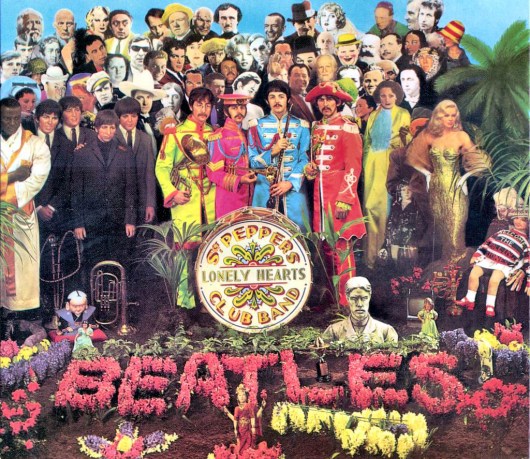


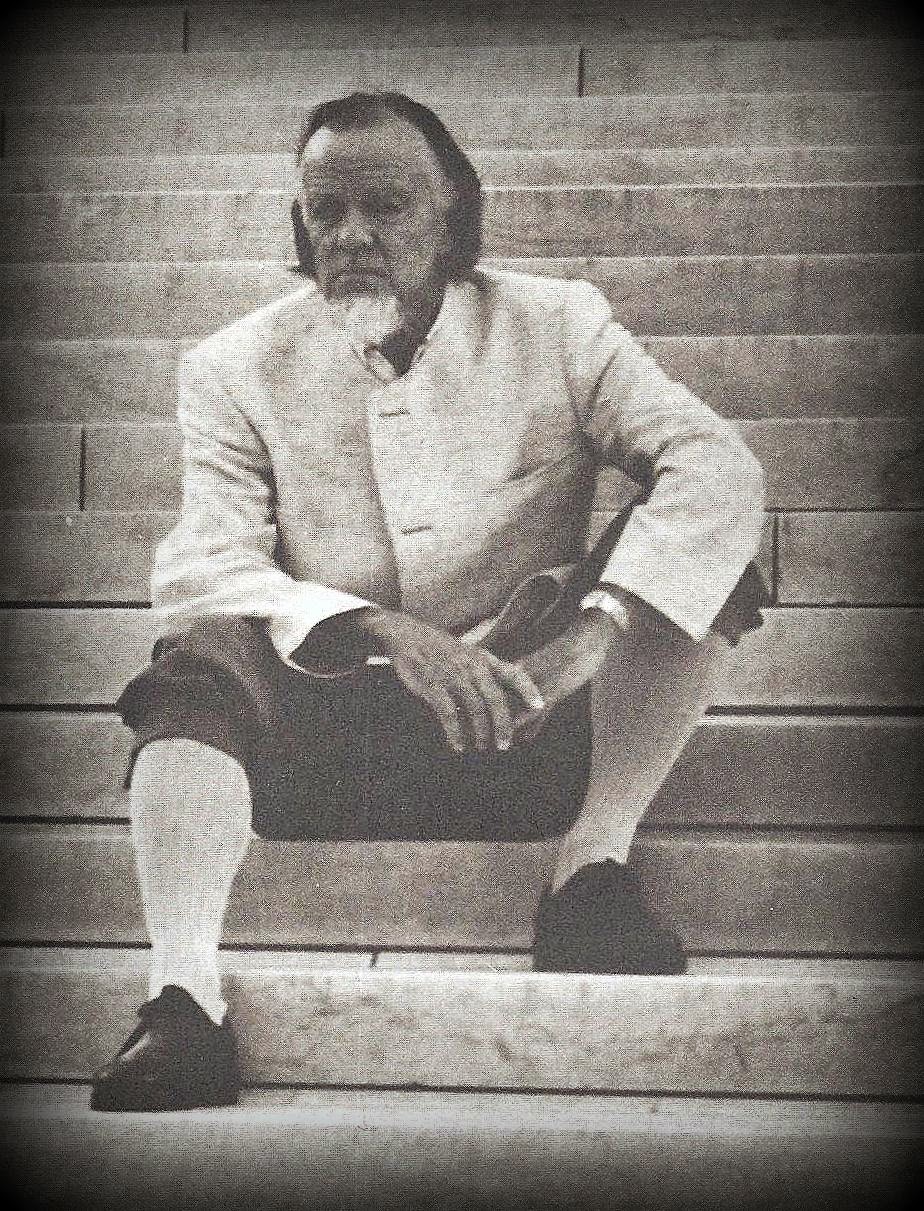






 Email this page


 The Daily Hatch

Thank you, professor. I only originally knew of Schaeffer through Piper’s “Pastor As Scholar” discussion. Recently when our church gave away our library books, I found The God Who Is There, Death In the City, and Genesis In Space and Time. I had those books on my shelf for a year l, but started reading the God Who Is There a couple of weeks ago. I absolutely fell in love with his thinking and understanding if man’s despair, need for a universal unifying truth, and the way Schaeffer opened up my eyes to famous artists and what they were trying to accomplish. (I knew of John Cage years ago and hated his music, but Schaeffer really made sense of him for me.) So I have decided to plow through everything else Schaeffer wrote.
By the way, I enjoyed this article of yours. I am a GGBTS student in California, possibly transferring my units to SEBTS online. I hope to have the privilege of taking a course with you.
Your comment is awaiting moderation.
By the way I have reblogged this fine article today on my blog.
I am Everette Hatcher and in the 1970’s and 1980’s I was a member of Bellevue Baptist in Memphis where Adrian Rogers was pastor and was a student at Evangelical Christian School from the 5th grade to the 12th grade where I was introduced to the books and films of Francis Schaeffer. At ECS my favorite teacher was Mark Brink who actually played both film series to us (WHATEVER HAPPENED TO THE HUMAN RACE? and HOW SHOULD WE THEN LIVE?) during our senior year and believe it or not after I graduated I would come back and join some of his future classes when the film was playing again because I couldn’t get enough of Schaeffer’s film series!!!!
During this time I was amazed at how many prominent figures in the world found their way into the works of both Adrian Rogers and Francis Schaeffer and I wondered what it would be like if these individuals were exposed to the Bible and the gospel. Therefore, over 20 years ago I began sending the messages of Adrian Rogers and portions of the works of Francis Schaeffer to many of the secular figures that they mentioned in their works. Let me give you some examples and tell you about some lessons that I have learned.
I have learned several things about atheists in the last 20 years while I have been corresponding with them. First, they know in their hearts that God exists and they can’t live as if God doesn’t exist, but they will still search in some way in their life for a greater meaning. Second, many atheists will take time out of their busy lives to examine the evidence that I present to them. Third, there is hope that they will change their views.
Let’s go over again a few points I made at the first of this post. My first point is backed up by Romans 1:18-19 (Amplified Bible) ” For God’s wrath and indignation are revealed from heaven against all ungodliness and unrighteousness of men, who in their wickedness REPRESS and HINDER the truth and make it inoperative. For that which is KNOWN about God is EVIDENT to them and MADE PLAIN IN THEIR INNER CONSCIOUSNESS, because God has SHOWN IT TO THEM,”(emphasis mine). I have discussed this many times on my blog and even have interacted with many atheists from CSICOP in the past. (I first heard this from my pastor Adrian Rogers back in the 1980’s.)
My second point is that many atheists will take the time to consider the evidence that I have presented to them and will respond. The late Adrian Rogers was my pastor at Bellevue Baptist when I grew up and I sent his sermon on evolution and another on the accuracy of the Bible to many atheists to listen to and many of them did. I also sent many of the arguments from Francis Schaeffer also.
Francis Schaeffer’s words would be quoted in many of these letters that I would send to famous skeptics and I would always include audio messages from Adrian Rogers. Perhaps Schaeffer’s most effective argument was concerning Romans 1 and how a person could say that he didn’t believe that the world had a purpose or meaning but he could not live that way in the world that God created and with the conscience that every person is born with.
Google “Adrian Rogers Francis Schaeffer” and the first 4 things that come up will be my blog posts concerning effort to reach these atheists. These two great men proved that the scriptures Hebrews 4:12 and Isaiah 55:11 are true, “For the word of God is alive and active. Sharper than any double-edged sword, it penetrates even to dividing soul and spirit, joints and marrow; it judges the thoughts and attitudes of the heart.” and “so is my word that goes out from my mouth: It will not return to me empty, but will accomplish what I desire and achieve the purpose for which I sent it.”