Canary Islands 2014: Harold Kroto and Richard Dawkins
_
May 8, 2016
Richard Dawkins Washington, DC
Dear Mr. Dawkins,
In the You Tube video SOMETHING FROM NOTHING ? [OFFICIAL] Richard Dawkins & Lawrence Krauss [HD] 02-04-12 I noticed at the 3 minute mark that Lawrence Krauss said walking around campus with you generated interesting responses:
I saw people fainting. People came up and shook our hands and were nervous and Richard produces that. I was going to say it was like walking around campus with Moses, but the difference is that I am absolutely certain that Richard Dawkins exists. (loud applause from audience).
Below is a piece of that evidence given by Francis Schaeffer concerning the accuracy of the Bible and believe it or not it deals with the time of Moses.
TRUTH AND HISTORY (chapter 5 of WHATEVER HAPPENED TO THE HUMAN RACE?, under footnote #96)
We should take one last step back into the history of the Old Testament. In the previous note we looked first at the Dead Sea Scrolls, dating to around 100 B.C. Then we went back to the period of the Late Monarchy and looked first at the siege of Hezekiah in Jerusalem by Sennacherib in 701 B.C. and also at the last years of Judah down to about 600 B.C. Then we went further back to about 850 B.C., to Ahab and Jezebel, the ivory house, the Black Obelisk, the Moabite Stone and so on–then back again to about 950 B.C., to the time of Solomon and his son Rehoboam and the campaign by Shishak, the Egyptian pharaoh.
This should have built up in our minds a vivid impression of the historic reliability of the biblical text, including even the seemingly obscure details such as the ration tablets in Babylon. We saw, in other words, not only that the Bible gives us a marvelous world view that ties in with the nature of reality and answers the basic problems which philosophers have asked down through the centuries, but also that the Bible is completely reliable, EVEN ON THE HISTORICAL LEVEL.
The previous notes looked back to the time of Moses and Joshua, the escape from Egypt, and the settlement in Canaan. Now we will go back further–back as far as Genesis 12, near the beginning of the Bible.
Do we find that the narrative fades away to a never-never land of myths and legends? By no means. For we have to remind ourselves that although Genesis 12 deals with events a long time ago from our moment of history (about 2000 B.C. or a bit later), the civilized world was already not just old but ancient when Abram/Abraham left “Ur of the Chaldeans” (see Genesis 11:31).
Ur itself was excavated some fifty years ago. In the British Museum, for example, one can see the magnificent contents of a royal burial chamber from Ur. This includes a gold headdress still in position about the head of a queen who died in Ur about 2500 B.C. It has also been possible to reconstruct from archaeological remains what the streets and buildings must have been like at the time.
Like Ur, the rest of the world of the patriarchs (that is, of Abraham, Isaac, and Jacob) was firm reality. Such places as Haran, where Abraham went first, have been discovered. So has Shechem from this time, with its Canaanite stone walls, which are still standing, and its temple.
Genesis 12:5-9New American Standard Bible (NASB)
5 Abram took Sarai his wife and Lot his nephew, and all their possessions which they had accumulated, and the [a]persons which they had acquired in Haran, and they [b]set out for the land of Canaan; thus they came to the land of Canaan. 6 Abram passed through the land as far as the site of Shechem, to the[c]oak of Moreh. Now the Canaanite was then in the land.7 The Lord appeared to Abram and said, “To your [d]descendants I will give this land.” So he built an altar there to the Lord who had appeared to him. 8 Then he proceeded from there to the mountain on the east of Bethel, and pitched his tent, with Bethel on the west and Ai on the east; and there he built an altar to the Lord andcalled upon the name of the Lord. 9 Abram journeyed on, continuing toward the[e]Negev.
Haran and Shechem may be unfamiliar names to us but the Negrev (or Negeb) is a name we have all read frequently in the news accounts of our own day.
and you will hear what far smarter people than I have to say on this matter. I agree with them.
Harry Kroto
Nick Gathergood, David-Birkett, Harry-Kroto
I have attempted to respond to all of Dr. Kroto’s friends arguments and I have posted my responses one per week for over a year now. Here are some of my earlier posts:
In the second video below in the 67th clip in this series are Richard Dawkins’ words that Harry Kroto wanted me to see. Since then I have read several of Richard Dawkins books and have attempted to respond to the contents of these books directly to Richard Dawkins by mail. In fact, I have been writing Richard Dawkins letters since May 15, 1994 which was the 10th anniversary of the passing of one of my heroes, Francis Schaeffer. Francis Schaeffer spent a lot of time responding to many of Richard Dawkins’ heroes such as Carl Sagan, Jacques Monod, H.J. Blackham, Isaac Newton, Ludwig Wittgenstein, Max Planck, Johann Sebastian Bach, Francis Bacon, Samuel Beckett, Leonardo Da Vinci, Albert Einstein, Michael Faraday, Gerald Horton, Edmund Leach, Louis Pasteur, George Wald, Jacob Bronowski, Steven Weinberg, Charles Darwin, Paul Kurtz, Peter Singer, Jonathan Miller, William B. Provine, Woody Allen, Noam Chomsky, James D. Watson, Francis Crick, Michael Polanyi, The Huxley family, Antony Flew, and Edward O. Wilson (Dawkins has since revised his opinion of Flew and Wilson, but he earlier regarded them very highly).
Francis Schaeffer 1911-1984
_
_
Both Francis Schaeffer and Richard Dawkins have talked extensively about the life of Charles Darwin.
_
Sir Harry Kroto with his high school friend Sir Ian McKellan at the FSU National High Field Magnetic Lab on Tuesday, October 27, 2009.
50 Renowned Academics Speaking About God (Part 1)
_
Another 50 Renowned Academics Speaking About God (Part 2)
_
_
Edit Post ‹ The Daily Hatch — WordPress
A Further 50 Renowned Academics Speaking About God (Part 3)
_
Richard Dawkins Photos Photos – Professor Stephen Hawking Unveils Medal For Science Communication – Zimbio
On November 21, 2014 I received a letter from Nobel Laureate Harry Kroto and it said: …Please click on this URL http://vimeo.com/26991975 and you will hear what far smarter people than I have to say on this matter. I agree with them. Harry Kroto _________________ Below you have picture of 1996 Chemistry Nobel Prize Winner […]
The Beatles were “inspired by the musique concrète of German composer and early electronic music pioneer Karlheinz Stockhausen…” as SCOTT THILL has asserted. Francis Schaeffer noted that ideas of “Non-resolution” and “Fragmentation” came down German and French streams with the influence of Beethoven’s last Quartets and then the influence of Debussy and later Schoenberg’s non-resolution which is in total contrast […]
_______ On November 21, 2014 I received a letter from Nobel Laureate Harry Kroto and it said: …Please click on this URL http://vimeo.com/26991975 and you will hear what far smarter people than I have to say on this matter. I agree with them. Harry Kroto _________________ Below you have picture of 1996 Chemistry Nobel Prize […]
On November 21, 2014 I received a letter from Nobel Laureate Harry Kroto and it said: …Please click on this URL http://vimeo.com/26991975 and you will hear what far smarter people than I have to say on this matter. I agree with them. Harry Kroto ____________________ Below you have picture of 1996 Chemistry Nobel Prize Winner Dr. […]
The band broke up and re-formed three times, sometimes with different bassists and/or drummers. They disbanded for the first time after the release of their fifth album, 1987’s VI, as Hetson decided to continue touring and releasing albums with Bad Religion. They reunited around 1994 and recorded a reunion album, Oddities, Abnormalities and Curiosities, the following year, followed by a tour. After that, the Circle Jerks once again parted ways as Hetson was still involved in Bad Religion. They reunited again circa 2001, but as of 2010, went on indefinite hiatus.
To date, Circle Jerks have released six studio albums, one compilation, a live album and a live DVD.
Early days and increasing popularity (1979–1982)Edit
Lead vocalist Keith Morris was an original member of Black Flag, co-founding the band with guitarist Greg Ginn and recording the Nervous Breakdown EP with them before suddenly departing the group in December 1979. Morris formed Circle Jerks as the Bedwetters[5] along with guitarist Greg Hetson, bassist Roger Rogerson (a classically-trained guitarist) and drummer Lucky Lehrer (a jazz-trained drummer). Lehrer did not like the name the Bedwetters, so Morris looked through a dictionary of slang words and renamed the band the Circle Jerks.[5]
The band’s first recordings took place in spring 1980, including the original version of “Wild in the Streets”, which appeared on Posh Boy‘s first Rodney on the ROQ compilation. In July of that year, the band recorded their debut studio album, Group Sex, which was released in October 1980 on the Frontier Records label; its 14 songs totaled just 15 minutes. The album featured several songs that Morris had written while in Black Flag. That same year, the group was one of several California punk bands to be immortalized in the Penelope Spheerisdocumentary The Decline of Western Civilization; live versions of five songs from Group Sex appeared on the movie’s soundtrack.
In late 1980, the group signed with IRS Recordssubsidiary Faulty Products and recorded their second album, Wild in the Streets, released in 1982. The title track was a cover version of a song by Garland Jeffreys. Faulty Products ceased operations several months after its release, forcing Circle Jerks to seek their third record deal in as many years. While they regained the copyright to Wild in the Streets, the original stereo master tape was lost, forcing the band to remix it from the multi-track tapes when they reissued the album in 1988.
—
Is turning to drugs and alcohol the only alternative modern man has?
Take a look at these lyrics of the song “Live fast die young” by Circle Jerks:
I don’t want to live
To be thirty-four
I don’t want to die
In a nuclear war
Go on out
Get some more Go on out To the bar, the market or the liquor store
I don’t want to live To be forty-three
I don’t like
What I see going on around me
Go on out
Get some more
Go on out
Get [messed] up and pass out on the floor
Go on out
Get some more
Go on out
To your favorite liquor store
Go on out
Don’t worry about it any more
Go on out
Get [messed] up
I don’t know what for
I don’t want to live
To be fifty-seven
I’m living in hell
Is there a heaven?
Live fast, die young
Live fast, die young
Live fast, die young
Live fast, die young
__
Francis Schaeffer noted:
I have lots of young people and older ones come to us from the ends of the earth. And as they come to us, they have gone to the end of this logically and they are not living in a romantic setting. They realize what the situation is. They can’t find any meaning to life. It’s the meaning to the black poetry. It’s the meaning of the black plays. It’s the meaning of all this. It’s the meaning of the words “punk rock.”
–
“They are the natural outcome of a change from a Christian World View to a Humanistic one…
The result is a relativistic value system. A lack of a final meaning to life — that’s first. Why does human life have any value at all, if that is all that reality is? Not only are you going to die individually, but the whole human race is going to die, someday. It may not take the falling of the atom bombs, but someday the world will grow too hot, too cold. That’s what we are told on this other final reality, and someday all you people not only will be individually dead, but the whole conscious life on this world will be dead, and nobody will see the birds fly. And there’s no meaning to life.
As you know, I don’t speak academically, shut off in some scholastic cubicle, as it were. I have lots of young people and older ones come to us from the ends of the earth. And as they come to us, they have gone to the end of this logically and they are not living in a romantic setting. They realize what the situation is. They can’t find any meaning to life. It’s the meaning to the black poetry. It’s the meaning of the black plays. It’s the meaning of all this. It’s the meaning of the words “punk rock.” And I must say, that on the basis of what they are being taught in school, that the final reality is only this material thing, they are not wrong. They’re right! On this other basis there is no meaning to life and not only is there no meaning to life, but there is no value system that is fixed, and we find that the law is based then only on a relativistic basis and that law becomes purely arbitrary.
—
OUTLINE OF ECCLESIATES BY SCHAEFFER
_______
William Lane Craig on Man’s predicament if God doesn’t exist
Read Waiting for Godot by Samuel Beckett. During this entire play two men carry on trivial conversation while waiting for a third man to arrive, who never does. Our lives are like that, Beckett is saying; we just kill time waiting—for what, we don’t know.
Thus, if there is no God, then life itself becomes meaningless. Man and the universe are without ultimate significance.
Francis Schaeffer looks at Nihilism of Solomon and the causes of it!!!
Notes on Ecclesiastes by Francis Schaeffer
Solomon is the author of Ecclesiastes and he is truly an universal man like Leonardo da Vinci.
Two men of the Renaissance stand above all others –Michelangelo and Leonardo da Vinci and it is in them that one can perhaps grasp a view of the ultimate conclusion of humanism for man. Michelangelo was unequaled as a sculptor in the Renaissance and arguably no one has ever matched his talents.
The other giant of the Renaissance period was Leonardo da Vinci – the perfect Renaissance Man, the man who could do almost anything and does it better than most anyone else. As an inventor, an engineer, an anatomist, an architect, an artist, a chemist, a mathematician, he was almost without equal. It was perhaps his mathematics that lead da Vinci to come to his understanding of the ultimate meaning of Humanism. Leonardo is generally accepted as the first modern mathematician. He not only knew mathematics abstractly but applied it in his Notebooks to all manner of engineering problems. He was one of the unique geniuses of history, and in his brilliance he perceived that beginning humanistically with mathematics one only had particulars. He understood that man beginning from himself would never be able to come to meaning on the basis of mathematics. And he knew that having only individual things, particulars, one never could come to universals or meaning and thus one only ends with mechanics. In this he saw ahead to where our generation has come: everything, including man, is the machine.
Leonardo da Vinci compares well to Solomon and they both were universal men searching for the meaning in life. Solomon was searching for a meaning in the midst of the details of life.His struggle was to find the meaning of life. Not just plans in life.Anybody can find plans in life. A child can fill up his time with plans of building tomorrow’s sand castle when today’s has been washed away. There is a difference between finding plans in life and purpose in life. Humanism since the Renaissance and onward has never found it and it has never found it since. Modern man has not found it and it has always got worse and darker in a very real way.
We have here the declaration of Solomon’s universality:
1 Kings 4:30-34
English Standard Version (ESV)
30 so that Solomon’s wisdom surpassed the wisdom of all the people of the east and all the wisdom of Egypt.31 For he was wiser than all other men, wiser than Ethan the Ezrahite, and Heman, Calcol, and Darda, the sons of Mahol, and his fame was in all the surrounding nations.32 He also spoke 3,000 proverbs, and his songs were 1,005.33 He spoke of trees, from the cedar that is in Lebanon to the hyssop that grows out of the wall. He spoke also of beasts, and of birds, and of reptiles, and of fish.34 And people of all nations came to hear the wisdom of Solomon, and from all the kings of the earth, who had heard of his wisdom.
_________________________
Here is the universal man and his genius. Solomon is the universal man with a empire at his disposal. Solomon had it all.
Ecclesiastes 1:3
English Standard Version (ESV)
3 What does man gain by all the toil at which he toils under the sun?
Schaeffer noted that Solomon took a look at the meaning of life on the basis of human life standing alone between birth and death “under the sun.” This phrase UNDER THE SUN appears over and over in Ecclesiastes.
(Added by me:The Christian Scholar Ravi Zacharias noted, “The key to understanding the Book of Ecclesiastes is the term UNDER THE SUN — What that literally means is you lock God out of a closed system and you are left with only this world of Time plus Chance plus matter.” )
Man is caught in the cycle
Ecclesiastes 1:1-7
English Standard Version (ESV)
All Is Vanity
1 The words of the Preacher, the son of David, king in Jerusalem.
2 Vanity of vanities, says the Preacher, vanity of vanities! All is vanity. 3 What does man gain by all the toil at which he toils under the sun? 4 A generation goes, and a generation comes, but the earth remains forever. 5 The sun rises, and the sun goes down, and hastens to the place where it rises. 6 The wind blows to the south and goes around to the north; around and around goes the wind, and on its circuits the wind returns. 7 All streams run to the sea, but the sea is not full; to the place where the streams flow, there they flow again.
8 All things are full of weariness; a man cannot utter it; the eye is not satisfied with seeing, nor the ear filled with hearing. 9 What has been is what will be, and what has been done is what will be done, and there is nothing new under the sun. 10 Is there a thing of which it is said, “See, this is new”? It has been already in the ages before us.
_____________
Solomon is showing a high degree of comprehension of evaporation and the results of it. Seeing also in reality nothing changes. There is change but always in a set framework and that is cycle. You can relate this to the concepts of modern man. Ecclesiastes is the only pessimistic book in the Bible and that is because of the place where Solomon limits himself. He limits himself to the question of human life, life under the sun between birth and death and the answers this would give.
Ecclesiastes 1:4
English Standard Version (ESV)
4 A generation goes, and a generation comes, but the earth remains forever.
___________________
Ecclesiastes 4:16
English Standard Version (ESV)
16 There was no end of all the people, all of whom he led. Yet those who come later will not rejoice in him. Surely this also is vanity and a striving after wind.
__________________________
In verses 1:4 and 4:16 Solomon places man in the cycle. He doesn’t place man outside of the cycle. Man doesn’t escape the cycle. Man is only cycle. Birth and death and youth and old age. With this in mind Solomon makes this statement.
Ecclesiastes 6:12
12 For who knows what is good for a man during his lifetime, during the few years of his futile life? He will spend them like a shadow. For who can tell a man what will be after him under the sun?
____________________
There is no doubt in my mind that Solomon had the same experience in his life that I had as a younger man. I remember standing by the sea and the moon arose and it was copper and beauty. Then the moon did not look like a flat dish but a globe or a sphere since it was close to the horizon. One could feel the global shape of the earth too. Then it occurred to me that I could contemplate the interplay of the spheres and I was exalted because I thought I can look upon them with all their power, might, and size, but they could contempt nothing and I felt as man as God. Then came upon me a horror of great darkness because it suddenly occurred to me that although I could contemplate them and they could contemplate nothing yet they would continue to turn in ongoing cycles when I saw no more forever and I was crushed.
THIS IS SOLOMON’S FEELING TOO. The universal man, Solomon, beyond our intelligence with an empire at his disposal with the opportunity of observation so he could recite these words here in Ecclesiastes 6:12, “For who knows what is good for a man during his lifetime, during the few years of his futile life? He will spend them like a shadow. For who can tell a man what will be after him under the sun?”
Lack of Satisfaction in life
In Ecclesiastes 1:8 he drives this home when he states, “All things are wearisome; Man is not able to tell it. The eye is not satisfied with seeing, Nor is the ear filled with hearing.” Solomon is stating here the fact that there is no final satisfaction because you don’t get to the end of the thing. THERE IS NO FINAL SATISFACTION. This is related to Leonardo da Vinci’s similar search for universals and then meaning in life.
In Ecclesiastes 5:11 Solomon again pursues this theme, “When good things increase, those who consume them increase. So what is the advantage to their owners except to look on?” Doesn’t that sound modern? It is as modern as this evening. Solomon here is stating the fact there is no reaching completion in anything and this is the reason there is no final satisfaction. There is simply no place to stop. It is impossible when laying up wealth for oneself when to stop. It is impossible to have the satisfaction of completion.
Pursuing Learning
Now let us look down the details of his searching.
In Ecclesiastes 1: 13a we have the details of the universal man’s procedure. “And I set my mind to seek and explore by wisdom concerning all that has been done under heaven.”
So like any sensible man the instrument that is used is INTELLECT, and RAITIONALITY, and LOGIC. It is to be noted that even men who despise these in their theories begin and use them or they could not speak. There is no other way to begin except in the way they which man is and that is rational and intellectual with movements of that is logical within him. As a Christian I must say gently in passing that is the way God made him.
So we find first of all Solomon turned to WISDOM and logic. Wisdom is not to be confused with knowledge. A man may have great knowledge and no wisdom. Wisdom is the use of rationality and logic. A man can be very wise and have limited knowledge. Here he turns to wisdom in all that implies and the total rationality of man.
Works of Men done Under the Sun
After wisdom Solomon comes to the great WORKS of men. Ecclesiastes 1:14, “I have seen all the works which have been done under the sun, and behold, all is [p]vanity and striving after wind.” Solomon is the man with an empire at this disposal that speaks. This is the man who has the copper refineries in Ezion-geber. This is the man who made the stables across his empire. This is the man who built the temple in Jerusalem. This is the man who stands on the world trade routes. He is not a provincial. He knew what was happening on the Phonetician coast and he knew what was happening in Egypt. There is no doubt he already knew something of building. This is Solomon and he pursues the greatness of his own construction and his conclusion is VANITY AND VEXATION OF SPIRIT.
Ecclesiastes 2:18-20
18 Thus I hated all the fruit of my labor for which I had labored under the sun, for I must leave it to the man who will come after me.19 And who knows whether he will be a wise man or a fool? Yet he will have control over all the fruit of my labor for which I have labored by acting wisely under the sun. This too is vanity.20 Therefore I completely despaired of all the fruit of my labor for which I had labored under the sun.
He looked at the works of his hands, great and multiplied by his wealth and his position and he shrugged his shoulders.
Ecclesiastes 2:22-23
22 For what does a man get in all his labor and in his striving with which he labors under the sun?23 Because all his days his task is painful and grievous; even at night his mind does not rest. This too is vanity.
Man can not rest and yet he is never done and yet the things which he builds will out live him. If one wants an ironical three phrases these are they. There is a Dutch saying, “The tailor makes many suits but one day he will make a suit that will outlast the tailor.”
God has put eternity in our hearts but we can not know the beginning or the end of the thing from a vantage point of UNDER THE SUN
Ecclesiastes 1:16-18
16 I said to myself, “Behold, I have magnified and increased wisdom more than all who were over Jerusalem before me; and my mind has observed a wealth of wisdom and knowledge.”17 And I set my mind to know wisdom and to know madness and folly; I realized that this also is striving after wind.18 Because in much wisdom there is much grief, and increasing knowledge results in increasing pain.
Solomon points out that you can not know the beginnings or what follows:
Ecclesiastes 3:11
11 He has made everything appropriate in its time. He has also set eternity in their heart, yet so that man will not find out the work which God has done from the beginning even to the end.
Ecclesiastes 1:11
11 There is no remembrance of earlier things; And also of the later things which will occur, There will be for them no remembrance among those who will come later still.
Ecclesiastes 2:16
16 For there is no lasting remembrance of the wise man as with the fool, inasmuch as in the coming days all will be forgotten. And how the wise man and the fool alike die!
You bring together here the factor of the beginning and you can’t know what immediately follows after your death and of course you can’t know the final ends. What do you do and the answer is to get drunk and this was not thought of in the RUBAIYAT OF OMAR KAHAYYAM:
Ecclesiastes 2:1-3
I said to myself, “Come now, I will test you with pleasure. So enjoy yourself.” And behold, it too was futility.2 I said of laughter, “It is madness,” and of pleasure, “What does it accomplish?”3 I explored with my mind how to stimulate my body with wine while my mind was guiding me wisely, and how to take hold of folly, until I could see what good there is for the sons of men to do under heaven the few years of their lives.
You know, my Friends, with what a brave Carouse
I made a Second Marriage in my house;
Divorced old barren Reason from my Bed,
And took the Daughter of the Vine to Spouse.
from the Rubaiyat of Omar Khayyam (Translation by Edward Fitzgerald)
A perfectly good philosophy coming out of Islam, but Solomon is not the first man that thought of it nor the last. In light of what has been presented by Solomon is the solution just to get intoxicated and black the think out? So many people have taken to alcohol and the dope which so often follows in our day. This approach is incomplete, temporary and immature. Papa Hemingway can find the champagne of Paris sufficient for a time, but one he left his youth he never found it sufficient again. He had a lifetime spent looking back to Paris and that champagne and never finding it enough. It is no solution and Solomon says so too.
——————
(End of Schaeffer comments)
I want to talk about a subject that is very sad indeed and it is the attempt by many today to find their meaning in life through drugs and alcohol. Perhaps they are trying to escape the hard realities of life by taking this path. Like everyone around us, I too have many close friends and relatives who have fallen into this trap. I have a great deal of compassion for these individuals. In fact, several times this month I have taken time to drive individuals from a facility that my church sponsors to AA meetings. We want these individuals to overcome their addictions and live in victory. I can’t do anything to go back and save those who have passed on in the past, but I can do something to encourage those who have obstacles to overcome today!!!!
Our church FELLOWSHIP BIBLE CHURCH sponsors HIDDEN CREEK REENTRY CENTER, Assisting incarcerated individuals with a successful transition to their community. I have had the joy of giving some of my time to help these gentlemen. Let me share some posts from their Facebook page:
Well its been a eye jerker today… great tears of joy!! I have watched these guys grow so much… I pray they continue to grow out there… next month they graduate the program!!
_______
I have just finished a book about a man who had a tough time breaking drug addition and the it is entitled, FEARLESS: The undaunted courage and ultimate sacrifice of Navy Seal Team Six Operator Adam Brown by Eric Blehm.
This is how the book opens:
When Adam Brown woke up on March 17, 2010, he didn’t know he would die that night in the Hindu Kush mountains of Afghanistan—but he was ready….Adam Brown did understand what it meant to disappoint, to feel the shame he’d experienced on a hot, humid August afternoon years earlier when his parents had him arrested.“It’s time for you to face what you’ve done,” his father had told him in 1996, just before Adam was handcuffed and escorted to the backseat of the Garland County sheriff’s cruiser. When the deputy slammed the car door shut, Adam watched his mother’s legs buckle, and as she collapsed, his dad caught her and held her tightly against him. She began to cry, and Adam knew he had broken her heart.That vision—of his mother sobbing into his father’s chest—would haunt him for the rest of his life, but it also sparked the journey that defined who he would become. Officially known as a Chief Special Warfare Operator (SEAL), Adam Brown was one of the most respected Special Operations warriors in the U.S. Navy.
____
Why do so many individuals today turn to drugs or liquor? There are various reasons, but let us look at the reason Ernest Hemingway became a drunk.
Ernest Hemingway turned to liquor as a device of escapism because he reached the conclusion that life has no lasting meaning.
“Some lived in it and never felt it but he knew it all was nada y pues nada y nada y pues nada.” This quote from Hemingway’s short storyA Clean Well Lighted Placeshows that Ernest Hemingway embraced nihilism. The Spanish word NADA meaning NOTHING. The old man in the story tried the previous week to commit suicide but was saved by his niece, and he saw it as a temporary saving.
Hemingway also wrote in his last book THE GARDEN OF EDEN,“Happiness in intelligent people is the rarest thing I know.”A sensational bestseller when it appeared in 1986, The Garden of Eden is the last uncompleted novel of Ernest Hemingway, which he worked on intermittently from 1946 until his death in 1961.
In you go to You Tube and watch the video Woody Allen talks ‘Midnight in Paris’ which was posted on January 27, 2017 and runs 43 minutes and 37 seconds, you will notice at the 27 minute mark that Woody Allen says:
I have never gotten to the point where I can give an optimistic view of anything. I have these ideas for stories that I hope are entertaining and I am always criticized for being pessimistic or nihilistic. To me this is just a realistic appraisal of life. What I have learned over the years is that there is no other solution to it. There is no satisfying answer. There is no optimistic answer I can give anybody.
Ernest Hemingway in one of his stories ( A FAREWELL TO ARMS)is looking at a burning log with ants running on it. This is the kind of thinking that has over powered me over the years and slips into my stories.
Drinking was a large part of Hemingway’s life. Solomon in the Book of Ecclesiastes also takes a long look at liquor and tries to see if it will bring any satisfaction UNDER THE SUN.
In fact, Solomon filled his home with the best wine (Eccl 2:3).
Concerning the Book of Ecclesiastes Francis Schaeffer noted:
Solomon was searching for a meaning in the midst of the details of life.His struggle was to find the meaning of life. Humanism since the Renaissance and onward has never found it and it has never found it. Modern man has not found it and it has always got worse and darker in a very real way.
Ecclesiastes is the only pessimistic book in the Bible and that is because of the place where Solomon limits himself. He limits himself to the question of human life, life UNDER THE SUN between birth and death and the answers this would give.
—-
In 1978 I heard the song “Dust in the Wind” by Kansas when it rose to #6 on the charts. That song told me thatKerry Livgren the writer of that song and a member of Kansas had come to the same conclusion that Solomon had. I remember mentioning to my friends at church that we may soon see some members of Kansas become Christians because their search for the meaning of life had obviously come up empty even though they had risen from being an unknown band to the top of the music business and had all the wealth and fame that came with that. Furthermore, like Solomon and Coldplay, they realized death comes to everyone and “there must be something more.”
Livgren wrote:
“All we do, crumbles to the ground though we refuse to see, Dust in the Wind, All we are is dust in the wind, Don’t hang on, Nothing lasts forever but the Earth and Sky, It slips away, And all your money won’t another minute buy.”
Both Kerry Livgren and Dave Hope of Kansas became Christians eventually. Kerry Livgren first tried Eastern Religions and Dave Hope had to come out of a heavy drug addiction. I was shocked and elated to see their personal testimony on The 700 Club in 1981 and that same interview can be seen on youtube today. Livgren lives in Topeka, Kansas today where he teaches “Diggers,” a Sunday school class at Topeka Bible Church. Hope is the head of Worship, Evangelism and Outreach at Immanuel Anglican Church in Destin, Florida.
The movie maker Woody Allen has embraced the nihilistic message of the song “Dust in the Wind” by Kansas. David Segal in his article, “Things are Looking Up for the Director Woody Allen. No?” (Washington Post, July 26, 2006), wrote, “Allen is evangelically passionate about a few subjects. None more so than the chilling emptiness of life…The 70-year-old writer and director has been musing about life, sex, work, death and his generally futile search for hope…the world according to Woody is so bereft of meaning, so godless and absurd, that the only proper response is to curl up on a sofa and howl for your mommy.”
The song “Dust in the Wind” recommends, “Don’t hang on.” Allen himself says, “It’s just an awful thing and in that context you’ve got to find an answer to the question: ‘Why go on?’ ” It is ironic that Chris Martin the leader of Coldplay regards Woody Allen as his favorite director.
Lets sum up the final conclusions of these gentlemen: Coldplay is still searching for that “something more.” Woody Allen has concluded the search is futile. Livgren and Hope of Kansas have become Christians and are involved in fulltime ministry. Solomon’s experiment was a search for meaning to life “under the sun.” Then in last few words in the Book of Ecclesiastes he looks above the sun and brings God back into the picture: “The conclusion, when all has been heard, is: Fear God and keep His commandments, because this applies to every person. For God will bring every act to judgment, everything which is hidden, whether it is good or evil.”
You can hear Kerry Livgren’s story from this youtube link:
(part 1 ten minutes)
(part 2 ten minutes)
Kansas – Dust In The Wind
Ecclesiastes 1
Published on Sep 4, 2012
Calvary Chapel Spring Valley | Sunday Evening | September 2, 2012 | Pastor Derek Neider
I read a story about you and I wanted to ask you if it is true. Francis Schaeffer talked about the views of the Beatles and other 1960’s Rock Groups including CREAM. His son Frank wrote recently about the impact of SGT. PEPPER’S LONELY HEARTS CLUB BAND:
“Sgt. Pepper’s” became my personal sound track of liberation back then…Genie, my wife of 44 years… grew up in the Bay Area and as a teen had the distinction of seeing the Beatles three times (!) live and the Rolling Stones four times (!) live.
Meanwhile, I was growing up in Switzerland in a mission(L’Abri Fellowship), and my “almost famous” rock-n-roll high point came when I got a job helping with theLed Zeppelin’slight show at the Montreux Jazz/rock festival.I met Jimmy Page and noticed he was reading one of my dad’s first books, ESCAPE FROM REASON. (No kidding.)
This was back in the days when Dad was a sort of hippie guru for Jesus catering to Beats, hippies and dropouts hitching across Europe.Eric Claptonhad given Page the book as it turned out. I was trying to be “cool” that day on the light show crew… and I wasn’t too pleased to find my brief escape into the rock world from the world of my Dad’s evangelical mission was no escape from my God-world at all. He’d been giving lectures on Bob Dylan, and drug guru Timothy Leary had been a guest at L’Abri. And now I got to briefly “hang out with the band” and Dad got there first, or at least one of his books did! Sheesh! It’s hard to be cool!
…Anyway… Just before coming to my parent’s mission in 1969 – Genie was visiting a friend and knew nothing about the place — she was hanging out with the Santana drummer in California. My then teen bride-to-be Genie might as well have gone to another planet when she stumbled into Dad and Mom’s ministry. The only Billy Graham she’d ever heard of was the Fillmore West manager!
I wonder if my wife-to-be was in the Fillmore West rock palace when Dad and I were there one night in 1968 listening to the Jefferson Airplane together and some hippie handed Dad a joint? Dad passed it on down the row, not taking any himself but totally un-shocked and loving Grace Slick as much as I did… if only Jerry Falwell could have seen us then…
This was back in the days when Dad was a sort of hippie guru for Jesus catering to Beats, hippies and dropouts hitching across Europe. Eric Clapton had given Page the book as it turned out.
Let me share with you a few parts of the book ESCAPE FROM REASON:
The decisive result of falling below the line of despair is a pitting of rationality against faith. Schaeffer sees this as an enormous problem and details four consequences in his book, Escape From Reason.
First, when rationality contends against faith, one is not able to establish a system of morality. It is simply impossible to have an “upstairs morality” that is unrelated to matters of everyday living.
Second, when rationality and faith are dichotomized, there is no adequate basis for law. “The whole Reformation system of law was built on the fact that God had revealed something real down into the common things of life” (Escape From Reason, 261). But when rationality and faith are pitted against one another, all hope for law is obliterated.
The third consequence is that this scheme throws away the answer to the problem of evil. Christianity’s answer rests in the historic, space-time, real and complete Fall of man who rebelled and made a choice against God. “Once the historic Christian answer is put away, all we can do is to leap upstairs and say that against all reason God is good” (Escape From Reason, 262).
Finally, when one accepts this unbiblical dichotomy he loses the opportunity to evangelize people at their real point of despair. Schaeffer makes it clear that modern man longs for answers. “He did not accept the line of despair and the dichotomy because he wanted to. He accepted it because, on the basis of the natural development of his rationalistic presuppositions, he had to. He may talk bravely at times, but in the end it is despair” (Escape From Reason, 262). It is at this point that Schaeffer believes the Christian apologist has a golden opportunity to make an impact. “Christianity has the opportunity, therefore, to say clearly that its answer has the very thing modern man has despaired of – the unity of thought. It provides a unified answer for the whole of life. True, man has to renounce his rationalism; but then, on the basis of what can be discussed, he has the possibility of recovering his rationality” (Escape From Reason, 262).
Schaeffer challenges us, “Let us Christians remember, then, that if we fall into the trap against which I have been warning, what we have done, among other things, is to put ourselves in the position where in reality we are only saying with evangelical words what the unbeliever is saying with his words. In order to confront modern man effectively, we must not have this dichotomy. You must have the Scriptures speaking truth both about God Himself and about the area where the Bible touches history and the cosmos” (Escape From Reason, 263).
The Tension of Being a Man
Before proceeding to Dr. Schaeffer’s basic approach to apologetics one must understand the concept he calls “mannishness” or the tension of being a man. The idea is essentially that no man can live at ease in the area of despair. His significance, ability to love and be loved, and his capacity for rationality distinguish him from machines and animals and give evidence to this fact: Man is made in the image of God. Modern man has been forced to accept the false dichotomy between nature and grace and consequently takes a leap of faith to the upper story and embraces some form of mysticism, which gives an illusion of unity to the whole. But as Schaeffer points out, “The very ‘mannishness’ of man refuses to live in the logic of the position to which his humanism and rationalism have brought him. To say that I am only a machine is one thing; to live consistently as if this were true is quite another” (The God Who Is There, 68). Schaeffer continues, “Every truly modern man is forced to accept some sort of leap in theory or practice, because the pressure of his own humanity demands it. He can say what he will concerning what he himself is; but no matter what he says he is, he is still a man” (The God Who Is There, 69).
Thus, the foundation for Francis Schaeffer’s basic approach to apologetics is simply to recognize that man is an image-bearer. Man even in his sin has personality, significance, and worth. Therefore, the apologist should approach him in those terms. The apologist must not only recognize that man is made in the image of God; he must also love him in word and deed. Finally, the apologist must speak to the man as a unit; he must reach the whole man (for faith truly does involve the whole man) and refuse to buy into the popularized Platonic idea that man’s soul is more important than the body.
Francis Schaeffer in describing the 1960’s noted:
The younger people and the older ones tried drug taking but then turned to the eastern religions. Both drugs and the eastern religions seek truth inside one’s own head, a negation of reason. The central reason of the popularity of eastern religions in the west is a hope for a nonrational meaning to life and values. The reason the young people turn to eastern religion is simply the fact as we have said and that is that man having moved into the area of nonreason could put anything up there and the heart of the eastern religions is a denial of reason just exactly as the idealistic drug taking was….The universe was created by an infinite personal God and He brought it into existence by spoken word and made man in His own image. When man tries to reduce [philosophically in a materialistic point of view] himself to less than this [less than being made in the image of God] he will always fail and he will always be willing to make these impossible leaps into the area of nonreason even though they don’t give an answer simply because that isn’t what he is. He himself testifies that this infinite personal God, the God of the Old and New Testament is there.
Here are some wise words of Francis Schaeffer from his book HE IS THERE AND HE IS NOT SILENT (the chapter is entitled, “Is Propositional Revelation Nonsense?”
Of course, if the infinite uncreated Personal communicated to the finite created personal, he would not exhaust himself in his communication; but two things are clear here:
1. Even communication between once created person and another is not exhaustive, but that does not mean that for that reason it is not true.
2. If the uncreated Personal really cared for the created personal, it could not be thought unexpected for him to tell the created personal things of a propositional nature; otherwise as a finite being the created personal would have numerous things he could not know if he just began with himself as a limited, finite reference point. In such a case, there is no intrinsic reason why the uncreated Personal could communicate some vaguely true things, but could not communicate propositional truth concerning the world surrounding the created personal – for fun, let’s call that science. Or why he could not communicate propositional truth to the created personal concerning the sequence that followed the uncreated Personal making everything he made – let’s call thathistory. There is no reason we could think of why he could not tell these two types of propositional things truly. They would not be exhaustive; but could we think of any reason why they would not be true? The above is, of course, what the Bible claims for itself in regard to PROPOSITIONAL revelation.
Francis Schaeffer tells his story in his film series HOW SHOULD WE THEN LIVE?:
Before you even come to the Bible and begin to read it one must realize there are 2 ways to read the Bible. One is just one more religious thing among thousands of other religious is nothing more than another form of a trip, not very, very different actually from a drug trip. The other way is to understand that the Bible is truth and as such what we are listening to is something that is completely contrary to what here about us on every side namely merely statistical averages, relativistic things. Now having said this then I would have to guard myself for the simple reason that it doesn’t mean a person has to believe all of this before he can begin to read the Bible and find truth in the Bible.
I would just say in just passing I was not raised in a Christian family and I was reading much philosophy when I was a young man and I didn’t read the Bible because I believed it was true. I read it simply out of an intellectual honesty, but I did do one thing. I read it exactly as it was written beginning with Genesis 1:1 and going right on, I read it just as I would read another book expecting what was being given was a straight forward statement of what was meant and it wasn’t supposed to be read on a different level than that I would read in another kind of book. As I read it, it answered the questions already at that time I realized that humanistic philosophy couldn’t answer and over a six month period I came to conclude it was truth. Nevertheless, we must keep in the back of our mind how are we reading the Bible, just as another religious trip or am I really wrestling with the question of what is given in all the areas in which it speaks. Is it truth in comparison to merely relativism?
Instead of making a leap into the area of nonreason the better choice would be to investigate the claims that the Bible is a historically accurate book and that God created the universe and reached out to humankind with the Bible. Below is a piece of that evidence given by Francis Schaeffer concerning the accuracy of the Bible.
TRUTH AND HISTORY (chapter 5 of WHATEVER HAPPENED TO THE HUMAN RACE? written by Francis Schaeffer and C. Everett Koop, under footnote #94):
Consider, too, the threat in the entire Middle East from the power of Assyria. In 853 B.C. King Shalmaneser III of Assyria came west from the region of the Euphrates River, only to be successfully repulsed by a determined alliance of all the states in that area of the Battle of Qarqar. Shalmaneser’s record gives details of the alliance. In these he includes Ahab, who he tells us put 2000 chariots and 10,000 infantry into the battle. However, after Ahab’s death, Samaria was no longer strong enough to retain control, and Moab under King Mesha declared its independence, as II Kings 3:4,5 makes clear:
4 Now Mesha king of Moab was a sheep breeder, and he had to deliver to the king of Israel 100,000 lambs and the wool of 100,000 rams.5 But when Ahab died, the king of Moab rebelled against the king of Israel.
The famous Moabite (Mesha) Stone, now in the Louvre, bears an inscription which testifies to Mesha’s reality and of his success in throwing off the yoke of Israel. This is an inscribed black basalt stela, about four feet high, two feet wide, and several inches thick.
In an earlier letter to you I quoted Psalms chapter 22. Why not take a few minutes and just read the short chapter of Psalms 22 that was written hundreds of years before the Romans even invented the practice of Crucifixion. 1000 years BC the Jews had the practice of stoning people but we read in this chapter a graphic description of Christ dying on the cross. How do you explain that without looking ABOVE THE SUN to God.
Inductees: John “Bonzo” Bonham (drums; born May 31, 1948, died September 25, 1980), John Paul Jones (bass, keyboards; born January 3, 1946), Jimmy Page (guitar; born January 9, 1944), Robert Plant (vocals; born August 20, 1948)
Combining the visceral power and intensity of hard rock with the finesse and delicacy of British folk music, Led Zeppelin redefined rock in the Seventies and for all time. They were as influential in that decade as the Beatles were in the prior one. Their impact extends to classic and alternative rockers alike. Then and now, Led Zeppelin looms larger than life on the rock landscape as a band for the ages with an almost mystical power to evoke primal passions. The combination of Jimmy Page’s powerful, layered guitar work, Robert Plant’s keening, upper-timbre vocals, John Paul Jones’ melodic bass playing and keyboard work, and John Bonham’s thunderous drumming made for a band whose alchemy proved enchanting and irresistible. “The motto of the group is definitely, ‘Ever onward,’” Page said in 1977, perfectly summing up Led Zeppelin’s forward-thinking philosophy.
The group formed in 1968 from the ashes of the Yardbirds, for which guitarist Jimmy Page had served as lead guitarist after Eric Clapton and Jeff Beck. Page’s stint in the Yardbirds (1966-1968) followed a period of years as one of Britain’s most in-demand session guitarists. As a generally anonymous hired gun, Page performed on mid-Sixties British Invasion records by the likes of Donovan (“Hurdy Gurdy Man”), Them (“Gloria”), the Who (“I Can’t Explain”) and hundreds of others. Page assembled a “New Yardbirds” in order to fulfill contractual obligations that, once served, allowed him to move on to his blues-based dream band, Led Zeppelin.
Bassist John Paul Jones also boasted a lofty session musician’s pedigree. His resume included work for the Rolling Stones, Donovan, Jeff Beck and Dusty Springfield. Singer Robert Plant and drummer John “Bonzo” Bonham came from Birmingham, England, where they’d previously played in the Band of Joy. Page described Led Zeppelin in a press release for their first album with these words: “I can’t put a tag to our music. Every one of us has been influenced by the blues, but it’s one’s interpretation of it and how you utilize it. I wish someone would invent an expression, but the closest I can get is contemporary blues.” Integrating Delta blues and U.K. folk influences with a modern rock approach, Led Zeppelin’s symbiosis gave rise to hard rock, which flourished in the Seventies under their expert tutelage. Such classics as “Whole Lotta Love” were built around Page’s heavyweight guitar riffs, Plant’s raw, half-screamed vocals, and the rhythm section’s deep, walloping assaults – all hallmarks of a new approach to rock that combined heaviness and delicacy.
In Jimmy Page’s words, the band aimed for “a kind of construction in light and shade.” The members of Led Zeppelin were musical sponges, often traveling the world –literally traipsing about foreign lands and figuratively exploring the cultural landscape via their record collections – in search of fresh input to trigger their muse. “The very thing Zeppelin was about was that there were absolutely no limits,” explained bassist Jones. “We all had ideas, and we’d use everything we came across, whether it was folk, country music, blues, Indian, Arabic.”
The group’s use of familiar blues-rock forms spiced with exotic flavors found favor among the rock audience that emerged in the Seventies. Led Zeppelin aimed itself at the album market, eschewing the AM-radio singles orientation of the previous decade. Their self-titled first album found them elongating blues forms with extended solos and psychedelic effects, most notably on the agonized “Dazed and Confused,” and launching pithy hard-rock rave-ups like “Good Times Bad Times” and “Communication Breakdown.” Led Zeppelin II found them further tightening up and modernizing their blues-rock approach on such tracks as “Whole Lotta Love,” “Heartbreaker” and “Ramble On.” Led Zeppelin III took a more acoustic, folk-oriented approach on such numbers as Leadbelly’s “Gallows Pole” and their own “Tangerine,” yet they also rocked furiously on “Immigrant Song” and offered a lengthy electric blues, “Since I’ve Been Loving You.”
The group’s untitled fourth album (a.k.a., Led Zeppelin IV, “The Runes Album” and ZOSO), which appeared in 1971, remains an enduring rock milestone and their defining work. The album was a fully realized hybrid of the folk and hard-rock directions they’d been pursuing, particularly on “When the Levee Breaks” and “The Battle of Evermore.” “Black Dog” was a piledriving hard-rock number cut from the same cloth as “Whole Lotta Love.” Most significant of the album’s eight tracks was the fable-like “Stairway to Heaven,” an eight-minute epic that, while never released as a single, remains radio’s all-time most-requested rock song. Houses of the Holy, Led Zeppelin’s fifth album, was another larger-than-life offering, from its startling artwork to the adventuresome music within. Even more taut, dynamic and groove-oriented, it included such Zeppelin staples as “Dancing Days,” “The Song Remains the Same” and “D’yer Mak’er.” They followed this with the Physical Graffiti, a double-album assertion of group strength that included the “Trampled Underfoot,” “Sick Again,” “Ten Years Gone” and the lengthy, Eastern-flavored “Kashmir.”
Led Zeppelin’s sold-out concert tours became rituals of high-energy rock and roll theater. The Song Remains the Same, a film documentary and double-album soundtrack from 1976, attests to the group’s powerful and somewhat saturnalian appeal at the height of their popularity. The darker side of Led Zeppelin – their reputation as one of the most hedonistic and indulgent of all rock bands– is an undeniable facet of the band’s history.
In the mid-to-late Seventies, a series of tragedies befell and ultimately broke up Led Zeppelin. A 1975 car crash on a Greek island nearly cost Plant his leg and sidelined him (and the band) for two years. In 1977, Plant’s six-year-old son Karac died of a viral infection. The group inevitably lost momentum, as three years passed between the release of the underrated Presence (1976) and In Through the Out Door, their final studio album (1979). On September 25, 1980, while in the midst of rehearsals for an upcoming American tour, Led Zeppelin suffered another debilitating blow. Drummer John Bonham was found dead due to asphyxiation following excessive alcohol consumption. Feeling that he was irreplaceable, Led Zeppelin disbanded.
Robert Plant launched a solo career, Jimmy Page formed The Firm with former Bad Company singer Paul Rodgers, and John Paul Jones returned to producing, arranging and scoring music. There were brief reunions at Live Aid and for Atlantic Records’ 40th anniversary celebration. Something of the old power was rekindled in 1994-1995, when Page and Plant reunited to record an album (No Quarter) and tour with a large and diverse ensemble of musicians.
On December 10, 2007, the surviving members of Led Zeppelin reunited for a tribute concert in memory of the late founder of Atlantic Records, Ahmet Ertegun. With Jason Bonham, the son of John Bonham, on drums, the group performed at the O2 Arena in London. They played 16 songs, opening with “Good Times, Bad Times” and closing their set with “Kashmir.” The show was filmed and was finally released to theaters in October 2012. A commercial DVD and CD were released in November 2012. Even though the band members talked about possibly playing more shows, the London concert was the band’s final appearance.
Meanwhile, the Led Zeppelin legend endures and grows long after their demise, much like that of the Doors and Elvis Presley. The lingering appeal of Led Zeppelin is perhaps best summed up by guitarist Page: “Passion is the word….It was a very passionate band, and that’s really what comes through.” At the dawn of the new millennium, Led Zeppelin placed second only to the Beatles in terms of record sales, having sold 84 million units. Led Zeppelin IV is the fourth best-selling album in history, having sold more than 22 million copies, and four other albums by the band – Physical Graffiti, Led Zeppelin II, Houses of the Holy and Led Zeppelin – also rank among the all-time top 100 best-sellers. Fittingly, Led Zeppelin is tied with the Beatles (five apiece) for the most albums on that esteemed list – a mark of both bands’ impact. In their ceaseless determination to move music forward, Led Zeppelin carved out an indelible place in rock history.
I’m Waiting for the Man sung by Nico in 1982 (about waiting for drug fix) __________ Nico Icon documentary part 3 Nico Icon documentary part 4 NICO – I’m Waiting For The Man – (1982, Warehouse, Preston, UK) One of the top 10 songs from The Velvet Underground and Nico is the song “I’m Waiting […]
Nico’s sad story of drugs and her interaction with Jim Morrison Nico – These Days The Doors (1991) – Movie Trailer / Best Parts The Doors Movie – Back Door Man/When The Music’s Over/Arrest of Jim Morrison Uploaded on Jul 30, 2009 A clip from “The Doors” movie with “Back Door Man”, “When The Music’s […]
Dennis Jernigan – You Are My All In All Uploaded on Oct 18, 2009 Dennis Jernigan – You Are My All In All __________________________________________ Christian Singer’s Controversial Journey Revealed in New Documentary: ‘I Placed Homosexuality on Jesus’ Shoulders’ Oct. 2, 2014 2:23pm Billy Hallowell Singer-songwriter Dennis Jernigan has been making Christian music for decades, recording […]
Cole Porter’s songs “De-Lovely” and “Let’s misbehave” ‘At Long Last Love’: Let’s Misbehave/De-Lovely Uploaded on Apr 1, 2009 Burt Reynolds and Cybil Shepherd give an extraordinarily charming performance of Cole Porter’s songs in Peter Bogdanovich’s absolutely wonderful tribute to the golden age of film musicals, ‘At Long Last Love’. _____________________ De-Lovely From Wikipedia, […]
________ _______ Cole Porter’s song’s “My Heart Belongs to Daddy” My Heart Belongs To Daddy Uploaded on Jun 20, 2010 Mary Martin became popular on Broadway and received attention in the national media singing “My Heart Belongs to Daddy”. “Mary stopped the show with “My Heart Belongs to Daddy”. With that one song in the […]
______________ Love For Sale (De-Lovely) Love for Sale (song) From Wikipedia, the free encyclopedia Jump to: navigation, search This article needs additional citations for verification. Please help improve this article by adding citations to reliable sources. Unsourced material may be challenged and removed. (September 2008) “Love for Sale“ Written by Cole Porter Published 1930 Form […]
Cole Porter’s song “Ev’ry Time We Say Goodbye” _________________ Natalie Cole – Ev’ry Time We Say Goodbye Ev’ry Time We Say Goodbye From Wikipedia, the free encyclopedia Jump to: navigation, search This article needs additional citations for verification. Please help improve this article by adding citations to reliable sources. Unsourced material may be […]
Cole Porter’s song “So in Love” __________________ So in love – De-lovely So in Love From Wikipedia, the free encyclopedia Jump to: navigation, search For the song by Orchestral Manoeuvres in the Dark, see So in Love (OMD song). For the song by Jill Scott, see So in Love (Jill Scott song). Not to be […]
____________________ Cole Porter’s song “Night and Day” Cole Porter´s Day and Night by Fred Astaire & Ginger Rogers Night and Day (song) From Wikipedia, the free encyclopedia Jump to: navigation, search This article includes a list of references, but its sources remain unclear because it has insufficient inline citations. Please help to improve this article […]
Johnny Cash – Big River Uploaded on Jan 16, 2008 Grand Ole Opry, 1962 _______________________________ John Lennon and Bob Dylan Conversation mention Johnny Cash and his song “Big River” _______________________ Big River (Johnny Cash song) From Wikipedia, the free encyclopedia Jump to: navigation, search This article may require cleanup to meet Wikipedia’s quality standards. No […]
I enjoyed your latest book Outgrowing God which is one of my favorite books that you have written. However, there are some some weak parts of the book. For instance, on page 29 you write:
There are also discrepancies between the gospels and known historical facts. Yet another problem with taking the gospels as historical truth is their obsession with fulfilling Old Testament prophecies. Especially Matthew. You get the feeling Matthew was quite cable of inventing an incident and writing it into his gospel, simply in order to make a prophesy come true. The most glaring example is his invention of the legend that Mary was a virgin when she gave birth to Jesus.
How can Isaiah 7:14 be considered a prophecy of the virgin birth of Christ? Isaiah 7:16 seems to preclude this entirely, and Isaiah 8:3 seems to fulfill the prophecy.
In a time of great national crisis, the kingdom of Judah was threatened with conquest by the northern alliance of apostate Samaria and pagan Damascus (Isa 7:4-6). Had they succeeded, Judah would have become a mere satellite to Samaria and later would have been destroyed as a nation by the Assyrian invaders (who destroyed Samaria itself within fifteen years of this time).
Since Judah was governed by a wicked and ungodly king named Ahaz, its position as the one Bible-believing nation on the face of the earth was gravely imperiled. Therefore its greatest need was for a deliverer who would rescue it from sin and exalt it to a position of great spiritual force, witnessing to the rest of mankind about the way of salvation. In these prophecies concerning Immanuel, the Lord met Judah’s needs.
Isaiah 7:14 promises that “the Lord himself shall give you a sign; Behold, a virgin shall conceive, and bear a son, and shall call his name Immanuel [i.e., `God with us’].” Who is this sign to be? In what sense will he be “God with us”? From the references that follow, it is quite apparent that there is to be a type of Immanuel who will be born in the near future as proof that God is with His people to deliver them.
Yet also an antitype will be born in the more remote future who will be both God and man, and He will deliver His people not only from human oppressors but also from sin and guilt. Furthermore, He will reign as David’s descendant and successor forever and ever. Thus the twofold need will be met both by the typical Immanuel and by the antitypical divine Redeemer.
Isaiah 7:16 clearly refers to a child who is to be born within a very few years: “For before the boy will know enough to refuse evil and choose good [i.e., before he reaches the age of full moral responsibility], the land whose two kings you dread [i.e., Pekah of 267 Samaria and Rezin of Damascus] will be forsaken” (NASB). Normally at the age of twelve or thirteen, the Jewish lad was considered old enough to assume full responsibility for his own sins; then he would learn to read and expound the Pentateuch as a barmitsvah (a “son of the commandment”).
Now if this promise was given in 735 B.C., and if the time-indicator child was born within a year or so thereafter, then he would have been twelve by 722 B.C., when Samaria fell to the Assyrian besiegers and was permanently destroyed as a nation. Damascus had already been stormed and pillaged by the troops of Tiglath-pileser III in 732. This earlier date was also predicted, for in Isaiah 8:4 we read of the son who is to be born to Isaiah by the prophetess: “Before the boy knows how to cry out `my father’ or `my mother,’ the wealth of Damascus and the spoils of Samaria will be carried away before the king of Assyria” (NASB).
By 732 the boy who served as the type of Immanuel would be two years of age, and therefore old enough to say “Daddy” and “Mommy.” Quite clearly this little son of the prophet who bore the God-given name of Maher-shalal-hash-baz (see Isa. 8:3) was to be the time-indicator for the fulfillment of this prediction of Judah’s deliverance from the current crisis.
At the time Isaiah 7:14 was given, the “prophetess” mentioned in 8:3 would have been a virgin and would have been known to King Ahaz and his court as the woman to whom Isaiah (presumably a widower by this time, having lost through death the mother of Shear-jashab mentioned in 7:3) was engaged. Before they married, the Lord revealed to Isaiah that the first child he would have by this godly young woman would be a boy: and the Lord told him what name to call him: “Hasten to the booty, the spoil is running away!” (which is the meaning of Maher-shalal-hash-baz, intended as an encouragement to the Assyrian invaders against the Damascus-Samaria coalition).
By the time this boy reached the age of twelve the invaded regions of Israel would be so utterly laid waste by the Assyrians that much of it would revert to pastureland; and the erstwhile cultivator of orchards and wheatfields would find his property reduced to a mere “heifer and a pair of sheep” (Isa. 7:21), and he would be living on a diet of curds and wild honey (vv. 15, 22). Clearly, then, Isaiah’s second son was to serve as the type of the coming Immanuel.
Yet it is also apparent from what follows that there is a far greater person in view, who will come as the divine-human antitype and will in His own person be Immanuel, God Incarnate. It is significant that Palestine is from that time on to be known as the land of Immanuel (see Isa. 8:8: “your land, O Immanuel”). This is something far more meaningful than the land of Maher-shalal-hash-baz. It is because of Immanuel that the people and land of Israel are guaranteed a key role in God’s program of redemption. There will come that mighty Redeemer of whom it is promised in 9:6; “For a child will be born to us, a son will be given to us; and the government will rest on his shoulders; and his name will be called Wonderful Counselor, Mighty God, Father of Eternity [as the Hebrew ‘abi-`ad should properly be rendered], Prince of Peace.” Verse 7 continues to 268 speak of His messianic rule. Plainly, this refers to God Incarnate, the divine-human King, Jesus Christ, whose sovereign rule will eternally endure, because He Himself will never pass away.
In confirmation of this Christ reference of Isaiah 7:14, the New Testament says in Matthew 1:22-23: “Now all this took place that what was spoken by the Lord through the prophet might be fulfilled, saying, `Behold, the virgin shall be with child, and shall bear a Son, and they shall call His name Immanuel,’ which translated means, `God with us’” (NASB).
Perhaps a brief comment should be made concerning the word for “virgin” used in Isaiah 7:14. The root meaning of `almah is “maiden” or “young woman.” It is therefore not as precise a word for virgin as the Hebrew betulah, which is defined in Genesis 24:16 (in reference to Rebekah) as a young woman who has never had sexual relations.
Yet it is also true that in the seven occurrences of `almah in the singular throughout the Hebrew Scriptures, the word never refers to a maiden who has lost her virginity but only to one who is in fact unmarried and chaste–as in Genesis 24:43, where Rebekah the virgin (betulah) is also referred to as an `almah. By Hebrew usage, then, this word is about equivalent to the idea of “virgin,” even though it is less precise than betulah.
It should be observed that `almah was an ideal term for the twofold aspect of the Immanuel prophecy in Isaiah 7:14. The future mother of the antitype, Isaiah’s wife-to-be, was a virgin up until the night of her wedding. But the Virgin Mary was a virgo intacta at the time the angel announced to her that she would become the mother of Jesus. Joseph had no carnal knowledge of her until after her firstborn Son was delivered, according to Matthew 1:24-25.
—-
Dr. Dawkins, you have a 150 year advantage over your hero Charles Darwin and the archaeologist’s spade has continued to dig. Take a look at this piece of evidence from the book WHATEVER HAPPENED TO THE HUMAN RACE? by Francis Schaeffer and C. Everett Koop:
TRUTH AND HISTORY (chapter 5 of WHATEVER HAPPENED TO THE HUMAN RACE?)
In the previous chapter we saw that the Bible gives us the explanation for the existence of the universe and its form and for the mannishness of man. Or, to reverse this, we came to see that the universe and its form and the mannishness of man are a testimony to the truth of the Bible. In this chapter we will consider a third testimony: the Bible’s openness to verification by historical study.
Christianity involves history. To say only that is already to have said something remarkable, because it separates the Judeo-Christian world-view from almost all other religious thought. It is rooted in history.
The Bible tells us how God communicated with man in history. For example, God revealed Himself to Abraham at a point in time and at a particular geographical place. He did likewise with Moses, David, Isaiah, Daniel and so on. The implications of this are extremely important to us. Because the truth God communicated in the Bible is so tied up with the flow of human events, it is possible by historical study to confirm some of the historical details.
It is remarkable that this possibility exists. Compare the information we have from other continents of that period. We know comparatively little about what happened in Africa or South America or China or Russia or even Europe. We see beautiful remains of temples and burial places, cult figures, utensils, and so forth, but there is not much actual “history” that can be reconstructed, at least not much when compared to that which is possible in the Middle East.
When we look at the material which has been discovered from the Nile to the Euphrates that derives from the 2500-year span before Christ, we are in a completely different situation from that in regard to South America or Asia. The kings of Egypt and Assyria built thousands of monuments commemorating their victories and recounting their different exploits. Whole libraries have been discovered from places like Nuzu and Mari and most recently at Elba, which give hundreds of thousands of texts relating to the historical details of their time. It is within this geographical area that the Bible is set. So it is possible to find material which bears upon what the Bible tells us.
The Bible purports to give us information on history. Is the history accurate? The more we understand about the Middle East between 2500 B.C. and A.D. 100, the more confident we can be that the information in the Bible is reliable, even when it speaks about the simple things of time and place.
We looked earlier at the city of Lachish. Let us return to the same period in Israel’s history when Lachich was besieged and captured by the Assyrian King Sennacherib. The king of Judah at the time was Hezekiah.
Perhaps you remember the story of how Jesus healed a blind man and told him to go and wash in the Pool of Siloam. It is the same place known by King Hezekiah, approximately 700 years earlier. One of the remarkable things about the flow of the Bible is that historical events separated by hundreds of years took place in the same geographic spots, and standing in these places today, we can feel that flow of history about us. The crucial archaeological discovery which relates the Pool of Siloam is the tunnel which lies behind it.
One day in 1880 a small Arab boy was playing with his friend and fell into the pool. When he clambered out, he found a small opening about two feet wide and five feet high. On examination, it turned out to be a tunnel reaching back into the rock. But that was not all. On the side of the tunnel an inscribed stone (now kept in the museum in Istanbul) was discovered, which told how the tunnel had been built originally. The inscription in classical Hebrew reads as follows:
The boring through is completed. And this is the story of the boring: while yet they plied the pick, each toward his fellow, and while there were yet three cubits [4 14 feet] to be bored through, there was heard the voice of one calling to the other that there was a hole in the rock on the right hand and on the left hand. And on the day of the boring through the workers on the tunnel struck each to meet his fellow, pick upon pick. Then the water poured from the source to the Pool 1,200 cubits [about 600 yards] and a 100 cubits was the height of the rock above the heads of the workers in the tunnel.
We know this as Hezekiah’s Tunnel. The Bible tells us how Hezekiah made provision for a better water supply to the city:Now the rest of the acts of Hezekiah and all his might, and how he made the pool and the conduit and brought water into the city, are they not written in the Book of the Chronicles of the Kings of Judah?(II Kings 20:20). We know here three things: the biblical account, the tunnel itself of which the Bible speaks, and the original stone with its inscription in classical Hebrew.
From the Assyrian side, there is additional confirmation of the incidents mentioned in the Bible. There is a clay prism in the British Museum called the Taylor Prism (British Museum, Ref. 91032). It is only fifteen inches high and was discovered in the Assyrian palace at Nineveh. This particular prism dates from about 691 B.C. and tells about Sennacherib’s exploits. A section from the prism reads, “As for Hezekiah, the Jew, who did not submit to my yoke, forty-six of his strong walled cities, as well as small cities in their neighborhood I have besieged and took…himself like a caged bird, I shut up in Jerusalem, his royal city. Earthworks I threw up against him,” Thus, there is a three-way confirmation concerning Hezekiah’s tunnel from the Hebrew side and this amazing confirmation from the Assyrian side.
Raphael was enormously productive, running an unusually large workshop and, despite his early death at 37, leaving a large body of work. Many of his works are found in the Vatican Palace, where the frescoed Raphael Rooms were the central, and the largest, work of his career. The best known work is The School of Athens in the Vatican Stanza della Segnatura. After his early years in Rome, much of his work was executed by his workshop from his drawings, with considerable loss of quality. He was extremely influential in his lifetime, though outside Rome his work was mostly known from his collaborative printmaking.
After his death, the influence of his great rival Michelangelo was more widespread until the 18th and 19th centuries, when Raphael’s more serene and harmonious qualities were again regarded as the highest models. His career falls naturally into three phases and three styles, first described by Giorgio Vasari: his early years in Umbria, then a period of about four years (1504–1508) absorbing the artistic traditions of Florence, followed by his last hectic and triumphant twelve years in Rome, working for two Popes and their close associates.[7]
Giovanni Santi, Raphael’s father; Christ supported by two angels, c.1490
Raphael was born in the small but artistically significant central Italian city of Urbino in the Marche region,[8] where his father Giovanni Santi was court painter to the Duke. The reputation of the court had been established by Federico da Montefeltro, a highly successful condottiere who had been created Duke of Urbino by Pope Sixtus IV – Urbino formed part of the Papal States – and who died the year before Raphael was born. The emphasis of Federico’s court was rather more literary than artistic, but Giovanni Santi was a poet of sorts as well as a painter, and had written a rhymed chronicle of the life of Federico, and both wrote the texts and produced the decor for masque-like court entertainments. His poem to Federico shows him as keen to show awareness of the most advanced North Italian painters, and Early Netherlandish artists as well. In the very small court of Urbino he was probably more integrated into the central circle of the ruling family than most court painters.[9]
Federico was succeeded by his son Guidobaldo da Montefeltro, who married Elisabetta Gonzaga, daughter of the ruler of Mantua, the most brilliant of the smaller Italian courts for both music and the visual arts. Under them, the court continued as a centre for literary culture. Growing up in the circle of this small court gave Raphael the excellent manners and social skills stressed by Vasari.[10] Court life in Urbino at just after this period was to become set as the model of the virtues of the Italian humanist court through Baldassare Castiglione‘s depiction of it in his classic work The Book of the Courtier, published in 1528. Castiglione moved to Urbino in 1504, when Raphael was no longer based there but frequently visited, and they became good friends. He became close to other regular visitors to the court: Pietro Bibbiena and Pietro Bembo, both later cardinals, were already becoming well known as writers, and would be in Rome during Raphael’s period there. Raphael mixed easily in the highest circles throughout his life, one of the factors that tended to give a misleading impression of effortlessness to his career. He did not receive a full humanistic education however; it is unclear how easily he read Latin.[11]
His mother Màgia died in 1491 when Raphael was eight, followed on August 1, 1494 by his father, who had already remarried. Raphael was thus orphaned at eleven; his formal guardian became his only paternal uncle Bartolomeo, a priest, who subsequently engaged in litigation with his stepmother. He probably continued to live with his stepmother when not staying as an apprentice with a master. He had already shown talent, according to Vasari, who says that Raphael had been “a great help to his father”.[12] A self-portrait drawing from his teenage years shows his precocity.[13] His father’s workshop continued and, probably together with his stepmother, Raphael evidently played a part in managing it from a very early age. In Urbino, he came into contact with the works of Paolo Uccello, previously the court painter (d. 1475), and Luca Signorelli, who until 1498 was based in nearby Città di Castello.[14]
According to Vasari, his father placed him in the workshop of the Umbrian master Pietro Perugino as an apprentice “despite the tears of his mother”.[b] The evidence of an apprenticeship comes only from Vasari and another source,[16] and has been disputed; eight was very early for an apprenticeship to begin. An alternative theory is that he received at least some training from Timoteo Viti, who acted as court painter in Urbino from 1495.[17] Most modern historians agree that Raphael at least worked as an assistant to Perugino from around 1500; the influence of Perugino on Raphael’s early work is very clear: “probably no other pupil of genius has ever absorbed so much of his master’s teaching as Raphael did”, according to Wölfflin.[18] Vasari wrote that it was impossible to distinguish between their hands at this period, but many modern art historians claim to do better and detect his hand in specific areas of works by Perugino or his workshop. Apart from stylistic closeness, their techniques are very similar as well, for example having paint applied thickly, using an oil varnish medium, in shadows and darker garments, but very thinly on flesh areas. An excess of resin in the varnish often causes cracking of areas of paint in the works of both masters.[19] The Perugino workshop was active in both Perugia and Florence, perhaps maintaining two permanent branches.[20] Raphael is described as a “master”, that is to say fully trained, in December 1500.[21]
His first documented work was the Baronci altarpiece for the church of Saint Nicholas of Tolentino in Città di Castello, a town halfway between Perugia and Urbino.[22]Evangelista da Pian di Meleto, who had worked for his father, was also named in the commission. It was commissioned in 1500 and finished in 1501; now only some cut sections and a preparatory drawing remain.[23] In the following years he painted works for other churches there, including the Mond Crucifixion (about 1503) and the BreraWedding of the Virgin (1504), and for Perugia, such as the Oddi Altarpiece. He very probably also visited Florence in this period. These are large works, some in fresco, where Raphael confidently marshals his compositions in the somewhat static style of Perugino. He also painted many small and exquisite cabinet paintings in these years, probably mostly for the connoisseurs in the Urbino court, like the Three Graces and St. Michael, and he began to paint Madonnas and portraits.[24] In 1502 he went to Siena at the invitation of another pupil of Perugino, Pinturicchio, “being a friend of Raphael and knowing him to be a draughtsman of the highest quality” to help with the cartoons, and very likely the designs, for a fresco series in the Piccolomini Library in Siena Cathedral.[25] He was evidently already much in demand even at this early stage in his career.[26]
Raphael led a “nomadic” life, working in various centres in Northern Italy, but spent a good deal of time in Florence, perhaps from about 1504. Although there is traditional reference to a “Florentine period” of about 1504–8, he was possibly never a continuous resident there.[27] He may have needed to visit the city to secure materials in any case. There is a letter of recommendation of Raphael, dated October 1504, from the mother of the next Duke of Urbino to the Gonfaloniere of Florence: “The bearer of this will be found to be Raphael, painter of Urbino, who, being greatly gifted in his profession has determined to spend some time in Florence to study. And because his father was most worthy and I was very attached to him, and the son is a sensible and well-mannered young man, on both accounts, I bear him great love…”[28]
As earlier with Perugino and others, Raphael was able to assimilate the influence of Florentine art, whilst keeping his own developing style. Frescos in Perugia of about 1505 show a new monumental quality in the figures which may represent the influence of Fra Bartolomeo, who Vasari says was a friend of Raphael. But the most striking influence in the work of these years is Leonardo da Vinci, who returned to the city from 1500 to 1506. Raphael’s figures begin to take more dynamic and complex positions, and though as yet his painted subjects are still mostly tranquil, he made drawn studies of fighting nude men, one of the obsessions of the period in Florence. Another drawing is a portrait of a young woman that uses the three-quarter length pyramidal composition of the just-completed Mona Lisa, but still looks completely Raphaelesque. Another of Leonardo’s compositional inventions, the pyramidal Holy Family, was repeated in a series of works that remain among his most famous easel paintings. There is a drawing by Raphael in the Royal Collection of Leonardo’s lost Leda and the Swan, from which he adapted the contrapposto pose of his own Saint Catherine of Alexandria.[29] He also perfects his own version of Leonardo’s sfumato modelling, to give subtlety to his painting of flesh, and develops the interplay of glances between his groups, which are much less enigmatic than those of Leonardo. But he keeps the soft clear light of Perugino in his paintings.[30]
Leonardo was more than thirty years older than Raphael, but Michelangelo, who was in Rome for this period, was just eight years his senior. Michelangelo already disliked Leonardo, and in Rome came to dislike Raphael even more, attributing conspiracies against him to the younger man.[31] Raphael would have been aware of his works in Florence, but in his most original work of these years, he strikes out in a different direction. His Deposition of Christ draws on classical sarcophagi to spread the figures across the front of the picture space in a complex and not wholly successful arrangement. Wöllflin detects in the kneeling figure on the right the influence of the Madonna in Michelangelo’s Doni Tondo, but the rest of the composition is far removed from his style, or that of Leonardo. Though highly regarded at the time, and much later forcibly removed from Perugia by the Borghese, it stands rather alone in Raphael’s work. His classicism would later take a less literal direction.[32]
The Ansidei Madonna, c. 1505, beginning to move on from Perugino
The Madonna of the Meadow, c. 1506, using Leonardo’s pyramidal composition for subjects of the Holy Family.[33]
In 1508, Raphael moved to Rome, where he resided for the rest of his life. He was invited by the new pope, Julius II, perhaps at the suggestion of his architect Donato Bramante, then engaged on St. Peter’s Basilica, who came from just outside Urbino and was distantly related to Raphael.[34] Unlike Michelangelo, who had been kept lingering in Rome for several months after his first summons,[35] Raphael was immediately commissioned by Julius to fresco what was intended to become the Pope’s private library at the Vatican Palace.[36] This was a much larger and more important commission than any he had received before; he had only painted one altarpiece in Florence itself. Several other artists and their teams of assistants were already at work on different rooms, many painting over recently completed paintings commissioned by Julius’s loathed predecessor, Alexander VI, whose contributions, and arms, Julius was determined to efface from the palace.[37] Michelangelo, meanwhile, had been commissioned to paint the Sistine Chapel ceiling.
This first of the famous “Stanze” or “Raphael Rooms” to be painted, now known as the Stanza della Segnatura after its use in Vasari’s time, was to make a stunning impact on Roman art, and remains generally regarded as his greatest masterpiece, containing The School of Athens, The Parnassus and the Disputa. Raphael was then given further rooms to paint, displacing other artists including Perugino and Signorelli. He completed a sequence of three rooms, each with paintings on each wall and often the ceilings too, increasingly leaving the work of painting from his detailed drawings to the large and skilled workshop team he had acquired, who added a fourth room, probably only including some elements designed by Raphael, after his early death in 1520. The death of Julius in 1513 did not interrupt the work at all, as he was succeeded by Raphael’s last Pope, the MediciPope Leo X, with whom Raphael formed an even closer relationship, and who continued to commission him.[38] Raphael’s friend Cardinal Bibbiena was also one of Leo’s old tutors, and a close friend and advisor.
Raphael was clearly influenced by Michelangelo’s Sistine Chapel ceiling in the course of painting the room. Vasari said Bramante let him in secretly. The first section was completed in 1511 and the reaction of other artists to the daunting force of Michelangelo was the dominating question in Italian art for the following few decades. Raphael, who had already shown his gift for absorbing influences into his own personal style, rose to the challenge perhaps better than any other artist. One of the first and clearest instances was the portrait in The School of Athens of Michelangelo himself, as Heraclitus, which seems to draw clearly from the Sybils and ignudi of the Sistine ceiling. Other figures in that and later paintings in the room show the same influences, but as still cohesive with a development of Raphael’s own style.[39] Michelangelo accused Raphael of plagiarism and years after Raphael’s death, complained in a letter that “everything he knew about art he got from me”, although other quotations show more generous reactions.[40]
These very large and complex compositions have been regarded ever since as among the supreme works of the grand manner of the High Renaissance, and the “classic art” of the post-antique West. They give a highly idealised depiction of the forms represented, and the compositions, though very carefully conceived in drawings, achieve “sprezzatura”, a term invented by his friend Castiglione, who defined it as “a certain nonchalance which conceals all artistry and makes whatever one says or does seem uncontrived and effortless …”.[41] According to Michael Levey, “Raphael gives his [figures] a superhuman clarity and grace in a universe of Euclidian certainties”.[42] The painting is nearly all of the highest quality in the first two rooms, but the later compositions in the Stanze, especially those involving dramatic action, are not entirely as successful either in conception or their execution by the workshop.
After Bramante’s death in 1514, Raphael was named architect of the new St Peter’s. Most of his work there was altered or demolished after his death and the acceptance of Michelangelo’s design, but a few drawings have survived. It appears his designs would have made the church a good deal gloomier than the final design, with massive piers all the way down the nave, “like an alley” according to a critical posthumous analysis by Antonio da Sangallo the Younger. It would perhaps have resembled the temple in the background of The Expulsion of Heliodorus from the Temple.[43]
He designed several other buildings, and for a short time was the most important architect in Rome, working for a small circle around the Papacy. Julius had made changes to the street plan of Rome, creating several new thoroughfares, and he wanted them filled with splendid palaces.[44]
An important building, the Palazzo Branconio dell’Aquila for Leo’s Papal ChamberlainGiovanni Battista Branconio, was completely destroyed to make way for Bernini‘s piazza for St. Peter’s, but drawings of the façade and courtyard remain. The façade was an unusually richly decorated one for the period, including both painted panels on the top story (of three), and much sculpture on the middle one.[45]
The main designs for the Villa Farnesina were not by Raphael, but he did design, and decorate with mosaics, the Chigi Chapel for the same patron, Agostino Chigi, the Papal Treasurer. Another building, for Pope Leo’s doctor, the Palazzo di Jacobo da Brescia, was moved in the 1930s but survives; this was designed to complement a palace on the same street by Bramante, where Raphael himself lived for a time.[46]
The Villa Madama, a lavish hillside retreat for Cardinal Giulio de’ Medici, later Pope Clement VII, was never finished, and his full plans have to be reconstructed speculatively. He produced a design from which the final construction plans were completed by Antonio da Sangallo the Younger. Even incomplete, it was the most sophisticated villa design yet seen in Italy, and greatly influenced the later development of the genre; it appears to be the only modern building in Rome of which Palladio made a measured drawing.[47]
Only some floor-plans remain for a large palace planned for himself on the new via Giulia in the rione of Regola, for which he was accumulating the land in his last years. It was on an irregular island block near the river Tiber. It seems all façades were to have a giant order of pilasters rising at least two storeys to the full height of the piano nobile, “a gandiloquent feature unprecedented in private palace design”.[48]
Raphael asked Marco Fabio Calvo to translate Vitruvius‘s Four Books of Architecture into Italian; this he received around the end of August 1514. It is preserved at the Library in Munich with handwritten margin notes by Raphael.[49]
Antiquity
In about 1510, Raphael was asked by Bramante to judge contemporary copies of Laocoön and His Sons.[50] In 1515, he was given powers as Prefect over all antiquities unearthed within, or a mile outside the city.[51] Anyone excavating antiquities was required to inform Raphael within three days, and stonemasons were not allowed to destroy inscriptions without permission.[52] Raphael wrote a letter to Pope Leo suggesting ways of halting the destruction of ancient monuments, and proposed a visual survey of the city to record all antiquities in an organised fashion. The pope intended to continue to re-use ancient masonry in the building of St Peter’s, also wanting to ensure that all ancient inscriptions were recorded, and sculpture preserved, before allowing the stones to be reused.[51]
According to Marino Sanuto the Younger‘s diary, in 1519 Raphael offered to transport an obelisk from the Mausoleum of August to St. Peter’s Square for 90,000 ducats.[53] According to Marcantonio Michiel, Raphael’s “youthful death saddened men of letters because he was not able to furnish the description and the painting of ancient Rome that he was making, which was very beautiful”.[54] Raphael intended to make an archaeological map of ancient Rome but this was never executed.[55] Four archaeological drawings by the artist are preserved.[56]
The Vatican projects took most of his time, although he painted several portraits, including those of his two main patrons, the popes Julius II and his successor Leo X, the former considered one of his finest. Other portraits were of his own friends, like Castiglione, or the immediate Papal circle. Other rulers pressed for work, and King Francis I of France was sent two paintings as diplomatic gifts from the Pope.[57] For Agostino Chigi, the hugely rich banker and Papal Treasurer, he painted the Triumph of Galatea and designed further decorative frescoes for his Villa Farnesina, a chapel in the church of Santa Maria della Pace and mosaics in the funerary chapel in Santa Maria del Popolo. He also designed some of the decoration for the Villa Madama, the work in both villas being executed by his workshop.
One of his most important papal commissions was the Raphael Cartoons (now in the Victoria and Albert Museum), a series of 10 cartoons, of which seven survive, for tapestries with scenes of the lives of Saint Paul and Saint Peter, for the Sistine Chapel. The cartoons were sent to Brussels to be woven in the workshop of Pier van Aelst. It is possible that Raphael saw the finished series before his death—they were probably completed in 1520.[58] He also designed and painted the Loggie at the Vatican, a long thin gallery then open to a courtyard on one side, decorated with Roman-style grottesche.[59] He produced a number of significant altarpieces, including The Ecstasy of St. Cecilia and the Sistine Madonna. His last work, on which he was working up to his death, was a large Transfiguration, which together with Il Spasimo shows the direction his art was taking in his final years—more proto-Baroque than Mannerist.[60]
Vasari says that Raphael eventually had a workshop of fifty pupils and assistants, many of whom later became significant artists in their own right. This was arguably the largest workshop team assembled under any single old master painter, and much higher than the norm. They included established masters from other parts of Italy, probably working with their own teams as sub-contractors, as well as pupils and journeymen. We have very little evidence of the internal working arrangements of the workshop, apart from the works of art themselves, which are often very difficult to assign to a particular hand.[63]
The most important figures were Giulio Romano, a young pupil from Rome (only about twenty-one at Raphael’s death), and Gianfrancesco Penni, already a Florentine master. They were left many of Raphael’s drawings and other possessions, and to some extent continued the workshop after Raphael’s death. Penni did not achieve a personal reputation equal to Giulio’s, as after Raphael’s death he became Giulio’s less-than-equal collaborator in turn for much of his subsequent career. Perino del Vaga, already a master, and Polidoro da Caravaggio, who was supposedly promoted from a labourer carrying building materials on the site, also became notable painters in their own right. Polidoro’s partner, Maturino da Firenze, has, like Penni, been overshadowed in subsequent reputation by his partner. Giovanni da Udine had a more independent status, and was responsible for the decorative stucco work and grotesques surrounding the main frescoes.[64] Most of the artists were later scattered, and some killed, by the violent Sack of Rome in 1527.[65] This did however contribute to the diffusion of versions of Raphael’s style around Italy and beyond.
Vasari emphasises that Raphael ran a very harmonious and efficient workshop, and had extraordinary skill in smoothing over troubles and arguments with both patrons and his assistants—a contrast with the stormy pattern of Michelangelo’s relationships with both.[66] However though both Penni and Giulio were sufficiently skilled that distinguishing between their hands and that of Raphael himself is still sometimes difficult,[67] there is no doubt that many of Raphael’s later wall-paintings, and probably some of his easel paintings, are more notable for their design than their execution. Many of his portraits, if in good condition, show his brilliance in the detailed handling of paint right up to the end of his life.[68]
Lucretia, engraved by Raimondi after a drawing by Raphael.[71]
Raphael was one of the finest draftsmen in the history of Western art, and used drawings extensively to plan his compositions. According to a near-contemporary, when beginning to plan a composition, he would lay out a large number of stock drawings of his on the floor, and begin to draw “rapidly”, borrowing figures from here and there.[72] Over forty sketches survive for the Disputa in the Stanze, and there may well have been many more originally; over four hundred sheets survive altogether.[73] He used different drawings to refine his poses and compositions, apparently to a greater extent than most other painters, to judge by the number of variants that survive: “… This is how Raphael himself, who was so rich in inventiveness, used to work, always coming up with four or six ways to show a narrative, each one different from the rest, and all of them full of grace and well done.” wrote another writer after his death.[74] For John Shearman, Raphael’s art marks “a shift of resources away from production to research and development”.[75]
When a final composition was achieved, scaled-up full-size cartoons were often made, which were then pricked with a pin and “pounced” with a bag of soot to leave dotted lines on the surface as a guide. He also made unusually extensive use, on both paper and plaster, of a “blind stylus”, scratching lines which leave only an indentation, but no mark. These can be seen on the wall in The School of Athens, and in the originals of many drawings.[76] The “Raphael Cartoons”, as tapestry designs, were fully coloured in a glue distemper medium, as they were sent to Brussels to be followed by the weavers.
In later works painted by the workshop, the drawings are often painfully more attractive than the paintings.[77] Most Raphael drawings are rather precise—even initial sketches with naked outline figures are carefully drawn, and later working drawings often have a high degree of finish, with shading and sometimes highlights in white. They lack the freedom and energy of some of Leonardo’s and Michelangelo’s sketches, but are nearly always aesthetically very satisfying. He was one of the last artists to use metalpoint (literally a sharp pointed piece of silver or another metal) extensively, although he also made superb use of the freer medium of red or black chalk.[78] In his final years he was one of the first artists to use female models for preparatory drawings—male pupils (“garzoni”) were normally used for studies of both sexes.[79]
Sheet with study for the Alba Madonna and other sketches
Developing the composition for a Madonna and Child
Printmaking
Raphael made no prints himself, but entered into a collaboration with Marcantonio Raimondi to produce engravings to Raphael’s designs, which created many of the most famous Italian prints of the century, and was important in the rise of the reproductive print. His interest was unusual in such a major artist; from his contemporaries it was only shared by Titian, who had worked much less successfully with Raimondi.[80] A total of about fifty prints were made; some were copies of Raphael’s paintings, but other designs were apparently created by Raphael purely to be turned into prints. Raphael made preparatory drawings, many of which survive, for Raimondi to translate into engraving.[81]
The most famous original prints to result from the collaboration were Lucretia, the Judgement of Paris and The Massacre of the Innocents (of which two virtually identical versions were engraved). Among prints of the paintings The Parnassus (with considerable differences)[82] and Galatea were also especially well known. Outside Italy, reproductive prints by Raimondi and others were the main way that Raphael’s art was experienced until the twentieth century. Baviero Carocci, called “Il Baviera” by Vasari, an assistant who Raphael evidently trusted with his money,[83] ended up in control of most of the copper plates after Raphael’s death, and had a successful career in the new occupation of a publisher of prints.[84]
From 1517 until his death, Raphael lived in the Palazzo Caprini in the Borgo, in rather grand style in a palace designed by Bramante. He never married, but in 1514 became engaged to Maria Bibbiena, Cardinal Medici Bibbiena’s niece; he seems to have been talked into this by his friend the cardinal, and his lack of enthusiasm seems to be shown by the marriage not having taken place before she died in 1520.[85] He is said to have had many affairs, but a permanent fixture in his life in Rome was “La Fornarina”, Margherita Luti, the daughter of a baker (fornaro) named Francesco Luti from Siena who lived at Via del Governo Vecchio.[86] He was made a “Groom of the Chamber” of the Pope, which gave him status at court and an additional income, and also a knight of the Papal Order of the Golden Spur. Vasari claims that he had toyed with the ambition of becoming a cardinal, perhaps after some encouragement from Leo, which also may account for his delaying his marriage.[85]
Raphael died on Good Friday (April 6, 1520), which was possibly his 37th birthday.[d] Vasari says that Raphael had also been born on a Good Friday, which in 1483 fell on March 28,[e] and that the artist died from exhuastion brought on by unceasing romantic interests while he was working on the Loggia.[88] Several other possibilities have been raised by later historians.[f] In his acute illness, which lasted fifteen days, Raphael was composed enough to confess his sins, receive the last rites, and put his affairs in order. He dictated his will, in which he left sufficient funds for his mistress’s care, entrusted to his loyal servant Baviera, and left most of his studio contents to Giulio Romano and Penni. At his request, Raphael was buried in the Pantheon.[89]
Raphael’s funeral was extremely grand, attended by large crowds. According to a journal by Paris de Grassis,[g] four cardinals dressed in purple carried his body, the hand of which was kissed by the Pope.[90] The inscription in Raphael’s marble sarcophagus, an elegiacdistich written by Pietro Bembo, reads: “Here lies that famous Raphael by whom Nature feared to be conquered while he lived, and when he was dying, feared herself to die.”[h]
Self-portraits
Probable self-portrait drawing by Raphael in his teens
Raphael was highly admired by his contemporaries, although his influence on artistic style in his own century was less than that of Michelangelo. Mannerism, beginning at the time of his death, and later the Baroque, took art “in a direction totally opposed” to Raphael’s qualities;[91] “with Raphael’s death, classic art – the High Renaissance – subsided”, as Walter Friedländer put it.[92] He was soon seen as the ideal model by those disliking the excesses of Mannerism:
the opinion …was generally held in the middle of the sixteenth century that Raphael was the ideal balanced painter, universal in his talent, satisfying all the absolute standards, and obeying all the rules which were supposed to govern the arts, whereas Michelangelo was the eccentric genius, more brilliant than any other artists in his particular field, the drawing of the male nude, but unbalanced and lacking in certain qualities, such as grace and restraint, essential to the great artist. Those, like Dolce and Aretino, who held this view were usually the survivors of Renaissance Humanism, unable to follow Michelangelo as he moved on into Mannerism.[93]
Vasari himself, despite his hero remaining Michelangelo, came to see his influence as harmful in some ways, and added passages to the second edition of the Lives expressing similar views.[94]
Raphael and Maria Bibbiena’s tomb in the Pantheon. The Madonna is by Lorenzetto.
Raphael’s sarcophagus
Raphael’s compositions were always admired and studied, and became the cornerstone of the training of the Academies of art. His period of greatest influence was from the late 17th to late 19th centuries, when his perfect decorum and balance were greatly admired. He was seen as the best model for the history painting, regarded as the highest in the hierarchy of genres. Sir Joshua Reynolds in his Discourses praised his “simple, grave, and majestic dignity” and said he “stands in general foremost of the first [i.e., best] painters”, especially for his frescoes (in which he included the “Raphael Cartoons”), whereas “Michael Angelo claims the next attention. He did not possess so many excellences as Raffaelle, but those he had were of the highest kind…” Echoing the sixteenth-century views above, Reynolds goes on to say of Raphael:
The excellency of this extraordinary man lay in the propriety, beauty, and majesty of his characters, his judicious contrivance of his composition, correctness of drawing, purity of taste, and the skilful accommodation of other men’s conceptions to his own purpose. Nobody excelled him in that judgment, with which he united to his own observations on nature the energy of Michael Angelo, and the beauty and simplicity of the antique. To the question, therefore, which ought to hold the first rank, Raffaelle or Michael Angelo, it must be answered, that if it is to be given to him who possessed a greater combination of the higher qualities of the art than any other man, there is no doubt but Raffaelle is the first. But if, according to Longinus, the sublime, being the highest excellence that human composition can attain to, abundantly compensates the absence of every other beauty, and atones for all other deficiencies, then Michael Angelo demands the preference.[95]
Reynolds was less enthusiastic about Raphael’s panel paintings, but the slight sentimentality of these made them enormously popular in the 19th century: “We have been familiar with them from childhood onwards, through a far greater mass of reproductions than any other artist in the world has ever had…” wrote Wölfflin, who was born in 1862, of Raphael’s Madonnas.[96]
In Germany, Raphael had an immense influence on religious art of the Nazarene movement and Düsseldorf school of painting in the 19th century. In contrast, in England the Pre-Raphaelite Brotherhood explicitly reacted against his influence (and that of his admirers such as Joshua Reynolds), seeking to return to styles that pre-dated what they saw as his baneful influence. According to a critic whose ideas greatly influenced them, John Ruskin:
The doom of the arts of Europe went forth from that chamber [the Stanza della Segnatura], and it was brought about in great part by the very excellencies of the man who had thus marked the commencement of decline. The perfection of execution and the beauty of feature which were attained in his works, and in those of his great contemporaries, rendered finish of execution and beauty of form the chief objects of all artists; and thenceforward execution was looked for rather than thought, and beauty rather than veracity.
And as I told you, these are the two secondary causes of the decline of art; the first being the loss of moral purpose. Pray note them clearly. In mediæval art, thought is the first thing, execution the second; in modern art execution is the first thing, and thought the second. And again, in mediæval art, truth is first, beauty second; in modern art, beauty is first, truth second. The mediæval principles led up to Raphael, and the modern principles lead down from him.[97]
By 1900, Raphael’s popularity was surpassed by Michelangelo and Leonardo, perhaps as a reaction against the etiolated Raphaelism of 19th-century academic artists such as Bouguereau.[98] Although art historian Bernard Berenson in 1952 termed Raphael the “most famous and most loved” master of the High Renaissance,[99] art historians Leopold and Helen Ettlinger say that the Raphael’s lesser popularity in the 20th century is made obvious by “the contents of art library shelves … In contrast to volume upon volume that reproduce yet again detailed photographs of the Sistine Ceiling or Leonardo’s drawings, the literature on Raphael, particularly in English, is limited to only a few books”.[100] They conclude, nonetheless, that “of all the great Renaissance masters, Raphael’s influence is the most continuous.”[101]
On November 21, 2014 I received a letter from Nobel Laureate Harry Kroto and it said: …Please click on this URL http://vimeo.com/26991975 and you will hear what far smarter people than I have to say on this matter. I agree with them. Harry Kroto _________________ Below you have picture of 1996 Chemistry Nobel Prize Winner […]
The Beatles were “inspired by the musique concrète of German composer and early electronic music pioneer Karlheinz Stockhausen…” as SCOTT THILL has asserted. Francis Schaeffer noted that ideas of “Non-resolution” and “Fragmentation” came down German and French streams with the influence of Beethoven’s last Quartets and then the influence of Debussy and later Schoenberg’s non-resolution which is in total contrast […]
_______ On November 21, 2014 I received a letter from Nobel Laureate Harry Kroto and it said: …Please click on this URL http://vimeo.com/26991975 and you will hear what far smarter people than I have to say on this matter. I agree with them. Harry Kroto _________________ Below you have picture of 1996 Chemistry Nobel Prize […]
On November 21, 2014 I received a letter from Nobel Laureate Harry Kroto and it said: …Please click on this URL http://vimeo.com/26991975 and you will hear what far smarter people than I have to say on this matter. I agree with them. Harry Kroto ____________________ Below you have picture of 1996 Chemistry Nobel Prize Winner Dr. […]
Francis Schaeffer took note of the conservative swing in the 1980 election of Ronald Reagan and he hoped it lead to repeal of loose abortion laws in the USA. Likewise, I am glad that Donald Trump has appointed many prolife judges and because of that have tried to impeach him. Below is Donald Trump’s Response:
THE WHITE HOUSE
WASHINGTON

December 17, 2019

The Honorable Nancy Pelosi

Speaker of the House of Representatives
Washington, DC. 20515

Dear Madam Speaker:

I write to express my strongest and most powerful protest against the partisan impeachment
crusade being pursued by the Democrats in the House of Representatives. This impeachment
represents an unprecedented and unconstitutional abuse of power by Democrat Lawmakers,
unequaled in nearly two and a half centuries of American legislative history.

The Articles of Impeachment introduced by the House Judiciary Committee are not recognizable
under any standard of Constitutional theory, interpretation, or jurisprudence. They include no
crimes, no misdemeanors, and no offenses whatsoever. You have cheapened the importance of
the very ugly word, impeachment!

By proceeding with your invalid impeachment, you are violating your oaths of of?ce, you are
breaking your allegiance to the Constitution, and you are declaring open war on American
Democracy. You dare to invoke the Founding Fathers in pursuit of this election-nulli?cation
scheme?yet your spiteful actions display unfettered contempt for America?s founding and your
egregious conduct threatens to destroy that which our Founders pledged their very lives to build.
Even worse than offending the Founding Fathers, you are offending Americans of faith by
continually saying pray for the President,? when you know this statement is not true, unless it
is meant in a negative sense. It is a terrible thing you are doing, but you will have to live with it,
not 1!

Your ?rst claim, ?Abuse of Power,? is a completely disingenuous, meritless, and baseless
invention of your imagination. You know that I had a totally innocent conversation with the
President of Ukraine. I then had a second conversation that has been misquoted,
mischaracterized, and fraudulently misrepresented. Fortunately, there was a transcript of the
conversation taken, and you know from the transcript (which was immediately made available)
that the paragraph in question was perfect. I said to President Zelensky: would like you to do
us a favor, though, because our country has been through a lot and Ukraine knows a lot about it.?
I said do u_s a favor, not m, and our country, not a campaign. I then mentioned the Attorney
General of the United States. Every time I talk with a foreign leader, I put America?s interests
?rst, just as I did with President Zelensky.


You are turning a policy disagreement between two branches of government into an impeachable
offense?it is no more legitimate than the Executive Branch charging members of Congress with
crimes for the lawful exercise of legislative power.

You know full well that Vice President Biden used his of?ce and $1 billion dollars of US. aid
money to coerce Ukraine into ?ring the prosecutor who was digging into the company paying his
son millions of dollars. You know this because Biden bragged about it on video. Biden openly
stated: said, ?I?m telling you, you?re not getting the billion dollars?. . .I looked at them and
said: ?I?m leaving in six hours. If the prosecutor is not ?red, you?re not getting the money.?
Well, son of a bitch. He got ?red.? Even Joe Biden admitted just days ago in an interview with
NPR that it ?looked bad.? Now you are trying to impeach me by falsely accusing me of doing

what Joe Biden has admitted he actually did.

President Zelensky has repeatedly declared that I did nothing wrong, and that there was No
Pressure. He further emphasized that it was a ?good phone call,? that don?t feel pressure,? and
explicitly stressed that ?nobody pushed me.? The Ukrainian Foreign Minister stated very
clearly: have never seen a direct link between investigations and security assistance.? He also
said there was ?No Pressure.? Senator Ron Johnson of Wisconsin, a supporter of Ukraine who
met privately with President Zelensky, has said: ?At no time during this meeting. . .was there any
mention by Zelensky or any Ukrainian that they were feeling pressure to do anything in return
for the military aid.? Many meetings have been held between representatives of Ukraine and our
country. Never once did Ukraine complain about pressure being applied?not once!
Ambassador Sondland testi?ed that I told him: ?No quid pro quo. I want nothing. I want
nothing. I want President Zelensky to do the right thing, do what he ran on.?

The second claim, so-called ?Obstruction of Congress,? is preposterous and dangerous. House
Democrats are trying to impeach the duly elected President of the United States for asserting
Constitutionally based privileges that have been asserted on a bipartisan basis by administrations
of both political parties throughout our Nation?s history. Under that standard, every American
president would have been impeached many times over. As liberal law professor Jonathan
Turley warned when addressing Congressional Democrats: ?1 can?t emphasize this enough. . .if
you impeach a president, if you make a high crime and misdemeanor out of going to the courts, it
is an abuse of power. It?s your abuse of power. You?re doing precisely what you?re criticizing
the President for doing.?

Everyone, you included, knows what is really happening. Your chosen candidate lost the
election in 2016, in an Electoral College landslide (306-227), and you and your party have never
recovered from this defeat. You have developed a full??edged case of what many in the media
call Trump Derangement and sadly, you will never get over it! You are unwilling and
unable to accept the verdict issued at the ballot box during the great Election of 2016. So you
have spent three straight years attempting to overturn the will of the American people and nullify
their votes. You View democracy as your enemy!

Speaker Pelosi, you admitted just last week at a public forum that your party?s impeachment
effort has been going on for ?two and a half years,? long before you ever heard about a phone
call with Ukraine. Nineteen minutes after I took the oath of of?ce, the Washington Post


published a story headlined, ?The Campaign to Impeach President Trump Has Begun.? Less
than three months after my inauguration, Representative Maxine Waters stated, ?I?m going to
?ght every day until he?s impeached.? House Democrats introduced the ?rst impeachment
resolution against me within months of my inauguration, for what will be regarded as one of our
country?s best decisions, the ?ring of James omey (see Inspector General Reports)?who the
world now knows is one of the dirtiest cops cur Nation has ever seen. A ranting and raving
Congresswoman, Rashida Tlaib, declared just hours after she was sworn into of?ce, ?We?re
gonna go in there and we?re gonna impeach the Representative Al Green said in
May, ?I?m concerned that if we don?t impeach this president, he will get re-elected.? Again, you
and your allies said, and did, all of these things long before you ever heard of President Zelensky
or anything related to Ukraine. As you know very well, this impeachment drive has nothing to
do with Ukraine, or the totally appropriate conversation I had with its new president. It only has
to do with your attempt to undo the election of 2016 and steal the election of 2020!

Congressman Adam Schiff cheated and lied all the way up to the present day, even going so far
as to fraudulently make up, out of thin air, my conversation with President Zelensky of Ukraine
and read this fantasy language to Congress as though it were said by me. His shameless lies and
deceptions, dating all the way back to the Russia Hoax, is one of the main reasons we are here
today.

You and your party are desperate to distract from America?s extraordinary economy, incredible
jobs boom, record stock market, soaring con?dence, and ?ourishing citizens. Your party simply
cannot compete with our record: 7 million new jobs; the lowest-ever unemployment for African
Americans, Hispanic Americans, and Asian Americans; a rebuilt military; a completely reformed
VA with Choice and Accountability for our great veterans; more than 170 new federal judges
and two Supreme Court Justices; historic tax and regulation cuts; the elimination of the
individual mandate; the ?rst decline in prescription drug prices in half a century; the ?rst new
branch of the United States Military since 1947, the Space Force; strong protection of the Second
Amendment; criminal justice reform; a defeated ISIS caliphate and the killing of the world?s
number one terrorist leader, al-Baghdadi; the replacement of the disastrous NAFTA trade deal
with the wonderful USMCA (Mexico and Canada); a breakthrough Phase One trade deal with
China; massiVe new trade deals with Japan and South Korea; withdrawal from the terrible Iran
Nuclear Deal; cancellation of the unfair and costly Paris Climate Accord; becoming the world?s
top energy producer; recognition of Israel?s capital, opening the American Embassy in
Jerusalem, and recognizing Israeli sovereignty over the Golan Heights; a colossal reduction in
illegal border crossings, the ending of Catch-and-Release, and the building of the Southern
Border Wall?and that is just the beginning, there is so much more. You cannot defend your
extreme policies?open borders, mass migration, high crime, crippling taxes, socialized
healthcare, destruction of American energy, late?term taxpayer-funded abortion, elimination of
the Second Amendment, radical far-left theories of law and justice, and constant partisan
obstruction of both common sense and common good.

There is nothing I would rather do than stop referring to your party as the Do-Nothing
Democrats. Unfortunately, I don?t know that you will ever give me a chance to do so.


After three years of unfair and unwarranted investigations, 45 million dollars spent, 18 angry
Democrat prosecutors, the entire force of the FBI, headed by leadership now proven to be totally
incompetent and corrupt, you have found Few people in high position could have
endured or passed this test. You do not know, nor do you care, the great damage and hurt you
have in?icted upon wonderful and loving members of my family. You conducted a fake
investigation upon the democratically elected President of the United States, and you are doing it
yet again.

There are not many people who could have taken the punishment in?icted during this period of
time, and yet done so much for the success of America and its citizens. But instead of putting
our country ?rst, you have decided to disgrace our country still further. You completely failed
with the Mueller report because there was nothing to find, so you decided to take the next hoax
that came along, the phone call with Ukraine?even though it was a perfect call. And by the
way, when I speak to foreign countries, there are many people, with permission, listening to the
call on both sides of the conversation.

You are the ones interfering in America?s elections. You are the ones subverting America?s
Democracy. You are the ones Obstructing Justice. You are the ones bringing pain and suffering
to our Republic for your own selfish personal, political, and partisan gain.

Before the Impeachment Hoax, it was the Russian Witch Hunt. Against all evidence, and
regardless of the truth, you and your deputies claimed that my campaign colluded with the
Russians?a grave, malicious, and slanderous lie, a falsehood like no other. You forced our
Nation through turmoil and torment over a wholly fabricated story, illegally purchased from a
foreign spy by Hillary Clinton and the DNC in order to assault our democracy. Yet, when the
monstrous lie was debunked and this Democrat conspiracy dissolved into dust, you did not
apologize. You did not recantforgiven. You showed no remorse, no
capacity for self-re?ection. Instead, you pursued your next libelous and vicious crusade you
engineered an attempt to frame and defame an innocent person. All of this was motivated by
personal political calculation. Your Speakership and your party are held hostage by your most
deranged and radical representatives of the far left. Each one of your members lives in fear of a
socialist primary challenger?this is what is driving impeachment. Look at Congressman
Nadler?s challenger. Look at yourself and others. Do not take our country down with your

party.


If you truly cared about freedom and liberty for our Nation, then you would be devoting your
vast investigative resources to exposing the full truth concerning the horrifying abuses of
power before, during, and after the 2016 election?including the use of spies against my
campaign, the submission of false evidence to a FISA court, and the concealment of exculpatory
evidence in order to frame the innocent. The FBI has great and honorable people, but the
leadership was inept and corrupt. I would think that you would personally be appalled by these
revelations, because in your press conference the day you announced impeachment, you tied the
impeachment effort directly to the completely discredited Russia Hoax, declaring twice that ?all
roads lead to Putin,? when you know that is an abject lie. I have been far tougher on Russia than
President Obama ever even thought to be.


Any member of Congress who votes in support of impeachment?against every shred of truth,
fact, evidence, and legal principle?is showing how deeply they revile the voters and how truly
they detest America?s Constitutional order. Our Founders feared the tribalization of partisan
politics, and you are bringing their worst fears to life.

Worse still, I have been deprived of basic Constitutional Due Process from the beginning of this
impeachment scam right up until the present. I have been denied the most fundamental rights
afforded by the Constitution, including the right to present evidence, to have my own counsel
present, to confront accusers, and to call and cross-examine witnesses, like the so-called
whistleblower who started this entire hoax with a false report of the phone call that bears no
relationship to the actual phone call that was made. Once I presented the transcribed call, which
surprised and shocked the fraudsters (they never thought that such evidence would be presented),
the so-called whistleblower, and the second whistleblower, disappeared because they got caught,
their report was a fraud, and they were no longer going to be made available to us. In other
words, once the phone call was made public, your whole plot blew up, but that didn?t stop you
from continuing.

More due process was afforded to those accused in the Salem Witch Trials.

You and others on your committees have long said impeachment must be bipartisan?it is not.
You said it was very divisive?it certainly is, even far more than you ever thought possible?and
it will only get worse!

This is nothing more than an illegal, partisan attempted coup that will, based on recent sentiment,
badly fail at the voting booth. You are not just after me, as President, you are after the entire
Republican Party. But because of this colossal injustice, our party is more united than it has ever
been before. History will judge you as you proceed with this impeachment Charade.
Your legacy will be that of turning the House of Representatives from a revered legislative body
into a Star Chamber of partisan persecution.

Perhaps most insulting of all is your false display of solemnity. You apparently have so little
respect for the American People that you expect them to believe that you are approaching this
impeachment somberly, reservedly, and reluctantly. No intelligent person believes what you are
saying. Since the moment I won the election, the Democrat Party has been possessed by
Impeachment Fever. There is no reticence. This is not a somber affair. You are making a
mockery of impeachment and you are scarcely concealing your hatred of me, of the Republican
Party, and tens of millions of patriotic Americans. The voters are wise, and they are seeing
straight through this empty, hollow, and dangerous game you are playing.

I have no doubt the American people will hold you and the Democrats fully responsible in the
upcoming 2020 election. They will not soon forgive your perversion of justice and abuse of
power.


There is far too much that needs to be done to improve the lives of our citizens. It is time for you
and the highly partisan Democrats in Congress to immediately cease this impeachment fantasy
and get back to work for the American People. While I have no expectation that you will do so, I
write this letter to you for the purpose of history and to put my thoughts on a permanent and
indelible record.

One hundred years from now, when people look back at this affair, I want them to understand it,
and learn from it, so that it can never happen to another President again.


ona J. Trump
President of the United States of A rica

cc: United States Senate
United States House of Representatives
Two-track mind
Future Francis Schaeffers need neither neglect nor enshrine politics
Post Date: March 12, 2005 – Issue Date: March 12, 2005
This week is the 50th anniversary of Francis Schaeffer’s founding of L’Abri, and some of the thousands (indirectly, millions) his thinking affected are convening in St. Louis. Last month I wrote about one Schaeffer book that has had a big impact, How Should We Then Live? His next-to-last book, A Christian Manifesto (1981), is also worth a second look, because in it Schaeffer puts before Christians involved in politics and culture the crucial strategic question: Which track are we on?
Let’s get to that question by asking how Schaeffer defined the central problem: “The people in the United States have lived under the Judeo-Christian consensus for so long that now we take it for granted. . . . We have forgotten why we have a positive balance between form and freedom in government, and the fact that we have such tremendous freedoms without these freedoms leading to chaos. Most of all, we have forgotten that none of these is natural in the world.”
He pointed out one practical effect of that amnesia by noting that 1 million residents of Somalia had recently died in war and noting that we kill more than that each year in the United States by abortion: “In Somalia it is war. But we kill in cold blood.”
In A Christian Manifesto Schaeffer described two tracks, and did not predict which would dominate. Here’s what he wrote: “The first track is the fact of the conservative swing in the United States in the 1980 election. With this there is at this moment a unique window open in the United States . . . and we must take advantage of it in every way we can as citizens, as Christian citizens of the democracy in which we still have freedom.” He noted that movement down the first track is slow, because opponents “are deeply entrenched, they have had their own way without opposition for a long time, and they will use every means” to stay in power.
The second track, though, is worse: It leads toward authoritarian government with rule by a legal and technological elite. The only way to fight back on that track would be civil or even forceful disobedience, and those tactics manufacture new dangers: “Speaking of civil disobedience is frightening because there are so many kooky people around. . . . Such people will in their unbalance tend to do the very opposite from considering the appropriate means at the appropriate time and place.”
Schaeffer himself didn’t give much specific detail on the appropriate ways to fight politically and culturally, but he emphasized that “we must not be satisfied with mere words” from leaders. On abortion and in every area he proposed working to use political and legal means to stop or contain social evil, but he emphasized the need to develop Christian alternatives. Neglecting politics and law is “absolutely utopian in a fallen world,” but not providing alternatives “is incomplete in conviction and will be incomplete in results.”
He did want to make clear that “we are in no way talking about any kind of theocracy. . . . In the Old Testament there was a theocracy commanded by God,” but now “we must not confuse the Kingdom of God with our country.” He emphasized that “the United States was founded upon a Christian consensus,” and that “we today should bring Judeo-Christian principles into play in regard to government. But that is very different from a theocracy in name or in fact.”
Some Christian romantics yearn for the second track and even try to force it by acting in extreme ways that invite extreme reactions. And yet, since Schaeffer approved of the election of Ronald Reagan, he would be even more optimistic after viewing the 2004 election and the resultant freedom that Christians have. He would also see the great dangers that we are closer to than we were a quarter-century ago, particularly genetic manipulation. He would mourn the continuation of the abortion holocaust and push for compassionate alternatives. But I believe he would advise us to do all we can to gain first-track success.
We need wisdom regarding how to operate on the first track in a way that neither neglects nor enshrines politics. We need to discern which behaviors by Christians are helpful in our first-track climate and which are not. And we need to nurture future Francis Schaeffers by teaching our children not just what to believe but why to believe it.
Life begins when the fetus is viable outside the womb, prior to that it is parasitical and lives at the discretion of the host.
I responded with this post today:
It seems to me the real argument lies in the personhood of the unborn baby. (The best evidence pointing to unborn baby being human was given by my atheist friend Dr. Kevin Henke.) If it is just a piece of material that is lifeless then the pro-life crowd has no argument. However, if it is a person then the pro-choice crowd has no argument. (A great article on the Biblical passages against abortion are found in this link.)
My pro-life evidence lies in the lives of two of the most abortion supporters of the 1970’s. Why did they change to the pro-life view? Check out the links below for the answers.
“Jane Roe” or Roe v Wade is now a prolife Christian. She’s recently has done a commercial about it.
_______________________________
I have often wondered why we got to this point in our country’s life and we allow abortion. The answer is found in the words of Schaffer.
Philosopher and Theologian, Francis A. Schaeffer has argued, “If there are no absolutes by which to judge society, then society is absolute.” Francis Schaeffer, How Shall We Then Live? (Old Tappan NJ: Fleming H Revell Company, 1976), p. 224.
Below is a clip from the film series “How Then Shall We Live?”
Silent Scream, The Hand of God is “semi-autobiographical…for the study of…the…demise of one system of morality…and the painful acquisition of another more coherent, more reliable [morality]…[with] the backdrop …of abortion. p. 3.
“We live in an age of fulsome nihilism; an age of death; an age in which, as author Walker Percy (a fellow physician, a pathologist who specializes in autopsying Western civilization) argued, “compassion leads to the gas chamber,” or the abortion clinic, or the euthanist’s office.” p. 4.
“I worked hard to make abortion legal, affordable, and available on demand. In 1968, I was one of the three founders of the National Abortion Rights Action League. I ran the largest abortion clinic …and oversaw tens of thousands of abortions. I have performed thousands myself.” p. 5.
“The Hippocratic Oath states the following,
I will give no deadly medicine to anyone if asked, nor suggest any such counsel; and in like manner, I will not give to a woman a pessary [a device inserted in the vagina, thought erroneously to initiate an abortion] to produce an abortion.
The oath is unambiguous on these matters.” p. 48.
“The World Medical Association meeting at Geneva, in 1948, in the aftermath of the revelations of the Nazi medical experiments, revised the oath marginally to include the pledge, “I will retain the utmost respect for Human Life from conception.”…in 1964 restated the theme : “The health of my patient will be my first consideration.” p.50. The unborn baby in an abortion procedure is not considered a patient.
A Ronald Reagan radio address from 1975 addresses the topics of abortion and adoption. This comes from a collection of audio commentaries titled “Reagan in His Own Voice.”
I just wanted to share with you one of the finest prolife papers I have ever read, and it is by President Ronald Wilson Reagan.
I have a son named Wilson Daniel Hatcher and he is named after two of the most respected men I have ever read about : Daniel from the Old Testament and Ronald Wilson Reagan. I have studied that book of Daniel for years and have come to respect that author who was a saint who worked in two pagan governments but he never compromised. My favorite record was the album “No Compromise” by Keith Green and on the cover was a picture from the Book of Daniel.
One of the thrills of my life was getting to hear President Reagan speak in the beginning of November of 1984 at the State House Convention Center in Little Rock. Immediately after that program I was standing outside on Markham with my girlfriend Jill Sawyer (now wife of 25 years) and we were alone on a corner and President was driven by and he waved at us and we waved back.
My former pastor from Memphis, Adrian Rogers, got the opportunity to visit with President Ronald Reagan on several occasions and my St Senator Jeremy Hutchinson got to meet him too. I am very jealous.
Take time to read this below and comment below and let me know what you thought of his words.
EDITOR’S NOTE: While president, Ronald Reagan penned this article for The Human Life Review, unsolicited. It ran in the Review‘s Spring 1983, issue and is reprinted here with permission.
The 10th anniversary of the Supreme Court decision in Roe v. Wade. Our nationwide policy of abortion-on-demand through all nine months of pregnancy was neither voted for by our people nor enacted by our legislators — not a single state had such unrestricted abortion before the Supreme Court decreed it to be national policy in 1973 is a good time for us to pause and reflect. But the consequences of this judicial decision are now obvious: since 1973, more than 15 million unborn children have had their lives snuffed out by legalized abortions. That is over ten times the number of Americans lost in all our nation’s wars.
Make no mistake, abortion-on-demand is not a right granted by the Constitution. No serious scholar, including one disposed to agree with the Court’s result, has argued that the framers of the Constitution intended to create such a right. Shortly after the Roe v. Wade decision, Professor John Hart Ely, now Dean of Stanford Law School, wrote that the opinion “is not constitutional law and gives almost no sense of an obligation to try to be.” Nowhere do the plain words of the Constitution even hint at a “right” so sweeping as to permit abortion up to the time the child is ready to be born. Yet that is what the Court ruled.
As an act of “raw judicial power” (to use Justice White’s biting phrase), the decision by the seven-man majority inRoe v. Wade has so far been made to stick. But the Court’s decision has by no means settled the debate. Instead,Roe v. Wade has become a continuing prod to the conscience of the nation.
Abortion concerns not just the unborn child, it concerns every one of us. The English poet, John Donne, wrote: “. . . any man’s death diminishes me, because I am involved in mankind; and therefore never send to know for whom the bell tolls; it tolls for thee.”
We cannot diminish the value of one category of human life — the unborn — without diminishing the value of all human life. We saw tragic proof of this truism last year when the Indiana courts allowed the starvation death of “Baby Doe” in Bloomington because the child had Down’s Syndrome.
Many of our fellow citizens grieve over the loss of life that has followed Roe v. Wade. Margaret Heckler, soon after being nominated to head the largest department of our government, Health and Human Services, told an audience that she believed abortion to be the greatest moral crisis facing our country today. And the revered Mother Teresa, who works in the streets of Calcutta ministering to dying people in her world-famous mission of mercy, has said that “the greatest misery of our time is the generalized abortion of children.”
Over the first two years of my Administration I have closely followed and assisted efforts in Congress to reverse the tide of abortion — efforts of Congressmen, Senators and citizens responding to an urgent moral crisis. Regrettably, I have also seen the massive efforts of those who, under the banner of “freedom of choice,” have so far blocked every effort to reverse nationwide abortion-on-demand.
Despite the formidable obstacles before us, we must not lose heart. This is not the first time our country has been divided by a Supreme Court decision that denied the value of certain human lives. The Dred Scott decision of 1857 was not overturned in a day, or a year, or even a decade. At first, only a minority of Americans recognized and deplored the moral crisis brought about by denying the full humanity of our black brothers and sisters; but that minority persisted in their vision and finally prevailed. They did it by appealing to the hearts and minds of their countrymen, to the truth of human dignity under God. From their example, we know that respect for the sacred value of human life is too deeply engrained in the hearts of our people to remain forever suppressed. But the great majority of the American people have not yet made their voices heard, and we cannot expect them to — any more than the public voice arose against slavery — until the issue is clearly framed and presented.
What, then, is the real issue? I have often said that when we talk about abortion, we are talking about two lives — the life of the mother and the life of the unborn child. Why else do we call a pregnant woman a mother?I have also said that anyone who doesn’t feel sure whether we are talking about a second human life should clearly give life the benefit of the doubt. If you don’t know whether a body is alive or dead, you would never bury it. I think this consideration itself should be enough for all of us to insist on protecting the unborn.
________________________________________________
I remember when President Carter and candidate Reagan debated in 1980 and the subject of abortion came up. Reagan said that if you were on a dusty area and you found someone laying down would you bury him without knowing for sure if he is alive or not? It is the same with the case of abortion.
ABORTION – THE SILENT SCREAM 1 / Extended, High-Resolution Version (with permission from APF). Republished with Permission from Roy Tidwell of American Portrait Films as long as the following credits are shown: VHS/DVDs Available American Portrait Films Call 1-800-736-4567 http://www.amport.com The Hand of God-Selected Quotes from Bernard N. Nathanson, M.D., Unjust laws exist. Shall we […]
Dr. Bernard N. Nathanson, a leading pro-life advocate and convert to Catholicism, died at the age of 84 on Monday a week ago in his New York home, after a long struggle with cancer. The Hand of God-Selected Quotes from Bernard N. Nathanson, M.D., Chapter 12 is titled To The Thanatoriums, an allusion the Walker […]
The pro-life position is very important to a great many of the freshmen members of the House of Representatives. As you can see above in the clip from the film series Whatever Happened to the Human Race? by Francis Schaeffer and C. Everett Koop, the unborn baby is a child, but we are treating many […]
When I think of the things that make me sad concerning this country, the first thing that pops into my mind is our treatment of unborn children. Donald Trump is probably going to run for president of the United States. Tony Perkins of the Family Research Council recently had a conversation with him concerning the […]
and you will hear what far smarter people than I have to say on this matter. I agree with them.
Harry Kroto
Nick Gathergood, David-Birkett, Harry-Kroto
I have attempted to respond to all of Dr. Kroto’s friends arguments and I have posted my responses one per week for over a year now. Here are some of my earlier posts:
In the second video below in the 67th clip in this series are Richard Dawkins’ words that Harry Kroto wanted me to see. Since then I have read several of Richard Dawkins books and have attempted to respond to the contents of these books directly to Richard Dawkins by mail. In fact, I have been writing Richard Dawkins letters since May 15, 1994 which was the 10th anniversary of the passing of one of my heroes, Francis Schaeffer. Francis Schaeffer spent a lot of time responding to many of Richard Dawkins’ heroes such as Carl Sagan, Jacques Monod, H.J. Blackham, Isaac Newton, Ludwig Wittgenstein, Max Planck, Johann Sebastian Bach, Francis Bacon, Samuel Beckett, Leonardo Da Vinci, Albert Einstein, Michael Faraday, Gerald Horton, Edmund Leach, Louis Pasteur, George Wald, Jacob Bronowski, Steven Weinberg, Charles Darwin, Paul Kurtz, Peter Singer, Jonathan Miller, William B. Provine, Woody Allen, Noam Chomsky, James D. Watson, Francis Crick, Michael Polanyi, The Huxley family, Antony Flew, and Edward O. Wilson (Dawkins has since revised his opinion of Flew and Wilson, but he earlier regarded them very highly).
Francis Schaeffer 1911-1984
_
_
Both Francis Schaeffer and Richard Dawkins have talked extensively about the life of Charles Darwin.
_
Sir Harry Kroto with his high school friend Sir Ian McKellan at the FSU National High Field Magnetic Lab on Tuesday, October 27, 2009.
50 Renowned Academics Speaking About God (Part 1)
_
Another 50 Renowned Academics Speaking About God (Part 2)
_
_
Edit Post ‹ The Daily Hatch — WordPress
A Further 50 Renowned Academics Speaking About God (Part 3)
_
Richard Dawkins Photos Photos – Professor Stephen Hawking Unveils Medal For Science Communication – Zimbio
I have been writing you since 1994 and today I wanted to comment on your book THE GOD DELUSION on the points of abortion and slavery.
On pages 330-331 of THE GOD DELUSION you asserted:
‘Slippery slope’ arguments can be framed by consequentialists (though I wouldn’t in this case). Maybe embryos don’t suffer, but a culture that tolerates the taking of human life risks going too far: where will it all end? In infanticide? The moment of birth provides a natural Rubicon for defining rules, and one could argue that it is hard to find another one earlier in embryonic development. Slippery slope arguments could therefore lead us to give the moment of birth more significance than utilitarianism, narrowly interpreted, would prefer.
Arguments against euthanasia, too, can be framed in slippery slope terms. Let’s invent an imaginary quotation from a moral philosopher: ‘If you allow doctors to put terminal patients out of their agony, the next thing you know everybody will be bumping off their granny to get her money. We philosophers may have grown out of absolutism, but society needs the discipline of absolute rules such as “THOU SHALT NOT KILL,” otherwise it doesn’t know where to stop. Under some circumstances absolutism might, for all the wrong reasons in a less than ideal world, have better consequences than naive consequentialism! We philosophers might have a hard time prohibiting the eating of people who were already dead and unmourned – say road-killed tramps. But, for slippery slope reasons, the absolutist taboo against cannibalism is too valuable to lose.’
Let me make 3 points here. FIRST, the command THOU SHALT NOT KILL must have a theological base or it is baseless. SECOND, the slippery slope argument takes down the atheist quite often. THIRD, the unborn baby has all the genetic code at the time of conception that they will have for the rest of their life.
Concerning the first point I know that you are familiar with the movies of Woody Allen and you have even quoted Allen before in your books. Take time and watch again his movie CRIMES AND MISDEMEANORS. Woody Allen has exposed a weakness in his own humanistic view that God is not necessary as a basis for good ethics. There must be an enforcement factor in order to convince Judah not to resort to murder. Otherwise, it is fully to Judah ‘s advantage to remove this troublesome woman from his life.
The Bible tells us, “{God} has also set eternity in the hearts of men…” (Ecclesiastes 3:11 NIV). The secularist calls this an illusion, but the Bible tells us that the idea that we will survive the grave was planted in everyone’s heart by God Himself. Romans 1:19-21 tells us that God has instilled a conscience in everyone that points each of them to Him and tells them what is right and wrong (also Romans 2:14 -15).
It’s no wonder, then, that one of Allen’s fellow humanists would comment, “Certain moral truths — such as do not kill, do not steal, and do not lie — do have a special status of being not just ‘mere opinion’ but bulwarks of humanitarian action. I have no intention of saying, ‘I THINK HITLER WAS WRONG.’ Hitler WAS wrong.” (Gloria Leitner, “A Perspective on Belief,” THE HUMANIST, May/June 1997, pp. 38-39)
Here Leitner is reasoning from her God-given conscience and not from humanist philosophy. It wasn’t long before she received criticism. Humanist Abigail Ann Martin responded, “NEITHER AM I AN ADVOCATE OF HITLER:HOWEVER, BY WHOSE CRITERIA IS HE EVIL?” (THE HUMANIST, September/October 1997, p. 2)
The secularist can only give incomplete answers to these questions: How could you have convinced Judah not to kill? On what basis could you convince Judah it was wrong for him to murder?
As Christians, we would agree with Judah ‘s father that “The eyes of God are always upon us.” Proverbs 5:21 asserts, “For the ways of man are before the eyes of the Lord, and He ponders all his paths.” Revelation 20:12 states, “…And the dead were judged (sentenced) by what they had done (their whole way of feeling and acting, their aims and endeavors) in accordance with what was recorded in the books” (Amplified Version). The Bible is revealed truth from God. It is the basis for our morality. Judah inherited the Jewish ethical values of the Ten Commandments from his father, but, through years of life as a skeptic, his standards had been lowered. Finally, we discover that Judah ‘s secular version of morality does not resemble his father’s biblically-based morality.
Concerning the second point I wanted to mention the correspondence I had with Carl Sagan. On December 5, 1995, I got a letter back from Carl Saganand in this letter he included a copy of his article “Abortion: Is it Possible to be both “Pro-life” and “Pro-Choice”?” which also was published in some places under the title “The Question of Abortion: A Search for Answers.” In that article Sagan stated:
Acquiescing in the killing of any living creature, especially one that might later become a baby, is troublesome and painful. But we’ve rejected the extremes of “always” and “never,” and this puts us–like it or not–on the slippery slope. If we are forced to choose a developmental criterion, then this is where we draw the line: when the beginning of characteristically human thinking becomes barely possible.
This article by Sagan was also published in his last bookBILLIONS AND BILLIONS:Thoughts on Life and Death at the Brink of the Millennium and I had the privilege of reviewing that book for the magazine PERSPECTIVES ON SCIENCE AND CHRISTIAN FAITH (Volume 50, Number 3, September 1996). Sagan assumes this takes place in the fetus during the thirtieth week of pregnancy–near the beginning of the third trimester. It is amazing that Sagan can come to this arbitrary and reckless decision after making the following assertions: “If it is impermissible to abort a pregnancy in the ninth month, what about the eighth, seventh, sixth…?” (p. 165). “We recognize that specifying a precise moment will overlook individual differences. Therefore, if we must draw a line, it ought to be drawn conservatively–that is, on the early side” (p. 171). “A morality that depends on, and changes with technology is a fragile morality…” (p. 178).
Lastly Sagan concludes “ROE v WADE is a good and prudent decision” (p. 178) and he admits he is “on the slippery slope” (p. 176) but he fails to realize how far that slope goes down. Francis Schaeffer and Dr. C. Everett Koop in their book WHATEVER HAPPENED TO THE HUMAN RACE? noted:
...when the United States Supreme Court made its ruling about abortion on January 22, 1973, Mr. Justice Blackmun delivered the opinion of the court. The first section of his opinion was entitled “Ancient Attitudes.” In it he referred back to pre-Christian law. He said, “Greek and Roman law afforded little protection to the unborn. If abortion was prosecuted in some places, it seems to have been based on a concept of a violation of the father’s right to his offspring. Ancient religion did not bar abortion.” Thus, as his first point, Mr. Justice Blackmun based his opinion on the practice of pre-Christian Greek and Roman law. Most people who read this did not realize the logical result concerning babies after their birth. Roman law permitted not only abortion but also infanticide. As we think this over, we ask ourselves, “Now that this door is open, how long will it be before infanticide is socially accepted and perhaps legalized?”
Concerning the third point lets consider my friend Dr. Kevin Henke who is an atheist and a scientist (btw he is an evolutionist too). Interestingly enough he told me that he was pro-life because the unborn baby has all the genetic code at the time of conception that they will have for the rest of their life. Below are some other comments by other scientists:
Dr. Hymie Gordon (Mayo Clinic): “By all criteria of modern molecular biology, life is present from the moment of conception.”
Dr. Micheline Matthews-Roth (Harvard University Medical School): “It is scientifically correct to say that an individual human life begins at conception.”
Dr. Alfred Bongioanni (University of Pennsylvania): “I have learned from my earliest medical education that human life begins at the time of conception.”
Dr. Jerome LeJeune, “the Father of Modern Genetics” (University of Descartes, Paris): “To accept the fact that after fertilization has taken place a new human has come into being is no longer a matter of taste or opinion . . . it is plain experimental evidence.”…
________
Moving on to page 300 I noticed that you commented, “Slavery,which was taken for granted in the Bible and throughout most of history, was abolished in civilized countries.” This is all true but you must also know the ABOLITION MOVEMENT that brought fourth the freedom of the slaves was a direct result of evangelicals throughout the country taking this political stance to the street in the 1840’s because of their Christian beliefs.
Christ came and laid his life down to die for our sins and there is evidence that indicates the Bible is true!!!!! Some 400 years before crucifixion was invented, both Israel’s King David and the prophet Zechariah described the Messiah’s death in words that perfectly depict that mode of execution. Further, they said that the body would be pierced and that none of the bones would be broken, contrary to customary procedure in cases of crucifixion (Psalm 22 and 34:20; Zechariah 12:10). Again, historians and New Testament writers confirm the fulfillment: Jesus of Nazareth died on a Roman cross, and his extraordinarily quick death eliminated the need for the usual breaking of bones. A spear was thrust into his side to verify that he was, indeed, dead.
Psalm 22 New American Standard Bible (NASB)
A Cry of Anguish and a Song of Praise.
For the choir director; upon [a]Aijeleth Hashshahar. A Psalm of David.
22My God, my God, why have You forsaken me? [b]Far from my deliverance are the words of my [c]groaning. 2 O my God, I cry by day, but You do not answer; And by night, but [d]I have no rest. 6 But I am a worm and not a man,
A reproach of men and despised by the people. 7All who see me [g]sneer at me; They [h]separate with the lip, they wag the head, saying, 8 “[i]Commit yourself to the Lord; let Him deliver him; Let Him rescue him, because He delights in him.”
12 Many bulls have surrounded me; Strong bulls of Bashan have encircled me. 13 They open wide their mouth at me, As a ravening and a roaring lion. 14 I am poured out like water, And all my bones are out of joint; My heart is like wax; It is melted within [l]me. 15 My strength is dried up like a potsherd, And my tongue cleaves to my jaws; And You lay me [m]in the dust of death. 16 For dogs have surrounded me; [n]A band of evildoers has encompassed me; [o]They pierced my hands and my feet. 17 I can count all my bones. They look, they stare at me; 18 They divide my garments among them, And for my clothing they cast lots.
Francis Schaeffer ended HOW SHOULD WE THEN LIVE? Episode 7 with these words:
When we think of Christ of course we think of his substitutionary death upon the cross when he who claimed to be God died in a substitutionary way and as such his death had infinite value and as we accept that gift raising the empty hands of faith with no humanistic elements we have that which is real life and that is being in relationship to the infinite personal God who is there and being in a personal relationship to Him. But Christ brings life in another way that is not as often clearly thought about perhaps. He connects himself with what the Bible teaches in his teaching and as such he is a prophet as well as a savior. It is upon the basis of what he taught and the Bible teaches because he himself wraps these together that we have life instead of death in the sense of having some knowledge that is more than men can have from himself, beginning from himself alone. Both of these elements are the place where Christ gives us life.
On November 21, 2014 I received a letter from Nobel Laureate Harry Kroto and it said: …Please click on this URL http://vimeo.com/26991975 and you will hear what far smarter people than I have to say on this matter. I agree with them. Harry Kroto _________________ Below you have picture of 1996 Chemistry Nobel Prize Winner […]
The Beatles were “inspired by the musique concrète of German composer and early electronic music pioneer Karlheinz Stockhausen…” as SCOTT THILL has asserted. Francis Schaeffer noted that ideas of “Non-resolution” and “Fragmentation” came down German and French streams with the influence of Beethoven’s last Quartets and then the influence of Debussy and later Schoenberg’s non-resolution which is in total contrast […]
_______ On November 21, 2014 I received a letter from Nobel Laureate Harry Kroto and it said: …Please click on this URL http://vimeo.com/26991975 and you will hear what far smarter people than I have to say on this matter. I agree with them. Harry Kroto _________________ Below you have picture of 1996 Chemistry Nobel Prize […]
On November 21, 2014 I received a letter from Nobel Laureate Harry Kroto and it said: …Please click on this URL http://vimeo.com/26991975 and you will hear what far smarter people than I have to say on this matter. I agree with them. Harry Kroto ____________________ Below you have picture of 1996 Chemistry Nobel Prize Winner Dr. […]
Jimi Hendrix The Star Spangled Banner American Anthem Live at Woodstock 1969
WOODSTOCK ’69 SATURDAY Part 2
The peak of the drug culture of the hippie movement was well symbolized by the movie Woodstock.Woodstock was a rock festival held in northeastern United States in the summer of 1969. The movie about that rock festival was released in the spring of 1970. Many young people thought that Woodstock was the beginning of a new and wonderful age.
Jimi Hendrix (1942–1970) himself was soon to become a symbol of the end. Black, extremely talented, inhumanly exploited, he overdosed in September 1970 and drowned in his own vomit, soon after the claim that the culture of which he was a symbol was a new beginning. In the late sixties the ideological hopes based on drug-taking died.
After Woodstock two events “ended the age of innocence,” to use the expression of Rolling Stone magazine. The first occurred at Altamont, California, where the Rolling Stones put on a festival and hired the Hell’s Angels (for several barrels of beer) to police the grounds. Instead, the Hell’s Angels killed people without any cause, and it was a bad scene indeed. But people thought maybe this was a fluke, maybe it was just California! It took a second event to be convincing. On the Isle of Wight, 450,000 people assembled, and it was totally ugly. A number of people from L’Abri were there, and I know a man closely associated with the rock world who knows the organizer of this festival. Everyone agrees that the situation was just plain hideous.
Unhappily, the result was not that fewer people were taking drugs. The sixties drew to a close, and in the seventies and eighties probably more people are taking some form of drug, and at an even-younger age. But taking drugs is no longer an ideology. That is finished. Drugs simply are the escape which they have been traditionally in many places in the past.
In the United States the New Left also slowly ground down,losing favor because of the excesses of the bombings, especially in the bombing of the University of Wisconsin lab in 1970, where a graduate student was killed. This was not the last bomb that was or will be planted in the United States. Hard-core groups of radicals still remain and are active, and could become more active, but the violence which the New Left produced as its natural heritage (as it also had in Europe) caused the majority of young people in the United States no longer to see it as a hope. So some young people began in 1964 to challenge the false values of personal peace and affluence, and we must admire them for this. Humanism, man beginning only from himself, had destroyed the old basis of values, and could find no way to generate with certainty any new values. In the resulting vacuum the impoverished values of personal peace and affluence had comes to stand supreme. And now, for the majority of the young people, after the passing of the false hopes of drugs as an ideology and the fading of the New Left, what remained? Only apathy was left. In the United States by the beginning of the seventies, apathy was almost complete. In contrast to the political activists of the sixties, not many of the young even went to the polls to vote, even though the national voting age was lowered to eighteen. Hope was gone.
After the turmoil of the sixties, many people thought that it was so much the better when the universities quieted down in the early seventies. I could have wept. The young people had been right in their analysis, though wrong in their solutions. How much worse when many gave up hope and simply accepted the same values as their parents–personal peace and affluence. (How Should We Then Live, pp. 209-210)
If anyone could make his guitar weep, it was Jimi Hendrix. He made it sing—in ecstasy and sadness. He made sounds that had never been heard before. It’s no wonder that in 2003, Rolling Stone named Hendrix as number one on the list: The 100 Greatest Guitarists of All Time.
He taught himself to play a Fender Stratocaster guitar upside down (so that the right-handed guitar could be played left-handed). He used it to pioneer a sound that incorporated amplified feedback.
He inspired many imitators. Robin Trower is the closest thing that I have heard to him, but I don’t know of anyone that can match the nuance of Hendrix’s playing. This was graphically depicted in the U2 video “Window in the Skies,” when it shows electricity emanating from Hendrix’s guitar—such was the magic of his sound.
Hendrix achieved worldwide fame following his performance at the Monterey Pop Festival in 1967. Two years later, he headlined Woodstock, which included a version of the “Star Spangled Banner.” You could hear “the bombs bursting in air” and see “the rockets red glare.” Sadly, he died in 1970 at age 28 from an apparent overdose of sleeping pills and alcohol.
Of the songs he left behind, one of my favorites is “Night Bird Flying” from The Cry of Love (1971). This was the first recording released after his death. The first song on the album is called “Freedom.” It’s a word that can describe different types of liberation. Being set free from vice may not have been the primary meaning, but it’s a desire that he probably felt.
The struggle to be free may be what gives rise to songs like “Night Bird Flying.” It’s an amazing confluence of expression and sound.
She’s just a night bird flyin’ through the night
Fly on
She’s just a night bird making a midnight, midnight flight
Sail on, sail on
A bird in flight is a beautiful symbol of freedom. Here, Hendrix may be using the imagery to express a one-night love affair. All they have is “one precious night.” He longs for her to carry him home. He wants to know her so that they can find refuge in each other’s arms.
There is a real temptation to look for rescue in a romantic relationship. That’s not to discount the real comfort of intimacy with another person. It’s just that I believe we were made for more. A relationship with another person can only go so deep. I see this in an obscure proverb: “Each heart knows its own bitterness, and no one else can fully share its joy” (Proverbs 14:10 NLT).
Can anyone fully share in the joy and pain of another? Isn’t it reasonable to conclude that only someone who knows us better than ourselves could possibly share in our innermost thoughts—someone who knows all, has all wisdom, can be everywhere at once, and has all power. Such a one would be infinitely greater than us and stand apart from us.
The Bible teaches that all of these attributes belong to God. If you believe the account in Genesis, God created humankind in his own image with a capacity to relate to Him. God communicated and interacted with Adam and Eve. They had a relationship with Him. Though their disobedience broke their fellowship with God, it’s clear that they were made to have a relationship with Him. Though sin can still be a barrier to us knowing God, those who are part of the human race are likewise made to have a relationship with Him. It’s that “something missing,” which people often feel without being able to articulate what it is.
People come and go, and we sometimes experience a falling out with someone. We can turn our back on God, but he promises to never leave or forsake those who become His children. This is what makes a relationship with God more enduring and satisfying. It also creates the potential for more meaningful and rewarding interactions with others. God gives us the power to change, to forgive when it is not in us to do so, to love when we have been hurt, to reach out when we have been rejected, and, in general, to go against our selfish desires.
Whether we realize it or not, we experience the absence of God in our lives. When we are not rightly related to Him, or not as close as we should be, longing and a sense of alienation become more intense. That’s when we are most likely to search for someone or something to fill the void. As Augustine has said it, “Thou hast made us for thyself and our hearts are restless until they rest in thee.”
I remember when “Night Bird Flying” became an expression of the lasting rest that eluded me despite my efforts to find peace in other things. It gave voice to a feeling of estrangement. I was flying back with my family from a trip in Hawaii. Just before we left, I had a falling-out with a younger brother. It grieved me. As I sat away from everyone else, flying back through the dark of night, I thought of this song. How I yearned for a better day? Would it ever come? Few things are as troubling as the feeling that you are at odds with someone. I had distanced myself from the rest of my family.
I remember the telling photograph that was taken on one of the Hawaiian Islands. My whole family was arrayed in Hawaiian shirts while I leaned away from them in my T-shirt that on the back displayed cannabis and a water pipe and boldly proclaimed, “Smoke It!” In contrast to the scowl on my face, my siblings smiled in a way that showed they still had an innocence that would be lost when they eventually followed me into using drugs.
Though getting high brought temporary relief, I was a troubled soul. It was no less so as I sat on the plane and felt the loneliness of separation. Listening in my mind to the Hendrix song made me want to soar like some mythical night bird. In the midst of trouble, the Psalmist David longed for wings that he might take flight and find relief in some place of refuge. “Oh, that I had wings like a dove! I would fly away and be at rest; yes, I would wander far away; I would lodge in the wilderness; I would hurry to find a shelter from the raging wind and tempest” (Psalm 55:6-8 ESV).
I wonder if Hendrix felt a longing like this. He may not have known what it was, but it must have been what made his guitar an expression of his desire. The sorrow of not finding the freedom that he sought seeps into his music. This sorrow reminds me of the response of a man in the Old Testament.
After speaking of God’s judgement that would come upon the nation of Moab—an enemy of Israel—Isaiah, one of Israel’s prophets, writes, “Therefore my heart intones like a harp for Moab and my inward feelings for Kir-hareseth” (Isaiah 16:11 NASB). Isaiah mourned the destruction of Moab because he had the heart of God towards its people.
God desires that all people would live according to his ways, but when people consistently rebel against Him and refuse to change their ways, judgement becomes his necessary work. Rather than rejoicing over their destruction, Isaiah was filled with grief. His heart mirrored that of Jesus when the latter wept over the waywardness of the people of Jerusalem. Isaiah cried for those who didn’t know God.
In an article written for Christianity Today, John Fisher states that author and philosopher Francis Schaeffer’s most crucial legacy was tears. He writes, “Schaeffer never meant for Christians to take a combative stance in society without first experiencing empathy for the human predicament that brought us to this place.” Schaeffer advocated understanding and empathizing with non-Christians instead of taking issue with them. He believed that “instead of shaking our heads at a depressing, dark, abstract work of art, the true Christian reaction should to weep over the lost person who created it.” Fisher concludes his article by saying, “The same things that made Francis Schaeffer cry in his day should make us cry in ours.”
In his book, A Sacred Sorrow, Michael Card reminds us that the Bible is full of lament—people, including Jesus, giving voice to the sorrow and anguish that fills their hearts. It’s a means of staying connected to God when the world is not as it should be. It’s the mourning that Jesus commends.
I have a lot to learn about this, but I desire to be more compassionate. Jesus was moved with compassion when He saw that people were like sheep without a shepherd. Christians have the opportunity of bearing the burdens of others.
I feel sorrow knowing that Hendrix felt conflicted at times as we all do. I don’t imagine that he found the freedom that he yearned for. This longing was so deep that I can hear it in his phenomenal guitar-playing. Thus I lament for Hendrix:
You were among the greatest of your generation.
You achieved heights that few know.
Through your guitar,
you sang and wept,
laughed and mourned,
danced and lamented.
You kissed the sky, but your wings were broken.
You could not reach what you longed for.
Oh, how the mighty have fallen.
My soul aches as for a brother and friend.
The Jimi Hendrix Experience – Foxey Lady (Miami Pop 1968)
The Jimi Hendrix Experience – All Along The Watchtower (Official Audio)
cc
Jimi Hendrix -The Wind Cries Mary
_____
Jimi Hendrix – Hey Joe (Live)
_______
Today’s feature is on the artist Egon Schiele
1/2 Masterpieces of Vienna – Schiele’s Death and the Maiden
A short look at the life and work of Egon Schiele, the Austrian Expressionist artist and enfant terrible of the early 20th century artworld who died in 1918 aged 28.
Music: Somewhere off Jazz Street (If I had a reason) / Frozen Silence (Above and below)
2/2 Masterpieces of Vienna – Schiele’s Death and the Maiden
ArtStop | Egon Schiele
Published on Nov 1, 2012
ArtStop: Egon Schiele,
Thursday, September 20, 2012
Alexander Jarman, Manager of Public Programs discusses Egon Schiele
Museum Galleries
ArtStops are 15 minute, staff-led tours of one to three works on view. Museum curators and educators present these brief yet always enlightening and informative talks every Thursday and third Tuesday at noon.
Egon Schiele (German: [ˈʃiːlə] (listen); 12 June 1890 – 31 October 1918) was an Austrian painter. A protégé of Gustav Klimt, Schiele was a major figurative painter of the early 20th century. His work is noted for its intensity and its raw sexuality, and the many self-portraits the artist produced, including naked self-portraits. The twisted body shapes and the expressive line that characterize Schiele’s paintings and drawings mark the artist as an early exponent of Expressionism.
Schiele was born in 1890 in Tulln, Lower Austria. His father, Adolf Schiele, the station master of the Tulln station in the Austrian State Railways, was born in 1851 in Vienna to Karl Ludwig Schiele, a German from Ballenstedt and Aloisia Schimak; Egon Schiele’s mother Marie, née Soukup, was born in 1861 in Český Krumlov (Krumau) to Johann Franz Soukup, a Czech father from Mirkovice, and Aloisia Poferl, a German Bohemian mother from Cesky Krumlov.[1][2] As a child, Schiele was fascinated by trains, and would spend many hours drawing them, to the point where his father felt obliged to destroy his sketchbooks. When he was 11 years old, Schiele moved to the nearby city of Krems (and later to Klosterneuburg) to attend secondary school. To those around him, Schiele was regarded as a strange child. Shy and reserved, he did poorly at school except in athletics and drawing,[3] and was usually in classes made up of younger pupils. He also displayed incestuous tendencies towards his younger sister Gertrude (who was known as Gerti), and his father, well aware of Egon’s behaviour, was once forced to break down the door of a locked room that Egon and Gerti were in to see what they were doing (only to discover that they were developing a film). When he was sixteen he took the twelve-year-old Gerti by train to Trieste without permission and spent a night in a hotel room with her.[4]
When Schiele was 15 years old, his father died from syphilis, and he became a ward of his maternal uncle, Leopold Czihaczek, also a railway official.[2] Although he wanted Schiele to follow in his footsteps, and was distressed at his lack of interest in academia, he recognised Schiele’s talent for drawing and unenthusiastically allowed him a tutor; the artist Ludwig Karl Strauch. In 1906 Schiele applied at the Kunstgewerbeschule (School of Arts and Crafts) in Vienna, where Gustav Klimt had once studied. Within his first year there, Schiele was sent, at the insistence of several faculty members, to the more traditional Akademie der Bildenden Künste in Vienna in 1906. His main teacher at the academy was Christian Griepenkerl, a painter whose strict doctrine and ultra-conservative style frustrated and dissatisfied Schiele and his fellow students so much that he left three years later.
In 1907, Schiele sought out Gustav Klimt, who generously mentored younger artists. Klimt took a particular interest in the young Schiele, buying his drawings, offering to exchange them for some of his own, arranging models for him and introducing him to potential patrons. He also introduced Schiele to the Wiener Werkstätte, the arts and crafts workshop connected with the Secession. In 1908 Schiele had his first exhibition, in Klosterneuburg. Schiele left the Academy in 1909, after completing his third year, and founded the Neukunstgruppe (“New Art Group”) with other dissatisfied students.
Klimt invited Schiele to exhibit some of his work at the 1909 Vienna Kunstschau, where he encountered the work of Edvard Munch, Jan Toorop, and Vincent van Gogh among others. Once free of the constraints of the Academy’s conventions, Schiele began to explore not only the human form, but also human sexuality. At the time, many found the explicitness of his works disturbing.
Photograph of Egon Schiele, 1914
From then on, Schiele participated in numerous group exhibitions, including those of the Neukunstgruppe in Prague in 1910 and Budapest in 1912; the Sonderbund, Cologne, in 1912; and several Secessionist shows in Munich, beginning in 1911. In 1913, the Galerie Hans Goltz, Munich, mounted Schiele’s first solo show. A solo exhibition of his work took place in Paris in 1914.
Schiele’s work was already daring, but it went a bold step further with the inclusion of Klimt’s decorative eroticism and with what some may like to call figurative distortions, that included elongations, deformities, and sexual openness. Schiele’s self-portraits helped re-establish the energy of both genres with their unique level of emotional and sexual honesty and use of figural distortion in place of conventional ideals of beauty. Egon Schiele’s Kneeling Nude with Raised Hands (1910) is considered among the most significant nude art pieces made during the 20th century. Schiele’s radical and developed approach towards the naked human form challenged both scholars and progressives alike. This unconventional piece and style went against strict academia and created a sexual uproar with its contorted lines and heavy display of figurative expression.
In 1911, Schiele met the seventeen-year-old Walburga (Wally) Neuzil, who lived with him in Vienna and served as a model for some of his most striking paintings. Very little is known of her, except that she had previously modelled for Gustav Klimt and might have been one of his mistresses. Schiele and Wally wanted to escape what they perceived as the claustrophobic Viennese milieu, and went to the small town of Český Krumlov (Krumau) in southern Bohemia. Krumau was the birthplace of Schiele’s mother; today it is the site of a museum dedicated to Schiele. Despite Schiele’s family connections in Krumau, he and his lover were driven out of the town by the residents, who strongly disapproved of their lifestyle, including his alleged employment of the town’s teenage girls as models.
Schiele’s drawing of his prison cell in Neulengbach
Together they moved to Neulengbach, 35 km west of Vienna, seeking inspirational surroundings and an inexpensive studio in which to work. As it was in the capital, Schiele’s studio became a gathering place for Neulengbach’s delinquent children. Schiele’s way of life aroused much animosity among the town’s inhabitants, and in April 1912 he was arrested for seducing a young girl below the age of consent.
When they came to his studio to place him under arrest, the police seized more than a hundred drawings which they considered pornographic. Schiele was imprisoned while awaiting his trial. When his case was brought before a judge, the charges of seduction and abduction were dropped, but the artist was found guilty of exhibiting erotic drawings in a place accessible to children. In court, the judge burned one of the offending drawings over a candle flame. The twenty-one days he had already spent in custody were taken into account, and he was sentenced to a further three days’ imprisonment. While in prison, Schiele created a series of 12 paintings depicting the difficulties and discomfort of being locked in a jail cell.
In 1914, Schiele glimpsed the sisters Edith and Adéle Harms, who lived with their parents across the street from his studio in the Viennese district of Hietzing, 101 Hietzinger Hauptstraße. They were a middle-class family and Protestant by faith; their father was a master locksmith. In 1915, Schiele chose to marry the more socially acceptable Edith, but had apparently expected to maintain a relationship with Wally. However, when he explained the situation to Wally, she left him immediately and never saw him again. This abandonment led him to paint Death and the Maiden, where Wally’s portrait is based on a previous pairing, but Schiele’s is newly struck. (In February 1915, Schiele wrote a note to his friend Arthur Roessler stating: “I intend to get married, advantageously. Not to Wally.”) Despite some opposition from the Harms family, Schiele and Edith were married on 17 June 1915, the anniversary of the wedding of Schiele’s parents.
Despite avoiding conscription for almost a year, World War I now began to shape Schiele’s life and work. Three days after his wedding, Schiele was ordered to report for active service in the army where he was initially stationed in Prague. Edith came with him and stayed in a hotel in the city, while Egon lived in an exhibition hall with his fellow conscripts. They were allowed by Schiele’s commanding officer to see each other occasionally. Despite his military service, Schiele was still exhibiting in Berlin. During the same year, he also had successful shows in Zürich, Prague, and Dresden. His first duties consisted of guarding and escorting Russian prisoners. Because of his weak heart and his excellent handwriting, Schiele was eventually given a job as a clerk in a POW camp near the town of Mühling.
There he was allowed to draw and paint imprisoned Russian officers, and his commander, Karl Moser (who assumed that Schiele was a painter and decorator when he first met him), even gave him a disused store room to use as a studio. Since Schiele was in charge of the food stores in the camp, he and Edith could enjoy food beyond rations.[5] By 1917, he was back in Vienna, able to focus on his artistic career. His output was prolific, and his work reflected the maturity of an artist in full command of his talents. He was invited to participate in the Secession’s 49th exhibition, held in Vienna in 1918. Schiele had fifty works accepted for this exhibition, and they were displayed in the main hall. He also designed a poster for the exhibition, which was reminiscent of the Last Supper, with a portrait of himself in the place of Christ. The show was a triumphant success, and as a result, prices for Schiele’s drawings increased and he received many portrait commissions.
In the autumn of 1918, the Spanish flupandemic that claimed more than 20,000,000 lives in Europe reached Vienna. Edith, who was six months pregnant, succumbed to the disease on 28 October. Schiele died only three days after his wife. He was 28 years old. During the three days between their deaths, Schiele drew a few sketches of Edith.[6]
In his early years, Schiele was strongly influenced by Klimt and Kokoschka. Although imitations of their styles, particularly with the former, are noticeably visible in Schiele’s first works, he soon evolved his own distinctive style.
Schiele’s earliest works between 1907 and 1909 contain strong similarities with those of Klimt,[7] as well as influences from Art Nouveau.[8] In 1910, Schiele began experimenting with nudes and within a year a definitive style featuring emaciated, sickly-coloured figures, often with strong sexual overtones. Schiele also began painting and drawing children.[9]
Self portrait
Progressively, Schiele’s work grew more complex and thematic, and after his imprisonment in 1912 he dealt with themes such as death and rebirth,[10] although female nudes remained his main output. During the war Schiele’s paintings became larger and more detailed, when he had the time to produce them. His military service however gave him limited time, and much of his output consisted of linear drawings of scenery and military officers. Around this time Schiele also began experimenting with the theme of motherhood and family.[11] His wife Edith was the model for most of his female figures, but during the war due to circumstance, many of his sitters were male. Since 1915, Schiele’s female nudes had become fuller in figure, but many were deliberately illustrated with a lifeless doll-like appearance. Towards the end of his life, Schiele drew many natural and architectural subjects. His last few drawings consisted of female nudes, some in masturbatory poses.
Some view Schiele’s work as being grotesque, erotic, pornographic, or disturbing, focusing on sex, death, and discovery. He focused on portraits of others as well as himself. In his later years, while he still worked often with nudes, they were done in a more realist fashion. He also painted tributes to Van Gogh‘s Sunflowers as well as landscapes and still lifes.[12]
Schiele was the subject of the biographical film, Excess and Punishment (aka Egon Schiele – Exzess und Bestrafung), a 1980 film originating in Germany with a European cast that explores Schiele’s artistic demons leading up to his early death. The film was directed by Herbert Vesely and stars Mathieu Carrière as Schiele, Jane Birkin as his early artistic muse Wally Neuzil, Christine Kaufman as his wife, Edith Harms, and Kristina Van Eyck as her sister, Adele Harms. Also in 1980, the Arts Council of Great Britain produced a documentary film, Schiele in Prison, which looked at the circumstances of Schiele’s imprisonment and the veracity of his diary.[13]
Joanna Scott‘s 1990 novel Arrogance was based on Schiele’s life and makes him the main figure. His life was also depicted in a theatrical dance production by Stephan Mazurek called Egon Schiele, presented in May 1995, for which Rachel’s, an American post-rock group, composed a score titled Music for Egon Schiele.[14] For The Featherstonehaughs contemporary dance company, Lea Anderson choreographed The Featherstonehaughs Draw On The Sketchbooks Of Egon Schiele in 1997.[15]
Schiele’s life and work have also been the subject of essays, including a discussion of his works by fashion photographer Richard Avedon in an essay on portraiture entitled “Borrowed Dogs.”[16]Mario Vargas Llosa uses the work of Schiele as a conduit to seduce and morally exploit a main character in his 1997 novel The Notebooks of Don Rigoberto.[17]Wes Anderson‘s film The Grand Budapest Hotel features a painting by Rich Pellegrino that is modeled after Schiele’s style which, as part of a theft, replaces a so-called Flemish/Renaissance masterpiece, but is then destroyed by the angry owner when he discovers the deception.[18]
Julia Jordan based her 1999 play Tatjana in Color, which was produced off-Broadway at The Culture Project during the fall of 2003, on a fictionalization of the relationship between Shiele and the 12-year-old Tatjana von Mossig, the Neulengbach girl whose morals he was ultimately convicted of corrupting for allowing her to see his paintings.[19]
Portrait of Wally, a 1912 portrait, was purchased by Rudolf Leopold in 1954 and became part of the collection of the Leopold Museum when it was established by the Austrian government, purchasing more than 5,000 pieces that Leopold had owned. After a 1997–1998 exhibit of Schiele’s work at the Museum of Modern Art in New York City, the painting was seized by order of the New York County District Attorney[20] and had been tied up in litigation by heirs of its former owner who claim that the painting was Nazi plunder and should be returned to them.[21]
The dispute was settled on 20 July 2010 and the picture subsequently purchased by the Leopold Museum for 19 million US$.[22] In 2013, the museum sold three drawings by Schiele for £14 million at Sotheby’s London in order to settle the restitution claim over its 1914 Schiele painting Houses by the Sea.[23] The most expensive, Liebespaar (Selbstdarstellung mit Wally) (1914/15), or Two lovers (Self Portrait With Wally), raised the world auction record for a work on paper by the artist to £7.88 million.[24]
The Leopold Museum, Vienna houses perhaps Schiele’s most important and complete collection of work, featuring over 200 exhibits. The museum sold one of these, Houses With Colorful Laundry (Suburb II), for $40.1 million at Sotheby’s in 2011.[25] Other notable collections of Schiele’s art include the Egon Schiele-Museum, Tulln, the Österreichische Galerie Belvedere, and the Albertina Graphic Collection, both in Vienna.
On 21 June 2013 Auctionata in Berlin sold a watercolor from 1916, Reclining Woman at an online auction for €1.827 million (US $2.418 million). This is a world record for the most expensive work of art ever sold at an online auction.[26][27][28]
E P I S O D E 1 0 Dr. Francis Schaeffer – Episode X – Final Choices 27 min FINAL CHOICES I. Authoritarianism the Only Humanistic Social Option One man or an elite giving authoritative arbitrary absolutes. A. Society is sole absolute in absence of other absolutes. B. But society has to be […]
E P I S O D E 9 Dr. Francis Schaeffer – Episode IX – The Age of Personal Peace and Affluence 27 min T h e Age of Personal Peace and Afflunce I. By the Early 1960s People Were Bombarded From Every Side by Modern Man’s Humanistic Thought II. Modern Form of Humanistic Thought Leads […]
E P I S O D E 8 Dr. Francis Schaeffer – Episode VIII – The Age of Fragmentation 27 min I saw this film series in 1979 and it had a major impact on me. T h e Age of FRAGMENTATION I. Art As a Vehicle Of Modern Thought A. Impressionism (Monet, Renoir, Pissarro, Sisley, […]
E P I S O D E 7 Dr. Francis Schaeffer – Episode VII – The Age of Non Reason I am thrilled to get this film series with you. I saw it first in 1979 and it had such a big impact on me. Today’s episode is where we see modern humanist man act […]
E P I S O D E 6 How Should We Then Live 6#1 Uploaded by NoMirrorHDDHrorriMoN on Oct 3, 2011 How Should We Then Live? Episode 6 of 12 ________ I am sharing with you a film series that I saw in 1979. In this film Francis Schaeffer asserted that was a shift in […]
E P I S O D E 5 How Should We Then Live? Episode 5: The Revolutionary Age I was impacted by this film series by Francis Schaeffer back in the 1970′s and I wanted to share it with you. Francis Schaeffer noted, “Reformation Did Not Bring Perfection. But gradually on basis of biblical teaching there […]
Dr. Francis Schaeffer – Episode IV – The Reformation 27 min I was impacted by this film series by Francis Schaeffer back in the 1970′s and I wanted to share it with you. Schaeffer makes three key points concerning the Reformation: “1. Erasmian Christian humanism rejected by Farel. 2. Bible gives needed answers not only as to […]
Francis Schaeffer’s “How should we then live?” Video and outline of episode 3 “The Renaissance” Francis Schaeffer: “How Should We Then Live?” (Episode 3) THE RENAISSANCE I was impacted by this film series by Francis Schaeffer back in the 1970′s and I wanted to share it with you. Schaeffer really shows why we have so […]
Francis Schaeffer: “How Should We Then Live?” (Episode 2) THE MIDDLE AGES I was impacted by this film series by Francis Schaeffer back in the 1970′s and I wanted to share it with you. Schaeffer points out that during this time period unfortunately we have the “Church’s deviation from early church’s teaching in regard […]
Francis Schaeffer: “How Should We Then Live?” (Episode 1) THE ROMAN AGE Today I am starting a series that really had a big impact on my life back in the 1970′s when I first saw it. There are ten parts and today is the first. Francis Schaeffer takes a look at Rome and why […]
I enjoyed your latest book Outgrowing God which is one of my favorite books that you have written.
However, there are some some weak parts of the book. For instance, on pages 82-83 you write:
The Old Testament is filled with bloodily battles. And whenever the Israelites won, the credit is given to their bloodthirsty God of Battles. The books of Joshua and Judges are largely about the campaign waged by the Israelites, after Moses had led them out of captivity in Egypt, to take over the promised land. This was the land of Israel, ‘the land flowing with milk and honey’. God helped them take it over by exterminating the unfortunate peoples who already lived there. God’s orders here were not roundabout at all, but horribly clear:
Numbers 33:51-53
51 Speak unto the children of Israel, and say unto them, When ye are passed over Jordan into the land of Canaan;
52 Then ye shall drive out all the inhabitants of the land from before you, and destroy all their pictures, and destroy all their molten images, and quite pluck down all their high places:
53 And ye shall dispossess the inhabitants of the land, and dwell therein: for I have given you the land to possess it.
Deuteronomy 20:16-17
16 But of the cities of these people, which the Lord thy God doth give thee for an inheritance, thou shalt save alive nothing that breatheth:
17 But thou shalt utterly destroy them; namely, the Hittites, and the Amorites, the Canaanites, and the Perizzites, the Hivites, and the Jebusites; as the Lord thy God hath commanded thee:
God really meant business, and his ruthless wishes were carried out to the letter. Not just during the conquest of the promised land but throughout the Old Testament:
1 Samuel 15 King James Version (KJV)
15 Samuel also said unto Saul, The Lord sent me to anoint thee to be king over his people, over Israel: now therefore hearken thou unto the voice of the words of the Lord.
2 Thus saith the Lord of hosts, I remember that which Amalek did to Israel, how he laid wait for him in the way, when he came up from Egypt.
3 Now go and smite Amalek, and utterly destroy all that they have, and spare them not; but slay both man and woman, infant and suckling, ox and sheep, camel and ass.
God’s orders were to kill even children. Especially boys. Girls were worth keeping for …well, read it for yourself and use your imagination (you won’t need much).
Now kill all the boys. And kill every woman who has slept with a man, but save for yourselves every girl who has never slept with a man.Numbers 31:17-18
Nowadays we’d call it ethnic cleansing and child abuse. Theologians are embarrassed by these and the many similar passages in the Bible. They have reason to be grateful that modern archaeology and scholarship can find no evidence of these Old Testament stories are historically true.
Numbers 31 narrates the total destruction of the Midianites who had conspired to seduce the Israelites to fornication and idolatry at the incident of Baal-peor (Num. 25:1-9). The resultant plague against the Israelites on that occasion mounted to a total of twenty-four thousand and a serious alienation with God. The heinousness of their crime against the Lord’s people and the threat of future allurement to apostasy made the Midianites ripe for judgment. Chapter 31 tells us very plainly that it was the Lord Yahweh Himself who commanded this punitive action; it did not originate with Moses or his men. They were commanded to “execute the LORD’S vengeance on Midian” (v.3, NASB) by sending against them an army of twelve thousand warriors, one thousand from each tribe, under the leadership of Phinehas, the grandson of Aaron (v.6).
The attack was so successful that without a single casualty (v.49) the Israelites defeated and killed all five kings of the Midianites and all their men as well. Balaam, the unfaithful prophet of God from Beor, had been the instigator of the apostasy of Baalpeor; so he also was killed. The married women and all the younger women who had been sexually active were likewise put to death (vv.15-18), after Moses had given special orders to do so. Only the young girls and virgins had their lives spared, and they were taken as servants into the Israelite households. A stated percentage of the Midianite livestock was devoted to the Lord and the service of the tabernacle. Of the gold ornaments taken from the enemy, 16,750 shekels were also given to the Lord’s service. Thus the entire affair was concluded and the baneful effects of fraternization with degenerate pagans became a thing of the past–all but the unhappy memory and the solemn warning against yielding to the seduction of Canaanite idolatry.
Was this action morally justified? Those who wish to argue that it was cruel and uncalled for will have to argue with God, for He commanded it. But it seems quite apparent in the light of all the circumstances and the background of this crisis that the integrity of the entire nation was at stake. Had the threat to Israel’s existence as a covenant nation been dealt with any less severely, it is extremely doubtful that Israel would have been able to conquer Canaan at all, or claim the Land of Promise as a sacred trust from God. The massacre was as regrettable as a radical surgery performed on the ailing body of a cancer victim. If his life is to be preserved, the diseased portion must be completely cut away. (Further discussion concerning this whole problem of extermination will be found in connection with Joshua 6:21– “Was Joshua justified in exterminating the population of Jericho?”)
—-
Dr. Dawkins, you have a 150 year advantage over your hero Charles Darwin and the archaeologist’s spade has continued to dig.
“But I was very unwilling to give up my belief; I feel sure of this, for I can well remember often and often inventing day-dreams of old letters between distinguished Romans, and manuscripts being discovered at Pompeii or elsewhere, which confirmed in the most striking manner all that was written in the Gospels.
Francis Schaeffer commented:
This is very sad. He lies on his bunk and the Beagle tosses and turns and he makes daydreams, and his dreams and hopes are that someone would find in Pompeii or some place like this, an old manuscript by a distinguished Roman that would put his stamp of authority on it, which would be able to show that Christ existed. This is undoubtedly what he is talking about. Darwin gave up this hope with great difficulty. I think he didn’t want to come to the position where his accepted presuppositions were driving him. He didn’t want to give it up, just as an older man he understood where it would lead and “man can do his duty.” Instinctively this of brains understood where this whole thing was going to eventually go…
SINCE CHARLES DARWIN’S DEATH WE NOW HAVE LOTS OF HISTORICAL RECORDS AND MUCH EVIDENCE FROM THE FIELD OF ARCHAEOLOGY THAT SHOW THE BIBLE IS HISTORICALLY ACCURATE.
**************TAKE TIME TO CONSIDER THIS EVIDENCE BELOW********************
Many times it has been alleged that the author of the Book of Danielwas from a later period but how did a later author know these 5 HISTORICAL FACTS? How did he know [1] that Belshazzar was ruling during the last few years of the Babylonian Empire when the name “Belshazzar” was lost to history until 1853 when it was uncovered in the monuments? [2] The author also knew that the Babylonians executed individuals by casting them into fire, and that the Persians threw the condemned to the lions. [3] He knew the practice in the 6th Century was to mention first the Medes, then the Persians and not the other way around. [4] Plus he knew the laws made by Persian kings could not be revoked and [5] he knew that in the sixth century B.C., Susa was in the province of Elam (Dan. 8:2). Of course, the Book of Daniel (2:37-42) clearly predicted the rise of the 4 world empires in the correct order of Babylon, Medo-Persia, Greece, and Rome.
Take a look at this piece of evidence from the book WHATEVER HAPPENED TO THE HUMAN RACE? by Francis Schaeffer and C. Everett Koop:
TRUTH AND HISTORY (chapter 5 of WHATEVER HAPPENED TO THE HUMAN RACE?)
In the previous chapter we saw that the Bible gives us the explanation for the existence of the universe and its form and for the mannishness of man. Or, to reverse this, we came to see that the universe and its form and the mannishness of man are a testimony to the truth of the Bible. In this chapter we will consider a third testimony: the Bible’s openness to verification by historical study.
Christianity involves history. To say only that is already to have said something remarkable, because it separates the Judeo-Christian world-view from almost all other religious thought. It is rooted in history.
The Bible tells us how God communicated with man in history. For example, God revealed Himself to Abraham at a point in time and at a particular geographical place. He did likewise with Moses, David, Isaiah, Daniel and so on. The implications of this are extremely important to us. Because the truth God communicated in the Bible is so tied up with the flow of human events, it is possible by historical study to confirm some of the historical details.
It is remarkable that this possibility exists. Compare the information we have from other continents of that period. We know comparatively little about what happened in Africa or South America or China or Russia or even Europe. We see beautiful remains of temples and burial places, cult figures, utensils, and so forth, but there is not much actual “history” that can be reconstructed, at least not much when compared to that which is possible in the Middle East.
When we look at the material which has been discovered from the Nile to the Euphrates that derives from the 2500-year span before Christ, we are in a completely different situation from that in regard to South America or Asia. The kings of Egypt and Assyria built thousands of monuments commemorating their victories and recounting their different exploits. Whole libraries have been discovered from places like Nuzu and Mari and most recently at Elba, which give hundreds of thousands of texts relating to the historical details of their time. It is within this geographical area that the Bible is set. So it is possible to find material which bears upon what the Bible tells us.
The Bible purports to give us information on history. Is the history accurate? The more we understand about the Middle East between 2500 B.C. and A.D. 100, the more confident we can be that the information in the Bible is reliable, even when it speaks about the simple things of time and place.
Consider, too, the threat in the entire Middle East from the power of Assyria. In 853 B.C. King Shalmaneser III of Assyria came west from the region of the Euphrates River, only to be successfully repulsed by a determined alliance of all the states in that area of the Battle of Qarqar. Shalmaneser’s record gives details of the alliance. In these he includes Ahab, who he tells us put 2000 chariots and 10,000 infantry into the battle. However, after Ahab’s death, Samaria was no longer strong enough to retain control, and Moab under King Mesha declared its independence, as II Kings 3:4,5 makes clear:
4 Now Mesha king of Moab was a sheep breeder, and he had to deliver to the king of Israel 100,000 lambs and the wool of 100,000 rams. 5 But when Ahab died, the king of Moab rebelled against the king of Israel.
The famous Moabite (Mesha) Stone, now in the Louvre, bears an inscription which testifies to Mesha’s reality and of his success in throwing off the yoke of Israel. This is an inscribed black basalt stela, about four feet high, two feet wide, and several inches thick.
Ahab’s line did not last long and was brutally overthrown by a man called Jehu. As one walks toward the Assyrian section in the British Museum, one of the first exhibits to be seen is the famous Black Obelisk. This stands about six feet high and was discovered at Nimrud (Calah) near the Assyrian capital at Nineveh. It describes how King Shalmeneser III compelled Jehu to submit to his authority and to pay him tribute. Here one can see a representation of the kneeling figure of either Jehu or his envoy before the Assyrian king. The inscription tells of Jehu’s submission: “The tribute of Jehu, son of Omri: I received from him silver, gold, a golden bowl, a golden vase with pointed bottom, golden tumblers, golden buckets, tin, a staff for a king and purukhti fruits.”
Jehu is referred to by the Assyrian records as a son of Omri, not because he was literally his son, but because he was on the throne which had been occupied previously by the house of Omri. This event took place about 841 B.C.
Putting them all together, these archaeological records show not only the existence historically of the people and events recorded in the Bible but the great accuracy of the details involved.
We ask you, humbly, to help. Hi, reader in the U.S., it seems you use Wikipedia a lot; that’s great! It’s a little awkward to ask, but this Thursday we need your help. Time is running out in 2019 to help us. We’re a non-profit and we don’t have salespeople. We depend on donations averaging $16.36, and fewer than 2% of readers give. If you donate just $2.75, the price of your Thursday coffee, Wikipedia could keep thriving. Thank you.Please select a payment method
MAYBE LATER CLOSE
Pierre-Auguste Renoir, commonly known as Auguste Renoir (/ˈrɛnwɑːr, rɛnˈwɑːr/REN-wahr, ren-WAHR;[1] French: [pjɛʁ oɡyst ʁənwaʁ]; 25 February 1841 – 3 December 1919), was a French artist who was a leading painter in the development of the Impressionist style. As a celebrator of beauty and especially femininesensuality, it has been said that “Renoir is the final representative of a tradition which runs directly from Rubens to Watteau.”[2]
He was the father of actor Pierre Renoir (1885–1952), filmmaker Jean Renoir (1894–1979) and ceramic artist Claude Renoir (1901–1969). He was the grandfather of the filmmaker Claude Renoir (1913–1993), son of Pierre.
Pierre-Auguste Renoir was born in Limoges, Haute-Vienne, France, in 1841. His father, Léonard Renoir, was a tailor of modest means, so in 1844, Renoir’s family moved to Paris in search of more favorable prospects. The location of their home, in rue d’Argenteuil in central Paris, placed Renoir in proximity to the Louvre. Although the young Renoir had a natural proclivity for drawing, he exhibited a greater talent for singing. His talent was encouraged by his teacher, Charles Gounod, who was the choir-master at the Church of St Roch at the time. However, due to the family’s financial circumstances, Renoir had to discontinue his music lessons and leave school at the age of thirteen to pursue an apprenticeship at a porcelain factory.[3][4]
Although Renoir displayed a talent for his work, he frequently tired of the subject matter and sought refuge in the galleries of the Louvre. The owner of the factory recognized his apprentice’s talent and communicated this to Renoir’s family. Following this, Renoir started taking lessons to prepare for entry into Ecole des Beaux Arts. When the porcelain factory adopted mechanical reproduction processes in 1858, Renoir was forced to find other means to support his learning.[4] Before he enrolled in art school, he also painted hangings for overseas missionaries and decorations on fans.[5]
In 1862, he began studying art under Charles Gleyre in Paris. There he met Alfred Sisley, Frédéric Bazille, and Claude Monet.[6] At times, during the 1860s, he did not have enough money to buy paint. Renoir had his first success at the Salon of 1868 with his painting Lise with a Parasol (1867), which depicted Lise Tréhot, his lover at the time.[7] Although Renoir first started exhibiting paintings at the Paris Salon in 1864,[8] recognition was slow in coming, partly as a result of the turmoil of the Franco-Prussian War.
During the Paris Commune in 1871, while Renoir painted on the banks of the Seine River, some Communards thought he was a spy and were about to throw him into the river, when a leader of the Commune, Raoul Rigault, recognized Renoir as the man who had protected him on an earlier occasion.[9] In 1874, a ten-year friendship with Jules Le Cœur and his family ended,[10] and Renoir lost not only the valuable support gained by the association but also a generous welcome to stay on their property near Fontainebleau and its scenic forest. This loss of a favorite painting location resulted in a distinct change of subjects.
Renoir was inspired by the style and subject matter of previous modern painters Camille Pissarro and Edouard Manet.[11] After a series of rejections by the Salon juries, he joined forces with Monet, Sisley, Pissarro, and several other artists to mount the first Impressionist exhibition in April 1874, in which Renoir displayed six paintings. Although the critical response to the exhibition was largely unfavorable, Renoir’s work was comparatively well received.[7] That same year, two of his works were shown with Durand-Ruel in London.[10]
Hoping to secure a livelihood by attracting portrait commissions, Renoir displayed mostly portraits at the second Impressionist exhibition in 1876.[12] He contributed a more diverse range of paintings the next year when the group presented its third exhibition; they included Dance at Le Moulin de la Galette and The Swing.[12] Renoir did not exhibit in the fourth or fifth Impressionist exhibitions, and instead resumed submitting his works to the Salon. By the end of the 1870s, particularly after the success of his painting Mme Charpentier and her Children (1878) at the Salon of 1879, Renoir was a successful and fashionable painter.[7]
In 1881, he traveled to Algeria, a country he associated with Eugène Delacroix,[13] then to Madrid, to see the work of Diego Velázquez. Following that, he traveled to Italy to see Titian‘s masterpieces in Florence and the paintings of Raphael in Rome. On 15 January 1882, Renoir met the composer Richard Wagner at his home in Palermo, Sicily. Renoir painted Wagner’s portrait in just thirty-five minutes. In the same year, after contracting pneumonia which permanently damaged his respiratory system, Renoir convalesced for six weeks in Algeria.[14]
In 1883, Renoir spent the summer in Guernsey, one of the islands in the English Channel with a varied landscape of beaches, cliffs, and bays, where he created fifteen paintings in little over a month. Most of these feature Moulin Huet, a bay in Saint Martin’s, Guernsey. These paintings were the subject of a set of commemorative postage stamps issued by the Bailiwick of Guernsey in 1983.
While living and working in Montmartre, Renoir employed Suzanne Valadon as a model, who posed for him (The Large Bathers, 1884–87; Dance at Bougival, 1883)[15] and many of his fellow painters; during that time she studied their techniques and eventually became one of the leading painters of the day.
In 1887, the year when Queen Victoria celebrated her Golden Jubilee, and upon the request of the queen’s associate, Phillip Richbourg, Renoir donated several paintings to the “French Impressionist Paintings” catalog as a token of his loyalty.
In 1890, he married Aline Victorine Charigot, a dressmaker twenty years his junior,[16] who, along with a number of the artist’s friends, had already served as a model for Le Déjeuner des canotiers (Luncheon of the Boating Party – she is the woman on the left playing with the dog) in 1881, and with whom he had already had a child, Pierre, in 1885.[14] After his marriage, Renoir painted many scenes of his wife and daily family life including their children and their nurse, Aline’s cousin Gabrielle Renard. The Renoirs had three sons: Pierre Renoir (1885-1952), who became a stage and film actor; Jean Renoir (1894-1979), who became a filmmaker of note; and Claude Renoir (1901-1969), who became a ceramic artist.
Around 1892, Renoir developed rheumatoid arthritis. In 1907, he moved to the warmer climate of “Les Collettes,” a farm at Cagnes-sur-Mer, close to the Mediterranean coast.[17] Renoir painted during the last twenty years of his life even after his arthritis severely limited his mobility. He developed progressive deformities in his hands and ankylosis of his right shoulder, requiring him to change his painting technique. It has often been reported that in the advanced stages of his arthritis, he painted by having a brush strapped to his paralyzed fingers,[18] but this is erroneous; Renoir remained able to grasp a brush, although he required an assistant to place it in his hand.[19] The wrapping of his hands with bandages, apparent in late photographs of the artist, served to prevent skin irritation.[19]
In 1919, Renoir visited the Louvre to see his paintings hanging with those of the old masters. During this period, he created sculptures by cooperating with a young artist, Richard Guino, who worked the clay. Due to his limited joint mobility, Renoir also used a moving canvas, or picture roll, to facilitate painting large works.[19]
Renoir’s portrait of Austrian actress Tilla Durieux (1914) contains playful flecks of vibrant color on her shawl that offset the classical pose of the actress and highlight Renoir’s skill just five years before his death.
Pierre-Auguste Renoir’s great-grandson, Alexandre Renoir, has also become a professional artist. In 2018, the Monthaven Arts and Cultural Center in Hendersonville, Tennessee hosted an exhibition of Alexandre’s works titled “Beauty Remains.” The exhibition title comes from a famous quote by Pierre-Auguste who, when asked why he continued to paint with his painful arthritis in his advanced years, once said “The pain passes, but the beauty remains.”[20]
Renoir’s paintings are notable for their vibrant light and saturated color, most often focusing on people in intimate and candid compositions. The female nude was one of his primary subjects. In characteristic Impressionist style, Renoir suggested the details of a scene through freely brushed touches of color, so that his figures softly fuse with one another and their surroundings.
Portrait of Mademoiselle Irène Cahen d’Anvers (La Petite Irène), 1880, Foundation E.G. Bührle, Zürich[21]
His initial paintings show the influence of the colorism of Eugène Delacroix and the luminosity of Camille Corot. He also admired the realism of Gustave Courbet and Édouard Manet, and his early work resembles theirs in his use of black as a color. Renoir admired Edgar Degas‘ sense of movement. Another painter Renoir greatly admired was the 18th-century master François Boucher.[22]
A fine example of Renoir’s early work and evidence of the influence of Courbet’s realism, is Diana, 1867. Ostensibly a mythological subject, the painting is a naturalistic studio work; the figure carefully observed, solidly modeled and superimposed upon a contrived landscape. If the work is a “student” piece, Renoir’s heightened personal response to female sensuality is present. The model was Lise Tréhot, the artist’s mistress at that time, and inspiration for a number of paintings.[23]
In the late 1860s, through the practice of painting light and water en plein air (outdoors), he and his friend Claude Monet discovered that the color of shadows is not brown or black, but the reflected color of the objects surrounding them, an effect known today as diffuse reflection. Several pairs of paintings exist in which Renoir and Monet worked side-by-side, depicting the same scenes (La Grenouillère, 1869).
One of the best known Impressionist works is Renoir’s 1876 Dance at Le Moulin de la Galette (Bal du moulin de la Galette). The painting depicts an open-air scene, crowded with people at a popular dance garden on the Butte Montmartre close to where he lived. The works of his early maturity were typically Impressionist snapshots of real life, full of sparkling color and light. By the mid-1880s, however, he had broken with the movement to apply a more disciplined formal technique to portraits and figure paintings, particularly of women. It was a trip to Italy in 1881 when he saw works by Raphael and other Renaissance masters, that convinced him that he was on the wrong path, and for the next several years he painted in a more severe style in an attempt to return to classicism.[24] Concentrating on his drawing and emphasizing the outlines of figures, he painted works such as Blonde Bather (1881 and 1882) and The Large Bathers (1884–87; Philadelphia Museum of Art) during what is sometimes called his “Ingres period”.[25]
After 1890 he changed direction again. To dissolve outlines, as in his earlier work, he returned to thinly brushed color. From this period onward he concentrated on monumental nudes and domestic scenes, fine examples of which are Girls at the Piano, 1892, and Grandes Baigneuses, 1887. The latter painting is the most typical and successful of Renoir’s late, abundantly fleshed nudes.[26]
A prolific artist, he created several thousand paintings. The warm sensuality of Renoir’s style made his paintings some of the most well-known and frequently reproduced works in the history of art. The single largest collection of his works—181 paintings in all—is at the Barnes Foundation, in Philadelphia.
A five-volume catalogue raisonné of Renoir’s works (with one supplement) was published by Bernheim-Jeune between 1983 and 2014.[27] Bernheim-Jeune is the only surviving major art dealer that was used by Renoir. The Wildenstein Institute is preparing, but has not yet published, a critical catalogue of Renoir’s work.[28] A disagreement between these two organizations concerning an unsigned work in Picton Castle was at the centre of the second episode of the fourth season of the television series Fake or Fortune.
In 1919, Ambroise Vollard, a renowned art dealer, published a book on the life and work of Renoir, La Vie et l’Œuvre de Pierre-Auguste Renoir, in an edition of 1000 copies. In 1986, Vollard’s heirs started reprinting the copper plates, generally, etchings with hand applied watercolor. These prints are signed by Renoir in the plate and are embossed “Vollard” in the lower margin. They are not numbered, dated or signed in pencil.
One of Renoir’s paintings has sold for more than US$70 million. Bal du moulin de la Galette sold for $78.1 million May 17, 1990 at Sotheby’s New York.[29]
In 2012, Renoir’s Paysage Bords de Seine was offered for sale at auction but the painting was discovered to have been stolen from the Baltimore Museum of Art in 1951. The sale was cancelled.
On November 21, 2014 I received a letter from Nobel Laureate Harry Kroto and it said: …Please click on this URL http://vimeo.com/26991975 and you will hear what far smarter people than I have to say on this matter. I agree with them. Harry Kroto _________________ Below you have picture of 1996 Chemistry Nobel Prize Winner […]
The Beatles were “inspired by the musique concrète of German composer and early electronic music pioneer Karlheinz Stockhausen…” as SCOTT THILL has asserted. Francis Schaeffer noted that ideas of “Non-resolution” and “Fragmentation” came down German and French streams with the influence of Beethoven’s last Quartets and then the influence of Debussy and later Schoenberg’s non-resolution which is in total contrast […]
_______ On November 21, 2014 I received a letter from Nobel Laureate Harry Kroto and it said: …Please click on this URL http://vimeo.com/26991975 and you will hear what far smarter people than I have to say on this matter. I agree with them. Harry Kroto _________________ Below you have picture of 1996 Chemistry Nobel Prize […]
On November 21, 2014 I received a letter from Nobel Laureate Harry Kroto and it said: …Please click on this URL http://vimeo.com/26991975 and you will hear what far smarter people than I have to say on this matter. I agree with them. Harry Kroto ____________________ Below you have picture of 1996 Chemistry Nobel Prize Winner Dr. […]
I was saddened to learn of the passing of Dr. Riccardo Giacconi on 16 December 16, 2018, in La Jolla, CA, and I wanted to spend time on several posts concentrating on him.
Photo credit: R.K. Morris (www.ryankmorris.com)
It is with great sadness that AURA recognizes the passing of Riccardo Giacconi. Giacconi was a highly accomplished astrophysicist and the first permanent Director of the Space Telescope Science Institute.
Riccardo Giacconi received the 2002 Nobel Prize in Physics for his pioneering work in X-ray astronomy. In addition to being the first Director of the Space Telescope Science Institute and instrumental in making the Hubble Space Telescope a success, he helped build the Very Large Telescope as Director General of the European Southern Observatory, and while president of Associated Universities Incorporated, expanded the Very Large Array and initiated the construction of the Atacama Large Millimeter/submillimeter Array.
Riccardo Giacconi believed we could hugely increase the scientific impact and productivity of a space telescope—and science facilities in general—if the broader scientific community were given direct access both to the facility and to calibrated data taken with it. His crucial insight, combined with the mission-planning concept he termed “science systems engineering,” was first fully applied to the science operations of NASA’s Hubble Space Telescope by the Space Telescope Science Institute.
His belief is now validated: Twenty-eight years after its launch, the Hubble remains the most productive telescope in history, with a community of more than 11,000 registered users worldwide. Of the published papers each year that draw on Hubble data, half exploit the data archive in new and sometimes unanticipated ways.
We owe much to him for the vision and success of the Space Telescope Science Institute. Riccardo Giacconi defined the Institute and set it in motion. While subsequent Directors have each steered their own course, all have stood on his shoulders to see what otherwise may have remained hidden.
To Riccardo Giacconi, From Everette Hatcher on March 17, 2018, I enjoyed this book on the life of Craig Venter & thought it would interest you too since it is filled with the names of scientists who you probably know
Riccardo Giacconi receiving the National Medal of Science from President George W. Bush
CRAIG VENTER, JOHN SULSTON, FRANCIS COLLINS, HAMILTON SMITH AND JEAN WEISSENBACH
I recently enjoyed reading about several of your friends in the book A LIFE DECODED BY J. Craig Venter. Venter talks about those who were involved with the Wellcome Trust, the Sanger Centre, Celera Genomics and the National Institutes of Health because they all were involved in the Human Genome Project. Venter started off the book with a quote from someone you hold in high esteem.
We must, however, acknowledge, as it seems to me, that man with
all his noble qualities . . . still bears in his bodily frame the indelible
stamp of his lowly origin. —Charles Darwin
Did you know that Charles Darwin struggled his whole life attempting to get to a place where he was at peace with the idea that all this was a result of just time and chance, but he never was satisfied on that point.
Another person mentioned in that book is Ham Smith and I actually had the opportunity to correspond with him back in 1994 when I sent him a recorded message, and I have enclosed the letter Smith wrote back to me in 1994. Did you know that Ham Smith’s son is an evangelical? On the tenth anniversary of Francis Schaeffer’s passing, May 15, 1994, I sent out to several hundred prominent skeptics an evangelistic letter that told about Schaeffer’s life. This same letter included the audio recording entitled “Dust, Darwin, and Disbelief,” by Adrian Rogers and Bill Elliff. That recording started off with the song DUST IN THE WIND by the group KANSAS for the simple reason that if we accept that we are the result of chance then all we are is DUST IN THE WIND.
Let start off by quoting Francis Schaeffer from his talk In the spring of 1968 which centered on the Autobiography of Charles Darwin:
Nevertheless you have EXPRESSED MY INWARD CONVICTION, though far more vividly and clearly than I could have done, that the Universe is NOT THE RESULT OF CHANCE.* But THEN with me the HORRID DOUBT ALWAYS ARISES whether the convictions of man’s mind, which has been developed from the mind of the lower animals, are of any value or at all trustworthy. Would any one trust in the convictions of a monkey’s mind, if there are any convictions in such a mind?
Can you feel this man? He is in real agony. You can feel the whole of modern man in this tension with Darwin. My mind can’t accept that ultimate of chance, that the universe is a result of chance. He has said 3 or 4 times now that he can’t accept that it all happened by chance and then he will write someone else and say something different. How does he say this (about the mind of a monkey) and then put forth this grand theory?… But how can he say you can’t think, you come from a monkey’s mind, and you can’t trust a monkey’s mind, and you can’t trust a monkey’s conviction, so how can you trust me? Trust me here, but not there is what Darwin is saying. In other words it is very selective.
Evidently Darwin was telling his friends that he was an agnostic and that he did not think that God had anything to do with it but it was all left to the hands of chance. Is that the way you are reading this?
The answer to find meaning in life is found in putting your faith and trust in Jesus Christ. The Bible is true from cover to cover and can be trusted. The world is not a result of blind chance, but we all were put here for a purpose by God. If you want to investigate the evidence concerning the accuracy of the Bible then I suggest you read Psalms 22which was written about a thousand years before the crucifixion events it described. Furthermore, when King Davidwrote those words the practice of stoning was the primary way of executing someone in Israel.
and you will hear what far smarter people than I have to say on this matter. I agree with them.
Harry Kroto
Nick Gathergood, David-Birkett, Harry-Kroto
I have attempted to respond to all of Dr. Kroto’s friends arguments and I have posted my responses one per week for over a year now. Here are some of my earlier posts:
In the first video below in the 47th clip in this series are his words and will be responding to them in the next few weeks, but today I just wanted to pause and look at this life.
50 Renowned Academics Speaking About God (Part 1)
Another 50 Renowned Academics Speaking About God (Part 2)
A Further 50 Renowned Academics Speaking About God (Part 3)
The John Lennon and the Beatles really were on a long search for meaning and fulfillment in their lives just like King Solomon did in the Book of Ecclesiastes. Solomon looked into learning (1:12-18, 2:12-17), laughter, ladies, luxuries, and liquor (2:1-2, 8, 10, 11), and labor (2:4-6, 18-20). He fount that without God in the picture all […]
______________ George Harrison Swears & Insults Paul and Yoko Lucy in the Sky with Diamonds- The Beatles The Beatles: I have dedicated several posts to this series on the Beatles and I don’t know when this series will end because Francis Schaeffer spent a lot of time listening to the Beatles and talking […]
The Beatles in a press conference after their Return from the USA Uploaded on Nov 29, 2010 The Beatles in a press conference after their Return from the USA. The Beatles: I have dedicated several posts to this series on the Beatles and I don’t know when this series will end because Francis […]
__________________ Beatles 1966 Last interview I have dedicated several posts to this series on the Beatles and I don’t know when this series will end because Francis Schaeffer spent a lot of time listening to the Beatles and talking and writing about them and their impact on the culture of the 1960’s. In this […]
_______________ The Beatles documentary || A Long and Winding Road || Episode 5 (This video discusses Stg. Pepper’s creation I have dedicated several posts to this series on the Beatles and I don’t know when this series will end because Francis Schaeffer spent a lot of time listening to the Beatles and talking and writing about […]
_______________ Francis Schaeffer pictured below: _____________________ I have included the 27 minute episode THE AGE OF NONREASON by Francis Schaeffer. In that video Schaeffer noted, ” Sergeant Pepper’s Lonely Hearts Club Band…for a time it became the rallying cry for young people throughout the world. It expressed the essence of their lives, thoughts and their feelings.” How Should […]
Crimes and Misdemeanors: A Discussion: Part 1 ___________________________________ Today I will answer the simple question: IS IT POSSIBLE TO BE AN OPTIMISTIC SECULAR HUMANIST THAT DOES NOT BELIEVE IN GOD OR AN AFTERLIFE? This question has been around for a long time and you can go back to the 19th century and read this same […]
____________________________________ Francis Schaeffer pictured below: __________ Francis Schaeffer has written extensively on art and culture spanning the last 2000years and here are some posts I have done on this subject before : Francis Schaeffer’s “How should we then live?” Video and outline of episode 10 “Final Choices” , episode 9 “The Age of Personal Peace and Affluence”, episode 8 […]
Love and Death [Woody Allen] – What if there is no God? [PL] ___________ _______________ How Should We then Live Episode 7 small (Age of Nonreason) #02 How Should We Then Live? (Promo Clip) Dr. Francis Schaeffer 10 Worldview and Truth Two Minute Warning: How Then Should We Live?: Francis Schaeffer at 100 Francis Schaeffer […]
___________________________________ Francis Schaeffer pictured below: ____________________________ Francis Schaeffer “BASIS FOR HUMAN DIGNITY” Whatever…HTTHR Dr. Francis schaeffer – The flow of Materialism(from Part 4 of Whatever happened to human race?) Dr. Francis Schaeffer – The Biblical flow of Truth & History (intro) Francis Schaeffer – The Biblical Flow of History & Truth (1) Dr. Francis Schaeffer […]
The Replacements were an American rock band formed in Minneapolis, Minnesota in 1979. Initially a punk rock band, they are considered one of the pioneers of alternative rock. The band was composed of the guitarist and vocalist Paul Westerberg, guitarist Bob Stinson, bass guitarist Tommy Stinson and drummer Chris Mars for most of its career. Following several acclaimed albums, including Let It Be and Tim, Bob Stinson left the band in 1986, and Slim Dunlap joined as lead guitarist. Steve Foley replaced Mars in 1990. Towards the end of the band’s career, Westerberg exerted more control over the creative output. The group disbanded in 1991, with the members eventually pursuing various projects. A reunion was announced on October 3, 2012.[4] The band is referred to by their nickname “The ‘Mats” by fans, which originated as a truncation of “The Placemats,” a mispronunciation of their name.[5]
The Replacements’ music was influenced by rockartists such as the Rolling Stones, Faces, Big Star, Slade, Badfinger, Lou Reed and the Beatles as well as punk rock bands such as the Ramones, the New York Dolls, Dead Boys and the Clash. Unlike many of their underground contemporaries, the Replacements played “heart-on-the-sleeve”[6] rock songs that combined Westerberg’s “raw-throated adolescent howl”[7] with self-deprecating lyrics. The Replacements were a notoriously wayward live act, often performing under the influence of alcohol and playing fragments of covers instead of their own material.
—
–
Take a look at these lyrics from “Unsatisfied” from the Punk Rock group Television:
Look me in the eye
Then, tell me that I’m satisfied
Was you satisfied?
Look me in the eye
Then, tell me that I’m satisfied
Hey, are you satisfied?
And it goes so slowly on
Everything I’ve ever wanted
Tell me what’s wrong
Look me in the eye
And tell me that I’m satisfied
Were you satisfied?
Look me in the eye
Then, tell me that I’m satisfied
And now are you satisfied?
Everything goes
Well, anything goes all of the time
Everything you dream of
Is right in front of you
And everything is a lie
I thought of this song “Unsatisfied” recently when I listened to a cassette tape of a sermon by Dan Jarrell of FELLOWSHIP BIBLE CHURCH in Little Rock entitled THE PLEASURE IS MINE on ECCLESIASTES 2:1-26 (4-21-96). It was hard for me to obtain a cassette tape player but I searched through my attic and found one hidden away.
As you know the Book of Ecclesiastes was written by King Solomon at the end of his life and he was discussing LIFE UNDER THE SUN. I think it is easy to compare your life to Solomon since you both are pursuing satisfaction in this life UNDER THE SUN without God in the picture.
Francis Schaeffer noted that Solomon took a look at the meaning of life on the basis of human life standing alone between birth and death “under the sun.” This phrase UNDER THE SUN appears over and over in Ecclesiastes. The Christian Scholar Ravi Zacharias noted, “The key to understanding the Book of Ecclesiastes is the term UNDER THE SUN — What that literally means is you lock God out of a closed system and you are left with only this world of Time plus Chance plus matter.”
Here is a portion of the sermon by Dan Jarrell below:
You and I grew up with Mick Jagger singing “I CAN’T GET NO SATISFACTION.” You think of the lyrics of that song and what Jagger and the ROLLING STONES did. They summarized this philosophy that no matter how hard I tried, no matter how hard I seek it, no matter what I attempt to do, no matter which avenue I go down, there is no personal satisfaction in it for me. Personal satisfaction eludes me because I try and I try and I try but I can’t get no, no, no, no, hey, hey , hey. I just can’t get no satisfaction.
That is the idea Mick Jagger and the rest of the ROLLING STONES and an entire generation that cut it’s teeth on rock and roll never got past the frustration of that song. We tried, and we tried and we tried. We tried DRUGS, and ALCOHOL. We tried SEX in a permissive moral society. We tried EDUCATION. We tried CORPORATE ACHIEVEMENT. We tried MATERIAL DECADENCE. We tried EMPIRE BUILDING. We have even tried HUMANISTIC SPIRITUALITY. We tried anything that would move us toward satisfaction, but the result of it all is no lasting satisfaction. Even our greatest pleasures lose their luster. Life is a vapor!!!! GONE WITH THE WIND!!!
I suppose the wisdom of ECCLESIASTES could have been the inspiration for the ROLLING STONES song that marked our generation if it were not for one significant detail. You see Solomon tried and he tried and he tried but the conclusion of his song was I FOUND THE KEY TO SATISFACTION. All the things he tried didn’t get him there but those experiences led him full circle to a conclusion that he began his reign with and apparently he ended with as well.
I really believe if MICK JAGGER or if any of us for that matter would listen to Solomon’s wisdom he will teach us a different song to sing, a new chorus that will mark a new generation. Solomon will show us the key to satisfaction and he warns us of counterfeits. This is the way to go but beware of this that the vapors of life are there and pursue that and you will be CHASING THE WIND.
WHAT WAS SOLOMON’S ANSWER? Ecclesiastes chapter 2 gives us that answer. This chapter is a discussion of life’s frustrations. Let me start with the conclusion of chapter 2 and then we will go back and look at life’s frustrating moves toward that conclusion.
Ecclesiastes 2:24-25 New American Standard Bible (NASB)
24 There is nothing better for a man than to eat and drink and tell himself that his labor is good. This also I have seen that it is from the hand of God. 25 For who can eat and who can have enjoyment without Him?
There is some disagreement on the translation of this particular phrase “There is nothing better for a man” The NEW AMERICAN STANDARD BIBLE translates it as a comparison. The idea is if you think of all the good things that a man could enjoy there is nothing better for a man or a woman than to eat or to drink and tell themselves their labor is good. In other words, it is good for us.
The Hebrew seems to indicate we may want to translate it this way. “There is nothing in a man to eat and drink and tell himself his labor is good.” In other words, IT IS IMPOSSIBLE FOR US, FOR THAT IS FROM THE HAND OF GOD. In other words, it is either a comparison or a simple statement. Either way this is the sense of the passage.
Either way you translate it, it says nothing is so good for us other than a satisfied life but nothing is as impossible for us because it is not in us to be satisfied for who can eat and enjoy life without him? The answer is NOBODY CAN!!!! So you come down to the idea that if one seeks satisfaction they will never find it. In fact, every pleasure will be fleeting and can not be sustained, BUT IF ONE SEEKS GOD THEN ONE FINDS SATISFACTION. That is my sermon in a nutshell. That is the conclusion.
__
Just like Dan Jarrell I also loved the song I CAN’T GET NO SATISFACTION by the Rolling Stones. Then in 1978 I heard the song “Dust in the Wind” by Kansas when it rose to #6 on the charts. That song told me that Kerry Livgren the writer of that song and a member of Kansas had come to the same conclusion that both Solomon and the ROLLING STONES had. I remember mentioning to my friends at church that we may soon see some members of Kansas become Christians because their search for the meaning of life had obviously come up empty even though they had risen from being an unknown band to the top of the music business and had all the wealth and fame that came with that. Furthermore, Solomon realized death comes to everyone and there must be something more.
Livgren wrote:
“All we do, crumbles to the ground though we refuse to see, Dust in the Wind, All we are is dust in the wind, Don’t hang on, Nothing lasts forever but the Earth and Sky, It slips away, And all your money won’t another minute buy.”
Take a minute and compare Kerry Livgren’s words to that of the late British humanist H.J. Blackham:
“On humanist assumptions, life leads to nothing, and every pretense that it does not is a deceit. If there is a bridge over a gorge which spans only half the distance and ends in mid-air, and if the bridge is crowded with human beings pressing on, one after the other they fall into the abyss. The bridge leads nowhere, and those who are pressing forward to cross it are going nowhere….It does not matter where they think they are going, what preparations for the journey they may have made, how much they may be enjoying it all. The objection merely points out objectively that such a situation is a model of futility“( H. J. Blackham, et al., Objections to Humanism (Riverside, Connecticut: Greenwood Press, 1967).
_______
Both Kerry Livgren and the bass player DAVE HOPE of Kansas became Christians eventually. Kerry Livgren first tried Eastern Religions and DAVE HOPE had to come out of a heavy drug addiction. I was shocked and elated to see their personal testimony on The 700 Club in 1981 and that same interview can be seen on youtube today. Livgren lives in Topeka, Kansas today where he teaches “Diggers,” a Sunday school class at Topeka Bible Church. DAVE HOPE is the head of Worship, Evangelism and Outreach at Immanuel Anglican Church in Destin, Florida.
Those who reject God must accept three realities of their life UNDER THE SUN according to Solomon. FIRST, death is the end and SECOND, chance and time are the only guiding forces in this life. FINALLY, power reigns in this life and the scales are never balanced. In contrast, Dave Hope and Kerry Livgren believe death is not the end and the Christian can face death and also confront the world knowing that it is not determined by chance and time alone and finally there is a judge who will balance the scales.
Solomon’s experiment was a search for meaning to life “UNDER THE SUN.” Then in last few words in the Book of Ecclesiastes he looks above the sun and brings God back into the picture: “The conclusion, when all has been heard, is: Fear God and keep His commandments, because this applies to every person. For God will bring every act to judgment, everything which is hidden, whether it is good or evil.”
I have lots of young people and older ones come to us from the ends of the earth. And as they come to us, they have gone to the end of this logically and they are not living in a romantic setting. They realize what the situation is. They can’t find any meaning to life. It’s the meaning to the black poetry. It’s the meaning of the black plays. It’s the meaning of all this. It’s the meaning of the words “punk rock.”
–
“They are the natural outcome of a change from a Christian World View to a Humanistic one…
The result is a relativistic value system. A lack of a final meaning to life — that’s first. Why does human life have any value at all, if that is all that reality is? Not only are you going to die individually, but the whole human race is going to die, someday. It may not take the falling of the atom bombs, but someday the world will grow too hot, too cold. That’s what we are told on this other final reality, and someday all you people not only will be individually dead, but the whole conscious life on this world will be dead, and nobody will see the birds fly. And there’s no meaning to life.
As you know, I don’t speak academically, shut off in some scholastic cubicle, as it were. I have lots of young people and older ones come to us from the ends of the earth. And as they come to us, they have gone to the end of this logically and they are not living in a romantic setting. They realize what the situation is. They can’t find any meaning to life. It’s the meaning to the black poetry. It’s the meaning of the black plays. It’s the meaning of all this. It’s the meaning of the words “punk rock.” And I must say, that on the basis of what they are being taught in school, that the final reality is only this material thing, they are not wrong. They’re right! On this other basis there is no meaning to life and not only is there no meaning to life, but there is no value system that is fixed, and we find that the law is based then only on a relativistic basis and that law becomes purely arbitrary.
—
OUTLINE OF ECCLESIATES BY SCHAEFFER
_______
William Lane Craig on Man’s predicament if God doesn’t exist
Read Waiting for Godot by Samuel Beckett. During this entire play two men carry on trivial conversation while waiting for a third man to arrive, who never does. Our lives are like that, Beckett is saying; we just kill time waiting—for what, we don’t know.
Thus, if there is no God, then life itself becomes meaningless. Man and the universe are without ultimate significance.
Francis Schaeffer looks at Nihilism of Solomon and the causes of it!!!
Notes on Ecclesiastes by Francis Schaeffer
Solomon is the author of Ecclesiastes and he is truly an universal man like Leonardo da Vinci.
Two men of the Renaissance stand above all others –Michelangelo and Leonardo da Vinci and it is in them that one can perhaps grasp a view of the ultimate conclusion of humanism for man. Michelangelo was unequaled as a sculptor in the Renaissance and arguably no one has ever matched his talents.
The other giant of the Renaissance period was Leonardo da Vinci – the perfect Renaissance Man, the man who could do almost anything and does it better than most anyone else. As an inventor, an engineer, an anatomist, an architect, an artist, a chemist, a mathematician, he was almost without equal. It was perhaps his mathematics that lead da Vinci to come to his understanding of the ultimate meaning of Humanism. Leonardo is generally accepted as the first modern mathematician. He not only knew mathematics abstractly but applied it in his Notebooks to all manner of engineering problems. He was one of the unique geniuses of history, and in his brilliance he perceived that beginning humanistically with mathematics one only had particulars. He understood that man beginning from himself would never be able to come to meaning on the basis of mathematics. And he knew that having only individual things, particulars, one never could come to universals or meaning and thus one only ends with mechanics. In this he saw ahead to where our generation has come: everything, including man, is the machine.
Leonardo da Vinci compares well to Solomon and they both were universal men searching for the meaning in life. Solomon was searching for a meaning in the midst of the details of life.His struggle was to find the meaning of life. Not just plans in life.Anybody can find plans in life. A child can fill up his time with plans of building tomorrow’s sand castle when today’s has been washed away. There is a difference between finding plans in life and purpose in life. Humanism since the Renaissance and onward has never found it and it has never found it since. Modern man has not found it and it has always got worse and darker in a very real way.
We have here the declaration of Solomon’s universality:
1 Kings 4:30-34
English Standard Version (ESV)
30 so that Solomon’s wisdom surpassed the wisdom of all the people of the east and all the wisdom of Egypt.31 For he was wiser than all other men, wiser than Ethan the Ezrahite, and Heman, Calcol, and Darda, the sons of Mahol, and his fame was in all the surrounding nations.32 He also spoke 3,000 proverbs, and his songs were 1,005.33 He spoke of trees, from the cedar that is in Lebanon to the hyssop that grows out of the wall. He spoke also of beasts, and of birds, and of reptiles, and of fish.34 And people of all nations came to hear the wisdom of Solomon, and from all the kings of the earth, who had heard of his wisdom.
_________________________
Here is the universal man and his genius. Solomon is the universal man with a empire at his disposal. Solomon had it all.
Ecclesiastes 1:3
English Standard Version (ESV)
3 What does man gain by all the toil at which he toils under the sun?
Schaeffer noted that Solomon took a look at the meaning of life on the basis of human life standing alone between birth and death “under the sun.” This phrase UNDER THE SUN appears over and over in Ecclesiastes.
(Added by me:The Christian Scholar Ravi Zacharias noted, “The key to understanding the Book of Ecclesiastes is the term UNDER THE SUN — What that literally means is you lock God out of a closed system and you are left with only this world of Time plus Chance plus matter.” )
Man is caught in the cycle
Ecclesiastes 1:1-7
English Standard Version (ESV)
All Is Vanity
1 The words of the Preacher, the son of David, king in Jerusalem.
2 Vanity of vanities, says the Preacher, vanity of vanities! All is vanity. 3 What does man gain by all the toil at which he toils under the sun? 4 A generation goes, and a generation comes, but the earth remains forever. 5 The sun rises, and the sun goes down, and hastens to the place where it rises. 6 The wind blows to the south and goes around to the north; around and around goes the wind, and on its circuits the wind returns. 7 All streams run to the sea, but the sea is not full; to the place where the streams flow, there they flow again.
8 All things are full of weariness; a man cannot utter it; the eye is not satisfied with seeing, nor the ear filled with hearing. 9 What has been is what will be, and what has been done is what will be done, and there is nothing new under the sun. 10 Is there a thing of which it is said, “See, this is new”? It has been already in the ages before us.
_____________
Solomon is showing a high degree of comprehension of evaporation and the results of it. Seeing also in reality nothing changes. There is change but always in a set framework and that is cycle. You can relate this to the concepts of modern man. Ecclesiastes is the only pessimistic book in the Bible and that is because of the place where Solomon limits himself. He limits himself to the question of human life, life under the sun between birth and death and the answers this would give.
Ecclesiastes 1:4
English Standard Version (ESV)
4 A generation goes, and a generation comes, but the earth remains forever.
___________________
Ecclesiastes 4:16
English Standard Version (ESV)
16 There was no end of all the people, all of whom he led. Yet those who come later will not rejoice in him. Surely this also is vanity and a striving after wind.
__________________________
In verses 1:4 and 4:16 Solomon places man in the cycle. He doesn’t place man outside of the cycle. Man doesn’t escape the cycle. Man is only cycle. Birth and death and youth and old age. With this in mind Solomon makes this statement.
Ecclesiastes 6:12
12 For who knows what is good for a man during his lifetime, during the few years of his futile life? He will spend them like a shadow. For who can tell a man what will be after him under the sun?
____________________
There is no doubt in my mind that Solomon had the same experience in his life that I had as a younger man. I remember standing by the sea and the moon arose and it was copper and beauty. Then the moon did not look like a flat dish but a globe or a sphere since it was close to the horizon. One could feel the global shape of the earth too. Then it occurred to me that I could contemplate the interplay of the spheres and I was exalted because I thought I can look upon them with all their power, might, and size, but they could contempt nothing and I felt as man as God. Then came upon me a horror of great darkness because it suddenly occurred to me that although I could contemplate them and they could contemplate nothing yet they would continue to turn in ongoing cycles when I saw no more forever and I was crushed.
THIS IS SOLOMON’S FEELING TOO. The universal man, Solomon, beyond our intelligence with an empire at his disposal with the opportunity of observation so he could recite these words here in Ecclesiastes 6:12, “For who knows what is good for a man during his lifetime, during the few years of his futile life? He will spend them like a shadow. For who can tell a man what will be after him under the sun?”
Lack of Satisfaction in life
In Ecclesiastes 1:8 he drives this home when he states, “All things are wearisome; Man is not able to tell it. The eye is not satisfied with seeing, Nor is the ear filled with hearing.” Solomon is stating here the fact that there is no final satisfaction because you don’t get to the end of the thing. THERE IS NO FINAL SATISFACTION. This is related to Leonardo da Vinci’s similar search for universals and then meaning in life.
In Ecclesiastes 5:11 Solomon again pursues this theme, “When good things increase, those who consume them increase. So what is the advantage to their owners except to look on?” Doesn’t that sound modern? It is as modern as this evening. Solomon here is stating the fact there is no reaching completion in anything and this is the reason there is no final satisfaction. There is simply no place to stop. It is impossible when laying up wealth for oneself when to stop. It is impossible to have the satisfaction of completion.
Pursuing Learning
Now let us look down the details of his searching.
In Ecclesiastes 1: 13a we have the details of the universal man’s procedure. “And I set my mind to seek and explore by wisdom concerning all that has been done under heaven.”
So like any sensible man the instrument that is used is INTELLECT, and RAITIONALITY, and LOGIC. It is to be noted that even men who despise these in their theories begin and use them or they could not speak. There is no other way to begin except in the way they which man is and that is rational and intellectual with movements of that is logical within him. As a Christian I must say gently in passing that is the way God made him.
So we find first of all Solomon turned to WISDOM and logic. Wisdom is not to be confused with knowledge. A man may have great knowledge and no wisdom. Wisdom is the use of rationality and logic. A man can be very wise and have limited knowledge. Here he turns to wisdom in all that implies and the total rationality of man.
Works of Men done Under the Sun. A look at Solomon’s labor and his luxuries
After wisdom Solomon comes to the great WORKS of men. Ecclesiastes 1:14, “I have seen all the works which have been done under the sun, and behold, all is [p]vanity and striving after wind.” Solomon is the man with an empire at this disposal that speaks. This is the man who has the copper refineries in Ezion-geber. This is the man who made the stables across his empire. This is the man who built the temple in Jerusalem. This is the man who stands on the world trade routes. He is not a provincial. He knew what was happening on the Phonetician coast and he knew what was happening in Egypt. There is no doubt he already knew something of building. This is Solomon and he pursues the greatness of his own construction and his conclusion is VANITY AND VEXATION OF SPIRIT.
Ecclesiastes 2:18-20
18 Thus I hated all the fruit of my labor for which I had labored under the sun, for I must leave it to the man who will come after me.19 And who knows whether he will be a wise man or a fool? Yet he will have control over all the fruit of my labor for which I have labored by acting wisely under the sun. This too is vanity.20 Therefore I completely despaired of all the fruit of my labor for which I had labored under the sun.
He looked at the works of his hands, great and multiplied by his wealth and his position and he shrugged his shoulders.
Ecclesiastes 2:22-23
22 For what does a man get in all his labor and in his striving with which he labors under the sun?23 Because all his days his task is painful and grievous; even at night his mind does not rest. This too is vanity.
Man can not rest and yet he is never done and yet the things which he builds will out live him. If one wants an ironical three phrases these are they. There is a Dutch saying, “The tailor makes many suits but one day he will make a suit that will outlast the tailor.”
God has put eternity in our hearts but we can not know the beginning or the end of the thing from a vantage point of UNDER THE SUN
Ecclesiastes 1:16-18
16 I said to myself, “Behold, I have magnified and increased wisdom more than all who were over Jerusalem before me; and my mind has observed a wealth of wisdom and knowledge.”17 And I set my mind to know wisdom and to know madness and folly; I realized that this also is striving after wind.18 Because in much wisdom there is much grief, and increasing knowledge results in increasing pain.
Solomon points out that you can not know the beginnings or what follows:
Ecclesiastes 3:11
11 He has made everything appropriate in its time. He has also set eternity in their heart, yet so that man will not find out the work which God has done from the beginning even to the end.
Ecclesiastes 1:11
11 There is no remembrance of earlier things; And also of the later things which will occur, There will be for them no remembrance among those who will come later still.
Ecclesiastes 2:16
16 For there is no lasting remembrance of the wise man as with the fool, inasmuch as in the coming days all will be forgotten. And how the wise man and the fool alike die!
You bring together here the factor of the beginning and you can’t know what immediately follows after your death and of course you can’t know the final ends. What do you do and the answer is to get drunk and this was not thought of in the RUBAIYAT OF OMAR KAHAYYAM:
Ecclesiastes 2:1-3
I said to myself, “Come now, I will test you with pleasure. So enjoy yourself.” And behold, it too was futility.2 I said of laughter, “It is madness,” and of pleasure, “What does it accomplish?”3 I explored with my mind how to stimulate my body with wine while my mind was guiding me wisely, and how to take hold of folly, until I could see what good there is for the sons of men to do under heaven the few years of their lives.
You know, my Friends, with what a brave Carouse
I made a Second Marriage in my house;
Divorced old barren Reason from my Bed,
And took the Daughter of the Vine to Spouse.
from the Rubaiyat of Omar Khayyam (Translation by Edward Fitzgerald)
A perfectly good philosophy coming out of Islam, but Solomon is not the first man that thought of it nor the last. In light of what has been presented by Solomon is the solution just to get intoxicated and black the think out? So many people have taken to alcohol and the dope which so often follows in our day. This approach is incomplete, temporary and immature. Papa Hemingway can find the champagne of Paris sufficient for a time, but one he left his youth he never found it sufficient again. He had a lifetime spent looking back to Paris and that champagne and never finding it enough. It is no solution and Solomon says so too.
——————
In 1978 I heard the song “Dust in the Wind” by Kansas when it rose to #6 on the charts. That song told me thatKerry Livgren the writer of that song and a member of Kansas had come to the same conclusion that Solomon had. I remember mentioning to my friends at church that we may soon see some members of Kansas become Christians because their search for the meaning of life had obviously come up empty even though they had risen from being an unknown band to the top of the music business and had all the wealth and fame that came with that. Furthermore, like Solomon and Coldplay, they realized death comes to everyone and “there must be something more.”
Livgren wrote:
“All we do, crumbles to the ground though we refuse to see, Dust in the Wind, All we are is dust in the wind, Don’t hang on, Nothing lasts forever but the Earth and Sky, It slips away, And all your money won’t another minute buy.”
Both Kerry Livgren and Dave Hope of Kansas became Christians eventually. Kerry Livgren first tried Eastern Religions and Dave Hope had to come out of a heavy drug addiction. I was shocked and elated to see their personal testimony on The 700 Club in 1981 and that same interview can be seen on youtube today. Livgren lives in Topeka, Kansas today where he teaches “Diggers,” a Sunday school class at Topeka Bible Church. Hope is the head of Worship, Evangelism and Outreach at Immanuel Anglican Church in Destin, Florida.
The movie maker Woody Allen has embraced the nihilistic message of the song “Dust in the Wind” by Kansas. David Segal in his article, “Things are Looking Up for the Director Woody Allen. No?” (Washington Post, July 26, 2006), wrote, “Allen is evangelically passionate about a few subjects. None more so than the chilling emptiness of life…The 70-year-old writer and director has been musing about life, sex, work, death and his generally futile search for hope…the world according to Woody is so bereft of meaning, so godless and absurd, that the only proper response is to curl up on a sofa and howl for your mommy.”
The song “Dust in the Wind” recommends, “Don’t hang on.” Allen himself says, “It’s just an awful thing and in that context you’ve got to find an answer to the question: ‘Why go on?’ ” It is ironic that Chris Martin the leader of Coldplay regards Woody Allen as his favorite director.
Lets sum up the final conclusions of these gentlemen: Coldplay is still searching for that “something more.” Woody Allen has concluded the search is futile. Livgren and Hope of Kansas have become Christians and are involved in fulltime ministry. Solomon’s experiment was a search for meaning to life “under the sun.” Then in last few words in the Book of Ecclesiastes he looks above the sun and brings God back into the picture: “The conclusion, when all has been heard, is: Fear God and keep His commandments, because this applies to every person. For God will bring every act to judgment, everything which is hidden, whether it is good or evil.”
You can hear Kerry Livgren’s story from this youtube link:
(part 1 ten minutes)
(part 2 ten minutes)
Kansas – Dust In The Wind
Ecclesiastes 1
Published on Sep 4, 2012
Calvary Chapel Spring Valley | Sunday Evening | September 2, 2012 | Pastor Derek Neider


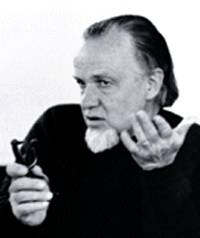
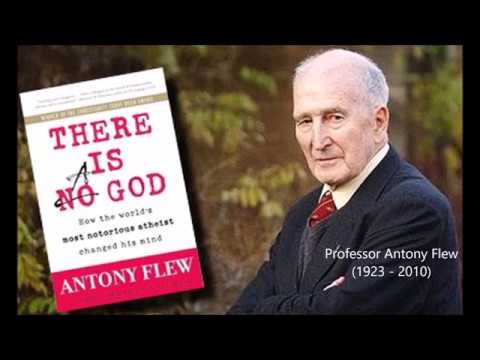


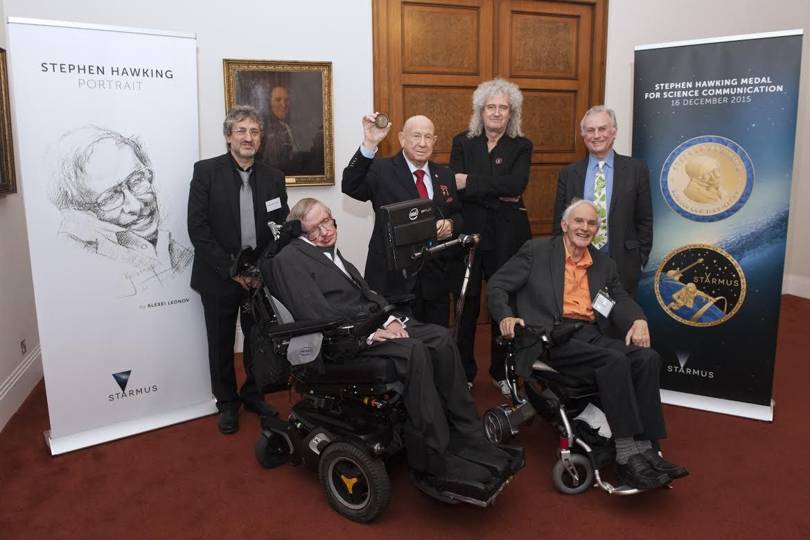

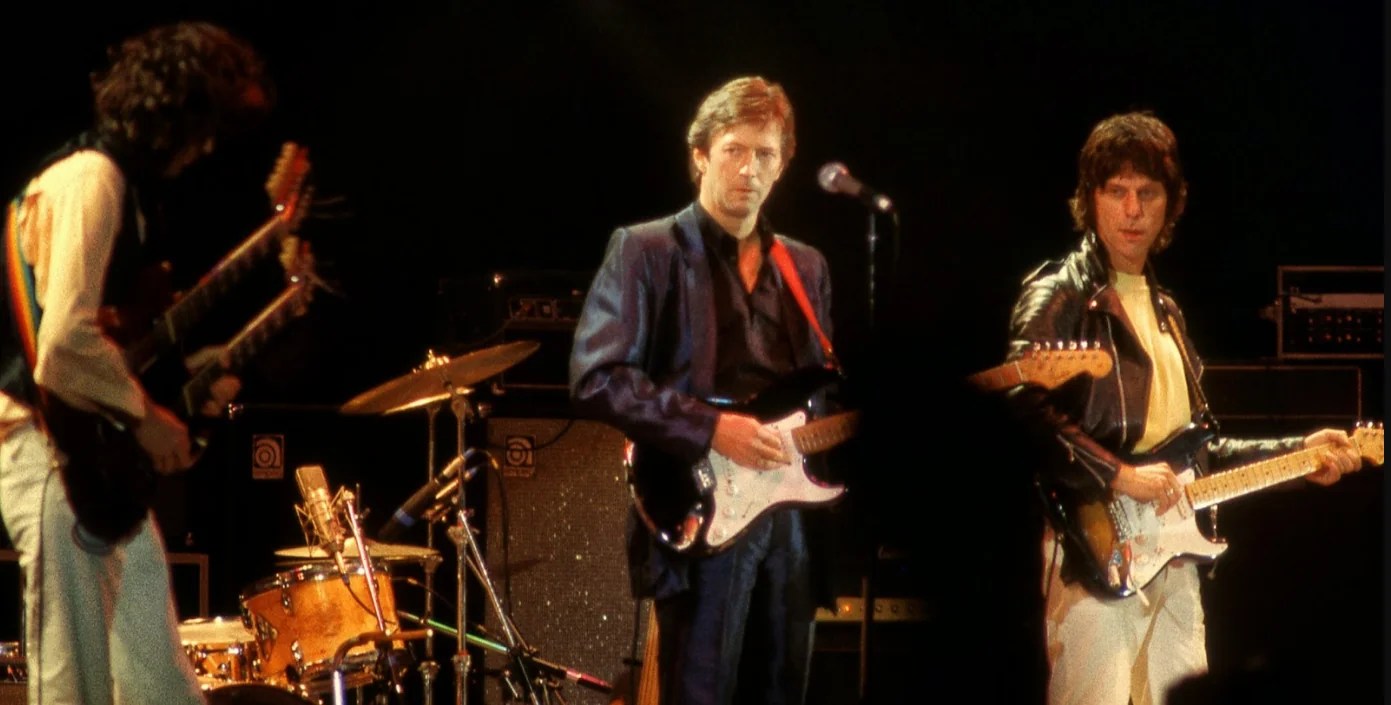

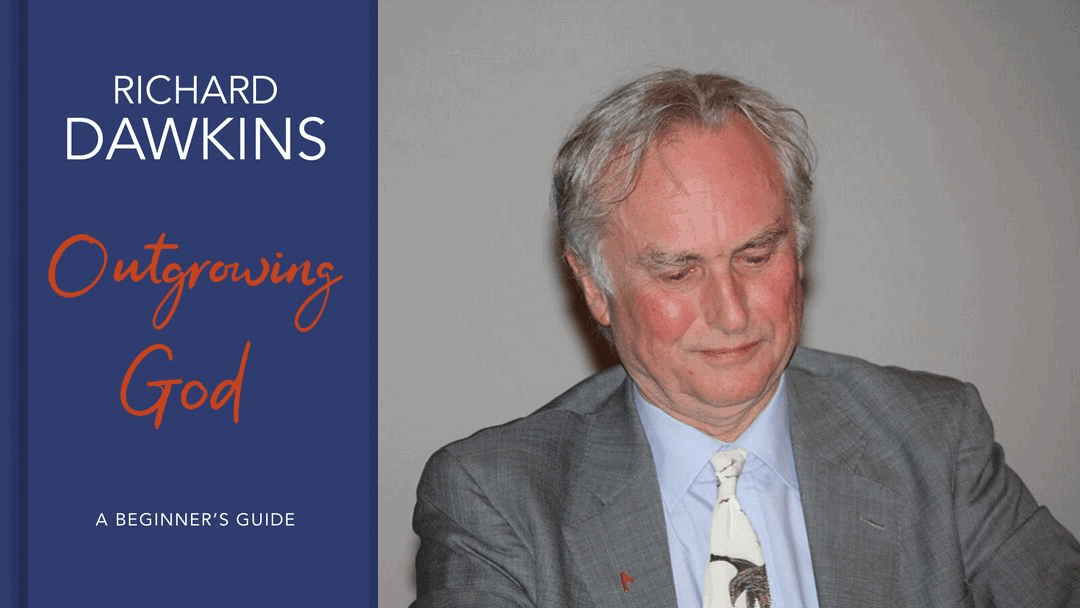








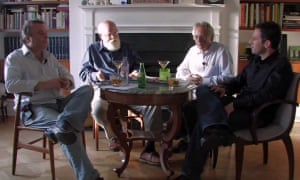
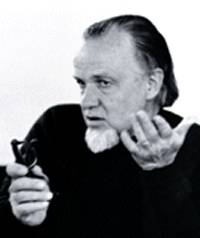


.jpg)


.jpg)




_(LOVERS_-_SELF-PORTRAIT_WITH_WALLY).jpg)


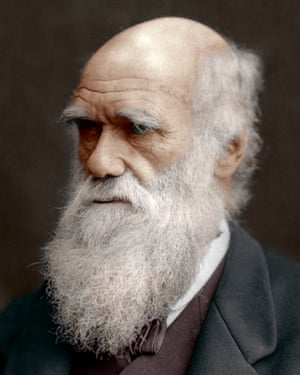



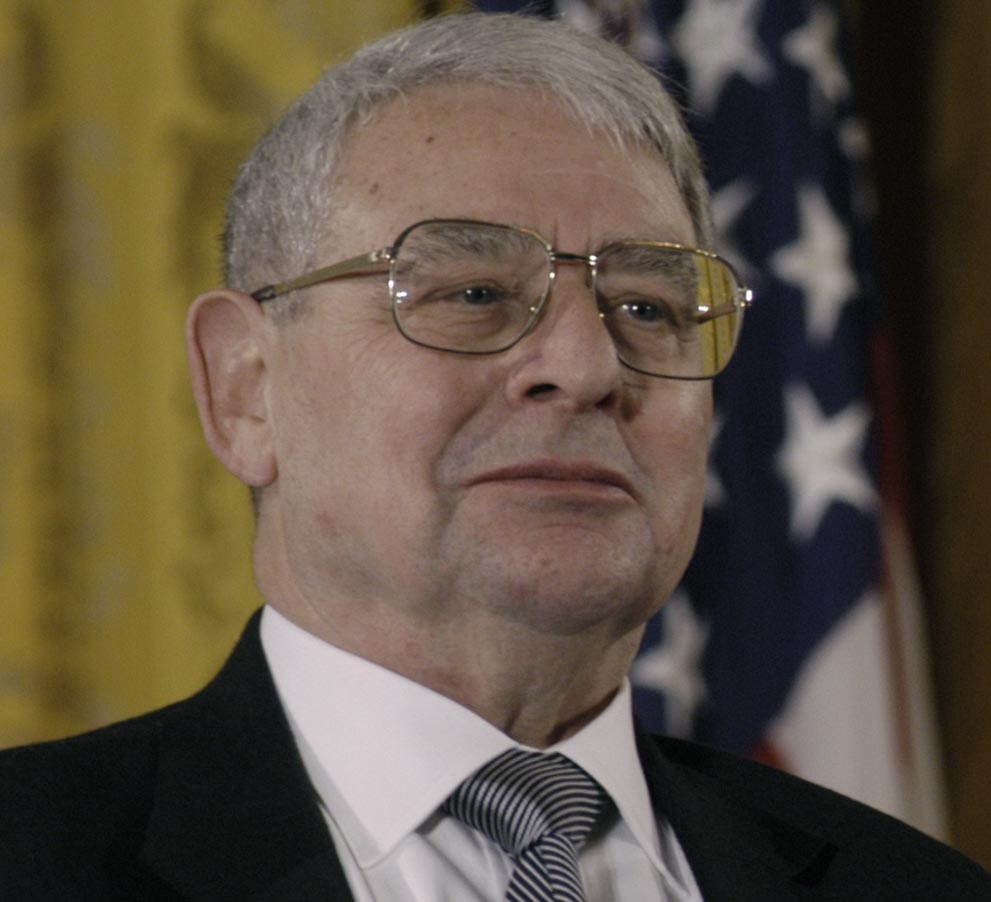


.jpg)


.jpg)


.jpg)


