If you follow any free-market affiliated page on Facebook or Twitter, you have certainly seen a quote from the Milton Friedman. The Nobel Prize winner was not only an award-winning economist but a very well-spoken man. This has led him to become one of the most quoted economists on the internet.
Milton Friedman was a Nobel Laureate and an economic influence to both President Ronald Reagan and Prime Minister Margaret Thatcher.
Friedman is famous in the world of economics for many things, particularly his work on price theory, in which he advocated strongly against the field of Keynesian economics.
The economist also advocated and wrote on a great deal of other issues, such as political freedom, school choice, social welfare, and discrimination.
Although a great deal of his work is still used today, and continued by his son David Friedman, who is also an economist, he always said his greatest accomplishment was on military conscription.
Though military conscription is not usually the focus of economists, Friedman advocated for an “all-volunteer army.” He suggested that a volunteer army would be more representative of the citizen’s view on taking violent action against another group.
“THERE IS NO DOUBT that large armed forces plus the industrial complex required to support them constitute an ever-present threat to political freedom.” –From Why Not a Volunteer Army?
He also advocated that it is more expensive to conscript an army than to ask for volunteers and that such a policy on conscription was a threat to both political and economic freedom.
So what can our society learn from the Quotable Friedman? I suggest that he may have provided solid arguments for some of the more contested points of capitalism, responses that the common man could understand.
Political Freedom = Economic Freedom
The United States has traditionally been labeled one of the freest nations in the world, both historically and presently. However, this may be mere rhetoric, as the United States is ranked as only “moderately free” on the 2016 Index of Economic Freedom.
To Friedman, political freedom was inseparable from economic freedom. He concedes that it is possible to have a politically repressed society with some form of economic freedom, but the opposite scenario is impossible.
He asserted that political freedom was the promise that one may act as one wishes without the coercion from another individual, let alone a governing body.
This also applies to an individual’s wallet. When the government forces you to pay a tax that goes to another individual, or even a cause you don’t support, they do so under the threat of coercion.
We know this to be true, because if you fail to pay your taxes, there is a very high probability a coercive body will knock on your door.
When a governing body has the ability to direct funds to particular organizations, it lends some form of favoritism, no matter how slight. An example of this is mass media, as media controls the message and those who give special favors to the media can sway the message.
In Capitalism and Freedom, Milton argued that those in power due to corruption hate the free-market because it does its job so well. It gives consumers what they actually want and not what those in power think they should want.
The moral of the story is political freedom and economic freedom go hand-in-hand, they should not and cannot be thought of separately.
School Choice
“Not all schooling is education nor all education, schooling. The proper subject of concern is education. The activities of the government are mostly limited to schooling.”
Milton Friedman made a great distinguishment between education and schooling, suggesting that the government focuses more on schooling. Perhaps focusing more on citizenship then preparing its citizens for viable careers.
He made the point that government went out of its way to subsidize higher education long before they focused on primary schools, which may have more weight than the former.
This has made the costs exorbitant to those attending colleges and universities, as attendees have had to aid in subsidizing the training of “veterinarians, beauticians, dentists, and a host of other specialists.”
In regards to primary schooling, there is the constant call for more money. More money to build new facilities and pay better salaries for teaching staff. Friedman points out that these are more like expenditures on schooling for numerous reasons.
One is the call for specialty classes such as basket weaving, social dancing, and so on. These classes do nothing to add to individuals future careers. He doesn’t say that there is no value in these classes, simply that it should be under individuals own cost and not that of the state.
Where is the justification for the taxpayer to pay for such classes? Would perhaps garage or carpentry might be more beneficial to society?
In regards to teachers, Friedman points suggest that poor teachers are paid too much and the good teachers paid too little. The current system does not induce competition or incentive for teachers to innovate in the field of education.
Capitalism & Discrimination
The economic system of capitalism has long been called the system of greed and discrimination. Friedman argues that instead of being the perpetrator of racism, it is instead the system that is only successful with little discrimination.
I like to think of the wedding cake scenario when addressing discrimination on the market. In recent years, there has been a battle over the issue of business owners being forced to do business with individuals they do not agree with, may it be religion or sexual preference.
Those who support the free-market should oppose any and all legislation that would aim to force businesses to do business with those with whom they disagree, here is why.
If such legislation came to exist, the business would be forced to do an exchange with the consumer, at the threat of imposed fines, but the free-market would do so more efficiently.
Many of these businesses do not hide their disagreements from consumers, in fact, some put signs in their windows, which I find to be beneficial as it tells me where not to take my business.
In the free-market, individuals can choose to be racist, homophobic, etc. but consumers are also free to not accidently give them their business.
Here I bring in Ludwig Von Mises to aid in this point: “In an unhampered market society there is no legal discrimination against anybody,” he wrote. “Everyone has the right to obtain the place within the social system in which he can successfully work and make a living. The consumer is free to discriminate, provided that he is ready to pay the cost.”
In the free-market, the baker may choose to not make a cake for a same-sex couple, but instead of facing fines, he may in fact, face the closing of his business with no government to bail him out.
Capitalism may not prevent discrimination, but it doesn’t permanently hamper any particular group. These acts may be ugly to look at and even intended to do harm, but in a free-market discrimination and exclusion don’t work in the long run.
Related posts:
Milton Friedman on Hayek’s “Road to Serfdom” 1994 Interview 1 of 2
Milton Friedman on Hayek’s “Road to Serfdom” 1994 Interview 2 of 2
Here is the video clip and transcript of the film series FREE TO CHOOSE episode “What is wrong with our schools?” Part 6 of 6. Volume 6 – What’s Wrong with our Schools Transcript: FRIEDMAN: But I personally think it’s a good thing. But I don’t see that any reason whatsoever why I shouldn’t have been required […]
By Everette Hatcher III | Also posted in Vouchers | Edit | Comments (0)
Here is the video clip and transcript of the film series FREE TO CHOOSE episode “What is wrong with our schools?” Part 5 of 6. Volume 6 – What’s Wrong with our Schools Transcript: Are your voucher schools going to accept these tough children? COONS: You bet they are. (Several talking at once.) COONS: May I answer […]
By Everette Hatcher III | Also posted in Vouchers | Edit | Comments (0)
Here is the video clip and transcript of the film series FREE TO CHOOSE episode “What is wrong with our schools?” Part 4 of 6. Volume 6 – What’s Wrong with our Schools Transcript: It seems to me that if one is truly interested in liberty, which I think is the ultimate value that Milton Friedman talks […]
By Everette Hatcher III | Also posted in Vouchers | Edit | Comments (0)
Here is the video clip and transcript of the film series FREE TO CHOOSE episode “What is wrong with our schools?” Part 2 of 6. Volume 6 – What’s Wrong with our Schools Transcript: Groups of concerned parents and teachers decided to do something about it. They used private funds to take over empty stores and they […]
Here is the video clip and transcript of the film series FREE TO CHOOSE episode “What is wrong with our schools?” Part 1 of 6. Volume 6 – What’s Wrong with our Schools Transcript: Friedman: These youngsters are beginning another day at one of America’s public schools, Hyde Park High School in Boston. What happens when […]
I enjoyed your latest book Outgrowing God which is one of my favorite books that you have written. However, there are some some weak parts of the book. For instance, on page 81 you write:
The Book of Judges chapter 11 tells of an Israelite general called Jephthah who badly needed a victory against a rival tribe called the Ammonites. Jephthah was desperate to win, so he promised God that he would make a burnt sacrifice of whatever or whomever he first saw on returning home after the battle. God duly gave him the victory he wanted’with a very great slaughter’. Poor Ammonites, you might think. But it gets worse. As luck would have it, the first person who came out of the house to congratulate Jephthah was his beloved daughter. His only daughter. She came out dancing with joy to greet her victorious father. Jephthah was horrified to remember his promise to God. But he had no choice. He had to cook his daughter.
Why did God allow Jephthah’s foolish vow to run its course?
The nature of Jephthah’s vow has been much misunderstood. In Judges 11:30-31 Jephthah, on the eve of his decisive conflict with powerful Ammonite invaders, made a solemn promise to God that if He would grant victory over the foe, then whoever would come forth from the doors of his home to meet him would become the property of the Lord: “And I will offer him up for a burnt offering.”
Obviously it was some human being who was to be involved, someone from Jephthah’s household or some member of his family, and one who would care enough about Jephthah personally to become the first to greet him. The Hebrew text excludes the possibility of any animal serving as a candidate for this burnt offering since the phrase rendered “whatsoever cometh forth of the doors of my house” is never used of an animal (Keil and Delitzsch, Joshua, Judges, Ruth, p. 385).
Had it been a beast, there would of course have been no problem about sacrificing it on the altar as a blood offering (which the Hebrew word for burnt offering [`olah] normally implied). But in this special case, since it was to be a human member of the household who would be the first to greet Jephthah, it was out of the question for a literal blood sacrifice to be performed. Why? Because human sacrifice was sternly and repeatedly forbidden by God in his law (see Lev. 18:21; 20:2-5; Deut. 12:31; 18:10).
It would have been altogether unthinkable for Jephthah or any other Israelite to imagine that he could please God by committing such a heinous and abhorrent abomination in His presence or at His altar. “You shall not behave thus toward [Yahweh] your God, for every abominable act which He [Yahweh] hates they [the Canaanites] have done for their gods; for they even burn their sons and daughters in fire to their gods. Whatever I command you, you shall be careful to do; you shall not add to nor take away from it” (Deut. 12:31- 32). Again, we read in Deuteronomy 18:10-12: “There shall not be found among you anyone who makes his son or his daughter pass through the fire….For whoever does these… detestable things Yahweh your God will drive them out before you.”
In view of Yahweh’s well-known prohibition and expressed loathing for this practice, it would have amounted to a complete renunciation of God’s sovereignty for Jephthah to have undertaken such a thing. It would have been a repudiation of the very covenant that constituted Israel as God’s holy people.
Equally incredible is the notion that God, foreknowing that Jephthah was intending thus to flout His law and trample on His covenant, would nevertheless have granted him victory over the foe. The understanding of the event involves an intolerable theological difficulty, for it hopelessly compromises the integrity of God Himself.
What, then, actually did happen if Jephthah did not offer up his daughter on the altar? As Delitzsch points out, the whole record of the manner in which this vow was carried out points to her dedication to the service of the Lord as a lifelong ministrant at the national sanctuary. Judges 11:37-38 states that she was allowed a mourning period of two 161 months, not to bewail her approaching death, but rather to lament over her permanent virginity (betulim) and the resultant extinction of her father’s line, since she was his only child. As one set apart for tabernacle service (cf. Exod. 38:8; 1 Sam. 2:22 for other references to these consecrated virgins who performed service at the tabernacle), she would never become a mother; hence it is emphasized that “she knew no man” (Judg. 11:39). This would have been a pointless and inane remark if in fact she were put to death.
Jephthah acted as a man of honor in carrying out his promise and presenting his daughter as a living sacrifice, as all true Christians are bidden to present themselves (Rom. 12:1). Had he committed a detested abomination like the slaughter of his own child, he never would have been listed with the heroes of faith in Hebrews 11. (An extended and skillful treatment of this whole issue is found in Keil and Delitzsch, Joshua, Judges, Ruth, pp. 384-95).
—-
Dr. Dawkins, you have a 150 year advantage over your hero Charles Darwin and the archaeologist’s spade has continued to dig. Take a look at this piece of evidence from the book WHATEVER HAPPENED TO THE HUMAN RACE? by Francis Schaeffer and C. Everett Koop:
TRUTH AND HISTORY (chapter 5 of WHATEVER HAPPENED TO THE HUMAN RACE?)
In the previous chapter we saw that the Bible gives us the explanation for the existence of the universe and its form and for the mannishness of man. Or, to reverse this, we came to see that the universe and its form and the mannishness of man are a testimony to the truth of the Bible. In this chapter we will consider a third testimony: the Bible’s openness to verification by historical study.
Christianity involves history. To say only that is already to have said something remarkable, because it separates the Judeo-Christian world-view from almost all other religious thought. It is rooted in history.
The Bible tells us how God communicated with man in history. For example, God revealed Himself to Abraham at a point in time and at a particular geographical place. He did likewise with Moses, David, Isaiah, Daniel and so on. The implications of this are extremely important to us. Because the truth God communicated in the Bible is so tied up with the flow of human events, it is possible by historical study to confirm some of the historical details.
It is remarkable that this possibility exists. Compare the information we have from other continents of that period. We know comparatively little about what happened in Africa or South America or China or Russia or even Europe. We see beautiful remains of temples and burial places, cult figures, utensils, and so forth, but there is not much actual “history” that can be reconstructed, at least not much when compared to that which is possible in the Middle East.
When we look at the material which has been discovered from the Nile to the Euphrates that derives from the 2500-year span before Christ, we are in a completely different situation from that in regard to South America or Asia. The kings of Egypt and Assyria built thousands of monuments commemorating their victories and recounting their different exploits. Whole libraries have been discovered from places like Nuzu and Mari and most recently at Elba, which give hundreds of thousands of texts relating to the historical details of their time. It is within this geographical area that the Bible is set. So it is possible to find material which bears upon what the Bible tells us.
The Bible purports to give us information on history. Is the history accurate? The more we understand about the Middle East between 2500 B.C. and A.D. 100, the more confident we can be that the information in the Bible is reliable, even when it speaks about the simple things of time and place.
There is also a confirmation of what the Bible says concerning the Egyptian King Tirhakah who came up to oppose the Assyrians. Confirmation of his reality is typified by a sphinx-ram in the British Museum (British Museum Ref. B.B.1779). The small figure between the legs of the ram is a representation of King Tirhakah. The Bible says that when Sennacherib heard that Tirhakah, king of Eqypt, was coming to fight against him, he sent messengers to tell Hezekiah that help from Egypt would be of no use to him.
2 Kings 19:9, 109 Now the king heard concerning Tirhakah king of Cush, “Behold, he has set out to fight against you.” So he sent messengers again to Hezekiah, saying,10 “Thus shall you speak to Hezekiah king of Judah: ‘Do not let your God in whom you trust deceive you by promising that Jerusalem will not be given into the hand of the king of Assyria. (Isaiah 37:9-10 also says about the same thing.)
The date of Sennacherib’s campaign in Palestine is 701 B.C., and something which has often puzzled historians is the role of Tirhakah, who was not king of Egypt and Ethiopia until 690 B.C. But the solution to this problem is simple. In 701 B.C. Tirhakah was only a prince at the side of his military brother, the new Pharaoh Shebitku, who sent Tirhakah with an army to help Hezekiah fend off the Assyrian advance. But the story in Kings and Isaiah does not end in 701 B.C. It carries right through to the death of Sennacherib in 681 B.C., which is nine years after Tirhakah had become king of Egypt and Ethiopia. In other words, the biblical narrative, from the standpoint of 681 B.C., mentions Tirhakah by the title he bore at that time (that is, 681 B.C.), not as he was in 701 B.C. This is still done today, using a man’s title as he is known at the time of writing even it one is speaking of a previous time in his personal history.
Unaware of the the importance of these facts, and falling into wrong interpretations of some of Tirhakah’s inscriptions, some Old Testament scholars have stumbled over each in their eagerness to diagnose historical errors in the Books of the Kings and Isaiah. But as the archaeological confirmation shows, they were quite mistaken. What is striking about these archaeological finds is the way they often converge; there is often not just one line of evidence but several in which the biblical account is confirmed. We do not have confirmation of every single detail in the biblical account, by any means. Nor do we need such total confirmation in view of the amount of evidence there is. To insist on confirmation at every point would be to treat the Bible in a prejudiced way, simply because it is the Bible. The fact that is a religious book does not mean that it cannot also be true when it deals with history.
Not all archaeological finds have a convergence of many different interrelated lines like these around the life of Hezekiah, but they are no less striking. For example, take the “ration tablets” discovered in the ruins of Bablyon. The Bible tells us that after the Assyrians had destroyed the nothern kingdom of Samaria (around 721 B.C.), the southern kingdom, Judah, survived for almost another 150 years until approximately 586 B.C. By this time Assyria, one of the greatest military powers of the ancient world, had been defeated by Bablyon, a neighboring state to the east. That was in 609 B.C. Four years later the Babylonian general, Nebuchadnezzar–then the crown prince–came west and completely defeated Necho II, king of Egypt, at the battle of Carchemish. As a result of this victory he laid claim to Judah, which had previously been in the sphere of influence of Egypt. King Jehoiakim of Judah thus now paid tribute to the Babylonians. The Bible tells us that Jehoiakim rebelled three years later: “During Jehoiakim’s reign Nebuchadnezzar king of Bablyon invaded the land, and Jehoiakim became his vassal for three years. But then he changed his mind and rebelled against Nebuchnezzar” (II Kings 24:1).
The political background for this step can be understood from the Babylonian Chronicles (British Museum, Ref. 21946, records events from 597 B.C. down to 594). These were a compressed chronological summary of the principal events from the Babylonian court. There had been a crucial battle in 601 B.C. between the Egyptians and the Babylonians. This had left both sides weakened, and Jehoiakim took this opportunity to declare his independence of the Babylonian king. His independence, or rather Judah’s independence, did not last long, for Jehoiakim himself died in 598 B.C., leaving his throne and the crisis to his son, Jehoiachin. Second Kings (II Kings 24:10-12, 17) tells us what happened:
10 At that time the servants of Nebuchadnezzar king of Babylon came up to Jerusalem, and the city was besieged. 11 And Nebuchadnezzar king of Babylon came to the city while his servants were besieging it, 12 and Jehoiachin the king of Judah gave himself up to the king of Babylon, himself and his mother and his servants and his officials and his palace officials. The king of Babylon took him prisoner in the eighth year of his reign. 17 And the king of Babylon made Mattaniah, Jehoiachin’s uncle, king in his place, and changed his name to Zedekiah.
The story of Jehoiachin does not end there, however. The royal family were kept at the court of Nebuchadnezzar, and the Bible says that they , like other royal captives, were provided for by the king with rations of grain and oil (II Kings 25:27-30):
27 And in the thirty-seventh year of the exile of Jehoiachin king of Judah, in the twelfth month, on the twenty-seventh day of the month, Evil-merodach king of Babylon, in the year that he began to reign, graciously freed[a] Jehoiachin king of Judah from prison.28 And he spoke kindly to him and gave him a seat above the seats of the kings who were with him in Babylon. 29 So Jehoiachin put off his prison garments. And every day of his life he dined regularly at the king’s table, 30 and for his allowance, a regular allowance was given him by the king, according to his daily needs, as long as he lived.
The records of these allowances referred to in the Bible were unearthed in excavations in Babylon in basement storerooms of the royal palace (in Staat-Liches Museum, East Berlin, Vorderas Abteilung; Babylon 28122 and 28126). These are known as the “ration tablets” and they record who received such “rations.” In these, Jehoiachin is mentioned by name.
We also have confirmation of the Babylonian advance towards Judah in Nebuchadezzar’s first campaign. Among the ruins of Lachish were discovered a number of ostraca. Ostraca are broken pieces of earthenware called postherds, which were used for writing on in ink. (The Lachish ostraca are in the Palestinian Archaeological Museum, Jerusalem.) These brief letters reveal the increasing tensions within the growing state of Judah and tie in well with the picture given in the Bible by the Book of Jeremiah the Prophet. In Ostracon VI, the princes are accused of “weakening our hands” (that is, discouraging the writers), which is the very phraseology used in the Bible by the Judean princes against Jeremiah. Also, the use of fire beacons for signaling is found in both Ostracon IV and Jeremiah 6:1, each using the same terminology.
These events took place around the year 600 B.C. Events we considered earlier in relation to the capture of Lachish by Sennacherib during the reign of Hezekiah were around the year 700 B.C.
Michael Ray Charles was born in 1967 in Lafayette, Louisiana, and graduated from McNeese State University in Lake Charles, Louisiana, in 1985. In college, he studied advertising design and illustration, eventually moving to painting, his preferred medium. Charles also received an MFA degree from the University of Houston in 1993. His graphically styled paintings investigate racial stereotypes drawn from a history of American advertising, product packaging, billboards, radio jingles, and television commercials.
Charles draws comparisons between Sambo, Mammy, and minstrel images of an earlier era and contemporary mass-media portrayals of black youths, celebrities, and athletes—images he sees as a constant in the American subconscious. “Stereotypes have evolved,” he notes. “I’m trying to deal with present and past stereotypes in the context of today’s society.” Caricatures of African-American experience, such as Aunt Jemima, are represented in Charles’s work as ordinary depictions of blackness, yet are stripped of the benign aura that lends them an often-unquestioned appearance of truth. Charles says, “Aunt Jemima is just an image, but it almost automatically becomes a real person for many people, in their minds. But there’s a difference between these images and real humans.” In each of his paintings, notions of beauty, ugliness, nostalgia, and violence emerge and converge, reminding us that we cannot divorce ourselves from a past that has led us to where we are, who we have become, and how we are portrayed. Charles lives in Texas and teaches at the University of Texas at Austin.
Published on Oct 13, 2015 SUBSCRIBE 174 A video about Michael Ray Charles’ “(Forever Free) Ideas, Languages and Conversations,” commissioned by Landmarks for The University of Texas at Austin. Featuring insights from the artist.
On November 21, 2014 I received a letter from Nobel Laureate Harry Kroto and it said: …Please click on this URL http://vimeo.com/26991975 and you will hear what far smarter people than I have to say on this matter. I agree with them. Harry Kroto _________________ Below you have picture of 1996 Chemistry Nobel Prize Winner […]
The Beatles were “inspired by the musique concrète of German composer and early electronic music pioneer Karlheinz Stockhausen…” as SCOTT THILL has asserted. Francis Schaeffer noted that ideas of “Non-resolution” and “Fragmentation” came down German and French streams with the influence of Beethoven’s last Quartets and then the influence of Debussy and later Schoenberg’s non-resolution which is in total contrast […]
_______ On November 21, 2014 I received a letter from Nobel Laureate Harry Kroto and it said: …Please click on this URL http://vimeo.com/26991975 and you will hear what far smarter people than I have to say on this matter. I agree with them. Harry Kroto _________________ Below you have picture of 1996 Chemistry Nobel Prize […]
On November 21, 2014 I received a letter from Nobel Laureate Harry Kroto and it said: …Please click on this URL http://vimeo.com/26991975 and you will hear what far smarter people than I have to say on this matter. I agree with them. Harry Kroto ____________________ Below you have picture of 1996 Chemistry Nobel Prize Winner Dr. […]
“Existential subjects to me are still the only subjects worth dealing with. I don’t think that one can aim more deeply than at the so-called existential themes, the spiritual themes.” WOODY ALLEN
Evangelical Chuck Colson has observed that it used to be true that most Americans knew the Bible. Evangelists could simply call on them to repent and return. But today, most people lack understanding of biblical terms or concepts. Colson recommends that we first attempt to find common ground to engage people’s attention. That then may open a door to discuss spiritual matters.
Woody Allen’s 1989 movie, CRIMES AND MISDEMEANORS , is an excellent icebreaker concerning the need of God while making decisions in the area of personal morality. In this film, Allen attacks his own atheistic view of morality. Martin Landau plays a Jewish eye doctor named Judah Rosenthal raised by a religious father who always told him, “The eyes of God are always upon you.” However, Judah later concludes that God doesn’t exist. He has his mistress (played in the film by Anjelica Huston) murdered because she continually threatened to blow the whistle on his past questionable, probably illegal, business activities. She also attempted to break up Judah ‘s respectable marriage by going public with their two-year affair. Judah struggles with his conscience throughout the remainder of the movie. He continues to be haunted by his father’s words: “The eyes of God are always upon you.” This is a very scary phrase to a young boy, Judah observes. He often wondered how penetrating God’s eyes are.
Later in the film, Judah reflects on the conversation his religious father had with Judah ‘s unbelieving Aunt May at the dinner table many years ago:
“Come on Sol, open your eyes. Six million Jews burned to death by the Nazis, and they got away with it because might makes right,” says aunt May
Sol replies, “May, how did they get away with it?”
Judah asks, “If a man kills, then what?”
Sol responds to his son, “Then in one way or another he will be punished.”
Aunt May comments, “I say if he can do it and get away with it and he chooses not to be bothered by the ethics, then he is home free.”
Judah ‘s final conclusion was that might did make right. He observed that one day, because of this conclusion, he woke up and the cloud of guilt was gone. He was, as his aunt said, “home free.”
Woody Allen has exposed a weakness in his own humanistic view that God is not necessary as a basis for good ethics. There must be an enforcement factor in order to convince Judah not to resort to murder. Otherwise, it is fully to Judah ‘s advantage to remove this troublesome woman from his life.
The Bible tells us, “{God} has also set eternity in the hearts of men…” (Ecclesiastes 3:11 NIV). The secularist calls this an illusion, but the Bible tells us that the idea that we will survive the grave was planted in everyone’s heart by God Himself. Romans 1:19-21 tells us that God has instilled a conscience in everyone that points each of them to Him and tells them what is right and wrong (also Romans 2:14 -15).
It’s no wonder, then, that one of Allen’s fellow humanists would comment, “Certain moral truths — such as do not kill, do not steal, and do not lie — do have a special status of being not just ‘mere opinion’ but bulwarks of humanitarian action. I have no intention of saying, ‘I think Hitler was wrong.’ Hitler WAS wrong.” (Gloria Leitner, “A Perspective on Belief,” THE HUMANIST, May/June 1997, pp. 38-39)
Here Leitner is reasoning from her God-given conscience and not from humanist philosophy. It wasn’t long before she received criticism. Humanist Abigail Ann Martin responded, “Neither am I an advocate of Hitler; however, by whose criteria is he evil?” (THE HUMANIST, September/October 1997, p. 2)
The secularist can only give incomplete answers to these questions: How could you have convinced Judah not to kill? On what basis could you convince Judah it was wrong for him to murder?
As Christians, we would agree with Judah ‘s father that “The eyes of God are always upon us.” Proverbs 5:21 asserts, “For the ways of man are before the eyes of the Lord, and He ponders all his paths.” Revelation 20:12 states, “…And the dead were judged (sentenced) by what they had done (their whole way of feeling and acting, their aims and endeavors) in accordance with what was recorded in the books” (Amplified Version). The Bible is revealed truth from God. It is the basis for our morality. Judah inherited the Jewish ethical values of the Ten Commandments from his father, but, through years of life as a skeptic, his standards had been lowered. Finally, we discover that Judah ‘s secular version of morality does not resemble his father’s biblically-based morality.
Woody Allen’s CRIMES AND MISDEMEANORS forces unbelievers to grapple with the logical conclusions of a purely secular morality. It opens a door for Christians to find common ground with those whom they attempt to share Christ; we all have to deal with personal morality issues. However, the secularist has no basis for asserting that Judah is wrong.
Larry King actually mentioned on his show, LARRY KING LIVE, that Chuck Colson had discussed the movie CRIMES AND MISDEMEANORS with him. Colson asked King if life was just a Darwinian struggle where the ruthless come out on top. Colson continued, “When we do wrong, is that our only choice? Either live tormented by guilt, or else kill our conscience and live like beasts?” (BREAKPOINT COMMENTARY, “Finding Common Ground,” September 14, 1993)
Later, Colson noted that discussing the movie CRIMES AND MISDEMEANORS with King presented the perfect opportunity to tell him about Christ’s atoning work on the cross. Colson believes the Lord is working on Larry King. How about your neighbors? Is there a way you can use a movie to find common ground with your lost friends and then talk to them about spiritual matters?(Caution: CRIMES AND MISDEMEANORS is rated PG-13. It does include some adult themes.)
The mass media turned Picasso into a celebrity, and the public deprived him of privacy and wanted to know his every step, but his later art was given very little attention and was regarded as no more than the hobby of an aging genius who could do nothing but talk about himself in his pictures. Picasso’s late works are an expression of his final refusal to fit into categories. He did whatever he wanted in art and did not arouse a word of criticism.
With his adaptation of “Las Meninas” by Velászquez and his experiments with Manet’s Luncheon on the Grass, was Picasso still trying to discover something new, or was he just laughing at the public, its stupidity and its inability to see the obvious.
A number of elements had become characteristic in his art of this period: Picasso’s use of simplified imagery, the way he let the unpainted canvas shine through, his emphatic use of lines, and the vagueness of the subject. In 1956, the artist would comment, referring to some schoolchildren: “When I was as old as these children, I could draw like Raphael, but it took me a lifetime to learn to draw like them.”
In the last years of his life, painting became an obsession with Picasso, and he would date each picture with absolute precision, thus creating a vast amount of similar paintings — as if attempting to crystallize individual moments of time, but knowing that, in the end, everything would be in vain.
The movie MIDNIGHT IN PARISoffers many of the same themes we see in Ecclesiastes. The second postlooked at the question: WAS THERE EVER A GOLDEN AGE AND DID THE MOST TALENTED UNIVERSAL MEN OF THAT TIME FIND TRUE SATISFACTION DURING IT?
In the third post in this series we discover in Ecclesiastes that man UNDER THE SUN finds himself caught in the never ending cycle of birth and death. The SURREALISTS make a leap into the area of nonreason in order to get out of this cycle and that is why the scene in MIDNIGHT IN PARIS with Salvador Dali, Man Ray, and Luis Bunuel works so well!!!! These surrealists look to the area of their dreams to find a meaning for their lives and their break with reality is only because they know that they can’t find a rational meaning in life without God in the picture.
The fourth post looks at the solution of WINE, WOMEN AND SONG and the fifthandsixth posts look at the solution T.S.Eliotfound in the Christian Faith and how he left his fragmented message of pessimism behind. In theseventh post the SURREALISTS say that time and chance is all we have but how can that explain love or art and the hunger for God? The eighth post looks at the subject of DEATH both in Ecclesiastes and MIDNIGHT IN PARIS. In the ninth post we look at the nihilistic worldview of Woody Allen and why he keeps putting suicides into his films.
In the tenth post I show how Woody Allen pokes fun at the brilliant thinkers of this world and how King Solomon did the same thing 3000 years ago. In theeleventh postI point out how many of Woody Allen’s liberal political views come a lack of understanding of the sinful nature of man and where it originated. In thetwelfth post I look at the mannishness of man and vacuum in his heart that can only be satisfied by a relationship with God.
In the thirteenth postwe look at the life of Ernest Hemingway as pictured in MIDNIGHT AND PARIS and relate it to the change of outlook he had on life as the years passed. In the fourteenth post we look at Hemingway’s idea of Paris being a movable feast. The fifteenth andsixteenth posts both compare Hemingway’s statement, “Happiness in intelligent people is the rarest thing I know…” with Ecclesiastes 2:18 “For in much wisdom is much vexation, and he who increases knowledge increases sorrow.” The seventeenth post looks at these words Woody Allen put into Hemingway’s mouth, “We fear death because we feel that we haven’t loved well enough or loved at all.”
In MIDNIGHT IN PARIS Hemingway and Gil Pender talk about their literary idol Mark Twain and the eighteenth post is summed up nicely by Kris Hemphill‘swords, “Both Twain and [King Solomon in the Book of Ecclesiastes] voice questions our souls long to have answered: Where does one find enduring meaning, life purpose, and sustainable joy, and why do so few seem to find it? The nineteenth postlooks at the tension felt both in the life of Gil Pender (written by Woody Allen) in the movie MIDNIGHT IN PARIS and in Mark Twain’s life and that is when an atheist says he wants to scoff at the idea THAT WE WERE PUT HERE FOR A PURPOSE but he must stay face the reality of Ecclesiastes 3:11 that says “God has planted eternity in the heart of men…” and THAT CHANGES EVERYTHING! Therefore, the secular view that there is no such thing as love or purpose looks implausible. The twentieth post examines how Mark Twain discovered just like King Solomon in the Book of Ecclesiastes that there is no explanation for the suffering and injustice that occurs in life UNDER THE SUN. Solomon actually brought God back into the picture in the last chapter and he looked ABOVE THE SUN for the books to be balanced and for the tears to be wiped away.
The twenty-first post looks at the words of King Solomon, Woody Allen and Mark Twain that without God in the picture our lives UNDER THE SUN will accomplish nothing that lasts. Thetwenty-second postlooks at King Solomon’s experiment 3000 years that proved that luxuries can’t bring satisfaction to one’s life but we have seen this proven over and over through the ages. Mark Twain lampooned the rich in his book “The Gilded Age” and he discussed get rich quick fever, but Sam Clemens loved money and the comfort and luxuries it could buy. Likewise Scott Fitzgerald was very successful in the 1920’s after his publication of THE GREAT GATSBY and lived a lavish lifestyle until his death in 1940 as a result of alcoholism.
In the twenty-third postwe look at Mark Twain’s statement that people should either commit suicide or stay drunk if they are “demonstrably wise” and want to “keep their reasoning faculties.” We actually see this play out in the film MIDNIGHT IN PARIS with the character Zelda Fitzgerald. In the twenty-fourth, twenty-fifth and twenty-sixth posts I look at Mark Twain and the issue of racism. In MIDNIGHT IN PARIS we see the difference between the attitudes concerning race in 1925 Paris and the rest of the world.
The twenty-seventh and twenty-eighth posts are summing up Mark Twain. In the 29th post we ask did MIDNIGHT IN PARIS accurately portray Hemingway’s personality and outlook on life? and in the 30th postthe life and views of Hemingway are summed up.
In the 31st post we will observe that just like Solomon Picasso slept with many women. Solomon actually slept with over 1000 women ( Eccl 2:8, I Kings 11:3), and both men ended their lives bitter against all women and in the 32nd post we look at what happened to these former lovers of Picasso. In the 33rd post we see that Picasso deliberately painted his secular worldview of fragmentation on his canvas but he could not live with the loss of humanness and he reverted back at crucial points and painted those he loved with all his genius and with all their humanness!!! In the 34th post we notice that both Solomon in Ecclesiastes and Picasso in his painting had an obsession with the issue of their impending death!!!
Woody Allen believes that we live in a cold, violent and meaningless universe and it seems that his main character (Gil Pender, played by Owen Wilson) in the movie MIDNIGHT IN PARIS shares that view. Pender’s meeting with the Surrealists is by far the best scene in the movie because they are ones who can […]
In the last post I pointed out how King Solomon in Ecclesiastes painted a dismal situation for modern man in life UNDER THE SUN and that Bertrand Russell, and T.S. Eliot and other modern writers had agreed with Solomon’s view. However, T.S. Eliot had found a solution to this problem and put his faith in […]
In MIDNIGHT IN PARIS Gil Pender ponders the advice he gets from his literary heroes from the 1920’s. King Solomon in Ecclesiastes painted a dismal situation for modern man in life UNDER THE SUN and many modern artists, poets, and philosophers have agreed. In the 1920’s T.S.Eliot and his house guest Bertrand Russell were two of […]
Basically Chuck Colson and Larry King discussed your film Crimes and Misdemeanors and Colson asked if life was just a Darwinian struggle where the ruthless come out on top. Colson continued, “When we do wrong, is that our only choice?
I have had the privilege of confronting several atheists and asking them several questions based on your film Crimes and Misdemeanors:
How could you have convinced Judah not to kill?
On what basis could you convince Judah it was wrong for him to murder?
One reviewer of Crimes and Misdemeanors tried to say that a weekend away with his mistress and then Judah could just Reason with her!! However, in the plot we see that she was so vindictive that she was going to blow the whistle on his past illegal activities which meant he would go to JAIL!!! There was no room to reason with this mistress!!!
So many secular intellectuals I have discussed this film with have tried to avoid the obvious conclusion that there is NO WAY to convince Judah not to kill this troublesome mistress on a secular basis.
Francis Schaeffer once wrote, “If there is no absolute beyond man’s ideas, then there is no final appeal to judge between individuals and groups whose moral judgments conflict. We are merely left with conflicting opinions.”__
Should we DO WANT WANT TO AS IF THERE IS FINAL JUDGE? That would lead to MIGHT MAKES RIGHT!!!!
Let me challenge those who doubt that logical conclusion to watch your film CRIMES AND MISDEMEANORS. But let me make an observation about the movie. It is your firm conviction that faith in God’s word, the Bible, is really blind faith with no facts to back it up.
Aunt May’s foil in the film is Ben (Sam Waterston), a pious rabbi who says that he couldn’t go on living “if I didn’t feel with all my heart a moral structure with real meaning and forgiveness and some kind of higher power. Otherwise there’s no basis to live…. Without the law, it’s all darkness.” Allen reveals his attitude toward the rabbi by subjecting him to a progressive loss of vision that ends in total blindness by the conclusion of the film — a blunt metaphor for the darkness induced by his own moral and religious faith.
We know that this was Allen’s intent because he’s said so. Ben, according to Allen, “doesn’t really understand the reality of life… and that’s why I wanted to make him blind. I feel that his faith is blind. It will work, but it requires closing your eyes to reality.” And what is reality? That “at best the universe is indifferent” to our lives and our various ways of construing right and wrong. This indifference is so awful that many of us feel driven to “create a fake world for ourselves, and we exist within that fake world.”
—-
Let me challenge you to take a closer look at the Bible and it’s accuracy.
Shishak’s Invasion of Judah. First Kings 14 and 2 Chronicles 12 tell of Pharaoh Shishak’s conquest of Judah in the fifth year of the reign of King Rehoboam, the brainless son of Solomon, and how Solomon’s temple in Jerusalem was robbed of its treasures on that occasion. This victory is also commemorated in hieroglyphic wall carvings on the Temple of Amon at Thebes.
The Moabite Stone. Second Kings 3 reports that Mesha, the king of Moab, rebelled against the king of Israel following the death of Ahab. A three-foot stone slab, also called the Mesha Stele, confirms the revolt by claiming triumph over Ahab’s family, c. 850 BC, and that Israel had “perished forever.”
Obelisk of Shalmaneser III. In 2 Kings 9–10, Jehu is mentioned as King of Israel (841–814 BC). That the growing power of Assyria was already encroaching on the northern kings prior to their ultimate conquest in 722 BC is demonstrated by a six-and-a-half-foot black obelisk discovered in the ruins of the palace at Nimrud in 1846. On it, Jehu is shown kneeling before Shalmaneser III and offering tribute to the Assyrian king, the only relief we have to date of a Hebrew monarch.
Not a believer. (Pascal Le Segretain/Getty Images)February 4, 2014
I don’t know what did or did not happen between Woody Allen and Dylan Farrow more than 20 years ago, and neither does Nicholas Kristof. What I do know is that Allen is a moral nihilist. This should not be taken as evidence that he sexually molested Mia Farrow’s adopted daughter when she was 7 years old, or taken as a sign that he’d condone such behavior. But it does mean he espouses a philosophical outlook that renders him powerless to condemn it.
Let me be clear about two things right off the bat. First, I’m a great admirer of Allen’s filmmaking — and like Andrew Sullivan and Rod Dreher, I think the artistry of his films can and should be judged apart from his (perhaps substantial) moral failings. Second, I consider nihilism to be a viable, albeit false and ultimately chilling, philosophical and existential position. In describing Allen as a nihilist, I am not issuing an indictment — simply describing an outlook that he has elaborated in several films and interviews over the years.
Allen’s most thorough cinematic treatment of nihilism and its moral implications can be found in what may be his greatest film, Crimes and Misdemeanors (1989). The movie tells the story of an ophthalmologist named Judah Rosenthal (played by Martin Landau) who decides to kill off his lover Dolores (Angelica Houston) when she threatens to divulge their affair to Judah’s wife. (Allen’s Match Point (2005), an inferior film in almost every way, explores many similar themes.)
At first wracked with guilt over the murder, Judah eventually gets over his moral qualms. (As another character quips in the film, “comedy is tragedy plus time.”) In a shocking subversion of Hollywood-style happy endings as well as Dostoevsky’s Crime and Punishment — in which the character Raskolnikov is driven by unremitting guilt to confess a pair of murders to the authorities — the film ends with Judah seemingly at complete peace with himself and thriving in every way: Happy, wealthy, successful, adored by a beautiful wife and daughter, with the latter soon to be married.
The viewer is left to conclude that Judah got away with his crime scot-free — and that such an outcome is possible for anyone courageous enough to violate accepted moral customs and lucky or clever enough to avoid getting caught by the legal authorities.
The theme and its broader implications are reinforced throughout the film. In one of its most powerful scenes, Judah observes and interacts with a memory from his youth in which members of his family debate morality, God, and the Holocaust. Espousing the view endorsed by the film, Judah’s atheist aunt May (whom Judah’s religiously observant father dubs a “nihilist”) remarks that if National Socialist Germany had won World War II, then Hitler’s actions would have ended up being “right.” After all, in such a nightmarish, counterfactual world, the Nazis would be empowered to set and enforce the reigning moral standard — and there simply is no higher moral authority to appeal to against such a standard. In a nihilistic universe, the overarching moral truth is that might makes right.
Aunt May’s foil in the film is Ben (Sam Waterston), a pious rabbi who says that he couldn’t go on living “if I didn’t feel with all my heart a moral structure with real meaning and forgiveness and some kind of higher power. Otherwise there’s no basis to live…. Without the law, it’s all darkness.” Allen reveals his attitude toward the rabbi by subjecting him to a progressive loss of vision that ends in total blindness by the conclusion of the film — a blunt metaphor for the darkness induced by his own moral and religious faith.
Allen, 1970. | (Evening Standard/Getty Images)
We know that this was Allen’s intent because he’s said so. Ben, according to Allen, “doesn’t really understand the reality of life… and that’s why I wanted to make him blind. I feel that his faith is blind. It will work, but it requires closing your eyes to reality.” And what is reality? That “at best the universe is indifferent” to our lives and our various ways of construing right and wrong. This indifference is so awful that many of us feel driven to “create a fake world for ourselves, and we exist within that fake world.”
On a lesser level you see it in sports. They create a world of football, for example. You get lost in that world and you care about meaningless things…. People by the thousands watch it, thinking it’s very important who wins. But, in fact, if you step back for a second, it’s utterly unimportant who wins. It means nothing. In the same way we create for ourselves a world that, in fact, means nothing at all, when you step back. It’s meaningless.
As Allen explained in a more recent interview in Commonweal magazine, it was the desire to explore this sense of existential meaninglessness that inspired him to make Crimes and Misdemeanors: “Some people distort [the meaninglessness of the world] with religious things. Some people distort it with sports, with money, with love, with art… but nothing makes it meaningful…. [E]veryone goes to his grave in a meaningless way…. [O]ne can commit a crime, do unspeakable things, and get away with it, and some of them are plagued with all sorts of guilt for the rest of their lives and others aren’t. There is no justice…”
There is no justice. From Plato’s sociopathicsophists to Friedrich Nietzsche’s ambition to “sail right over our morality,” this has been the conviction and the insight of the nihilist. These are Woody Allen’s philosophical compatriots.
I should note, once again, that this doesn’t mean he’s a sexual predator. Nothing in the outlook of a nihilist necessarily implies that he will engage in immoral actions.
All that nihilism implies is the absence of a compelling reason not to do so.
“Existential subjects to me are still the only subjects worth dealing with. I don’t think that one can aim more deeply than at the so-called existential themes, the spiritual themes.” WOODY ALLEN
Evangelical Chuck Colson has observed that it used to be true that most Americans knew the Bible. Evangelists could simply call on them to repent and return. But today, most people lack understanding of biblical terms or concepts. Colson recommends that we first attempt to find common ground to engage people’s attention. That then may open a door to discuss spiritual matters.
Woody Allen’s 1989 movie, CRIMES AND MISDEMEANORS , is an excellent icebreaker concerning the need of God while making decisions in the area of personal morality. In this film, Allen attacks his own atheistic view of morality. Martin Landau plays a Jewish eye doctor named Judah Rosenthal raised by a religious father who always told him, “The eyes of God are always upon you.” However, Judah later concludes that God doesn’t exist. He has his mistress (played in the film by Anjelica Huston) murdered because she continually threatened to blow the whistle on his past questionable, probably illegal, business activities. She also attempted to break up Judah ‘s respectable marriage by going public with their two-year affair. Judah struggles with his conscience throughout the remainder of the movie. He continues to be haunted by his father’s words: “The eyes of God are always upon you.” This is a very scary phrase to a young boy, Judah observes. He often wondered how penetrating God’s eyes are.
Later in the film, Judah reflects on the conversation his religious father had with Judah ‘s unbelieving Aunt May at the dinner table many years ago:
“Come on Sol, open your eyes. Six million Jews burned to death by the Nazis, and they got away with it because might makes right,” says aunt May
Sol replies, “May, how did they get away with it?”
Judah asks, “If a man kills, then what?”
Sol responds to his son, “Then in one way or another he will be punished.”
Aunt May comments, “I say if he can do it and get away with it and he chooses not to be bothered by the ethics, then he is home free.”
Judah ‘s final conclusion was that might did make right. He observed that one day, because of this conclusion, he woke up and the cloud of guilt was gone. He was, as his aunt said, “home free.”
Woody Allen has exposed a weakness in his own humanistic view that God is not necessary as a basis for good ethics. There must be an enforcement factor in order to convince Judah not to resort to murder. Otherwise, it is fully to Judah ‘s advantage to remove this troublesome woman from his life.
The Bible tells us, “{God} has also set eternity in the hearts of men…” (Ecclesiastes 3:11 NIV). The secularist calls this an illusion, but the Bible tells us that the idea that we will survive the grave was planted in everyone’s heart by God Himself. Romans 1:19-21 tells us that God has instilled a conscience in everyone that points each of them to Him and tells them what is right and wrong (also Romans 2:14 -15).
It’s no wonder, then, that one of Allen’s fellow humanists would comment, “Certain moral truths — such as do not kill, do not steal, and do not lie — do have a special status of being not just ‘mere opinion’ but bulwarks of humanitarian action. I have no intention of saying, ‘I think Hitler was wrong.’ Hitler WAS wrong.” (Gloria Leitner, “A Perspective on Belief,” THE HUMANIST, May/June 1997, pp. 38-39)
Here Leitner is reasoning from her God-given conscience and not from humanist philosophy. It wasn’t long before she received criticism. Humanist Abigail Ann Martin responded, “Neither am I an advocate of Hitler; however, by whose criteria is he evil?” (THE HUMANIST, September/October 1997, p. 2)
The secularist can only give incomplete answers to these questions: How could you have convinced Judah not to kill? On what basis could you convince Judah it was wrong for him to murder?
As Christians, we would agree with Judah ‘s father that “The eyes of God are always upon us.” Proverbs 5:21 asserts, “For the ways of man are before the eyes of the Lord, and He ponders all his paths.” Revelation 20:12 states, “…And the dead were judged (sentenced) by what they had done (their whole way of feeling and acting, their aims and endeavors) in accordance with what was recorded in the books” (Amplified Version). The Bible is revealed truth from God. It is the basis for our morality. Judah inherited the Jewish ethical values of the Ten Commandments from his father, but, through years of life as a skeptic, his standards had been lowered. Finally, we discover that Judah ‘s secular version of morality does not resemble his father’s biblically-based morality.
Woody Allen’s CRIMES AND MISDEMEANORS forces unbelievers to grapple with the logical conclusions of a purely secular morality. It opens a door for Christians to find common ground with those whom they attempt to share Christ; we all have to deal with personal morality issues. However, the secularist has no basis for asserting that Judah is wrong.
Larry King actually mentioned on his show, LARRY KING LIVE, that Chuck Colson had discussed the movie CRIMES AND MISDEMEANORS with him. Colson asked King if life was just a Darwinian struggle where the ruthless come out on top. Colson continued, “When we do wrong, is that our only choice? Either live tormented by guilt, or else kill our conscience and live like beasts?” (BREAKPOINT COMMENTARY, “Finding Common Ground,” September 14, 1993)
Later, Colson noted that discussing the movie CRIMES AND MISDEMEANORS with King presented the perfect opportunity to tell him about Christ’s atoning work on the cross. Colson believes the Lord is working on Larry King. How about your neighbors? Is there a way you can use a movie to find common ground with your lost friends and then talk to them about spiritual matters?(Caution: CRIMES AND MISDEMEANORS is rated PG-13. It does include some adult themes.)
The movie MIDNIGHT IN PARISoffers many of the same themes we see in Ecclesiastes. The second postlooked at the question: WAS THERE EVER A GOLDEN AGE AND DID THE MOST TALENTED UNIVERSAL MEN OF THAT TIME FIND TRUE SATISFACTION DURING IT?
In the third post in this series we discover in Ecclesiastes that man UNDER THE SUN finds himself caught in the never ending cycle of birth and death. The SURREALISTS make a leap into the area of nonreason in order to get out of this cycle and that is why the scene in MIDNIGHT IN PARIS with Salvador Dali, Man Ray, and Luis Bunuel works so well!!!! These surrealists look to the area of their dreams to find a meaning for their lives and their break with reality is only because they know that they can’t find a rational meaning in life without God in the picture.
The fourth post looks at the solution of WINE, WOMEN AND SONG and the fifthandsixth posts look at the solution T.S.Eliotfound in the Christian Faith and how he left his fragmented message of pessimism behind. In theseventh post the SURREALISTS say that time and chance is all we have but how can that explain love or art and the hunger for God? The eighth post looks at the subject of DEATH both in Ecclesiastes and MIDNIGHT IN PARIS. In the ninth post we look at the nihilistic worldview of Woody Allen and why he keeps putting suicides into his films.
In the tenth post I show how Woody Allen pokes fun at the brilliant thinkers of this world and how King Solomon did the same thing 3000 years ago. In theeleventh postI point out how many of Woody Allen’s liberal political views come a lack of understanding of the sinful nature of man and where it originated. In thetwelfth post I look at the mannishness of man and vacuum in his heart that can only be satisfied by a relationship with God.
In the thirteenth postwe look at the life of Ernest Hemingway as pictured in MIDNIGHT AND PARIS and relate it to the change of outlook he had on life as the years passed. In the fourteenth post we look at Hemingway’s idea of Paris being a movable feast. The fifteenth andsixteenth posts both compare Hemingway’s statement, “Happiness in intelligent people is the rarest thing I know…” with Ecclesiastes 2:18 “For in much wisdom is much vexation, and he who increases knowledge increases sorrow.” The seventeenth post looks at these words Woody Allen put into Hemingway’s mouth, “We fear death because we feel that we haven’t loved well enough or loved at all.”
In MIDNIGHT IN PARIS Hemingway and Gil Pender talk about their literary idol Mark Twain and the eighteenth post is summed up nicely by Kris Hemphill‘swords, “Both Twain and [King Solomon in the Book of Ecclesiastes] voice questions our souls long to have answered: Where does one find enduring meaning, life purpose, and sustainable joy, and why do so few seem to find it? The nineteenth postlooks at the tension felt both in the life of Gil Pender (written by Woody Allen) in the movie MIDNIGHT IN PARIS and in Mark Twain’s life and that is when an atheist says he wants to scoff at the idea THAT WE WERE PUT HERE FOR A PURPOSE but he must stay face the reality of Ecclesiastes 3:11 that says “God has planted eternity in the heart of men…” and THAT CHANGES EVERYTHING! Therefore, the secular view that there is no such thing as love or purpose looks implausible. The twentieth post examines how Mark Twain discovered just like King Solomon in the Book of Ecclesiastes that there is no explanation for the suffering and injustice that occurs in life UNDER THE SUN. Solomon actually brought God back into the picture in the last chapter and he looked ABOVE THE SUN for the books to be balanced and for the tears to be wiped away.
The twenty-first post looks at the words of King Solomon, Woody Allen and Mark Twain that without God in the picture our lives UNDER THE SUN will accomplish nothing that lasts. Thetwenty-second postlooks at King Solomon’s experiment 3000 years that proved that luxuries can’t bring satisfaction to one’s life but we have seen this proven over and over through the ages. Mark Twain lampooned the rich in his book “The Gilded Age” and he discussed get rich quick fever, but Sam Clemens loved money and the comfort and luxuries it could buy. Likewise Scott Fitzgerald was very successful in the 1920’s after his publication of THE GREAT GATSBY and lived a lavish lifestyle until his death in 1940 as a result of alcoholism.
In the twenty-third postwe look at Mark Twain’s statement that people should either commit suicide or stay drunk if they are “demonstrably wise” and want to “keep their reasoning faculties.” We actually see this play out in the film MIDNIGHT IN PARIS with the character Zelda Fitzgerald. In the twenty-fourth, twenty-fifth and twenty-sixth posts I look at Mark Twain and the issue of racism. In MIDNIGHT IN PARIS we see the difference between the attitudes concerning race in 1925 Paris and the rest of the world.
The twenty-seventh and twenty-eighth posts are summing up Mark Twain. In the 29th post we ask did MIDNIGHT IN PARIS accurately portray Hemingway’s personality and outlook on life? and in the 30th postthe life and views of Hemingway are summed up.
In the 31st post we will observe that just like Solomon Picasso slept with many women. Solomon actually slept with over 1000 women ( Eccl 2:8, I Kings 11:3), and both men ended their lives bitter against all women and in the 32nd post we look at what happened to these former lovers of Picasso. In the 33rd post we see that Picasso deliberately painted his secular worldview of fragmentation on his canvas but he could not live with the loss of humanness and he reverted back at crucial points and painted those he loved with all his genius and with all their humanness!!! In the 34th post we notice that both Solomon in Ecclesiastes and Picasso in his painting had an obsession with the issue of their impending death!!!
Woody Allen believes that we live in a cold, violent and meaningless universe and it seems that his main character (Gil Pender, played by Owen Wilson) in the movie MIDNIGHT IN PARIS shares that view. Pender’s meeting with the Surrealists is by far the best scene in the movie because they are ones who can […]
In the last post I pointed out how King Solomon in Ecclesiastes painted a dismal situation for modern man in life UNDER THE SUN and that Bertrand Russell, and T.S. Eliot and other modern writers had agreed with Solomon’s view. However, T.S. Eliot had found a solution to this problem and put his faith in […]
In MIDNIGHT IN PARIS Gil Pender ponders the advice he gets from his literary heroes from the 1920’s. King Solomon in Ecclesiastes painted a dismal situation for modern man in life UNDER THE SUN and many modern artists, poets, and philosophers have agreed. In the 1920’s T.S.Eliot and his house guest Bertrand Russell were two of […]
This article first appeared in the Christian Research Journal, volume 27, number 2 (2004). For further information or to subscribe to the Christian Research Journal go to: http://www.equip.org
Archaeological finds that contradict the contentions of biblical minimalists and other revisionists have been listed above. There are many more, however, that corroborate biblical evidence, and the following list provides only the most significant discoveries:
The Existence of Hittites. Genesis 23 reports that Abraham buried Sarah in the Cave of Machpelah, which he purchased from Ephron the Hittite. Second Samuel 11 tells of David’s adultery with Bathsheba, the wife of Uriah the Hittite. A century ago the Hittites were unknown outside of the Old Testament, and critics claimed that they were a figment of biblical imagination. In 1906, however, archaeologists digging east of Ankara, Turkey, discovered the ruins of Hattusas, the ancient Hittite capital at what is today called Boghazkoy, as well as its vast collection of Hittite historical records, which showed an empire flourishing in the mid-second millennium BC. This critical challenge, among many others, was immediately proved worthless — a pattern that would often be repeated in the decades to come.
The Merneptah Stele. A seven-foot slab engraved with hieroglyphics, also called the Israel Stele, boasts of the Egyptian pharaoh’s conquest of Libyans and peoples in Palestine, including the Israelites: “Israel — his seed is not.” This is the earliest reference to Israel in nonbiblical sources and demonstrates that, as of c. 1230 BC, the Hebrews were already living in the Promised Land.
Biblical Cities Attested Archaeologically. In addition to Jericho, places such as Haran, Hazor, Dan, Megiddo, Shechem, Samaria, Shiloh, Gezer, Gibeah, Beth Shemesh, Beth Shean, Beersheba, Lachish, and many other urban sites have been excavated, quite apart from such larger and obvious locations as Jerusalem or Babylon. Such geographical markers are extremely significant in demonstrating that fact, not fantasy,is intended in the Old Testament historical narratives; otherwise, the specificity regarding these urban sites would have been replaced by “Once upon a time” narratives with only hazy geographical parameters, if any.
Israel’s enemies in the Hebrew Bible likewise are not contrived but solidly historical. Among the most dangerous of these were the Philistines, the people after whom Palestine itself would be named. Their earliest depiction is on the Temple of Rameses III at Thebes, c. 1150 BC, as “peoples of the sea” who invaded the Delta area and later the coastal plain of Canaan. The Pentapolis (five cities) they established — namely Ashkelon, Ashdod, Gaza, Gath, and Ekron — have all been excavated, at least in part, and some remain cities to this day. Such precise urban evidence measures favorably when compared with the geographical sites claimed in the holy books of other religious systems, which often have no basis whatever in reality.10
Not a believer. (Pascal Le Segretain/Getty Images)February 4, 2014
I don’t know what did or did not happen between Woody Allen and Dylan Farrow more than 20 years ago, and neither does Nicholas Kristof. What I do know is that Allen is a moral nihilist. This should not be taken as evidence that he sexually molested Mia Farrow’s adopted daughter when she was 7 years old, or taken as a sign that he’d condone such behavior. But it does mean he espouses a philosophical outlook that renders him powerless to condemn it.
Let me be clear about two things right off the bat. First, I’m a great admirer of Allen’s filmmaking — and like Andrew Sullivan and Rod Dreher, I think the artistry of his films can and should be judged apart from his (perhaps substantial) moral failings. Second, I consider nihilism to be a viable, albeit false and ultimately chilling, philosophical and existential position. In describing Allen as a nihilist, I am not issuing an indictment — simply describing an outlook that he has elaborated in several films and interviews over the years.
Allen’s most thorough cinematic treatment of nihilism and its moral implications can be found in what may be his greatest film, Crimes and Misdemeanors (1989). The movie tells the story of an ophthalmologist named Judah Rosenthal (played by Martin Landau) who decides to kill off his lover Dolores (Angelica Houston) when she threatens to divulge their affair to Judah’s wife. (Allen’s Match Point (2005), an inferior film in almost every way, explores many similar themes.)
At first wracked with guilt over the murder, Judah eventually gets over his moral qualms. (As another character quips in the film, “comedy is tragedy plus time.”) In a shocking subversion of Hollywood-style happy endings as well as Dostoevsky’s Crime and Punishment — in which the character Raskolnikov is driven by unremitting guilt to confess a pair of murders to the authorities — the film ends with Judah seemingly at complete peace with himself and thriving in every way: Happy, wealthy, successful, adored by a beautiful wife and daughter, with the latter soon to be married.
The viewer is left to conclude that Judah got away with his crime scot-free — and that such an outcome is possible for anyone courageous enough to violate accepted moral customs and lucky or clever enough to avoid getting caught by the legal authorities.
The theme and its broader implications are reinforced throughout the film. In one of its most powerful scenes, Judah observes and interacts with a memory from his youth in which members of his family debate morality, God, and the Holocaust. Espousing the view endorsed by the film, Judah’s atheist aunt May (whom Judah’s religiously observant father dubs a “nihilist”) remarks that if National Socialist Germany had won World War II, then Hitler’s actions would have ended up being “right.” After all, in such a nightmarish, counterfactual world, the Nazis would be empowered to set and enforce the reigning moral standard — and there simply is no higher moral authority to appeal to against such a standard. In a nihilistic universe, the overarching moral truth is that might makes right.
Aunt May’s foil in the film is Ben (Sam Waterston), a pious rabbi who says that he couldn’t go on living “if I didn’t feel with all my heart a moral structure with real meaning and forgiveness and some kind of higher power. Otherwise there’s no basis to live…. Without the law, it’s all darkness.” Allen reveals his attitude toward the rabbi by subjecting him to a progressive loss of vision that ends in total blindness by the conclusion of the film — a blunt metaphor for the darkness induced by his own moral and religious faith.
Allen, 1970. | (Evening Standard/Getty Images)
We know that this was Allen’s intent because he’s said so. Ben, according to Allen, “doesn’t really understand the reality of life… and that’s why I wanted to make him blind. I feel that his faith is blind. It will work, but it requires closing your eyes to reality.” And what is reality? That “at best the universe is indifferent” to our lives and our various ways of construing right and wrong. This indifference is so awful that many of us feel driven to “create a fake world for ourselves, and we exist within that fake world.”
On a lesser level you see it in sports. They create a world of football, for example. You get lost in that world and you care about meaningless things…. People by the thousands watch it, thinking it’s very important who wins. But, in fact, if you step back for a second, it’s utterly unimportant who wins. It means nothing. In the same way we create for ourselves a world that, in fact, means nothing at all, when you step back. It’s meaningless.
As Allen explained in a more recent interview in Commonweal magazine, it was the desire to explore this sense of existential meaninglessness that inspired him to make Crimes and Misdemeanors: “Some people distort [the meaninglessness of the world] with religious things. Some people distort it with sports, with money, with love, with art… but nothing makes it meaningful…. [E]veryone goes to his grave in a meaningless way…. [O]ne can commit a crime, do unspeakable things, and get away with it, and some of them are plagued with all sorts of guilt for the rest of their lives and others aren’t. There is no justice…”
—
I agree that there are those who have done horrible deeds, but the Bible teaches in Romans 1 that everyone knows God exists!!!
IS THERE A GOOD CHANCE THAT DEEP DOWN IN YOUR CONSCIENCE you have repressed the belief in your heart that God does exist and IS THERE A POSSIBILITY THIS DEEP BELIEF OF YOURS CAN BE SHOWN THROUGH A LIE-DETECTOR? (Back in the late 1990’s I had the opportunity to correspond with over a dozen members of CSICOP on just this very issue.)
I have a good friend who is a street preacher who preaches on the Santa Monica Promenade in California and during the Q/A sessions he does have lots of atheists that enjoy their time at the mic. When this happens he always quotes Romans 1:18-19 (Amplified Bible) ” For God’s wrath and indignation are revealed from heaven against all ungodliness and unrighteousness of men, who in their wickedness REPRESSandHINDER the truth and make it inoperative. For that which is KNOWN about God is EVIDENT to them andMADE PLAIN IN THEIR INNER CONSCIOUSNESS, because God has SHOWN IT TO THEM,”(emphasis mine). Then he tells the atheist that the atheist already knows that God exists but he has been suppressing that knowledge in unrighteousness. This usually infuriates the atheist.
My friend draws some large crowds at times and was thinking about setting up a lie detector test and see if atheists actually secretly believe in God. He discussed this project with me since he knew that I had done a lot of research on the idea about 20 years ago.
Nelson Price in THE EMMANUEL FACTOR (1987) tells the story about Brown Trucking Company in Georgia who used to give polygraph tests to their job applicants. However, in part of the test the operator asked, “Do you believe in God?” In every instance when a professing atheist answered “No,” the test showed the person to be lying. My pastor Adrian Rogers used to tell this same story to illustrate Romans 1:19 and it was his conclusion that “there is no such thing anywhere on earth as a true atheist. If a man says he doesn’t believe in God, then he is lying. God has put his moral consciousness into every man’s heart, and a man has to try to kick his conscience to death to say he doesn’t believe in God.”
(Adrian Rogers at White House)
It is true that polygraph tests for use in hiring were banned by Congress in 1988. Mr and Mrs Claude Brown on Aug 25, 1994 wrote me a letter confirming that over 15,000 applicants previous to 1988 had taken the polygraph test and EVERY-TIME SOMEONE SAID THEY DID NOT BELIEVE IN GOD, THE MACHINE SAID THEY WERE LYING.
It had been difficult to catch up to the Browns. I had heard about them from Dr. Rogers’ sermon but I did not have enough information to locate them. Dr. Rogers referred me to Dr. Nelson Price and Dr. Price’s office told me that Claude Brown lived in Atlanta. After writing letters to all 9 of the entries for Claude Brown in the Atlanta telephone book, I finally got in touch with the Browns.
Adrian Rogers also pointed out that the Bible does not recognize the theoretical atheist. Psalms 14:1: The fool has said in his heart, “There is no God.” Dr Rogers notes, “The fool is treating God like he would treat food he did not desire in a cafeteria line. ‘No broccoli for me!’ ” In other words, the fool just doesn’t want God in his life and is a practical atheist, but not a theoretical atheist. Charles Ryrie in the The Ryrie Study Bible came to the same conclusion on this verse.
Here are the conclusions of the experts I wrote in the secular world concerning the lie detector test and it’s ability to get at the truth:
Professor Frank Horvath of the School of Criminal Justice at Michigan State University has testified before Congress concerning the validity of the polygraph machine. He has stated on numerous occasions that “the evidence from those who have actually been affected by polygraph testing in the workplace is quite contrary to what has been expressed by critics. I give this evidence greater weight than I give to the most of the comments of critics” (letter to me dated October 6, 1994).
There was no better organization suited to investigate this claim concerning the lie detector test than the Committee for the Scientific Investigation of Claims of the Paranormal (CSICOP). This organization changed their name to the Committe for Skeptical Inquiry in 2006. This organization includes anyone who wants to help debunk the whole ever-expanding gamut of misleading, outlandish, and fraudulent claims made in the name of science. I AM WRITING YOU TODAY BECAUSE YOU ARE ASSOCIATED WITH CSICOP.
I read The Skeptical Review(publication of CSICOP) for several years during the 90’s and I would write letters to these scientists about taking this project on and putting it to the test. Below are some of their responses (15 to 20 years old now):
1st Observation: Religious culture of USA could have influenced polygraph test results. ANTONY FLEW (formerly of Reading University in England, now deceased, in a letter to me dated 8-11-96) noted, “For all the evidence so far available seems to be of people from a culture in which people are either directly brought up to believe in the existence of God or at least are strongly even if only unconsciously influenced by those who do. Even if everyone from such a culture revealed unconscious belief, it would not really begin to show that — as Descartes maintained— the idea of God is so to speak the Creator’s trademark, stamped on human souls by their Creator at their creation.”
2nd Observation: Polygraph Machines do not work. JOHN R. COLE, anthropologist, editor, National Center for Science Education, Dr. WOLF RODER, professor of Geography, University of Cincinnati, Dr. SUSAN BLACKMORE,Dept of Psychology, University of the West of England, Dr. CHRISTOPHER C. FRENCH, Psychology Dept, Goldsmith’s College, University of London, Dr.WALTER F. ROWE, The George Washington University, Dept of Forensic Sciences, Graduate School of Arts and Sciences.
3rd Observation: The sample size probably was not large enough to apply statistical inference. (These gentlemen made the following assertion before I received the letter back from Claude Brown that revealed that the sample size was over 15,000.) JOHN GEOHEGAN, Chairman of New Mexicans for Science and Reason, Dr. WOLF RODER, and Dr WALTER F. ROWE (in a letter dated July 12, 1994) stated, “The polygraph operator for Brown Trucking Company has probably examined only a few hundred or a few thousand job applicants. I would surmise that only a very small number of these were actually atheists. It seems a statistically insignificant (and distinctly nonrandom) sampling of the 5 billion human beings currently inhabiting the earth. Dr. Nelson Price also seems to be impugning the integrity of anyone who claims to be an atheist in a rather underhanded fashion.”4th Observation: The question (Do you believe in God?) was out of place and it surprised the applicants. THOMAS GILOVICH, psychologist, Cornell Univ., Dr. ZEN FAULKES, professor of Biology, University of Victoria (Canada), ROBERT CRAIG, Head of Indiana Skeptics Organization, Dr. WALTER ROWE, 5th Observation: Proof that everyone believes in God’s existence does not prove that God does in fact exist. PAUL QUINCEY, Nathional Physical Laboratory,(England), Dr. CLAUDIO BENSKI, Schneider Electric, CFEPP, (France),6th Observation: Both the courts and Congress recognize that lie-detectors don’t work and that is why they were banned in 1988. (Governments and the military still use them.)Dr WALTER ROWE, KATHLEEN M. DILLION, professor of Psychology, Western New England College.7th Observation:This information concerning Claude Brown’s claim has been passed on to us via a tv preacher and eveybody knows that they are untrustworthy– look at their history. WOLF RODER.______________Solomon wisely noted in Ecclesiastes 3:11 “God has planted eternity in the heart of men…” (Living Bible). No wonder Bertrand Russell wrote in his autobiography, “It is odd, isn’t it? I feel passionately for this world and many things and people in it, and yet…what is it all? There must be something more important, one feels, though I don’t believe there is. I am haunted. Some ghosts, for some extra mundane regions, seem always trying to tell me something that I am to repeat to the world, but I cannot understand that message.”
Gene Emery, science writer for Providence Journal-Bulletin is a past winner of the CSICOP “Responsibility in Journalism Award” and he had the best suggestion of all when he suggested, “Actually, if you want to make a good case about whether Romans 1:19 is true, arrange to have a polygraph operator (preferably an atheist or agnostic) brought to the next CSICOP meeting. (I’m not a member of CSICOP, by the way, so I can’t give you an official invitation or anything.) If none of the folks at that meeting can convince the machine that they truly believe in God, maybe there is, in fact, an innate willingness to believe in God.”
DO YOU HAVE ANY REACTIONS TO ADD TO THESE 7 OBSERVATIONS THAT I GOT 15 YEARS AGO? Thank you again for your time and I know how busy you are.
The movie MIDNIGHT IN PARISoffers many of the same themes we see in Ecclesiastes. The second postlooked at the question: WAS THERE EVER A GOLDEN AGE AND DID THE MOST TALENTED UNIVERSAL MEN OF THAT TIME FIND TRUE SATISFACTION DURING IT?
In the third post in this series we discover in Ecclesiastes that man UNDER THE SUN finds himself caught in the never ending cycle of birth and death. The SURREALISTS make a leap into the area of nonreason in order to get out of this cycle and that is why the scene in MIDNIGHT IN PARIS with Salvador Dali, Man Ray, and Luis Bunuel works so well!!!! These surrealists look to the area of their dreams to find a meaning for their lives and their break with reality is only because they know that they can’t find a rational meaning in life without God in the picture.
The fourth post looks at the solution of WINE, WOMEN AND SONG and the fifthandsixth posts look at the solution T.S.Eliotfound in the Christian Faith and how he left his fragmented message of pessimism behind. In theseventh post the SURREALISTS say that time and chance is all we have but how can that explain love or art and the hunger for God? The eighth post looks at the subject of DEATH both in Ecclesiastes and MIDNIGHT IN PARIS. In the ninth post we look at the nihilistic worldview of Woody Allen and why he keeps putting suicides into his films.
In the tenth post I show how Woody Allen pokes fun at the brilliant thinkers of this world and how King Solomon did the same thing 3000 years ago. In theeleventh postI point out how many of Woody Allen’s liberal political views come a lack of understanding of the sinful nature of man and where it originated. In thetwelfth post I look at the mannishness of man and vacuum in his heart that can only be satisfied by a relationship with God.
In the thirteenth postwe look at the life of Ernest Hemingway as pictured in MIDNIGHT AND PARIS and relate it to the change of outlook he had on life as the years passed. In the fourteenth post we look at Hemingway’s idea of Paris being a movable feast. The fifteenth andsixteenth posts both compare Hemingway’s statement, “Happiness in intelligent people is the rarest thing I know…” with Ecclesiastes 2:18 “For in much wisdom is much vexation, and he who increases knowledge increases sorrow.” The seventeenth post looks at these words Woody Allen put into Hemingway’s mouth, “We fear death because we feel that we haven’t loved well enough or loved at all.”
In MIDNIGHT IN PARIS Hemingway and Gil Pender talk about their literary idol Mark Twain and the eighteenth post is summed up nicely by Kris Hemphill‘swords, “Both Twain and [King Solomon in the Book of Ecclesiastes] voice questions our souls long to have answered: Where does one find enduring meaning, life purpose, and sustainable joy, and why do so few seem to find it? The nineteenth postlooks at the tension felt both in the life of Gil Pender (written by Woody Allen) in the movie MIDNIGHT IN PARIS and in Mark Twain’s life and that is when an atheist says he wants to scoff at the idea THAT WE WERE PUT HERE FOR A PURPOSE but he must stay face the reality of Ecclesiastes 3:11 that says “God has planted eternity in the heart of men…” and THAT CHANGES EVERYTHING! Therefore, the secular view that there is no such thing as love or purpose looks implausible. The twentieth post examines how Mark Twain discovered just like King Solomon in the Book of Ecclesiastes that there is no explanation for the suffering and injustice that occurs in life UNDER THE SUN. Solomon actually brought God back into the picture in the last chapter and he looked ABOVE THE SUN for the books to be balanced and for the tears to be wiped away.
The twenty-first post looks at the words of King Solomon, Woody Allen and Mark Twain that without God in the picture our lives UNDER THE SUN will accomplish nothing that lasts. Thetwenty-second postlooks at King Solomon’s experiment 3000 years that proved that luxuries can’t bring satisfaction to one’s life but we have seen this proven over and over through the ages. Mark Twain lampooned the rich in his book “The Gilded Age” and he discussed get rich quick fever, but Sam Clemens loved money and the comfort and luxuries it could buy. Likewise Scott Fitzgerald was very successful in the 1920’s after his publication of THE GREAT GATSBY and lived a lavish lifestyle until his death in 1940 as a result of alcoholism.
In the twenty-third postwe look at Mark Twain’s statement that people should either commit suicide or stay drunk if they are “demonstrably wise” and want to “keep their reasoning faculties.” We actually see this play out in the film MIDNIGHT IN PARIS with the character Zelda Fitzgerald. In the twenty-fourth, twenty-fifth and twenty-sixth posts I look at Mark Twain and the issue of racism. In MIDNIGHT IN PARIS we see the difference between the attitudes concerning race in 1925 Paris and the rest of the world.
The twenty-seventh and twenty-eighth posts are summing up Mark Twain. In the 29th post we ask did MIDNIGHT IN PARIS accurately portray Hemingway’s personality and outlook on life? and in the 30th postthe life and views of Hemingway are summed up.
In the 31st post we will observe that just like Solomon Picasso slept with many women. Solomon actually slept with over 1000 women ( Eccl 2:8, I Kings 11:3), and both men ended their lives bitter against all women and in the 32nd post we look at what happened to these former lovers of Picasso. In the 33rd post we see that Picasso deliberately painted his secular worldview of fragmentation on his canvas but he could not live with the loss of humanness and he reverted back at crucial points and painted those he loved with all his genius and with all their humanness!!! In the 34th post we notice that both Solomon in Ecclesiastes and Picasso in his painting had an obsession with the issue of their impending death!!!
Woody Allen believes that we live in a cold, violent and meaningless universe and it seems that his main character (Gil Pender, played by Owen Wilson) in the movie MIDNIGHT IN PARIS shares that view. Pender’s meeting with the Surrealists is by far the best scene in the movie because they are ones who can […]
In the last post I pointed out how King Solomon in Ecclesiastes painted a dismal situation for modern man in life UNDER THE SUN and that Bertrand Russell, and T.S. Eliot and other modern writers had agreed with Solomon’s view. However, T.S. Eliot had found a solution to this problem and put his faith in […]
In MIDNIGHT IN PARIS Gil Pender ponders the advice he gets from his literary heroes from the 1920’s. King Solomon in Ecclesiastes painted a dismal situation for modern man in life UNDER THE SUN and many modern artists, poets, and philosophers have agreed. In the 1920’s T.S.Eliot and his house guest Bertrand Russell were two of […]
Aunt May’s foil in the film is Ben (Sam Waterston), a pious rabbi who says that he couldn’t go on living “if I didn’t feel with all my heart a moral structure with real meaning and forgiveness and some kind of higher power. Otherwise there’s no basis to live…. Without the law, it’s all darkness.” Allen reveals his attitude toward the rabbi by subjecting him to a progressive loss of vision that ends in total blindness by the conclusion of the film — a blunt metaphor for the darkness induced by his own moral and religious faith.
We know that this was Allen’s intent because he’s said so. Ben, according to Allen, “doesn’t really understand the reality of life… and that’s why I wanted to make him blind. I feel that his faith is blind. It will work, but it requires closing your eyes to reality.” And what is reality? That “at best the universe is indifferent” to our lives and our various ways of construing right and wrong. This indifference is so awful that many of us feel driven to “create a fake world for ourselves, and we exist within that fake world.”
This is exactly what you have done Woody yourself by continuing to make your movies and describe your poor plight. You are leaping into the area of nonreason to try and cope. It is exactly what the Surrealists and Dadaists did.
Jean Arp (Hans Arp) Jean Arp is associated with the DADA movement. His collages were of torn pieces of paper dropped and affixed where they would land. His use of chance is intended to create free of human intervention. “Dada,” wrote Arp, “wished to destroy the hoaxes of reason and to discover an UNREASONED ORDER.”
“It is often said that Søren Kierkegaard, the Dane (1813-55)… is the father of modern secular thinking and of the new theological thinking…. Why is it that Kierkegaard can so aptly be thought of as the father of both? What proposition did he add to Hegel’s thought that made the difference? Kierkegaard came to the conclusion that you could notarrive at synthesis by reason. Instead, you achieved everything of real importance by a leap of faith. So he separated absolutely the rational and logical from faith……from that time on, if rationalistic man wants to deal with the real things of human life (such as purpose, significance, the validity of love) he must discard rational thought about them and MAKE A GIGANTIC, NON-RATIONAL LEAP OF FAITH. The rationalistic framework had FAILED TO PRODUCE AN ANSWER ON THE BASIS OF REASON, and so all hope of a uniform field of knowledge had to be abandoned.”
___
(Francis Schaeffer pictured below)
(Luis Bunuel, Man Ray, Salvador Dali visit with Gil Pender in the movie MIDNIGHT IN PARIS)
—-
(Luis Buñuel & Salvador Dali, circa 1930 pictured below)
__
The principle of making A GIGANTIC, NON-RATIONAL LEAP OF FAITH is demonstrated by the Surrealists in a scene in MIDNIGHT IN PARIS when Salvador Dali introduces his friends Luis Bunuel and Man Ray to Gil Pender and then comments to them “Pender is in a perplexing situation.”
Gil Pender tells the SURREALISTS, “It sounds so crazy to say. You guys are going to think I’m drunk, but I have to tell someone. I’m…from a…a different time. Another era.The future. OK? I come…from the 2000th millennium to here.I get in a car, and I slide through time.”
When they accept this then Gil responds, “Yeah, you’re surrealists!But I’m a normal guy.” In other words the SURREALISTS understand Gil’s predicament and realize that they too have attempted to escape from reason in their own lives (sometimes probing their own dreams in an attempt to find meaning). That is the reason Gil suddenly realizes that he is getting no where with them.
Francis Schaeffer noted in his book HE IS THERE AND HE IS NOT SILENT:
So just as all men love even if they say love does not exist, and all men have moral motions even though they say moral motions do not exit, so all men act as though they there is a correlation between the external and the internal world, even if they have no basis for that correlation…Let me draw the parallel again. Modern men say there is no love, there is only sex, but they fall in love. Men say there are no moral motions, everything is behavioristic, but they all have moral motions. Even in the more profound area of epistemology, no matter what a man says he believes, actually–every moment of his life–he is acting as though Christianity were true, and it is only the Christian system that tells him why he can, must, and does act the way he does (Chapter 4, HE IS THERE AND HE IS NOT SILENT ).
Let me challenge you to take a closer look at the Bible and it’s accuracy. More on that later in this letter.
Not a believer. (Pascal Le Segretain/Getty Images)February 4, 2014
I don’t know what did or did not happen between Woody Allen and Dylan Farrow more than 20 years ago, and neither does Nicholas Kristof. What I do know is that Allen is a moral nihilist. This should not be taken as evidence that he sexually molested Mia Farrow’s adopted daughter when she was 7 years old, or taken as a sign that he’d condone such behavior. But it does mean he espouses a philosophical outlook that renders him powerless to condemn it.
Let me be clear about two things right off the bat. First, I’m a great admirer of Allen’s filmmaking — and like Andrew Sullivan and Rod Dreher, I think the artistry of his films can and should be judged apart from his (perhaps substantial) moral failings. Second, I consider nihilism to be a viable, albeit false and ultimately chilling, philosophical and existential position. In describing Allen as a nihilist, I am not issuing an indictment — simply describing an outlook that he has elaborated in several films and interviews over the years.
Allen’s most thorough cinematic treatment of nihilism and its moral implications can be found in what may be his greatest film, Crimes and Misdemeanors (1989). The movie tells the story of an ophthalmologist named Judah Rosenthal (played by Martin Landau) who decides to kill off his lover Dolores (Angelica Houston) when she threatens to divulge their affair to Judah’s wife. (Allen’s Match Point (2005), an inferior film in almost every way, explores many similar themes.)
At first wracked with guilt over the murder, Judah eventually gets over his moral qualms. (As another character quips in the film, “comedy is tragedy plus time.”) In a shocking subversion of Hollywood-style happy endings as well as Dostoevsky’s Crime and Punishment — in which the character Raskolnikov is driven by unremitting guilt to confess a pair of murders to the authorities — the film ends with Judah seemingly at complete peace with himself and thriving in every way: Happy, wealthy, successful, adored by a beautiful wife and daughter, with the latter soon to be married.
The viewer is left to conclude that Judah got away with his crime scot-free — and that such an outcome is possible for anyone courageous enough to violate accepted moral customs and lucky or clever enough to avoid getting caught by the legal authorities.
The theme and its broader implications are reinforced throughout the film. In one of its most powerful scenes, Judah observes and interacts with a memory from his youth in which members of his family debate morality, God, and the Holocaust. Espousing the view endorsed by the film, Judah’s atheist aunt May (whom Judah’s religiously observant father dubs a “nihilist”) remarks that if National Socialist Germany had won World War II, then Hitler’s actions would have ended up being “right.” After all, in such a nightmarish, counterfactual world, the Nazis would be empowered to set and enforce the reigning moral standard — and there simply is no higher moral authority to appeal to against such a standard. In a nihilistic universe, the overarching moral truth is that might makes right.
Aunt May’s foil in the film is Ben (Sam Waterston), a pious rabbi who says that he couldn’t go on living “if I didn’t feel with all my heart a moral structure with real meaning and forgiveness and some kind of higher power. Otherwise there’s no basis to live…. Without the law, it’s all darkness.” Allen reveals his attitude toward the rabbi by subjecting him to a progressive loss of vision that ends in total blindness by the conclusion of the film — a blunt metaphor for the darkness induced by his own moral and religious faith.
Allen, 1970. | (Evening Standard/Getty Images)
We know that this was Allen’s intent because he’s said so. Ben, according to Allen, “doesn’t really understand the reality of life… and that’s why I wanted to make him blind. I feel that his faith is blind. It will work, but it requires closing your eyes to reality.” And what is reality? That “at best the universe is indifferent” to our lives and our various ways of construing right and wrong. This indifference is so awful that many of us feel driven to “create a fake world for ourselves, and we exist within that fake world.”
On a lesser level you see it in sports. They create a world of football, for example. You get lost in that world and you care about meaningless things…. People by the thousands watch it, thinking it’s very important who wins. But, in fact, if you step back for a second, it’s utterly unimportant who wins. It means nothing. In the same way we create for ourselves a world that, in fact, means nothing at all, when you step back. It’s meaningless.
–
This sounds like you want to take a leap into the area of non-Reason to help you cope with the meaningless of life!!!
Francis Schaeffer has correctly argued:
The universe was created by an infinite personal God and He brought it into existence by spoken word and made man in His own image. When man tries to reduce [philosophically in a materialistic point of view] himself to less than this [less than being made in the image of God] he will always fail and he will always be willing to make these impossible leaps into the area of nonreason even though they don’t give an answer simply because that isn’t what he is. He himself testifies that this infinite personal God, the God of the Old and New Testament is there.
Instead of making a leap into the area of nonreason the better choice would be to investigate the claims that the Bible is a historically accurate book and that God created the universe and reached out to humankind with the Bible. Below is a piece of that evidence given by Francis Schaeffer concerning the accuracy of the Bible.
TRUTH AND HISTORY (chapter 5 of WHATEVER HAPPENED TO THE HUMAN RACE?)
In the previous chapter we saw that the Bible gives us the explanation for the existence of the universe and its form and for the mannishness of man. Or, to reverse this, we came to see that the universe and its form and the mannishness of man are a testimony to the truth of the Bible. In this chapter we will consider a third testimony: the Bible’s openness to verification by historical study.
Christianity involves history. To say only that is already to have said something remarkable, because it separates the Judeo-Christian world-view from almost all other religious thought. It is rooted in history.
The Bible tells us how God communicated with man in history. For example, God revealed Himself to Abraham at a point in time and at a particular geographical place. He did likewise with Moses, David, Isaiah, Daniel and so on. The implications of this are extremely important to us. Because the truth God communicated in the Bible is so tied up with the flow of human events, it is possible by historical study to confirm some of the historical details.
It is remarkable that this possibility exists. Compare the information we have from other continents of that period. We know comparatively little about what happened in Africa or South America or China or Russia or even Europe. We see beautiful remains of temples and burial places, cult figures, utensils, and so forth, but there is not much actual “history” that can be reconstructed, at least not much when compared to that which is possible in the Middle East.
When we look at the material which has been discovered from the Nile to the Euphrates that derives from the 2500-year span before Christ, we are in a completely different situation from that in regard to South America or Asia. The kings of Egypt and Assyria built thousands of monuments commemorating their victories and recounting their different exploits. Whole libraries have been discovered from places like Nuzu and Mari and most recently at Elba, which give hundreds of thousands of texts relating to the historical details of their time. It is within this geographical area that the Bible is set. So it is possible to find material which bears upon what the Bible tells us.
The Bible purports to give us information on history. Is the history accurate? The more we understand about the Middle East between 2500 B.C. and A.D. 100, the more confident we can be that the information in the Bible is reliable, even when it speaks about the simple things of time and place.
The site of the biblical city called Lachish is about thirty miles southwest of Jerusalem. This city is referred to on a number of occasions in the Old Testament. Imagine a busy city with high walls surrounding it, and a gate in front that is the only entrance to the city. We know so much about Lachish from archaeological studies that a reconstruction of the whole city has been made in detail. This can be seen at the British Museum in the Lachish Room in the Assyrian section.
There is also a picture made by artists in the eighth century before Christ, the Lachish Relief, which was discovered in the city of Nineveh in the ancient Assyria. In this picture we can see the Jewish inhabitants of Lachish surrendering to Sennacherib, the king of Assyria. The details in the picture and the Assyrian writing on it give the Assyrian side of what the Bible tells us in Second Kings:
2 Kings 18:13-16
New American Standard Bible (NASB)
13 Now in the fourteenth year of King Hezekiah, Sennacherib king of Assyria came up against all the fortified cities of Judah and seized them. 14 Then Hezekiah king of Judah sent to the king of Assyria at Lachish, saying, “I have done wrong. Withdraw from me; whatever you impose on me I will bear.” So the king of Assyria required of Hezekiah king of Judah three hundred talents of silver and thirty talents of gold. 15 Hezekiah gave him all the silver which was found in the house of the Lord, and in the treasuries of the king’s house. 16 At that time Hezekiah cut off the gold from the doors of the temple of the Lord, and from the doorposts which Hezekiah king of Judah had overlaid, and gave it to the king of Assyria.
________
We should notice two things about this. First, this is a real-life situation–a real siege of a real city with real people on both sides of the war–and it happened at a particular date in history, near the turn of the eighth century B.C. Second, the two accounts of this incident in 701 B.C. (the account from the Bible and the Assyrian account from Nineveh) do not contradict, but rather confirm each other. The history of Lachish itself is not so important for us, but some of its smaller historical details.
The movie MIDNIGHT IN PARISoffers many of the same themes we see in Ecclesiastes. The second postlooked at the question: WAS THERE EVER A GOLDEN AGE AND DID THE MOST TALENTED UNIVERSAL MEN OF THAT TIME FIND TRUE SATISFACTION DURING IT?
In the third post in this series we discover in Ecclesiastes that man UNDER THE SUN finds himself caught in the never ending cycle of birth and death. The SURREALISTS make a leap into the area of nonreason in order to get out of this cycle and that is why the scene in MIDNIGHT IN PARIS with Salvador Dali, Man Ray, and Luis Bunuel works so well!!!! These surrealists look to the area of their dreams to find a meaning for their lives and their break with reality is only because they know that they can’t find a rational meaning in life without God in the picture.
The fourth post looks at the solution of WINE, WOMEN AND SONG and the fifthandsixth posts look at the solution T.S.Eliotfound in the Christian Faith and how he left his fragmented message of pessimism behind. In theseventh post the SURREALISTS say that time and chance is all we have but how can that explain love or art and the hunger for God? The eighth post looks at the subject of DEATH both in Ecclesiastes and MIDNIGHT IN PARIS. In the ninth post we look at the nihilistic worldview of Woody Allen and why he keeps putting suicides into his films.
In the tenth post I show how Woody Allen pokes fun at the brilliant thinkers of this world and how King Solomon did the same thing 3000 years ago. In theeleventh postI point out how many of Woody Allen’s liberal political views come a lack of understanding of the sinful nature of man and where it originated. In thetwelfth post I look at the mannishness of man and vacuum in his heart that can only be satisfied by a relationship with God.
In the thirteenth postwe look at the life of Ernest Hemingway as pictured in MIDNIGHT AND PARIS and relate it to the change of outlook he had on life as the years passed. In the fourteenth post we look at Hemingway’s idea of Paris being a movable feast. The fifteenth andsixteenth posts both compare Hemingway’s statement, “Happiness in intelligent people is the rarest thing I know…” with Ecclesiastes 2:18 “For in much wisdom is much vexation, and he who increases knowledge increases sorrow.” The seventeenth post looks at these words Woody Allen put into Hemingway’s mouth, “We fear death because we feel that we haven’t loved well enough or loved at all.”
In MIDNIGHT IN PARIS Hemingway and Gil Pender talk about their literary idol Mark Twain and the eighteenth post is summed up nicely by Kris Hemphill‘swords, “Both Twain and [King Solomon in the Book of Ecclesiastes] voice questions our souls long to have answered: Where does one find enduring meaning, life purpose, and sustainable joy, and why do so few seem to find it? The nineteenth postlooks at the tension felt both in the life of Gil Pender (written by Woody Allen) in the movie MIDNIGHT IN PARIS and in Mark Twain’s life and that is when an atheist says he wants to scoff at the idea THAT WE WERE PUT HERE FOR A PURPOSE but he must stay face the reality of Ecclesiastes 3:11 that says “God has planted eternity in the heart of men…” and THAT CHANGES EVERYTHING! Therefore, the secular view that there is no such thing as love or purpose looks implausible. The twentieth post examines how Mark Twain discovered just like King Solomon in the Book of Ecclesiastes that there is no explanation for the suffering and injustice that occurs in life UNDER THE SUN. Solomon actually brought God back into the picture in the last chapter and he looked ABOVE THE SUN for the books to be balanced and for the tears to be wiped away.
The twenty-first post looks at the words of King Solomon, Woody Allen and Mark Twain that without God in the picture our lives UNDER THE SUN will accomplish nothing that lasts. Thetwenty-second postlooks at King Solomon’s experiment 3000 years that proved that luxuries can’t bring satisfaction to one’s life but we have seen this proven over and over through the ages. Mark Twain lampooned the rich in his book “The Gilded Age” and he discussed get rich quick fever, but Sam Clemens loved money and the comfort and luxuries it could buy. Likewise Scott Fitzgerald was very successful in the 1920’s after his publication of THE GREAT GATSBY and lived a lavish lifestyle until his death in 1940 as a result of alcoholism.
In the twenty-third postwe look at Mark Twain’s statement that people should either commit suicide or stay drunk if they are “demonstrably wise” and want to “keep their reasoning faculties.” We actually see this play out in the film MIDNIGHT IN PARIS with the character Zelda Fitzgerald. In the twenty-fourth, twenty-fifth and twenty-sixth posts I look at Mark Twain and the issue of racism. In MIDNIGHT IN PARIS we see the difference between the attitudes concerning race in 1925 Paris and the rest of the world.
The twenty-seventh and twenty-eighth posts are summing up Mark Twain. In the 29th post we ask did MIDNIGHT IN PARIS accurately portray Hemingway’s personality and outlook on life? and in the 30th postthe life and views of Hemingway are summed up.
In the 31st post we will observe that just like Solomon Picasso slept with many women. Solomon actually slept with over 1000 women ( Eccl 2:8, I Kings 11:3), and both men ended their lives bitter against all women and in the 32nd post we look at what happened to these former lovers of Picasso. In the 33rd post we see that Picasso deliberately painted his secular worldview of fragmentation on his canvas but he could not live with the loss of humanness and he reverted back at crucial points and painted those he loved with all his genius and with all their humanness!!! In the 34th post we notice that both Solomon in Ecclesiastes and Picasso in his painting had an obsession with the issue of their impending death!!!
Woody Allen believes that we live in a cold, violent and meaningless universe and it seems that his main character (Gil Pender, played by Owen Wilson) in the movie MIDNIGHT IN PARIS shares that view. Pender’s meeting with the Surrealists is by far the best scene in the movie because they are ones who can […]
In the last post I pointed out how King Solomon in Ecclesiastes painted a dismal situation for modern man in life UNDER THE SUN and that Bertrand Russell, and T.S. Eliot and other modern writers had agreed with Solomon’s view. However, T.S. Eliot had found a solution to this problem and put his faith in […]
In MIDNIGHT IN PARIS Gil Pender ponders the advice he gets from his literary heroes from the 1920’s. King Solomon in Ecclesiastes painted a dismal situation for modern man in life UNDER THE SUN and many modern artists, poets, and philosophers have agreed. In the 1920’s T.S.Eliot and his house guest Bertrand Russell were two of […]
God’s eyes are always on us!!! You talk about this a great deal in your film Crimes and Misdemeanors!!!
Francis Schaeffer once wrote, “If there is no absolute beyond man’s ideas, then there is no final appeal to judge between individuals and groups whose moral judgments conflict. We are merely left with conflicting opinions.”__
Should we DO WANT WANT TO AS IF THERE IS FINAL JUDGE? That would lead to MIGHT MAKES RIGHT!!!!
Let me challenge those who doubt that logical conclusion to watch your film CRIMES AND MISDEMEANORS. But let me make an observation about the movie. It is your firm conviction that faith in God’s word, the Bible, is really blind faith with no facts to back it up.
Aunt May’s foil in the film is Ben (Sam Waterston), a pious rabbi who says that he couldn’t go on living “if I didn’t feel with all my heart a moral structure with real meaning and forgiveness and some kind of higher power. Otherwise there’s no basis to live…. Without the law, it’s all darkness.” Allen reveals his attitude toward the rabbi by subjecting him to a progressive loss of vision that ends in total blindness by the conclusion of the film — a blunt metaphor for the darkness induced by his own moral and religious faith.
We know that this was Allen’s intent because he’s said so. Ben, according to Allen, “doesn’t really understand the reality of life… and that’s why I wanted to make him blind. I feel that his faith is blind. It will work, but it requires closing your eyes to reality.” And what is reality? That “at best the universe is indifferent” to our lives and our various ways of construing right and wrong. This indifference is so awful that many of us feel driven to “create a fake world for ourselves, and we exist within that fake world.”
—-
Let me challenge you to take a closer look at the Bible and it’s accuracy.
Adrian Rogers noted:
The Bible is not primarily a history book, but it records history, and all the things we believe as Christians are historical fact. Historians have criticized the Bible as being filled with errors, but in our lifetime we have seen the history of the Scriptures proven right time after time. For example, linguists rejected the fact that Moses authored the Pentateuch, claiming that people didn’t know how to write during Moses’ day. But then the Tel Elarmona tablets were discovered in northern Egypt, containing business transactions of people in Palestine centuries before Moses was born. It turns out the Bible was correct–the people of Moses’ day did have a written language.
For years historians claimed Daniel’s story of King Belshazzar was a fake, that there was no record of that Babylonian king. They claimed the last Babylonian king was named Nabinitus, and that Belshazzar never existed. Then one day an archeologist uncovered a clay tablet describing the rule of Belshazzar, who was co-regent with his father, King Nabinitus. The Bible had been right all along.
Historians and archaeologists have dug into the history of both the Old and New Testaments, and each time the historical accuracy of Scripture has been upheld. That is one of the reasons we can trust the Bible.
—
In your film Crimes and Misdemeanors you constantly have the phrase “The eyes of God are always upon you!!
The Bible claims this is the case!!! As Christians, we would agree with Judah ‘s father that “The eyes of God are always upon us.” Proverbs 5:21 asserts, “For the ways of man are before the eyes of the Lord, and He ponders all his paths.” Revelation 20:12 states, “…And the dead were judged (sentenced) by what they had done (their whole way of feeling and acting, their aims and endeavors) in accordance with what was recorded in the books” (Amplified Version). The Bible is revealed truth from God. It is the basis for our morality. Judah inherited the Jewish ethical values of the Ten Commandments from his father, but, through years of life as a skeptic, his standards had been lowered. Finally, we discover that Judah ‘s secular version of morality does not resemble his father’s biblically-based morality.
Is there evidence that the Bible is true? We have seen this kind of evidence earlier in this letter.
There must be an enforcement factor in order to convince Judah not to resort to murder. Otherwise, it is fully to Judah ‘s advantage to remove this troublesome woman from his life.
The Bible tells us, “{God} has also set eternity in the hearts of men…” (Ecclesiastes 3:11 NIV). The secularist calls this an illusion, but the Bible tells us that the idea that we will survive the grave was planted in everyone’s heart by God Himself. Romans 1:19-21 tells us that God has instilled a conscience in everyone that points each of them to Him and tells them what is right and wrong (also Romans 2:14 -15).
It’s no wonder, then, that one of Allen’s fellow humanists would comment, “Certain moral truths — such as do not kill, do not steal, and do not lie — do have a special status of being not just ‘mere opinion’ but bulwarks of humanitarian action. I have no intention of saying, ‘I think Hitler was wrong.’ Hitler WAS wrong.” (Gloria Leitner, “A Perspective on Belief,” THE HUMANIST, May/June 1997, pp. 38-39)
Here Leitner is reasoning from her God-given conscience and not from humanist philosophy. It wasn’t long before she received criticism. Humanist Abigail Ann Martin responded, “Neither am I an advocate of Hitler; however, by whose criteria is he evil?” (THE HUMANIST, September/October 1997, p. 2)
Not a believer. (Pascal Le Segretain/Getty Images)February 4, 2014
I don’t know what did or did not happen between Woody Allen and Dylan Farrow more than 20 years ago, and neither does Nicholas Kristof. What I do know is that Allen is a moral nihilist. This should not be taken as evidence that he sexually molested Mia Farrow’s adopted daughter when she was 7 years old, or taken as a sign that he’d condone such behavior. But it does mean he espouses a philosophical outlook that renders him powerless to condemn it.
Let me be clear about two things right off the bat. First, I’m a great admirer of Allen’s filmmaking — and like Andrew Sullivan and Rod Dreher, I think the artistry of his films can and should be judged apart from his (perhaps substantial) moral failings. Second, I consider nihilism to be a viable, albeit false and ultimately chilling, philosophical and existential position. In describing Allen as a nihilist, I am not issuing an indictment — simply describing an outlook that he has elaborated in several films and interviews over the years.
Allen’s most thorough cinematic treatment of nihilism and its moral implications can be found in what may be his greatest film, Crimes and Misdemeanors (1989). The movie tells the story of an ophthalmologist named Judah Rosenthal (played by Martin Landau) who decides to kill off his lover Dolores (Angelica Houston) when she threatens to divulge their affair to Judah’s wife. (Allen’s Match Point (2005), an inferior film in almost every way, explores many similar themes.)
At first wracked with guilt over the murder, Judah eventually gets over his moral qualms. (As another character quips in the film, “comedy is tragedy plus time.”) In a shocking subversion of Hollywood-style happy endings as well as Dostoevsky’s Crime and Punishment — in which the character Raskolnikov is driven by unremitting guilt to confess a pair of murders to the authorities — the film ends with Judah seemingly at complete peace with himself and thriving in every way: Happy, wealthy, successful, adored by a beautiful wife and daughter, with the latter soon to be married.
The viewer is left to conclude that Judah got away with his crime scot-free — and that such an outcome is possible for anyone courageous enough to violate accepted moral customs and lucky or clever enough to avoid getting caught by the legal authorities.
The theme and its broader implications are reinforced throughout the film. In one of its most powerful scenes, Judah observes and interacts with a memory from his youth in which members of his family debate morality, God, and the Holocaust. Espousing the view endorsed by the film, Judah’s atheist aunt May (whom Judah’s religiously observant father dubs a “nihilist”) remarks that if National Socialist Germany had won World War II, then Hitler’s actions would have ended up being “right.” After all, in such a nightmarish, counterfactual world, the Nazis would be empowered to set and enforce the reigning moral standard — and there simply is no higher moral authority to appeal to against such a standard. In a nihilistic universe, the overarching moral truth is that might makes right.
The movie MIDNIGHT IN PARISoffers many of the same themes we see in Ecclesiastes. The second postlooked at the question: WAS THERE EVER A GOLDEN AGE AND DID THE MOST TALENTED UNIVERSAL MEN OF THAT TIME FIND TRUE SATISFACTION DURING IT?
In the third post in this series we discover in Ecclesiastes that man UNDER THE SUN finds himself caught in the never ending cycle of birth and death. The SURREALISTS make a leap into the area of nonreason in order to get out of this cycle and that is why the scene in MIDNIGHT IN PARIS with Salvador Dali, Man Ray, and Luis Bunuel works so well!!!! These surrealists look to the area of their dreams to find a meaning for their lives and their break with reality is only because they know that they can’t find a rational meaning in life without God in the picture.
The fourth post looks at the solution of WINE, WOMEN AND SONG and the fifthandsixth posts look at the solution T.S.Eliotfound in the Christian Faith and how he left his fragmented message of pessimism behind. In theseventh post the SURREALISTS say that time and chance is all we have but how can that explain love or art and the hunger for God? The eighth post looks at the subject of DEATH both in Ecclesiastes and MIDNIGHT IN PARIS. In the ninth post we look at the nihilistic worldview of Woody Allen and why he keeps putting suicides into his films.
In the tenth post I show how Woody Allen pokes fun at the brilliant thinkers of this world and how King Solomon did the same thing 3000 years ago. In theeleventh postI point out how many of Woody Allen’s liberal political views come a lack of understanding of the sinful nature of man and where it originated. In thetwelfth post I look at the mannishness of man and vacuum in his heart that can only be satisfied by a relationship with God.
In the thirteenth postwe look at the life of Ernest Hemingway as pictured in MIDNIGHT AND PARIS and relate it to the change of outlook he had on life as the years passed. In the fourteenth post we look at Hemingway’s idea of Paris being a movable feast. The fifteenth andsixteenth posts both compare Hemingway’s statement, “Happiness in intelligent people is the rarest thing I know…” with Ecclesiastes 2:18 “For in much wisdom is much vexation, and he who increases knowledge increases sorrow.” The seventeenth post looks at these words Woody Allen put into Hemingway’s mouth, “We fear death because we feel that we haven’t loved well enough or loved at all.”
In MIDNIGHT IN PARIS Hemingway and Gil Pender talk about their literary idol Mark Twain and the eighteenth post is summed up nicely by Kris Hemphill‘swords, “Both Twain and [King Solomon in the Book of Ecclesiastes] voice questions our souls long to have answered: Where does one find enduring meaning, life purpose, and sustainable joy, and why do so few seem to find it? The nineteenth postlooks at the tension felt both in the life of Gil Pender (written by Woody Allen) in the movie MIDNIGHT IN PARIS and in Mark Twain’s life and that is when an atheist says he wants to scoff at the idea THAT WE WERE PUT HERE FOR A PURPOSE but he must stay face the reality of Ecclesiastes 3:11 that says “God has planted eternity in the heart of men…” and THAT CHANGES EVERYTHING! Therefore, the secular view that there is no such thing as love or purpose looks implausible. The twentieth post examines how Mark Twain discovered just like King Solomon in the Book of Ecclesiastes that there is no explanation for the suffering and injustice that occurs in life UNDER THE SUN. Solomon actually brought God back into the picture in the last chapter and he looked ABOVE THE SUN for the books to be balanced and for the tears to be wiped away.
The twenty-first post looks at the words of King Solomon, Woody Allen and Mark Twain that without God in the picture our lives UNDER THE SUN will accomplish nothing that lasts. Thetwenty-second postlooks at King Solomon’s experiment 3000 years that proved that luxuries can’t bring satisfaction to one’s life but we have seen this proven over and over through the ages. Mark Twain lampooned the rich in his book “The Gilded Age” and he discussed get rich quick fever, but Sam Clemens loved money and the comfort and luxuries it could buy. Likewise Scott Fitzgerald was very successful in the 1920’s after his publication of THE GREAT GATSBY and lived a lavish lifestyle until his death in 1940 as a result of alcoholism.
In the twenty-third postwe look at Mark Twain’s statement that people should either commit suicide or stay drunk if they are “demonstrably wise” and want to “keep their reasoning faculties.” We actually see this play out in the film MIDNIGHT IN PARIS with the character Zelda Fitzgerald. In the twenty-fourth, twenty-fifth and twenty-sixth posts I look at Mark Twain and the issue of racism. In MIDNIGHT IN PARIS we see the difference between the attitudes concerning race in 1925 Paris and the rest of the world.
The twenty-seventh and twenty-eighth posts are summing up Mark Twain. In the 29th post we ask did MIDNIGHT IN PARIS accurately portray Hemingway’s personality and outlook on life? and in the 30th postthe life and views of Hemingway are summed up.
In the 31st post we will observe that just like Solomon Picasso slept with many women. Solomon actually slept with over 1000 women ( Eccl 2:8, I Kings 11:3), and both men ended their lives bitter against all women and in the 32nd post we look at what happened to these former lovers of Picasso. In the 33rd post we see that Picasso deliberately painted his secular worldview of fragmentation on his canvas but he could not live with the loss of humanness and he reverted back at crucial points and painted those he loved with all his genius and with all their humanness!!! In the 34th post we notice that both Solomon in Ecclesiastes and Picasso in his painting had an obsession with the issue of their impending death!!!
Woody Allen believes that we live in a cold, violent and meaningless universe and it seems that his main character (Gil Pender, played by Owen Wilson) in the movie MIDNIGHT IN PARIS shares that view. Pender’s meeting with the Surrealists is by far the best scene in the movie because they are ones who can […]
In the last post I pointed out how King Solomon in Ecclesiastes painted a dismal situation for modern man in life UNDER THE SUN and that Bertrand Russell, and T.S. Eliot and other modern writers had agreed with Solomon’s view. However, T.S. Eliot had found a solution to this problem and put his faith in […]
In MIDNIGHT IN PARIS Gil Pender ponders the advice he gets from his literary heroes from the 1920’s. King Solomon in Ecclesiastes painted a dismal situation for modern man in life UNDER THE SUN and many modern artists, poets, and philosophers have agreed. In the 1920’s T.S.Eliot and his house guest Bertrand Russell were two of […]
I wanted to comment on this article below that discusses your evolution as a film maker that has included more of an emphasis on serious subjects such as our own mortality since your earlier movies.
American filmmaker, Woody Allen, will be starring in an exclusive two-part documentary film beginning tonight. The “Annie Hall” director and actor is notorious for his privacy. However, this three-and-a-half hour film claims to be a right of entry into the life and art of Woody Allen.
The works of Allen have always been a peculiar one for most viewers throughout generations. He has a touch for making artful flicks with the just enough humor included. His films, sometimes controversial, have also been unique in that they are driven by his distinctive vision and artistry. Allen has never been an artist to succumb to altering a script so it would appeal to mainstream audiences.
Therefore, many have noted reoccurring themes throughout Allen’s work over the years. He often integrates pop culture and religion sub-textually into the content of his writing.
Allen, now 75, grew up in a Jewish household. Now, as an agnostic, many of his films including “Crimes and Misdemeanors” and “Match Point” have subject matters concerning forgiveness, how to handle sin, finding meaning in life without God, or religious figures.
Many evangelicals including Chuck Colston and Southern Baptist leader, Richard Land are devoted fans of Allen. Although the filmmaker remains disclosed, he continues to be one to speak openly about deep issues in life even outside of his films. Allen has always been honest enough to ask many questions about morality and religion, but never has any of the right answers, Land suggested.
In the archives of Woody Allen appearances, one can find an old talk show video (below) in the 1960’s in which he interviews Billy Graham. Of course, Graham, clearly anchored in his beliefs in God, shared completely different views on life compared to the wisecracking Allen.
The conversation sounds undoubtedly tense upon first hearing. However, both counter-parts handled their discussion with much composure and the heart to agree to disagree.
Allen: “If you come to one of my movies or something, I’ll go to one of your revival meetings.”
Graham: “Well now that is a deal.”
Allen: “You could probably convert me because I’m such a pushover. I have no convictions in any direction and if you make it appealing and promise me some sort of wonderful afterlife with a white robe and wings I would go for it.”
Graham: “I can’t promise you a white robe and wings, but I can promise you a very interesting, thrilling life.”
Allen: “One wing, maybe?”
The dialogue was both light and deep all at once. “I find Woody over the years, and of course this is true of people as they get older, there is more resignation,” Land said to the Washington Post.
“There is a light touch and a confidence in his earlier movies – I’m not dead, I won’t die for a long time so I have a long time to figure this all out. Some of his more recent movies, you can see he’s aware of his own mortality.”
Decades later, one would hope Allen would come around to considering the true answers to all of his moral questioning. Perhaps he would think back to some of the words Graham spoke many years ago. However, Allen remains with doubtful views. “Sooner or later,” he said in a 2010 interview. “…reality sets in, in a crushing way. As it does and will with everybody, including Billy Graham. But it’s nice if you can delude yourself for as long as possible.”
“Woody Allen: A Documentary,’’ directed by Robert B. Weide, will touch on the career of Allen more intimately. Many look forward to understanding the true man behind the art and humor.
—-
Not only did Schaeffer mention YOU in several of his books but about a year ago a video was posted on You Tube that showed that Schaeffer mentioned YOU in his last public speech. If you go to You Tube and type in FRANCIS SCHAEFFER KNOXVILLE then you can watch this special Q&A time with Francis and Edith Schaeffer at the 1984 L’Abri conference in Knoxville, filmed two months before Dr. Schaeffer’s passing (May 15, 1984.
Francis Schaeffer two months before he died said if he was talking to a gentleman he was sitting next to on an airplane about Christ he wouldn’t start off quoting Bible verses. Schaeffer asserted:
I would go back rather to their dilemma if they hold the modern worldview of the final reality only being energy, etc., I would start with that. I would begin as I stress in the book THE GOD WHO IS THERE about their own [humanist] prophets who really show where their view goes. For instance, Jacques Monod, Nobel Prize winner from France, in his book NECESSITY AND CHANCE said there is no way to tell the OUGHT from the IS. In other words, you live in a totally silent universe.
The men like Monod and Sartre or whoever the man might know that is his [humanist] prophet and they point out quite properly and conclusively what life is like, not just that there is no meaningfulness in life but everyone according to modern man is just living out some kind of game plan. It may be knocking 1/10th of a second off a downhill ski run or making one more million dollars. But all you are doing is making a game plan within the mix of a meaningless situation. WOODY ALLEN exploits this very strongly in his films. He really lives it. I feel for that man, and he has expressed it so thoroughly in ANNIE HALL and MANHATTAN and so on.
Woody you have made it clear in your talk with Billy Graham that you think that putting faith in the God of the Bible would be throwing your brain out the window. However, have you taken a close look at the scientific details in the Bible?
Skeptics seem to think that the Bible is full of scientific errors. However, before an individual can make that assertion, they had better make sure they know both science and Scripture. You see, I have heard unbelievers state that the Bible is not a book of science, but a book of religion, which is basically true. It is not written to teach us about science, but to teach us about God. But the God of salvation and the God of creation are the same. Science doesn’t take God by surprise. A close look at Scripture reveals that it is scientifically accurate.
Every now and then science may disagree with the Bible, but usually science just needs time to catch up. For example, in 1861 a French scientific academy printed a brochure offering 51 incontrovertible facts that proved the Bible in error. Today there is not a single reputable scientist who would support those supposed “facts,” because modern science has disproved them all!
The ancients believed the earth was held up by Atlas, or resting on pillars, or even seated on the backs of elephants. But today we know the earth is suspended in space, a fact the Word of God records in Job 26:7: “He . . . hangeth the earth upon nothing.” God revealed the facts of cosmology long before man had any idea of the truth.
For centuries man believed the earth was flat, but now we know the earth is a globe. The prophet Isaiah, writing 750 years before the birth of Christ, revealed that “God sitteth upon the circle of the earth” (Isaiah 40:22). The word translated here as “circle” was more commonly translated “sphere.” In other words, Isaiah explained that the earth was a globe centuries before science discovered it.
When Ptolemy charted the heavens, he counted 1026 stars in the sky. But with the invention of the telescope man discovered millions and millions of stars, something that Jeremiah 33:22 revealed nearly three thousand years ago: “The host of heaven cannot be numbered.” How did these men of God know the truth of science long before the rest of the world discovered it? They were moved by the Holy Spirit to write the truth. God’s Word is not filled with errors. It is filled with facts, even scientific facts.
When the black plague was killing one quarter of Europe’s population in the fourteenth century, it was the church, not science, that helped overcome the dread disease. The leaders in the church noticed the instructions given by the Lord to Moses in Leviticus 13:46: “All the days wherein the plague shall be in him he shall be defiled; he is unclean: he shall dwell alone; without the camp shall his habitation be.” These early believers did not know microbiology or understand what germs were, but they could understand a clear teaching to quarantine someone who was sick. So they followed the Biblical dictum, quarantined those sick with the plague, and stopped it from spreading. The Bible had its science correct even before man discovered the truth! Don’t accept the charge that the Bible is filled with scientific errors. Modern science seems determined to explain God away, and refuses to acknowledge any evidence of the supernatural. But the science of Scripture is one reason to accept the Bible as God’s Word.
The movie MIDNIGHT IN PARISoffers many of the same themes we see in Ecclesiastes. The second postlooked at the question: WAS THERE EVER A GOLDEN AGE AND DID THE MOST TALENTED UNIVERSAL MEN OF THAT TIME FIND TRUE SATISFACTION DURING IT?
In the third post in this series we discover in Ecclesiastes that man UNDER THE SUN finds himself caught in the never ending cycle of birth and death. The SURREALISTS make a leap into the area of nonreason in order to get out of this cycle and that is why the scene in MIDNIGHT IN PARIS with Salvador Dali, Man Ray, and Luis Bunuel works so well!!!! These surrealists look to the area of their dreams to find a meaning for their lives and their break with reality is only because they know that they can’t find a rational meaning in life without God in the picture.
The fourth post looks at the solution of WINE, WOMEN AND SONG and the fifthandsixth posts look at the solution T.S.Eliotfound in the Christian Faith and how he left his fragmented message of pessimism behind. In theseventh post the SURREALISTS say that time and chance is all we have but how can that explain love or art and the hunger for God? The eighth post looks at the subject of DEATH both in Ecclesiastes and MIDNIGHT IN PARIS. In the ninth post we look at the nihilistic worldview of Woody Allen and why he keeps putting suicides into his films.
In the tenth post I show how Woody Allen pokes fun at the brilliant thinkers of this world and how King Solomon did the same thing 3000 years ago. In theeleventh postI point out how many of Woody Allen’s liberal political views come a lack of understanding of the sinful nature of man and where it originated. In thetwelfth post I look at the mannishness of man and vacuum in his heart that can only be satisfied by a relationship with God.
In the thirteenth postwe look at the life of Ernest Hemingway as pictured in MIDNIGHT AND PARIS and relate it to the change of outlook he had on life as the years passed. In the fourteenth post we look at Hemingway’s idea of Paris being a movable feast. The fifteenth andsixteenth posts both compare Hemingway’s statement, “Happiness in intelligent people is the rarest thing I know…” with Ecclesiastes 2:18 “For in much wisdom is much vexation, and he who increases knowledge increases sorrow.” The seventeenth post looks at these words Woody Allen put into Hemingway’s mouth, “We fear death because we feel that we haven’t loved well enough or loved at all.”
In MIDNIGHT IN PARIS Hemingway and Gil Pender talk about their literary idol Mark Twain and the eighteenth post is summed up nicely by Kris Hemphill‘swords, “Both Twain and [King Solomon in the Book of Ecclesiastes] voice questions our souls long to have answered: Where does one find enduring meaning, life purpose, and sustainable joy, and why do so few seem to find it? The nineteenth postlooks at the tension felt both in the life of Gil Pender (written by Woody Allen) in the movie MIDNIGHT IN PARIS and in Mark Twain’s life and that is when an atheist says he wants to scoff at the idea THAT WE WERE PUT HERE FOR A PURPOSE but he must stay face the reality of Ecclesiastes 3:11 that says “God has planted eternity in the heart of men…” and THAT CHANGES EVERYTHING! Therefore, the secular view that there is no such thing as love or purpose looks implausible. The twentieth post examines how Mark Twain discovered just like King Solomon in the Book of Ecclesiastes that there is no explanation for the suffering and injustice that occurs in life UNDER THE SUN. Solomon actually brought God back into the picture in the last chapter and he looked ABOVE THE SUN for the books to be balanced and for the tears to be wiped away.
The twenty-first post looks at the words of King Solomon, Woody Allen and Mark Twain that without God in the picture our lives UNDER THE SUN will accomplish nothing that lasts. Thetwenty-second postlooks at King Solomon’s experiment 3000 years that proved that luxuries can’t bring satisfaction to one’s life but we have seen this proven over and over through the ages. Mark Twain lampooned the rich in his book “The Gilded Age” and he discussed get rich quick fever, but Sam Clemens loved money and the comfort and luxuries it could buy. Likewise Scott Fitzgerald was very successful in the 1920’s after his publication of THE GREAT GATSBY and lived a lavish lifestyle until his death in 1940 as a result of alcoholism.
In the twenty-third postwe look at Mark Twain’s statement that people should either commit suicide or stay drunk if they are “demonstrably wise” and want to “keep their reasoning faculties.” We actually see this play out in the film MIDNIGHT IN PARIS with the character Zelda Fitzgerald. In the twenty-fourth, twenty-fifth and twenty-sixth posts I look at Mark Twain and the issue of racism. In MIDNIGHT IN PARIS we see the difference between the attitudes concerning race in 1925 Paris and the rest of the world.
The twenty-seventh and twenty-eighth posts are summing up Mark Twain. In the 29th post we ask did MIDNIGHT IN PARIS accurately portray Hemingway’s personality and outlook on life? and in the 30th postthe life and views of Hemingway are summed up.
In the 31st post we will observe that just like Solomon Picasso slept with many women. Solomon actually slept with over 1000 women ( Eccl 2:8, I Kings 11:3), and both men ended their lives bitter against all women and in the 32nd post we look at what happened to these former lovers of Picasso. In the 33rd post we see that Picasso deliberately painted his secular worldview of fragmentation on his canvas but he could not live with the loss of humanness and he reverted back at crucial points and painted those he loved with all his genius and with all their humanness!!! In the 34th post we notice that both Solomon in Ecclesiastes and Picasso in his painting had an obsession with the issue of their impending death!!!
Woody Allen believes that we live in a cold, violent and meaningless universe and it seems that his main character (Gil Pender, played by Owen Wilson) in the movie MIDNIGHT IN PARIS shares that view. Pender’s meeting with the Surrealists is by far the best scene in the movie because they are ones who can […]
In the last post I pointed out how King Solomon in Ecclesiastes painted a dismal situation for modern man in life UNDER THE SUN and that Bertrand Russell, and T.S. Eliot and other modern writers had agreed with Solomon’s view. However, T.S. Eliot had found a solution to this problem and put his faith in […]
In MIDNIGHT IN PARIS Gil Pender ponders the advice he gets from his literary heroes from the 1920’s. King Solomon in Ecclesiastes painted a dismal situation for modern man in life UNDER THE SUN and many modern artists, poets, and philosophers have agreed. In the 1920’s T.S.Eliot and his house guest Bertrand Russell were two of […]
Woody Allen c/o Randon House, 1745 Broadway, New York,NY 10019
Dear Woody,
You ask the right questions but you have not looked closely at the answers that the infinite personal God of the Bible has given. Richard Land makes that very point in the below article:
By Nicola Menzie , Christian Post Reporter | Aug 23, 2013 4:51 PM
Prolific Hollywood filmmaker and religious skeptic Woody Allen maintains in a recent interview that human life on earth is “just an accident” filled with “silly little moments,” and the “best you can do to get through life is distraction.”
The filmmaker also has many diehard fans, surprisingly it seems, among evangelical Christians, according to a Washington Post “Under God” blog entry published in 2011 and titled “Woody Allen and evangelicals: A surprisingly romantic pair.”
“Many of Allen’s films wrestle in a complex way with core moral themes, such as the nature of forgiveness, what to do with sin, whether life can have any meaning without God. And he does this as an agnostic,” Michelle Boorstein writes in the blog post.
Richard Land, seminary president, former president of the Southern Baptist Convention’s Ethics & Religious Liberty Commission and executive editor of The Christian Post, is “a huge Allen fan and can rattle off an amazing amount of dialogue,” according to the article.
Land suggested that Allen had lost some of his “light touch” and “confidence,” and that his more recent movies expose an awareness of “his own mortality.”
The Southern Baptist leader said Allen “asks all the right questions, he just doesn’t have the right answers.”
—
Christianity is different than every other religion for two reasons according to Francis Schaeffer:
In every other religion we have to do something–everything from burning a joss stick to sacrificing our firstborn child to dropping a coin the collection plate–the whole spectrum. But with Christianity we do not do anything; God has done it all: He has created us and He has sent His Son; His Son died and because the Son is infinite, therefore He bears out total guilt. We do not need to bear our guilt, nor do we even have to merit the merit of Christ. He does it all. So in one way it is the easiest religion in the world….
In the book WHATEVER HAPPENED TO THE HUMAN RACE?, and especially in the extensive notes of fifth chapter [shows] the way the Bible measures up to history. Once we say that, this is very exciting. It is very exciting because other religions are not founded in history, they are “out there” somewhere, or you can think of them as inside your own head–whichever way you are looking at it. On the other hand, the Bible claims to rooted in history.
Taking a look at the holy books of Islam and Mormonism and you find many historical inaccuracies. For instance, the Book of Mormon was wrong about horses, cows, steel, honey bees and barley existing in North America 2000 years ago. Furthermore, in 2012 during the Presidential Race Harry Kroto also asked why no one seemed to ask Mitt Romney if he actually believed that Christ visited North America 2000 years ago as the Book of Mormon claimed.
Blaise Pascal asserted, “There is a God-shaped vacuum in the heart of every man which cannot be filled by any created thing, but only by God the Creator, made known through Jesus Christ.” In other words, the spiritual answers your heart is seeking can be found in putting your faith and trust in Jesus Christ. The Bible is true from cover to cover and can be trusted.
Let me close by talking to you about the ROMAN ROAD TO CHRIST.
Rom. 3:10, “As it is written, ‘There is none righteous, not even one . . . “
Rom. 3:23, “For all have sinned and fall short of the glory of God.”
Rom. 5:12, “Therefore, just as through one man sin entered into the world, and death through sin, and so death spread to all men, because all sinned.”
Rom. 6:23, “For the wages of sin is death, but the free gift of God is eternal life in Christ Jesus our Lord.”
Rom. 5:8, “But God demonstrates His own love toward us, in that while we were yet sinners, Christ died for us.”
Rom. 10:9-10, “if you confess with your mouth Jesus as Lord, and believe in your heart that God raised Him from the dead, you shall be saved; for with the heart man believes, resulting in righteousness, and with the mouth he confesses, resulting in salvation.”
Rom. 10:13, “For whoever will call upon the name of the Lord will be saved.”
The movie MIDNIGHT IN PARISoffers many of the same themes we see in Ecclesiastes. The second postlooked at the question: WAS THERE EVER A GOLDEN AGE AND DID THE MOST TALENTED UNIVERSAL MEN OF THAT TIME FIND TRUE SATISFACTION DURING IT?
In the third post in this series we discover in Ecclesiastes that man UNDER THE SUN finds himself caught in the never ending cycle of birth and death. The SURREALISTS make a leap into the area of nonreason in order to get out of this cycle and that is why the scene in MIDNIGHT IN PARIS with Salvador Dali, Man Ray, and Luis Bunuel works so well!!!! These surrealists look to the area of their dreams to find a meaning for their lives and their break with reality is only because they know that they can’t find a rational meaning in life without God in the picture.
The fourth post looks at the solution of WINE, WOMEN AND SONG and the fifthandsixth posts look at the solution T.S.Eliotfound in the Christian Faith and how he left his fragmented message of pessimism behind. In theseventh post the SURREALISTS say that time and chance is all we have but how can that explain love or art and the hunger for God? The eighth post looks at the subject of DEATH both in Ecclesiastes and MIDNIGHT IN PARIS. In the ninth post we look at the nihilistic worldview of Woody Allen and why he keeps putting suicides into his films.
In the tenth post I show how Woody Allen pokes fun at the brilliant thinkers of this world and how King Solomon did the same thing 3000 years ago. In theeleventh postI point out how many of Woody Allen’s liberal political views come a lack of understanding of the sinful nature of man and where it originated. In thetwelfth post I look at the mannishness of man and vacuum in his heart that can only be satisfied by a relationship with God.
In the thirteenth postwe look at the life of Ernest Hemingway as pictured in MIDNIGHT AND PARIS and relate it to the change of outlook he had on life as the years passed. In the fourteenth post we look at Hemingway’s idea of Paris being a movable feast. The fifteenth andsixteenth posts both compare Hemingway’s statement, “Happiness in intelligent people is the rarest thing I know…” with Ecclesiastes 2:18 “For in much wisdom is much vexation, and he who increases knowledge increases sorrow.” The seventeenth post looks at these words Woody Allen put into Hemingway’s mouth, “We fear death because we feel that we haven’t loved well enough or loved at all.”
In MIDNIGHT IN PARIS Hemingway and Gil Pender talk about their literary idol Mark Twain and the eighteenth post is summed up nicely by Kris Hemphill‘swords, “Both Twain and [King Solomon in the Book of Ecclesiastes] voice questions our souls long to have answered: Where does one find enduring meaning, life purpose, and sustainable joy, and why do so few seem to find it? The nineteenth postlooks at the tension felt both in the life of Gil Pender (written by Woody Allen) in the movie MIDNIGHT IN PARIS and in Mark Twain’s life and that is when an atheist says he wants to scoff at the idea THAT WE WERE PUT HERE FOR A PURPOSE but he must stay face the reality of Ecclesiastes 3:11 that says “God has planted eternity in the heart of men…” and THAT CHANGES EVERYTHING! Therefore, the secular view that there is no such thing as love or purpose looks implausible. The twentieth post examines how Mark Twain discovered just like King Solomon in the Book of Ecclesiastes that there is no explanation for the suffering and injustice that occurs in life UNDER THE SUN. Solomon actually brought God back into the picture in the last chapter and he looked ABOVE THE SUN for the books to be balanced and for the tears to be wiped away.
The twenty-first post looks at the words of King Solomon, Woody Allen and Mark Twain that without God in the picture our lives UNDER THE SUN will accomplish nothing that lasts. Thetwenty-second postlooks at King Solomon’s experiment 3000 years that proved that luxuries can’t bring satisfaction to one’s life but we have seen this proven over and over through the ages. Mark Twain lampooned the rich in his book “The Gilded Age” and he discussed get rich quick fever, but Sam Clemens loved money and the comfort and luxuries it could buy. Likewise Scott Fitzgerald was very successful in the 1920’s after his publication of THE GREAT GATSBY and lived a lavish lifestyle until his death in 1940 as a result of alcoholism.
In the twenty-third postwe look at Mark Twain’s statement that people should either commit suicide or stay drunk if they are “demonstrably wise” and want to “keep their reasoning faculties.” We actually see this play out in the film MIDNIGHT IN PARIS with the character Zelda Fitzgerald. In the twenty-fourth, twenty-fifth and twenty-sixth posts I look at Mark Twain and the issue of racism. In MIDNIGHT IN PARIS we see the difference between the attitudes concerning race in 1925 Paris and the rest of the world.
The twenty-seventh and twenty-eighth posts are summing up Mark Twain. In the 29th post we ask did MIDNIGHT IN PARIS accurately portray Hemingway’s personality and outlook on life? and in the 30th postthe life and views of Hemingway are summed up.
In the 31st post we will observe that just like Solomon Picasso slept with many women. Solomon actually slept with over 1000 women ( Eccl 2:8, I Kings 11:3), and both men ended their lives bitter against all women and in the 32nd post we look at what happened to these former lovers of Picasso. In the 33rd post we see that Picasso deliberately painted his secular worldview of fragmentation on his canvas but he could not live with the loss of humanness and he reverted back at crucial points and painted those he loved with all his genius and with all their humanness!!! In the 34th post we notice that both Solomon in Ecclesiastes and Picasso in his painting had an obsession with the issue of their impending death!!!
Woody Allen believes that we live in a cold, violent and meaningless universe and it seems that his main character (Gil Pender, played by Owen Wilson) in the movie MIDNIGHT IN PARIS shares that view. Pender’s meeting with the Surrealists is by far the best scene in the movie because they are ones who can […]
In the last post I pointed out how King Solomon in Ecclesiastes painted a dismal situation for modern man in life UNDER THE SUN and that Bertrand Russell, and T.S. Eliot and other modern writers had agreed with Solomon’s view. However, T.S. Eliot had found a solution to this problem and put his faith in […]
In MIDNIGHT IN PARIS Gil Pender ponders the advice he gets from his literary heroes from the 1920’s. King Solomon in Ecclesiastes painted a dismal situation for modern man in life UNDER THE SUN and many modern artists, poets, and philosophers have agreed. In the 1920’s T.S.Eliot and his house guest Bertrand Russell were two of […]
Woody Allen c/o Randon House, 1745 Broadway, New York,NY 10019
Dear Woody,
Many of your movies paint the picture of the hopelessness that life is filled with and “Blue Jasmine” is a perfect example. Below is an article that challenges your nihilistic worldview:
By Nicola Menzie , Christian Post Reporter | Aug 23, 2013 4:51 PM
Prolific Hollywood filmmaker and religious skeptic Woody Allen maintains in a recent interview that human life on earth is “just an accident” filled with “silly little moments,” and the “best you can do to get through life is distraction.”
Dr. Jack Graham, pastor of Prestonwood Baptist Church in Plano, Texas, and PowerPoint Ministries broadcaster, called Allen’s suggestions “sad” and “tragic” and “a hopeless state of mind.”
Allen, whose latest film “Blue Jasmine” is currently in theaters, is agnostic and grew up in a Jewish household. His worldview comes across strongly, and in some cases purposefully, in his four dozen films — which “often drip with pessimism (some would say nihilism),” one observer noted.
Allen also has talked openly on more than one occasion about what he believes is the futility of life — described in a 2006 Washington Post article as one of the few subjects about which the filmmaker is “evangelically passionate.” He doesn’t think the existence of God as plausible, and considers people who put their “faith in religion” as delusional.
“It’s just an accident that we happen to be on earth, enjoying our silly little moments, distracting ourselves as often as possible so we don’t have to really face up to the fact that, you know, we’re just temporary people with a very short time in a universe that will eventually be completely gone,” Allen, 77, says in the interview.
“And everything that you value, whether it’s Shakespeare, Beethoven, da Vinci, or whatever, will be gone. The earth will be gone. The sun will be gone. There’ll be nothing. The best you can do to get through life is distraction. Love works as a distraction. And work works as a distraction. You can distract yourself a billion different ways. But the key is to distract yourself.”
Graham was asked for a response to Allen’s comments during his Aug. 20 appearance on “The Janet Mefferd Show,” and the minister immediately brought up Jesus.
“What does it profit a man if he gains the whole world and loses his own soul?” Graham quoted Jesus from the Gospels. “The soul exists and we are not just an accident of time or matter or space. We are created by God for an eternal purpose, therefore we do matter.”
“You matter to God, we matter to God,” the former Southern Baptist Convention president went on. “Because not only were we created by God but in Christ we are recreated to have an eternal life with him.
“So how sad, how tragic that so many people like Woody Allen, whether they can express it like that or not, are just living for self, and living for pleasure and living for things.”
The megachurch pastor referenced Philippians 1:21: “For to me, to live is Christ and to die is gain.”
“To live is Christ means that Christ is the focus and the hero, the joy, the reason for living. Therefore, to die is gain,” Graham added. “But if you can’t say to live is Christ, then you have to say to die is loss. There’s no fun and games in a grave without Christ and a future without Christ.”
“That’s the sadness of the lostness of people all around us,” he concluded.
Graham suggested that Christians need to get more “aggressive” in building relationships with people who seem hopeless.
—-
How do people deal with the big issues in life if they see life as hopeless? Let us take a look at two historical characters from your film “Midnight in Paris.”
Woody Allen talking with Salvador Dali and Man Rayand Luis Bunuel.
This is the transcript of
DALI: We met, earlier tonight…At the party! Dali.
GIL: I remember!-
DALI: A bottle of red wine!
GIL: It can’t be… Yeah….So?
DALI: Another glass for this man, please. I love the language!The French! The waiters? No.You like the shape of the rhinoceros?
GIL: The rhinoceros? Uh…Haven’t really thought about it.I paint the rhinoceros.
DALI: I paint you. Your sad eyes.Your big lips, meltingover the hot sand,with one tear.Yes! And in your tear, another face.The Christ’s face!Yes, in the rhinoceros.
GIL: Yeah. I mean, I probably do look sad. I’m in…a very perplexing situation.
DALI: Diablo…Luis! Oye, Luis!(Damn. Luis! Hey, Luis!)My friends.This… is Luis Bunuel…and…Mr. Man Ray.-
GIL: Man Ray? My Gosh!- How ’bout that?
DALI: This is Pen-der. Pen-der. Pender!- Yes. And I am DalÃ!- DalÃ. Yes.You have to remember. Pender is in a perplexing situation.
GIL: It sounds so crazy to say.You guys are going tothink I’m drunk, but I have to tell someone. I’m…from a…a different time. Another era.The future. OK? I come…from the 2000th millenium to here.I get in a car, and I slide through time.
MAN RAY: Exactly correct.You inhabit two worlds.- So far, I see nothing strange.- Why?
GIL: Yeah, you’re surrealists!But I’m a normal guy. See, in one life,I‘m engaged to marry a woman I love.At least, I think I love her.Christ! I better love her! I’m marrying her!
DALI: The rhinoceros makes love by mounting the female.But…is there a difference in the beauty between two rhinoceroses?
MAN RAY: There is another woman?Adriana. Yes, and I’m…very drawn to her.I find her extremely alluring.The problem is that other men,great artists – geniuses- also find her alluring,and she finds them. So, there’s that…
MAN RAY: A man in love with a woman from a different era.I see a photograph.
LUIS BUNUEL: I see a film.I see an insurmountable problem.I see……a rhinoceros.
Let me make a few points here.
1. Surrealists like Salvador Dali, Man Ray and Luis Bunuel had accepted that life without God in the picture is absurd with no meaning or purpose.
2. In the movie MIDNIGHT IN PARIS Gil Pender is from the year 2010 but he is struck with love for Adriana who lives in 1925 and he asks the surrealists about this PERPLEXING PROBLEM. There are two elements to this perplexing problem.
A. God created us so we can’t deny that we are created for a purpose and when a person falls truly in love with another person then they have a hard time maintaining this is only just a product of evolution and has no lasting significance. Solomon wisely noted in Ecclesiastes 3:11 “God has planted eternity in the heart of men…” (Living Bible). No wonder Bertrand Russell wrote in his autobiography, “It is odd, isn’t it? I feel passionately for this worldand many things and people in it, and yet…what is it all? There must be something more important, one feels, though I don’t believe there is. I am haunted. Some ghosts, for some extra mundane regions, seem always trying to tell me something that I am to repeat to the world, but I cannot understand that message.”
B. Gil Pender explains that he has traveled through time and the Surrealists accept this because they are used to leaping into the area of nonreason in order to find a meaning for their lives. The Atheist can only come to the conclusion of despair according to Ecclesiastes,but humans many times try to go to the area of non-reason for meaning in their lives instead of turning to God!
Francis Schaeffer illustrates this problem well. He says that we live in a two story universe. On the first story the world is finite without God. This is what Sartre, Russell, and Nietzsche describe. Life here is absurd, with no meaning or purpose. On the second story life has meaning, value, and purpose. This is the story with God. Modern man resides on the first floor because he believes there is no God. But as we have shown, he cannot live there happily, so he makes a leap of faith to the second story where there is meaning and purpose. The problem is that this leap is unjustified because of his disbelief in God. Man cannot live consistently and happily knowing life is meaningless.
We can see that later in both the lives of Luis Bunuel and Salvador Dali that they struggled to find a rational source of values and purpose. Schaeffer noted that in Bunuel’s film BELLE DE JOUR (1967), Bunuel showed pictorially (and with great force) what it is like if man is a machine and also what it is like if man tries to live in the area of non-reason. In the area of non-reason man is left without categories. He has no way to distinguish between right and wrong, or even between what is objectively true as opposed to illusion or fantasy….One could view these films a hundred times and there still would be no way to be sure what was portrayed as objectively true and what was part of a character’s imagination. If people begin only from themselves and really live in a universe in which there is no personal God to speak, they have no final way to be sure of the difference between reality and fantasy or illusion (pp. 201-203).
PORTRAIT DE LUIS BUNUEL By Man Ray 1937
Belle de Jour Presentation
(You will notice in the last part of the 14 minute clip above, it shows how the movie “Belle de Jour” ends. Even though her husband has been shot three times which was the result of the horrible friends she had associated with, he is pictured in her dreams as recovering from his wheel chair and blindness and he gladly kisses her. Francis Schaeffer below in his film series shows how this film was appealing to “nonreason” to answer our problems.)
_______
On November 20th, 1972, George Cukor hosted a lunch in honor of Luis Buñuel. Attendees included Robert Mulligan, William Wyler, Robert Wise, Jean-Claude Carriere, Serge Silberman, Billy Wilder, George Stevens, Alfred Hitchcock,
Francis Schaeffer has correctly argued:
The universe was created by an infinite personal God and He brought it into existence by spoken word and made man in His own image. When man tries to reduce [philosophically in a materialistic point of view] himself to less than this [less than being made in the image of God] he will always fail and he will always be willing to make these impossible leaps into the area of nonreason even though they don’t give an answer simply because that isn’t what he is. He himself testifies that this infinite personal God, the God of the Old and New Testament is there.
Instead of making a leap into the area of nonreason the better choice would be to investigate the claims that the Bible is a historically accurate book and that God created the universe and reached out to humankind with the Bible. Below is a piece of that evidence given by Francis Schaeffer concerning the accuracy of the Bible.
TRUTH AND HISTORY (chapter 5 of WHATEVER HAPPENED TO THE HUMAN RACE?, under footnote #94)
If we take another hundred-year step backwards in time, we come to King Solomon, son of David. On his death the Jewish Kingdom was divided into two sections as a result of a civil revolt. Israel to the north with Jeroboam as king and Judah (as it was called subsequently) to the south under Rehoboam, Solomon’s son. In both the Book of Kings and Chronicles in the Bible we read how during Rehoboam’s reign: 25 In the fifth year of King Rehoboam, Shishak king of Egypt came up against Jerusalem. (I Kings 14:25; II Chronicles 12:2), and how Shishak stripped Rehoboam of the wealth accumulated by his able father, Solomon. The reality of this event is confirmed by archaeology to a remarkable degree.
Shishak subdued not only Rehoboam but Jeroboam as well. The proof of this comes first from a fragment in a victory monument erected by Shishak and discovered at Megiddo, a city in the land of Israel. So the Egyptian king’s force swept northwards, subdued the two Jewish kings, and then erected a victory monument to that effect. Traces of the destruction have also been discovered in such cities as Hazor, Gezer, and Megiddo. These confirm what was written in Second Chronicles:
4 And he took the fortified cities of Judah and came as far as Jerusalem. 5 Then Shemaiah the prophet came to Rehoboam and to the princes of Judah, who had gathered at Jerusalem because of Shishak, and said to them, “Thus says theLord, ‘You abandoned me, so I have abandoned you to the hand of Shishak.’”6 Then the princes of Israel and the king humbled themselves and said, “TheLord is righteous.” 7 When the Lord saw that they humbled themselves, the word of the Lordcame to Shemaiah: “They have humbled themselves. I will not destroy them, but I will grant them some deliverance, and my wrath shall not be poured out on Jerusalem by the hand of Shishak. 8 Nevertheless, they shall be servants to him, that they may know my service and the service of the kingdoms of the countries.”
9 So Shishak king of Egypt came up against Jerusalem. He took away the treasures of the house of the Lord and the treasures of the king’s house. He took away everything. He also took away the shields of gold that Solomon had made…( II Chronicles 12:4-9)
Further confirmation comes from the huge victory scene engraved on Shishak’s order at the Temple of Karnak in Egypt. The figure of the king is somewhat obscured, but he is clearly named and he is seen smiting Hebrew captives before the god Amon, and there are symbolic rows of names of conquered towns of Israel and Judah.
Solomon’s is remembered also for his great wealth. The Bible tells us:
14 Now the weight of gold that came to Solomon in one year was 666 talents of gold, 15 besides that which came from the explorers and from the business of the merchants, and from all the kings of the west and from the governors of the land. 16 King Solomon made 200 large shields of beaten gold; 600 shekels[a]of gold went into each shield. 17 And he made 300 shields of beaten gold; three minas[b] of gold went into each shield. And the king put them in the House of the Forest of Lebanon. (I Kings 10:14-17)
This wealth that the Bible speaks of has been challenged. Surely, some have said, these figures are an exaggeration. Excavations, however, have confirmed enormous quantities of precious metals, owned and distributed by kings during this period. For example, Shishak’s son Osorkon I (statuette of Osorkon I, Brooklyn Museum, New York), the one who stood to gain from the booty carried off from Rehoboam’s capital, is reported to have made donations to his god Amon totaling 470 tons of precious metal, gold, and silver, during only the first four years of his reign. This, of course, is much more than Solomon’s 66 talents which equals approximately twenty tons of gold per annum. We also have confirmation of the Bible’s reference to Solomon’s gold as coming from Ophir. The location of Ophir is still unknown, but an ostracon dated a little later than Solomon’s time actually mentions that thirty shekels of gold had come from Ophir for Beth-horon.
The movie MIDNIGHT IN PARISoffers many of the same themes we see in Ecclesiastes. The second postlooked at the question: WAS THERE EVER A GOLDEN AGE AND DID THE MOST TALENTED UNIVERSAL MEN OF THAT TIME FIND TRUE SATISFACTION DURING IT?
In the third post in this series we discover in Ecclesiastes that man UNDER THE SUN finds himself caught in the never ending cycle of birth and death. The SURREALISTS make a leap into the area of nonreason in order to get out of this cycle and that is why the scene in MIDNIGHT IN PARIS with Salvador Dali, Man Ray, and Luis Bunuel works so well!!!! These surrealists look to the area of their dreams to find a meaning for their lives and their break with reality is only because they know that they can’t find a rational meaning in life without God in the picture.
The fourth post looks at the solution of WINE, WOMEN AND SONG and the fifthandsixth posts look at the solution T.S.Eliotfound in the Christian Faith and how he left his fragmented message of pessimism behind. In theseventh post the SURREALISTS say that time and chance is all we have but how can that explain love or art and the hunger for God? The eighth post looks at the subject of DEATH both in Ecclesiastes and MIDNIGHT IN PARIS. In the ninth post we look at the nihilistic worldview of Woody Allen and why he keeps putting suicides into his films.
In the tenth post I show how Woody Allen pokes fun at the brilliant thinkers of this world and how King Solomon did the same thing 3000 years ago. In theeleventh postI point out how many of Woody Allen’s liberal political views come a lack of understanding of the sinful nature of man and where it originated. In thetwelfth post I look at the mannishness of man and vacuum in his heart that can only be satisfied by a relationship with God.
In the thirteenth postwe look at the life of Ernest Hemingway as pictured in MIDNIGHT AND PARIS and relate it to the change of outlook he had on life as the years passed. In the fourteenth post we look at Hemingway’s idea of Paris being a movable feast. The fifteenth andsixteenth posts both compare Hemingway’s statement, “Happiness in intelligent people is the rarest thing I know…” with Ecclesiastes 2:18 “For in much wisdom is much vexation, and he who increases knowledge increases sorrow.” The seventeenth post looks at these words Woody Allen put into Hemingway’s mouth, “We fear death because we feel that we haven’t loved well enough or loved at all.”
In MIDNIGHT IN PARIS Hemingway and Gil Pender talk about their literary idol Mark Twain and the eighteenth post is summed up nicely by Kris Hemphill‘swords, “Both Twain and [King Solomon in the Book of Ecclesiastes] voice questions our souls long to have answered: Where does one find enduring meaning, life purpose, and sustainable joy, and why do so few seem to find it? The nineteenth postlooks at the tension felt both in the life of Gil Pender (written by Woody Allen) in the movie MIDNIGHT IN PARIS and in Mark Twain’s life and that is when an atheist says he wants to scoff at the idea THAT WE WERE PUT HERE FOR A PURPOSE but he must stay face the reality of Ecclesiastes 3:11 that says “God has planted eternity in the heart of men…” and THAT CHANGES EVERYTHING! Therefore, the secular view that there is no such thing as love or purpose looks implausible. The twentieth post examines how Mark Twain discovered just like King Solomon in the Book of Ecclesiastes that there is no explanation for the suffering and injustice that occurs in life UNDER THE SUN. Solomon actually brought God back into the picture in the last chapter and he looked ABOVE THE SUN for the books to be balanced and for the tears to be wiped away.
The twenty-first post looks at the words of King Solomon, Woody Allen and Mark Twain that without God in the picture our lives UNDER THE SUN will accomplish nothing that lasts. Thetwenty-second postlooks at King Solomon’s experiment 3000 years that proved that luxuries can’t bring satisfaction to one’s life but we have seen this proven over and over through the ages. Mark Twain lampooned the rich in his book “The Gilded Age” and he discussed get rich quick fever, but Sam Clemens loved money and the comfort and luxuries it could buy. Likewise Scott Fitzgerald was very successful in the 1920’s after his publication of THE GREAT GATSBY and lived a lavish lifestyle until his death in 1940 as a result of alcoholism.
In the twenty-third postwe look at Mark Twain’s statement that people should either commit suicide or stay drunk if they are “demonstrably wise” and want to “keep their reasoning faculties.” We actually see this play out in the film MIDNIGHT IN PARIS with the character Zelda Fitzgerald. In the twenty-fourth, twenty-fifth and twenty-sixth posts I look at Mark Twain and the issue of racism. In MIDNIGHT IN PARIS we see the difference between the attitudes concerning race in 1925 Paris and the rest of the world.
The twenty-seventh and twenty-eighth posts are summing up Mark Twain. In the 29th post we ask did MIDNIGHT IN PARIS accurately portray Hemingway’s personality and outlook on life? and in the 30th postthe life and views of Hemingway are summed up.
In the 31st post we will observe that just like Solomon Picasso slept with many women. Solomon actually slept with over 1000 women ( Eccl 2:8, I Kings 11:3), and both men ended their lives bitter against all women and in the 32nd post we look at what happened to these former lovers of Picasso. In the 33rd post we see that Picasso deliberately painted his secular worldview of fragmentation on his canvas but he could not live with the loss of humanness and he reverted back at crucial points and painted those he loved with all his genius and with all their humanness!!! In the 34th post we notice that both Solomon in Ecclesiastes and Picasso in his painting had an obsession with the issue of their impending death!!!
Woody Allen believes that we live in a cold, violent and meaningless universe and it seems that his main character (Gil Pender, played by Owen Wilson) in the movie MIDNIGHT IN PARIS shares that view. Pender’s meeting with the Surrealists is by far the best scene in the movie because they are ones who can […]
In the last post I pointed out how King Solomon in Ecclesiastes painted a dismal situation for modern man in life UNDER THE SUN and that Bertrand Russell, and T.S. Eliot and other modern writers had agreed with Solomon’s view. However, T.S. Eliot had found a solution to this problem and put his faith in […]
In MIDNIGHT IN PARIS Gil Pender ponders the advice he gets from his literary heroes from the 1920’s. King Solomon in Ecclesiastes painted a dismal situation for modern man in life UNDER THE SUN and many modern artists, poets, and philosophers have agreed. In the 1920’s T.S.Eliot and his house guest Bertrand Russell were two of […]







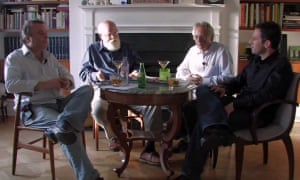

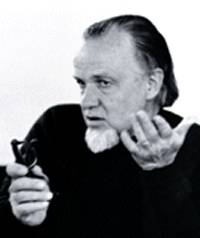

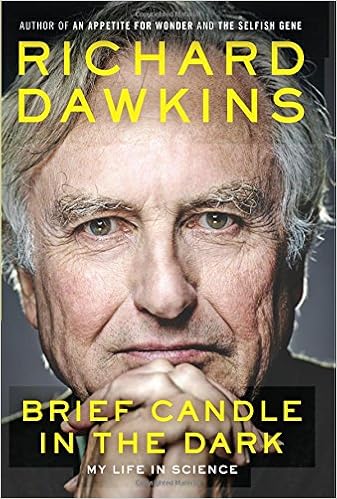



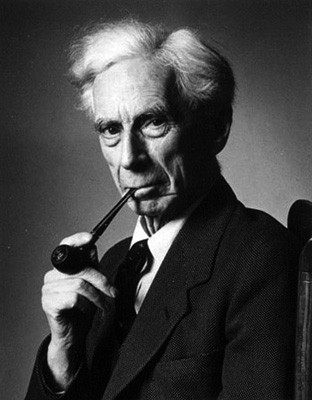


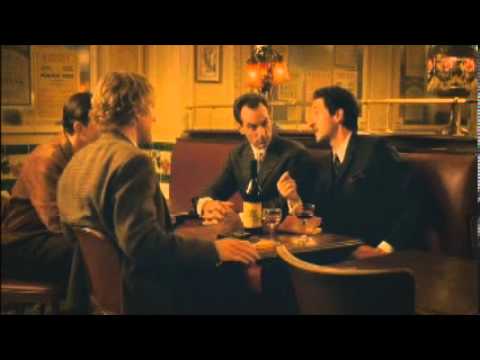


 The Daily Hatch