FRANCIS SCHAEFFER ANALYZES ART AND CULTURE Part 325 Pointing out a weakness to Richard Dawkins in his new book OUTGROWING GOD (Dawkins’ claims evidence does not back up the view that Abraham existed) November 4, 2019 Open Letter to Richard Dawkins, Featured artist is Édouard Manet

_

Bill Maher and Richard Dawkins

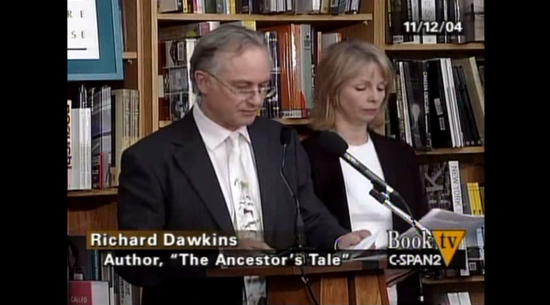
Image result for richard dawkins obama

__

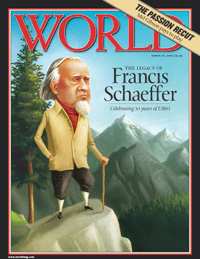
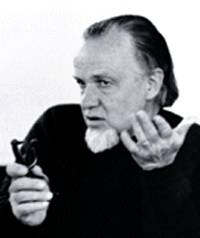
Image result for francis schaeffer


XXXX November 4, 2019

November 4, 2019

Richard Dawkins c/o Richard Dawkins Foundation, 
Washington, DC 20005

Dear Mr. Dawkins,

I have enjoyed reading about a dozen of your books and some of the most intriguing were The God DelusionAn Appetite for Wonder: The Making of a Scientist, and Brief Candle in the Dark: My Life in Science.


I have posted in the past showing the false claims made in “Outgrowing God,” and you can reference these by googling “Outgrowing God The Daily Hatch.” Some questions raised by you include “Did Jesus even exist?” One of my favorite posts was FRANCIS SCHAEFFER ANALYZES ART AND CULTURE Part 292 In OUTGROWING GOD Richard Dawkins wrongly notes “Genesis says Abraham owned camels, but archaeological evidence shows that the camel was not domesticated until many centuries after Abraham” Featured Artist is Paul Pfeiffer

I enjoyed your latest book Outgrowing God which is one of my favorite books that you have written. 

However, there are some some weak parts of the book. For instance, on pages 90-92 you write: 

The best response to this I could find was from The Encyclopedia of Bible Difficulties by one of my spiritual heroes Gleason Archer. 

The kings in Genesis 14 be historically trustworthy? While it is true that direct archaeological confirmation of this exciting episode in Abraham’s career has not yet come to light, there are no valid scientific grounds for rejecting the account in Genesis 14 as unhistorical. Apart from the documents from twentieth-century B.C. Ur, there is no extensive source of information regarding this period apart from Genesis itself–at least so far as Mesopotamia is concerned. The name of Chedorlaomer, king of Elam, contains familiar Elamite components: kudur meant “servant,” and Lagamar was a high goddess in the Elamite pantheon. Kitchen (Ancient Orient, p. 44) generally prefers the vocalization Kutir instead of Kudur and gives the references for at least three Elamite royal names of this type. He equates Tid’al with a Hittite name, Tudkhaliya, attested from the nineteenth century B.C. As for Arioch, one king of Larsa (“Ellasar”) from this era was Eri-aku (“Servant of the Moon-God”), whose name in Akkadian was Arad-Sin (with the same meaning). The Mari Tablets refer to persons by the name of Ariyuk. The cuneiform original of Amraphel, formerly equated with Hammurabi of Babylon, is not demonstrable for the twentieth century (Hammurabi himself dates from the eighteenth century), but there may possibly be a connection with Amorite names like Amud-pa-ila, according to H.B. Huffmon (see Kitchen’s footnote on p. 44 for documentation). 

All the above information has come to light since the heyday of the Documentary Hypothesis, when learned scholars contemptuously dismissed this whole account as late and totally fictional. But even such notable experts as H. Gunkel and W. F. Albright in our own century have concluded that Genesis 14 rests on authentic backgrounds in the 83 history of the early second millennium B.C. In H. C. Alleman and E. E. Flack’s Old Testament Commentary (Philadelphia: Fortress, 1954), p. 14, W. F. Albright remarked: “In spite of our failure hitherto to fix the historical horizon of this chapter, we may be certain that its contents are very ancient. There are several words and expressions found nowhere else in the Bible and now known to belong to the second millennium. The names of the towns in Transjordania are also known to be very ancient.” It should be added that according to G. Pettinato, the leading epigraphist of the Ebla documents dating from 2400-2250 B.C., mention is made in the Ebla tablets of Sodom (spelled Si-da-mu), Gomorrah (spelled in Sumerian cuneiform I-ma-ar), and Zoar (Za-e-ar). He feels that quite possibly these may be the same cities mentioned in the Abrahamic narrative (cf. “BAR Interviews Pettinato,” p. 48). 

The authenticity of the background is established with a high degree of probability by the evidence just cited, even from the standpoint of objective scholarship–even apart from the absolute trustworthiness of Scripture, to which all true believers are committed as a matter of faith. But as to the credibility of the episode itself, it must be acknowledged that it was a most exceptional feat of daring on the part of a peaceful nomad like Abraham, to attempt to rout a large invading force of professional soldiers like those of the Mesopotamian invaders. After their brilliant victory over the allied forces of the Sodomite confederacy (14:8-10), the booty-laden conquerors should have made short work of Abraham’s 318 henchmen and his meager force of Amorite allies, who could hardly have exceeded 1000 men in all. 

In normal daylight conditions, it would have been suicidal for Abraham’s forces to attack the Mesopotamian soldiers on any battlefield. But Abraham caught up to them by forced marches and fell on them by night, when they were totally unprepared for combat. Dividing his forces up into several groups (Gen. 14:15), he apparently used a strategy somewhat similar to that of Gideon–who routed an even greater army of Midianites by the strategic use of only 300 men (Judg. 7:19-22). The secret of success, humanly speaking, was the inducement of panic among the heterogenous, polyglott forces of the invaders, who had no way of knowing how many attackers they had to face, and hardly knew which way to flee. But, of course, the real cause of victory was the miraculous power of God, who was pleased to give Abraham complete victory on this occasion–not only that he might rescue his nephew Lot, but also as a token of the ultimate triumph that Abraham’s descendants would achieve under the leadership of Joshua 570 years later.

—-

Dr. Dawkins, you have a 150 year advantage over your hero Charles Darwin and the archaeologist’s spade has continued to dig. Take a look at this piece of evidence from the book WHATEVER HAPPENED TO THE HUMAN RACE? by Francis Schaeffer and C. Everett Koop:

TRUTH AND HISTORY (chapter 5 of WHATEVER HAPPENED TO THE HUMAN RACE?)

In the previous chapter we saw that the Bible gives us the explanation for the existence of the universe and its form and for the mannishness of man. Or, to reverse this, we came to see that the universe and its form and the mannishness of man are a testimony to the truth of the Bible. In this chapter we will consider a third testimony: the Bible’s openness to verification by historical study.

Christianity involves history. To say only that is already to have said something remarkable, because it separates the Judeo-Christian world-view from almost all other religious thought. It is rooted in history.

The Bible tells us how God communicated with man in history. For example, God revealed Himself to Abraham at a point in time and at a particular geographical place. He did likewise with Moses, David, Isaiah, Daniel and so on. The implications of this are extremely important to us. Because the truth God communicated in the Bible is so tied up with the flow of human events, it is possible by historical study to confirm some of the historical details.

It is remarkable that this possibility exists. Compare the information we have from other continents of that period. We know comparatively little about what happened in Africa or South America or China or Russia or even Europe. We see beautiful remains of temples and burial places, cult figures, utensils, and so forth, but there is not much actual “history” that can be reconstructed, at least not much when compared to that which is possible in the Middle East.

When we look at the material which has been discovered from the Nile to the Euphrates that derives from the 2500-year span before Christ, we are in a completely different situation from that in regard to South America or Asia. The kings of Egypt and Assyria built thousands of monuments commemorating their victories and recounting their different exploits. Whole libraries have been discovered from places like Nuzu and Mari and most recently at Elba, which give hundreds of thousands of texts relating to the historical details of their time. It is within this geographical area that the Bible is set. So it is possible to find material which bears upon what the Bible tells us.

The Bible purports to give us information on history. Is the history accurate? The more we understand about the Middle East between 2500 B.C. and A.D. 100, the more confident we can be that the information in the Bible is reliable, even when it speaks about the simple things of time and place.

So the story goes on. We have stopped at only a few incidents in the sweep back to the year 1000 B.C. What we hope has emerged from this is a sense of the historical reliability of the Bible’s text. When the Bible refers to historical incidents, it is speaking about the same sort of “history” that historians examine elsewhere in other cultures and periods. This borne out by the fact that some of the incidents, some of the individuals, and some of the places have been confirmed by archaeological discoveries in the past hundred years has swept away the possibility of a naive skepticism about the Bible’s history. And what is particularly striking is that the tide has built up concerning the time before the year 1000 B.C. Our knowledge about the years 2500 B.C. to 1000 B.C. has vastly increased through discoveries sometimes of whole libraries and even of hitherto unknown people and languages.

There was a time, for example, when the Hittite people, referred to in the early parts of the Bible, were treated as fictitious by critical scholars. Then came the discoveries after 1906 at Boghaz Koi (Boghaz-koy) which not only gave us the certainty of their existence but stacks of details from their own archives!

The answer to find meaning in life is found in putting your faith and trust in Jesus Christ. The Bible is true from cover to cover and can be trusted.

Thank you again for your time and I know how busy you are.

Everette Hatcher, everettehatcher@gmail.comhttp://www.thedailyhatch.org, cell ph 501-920-5733, Box 23416, LittleRock, AR 72221, United States

XXXXXXX

__
Image result for richard dawkins peter singer

__

Image result for francis schaeffer

Francis and Edith Schaeffer at their home in Switzerland with some visiting friends

__
Image result for richard dawkins young

Schaeffer with his wife Edith in Switzerland.


Image result for john lennox and richard dawkins

Richard Dawkins and John Lennox

_

DawkinsWard

_

Image result for francis schaeffer c. everett koop whatever happened to human race?

_

Dawkins, Hitchens, Dennett, Harris 

Image result for four horsemen richard dawkins

Canary Islands 2014: Harold Kroto and Richard Dawkins

Image result for harry kroto richard dawkins

__

Francis Schaeffer pictured below:

The Basis of Human Dignity by Francis Schaeffer

Richard Dawkins, founder of the Richard Dawkins Foundation for Reason and Science. Credit: Don Arnold Getty Images

Francis Schaeffer in 1984

Christian Manifesto by Francis Schaeffer

Francis Schaeffer in 1982

—-

Whatever Happened to the Human Race? Episode 1

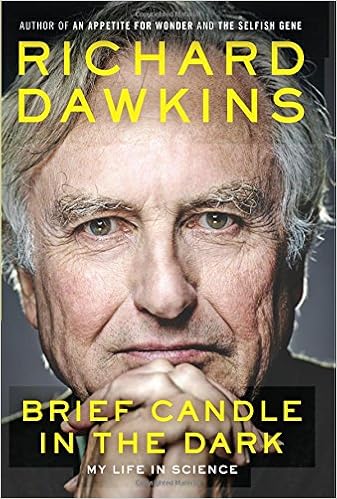
Image result for richard dawkins brief candle in the dark

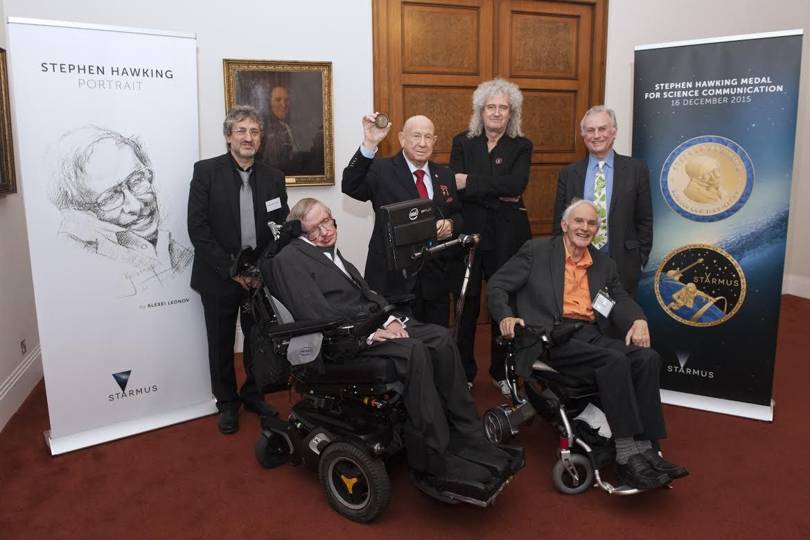
Garik Israelian, Stephen Hawking, Alexey Leonov, Brian May, Richard Dawkins and Harry Kroto

—-

—-

—-

_

Featured artist is Édouard Manet

From Wikipedia, the free encyclopediaJump to navigationJump to search“Manet” redirects here. For other uses, see Manet (disambiguation).Not to be confused with Claude Monet, an Impressionist painter of the same era, friend of Manet.

Édouard Manet
portrait by Nadar
Born23 January 1832
ParisFrance
Died30 April 1883 (aged 51)
Paris, France
Known forPainting, printmaking
Notable workThe Luncheon on the Grass (Le déjeuner sur l’herbe), 1863
Olympia, 1863
A Bar at the Folies-Bergère (Le Bar aux Folies-Bergère), 1882
Young Flautist or The Fifer (Le Fifre), 1866
MovementRealismImpressionism
Spouse(s)Suzanne Leenhoff (m. 1863)

We ask you, humbly, to help. Hi, reader in the U.S., it seems you use Wikipedia a lot; that’s great! It’s a little awkward to ask, but this Thursday we need your help. Time is running out in 2019 to help us. We’re a non-profit and we don’t have salespeople. We depend on donations averaging $16.36, and fewer than 2% of readers give. If you donate just $2.75, the price of your Thursday coffee, Wikipedia could keep thriving. Thank you.Please select a payment method

  •    

MAYBE LATER  CLOSE 

Édouard Manet (UK/ˈmæneɪ/US/mæˈneɪ, mə-/,[1][2] French: [edwaʁ manɛ]; 23 January 1832 – 30 April 1883) was a French modernist painter. He was one of the first 19th-century artists to paint modern life, and a pivotal figure in the transition from Realism to Impressionism.

Born into an upper-class household with strong political connections, Manet rejected the future originally envisioned for him, and became engrossed in the world of painting. His early masterworks, The Luncheon on the Grass (Le déjeuner sur l’herbe) and Olympia, both 1863, caused great controversy and served as rallying points for the young painters who would create Impressionism. Today, these are considered watershed paintings that mark the start of modern art. The last 20 years of Manet’s life saw him form bonds with other great artists of the time, and develop his own style that would be heralded as innovative and serve as a major influence for future painters.

Contents

Early life[edit]

Manet’s portrait painted by Fantin-Latour

Édouard Manet was born in Paris on 23 January 1832, in the ancestral hôtel particulier (mansion) on the rue des Petits Augustins (now rue Bonaparte) to an affluent and well-connected family.[3] His mother, Eugénie-Desirée Fournier, was the daughter of a diplomat and goddaughter of the Swedish crown prince Charles Bernadotte, from whom the Swedish monarchs are descended. His father, Auguste Manet, was a French judge who expected Édouard to pursue a career in law. His uncle, Edmond Fournier, encouraged him to pursue painting and took young Manet to the Louvre.[4] In 1841 he enrolled at secondary school, the Collège Rollin. In 1845, at the advice of his uncle, Manet enrolled in a special course of drawing where he met Antonin Proust, future Minister of Fine Arts and subsequent lifelong friend.

At his father’s suggestion, in 1848 he sailed on a training vessel to Rio de Janeiro. After he twice failed the examination to join the Navy,[5] his father relented to his wishes to pursue an art education. From 1850 to 1856, Manet studied under the academic painter Thomas Couture. In his spare time, Manet copied the Old Masters in the Louvre.

From 1853 to 1856, Manet visited Germany, Italy, and the Netherlands, during which time he was influenced by the Dutch painter Frans Hals, and the Spanish artists Diego Velázquez and Francisco José de Goya.

Career[edit]

In 1856, Manet opened a studio. His style in this period was characterized by loose brush strokes, simplification of details and the suppression of transitional tones. Adopting the current style of realism initiated by Gustave Courbet, he painted The Absinthe Drinker (1858–59) and other contemporary subjects such as beggars, singers, Gypsies, people in cafés, and bullfights. After his early career, he rarely painted religious, mythological, or historical subjects; examples include his Christ Mocked, now in the Art Institute of Chicago, and Christ with Angels, in the Metropolitan Museum of Art, New York. Manet had two canvases accepted at the Salon in 1861. A portrait of his mother and father, who at the time was paralysed and robbed of speech by a stroke, was ill-received by critics. The other, The Spanish Singer, was admired by Theophile Gautier, and placed in a more conspicuous location as a result of its popularity with Salon-goers. Manet’s work, which appeared “slightly slapdash” when compared with the meticulous style of so many other Salon paintings, intrigued some young artists. The Spanish Singer, painted in a “strange new fashion [-] caused many painters’ eyes to open and their jaws to drop.”[6]

Music in the Tuileries[edit]

Main article: Music in the Tuileries

Music in the Tuileries, 1862

Music in the Tuileries is an early example of Manet’s painterly style. Inspired by Hals and Velázquez, it is a harbinger of his lifelong interest in the subject of leisure.

While the picture was regarded as unfinished by some,[4] the suggested atmosphere imparts a sense of what the Tuileries gardens were like at the time; one may imagine the music and conversation.

Here, Manet has depicted his friends, artists, authors, and musicians who take part, and he has included a self-portrait among the subjects.

Luncheon on the Grass (Le déjeuner sur l’herbe)[edit]

Main article: Le déjeuner sur l’herbe

The Luncheon on the Grass (Le déjeuner sur l’herbe), 1863

A major early work is The Luncheon on the Grass (Le déjeuner sur l’herbe), originally Le Bain. The Paris Salon rejected it for exhibition in 1863, but Manet agreed to exhibit it at the Salon des Refusés (Salon of the Rejected) which was a parallel exhibition to the official Salon, as an alternative exhibition in the Palais des Champs-Elysée. The Salon des Refusés was initiated by Emperor Napoleon III as a solution to a problematic situation which came about as the Selection Committee of the Salon that year rejected 2,783 paintings of the ca. 5000. Each painter could decide whether to take the opportunity to exhibit at the Salon des Refusés, less than 500 of the rejected painters chose to do so.

Manet employed model Victorine Meurent, his wife Suzanne, future brother-in-law Ferdinand Leenhoff, and one of his brothers to pose. Meurent also posed for several more of Manet’s important paintings including Olympia; and by the mid-1870s she became an accomplished painter in her own right.

The painting’s juxtaposition of fully dressed men and a nude woman was controversial, as was its abbreviated, sketch-like handling, an innovation that distinguished Manet from Courbet. At the same time, Manet’s composition reveals his study of the old masters, as the disposition of the main figures is derived from Marcantonio Raimondi‘s engraving of the Judgement of Paris (c. 1515) based on a drawing by Raphael.[4]

Two additional works cited by scholars as important precedents for Le déjeuner sur l’herbe are Pastoral Concert (c. 1510, The Louvre) and The Tempest (Gallerie dell’Accademia, Venice), both of which are attributed variously to Italian Renaissance masters Giorgione or Titian.[7] The Tempest is an enigmatic painting featuring a fully dressed man and a nude woman in a rural setting. The man is standing to the left and gazing to the side, apparently at the woman, who is seated and breastfeeding a baby; the relationship between the two figures is unclear.[8] In Pastoral Concert, two clothed men and a nude woman are seated on the grass, engaged in music making, while a second nude woman stands beside them.

Olympia[edit]

Olympia, 1863Main article: Olympia (Manet)

As he had in Luncheon on the Grass, Manet again paraphrased a respected work by a Renaissance artist in the painting Olympia (1863), a nude portrayed in a style reminiscent of early studio photographs, but whose pose was based on Titian‘s Venus of Urbino (1538). The painting is also reminiscent of Francisco Goya‘s painting The Nude Maja (1800).

Manet embarked on the canvas after being challenged to give the Salon a nude painting to display. His uniquely frank depiction of a self-assured prostitute was accepted by the Paris Salon in 1865, where it created a scandal. According to Antonin Proust, “only the precautions taken by the administration prevented the painting being punctured and torn” by offended viewers.[9] The painting was controversial partly because the nude is wearing some small items of clothing such as an orchid in her hair, a bracelet, a ribbon around her neck, and mule slippers, all of which accentuated her nakedness, sexuality, and comfortable courtesan lifestyle. The orchid, upswept hair, black cat, and bouquet of flowers were all recognized symbols of sexuality at the time. This modern Venus’ body is thin, counter to prevailing standards; the painting’s lack of idealism rankled viewers. The painting’s flatness, inspired by Japanese wood block art, serves to make the nude more human and less voluptuous. A fully dressed black servant is featured, exploiting the then-current theory that black people were hyper-sexed.[4] That she is wearing the clothing of a servant to a courtesan here furthers the sexual tension of the piece.

Olympia’s body as well as her gaze is unabashedly confrontational. She defiantly looks out as her servant offers flowers from one of her male suitors. Although her hand rests on her leg, hiding her pubic area, the reference to traditional female virtue is ironic; a notion of modesty is notoriously absent in this work. A contemporary critic denounced Olympia’s “shamelessly flexed” left hand, which seemed to him a mockery of the relaxed, shielding hand of Titian’s Venus.[10] Likewise, the alert black cat at the foot of the bed strikes a sexually rebellious note in contrast to that of the sleeping dog in Titian’s portrayal of the goddess in his Venus of Urbino.

Olympia was the subject of caricatures in the popular press, but was championed by the French avant-garde community, and the painting’s significance was appreciated by artists such as Gustave CourbetPaul CézanneClaude Monet, and later Paul Gauguin.

As with Luncheon on the Grass, the painting raised the issue of prostitution within contemporary France and the roles of women within society.[4]

Life and times[edit]

Berthe Morisot with a Bouquet of Violets, 1872

After the death of his father in 1862, Manet married Suzanne Leenhoff in 1863. Leenhoff was a Dutch-born piano teacher two years Manet’s senior with whom he had been romantically involved for approximately ten years. Leenhoff initially had been employed by Manet’s father, Auguste, to teach Manet and his younger brother piano. She also may have been Auguste’s mistress. In 1852, Leenhoff gave birth, out of wedlock, to a son, Leon Koella Leenhoff. Manet painted his wife in The Reading, among other paintings.

Eleven-year-old Leon Leenhoff, whose father may have been either of the Manets, posed often for Manet. Most famously, he is the subject of the Boy Carrying a Sword of 1861 (Metropolitan Museum of Art, New York). He also appears as the boy carrying a tray in the background of The Balcony.[11]

He became friends with the Impressionists Edgar DegasClaude MonetPierre-Auguste RenoirAlfred SisleyPaul Cézanne and Camille Pissarro through another painter, Berthe Morisot, who was a member of the group and drew him into their activities. The supposed grand-niece of the painter Jean-Honoré Fragonard, Morisot had her first painting accepted in the Salon de Paris in 1864, and she continued to show in the salon for the next ten years.

Manet became the friend and colleague of Berthe Morisot in 1868. She is credited with convincing Manet to attempt plein air painting, which she had been practicing since she was introduced to it by another friend of hers, Camille Corot. They had a reciprocating relationship and Manet incorporated some of her techniques into his paintings. In 1874, she became his sister-in-law when she married his brother, Eugène.

Self-Portrait with Palette, 1879

One of Manet’s frequent models, at the beginning of the 1880s, was the “semimondaine” Méry Laurent, who frequently sat for various other Impressionists.

Unlike the core Impressionist group, Manet maintained that modern artists should seek to exhibit at the Paris Salon rather than abandon it in favor of independent exhibitions. Nevertheless, when Manet was excluded from the International Exhibition of 1867, he set up his own exhibition. His mother worried that he would waste all his inheritance on this project, which was enormously expensive. While the exhibition earned poor reviews from the major critics, it also provided his first contacts with several future Impressionist painters, including Degas.

Although his own work influenced and anticipated the Impressionist style, he resisted involvement in Impressionist exhibitions, partly because he did not wish to be seen as the representative of a group identity, and partly because he preferred to exhibit at the Salon. Eva Gonzalès, a daughter of the novelist Emmanuel Gonzalès, was his only formal student.

He was influenced by the Impressionists, especially Monet and Morisot. Their influence is seen in Manet’s use of lighter colors: after the early 1870s he made less use of dark backgrounds but retained his distinctive use of black, uncharacteristic of Impressionist painting. He painted many outdoor (plein air) pieces, but always returned to what he considered the serious work of the studio.

Manet enjoyed a close friendship with composer Emmanuel Chabrier, painting two portraits of him; the musician owned 14 of Manet’s paintings and dedicated his Impromptu to Manet’s wife.[12]

Throughout his life, although resisted by art critics, Manet could number as his champions Émile Zola, who supported him publicly in the press, Stéphane Mallarmé, and Charles Baudelaire, who challenged him to depict life as it was. Manet, in turn, drew or painted each of them.

Cafe scenes[edit]

The Cafe Concert, 1878. Scene set in the Cabaret de Reichshoffen on the Boulevard Rochechouart, where women on the fringes of society freely intermingled with well-heeled gentlemen.[13] The Walters Art Museum.

Manet’s paintings of café scenes are observations of social life in 19th-century Paris. People are depicted drinking beer, listening to music, flirting, reading, or waiting. Many of these paintings were based on sketches executed on the spot. He often visited the Brasserie Reichshoffen on boulevard de Rochechourt, upon which he based At the Cafe in 1878. Several people are at the bar, and one woman confronts the viewer while others wait to be served. Such depictions represent the painted journal of a flâneur. These are painted in a style which is loose, referencing Hals and Velázquez, yet they capture the mood and feeling of Parisian night life. They are painted snapshots of bohemianism, urban working people, as well as some of the bourgeoisie.

In Corner of a Cafe Concert, a man smokes while behind him a waitress serves drinks. In The Beer Drinkers a woman enjoys her beer in the company of a friend. In The Cafe Concert, shown at right, a sophisticated gentleman sits at a bar while a waitress stands resolutely in the background, sipping her drink. In The Waitress, a serving woman pauses for a moment behind a seated customer smoking a pipe, while a ballet dancer, with arms extended as she is about to turn, is on stage in the background.

Manet also sat at the restaurant on the Avenue de Clichy called Pere Lathuille’s, which had a garden in addition to the dining area. One of the paintings he produced here was Chez le père Lathuille (At Pere Lathuille’s), in which a man displays an unrequited interest in a woman dining near him.

In Le Bon Bock (1873), a large, cheerful, bearded man sits with a pipe in one hand and a glass of beer in the other, looking straight at the viewer.

Paintings of social activities[edit]

The Races at Longchamp, 1864

Manet painted the upper class enjoying more formal social activities. In Masked Ball at the Opera, Manet shows a lively crowd of people enjoying a party. Men stand with top hats and long black suits while talking to women with masks and costumes. He included portraits of his friends in this picture.

His 1868 painting The Luncheon was posed in the dining room of the Manet house.

Manet depicted other popular activities in his work. In The Races at Longchamp, an unusual perspective is employed to underscore the furious energy of racehorses as they rush toward the viewer. In Skating, Manet shows a well dressed woman in the foreground, while others skate behind her. Always there is the sense of active urban life continuing behind the subject, extending outside the frame of the canvas.

In View of the International Exhibition, soldiers relax, seated and standing, prosperous couples are talking. There is a gardener, a boy with a dog, a woman on horseback—in short, a sample of the classes and ages of the people of Paris.

War[edit]

The Execution of Emperor Maximilian, 1867. Museum of Fine Arts, Boston. The least finished of three large canvases devoted to the execution of Maximilian I of Mexico.

The Barricade (Civil War), 1871, ink, watercolor, and gouache on paper, Museum of Fine Arts (Budapest)

Manet’s response to modern life included works devoted to war, in subjects that may be seen as updated interpretations of the genre of “history painting”.[14] The first such work was the Battle of the Kearsarge and Alabama (1864), a sea skirmish known as the Battle of Cherbourg from the American Civil War which took place off the French coast, and may have been witnessed by the artist.[15]

Of interest next was the French intervention in Mexico; from 1867 to 1869 Manet painted three versions of the Execution of Emperor Maximilian, an event which raised concerns regarding French foreign and domestic policy.[16] The several versions of the Execution are among Manet’s largest paintings, which suggests that the theme was one which the painter regarded as most important. Its subject is the execution by Mexican firing squad of a Habsburg emperor who had been installed by Napoleon III. Neither the paintings nor a lithograph of the subject were permitted to be shown in France.[17] As an indictment of formalized slaughter the paintings look back to Goya,[18] and anticipate Picasso‘s Guernica.

In January 1871, Manet traveled to Oloron-Sainte-Marie in the Pyrenees. In his absence his friends added his name to the “Fédération des artistes” (see: Courbet) of the Paris Commune. Manet stayed away from Paris, perhaps, until after the semaine sanglante: in a letter to Berthe Morisot at Cherbourg (10 June 1871) he writes, “We came back to Paris a few days ago…” (the semaine sanglante ended on 28 May).

The prints and drawings collection of the Museum of Fine Arts (Budapest) has a watercolour/gouache by Manet, The Barricade, depicting a summary execution of Communards by Versailles troops based on a lithograph of the execution of Maximilian. A similar piece, The Barricade (oil on plywood), is held by a private collector.

On 18 March 1871, he wrote to his (confederate) friend Félix Bracquemond in Paris about his visit to Bordeaux, the provisory seat of the French National Assembly of the Third French Republic where Émile Zola introduced him to the sites: “I never imagined that France could be represented by such doddering old fools, not excepting that little twit Thiers…”[19] If this could be interpreted as support of the Commune, a following letter to Bracquemond (21 March 1871) expressed his idea more clearly: “Only party hacks and the ambitious, the Henrys of this world following on the heels of the Milliéres, the grotesque imitators of the Commune of 1793…” He knew the communard Lucien Henry to have been a former painter’s model and Millière, an insurance agent. “What an encouragement all these bloodthirsty caperings are for the arts! But there is at least one consolation in our misfortunes: that we’re not politicians and have no desire to be elected as deputies”.

The public figure Manet admired most was the republican Léon Gambetta.[20] In the heat of the seize mai coup in 1877, Manet opened up his atelier to a republican electoral meeting chaired by Gambetta’s friend Eugène Spuller.[20]

Paris[edit]

Manet depicted many scenes of the streets of Paris in his works. The Rue Mosnier Decked with Flags depicts red, white, and blue pennants covering buildings on either side of the street; another painting of the same title features a one-legged man walking with crutches. Again depicting the same street, but this time in a different context, is Rue Mosnier with Pavers, in which men repair the roadway while people and horses move past.

The Railway, 1873

The Railway, widely known as The Gare Saint-Lazare, was painted in 1873. The setting is the urban landscape of Paris in the late 19th century. Using his favorite model in his last painting of her, a fellow painter, Victorine Meurent, also the model for Olympia and the Luncheon on the Grass, sits before an iron fence holding a sleeping puppy and an open book in her lap. Next to her is a little girl with her back to the painter, watching a train pass beneath them.

Instead of choosing the traditional natural view as background for an outdoor scene, Manet opts for the iron grating which “boldly stretches across the canvas”[21] The only evidence of the train is its white cloud of steam. In the distance, modern apartment buildings are seen. This arrangement compresses the foreground into a narrow focus. The traditional convention of deep space is ignored.

Historian Isabelle Dervaux has described the reception this painting received when it was first exhibited at the official Paris Salon of 1874: “Visitors and critics found its subject baffling, its composition incoherent, and its execution sketchy. Caricaturists ridiculed Manet’s picture, in which only a few recognized the symbol of modernity that it has become today”.[22] The painting is currently in the National Gallery of Art in Washington, D.C.[23]

Manet painted several boating subjects in 1874. Boating, now in the Metropolitan Museum of Art, exemplifies in its conciseness the lessons Manet learned from Japanese prints, and the abrupt cropping by the frame of the boat and sail adds to the immediacy of the image.[24]

In 1875, a book-length French edition of Edgar Allan Poe‘s The Raven included lithographs by Manet and translation by Mallarmé.[25]

In 1881, with pressure from his friend Antonin Proust, the French government awarded Manet the Légion d’honneur.[26]

A Bar at the Folies-Bergère (Un Bar aux Folies-Bergère), 1882, Courtauld Gallery, London

Late works[edit]

In his mid-forties Manet’s health deteriorated, and he developed severe pain and partial paralysis in his legs. In 1879 he began receiving hydrotherapy treatments at a spa near Meudon intended to improve what he believed was a circulatory problem, but in reality he was suffering from locomotor ataxia, a known side-effect of syphilis.[27][28] In 1880, he painted a portrait there of the opera singer Émilie Ambre as Carmen. Ambre and her lover Gaston de Beauplan had an estate in Meudon and had organized the first exhibition of Manet’s The Execution of Emperor Maximilian in New York in December 1879.[29]

In his last years Manet painted many small-scale still lifes of fruits and vegetables, such as Bunch of Asparagus and The Lemon (both 1880).[30] He completed his last major work, A Bar at the Folies-Bergère (Un Bar aux Folies-Bergère), in 1882 and it hung in the Salon that year. Afterwards he limited himself to small formats. His last paintings were of flowers in glass vases.[31]

Death[edit]

In April 1883, his left foot was amputated because of gangrene, due to complications from syphilis and rheumatism. He died eleven days later on 30 April in Paris. He is buried in the Passy Cemetery in the city.[32]

Legacy[edit]

Manet’s public career lasted from 1861, the year of his first participation in the Salon, until his death in 1883. His known extant works, as catalogued in 1975 by Denis Rouart and Daniel Wildenstein, comprise 430 oil paintings, 89 pastels, and more than 400 works on paper.[33]

The grave of Manet at Passy

Although harshly condemned by critics who decried its lack of conventional finish, Manet’s work had admirers from the beginning. One was Émile Zola, who wrote in 1867: “We are not accustomed to seeing such simple and direct translations of reality. Then, as I said, there is such a surprisingly elegant awkwardness … it is a truly charming experience to contemplate this luminous and serious painting which interprets nature with a gentle brutality.”[34]

The roughly painted style and photographic lighting in Manet’s paintings was seen as specifically modern, and as a challenge to the Renaissance works he copied or used as source material. He rejected the technique he had learned in the studio of Thomas Couture – in which a painting was constructed using successive layers of paint on a dark-toned ground – in favor of a direct, alla prima method using opaque paint on a light ground. Novel at the time, this method made possible the completion of a painting in a single sitting. It was adopted by the Impressionists, and became the prevalent method of painting in oils for generations that followed.[35] Manet’s work is considered “early modern”, partially because of the opaque flatness of his surfaces, the frequent sketchlike passages, and the black outlining of figures, all of which draw attention to the surface of the picture plane and the material quality of paint.

The art historian Beatrice Farwell says Manet “has been universally regarded as the Father of Modernism. With Courbet he was among the first to take serious risks with the public whose favour he sought, the first to make alla prima painting the standard technique for oil painting and one of the first to take liberties with Renaissance perspective and to offer ‘pure painting’ as a source of aesthetic pleasure. He was a pioneer, again with Courbet, in the rejection of humanistic and historical subject-matter, and shared with Degas the establishment of modern urban life as acceptable material for high art.”[35]

Art market[edit]

The late Manet painting, Le Printemps (1881), sold to the J. Paul Getty Museum for $65.1 million, setting a new auction record for Manet, exceeding its pre-sale estimate of $25–35 million at Christie’s on 5 November 2014.[36] The previous auction record was held by Self-Portrait With Palette which sold for $33.2 million at Sotheby’s on 22 June 2010.[37]

Gallery[edit]

—-

Related posts:

RESPONDING TO HARRY KROTO’S BRILLIANT RENOWNED ACADEMICS!! Part 48 Nobel Prize Winner and Global Warming Denier Ivar Giaever “I think religion is to blame for a lot of the ills in this world!”

October 20, 2015 – 5:20 am

  On November 21, 2014 I received a letter from Nobel Laureate Harry Kroto and it said: …Please click on this URL http://vimeo.com/26991975 and you will hear what far smarter people than I have to say on this matter. I agree with them. Harry Kroto _________________ Below you have picture of 1996 Chemistry Nobel Prize Winner […]

FRANCIS SCHAEFFER ANALYZES ART AND CULTURE PART 78 THE BEATLES (Breaking down the song TOMORROW NEVER KNOWS) Featured musical artist is Stuart Gerber

September 24, 2015 – 5:42 am

The Beatles were “inspired by the musique concrète of German composer and early electronic music pioneer Karlheinz Stockhausen…”  as SCOTT THILL has asserted. Francis Schaeffer noted that ideas of  “Non-resolution” and “Fragmentation” came down German and French streams with the influence of Beethoven’s last Quartets and then the influence of Debussy and later Schoenberg’s non-resolution which is in total contrast […]

RESPONDING TO HARRY KROTO’S BRILLIANT RENOWNED ACADEMICS!! Part 42 Peter Singer, Professor of Bioethics at Princeton University, THE PROBLEM OF EVIL

September 8, 2015 – 5:10 am

  _______ On November 21, 2014 I received a letter from Nobel Laureate Harry Kroto and it said: …Please click on this URL http://vimeo.com/26991975 and you will hear what far smarter people than I have to say on this matter. I agree with them. Harry Kroto _________________ Below you have picture of 1996 Chemistry Nobel Prize […]

RESPONDING TO HARRY KROTO’S BRILLIANT RENOWNED ACADEMICS!! Bart Ehrman “Why should one think that God performed the miracle of inspiring the words in the first place if He didn’t perform the miracle of preserving the words?”

September 2, 2015 – 8:42 am

On November 21, 2014 I received a letter from Nobel Laureate Harry Kroto and it said: …Please click on this URL http://vimeo.com/26991975 and you will hear what far smarter people than I have to say on this matter. I agree with them. Harry Kroto ____________________ Below you have picture of 1996 Chemistry Nobel Prize Winner Dr. […]

Open Letter #68 to Ricky Gervais on comparison of the Tony of AFTER LIFE to the Solomon of ECCLESIASTES, The Song AMONG THE LIVING states, Instead of headstrong Into DARKNESS, We should be drifting Into LIGHT. It’s been a long time We’ve been SEARCHING And we still CAN’T Get it right.” These words describe both Tony in AFTERLIFE and SOLOMON in ECCLESIASTES searches!

—-

After Life #1 Trailer

—-

After Life 2 Trailer

—-

On Saturday April 18, 2020 at 6pm in London and noon in Arkansas, I had a chance to ask Ricky Gervais a question on his Twitter Live broadcast which was  “Is Tony a Nihilist?” At the 20:51 mark Ricky answers my question. Below is the video:

—-

—-

If Death is the end then what is the point Kath asks below:

——

Kath: You are an atheist?

—-

(Above) Tony and Anne on the bench at the graveyard where their spouses are buried.

June 24, 2020 
Ricky Gervais 


Dear Ricky,  

This is the 68th day in a row that I have written another open letter to you to comment on some of your episodes of AFTER LIFE, and then I wanted to pass along some evidence that indicates the Bible is historically accurate.

As you know I am writing you a series of letters on Solomon’s efforts to find a meaning and purpose to life. Solomon tried to find a meaning and purpose to life UNDER THE SUN in the Book of Ecclesiastes in all of the 6 “L” words and looked into  learning(1:16-18),laughter, ladies, luxuries,  and liquor (2:1-3, 8, 10, 11), and labor (2:4-6, 18-20). 

Tony in AFTER LIFE and Solomon in ECCLESIASTES both have lots of regrets and the writer of AMONG THE LIVING is a person filled with regrets. Even the name of the musical group “The Thorns” perfectly describes Tony and Solomon’s perspectives on life. Take a look at these lyrics:

You’ll find the dying (you’ll find the dying)
Waiting softly (Waiting softly)
To pass on. (to pass on)

…Because you know (Because you know)
It makes you cry, (healing makes you cry)
Cause you can’t see (‘Cause you can’t see)
(You see)
What’s passed you by
, (what’s passed you by)

…instead of headstrong (Instead of headstrong)
Into darkness, (into darkness)
We should be drifting (We should be drifting)
Into light. (into light)
It’s been a long time (It’s been a long time)
We’ve been searching; (we’ve been searching)
And we still can’t (And we still can’t)
Get it right, (get it right)

Among the Living

This song is by The Thorns and appears on the album The Thorns (2003) and on the single I Can’t Remember (2003). Among the living, (Among the living)
You’ll find the dying (you’ll find the dying)
Waiting softly (Waiting softly)
To pass on. (to pass on)

Why can’t love be (Why can’t love be)
Like a spirit (like a spirit)
As it floats up (As it floats up)
To the sky? (to the sky?)

With the giving, (With the giving)
There is taking: (there is taking:)
Neither one feels (Neither one feels)
Like it’s right. (like it’s right)
And since your heart can’t (And since your heart can’t)
Tell the difference, (tell the difference)
You give up (You give up)
Without a fight, (without a fight)

Because you know (Because you know)
It makes you cry, (healing makes you cry)
‘Cause you can’t see (‘Cause you can’t see)
(You see)
What’s passed you by, (what’s passed you by)

Because you feel (Because you feel)
You can’t decide (you feel you can’t decide)
Among the living. (Among the living)

Instead of headstrong (Instead of headstrong)
Into darkness, (into darkness)
We should be drifting (We should be drifting)
Into light. (into light)
It’s been a long time (It’s been a long time)
We’ve been searching; (we’ve been searching)
And we still can’t (And we still can’t)
Get it right, (get it right)

Because you know (Because you know)
It makes you cry, (healing makes you cry)
‘Cause you can’t see (‘Cause you can’t see)
(You see)
What’s passed you by, (what’s passed you by)
Because you feel (Because you feel)
You can’t decide (you feel you can’t decide)
Among the living, (Among the living)
Breathing, painted shells, (breathing, painted shells)
Crumbling as they (Crumbling as they)
Fall — (fall)
Ah… (ah…)

Because you know (Because you know)
It makes you cry, (healing makes you cry)
‘Cause you can’t see (‘Cause you can’t see)
(You see)
What’s passed you by, (what’s passed you by)
Because you feel (Because you feel)
You can’t decide (you feel you can’t decide)
Among the living… (Among the living…)

Because you know it (Among the living…)
Makes you fly
‘Cause you can’t see (Among the living…)
What’s passed you by
Because you feel you (Among the living…)
Can’t decide
Among the living. (Among the living)

—-

The first part of regret is looking back on your life and admitting that you can’t see what has passed you by!

Also the song mentions the dying waiting softly to pass on by! AFTERLIFE and ECCLESIASTES are both filled with talk of death!

Both AFTERLIFE and ECCLESIASTES are filled with searching in darkness for hopeless answers that never seem to come and these lyrics remind me of that: 

Instead of headstrong 
Into darkness, 

We should be drifting
Into light
It’s been a long time 
We’ve been searching;
And we still can’t
Get it right,

Let’s take a look at this intriguing paragraph. The song writer like Tony and Solomon is lamenting that even though he is asking the right questions he is not getting the right answers. The reason for this search being similar to chasing the wind is that it is a search for meaning UNDER THE SUN!!!!

:The Christian Scholar Ravi Zacharias noted, “The key to understanding the Book of Ecclesiastes is the term UNDER THE SUN — What that literally means is you lock God out of a closed system and you are left with only this world of Time plus Chance plus matter.”

Ricky as an atheist you have put no spiritual solutions in AFTERLIFE except to make fun of the dimwit Kath who is the only Christian in the script. No wonder you have Tony returning to his alcohol and his constant contemplation of suicide.

Wikipedia reports after you grew up in Reading, England, you went “to University College London (UCL) in 1980.[19][20]He intended to study biology but changed to philosophy after two weeks, and earned an upper second-class honours degree in the subject.”

Having a degree in philosophy has made you realize that making Tony embrace nihilism is where modern philosophy has arrived. 

Francis Schaeffer noted: 

The history of the nonchristian Philosophers up until the 18th century went like this:Here is a circle which stands for what the unified and true knowledge of the universe is. The next man would say “No,” and cross out the circle. He then would say “Here is the circle.” Then the next man would say “No,”and cross out that circle. Then he would make his circle and the next man would cross it out and make his circle. This continued through the centuries. They never found the circle, but they optimistically thought someone would beginning with man himself and on the basis of man’s reasoning alone.Then the endless rows of circles through the and the crossing out were broken and a drastic shift came because the humanist ideal had failed. Humanist man gave up his optimism for pessimism. He gave up the hope of an unified answer and this makes modern man who he is.

Francis Schaeffer comments on ECCLESIASTES below:

Ecclesiastes 9:7-12

Go, eat your bread with joy, and drink your wine with a merry heart, for God has already approved what you do.

Let your garments be always white. Let not oil be lacking on your head.

Enjoy life with the wife whom you love, (DOES IT SOUND OPTIMISTIC? NOW COMES THE BACKLASH) all the days of your vain life that he has given you under the sun, because that is your portion in life and in your toil at which you toil under the sun.10 Whatever your hand finds to do, do it with your might, for there is no work or thought or knowledge or wisdom in Sheol, to which you are going.

11 Again I saw that under the sun the race is not to the swift, nor the battle to the strong, nor bread to the wise, nor riches to the intelligent, nor favor to those with knowledge, but time and chance happen to them all. 12 For man does not know his time. Like fish that are taken in an evil net, and like birds that are caught in a snare, so the children of man are snared at an evil time, when it suddenly falls upon them.

Solomon when at work takes off his hat and he stands by the grave of man and he says, “ALAS. ALAS. ALAS.”

But interestingly enough the story of Ecclesiastes does not end its message here because in two places in the New Testament it is picked up and carried along and put in its proper perspective.

Luke 12:16-21

16 And he told them a parable, saying, “The land of a rich man produced plentifully, 17 and he thought to himself, ‘What shall I do, for I have nowhere to store my crops?’ 18 And he said, ‘I will do this: I will tear down my barns and build larger ones, and there I will store all my grain and my goods. 19 And I will say to my soul, “Soul, you have ample goods laid up for many years; relax,eat, drink, be merry.”’ [ALMOST EVERYONE WHO HAS PROCEEDED HERE HAS FELT CERTAINLY THAT JESUS IS DELIBERATELY REFERRING TO SOLOMON’S SOLUTION.]20 But God said to him, ‘Fool! This night your soul is required of you, and the things you have prepared, whose will they be?’ 21 So is the one who lays up treasure for himself and is not rich toward God.”

Christ here points out the reason for the failure of the logic that is involved. He points out why it fails in logic and then why it fails in reality. This view of Solomon must end in failure philosophically and also in emotional desperation.

We are not made to live in the shortened environment of UNDER THE SUN in this life only!!! Neither are we made to live only in the environment of a bare concept of afterlife [ignoring trying to make this life better]. We are made to live in the environment of a God who exists and who is the judge. This is the difference and that is what Jesus is setting forth here.

I Corinthians 15:32

32 What do I gain if, humanly speaking, I fought with beasts at Ephesus? If the dead are not raised, “Let us eat and drink, for tomorrow we die.

There is no doubt here he is reaching back to Solomon again and he is just saying if there isn’t a resurrection of the dead then let’s just follow Solomon and let’s just eat and drink for tomorrow we die!!!! If there isn’t this full structure [including the resurrection of the dead] then just have the courage to follow Solomon and we can eat and drink because tomorrow we die and that is all we have. If the full structure isn’t there then pick up the cup and drink it dry! You can say it a different way in the 20th century: If the full structure is not there then go ahead and be an EXISTENTIALIST, but don’t cheat. Drink the cup to the end. Drink it dry! That is what Paul says. Paul  the educated man. Paul the man who knew his Greek philosophy. Paul the man who understood Solomon and the dilemma. Paul said it one way or the other. There is no room for a middle ground. IF CHRISTIANS AREN’T RAISED FROM THE DEAD THEN SOLOMON IS RIGHT IN ECCLESIASTES, BUT ONLY THEN. But if he is right then you should accept all of Solomon’s despair and his conclusions

Let’s return to some of the lyrics of AMONG THE LIVING:

Instead of headstrong 
Into darkness, 

We should be drifting
Into light
It’s been a long time 
We’ve been searching;
And we still can’t
Get it right,

Ricky you are an atheist because you haven’t encountered evidence that has convinced you the Bible is historically accurate so check out this information below: 

Archaeology

In the section on archaeology, Gertrude Bell is discussed on page 78  (while Sir William M. Ramsay is mentioned) and John C. Trever is featured on page 81 (while William F. Albright is mentioned) and it is my view that both Ramsay and Albright were more eminent scholars.

I remember listening to a 90 minute lecture by Francis Schaeffer on the conclusions the great American archaeologist, William F. Albright, who changed his views over the years because of the archaeological evidence. Below is some of that evidence.

I went and secured a copy of the interview and read it myself. In a 1963 interview with Christianity Today magazine, William F. Albright (1891-1971) stated:

In my opinion, every book of the New Testament was written by a baptized Jew between the forties and eighties of the first century A.D. (very probably sometime between about 50 and 75 A.D.)(CHRISTIANITY TODAY, VII, 359, January 18, 1963, “Toward a More Conservative View,” interview with William F. Albright.)

. John Ankerberg, Dr. John Weldon

Biblical Archaeology, Silencing the critics (Part 1)Significantly, even liberal theologians, secular academics, and critics generally cannot deny that archaeology has confirmed thebiblical record at many points. Rationalistic detractors of the Bible can attack it all day long, but they cannot dispute archaeological facts. Consider the weekly PBS series “Mysteries of the Bible.” Despite some shortcomings, such as the theologically liberal experts and non-Christian commentators, this program has offered example after example, week after week, of the archaeological reliability of the Bible.To further illustrate, probably the three greatest American archaeologists of the twentieth century each had their liberal training modified by their archaeological work. W. F. Albright, Nelson Glueck, and George Ernest Wright all “received training in the liberal scholarship of the day, which had resulted from the earlier and continuing critical study of the Bible, predominantly by German scholars.”1 Despite their liberal training, it was archaeological research that bolstered their confidence in the biblical text:Albright said of himself, “I must admit that I tried to be rational and empirical in my approach [but] we all have presuppositions of a philosophical order.” The same statement could be applied as easily to Gleuck and Wright, for all three were deeply imbued with the theological perceptions which infused their work. Albright, the son of a Methodist missionary, came to see that much of German critical thought was established upon a philosophical base that could not be sustained in the light of archaeological discoveries…. Nelson Glueck was Albright’s student. In his own explorations in Trans-Jordan and the Negev and in his excavations, Glueck worked with the Bible in hand. He trusted what he called “the remarkable phenomenon of historical memory in the Bible.” He was the president of the prestigious Hebrew Union College-Jewish Institute of Religion and an ordained Rabbi. Wright went from the faculty of the McCormick Theological Seminary in Chicago to a position in the Harvard Divinity School which he retained until his death. He, too, was a student of Albright.2Glueck forthrightly declared, “As a matter of fact, however, it may be clearly stated categorically that no archaeological discovery has ever controverted a single biblical reference. Scores of archaeological findings have been made which confirm in clear outline or exact details historical statements in the Bible.”3In fact, “Much of the credit for this relatively new assessment of the patriarchal tradition must go to the ‘Albright school.’ Albright himself pointed out years ago that apart from ‘a few diehards among older scholars’ there is hardly a single biblical historian who is not at least impressed with the rapid accumulation of data supporting the ‘substantial historicity’ of patriarchal tradition.”4And, in fact, this is true not just for the patriarchal tradition but the Bible generally. The earlier statement by assyriologist A. H. Sayce continues to hold true today: “Time after time the most positive assertions of a skeptical criticism have been disproved by archaeological discovery, events and personages that were confidently pronounced to be mythical have been shown to be historical, and the older [i.e., biblical] writers have turned out to have been better acquainted with what they were describing than the modern critics who has flouted them.”5Millar Burrows of Yale points out that, “Archaeology has in many cases refuted the views of modern critics. It has been shown in a number of instances that these views rest on false assumptions and unreal, artificial schemes of historical development….” And, “The excessive skepticism of many liberal theologians stems not from a careful evaluation of the available data, but from an enormous predisposition against the supernatural.”6Many other examples could be given of how firsthand archaeological work changed the view of a critic. One of the most prominent is that of Sir William Ramsay. Ramsey’s own archaeological findings convinced him of the reliability of the Bible and the truth of what it taught. In his The Bearing of Recent Discovery on the Trustworthiness of the New Testamentand other books, he shows why he came to conclude that “Luke’s history is unsurpassed in respect of its trustworthiness” and that “Luke is a historian of the first rank … In short, this author should be placed along with the very greatest of historians.”7As part of his secular academic duties, Dr. Clifford Wilson was for some years required to research and teach higher critical approaches to the Bible. This gave him a great deal of firsthand exposure and insight to the assumptions and methodologies that go into these approaches. Yet his own archaeological research was found to continually refute such skeptical theories, so much so that he finally concluded, “It is the steady conviction of this writer that the Bible is … the ancient world’s most reliable history textbook….”8In a personal communication he added the following,I was not always the “literalist” I am today. I’ve always had a profound respect for the Bible, but accepted that the use of poetic forms meant that the record could often be interpreted symbolically where now I take it literally—though of course there are times when symbolism is clearly utilized. Thus in later Scriptures “Egypt” can be a geographic country or a symbolic term.That liberalism is especially true in relation to Genesis chapters 1 through 11, often considered allegorical or mythical, where my researches have led me to the conclusion that this is profound writing, meant to be taken literally. There was a real Adam, creation that was contemporaneous for the various life forms as shown in Genesis chapter 1, and a consistent style of history writing—such as the outlines given in Genesis one, then zeroing in on the specifics relating to mankind in Genesis chapter 2; the history of all the early peoples in Genesis chapter 10, then the concentration on Abraham and his descendants from Genesis chapter 11 onwards. Early man, “the birth of the lady of the rib,” long-living man, giants in the earth (animals, birds, and men), the flood, the Tower of Babel—and much more—point to factual, accurate recording of history in these early chapters of Genesis.Over 40 years have passed since I first became professionally involved in biblical archaeology and my commitment to the Bible as the world’s greatest history book is firmly settled. As Psalm 119:89 states, “Forever O Lord, your word is established in heaven.”Indeed one of the most valuable contributions of modern archaeology has been its reputation of higher critical views toward scripture. Consider for example the discovery of the Dead Sea scrolls.J. Randall Price (Ph.D., Middle Eastern Studies) currently working on a forthcoming apologetic text on biblical archaeology writes, “Those who expect the [Dead Sea] scrolls to produce a radical revision of the Bible have been disappointed, for these texts have only verified the reliability and stability of the Old Testament as it appears in our modern translations.”9He further points out how the Daniel fragments of the Dead Sea Scrolls should require scholars to abandon a Maccabean date. The same kind of evidence forced scholars to abandon Maccabean dates for Chronicles, Ecclesiastes, and many of the Psalms. But so far, most scholars refuse to do this for Daniel: “Unfortunately, critical scholars have not arrived at a similar conclusion for the Book of Daniel, even though the evidence is identical.”10 In fact, according to Old Testament scholar Gerhard Hasel, a date for Daniel in the sixth or fifth century BC “has more in its favor today from the point of view of language alone than ever before.”11 The Dead Sea Scrolls also provide significant evidence for the unity and single authorship of the Book of Isaiah. Dr. Price concludes, “The discovery of the Dead Sea Scrolls, then, has made a contribution toward confirming the integrity of the biblical text and its own claim to predictive prophecy. Rather than support the recent theories of documentary disunity, the Scrolls have returned scholars to a time when the Bible’s internal witness to its own consistency and veracity was fully accepted by its adherents.”12(to be continued)Notes:1 Keith N. Scoville, Biblical Archeology in Focus (Grand Rapids, MI: Baker, 1978), p. 163.2 Ibid., p. 163.3 Norman L. Geisler and Ron Brooks, When Skeptics Ask: A Handbook on Christian Evidences (Wheaton, IL: Victor, 1990), p. 179.4 Eugene H. Merrill, Professor of Old Testament Studies, Dallas Theological Seminary, “Ebla and Biblical Historical Inerrancy” in Roy B. Zuck (Genesis ed.), Vital Apologetic Issues: Examining Reasons and Revelation in Biblical Perspective (Grand Rapids, MI: Kregel, 1995), p. 180.5 A. H. Sayce, Monument Facts and Higher Critical Fancies(London: The Religious Tract Society, 1904), p. 23, Cited in Josh McDowell, More Evidence That Demands a Verdict(Arrowhead Springs, CA: Campus Crusade for Christ, 1975), p. 53.6 As cited in Josh McDowell, Evidence that Demands a Verdict(Arrowhead Springs, CA: Campus Crusade for Christ, 1972) p. 66.7 William M. Ramsay, The Bearing of Recent Discovery on the Trustworthiness of the New Testament (Grand Rapids, MI: Baker Bookhouse, 1959), p. 91; cf. William M. Ramsay, Luke the Physician, pp. 177-79, 222 from F. F. Bruce, The New Testament Documents: Are They Reliable? (Downers Grove, IL: InterVarsity Press, 1971), pp. 90-91.8 Clifford Wilson, Rocks, Relics and Biblical Reliability (Grand Rapids, MI: Zondervan/Richardson, TX: Probe, 1977), p. 1269 J. Randall Price, Secrets of the Dead Sea Scrolls (Eugene, OR: Harvest House, 1996), p. 146.10 Ibid., p. 159.11 Ibid., p. 163.12 Ibid., p. 164; cf. p. 157.

AMONG THE LIVING contains these words: 

You’ll find the dying (you’ll find the dying)
Waiting softly (Waiting softly)
To pass on. (to pass on)…

Instead of headstrong 
Into darkness, 

We should be drifting
Into light
It’s been a long time 
We’ve been searching;
And we still can’t
Get it right,

When I think of Tony in AFTERLIFE and Solomon in ECCLESIASTES, I think of the word SEARCHING, but they both can’t seem to get the correct answers to the great questions they are asking!

Sin is the reason the world is fallen and suffers with dying and not getting it right! If you are searching then you need to get repentance for your sin and the Bible tells you how in the Book of Romans! Ricky you are even considering a relationship with Christ but that is what it will take to find the adequate answers to your big questions.

1. THE BIBLE SAYS ALL HAVE SINNED
Romans 3:23   For all have sinned, and come short of the glory of God;

2. THE BIBLE SAYS SIN CARRIES THE PENALTY OF DEATH

Romans 6:23   For the wages of sin is death; but the gift of God is eternal life through Jesus Christ our Lord

3. THE BIBLE SAYS ETERNAL LIFE IS GOD’S GIFT THROUGH JESUS CHRIST

Romans 6:23   For the wages of sin is death; but the gift of God is eternal life through Jesus Christ our Lord

4. THE BIBLE SAYS CHRIST DIED FOR SINNERS BECAUSE OF GOD’S LOVE
Romans 5:8   But God commendeth his love toward us, in that, while we were yet sinners, Christ died for us.

5. THE BIBLE SAYS WE MUST CALL UPON THE LORD TO BE SAVED
Romans 10:13   For whosoever shall call upon the name of the Lord shall be saved.

6. THE BIBLE SAYS WE MUST CONFESS AND BELEIVE IN JESUS AND HIS RESURRECTION

Romans 10:9   That if thou shalt confess with thy mouth the Lord Jesus, and shalt believe in thine heart that God hath raised him from the dead, thou shalt be saved.

Romans 10:10   For with the heart man believeth unto righteousness; and with the mouth confession is made unto
salvation.

QUESTION — Are you ready to confess that Jesus is Lord, that he died for you and that God raised him from the dead? Will you call upon him as the Lord who is alive and ready to save you?

This can be done through prayer by praying something like this:

“Dear God, I know that I am a sinner. I agree with you that death is the payday I should receive for the life I have lived. I thank you that you love me as a sinner and sent Christ to die for me. By an act of my will and in faith, I now call on the name of the Lord Jesus Christ. Dear Jesus save me from my sins. I confess with my mouth that you are Lord of my life. I believe in my heart that God raised you from the dead. By faith, I now receive the gift of eternal life from you. Thank you Lord Jesus for saving me. Amen!”
If you prayed for Jesus to save you, tell another Christian about it. Begin to read the Bible starting with the four Gospels in the New Testament. Find a good Christian Church to get involved in. And begin praying by sharing your heart with God. Also, talk to a pastor about being baptized and how to grow as a new Christian

—-


The answer to find meaning in life is found in putting your faith and trust in Jesus Christ. The Bible is true from cover to cover and can be trusted.

Thank you again for your time and I know how busy you are.

Sincerely,

Everette Hatcher, everettehatcher@gmail.comhttp://www.thedailyhatch.org, cell ph 501-920-5733, 13900 Cottontail Lane, Alexander, AR 72002

PS: What is the meaning of life? Find it in the end of the open letter I wrote to you on April 23, 2020. 

Below is the workforce of THE TAMBURY GAZETTE 

Seen below is the third episode of AFTERLIFE (season 1) when Matt takes Tony to a comedy club with front row seats to cheer him up but it turns into disaster!!!

——

—-

Part 1 “Why have integrity in Godless Darwinian Universe where Might makes Right?”

Part 2 “My April 14, 2016 Letter to Ricky mentioned Book of Ecclesiastes and the Meaninglessness of Life”

Part 3 Letter about Brandon Burlsworth concerning suffering and pain and evil in the world.  “Why didn’t Jesus save her [from cancer]?” (Tony’s 10 year old nephew George in episode 2)

Part 4 Letter on Solomon on Death Tony in episode one, “It should be everyone’s moral duty to kill themselves.”

Part 5 Letter on subject of Learning in Ecclesiastes “I don’t read books of fiction but mainly science and philosophy”

Part 6 Letter on Luxuries in Ecclesiastes Part 6, The Music of AFTERLIFE (Part A)

Part 7 Letter on Labor in Ecclesiastes My Letter to Ricky on Easter in 2017 concerning Book of Ecclesiastes and the legacy of a person’s life work

Part 8 Letter on Liquor in Ecclesiastes Tony’s late wife Lisa told him, “Don’t get drunk all the time alright? It will only make you feel worse in the log run!”

Part 9 Letter on Laughter in Ecclesiastes , I said of laughter, “It is foolishness;” and of mirth, “What does it accomplish?” Ecclesiastes 2:2

Part 10 Final letter to Ricky on Ladies in Ecclesiastes “I gathered a chorus of singers to entertain me with song, and—most exquisite of all pleasures— voluptuous maidens for my bed…behold, all was vanity and a striving after wind, and there was nothing to be gained under the sun” Ecclesiastes 2:8-11.

Part 11 Letter about Daniel Stanhope and optimistic humanism  “If man has been kicked up out of that which is only impersonal by chance , then those things that make him man-hope of purpose and significance, love, motions of morality and rationality, beauty and verbal communication-are ultimately unfulfillable and thus meaningless.” (Francis Schaeffer)

Part 12 Letter on how pursuit of God is only way to get Satisfaction Dan Jarrell “[In Ecclesiastes] if one seeks satisfaction they will never find it. In fact, every pleasure will be fleeting and can not be sustained, BUT IF ONE SEEKS GOD THEN ONE FINDS SATISFACTION”

Part 13 Letter to Stephen Hawking on Solomon realizing he will die just as a dog will die “For men and animals both breathe the same air, and both die. So mankind has no real advantage over the beasts; what an absurdity!” Ecclesiastes

Part 14 Letter to Stephen Hawking on 3 conclusions of humanism and Bertrand Russell destruction of optimistic humanism. “That Man is the product of causes which had no prevision of the end they were achieving; that his origin, his growth, his hopes and fears, his loves and his beliefs, are but the outcome of accidental collocations of atoms—no philosophy which rejects them can hope to stand. Only within the scaffolding of these truths, only on the firm foundation of unyielding despair, can the soul’s habitation henceforth be safely built.”(Bertrand Russell, Free Man’s Worship)

Part 15 Letter to Stephen Hawking on Leonardo da Vinci and Solomon and Meaningless of life “I hate life. As far as I can see, what happens on earth is a bad business. It’s smoke—and spitting into the wind” Ecclesiastes Book of Ecclesiastes Part 15 “I hate life. As far as I can see, what happens on earth is a bad business. It’s smoke—and spitting into the wind” Ecclesiastes 2:17

Part 16 Letter to Stephen Hawking on Solomon’s longing for death but still fear of death and 5 conclusions of humanism on life UNDER THE SUN. Francis Schaeffer “Life is just a series of continual and unending cycles and man is stuck in the middle of the cycle. Youth, old age, Death. Does Solomon at this point embrace nihilism? Yes!!! He exclaims that the hates life (Ecclesiastes 2:17), he longs for death (4:2-3) Yet he stills has a fear of death (2:14-16)”

Mandeep Dhillon as Sandy on her first assignment in ‘After Life’. (Twitter)

A still from ‘After Life’ that captures the vibe of the Tambury Gazette. (Twitter)

Michael Scott of THE OFFICE (USA) with Ricky Gervais 

After Life on Netflix

After Life on Netflix stars Ricky Gervais as a bereaved husband (Image: Netflix)

—-

Psychiatrist played by Paul Kaye seen below.

The sandy beach walk

Tony Johnson with his dog Brandi seen below:

—-

Related posts:

Taking on Ark Times Bloggers on various issues Part I “Old Testament Bible Prophecy” includes the film TRUTH AND HISTORY and article ” Jane Roe became pro-life”

April 12, 2013 – 5:45 am

I have gone back and forth and back and forth with many liberals on the Arkansas Times Blog on many issues such as abortion, human rights, welfare, poverty, gun control  and issues dealing with popular culture. Here is another exchange I had with them a while back. My username at the Ark Times Blog is Saline […]By Everette Hatcher III | Posted in Biblical ArchaeologyFrancis SchaefferProlife | Edit|Comments (0)

John MacArthur on fulfilled prophecy from the Bible Part 2

August 8, 2013 – 1:28 am

I have posted many of the sermons by John MacArthur. He is a great bible teacher and this sermon below is another great message. His series on the Book of Proverbs was outstanding too.  I also have posted several of the visits MacArthur made to Larry King’s Show. One of two most popular posts I […]By Everette Hatcher III | Posted in Adrian RogersCurrent Events | Edit|Comments (0)

John MacArthur on fulfilled prophecy from the Bible Part 1

August 6, 2013 – 1:24 am

I have posted many of the sermons by John MacArthur. He is a great bible teacher and this sermon below is another great message. His series on the Book of Proverbs was outstanding too.  I also have posted several of the visits MacArthur made to Larry King’s Show. One of two most popular posts I […]By Everette Hatcher III | Posted in Adrian RogersCurrent Events |Tagged Bible Prophecyjohn macarthur | Edit|Comments (0)

John MacArthur: Fulfilled prophecy in the Bible? (Ezekiel 26-28 and the story of Tyre, video clips)

April 5, 2012 – 10:39 am

Prophecy–The Biblical Prophesy About Tyre.mp4 Uploaded by TruthIsLife7 on Dec 5, 2010 A short summary of the prophecy about Tyre and it’s precise fulfillment. Go to this link and watch the whole series for the amazing fulfillment from secular sources. http://www.youtube.com/watch?v=qvt4mDZUefo________________ John MacArthur on the amazing fulfilled prophecy on Tyre and how it was fulfilled […]By Everette Hatcher III | Posted in Biblical Archaeology | Edit|Comments (1)

John MacArthur on the Bible and Science (Part 2)

August 1, 2013 – 12:10 am

John MacArthur on the Bible and Science (Part 2) I have posted many of the sermons by John MacArthur. He is a great bible teacher and this sermon below is another great message. His series on the Book of Proverbs was outstanding too.  I also have posted several of the visits MacArthur made to Larry […]By Everette Hatcher III | Posted in Current Events | Edit|Comments (0)

John MacArthur on the Bible and Science (Part 1)

July 30, 2013 – 1:32 am

John MacArthur on the Bible and Science (Part 1) I have posted many of the sermons by John MacArthur. He is a great bible teacher and this sermon below is another great message. His series on the Book of Proverbs was outstanding too.  I also have posted several of the visits MacArthur made to Larry […]By Everette Hatcher III | Posted in Current Events | Edit|Comments (0)

Adrian Rogers: “Why I believe the Bible is true”

July 9, 2013 – 8:38 am

Adrian Rogers – How you can be certain the Bible is the word of God Great article by Adrian Rogers. What evidence is there that the Bible is in fact God’s Word? I want to give you five reasons to affirm the Bible is the Word of God. First, I believe the Bible is the […]By Everette Hatcher III | Posted in Adrian RogersBiblical Archaeology | Edit|Comments (0)

The Old Testament is Filled with Fulfilled Prophecy by Jim Wallace

June 24, 2013 – 9:47 am

Is there any evidence the Bible is true? Articles By PleaseConvinceMe Apologetics Radio The Old Testament is Filled with Fulfilled Prophecy Jim Wallace A Simple Litmus Test There are many ways to verify the reliability of scripture from both internal evidences of transmission and agreement, to external confirmation through archeology and science. But perhaps the […]By Everette Hatcher III | Posted in Biblical ArchaeologyCurrent Events | Edit|Comments (0)

Taking on Ark Times Bloggers on various issues Part M “Old Testament prophecy fulfilled?”Part 3(includes film DEATH BY SOMEONE’S CHOICE)

April 19, 2013 – 1:52 am

  I have gone back and forth and back and forth with many liberals on the Arkansas Times Blog on many issues such as abortion, human rights, welfare, poverty, gun control  and issues dealing with popular culture. Here is another exchange I had with them a while back. My username at the Ark Times Blog is […]By Everette Hatcher III | Posted in Francis SchaefferProlife | Edit|Comments (0)

Evidence for the Bible

March 27, 2013 – 9:43 pm

Here is some very convincing evidence that points to the view that the Bible is historically accurate. Archaeological and External Evidence for the Bible Archeology consistently confirms the Bible! Archaeology and the Old Testament Ebla tablets—discovered in 1970s in Northern Syria. Documents written on clay tablets from around 2300 B.C. demonstrate that personal and place […]By Everette Hatcher III | Posted in Biblical Archaeology | E

——

Francis Schaeffer THE AGE of FRAGMENTATION

——-

—-

—-

—-

Open Letter #67 to Ricky Gervais on comparison of the Tony of AFTER LIFE to the Solomon of ECCLESIASTES, Tony Johnson “You can’t change the world but you can change yourself. I will try harder at that as well.” However, how is that possible without a spiritual conversion from above?

—-

After Life #1 Trailer

—-

After Life 2 Trailer

—-

On Saturday April 18, 2020 at 6pm in London and noon in Arkansas, I had a chance to ask Ricky Gervais a question on his Twitter Live broadcast which was  “Is Tony a Nihilist?” At the 20:51 mark Ricky answers my question. Below is the video:

—-

—-

If Death is the end then what is the point Kath asks below:

——

Kath: You are an atheist?

—-

Adrian Rogers on Evolution

—-

Charles Darwin Autobiography

Francis Schaeffer “The Age of NONREASON”

—-

(Above) Tony and Anne on the bench at the graveyard where their spouses are buried.

June 23, 2020 
Ricky Gervais 


Dear Ricky,  

This is the 67th day in a row that I have written another open letter to you to comment on some of your episodes of AFTER LIFE and I also wanted to share the story of  Paul Kalanithi who died in 2015 at age 38 of cancer. I am reading his autobiography and his story of moving from atheism to becoming a Christian in the last 22 months of his life as he examined death. Author Rebecca Pippert observes, “the truth is, we arelooking for a changed heart.” Secular reason, all by itself, cannot give us a basis for “sacrifice, redemption, and forgiveness,” as Paul Kalanithi concluded in his final months.

As you know I am writing you a series of letters on Solomon’s efforts to find a meaning and purpose to life. Solomon tried to find a meaning and purpose to life UNDER THE SUN in the Book of Ecclesiastes in all of the 6 “L” words and looked into  learning(1:16-18),laughter, ladies, luxuries,  and liquor (2:1-3, 8, 10, 11), and labor (2:4-6, 18-20). 

Ricky Gervais plays bereaved husband Tony Johnson in AFTER LIFE


In the 6th episode of season one of AFTERLIFE is this conversation: 

Tony: I like this job. I just used to better at it. I used to try harder. It is a good place to work. Even with these idiots and the little things do matter. This [crappy] little free local newspaper kills a few minutes in a good way. A smile because someone saved a blind kitten from a tree. It is not for reading. It is for being in. Everyone should be in the local paper at least once. I was here. It is sweet.

Cheers Lenny for being my human stress ball. What a good mate you are. You are brilliant Sandy. Smart and interested! Don’t ever lose that. You can do whatever you want. And Kath thank you for annoying me everyday without fail. Your banal questions they distracted me. So cheers. Cheers Matt. Thanks for never giving up. It must have been like trying to free an injured angry rat from a trap. You are doing it for its own good, but it doesn’t know that because it doesn’t trust anybody anymore so it lashes out. You can’t change the world but you can change yourself. I will try harder at that as well. I will stick around.

The Christian Scholar Ravi Zacharias noted, “The key to understanding the Book of Ecclesiastes is the term UNDER THE SUN — What that literally means is you lock God out of a closed system and you are left with only this world of Time plus Chance plus matter.” Solomon and Tony both are guilty of following their own fleshly desires and it has led them to deadends in their lives. However, without God in the picture how can human behavior be altered without spiritual help?

Notice above that Tony asserts “You can’t change the world but you can change yourself. I will try harder at that as well.” However, how is that possible without a spiritual conversion from above? Below is a passage from Tim Keller that demonstrates that atheists have difficulty getting answers to the big questions of life without turning to spiritual answers!!! Tony has this same problem in AFTERLIFE!!!

Tony and his wife Lisa who died 6 months ago of cancer

Alison Richard Quote:

On religion: my mother grew up in the Church of England, but we went to the Presbyterian church in Bromley every Sunday; Queenswood was a Methodist school and there was chapel every morning and twice a day on Sunday; I can’t say it meant a lot to me and once I had left school I didn’t go to church again; when our son died as a baby – a cot death – it was the minister of the church in our village who comforted us and performed the burial service – his flickering of faith was important in helping me to survive that; at the time I thought that whether I believed or not there was comfort at the darkest moment in my life, and there was a familiar relationship with a church; after that we started taking our daughters, then seven and five, to church every Sunday; we wanted them to have the possibility of what had made a difference to me, should it befall them, would make a difference to them;

We see from Alison Richard’s story that even agnostics feel the need in moments of tragedy to turn to spiritual guidance when there is none to be had in the silent world of atheism that tells people the universe is uncaring.

Facing Death and Finding Forgiveness

A popular book that makes similar points is the best-selling When Breath Becomes Air, the reflections of a young neurosurgeon, now deceased, who wrote about a journey back toward faith when he was dying of cancer. Kalanithi had been an “ironclad atheist.” His primary charge against Christianity was “its failure on empirical grounds. Surely enlightened reason offered a more coherent cosmos . . . a material conception of reality, an ultimately scientific worldview.” But the problem with this whole conception became evident to him. If everything has to have a scientific explanation and proof, then this “is to banish not only God from the world but also love, hate, meaning—to consider a world that is self-evidently not the world we live in.”

All science can do, Kalanithi argues, is “reduce phenomena into manageable units.” It can make “claims about matter and energy” but about nothing else. For example, science can explain love and meaning as chemical responses in your brain that helped your ancestors survive. But if we assert, which virtually everyone does, that love, meaning, and morals do not merely feel real but actually are so—science cannot support that. So, he concluded, “scientific knowledge [is] inapplicable” to the “central aspects of human life” including hope, love, beauty, honor, suffering, and virtue.

When Kalanithi realized that there was no scientific proof for the reality of meaning and virtue, things he was sure existed, it made him rethink his whole view of life. If the premise of secularism led to conclusions he knew were not true—namely that love, meaning, and morals are illusions—then it was time to change his premise. He found it no longer unreasonable to believe in God. He came to a belief not only in God but also in “the central values of Christianity—sacrifice, redemption, forgiveness—because I found them so compelling.” Paul Kalanithi had also found that, in Habermas’s phrase, the completely secular point of view had too many things “missing” that he knew were both necessary and real.

Kalanithi refers in passing to forgiveness as one reason he left secularism behind. He does not elaborate but another account may shed light on this. Author and teacher Rebecca Pippert had the opportunity to audit some graduate-level courses at Harvard University, one of which was “Systems of Counseling.” At one point the professor presented a case study in which therapeutic methods were used to help a man uncover a deep hostility and anger toward his mother. This helped the client understand himself in new ways. Pippert then asked the professor how he would have responded if the man had asked for help to forgive her. The professor responded that forgiveness was a concept that assumed moral responsibility and many other things that scientific psychology could not speak to. “Don’t force your values . . . about forgiveness onto the patient,” he argued. When some of the students responded with dismay, the professor tried to relieve the tension with some humor. “If you guys are looking for a changed heart, I think you are looking in the wrong department.” However, as Pippert observes, “the truth is, we arelooking for a changed heart.” Secular reason, all by itself, cannot give us a basis for “sacrifice, redemption, and forgiveness,” as Paul Kalanithi concluded in his final months.

—-

Edward O. Wilson Quote

I enjoyed reading THE MEANING OF HUMAN EXISTENCE by Dr. Wilson and here is a quote from it:

All the ideologies and religions have their own answers for the big questions, but these are usually bound as a dogma to some kind of tribe. Religions in particular feature supernatural elements that other tribes – other faiths – cannot accept … And every tribe, no matter how generous, benign, loving and charitable, nonetheless looks down on all other tribes. What’s dragging us down is religious faith.

Humans everywhere have a strong tendency to wonder about whether they’re being looked over by a god or not. Practically every person ponders whether they’re going to have another life. These are the things that unite humanity.

This transcendent searching has been hijacked by the tribal religions.So I would say that for the sake of human progress, the best thing we could possibly do would be to diminish, to the point of eliminating, religious faiths. But certainly not eliminating the natural yearnings of our species or the asking of these great questions.

“Eliminating religious faiths” is the answer? This comes back to what I have said in previous posts about atheists tackling tough issues that require spiritual answers. It reminds me of the shrink who tells Matt to just “Stop felling bad.” Spiritual conversions in the case of Christianity has had major impacts on the world. There are millions of powerful Christian conversions that have impacted the world. __What if Jesus Had Never Been Bornby D. James Kennedy This book documents the positive impact Jesus Christ and the Christian Church has made on the world in nearly every conceivable area – morality, health, sex, hospitals, art, music, charity, economics, government, science, education and the founding of America.

—-


I remember the day in the early 1970’s when my father got home from hearing that John “The Bull” Bramlett had come to Christ and his life had radically changed. My father had several classes with him in college and he was shocked at how mean he was. However, when Christ got a hold of he changed dramatically. His life was put into a film

—-


The answer to find meaning in life is found in putting your faith and trust in Jesus Christ. The Bible is true from cover to cover and can be trusted.

Thank you again for your time and I know how busy you are.

Sincerely,

Everette Hatcher, everettehatcher@gmail.comhttp://www.thedailyhatch.org, cell ph 501-920-5733, 13900 Cottontail Lane, Alexander, AR 72002

PS: What is the meaning of life? Find it in the end of the open letter I wrote to you on April 23, 2020. 

Below is the workforce of THE TAMBURY GAZETTE 

Seen below is the third episode of AFTERLIFE (season 1) when Matt takes Tony to a comedy club with front row seats to cheer him up but it turns into disaster!!!

——

—-

Part 1 “Why have integrity in Godless Darwinian Universe where Might makes Right?”

Part 2 “My April 14, 2016 Letter to Ricky mentioned Book of Ecclesiastes and the Meaninglessness of Life”

Part 3 Letter about Brandon Burlsworth concerning suffering and pain and evil in the world.  “Why didn’t Jesus save her [from cancer]?” (Tony’s 10 year old nephew George in episode 2)

Part 4 Letter on Solomon on Death Tony in episode one, “It should be everyone’s moral duty to kill themselves.”

Part 5 Letter on subject of Learning in Ecclesiastes “I don’t read books of fiction but mainly science and philosophy”

Part 6 Letter on Luxuries in Ecclesiastes Part 6, The Music of AFTERLIFE (Part A)

Part 7 Letter on Labor in Ecclesiastes My Letter to Ricky on Easter in 2017 concerning Book of Ecclesiastes and the legacy of a person’s life work

Part 8 Letter on Liquor in Ecclesiastes Tony’s late wife Lisa told him, “Don’t get drunk all the time alright? It will only make you feel worse in the log run!”

Part 9 Letter on Laughter in Ecclesiastes , I said of laughter, “It is foolishness;” and of mirth, “What does it accomplish?” Ecclesiastes 2:2

Part 10 Final letter to Ricky on Ladies in Ecclesiastes “I gathered a chorus of singers to entertain me with song, and—most exquisite of all pleasures— voluptuous maidens for my bed…behold, all was vanity and a striving after wind, and there was nothing to be gained under the sun” Ecclesiastes 2:8-11.

Part 11 Letter about Daniel Stanhope and optimistic humanism  “If man has been kicked up out of that which is only impersonal by chance , then those things that make him man-hope of purpose and significance, love, motions of morality and rationality, beauty and verbal communication-are ultimately unfulfillable and thus meaningless.” (Francis Schaeffer)

Part 12 Letter on how pursuit of God is only way to get Satisfaction Dan Jarrell “[In Ecclesiastes] if one seeks satisfaction they will never find it. In fact, every pleasure will be fleeting and can not be sustained, BUT IF ONE SEEKS GOD THEN ONE FINDS SATISFACTION”

Part 13 Letter to Stephen Hawking on Solomon realizing he will die just as a dog will die “For men and animals both breathe the same air, and both die. So mankind has no real advantage over the beasts; what an absurdity!” Ecclesiastes

Part 14 Letter to Stephen Hawking on 3 conclusions of humanism and Bertrand Russell destruction of optimistic humanism. “That Man is the product of causes which had no prevision of the end they were achieving; that his origin, his growth, his hopes and fears, his loves and his beliefs, are but the outcome of accidental collocations of atoms—no philosophy which rejects them can hope to stand. Only within the scaffolding of these truths, only on the firm foundation of unyielding despair, can the soul’s habitation henceforth be safely built.”(Bertrand Russell, Free Man’s Worship)

Part 15 Letter to Stephen Hawking on Leonardo da Vinci and Solomon and Meaningless of life “I hate life. As far as I can see, what happens on earth is a bad business. It’s smoke—and spitting into the wind” Ecclesiastes Book of Ecclesiastes Part 15 “I hate life. As far as I can see, what happens on earth is a bad business. It’s smoke—and spitting into the wind” Ecclesiastes 2:17

Part 16 Letter to Stephen Hawking on Solomon’s longing for death but still fear of death and 5 conclusions of humanism on life UNDER THE SUN. Francis Schaeffer “Life is just a series of continual and unending cycles and man is stuck in the middle of the cycle. Youth, old age, Death. Does Solomon at this point embrace nihilism? Yes!!! He exclaims that the hates life (Ecclesiastes 2:17), he longs for death (4:2-3) Yet he stills has a fear of death (2:14-16)”

Mandeep Dhillon as Sandy on her first assignment in ‘After Life’. (Twitter)

A still from ‘After Life’ that captures the vibe of the Tambury Gazette. (Twitter)

Michael Scott of THE OFFICE (USA) with Ricky Gervais 

After Life on Netflix

After Life on Netflix stars Ricky Gervais as a bereaved husband (Image: Netflix)

—-

Psychiatrist played by Paul Kaye seen below.

The sandy beach walk

Tony Johnson with his dog Brandi seen below:

—-

Related posts:

Taking on Ark Times Bloggers on various issues Part I “Old Testament Bible Prophecy” includes the film TRUTH AND HISTORY and article ” Jane Roe became pro-life”

April 12, 2013 – 5:45 am

I have gone back and forth and back and forth with many liberals on the Arkansas Times Blog on many issues such as abortion, human rights, welfare, poverty, gun control  and issues dealing with popular culture. Here is another exchange I had with them a while back. My username at the Ark Times Blog is Saline […]By Everette Hatcher III | Posted in Biblical ArchaeologyFrancis SchaefferProlife | Edit|Comments (0)

John MacArthur on fulfilled prophecy from the Bible Part 2

August 8, 2013 – 1:28 am

I have posted many of the sermons by John MacArthur. He is a great bible teacher and this sermon below is another great message. His series on the Book of Proverbs was outstanding too.  I also have posted several of the visits MacArthur made to Larry King’s Show. One of two most popular posts I […]By Everette Hatcher III | Posted in Adrian RogersCurrent Events | Edit|Comments (0)

John MacArthur on fulfilled prophecy from the Bible Part 1

August 6, 2013 – 1:24 am

I have posted many of the sermons by John MacArthur. He is a great bible teacher and this sermon below is another great message. His series on the Book of Proverbs was outstanding too.  I also have posted several of the visits MacArthur made to Larry King’s Show. One of two most popular posts I […]By Everette Hatcher III | Posted in Adrian RogersCurrent Events |Tagged Bible Prophecyjohn macarthur | Edit|Comments (0)

John MacArthur: Fulfilled prophecy in the Bible? (Ezekiel 26-28 and the story of Tyre, video clips)

April 5, 2012 – 10:39 am

Prophecy–The Biblical Prophesy About Tyre.mp4 Uploaded by TruthIsLife7 on Dec 5, 2010 A short summary of the prophecy about Tyre and it’s precise fulfillment. Go to this link and watch the whole series for the amazing fulfillment from secular sources. http://www.youtube.com/watch?v=qvt4mDZUefo________________ John MacArthur on the amazing fulfilled prophecy on Tyre and how it was fulfilled […]By Everette Hatcher III | Posted in Biblical Archaeology | Edit|Comments (1)

John MacArthur on the Bible and Science (Part 2)

August 1, 2013 – 12:10 am

John MacArthur on the Bible and Science (Part 2) I have posted many of the sermons by John MacArthur. He is a great bible teacher and this sermon below is another great message. His series on the Book of Proverbs was outstanding too.  I also have posted several of the visits MacArthur made to Larry […]By Everette Hatcher III | Posted in Current Events | Edit|Comments (0)

John MacArthur on the Bible and Science (Part 1)

July 30, 2013 – 1:32 am

John MacArthur on the Bible and Science (Part 1) I have posted many of the sermons by John MacArthur. He is a great bible teacher and this sermon below is another great message. His series on the Book of Proverbs was outstanding too.  I also have posted several of the visits MacArthur made to Larry […]By Everette Hatcher III | Posted in Current Events | Edit|Comments (0)

Adrian Rogers: “Why I believe the Bible is true”

July 9, 2013 – 8:38 am

Adrian Rogers – How you can be certain the Bible is the word of God Great article by Adrian Rogers. What evidence is there that the Bible is in fact God’s Word? I want to give you five reasons to affirm the Bible is the Word of God. First, I believe the Bible is the […]By Everette Hatcher III | Posted in Adrian RogersBiblical Archaeology | Edit|Comments (0)

The Old Testament is Filled with Fulfilled Prophecy by Jim Wallace

June 24, 2013 – 9:47 am

Is there any evidence the Bible is true? Articles By PleaseConvinceMe Apologetics Radio The Old Testament is Filled with Fulfilled Prophecy Jim Wallace A Simple Litmus Test There are many ways to verify the reliability of scripture from both internal evidences of transmission and agreement, to external confirmation through archeology and science. But perhaps the […]By Everette Hatcher III | Posted in Biblical ArchaeologyCurrent Events | Edit|Comments (0)

Taking on Ark Times Bloggers on various issues Part M “Old Testament prophecy fulfilled?”Part 3(includes film DEATH BY SOMEONE’S CHOICE)

April 19, 2013 – 1:52 am

  I have gone back and forth and back and forth with many liberals on the Arkansas Times Blog on many issues such as abortion, human rights, welfare, poverty, gun control  and issues dealing with popular culture. Here is another exchange I had with them a while back. My username at the Ark Times Blog is […]By Everette Hatcher III | Posted in Francis SchaefferProlife | Edit|Comments (0)

Evidence for the Bible

March 27, 2013 – 9:43 pm

Here is some very convincing evidence that points to the view that the Bible is historically accurate. Archaeological and External Evidence for the Bible Archeology consistently confirms the Bible! Archaeology and the Old Testament Ebla tablets—discovered in 1970s in Northern Syria. Documents written on clay tablets from around 2300 B.C. demonstrate that personal and place […]By Everette Hatcher III | Posted in Biblical Archaeology | E

——

——-

—-

—-

—-

RESPONDING TO HARRY KROTO’S BRILLIANT RENOWNED ACADEMICS!! Part 159 AA “Open letter to Harry Kroto’s friend Richard Dawkins” On page 166 in THE GOD DELUSION: “I think it is definitely worth spending money on SETI, because I think it is likely that there is intelligent life elsewhere.”

August 27, 2019

Richard Dawkins c/o Richard Dawkins Foundation, 
Washington, DC 20005

Dear Mr. Dawkins,

On page 166 in THE GOD DELUSION: “I think it is definitely worth spending money on SETI, because I think it is likely that there is intelligent life elsewhere.”

Carl Sagan’s movie CONTACT showed  Sagan was searching for the big answers in life through SETI!!! Below are some thoughts on both the movie CONTACT and INTERSTELLAR:

d.

Over and over in the movie  Cooper (played by Matthew McConaghey) says “someone out there is helping us,” but instead of pointing to God who created us for a purpose, the film points to impersonal chance evolution as the hero and the final conclusion is no one is out there and we have to help ourselves.

John Cage took a long look at chance evolution and based his music on it and the result was horrible. Living in a world created by chance impersonal evolution has caused the loss of significance of mankind and many have given up of a hope offinding meaning. Furthermore, filmmakers such as  Resnais, Bergman, Fellini, Antonioni, Bunuel,and  Bergman all attempted to show what it is like to live in the area of nonreason!!!

However, even though there is a clear choice between the two conclusions of how we got here and where we are going, INTERSTELLAR tries to come down on the side of impersonal chance evolution but still give mankind a lasting meaning for their lives when that worldview can only take away any significance for humans!!!!!

The final conclusion of the movie reminds me of the words of Francis Schaeffer when he was discussing the artwork of Francis Bacon then he skips over to  Paul Klee, Jackson Pollock, and John Cage and compares them to Bacon in their view that possibly that a message break forth  from the impersonal chance universe:

I have an essay on Francis Bacon by John Russell. Methuan published it in London in 1964.

Bacon goes on, “In my case all painting–and the older I get, the more it becomes so–is an accident.” Now this is very important and to think of Jackson Pollock putting on his paint as a pure accident and you may remember my lecture on Paul Klee.

Paul Klee (1879-1940) speaks of some of his paintings as though they were a kind of Ouija board. Klee thinks that the universe can speak through his paintings. Not because he believes there are spirits there to speak, but because he hopes that the universe will push through and cause a kind of automatic writing, this time in painting. It is an automatic writing with no one there, as far as anyone knows, but the hope that the “universe” will speak.We think of John Cage with the universe speaking though chance.

Now Bacon continues and he says something very similar to what Pollock, Cage and Klee believed, “I foresee it and yet I hardly ever carry it out as I foresee it. It transforms itself by the actual paint. I don’t in fact know very often what the paint will do, and it does many things that are very much better than I could make it do. Perhaps one could say it’s not an accident, because it becomes a selective process what part of the accident one chooses to preserve.”

Now here from Francis Bacon’s own viewpoint. An absurd universe in a total sense and in some element of the paint taking on its own personality and a message may come through from impersonal source.

My thoughts on “Interstellar”: It asks all the right questions but gives all the wrong answers. From 

by Denny Burk on November 8, 2014 inChristianityCultureEntertainment

I saw the movie Interstellar a couple nights ago, and I’m still thinking about it now. It’s a mind-bending meditation on the meaning of life set within an epic intergalactic journey to save humanity. Superficially, it’s a sci-fi flick. But most fundamentally, it’s about metaphysics and theology.Here’s the plot in a nutshell. At some point in the not too distant future, the world becomes increasingly uninhabitable to humans. The food supply is afflicted by blight, and the world becomes a giant dustbowl. America no longer has a military and has ceased to lead the world in innovation and technology. In this dystopian future, the decline of American greatness seals the fate of the planet. It is only a matter of time before human beings on earth will all die of asphyxiation and lung disease.A farmer and former astronaut named Cooper (played by Matthew McConaghey) is tapped to lead a mission into deep space to find a habitable world in order to rescue the human race from extinction. If the mission succeeds, there are two plans for saving humanity. Plan A involves evacuating humans to the new world. Plan B involves leaving humans to die on earth and starting a new human colony artificially by bringing to life thousands of frozen human embryos.At the heart of the movie is the relationship between Cooper and his daughter Murphy (played by Jessica Chastain). Murphy has already lost her mother to cancer. And she cannot bear to lose her father as well. As Cooper leaves his family to save the world, Murphy falls out with her father.I’ll let you see the movie to see how the plot resolves. It is gut-wrenching and human. As a father of three daughters, I related to the pathos generated by this film. At every level–dramatically, technically, production value–this movie was very well executed.

Nevertheless, it’s the metanarrative of the movie that is most compelling. A father leaves his home in order to save the family that he loves and indeed the entire world. He is gone so long that his own children began to question whether he will ever come back. The Father’s invisibility causes his children to question whether his word is true. Meanwhile, planet earth has become a kind of Eden that is expelling its human inhabitants. From dust these people came, and to a dusty death they are returning–unless the father saves them. This movie is thick with biblical mythology and allusion.

The film asks all the important questions. In one of the most penetrating scenes, an astronaut named Ameilia (played by Ann Hathaway) talks about human love and how it tends to transcend space and time. Love resides outside the measure of empirical science. Nevertheless, no one questions the existence of love. Perhaps the existence of love reveals that there is more to the universe than meets the eye. Indeed, the rescue mission is motivated in part by an invitation by invisible other-worldly beings who seem to be aiding humanity’s rescue.

So the film does ask all the important questions. Unfortunately, it also gives many wrong answers. Without giving away specific details of the plot, the big discovery at the end of the movie is that Cooper realizes there is no one out there to save humanity. Humanity must save itself if it is to be saved. We are the answer to our own questions. At the end of the day, the universe is a closed system, and there is no mysterious other worldly being trying to save us. If we want to be saved, we will have to pull ourselves up by our own humanistic boot straps.

There is more that can and should be said about this movie. I look forward to reading other reviews. This was a rare, smart, thoughtful movie. Highly recommended.

On December 5, 1995, I got a letter back from Carl Sagan and I was very impressed that he took time to answer several of my questions and to respond to some of the points that I had made in my previous letters. I had been reading lots of his books and watching him on TV since 1980 and my writing today is a result of that correspondence. It is my conclusion that Carl Sagan died an unfulfilled man on December 20, 1996 with many of the big questions he had going unanswered.

Much of Carl Sagan’s aspirations and thoughts were revealed to a mass audience of movie goers just a few months after his death. The movie “CONTACT” with Jodie Foster and Matthew McConaughey  is a fictional story written by Sagan  about the SEARCH FOR EXTRATERRESTRIAL INTELLIGENCE (SETI). Sagan visited the set while it was filming and it was released on July 11, 1997 after his unfortunate death.

The movie CONTACT got me thinking about Sagan’s life long hope to find a higher life form out in the universe and I was reminded of Dr. Donald E. Tarter of NASA who wrote me  in a letter a year or so earlier and stated, “I am not a theist. I simply and honestly do not know the answer to the great questions…This brings me to why I am interested in the SEARCH FOR EXTRATERRESTRIAL INTELLIGENCE (SETI)…Let me assure you, one of the first questions I would want to ask another intelligence if one were discovered is, DO YOU BELIEVE IN OR HAVE EVIDENCE OF A SUPREME INTELLIGENCE?”

HERE IS WHERE I’M MAKING THE COMPARISON BETWEEN THE MOVIE “CONTACT” AND “INTERSTELLAR” AND THAT IS BOTH MOVIES SUGGEST THAT WE CAN POSSIBLY GET SOME ANSWERS TO THE BIG QUESTIONS FROM THE IMPERSONAL CHANCE UNIVERSE!!!! Late in the film CONTACT Dr. Arroway makes contact with a more highly evolved form of intelligence and asks him some questions. 

Was Sagan ever satisfied with the answers he came up with in his life? It is my view that  true peace and satisfaction can come from a personal relationship with Christ and only in the Bible can we find absolute answers that touch this world we live in. The Apostle Paul was totally content when he wrote the book of Philippians from a jail in Rome right before he was beheaded (according to tradition). Paul observed, “Not that I am speaking of being in need, for I have learned in whatever situation I am to be content. I know how to be brought low, and I know how to abound. In any and every circumstance, I have learned the secret of facing plenty and hunger, abundance and need. I can do all things through him (Christ) who strengthens me” (Philippians 4:11-13). On March 11, 2012 my pastor Brandon Bernard at Fellowship Church Little Rock read that scripture and then commented:

Paul is reminding us that in every circumstance and in everything he has gone through that his satisfaction is found deeply in Christ. You think about this guy who is writing from prison. He is in this prison cell and it is a hardship in his life, but him of all people is saying that “I am writing to you but I am content and I am satisfied.” That is a statement you don’t hear from a lot of people these days… A lot of people are discontent and dissatisfied… Think about the poets from your generation or the generation before us. How about the deep theologians called “The Rolling Stones.” Remember them. They wrote this song “I can’t get no satisfaction.” And you know what they say after that phrase? “And I try and I try and I try.” I am not sure how deep most of their lyrics are, but they voice the cry of many people. “I can’t get no satisfaction and I try and I am trying and I am trying.”

What about one of those other poets by the name of Bono who wrote a song called, “I still haven’t found what I am looking for.” It is interesting. “I still haven’t found what I am looking for.” It has a nice melody to it but there is probably a reason why it is so popular because there is a lot of people deep down in their soul feel like they haven’t found what they are looking for.

It is true. What is so funny to me is that what is so desired is so elusive. 

Rice Broocks in his book GOD’S NOT DEADnoted:

Astronomer Carl Sagan was a prolific writer and trustee of the SETI Institute (Search for Extraterrestrial Intelligence) founded in 1984 to scan the universe for any signs of life beyond earth. Sagan’s best-selling work COSMOS also became an award-winning television series explaining the wonders of the universe and exporting the belief not in an intelligent Creator but in potential intelligent aliens. He believed somehow that by knowing who they are, we would discover who we as humans really are. “The very thought of there being other beings different from all of us can have a very useful cohering role for the human species” (quoted from you tube clip “Carl Sagan appears on CBC to discuss the importance of SETI [Carl Sagan Archives]” at the 7 minute mark, Oct 1988 ). Sagan reasoning? If aliens could have contacted us, knowing how impossible it is for us to reach them, they would have the answers we seek to our ultimate questions. This thought process shows the desperate need we have as humans for answers to the great questions of our existence. Does life have any ultimate meaning and purpose? Do we as humans have any more value than the other animals? Is there a purpose to the universe, or more specifically, to our individual lives?

____________

Carl Sagan had to live  in the world that God made with the conscience that God gave him. This created a tension. As you know the movie CONTACT was written by Carl Sagan and it was about Dr. Arroway’s SEARCH FOR EXTRATERRESTRIAL INTELLIGENCE (SETI) program and her desire to make contact with aliens and ask them questions. It is my view that Sagan should have examined more closely  the accuracy of the Bible and it’s fulfilled prophecies from the Old Testament in particular before chasing after aliens from other planets for answers. Sagan himself had written,”Plainly, there’s something within me that’s ready to believe in life after death…If some good evidence for life after death was announced, I’d be eager to examine it; but it would have to be real scientific data, not mere antedote”(pp 203-204, The DemonHaunted World, 1995).

Sagan said he had taken a look at Old Testament prophecy and it did not impress him because it was too vague. He had taken a look at Christ’s life in the gospels, but said it was unrealistic for God to send a man to communicate for God. Instead, Sagan suggested that God could have written a mathematical formula in the Bible or put a cross in the sky. However, what happens at the conclusion of the movie CONTACT?  This is Sagan’s last message to the world in the form of the movie that appeared shortly after his death. Dr Arroway (Jodie Foster) who is a young atheistic scientist who meets with an alien and this alien takes the form of Dr. Arroway’s father. The alien tells her that they thought this would make it easier for her. In fact, he meets her on a beach that resembles a beach that she grew up near so she would also be comfortable with the surroundings. Carl Sagan when writing this script chose to put the alien in human form so Dr. Arroway could relate to the alien.Christ chose to take our form and come into our world too and still many make up excuses for not believing.

Lastly, Carl Sagan could not rid himself of the “mannishness of man.” Those who have read Francis Schaeffer’s many books know exactly what I am talking about. We are made in God’s image and we are living in God’s world. Therefore, we can not totally suppress the objective truths of our unique humanity. In my letter of Jan 10, 1996 to Dr. Sagan, I really camped out on this point a long time because I had read Sagan’s  book SHADOWS OF FORGOTTON ANCESTORS  and in it  Sagan attempts to  totally debunk the idea that we are any way special. However, what does Dr. Sagan have Dr. Arroway say at the end of the movie CONTACT when she is testifying before Congress about the alien that  communicated with her? See if you can pick out the one illogical word in her statement: “I was given a vision how tiny, insignificant, rare and precious we all are. We belong to something that is greater than ourselves and none of us are alone.”

Dr Sagan deep down knows that we are special so he could not avoid putting the word“precious” in there. Francis Schaeffersaid unbelievers are put in a place of tension when they have to live in the world that God has made because deep down they know they are special because God has put that knowledge in their hearts.We are not the result of survival of the fittest and headed back to the dirt forevermore. This is what Schaeffer calls “taking the roof off” of the unbeliever’s worldview and showing the inconsistency that exists.

In several of my letters to Sagan I quoted this passage below:

Romans 1:17-22 (Amplified Bible)

17For in the Gospel a righteousness which God ascribes is revealed, both springing from faith and leading to faith [disclosed through the way of faith that arouses to more faith]. As it is written, The man who through faith is just and upright shall live and shall live by faith.(A)

18For God’s [holy] wrath and indignation are revealed from heaven against all ungodliness and unrighteousness of men, who in their wickedness repress and hinder the truth and make it inoperative.

19For that which is known about God is evident to them and made plain in their inner consciousness, because God [Himself] has shown it to them.

20For ever since the creation of the world His invisible nature and attributes, that is, His eternal power and divinity, have been made intelligible and clearly discernible in and through the things that have been made (His handiworks). So [men] are without excuse [altogether without any defense or justification],(B)

21Because when they knew and recognized Him as God, they did not honor and glorify Him as God or give Him thanks. But instead they became futile and [a]godless in their thinking [with vain imaginings, foolish reasoning, and stupid speculations] and their senseless minds were darkened.

22Claiming to be wise, they became fools [professing to be smart, they made simpletons of themselves].

__________________________________________

Can a man  or a woman find lasting meaning without God? Three thousand years ago, Solomon took a look at life “under the sun” in his book of Ecclesiastes. Christian scholar Ravi Zacharias has noted, “The key to understanding the Book of Ecclesiastes is the term ‘under the sun.’ What that literally means is you lock God out of a closed system, and you are left with only this world of time plus chance plus matter.”

Let me show you some inescapable conclusions if you choose to live without God in the picture. Solomon came to these same conclusions when he looked at life “under the sun.”

  1. Death is the great equalizer (Eccl 3:20, “All go to the same place; all come from dust, and to dust all return.”)
  2. Chance and time have determined the past, and they will determine the future.  (Ecclesiastes 9:11-13 “I have seen something else under the sun:  The race is not to the swift
    or the battle to the strong, nor does food come to the wise or wealth to the brilliant  or favor to the learned; but time and chance happen to them all.  Moreover, no one knows when their hour will come: As fish are caught in a cruel net, or birds are taken in a snare, so people are trapped by evil times  that fall unexpectedly upon them.”)
  3. Power reigns in this life, and the scales are not balanced(Eccl 4:1; “Again I looked and saw all the oppression that was taking place under the sun: I saw the tears of the oppressed—
    and they have no comforter; power was on the side of their oppressors—  and they have no comforter.” 7:15 “In this meaningless life of mine I have seen both of these: the righteous perishing in their righteousness,  and the wicked living long in their wickedness. ).
  4. Nothing in life gives true satisfaction without God including knowledge (1:16-18), ladies and liquor (2:1-3, 8, 10, 11), and great building projects (2:4-6, 18-20).
  5. There is no ultimate lasting meaning in life. (1:2)

By the way, the final chapter of Ecclesiastes finishes with Solomon emphasizing that serving God is the only proper response of man. Solomon looks above the sun and brings God back into the picture in the final chapter of the book in Ecclesiastes 12:13-14:

13 Now all has been heard;
here is the conclusion of the matter:
Fear God and keep his commandments,
for this is the whole duty of man.

 14 For God will bring every deed into judgment,
including every hidden thing,
whether it is good or evil

In 1978 I heard the song “Dust in the Wind” by Kansas when it rose to #6 on the charts. That song told me that Kerry Livgren the writer of that song and a member of Kansas had come to the same conclusion that Solomon had and that “all was meaningless.” I remember mentioning to my friends at church that we may soon see some members of Kansas become Christians because their search for the meaning of life had obviously come up empty even though they had risen from being an unknown band to the top of the music business and had all the wealth and fame that came with that.

Livgren wrote:

“All we do, crumbles to the ground though we refuse to see, Dust in the Wind, All we are is dust in the wind, Don’t hang on, Nothing lasts forever but the Earth and Sky, It slips away, And all your money won’t another minute buy.”

Both Kerry Livgren and Dave Hope of Kansas became Christians eventually. Kerry Livgren first tried Eastern Religions and Dave Hope had to come out of a heavy drug addiction. I was shocked and elated to see their personal testimony on The 700 Club in 1981 and that same  interview can be seen on youtube today. Livgren lives in Topeka, Kansas today where he teaches “Diggers,” a Sunday school class at Topeka Bible Church. Hope is the head of Worship, Evangelism and Outreach at Immanuel Anglican Church in Destin, Florida.

_______________

The answer to find meaning in life is found in putting your faith and trust in Jesus Christ. The Bible is true from cover to cover and can be trusted.

Thank you again for your time and I know how busy you are.

Everette Hatcher, everettehatcher@gmail.comhttp://www.thedailyhatch.org, cell ph 501-920-5733, Box 23416, LittleRock, AR 72221, United States

Canary Islands 2014: Harold Kroto and Richard Dawkins

Image result for harry kroto richard dawkins

_

On November 21, 2014 I received a letter from Nobel Laureate Harry Kroto and it said:

…Please click on this URL http://vimeo.com/26991975

and you will hear what far smarter people than I have to say on this matter. I agree with them.

Harry Kroto

Nick Gathergood, David-Birkett, Harry-Kroto

Image result for harry kroto richard dawkins

I have attempted to respond to all of Dr. Kroto’s friends arguments and I have posted my responses one per week for over a year now. Here are some of my earlier posts:

Arif Ahmed, Sir David AttenboroughMark Balaguer, Horace Barlow, Michael BatePatricia ChurchlandAaron CiechanoverNoam Chomsky,Alan DershowitzHubert DreyfusBart Ehrman, Stephan FeuchtwangDavid Friend,  Riccardo GiacconiIvar Giaever , Roy GlauberRebecca GoldsteinDavid J. Gross Brian Greene, Susan GreenfieldStephen F Gudeman,  Alan Guth, Jonathan HaidtTheodor W. HänschBrian Harrison,  Hermann HauserRoald Hoffmann,  Bruce HoodHerbert Huppert,  Gareth Stedman JonesSteve JonesShelly KaganMichio Kaku,  Stuart Kauffman,  Lawrence KraussHarry KrotoGeorge LakoffElizabeth Loftus,  Alan MacfarlanePeter MillicanMarvin MinskyLeonard Mlodinow Yujin NagasawaAlva NoeDouglas Osheroff,  Jonathan Parry,  Saul PerlmutterHerman PhilipseCarolyn PorcoRobert M. PriceLisa RandallLord Martin Rees,  Oliver SacksJohn SearleMarcus du SautoySimon SchafferJ. L. Schellenberg,   Lee Silver Peter Singer,  Walter Sinnott-ArmstrongRonald de SousaVictor StengerBarry Supple,   Leonard SusskindRaymond TallisNeil deGrasse Tyson,  .Alexander VilenkinSir John WalkerFrank WilczekSteven Weinberg, and  Lewis Wolpert,

In  the second video below in the 67th clip in this series are Richard Dawkins’ words that Harry Kroto wanted me to see. Since then I have read several of Richard Dawkins books and have attempted to respond to the contents of these books directly to Richard Dawkins by mail. In fact, I have been writing Richard Dawkins letters since May 15, 1994 which was the 10th anniversary of the passing of one of my heroes, Francis Schaeffer. Francis Schaeffer spent a lot of time responding to many of Richard Dawkins’ heroes such as Carl Sagan, Jacques Monod, H.J. Blackham, Isaac Newton, Ludwig Wittgenstein, Max Planck, Johann Sebastian Bach, Francis Bacon, Samuel Beckett, Leonardo Da Vinci, Albert Einstein, Michael Faraday, Gerald Horton, Edmund Leach, Louis Pasteur, George Wald, Jacob Bronowski, Steven Weinberg, Charles Darwin, Paul Kurtz, Peter Singer, Jonathan Miller, William B. Provine, Woody Allen, Noam Chomsky, James D. Watson, Francis Crick, Michael Polanyi, The Huxley family, Antony Flew, and Edward O. Wilson (Dawkins has since revised his opinion of Flew and Wilson, but he earlier regarded them very highly). 

Image result for francis schaeffer
Francis Schaeffer 1911-1984

_

Image result for antony flew

_

Both Francis Schaeffer and Richard Dawkins have talked extensively about the life of Charles Darwin.

Image result for charles darwin

_

Sir Harry Kroto with his high school friend Sir Ian McKellan at the FSU National High Field Magnetic Lab on Tuesday, October 27, 2009.

Image result for harry kroto richard dawkins

50 Renowned Academics Speaking About God (Part 1)

_

Another 50 Renowned Academics Speaking About God (Part 2)

_

_

Edit Post ‹ The Daily Hatch — WordPress

A Further 50 Renowned Academics Speaking About God (Part 3)

_

Richard Dawkins Photos Photos – Professor Stephen Hawking Unveils Medal For Science Communication – Zimbio

Professor Stephen Hawking Unveils Medal For Science Communication

Professor Stephen Hawking Unveils Medal For Science Communication In This Photo: Richard Dawkins, Stephen Hawking, Brian May, Harold Kroto, Alexi Leonov, Garik Israelian

__

Richard Dawkins, founder of the Richard Dawkins Foundation for Reason and Science. Credit: Don Arnold Getty Images

16

Image result for richard dawkins brief candle in the dark

Garik Israelian, Stephen Hawking, Alexey Leonov, Brian May, Richard Dawkins and Harry Kroto

—-

—-

—-

—-

—-

Related posts:

RESPONDING TO HARRY KROTO’S BRILLIANT RENOWNED ACADEMICS!! Part 48 Nobel Prize Winner and Global Warming Denier Ivar Giaever “I think religion is to blame for a lot of the ills in this world!”

October 20, 2015 – 5:20 am

  On November 21, 2014 I received a letter from Nobel Laureate Harry Kroto and it said: …Please click on this URL http://vimeo.com/26991975 and you will hear what far smarter people than I have to say on this matter. I agree with them. Harry Kroto _________________ Below you have picture of 1996 Chemistry Nobel Prize Winner […]

FRANCIS SCHAEFFER ANALYZES ART AND CULTURE PART 78 THE BEATLES (Breaking down the song TOMORROW NEVER KNOWS) Featured musical artist is Stuart Gerber

September 24, 2015 – 5:42 am

The Beatles were “inspired by the musique concrète of German composer and early electronic music pioneer Karlheinz Stockhausen…”  as SCOTT THILL has asserted. Francis Schaeffer noted that ideas of  “Non-resolution” and “Fragmentation” came down German and French streams with the influence of Beethoven’s last Quartets and then the influence of Debussy and later Schoenberg’s non-resolution which is in total contrast […]

RESPONDING TO HARRY KROTO’S BRILLIANT RENOWNED ACADEMICS!! Part 42 Peter Singer, Professor of Bioethics at Princeton University, THE PROBLEM OF EVIL

September 8, 2015 – 5:10 am

  _______ On November 21, 2014 I received a letter from Nobel Laureate Harry Kroto and it said: …Please click on this URL http://vimeo.com/26991975 and you will hear what far smarter people than I have to say on this matter. I agree with them. Harry Kroto _________________ Below you have picture of 1996 Chemistry Nobel Prize […]

RESPONDING TO HARRY KROTO’S BRILLIANT RENOWNED ACADEMICS!! Bart Ehrman “Why should one think that God performed the miracle of inspiring the words in the first place if He didn’t perform the miracle of preserving the words?”

September 2, 2015 – 8:42 am

On November 21, 2014 I received a letter from Nobel Laureate Harry Kroto and it said: …Please click on this URL http://vimeo.com/26991975 and you will hear what far smarter people than I have to say on this matter. I agree with them. Harry Kroto ____________________ Below you have picture of 1996 Chemistry Nobel Prize Winner Dr. […]

Open Letter #66 to Ricky Gervais on comparison of the Tony of AFTER LIFE to the Solomon of ECCLESIASTES, Did Tony’s whole world have to collapse after Lisa’s Death? Tim Keller “If you believe the Gospel and all its remarkable claims about Jesus and what he has done for you and who you are in him, then nothing that happens in this world can actually get at your identity”

—-

After Life #1 Trailer

—-

After Life 2 Trailer

—-

On Saturday April 18, 2020 at 6pm in London and noon in Arkansas, I had a chance to ask Ricky Gervais a question on his Twitter Live broadcast which was  “Is Tony a Nihilist?” At the 20:51 mark Ricky answers my question. Below is the video:

—-

—-

If Death is the end then what is the point Kath asks below:

——

Kath: You are an atheist?

(Above) Tony and Anne on the bench at the graveyard where their spouses are buried.

June 22, 2020 
Ricky Gervais 


Dear Ricky,  

This is the 66th day in a row that I have written another open letter to you to comment on some of your episodes of AFTER LIFE. 

As you know I am writing you a series of letters on Solomon’s efforts to find a meaning and purpose to life. Solomon tried to find a meaning and purpose to life UNDER THE SUN in the Book of Ecclesiastes in all of the 6 “L” words and looked into  learning(1:16-18),laughter, ladies, luxuries,  and liquor (2:1-3, 8, 10, 11), and labor (2:4-6, 18-20). 

Tony and his wife Lisa who died 6 months ago of cancer

The new emphasis in the beginning of season 2 is the paranormal. Episode 1 in season two starts off with Tony going to a yoga session with Matt and it turns out to be a disaster. Next at a person wants to tell the newspaper how he got raped by the spirit of Liberace. Of course, we can’t leave our Kath who brings up the paranormal and the idea that she can tell when an angel enters a room.  

Why do so many people throughout the world believe in God and an afterlife? Ecclesiastes 3:11 “God has planted eternity in the heart of men…” (Living Bible). 

Even Tony seems to feel this in episode 4 of the first season of AFTER LIFE when Tony talks about being with his wife in the future.

Matt: Tony that doesn’t even make sense. You are a rational man. You don’t even believe in an afterlife. 

Tony: I know she is nowhere. Alright. But get this through your head. I would rather be no where with her then somewhere without her. 

Ricky Gervais plays bereaved husband Tony Johnson in AFTER LIFE


Tony’s whole world collapsed when his wife died and it is admirable that Tony has such a good marriage, but if your self image is wrapped up in someone else then your world will self-destruct if that person dies. Take a look at Tim Keller’s story below comparing JIM and SAM: 

A New Motivation

This is neither the traditional nor the modern way with the self. Ordinary moralistic religion operates on this principle:
“I live a good and moral life; therefore God accepts me.” Gospel Christianity operates in the opposite way: “God accepts me
unconditionally in Jesus Christ; therefore I live a good and moral life.” In the first case you live a good life out of the hope of a reward, with all the insecurity and self-doubts that go with it.
Will you ever be good enough for the reward? How will you
know if you are, and how will you keep it up even if you are? In
the Christian approach the motivation is one not of fear but of
grateful joy. You live to please and resemble the one who saved
you at infinite cost to himself by going to the cross. You serve him not in order to coerce him to love you but because he already does.
Now, for example, you pursue your career not to get a
self and achieve self-worth. You do it to serve God and the
common good.
 Your work is still part of your identity, as are your family, your nationality, and so on. But they are all relieved
of the terrible burden of being the ultimate source of your self and value. 
They no longer can distort your life as they do when
they are forced into that role. They are, as it were, demoted to
being just good things. Work is no longer something you use
desperately to feel good about yourself. It becomes just another
good gift from God that you can use to serve others. The internal
psychological and motivational dynamics of the personality are
profoundly transformed by faith in Christ.
Some years ago there were two young men attending my
church, exploring Christianity and also trying to make it in
acting. I’ll call them Sam and Jim. Sam was moving toward faith
in Christ while Jim was moving away. 
As Jesus became more real
to Sam, he stopped looking to his stage career as the measure of
his worth. Then Sam and Jim found themselves auditioning for
the same role.
 It was a very big part in a very big production. If 

either of them had gotten the job, it would have propelled him to
great heights.
So they performed at the audition, but neither of them
was chosen. They both were turned down. Jim, the one whom
most people would have considered the more self-confident,
was simply devastated, while Sam was just disappointed. Sam
went out and got a job in business, and after that he kept one
foot in acting. 
Over the years he became very active in the
church and was reasonably successful in business.
Opportunities for stage or screen acting occurred occasionally,
but he engaged in them only as an avocation. His life thrived.
Jim, however, went into a tailspin. He was angry at himself and
the industry and left acting altogether, but he hated any other
job he took. He seldom remained in a job for more than a year,
drifting from place to place.
What happened? Originally, both men had acting as the
core of their identity. It was the main factor in their self-regard.
But then Sam had an identity shift. Acting became a good thing
but not an ultimate thing. 
His love of the stage was not evicted
from his life, but its stranglehold on his self-image and worth
was broken. It became part of who he was but not the essence of
who he was. That’s why the rejection of not getting the role
could not get at his identity. It was safe, impervious, hidden in
Jesus Christ (Colossians 3: 1–3). Jim, however, had a highly
vulnerable modern identity. His failure was an ax blow to his
psychological tree. The rejection went right to the root of what
made him feel he counted, what made him significant.

If you believe the Gospel and all its remarkable claims
about Jesus and what he has done for you and who you are in
him, then nothing that happens in this world can actually get at
your identity. 
Imagine, for a moment, what it would be like to
believe this. Consider what a sweeping difference it would make.

—-

Francis Schaeffer comments on ECCLESIASTES below:

Ecclesiastes 9:7-12

Go, eat your bread with joy, and drink your wine with a merry heart, for God has already approved what you do.

Let your garments be always white. Let not oil be lacking on your head.

Enjoy life with the wife whom you love, (DOES IT SOUND OPTIMISTIC? NOW COMES THE BACKLASH) all the days of your vain life that he has given you under the sun, because that is your portion in life and in your toil at which you toil under the sun. 10 Whatever your hand finds to do, do it with your might, for there is no work or thought or knowledge or wisdom in Sheol, to which you are going.

11 Again I saw that under the sun the race is not to the swift, nor the battle to the strong, nor bread to the wise, nor riches to the intelligent, nor favor to those with knowledge, but time and chance happen to them all. 12 For man does not know his time. Like fish that are taken in an evil net, and like birds that are caught in a snare, so the children of man are snared at an evil time, when it suddenly falls upon them.

Solomon when at work takes off his hat and he stands by the grave of man and he says, “ALAS. ALAS. ALAS.”

But interestingly enough the story of Ecclesiastes does not end its message here because in two places in the New Testament it is picked up and carried along and put in its proper perspective.

Luke 12:16-21

16 And he told them a parable, saying, “The land of a rich man produced plentifully, 17 and he thought to himself, ‘What shall I do, for I have nowhere to store my crops?’ 18 And he said, ‘I will do this: I will tear down my barns and build larger ones, and there I will store all my grain and my goods. 19 And I will say to my soul, “Soul, you have ample goods laid up for many years; relax,eat, drink, be merry.”’ [ALMOST EVERYONE WHO HAS PROCEEDED HERE HAS FELT CERTAINLY THAT JESUS IS DELIBERATELY REFERRING TO SOLOMON’S SOLUTION.]20 But God said to him, ‘Fool! This night your soul is required of you, and the things you have prepared, whose will they be?’ 21 So is the one who lays up treasure for himself and is not rich toward God.”

Christ here points out the reason for the failure of the logic that is involved. He points out why it fails in logic and then why it fails in reality. This view of Solomon must end in failure philosophically and also in emotional desperation.

We are not made to live in the shortened environment of UNDER THE SUN in this life only!!! Neither are we made to live only in the environment of a bare concept of afterlife [ignoring trying to make this life better]. We are made to live in the environment of a God who exists and who is the judge. This is the difference and that is what Jesus is setting forth here.

I Corinthians 15:32

32 What do I gain if, humanly speaking, I fought with beasts at Ephesus? If the dead are not raised, “Let us eat and drink, for tomorrow we die.

There is no doubt here he is reaching back to Solomon again and he is just saying if there isn’t a resurrection of the dead then let’s just follow Solomon and let’s just eat and drink for tomorrow we die!!!! If there isn’t this full structure [including the resurrection of the dead] then just have the courage to follow Solomon and we can eat and drink because tomorrow we die and that is all we have. If the full structure isn’t there then pick up the cup and drink it dry! You can say it a different way in the 20th century: If the full structure is not there then go ahead and be an EXISTENTIALIST, but don’t cheat. Drink the cup to the end. Drink it dry! That is what Paul says. Paul  the educated man. Paul the man who knew his Greek philosophy. Paul the man who understood Solomon and the dilemma. Paul said it one way or the other. There is no room for a middle ground. IF CHRISTIANS AREN’T RAISED FROM THE DEAD THEN SOLOMON IS RIGHT IN ECCLESIASTES, BUT ONLY THEN. But if he is right then you should accept all of Solomon’s despair and his conclusions. 


The answer to find meaning in life is found in putting your faith and trust in Jesus Christ. The Bible is true from cover to cover and can be trusted.

Thank you again for your time and I know how busy you are.

Sincerely,

Everette Hatcher, everettehatcher@gmail.comhttp://www.thedailyhatch.org, cell ph 501-920-5733, 13900 Cottontail Lane, Alexander, AR 72002

PS: What is the meaning of life? Find it in the end of the open letter I wrote to you on April 23, 2020. 

Below is the workforce of THE TAMBURY GAZETTE 

Seen below is the third episode of AFTERLIFE (season 1) when Matt takes Tony to a comedy club with front row seats to cheer him up but it turns into disaster!!!

——

—-

Part 1 “Why have integrity in Godless Darwinian Universe where Might makes Right?”

Part 2 “My April 14, 2016 Letter to Ricky mentioned Book of Ecclesiastes and the Meaninglessness of Life”

Part 3 Letter about Brandon Burlsworth concerning suffering and pain and evil in the world.  “Why didn’t Jesus save her [from cancer]?” (Tony’s 10 year old nephew George in episode 2)

Part 4 Letter on Solomon on Death Tony in episode one, “It should be everyone’s moral duty to kill themselves.”

Part 5 Letter on subject of Learning in Ecclesiastes “I don’t read books of fiction but mainly science and philosophy”

Part 6 Letter on Luxuries in Ecclesiastes Part 6, The Music of AFTERLIFE (Part A)

Part 7 Letter on Labor in Ecclesiastes My Letter to Ricky on Easter in 2017 concerning Book of Ecclesiastes and the legacy of a person’s life work

Part 8 Letter on Liquor in Ecclesiastes Tony’s late wife Lisa told him, “Don’t get drunk all the time alright? It will only make you feel worse in the log run!”

Part 9 Letter on Laughter in Ecclesiastes , I said of laughter, “It is foolishness;” and of mirth, “What does it accomplish?” Ecclesiastes 2:2

Part 10 Final letter to Ricky on Ladies in Ecclesiastes “I gathered a chorus of singers to entertain me with song, and—most exquisite of all pleasures— voluptuous maidens for my bed…behold, all was vanity and a striving after wind, and there was nothing to be gained under the sun” Ecclesiastes 2:8-11.

Part 11 Letter about Daniel Stanhope and optimistic humanism  “If man has been kicked up out of that which is only impersonal by chance , then those things that make him man-hope of purpose and significance, love, motions of morality and rationality, beauty and verbal communication-are ultimately unfulfillable and thus meaningless.” (Francis Schaeffer)

Part 12 Letter on how pursuit of God is only way to get Satisfaction Dan Jarrell “[In Ecclesiastes] if one seeks satisfaction they will never find it. In fact, every pleasure will be fleeting and can not be sustained, BUT IF ONE SEEKS GOD THEN ONE FINDS SATISFACTION”

Part 13 Letter to Stephen Hawking on Solomon realizing he will die just as a dog will die “For men and animals both breathe the same air, and both die. So mankind has no real advantage over the beasts; what an absurdity!” Ecclesiastes

Part 14 Letter to Stephen Hawking on 3 conclusions of humanism and Bertrand Russell destruction of optimistic humanism. “That Man is the product of causes which had no prevision of the end they were achieving; that his origin, his growth, his hopes and fears, his loves and his beliefs, are but the outcome of accidental collocations of atoms—no philosophy which rejects them can hope to stand. Only within the scaffolding of these truths, only on the firm foundation of unyielding despair, can the soul’s habitation henceforth be safely built.”(Bertrand Russell, Free Man’s Worship)

Part 15 Letter to Stephen Hawking on Leonardo da Vinci and Solomon and Meaningless of life “I hate life. As far as I can see, what happens on earth is a bad business. It’s smoke—and spitting into the wind” Ecclesiastes Book of Ecclesiastes Part 15 “I hate life. As far as I can see, what happens on earth is a bad business. It’s smoke—and spitting into the wind” Ecclesiastes 2:17

Part 16 Letter to Stephen Hawking on Solomon’s longing for death but still fear of death and 5 conclusions of humanism on life UNDER THE SUN. Francis Schaeffer “Life is just a series of continual and unending cycles and man is stuck in the middle of the cycle. Youth, old age, Death. Does Solomon at this point embrace nihilism? Yes!!! He exclaims that the hates life (Ecclesiastes 2:17), he longs for death (4:2-3) Yet he stills has a fear of death (2:14-16)”

Mandeep Dhillon as Sandy on her first assignment in ‘After Life’. (Twitter)

A still from ‘After Life’ that captures the vibe of the Tambury Gazette. (Twitter)

Michael Scott of THE OFFICE (USA) with Ricky Gervais 

After Life on Netflix

After Life on Netflix stars Ricky Gervais as a bereaved husband (Image: Netflix)

—-

Psychiatrist played by Paul Kaye seen below.

The sandy beach walk

Tony Johnson with his dog Brandi seen below:

—-

Related posts:

Taking on Ark Times Bloggers on various issues Part I “Old Testament Bible Prophecy” includes the film TRUTH AND HISTORY and article ” Jane Roe became pro-life”

April 12, 2013 – 5:45 am

I have gone back and forth and back and forth with many liberals on the Arkansas Times Blog on many issues such as abortion, human rights, welfare, poverty, gun control  and issues dealing with popular culture. Here is another exchange I had with them a while back. My username at the Ark Times Blog is Saline […]By Everette Hatcher III | Posted in Biblical ArchaeologyFrancis SchaefferProlife | Edit|Comments (0)

John MacArthur on fulfilled prophecy from the Bible Part 2

August 8, 2013 – 1:28 am

I have posted many of the sermons by John MacArthur. He is a great bible teacher and this sermon below is another great message. His series on the Book of Proverbs was outstanding too.  I also have posted several of the visits MacArthur made to Larry King’s Show. One of two most popular posts I […]By Everette Hatcher III | Posted in Adrian RogersCurrent Events | Edit|Comments (0)

John MacArthur on fulfilled prophecy from the Bible Part 1

August 6, 2013 – 1:24 am

I have posted many of the sermons by John MacArthur. He is a great bible teacher and this sermon below is another great message. His series on the Book of Proverbs was outstanding too.  I also have posted several of the visits MacArthur made to Larry King’s Show. One of two most popular posts I […]By Everette Hatcher III | Posted in Adrian RogersCurrent Events |Tagged Bible Prophecyjohn macarthur | Edit|Comments (0)

John MacArthur: Fulfilled prophecy in the Bible? (Ezekiel 26-28 and the story of Tyre, video clips)

April 5, 2012 – 10:39 am

Prophecy–The Biblical Prophesy About Tyre.mp4 Uploaded by TruthIsLife7 on Dec 5, 2010 A short summary of the prophecy about Tyre and it’s precise fulfillment. Go to this link and watch the whole series for the amazing fulfillment from secular sources. http://www.youtube.com/watch?v=qvt4mDZUefo________________ John MacArthur on the amazing fulfilled prophecy on Tyre and how it was fulfilled […]By Everette Hatcher III | Posted in Biblical Archaeology | Edit|Comments (1)

John MacArthur on the Bible and Science (Part 2)

August 1, 2013 – 12:10 am

John MacArthur on the Bible and Science (Part 2) I have posted many of the sermons by John MacArthur. He is a great bible teacher and this sermon below is another great message. His series on the Book of Proverbs was outstanding too.  I also have posted several of the visits MacArthur made to Larry […]By Everette Hatcher III | Posted in Current Events | Edit|Comments (0)

John MacArthur on the Bible and Science (Part 1)

July 30, 2013 – 1:32 am

John MacArthur on the Bible and Science (Part 1) I have posted many of the sermons by John MacArthur. He is a great bible teacher and this sermon below is another great message. His series on the Book of Proverbs was outstanding too.  I also have posted several of the visits MacArthur made to Larry […]By Everette Hatcher III | Posted in Current Events | Edit|Comments (0)

Adrian Rogers: “Why I believe the Bible is true”

July 9, 2013 – 8:38 am

Adrian Rogers – How you can be certain the Bible is the word of God Great article by Adrian Rogers. What evidence is there that the Bible is in fact God’s Word? I want to give you five reasons to affirm the Bible is the Word of God. First, I believe the Bible is the […]By Everette Hatcher III | Posted in Adrian RogersBiblical Archaeology | Edit|Comments (0)

The Old Testament is Filled with Fulfilled Prophecy by Jim Wallace

June 24, 2013 – 9:47 am

Is there any evidence the Bible is true? Articles By PleaseConvinceMe Apologetics Radio The Old Testament is Filled with Fulfilled Prophecy Jim Wallace A Simple Litmus Test There are many ways to verify the reliability of scripture from both internal evidences of transmission and agreement, to external confirmation through archeology and science. But perhaps the […]By Everette Hatcher III | Posted in Biblical ArchaeologyCurrent Events | Edit|Comments (0)

Taking on Ark Times Bloggers on various issues Part M “Old Testament prophecy fulfilled?”Part 3(includes film DEATH BY SOMEONE’S CHOICE)

April 19, 2013 – 1:52 am

  I have gone back and forth and back and forth with many liberals on the Arkansas Times Blog on many issues such as abortion, human rights, welfare, poverty, gun control  and issues dealing with popular culture. Here is another exchange I had with them a while back. My username at the Ark Times Blog is […]By Everette Hatcher III | Posted in Francis SchaefferProlife | Edit|Comments (0)

Evidence for the Bible

March 27, 2013 – 9:43 pm

Here is some very convincing evidence that points to the view that the Bible is historically accurate. Archaeological and External Evidence for the Bible Archeology consistently confirms the Bible! Archaeology and the Old Testament Ebla tablets—discovered in 1970s in Northern Syria. Documents written on clay tablets from around 2300 B.C. demonstrate that personal and place […]By Everette Hatcher III | Posted in Biblical Archaeology | E

—-

Francis Schaeffer THE AGE of FRAGMENTATION

——-

—-

—-

—-

Open Letter #65 to Ricky Gervais on comparison of the Tony of AFTER LIFE to the Solomon of ECCLESIASTES, Tony: “I do go around raping and murdering as much as I want, which is not at all.” Non-Christian Langdon Gilkey believed in the basic goodness of human nature and in the power of reason to conquer moral failure and evil in the world but his prison camp encounter with the Selfless Eric Liddell changed his mind about human nature and the need to MEET GOD in order to help overcome selfish desires which is necessary to make any morality system work!

—-

After Life #1 Trailer

—-

After Life 2 Trailer

—-

On Saturday April 18, 2020 at 6pm in London and noon in Arkansas, I had a chance to ask Ricky Gervais a question on his Twitter Live broadcast which was  “Is Tony a Nihilist?” At the 20:51 mark Ricky answers my question. Below is the video:

—-

—-

If Death is the end then what is the point Kath asks below:

——

Kath: You are an atheist?

—-

Tony and his wife Lisa who died 6 months ago of cancer

(Above) Tony and Anne on the bench at the graveyard where their spouses are buried.

June 21, 2020 
Ricky Gervais 


Dear Ricky,  

This is the 65th day in a row that I have written another open letter to you to comment on some of your episodes of AFTER LIFE.

As you know I am writing you a series of letters on Solomon’s efforts to find a meaning and purpose to life. Solomon tried to find a meaning and purpose to life UNDER THE SUN in the Book of Ecclesiastes in all of the 6 “L” words and looked into  learning(1:16-18),laughter, ladies, luxuries,  and liquor (2:1-3, 8, 10, 11), and labor (2:4-6, 18-20). 

Ricky Gervais plays bereaved husband Tony Johnson in AFTER LIFE

In the 6th episode of the first season of AFTER LIFE this conversation happens: 

When Kath, asks, “If your an atheist, and you don’t believe in heaven and hell and all that, how come you don’t go around raping and murdering as much as you want?” 

Tony’s answer is, “I do. I do go around raping and murdering as much as I want, which is not at all.”

Tony and his wife Lisa who died 6 months ago of cancer

Tony is a good person who personally decides to do good, but is there a Secular Basis for people that are atheists to base their morality on? This is a pertinent question for you Ricky since you are a college graduate with a degree in philosophy and you are a member of the BRITISH HUMANIST ASSOCIATION!!!

File:Langdon Brown Gilkey.jpg

No higher resolution available

LANGDON GILKEY
BORNLangdon Brown Gilkey
February 9, 1919
DIEDNovember 19, 2004(aged 85)

Gilkey attended elementary school at the University of Chicago Laboratory School, and in 1936 graduated from the Asheville School for Boys in North Carolina. In 1940, he earned a Bachelor of Arts in Philosophy, magna cum laude, from Harvard University, where he lived in Grays Hall during his freshman year. The following year, he went to China to teach English at Yenching University and was subsequently (1943) imprisoned by the Japanese, first under house arrest at the University and later in an internment camp near the city of Weihsien in Shantung Province (where Eric Liddell was a fellow internee).[3]

Eric Liddell

Eric Liddell.jpg

Eric Liddell at the British Empire versus

For the former Hong Kong bowler, see Eric Liddell (bowls).

Eric Henry Liddell (/ˈlɪdəl/; 16 January 1902 – 21 February 1945) was a British Olympic Gold Medalistrunner, Scottish rugby union international player, and Christian missionary. He was born in China to Scottish missionary parents. He attended boarding school near London, spending time when possible with his family in Edinburgh, and afterwards attended the University of Edinburgh.

Eric Liddell at the British Empire versus United States of America (Relays) meet held at Stamford Bridge, London on Sat 19 July 1924[1]

Making sense of God by Timothy Keller

Philosophical ApologistPhilosophical Apologist

He concludes with Langdon Gilkey’s powerful story of selfishness in a Second World War prison camp, where rationality proved insufficient as a basis for moral obligation when resources were scarce. Instead, people saw no reason to be unselfish, and it was the rare person who could self-sacrifice.Gilkey concluded that only faith in God, exemplified by former Olympic athlete Eric Liddell who was interred in the camp, enabled people to be truly unselfish in such circumstances.

Here is a longer version from Jeremiah Bass Blog:

In the epilogue to his book, Making Sense of God, Tim Keller recounts the testimony of Langdon Gilkey who was imprisoned in China with Eric Liddell during the second world war.  Gilkey was not a Christian, and in fact was thoroughly imbued with the progressive and secular vision of man and the world, educated at Harvard and graduated magna cum laude with a degree in philosophy.  He too believed in the basic goodness of human nature and in the power of reason to conquer moral failure and evil in the world.  

He was teaching English in China when the Japanese overran the province in which he taught.   He was then imprisoned with two thousand other people in a space no more than two and a half acres, surrounded by barbed wire and guarded day and night by armed guards.  As a result, there was very little privacy, and very few resources to accommodate everyone.  At first, Gilkey thought that human goodness and reason would shine through and everyone would work together for the common good.  However, he soon began to see that selfishness was more fundamental than goodness and reason to the human condition.  This was true of both religious and irreligious people.  It seemed that no one was willing to sacrifice for others.  Even when it was obvious to reason that it was for the common good that something be done, if it bumped up against a person’s private concern, they were just not willing to sacrifice their good for the common good.  In this very difficult place, the “thin polish of easy morality” wore off.[1]

Gilkey was forced to see that morality is not the product of reason, but rather the reverse.  He writes,

It was a rare person indeed in our camp whose mind could rise beyond that involvement of the self in crucial issues to view them dispassionately.  Rational behavior in communal action is primarily a moral and not an intellectual achievement, possible only to a person morally capable of self-sacrifice.  In a real sense, I came to believe, moral selflessness is a prerequisite for the life of reason – not its consequence, as so many philosophers contend.[2]

There was an exception, however: Eric Liddell.  Unlike others, Liddell was selfless and generous.  Of him Gilkey wrote, “It is rare indeed when a person has the good fortune to meet a saint, but he came as close to it as anyone I have ever known.[3]  What was the difference?  Other religious people were just as selfish as the rest.  Gilkey gives a very insightful explanation:

Religion is not the place where the problem of man’s egotism is automatically solved.  Rather, it is there that the ultimate battle between human pride and God’s grace takes place.  Insofar as human pride may win the battle, religion can and does become one of the instruments of human sin.  But insofar as there the self does MEET GOD and so surrender to something beyond its own self-interest, religion may provide the one possibility for a much needed and very rare release from our common self-concern.[4]

The crucial insight here is that religion makes us better people when it is flavored by grace.  It was the grace of God that had changed and empowered Liddell’s life.  But grace makes absolutely no sense unless we see ourselves as unworthy of God’s favor.  But how is that?  We are unworthy because we are sinful, because we do not deserve the grace of God.  

Francis Schaeffer discusses Relative Truth in life UNDER THE SUN in the Book of ECCLESIASTES: 

Solomon plunged in such a scientific procedure finally into the thought of final relative truth.

Ecclesiastes 8:6-7

For there is a time and a way for everything, although man’s trouble lies heavy on him. For he does not know what is to be, for who can tell him how it will be?

In such a setting he is led into misery. Relative truth is also expressed in Ecclesiastes 3:1, “For everything there is a season, and a time for every matter under heaven…” He is not saying this in a positive sense, but it is in a negative sense here. Relative truth in light of Ecclesiastes 8:6-7. 

But interestingly enough the story of Ecclesiastes does not end its message here because in two places in the New Testament it is picked up and carried along and put in its proper perspective.

Luke 12:16-21

16 And he told them a parable, saying, “The land of a rich man produced plentifully, 17 and he thought to himself, ‘What shall I do, for I have nowhere to store my crops?’ 18 And he said, ‘I will do this: I will tear down my barns and build larger ones, and there I will store all my grain and my goods. 19 And I will say to my soul, “Soul, you have ample goods laid up for many years; relax,eat, drink, be merry.”’ [ALMOST EVERYONE WHO HAS PROCEEDED HERE HAS FELT CERTAINLY THAT JESUS IS DELIBERATELY REFERRING TO SOLOMON’S SOLUTION.]20 But God said to him, ‘Fool! This night your soul is required of you, and the things you have prepared, whose will they be?’ 21 So is the one who lays up treasure for himself and is not rich toward God.”

Christ here points out the reason for the failure of the logic that is involved. He points out why it fails in logic and then why it fails in reality. This view of Solomon must end in failure philosophically and also in emotional desperation.

We are not made to live in the shortened environment of UNDER THE SUN in this life only!!! Neither are we made to live only in the environment of a bare concept of afterlife [ignoring trying to make this life better]. We are made to live in the environment of a God who exists and who is the judge. This is the difference and that is what Jesus is setting forth here.

I Corinthians 15:32

32 What do I gain if, humanly speaking, I fought with beasts at Ephesus? If the dead are not raised, “Let us eat and drink, for tomorrow we die.

There is no doubt here he is reaching back to Solomon again and he is just saying if there isn’t a resurrection of the dead then let’s just follow Solomon and let’s just eat and drink for tomorrow we die!!!! If there isn’t this full structure [including the resurrection of the dead] then just have the courage to follow Solomon and we can eat and drink because tomorrow we die and that is all we have. If the full structure isn’t there then pick up the cup and drink it dry! You can say it a different way in the 20th century: If the full structure is not there then go ahead and be an EXISTENTIALIST, but don’t cheat. Drink the cup to the end. Drink it dry! That is what Paul says. Paul  the educated man. Paul the man who knew his Greek philosophy. Paul the man who understood Solomon and the dilemma. Paul said it one way or the other. There is no room for a middle ground. IF CHRISTIANS AREN’T RAISED FROM THE DEAD THEN SOLOMON IS RIGHT IN ECCLESIASTES, BUT ONLY THEN. But if he is right then you should accept all of Solomon’s despair and his conclusions. 
—-

“What is the Romans Road to salvation?”

Answer: 
The Romans Road to salvation is a way of explaining the good news of salvation using verses from the Book of Romans. It is a simple yet powerful method of explaining why we need salvation, how God provided salvation, how we can receive salvation, and what are the results of salvation.

The first verse on the Romans Road to salvation is Romans 3:23, “For all have sinned, and come short of the glory of God.” We have all sinned. We have all done things that are displeasing to God. There is no one who is innocent. Romans 3:10-18 gives a detailed picture of what sin looks like in our lives. The second Scripture on the Romans Road to salvation, Romans 6:23, teaches us about the consequences of sin – “For the wages of sin is death; but the gift of God is eternal life through Jesus Christ our Lord.” The punishment that we have earned for our sins is death. Not just physical death, but eternal death!

The third verse on the Romans Road to salvation picks up where Romans 6:23 left off, “but the gift of God is eternal life through Jesus Christ our Lord.” Romans 5:8declares, “But God demonstrates His own love toward us, in that while we were still sinners, Christ died for us.” Jesus Christ died for us! Jesus’ death paid for the price of our sins. Jesus’ resurrection proves that God accepted Jesus’ death as the payment for our sins.

The fourth stop on the Romans Road to salvation is Romans 10:9, “that if you confess with your mouth Jesus as Lord, and believe in your heart that God raised Him from the dead, you will be saved.” Because of Jesus’ death on our behalf, all we have to do is believe in Him, trusting His death as the payment for our sins – and we will be saved! Romans 10:13 says it again, “for everyone who calls on the name of the Lord will be saved.” Jesus died to pay the penalty for our sins and rescue us from eternal death. Salvation, the forgiveness of sins, is available to anyone who will trust in Jesus Christ as their Lord and Savior.

The final aspect of the Romans Road to salvation is the results of salvation. Romans 5:1 has this wonderful message, “Therefore, since we have been justified through faith, we have peace with God through our Lord Jesus Christ.” Through Jesus Christ we can have a relationship of peace with God. Romans 8:1 teaches us, “Therefore, there is now no condemnation for those who are in Christ Jesus.” Because of Jesus’ death on our behalf, we will never be condemned for our sins. Finally, we have this precious promise of God from Romans 8:38-39, “For I am convinced that neither death nor life, neither angels nor demons, neither the present nor the future, nor any powers, neither height nor depth, nor anything else in all creation, will be able to separate us from the love of God that is in Christ Jesus our Lord.”

Would you like to follow the Romans Road to salvation? If so, here is a simple prayer you can pray to God. Saying this prayer is a way to declare to God that you are relying on Jesus Christ for your salvation. The words themselves will not save you. Only faith in Jesus Christ can provide salvation! “God, I know that I have sinned against you and am deserving of punishment. But Jesus Christ took the punishment that I deserve so that through faith in Him I could be forgiven. With your help, I place my trust in You for salvation. Thank You for Your wonderful grace and forgiveness – the gift of eternal life! Amen!”

—-


The answer to find meaning in life is found in putting your faith and trust in Jesus Christ. The Bible is true from cover to cover and can be trusted.

Thank you again for your time and I know how busy you are.

Sincerely,

Everette Hatcher, everettehatcher@gmail.comhttp://www.thedailyhatch.org, cell ph 501-920-5733, 13900 Cottontail Lane, Alexander, AR 72002

PS: What is the meaning of life? Find it in the end of the open letter I wrote to you on April 23, 2020. 

Below is the workforce of THE TAMBURY GAZETTE 

Seen below is the third episode of AFTERLIFE (season 1) when Matt takes Tony to a comedy club with front row seats to cheer him up but it turns into disaster!!!

——

—-

Part 1 “Why have integrity in Godless Darwinian Universe where Might makes Right?”

Part 2 “My April 14, 2016 Letter to Ricky mentioned Book of Ecclesiastes and the Meaninglessness of Life”

Part 3 Letter about Brandon Burlsworth concerning suffering and pain and evil in the world.  “Why didn’t Jesus save her [from cancer]?” (Tony’s 10 year old nephew George in episode 2)

Part 4 Letter on Solomon on Death Tony in episode one, “It should be everyone’s moral duty to kill themselves.”

Part 5 Letter on subject of Learning in Ecclesiastes “I don’t read books of fiction but mainly science and philosophy”

Part 6 Letter on Luxuries in Ecclesiastes Part 6, The Music of AFTERLIFE (Part A)

Part 7 Letter on Labor in Ecclesiastes My Letter to Ricky on Easter in 2017 concerning Book of Ecclesiastes and the legacy of a person’s life work

Part 8 Letter on Liquor in Ecclesiastes Tony’s late wife Lisa told him, “Don’t get drunk all the time alright? It will only make you feel worse in the log run!”

Part 9 Letter on Laughter in Ecclesiastes , I said of laughter, “It is foolishness;” and of mirth, “What does it accomplish?” Ecclesiastes 2:2

Part 10 Final letter to Ricky on Ladies in Ecclesiastes “I gathered a chorus of singers to entertain me with song, and—most exquisite of all pleasures— voluptuous maidens for my bed…behold, all was vanity and a striving after wind, and there was nothing to be gained under the sun” Ecclesiastes 2:8-11.

Part 11 Letter about Daniel Stanhope and optimistic humanism  “If man has been kicked up out of that which is only impersonal by chance , then those things that make him man-hope of purpose and significance, love, motions of morality and rationality, beauty and verbal communication-are ultimately unfulfillable and thus meaningless.” (Francis Schaeffer)

Part 12 Letter on how pursuit of God is only way to get Satisfaction Dan Jarrell “[In Ecclesiastes] if one seeks satisfaction they will never find it. In fact, every pleasure will be fleeting and can not be sustained, BUT IF ONE SEEKS GOD THEN ONE FINDS SATISFACTION”

Part 13 Letter to Stephen Hawking on Solomon realizing he will die just as a dog will die “For men and animals both breathe the same air, and both die. So mankind has no real advantage over the beasts; what an absurdity!” Ecclesiastes

Part 14 Letter to Stephen Hawking on 3 conclusions of humanism and Bertrand Russell destruction of optimistic humanism. “That Man is the product of causes which had no prevision of the end they were achieving; that his origin, his growth, his hopes and fears, his loves and his beliefs, are but the outcome of accidental collocations of atoms—no philosophy which rejects them can hope to stand. Only within the scaffolding of these truths, only on the firm foundation of unyielding despair, can the soul’s habitation henceforth be safely built.”(Bertrand Russell, Free Man’s Worship)

Part 15 Letter to Stephen Hawking on Leonardo da Vinci and Solomon and Meaningless of life “I hate life. As far as I can see, what happens on earth is a bad business. It’s smoke—and spitting into the wind” Ecclesiastes Book of Ecclesiastes Part 15 “I hate life. As far as I can see, what happens on earth is a bad business. It’s smoke—and spitting into the wind” Ecclesiastes 2:17

Part 16 Letter to Stephen Hawking on Solomon’s longing for death but still fear of death and 5 conclusions of humanism on life UNDER THE SUN. Francis Schaeffer “Life is just a series of continual and unending cycles and man is stuck in the middle of the cycle. Youth, old age, Death. Does Solomon at this point embrace nihilism? Yes!!! He exclaims that the hates life (Ecclesiastes 2:17), he longs for death (4:2-3) Yet he stills has a fear of death (2:14-16)”

Mandeep Dhillon as Sandy on her first assignment in ‘After Life’. (Twitter)

A still from ‘After Life’ that captures the vibe of the Tambury Gazette. (Twitter)

Michael Scott of THE OFFICE (USA) with Ricky Gervais 

After Life on Netflix

After Life on Netflix stars Ricky Gervais as a bereaved husband (Image: Netflix)

—-

Psychiatrist played by Paul Kaye seen below.

The sandy beach walk

Tony Johnson with his dog Brandi seen below:

—-

Related posts:

Taking on Ark Times Bloggers on various issues Part I “Old Testament Bible Prophecy” includes the film TRUTH AND HISTORY and article ” Jane Roe became pro-life”

April 12, 2013 – 5:45 am

I have gone back and forth and back and forth with many liberals on the Arkansas Times Blog on many issues such as abortion, human rights, welfare, poverty, gun control  and issues dealing with popular culture. Here is another exchange I had with them a while back. My username at the Ark Times Blog is Saline […]By Everette Hatcher III | Posted in Biblical ArchaeologyFrancis SchaefferProlife | Edit|Comments (0)

John MacArthur on fulfilled prophecy from the Bible Part 2

August 8, 2013 – 1:28 am

I have posted many of the sermons by John MacArthur. He is a great bible teacher and this sermon below is another great message. His series on the Book of Proverbs was outstanding too.  I also have posted several of the visits MacArthur made to Larry King’s Show. One of two most popular posts I […]By Everette Hatcher III | Posted in Adrian RogersCurrent Events | Edit|Comments (0)

John MacArthur on fulfilled prophecy from the Bible Part 1

August 6, 2013 – 1:24 am

I have posted many of the sermons by John MacArthur. He is a great bible teacher and this sermon below is another great message. His series on the Book of Proverbs was outstanding too.  I also have posted several of the visits MacArthur made to Larry King’s Show. One of two most popular posts I […]By Everette Hatcher III | Posted in Adrian RogersCurrent Events |Tagged Bible Prophecyjohn macarthur | Edit|Comments (0)

John MacArthur: Fulfilled prophecy in the Bible? (Ezekiel 26-28 and the story of Tyre, video clips)

April 5, 2012 – 10:39 am

Prophecy–The Biblical Prophesy About Tyre.mp4 Uploaded by TruthIsLife7 on Dec 5, 2010 A short summary of the prophecy about Tyre and it’s precise fulfillment. Go to this link and watch the whole series for the amazing fulfillment from secular sources. http://www.youtube.com/watch?v=qvt4mDZUefo________________ John MacArthur on the amazing fulfilled prophecy on Tyre and how it was fulfilled […]By Everette Hatcher III | Posted in Biblical Archaeology | Edit|Comments (1)

John MacArthur on the Bible and Science (Part 2)

August 1, 2013 – 12:10 am

John MacArthur on the Bible and Science (Part 2) I have posted many of the sermons by John MacArthur. He is a great bible teacher and this sermon below is another great message. His series on the Book of Proverbs was outstanding too.  I also have posted several of the visits MacArthur made to Larry […]By Everette Hatcher III | Posted in Current Events | Edit|Comments (0)

John MacArthur on the Bible and Science (Part 1)

July 30, 2013 – 1:32 am

John MacArthur on the Bible and Science (Part 1) I have posted many of the sermons by John MacArthur. He is a great bible teacher and this sermon below is another great message. His series on the Book of Proverbs was outstanding too.  I also have posted several of the visits MacArthur made to Larry […]By Everette Hatcher III | Posted in Current Events | Edit|Comments (0)

Adrian Rogers: “Why I believe the Bible is true”

July 9, 2013 – 8:38 am

Adrian Rogers – How you can be certain the Bible is the word of God Great article by Adrian Rogers. What evidence is there that the Bible is in fact God’s Word? I want to give you five reasons to affirm the Bible is the Word of God. First, I believe the Bible is the […]By Everette Hatcher III | Posted in Adrian RogersBiblical Archaeology | Edit|Comments (0)

The Old Testament is Filled with Fulfilled Prophecy by Jim Wallace

June 24, 2013 – 9:47 am

Is there any evidence the Bible is true? Articles By PleaseConvinceMe Apologetics Radio The Old Testament is Filled with Fulfilled Prophecy Jim Wallace A Simple Litmus Test There are many ways to verify the reliability of scripture from both internal evidences of transmission and agreement, to external confirmation through archeology and science. But perhaps the […]By Everette Hatcher III | Posted in Biblical ArchaeologyCurrent Events | Edit|Comments (0)

Taking on Ark Times Bloggers on various issues Part M “Old Testament prophecy fulfilled?”Part 3(includes film DEATH BY SOMEONE’S CHOICE)

April 19, 2013 – 1:52 am

  I have gone back and forth and back and forth with many liberals on the Arkansas Times Blog on many issues such as abortion, human rights, welfare, poverty, gun control  and issues dealing with popular culture. Here is another exchange I had with them a while back. My username at the Ark Times Blog is […]By Everette Hatcher III | Posted in Francis SchaefferProlife | Edit|Comments (0)

Evidence for the Bible

March 27, 2013 – 9:43 pm

Here is some very convincing evidence that points to the view that the Bible is historically accurate. Archaeological and External Evidence for the Bible Archeology consistently confirms the Bible! Archaeology and the Old Testament Ebla tablets—discovered in 1970s in Northern Syria. Documents written on clay tablets from around 2300 B.C. demonstrate that personal and place […]By Everette Hatcher III | Posted in Biblical Archaeology | E

Adrian Rogers on Evolution

—-

Charles Darwin Autobiography

Francis Schaeffer “The Age of NONREASON”

——-

—-

—-

—-

Open Letter #64 to Ricky Gervais on comparison of the Tony of AFTER LIFE to the Solomon of ECCLESIASTES, Tony’s therapist advises him to “try sleeping around” instead of serious dating, adding that it is rare to find a single partner for life!

—-

—-


After Life #1 Trailer

—-

I listened to this question and answer session at Harvard in 1992 on cassette tapes and was captivated with Ravi Zacharias. His responses were so much better than Kath’s responses to Tony in AFTER LIFE. I have referenced work by Ravi many times in the past and Especially moving was Ravi’s own spiritual search which started in a hospital bed after a failed suicide attempt. I also want you to check out his talk at Princeton and the question and answer time afterwards which are both on YOU TUBEat these two links: Link for talk, Link for Q/A.

After Life 2 Trailer

—-

On Saturday April 18, 2020 at 6pm in London and noon in Arkansas, I had a chance to ask Ricky Gervais a question on his Twitter Live broadcast which was  “Is Tony a Nihilist?” At the 20:51 mark Ricky answers my question. Below is the video:

cancer

(Above) Tony and Anne on the bench at the graveyard where their spouses are buried.

June 20, 2020 
Ricky Gervais 


Dear Ricky,  

This is the 64th day in a row that I have written another open letter to you to comment on some of your episodes of AFTER LIFE.

‘After Life’ Season 2: Paul Kaye may be funny, but here’s why he’s everything Tony’s therapist should NOT be.

As insane or wacky as it may sound, Tony’s therapist advises him to “try sleeping around” instead of serious dating, adding that it is rare to find a single partner for life. Well, the scenes are peppered with absurdity to show the comical side of life but it may put off those who are actually wondering if they should seek help from a therapist. 

King Solomon

___

Today we will look at the last chapter of the Book of Ecclesiastes and also look at the sermon on that chapter by Ken Whitten of Idlewild Baptist Church in Tampa, Florida.

Below is a portion of the Ecclesiastes sermon by Ken Whitten delivered in December 1998: 

The conclusion of the whole matter. Solomon has been a philosopher instead of a preacher. God had called him as a preacher but even preachers can get to the place where they think they are smarter than God. Solomon ha IN s left his first love. Solomon is the Old Testament prodigal. Solomon is the preacher who we get to gain from his mistakes. He has chased all the pretty bubbles in life.He has tried to find his life in wisdom and education but found it not. He tried to find his wealth and he thought like the world thinks and like Madison Ave teaches that if you get more than you are more, and if you are more then you will be more,  and he tried that but came up empty. He tried women. He tried lust. He had some many wives and so many concubines that even the beautiful gift that God gives to a husband and wife, he lost the treasure of that.
(Hugh Hefner was a modern day Solomon.)

(Hefner gave up his family to chase the skirts)

One by one he checks off his life and says “That’s not, that’s not, that’s not and he is coming back to God and Solomon wants us to understand as he remembers his life previously and where he is now. He goes back to the beginning of his life and he starts out by saying in Chapter 12:

Remember God in Your Youth

12 Remember [thoughtfully] also your Creator in the days of your youth [for you are not your own, but His], before the evil days come or the years draw near when you will say [of physical pleasures], “I have no enjoyment and delight in them”; before the sun and the light, and the moon and the stars are darkened [by impaired vision], and the clouds [of depression] return after the rain [of tears];in the day when the keepers of the house (hands, arms) tremble, and the strong men (feet, knees) bow themselves, and the grinders (molar teeth) cease because they are few, and those (eyes) who look through the windows grow dim;when the doors (lips) are shut in the streets and the sound of the grinding [of the teeth] is low, and one rises at the sound of a bird andthe crowing of a rooster, and all the daughters of music (voice, ears) sing softly. Furthermore, they are afraid of a high place and of dangers on the road; the almond tree (hair) blossoms [white], and the grasshopper (a little thing) is a burden, and the [a]caperberry (desire, appetite) fails. For man goes to his eternal home and the mourners go about the streets and market places. Earnestly remember your Creatorbefore the silver cord [of life] is broken, or the golden bowl is crushed, or the pitcher at the fountain is shattered and the wheel at the cistern is crushed; then the dust [out of which God made man’s body] will return to the earth as it was, and the spirit will return to God who gave it.“Vanity of vanities,” says the Preacher. “All [that is done without God’s guidance] is vanity (futility).”

Purpose of the Preacher

Furthermore, because the Preacher was wise, he still taught the people knowledge; and he pondered and searched out and arranged many proverbs. 10 The Preacher sought to find delightful words, even to write correctly words of truth.

11 The words of the wise are like [prodding] goads, and these collected sayings are [firmly fixed in the mind] like well-driven nails; [b]they are given by one Shepherd. 12 But beyond this my son, [about going further than the words given by one Shepherd], be warned: the writing of many books is endless [so do not believe everything you read], and excessive study and devotion to books is wearying to the body.

13 When all has been heard, the end of the matter is: fear God [worship Him with awe-filled reverence, knowing that He is almighty God] and keep His commandments, for this applies to every person. 14 For God will bring every act to judgment, every hidden and secret thing, whether it is good or evil.

Life is moving forward not backward. You are heading somewhere. Give attention to your salvation is what Solomon is saying here. FEAR GOD is the Old Testament way of saying BELIEVE ON THE LORD JESUS CHRIST AND BE SAVED. You are come to the place where you face God and make sure of your salvation. FEAR GOD AND KEEP HIS COMMANDMENTS. The word of God is a road map to our life. The word of God says FEAR GOD AND KEEP HIS COMMANDMENTS this is the whole of man. The word DUTY is in italics and this means the whole of man. Our whole what?  Our whole body our whole soul, our whole body, our whole spirit.

The word of God has something to say to your body, your soul to your spirit. To your health, to your holiness, to your happiness. Fear God and keep his commandments. You know what I think Solomon is saying. If I had to do it over again I would have a little more fun, a little more faith and a little more fear in life. I would have feared God more and Ecclesiastes 12:14 “For God will bring every act to judgment, every hidden and secret thing, whether it is good or evil.” All of us have secrets in our life that we probably would be ashamed of if you knew what we were thinking. 

Someone asked John Quincy Adams how he is doing.  “John Quincy Adams is quite well. But the house where he lives is becoming dilapidated. It is tottering. Time and the seasons have nearly destroyed it, and it is becoming quite uninhabitable. I shall have to move out soon. But John Quincy Adams is quite well, thank you.”

John Quincy Adams

Stuart Hamblen wrote:

It is no secret what God can do
What He’s done for others, He’ll do for you
With arms wide open, He’ll pardon you
It is no secret what God can do

There is no night for in His light
You never walk alone
Always feel at home
Wherever you may go

There is no power can conquer you
While God is on your side
Take Him at His promise
Don’t run away and hide

Stuart Hamblen

___

 Stuart Hamblen also wrote another song called THIS OLD HOUSE:

This ole house is a-gettin’ shaky
This ole house is a-gettin’ old
This ole house lets in the rain
This ole house lets in the cold
On my knees I’m gettin’ chilly
But I feel no fear or pain
‘Cause I see an angel peekin’
Through a broken window pane

Stuart Hamblen is talking about our body.

If you take 24 hour day and compare the minutes to a life’s span then when you are 15 years old it is 8:51am and when when you are 20 yrs old then it is 11:05am and 30 yrs old 1:25 pm and when you are 40 yrs old and it is 4:16pm and when you are 60 it is 10:11 pm and when you are 70 yrs old it is near midnight.

Solomon closes his Book of Ecclesiastes after saying to fear God is the final conclusion. ARE YOU READY TO MEET GOD TONITE?

_____

The spiritual answers your heart is seeking can be  found in putting your faith and trust in Jesus Christ. The Bible is true from cover to cover and can be trusted.

Let me share with you the gospel according to the Book of Romans. Here is how it goes:

  • Because of our sin, we are separated from God.
    For all have sinned and fall short of the glory of God.  (Romans 3:23)
  • The Penalty for our sin is death.
    For the wages of sin is death, but the gift of God is eternal life in Jesus Christ our Lord. (Romans 6:23)
  • The penalty for our sin was paid by Jesus Christ!
    But God demonstrates His own love toward us, in that while we were yet sinners, Christ died for us. (Romans 5:8)
  • If we repent of our sin, then confess and trust Jesus Christ as our Lord and Savior, we will be saved from our sins!
    For whoever calls on the name of the Lord shall be saved.  (Romans 10:13)
    …if you confess with your mouth the Lord Jesus and believe in your heart that God has raised Him from the dead, you will be saved. For with the heart one believes unto righteousness, and with the mouth confession is made unto salvation. (Romans 10:9,10)

—-


The answer to find meaning in life is found in putting your faith and trust in Jesus Christ. The Bible is true from cover to cover and can be trusted.

Thank you again for your time and I know how busy you are.

Sincerely,

Everette Hatcher, everettehatcher@gmail.comhttp://www.thedailyhatch.org, cell ph 501-920-5733, 13900 Cottontail Lane, Alexander, AR 72002

PS: What is the meaning of life? Find it in the end of the open letter I wrote to you on April 23, 2020. 

Below is the workforce of THE TAMBURY GAZETTE 

Seen below is the third episode of AFTERLIFE (season 1) when Matt takes Tony to a comedy club with front row seats to cheer him up but it turns into disaster!!!

——

—-

—-

If Death is the end then what is the point Kath asks below:

——

Francis Schaeffer passed away on May 15, 1984 and on the 10th anniversary of that date I wrote many skeptics such as Carl Sagan and corresponded with them on the big questions covered by the Book of Ecclesiastes.

Kath: You are an atheist?

—-

Adrian Rogers on Evolution

—-
Ravi Zacharias  (March 26, 1946 – May 19, 2020) 

Francis Schaeffer (January 30, 1912 – May 15, 1984[1]

Francis Schaeffer.jpg


I grew up at Bellevue Baptist Church under the leadership of our pastor Adrian Rogers and I read many books by the Evangelical Philosopher Francis Schaeffer and in 1992 I heard cassette tapes of Ravi Zacharias in all his brilliance in his sessions at Harvard and have had the opportunity to contact many of the evolutionists or humanistic academics that they have mentioned in their works. Many of these scholars have taken the time to respond back to me in the last 20 years and some of the names  included are  Ernest Mayr (1904-2005), George Wald (1906-1997), Carl Sagan (1934-1996),  Robert Shapiro (1935-2011), Nicolaas Bloembergen (1920-),  Brian Charlesworth (1945-),  Francisco J. Ayala (1934-) Elliott Sober (1948-), Kevin Padian (1951-), Matt Cartmill (1943-) , Milton Fingerman (1928-), John J. Shea (1969-), , Michael A. Crawford (1938-), Paul Kurtz (1925-2012), Sol Gordon (1923-2008), Albert Ellis (1913-2007), Barbara Marie Tabler (1915-1996), Renate Vambery (1916-2005), Archie J. Bahm (1907-1996), Aron S “Gil” Martin ( 1910-1997), Matthew I. Spetter (1921-2012), H. J. Eysenck (1916-1997), Robert L. Erdmann (1929-2006), Mary Morain (1911-1999), Lloyd Morain (1917-2010),  Warren Allen Smith (1921-), Bette Chambers (1930-),  Gordon Stein (1941-1996) , Milton Friedman (1912-2006), John Hospers (1918-2011), Michael Martin (1932-).Harry Kroto (1939-), Marty E. Martin (1928-), Richard Rubenstein (1924-), James Terry McCollum (1936-), Edward O. WIlson (1929-), Lewis Wolpert (1929), Gerald Holton(1922-), Martin Rees (1942-), Alan Macfarlane (1941-),  Roald Hoffmann (1937-), Herbert Kroemer (1928-), Thomas H. Jukes(1906-1999) and  Ray T. Cragun (1976-).

 Adrian Rogers (September 12, 1931 – November 15, 2005) 

Adrian Rogers.jpg

Charles Darwin Autobiography


Francis Schaeffer “The Age of NONREASON”

——-

—-


—-

—-

—-


—-

—-

—-


—-

Open Letter #63 to Ricky Gervais on comparison of the Tony of AFTER LIFE to the Solomon of ECCLESIASTES, Tony – “So… his wife gets mugged by a motorcycle gang, hit in the head with a hammer, he goes home, sees a stain that looks a bit like Sir Kenneth Branagh, and that’s what he calls the local paper about”

—-

—-


After Life #1 Trailer

—-

I listened to this question and answer session at Harvard in 1992 on cassette tapes and was captivated with Ravi Zacharias. His responses were so much better than Kath’s responses to Tony in AFTER LIFE. I have referenced work by Ravi many times in the past and Especially moving was Ravi’s own spiritual search which started in a hospital bed after a failed suicide attempt. I also want you to check out his talk at Princeton and the question and answer time afterwards which are both on YOU TUBEat these two links: Link for talk, Link for Q/A.

After Life 2 Trailer

—-

On Saturday April 18, 2020 at 6pm in London and noon in Arkansas, I had a chance to ask Ricky Gervais a question on his Twitter Live broadcast which was  “Is Tony a Nihilist?” At the 20:51 mark Ricky answers my question. Below is the video:

—-

—-

If Death is the end then what is the point Kath asks below:

——

Francis Schaeffer passed away on May 15, 1984 and on the 10th anniversary of that date I wrote many skeptics such as Carl Sagan and corresponded with them on the big questions covered by the Book of Ecclesiastes.

Kath: You are an atheist?

—-

(Above) Tony and Anne on the bench at the graveyard where their spouses are buried.

June 19, 2020 
Ricky Gervais 


Dear Ricky,  

This is the 63rd day in a row that I have written another open letter to you to comment on some of your episodes of AFTER LIFE, and then I wanted to pass along some evidence that indicates the Bible is historically accurate from Francis Schaeffer and Dr. C. Everett Koop Book WHATEVER HAPPENED TO THE HUMAN RACE?

As you know I am writing you a series of letters on Solomon’s efforts to find a meaning and purpose to life. Solomon tried to find a meaning and purpose to life UNDER THE SUN in the Book of Ecclesiastes in all of the 6 “L” words and looked into  learning(1:16-18),laughter, ladies, luxuries,  and liquor (2:1-3, 8, 10, 11), and labor (2:4-6, 18-20). 

In AFTERLIFE there are two thieves going around on a motorcycle with a hammer robbing people in Tambury but they have no luck with Tony as he punches one of them and they take off. In another scene while coming out of a restaurant with his blind date he steals their hammer. 

After an interview with a man who wants his story in the paper Tony comments to Lenny:

So… his wife gets mugged by a motorcycle gang, hit in the head with a hammer, he goes home, sees a stain that looks a bit like Sir Kenneth Branagh, and that’s what he calls the local paper about. Also, any stain looks like Kenneth Branagh. He’s got no distinguishing features. You couldn’t do a caricature of him ’cause there’s no features to exaggerate. He’s just got a face: a vague, beige face.

Ricky Gervais plays bereaved husband Tony Johnson in AFTER LIFE 

Tony and his wife Lisa who died 6 months ago of cancer

There is lots of pain in the show AFTERLIFE and lots of issues are brought up. What about this issue of MIGHT MAKES RIGHT?

Below are Francis Schaeffer’s comments on ECCLESIASTES and they deal with the fact that life UNDER THE SUN power reigns and the books will not be balanced!

The Christian Scholar Ravi Zacharias noted, “The key to understanding the Book of Ecclesiastes is the term UNDER THE SUN — What that literally means is you lock God out of a closed system and you are left with only this world of Time plus Chance plus matter.” 

Oppressed have no comforter

Ecclesiastes 4:1

 Then I looked again at all the acts of oppression which were being done under the sun. And behold I saw the tears of the oppressed and that they had no one to comfort them; and on the side of their oppressors was power, but they had no one to comfort them.

Francis Schaeffer: Between birth and death power rules. Solomon looked over his kingdom and also around the world and proclaimed that right does not rule but power rules.

Ecclesiastes 7:14-15

14 In the day of prosperity be happy, but in the day of adversity consider—God has made the one as well as the other so that man will not discover anything that will be after him.

15 I have seen everything during my lifetime of futility; there is a righteous man who perishes in his righteousness and there is a wicked man who prolongs his life in his wickedness.

Ecclesiastes 8:14

14 There is futility which is done on the earth, that is, there are righteous men to whom it happens according to the deeds of the wicked. On the other hand, there are evil men to whom it happens according to the deeds of the righteous. I say that this too is futility.

Francis Schaeffer: We could say it in 20th century language, “The books are not balanced in this life.”

Ricky Gervais


Despite his inclination to network through social media rather than the traditional media, Gervais’ aforementioned reservations about being misquoted in interviews have not prevented him from being one of the most coveted and covered comedians of his era. It’s through interviews that we have learned most about his attitudes towards religion, if only because journalists are almost certain to ask him about them. Bemused by a media that concentrates so much upon his atheism, Gervais is hardly reticent in responding and in using newspapers and magazines to share his minority perspectives with major audiences.

A common line of questioning concerns the offense he periodically causes through his Twitter posts. Here, Gervais tends to assume a defense-into-offense position, claiming that he never intends to offend but neither will he self-censor his thoughts and opinions. He loves to evoke the word “kindness”, simultaneously co-opting and calling attention to a word the religious right are sometimes more fond of using than acting upon. 

“I don’t believe in your God but I believe in your kindness”, he teases via the Daily Mail; “You don’t need whatever religion gives you. Just be kind”, he suggests via the British Humanist Association. Such “kill them with kindness” jibes also speak implicitly (and ironically) to the familiar criticism leveled at atheists that they are somehow incapable of moral conduct without a guiding god in their hearts. At this stage such critics invariably cite Hitler and Stalin as illustrations. They both had moustaches, too, Gervais rebuts, adding that no atheist does [bad] things in the “name of atheism”

When afforded the opportunity, Gervais steers journalists towards his comfort zones of philosophy and science. He brings up, for example, those “moronic” tweeters that always ask him, “Doesn’t denying God prove his existence?” to which he exasperatedly responds that the burden of proof is not on him to prove that God does not exist. Science, too, offers the road to reason and rationality for the comedian. In a 2010 guest column for the Wall Street Journal he argues that unlike religion, “science is humble… It doesn’t get offended when new facts come along.” And yes, religious tradition may provide us with a rich cultural heritage, but holding onto its literal dictates can lead to dire consequences. 

Science, conversely, “doesn’t hold on to medieval practices because they are tradition. If it did you wouldn’t get a shot of penicillin, you’d pop a leech down your trousers and pray.” On the question of the “truth” of any give faith, Gervais again strikes a pointed contrast, stating that if we were to live human life over again, all religions would be different but the scientific laws of the universe would not be.

As for most provocateur humorists, critical backlash is an integral component of Gervais’ comedic arsenal. Upsetting, disturbing, offending, and shocking require negative blowback in order to stir the conversation to a sufficient boiling point where the satire bites and, ideally, takes some effect. “I always expect some people to be offended. I know I ruffle feathers but some people’s feathers need a little ruffling,” he asserts, adding, “You have the right to be offended, and I have the right to offend you. But no one has the right to never be offended.” 

Dealing with a subject matter like religion, where the attendant humor, however innocuous, is guaranteed to offend (some), Gervais has become inoculated to criticism and to those who demand that religion be off-limits. “There’s no line to be drawn in comedy in the sense there are things you should never joke about,” he proclaims emphatically.

Christopher Hitchens, Bill Maher, and Penn Jillette have shown us that humility and restraint are not always celebrated attributes for the new atheists. Like these wits, Gervais is an arrogant right-fighter; he always gives as good — and better — than he gets and is seemingly incapable of resisting any opportunity to provoke the powerful. Not many hosts would spend the whole night of the Golden Globes (for three consecutive years) mercilessly ridiculing his industry’s celebrities (sitting in the audience) and then end the proceedings with this closing ritualistic inversion: “Thank you to God — for making me an atheist.”

The relentless need to “ruffle feathers” can be exhausting to the uninitiated or overly sensitive, leading to some observers and critics,perhaps lazily, dismissing rather than considering his more challenging messages and/or methods. Erik Hedegaard echoes many such commentators when he says of Gervais, “He’s kind of arrogant, kind of smug, kind of judgmental.”

Now that Gervais has command of the spotlight and commandeered the microphone, he sometimes seems to be on a rampage of revenge against all the elitism and institutional exploitation he witnessed and/or experienced on his way up. The resulting bitter pill of his comedy provides an uncomfortable edge that is sadly rare in this era of restraint and compromise, where acts of self-preservation are often prioritized by entertainers as the most prudent career moves. 

As he busily navigates a course that has him bouncing between making films, TV comedies, and stand-up routines, while simultaneously being a ubiquitous presence on social media, one can only hope that Gervais can carve out sufficient time to complete a TV project he promised was forthcoming in 2010, Afterlife, in which he was set to play God as an arrogant wise-cracker who is fond of atheists. No one could possibly be upset by that premise.

See also
His BBC profile
His official website

Ricky you are a secular humanist and a graduate with a degree in philosophy so I wanted to know that William Lane Craig made a good point in his article The Absurdity of Life without God and here is a portion of it below:

Value of Life

Turn now to the problem of value. Here is where the most blatant inconsistencies occur. First of all, atheistic humanists are totally inconsistent in affirming the traditional values of love and brotherhood. Camus has been rightly criticized for inconsistently holding both to the absurdity of life and the ethics of human love and brotherhood. The two are logically incompatible. Bertrand Russell, too, was inconsistent. For though he was an atheist, he was an outspoken social critic, denouncing war and restrictions on sexual freedom. Russell admitted that he could not live as though ethical values were simply a matter of personal taste, and that he therefore found his own views “incredible.” “I do not know the solution,” he confessed.” [7] The point is that if there is no God, then objective right and wrong cannot exist. As Dostoyevsky said, “All things are permitted.”

But Dostoyevsky also showed that man cannot live this way. He cannot live as though it is perfectly all right for soldiers to slaughter innocent children. He cannot live as though it is all right for dictators like Pol Pot to exterminate millions of their own countrymen. Everything in him cries out to say these acts are wrong—really wrong. But if there is no God, he cannot. So he makes a leap of faith and affirms values anyway. And when he does so, he reveals the inadequacy of a world without God.

The horror of a world devoid of value was brought home to me with new intensity a few years ago as I viewed a BBC television documentary called “The Gathering.” It concerned the reunion of survivors of the Holocaust in Jerusalem, where they rediscovered lost friendships and shared their experiences. One woman prisoner, a nurse, told of how she was made the gynecologist at Auschwitz. She observed that pregnant women were grouped together by the soldiers under the direction of Dr. Mengele and housed in the same barracks. Some time passed, and she noted that she no longer saw any of these women. She made inquiries. “Where are the pregnant women who were housed in that barracks?” “Haven’t you heard?” came the reply. “Dr. Mengele used them for vivisection.”

Another woman told of how Mengele had bound up her breasts so that she could not suckle her infant. The doctor wanted to learn how long an infant could survive without nourishment. Desperately this poor woman tried to keep her baby alive by giving it pieces of bread soaked in coffee, but to no avail. Each day the baby lost weight, a fact that was eagerly monitored by Dr. Mengele. A nurse then came secretly to this woman and told her, “I have arranged a way for you to get out of here, but you cannot take your baby with you. I have brought a morphine injection that you can give to your child to end its life.” When the woman protested, the nurse was insistent: “Look, your baby is going to die anyway. At least save yourself.” And so this mother took the life of her own baby. Dr. Mengele was furious when he learned of it because he had lost his experimental specimen, and he searched among the dead to find the baby’s discarded corpse so that he could have one last weighing.

My heart was torn by these stories. One rabbi who survived the camp summed it up well when he said that at Auschwitz it was as though there existed a world in which all the Ten Commandments were reversed. Mankind had never seen such a hell.

And yet, if God does not exist, then in a sense, our world is Auschwitz: there is no absolute right and wrong; all things are permitted. But no atheist, no agnostic, can live consistently with such a view. Nietzsche himself, who proclaimed the necessity of living beyond good and evil, broke with his mentor Richard Wagner precisely over the issue of the composer’s anti-Semitism and strident German nationalism. Similarly Sartre, writing in the aftermath of the Second World War, condemned anti-Semitism, declaring that a doctrine that leads to extermination is not merely an opinion or matter of personal taste, of equal value with its opposite. [8] In his important essay “Existentialism Is a Humanism,” Sartre struggles vainly to elude the contradiction between his denial of divinely pre-established values and his urgent desire to affirm the value of human persons. Like Russell, he could not live with the implications of his own denial of ethical absolutes.

——-

Forbidden Fruit by Paul Kurtz image

Salomons dom.jpg

The Judgment of Solomon, 1617 by Peter Paul Rubens(1577–1640)

Paul Kurtz

Paul Kurtz pictured above


I have had the privilege of corresponding with the humanist psychologist Steven Pinker of Harvard and I have enjoyed reading several of his books and the last one I read was ENLIGHTENMENT NOW: THE CASE FOR REASON, SCIENCE, HUMANISM, AND PROGRESS. In my view it is the best book written from a humanist point of view that discusses morality. Earlier I would given that recognition to Paul Kurtz and his book FORBIDDEN FRUIT: THE ETHICS OF SECULARISM.

Dr. Pinker asserted:

Spinoza’s dictum is one of a family of principles that have sought a secular foundation for morality in impartiality… Impartiality underlies many attempts to construct morality on rational grounds: Spinoza’s viewpoint of eternity, Hobbes’s social contract, Kant’s categorial imperative, Rawls’s veil of ignorance, Nagel’s view from nowhere, Locke and Jefferson’s self-evident truth that all people are created equal, and of course the Golden Rule and its precious-metallic variants, rediscovered in hundreds of moral traditions. (The Silver Rule is “Don’t do to others what you don’t want done to yourself”; the Platinum Rule, “Do to others what they would have you do to them.” They are designed to anticipate masochists, suicide bombers, differences in taste, and other sticking points for the Golden Rule.) To be sure, the argument from impartiality is incomplete. (Page 412 of ENLIGHTENMENT NOW: THE CASE FOR REASON, SCIENCE, HUMANISM, AND PROGRESS).

The Bible tells us, “{God} has also set eternity in the hearts of men…” (Ecclesiastes 3:11 NIV). The secularist calls this an illusion, but the Bible tells us that the idea that we will survive the grave was planted in everyone’s heart by God Himself. Romans 1:19-21 tells us that God has instilled a conscience in everyone that points each of them to Him and tells them what is right and wrong (also Romans 2:14 -15).

It’s no wonder, then, that a secular humanist would comment, “Certain moral truths — such as do not kill, do not steal, and do not lie — do have a special status of being not just ‘mere opinion’ but bulwarks of humanitarian action. I have no intention of saying, ‘I think Hitler was wrong.’ Hitler WAS wrong.” (Gloria Leitner, “A Perspective on Belief,” THE HUMANIST, May/June 1997, pp. 38-39)

Here Leitner is reasoning from her God-given conscience and not from humanist philosophy. It wasn’t long before she received criticism. Humanist Abigail Ann Martin responded, “Neither am I an advocate of Hitler; however, by whose criteria is he evil?” (THE HUMANIST, September/October 1997, p. 2)

Francis Schaeffer has correctly argued:

The universe was created by an infinite personal God and He brought it into existence by spoken word and made man in His own image. When man tries to reduce [philosophically in a materialistic point of view] himself to less than this [less than being made in the image of God] he will always fail and he will always be willing to make these impossible leaps into the area of nonreason even though they don’t give an answer simply because that isn’t what he is. He himself testifies that this infinite personal God, the God of the Old and New Testament is there. 

Instead of making a leap into the area of nonreason the better choice would be to investigate the claims that the Bible is a historically accurate book and that God created the universe and reached out to humankind with the Bible. Below is a piece of that evidence given by Francis Schaeffer concerning the accuracy of the Bible.

TRUTH AND HISTORY (chapter 5 of WHATEVER HAPPENED TO THE HUMAN RACE?)

 under footnote #96)

We should take one last step back into the history of the Old Testament. In the previous note we looked first at the Dead Sea Scrolls, dating to around 100 B.C. Then we went back to the period of the Late Monarchy and looked first at the siege of Hezekiah in Jerusalem by Sennacherib in 701 B.C. and also at the last years of Judah down to about 600 B.C. Then we went further back to about 850 B.C., to Ahab and Jezebel, the ivory house, the Black Obelisk, the Moabite Stone and so on–then back again to about 950 B.C., to the time of Solomon and his son Rehoboam and the campaign by Shishak, the Egyptian pharaoh.

This should have built up in our minds a vivid impression of the historic reliability of the biblical text, including even the seemingly obscure details such as the ration tablets in Babylon. We saw, in other words, not only that the Bible gives us a marvelous world view that ties in with the nature of reality and answers the basic problems which philosophers have asked down through the centuries, but also that the Bible is completely reliable, EVEN ON THE HISTORICAL LEVEL.

The previous notes looked back to the time of Moses and Joshua, the escape from Egypt, and the settlement in Canaan. Now we will go back further–back as far as Genesis 12, near the beginning of the Bible.

Do we find that the narrative fades away to a never-never land of myths and legends? By no means. For we have to remind ourselves that although Genesis 12 deals with events a long time ago from our moment of history (about 2000 B.C. or a bit later), the civilized world was already not just old but ancient when Abram/Abraham left “Ur of the Chaldeans” (see Genesis 11:31).

Ur itself was excavated some fifty years ago. In the British Museum, for example, one can see the magnificent contents of a royal burial chamber from Ur. This includes a gold headdress still in position about the head of a queen who died in Ur about 2500 B.C. It has also been possible to reconstruct from archaeological remains what the streets and buildings must have been like at the time.

Like Ur, the rest of the world of the patriarchs (that is, of Abraham, Isaac, and Jacob) was firm reality. Such places as Haran, where Abraham went first, have been discovered. So has Shechem from this time, with its Canaanite stone walls, which are still standing, and its temple.

Genesis 12:5-9New American Standard Bible (NASB)

Abram took Sarai his wife and Lot his nephew, and all their possessions which they had accumulated, and the [a]persons which they had acquired in Haran, and they [b]set out for the land of Canaan; thus they came to the land of Canaan. Abram passed through the land as far as the site of Shechem, to the[c]oak of Moreh. Now the Canaanite was then in the land.The Lord appeared to Abram and said, “To your [d]descendants I will give this land.” So he built an altar there to the Lord who had appeared to him. Then he proceeded from there to the mountain on the east of Bethel, and pitched his tent, with Bethel on the west and Ai on the east; and there he built an altar to the Lord andcalled upon the name of the Lord. Abram journeyed on, continuing toward the[e]Negev.

Haran and Shechem may be unfamiliar names to us but the Negrev (or Negeb) is a name we have all read frequently in the news accounts of our own day. 

—-


The answer to find meaning in life is found in putting your faith and trust in Jesus Christ. The Bible is true from cover to cover and can be trusted.

Thank you again for your time and I know how busy you are.

Sincerely,

Everette Hatcher, everettehatcher@gmail.comhttp://www.thedailyhatch.org, cell ph 501-920-5733, 13900 Cottontail Lane, Alexander, AR 72002

PS: What is the meaning of life? Find it in the end of the open letter I wrote to you on April 23, 2020. 

Below is the workforce of THE TAMBURY GAZETTE 

Seen below is the third episode of AFTERLIFE (season 1) when Matt takes Tony to a comedy club with front row seats to cheer him up but it turns into disaster!!!

——

—-

Part 1 “Why have integrity in Godless Darwinian Universe where Might makes Right?”

Part 2 “My April 14, 2016 Letter to Ricky mentioned Book of Ecclesiastes and the Meaninglessness of Life”

Part 3 Letter about Brandon Burlsworth concerning suffering and pain and evil in the world.  “Why didn’t Jesus save her [from cancer]?” (Tony’s 10 year old nephew George in episode 2)

Part 4 Letter on Solomon on Death Tony in episode one, “It should be everyone’s moral duty to kill themselves.”

Part 5 Letter on subject of Learning in Ecclesiastes “I don’t read books of fiction but mainly science and philosophy”

Part 6 Letter on Luxuries in Ecclesiastes Part 6, The Music of AFTERLIFE (Part A)

Part 7 Letter on Labor in Ecclesiastes My Letter to Ricky on Easter in 2017 concerning Book of Ecclesiastes and the legacy of a person’s life work

Part 8 Letter on Liquor in Ecclesiastes Tony’s late wife Lisa told him, “Don’t get drunk all the time alright? It will only make you feel worse in the log run!”

Part 9 Letter on Laughter in Ecclesiastes , I said of laughter, “It is foolishness;” and of mirth, “What does it accomplish?” Ecclesiastes 2:2

Part 10 Final letter to Ricky on Ladies in Ecclesiastes “I gathered a chorus of singers to entertain me with song, and—most exquisite of all pleasures— voluptuous maidens for my bed…behold, all was vanity and a striving after wind, and there was nothing to be gained under the sun” Ecclesiastes 2:8-11.

Part 11 Letter about Daniel Stanhope and optimistic humanism  “If man has been kicked up out of that which is only impersonal by chance , then those things that make him man-hope of purpose and significance, love, motions of morality and rationality, beauty and verbal communication-are ultimately unfulfillable and thus meaningless.” (Francis Schaeffer)

Part 12 Letter on how pursuit of God is only way to get Satisfaction Dan Jarrell “[In Ecclesiastes] if one seeks satisfaction they will never find it. In fact, every pleasure will be fleeting and can not be sustained, BUT IF ONE SEEKS GOD THEN ONE FINDS SATISFACTION”

Part 13 Letter to Stephen Hawking on Solomon realizing he will die just as a dog will die “For men and animals both breathe the same air, and both die. So mankind has no real advantage over the beasts; what an absurdity!” Ecclesiastes

Part 14 Letter to Stephen Hawking on 3 conclusions of humanism and Bertrand Russell destruction of optimistic humanism. “That Man is the product of causes which had no prevision of the end they were achieving; that his origin, his growth, his hopes and fears, his loves and his beliefs, are but the outcome of accidental collocations of atoms—no philosophy which rejects them can hope to stand. Only within the scaffolding of these truths, only on the firm foundation of unyielding despair, can the soul’s habitation henceforth be safely built.”(Bertrand Russell, Free Man’s Worship)

Part 15 Letter to Stephen Hawking on Leonardo da Vinci and Solomon and Meaningless of life “I hate life. As far as I can see, what happens on earth is a bad business. It’s smoke—and spitting into the wind” Ecclesiastes Book of Ecclesiastes Part 15 “I hate life. As far as I can see, what happens on earth is a bad business. It’s smoke—and spitting into the wind” Ecclesiastes 2:17

Part 16 Letter to Stephen Hawking on Solomon’s longing for death but still fear of death and 5 conclusions of humanism on life UNDER THE SUN. Francis Schaeffer “Life is just a series of continual and unending cycles and man is stuck in the middle of the cycle. Youth, old age, Death. Does Solomon at this point embrace nihilism? Yes!!! He exclaims that the hates life (Ecclesiastes 2:17), he longs for death (4:2-3) Yet he stills has a fear of death (2:14-16)”

Mandeep Dhillon as Sandy on her first assignment in ‘After Life’. (Twitter)

A still from ‘After Life’ that captures the vibe of the Tambury Gazette. (Twitter)

Michael Scott of THE OFFICE (USA) with Ricky Gervais 

After Life on Netflix

After Life on Netflix stars Ricky Gervais as a bereaved husband (Image: Netflix)

—-

Psychiatrist played by Paul Kaye seen below.

The sandy beach walk

Tony Johnson with his dog Brandi seen below:

—-

Related posts:

Taking on Ark Times Bloggers on various issues Part I “Old Testament Bible Prophecy” includes the film TRUTH AND HISTORY and article ” Jane Roe became pro-life”

April 12, 2013 – 5:45 am

I have gone back and forth and back and forth with many liberals on the Arkansas Times Blog on many issues such as abortion, human rights, welfare, poverty, gun control  and issues dealing with popular culture. Here is another exchange I had with them a while back. My username at the Ark Times Blog is Saline […]By Everette Hatcher III | Posted in Biblical ArchaeologyFrancis SchaefferProlife | Edit|Comments (0)

John MacArthur on fulfilled prophecy from the Bible Part 2

August 8, 2013 – 1:28 am

I have posted many of the sermons by John MacArthur. He is a great bible teacher and this sermon below is another great message. His series on the Book of Proverbs was outstanding too.  I also have posted several of the visits MacArthur made to Larry King’s Show. One of two most popular posts I […]By Everette Hatcher III | Posted in Adrian RogersCurrent Events | Edit|Comments (0)

John MacArthur on fulfilled prophecy from the Bible Part 1

August 6, 2013 – 1:24 am

I have posted many of the sermons by John MacArthur. He is a great bible teacher and this sermon below is another great message. His series on the Book of Proverbs was outstanding too.  I also have posted several of the visits MacArthur made to Larry King’s Show. One of two most popular posts I […]By Everette Hatcher III | Posted in Adrian RogersCurrent Events |Tagged Bible Prophecyjohn macarthur | Edit|Comments (0)

John MacArthur: Fulfilled prophecy in the Bible? (Ezekiel 26-28 and the story of Tyre, video clips)

April 5, 2012 – 10:39 am

Prophecy–The Biblical Prophesy About Tyre.mp4 Uploaded by TruthIsLife7 on Dec 5, 2010 A short summary of the prophecy about Tyre and it’s precise fulfillment. Go to this link and watch the whole series for the amazing fulfillment from secular sources. http://www.youtube.com/watch?v=qvt4mDZUefo________________ John MacArthur on the amazing fulfilled prophecy on Tyre and how it was fulfilled […]By Everette Hatcher III | Posted in Biblical Archaeology | Edit|Comments (1)

John MacArthur on the Bible and Science (Part 2)

August 1, 2013 – 12:10 am

John MacArthur on the Bible and Science (Part 2) I have posted many of the sermons by John MacArthur. He is a great bible teacher and this sermon below is another great message. His series on the Book of Proverbs was outstanding too.  I also have posted several of the visits MacArthur made to Larry […]By Everette Hatcher III | Posted in Current Events | Edit|Comments (0)

John MacArthur on the Bible and Science (Part 1)

July 30, 2013 – 1:32 am

John MacArthur on the Bible and Science (Part 1) I have posted many of the sermons by John MacArthur. He is a great bible teacher and this sermon below is another great message. His series on the Book of Proverbs was outstanding too.  I also have posted several of the visits MacArthur made to Larry […]By Everette Hatcher III | Posted in Current Events | Edit|Comments (0)

Adrian Rogers: “Why I believe the Bible is true”

July 9, 2013 – 8:38 am

Adrian Rogers – How you can be certain the Bible is the word of God Great article by Adrian Rogers. What evidence is there that the Bible is in fact God’s Word? I want to give you five reasons to affirm the Bible is the Word of God. First, I believe the Bible is the […]By Everette Hatcher III | Posted in Adrian RogersBiblical Archaeology | Edit|Comments (0)

The Old Testament is Filled with Fulfilled Prophecy by Jim Wallace

June 24, 2013 – 9:47 am

Is there any evidence the Bible is true? Articles By PleaseConvinceMe Apologetics Radio The Old Testament is Filled with Fulfilled Prophecy Jim Wallace A Simple Litmus Test There are many ways to verify the reliability of scripture from both internal evidences of transmission and agreement, to external confirmation through archeology and science. But perhaps the […]By Everette Hatcher III | Posted in Biblical ArchaeologyCurrent Events | Edit|Comments (0)

Taking on Ark Times Bloggers on various issues Part M “Old Testament prophecy fulfilled?”Part 3(includes film DEATH BY SOMEONE’S CHOICE)

April 19, 2013 – 1:52 am

  I have gone back and forth and back and forth with many liberals on the Arkansas Times Blog on many issues such as abortion, human rights, welfare, poverty, gun control  and issues dealing with popular culture. Here is another exchange I had with them a while back. My username at the Ark Times Blog is […]By Everette Hatcher III | Posted in Francis SchaefferProlife | Edit|Comments (0)

Evidence for the Bible

March 27, 2013 – 9:43 pm

Here is some very convincing evidence that points to the view that the Bible is historically accurate. Archaeological and External Evidence for the Bible Archeology consistently confirms the Bible! Archaeology and the Old Testament Ebla tablets—discovered in 1970s in Northern Syria. Documents written on clay tablets from around 2300 B.C. demonstrate that personal and place […]By Everette Hatcher III | Posted in Biblical Archaeology | E

Adrian Rogers on Evolution

—-
Ravi Zacharias  (March 26, 1946 – May 19, 2020) 

Francis Schaeffer (January 30, 1912 – May 15, 1984[1]

Francis Schaeffer.jpg


I grew up at Bellevue Baptist Church under the leadership of our pastor Adrian Rogers and I read many books by the Evangelical Philosopher Francis Schaeffer and in 1992 I heard cassette tapes of Ravi Zacharias in all his brilliance in his sessions at Harvard and have had the opportunity to contact many of the evolutionists or humanistic academics that they have mentioned in their works. Many of these scholars have taken the time to respond back to me in the last 20 years and some of the names  included are  Ernest Mayr (1904-2005), George Wald (1906-1997), Carl Sagan (1934-1996),  Robert Shapiro (1935-2011), Nicolaas Bloembergen (1920-),  Brian Charlesworth (1945-),  Francisco J. Ayala (1934-) Elliott Sober (1948-), Kevin Padian (1951-), Matt Cartmill (1943-) , Milton Fingerman (1928-), John J. Shea (1969-), , Michael A. Crawford (1938-), Paul Kurtz (1925-2012), Sol Gordon (1923-2008), Albert Ellis (1913-2007), Barbara Marie Tabler (1915-1996), Renate Vambery (1916-2005), Archie J. Bahm (1907-1996), Aron S “Gil” Martin ( 1910-1997), Matthew I. Spetter (1921-2012), H. J. Eysenck (1916-1997), Robert L. Erdmann (1929-2006), Mary Morain (1911-1999), Lloyd Morain (1917-2010),  Warren Allen Smith (1921-), Bette Chambers (1930-),  Gordon Stein (1941-1996) , Milton Friedman (1912-2006), John Hospers (1918-2011), Michael Martin (1932-).Harry Kroto (1939-), Marty E. Martin (1928-), Richard Rubenstein (1924-), James Terry McCollum (1936-), Edward O. WIlson (1929-), Lewis Wolpert (1929), Gerald Holton(1922-), Martin Rees (1942-), Alan Macfarlane (1941-),  Roald Hoffmann (1937-), Herbert Kroemer (1928-), Thomas H. Jukes(1906-1999) and  Ray T. Cragun (1976-).

 Adrian Rogers (September 12, 1931 – November 15, 2005) 

Adrian Rogers.jpg

Charles Darwin Autobiography


Francis Schaeffer “The Age of NONREASON”

——-

—-


—-

—-

—-


—-

—-

—-


—-

Open Letter #62 to Ricky Gervais on comparison of the Tony of AFTER LIFE to the Solomon of ECCLESIASTES, Nihilist point of view “We are all just future [dog crap]” (THE TWEET ANNOUNCING THIS POST WAS LIKED BY RICKY GERVAIS ON 3/31/21)

—-

—-


After Life #1 Trailer

—-

I listened to this question and answer session at Harvard in 1992 on cassette tapes and was captivated with Ravi Zacharias. His responses were so much better than Kath’s responses to Tony in AFTER LIFE. I have referenced work by Ravi many times in the past and Especially moving was Ravi’s own spiritual search which started in a hospital bed after a failed suicide attempt. I also want you to check out his talk at Princeton and the question and answer time afterwards which are both on YOU TUBEat these two links: Link for talk, Link for Q/A.

After Life 2 Trailer

—-

On Saturday April 18, 2020 at 6pm in London and noon in Arkansas, I had a chance to ask Ricky Gervais a question on his Twitter Live broadcast which was  “Is Tony a Nihilist?” At the 20:51 mark Ricky answers my question. Below is the video:

—-

—-

If Death is the end then what is the point Kath asks below:

——

Francis Schaeffer passed away on May 15, 1984 and on the 10th anniversary of that date I wrote many skeptics such as Carl Sagan and corresponded with them on the big questions covered by the Book of Ecclesiastes.

Kath: You are an atheist?

—-

Adrian Rogers on Evolution

—-
Ravi Zacharias  (March 26, 1946 – May 19, 2020) 

Francis Schaeffer (January 30, 1912 – May 15, 1984[1]

Francis Schaeffer.jpg


I grew up at Bellevue Baptist Church under the leadership of our pastor Adrian Rogers and I read many books by the Evangelical Philosopher Francis Schaeffer and in 1992 I heard cassette tapes of Ravi Zacharias in all his brilliance in his sessions at Harvard and have had the opportunity to contact many of the evolutionists or humanistic academics that they have mentioned in their works. Many of these scholars have taken the time to respond back to me in the last 20 years and some of the names  included are  Ernest Mayr (1904-2005), George Wald (1906-1997), Carl Sagan (1934-1996),  Robert Shapiro (1935-2011), Nicolaas Bloembergen (1920-),  Brian Charlesworth (1945-),  Francisco J. Ayala (1934-) Elliott Sober (1948-), Kevin Padian (1951-), Matt Cartmill (1943-) , Milton Fingerman (1928-), John J. Shea (1969-), , Michael A. Crawford (1938-), Paul Kurtz (1925-2012), Sol Gordon (1923-2008), Albert Ellis (1913-2007), Barbara Marie Tabler (1915-1996), Renate Vambery (1916-2005), Archie J. Bahm (1907-1996), Aron S “Gil” Martin ( 1910-1997), Matthew I. Spetter (1921-2012), H. J. Eysenck (1916-1997), Robert L. Erdmann (1929-2006), Mary Morain (1911-1999), Lloyd Morain (1917-2010),  Warren Allen Smith (1921-), Bette Chambers (1930-),  Gordon Stein (1941-1996) , Milton Friedman (1912-2006), John Hospers (1918-2011), Michael Martin (1932-).Harry Kroto (1939-), Marty E. Martin (1928-), Richard Rubenstein (1924-), James Terry McCollum (1936-), Edward O. WIlson (1929-), Lewis Wolpert (1929), Gerald Holton(1922-), Martin Rees (1942-), Alan Macfarlane (1941-),  Roald Hoffmann (1937-), Herbert Kroemer (1928-), Thomas H. Jukes(1906-1999) and  Ray T. Cragun (1976-).

 Adrian Rogers (September 12, 1931 – November 15, 2005) 

Adrian Rogers.jpg

Charles Darwin Autobiography


Francis Schaeffer “The Age of NONREASON”

——-

(Above) Tony and Anne on the bench at the graveyard where their spouses are buried.

June 18, 2020 
Ricky Gervais 


Dear Ricky,  

This is the 62nd day in a row that I have written another open letter to you to comment on some of your episodes of AFTER LIFE, and then I wanted to pass along some evidence that indicates the Bible is historically accurate.

Ricky Gervais plays bereaved husband Tony Johnson in AFTER LIFE 

In the 5th episode of the second season of AFTERLIFE we have the following conversation:

Tony: How long have you been posting your mail in a dog waste bin?

Older Gentleman: About a year I would say. 

Tony: It says “Dog waste” on it. 
Older Gentleman: yeah but my eyes are shot. 
Tony: What did you think the smell was? Wasn’t that a clue?

Older Gentleman: Yeah. I thought it was me. I have no one to be hygienic for. No point is there. No one to wash for. 
Tony: Yourself maybe?

Older Gentleman: No point is there. No point to anything is there really? Where do they take dog crap? They probably bury it don’t they? That’s where we all are going to end up. We are all just future [dog crap]. I have no self esteem. 

Tony and his wife Lisa who died 6 months ago of cancer

Ricky you wrote the dialogue for this seen and you put this scene in a very nihilist outlook on life! In another episode in season 1 Brian Gittins brings Tony to his home and after showing Tony his pitiful stinking home Tony asks, “Why have you never considered suicide?” Brian responds, “I have.” Tony replies, “Then why haven’t you gone through with it?” Brian answers, “I thought it was too good for me? That is what you are dealing with here!”


(Brian the Hoarder pictured below)

Even though you are a graduate of college with a degree in philosophy it must be said that you filled your film series AFTERLIFE with many such scenes as this which puts forth a nihilist point of view! 

For instance, the older gentleman in this scene that he thought he smelled like dog crap. Look again at what the older gentleman said: 

No point is there. No point to anything is there really? Where do they take dog crap? They probably bury it don’t they? That’s where we all are going to end up. We are all just future [dog crap]. I have no self esteem. 

Francis Schaeffer has rightly noted:

There is  a difference between finding plans in life and purpose in life. Humanism since the Renaissance and onward has never found it and it has never found it since. 

Ricky you are an educated man who has surrounded yourself with many brilliant men such as Richard Dawkins and these scientists observe the world. Let me share with you the story of two men that did just that many years ago (Solomon 3,000 years ago and Francis Schaeffer in 1929 as agnostic).


Below are Francis Schaeffer’s comments on ECCLESIASTES and he tells about his 1929 event in his life.

Solomon was searching for a meaning in the midst of the details of life. His struggle was to find the meaning of life. Not just plans in life. Anybody can find plans in life. A child can fill up his time with plans of building tomorrow’s sand castle when today’s has been washed away. There is  a difference between finding plans in life and purpose in life. Humanism since the Renaissance and onward has never found it and it has never found it since. Modern man has not found it and it has always got worse and darker in a very real way.

We have here the declaration of Solomon’s universality:

1 Kings 4:30-34

English Standard Version (ESV)

30 so that Solomon’s wisdom surpassed the wisdom of all the people of the east and all the wisdom of Egypt. 31 For he was wiser than all other men, wiser than Ethan the Ezrahite, and Heman, Calcol, and Darda, the sons of Mahol, and his fame was in all the surrounding nations. 32 He also spoke 3,000 proverbs, and his songs were 1,005. 33 He spoke of trees, from the cedar that is in Lebanon to the hyssop that grows out of the wall. He spoke also of beasts, and of birds, and of reptiles, and of fish.34 And people of all nations came to hear the wisdom of Solomon, and from all the kings of the earth, who had heard of his wisdom.

_________________________

Here is the universal man and his genius. Solomon is the universal man with a empire at his disposal. Solomon had it all.

Ecclesiastes 1:3

English Standard Version (ESV)

What does man gain by all the toil
    at which he toils under the sun?

Schaeffer noted that Solomon took a look at the meaning of life on the basis of human life standing alone between birth and death “under the sun.” This phrase UNDER THE SUN appears over and over in Ecclesiastes.

The Christian Scholar Ravi Zacharias noted, “The key to understanding the Book of Ecclesiastes is the term UNDER THE SUN — What that literally means is you lock God out of a closed system and you are left with only this world of Time plus Chance plus matter.”

(Ricky check out how scientifically accurate ECCLESIASTES 1 is) Man is caught in the cycle

Ecclesiastes 1:1-7

English Standard Version (ESV)

All Is Vanity

1 The words of the Preacher, the son of David, king in Jerusalem.

Vanity of vanities, says the Preacher,
    vanity of vanities! All is vanity.
What does man gain by all the toil
    at which he toils under the sun?
A generation goes, and a generation comes,
    but the earth remains forever.
The sun rises, and the sun goes down,
    and hastens to the place where it rises.
The wind blows to the south
    and goes around to the north;
around and around goes the wind,
    and on its circuits the wind returns.
All streams run to the sea,
    but the sea is not full;
to the place where the streams flow,
    there they flow again.

All things are full of weariness;
    a man cannot utter it;
the eye is not satisfied with seeing,
    nor the ear filled with hearing.
What has been is what will be,
    and what has been done is what will be done,
    and there is nothing new under the sun.
10 Is there a thing of which it is said,
    “See, this is new”?
It has been already
    in the ages before us.

_____________

Solomon is showing a high degree of comprehension of evaporation and the results of it. Seeing also in reality nothing changes. There is change but always in a set framework and that is cycle. You can relate this to the concepts of modern man. Ecclesiastes is the only pessimistic book in the Bible and that is because of the place where Solomon limits himself.He limits himself to the question of human life, life under the sunbetween birth and death and the answers this would give.

Ecclesiastes 1:4

English Standard Version (ESV)

A generation goes, and a generation comes,
    but the earth remains forever.

___________________

Ecclesiastes 4:16

English Standard Version (ESV)

16 There was no end of all the people, all of whom he led. Yet those who come later will not rejoice in him. Surely this also is vanity and a striving after wind.

__________________________

In verses 1:4 and 4:16 Solomon places man in the cycle. He doesn’t place man outside of the cycle. Man doesn’t escape the cycle. Man is only cycle. Birth and death and youth and old age. With this in mind Solomon makes this statement.

Ecclesiastes 6:12

12 For who knows what is good for a man during his lifetime, during the few years of his futile life? He will spend them like a shadow. For who can tell a man what will be after him under the sun?

____________________

There is no doubt in my mind that Solomon had the same experience in his life that I had as a younger man. I remember standing by the sea and the moon arose and it was copper and beauty. Then the moon did not look like a flat dish but a globe or a sphere since it was close to the horizon. One could feel the global shape of the earth too. Then it occurred to me that I could contemplate the interplay of the spheres and I was exalted because I thought I can look upon them with all their power, might, and size, but they could contempt nothing and I felt as man as God. Then came upon me a horror of great darkness because it suddenly occurred to me that although I could contemplate them and they could contemplate nothing yet they would continue to turn in ongoing cycles when I saw no more forever and I was crushed.

THIS IS SOLOMON’S FEELING TOO. The universal man, Solomon, beyond our intelligence with an empire at his disposal with the opportunity of observation so he could recite these words here in Ecclesiastes 6:12, “For who knows what is good for a man during his lifetime, during the few years of his futile life? He will spend them like a shadow. For who can tell a man what will be after him under the sun?”

Ricky you said that there was no evidence indicating that Christianity is true, but have you checked out this evidence below?

Top Ten Biblical Discoveries in Archaeology – #9 Jehu’s Tribute to Shalmaneser III

This post is a continuation of our Top Ten Biblical Discoveries in Archaeology series. To see the complete series please click here.

Setting the Stage

In 1846 archaeologist Henry Layard led a dig of a site in modern day Iraq named Kalhu. Layard, who also discovered #10 on our list, was fast becoming one of the world’s leading experts on the ancient Assyrians. Kalhu was once the capital of the ancient Assyrian Empire. Assyria was the leading world-power for a few hundred years (roughly 900-650BC). Many of the people and events in the Old Testament took place during this time of history.

Kalhu, also known as Nimrud, is located south of Nineveh on the river Tigris. The city covered an area of around 16 square miles. The ruins of the city are located only 19 miles southeast of current-day Mosul.

Layard discovered something in Kalhu shocking the archaeological world. Kalhu’s discovery centered on an Assyrian king named Shalmaneser III. You’ve probably never heard of King Shalmaneser III. He ruled Assyria from 859-824 BC.  His long reign of 35 years consisted of constant military campaigns against eastern tribes such as the Babylonians, the nations Mesopotamia, Syria, etc…

Things are getting Interesting

In 853BC a coalition was formed to try to kick Shalmaneser’s buttocks. The coalition consisted of some leading kingdoms of the time. The Kurkh Monolith, which is an amazing archaeological discovery in its own right, explains the coalition fighting against Shalmaneser. The Kurkh Monolith lists the coalition as the kingdoms of Egypt, Hamath, Arvand, the Ammonites, “Ahab of Israel” and other neighboring states, under the leadership of king Hadadezer of Damascus. The coalition in 853BC defeats Shalmaneser at the Battle of Qarqar.Shalmaneser loses the battle but is determined to win the overall war.

Ahab and Jezebel

Did you catch one of those coalition names? Yes, I’m talking about, “Ahab of Israel.” Ahab and Jezebel are the Bonnie and Clyde of the Old Testament. No married couple did more to lead people away from God than Jezebel and Ahab. Their pathetic exploits take up a surprisingly large portion of the Old Testament. 1 Kings 16 through 2 Kings 10 describe their lives.

God raises up several people to prophecy against and destroy the evil works of Ahab and Jezebel. One of the greatest prophets in the Bible, Elijah, spends his entire prophetic career speaking against Ahab and Jezebel. The Kurkh Monolith confirms the reign of Ahab and also his coalition with the Syrian king Hadadezer of Damascus.

Enter Jehu on the Scene

God raises up a man who would absolutely destroy the royal line of Ahab. In 2 Kings 9 Jehu is anointed the new king of Israel. God then uses Jehu to destroy the evil kings of Israel and Judah. Jehu drives his chariot to a city named Jezreel. 2 Kings 9:30 takes it from here, “When Jehu came to Jezreel, Jezebel heard of it. And she painted her eyes and adorned her head and looked out of the window. And as Jehu entered the gate, she said, “Is it peace, you Zimri, murderer of your master?” And he lifted up his face to the window and said, “Who is on my side? Who? “Two or three eunuchs looked out at him. He said, “Throw her down.” So they threw her down. And some of her blood spattered on the wall and on the horses, and they trampled on her.”

Yes, I admit, the previous verse paints a grotesque scene. If you feel any sympathy for Jezebel you have wasted your sympathy. She was evil to the core. If you read the accounts in 1 and 2 Kings you will see what I mean. She makes people like Osama Bin Laden look like members of the junior varsity team of evil leadership.

The Discovery

As Henry Layard’s team, in 1846, excavated the sandy world of Kahu they encountered a large black object taking them quickly back to the time of Shalmaneser III, Ahab and Jehu. The large black object is known as an obelisk. The word obelisk simply refers to the shape of the object. 21st century Americans are most familiar with a white obelisk known as the Washington monument. This black obelisk is not as big as the Washington monument, it’s only 6 feet tall, but for an archaeological find in the middle of a desert…a black carved object 6 feet tall is a substantial discovery.

We know the obelisk was erected as a public monument in 825 BC at a time of civil war. The relief sculptures surrounding all sides of the obelisk glorify the military achievements of King Shalmaneser III and his chief minister. The king thought the obelisk would help inspire the people toward greater national patriotism and unity thereby helping to end the civil war. The Obelisk lists military campaigns of thirty-one years and the tribute they exacted from their neighbours: including camels, monkeys, an elephant and a rhinoceros. Assyrian kings often collected exotic animals and plants as an expression of their power.

The obelisk contains five different scenes on five different rows.  Each row depicts the tribute of a foreign king. A tribute would usually entail a foreign king coming before Shalmaneser and bowing down before him showing Shalmaneser to be the ultimate king of his land.

Guess what? The second row of pictures on the Obelisk depicts the tribute of one particular king whom we know. When the ancient Assyrian Cuneiform inscription was translated the biblical world was shocked. The inscription reads, “The tribute of Jehu, son of Omri: I received from him silver, gold, a golden bowl, a golden vase with pointed bottom, golden tumblers, golden buckets, tin, a staff for a king [and] spears.”

Significance

  1. This is the ONLY, to my knowledge,contemporaryartistic depiction of anyone mentioned in the Bible. What do I mean by contemporary? This is the only artistic depiction of someone in the Bible done by a person who actually lived during the same time. The Obelisk you see before you was created while Jehu was still the king sitting on his throne in Israel. The people knew what Jehu looked like. History outside of the Bible tells us Jehu and Shalmaneser were kings at the same time. When the Obelisk was created Jehu still had 10 years left of his reign in Israel.
  2. The black obelisk fully supports every detail of the Bible. It makes perfect sense for Jehu to be paying tribute to Shalmaneser. Here are some reasons:
  • Jehu was the mortal enemy of Ahab. Who was one of Ahab’s allies? Hadadezer the king of Damascus. It would be natural for the king of Damascus to hate Jehu.  A man named Hazael assassinated Hadadezer and became the new king of Damascus. We learn from 2 Kings 10:32, “In those days the Lord began to cut off parts of Israel. Hazael defeated them throughout the territory of Israel.” Jehu was being routed by Hazael, he needed some help to try to keep the country alive.
  • You may be thinking, “Why in the world would a king of Israel, especially someone like Jehu who was being used by God in powerful ways, ever pay tribute to the King of Assyria?”  Why didn’t Jehu just pray to God and allow God to rescue him from Hazael? We learn from 2 Kings 10:31, “But Jehu was not careful to walk in the law of the Lord, the God of Israel, with all his heart. He did not turn from the sins of Jeroboam, which he made Israel to sin.” Jehu had some amazing moments being zealous for God, but had other times in his reign when he wasn’t walking with God. It would make perfect sense for Jehu, instead of praying, to be looking for the Assyrian King to rescue him from King Hazael.
  • Don’t forget the coalition defeating Shalmaneser at the battle of Qarqar in 853BC. Shalmaneser would have never forgotten that battle. Two of the people in that coalition: the king of Damascus and Ahab. Jehu and Shalmaneser shared common enemies. It would be natural for Shalmaneser and Jehu to join forces.

The black obelisk depicting Jehu’s tribute to Shalmaneser is such an amazing archaeological discovery. We are brought right into the time frame of the 9th century BC. The discovery provides such rich evidence for the accuracy of many events mentioned in 1st and 2nd Kings. The cherry on the top from the discovery is being able to see the real life depiction of one of the important kings of Israel.

As we continue down our Top Ten list the significance of our discoveries continue to grow. What do you think of the discovery?  Feel free to join the conversation by commenting on this discovery.

—-


The answer to find meaning in life is found in putting your faith and trust in Jesus Christ. The Bible is true from cover to cover and can be trusted.

Thank you again for your time and I know how busy you are.

Sincerely,

Everette Hatcher, everettehatcher@gmail.comhttp://www.thedailyhatch.org, cell ph 501-920-5733, 13900 Cottontail Lane, Alexander, AR 72002

PS: What is the meaning of life? Find it in the end of the open letter I wrote to you on April 23, 2020. 

Below is the workforce of THE TAMBURY GAZETTE 

Seen below is the third episode of AFTERLIFE (season 1) when Matt takes Tony to a comedy club with front row seats to cheer him up but it turns into disaster!!!

——

—-

Part 1 “Why have integrity in Godless Darwinian Universe where Might makes Right?”

Part 2 “My April 14, 2016 Letter to Ricky mentioned Book of Ecclesiastes and the Meaninglessness of Life”

Part 3 Letter about Brandon Burlsworth concerning suffering and pain and evil in the world.  “Why didn’t Jesus save her [from cancer]?” (Tony’s 10 year old nephew George in episode 2)

Part 4 Letter on Solomon on Death Tony in episode one, “It should be everyone’s moral duty to kill themselves.”

Part 5 Letter on subject of Learning in Ecclesiastes “I don’t read books of fiction but mainly science and philosophy”

Part 6 Letter on Luxuries in Ecclesiastes Part 6, The Music of AFTERLIFE (Part A)

Part 7 Letter on Labor in Ecclesiastes My Letter to Ricky on Easter in 2017 concerning Book of Ecclesiastes and the legacy of a person’s life work

Part 8 Letter on Liquor in Ecclesiastes Tony’s late wife Lisa told him, “Don’t get drunk all the time alright? It will only make you feel worse in the log run!”

Part 9 Letter on Laughter in Ecclesiastes , I said of laughter, “It is foolishness;” and of mirth, “What does it accomplish?” Ecclesiastes 2:2

Part 10 Final letter to Ricky on Ladies in Ecclesiastes “I gathered a chorus of singers to entertain me with song, and—most exquisite of all pleasures— voluptuous maidens for my bed…behold, all was vanity and a striving after wind, and there was nothing to be gained under the sun” Ecclesiastes 2:8-11.

Part 11 Letter about Daniel Stanhope and optimistic humanism  “If man has been kicked up out of that which is only impersonal by chance , then those things that make him man-hope of purpose and significance, love, motions of morality and rationality, beauty and verbal communication-are ultimately unfulfillable and thus meaningless.” (Francis Schaeffer)

Part 12 Letter on how pursuit of God is only way to get Satisfaction Dan Jarrell “[In Ecclesiastes] if one seeks satisfaction they will never find it. In fact, every pleasure will be fleeting and can not be sustained, BUT IF ONE SEEKS GOD THEN ONE FINDS SATISFACTION”

Part 13 Letter to Stephen Hawking on Solomon realizing he will die just as a dog will die “For men and animals both breathe the same air, and both die. So mankind has no real advantage over the beasts; what an absurdity!” Ecclesiastes

Part 14 Letter to Stephen Hawking on 3 conclusions of humanism and Bertrand Russell destruction of optimistic humanism. “That Man is the product of causes which had no prevision of the end they were achieving; that his origin, his growth, his hopes and fears, his loves and his beliefs, are but the outcome of accidental collocations of atoms—no philosophy which rejects them can hope to stand. Only within the scaffolding of these truths, only on the firm foundation of unyielding despair, can the soul’s habitation henceforth be safely built.”(Bertrand Russell, Free Man’s Worship)

Part 15 Letter to Stephen Hawking on Leonardo da Vinci and Solomon and Meaningless of life “I hate life. As far as I can see, what happens on earth is a bad business. It’s smoke—and spitting into the wind” Ecclesiastes Book of Ecclesiastes Part 15 “I hate life. As far as I can see, what happens on earth is a bad business. It’s smoke—and spitting into the wind” Ecclesiastes 2:17

Part 16 Letter to Stephen Hawking on Solomon’s longing for death but still fear of death and 5 conclusions of humanism on life UNDER THE SUN. Francis Schaeffer “Life is just a series of continual and unending cycles and man is stuck in the middle of the cycle. Youth, old age, Death. Does Solomon at this point embrace nihilism? Yes!!! He exclaims that the hates life (Ecclesiastes 2:17), he longs for death (4:2-3) Yet he stills has a fear of death (2:14-16)”

Mandeep Dhillon as Sandy on her first assignment in ‘After Life’. (Twitter)

A still from ‘After Life’ that captures the vibe of the Tambury Gazette. (Twitter)

Michael Scott of THE OFFICE (USA) with Ricky Gervais 

After Life on Netflix

After Life on Netflix stars Ricky Gervais as a bereaved husband (Image: Netflix)

—-

Psychiatrist played by Paul Kaye seen below.

The sandy beach walk

Tony Johnson with his dog Brandi seen below:

—-

Related posts:

Taking on Ark Times Bloggers on various issues Part I “Old Testament Bible Prophecy” includes the film TRUTH AND HISTORY and article ” Jane Roe became pro-life”

April 12, 2013 – 5:45 am

I have gone back and forth and back and forth with many liberals on the Arkansas Times Blog on many issues such as abortion, human rights, welfare, poverty, gun control  and issues dealing with popular culture. Here is another exchange I had with them a while back. My username at the Ark Times Blog is Saline […]By Everette Hatcher III | Posted in Biblical ArchaeologyFrancis SchaefferProlife | Edit|Comments (0)

John MacArthur on fulfilled prophecy from the Bible Part 2

August 8, 2013 – 1:28 am

I have posted many of the sermons by John MacArthur. He is a great bible teacher and this sermon below is another great message. His series on the Book of Proverbs was outstanding too.  I also have posted several of the visits MacArthur made to Larry King’s Show. One of two most popular posts I […]By Everette Hatcher III | Posted in Adrian RogersCurrent Events | Edit|Comments (0)

John MacArthur on fulfilled prophecy from the Bible Part 1

August 6, 2013 – 1:24 am

I have posted many of the sermons by John MacArthur. He is a great bible teacher and this sermon below is another great message. His series on the Book of Proverbs was outstanding too.  I also have posted several of the visits MacArthur made to Larry King’s Show. One of two most popular posts I […]By Everette Hatcher III | Posted in Adrian RogersCurrent Events |Tagged Bible Prophecyjohn macarthur | Edit|Comments (0)

John MacArthur: Fulfilled prophecy in the Bible? (Ezekiel 26-28 and the story of Tyre, video clips)

April 5, 2012 – 10:39 am

Prophecy–The Biblical Prophesy About Tyre.mp4 Uploaded by TruthIsLife7 on Dec 5, 2010 A short summary of the prophecy about Tyre and it’s precise fulfillment. Go to this link and watch the whole series for the amazing fulfillment from secular sources. http://www.youtube.com/watch?v=qvt4mDZUefo________________ John MacArthur on the amazing fulfilled prophecy on Tyre and how it was fulfilled […]By Everette Hatcher III | Posted in Biblical Archaeology | Edit|Comments (1)

John MacArthur on the Bible and Science (Part 2)

August 1, 2013 – 12:10 am

John MacArthur on the Bible and Science (Part 2) I have posted many of the sermons by John MacArthur. He is a great bible teacher and this sermon below is another great message. His series on the Book of Proverbs was outstanding too.  I also have posted several of the visits MacArthur made to Larry […]By Everette Hatcher III | Posted in Current Events | Edit|Comments (0)

John MacArthur on the Bible and Science (Part 1)

July 30, 2013 – 1:32 am

John MacArthur on the Bible and Science (Part 1) I have posted many of the sermons by John MacArthur. He is a great bible teacher and this sermon below is another great message. His series on the Book of Proverbs was outstanding too.  I also have posted several of the visits MacArthur made to Larry […]By Everette Hatcher III | Posted in Current Events | Edit|Comments (0)

Adrian Rogers: “Why I believe the Bible is true”

July 9, 2013 – 8:38 am

Adrian Rogers – How you can be certain the Bible is the word of God Great article by Adrian Rogers. What evidence is there that the Bible is in fact God’s Word? I want to give you five reasons to affirm the Bible is the Word of God. First, I believe the Bible is the […]By Everette Hatcher III | Posted in Adrian RogersBiblical Archaeology | Edit|Comments (0)

The Old Testament is Filled with Fulfilled Prophecy by Jim Wallace

June 24, 2013 – 9:47 am

Is there any evidence the Bible is true? Articles By PleaseConvinceMe Apologetics Radio The Old Testament is Filled with Fulfilled Prophecy Jim Wallace A Simple Litmus Test There are many ways to verify the reliability of scripture from both internal evidences of transmission and agreement, to external confirmation through archeology and science. But perhaps the […]By Everette Hatcher III | Posted in Biblical ArchaeologyCurrent Events | Edit|Comments (0)

Taking on Ark Times Bloggers on various issues Part M “Old Testament prophecy fulfilled?”Part 3(includes film DEATH BY SOMEONE’S CHOICE)

April 19, 2013 – 1:52 am

  I have gone back and forth and back and forth with many liberals on the Arkansas Times Blog on many issues such as abortion, human rights, welfare, poverty, gun control  and issues dealing with popular culture. Here is another exchange I had with them a while back. My username at the Ark Times Blog is […]By Everette Hatcher III | Posted in Francis SchaefferProlife | Edit|Comments (0)

Evidence for the Bible

March 27, 2013 – 9:43 pm

Here is some very convincing evidence that points to the view that the Bible is historically accurate. Archaeological and External Evidence for the Bible Archeology consistently confirms the Bible! Archaeology and the Old Testament Ebla tablets—discovered in 1970s in Northern Syria. Documents written on clay tablets from around 2300 B.C. demonstrate that personal and place […]By Everette Hatcher III | Posted in Biblical Archaeology | E

—-


—-

—-

—-


—-

—-

—-


—-

FRANCIS SCHAEFFER ANALYZES ART AND CULTURE Part 324 Pointing out a weakness to Richard Dawkins in his new book OUTGROWING GOD (Dawkins’ view on Hitler’s atheism is inaccurate) November 1, 2019 Open Letter to Richard Dawkins, Featured artist is Georges Seurat

_

Bill Maher and Richard Dawkins

Image result for richard dawkins obama

__

Image result for francis schaeffer


XXXX November 1, 2019

November 1, 2019

Richard Dawkins c/o Richard Dawkins Foundation, 
Washington, DC 20005

Dear Mr. Dawkins,

I have enjoyed reading about a dozen of your books and some of the most intriguing were The God DelusionAn Appetite for Wonder: The Making of a Scientist, and Brief Candle in the Dark: My Life in Science.

I enjoyed your latest book Outgrowing God which is one of my favorite books that you have written. 

However, there are some some weak parts of the book. For instance, on pages 90-92 you write: 

Luther’s pathological hatred of Jews was echoed by Adolf Hitler in 1922:


“My feelings as a Christian points me to my Lord and Savior as a fighter. It points me to the man who once in loneliness, surrounded by a few followers, recognized these Jews for what they were and summoned men to fight against them and who, God’s truth! was greatest not as a sufferer but as a fighter. In boundless love as a Christian and as a man I read through the passage which tells us how the Lord at last rose in His might and seized the scourge to drive out of the Temple the brood of vipers and adders. How terrific was His fight for the world against the Jewish poison. To-day, after two thousand years, with deepest emotion I recognize more profoundly than ever before the fact that it was for this that He had to shed His blood upon the Cross. As a Christian I have no duty to allow myself to be cheated, but I have the duty to be a fighter for truth and justice… And if there is anything which could demonstrate that we are acting rightly it is the distress that daily grows. For as a Christian I have also a duty to my own people.

-Adolf Hitler, in a speech on 12 April 1922 (Norman H. Baynes, ed. The Speeches of Adolf Hitler, April 1922-August 1939, Vol. 1 of 2, pp. 19-20, Oxford University Press, 1942)

He may have claimed to be Christian in that speech, but in his so-called ‘table-talk’ he was sometimes anti-Christian, although he was never an atheist and he never renounced the Roman Catholicism of his upbringing.

Let me answer by quoting from an article by Matthew Cserhati:


Was Hitler a Christian?

Dawkins also brings up the “Christianity” of Adolf Hitler. This is a question which must be laid to rest permanently. It is one thing for Dawkins to quote Hitler referring to his “faith” in Jesus as Lord and Savior (p. 91). It is true that Hitler refers to a kind of “belief” in God in his book, Mein Kampf 8 (“My struggle”). But one must realize that Adolf Hitler was an astute politician, who said things to sway Germany to his side in the 1920s and 30s. But by the 1940s (when the Nazis were already in power) Hitler condemned Christian pastors and repudiated Christianity, and had an active plan to exterminate Christianity. During his reign his regime assassinated members of the White Rose group. This was a student activist group motivated by their Christian beliefs who openly condemned Hitler for use of the word “God’ when trying to justify his actions as a form of nationalist righteousness.9 Hitler was inconsistent in his message in Mein Kampf. For each time he mentions his belief in God, he also refers at least a dozen times to blind Fate. “As Fate would have it” is a common phrase used by Hitler dozens of times in Mein Kampf. Dawkins conveniently omits many of these details to support his own cause against Christianity.

Hitler was more of a pagan and an evolutionist, who believed in the strength of what he saw as the superior Aryan race.10 Hitler considered Christianity to be a “puerile” religion with a weak Christ.11 In contrast Hitler wanted a strong Germany which would crush its former oppressors of the previous world war. That is why he favored more warlike religions, such as Islam or the religion of the Japanese, and that is exactly why the Nazis also made pacts with these countries. Hitler himself may have been a nominal Roman Catholic at very best. But his secretary, the third man in the Reich was Martin Bormann, who was a strident atheist. Bormann used to give bad reports about Christian ministers to Hitler to get them into hot water with the Fuehrer.8 If we research the details, we can see that Hitler had little to do with Christianity.

—-

Dr. Dawkins, you have a 150 year advantage over your hero Charles Darwin and the archaeologist’s spade has continued to dig. Take a look at this piece of evidence from the book WHATEVER HAPPENED TO THE HUMAN RACE? by Francis Schaeffer and C. Everett Koop:

TRUTH AND HISTORY (chapter 5 of WHATEVER HAPPENED TO THE HUMAN RACE?)

In the previous chapter we saw that the Bible gives us the explanation for the existence of the universe and its form and for the mannishness of man. Or, to reverse this, we came to see that the universe and its form and the mannishness of man are a testimony to the truth of the Bible. In this chapter we will consider a third testimony: the Bible’s openness to verification by historical study.

Christianity involves history. To say only that is already to have said something remarkable, because it separates the Judeo-Christian world-view from almost all other religious thought. It is rooted in history.

The Bible tells us how God communicated with man in history. For example, God revealed Himself to Abraham at a point in time and at a particular geographical place. He did likewise with Moses, David, Isaiah, Daniel and so on. The implications of this are extremely important to us. Because the truth God communicated in the Bible is so tied up with the flow of human events, it is possible by historical study to confirm some of the historical details.

It is remarkable that this possibility exists. Compare the information we have from other continents of that period. We know comparatively little about what happened in Africa or South America or China or Russia or even Europe. We see beautiful remains of temples and burial places, cult figures, utensils, and so forth, but there is not much actual “history” that can be reconstructed, at least not much when compared to that which is possible in the Middle East.

When we look at the material which has been discovered from the Nile to the Euphrates that derives from the 2500-year span before Christ, we are in a completely different situation from that in regard to South America or Asia. The kings of Egypt and Assyria built thousands of monuments commemorating their victories and recounting their different exploits. Whole libraries have been discovered from places like Nuzu and Mari and most recently at Elba, which give hundreds of thousands of texts relating to the historical details of their time. It is within this geographical area that the Bible is set. So it is possible to find material which bears upon what the Bible tells us.

The Bible purports to give us information on history. Is the history accurate? The more we understand about the Middle East between 2500 B.C. and A.D. 100, the more confident we can be that the information in the Bible is reliable, even when it speaks about the simple things of time and place.

A much more dramatic story surrounds the discovery of the Dead Sea Scrolls in the present century. The Dead Sea Scrolls, some of which relate to the text of the Bible, were found at Qumran, about fifteen miles from Jerusalem.

Most of the Old Testament was originally written in Hebrew, and the New Testament in Greek. Many people have been troubled  by the length of time that has elapsed between the original writing of the documents and the present translations. How could the originals be copied from generation to generation and not be grossly distorted in the process? There is, however, much to reassure confidence in the text we have.

In the case of the New Testament, there are codes of the whole New Testament (that is, manuscripts in book form, like the Codes Sinaiticus and Codex Alexandrinus, dated around the fourth and fifth centuries respectively) and also thousands of fragments, some of them dating back to the second century. The earliest known so far is kept in the John Rylands Library in Manchester, England. It is only a small fragment, containing on one side John 18:31-33 and on the reverse, verses 37 and 38. It is important, however, both for its early date (about A.D.125) and for the place where it was discovered, namely Egypt. This shows that John’s Gospel was known and read in Egypt at that early time. There are thousands of such New Testament texts in Greek from the early centuries after Christ’s death and resurrection.

In the case of the Old Testament, however, there was once a problem. There were no copies of the Hebrew Old Testament in existence which dated from before the ninth century after Christ. This did not mean that there was no way to check the Old Testament, for there were other translations in existence, such as the Syriac and the Septuagint (a translation into Greek from several centuries before Christ). However, there was no Hebrew version of the Old Testament from earlier than the ninth century after Christ–because to the Jews the Scripture was so holy it was the common practice to destroy the copies of the Old Testament when they wore out, so that they would not fall into disrespectful use.

Then in 1947, a Bedouin Arab made a discovery not far from Qumran, which changed everything. While looking for sheep, he came across a cave in which he discovered some earthenware jars containing a number of scrolls. (There jars are now in the Israeli Shrine of the Book in Jerusalem.) Since that time at least ten other caves in the same vicinity have yielded up other scrolls and fragments. Copies of all the Old Testament books except Esther have been discovered (in part or complete) among these remains. One of the most dramatic single pieces was a copy of the Book of Isaiah dated approximately a hundred years before Christ. What was particularly striking about this is the great closeness of the discovered text tothe Hebrew text, whicch we previously had, a text written about a thousand years later!

On the issue of text, the Bible is unique as ancient documents go. No other book from that long ago exists in even a small percentage of the copies we have of the Greek and Hebrew texts which make up the Bible. We can be satisfied that we have a copy in our hands which closely approximates the original. Of course, there have been some mistakes in copying, and all translation lose something of the original language. That is inevitable. But the fact that most of us use translations into French, German, Chinise, English, and so on does not mean that we have an inadequate idea of what was written originally. We lose some of the nuances of the language, even when the translation is good, but we do not lose the essential content and communication.

The answer to find meaning in life is found in putting your faith and trust in Jesus Christ. The Bible is true from cover to cover and can be trusted.

Thank you again for your time and I know how busy you are.

Everette Hatcher, everettehatcher@gmail.comhttp://www.thedailyhatch.org, cell ph 501-920-5733, Box 23416, LittleRock, AR 72221, United States

XXXXXXX

__

Image result for richard dawkins peter singer

__

Image result for francis schaeffer

Francis and Edith Schaeffer at their home in Switzerland with some visiting friends

__

Image result for richard dawkins young

Schaeffer with his wife Edith in Switzerland.


Image result for john lennox and richard dawkins

Richard Dawkins and John Lennox

_

DawkinsWard

_

Image result for francis schaeffer c. everett koop whatever happened to human race?

_

Dawkins, Hitchens, Dennett, Harris 

Image result for four horsemen richard dawkins

Canary Islands 2014: Harold Kroto and Richard Dawkins

Image result for harry kroto richard dawkins

__

Francis Schaeffer pictured below:
The Basis of Human Dignity by Francis Schaeffer

Richard Dawkins, founder of the Richard Dawkins Foundation for Reason and Science. Credit: Don Arnold Getty Images

Francis Schaeffer in 1984

Christian Manifesto by Francis Schaeffer

Francis Schaeffer in 1982

—-

Whatever Happened to the Human Race? Episode 1

Image result for richard dawkins brief candle in the dark

Garik Israelian, Stephen Hawking, Alexey Leonov, Brian May, Richard Dawkins and Harry Kroto

—-

—-

—-

—-

Featured artist is Georges Seurat

From Wikipedia, the free encyclopediaJump to navigationJump to search“Seurat” redirects here. For for the surname and other people with it, see Seurat (surname).

Georges Seurat
Georges Seurat, 1888
BornGeorges-Pierre Seurat
2 December 1859
ParisSecond French Empire
Died29 March 1891 (aged 31)
ParisFrench Third Republic
NationalityFrench
Known forPainting
Notable workA Sunday Afternoon on the Island of La Grande Jatte
MovementPost-Impressionismneo-impressionismPointillism

We ask you, humbly, to help. Hi, reader in the U.S., it seems you use Wikipedia a lot; that’s great! It’s a little awkward to ask, but this Thursday we need your help. Time is running out in 2019 to help us. We’re a non-profit and we don’t have salespeople. We depend on donations averaging $16.36, and fewer than 2% of readers give. If you donate just $2.75, the price of your Thursday coffee, Wikipedia could keep thriving. Thank you.Please select a payment method

  •    

MAYBE LATER  CLOSE 

Georges-Pierre Seurat (UK/ˈsɜːrɑː, -rʌ/ SUR-ah, -⁠uhUS/sʊˈrɑː/ suu-RAH,[1][2][3][4][5] French: [ʒɔʁʒ pjɛʁ sœʁa];[6] 2 December 1859 – 29 March 1891) was a French post-Impressionist artist. He is best known for devising the painting techniques known as chromoluminarism as well as pointillism. While less famous than his paintings, his conté crayon drawings have also garnered a great deal of critical appreciation. Seurat’s artistic personality was compounded of qualities which are usually supposed to be opposed and incompatible: on the one hand, his extreme and delicate sensibility, on the other, a passion for logical abstraction and an almost mathematical precision of mind.[7] His large-scale work, A Sunday Afternoon on the Island of La Grande Jatte (1884–1886), altered the direction of modern art by initiating Neo-impressionism, and is one of the icons of late 19th-century painting.[8]

Contents

Biography[edit]

Georges Seurat, 1889–90, Le Chahut, oil on canvas, 170 x 141 cm, Kröller-Müller Museum, Otterlo

Family and education[edit]

Seurat was born on 2 December 1859 in Paris, at 60 rue de Bondy (now rue René Boulanger). The Seurat family moved to 136 boulevard de Magenta (now 110 boulevard de Magenta) in 1862 or 1863.[9] His father, Antoine Chrysostome Seurat, originally from Champagne, was a former legal official who had become wealthy from speculating in property, and his mother, Ernestine Faivre, was from Paris.[10] Georges had a brother, Émile Augustin, and a sister, Marie-Berthe, both older. His father lived in Le Raincy and visited his wife and children once a week at boulevard de Magenta.[11]

Georges Seurat first studied art at the École Municipale de Sculpture et Dessin, near his family’s home in the boulevard Magenta, which was run by the sculptor Justin Lequien.[12][13] In 1878 he moved on to the École des Beaux-Arts where he was taught by Henri Lehmann, and followed a conventional academic training, drawing from casts of antique sculpture and copying drawings by old masters.[12] Seurat’s studies resulted in a well-considered and fertile theory of contrasts: a theory to which all his work was thereafter subjected.[14] His formal artistic education came to an end in November 1879, when he left the École des Beaux-Arts for a year of military service.[13]

After a year at the Brest Military Academy, he returned to Paris where he shared a studio with his friend Aman-Jean, while also renting a small apartment at 16 rue de Chabrol.[10] For the next two years, he worked at mastering the art of monochrome drawing. His first exhibited work, shown at the Salon, of 1883, was a Conté crayon drawing of Aman-Jean.[15] He also studied the works of Eugène Delacroix carefully, making notes on his use of color.[12]

Bathers at Asnières[edit]

He spent 1883 working on his first major painting—a large canvas titled Bathers at Asnières,[16] a monumental work showing young men relaxing by the Seine in a working-class suburb of Paris.[17] Although influenced in its use of color and light tone by Impressionism, the painting with its smooth, simplified textures and carefully outlined, rather sculptural figures, shows the continuing impact of his neoclassical training; the critic Paul Alexis described it as a “faux Puvis de Chavannes“.[18] Seurat also departed from the Impressionist ideal by preparing for the work with a number of drawings and oil sketches before starting on the canvas in his studio.[18]

Bathers at Asnières was rejected by the Paris Salon, and instead he showed it at the Groupe des Artistes Indépendants in May 1884. Soon, however, disillusioned by the poor organization of the Indépendants, Seurat and some other artists he had met through the group – including Charles AngrandHenri-Edmond CrossAlbert Dubois-Pillet and Paul Signac – set up a new organization, the Société des Artistes Indépendants.[16] Seurat’s new ideas on pointillism were to have an especially strong influence on Signac, who subsequently painted in the same idiom.

A Sunday Afternoon on the Island of La Grande Jatte[edit]

A Sunday Afternoon on the Island of La Grande Jatte, 1884–86, oil on canvas, 207.5 × 308.1 cm, Art Institute of Chicago

In summer 1884, Seurat began work on A Sunday Afternoon on the Island of La Grande Jatte.

The painting shows members of each of the social classes participating in various park activities. The tiny juxtaposed dots of multi-colored paint allow the viewer’s eye to blend colors optically, rather than having the colors physically blended on the canvas. It took Seurat two years to complete this 10-foot-wide (3.0 m) painting, much of which he spent in the park sketching in preparation for the work (there are about 60 studies). It is now in the permanent collection of the Art Institute of Chicago.

Seurat made several studies for the large painting including a smaller version, Study for A Sunday Afternoon on the Island of La Grande Jatte (1884–1885), now in the collection of the Metropolitan Museum of Art, in New York City.[19]

The painting was the inspiration for James Lapine and Stephen Sondheim‘s musical Sunday in the Park with George.[20][21][22]

Later career[edit]

Jeune femme se poudrant (Young Woman Powdering Herself), 1888–90, oil on canvas, 95.5 x 79.5 cm, Courtauld Institute of Art

Seurat concealed his relationship with Madeleine Knobloch (or Madeleine Knoblock, 1868–1903), an artist’s model whom he portrayed in his painting Jeune femme se poudrant. In 1889 she moved in with Seurat in his studio on the seventh floor of 128 bis Boulevard de Clichy.[23]

When Madeleine became pregnant, the couple moved to a studio at 39 passage de l’Élysée-des-Beaux-Arts (now rue André Antoine). There she gave birth to their son, who was named Pierre-Georges, 16 February 1890.[23]

Seurat spent the summer of 1890 on the coast at Gravelines, where he painted four canvases including The Channel of Gravelines, Petit Fort Philippe, as well as eight oil panels, and made a few drawings.[24]

Death[edit]

Seurat died in Paris in his parents’ home on 29 March 1891 at the age of 31.[9] The cause of his death is uncertain, and has been variously attributed to a form of meningitispneumonia, infectious angina, and diphtheria. His son died two weeks later from the same disease.[25] His last ambitious work, The Circus, was left unfinished at the time of his death.

On 30 March 1891 a commemorative service was held in the church of Saint-Vincent-de-Paul.[9] Seurat was interred 31 March 1891 at Cimetière du Père-Lachaise.[11]

At the time of Seurat’s death, Madeleine was pregnant with a second child who died during or shortly after birth.[26]

Color theory[edit]

Contemporary ideas[edit]

Detail from Circus Sideshow (Parade de Cirque) (1889) showing pointillism and color theory

During the 19th century, scientist-writers such as Michel Eugène ChevreulOgden Rood and David Sutter wrote treatises on color, optical effects and perception. They adapted the scientific research of Hermann von Helmholtz and Isaac Newton into a form accessible to laypeople.[27] Artists followed new discoveries in perception with great interest.[27]

Chevreul was perhaps the most important influence on artists at the time; his great contribution was producing a color wheel of primary and intermediary hues. Chevreul was a French chemist who restored tapestries. During his restorations he noticed that the only way to restore a section properly was to take into account the influence of the colors around the missing wool; he could not produce the right hue unless he recognized the surrounding dyes. Chevreul discovered that two colors juxtaposed, slightly overlapping or very close together, would have the effect of another color when seen from a distance. The discovery of this phenomenon became the basis for the pointillist technique of the Neoimpressionist painters.[27]

Chevreul also realized that the “halo” that one sees after looking at a color is the opposing color (also known as complementary color). For example: After looking at a red object, one may see a cyan echo/halo of the original object. This complementary color (as an example, cyan for red) is due to retinal persistence. Neoimpressionist painters interested in the interplay of colors made extensive use of complementary colors in their paintings. In his works, Chevreul advised artists to think and paint not just the color of the central object, but to add colors and make appropriate adjustments to achieve a harmony among colors. It seems that the harmony Chevreul wrote about is what Seurat came to call “emotion”.[27]

It is not clear whether Seurat read all of Chevreul’s book on color contrast, published in 1859, but he did copy out several paragraphs from the chapter on painting, and he had read Charles Blanc‘s Grammaire des arts du dessin (1867),[12] which cites Chevreul’s work. Blanc’s book was directed at artists and art connoisseurs. Because of color’s emotional significance to him, he made explicit recommendations that were close to the theories later adopted by the Neoimpressionists. He said that color should not be based on the “judgment of taste”, but rather it should be close to what we experience in reality. Blanc did not want artists to use equal intensities of color, but to consciously plan and understand the role of each hue in creating a whole.[27]

While Chevreul based his theories on Newton’s thoughts on the mixing of light, Ogden Rood based his writings on the work of Helmholtz. He analyzed the effects of mixing and juxtaposing material pigments. Rood valued as primary colors red, green, and blue-violet. Like Chevreul, he said that if two colors are placed next to each other, from a distance they look like a third distinctive color. He also pointed out that the juxtaposition of primary hues next to each other would create a far more intense and pleasing color, when perceived by the eye and mind, than the corresponding color made simply by mixing paint. Rood advised artists to be aware of the difference between additive and subtractive qualities of color, since material pigments and optical pigments (light) do not mix in the same way:

  • Material pigments: Red + Yellow + Blue = Black
  • Optical / Light : Red + Green + Blue = White

Seurat was also influenced by Sutter’s Phenomena of Vision (1880), in which he wrote that “the laws of harmony can be learned as one learns the laws of harmony and music”.[28] He heard lectures in the 1880s by the mathematician Charles Henry at the Sorbonne, who discussed the emotional properties and symbolic meaning of lines and color. There remains controversy over the extent to which Henry’s ideas were adopted by Seurat.[27]

Language of color[edit]

The Circus, 1891, Musée d’Orsay, Paris

Seurat took to heart the color theorists’ notion of a scientific approach to painting. He believed that a painter could use color to create harmony and emotion in art in the same way that a musician uses counterpoint and variation to create harmony in music. He theorized that the scientific application of color was like any other natural law, and he was driven to prove this conjecture. He thought that the knowledge of perception and optical laws could be used to create a new language of art based on its own set of heuristics and he set out to show this language using lines, color intensity and color schema. Seurat called this language Chromoluminarism.[27]

In a letter to the writer Maurice Beaubourg in 1890 he wrote: “Art is Harmony. Harmony is the analogy of the contrary and of similar elements of tone, of colour and of line. In tone, lighter against darker. In colour, the complementary, red-green, orange-blue, yellow-violet. In line, those that form a right-angle. The frame is in a harmony that opposes those of the tones, colours and lines of the picture, these aspects are considered according to their dominance and under the influence of light, in gay, calm or sad combinations”.[29][30]

Seurat’s theories can be summarized as follows: The emotion of gaiety can be achieved by the domination of luminous hues, by the predominance of warm colors, and by the use of lines directed upward. Calm is achieved through an equivalence/balance of the use of the light and the dark, by the balance of warm and cold colors, and by lines that are horizontal. Sadness is achieved by using dark and cold colors and by lines pointing downward.[27]

Influence[edit]

Circus Sideshow (Parade de Cirque), 1887–88, Metropolitan Museum of Art, New York

Where the dialectic nature of Paul Cézanne‘s work had been greatly influential during the highly expressionistic phase of proto-Cubism, between 1908 and 1910, the work of Seurat, with its flatter, more linear structures, would capture the attention of the Cubists from 1911.[31] Seurat in his few years of activity, was able, with his observations on irradiation and the effects of contrast, to create afresh without any guiding tradition, to complete an esthetic system with a new technical method perfectly adapted to its expression.[32]

“With the advent of monochromatic Cubism in 1910–1911,” writes art historian Robert Herbert, “questions of form displaced color in the artists’ attention, and for these Seurat was more relevant. Thanks to several exhibitions, his paintings and drawings were easily seen in Paris, and reproductions of his major compositions circulated widely among the Cubists. The Chahut [Rijksmuseum Kröller-Müller, Otterlo] was called by André Salmon ‘one of the great icons of the new devotion’, and both it and the Cirque (Circus), Musée d’Orsay, Paris, according to Guillaume Apollinaire, ‘almost belong to Synthetic Cubism’.”[27]

The concept was well established among the French artists that painting could be expressed mathematically, in terms of both color and form; and this mathematical expression resulted in an independent and compelling “objective truth”, perhaps more so than the objective truth of the object represented.[31]

Indeed, the Neo-Impressionists had succeeded in establishing an objective scientific basis in the domain of color (Seurat addresses both problems in Circus and Dancers). Soon, the Cubists were to do so in both the domain of form and dynamics; Orphism would do so with color too.[31]

Paintings[edit]

_

Featured artist is Paul Pfeiffer

Paul Pfeiffer was born in Honolulu, Hawaii, in 1966 but spent most of his childhood in the Philippines. Pfeiffer relocated to New York in 1990, where he attended Hunter College and the Whitney Independent Study Program. Pfeiffer’s groundbreaking work in video, sculpture, and photography uses recent computer technologies to dissect the role that mass media plays in shaping consciousness.

In a series of video works focused on professional sports events—including basketball, boxing, and hockey—Pfeiffer digitally removes the bodies of the players from the games, shifting the viewer’s focus to the spectators, sports equipment, or trophies won. Presented on small LCD screens and often looped, these intimate and idealized video works are meditations on faith, desire, and a contemporary culture obsessed with celebrity. Many of Pfeiffer’s works invite viewers to exercise their imaginations or project their own fears and obsessions onto the art object. Several of Pfeiffer’s sculptures include eerie, computer-generated recreations of props from Hollywood thrillers, such as Poltergeist, and miniature dioramas of sets from films that include The Exorcist and The Amityville Horror.

Pfeiffer is the recipient of numerous awards and fellowships, and was the inaugural recipient of the Bucksbaum Award, given by the Whitney Museum of American Art (2000). In 2002, Pfeiffer was an artist-in-residence at Massachusetts Institute of Technology, and at ArtPace in San Antonio, Texas. In 2003, a traveling retrospective of his work was organized by Massachusetts Institute of Technology’s List Visual Arts Center and Museum of Contemporary Art, Chicago.

—-

Related posts:

RESPONDING TO HARRY KROTO’S BRILLIANT RENOWNED ACADEMICS!! Part 48 Nobel Prize Winner and Global Warming Denier Ivar Giaever “I think religion is to blame for a lot of the ills in this world!”

October 20, 2015 – 5:20 am

  On November 21, 2014 I received a letter from Nobel Laureate Harry Kroto and it said: …Please click on this URL http://vimeo.com/26991975 and you will hear what far smarter people than I have to say on this matter. I agree with them. Harry Kroto _________________ Below you have picture of 1996 Chemistry Nobel Prize Winner […]

FRANCIS SCHAEFFER ANALYZES ART AND CULTURE PART 78 THE BEATLES (Breaking down the song TOMORROW NEVER KNOWS) Featured musical artist is Stuart Gerber

September 24, 2015 – 5:42 am

The Beatles were “inspired by the musique concrète of German composer and early electronic music pioneer Karlheinz Stockhausen…”  as SCOTT THILL has asserted. Francis Schaeffer noted that ideas of  “Non-resolution” and “Fragmentation” came down German and French streams with the influence of Beethoven’s last Quartets and then the influence of Debussy and later Schoenberg’s non-resolution which is in total contrast […]

RESPONDING TO HARRY KROTO’S BRILLIANT RENOWNED ACADEMICS!! Part 42 Peter Singer, Professor of Bioethics at Princeton University, THE PROBLEM OF EVIL

September 8, 2015 – 5:10 am

  _______ On November 21, 2014 I received a letter from Nobel Laureate Harry Kroto and it said: …Please click on this URL http://vimeo.com/26991975 and you will hear what far smarter people than I have to say on this matter. I agree with them. Harry Kroto _________________ Below you have picture of 1996 Chemistry Nobel Prize […]

RESPONDING TO HARRY KROTO’S BRILLIANT RENOWNED ACADEMICS!! Bart Ehrman “Why should one think that God performed the miracle of inspiring the words in the first place if He didn’t perform the miracle of preserving the words?”

September 2, 2015 – 8:42 am

On November 21, 2014 I received a letter from Nobel Laureate Harry Kroto and it said: …Please click on this URL http://vimeo.com/26991975 and you will hear what far smarter people than I have to say on this matter. I agree with them. Harry Kroto ____________________ Below you have picture of 1996 Chemistry Nobel Prize Winner Dr. […]