Author Archives: Everette Hatcher III

My name is Everette Hatcher III. I am a businessman in Little Rock and have been living in Bryant since 1993. My wife Jill and I have four kids (Rett 24, Hunter 22, Murphey 16, and Wilson 14).

Paul McCartney announced the Beatles were releasing one final song later this year, with vocals extracted from a John Lennon demo…Ringo also confirms that George Harrison recorded parts for the song before his death in 2001…Starr wouldn’t confirm the name of the song, but the fact of Harrison’s participation almost certainly means the track is “Now and Then,” a Lennon demo that McCartney, Harrison, and Starr did some work on during the same sessions that produced “Free As A Bird” and “Real Love,” which also used vocals harvested from Lennon demos.

_——

—-

·3 min read
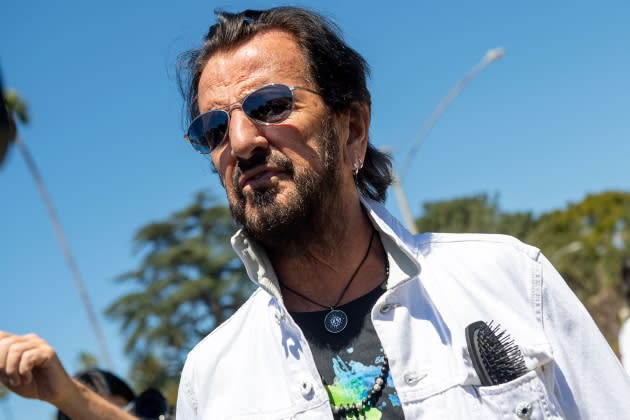
Ringo Starr AI Beatles Ringo Starr AI Beatles.jpg - Credit: VALERIE MACON/AFP/Getty Images
Ringo Starr AI Beatles Ringo Starr AI Beatles.jpg – Credit: VALERIE MACON/AFP/Getty Images

When Paul McCartney announced the Beatles were releasing one final song later this year, with vocals extracted from a John Lennon demo via a machine-learning tool, the press jumped on a narrative of an “AI Beatles song.” Confused fans feared they were about to hear an AI-generated Lennon. But the Beatles would “never” fake Lennon’s vocals, Ringo Starr says in a new interview for an upcoming episode of our Rolling Stone Music Now podcast.

Starr also confirms that George Harrison recorded parts for the song before his death in 2001. “This was beautiful,” says Starr, “and it’s the final track you’ll ever hear with the four lads. And that’s a fact.” Starr wouldn’t confirm the name of the song, but the fact of Harrison’s participation almost certainly means the track is “Now and Then,” a Lennon demo that McCartney, Harrison, and Starr did some work on during the same sessions that produced “Free As A Bird” and “Real Love,” which also used vocals harvested from Lennon demos. Those tracks were included on the Beatles Anthology albums and documentary in the mid-Nineties — so it would be logical that the new song might come out in conjunction with a long-overdue re-release of the doc, though the Beatles camp hasn’t announced anything of the sort yet.

More from Rolling Stone

Meanwhile, Starr will celebrate his 83rd birthday on July 7, and is continuing his tradition of asking fans to “say, post, or think ‘peace and love,’” at precisely noon in their time zones. Starr will be on hand for a celebration in Beverly Hills on that day, alongside musicians including Joe Walsh and Mike Campbell. “In 2008, I was being interviewed,” Starr recalls, “and the interviewer said, ‘Well, Ringo, what would you like your fans to give you for your birthday? And I don’t know where it came from but I thought, it would be great, if at noon they could go ‘peace and love’ and that’s how it started. We started with 80 people… and now it’s 28 countries.”

Starr, who just finished a spring tour with the latest incarnation of his All-Starr band, says he’s feeling great. “You never know when you’re gonna drop, that’s the thing,” he says. “And I’m not dropping yet.”

Starr’s full interview — with new thoughts on Peter Jackson’s Get Back documentary and more — will appear on next weekend’s episode of Rolling Stone Music Now. Video from the interview will also be shown at a special live taping of the rest of the episode at the Rock and Roll of Fame in Cleveland at 2 p.m. on July 7; the episode will also include a new interview with producer Glyn Johns, who worked on the Let It Be sessions. The museum will also celebrate Starr’s birthday that day with a “peace and love” gathering at noon, and an all-Beatles performance by the Hall’s house band.

Best of Rolling Stone

———

(Francis Schaeffer pictured below spent a lot of time in the 1960’s analyzing the Beatles’ words and music and below he sums up the Beatles search for meaning and values in a letter that I mailed to Paul McCartney on March 20, 2016.)

March 20, 2016

Paul McCartney

Dear Paul,

I love the song THE LONG AND WINDING ROAD for several reasons. I hope you put it in your set list for Little Rock on April 30, 2016. Wikipedia noted: 

The Long and Winding Road” is a ballad written by Paul McCartney (credited to Lennon–McCartney) from the Beatles‘ album Let It Be. It became the group’s 20th and last number-one song in the United States in June 1970,[1] and was the last single released by the quartet.

While the released version of the song was very successful, the post-production modifications by producer Phil Spector angered McCartney to the point that when he made his case in court for breaking up the Beatles as a legal entity, he cited the treatment of “The Long and Winding Road” as one of six reasons for doing so. New versions of the song with simpler instrumentation were subsequently released by both the Beatles and McCartney.

In 2011, Rolling Stone ranked “The Long and Winding Road” number 90 on their list of 100 greatest Beatles songs of all time.[2]

During your time in the Beatles you obviously were searching for satisfaction in several different places and it seemed you returned to the romantic vision of love providing the big answers to life. 
The long and winding road that leads to your door
Will never disappear
I’ve seen that road before it always leads me here
Leads me to your door
The wild and windy night that the rain washed away
Has left a pool of tears crying for the day
Why leave me standing here, let me know the way
Many times I’ve been alone and many times I’ve cried
Anyway you’ll never know the many ways I’ve tried
And still they lead me back to the long and winding road
Francis Schaeffer (1912-1984) was a Christian and a philosopher who also took a deep interest in the trends in culture in the 1960’s and he spent a lot of time analyzing the Beatles search for meaning and values in life. Here is a summary statement he had on the Beatles:
The Beatles have showed us what has occurred [in the last years of the 1960’s in the culture.] The Beatles with Sergeant Pepper’s Lonely Hearts Club Band which incidentally was a very good piece of total art in the sense that it was an unit, they had many songs on this album but the songs all made one message and the whole album was an unit, and the way the songs were arranged. It all formed an unit of infiltration  of the message of modern man and of the drug culture. In fact, it could be said the  drug culture and the mentality that went with it had it’s own vehicle that crossed the frontiers of the world which were otherwise almost impassible by other means of communication. This record,  Sergeant Pepper’s Lonely Hearts Club Band, became the rallying cry for young people throughout the world. It expressed the essence of their lives, thoughts and their feelings. 

(Below Francis Schaeffer holding up  Sergeant Pepper’s Lonely Hearts Club Band Album in his film HOW SHOULD WE THEN LIVE? Episode 7 which can be seen on Vimeo:

Francis Schaeffer – How Should We then Live – 07.The Age of Non Reason

from CaptanFunkyFresh6 years ago

__
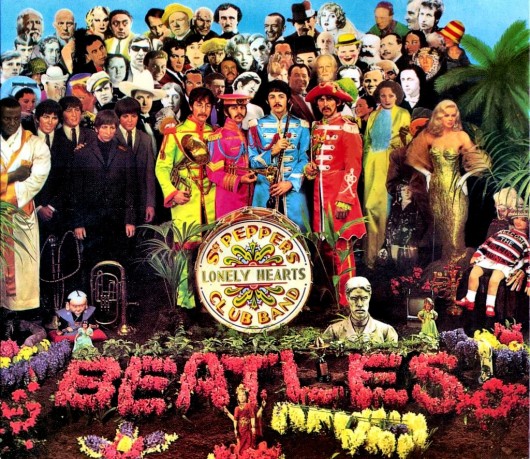
Image result for francis schaeffer beatles sergeant pepper's lonely hearts album

Later came psychedelic rock, an attempt to find this experience without drugs. The younger people and the older ones tried drug taking but then turned to the eastern religions. Both drugs and the eastern religions seek truth inside one’s own head, a negation of reason. The central reason of the popularity of eastern religions in the west is a hope for a nonrational meaning to life and values….

Beatles in India

Image result for beatles in india

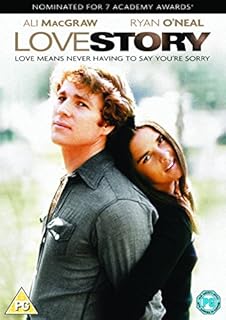
Then the Beatles gradually came home. The last thing we find them doing is the YELLOW SUBMARINE. I am sure a lot of parents thought this is much better than the old hard rock, but I thought it was a very sad thing because it really wasn’t a children’s story at all, but what it was in fact was a romantic statement and the fact is that is all there is. Just the same as [Ingmar] Bergman after he makes the movie SILENCE [1963] then he makes a comedy [ALL THESE WOMEN in 1964]. It is the same as Picasso when he pictures his child as a clown [Paul in a Clown Suit, 1924]. So we find the Beatles making the YELLOW SUBMARINE, but there is something more to it than this because Erich Segal made his reputation by writing the script for the movie version of YELLOW SUBMARINE and then he went on and wrote LOVE STORY. So what we have done is we have come around in a big circle. There was the destruction of the romantic. Students in the 1960’s said we are tired of the romantic of giving us optimistic statements with no sufficient base.

[Paul in a Clown Suit, 1924 by Picasso].

Paul in a Clown Suit, 1924, 1903 by Pablo Picasso

LOVE STORY

So the Beatles destroyed that and then they went through these various trips into non-reason but when they came out they had nothing left but the romantic. This is the tragedy of the young people starting with Berkeley in 1964. How right they were in saying we have largely a plastic culture.    This is something the church should have been saying. These students said give us reality. Then the students tried those trips and they weren’t trips based on reality but they were separated from reason. It was trying to find answers in one’s own head whether it was the drug  trip or the Eastern Religion trip. Then they came around in a big circle and what do we find–we end up with Segal’s LOVE STORY, just the romantic thing as one can imagine but with no adequate base at all, yet giving us a lovely romantic answer, which just like the YELLOW SUBMARINE is very, very sad because the Beatles and young people were giving up the search and just accepting something like this. 

(Joan Baez sings at Free Speech Movement rally in Berkeley. November 20, 1964)

YELLOW SUBMARINE

Image result for beatles yellow submarine

If we are going to understand the line of despair we must understand that it is an unit saying that reason is not going to take us anywhere. After Jean-Jacques Rousseau, Søren Kierkegaard and the German philosophers Georg Wilhelm Friedrich Hegel, and Immanuel Kant there was an unity that bound all these fields of expressions together. First, it was the philosopher expressing this. Second, it was the artist. Third, it was the musician and lastly it was expressed in general culture. The giving up of hope that on the basis of reason one is going to have optimistic answers is the mark of our age. Any kind of answers to the purpose in life, love morals have nothing to do with reason for modern man. It can be expressed in John Cage’s music or in certain forms of rock music.

Chance is the king of our age and John Cage’s music best demonstrates where chance has brought us

You scientists out there who say man is only the atom but a big more complex then you come home to your wife and you say, “I love you.” You want something more than merely sex. Those of you who look to your children with some tenderness and those of you who believe in some morals but you have never settled your score with Marquis de Sade  who said it so well WHAT IS IS RIGHT.

Modern man lives in a dichotomy. Downstairs there is reason which leads to man only being a machine and upstairs there is a some kind of hope against all reason. That great high boast coming out of the Enlightenment that man beginning from himself would gather enough particulars to make his own universal to give adequate answers for life, but it has failed.

de Sade portrayed in recent movie

Karl Popper seen below

Alfred Kinsey seen below

Image result for alfred kinsey

Rationalism fails because man is finite and limited. Karl Popper in England can falsify a few things but he can’t verify anything. Alfred Kinsey tells us that all sexual behavior just comes down to sociological statistics. There is not going to be an answer for modern man unless there is something more than modern man beginning from himself, namely that there is a God there and He is not silent.

In another place Francis Schaeffer has correctly argued:

The universe was created by an infinite personal God and He brought it into existence by spoken word and made man in His own image. When man tries to reduce [philosophically in a materialistic point of view] himself to less than this [less than being made in the image of God] he will always fail and he will always be willing to make these impossible leaps into the area of nonreason even though they don’t give an answer simply because that isn’t what he is. He himself testifies that this infinite personal God, the God of the Old and New Testament is there. 

Instead of making a leap into the area of nonreason the better choice would be to investigate the claims that the Bible is a historically accurate book and that God created the universe and reached out to humankind with the Bible. Below is a piece of that evidence given by Francis Schaeffer concerning the accuracy of the Bible.

TRUTH AND HISTORY (chapter 5 of WHATEVER HAPPENED TO THE HUMAN RACE?, under footnote #94)

Consider, too, the threat in the entire Middle East from the power of Assyria. In 853 B.C. King Shalmaneser III of Assyria came west from the region of the Euphrates River, only to be successfully repulsed by a determined alliance of all the states in that area of the Battle of Qarqar. Shalmaneser’s record gives details of the alliance. In these he includes Ahab, who he tells us put 2000 chariots and 10,000 infantry into the battle. However, after Ahab’s death, Samaria was no longer strong enough to retain control, and Moab under King Mesha declared its independence, as II Kings 3:4,5 makes clear:

Now Mesha king of Moab was a sheep breeder, and he had to deliver to the king of Israel 100,000 lambs and the wool of 100,000 rams. But when Ahab died, the king of Moab rebelled against the king of Israel.

The famous Moabite (Mesha) Stone, now in the Louvre, bears an inscription which testifies to Mesha’s reality and of his success in throwing off the yoke of Israel. This is an inscribed black basalt stela, about four feet high, two feet wide, and several inches thick.

Moabite (Mesha) Stone seen below

___

Actually the answer to find meaning in life is found in putting your faith and trust in Jesus Christ. The Bible is true from cover to cover and can be trusted. Here are some of the posts I have done in the past on the subject and if you like you could just google these subjects: 1. The Babylonian Chronicleof Nebuchadnezzars Siege of Jerusalem, 2. Hezekiah’s Siloam Tunnel Inscription.13. The Pilate Inscription14. Caiaphas Ossuary14 B Pontius Pilate Part 214c. Three greatest American Archaeologists moved to accept Bible’s accuracy through archaeology.

Thanks for your time.

Sincerely,

Everette Hatcher, everettehatcher@gmail.com, http://www.thedailyhatch.org, cell ph 501-920-5733, Box 23416, LittleRock, AR 72221

___

Featured artist is Charles Lutyens

Contemporary Christian Art – The Rt Revd Lord Harries of Pentregarth

Image result for charles lutyens artist

__

Published on Apr 10, 2012

Contrary to much opinion, the current scene of faith-related art is very much alive. There are new commissions for churches and cathedrals, a number of artists pursue their work on the basis of a deeply convinced faith, and other artists often resonate with traditional Christian themes, albeit in a highly untraditional way. The challenge for the artist, stated in the introduction to the course of lectures above, is still very much there: how to retain artistic integrity whilst doing justice to received themes.

This lecture is part of Lord Harries’ series on ‘Christian Faith and Modern Art’. The last century has seen changes in artistic style that have been both rapid and radical. This has presented a particular problem to artists who have wished to express Christian themes.

The transcript and downloadable versions of the lecture are available from the Gresham College website:
http://www.gresham.ac.uk/lectures-and…

Gresham College has been giving free public lectures since 1597. This tradition continues today with all of our five or so public lectures a week being made available for free download from our website.
http://www.gresham.ac.uk

_________________________

Charles Lutyens, 1933

Fire Angel Mosaic, 1968

Image result for charles lutyens artist Fire Angel Mosaic

Charles Lutyens studied at the Chelsea, Slade, St Martin’s and CentralSchools of Art in London and later in Paris. Though mainly a painter he has worked in a range of media and has exhibited widely. From 1963 to 1968 he worked on a commission to produce a mosaic mural of “Angels of the Heavenly Host” on the four long panels high above and surrounding the congregation and altar of St Paul’s Bow, with light flooding down from the large lantern on top. At 800 square feet it is almost certainly the largest contemporary mural in the British Isles. Lutyens was commissioned by the architects of the church because they thought his work consistently revealed “a feeling for states of mind or spirit.” They thought that as we do not know what angels look like it was important that the work be not to too representational and as they put it, they thought the work had achieved just the right balance “between the figurative and the abstract, between severity and empathy, between assertiveness and recession.”[1] Mainly a portrait and landscape painter, Lutyens has turned to Christian themes from time to time as in this recently exhibited The Mocking, 1968. What is interesting about this is the way the tormentors hide behind a great sheet as though they do not want to see what they are doing.


Outraged Christ

Image result for charles lutyens artist Outraged Christ

The highlight of a recent exhibition, however, was a work which has also just been completed and was on view for the first time. This is the much larger than life, in fact 15’ Outraged Christ, made of carved and recycled timber shaped in the form of slats. The first Christians liked to show Christ victorious on the cross. The Mediaeval period focussed on his suffering for the sins of the world. The 20th century too focussed almost exclusively on the suffering of Christ but more often than not as a paradigm of the suffering of a terrible century with its innumerable victims.


The Outraged Christ.

The depiction of an outraged Christ is, so far as I know, a fresh addition to Christian iconography. It is a moving, impressive work. Instead of Christ being shown battered or anguished, it depicts him with mouth open, slightly to one side, with his knees pushing forward from the cross, in rage. But here is rage, indeed fury, not just at what is being inflicted on him but at what we humans do to one another.

[1] Charles Lutyens: Being in the World, paintings, drawings, sculptures, mosaic info@charleslutyens.co.uk, 2011,p.64

_____________

From his website:

Profile

Born in 1933, Charles Lutyens has been an artist all his life. He grew up during the war living in Berkshire and discovered his enjoyment to paint when he was seven years old whilst at school in Shropshire. During his time at Bryanston School in Dorset he realised his commitment to being an artist and would use his academic assignment periods to work in the art room. Through later training at the Slade, St. Martin’s and Central Schools of Art, he developed his skills in oil painting and sculpture.

Lutyens’ work is diverse and has always taken an individual direction using a variety of materials including clay, wood, stone, mosaic, as well as drawn and painted images on paper, board and canvas. His images emerge out of his own experience of life, looking inwardly, with a focus on the condition of “Man’s being in the World”.

Between 1958 and 1964, Lutyens lived in London working in his Fulham studio developing his own personal approach to painting. A body of images then painted were exhibited at the Wildenstein Gallery in New York, where critics compared his work to expressionists, Munch and Ensor.

From 1963 to 1968, Lutyens worked on a commission to produce a tesserae mosaic mural of “Angels of the Heavenly Host” at the newly consecrated church of St. Paul’s, Bow Common, E3.

Charles moved to Oxford with his family in 1978, where together with other commitments, teaching and running related workshops he continued to explore his studio painting and sculpting as well as his landscape work.

Throughout his artistic life he has exhibited in his studio, partaken in mixed exhibitions and has held one-man shows at St. Martin’s Gallery in London and Hollerhaus Gallery, near Munich.

His work is in private collections in England, Germany, Austria, France, Ireland, Spain and USA.

He has recently moved with his wife to Hampshire and is currently working on a 15ft wooden sculpture, a Crucifixion of an “Outraged Christ”.

Related posts:

Image result for sergent peppers album cover

Francis Schaeffer’s favorite album was SGT. PEPPER”S and he said of the album “Sergeant Pepper’s Lonely Hearts Club Band…for a time it became the rallying cry for young people throughout the world. It expressed the essence of their lives, thoughts and their feelings.”  (at the 14 minute point in episode 7 of HOW SHOULD WE THEN LIVE? ) 

Image result for francis schaeffer how should we then live

How Should We Then Live – Episode Seven – 07 – Portuguese Subtitles

Francis Schaeffer

Image result for francis schaeffer

______

FRANCIS SCHAEFFER ANALYZES ART AND CULTURE PART 202 the BEATLES’ last song FREE AS A BIRD (Featured artist is Susan Weil )

February 15, 2018 – 1:45 am

FRANCIS SCHAEFFER ANALYZES ART AND CULTURE Part 200 George Harrison song HERE ME LORD (Featured artist is Karl Schmidt-Rottluff )

FRANCIS SCHAEFFER ANALYZES ART AND CULTURE PART 184 the BEATLES’ song REAL LOVE (Featured artist is David Hammonds )

FRANCIS SCHAEFFER ANALYZES ART AND CULTURE Part 170 George Harrison and his song MY SWEET LORD (Featured artist is Bruce Herman )

FRANCIS SCHAEFFER ANALYZES ART AND CULTURE Part 168 George Harrison’s song AWAITING ON YOU ALL Part B (Featured artist is Michelle Mackey )

FRANCIS SCHAEFFER ANALYZES ART AND CULTURE Part 167 George Harrison’s song AWAITING ON YOU Part A (Artist featured is Paul Martin)

RESPONDING TO HARRY KROTO’S BRILLIANT RENOWNED ACADEMICS!! Part 133 Louise Antony is UMass, Phil Dept, “Atheists if they commit themselves to justice, peace and the relief of suffering can only be doing so out of love for the good. Atheist have the opportunity to practice perfect piety”

FRANCIS SCHAEFFER ANALYZES ART AND CULTURE Part 166 George Harrison’s song ART OF DYING (Featured artist is Joel Sheesley )

FRANCIS SCHAEFFER ANALYZES ART AND CULTURE Part 165 George Harrison’s view that many roads lead to Heaven (Featured artist is Tim Lowly)

FRANCIS SCHAEFFER ANALYZES ART AND CULTURE Part 164 THE BEATLES Edgar Allan Poe (Featured artist is Christopher Wool)

PART 163 BEATLES Breaking down the song LONG AND WINDING ROAD (Featured artist is Charles Lutyens )

FRANCIS SCHAEFFER ANALYZES ART AND CULTURE PART 162 A look at the BEATLES Breaking down the song ALL WE NEED IS LOVE Part C (Featured artist is Grace Slick)

PART 161 A look at the BEATLES Breaking down the song ALL WE NEED IS LOVE Part B (Featured artist is Francis Hoyland )

FRANCIS SCHAEFFER ANALYZES ART AND CULTURE PART 160 A look at the BEATLES Breaking down the song ALL WE NEED IS LOVE Part A (Featured artist is Shirazeh Houshiary)

FRANCIS SCHAEFFER ANALYZES ART AND CULTURE Part 159 BEATLES, Soccer player Albert Stubbins made it on SGT. PEP’S because he was sport hero (Artist featured is Richard Land)

FRANCIS SCHAEFFER ANALYZES ART AND CULTURE Part 158 THE BEATLES (breaking down the song WHY DON’T WE DO IT IN THE ROAD?) Photographer Bob Gomel featured today!

FRANCIS SCHAEFFER ANALYZES ART AND CULTURE Part 118 THE BEATLES (Why was Tony Curtis on cover of SGT PEP?) (Feature on artist Jeffrey Gibson )

FRANCIS SCHAEFFER ANALYZES ART AND CULTURE Part 117 THE BEATLES, Breaking down the song WITHIN YOU WITHOUT YOU Part B (Featured artist is Emma Amos )

FRANCIS SCHAEFFER ANALYZES ART AND CULTURE Part 97 THE BEATLES (The Beatles and Paramhansa Yogananda ) (Feature on artist Ronnie Wood)

Today I am going to look at Paramhansa Yogananda who appeared on the cover of SGT. PEPPERS because the Beatles were at the time interested in what Eastern Religions had to offer. One of the problems with Hinduism is that has no way to explain the existence of evil in the world today. However, Christianity explains […]

FRANCIS SCHAEFFER ANALYZES ART AND CULTURE PART 96 THE BEATLES (Breaking down the song “Eleanor Rigby” Part B and the issue of LONELINESS) Featured artist is Robert Morris

  _ The song ELEANOR RIGBY was a huge hit because it connected so well with “all the lonely people.” The line that probably best summed up how many people felt was: “All the lonely people, Where do they all come from? All the lonely people, Where do they all belong?” Francis Schaeffer believed in engaging the secular […]

FRANCIS SCHAEFFER ANALYZES ART AND CULTURE PART 95 THE BEATLES (Breaking down the song “Eleanor Rigby” Part A and the issue of DEATH ) Featured artist is Joe Tilson

No one remembered Eleanor Rigby enough to come to her funeral. It is sad but Francis Schaeffer points out King Solomon’s words on death from 3000 years ago and they seem similar to the song’s conclusion. Eleanor Rigby – PAUL McCARTNEY The Beatles Cartoon – Eleanor Rigby. Uploaded on Feb 21, 2012 Ah, look at […]

FRANCIS SCHAEFFER ANALYZES ART AND CULTURE Part 94 THE BEATLES (The Beatles and the Gurus on SGT. PEP. ) (Feature on PHOTOGRAPHER BILL WYMAN )

The Beatles went through their Eastern Religion phase and it happened to be when the album SERGEANT PEPPER’S LONELY HEARTS CLUB BAND album came out. Today we will take a look at the article “The Gurus of Sergeant Pepper,” by Richard Salva and then look at some of the thoughts of Francis Schaeffer on this topic. I […]

FRANCIS SCHAEFFER ANALYZES ART AND CULTURE Part 93 THE BEATLES (Breaking down “REVOLUTION 9” Part B) Astrid Kirchherr is featured Photographer

In 1967 the Beatles had honored Stockhausen by putting his photo on the cover of their Sergeant Pepper [sic] album. When John Lennon was murdered in December 1980, Stockhausen said in a telephone interview: “Lennon often used to phone me. He was particularly fond of my Hymnen and Gesang der Jünglinge, and got many things […]

FRANCIS SCHAEFFER ANALYZES ART AND CULTURE Part 92 THE BEATLES (Breaking down “REVOLUTION 9” Part A) Featured photographer is John Loengard

Have you ever had the chance to contrast the music of Bach with that of the song Revolution 9 by the Beatles? Francis Schaeffer pointed out, “Bach as a Christian believed that there was resolution for the individual and for history. As the music that came out of the Biblical teaching of the Reformation was […]

FRANCIS SCHAEFFER ANALYZES ART AND CULTURE PART 91 (WHY WAS H.G.WELLS ON THE COVER OF SGT. PEPPERS? Part B) Featured Artist is Claes Oldenburg

Last time we looked at the hedonistic lifestyle of H.G.Wells who appeared on the cover of SGT PEPPERS but today we will look at some of his philosophic views that shaped the atmosphere of the 1960’s.   Wells had been born 100 years before the release of SGT PEPPERS but many of his ideas influenced […]

FRANCIS SCHAEFFER ANALYZES ART AND CULTURE PART 90 (WHY WAS H.G.WELLS ON THE COVER OF SGT. PEPPERS? Part A) Featured Artist is Ellsworth Kelly

Why was H.G.Wells chosen to be on the cover of SGT PEPPERS? Like many of the Beatles he had been raised in Christianity but had later rejected it in favor of an atheistic, hedonistic lifestyle that many people in the 1960’s moved towards.  Wells had been born 100 years before the release of SGT PEPPERS […]

FRANCIS SCHAEFFER ANALYZES ART AND CULTURE Part 89 THE BEATLES, Breaking down the song “BLACKBIRD” Part B (Featured Photographer is Jürgen Vollmer)

Since racial tensions were extremely high in the 1960’s I am adding a part two to my last post. I grew up in Memphis and was a resident when MLK Jr. was unfortunately assassinated. Just two months later Paul McCartney wrote the song BLACKBIRD because of this assassination. Francis Schaeffer also spoke out strongly against […]

FRANCIS SCHAEFFER ANALYZES ART AND CULTURE Part 88 THE BEATLES, Breaking down the song “BLACKBIRD” Part A (Featured Photographer is Richard Avedon)

__________

“Johnny Angel” is a song written and composed by Lyn Duddy and Lee Pockriss. The song was originally recorded by both Laurie Loman and Georgia Lee, but those two versions were not successful. It first became a popular hit single when it was recorded by Shelley Fabares in the fall of 1961; she took it to No. 1 on the Billboard Hot 100 Chart when the song was released in 1962!

Shelley Fabares – Johnny Angel [Full Video Edit] 1961

Johnny Angel (song)

Article Talk

Johnny Angel” is a song written and composed by Lyn Duddy and Lee Pockriss. The song was originally recorded by both Laurie Loman and Georgia Lee, but those two versions were not successful.[2] It first became a popular hit single when it was recorded by Shelley Fabares in the fall of 1961; she took it to No. 1 on the Billboard Hot 100 Chart when the song was released in 1962. In the same year, British singer Patti Lynn had a moderate hit on the UK Singles Chart with her cover of the song. The American pop music duo The Carpenters recorded “Johnny Angel” in 1973 as part of a medley of oldies on side two of their album Now & Then.

“Johnny Angel”
Single by Shelley Fabares
from the album Shelley!
B-side“Where’s It Gonna Get Me”
ReleasedFebruary 1962
RecordedFall 1961
GenrePop[1]
Length2:19
LabelColpix
Songwriter(s)Lyn Duddy and Lee Pockriss
Producer(s)Stu Phillips
Shelley Fabares singles chronology
Johnny Angel” 
(1962)”What Did They Do Before Rock ‘n’ Roll” 
(1962)

Shelley Fabares versionEdit

BackgroundEdit

“Johnny Angel” is the debut pop single by Shelley Fabares. Her cover version of the song was recorded in the fall of 1961, and was released in 1962 on the Colpix label.[3] The track was the first single taken from Fabares’ debut solo album Shelley!, which was produced and arranged by Stu Phillips.

The single premiered on an episode, “Donna’s Prima Donna” of Fabares’ sitcom, The Donna Reed Show, during the fourth season (episode 20).[4] It also has a sequel song entitled “Johnny Loves Me“, which tells the story of how the girl won Johnny’s heart.

Darlene Love and her group, the Blossoms, sang backup vocals on the track.[5] Fabares is quoted in The Billboard Book of Number One Singles by Fred Bronson as saying she was intimidated by Love’s group and their “beautiful” voices and was terrified at the prospect of becoming a recording artist, as she did not consider herself a singer,[6] but was expected to sing on the show anyway.[7] The song also featured an echo chamber, where the intro of the repeated title words: “Johnny Angel, Johnny Angel” was used by Fabares and the backup singers. Musicians who played on the track include Hal Blaine on drums, Carol Kaye on bass and Glen Campbell on guitar.[8][better source needed]

The song is an expression of a teenage girl’s romantic longing for a boy who doesn’t know she exists, to the point where she declines other boys’ propositions for dates because she would rather concentrate on the boy she loves.

Although Fabares’ career as an actress stayed strong for three decades, her career as a singer came to an end within a few years of “Johnny Angel” when she was unable to come up with another Top 20 hit. However, the song has become an oldies radio airplay favorite.

ReceptionEdit

“Johnny Angel” hit number one on the Billboard Hot 100 on April 7, 1962, during a 15-week run on the chart.[9] It was a number one hit on the Top 100 Best Sellers chart in April 1962 as published by Cashbox. It charted at number one in both Canada and in New Zealand. “Johnny Angel” also peaked at number 41 on the UK Singles chart, where Patti Lynn’s recording of the song was a slightly bigger hit.[10] It sold over one-million copies and was awarded a gold disc.[11]

Track listingsEdit

  1. “Johnny Angel” – 2:19
  2. “Where’s It Gonna Get Me” – 2:08

Chart performanceEdit

Weekly chartsEditChart (1962)Peak
positionCanadian Singles Chart[12]1New Zealand (Lever Hit Parade)[13]1UK Singles (OCC)[14]41US Billboard Hot 100[15]1U.S. Cashbox Top 1001
Year-end chartsEditChart (1962)RankU.S. Billboard Hot 100[16]6U.S. Cash Box [17]11All-time chartsEditChart (1958-2018)PositionUS Billboard Hot 100[18]569

In the mediaEdit

  • The song was featured in the 1990 film Mermaids, the film Andre and the episode “Halloween” in the TV-series My So-Called Life.
  • The song was also featured in a 1976 episode of Saturday Night Live hosted by Dyan Cannon, where Johnny Angel turns out to be three Hells Angels all named Johnny.
  • In the song The Beat of Black Wings, which appears on Joni Mitchell‘s album Chalk Mark in a Rain Storm, the words Johnny Angel are sung at the end of several lines, in the same style as the Shelley Fabares cover, in an apparent reference to the Fabares version of the song.

Patti Lynn versionEdit

“Johnny Angel”
Single by Patti Lynn
B-side“Tonight You Belong to Me”
ReleasedMarch 1962
Recorded1962
GenrePop
Length2:16
LabelFontana
Songwriter(s)Lyn Duddy and Lee Pockriss
Producer(s)Harry Robinson
Patti Lynn singles chronology
Johnny Angel” 
(1962)”Tell Me, Telstar” 
(1962)

BackgroundEdit

British pop singer Patti Lynn released a cover version of “Johnny Angel” for the Fontana Records label in March 1962. It was produced by Harry Robinson.[19]Her version of the song charted on the UK Singles Chart at number 37 in May 1962.

Track listingsEdit

  1. “Johnny Angel” – 2:16
  2. “Tonight You Belong To Me” – 2:12

Chart performanceEdit

Chart (1962)Peak
position
UK Singles (OCC)[20]37

The Carpenters versionEdit

“Johnny Angel”
Song by The Carpenters
from the album Now & Then
ReleasedMay 16, 1973
Recorded1973
GenrePop
Length1:30
LabelA&M
Songwriter(s)Lyn Duddy and Lee Pockriss
Producer(s)Richard and Karen Carpenter

BackgroundEdit

The pop music duo the Carpenters recorded “Johnny Angel” and included it on their fifth studio album Now & Then in May 1973. The song was produced by Richard Carpenter and his sister Karen and was issued on the A&M record label. The song was included on Side “B” of the album as part of an oldies medley.

Other versions


Related posts:

FRANCIS SCHAEFFER ANALYZES ART AND CULTURE Part 63 THE BEATLES (Part O , BECAUSE THE BEATLES LOVED HUMOR IT IS FITTING THAT 6 COMEDIANS MADE IT ON THE COVER OF “SGT. PEPPER’S”!) (Feature on artist H.C. Westermann )

June 10, 2015 – 2:33 pm

__________________ A Funny Press Interview of The Beatles in The US (1964) Funny Pictures of The Beatles Published on Oct 23, 2012 funny moments i took from the beatles movie; A Hard Days Night ___________________ Scene from Help! The Beatles Funny Clips and Outtakes (Part 1) The Beatles * Wildcat* (funny) Uploaded on Mar 20, […]

By Everette Hatcher III | Posted in Francis Schaeffer |Edit|Comments (0)

FRANCIS SCHAEFFER ANALYZES ART AND CULTURE Part 62 THE BEATLES (Part N The last 4 people alive from cover of Stg. Pepper’s and the reason Bob Dylan was put on the cover!) (Feature on artist Larry Bell)

June 4, 2015 – 5:31 am

_____________________ Great article on Dylan and Sergeant Pepper’s Lonely Hearts Club Band Cover: A famous album by the fab four – The Beatles – is “Sergeant peppers lonely hearts club band“. The album itself is one of the must influential albums of all time. New recording techniques and experiments with different styles of music made this […]

By Everette Hatcher III | Posted in Francis Schaeffer | Tagged Bob DylanBobby BreenDionLarry Bell | Edit|Comments (0)

FRANCIS SCHAEFFER ANALYZES ART AND CULTURE Part 61 THE BEATLES (Part M, Why was Karl Marx on the cover of Stg. Pepper’s?) (Feature on artist George Petty)

May 28, 2015 – 4:56 am

__________________________ Beatles 1966 Last interview 69 THE BEATLES TWO OF US As a university student, Karl Marx (1818-1883) joined a movement known as the Young Hegelians, who strongly criticized the political and cultural establishments of the day. He became a journalist, and the radical nature of his writings would eventually get him expelled by the […]

By Everette Hatcher III | Posted in Francis Schaeffer |Edit|Comments (0)

FRANCIS SCHAEFFER ANALYZES ART AND CULTURE Part 60 THE BEATLES (Part L, Why was Aleister Crowley on the cover of Stg. Pepper’s?) (Feature on artist Jann Haworth )

May 21, 2015 – 3:33 am

____________ Aleister Crowley on cover of Stg. Pepper’s: _______________ I have dedicated several posts to this series on the Beatles and I don’t know when this series will end because Francis Schaeffer spent a lot of time listening to the Beatles and talking and writing about them and their impact on the culture of the 1960’s. […]

—-

Jo Stafford – Make Love To Me 1954

Jo Stafford – Make Love To Me 1954

Jo Stafford

Article Talk

Jo Elizabeth Stafford (November 12, 1917 – July 16, 2008) was an American traditional pop music singer, whose career spanned five decades from the late 1930s to the early 1980s. Admired for the purity of her voice, she originally underwent classical training to become an opera singer before following a career in popular music, and by 1955 had achieved more worldwide record sales than any other female artist. Her 1952 song “You Belong to Me” topped the charts in the United States and United Kingdom, becoming the second single to top the UK Singles Chart, and the first by a female artist to do so.

Jo Stafford
Picture of Stafford from the New York Sunday News, September 21, 1947
Background information
Birth nameJo Elizabeth Stafford
BornNovember 12, 1917
Coalinga, California, U.S.
DiedJuly 16, 2008 (aged 90)
Los Angeles, California, U.S.
GenresTraditional pop
Occupation(s)Singer
Years active1930s–1982
LabelsCapitolColumbiaDotCorinthian
Spouse(s)John Huddleston (1937–div.1943)
Paul Weston (1952–d.1996)

Born in remote oil-rich Coalinga, California, near Fresno in the San Joaquin Valley, Stafford made her first musical appearance at age 12. While still at high school, she joined her two older sisters to form a vocal trio named the Stafford Sisters, who found moderate success on radio and in film. In 1938, while the sisters were part of the cast of Twentieth Century Fox‘s production of Alexander’s Ragtime Band, Stafford met the future members of the Pied Pipers and became the group’s lead singer. Bandleader Tommy Dorsey hired them in 1939 to perform vocals with his orchestra. From 1940 to 1942, the group often performed with Dorsey’s new male singer, Frank Sinatra.

In addition to her singing with the Pied Pipers, Stafford was featured in solo performances with Dorsey. After leaving the group in 1944, she recorded a series of pop songs now regarded as standards for Capitol Records and Columbia Records. Many of her recordings were backed by the orchestra of Paul Weston. She also performed duets with Gordon MacRae and Frankie Laine. Her work with the United Service Organizations giving concerts for soldiers during World War II earned her the nickname “G.I. Jo”. Starting in 1945, Stafford was a regular host of the National Broadcasting Company (NBC) radio series The Chesterfield Supper Club and later appeared in television specials—including two series called The Jo Stafford Show, in 1954 in the U.S. and in 1961 in the UK.

Stafford married twice, first in 1937 to musician John Huddleston (the couple divorced in 1943), then in 1952 to Paul Weston, with whom she had two children. She and Weston developed a comedy routine in which they assumed the identity of an incompetent lounge act named Jonathan and Darlene Edwards, parodying well-known songs. The act proved popular at parties and among the wider public when the couple released an album as the Edwardses in 1957. In 1961, the album Jonathan and Darlene Edwards in Paris won Stafford her only Grammy Award for Best Comedy Album, and was the first commercially successful parody album. Stafford largely retired as a performer in the mid-1960s, but continued in the music business. She had a brief resurgence in popularity in the late 1970s when she recorded a cover of the Bee Gees hit, “Stayin’ Alive” as Darlene Edwards. In the 1990s, she began re-releasing some of her material through Corinthian Records, a label founded by Weston. She died in 2008 in Century City, Los Angeles, and is interred with Weston at Holy Cross Cemetery, Culver City. Her work in radio, television, and music is recognized by three stars on the Hollywood Walk of Fame.

Early yearsEdit

The singing Stafford Sisters in 1941

Jo Elizabeth Stafford was born in Coalinga, California, in 1917, to Grover Cleveland Stafford and Anna Stafford (née York)—a second cousin of World War I hero Sergeant Alvin York.[1][note 1] She was the third of four children.[4][5] She had two older sisters, Christine and Pauline, and one younger sister, Betty.[6][7] Both her parents enjoyed singing and sharing music with their family.[1] Stafford’s father hoped for success in the California oil fields when he moved his family from Gainesboro, Tennessee, but worked in a succession of unrelated jobs. Her mother was an accomplished banjo player, playing and singing many of the folk songs that influenced Stafford’s later career.[4][8] Anna insisted that her children should take piano lessons, but Jo was the only one among her sisters who took a keen interest in it, and through this, she learned to read music.[9]

Stafford’s first public singing appearance was in Long Beach, where the family lived when she was 12. She sang “Believe Me, If All Those Endearing Young Charms“, a Stafford family favorite.[10] Her second was far more dramatic. As a student at Long Beach Polytechnic High School with the lead in the school musical, she was rehearsing on stage when the 1933 Long Beach earthquake destroyed part of the school.[11] With her mother’s encouragement, Stafford originally planned to become an opera singer and studied voice as a child, taking private lessons from Foster Rucker, an announcer on California radio station KNX.[12][13][note 2] Because of the Great Depression, she abandoned that idea and joined her older sisters Christine and Pauline in a popular vocal group the Stafford Sisters.[14][15] The two older Staffords were already part of a trio with an unrelated third member when the act got a big booking at Long Beach’s West Coast Theater. Pauline was too ill to perform, and Jo was drafted in to take her place so they could keep the engagement. She asked her glee club teacher for a week’s absence from school, saying her mother needed her at home, and this was granted. The performance was a success, and Jo became a permanent member of the group.[16][note 3]

The Staffords’ first radio appearance was on Los Angeles station KHJ as part of The Happy Go Lucky Hour when Jo was 16, a role they secured after hopefuls at the audition were asked if they had their own musical accompanist(s). Christine Stafford said that Jo played piano, and the sisters were hired, though she had not previously given a public piano performance.[9][17] The Staffords were subsequently heard on KNX’s The Singing Crockett Family of Kentucky, and California Melodies, a network radio show aired on the Mutual Broadcasting System.[1][9]While Stafford worked on The Jack Oakie Show, she met John Huddleston—a backing singer on the program, and they were married in October 1937.[16][18][note 4] The couple divorced in 1943.[19][20]

The sisters found work in the film industry as backup vocalists, and immediately after graduating from high school, Jo worked on film soundtracks.[8][20]The Stafford Sisters made their first recording,”Let’s Get Together and Swing” with Louis Prima, in 1936.[22][23][24] In 1937, Jo worked behind the scenes with Fred Astaire on the soundtrack of A Damsel in Distress, creating the arrangements for the film, and with her sisters she arranged the backing vocals for “Nice Work If You Can Get It“. Stafford said that her arrangement had to be adapted because Astaire had difficulty with some of the syncopation. In her words: “The man with the syncopated shoes couldn’t do the syncopated notes”.[9][25]

The Pied PipersEdit

By 1938, the Staffords were involved with Twentieth Century Fox’s production of Alexander’s Ragtime Band. The studio brought in many vocal groups to work on the film, including the Four Esquires, the Rhythm Kings, and the King Sisters, who began to sing and socialized between takes. The Stafford Sisters, the Four Esquires and the Rhythm Kings became a new vocal group called the Pied Pipers.[8][26] Stafford later said, “We started singing together just for fun, and these sessions led to the formation of an eight-voice singing group that we christened ‘The Pied Pipers'”.[27] The group consisted of eight members, including Stafford—John Huddleston, Hal Hooper, Chuck Lowry, Bud Hervey, George Tait, Woody Newbury, and Dick Whittinghill.[28]

The Pied Pipers in 1944: Pictured here are Charles Lowry, Jo Stafford, Clark Yocum, and John Huddleston,

As the Pied Pipers, they worked on local radio and movie soundtracks.[29] When Alyce and Yvonne King threw a party for their boyfriends’ visit to Los Angeles, the group was invited to perform.[8][30] The King Sisters’ boyfriends were Tommy Dorsey’s arrangers Axel Stordahl and Paul Weston, who became interested in the group.[8] Weston said the group’s vocals were unique for its time and that their vocal arrangements were much like those for orchestral instruments.[31]

Weston persuaded Dorsey to audition the group in 1938, and the eight drove together to New York City.[8] Dorsey liked them and signed them for 10 weeks. After their second broadcast, the sponsor visiting from overseas heard the group sing “Hold Tight (Want Some Seafood Mama)”. Until this point, the sponsor knew only that he was paying for Dorsey’s program and that its ratings were very good; transcription discs mailed to him by his advertising agency always arrived broken. He thought that the performance was terrible, and pressured the advertising agency representing his brand to fire the group.[4][30][31] They stayed in New York for several months, landing one job that paid them $3.60 each, and they recorded some material for RCA Victor Records.[8] Weston later said that Stordahl and he felt responsibility for the group, since Weston had arranged their audition with Dorsey.[30] After six months in New York and with no work there for them, the Pied Pipers returned to Los Angeles, where four of their members left the group to seek regular employment. Shortly afterwards, Stafford received a telephone call from Dorsey, who told her he wished to hire the group, but wanted only four of them, including Stafford. After she agreed to the offer, the remaining Pied Pipers—Stafford, Huddleston, Lowry, and Wilson—traveled to Chicago in 1939. The decision led to success for the group, especially Stafford, who featured in both collective and solo performances with Dorsey’s orchestra.[8][31][32][33]

When Frank Sinatra joined the Dorsey band, the Pied Pipers provided backing vocals for his recordings. Their version of “I’ll Never Smile Again” topped the Billboard Chart for 12 weeks in 1940 and helped to establish Sinatra as a singer.[26][34][35] Stafford, Sinatra, and the Pied Pipers toured extensively with Dorsey during their three years as part of his orchestra, giving concerts at venues across the United States.[36] Stafford made her first solo recording—”Little Man with a Candy Cigar”—in 1941, after Dorsey agreed to her request to record solo.[4][37] Her public debut as a soloist with the band occurred at New York’s Hotel Astor in May 1942.[38]Bill Davidson of Collier’s reported in 1951 that because Stafford weighed in excess of 180 lb, Dorsey was reluctant to give her a leading vocal role in his orchestra, believing she was not sufficiently glamorous for the part.[16] However, Peter Levinson‘s 2005 biography of Dorsey offers a different account. Stafford recalls that she was overweight, but Dorsey did not try hiding her because of it.[39]

In November 1942, the Pied Pipers had a disagreement with Dorsey when he fired Clark Yocum, a guitarist and vocalist who had replaced Billy Wilson in the lineup, when he mistakenly gave the bandleader misdirections at a railroad station in Portland, Oregon. The remaining three members then quit in an act of solidarity.[31][40] At the time, the number-one song in the United States was “There Are Such Things” by Frank Sinatra and the Pied Pipers.[31] Sinatra also left Dorsey that year.[41]Following their departure from the orchestra, the Pied Pipers played a series of vaudeville dates in the Eastern United States; when they returned to California, they were signed to appear in the 1943 Universal Pictures movie Gals Incorporated. From there, they joined the NBC Radio show Bob Crosby and Company.[42] In addition to working with Bob Crosby, they also appeared on radio shows hosted by Sinatra and Johnny Mercer, and were one of the first groups signed to Mercer’s new label, Capitol Records, which was founded in 1942.[26][34][43][44]Weston, who left Dorsey’s band in 1940 to work with Dinah Shore, became music director at Capitol.[8][45][46]

Solo careerEdit

Capitol Records and United Service OrganizationEdit

Jo Stafford, 1946

While Stafford was still working for Dorsey, Johnny Mercer told her, “Some day I’m going to have my own record company, and you’re going to record for me.”[4] She subsequently became the first solo artist signed to Capitol after leaving the Pied Pipers in 1944.[4][47] A key figure in helping Stafford to develop her solo career was Mike Nidorf, an agent who first heard her as a member of the Pied Pipers while he was serving as a captain in the United States Army. Having previously discovered artists such as Glenn MillerArtie Shaw, and Woody Herman, Nidorf was impressed by Stafford’s voice, and contacted her when he was demobilized in 1944. After she agreed to let him represent her, he encouraged her to reduce her weight and arranged a string of engagements that raised her profile and confidence.[16]

The success of Stafford’s solo career led to a demand for personal appearances, and from February 1945, she embarked on a six-month residency at New York’s La Martinique nightclub.[48][49][50] Her performance was well-received; an article in the July 1945 edition of Band Leadersmagazine described it as “sensational”, but Stafford did not enjoy singing before live audiences, and it was the only nightclub venue she ever played.[47][50][51] Speaking about her discomfort with live performances, Stafford told a 1996 interview with The New Yorker‘s Nancy Franklin, “I’m basically a singer, period, and I think I’m really lousy up in front of an audience—it’s just not me.”[47]

Stafford’s tenure with the United Service Organizations during World War II, which often had her perform for soldiers stationed in the U.S., led to her acquiring the nickname “G.I. Jo”.[14][30] On returning from the Pacific theater, a veteran told Stafford that the Japanese would play her records on loudspeakers in an attempt to make the U.S. troops homesick enough to surrender. She replied personally to all the letters she received from servicemen.[4][8][20] Stafford was a favorite of many servicemen during both World War II and the Korean War; her recordings received extensive airplay on the American Forces radio and in some military hospitals at lights-out. Stafford’s involvement with servicemen led to an interest in military history and a sound knowledge of it. Years after World War II, Stafford was a guest at a dinner party with a retired naval officer. When the discussion turned to a wartime action off Mindanao, the officer tried to correct Stafford, who held to her point. He countered her by saying, “Madame, I was there”. A few days after the party, Stafford received a note of apology from him, saying he had reread his logs and that she was correct.[4]

Chesterfield Supper Club, duets, and Voice of AmericaEdit

Jo Stafford with Tibetan buddhist thangka art from Tibet in 1946 New York City

Beginning on December 11, 1945, Stafford hosted the Tuesday and Thursday broadcasts of NBC musical variety radio program The Chesterfield Supper Club.[52][53][54] On April 5, 1946, the entire cast, including Stafford and Perry Como, participated in the first commercial radio broadcast from an airplane. The initial plan was to use the stand-held microphones used in studios, but when these proved to be problematic, the cast switched to hand-held microphones, which because of the plane’s cabin pressure became difficult to hold. Three flights were made that day; a rehearsal in the afternoon, then two in the evening—one for the initial 6:00 pm broadcast and another at 10:00 pm for the West Coast broadcast.[55][56][57]

Stafford moved from New York to California in November 1946, continuing to host Chesterfield Supper Club from Hollywood.[53][58][59] In 1948, she restricted her appearances on the show to Tuesdays, and Peggy Lee hosted the Thursday broadcasts.[60] Stafford left the show when it was expanded to 30 minutes, making her final appearance on September 2, 1949. She returned to the program in 1954; it ended its run on NBC Radio the following year.[61] During her time with Chesterfield Supper Club, Stafford revisited some of the folk music she had enjoyed as a child. Weston, her conductor on the program, suggested using some of the folk music for the show. With her renewed interest in folk tunes came an interest in folklore; Stafford established a contest to award a prize to the best collection of American folklore submitted by a college student. The annual Jo Stafford Prize for American Folklore was handled by the American Folklore Society, with the first prize of $250 awarded in 1949.[1][62]

In 1954, James Conkling, president of Columbia Records, presented Stafford with a diamond-studded plaque to mark the sale of 25 million of her records.

Stafford continued to record. She duetted with Gordon MacRae on a number of songs. In 1948, their version of “Say Something Sweet to Your Sweetheart” sold over a million copies. The following year, they repeated their success with “My Happiness”, and Stafford and MacRae recorded “Whispering Hope” together.[8] Stafford began hosting a weekly program on Radio Luxembourg in 1950; working unpaid, she recorded the voice portions of the shows in Hollywood.[63] At the time, she was hosting Club Fifteen with Bob Crosby for CBS Radio.[1]

Weston moved from Capitol to Columbia Records, and in 1950, Stafford followed suit. Content and very comfortable working with him, Stafford had had a clause inserted in her contract with Capitol stating that if Weston left that label, she would automatically be released from her obligations to them.[8][47] When that happened, Capitol wanted Stafford to record eight more songs before December 15, 1950, and she found herself in the unusual situation of simultaneously working for two competing record companies, an instance that was very rare in an industry where musicians were seen as assets.[64] In 1954, Stafford became the second artist after Bing Crosby to sell 25 million records for Columbia.[19][65] She was presented with a diamond-studded disc to mark the occasion.[65]

In 1950, Stafford began working for Voice of America(VOA), the U.S. government broadcaster transmitting programmes overseas to undermine the influence of communism.[66] She presented a weekly show that aired in Eastern Europe, and Collier’s published an article about the program in its April 21, 1951, issue that discussed her worldwide popularity, including in countries behind the Iron Curtain. The article, titled “Jo Stafford: Her Songs Upset Joe Stalin“, earned her the wrath of the U.S. Communist Daily Worker newspaper, which published a column critical of Stafford and VOA.[16][26][67][note 5]


Related posts:

FRANCIS SCHAEFFER ANALYZES ART AND CULTURE Part 63 THE BEATLES (Part O , BECAUSE THE BEATLES LOVED HUMOR IT IS FITTING THAT 6 COMEDIANS MADE IT ON THE COVER OF “SGT. PEPPER’S”!) (Feature on artist H.C. Westermann )

June 10, 2015 – 2:33 pm

__________________ A Funny Press Interview of The Beatles in The US (1964) Funny Pictures of The Beatles Published on Oct 23, 2012 funny moments i took from the beatles movie; A Hard Days Night ___________________ Scene from Help! The Beatles Funny Clips and Outtakes (Part 1) The Beatles * Wildcat* (funny) Uploaded on Mar 20, […]

By Everette Hatcher III | Posted in Francis Schaeffer |Edit|Comments (0)

FRANCIS SCHAEFFER ANALYZES ART AND CULTURE Part 62 THE BEATLES (Part N The last 4 people alive from cover of Stg. Pepper’s and the reason Bob Dylan was put on the cover!) (Feature on artist Larry Bell)

June 4, 2015 – 5:31 am

_____________________ Great article on Dylan and Sergeant Pepper’s Lonely Hearts Club Band Cover: A famous album by the fab four – The Beatles – is “Sergeant peppers lonely hearts club band“. The album itself is one of the must influential albums of all time. New recording techniques and experiments with different styles of music made this […]

By Everette Hatcher III | Posted in Francis Schaeffer | Tagged Bob DylanBobby BreenDionLarry Bell | Edit|Comments (0)

FRANCIS SCHAEFFER ANALYZES ART AND CULTURE Part 61 THE BEATLES (Part M, Why was Karl Marx on the cover of Stg. Pepper’s?) (Feature on artist George Petty)

May 28, 2015 – 4:56 am

__________________________ Beatles 1966 Last interview 69 THE BEATLES TWO OF US As a university student, Karl Marx (1818-1883) joined a movement known as the Young Hegelians, who strongly criticized the political and cultural establishments of the day. He became a journalist, and the radical nature of his writings would eventually get him expelled by the […]

By Everette Hatcher III | Posted in Francis Schaeffer |Edit|Comments (0)

FRANCIS SCHAEFFER ANALYZES ART AND CULTURE Part 60 THE BEATLES (Part L, Why was Aleister Crowley on the cover of Stg. Pepper’s?) (Feature on artist Jann Haworth )

May 21, 2015 – 3:33 am

____________ Aleister Crowley on cover of Stg. Pepper’s: _______________ I have dedicated several posts to this series on the Beatles and I don’t know when this series will end because Francis Schaeffer spent a lot of time listening to the Beatles and talking and writing about them and their impact on the culture of the 1960’s. […]

—-

The Ames Brothers The Naughty Lady of Shady + lyrics

The Ames Brothers The Naughty Lady of Shady + lyrics


The Naughty Lady of Shady Lane

Article Talk

Learn moreThis article needs additional citations for verification.  (April 2019)The Naughty Lady of Shady Lane” is a popularsong written by Sid Tepper and Roy C. Bennett.”The Naughty Lady of Shady Lane”Single by The Ames Brothersfrom the album The Best of the Ames Brothers B-side“Addio”ReleasedNovember 1954Recorded1954GenreTraditional popLength2:49LabelRCA VictorSongwriter(s)Sid TepperRoy C. BennettThe Ames Brothers singles chronology”One More Time” 
(1954)”The Naughty Lady of Shady Lane” 
(1954)”Addio” 
(1954)BackgroundEditThe lyrics suggest that this “naughty lady” driving the whole town crazy is an attractive young woman who “throws those come-hither glances at every Tom, Dick and Joe” and “when offered some liquid refreshment never says no”; but the last line reveals her to be an infant “nine days old”.RecordingsEditPopular versions of the song were the 1954recordings by The Ames Brothers and by Archie Bleyer. The recording by The Ames Brothers was made on September 8, 1954. It was released by RCA Victor Records as catalog number 20-5897.[1] It first reached the Billboard magazine charts on November 20, 1954. On the Disk Jockey chart, it peaked at number 3; on the Best Seller chart, at number 3; on the Juke Box chart, at number 3.[2] This version sold over one million copies in the US, and also peaked at number 6 in the UK Singles Chart in February 1955.[3]The Bleyer version was released by Cadence Records as catalog number 1254.[4] The record first reached the Billboard magazine charts on November 24, 1954 and lasted 5 weeks on the chart, peaking at number 26.[2] A contemporary review in Billboardcompared the two versions by saying: “The Bleyer record has the sound; the Ames disk has the smoothness. Both have style …”[5]Dean MartinAlma Cogan and the McGuire Sisterscovered the song in 1955, as well as Ray Charles in 1964 and the Statler Brothers in the 1990s.In 2004, The Four Lads performed it with Ed Ameson the PBS made for TV special, Magic Moments: The Best of 50s Pop.In 2007, The Roches recorded a version on their album Moonswept.ChartsEditDean MartinChart (1955)Peak
positionUnited Kingdom (NME)5[6]United Kingdom (Record Mirror)1[7]References

Related posts:

FRANCIS SCHAEFFER ANALYZES ART AND CULTURE Part 63 THE BEATLES (Part O , BECAUSE THE BEATLES LOVED HUMOR IT IS FITTING THAT 6 COMEDIANS MADE IT ON THE COVER OF “SGT. PEPPER’S”!) (Feature on artist H.C. Westermann )

June 10, 2015 – 2:33 pm

__________________ A Funny Press Interview of The Beatles in The US (1964) Funny Pictures of The Beatles Published on Oct 23, 2012 funny moments i took from the beatles movie; A Hard Days Night ___________________ Scene from Help! The Beatles Funny Clips and Outtakes (Part 1) The Beatles * Wildcat* (funny) Uploaded on Mar 20, […]

By Everette Hatcher III | Posted in Francis Schaeffer |Edit|Comments (0)

FRANCIS SCHAEFFER ANALYZES ART AND CULTURE Part 62 THE BEATLES (Part N The last 4 people alive from cover of Stg. Pepper’s and the reason Bob Dylan was put on the cover!) (Feature on artist Larry Bell)

June 4, 2015 – 5:31 am

_____________________ Great article on Dylan and Sergeant Pepper’s Lonely Hearts Club Band Cover: A famous album by the fab four – The Beatles – is “Sergeant peppers lonely hearts club band“. The album itself is one of the must influential albums of all time. New recording techniques and experiments with different styles of music made this […]

By Everette Hatcher III | Posted in Francis Schaeffer | Tagged Bob DylanBobby BreenDionLarry Bell | Edit|Comments (0)

FRANCIS SCHAEFFER ANALYZES ART AND CULTURE Part 61 THE BEATLES (Part M, Why was Karl Marx on the cover of Stg. Pepper’s?) (Feature on artist George Petty)

May 28, 2015 – 4:56 am

__________________________ Beatles 1966 Last interview 69 THE BEATLES TWO OF US As a university student, Karl Marx (1818-1883) joined a movement known as the Young Hegelians, who strongly criticized the political and cultural establishments of the day. He became a journalist, and the radical nature of his writings would eventually get him expelled by the […]

By Everette Hatcher III | Posted in Francis Schaeffer |Edit|Comments (0)

FRANCIS SCHAEFFER ANALYZES ART AND CULTURE Part 60 THE BEATLES (Part L, Why was Aleister Crowley on the cover of Stg. Pepper’s?) (Feature on artist Jann Haworth )

May 21, 2015 – 3:33 am

____________ Aleister Crowley on cover of Stg. Pepper’s: _______________ I have dedicated several posts to this series on the Beatles and I don’t know when this series will end because Francis Schaeffer spent a lot of time listening to the Beatles and talking and writing about them and their impact on the culture of the 1960’s. […]

—-

“Moon River” is a song composed by Henry Mancini with lyrics by Johnny Mercer. It was originally performed by Audrey Hepburn in the 1961 movie Breakfast at Tiffany’s, winning an Academy Award for Best Original Song. The song also won the 1962 Grammy Awards for Record of the Year and Song of the Year!

Moon River

Article Talk

This article is about the song. For other uses, see Moon River (disambiguation).

Moon River” is a song composed by Henry Manciniwith lyrics by Johnny Mercer. It was originally performed by Audrey Hepburn in the 1961 movie Breakfast at Tiffany’s, winning an Academy Award for Best Original Song.[1] The song also won the 1962 Grammy Awards for Record of the Year and Song of the Year.[2]

The song has been recorded by many other artists.[3] It became the theme song for Andy Williams, who first recorded it in 1962 (and performed it at the Academy Awards ceremony that year). He sang the first eight bars of the song at the beginning of each episode of his eponymous television show and named his production company and venue in Branson, Missouri, after it; his autobiography is called “Moon River” and Me. Williams’ version was never released as a single, but it charted as an LP track that he recorded for Columbia on a hit album of 1962, Moon River and Other Great Movie Themes.[4] In 2022, Williams’ rendition of the song was selected for preservation in the Library of Congress.[5]

The song’s success was responsible for relaunching Mercer’s career as a songwriter, which had stalled in the mid-1950s because rock and roll had replaced jazz standards as the popular music of the time. The song’s popularity is such that it has been used as a test sample in a study on people’s memories of popular songs.[6] Comments about the lyrics have noted that they are particularly reminiscent of Mercer’s youth in the southern United States and his longing to expand his horizons.[7] Robert Wrightwrote in The Atlantic Monthly, “This is a love sung [sic] to wanderlust. Or a romantic song in which the romantic partner is the idea of romance.”[8] An inlet near Savannah, Georgia, Johnny Mercer’s hometown, was named Moon River in honor of him and this song.[6]

VersionsEdit

OriginalEdit

Mercer and Mancini wrote the song for Audrey Hepburn to sing in the film Breakfast at Tiffany’s. The lyrics, written by Mercer, are reminiscent of his childhood in Savannah, Georgia, including its waterways. As a child, he had picked huckleberriesin summer, and he connected them with a carefree childhood and Mark Twain’s Huckleberry Finn. Although an instrumental version is played over the film’s opening titles, the lyrics are first heard in a scene where Paul “Fred” Varjak (George Peppard) discovers Holly Golightly (Hepburn) singing the song, accompanying herself on the guitar while sitting on the fire escape outside their apartments.[3][7]

There was an eruption of behind-the-scenes consternation when a Paramount Pictures executive, Martin Rackin, suggested removing the song from the film after a tepid Los Angeles preview. Hepburn’s reaction was described by Mancini and others in degrees varying from her saying, “Over my dead body!” to her using more colorful language to make the same point.[9]

An album version was recorded by Mancini and his orchestra and chorus (without Hepburn’s vocal) on December 8, 1960.[10] It was released as a single in 1961 and became a number 11 hit in December of that year.[11] Due to unpublished charts in Billboard, Joel Whitburn’s Top Adult (Contemporary) Songsvariously reported the song as a number 3 or number 1 easy listening hit. Mancini’s original version was also featured in the film Born on the Fourth of July (1989). In 1993, following Hepburn’s death, her version was released on an album titled Music from the Films of Audrey Hepburn. In 2004, Hepburn’s version finished at number 4 on AFI’s 100 Years…100 Songs survey of top tunes in American cinema.

Early recordingsEdit

“Moon River”
Single by Henry Mancini & Orchestra
from the album Breakfast at Tiffany’s: Music from the Motion Picture
B-side“Breakfast at Tiffany’s”
ReleasedOctober 1961
Recorded1960
StudioRCA Music Center of the World, Hollywood, California
GenreTraditional pop
Length2:41
LabelRCA Victor
Composer(s)Henry Mancini
Lyricist(s)Johnny Mercer
Producer(s)Dick Peirce, Joe Reisman
Audio sample
0:32filehelp
“Moon River”
Single by Jerry Butler
from the album Moon River 
A-side“Aware of Love”
Released1961
Recorded1961
StudioUniversal (Chicago)[12]
GenrePopR&B
Length2:45
LabelVee-Jay
Composer(s)Henry Mancini
Lyricist(s)Johnny Mercer
Producer(s)Riley C. Hampton

“Moon River” was a hit single for Jerry Butler in late 1961. Released simultaneously with Mancini’s, it reached number 11 on the Billboard Hot 100 chart[13]and number 3 Easy Listening[14] in December, two weeks before Mancini’s recording reached the same chart ranking. British singer Danny Williams had a hit version of the song that reached number one in the UK in the final week of 1961.[1] Although Andy Williams never released the song as a single, his LP Moon River and Other Great Movie Themes (1962), was certified gold in 1963 for selling one million units.[15] The album reached number 3 on the Billboard Top 200, eventually selling more than two million copies by 1967.[16] In 2002, a 74-year-old Andy Williams sang the song at the conclusion of the live NBC special telecast celebrating the network’s 75th anniversary.[17]

In 2022, Andy Williams’ recording of the song was selected by the Library of Congress for preservation in the National Recording Registry.[18]

Chart historyEdit

Henry Mancini & Orchestra

Chart (1961–62)Peak
position
Canada (CHUM Hit Parade)[19]14
U.S. Billboard Hot 100[20]11
U.S. Billboard Easy Listening3
U.S. Cash Box Top 100[21]5

Jerry Butler

Chart (1961–62)Peak
position
Canada (CHUM Hit Parade)[19]14
New Zealand (Listener)[22]1
U.S. Billboard Hot 100[20]11
U.S. Billboard Easy Listening3
U.S. Cash Box Top 100[21]5

Danny Williams

Chart (1961–62)Peak
position
UK Singles Chart[1]1

Later versionsEdit

Hundreds of versions of the song have been recorded and it has been featured in many media.[3][23] Mercer recorded the song in 1974 for his album My Huckleberry Friend.[24] In 2007, saxophonist Dave Koz recorded a version from his standards music album, At the Movies, sung by Barry Manilow.[25][26][27] In 2013, Neil Finn and Paul Kellyperformed the song on their Goin’ Your Way Tour,[28][29] during which their performance at the Sydney Opera House Concert Hall was recorded for the live album, Goin’ Your Way, released the same year.[30]The title of the album comes from a phrase in the song’s chorus: “Wherever you’re goin’, I’m goin’ your way”.[31] Lawrence Welk‘s 1961 instrumental version was featured in Mad Men season 6, episode 13, “In Care Of” (2013).[32] A version of the song was featured in Asif Kapadia‘s documentary filmAmy (2015), about Amy Winehouse. Winehouse’s version, sung at age 16 with the National Youth Jazz Orchestra in 2000, is the opening song in the film.[33]

The Telegraph listed, among prominent covers of the song, those by Frank SinatraJudy GarlandSarah VaughanLouis ArmstrongSarah Brightmanand Chevy Chase (in the comedy film Fletch).[3]Other stars who have covered the song include Rod Stewart in Fly Me to the Moon… The Great American Songbook Volume V (2010), which charted at No. 4 on the Billboard 200,[34] Barbra Streisand in The Movie Album (2003), a Grammy-nominated[35] gold album,[36] and Frank Ocean, who released a cover on Valentine’s Day 2018[37] that debuted in the Top 10 of the Billboard Hot R&B chart.[38] Diffuser.fmnamed these the “Top 5 Alt-Rock” versions of the song: MorrisseyGlasvegasR.E.M.The Killers and Josh Ritter.[39] Jacob Collier‘s a capella cover won the 2020 Grammy Award for Best Arrangement, Instrumental or A Cappella.[40]

See also

References

The Best of Henry Mancini – Henry Mancini Greatest Hits Full Album

Henry Mancini Collection of Great Music

Henry Mancini Collection of Great Music | The Classic Soundtrack Collection

Related posts:

FRANCIS SCHAEFFER ANALYZES ART AND CULTURE Part 63 THE BEATLES (Part O , BECAUSE THE BEATLES LOVED HUMOR IT IS FITTING THAT 6 COMEDIANS MADE IT ON THE COVER OF “SGT. PEPPER’S”!) (Feature on artist H.C. Westermann )

June 10, 2015 – 2:33 pm

__________________ A Funny Press Interview of The Beatles in The US (1964) Funny Pictures of The Beatles Published on Oct 23, 2012 funny moments i took from the beatles movie; A Hard Days Night ___________________ Scene from Help! The Beatles Funny Clips and Outtakes (Part 1) The Beatles * Wildcat* (funny) Uploaded on Mar 20, […]

By Everette Hatcher III | Posted in Francis Schaeffer |Edit|Comments (0)

FRANCIS SCHAEFFER ANALYZES ART AND CULTURE Part 62 THE BEATLES (Part N The last 4 people alive from cover of Stg. Pepper’s and the reason Bob Dylan was put on the cover!) (Feature on artist Larry Bell)

June 4, 2015 – 5:31 am

_____________________ Great article on Dylan and Sergeant Pepper’s Lonely Hearts Club Band Cover: A famous album by the fab four – The Beatles – is “Sergeant peppers lonely hearts club band“. The album itself is one of the must influential albums of all time. New recording techniques and experiments with different styles of music made this […]

By Everette Hatcher III | Posted in Francis Schaeffer | Tagged Bob DylanBobby BreenDionLarry Bell | Edit|Comments (0)

FRANCIS SCHAEFFER ANALYZES ART AND CULTURE Part 61 THE BEATLES (Part M, Why was Karl Marx on the cover of Stg. Pepper’s?) (Feature on artist George Petty)

May 28, 2015 – 4:56 am

__________________________ Beatles 1966 Last interview 69 THE BEATLES TWO OF US As a university student, Karl Marx (1818-1883) joined a movement known as the Young Hegelians, who strongly criticized the political and cultural establishments of the day. He became a journalist, and the radical nature of his writings would eventually get him expelled by the […]

By Everette Hatcher III | Posted in Francis Schaeffer |Edit|Comments (0)

FRANCIS SCHAEFFER ANALYZES ART AND CULTURE Part 60 THE BEATLES (Part L, Why was Aleister Crowley on the cover of Stg. Pepper’s?) (Feature on artist Jann Haworth )

May 21, 2015 – 3:33 am

____________ Aleister Crowley on cover of Stg. Pepper’s: _______________ I have dedicated several posts to this series on the Beatles and I don’t know when this series will end because Francis Schaeffer spent a lot of time listening to the Beatles and talking and writing about them and their impact on the culture of the 1960’s. […]

—-

Dan Mitchell: Declining U.S. Competitiveness

——-

Declining U.S. Competitiveness

For a long time, the United States was ranked as having the world’s most competitive economy, according to the Swiss-based IMD World Competitiveness Center. But we fell behindSingapore and Hong Kong in 2010.

But at least the U.S. stayed in the top five for several years, which was a decent result.

Unfortunately, the U.S. then fell further back during the Trump years.

And, as you can see from this graphic, America continues to languish during the Biden years.

To read the full report and see all the data, click here.

While my main focus is America’s decline, it is also interesting to see what’s happening with other nations.

They are not shown in the above graphic, but nobody should be surprised that the last-place nation is Venezuela. Or that Argentina is the next-to-last country.

P.S. The IMD report does not measure economic liberty, though there is a correlation with the IMD results and the results from Economic Freedom of the World and the Index of Economic Freedom.

Fiscal Follies: Texas vs. California, Part VIII

I have a seven-part series (here, here, here, here, here, here and here) comparing Texas and California, mostly to demonstrate that the not-so-Golden State has hurt itself with excessive taxation and a bloated government.

Today, we’re going to augment our comparisons by looking at a very practical example of how California’s approach is much worse.

The National Association of State Budget Officers publishes an interesting document (at least if you’re a budget wonk) entitled State Expenditure Report.

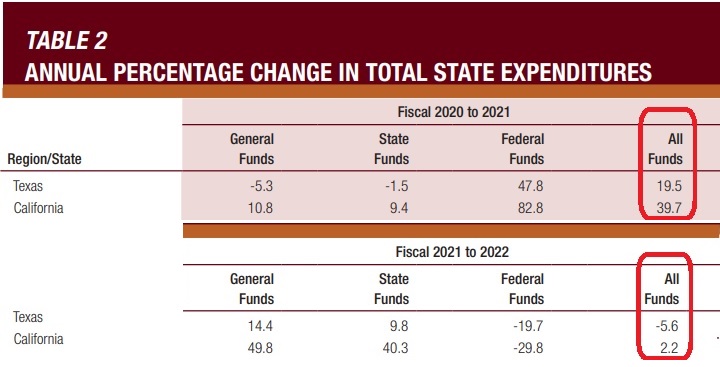
And if you to to Table 2 of that report, you’ll find the most important measure of state fiscal policy, which shows how fast the burden of government spending increased over the past two years.

Lo and behold (but to no one’s surprise), California politicians increased the spending burden much faster than their Texas counterparts.

As you can see, both states were irresponsible the first year, thanks in large part to the all the pandemic-related handouts approved by Trump and Biden.

But California was twice as bad. Politicians in Sacramento used federal handouts to finance a grotesque spending binge (whereas the spending binge in Texas deserves a more mild adjective, such as massive).

Both states were better the second year, with California’s spending burden climbing by 2.2 percent in 2022 and Texas actually delivering a spending cut.

Remember, though, that the spending burden exploded between 2020 and 2021, so the 2022 numbers only look reasonable compared to the bloated trendline.

Now let’s consider whether California’s grotesque spending binge had negative consequences.

The answer is yes, according to a Wall Street Journaleditorial.

Gov. Gavin Newsom last year touted a $100 billion budget surplus as evidence of California’s progressive superiority. He was less triumphant…when announcing a $22.5 billion deficit in the coming year, a contrast to Texas’s record $32.7 billion surplus. …California’s problem, as usual, is that Democrats baked too much spending into their budget baseline. They expanded Medicaid to undocumented immigrants over the age of 50, enacted universal pre-school and school lunches, extended paid family leave by two weeks, and boosted climate spending by $10 billion. …Much of Texas’s surplus this year owes to surging sales-tax revenue from inflation and population growth—i.e., Californians moving to Texas and spending their tax savings. Mr. Newsom claimed Tuesday that California has a more “fair” tax system than the Lone Star State and that Texans pay more in taxes. This is disinformation. According to the Census Bureau, California’s per capita state tax collections ($6,325) were second highest in the country in 2021 after Vermont. Texas’s ($2,214) were second lowest after Alaska. …California’s budget problems will grow as more of its rich and middle class move to lower-tax states like Texas.

Per-capita state tax collections are the most striking numbers in the editorial.  The average Californian is paying $6,325 for state government, nearly three times as much as the $2,214 that is paid by the average Texan.

Does anyone think that Californians are getting nearly three times as much value as their counterparts in the Lone Star State?

Based on how people are voting with their feet, the answer is obvious. But if you prefer more technical measures of state government value, California loses that contest as well.


TRY BORROWING AT A BANK WITH A FINANCIAL CONDITION LIKE THE USA HAS:

The problem in Washington is not lack of revenue but our lack of spending restraint. This video below makes that point. WASHINGTON IS A SPENDING ADDICT!!!

——-

The Honorable John Barrasso of Wyoming
United States Senate
Washington, D.C. 20510

Dear Senator Barrasso,

On September 16, 2021 my post “46 REPUBLICAN SENATORS VOW NOT TO HELP DEMOCRATS RAISE THE DEBT CEILING (HERE WE GO AGAIN!!!!!)” and you were one of the 46 Senators who pledged not to raise the debt ceiling but you folded like a wet leaf just like I predicted:

I have written before about those heroes of mine that have resisted raising the debt ceiling but in the end I have always been disappointed and here we go again!

But first let me give you a taste of something I wrote about 10 years ago on this same issue!

Why don’t the Republicans  just vote no on the next increase to the debt ceiling limit. I have praised over and over and overthe 66 House Republicans that voted no on that before. If they did not raise the debt ceiling then we would have a balanced budget instantly.  I agree that the Tea Party has made a difference and I have personally posted 49 posts on my blog on different Tea Party heroes of mine.

What would happen if the debt ceiling was not increased? Yes President Obama would probably cancel White House tours and he would try to stop mail service or something else to get on our nerves but that is what the Republicans need to do.

I have written and emailed Senator Pryor over, and over again with spending cut suggestions but he has ignored all of these good ideas in favor of keeping the printing presses going as we plunge our future generations further in debt. I am convinced if he does not change his liberal voting record that he will no longer be our senator in 2014.

I have written hundreds of letters and emails to President Obama and I must say that I have been impressed that he has had the White House staff answer so many of my letters. The White House answered concerning Social Security (two times), Green Technologies, welfare, small businesses, Obamacare (twice),  federal overspending, expanding unemployment benefits to 99 weeks,  gun control, national debt, abortion, jumpstarting the economy, and various other  issues.   However, his policies have not changed, and by the way the White House after answering over 50 of my letters before November of 2012 has not answered one since.   President Obama is committed to cutting nothing from the budget that I can tell.

 I have praised over and over and over the 66 House Republicans that voted no on that before. If they did not raise the debt ceiling then we would have a balanced budget instantly.  I agree that the Tea Party has made a difference and I have personally posted 49 posts on my blog on different Tea Party heroes of mine.

A.F. Branco for Oct 21, 2021

46 Republican Senators Vow Not to Help Democrats Raise the Debt Ceiling

All but four Republican senators have signed a pledge that they will not vote to raise the debt ceiling, sending another warning to Democrats that they are on their own on the pressing issue.

Sen. Ron Johnson (R-WI) circulated a letter during the chamber’s vote-a-rama on the $3.5 trillion budget resolution Wednesday, signing up a majority of his fellow Republicans in an effort to link the Democrats’ proposed spending package with the statutory debt limit imposed on the federal government by Congress, which covers spending that has already been approved and must be paid by the U.S. Treasury.

In the letter, which is addressed to “Our Fellow Americans,” the Republican signatories claim that Democrats are responsible for increased federal spending and so must be responsible for raising the debt limit. “We will not vote to increase the debt ceiling, whether that increase comes through a stand-alone bill, a continuing resolution, or any other vehicle,” the letter says. “Democrats, at any time, have the power through reconciliation to unilaterally raise the debt ceiling, and they should not be allowed to pretend otherwise.”

The Republicans who didn’t sign the letter are Sens. Susan Collins of Maine, John Kennedy of Louisiana, Lisa Murkowski of Alaska and Richard Shelby of Alabama.

Why now: A two-year suspension of the debt ceiling expired at the end of July, forcing the U.S. Treasury to begin taking “extraordinary measures” to keep paying its bills as it waits for Congress to either raise or suspend the limit before the country is forced to default. Democrats opted not to include an increase in the debt ceiling in their budget resolution, which would have made it possible to raise the limit without Republican support, though they still have the option of revising the resolution to include such a provision.

What Democrats say: Democrats point out that much of the increased debt in recent years was produced during former President Trump’s administration. “I cannot believe that Republicans would let the country default,” Senate Majority Leader Chuck Schumer (D-NY) said Wednesday. “It has always been bipartisan to deal with the debt ceiling. When Trump was president I believe the Democrats joined with him to raise it three times.”

President Biden told reporters Wednesday that trillions in debt were added “on the Republicans’ watch” but said he was confident that the GOP would act in time. “They are not going to let us default,” he said.

The bottom line: No one expects Congress to allow the U.S. to default, but it looks like we could be in for a high-stakes game of chicken in the coming weeks — and the markets are starting to notice. According to Reuters Wednesday, “Some U.S. Treasury bill yields are beginning to reflect concerns that lawmakers may wait until the last minute to increase or suspend the debt ceiling.”

Will you stand up against the Democrats in the future and make the Government ONLY SPEND WHAT IT BRINGS IN? We are becoming an entitlement society and we must stop this trend!!!!

Everette Hatcher III, 13900 Cottontail Lane, Alexander, AR 72002, everettehatcher@gmail.com, http://www.thedailyhatch.org cell 501-920-5733

PS: In 2010 we had a group of conservatives get elected in the House and many of them stood up to President Obama when he wanted to raise the debt limit and I praised these 66 heroes of mine on my blog in 2011 and Representative Andy Harris of Maryland was one of those. Here is what I wrote about him:


Sixty Six who resisted “Sugar-coated Satan Sandwich” Debt Deal (Part 37)

This post today is a part of a series I am doing on the 66 Republican Tea Party favorites that resisted eating the “Sugar-coated Satan Sandwich” Debt Deal. Actually that name did not originate from a representative who agrees with the Tea Party, but from a liberal.

Rep. Emanuel Clever (D-Mo.) called the newly agreed-upon bipartisan compromise deal to raise the  debt limit “a sugar-coated satan sandwich.”

“This deal is a sugar-coated satan sandwich. If you lift the bun, you will not like what you see,” Clever tweeted on August 1, 2011.

August 1, 2011

Rep. Harris Votes Against the Debt Ceiling “Deal” 

Washington, DC – Today, Rep. Andy Harris voted against the debt ceiling increase. The plan did not require passage of a balanced budget amendment, which Rep. Harris feels is essential to bringing permanent common sense accountability to Washington.

“A balanced budget amendment is the only way to make sure the federal government spends what it takes in and lives within its means,” said Rep. Andy Harris.  “Over the past few weeks I have repeatedly voted for reasonable proposals to raise the debt ceiling that included passage of a balanced budget amendment. But I didn’t come to Washington to continue writing blank checks. Maryland’s families and job creators sent me to Congress to permanently change the way Washington does business.  I appreciate Speaker Boehner’s remarkable, historic efforts to craft a proposal to solve the debt ceiling issue.  But today’s debt ceiling deal just doesn’t go far enough to build an environment for job creation by requiring passage of a balanced budget amendment to bring permanent common sense accountability to Washington.”

Currently, the U.S. Government has a national debt of $14.3 trillion and runs an annual deficit of $1.65 trillion.

Andrew Peter Harris (born January 25, 1957) is an American politician and physician who has been the U.S. Representative for Maryland’s 1st congressional district since 2011. The district includes the entire Eastern Shore, as well as several eastern exurbs of Baltimore. He is currently the only Republicanmember of Maryland’s congressional delegation. Harris previously served in the Maryland Senate.

Andy Harris
Andy Harris 115th Congress (cropped).jpg
Member of the U.S. House of Representatives
from Maryland‘s 1st district
Assumed office
January 3, 2011
Preceded by Frank Kratovil
Member of the Maryland Senate
In office
1999 – January 3, 2011
Preceded by Vernon Boozer (9th)
Norman Stone (7th)
Succeeded by Robert Kittleman (9th)
J.B. Jennings (7th)
Constituency 9th district (1999–2003)
7th district (2003–2011)

Related posts:

Sixty Six who resisted “Sugar-coated Satan Sandwich” Debt Deal (Part 49)

Sixty Six who resisted “Sugar-coated Satan Sandwich” Debt Deal (Part 49) This post today is a part of a series I am doing on the 66 Republican Tea Party favorites that resisted eating the “Sugar-coated Satan Sandwich” Debt Deal. Actually that name did not originate from a representative who agrees with the Tea Party, but […]

Sixty Six who resisted “Sugar-coated Satan Sandwich” Debt Deal (Part 48)

Sixty Six who resisted “Sugar-coated Satan Sandwich” Debt Deal (Part 48) This post today is a part of a series I am doing on the 66 Republican Tea Party favorites that resisted eating the “Sugar-coated Satan Sandwich” Debt Deal. Actually that name did not originate from a representative who agrees with the Tea Party, but […]

Sixty Six who resisted “Sugar-coated Satan Sandwich” Debt Deal (Part 47)

Sixty Six who resisted “Sugar-coated Satan Sandwich” Debt Deal (Part 47) This post today is a part of a series I am doing on the 66 Republican Tea Party favorites that resisted eating the “Sugar-coated Satan Sandwich” Debt Deal. Actually that name did not originate from a representative who agrees with the Tea Party, but […]

Sixty Six who resisted “Sugar-coated Satan Sandwich” Debt Deal (Part 46)

  Sixty Six who resisted “Sugar-coated Satan Sandwich” Debt Deal (Part 46) This post today is a part of a series I am doing on the 66 Republican Tea Party favorites that resisted eating the “Sugar-coated Satan Sandwich” Debt Deal. Actually that name did not originate from a representative who agrees with the Tea Party, […]

Sixty Six who resisted “Sugar-coated Satan Sandwich” Debt Deal (Part 45)

Sixty Six who resisted “Sugar-coated Satan Sandwich” Debt Deal (Part 45) This post today is a part of a series I am doing on the 66 Republican Tea Party favorites that resisted eating the “Sugar-coated Satan Sandwich” Debt Deal. Actually that name did not originate from a representative who agrees with the Tea Party, but […]

Sixty Six who resisted “Sugar-coated Satan Sandwich” Debt Deal (Part 44)

Sixty Six who resisted “Sugar-coated Satan Sandwich” Debt Deal (Part 44) This post today is a part of a series I am doing on the 66 Republican Tea Party favorites that resisted eating the “Sugar-coated Satan Sandwich” Debt Deal. Actually that name did not originate from a representative who agrees with the Tea Party, but […]

Sixty Six who resisted “Sugar-coated Satan Sandwich” Debt Deal (Part 43)

Sixty Six who resisted “Sugar-coated Satan Sandwich” Debt Deal (Part 43) This post today is a part of a series I am doing on the 66 Republican Tea Party favorites that resisted eating the “Sugar-coated Satan Sandwich” Debt Deal. Actually that name did not originate from a representative who agrees with the Tea Party, but […]

Sixty Six who resisted “Sugar-coated Satan Sandwich” Debt Deal (Part 42)

Sixty Six who resisted “Sugar-coated Satan Sandwich” Debt Deal (Part 42) This post today is a part of a series I am doing on the 66 Republican Tea Party favorites that resisted eating the “Sugar-coated Satan Sandwich” Debt Deal. Actually that name did not originate from a representative who agrees with the Tea Party, but […]

Sixty Six who resisted “Sugar-coated Satan Sandwich” Debt Deal (Part 41)

Sixty Six who resisted “Sugar-coated Satan Sandwich” Debt Deal (Part 41) This post today is a part of a series I am doing on the 66 Republican Tea Party favorites that resisted eating the “Sugar-coated Satan Sandwich” Debt Deal. Actually that name did not originate from a representative who agrees with the Tea Party, but […]

Sixty Six who resisted “Sugar-coated Satan Sandwich” Debt Deal (Part 40)

Sixty Six who resisted “Sugar-coated Satan Sandwich” Debt Deal (Part 40) This post today is a part of a series I am doing on the 66 Republican Tea Party favorites that resisted eating the “Sugar-coated Satan Sandwich” Debt Deal. Actually that name did not originate from a representative who agrees with the Tea Party, but […]

Sixty Six who resisted “Sugar-coated Satan Sandwich” Debt Deal (Part 39)

Sixty Six who resisted “Sugar-coated Satan Sandwich” Debt Deal (Part 39) This post today is a part of a series I am doing on the 66 Republican Tea Party favorites that resisted eating the “Sugar-coated Satan Sandwich” Debt Deal. Actually that name did not originate from a representative who agrees with the Tea Party, but […]

Sixty Six who resisted “Sugar-coated Satan Sandwich” Debt Deal (Part 38)

Sixty Six who resisted “Sugar-coated Satan Sandwich” Debt Deal (Part 38) This post today is a part of a series I am doing on the 66 Republican Tea Party favorites that resisted eating the “Sugar-coated Satan Sandwich” Debt Deal. Actually that name did not originate from a representative who agrees with the Tea Party, but […]

Sixty Six who resisted “Sugar-coated Satan Sandwich” Debt Deal (Part 37)

Sixty Six who resisted “Sugar-coated Satan Sandwich” Debt Deal (Part 37) This post today is a part of a series I am doing on the 66 Republican Tea Party favorites that resisted eating the “Sugar-coated Satan Sandwich” Debt Deal. Actually that name did not originate from a representative who agrees with the Tea Party, but […]

Sixty Six who resisted “Sugar-coated Satan Sandwich” Debt Deal (Part 36)

Sixty Six who resisted “Sugar-coated Satan Sandwich” Debt Deal (Part 36) This post today is a part of a series I am doing on the 66 Republican Tea Party favorites that resisted eating the “Sugar-coated Satan Sandwich” Debt Deal. Actually that name did not originate from a representative who agrees with the Tea Party, but […]

Sixty Six who resisted “Sugar-coated Satan Sandwich” Debt Deal (Part 35)

Sixty Six who resisted “Sugar-coated Satan Sandwich” Debt Deal (Part 35) This post today is a part of a series I am doing on the 66 Republican Tea Party favorites that resisted eating the “Sugar-coated Satan Sandwich” Debt Deal. Actually that name did not originate from a representative who agrees with the Tea Party, but […]

Sixty Six who resisted “Sugar-coated Satan Sandwich” Debt Deal (Part 34)

Sixty Six who resisted “Sugar-coated Satan Sandwich” Debt Deal (Part 34) This post today is a part of a series I am doing on the 66 Republican Tea Party favorites that resisted eating the “Sugar-coated Satan Sandwich” Debt Deal. Actually that name did not originate from a representative who agrees with the Tea Party, but […]

Sixty Six who resisted “Sugar-coated Satan Sandwich” Debt Deal (Part 33)

Sixty Six who resisted “Sugar-coated Satan Sandwich” Debt Deal (Part 33) This post today is a part of a series I am doing on the 66 Republican Tea Party favorites that resisted eating the “Sugar-coated Satan Sandwich” Debt Deal. Actually that name did not originate from a representative who agrees with the Tea Party, but […]

Sixty Six who resisted “Sugar-coated Satan Sandwich” Debt Deal (Part 32)

Sixty Six who resisted “Sugar-coated Satan Sandwich” Debt Deal (Part 32) This post today is a part of a series I am doing on the 66 Republican Tea Party favorites that resisted eating the “Sugar-coated Satan Sandwich” Debt Deal. Actually that name did not originate from a representative who agrees with the Tea Party, but […]

Sixty Six who resisted “Sugar-coated Satan Sandwich” Debt Deal (Part 31)

Congressmen Tim Huelskamp on the debt ceiling Sixty Six who resisted “Sugar-coated Satan Sandwich” Debt Deal (Part 31) This post today is a part of a series I am doing on the 66 Republican Tea Party favorites that resisted eating the “Sugar-coated Satan Sandwich” Debt Deal. Actually that name did not originate from a representative […]

Sixty Six who resisted “Sugar-coated Satan Sandwich” Debt Deal (Part 30)

Sixty Six who resisted “Sugar-coated Satan Sandwich” Debt Deal (Part 30) This post today is a part of a series I am doing on the 66 Republican Tea Party favorites that resisted eating the “Sugar-coated Satan Sandwich” Debt Deal. Actually that name did not originate from a representative who agrees with the Tea Party, but […]

The Sixty Six who resisted “Sugar-coated Satan Sandwich” Debt Deal (Part 29)

 Sixty Six who resisted “Sugar-coated Satan Sandwich” Debt Deal (Part 29) This post today is a part of a series I am doing on the 66 Republican Tea Party favorites that resisted eating the “Sugar-coated Satan Sandwich” Debt Deal. Actually that name did not originate from a representative who agrees with the Tea Party, but […]

The Sixty Six who resisted “Sugar-coated Satan Sandwich” Debt Deal (Part 28)

The Sixty Six who resisted “Sugar-coated Satan Sandwich” Debt Deal (Part 28) This post today is a part of a series I am doing on the 66 Republican Tea Party favorites that resisted eating the “Sugar-coated Satan Sandwich” Debt Deal. Actually that name did not originate from a representative who agrees with the Tea Party, […]

The Sixty Six who resisted “Sugar-coated Satan Sandwich” Debt Deal (Part 27)

The Sixty Six who resisted “Sugar-coated Satan Sandwich” Debt Deal (Part 27) This post today is a part of a series I am doing on the 66 Republican Tea Party favorites that resisted eating the “Sugar-coated Satan Sandwich” Debt Deal. Actually that name did not originate from a representative who agrees with the Tea Party, […]

The Sixty Six who resisted “Sugar-coated Satan Sandwich” Debt Deal (Part 26)

The Sixty Six who resisted “Sugar-coated Satan Sandwich” Debt Deal (Part 26) This post today is a part of a series I am doing on the 66 Republican Tea Party favorites that resisted eating the “Sugar-coated Satan Sandwich” Debt Deal. Actually that name did not originate from a representative who agrees with the Tea Party, […]

The Sixty Six who resisted “Sugar-coated Satan Sandwich” Debt Deal (Part 25)

Uploaded by RepJoeWalsh on Jun 14, 2011 Our country’s debt continues to grow — it’s eating away at the American Dream. We need to make real cuts now. We need Cut, Cap, and Balance. The Sixty Six who resisted “Sugar-coated Satan Sandwich” Debt Deal (Part 25) This post today is a part of a series […]

The Sixty Six who resisted “Sugar-coated Satan Sandwich” Debt Deal (Part 23)

The Sixty Six who resisted “Sugar-coated Satan Sandwich” Debt Deal (Part 23) This post today is a part of a series I am doing on the 66 Republican Tea Party favorites that resisted eating the “Sugar-coated Satan Sandwich” Debt Deal. Actually that name did not originate from a representative who agrees with the Tea Party, […]

The Sixty Six who resisted “Sugar-coated Satan Sandwich” Debt Deal (Part 22)

The Sixty Six who resisted “Sugar-coated Satan Sandwich” Debt Deal (Part 22) This post today is a part of a series I am doing on the 66 Republican Tea Party favorites that resisted eating the “Sugar-coated Satan Sandwich” Debt Deal. Actually that name did not originate from a representative who agrees with the Tea Party, […]

The Sixty Six who resisted “Sugar-coated Satan Sandwich” Debt Deal (Part 21)

The Sixty Six who resisted “Sugar-coated Satan Sandwich” Debt Deal (Part 21) This post today is a part of a series I am doing on the 66 Republican Tea Party favorites that resisted eating the “Sugar-coated Satan Sandwich” Debt Deal. Actually that name did not originate from a representative who agrees with the Tea Party, […]

The Sixty Six who resisted “Sugar-coated Satan Sandwich” Debt Deal (Part 20)

The Sixty Six who resisted “Sugar-coated Satan Sandwich” Debt Deal (Part 20) This post today is a part of a series I am doing on the 66 Republican Tea Party favorites that resisted eating the “Sugar-coated Satan Sandwich” Debt Deal. Actually that name did not originate from a representative who agrees with the Tea Party, […]

The Sixty Six who resisted “Sugar-coated Satan Sandwich” Debt Deal (Part 19)

The Sixty Six who resisted “Sugar-coated Satan Sandwich” Debt Deal (Part 19) This post today is a part of a series I am doing on the 66 Republican Tea Party favorites that resisted eating the “Sugar-coated Satan Sandwich” Debt Deal. Actually that name did not originate from a representative who agrees with the Tea Party, […]

The Sixty Six who resisted “Sugar-coated Satan Sandwich” Debt Deal (Part 18)

The Sixty Six who resisted “Sugar-coated Satan Sandwich” Debt Deal (Part 18) This post today is a part of a series I am doing on the 66 Republican Tea Party favorites that resisted eating the “Sugar-coated Satan Sandwich” Debt Deal. Actually that name did not originate from a representative who agrees with the Tea Party, […]

The Sixty Six who resisted “Sugar-coated Satan Sandwich” Debt Deal (Part 17)

The Sixty Six who resisted “Sugar-coated Satan Sandwich” Debt Deal (Part 17) This post today is a part of a series I am doing on the 66 Republican Tea Party favorites that resisted eating the “Sugar-coated Satan Sandwich” Debt Deal. Actually that name did not originate from a representative who agrees with the Tea Party, […]

The Sixty Six who resisted “Sugar-coated Satan Sandwich” Debt Deal (Part 16)

The Sixty Six who resisted “Sugar-coated Satan Sandwich” Debt Deal (Part 16) This post today is a part of a series I am doing on the 66 Republican Tea Party favorites that resisted eating the “Sugar-coated Satan Sandwich” Debt Deal. Actually that name did not originate from a representative who agrees with the Tea Party, […]

Dan Mitchell: There are some people in that country who think a race car driver who left the Netherlands and now lives in Monaco has an obligation to surrender half his income to the Dutch government!

_________

Monaco, Netherlands, and Tax Servitude

Libertarians often make the claim that taxation is a form of robbery, and some of them (especially the anarcho-capitalists) even assert that it is a form of slavery.

Since I’m an economist, I stick to less flamboyant arguments about the adverse impact of high marginal tax rates and double taxation.

But, based on a controversy in the Netherlands, maybe the more radical libertarians have a point.

There are some people in that country who think a race car driver who left the Netherlands and now lives in Monaco has an obligation to surrender half his income to the Dutch government.

Here are some excerpts from a report published by a sports website.

Max Verstappen, ever since he turned 18 has been living in Monaco which is known to be a tax haven. Essentially, Max Verstappen has not paid any tax whatsoever to the Dutch government for his earnings which are estimated to be €200 million… a LinkedIn post by Rutger Bregman…accused Max Verstappen of stealing from his own country.In the post, he commented “People like Verstappen don’t work for their country. They only work for themselves.” …There is a solution to the accusation raised by Rutger. …Wouter Leenders and Vinzenz Zieseme…pointed out that the Dutch government do what the French government does to its uber-rich. The French Government…taxes French individuals living in Monaco since 1963. The problem with this arrangement is that there are 15 other Tax Havens in Europe that would happily favour the high-paid athletes.

Notice that Mr. Bregman is asserting that Verstappen has an obligation to work for somebody other than himself. Is that not – at least in part – the definition of slavery?

There’s actually a serious tax issue in this controversy. Bregman, Leenders, and Zieseme presumably think that the Netherlands should have a “worldwide” tax system, which means the Dutch government would tax people like Verstappen even if they permanently reside someplace else.

There is a major country that uses that approach, and I’m embarrassed to admit it’s the United States.

Fortunately, I don’t think Europe will copy that mistake.

P.S. Monaco is a great refuge for successful people. But, as noted the excerpt above, not if you’re French (and you can read the history of that by clicking here). Successful French people have to move to places such as Belgium (no capital gains tax) or Switzerland (low overall taxes).

Lessons from the Texas Budget

I shared some data last month from the National Association of State Budget Officers to show that Texas lawmakers have been more fiscally responsible than California lawmakers over the past couple of years.

California politicians were more profligate in 2021 when politicians in Washington were sending lots of money to states because of the pandemic.

And California politicians also increased spending faster in 2022 when conditions (sort of) returned to normal.

These results are not a surprise given California’s reputation for profligacy.

What may be a surprise, however, is that (relative) frugality in Texas has only existed for a handful of years. Here are some excerpts from a report written for the Texas Public Policy Foundation by Vance Ginn and Daniel Sánchez-Piñol.

Over the last two decades, Texas’ total state biennial budget growth has had two different phases. The first phase had budget growth above the rate of population growth plus inflation for five of the six budgets from 2004–05 to 2014–15. The second phase…had budget growth below this rate… Figure 1 shows the average biennial growth rates for the six state budgets passed before 2015 and for the four since then.The average biennial budget growth rate in the former period was 12% compared with the rate of population growth plus inflation of 7.4%. In the latter period, the average biennial growth rate of the budget was cut by more than half to 5.2%, which was well below the estimated rate of population growth plus inflation of 9.4%. This improved budget picture must be maintained to correct for the excessive budget growth in the earlier period. …there could be a $27 billion GR surplus at the end of the current 2022–23 biennium. …the priority should be to effectively limit or, even better, freeze the state budget. Texas should use most, if not all, of the resulting surplus to reduce…property tax collections…these taxes could be cut substantially by restraining spending and using the surplus to reduce school district M&O property taxes to ultimately eliminate them over time.

The article has this chart, which is a good illustration of the shift to fiscal restraint in Texas.

For all intents and purposes, Texas in 2016 started abiding by fiscal policy’s Golden Rule.

And this means the burden of government is slowly but surely shrinking compared to the private sector.

That approach is paying big dividends. Spending restraint means there is now a big budget surplus, which is enabling a discussion of how to reduce property taxes (Texas has no income tax).

P.S. I shared data back in 2020 looking at the fiscal performance of Texas and Florida compared to New York and California.

Texas vs. California, Part VII

To begin the seventh edition of our series comparing policy in Texas and California (previous entries in March 2010, February 2013, April 2013, October 2018, June 2019, and December 2020), here’s a video from Prager University.

There will be a lot of information in today’s column, so if you’re pressed for time, here are three sentences that tell you what you need to know.

California has all sorts of natural advantages over Texas, especially endless sunshine and beautiful topography.

Texas has better government policy than California, most notably in areas such as taxation and regulation.

Since people are moving from the Golden State to the Lone Star State, public policy seems to matter more than natural beauty.

Now let’s look at a bunch of evidence to support those three sentences.

We’ll start with an article by Joel Kotkin of Chapman University.

If one were to explore the most blessed places on earth, California, my home for a half century, would surely be up there. …its salubrious climate, spectacular scenery, vast natural resources… President Biden recently suggested that he wants to “make America California again”. Yet…he should consider whether the California model may be better seen as a cautionary tale than a roadmap to a better future… California now suffers the highest cost-adjusted poverty rate in the country, and the widest gap between middle and upper-middle income earners. …the state has slowly morphed into a low wage economy. Over the past decade, 80% of the state’s jobs have paid under the median wage — half of which are paid less than $40,000…minorities do better today outside of California, enjoying far higher adjusted incomes and rates of homeownership in places like Atlanta and Dallas than in San Francisco and Los Angeles. Almost one-third of Hispanics, the state’s largest ethnic group, subsist below the poverty line, compared with 21% outside the state. …progressive…policies have not brought about greater racial harmony, enhanced upward mobility and widely based economic growth.

Next we have some business news from the San Francisco Chronicle.

Business leaders fear tech giant Oracle’s recent announcement that it is leaving the Bay Area for Austin, Texas, will lead to more exits unless some fundamental political and economic changes are made to keep the region attractive and competitive. “This is something that we have been warning people about for several years. California is not business friendly, we should be honest about it,” said Kenneth Rosen, chairman of the UC Berkeley Fisher Center for Real Estate and Urban Economics.Bay Area Council President Jim Wunderman said… “From consulting companies to tax lawyers to bankers and commercial real estate firms, every person I talk with who provides services to big Bay Area corporations are telling me that their clients are strategizing about leaving…” Charles Schwab, McKesson and Hewlett Packard Enterprise have all exited the high-cost, high-tax, high-regulation Bay Area for a less-expensive, less-regulated and business-friendlier political climate. All of them rode off to Texas. …the pace of the departures appears to be increasing. …A recent online survey of 2,325 California residents, taken between Nov. 4 and Nov. 23 by the Public Policy Institute of California, found 26% of residents have seriously considered moving out of state and that 58% say that the American Dream is harder to achieve in California than elsewhere.

Are California politicians trying to make things better, in hopes of stopping out-migration to places such as Texas?

Not according to this column by Hank Adler in the Wall Street Journal.

California’s Legislature is considering a wealth tax on residents, part-year residents, and any person who spends more than 60 days inside the state’s borders in a single year. Even those who move out of state would continue to be subject to the tax for a decade… Assembly Bill 2088 proposes calculating the wealth tax based on current world-wide net worth each Dec. 31. For part-year and temporary residents, the tax would be proportionate based on their number of days in California. The annual tax would be on current net worth and therefore would include wealth earned, inherited or obtained through gifts or estates long before and long after leaving the state. …The authors of the bill estimate the wealth tax will provide Sacramento $7.5 billion in additional revenue every year. Another proposal—to increase the top state income-tax rate to 16.8%—would annually raise another $6.8 billion. Today, California’s wealthiest 1% pay approximately 46% of total state income taxes. …the Legislature looks to the wealthiest Californians to fill funding gaps without considering the constitutionality of the proposals and the ability of people and companies to pick up and leave the state, which news reports suggest they are doing in large numbers. …As of this moment, there are no police roadblocks on the freeways trying to keep moving trucks from leaving California. If A.B. 2088 becomes law, the state may need to consider placing some.

The late (and great) Walter Williams actually joked back in 2012that California might set up East German-style border checkpoints. Let’s hope satire doesn’t become reality.

But what isn’t satire is that people are fleeing the state (along with other poorly governed jurisdictions).

Simply state, the blue state model of high taxes and big government is not working (just as it isn’t working in countries with high taxes and big government).

Interestingly, even the New York Times recognizes that there is a problem in the state that used to be a role model for folks on the left.

Opining for that outlet at the start of the month, Brett Stephens raised concerns about the Golden State.

…today’s Democratic leaders might look to the very Democratic state of California as a model for America’s future. You remember California: People used to want to move there, start businesses, raise families, live their American dream. These days, not so much. Between July 2019 and July 2020, more people — 135,400 to be precise — left the state than moved in… No. 1 destination: Texas, followed by Arizona, Nevada and Washington. Three of those states have no state income tax.

California, by contrast, has very high taxes. Not just an onerous income tax, but high taxes across the board.

Californians also pay some of the nation’s highest sales tax rates (8.66 percent) and corporate tax rates (8.84 percent), as well as the highest taxes on gasoline (63 cents on a gallon as of January, as compared with 20 cents in Texas).

Sadly, these high taxes don’t translate into good services from government.

The state ranks 21st in the country in terms of spending per public school pupil, but 27th in its K-12 educational outcomes. It ties Oregon for third place among states in terms of its per capita homeless rate. Infrastructure? As of 2019, the state had an estimated $70 billion in deferred maintenance backlog. Debt? The state’s unfunded pension liabilities in 2019 ran north of $1.1 trillion, …or $81,300 per household.

Makes you wonder whether the rest of the nation should copy that model?

Democrats hold both U.S. Senate seats, 42 of its 53 seats in the House, have lopsided majorities in the State Assembly and Senate, run nearly every big city and have controlled the governor’s mansion for a decade. If ever there was a perfect laboratory for liberal governance, this is it. So how do you explain these results? …If California is a vision of the sort of future the Biden administration wants for Americans, expect Americans to demur.

Some might be tempted to dismiss Stephens’ column because he is considered the token conservative at the New York Times.

But Ezra Klein also acknowledges that California has a problem, and nobody will accuse him of being on the right side of the spectrum.

Here’s some of what he wrote in his column earlier this month for the New York Times.

I love California. I was born and raised in Orange County. I was educated in the state’s public schools and graduated from the University of California system… But for that very reason, our failures of governance worry me. California has the highest poverty rate in the nation,when you factor in housing costs, and vies for the top spot in income inequality, too. …but there’s a reason 130,000 more people leave than enter each year. California is dominated by Democrats, but many of the people Democrats claim to care about most can’t afford to live there. …California, as the biggest state in the nation, and one where Democrats hold total control of the government, carries a special burden. If progressivism cannot work here, why should the country believe it can work anywhere else?

Kudos to Klein for admitting problems on his side (just like I praise the few GOPers who criticized Trump’s big-government policies).

But his column definitely had some quirky parts, such as when he wrote that, “There are bright spots in recent years…a deeply progressive plan to tax the wealthy.”

That’s actually a big reason for the state’s decline, not a “bright spot.”

I’m not the only one to recognize the limitations of his column.

Kevin Williamson wrote an entire rebuttal for National Review.

Who but Ezra Klein could survey the wreck left-wing Democrats have made of California and conclude that the state’s problem is its excessive conservatism? …Klein the rhetorician anticipates objections on this front and writes that he is not speaking of “the political conservatism that privatizes Medicare, but the temperamental conservatism that” — see if this formulation sounds at all familiar — “stands athwart change and yells ‘Stop!’”…California progressives have progressive policies and progressive power, and they like it that way. That is the substance of their conservatism. …Klein and others of his ilk like to present themselves as dispassionate pragmatists, enlightened empiricists who only want to do “what works.” …Klein mocks San Francisco for renaming schools (Begone, Abraham Lincoln!) while it has no plan to reopen them, but he cannot quite see that these are two aspects of a single phenomenon. …Klein…must eventually understand that the troubles he identifies in California are baked into the progressive cake. …That has real-world consequences, currently on display in California to such a spectacular degree that even Ezra Klein is able dimly to perceive them. Maybe he’ll learn something.

I especially appreciate this passage since it excoriates rich leftists for putting teacher unions ahead of disadvantaged children.

Intentions do not matter very much, and mere stated intentions matter even less. Klein is blind to that, which is why he is able to write, as though there were something unusual on display: “For all the city’s vaunted progressivism, [San Francisco] has some of the highest private school enrollment numbers in the country.” Rich progressives have always been in favor of school choice and private schools — for themselves. They only oppose choice for poor people, whose interests must for political reasons be subordinated to those of the public-sector unions from which Democrats in cities such as San Francisco derive their power.

Let’s conclude with some levity.

Here’s a meme that contemplates whether California emigrants bring bad voting habits with them.

Though that’s apparently more of a problem in Colorado rather than in Texas.

And here’s some clever humor from Genesius Times.

P.S. My favorite California-themed humor (not counting the state’s elected officials) can be found here, hereherehere, and here.

High-tax states are languishing but  zero-income-tax states such as Texas are growing rapidly!!!!

Much of my writing is focused on the real-world impact of government policy, and this is why I repeatedly look at the relative economic performance of big government jurisdictions and small government jurisdictions.

But I don’t just highlight differences between nations. Yes, it’s educational to look at North Korea vs. South Korea or Chile vs. Venezuela vs. Argentina, but I also think you can learn a lot by looking at what’s happening with different states in America.

So we’ve looked at high-tax states that are languishing, such as California and Illinois, and compared them to zero-income-tax states such as Texas.

With this in mind, you can understand that I was intrigued to see that even the establishment media is noticing that Texas is out-pacing the rest of the nation.

Here are some excerpts from a report by CNN Money on rapid population growth in Texas.

More Americans moved to Texas in recent years than any other state: A net gain of more than 387,000 in the latest Census for 2013. …Five Texas cities — Austin, Houston, San Antonio, Dallas and Fort Worth — were among the top 20 fastest growing large metro areas. Some smaller Texas metro areas grew even faster. In oil-rich Odessa, the population grew 3.3% and nearby Midland recorded a 3% gain.

But why is the population growing?

Well, CNN Money points out that low housing prices and jobs are big reasons.

And on the issue of housing, the article does acknowledge the role of “easy regulations” that enable new home construction.

But on the topic of jobs, the piece contains some good data on employment growth, but no mention of policy.

Jobs is the No. 1 reason for population moves, with affordable housing a close second. …Jobs are plentiful in Austin, where the unemployment rate is just 4.6%. Moody’s Analytics projects job growth to average 4% a year through 2015. Just as important, many jobs there are well paid: The median income of more than $75,000 is nearly 20% higher than the national median.

That’s it. Read the entire article if you don’t believe me, but the reporter was able to write a complete article about the booming economy in Texas without mentioning – not even once – that there’s no state income tax.

But that wasn’t the only omission.

The article doesn’t mention that Texas is the 4th-best state in the Tax Foundation’s ranking of state and local tax burdens.

The article doesn’t mention that Texas was the least oppressive state in the Texas Public Policy Foundation’s Soft Tyranny Index.

The article doesn’t mention that Texas was ranked #20 in a study of the overall fiscal condition of the 50 states.

The article doesn’t mention that Texas is in 4th place in a combined ranking of economic freedom in U.S. state and Canadian provinces.

The article doesn’t mention that Texas was ranked #11 in the Tax Foundation’s State Business Tax Climate Index.

The article doesn’t mention that Texas is in 14th place in the Mercatus ranking of overall freedom for the 50 states (and in 10th place for fiscal freedom).

By the way, I’m not trying to argue that Texas is the best state.

Indeed, it only got the top ranking in one of the measures cited above.

My point, instead, is simply to note that it takes willful blindness to write about the strong population growth and job performance of Texas without making at least a passing reference to the fact that it is a low-tax, pro-market state.

At least compared to other states. And especially compared to the high-tax states that are stagnating.

Such as California, as illustrated by this data and this data, as well as this Lisa Benson cartoon.

Such as Illinois, as illustrated by this data and this Eric Allie cartoon.

And I can’t resist adding this Steve Breen cartoon, if for no other reason that it reminds me of another one of his cartoons that I shared last year.

Speaking of humor, this Chuck Asay cartoon speculates on how future archaeologists will view California. And this joke about Texas, California, and a coyote is among my most-viewed blog posts.

All jokes aside, I want to reiterate what I wrote above. Texas is far from perfect. There’s too much government in the Lone Star state. It’s only a success story when compared to California.

P.S. Paul Krugman has tried to defend California, which has made him an easy target. I debunked him earlier this year, and I also linked to a superb Kevin Williamson takedown of Krugman at the bottom of this post.

P.P.S. Once again, I repeat the two-part challenge I’ve issued to the left. I’ll be happy if any statists can successfully respond to just one of the two questions I posed.

Related posts:

California is the Greece of the USA, but Texas is not perfect either!!!

California is the Greece of the USA, but Texas is not perfect either!!! Just Because California Is Terrible, that Doesn’t Mean Texas Is Perfect January 21, 2013 by Dan Mitchell Texas is in much better shape than California. Taxes are lower, in part because Texas has no state income tax. No wonder the Lone Star State […]

Dan Mitchell on Texas v. California (includes editorial cartoon)

We should lower federal taxes because jobs are going to states like Texas that have low taxes. (We should lower state taxes too!!) What Can We Learn by Comparing the Employment Situation in Texas vs. California? April 3, 2013 by Dan Mitchell One of the great things about federalism, above and beyond the fact that it […]

Ark Times blogger claims California is better than Texas but facts don’t bear that out (3 great political cartoons)

I got on the Arkansas Times Blog and noticed that a person on there was bragging about the high minimum wage law in San Francisco and how everything was going so well there. On 2-15-13 on the Arkansas Times Blog I posted: Couldn’t be better (the person using the username “Couldn’t be better)  is bragging […]

California burdensome government causing some of business community to leave for Texas

Does Government Have a Revenue or Spending Problem? People say the government has a debt problem. Debt is caused by deficits, which is the difference between what the government collects in tax revenue and the amount of government spending. Every time the government runs a deficit, the government debt increases. So what’s to blame: too […]

Arkansas Times blogger picks California business environment over Texas, proves liberals don’t live in real world(Part 2)

       Former California Governor Arnold Schwarzenegger with his family   I posted a portion of an article by John Fund of the Wall Street Journal that pointed out that many businesses are leaving California because of all of their government red tape and moving to Texas. My username is SalineRepublican and this is […]

John Fund’s talk in Little Rock 4-27-11(Part 4):Responding to liberals who criticize states like Texas that don’t have the red tape that California has

John Fund at Chamber Day, Part 1 Last week I got to attend the first ever “Conservative Lunch Series” presented by  KARN and Americans for Prosperity Foundation at the Little Rock Hilton on University Avenue. This monthly luncheon will be held the fourth Wednesday of every month. The speaker for today’s luncheon was John Fund. John […]

California and France have raised taxes so much that it has hurt economic growth!!!

___________ California and France have raised taxes so much that it has hurt economic growth!!! Mirror, Mirror, on the Wall, which Nation and State Punish Success Most of All? September 25, 2014 by Dan Mitchell I’ve shared some interested rankings on tax policy, including a map from the Tax Foundation showing which states have the earliest […]

Jerry Brown raised taxes in California and a rise in the minimum wage, but it won’t work like Krugman thinks!!!

___________   Jerry Brown raised taxes in California and a rise in the minimum wage, but it won’t work like Krugman thinks!!!! This cartoon below shows what will eventually happen to California and any other state that keeps raising taxes higher and higher.   Krugman’s “Gotcha” Moment Leaves Something to Be Desired July 25, 2014 by […]

Open letter to President Obama (Part 573) Are the states of Illinois and California going to join Detroit in Bankruptcy one day?

Open letter to President Obama (Part 573) (Emailed to White House on 7-29-13.) President Obama c/o The White House 1600 Pennsylvania Avenue NW Washington, DC 20500 Dear Mr. President, I know that you receive 20,000 letters a day and that you actually read 10 of them every day. I really do respect you for trying to get […]

Open letter to President Obama (Part 561) We should lower federal taxes because jobs are going to states like Texas that have low taxes

Open letter to President Obama (Part 561) (Emailed to White House on 6-25-13.) President Obama c/o The White House 1600 Pennsylvania Avenue NW Washington, DC 20500 Dear Mr. President, I know that you receive 20,000 letters a day and that you actually read 10 of them every day. I really do respect you for trying to get […]

“My Little Corner of the World” (sometimes recorded as “In My Little Corner of the World”) is a 1960 love song with music written by Lee Pockriss and lyrics by Bob Hilliard was first recorded by Anita Bryant!

——-

—-

My Little Corner of the World

Article Talk

“My Little Corner of the World” (sometimes recorded as “In My Little Corner of the World”) is a 1960 love song with music written by Lee Pockrissand lyrics by Bob Hilliard.

“My Little Corner of the World”
Single by Anita Bryant
from the album In My Little Corner of the World 
B-side“Anyone Would Love You”
ReleasedJune 1960
GenrePop
Length2:40
LabelCarlton Records 530
Songwriter(s)Bob HilliardLee Pockriss
Producer(s)Lew Douglas
Anita Bryant singles chronology
Paper Roses” 
(1960)”My Little Corner of the World” 
(1960)”One of the Lucky Ones” 
(1960)

Anita Bryant versionEdit

It was first recorded by singer Anita Bryant in 1960, as “In My Little Corner of the World”, and released on the album of the same name. Bryant’s version reached number 10 on the Billboard Hot 100 in 1960.[1]

Marie Osmond versionEdit

It was also recorded by singer Marie Osmond in 1974, again as “In My Little Corner of the World”, as the song of her album that also bears the same title. This version was released as a single, and reached the Country Top 40 chart.

Other versionsEdit

The song has since been recorded by various artists, including:

References

Related posts:

FRANCIS SCHAEFFER ANALYZES ART AND CULTURE Part 63 THE BEATLES (Part O , BECAUSE THE BEATLES LOVED HUMOR IT IS FITTING THAT 6 COMEDIANS MADE IT ON THE COVER OF “SGT. PEPPER’S”!) (Feature on artist H.C. Westermann )

June 10, 2015 – 2:33 pm

__________________ A Funny Press Interview of The Beatles in The US (1964) Funny Pictures of The Beatles Published on Oct 23, 2012 funny moments i took from the beatles movie; A Hard Days Night ___________________ Scene from Help! The Beatles Funny Clips and Outtakes (Part 1) The Beatles * Wildcat* (funny) Uploaded on Mar 20, […]

By Everette Hatcher III | Posted in Francis Schaeffer |Edit|Comments (0)

FRANCIS SCHAEFFER ANALYZES ART AND CULTURE Part 62 THE BEATLES (Part N The last 4 people alive from cover of Stg. Pepper’s and the reason Bob Dylan was put on the cover!) (Feature on artist Larry Bell)

June 4, 2015 – 5:31 am

_____________________ Great article on Dylan and Sergeant Pepper’s Lonely Hearts Club Band Cover: A famous album by the fab four – The Beatles – is “Sergeant peppers lonely hearts club band“. The album itself is one of the must influential albums of all time. New recording techniques and experiments with different styles of music made this […]

By Everette Hatcher III | Posted in Francis Schaeffer | Tagged Bob DylanBobby BreenDionLarry Bell | Edit|Comments (0)

FRANCIS SCHAEFFER ANALYZES ART AND CULTURE Part 61 THE BEATLES (Part M, Why was Karl Marx on the cover of Stg. Pepper’s?) (Feature on artist George Petty)

May 28, 2015 – 4:56 am

__________________________ Beatles 1966 Last interview 69 THE BEATLES TWO OF US As a university student, Karl Marx (1818-1883) joined a movement known as the Young Hegelians, who strongly criticized the political and cultural establishments of the day. He became a journalist, and the radical nature of his writings would eventually get him expelled by the […]

By Everette Hatcher III | Posted in Francis Schaeffer |Edit|Comments (0)

FRANCIS SCHAEFFER ANALYZES ART AND CULTURE Part 60 THE BEATLES (Part L, Why was Aleister Crowley on the cover of Stg. Pepper’s?) (Feature on artist Jann Haworth )

May 21, 2015 – 3:33 am

____________ Aleister Crowley on cover of Stg. Pepper’s: _______________ I have dedicated several posts to this series on the Beatles and I don’t know when this series will end because Francis Schaeffer spent a lot of time listening to the Beatles and talking and writing about them and their impact on the culture of the 1960’s. […]

—-

Led Zeppelin – Black Dog (Live at Madison Square Garden 1973)

Led Zeppelin – Black Dog (Live at Madison Square Garden 1973)

—-

“I wrote it on a bit of paper on the train”: How Led Zeppelin turned a repetitive riff into one of their most killer tracks

Niall Doherty

Sun, June 25, 2023 at 4:12 AM CDT·2 min read

 Rock band "Led Zeppelin" poses for a portrait in 1970. (L-R) John Paul Jones, Jimmy Page, John Bonham, Robert Plant
Rock band “Led Zeppelin” poses for a portrait in 1970. (L-R) John Paul Jones, Jimmy Page, John Bonham, Robert Plant

A spectral presence loomed over the making of Led Zeppelin’s IV, with Jimmy Page convinced that ghosts haunted the house of Headley Grange where the band did much of the recording for their classic album. But it was a very real-world guest who influenced the title of Black DogIV’s exhilarating opener named for an elderly Labrador that kept wandering in and out of the grounds.

The track originated from a searing blues riff by John Paul Jones, the bassist influenced by Tom Cat, a song on the Muddy Waters album Electric Mudthat similarly revolves around a lithe, repetitive lick.

Jones had scrawled the idea down on a train home from a rehearsal at Page’s boathouse in Berkshire. “My dad had taught me this very easy notation system using note values and numbers,” Jones told Mojo in 2007, “so I wrote it on a bit of paper on the train.”

For Plant, Black Dog summed up one way that Led Zep could work speedily and efficiently. “Sometimes John Paul would contribute the leading part of a song and then it would be a pretty quick arrangement of bits and pieces so that the song fitted together rather quickly,” Plant said in Joe Smith’s 1988 book Off The Record.

Black Dog, though, might have been the exception – it took a few gos for the band to lock into its irregular groove. “It was originally all in 3/16 time,” Jones recalled in Classic Rock, “but no one could keep up with that.” Bonham, in particular, struggled the song’s shifting rhythms. “I told Bonzo he had to keep playing four-to-the-bar all the way through Black Dog,” Jones said. “If you go through enough 5/8s it arrives back on the beat.”

Whilst that take on the song suggests you might require a masters in maths and musical notation to revel in its magnificence, Black Dog’s thrills are much more visceral. It remains an explosive, daring opener to a classic record.

Related posts:

FRANCIS SCHAEFFER ANALYZES ART AND CULTURE Part 63 THE BEATLES (Part O , BECAUSE THE BEATLES LOVED HUMOR IT IS FITTING THAT 6 COMEDIANS MADE IT ON THE COVER OF “SGT. PEPPER’S”!) (Feature on artist H.C. Westermann )

June 10, 2015 – 2:33 pm

__________________ A Funny Press Interview of The Beatles in The US (1964) Funny Pictures of The Beatles Published on Oct 23, 2012 funny moments i took from the beatles movie; A Hard Days Night ___________________ Scene from Help! The Beatles Funny Clips and Outtakes (Part 1) The Beatles * Wildcat* (funny) Uploaded on Mar 20, […]

By Everette Hatcher III | Posted in Francis Schaeffer |Edit|Comments (0)

FRANCIS SCHAEFFER ANALYZES ART AND CULTURE Part 62 THE BEATLES (Part N The last 4 people alive from cover of Stg. Pepper’s and the reason Bob Dylan was put on the cover!) (Feature on artist Larry Bell)

June 4, 2015 – 5:31 am

_____________________ Great article on Dylan and Sergeant Pepper’s Lonely Hearts Club Band Cover: A famous album by the fab four – The Beatles – is “Sergeant peppers lonely hearts club band“. The album itself is one of the must influential albums of all time. New recording techniques and experiments with different styles of music made this […]

By Everette Hatcher III | Posted in Francis Schaeffer | Tagged Bob DylanBobby BreenDionLarry Bell | Edit|Comments (0)

FRANCIS SCHAEFFER ANALYZES ART AND CULTURE Part 61 THE BEATLES (Part M, Why was Karl Marx on the cover of Stg. Pepper’s?) (Feature on artist George Petty)

May 28, 2015 – 4:56 am

__________________________ Beatles 1966 Last interview 69 THE BEATLES TWO OF US As a university student, Karl Marx (1818-1883) joined a movement known as the Young Hegelians, who strongly criticized the political and cultural establishments of the day. He became a journalist, and the radical nature of his writings would eventually get him expelled by the […]

By Everette Hatcher III | Posted in Francis Schaeffer |Edit|Comments (0)

FRANCIS SCHAEFFER ANALYZES ART AND CULTURE Part 60 THE BEATLES (Part L, Why was Aleister Crowley on the cover of Stg. Pepper’s?) (Feature on artist Jann Haworth )

May 21, 2015 – 3:33 am

____________ Aleister Crowley on cover of Stg. Pepper’s: _______________ I have dedicated several posts to this series on the Beatles and I don’t know when this series will end because Francis Schaeffer spent a lot of time listening to the Beatles and talking and writing about them and their impact on the culture of the 1960’s. […]

—-

The Supreme Court has finally banned racial preferences in college admissions, burying the racist “separate but equal” doctrine in education once and for all

Trump: Let me be clear, I condemn the KKK, white supremacists and the President Trump

Gutfeld on Trump getting rid of critical race theory

Ben Carson: I’ve never seen evidence of Trump being racist

BREAKING: Supreme Court Bans Racial Preferences in College Admissions

Jonathan Butcher  @JM_Butcher / June 29, 2023

Students protest outside Supreme Court for affirmative action

The Supreme Court has finally banned racial preferences in college admissions, burying the racist “separate but equal” doctrine in education once and for all. Pictured: Supporters pose for a photo outside the Supreme Court during a rally in support of affirmative action in admissions policies at Harvard University and the University of North Carolina. Oct. 31, 2022. (Photo: Eric Lee, The Washington Post/Getty Images)

COMMENTARY BY

Jonathan Butcher@JM_Butcher

Jonathan Butcher is the Will Skillman fellow in education at The Heritage Foundation and the author of “Splintered: Critical Race Theory and the Progressive War on Truth” (Post Hill Press/Bombardier Books, 2022).

On May 17, 1954, The New York Times reported that the U.S. Supreme Court “set aside” the “separate but equal” doctrine in education in its Brown v. Board of Education ruling. Racial segregation would no longer be permitted in K-12 public schools. On June 29, 2023, the court finally buried the doctrine once and for all, along with the prejudice that has haunted college admissions for more than 50 years.

The justices banned the use of racial preferences in college and university admissions programs. Students for Fair Admissions, an advocacy group representing Asian-American students, brought two lawsuits—one against Harvard University and another against the University of North Carolina—charging that the schools used racial bias in their admissions practices and discriminated against these students.

The court agreed and ruled that the schools violated the 14th Amendment of the U.S. Constitution. Americans have long supported the ideas in the court’s majority opinion. Surveys find broad opposition to the use of racial preferences. 

Results from a Pew Research survey released earlier this month found that 82% of respondents do not think that race or ethnicity should be a factor in college admissions. Seventy-one percent of black respondents and 81% of Hispanic respondents agree.

State voters have also rejected racial preferences at the ballot box. Californians have twice rejected preferences, first with the passage of a measure known as Proposition 209 in 1996 and then again with the defeat of Proposition 16 (which would have overturned Proposition 209) in 2020. In 2006, Michigan voters also voted to ban racial preferences.

While citizens and taxpayers have been waiting for this high court ruling, many college administrators have been devising ways to continue using race in admissions.

For example, research from law professor and well-known critic of racial preferences Richard Sander and others has documented how administrators in the University of California system defied Proposition 209 after its passage. More than a decade ago, the American Bar Association attempted to change its policies to require law schools to defy state and federal legislation if lawmakers chose to ban racial preferences (the ABA toned down the policy after some resistance, but only slightly).

Meanwhile, college administrators have helped so-called “diversity, equity, and inclusion” departments to spread across campuses nationwide. These offices serve as political outposts that rally support for racial preferences in university hiring, campus speakers, and other school activities. 

The court’s ruling allows Americans to ask what, exactly, DEI intends, if not to continue the racial discrimination the justices just ruled illegal. Lawmakers in Florida and Texas have already adopted policies that defund these offices, recognizing the prejudice that has been in plain sight for years.

Yet if activists really want to help minority students, they should be interested in what racial preferences hath wrought. For example, the “mismatch” problem that the preferences cause is a notable one that critical race theorists and other radical activists do not care to discuss.

By putting a finger on the scales for or against students who are racial or ethnic minorities, racial preferences have caused black and Hispanic students, in particular, to be admitted to competitive institutions even if those students were unprepared for their academic rigor. A mismatch is created between students and schools, and these students earn lower grades, are more likely to drop out, and are less likely to be able to use their college experience to succeed in the workplace.

High-performing black and brown students succeeded at competitive colleges and graduate schools before and after California’s Proposition 209 and other bans on preferences—and will still do so after the Supreme Court’s ruling. But students across the nation who would have been mismatched at postsecondary and graduate institutions due to preferences are now more likely to enroll and succeed at colleges aligned with their skills.

Woke actors can no longer claim that discrimination has a place in college admissions. School officials must maintain high standards and make school admissions policies transparent so families and students know how they are being evaluated. Lawmakers should use the court’s opinion as justification to replace DEI programs with merit-based, colorblind departments and activities that work with students according to their academic abilities and needs.

This is the American Dream—one in which public officials cannot judge you based on the color of your skin. The Supreme Court has given all Americans, of all skin colors, more reasons to dream again.

Have an opinion about this article? To sound off, please email letters@DailySignal.com, and we’ll consider publishing your edited remarks in our regular “We Hear You” feature. Remember to include the URL or headline of the article plus your name and town and/or state.


January 16, 2021

Office of Barack and Michelle Obama
P.O. Box 91000
Washington, DC 20066

Dear President Obama,

I wrote you over 700 letters while you were President and I mailed them to the White House and also published them on my blog http://www.thedailyhatch.org .I received several letters back from your staff and I wanted to thank you for those letters. 

There are several issues raised in your book that I would like to discuss with you such as the minimum wage law, the liberal press, the cause of 2007 financial meltdown, and especially your pro-choice (what I call pro-abortion) view which I strongly object to on both religious and scientific grounds, Two of the most impressive things in your book were your dedication to both the National Prayer Breakfast (which spoke at 8 times and your many visits to the sides of wounded warriors!!

I have been reading your autobiography A PROMISED LAND and I have been enjoying it. 

Let me make a few comments on it, and here is the first quote of yours I want to comment on:

Over the years, that trust proved difficult to sustain. In particular, the fault line of race strained it mightily. Accepting that African Americans and other minority groups might need extra help from the government—that their specific hardships could be traced to a brutal history of discrimination rather than immutable characteristics or individual choices—required a level of empathy, of fellow feeling, that many white voters found difficult to muster. Historically, programs designed to help racial minorities, from “forty acres and a mule” to affirmative action, were met with open hostility. Even universal programs that enjoyed broad support—like public education or public sector employment—had a funny way of becoming controversial once Black and brown people were included as beneficiaries.
     And harder economic times strained civic trust. As the U.S. growth rate started to slow in the 1970s—as incomes then stagnated and good jobs declined for those without a college degree, as parents started worrying about their kids doing at least as well as they had done—the scope of people’s concerns narrowed. We became more sensitive to the possibility that someone else was getting something we weren’t and more receptive to the notion that the government couldn’t be trusted to be fair.
     Promoting that story—a story that fed not trust but resentment—had come to define the modern Republican Party. With varying degrees of subtlety and varying degrees of success, GOP candidates adopted it as their central theme, whether they were running for president or trying to get elected to the local school board. It became the template for Fox News and conservative radio, the foundational text for every think tank and PAC the Koch Brothers financed: The government was taking money, jobs, college slots, and status away from hardworking, deserving people like us and handing it all to people like them—those who didn’t share our values, who didn’t work as hard as we did, the kind of people whose problems were of their own making.

Black Lives Matter’s Silence on a Champion of Racial Equality

Robert L. Woodson Sr. @BobWoodson / July 06, 2020 / 348 Comments

Martin Luther King was confident in the belief that the success of his quest for equality was rooted in the promise of America’s founding vision and documents and the progress that has been made toward their realization. Pictured: King gives his “I Have a Dream” speech to a crowd before the Lincoln Memorial during the March on Washington in Washington, D.C., Aug. 28, 1963. (Photo: Bettmann/Getty Images)

COMMENTARY BY

Robert L. Woodson Sr.@BobWoodson

Robert L. Woodson Sr. is founder and president of the Woodson Center, formerly known as the Center for Neighborhood Enterprise.

One name that goes conspicuously unmentioned by those self-proclaimed champions of racial justice such as Black Lives Matters is an internationally acclaimed American hero who lived his life for racial equality. Martin Luther King Jr. gave his life for it, too. 

King’s quest for equality and his legacy are inconvenient for today’s vigilantes because his efforts contrasted sharply with theirs—both with regard to their goal and means.

While today’s self-righteous violent protestershave left vulnerable inner-city neighborhoods devastated and residents in tears of anguish, Kingstaked all he had on a belief in the unifying power of passive resistance and nonviolence, as did others who brought about worldwide change, from Mahatma Gandhi to Nelson Mandela.

Today’s racial-grievance opportunists portray blacks as impotent victims, unable to move forward or upward under the weight of a legacy of slavery and the all-purpose villain of institutional racism.  

Stand for your principles in 2021—even in the face of Congress, the media, and the radical Left ganging up on conservatives and our values. Learn more now >>

In their agenda, equality of opportunitymakes no difference. Instead, their proclaimed goal is to demand equality of outcome by monetizing the suffering of their ancestors as reparations—checks that would be handed to them. 

The demand for reparations ignores problematic issues of who should pay for and who should receive remuneration and the situation of the descendants of blacks who owned slaves and of those who arrived on our nation’s shores—penniless but filled with hope—long after the end of slavery.  

The accounts of sports superstars of the NFL and NBA who were once millionaires but ended up bankrupt can serve as cautionary tales regarding the inconsequential impact of cash payouts in the absence of qualities such as delayed gratification, personal restraint, and foresight.

In contrast with today’s racial justice vigilantes, King did not advocate lowering the bar for standards of behavior and ethical values among those he represented. The most aspirational element of his famous Dream was that his children would one day be judged by the content of their character. 

The history of the black community is replete with evidence that, even against the greatest odds and oppression, moral qualities of personal responsibility, determination, integrity, and mutual assistance were sufficient to empower men and women to achieve success.

In 1917, in the Bronzeville area of Chicago, there were 731 black-owned businesses. Blacks owned $100 million in real estate there in 1929. Some 192 local churches provided social services. 

In Philadelphia, blacks dominated the catering business until the end of the 19th century, making that city’s catering famous across the country. James Forten, one of Philadelphia’s principal sailmakers, employed more than 40 white and black workers and had a fortune of $100,000 in the 1830s. 

The Chesapeake and Marine Railroad and Dry Dock Co. was formed by black Baltimore dockworkers after 1,000 black workers lost their jobs in 1863. In St. Louis, Madam C. J. Walker made a million dollars with the invention of the first commercially successful hair-straightening process. 

In the first 50 years after the Emancipation Proclamation, black Americans had accumulated a personal wealth of $700 million. They owned more than 40,000 businesses, 40,000 churches, and 937,999 farms. The literacy rate had climbed from 5% to 70%. 

Black commercial enclaves in Durham, North Carolina, and the Greenwood Avenue section of Tulsa, Oklahoma, were together known as the Negro Wall Street. 

In an era of legalized discrimination, the marriage rate in the black community was higher than it was in the white community despite times of economic deprivation and racism.

In 1925 in New York City, 85% of black families had a man and woman raising children. In stark contrast, the current rate of births to unwed mothers is above 75%.  

Today, young black men who take responsibility to raise and nurture their children significantly increase those children’s chances for academic success and educational attainment and decrease the likelihood that they will drop out of school, spend time in prison, or engage in destructive or self-destructive behavior. 

King said that we must reach down into the deep, dark regions of our souls and sign our own Emancipation Proclamation. In looking back, we need to rediscover the standards and institutions that blacks historically embraced to accomplish the liberation of mind and spirit that allowed them to survive and thrive. 

Intertwined with the agenda of today’s racial justice warriors is the ultimate goal of the destruction of the nation. King was confident in the belief that the success of his quest for equality was rooted in the promise of America’s founding vision and documents and the progress that has been made toward their realization. In his “Letter From a Birmingham Jail” he wrote: 

One day the South will know that when these disinherited children of God sat down at lunch counters, they were in reality standing up for what is best in the American dream and for the most sacred values in our Judeo-Christian heritage, thereby bringing our nation back to those great wells of democracy which were dug deep by the founding fathers in their formulation of the Constitution and Declaration of Independence … . We will reach the goal of freedom in Birmingham and all over the nation because the goal of America is freedom … and our destiny is tied up with America’s destiny.

Originally published in RealClearPolitics

Sincerely,

Everette Hatcher III, 13900 Cottontail Lane, Alexander, AR 72002, ph 501-920-5733 everettehatcher@gmail.com

Related posts:

Open letter to President Obama (Part 293) (Founding Fathers’ view on Christianity, Elbridge Gerry of MA)

April 10, 2013 – 7:02 am

President Obama c/o The White House 1600 Pennsylvania Avenue NW Washington, DC 20500 Dear Mr. President, I know that you receive 20,000 letters a day and that you actually read 10 of them every day. I really do respect you for trying to get a pulse on what is going on out here. There have […]By Everette Hatcher III | Posted in David BartonFounding FathersPresident Obama | Edit |Comments (0)

The Founding Fathers views concerning Jesus, Christianity and the Bible (Part 5, John Hancock)

May 8, 2012 – 1:48 am

There have been many articles written by evangelicals like me who fear that our founding fathers would not recognize our country today because secular humanism has rid our nation of spiritual roots. I am deeply troubled by the secular agenda of those who are at war with religion in our public life. Lillian Kwon quoted somebody […]By Everette Hatcher III | Posted in David BartonFounding Fathers | Edit | Comments (0)

The Founding Fathers views concerning Jesus, Christianity and the Bible (Part 4, Elbridge Gerry)

May 7, 2012 – 1:46 am

There have been many articles written by evangelicals like me who fear that our founding fathers would not recognize our country today because secular humanism has rid our nation of spiritual roots. I am deeply troubled by the secular agenda of those who are at war with religion in our public life. Lillian Kwon quoted somebody […]By Everette Hatcher III | Posted in David BartonFounding Fathers | Edit | Comments (0)

The Founding Fathers views concerning Jesus, Christianity and the Bible (Part 3, Samuel Adams)

May 4, 2012 – 1:45 am

There have been many articles written by evangelicals like me who fear that our founding fathers would not recognize our country today because secular humanism has rid our nation of spiritual roots. I am deeply troubled by the secular agenda of those who are at war with religion in our public life. Lillian Kwon quoted somebody […]By Everette Hatcher III | Posted in David BartonFounding Fathers | Edit | Comments (0)

The Founding Fathers views concerning Jesus, Christianity and the Bible (Part 2, John Quincy Adams)

May 3, 2012 – 1:42 am

There have been many articles written by evangelicals like me who fear that our founding fathers would not recognize our country today because secular humanism has rid our nation of spiritual roots. I am deeply troubled by the secular agenda of those who are at war with religion in our public life. Lillian Kwon quoted somebody […]By Everette Hatcher III | Posted in David BartonFounding Fathers | Edit | Comments (0)

The Founding Fathers views concerning Jesus, Christianity and the Bible (Part 1, John Adams)

May 2, 2012 – 1:13 am

There have been many articles written by evangelicals like me who fear that our founding fathers would not recognize our country today because secular humanism has rid our nation of spiritual roots. I am deeply troubled by the secular agenda of those who are at war with religion in our public life. Lillian Kwon quoted somebody […]By Everette Hatcher III | Posted in Founding Fathers | Edit | Comments (0)

President Obama and the Founding Fathers

May 8, 2013 – 9:20 am

President Obama Speaks at The Ohio State University Commencement Ceremony Published on May 5, 2013 President Obama delivers the commencement address at The Ohio State University. May 5, 2013. You can learn a lot about what President Obama thinks the founding fathers were all about from his recent speech at Ohio State. May 7, 2013, […]By Everette Hatcher III | Posted in Founding FathersPresident Obama | Edit | Comments (0)

Francis Schaeffer’s own words concerning the founding fathers and their belief in inalienable rights

December 5, 2012 – 12:38 am

Dr. C. Everett Koop with Bill Graham. Francis Schaeffer: “Whatever Happened to the Human Race” (Episode 4) THE BASIS FOR HUMAN DIGNITY Published on Oct 7, 2012 by AdamMetropolis The 45 minute video above is from the film series created from Francis Schaeffer’s book “Whatever Happened to the Human Race?” with Dr. C. Everett Koop. This […]By Everette Hatcher III | Posted in Founding FathersFrancis SchaefferProlife | Edit |Comments (1)

David Barton: In their words, did the Founding Fathers put their faith in Christ? (Part 4)

May 30, 2012 – 1:35 am

America’s Founding Fathers Deist or Christian? – David Barton 4/6 There have been many articles written by evangelicals like me who fear that our founding fathers would not recognize our country today because secular humanism has rid our nation of spiritual roots. I am deeply troubled by the secular agenda of those who are at […]By Everette Hatcher III | Posted in David BartonFounding Fathers | Tagged governor of connecticutjohn witherspoonjonathan trumbull | Edit | Comments (1)

Were the founding fathers christian?

May 23, 2012 – 7:04 am

3 Of 5 / The Bible’s Influence In America / American Heritage Series / David Barton There were 55 gentlemen who put together the constitution and their church affliation is of public record. Greg Koukl notes: Members of the Constitutional Convention, the most influential group of men shaping the political foundations of our nation, were […]By Everette Hatcher III | Posted in Founding Fathers | Edit | Comments (0)

John Quincy Adams a founding father?

June 29, 2011 – 3:58 pm

I do  not think that John Quincy Adams was a founding father in the same sense that his  father was. However, I do think he was involved in the  early days of our government working with many of the founding fathers. Michele Bachmann got into another history-related tussle on ABC’s “Good  Morning America” today, standing […]By Everette Hatcher III | Posted in David BartonFounding Fathers | Edit | Comments (0)

“Sanctity of Life Saturday” Taking on Ark Times Bloggers on various issues Part E “Moral absolutes and abortion” Francis Schaeffer Quotes part 5(includes the film SLAUGHTER OF THE INNOCENTS) (editorial cartoon)

July 6, 2013 – 1:26 am

I have gone back and forth and back and forth with many liberals on the Arkansas Times Blog on many issues such as abortion, human rights, welfare, poverty, gun control  and issues dealing with popular culture. Here is another exchange I had with them a while back. My username at the Ark Times Blog is Saline […]By Everette Hatcher III | Posted in Arkansas TimesFrancis SchaefferProlife | Edit |Comments (0)

Article from Adrian Rogers, “Bring back the glory”

June 11, 2013 – 12:34 am

I truly believe that many of the problems we have today in the USA are due to the advancement of humanism in the last few decades in our society. Ronald Reagan appointed the evangelical Dr. C. Everett Koop to the position of Surgeon General in his administration. He partnered with Dr. Francis Schaeffer in making the […]By Everette Hatcher III | Posted in Adrian RogersFrancis Schaeffer | Edit | Comments (0)

“Schaeffer Sundays” Francis Schaeffer’s own words concerning the possibility that minorities may be mistreated under 51% rule

June 9, 2013 – 1:21 am

Francis Schaeffer: “Whatever Happened to the Human Race” (Episode 4) THE BASIS FOR HUMAN DIGNITY Published on Oct 7, 2012 by AdamMetropolis ____________ The 45 minute video above is from the film series created from Francis Schaeffer’s book “Whatever Happened to the Human Race?” with Dr. C. Everett Koop. This book  really helped develop my political […]By Everette Hatcher III | Posted in Francis Schaeffer | Edit | Comments (0)

—-