Economists are not anti-regulation, but they are skeptical of rules and mandates that don’t pass a cost-benefit test.
Politicians, meanwhile, generally don’t care about regulation. They are not impervious to evidence and analysis, but they mostly want to maximize votes, power, and money.If they can achieve those goals by deregulating (as happened during the Carter, Reagan, and Clintonyears), we get better policy.
But if politicians think it is in their self interest to impose more red tape, that is likely to happen.
Sadly, it will even happen when cost-benefit analysis shows that more regulation will backfire because of tradeoffs and unintended consequences.
Consider what is now happening with regulation of the railroads.
…in May 2019, the Department of Transportation withdrew a proposed regulation that would have required all freight trains in the United States to operate with two-person crews. …After three years of investigating the issue, the FRA reported that accident data did not show two-person crews to be any safer than one-person crews. The National Transportation Safety Board (NTSB) agreed, telling the FRA that “There is insufficient data to demonstrate that accidents are avoided by having a second qualified person in the cab.”Then, in February, a train derailed in East Palestine, Ohio. It spilled vinyl chloride… Ohio Sens. Sherrod Brown, a Democrat, and J.D. Vance, a Republican, have rushed forward with the Railway Safety Act, a bill that would impose the two-person crew requirement that the FRA considered and rejected in 2019. The rule still has nothing to do with safety. Indeed, the train that derailed in East Palestine had a crew of three aboard. …As such, it is a useful illustration of how right-wing populists like Vance are actually advancing long-running goals of the political left… That includes Trump, of course. Even though it was his administration that killed the two-man-crew mandate in 2019, the former president is now a strong supporter of the bill that would impose the same mandate.
I’m guessing that Trump doesn’t realize that he’s flip-flopping on the issue. And he probably wouldn’t care if he did know.
J.D. Vance, however, probably is aware that he’s pushing bad policy. But he presumably thinks the potential political benefits for himself matter more than the economic harm to the country.
The two-man-crew mandate is just the start. The Railway Safety Act also grants broad new powers to Transportation Secretary Pete Buttigieg, who would be responsible for creating a new regulatory regime to govern trackside sensors and the power to write new regulations for railcars and their routine inspections. Regulations that make it more difficult or expensive to ship goods by rail will actually undercut safety by pushing more hazardous materials onto roadways… Legislation that exclusively piles new regulations onto rail will trigger “higher rail shipping costs and more goods traveling by truck, which would be a decidedly inferior outcome for society,”… In supporting the Railway Safety Act, Vance and Trump are signaling support for a litany of left-wing goals: growing the regulatory state, giving bureaucrats more power over American businesses, and protectionism for union jobs. They’re also falling into the same trap as many progressives: ignoring trade-offs and obvious unintended consequences.
Remember the debt? That $17 trillion problem? Some in Washington seem to think it’s gone away.
The Washington Post reported that “the national debt is no longer growing out of control.” Lawmakers and liberal inside-the-Beltway organizations are floating the notion that it’s not a high priority any more.
We beg to differ, so we came up with 17 reasons that $17 trillion in debt is still a big, bad deal.
Some families and businesses won’t be able to borrow money because of high interest rates on mortgages, car loans, and more – the dream of starting a business could be out of reach.
5.High debt and high spending won’t help the economy.
8. Jeopardizes the stability of Medicare, Social Security, and Medicaid.
Millions of people depend on Medicare, Medicaid, and Social Security, but these programs are also the main drivers of the growing debt. Congress has yet to take the steps needed to make these programs affordable and sustainable to preserve benefits for those who need them the most.
9. Washington collects a lot, and then spends a ton. Where are your tax dollars going?
In 2012, Washington collected $2.4 trillion in taxes—more than $20,000 per household. But it wasn’t enough for Washington’s spending habits. The federal government actually spent $3.5 trillion.
College students from all over the country got together in February at a “Millennial Meetup” to talk about how the national debt impacts their generation.
14. Makes us more vulnerable to the next economic crisis.
According to the Congressional Budget Office’s 2012 Long-Term Budget Outlook, “growing federal debt also would increase the probability of a sudden fiscal crisis.”
15. Washington racked up $300 billion in more debt in less than four months.
Read the Morning Bell and more en español every day at Heritage Libertad.
_____________
Thank you so much for your time. I know how valuable it is. I also appreciate the fine family that you have and your commitment as a father and a husband.
Sincerely,
Everette Hatcher III, 13900 Cottontail Lane, Alexander, AR 72002, ph 501-920-5733, lowcostsqueegees@yahoo.com
“The credit of the United States ‘is not a bargaining chip,’ Obama said on 1-14-13. However, President Obama keeps getting our country’s credit rating downgraded as he raises the debt ceiling higher and higher!!!! Washington Could Learn a Lot from a Drug Addict Just spend more, don’t know how to cut!!! Really!!! That is not […]
We got to stop all the red ink. New Video Is a Strong Indictment of Obama’s Dismal Record on Spending August 13, 2012 by Dan Mitchell The burden of federal spending in the United States was down to 18.2 percent of gross domestic product when Bill Clinton left office. But this progress didn’t last long. Thanks […]
In One Year, Spending on Interest on the National Debt Is Greater Than Funding for Most Programs Everyone wants to know more about the budget and here is some key information with a chart from the Heritage Foundation and a video from the Cato Institute. In 2010, the U.S. spent more on interest on the national debt than […]
National Debt Set to Skyrocket Everyone wants to know more about the budget and here is some key information with a chart from the Heritage Foundation and a video from the Cato Institute. In the past, wars and the Great Depression contributed to rapid but temporary increases in the national debt. Over the next few decades, runaway spending […]
Each American’s Share of National Debt Is Growing Everyone wants to know more about the budget and here is some key information with a chart from the Heritage Foundation and a video from the Cato Institute. As Washington continues to spend more than it can afford, future generations of taxpayers will be on the hook for increasing levels […]
I have been writing President Obama letters and have not received a personal response yet. (He reads 10 letters a day personally and responds to each of them.) However, I did receive a form letter in the form of an email on May 9, 2012. I don’t know which letter of mine generated this response so I have […]
Uploaded by PBS on Jan 4, 2008 Thousands of media outlets descended on Iowa, erecting a powerful wall of TV cameras and reporters between the voters and candidates. Bill Moyers talks with Ron Paul who knows well the power of the press to set expectations and transform the agenda. ____________________________ We should not be running […]
Liam Fox Issues a Warning to America Uploaded by HeritageFoundation on Feb 28, 2012 Britain’s Liam Fox has a warning for America: Fix the debt problem now or suffer the consequences of less power on the world stage. The former U.K. secretary of state for defense visited Heritage to explain why the America’s debt is […]
Liam Fox Issues a Warning to America Uploaded by HeritageFoundation on Feb 28, 2012 Britain’s Liam Fox has a warning for America: Fix the debt problem now or suffer the consequences of less power on the world stage. The former U.K. secretary of state for defense visited Heritage to explain why the America’s debt is […]
Each American’s Share of National Debt Is Growing Everyone wants to know more about the budget and here is some key information with a chart from the Heritage Foundation and a video from the Cato Institute. As Washington continues to spend more than it can afford, future generations of taxpayers will be on the hook for increasing levels […]
My left-leaning friends disagree about the first point, as you might expect.
My right-leaning friends, meanwhile, are skeptical about the fourth point. And I understand why since Republicans have a less-than-impressive track record on fiscal policy. Heck, they are often even worse than Democrats.
But as I explained at the Acton Institute, Republicans occasionally decide to push for good policy.
For what it’s worth, I think we may be on the verge of another one of these moments. Let’s look at the Senate, where Rand Paul has a budget plan based on spending restraint.
Here are some excerpts from a report in the Washington Examiner.
Sen. Rand Paul (R-KY) has presented an alternative plan to the recent Fiscal Responsibility Act introduced by President Joe Biden and House Speaker Kevin McCarthy (R-CA). Paul’s proposal comes as the agreement from McCarthy and Bidenhas drawn discontent among some Republican lawmakers, who are refusing to vote for the deal. Under Paul’s plan, the debt ceiling would be given a $500 billion increase to encourage Congress to take action on the nation’s debt sooner. Paul’s proposal also includes caps on both the sums of discretionary and mandatory spending, which would cut 5% spent every year.
That’s the good news.
The bad news is that only 21 Senators voted for Paul’s proposal.
Nonetheless, that’s a base of support for sensible policy.
Now consider this story from the Hill about a budget plan by some House Republicans.
The Republican Study Committee (RSC), the largest conservative caucus in the House, …would balance the federal budget in seven years, …while also cutting spending by $16.3 trillion and taxes by $5 trillion over a decade.…It does not include any age increases for Medicare eligibility, but does include some “modest adjustments to the retirement age.” …Leaders of the caucus stressed that the proposed entitlement reforms will require bipartisan cooperation, since Social Security is set to be insolvent in 2033 and Medicare is set to be insolvent in 2031.
Does this mean every House Republican is ready to support needed spending reforms? Or that any Democrats will join them to do the right thing?
Of course not.
But, as is the case in the Senate, there is a base of support for good policy.
The bottom line is that there is zero chance of good budget policy happening while Biden is in the White House. As such, I mostly view Senator Paul’s plan, as well as the RSC plan, as opportunities for fiscally sensible lawmakers to lay the groundwork for future reform.
Which means the real issue is whether the next president prefers spending restraint or massive tax increases. And, if the next president wants to do the right thing, then we will see if the base of support in the House and Senate can be expanded to a majority.
January 31, 2021
President Obama c/o The White House 1600 Pennsylvania Avenue NW Washington, DC 20500
Remember the debt? That $17 trillion problem? Some in Washington seem to think it’s gone away.
The Washington Post reported that “the national debt is no longer growing out of control.” Lawmakers and liberal inside-the-Beltway organizations are floating the notion that it’s not a high priority any more.
We beg to differ, so we came up with 17 reasons that $17 trillion in debt is still a big, bad deal.
Some families and businesses won’t be able to borrow money because of high interest rates on mortgages, car loans, and more – the dream of starting a business could be out of reach.
5.High debt and high spending won’t help the economy.
8. Jeopardizes the stability of Medicare, Social Security, and Medicaid.
Millions of people depend on Medicare, Medicaid, and Social Security, but these programs are also the main drivers of the growing debt. Congress has yet to take the steps needed to make these programs affordable and sustainable to preserve benefits for those who need them the most.
9. Washington collects a lot, and then spends a ton. Where are your tax dollars going?
In 2012, Washington collected $2.4 trillion in taxes—more than $20,000 per household. But it wasn’t enough for Washington’s spending habits. The federal government actually spent $3.5 trillion.
College students from all over the country got together in February at a “Millennial Meetup” to talk about how the national debt impacts their generation.
14. Makes us more vulnerable to the next economic crisis.
According to the Congressional Budget Office’s 2012 Long-Term Budget Outlook, “growing federal debt also would increase the probability of a sudden fiscal crisis.”
15. Washington racked up $300 billion in more debt in less than four months.
Read the Morning Bell and more en español every day at Heritage Libertad.
_____________
Thank you so much for your time. I know how valuable it is. I also appreciate the fine family that you have and your commitment as a father and a husband.
Sincerely,
Everette Hatcher III, 13900 Cottontail Lane, Alexander, AR 72002, ph 501-920-5733,
Related posts:
Milton Friedman’s Free to Choose (1980), episode 3 – Anatomy of a Crisis. part 1
Milton Friedman The Power of the Market 5-5 How can we have personal freedom without economic freedom? That is why I don’t understand why socialists who value individual freedoms want to take away our economic freedoms. I wanted to share this info below with you from Milton Friedman who has influenced me greatly over the […]
Milton Friedman The Power of the Market 4-5 How can we have personal freedom without economic freedom? That is why I don’t understand why socialists who value individual freedoms want to take away our economic freedoms. I wanted to share this info below with you from Milton Friedman who has influenced me greatly over the […]
Milton Friedman The Power of the Market 3-5 How can we have personal freedom without economic freedom? That is why I don’t understand why socialists who value individual freedoms want to take away our economic freedoms. I wanted to share this info below with you from Milton Friedman who has influenced me greatly over the […]
Milton Friedman The Power of the Market 2-5 How can we have personal freedom without economic freedom? That is why I don’t understand why socialists who value individual freedoms want to take away our economic freedoms. I wanted to share this info below with you from Milton Friedman who has influenced me greatly over the […]
Milton Friedman The Power of the Market 1-5 How can we have personal freedom without economic freedom? That is why I don’t understand why socialists who value individual freedoms want to take away our economic freedoms. I wanted to share this info below with you from Milton Friedman who has influenced me greatly over the […]
“The credit of the United States ‘is not a bargaining chip,’ Obama said on 1-14-13. However, President Obama keeps getting our country’s credit rating downgraded as he raises the debt ceiling higher and higher!!!! Washington Could Learn a Lot from a Drug Addict Just spend more, don’t know how to cut!!! Really!!! That is not […]
We got to stop all the red ink. New Video Is a Strong Indictment of Obama’s Dismal Record on Spending August 13, 2012 by Dan Mitchell The burden of federal spending in the United States was down to 18.2 percent of gross domestic product when Bill Clinton left office. But this progress didn’t last long. Thanks […]
In One Year, Spending on Interest on the National Debt Is Greater Than Funding for Most Programs Everyone wants to know more about the budget and here is some key information with a chart from the Heritage Foundation and a video from the Cato Institute. In 2010, the U.S. spent more on interest on the national debt than […]
National Debt Set to Skyrocket Everyone wants to know more about the budget and here is some key information with a chart from the Heritage Foundation and a video from the Cato Institute. In the past, wars and the Great Depression contributed to rapid but temporary increases in the national debt. Over the next few decades, runaway spending […]
Each American’s Share of National Debt Is Growing Everyone wants to know more about the budget and here is some key information with a chart from the Heritage Foundation and a video from the Cato Institute. As Washington continues to spend more than it can afford, future generations of taxpayers will be on the hook for increasing levels […]
I have been writing President Obama letters and have not received a personal response yet. (He reads 10 letters a day personally and responds to each of them.) However, I did receive a form letter in the form of an email on May 9, 2012. I don’t know which letter of mine generated this response so I have […]
Uploaded by PBS on Jan 4, 2008 Thousands of media outlets descended on Iowa, erecting a powerful wall of TV cameras and reporters between the voters and candidates. Bill Moyers talks with Ron Paul who knows well the power of the press to set expectations and transform the agenda. ____________________________ We should not be running […]
Liam Fox Issues a Warning to America Uploaded by HeritageFoundation on Feb 28, 2012 Britain’s Liam Fox has a warning for America: Fix the debt problem now or suffer the consequences of less power on the world stage. The former U.K. secretary of state for defense visited Heritage to explain why the America’s debt is […]
Liam Fox Issues a Warning to America Uploaded by HeritageFoundation on Feb 28, 2012 Britain’s Liam Fox has a warning for America: Fix the debt problem now or suffer the consequences of less power on the world stage. The former U.K. secretary of state for defense visited Heritage to explain why the America’s debt is […]
Each American’s Share of National Debt Is Growing Everyone wants to know more about the budget and here is some key information with a chart from the Heritage Foundation and a video from the Cato Institute. As Washington continues to spend more than it can afford, future generations of taxpayers will be on the hook for increasing levels […]
I have done eight columns comparing Texas and California and five columns comparing Florida and New York.
But maybe it is time to compare Florida and California?
If I do, there’s no comparison, at least based on how people vote with their feet. Even though California has the nation’s best climate and geography, the state’s politicians have made the state economically unattractive and people are leaving.
Indeed, the no-longer-Golden State leads the nation in out-migration.
And it probably will not surprise you to learn that Florida leads the nation in in-migration.
Why are people leaving California and why are people moving to Florida?
Perhaps because Florida ranks as America’s economically freest state while California is #49.
Perhaps because Florida ranks in the top 5 and California ranks in the bottom 5 for tax policy.
Perhaps because Florida ranks very high (#2) and California ranks very low (#48) for overall freedom.
Perhaps because Florida has no state income tax while California has the nation’s highest income tax rate.
Perhaps because Florida ranks #1 for school choice while California languishes in the middle of the pack.
Incidentally, I’m comparing Florida and California because that may be where 2024 (or even 2028) politics is taking us.
The Governor of Florida, Ron DeSantis is officially running for president and the Governor of California, Gavin Newsom, is unofficially running.
And because they see each other as rivals, there’s some sniping about which state has a better track record. The Wall Street Journal has opined on their disagreements.
Why not a public face-off between these two combative, young, upwardly mobile Governors? This could be the substantive argument the country needs, pitting Florida’s red-state model against California’s blue-state approach. Instead of catcalls in the media, they could make a case to the public, with evidence and data, for the country to follow their lead. Mr. DeSantis, as an announced 2024 candidate, has more to lose, but in our eyes his state has the better story, and if the Governor is confident about it, he should take the challenge. A good showing by Mr. Newsom could even nudge him into a primary against Mr. Biden. Florida vs. California is what the electorate deserves in 2024, and if it isn’t an official presidential debate, an extracurricular one beats nothing.
For what it’s worth, I hope the two of them do a public debate. We’d presumably have some honest discussion about whether government should be bigger or smaller.
And both DeSantis and Newsom could come out winners in the sense that the public would favorably compare them to the elderly frontrunners for the Republican and Democratic nominations in 2024.
But I’m not a political pundit, so that’s just a guess.
I’ll close with another look at migration data. Only this time we’ll focus on businesses rather than people. Here’s a chart from a recent Wall Street Journalcolumn.
The good news for Newsom, at least relatively speaking, is that New York did even worse than California.
P.S. California leads Florida in per-capita income, though that’s offset by big differences in the cost of living.
P.P.S. And you can see here and here that California leads in generating political satire.
March 20, 2021
Office of Senator Sheldon Whitehouse United States Senate Washington, D.C. 20510
Dear Senator Whitehouse,
I noticed you that signed a 2017 letter strongly supporting the filibuster. Why are you thinking about abandoning that view now?
Does your change of view have anything to do with Biden now being in office?
As progressives push hard for Democrats to eliminate the legislative filibuster after gaining control of the Senate, House and the presidency, many Democratic senators are distancing themselves from a letter they signed in 2017 backing the procedure.
Sens. Susan Collins, R-Maine, and Chris Coons, D-Del., led a letter in 2017 that asked Republican Leader Mitch McConnell, R-Ky., and Democratic Leader Chuck Schumer, D-N.Y., to preserve the legislative filibuster. As it’s existed for decades, the filibuster requires 60 votes in order to end debate on a bill and proceed to a final vote.
“We are writing to urge you to support our efforts to preserve existing rules, practices, and traditions” on the filibuster, the letter said.
Besides Collins and Coons, 59 other senators joined on the letter. Of that group, 27 Democratic signatories still hold federal elected office. Twenty-six still hold their Senate seats, and Vice President Harris assumed her new job on Jan. 20, vacating her former California Senate seat.
Sen. Chris Coons, D-Del., speaks as the Senate Judiciary Committee hears from legal experts on the final day of the confirmation hearing for Supreme Court nominee Amy Coney Barrett, on Capitol Hill in Washington, Thursday, Oct. 15, 2020. Coons has softened his support for the legislative filibuster in recent years after leading an effort to protect it in 2017. (AP Photo/J. Scott Applewhite)
But now, the momentum among Senate Democrats is for either full abolition of the filibuster or significantly weakening it. President Biden endorsed the latter idea Tuesday, announcing his support for a “talking filibuster.”
“I don’t think that you have to eliminate the filibuster, you have to do it what it used to be when I first got to the Senate back in the old days,” Biden told ABC. “You had to stand up and command the floor, you had to keep talking.”
The legislative filibuster has been a 60-vote threshold for what is called a “cloture vote” — or a vote to end debate on a bill — meaning that any 41 senators could prevent a bill from getting to a final vote. If there are not 60 votes, the bill cannot proceed.
The “talking filibuster” — as it was most recently seriously articulated by Sen. Jeff Merkley, D-Ore., in 2012 — would allow 41 senators to prevent a final vote by talking incessantly, around-the-clock, on the Senate floor. But once those senators stop talking, the threshold for a cloture vote is lowered to 51.
Harris’ office confirmed to Fox News Wednesday that she is now aligned with Biden on the filibuster issue. She’d previously taken an even more hostile position to the filibuster, saying she would fully “get rid” of it “to pass a Green New Deal” at a CNN town hall in 2019.
The legislative filibuster has been a 60-vote threshold for what is called a “cloture vote” — or a vote to end debate on a bill — meaning that any 41 senators could prevent a bill from getting to a final vote. If there are not 60 votes, the bill cannot proceed.
The “talking filibuster” — as it was most recently seriously articulated by Sen. Jeff Merkley, D-Ore., in 2012 — would allow 41 senators to prevent a final vote by talking incessantly, around-the-clock, on the Senate floor. But once those senators stop talking, the threshold for a cloture vote is lowered to 51.
Harris’ office confirmed to Fox News Wednesday that she is now aligned with Biden on the filibuster issue. She’d previously taken an even more hostile position to the filibuster, saying she would fully “get rid” of it “to pass a Green New Deal” at a CNN town hall in 2019.
Coons, who led the 2017 letter along with Collins, has also distanced himself from his previous stance.
Vice President Kamala Harris attends a ceremonial swearing-in for Sen. Patrick Leahy, D-Vt., as President Pro Tempore of the Senate on Capitol Hill in Washington, Thursday, Feb. 4, 2021. Harris has changed her stance on the legislative filibuster since signing a letter in 2017 backing it. (Michael Reynolds/Pool via AP) (AP)
“I’m going to try my hardest, first, to work across the aisle,” he said in September when asked about ending the filibuster. “Then, if, tragically, Republicans don’t change the tune or their behavior at all, I would.”
Fox News reached out to all of the other 26 Democratic signatories of the 2017 letter, and they all either distanced themselves from that position or did not respond to Fox News’ inquiry.
“Less than four years ago, when Donald Trump was President and Mitch McConnell was the Majority Leader, 61 Senators, including more than 25 Democrats, signed their names in opposition to any efforts that would curtail the filibuster,” a GOP aide told Fox News. “Other than the occupant of the White House, and the balance of power in the Senate, what’s changed?”
“I’m interested in getting results for the American people, and I hope we will find common ground to advance key priorities,” Sen. Tim Kaine. D-Va., said in a statement. “If Republicans try to use arcane rules to block us from getting results for the American people, then we’ll have a conversation at that time.”
Added Sen. Mark Warner, D-Va: “I am still hopeful that the Senate can work together in a bipartisan way to address the enormous challenges facing the country. But when it comes to fundamental issues like protecting Americans from draconian efforts attacking their constitutional right to vote, it would be a mistake to take any option off the table.”
“Senator Stabenow understands the urgency of passing important legislation, including voting rights, and thinks it warrants a discussion about the filibuster if Republicans refuse to work across the aisle,” Robyn Bryan, a spokesperson for Sen. Debbie Stabenow, D-Mich., said.
FILE – In this Oct. 26, 2018, file photo, Sen.Bob Casey, D-Pa., speaks to reporters in the studio of KDKA-TV in Pittsburgh. Casey has reversed his stance on the legislative filibuster since signing a 2017 letter in support of it. (AP Photo/Gene J. Puskar, File)
Representatives for Sen. Bob Casey, D-Pa., pointed to recent comments he made on MSNBC.
“Yes, absolutely,” Casey said when asked if he would support a “talking filibuster” or something similar. “Major changes to the filibuster for someone like me would not have been on the agenda even a few years ago. But the Senate does not work like it used to.”
“I hope any Democratic senator who’s not currently in support of changing the rules or altering them substantially, I hope they would change their minds,” Casey added.
Representatives for Sen. Angus King, I-Vt., who caucuses with Democrats, meanwhile, references a Bangor Daily News editorial that said King was completely against the filibuster in 2012 but now believes it’s helpful in stopping bad legislation. It said, however, that King is open to “modifications” similar to a talking filibuster.
The senators who did not respond to questions on their 2017 support of the filibuster were Sens. Joe Manchin. D-W.Va.; Patrick Leahy, D-Vt.; Amy Klobuchar, D-Minn.; Jeanne Shaheen, D-N.H.; Michael Bennet, D-Colo.; Martin Heinrich, D-N.M.; Sherrod Brown, D-Ohio; Dianne Feinstein, D-Calif.; Kirsten Gillibrand, D-N.Y.; Brian Schatz, D-Hawaii; Cory Booker, D-N.J.; Maria Cantwell, D-Wash.; Maize Hirono, D-Hawaii; John Tester, D-Mont.; Tom Carper, D-Del.; Maggie Hassan, D-N.H.; Tammy Duckworth, D-Ill.; Jack Reed, D-R-I.; Ed Markey, D-Mass.; Sheldon Whitehouse, D-R.I.; and Bob Menendez, D-N.J.
Some of these senators, however, have addressed the filibuster in other recent comments.
Sen. Dianne Feinstein, D-Calif., on Wednesday was asked if she supported changing the filibuster threshold by CNN and said she is still opposed to the idea. “Not at this time,” Feinstein said.
Sen. Mazie Hirono, D-Hawaii, speaks to reporters on Capitol Hill in Washington, Thursday, Jan. 30, 2020, during the impeachment trial of President Donald Trump on charges of abuse of power and obstruction of Congress. Hirono has changed her opinion on the legislative filibuster since signing a 2017 letter supporting it. (AP Photo/Julio Cortez)
Sen. Maize Hirono, D-Hawaii, meanwhile said last week she is already for getting rid of the current 60-vote threshold and thinks other Democrats will sign on soon.
“If Mitch McConnell continues to be totally an obstructionist, and he wants to use the 60 votes to stymie everything that President Biden wants to do and that we Democrats want to do that will actually help people,” Hirono said, “then I think the recognition will be among the Democrats that we’re gonna need to.”
The most recent talk about either removing or significantly weakening the filibuster was spurred by comments from Manchin that appeared to indicate he would be open to a talking filibuster. He said filibustering a bill should be more “painful” for a minority.
Manchin appeared to walk back any talk of a talking filibuster on Wednesday, however.
“You know where my position is,” he said. “There’s no little bit of this and a little bit — there’s no little bit here. You either protect the Senate, you protect the institution and you protect democracy or you don’t.”
Manchin and Sen. Kyrsten Sinema, D-Ariz., both committed to supporting the current form of the filibuster earlier this year. Sinema was not in the Senate in 2017.
Senate Minority Mitch McConnell, R-Ky., said their comments gave him the reassurance he needed to drop a demand that Senate Majority Leader Chuck Schumer, D-N.Y., put filibuster protections into the Senate’s organizing resolution.
But with Manchin seeming to flake at least in the eyes of some, other Democrats are beginning to push harder for filibuster changes.
—
I read this about you and your Democratic friends several years ago in the Senate:
The Democratic-controlled Senate voted Friday to block a Republican measure that would force Congress to pass a stringent balanced budget amendment and cap spending before increasing the debt ceiling.
The legislation, a conservative priority, never had a chance of passing, but the strictly party-line 51-46 vote to table the “Cut, Cap and Balance” bill highlighted the partisan divide in Washington over how to tackle spending and raise the nation’s $14.3 trillion debt limit.
REPUBLICANS WANT TO SLOW SPENDING NOW AND I ADMIT THAT WASN’T ALWAYS THE CASE!!!
(Emailed to White House on 12-21-12.) President Obama c/o The White House 1600 Pennsylvania Avenue NW Washington, DC 20500 Dear Mr. President, I know that you receive 20,000 letters a day and that you actually read 10 of them every day. I really do respect you for trying to get a pulse on […]By Everette Hatcher III | Posted in Milton Friedman, President Obama, spending out of control, Taxes | Edit | Comments (0)
(Emailed to White House on 12-21-12.) President Obama c/o The White House 1600 Pennsylvania Avenue NW Washington, DC 20500 Dear Mr. President, I know that you receive 20,000 letters a day and that you actually read 10 of them every day. I really do respect you for trying to get a pulse on what is […]By Everette Hatcher III | Posted in Milton Friedman, President Obama, Ronald Reagan, spending out of control, Taxes | Edit | Comments (0)
(Emailed to White House on 12-21-12) President Obama c/o The White House 1600 Pennsylvania Avenue NW Washington, DC 20500 Dear Mr. President, I know that you receive 20,000 letters a day and that you actually read 10 of them every day. I really do respect you for trying to get a pulse on what is […]By Everette Hatcher III | Posted in President Obama, Ronald Reagan, spending out of control, Taxes | Edit | Comments (0)
The federal government has a spending problem and Milton Friedman came up with the negative income tax to help poor people get out of the welfare trap. It seems that the government screws up about everything. Then why is President Obama wanting more taxes? _______________ Milton Friedman – The Negative Income Tax Published on […]By Everette Hatcher III | Posted in President Obama, spending out of control, Taxes | Edit | Comments (0)
I was sad to read that the Speaker John Boehner has been involved in punishing tea party republicans. Actually I have written letters to several of these same tea party heroes telling them that I have emailed Boehner encouraging him to listen to them. Rep. David Schweikert (R-AZ),Justin Amash (R-MI), and Tim Huelskamp (R-KS). have been contacted […]By Everette Hatcher III | Posted in Current Events, Speaker of the House John Boehner, spending out of control | Edit | Comments (0)
Michael Tanner of the Cato Institute in his article, “Hitting the Ceiling,” National Review Online, March 7, 2012 noted: After all, despite all the sturm und drang about spending cuts as part of last year’s debt-ceiling deal, federal spending not only increased from 2011 to 2012, it rose faster than inflation and population growth combined. […]By Everette Hatcher III | Posted in spending out of control, Taxes| Edit | Comments (0)
Michael Tanner of the Cato Institute in his article, “Hitting the Ceiling,” National Review Online, March 7, 2012 noted: After all, despite all the sturm und drang about spending cuts as part of last year’s debt-ceiling deal, federal spending not only increased from 2011 to 2012, it rose faster than inflation and population growth combined. […]By Everette Hatcher III | Posted in spending out of control, Taxes| Edit | Comments (0)
Some of the heroes are Mo Brooks, Martha Roby, Jeff Flake, Trent Franks, Duncan Hunter, Tom Mcclintock, Devin Nunes, Scott Tipton, Bill Posey, Steve Southerland and those others below in the following posts. THEY VOTED AGAINST THE DEBT CEILING INCREASE IN 2011 AND WE NEED THAT TYPE OF LEADERSHIP NOW SINCE PRESIDENT OBAMA HAS BEEN […]By Everette Hatcher III | Posted in spending out of control, Taxes| Edit | Comments (0)
I hated to see that Allen West may be on the way out. ABC News reported: Nov 7, 2012 7:20am What Happened to the Tea Party (and the Blue Dogs?) Some of the Republican Party‘s most controversial House members are clinging to narrow leads in races where only a few votes are left to count. […]By Everette Hatcher III | Posted in Current Events | Edit | Comments (0)
Rep Himes and Rep Schweikert Discuss the Debt and Budget Deal Michael Tanner of the Cato Institute in his article, “Hitting the Ceiling,” National Review Online, March 7, 2012 noted: After all, despite all the sturm und drang about spending cuts as part of last year’s debt-ceiling deal, federal spending not only increased from 2011 […]By Everette Hatcher III | Posted in spending out of control, Taxes| Edit | Comments (0)
But I usually include an all-important caveat that profits are only good if earned in a competitive marketplace.
At the risk of understatement, I get angry when big companies get money because of special favors from government. That’s because goodies from politicians and bureaucrats unavoidably come at the expense of consumers, taxpayers, and small businesses.
Sadly, there are many examples of big business and big government being in bed together.
Now we can add to the list. In a column for the Washington Examiner, Tim Carney shines a light on a new case study of big business using big government to thwart choice and innovation.
He starts by describing a development in the air travel industry that most people would see as a good thing.
SkyWest is a small air carrier that operates flights for some of the big airlines. They want to branch into a new field: operating regularly scheduled flights on small planes from private terminals. JSX Air is one company that already offers this product.Legally known as a “public charter” or “scheduled charter” operator, JSX flies small planes out of private terminals, but at fares far closer to commercial coach than to private air travel. …The main advantage is a more reasonable boarding process — particularly, no TSA security theater. …it also allows you to bring on your own snacks, drinks, and jars of local marmalade — all of which our Transportation Security Agency has deemed too dangerous to fly.
But not everyone approves.
The massive legacy airlines hate this, because it is a competitor who is more much pleasant to fly, operating at about the same costs. Thus the airlines and their pilot union are trying to get Uncle Sam to clamp down on public charters.
And what are their arguments?
The unions have hired revolving-door former congressman Peter DeFazio as their lobbyist, opposing this license. Their argument includes attacking the business model already used by JSX. …Their main argument is that SkyWest and JSX would be allowed to use veteran pilots who are over 65 — which is the mandatory retirement age for pilots of larger aircraft. Also, pilots who don’t yet have 1,500 flying time are allowed to captain smaller planes but not large planes, and so SkyWest could use these slightly greener pilots, too. The pilots and the airlines will make safety arguments against the expansion of public charters, but these fall short. Already rich people can fly without TSA screening out of private terminals, and already rich people can charter jets with 66-year-old pilots or captains with only 10,000 miles. So the big airlines’ argument amounts to: This is safe enough for rich people, but not for our potential customers.
Is it possible that it is marginally more dangerous to fly on a plane with an older pilot or a pilot with fewer than 1,500 hours of flying time?
I have no idea, but I think consumers, shareholders, Boards of Directors, and insurance companies should be the ones driving the decision, not bureaucrats, politicians, lobbyists, or rival companies.
Tim identifies the real issue.
The anti-SkyWest and anti-JSX campaign is really about using the government to outlaw competition.
President Biden c/o The White House
1600 Pennsylvania Avenue NW
Washington, DC 20500
Dear Mr. President,
Please explain to me if you ever do plan to balance the budget while you are President? I have written these things below about you and I really do think that you don’t want to cut spending in order to balance the budget. It seems you ever are daring the Congress to stop you from spending more.
“The credit of the United States ‘is not a bargaining chip,’ Obama said on 1-14-13. However, President Obama keeps getting our country’s credit rating downgraded as he raises the debt ceiling higher and higher!!!!
Washington Could Learn a Lot from a Drug Addict
Just spend more, don’t know how to cut!!! Really!!! That is not living in the real world is it?
Making more dependent on government is not the way to go!!
Why is our government in over 16 trillion dollars in debt? There are many reasons for this but the biggest reason is people say “Let’s spend someone else’s money to solve our problems.” Liberals like Max Brantley have talked this way for years. Brantley will say that conservatives are being harsh when they don’t want the government out encouraging people to be dependent on the government. The Obama adminstration has even promoted a plan for young people to follow like Julia the Moocher.
Imagine standing a baby carrot up next to the 25-story Stephens building in Little Rock. That gives you a picture of the impact on the national debt that federal spending in Arkansas on Medicaid expansion would have, while here at home expansion would give coverage to more than 200,000 of our neediest citizens, create jobs, and save money for the state.
Here’s the thing: while more than a billion dollars a year in federal spending would represent a big-time stimulus for Arkansas, it’s not even a drop in the bucket when it comes to the national debt.
Currently, the national debt is around $16.4 trillion. In fiscal year 2015, the federal government would spend somewhere in the neighborhood of $1.2 billion to fund Medicaid expansion in Arkansas if we say yes. That’s about 1/13,700th of the debt.
It’s hard to get a handle on numbers that big, so to put that in perspective, let’s get back to the baby carrot. Imagine that the height of the Stephens building (365 feet) is the $16 trillion national debt. That $1.2 billion would be the length of a ladybug. Of course, we’re not just talking about one year if we expand. Between now and 2021, the federal government projects to contribute around $10 billion. The federal debt is projected to be around $25 trillion by then, so we’re talking about 1/2,500th of the debt. Compared to the Stephens building? That’s a baby carrot.
______________
Here is how it will all end if everyone feels they should be allowed to have their “baby carrot.”
How sad it is that liberals just don’t get this reality.
While living in Europe in the 1760s, Franklin observed: “in different countries … the more public provisions were made for the poor, the less they provided for themselves, and of course became poorer. And, on the contrary, the less was done for them, the more they did for themselves, and became richer.”
Alexander Fraser Tytler, Lord Woodhouselee(15 October 1747 – 5 January 1813) was a Scottish lawyer, writer, and professor. Tytler was also a historian, and he noted, “A democracy cannot exist as a permanent form of government. It can only exist until the majority discovers it can vote itself largess out of the public treasury. After that, the majority always votes for the candidate promising the most benefits with the result the democracy collapses because of the loose fiscal policy ensuing, always to be followed by a dictatorship, then a monarchy.”
[Jefferson affirms that the main purpose of society is to enable human beings to keep the fruits of their labor.— TGW]
To take from one, because it is thought that his own industry and that of his fathers has acquired too much, in order to spare to others, who, or whose fathers have not exercised equal industry and skill, is to violate arbitrarily the first principle of association, “the guarantee to every one of a free exercise of his industry, and the fruits acquired by it.” If the overgrown wealth of an individual be deemed dangerous to the State, the best corrective is the law of equal inheritance to all in equal degree; and the better, as this enforces a law of nature, while extra taxation violates it.
[From Writings of Thomas Jefferson, ed. Albert E. Bergh (Washington: Thomas Jefferson Memorial Association, 1904), 14:466.]
_______
Jefferson pointed out that to take from the rich and give to the poor through government is just wrong. Franklin knew the poor would have a better path upward without government welfare coming their way. Milton Friedman’s negative income tax is the best method for doing that and by taking away all welfare programs and letting them go to the churches for charity.
_____________
_________
Thank you so much for your time. I know how valuable it is. I also appreciate the fine family that you have and your commitment as a father and a husband.
Sincerely,
Everette Hatcher III, 13900 Cottontail Lane, Alexander, AR 72002, ph 501-920-5733
We got to act fast and get off this path of socialism. Morning Bell: Welfare Spending Shattering All-Time Highs Robert Rector and Amy Payne October 18, 2012 at 9:03 am It’s been a pretty big year for welfare—and a new report shows welfare is bigger than ever. The Obama Administration turned a giant spotlight […]
We need to cut Food Stamp program and not extend it. However, it seems that people tell the taxpayers back home they are going to Washington and cut government spending but once they get up there they just fall in line with everyone else that keeps spending our money. I am glad that at least […]
Government Must Cut Spending Uploaded by HeritageFoundation on Dec 2, 2010 The government can cut roughly $343 billion from the federal budget and they can do so immediately. __________ Liberals argue that the poor need more welfare programs, but I have always argued that these programs enslave the poor to the government. Food Stamps Growth […]
Milton Friedman – The Negative Income Tax Published on May 11, 2012 by LibertyPen In this 1968 interview, Milton Friedman explained the negative income tax, a proposal that at minimum would save taxpayers the 72 percent of our current welfare budget spent on administration. http://www.LibertyPen.com Source: Firing Line with William F Buckley Jr. ________________ Milton […]
Dan Mitchell Commenting on Obama’s Failure to Propose a Fiscal Plan Published on Aug 16, 2012 by danmitchellcato No description available. ___________ After the Welfare State Posted by David Boaz Cato senior fellow Tom G. Palmer, who is lecturing about freedom in Slovenia and Tbilisi this week, asked me to post this announcement of his […]
Is President Obama gutting the welfare reform that Bill Clinton signed into law? Morning Bell: Obama Denies Gutting Welfare Reform Amy Payne August 8, 2012 at 9:15 am The Obama Administration came out swinging against its critics on welfare reform yesterday, with Press Secretary Jay Carney saying the charge that the Administration gutted the successful […]
Thomas Sowell – Welfare Welfare reform was working so good. Why did we have to abandon it? Look at this article from 2003. The Continuing Good News About Welfare Reform By Robert Rector and Patrick Fagan, Ph.D. February 6, 2003 Six years ago, President Bill Clinton signed legislation overhauling part of the nation’s welfare system. […]
Uploaded by ForaTv on May 29, 2009 Complete video at: http://fora.tv/2009/05/18/James_Bartholomew_The_Welfare_State_Were_In Author James Bartholomew argues that welfare benefits actually increase government handouts by ‘ruining’ ambition. He compares welfare to a humane mousetrap. —– Welfare reform was working so good. Why did we have to abandon it? Look at this article from 2003. In the controversial […]
Thomas Sowell If the welfare reform law was successful then why change it? Wasn’t Bill Clinton the president that signed into law? Obama Guts Welfare Reform Robert Rector and Kiki Bradley July 12, 2012 at 4:10 pm Today, the Obama Department of Health and Human Services (HHS) released an official policy directive rewriting the welfare […]
I have been writing President Obama letters and have not received a personal response yet. (He reads 10 letters a day personally and responds to each of them.) However, I did receive a form letter in the form of an email on July 10, 2012. I don’t know which letter of mine generated this response so I have […]
Don Stewart :: Has Christianity Opposed the Advancement of Science?
As we conclude our introductory questions on the Bible and science it is necessary to address a common misconception: Bible believers are opposed to the advancement of science. It is a popular perception that those who believe the Bible and what it says about matters of science and nature are enemies of truth and scientific advancement. The late science writer Isaac Asimov stated:
With creation in the saddle American science will wither. We will raise a generation of ignoramuses. We will inevitably recede into the backwaters of civilization.
Three past incidents are usually cited to show the Christians opposition to scientific advancement: the dispute of the church with Galileo, the creation/evolution debate between T.H. Huxley and Bishop Samuel Wilberforce, and the infamous Scopes monkey trial.
Galileo
At the time of Galileo, (the 17th century), the common belief was that the earth was center of our solar system. Galileos use of the telescope brought conclusions that were based upon scientific observation. He taught that the sun, not the earth, was the immovable center of our solar system. This conclusion contradicted the accepted philosophical views of his day. But it is important to note, it did notcontradict what the Bible had said about the matter. Scientist James Reid explains the arguments used against Galileo.
It would not be fair to consider Galileos case without asking why the authorities of the day could use the Bible to support their arguments against him. The facts of the matter however, show that there werent many Biblical references used. Galileos enemies turned more to politics and the science of the day, than they did to the Bible. As indicated, they were worried more about upsetting the older “scientific” theories of the day (James Reid, Does Science Confront the Bible, Grand Rapids: Zondervan, 1971, pp. 44,45).
The churchs mistreatment of Galileo gave the perception that Christianity was against scientific advancement and Galileo is hailed today as a scientific martyr. Yet the problem was not with the Bible and science. Arthur Koestler writes:
The Galileo affair was an isolated, and in fact quite untypical, episode in the history of the relations between science and theology . . . But its dramatic circumstances, magnified all our of proportion, created a popular belief that science stood for freedom, the Church for oppression of thought (Arthur Koestler, The Sleepwalkers, 1986 edition, London: Penguin Books, p. 533).
Huxley/Wilberforce
About a year after the publication of Charles Darwins book The Origin of Species, a confrontation took place that set the stage for the modern creation/evolution controversy. In June 1860, at a meeting of the British Association for the Advancement of Science, a special meeting was held to discuss Darwins views.
Bishop Samuel Wilberforce addressed the scientific association and spoke against the theory of evolution while English biologist T. H. Huxley defended Darwin. For the last hundred years the story has been told how Huxley won the debate against the ignorant bishop. But this view has been challenged in recent years. It seems the bishop was not the ignorant and ill-informed individual that history has usually characterized him. After the debate Wilberforce wrote a critique on the Origin of Species which Darwin himself described as “uncommonly clever and which makes very good sense.”
Because there were no written accounts taken at the meeting any descriptions we have are from memories of those who attended. The story that circulated was of Huxleys brilliance and the bishops incompetence. Because of the way the incident was reported, many rejected the biblical position as being scientifically absurd. Within ten years, scientific opinion throughout the world had changed from supernatural creationism in favor of mindless evolution.
Scopes Trial
An incident occurred early in the twentieth century that furthered the rift between Christianity and the scientific community. In 1925 in Dayton, Tennessee, a young high school teacher named John Scopes was put on trial for teaching the theory of evolution. Scopes was defended by the famous Clarence Darrow while William Jennings Bryan argued the case for the state of Tennessee.
Evidence?
One of the pieces of evidence presented for the case for evolution was the tooth from Nebraska man. A molar found in Nebraska in 1922 was identified as having come from an important transitional form between man and his primate ancestors by at least four well-known scientists: H. Cook, H. F. Osborn, H. H. Wilder, and G. E. Smith. Osborn declared, on the day he first saw the tooth:
The instant your package arrived I sat down with the tooth, in my window, and said to myself: It looks one hundred percent anthropoid . . . It looks to me as if the first anthropoid ape of America has been found (cited by Bolton Davidheiser, Evolution and Christian Faith, Nutley, NJ: The Presbyterian and Reformed Publishing Company: 1969, p. 347).
However, in 1927 the molar was correctly identified as belonging to a pig: The men from the museum also found more of the fossil material for which they were looking, and it turned out that the tooth of an animal which had previously been named Prosthennops. This was very embarrassing, because Prosthennops was a peccary, which is a type of pig (Davidheiser, Evolution and Christian Faith, p. 348).
Result
Unfortunately, Nebraska man was used as one of the “proofs” of evolution at the trial. Though the creationist position won in the courtroom, it was dealt a further blow in the eyes of the world. They perceived the church as persecuting a helpless biology teacher, as well as not accepting the clear evidence for evolution. Scientist Henry Morris sums up the result:
The bells had tolled for any scientific belief in special creation. The Scopes trial (1925) had ended in a nominal victory for the fundamentalists, with the teacher Scopes convicted for teaching evolution in the high school, contrary to Tennessee law. In the press, however, Clarence Darrow and his evolutionist colleagues had resoundingly defeated William Jennings Bryan and the creationists. Evolution henceforth was almost universally accepted as an established fact of modern science and special creation relegated to the limbo of curious beliefs of a former age (Henry Morris, The Troubled Waters of Evolution, San Diego: Creation-Life Publishers, 1974, p. 9).
Modern Science And Christianity
These three instances have blurred the truth that modern science arose in a Christian context. Near the end of the nineteenth century, Emil Dubois-Reymond, professor of medicine at the University of Berlin, said:
Modern science, paradoxical as it may sound, has to thank Christianity for its origin (cited by Eric Sauer, The King of the Earth, Palm Springs: Ronald N. Haynes Publishers, 1981, p. 86).
Scientist/theologian John Klotz writes:
It should be very evident that modern science could only have developed in the environment of the Judeo-Christian emphasis on the orderliness of creation. The gods of the many religions are erratic. They play cat and mouse with man. They tantalize him and change the rules. Their actions are not predictable, and consequently the universe is not regular and predictable (John Klotz, Studies in Creation, St. Louis: Concordia Publishing House, 1985, p. 11).
The late Christian philosopher Francis Schaeffer concluded:
What we have to realize is that early modern science was started by those who lived in a consensus and setting of Christianity. A man like J. Robert Oppenheimer, for example, who was not a Christian, nevertheless understood this. He said that Christianity was needed to give birth to modern science [On Science and Culture Encounter, October 1962]. Christianity was necessary for the beginning of modern science for the simple reason that Christianity created a climate of thought which put men in a position to investigate the form of the universe . . . .
The early scientists also shared the outlook of Christianity in believing that there is a reasonable God, who has created a reasonable universe, and thus man, by use of his reason, could find out the universes form (Francis Schaeffer, Escape From Reason,Downers Grove, Illinois: InterVarsity Press, 1968, pp. 30,31).
Summary
Because people took the Bible seriously modern science and its scientific laws were formed. The belief that a reasonable God had created a universe of order birthed modern science. Scientists such as Newton, Pascal, and Faraday were creationists who believed the Creator had established laws for people and the natural world. It is, therefore, incorrect to say that Christianity opposes the advancement of scientific knowledge.
The Incredible Steven Weinberg (1933-2021) – Sixty Symbols
—
In my April 30, 2019 letter to Dr. Weinberg I asked him about Francis Schaeffer’s words “Galileo’s and Copernicus’ works did not contradict the Bible but the elements of Aristotle’s teaching which had entered the Church”
April 30, 2019
Steven Weinberg The University of Texas at Austin Department of Physics 2515 Speedway Stop C1600 Austin, TX 78712-1192
Dear Dr. Weinberg,
I know after reading TO EXPLAIN THE WORLD that you are a not only a great scientist but also a very good science historian. Therefore, I am sure you have read about everything ever written about Alfred North Whitehead (1861-1947) and J. Robert Oppenheimer (1904-1967), and I hope you enjoy this letter!!
I noticed in your book THIRD THOUGHTS in the 22nd chapter entitled “Writing About Science” that you stated:
Galileo said “It is the sun not the earth at rest.”
In the episode “The Scientific Age” in the film series HOW SHOULD WE THEN LIVE? Francis Schaeffer asserted, “Galileo’s and Copernicus’ works did not contradict the Bible but the elements of Aristotle’s teaching which had entered the Church….In 1609 Galileo began to use the newly invented telescope and what he saw and wrote about indicated that aristotle had been mistaken in his pronouncements about the makeup of the universe. Galileo was not the first to rely on experimental evidence. Danish Tycho Brahe (1546-1601) had come to similar conclusions from observation, but Galileo articulated his findings publicly in his lifetime and in his native tongue so that all could read what he wrote. Condemned by the Roman Inquisition in 1632, he was forced to recant, but his writings continued to testify not only that Copernicus was right, but also that Aristotle was wrong.
Both Alfred North Whitehead (1861-1947) and J. Robert Oppenheimer (1904-1967) have stressed that modern science was born out of a Christian worldview. Whitehead was a widely respected mathematician and philosopher, and Oppenheimer, after he became director of the Institute for Advanced Study at Princeton in 1947, wrote on a wide-range of subjects related to science, in addition to writing in his own field on the structure of the atom and atomic energy. As far as I know, neither of the two men were Christians; yet both were straightforward in acknowledging that modern science was born out of the Christian world-view.
Oppenheimer, for example, described this in an article, “On Science and Culture” in ENCOUNTER in October 1962. In the Harvard University Lowell Lectures entitled “Science and the Modern World”(1925) Whitehead said that Christianity is the mother of modern science because of “the medieval insistence in the rationality of God.” With complete confidence “in the intelligible rationality of a personal being,” continued Whitehead, early scientists had an “inexpugnable belief that every detailed occurrence can be correlated with its’ antecedents in a perfectly definite manner, exemplifying general principles. Without this belief the incredible labors of scientists would be without hope.” In other words, because the early scientists believed that the world was created by a reasonable God, they were not surprised to discover that people could find out something true about nature and the universe in the basis of reason.
Below is the outline from the 27 min episode.
T h e
SCIENTIFIC AGE
I. Church Attacks on Copernican Science Were Philosophical
Galileo’s and Copernicus’ works did not contradict the Bible but the elements of Aristotle’s teaching which had entered the Church.
II. Examples of Biblical Influence
A. Pascal’s work.
1. First successful barometer; great writing of French prose.
2. Understood Man’s uniqueness: Man could contemplate, and Man had value to God.
B. Newton
1. Speed of sound and gravity.
2. For Newton and the other early scientists, no problem concerning the why, because they began with the existence of a personal God who had created the universe.
C. Francis Bacon
1. Stressed careful observation and systematic collection of information.
2. Bacon and the other early scientists took the Bible seriously, including its teaching concerning history and the cosmos.
D. Faraday
1. Crowning discovery was the induction of the electric current.
2. As a Christian, believed God’s Creation is for all men to understand and enjoy, not just for a scientific elite.
III. Scientific Aspects of Biblical Influence
A. Oppenheimer and Whitehead: biblical foundations of scientific revolution.
B. Not all early scientists individually Christian, but all lived within Christian thought forms. This gave a base for science to continue and develop.
C. The contrast between Christian-based science and Chinese and Arab science.
D. Christian emphasis on an ordered Creation reflects nature of reality and is therefore acted upon in all cultures, regardless of what they say their world view is.
1. Einstein’s theory of relativity does not imply relative universe.
2. Man acts on assumption of order, whether he likes it or not.
3. Master idea of biblical science.
a) Uniformity of natural causes in an open system: cause and effect works, but God and Man not trapped in a process.
b) All that exists is not a total cosmic machine.
c) Human choices therefore have meaning and effect.
d) The cosmic machine and the machines people make therefore not a threat.
IV. Shift in Modern Science
A. Change in conviction from earlier modern scientists.
B. From an open to a closed natural system: elimination of belief in a Creator.
1. Closed system derives not from the findings of science but from philosophy.
2. Now there is no place for the significance of Man, for morals, or for love.
C. Darwin taught that all life evolved through the survival of the fittest.
1. Serious problems inherent in Darwinism and Neo-Darwinism.
2. Extension of natural selection to society, politics and ethnics.
D. Natural selection and Nazi ideology.
E. The new authoritarianism: not the crudely dictatorial regimes of Hitler and Stalin. New regimes will be subtly manipulative, based on sophisticated arsenal of new techniques now available.
Steven Weinberg Discussion (2/8) – Richard Dawkins
RESPONDING TO HARRY KROTO’S BRILLIANT RENOWNED ACADEMICS!!
Steven Weinberg – Dreams of a Final Theory
—
Steven Weinberg Discussion (3/8) – Richard Dawkins
—
Steven Weinberg, Author
How Should We Then Live | Season 1 | Episode 6 | The Scientific Age
—-
Steven Weinberg Discussion (4/8) – Richard Dawkins
I am grieved to hear of the death of Dr. Steven Weinberg who I have been familiar with since reading about him in 1979 in WHATEVER HAPPENED TO THE HUMAN RACE? by Dr. C. Everett Koop and Francis Schaeffer. I have really enjoyed reading his books and DREAMS OF A FINAL REALITY and TO EXPLAIN THE WORLD were two of my favorite!
C. Everett Koop
—-
Steven Weinberg Discussion (5/8) – Richard Dawkins
—
Francis Schaeffer : Reclaiming the World part 1, 2
and you will hear what far smarter people than I have to say on this matter. I agree with them.
Harry Kroto
_________________
Below you have picture of Dr. Harry Kroto:
______________
I have attempted to respond to all of Dr. Kroto’s friends arguments and I have posted my responses one per week for over a year now. Here are some of my earlier posts:
In the 1st video below in the 50th clip in this series are his words.
50 Renowned Academics Speaking About God (Part 1)
Another 50 Renowned Academics Speaking About God (Part 2)
A Further 50 Renowned Academics Speaking About God (Part 3)
_________________________________
Steven Weinberg: To Explain the World
I have a friend — or had a friend, now dead — Abdus Salam, a very devout Muslim, who was trying to bring science into the universities in the Gulf states and he told me that he had a terrible time because, although they were very receptive to technology, they felt that science would be a corrosive to religious belief, and they were worried about it… and damn it, I think they were right. It is corrosive of religious belief, and it’s a good thing too.
The John Lennon and the Beatles really were on a long search for meaning and fulfillment in their lives just like King Solomon did in the Book of Ecclesiastes. Solomon looked into learning (1:12-18, 2:12-17), laughter, ladies, luxuries, and liquor (2:1-2, 8, 10, 11), and labor (2:4-6, 18-20). He fount that without God in the picture all […]
______________ George Harrison Swears & Insults Paul and Yoko Lucy in the Sky with Diamonds- The Beatles The Beatles: I have dedicated several posts to this series on the Beatles and I don’t know when this series will end because Francis Schaeffer spent a lot of time listening to the Beatles and talking […]
The Beatles in a press conference after their Return from the USA Uploaded on Nov 29, 2010 The Beatles in a press conference after their Return from the USA. The Beatles: I have dedicated several posts to this series on the Beatles and I don’t know when this series will end because Francis […]
__________________ Beatles 1966 Last interview I have dedicated several posts to this series on the Beatles and I don’t know when this series will end because Francis Schaeffer spent a lot of time listening to the Beatles and talking and writing about them and their impact on the culture of the 1960’s. In this […]
_______________ The Beatles documentary || A Long and Winding Road || Episode 5 (This video discusses Stg. Pepper’s creation I have dedicated several posts to this series on the Beatles and I don’t know when this series will end because Francis Schaeffer spent a lot of time listening to the Beatles and talking and writing about […]
_______________ Francis Schaeffer pictured below: _____________________ I have included the 27 minute episode THE AGE OF NONREASON by Francis Schaeffer. In that video Schaeffer noted, ” Sergeant Pepper’s Lonely Hearts Club Band…for a time it became the rallying cry for young people throughout the world. It expressed the essence of their lives, thoughts and their feelings.” How Should […]
Crimes and Misdemeanors: A Discussion: Part 1 ___________________________________ Today I will answer the simple question: IS IT POSSIBLE TO BE AN OPTIMISTIC SECULAR HUMANIST THAT DOES NOT BELIEVE IN GOD OR AN AFTERLIFE? This question has been around for a long time and you can go back to the 19th century and read this same […]
____________________________________ Francis Schaeffer pictured below: __________ Francis Schaeffer has written extensively on art and culture spanning the last 2000years and here are some posts I have done on this subject before : Francis Schaeffer’s “How should we then live?” Video and outline of episode 10 “Final Choices” , episode 9 “The Age of Personal Peace and Affluence”, episode 8 […]
Love and Death [Woody Allen] – What if there is no God? [PL] ___________ _______________ How Should We then Live Episode 7 small (Age of Nonreason) #02 How Should We Then Live? (Promo Clip) Dr. Francis Schaeffer 10 Worldview and Truth Two Minute Warning: How Then Should We Live?: Francis Schaeffer at 100 Francis Schaeffer […]
___________________________________ Francis Schaeffer pictured below: ____________________________ Francis Schaeffer “BASIS FOR HUMAN DIGNITY” Whatever…HTTHR Dr. Francis schaeffer – The flow of Materialism(from Part 4 of Whatever happened to human race?) Dr. Francis Schaeffer – The Biblical flow of Truth & History (intro) Francis Schaeffer – The Biblical Flow of History & Truth (1) Dr. Francis Schaeffer […]
STATEMENT ON DOBBS ANNIVERSARY BY CHAIRMAN OF THE U.S. CONFERENCE OF CATHOLIC BISHOPS COMMITTEE ON PRO-LIFE ACTIVITIES
WASHINGTON – June 24, 2023, marks the one-year anniversary of the Supreme Court’s decision in Dobbs v. Jackson Women’s Health Organization, and we have much to celebrate. By the grace of God, the nearly fifty-year reign of national abortion on demand has been put to an end. Roe v. Wade – a seemingly insurmountable blight on our nation—is no more! This is a day for continued joy and for gratitude; a day to recall the countless faithful laborers who have dedicated themselves to prayer, action, witness, and service in support of the cause of life; and a day to thank God for His unending faithfulness.
Even as we celebrate, we are reminded that this is not the end, but the beginning of a critical new phase in our efforts to protect human life. Despite this momentous legal victory, sobering and varied challenges lie ahead of us. Over the past year, while some states have acted to protect preborn children, others have tragically moved to enshrine abortion in law – enacting extreme abortion policies that leave children vulnerable to abortion, even until the moment of birth.
In this shifting political landscape, we persist confidently in our efforts to defend life. The work that lies ahead continues to be not just changing laws but also helping to change hearts, with steadfast faith in the power of God to do so. The task before us begins with our knowledge of the truth and our courage to speak it and to live it with compassion.
Each of us is called to radical solidarity with women facing an unexpected or challenging pregnancy. That means doing whatever we can to provide them with the care and support they need to welcome their children. I thank the millions of individual Catholics who are already personally living out this Gospel call through parish and community initiatives like Walking withMoms in Need.
We must likewise extend a compassionate hand to all who are suffering in the aftermath of participation in abortion. The Church continues to share Christ’s healing and infinite mercy with women and men through diocesan Project Rachel Ministries.
As we each consider how we are uniquely called to build a culture of life, I invite you to join a growing community of Catholics who have subscribed to Respect Life Prayer and Action. When you sign up, you will receive prayers, alerts to contact Congress and government leaders on important legislation, and ways to strengthen a culture of life in your community. You can sign up today at respectlife.org/prayer-and-action.
May all people of faith and good will work together to proclaim that human life is a precious gift from God; that each person who receives this gift has responsibilities toward God, self and others; and that society, through its laws and social institutions, must protect and nurture human life at every stage of its existence.
Most Reverend Michael F. Burbidge, Bishop of Arlington Chairman, USCCB Committee on Pro-Life Activities
President Joe Biden addresses the Supreme Court’s decision on Dobbs v. Jackson Women’s Health Organization to overturn Roe v. Wade on June 24 at the White House. (Photo: Alex Wong/Getty Images)
President Joe Biden spoke Friday in response to the Supreme Court decision in Dobbs vs. Jackson Women’s Health, in which the court overruled Roe v. Wade and Planned Parenthood v. Casey. The speech was heavy on outrage, but light on truthfulness. Here are a few of Biden’s worst whoppers.
Claim 1: “Today the Supreme Court of the United States expressly took away a constitutional right from the American people that it had already recognized.”
Biden went on to explain the constitutional right he meant was “women’s right to choose,” which “reinforced a fundamental right of privacy.”
Biden also commented on the history of abortion in America. In the 1800s, it was widely prohibited. “The court laid out state laws criminalizing abortion that go back to the 1800s as their rationale.” But abortion has been legal for the last 50 years. “Fifty years ago, Roe v. Wade was decided and has been the law of the land since then.”
A constitutional right is a right guaranteed by the U.S. Constitution. The Supreme Court wrote in Roe v. Wade that “the Constitution does not explicitly mention any right of privacy.” However, the court proceeded to infer a “right of personal privacy” from various prior rulings and various constitutional provisions. Without definitely establishing where the right of privacy was found, they declared that it was “broad enough to encompass a woman’s decision whether or not to terminate her pregnancy.” The court did not use the phrase “woman’s right to choose” in Roe; that phrase comes from the decision in Planned Parenthood v. Casey (1992). In Casey, a plurality of the court partly overturned and partly upheld Roe.
Biden correctly identified that what he called a “constitutional right” was not endorsed by the court or the law of the land until long after the Constitution and all relevant amendments were ratified. In fact, the “right to privacy” and a “woman’s right to choose” are only recognized in U.S. law because of two Supreme Court cases, which the Supreme Court in Dobbs overturned.
Whatever authority the Supreme Court had to establish such a right, the court has now used that same authority to strike it down. Biden’s characterization of abortion as a “constitutional right,” as opposed to one arbitrarily created by the Court, is: FALSE.
Claim 2: “This decision … made the United States an outlier among developed nations in the world.”
According to Family Research Council, national law in “only six nations” allows “abortion at any point through the entirety of pregnancy.” Those six nations were Canada, China, North Korea, South Korea, the United States, and Vietnam.
Most nations in Europe protect unborn life after 14 weeks. Most nations in South America, Africa, and southern Asia protect unborn life from conception, with varying degrees of exceptions.
By overturning Roe v. Wade, the Supreme Court in Dobbs imposed no national rules prohibiting abortion. Rather, they struck down federal protections for abortion, thus giving the states greater latitude to legislate on this issue. In Dobbs, the Supreme Court made the United States less of an outlier from the rest of the world. Therefore, this claim is: FALSE.
Claim 3: “The court has done what it’s never done before, expressly taken away a constitutional right that is so fundamental to so many Americans, that it had already been recognized.”
Biden repeatedly employed the phrase “had already (been) recognized,” as if the recognition of rights inherently worked as a one-way ratchet; once recognized, they never could be unrecognized. This is the textbook progressive understanding of rights, in which justice advances into the future in an ever-expanding cone of rights.
The closest parallel to abortion in American history is slavery and segregation. Abortion, like slavery in America, required legally denying the personhood — and the natural rights that come with that — of a certain group of people, for the benefit of another group of people. Unlike abortion, the right to property in slaves was protected, or at least permitted, by several provisions in the Constitution. The court formerly recognized that right (Dred Scott v. Sanford, 1857), but has not recognized it since the 13th Amendment was ratified. But slavery was replaced by racially-motivated segregation, which still denied a group of people full equality. The Supreme Court approved this injustice in Plessy v. Ferguson (1896), and it stood for half a century until Brown v. Board of Education (1954). Likewise, the injustice of Roe v. Wade endured for half a century before the court ended it.
Biden’s statement was filled with vague qualifiers — “so fundamental,” “so many Americans” — so that it’s possible for his defenders to argue that it was technically true. However, his statement’s purpose is to argue that there is no prior precedent for the Supreme Court striking down a case like Roe v. Wade. That characterization, fortunately, is: FALSE.
Claim 4: “I believe Roe v. Wade was the correct decision … a decision with broad national consensus, that most Americans of faiths and backgrounds found acceptable.”
Biden meant to say, “Americans of most faiths and backgrounds” (most Americans … of backgrounds?). However, he later admitted that the effort to overturn Roe v. Wade has been in motion for a long time. “Make no mistake, this decision is a culmination of a deliberate effort over decades,” he said. In fact, the effort to overturn Roe v. Wade began almost immediately. On January 22, 1974, a year after Roe was decided, 20,000 people participated in the first March for Life, which has mobilized millions of Americans against abortion over the past five decades.
The Supreme Court explained in Dobbs, “At the time of Roe, 30 states still prohibited abortion at all stages. In the years prior to that decision, about a third of the states had liberalized their laws, but Roe abruptly ended that political process.”
Nor does the substance of Roe (less popular than the demagogued talking point) enjoy a broad consensus, even after it has been the law of the land for nearly 50 years. According to a Marist poll released in January, 71% of Americans, including 49% of Democrats, oppose abortion after the first three months of pregnancy.
There has never been a “broad national consensus” in favor of abortion. Therefore, this claim is: FALSE.
Claim 5: “[State laws are] so extreme that women and girls are forced to bear their rapist’s child. … Imagine having a young woman having to carry a child as a consequence of incest with no option.”
Most pro-abortion rhetoric for decades has relied on the fiction that overturning Roe v. Wade would prohibit all abortions anywhere (hence the polling that shows higher support for Roe v. Wade than for the extreme provisions it contained). But this is not true. Now that Roe v. Wade has been overturned, abortion policy returns to the governments of 50 states, which can each enact the laws they see fit.
Biden himself admitted this. “Many states in this country still recognize a woman’s right to choose,” he said. “So, if a woman lives in a state that restricts abortion, the Supreme Court’s decision doesn’t prevent her from traveling from her home state to the state that allows it. It doesn’t prevent a doctor in that state from treating her.”
Pro-abortion rhetoric also emphasizes cases of rape and incest, the cases where the woman’s plight is likely to attract the most widespread sympathy (but, since the baby didn’t get to choose his or her parents, such an abortion is just as unjust as any other). Such emphasis is misplaced, as cases of rape and incest account for less than 2% of abortions. Additionally, instead of helping abused women, abortion businesses have sometimes covered up for abusers.
Regardless of the emotionally charged questions of rape and incest, the fact remains that Biden contradicted his own claim by explaining how women can obtain an abortion. Anyone who wants to obtain an abortion can travel to a state where it remains legal and obtain one. Therefore, this statement is: FALSE.
Have an opinion about this article? To sound off, please email letters@DailySignal.com and we’ll consider publishing your edited remarks in our regular “We Hear You” feature. Remember to include the url or headline of the article plus your name and town and/or state.
Secondly, Ronald Reagan took the leadership of the pro-life movement in the 1980’s to a new level and then President Trump put us over the top with his 3 Supreme Court picks! The NEVER-TRUMPERS teamed up the Clinton supportersand did not support Trump in 2016, but he got the job done!!!
My pastor growing up in Memphis was the late Adrian Rogers and I benefitted greatly from his ministry and I quoted in my first post this morning (link below):
In 1980, America chose freedom by electing Ronald Reagan. But Reagan likely would not have been elected had it not been for a history-changing prayer meeting called by Billy Graham and a miraculous night in Dallas 40 years ago this weekend: The National Affairs Briefing.
Graham called a prayer meeting with 8 to 10 faith leaders. Among them: Robison, Pat Robertson, Charles Stanley, Adrian Rogers, Jimmy Draper and Bill Bright. Two days of fervent prayer. Bright shared a startling message. He, too, had been in Red Square. And he, too, had been given the exact same message from God that America had 1,000 days of freedom left, unless it changed course. America, according to both Graham and Bright, needed strong, principled leadership that could communicate effectively necessary changes and direction.
Sparked by the prayer, and led by God, Robison received from the Lord the vision for the “National Affairs Briefing.”
National Affairs Briefing
On the second day of the two-day event, August 22, 1980, some 17,000 people gathered at the Dallas Reunion Arena. 17,000 people of faith who understood the importance of protecting freedom’s matchless blessings. Robison had invited all three presidential candidates to appear: President Jimmy Carter, the Southern Baptist Sunday school teacher; Independent John Anderson; and a once-divorced Hollywood actor from California named Ronald Reagan. Only Reagan accepted the invitation.
Photo credit: Life Outreach
Photo credit: Life Outreach, Intl.
Ronald Reagan joined the 17,000 in standing to their feet as Robison finished. Then he spoke, offering a now-historic opening line suggested to him by Robison.
“I know this is a non-partisan gathering, and so I know you cannot endorse me. But I only brought that up because I want you to know, I endorse you, and what you are doing.” That opening line was front-page headlines nationwide the next day. The pendulum swung toward Reagan almost immediately.
Come November, Ronald Reagan defeated incumbent Jimmy Carter in large part because evangelical voters had been ignited by the National Affairs Briefing. They turned away from the Southern Baptist Sunday school teacher for the candidate willing to fight for our freedoms. Willing to stand up to the Soviet threat. The candidate who understood, as Robison said that momentous night, that “government is not our provider. It is a protector, not a producer.” Reagan’s victory ensured freedom in the United States of America would last far beyond 1,000 days.
Reagan Speech at the National Affairs Briefing, Dallas, TX, August 21, 1980
(at the 13:01 mark you can see Adrian Rogers clapping behind Reagan)
Whatever Happened To The Human Race? | Episode 1 | Abortion of the Human…
Supreme Court: The landmark abortion-rights case was “egregiously wrong and on a collision course with the Constitution from the day it was decided.”
DANIEL SILLIMAN
JUNE 24, 2022 09:00 AM
Roe v. Wade—the Supreme Court decision that mobilized generations of pro-life activists and shaped evangelicals’ political engagement for half a century—has been overturned.
Millions have marched, protested, lobbied, and prayed for the end of the landmark abortion rights ruling. After 49 years, and more than 63 million abortions, the time has come.
Christian leaders called the ruling “once unthinkable” and marked today as “the day we have all been waiting for” and “one of the most important days in American history.”
“We hold that Roe and Casey must be overturned,” wrote Justice Samuel Alito for the majority. “The Constitution makes no reference to abortion, and no such right is implicitly protected by any constitutional provision.”
The Dobbs v. Jackson Women’s Health decisionwas 6 to 3, with Chief Justice John Roberts concurring with the majority. The opinion of the court closely resembled an Alito draft leaked last month.
The decision is the result of a trio of conservative justices appointed during Donald Trump’s presidency: Neil Gorsuch, Brett Kavanaugh, and Amy Coney Barrett.
Evangelicals have been the religious group most opposed to abortion and most eager to see Roe overturned. While abortion was never evangelicals’ only issue, in the voting booth it often outweighed all other concerns. Some supported Trump despite moral misgivings in hopes he would deliver on his promise to appoint justices that would finally overturn Roe and the subsequent Supreme Court decision that affirmed abortion rights, Planned Parenthood v. Casey.
The political calculation appears to have paid off. The three new justices joined Alito and Clarence Thomas in a bold decision saying the Court got it wrong.
“This day belongs to the many people who have labored long and hard to make it happen—and to President Trump, who deserves our thanks for keeping a promise I did not think he would keep,” said Matthew Lee Anderson, a Christian ethicist and Baylor University religion professor.
Ed Whelan, an EPPC senior fellow, referred to the ruling as the “crowning achievement of the conservative legal movement.”
The majority opinion reflected the arguments of evangelical and Catholic pro-life groups who filed friend-of-the-court briefs. Strategically, many focused less on arguments for fetuses’ humanity and right to life, and more on the problems with the legal reasoning behind Roe.
“Roe was wrongly decided and poorly reasoned,” wrote the attorneys for Americans United for Life. “Numerous adjudicative errors during the original deliberations—especially the absence of any evidentiary record—have contributed to making Roe unworkable. … There is a constant search for a constitutional rationale for Roe, and the Court has yet to give a reasoned justification for the viability rule.”
The attorneys for the Ethics and Public Policy Center (EPPC) made the same point: “As a matter of the Constitution’s text and history, it is no secret that Roe is not just wrong but grievously so. Roe was roundly criticized as wrong the day it was decided, it has been robustly opposed both within and outside the Court ever since, and no sitting Justice has defended the merits of its actual reasoning.”
The Dobbs case considered the constitutionality of a 2015 Mississippi law barring abortions after 15 weeks, a more restrictive ban than allowed under Roe. The state’s only abortion clinic, Jackson Women’s Health, sued officials with the state health department including Thomas Dobbs. Alliance Defending Freedom (ADF) served on the state’s legal defense team.
“Mississippi asked the court to overturn Roe because that case was egregiously wrong and had no basis in constitutional text, structure, or history. Additionally, Roe’s changing standards have long been unworkable, which is why so many pro-life laws ended up in court,” said Kristen Waggoner, general counsel for ADF. “It also failed to account for changing science, which demonstrates that life begins at conception.”
How Roe was decided
The Court’s decision in 1973 was based on the argument that fetal life does not have constitutional protection. Lawyers in the case pointed out that traditionally, rights are understood to begin at birth. The 14th Amendment, for example, extended citizenshipto all those “born … in the United States,” not those conceived within the nation’s borders. A fetus, similarly, is not allowed to own property.
The judges said, however, that the state did have a compelling interest in protecting fetal life. But that compelling interest had to be balanced with a woman’s right to privacy.
“Privacy” is never mentioned in the Constitution, but the Ninth Amendment says that rights not mentioned in the Constitution are not to be denied by default. And the 14th Amendment guarantees legal due process, which the Court said indicated a right to privacy, including the right to make decisions about abortion without state interference—at least up to a certain point.
The justices debated that point. After some internal back and forth, they settled on fetal viability.
The author of the landmark decision, Justice Harry Blackmun, viewed Roe v. Wade as a careful compromise.
“The Court does not today hold that the Constitution compels abortion on demand,” he wrote. “It does not today pronounce that a pregnant woman has an absolute right to an abortion. It does, for the first trimester of pregnancy, cast the abortion decision and the responsibility for it upon the attending physician.”
As historian Daniel K. Williams has noted, however, Blackmun was wrong. Roe accepted none of the arguments of the pro-life movement and delivered a decisive win to abortion rights advocates. The decision forced 46 state legislatures to rewrite their abortion laws, bringing them into line with what had been, until then, the most liberal abortion laws in the nation.
Most evangelical Christians at the time saw it as an appalling decision, disregarding the unalienable right of life.“This decision runs counter not merely to the moral teachings of Christianity through the ages but also to the moral sense of the American people,” CT arguedin 1973.
The Southern Baptist Convention, the Assemblies of God, the Christian and Missionary Alliance, the Presbyterian Church in America, and other denominations all passed pro-life resolutions in the decade after Roe.
In their influential book Whatever Happened to the Human Race?, evangelist Francis Schaeffer and pediatric surgeon C. Everett Koop calledabortion the “first and crucial issue,” the “keystone” to protecting the dignity of human life.
“We implore those of you who are Christian to exert all your influence to fight against the increasing loss of humanness—through legislation, social action, and other means at your disposal,” they wrote in 1979. “If we do not take a stand here and now, we certainly cannot lay any claim to being the salt of the earth in our generation.”
The movement almost achieved victory in 1992. Five abortion clinics and one independent doctor sued Pennsylvania for its restrictions on abortion, including a mandatory waiting period and notification of a spouse or parent. At the time, eight of the nine justices had been appointed by Republicans, though at least three of them were known to support abortion rights.
On the eve of the decision in Planned Parenthood v. Casey, Chief Justice William H. Rehnquist drafted a 5-to-4 majority opinion overturning Roe.
Then at the last minute, Justice Anthony Kennedy switched sides. He joined Sandra Day O’Connor and David Souter to craft a compromise that would allow states to regulate abortion to some extent—but also uphold the validity of Roe. They got the two more liberal justices, Blackmun and John Paul Stevens, to sign on.
Though it may have been conceived as a “compromise,” the 5-to-4 decision in Casey was in fact a reaffirmation of the core claim of Roe—while almost entirely abandoning the legal reasoning. The court decided that it was crucial to recognize the precedent set by Roe, adhering the legal doctrine of stare decisis.
Questioning the authority of precedent
Each of the three newest justices raised questions about this standard in the oral arguments in Dobbs in December.
“In thinking about stare decisis, which is obviously the core of this case, how should we be thinking about it?” Barrett asked.
The Catholic justice acknowledged the benefits of a system that builds on precedents but argued that “part of our stare decisis doctrine [is] that it’s not an inexorable command and that there are some circumstances in which overruling is possible.” She rattled off multiple examples, including one civil rights case and one LGBT rights case.
Roberts seemed to search for a way to modify the previous rulings and perhaps set a different standard for how much abortion could be regulated without actually rejecting a constitutional right to abortion. The attorneys on both sides, however, indicated they thought the case was all or nothing.
“I read your briefs,” Alito said to the attorney defending Roe and Casey. “Your briefs [say] that the only real options we have are to reaffirm Roeand Casey as they stand or to overrule them in their entirety. You say that ‘there are no half-measures here.’ Is that a correct understanding of your brief?”
She agreed it was. And Alito, soon after the hearing, started drafting a bold decision overturning Roe and Casey completely.
“Overruling a precedent is a serious matter. It is not a step that should be taken lightly,” he wrote. “In this case, five factors weigh strongly in favor of overruling Roe and Casey: the nature of their error, the quality of their reasoning, the ‘workability’ of the rules they imposed on the country, their disruptive effect on other areas of the law, and the absence of concrete reliance.”
The decision does not criminalize abortion, but sends the question of regulation back to the states, where voters and legislatures will decide when a woman can and can’t choose to terminate a pregnancy. Some states have passed “trigger laws” putting restrictions into effect immediately.
“For too long, the Roe and Casey decisions have allowed our nation to turn a blind eye to the plight of those who have no voice—to view these lives as a burden instead of a blessing. While this ruling is a significant step toward establishing a true culture of life, the issue of abortion will now be sent back to the states,” said Chelsea Sobolik, director of public policy for the Southern Baptist Ethics and Religious Liberty Commission (ERLC).
“We must continue to use our time, talent and treasure to protect the preborn, care for their mothers, and advocate for state laws that protect them both.”
As the decision released Friday morning, evangelical leaders referred to it as one of the most significant days in the country’s history.
“I’m thankful to God for this historic day…a day to celebrate life,” said Doug Clay, general superintendent of the Assemblies of God. “Not to gloat, but to rejoice and give thanks to the Lord of life. To continue our efforts in creating a culture of life in the communities we serve.”
Focus on the Family said, “After 50 years of fighting for the unborn, our prayers have been answered.” The Christian Medical and Dental Associations called it a “much-needed victory for life and for healthcare.” And the head of the ERLC declared, “a new chapter in the pro-life movement begins.”
Experts indicate the ruling will immediately result in a 10 to 15 percent reduction in the number of abortions. Long term, the impact is less clear.
“We do not pretend to know how our political system or society will respond to today’s decision,” Alito wrote. “We can only do our job …. We therefore hold the Constitution does not confer a right to abortion.”
Whatever Happened To The Human Race? | Episode 2 | Slaughter of the Inno…
Whatever Happened To The Human Race? | Episode 3 | Death by Someone’s Ch…
Whatever Happened To The Human Race? | Episode 4 | The Basis for Human D…
Whatever Happened To The Human Race? | Episode 5 | Truth and History (20…
Bill Maher said RBG should have taken Obama’s hint to retire in 2013, and the Democrats paid the price for that misstep. I think that is absurd, and that the Republicans had missteps when Nixon and Ford appointed liberals like Powell and Blackburn and now they are getting it right with ACB! Sadly Biden will win and change the trend!
The “Real Time” host said there was a reason Obama invited RGB to The White House, because he says Obama didn’t just invite people over to shoot the breeze … he invited her, he said, to nudge her into retirement, but she didn’t take the bait.
Bill skewered the Dems for not pressing more, and when Jimmy said her death came as a shock, Maher scoffed and said she had a long history of cancer and she was very old, so it should not have been shocking that she finally passed. It turned into a bonanza for Trump, who secured Amy Coney Barrett‘s elevation to the High Court … the Justice Maher calls it “Nutso.”
Supreme Court nominee Amy Coney Barrett is sworn in before the Senate Judiciary Committee in D.C. on Oct. 12. (Demetrius Freeman/The Washington Post)
Opinion by Marc A. ThiessenColumnistOctober 27, 2020 at 1:33 PM EDT
With the Senate’s confirmation of Amy Coney Barrett to the Supreme Court, President Trump has cemented his legacy as the most important president in the modern era when it comes to shaping the judiciary. Whatever happens on Election Day, that legacy will remain — and it validates the votes of every conservative who, despite other misgivings, decided to support him.Follow the latest on Election 2020
The last president to appoint three justices in his first term was Richard M. Nixon, but his picks included Justice Harry Blackmun, the author of Roe v. Wade who became one of the most liberal justices on the court. Trump’s picks, by contrast, have been outstanding. With his appointment of Neil M. Gorsuch to replace Antonin Scalia, Trump saved the court’s conservative majority. With his appointment of Brett M. Kavanaugh to replace Anthony M. Kennedy — a swing vote — he inched the court to the right. And now by appointing Barrett to replace Ruth Bader Ginsburg, the court’s liberal icon, Trump has secured a decisive 6-to-3 conservative majority. This will affect the court’s jurisprudence for a generation, with far-reaching consequences for life, religious liberty, free speech, Second Amendment rights, the separation of powers and limited government.
Imagine how different the court would look today if Hillary Clinton had won the 2016 election. She probably would have nominated a judicial activist to replace Scalia, creating a 5-to-4 liberal majority. She would have replaced Ginsburg with another liberal, securing that seat for decades. She might have had a third pick if Justice Stephen G. Breyer made the same decision as Kennedy and retired when a president he trusted was in office. The damage done by the activist liberal court Clinton ushered in would have been breathtaking.
Simply stopping this is an accomplishment. But Trump has made better judicial choices than any modern Republican president. Of Ronald Reagan’s three appointees (Sandra Day O’Connor, Scalia and Kennedy), only Scalia was a consistent conservative. George H.W. Bush appointed one solid conservative (Clarence Thomas) and one solid liberal (David H. Souter). George W. Bush picked one reliable conservative (Samuel A. Alito Jr.) and one wavering justice (John G. Roberts Jr.). By contrast, the four liberal justices appointed over the past quarter century — Ginsburg, Breyer, Elena Kagan and Sonia Sotomayor — almost never defect on close 5-to-4 cases. So, Democrats have a perfect record on recent Supreme Court appointments, while Republicans were not even batting .500 — until Trump came along.
Perhaps Trump’s greatest accomplishment will be neutralizing the influence of Roberts. After promising to be an impartial umpire, Roberts has taken the field and legislated from the bench in a string of cases — voting with the court’s liberals to rewrite Obamacare, preservethe Deferred Action on Childhood Arrivals program, block a citizenship question on the census, strike down state laws that required admitting privileges for doctors who perform abortions and allow the Pennsylvania Supreme Court to rewrite the state’s election laws. And those are just his defections on cases the court took up. According to CNN, “Roberts also sent enough signals during internal deliberations on firearms restrictions, sources said, to convince fellow conservatives he would not provide a critical fifth vote anytime soon to overturn gun control regulations. As a result, the justices in June denied several petitions regarding Second Amendment rights.”
Thanks to Trump, Roberts is no longer the swing vote. If Barrett agrees with the legal reasoning of her conservative colleagues, they have the five votes they need without him.
Trump’s appointment of Barrett also complicates Democrats’ plans to reverse this progress via court-packing if they win back the White House and the Senate next week. Before her appointment, Democrats would have had to expand the court by two justices to flip the 5-to-4 conservative majority into a 6-to-5 liberal majority. But now with Barrett on the court, they would have to add four justices in order to achieve a 7-to-6 liberal majority. Given that Americans support Barrett’s confirmation 51 to 28 percent, oppose court-packing 58 to 31 percent and approve of the high court’s performance 53 to 47 percent, for Democrats to add any new seats — much less the four needed to flip the court — would be widely seen as a raw power grab.
That doesn’t mean they won’t try. Voters have a chance to stop them by preserving a Republican majority in the Senate. If history is our guide, Trump may have more Supreme Court appointments in a second term — and with them the opportunity to further preserve or even expand the court’s conservative majority. As for the 26 percent of Trump voters who backed him because of the Supreme Court, their decision has produced a court that will protect our freedoms for decades to come. Any other flaws in the Trump presidency pale by comparison.
—-
_
How Pulitzer Prize-winning Paul Greenberg, one of the most respected and honored commentators in America, changed his mind about abortion and endorses now the pro-life view. Paul is the editorial page editor of the Arkansas Democrat-Gazette. This article below is from April 11, 2011.
The good doctor could have stepped out of a Louis Auchincloss short story. A fashionable but conscientious professional on the Upper West Side, his ideas, like his Brooks Brothers suits, were tailored to fit in. His ideals were those of the enlightened, modern urban America of his time, which was the mid- to late 20th century. And he was always doing what he could to further them.
The doctor’s political, medical and social convictions were much what one would have expected of a New York liberal, as clear as his curriculum vitae. The son of a secular Jewish ob/gyn, he would follow his prominent father’s footsteps, graduate from McGill Medical College in Montreal, and start his practice in Manhattan. He was a quick study, whether absorbing the latest medical knowledge or political trend. Especially when it came to abortion.
Having no convictions about the sacredness of human life, he was defenseless against its growing and increasingly legal appeal. Indeed, he was soon a leader in Pro-Choice ranks.
By his own count, Bernard Nathanson, M.D., was responsible for some 75,000 abortions — without a twinge of conscience intervening. Not back then. Not when he picketed a New York City hospital in his campaign for the legalization of abortion in New York state. Preaching what he practiced, Dr. Nathanson became a tireless spokesman for NARAL, the National Association for the Repeal of Abortion Laws.
As director of the Center for Reproductive and Sexual Health in Manhattan, where he routinely performed abortions and taught others to do the same, Dr. Nathanson knew of what he spoke. And never grew tired of rationalizing it. He wasn’t destroying human life but just “an undifferentiated mass of cells.” He was performing a social service, really. He was on a humanitarian mission.
Then something happened. The something was quite specific — the newest EKG and ultrasound imagery. Always a follower of the latest scientific evidence, he couldn’t deny what he was seeing. Political theory is one thing, but facts are facts.
By 1974, soon after Roe v. Wade had opened the way to his dream of abortion-on-demand, his eyes were opened. Literally. As he put it, “There is no longer any serious doubt in my mind that human life exists within the womb from the very onset of pregnancy.” He changed his beliefs and his ways — and sides.
I can identify. When Roe v. Wade was first pronounced, I welcomed it. As a young editorial writer in Pine Bluff, Ark., I believed the court’s assurances that its ruling was not blanket permission for abortion, but a carefully crafted, limited decision applicable only in some exceptional cases. Which was all a lot of hooey, but I swallowed it, and regurgitated it in editorials.
The right to life need not be fully respected from conception on, I explained, but grew with each stage of fetal development until a full human being was formed. I went into all this in an extended debate in the columns of the Pine Bluff Commercial with a young Baptist minister in town named Mike Huckabee.
Yes, I’d been taught by Mary Warters in her biology and genetics courses at Centenary that human life was one unbroken cycle from life to death, and the code to its development was present from its microscopic origins. But I wanted to believe human rights developed differently, especially the right to life. My reasons were compassionate. Who would not want to spare mothers carrying the deformed? Why not just allow physicians to eliminate the deformity? I hadn’t yet come across Flannery O’Connor’s warning that tenderness leads to the gas chambers.
Then something happened. I noticed that the number of abortions in the country had begun to mount year by year — into the millions. Perfectly healthy babies were being aborted for socio-economic reasons. Among ethnic groups, the highest proportions of abortions were being performed on black women. (Last I checked, 37 percent of American abortions were being done on African-American women, though they make up less than 13 percent of the U.S. population.)
Eugenics was showing its true face again. And it wasn’t pretty.
Abortion was even being touted as a preventative for poverty. All you had to do, after all, was eliminate the poor. They were, in the phrase of the advanced, Darwinian thinkers of the last century, surplus population.
With a little verbal manipulation, any crime can be rationalized, even promoted. Verbicide precedes homicide. The trick is to speak of fetuses, not unborn children. So long as the victims are a faceless abstraction, anything can be done to them. Just don’t look too closely at those sonograms. We are indeed strangely and wondrously made.
By now the toll has reached some 50 million aborted babies in America since 1973. That is not an abstract theory. It is fact, and facts are stubborn things. Some carry their own imperatives with them. And so, like Dr. Nathanson, I changed my mind, and changed sides.
There is something about simple human dignity, whether the issue is civil rights in the 1960s or abortion and euthanasia today, that in the end will not be denied. And it keeps asking: Whose side are you on? Life or death?
Long before he died the other day at 84, Bernard Nathanson had chosen life. He became as ardent an advocate for life as he had once been for death. He wrote books and produced a film, “The Silent Scream,” laying out the case for the unborn, and for humanity. He would join the Catholic Church in 1996 and continue to practice medicine as chief of obstetrical services at Saint Luke’s-Roosevelt hospital in Manhattan.
“I have such heavy moral baggage to drag into the next world,” he told the Washington Times in 1996. But he also had sought to redeem himself. He could not have been expected to do other than he did in his younger years, given his appetite for fashionable ideas. He was, after all, only human. Which is no small or simple thing.
_________
223 × 373Images may be subject to copyright. Learn More
Thanks for your recent letter about evolution and abortion. The correlation is hardly one to one; there are evolutionists who are anti-abortion and anti-evolutionists who are pro-abortion.You argue that God exists because otherwise we could not understand the world in our consciousness. But if you think God is necessary to understand the world, then why do you not ask the next question of where God came from? And if you say “God was always here,” why not say that the universe was always here? On abortion, my views are contained in the enclosed article (Sagan, Carl and Ann Druyan {1990}, “The Question of Abortion,” Parade Magazine, April 22.)
I mentioned earlier that I was blessed with the opportunity to correspond with Dr. Sagan. In his December 5, 1995 letter Dr. Sagan went on to tell me that he was enclosing his article “The Question of Abortion: A Search for Answers”by Carl Sagan and Ann Druyan. I am going to respond to several points made in that article. Here is a portion of Sagan’s article (here is a link to the whole article):
For the complete text, including illustrations, introductory quote, footnotes, and commentary on the reaction to the originally published article see Billions and Billions.
The issue had been decided years ago. The court had chosen the middle ground. You’d think the fight was over. Instead, there are mass rallies, bombings and intimidation, murders of workers at abortion clinics, arrests, intense lobbying, legislative drama, Congressional hearings, Supreme Court decisions, major political parties almost defining themselves on the issue, and clerics threatening politicians with perdition. Partisans fling accusations of hypocrisy and murder. The intent of the Constitution and the will of God are equally invoked. Doubtful arguments are trotted out as certitudes. The contending factions call on science to bolster their positions. Families are divided, husbands and wives agree not to discuss it, old friends are no longer speaking. Politicians check the latest polls to discover the dictates of their consciences. Amid all the shouting, it is hard for the adversaries to hear one another. Opinions are polarized. Minds are closed.
Is it wrong to abort a pregnancy? Always? Sometimes? Never? How do we decide? We wrote this article to understand better what the contending views are and to see if we ourselves could find a position that would satisfy us both. Is there no middle ground? We had to weigh the arguments of both sides for consistency and to pose test cases, some of which are purely hypothetical. If in some of these tests we seem to go too far, we ask the reader to be patient with us–we’re trying to stress the various positions to the breaking point to see their weaknesses and where they fail.
In contemplative moments, nearly everyone recognizes that the issue is not wholly one-sided. Many partisans of differing views, we find, feel some disquiet, some unease when confronting what’s behind the opposing arguments. (This is partly why such confrontations are avoided.) And the issue surely touches on deep questions: What are our responses to one another? Should we permit the state to intrude into the most intimate and personal aspects of our lives? Where are the boundaries of freedom? What does it mean to be human?
Of the many actual points of view, it is widely held–especially in the media, which rarely have the time or the inclination to make fine distinctions–that there are only two: “pro-choice” and “pro-life.” This is what the two principal warring camps like to call themselves, and that’s what we’ll call them here. In the simplest characterization, a pro-choicer would hold that the decision to abort a pregnancy is to be made only by the woman; the state has no right to interfere. And a pro-lifer would hold that, from the moment of conception, the embryo or fetus is alive; that this life imposes on us a moral obligation to preserve it; and that abortion is tantamount to murder. Both names–pro-choice and pro-life–were picked with an eye toward influencing those whose minds are not yet made up: Few people wish to be counted either as being against freedom of choice or as opposed to life. Indeed, freedom and life are two of our most cherished values, and here they seem to be in fundamental conflict.
Let’s consider these two absolutist positions in turn. A newborn baby is surely the same being it was just before birth. There ‘s good evidence that a late-term fetus responds to sound–including music, but especially its mother’s voice. It can suck its thumb or do a somersault. Occasionally, it generates adult brain-wave patterns. Some people claim to remember being born, or even the uterine environment. Perhaps there is thought in the womb. It’s hard to maintain that a transformation to full personhood happens abruptly at the moment of birth. Why, then, should it be murder to kill an infant the day after it was born but not the day before?
As a practical matter, this isn’t very important: Less than 1 percent of all tabulated abortions in the United States are listed in the last three months of pregnancy (and, on closer investigation, most such reports turn out to be due to miscarriage or miscalculation). But third-trimester abortions provide a test of the limits of the pro-choice point of view. Does a woman’s “innate right to control her own body” encompass the right to kill a near-term fetus who is, for all intents and purposes, identical to a newborn child?
We believe that many supporters of reproductive freedom are troubled at least occasionally by this question. But they are reluctant to raise it because it is the beginning of a slippery slope. If it is impermissible to abort a pregnancy in the ninth month, what about the eighth, seventh, sixth … ? Once we acknowledge that the state can interfere at any time in the pregnancy, doesn’t it follow that the state can interfere at all times?
Abortion and the slippery slope argument above
This conjures up the specter of predominantly male, predominantly affluent legislators telling poor women they must bear and raise alone children they cannot afford to bring up; forcing teenagers to bear children they are not emotionally prepared to deal with; saying to women who wish for a career that they must give up their dreams, stay home, and bring up babies; and, worst of all, condemning victims of rape and incest to carry and nurture the offspring of their assailants. Legislative prohibitions on abortion arouse the suspicion that their real intent is to control the independence and sexuality of women…
And yet, by consensus, all of us think it proper that there be prohibitions against, and penalties exacted for, murder. It would be a flimsy defense if the murderer pleads that this is just between him and his victim and none of the government’s business. If killing a fetus is truly killing a human being, is it not the duty of the state to prevent it? Indeed, one of the chief functions of government is to protect the weak from the strong.
If we do not oppose abortion at some stage of pregnancy, is there not a danger of dismissing an entire category of human beings as unworthy of our protection and respect? And isn’t that dismissal the hallmark of sexism, racism, nationalism, and religious fanaticism? Shouldn’t those dedicated to fighting such injustices be scrupulously careful not to embrace another?
Adrian Rogers’ sermon on animal rights refutes Sagan here
There is no right to life in any society on Earth today, nor has there been at any former time… : We raise farm animals for slaughter; destroy forests; pollute rivers and lakes until no fish can live there; kill deer and elk for sport, leopards for the pelts, and whales for fertilizer; entrap dolphins, gasping and writhing, in great tuna nets; club seal pups to death; and render a species extinct every day. All these beasts and vegetables are as alive as we. What is (allegedly) protected is not life, but human life.
Genesis 3 defines being human
And even with that protection, casual murder is an urban commonplace, and we wage “conventional” wars with tolls so terrible that we are, most of us, afraid to consider them very deeply… That protection, that right to life, eludes the 40,000 children under five who die on our planet each day from preventable starvation, dehydration, disease, and neglect.
Those who assert a “right to life” are for (at most) not just any kind of life, but for–particularly and uniquely—human life. So they too, like pro-choicers, must decide what distinguishes a human being from other animals and when, during gestation, the uniquely human qualities–whatever they are–emerge.
The Bible talks about the differences between humans and animals
Despite many claims to the contrary, life does not begin at conception: It is an unbroken chain that stretches back nearly to the origin of the Earth, 4.6 billion years ago. Nor does human life begin at conception: It is an unbroken chain dating back to the origin of our species, hundreds of thousands of years ago. Every human sperm and egg is, beyond the shadow of a doubt, alive. They are not human beings, of course. However, it could be argued that neither is a fertilized egg.
In some animals, an egg develops into a healthy adult without benefit of a sperm cell. But not, so far as we know, among humans. A sperm and an unfertilized egg jointly comprise the full genetic blueprint for a human being. Under certain circumstances, after fertilization, they can develop into a baby. But most fertilized eggs are spontaneously miscarried. Development into a baby is by no means guaranteed. Neither a sperm and egg separately, nor a fertilized egg, is more than a potential baby or a potential adult. So if a sperm and egg are as human as the fertilized egg produced by their union, and if it is murder to destroy a fertilized egg–despite the fact that it’s only potentially a baby–why isn’t it murder to destroy a sperm or an egg?
Hundreds of millions of sperm cells (top speed with tails lashing: five inches per hour) are produced in an average human ejaculation. A healthy young man can produce in a week or two enough spermatozoa to double the human population of the Earth. So is masturbation mass murder? How about nocturnal emissions or just plain sex? When the unfertilized egg is expelled each month, has someone died? Should we mourn all those spontaneous miscarriages? Many lower animals can be grown in a laboratory from a single body cell. Human cells can be cloned… In light of such cloning technology, would we be committing mass murder by destroying any potentially clonable cells? By shedding a drop of blood?
All human sperm and eggs are genetic halves of “potential” human beings. Should heroic efforts be made to save and preserve all of them, everywhere, because of this “potential”? Is failure to do so immoral or criminal? Of course, there’s a difference between taking a life and failing to save it. And there’s a big difference between the probability of survival of a sperm cell and that of a fertilized egg. But the absurdity of a corps of high-minded semen-preservers moves us to wonder whether a fertilized egg’s mere “potential” to become a baby really does make destroying it murder.
Opponents of abortion worry that, once abortion is permissible immediately after conception, no argument will restrict it at any later time in the pregnancy. Then, they fear, one day it will be permissible to murder a fetus that is unambiguously a human being. Both pro-choicers and pro-lifers (at least some of them) are pushed toward absolutist positions by parallel fears of the slippery slope.
Another slippery slope is reached by those pro-lifers who are willing to make an exception in the agonizing case of a pregnancy resulting from rape or incest. But why should the right to live depend on the circumstances of conception? If the same child were to result, can the state ordain life for the offspring of a lawful union but death for one conceived by force or coercion? How can this be just? And if exceptions are extended to such a fetus, why should they be withheld from any other fetus? This is part of the reason some pro-lifers adopt what many others consider the outrageous posture of opposing abortions under any and all circumstances–only excepting, perhaps, when the life of the mother is in danger.
By far the most common reason for abortion worldwide is birth control. So shouldn’t opponents of abortion be handing out contraceptives and teaching school children how to use them? That would be an effective way to reduce the number of abortions. Instead, the United States is far behind other nations in the development of safe and effective methods of birth control–and, in many cases, opposition to such research (and to sex education) has come from the same people who oppose abortions.continue on to Part 3
For the complete text, including illustrations, introductory quote, footnotes, and commentary on the reaction to the originally published article see Billions and Billions.
The attempt to find an ethically sound and unambiguous judgment on when, if ever, abortion is permissible has deep historical roots. Often, especially in Christian tradition, such attempts were connected with the question of when the soul enters the body–a matter not readily amenable to scientific investigation and an issue of controversy even among learned theologians. Ensoulment has been asserted to occur in the sperm before conception, at conception, at the time of “quickening” (when the mother is first able to feel the fetus stirring within her), and at birth. Or even later.
Different religions have different teachings. Among hunter-gatherers, there are usually no prohibitions against abortion, and it was common in ancient Greece and Rome. In contrast, the more severe Assyrians impaled women on stakes for attempting abortion. The Jewish Talmud teaches that the fetus is not a person and has no rights. The Old and New Testaments–rich in astonishingly detailed prohibitions on dress, diet, and permissible words–contain not a word specifically prohibiting abortion. The only passage that’s remotely relevant (Exodus 21:22) decrees that if there’s a fight and a woman bystander should accidentally be injured and made to miscarry, the assailant must pay a fine.
Neither St. Augustine nor St. Thomas Aquinas considered early-term abortion to be homicide (the latter on the grounds that the embryo doesn’t look human). This view was embraced by the Church in the Council of Vienne in 1312, and has never been repudiated. The Catholic Church’s first and long-standing collection of canon law (according to the leading historian of the Church’s teaching on abortion, John Connery, S.J.) held that abortion was homicide only after the fetus was already “formed”–roughly, the end of the first trimester.
But when sperm cells were examined in the seventeenth century by the first microscopes, they were thought to show a fully formed human being. An old idea of the homunculus was resuscitated–in which within each sperm cell was a fully formed tiny human, within whose testes were innumerable other homunculi, etc., ad infinitum. In part through this misinterpretation of scientific data, in 1869 abortion at any time for any reason became grounds for excommunication. It is surprising to most Catholics and others to discover that the date was not much earlier.
From colonial times to the nineteenth century, the choice in the United States was the woman’s until “quickening.” An abortion in the first or even second trimester was at worst a misdemeanor. Convictions were rarely sought and almost impossible to obtain, because they depended entirely on the woman’s own testimony of whether she had felt quickening, and because of the jury’s distaste for prosecuting a woman for exercising her right to choose. In 1800 there was not, so far as is known, a single statute in the United States concerning abortion. Advertisements for drugs to induce abortion could be found in virtually every newspaper and even in many church publications–although the language used was suitably euphemistic, if widely understood.
But by 1900, abortion had been banned at any time in pregnancy by every state in the Union, except when necessary to save the woman’s life. What happened to bring about so striking a reversal? Religion had little to do with it.Drastic economic and social conversions were turning this country from an agrarian to an urban-industrial society. America was in the process of changing from having one of the highest birthrates in the world to one of the lowest. Abortion certainly played a role and stimulated forces to suppress it.
One of the most significant of these forces was the medical profession. Up to the mid-nineteenth century, medicine was an uncertified, unsupervised business. Anyone could hang up a shingle and call himself (or herself) a doctor. With the rise of a new, university-educated medical elite, anxious to enhance the status and influence of physicians, the American Medical Association was formed. In its first decade, the AMA began lobbying against abortions performed by anyone except licensed physicians. New knowledge of embryology, the physicians said, had shown the fetus to be human even before quickening.
Their assault on abortion was motivated not by concern for the health of the woman but, they claimed, for the welfare of the fetus. You had to be a physician to know when abortion was morally justified, because the question depended on scientific and medical facts understood only by physicians. At the same time, women were effectively excluded from the medical schools, where such arcane knowledge could be acquired. So, as things worked out, women had almost nothing to say about terminating their own pregnancies. It was also up to the physician to decide if the pregnancy posed a threat to the woman, and it was entirely at his discretion to determine what was and was not a threat. For the rich woman, the threat might be a threat to her emotional tranquillity or even to her lifestyle. The poor woman was often forced to resort to the back alley or the coathanger.
This was the law until the 1960s, when a coalition of individuals and organizations, the AMA now among them, sought to overturn it and to reinstate the more traditional values that were to be embodied in Roe v. Wade.continue on to Part 4
If you deliberately kill a human being, it’s called murder. If you deliberately kill a chimpanzee–biologically, our closest relative, sharing 99.6 percent of our active genes–whatever else it is, it’s not murder. To date, murder uniquely applies to killing human beings. Therefore, the question of when personhood (or, if we like, ensoulment) arises is key to the abortion debate. When does the fetus become human? When do distinct and characteristic human qualities emerge?
Section 8 Sperm journey to becoming Human
We recognize that specifying a precise moment will overlook individual differences. Therefore, if we must draw a line, it ought to be drawn conservatively–that is, on the early side. There are people who object to having to set some numerical limit, and we share their disquiet; but if there is to be a law on this matter, and it is to effect some useful compromise between the two absolutist positions, it must specify, at least roughly, a time of transition to personhood.
Every one of us began from a dot. A fertilized egg is roughly the size of the period at the end of this sentence. The momentous meeting of sperm and egg generally occurs in one of the two fallopian tubes. One cell becomes two, two become four, and so on—an exponentiation of base-2 arithmetic. By the tenth day the fertilized egg has become a kind of hollow sphere wandering off to another realm: the womb. It destroys tissue in its path. It sucks blood from capillaries. It bathes itself in maternal blood, from which it extracts oxygen and nutrients. It establishes itself as a kind of parasite on the walls of the uterus.By the third week, around the time of the first missed menstrual period, the forming embryo is about 2 millimeters long and is developing various body parts. Only at this stage does it begin to be dependent on a rudimentary placenta. It looks a little like a segmented worm.By the end of the fourth week, it’s about 5 millimeters (about 1/5 inch) long. It’s recognizable now as a vertebrate, its tube-shaped heart is beginning to beat, something like the gill arches of a fish or an amphibian become conspicuous, and there is a pronounced tail. It looks rather like a newt or a tadpole. This is the end of the first month after conception.By the fifth week, the gross divisions of the brain can be distinguished. What will later develop into eyes are apparent, and little buds appear—on their way to becoming arms and legs.By the sixth week, the embryo is 13 millimeteres (about ½ inch) long. The eyes are still on the side of the head, as in most animals, and the reptilian face has connected slits where the mouth and nose eventually will be.By the end of the seventh week, the tail is almost gone, and sexual characteristics can be discerned (although both sexes look female). The face is mammalian but somewhat piglike.By the end of the eighth week, the face resembles that of a primate but is still not quite human. Most of the human body parts are present in their essentials. Some lower brain anatomy is well-developed. The fetus shows some reflex response to delicate stimulation.By the tenth week, the face has an unmistakably human cast. It is beginning to be possible to distinguish males from females. Nails and major bone structures are not apparent until the third month.By the fourth month, you can tell the face of one fetus from that of another. Quickening is most commonly felt in the fifth month. The bronchioles of the lungs do not begin developing until approximately the sixth month, the alveoli still later.
So, if only a person can be murdered, when does the fetus attain personhood? When its face becomes distinctly human, near the end of the first trimester? When the fetus becomes responsive to stimuli–again, at the end of the first trimester? When it becomes active enough to be felt as quickening, typically in the middle of the second trimester? When the lungs have reached a stage of development sufficient that the fetus might, just conceivably, be able to breathe on its own in the outside air?
The trouble with these particular developmental milestones is not just that they’re arbitrary. More troubling is the fact that none of them involves uniquely humancharacteristics–apart from the superficial matter of facial appearance. All animals respond to stimuli and move of their own volition. Large numbers are able to breathe. But that doesn’t stop us from slaughtering them by the billions. Reflexes and motion are not what make us human.
Sagan’s conclusion based on arbitrary choice of the presence of thought by unborn baby
Other animals have advantages over us–in speed, strength, endurance, climbing or burrowing skills, camouflage, sight or smell or hearing, mastery of the air or water. Our one great advantage, the secret of our success, is thought–characteristically human thought. We are able to think things through, imagine events yet to occur, figure things out. That’s how we invented agriculture and civilization. Thought is our blessing and our curse, and it makes us who we are.
Thinking occurs, of course, in the brain–principally in the top layers of the convoluted “gray matter” called the cerebral cortex. The roughly 100 billion neurons in the brain constitute the material basis of thought. The neurons are connected to each other, and their linkups play a major role in what we experience as thinking. But large-scale linking up of neurons doesn’t begin until the 24th to 27th week of pregnancy–the sixth month.
By placing harmless electrodes on a subject’s head, scientists can measure the electrical activity produced by the network of neurons inside the skull. Different kinds of mental activity show different kinds of brain waves. But brain waves with regular patterns typical of adult human brains do not appear in the fetus until about the 30th week of pregnancy–near the beginning of the third trimester. Fetuses younger than this–however alive and active they may be–lack the necessary brain architecture. They cannot yet think.
Acquiescing in the killing of any living creature, especially one that might later become a baby, is troublesome and painful. But we’ve rejected the extremes of “always” and “never,” and this puts us–like it or not–on the slippery slope. If we are forced to choose a developmental criterion, then this is where we draw the line: when the beginning of characteristically human thinking becomes barely possible.
It is, in fact, a very conservative definition: Regular brain waves are rarely found in fetuses. More research would help… If we wanted to make the criterion still more stringent, to allow for occasional precocious fetal brain development, we might draw the line at six months. This, it so happens, is where the Supreme Court drew it in 1973–although for completely different reasons.
Its decision in the case of Roe v. Wade changed American law on abortion. It permits abortion at the request of the woman without restriction in the first trimester and, with some restrictions intended to protect her health, in the second trimester. It allows states to forbid abortion in the third trimester, except when there’s a serious threat to the life or health of the woman. In the 1989 Webster decision, the Supreme Court declined explicitly to overturn Roe v. Wade but in effect invited the 50 state legislatures to decide for themselves.
What was the reasoning in Roe v. Wade? There was no legal weight given to what happens to the children once they are born, or to the family. Instead, a woman’s right to reproductive freedom is protected, the court ruled, by constitutional guarantees of privacy. But that right is not unqualified. The woman’s guarantee of privacy and the fetus’s right to life must be weighed–and when the court did the weighing’ priority was given to privacy in the first trimester and to life in the third. The transition was decided not from any of the considerations we have been dealing with so far…–not when “ensoulment” occurs, not when the fetus takes on sufficient human characteristics to be protected by laws against murder. Instead, the criterion adopted was whether the fetus could live outside the mother. This is called “viability” and depends in part on the ability to breathe. The lungs are simply not developed, and the fetus cannot breathe–no matter how advanced an artificial lung it might be placed in—until about the 24th week, near the start of the sixth month. This is why Roe v. Wade permits the states to prohibit abortions in the last trimester. It’s a very pragmatic criterion.
If the fetus at a certain stage of gestation would be viable outside the womb, the argument goes, then the right of the fetus to life overrides the right of the woman to privacy. But just what does “viable” mean? Even a full-term newborn is not viable without a great deal of care and love. There was a time before incubators, only a few decades ago, when babies in their seventh month were unlikely to be viable. Would aborting in the seventh month have been permissible then? After the invention of incubators, did aborting pregnancies in the seventh month suddenly become immoral? What happens if, in the future, a new technology develops so that an artificial womb can sustain a fetus even before the sixth month by delivering oxygen and nutrients through the blood–as the mother does through the placenta and into the fetal blood system? We grant that this technology is unlikely to be developed soon or become available to many. But if it were available, does it then become immoral to abort earlier than the sixth month, when previously it was moral? A morality that depends on, and changes with, technology is a fragile morality; for some, it is also an unacceptable morality.
And why, exactly, should breathing (or kidney function, or the ability to resist disease) justify legal protection? If a fetus can be shown to think and feel but not be able to breathe, would it be all right to kill it? Do we value breathing more than thinking and feeling? Viability arguments cannot, it seems to us, coherently determine when abortions are permissible. Some other criterion is needed. Again, we offer for consideration the earliest onset of human thinking as that criterion.
Since, on average, fetal thinking occurs even later than fetal lung development, we find Roe v. Wade to be a good and prudent decision addressing a complex and difficult issue. With prohibitions on abortion in the last trimester–except in cases of grave medical necessity–it strikes a fair balance between the conflicting claims of freedom and life.What do you think? What have others said about Carl Sagan’s thoughts on
END OF SAGAN’S ARTICLE
Carl Sagan with his wife Ann in the 1990’s
I grew up in Memphis as a member of Bellevue Baptist Church under our pastor Adrian Rogers and attended ECS High School where the books and films of Francis Schaeffer were taught. Both men dealt with current issues in the culture such as the film series COSMOS by Carl Sagan. I personally read several of Sagan’s books. (Francis and Edith Schaeffer pictured below in their home at L’ Abri in Switzerland where Francis taught students for 3 decades.
I have gone back and forth and back and forth with many liberals on the Arkansas Times Blog on many issues such as abortion, human rights, welfare, poverty, gun control and issues dealing with popular culture. Here is another exchange I had with them a while back. My username at the Ark Times Blog is Saline […] By Everette Hatcher III | Posted in Francis Schaeffer, Prolife | Edit | Comments (0)
On March 17, 2013 at our worship service at Fellowship Bible Church, Ben Parkinson who is one of our teaching pastors spoke on Genesis 1. He spoke about an issue that I was very interested in. Ben started the sermon by reading the following scripture: Genesis 1-2:3 English Standard Version (ESV) The Creation of the […] By Everette Hatcher III | Posted in Adrian Rogers, Atheists Confronted, Current Events | TaggedBen Parkinson, Carl Sagan | Edit | Comments (0)
After the Supreme Court overturned Roe v. Wade last year, both Republicans and Democrats have attempted to use the ruling to sway voters and win elections. But as previous generations of pro-life activists have taught us, the battle to protect the unborn must also be waged at the cultural level in order to build a society that holds true to the belief that all life is worth living.
The prevailing mainstream media narrative following the Dobbs decision was that the subsequent cascade of pro-life state laws would be an electoral vulnerability for Republicans.
That indeed seemed to be the case in typically conservative states like Kansas, where voters last year rejected a pro-life state constitutional amendment and then re-elected their Democrat governor who made abortion a major issue in the race. Politicians promising liberal abortion laws also won in Kentucky and Michigan.
In other states, however, this narrative did not hold up as well. In Ohio and Georgia, voters overwhelmingly re-elected Republican governors and state legislatures who enacted strong pro-life laws.
In response to these mixed results, some on the right have advocated that Republicans retreat from their pre-Dobbs opposition to abortion out of fear of losing elections.
But this position misunderstands that overturning Roe was not just the end of one fight, but the start of another. If Republicans and the pro-life movement truly want to protect the unborn, they must now work to build a culture of life and reverse the decades of anti-life sentiment the left has worked to instill in every American institution.
Conservatives need only look at the unhinged reaction of the left to the Dobbs decision to see how determined their opponents are. The Supreme Court Justices who signed on to the majority opinion facedvery serious assassination threats and protests outside their homes which were encouraged by President Joe Biden himself. Justice Samuel Alito commented that he had to be driven around in “basically a tank” to protect him from pro-abortion activists.
Pro-abortion activists also attacked pro-life pregnancy centers and churches under the cover of darkness. Thousands marched in the streets and demanded the right to unrestricted abortion.
All of this evidence reflects the fact that the abortion issue is a question of spiritual and cultural decay, not just political divisions. While the right affirms the basic humanity and value of the unborn, the left denies their humanity altogether – dehumanization in the purest sense of the word.
This position by the left reflects an erosion of the concept of “inalienable rights” which was pioneered by the American Founding Fathers and was once the standard throughout the West. In the 20th century, the rise of radical social and political movements began to deny these rights under the pretense of enhancing “quality of life” and vague arguments about the “good of society.”
The apogee of this backward and anti-human thinking was the Holocaust, an unspeakable tragedy that was only possible through a society-wide denial of the sanctity and value of human life – the idea that some lives were inherently less valuable than others.
While the world united to extinguish the great evil of the Holocaust, the cultural poison of the denial of the sanctity of life continued to fester throughout the West through the pro-abortion movement, spread by postmodern academics and liberal politicians feigning “compassion” for women.
While most Western countries have now completely succumbed to pro-abortion extremism, America has retained a relatively strong culture of life, with a vibrant pro-life movement. Recent polling data from NPR indicates that more than two-thirds of Americans say they want abortion limited to the first trimester. A Marist poll from April shows that six in ten Americans oppose taxpayer-funded abortion.
On the other hand, liberal voters are increasingly more likely to support late-term abortions, including of babies who are viable outside the womb. In one harrowing example that made the rounds on social media recently, abortionist Hern Bristles admitted he has performed late term abortions involving healthy mothers and infants that could have survived outside the womb, and on one occasion he even aborted a baby because her mother “didn’t want to have a baby girl.”
To begin to understand how they can build on the momentum of Dobbs and build a culture of life, conservatives may find it useful to turn to Whatever Happened to the Human Race?, a 1979 book (that was subsequently turned into an excellent movie) from former U.S. Surgeon General C. Everett Koop and Christian writer and thinker Dr. Francis Schaeffer.
The book emphasizes that a fundamental shift in worldview will be necessary to turn public opinion against abortion. The authors name three specific steps to accomplish this: education, culture, and legislation.
“We must say that we are proponents of the sanctity of all human life – born and unborn; old and young; black, white, brown and yellow,” they write. “Without uniqueness and inherent dignity of each human being, no matter how old or young, sick or well, resting on the fact that each person is made in the image of God, there is no sufficient foundation to build on as we resist the loss of humanness in our generation.”
They encouraged the recovery of correctly understanding women’s rights by pointing out that a woman cannot “liberate” herself by killing her infant, and that such thinking often leads to life-long feelings of guilt – as recent studies on severe Post-Abortion Stress Syndrome, and even a testimony on TikTok suggest.
The key, as Koop and Schaeffer identify, is “renewed social atmosphere.”
Americans can look in many places both at home and abroad – although so often not in the mainstream media – for inspiring examples of what this atmosphere of life might look like. It can be found in single-mother households, orphanages, or aged-care facilities. Upon visiting an orphanage in Central Europe funded by American Christians, evangelist Billy Graham once told employees that “they were most compelling apostles of life, making themselves channel of genuine love.” Those who give dignity and care to others in need are a living testament to the inherent value of every person.
In the age of social media, everyone can make these noble efforts more visible, contributing to a culture of life and inspiring others to follow.
Despite the sharp national divide, Americans still can foresee horrendous consequences of rejecting unalienable rights and, as a nation, recognize the urgent moral imperative to protect the unborn.
Therefore, it is time to stand bolder and more courageously opposing the media, political left, and cultural elites, and declare the truth that “all life is worth living.”
Ben Solis is the pen name of an international affairs journalist, historian, and researcher.
This morning while I was attending the Association of Christian Lawmakers at the COLLEGE OF THE OZARKS, our group had a big impromptu praise and prayer service when the Supreme Court Decision overturning Roe v Wade was announced this morning!
Pro-life activists celebrate after the announcement of the Dobbs v. Jackson Women’s Health Organization ruling in front of the U.S. Supreme Court. (Photo: Anna Moneymaker/Getty Images)
Ever since the Dobbs v. Jackson draft opinion leaked in early May, pro-life activists have gathered peacefully at the U.S. Supreme Court on decision days to eagerly await the ruling. That day finally arrived Friday. The following photos showcase their reactions.
(Photo: Anna Moneymaker/Getty Images)(Photo: Nathan Howard/Getty Images)(Photo: Brandon Bell/Getty Images)(Photo: Nathan Howard/Getty Images)(Photo: Anna Moneymaker/Getty Images)(Photo: Brandon Bell/Getty Images)
The Daily Signal depends on the support of readers like you. Donate now
—
—
November 23, 2020
Office of Barack and Michelle Obama P.O. Box 91000 Washington, DC 20066
Dear President Obama,
I wrote you over 700 letters while you were President and I mailed them to the White House and also published them on my blog http://www.thedailyhatch.org .I received several letters back from your staff and I wanted to thank you for those letters.
I have been reading your autobiography A PROMISED LAND and I have been enjoying it.
Let me make a few comments on it, and here is the first quote of yours I want to comment on:
The 1973 Roe v. Wade decision focused further attention on Court appointments with every nomination from that point on triggering a pitched battle between pro-choice and anti-abortion forces.
Let me point out that we prefer to be called the PRO-LIFE movement and I don’t think you want to really say what the choices are in your pro-choice movement because the real question is when does human life begin and your support of partial birth abortion puts you on slippery ground on that question too!
There is a question that I have asked pro-abortionists over and over and they just don’t like answering it. It comes also from the first episode of “WHATEVER HAPPENED TO THE HUMAN RACE.” Dr. Koop put forth the question:
My question to the pro-abortionist who would not directly kill a newborn baby the minute it is born is this, “Would you have killed it a minute before that or a minute before that or a minute before that or a minute before that?” You can see what I am getting at. At what minute does an unborn baby cease to be worthless and become a person entitled to the right to life and legal protection?
_____
“Protection of the life of the mother as an excuse for an abortion is a smoke screen. In my 36 years of pediatric surgery, I have never known of one instance where the child had to be aborted to save the mother’s life. If toward the end of the pregnancy complications arise that threaten the mother’s health, the doctor will induce labor or perform a Caesarean section. His intention is to save the life of both the mother and the baby. The baby’s life is never willfully destroyed because the mother’s life is in danger.”
Dr. Koop said, “We live in a schizophrenic society” and that makes me think of this cartoon:
I corresponded with the pro-choice Carl Sagan in 1995 about abortion and he sent me an article which included these words:
And yet, by consensus, all of us think it proper that there be prohibitions against, and penalties exacted for, murder. It would be a flimsy defense if the murderer pleads that this is just between him and his victim and none of the government’s business. If killing a fetus is truly killing a human being, is it not the duty of the state to prevent it? Indeed, one of the chief functions of government is to protect the weak from the strong.
Let me quote from the book WHATEVER HAPPENED TO THE HUMAN RACE? By Francis Schaeffer and Dr. C. Everett Koop:
It hasn’t been too far back in the history of the United States, that black people were sold like cattle in our slave markets. For economic reasons, white society had classified them as “nonhuman.” The U S Supreme Court upheld this lie in its infamous Dred Scott Decision.
Jesse L. Jackson, in 1977, tied the prior treatment of blacks with our present treatment of the preborn:
You could not protest the existence or treatment of slaves on the plantation because that was private and therefore outside your right to be concerned…. The Constitution called us three-fifths human and the whites further dehumanized us by calling us `n#%+#rs’ It was part of the dehumanizing process…. These advocates taking life prior to birth do not call it killing or murder, they call it abortion. They further never talk about aborting a baby because that would imply something human…. Fetus sounds less than human and therefore can be justified…. What happens to the mind of a person, and the moral fabric of a nation, that accepts the aborting of the life of a baby without a pang of conscience? What kind of a person and what kind of a society will we have twenty years hence if life can be taken so casually? It is that question, the question of our attitude, our value system, and our mind set with regard to the nature and the worth of life itself that is the central question confronting mankind. Failure to answer that question affirmatively may leave us with a hell right here on earth. [Francis A. Schaeffer and C. Everett Koop, M.D., Whatever Happened to the Human Race? (Old Tappan, NJ: Fleming H. Revell Company, 1979), p. 209.]
(both Adrian Rogers and Francis Schaeffer mentioned Carl Sagan in their books and that prompted me to write Sagan and expose him to their views.
Francis Schaeffer when he was a young pastor in St. Louis pictured above.
An excerpt from the Sunday morning message (11-6-83) by Adrian Rogers in Memphis, TN.
I want to tell you that secular humanism and so-called abortion rights are inseparably linked together. We have been taught that our bodies and our children are the products of the evolutionary process, and so therefore human life may not be all that valuable to begin with. We have come today to where it is legal and even considered to be a good thing to put little babies to death…15 million little babies put to death since 1973 because of this philosophy of Secular Humanism.
How did the court make that type of decision? You would think it would be so obvious. You can’t do that! You can’t kill little babies! Why? Because the Bible says! Friend, they don’t give a hoot what the Bible says! There used to be a time when they talked about what the Bible says because there was a time that we as a nation had a constitution that was based in the Judeo-Christian ethic, but today if we say “The Bible says” or “God says “Separation of Church and State. Don’t tell us what the Bible says or what God says. We will tell you what we think!” Therefore, they look at the situation and they decide if it is right or wrong purely on the humanistic philosophy that right and wrong are relative and the situation says what is right or what is wrong.
This little girl just 19 years old went into the doctor’s office and he examined her. He said, “We can take take of you.” He gave her an injection in her arm that was to cause her to go into labor and to get rid of that protoplasm, that feud, that little mass that was in her, but she wasn’t prepared for the sound she was about to hear. It was a little baby crying. That little baby weighed 13 ounces. His hand the size of my thumbnail. You know what the doctor did. The doctor put that little baby in a grocery sack and gave it to Maria’s two friends who were with her in that doctor office and Said, “It will stop making those noises after a while.”
(Adrian Rogers pictured above)
Pine Bluff, Arkansas
They took that grocery sack and Maria home and one hour passed and two hours passed and that baby was still crying and panting for his life in that grocery sack. They took that little baby down to the hospital there in Pine Bluff, Arkansas, and they called an obstetrician and he called a pediatrician and they called nurses and they began to work on that little baby. Today that baby is alive and well and healthy, that little mass of protoplasm. That little thing that wasn’t a human being is alive and well. I want to tell you they spent $150,000 to save the life of that baby. NOW CAN YOU EXPLAIN TO ME HOW THEY CAN SPEND $150,000 TO SAVE THE LIFE OF SOMETHING THAT SOMEBODY WAS PAYING ANOTHER DOCTOR TO TAKE THE LIFE OF? The same life!!! Are you going to tell me that is not a baby? Are you going to tell me that if that baby had been put to death it would not have been murder? You will never convince me of that. What has happened to us in America? We have been sold a bill of goods by the Secular Humanists!
Carl Sagan was elected the HUMANIST OF THE YEAR in 1982 by the AMERICAN HUMANIST ASSOCIATION
Carl Sagan asked, “Does a woman’s “innate right to control her own body” encompass the right to kill a near-term fetus who is, for all intents and purposes, identical to a newborn child?”
I would also would like to note that the courts were the vehicle to make the change on abortion in 1973 because the elected legislatures would not have so easy to convince. Notice also Judge Alito’s warning to us below after Daniel Whyte III quotes Francis Schaeffer:
Daniel Whyte III
This podcast is aimed at showing Christian pastors, leaders, and individuals the devastating consequences of sitting quietly by and letting society continue to go against God and His Word. This podcast also aims to encourage Christians to be courageous, to speak up, and to resist this present day evil by standing up for God and His truth in an age when truth is fast fading away from the public square. As Peter and the apostles declared in Acts 5:29, “We must obey God rather than man.”
Our Christian Manifesto Today passage from the Word of God today is Romans 3:12 which reads: “They are all gone out of the way, they are together become unprofitable; there is none that doeth good, no, not one.”
Our Christian Manifesto Today quote today is from A.W. Tozer. He said: “’Let God be true but every man a liar’ is the language of true faith.”
In this podcast, we are using as our text: “A Christian Manifesto” by Francis A. Schaeffer. Dr. Francis A. Schaeffer writes on “The Destruction of Faith and Freedom” (Part 6):
The law, and especially the courts, is the vehicle to force this total humanistic way of thinking upon the entire population. This is what has happened. The abortion law is a perfect example. The Supreme Court abortion ruling invalidated abortion laws in all fifty states, even though it seems clear that in 1973 the majority of Americans were against abortion. It did not matter. The Supreme Court arbitrarily ruled that abortion was legal, and overnight they overthrew the state laws and forced onto American thinking not only that abortion was legal, but that it was ethical. They, as an elite, thus forced their will on the majority, even though their ruling was arbitrarily both legally and medically. Thus law and the courts became the vehicle for forcing a totally secular concept on the population.
…
Daniel Whyte III has spoken in meetings across the United States and in over twenty-five foreign countries. He is the author of over forty books including the Essence Magazine, Dallas Morning News, and Amazon.com national bestseller, Letters to Young Black Men. He is also the president of Gospel Light Society International, a worldwide evangelistic ministry that reaches thousands with the Gospel each week, as well as president of Torch Ministries International, a Christian literature ministry.
He is heard by thousands each week on his radio broadcasts/podcasts, which include: The Prayer Motivator Devotional, The Prayer Motivator Minute, as well as Gospel Light Minute X, the Gospel Light Minute, the Sunday Evening Evangelistic Message, the Prophet Daniel’s Report, the Second Coming Watch Update and the Soul-Winning Motivator, among others.
He holds a Bachelor’s Degree in Theology from Bethany Divinity College, a Bachelor’s degree in Religion from Texas Wesleyan University, a Master’s degree in Religion, a Master of Divinity degree, and a Master of Theology degree from Liberty University’s Rawlings School of Divinity (formerly Liberty Baptist Theological Seminary). He is currently a candidate for the Doctor of Ministry degree.
He has been married to the former Meriqua Althea Dixon, of Christiana, Jamaica since 1987. God has blessed their union with seven children.
“The pandemic has resulted in previously unimaginable restrictions on individual liberty,” Associate Justice Samuel Alito remarks. Pictured: Alito testifies about the court’s budget during a hearing of the House Appropriations Committee’s Financial Services and General Government Subcommittee in Washington, D.C., March 7, 2019. (Photo: Chip Somodevilla/Getty Images)
Cal Thomas is a syndicated columnist, author, broadcaster, and speaker with access to world leaders, U.S. presidents, celebrities, educators, and countless other notables. He has authored several books, including his latest, “America’s Expiration Date: The Fall of Empires and Superpowers and the Future of the United States.” Readers can email him at tcaeditors@tribpub.com.
Everywhere one looks there are warning signs, from labels on cigarette packs warning that smoking causes cancer, to ridiculous labels on thermometers that read, “Once used rectally, the thermometer should not be used orally.”
Associate Justice Samuel Alito has delivered some serious warnings that too often are ignored by many who believe the freedoms we enjoy are inviolable.
In an address earlier this month to the Federalist Society National Lawyers Convention, Alito touched on several subjects, including COVID-19, religious liberty, the Second Amendment, free speech, and “bullying” of the Supreme Court by U.S. senators.
Alito made a case for how each issue contains elements that contribute to a slow erosion of our liberties. On tolerance, preached but not often practiced by the left, Alito said: “…tolerance for opposing views is now in short supply in many law schools, and in the broader academic community. When I speak with recent law school graduates, what I hear over and over is that they face harassment and retaliation if they say anything that departs from the law school orthodoxy.” This is not a new revelation, but it bears repeating.
While acknowledging the deaths, hospitalizations, and unemployment caused by COVID-19, Alito warned: “The pandemic has resulted in previously unimaginable restrictions on individual liberty. Now, notice what I am not saying or even implying, I am not diminishing the severity of the virus’s threat to public health. … I’m not saying anything about the legality of COVID restrictions. Nor am I saying anything about whether any of these restrictions represent good public policy. I’m a judge, not a policymaker. All that I’m saying is this. And I think it is an indisputable statement of fact, we have never before seen restrictions as severe, extensive and prolonged as those experienced, for most of 2020.”
>>> What’s the best way for America to reopen and return to business? The National Coronavirus Recovery Commission, a project of The Heritage Foundation, assembled America’s top thinkers to figure that out. So far, it has made more than 260 recommendations. Learn more here.
Where does this lead? Alito answered when he spoke of “…the dominance of lawmaking by executive fiat rather than legislation. The vision of early 20th-century progressives and the new dealers of the 1930s was the policymaking would shift from narrow-minded elected legislators, to an elite group of appointed experts, in a word, the policymaking would become more scientific. That dream has been realized to a large extent. Every year administrative agencies acting under broad delegations of ‘authority’ churn out huge volumes of regulations that dwarfs the statutes enacted by the people’s elected representatives. And what have we seen in the pandemic sweeping restrictions imposed for the most part, under statutes that confer enormous executive discretion?”
Alito cited a Nevada case that came before the Court: “Under that law, if the governor finds that there is, quote, a natural technological or manmade emergency, or disaster of major proportions, the governor can perform and exercise such functions, powers and duties as are necessary to promote and secure the safety and protection of the civilian population. To say that this provision confers broad discretion would be an understatement.”
On the erosion of religious liberty, he said: “It pains me to say this, but in certain quarters, religious liberty is fast becoming a disfavored, right.” As evidence he mentioned how we have moved from the Religious Freedom Restoration Act passed by Congress in 1993 to the recent persecution by the Obama administration of The Little Sisters of the Poor for their refusal to include contraceptives in their health insurance. The Catholic nuns prevailed in a 7-2 court ruling, but Alito believes the threat to the free exercise of religion remains all too real.
There is much more in his address that should be read in its entirety. Alito’s warnings ring true, but are we listening?
(C)2020 Tribune Content Agency, LLC
Sincerely,
Everette Hatcher III, 13900 Cottontail Lane, Alexander, AR 72002, ph 501-920-5733 everettehatcher@gmail.com
President Obama c/o The White House 1600 Pennsylvania Avenue NW Washington, DC 20500 Dear Mr. President, I know that you receive 20,000 letters a day and that you actually read 10 of them every day. I really do respect you for trying to get a pulse on what is going on out here. There have […]By Everette Hatcher III | Posted in David Barton, Founding Fathers, President Obama | Edit |Comments (0)
There have been many articles written by evangelicals like me who fear that our founding fathers would not recognize our country today because secular humanism has rid our nation of spiritual roots. I am deeply troubled by the secular agenda of those who are at war with religion in our public life. Lillian Kwon quoted somebody […]By Everette Hatcher III | Posted in David Barton, Founding Fathers | Edit | Comments (0)
There have been many articles written by evangelicals like me who fear that our founding fathers would not recognize our country today because secular humanism has rid our nation of spiritual roots. I am deeply troubled by the secular agenda of those who are at war with religion in our public life. Lillian Kwon quoted somebody […]By Everette Hatcher III | Posted in David Barton, Founding Fathers | Edit | Comments (0)
There have been many articles written by evangelicals like me who fear that our founding fathers would not recognize our country today because secular humanism has rid our nation of spiritual roots. I am deeply troubled by the secular agenda of those who are at war with religion in our public life. Lillian Kwon quoted somebody […]By Everette Hatcher III | Posted in David Barton, Founding Fathers | Edit | Comments (0)
There have been many articles written by evangelicals like me who fear that our founding fathers would not recognize our country today because secular humanism has rid our nation of spiritual roots. I am deeply troubled by the secular agenda of those who are at war with religion in our public life. Lillian Kwon quoted somebody […]By Everette Hatcher III | Posted in David Barton, Founding Fathers | Edit | Comments (0)
There have been many articles written by evangelicals like me who fear that our founding fathers would not recognize our country today because secular humanism has rid our nation of spiritual roots. I am deeply troubled by the secular agenda of those who are at war with religion in our public life. Lillian Kwon quoted somebody […]By Everette Hatcher III | Posted in Founding Fathers | Edit | Comments (0)
President Obama Speaks at The Ohio State University Commencement Ceremony Published on May 5, 2013 President Obama delivers the commencement address at The Ohio State University. May 5, 2013. You can learn a lot about what President Obama thinks the founding fathers were all about from his recent speech at Ohio State. May 7, 2013, […]By Everette Hatcher III | Posted in Founding Fathers, President Obama | Edit | Comments (0)
Dr. C. Everett Koop with Bill Graham. Francis Schaeffer: “Whatever Happened to the Human Race” (Episode 4) THE BASIS FOR HUMAN DIGNITY Published on Oct 7, 2012 by AdamMetropolis The 45 minute video above is from the film series created from Francis Schaeffer’s book “Whatever Happened to the Human Race?” with Dr. C. Everett Koop. This […]By Everette Hatcher III | Posted in Founding Fathers, Francis Schaeffer, Prolife | Edit |Comments (1)
America’s Founding Fathers Deist or Christian? – David Barton 4/6 There have been many articles written by evangelicals like me who fear that our founding fathers would not recognize our country today because secular humanism has rid our nation of spiritual roots. I am deeply troubled by the secular agenda of those who are at […]By Everette Hatcher III | Posted in David Barton, Founding Fathers | Tagged governor of connecticut, john witherspoon, jonathan trumbull | Edit | Comments (1)
3 Of 5 / The Bible’s Influence In America / American Heritage Series / David Barton There were 55 gentlemen who put together the constitution and their church affliation is of public record. Greg Koukl notes: Members of the Constitutional Convention, the most influential group of men shaping the political foundations of our nation, were […]By Everette Hatcher III | Posted in Founding Fathers | Edit | Comments (0)
I do not think that John Quincy Adams was a founding father in the same sense that his father was. However, I do think he was involved in the early days of our government working with many of the founding fathers. Michele Bachmann got into another history-related tussle on ABC’s “Good Morning America” today, standing […]By Everette Hatcher III | Posted in David Barton, Founding Fathers | Edit | Comments (0)
I have gone back and forth and back and forth with many liberals on the Arkansas Times Blog on many issues such as abortion, human rights, welfare, poverty, gun control and issues dealing with popular culture. Here is another exchange I had with them a while back. My username at the Ark Times Blog is Saline […]By Everette Hatcher III | Posted in Arkansas Times, Francis Schaeffer, Prolife | Edit |Comments (0)
I truly believe that many of the problems we have today in the USA are due to the advancement of humanism in the last few decades in our society. Ronald Reagan appointed the evangelical Dr. C. Everett Koop to the position of Surgeon General in his administration. He partnered with Dr. Francis Schaeffer in making the […]By Everette Hatcher III | Posted in Adrian Rogers, Francis Schaeffer | Edit | Comments (0)
Francis Schaeffer: “Whatever Happened to the Human Race” (Episode 4) THE BASIS FOR HUMAN DIGNITY Published on Oct 7, 2012 by AdamMetropolis ____________ The 45 minute video above is from the film series created from Francis Schaeffer’s book “Whatever Happened to the Human Race?” with Dr. C. Everett Koop. This book really helped develop my political […]By Everette Hatcher III | Posted in Francis Schaeffer | Edit | Comments (0)
Creating a pro-life culture across America can’t be done without the family, says Roland Warren, president and CEO of Care Net. (Photo illustration: Jordi Salas/Getty Images)
If Roe v. Wade in fact is overturned, ending abortion on demand, what happens next? Is the pro-life movement ready to meet the needs of mothers and families facing unplanned pregnancies?
Roland Warren, president and CEO of the pro-life organization Care Net, says that although pregnancy centers play a role in helping women who have unplanned pregnancies, both the church and the family have a responsibility to defend life and serve these women.
The first step in creating a culture of life in America requires rebuilding marriage and family “consistent with God’s design,” Warren argues.
Warren joins this episode of “The Daily Signal Podcast” to discuss how families and places of worship can begin creating a culture of life in their communities.
Also on today’s show, we cover these stories:
Chief Justice John Roberts confirms the authenticity of a leaked draft opinion indicating the Supreme Court will overturn Roe v. Wade and its legalization of abortion on demand.
Senate Majority Leader Chuck Schumer, D-N.Y., announces that the Senate will vote on codifying “abortion rights.”
Liberal activists call for packing the Supreme Court to add justices in the wake of the leaked draft.
Listen to the podcast below or read the lightly edited transcript:
Virginia Allen: It is my pleasure to welcome to the show today the president and CEO of the pro-life organization Care Net, Roland Warren. Roland, thank you so much for being here.
Roland Warren: Well, glad to be with you.
Allen: Now, you have been heading Care Net since 2012. If you would just explain a little bit about what Care Net is and what your mission is.
Warren: Gotcha. Yeah. Care Net actually is a ministry that started in 1975. Our founders were a theologian named Harold O.J. Brown, C. Everett Koop, and Francis Schaeffer, and Billy Graham was involved. We really started specifically to try to get evangelicals and Protestants involved in the life issue at the time.
Roe v. Wade had recently been decided and really our Catholic brothers and sisters who had been really leading the way on the issue and a lot of Protestant and evangelical organizations were either pro-choice or indifferent or certainly silent, and so Care Net was started from that perspective.
It changed over time to move away from more political advocacy, what I call compassionate advocacy, to really focus on compassionate care.
Today we have a network of nearly 1,200 affiliated pregnancy centers in the U.S. and the goal of these pregnancy centers is to offer compassion, hope, and help to women and men who are at risk for abortion. We’re on the front lines for the life issue and very delighted to be in this important work.
Allen: Yeah, it’s so critical. It’s encouraging to hear you say that number. So many pregnancy centers across the country are involved and really in this network that Care Net provides, a support network. It’s encouraging that as we are looking at the possibility of Roe v. Wade being overturned, to think that all across the country there are these resources available for women, for families.
I think when we think about the pro-life movement, like you say, the work of Care Net has changed over the years. What shifts have you seen in the pro-life movement over the past decade?
Warren: Well, from the time that I’ve been here, I think from a Care Net perspective, our view has been really that there’s a need to change the perspective from being what we call pro-life, if you will, to being what we call pro-abundant life, which is expanding how you think about that perspective.
That’s based on the biblical narrative of John 10:10, where Christ said, “I came that you might have life and then have that life abundantly.” When you unpack that verse and look at it in the Greek, he’s talking about two types of life. Physical life, which is the word bios, where we get the word biology, b-i-o-s. But then there’s also zoe, which is a unique type of spiritual life that only comes from a relationship with God.
Essentially what he’s saying there is that “I came to link your bios to my zoe.” In other words, that you may have life in the fullest. In other words, that your heartbeat may be heaven bound.
Our observation in terms of our ministry model has been, well, much of the work from the pro-life perspective is really focused on physical life, if you will, that there’s a heartbeat. And that’s good, don’t get me wrong. But we need to expand beyond just a physical life but also a spiritual life.
If life begins at conception, then certainly Christ would have abundant life, not just for those outside the womb, but for those inside the womb—and so from conception to death, so to speak, that fullness of life that we talk about.
Over the last 10 years we’ve really been focused on really trying to help the movement expand, particularly Christian folks who are in this view, to view the issue through that lens—that it’s not just about saving a baby, as God-honoring as that is, it’s about raising a child.
It leads to the second aspect of how we think about this issue. If you think about the pro-abundant life perspective as a roof, there are two pillars that hold that roof up. The first really is God’s design for family.
We used the story so to speak, the narrative of Mary facing an unplanned pregnancy from a human perspective. She had hopes and dreams for her life that did not include a child at that time and in that way. The angel comes to her and tells her that “You’re going to conceive” and she doesn’t focus on the uncertainty of what she doesn’t know. She focuses on the certainty of what she does know—there’s a life growing inside of her and it’s not a life worth sacrificing—and says, “Let it be unto me as you have said.”
From a Christian perspective, that’s actually what we’re trying to do. We’re trying to encourage women facing unplanned pregnancies to tap into their inner Mary, not to focus on the uncertainty of what they don’t know, which is what the pro-choice movement wants them to do, but to focus on the certainty of what they do know. There’s a life growing inside of you, but not a life worth sacrificing, but a life worth sacrificing for.
For lots of folks, that’s kind of where the story ends. But if you continue to read that narrative—which is in the first chapter, the first book of the New Testament, Matthew—you find, what did God do to make sure that Mary’s unplanned pregnancy wasn’t a crisis pregnancy?
Well, he sent an angel to Joseph and Joseph had a plan. He was going to divorce her quietly, put her away quietly, and essentially it was kind of a cultural version of an abortion, because that’s what you could do back then. You couldn’t put the baby away, so you put the woman and the baby away.
There was a specific call to Joseph to do two things: to be a husband to her and a father to the child growing inside of her.
This first pillar really is God’s design for family and so what we want, what we think we’re really called to, certainly from a biblical perspective, is for us to build strong families in the context of this unplanned pregnancy. To really be not just about the sanctity of life, but also about the sanctity of marriage and family as God designed because that’s what you see in the biblical narrative.
The first thing that Joseph was told to do was, “Do not be afraid to take Mary as your wife.” Not your baby mama, your boo, your shorty, but your wife. What you see there is an affirmation of the sanctity of marriage and family even before he even knows who Jesus is.
From our perspective over the last 10 years, what we’ve been saying, “Listen. Hey. We can’t just focus on the sanctity of life issue, which is kind of a pro-life narrative. We have to focus on the sanctity of life and the sanctity of marriage and family, which is a pro-abundant life perspective, so that we break the cycle of intergenerational abortion.”
Of course, when the woman has a guy who says, “Listen, I’ll be your husband to you and a father to the child growing inside of you or at least a father to the child in a committed way,” well, guess what? She’s more likely to give the child life, which is bios, right?
So that’s the first part of what we talk about in terms of what we’ve seen and what we’re trying to do in terms of this model that God’s put in front of us.
Allen: Yeah. I think that’s so critical because it really gets at the heart of creating a culture of life. Of course, we want our laws to reflect a value for life and protect life, but it’s not enough to just have that. We have to create a culture of life. And I think that’s such, really, an accurate perspective, to say, “We have to get the family involved in that at its core that’s up to creating that culture of family and from that comes that culture of life.” I think that’s really beautiful. For you personally, were you always pro-life?
Warren: Well, I actually never really thought about it a whole lot, certainly when I was in my teen and college years. I always was Christian so the thought of abortion. Certainly I went to Catholic school growing up and all that kind of stuff so it was an issue that was talked about from time to time.
But frankly, I got challenged when I was 19. I got my girlfriend—actually, 20. Got my girlfriend who was 19 pregnant. And we were both undergrads at Princeton. And when she went for the pregnancy test at student health services, she was encouraged to abort because the nurse said, “How are you going to graduate from Princeton with a baby?” She was a sophomore. I was a junior. And she said, “Well, no, I want to have my baby. I want to get married.”
And the nurse said, “Well, what do you want to be when you graduate?” She says, “Well, I want to become a doctor.” And she said, “How are you going to graduate from Princeton and become a doctor with a baby?”
It doesn’t seem like it was the right decision. We decided to move forward with the plan. We got married, been married, it’ll be 40 years May 1. Our son was born and smarter than both of us. He went to Harvard, so he’s a smart kid—this kid that we were encouraged in that moment to throw into a trash can, so to speak. It really brought home to me what I talk about today.
My wife in a sense was sort of a proverbial Mary, if you will. That pregnancy, obviously, didn’t come in the same way, in the same context, but she had hopes for her life, dreams for her life that did not include a child at that time and in this that way.
But what did she do? She didn’t focus on the uncertainty of what she didn’t know. She focused on the certainty of what she did know. And certainly God had a call to me to do what? Be a husband to her and a father to the child growing inside of her.
I’ve lived the narrative that I’m talking about and I’ve seen in one generation that cycle be broken. I’m a product of a single-mother home. My mother got pregnant the first time when she was 16, 17 years old. Had me when she was 19 as well had four kids under the age of 8 by the time she was 23. That’s the environment I came from.
And then seeing God’s design for marriage and God’s design for family breaking that cycle—two sons, both married. Grandkids. All of that abundance that you see in the biblical narrative.
I’ll say this other point, which a lot of people don’t think about: 86% of the women that have abortions are unmarried—86%. When you think about that, you say, “Well, how are we going to solve the abortion issue without rebuilding the marriage and family consistent with God’s design?”
So, he was wise in that first chapter, the first book of the New Testament, he gave us actually the model for that. So even if you’re not a Christian, the social science data says that marriage is so key because a woman who’s facing a pregnancy decision is making that decision from conception to birth based on the support she has after birth.
If she has a guy like my wife did, who said, “Listen. I’ll be a husband to you and a father to the child growing inside of you,” she’s more likely to have her hopes and dreams fulfilled, so to speak, and she’s more likely to do what? Choose life. But if she doesn’t have that, then she’s much less likely.
One of the things that I’ve really talked about quite a bit is that the pro-life movement, we don’t talk about the sanctity of marriage and family. We only talk about the safety of life, for the most part. We really should be linking those two things together, certainly from a biblical narrative, but frankly, from a social science narrative as well, if we’re really serious about this issue.
Allen: And having really lived the story, like you say, you’ve lived what now you’re in the middle of. You’re leading Care Net and in touch with so many pregnancy centers all across America. In your observation, what are the critical needs of women, of families who walk into those pregnancy centers in the midst of an unplanned pregnancy?
Warren: Well, you’ve really got to ask yourself why: Why is she facing this unplanned pregnancy? And again, it goes back to, might sound a little bit like a broken record, but why is she facing this unplanned pregnancy? Well, if you think about it, a lot of it points to the guy.
We actually did a national survey of women who had abortions and we asked them, “Who did you talk to about your abortion decision?” And we give them a long list of folks—her best friend, her mother, her father, all these different folks, Planned Parenthood, all of that, including the guy who got her pregnant. And she says, “I talked to him more than anybody else.” And then we asked, “Who was the most influential in your decision to abort?” And guess who she picked? Him.
We just finished a similar survey some months back where we asked men who had participated in abortion the same question: “Who did she talk to?” And the guys far and away said, “Me.” And then we asked, “Who was the most influential in her decision to abort?” “Well, me, the guy who got her pregnant.”
So here the women who face abortion, who had abortions, and the men who participated are both saying that he’s the most influential in the decision to abort. Yet we built an entire movement for the most part that doesn’t even include him in any way, shape, or form.
So a key need and a key aspect of our ministry model is not just meeting her at her point of need when she comes into the door of a pregnancy center, but also engaging that guy, bringing him into the notion. Look, God sent an angel to Joseph, not a Smurf or a gnome or something else. It was an equal call in a sense because that was important in terms of God’s design for family.
So a big part of our ministry model that shifted over the last 10 years is really the father and men’s ministry piece that we’ve done. In fact, we just launched the first ever Pro-Life Men’s Conference in Dallas, March 4 and 5, which you can come to our website, care-net.org, to learn more about that, to see a recap of that.
First time men have ever been brought together from a pro-life perspective. Why? Because we know that the data shows that the women say and even the men say that he’s the most influential and that’s a key, key part of the movement. So that’s a core need.
The second need, which is really essential, is to connect those people from the pregnancy center to churches for ongoing support and discipleship. And that’s actually the second pillar of the pro-abundant life perspective. God’s design for family is the first. The second is God’s call to discipleship.
And the key there is for you to start thinking about the life issue, not just in a political realm and not just through that narrative and not even just from a material support perspective, but view it from a Christian, certainly, as an opportunity to make a disciple for Jesus Christ. Because any good work that Christians do should lead to discipleship.
So we see that. Water for the thirsty, yep. Food for the hungry, yep. Clothes for the naked, yep. Homes for the homeless, yes. We all see that as an on-ramp to discipleship. In other words, an on-ramp to not just meet a bios need, physical need, but also a zoe need, which is a spiritual transformation that needs to happen.
But for some reason, the life issue tends not to be viewed that way even by Christians. They don’t see someone who’s facing an unplanned pregnancy and they don’t think the first thought is, “Gosh, this person needs to become a disciple of Jesus Christ. The child growing inside of her needs to be a disciple of Jesus Christ. The guy who got her pregnant needs to be a disciple of Jesus Christ.”
If you don’t think about it that way, then instead of being transformational in terms of your pro-abundant life perspective, you’re transactional.
What happens and what we’re seeing is the same client coming again with a new pregnancy and a new guy. I call it the 18-18 rule. We see her in 18 months with a new pregnancy and a new guy. See her daughter in 18 years or someone her son got pregnant. That is transaction. That’s business. That’s not ministry.
Christ said, “Come as you are, but don’t stay as you came. Be transformed by the renewing of your mind.” And so this pro-abundant life perspective is a transformational perspective and the transformational institutions are God’s design for marriage, fatherhood, and motherhood, is a covenant transformational institution, and then God’s call to discipleship.
That’s what you see happening at our centers. We want to transition people from the pregnancy center to the church for ongoing support and discipleship. That’s a key, key part of what we’re about.
Allen: And of course, at this moment in history, this is a really critical conversation that we’re having because in June we are expecting the Supreme Court to announce its ruling on the Dobbs v. Jackson Women’s Health Organization case. That case could overturn Roe v. Wade. I recently just saw a National Review article that was titled “Pregnancy Centers Must Be Ready for a Post-Roe America.”
So Roland, my question to you, do you think that pregnancy centers are ready for a post-Roe America?
Warren: I think that, frankly, if you ask the wrong question, you’ll get the wrong answer. Here’s the point. A pregnancy center model in and of itself cannot solve a post-Roe environment. There’s only one institution that can effectively handle a post-Roe environment in a God-honoring way and it’s actually the church.
The pregnancy center world has a very specific role, an important role, from conception to birth. That’s it. And maybe a little bit further. But if you walk into a pregnancy center with a 10-year-old, unless they wear diapers and drink formula, ain’t much that we can do for you. Remember, she’s making that decision from conception to birth based on the support she has after birth.
There are roughly, what? 2,500, 3,000 pregnancy centers in the United States. How do you solve that that way? That’s why the church is so critically important. There’s only one institution that is ideologically aligned and structurally capable of dealing with a post-Roe environment in a God-honoring way. It’s the church.
We have a social services network that’s structurally capable maybe at some level, but the reality is it’s not ideologically aligned because if you come to a social services entity and you have two kids that you can’t take care of and now you come with a third, they don’t ask you how you live it. They don’t try to transform your life. They just give you more services so it repeats the cycle. See?
So the pregnancy center world, ideologically aligned but not structurally capable, because we only can handle things from a conception to birth perspective.
What needs to happen is that the churches are linked and connected into this model in a very important way. There are over 400,000 churches. What needs to happen here is that this political perspective needs to be linked with a ministry perspective so that when Roe v. Wade is overturned, that folks can move from pregnancy centers to churches for transformation.
Also, candidly, a lot of folks who are facing pregnancy decisions are in churches. Fifty-four percent of the women who have abortions profess to be either Catholic or Protestant. We have a real issue in the church with abortion, where we’re outsourcing the issue to Planned Parenthood, if you will, in some way, shape, or form, even on our end.
For me, that’s the wrong question, “Are pregnancy centers ready?” It’s not just pregnancy centers. Let me just frame this in a different way for you to kind of illustrate that.
Now, I’m a black man. I’m like this all day. I just leaned into it when I was a kid. OK, this is the way I roll. When I first started doing this work, people say, “Oh, you’re a black man, so yeah. So you can connect with this because it’s like slavery. It’s like the slavery issue and the abolitionist movement.”
I thought about it. I said, “Well, oh my gosh, I hope it’s not.” Because what you had with the abolitionist movement was the goal of the abolitionist movement was to abolish slavery. That was the wrong goal. That should be a tactic or strategy.
The right goal should have been for black people to have the blessings of liberty, which is in our Constitution, and life, liberty, and pursuit of happiness, which is in our Declaration of Independence. After you abolish slavery, that’s not the end. That’s just the end of the beginning. It’s a tactic.
Then you ask yourself, “Well, how do we make sure that these folks have the blessings of liberty?” Well, how do we ensure that for ourselves? You can sit around and say, “Well, how do we do it in our own community?” Well, we engage in civil society. That means we can’t have Jim Crow laws, right? Nope, nope. Can’t discriminate. Nope. You see what I’m saying? So it was the wrong goal.
I see exactly the same dynamic happening on the life issue. If you talk to most people, you say, “What’s the goal of the pro-life movement?” They say, “Overturning Roe v. Wade.” I say, “No, that’s a tactic or strategy.”
The goal, certainly from a Christian perspective, of the pro-life movement, should be for kids to not just have life, but have abundant life. And in order for them to have abundant life, they have to have life. So therefore, that’s a tactic to make sure they have abundant life.
And then you ask the question, “Well, how do they have abundant life consistent with God’s life?” Well, God’s design for family. So it means we have to help them build strong families. And God’s call to discipleship, which means we have to help them connect with a ministry model that’s going to transform their lives.
And I’ll just say this last thing on this. People ask me, “Is Roe v. Wade going to be overturned?” And I try to remind them of it and say, “Roe v. Wade is overturned every day. Every time a woman has an opportunity to have an abortion, is faced with a pregnancy decision and chooses not to abort, she just overturned Roe v. Wade in her own heart and mind.”
You see, when you ask that question, that means you’re viewing the issue solely through a political judicial lens when the reality is our power is way beyond that if we don’t limit it.
It’s a power that we have that the other side doesn’t have. We can turn a Starbucks into a pregnancy center, any place, because we can have a life-transforming conversation with someone so that they choose life.
That’s exactly what happened with my wife. You see? So she overturned Roe v. Wade in her own heart and her mind and that’s a power that we have, if it’s overturned or not overturned.
Desperately want it to be overturned—don’t get me wrong, don’t get it twisted, don’t whatever. But here’s the reality, is, even if it’s overturned, what we should be doing is exactly what I’m talking about. We have got to build a comprehensive model that moves beyond pregnancy centers to integrate folks into God’s design for family and God’s call to discipleship.
And that’s how you prepare for Roe v. Wade and that’s a core part of Care Net’s ministry model, particularly through our “Making Life Disciples” ministry model, which is designed specifically to get small groups in churches to come alongside folks who are facing pregnancy decisions so that even if there’s not a guy who says, “I’ll be a husband to you and a father to the child growing inside of you,” there’s a ministry model that can walk alongside this woman and care for her and care for her child. Only the church can do that.
Allen: And for those listening, right now they are saying “amen” to what you’re saying. They want to be a part of creating that bridge between pregnancy centers and the church. They want to be a part of creating a culture of life in their own community. Tell us how we can get involved in the work that Care Net is doing, how we can pull in your resources?
Warren: Great. Well, the first thing, you can come to our website, which is care-net.org. You can learn more about what we’re doing, the pro-abundant life approach to that. We have a great booklet that I wrote called “Why We Must Be Pro Abundant Life.” And there’s another one that’s titled “Why We Can’t End Abortion Without Discipleship.” You can go there and get those resources from our store.
But also, what I really encourage Christians to do is to go to makinglifedisciples.com. You can learn about how to establish a Making Life Disciples ministry in your church. Life decisions need life support. The reason why women have abortions and the reason why men support abortions has a lot to do with this missing support.
She can’t get to her prenatal visits. You’re retired. Can you drive? He’s running from fatherhood because he never had one. You’ve been a father for years. Will you mentor this young man? They’ve been living together for years. Never seen what a good and godly marriage looks like. You’ve been married for a long time. Will you mentor this couple? She doesn’t have a place to live. Have you got an extra room? Do you see what I’m saying? Life decisions need life support.
And here’s the thing, regardless of what happens with the Supreme Court decision, that’s the stuff that we should be doing anyway, because as we do that, Roe v. Wade has a death of a thousand cuts because the compassion. It’s compassion that actually transforms people’s lives. And that’s what Christians are known for, being compassionate. So we have an opportunity to do that.
So you’ve got to be able to take your political hat off, your judicial hat off, legislative hat off, and you’ve got to put your ministry hat on and say, “I’m going to come alongside someone who’s facing a pregnancy decision to help engage that guy in the process, to help him build a strong family with her, to step in and meet those needs, those life decisions that need to be supported.”
Well, they need life support and folks sitting in pews across this country have to mobilize in that way. So that’s why articles like “The Pregnancy Center Movement Needs to—”, whatever. To me, it sells what needs to happen short here, because the reality is, it’s going to take way, way more than that in order for us to live in a post-Roe environment, certainly in a God-honoring way.
Allen: Roland Warren, the president and CEO of Care Net. Roland, thank you so much for your time today. We really appreciate it.
Warren: Thank you. Thank you very much. Thanks for having me here.
Have an opinion about this article? To sound off, please email letters@DailySignal.com and we’ll consider publishing your edited remarks in our regular “We Hear You” feature. Remember to include the URL or headline of the article plus your name and town and/or state.
This morning while I was attending the Association of Christian Lawmakers at the COLLEGE OF THE OZARKS, our group had a big impromptu praise and prayer service when the Supreme Court Decision overturning Roe v Wade was announced this morning!
National Association of Christian Lawmakers
Reaction to Roe Being Overturned ‘This is a great day for our nation”
POINT LOOKOUT, Mo. – National Association of Christian Lawmakers (NACL) founder and president State Sen. Jason Rapert (R-AR) issued the following statement on behalf of the organization and state chairs in 26 states in reaction to the Supreme Court’s Dobbs ruling which overturned Roe v. Wade and returned the regulation of abortion to the states:
“This is a great day for our nation as future generations of Americans will be given a greater chance at realizing their own lives, liberties, and pursuits of happiness by being born in the greatest country the world has known.
We salute all those who stood for life spanning six different decades and are grateful that our Creator has answered the prayers of millions. It is now incumbent on us as Christian lawmakers to continue and expand our efforts to protect Americans yet to come who are known to God before they were formed.
The NACL is dedicated to working tirelessly to see that abortion is abolished entirely in the United States of America.”
The NACL Leadership is comprised of the following active and former state legislators:
Officers
Rep. Tom Oliverson (TX), National Legislative Council Chair
Rep. Mary Bentley (AR), NLC 1st Vice Chair
Rep. John McCravy (SC), NLC 2nd Vice Chair
Sen. Dennis Baxley (FL), NLC 3rd Vice Chair
State Chairs
Rep. David Standridge (AL)
Rep. Sarah Vance (AK)
Sen. David Livingstone (FL)
Sen. Bob Ballinger (AR)
Sen. Dennis Baxley (FL)
Sen. Travis Holdman (IN)
Rep. Anne Osmundson (IA)
Rep. Bill Rhiley (KS)
Rep. Randy Bridges (KY)
Sen. Mark Abraham (LA)
Sen. Stacey Guerin (ME)
Rep. John Reilly (MI)
Sen. Kathy Chism (MS)
Rep. Dan Stacy (MO)
Rep. Mark Pearson (NH)
Sen. David Gallegos (NM)
Sen. Ted Alexander (NC)
Rep. Reggie Stoltzfus (OH)
Sen. Marty Quinn (OK)
Rep. Stephanie Borowicz (PA)
Rep. John McCravy (SC)
Former Rep. John DeBerry (TN)
Rep. Tom Oliverson (TX)
Rep. Victoria Strong (VT)
Rep. Mary Dye (WA)
Sen. Mike Zinger (WV)
About the National Association of Christian Lawmakers
The mission of the National Association of Christian Lawmakers (NACL) is to bring federal, state, and local lawmakers together in support of clear biblical principles by meeting regularly to discuss major issues, propose model statutes, ordinances, and resolutions to address major policy concerns from a biblical world view. Since its initial meeting in 2020, the NACL has established 26 state chapters and counts members and supporters in 49 states and Puerto Rico.
Dr. Francis schaeffer – The flow of Materialism(from Part 4 of Whatever happened to human race? Co-authored by Francis Schaeffer and Dr. C. Everett Koop)
Edith Schaeffer with her husband, Francis Schaeffer, in 1970 in Switzerland, where they founded L’Abri, a Christian commune.
________________
______________________
September 24, 2021
President Biden c/o The White House 1600 Pennsylvania Avenue NW Washington, DC 20500
Dear Mr. President,
I really do respect you for trying to get a pulse on what is going on out here. I know that you don’t agree with my pro-life views but I wanted to challenge you as a fellow Christian to re-examine your pro-choice view.
I truly believe that many of the problems we have today in the USA are due to the advancement of humanism in the last few decades in our society. Ronald Reagan appointed the evangelical Dr. C. Everett Koop to the position of Surgeon General in his administration. He partnered with Dr. Francis Schaeffer in making the video WHATEVER HAPPENED TO THE HUMAN RACE? which can be found on You Tube. It is very valuable information for Christians to have.
Today I want to respond to your letter to me on July 9, 2021. Here it is below:
THE WHITE HOUSE
WASHINGTON
July 9, 2021
Mr. Everette Hatcher III
Alexander, AR
Dear Mr. Hatcher,
Thank you for taking your time to share your thoughts on abortion. Hearing from passionate individuals like me inspires me every day, and I welcome the opportunity to respond to your letter
Our country faces many challenges, and the road we will travel together will be one of the most difficult in our history. Despite these tough times, I have never been more optimistic for the future of America. I believe we are better positioned than any country in the world to lead in the 21st century not just by the example of our power but by the power of our example.
As we move forward to address the complex issues of our time, I encourage you to remain an active participant in helping write the next great chapter of the American story. We need your courage and dedication at this critical time, and we must meet this moment together as the United States of America. If we do that, I believe that our best days still lie ahead.
Sincerely
Joe Biden
Mr. President, you are a Catholic who claims to be a Christian but you have chosen to abandon Christianity by going against the Christian view that the unborn baby should be protected! The legislation [ The Women’s Health Protection Act] is backed strongly by President Joe Biden’s administration. “In the wake of Texas’ unprecedented attack, it has never been more important to codify this constitutional right and to strengthen health care access for all women, regardless of where they live,” White House officials said in a public statement.
“This is about freedom. About freedom of women to have choice about the size and timing of their families, [which is] not the business of people on the court or members of Congress,” House Speaker Nancy Pelosi, pictured on Sept. 24, said about the abortion bill. (Photo: Alex Wong/Getty Images)
House Democrats passed a bill Friday that would codify Roe v. Wade and massively expand abortions in the United States.
The Women’s Health Protection Act of 2021, first introduced in 2013, passed the House by a vote of 218 to 211. The 2021 House version was sponsored by Rep. Judy Chu, D-Calif., while the 2021 Senate version was sponsored by Sen. Richard Blumenthal, D-Conn.
The legislation is backed strongly by President Joe Biden’s administration. “In the wake of Texas’ unprecedented attack, it has never been more important to codify this constitutional right and to strengthen health care access for all women, regardless of where they live,” White House officials said in a public statement. “Our daughters and granddaughters deserve the same rights that their mothers and grandmothers fought for and won—and that a clear majority of the American people support.”
The legislation, which calls for on-demand abortions “without limitations or requirements” and for the promotion of “access to abortion services,” has been severely condemned by pro-life activists and Republicans.
“With this bill, the Democrat Party has rejected every restraint on abortion,” said Penny Nance, CEO and president of Concerned Women for America’s Legislative Action Committee. “For them, aborting unborn children is nothing more than just another medical procedure. It’s a sick perspective that reflects the moral bankruptcy of their party, and it is infecting our country. Democrats exalt aborting babies as the ultimate empowerment of a self-made life.”
“God weeps,” Nance said.
National Right to Life President Carol Tobias warned that the legislation is designed to remove “all legal protections” for unborn babies at both the state and federal levels, calling the bill “the Abortion Without Limits Until Birth Act.”
Heritage Action for America Executive Director Jessica Anderson said the bill would be “the greatest assault on human dignity in America since Roe.”
“Left-wing politicians are cynically using the cover of ‘women’s health’ to disguise their plan to destroy every life-affirming law in the country,” Anderson said. “This bill would go far beyond Roe v. Wade to gut broadly supported federal and state laws protecting religious freedom, force taxpayers to pay for abortions, and, ironically, destroy rules that actually protect women’s health from dangerous procedures.”
Should it pass the Senate and be signed into law by Biden, the legislation would also nullify laws requiring that doctors provide mothers with information on their unborn baby or alternatives to abortion; requirements for waiting periods before abortions; laws that allow medical professionals to opt out of providing abortions; bans on abortions after 20 weeks, when unborn babies can feel pain; and bans on sex-selective abortions.
Sen. Susan Collins, R-Maine, said Wednesday that she did not support the legislation, calling parts of the bill “extreme” and warning that it would weaken the Religious Freedom Restoration Act.
“I support codifying Roe. Unfortunately, the bill … goes way beyond that,” Collins said.
“It would severely weaken the conscious exceptions that are in the current law,” she told the Los Angeles Times.
Andrew Trunsky contributed to this report.
Content created by The Daily Caller News Foundation is available without charge to any eligible news publisher that can providea large audience. For licensing opportunities for this original content, email licensing@dailycallernewsfoundation.org.
Have an opinion about this article? To sound off, please email letters@DailySignal.com and we’ll consider publishing your edited remarks in our regular “We Hear You” feature. Remember to include the URL or headline of the article plus your name and town and/or state.
I am a proud member of the National Association of Christian Lawmakers and I attended the convention in Dallas in July and we have officially launched a nationwide push against abortion rights.
The article below notes:
At its first annual policy conference last weekend, group members voted to make a controversial new Texas law, the “Texas Heartbeat Bill,” the organization’s first piece of model legislation, meaning that similar bills may soon pop up in state capitols across the country.
Announcing he planned to introduce a copycat bill, Arkansas state Sen. Jason Rapert (R), the founder and president of the National Association of Christian Lawmakers, shared a template of legislation lawmakers in other states could fill in the blanks on and reproduce.
At the July 17th session of THE CHRISTIAN LAWMAKERS meeting in Dallas, I really got a lot out of the expert panel moderated by Texas State Senator Bryan Hughes entitled ABOLISHING ABORTION IN AMERICA. Here below is what Wikipedia says about Senator Hughes:
On March 11, 2021, Hughes introduced a fetal heartbeat bill entitled the Texas Heartbeat Bill (SB8) into the Texas Senate and state representative Shelby Slawson of Stephenville, Texas introduced a companion bill (HB1515) into the state house.[22]The bill allows private citizens to sue abortion providers after a fetal heartbeat has been detected.[22] The SB8 version of the bill passed both chambers and was signed into law by Texas Governor Greg Abbott on May 19, 2021.[22] It took effect on September 1, 2021.[22]
______________________________________
Thank you so much for your time. I know how valuable it is. I also appreciate the fine family that you have and your commitment as a father and a husband. Now I wanted to make some comments concerning our shared Christian faith. I respect you for putting your faith in Christ for your eternal life. I am pleading to you on the basis of the Bible to please review your religious views concerning abortion. It was the Bible that caused the abolition movement of the 1800’s and it also was the basis for Martin Luther King’s movement for civil rights and it also is the basis for recognizing the unborn children.
Sincerely,
Everette Hatcher III, 13900 Cottontail Lane, Alexander, AR 72002, ph 501-920-5733,
Francis Schaeffer: “Whatever Happened to the Human Race” (Episode 1) ABORTION OF THE HUMAN RACE Published on Oct 6, 2012 by AdamMetropolis ________________ Picture of Francis Schaeffer and his wife Edith from the 1930′s above. I was sad to read about Edith passing away on Easter weekend in 2013. I wanted to pass along this fine […]
ABORTION – THE SILENT SCREAM 1 / Extended, High-Resolution Version (with permission from APF). Republished with Permission from Roy Tidwell of American Portrait Films as long as the following credits are shown: VHS/DVDs Available American Portrait Films Call 1-800-736-4567 http://www.amport.com The Hand of God-Selected Quotes from Bernard N. Nathanson, M.D., Unjust laws exist. Shall we […]
I have been writing President Obama letters and have not received a personal response yet. (He reads 10 letters a day personally and responds to each of them.) However, I did receive a form letter in the form of an email on April 16, 2011. First you will see my letter to him which was mailed around April 9th(although […]
ABORTION – THE SILENT SCREAM 1 / Extended, High-Resolution Version (with permission from APF). Republished with Permission from Roy Tidwell of American Portrait Films as long as the following credits are shown: VHS/DVDs Available American Portrait Films Call 1-800-736-4567 http://www.amport.com The Hand of God-Selected Quotes from Bernard N. Nathanson, M.D., Unjust laws exist. Shall we […]
When I think of the things that make me sad concerning this country, the first thing that pops into my mind is our treatment of unborn children. Donald Trump is probably going to run for president of the United States. Tony Perkins of the Family Research Council recently had a conversation with him concerning the […]
I have gone back and forth and back and forth with many liberals on the Arkansas Times Blog on many issues such as abortion, human rights, welfare, poverty, gun control and issues dealing with popular culture. Here is another exchange I had with them a while back. My username at the Ark Times Blog is Saline […]
I have gone back and forth and back and forth with many liberals on the Arkansas Times Blog on many issues such as abortion, human rights, welfare, poverty, gun control and issues dealing with popular culture. Here is another exchange I had with them a while back. My username at the Ark Times Blog is Saline […]
It is truly sad to me that liberals will lie in order to attack good Christian people like state senator Jason Rapert of Conway, Arkansas because he headed a group of pro-life senators that got a pro-life bill through the Arkansas State Senate the last week of January in 2013. I have gone back and […]
I have gone back and forth and back and forth with many liberals on the Arkansas Times Blog on many issues such as abortion, human rights, welfare, poverty, gun control and issues dealing with popular culture. Here is another exchange I had with them a while back. My username at the Ark Times Blog is Saline […]
I have gone back and forth and back and forth with many liberals on the Arkansas Times Blog on many issues such as abortion, human rights, welfare, poverty, gun control and issues dealing with popular culture. Here is another exchange I had with them a while back. My username at the Ark Times Blog is Saline […]
I have gone back and forth and back and forth with many liberals on the Arkansas Times Blog on many issues such as abortion, human rights, welfare, poverty, gun control and issues dealing with popular culture. Here is another exchange I had with them a while back. My username at the Ark Times Blog is Saline […]
Sometimes you can see evidences in someone’s life of how content they really are. I saw something like that on 2-8-13 when I confronted a blogger that goes by the name “AngryOldWoman” on the Arkansas Times Blog. See below. Leadership Crisis in America Published on Jul 11, 2012 Picture of Adrian Rogers above from 1970′s […]
In the film series “WHATEVER HAPPENED TO THE HUMAN RACE?” the arguments are presented against abortion (Episode 1), infanticide (Episode 2), euthenasia (Episode 3), and then there is a discussion of the Christian versus Humanist worldview concerning the issue of “the basis for human dignity” in Episode 4 and then in the last episode a close […]
I have gone back and forth and back and forth with many liberals on the Arkansas Times Blog on many issues such as abortion, human rights, welfare, poverty, gun control and issues dealing with popular culture. Here is another exchange I had with them a while back. My username at the Ark Times Blog is Saline […]
I have gone back and forth and back and forth with many liberals on the Arkansas Times Blog on many issues such as abortion, human rights, welfare, poverty, gun control and issues dealing with popular culture. Here is another exchange I had with them a while back. My username at the Ark Times Blog is Saline […]
I have gone back and forth and back and forth with many liberals on the Arkansas Times Blog on many issues such as abortion, human rights, welfare, poverty, gun control and issues dealing with popular culture. Here is another exchange I had with them a while back. My username at the Ark Times Blog is Saline […]
E P I S O D E 1 0 Dr. Francis Schaeffer – Episode X – Final Choices 27 min FINAL CHOICES I. Authoritarianism the Only Humanistic Social Option One man or an elite giving authoritative arbitrary absolutes. A. Society is sole absolute in absence of other absolutes. B. But society has to be […]
E P I S O D E 9 Dr. Francis Schaeffer – Episode IX – The Age of Personal Peace and Affluence 27 min T h e Age of Personal Peace and Afflunce I. By the Early 1960s People Were Bombarded From Every Side by Modern Man’s Humanistic Thought II. Modern Form of Humanistic Thought Leads […]
E P I S O D E 8 Dr. Francis Schaeffer – Episode VIII – The Age of Fragmentation 27 min I saw this film series in 1979 and it had a major impact on me. T h e Age of FRAGMENTATION I. Art As a Vehicle Of Modern Thought A. Impressionism (Monet, Renoir, Pissarro, Sisley, […]
E P I S O D E 7 Dr. Francis Schaeffer – Episode VII – The Age of Non Reason I am thrilled to get this film series with you. I saw it first in 1979 and it had such a big impact on me. Today’s episode is where we see modern humanist man act […]
E P I S O D E 6 How Should We Then Live 6#1 Uploaded by NoMirrorHDDHrorriMoN on Oct 3, 2011 How Should We Then Live? Episode 6 of 12 ________ I am sharing with you a film series that I saw in 1979. In this film Francis Schaeffer asserted that was a shift in […]
E P I S O D E 5 How Should We Then Live? Episode 5: The Revolutionary Age I was impacted by this film series by Francis Schaeffer back in the 1970′s and I wanted to share it with you. Francis Schaeffer noted, “Reformation Did Not Bring Perfection. But gradually on basis of biblical teaching there […]
Dr. Francis Schaeffer – Episode IV – The Reformation 27 min I was impacted by this film series by Francis Schaeffer back in the 1970′s and I wanted to share it with you. Schaeffer makes three key points concerning the Reformation: “1. Erasmian Christian humanism rejected by Farel. 2. Bible gives needed answers not only as to […]
Francis Schaeffer’s “How should we then live?” Video and outline of episode 3 “The Renaissance” Francis Schaeffer: “How Should We Then Live?” (Episode 3) THE RENAISSANCE I was impacted by this film series by Francis Schaeffer back in the 1970′s and I wanted to share it with you. Schaeffer really shows why we have so […]
Francis Schaeffer: “How Should We Then Live?” (Episode 2) THE MIDDLE AGES I was impacted by this film series by Francis Schaeffer back in the 1970′s and I wanted to share it with you. Schaeffer points out that during this time period unfortunately we have the “Church’s deviation from early church’s teaching in regard […]
Francis Schaeffer: “How Should We Then Live?” (Episode 1) THE ROMAN AGE Today I am starting a series that really had a big impact on my life back in the 1970′s when I first saw it. There are ten parts and today is the first. Francis Schaeffer takes a look at Rome and why […]
Ever since C. Everett Koop and Francis Schaeffer pricked our consciences, abortion has been on the front burner for socially minded evangelicals. Fifty years since Roe v. Wade, it’s time to ask whether it should remain there.
Claiming to represent the new center, an increasingly self-confident wing of sincere evangelicals thinks not.
In The Scandal of Evangelical Politics, Ron Sider, echoing a common complaint that pro-lifers believe that “life begins at conception and ends at birth,” defined the terms of the debate by asserting that starvation and second-hand smoke are also “sanctity of life” issues.
In other words, they seem to be saying that fighting legalized abortion—the deliberate, state- sanctioned taking of 60 million unborn human lives from their mothers’ wombs since 1973 (and the accompanying national guilt)—should simply be one item among many on an ever-expanding evangelical to-do list.
Yes, we have multiple responsibilities as Christians, and different callings. Starvation is indeed an important issue (one that many Christians are already faithfully addressing). But if everything is a priority, then nothing is.
Imagine an advisor telling Martin Luther King Jr. that he won’t be participating in the march from Selma to Montgomery because there is a “broader social agenda.” Rightly might King retort, “But we’re not finished!”
Jesus never turned his back on children. Will we?
Thanks to pregnancy care centers, ramped up adoption efforts, increased access to ultrasounds, and the judicious use of pro-life laws across the country, culminating in the recent Dobbs decision that finally overturned Roe vs. Wade, the number of abortions fell steadily for 30 years in America. Tragically, in the last few years we’ve seen an alarming reversal of this trend.
The job is far from finished. No, we will not all be called to picket or pray in front of an abortion clinic or pass legislation or support an unwed mother in practical ways or adopt a child or write letters to the editor. But we all can do something.
Opposing abortion is not simply one more item on crowded evangelical agendas. It is our sacred duty. As Scripture says,
Rescue those who are being taken away to death;
hold back those who are stumbling to the slaughter.
If you say, “Behold, we did not know this,”
does not he who weighs the heart perceive it?
Does not he who keeps watch over your soul know it,
and will he not repay man according to his work?
Whatever other good deeds we are called to do—and there are many—we cannot say abortion is someone else’s business. It’s our business.
Stan Guthrie is minister of communications for New Covenant Church of Naperville.
FOR IMMEDIATE RELEASE
Friday, June 24, 2022LITTLE ROCK, Ark. — On Friday the U.S. Supreme Court released its Dobbs v. Jackson Women’s Healthdecision reversing the 1973 Roe v. Wade Supreme Court abortion ruling.Family Council President Jerry Cox released a statement, saying, “This is historic. There are people who have dedicated their entire lives to reversing Roe v. Wade. It’s incredible to see that happen. Today’s Supreme Court decision recognizes that Roe v. Wadewas wrong from the very beginning. As long as this ruling stands and our pro-life laws are enforced, thousands of unborn babies will be saved from abortion in Arkansas and elsewhere every year. That’s a reason to celebrate.”Cox called the decision a victory for democracy. “This isn’t just a pro-life victory. It’s a victory for democracy. Roe v. Wade put unelected judges in charge of America’s abortion policy, and it has tainted the judicial confirmation process for more than forty years. Today’s decision doesn’t end abortion altogether. It lets voters and their representatives set their own abortion laws. Going forward, voters, state legislatures, and Congress will get to decide what abortion laws they want to enact.”
Cox said that Arkansas’ lawmakers and pro-life advocates have worked to prepare the state for such a time as this. “We are all blessed to live in Arkansas, the most pro-life state in the nation. Arkansans are pro-life, and our laws reflect that. With today’s decision, there will be no safer place for women and their unborn children than in Arkansas. Our good, pro-life laws that are already on the books will be enforceable. Under those laws, women will be protected from the harm that abortion causes them, and unborn children will get to live and grow up.”
Cox outlined a few of Arkansas’ laws that will prohibit abortion. “Amendment 68 to the Arkansas Constitution says that Arkansas will protect the life of every unborn child as much as the federal constitution allows. The Arkansas Legislature passed a law in 2019 that makes abortion illegal, except to save the mother’s life, if Roe v. Wade is reversed. The Arkansas Legislature also passed a law in 2021 prohibiting abortion except to save the mother’s life. That law is tied up in federal court right now, but it could be enforced now that the court has reversed Roe v. Wade. The Arkansas Legislature also voted this year to provide one million dollars in funding for pregnancy resource centers in Arkansas. There are more than forty of these centers across the state working to give women real options besides abortion.”
Cox said he does not believe abortionists in Arkansas will give up even though Roe v. Wade has been overturned. “I expect groups like Planned Parenthood, the ACLU, and those who profit financially from abortion will work to keep abortion legal in places like California, and they will work to make abortion legal in places like Arkansas. I’m sure we will see new legal battles over abortion in the coming months. We are confident that Attorney General Leslie Rutledge and her staff will fight to see Arkansas’ pro-life laws enforced. The Arkansas Legislature may be the most pro-life legislature in the nation. We are confident Arkansas’ lawmakers will pass any additional laws necessary to prevent abortion in Arkansas. Overturning Roe v. Wade is a huge victory, but there is still work to do.”
Family Council is a conservative education and research organization based in Little Rock with a mission of promoting, protecting, and strengthening traditional family values.
###
Jerry Cox is the founder and president of Family Council and the Education Alliance. Between fundraising, public speaking, leading the staff, lobbying, and writing, Jerry maintains an active role in ensuring that Family Council continues to serve the people of Arkansas as it has since 1989. He and his wife reside in Little Rock. They have four sons.
In Part 1 of this message, Adrian Rogers gave three reasons why the Church of Jesus Christ—and individual Christians—dare not remain silent in the face of more than a million deaths in America alone each year due to abortion. This subject, as painful and difficult as it is, is a matter of life, a matter of love and thirdly…
3. It is a matter of logic.
Most of us have been confronted with arguments in support of abortion. And through Roe v. Wade and Doe v. Bolton, we have had “abortion on demand” in America for many years. In that time, 57.3 million children’s lives were extinguished before they ever had the opportunity to live. If you think about that number, it is overwhelming.
Christians dare not remain silent. But when we speak, we must be prepared with answers.
Here are a few you arguments you will hear—and the response you must give.
“It’s not a baby while in the mother’s womb. Life begins with the first breath.”
That’s foolish. Number one, the child needs oxygen to survive in its mother’s womb. Oxygen comes through the umbilical cord. And number two, the child is already alive—his life has already begun. Babies in the womb move, breathe through the umbilical cord—and even sometimes hiccup!
“But abortion may be necessary to save the mother’s life.”
If we must choose between the preborn baby and the mother’s life, then, indeed, the mother’s life may be chosen because she was here first. But we are not in the business of taking the lives of babies for convenience as we are saving the life of the mother. But with today’s medicine, such a need is rare indeed. World famous geneticist Dr. Jerome Lejune gave some of the greatest wisdom I’ve heard on this subject:
“I would do everything I could to save the life of the mother, but I would never attack and kill an unborn child.”
What does he as a physician do?
“I do everything I can do to save the life of the mother, but I never move in with the purpose to kill a baby.”
Do you see the difference?
“But what about all those babies conceived by rape or incest?”
First, only 1% of all abortions are performed because of rape or incest. This is a smokescreen designed to deflect and get you to concede that this person, so conceived, is not deserving of life.
Should a baby conceived out of rape or incest not live? The great singer Ethel Waters was born as the result of rape. Ruth, an ancestress of the Lord Jesus Christ, was a descendent of Moab, who was born out of an incestuous relationship.
If you say a baby born out of rape or incest ought not to live, what if there were a one month old baby in the crib born out of rape or incest? Would you kill that baby? What about a two-month-old or a five-year-old? Because the child was conceived under horrific circumstances, should the child be put to death? Remember, the child in the mother’s womb is as much a child as one outside—and is completely innocent of any wrongdoing as regards his/her conception.
“But what if the baby is going to be deformed? Shouldn’t we abort?”
Follow that line of reasoning. Do you believe people who are defective should be put to death? Just how perfect do you have to be in order to live? Where do we stop when we start eliminating those who are defective? What do we do with babies who areborn with disabilities? Do we kill them? And when we start eliminating the unwanted, where do we end? What an argument!
And here’s where it leads: The baby’s defective. Let’s kill it. Abortion before birth, infanticide after. Euthanasia: the person is old. Let’s get the Dr. Kevorkian crowd to deal with them. Genocide: Let’s just have some ethnic cleansing and get rid of a whole race.
“A woman’s body is her own to do with as she pleases.”
That’s not entirely true. It’s not legal for a woman to be a prostitute in most states. Not legal to inject her veins with heroin. Illegal not to wear a seatbelt. We realize that in civilization a woman’s body is not always her own to do with whatever she wishes. But, friend, we’re not talking about her body. We’re talking about a life living in her. She is simply the host, and there’s a guest in her womb, wanted or unwanted. Suppose there is an unwanted guest in my house. Do I have the right to murder an unwanted guest, saying “It’s my house”?
“Personally, I’m against abortion, but what someone else does is none of my business.”
What if, during Hitler’s Germany, a politician had said, “Hitler ought not to be eradicating the Jews. I’m personally against it, but what someone does in the privacy of his own gas chamber—it’s his business.” There is no difference in saying, “I’m personally against abortion, but what somebody does with their own body is their business.” Do you see the parallel?
“What about the baby who is going to be a victim of child abuse if that child is brought into the world?”
This has always seemed strange to me: “We don’t want the child abused, so we’ll just kill it.” Did you know that 90% of battered children are the result of a planned pregnancy? Unwanted children are not those who are the most abused.
And if you don’t want that baby, there are plenty of people standing in line who would be glad to have that child.
“But those abortion laws are unfair to the poor. The rich can go out and get an abortion. You’re condemning poor people to back alley abortions. It’s discriminatory.”
It’s probably safer for a rich person to break most any law. They can afford better counsel. They have better means of hiding what they do than the poor. But do you believe, therefore, because it is easier for the rich to do wrong, that we ought to make it as easy for the poor to do wrong? Rich people have a better access to drugs. They can buy it and acquire it more easily. Therefore, would you say that we must supply heroin for the poor because the rich have a better access to it?
No, friend. It’s not a matter of who has better access. It’s simply a matter of what is right or what is wrong. No mother has the right to kill her children. We are saying that it is wrong and we dare not be silent. Why? It is a matter of life. Life! That little baby is life.
“A fertilized egg is not human life—a zygote, an embryo—that’s not a baby.”
Somebody once wrote “Dear Abby” and argued this:
To believe that the ovum and the sperm united are human life would be like believing that a vehicle was in existence after a nut and bolt were joined together at the beginning of an automobile assembly line.
They’re saying, “Don’t tell me that little sperm and that little egg is human life any more than a nut and a bolt joined together is an automobile.”
But this analogy fails horribly. Friend, a nut and a bolt joined together—that’s all it will ever be unless you add some other component to it. It is just simply a nut and bolt. But when a sperm and an egg come together, that is an individual, and amazing changes begin to take place! Cells begin to double exponentially. All you do is just add nutrition. You don’t add any more parts. Just add nutrition and it continues to develop.
That analogy is terrible and foolish. Anyone with a mind and who thinks, will know it.
Therefore, What Must We Do?
Several things:
1. You need to be informed, and that’s why I’m preaching this message.
2. We need to work for and pray for a constitutional amendment that will make abortion on demand illegal.
3. We must teach and preach biblical sexual morality at home, and yes, in the church.
4. We need to have more compassion for unwed mothers. Often we drive them into the arms of the “friendly” abortionists. Thank God for your local pregnancy care clinic that ministers to women and provides alternatives to abortion. Many women have been searching for any alternative, and when they went to Planned Parenthood, killing their child was the only option given. They are searching for something more! Thank God for the ministry of life-affirming clinics.
5. We need to speak out clearly. We dare not be silent.
“Cry aloud; spare not. Lift up thy voice like a trumpet and show my people their transgression and the house of Jacob their sin.” Isaiah 58:1
6. Refuse to be swayed by high-sounding arguments of liberals, humanists, or social planners. What do they know? Ask yourself, what do they know?
“Woe unto them that call evil good, and good evil, that put darkness for light, and light for darkness, that put bitter for sweet and sweet for bitter.” Isaiah 5:20
7. We must pray to God and ask Him to have mercy upon this nation and send a spiritual revival.
“If my people, which are called by My name, shall humble themselves, and pray, and seek my face, and turn from their wicked ways, then will I hear from heaven, and will forgive their sin and will heal their land.” 2 Chronicles 7:14
8. We must preach the glorious, saving gospel of Jesus Christ and, thereby get people to know Christ as their personal Savior, changing their hearts and lives.
Do you know what’s wrong in America? Do you know who has failed, primarily? We preachers of the gospel have failed. The churches in America have failed. We once had a biblically based morality in the United States, but that has fast receded over the horizon.
Today we live in a different society where it is “morality by majority” and expedience rather than a fixed face of right or wrong. There is little wrong with America today that could not be changed radically, dramatically, and swiftly if we had a generation of preachers who would stand up in pulpits across America and say, “Thus saith the Lord. Thus saith the Lord.” Dr. John Piper has lamented, “The problem today is cowardice in the pulpits.”
America is in crisis, and we dare not be silent. Speak every way you can. Write your Congressman. Write your Senator. Write your President. Speak to your school board. Speak to your neighbors and your family when the subject comes up.
But above all, keep your knees on the floor and pray to Almighty God.
At the time of its 1973 Roe v. Wade decision, the Supreme Court comprised (front row, from left) Justices Potter Stewart and William O. Douglas, Chief Justice Warren Burger, and Justices William Brennan Jr. and Byron White, and (back row, from left) Justices Lewis Powell Jr., Thurgood Marshall, Harry Blackmun, and William Rehnquist. Only Rehnquist and White dissented from the 7-2 ruling that legalized abortion nationwide. (Photo: Official 1972 court portrait/ Bettman/Getty Images)
After President Richard Nixon appointed then-Appellate Court Judge Harry Blackmun to the U.S. Supreme Court in 1970, Blackmun somehow convinced members of the U.S. Senate that he embraced judicial restraint and felt a duty to protect “little persons.”
When Blackmun’s nomination came up for a vote, Sen. John McClellan, D-Ark., made the case for confirmation.
“He does not believe it is either the duty or the prerogative of the court to change the historical interpretations of the Constitution so as to be tantamount to amending that great document by edicts and decree,” said McClellan. “For these basic principles of judicial integrity, I commend him and respect him.”
McClellan then quoted a statement Blackmun had made during the confirmation process about how important the Supreme Court was to “little persons.”
Want to keep up with the 24/7 news cycle? Want to know the most important stories of the day for conservatives? Need news you can trust? Subscribe to The Daily Signal’s email newsletter. Learn more >>
“What comes through to me most clearly is the utter respect which the little person has for the Supreme Court of the United States, and I think that the little person feels this is the real bastion of freedom and protection of strength in this nation,” Blackmun had said, according to the Congressional Record.
“It was a lesson that was taught to me in the last two weeks and one which I think I shall not forget,” said Blackmun.
Three years later, Blackmun wrote the court’s opinion in Roe v. Wade. It declared there was a constitutional “right to privacy” that included the right to kill what could be called “little persons”—unborn babies—in the womb.
To come to this conclusion, Blackmun had to circumvent the obvious biological fact that an unborn human being is a living human being. So, he referred to unborn babies as “prenatal life,” “potential life,” “potential human life,” and “the developing young in the human uterus.”
In his opinion in Roe, Blackmun pushed aside what he called “the theory” that life begins at conception that was advanced by those who supported banning abortion.
“Some of the argument for this justification rests on the theory that a new human life is present from the moment of conception. The state’s interest and general obligation to protect life then extends, it is argued, to prenatal life,” said Blackmun.
He disagreed. “There has always been strong support for the view that life does not begin until live birth,” Blackmun wrote. “This was the belief of the Stoics.”
“In areas other than criminal abortion, the law has been reluctant to endorse any theory that life, as we recognize it, begins before live birth or to accord legal rights to the unborn except in narrowly defined situations and except when the rights are contingent upon live birth,” he said.
“In short,” Blackmun said, “the unborn have never been recognized in the law as persons in the whole sense.”
“We need not resolve the difficult question of when life begins,” he concluded.
Wrong. The answer to that question, which science had already unambiguously determined, should have been embraced by the court. Human life begins at conception. Killing a human being any time after that is exactly that: killing a human being.
By arguing that the court could declare abortion a right without resolving whether or not an abortion kills a living human being, Blackmun was essentially arguing that the court could legalize what as far as he knew might be an act of murder.
“This right of privacy,” Blackmun wrote, “whether it is founded in the Fourteenth Amendment’s concept of personal liberty and restrictions upon state action, as we feel it is, or, as the District Court determined, in the Ninth Amendment’s reservation of rights to the people, is broad enough to encompass a woman’s decision whether or not to terminate her pregnancy.”
But then Blackmun appeared to open a narrow avenue for some regulation of abortion.
“Logically, of course, a legitimate state interest in this area need not stand or fall on acceptance of the belief that life begins at conception or at some other point prior to live birth,” he wrote. “In assessing the state’s interest, recognition may be given to the less rigid claim that as long as at least potential life is involved, the state may assert interests beyond the protection of the pregnant woman alone.”
He then concluded that states could regulate or even prohibit abortion after “viability” except when killing the unborn baby was “necessary to preserve the life or health of the mother.” There were two problems with this: 1) “viability” (the point at which a baby can survive outside the womb) is determined not by the baby’s inalterable humanity, but by advances in medical science; and 2) the “health” of the mother, as defined by Blackmun himself in Roe’s companion case of Doe v. Bolton, is anything her doctor says it is.
In that case, Blackmun declared that “the medical judgment” about whether a woman’s health justified an abortion “may be exercised in the light of all factors—physical, emotional, psychological, familial, and the women’s age—relevant to the well-being of the patient.”
Blackmun was not the only justice who voted in 1973 to declare abortion a “right.” He was joined in his Roe opinion by Chief Justice Warren Burger and Justices William O. Douglas, William Brennan, Potter Stewart, Thurgood Marshall, and Lewis Powell.
Their legacy? Between 1973 and 2017, according to numbers published this year by the Guttmacher Institute, doctors killed 58,177,540 babies in the United States. The National Right to Life Educational Foundation estimates that from 1973 and 2020, the number is 62,502,904.
This year, the killing has continued. But the Supreme Court now has a chance to reverse Roe v. Wade. Will Chief Justice John Roberts and Justices Brett Kavanaugh and Amy Coney Barrett stand with Blackmun—or with the innocent unborn?
Abortion: When Does Life Begin? – R.C. Sproul
Dr. Francis schaeffer – The flow of Materialism(from Part 4 of Whatever happened to human race? Co-authored by Francis Schaeffer and Dr. C. Everett Koop)
Edith Schaeffer with her husband, Francis Schaeffer, in 1970 in Switzerland, where they founded L’Abri, a Christian commune.
________________
______________________
September 25, 2021
President Biden c/o The White House 1600 Pennsylvania Avenue NW Washington, DC 20500
Dear Mr. President,
I really do respect you for trying to get a pulse on what is going on out here. I know that you don’t agree with my pro-life views but I wanted to challenge you as a fellow Christian to re-examine your pro-choice view.
I truly believe that many of the problems we have today in the USA are due to the advancement of humanism in the last few decades in our society. Ronald Reagan appointed the evangelical Dr. C. Everett Koop to the position of Surgeon General in his administration. He partnered with Dr. Francis Schaeffer in making the video WHATEVER HAPPENED TO THE HUMAN RACE? which can be found on You Tube. It is very valuable information for Christians to have.
Today I want to respond to your letter to me on July 9, 2021. Here it is below:
THE WHITE HOUSE
WASHINGTON
July 9, 2021
Mr. Everette Hatcher III
Alexander, AR
Dear Mr. Hatcher,
Thank you for taking your time to share your thoughts on abortion. Hearing from passionate individuals like me inspires me every day, and I welcome the opportunity to respond to your letter
Our country faces many challenges, and the road we will travel together will be one of the most difficult in our history. Despite these tough times, I have never been more optimistic for the future of America. I believe we are better positioned than any country in the world to lead in the 21st century not just by the example of our power but by the power of our example.
As we move forward to address the complex issues of our time, I encourage you to remain an active participant in helping write the next great chapter of the American story. We need your courage and dedication at this critical time, and we must meet this moment together as the United States of America. If we do that, I believe that our best days still lie ahead.
Sincerely
Joe Biden
Mr. President, my wife was born in JEFFERSON MEMORIAL HOSPITAL in Pine Bluff, Arkansas and Adrian Rogers tells a story about another lady that was born in that same hospital: “They took that grocery sack and Maria home and one hour passed and two hours passed and that baby was still crying and panting for his life in that grocery sack. They took that little baby down to the hospital there in Pine Bluff, Arkansas, and they called an obstetrician and he called a pediatrician and they called nurses and they began to work on that little baby. Today that baby is alive and well and healthy, that little mass of protoplasm. That little thing that wasn’t a human being is alive and well. I want to tell you they spent $150,000 to save the life of that baby. NOW CAN YOU EXPLAIN TO ME HOW THEY CAN SPEND $150,000 TO SAVE THE LIFE OF SOMETHING THAT SOMEBODY WAS PAYING ANOTHER DOCTOR TO TAKE THE LIFE OF?”
Thanks for your recent letter about evolution and abortion. The correlation is hardly one to one; there are evolutionists who are anti-abortion and anti-evolutionists who are pro-abortion.You argue that God exists because otherwise we could not understand the world in our consciousness. But if you think God is necessary to understand the world, then why do you not ask the next question of where God came from? And if you say “God was always here,” why not say that the universe was always here? On abortion, my views are contained in the enclosed article (Sagan, Carl and Ann Druyan {1990}, “The Question of Abortion,” Parade Magazine, April 22.)
I was blessed with the opportunity to correspond with Dr. Sagan, and in his December 5, 1995 letter Dr. Sagan went on to tell me that he was enclosing his article “The Question of Abortion: A Search for Answers”by Carl Sagan and Ann Druyan. I am going to respond to several points made in that article. Here is a portion of Sagan’s article (here is a link to the whole article):
(both Adrian Rogers and Francis Schaeffer mentioned Carl Sagan in their books and that prompted me to write Sagan and expose him to their views.
For the complete text, including illustrations, introductory quote, footnotes, and commentary on the reaction to the originally published article see Billions and Billions.
The issue had been decided years ago. The court had chosen the middle ground. You’d think the fight was over. Instead, there are mass rallies, bombings and intimidation, murders of workers at abortion clinics, arrests, intense lobbying, legislative drama, Congressional hearings, Supreme Court decisions, major political parties almost defining themselves on the issue, and clerics threatening politicians with perdition. Partisans fling accusations of hypocrisy and murder. The intent of the Constitution and the will of God are equally invoked. Doubtful arguments are trotted out as certitudes. The contending factions call on science to bolster their positions. Families are divided, husbands and wives agree not to discuss it, old friends are no longer speaking. Politicians check the latest polls to discover the dictates of their consciences. Amid all the shouting, it is hard for the adversaries to hear one another. Opinions are polarized. Minds are closed.
Is it wrong to abort a pregnancy? Always? Sometimes? Never? How do we decide? We wrote this article to understand better what the contending views are and to see if we ourselves could find a position that would satisfy us both. Is there no middle ground? We had to weigh the arguments of both sides for consistency and to pose test cases, some of which are purely hypothetical. If in some of these tests we seem to go too far, we ask the reader to be patient with us–we’re trying to stress the various positions to the breaking point to see their weaknesses and where they fail.
In contemplative moments, nearly everyone recognizes that the issue is not wholly one-sided. Many partisans of differing views, we find, feel some disquiet, some unease when confronting what’s behind the opposing arguments. (This is partly why such confrontations are avoided.) And the issue surely touches on deep questions: What are our responses to one another? Should we permit the state to intrude into the most intimate and personal aspects of our lives? Where are the boundaries of freedom? What does it mean to be human?
Of the many actual points of view, it is widely held–especially in the media, which rarely have the time or the inclination to make fine distinctions–that there are only two: “pro-choice” and “pro-life.” This is what the two principal warring camps like to call themselves, and that’s what we’ll call them here. In the simplest characterization, a pro-choicer would hold that the decision to abort a pregnancy is to be made only by the woman; the state has no right to interfere. And a pro-lifer would hold that, from the moment of conception, the embryo or fetus is alive; that this life imposes on us a moral obligation to preserve it; and that abortion is tantamount to murder. Both names–pro-choice and pro-life–were picked with an eye toward influencing those whose minds are not yet made up: Few people wish to be counted either as being against freedom of choice or as opposed to life. Indeed, freedom and life are two of our most cherished values, and here they seem to be in fundamental conflict.
Let’s consider these two absolutist positions in turn. A newborn baby is surely the same being it was just before birth. There ‘s good evidence that a late-term fetus responds to sound–including music, but especially its mother’s voice. It can suck its thumb or do a somersault. Occasionally, it generates adult brain-wave patterns. Some people claim to remember being born, or even the uterine environment. Perhaps there is thought in the womb. It’s hard to maintain that a transformation to full personhood happens abruptly at the moment of birth. Why, then, should it be murder to kill an infant the day after it was born but not the day before?
As a practical matter, this isn’t very important: Less than 1 percent of all tabulated abortions in the United States are listed in the last three months of pregnancy (and, on closer investigation, most such reports turn out to be due to miscarriage or miscalculation). But third-trimester abortions provide a test of the limits of the pro-choice point of view. Does a woman’s “innate right to control her own body” encompass the right to kill a near-term fetus who is, for all intents and purposes, identical to a newborn child?
——-
End of Sagan Excerpt
When I was in high school the book and film series named WHATEVER HAPPENED TO THE HUMAN RACE? came out and it featured Doctor C. Everett Koop and Francis Schaeffer and they looked at the issues of abortion, infanticide, and youth euthanasia and they looked at comments from such scholars as Peter Singer and James D. Watson.
C. Everett Koop pictured above and Peter Singer below
Peter Singer, an endowed chair at Princeton’s Center for Human Values, said, “Killing a disabled infant is not morally equivalent to killing a person. Very often it is not wrong at all.”
James D.Watson
In May 1973, James D. Watson, the Nobel Prize laureate who discovered the double helix of DNA, granted an interview to Prism magazine, then a publication of the American Medical Association. Time later reported the interview to the general public, quoting Watson as having said, “If a child were not declared alive until three days after birth, then all parents could be allowed the choice only a few are given under the present system. The doctor could allow the child to die if the parents so choose and save a lot of misery and suffering. I believe this view is the only rational, compassionate attitude to have.”
Carl Sagan
On August 30, 1995 I mailed a letter to Carl Sagan that probably prompted this discussion on abortion and it enclosed a lengthy story from Adrian Rogers about an abortion case in Pine Bluff, Arkansas that almost became an infanticide case:
An excerpt from the Sunday morning message (11-6-83) by Adrian Rogers in Memphis, TN.
I want to tell you that secular humanism and so-called abortion rights are inseparably linked together. We have been taught that our bodies and our children are the products of the evolutionary process, and so therefore human life may not be all that valuable to begin with. We have come today to where it is legal and even considered to be a good thing to put little babies to death…15 million little babies put to death since 1973 because of this philosophy of Secular Humanism.
How did the court make that type of decision? You would think it would be so obvious. You can’t do that! You can’t kill little babies! Why? Because the Bible says! Friend, they don’t give a hoot what the Bible says! There used to be a time when they talked about what the Bible says because there was a time that we as a nation had a constitution that was based in the Judeo-Christian ethic, but today if we say “The Bible says” or “God says “Separation of Church and State. Don’t tell us what the Bible says or what God says. We will tell you what we think!” Therefore, they look at the situation and they decide if it is right or wrong purely on the humanistic philosophy that right and wrong are relative and the situation says what is right or what is wrong.
This little girl just 19 years old went into the doctor’s office and he examined her. He said, “We can take take of you.” He gave her an injection in her arm that was to cause her to go into labor and to get rid of that protoplasm, that feud, that little mass that was in her, but she wasn’t prepared for the sound she was about to hear. It was a little baby crying. That little baby weighed 13 ounces. His hand the size of my thumbnail. You know what the doctor did. The doctor put that little baby in a grocery sack and gave it to Maria’s two friends who were with her in that doctor office and Said, “It will stop making those noises after a while.”
(Adrian Rogers pictured above)
Pine Bluff, Arkansas
My wife was born in main hospital in Pine Bluff, Arkansas
They took that grocery sack and Maria home and one hour passed and two hours passed and that baby was still crying and panting for his life in that grocery sack. They took that little baby down to the hospital there in Pine Bluff, Arkansas, and they called an obstetrician and he called a pediatrician and they called nurses and they began to work on that little baby. Today that baby is alive and well and healthy, that little mass of protoplasm. That little thing that wasn’t a human being is alive and well. I want to tell you they spent $150,000 to save the life of that baby. NOW CAN YOU EXPLAIN TO ME HOW THEY CAN SPEND $150,000 TO SAVE THE LIFE OF SOMETHING THAT SOMEBODY WAS PAYING ANOTHER DOCTOR TO TAKE THE LIFE OF? The same life!!! Are you going to tell me that is not a baby? Are you going to tell me that if that baby had been put to death it would not have been murder? You will never convince me of that. What has happened to us in America? We have been sold a bill of goods by the Secular Humanists!
Carl Sagan was elected the HUMANIST OF THE YEAR in 1982 by the AMERICAN HUMANIST ASSOCIATION
Carl Sagan asked, “Does a woman’s “innate right to control her own body” encompass the right to kill a near-term fetus who is, for all intents and purposes, identical to a newborn child?”
This message “A Christian Manifesto” was given in 1982 by the late Christian Philosopher Francis Schaeffer when he was age 70 at D. James Kennedy’s Corral Ridge Presbyterian Church.
Listen to this important message where Dr. Schaeffer says it is the duty of Christians to disobey the government when it comes in conflict with God’s laws. So many have misinterpreted Romans 13 to mean unconditional obedience to the state. When the state promotes an evil agenda and anti-Christian statues we must obey God rather than men. Acts
I use to watch James Kennedy preach from his TV pulpit with great delight in the 1980’s. Both of these men are gone to be with the Lord now. We need new Christian leaders to rise up in their stead.
To view Part 2 See Francis Schaeffer Lecture- Christian Manifesto Pt 2 of 2 video
The religious and political freedom’s we enjoy as Americans was based on the Bible and the legacy of the Reformation according to Francis Schaeffer. These freedoms will continue to diminish as we cast off the authority of Holy Scripture.
In public schools there is no other view of reality but that final reality is shaped by chance.
Likewise, public television gives us many things that we like culturally but so much of it is mere propaganda shaped by a humanistic world and life view.
_____________________________
I was able to watch Francis Schaeffer deliver a speech on a book he wrote called “A Christian Manifesto” and I heard him in several interviews on it in 1981 and 1982. I listened with great interest since I also read that book over and over again. Below is a portion of one of Schaeffer’s talks on a crucial subject that is very important today too.
A great talk by Francis Schaeffer:A Christian Manifesto by Dr. Francis A. SchaefferThis address was delivered by the late Dr. Schaeffer in 1982 at the Coral Ridge Presbyterian Church, Fort Lauderdale, Florida. It is based on one of his books, which bears the same title._________
Infanticide and youth enthansia ———So what we find then, is that the medical profession has largely changed — not all doctors. I’m sure there are doctors here in the audience who feel very, very differently, who feel indeed that human life is important and you wouldn’t take it, easily, wantonly. But, in general, we must say (and all you have to do is look at the TV programs), all you have to do is hear about the increased talk about allowing the Mongoloid child — the child with Down’s Syndrome — to starve to death if it’s born this way. Increasingly, we find on every side the medical profession has changed its views.
The view now is, “Is this life worth saving?”I look at you… You’re an older congregation than I am usually used to speaking to. You’d better think, because — this — means — you! It does not stop with abortion and infanticide. It stops at the question, “What about the old person? Is he worth hanging on to?” Should we, as they are doing in England in this awful organization, EXIT, teach older people to commit suicide? Should we help them get rid of them because they are an economic burden, a nuisance? I want to tell you, once you begin chipping away the medical profession…
The intrinsic value of the human life is founded upon the Judeo-Christian concept that man is unique because he is made in the image of God, and not because he is well, strong, a consumer, a sex object or any other thing. That is where whatever compassion this country has is, and certainly it is far from perfect and has never been perfect. Nor out of the Reformation has there been a Golden Age, but whatever compassion there has ever been, it is rooted in the fact that our culture knows that man is unique, is made in the image of God. Take it away, and I just say gently, the stopper is out of the bathtub for all human life.
______________________________________
Thank you so much for your time. I know how valuable it is. I also appreciate the fine family that you have and your commitment as a father and a husband. Now I wanted to make some comments concerning our shared Christian faith. I respect you for putting your faith in Christ for your eternal life. I am pleading to you on the basis of the Bible to please review your religious views concerning abortion. It was the Bible that caused the abolition movement of the 1800’s and it also was the basis for Martin Luther King’s movement for civil rights and it also is the basis for recognizing the unborn children.
Sincerely,
Everette Hatcher III, 13900 Cottontail Lane, Alexander, AR 72002, ph 501-920-5733,
Francis Schaeffer: “Whatever Happened to the Human Race” (Episode 1) ABORTION OF THE HUMAN RACE Published on Oct 6, 2012 by AdamMetropolis ________________ Picture of Francis Schaeffer and his wife Edith from the 1930′s above. I was sad to read about Edith passing away on Easter weekend in 2013. I wanted to pass along this fine […]
ABORTION – THE SILENT SCREAM 1 / Extended, High-Resolution Version (with permission from APF). Republished with Permission from Roy Tidwell of American Portrait Films as long as the following credits are shown: VHS/DVDs Available American Portrait Films Call 1-800-736-4567 http://www.amport.com The Hand of God-Selected Quotes from Bernard N. Nathanson, M.D., Unjust laws exist. Shall we […]
I have been writing President Obama letters and have not received a personal response yet. (He reads 10 letters a day personally and responds to each of them.) However, I did receive a form letter in the form of an email on April 16, 2011. First you will see my letter to him which was mailed around April 9th(although […]
ABORTION – THE SILENT SCREAM 1 / Extended, High-Resolution Version (with permission from APF). Republished with Permission from Roy Tidwell of American Portrait Films as long as the following credits are shown: VHS/DVDs Available American Portrait Films Call 1-800-736-4567 http://www.amport.com The Hand of God-Selected Quotes from Bernard N. Nathanson, M.D., Unjust laws exist. Shall we […]
When I think of the things that make me sad concerning this country, the first thing that pops into my mind is our treatment of unborn children. Donald Trump is probably going to run for president of the United States. Tony Perkins of the Family Research Council recently had a conversation with him concerning the […]
I have gone back and forth and back and forth with many liberals on the Arkansas Times Blog on many issues such as abortion, human rights, welfare, poverty, gun control and issues dealing with popular culture. Here is another exchange I had with them a while back. My username at the Ark Times Blog is Saline […]
I have gone back and forth and back and forth with many liberals on the Arkansas Times Blog on many issues such as abortion, human rights, welfare, poverty, gun control and issues dealing with popular culture. Here is another exchange I had with them a while back. My username at the Ark Times Blog is Saline […]
It is truly sad to me that liberals will lie in order to attack good Christian people like state senator Jason Rapert of Conway, Arkansas because he headed a group of pro-life senators that got a pro-life bill through the Arkansas State Senate the last week of January in 2013. I have gone back and […]
I have gone back and forth and back and forth with many liberals on the Arkansas Times Blog on many issues such as abortion, human rights, welfare, poverty, gun control and issues dealing with popular culture. Here is another exchange I had with them a while back. My username at the Ark Times Blog is Saline […]
I have gone back and forth and back and forth with many liberals on the Arkansas Times Blog on many issues such as abortion, human rights, welfare, poverty, gun control and issues dealing with popular culture. Here is another exchange I had with them a while back. My username at the Ark Times Blog is Saline […]
I have gone back and forth and back and forth with many liberals on the Arkansas Times Blog on many issues such as abortion, human rights, welfare, poverty, gun control and issues dealing with popular culture. Here is another exchange I had with them a while back. My username at the Ark Times Blog is Saline […]
Sometimes you can see evidences in someone’s life of how content they really are. I saw something like that on 2-8-13 when I confronted a blogger that goes by the name “AngryOldWoman” on the Arkansas Times Blog. See below. Leadership Crisis in America Published on Jul 11, 2012 Picture of Adrian Rogers above from 1970′s […]
In the film series “WHATEVER HAPPENED TO THE HUMAN RACE?” the arguments are presented against abortion (Episode 1), infanticide (Episode 2), euthenasia (Episode 3), and then there is a discussion of the Christian versus Humanist worldview concerning the issue of “the basis for human dignity” in Episode 4 and then in the last episode a close […]
I have gone back and forth and back and forth with many liberals on the Arkansas Times Blog on many issues such as abortion, human rights, welfare, poverty, gun control and issues dealing with popular culture. Here is another exchange I had with them a while back. My username at the Ark Times Blog is Saline […]
I have gone back and forth and back and forth with many liberals on the Arkansas Times Blog on many issues such as abortion, human rights, welfare, poverty, gun control and issues dealing with popular culture. Here is another exchange I had with them a while back. My username at the Ark Times Blog is Saline […]
I have gone back and forth and back and forth with many liberals on the Arkansas Times Blog on many issues such as abortion, human rights, welfare, poverty, gun control and issues dealing with popular culture. Here is another exchange I had with them a while back. My username at the Ark Times Blog is Saline […]
E P I S O D E 1 0 Dr. Francis Schaeffer – Episode X – Final Choices 27 min FINAL CHOICES I. Authoritarianism the Only Humanistic Social Option One man or an elite giving authoritative arbitrary absolutes. A. Society is sole absolute in absence of other absolutes. B. But society has to be […]
E P I S O D E 9 Dr. Francis Schaeffer – Episode IX – The Age of Personal Peace and Affluence 27 min T h e Age of Personal Peace and Afflunce I. By the Early 1960s People Were Bombarded From Every Side by Modern Man’s Humanistic Thought II. Modern Form of Humanistic Thought Leads […]
E P I S O D E 8 Dr. Francis Schaeffer – Episode VIII – The Age of Fragmentation 27 min I saw this film series in 1979 and it had a major impact on me. T h e Age of FRAGMENTATION I. Art As a Vehicle Of Modern Thought A. Impressionism (Monet, Renoir, Pissarro, Sisley, […]
E P I S O D E 7 Dr. Francis Schaeffer – Episode VII – The Age of Non Reason I am thrilled to get this film series with you. I saw it first in 1979 and it had such a big impact on me. Today’s episode is where we see modern humanist man act […]
E P I S O D E 6 How Should We Then Live 6#1 Uploaded by NoMirrorHDDHrorriMoN on Oct 3, 2011 How Should We Then Live? Episode 6 of 12 ________ I am sharing with you a film series that I saw in 1979. In this film Francis Schaeffer asserted that was a shift in […]
E P I S O D E 5 How Should We Then Live? Episode 5: The Revolutionary Age I was impacted by this film series by Francis Schaeffer back in the 1970′s and I wanted to share it with you. Francis Schaeffer noted, “Reformation Did Not Bring Perfection. But gradually on basis of biblical teaching there […]
Dr. Francis Schaeffer – Episode IV – The Reformation 27 min I was impacted by this film series by Francis Schaeffer back in the 1970′s and I wanted to share it with you. Schaeffer makes three key points concerning the Reformation: “1. Erasmian Christian humanism rejected by Farel. 2. Bible gives needed answers not only as to […]
Francis Schaeffer’s “How should we then live?” Video and outline of episode 3 “The Renaissance” Francis Schaeffer: “How Should We Then Live?” (Episode 3) THE RENAISSANCE I was impacted by this film series by Francis Schaeffer back in the 1970′s and I wanted to share it with you. Schaeffer really shows why we have so […]
Francis Schaeffer: “How Should We Then Live?” (Episode 2) THE MIDDLE AGES I was impacted by this film series by Francis Schaeffer back in the 1970′s and I wanted to share it with you. Schaeffer points out that during this time period unfortunately we have the “Church’s deviation from early church’s teaching in regard […]
Francis Schaeffer: “How Should We Then Live?” (Episode 1) THE ROMAN AGE Today I am starting a series that really had a big impact on my life back in the 1970′s when I first saw it. There are ten parts and today is the first. Francis Schaeffer takes a look at Rome and why […]
“I posed this question to him: ‘Dr. Schaeffer, what is your biggest concern for the future of the church in America?’ Without hesitation, Dr. Schaeffer turned to me and spoke one word: ‘Statism.’”R.C. Sproul
Here, There be Threats
What’s the biggest threat facing Christianity in America today? If you asked 10 different people you would probably get 10 different answers. Some would say that it’s the erosion of our religious liberty and other social freedoms. Others may respond that it’s the aggressive efforts of religiously-hostile secularism, which aims to entirely out-group Christians from society for our “regressive” views on marriage and sexual morality. More ecclesiological-minded Christians might point to the rise of pragmatism and the decline of meaningful membership and discipline in local churches.
Shout into the dark hollows of progressive Christianity and no doubt you will hear the repeated refrain of “Christian nationalism” echo back from the netherworld. Still, others would pull up statistics on declining church attendance and religious affiliation by younger generations, captured by the rise of the “nones,” an “attention-grabbing phrase used to describe the well-documented increase in the percentage of Americans who, when queried by survey researchers about their religious identification, say ‘none.’”
But what if the threat has less to do with the decline of faith commitments or First Amendment freedoms (as concerning as those are) and more to do with the ascendance of an alternative and competing faith system altogether? One could call it the advent of a new idolatry. But instead of a golden calf that’s getting worshiped, it’s the government. Perhaps more than the rise of the nones, it’s the rise of a dangerously misinformed but rapidly metastasizing vision of government — of the state — which is increasingly held by Americans across our country, both Christians and non-Christians alike, that’s at the root of our peril and predicament.
If so (and judge for yourself), then Francis Schaeffer saw it coming. As did R.C. Sproul. In fact, Schaeffer prophetically predicted the advent of this idolatry to a young Sproul, all while grabbing a ride in a yellow taxi cab together in the late 1970s. And what is this issue, exactly? What did Schaeffer see as the biggest threat, or concern, for the future Christians in America? With what moniker shall we label this modern monstrosity of a reborn Baal, this replacement god?
One word: Statism.
Schaeffer, Sproul, and Statism: An Alliterative and Elucidating Encounter
In 2008, R.C. Sproul, that late, great Reformed pastor, preacher, and philosopher, published an eponymous article entitled “Statism.” In this piece, he recollects that cab ride and the ensuing interchange he had with Schaeffer about the future faith in America. He writes:
“About thirty years ago, I shared a taxi cab in St. Louis with Francis Schaeffer. I had known Dr. Schaeffer for many years, and he had been instrumental in helping us begin our ministry in Ligonier, Pennsylvania, in 1971. Since our time together in St. Louis was during the twilight of Schaeffer’s career, I posed this question to him: ‘Dr. Schaeffer, what is your biggest concern for the future of the church in America?’ Without hesitation, Dr. Schaeffer turned to me and spoke one word: ‘Statism.’ Schaeffer’s biggest concern at that point in his life was that the citizens of the United States were beginning to invest their country with supreme authority, such that the free nation of America would become one that would be dominated by a philosophy of the supremacy of the state.”
Now, I’m neither a prophet nor the son of a prophet (my dad’s an environmental scientist) but Schaeffer sure sounds like one here. He was ready with a Raylan Givens-esque quick-pull trigger response to Sproul, letting that one word fire from his lips at the slightest prompt: Statism.
Sproul, reflecting further on the conversation, goes on to define the term and raises his concern that the American experiment is indeed drifting from “statehood to statism.” Sproul explains that “in statism, we see the suffix ‘ism,’ which indicates a philosophy or worldview…[this] happens when the government is perceived as or claims to be the ultimate reality. This reality then replaces God as the supreme entity upon which human existence depends.”
In short, statism is when the government replaces God.
The Golden Calf of Government
Statism is when the state tries to play God. Or tries to be God. Or goes all the way and declares that it is God. Statism is what happens when the collective hubris of modern man joins forces to resurrect the tower of Babel, except this time instead of a tower to heaven, it’s bureaucrats building a monument to two years’ worth of inerrant and inspired CDC guidelines. It’s like when Fauci said, “I am the science.” Except this is when the government just says, “I am.” It’s when the state demands your worship, your service, your all. Statism is when the media plays the “horn, flute, zither, lyre, harp, pipe and all kinds of music” and the bureaucrats demand that you “fall down and worship” before the shrine of our sacred democracy. Statism was a distant threat a few decades ago — statism is the enemy breaching our gates today.
Schaeffer also seemed to understand why, in the American context, this was such an ever-present concern for the United States, why “we the people,” of all people, might be so predisposed to one day find the sharp barb of statism in the Achilles heel of our form of government. In A Christian Manifesto, Schaeffer explained,
“The Reformation worldview leads in the direction of government freedom. But the humanist worldview with inevitable certainty leads in the direction of statism. This is so because humanists, having no god, just put something at the center, and it is inevitably society, government, or the state.”
Statism, then, is the religion of a secular theocracy. And in a secular theocracy, our high-ranking bureaucrats see themselves as a new class of high priests. They might wear plastic badges instead of priestly garments, but they certainly intend to mediate between “god” and man all the same. They are the sacred protectors of The Truth and The Way and The Science. Salvation, in such a system, is found in no other name than government alone. When you disagree, it’s not just dissent, it’s heresy. I would suggest this framework helps better explain the last 2 years in America. Yet Schaeffer saw it on the horizon almost 52 years prior.
Citizen, Know Thyself
In The Art of War, Sun Tzu tells all future Alexanders, Washingtons, and Eisenhowers, that “If you know the enemy and know yourself, you need not fear the result of a hundred battles. If you know yourself but not the enemy, for every victory gained you will also suffer a defeat. If you know neither the enemy nor yourself, you will succumb in every battle.”
We ask, then, who is the enemy here? It’s the worldview, the philosophy, the belief that the state is the “supreme entity upon which human existence depends.” The enemy is the idea that “every good and perfect gift comes down” to us not from the hands of our Heavenly Father, but by the benevolent decree of Daddy Government.
Ok, the enemy is an idea. It’s something abstract until men and women actualize it in the real world. And the enemy is certainly also those who intentionally foist this way of life upon our nation and neighbors. Unfortunately, an increasing number of our fellow Americans have been infected with this worldview. They’ve been assimilated into the Borg Hive Mind, captured by the Collective Consciousness. They are triple-jabbed, double-boosted, double-masked vax passport-holders, shuffling toward us chanting, “Resistance is futile.” Yet bear in mind these folks are not the enemy. No, they are casualties. If we defeat statism, we may yet restore them to free-thinking and freedom-loving citizens, helping them shake off the decay like Théoden shakes free from the poisonous effects of Gríma Wormtongue in J.R.R. Tolkien’s The Two Towers.
But who are we? We are Christians. We are those who have been “born again to a living hope through the resurrection of Jesus Christ from the dead” and possessors of “an inheritance that is imperishable, undefiled, and unfading, kept in heaven” for us (1 Peter 1:3-4). We aren’t slaves of the sovereign state, we are Sons and Daughters of the King, co-heirs with Christ. We are kings and queens, and “once a king or queen of Narnia, always a king or queen of Narnia,” as C.S. Lewis put it. As Christians, we know that God is sovereign over all the affairs of man and that “there is no authority except that which God has established. The authorities that exist have been established by God” (Romans 13:1). While the secularists may aim to fill that God-sized gap in their lives with the government, as Christians, we have forsaken such underhanded and foolish ways. This of course does not make us anarchists but instead grounds our feet in the soft and green grass of the real world. We look at life under the sun and see our President, as powerful as he may be, and our governors, mayors, congressmen, and even dog catchers, and we know, without a shadow of a doubt, that they are not sovereign nor shall they ever be sovereign. We may often obey them — but we will never worship them.
At this point, acquaintances are made all around. The ice is broken. Appetizers eaten. Small talk made. We know who the enemy is. We know who we are. And regrettably, to a certain degree, we have found ourselves in the same predicament of Pogo the Possum: We have met the enemy and he is us. Not us as Christians on the whole, if we have possession of our right minds and fighting spirits, as I made clear. But sadly, for us as Americans generally. And indeed, in many ways, Christians, too, succumb to the worship of the state, when we find ourselves enticed by the false promises of Leviathan.
Render to God: The Christian Response to Statism
But if knowing is only half the battle, what is the other half? Fighting it! So, here are three closing considerations on how Christians can resist statism.
First, in the American political context, we fight statism by constantly reminding the representatives of the state to stay firmly put in their proper place.
That place, like the waves of the sea fixed by the hand of the Almighty, where we say “This far you may come and no farther,” is the boundaries fixed by the Constitution of the United States and the Bill of Rights.
Every single elected official is beneath the Constitution — and we must never let them forget it. When Paul tells Roman Christians to submit to the governing authorities, that meant something different for them than it does for us. Not in the spirit of the command, but in the context and the application. Americans don’t have a Caesar; we have a Constitution, and it is high time we remembered that and acted accordingly. Last I checked (which was about five minutes ago) that same Constitution, which is the highest governing authority of our nation, still grants us every bit of freedom of religion under the First Amendment that it did the moment the ink dried on September 17, 1787. Want to fight statism? The next time the government tries to tell you to close your church while it leaves the local liquor store open, you let your mayor know that service is at 10:30 a.m. and he is welcome to join. Masks optional.
Second, lend a hand in smashing to smithereens the absurd myth of a neutral public square.
You know this idea: That the Christian is free to come out into public and argue for what he thinks is best, but he must do so on the grounds of pure reason, sheer logic, mere persuasion — but no metaphysical truth claims, thank you very much. God said men are men and not women? Theonomist! But the truth is that the public square, digital or physical, has never been neutral. Everyone worships. Everyone has a faith claim — even, and often, the most committed atheists, humanists, and secularists among us. There is no neutral public square, there is only the “battleground of gods,” as one theologian has put it.
This means it’s imperative that, when you enter the arena to debate the good of society, you must reach down underground and pull up all of the epistemological cables the statists seek to conceal. Because in this era of expressive individualism and increasing antipathy towards metaphysical faith claims, the myth of the “neutral public square,” in fact, tilts the debate in favor of the secularist who claims to not be advocating for a “religious” view. In light of our nation’s mixed Christianity-plus-Enlightenment heritage, as well as our often-misunderstood cardinal virtue of the separation of church and state, far too many “well-meaning” but perhaps not quite “sharp-thinking” Christians (many of them lovely members of our own local churches) wrongly believe that Christians should insist on using government to order the moral imagination and set the boundaries for the good of our shared civic life.
They continue to delude themselves into viewing the public square in America as a neutral landscape, where anyone can make a reason-based argument for their vision of the public good, and those who make the best-but-God-less public arguments can carry the day. The reality is that all of governing is inherently moral, and never an exercise of pure reason.
Because this is so, Christians sorely need to stop hamstringing themselves in the public debate. We must train ourselves to begin ignoring whatever previously wrong-footed instinct we obey when we try to hide our religiously-informed truth claims out of fear of being charged with “trying to impose our morality on others through the law.” The appropriate answer to this accusation, if and when it’s flung at us as some sort of devasting silencer, is to smile and say “Yes, absolutely I am. And you are too. Let’s not pretend otherwise.”
Third, and finally, we render to God that which is God’s.
Which, for the Christian, is everything. We owe a certain, even robust and healthy, degree of allegiance to our nation because this is where God has us in the here and now, and that is wholly good and appropriate. We may send in some taxes, with a wince and a whistle, as part of our stewardship. But we do so knowing both of those acts — and a million others — are done in service to the one, true ruler: Jesus Christ. God made us, not the state. Therefore God owns us, not the government. What a blessed reminder this is, that we can “know that the LORD is God. It is he who made us, and we are his; we are his people, the sheep of his pasture” (Psalm 100:3).
When we remind ourselves of who the Sovereign of the Universe is, the one who holds the world in the palm of His hand, we won’t be tempted to give the government a greater weight or role than it is due. Instead, we will fight like mad to beat it back into its proper place whenever we see it stretching out its golden hand to take the throne and set itself up as an idol.
Sproul knew this would be a fight. After all, governments don’t have a great track record of happily limiting themselves to a small space. For the statists, seizing the greener grass on the other side of the fence won’t ever willingly stop at the doors to the church. With this in mind, Sproul concluded his 2008 reflections on the memorable moment with Schaeffer like so:
“Throughout the history of the Christian church, Christianity has always stood over against all forms of statism. Statism is the natural and ultimate enemy to Christianity because it involves a usurpation of the reign of God. If Francis Schaeffer was right — and each year that passes makes his prognosis seem all the more accurate — it means that the church and the nation face a serious crisis in our day. In the final analysis, if statism prevails in America, it will mean not only the death of our religious freedom, but also the death of the state itself. We face perilous times where Christians and all people need to be vigilant about the rapidly encroaching elevation of the state to supremacy.”
There can only be one Sovereign. One Supreme Power. One God. One Lord. One Savior. And it’s not the nameless and faceless state. It’s the embodied and resurrected Lord Jesus Christ. I trust the last few years have made this clear, but we would indeed all do well to heed this warning from our friends Francis and R.C., to stand guard against statism, that sworn and natural enemy to Christianity, and to do so by worshiping God, and God alone.
This morning while I was attending the Association of Christian Lawmakers at the COLLEGE OF THE OZARKS, our group had a big impromptu praise and prayer service when the Supreme Court Decision overturning Roe v Wade was announced this morning!
Pro-life activists celebrate after the announcement of the Dobbs v. Jackson Women’s Health Organization ruling in front of the U.S. Supreme Court. (Photo: Anna Moneymaker/Getty Images)
Ever since the Dobbs v. Jackson draft opinion leaked in early May, pro-life activists have gathered peacefully at the U.S. Supreme Court on decision days to eagerly await the ruling. That day finally arrived Friday. The following photos showcase their reactions.
(Photo: Anna Moneymaker/Getty Images)(Photo: Nathan Howard/Getty Images)(Photo: Brandon Bell/Getty Images)(Photo: Nathan Howard/Getty Images)(Photo: Anna Moneymaker/Getty Images)(Photo: Brandon Bell/Getty Images)
The Daily Signal depends on the support of readers like you. Donate now
—
—
November 23, 2020
Office of Barack and Michelle Obama P.O. Box 91000 Washington, DC 20066
Dear President Obama,
I wrote you over 700 letters while you were President and I mailed them to the White House and also published them on my blog http://www.thedailyhatch.org .I received several letters back from your staff and I wanted to thank you for those letters.
I have been reading your autobiography A PROMISED LAND and I have been enjoying it.
Let me make a few comments on it, and here is the first quote of yours I want to comment on:
The 1973 Roe v. Wade decision focused further attention on Court appointments with every nomination from that point on triggering a pitched battle between pro-choice and anti-abortion forces.
Let me point out that we prefer to be called the PRO-LIFE movement and I don’t think you want to really say what the choices are in your pro-choice movement because the real question is when does human life begin and your support of partial birth abortion puts you on slippery ground on that question too!
There is a question that I have asked pro-abortionists over and over and they just don’t like answering it. It comes also from the first episode of “WHATEVER HAPPENED TO THE HUMAN RACE.” Dr. Koop put forth the question:
My question to the pro-abortionist who would not directly kill a newborn baby the minute it is born is this, “Would you have killed it a minute before that or a minute before that or a minute before that or a minute before that?” You can see what I am getting at. At what minute does an unborn baby cease to be worthless and become a person entitled to the right to life and legal protection?
_____
“Protection of the life of the mother as an excuse for an abortion is a smoke screen. In my 36 years of pediatric surgery, I have never known of one instance where the child had to be aborted to save the mother’s life. If toward the end of the pregnancy complications arise that threaten the mother’s health, the doctor will induce labor or perform a Caesarean section. His intention is to save the life of both the mother and the baby. The baby’s life is never willfully destroyed because the mother’s life is in danger.”
Dr. Koop said, “We live in a schizophrenic society” and that makes me think of this cartoon:
I corresponded with the pro-choice Carl Sagan in 1995 about abortion and he sent me an article which included these words:
And yet, by consensus, all of us think it proper that there be prohibitions against, and penalties exacted for, murder. It would be a flimsy defense if the murderer pleads that this is just between him and his victim and none of the government’s business. If killing a fetus is truly killing a human being, is it not the duty of the state to prevent it? Indeed, one of the chief functions of government is to protect the weak from the strong.
Let me quote from the book WHATEVER HAPPENED TO THE HUMAN RACE? By Francis Schaeffer and Dr. C. Everett Koop:
It hasn’t been too far back in the history of the United States, that black people were sold like cattle in our slave markets. For economic reasons, white society had classified them as “nonhuman.” The U S Supreme Court upheld this lie in its infamous Dred Scott Decision.
Jesse L. Jackson, in 1977, tied the prior treatment of blacks with our present treatment of the preborn:
You could not protest the existence or treatment of slaves on the plantation because that was private and therefore outside your right to be concerned…. The Constitution called us three-fifths human and the whites further dehumanized us by calling us `n#%+#rs’ It was part of the dehumanizing process…. These advocates taking life prior to birth do not call it killing or murder, they call it abortion. They further never talk about aborting a baby because that would imply something human…. Fetus sounds less than human and therefore can be justified…. What happens to the mind of a person, and the moral fabric of a nation, that accepts the aborting of the life of a baby without a pang of conscience? What kind of a person and what kind of a society will we have twenty years hence if life can be taken so casually? It is that question, the question of our attitude, our value system, and our mind set with regard to the nature and the worth of life itself that is the central question confronting mankind. Failure to answer that question affirmatively may leave us with a hell right here on earth. [Francis A. Schaeffer and C. Everett Koop, M.D., Whatever Happened to the Human Race? (Old Tappan, NJ: Fleming H. Revell Company, 1979), p. 209.]
(both Adrian Rogers and Francis Schaeffer mentioned Carl Sagan in their books and that prompted me to write Sagan and expose him to their views.
Francis Schaeffer when he was a young pastor in St. Louis pictured above.
An excerpt from the Sunday morning message (11-6-83) by Adrian Rogers in Memphis, TN.
I want to tell you that secular humanism and so-called abortion rights are inseparably linked together. We have been taught that our bodies and our children are the products of the evolutionary process, and so therefore human life may not be all that valuable to begin with. We have come today to where it is legal and even considered to be a good thing to put little babies to death…15 million little babies put to death since 1973 because of this philosophy of Secular Humanism.
How did the court make that type of decision? You would think it would be so obvious. You can’t do that! You can’t kill little babies! Why? Because the Bible says! Friend, they don’t give a hoot what the Bible says! There used to be a time when they talked about what the Bible says because there was a time that we as a nation had a constitution that was based in the Judeo-Christian ethic, but today if we say “The Bible says” or “God says “Separation of Church and State. Don’t tell us what the Bible says or what God says. We will tell you what we think!” Therefore, they look at the situation and they decide if it is right or wrong purely on the humanistic philosophy that right and wrong are relative and the situation says what is right or what is wrong.
This little girl just 19 years old went into the doctor’s office and he examined her. He said, “We can take take of you.” He gave her an injection in her arm that was to cause her to go into labor and to get rid of that protoplasm, that feud, that little mass that was in her, but she wasn’t prepared for the sound she was about to hear. It was a little baby crying. That little baby weighed 13 ounces. His hand the size of my thumbnail. You know what the doctor did. The doctor put that little baby in a grocery sack and gave it to Maria’s two friends who were with her in that doctor office and Said, “It will stop making those noises after a while.”
(Adrian Rogers pictured above)
Pine Bluff, Arkansas
They took that grocery sack and Maria home and one hour passed and two hours passed and that baby was still crying and panting for his life in that grocery sack. They took that little baby down to the hospital there in Pine Bluff, Arkansas, and they called an obstetrician and he called a pediatrician and they called nurses and they began to work on that little baby. Today that baby is alive and well and healthy, that little mass of protoplasm. That little thing that wasn’t a human being is alive and well. I want to tell you they spent $150,000 to save the life of that baby. NOW CAN YOU EXPLAIN TO ME HOW THEY CAN SPEND $150,000 TO SAVE THE LIFE OF SOMETHING THAT SOMEBODY WAS PAYING ANOTHER DOCTOR TO TAKE THE LIFE OF? The same life!!! Are you going to tell me that is not a baby? Are you going to tell me that if that baby had been put to death it would not have been murder? You will never convince me of that. What has happened to us in America? We have been sold a bill of goods by the Secular Humanists!
Carl Sagan was elected the HUMANIST OF THE YEAR in 1982 by the AMERICAN HUMANIST ASSOCIATION
Carl Sagan asked, “Does a woman’s “innate right to control her own body” encompass the right to kill a near-term fetus who is, for all intents and purposes, identical to a newborn child?”
I would also would like to note that the courts were the vehicle to make the change on abortion in 1973 because the elected legislatures would not have so easy to convince. Notice also Judge Alito’s warning to us below after Daniel Whyte III quotes Francis Schaeffer:
Daniel Whyte III
This podcast is aimed at showing Christian pastors, leaders, and individuals the devastating consequences of sitting quietly by and letting society continue to go against God and His Word. This podcast also aims to encourage Christians to be courageous, to speak up, and to resist this present day evil by standing up for God and His truth in an age when truth is fast fading away from the public square. As Peter and the apostles declared in Acts 5:29, “We must obey God rather than man.”
Our Christian Manifesto Today passage from the Word of God today is Romans 3:12 which reads: “They are all gone out of the way, they are together become unprofitable; there is none that doeth good, no, not one.”
Our Christian Manifesto Today quote today is from A.W. Tozer. He said: “’Let God be true but every man a liar’ is the language of true faith.”
In this podcast, we are using as our text: “A Christian Manifesto” by Francis A. Schaeffer. Dr. Francis A. Schaeffer writes on “The Destruction of Faith and Freedom” (Part 6):
The law, and especially the courts, is the vehicle to force this total humanistic way of thinking upon the entire population. This is what has happened. The abortion law is a perfect example. The Supreme Court abortion ruling invalidated abortion laws in all fifty states, even though it seems clear that in 1973 the majority of Americans were against abortion. It did not matter. The Supreme Court arbitrarily ruled that abortion was legal, and overnight they overthrew the state laws and forced onto American thinking not only that abortion was legal, but that it was ethical. They, as an elite, thus forced their will on the majority, even though their ruling was arbitrarily both legally and medically. Thus law and the courts became the vehicle for forcing a totally secular concept on the population.
…
Daniel Whyte III has spoken in meetings across the United States and in over twenty-five foreign countries. He is the author of over forty books including the Essence Magazine, Dallas Morning News, and Amazon.com national bestseller, Letters to Young Black Men. He is also the president of Gospel Light Society International, a worldwide evangelistic ministry that reaches thousands with the Gospel each week, as well as president of Torch Ministries International, a Christian literature ministry.
He is heard by thousands each week on his radio broadcasts/podcasts, which include: The Prayer Motivator Devotional, The Prayer Motivator Minute, as well as Gospel Light Minute X, the Gospel Light Minute, the Sunday Evening Evangelistic Message, the Prophet Daniel’s Report, the Second Coming Watch Update and the Soul-Winning Motivator, among others.
He holds a Bachelor’s Degree in Theology from Bethany Divinity College, a Bachelor’s degree in Religion from Texas Wesleyan University, a Master’s degree in Religion, a Master of Divinity degree, and a Master of Theology degree from Liberty University’s Rawlings School of Divinity (formerly Liberty Baptist Theological Seminary). He is currently a candidate for the Doctor of Ministry degree.
He has been married to the former Meriqua Althea Dixon, of Christiana, Jamaica since 1987. God has blessed their union with seven children.
“The pandemic has resulted in previously unimaginable restrictions on individual liberty,” Associate Justice Samuel Alito remarks. Pictured: Alito testifies about the court’s budget during a hearing of the House Appropriations Committee’s Financial Services and General Government Subcommittee in Washington, D.C., March 7, 2019. (Photo: Chip Somodevilla/Getty Images)
Cal Thomas is a syndicated columnist, author, broadcaster, and speaker with access to world leaders, U.S. presidents, celebrities, educators, and countless other notables. He has authored several books, including his latest, “America’s Expiration Date: The Fall of Empires and Superpowers and the Future of the United States.” Readers can email him at tcaeditors@tribpub.com.
Everywhere one looks there are warning signs, from labels on cigarette packs warning that smoking causes cancer, to ridiculous labels on thermometers that read, “Once used rectally, the thermometer should not be used orally.”
Associate Justice Samuel Alito has delivered some serious warnings that too often are ignored by many who believe the freedoms we enjoy are inviolable.
In an address earlier this month to the Federalist Society National Lawyers Convention, Alito touched on several subjects, including COVID-19, religious liberty, the Second Amendment, free speech, and “bullying” of the Supreme Court by U.S. senators.
Alito made a case for how each issue contains elements that contribute to a slow erosion of our liberties. On tolerance, preached but not often practiced by the left, Alito said: “…tolerance for opposing views is now in short supply in many law schools, and in the broader academic community. When I speak with recent law school graduates, what I hear over and over is that they face harassment and retaliation if they say anything that departs from the law school orthodoxy.” This is not a new revelation, but it bears repeating.
While acknowledging the deaths, hospitalizations, and unemployment caused by COVID-19, Alito warned: “The pandemic has resulted in previously unimaginable restrictions on individual liberty. Now, notice what I am not saying or even implying, I am not diminishing the severity of the virus’s threat to public health. … I’m not saying anything about the legality of COVID restrictions. Nor am I saying anything about whether any of these restrictions represent good public policy. I’m a judge, not a policymaker. All that I’m saying is this. And I think it is an indisputable statement of fact, we have never before seen restrictions as severe, extensive and prolonged as those experienced, for most of 2020.”
>>> What’s the best way for America to reopen and return to business? The National Coronavirus Recovery Commission, a project of The Heritage Foundation, assembled America’s top thinkers to figure that out. So far, it has made more than 260 recommendations. Learn more here.
Where does this lead? Alito answered when he spoke of “…the dominance of lawmaking by executive fiat rather than legislation. The vision of early 20th-century progressives and the new dealers of the 1930s was the policymaking would shift from narrow-minded elected legislators, to an elite group of appointed experts, in a word, the policymaking would become more scientific. That dream has been realized to a large extent. Every year administrative agencies acting under broad delegations of ‘authority’ churn out huge volumes of regulations that dwarfs the statutes enacted by the people’s elected representatives. And what have we seen in the pandemic sweeping restrictions imposed for the most part, under statutes that confer enormous executive discretion?”
Alito cited a Nevada case that came before the Court: “Under that law, if the governor finds that there is, quote, a natural technological or manmade emergency, or disaster of major proportions, the governor can perform and exercise such functions, powers and duties as are necessary to promote and secure the safety and protection of the civilian population. To say that this provision confers broad discretion would be an understatement.”
On the erosion of religious liberty, he said: “It pains me to say this, but in certain quarters, religious liberty is fast becoming a disfavored, right.” As evidence he mentioned how we have moved from the Religious Freedom Restoration Act passed by Congress in 1993 to the recent persecution by the Obama administration of The Little Sisters of the Poor for their refusal to include contraceptives in their health insurance. The Catholic nuns prevailed in a 7-2 court ruling, but Alito believes the threat to the free exercise of religion remains all too real.
There is much more in his address that should be read in its entirety. Alito’s warnings ring true, but are we listening?
(C)2020 Tribune Content Agency, LLC
Sincerely,
Everette Hatcher III, 13900 Cottontail Lane, Alexander, AR 72002, ph 501-920-5733 everettehatcher@gmail.com
President Obama c/o The White House 1600 Pennsylvania Avenue NW Washington, DC 20500 Dear Mr. President, I know that you receive 20,000 letters a day and that you actually read 10 of them every day. I really do respect you for trying to get a pulse on what is going on out here. There have […]By Everette Hatcher III | Posted in David Barton, Founding Fathers, President Obama | Edit |Comments (0)
There have been many articles written by evangelicals like me who fear that our founding fathers would not recognize our country today because secular humanism has rid our nation of spiritual roots. I am deeply troubled by the secular agenda of those who are at war with religion in our public life. Lillian Kwon quoted somebody […]By Everette Hatcher III | Posted in David Barton, Founding Fathers | Edit | Comments (0)
There have been many articles written by evangelicals like me who fear that our founding fathers would not recognize our country today because secular humanism has rid our nation of spiritual roots. I am deeply troubled by the secular agenda of those who are at war with religion in our public life. Lillian Kwon quoted somebody […]By Everette Hatcher III | Posted in David Barton, Founding Fathers | Edit | Comments (0)
There have been many articles written by evangelicals like me who fear that our founding fathers would not recognize our country today because secular humanism has rid our nation of spiritual roots. I am deeply troubled by the secular agenda of those who are at war with religion in our public life. Lillian Kwon quoted somebody […]By Everette Hatcher III | Posted in David Barton, Founding Fathers | Edit | Comments (0)
There have been many articles written by evangelicals like me who fear that our founding fathers would not recognize our country today because secular humanism has rid our nation of spiritual roots. I am deeply troubled by the secular agenda of those who are at war with religion in our public life. Lillian Kwon quoted somebody […]By Everette Hatcher III | Posted in David Barton, Founding Fathers | Edit | Comments (0)
There have been many articles written by evangelicals like me who fear that our founding fathers would not recognize our country today because secular humanism has rid our nation of spiritual roots. I am deeply troubled by the secular agenda of those who are at war with religion in our public life. Lillian Kwon quoted somebody […]By Everette Hatcher III | Posted in Founding Fathers | Edit | Comments (0)
President Obama Speaks at The Ohio State University Commencement Ceremony Published on May 5, 2013 President Obama delivers the commencement address at The Ohio State University. May 5, 2013. You can learn a lot about what President Obama thinks the founding fathers were all about from his recent speech at Ohio State. May 7, 2013, […]By Everette Hatcher III | Posted in Founding Fathers, President Obama | Edit | Comments (0)
Dr. C. Everett Koop with Bill Graham. Francis Schaeffer: “Whatever Happened to the Human Race” (Episode 4) THE BASIS FOR HUMAN DIGNITY Published on Oct 7, 2012 by AdamMetropolis The 45 minute video above is from the film series created from Francis Schaeffer’s book “Whatever Happened to the Human Race?” with Dr. C. Everett Koop. This […]By Everette Hatcher III | Posted in Founding Fathers, Francis Schaeffer, Prolife | Edit |Comments (1)
America’s Founding Fathers Deist or Christian? – David Barton 4/6 There have been many articles written by evangelicals like me who fear that our founding fathers would not recognize our country today because secular humanism has rid our nation of spiritual roots. I am deeply troubled by the secular agenda of those who are at […]By Everette Hatcher III | Posted in David Barton, Founding Fathers | Tagged governor of connecticut, john witherspoon, jonathan trumbull | Edit | Comments (1)
3 Of 5 / The Bible’s Influence In America / American Heritage Series / David Barton There were 55 gentlemen who put together the constitution and their church affliation is of public record. Greg Koukl notes: Members of the Constitutional Convention, the most influential group of men shaping the political foundations of our nation, were […]By Everette Hatcher III | Posted in Founding Fathers | Edit | Comments (0)
I do not think that John Quincy Adams was a founding father in the same sense that his father was. However, I do think he was involved in the early days of our government working with many of the founding fathers. Michele Bachmann got into another history-related tussle on ABC’s “Good Morning America” today, standing […]By Everette Hatcher III | Posted in David Barton, Founding Fathers | Edit | Comments (0)
I have gone back and forth and back and forth with many liberals on the Arkansas Times Blog on many issues such as abortion, human rights, welfare, poverty, gun control and issues dealing with popular culture. Here is another exchange I had with them a while back. My username at the Ark Times Blog is Saline […]By Everette Hatcher III | Posted in Arkansas Times, Francis Schaeffer, Prolife | Edit |Comments (0)
I truly believe that many of the problems we have today in the USA are due to the advancement of humanism in the last few decades in our society. Ronald Reagan appointed the evangelical Dr. C. Everett Koop to the position of Surgeon General in his administration. He partnered with Dr. Francis Schaeffer in making the […]By Everette Hatcher III | Posted in Adrian Rogers, Francis Schaeffer | Edit | Comments (0)
Francis Schaeffer: “Whatever Happened to the Human Race” (Episode 4) THE BASIS FOR HUMAN DIGNITY Published on Oct 7, 2012 by AdamMetropolis ____________ The 45 minute video above is from the film series created from Francis Schaeffer’s book “Whatever Happened to the Human Race?” with Dr. C. Everett Koop. This book really helped develop my political […]By Everette Hatcher III | Posted in Francis Schaeffer | Edit | Comments (0)

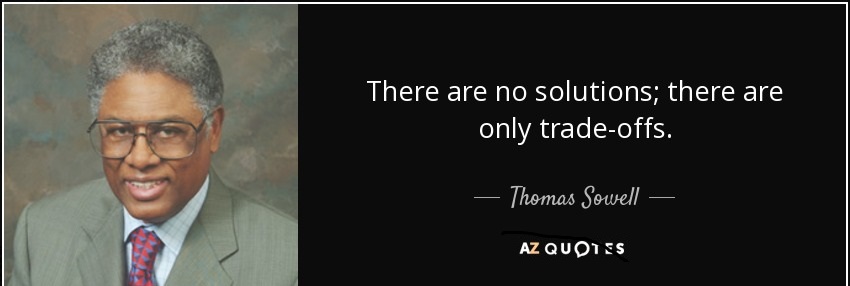 If they can achieve those goals by deregulating (as happened during the Carter, Reagan, and Clintonyears), we get better policy.
Then, in February, a train derailed in East Palestine, Ohio. It spilled vinyl chloride… Ohio Sens. Sherrod Brown, a Democrat, and J.D. Vance, a Republican, have rushed forward with the Railway Safety Act, a bill that would impose the two-person crew requirement that the FRA considered and rejected in 2019. The rule still has nothing to do with safety. Indeed, the train that derailed in East Palestine had a crew of three aboard. …As such, it is a useful illustration of how right-wing populists like Vance are actually advancing long-running goals of the political left… That includes Trump, of course. Even though it was his administration that killed the two-man-crew mandate in 2019, the former president is now a strong supporter of the bill that would impose the same mandate.

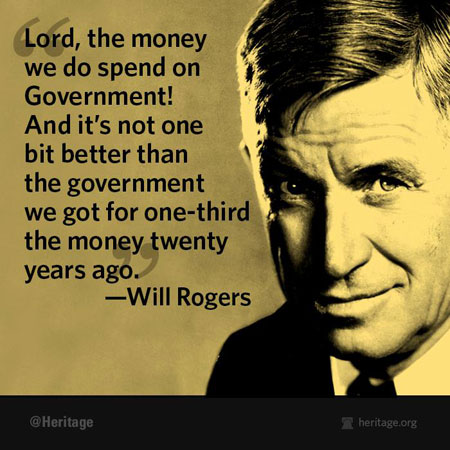








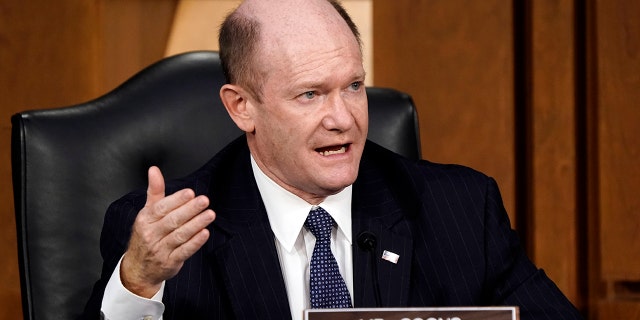

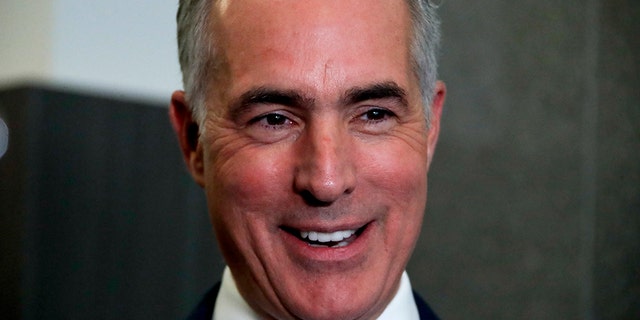

















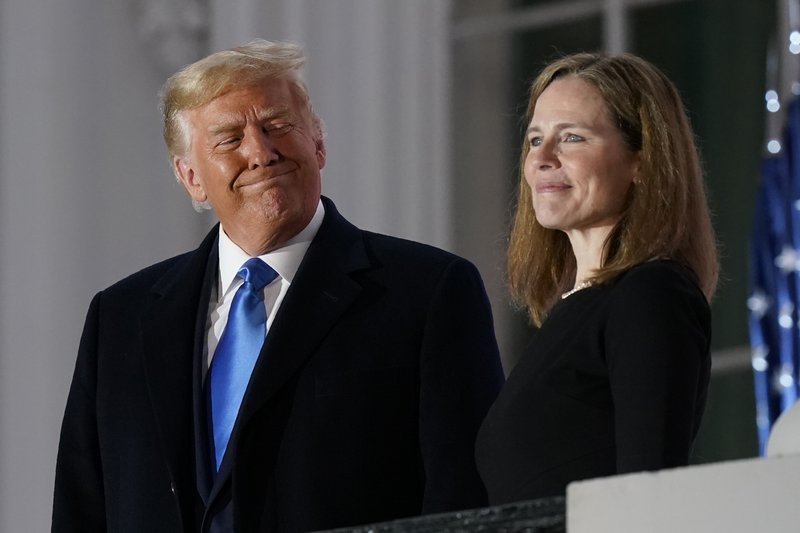






















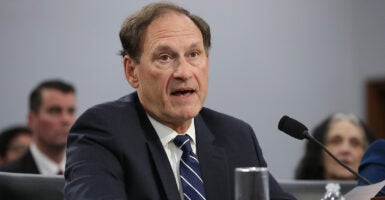





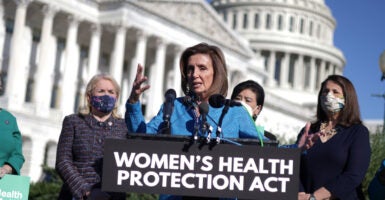









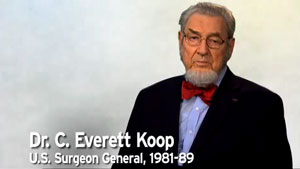


 The Daily Hatch