Randy DeSoto noted in The Western Journal that “Donald Trump was pretty much the only incumbent president in U.S. history to lose his re-election while his own party gained seats in the House of Representatives.” Now that’s a Biden miracle!
In 2020, The Cook Political Report and The New York Times rated 27 House seats as toss-ups going into Election Day. Right now, Republicans appear to have won all 27. Democrats failed to flip a single state house chamber, while Republicans flipped both the House and Senate in New Hampshire and expanded their dominance of state legislatures across the country.
Christina Polizzi, a spokesperson for the Democratic Legislative Campaign Committee, went so far as to state: “It’s clear that Trump isn’t an anchor for the Republican legislative candidates. He’s a buoy.” Amazingly, Biden beat the guy who lifted all other Republicans to victory. Now that’s historic!
Joe Biden achieved the impossible. It’s interesting that many more journalists aren’t pointing that out.
J.B. Shurk is a proud American from Daniel Boone country
President Donald Trump’s campaign has paid $3 million to Wisconsin to cover the cost of vote recounts in two of the state’s counties. (Photo: Tasos Katopodis/Getty Images)
The Trump campaign announced Wednesday that it’s filing a petition seeking election recounts in two Wisconsin counties.
The campaign said it paid $3 million to the state to cover the cost of the recounts.
In a statement, the Trump campaign said that the petition calls for recounts in Milwaukee and Dane counties, citing what it says are “illegally altered absentee ballots, illegally issued absentee ballots, and illegal advice given by government officials allowing Wisconsin’s voter-ID laws to be circumvented.”
The website for the Milwaukee Election Commission reported that former Vice President Joe Biden received 194,661 votes in heavily Democratic Milwaukee, while President Donald Trump drew 48,414.
The left is actively working to undermine the integrity of our elections. Read the plan to stop them now. Learn more now >>
In Dane County—which includes Madison, the state capital and home to the flagship campus of the state university system—Biden drew 260,157 votes, while Trump received 78,789 votes, according to the county clerk’s website.
“The people of Wisconsin deserve to know whether their election processes worked in a legal and transparent way,” Jim Troupis, counsel to the campaign, said in the Wednesday statement.
“Regrettably, the integrity of the election resultscannot be trusted without a recount in these two counties and uniform enforcement of Wisconsin absentee-ballot requirements. We will not know the true results of the election until only the legal ballots cast are counted.”
According to the Trump campaign, “municipal clerks across Wisconsin issued absentee ballots to voters without requiring an application, in direct conflict with Wisconsin’s absentee-voting safeguards.”
The campaign maintains that “Wisconsin law expressly requires that absentee ballots may not be issued without receiving a written application requesting the ballot,” adding:
Despite this clear mandatory requirement, clerks uniformly issued absentee ballots without collecting a written application from persons who requested absentee ballots in person during the two-week in-person absentee-voting period that ran from October 20, 2020, through November 1, 2020.
The campaign added that “[i]n clear abuse of Wisconsin’s provision to issue ballots to indefinitely confined voters without requiring them to present voter identification, some Democrat county clerks illegally advised voters to illegally mischaracterize that they were indefinitely confined to circumvent Wisconsin voter-ID law,” adding:
Those claiming to be “indefinitely confined” rose from 72,000 in 2019 to more than 240,000 at the time of the November 3, 2020, election. A substantial number of those claiming that status were sent and then returned ballots without proper identification and without otherwise meeting the requirements for that status.
In a statement Wednesday, Meagan Wolfe of the Wisconsin Elections Commission said that the recount request “appears, upon facial review, to meet all of the requirements in pairing with the payment that was received late yesterday.”
“We understand the eyes of the world will be on these Wisconsin counties over the next few weeks,” she said. “We remain committed to providing information about the process and assisting our county clerks by providing facts on the mechanics of a recount and status updates.”
The Biden campaign dismissed the likelihood that the partial recount would change the outcome in Wisconsin. “A cherry-picked and selective recounting of Milwaukee and Dane County will not change these results,” Biden campaign spokesman Nate Evans said in a statement.
But Troupis said the Trump campaign won’t relent on its demand for clarity on what occurred in Wisconsin.
“We will not stop fighting for transparency and integrity in our electoral process to ensure that all Americans can trust the results of a free and fair election in Wisconsin and across the country,” he said.
John Fund
Voter Fraud is real and can affect the outcome of close elections!!!
A guilty plea in a Kansas City, Missouri, voter fraud case this week illustrates something the U.S. Supreme Court pointed out when it upheld Indiana’s voter ID law in 2008:
[F]lagrant examples of [voter] fraud…have been documented throughout this Nation’s history [and] occasional examples have surfaced in recent years that…demonstrate that not only is the risk of voter fraud real but that it could affect the outcome of a close election.
On Monday, John C. Moretina pleaded guilty to a federal felony count of voter fraud in the August 2010 Democratic primary in Missouri’s 40th legislative district. Moretina falsely claimed he was living in the 40th district just so he could vote in the primary. This is a Democratic district where the winner of the primary, John J. Rizzo, was highly likely to become the district representative in the state house and, in fact, was elected. But Rizzo beat his Democratic opponent, Will Royster, by only one vote: 664 to 663.
Moretina did not inform the court whom he voted for, but since he is Rizzo’s uncle, it is not too much of a stretch to guess that he gave his nephew the winning margin of victory. Moreover, there were also allegations that Moretina’s wife fraudulently voted in this primary election as well, although she was not charged.
What is undeniable is that, as the Kansas City Star says, “the wrong candidate was declared [the] winner of the 2010 Democratic primary.”
Some opponents of voter ID mistakenly claim that this fraud shows that “stricter voter ID” requirements are not needed because voter ID would not have stopped this fraud. While no one claims that voter ID is a solution to all types of voter fraud, it is one of the critical steps that should be taken by states to improve the integrity of the election process.
As John Fund and I outlined in our book Who’s Counting? How Fraudsters and Bureaucrats Put Your Vote at Riskand as the Supreme Court said,voter fraud is real, and it can change the outcome of a close election. It certainly changed the outcome of this state legislative race in Missouri.
I got a chance to visit with John Fund the last time he came to Little Rock to speak and he made a great case that there is voter fraud happening in recent times and something has to be done about it. Here is an article that shows how liberals are denying reality when they […]
Wall Street Journal columnist John Fund discusses the stimulus bill during Missouri Chamber Day at the Capitol Part 2 Last week I got to attend the first ever “Conservative Lunch Series” presented by KARN and Americans for Prosperity Foundation at the Little Rock Hilton on University Avenue. This monthly luncheon will be held the fourth […]
John Fund at Chamber Day, Part 1 Last week I got to attend the first ever “Conservative Lunch Series” presented by KARN and Americans for Prosperity Foundation at the Little Rock Hilton on University Avenue. This monthly luncheon will be held the fourth Wednesday of every month. The speaker for today’s luncheon was John Fund. John […]
Ep. 7 – Who Protects the Consumer [1/7]. Milton Friedman’s Free to Choose (1980) Milton Friedman served as economic advisor for two American Presidents – Richard Nixon and Ronald Reagan. Although Friedman was inevitably drawn into the national political spotlight, he never held public office. In the clip above you can see Milton Friedman […]
Ep. 8 – Who Protects the Worker [1/7]. Milton Friedman’s Free to Choose (1980) Speakers at the First Richmond Tea Party, October 8-9, 2010 John Fund John Fund is a columnist for The Wall Street Journal and its OpinionJournal.com and an on-air contributor to 24-hour cable news networks CNBC and MSNBC. He is the […]
Today I got to attend the first ever “Conservative Lunch Series” presented by KARN and Americans for Prosperity Foundation at the Little Rock Hilton on University Avenue. This monthly luncheon will be held the fourth Wednesday of every month. The speaker for today’s luncheon was John Fund. John Fund writes the weekly “On the Trail” column […]
1 Of 5 / The Bible’s Influence In America / American Heritage Series / David Barton
2 Of 5 / The Bible’s Influence In America / American Heritage Series / David Barton
barton videos
4 Of 5 / The Bible’s Influence In America / American Heritage Series / David Barton
February 6, 2021
President Biden c/o The White House
1600 Pennsylvania Avenue NW
Washington, DC 20500
Dear Mr. President,
There have been many articles written by evangelicals like me who fear that our founding fathers would not recognize our country today because secular humanism has rid our nation of spiritual roots. I am deeply troubled by the secular agenda of those who are at war with religion in our public life.
“Most of the founding fathers of this nation … built the worldview of this nation on the authority of the Word of God,” Ken Ham said. “Because of that, there have been reminders in this culture concerning God’s Word, the God of creation.”
In the advertisement from the Freedom from Religion Foundation you have a quote from Benjamin Franklin but these quotes below were omitted.
Benjamin Franklin
Signer of the Constitution and Declaration of Independence
[O]nly a virtuous people are capable of freedom. As nations become corrupt and vicious, they have more need of masters.
(Source: Benjamin Franklin, The Writings of Benjamin Franklin, Jared Sparks, editor (Boston: Tappan, Whittemore and Mason, 1840), Vol. X, p. 297, April 17, 1787. )
I have lived, Sir, a long time, and the longer I live, the more convincing proofs I see of this truth, that God governs in the affairs of men. And if a sparrow cannot fall to the ground without His notice, is it probable that an empire can rise without his aid? We have been assured, Sir, in the Sacred Writings, that “except the Lord build the House, they labor in vain that build it.” I firmly believe this; and I also believe that without His concurring aid we shall succeed in this political building no better, than the Builders of Babel: We shall be divided by our partial local interests; our projects will be confounded, and we ourselves shall become a reproach and bye word down to future ages. And what is worse, mankind may hereafter from this unfortunate instance, despair of establishing governments by human wisdom and leave it to chance, war and conquest.
I therefore beg leave to move that henceforth prayers imploring the assistance of Heaven, and its blessings on our deliberations be held in this Assembly every morning before we proceed to business, and that one or more of the clergy of this city be requested to officiate in that service.
(Source: James Madison, The Records of the Federal Convention of 1787, Max Farrand, editor (New Haven: Yale University Press, 1911), Vol. I, pp. 450-452, June 28, 1787.)
* For more details on this quote check out this link
Thank you so much for your time. I know how valuable it is. I also appreciate the fine family that you have and your commitment as a father and a husband.
Sincerely,
Everette Hatcher III, 13900 Cottontail Lane, Alexander, AR 72002, ph 501-920-5733
President Obama c/o The White House 1600 Pennsylvania Avenue NW Washington, DC 20500 Dear Mr. President, I know that you receive 20,000 letters a day and that you actually read 10 of them every day. I really do respect you for trying to get a pulse on what is going on out here. There have […]
There have been many articles written by evangelicals like me who fear that our founding fathers would not recognize our country today because secular humanism has rid our nation of spiritual roots. I am deeply troubled by the secular agenda of those who are at war with religion in our public life. Lillian Kwon quoted somebody […]
There have been many articles written by evangelicals like me who fear that our founding fathers would not recognize our country today because secular humanism has rid our nation of spiritual roots. I am deeply troubled by the secular agenda of those who are at war with religion in our public life. Lillian Kwon quoted somebody […]
There have been many articles written by evangelicals like me who fear that our founding fathers would not recognize our country today because secular humanism has rid our nation of spiritual roots. I am deeply troubled by the secular agenda of those who are at war with religion in our public life. Lillian Kwon quoted somebody […]
There have been many articles written by evangelicals like me who fear that our founding fathers would not recognize our country today because secular humanism has rid our nation of spiritual roots. I am deeply troubled by the secular agenda of those who are at war with religion in our public life. Lillian Kwon quoted somebody […]
There have been many articles written by evangelicals like me who fear that our founding fathers would not recognize our country today because secular humanism has rid our nation of spiritual roots. I am deeply troubled by the secular agenda of those who are at war with religion in our public life. Lillian Kwon quoted somebody […]
President Obama Speaks at The Ohio State University Commencement Ceremony Published on May 5, 2013 President Obama delivers the commencement address at The Ohio State University. May 5, 2013. You can learn a lot about what President Obama thinks the founding fathers were all about from his recent speech at Ohio State. May 7, 2013, […]
Dr. C. Everett Koop with Bill Graham. Francis Schaeffer: “Whatever Happened to the Human Race” (Episode 4) THE BASIS FOR HUMAN DIGNITY Published on Oct 7, 2012 by AdamMetropolis The 45 minute video above is from the film series created from Francis Schaeffer’s book “Whatever Happened to the Human Race?” with Dr. C. Everett Koop. This […]
America’s Founding Fathers Deist or Christian? – David Barton 4/6 There have been many articles written by evangelicals like me who fear that our founding fathers would not recognize our country today because secular humanism has rid our nation of spiritual roots. I am deeply troubled by the secular agenda of those who are at […]
3 Of 5 / The Bible’s Influence In America / American Heritage Series / David Barton There were 55 gentlemen who put together the constitution and their church affliation is of public record. Greg Koukl notes: Members of the Constitutional Convention, the most influential group of men shaping the political foundations of our nation, were […]
I do not think that John Quincy Adams was a founding father in the same sense that his father was. However, I do think he was involved in the early days of our government working with many of the founding fathers. Michele Bachmann got into another history-related tussle on ABC’s “Good Morning America” today, standing […]
I have gone back and forth and back and forth with many liberals on the Arkansas Times Blog on many issues such as abortion, human rights, welfare, poverty, gun control and issues dealing with popular culture. Here is another exchange I had with them a while back. My username at the Ark Times Blog is Saline […]
I truly believe that many of the problems we have today in the USA are due to the advancement of humanism in the last few decades in our society. Ronald Reagan appointed the evangelical Dr. C. Everett Koop to the position of Surgeon General in his administration. He partnered with Dr. Francis Schaeffer in making the […]
Francis Schaeffer: “Whatever Happened to the Human Race” (Episode 4) THE BASIS FOR HUMAN DIGNITY Published on Oct 7, 2012 by AdamMetropolis ____________ The 45 minute video above is from the film series created from Francis Schaeffer’s book “Whatever Happened to the Human Race?” with Dr. C. Everett Koop. This book really helped develop my political […]
Office of Barack and Michelle Obama P.O. Box 91000 Washington, DC 20066
Dear President Obama,
I wrote you over 700 letters while you were President and I mailed them to the White House and also published them on my blog http://www.thedailyhatch.org .I received several letters back from your staff and I wanted to thank you for those letters.
I have been reading your autobiography A PROMISED LAND and I have been enjoying it. I noticed this quote from your book:
“I suspect that God’s plan, whatever it is, works on a scale too large to admit our mortal tribulations; that in a single lifetime, accidents and happenstance determine more than we care to admit…and that the best we can do is to try to align ourselves with what we feel is right and construct some meaning out of our confusion, and with grace and nerve play at each moment the hand that we’re dealt.”
It sounds like you believe that we are at the mercy of time and chance?
As an evangelical believer I am encouraged by your references to spiritual hymns, but your intellectual views seem to place you in the secular humanist school of thought.
Former President Barack Obama’s new book, “A Promised Land,” mentions only four pages in its index under the category “faith and.”
But the title of the book by the 44th U.S. president invokes biblical imagery — a land promised by God to his people — and Obama includes the role of religious institutions, faith leaders and personal traditions throughout the 750-page book. On the page after his dedication of the tome to his wife and daughters, Obama features the words from an African American spiritual:
“Fly and never tire
There’s a great camp-meeting in the Promised Land.”
While friends and strangers have told him they believe God engineered his road to the White House, Obama says he didn’t view his political path as a call from the Almighty.
(Pari Dukovic/Random House via AP) This photo provided by Random House shows the cover of “A Promised Land.” The first volume of former President Barack Obama’s memoir came out Nov. 17.
“I suspect that God’s plan, whatever it is, works on a scale too large to admit our mortal tribulations; that in a single lifetime, accidents and happenstance determine more than we care to admit,” he writes, “and that the best we can do is to try to align ourselves with what we feel is right and construct some meaning out of our confusion, and with grace and nerve play at each moment the hand that we’re dealt.”
THIS SEEMS TO ME THAT YOU THINK OUR FUTURE IS TIED MORE TO ACCIDENTS AND CHANCE THAN TO A DIVINE PURPOSE.
President Obama your views are more in line with those of atheistic evolutionists than those scientists such as Isaac Newton who believed in creationism. I had the unique opportunity from 2015 to 2020 to correspond with a famous Harvard educated British scientist named Professor Horace Barlow of Cambridge. Barlow was named after his grandfather Horace Darwin. Most of the correspondence between Dr. Barlow and myself dealt with the views of Barlow’s famous great grandfather Charles Darwin.
In my February 11, 2015 Letter to Dr. Barlow I made the following points about Charles Darwin and the subject of CHANCE and Dr. Barlow responded to many of these points in his November 22, 2017 letter:
“It is impossible to answer your question briefly; and I am not sure that I could do so, even if I wrote at some length. But I may say that the impossibility of conceiving that this grand and wondrous universe, with our conscious selves, arose through chance, seems to me the chief argument for the existence of God; but whether this is an argument of real value, I have never been able to decide.”
Francis Schaeffer observed:
So he sees here exactly the same that I would labor and what Paul gives in Romans chapter one, and that is first this tremendous universe [and it’s form] and the second thing, the mannishness of man and the concept of this arising from chance is very difficult for him to come to accept and he is forced to leap into this, his own kind of Kierkegaardian leap, but he is forced to leap into this because of his presuppositions but when in reality the real world troubles him. He sees there is no third alternative. If you do not have the existence of God then you only have chance. In my own lectures I am constantly pointing out there are only two possibilities, either a personal God or this concept of the impersonal plus time plus chance and Darwin understood this . You will notice that he divides it into the same exact two points that Paul does in Romans chapter one into and that Carl Gustav Jung (1875-1961) will in the problem of existence, the external universe, and man and his consciousness. Paul points out there are these two steps that man is confronted with, what I would call two things in the real world. The universe and it’s form and I usually quote Jean Paul Sartre here, and Sartre says the basic philosophic problem is that something is there rather than nothing is there and I then I add at the point the very thing that Darwin feels and that is it isn’t a bare universe that is out there, it is an universe in a specific form. I always bring in Einstein and the uniformity of the form of the universe and that it is constructed as a well formulated word puzzle or you have Carl Gustav Jung who says two things cut across a man’s will that he can not truly be autonomous, the external world and what Carl Gustav Jung would call his “collected unconsciousness.” It is the thing that churns up out of man, the mannishness of man. Darwin understood way back here this is a real problem. So he says “the impossibility of conceiving that this grand and wondrous universe,” part one, the real world, the external universe, and part two “with our conscious selves arose through chance” and then he goes on and says this is not “an argument of real value.” This only thing he has to put in its place is his faith in his own theory.
______________
Here below is the Romans passage that Schaeffer is referring to and verse 19 refers to what Schaeffer calls “the mannishness of man” and verse 20 refers to Schaeffer’s other point which is “the universe and it’s form.”Romans 1:18-22Amplified Bible (AMP) 18 For God’s [holy] wrath and indignation are revealed from heaven against all ungodliness and unrighteousness of men, who in their wickedness repress and hinder the truth andmake it inoperative. 19 For that which is known about God is evident to them and made plain in their inner consciousness,because God [Himself] has shown it to them. 20 For ever since the creation of the world His invisible nature and attributes, that is, His eternal power and divinity, have been made intelligible and clearly discernible in and through the things that have been made (His handiworks). So [men] are without excuse [altogether without any defense or justification], 21 Because when they knew and recognized Him as God, they did not honor andglorify Him as God or give Him thanks. But instead they became futile andgodless in their thinking [with vain imaginings, foolish reasoning, and stupid speculations] and their senseless minds were darkened. 22 Claiming to be wise, they became fools [professing to be smart, they made simpletons of themselves].
Francis Schaeffer noted that in Darwin’s 1876 Autobiography that Darwin he is going to set forth two arguments for God in this and again you will find when he comes to the end of this that he is in tremendous tension. Darwin wrote,
At the present day the most usual argument for the existence of an intelligent God is drawn from the deep inward conviction and feelings which are experienced by most persons.Formerly I was led by feelings such as those just referred to (although I do not think that the religious sentiment was ever strongly developed in me), to the firm conviction of the existence of God and of the immortality of the soul. In my Journal I wrote that whilst standing in the midst of the grandeur of a Brazilian forest, ‘it is not possible to give an adequate idea of the higher feelings of wonder, admiration, and devotion which fill and elevate the mind.’ I well remember my conviction that there is more in man than the mere breath of his body; but now the grandest scenes would not cause any such convictions and feelings to rise in my mind. It may be truly said that I am like a man who has become colour-blind.
Francis Schaeffer remarked:
Now Darwin says when I look back and when I look at nature I came to the conclusion that man can not be just a fly! But now Darwin has moved from being a younger man to an older man and he has allowed his presuppositions to enter in to block his logic. These things at the end of his life he had no intellectual answer for. To block them out in favor of his theory. Remember the letter of his that said he had lost all aesthetic senses when he had got older and he had become a clod himself. Now interesting he says just the same thing, but not in relation to the arts, namely music, pictures, etc, but to nature itself. Darwin said, “But now the grandest scenes would not cause any such convictions and feelings to rise in my mind. It may be truly said that I am like a man who has become colour-blind…” So now you see that Darwin’s presuppositions have not only robbed him of the beauty of man’s creation in art, but now the universe. He can’t look at it now and see the beauty. The reason he can’t see the beauty is for a very, very , very simple reason: THE BEAUTY DRIVES HIM TO DISTRACTION. THIS IS WHERE MODERN MAN IS AND IT IS HELL. The art is hell because it reminds him of man and how great man is, and where does it fit in his system? It doesn’t. When he looks at nature and it’s beauty he is driven to the same distraction and so consequently you find what has built up inside him is a real death, not only the beauty of the artistic but the beauty of nature. He has no answer in his logic and he is left in tension. He dies and has become less than human because these two great things (such as any kind of art and the beauty of nature) that would make him human stand against his theory
My Fourth letter dated 2-1-17 was an Email on first cause! And if creation was done by expression of a mind?
“It is impossible to answer your question briefly; and I am not sure that I could do so, even if I wrote at some length. But I may say that the impossibility of conceiving that this grand and wondrous universe, with our conscious selves, arose through chance, seems to me the chief argument for the existence of God; but whether this is an argument of real value, I have never been able to decide…Nor can I overlook the difficulty from the immense amount of suffering through the world. I am aware that if we admit a First Cause, the mind still craves to know whence it came, and how it arose.”
Jan Constantijn Costerus and Nicolaas Dirk Doedes pictured below:
—
Francis Schaeffer noted:
What he is saying is if you say there is a first cause, then the mind says, “Where did this come from?” I think this is a bit old fashioned, with some of the modern thinkers, this would not have carry as much weight today as it did when Darwin expressed it. Jean Paul Sartre said it as well as anyone could possibly say it. The philosophic problem is that something is there and not nothing being there. No one has the luxury of beginning with nothing. Nobody I have ever read has put forth that everything came from nothing. I have never met such a person in all my reading,or all my discussion. If you are going to begin with nothing being there, it has to be nothing nothing, and it can’t be something nothing. When someone says they believe nothing is there, in reality they have already built in something there. The only question is do you begin with an impersonal something or a personal something. All human thought is shut up to these two possibilities. Either you begin with an impersonal and then have Darwin’s own dilemma which impersonal plus chance, now he didn’t bring in the amount of time that modern man would though. Modern man has brought in huge amounts of time into the equation as though that would make a difference because I have said many times that time can’t make a qualitative difference but only a quantitative difference. The dilemma is it is either God or chance. Now you find this intriguing thing in Darwin’s own situation, he can’t understand how chance could have produced these two great factors of the universe and its form and the mannishness of man.
“Another source of conviction in the existence of God, connected with the reason and not with the feelings, impresses me as having much more weight. This follows from the extreme difficulty or rather impossibility of conceiving this immense and wonderful universe, including man with his capacity of looking far backwards and far into futurity, as the result of blind chance or necessity. When thus reflecting, I feel compelled to look to a First Cause having an intelligent mind in some degree analogous to that of man; and I deserve to be called a Theist. This conclusion was strong in my mind about the time, as far as I can remember, when I wrote the Origin of Species, and it is since that time that it has very gradually, with many fluctuations, become weaker. But then arises the doubt…”
Francis Schaeffer commented:
On the basis of his reason he has to say there must be an intelligent mind, someone analogous to man. You couldn’t describe the God of the Bible better. That is man is made in God’s image and therefore, you know a great deal about God when you know something about man. What he is really saying here is that everything in my experience tells me it must be so, and my mind demands it is so. Not just these feelings he talked about earlier but his MIND demands it is so, but now how does he counter this? How does he escape this? Here is how he does it!!!
Charles Darwin went on to observe: “—can the mind of man, which has, as I fully believe, been developed from a mind as low as that possessed by the lowest animals, be trusted when it draws such grand conclusions?”
1024 × 682Images may be subject to copyright. Learn More
Francis Schaeffe
Francis Schaeffer asserted:
So he says my mind can only come to one conclusion, and that is there is a mind behind it all. However, the doubt comes because his mind has come from the lowest form of earthworm, so how can I trust my mind. But this is a joker isn’t it? Then how can you trust his mind to support such a theory as this? He proved too much. The fact that Darwin found it necessary to take such an escape shows the tremendous weight of Romans 1, that the only escape he can make is to say how can I trust my mind when I come from the lowest animal the earthworm? Obviously think of the grandeur of his concept, I don’t think it is true, but the grandeur of his concept, so what you find is that Darwin is presenting something here that is wrong I feel, but it is not nothing. It is a tremendously grand concept that he has put forward. So he is accepting the dictates of his mind to put forth a grand concept which he later can’t accept in this basic area with his reason, but he rejects what he could accept with his reason on this escape. It really doesn’t make sense. This is a tremendous demonstration of the weakness of his own position.
Dr. Barlow responds to the points I made in earlier letters in his November 22, 2017 letter:
You may ask, “What is to take the place of Religious Belief in helping to understand the world around us? It has order and purpose, which cannot be explained by Blind chance as evolution teaches.” I agree it cannot be explained by Blind chance alone, but Darwin did not claim that this happens, and modern evolutionists agree. We say that chance variations (mutations) occur in the substances (called genes nowadays) that control development and cause son and daughter to resemble father and mother. These genes control the development of the offspring, and and influence their success in life, and in particular they influence the types of mutated genes that are passed on to the next generation. Chance, together with “Survival of the fittest,” thus causes the appearance of apparently purposeful adaptations of the population of genes in a species.
—
These points made by Dr. Barlow seemed to be contradicted by the following quote from the Nobel Prize winner Jacques Monod:
It necessarily follows that chance alone is at the source of every innovation, and of all creation in the biosphere.Pure chance, absolutely free but blind, at the very root of the stupendous edifice of evolution: this central concept of modern biology is no longer one among many other possible or even conceivable hypotheses. It is today the sole conceivable hypothesis, the only one that squares with observed and tested fact. And nothing warrants the supposition – or the hope – that on this score our position is ever likely to be revised. There is no scientific concept, in any of the sciences, more destructive of anthropocentrism than this one.
In my letter to Dr. Barlow on November 2, 2018 I responded to some of Dr. Barlow’s points and I tried to make the point that Darwin never did get comfortable with the idea that chance was responsible for all of the creation and Randal Keynes actually makes the point that Darwin was at times despondent about the possibility that evidence would appear showing that a species had been designed:
Many thanks for your copious and charmingly expressed correspondence about Charles Darwin’s religious views, and about his descriptions of losing his sense of reverence, awe, and beauty in his old age. Notice, however, that he clearly did not lose his sense of the value of truth, and of the importance of forever searching it out.
Darwin may have been searching for truth, but he never did come to a complete satisfaction that he had found it with his theory of evolution. Notice that your relative Randal Keynes makes this very point on Richard Dawkins special “The Genius of Darwin”:
(Richard Dawkins words below)
Back in England at Down Housenow 20 years after his voyage on the Beagle,Darwin had worked out the answers to the biggest questions ever asked.But he was strangely reluctant to go public with his idea.Darwin himself said that he’d become a kind of machinefor grinding theories out of huge assemblages of facts.I think that wasn’t really what it was like at all.He was an extraordinarily imaginative, deep thinker.He had a prodigiously curious mind as well.He was drawn to facts that didn’t fit.He once said, “I cannot bear to be beaten.”Darwin’s theory explained how the diversity of life from the planethad evolved spontaneously without interference from any god.But he was acutely aware of how upsettingthis flat contradiction of the religious story would be.He hesitated to publish.Then, in June 1858, Darwin received a letterfrom a naturalist travelling in the Far East, Alfred Russel Wallace,which set our similar ideas.Darwin was in despair about being scooped.He was even ready to drop his life’s work.But he was persuaded by Charles Lyell and othersto present his unpublished work alongside Wallace’s notes,and then complete his masterpiece for publication.
I’ve come to meet Randal Keynes, Darwin’s great-great-grandsonto try to understand Darwin’s frame of mindas he finished his book.This is a book about geology by Mr Greenough.It has this wonderful inscription –“Charles Darwin, Buenos Aires, October 1832.”So he’s on the Beagle,really getting into his stride as a geologist.This is a scrapbook, a children’s scrapbookthat belonged to Darwin’s daughter Annie. ‘Darwin was no aggressive polemicist.‘He didn’t take to the stage to publicize his work,‘but sought to influence leading thinkers behind the scenes,‘by sending them proof copies of the book with apologetic letters attached.’He would write things like, “This vile rag of a theory of mine.”Was that genuine modesty or was there an element of false modesty about it? It was entirely real, um, and this is a very strange point about him.Through the years when he was steeling himself for publication,um, he was, at different times, enormously confident in it,and at other times, he was utterly uncertain.He had a deep fear, I think,that one species would be discoveredthat had some element of its make-upthat could only have been designed. Doubts may have lingered in Darwin’s mind,but finally, 150 years ago, he set out his ideas on evolutionand how it worked in The Origin Of Species.
“I am glad you were at the Messiah, it is the one thing that I should like to hear again, but I dare say I should find my soul too dried up to appreciate it as in old days; and then I should feel very flat, for it is a horrid bore to feel as I constantly do, that I am a withered leaf for every subject except Science. It sometimes makes me hate Science, though God knows I ought to be thankful for such a perennial interest, which makes me forget for some hours every day my accursed stomach.’
Francis Schaeffer summarized Darwin’s statement:
So he is glad for science because his stomach bothers him, but on the other hand when I think of what it costs me I almost hate science. You can almost hear young Jean-Jacques Rousseau speaking here, he sees what the machine is going to do and he hates the machine and Darwin is constructing the machine and it leads as we have seen to his own loss of human values in the area of aesthetics, the area of art and also in the area of nature. This is what it has cost him. His theory has led him to this place. When you come to this then it seems to me that you understand man’s dilemma very, very well, to think of the origin of the theory of mechanical evolution bringing Darwin himself to the place of this titanic tension.
Schaeffer discusses further Darwin’s doubts about evolution:
Darwin in his autobiography ( Darwin, Francis ed. 1892. Charles Darwin: his life told in an autobiographical chapter, and in a selected series of his published letters [abridged edition]. London: John Murray. ) and in his letters Darwin showed that all through his life he never really came to a quietness concerning the possibility that chance really explained the situation of the biological world. You will find there is much material on this [from Darwin] extended over many many years that constantly he was wrestling with this problem. Darwin never came to a place of satisfaction. You have philosophically only two possible beginnings. The first would be a personal beginning and the other would be an impersonal beginning plus time plus chance. There is no other possible alternative except the alternative that everything comes out of nothing and that has to be a total nothing and that has to be a total nothing without mass, energy or motion existing. No one holds this last view because it is unthinkable. Darwin understood this and therefore until his death he was uncomfortable with the idea of chance producing the biological variation.
On May 15, 1994, the 10th anniversary of the passing of Francis Schaeffer, I mailed a letter to about 250 of the world top skeptics and I have posted this letter on my blog ( [Part 1, Part 2, Part 3, Part 4] ). In that letter were these quotes:
J.W.Burrow – “Nature, according to Darwin, was the product of blind chance and a blind struggle, and man a lonely, intelligent mutation, scrambling with the brutes for his sustenance. To some the sense of loss was irrevocable; It was as if an umbilical cord had been cut, and men found themselves part of a cold passionless universe.”
William B. Provine in “The End of Ethics?” article in HARD CHOICES (a magazine companion to the television series HARD CHOICES) wrote:Even though it is often asserted that science is fully compatible with our Judeo-Christian tradition, in fact it is not… To be sure, even in antiquity, the mechanistic view of life–that chance was responsible for the shape of the world– had a few adherents. But belief in overarching order was dominant; it can be seen as easily in such scientists as Newton, Harvey, and Einstein as in the theologians Augustine, Luther, and Tillich. But beginning with Darwin, biology has undermined that tradition. Darwin in effect asserted that all living organisms had been created by a combination of CHANCE and necessity–natural selection.In the twentieth century, this view of life has been reinforced by a whole series of discoveries…Mind is the only remaining frontier, but it would be shortsighted to doubt that it can, one day, be duplicated in the form of thinking robots or analyzed in terms of the chemistry and electricity of the brain. The extreme mechanic view of life, which every new discovery in biology tends to confirm, has certain implications. First, God has no role in the physical world…Second, except for the laws of probability and cause and effect, there is no organizing principle in the world, and NO PURPOSE.
Bertrand Russell – “That Man is the product of causes which had no prevision of the end they were achieving; that his origin, his growth, his hopes and fears, his loves and his beliefs, are but the outcome of accidental collocations of atoms; that no fire, no heroism, no intensity of thought and feeling, can preserve an individual life beyond the grave; that all the labours of the ages, all the devotion, all the inspiration, all the noonday brightness of human genius, are destined to extinction in the vast death of the solar system, and that the whole temple of Man’s achievement must inevitably be buried beneath the débris of a universe in ruins—all these things, if not quite beyond dispute, are yet so nearly certain, that no philosophy which rejects them can hope to stand. Only within the scaffolding of these truths, only on the firm foundation of unyielding despair, can the soul’s habitation henceforth be safely built.”(Bertrand Russell, Free Man’s Worship)
—-
It is either a personal God who created it all or evolution by chance. Take a look at this statement by George Wald:
George Wald in 1987
“When it comes to the origin of life, we have only two possibilities as to how life arose. One is spontaneous generation arising to evolution; the other is a supernatural creative act of God. There is NO THIRD possibility…Spontaneous generation was scientifically disproved one hundred years ago by Louis Pasteur, Spellanzani, Reddy and others. That leads us scientifically to only one possible conclusion — that life arose as a supernatural creative act of God…I will not accept that philosophically because I do not want to believe in God. Therefore, I choose to believe in that which I know is scientifically impossible, spontaneous generationarising to evolution.” – Scientific American, August, 1954.
“Understand, ye brutish among the people: and ye fools, when will ye be wise? He that planted the ear, shall He not hear? He that formed the eye, shall He not see?” (Psalm 94:8,9)
The concept of evolution, according to this verse, is nothing but brute-like foolishness. If an automobile presupposes an auto-maker, and a clock implies a clock-maker, surely the infinitely more intricate and complex eyes and ears of living creatures require an ear-maker and an eye-maker! “The hearing ear, and the seeing eye, the LORD hath made even both of them” (Proverbs 20:12).
The most basic of all scientific laws—the law of cause and effect (no effect greater than its cause)—becomes utmost nonsense if the cosmos is the product of chaos and the universe evolved by chance. “The fool hath said in his heart, There is no God” (Psalm 14:1).
Every creature, from the single-celled amoebae to the amazing human body, bears the impress of intricate planning and construction. The notion that such complex structures could evolve by random mutations and natural selection is simply a measure of the audacity of human rebellion and the absurdity of humanistic reasoning. Such things never happen in the real world, and there is no real scientific evidence whatever for “vertical” evolution from one kind to a higher kind. The only genuine evidence for evolution is the fact that the leaders of intellectualism believe it, and the only reason they believe it is their frantic desire to escape God. “Professing themselves to be wise, they became fools” (Romans 1:22).
The ear did not “evolve;” it was planted. The eye did not “happen by chance;” it was formed. Every wise man and woman will say with the psalmist, “I will praise thee; for I am fearfully and wonderfully made: marvelous are thy works; and that my soul knoweth right well” (Psalm 139:14). HMM
Sincerely,
Everette Hatcher III, 13900 Cottontail Lane, Alexander, AR 72002, ph 501-920-5733 everettehatcher@gmail.com
President Obama c/o The White House 1600 Pennsylvania Avenue NW Washington, DC 20500 Dear Mr. President, I know that you receive 20,000 letters a day and that you actually read 10 of them every day. I really do respect you for trying to get a pulse on what is going on out here. There have […]By Everette Hatcher III | Posted in David Barton, Founding Fathers, President Obama | Edit |Comments (0)
There have been many articles written by evangelicals like me who fear that our founding fathers would not recognize our country today because secular humanism has rid our nation of spiritual roots. I am deeply troubled by the secular agenda of those who are at war with religion in our public life. Lillian Kwon quoted somebody […]By Everette Hatcher III | Posted in David Barton, Founding Fathers | Edit | Comments (0)
There have been many articles written by evangelicals like me who fear that our founding fathers would not recognize our country today because secular humanism has rid our nation of spiritual roots. I am deeply troubled by the secular agenda of those who are at war with religion in our public life. Lillian Kwon quoted somebody […]By Everette Hatcher III | Posted in David Barton, Founding Fathers | Edit | Comments (0)
There have been many articles written by evangelicals like me who fear that our founding fathers would not recognize our country today because secular humanism has rid our nation of spiritual roots. I am deeply troubled by the secular agenda of those who are at war with religion in our public life. Lillian Kwon quoted somebody […]By Everette Hatcher III | Posted in David Barton, Founding Fathers | Edit | Comments (0)
There have been many articles written by evangelicals like me who fear that our founding fathers would not recognize our country today because secular humanism has rid our nation of spiritual roots. I am deeply troubled by the secular agenda of those who are at war with religion in our public life. Lillian Kwon quoted somebody […]By Everette Hatcher III | Posted in David Barton, Founding Fathers | Edit | Comments (0)
There have been many articles written by evangelicals like me who fear that our founding fathers would not recognize our country today because secular humanism has rid our nation of spiritual roots. I am deeply troubled by the secular agenda of those who are at war with religion in our public life. Lillian Kwon quoted somebody […]By Everette Hatcher III | Posted in Founding Fathers | Edit | Comments (0)
President Obama Speaks at The Ohio State University Commencement Ceremony Published on May 5, 2013 President Obama delivers the commencement address at The Ohio State University. May 5, 2013. You can learn a lot about what President Obama thinks the founding fathers were all about from his recent speech at Ohio State. May 7, 2013, […]By Everette Hatcher III | Posted in Founding Fathers, President Obama | Edit | Comments (0)
Dr. C. Everett Koop with Bill Graham. Francis Schaeffer: “Whatever Happened to the Human Race” (Episode 4) THE BASIS FOR HUMAN DIGNITY Published on Oct 7, 2012 by AdamMetropolis The 45 minute video above is from the film series created from Francis Schaeffer’s book “Whatever Happened to the Human Race?” with Dr. C. Everett Koop. This […]By Everette Hatcher III | Posted in Founding Fathers, Francis Schaeffer, Prolife | Edit |Comments (1)
America’s Founding Fathers Deist or Christian? – David Barton 4/6 There have been many articles written by evangelicals like me who fear that our founding fathers would not recognize our country today because secular humanism has rid our nation of spiritual roots. I am deeply troubled by the secular agenda of those who are at […]By Everette Hatcher III | Posted in David Barton, Founding Fathers | Tagged governor of connecticut, john witherspoon, jonathan trumbull | Edit | Comments (1)
3 Of 5 / The Bible’s Influence In America / American Heritage Series / David Barton There were 55 gentlemen who put together the constitution and their church affliation is of public record. Greg Koukl notes: Members of the Constitutional Convention, the most influential group of men shaping the political foundations of our nation, were […]By Everette Hatcher III | Posted in Founding Fathers | Edit | Comments (0)
I do not think that John Quincy Adams was a founding father in the same sense that his father was. However, I do think he was involved in the early days of our government working with many of the founding fathers. Michele Bachmann got into another history-related tussle on ABC’s “Good Morning America” today, standing […]By Everette Hatcher III | Posted in David Barton, Founding Fathers | Edit | Comments (0)
I have gone back and forth and back and forth with many liberals on the Arkansas Times Blog on many issues such as abortion, human rights, welfare, poverty, gun control and issues dealing with popular culture. Here is another exchange I had with them a while back. My username at the Ark Times Blog is Saline […]By Everette Hatcher III | Posted in Arkansas Times, Francis Schaeffer, Prolife | Edit |Comments (0)
I truly believe that many of the problems we have today in the USA are due to the advancement of humanism in the last few decades in our society. Ronald Reagan appointed the evangelical Dr. C. Everett Koop to the position of Surgeon General in his administration. He partnered with Dr. Francis Schaeffer in making the […]By Everette Hatcher III | Posted in Adrian Rogers, Francis Schaeffer | Edit | Comments (0)
Francis Schaeffer: “Whatever Happened to the Human Race” (Episode 4) THE BASIS FOR HUMAN DIGNITY Published on Oct 7, 2012 by AdamMetropolis ____________ The 45 minute video above is from the film series created from Francis Schaeffer’s book “Whatever Happened to the Human Race?” with Dr. C. Everett Koop. This book really helped develop my political […]By Everette Hatcher III | Posted in Francis Schaeffer | Edit | Comments (0)
Voting booths await users in Flint, Michigan, at a polling place on Nov. 3. Michigan was one of the hotly contested swing states. (Photo: Seth Herald/Agence France-Presse/GettyImages)
Noncitizens likely voted at a high enough rate to alter the 2020 Electoral College tally, potentially flipping the states of Arizona and Georgia in the presidential election, according to an analysis by Just Facts, a research group.
That’s significant, and while it wouldn’t be enough to hand the election to President Donald Trump, it potentially could have made a difference. Only U.S. citizens are legally allowed to vote in federal elections.
The revised estimate, as of Monday, shows that Trump could have won 259 electoral votes if noncitizen votes were not counted. But that would likely still leave former Vice President Joe Biden with 279 electoral votes, nine votes more than the 270 needed to win.
The current electoral vote tally stands at 306 for Biden, 232 for Trump. Arizona has 11 Electoral College votes, while Georgia gets 16.
The left is actively working to undermine the integrity of our elections. Read the plan to stop them now. Learn more now >>
Just Facts first released an analysis on Nov. 8, five days after the election, that calculated a lower and upper estimate of the extent of noncitizen voting. That analysis determined that Trump could have won as few as 259 electoral votes—or as many as 285. The latter would have secured a second term.
However, as more mail-in votes were counted, Biden’s lead widened in states such Pennsylvania, Michigan, and Nevada.
Several major media outlets have projected Bidenas the president-elect, but the Trump campaign is still litigating in several battleground states. The Trump team has not made noncitizen voting a significant part of its allegations of voter fraud.
The revised study estimated the number of noncitizen votes cast in the states of Arizona, Georgia, Michigan, Wisconsin, Nevada, North Carolina, and Pennsylvania—all of which were closely contested on election night.
It estimated that 234,570 noncitizen votes benefited Biden across seven battleground states. That estimate did not change as more votes were counted.
“Based on the latest vote counts and the upper and lower bounds of the study results, Georgia and Arizona would flip to Trump, leaving him with 259 Electoral College votes,” James Agresti, president of Just Facts, told The Daily Signal. “Under the upper bound, Nevada gets really close, with Trump down by 3,858 votes.”
With the exception of Arizona, each of the states in question appeared to be favoring Trump until the early-morning hours of Nov. 4, but began to shift to Biden over several days. North Carolina is the only state of the seven that appears likely to go to Trump.
The Electoral College will cast its vote in 50 states and the District of Columbia on Dec. 14.
The estimate is based on the percentages of noncitizens that voted in previous elections, predicated on a 2014 study by researchers at Old Dominion University in Norfolk, Virginia, that evaluated rates of noncitizen voting in 2008 and 2010, Agresti said, applied only to the seven battleground states.
The Old Dominion study determined 6.4% of noncitizens voted in the 2008 presidential election and 3% in the 2010 congressional midterm elections, with 81% voting Democrat.
The rate was high enough to change the Electoral College vote count in 2008 (although not enough to swing the presidential election) and actually change the outcome of some congressional races, particularly the Senate race in Minnesota that year.
That race was decided in favor of Democrat Al Franken over Republican Norm Coleman by just 312 votes out of more than 2.86 million votes cast.
Agresti noted that illegal noncitizen voting is just “one type of fraud” that could have occurred in the 2020 election.
Asked about the proliferation of mail-in voting and ballot harvesting, he said, “That could certainly make it easier, with fewer checks and balances,” for a larger number of noncitizens to vote.
Last week, USA Today criticized the initial study claiming in a “fact check” column that rated the study as “missing context,” and arguing that it “relies on unverifiable estimates.”
Just Facts issued a rebuttal on Tuesday to what it called a “slanderous ‘fact check’” of its study:
The Just Facts study doesn’t claim to have the precise 2020 numbers, and is clear in its reliance on the Old Dominion study and other sources, such as a 2008 Harvard/YouGov survey, the Government Accountability Office, and the Social Security Administration, to apply data from past elections as the basis for the assumptions of the numbers this year.
Agresti noted that as many as 15% of noncitizens said they were registered to vote, based on survey data cited in the Old Dominion report.
The full extent of noncitizen voting is a problem, as demonstrated in past years in Pennsylvania, said Hans von Spakovsky, the manager of the Election Law Reform Initiative at The Heritage Foundation.
Part of the problem is that when states register to vote people obtaining a driver’s license, officials don’t ask about citizenship.
“We don’t know the full extent of the problem, but we know it is a problem,” von Spakovsky, a former member of the Federal Election Commission, told The Daily Signal. “We need to require proof of citizenship from people registering to vote.”
I got a chance to visit with John Fund the last time he came to Little Rock to speak and he made a great case that there is voter fraud happening in recent times and something has to be done about it. Here is an article that shows how liberals are denying reality when they say we don’t need better voter ID laws.
We are constantly told by liberals that there is no voter fraud — or at least not any that involves voting at the polls.
Well, the son of Representative Jim Moran, the Democrat who represents Virginia’s Washington suburbs, has just resigned as field director for his father’s campaign for essentially proving them wrong. Moran was caught by videographer James O’Keefe’s camera advising an undercover reporter on how to commit in-person voter fraud. The scheme involved forging utility bills that would satisfy Virginia’s voter-ID law and then rely on the assistance of Democratic lawyers stationed at the polls to make sure the votes were counted.
A leading Virginia liberal blog called “Not Larry Sabato” minced no words about Patrick Moran’s behavior: “No reason to sugarcoat this in any way, it is totally unacceptable,” was his conclusion. He then went on to say “it’s time for his dad to retire.”
Representative Moran, who has been in office for 22 years, is a rough-and-ready politician who has frequently embarrassed himself with politically incorrect comments and controversial positions. It will be interesting to see if his fellow Democrats stand with him now that his campaign has made it more difficult for them to repeat the tired claim that “there is no voter fraud.”
The 26-minute O’Keefe video begins with the undercover reporter approaching Moran at a Cosi restaurant in Arlington. The reporter tells Moran, whom he has never met, that he has a friend who has found a list of 100 Virginia residents who haven’t voted in the last three elections but are registered to vote.
After Moran finally understands that the goal is to use the list to cast fraudulent votes in the names of those non-voters, he explains how that could be done. He suggests creating fake utility bills, which would serve as a form of acceptable identification for voters. He warns that the state’s new voter-ID law will mean poll workers will be “cracking down” on possible voter fraud, but there is a way around the law.
“So, if they just have the utility bill or bank statement — bank statement would obviously be tough . . . but faking a utility bill would be easy enough,” Moran says. The two men then discuss how Microsoft Word can be used to manufacture a fake utility bill.
If there’s any trouble, Moran then advises, an Obama for America lawyer, or another Democratic lawyer working the polling place would be available to help:
“You’ll have somebody in house, that if they feel that what you have is legitimate, they’ll argue for you.”
Moran then helpfully invites the O’Keefe associate into the Arlington County Democratic Party’s office where he tells him he should contact the registered voters on his list to make sure they won’t be voting. One method he suggests is to impersonate a pollster and ask if they plan to vote.
Last April, a 22-year-old O’Keefe associate showed how easy it is to vote in the name of someone else at a polling place that doesn’t require ID by simply mentioning the name of attorney general Eric Holder, and then being offered his ballot. Now O’Keefe has shown just how easy it could be to commit in-person voter fraud, even with some form of ID law, by simply using Microsoft Word and manufacturing a utility bill.
Here’s hoping against hope that O’Keefe’s latest video will stir some in the media to engage in the kind of investigative journalism that is so lacking on voting issues.
Wall Street Journal columnist John Fund discusses the stimulus bill during Missouri Chamber Day at the Capitol Part 2 Last week I got to attend the first ever “Conservative Lunch Series” presented by KARN and Americans for Prosperity Foundation at the Little Rock Hilton on University Avenue. This monthly luncheon will be held the fourth […]
John Fund at Chamber Day, Part 1 Last week I got to attend the first ever “Conservative Lunch Series” presented by KARN and Americans for Prosperity Foundation at the Little Rock Hilton on University Avenue. This monthly luncheon will be held the fourth Wednesday of every month. The speaker for today’s luncheon was John Fund. John […]
Ep. 7 – Who Protects the Consumer [1/7]. Milton Friedman’s Free to Choose (1980) Milton Friedman served as economic advisor for two American Presidents – Richard Nixon and Ronald Reagan. Although Friedman was inevitably drawn into the national political spotlight, he never held public office. In the clip above you can see Milton Friedman […]
Ep. 8 – Who Protects the Worker [1/7]. Milton Friedman’s Free to Choose (1980) Speakers at the First Richmond Tea Party, October 8-9, 2010 John Fund John Fund is a columnist for The Wall Street Journal and its OpinionJournal.com and an on-air contributor to 24-hour cable news networks CNBC and MSNBC. He is the […]
Today I got to attend the first ever “Conservative Lunch Series” presented by KARN and Americans for Prosperity Foundation at the Little Rock Hilton on University Avenue. This monthly luncheon will be held the fourth Wednesday of every month. The speaker for today’s luncheon was John Fund. John Fund writes the weekly “On the Trail” column […]
President Biden c/o The White House
1600 Pennsylvania Avenue NW
Washington, DC 20500
Dear Mr. President,
Around 20 times I have taken time to take my family down to the March for Life in January to take up for the rights of the smallest in our country. These unborn children need us to take up for them. I know that you do not hold my same views on this but I wanted to send this you today so you will know where we are coming from. Since you are a Christian like me then we have the common ground of the Bible to discuss this issue.
Dr. C. Everett Koop is a hero of mine. He is pictured below.
Dr. Koop with President Ronald Reagan on his appointment as Surgeon General.
Dr. C. Everett Koop with Ronald Reagan. Dr. Koop was delayed in his confirmation by Ted Kennedy because of his film Whatever Happened to the Human Race?
Watch the film below starting at the 19 minute mark and that will lead into a powerful question from Dr. C. Everett Koop. This 1979 film is WHATEVER HAPPENED TO THE HUMAN RACE? by Francis Schaeffer and Dr. C. Everett Koop.
In 1972 there were 60,000 reported child-abuse incidents in the U.S. In
1976, the number had soared to over 500,000! Child Abuse is now the fifth most frequent cause of death among children. (Francis Shaeffer and Dr. C. Everett Koop, “Whatever Happened to the Human Race?”, Crossway Books, Westchester, IL.)
At the 32 minute mark in the above film you will see Dr. C. Everett Koop make this comment (in 1979):
There are those who try and justify abortions by saying that abortions get rid of unwanted children and therefore will cut down on child abuse, but consider this, since 1973 there have been 6 million abortions in the USA and there are therefore 6 million fewer children than there would have been without the liberal abortion ruling and yet child abuse has increased in incidents year by year from that date.
Thank you so much for your time. I know how valuable it is. I also appreciate the fine family that you have and your commitment as a father and a husband.
Sincerely,
Everette Hatcher III, 13900 Cottontail Lane, Alexander, AR 72002, ph 501-920-5733
Dr. Francis schaeffer – The flow of Materialism(from Part 4 of Whatever happened to human race?)
Dr. Francis Schaeffer – The Biblical flow of Truth & History (intro)
Francis Schaeffer – The Biblical Flow of History & Truth (1)
Dr. Francis Schaeffer – The Biblical Flow of Truth & History (part 2)
Francis Schaeffer: “Whatever Happened to the Human Race” (Episode 1) ABORTION OF THE HUMAN RACE Published on Oct 6, 2012 by AdamMetropolis The 45 minute video above is from the film series created from Francis Schaeffer’s book “Whatever Happened to the Human Race?” with Dr. C. Everett Koop. This book really helped develop my political views […]
E P I S O D E 1 0 Dr. Francis Schaeffer – Episode X – Final Choices 27 min FINAL CHOICES I. Authoritarianism the Only Humanistic Social Option One man or an elite giving authoritative arbitrary absolutes. A. Society is sole absolute in absence of other absolutes. B. But society has to be […]
E P I S O D E 9 Dr. Francis Schaeffer – Episode IX – The Age of Personal Peace and Affluence 27 min T h e Age of Personal Peace and Afflunce I. By the Early 1960s People Were Bombarded From Every Side by Modern Man’s Humanistic Thought II. Modern Form of Humanistic Thought Leads […]
E P I S O D E 8 Dr. Francis Schaeffer – Episode VIII – The Age of Fragmentation 27 min I saw this film series in 1979 and it had a major impact on me. T h e Age of FRAGMENTATION I. Art As a Vehicle Of Modern Thought A. Impressionism (Monet, Renoir, Pissarro, Sisley, […]
E P I S O D E 7 Dr. Francis Schaeffer – Episode VII – The Age of Non Reason I am thrilled to get this film series with you. I saw it first in 1979 and it had such a big impact on me. Today’s episode is where we see modern humanist man act […]
E P I S O D E 6 How Should We Then Live 6#1 Uploaded by NoMirrorHDDHrorriMoN on Oct 3, 2011 How Should We Then Live? Episode 6 of 12 ________ I am sharing with you a film series that I saw in 1979. In this film Francis Schaeffer asserted that was a shift in […]
E P I S O D E 5 How Should We Then Live? Episode 5: The Revolutionary Age I was impacted by this film series by Francis Schaeffer back in the 1970′s and I wanted to share it with you. Francis Schaeffer noted, “Reformation Did Not Bring Perfection. But gradually on basis of biblical teaching there […]
Dr. Francis Schaeffer – Episode IV – The Reformation 27 min I was impacted by this film series by Francis Schaeffer back in the 1970′s and I wanted to share it with you. Schaeffer makes three key points concerning the Reformation: “1. Erasmian Christian humanism rejected by Farel. 2. Bible gives needed answers not only as to […]
Francis Schaeffer’s “How should we then live?” Video and outline of episode 3 “The Renaissance” Francis Schaeffer: “How Should We Then Live?” (Episode 3) THE RENAISSANCE I was impacted by this film series by Francis Schaeffer back in the 1970′s and I wanted to share it with you. Schaeffer really shows why we have so […]
Francis Schaeffer: “How Should We Then Live?” (Episode 2) THE MIDDLE AGES I was impacted by this film series by Francis Schaeffer back in the 1970′s and I wanted to share it with you. Schaeffer points out that during this time period unfortunately we have the “Church’s deviation from early church’s teaching in regard […]
Francis Schaeffer: “How Should We Then Live?” (Episode 1) THE ROMAN AGE Today I am starting a series that really had a big impact on my life back in the 1970′s when I first saw it. There are ten parts and today is the first. Francis Schaeffer takes a look at Rome and why […]
Francis Schaeffer: “Whatever Happened to the Human Race” (Episode 5) TRUTH AND HISTORY Published on Oct 7, 2012 by AdamMetropolis This crucial series is narrated by the late Dr. Francis Schaeffer and former Surgeon General Dr. C. Everett Koop. Today, choices are being made that undermine human rights at their most basic level. Practices once […]
The opening song at the beginning of this episode is very insightful. Francis Schaeffer: “Whatever Happened to the Human Race” (Episode 4) THE BASIS FOR HUMAN DIGNITY Published on Oct 7, 2012 by AdamMetropolis This crucial series is narrated by the late Dr. Francis Schaeffer and former Surgeon General Dr. C. Everett Koop. Today, choices […]
Francis Schaeffer: “Whatever Happened to the Human Race” (Episode 3) DEATH BY SOMEONE’S CHOICE Published on Oct 6, 2012 by AdamMetropolis This crucial series is narrated by the late Dr. Francis Schaeffer and former Surgeon General Dr. C. Everett Koop. Today, choices are being made that undermine human rights at their most basic level. Practices […]
Francis Schaeffer: “Whatever Happened to the Human Race?” (Episode 2) SLAUGHTER OF THE INNOCENTS Published on Oct 6, 2012 by AdamMetropolis This crucial series is narrated by the late Dr. Francis Schaeffer and former Surgeon General Dr. C. Everett Koop. Today, choices are being made that undermine human rights at their most basic level. Practices […]
It is not possible to know where the pro-life evangelicals are coming from unless you look at the work of the person who inspired them the most. That person was Francis Schaeffer. I do care about economic issues but the pro-life issue is the most important to me. Several years ago Adrian Rogers (past president of […]
This essay below is worth the read. Schaeffer, Francis – “Francis Schaeffer and the Pro-Life Movement” [How Should We Then Live?, Whatever Happened to the Human Race?, A Christian Manifesto] Editor note: <p> </p> [The following essay explores the role that Francis Schaeffer played in the rise of the pro-life movement. It examines the place of […]
Great article on Schaeffer. Who was Dr. Francis A. Schaeffer? By Francis Schaeffer The unique contribution of Dr. Francis Schaeffer on a whole generation was the ability to communicate the truth of historic Biblical Christianity in a way that combined intellectual integrity with practical, loving care. This grew out of his extensive understanding of the Bible […]
I found Dr. Barlow to be a true gentleman and he was very kind to take the time to answer the questions that I submitted to him. In the upcoming months I will take time once a week to pay tribute to his life and reveal our correspondence. In the first week I noted:
Today I am posting my first letter to him in February of 2015 which discussed Charles Darwin lamenting his loss of aesthetic tastes which he blamed on Darwin’s own dedication to the study of evolution. In a later return letter, Dr. Barlow agreed that Darwin did in fact lose his aesthetic tastes at the end of his life.
In the third week, I look at the life of Brandon Burlsworth in the November 28, 2016 letter and the movie GREATER and the problem of evil which Charles Darwin definitely had a problem with once his daughter died.
On the 4th letter to Dr. Barlow looks at Darwin’s admission that he at times thinks that creation appears to look like the expression of a mind. Francis Schaeffer discusses Darwin’s own words in 1968 sermon at this link.
My Fifth Letter concerning Charles Darwin’s views on MORAL MOTIONS Which was mailed on March 1, 2017. Francis Schaeffer discusses Darwin’s own words concerning moral motions in Schaeffer’s 1968 sermon at this link.
6th letter on May 1, 2017 in which Charles Darwin’s hopes are that someone would find in Pompeii an old manuscript by a distinguished Roman that would show that Christ existed! Francis Schaeffer discusses Darwin’s own words concerning the possible manuscript finds in Schaeffer’s 1968 sermon at this link
7th letter on Darwin discussing DETERMINISM dated 7-1-17 . Francis Schaeffer discusses Darwin’s own words concerning determinism in Schaeffer’s 1968 sermon at this link.
8th letter responds to Dr. Barlow’s letter to me concerning Francis Schaeffer discussing Darwin’s own words concerning chance in Schaeffer’s 1968 sermon at this link.
9th letter in response to 11-22-17 letter I received from Professor Horace Barlow was mailed on 1-2-18 and included Charles Darwin’s comments on William Paley. Francis Schaeffer discusses Darwin’s own words concerning William Paley in Schaeffer’s 1968 sermon at this link.
10th letter in response to 11-22-17 letter I received from Professor Horace Barlow was mailed on 2-2-18 and includes Darwin’s comments asking for archaeological evidence for the Bible! Francis Schaeffer discusses Darwin’s own words concerning His desire to see archaeological evidence supporting the Bible’s accuracy in Schaeffer’s 1968 sermon at this link.
11th letterI mailed on 3-2-18 in response to 11-22-17 letter from Barlow that asserted: It is also sometimes asked whether chance, even together with selection, can define a “MORAL CODE,” which the religiously inclined say is defined by their God. I think the answer is “Yes, it certainly can…” Francis Schaeffer discusses Darwin’s own words concerning A MORAL CODE in Schaeffer’s 1968 sermon at this link.
12th letter on March 26, 2018 breaks down song DUST IN THE WIND “All we do, crumbles to the ground though we refuse to see, Dust in the Wind, All we are is dust in the wind, Don’t hang on, Nothing lasts forever but the Earth and Sky, It slips away, And all your money won’t another minute buy.”
In 13th letter I respond to Barlow’s November 22, 2017 letter and assertion “He {Darwin} clearly did not lose his sense of the VALUE of TRUTH, and of the importance of FOREVER SEARCHING it out.”
In 14th letter to Dr. Barlow on 10-2-18, I assert: “Let me demonstrate how the Bible’s view of the origin of life fits better with the evidence we have from archaeology than that of gradual evolution.”
In 15th letter in November 2, 2018 to Dr. Barlow I quote his relative Randal Keynes Who in the Richard Dawkins special “The Genius of Darwin” makes this point concerning Darwin, “he was, at different times, enormously confident in it,
and at other times, he was utterly uncertain.”
In 16th Letter on 12-2-18 to Dr. Barlow I respond to his letter that stated, If I am pressed to say whether I think belief in God helps people to make wise and beneficial decisions I am bound to say (and I fear this will cause you pain) “No, it is often very disastrous, leading to violence, death and vile behaviour…Muslim terrorists…violence within the Christian church itself”
17th letter sent on January 2, 2019 shows the great advantage we have over Charles Darwin when examining the archaeological record concerning the accuracy of the Bible
In the 18th letter I respond to the comment by Charles Darwin: “My mind seems to have become a kind of machine for grinding general laws out of large collections of facts, but why this should have caused the atrophy of that part of the brain alone, on which the higher tastes depend, I cannot conceive….The loss of these tastes is a loss of happiness.” Francis Schaeffer discusses Darwin’s own words on his loss of aesthetic tastes in Schaeffer’s 1968 sermon at this link.
and you will hear what far smarter people than I have to say on this matter. I agree with them.
Harry Kroto
__________________________
Summerfieldlab @summerfeildlab
Horace Barlow was extraordinary. I heard him speak in Durham in 2017, where he was invited to give the opening remarks. Instead, he gave a 1h lecture comprisingly mostly new ideas (at the sprightly age of 96). Our field is diminished by his loss.
—-
—
XXXX February 2, 2019 impressionism, art has moved more and more towards fragmentation. Schaeffer asserted, “In great art the technique fits the worldview being presented, and fragmentation or abstraction well fits the worldview of modern man.” Darwin himself lost taste for paintings and poetry and beautiful name and felt he was becoming a machine
February 2, 2019
Dr. Horace Barlow, Department of Physiology, Development and Neuroscience, University of Cambridge, Downing Street,Physiological Laboratory, Cambridge United Kingdom,
Dear Dr. Barlow,
Back in 1981, I had the opportunity to visit 20 countries in Europe on a student tour bus with 4 other men and 42 ladies. When I was in big cities like Rome, Paris, Athens and Berlin, there were 13 ladies who wanted me to walk with their group since many men in those towns would come up and ask them for a kiss, and they would respond, “I am with Everette!!!.” I think I was a legend in those towns because the men were under the false impression I had 13 girlfriends.
During that trip to Europe it was my practice to visit art museums. I had spent a lot of my time in the previous years reading up on artworks after I was introduced to the films and books of Francis Schaeffer. Francis Schaeffer noted that since impressionism, art has moved more and more towards fragmentation. Schaeffer asserted, “In great art the technique fits the worldview being presented, and fragmentation or abstraction well fits the worldview of modern man.” This is a modern worldview that is shaped by the world of time and chance that Charles Darwin introduced us to in 1858. Actually this new worldview affected Darwin personally.
I have said that in one respect my mind has changed during the last twenty or thirty years. Up to the age of thirty, or beyond it, poetry of many kinds, such as the works of Milton, Gray, Byron, Wordsworth, Coleridge, and Shelley, gave me great pleasure, and even as a schoolboy I took intense delight in Shakespeare, especially in the historical plays. I have also said that formerly pictures gave me considerable, and music very great delight. But now for many years I cannot endure to read a line of poetry: I have tried lately to read Shakespeare, and found it so intolerably dull that it nauseated me. I have also almost lost my taste for pictures or music. Music generally sets me thinking too energetically on what I have been at work on, instead of giving me pleasure. I retain some taste for fine scenery, but it does not cause me the exquisite delight which it formerly did. On the other hand, novels which are works of the imagination, though not of a very high order, have been for years a wonderful relief and pleasure to me, and I often bless all novelists. A surprising number have been read aloud to me, and I like all if moderately good, and if they do not end unhappily—against which a law ought to be passed. A novel, according to my taste, does not come into the first class unless it contains some person whom one can thoroughly love, and if a pretty woman all the better. This curious and lamentable loss of the higher æsthetic tastes is all the odder, as books on history, biographies, and travels (independently of any scientific facts which they may contain), and essays on all sorts of subjects interest me as much as ever they did. My mind seems to have become a kind of machine for grinding general laws out of large collections of facts, but why this should have caused the atrophy of that part of the brain alone, on which the higher tastes depend, I cannot conceive….The loss of these tastes is a loss of happiness, and may possibly be injurious to the intellect, and more probably to the moral character, by enfeebling the emotional part of our nature.
Charles Darwin (1809-1882) pictured above
Francis Darwin (1848-1925) pictured above
Francis Schaeffer (1912-1984)
Francis Schaeffer commented:
This is the old man Darwin writing at the end of his life. What is saying here is the further he has gone on with his studies the more he has seen himself reduced to a machine as far as aesthetic things are concerned. We go through this we find that his struggles and my sincere conviction is that he never came to the logical conclusion of his own position, but he nevertheless in the death of the higher qualities as he calls them, art, music, poetry, and so on, what he had happen to him was his own theory was producing this in his own self just as his theories a hundred years later have produced this in our culture. I don’t think you can hold the evolutionary position as he held it without becoming a machine. What has happened to Darwin personally is merely a forerunner to what occurred to the whole culture as it has fallen in this world of pure material, pure chance and later determinism. Here he is in a situation where his mannishness has suffered in the midst of his own position.
Let me challenge you to go to You Tube and watch the 26 minute film HOW SHOULD WE THEN LIVE? AGE OF FRAGMENTATION.
Thank you for your time. I hope all is well with you.
1280 × 720Images may be subject to copyright.Learn More
600 × 315Images may be subject to copyright.Learn More
__
1920 × 1045Images may be subject to copyright.Learn More
__
XXXX
There are 3 videos in this series and they have statements by 150 academics and scientists and I hope to respond to all of them. Wikipedia notes Horace Basil BarlowFRS was a British visual neuroscientist.
In 1953 Barlow discovered that the frog brain has neurons which fire in response to specific visual stimuli. This was a precursor to the work of Hubel and Wiesel on visual receptive fields in the visual cortex. He has made a long study of visual inhibition, the process whereby a neuron firing in response to one group of retinal cells can inhibit the firing of another neuron; this allows perception of relative contrast.
In 1961 Barlow wrote a seminal article where he asked what the computational aims of the visual system are. He concluded that one of the main aims of visual processing is the reduction of redundancy. While the brightnesses of neighbouring points in images are usually very similar, the retina reduces this redundancy. His work thus was central to the field of statistics of natural scenes that relates the statistics of images of real world scenes to the properties of the nervous system.
Barlow and his co-workers also did substantial work in the field of factorial codes. The goal was to encode images with statistically redundant components or pixels such that the code components are statistically independent. Such codes are hard to find but highly useful for purposes of image classification etc.
His comments can be found on the 3rd video and the 128th clip in this series. Below the videos you will find his words.
50 Renowned Academics Speaking About God (Part 1)
Another 50 Renowned Academics Speaking About God (Part 2)
A Further 50 Renowned Academics Speaking About God (Part 3)
_______________
Interview of Horace Barlow – part 1
Published on Jun 18, 2014
Interviewed and filmed by Alan Macfarlane on 5 March 2012
______________________
Interview of Horace Barlow – part 2
Horace Barlow’s quote taken from interview with Alan Macfarlane:
HAS RELIGION EVER BEEN IMPORTANT TO YOU? IS IT IMPORTANT TO YOU? No, it is not important to me. Saying you don’t believe in God is a very foolish thing to say as it doesn’t explain why so many people talk about it, there has got to be more to it than that; also I think one has to respect what some godly people say and some of the things they do; I wish one could make more sense of it but I don’t think the godly people have done a very good job; I was never baptized or confirmed so have never been a practitioner, and I don’t miss it; DO YOU THINK THAT SCIENCE HAS DIS-PROVEN RELIGION AS DAWKINS ARGUES? I think it [science] provides some hope of acting rationally to handle the social and political problems we have to deal with on a personal level and one a worldwide level. Religion is a way of perpetuating a way of thought that might have otherwise been lost, and I imagine that is fine.
Dr. Barlow’s only three solid claims in this response to Alan Macfarlane is that science is #1 the best help today with our social problems,(which is in the original clip), #2 Saying you don’t believe in God (position of atheism) is foolish, and #3 we need an explanation for why so many people talk about [God.]
My response to #1 is to look at how the secular humanists have messed up so many things in the past and I include Barlow’s personal family friend Margaret Mead in that. My responses to #2 and #3 were both covered in my earlier response to Roald Hoffmann.
(Roald Hoffmann is a Nobel Prize winner who I have had the honor of corresponding with in the past. Pictured below)
(This July 1933 photo shows [left to right] anthropologist Gregory Bateson with Margaret Mead)
Horace Barlow’s words from interview conducted by Alan Macfarlane:
I don’t ever remember going to Bateson’s house in Granchester as a child; William Bateson’s wife was a friend of my mother’s; when Gregory Bateson was out in Bali he met Margaret Mead; Beatrice Bateson, his mother, felt she was too old to go out and inspect her so she sent my mother instead; she flew off in an Imperial Airlines plane and we saw her off from Hendon; that must have been 1937-8; my mother got on very well with Margaret Mead – she was not altogether convinced by her, but very impressed by her breadth of knowledge and energy; she came and stayed with us many times; I was even more sceptical than my mother and thought she was a very impressive person; Gregory was born 1904 and my mother, in 1886, so there was quite a big age difference between them; I never got on close intellectual terms with Gregory even though we were to some extent interested in the same sort of thing, both in cybernetics and psychology, and his ideas were always interesting; however, my model of a scientist was taken from my mother and not from Gregory; my mother was interested in genetics and the paper for which she was famous was on the reproductive system in plants like cowslips; my mother reasoned like a scientist whereas Gregory was a guru – he liked to think things out for himself; he obviously influenced many others too; I saw him once or twice when I went to Berkeley
Postscript:
I was sad to see that Jon Stewart is stepping down from the DAILY SHOW so I wanted to include one of the best clips I have ever seen on his show and it is a short debate between the brilliant scientists Edward J. Larson (an evolutionist), William A. Dembski (an Intelligent Design Proponent), and then he threw in a nutball in for laughs, Ellie Crystal (a metaphysical theorist). Dembski gives several great examples of design and it reminded me of many of the words of Darwin show above in my letter to Horace Barlow.
William Dembski on The Jon Stewart Show
Uploaded on Nov 15, 2010
Wednesday September 14, 2005 – Jon Stewart’s “Evolution, Schmevolution” segment with panelists Edward J. Larson (an evolutionist), William A. Dembski (an Intelligent Design Proponent), and Ellie Crystal (a metaphysical theorist).
I have gone back and forth and back and forth with many liberals on the Arkansas Times Blog on many issues such as abortion, human rights, welfare, poverty, gun control and issues dealing with popular culture. Here is another exchange I had with them a while back. My username at the Ark Times Blog is Saline […]
On March 17, 2013 at our worship service at Fellowship Bible Church, Ben Parkinson who is one of our teaching pastors spoke on Genesis 1. He spoke about an issue that I was very interested in. Ben started the sermon by reading the following scripture: Genesis 1-2:3 English Standard Version (ESV) The Creation of the […]
At the end of this post is a message by RC Sproul in which he discusses Sagan. Over the years I have confronted many atheists. Here is one story below: I really believe Hebrews 4:12 when it asserts: For the word of God is living and active and sharper than any two-edged sword, and piercing as far as the […]
In today’s news you will read about Kirk Cameron taking on the atheist Stephen Hawking over some recent assertions he made concerning the existence of heaven. Back in December of 1995 I had the opportunity to correspond with Carl Sagan about a year before his untimely death. Sarah Anne Hughes in her article,”Kirk Cameron criticizes […]
Office of Barack and Michelle Obama P.O. Box 91000 Washington, DC 20066
Dear President Obama,
I wrote you over 700 letters while you were President and I mailed them to the White House and also published them on my blog http://www.thedailyhatch.org .I received several letters back from your staff and I wanted to thank you for those letters.
I have been reading your autobiography A PROMISED LAND and I have been enjoying it.
Let me make a few comments on it, and here is the first quote of yours I want to comment on: Looking back, it’s embarrassing to recognize the degree to which my intellectual curiosity those first two years of college paralleled the interests of various women I was attempting to get to know: Marx and Marcuse so I had something to say to the long-legged socialist who lived in my dorm,”
I noticed you mentioned Herbert Marcuse, and I have read of his influence in Francis Schaeffer’s book How should we then live?:
At Berkeley the Free Speech Movement arose simultaneously with the hippie world of drugs. … but rather a call for the freedom to express any political views on Sproul Plaza. … followed the teaching of Herbert Marcuse (1898-). Marcuse was a German professor of philosophy related to the neo-Marxist.
Moral Support: “One Dimensional Man” author Herbert Marcuse accompanies Bettina Aptheker, center, and Angela Davis’ mother, Sallye Davis, to Angela Davis’ 1972 trial in San Jose. Associated Press
_
______________Francis Schaeffer is a hero of mine and I have posted many times in the past using his material. This post below is a result of his material..Communism catches the attention of the young at heart but it has always brought repression wherever it is tried. TrueCommunism has never been tried is something I was told just a few months ago by a well meaning young person who was impressed with the ideas of Karl Marx. I responded that there are only 5 communist countries in the world today and they lack political, economic and religious freedom.WHY DOES COMMUNISM FAIL?Communism has always failed because of its materialist base. Francis Schaeffer does a great job of showing that in this clip below. Also Schaeffer shows that there were lots of similar things about the basis for both the French and Russia revolutions and he exposes the materialist and humanist basis of both revolutions.
Schaeffer compares communism with French Revolution and Napoleon.
1. Lenin took charge in Russia much as Napoleon took charge in France – when people get desperate enough, they’ll take a dictator.
Other examples: Hitler, Julius Caesar. It could happen again.
2. Communism is very repressive, stifling political and artistic freedom. Even allies have to be coerced. (Poland).
Communists say repression is temporary until utopia can be reached – yet there is no evidence of progress in that direction. Dictatorship appears to be permanent.
3. No ultimate basis for morality (right and wrong) – materialist base of communism is just as humanistic as French. Only have “arbitrary absolutes” no final basis for right and wrong.
How is Christianity different from both French Revolution and Communism?
Contrast N.T. Christianity – very positive government reform and great strides against injustice. (especially under Wesleyan revival).
Bible gives absolutes – standards of right and wrong. It shows the problems and why they exist (man’s fall and rebellion against God).
WHY DOES THE IDEA OF COMMUNISM CATCH THE ATTENTION OF SO MANY IDEALISTIC YOUNG PEOPLE? The reason is very simple.
In HOW SHOULD WE THEN LIVE? The Rise and Decline of Western Thought and Culture, the late Francis A. Schaeffer wrote:
Materialism, the philosophic base for Marxist-Leninism, gives no basis for the dignity or rights of man. Where Marxist-Leninism is not in power it attracts and converts by talking much of dignity and rights, but its materialistic base gives no basis for the dignity or rights of man. Yet is attracts by its constant talk of idealism.
To understand this phenomenon we must understand that Marx reached over to that for which Christianity does give a base–the dignity of man–and took the words as words of his own. The only understanding of idealistic sounding Marxist-Leninism is that it is (in this sense) a Christian heresy. Not having the Christian base, until it comes to power it uses the words for which Christianity does give a base. But wherever Marxist-Leninism has had power, it has at no place in history shown where it has not brought forth oppression. As soon as they have had the power, the desire of the majority has become a concept without meaning.
Let me share with you the story of Paul Robeson and it demonstrates that he had to lie about how cruel communism was and the killing of his friend Itzik Feffer.
Paul Leroy Robeson (/ˈroʊbsən/ROHB-sən;[2][3] April 9, 1898 – January 23, 1976) was an American bass baritone concert artist and stage and film actor who became famous both for his cultural accomplishments and for his political activism
Robeson traveled to Moscow in June, and tried to find Itzik Feffer. He let Soviet authorities know that he wanted to see him.[207] Reluctant to lose Robeson as a propagandist for the Soviet Union,[208] the Soviets brought Feffer from prison to him. Feffer told him that Mikhoels had been murdered, and he would be summarily executed.[209] To protect the Soviet Union’s reputation,[210] and to keep the right wing of the United States from gaining the moral high ground, Robeson denied that any persecution existed in the Soviet Union,[211] and kept the meeting secret for the rest of his life, except from his son.[210]
DANIEL J. FLYNN tells a few details in this sad story: Why Did ESPN Showcase a Stalinist on Monday NightFootball?Stalin Peace Prize laureate Paul Robeson lauded on America’s No. 1 sports network. In 1949, Robeson again traveled to the Soviet Union, where he had sent his namesake to school during the 1930s. Robeson had met poet Itzik Feffer and actor Solomon Mikhoels at a Polo Grounds rally of 50,000 people — the largest pro-Soviet event in the history of the United States — that welcomed their Jewish Anti-Fascist Committee in 1943. But by 1949 Stalin wished to kill Jews rather than use them for propaganda purposes. He murdered Mikhoels and later Feffer — but not before Robeson could visit his old friend the poet one last time.
David Horowitz describes this meeting in Radical Son:
In America, the question “What happened to Itzik Feffer?” entered the currency of political debate. There was talk in intellectual circles that Jews were being killed in a new Soviet purge and that Feffer was one of them. It was to quell such rumors that Robeson asked to see his old friend, but he was told by Soviet officials that he would have to wait. Eventually, he was informed that the poet was vacationing in the Crimea and would see him as soon as he returned. The reality was that Feffer had already been in prison for three years, and his Soviet captors did not want to bring him to Robeson immediately because he had become emaciated from lack of food. While Robeson waited in Moscow, Stalin’s police brought Feffer out of prison, put him the care of doctors, and began fattening him up for the interview. When he looked sufficiently healthy, he was brought to Moscow. The two men met in a room that was under secret surveillance. Feffer knew he could not speak freely. When Robeson asked how he was, he drew his finger nervously across his throat and motioned with his eyes and lips to his American comrade. “They’re going to kill us,” he said. “When you return to America you must speak out and save us.”
Instead, Robeson, who later confessed what happened to his son, spoke out in praise of his friends’ murderer.
“Yes, through his deep humanity, by his wise understanding, he leaves us a rich and monumental heritage,” Robeson recalled of Stalin. “Most importantly — he has charted the direction of our present and future struggles. He has pointed the way to peace — to friendly co-existence — to the exchange of mutual scientific and cultural contributions — to the end of war and destruction. How consistently, how patiently, he labored for peace and ever increasing abundance, with what deep kindliness and wisdom. He leaves tens of millions all over the earth bowed in heart-aching grief.”
Sincerely,
Everette Hatcher III, 13900 Cottontail Lane, Alexander, AR 72002, ph 501-920-5733 everettehatcher@gmail.com
President Obama c/o The White House 1600 Pennsylvania Avenue NW Washington, DC 20500 Dear Mr. President, I know that you receive 20,000 letters a day and that you actually read 10 of them every day. I really do respect you for trying to get a pulse on what is going on out here. There have […]By Everette Hatcher III | Posted in David Barton, Founding Fathers, President Obama | Edit |Comments (0)
There have been many articles written by evangelicals like me who fear that our founding fathers would not recognize our country today because secular humanism has rid our nation of spiritual roots. I am deeply troubled by the secular agenda of those who are at war with religion in our public life. Lillian Kwon quoted somebody […]By Everette Hatcher III | Posted in David Barton, Founding Fathers | Edit | Comments (0)
There have been many articles written by evangelicals like me who fear that our founding fathers would not recognize our country today because secular humanism has rid our nation of spiritual roots. I am deeply troubled by the secular agenda of those who are at war with religion in our public life. Lillian Kwon quoted somebody […]By Everette Hatcher III | Posted in David Barton, Founding Fathers | Edit | Comments (0)
There have been many articles written by evangelicals like me who fear that our founding fathers would not recognize our country today because secular humanism has rid our nation of spiritual roots. I am deeply troubled by the secular agenda of those who are at war with religion in our public life. Lillian Kwon quoted somebody […]By Everette Hatcher III | Posted in David Barton, Founding Fathers | Edit | Comments (0)
There have been many articles written by evangelicals like me who fear that our founding fathers would not recognize our country today because secular humanism has rid our nation of spiritual roots. I am deeply troubled by the secular agenda of those who are at war with religion in our public life. Lillian Kwon quoted somebody […]By Everette Hatcher III | Posted in David Barton, Founding Fathers | Edit | Comments (0)
There have been many articles written by evangelicals like me who fear that our founding fathers would not recognize our country today because secular humanism has rid our nation of spiritual roots. I am deeply troubled by the secular agenda of those who are at war with religion in our public life. Lillian Kwon quoted somebody […]By Everette Hatcher III | Posted in Founding Fathers | Edit | Comments (0)
President Obama Speaks at The Ohio State University Commencement Ceremony Published on May 5, 2013 President Obama delivers the commencement address at The Ohio State University. May 5, 2013. You can learn a lot about what President Obama thinks the founding fathers were all about from his recent speech at Ohio State. May 7, 2013, […]By Everette Hatcher III | Posted in Founding Fathers, President Obama | Edit | Comments (0)
Dr. C. Everett Koop with Bill Graham. Francis Schaeffer: “Whatever Happened to the Human Race” (Episode 4) THE BASIS FOR HUMAN DIGNITY Published on Oct 7, 2012 by AdamMetropolis The 45 minute video above is from the film series created from Francis Schaeffer’s book “Whatever Happened to the Human Race?” with Dr. C. Everett Koop. This […]By Everette Hatcher III | Posted in Founding Fathers, Francis Schaeffer, Prolife | Edit |Comments (1)
America’s Founding Fathers Deist or Christian? – David Barton 4/6 There have been many articles written by evangelicals like me who fear that our founding fathers would not recognize our country today because secular humanism has rid our nation of spiritual roots. I am deeply troubled by the secular agenda of those who are at […]By Everette Hatcher III | Posted in David Barton, Founding Fathers | Tagged governor of connecticut, john witherspoon, jonathan trumbull | Edit | Comments (1)
3 Of 5 / The Bible’s Influence In America / American Heritage Series / David Barton There were 55 gentlemen who put together the constitution and their church affliation is of public record. Greg Koukl notes: Members of the Constitutional Convention, the most influential group of men shaping the political foundations of our nation, were […]By Everette Hatcher III | Posted in Founding Fathers | Edit | Comments (0)
I do not think that John Quincy Adams was a founding father in the same sense that his father was. However, I do think he was involved in the early days of our government working with many of the founding fathers. Michele Bachmann got into another history-related tussle on ABC’s “Good Morning America” today, standing […]By Everette Hatcher III | Posted in David Barton, Founding Fathers | Edit | Comments (0)
I have gone back and forth and back and forth with many liberals on the Arkansas Times Blog on many issues such as abortion, human rights, welfare, poverty, gun control and issues dealing with popular culture. Here is another exchange I had with them a while back. My username at the Ark Times Blog is Saline […]By Everette Hatcher III | Posted in Arkansas Times, Francis Schaeffer, Prolife | Edit |Comments (0)
I truly believe that many of the problems we have today in the USA are due to the advancement of humanism in the last few decades in our society. Ronald Reagan appointed the evangelical Dr. C. Everett Koop to the position of Surgeon General in his administration. He partnered with Dr. Francis Schaeffer in making the […]By Everette Hatcher III | Posted in Adrian Rogers, Francis Schaeffer | Edit | Comments (0)
Francis Schaeffer: “Whatever Happened to the Human Race” (Episode 4) THE BASIS FOR HUMAN DIGNITY Published on Oct 7, 2012 by AdamMetropolis ____________ The 45 minute video above is from the film series created from Francis Schaeffer’s book “Whatever Happened to the Human Race?” with Dr. C. Everett Koop. This book really helped develop my political […]By Everette Hatcher III | Posted in Francis Schaeffer | Edit | Comments (0)
As President Trump’s campaign officially requested another recount of ballots in Georgia over the weekend, Sens. Kelly Loeffler and David Perdue, the Republicans in the critical Jan. 5 Senate runoff races in the state, backed the recount effort as they continue to slam the handling of Georgia’s vote tallies in the presidential election.
Loeffler and Perdue both previously called for Republican Secretary of State Brad Raffensperger to resign, saying, “The management of Georgia elections has become an embarrassment for our state.” An initial recount commissioned by Raffensperger did not erase a lead of less than one half of one percent that Biden holds.
Now that Raffensperger has certified the Biden win, the Trump campaign is requesting another recount, which is within its rights due to the close margin of the Biden victory. The campaign is emphasizing that “signature matching” must be a part of the new recount or else “this would be as phony as the initial vote count and recount.”
Loeffler and Perdue also called for signature matching in the new recount. But the Atlanta Journal-Constitution reports that officials cannot engage in signature matching on this next recount because after signature matching is conducted a first time, when ballots are counted, the envelopes with signatures are separated from the ballots to ensure the secrecy of individual votes.
“I support President Trump’s request for a recount in Georgia, one in which signatures on absentee ballot envelopes are properly matched and verified to their signature on the registration,” Perdue said in a tweet despite the fact further signature matching is not possible. “Anything less than that will not be a full and transparent recount.”
Perdue added: “I have spoken to President Trump several times in the last week about this, and as I have said from the beginning: every legal vote cast, should be counted. Any illegal vote shouldn’t. Georgians deserve full transparency and uniformity in the counting process.”
Loeffler backed the Trump campaign’s recount request and its demand for further signature matching in a very similar statement.
“I fully support President @realDonaldTrump’s request for a recount in Georgia,” Loeffler said. “We must match and verify absentee ballot signatures to their corresponding voter registration signatures, investigate all voting irregularities, and count only the votes that were legally cast.”
“This isn’t about politics — this is about the foundation of our democracy. Every Georgian — and every American — deserves to have confidence in the integrity of our state’s election results, and this process is the best way to make that happen,” the senator said in a separate tweet.
The Biden campaign, in response to the Trump recount request, said that it will simply “reaffirm Joe Biden’s victory in Georgia a third time,” according to the Atlanta Journal-Constitution. On signature matching, the Biden campaign said “both parties were aware of the rules set fore months before the election and all signatures have already been matched.”
The Beatles – All Things Must Pass (Full Band Demo – 1969)
Uploaded on Jun 16, 2011
The Beatles performing “All Things Must Pass”, the George Harrison classic in 1968 during the Get Back / Let It Be sessions, 1969.
____________
George Harrison – All Things Must Pass (Live – 1997 on VH1 – HQ Audio)
Uploaded on Nov 2, 2011
George Harrison’s legendary impromptu performance of “All Things Must Pass” on VH1 in 1997, George’s last live performance before his death. The audio has been cleaned up and is high quality.
Paul McCartney – All things must pass (Concert For George)(HQ)
The subject matter deals with the transient nature of human existence, and in Harrison’s All Things Must Pass reading, words and music combine to reflect impressions of optimism against fatalism. On release, together with Barry Feinstein‘s album cover image, commentators viewed the song as a statement on the Beatles’ break-up. Widely regarded as one of Harrison’s finest compositions, its rejection by his former band has provoked comment from biographers and reviewers. Music critic Ian MacDonald described “All Things Must Pass” as “the wisest song never recorded by The Beatles”,[1] while author Simon Leng considers it “perhaps the greatest solo Beatle composition”.[2] The recording was co-produced by Phil Spector in London; it features an orchestral arrangement by John Barham and contributions from musicians such as Ringo Starr, Pete Drake, Bobby Whitlock, Eric Clapton and Klaus Voormann.
Although the Beatles failed to formally record the song, a 1969 solo demo by Harrison appears on their compilation Anthology 3 (1996). An early version from the All Things Must Pass sessions was released on Harrison’s posthumous compilation Early Takes: Volume 1 in 2012. Paul McCartney performed “All Things Must Pass” at the Concert for George tribute in November 2002, a year after Harrison’s death. Jim James, the Waterboys, Klaus Voormann and Yusuf Islam, and Sloan Wainwright are among the other artists who have covered the song.
The Band in Woodstock in 1969, with Levon Helm (centre) and Robbie Robertson (second from right)
Like his friend Eric Clapton, George Harrison was inspired by Music from Big Pink, the seminal debut album[3] from the Band, the former backing group for Bob Dylan.[4][5] Released in July 1968, Music from Big Pink was partly responsible for Harrison’s return to the guitar, his first instrument,[6] after he had spent two years attempting to master the more complex Indian sitar.[7][8] Harrison duly shared his enthusiasm with the British music press, declaring Big Pink “the new sound to come from America”, drummer Levon Helm later recalled, thus helping to establish the Band internationally.[9] In appreciation, Robbie Robertson, the Band’s guitarist, extended an invitation to Harrison to stop by in Woodstock, New York, when the opportunity arose.[10]
I respected the Band enormously. All the different guys in the group sang, and Robbie Robertson used to say he was lucky, because he could write songs for a voice like Levon [Helm]’s. What a wise and generous attitude.[11]
Late in 1968, after producing sessions in Los Angeles for a solo album by Apple Records signing Jackie Lomax,[12] Harrison spent Thanksgiving and much of December in upstate New York,[13] where he renewed his friendship with a now semi-retired Dylan and took part in informal jam sessions with the Band.[1][14]According to Helm, they discussed making a possible “fireside jam” album with Clapton and an Apple Films “rock western” called Zachariah, but neither project progressed beyond the planning stage.[9] The bucolic surroundings proved fruitful for Harrison as a songwriter, producing his first collaboration with Dylan, “I’d Have You Anytime“,[15] and leading him to write “All Things Must Pass”.[16][17] He later described the latter song as a “Robbie Robertson–Band type of tune”,[18]and said that he always imagined it being sung by Helm.[19]
While discussing “All Things Must Pass” with music journalist Timothy White in 1987, Harrison recalled that his “starting point” for the composition was Robertson’s “The Weight” – a song that had “a religious and a country feeling to it”.[11] Musically, the verses of “All Things Must Pass” are set to a logical climb within the key of E;[20] the brief choruses form a departure from this, with their inclusion of a B minor chord rather than the more expected major voicing. Author Ian Inglis notes that the composition incorporates the same “modes, cadences and suspensions” found in Band songs such as “The Weight” and “The Night They Drove Old Dixie Down“.[21]
For his lyrics, Harrison drew inspiration from “All Things Pass”, a poem published in Timothy Leary‘s 1966 book Psychedelic Prayers after the Tao Te Ching.[16][22][nb 1] In his 1980 autobiography, I Me Mine, Harrison refers to the idea for the song originating from “all kinds of mystics and ex-mystics”, including Leary.[18] Like later Harrison compositions such as “Here Comes the Sun“, “So Sad” and “Blow Away“, the lyrical and emotional content is based around metaphors involving the weather and the cycle of nature.[25] Harrison states in the opening lines of verse one: “Sunrise doesn’t last all morning / A cloudburst doesn’t last all day“.[26]
The Catskill Mountains in upstate New York, surroundings that inspired the music of the Band, and Harrison’s song “All Things Must Pass”
According to Harrison biographer Simon Leng, the lyrics reflect “life’s ephemeral character” and the “transitory” nature of love.[27] Inglis suggests that the song is “[o]stensibly” about “the end of a love affair”.[21] He and theologian Dale Allison note the optimism offered in Harrison’s words,[21][28] since, as Leng puts it, “a new day always dawns.”[27] Although “All Things Must Pass” avoids religiosity, Allison writes that its statement on the “all-inclusive” transience of things in the material world explains why so much of its 1970 parent album, All Things Must Pass, “finds hope and meaning only in God, who does not pass away”.[29] The song’s main message is offered in its middle eight:[30][31]
All things must pass
None of life’s strings can last
So I must be on my way
And face another day.
Ultimately, the cycle of nature offers “consolation”, Leng writes,[30] as further evidenced in the verse-three lines “Now the darkness only stays at night time” and “Daylight is good at arriving at the right time“.[21]
The lyrics underwent some minor changes after Harrison presented the song to the Beatles in January 1969, when they began working at London’s Twickenham Film Studios for the so-called Get Back project (released as the Let It Bealbum and film).[32] He had initially written the second line of verse two as the more literal “A wind can blow those clouds away“,[33] but bootlegs from the sessions reveal John Lennon suggesting the word “mind” to introduce a bit of “psychedelia” into the song.[34] Similarly, the repeated line “it’s not always gonna be this grey” was originally “It’s not always been this grey” in verses one and two.[35]
In contrast with the creative equality he enjoyed with Dylan and the Band in Woodstock,[36][37] Harrison returned to the Beatles fold and found the same discordant atmosphere that had blighted the White Album sessions in 1968.[5][38] Early on during the Get Back rehearsals – and tellingly, music journalist John Harris notes, before the arrival that day of Lennon and his partner Yoko Ono – Harrison enthused with fellow Beatles Ringo Starr and Paul McCartney about the Band’s camaraderie and group ethos, saying: “They’re just living, and they happen to be a band as well.”[39]
I got back to England for Christmas and then … we were to start on the thing which turned into Let It Be. And straight away, again, it was just weird vibes. You know, I found I was starting to be able to enjoy being a musician, but the moment I got back with the Beatles it was just too difficult.[13]
On 2 January, day one of the Twickenham film shoot,[40] Harrison introduced “All Things Must Pass”, and the band worked on the song intermittently over the next four days of filming.[41][42] In the search for a suitable musical arrangement, Harrison stressed his preference for a “feel” akin to the Band, a suggestion that resulted in Lennon switching from guitar to Lowrey organ, a keyboard favoured by the Band’s Garth Hudson.[43] During the Twickenham rehearsals, the Beatles also discussed the idea of Harrison performing “All Things Must Pass” solo for inclusion in the proposed film.[44]
They returned to the song briefly towards the end of January, by which time the project had moved location to their own Apple Studio, in central London[32] – one of Harrison’s conditions for rejoining the Beatles after his temporary walkout on 10 January.[3][45] Although the band gave a fair amount of time to “All Things Must Pass”, it was ultimately pushed aside,[46] just as other Harrison compositions including “Old Brown Shoe“, “Isn’t It a Pity“, “Let It Down” and “I Me Mine” received a lukewarm reception,[47][48] particularly from Lennon.[49][50]David Fricke of Rolling Stone has referred to this period as a “struggle” for Harrison “against the patronizing restrictions of writing within and for the Beatles”.[51] Doug Sulpy and Ray Schweighardt, authors of Get Back: The Unauthorized Chronicle of The Beatles’ Let It Be Disaster, observe that Lennon and McCartney routinely rejected Harrison’s songs, “even though some were far better than their own”.[52]
The Beatles never formally recorded “All Things Must Pass”,[32] and only rehearsal takes circulate on bootleg compilations from the sessions.[53] The Fly on the Wall bonus disc accompanying the McCartney-instigated Let It Be… Naked album (2003) includes a snippet of the Beatles indulging in some Band-like chorusing on the song.[54]
During the Beatles’ Apple Studio session on 28 January,[55] Harrison talked with Lennon and Ono about possibly doing a solo album of his unused songs, in order to “preserve this, the Beatle bit, more”.[56] Lennon offered his support for the idea.[56] While author Bruce Spizer has suggested that Lennon was keen to “spare” the band from having to work on Harrison’s songs,[57] Sulpy and Schweighardt consider that Lennon’s enthusiasm was because such a solo project would allow him and Ono to continue their own recording activities “without causing friction within The Beatles”.[55][nb 2]
On 25 February 1969, his 26th birthday, Harrison entered Abbey Road Studios alone and recorded a demo of the song, along with other recent compositions “Old Brown Shoe” and “Something“.[59][60] With Ken Scott serving as engineer,[1] he recorded two takes of “All Things Must Pass”, adding extra electric guitar onto the second.[32][61] This version was eventually released in 1996 on the Beatles’ outtake collection Anthology 3.[32]
Soon after Harrison had begun talking publicly about making a solo album, during the final months of 1969,[62][63] he offered “All Things Must Pass”, along with the more recent “My Sweet Lord“, to Billy Preston for the latter’s album Encouraging Words.[64][65] Through Harrison’s invitation,[66] Preston had played keyboards for the Beatles once the Get Back/Let It Be sessions resumed at Apple Studio,[32][67] where the 22-year-old Texan had impressed with his superior musicianship and convivial presence.[68][69] Preston was soon offered a recording deal with Apple Records,[70]Encouraging Words being the second album under the contract.[71][72]
Co-produced by Harrison, Preston’s reading of “All Things Must Pass” betrays an obvious debt to his former mentor, Ray Charles.[73] While Harrison’s later recording is generally viewed as the definitive version,[74] Bruce Eder of AllMusic considers this treatment of the song the superior of the two.[75] Preston’s version appeared in September 1970,[76] five months after the Beatles’ break-up.[77]
While completing his production on Preston’s release,[78] Harrison chose to record the song himself for what became the title track of his post-Beatles solo debut, the triple album All Things Must Pass.[79] In describing “All Things Must Pass” as a “haunting hymn about the mortality of everything”, author Elliot Huntley notes the added poignance in Harrison’s version, due to the death of his mother in July 1970 after a long period of illness.[80]
With Phil Spector as his co-producer, Harrison taped the basic track at Abbey Road Studios between 26 May and early in June.[81] Other participants included Clapton, German bassist Klaus Voormann and Starr, the latter another avowed Band fan.[82] Leng credits the song’s piano part to Bobby Whitlock, who also sang backing vocals with Clapton,[27] his future bandmate in Derek and the Dominos.[83] In his 2010 autobiography, Whitlock states that it was Preston who played the piano on “All Things Must Pass”, while his own contribution was pump organ, or harmonium.[84][nb 3] Although Leng lists both Harrison and Clapton as having played acoustic guitar and Starr and Jim Gordon on drums,[27]according to the personnel that Whitlock offers, neither Clapton nor Gordon played on the song.[87] Among the overdubs on the track, Nashville session musician Pete Drake recorded a pedal-steel guitar part during a brief visit to London,[88] to participate in sessions for Harrison songs such as “Behind That Locked Door” and “I Live for You“.[89][nb 4]
I’d play it to them and they’d say, “Wow, yeah! Great song!” And I’d say, “Really? Do you really like it?” I realised that it was okay …[91]
– Harrison discussing the reception his compositions received during the album sessions
Spector’s erratic behaviour[92] during the All Things Must Pass sessions left Harrison to handle most of the project alone,[93][94] but in August 1970, after receiving a tape of Harrison’s early mixes of the songs, Spector provided him with written feedback and guidance.[27] Spector wrote of “All Things Must Pass”, “This particular song is so good that any honest [vocal] performance by you is acceptable as far as I’m concerned”,[27] but he expressed his disapproval of the horns at the start of the track.[74] In the words of authors Chip Madinger and Mark Easter, “clearer heads prevailed” and Jim Price and Bobby Keys‘ horn parts were retained.[74]
The recording opens with “unvaryingly steady” piano chords, Inglis writes,[21] and what Leng terms “sensitive” string orchestration from John Barham,[27] soon joined by the horns and Drake’s pedal steel.[32] Leng highlights this combination as providing the song with its rising and falling musical moods, implying variously light and darkness;[27] Inglis writes of the musical arrangement mirroring the “competing impressions” of hope and melancholy found in Harrison’s lyrics.[21] True to its Catskill roots, the recording evokes the Band’s “The Weight”[74][95] and their eponymous second album,[96] the tracks on which were similarly inspired by “the beauty of that autumn in Woodstock”, according to Helm.[97][nb 5]
The song’s title and message provided inspiration for Barry Feinstein‘s cover photo for All Things Must Pass
Almost two years after Harrison wrote the song, “All Things Must Pass” was released in November 1970,[48] closing side three of the triple album in its original LP format.[99] Despite its high retail price, All Things Must Pass was a major commercial success,[100][101] comfortably outselling concurrent solo releases by Lennon and McCartney.[94][102][nb 6]
The song’s title was invariably seen as a statement on the demise of the Beatles,[21][104] as commentators viewed the album as Harrison’s liberation from the artistic constraints imposed on him within the band.[105][106] The album’s cover image, showing Harrison seated on his Friar Park lawn surrounded by four reclining garden gnomes – thought to represent the Beatles – was also viewed as reflecting this theme.[107] While commenting that “All Things Must Pass” had “accrue[d] new layers of relevance” during the album’s creation, particularly with the death of Harrison’s mother, former Mojo editor Paul Du Noyer writes: “Nobody in November 1970 could have mistaken the title’s significance … As if to cement the association of ideas, the wry cover picture has George in solitary splendour, surrounded by a quartet of gnomes.”[108] In a 2001 interview, photographer Barry Feinstein admitted that the words “All Things Must Pass” had helped inspire his set-up for the photo, saying: “What else could it be? … [It] was over with The Beatles, right? And that title … Very symbolic.”[104]
On release, Ben Gerson of Rolling Stone described “All Things Must Pass” as “eloquently hopeful and resigned” while labelling the album “the music of mountain tops and vast horizons”.[109]Beatles Forever author Nicholas Schaffner noted in 1977, with reference to Harrison’s commercial and critical dominance over his former bandmates following the break-up: “The very fact that the Beatles had kept George’s flowering talents so under wraps proved to be his secret weapon.”[110] Schaffner named “All Things Must Pass” and “Beware of Darkness” as the two “most eloquent” songs on All Things Must Pass, “musically as well as lyrically”, with “mysterious, seductive melodies, over which faded strings and horns hover like Blue Jay Way fog”.[111]
Writing for Rolling Stone in 2000, Anthony DeCurtis praised the song for its musical demonstration of “the sweet satisfactions of faith”.[106] On a triple album where “nearly every song is excellent”, AllMusic picks “All Things Must Pass” as one of five standout tracks (or AMG track picks),[112] with Richie Unterberger writing of its autumnal theme: “It’s the kind of song that fits the mood in November, when the trees are getting stripped bare of their leaves, the days are getting shorter and colder, and you have to resign yourself to knowing it’s going to be tougher and tougher in those regards for months, also knowing that those hardships will pass away come springtime.”[113] In his book on Harrison, subtitled A Spiritual Biography, Gary Tillery refers to the song as “magisterial” and a “majestic title track” that “leaves even the shallowest listener contemplative”.[114] Michael Gallucci of Ultimate Classic Rock places “All Things Must Pass” third on his list of Harrison’s best solo songs (behind the two hit singles from All Things Must Pass, “My Sweet Lord” and “What Is Life“), and comments: “The album’s title track takes on more poignancy after Harrison’s death [in 2001], but it’s always been great.”[115] Writing for Rough Guides, Chris Ingham similarly describes the song as “a heart-rending piece of significant prescience which seems to take on more poignancy with every passing year”.[116]
Among Harrison’s biographers, Simon Leng considers “All Things Must Pass” a “classic of Harrison’s lyrical ambiguity, in essence a hopeful song, without sounding so”, with a lyric that “approaches Bob Dylan standard”.[117] Ian Inglis also praises the lyrics, writing: “The song contains some of Harrison’s most insightful and pensive words. ‘Daylight is good at arriving at the right time’ is a fine example of his … ability to position the profound within the commonplace.”[21] Elliot Huntley rates it as one of Harrison’s “most beautiful” songs, “if not the very best”, and suggests that the sentiments behind “All Things Must Pass” would have made it a “fitting conclusion” to the final album recorded by the Beatles, Abbey Road (1969).[80]
Bruce Spizer similarly rates “All Things Must Pass” a highlight of Harrison’s career,[32] while Leng considers it “perhaps the greatest solo Beatle composition” of all.[2] In his book Revolution in the Head, Ian MacDonald describes “All Things Must Pass” as “the wisest song never recorded by The Beatles”.[1] In 2009, The Guardian included the track in its list of “1000 Songs Everyone Must Hear”.[118]
“All Things Must Pass” was not a track that Harrison ever played in concert,[119] although it appeared on his preliminary setlist for the 1971 Concert for Bangladesh shows.[120] He twice performed the song live in front of TV cameras during the final years of his life,[121] beginning with his appearance with Ravi Shankar on VH1‘s Hard Rock Live, filmed in New York on 14 May 1997.[122][123] The pair were on the show to promote their recent collaboration, Chants of India,[123] but at host John Fugelsang‘s urging, Harrison accepted an acoustic guitar and performed a brief rendition of “All Things Must Pass”.[124][125][nb 7] In late 2000, Harrison sang “All Things Must Pass” while again seated on a stool on Friar Park’s main lawn, a performance that was included in the press kit for All Things Must Pass‘s 30th anniversary reissue early the following year.[127][128][nb 8]
Coinciding with this 2001 reissue, the song appeared on a promotional single as the B-side to “My Sweet Lord (2000)“.[130][131] After being omitted from the “cursory” selection of 1970–75 tracks on The Best of George Harrison (1976), Inglis writes, the song appeared on Harrison’s 2009 career-spanning compilation Let It Roll.[132]
Steve Wood and Daniel May composed music to the 1998 documentary film Everest incorporating melodies from some of George Harrison’s songs, one of which was “All Things Must Pass”.[138] At the Concert for George tribute to Harrison, held at London’s Royal Albert Hall on 29 November 2002, Paul McCartney sang “All Things Must Pass”,[2] backed by a large band that included Preston, Clapton, Voormann and Starr.[139] Leng notes the irony in McCartney performing the song,[2] while Beatles biographer Peter Doggett comments: “it wasn’t hard to imagine Harrison’s cynicism as McCartney led the band into a soulful rendition of ‘All Things Must Pass’ – one of the songs that the other Beatles had refused to take seriously in January 1969.”[140] According to Clapton, author Robert Rodriguez writes, McCartney “was humbled at having to relearn it”.[141]
Several other artists have recorded “All Things Must Pass” in the years since Harrison’s death. In 2003, Bobby Whitlock and his wife, CoCo Carmel, included the song on their acoustic live album Other Assorted Love Songs, Live from Whitney Chapel.[142]Jazz guitarist Joel Harrison covered “All Things Must Pass” on his album Harrison on Harrison: Jazz Explanations of George Harrison, released in October 2005.[143] In 2007, a live version by the Waterboys appeared on their CD single “Everybody Takes a Tumble”,[144]and the following year Sloan Wainwright included a cover of the song on her album Rediscovery.[145]
“All Things Must Pass” was among the Harrison compositions covered by Jim James on his Tribute ToEP, recorded in December 2001 but not released until August 2009.[146] Also in 2009, Klaus Voormann released a version of the song on his solo album A Sideman’s Journey,[147] with Yusuf Islam on vocals and acoustic guitar.[148][149]
Jump up^By this point, Harrison had already released the largely instrumental soundtrack album Wonderwall Music, which was soon followed by Lennon and Ono’s experimental work Two Virgins.[58]
Jump up^Alternatively, Harrison said in 1971 that American musician Gary Wright had “played piano on the whole [All Things Must Pass] album”.[85]Leng concedes the difficulty in ascertaining precise musicians’ credits for each track and names Wright and Whitlock as the two “core” keyboard players on the sessions.[86]
Jump up^Whitlock recalls that originally he had whistled a melody, which Spector recorded onto the basic track, and that this served as a guide for Drake’s contribution.[90]
Jump up^Leng identifies the Band’s minimalist tradition as a significant influence on other All Things Must Pass songs, particularly “Run of the Mill” and “Behind That Locked Door”.[98]
Jump up^As of 2011, it remained the most successful album by any of the former Beatles.[103]
Jump up^Although 150 minutes of Harrison and Shankar’s appearance was filmed, VH1 originally aired only 22 minutes of footage, on 24 July, as George & Ravi – Yin & Yang.[124] Omitted from the broadcast but also performed by Harrison was the Traveling Wilburys tune “If You Belonged to Me” and “Any Road“, a track subsequently released on his posthumous album Brainwashed (2002).[124][126]
Jump up^On the day after Harrison’s death was publicly announced, the quirky, Terry Gilliam-inspired graphics on Harrison’s website, allthingsmustpass.com, were changed to show just a single gnome and the lyrics to “All Things Must Pass”.[129]
Dale C. Allison Jr., The Love There That’s Sleeping: The Art and Spirituality of George Harrison, Continuum (New York, NY, 2006; ISBN 978-0-8264-1917-0).
Keith Badman, The Beatles Diary Volume 2: After the Break-Up 1970–2001, Omnibus Press (London, 2001; ISBN 0-7119-8307-0).
Harry Castleman & Walter J. Podrazik, All Together Now: The First Complete Beatles Discography 1961–1975, Ballantine Books (New York, NY, 1976; ISBN 0-345-25680-8).
Alan Clayson, George Harrison, Sanctuary (London, 2003; ISBN 1-86074-489-3).
Peter Doggett, You Never Give Me Your Money: The Beatles After the Breakup, It Books (New York, NY, 2011; ISBN 978-0-06-177418-8).
The Editors of Rolling Stone, Harrison, Rolling Stone Press/Simon & Schuster (New York, NY, 2002; ISBN 0-7432-3581-9).
Joshua M. Greene, Here Comes the Sun: The Spiritual and Musical Journey of George Harrison, John Wiley & Sons (Hoboken, NJ, 2006; ISBN 978-0-470-12780-3).
John Harris, “A Quiet Storm”, Mojo, July 2001, pp. 66–74.
George Harrison, I Me Mine, Chronicle Books (San Francisco, CA, 2002; ISBN 0-8118-3793-9).
Olivia Harrison, George Harrison: Living in the Material World, Abrams (New York, NY, 2011; ISBN 978-1-4197-0220-4).
Levon Helm (with Stephen Davis), This Wheel’s on Fire: Levon Helm and the Story of The Band, A Cappella Books (Chicago, IL, 2000; ISBN 978-1-55652-405-9).
Mark Hertsgaard, A Day in the Life: The Music and Artistry of the Beatles, Pan Books (London, 1996; ISBN 0-330-33891-9).
Elliot J. Huntley, Mystical One: George Harrison – After the Break-up of the Beatles, Guernica Editions (Toronto, ON, 2006; ISBN 1-55071-197-0).
Chris Ingham, The Rough Guide to the Beatles, Rough Guides/Penguin (London, 2006; 2nd edn; ISBN 978-1-84836-525-4).
Ian Inglis, The Words and Music of George Harrison, Praeger (Santa Barbara, CA, 2010; ISBN 978-0-313-37532-3).
Peter Lavezzoli, The Dawn of Indian Music in the West, Continuum (New York, NY, 2006; ISBN 0-8264-2819-3).
Simon Leng, While My Guitar Gently Weeps: The Music of George Harrison, Hal Leonard (Milwaukee, WI, 2006; ISBN 1-4234-0609-5).
Ian MacDonald, Revolution in the Head: The Beatles’ Records and the Sixties, Pimlico (London, 1998; ISBN 0-7126-6697-4).
Chip Madinger & Mark Easter, Eight Arms to Hold You: The Solo Beatles Compendium, 44.1 Productions (Chesterfield, MO, 2000; ISBN 0-615-11724-4).
Barry Miles, The Beatles Diary Volume 1: The Beatles Years, Omnibus Press (London, 2001; ISBN 0-7119-8308-9).
Mojo: The Beatles’ Final Years Special Edition, Emap (London, 2003).
Robert Rodriguez, Fab Four FAQ 2.0: The Beatles’ Solo Years, 1970–1980, Backbeat Books (Milwaukee, WI, 2010; ISBN 978-1-4165-9093-4).
Nicholas Schaffner, The Beatles Forever, McGraw-Hill (New York, NY, 1978; ISBN 0-07-055087-5).
Bruce Spizer, The Beatles Solo on Apple Records, 498 Productions (New Orleans, LA, 2005; ISBN 0-9662649-5-9).
Doug Sulpy & Ray Schweighardt, Get Back: The Unauthorized Chronicle of The Beatles’ Let It Be Disaster, St. Martin’s Griffin (New York, 1997; ISBN 0-312-19981-3).
Gary Tillery, Working Class Mystic: A Spiritual Biography of George Harrison, Quest Books (Wheaton, IL, 2011; ISBN 978-0-8356-0900-5).
MUSIC MONDAY Rolling Stones New Album Part 8 Rolling Stones – Hoo Doo Blues Blue & Lonesome is the album any Rolling Stones fan would have wished for – review 9 Comments Evergreen: The Rolling Stones perform in Cuba earlier this year CREDIT: REX FEATURES Neil McCormick, music critic 22 NOVEMBER 2016 • 12:19PM The Rolling […]
MUSIC MONDAY Rolling Stones New Album Part 7 Rolling Stones – Everybody Knows About My Good Thing The Rolling Stones Alexis Petridis’s album of the week The Rolling Stones: Blue & Lonesome review – more alive than they’ve sounded for years 4/5stars Mick Jagger’s voice and harmonica drive an album of blues covers that returns […]
MUSIC MONDAY Rolling Stones New Album Part 6 Rolling Stones – Just Like I Treat You Music Review: ‘Blue & Lonesome’ by the Rolling Stones By Gregory Katz | AP November 29 The Rolling Stones, “Blue & Lonesome” (Interscope) It shouldn’t be a surprise, really, but still it’s a bit startling to hear just how well […]
MUSIC MONDAY Rolling Stones New Album Part 5 Rolling Stones – Everybody Knows About My Good Thing Review: The Rolling Stones make blues magic on ‘Blue & Lonesome’ Maeve McDermott , USATODAY6:07 p.m. EST November 30, 2016 (Photo: Frazer Harrison, Getty Images) Before the Rolling Stones were rock icons, before its members turned into sex […]
MUSIC MONDAY Rolling Stones New Album Part 4 Rolling Stones – Little Rain Rolling Stones, ‘Blue & Lonesome’: Album Review By Michael Gallucci November 30, 2016 1:34 PM Read More: Rolling Stones, ‘Blue & Lonesome’: Album Review | http://ultimateclassicrock.com/rolling-stones-blue-lonesome-review/?trackback=tsmclip The Rolling Stones were never really a thinking band. A shrewd one, for sure, […]
MUSIC MONDAY Rolling Stones New Album Part 3 The Rolling Stones Mick Jagger chats about new album “Blue & Lonesome” on BBC Breakfast 02 Dec 2016 Rolling Stones – I Gotta Go Rolling Stones – ‘Blue & Lonesome’ Review Barry Nicolson 12:52 pm – Dec 2, 2016 57shares The Stones sound their youngest […]
_____________ Carpenters Close To You Karen Carpenter’s tragic story Karen Carpenter’s velvet voice charmed millions in the 70s… but behind the wholesome image she was in turmoil. Desperate to look slim on stage – and above all desperate to please the domineering mother who preferred her brother – she became the first celebrity victim of […]
carpenters -We’ve Only Just Begun The Carpenters – Yesterday Once More (INCLUDES LYRICS) The Carpenters – There’s a kind of hush The Carpenters – Greatest Hits Related posts: MUSIC MONDAY Paul McCartney Mull Of Kintyre November 13, 2016 – 10:29 am Paul McCartney Mull Of Kintyre-Original Video-HQ Uploaded on Nov 25, 2011 Paul McCartney Mull Of […]
Wallbuilders’ Founder and President David Barton joins Glenn Beck on the Fox News Channel for the full hour to discuss our Godly heritage and how faith was the foundational principle upon which America was built.
___________
February 4, 2021
President Biden c/o The White House
1600 Pennsylvania Avenue NW
Washington, DC 20500
Dear Mr. President,
There have been many articles written by evangelicals like me who fear that our founding fathers would not recognize our country today because secular humanism has rid our nation of spiritual roots.
America once stood on the foundation of God’s Word. But that foundation is crumbling – even in the church – and being replaced by man’s word, observed one Christian apologist.
“Whatever we (America) once were, we are no longer. We have changed,” said Ken Ham, president of Answers in Genesis, in his second State of the Nation address on Tuesday.
The Young Earth creationist was citing President Obama’s well-known mantra that America is no longer just a Christian nation as he delivered an hour-long speech outlining where America and Christianity stand today – just weeks after Obama’s State of the Union address.
He sees Christianity being thrown out of the public sector and mocked and generations of Americans building their worldview on secular humanism.
“Most of the founding fathers of this nation … built the worldview of this nation on the authority of the Word of God,” he said. “Because of that, there have been reminders in this culture concerning God’s Word, the God of creation.”
America’s Religious Heritage As Demonstrated in Presidential InaugurationsReligious activities at presidential inaugurations have become the target of criticism in recent years, 1 with legal challenges being filed to halt activities as simple as inaugural prayers and the use of “so help me God” in the presidential oath. 2 These critics – evidently based on a deficient education – wrongly believe that the official governmental arena is to be aggressively secular and religion-free. The history of inaugurations provides some of the most authoritative proof of the fallacy of these modern arguments.In fact, since America’s first inauguration in 1789 included seven distinct religious activities, that original inauguration is worthy of review. Every inauguration since 1789 has included numerous of those activities.The First InaugurationConstitutional experts abounded at America’s first inauguration. Not only was the first inauguree (George Washington) a signer of the Constitution but numerous drafters of the Constitution were serving in the Congress that organized and directed that first inauguration. In fact, just under one fourth of the members of the first Congress had been delegates to the Convention that wrote the Constitution. 3 Furthermore, the identical Congress that directed and oversaw these inaugural activities also penned the First Amendment. Having therefore produced both the Constitution and all of its clauses on religion, they clearly knew what types of religious activities were and were not constitutional. Clearly, then, the religious activities that occurred at the first inauguration may well be said to have the approval and imprimatur of the greatest collection of constitutional experts America has ever known. Therefore, a review of the religious activities acceptable in that first inauguration will provide guidance for citizens in general and critics in particular.The first inauguration occurred in New York City. (New York City served as the nation’s capital for the first year of the new federal government; for the next ten, Philadelphia was the capital city; in 1800, the federal government moved to Washington, D. C. for its permanent home). George Washington had been at home at Mt. Vernon when Charles Thomson, Secretary of the Continental Congress, notified him that he had been unanimously elected as the nation’s first president.
On receiving this news, Washington departed from Mt. Vernon and began his trek toward New York City, stopping first at Fredericksburg, Virginia, to visit his mother, Mary¬ – the last time the two would see each other. Mary was eighty-two and suffering from incurable breast cancer. Mary parted with her son, giving him her blessings and offering him her prayers, telling him: “You will see me no more; my great age and the disease which is rapidly approaching my vitals, warn me that I shall not be long in this world. Go, George; fulfill the high destinies which Heaven appears to assign to you; go, my son, and may that Heaven’s and your mother’s blessing be with you always.” 4Washington did go, and he did indeed fulfill the high destinies assigned him by Heaven. A moving painting was made of her giving him her final charge; his mother passed away a few months after that final meeting.
Leaving his mother, Washington continued northward toward New York City. In town after town along the way, special dinners and celebrations were held – including in Alexandria, Georgetown, Baltimore, Philadelphia, Trenton, and other locations. Finally reaching Elizabethtown, New Jersey, Washington boarded a barge that carried him the rest of the way, where another celebration awaited him upon entering New York Harbor.
On April 30th, 1789, George Washington was to be inaugurated on the balcony outside Federal Hall. (Federal Hall was originally named Old Hall, but New York City – in an effort to convince the new federal government that the City was serious about becoming the national capital – remodeled the structure, renaming it Federal Hall. The House and Senate met in two chambers inside that Hall, and the inauguration took place on the remodeled building’s balcony.) Incidentally, religious activities had been planned to precede the inauguration, with the people of New York City being called to a time of prayer. The papers in the Capital City reported on that scheduled activity:
[O]n the morning of the day on which our illustrious President will be invested with his office, the bells will ring at nine o’clock, when the people may go up to the house of God and in a solemn manner commit the new government, with its important train of consequences, to the holy protection and blessing of the Most high. An early hour is prudently fixed for this peculiar act of devotion and . . . is designed wholly for prayer. 5
The preparations for the inauguration had been extensive; everything had been well planned; the event seemed to be proceeding smoothly. The parade carrying Washington by horse-drawn carriage to the swearing-in was nearing Federal Hall when it was realized that no Bible had been obtained for administering the oath. Parade Marshal Jacob Morton hurried to the nearby Masonic Lodge and grabbed its large 1767 King James Bible.
The Bible was laid upon a crimson velvet cushion (held by Samuel Otis, Secretary of the Senate) and, with a huge crowd gathered below watching the ceremony on the balcony, New York Chancellor Robert Livingston was to administer the oath of office. (Robert Livingston had been one of the five Founders who had drafted the Declaration of Independence; however, he was called back to New York to help his State through the Revolution before he could affix his signature to the very document he had helped write. As Chancellor, Livingston was the highest ranking judicial official in New York.) Beside Livingston and Washington stood several distinguished officials, including Vice President John Adams, original Supreme Court Chief Justice John Jay, Generals Henry Knox and Philip Schuyler, and a number of others. The Bible was opened at random to the latter part of Genesis; Washington placed his left hand upon the open Bible, raised his right, and then took the oath of office prescribed by the Constitution. Washington then bent over and kissed the Bible, reverently closed his eyes, and said, “So help me God!” Chancellor Livingston then proclaimed, “It is done!” Turning to the crowd assembled below, he shouted, “Long live George Washington – the first President of the United States!” That shout was echoed and re-echoed by the crowd below.
Critics today claim that George Washington never added “So help me God!” to his oath 6 – that associating religious intent with the oath is of recent origins. After all, the presidential oath of office as prescribed in Article II of the Constitution simply states:
I do solemnly swear (or affirm) that I will faithfully execute the office of President of the United States, and will to the best of my ability, preserve, protect and defend the Constitution of the United States.
But overlooked by many today is the fact that the Framers of our government considered an oath to be inherently religious – something George Washington affirmed when he appended the phrase “So help me God” to the end of the oath. In fact, it was universally acknowledged by every American legal scholar of that day that any legally-binding oath was overtly religious in nature. As signer of the Declaration John Witherspoon succinctly explained:
An oath is an appeal to God, the Searcher of Hearts, for the truth of what we say and always expresses or supposes an imprecation [a calling down] of His judgment upon us if we prevaricate [lie]. An oath, therefore, implies a belief in God and His Providence and indeed is an act of worship. . . . Persons entering on public offices are also often obliged to make oath that they will faithfully execute their trust. . . . In vows, there is no party but God and the person himself who makes the vow. 7
1. A number of legal authorities, university professors, and news writers have criticized inaugural religious activities. See, for example, Alan M. Dershowitz, “Bush Starts Off by Defying the Constitution,” Los Angeles Times, Wednesday, January 24, 2001 Metro section, Part B, p. 9; Larry Judkins, Religion Page Editor, Sacramento Valley Mirror, “Dershowitz Piece Misleading: All Presidents Flaunt Constitution,” in Positive Atheism Magazine, Thursday, January 25, 2001 (at: http://www.positiveatheism.org); “President Bush Announces Religious Agenda on Inauguration Day,” Americans United for Separation of Church and State, January 20, 2001 (at:http://www.au.org/site/News2?abbr=pr&page=NewsArticle&id=6095); et. Al.(Return)
2. Noted atheist Michael Newdow filed suit in federal court to have prayers barred from the Presidential Inauguration of 2001, 2005, and in 2009 to have inaugural prayers halted and to prevent the Chief-Justice of the U. S. Supreme Court from saying “So help me God” when administering the oath of office to the president. (Return)
3. Significantly, many of the U. S. Senators at the first Inauguration had been delegates to the Constitutional Convention that framed the Constitution including William Samuel Johnson, Oliver Ellsworth, George Read, Richard Bassett, William Few, Caleb Strong, John Langdon, William Paterson, Robert Morris, and Pierce Butler; and many members of the House had been delegates to the Constitutional Convention, including Roger Sherman, Abraham Baldwin, Daniel Carroll, Elbridge Gerry, Nicholas Gilman, Hugh Williamson, George Clymer, Thomas Fitzsimmons, and James Madison.(Return)
4. Benson J. Lossing, Our Country: A Household History for All Readers (New York: Henry J. Johnson, 1877), Vol. IV, p. 1121. (Return)
5. The Daily Advertiser, New York, Thursday, April 23, 1789, p. 2. (Return)
6. See, for example, Newdow v. Roberts, complaint filed by Newdow on December 29, 2008, pp. 20-21, par. 103-104 of the complaint. See also Cathy Lynn Grossman, “No proof Washington said ‘so help me God’ – will Obama,”USA Today, January 9, 2009 (at:http://www.usatoday.com/news/religion/2009-01-07-washington-oath_N.htm). (Return)
7. John Witherspoon, The Works of John Witherspoon (Edinburgh: J. Ogle, 1815), Vol. VII, pp. 139-140, 142, from his “Lectures on Moral Philosophy,” Lecture 16 on Oaths and Vows. (Return)
Thank you so much for your time. I know how valuable it is. I also appreciate the fine family that you have and your commitment as a father and a husband.
Sincerely,
Everette Hatcher III, 13900 Cottontail Lane, Alexander, AR 72002, ph 501-920-5733
Francis Schaeffer and Gospel of Christ in the pages of the Bible
(The Bible is the key in understanding the universe in its form)
____________
Dr. Francis schaeffer – The flow of Materialism(from Part 4 of Whatever happened to human race?)
Dr. Francis Schaeffer – The Biblical flow of Truth & History (intro)
Francis Schaeffer – The Biblical Flow of History & Truth (1)
Dr. Francis Schaeffer – The Biblical Flow of Truth & History (part 2)
—
Francis Schaeffer’s books and films influenced me tremendously ever since the 1970’s when I was first introduced to them.
Below Dr. C. Everett Koop is pictured with Ronald Reagan. Dr. Koop was delayed in his confirmation by Ted Kennedy because of his film Whatever Happened to the Human Race? which was co-authored by my spiritual hero Francis Schaeffer.
Dr. Koop with President Ronald Reagan on his appointment as Surgeon General



/cloudfront-us-east-1.images.arcpublishing.com/sltrib/ZBFLSNID6BDV7CWC6USJQMGDXA.jpg)

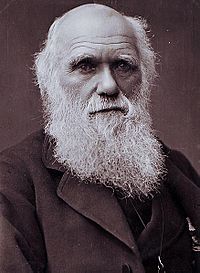
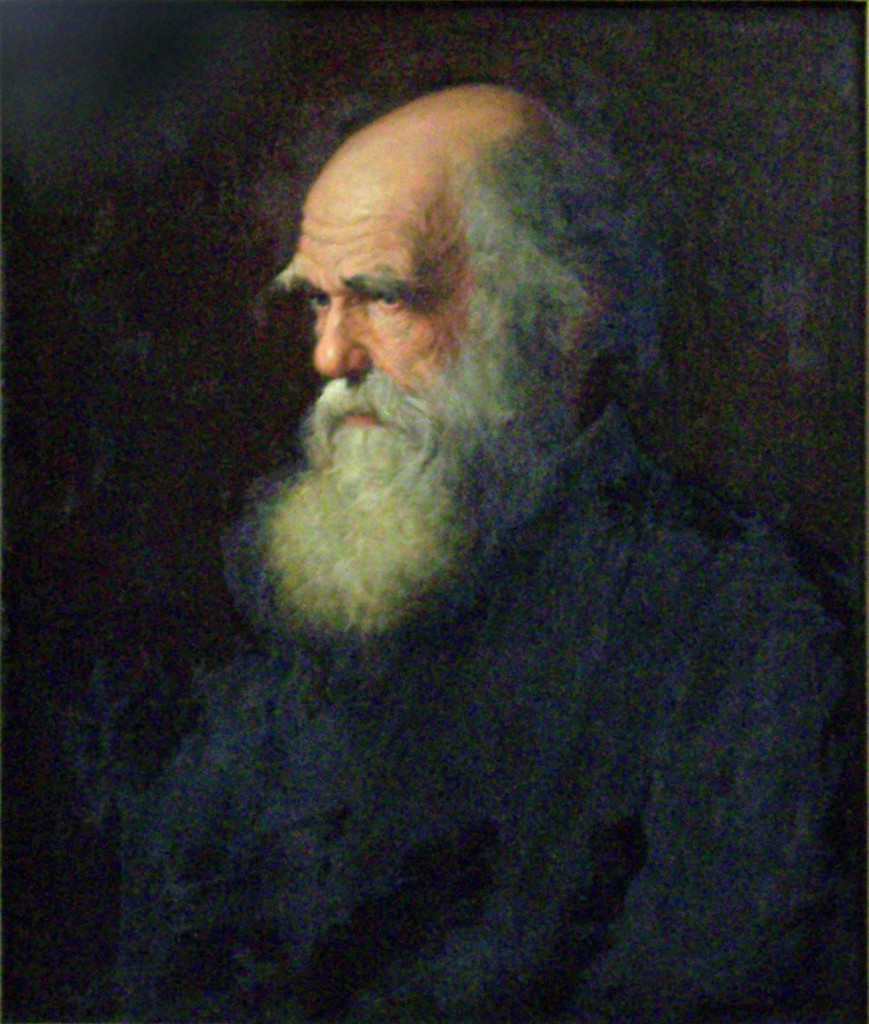
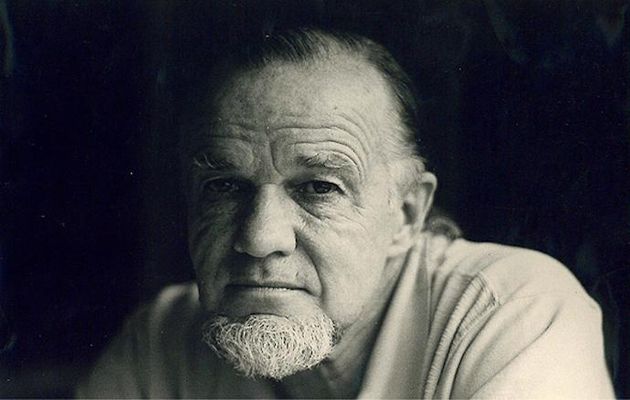
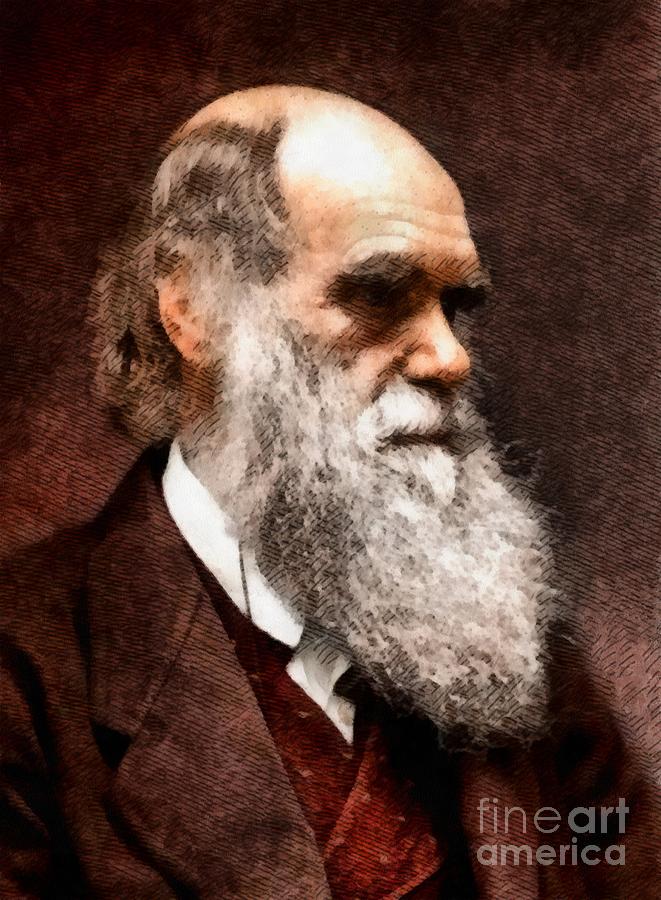
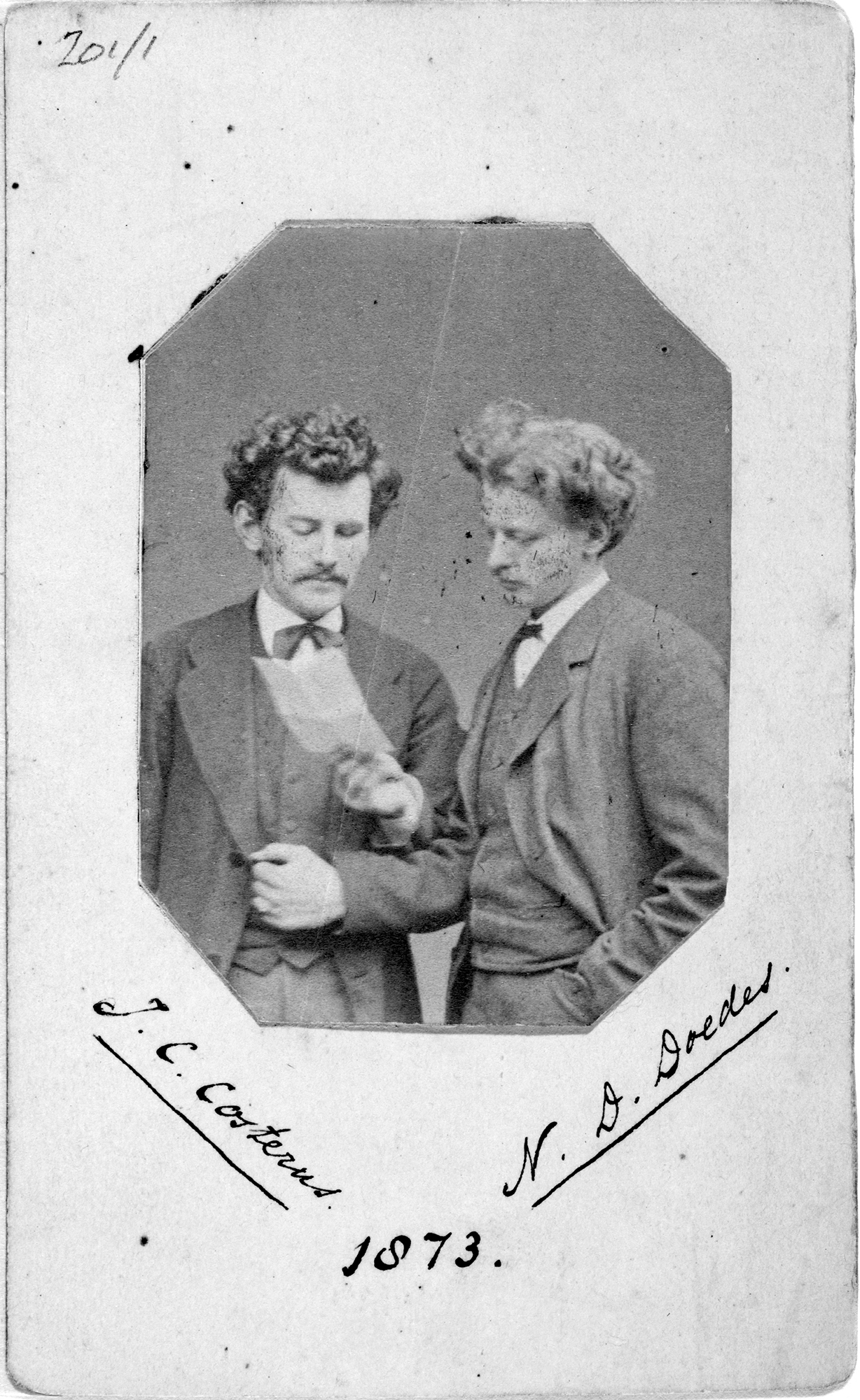
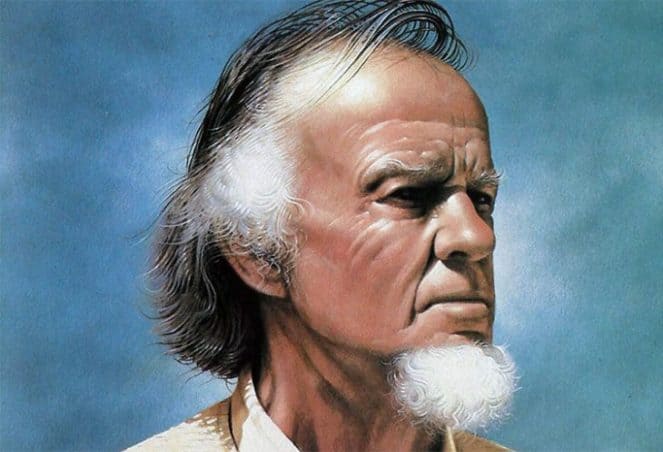
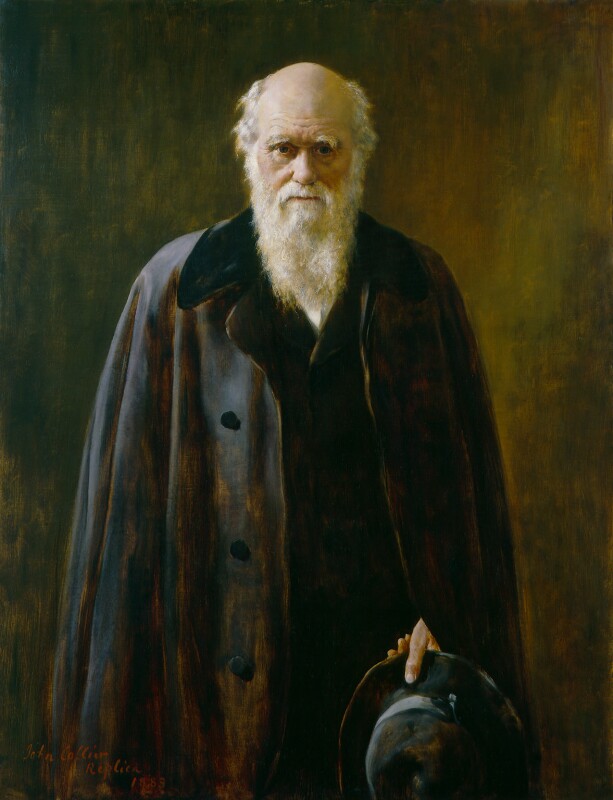


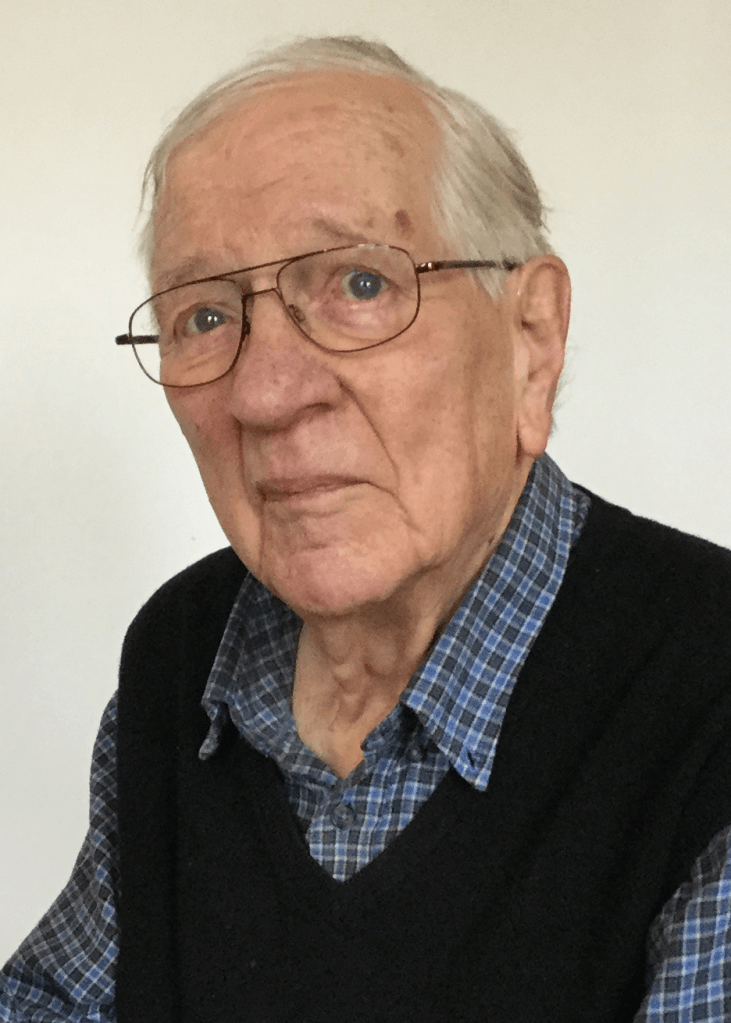
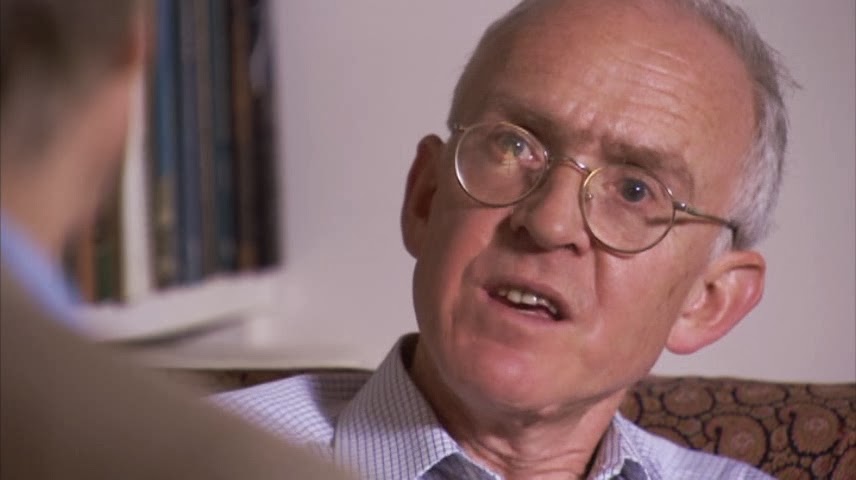
/https://public-media.smithsonianmag.com/filer/Charles-Darwin-1880-631.jpg)


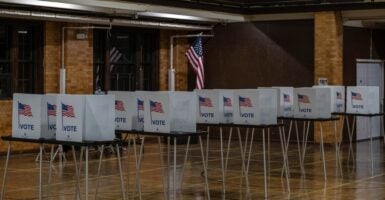


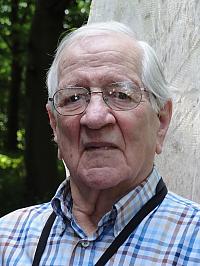
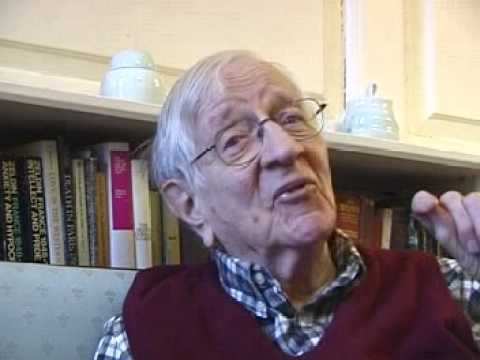
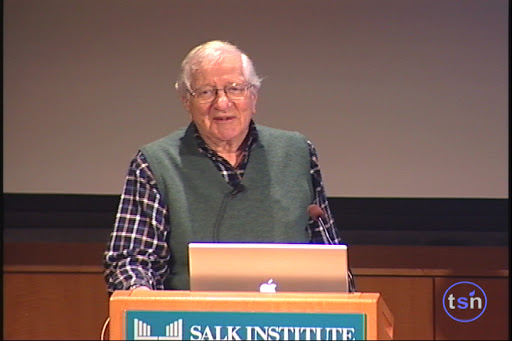

%2C445%2C291%2C400%2C400%2Carial%2C12%2C4%2C0%2C0%2C5_SCLZZZZZZZ_.jpg)



.png)


 Constitutional experts abounded at America’s first inauguration. Not only was the first inauguree (George Washington) a signer of the Constitution but numerous drafters of the Constitution were serving in the Congress that organized and directed that first inauguration. In fact, just under one fourth of the members of the first Congress had been delegates to the Convention that wrote the Constitution.
  Washington departed from Mt. Vernon and began his trek toward New York City, stopping first at Fredericksburg, Virginia, to visit his mother, Mary¬ – the last time the two would see each other. Mary was eighty-two and suffering from incurable breast cancer. Mary parted with her son, giving him her blessings and offering him her prayers, telling him: “You will see me no more; my great age and the disease which is rapidly approaching my vitals, warn me that I shall not be long in this world. Go, George; fulfill the high destinies which Heaven appears to assign to you; go, my son, and may that Heaven’s and your mother’s blessing be with you always.”


 The Daily Hatch