I used to think the Equal Employment Opportunity Commission was the worst federal bureaucracy. After all, these are the pinheads who are infamous for bone-headed initiatives, such as:
But I’m beginning to think that the Veterans Administration should win the prize. The EEOC crowd is simply a bunch of nutty leftists, but VA bureaucrats are downright evil. They create secret waiting lists that result in dying veterans and thenpay themselves big bonuses.
And we now have evidence that they deliberately lie to internal investigators and deliberately scheme to deny care to former military personnel. The Daily Callerhas someof the gruesome details. First, here’s information on the attempted coverup.
Management at Department of Veterans Affairs (VA) medical centers in California selected and coached employees on exactly what to tell investigators about wait time manipulation, according to new inspector general reports. According to two whistleblowers, management handpicked medical support assistants and told them what to tell the Veterans Health Administration Inspection Team, which visited the San Diego medical center in May, 2014, following the wait time manipulation scandal which rocked the Phoenix VA.
And here’s evidence on the effort to delay care while simultaneously hiding evidence of waiting lists.
Investigators interviewed 16 more medical support assistants, and most of them said they were told to “zero out” appointment times by changing veterans’ desired appointment dates to the first actual appointment date available. This practice gives off the appearance the veteran is getting the appointment at the desired time with no wait. …A veteran actually tried to commit suicide out of desperation and frustration as a result of four canceled appointments in a row.
You won’t be surprised to learn, by the way, that the crowd in Washington claims the actual problem is that the VA’s budget is too small.
Now let’s shift from malice to incompetence.
The Washington Postreports that officials from the Central Intelligence Agency left a rather unwelcome present for schoolkids recently.
The CIA left “explosive training material” under the hood of a Loudoun County school bus after a training exercise last week, a bus that was used to ferry elementary and high school students to and from school on Monday and Tuesday with the material still sitting in the engine compartment, according to the CIA and Loudoun County officials. …Loudoun schools spokesman Wayde Byard said the CIA indicated the nature of the material but asked the school system not to disclose it. Byard described it as a “putty-type” material designed for use on the battlefield.
By the way, the explosives weren’t discovered because the CIA has strong inventory controls.
The bus was taken to a school system facility on Wednesday for routine maintenance. Byard said the county’s buses are regularly taken off-line to check their spark plugs, hoses and to rotate tires. It was during a routine inspection that a technician discovered the explosive material.
Gee, how comforting.
Speaking of inventory procedures, the Daily Callerreports on an internal investigation that found grotesque and dangerous sloppiness in the handling of weapons at federal prisons.
Firearms, ammunition and dangerous chemical agents could be missing from federal prison armories without government officials having a clue they are gone…said a Department of Justice Inspector General report made public Thursday. …The IG reported missing ammunition in one armory but redacted multiple examples of equipment that was removed or added without a system update. Inventory tracking inadequacies make it all but impossible to know if equipment is missing. The IG investigation was prompted in 2011 after a BOP employee pleaded guilty to stealing munitions from a federal prison facility, but changes made since 2011 by BOP have not remedied the problem. …Three of the seven federal prisons reviewed also stockpiled “unauthorized chemical agents and ammunition,” but the IG redacted details about those stockpiles.
The good news (fingers crossed) is that there’s no concrete evidence that weapons actually wound up in the hands of thugs or terrorists.
P.S. Since I don’t want to be accused of discrimination, the episodes discussed above from the VA, CIA and BOP should not be interpreted as a slight to all the other federal departments and agencies that also work hard to waste money and make our lives less pleasant. Rest assured that the bureaucrats at the TSA, IRS, State Department,DHS, and elsewhere are also capable of waste, inefficiency, fraud, and abuse.
Milton Friedman’s FREE TO CHOOSE “The Tyranny of Control” Transcript and Video (60 Minutes) In 1980 I read the book FREE TO CHOOSE by Milton Friedman and it really enlightened me a tremendous amount. I suggest checking out these episodes and transcripts of Milton Friedman’s film series FREE TO CHOOSE: “The Failure of Socialism” and […]
In 1980 I read the book FREE TO CHOOSE by Milton Friedman and it really enlightened me a tremendous amount. I suggest checking out these episodes and transcripts of Milton Friedman’s film series FREE TO CHOOSE: “The Failure of Socialism” and “What is wrong with our schools?” and “Created Equal” and From Cradle to Grave, […]
In 1980 I read the book FREE TO CHOOSE by Milton Friedman and it really enlightened me a tremendous amount. I suggest checking out these episodes and transcripts of Milton Friedman’s film series FREE TO CHOOSE: “The Failure of Socialism” and “What is wrong with our schools?” and “Created Equal” and From Cradle to Grave, […]
In 1980 I read the book FREE TO CHOOSE by Milton Friedman and it really enlightened me a tremendous amount. I suggest checking out these episodes and transcripts of Milton Friedman’s film series FREE TO CHOOSE: “The Failure of Socialism” and “What is wrong with our schools?” and “Created Equal” and From Cradle to Grave, […]
In 1980 I read the book FREE TO CHOOSE by Milton Friedman and it really enlightened me a tremendous amount. I suggest checking out these episodes and transcripts of Milton Friedman’s film series FREE TO CHOOSE: “The Failure of Socialism” and “What is wrong with our schools?” and “Created Equal” and From Cradle to Grave, […]
In 1980 I read the book FREE TO CHOOSE by Milton Friedman and it really enlightened me a tremendous amount. I suggest checking out these episodes and transcripts of Milton Friedman’s film series FREE TO CHOOSE: “The Failure of Socialism” and “What is wrong with our schools?” and “Created Equal” and From Cradle to Grave, […]
In 1980 I read the book FREE TO CHOOSE by Milton Friedman and it really enlightened me a tremendous amount. I suggest checking out these episodes and transcripts of Milton Friedman’s film series FREE TO CHOOSE: “The Failure of Socialism” and “What is wrong with our schools?” and “Created Equal” and From Cradle to Grave, […]
In 1980 I read the book FREE TO CHOOSE by Milton Friedman and it really enlightened me a tremendous amount. I suggest checking out these episodes and transcripts of Milton Friedman’s film series FREE TO CHOOSE: “The Failure of Socialism” and “What is wrong with our schools?” and “Created Equal” and From Cradle to Grave, […]
Open letter to President Obama (Part 654) (Emailed to White House on July 22, 2013) President Obama c/o The White House 1600 Pennsylvania Avenue NW Washington, DC 20500 Dear Mr. President, I know that you receive 20,000 letters a day and that you actually read 10 of them every day. I really do respect you […]
Open letter to President Obama (Part 650) (Emailed to White House on July 22, 2013) President Obama c/o The White House 1600 Pennsylvania Avenue NW Washington, DC 20500 Dear Mr. President, I know that you receive 20,000 letters a day and that you actually read 10 of them every day. I really do respect you […]
SCOTT FITZGERALD: I’m going to find Zelda.I don’t like the thought of her with that Spaniard.
GIL PENDER:May I?
HEMINGWAY:Yeah,
GIL PENDER:I’m actually a huge Mark Twain fan.I think you can even make the case that all modern American literature comes from Huckleberry Finn.-
The Book of Ecclesiastes pictures life UNDER THE SUN without God in the picture. The Christian Scholar Ravi Zacharias noted, “The key to understanding the Book of Ecclesiastes is the term UNDER THE SUN — What that literally means is you lock God out of a closed system and you are left with only this world of Time plus Chance plus matter.”
Ecclesiastes 4:1,
Then I looked again at all the acts of oppression which were being done under the sun. And behold I saw the tears of the oppressed and that they had no one to comfort them; and on the side of their oppressors was power, but they had no one to comfort them.
(Francis Schaeffer pictured below)
Francis Schaeffer noted concerning this verse, “Between birth and death power rules. Solomon looked over his kingdom and also around the world and proclaimed that right does not rule but power rules.”
No better example of oppression can be given than that of slavery, but even though many Christians were involved as slave owners the abolition movement in the United States would not have been successful if it wasn’t for people like Mark Twain’s father-in-law Jarvis Langdon (more on this abolitionist later).
PBS American Experience & The Abolitionists Part 1 1820s 1838
Several passionate, lucid commentators explore the profound moment in Twain’s masterpiece, ”The Adventures of Huckleberry Finn,” when Huck decides not to turn in the runaway slave Jim and take the consequences instead. ”All right, then, I’ll go to hell,” he says. The scholar Jocelyn Chadwick explains how Twain follows Huck’s thoughts as he is ”unlearning” the racist stereotypes that have been bred into him. Mr. Banks says the scene ”makes the hair on the back of my neck stand up today,” which it should. Yet this passage, perhaps the most tough-minded in all American literature, is read by Mr. Conway with lilting piano music in the background, softening the effect and making it seem that these astute commentators have been talking into the wind.
It was a close place. I took . . . up [the letter I’d written to Miss Watson], and held it in my hand. I was a-trembling, because I’d got to decide, forever, betwixt two things, and I knowed it. I studied a minute, sort of holding my breath, and then says to myself: “All right then, I’ll go to hell”—and tore it up. It was awful thoughts and awful words, but they was said. And I let them stay said; and never thought no more about reforming.
These lines from Chapter 31 describe the moral climax of the novel. The duke and the dauphin have sold Jim, who is being held in the Phelpses’ shed pending his return to his rightful owner. Thinking that life at home in St. Petersburg—even if it means Jim will still be a slave and Huck will be a captive of the Widow— would be better than his current state of peril far from home, Huck composes a letter to Miss Watson, telling her where Jim is. When Huck thinks of his friendship with Jim, however, and realizes that Jim will be sold down the river anyway, he decides to tear up the letter. The logical consequences of Huck’s action, rather than the lessons society has taught him, drive Huck. He decides that going to “hell,” if it means following his gut and not society’s hypocritical and cruel principles, is a better option than going to everyone else’s heaven. This moment of decision represents Huck’s true break with the world around him. At this point, Huck decides to help Jim escape slavery once and for all. Huck also realizes that he does not want to reenter the “sivilized” world: after all his experiences and moral development on the river, he wants to move on to the freedom of the West instead.
I can now say for certain that I wish my hometown had its own version of Landmarks seventy-five years ago. That’s because in 1939, the wrecking ball took apart this historically significant house that once sat at the corner of Church and Main streets in downtown Elmira.
This large Victorian home was the home of a wealthy coal merchant named Jervis Langdon. He was an ardent abolitionist, and he served as a “conductor” on the Underground Railroad along with his close friend Thomas K. Beecher. The brother of Harriet Beecher Stowe, Thomas Beecher was the pastor of Park Church located across the street from Langdon’s home. Both men counted Frederick Douglass as a close friend. The famed abolitionist even once visited Langdon at his home in Elmira.
It was Langdon’s daughter, however, that would make the most significant impact upon the Langdon legacy in Elmira.
In 1867, Olivia’s brother Charles traveled to the Mediterranean aboard a boat named Quaker City. On the trip, he befriended a reporter writing a story for a California newspaper. That reporter was Samuel Langhorne Clemens, soon to become known as the famous author Mark Twain. One night, Charles showed Clemens a small daguerreotype of his sister Olivia. Upon looking at the portrait of the delicate woman, Clemens admitted to falling in “love at first sight”. Throughout the rest of the trip, he asked Charles to bring out the photograph and allow him to gaze upon it again. When the trip concluded, Twain made a point to visit Langdon and his sister during a trip to New York City. During that visit, Clemens was invited to visit the Langdon home in Elmira. It wasn’t long before Twain found himself knocking on the large door of the Langdon home on the corner Church and Main.
For the next two years, Clemens courted Olivia and visited Elmira often. After an initial rejection, the two became engaged in late 1869. On February 2, 1870, Mark Twain and Olivia Langdon were married by Thomas K. Beecher in the library of the Langdon home.
Over the next twenty years, the Clemens family would make Elmira their summer home. While there, they lived at Quarry Farm, a Langdon vacation home located on a large hill outside of town. In the octagonal study built there for him, Mark Twain found what he called “the quietest of all quiet places.” Here, he would write the majority of his most famous works, includingAdventures of Tom Sawyer, The Adventures of Huckleberry Finn, The Prince and the Pauper, andA Connecticut Yankee in King Arthur’s Court.
While in Elmira, the Clemens family would spend a large amount of time at the large house in town. Three of the four Clemens children were born in the house. The house was a convenient place for Clemens to entertain visitors or to do business. The house is where Ulysses S. Grant once visited Twain to discuss his memoirs, a work that Twain helped get published. Clemens even stated that since the house was so large, one could “always escape your enemies in Langdon house”.
The Langdon home is also where on a warm day in 1889, a young reporter from British India traveled to Elmira in search of his idol. Detailing the experience in his later work Letters of Travel, Rudyard Kipling recounts his arrival in Elmira:
Name
Langdon, Jervis (1809–1870)
Short Biography
Jervis Langdon, a native of New York State, married Olivia Lewis in 1832, and the pair settled in Elmira, New York, in 1845. He became prosperous in the lumber business and then wealthy in the coal trade, which he entered in 1855. His extensive operations included mines in Pennsylvania and Nova Scotia, and a huge rail and shipping network supplying coal to western New York State, Chicago, and the Far West. An ardent abolitionist, Jervis Langdon served as a “conductor” on the Underground Railroad, and counted Frederick Douglass, whom he had helped to escape from slavery, among his friends. Jervis and Olivia Langdon had three children: Susan (who was adopted), Olivia (“Livy”), and Charles. Jervis approved SLC’s marriage to Livy despite his marked difference in social status. He lent SLC one-half of the $25,000 needed to buy the Buffalo Express and gave the newlyweds a house in Buffalo. He died in 1870 of stomach cancer, leaving bequests totaling $1 million. Livy’s inheritance was to remain central in the life of the Clemens family.
Warner McGuinn was born in 1859 in heavily segregated Richmond, Virginia to Jared and Fannie McGuinn, free Negros in the time of U.S. slavery, a time when it was illegal to educate slaves for fear they would revolt.
But being “free” Warner was educated in the segregated public school system, where he was an outstanding student and he graduated from Lincoln University, an all-black school, in 1884. He briefly studied law at another all black school, Howard University, when in 1885 in a stunning development, the Yale University Law School accepted him.
This was a great opportunity to attend one of America’s most prestigious schools. But Warner had no money and worked as many as three jobs at a time to pay for his tuition, books and food. He lived in the home of a school janitor. Then something incredible happened.
He met the famous writer; Mark Twain (Samuel Clemens).Twain was very impressed with this young man and upon hearing of his financial struggles, agreed to pay for his education. “I do not believe I would very cheerfully help a white student who would ask for the benevolence of a stranger, but I do not feel so about the other color,” Twain wrote in a letter to Yale Law School Dean Francis Wayland. “We have ground the manhood out of them, and the shame is ours, not theirs, and we should pay for it.”
Twain’s remarkable generosity freed Warner from his financial struggles and he excelled, graduating No. 1 in the Yale Law School class of 1887. Shortly afterward, he began his law practice in Kansas City, Kansas before moving to Baltimore in 1892 and establishing what became a successful law practice. Warner was also an activist for women’s suffrage (American women could not vote until 1920) equating it to African-Americans’ battle for civil rights.
As a lawyer Warner’s greatest case was in 1917 in federal court, where he persuaded the court it was illegal for Baltimore to segregate black or other people. Later, as a civic leader Warner was twice elected to the Baltimore City Council. But what he became best known for was mentoring a gifted black law student who would later rise to historic prominence. That student was Thurgood Marshall.
Marshall (1908 – 1993) became famous for arguing landmark cases, most notably successfully arguing the Brown v. Board of Education case before the U.S. Supreme Court (1954), in which public school segregation was declared illegal. Later, Marshall became the first African American U.S. Supreme Court Justice (1967 – 1991).
In his personal life, Warner married Anna L. Wallace in 1892 and they had a daughter Alma born in 1895. Anna passed away in 1929 at the age of 69 after 37 years of marriage and Warner never remarried. He passed away in Alma’s Philadelphia home at the age of 78 in 1937.
But please note the historical significance of what happened when Mark Twain offered a crucial helping hand to Warner, an extraordinary law student. Despite national segregation, he became an outstanding attorney and in turn mentored many young attorneys, color aside, most notably Thurgood Marshall. And it all started with Twain’s generosity.
Dick
Success Tip of the Week: You never know what will happen if you too courageously pursue your dreams as Warner McGwinn pursued his. As happened for him, destiny may open doors for you providing the resources you need to succeed.
Josephine Baker at Bricktops in the film MIDNIGHT IN PARIS
ZELDA FITZGERALD: I know what you’re thinking.This is boring. I agree!I’m ready to move on.Let’s do Bricktop’s!- Bricktop’s?-
SCOTT FITZGERALD: I’m bored! He’s bored! We’re all bored.We. Are. All. Bored.Let’s do Bricktop’s.Why don’t you tell Cole and Linda to come with, and…um…uh…Gil? You coming?
[Cole Porter’s”You’ve Got That Thing”]
You got that thing- You got that thing The thing that makes birds forget to sing Yes, you’ve got that thing, that certain thing You’ve got that charm,that subtle charm that makes young farmers desert the farm
This is one of the finest establishments in Paris. They do a diamond whiskey sour.Bon soir, tous le monde! (Good evening, everyone!) Un peu tir de bourbon, s’il vous plaît .(A small shot of bourbon, please.)
SCOTT FITZGERALD: Greetings and salutations.You’ll forgive me. I’ve been mixing grain and grape.Now, this a writer. uh…Gil. Yes?- Gil…
Bricktop’s Monico cir 1931. Photo by Carl Van Vechten
Ada ‘Bricktop’ Smith played barkeep to the ‘Lost Generation’ of international ex-patriots living in Paris in the 1930s. The red haired cigar smoking American singer made the jump from Harlem to Montmartre—and her nightclubs became all the rage. A Who’s Who of musicians clamored to play there. The glitterati of the 30s knew hers was the place for ultra-chic café society.
Bricktop, Los Angeles, 1917. Photo from the autobiography,Bricktop
Born Ada Beatrice Queen Victoria Louise Virginia Smith in 1894 to her black father and mulatto mother, the baby’s flaming red hair earned her another name—Bricktop. She was a teenager when she got her first job in show business on Chicago’s South Side and wound up a headliner in Harlem’s top Jazz Age cabarets.
“I’m 100 percent American Negro with a trigger Irish temper.” – Bricktop on her genealogy
But Paris was Bricktop’s magic charm. Her bistro was a beacon for Parisian nightlife. The international set gathered there to bask in her hospitality and enjoy each other’s company. Ernest Hemingway and T.S. Eliot wrote about her. Cole Porter gave her gowns and furs and even composed a song for her. And F. Scott Fitzgerald once quipped, “My greatest claim to fame is that I met Bricktop before Cole Porter.”
Montmartre cir. 1925. Photo from hemingwaysparis.blogspot.
This week on Riverwalk Jazz actors Topsy Chapman and Vernel Bagneris offer narratives drawn from the memoirs of Bricktop and Langston Hughes. The Jim Cullum Jazz Band and the Hot Club of San Francisco give us a musical tour of Paris in the 30s.
Inside Bricktop’s Monico. Photo from the autobiography,Bricktop
Langston Hughes, Paris 1938. Courtesy Library of Congress
Harlem in Montmartre
Bricktop ran several clubs in Monmartre. Her spot on Place Pigalle was a combination nightclub, mail drop, bank and neighborhood bar for the most elegant people in Paris. Bricktop would leave the stage and walk around the tables, stopping to rub a bald head, kiss a cheek or tell a joke.
Bricktop (2nd from left) and friends at the club. Photo from the autobiographyBricktop
“I always said I’m not a singer, but I have my own style and I make it tough on singers who have to follow me. John Stienbeck told me, ‘Brick, when you sing ‘Embraceable You’ you take 20 years off a man’s life.’ And I swear, every time I shimmy, a skinny woman loses her man.” – Bricktop on her performing style.
In 1931 Brick moved into the grand old nightclub The Monico and hired singer Mabel Mercer. She booked only the best musicians. Sidney Bechet and Django Reinhart played for Brick. When Louis Armstrong was in town he came by to play, as did Fats Waller and Duke Ellington.
Fats with musicians at Bricktop’s. Photo from autobiographyBricktop
Bricktop’s great musical guardian angel was the supreme master of popular song Cole Porter. She taught his friends the latest New York dance craze at his ‘Charleston cocktail parties,’ and he introduced her to the set that would become her loyal clientele.
Duke Ellington and the Peter Sisters at Bricktop’s. From the autobiography Bricktop
Cole was the only person at Bricktop’s who had a special table reserved for him at all times. No one else was ever allowed to sit there, even when the club was packed and the Porters were in New York. Not even the Prince of Wales got such royal treatment.
Cole and Linda Porter. Photo newyorksocialdiary.com
Through the years Cole Porter found ways to show Bricktop that her affection was returned. He composed his tune “Miss Otis Regrets” for her to perform, and it became her signature.
“‘Miss Otis’ is a song about a rich woman whose lover deserts her. She tracks him down, pulls a gun out of her velvet gown, and shoots him. In the end, she’s hanged for it. Very few people do it correctly. In my performance, I bow at the end, raising my hand in a motion across my neck to suggest a lynching.” – Bricktop
Live to America from Bricktop’s in Paris with Edward R. Murrow
Reinhardt & Grapelli. Photo last.fm.
Gypsy guitarist Django Reinhardt built his career on his musical genius despite a reputation for being unreliable and short tempered. Bricktop had been warned against hiring him to play at her club, but she followed her own instincts and never regretted it. Together they made jazz history—winning fans on both side of the Atlantic with a live shortwave radio broadcast on June 12, 1937 hosted by radio legend Edward R Murrow. Our broadcast this week includes an audio clip of this historic broadcast during which Django’s famous temper flared when Murrow mistakenly credited Stephane Grapelli as the composer of one of Django’s tunes.
Bricktop at Le Grand Duc, 1928. Photo from the autobiography,Bricktop
Queen of Paris Nightclubs
From the Grand Duke in the early 20s to the end of the 1930s, Bricktop built her reputation as the Queen of Paris Nightclubs. When Hitler invaded Poland everyone realized that war would soon darken the ‘city of lights.’ Bricktop sailed for the States in October of 1939 on one of the last boats out.
At Bricktop’s, Paris. 1950 Photo from the autobiographyBricktop
It was the end of an era, but it wasn’t the end of Bricktop’s. She would go on to open clubs in Mexico City, Rome and New York before returning to Paris in the 1950s. In 1973 at the age of 78 Bricktop came out of retirement to launch the final venue of her career in New York City. She told reporters:
“Anywhere I entertain becomes Bricktop’s. Running a saloon is the only thing I know and I know it backwards and forwards. As for me, it’s nice to be mingling around again. Not working nights began to wear on me. Ciao, babies!”
Photo credit for Home Page teaser image: Bricktop’s Monico circa 1931. Photo by Carl Van Veckten
Midnight In Paris location: arriving at Bricktop’s: rue Malebranche, Paris
From here – these parties soon get so boring – it’s on to ‘Bricktop’s’. The singer and dancer Bricktop ran famed nightclub Le Grand Duc at 52 rue Pigalle (later, in 1929, she opened Chez Bricktop a few doors down at 66 rue Pigalle).
In the film, though, her club appears to be housed way to the south near the Pantheon, at 17 rue Malebranche, (another former screen location – this was previously the home of Audrey Hepburn and her father Maurice Chevalier in Billy Wilder‘s Love In The Afternoon) (metro: Luxembourg).
The real Bricktop (real name Ada Smith) lived on into the 1980s, and actually appeared as herself in Woody Allen‘s 1983 Zelig, to talk about the Human Chameleon’s visit to her nightclub.
Midnight In Paris location: Gil gets an invitation from the mysterious Peugeot: Church of St Etienne du Mont, rue de la Montagne Sainte-Geneviève, Paris
Lightweight but hugely enjoyable whimsy from Woody Allen, as writer and nostalgia fan Gil (Owen Wilson) gets a first-hand taste of Jazz Age Paris.
Like Allen’s New York films, the movie provides a handy guide to the best the city has to offer – providing you’re not on a student gap year budget.
Midnight In Paris location: little shops of the Left Bank: rue Galande, Paris
Like Manhattan, the movie opens with a montage of beauty shots set to a jazz score. Among the flurry of images, you can recognise locations from other Parismovies, which may be homages or simply the best views of the city: there are the little Left Bank shops of rue Galande – with the giant flea sculpture – (seen inRichard Linklater’s Before Sunset), avenue des Camoens with its view of theEiffel Tower (Francois Truffaut’s Le Dernier Metro), the columns of Parc Monceau(Gigi) and the double-decker Pont Bir Hakeim (Last Tango in Paris and, more recently, Inception).
The movie proper begins in Monet’s Garden, the former home of impressionist painter Claude Monet in Giverny, where writer Gil reveals his love for the romantic image of old Paris.
Monet lived on this estate from 1883 until his death in 1926. The Japanese-style wooden bridge, famous from his paintings, can be found in the water garden section. It’s actually a copy, after the original bridge, which the artist commissioned from a local craftsman, had deteriorated beyond repair. About 50 miles northwest of Paris, you can comfortably visit Giverny, as a day trip from the city.
Midnight In Paris location: Gil and Inez stay at the luxurious Parisian hotel: Hotel Le Bristol, rue du Faubourg St Honoré, Paris
Midnight In Paris location: Gil and Inez dine with her parents: Le Grand Véfour,rue de Beaujolais, Paris
Equally upscale (even for Paris) is the restaurant where Gil rather vocally disagrees with Inez’s Republican folks, and where smug know-all Paul (Michael Sheen) first puts in an appearance. It’s Le Grande Véfour, 17 Rue du Beaujolais(metro: Bourse or Pyramides), tucked away behind the columns at the entrance to the gardens of the Palais Royale. Opened in 1784, the restaurant’ boasts an impressive list of customers – many of whom have plaques marking their favourite tables – including Napoleon – and naturally Josephine – as well as writers Colette and Victor Hugo, philosopher Jean Paul Sartre and artist/film-maker Jean Cocteau.
It’s in the gardens at Versailles that Paul snidely dismisses Gil’s nostalgia as ‘Golden Age Thinking’. Versailles is about 45 minute rail journey from Paris Austerlitz station – you can purchase a round-trip RER ticket (you can book a joint trip to include Giverny if you have limited time).
The interior of the grand Palace of Versailles itself, built for Louis XIV, is glimpsed toward the end of the movie as the unfortunate detective hired to follow Gil finds himself seriously lost. The palace is also seen in Milos Forman’s Valmont andSofia Coppola’s Marie Antoinette.
Midnight In Paris location: Inez and her mother talk wedding rings: Chophard, Place Vendome, Paris
With the wedding on the horizon, Inez talks rings with her mother as they window shop at jewellery store Chophard, 1 place Vendome (metro: Tuileries) – a mere stone’s throw from the Ritz.
Midnight In Paris location: Pretentious Paul disputes the museum guide: Musée Rodin, Hotel Biron, rue de Varenne, Paris
During a tour of the Musée Rodin in the Hotel Biron, 79 rue de Varenne (metro: Varenne), Paul contradicts the guide (a cameo from Carla Bruni) about the sculptor’s wife and mistress. The Hotel Biron was Auguste Rodin‘s home from 1911 to his death in 1917, and he bequeathed his artworks to the nation on condition they be exhibited here. There’s an admission charge for the museum itself, but you can tour the gardens for only €1.
The alfresco wine tasting is at La Belle Étoile, the rooftop suite of Hotel Le Meurice, 228 rue de Rivoli (metro: Tuileries) , overlooking the Tuileries. Dubbed the ‘Hotel of Kings’ – Queen Victoria, Alphonse XIII and the Shah of Iran (who was deposed by the Iranian revolution while staying here) are listed among its royal guests. Other luminaries include composer Tchaikovsky, as well as two artists who appear as characters in the film – Pablo Picasso and Salvador Dali.
Ever the showman, Dali spent at least one month of each year at Le Meurice. Determined to live up to his image as Master of the Surreal, he occasionally demanded a horse be sent to his room, or a herd of sheep, or flies caught from the Tuileries. That’s room service for you.
Understandably, this rarified life is getting all too much for Gil, who takes off alone for a breath of fresh air.
Lost and slightly tipsy, he slumps down on the steps of St Etienne du Mont, rue de la Montagne Geneviève (metro: Cardinal Lemoine), where he gets an invite from the mysterious 1920 Peugeot Landaulet, and the plot spins off into fantasy. Note that the ‘magic’ steps are not the main entrance, but to the side of the church, facing north.
Apart from the steps, we see precious little of the church itself, which houses the shrine of Saint Geneviève, the city’s patron saint, along with the tombs of physicist and philosopher Blaise Pascal and playwright Jean Racine. Revolutionary Jean-Paul Marat (the one murdered in his bath by Charlotte Corday) is buried in the church’s cemetery.
Midnight In Paris location: Gil arrives at the 20s party: quai de Bourbon, Ile St Louis, Paris
Gil is whisked away to a party on quai de Bourbon (metro: Pont Marie), on the western tip if the Ile St Louis. With Cole Porter playing piano, his hosts introducing themselves as Scott and Zelda Fitzgerald (Tom Hiddleston andAlison Pill), Gil realises something very odd is going on.
Midnight In Paris location: arriving at Bricktop’s: rue Malebranche, Paris
From here – these parties soon get so boring – it’s on to ‘Bricktop’s’. The singer and dancer Bricktop ran famed nightclub Le Grand Duc at 52 rue Pigalle (later, in 1929, she opened Chez Bricktop a few doors down at 66 rue Pigalle).
In the film, though, her club appears to be housed way to the south near the Pantheon, at 17 rue Malebranche, (another former screen location – this was previously the home of Audrey Hepburn and her father Maurice Chevalier in Billy Wilder‘s Love In The Afternoon) (metro: Luxembourg).
The real Bricktop (real name Ada Smith) lived on into the 1980s, and actually appeared as herself in Woody Allen‘s 1983 Zelig, to talk about the Human Chameleon’s visit to her nightclub.
Midnight In Paris location: Gil meets Ernest Hemingway: Restaurant Polidor, rue Monsieur le Prince, Paris
The non-stop partying moves on to Le Polidor, 41 rue Monsieur le Prince (metro: Odéon), where Gil leaps at the opportunity of getting Ernest Hemingway (Corey Stoll) to cast an eye over his novel. A mere stripling, dating back only to 1845, Le Polidor was indeed patronised by Hemingway, along with fellow scribes Paul Verlaine, André Gide, James Joyce, Antonin Artaud and beat poet Jack Kerouac. For once, prices are comparatively modest and – don’t worry – no, it hasn’t been replaced by a launderette.
The next day, back in the 21st century, Inez and her mother consider forking out €18,000 for an antique chair at Philippe de Beauvais, 112 Boulevard De Courcelles (metro: Ternes or Courcelles). If you’re looking to track down that special bit of furniture, be warned that Beauvais is actually a dealer in antique lighting, offering a collection of 18th to early 20th-century chandeliers, electroliers, candle sticks, lanterns and the like.
Incidentally, the striking church you may notice in the background of the scene is the Cathedral of Saint-Alexandre-Nevsky on Rue Daru, seen in the Oscar-winning 1956 film of Anastasia, with Ingrid Bergman.
Midnight In Paris location: meeting Picasso at Gertrude Stein’s: rue de Fleurus, Paris
The second magical midnight sees Hemingway take Gil off to visit Gertrude Stein(Kathy Bates) and her lover Alice B Toklas at the writer’s real home, 27 rue de Fleurus (metro: Saint Placide). It’s here he also meets Pablo Picasso and his current mistress Adriana (Marion Cotillard). The house isn’t open to the public, but a plaque above the door commemorates the writer’s 33-year residence.
Looking for a Cole Porter record, Gil bumps into Gabrielle (Léa Seydoux) at the flea market of Marché aux Puces de Saint-Ouen, Le Marché Paul Bert, 96-110 rue des Rosiers (metro: Porte de Clignancourt), to the north of the city at Porte de Clignancourt. This is the old market you might have seen in Louis Malle‘s freewheeling 1960 comedy Zazie Dans Le Metro.
Midnight In Paris location: Gil outsmarts Paul at the Monet exhibition: Musée de l’Orangerie, Place de la Concorde, Paris
Eight of Monet’s huge water lily pictures are displayed at the Musée de l’Orangerie, Place de la Concorde (metro: Concorde), along with works by Paul Cézanne, Henri Matisse, Renoir and others. It’s here that Gil finally manages to outsmart Paul with his background knowledge of the Picasso painting.
But another night brings another party. The fairground bash with carousels is held in the Musée des Arts Forains – the Museum of Fairground Art, at thePavillons de Bercy, 53 avenue des Terroirs de France (metro: Cour Saint-Émilion). The brainchild of Jean Paul Favand, this unique private collection of fairground art, including German swings, merry-go-rounds and carousels, is generally used as a venue-for-hire, though it’s possible to book ahead for private visits.
It’s here that Gil bumps into Adriana again, and together they take what seems to be quite a stroll. From southeastern Paris, they find themselves in Montmartre, descending the photogenic steps on rue du Chevalier de la Barre, running alongside Sacre Coeur, down to rue Lamarck (metro: Anvers).
Midnight In Paris location: Adriana’s journal is read to Gil: Parc Jean XXIII, Ile de la Cité, Paris
Gil is amazed to find himself mentioned in Adriana’s journal as it’s read to him in the Parc Jean XXIII, tucked away on the Ile de la Cite, behind Notre Dame Cathedral (metro: Maubert Mutualité).
Midnight In Paris location: the Surrealist wedding party: Maison Deyrolle, 46 rue du Bac, Paris
The Surrealist wedding party, where Gil pitches the idea for The Exterminating Angel to a flummoxed Luis Buñuel, is the extraordinary Maison Deyrolle, 46 rue du Bac (metro: Rue du Bac), awash with insects and taxidermy. Since 1831,Deyrolle has offered animal, botanic and mineral specimens to nature lovers, schools, universities, museums and scientific institutions. it’s not surprising that its collection became a magnet for the Surrealists.
Midnight In Paris location: loved by Surrealists: Maison Deyrolle, 46 rue du Bac, Paris
Luis Buñuel, by the way, was intended to be the artist (finally replaced by writerMarshall MacLuhan) dragged out of the cinema queue to refute the loudmouthed pseudo-intellectual (a forerunner of Paul) in Woody Allen’s Annie Hall.
Midnight In Paris location: the coach and horses arrive for Adriana and Gil: Restaurant Paul, rue Henri Robert, Place Dauphine, Paris
It’s on the quiet triangle of Place Dauphine, hidden away at the opposite end of the Ile de la Cité from the parc, in front of Restaurant Paul, rue Henri Robert, (metro: Chatelet), that a coach and horses arrive to give Adriana her own trip back into the past. Regulars at Restaurant Paul once included Yves Montandand Simone Signoret, who happened to live in an apartment above the restaurant.
Midnight In Paris location: Gil and Adriana are transported back to the Belle Epoque: Maxim’s, rue Royale, Paris
Adriana and Gil are whisked further back to the Belle Epoque finery of Maxim’s, 3 rue Royale (metro: Concorde or Madeleine), where scenes for the 1958 musicalGigi were filmed, and on to the Moulin Rouge, 82 boulevard de Clichy (metro: Blanche) where, in turn, painters Toulouse Lautrec, Gauguin and Degas hanker after the great age of the Renaissance.
Neither John Huston’s 1952 film of Moulin Rouge nor the 2001 Baz Luhrmannmusical were filmed in the real nightclub (the Luhrmann film was made entirely on soundstages in Sydney, New South Wales), though the Huston film was made largely in Paris, including scenes at Maxim’s.
Midnight In Paris location: Gil browses the bookshop: Shakespeare and Company, rue de la Bucherie, Paris
Midnight In Paris location: Gil and Gabrielle meet up in the rain: Pont Alexandre III, Paris
He finally ends up with Gabrielle on the wildly elaborate Pont Alexander III(metro: Invalides), (Anastasia again, the 1952 Moulin Rouge and 1985 Bond movie A View to a Kill), acknowledging that “Paris is at its most beautiful in the rain”.
____________
The Life Of Mark Twain
This series deals with the Book of Ecclesiastes and Woody Allen films. The first post dealt with MAGIC IN THE MOONLIGHT and it dealt with the fact that in the Book of Ecclesiastes Solomon does contend like Hobbes and Stanley that life is “nasty, brutish and short” and as a result has no meaning UNDER THE SUN.
The movie MIDNIGHT IN PARISoffers many of the same themes we see in Ecclesiastes. The second postlooked at the question: WAS THERE EVER A GOLDEN AGE AND DID THE MOST TALENTED UNIVERSAL MEN OF THAT TIME FIND TRUE SATISFACTION DURING IT?
In the third post in this series we discover in Ecclesiastes that man UNDER THE SUN finds himself caught in the never ending cycle of birth and death. The SURREALISTS make a leap into the area of nonreason in order to get out of this cycle and that is why the scene in MIDNIGHT IN PARIS with Salvador Dali, Man Ray, and Luis Bunuel works so well!!!! These surrealists look to the area of their dreams to find a meaning for their lives and their break with reality is only because they know that they can’t find a rational meaning in life without God in the picture.
The fourth post looks at the solution of WINE, WOMEN AND SONG and the fifthandsixth posts look at the solution T.S.Eliot found in the Christian Faith and how he left his fragmented message of pessimism behind. In theseventh post the SURREALISTS say that time and chance is all we have but how can that explain love or art and the hunger for God? The eighth post looks at the subject of DEATH both in Ecclesiastes and MIDNIGHT IN PARIS. In the ninth post we look at the nihilistic worldview of Woody Allen and why he keeps putting suicides into his films.
In the tenth post I show how Woody Allen pokes fun at the brilliant thinkers of this world and how King Solomon did the same thing 3000 years ago. In theeleventh postI point out how many of Woody Allen’s liberal political views come a lack of understanding of the sinful nature of man and where it originated. In thetwelfth post I look at the mannishness of man and vacuum in his heart that can only be satisfied by a relationship with God.
In the thirteenth postwe look at the life of Ernest Hemingway as pictured in MIDNIGHT AND PARIS and relate it to the change of outlook he had on life as the years passed. In the fourteenth post we look at Hemingway’s idea of Paris being a movable feast. The fifteenth andsixteenth posts both compare Hemingway’s statement, “Happiness in intelligent people is the rarest thing I know…” with Ecclesiastes 2:18 “For in much wisdom is much vexation, and he who increases knowledge increases sorrow.” The seventeenth post looks at these words Woody Allen put into Hemingway’s mouth, “We fear death because we feel that we haven’t loved well enough or loved at all.”
In MIDNIGHT IN PARIS Hemingway and Gil Pender talk about their literary idol Mark Twain and the eighteenth post is summed up nicely by Kris Hemphill‘swords, “Both Twain and [King Solomon in the Book of Ecclesiastes] voice questions our souls long to have answered: Where does one find enduring meaning, life purpose, and sustainable joy, and why do so few seem to find it? The nineteenth postlooks at the tension felt both in the life of Gil Pender (written by Woody Allen) in the movie MIDNIGHT IN PARIS and in Mark Twain’s life and that is when an atheist says he wants to scoff at the idea THAT WE WERE PUT HERE FOR A PURPOSE but he must stay face the reality of Ecclesiastes 3:11 that says “God has planted eternity in the heart of men…” and THAT CHANGES EVERYTHING! Therefore, the secular view that there is no such thing as love or purpose looks implausible. The twentieth post examines how Mark Twain discovered just like King Solomon in the Book of Ecclesiastes that there is no explanation for the suffering and injustice that occurs in life UNDER THE SUN. Solomon actually brought God back into the picture in the last chapter and he looked ABOVE THE SUN for the books to be balanced and for the tears to be wiped away.
The twenty-first post looks at the words of King Solomon, Woody Allen and Mark Twain that without God in the picture our lives UNDER THE SUN will accomplish nothing that lasts. The twenty-second postlooks at King Solomon’s experiment 3000 years that proved that luxuries can’t bring satisfaction to one’s life but we have seen this proven over and over through the ages. Mark Twain lampooned the rich in his book “The Gilded Age” and he discussed get rich quick fever, but Sam Clemens loved money and the comfort and luxuries it could buy. Likewise Scott Fitzgerald was very successful in the 1920’s after his publication of THE GREAT GATSBY and lived a lavish lifestyle until his death in 1940 as a result of alcoholism.
In the twenty-third postwe look at Mark Twain’s statement that people should either commit suicide or stay drunk if they are “demonstrably wise” and want to “keep their reasoning faculties.” We actually see this play out in the film MIDNIGHT IN PARIS with the character Zelda Fitzgerald. In the twenty-fourth, twenty-fifth and twenty-sixth posts I look at Mark Twain and the issue of racism. In MIDNIGHT IN PARIS we see the difference between the attitudes concerning race in 1925 Paris and the rest of the world.
When major changes occur, especially if they’re bad, people generally will try to understand what happened so they can avoid similar bad events in the future.
This is why, when we’re looking at major economic events, it’s critical to realize that narratives matter.
For instance, generation after generation of American students were taught that the Great Depression was the fault of capitalism run amok. But we now have lots of evidence that bad government policy caused the Great Depression and that the downturn was made more severe and longer lasting thanks to further policy mistakes by Hoover and Roosevelt.
The history textbooks are probably still wrong, but at least there’s a chance that interested students (and non-students) will come across more accurate explanations of what happened in the 1930s.
More recently, the same thing happened after the financial crisis. The statists immediately tried to convince people that the 2008 mess was a consequence of “Wall Street greed” and “deregulation.”
Fortunately, many experts were available to point out that the real problem was bad government policy, specifically easy money from the Fed and the corrupt system of subsidies from Fannie Mae and Freddie Mac.
So hopefully future history books won’t be as wrong about the financial crisis as they were about the Great Depression.
I raise these examples because I want to address another historical inaccuracy.
Let’s go back about 100 years ago to the s0-called “progressive era.” The conventional story is that this was a period when politicians reined in some of the excesses of big business. And if it wasn’t for that beneficial government intervention, we’d all still be oppressed peasants working in sweatshops.
There’s just one small problem with this narrative. It’s utter nonsense.
Let’s look specifically at the issue of sweatshops. Writing for the Independent Institute, Ben Powell looks at the history of sweatshops and whether workers were being mistreated.
He starts with a bit of history.
Sweatshops are an important stage in the process of economic development.As Jeffery Sachs puts it, “[S]weatshops are the first rung on the ladder out of extreme poverty”. …Working conditions have been harsh and standards of living low throughout most of human history. …Prior to the Industrial Revolution, textile production was decentralized to the homes of many rural families or artisans, and output was limited to what could be produced on the spinning wheel and hand loom. …Yarn spinning was mechanized in 1767 with the invention of the spinning jenny, and water power was harnessed shortly thereafter. With these inventions and steam power later, large-scale textile factories that are similar to today’s sweatshops emerged. The conditions in these early sweatshops were worse than those in many Third World sweatshops today. In some factories, workers toiled for sixteen hours a day, six days per week.
Then he looks at what actually happened in Great Britain, which is where sweatshops began.
Yet workers flocked to the mills. …sweatshop workers…were attracted by the opportunity to earn higher wages than they could elsewhere. In fact, economist Ludwig von Mises defended the factory system of the Industrial Revolution,…writing, “The factory owners did not have the power to compel anybody to take a factory job. They could only hire people who were ready to work for the wages offered to them. Low as these wage rates were, they were nonetheless more than these paupers could earn in any other field open to them.” …Mises’s argument is supported by historical evidence. Economist Joel Mokyr reports that workers earned a wage premium of 15 to 30 percent by working in the factories compared with other alternatives. The transformation of Great Britain during this time was dramatic. As economist and historian Donald McCloskey describes it, “In the 80 years or so after 1780 the population of Britain nearly tripled, the towns of Liverpool and Manchester became gigantic cities, the average income of the population more than doubled… Peter Lindert and Jeffery Williamson similarly find impressive gains in the standard of living between 1781 and 1851. Farm labor’s standard of living went up more than 60 percent, blue-collar workers’ standard increased more than 86 percent, and overall workers’ standard increased more than 140 percent. Along with this increase in the standard of living came a decrease in the share of women and children working beginning sometime between 1815 and 1820.
Ben then looks at the American experience. Once again, he finds that sweatshops allowed workers to earn more income than they could by staying on the farm.
And this was part of a process that enabled the United States to become much richer over time.
…workers flocked to the mills. At first, in the cities north of Boston it was mainly rural women and girls who left the farm to populate the early textile mills. During the 1830s in Lowell, a woman could earn $12 to $14 a month (in 1830s dollars) and after paying $5 for room and board in a company boarding house would have the rest left over for clothing, leisure, and savings. It wasn’t uncommon for women to return home to the farm after a year with $25 to $50 in a bank account. This was far more money than they could have earned on the farm and often more disposable cash than their fathers had. …much like in Great Britain, living standards improved over time. In 1820, before the Industrial Revolution, annual per capita income in the United States stood at a little more than $2,000. By 1850, it had grown by 50 percent to more than $3,000 and then doubled again by 1900 to more than $6,600. Along with the rise in incomes came improvements in working conditions and greater consumption.
Eventually, of course, the sweatshops disappeared. But Ben explains that it was because of higher living standards rather than government intervention.
Sweatshops are eliminated mainly through the process of industrialization that raises a country’s income. The increased income comes from increased worker productivity, which raises the upper bound of compensation. The increased productivity isn’t just in one firm, but in many firms and industries, and thus workers’ next-best alternatives improve, raising the lower bound of compensation. As the economy grows, the competitive process pushes wages up. Because health, safety, leisure, and so on are normal goods, workers demand more of their compensation on these margins as their total compensation increases. The result is the eventual disappearance of sweatshops.
Now let’s look at the broader issue of whether the “progressive era” was bad news for big business.
The answer is yes and no. Politicians imposed lots of legislation that was bad for the free market, but the crony capitalists of that era were big supporters of intervention.
Tim Carney elaborates in a column for the Washington Examiner.
Every American knows the fable of the Progressive Era and that “trust buster” Teddy Roosevelt wielding the big stick of federal power to battle the greedy corporations. We would be better off if more people knew the work of the man who dismantled this myth: historian Gabriel Kolko… His thesis: “The dominant fact of American political life” in the Progressive Period “was that big business led the struggle for the federal regulation of the economy.”
Here’s what really happened.
Many corporate titans in the early 20th Century, buying into the pervasive hubris of the day, believed that a state-managed economy was the inevitable end of a rational society—the conclusion of what Standard Oil’s top lobbyist Samuel Dodd called the “march of civilization.” Competition, in their eyes, was destructive redundancy. “Competition is industrial war,” James Logan of the U.S. Envelope Company wrote in 1901. “Ignorant, unrestricted competition carried to its logical conclusion means death to some of the combatants and injury for all.” Steel baron Andrew Carnegie constantly strove to turn the steel industry into a cartel and keep prices high. Competition, however, always had a way pulling prices down. As Carnegie wrote in 1908, “It always comes back to me that Government control, and that alone, will properly solve the problem.” Kolko also showed how the socialists welcomed corporate-state collusion to advance monopoly as part of “progress.”
And, as Tim explains, it’s still happening today.
This has its echoes in contemporary progressive politics… When conservatives challenged Obamacare’s individual mandate, the White House had the backing of the insurance industry and the hospital lobby. After Obama won at the Supreme Court, liberal Bill Scher wrote in the New York Times that progressive victories historically flow from the Left’s alliances with Big Business. …Liberal scholar William Galston at the Brookings Institution explains the economics at play. “Corporations have sizeable cash flows and access to credit markets, which gives them a cushion against adversity and added costs,” he wrote in 2013, explaining why the big guys often welcome regulation.
In other words, big business often is the enemy of genuine capitalism and free markets.
Milton Friedman’s FREE TO CHOOSE “The Tyranny of Control” Transcript and Video (60 Minutes) In 1980 I read the book FREE TO CHOOSE by Milton Friedman and it really enlightened me a tremendous amount. I suggest checking out these episodes and transcripts of Milton Friedman’s film series FREE TO CHOOSE: “The Failure of Socialism” and […]
In 1980 I read the book FREE TO CHOOSE by Milton Friedman and it really enlightened me a tremendous amount. I suggest checking out these episodes and transcripts of Milton Friedman’s film series FREE TO CHOOSE: “The Failure of Socialism” and “What is wrong with our schools?” and “Created Equal” and From Cradle to Grave, […]
In 1980 I read the book FREE TO CHOOSE by Milton Friedman and it really enlightened me a tremendous amount. I suggest checking out these episodes and transcripts of Milton Friedman’s film series FREE TO CHOOSE: “The Failure of Socialism” and “What is wrong with our schools?” and “Created Equal” and From Cradle to Grave, […]
In 1980 I read the book FREE TO CHOOSE by Milton Friedman and it really enlightened me a tremendous amount. I suggest checking out these episodes and transcripts of Milton Friedman’s film series FREE TO CHOOSE: “The Failure of Socialism” and “What is wrong with our schools?” and “Created Equal” and From Cradle to Grave, […]
In 1980 I read the book FREE TO CHOOSE by Milton Friedman and it really enlightened me a tremendous amount. I suggest checking out these episodes and transcripts of Milton Friedman’s film series FREE TO CHOOSE: “The Failure of Socialism” and “What is wrong with our schools?” and “Created Equal” and From Cradle to Grave, […]
In 1980 I read the book FREE TO CHOOSE by Milton Friedman and it really enlightened me a tremendous amount. I suggest checking out these episodes and transcripts of Milton Friedman’s film series FREE TO CHOOSE: “The Failure of Socialism” and “What is wrong with our schools?” and “Created Equal” and From Cradle to Grave, […]
In 1980 I read the book FREE TO CHOOSE by Milton Friedman and it really enlightened me a tremendous amount. I suggest checking out these episodes and transcripts of Milton Friedman’s film series FREE TO CHOOSE: “The Failure of Socialism” and “What is wrong with our schools?” and “Created Equal” and From Cradle to Grave, […]
In 1980 I read the book FREE TO CHOOSE by Milton Friedman and it really enlightened me a tremendous amount. I suggest checking out these episodes and transcripts of Milton Friedman’s film series FREE TO CHOOSE: “The Failure of Socialism” and “What is wrong with our schools?” and “Created Equal” and From Cradle to Grave, […]
Open letter to President Obama (Part 654) (Emailed to White House on July 22, 2013) President Obama c/o The White House 1600 Pennsylvania Avenue NW Washington, DC 20500 Dear Mr. President, I know that you receive 20,000 letters a day and that you actually read 10 of them every day. I really do respect you […]
Open letter to President Obama (Part 650) (Emailed to White House on July 22, 2013) President Obama c/o The White House 1600 Pennsylvania Avenue NW Washington, DC 20500 Dear Mr. President, I know that you receive 20,000 letters a day and that you actually read 10 of them every day. I really do respect you […]
and you will hear what far smarter people than I have to say on this matter. I agree with them.
Harry Kroto
Nick Gathergood, David-Birkett, Harry-Kroto
I have attempted to respond to all of Dr. Kroto’s friends arguments and I have posted my responses one per week for over a year now. Here are some of my earlier posts:
It is with a heavy heart that I blog this morning about Lisa Jardine. I had composed this post several months ago and this morning I googled her name and discovered that she had passed away on October 25, 2015. I had just written her the month before she passed away. I felt like I knew her personally after listening twice to Alan MacFarlane’s in-depth interview of her (videos below). Needless to say I did away with my previous post and did it all over again. She lived a truly amazing life and her parents were very exceptional people. (On March 21, 2014 I did a post on her fatherJacob Bronowski.)
Lisa Jardine CBEFRS was Professor of Renaissance Studies at University College London and Director of the Centre for Editing Lives and Letters, as well as theUCL Centre for Humanities Interdisciplinary Research Projects. She was a Fellow of the Royal Society, a Fellow of the Royal Historical Society and an Honorary Fellow of King’s College, Cambridge and Jesus College, Cambridge. She held honorary doctorates of Letters from the University of St Andrews, Sheffield Hallam University and the Open University, and an honorary doctorate of Science from the University of Aberdeen.
She was a Trustee of the V&A Museum for eight years, and was for five years a member of the Council of the Royal Institution in London. She was Patron of the Archives & Records Association and the Orange Prize. For the academic year 2007-8 she was seconded to the Royal Society in London as Expert Advisor to its Collections. From 2008 to 2014 she served as Chair of the Human Fertilisation and Embryology Authority – the UK government regulator for assisted reproduction. In December 2011 she was appointed a Director of The National Archives. In November 2011 she was appointed an Honorary Bencher of the Honourable Society of the Middle Temple. In 2013-14 she served as President of the British Science Association, which in 2012 made her an Honorary Fellow. In 2015, she was to her great delight elected a Fellow of the Royal Society of London.
Lisa Jardine published over fifty scholarly articles in refereed journals and books, and seventeen full-length books, both for an academic and for a general readership, a number of them in co-authorship with others. She was the author of several best-selling general books, including Worldly Goods: A New History of the Renaissance, Ingenious Pursuits: Building the Scientific Revolution, and biographies of Sir Christopher Wren and Robert Hooke. Her book on Anglo-Dutch reciprocal influence in the seventeenth century, entitled Going Dutch: How England Plundered Holland’s Glory, published by HarperCollins UK in 2008 and HarperCollins USA in 2009 won the prestigious Cundill International Prize in History. Her last book, a collection of essays entitled Temptation in the Archives, was published by UCL Press as a freely available open access book.
Jardine was a Member of Council of the Royal Institution, until 2009. On 1 September 2012, she relocated with her research centre and staff toUniversity College London (UCL) to become founding director of its Centre for Interdisciplinary Research in the Humanities.[1]
From 2008 to Jan 2014, Jardine served as Chair of the Human Fertilisation and Embryology Authority – the UK government regulator for assisted reproduction. In December 2011 she was appointed a Director of The National Archives.
Jardine published more than 50 scholarly articles in refereed journals and books, and 17 full-length books, both for an academic and for a general readership, a number of them in co-authorship with others (including Professor Anthony Grafton, Professor Alan Stewart and Professor Julia Swindells). She is the author of several best-selling general books, including Worldly Goods: A New History of the Renaissance, Ingenious Pursuits: Building the Scientific Revolution, and biographies of Sir Christopher Wren and Robert Hooke. Her book on Anglo-Dutch reciprocal influence in the 17th century, entitled Going Dutch: How England Plundered Holland’s Glory, published by HarperCollins UK in 2008 and HarperCollins USA in 2009, won the prestigious Cundill International Prize in History.
Jardine wrote and reviewed widely for the media, and presented and appeared regularly on arts, history and current affairs programmes for TV and radio. She was a regular writer and presenter of A Point of View, on BBC Radio 4: a book of the first two series of her talks was published by Preface Publishing in March 2008 and a second in 2009. She judged the 1996 Whitbread Prize for fiction, the 1999 Guardian First Book Award, the 2000 Orwell Prize and was Chair of Judges for the 1997 Orange Prize and the 2002 Man Booker Prize.
During the first semester of the 2008/9 academic year, Jardine was Distinguished Visiting Professor at the Netherlands Institute for Advanced Study in the Humanities and Social Sciences, jointly sponsored by NIAS and the Royal Library in The Hague. From 2009 to 2010, she was a Scaliger Visiting Fellow at the University of Leiden in the Netherlands, and held the Sarton Chair and received the Sarton Medal at Ghent University in Belgium. She sat for several years on the prestigious Apeldoorn British Dutch Conference Steering Board, and was a member of the Recommendation Committee Stichting Huygens Tentoonstelling Foundation, set up to oversee the Constantijn and Christian Huygens Exhibition in the Grote Kerk in The Hague in 2013.
She was the author of many books, both scholarly and general, including The Curious Life of Robert Hooke: The Man Who Measured London, Ingenious Pursuits: Building the Scientific Revolutionand On a Grander Scale: the Outstanding Career of Sir Christopher Wren. Her 2008 book Going Dutch won the 2009 Cundill Prize in History at McGill University, the world’s premier history book prize worth $75,000. On 26 January 2011, Jardine appeared in a BBC documentary investigating her father’s life and the history of science in the 20th century.[14]
She was noted for her cross-disciplinary approach to intellectual history and has been called “the pre-eminent historian of the scientific method.” [15][16] On her death in October 2015, she was celebrated for her commitment to her students, and “her deep empathy for outsiders of all kinds—rebels, misfits and migrants.” [15][17][18]
Jardine was President of the Antiquarian Horological Society,[29] a learned society focused on matters relating to the art and history of time measurement.
Lisa Jardine, CBE is Director of the Centre for Interdisciplinary Research in the Humanities at UCL. Previously she spent 23 years at Queen Mary, University of London, serving as Head of the English Department, Dean of the Faculty of Arts, and as Centenary Professor of Renaissance Studies. In her earlier career, after a degree in mathematics and English and a PhD on Francis Bacon, she taught at the Warburg Institute, Cornell University and then for 12 years at Cambridge.She is a prolific and distinguished historian, with a special interest in the history of science, and has had wide impact on public life through her broadcasts and general writings, and her service on many public bodies. Among her 20 books, several of which have won major awards, are works on Bacon, Erasmus, Wren and Hooke. She has advised the Society on its archives, and, during a period of formal secondment to the Society, she edited the on-line ‘Hooke Folio’, published in 2007; she gave the Wilkins Lecture in 2003. She is in great demand as a lecturer, and has given Tanner Lectures in both Cambridge and Yale. She has received numerous honorary doctorates and fellowships; in 2012 she received the British Academy President’s Medal.
For nearly four decades, Lisa Jardine has combined high-level scholarship with extensive outreach, and has been extraordinarily energetic and effective in spanning the ‘two cultures’. She has, in particular, been an enthusiastic advocate of the Society; election as an Honorary Fellow is recognition that she richly deserves and would deeply appreciate.[3]
”
Jardine held honorary doctorates of Letters from the University of St Andrews, Sheffield Hallam University and the Open University, and an honorary doctorate of Science from the University of Aberdeen.[7] In November 2011, she was made an Honorary Bencher of the Honourable Society of the Middle Temple. She was awarded the Francis Bacon Award in the History of Science by theCalifornia Institute of Technology in 2012, and collected the Bacon Medal for this award at the annual History of Science Society meeting in San Diego in September 2012. In November 2012 she received the British Academy President’s Medal. In 2013–14 she served as President of the British Science Association, which in 2012 made her an Honorary Fellow.
Jardine died of cancer on 25 October 2015, aged 71.[33][34][35][36]
In the third video below in the 113th clip in this series are her words and my response is below them.
50 Renowned Academics Speaking About God (Part 1)
Another 50 Renowned Academics Speaking About God (Part 2)
A Further 50 Renowned Academics Speaking About God (Part 3)
____________________________________________
The Case for God? (Part 1 of 2)
The Case for God? (Part 2 of 2)
Uploaded on Sep 9, 2010
Aired September 6, 2010 on BBC One –
To mark Rosh Hashanah, Chief Rabbi Lord Jonathan Sacks interviews four distinguished and engaging atheists in The Case For God?.
By having his own faith challenged by some of today’s finest atheist minds, Lord Sacks attempts to get closer to what faith means. He interviews writer Howard Jacobson, who feels that religion is too bogged down by rules and regulations, while philosopher Alain de Botton does not believe any one religion can be the true faith”. Scientist Colin Blakemore insists that science makes religion redundant, and professor Lisa Jardine maintains that human suffering undermines faith in God.
Will the Chief Rabbi find areas of common ground with these atheists and their issues with faith, and will it make him rethink his own beliefs?
Interview of the cultural historian Lisa Jardine on 31st October 2008. See also her Tanner lecture on Youtube. Interviewed by Alan Macfarlane (see http://www.alanmacfarlane.com)
Interview of Lisa Jardine, part two
_____Quote from Dr. Jardine:
“When I got my exhibition to Cheltenham, which is a Church of England foundation, I had to go in on the Jewish quota; there were 800 girls in the school and eight Jews (there were eight Catholics too); what that meant was when I became a boarder, when they went to chapel, I had Hebrew lessons; so most of my religious education I owe to Cheltenham Ladies College; I received no religious training of any sort from my family,but because of Cheltenham I received a full Jewish training and the ability to read classical Hebrew; I did during that period fast on one Day of Atonement and that is the closest I have ever come to religious practice… we are a secular family…”
Without God in the picture you should embrace NIHILISM. That is exactly was the band KANSAS meant in their huge hit DUST IN THE WIND. Actually two members of KANSAS later put their faith in Christ. You can hear DAVE HOPE and Kerry Livgren’s stories from this youtube link:
About the film:
In 1973, six guys in a local band from America’s heartland began a journey that surpassed even their own wildest expectations, by achieving worldwide superstardom… watch the story unfold as the incredible story of the band KANSAS is told for the first time in the DVD Miracles Out of Nowhere.
_____________________________
In September of last year I wrote Professor Jardine the following letter and mailed it on the 28th of September. I have no idea if she ever got a chance to read it.
September 28, 2015
Professor Lisa Jardine, Human Fertilisation and Embryology Authority
London,
Dear Dr. Jardine,
I watched the film series Ascent of Man and it motivated me to dig deeper concerning the science that deals with our origin. Since I am a Christian I did also take a look at both sides of the issue. That led me ultimately to the writings of Francis Schaeffer who I am going to quote today. I wish your father had a chance to live longer and I am sorry that you lost him after his 66th birthday. He was truly an outstanding communicator and I was always captivated by his works.
I must tell you how much I enjoyed your in-depth interview that you gave Dr. Alan Macfarlane. His series of interviews have been helpful to me and I wish more people would take time to ask questions as he does. Thank for you taking the time to do that interview.
Recently I had the opportunity to come across a very interesting article by Michael Polanyi,LIFE TRANSCENDING PHYSICS AND CHEMISTRY, in the magazine CHEMICAL AND ENGINEERING NEWS, August 21, 1967, and I also got hold of a 1968 talk by Francis Schaeffer based on this article. Polanyi’s son John actually won the 1986 Nobel Prize for Chemistry. This article by Michael Polanyi concerns Francis Crick and James Watson and their discovery of DNA in 1953. Polanyi noted:
Mechanisms, whether man-made or morphological, are boundary conditions harnessing the laws of in animate nature, being themselves irreducible to those laws. The pattern of organic bases in DNA which functions as a genetic code is a boundary condition irreducible to physics and chemistry. Further controlling principles of life may be represented as a hierarchy of boundary conditions extending, in the case of man, to consciousness and responsibility.
I would like to send you a CD copy of this talk because I thought you may find it very interesting. It includes references to not only James D. Watson, and Francis Crick but also Maurice Wilkins, Erwin Schrodinger, J.S. Haldane (his son was the famous J.B.S. Haldane), Peter Medawar, and Barry Commoner. I WONDER IF YOU EVER HAD THE OPPORTUNITY TO RUN ACROSS THESE MEN OR ANY OF THEIR FORMER STUDENTS?
Below is a portion of the transcript from the CD and Michael Polanyi’s words are in italics while Francis Schaeffer’s words are not:
My account of the situation will seem to oscillate in several directions, and I shall set out, therefore, its stages in order.
I shall show that:
Commoner’s criteria of irreducibility to physics and chemistry are incomplete; they are necessary but not sufficient conditions of it.
Machines are irreducible to physics and chemistry.
By virtue of the principle of boundary control, mechanistic structures of living beings appear to be likewise irreducible.
4. The structure of DNA, which according to Watson and Crick controls heredity, is not explicable by physics and chemistry.
5. Assuming that morphological differentiation reflects the information content of DNA, we can prove that the morphology of living beings forms a boundary condition which, as such, is not explicable by physics and chemistry (the suggestion arrived at in the third item).
…Now, from machines let us pass on to books and other means of communication. Nothing is said about the content of a book by its physical-chemical topography. All objects conveying information are irreducible to the terms of physics and chemistry.
I could throw the article away for some of you that understand what DNA is because Polanyi has shot Francis Crick’s theory through the head and its dead. The argument is: Suppose someone describes a book to you and they only describe it in terms of its physical and chemical properties.What then do you know about the information transmitted by the book? Zero!! Somebody could run a chemical analysis of the book but it would carry nothing about the information contained in the book. That is impossible. This is something added to the chemical and physical properties.
Might machines and machine-like aspects of living things not be shown one day to result from the working of physical or chemical laws?
We can exclude this for machines. Our incapacity to define machines and their functions in terms of physics and chemistry is due to a manifest impossibility, for machines are shaped by man and can never be produced by the spontaneous equilibration of their material. But morphological structures are not shaped by man, could they not grow to maturity by the working of purely physical-chemical laws?
So he says it is inconceivable for machines but what about the machine-like parts of man.
Such a highly improbable arrangement of particles is not shaped by the forces of physics and chemistry. It constitutes a boundary condition, which as such transcends the laws of physics and chemistry.
This of course is his big argument.
Laplace thought we would know all that can be known in the world if we knew the course of its atoms. But for this he required a complete map of atomic positions and velocities to start with. Physics is dumb without the gift of boundary conditions, forming its frame; and this frame is not determined by the laws of physics.
Polanyi says here you need to know these boundary conditions and without this physics is dumb and the frame is not determined by the laws of physics. There is something else in the structure of what is there. Thinking of my constant emphasis on Jean Paul Sartre’s statement “the basic philosophic question is not that something is there rather than nothing being there.”
Then Albert Einstein’s statement “the universe is like a well formulated word puzzle and only one word fits.” The world has a form but it is so definite that it is like a well formulated word puzzle. Two steps in the structure of the universe. First, something is there that must be explained. Second, the niceness of its form and its order.
What Polanyi is saying is if you are going to understand what is there you must not only understand merely the chemical and physical laws but you have to be faced with the boundary conditions which constitutes the form. Do you understand? For some of you this may be a little abstract but it won’t be abstract if you get into a discussion with your university friends if you can really get a hold of it.
The boundary conditions of the physical-chemical changes taking place in a machine are the structual and operational principles of the machine. We say therefore that the laws of inanimate nature operate in a machine under the control of operational principles that constitute (or determine) the boundaries. Such a system is clearly under dual control.
In the machine made by man you have a dual control. Firstly, the devices of engineering, that is how you are going to make it. For instance, your plans for making a bridge or watch. Secondly, the laws of natural science. The laws of physics and chemistry and the material you use to make the bridge or watch.
________
Thank you for your time. I know how busy you are and I want to thank you for taking the time to read this letter.
Sincerely,
Everette Hatcher,
P.O. Box 23416, Little Rock, AR 72221, United States, cell ph 501-920-5733, everettehatcher@gmail.com
______
__
John C. Polanyi, Michael Polanyi, and Eugene P. Wigner around 1934, on the lawn of the. Polanyi home in Didsbury Park, Manchester,
The John Lennon and the Beatles really were on a long search for meaning and fulfillment in their lives just like King Solomon did in the Book of Ecclesiastes. Solomon looked into learning (1:12-18, 2:12-17), laughter, ladies, luxuries, and liquor (2:1-2, 8, 10, 11), and labor (2:4-6, 18-20). He fount that without God in the picture all […]
______________ George Harrison Swears & Insults Paul and Yoko Lucy in the Sky with Diamonds- The Beatles The Beatles: I have dedicated several posts to this series on the Beatles and I don’t know when this series will end because Francis Schaeffer spent a lot of time listening to the Beatles and talking […]
The Beatles in a press conference after their Return from the USA Uploaded on Nov 29, 2010 The Beatles in a press conference after their Return from the USA. The Beatles: I have dedicated several posts to this series on the Beatles and I don’t know when this series will end because Francis […]
__________________ Beatles 1966 Last interview I have dedicated several posts to this series on the Beatles and I don’t know when this series will end because Francis Schaeffer spent a lot of time listening to the Beatles and talking and writing about them and their impact on the culture of the 1960’s. In this […]
_______________ The Beatles documentary || A Long and Winding Road || Episode 5 (This video discusses Stg. Pepper’s creation I have dedicated several posts to this series on the Beatles and I don’t know when this series will end because Francis Schaeffer spent a lot of time listening to the Beatles and talking and writing about […]
_______________ Francis Schaeffer pictured below: _____________________ I have included the 27 minute episode THE AGE OF NONREASON by Francis Schaeffer. In that video Schaeffer noted, ” Sergeant Pepper’s Lonely Hearts Club Band…for a time it became the rallying cry for young people throughout the world. It expressed the essence of their lives, thoughts and their feelings.” How Should […]
Crimes and Misdemeanors: A Discussion: Part 1 ___________________________________ Today I will answer the simple question: IS IT POSSIBLE TO BE AN OPTIMISTIC SECULAR HUMANIST THAT DOES NOT BELIEVE IN GOD OR AN AFTERLIFE? This question has been around for a long time and you can go back to the 19th century and read this same […]
____________________________________ Francis Schaeffer pictured below: __________ Francis Schaeffer has written extensively on art and culture spanning the last 2000years and here are some posts I have done on this subject before : Francis Schaeffer’s “How should we then live?” Video and outline of episode 10 “Final Choices” , episode 9 “The Age of Personal Peace and Affluence”, episode 8 […]
Love and Death [Woody Allen] – What if there is no God? [PL] ___________ _______________ How Should We then Live Episode 7 small (Age of Nonreason) #02 How Should We Then Live? (Promo Clip) Dr. Francis Schaeffer 10 Worldview and Truth Two Minute Warning: How Then Should We Live?: Francis Schaeffer at 100 Francis Schaeffer […]
___________________________________ Francis Schaeffer pictured below: ____________________________ Francis Schaeffer “BASIS FOR HUMAN DIGNITY” Whatever…HTTHR Dr. Francis schaeffer – The flow of Materialism(from Part 4 of Whatever happened to human race?) Dr. Francis Schaeffer – The Biblical flow of Truth & History (intro) Francis Schaeffer – The Biblical Flow of History & Truth (1) Dr. Francis Schaeffer […]
Without the infinite-personal God of the Bible to reveal moral absolutes then man is left to embrace moral relativism. In a time plus chance universe man is reduced to a machine and can not find a place for values such as love. Both of Francis Schaeffer’s film series have tackled these subjects and he shows how this is reflected in the arts.
I asserted:Olphart says he has disputed my conclusions but has he given any good reasons to be positive about the future if God doesn’t exist?
Many agnostic people out there think there is way to find a lasting meaning while having a secular world view but it is not possible. Woody Allen created a professor Levy and made him a positive atheist and guess what happened to Professor Levy?
After Levy committed suicide, Cliff reviewed a clip from the documentary footage in which Levy states: “But we must always remember that when we are born we need a great deal of love to persuade us to stay in life. Once we get that love, it usually lasts us. But the universe is a pretty cold place. It’s we who invest it with our feelings. And under certain conditions, we feel that the thing isn’t worth it anymore.”
______
Mudturtle wrote, “Let’s just say I don’t murder people because I think that is wrong.”
ON WHAT BASIS IS MURDER WRONG?
Later in the film “Crimes and Misdemeanors”, Judah reflects on the conversation his religious father had with Judah ‘s unbelieving Aunt May at the dinner table many years ago:
“Come on Sol, open your eyes. Six million Jews burned to death by the Nazis, and they got away with it because might makes right,” says aunt May
Sol replies, “May, how did they get away with it?”
Judah asks, “If a man kills, then what?”
Sol responds to his son, “Then in one way or another he will be punished.”
Aunt May comments, “I say if he can do it and get away with it and he chooses not to be bothered by the ethics, then he is home free.”
Judah ‘s final conclusion was that might did make right. He observed that one day, because of this conclusion, he woke up and the cloud of guilt was gone. He was, as his aunt said, “home free.”
Woody Allen has exposed a weakness in his own humanistic view that God is not necessary as a basis for good ethics. THERE MUST BE AN ENFORCEMENT FACTOR IN ORDER TO CONVINCE JUDAH NOT TO RESORT TO MURDER. Otherwise, it is fully to Judah ‘s advantage to remove this troublesome woman from his life.
The Bible tells us, “{God} has also set eternity in the hearts of men…” (Ecclesiastes 3:11 NIV). The secularist calls this an illusion, but the Bible tells us that the idea that we will survive the grave was planted in everyone’s heart by God Himself. Romans 1:19-21 tells us that God has instilled a conscience in everyone that points each of them to Him and tells them what is right and wrong (also Romans 2:14 -15).
_____________________-
Greg Koukl rightly noted:
An excellent illustration of this point comes from the movie The Quarrel . In this movie, a rabbi and a Jewish secularist meet again after the Second World War after they had been separated. They had gotten into a quarrel as young men, separated on bad terms, and then had their village and their family and everything destroyed through the Second World War, both thinking the other was dead. They meet serendipitously in Toronto, Canada in a park and renew their friendship and renew their old quarrel.
Rabbi Hersch says to the secularist Jew Chiam, “IF A PERSON DOES NOT HAVE THE ALMIGHTY TO TURN TO, IF THERE’S NOTHING IN THE UNIVERSE THAT’S HIGHER THAN HUMAN BEINGS, THEN WHAT’S MORALITY? WELL, IT’S A MATTER OF OPINION. I like milk; you like meat. Hitler likes to kill people; I like to save them. Who’s to say which is better? Do you begin to see the horror of this? If there is no Master of the universe then who’s to say that Hitler did anything wrong? If there is no God then the people that murdered your wife and kids did nothing wrong.”
That is a very, very compelling point coming from the rabbi. In other words, to argue against the existence of God based on the existence of evil forces us into saying something like this: Evil exists, therefore there is no God. If there is no God then good and evil are relative and not absolute, so true evil doesn’t exist, contradicting the first point. Simply put, there cannot be a world in which it makes any sense to say that evil is real and at the same time say that God doesn’t exist. If there is no God then nothing is ultimately bad, deplorable, tragic or worthy of blame. The converse, by the way, is also true. This is the other hard part about this, it cuts both ways. Nothing is ultimately good, honorable, noble or worthy of praise. Everything is ultimately lost in a twilight zone of moral nothingness. To paraphrase the late Dr. Francis Schaeffer, the person who argues against the existence of God based on the existence of evil in the world has both feet firmly planted in mid-air.
“Woody Allen created a professor Levy and made him a positive atheist and guess what happened to Professor Levy?”
Being a devout atheist, then finding out that Woody Allen had created you was quite shocking, to say the least. Who could blame Levy for committing suicide?
I have spent alot of time talking about Woody Allen films on this blog and looking at his worldview. He has a hopeless, meaningless, nihilistic worldview that believes we are going to turn to dust and there is no afterlife. Even though he has this view he has taken the opportunity to look at the weaknesses of […]
Ecclesiastes 1 Published on Sep 4, 2012 Calvary Chapel Spring Valley | Sunday Evening | September 2, 2012 | Pastor Derek Neider _____________________ Ecclesiastes 2-3 Published on Sep 19, 2012 Calvary Chapel Spring Valley | Sunday Evening | September 16, 2012 | Derek Neider _____________________________ I have spent alot of time talking about Woody Allen films on […]
I have spent alot of time talking about Woody Allen films on this blog and looking at his worldview. He has a hopeless, meaningless, nihilistic worldview that believes we are going to turn to dust and there is no afterlife. Even though he has this view he has taken the opportunity to look at the weaknesses of […]
Crimes and Misdemeanors: A Discussion: Part 3 Uploaded by camdiscussion on Sep 23, 2007 Part 3 of 3: ‘Is Woody Allen A Romantic Or A Realist?’ A discussion of Woody Allen’s 1989 movie, Crimes and Misdemeanors, perhaps his finest. By Anton Scamvougeras. http://camdiscussion.blogspot.com/antons@mail.ubc.ca ______________ One of my favorite Woody Allen movies and I reviewed […]
Crimes and Misdemeanors: A Discussion: Part 2 Uploaded by camdiscussion on Sep 23, 2007 Part 2 of 3: ‘What Does The Movie Tell Us About Ourselves?’ A discussion of Woody Allen’s 1989 movie, perhaps his finest. By Anton Scamvougeras. http://camdiscussion.blogspot.com/antons@mail.ubc.ca _________________- One of my favorite Woody Allen movies and I reviewed it earlier but […]
Crimes and Misdemeanors: A Discussion: Part 1 Uploaded by camdiscussion on Sep 23, 2007 Part 1 of 3: ‘What Does Judah Believe?’ A discussion of Woody Allen’s 1989 movie, perhaps his finest. By Anton Scamvougeras. http://camdiscussion.blogspot.com/antons@mail.ubc.ca _____________ One of my favorite films is this gem by Woody Allen “Crimes and Misdemeanors”: Film Review By […]
Crimes and Misdemeanors: A Discussion: Part 3 Uploaded by camdiscussion on Sep 23, 2007 Part 3 of 3: ‘Is Woody Allen A Romantic Or A Realist?’ A discussion of Woody Allen’s 1989 movie, Crimes and Misdemeanors, perhaps his finest. By Anton Scamvougeras. http://camdiscussion.blogspot.com/antons@mail.ubc.ca ______________ One of my favorite Woody Allen movies and I reviewed […]
Ecclesiastes 8-10 | Still Searching After All These Years Published on Oct 9, 2012 Calvary Chapel Spring Valley | Sunday Evening | October 7, 2012 | Pastor Derek Neider _______________________ Ecclesiastes 11-12 | Solomon Finds His Way Published on Oct 30, 2012 Calvary Chapel Spring Valley | Sunday Evening | October 28, 2012 | Pastor Derek Neider […]
Ecclesiastes 2-3 Published on Sep 19, 2012 Calvary Chapel Spring Valley | Sunday Evening | September 16, 2012 | Derek Neider _____________________________ I have written on the Book of Ecclesiastes and the subject of the meaning of our lives on several occasions on this blog. In this series on Ecclesiastes I hope to show how secular […]
Ecclesiastes 1 Published on Sep 4, 2012 Calvary Chapel Spring Valley | Sunday Evening | September 2, 2012 | Pastor Derek Neider _____________________ I have written on the Book of Ecclesiastes and the subject of the meaning of our lives on several occasions on this blog. In this series on Ecclesiastes I hope to show how […]
School choice should be a slam-dunk issue. There’s very powerful evidence that we can provide superior education for lower cost if we shift away from monopoly government schools to a system based on parental choice.
Yet some leftists oppose this reform, even though poor and minority kids would be the biggest beneficiaries. Here’s some of what I wrote last year about how the left deals with this issue.
…the school choice issue exposes the dividing line between honest liberals and power-hungry liberals. Regardless of ideology, any decent person will favor reforms that enable poor kids to escape horrible government schools. Lots of liberals are decent people. The ones who oppose school choice, by contrast, are…well, you can fill in the blank.
The Washington Post, to its credit, belongs in the “decent” category. Here’s some ofthe paper’s editorial on school choice in Louisiana.
Nine of 10 Louisiana children who receive vouchers to attend private schools are black. All are poor and, if not for the state assistance, would be consigned to low-performing or failing schools with little chance of learning the skills they will need to succeed as adults. So it’s bewildering, if not downright perverse, for the Obama administration to use the banner of civil rights to bring a misguided suit that would block these disadvantaged students from getting the better educational opportunities they are due.
The editorial eviscerates the nonsensical data that the Obama Administration is using as it puts the interests of powerful teacher unions above the needs of disadvantaged children.
The government argues that allowing students to leave their public schools for vouchered private schools threatens to disrupt the desegregation of school systems. …Since most of the students using vouchers are black, it is, as State Education Superintendent John White pointed out to the New Orleans Times-Picayune, “a little ridiculous” to argue that the departure of mostly black students to voucher schools would make their home school systems less white. …The government’s argument that “the loss of students through the voucher program reversed much of the progress made toward integration” becomes even more absurd upon examination of the cases it cited in its petition. …a school that lost five white students through vouchers and saw a shift in racial composition from 29.6 percent white to 28.9 percent white. Another school that lost six black students and saw a change in racial composition from 30.1 percent black to 29.2 percent black. “Though the students . . . almost certainly would not have noticed a difference, the racial bean counters at the DOJ see worsening segregation,”… The number that should matter to federal officials is this: Roughly 86 percent of students in the voucher program came from schools that were rated D or F. Mr. White called ironic using rules to fight racism to keep students in failing schools; we think it appalling.
Not only appalling, but also hypocritical. The President is sending his children to an ultra-expensive private school, but doesn’t want poor families to have any choice to get a good education.
Unfortunately, though, it is not a surprise from an administration that…has proven to be hostile — as witnessed by its petty machinations against D.C.’s voucher program — to the school choice afforded by private-school vouchers. …Louisiana parents are clamoring for the choice afforded by this program; the state is insisting on accountability; poor students are benefiting. The federal government should get out of the way.
Kudos to the Washington Post for urging a withdrawal of federal intervention. Now if we can get the Post to apply the same federalism lesson to Medicaid,transportation, and other issues, we’ll be making real progress.
For more information on the overall issue of school choice, I strongly recommend this video from the Center for Freedom and Prosperity Foundation.
Economics 101: School Choice Example Shows Why Government Monopolies Are Bad
By the way, don’t believe propaganda from politicians and union bosses about “underfunded” schools. The United States spends more per capita than any other country.
This isn’t an issue of money. The problem is that monopolies don’t deliver good results. Particularly monopolies controlled by self-serving union bosses that use political muscle to protect undeserved privileges.
P.S. Not surprisingly, Thomas Sowell nails this issue, as does Walter Williams, with both criticizing the President for sacrificing the interests of minority children to protect the monopoly privileges of teacher unions.
Milton Friedman’s FREE TO CHOOSE “The Tyranny of Control” Transcript and Video (60 Minutes) In 1980 I read the book FREE TO CHOOSE by Milton Friedman and it really enlightened me a tremendous amount. I suggest checking out these episodes and transcripts of Milton Friedman’s film series FREE TO CHOOSE: “The Failure of Socialism” and […]
In 1980 I read the book FREE TO CHOOSE by Milton Friedman and it really enlightened me a tremendous amount. I suggest checking out these episodes and transcripts of Milton Friedman’s film series FREE TO CHOOSE: “The Failure of Socialism” and “What is wrong with our schools?” and “Created Equal” and From Cradle to Grave, […]
In 1980 I read the book FREE TO CHOOSE by Milton Friedman and it really enlightened me a tremendous amount. I suggest checking out these episodes and transcripts of Milton Friedman’s film series FREE TO CHOOSE: “The Failure of Socialism” and “What is wrong with our schools?” and “Created Equal” and From Cradle to Grave, […]
In 1980 I read the book FREE TO CHOOSE by Milton Friedman and it really enlightened me a tremendous amount. I suggest checking out these episodes and transcripts of Milton Friedman’s film series FREE TO CHOOSE: “The Failure of Socialism” and “What is wrong with our schools?” and “Created Equal” and From Cradle to Grave, […]
In 1980 I read the book FREE TO CHOOSE by Milton Friedman and it really enlightened me a tremendous amount. I suggest checking out these episodes and transcripts of Milton Friedman’s film series FREE TO CHOOSE: “The Failure of Socialism” and “What is wrong with our schools?” and “Created Equal” and From Cradle to Grave, […]
In 1980 I read the book FREE TO CHOOSE by Milton Friedman and it really enlightened me a tremendous amount. I suggest checking out these episodes and transcripts of Milton Friedman’s film series FREE TO CHOOSE: “The Failure of Socialism” and “What is wrong with our schools?” and “Created Equal” and From Cradle to Grave, […]
In 1980 I read the book FREE TO CHOOSE by Milton Friedman and it really enlightened me a tremendous amount. I suggest checking out these episodes and transcripts of Milton Friedman’s film series FREE TO CHOOSE: “The Failure of Socialism” and “What is wrong with our schools?” and “Created Equal” and From Cradle to Grave, […]
In 1980 I read the book FREE TO CHOOSE by Milton Friedman and it really enlightened me a tremendous amount. I suggest checking out these episodes and transcripts of Milton Friedman’s film series FREE TO CHOOSE: “The Failure of Socialism” and “What is wrong with our schools?” and “Created Equal” and From Cradle to Grave, […]
Open letter to President Obama (Part 654) (Emailed to White House on July 22, 2013) President Obama c/o The White House 1600 Pennsylvania Avenue NW Washington, DC 20500 Dear Mr. President, I know that you receive 20,000 letters a day and that you actually read 10 of them every day. I really do respect you […]
Open letter to President Obama (Part 650) (Emailed to White House on July 22, 2013) President Obama c/o The White House 1600 Pennsylvania Avenue NW Washington, DC 20500 Dear Mr. President, I know that you receive 20,000 letters a day and that you actually read 10 of them every day. I really do respect you […]
Published 3:44 pm EDT, February 7, 2016 Updated 3:44 pm EDT, February 7, 2016 CommentBy Lauren Weigle
17.6k
(Getty)
Chris Martin has been the front-man of the band Coldplay for about 20 years, though the band changed its name a couple times in its first few years. He’s an entertainer, philanthropist, father, and was once named the World’s Sexiest Vegetarian by PETA. Read on for the latest news on Martin, from his dating life to lawsuits, to his religious views.
1. Annabelle Wallis Is Martin’s Current Girlfriend
In recent months, Martin has been photographed with new girlfriend Annabelle Wallis. Wallis is an actress, who you may recognize from The Tudors and Peaky Blinders.
In April 2014, Martin and wife of 12 years, Gwyneth Paltrow, decided to “consciously uncouple.” The two have remained friendly and Paltrow even collaborated with Martin on Coldplay’s most recent album.
Prior to Wallis, Martin was romantically linked to Alexa Chung, Kylie Minogue and Jennifer Lawrence.
2. He’s Being Sued By a Paparazzo
(Getty)
In December 2015, TMZ reported that photographer Richard Terry was positioned outside Giorgio Baldi restaurant in Los Angeles back in January 2015 when he saw Martin and Gwyneth Paltrow get into a Jeep. Terry said that Martin intentionally turned his wheel sharply to the right, causing the Jeep to jump the sidewalk, hitting Terry. Martin left the scene and Terry stated that Martin had “a significant history of repeated and ongoing violent acts against entertainment news people.”
Terry filed the lawsuit in December 2015.
3. Ex-Wife Gwyneth Paltrow Was Featured On His Latest Coldplay Album
Coldplay collaborates with several big names for their most recent studio album “A Head Full Of Dreams.” The band has teamed up with people including Beyoncé, Noel Gallagher, Tove Lo, Khatia Buniatishvili and Merry Clayton. President Barack Obama is also featured on the album … Oh, and did we mention Chris Martin’s ex-wife Gwyneth Paltrow? She is featured in the song “Everglow,” but her guest vocals are un-credited.
Vocals are also provided by Martin’s current girlfriend Annabelle Wallis for the song “Up&Up”.
4. Martin Describes Himself as an “All-Theist”
(Getty)
In a 2005 interview with Rolling Stone, Martin talked about his religious views, explaining:
I definitely believe in God. How can you look at anything and not be overwhelmed by the miraculousness of it?
He said he used to get “God, religion, superstition, judgement all confused.” Later on, Martin said that:
I’m always trying to work out what ‘He’ or ‘She’ is. I don’t know if it’s Allah or Jesus or Mohammed or Zeus. But I’d go for Zeus.
Martin then publicly stated that he was an “all-theist”, which was a word of his own invention, meaning that he believes in “everything”.
5. Chris Martin Recently Participated In Carpool Karaoke With James Corden
Talk show host James Corden has a skit that he does where he video records himself picking up celebrities in his car. They then engage in “carpool karaoke.”
A Head Full of Dreams From Wikipedia, the free encyclopedia A Head Full of Dreams Studio album by Coldplay Released 4 December 2015 Recorded Summer 2014 – Autumn 2015 Studio Henson Recording Studio (Malibu,California) AIR Studios (London, England) The Bakery and The Beehive (London, England) Length 45:45 Label Parlophone Atlantic Producer Digital Divide Daniel Green Rik Simpson […]
Coldplay – Everglow (Live at Belasco Theater) Coldplay’s song EVERGLOW was inspired by Chris Martin’s love for GWYNETH PALTROW!!! Listen to Coldplay’s new song with Gwyneth Paltrow, ‘Everglow’ Maeve McDermott, USATODAY3 p.m. EST November 30, 2015 So we were confused when Beats 1 host Zane Lowe premiered Everglow, Coldplay’s song with Gwynne’s vocals, last week. Because […]
___________ I don’t agree with this review but I am putting it out there for you to make up your own opinions on. I do like the new album but over time I will rate it against the other albums. How Coldplay Found a New Way to Be Boring On A Head Full of Dreams, […]
___________ plastered in smiley faces 3/5stars ‘Business as usual’: Coldplay at the American music awards in Los Angeles, November 2015. Photograph: Kevin Mazur/AMA2015/WireImage Kitty Empire @kittyempire666 Sunday 6 December 2015 04.00 ESTLast modified on Sunday 6 December 201504.02 EST Share on Pinterest Share on LinkedIn Share on Google+ Shares 11 Comments 39 Save for later If smiley […]
_________ Coldplay – Midnight At the bottom of this post are links to other articles about the spiritual implications of some Coldplay songs. Midnight (Coldplay song) From Wikipedia, the free encyclopedia “Midnight” Song by Coldplay Recorded 2013 at The Bakery and The Beehive (London, England) Genre Ambient, experimental rock,electronic[1] Label Parlophone, Atlantic Writer Guy Berryman, Jonny Buckland, Will Champion, Jon Hopkins, Chris Martin Producer […]
These are some of the most popular posts in the last 30 days about the spiritual quest of Chris Martin of Coldplay that can be found on http://www.thedailyhatch.org: Chris Martin of Coldplay unknowingly lives out his childhood Christian beliefs (Part 3 of notes from June 23, 2012 Dallas Coldplay Concert, Martin left Christianity because of […]
_________________________ (If you want to check out other posts I have done about about Steve Jobs:Some say Steve Jobs was an atheist , Steve Jobs and Adoption , What is the eternal impact of Steve Jobs’ life? ,Steve Jobs versus President Obama: Who created more jobs? ,Steve Jobs’ view of death and what the Bible has to say about it ,8 things you might not know about […]
Coldplay Live 2003 Backstage Chris Martin revealed in his interview with Howard Stern that he was rasied an evangelical Christian but he has left the church. I believe that many words that he puts in his songs today are generated from the deep seated Christian beliefs from his childhood that find their way out in […]
Coldplay Max Masters – Part 7 of 7 Chris Martin revealed in his interview with Howard Stern that he was rasied an evangelical Christian but he has left the church. I believe that many words that he puts in his songs today are generated from the deep seated Christian beliefs from his childhood that find […]
Coldplay Max Masters – Part 6 of 7 Coldplay Music Express Interviews Published on Mar 15, 2012 by ComicForce No description available. ___________ Coldplay – Black and White Interview, Unstaged, Madrid (26.10.2011) Uploaded by ColdplayCornerTv on Dec 24, 2011 Black and White Interview Avec Anton Corbijn Unstaged, Madrid 26 Octobre 2011 http://www.coldplaycorner.com ____________ __________ Chris […]
According to our leftist friends, who prefer to measure inputs rather than outputs, this is a cause for celebration. I guess it shows we have the best intentions. Or maybe we love our kids the most.
For those who prefer to focus on outputs, however, it’s very difficult to be happy about the results we’re getting compared to all the money that’s being spent. Heck, in some cases it’s almost as if we’re getting negative results when you compare inputs and outputs.
To paraphrase what Winston Churchill said about the Royal Air Force in World War II, never have so many paid so much to achieve so little.
The Washington Post reports on some new research to see how America’s young adults rank compared to their peers in other nations.
The results aren’t encouraging.
This exam, given in 23 countries, assessed the thinking abilities and workplace skills of adults. It focused on literacy, math and technological problem-solving. The goal was to figure out how prepared people are to work in a complex, modern society. And U.S. millennials performed horribly. That might even be an understatement… No matter how you sliced the data – by class, by race, by education – young Americans were laggards compared to their international peers. In every subject, U.S. millennials ranked at the bottom or very close to it, according to a new study by testing company ETS.
There were three testing categories and Americans didn’t do well in any of them.
…in literacy, U.S. millennials scored higher than only three countries. In math, Americans ranked last. In technical problem-saving, they were second from the bottom. “Abysmal,” noted ETS researcher Madeline Goodman. “There was just no place where we performed well.”
Last but not least, millennials didn’t exactly do well in problem solving, either (which may explain their bizarre answers to polling questions).
By the way, the researchers also sliced and diced the data to get apples-to-apples comparisons.
Yet even on this basis, there’s no good news for America.
U.S. millennials with master’s degrees and doctorates did better than their peers in only three countries, Ireland, Poland and Spain. …Top-scoring U.S. millennials – the 90th percentile on the PIAAC test – were at the bottom internationally, ranking higher only than their peers in Spain. …ETS researchers tried looking for signs of promise – especially in math skills, which they considered a good sign of labor market success. They singled out native-born Americans. Nope.
At some point, we need to realize that decades of additional spending and decades of further centralization have not worked.
After all, we already have good evidence that decentralization and competitionproduces better test scores. There’s also strong evidence for school choice from nations such as Sweden, Chile, and the Netherlands.
P.S. We’re never going to solve this problem by tinkering with the status quo. That’s like rearranging the deck chairs on the Titanic. This is why Bush’s no-bureaucrat-left-behind scheme didn’t work. And it explains why Obama’s Common Core is flopping as well.
P.P.P.S. If you want more evidence that the problem isn’t money, check out this research on educational outcomes in various cities. Or look at this data from New York City and Washington, DC, both of which spend record amounts of money on education.
P.P.P.P.S. I can’t resist sharing this correction of some very shoddy education reporting by the New York Times.
P.P.P.P.P.S. On the bright side, the inadequacies of government-run schools helped give birth to the home-schooling movement, which then led to this humorous video. And the political correctness that infects government schools results in a bizarre infatuation with gender performance, which helped lead to this funny video. And this bit of satire on the evolution of math training in government schools also is quite amusing.
Milton Friedman’s FREE TO CHOOSE “The Tyranny of Control” Transcript and Video (60 Minutes) In 1980 I read the book FREE TO CHOOSE by Milton Friedman and it really enlightened me a tremendous amount. I suggest checking out these episodes and transcripts of Milton Friedman’s film series FREE TO CHOOSE: “The Failure of Socialism” and […]
In 1980 I read the book FREE TO CHOOSE by Milton Friedman and it really enlightened me a tremendous amount. I suggest checking out these episodes and transcripts of Milton Friedman’s film series FREE TO CHOOSE: “The Failure of Socialism” and “What is wrong with our schools?” and “Created Equal” and From Cradle to Grave, […]
In 1980 I read the book FREE TO CHOOSE by Milton Friedman and it really enlightened me a tremendous amount. I suggest checking out these episodes and transcripts of Milton Friedman’s film series FREE TO CHOOSE: “The Failure of Socialism” and “What is wrong with our schools?” and “Created Equal” and From Cradle to Grave, […]
In 1980 I read the book FREE TO CHOOSE by Milton Friedman and it really enlightened me a tremendous amount. I suggest checking out these episodes and transcripts of Milton Friedman’s film series FREE TO CHOOSE: “The Failure of Socialism” and “What is wrong with our schools?” and “Created Equal” and From Cradle to Grave, […]
In 1980 I read the book FREE TO CHOOSE by Milton Friedman and it really enlightened me a tremendous amount. I suggest checking out these episodes and transcripts of Milton Friedman’s film series FREE TO CHOOSE: “The Failure of Socialism” and “What is wrong with our schools?” and “Created Equal” and From Cradle to Grave, […]
In 1980 I read the book FREE TO CHOOSE by Milton Friedman and it really enlightened me a tremendous amount. I suggest checking out these episodes and transcripts of Milton Friedman’s film series FREE TO CHOOSE: “The Failure of Socialism” and “What is wrong with our schools?” and “Created Equal” and From Cradle to Grave, […]
In 1980 I read the book FREE TO CHOOSE by Milton Friedman and it really enlightened me a tremendous amount. I suggest checking out these episodes and transcripts of Milton Friedman’s film series FREE TO CHOOSE: “The Failure of Socialism” and “What is wrong with our schools?” and “Created Equal” and From Cradle to Grave, […]
In 1980 I read the book FREE TO CHOOSE by Milton Friedman and it really enlightened me a tremendous amount. I suggest checking out these episodes and transcripts of Milton Friedman’s film series FREE TO CHOOSE: “The Failure of Socialism” and “What is wrong with our schools?” and “Created Equal” and From Cradle to Grave, […]
Open letter to President Obama (Part 654) (Emailed to White House on July 22, 2013) President Obama c/o The White House 1600 Pennsylvania Avenue NW Washington, DC 20500 Dear Mr. President, I know that you receive 20,000 letters a day and that you actually read 10 of them every day. I really do respect you […]
Open letter to President Obama (Part 650) (Emailed to White House on July 22, 2013) President Obama c/o The White House 1600 Pennsylvania Avenue NW Washington, DC 20500 Dear Mr. President, I know that you receive 20,000 letters a day and that you actually read 10 of them every day. I really do respect you […]

 They create secret waiting lists that result in dying veterans and thenpay themselves big bonuses.
 And I guess this isn’t as bad as the Obama Administration’s so-called “fast and furious” scandal, which was based on deliberately letting criminals obtains guns (though it did lead to a good Jay Leno joke).
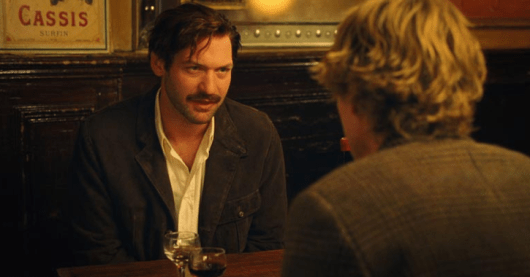


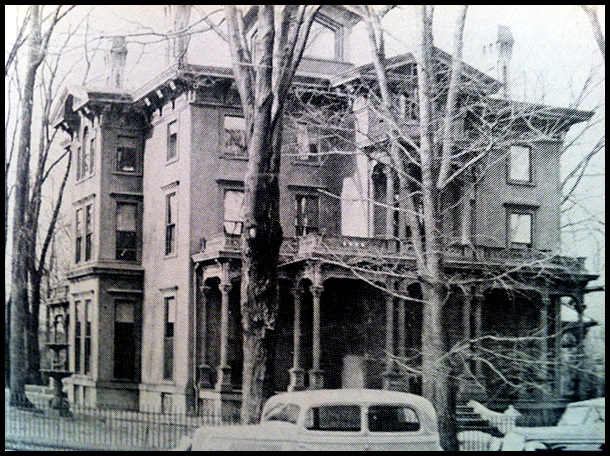


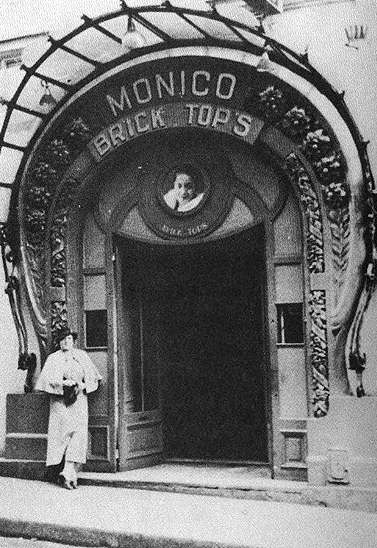
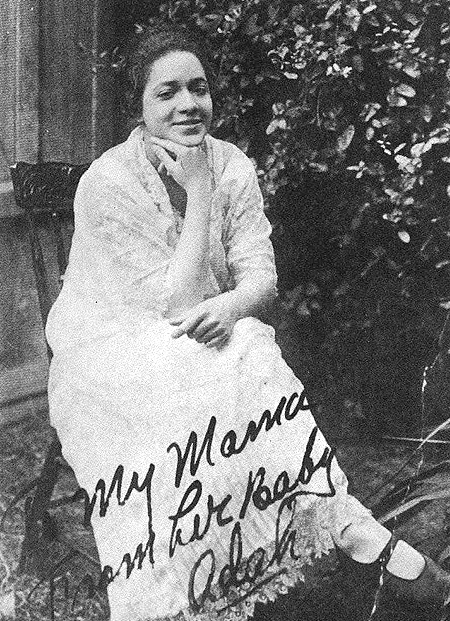
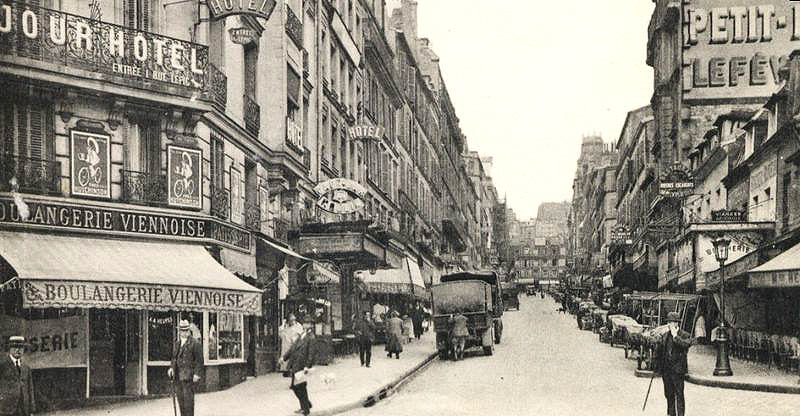
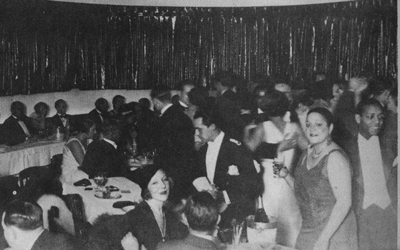
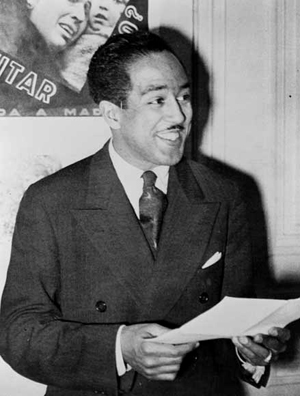
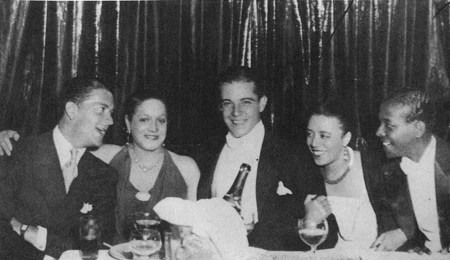

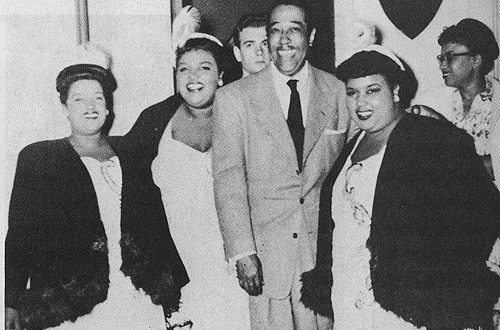
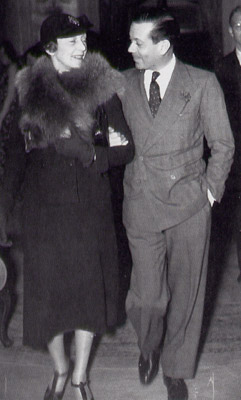
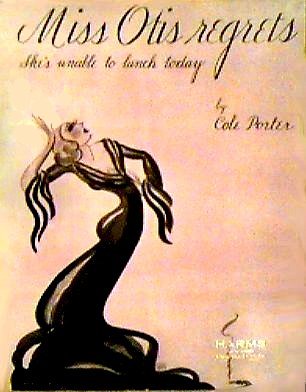

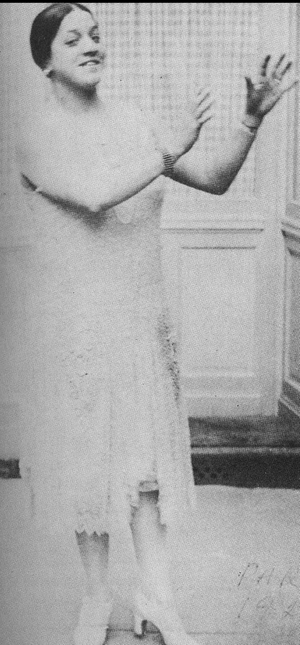
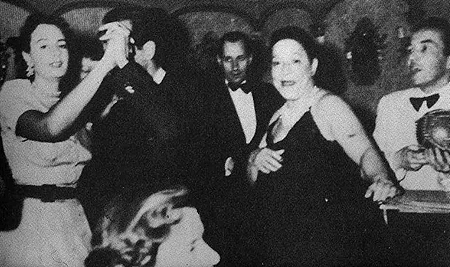






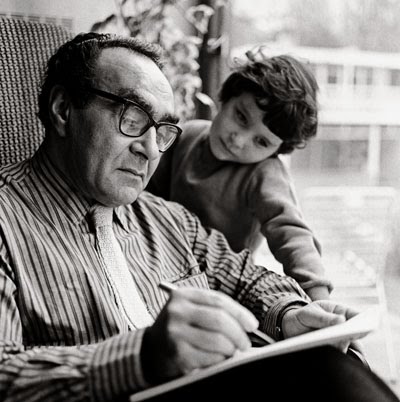







 The Daily Hatch