_____

 The Daily Hatch
It is with sadness that I write this post having learned of the death of Sir Harold Kroto on April 30, 2016 at the age of 76. He was a scientist of remarkable abilities and a man of great humor too. In this series I posted the Memorial by Richard Dawkins for Dr. Kroto and I also looked at Kroto’s membership in CSICOP and his admiration for Bertrand Russell and his 2 emails he sent to me on 9-18-14. Peter Coles, Head of the School of Mathematical and Physical Sciences at the University of Sussex gave an excellent tribute Dr. Kroto which I posted too.
I did not know Harry Kroto personally but I did have the opportunity to correspond with him in 2014. I sent him a letter in the spring and two in the summer and he responded with an email on 9-18-14 and I thanked him for responding in an email and then he emailed me again and even sent me a letter on 11-21-14. In that 11-21-14 letter he referred me to the You Tube film series Renowned Academics Speaking About God which has over 300,000 views on You Tube and that prompted me on 11-29-14 to start my blog series RESPONDING TO HARRY KROTO’S BRILLIANT RENOWNED ACADEMICS!! Below are the links to the posts I have already done on previous Tuesdays in this series:
Arif Ahmed, Haroon Ahmed,Sir David Attenborough, Mark Balaguer, Horace Barlow, Michael Bate, Sir Patrick Bateson,Patricia Churchland, Aaron Ciechanover, Noam Chomsky,Alan Dershowitz, Hubert Dreyfus, Bart Ehrman, Stephan Feuchtwang, David Friend, Riccardo Giacconi, Ivar Giaever , Roy Glauber, Rebecca Goldstein, David J. Gross, Brian Greene, Susan Greenfield, Stephen F Gudeman, Alan Guth, Jonathan Haidt, Theodor W. Hänsch, Brian Harrison, Hermann Hauser, Roald Hoffmann, Bruce Hood, Herbert Huppert, Gareth Stedman Jones, Steve Jones, Shelly Kagan, Michio Kaku, Stuart Kauffman, Lawrence Krauss, Harry Kroto, George Lakoff, Elizabeth Loftus, Alan Macfarlane, Peter Millican, Marvin Minsky, Leonard Mlodinow, Yujin Nagasawa, Alva Noe, Douglas Osheroff, Jonathan Parry, Saul Perlmutter, Herman Philipse, Carolyn Porco, Robert M. Price, Lisa Randall, Lord Martin Rees, Alison Richard, Oliver Sacks, John Searle, Marcus du Sautoy, Simon Schaffer, J. L. Schellenberg, Lee Silver, Peter Singer, Walter Sinnott-Armstrong, Ronald de Sousa, Victor Stenger, John Sulston, Barry Supple, Leonard Susskind, Raymond Tallis, Neil deGrasse Tyson, C.J. van Rijsbergen, Alexander Vilenkin, Sir John Walker, Frank Wilczek, Steven Weinberg, and Lewis Wolpert,
Sir Harold Kroto – Beyond Belief
Sir Harold Kroto is Francis Eppes Professor in the Department of Chemistry and Biochemistry at Florida State University. In 1996, he was awarded the Nobel Prize in Chemistry for the discovery of C60 Buckminsterfullerene.
Ignorance, irrationality and irresponsibility of concession to faith based programs, Templeton Prizes, creationism, intelligent design, books, TV, FoxTV, mega-churches, and banks undermine education, science, economics, executive, legislative and judicial branches of government.
(mega-churches benefit financially by borrowing from BOA:
1. Tax exempt initiative;
2. No tangible product offered;
3. No real risk;
4. The congregants – Bank of America customers,
5. no wealth creation

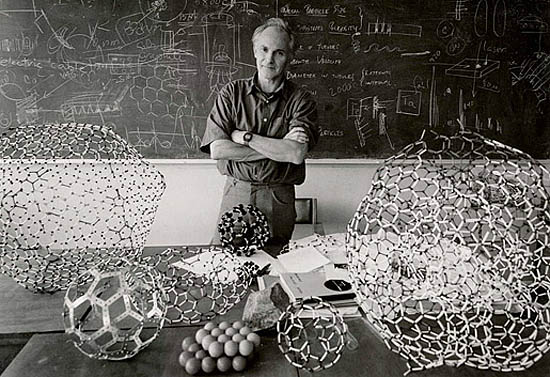
Sir Harold Kroto with models of C60 Buckminsterfullerene

Sir Harold Kroto – Beyond Belief Conference 2008
__

In the video above Harry Kroto talks about the Carl Sagan’s book Demon Haunted World and here is the link to my review which is below:

THE DEMON-HAUNTED WORLD: Science as a Candle in the Dark by Carl Sagan. New York: Random House, 1995. 457 pages, extensive references, index. Hardcover; $25.95.
PSCF 48 (December 1996): 263.
Sagan is the David Duncan Professor of Astronomy and Space Sciences at Cornell University. He is author of many best sellers, including Cosmos, which became the most widely read science book ever published in the English language.
In this book Sagan discusses the claims of the paranormal and fringe-science. For instance, he examines closely such issues as astrology (p. 303), crop circles (p. 75), channelers (pp. 203-206), UFO abductees (pp. 185-186), faith-healing fakes (p. 229), and witch-hunting (p. 119). Readers of The Skeptical Inquirer will notice that Sagan’s approach is very similar.
Sagan writes:
The Committee for the Scientific Investigation of Claims of the Paranormal is an organization of scientists, academics, magicians, and others dedicated to skeptical scrutiny of emerging or full-blown pseudo-sciences. It was founded by the University of Buffalo philosopher Paul Kurtz in 1976. I’ve been affiliated with it since its beginning. Its acronym, CSICOP, is pronounced sci-cop C as if it’s an organization of scientists performing a police function CSICOP publishes a bimonthly periodical called The Skeptical Inquirer. On the day it arrives, I take it home from the office and pore through its pages, wondering what new misunderstandings will be revealed (p. 299).
Sagan points out that in 1991 two pranksters in England admitted that they had been making crop figures for 15 years. They flattened the wheat with a heavy steel bar. Later on they used planks and ropes, but the media paid brief attention to the confession of these hoaxers. Why? Sagan concludes, ‘Demons sell; hoaxers are boring and in bad taste’ (p. 76).
Christians must admire Sagan’s commitment to critical thinking, logic, and freedom of thought. He takes on many subjects in this book, and the vast majority of his analysis is exceptional. However, his opinions on religious matters are affected by his devotion to scientism. Sagan believes only that which can be proved by science is true. He disputes psychologist Charles Tart’s assertion that scientism is‘dehumanizing, despiritualizing’ (p. 267). Sagan comments, ‘There is very little doubt that, in the everyday world, matter (and energy) exist. The evidence is all around us. In contrast, as I’ve mentioned earlier the evidence for something non-material called `spirit’ or `soul’ is very much in doubt’ (p. 267).
Science can only prove things about the physical world, and it cannot prove anything about the spiritual world. Does that mean that the mind and soul don’t exist? Of course not! First, we must realize that science is not the only way to truth. Even Sagan must admit that he must justify values like ‘be objective’ or ‘report data honestly’. Where do those values come from? They came from outside science, but they must be in place for science to work.
Sagan gives an illustration that contrasts physics and metaphysics. He shows that the physicist’s idea will have to be discarded if tests fail in the laboratory. Therefore, the main difference between physics and metaphysics is that the meta-physicist has no laboratory. This is a cute story, but can science answer the basic questions that underline all knowledge? Metaphysics is necessary for science to take place. It is not true that science is superior to metaphysics like Sagan would have us believe. The presuppositions of science can only be validated by philosophy. J. P. Moreland has correctly said, ‘The validation of science is a philosophical issue, not a scientific one, and any claim to the contrary will be a self-refuting philosophical claim’ (Scaling the Secular City, p. 197).
Second, the absence of scientific evidence for the soul does not mean the soul does not exist. Sagan himself states, ‘Absence of evidence is not evidence of absence’ (p. 213).
I was impressed with the way Sagan put his inner thoughts on the table. For instance, he comments, ‘Plainly, there’s something within me that’s ready to believe in life after death…If some good evidence for life after death was announced, I’d be eager to examine it; but it would have to be real scientific data, not mere anecdote’ (pp. 203-204). What kind of evidence is Sagan looking for? It certainly is not vague prophecies. He states, ‘Think of how many religions attempt to validate themselves with prophecy…Think of how many people rely on these prophecies, however vague, however unfulfilled, to support or prop up their beliefs…Yet has there ever been a religion with the prophetic accuracy and reliability of science? (p. 30). The answer to that question is yes. Christianity can point to very clear passages such as Isaiah 53 and Daniel 11 written hundreds of years before the events occurred.
While comparing science to religion, Sagan comments, ‘Science is far from a perfect instrument of knowledge. It’s just the best we have (pp. 27-28). Here Sagan is only half right. Science is imperfect, but it is not better than the Bible.’
The Demon-Haunted World is a thought-provoking book that I thoroughly enjoyed. Some of Sagan’s anti-Christian views come through, but on the whole, this book uses critical thinking and logic and applies them to the claims of the paranormal and fringe-science of our day.
Reviewed by Everette Hatcher III, P.O. Box 23416, Little Rock, AR 72221.
The Twentieth Century – A Scientific and Secular Age
The twentieth century saw a revulsion against war, partly because of the horrors of the first and second World Wars, and partly because the mass media make us aware of atrocities and suffering all over the world. Both world wars, and especially the Nazi genocide against the Jews, made many question their faith in a loving god. We still have wars and the threats of war, but the United Nations exists to encourage negotiation and resolution of conflict by other means, and to police international law on the conduct of war and on human rights. Generally, there has been greater awareness and spread of human rights and democracy in the twentieth century.
Because of their belief that this world is the only one we have and that human problems can only be solved by humans, humanists have often been very active social reformers. The early Ethical Societies set up Neighbourhood Guilds to undertake social and educational work in city slums, where it was much needed in the days before a welfare state. Most humanists believe in democracy, open government and human rights, and support action on world poverty and the environment. Some were and are pacifists, and many are active in charities and politics. Ethical societies came together as the Ethical Union, which in the 1960s became the British Humanist Association, its first director being Harold Blackham and its first President Julian Huxley. The English social scientist and academic, and founder member of the British Humanist Association, Baroness Barbara Wootton (1897-1988) became the first woman to chair the proceedings of the House of Lords. She always spoke up for humanist causes, especially on social policy.
The twentieth century saw a decline in religious belief and an increase in secularisation in the developed world. Fewer people in Europe are actively religious and people are free to declare their disbelief in gods with little fear of reprisal or social disadvantage. Mobile populations and the mass media have made most parts of the world aware of a range of belief systems, and more liberal attitudes mean that people often feel free to choose a philosophy for themselves. The growth of studies such as anthropology, pioneered in Sir James Frazer’s exhaustive collection of myths and customs, showed religions as natural human creations, and encouraged a more tolerant attitude towards other cultures.
Few Christian intellectuals nowadays defend the literal truth of the Bible, but focus instead on its metaphorical truth and the exemplary life of Jesus. Religious beliefs have tended to evolve, casting some doubt in the minds of sceptics about what exactly Christians believe these days, or what they mean by “truth” or “God”. Theologians such as Teilhard de Chardin (1881-1955), Deitrich Bonhoeffer (1906-45), William James (1842-1910) and Paul Tillich (1886-1965), and developments such as liberation theology and the ideas of the Sea of Faith group, have done much to liberate academic Christian theology from religious dogma and to integrate secular and scientific ideas into Christianity. Many humanists today see little point in attacking beliefs that are no longer held except by a tiny minority of people.
On the other hand, there is still much popular conventional belief and there is a growing trend towards new religions and ideas, many of which are little more than superstition, and some of which are dangerous. In some countries there has been a growth in religious fundamentalism. Religion is still given special status and privileges in most countries, and non-religious people have often had to organise and campaign for their views to be heard.
Most twentieth century philosophers have worked on the assumption that morality is independent of religious faith e.g Sir Karl Popper, A J Ayer, G E Moore, Mary Warnock, Jean-Paul Sartre, Simone de Beauvoir, Wallace Matson, Antony Flew, Peter Singer, though it was still possible to cause a scandal in Britain by suggesting, as did Margaret Knight in a radio talk in the late 1950s, that morality and religion could usefully be separated.
There have been huge developments in science and medicine which have affected people’s lives and the way they think. As more and more people around the word acquire education, understanding of science has become much more widespread, and once controversial ideas such as Darwin’s theories about evolution are generally accepted. Thanks to the relatively new sciences of sociology, anthropology and psychology, our understanding of human nature and society has developed rapidly. Many scientists were and are humanists. Some, such as Sir Arthur Keith (1866-1995), Scottish scientist and anthropologist J B S Haldane, Sigmund Freud, Sir Julian Huxley and John Maynard Smith did much in the 20th century to spread understanding of science, of human nature and of evolution. Albert Einstein, who worked out the theory of relativity, one of the greatest achievements of the human intellect. was essentially a humanist and an Honorary Associate of the Rationalist Press Association.
Scientific and medical progress has produced new ethical dilemmas, and traditional religious teachings have not always been able to rise to the challenge.
Despite continued laws against blasphemy, artists and intellectuals have increasingly challenged religious privilege and conventions. In the first half of this century, the Bloomsbury Group (which included J M Keynes, Virginia Woolf (1882-1941), Leonard Woolf, E M Forster, Betrand Russell) were an influential group of writers, academics and artists, who were heavily influenced by the ethical theories of G E Moore, which stressed the values of friendship and aesthetic experience. Writers such as Thomas Hardy, George Bernard Shaw, H G Wells, and Joseph Conrad, were well-known free-thinkers and the novelist Arnold Bennett (1867-1931) was an Honorary Associate of the Rationalist Press Association from 1916.
Surveys indicate that at least a third of the population of Britain are agnostic or atheist, and about 36% of the population also share the positive moral values of humanism and the British Humanist Association. Amongst them are many well known people who support the aims and values of Humanism. The work of many of these people underlines the fact that you don’t need religion to be concerned about what is right and wrong.
The non-religious tradition of Humanism has survived through centuries of writers’ work, and the written word is still important in spreading positive views. Humanist writers include novelists Philip Pullman, Ian McEwan, Terry Pratchett, John Fowles, Arthur C Clarke, Kurt Vonnegut Jr, Iain Banks, Maureen Duffy, and Stephen Fry, and poets Seamus Heaney, Alan Brownjohn and Tony Harrison. The author Naomi Mitchison was an influential rationalist, and Isaac Asimov was President of the American Humanist Association for many years. Nobel Prize winner Octavio Paz was a lifelong humanist. Umberto Eco, Italian novelist and semiotician, is a member of the American Academy of Humanism. Gene Roddenberry, creator of Star Trek, was a humanist, as was writer, actor and raconteur Peter Ustinov. Novelist Salman Rushdie became an international cause celebre when he was the subject of a fatwa for offending Islam in his 1988 novel, Satanic Verses and spent many years in hiding in fear of his life.
Humanist journalists include Jonathan Meades, politician Roy Hattersley, and Sir Ludovic Kennedy (who is also a broadcaster, campaigner, and past President of the Voluntary Euthanasia Society, now Dignity in Dying). The well known “agony aunt” Claire Rayner was a writer, broadcaster and humanist. Previous BHA President Polly Toynbee is well-known as a columnist for The Guardian.
World-acclaimed sculptor Anish Kapoor supports Humanism, as does the art historian and former director of the National Gallery, Sir Michael Levey, who has written about Renaissance humanism, and painting during the Enlightenment. Painter Francis Bacon, generally considered one of the world’s most important post-war artists, challenged conventional religious imagery and had anti-clerical views.
Sir Michael Tippett the English composer, was an opponent of organised religion, and was a conscientious objector in the 1939-45 war. The well known director of plays and operas, Jonathan Miller, trained as a doctor and has retained an interest in medicine and psychology, for example, making television programmes about the human body and the history of atheism. Playwrights David Hare and Arthur Miller support Humanism, as do actors Steven Fry and Jane Asher. Harold Pinter and Vanessa Redgrave worked with the British Humanist Association in the 1960s, trying to reduce the religious bias in broadcasting, and to improve human rights.
Politics is an important way of improving human rights and the quality of life, here and abroad. In India radicals like Nehru and M N Roy were humanists, supported in this country by activists such as MP and humanist Fenner Brockway. Many of the mid-20th century founders of international co-operative institutions – such as Brock Chisholm, Peter Ritchie Calder and John Boyd Orr were humanists. Well-known humanists in the period included Baroness Blackstone, Nick Brown, Frank Dobson, Michael Foot, Lord Peston, Ken Livingstone, and many other MPs and peers. The late Earl Russell, Lord Dormand, and Lord Jenkins of Putney were all members of the Parliamentary Humanist Group. Today, the All Party Parliamentary Humanist Group has over 100 members.
In Britain, humanist Sir Kenneth Clucas was chairman of the National Association of Citizens Advice Bureaux for many years, while Sir Lou Sherman chaired the Housing Corporation.
Internationally, humanists continue to work for progress in human rights and overseas aid. Humanist organisations exist worldwide, varying their concerns and activities according to the situation in their country. For example in the USA, humanists are in the forefront of opposing the erosion of the constitutional commitment to separation of church and state. Humanists such as Conor Cruise O’Brien are ambassadors for the UN and international relations. Humanist and Nobel Peace Prize winner Professor Joseph Rotblat was also an important campaigner for nuclear disarmament and world peace. The Russian leader Mikhael Gorbachev, who led the USSR out of Communism, is a humanist.
From Aristotle and the ancient scientists in India and China onwards, scientists have been at the heart of the search for knowledge and truth without traditional ideas of god.
Writers and broadcasters on scientific topics, such as David Attenborough, Steven Pinker, Carl Sagan, and Richard Dawkins have done much to increase public understanding of science.
Today, there are many humanist biology professors such as Robin Dunbar (evolutionary psychology and behavioural ecology), Richard Dawkins (Darwinian evolution), Sir Alec Jeffreys (genetic fingerprinting), Sir David Smith (symbiosis), Robert Hinde, Lewis Wolpert (embryology), Peter Goodfellow (biotechnology), Steven Rose (brain function), Steve Jones (genetics), Sir Hans Kornberg (biochemistry) and Sir Thomas Blundell (plant biotechnology); chemistry professors such as Peter Atkins (physical chemistry); Nobel Prize-winning scientists such as SIR HAROLD KROTO and Sir John Sulston; and eminent physicians and medical scientists such as Sir Anthony Epstein (who discovered viruses linked with herpes), Sir David Weatherall (blood disorders), Sir James Gowans (immunology and AIDS), Sir Kenneth Stuart (liver and cardiovascular disorders), and Sir Roy Calne (transplant surgery). The late Francis Crick, one of the discoverers of DNA, biologist John Maynard Smith, and Sir Richard Doll, epidemiologist and discoverer of the link between smoking and cancer, were all humanists.
Astronomers, mathematicians and physicists include the late Sir Hermann Bondi (former President of the British Humanist Association), Sir Michael Atiyah (former President of the Royal Society), Lord Flowers (atomic structure), Sir Roger Penrose (topology and relativity) and Sir Francis Graham-Smith (radio astronomy, and former Astronomer Royal).
Many philosophers reject traditional ideas of god. They continue the non-religious tradition in philosophy, which has thrived from ancient times, and was developed by great thinkers such as David Hume, the Utilitarians, A J Ayer and Bertrand Russell (read his Why I am not a Christian), Sir Isaiah Berlin, philosopher and historian of ideas, was a non-believer and a member of the American Academy of Humanism. Humanist academics today include Simon Blackburn, Peter Singer (perhaps the most widely read current writer on ethics), Richard Norman, A C Grayling and Sheila McLean (medical ethics and law). The British Humanist Association sponsors a Humanist Philosophers’ Group.
Historians such as Sir Keith Thomas have researched and written about human beliefs and attitudes. Humanist sociologists, anthropologists and psychologists such as Laurie Taylor, Richard Leakey, Lord Runciman, Professors Robert Hinde and Robin Dunbar have studied human behaviour and thinking, and contributed to our understanding of human development. Professor Bernard Crick (politics) was chosen to lead the Government’s work on Citizenship Education. The economist and Nobel prize winner Professor Amartya Sen is a humanist.
Read more about current Patrons of Humanism.
_____
Related posts:
On November 21, 2014 I received a letter from Nobel Laureate Harry Kroto and it said: …Please click on this URL http://vimeo.com/26991975 and you will hear what far smarter people than I have to say on this matter. I agree with them. Harry Kroto I have attempted to respond to all of Dr. Kroto’s friends arguments […]

Communication at the The Royal Society Featuring: Professor Sir Harry Kroto, Alexei Leonov, Dr Richard Dawkins, Dr Brian May, Professor Stephen Hawking It is with sadness that I write this post having learned of the death of Sir Harold Kroto on April 30, 2016 at the age of 76. He was a scientist of […]

On November 21, 2014 I received a letter from Nobel Laureate Harry Kroto and it said: …Please click on this URL http://vimeo.com/26991975 and you will hear what far smarter people than I have to say on this matter. I agree with them. Harry Kroto Nick Gathergood, David-Birkett, Harry-Kroto I have attempted to respond to all of […]
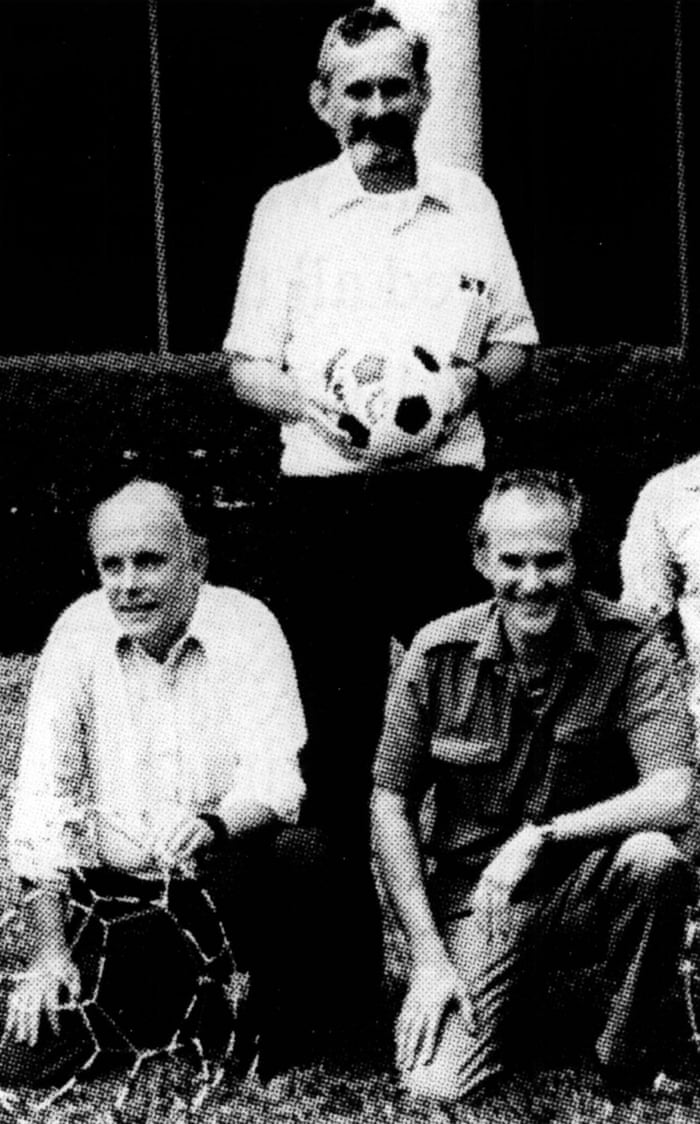
(The Nobel chemistry laureates Harold Kroto, Robert Curl and Richard Smalley)

On November 21, 2014 I received a letter from Nobel Laureate Harry Kroto and it said: …Please click on this URL http://vimeo.com/26991975 and you will hear what far smarter people than I have to say on this matter. I agree with them. Harry Kroto I have attempted to respond to all of Dr. Kroto’s friends arguments […]

On November 21, 2014 I received a letter from Nobel Laureate Harry Kroto and it said: …Please click on this URL http://vimeo.com/26991975 and you will hear what far smarter people than I have to say on this matter. I agree with them. Harry Kroto I have attempted to respond to all of Dr. Kroto’s friends arguments […]
(Kroto and his wife, Margaret)

On November 21, 2014 I received a letter from Nobel Laureate Harry Kroto and it said: …Please click on this URL http://vimeo.com/26991975 and you will hear what far smarter people than I have to say on this matter. I agree with them. Harry Kroto Nick Gathergood, David-Birkett, Harry-Kroto I have attempted to respond to all of […]
On November 21, 2014 I received a letter from Nobel Laureate Harry Kroto and it said: …Please click on this URL http://vimeo.com/26991975 and you will hear what far smarter people than I have to say on this matter. I agree with them. Harry Kroto I have attempted to respond to all of Dr. Kroto’s friends arguments […]
(Margaret and Harry Kroto with students at Lindau 2005)

On November 21, 2014 I received a letter from Nobel Laureate Harry Kroto and it said: …Please click on this URL http://vimeo.com/26991975 and you will hear what far smarter people than I have to say on this matter. I agree with them. Harry Kroto Nick Gathergood, David-Birkett, Harry-Kroto I have attempted to respond to all of […]

On November 21, 2014 I received a letter from Nobel Laureate Harry Kroto and it said: …Please click on this URL http://vimeo.com/26991975 and you will hear what far smarter people than I have to say on this matter. I agree with them. Harry Kroto Nick Gathergood, David-Birkett, Harry-Kroto I have attempted to respond to all of […]
On November 21, 2014 I received a letter from Nobel Laureate Harry Kroto and it said: …Please click on this URL http://vimeo.com/26991975 and you will hear what far smarter people than I have to say on this matter. I agree with them. Harry Kroto I have attempted to respond to all of Dr. Kroto’s friends arguments […]

On November 21, 2014 I received a letter from Nobel Laureate Harry Kroto and it said: …Please click on this URL http://vimeo.com/26991975 and you will hear what far smarter people than I have to say on this matter. I agree with them. Harry Kroto I have attempted to respond to all of Dr. Kroto’s friends arguments […]
(With his son Stephen in Joshua Tree)

__ On November 21, 2014 I received a letter from Nobel Laureate Harry Kroto and it said: …Please click on this URL http://vimeo.com/26991975 and you will hear what far smarter people than I have to say on this matter. I agree with them. Harry Kroto I have attempted to respond to all of Dr. Kroto’s friends […]

On November 21, 2014 I received a letter from Nobel Laureate Harry Kroto and it said: …Please click on this URL http://vimeo.com/26991975 and you will hear what far smarter people than I have to say on this matter. I agree with them. Harry Kroto Sir Harry Kroto, FSU’s Francis Eppes Professor of Chemistry I […]
(Marg Kroto with two sons Stephen and David)

On November 21, 2014 I received a letter from Nobel Laureate Harry Kroto and it said: …Please click on this URL http://vimeo.com/26991975 and you will hear what far smarter people than I have to say on this matter. I agree with them. Harry Kroto I have attempted to respond to all of Dr. Kroto’s friends arguments […]

On November 21, 2014 I received a letter from Nobel Laureate Harry Kroto and it said: …Please click on this URL http://vimeo.com/26991975 and you will hear what far smarter people than I have to say on this matter. I agree with them. Harry Kroto Wikipedia notes: Mahzarin Banaji From Wikipedia, the free encyclopedia [hide]This article has […]
(With Marg in 1964)

On November 21, 2014 I received a letter from Nobel Laureate Harry Kroto and it said: …Please click on this URL http://vimeo.com/26991975 and you will hear what far smarter people than I have to say on this matter. I agree with them. Harry Kroto Wikipedia notes: Anthony Clifford “A. C.” Grayling (/ˈɡreɪlɪŋ/; born 3 April 1949) […]
On November 21, 2014 I received a letter from Nobel Laureate Harry Kroto and it said: …Please click on this URL http://vimeo.com/26991975 and you will hear what far smarter people than I have to say on this matter. I agree with them. Harry Kroto _________________ Below you have picture of Dr. Harry Kroto: ______________ I have […]

__________
On November 21, 2014 I received a letter from Nobel Laureate Harry Kroto and it said:
…Please click on this URL http://vimeo.com/26991975
and you will hear what far smarter people than I have to say on this matter. I agree with them.
Harry Kroto

I have attempted to respond to all of Dr. Kroto’s friends arguments and I have posted my responses one per week for over a year now. Here are some of my earlier posts:
Arif Ahmed, Sir David Attenborough, Mark Balaguer, Horace Barlow, Michael Bate, Patricia Churchland, Aaron Ciechanover, Noam Chomsky,Alan Dershowitz, Hubert Dreyfus, Bart Ehrman, Stephan Feuchtwang, David Friend, Riccardo Giacconi, Ivar Giaever , Roy Glauber, Rebecca Goldstein, David J. Gross, Brian Greene, Susan Greenfield, Stephen F Gudeman, Alan Guth, Jonathan Haidt, Theodor W. Hänsch, Brian Harrison, Hermann Hauser, Roald Hoffmann, Bruce Hood, Herbert Huppert, Gareth Stedman Jones, Steve Jones, Shelly Kagan, Michio Kaku, Stuart Kauffman, Lawrence Krauss, Harry Kroto, George Lakoff, Elizabeth Loftus, Alan Macfarlane, Peter Millican, Marvin Minsky, Leonard Mlodinow, Yujin Nagasawa, Alva Noe, Douglas Osheroff, Jonathan Parry, Saul Perlmutter, Herman Philipse, Carolyn Porco, Robert M. Price, Lisa Randall, Lord Martin Rees, Oliver Sacks, John Searle, Marcus du Sautoy, Simon Schaffer, J. L. Schellenberg, Lee Silver, Peter Singer, Walter Sinnott-Armstrong, Ronald de Sousa, Victor Stenger, Barry Supple, Leonard Susskind, Raymond Tallis, Neil deGrasse Tyson, .Alexander Vilenkin, Sir John Walker, Frank Wilczek, Steven Weinberg, and Lewis Wolpert,
 Chris Hann (born in Cardiff in 1953) was Professor of Social Anthropology at the University of Kent between 1992 and 1999, when he was appointed as one of two founding Directors of the Max Planck Institute for Social Anthropology at Halle/Saale, Germany.He had previously taught anthropology at Cambridge University and had close links with UKC staff even before coming to Kent, especially with Paul Stirling, the first Professor of Sociology and Anthropology, who pioneered the anthropological study of modern Turkey. In addition to his own fieldwork in Anatolia, Hann has worked among Turkic speakers in Central Asia (Xinjiang, North-West China). Earlier projects took him to Hungary and Poland when these countries were still socialist. At the Max Planck Institute he heads a department which specializes in investigations of the postsocialist countries of the former Soviet bloc, and also of those East Asian countries which still describe themselves as socialist. Recent themes have included rural decollectivization, religion after communism, and the transformation of social security and kinship relations in the decentralized economies of “reform socialism”.Hann is an Editor of the European Journal of Sociology, a Fellow of the Berlin-Brandenburg Academy of Sciences, and Honorary Professor at the Martin Luther University, Halle-Wittenberg, and at the University of Leipzig.Professor Hann continues to collaborate with School of Anthropology and Conservation colleagues, particularly Dr Glenn Bowman.
In the second video below in the 96th clip in this series are his words and my response is below them.
Below is my letter responding to Dr. Hann’s quotation:
Charles Darwin

Francis and Edith Schaeffer

Rock Band KANSAS
July 8, 2016
Dear Dr. Hahn,
Let me start off by saying that this is not the first time that I have written you. Last time I talked also about Charles Darwin but today I want to directly respond to a quote you made. I think you have exaggerated if you truly think that you CAN’T IDENTIFY WITH belief in God. Charles Darwin also struggled with the same issue.
I just finished reading the online addition of the book Darwin, Francis ed. 1892. Charles Darwin: his life told in an autobiographical chapter, and in a selected series of his published letters [abridged edition]. London: John Murray. There are several points that Charles Darwin makes in this book that were very wise, honest, logical, shocking and some that were not so wise. The Christian Philosopher Francis Schaeffer once said of Darwin’s writings, “Darwin in his autobiography and in his letters showed that all through his life he never really came to a quietness concerning the possibility that chance really explained the situation of the biological world. You will find there is much material on this [from Darwin] extended over many many years that constantly he was wrestling with this problem.”
Quote from you:
If I take religion seriously nowadays as I do leading a number of recent projects at this institute, it is very much as social scientist interested in what holds the communities together and also in some sense in the spiritual commitments that human beings are capable of, all of that I find extremely interesting but I can’t identify with any of it myself.
Now this quote is why I thought of you when I read the words of Charles Darwin. You talk about the culture where you come from and how hardly anyone believes in God, but that is not the way it is worldwide. THERE IS AN INNER MORAL CONSCIENCE IN EVERY PERSON THAT POINTS THEM TO GOD AND EVERYONE ACTS ON MORAL MOTIONS.
When I read the book Charles Darwin: his life told in an autobiographical chapter, and in a selected series of his published letters, I also read a commentary on it by Francis Schaeffer and I wanted to both quote some of Charles Darwin’s own words to you and then include the comments of Francis Schaeffer on those words. I have also enclosed a CD with two messages from Adrian Rogers and Bill Elliff concerning Darwinism.
CHARLES DARWIN’S WORDS:
But now the grandest scenes would not cause any such convictions and feelings to rise in my mind. It may be truly said that I am like a man who has become colour-blind and the universal belief by men of the existence of redness makes my present loss of perception of not the least value as evidence. This argument would be a valid one if all men of all races had the same inward conviction of the existence of one God; but we know that this is very far from being the case. Therefore I cannot see that such inward convictions and feelings are of any weight as evidence of what really exists. The state of mind which grand scenes formerly excited in me, and which was intimately connected with a belief in God, did not essentially differ from that which is often called the sense of sublimity; and however difficult it may be to explain the genesis of this sense, it can hardly be advanced as an argument for the existence of God, any more than the powerful though vague and similar feelings excited by music.
Francis Schaeffer observed:
You notice that Darwin had already said he had lost his sense of music [appreciation]. However, he brings forth what I think is a false argument. I usually use it in the area of morality. I mention that materialistic anthropologists point out that different people have different moral [systems] and this is perfectly true, but what the materialist anthropologist can never point out is why man has a sense of moral motion and that is the problem here. Therefore, it is perfectly true that men have different concepts of God and different concepts of moral motion, but Darwin himself is not satisfied in his own position and WHERE DO THEY [MORAL MOTIONS] COME FROM AT ALL? So you are wrestling with the same dilemma here in this reference as you do in the area of all things human. For these men it is not the distinction that raises the problem, but it is the overwhelming factor of the existence of the humanness of man, the mannishness of man. The simple fact is he saw that you are shut up to either God or chance, and he said basically “I don’t see how it could be chance” and at the same time he looks at a mountain or listens to a piece of music it is a testimony that really chance isn’t sufficient enough. So gradually with the sensitivity of his own inborn self conscience he kills it. He deliberately kills the beauty so it doesn’t argue with his theory. Maybe I am being false to Darwin here. Who can say about Darwin’s subconscious thoughts? It seems to me though this is exactly the case. What you find is a man who can’t stand the argument of the external beauty and the mannishness of man so he just gives it up in this particular place.
_________________
Let make 2 points here. First, the Bible teaches that everyone knows in their heart that God exists because of the beauty of God’s creation and the conscience that God has planted in everyone’s heart (Romans 1).
Second, all humans have moral motions.
Francis Schaffer in his book THE GOD WHO IS THERE addresses these same issues:
“[in Christianity] there is a sufficient basis for morals. Nobody has ever discovered a way of having real “morals” without a moral absolute. If there is no moral absolute, we are left with hedonism (doing what I like) or some form of the social contract theory (what is best for society as a a hole is right). However, neither of these alternative corresponds to the moral motions that men have. Talk to people long enough and deeply enough, and you will find that they consider some things are really right and something are really wrong. Without absolutes, morals as morals cease to exist, and humanistic mean starting from himself is unable to find the absolute he needs. But because the God of the Bible is there, real morals exist. Within this framework I can say one action is right and another wrong, without talking nonsense.” 117
Romans 1:18-19 (Amplified Bible) ” For God’s wrath and indignation are revealed from heaven against all ungodliness and unrighteousness of men, who in their wickedness REPRESS and HINDER the truth and make it inoperative. For that which is KNOWN about God is EVIDENT to them and MADE PLAIN IN THEIR INNER CONSCIOUSNESS, because God has SHOWN IT TO THEM,”(emphasis mine). At the 37 minute mark on the CD that I sent you today Adrian Rogers noted, “”There is no such thing anywhere on earth as a true atheist. If a man says he doesn’t believe in God, then he is lying. God has put his moral consciousness into every man’s heart, and a man has to try to kick his conscience to death to say he doesn’t believe in God.”
ROMANS CHAPTER ONE IS RIGHT WHEN IT SAYS THAT GOD PUT THAT CONSCIENCE IN EVERYONE’S HEART THAT BEARS WITNESS THAT HE CREATED THEM FOR A PURPOSE AND THAT IS WHY THE VAST MAJORITY OF PEOPLE IN THE WORLD ARE ATTEMPTING TO SEEK OUT GOD!!!!
As a secularist you believe that it is sad indeed that millions of Christians are hoping for heaven but no heaven is waiting for them. Paul took a close look at this issue too:
I Corinthians 15 asserts:
12 But if it is preached that Christ has been raised from the dead, how can some of you say that there is no resurrection of the dead? 13 If there is no resurrection of the dead, then not even Christ has been raised. 14 And if Christ has not been raised, our preaching is useless and so is your faith. 15 More than that, we are then found to be false witnesses about God, for we have testified about God that he raised Christ from the dead. But he did not raise him if in fact the dead are not raised. 16 For if the dead are not raised, then Christ has not been raised either. 17 And if Christ has not been raised, your faith is futile; you are still in your sins. 18 Then those also who have fallen asleep in Christ are lost. 19 If only for this life we have hope in Christ, we are of all people most to be pitied.
I sent you a CD that starts off with the song DUST IN THE WIND by Kerry Livgren of the group KANSAS which was a hit song in 1978 when it rose to #6 on the charts because so many people connected with the message of the song. It included these words, “All we do, crumbles to the ground though we refuse to see, Dust in the Wind, All we are is dust in the wind, Don’t hang on, Nothing lasts forever but the Earth and Sky, It slips away, And all your money won’t another minute buy.”
Kerry Livgren himself said that he wrote the song because he saw where man was without a personal God in the picture. Solomon pointed out in the Book of Ecclesiastes that those who believe that God doesn’t exist must accept three things. FIRST, death is the end and SECOND, chance and time are the only guiding forces in this life. FINALLY, power reigns in this life and the scales are never balanced. The Christian can face death and also confront the world knowing that it is not determined by chance and time alone and finally there is a judge who will balance the scales.
Both Kerry Livgren and the bass player Dave Hope of Kansas became Christians eventually. Kerry Livgren first tried Eastern Religions and Dave Hope had to come out of a heavy drug addiction. I was shocked and elated to see their personal testimony on The 700 Club in 1981 and that same interview can be seen on You Tube today. Livgren lives in Topeka, Kansas today where he teaches “Diggers,” a Sunday school class at Topeka Bible Church. DAVE HOPE is the head of Worship, Evangelism and Outreach at Immanuel Anglican Church in Destin, Florida.
The answer to find meaning in life is found in putting your faith and trust in Jesus Christ. The Bible is true from cover to cover and can be trusted.
Thank you again for your time and I know how busy you are.
Everette Hatcher, everettehatcher@gmail.com, http://www.thedailyhatch.org, cell ph 501-920-5733, Box 23416, LittleRock, AR 72221, United States
PS: Is the Bible historically accurate? Here are some of the posts I have done in the past on the subject: 1. The Babylonian Chronicle, of Nebuchadnezzars Siege of Jerusalem, 2. Hezekiah’s Siloam Tunnel Inscription. 3. Taylor Prism (Sennacherib Hexagonal Prism), 4. Biblical Cities Attested Archaeologically. 5. The Discovery of the Hittites, 6.Shishak Smiting His Captives, 7. Moabite Stone, 8. Black Obelisk of Shalmaneser III, 9A Verification of places in Gospel of John and Book of Acts., 9B Discovery of Ebla Tablets. 10. Cyrus Cylinder, 11. Puru “The lot of Yahali” 9th Century B.C.E., 12. The Uzziah Tablet Inscription, 13. The Pilate Inscription, 14. Caiaphas Ossuary, 14 B Pontius Pilate Part 2, 14c. Three greatest American Archaeologists moved to accept Bible’s accuracy through archaeology.,
Related posts:
_______________ Francis Schaeffer pictured below: _____________________ I have included the 27 minute episode THE AGE OF NONREASON by Francis Schaeffer. In that video Schaeffer noted, ” Sergeant Pepper’s Lonely Hearts Club Band…for a time it became the rallying cry for young people throughout the world. It expressed the essence of their lives, thoughts and their feelings.” How Should […]
Crimes and Misdemeanors: A Discussion: Part 1 ___________________________________ Today I will answer the simple question: IS IT POSSIBLE TO BE AN OPTIMISTIC SECULAR HUMANIST THAT DOES NOT BELIEVE IN GOD OR AN AFTERLIFE? This question has been around for a long time and you can go back to the 19th century and read this same […]
____________________________________ Francis Schaeffer pictured below: __________ Francis Schaeffer has written extensively on art and culture spanning the last 2000years and here are some posts I have done on this subject before : Francis Schaeffer’s “How should we then live?” Video and outline of episode 10 “Final Choices” , episode 9 “The Age of Personal Peace and Affluence”, episode 8 […]
Love and Death [Woody Allen] – What if there is no God? [PL] ___________ _______________ How Should We then Live Episode 7 small (Age of Nonreason) #02 How Should We Then Live? (Promo Clip) Dr. Francis Schaeffer 10 Worldview and Truth Two Minute Warning: How Then Should We Live?: Francis Schaeffer at 100 Francis Schaeffer […]
___________________________________ Francis Schaeffer pictured below: ____________________________ Francis Schaeffer “BASIS FOR HUMAN DIGNITY” Whatever…HTTHR Dr. Francis schaeffer – The flow of Materialism(from Part 4 of Whatever happened to human race?) Dr. Francis Schaeffer – The Biblical flow of Truth & History (intro) Francis Schaeffer – The Biblical Flow of History & Truth (1) Dr. Francis Schaeffer […]
On November 21, 2014 I received a letter from Nobel Laureate Harry Kroto and it said:
…Please click on this URL http://vimeo.com/26991975
and you will hear what far smarter people than I have to say on this matter. I agree with them.
Harry Kroto
I have attempted to respond to all of Dr. Kroto’s friends arguments and I have posted my responses one per week for over a year now. Here are some of my earlier posts:
Arif Ahmed, Sir David Attenborough, Mark Balaguer, Horace Barlow, Michael Bate, Patricia Churchland, Aaron Ciechanover, Noam Chomsky,Alan Dershowitz, Hubert Dreyfus, Bart Ehrman, Stephan Feuchtwang, David Friend, Riccardo Giacconi, Ivar Giaever , Roy Glauber, Rebecca Goldstein, David J. Gross, Brian Greene, Susan Greenfield, Stephen F Gudeman, Alan Guth, Jonathan Haidt, Theodor W. Hänsch, Brian Harrison, Hermann Hauser, Roald Hoffmann, Bruce Hood, Herbert Huppert, Gareth Stedman Jones, Steve Jones, Shelly Kagan, Michio Kaku, Stuart Kauffman, Lawrence Krauss, Harry Kroto, George Lakoff, Elizabeth Loftus, Alan Macfarlane, Peter Millican, Marvin Minsky, Leonard Mlodinow, Yujin Nagasawa, Alva Noe, Douglas Osheroff, Jonathan Parry, Saul Perlmutter, Herman Philipse, Carolyn Porco, Robert M. Price, Lisa Randall, Lord Martin Rees, Oliver Sacks, John Searle, Marcus du Sautoy, Simon Schaffer, J. L. Schellenberg, Lee Silver, Peter Singer, Walter Sinnott-Armstrong, Ronald de Sousa, Victor Stenger, Barry Supple, Leonard Susskind, Raymond Tallis, Neil deGrasse Tyson, .Alexander Vilenkin, Sir John Walker, Frank Wilczek, Steven Weinberg, and Lewis Wolpert,
Sir Colin Brian Blakemore, FRS, FMedSci (born 1 June 1944[1]), is a British neurobiologist, specialising in vision and the development of the brain, who is Professor of Neuroscience and Philosophy in theSchool of Advanced Study, University of London and Emeritus Professor of Neuroscience at the University of Oxford. He was formerly Chief Executive of the British Medical Research Council (MRC).[2][3][4] He is best known to the public as a communicator of science but also as the target of a long-running animal rights campaign. According to The Observer, he has been both “one of the most powerful scientists in theUK” and “a hate figure for the animal rights movement”.[5]
In the first video below in the 5th clip in this series are his words and my response is below them.
________
Below is my response to Dr. Blakemore’s quote:
April 13, 2016
Professor Colin Blakemore, Institute of Philosophy, University of London,
Dear Professor Blakemore,
In the You Tube video “A Further 50 Renowned Academics Speaking About God (Part 1),” you asserted::
“I believe that I am the sum total of all the causal influences on me at the moment and that is not a trivial issue. If it [weren’t] true we would have to abandon everything that we believe about the causal universe, about one event causing another, by all events having antecedent causes. And say that human beings are set aside from the rest of the physical world and yet we know we’re made up of the bits and stuff that the rest of the world is made up of. All the molecules in you were once upon a time were in a star somewhere and they’ve ended up in you by chance. So why not believe that we could also give an account of how those molecules working inside them produce their actions and produce this curious impression that we have of the sense of self and choice as if there’s this kind of helmsmen inside there really deciding absolutely what they’re going to do irrespective of what the world tells them.”
You are a humanist and a proponent of determinism. First, does your view of secular humanism and science have a way to come up with optimism and values while embracing the materialistic naturalistic view? Second, you are a defender of DETERMINISM in your statement above.
Let me start with your views on humanism. I know that you are active in the BRITISH HUMANIST ASSOCIATION. H. J. Blackham was the founder of the BRITISH HUMANIST ASSOCIATION and he asserted:
“On humanist assumptions, life leads to nothing, and every pretense that it does not is a deceit. If there is a bridge over a gorge which spans only half the distance and ends in mid-air, and if the bridge is crowded with human beings pressing on, one after the other they fall into the abyss. The bridge leads nowhere, and those who are pressing forward to cross it are going nowhere….It does not matter where they think they are going, what preparations for the journey they may have made, how much they may be enjoying it all. The objection merely points out objectively that such a situation is a model of futility“( H. J. Blackham, et al., Objections to Humanism (Riverside, Connecticut: Greenwood Press, 1967).
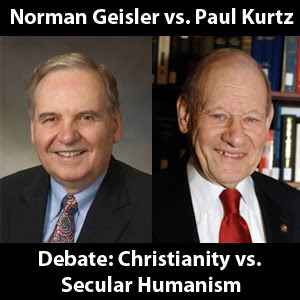
On John Ankerberg’s show in 1986 there was a debate between Dr. Paul Kurtz, and Dr. Norman Geisler and when part of the above quote was read, Dr. Kurtz responded:
I think you may be quoting Blackham out of context because I’ve heard Blackham speak, and read much of what he said, but Blackham has argued continuously that life is full of meaning;
XXXXXXXXXXXXXXXXX
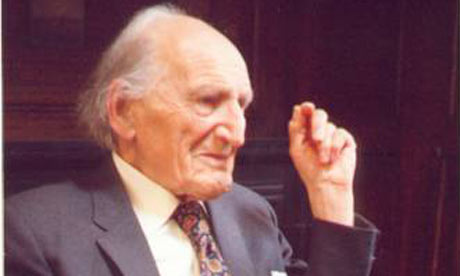
Harold J. Blackham (1903-2009)
Francis Schaeffer (1912-1984)

With that in mind I wanted to ask you what does the BRITISH HUMANIST ASSOCIATION have to offer in the area of meaning and values? Francis Schaeffer two months before he died said if he was talking to a gentleman he was sitting next to on an airplane about Christ he wouldn’t start off quoting Bible verses. Schaeffer asserted:
I would go back rather to their dilemma if they hold the modern worldview of the final reality only being energy, etc., I would start with that. I would begin as I stress in the book THE GOD WHO IS THERE about their own [humanist] prophets who really show where their view goes. For instance, Jacques Monod, Nobel Prize winner from France, in his book NECESSITY AND CHANCE said there is no way to tell the OUGHT from the IS. In other words, you live in a totally silent universe.
The men like Monod and Sartre or whoever the man might know that is his [humanist] prophet and they point out quite properly and conclusively what life is like, not just that there is no meaningfulness in life but everyone according to modern man is just living out some kind of game plan. It may be knocking 1/10th of a second off a downhill ski run or making one more million dollars. But all you are doing is making a game plan within the mix of a meaningless situation. WOODY ALLEN exploits this very strongly in his films. He really lives it. I feel for that man, and he has expressed it so thoroughly in ANNIE HALL and MANHATTAN and so on.
According to the Humanist worldview Jacques Monod the universe is silent about values and therefore his good friend Woody Allendemonstrated this very fact so well in his 1989 movie CRIMES AND MISDEMEANORS. In other words, if we can’t get our values from the Bible then the answer is MIGHT MAKES RIGHT!!!!
I CHALLENGE YOU TO TAKE 90 MINUTES AND WATCH THE MOVIE “CRIMES AND MISDEMEANORS” AND THEN ANSWER THE QUESTION: “What reason is there that Judah should not have his mistress eliminated if there is no God and afterlife of judgment and rewards?”
King Solomon closed the Book of Ecclesiastes (Richard Dawkins’ favorite Book of the Bible) with these words, “The end of the matter; all has been heard. Fear God and keep his commandments, for this is the whole duty of man. For God will bring every deed into judgment, with[d] every secret thing, whether good or evil.” With that in mind I have enclosed a short booklet called THIS WAS YOUR LIFE!
Now to the second point concerning DETERMINISM. I just finished reading the online addition of the book Darwin, Francis ed. 1892. Charles Darwin: his life told in an autobiographical chapter, and in a selected series of his published letters [abridged edition]. London: John Murray. There are several points that Charles Darwin makes in this book that were very wise, honest, logical, shocking and some that were not so wise. The Christian Philosopher Francis Schaeffer once said of Darwin’s writings, “Darwin in his autobiography and in his letters showed that all through his life he never really came to a quietness concerning the possibility that chance really explained the situation of the biological world. You will find there is much material on this [from Darwin] extended over many many years that constantly he was wrestling with this problem.”
This quote at the beginning of this letter from you made me think of you when I read the book Charles Darwin: his life told in an autobiographical chapter, and in a selected series of his published letters because of what Darwin said the phrase MAN MUST DO HIS DUTY. I am going to quote some of Charles Darwin’s own words and then include the comments of Francis Schaeffer on those words. I have also enclosed a CD with two messages from Adrian Rogers and Bill Elliff concerning Darwinism.
Darwin, C. R. to Doedes, N. D., 2 Apr 1873
I am sure you will excuse my writing at length, when I tell you that I have long been much out of health, and am now staying away from my home for rest.It is impossible to answer your question briefly; and I am not sure that I could do so, even if I wrote at some length. But I may say that the impossibility of conceiving that this grand and wondrous universe, with our conscious selves, arose through chance, seems to me the chief argument for the existence of God; but whether this is an argument of real value, I have never been able to decide…….Nor can I overlook the difficulty from the immense amount of suffering through the world. I am, also, induced to defer to a certain extent to the judgment of the many able men who have fully believed in God; but here again I see how poor an argument this is. The safest conclusion seems to me that the whole subject is beyond the scope of man’s intellect;but man can do his duty.”
Francis Schaeffer commented:
What he is saying is that at this point I have no answer. You find Darwin already in a modern hell. On his own position ruling out an answer but yet not being able to live without an answer. What he (Darwin) is saying is that at this point I have no answer, but the interesting thing is he puts a semicolon after that and then says, “but man can do his duty.” Darwin understands, he is a brilliant man, what he has said undercuts all duty and all morals. So he adds as a faith sentence, “but man can do his duty.” It doesn’t fit really, but he adds it because he sees that he must say this because otherwise what happens to man? You can switch on further down the road and Darwin would be appalled to see where his own position has been taken, through Freud and Deterministic psychology. Modern Man has a dilemma because the word “duty” doesn’t have a meaning anymore. (Determinism: The doctrine that human action is not free, but results from such causes as psychological and chemical makeup which render free-will an illusion.)
You will remember the thing I have quoted to you about Richard Speck and the psychologists who would stand in the evolutionary stream of Freud. Let me read to you from Newsweek September 25, 1967, a review of the book by Marvin Ziporyn BORN TO RAISE HELL interestingly enough printed by Groth Press, which is this psychologist’s analysis of Richard Speck in Chicago who killed these nurses in Chicago. It runs like this:
Ziporyn who lost his post at Chicago for publishing his work with Speck, diagnosed his patient as a man unable to control himself as a result of his own medical and emotional past. You weren’t any more responsible for what you did than a man is responsible for sneezing. he said to Speck at one point. That is Zoporyn’s biggest problem which is convincing Speck there is no difference in a sneeze and eight murders. Ziporyn admits he is a strict determinist and he is an adherent to Freud’s dictum that biology is destiny. He advocates rehabilitation. Determinists strive to change or regulate conditions rather than men but to avoid such tragedies as Richard Speck the scope of change it requires staggers the imagination.
The bigger dilemma is that man disappears. Who is hurt? The eight nurses are hurt, including their pain, terror and their sexual violation and it becomes nothing, zero in this type of analysis. Society has a terrible problem because there is no right and wrong in society, and that will deal with Darwin’s words “but man can do his duty” because those who take Darwin’s theory and extend it have eradicated the possibility of the word “duty.” …Darwin I think senses this but he doesn’t know how to handle it.
In Chapter 7, “THE MAN WITHOUT THE BIBLE,” of the book DEATH IN THE CITY, Schaeffer writes concerning Richard Speck and “Determinism”:
This view raises three serious questions. First of all, what about the nurses who were killed, some of them in a very violent fashion? These must then be written off. With this kind of explanation they become zero. Second, what about society? Society and the problems of ordering it also are written off. In such a situation, order in society is merely like a big machine dealing on a machine level with little machines. Third, what about Speck himself? The psychologist’s explanation does the most harm to him, for as a man he disappears. He simply becomes a flow of consciousness. He, too, becomes a zero.
In our generation there is a constant tendency to explain sin lightly and think that such an explanation is more humanitarian. But it is not. It decreases the importance and significance of man. Consequently, we can be glad for the sake of man that the Bible’s explanation is so emphatic.
Paul repeats it in verse 25: “They exchanged the truth about God for a lie and worshipped and served the creature [that which has been created] rather than the Creator.” This is the second of the three repetitions.
Paul was thinking of the gods of silver and stone and also the worship of the universe or any part of it. He says men have made such gods rather than worshipping the living God. Even on the basis of what they know themselves to be, they should have known better. Isaiah said 700 years before, ‘Aren’t you silly to make gods that are less than yourself. You must carry them; they don’t carry you. Now isn’t it silly to make an integration point that is less than you yourself are.’ Paul used precisely the same argument on Mars Hill. Men who refuse to bow before God take the facts concerning the universe and man, push these facts through their own presuppositional grid, fail to carry their thinking to a reasonable conclusion, and so are faced with an overwhelming lie. Idols of stone are obvious lies because they are less than man, but so are non-Christian presuppositions such as the idea of the total uniformity of natural cause and effect in a closed system, the final explanation of the impersonal plus time plus chance, which ultimately makes man only a machine.
__________________
Below is the larger biblical passage of scripture that Schaeffer was referring to in Chapter 7, “THE MAN WITHOUT THE BIBLE,” of the book DEATH IN THE CITY:
18 For the wrath of God is revealed from heaven against all ungodliness and unrighteousness of men who suppress the truth in unrighteousness, 19 becausethat which is known about God is evident within them; for God made it evident to them. 20 For since the creation of the world His invisible attributes, His eternal power and divine nature, have been clearly seen, being understood through what has been made, so that they are without excuse. 21 For even though they knew God, they did not honor Him as God or give thanks, but they became futile in their speculations, and their foolish heart was darkened.22 Professing to be wise, they became fools, 23 and exchanged the glory of the incorruptible God for an image in the form of corruptible man and of birds and four-footed animals and crawling creatures.
24 Therefore God gave them over in the lusts of their hearts to impurity, so that their bodies would be dishonored among them. 25 For they exchanged the truth of God for a lie, and worshiped and served the creature rather than the Creator, who is blessed forever. Amen.
26 For this reason God gave them over to degrading passions; for their women exchanged the natural function for that which is unnatural, 27 and in the same way also the men abandoned the natural function of the woman and burned in their desire toward one another, men with men committing indecent acts and receiving in their own persons the due penalty of their error.
28 And just as they did not see fit to acknowledge God any longer, God gave them over to a depraved mind, to do those things which are not proper,29 being filled with all unrighteousness, wickedness, greed, evil; full of envy, murder, strife, deceit, malice; they are gossips, 30 slanderers, haters of God, insolent, arrogant, boastful, inventors of evil, disobedient to parents, 31 without understanding, untrustworthy, unloving, unmerciful; 32 and although they know the ordinance of God, that those who practice such things are worthy of death, they not only do the same, but also give hearty approval to those who practice them.
_____________________________________
Why is determinism dangerous? Francis Schaeffer in his book HOW SHOULD WE THEN LIVE? tells why it is dangerous:
Modern determinists have not presented only abstract theories. Rather, there have been two practical results. First, and most important, as their ideas about what people are have been increasingly accepted, people consciously or unconsciously have opened themselves to being treated as machines and treating other people as machines. Second, each theory of determinism has carried with it a method of manipulation. So even though many — even most — people may reject the concept that man is totally a product of psychological, sociological, or chemical conditioning, manipulation by these methods is still very much a live possibility. In fact, these techniques are all at the disposal of of authoritation states, and they are in some degree already being used.
Paul Chopan has rightly noted:
Naturalism takes for granted the following tenets:
__________________
What is the answer to the problem of DETERMINISM? It is found in the Biblical view that the Bible is true and there was a place named THE GARDEN OF EDEN and the fact that God did create this world and it was not created by impersonal chance plus time.
Francis A. Schaeffer on Human Free Will, THE GOD WHO IS THERE, (DOWNERS GROVE, IL: INTERVARSITY PRESS, 1968), P 131.
The historic Christian position is that man’s dilemma has a moral cause. God, being nondetermined, created man as a nondetermined person. This is a difficult idea for anyone thinking in twentieth-century terms because most twentieth-century thinking sees man as determined. He is determined either by chemical factors, as the Marquis de Sade held and Francis Crick is trying to prove, or by psychological factors, as Freud and others have suggested, or by sociological factors, such as B.F. Skinner holds. In these cases, or as a result of a fusion of them, man is considered to be programmed. If this is the case, then man is not the tremendous thing the Bible says he is, made in the image of God as a personality who can make a free first choice. Because God created a true universe outside of himself (or as an extension of his essence), there is a true history which exists, man as created in God’s image is therefore a significant man in a significant history, who can choose to obey the commandments of God and love him, or revolt against him.
THE CRUX OF THE ISSUE IS DID MAN HAVE A CHOICE AND IS MAN RESPONSIBLE FOR HIS CHOICES?
REMEMBER THAT GREAT PASSAGE FROM ROMANS CHAPTER ONE THAT I QUOTED EARLIER IN THIS LETTER AND DARWIN’S WORDS IN THE APRIL 2, 1873 LETTER TO Doedes, N. D.?
Darwin noted, “It is impossible to answer your question briefly; and I am not sure that I could do so, even if I wrote at some length. But I may say that the impossibility of conceiving that this grand and wondrous universe, with our conscious selves, arose through chance, seems to me the chief argument for the existence of God; but whether this is an argument of real value, I have never been able to decide……”
Franicis Schaeffer observed:
So he sees here exactly the same that I would labor and what Paul gives in Romans chapter one, and that is first this tremendous universe [and it’s form] and the second thing, the mannishness of man and the concept of this arising from chance is very difficult for him to come to accept… You will notice that he divides it into the same exact two points that Paul does in Romans chapter one into and that Carl Gustav Jung (1875-1961) will in the problem of existence, the external universe, and man and his consciousness. Paul points out there are these two steps that man is confronted with, what I would call two things in the real world. The universe and it’s form and I usually quote Jean Paul Sartre here, and Sartre says the basic philosophic problem is that something is there rather than nothing is there and I then I add at the point the very thing that Darwin feels and that is it isn’t a bare universe that is out there, it is an universe in a specific form. I always bring in Einstein and the uniformity of the form of the universe and that it is constructed as a well formulated word puzzle or you have Carl Gustav Jung who says two things cut across a man’s will that he can not truly be autonomous, the external world and what Carl Gustav Jung would call his “collected unconsciousness.” It is the thing that churns up out of man, the mannishness of man. Darwin understood way back here this is a real problem. So he says “the impossibility of conceiving that this grand and wondrous universe,” part one, the real world, the external universe, and part two “with our conscious selves arose through chance” and then he goes on and says this is not “an argument of real value.”
Francis Schaeffer noted that in Darwin’s 1876 Autobiography that Darwin he is going to set forth two arguments for God in this and again you will find when he comes to the end of this that he is in tremendous tension. Darwin wrote,
At the present day the most usual argument for the existence of an intelligent God is drawn from the deep inward conviction and feelings which are experienced by most persons.Formerly I was led by feelings such as those just referred to (although I do not think that the religious sentiment was ever strongly developed in me), to the firm conviction of the existence of God and of the immortality of the soul. In my Journal I wrote that whilst standing in the midst of the grandeur of a Brazilian forest, ‘it is not possible to give an adequate idea of the higher feelings of wonder, admiration, and devotion which fill and elevate the mind.’ I well remember my conviction that there is more in man than the mere breath of his body; but now the grandest scenes would not cause any such convictions and feelings to rise in my mind. It may be truly said that I am like a man who has become colour-blind.
Francis Schaeffer remarked:
Now Darwin says when I look back and when I look at nature I came to the conclusion that man can not be just a fly! But now Darwin has moved from being a younger man to an older man and he has allowed his presuppositions to enter in to block his logic. These things at the end of his life he had no intellectual answer for. To block them out in favor of his theory. Remember the letter of his that said he had lost all aesthetic senses when he had got older and he had become a clod himself. Now interesting he says just the same thing, but not in relation to the arts, namely music, pictures, etc, but to nature itself. Darwin said, “But now the grandest scenes would not cause any such convictions and feelings to rise in my mind. It may be truly said that I am like a man who has become colour-blind…” So now you see that Darwin’s presuppositions have not only robbed him of the beauty of man’s creation in art, but now the universe. He can’t look at it now and see the beauty. The reason he can’t see the beauty is for a very, very , very simple reason: THE BEAUTY DRIVES HIM TO DISTRACTION. THIS IS WHERE MODERN MAN IS AND IT IS HELL. The art is hell because it reminds him of man and how great man is, and where does it fit in his system? It doesn’t. When he looks at nature and it’s beauty he is driven to the same distraction and so consequently you find what has built up inside him is a real death, not only the beauty of the artistic but the beauty of nature. He has no answer in his logic and he is left in tension. He dies and has become less than human because these two great things (such as any kind of art and the beauty of nature) that would make him human stand against his theory.
________________________
Can you still look at God’s beautiful creation and say that it just appears to be the work of an intellect? If so then you like Darwin can say, “I am like a man who has become colour-blind.”
_______________________________________
IF WE ARE LEFT WITH JUST THE MACHINE THEN WHAT IS THE FINAL CONCLUSION IF THERE WAS NO PERSONAL GOD THAT CREATED US? I sent you a CD that starts off with the song DUST IN THE WIND by Kerry Livgren of the group KANSAS which was a hit song in 1978 when it rose to #6 on the charts because so many people connected with the message of the song. It included these words, “All we do, crumbles to the ground though we refuse to see, Dust in the Wind, All we are is dust in the wind, Don’t hang on, Nothing lasts forever but the Earth and Sky, It slips away, And all your money won’t another minute buy.”
Kerry Livgren himself said that he wrote the song because he saw where man was without a personal God in the picture. Solomon pointed out in the Book of Ecclesiastes that those who believe that God doesn’t exist must accept three things. FIRST, death is the end and SECOND, chance and time are the only guiding forces in this life. FINALLY, power reigns in this life and the scales are never balanced. The Christian can face death and also confront the world knowing that it is not determined by chance and time alone and finally there is a judge who will balance the scales.
Both Kerry Livgren and the bass player Dave Hope of Kansas became Christians eventually. Kerry Livgren first tried Eastern Religions and Dave Hope had to come out of a heavy drug addiction. I was shocked and elated to see their personal testimony on The 700 Club in 1981 and that same interview can be seen on You Tube today. Livgren lives in Topeka, Kansas today where he teaches “Diggers,” a Sunday school class at Topeka Bible Church. DAVE HOPE is the head of Worship, Evangelism and Outreach at Immanuel Anglican Church in Destin, Florida.
The answer to find meaning in life is found in putting your faith and trust in Jesus Christ. The Bible is true from cover to cover and can be trusted.
Thank you again for your time and I know how busy you are.
Everette Hatcher, everettehatcher@gmail.com, http://www.thedailyhatch.org, cell ph 501-920-5733, Box 23416, LittleRock, AR 72221, United States
Is the Bible historically accurate? Here are some of the posts I have done in the past on the subject: 1. The Babylonian Chronicle, of Nebuchadnezzars Siege of Jerusalem, 2. Hezekiah’s Siloam Tunnel Inscription. 3. Taylor Prism (Sennacherib Hexagonal Prism), 4. Biblical Cities Attested Archaeologically. 5. The Discovery of the Hittites, 6.Shishak Smiting His Captives, 7. Moabite Stone, 8. Black Obelisk of Shalmaneser III, 9A Verification of places in Gospel of John and Book of Acts., 9B Discovery of Ebla Tablets. 10. Cyrus Cylinder, 11. Puru “The lot of Yahali” 9th Century B.C.E., 12. The Uzziah Tablet Inscription, 13. The Pilate Inscription, 14. Caiaphas Ossuary, 14 B Pontius Pilate Part 2, 14c. Three greatest American Archaeologists moved to accept Bible’s accuracy through archaeology.,
Jacques Monod (1910-1976), Nobel Prize in Physiology or Medicine (1965)

CRIMES AND MISDEMEANORS was written and directed by Woody Allen

Judah has his mistress eliminated through his brother’s underworld connections
Anjelica Huston

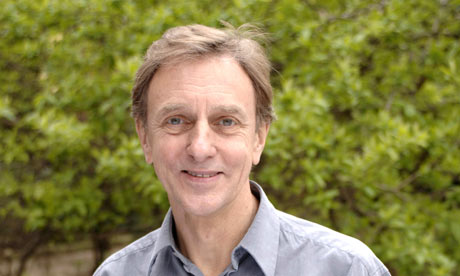
Colin Blakemore pictured below:
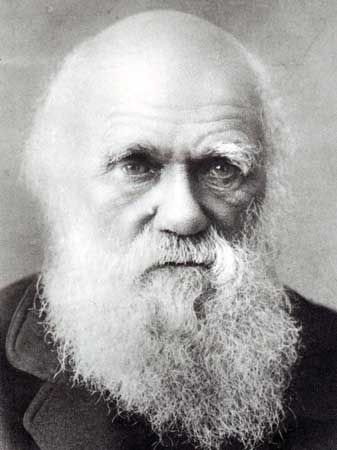
Charles Darwin pictured below:
 :
:
Richard Speck

Ladies Richard Speck murdered below:

Kerry Livgren, author of the song DUST IN THE WIND seen below:

The group KANSAS BELOW:

_
You can hear DAVE HOPE and Kerry Livgren’s stories from this youtube link:
(part 1 ten minutes)
(part 2 ten minutes)
Pre-Order Miracles Out of Nowhere now at http://www.miraclesoutofnowhere.com
About the film:
In 1973, six guys in a local band from America’s heartland began a journey that surpassed even their own wildest expectations, by achieving worldwide superstardom… watch the story unfold as the incredible story of the band KANSAS is told for the first time in the DVD Miracles Out of Nowhere.
_____________________________
Related posts:
The John Lennon and the Beatles really were on a long search for meaning and fulfillment in their lives just like King Solomon did in the Book of Ecclesiastes. Solomon looked into learning (1:12-18, 2:12-17), laughter, ladies, luxuries, and liquor (2:1-2, 8, 10, 11), and labor (2:4-6, 18-20). He fount that without God in the picture all […]
______________ George Harrison Swears & Insults Paul and Yoko Lucy in the Sky with Diamonds- The Beatles The Beatles: I have dedicated several posts to this series on the Beatles and I don’t know when this series will end because Francis Schaeffer spent a lot of time listening to the Beatles and talking […]
The Beatles in a press conference after their Return from the USA Uploaded on Nov 29, 2010 The Beatles in a press conference after their Return from the USA. The Beatles: I have dedicated several posts to this series on the Beatles and I don’t know when this series will end because Francis […]
__________________ Beatles 1966 Last interview I have dedicated several posts to this series on the Beatles and I don’t know when this series will end because Francis Schaeffer spent a lot of time listening to the Beatles and talking and writing about them and their impact on the culture of the 1960’s. In this […]
_______________ The Beatles documentary || A Long and Winding Road || Episode 5 (This video discusses Stg. Pepper’s creation I have dedicated several posts to this series on the Beatles and I don’t know when this series will end because Francis Schaeffer spent a lot of time listening to the Beatles and talking and writing about […]
_______________ Francis Schaeffer pictured below: _____________________ I have included the 27 minute episode THE AGE OF NONREASON by Francis Schaeffer. In that video Schaeffer noted, ” Sergeant Pepper’s Lonely Hearts Club Band…for a time it became the rallying cry for young people throughout the world. It expressed the essence of their lives, thoughts and their feelings.” How Should […]
Crimes and Misdemeanors: A Discussion: Part 1 ___________________________________ Today I will answer the simple question: IS IT POSSIBLE TO BE AN OPTIMISTIC SECULAR HUMANIST THAT DOES NOT BELIEVE IN GOD OR AN AFTERLIFE? This question has been around for a long time and you can go back to the 19th century and read this same […]
____________________________________ Francis Schaeffer pictured below: __________ Francis Schaeffer has written extensively on art and culture spanning the last 2000years and here are some posts I have done on this subject before : Francis Schaeffer’s “How should we then live?” Video and outline of episode 10 “Final Choices” , episode 9 “The Age of Personal Peace and Affluence”, episode 8 […]
Love and Death [Woody Allen] – What if there is no God? [PL] ___________ _______________ How Should We then Live Episode 7 small (Age of Nonreason) #02 How Should We Then Live? (Promo Clip) Dr. Francis Schaeffer 10 Worldview and Truth Two Minute Warning: How Then Should We Live?: Francis Schaeffer at 100 Francis Schaeffer […]
___________________________________ Francis Schaeffer pictured below: ____________________________ Francis Schaeffer “BASIS FOR HUMAN DIGNITY” Whatever…HTTHR Dr. Francis schaeffer – The flow of Materialism(from Part 4 of Whatever happened to human race?) Dr. Francis Schaeffer – The Biblical flow of Truth & History (intro) Francis Schaeffer – The Biblical Flow of History & Truth (1) Dr. Francis Schaeffer […]
_
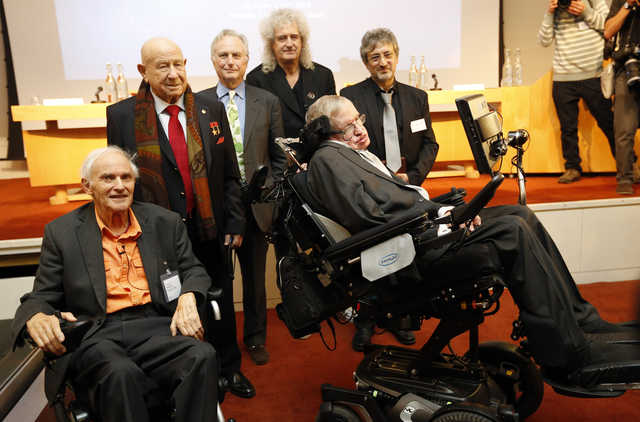
Communication at the The Royal Society Featuring: Professor Sir Harry Kroto, Alexei Leonov, Dr Richard Dawkins, Dr Brian May, Professor Stephen Hawking,
It is with sadness that I write this post having learned of the death of Sir Harold Kroto on April 30, 2016 at the age of 76. He was a scientist of remarkable abilities and a man of great humor too. In this series I posted the Memorial by Richard Dawkins for Dr. Kroto and I also looked at Kroto’s membership in CSICOP and his admiration for Bertrand Russell and his 2 emails he sent to me on 9-18-14. Peter Coles, Head of the School of Mathematical and Physical Sciences at the University of Sussex gave an excellent tribute Dr. Kroto which I posted too.
I did not know Harry Kroto personally but I did have the opportunity to correspond with him in 2014. I sent him a letter in the spring and two in the summer and he responded with an email on 9-18-14 and I thanked him for responding in an email and then he emailed me again and even sent me a letter on 11-21-14. In that 11-21-14 letter he referred me to the You Tube film series Renowned Academics Speaking About God which has over 300,000 views on You Tube and that prompted me on 11-29-14 to start my blog series RESPONDING TO HARRY KROTO’S BRILLIANT RENOWNED ACADEMICS!! Below are the links to the posts I have already done on previous Tuesdays in this series:
Arif Ahmed, Haroon Ahmed,Sir David Attenborough, Mark Balaguer, Horace Barlow, Michael Bate, Sir Patrick Bateson,Patricia Churchland, Aaron Ciechanover, Noam Chomsky,Alan Dershowitz, Hubert Dreyfus, Bart Ehrman, Stephan Feuchtwang, David Friend, Riccardo Giacconi, Ivar Giaever , Roy Glauber, Rebecca Goldstein, David J. Gross, Brian Greene, Susan Greenfield, Stephen F Gudeman, Alan Guth, Jonathan Haidt, Theodor W. Hänsch, Brian Harrison, Hermann Hauser, Roald Hoffmann, Bruce Hood, Herbert Huppert, Gareth Stedman Jones, Steve Jones, Shelly Kagan, Michio Kaku, Stuart Kauffman, Lawrence Krauss, Harry Kroto, George Lakoff, Elizabeth Loftus, Alan Macfarlane, Peter Millican, Marvin Minsky, Leonard Mlodinow, Yujin Nagasawa, Alva Noe, Douglas Osheroff, Jonathan Parry, Saul Perlmutter, Herman Philipse, Carolyn Porco, Robert M. Price, Lisa Randall, Lord Martin Rees, Alison Richard, Oliver Sacks, John Searle, Marcus du Sautoy, Simon Schaffer, J. L. Schellenberg, Lee Silver, Peter Singer, Walter Sinnott-Armstrong, Ronald de Sousa, Victor Stenger, John Sulston, Barry Supple, Leonard Susskind, Raymond Tallis, Neil deGrasse Tyson, C.J. van Rijsbergen, Alexander Vilenkin, Sir John Walker, Frank Wilczek, Steven Weinberg, and Lewis Wolpert,

I heard earlier this afternoon of the death at the age of 76 of the distinguished chemist Sir Harry Kroto.
Along with Robert Curl and Richard Smalley, Harry Kroto was awarded theNobel Prize for Chemistry in 1996 for the discovery of the C60 structure that became known as Buckminsterfullerene (or the “Buckyball” for short).
Harry had a long association with the University of Sussex and was a regular visitor to the Falmer campus even after he moved to the USA.
I remember first meeting him in the 1988 when, as a new postdoc fresh out of my PhD, I had just taken over organising the Friday seminars for the Astronomy Centre. One speaker called off his talk just an hour before it was due to start so I asked if anyone could suggest someone on campus who might stand in. Someone suggested Harry, whose office was nearby in the School of Molecular Sciences (now the Chichester Building). I was very nervous as I knocked on his door – Harry was already famous then – and held out very little hope that such a busy man would agree to give a talk with less than an hour’s notice. In fact he accepted immediately and with good grace gave a fine impromptu talk about the possibility that C60 might be a major component of interstellar dust. If only all distinguished people were so approachable and helpful!
I met him in campus more recently a couple of years ago when we met to talk about some work he had been doing on a range of things to do with widening participation in STEM subjects. I remember I had booked an hour in my calendar but we talked for at least three. He was brimming with ideas and energy then. It’s hard to believe he is no more.
Harry Kroto was a man of very strong views and he was not shy in expressing them. He cared passionately about science and was a powerful advocate for it. He will be greatly missed.
Rest in peace, Harry Kroto (1939-2016)
My name is Peter Coles and I’m Professor of Theoretical Astrophysics and Head of the School of Mathematical and Physical Sciences at the University of Sussex. My research is in the area of cosmology and the large-scale structure of the Universe.
I was born in Newcastle upon Tyne and educated at its Royal Grammar School. After that I went to Magdalene College at the University of Cambridge to study Natural Sciences, eventually specialising in Theoretical Physics. After graduation I started a doctorate in the Astronomy Centre at the University of Sussex under the supervision of John Barrow, the famous writer. After completing my DPhil in 1988, I stayed for two years in Sussex as a postdoctoral research fellow. My next move was to London, where I held a number of positions in the School of Mathematical Sciences at what is now Queen Mary, University of London. I was awarded an SERC Advanced Fellowship in 1993 which I held for five years and was eventually promoted to the position of Reader. In 1998 I was appointed Professor of Astrophysics in the School of Physics & Astronomy at the University of Nottingham, a position I took up on 1st January 1999. I helped set up an Astronomy group there, and stayed about eight years in Nottingham until, in 2007, I moved to a position as Professor of Theoretical Astrophysics in the School of Physics and Astronomy at Cardiff University. I started my current position at Sussex in February 2013.
I’ve published a few books that not many people read, and have been in a few TV programmes that not many people watched. But I’m not bitter…
In case you hadn’t realised “Telescoper” is an anagram of “Peter Coles”, which is quite ironic because as a theorist I don’t know one end of a telescope from the other (especially if it’s of reflecting type). Still, it could have been worse. I might have picked “Tesco Leper”.
Today I had the pleasure of attending three events with Nobel prize winning chemist Sir Harry Kroto. Sir Harry is an atheist with a Jewish father, and a friend of Richard Dawkins. He is not afraid to talk about religion as evidenced during his recent interview with Kim Hill and by numerous remarks during the sessions today.
As for me, I’m not an atheist (although I was brought up as such) so it is usually with some trepidation that I attend lectures and talks such as these, just in case my faith [1] is shattered. Over the years I have been to many university-based science lectures and found this fear to rarely be justified and the challenges to Christianity to actually be incredibly weak. To be fair, I go to such lectures and talks trying to be as open-minded as I can be, and trying to consider the facts presented both in their isolated form and as part of a larger worldview. Sir Harry’s talks however appeared to present little if anything that would convince me to change my mind, although I would love to have had the opportunity to have chatted with him one-on-one (or any another scientist) and let them try to convince me.
On this point, Dawkins and Sam Harris and others have something to gain by converting me. I’m involved in a church with students, and various other activities with friends and family. If they could convince me that I am wrong and that they are right, then I would join them and become an evangelist for their side. I could make new converts within my church friends and stop pestering my family over their salvation and the “hell” word that Dawkins and Sir Harry seem so offended about.
I should spend a moment on this “hell” topic too since it keeps coming up. What I see regarding this is both a double-standard and a straw-man fallacy. Let’s take the latter first.

Dawkins and Sir Harry have both quoted instances of children being scared by such things as “hell houses” or having children scared to the point of psychological damage in some way regarding hell. Yet this seems intellectually dishonest as I think Anthony Flew has pointed out. For example, take 1,000 church kids and (somehow) determine how many of them have psychological damage from their parents talking about hell. I know numerous kids and none of them to my knowledge live in some disturbed state, and nor do my kids, yet I make it no secret that hell is a reality according to the Bible. What the new atheists and Sir Harry appear to be doing is taking the (perhaps) one or two cases per 1,000 and citing these as if they are normal.

As for the double standard, let’s consider what atheists are teaching young people. Young person: you are part of a cosmic accident, a piece of highly evolved pond-scum. But don’t worry, you are good pond scum. And life is good and has much meaning. We don’t know what it is, but fear not for you can pretend life has meaning which should make you feel better and you will have less reason to follow 500 other New Zealanders each year by committing suicide. Yes, we know that the universe began with a big bang and ultimately will end in a whimpering heat death. But don’t worry, you will be long dead before that happens, and your ashes will be part of that (cough) meaningful utopia picture.
This leads on to another point which is the trouble universities are having recruiting science students. I’m not about to suggest that atheism and post-modernism are the reasons for the disinterest in science, but I think they do play a role. Consider, if you live a life that is ultimately meaningless (born, live, reproduce, die, nothingness), then why would you choose an occupation that is hard and doesn’t pay well? Why ought I live for the good of all and work on great science that helps improve lives rather than just live for myself? Of course atheists counter this by saying that they are philanthropic and good people to which I would often agree. But my question is why ought they be like that rather than be selfish and self centered? Christians (and some other) religious people know how they ought to behave, but atheists have to take a pragmatic view on oughts, yet one persons’ ought may differ from anothers’ought, so which do we choose and why?
I have a lot more thoughts on this topic but will finish on the question of knowledge as this is a biggie when it comes to scientists and their worldviews. As Sir harry pointed out on several occasions, he is not going to believe anything unless it is based on evidence. Yet this claim is itself self-refuting. Does he have evidence for not believing anything unless it is based on evidence? But I think it is worse that that and I should like to expand on this in another post sometime, but here is an outline.
Scientists often make the claim as Sir Harry does that we should not believe anything unless it is based on evidence. Yet it seems to me that non-religious scientists actually believe everything based on faith. For example:
Let me finish now with a few big words and why I believe what I believe.
Epistemology is the branch of philosophy that deals with how we know what we know, while ontology deals with the nature of existence or being. I fail to understand how the science alone can access reality in any definite way because to do so requires meta-knowledge such as: are my senses are reliable, is nature uniform, am I a brain in a vat, and is the world the creation of a cosmic trickster? Science seems unable even in principle to access such knowledge. Christianity on the other hand begins in ontology with the existence of God and His revelation through the Bible which cuts through the veil and reveals a world created with order and meaning. C.S. Lewis wrote [2]:
(Below: The Inklings of Oxford – C.S. Lewis, J.R.R. Tolkien and Their Friends)
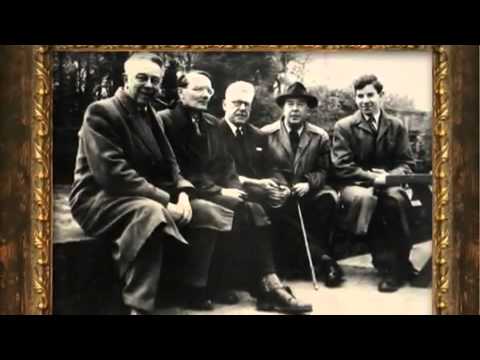
Men became scientific because they expected Law in Nature, and they expected Law in Nature because they believed in a Legislator. In most modern scientists this belief has died: it will be interesting to see how long their confidence in uniformity survives it. Two significant developments have already appeared—the hypothesis of a lawless sub-nature, and the surrender of the claim that science is true. We may be living nearer than we suppose to the end of the Scientific Age.
CS Lewis takes a walk around Magdalen College in Oxford.
I think a nice way to sum this up is to say that to gain certainty, we must begin in ontology as a grounding for epistemology. The law-giving legislator provides this starting point and provides a basis for science. On the other hand, beginning with epistemology as Dawkins and Sir Harry appear to do leads ultimately to total uncertainty because nothing can really be known for sure about anything. I think Rene Descartes realized this long ago. Should someone tell the new atheists?
Footnotes:
Further reading:
Timothy Keller, The Reason for God, p.132 has a section “The Regularity of Nature” dealing with the problem of induction, David Hume and Bertrand Russell. Keller says that many scholars have argued in the last decades that modern science arose in its most sustained form out of Christian civilization due to belief in an all-powerful, personal God who created and sustains an orderly universe. I would add that reading for example, Homer’s Illiad, would not provide you with such a view of nature.
_____
Related posts:
On November 21, 2014 I received a letter from Nobel Laureate Harry Kroto and it said: …Please click on this URL http://vimeo.com/26991975 and you will hear what far smarter people than I have to say on this matter. I agree with them. Harry Kroto I have attempted to respond to all of Dr. Kroto’s friends arguments […]
Communication at the The Royal Society Featuring: Professor Sir Harry Kroto, Alexei Leonov, Dr Richard Dawkins, Dr Brian May, Professor Stephen Hawking It is with sadness that I write this post having learned of the death of Sir Harold Kroto on April 30, 2016 at the age of 76. He was a scientist of […]
On November 21, 2014 I received a letter from Nobel Laureate Harry Kroto and it said: …Please click on this URL http://vimeo.com/26991975 and you will hear what far smarter people than I have to say on this matter. I agree with them. Harry Kroto Nick Gathergood, David-Birkett, Harry-Kroto I have attempted to respond to all of […]
(The Nobel chemistry laureates Harold Kroto, Robert Curl and Richard Smalley)
On November 21, 2014 I received a letter from Nobel Laureate Harry Kroto and it said: …Please click on this URL http://vimeo.com/26991975 and you will hear what far smarter people than I have to say on this matter. I agree with them. Harry Kroto I have attempted to respond to all of Dr. Kroto’s friends arguments […]
On November 21, 2014 I received a letter from Nobel Laureate Harry Kroto and it said: …Please click on this URL http://vimeo.com/26991975 and you will hear what far smarter people than I have to say on this matter. I agree with them. Harry Kroto I have attempted to respond to all of Dr. Kroto’s friends arguments […]
(Kroto and his wife, Margaret)
On November 21, 2014 I received a letter from Nobel Laureate Harry Kroto and it said: …Please click on this URL http://vimeo.com/26991975 and you will hear what far smarter people than I have to say on this matter. I agree with them. Harry Kroto Nick Gathergood, David-Birkett, Harry-Kroto I have attempted to respond to all of […]
On November 21, 2014 I received a letter from Nobel Laureate Harry Kroto and it said: …Please click on this URL http://vimeo.com/26991975 and you will hear what far smarter people than I have to say on this matter. I agree with them. Harry Kroto I have attempted to respond to all of Dr. Kroto’s friends arguments […]
(Margaret and Harry Kroto with students at Lindau 2005)
On November 21, 2014 I received a letter from Nobel Laureate Harry Kroto and it said: …Please click on this URL http://vimeo.com/26991975 and you will hear what far smarter people than I have to say on this matter. I agree with them. Harry Kroto Nick Gathergood, David-Birkett, Harry-Kroto I have attempted to respond to all of […]
On November 21, 2014 I received a letter from Nobel Laureate Harry Kroto and it said: …Please click on this URL http://vimeo.com/26991975 and you will hear what far smarter people than I have to say on this matter. I agree with them. Harry Kroto Nick Gathergood, David-Birkett, Harry-Kroto I have attempted to respond to all of […]
On November 21, 2014 I received a letter from Nobel Laureate Harry Kroto and it said: …Please click on this URL http://vimeo.com/26991975 and you will hear what far smarter people than I have to say on this matter. I agree with them. Harry Kroto I have attempted to respond to all of Dr. Kroto’s friends arguments […]
On November 21, 2014 I received a letter from Nobel Laureate Harry Kroto and it said: …Please click on this URL http://vimeo.com/26991975 and you will hear what far smarter people than I have to say on this matter. I agree with them. Harry Kroto I have attempted to respond to all of Dr. Kroto’s friends arguments […]
(With his son Stephen in Joshua Tree)
__ On November 21, 2014 I received a letter from Nobel Laureate Harry Kroto and it said: …Please click on this URL http://vimeo.com/26991975 and you will hear what far smarter people than I have to say on this matter. I agree with them. Harry Kroto I have attempted to respond to all of Dr. Kroto’s friends […]
On November 21, 2014 I received a letter from Nobel Laureate Harry Kroto and it said: …Please click on this URL http://vimeo.com/26991975 and you will hear what far smarter people than I have to say on this matter. I agree with them. Harry Kroto Sir Harry Kroto, FSU’s Francis Eppes Professor of Chemistry I […]
(Marg Kroto with two sons Stephen and David)
On November 21, 2014 I received a letter from Nobel Laureate Harry Kroto and it said: …Please click on this URL http://vimeo.com/26991975 and you will hear what far smarter people than I have to say on this matter. I agree with them. Harry Kroto I have attempted to respond to all of Dr. Kroto’s friends arguments […]
On November 21, 2014 I received a letter from Nobel Laureate Harry Kroto and it said: …Please click on this URL http://vimeo.com/26991975 and you will hear what far smarter people than I have to say on this matter. I agree with them. Harry Kroto Wikipedia notes: Mahzarin Banaji From Wikipedia, the free encyclopedia [hide]This article has […]
(With Marg in 1964)
On November 21, 2014 I received a letter from Nobel Laureate Harry Kroto and it said: …Please click on this URL http://vimeo.com/26991975 and you will hear what far smarter people than I have to say on this matter. I agree with them. Harry Kroto Wikipedia notes: Anthony Clifford “A. C.” Grayling (/ˈɡreɪlɪŋ/; born 3 April 1949) […]
On November 21, 2014 I received a letter from Nobel Laureate Harry Kroto and it said: …Please click on this URL http://vimeo.com/26991975 and you will hear what far smarter people than I have to say on this matter. I agree with them. Harry Kroto _________________ Below you have picture of Dr. Harry Kroto: ______________ I have […]
__________


 The Daily Hatch