FRANCIS SCHAEFFER ANALYZES ART AND CULTURE Part 322 Richard Dawkins vents about the teaching of hell in his new book OUTGROWING GOD (Dawkins’ view on is inaccurate) November 3, 2019 Open Letter to Richard Dawkins, Featured artist is Edgar Degas

_

Bill Maher and Richard Dawkins

Image result for richard dawkins obama

__

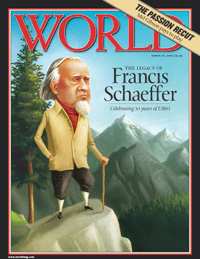
Image result for francis schaeffer


XXXX November 3, 2019

November 3, 2019

Richard Dawkins c/o Richard Dawkins Foundation, 
Washington, DC 20005

Dear Mr. Dawkins,

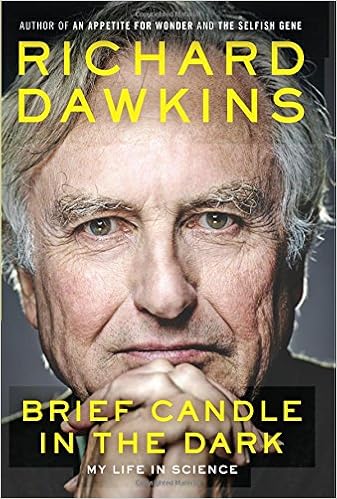
I have enjoyed reading about a dozen of your books and some of the most intriguing were The God DelusionAn Appetite for Wonder: The Making of a Scientist, and Brief Candle in the Dark: My Life in Science.

I enjoyed your latest book Outgrowing God which is one of my favorite books that you have written. 

However, there are some some weak parts of the book. For instance, on page 99 you write: 

What if the fear of God is not just fear of upsetting him but of something worse—much worse? Both Christianity and Islam have traditionally taught that sinners will be tormented for all eternity in hell. The Book of Revelation talks about a ‘lake of fire burning with brimstone’.

What do you think of people who threaten children with eternal fire after they are dead? I’d say those people are lucky there is no such place as hell, because I can’t think of anybody who more richly deserves to go there.

The late, great Dr. Robert G. Lee said,

I know some people call the preacher who stands squarely upon the teaching of Christ and His apostles narrow, harsh, and cruel. As to being narrow, I have no desire to any broader than was Jesus. As to being cruel, is it cruel to tell a man the truth? Is a man to be called cruel who declares the whole counsel of God and points out to men their danger? Is it cruel to arouse sleeping people to the fact that the house is on fire? Is it cruel to jerk a blind man away from the rattlesnake in the coil? Is it cruel to declare to people the deadliness of disease and tell them which medicine to take? I had rather be called cruel for being kind, than to be called kind for being cruel.

The cruelest thing we could do would be to fail to warn people about Hell and what the Bible has to say about it. To ridicule a preacher who warns of Hell is like ridiculing a doctor who warns of cancer. Hell is not a pleasant subject, but it is a reality.

Extract from Chapter 9 of The God Delusion(2006) by Richard Dawkins

‘Sticks and stones may break my bones, but words can never hurt me.’ The adage is true as long as you don’t really believe the words. But if your whole upbringing, and everything you have ever been told by parents, teachers and priests, has led you to believe, really believe, utterly and completely, that sinners burn in hell (or some other obnoxious article of doctrine such as that a woman is the property of her husband), it is entirely plausible that words could have a more long-lasting and damaging effect than deeds. I am persuaded that the phrase ‘child abuse’ is no exaggeration when used to describe what teachers and priests are doing to children whom they encourage to believe in something like the punishment of unshriven mortal sins in an eternal hell.

“It was a very unpleasant and embarrassing experience, but the mental trauma was soon exorcised by comparing notes with my contemporaries who had suffered it previously at the hands of the same master,” Dawkins writes on his official website. “Thank goodness, I have never personally experienced what it is like to believe – really and truly and deeply believe – in hell. But I think it can be plausibly argued that such a deeply held belief might cause a child more long-lasting mental trauma than the temporary embarrassment of mild physical abuse.”

The evolutionary biologist’s remarks come in light of a recent article by the Daily Mail that referenced an interview on Al Jazeera in which Dawkins said: “Horrible as sexual abuse no doubt was, the damage was arguably less than the long-term psychological damage inflicted by bringing the child up Catholic in the first place.” The scientist wrote similar claims in his 2006 bestseller The God Delusion.

In his recent blog post, Dawkins reveals that he received a flood of Twitter messages from “horrified” people asking him to explain those remarks – which he does by admitting that “violent, painful, repeated sexual abuse, especially by a family member such as a father or grandfather, probably has a more damaging effect on a child’s mental well-being than sincerely believing in hell.”[2]

Richard, wouldn’t be wise to further investigate the accuracy of the Bible? Your hero Charles Darwin also got mad about the teaching of hell.

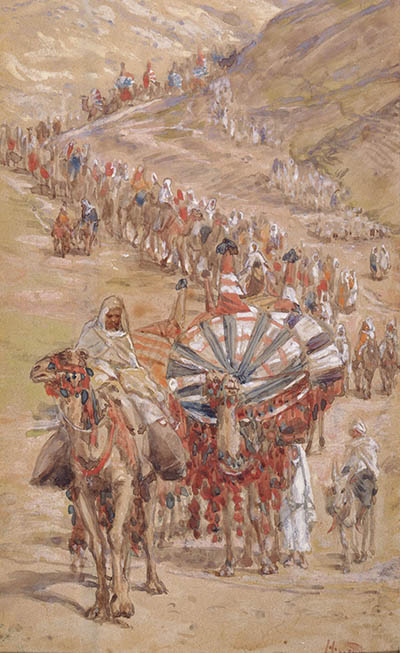
The Caravan of Abram
syria-camel-seal

Dr. Dawkins, you have a 150 year advantage over your hero Charles Darwin and the archaeologist’s spade has continued to dig. Take a look at this piece of evidence from the book WHATEVER HAPPENED TO THE HUMAN RACE? by Francis Schaeffer and C. Everett Koop:

TRUTH AND HISTORY (chapter 5 of WHATEVER HAPPENED TO THE HUMAN RACE?)

In the previous chapter we saw that the Bible gives us the explanation for the existence of the universe and its form and for the mannishness of man. Or, to reverse this, we came to see that the universe and its form and the mannishness of man are a testimony to the truth of the Bible. In this chapter we will consider a third testimony: the Bible’s openness to verification by historical study.

Christianity involves history. To say only that is already to have said something remarkable, because it separates the Judeo-Christian world-view from almost all other religious thought. It is rooted in history.

The Bible tells us how God communicated with man in history. For example, God revealed Himself to Abraham at a point in time and at a particular geographical place. He did likewise with Moses, David, Isaiah, Daniel and so on. The implications of this are extremely important to us. Because the truth God communicated in the Bible is so tied up with the flow of human events, it is possible by historical study to confirm some of the historical details.

It is remarkable that this possibility exists. Compare the information we have from other continents of that period. We know comparatively little about what happened in Africa or South America or China or Russia or even Europe. We see beautiful remains of temples and burial places, cult figures, utensils, and so forth, but there is not much actual “history” that can be reconstructed, at least not much when compared to that which is possible in the Middle East.

When we look at the material which has been discovered from the Nile to the Euphrates that derives from the 2500-year span before Christ, we are in a completely different situation from that in regard to South America or Asia. The kings of Egypt and Assyria built thousands of monuments commemorating their victories and recounting their different exploits. Whole libraries have been discovered from places like Nuzu and Mari and most recently at Elba, which give hundreds of thousands of texts relating to the historical details of their time. It is within this geographical area that the Bible is set. So it is possible to find material which bears upon what the Bible tells us.

The Bible purports to give us information on history. Is the history accurate? The more we understand about the Middle East between 2500 B.C. and A.D. 100, the more confident we can be that the information in the Bible is reliable, even when it speaks about the simple things of time and place.

Two things should be mentioned about the time of Moses in Old Testament history.

First, consider the archaeological evidence that relates to the period. True, it is not of the same explicitness that we have found, say, in relation to the existence of Ahab or Jehu or Jehoiakim. We have no inscription from Egypt which refers to Moses being taken out of the bulrushes and removed from the waterproof basket his mother had made him. But this does not mean that the Book of Exodus is a fictitious account, as some critics has suggested. Some say it is simply an idealized reading-back into history by the Jews under the later monarchy. There is not a reason why these “books of Moses,” as they are called, should not be treated as history, just as we have been forced to treat the Books of Kings and Chronicles dating 500 years later.

There is ample evidence about the building projects of the Egyptian kings, and the evidence we have fits well with Exodus. There are scenes of brick-making (for example, Theban Tomb 100 of Rekhmire). Contemporary parchments and papyri tell of production targets which had to be met. One speaks of a satisfied official report of his men as “making their quota of bricks daily” (Papyrus Anastasi III vso, p.3, in the British Museum. Also Louvre Leather Roll in the Louvre, Paris, col ii, mentions quotes of bricks and “taskmasters”). Actual bricks found show signs of straw which had to be mixed in with the clay, just as Exodus says. This matter of bricks and straw is further affirmed by the record that one despairing official complained, “There are no men to make bricks nor straw in my area.”

We know from contemporary discoveries that Semites were found at all levels of Egypt’s cosmopolitan society. (Brooklyn Museum, New York, no. 35, 1446. Papyrus Brooklyn). There is nothing strange therefore about Joseph’s becoming so important in the pharaoh’s court.

The store cities of Pithom and Raamses (Rameses) mentioned in Exodus 1:11 are well known in Egyptian inscriptions. Raamses was actually in the east-Delta capital, Pi-Ramses (near Goshen), where the Israelites would have had ample experience of agriculture. Thus, the references to agriculture found in the law of Moses would not have been strange to the Israelites even though they were in the desert at the time the law was given. Certainly there is no reason to say, as some critics do, that these sections on agriculture were an indication of a reading-back from a latter period when the Jews were settled in Canaan.

The form of the covenant made at Sinai has remarkable parallels with the covenant forms of other people at that time. (On covenants and parties to a treaty, the Louvre; and Treaty Tablet from Boghaz Koi (i.e., Hittite) in Turkey, Museum of Archaeology in Istanbul.) The covenant form at Sinai resembles just as the forms of letter writings of the first century after Christ (the types of introductions and greetings) are reflected in the letters of the apostles in the New Testament, it is not surprising to find the covenant form of the second millennium before Christ reflected in what occurred at Mount Sinai. God has always spoken to people within the culture of their time, which does not mean that God’s communication is limited by that culture. It is God’s communication but within the forms appropriate to the time.

The Pentateuch tells us that Moses led the Israelites up the east side of the Dead Sea after their long stay in the desert. There they encountered the hostile kingdom of Moab. We have firsthand evidence for the existence of this kingdom of Moab–contrary to what has been said by critical scholars who have denied the existence of Moab at this time. It can be found in a war scene from a temple at Luxor (Al Uqsor). This commemorates a victory by Ramses II over the Moabite nation at Batora (Luxor Temple, Egypt).

Also the definite presence of the Israelites in west Palestine (Canaan) no later than the end of the thirteenth century B.C. is attested by a victory stela of Pharaoh Merenptah (son and successor of Ramses II) to commemorate his victory over Libya (Israel Stela, Cairo Museum, no. 34025). In it he mentions his previous success in Canaan against Aschalon, Gize, Yenom, and Israel; hence there can be no doubt the nation of Israel was in existence at the latest by this time of approximately 1220 B.C. This is not to say it could not have been earlier, but it cannot be later than this date.

The answer to find meaning in life is found in putting your faith and trust in Jesus Christ. The Bible is true from cover to cover and can be trusted.

Thank you again for your time and I know how busy you are.

Everette Hatcher, everettehatcher@gmail.comhttp://www.thedailyhatch.org, cell ph 501-920-5733, Box 23416, LittleRock, AR 72221, United States

XXXXXXX

__
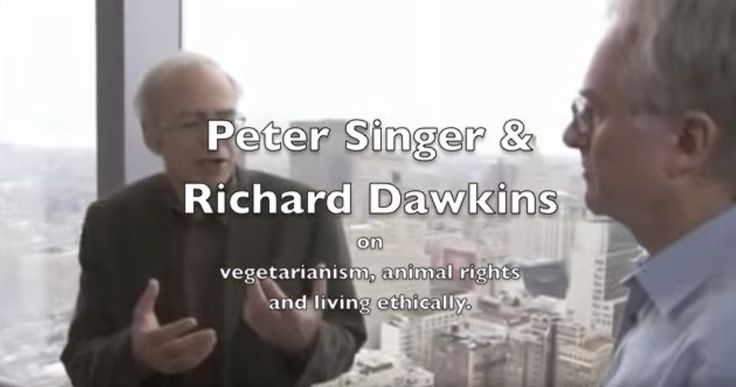
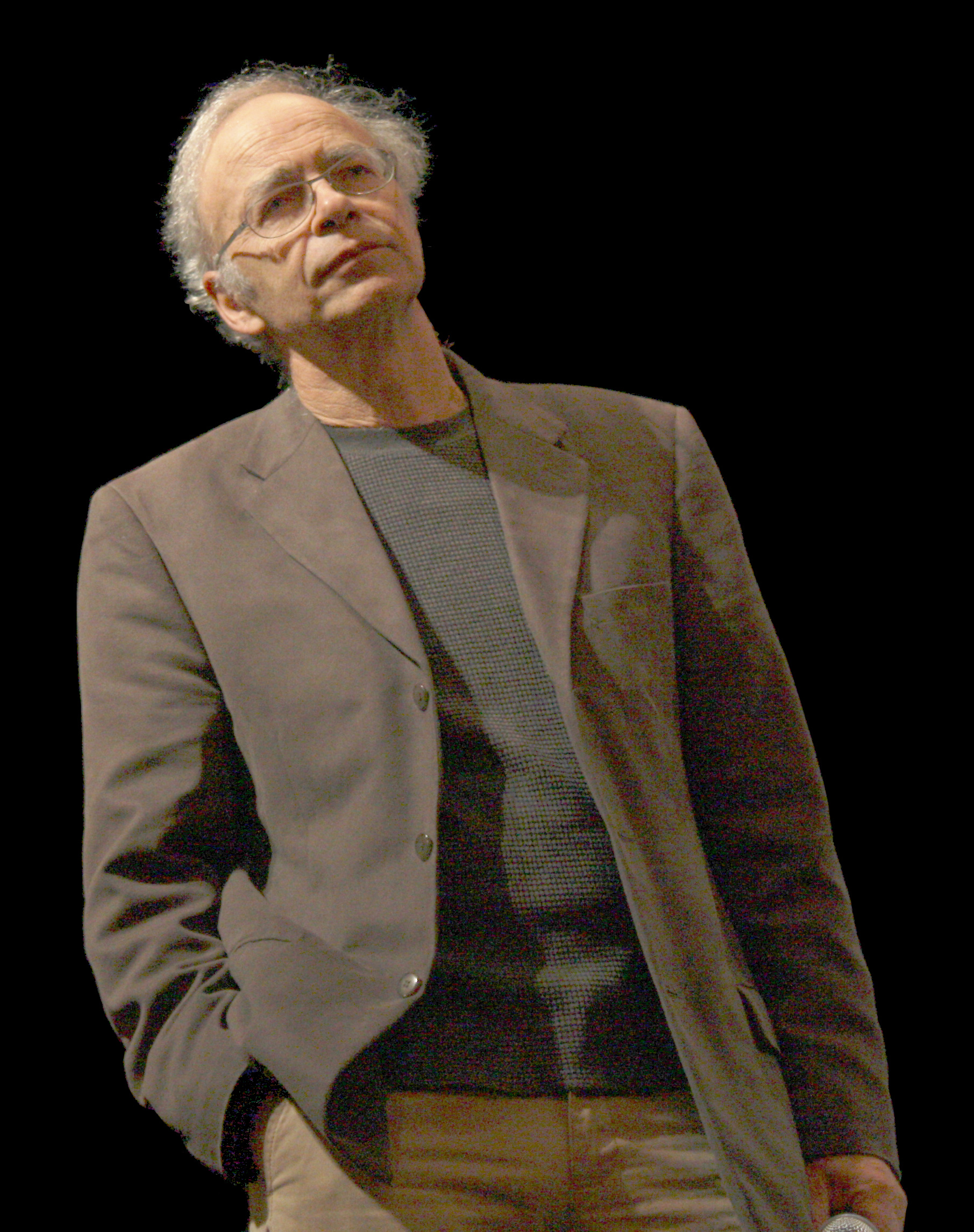
Image result for richard dawkins peter singer

__

Image result for francis schaeffer

Francis and Edith Schaeffer at their home in Switzerland with some visiting friends

__
Image result for richard dawkins young

Schaeffer with his wife Edith in Switzerland.


Image result for john lennox and richard dawkins

Richard Dawkins and John Lennox

_

DawkinsWard

_

Image result for francis schaeffer c. everett koop whatever happened to human race?

_

Dawkins, Hitchens, Dennett, Harris 

Image result for four horsemen richard dawkins

Canary Islands 2014: Harold Kroto and Richard Dawkins

Image result for harry kroto richard dawkins

__

Francis Schaeffer pictured below:
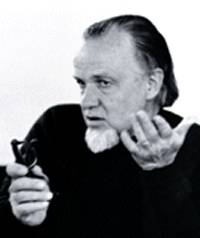
The Basis of Human Dignity by Francis Schaeffer

Richard Dawkins, founder of the Richard Dawkins Foundation for Reason and Science. Credit: Don Arnold Getty Images

Francis Schaeffer in 1984

Christian Manifesto by Francis Schaeffer

Francis Schaeffer in 1982

—-

Whatever Happened to the Human Race? Episode 1

Image result for richard dawkins brief candle in the dark

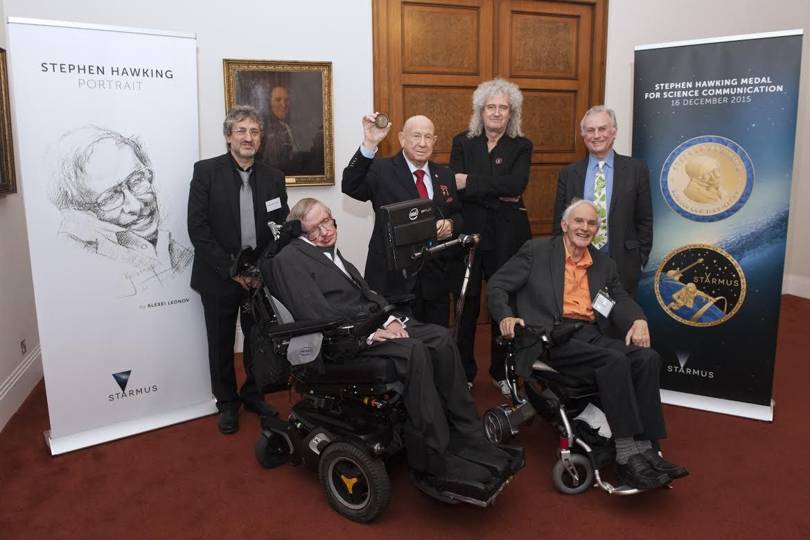
Garik Israelian, Stephen Hawking, Alexey Leonov, Brian May, Richard Dawkins and Harry Kroto

—-

—-

—-

HENRY F SCHAEFER III
Fritz Schaefer
BORNHenry Frederick Schaefer III
June 8, 1944 (age 73)
Grand RapidsMichiganUnited States
RESIDENCEUnited States
NATIONALITYAmerican
ALMA MATERMassachusetts Institute of Technology and Stanford University
AWARDSACS Award in Pure Chemistry(1979)Centenary Medal of the UK Royal Society of Chemistry (1992)ACS Award in Theoretical Chemistry (2003)Joseph O. Hirschfelder Prize(2005)ACS Peter Debye Award (2014)
Scientific career
FIELDSComputational Chemistry
INSTITUTIONS
DOCTORAL STUDENTS

_

Featured artist is Edgar Degas

From Wikipedia, the free encyclopediaJump to navigationJump to search“Degas” redirects here. For other uses, see Degas (disambiguation).

Edgar Degas
Self-portrait (Degas au porte-fusain), 1855
BornHilaire-Germain-Edgar De Gas
19 July 1834
Paris, France
Died27 September 1917 (aged 83)
Paris, France
NationalityFrench
Known forPainting, sculpture, drawing
Notable workThe Bellelli Family (1858–1867)
Woman with Chrysanthemums (1865)
Chanteuse de Café (c. 1878)
At the Milliner’s (1882)
MovementImpressionism
Signature

We ask you, humbly, to help. Hi, reader in the U.S., it seems you use Wikipedia a lot; that’s great! It’s a little awkward to ask, but this Thursday we need your help. Time is running out in 2019 to help us. We’re a non-profit and we don’t have salespeople. We depend on donations averaging $16.36, and fewer than 2% of readers give. If you donate just $2.75, the price of your Thursday coffee, Wikipedia could keep thriving. Thank you.Please select a payment method

  •    

MAYBE LATER  CLOSE 

Edgar Degas (UK/ˈdeɪɡɑː/US/deɪˈɡɑː, dəˈɡɑː/;[1][2][3] born Hilaire-Germain-Edgar De Gas, French: [ilɛːʁ ʒɛʁmɛ̃ ɛdɡaʁ də ɡa]; 19 July 1834 – 27 September 1917) was a French artist famous for his paintings, sculptures, prints, and drawings. He is especially identified with the subject of dance; more than half of his works depict dancers.[4] Regarded as one of the founders of Impressionism, he rejected the term, preferring to be called a realist.[5] He was a superb draftsman, and particularly masterly in depicting movement, as can be seen in his rendition of dancers, racecourse subjects and female nudes. His portraits are notable for their psychological complexity and for their portrayal of human isolation.[6]

At the beginning of his career, Degas wanted to be a history painter, a calling for which he was well prepared by his rigorous academic training and close study of classical art. In his early thirties, he changed course, and by bringing the traditional methods of a history painter to bear on contemporary subject matter, he became a classical painter of modern life.[7]

Contents

Early life[edit]

Edgar Degas c. 1855–1860[8]

Degas was born in Paris, France, into a moderately wealthy family. He was the oldest of five children of Célestine Musson De Gas, a Creole from New OrleansLouisiana, and Augustin De Gas, a banker. His maternal grandfather Germain Musson, was born in Port-au-PrinceHaiti of French descent and had settled in New Orleans in 1810.[9] Degas (he adopted this less grandiose spelling of his family name when he became an adult)[10] began his schooling at age eleven, enrolling in the Lycée Louis-le-Grand.[11] His mother died when he was thirteen, and the main influences on him for the remainder of his youth were his father and several unmarried uncles.[12]

Self-portrait of the artist Edgar Degas, in red chalk on paper, from about 1855, in the collection of the National Gallery of Art in Washington, DC.

Edgar Degas, Self-Portrait, c. 1855. Red chalk on laid paper; overall size: 31 x 23.3 cm (12 3/16 x 9 3/16 in.) National Gallery of Art, Washington. Woodner Collection, 1991.182.23

Degas began to paint early in life. By the time he graduated from the Lycée with a baccalauréat in literature in 1853, at age 18, he had turned a room in his home into an artist’s studio. Upon graduating, he registered as a copyist in The Louvre Museum, but his father expected him to go to law school. Degas duly enrolled at the Faculty of Law of the University of Paris in November 1853, but applied little effort to his studies. In 1855 he met Jean-Auguste-Dominique Ingres, whom Degas revered and whose advice he never forgot: “Draw lines, young man, and still more lines, both from life and from memory, and you will become a good artist.”[13] In April of that year Degas was admitted to the École des Beaux-Arts. He studied drawing there with Louis Lamothe, under whose guidance he flourished, following the style of Ingres.[14] In July 1856, Degas traveled to Italy, where he would remain for the next three years. In 1858, while staying with his aunt’s family in Naples, he made the first studies for his early masterpiece The Bellelli Family. He also drew and painted numerous copies of works by MichelangeloRaphaelTitian, and other Renaissance artists, but—contrary to conventional practice—he usually selected from an altarpiece a detail that had caught his attention: a secondary figure, or a head which he treated as a portrait.[15]

Artistic career[edit]

Upon his return to France in 1859, Degas moved into a Paris studio large enough to permit him to begin painting The Bellelli Family—an imposing canvas he intended for exhibition in the Salon, although it remained unfinished until 1867. He also began work on several history paintingsAlexander and Bucephalus and The Daughter of Jephthah in 1859–60; Sémiramis Building Babylon in 1860; and Young Spartans around 1860.[16] In 1861 Degas visited his childhood friend Paul Valpinçon in Normandy, and made the earliest of his many studies of horses. He exhibited at the Salon for the first time in 1865, when the jury accepted his painting Scene of War in the Middle Ages, which attracted little attention.[17] Although he exhibited annually in the Salon during the next five years, he submitted no more history paintings, and his Steeplechase—The Fallen Jockey (Salon of 1866) signaled his growing commitment to contemporary subject matter. The change in his art was influenced primarily by the example of Édouard Manet, whom Degas had met in 1864 (while both were copying the same Velázquez portrait in the Louvre, according to a story that may be apocryphal).[18]

Upon the outbreak of the Franco-Prussian War in 1870, Degas enlisted in the National Guard, where his defense of Paris left him little time for painting. During rifle training his eyesight was found to be defective, and for the rest of his life his eye problems were a constant worry to him.[19]

A Cotton Office in New Orleans, 1873

After the war, Degas began in 1872 an extended stay in New OrleansLouisiana, where his brother René and a number of other relatives lived. Staying at the home of his Creole uncle, Michel Musson, on Esplanade Avenue,[20] Degas produced a number of works, many depicting family members. One of Degas’s New Orleans works, A Cotton Office in New Orleans, garnered favorable attention back in France, and was his only work purchased by a museum (the Pau) during his lifetime.[21]

Degas returned to Paris in 1873 and his father died the following year, whereupon Degas learned that his brother René had amassed enormous business debts. To preserve his family’s reputation, Degas sold his house and an art collection he had inherited, and used the money to pay off his brother’s debts. Dependent for the first time in his life on sales of his artwork for income, he produced much of his greatest work during the decade beginning in 1874.[22] Disenchanted by now with the Salon, he instead joined a group of young artists who were organizing an independent exhibiting society. The group soon became known as the Impressionists. Between 1874 and 1886 they mounted eight art shows, known as the Impressionist Exhibitions. Degas took a leading role in organizing the exhibitions, and showed his work in all but one of them, despite his persistent conflicts with others in the group. He had little in common with Monet and the other landscape painters in the group, whom he mocked for painting outdoors. Conservative in his social attitudes, he abhorred the scandal created by the exhibitions, as well as the publicity and advertising that his colleagues sought.[5] He also deeply disliked being associated with the term “Impressionist”, which the press had coined and popularized, and insisted on including non-Impressionist artists such as Jean-Louis Forain and Jean-François Raffaëlli in the group’s exhibitions. The resulting rancor within the group contributed to its disbanding in 1886.[23]

As his financial situation improved through sales of his own work, he was able to indulge his passion for collecting works by artists he admired: old masters such as El Greco and such contemporaries as ManetPissarroCézanneGauguinVan Gogh, and Édouard Brandon. Three artists he idolized, IngresDelacroix, and Daumier, were especially well represented in his collection.[24]

In the late 1880s, Degas also developed a passion for photography.[25] He photographed many of his friends, often by lamplight, as in his double portrait of Renoir and Mallarmé. Other photographs, depicting dancers and nudes, were used for reference in some of Degas’s drawings and paintings.[26]

As the years passed, Degas became isolated, due in part to his belief that a painter could have no personal life.[27] The Dreyfus Affair controversy brought his anti-Semitic leanings to the fore and he broke with all his Jewish friends.[28] His argumentative nature was deplored by Renoir, who said of him: “What a creature he was, that Degas! All his friends had to leave him; I was one of the last to go, but even I couldn’t stay till the end.”[29]

Although he is known to have been working in pastel as late as the end of 1907, and is believed to have continued making sculptures as late as 1910, he apparently ceased working in 1912, when the impending demolition of his longtime residence on the rue Victor Massé forced him to move to quarters on Boulevard de Clichy.[30] He never married and spent the last years of his life, nearly blind, restlessly wandering the streets of Paris before dying in September 1917.[31]

Artistic style[edit]

The Dance Class (La Classe de Danse), 1873–1876, oil on canvas, by Edgar Degas

Degas is often identified as an Impressionist, an understandable but insufficient description. Impressionism originated in the 1860s and 1870s and grew, in part, from the realism of such painters as Courbet and Corot. The Impressionists painted the realities of the world around them using bright, “dazzling” colors, concentrating primarily on the effects of light, and hoping to infuse their scenes with immediacy. They wanted to express their visual experience in that exact moment.[32]

Technically, Degas differs from the Impressionists in that he continually belittled their practice of painting en plein air.[33]

You know what I think of people who work out in the open. If I were the government I would have a special brigade of gendarmes to keep an eye on artists who paint landscapes from nature. Oh, I don’t mean to kill anyone; just a little dose of bird-shot now and then as a warning.[34]

“He was often as anti-impressionist as the critics who reviewed the shows”, according to art historian Carol Armstrong; as Degas himself explained, “no art was ever less spontaneous than mine. What I do is the result of reflection and of the study of the great masters; of inspiration, spontaneity, temperament, I know nothing.”[35] Nonetheless, he is described more accurately as an Impressionist than as a member of any other movement. His scenes of Parisian life, his off-center compositions, his experiments with color and form, and his friendship with several key Impressionist artists—most notably Mary Cassatt and Édouard Manet—all relate him intimately to the Impressionist movement.[36]

Degas’s style reflects his deep respect for the old masters (he was an enthusiastic copyist well into middle age)[37] and his great admiration for Jean-Auguste-Dominique Ingres and Eugène Delacroix. He was also a collector of Japanese prints, whose compositional principles influenced his work, as did the vigorous realism of popular illustrators such as Daumier and Gavarni. Although famous for horses and dancers, Degas began with conventional historical paintings such as The Daughter of Jephthah (c.1859–61) and The Young Spartans (c.1860–62), in which his gradual progress toward a less idealized treatment of the figure is already apparent. During his early career, Degas also painted portraits of individuals and groups; an example of the latter is The Bellelli Family (c.1858–67), an ambitious and psychologically poignant portrayal of his aunt, her husband, and their children.[38] In this painting, as in The Young Spartans and many later works, Degas was drawn to the tensions present between men and women.[39] In his early paintings, Degas already evidenced the mature style that he would later develop more fully by cropping subjects awkwardly and by choosing unusual viewpoints.[40]

L’Absinthe, 1876, oil on canvas, by Edgar Degas

By the late 1860s Degas had shifted from his initial forays into history painting to an original observation of contemporary life. Racecourse scenes provided an opportunity to depict horses and their riders in a modern context. He began to paint women at work, milliners and laundressesMlle. Fiocre in the Ballet La Source, exhibited in the Salon of 1868, was his first major work to introduce a subject with which he would become especially identified, dancers.[41]

In many subsequent paintings dancers were shown backstage or in rehearsal, emphasizing their status as professionals doing a job. From 1870 Degas increasingly painted ballet subjects, partly because they sold well and provided him with needed income after his brother’s debts had left the family bankrupt.[42] Degas began to paint café life as well, in works such as L’Absinthe and Singer with a Glove. His paintings often hinted at narrative content in a way that was highly ambiguous; for example, Interior (which has also been called The Rape) has presented a conundrum to art historians in search of a literary source—Thérèse Raquin has been suggested[43]—but it may be a depiction of prostitution.[44]

As his subject matter changed, so, too, did Degas’s technique. The dark palette that bore the influence of Dutch painting gave way to the use of vivid colors and bold brushstrokes. Paintings such as Place de la Concorde read as “snapshots,” freezing moments of time to portray them accurately, imparting a sense of movement. The lack of color in the 1874 Ballet Rehearsal on Stage and the 1876 The Ballet Instructor can be said to link with his interest in the new technique of photography. The changes to his palette, brushwork, and sense of composition all evidence the influence that both the Impressionist movement and modern photography, with its spontaneous images and off-kilter angles, had on his work.[36]

Place de la Concorde, 1875, oil on canvas, by Edgar Degas, Hermitage Museum, St. Petersburg

Blurring the distinction between portraiture and genre pieces, he painted his bassoonist friend, Désiré Dihau, in The Orchestra of the Opera (1868–69) as one of fourteen musicians in an orchestra pit, viewed as though by a member of the audience. Above the musicians can be seen only the legs and tutus of the dancers onstage, their figures cropped by the edge of the painting. Art historian Charles Stuckey has compared the viewpoint to that of a distracted spectator at a ballet, and says that “it is Degas’ fascination with the depiction of movement, including the movement of a spectator’s eyes as during a random glance, that is properly speaking ‘Impressionist’.”[45]

Musicians in the Orchestra, 1872, oil on canvas, by Edgar Degas

Degas’s mature style is distinguished by conspicuously unfinished passages, even in otherwise tightly rendered paintings. He frequently blamed his eye troubles for his inability to finish, an explanation that met with some skepticism from colleagues and collectors who reasoned, as Stuckey explains, that “his pictures could hardly have been executed by anyone with inadequate vision”.[19] The artist provided another clue when he described his predilection “to begin a hundred things and not finish one of them”,[46] and was in any case notoriously reluctant to consider a painting complete.[47]

His interest in portraiture led Degas to study carefully the ways in which a person’s social stature or form of employment may be revealed by their physiognomy, posture, dress, and other attributes. In his 1879 Portraits, At the Stock Exchange, he portrayed a group of Jewish businessmen with a hint of anti-Semitism. In 1881 he exhibited two pastels, Criminal Physiognomies, that depicted juvenile gang members recently convicted of murder in the “Abadie Affair”. Degas had attended their trial with sketchbook in hand, and his numerous drawings of the defendants reveal his interest in the atavistic features thought by some 19th-century scientists to be evidence of innate criminality.[48] In his paintings of dancers and laundresses, he reveals their occupations not only by their dress and activities but also by their body type: his ballerinas exhibit an athletic physicality, while his laundresses are heavy and solid.[49]

At the Races, 1877–1880, oil on canvas, by Edgar Degas, Musée d’Orsay, Paris

By the later 1870s Degas had mastered not only the traditional medium of oil on canvas, but pastel as well. The dry medium, which he applied in complex layers and textures, enabled him more easily to reconcile his facility for line with a growing interest in expressive color.[50]

In the mid-1870s he also returned to the medium of etching, which he had neglected for ten years. At first he was guided in this by his old friend Ludovic-Napoléon Lepic, himself an innovator in its use, and began experimenting with lithography and monotype.[51]

He produced some 300 monotypes over two periods, from the mid-1870s to the mid-1880s and again in the early 1890s.[52]

He was especially fascinated by the effects produced by monotype and frequently reworked the printed images with pastel.[51] By 1880, sculpture had become one more strand to Degas’s continuing endeavor to explore different media, although the artist displayed only one sculpture publicly during his lifetime.[53]

La Toilette (Woman Combing Her Hair), c. 1884–1886, pastel on paper, by Edgar Degas, Hermitage Museum, St. Petersburg

These changes in media engendered the paintings that Degas would produce in later life. Degas began to draw and paint women drying themselves with towels, combing their hair, and bathing (see: After the Bath, Woman drying herself). The strokes that model the form are scribbled more freely than before; backgrounds are simplified.[54]

The meticulous naturalism of his youth gave way to an increasing abstraction of form. Except for his characteristically brilliant draftsmanship and obsession with the figure, the pictures created in this late period of his life bear little superficial resemblance to his early paintings. In point of fact, these paintings—created late in his life and after the heyday of the Impressionist movement—most vividly use the coloristic techniques of Impressionism.[55][56]

For all the stylistic evolution, certain features of Degas’s work remained the same throughout his life. He always painted indoors, preferring to work in his studio, either from memory, photographs, or live models.[57] The figure remained his primary subject; his few landscapes were produced from memory or imagination. It was not unusual for him to repeat a subject many times, varying the composition or treatment. He was a deliberative artist whose works, as Andrew Forge has written, “were prepared, calculated, practiced, developed in stages. They were made up of parts. The adjustment of each part to the whole, their linear arrangement, was the occasion for infinite reflection and experiment.”[58] Degas himself explained, “In art, nothing should look like chance, not even movement”.[42]

Sculpture[edit]

 Edgar Degas’s Studies of Circus Performer, Miss LalaGetty Museum
 Degas’ The Dance ClassSmarthistory
 Video Postcard: The Millinery Shop (1879/86) on YouTubeArt Institute of Chicago

Little Dancer Aged Fourteen, 1878-1881, National Gallery of Art

Degas’s only showing of sculpture during his life took place in 1881 when he exhibited The Little Dancer of Fourteen Years. A nearly life-size wax figure with real hair and dressed in a cloth tutu, it provoked a strong reaction from critics, most of whom found its realism extraordinary but denounced the dancer as ugly.[59] In a review, J.-K. Huysmans wrote: “The terrible reality of this statuette evidently produces uneasiness in the spectators; all their notions about sculpture, about those cold inanimate whitenesses … are here overturned. The fact is that with his first attempt Monsieur Degas has revolutionized the traditions of sculpture as he has long since shaken the conventions of painting.”[60]

Degas created a substantial number of other sculptures during a span of four decades, but they remained unseen by the public until a posthumous exhibition in 1918. Neither The Little Dancer of Fourteen Years nor any of Degas’s other sculptures were cast in bronze during the artist’s lifetime.[59] Degas scholars have agreed that the sculptures were not created as aids to painting, although the artist habitually explored ways of linking graphic art and oil painting, drawing and pastel, sculpture and photography. Degas assigned the same significance to sculpture as to drawing: “Drawing is a way of thinking, modelling another”.[42]

After Degas’s death, his heirs found in his studio 150 wax sculptures, many in disrepair. They consulted foundry owner Adrien Hébrard, who concluded that 74 of the waxes could be cast in bronze. It is assumed that, except for the Little Dancer Aged Fourteen, all Degas bronzes worldwide are cast from surmoulages [fr] (i.e., cast from bronze masters). A surmoulage bronze is a bit smaller, and shows less surface detail, than its original bronze mold. The Hébrard Foundry cast the bronzes from 1919 until 1936, and closed down in 1937, shortly before Hébrard’s death.

In 2004, a little-known group of 73 plaster casts, more or less closely resembling Degas’s original wax sculptures, was presented as having been discovered among the materials bought by the Airaindor Foundry (later known as Airaindor-Valsuani) from Hébrard’s descendants. Bronzes cast from these plasters were issued between 2004 and 2016 by Airaindor-Valsuani in editions inconsistently marked and thus of unknown size. There has been substantial controversy concerning the authenticity of these plasters as well as the circumstances and date of their creation as proposed by their promoters.[59][61] While several museum and academic professionals accept them as presented, most of the recognized Degas scholars have declined to comment.[62][63]

Personality and politics[edit]

Self-portrait (photograph), c. 1895

Degas, who believed that “the artist must live alone, and his private life must remain unknown”,[64] lived an outwardly uneventful life. In company he was known for his wit, which could often be cruel. He was characterized as an “old curmudgeon” by the novelist George Moore,[64] and he deliberately cultivated his reputation as a misanthropic bachelor.[29]

In the 1870s, Degas gravitated towards the republican circles of Léon Gambetta.[65] However, his republicanism did not come untainted and signs of the prejudice and irritability which would overtake him in old age were occasionally manifested. He fired a model upon learning she was Protestant.[64] Although Degas painted a number of Jewish subjects from 1865 to 1870, his anti-Semitism became apparent by the mid-1870s. His 1879 painting Portraits at the Stock Exchange is widely regarded as anti-Semitic, with the facial features of the banker taken directly from the anti-Semitic cartoons rampant in Paris at the time.[66]

The Dreyfus Affair, which divided Paris from the 1890s to the early 1900s, further intensified his anti-Semitism. By the mid-1890s, he had broken off relations with all of his Jewish friends,[28] publicly disavowed his previous friendships with Jewish artists, and refused to use models who he believed might be Jewish. He remained an outspoken anti-Semite and member of the anti-Semitic “Anti-Dreyfusards” until his death.[67]

Reputation[edit]

Dancers, 1900, Princeton University Art Museum

During his life, public reception of Degas’s work ranged from admiration to contempt. As a promising artist in the conventional mode, Degas had a number of paintings accepted in the Salon between 1865 and 1870. These works received praise from Pierre Puvis de Chavannes and the critic Jules-Antoine Castagnary.[68] He soon joined forces with the Impressionists, however, and rejected the rigid rules and judgments of the Salon.[22]

Degas’s work was controversial, but was generally admired for its draftsmanship. His La Petite Danseuse de Quatorze Ans, or Little Dancer of Fourteen Years, which he displayed at the sixth Impressionist exhibition in 1881, was probably his most controversial piece; some critics decried what they thought its “appalling ugliness” while others saw in it a “blossoming”.[69]

In part Degas’ originality consisted in disregarding the smooth, full surfaces and contours of classical sculpture … [and] in garnishing his little statue with real hair and clothing made to scale like the accoutrements for a doll. These relatively “real” additions heightened the illusion, but they also posed searching questions, such as what can be referred to as “real” when art is concerned.[70]

The suite of pastels depicting nudes that Degas exhibited in the eighth Impressionist Exhibition in 1886 produced “the most concentrated body of critical writing on the artist during his lifetime … The overall reaction was positive and laudatory”.[71]

Recognized as an important artist in his lifetime, Degas is now considered “one of the founders of Impressionism”.[72] Though his work crossed many stylistic boundaries, his involvement with the other major figures of Impressionism and their exhibitions, his dynamic paintings and sketches of everyday life and activities, and his bold color experiments, served to finally tie him to the Impressionist movement as one of its greatest artists.[36]

Although Degas had no formal pupils, he greatly influenced several important painters, most notably Jean-Louis ForainMary Cassatt, and Walter Sickert;[73] his greatest admirer may have been Henri de Toulouse-Lautrec.[54]

Degas’s paintings, pastels, drawings, and sculptures are on prominent display in many museums, and have been the subject of many museum exhibitions and retrospectives. Recent exhibitions include Degas: Drawings and Sketchbooks (The Morgan Library, 2010); Picasso Looks at Degas (Museu Picasso de Barcelona, 2010); Degas and the Nude (Museum of Fine Arts, Boston, 2011); Degas’ Method (Ny Carlsberg Glyptotek, 2013); Degas’s Little Dancer (National Gallery of Art, Washington D.C., 2014) and Degas: A passion for perfection (Fitzwilliam MuseumCambridge, 2017-2018).[74]

Relationship with Cassatt[edit]

Edgar Degas, Mary Cassatt Seated, Holding Cards, c. 1880–84, oil on canvas, National Portrait Gallery, Washington DC. (NPG.84.34).[75]

In 1877 Degas invited Mary Cassatt to exhibit in the third Impressionist exhibition.[76] He had admired a portrait (Ida) she exhibited in the Salon of 1874, and the two formed a friendship. They had much in common: they shared similar tastes in art and literature, came from affluent backgrounds, had studied painting in Italy, and both were independent, never marrying. Both regarded themselves as figure painters, and the art historian George Shackelford suggests they were influenced by the art critic Louis Edmond Duranty‘s appeal in his pamphlet The New Painting for a revitalization in figure painting: “Let us take leave of the stylized human body, which is treated like a vase. What we need is the characteristic modern person in his clothes, in the midst of his social surroundings, at home or out in the street.” [77][78]

Mary Cassatt, Self-Portrait, c. 1880, gouache and watercolor over graphite on paper, National Portrait Gallery, Washington DC. (NPG.76.33)[75]

After Cassatt’s parents and sister Lydia joined Cassatt in Paris in 1877, Degas, Cassatt, and Lydia were often to be seen at the Louvre studying artworks together. Degas produced two prints, notable for their technical innovation, depicting Cassatt at the Louvre looking at artworks while Lydia reads a guidebook. These were destined for a prints journal planned by Degas (together with Camille Pissarro and others), which never came to fruition. Cassatt frequently posed for Degas, notably for his millinery series trying on hats.[79]

Degas introduced Cassatt to pastel and engraving, while for her part Cassatt was instrumental in helping Degas sell his paintings and promoting his reputation in America.[80] Cassatt and Degas worked most closely together in the fall and winter of 1879–80 when Cassatt was mastering her printmaking technique. Degas owned a small printing press, and by day she worked at his studio using his tools and press. However, in April 1880, Degas abruptly withdrew from the prints journal they had been collaborating on, and without his support the project folded. Although they continued to visit each other until Degas’ death in 1917,[81] she never again worked with him as closely as she had over the prints journal.

Around 1884 Degas made a portrait in oils of Cassatt, Mary Cassatt Seated, Holding Cards. Stephanie Strasnick suggests that the cards are probably cartes de visite, used by artists and dealers at the time to document their work.[82] Cassatt thought it represented her as “a repugnant person” and later sold it, writing to her dealer Paul Durand-Ruel in 1912 or 1913 that “I would not want it known that I posed for it.”[83]

Degas was forthright in his views, as was Cassatt.[84] They clashed over the Dreyfus affair.[a][86][87] Cassatt later expressed satisfaction at the irony of Lousine Havermeyer’s 1915 joint exhibition of hers and Degas’ work being held in aid of women’s suffrage, equally capable of affectionately repeating Degas’ antifemale comments as being estranged by them (when viewing her Two Women Picking Fruit for the first time, he had commented “No woman has the right to draw like that”).[88]

Gallery[edit]

Paintings[edit]

—-

Related posts:

RESPONDING TO HARRY KROTO’S BRILLIANT RENOWNED ACADEMICS!! Part 48 Nobel Prize Winner and Global Warming Denier Ivar Giaever “I think religion is to blame for a lot of the ills in this world!”

October 20, 2015 – 5:20 am

  On November 21, 2014 I received a letter from Nobel Laureate Harry Kroto and it said: …Please click on this URL http://vimeo.com/26991975 and you will hear what far smarter people than I have to say on this matter. I agree with them. Harry Kroto _________________ Below you have picture of 1996 Chemistry Nobel Prize Winner […]

FRANCIS SCHAEFFER ANALYZES ART AND CULTURE PART 78 THE BEATLES (Breaking down the song TOMORROW NEVER KNOWS) Featured musical artist is Stuart Gerber

September 24, 2015 – 5:42 am

The Beatles were “inspired by the musique concrète of German composer and early electronic music pioneer Karlheinz Stockhausen…”  as SCOTT THILL has asserted. Francis Schaeffer noted that ideas of  “Non-resolution” and “Fragmentation” came down German and French streams with the influence of Beethoven’s last Quartets and then the influence of Debussy and later Schoenberg’s non-resolution which is in total contrast […]

RESPONDING TO HARRY KROTO’S BRILLIANT RENOWNED ACADEMICS!! Part 42 Peter Singer, Professor of Bioethics at Princeton University, THE PROBLEM OF EVIL

September 8, 2015 – 5:10 am

  _______ On November 21, 2014 I received a letter from Nobel Laureate Harry Kroto and it said: …Please click on this URL http://vimeo.com/26991975 and you will hear what far smarter people than I have to say on this matter. I agree with them. Harry Kroto _________________ Below you have picture of 1996 Chemistry Nobel Prize […]

RESPONDING TO HARRY KROTO’S BRILLIANT RENOWNED ACADEMICS!! Bart Ehrman “Why should one think that God performed the miracle of inspiring the words in the first place if He didn’t perform the miracle of preserving the words?”

September 2, 2015 – 8:42 am

On November 21, 2014 I received a letter from Nobel Laureate Harry Kroto and it said: …Please click on this URL http://vimeo.com/26991975 and you will hear what far smarter people than I have to say on this matter. I agree with them. Harry Kroto ____________________ Below you have picture of 1996 Chemistry Nobel Prize Winner Dr. […]

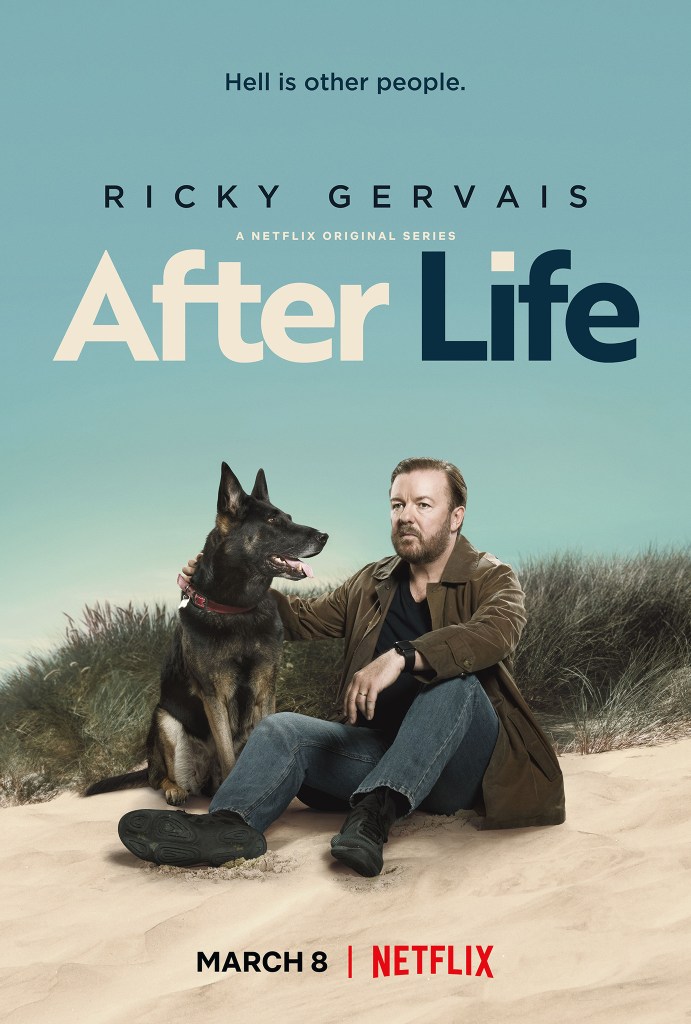
Open Letter #47 to Ricky Gervais on comparison of the Tony of AFTER LIFE to the Solomon of ECCLESIASTES, Nihilists like Tony Johnson and Woody Allen try to distract themselves so they won’t have to deal with the harsh realities of life

—-

Hope is everything… I’ve always thought that. And I believe it. If you’ve got hope you can work towards something. It’s a medicine and a shield. I’m an optimist, I always see the good in people.”

—-

After Life #1 Trailer

—-

I listened to this question and answer session at Harvard in 1992 on cassette tapes and was captivated with Ravi Zacharias. His responses were so much better than Kath’s responses to Tony in AFTER LIFE. I have referenced work by Ravi many times in the past and Especially moving was Ravi’s own spiritual search which started in a hospital bed after a failed suicide attempt. I also want you to check out his talk at Princeton and the question and answer time afterwards which are both on YOU TUBEat these two links: Link for talk, Link for Q/A.

After Life 2 Trailer

—-

On Saturday April 18, 2020 at 6pm in London and noon in Arkansas, I had a chance to ask Ricky Gervais a question on his Twitter Live broadcast which was  “Is Tony a Nihilist?” At the 20:51 mark Ricky answers my question. Below is the video:

—-

—-

If Death is the end then what is the point Kath asks below:

——

Francis Schaeffer passed away on May 15, 1984 and on the 10th anniversary of that date I wrote many skeptics such as Carl Sagan and corresponded with them on the big questions covered by the Book of Ecclesiastes.

Kath: You are an atheist?

—-

(Above) Tony and Anne on the bench at the graveyard where their spouses are buried.

June 3, 2020 
Ricky Gervais 


Dear Ricky,  

This is the 47th day in a row that I have written another open letter to you to comment on some of your episodes of AFTER LIFE.

Tony’s nihilistic views are very close to those of Solomon in ECCLESIASTES. Below are comments on ECCLESIASTES from Francis Schaeffer: 

Ecclesiastes 2:14-15

14 The wise person has his eyes in his head, but the fool walks in darkness. And yet I perceived that the same event happens to all of them. 15 Then I said in my heart, “What happens to the fool will happen to me also. Why then have I been so very wise?” And I said in my heart that this also is vanity.

The Hebrew is stronger than this and it says “it happens EVEN TO ME,” Solomon on the throne, Solomon the universal man. EVEN TO ME, even to Solomon.

Ecclesiastes 3:18-21

18 I said in my heart with regard to the children of man that God is testing them that they may see that they themselves are but beasts.19 For what happens to the children of man and what happens to the beasts is the same; as one dies, so dies the other. They all have the same breath, and man has no advantage over the beasts, for all is vanity.[n] 20 All go to one place. All are from the dust, and to dust all return.21 Who knows whether the spirit of man goes upward and the spirit of the beast goes down into the earth?

What he is saying is as far as the eyes are concerned everything grinds to a stop at death.

Ecclesiastes 4:16

16 There was no end of all the people, all of whom he led. Yet those who come later will not rejoice in him. Surely this also is vanity and a striving after wind.

That is true. There is no place better to feel this than here in Switzerland. You can walk over these hills and men have walked over these hills for at least 4000 years and when do you know when you have passed their graves or who cares? It doesn’t have to be 4000 years ago. Visit a cemetery and look at the tombstones from 40 years ago. Just feel it. IS THIS ALL THERE IS? You can almost see Solomon shrugging his shoulders.

Ricky Gervais plays bereaved husband Tony Johnson in AFTER LIFE

What does a person who holds to the nihilist point of view have to do with useless life but to try and distract himself?

In the first episode of season one of AFTERLIFE is the following conversation:

Matt: Tony this is Sandy’s day. Could you take her under your wing and show her what’s what?

Tony: Here’s what’s what, humanity is a plague. We’re a disgusting, narcissistic, selfish parasite, and the world would be a better place without us. It should be everyone’s moral duty to kill themselves. I could do it now. Quite happily just go upstairs, jump off the roof, and make sure I landed on some c**t from accounts

Matt: Lenny could you do it?

Lenny: Sure.

Tony: Let me guess the bullet points: Get in and eat in front of the computer. Go to the pub and eat in front of the quiz machine. Go home and eat in front of the Television. Go to bed and I assume you eat in bed?

Lenny: There are emergency snacks around. 
(Tony gets up to leave.) Tony: Do you want anymore donuts fat boy?

Lenny: Yes please. 
Sandy: Do you mind him talking to him like that? 
Lenny: He is a mate. It distracts him.

Woody Allen asserted: 

It’s just an accident that we happen to be on earth, enjoying our silly little moments, distracting ourselves as often as possible so we don’t have to really face up to the fact that, you know, we’re just temporary people with a very short time in a universe that will eventually be completely gone. And everything that you value, whether it’s Shakespeare, Beethoven, da Vinci, or whatever, will be gone. The earth will be gone. The sun will be gone. There’ll be nothing. The best you can do to get through life is distraction. Love works as a distraction. And work works as a distraction. You can distract yourself a billion different ways. But the key is to distract yourself.


I have spent alot of time talking about Woody Allen films on this blog and looking at his worldview. He has a hopelessmeaningless, nihilistic worldview that believes we are going to turn to dust and there is no afterlife. Even though he has this view he has taken the opportunity to look at the weaknessesof his own secular view. I salute him for doing that. That is why I have returned to his work over and over and presented my own Christian worldview as an alternative. Take a moment and read again a good article on Woody Allen below. There are some links below to some other posts about him.

Francis Schaeffer two months before he died made the following comments in Knoxville, TN in 1984 and he comments on Woody Allen:

I would emphasize and it grows on me always with intensified strength the older I live that there is only ONE REASON to be a Christian and that is because it is TRUTH. There is no other reason to be a Christian.

The reason to become a Christian is not because it gives you butterflies in your stomach on Sunday morning. The reason for being a Christian is because it is true.

We at L’Abri talk about it being TRUE TRUTH and we are talking about it not just being religiously true but true in all reality. In other words, if you don’t have the Bible and you don’t act upon it, it isn’t that you just don’t know how to escape hell and go to heaven, you do that too happily, but it also is true that without the Bible we won’t know who God is and we would know who people are.

That is what is wrong with our generation and that is why it accepted abortion and the infanticide and youth euthanasia came in quickly with such a flood because this generation doesn’t understand who people are.

I don’t know if you saw the TIME editorial a short time ago called THINKING ANIMAL THOUGHTS. It did so much better than most of our evangelical magazines did on dealing with this because what they said was (it was from a non-christian point of view) if you take away the biblical view of who God is and man being made in his image then there is no basis for a distinction between human life and other forms of life. You only have distinctions and that is life and non-life, and he carried it out quite properly to its extension. What right does the human race to perform experimentation’s on animals if the human race is good and the human race is only the same qualification of life? This author really understood the game much better than most Christians seem to understand it.

What I’m saying is without the Bible it isn’t just that you don’t know how to go to heaven, but without the Bible you don’t know who people are and you don’t know what this world is. When you watch the birds fly across the sky  if you really don’t have the Bible to tell you who created this world and what the world is even the birds flying across the sky is very different. We have many people that come to L’Abri that have thought this out to the very end properly and that is there is no meaning to life, no meaning to life, no meaning to human life. They are not wrong. They are right.

The younger generation who grab the needle and shoot it up because they can’t find any meaning to life, they are not wrong. They are right. if you take the Bible away it is not just that people are lost for eternity, but they are lost now. They have no meaning to life…. If I was talking to a gentleman I was sitting next  to on an airplane about Christ I wouldn’t necessarily start off quoting Bible verses. I would go back rather to their dilemma if they hold the modern worldview of the final reality only being energy, etc., I would start with that. I would begin as I stress in the book THE GOD WHO IS THERE about their own [humanist] prophets who really show where their view goes. For instance, Jacques Monod, Nobel Prize winner from France, in his book NECESSITY AND CHANCE said there is no way to tell the OUGHT from the IS. In other words, you live in a TOTALLY SILENT  universe. 

The men like Monod and Sartre or whoever the man might know that is his [humanist] prophet and they point out quite properly and conclusively what life is like, not just that there is no meaningfulness in life but everyone according to modern man is just living out some kind of game plan. It may be knocking 1/10th of a second off a downhill ski run or making one more million dollars. But all you are doing is making a game plan within the mix of a meaningless situation. WOODY ALLEN exploits this very strongly in his films. He really lives it. I feel for that man, and he has expressed it so thoroughly in ANNIE HALL and MANHATTAN and so on.September 3, 2011 · 5:16 PM↓ Jump to Comments

Woody Allen on the Emptiness of Life

In the final scene of Manhattan, Woody Allen’s character, Isaac, is lying on the sofa with a microphone and a tape-recorder, dictating to himself an idea for a short story. It’ll be about “people in Manhattan,” he says, “who are constantly creating these real unnecessary, neurotic problems for themselves” because they cannot bear to confront the “more unsolvable, terrible problems about the universe.” In an attempt to keep it optimistic, he begins by asking himself the question, “Why is life worth living?” He gives it some thought. “That’s a very good question,” he says, “There are certain things, I guess, that make it worthwhile.” And then the list begins: Groucho Marx, Willie Mays, the second movement of Mozart’s ‘Jupiter Symphony,’ Louis Armstrong’s recording of Potato Head Blues, “Swedish movies, naturally,” Flaubert’s Sentimental Education, Marlon Brando, Frank Sinatra, “those incredible apples and pears by Cézanne, the crabs at Sam Wo’s … Tracy’s face.”

This list acts as an important hinge in the film’s narrative, the point at which Isaac suddenly becomes aware of his feelings for Tracy and resolves to go after her. But within the list there is also something far greater being communicated, something which, I believe, can be described as the central subject of nearly every Woody Allen film, or, perhaps, as the thing that compels him to make films in the first place. Isaac is conveying here a belief in the sheer power of art, its ability to provide a sense of worth to an otherwise empty existence. Art, Woody Allen seems to be saying, is the only valuable response – or the only conceivableresponse – to the dreadful human predicament as he sees it.

~ ~ ~

“My relationship with death remains the same: I’m strongly against it.”

~ ~ ~

Recently, at the Cannes Film Festival, Woody Allen was asked about what motivates him. He simply laughed and said, “Fear is what drives me.” Work, for Allen, is a wonderful distraction from the “terrible truth” – the ostensible meaninglessness of life, the apparent futility of all human endeavour, the inevitability of sickness, the unescapable prognosis of death. Film-making, like the “unnecessay, neurotic problems” dreamt up by the characters in Isaac’s short story, diverts Allen’s attention away from this reality, from the fear that presents itself when he stops to think about the fact that eventually everybody dies, “the sun burns out, and the earth is gone, and … all the stars, all the planets, the entire universe, goes, disappears.” So this fear is the reason for his prolificity, the impulse behind all of his artistic achievements. ManhattanAnnie HallHannah and Her SistersSleeper came about, first of all, as distractions, projects that prevented him from having to “sit in a chair and think about what a terrible situation all human beings are in.”

I believe there’s a lot of truth in Woody Allen’s perspective. We distract ourselves constantly, we refuse to think about the meaning of our existence, we skirt around the inevitable. Certainly – and he acknowledges this – Allen is not the first person to have hit upon this truth. It’s been recognised by thinkers such as Kierkegaard, Nietzsche, Freud, Sartre, the Buddha and the writer of Ecclesiastes. And Allen knows, too, that one can’t live in a perpetual awareness of this fact. Such a life would be crippling torment. Indeed, it’s this very torment that Tolstoy found himself in after having realised that there was “nothing ahead other than deception of life and of happiness, and the reality of suffering and death: of complete annihilation.” After realising, in other words, the sheer absurdness of human existence, the meaninglessness of life without God. In his Confession he writes:

My life came to a standstill. I could breathe, eat, drink and sleep and I could not help breathing, eating, drinking and sleeping; but there was no life in me because I had no desires whose gratification I would have deemed it reasonable to fulfil. If I wanted something I knew in advance that whether or not I satisfied my desire nothing would come of it.

We can’t live like this, says Woody Allen. We must provide ourselves with necessary delusions in order to carry ourselves through life. He remarks that, in fact, it’s only those people whom he calls “self-deluded” that seem to find any kind of real satisfaction in living, any peace or enjoyment. These people can say, “Well, my priest, or my rabbi tells me everthing’s going to be all right,” and they find their answers in what he calls “magical solutions.” And this recourse to the “magical” he dismisses as nonsense.

It’s worth comparing Woody Allen’s pessimistic agnosticism with the utopian atheism of someone like Richard Dawkins. Evidently, the former worldview is entirely consistent with non-belief in God, but it’s not clear that the latter is. In fact, it appears unfounded, false. Dawkins removes God from the picture entirely, yet clings persistently to a belief in life’s meaning, grounding this meaning, it appears, in natural selection. There’s a contradiction here in Dawkins’ thought. On the one hand, he claims that science “can tell us why we are here, tell us the purpose of human existence,” yet, on the other, he insists on characterising natural selection itself as a blind mechanism, containing “no design, no purpose, no evil, no good, nothing but pointless indifference.”

Whilst I myself do believe in God and don’t share Woody Allen’s agnostic belief, I can respect his consistency, his willingness to acknowledge an existence without God for what it really is: “a grim, painful, nightmarish, meaningless experience.” His worldview follows naturally from what Heidegger termed the state of human “abandonment,” the absence of God in all human affairs. Dawkins’ worldview, however, doesn’t – it’s an embarrassing mishmash of strict empricist and naturalistic belief with what really amounts to a kind of foggy mysticism, a belief system according to which human beings can create for themselves an objective purpose. What he fails to realise is that this purpose is nothing more than a delusion, a mere appearanceof purpose. It might get us up in the morning, but, once again, it’s no more real than the neurotic problems dreamt up by Isaac’s characters.

~ ~ ~

“It is impossible to experience one’s death objectively and still carry a tune.”

~ ~ ~

Let’s return to Woody Allen’s seemingly affirmative opinion of art. Given his lifelong insistence on the belief that human existence is “a big, meaningless thing,” how are we to make sense of Isaac’s list? Is it really possible to reconcile Woody Allen’s adament nihilism with his invocation of the power of art, its ability to stand firm in the face of such a “terrible truth”? The point to be made, I believe, is a very subtle one. In that same interview at Cannes, Allen talks about the role of the artist as he sees it: essentially, they must respond to the question that Isaac poses, “Why is life worth living?” Faced with the emptiness of life, they must try to “figure out – knowing that it’s trueknowing the worst – why it’s still worthwhile.” Allen isn’t, I believe, claiming that art can provide objective meaning to life. Such an assertion would conflict with his unswerving pessimism. Instead, he’s saying that the essence of art, what animates it, what inspires it to flourish, is a courageous struggle against this “terrible truth.” The artist, he says, must confront the futility of life, look at it in the face, embrace it in all of its hopelessness and despair, and provide humanity with an honest reply. The question we should ask in response, then, isn’t, ‘Can Woody Allen justify his belief in objective meaning as embodied in art?’ I don’t think he believesin objective meaning, a necessary purpose for human existence. Rather, the question should be, ‘Is it possible for the artist to look squarely at the human predicament and supply humanity with a worthwhile answer?’

And this, I want to say, still isn’t possible. As we’ve seen in the example of Tolstoy, one can’t live one’s life in full awareness of its apparent futility, of the imminence of death, of the falsity of one’s happiness, and yet carry on as normal. One would end up utterly debilitated. And if this is indeed how artists have been living for centuries, confronting the inevitable, facing the dismal truth, then art itself is an inexplicable phenomenon.

~ ~ ~

“On the plus side, death is one of the few things that can be done just as easily lying down.”

~ ~ ~

The answer isn’t to appeal to art as something that can provide human existence with objective meaning. Such a ‘faith in art’ would merely beg the question, ‘But why is art so special?’ How can art, if viewed as just another custom, an event within the world, give purpose and value to human life? How can that which is within the world give meaning to that which is also within the world? Meaning, I believe, can only come from without, from a personal God who transcends the world, yet is immanent within it, actively involved in human existence, instilling it with significance and worth. One of the purposes of art, I believe, is to reflect the being and glory of God, who is the ground of being itself. Far from art being an escape from a “terrible truth” or a desperate attempt to confront and suppress nihilism, it should be seen as an affirmative activity, an act of creative celebration to be enjoyed in the company of our good Creator God.

—-


The answer to find meaning in life is found in putting your faith and trust in Jesus Christ. The Bible is true from cover to cover and can be trusted.

Thank you again for your time and I know how busy you are.

Sincerely,

Everette Hatcher, everettehatcher@gmail.comhttp://www.thedailyhatch.org, cell ph 501-920-5733, 13900 Cottontail Lane, Alexander, AR 72002

PS: What is the meaning of life? Find it in the end of the open letter I wrote to you on April 23, 2020. 

Below is the workforce of THE TAMBURY GAZETTE 

Seen below is the third episode of AFTERLIFE (season 1) when Matt takes Tony to a comedy club with front row seats to cheer him up but it turns into disaster!!!

——

—-

Adrian Rogers on Evolution

—-
Ravi Zacharias  (March 26, 1946 – May 19, 2020) 

Francis Schaeffer (January 30, 1912 – May 15, 1984[1]

Francis Schaeffer.jpg


I grew up at Bellevue Baptist Church under the leadership of our pastor Adrian Rogers and I read many books by the Evangelical Philosopher Francis Schaeffer and in 1992 I heard cassette tapes of Ravi Zacharias in all his brilliance in his sessions at Harvard and have had the opportunity to contact many of the evolutionists or humanistic academics that they have mentioned in their works. Many of these scholars have taken the time to respond back to me in the last 20 years and some of the names  included are  Ernest Mayr (1904-2005), George Wald (1906-1997), Carl Sagan (1934-1996),  Robert Shapiro (1935-2011), Nicolaas Bloembergen (1920-),  Brian Charlesworth (1945-),  Francisco J. Ayala (1934-) Elliott Sober (1948-), Kevin Padian (1951-), Matt Cartmill (1943-) , Milton Fingerman (1928-), John J. Shea (1969-), , Michael A. Crawford (1938-), Paul Kurtz (1925-2012), Sol Gordon (1923-2008), Albert Ellis (1913-2007), Barbara Marie Tabler (1915-1996), Renate Vambery (1916-2005), Archie J. Bahm (1907-1996), Aron S “Gil” Martin ( 1910-1997), Matthew I. Spetter (1921-2012), H. J. Eysenck (1916-1997), Robert L. Erdmann (1929-2006), Mary Morain (1911-1999), Lloyd Morain (1917-2010),  Warren Allen Smith (1921-), Bette Chambers (1930-),  Gordon Stein (1941-1996) , Milton Friedman (1912-2006), John Hospers (1918-2011), Michael Martin (1932-).Harry Kroto (1939-), Marty E. Martin (1928-), Richard Rubenstein (1924-), James Terry McCollum (1936-), Edward O. WIlson (1929-), Lewis Wolpert (1929), Gerald Holton(1922-), Martin Rees (1942-), Alan Macfarlane (1941-),  Roald Hoffmann (1937-), Herbert Kroemer (1928-), Thomas H. Jukes(1906-1999) and  Ray T. Cragun (1976-).

 Adrian Rogers (September 12, 1931 – November 15, 2005) 

Adrian Rogers.jpg

Charles Darwin Autobiography


Francis Schaeffer “The Age of NONREASON”

——-

—-


—-

—-

—-


—-

—-

—-


—-

WOODY WEDNESDAY Open Letter to Woody Allen Part 17 Letter discussing Woody’s evolution as a film maker that has included more of an emphasis on serious subjects such as our own mortality since his earlier movies

Woody Allen On Bergman

Woody Allen On Bergman

Woody Allen Show

Essay on Woody Allen films

Match point Trailer

Match point

Crimes and misdemeanors

Part 2

November 5, 2019

Woody Allen c/o Grove Atlantic, Inc.

154 West 14th Street, 12th Floor

New York, NY 10011

Dear Woody,

—-

I wanted to comment on this article below that discusses your evolution as a film maker that has included more of an emphasis on serious subjects such as our own mortality since your earlier movies.

Woody Allen, The Faith Behind the Films (VIDEOS of Allen With Billy Graham)

By Kayla Amadis ,Christian Post Contributor 

American filmmaker, Woody Allen, will be starring in an exclusive two-part documentary film beginning tonight. The “Annie Hall” director and actor is notorious for his privacy. However, this three-and-a-half hour film claims to be a right of entry into the life and art of Woody Allen.

The works of Allen have always been a peculiar one for most viewers throughout generations. He has a touch for making artful flicks with the just enough humor included. His films, sometimes controversial, have also been unique in that they are driven by his distinctive vision and artistry. Allen has never been an artist to succumb to altering a script so it would appeal to mainstream audiences.

Therefore, many have noted reoccurring themes throughout Allen’s work over the years. He often integrates pop culture and religion sub-textually into the content of his writing.

Allen, now 75, grew up in a Jewish household. Now, as an agnostic, many of his films including “Crimes and Misdemeanors” and “Match Point” have subject matters concerning forgiveness, how to handle sin, finding meaning in life without God, or religious figures.

Many evangelicals including Chuck Colston and Southern Baptist leader, Richard Land are devoted fans of Allen. Although the filmmaker remains disclosed, he continues to be one to speak openly about deep issues in life even outside of his films. Allen has always been honest enough to ask many questions about morality and religion, but never has any of the right answers, Land suggested.

In the archives of Woody Allen appearances, one can find an old talk show video (below) in the 1960’s in which he interviews Billy Graham. Of course, Graham, clearly anchored in his beliefs in God, shared completely different views on life compared to the wisecracking Allen.

The conversation sounds undoubtedly tense upon first hearing. However, both counter-parts handled their discussion with much composure and the heart to agree to disagree.

Allen: “If you come to one of my movies or something, I’ll go to one of your revival meetings.”

Graham: “Well now that is a deal.”

Allen: “You could probably convert me because I’m such a pushover. I have no convictions in any direction and if you make it appealing and promise me some sort of wonderful afterlife with a white robe and wings I would go for it.”

Graham: “I can’t promise you a white robe and wings, but I can promise you a very interesting, thrilling life.”

Allen: “One wing, maybe?”

The dialogue was both light and deep all at once. “I find Woody over the years, and of course this is true of people as they get older, there is more resignation,” Land said to the Washington Post.

“There is a light touch and a confidence in his earlier movies – I’m not dead, I won’t die for a long time so I have a long time to figure this all out. Some of his more recent movies, you can see he’s aware of his own mortality.”

Decades later, one would hope Allen would come around to considering the true answers to all of his moral questioning. Perhaps he would think back to some of the words Graham spoke many years ago. However, Allen remains with doubtful views. “Sooner or later,” he said in a 2010 interview. “…reality sets in, in a crushing way. As it does and will with everybody, including Billy Graham. But it’s nice if you can delude yourself for as long as possible.”

“Woody Allen: A Documentary,’’ directed by Robert B. Weide, will touch on the career of Allen more intimately. Many look forward to understanding the true man behind the art and humor.

—-

Not only did Schaeffer mention YOU in several of his books but about a year ago  a video was posted on You Tube that showed that Schaeffer mentioned YOU in his last public speech. If you go to You Tube and type in FRANCIS SCHAEFFER KNOXVILLE then you can watch this special Q&A time with Francis and Edith Schaeffer at the 1984 L’Abri conference in Knoxville, filmed two months before Dr. Schaeffer’s passing (May 15, 1984.

Francis Schaeffer two months before he died said if he was talking to a gentleman he was sitting next to on an airplane about Christ he wouldn’t start off quoting Bible verses. Schaeffer asserted:

I would go back rather to their dilemma if they hold the modern worldview of the final reality only being energy, etc., I would start with that. I would begin as I stress in the book THE GOD WHO IS THERE about their own [humanist] prophets who really show where their view goes. For instance, Jacques Monod, Nobel Prize winner from France, in his book NECESSITY AND CHANCE said there is no way to tell the OUGHT from the IS. In other words, you live in a totally silent universe. 

The men like Monod and Sartre or whoever the man might know that is his [humanist] prophet and they point out quite properly and conclusively what life is like, not just that there is no meaningfulness in life but everyone according to modern man is just living out some kind of game plan. It may be knocking 1/10th of a second off a downhill ski run or making one more million dollars. But all you are doing is making a game plan within the mix of a meaningless situation. WOODY ALLEN exploits this very strongly in his films. He really lives it. I feel for that man, and he has expressed it so thoroughly in ANNIE HALL and MANHATTAN and so on.

Woody you have made it clear in your talk with Billy Graham that you think that putting faith in the God of the Bible would be throwing your Brian out the window. However, have you taken a close look at the scientific details in the Bible?

Adrian Rogers noted:

Skeptics seem to think that the Bible is full of scientific errors. However, before an individual can make that assertion, they had better make sure they know both science and Scripture. You see, I have heard unbelievers state that the Bible is not a book of science, but a book of religion, which is basically true. It is not written to teach us about science, but to teach us about God. But the God of salvation and the God of creation are the same. Science doesn’t take God by surprise. A close look at Scripture reveals that it is scientifically accurate.

Every now and then science may disagree with the Bible, but usually science just needs time to catch up. For example, in 1861 a French scientific academy printed a brochure offering 51 incontrovertible facts that proved the Bible in error. Today there is not a single reputable scientist who would support those supposed “facts,” because modern science has disproved them all!

The ancients believed the earth was held up by Atlas, or resting on pillars, or even seated on the backs of elephants. But today we know the earth is suspended in space, a fact the Word of God records in Job 26:7: “He . . . hangeth the earth upon nothing.” God revealed the facts of cosmology long before man had any idea of the truth.

For centuries man believed the earth was flat, but now we know the earth is a globe. The prophet Isaiah, writing 750 years before the birth of Christ, revealed that “God sitteth upon the circle of the earth” (Isaiah 40:22). The word translated here as “circle” was more commonly translated “sphere.” In other words, Isaiah explained that the earth was a globe centuries before science discovered it.

When Ptolemy charted the heavens, he counted 1026 stars in the sky. But with the invention of the telescope man discovered millions and millions of stars, something that Jeremiah 33:22 revealed nearly three thousand years ago: “The host of heaven cannot be numbered.” How did these men of God know the truth of science long before the rest of the world discovered it? They were moved by the Holy Spirit to write the truth. God’s Word is not filled with errors. It is filled with facts, even scientific facts.

When the black plague was killing one quarter of Europe’s population in the fourteenth century, it was the church, not science, that helped overcome the dread disease. The leaders in the church noticed the instructions given by the Lord to Moses in Leviticus 13:46: “All the days wherein the plague shall be in him he shall be defiled; he is unclean: he shall dwell alone; without the camp shall his habitation be.” These early believers did not know microbiology or understand what germs were, but they could understand a clear teaching to quarantine someone who was sick. So they followed the Biblical dictum, quarantined those sick with the plague, and stopped it from spreading. The Bible had its science correct even before man discovered the truth! Don’t accept the charge that the Bible is filled with scientific errors. Modern science seems determined to explain God away, and refuses to acknowledge any evidence of the supernatural. But the science of Scripture is one reason to accept the Bible as God’s Word.

Sincerely,

Everette Hatcher, everettehatcher@gmail.comhttp://www.thedailyhatch.org, cell ph 501-920-5733, Box 23416, LittleRock, AR 72221

Part 3

Woody commenting on Midnight in Paris

Midnight in Paris trailer

The movie MIDNIGHT IN PARIS offers many of the same themes we see in Ecclesiastes. The second post looked at the question: WAS THERE EVER A GOLDEN AGE AND DID THE MOST TALENTED UNIVERSAL MEN OF THAT TIME FIND TRUE SATISFACTION DURING IT?

In the third post in this series we discover in Ecclesiastes that man UNDER THE SUN finds himself caught in the never ending cycle of birth and death. The SURREALISTS make a leap into the area of nonreason in order to get out of this cycle and that is why the scene in MIDNIGHT IN PARIS with Salvador Dali, Man Ray, and Luis Bunuel works so well!!!! These surrealists look to the area of their dreams to find a meaning for their lives and their break with reality is  only because they know that they can’t find a rational meaning in life without God in the picture.

The fourth post looks at the solution of WINE, WOMEN AND SONG and the fifth and sixth posts look at the solution T.S.Eliotfound in the Christian Faith and how he left his fragmented message of pessimism behind. In the seventh post the SURREALISTS say that time and chance is all we have but how can that explain love or art and the hunger for God? The eighth  post looks at the subject of DEATH both in Ecclesiastes and MIDNIGHT IN PARIS. In the ninth post we look at the nihilistic worldview of Woody Allen and why he keeps putting suicides into his films.

In the tenth post I show how Woody Allen pokes fun at the brilliant thinkers of this world and how King Solomon did the same thing 3000 years ago. In the eleventh post I point out how many of Woody Allen’s liberal political views come a lack of understanding of the sinful nature of man and where it originated. In the twelfth post I look at the mannishness of man and vacuum in his heart that can only be satisfied by a relationship with God.

In the thirteenth post we look at the life of Ernest Hemingway as pictured in MIDNIGHT AND PARIS and relate it to the change of outlook he had on life as the years passed. In the fourteenth post we look at Hemingway’s idea of Paris being a movable  feast. The fifteenth and sixteenth posts both compare Hemingway’s statement, “Happiness in intelligent people is the rarest thing I know…”  with Ecclesiastes 2:18 “For in much wisdom is much vexation, and he who increases knowledge increases sorrow.” The seventeenth post looks at these words Woody Allen put into Hemingway’s mouth,  “We fear death because we feel that we haven’t loved well enough or loved at all.”

In MIDNIGHT IN PARIS Hemingway and Gil Pender talk about their literary idol Mark Twain and the eighteenth post is summed up nicely by Kris Hemphill‘swords, “Both Twain and [King Solomon in the Book of Ecclesiastes] voice questions our souls long to have answered: Where does one find enduring meaning, life purpose, and sustainable joy, and why do so few seem to find it? The nineteenth post looks at the tension felt both in the life of Gil Pender (written by Woody Allen) in the movie MIDNIGHT IN PARIS and in Mark Twain’s life and that is when an atheist says he wants to scoff at the idea THAT WE WERE PUT HERE FOR A PURPOSE but he must stay face the reality of  Ecclesiastes 3:11 that says “God has planted eternity in the heart of men…” and  THAT CHANGES EVERYTHING! Therefore, the secular view that there is no such thing as love or purpose looks implausible. The twentieth post examines how Mark Twain discovered just like King Solomon in the Book of Ecclesiastes that there is no explanation  for the suffering and injustice that occurs in life UNDER THE SUN. Solomon actually brought God back into the picture in the last chapter and he looked  ABOVE THE SUN for the books to be balanced and for the tears to be wiped away.

The twenty-first post looks at the words of King Solomon, Woody Allen and Mark Twain that without God in the picture our lives UNDER THE SUN will accomplish nothing that lasts. Thetwenty-second post looks at King Solomon’s experiment 3000 years that proved that luxuries can’t bring satisfaction to one’s life but we have seen this proven over and over through the ages. Mark Twain lampooned the rich in his book “The Gilded Age” and he discussed  get rich quick fever, but Sam Clemens loved money and the comfort and luxuries it could buy. Likewise Scott Fitzgerald  was very successful in the 1920’s after his publication of THE GREAT GATSBY and lived a lavish lifestyle until his death in 1940 as a result of alcoholism.

In the twenty-third post we look at Mark Twain’s statement that people should either commit suicide or stay drunk if they are “demonstrably wise” and want to “keep their reasoning faculties.” We actually see this play out in the film MIDNIGHT IN PARIS with the character Zelda Fitzgerald. In the twenty-fourthtwenty-fifth and twenty-sixth posts I look at Mark Twain and the issue of racism. In MIDNIGHT IN PARIS we see the difference between the attitudes concerning race in 1925 Paris and the rest of the world.

The twenty-seventh and twenty-eighth posts are summing up Mark Twain. In the 29th post we ask did MIDNIGHT IN PARIS accurately portray Hemingway’s personality and outlook on life? and in the 30th post the life and views of Hemingway are summed up.

In the 31st post we will observe that just like Solomon Picasso slept with many women. Solomon actually slept with  over 1000 women ( Eccl 2:8, I Kings 11:3), and both men ended their lives bitter against all women and in the 32nd post we look at what happened to these former lovers of Picasso. In the 33rd post we see that Picasso  deliberately painted his secular  worldview of fragmentation on his canvas but he could not live with the loss of humanness and he reverted back at crucial points and painted those he loved with all his genius and with all their humanness!!! In the 34th post  we notice that both Solomon in Ecclesiastes and Picasso in his painting had an obsession with the issue of their impending death!!!

___________

Related posts:

“Woody Wednesday” ECCLESIASTES AND WOODY ALLEN’S FILMS: SOLOMON “WOULD GOT ALONG WELL WITH WOODY!” (Part 7 MIDNIGHT IN PARIS Part F, SURREALISTS AND THE IDEA OF ABSURDITY AND CHANCE)

December 23, 2015 – 4:15 am

Woody Allen believes that we live in a cold, violent and meaningless universe and it seems that his main character (Gil Pender, played by Owen Wilson) in the movie MIDNIGHT IN PARIS shares that view. Pender’s meeting with the Surrealists is by far the best scene in the movie because they are ones who can […]

“Woody Wednesday” ECCLESIASTES AND WOODY ALLEN’S FILMS: SOLOMON “WOULD GOT ALONG WELL WITH WOODY!” (Part 6 MIDNIGHT IN PARIS Part E, A FURTHER LOOK AT T.S. Eliot’s DESPAIR AND THEN HIS SOLUTION)

December 16, 2015 – 4:56 am

In the last post I pointed out how King Solomon in Ecclesiastes painted a dismal situation for modern man in life UNDER THE SUN  and that Bertrand Russell, and T.S. Eliot and  other modern writers had agreed with Solomon’s view. However, T.S. Eliot had found a solution to this problem and put his faith in […]

“Woody Wednesday” ECCLESIASTES AND WOODY ALLEN’S FILMS: SOLOMON “WOULD GOT ALONG WELL WITH WOODY!” (Part 5 MIDNIGHT IN PARIS Part D, A LOOK AT T.S. Eliot’s DESPAIR AND THEN HIS SOLUTION)

December 9, 2015 – 4:41 am

In MIDNIGHT IN PARIS Gil Pender ponders the advice he gets from his literary heroes from the 1920’s. King Solomon in Ecclesiastes painted a dismal situation for modern man in life UNDER THE SUN  and many modern artists, poets, and philosophers have agreed. In the 1920’s T.S.Eliot and his  house guest Bertrand Russell were two of […]

“Woody Wednesda

Open Letter #46 to Ricky Gervais on comparison of the Tony of AFTER LIFE to the Solomon of ECCLESIASTES, William Lane Craig “If death stands with open arms at the end of life’s trail, then what is the goal of life? Is it all for nothing?”

—-

—-


After Life #1 Trailer

—-

I listened to this question and answer session at Harvard in 1992 on cassette tapes and was captivated with Ravi Zacharias. His responses were so much better than Kath’s responses to Tony in AFTER LIFE. I have referenced work by Ravi many times in the past and Especially moving was Ravi’s own spiritual search which started in a hospital bed after a failed suicide attempt. I also want you to check out his talk at Princeton and the question and answer time afterwards which are both on YOU TUBEat these two links: Link for talk, Link for Q/A.

After Life 2 Trailer

—-

On Saturday April 18, 2020 at 6pm in London and noon in Arkansas, I had a chance to ask Ricky Gervais a question on his Twitter Live broadcast which was  “Is Tony a Nihilist?” At the 20:51 mark Ricky answers my question. Below is the video:

—-

—-

If Death is the end then what is the point Kath asks below:

——

Francis Schaeffer passed away on May 15, 1984 and on the 10th anniversary of that date I wrote many skeptics such as Carl Sagan and corresponded with them on the big questions covered by the Book of Ecclesiastes.

Kath: You are an atheist?

—-

Adrian Rogers on Evolution

—-

(Above) Tony and Anne on the bench at the graveyard where their spouses are buried.

June 2, 2020
Ricky Gervais 


Dear Ricky,  

This is the 46th day in a row that I have written another open letter to you to comment on some of your episodes of AFTER LIFE, and then I wanted to pass along some evidence that indicates the Bible is historically accurate from Francis Schaeffer and Dr. C. Everett Koop Book WHATEVER HAPPENED TO THE HUMAN RACE?

In the first season of AFTERLIFE Tony tells the nurse Emma that if his father was a dog that he would be put down. That is where Tony’s words remind me of ECCLESIASTES. “The fate of the sons of men and the fate of beasts is the same. As one dies so dies the other; indeed, they all have the same breath and there is no advantage for man over beast, for all is vanity. All go to the same place. All come from the dust and all return to the dust” (Eccles 3:19-20).


In season 1 of AFTERLIFE when Kath asks, “If your an atheist, and you don’t believe in heaven and hell and all that, how come you don’t go around raping and murdering as much as you want?” Tony’s answer is, “I do. I do go around raping and murdering as much as I want, which is not at all.”

Kath: If death is just the end then what is the point? 
Tony: What is the point in what? 
Kath: What is the point in living? Why don’t you just kill yourself?

Tony: So if you are watching a movie and you are really enjoying it. Maybe a movie with Kevin Hart in it. Then someone points out there is an end eventually. Do you just say “Forget it. What’s the point and you turn it off?” 
Kath: No because you can watch it again. 
Tony: Well, I think Life is precious because you can’t watch it again. I mean you can believe in an afterlife if it makes you feel better, but it doesn’t mean it is true. But once you realize you are not going to be around forever I think that is what makes it magical. One day you will eat your last meal, smell a flower, and hug your friend for the last time. You might not know it is the last time, but that is why you should do everything you love with passion. Treasure the few years you got because you know that is all there is.

——

Rudolph A. Marcus comments: 

When my wife died I did see how comforting religion would be if you believed in an afterlife. But that is the way it is. I don’t know what makes some of us believe one thing and other people believe in something else, I haven’t found it and this is true in science also. Some people may feel they have to understand everything. I don’t feel that. I feel that eventually a lot more will be understood. It deals with the subject. It has nothing to do with religion. I believe that tackle certain problems, try to understand those, realize there are other problems that I just won’t be able to solve. I don’t have the expertise. Even if I did I may not be able to solve them, but I’m okay to live with that as long as I can find some problems that I feel excited about, that I know the experimental data and results are there and there has to an explanation. It is that fact actually which has driven us to formulate theories about those things.

If there is no after life then there are no rewards or punishments and Hitler got off without any punishment.

Gerardus ‘t Hooft comments:

“Gerardus `t Hooft – Science Video Interview”. 2004. Retrieved 25 April 2012. “When asked by the interviewer about his belief in an afterlife, Hooft replied, “Well, such beliefs I think I related to religions of the past and I don’t think that notions such as ‘afterlife’ has any…scientific basis. Not in terms of modern science. So I can only say no.”


I noticed in Woody Allen’s film “Crimes and Misdemeanors” you can see how Allen’s agnostic worldview permits him to allow the lead character to have his mistress killed when she threatens to call the cops. Judah noted, “God is a luxery I can not afford.” Earlier in the film Judah is terrified when he thinks there is a living God that will punish him in an afterlife, but only after he convinces himself there is no God is he at peace with his decision to have this troublesome lady killed. Check out this movie on Netflix and you will see what I mean about this potential moral problem that atheists can not answer. (I have looked this question many times in my previous posts.)

Let me share a portion of an article by William Lane Craig with you.

The Absurdity of Life without God

William Lane Craig

SUMMARY

Why on atheism life has no ultimate meaning, value, or purpose, and why this view is unlivable.

No Ultimate Purpose Without Immortality and God

If death stands with open arms at the end of life’s trail, then what is the goal of life? Is it all for nothing? Is there no reason for life? And what of the universe? Is it utterly pointlessIf its destiny is a cold grave in the recesses of outer space the answer must be, yes—it is pointless. There is no goal no purpose for the universe. The litter of a dead universe will just go on expanding and expanding—forever.

And what of man? Is there no purpose at all for the human race? Or will it simply peter out someday lost in the oblivion of an indifferent universe? The English writer H. G. Wells foresaw such a prospect. In his novel The Time MachineWells’s time traveler journeys far into the future to discover the destiny of man. All he finds is a dead earth, save for a few lichens and moss, orbiting a gigantic red sun. The only sounds are the rush of the wind and the gentle ripple of the sea. “Beyond these lifeless sounds,” writes Wells, “the world was silent. Silent? It would be hard to convey the stillness of it. All the sounds of man, the bleating of sheep, the cries of birds, the hum of insects, the stir that makes the background of our lives—all that was over.” [3] And so Wells’s time traveler returned. But to what?—to merely an earlier point on the purposeless rush toward oblivion. When as a non-Christian I first read Wells’s book, I thought, “No, no! It can’t end that way!” But if there is no God, it will end that way, like it or not. This is reality in a universe without God: there is no hope; there is no purpose.

What is true of mankind as a whole is true of each of us individually: we are here to no purpose. If there is no God, then our life is not qualitatively different from that of a dog. As the ancient writer of Ecclesiastes put it: “The fate of the sons of men and the fate of beasts is the same. As one dies so dies the other; indeed, they all have the same breath and there is no advantage for man over beast, for all is vanity. All go to the same place. All come from the dust and all return to the dust” (Eccles 3:19-20). In this book, which reads more like a piece of modern existentialist literature than a book of the Bible, the writer [Solomon] shows the futility of pleasure, wealth, education, political fame, and honor in a life doomed to end in death. His verdict? “Vanity of vanities! All is vanity” (1:2). If life ends at the grave, then we have no ultimate purpose for living.

But more than that: even if it did not end in death, without God life would still be without purpose. For man and the universe would then be simple accidents of chance, thrust into existence for no reason. Without God the universe is the result of a cosmic accident, a chance explosion. There is no reason for which it exists. As for man, he is a freak of nature— a blind product of matter plus time plus chance. Man is just a lump of slime that evolved rationality. As one philosopher has put it: “Human life is mounted upon a subhuman pedestal and must shift for itself alone in the heart of a silent and mindless universe.” [4]

What is true of the universe and of the human race is also true of us as individuals. If God does not exist, then you are just a miscarriage of nature, thrust into a purposeless universe to live a purposeless life.

So if God does not exist, that means that man and the universe exist to no purpose—since the end of everything is death—and that they came to be for no purpose, since they are only blind products of chance. In short, life is utterly without reason.

Do you understand the gravity of the alternatives before us? For if God exists, then there is hope for man. But if God does not exist, then all we are left with is despair. Do you understand why the question of God’s existence is so vital to man? As one writer has aptly put it, “If God is dead, then man is dead, too.”

Unfortunately, the mass of mankind do not realize this fact. They continue on as though nothing has changed. I’m reminded of Nietzsche’s story of the madman who in the early morning hours burst into the marketplace, lantern in hand, crying, “I seek God! I seek God!” Since many of those standing about did not believe in God, he provoked much laughter. “Did God get lost?” they taunted him. “Or is he hiding? Or maybe he has gone on a voyage or emigrated!” Thus they yelled and laughed. Then, writes Nietzsche, the madman turned in their midst and pierced them with his eyes

‘Whither is God?’ he cried, ‘I shall tell you. We have killed him—you and I. All of us are his murderers. But how have we done this? How were we able to drink up the sea? Who gave us the sponge to wipe away the entire horizon? What did we do when we unchained this earth from its sun? Whither is it moving now? Away from all suns? Are we not plunging continually? Backward, sideward, forward, in all directions? Is there any up or down left? Are we not straying as through an infinite nothing? Do we not feel the breath of empty space? Has it not become colder? Is not night and more night coming on all the while? Must not lanterns be lit in the morning? Do we not hear anything yet of the noise of the gravediggers who are burying God? . . . God is dead. . . . And we have killed him. How shall we, the murderers of all murderers, comfort ourselves? [5]

The crowd stared at the madman in silence and astonishment. At last he dashed his lantern to the ground. “I have come too early,” he said. “This tremendous event is still on its way—it has not yet reached the ears of man.” Men did not yet truly comprehend the consequences of what they had done in killing God. But Nietzsche predicted that someday people would realize the implications of their atheism; and this realization would usher in an age of nihilism—the destruction of all meaning and value in life.

Most people still do not reflect on the consequences of atheism and so, like the crowd in the marketplace, go unknowingly on their way. But when we realize, as did Nietzsche, what atheism implies, then his question presses hard upon us: how shall we, the murderers of all murderers, comfort ourselves?

The Success of Biblical Christianity

But if atheism fails in this regard, what about biblical Christianity? According to the Christian world view, God does exist, and man’s life does not end at the grave. In the resurrection body man may enjoy eternal life and fellowship with God. Biblical Christianity therefore provides the two conditions necessary for a meaningful, valuable, and purposeful life for man: God and immortality. Because of this, we can live consistently and happily. Thus, biblical Christianity succeeds precisely where atheism breaks down.

Conclusion

Now I want to make it clear that I have not yet shown biblical Christianity to be true. But what I have done is clearly spell out the alternatives. If God does not exist, then life is futile. If the God of the Bible does exist, then life is meaningful. Only the second of these two alternatives enables us to live happily and consistently. Therefore, it seems to me that even if the evidence for these two options were absolutely equal, a rational person ought to choose biblical Christianity. It seems to me positively irrational to prefer death, futility, and destruction to life, meaningfulness, and happiness. As Pascal said, we have nothing to lose and infinity to gain.

  • [1]Kai Nielsen, “Why Should I Be Moral?” American Philosophical Quarterly 21 (1984): 90.
  • [2]Richard Taylor, Ethics, Faith, and Reason (Englewood Cliffs, NJ: Prentice Hall, 1985), 90, 84.
  • [3]H.G. Wells, The Time Machine (New York: Berkeley, 1957), chap. 11.
  • [4]W.E. Hocking, Types of Philosophy (New York: Scribner’s, 1959), 27.
  • [5]Friedrich Nietzsche, “The Gay Science,” in The Portable Nietzsche, ed. and trans. W. Kaufmann (New York: Viking, 1954), 95.
  • [6]Bertrand Russell, “A Free Man’s Worship,” in Why I Am Not a Christian, ed. P. Edwards (New York: Simon & Schuster, 1957), 107.
  • [7]Bertrand Russell, Letter to the Observer, 6 October, 1957.
  • [8]Jean Paul Sartre, “Portrait of the Antisemite,” in Existentialism from Dostoyevsky to Satre, rev. ed., ed. Walter Kaufmann (New York: New Meridian Library, 1975), p. 330.
  • [9]Richard Wurmbrand, Tortured for Christ (London: Hodder & Stoughton, 1967), 34.
  • [10]Ernst Bloch, Das Prinzip Hoffnung, 2d ed., 2 vols. (Frankfurt am Main: Suhrkamp Verlag, 1959), 2:360-1.
  • [11]Loyal D. Rue, “The Saving Grace of Noble Lies,” address to the American Academy for the Advancement of Science, February, 1991.

—-

Francis Schaeffer has correctly argued:

The universe was created by an infinite personal God and He brought it into existence by spoken word and made man in His own image. When man tries to reduce [philosophically in a materialistic point of view] himself to less than this [less than being made in the image of God] he will always fail and he will always be willing to make these impossible leaps into the area of nonreason even though they don’t give an answer simply because that isn’t what he is. He himself testifies that this infinite personal God, the God of the Old and New Testament is there. 

Instead of making a leap into the area of nonreason the better choice would be to investigate the claims that the Bible is a historically accurate book and that God created the universe and reached out to humankind with the Bible. Below is a piece of that evidence given by Francis Schaeffer concerning the accuracy of the Bible.

TRUTH AND HISTORY (chapter 5 of WHATEVER HAPPENED TO THE HUMAN RACE?

under footnote #94)

We looked earlier at the city of Lachish. Let us return to the same period in Israel’s history when Lachich was besieged and captured by the Assyrian King Sennacherib. The king of Judah at the time was Hezekiah.

Perhaps you remember the story of how Jesus healed a blind man and told him to go and wash in the Pool of Siloam. It is the same place known by King Hezekiah, approximately 700 years earlier. One of the remarkable things about the flow of the Bible is that historical events separated by hundreds of years took place in the same geographic spots, and standing in these places today, we can feel that flow of history about us. The crucial archaeological discovery which relates the Pool of Siloam is the tunnel which lies behind it.

One day in 1880 a small Arab boy was playing with his friend and fell into the pool. When he clambered out, he found a small opening about two feet wide and five feet high. On examination, it turned out to be a tunnel reaching  back into the rock. But that was not all. On the side of the tunnel an inscribed stone (now kept in the museum in Istanbul) was discovered, which told how the tunnel had been built originally. The inscription in classical Hebrew reads as follows:

The boring through is completed. And this is the story of the boring: while yet they plied the pick, each toward his fellow, and while there were yet three cubits [4 14 feet] to be bored through, there was heard the voice of one calling to the other that there was a hole in the rock on the right hand and on the left hand. And on the day of the boring through the workers on the tunnel struck each to meet his fellow, pick upon pick. Then the water poured from the source to the Pool 1,200 cubits [about 600 yards] and a 100 cubits was the height of the rock above the heads of the workers in the tunnel. 

We know this as Hezekiah’s Tunnel. The Bible tells us how Hezekiah made provision for a better water supply to the city:Now the rest of the acts of Hezekiah and all his might, and how he made the pool and the conduit and brought water into the city, are they not written in the Book of the Chronicles of the Kings of Judah?(II Kings 20:20). We know here three things: the biblical account, the tunnel itself of which the Bible speaks, and the original stone with its inscription in classical Hebrew.

From the Assyrian side, there is additional confirmation of the incidents mentioned in the Bible. There is a clay prism in the British Museum called the Taylor Prism (British Museum, Ref. 91032). It is only fifteen inches high and was discovered in the Assyrian palace at Nineveh. This particular prism dates from about 691 B.C. and tells about Sennacherib’s exploits. A section from the prism reads, “As for Hezekiah,  the Jew, who did not submit to my yoke, forty-six of his strong walled cities, as well as small cities  in their neighborhood I have besieged and took…himself like a caged bird, I shut up in Jerusalem, his royal city. Earthworks I threw up against him,” Thus, there is a three-way confirmation concerning Hezekiah’s tunnel from the Hebrew side and this amazing confirmation from the Assyrian side.


The answer to find meaning in life is found in putting your faith and trust in Jesus Christ. The Bible is true from cover to cover and can be trusted.

Thank you again for your time and I know how busy you are.

Sincerely,

Everette Hatcher, everettehatcher@gmail.comhttp://www.thedailyhatch.org, cell ph 501-920-5733, 13900 Cottontail Lane, Alexander, AR 72002

PS: What is the meaning of life? Find it in the end of the open letter I wrote to you on April 23, 2020. 

Below is the workforce of THE TAMBURY GAZETTE 

Seen below is the third episode of AFTERLIFE (season 1) when Matt takes Tony to a comedy club with front row seats to cheer him up but it turns into disaster!!!

——

—-


Ravi Zacharias  (March 26, 1946 – May 19, 2020) 

Francis Schaeffer (January 30, 1912 – May 15, 1984[1]

Francis Schaeffer.jpg


I grew up at Bellevue Baptist Church under the leadership of our pastor Adrian Rogers and I read many books by the Evangelical Philosopher Francis Schaeffer and in 1992 I heard cassette tapes of Ravi Zacharias in all his brilliance in his sessions at Harvard and have had the opportunity to contact many of the evolutionists or humanistic academics that they have mentioned in their works. Many of these scholars have taken the time to respond back to me in the last 20 years and some of the names  included are  Ernest Mayr (1904-2005), George Wald (1906-1997), Carl Sagan (1934-1996),  Robert Shapiro (1935-2011), Nicolaas Bloembergen (1920-),  Brian Charlesworth (1945-),  Francisco J. Ayala (1934-) Elliott Sober (1948-), Kevin Padian (1951-), Matt Cartmill (1943-) , Milton Fingerman (1928-), John J. Shea (1969-), , Michael A. Crawford (1938-), Paul Kurtz (1925-2012), Sol Gordon (1923-2008), Albert Ellis (1913-2007), Barbara Marie Tabler (1915-1996), Renate Vambery (1916-2005), Archie J. Bahm (1907-1996), Aron S “Gil” Martin ( 1910-1997), Matthew I. Spetter (1921-2012), H. J. Eysenck (1916-1997), Robert L. Erdmann (1929-2006), Mary Morain (1911-1999), Lloyd Morain (1917-2010),  Warren Allen Smith (1921-), Bette Chambers (1930-),  Gordon Stein (1941-1996) , Milton Friedman (1912-2006), John Hospers (1918-2011), Michael Martin (1932-).Harry Kroto (1939-), Marty E. Martin (1928-), Richard Rubenstein (1924-), James Terry McCollum (1936-), Edward O. WIlson (1929-), Lewis Wolpert (1929), Gerald Holton(1922-), Martin Rees (1942-), Alan Macfarlane (1941-),  Roald Hoffmann (1937-), Herbert Kroemer (1928-), Thomas H. Jukes(1906-1999) and  Ray T. Cragun (1976-).

 Adrian Rogers (September 12, 1931 – November 15, 2005) 

Adrian Rogers.jpg

Charles Darwin Autobiography


Francis Schaeffer “The Age of NONREASON”

——-

—-


—-

—-

—-


—-

—-

—-


—-

RESPONDING TO HARRY KROTO’S BRILLIANT RENOWNED ACADEMICS!! Part 159 X “Open letter to Harry Kroto’s friend Richard Dawkins” Page 334 in THE GOD DELUSION: “Maybe embryos don’t suffer, but a culture that tolerates the taking of human life risks going too far: where will it all end? In INFANTICIDE? The moment of birth provides a natural Rubicon for defining rules”

Canary Islands 2014: Harold Kroto and Richard Dawkins

Image result for harry kroto richard dawkins

_

August 19, 2019

Richard Dawkins c/o Richard Dawkins Foundation, 
Washington, DC 20005

Dear Mr. Dawkins,

i have enjoyed reading about a dozen of your books and some of the most intriguing were The God DelusionAn Appetite for Wonder: The Making of a Scientist, and Brief Candle in the Dark: My Life in Science.

Page 334 in THE GOD DELUSION: “Maybe embryos don’t suffer, but a culture that tolerates the taking of human life risks going too far: where will it all end? In INFANTICIDE? The moment of birth provides a natural Rubicon for defining rules” 

I was blessed with the opportunity to correspond with Dr. Sagan, and in his December 5, 1995 letter Dr. Sagan went on to tell me that he was enclosing his article “The Question of Abortion: A Search for Answers”by Carl Sagan and Ann Druyan. I am going to respond to several points made in that article. Here is a portion of Sagan’s article (here is a link to the whole article):

Image result for adrian rogers
(both Adrian Rogers and Francis Schaeffer mentioned Carl Sagan in their books and that prompted me to write Sagan and expose him to their views.
Image result for Ann Druyan

Carl Sagan and Ann Druyan pictured above

Related image

 “The Question of Abortion: A Search for Answers”

by Carl Sagan and Ann Druyan

Let’s consider these two absolutist positions in turn. A newborn baby is surely the same being it was just before birth. There ‘s good evidence that a late-term fetus responds to sound–including music, but especially its mother’s voice. It can suck its thumb or do a somersault. Occasionally, it generates adult brain-wave patterns. Some people claim to remember being born, or even the uterine environment. Perhaps there is thought in the womb. It’s hard to maintain that a transformation to full personhood happens abruptly at the moment of birth. Why, then, should it be murder to kill an infant the day after it was born but not the day before?

As a practical matter, this isn’t very important: Less than 1 percent of all tabulated abortions in the United States are listed in the last three months of pregnancy (and, on closer investigation, most such reports turn out to be due to miscarriage or miscalculation). But third-trimester abortions provide a test of the limits of the pro-choice point of view. Does a woman’s “innate right to control her own body” encompass the right to kill a near-term fetus who is, for all intents and purposes, identical to a newborn child?

——-

End of Sagan Excerpt

When I was in high school the book and film series named WHATEVER HAPPENED TO THE HUMAN RACE? came out and it featured Doctor C. Everett Koop and Francis Schaeffer and they looked at the issues of abortion, infanticide, and youth euthanasia and they looked at comments from such scholars as Peter Singer and James D. Watson.

Image result for c. everett koop


C. Everett Koop pictured above and Peter Singer below

Peter Singer, an endowed chair at Princeton’s Center for Human Values, said, “Killing a disabled infant is not morally equivalent to killing a person. Very often it is not wrong at all.”

James D.Watson

In May 1973, James D. Watson, the Nobel Prize laureate who discovered the double helix of DNA, granted an interview to Prism magazine, then a publication of the American Medical Association. Time later reported the interview to the general public, quoting Watson as having said, “If a child were not declared alive until three days after birth, then all parents could be allowed the choice only a few are given under the present system. The doctor could allow the child to die if the parents so choose and save a lot of misery and suffering. I believe this view is the only rational, compassionate attitude to have.”

Carl Sagan

On August 30, 1995 I mailed a letter to Carl Sagan that probably prompted this discussion on abortion and it enclosed a lengthy story from Adrian Rogers about an abortion case in Pine Bluff, Arkansas that almost became an infanticide case:

An excerpt from the Sunday morning message (11-6-83) by Adrian Rogers in Memphis, TN.

I want to tell you that secular humanism and so-called abortion rights are inseparably linked together. We have been taught that our bodies and our children are the products of the evolutionary process, and so therefore human life may not be all that valuable to begin with. We have come today to where it is legal and even considered to be a good thing to put little babies to death…15 million little babies put to death since 1973 because of this philosophy of Secular Humanism. 

How did the court make that type of decision? You would think it would be so obvious. You can’t do that! You can’t kill little babies! Why? Because the Bible says! Friend, they don’t give a hoot what the Bible says! There used to be a time when they talked about what the Bible says because there was a time that we as a nation had a constitution that was based in the Judeo-Christian ethic, but today if we say “The Bible says” or “God says “Separation of Church and State. Don’t tell us what the Bible says or what God says. We will tell you what we think!” Therefore, they look at the situation and they decide if it is right or wrong purely on the humanistic philosophy that right and wrong are relative and the situation says what is right or what is wrong. 

This little girl just 19 years old went into the doctor’s office and he examined her. He said, “We can take take of you.” He gave her an injection in her arm that was to cause her to go into labor and to get rid of that protoplasm, that feud, that little mass that was in her, but she wasn’t prepared for the sound she was about to hear. It was a little baby crying. That little baby weighed 13 ounces. His hand the size of my thumbnail. You know what the doctor did. The doctor put that little baby in a grocery sack and gave it to Maria’s two friends who were with her in that doctor office and Said, “It will stop making those noises after a while.” 

Image result for adrian rogers

(Adrian Rogers pictured above)

Image result for pine bluff arkansas 1983
Pine Bluff, Arkansas
Image result for jefferson county hospital, pine bluff, arkansas
My wife was born in main hospital in Pine Bluff, Arkansas

They took that grocery sack and Maria home and one hour passed and two hours passed and that baby was still crying and panting for his life in that grocery sack. They took that little baby down to the hospital there in Pine Bluff, Arkansas, and they called an obstetrician and he called a pediatrician and they called nurses and they began to work on that little baby. Today that baby is alive and well and healthy, that little mass of protoplasm. That little thing that wasn’t a human being is alive and well. I want to tell you they spent $150,000 to save the life of that baby. NOW CAN YOU EXPLAIN TO ME HOW THEY CAN SPEND $150,000 TO SAVE THE LIFE OF SOMETHING THAT SOMEBODY WAS PAYING ANOTHER DOCTOR TO TAKE THE LIFE OF? The same life!!! Are you going to tell me that is not a baby? Are you going to tell me that if that baby had been put to death it would not have been murder? You will never convince me of that. What has happened to us in America? We have been sold a bill of goods by the Secular Humanists!

Image result for carl sagan humanist of the year 1982
Carl Sagan was elected the HUMANIST OF THE YEAR in 1982 by the AMERICAN HUMANIST ASSOCIATION

Carl Sagan asked, “Does a woman’s “innate right to control her own body” encompass the right to kill a near-term fetus who is, for all intents and purposes, identical to a newborn child?”

The answer to find meaning in life is found in putting your faith and trust in Jesus Christ. The Bible is true from cover to cover and can be trusted.

Thank you again for your time and I know how busy you are.

Everette Hatcher, everettehatcher@gmail.comhttp://www.thedailyhatch.org, cell ph 501-920-5733, Box 23416, LittleRock, AR 72221, United States

On November 21, 2014 I received a letter from Nobel Laureate Harry Kroto and it said:

…Please click on this URL http://vimeo.com/26991975

and you will hear what far smarter people than I have to say on this matter. I agree with them.

Harry Kroto

Nick Gathergood, David-Birkett, Harry-Kroto

Image result for harry kroto richard dawkins

I have attempted to respond to all of Dr. Kroto’s friends arguments and I have posted my responses one per week for over a year now. Here are some of my earlier posts:

Arif Ahmed, Sir David AttenboroughMark Balaguer, Horace Barlow, Michael BatePatricia ChurchlandAaron CiechanoverNoam Chomsky,Alan DershowitzHubert DreyfusBart Ehrman, Stephan FeuchtwangDavid Friend,  Riccardo GiacconiIvar Giaever , Roy GlauberRebecca GoldsteinDavid J. Gross Brian Greene, Susan GreenfieldStephen F Gudeman,  Alan Guth, Jonathan HaidtTheodor W. HänschBrian Harrison,  Hermann HauserRoald Hoffmann,  Bruce HoodHerbert Huppert,  Gareth Stedman JonesSteve JonesShelly KaganMichio Kaku,  Stuart Kauffman,  Lawrence KraussHarry KrotoGeorge LakoffElizabeth Loftus,  Alan MacfarlanePeter MillicanMarvin MinskyLeonard Mlodinow Yujin NagasawaAlva NoeDouglas Osheroff,  Jonathan Parry,  Saul PerlmutterHerman PhilipseCarolyn PorcoRobert M. PriceLisa RandallLord Martin Rees,  Oliver SacksJohn SearleMarcus du SautoySimon SchafferJ. L. Schellenberg,   Lee Silver Peter Singer,  Walter Sinnott-ArmstrongRonald de SousaVictor StengerBarry Supple,   Leonard SusskindRaymond TallisNeil deGrasse Tyson,  .Alexander VilenkinSir John WalkerFrank WilczekSteven Weinberg, and  Lewis Wolpert,

In  the second video below in the 67th clip in this series are Richard Dawkins’ words that Harry Kroto wanted me to see. Since then I have read several of Richard Dawkins books and have attempted to respond to the contents of these books directly to Richard Dawkins by mail. In fact, I have been writing Richard Dawkins letters since May 15, 1994 which was the 10th anniversary of the passing of one of my heroes, Francis Schaeffer. Francis Schaeffer spent a lot of time responding to many of Richard Dawkins’ heroes such as Carl Sagan, Jacques Monod, H.J. Blackham, Isaac Newton, Ludwig Wittgenstein, Max Planck, Johann Sebastian Bach, Francis Bacon, Samuel Beckett, Leonardo Da Vinci, Albert Einstein, Michael Faraday, Gerald Horton, Edmund Leach, Louis Pasteur, George Wald, Jacob Bronowski, Steven Weinberg, Charles Darwin, Paul Kurtz, Peter Singer, Jonathan Miller, William B. Provine, Woody Allen, Noam Chomsky, James D. Watson, Francis Crick, Michael Polanyi, The Huxley family, Antony Flew, and Edward O. Wilson (Dawkins has since revised his opinion of Flew and Wilson, but he earlier regarded them very highly). 

Image result for francis schaeffer
Francis Schaeffer 1911-1984

_

Image result for antony flew

_

Both Francis Schaeffer and Richard Dawkins have talked extensively about the life of Charles Darwin.

Image result for charles darwin

_

Sir Harry Kroto with his high school friend Sir Ian McKellan at the FSU National High Field Magnetic Lab on Tuesday, October 27, 2009.

Image result for harry kroto richard dawkins

50 Renowned Academics Speaking About God (Part 1)

_

Another 50 Renowned Academics Speaking About God (Part 2)

_

_

Edit Post ‹ The Daily Hatch — WordPress

A Further 50 Renowned Academics Speaking About God (Part 3)

_

Richard Dawkins Photos Photos – Professor Stephen Hawking Unveils Medal For Science Communication – Zimbio

Professor Stephen Hawking Unveils Medal For Science Communication

Professor Stephen Hawking Unveils Medal For Science Communication In This Photo: Richard Dawkins, Stephen Hawking, Brian May, Harold Kroto, Alexi Leonov, Garik Israelian

__

Richard Dawkins, founder of the Richard Dawkins Foundation for Reason and Science. Credit: Don Arnold Getty Images

16

Image result for richard dawkins brief candle in the dark

Garik Israelian, Stephen Hawking, Alexey Leonov, Brian May, Richard Dawkins and Harry Kroto

—-

—-

—-

—-

—-

Related posts:

RESPONDING TO HARRY KROTO’S BRILLIANT RENOWNED ACADEMICS!! Part 48 Nobel Prize Winner and Global Warming Denier Ivar Giaever “I think religion is to blame for a lot of the ills in this world!”

October 20, 2015 – 5:20 am

  On November 21, 2014 I received a letter from Nobel Laureate Harry Kroto and it said: …Please click on this URL http://vimeo.com/26991975 and you will hear what far smarter people than I have to say on this matter. I agree with them. Harry Kroto _________________ Below you have picture of 1996 Chemistry Nobel Prize Winner […]

FRANCIS SCHAEFFER ANALYZES ART AND CULTURE PART 78 THE BEATLES (Breaking down the song TOMORROW NEVER KNOWS) Featured musical artist is Stuart Gerber

September 24, 2015 – 5:42 am

The Beatles were “inspired by the musique concrète of German composer and early electronic music pioneer Karlheinz Stockhausen…”  as SCOTT THILL has asserted. Francis Schaeffer noted that ideas of  “Non-resolution” and “Fragmentation” came down German and French streams with the influence of Beethoven’s last Quartets and then the influence of Debussy and later Schoenberg’s non-resolution which is in total contrast […]

RESPONDING TO HARRY KROTO’S BRILLIANT RENOWNED ACADEMICS!! Part 42 Peter Singer, Professor of Bioethics at Princeton University, THE PROBLEM OF EVIL

September 8, 2015 – 5:10 am

  _______ On November 21, 2014 I received a letter from Nobel Laureate Harry Kroto and it said: …Please click on this URL http://vimeo.com/26991975 and you will hear what far smarter people than I have to say on this matter. I agree with them. Harry Kroto _________________ Below you have picture of 1996 Chemistry Nobel Prize […]

RESPONDING TO HARRY KROTO’S BRILLIANT RENOWNED ACADEMICS!! Bart Ehrman “Why should one think that God performed the miracle of inspiring the words in the first place if He didn’t perform the miracle of preserving the words?”

September 2, 2015 – 8:42 am

On November 21, 2014 I received a letter from Nobel Laureate Harry Kroto and it said: …Please click on this URL http://vimeo.com/26991975 and you will hear what far smarter people than I have to say on this matter. I agree with them. Harry Kroto ____________________ Below you have picture of 1996 Chemistry Nobel Prize Winner Dr. […]

Open Letter #45 to Ricky Gervais on comparison of the Tony of AFTER LIFE to the Solomon of ECCLESIASTES, comparing the song SILENCE to the Bergman film SILENCE

Hope is everything… I’ve always thought that. And I believe it. If you’ve got hope you can work towards something. It’s a medicine and a shield. I’m an optimist, I always see the good in people.”

Ricky Gervais plays bereaved husband Tony Johnson in AFTER LIFE

Tony and his wife Lisa who died 6 months ago of cancer

(Above) Tony and Anne on the bench at the graveyard where their spouses are buried.

June 1, 2020
Ricky Gervais

Dear Ricky,

This is the 45th day in a row that I have written another open letter to you to comment on some of your episodes of AFTER LIFE.

In the conclusion of the last episode of AFTERLIFE in the 2nd season we have Tony opening up a bottle of sleeping pills and about to attempt suicide as the dog Brandi senses something is wrong and starts to bark at him. This song Silence is playing in the background. Let’s take a close look at this song and how it is perfectly placed in the film.

The chorus is very clear that no information is getting through!!!!
But I hear the silence now
Right in my core
I never heard silence
Like this before
Yeah I hear the silence now
From wall to wall
I never heard silence
Like this before

Heard you in the distance
A storm on the scope
Almighty thunder. Coming for me I hoped
Rolled over the horizon
Swept up it all
Batten the hatches and teardrops and branches

[Chorus]
But I hear the silence now
Right to my core
I never heard silence
Like this before
I hear the silence now
From wall to wall
I never heard silence
Like this before

[Verse 2]
Very tall buildings
Lights at high speed
Trails on the taxis
Heading all around me
Up on the rooftop
Wasteland of a view
The pierce of the sirens. Can you hear them too?

Chorus]
Or is it just silence now
Cause I tell you what
It feels like this silence
Is all that I’ve got
I won the battle
But I lost the war
I never heard silence
Like this before

[Bridge]
The plane flies so high
Can’t be seen or heard
Looking down on the hills
Looking down on all the birds

[Chorus]
But I hear the silence now
Right in my core
I never heard silence
Like this before
Yeah I hear the silence now
From wall to wall
I never heard silence
Like this before

Tony Johnson is an atheist that doesn’t think there is a God in the picture but that we live in a closed system.

:The Christian Scholar Ravi Zacharias noted, “The key to understanding the Book of Ecclesiastes is the term UNDER THE SUN — What that literally means is you lock God out of a closed system and you are left with only this world of Time plus Chance plus matter.” With this in mind then how can there be any communication between mankind and God?

I am currently reading the books THE GOD WHO IS THERE and ESCAPE FROM REASON and that inspired me to do this series of posts on Francis Schaeffer again. One of the interesting things I found by listening to talks that Schaeffer did on Bergman in the 1960’s was that Bergman’s film SILENCE was an attempt by Bergman to just show that there is no God who has communicated with us and that we are left with a nihilistic situation in relation to morals and significance and purpose in life.

(Two sisters and the little boy in the film SILENCE pictured below)

Image result for bergman silence

(Bergman pictured below)

Image result for bergman silence

(Be sure to check out the review of the film SILENCE in the article later in this post by Rob Martin. It is excellent and Martin also brings Solomon’s words in Ecclesiastes up too.)

Excerpt from THE GOD WHO IS THERE: (page 39)

Four outstanding modern film producers are Fellini and Antonioni
of Italy, Slessinger of England, and Bergman of Sweden.
Of these four producers Bergman has, in the past, perhaps given
the clearest expression of the contemporary despair.
He deliberately developed the flow of his pictures, that is, the
whole body of his movies rather than just individual films,
in order to teach existentialism.

His existentialist films extended up to, but do not include,
‘the Silence’. This film is a statement of utter nihilism.

Man, in this picture, does not even have the hope of authenticating
himself by an act of the will. ‘The Silence’ is a series of
snapshots with immoral and pornographic themes. The camera just
takes them without any comment, ‘Click, click, click, cut!’
That is all there is. Life is like that: unrelated, having no
meaning as well as no morals.

_________

If you like to see an example of nihilism in the Bible then check out the BOOK OF ECCLESIASTES and it’s author King Solomon. Schaeffer noted that Solomon took a look at the meaning of life on the basis of human life standing alone between birth and death “under the sun.” This phrase UNDER THE SUN appears over and over in Ecclesiastes. The Christian Scholar Ravi Zacharias noted, “The key to understanding the Book of Ecclesiastes is the term UNDER THE SUN — What that literally means is you lock God out of a closed system and you are left with only this world of Time plus Chance plus matter.” 

(Ravi Zacharias pictured below)

Image result for ravi zacharias

_____________________________

(Francis Schaeffer pictured below in 1960’s)

Image result for francis schaeffer

CONCERNING THE BOOK OF ECCLESIASTES Francis Schaeffer noted:

Ecclesiastes is the only pessimistic book in the Bible and that is because of the place where Solomon limits himself. He limits himself to the question of human life, life under the sun between birth and death and the answers this would give.

Below a painting by Nikolai Nikolaevich Ge (1831-1894) Court of King Solomon Oil on canvas

Image result for king solomon

Ecclesiastes 1:4

English Standard Version (ESV)

A generation goes, and a generation comes,
    but the earth remains forever.

___________________

Ecclesiastes 4:16

English Standard Version (ESV)

16 There was no end of all the people, all of whom he led. Yet those who come later will not rejoice in him. Surely this also is vanity and a striving after wind.

__________________________

In verses 1:4 and 4:16 Solomon places man in the cycle. He doesn’t place man outside of the cycle. Man doesn’t escape the cycle. Man is only cycle. Birth and death and youth and old age. With this in mind Solomon makes this statement.

Ecclesiastes 6:12

12 For who knows what is good for a man during his lifetime, during the few years of his futile life? He will spend them like a shadow. For who can tell a man what will be after him under the sun?

____________________

There is no doubt in my mind that Solomon had the same experience in his life that I had as a younger man. I remember standing by the sea and the moon arose and it was copper and beauty. Then the moon did not look like a flat dish but a globe or a sphere since it was close to the horizon. One could feel the global shape of the earth too. Then it occurred to me that I could contemplate the interplay of the spheres and I was exalted because I thought I can look upon them with all their power, might, and size, but they could contempt nothing and I felt as man as God. Then came upon me a horror of great darkness because it suddenly occurred to me that although I could contemplate them and they could contemplate nothing yet they would continue to turn in ongoing cycles when I saw no more forever and I was crushed.

Image result for eclipse

THIS IS SOLOMON’S FEELING TOO. The universal man, Solomon, beyond our intelligence with an empire at his disposal with the opportunity of observation so he could recite these words here in Ecclesiastes 6:12, “For who knows what is good for a man during his lifetime, during the few years of his futile life? He will spend them like a shadow. For who can tell a man what will be after him under the sun?”

Image result for king solomon

Ecclesiastes 1:11

11 There is no remembrance of earlier things; And also of the later things which will occur, There will be for them no remembrance among those who will come later still.

Ecclesiastes 2:16

16 For there is no lasting remembrance of the wise man as with the fool, inasmuch as in the coming days all will be forgotten. And how the wise man and the fool alike die!

You bring together here the factor of the beginning and you can’t know what immediately follows after your death and of course you can’t know the final ends. What do you do and the answer is to get drunk and this was not thought of in the RUBAIYAT OF OMAR KAHAYYAM:

Ecclesiastes 2:1-3

I said to myself, “Come now, I will test you with pleasure. So enjoy yourself.” And behold, it too was futility. I said of laughter, “It is madness,” and of pleasure, “What does it accomplish?” I explored with my mind how to stimulate my body with wine while my mind was guiding me wisely, and how to take hold of folly, until I could see what good there is for the sons of men to do under heaven the few years of their lives.

The Daughter of the Vine:

You know, my Friends, with what a brave Carouse
I made a Second Marriage in my house;
Divorced old barren Reason from my Bed,
And took the Daughter of the Vine to Spouse.

from the Rubaiyat of Omar Khayyam (Translation by Edward Fitzgerald)

A perfectly good philosophy coming out of Islam, but Solomon is not the first man that thought of it nor the last. In light of what has been presented by Solomon is the solution just to get intoxicated and black the think out? So many people have taken to alcohol and the dope which so often follows in our day. This approach is incomplete, temporary and immature. Papa Hemingway can find the champagne of Paris sufficient for a time, but one he left his youth he never found it sufficient again. He had a lifetime spent looking back to Paris and that champagne and never finding it enough. It is no solution and Solomon says so too.

(A scene from MIDNIGHT IN PARIS with Hemingway drinking in Paris)

Image result for hemingway drinking paris midnight in paris

(Ernest Hemingway and Martha Gelhorn Make a Toast in Paris)

Image result for hemingway drinking paris

Ecclesiastes 9:11

11 Again I saw that under the sun the race is not to the swift, nor the battle to the strong, nor bread to the wise, nor riches to the intelligent, nor favor to those with knowledge, but time and chance happen to them all.

Chance rules. If a man starts out only from himself and works outward it must eventually if he is consistent seem so that only chance rules and naturally in such a setting you can not expect him to have anything else but finally a hate of life.

Ecclesiastes 2:17-18a

17 So I hated life, because what is done under the sun was grievous to me, for all is vanity and a striving after wind. 18 I hated all my toil in which I toil under the sun…

That first great cry “So I hated life.” Naturally if you hate life you long for death and you find him saying this in Ecclesiastes 4:2-3:

And I thought the dead who are already dead more fortunate than the living who are still alive. But better than both is he who has not yet been and has not seen the evil deeds that are done under the sun.

He lays down an order. It is best never have to been. It is better to be dead, and worse to be alive. But like all men and one could think of the face of Vincent Van Gogh in his final paintings as he came to hate life and you watch something die in his self portraits, the dilemma is double because as one is consistent and one sees life as a game of chance, one must come in a way to hate life. Yet at the same time men never get beyond the fear to die. Solomon didn’t either. So you find him in saying this.

[Wikipedia noted: Vincent van Gogh, Self-portrait without beard, end September 1889, (F 525), Oil on canvas, 40 × 31 cm., Private collection. This may have been Van Gogh’s last self-portrait. Given as a birthday gift to his mother.]

(Photo from circa 1886 below)

Image result for vincent van gogh photograph

Ecclesiastes 2:14-15

14 The wise person has his eyes in his head, but the fool walks in darkness. And yet I perceived that the same event happens to all of them. 15 Then I said in my heart, “What happens to the fool will happen to me also. Why then have I been so very wise?” And I said in my heart that this also is vanity.

Image result for king solomon

The Hebrew is stronger than this and it says “it happens EVEN TO ME,” Solomon on the throne, Solomon the universal man. EVEN TO ME, even to Solomon.

Ecclesiastes 3:18-21

18 I said in my heart with regard to the children of man that God is testing them that they may see that they themselves are but beasts. 19 For what happens to the children of man and what happens to the beasts is the same; as one dies, so dies the other. They all have the same breath, and man has no advantage over the beasts, for all is vanity.[n] 20 All go to one place. All are from the dust, and to dust all return.21 Who knows whether the spirit of man goes upward and the spirit of the beast goes down into the earth?

What he is saying is as far as the eyes are concerned everything grinds to a stop at death.

Ecclesiastes 4:16

16 There was no end of all the people, all of whom he led. Yet those who come later will not rejoice in him. Surely this also is vanity and a striving after wind.

That is true. There is no place better to feel this than here in Switzerland. You can walk over these hills and men have walked over these hills for at least 4000 years and when do you know when you have passed their graves or who cares? It doesn’t have to be 4000 years ago. Visit a cemetery and look at the tombstones from 40 years ago. Just feel it. IS THIS ALL THERE IS? You can almost see Solomon shrugging his shoulders.

Ecclesiastes 8:8

There is no man that hath power over the spirit to retain the spirit; neither hath he power in the day of death: and there is no discharge in that war; neither shall wickedness deliver those that are given to it. (King James Version)

A remarkable two phrase. THERE IS NO DISCHARGE IN THAT WAR or you can translate it “no casting of weapons in that war.” Some wars they come to the end. Even the THIRTY YEARS WAR (1618-1648) finally finished, but this is a war where there is no casting of weapons and putting down the shield because all men fight this battle and one day lose. But more than this he adds, WICKEDNESS WON’T DELIVER YOU FROM THAT FIGHT. Wickedness delivers men from many things, from tedium in a strange city for example. But wickedness won’t deliver you from this war. It isn’t that kind of war. More than this he finally casts death in the world of chance.

Ecclesiastes 9:12

12 For man does not know his time. Like fish that are taken in an evil net, and like birds that are caught in a snare, so the children of man are snared at an evil time, when it suddenly falls upon them.

Death can come at anytime. Death seen merely by the eye of man between birth and death and UNDER THE SUN. Death too is a thing of chance. Albert Camus speeding in a car with a pretty girl at his side and then Camus dead. Lawrence of Arabia coming up over a crest of a hill 100 miles per hour on his motorcycle and some boys are standing in the road and Lawrence turns aside and dies.

 Surely between birth and death these things are chance. Modern man adds something on top of this and that is the understanding that as the individual man will dies by chance so one day the human race will die by chance!!! It is the death of the human race that lands in the hand of chance and that is why men grew sad when they read Nevil Shute’s book ON THE BEACH [Where everyone accept those in Australia are killed by atomic bomb].

(TE Lawrence on his Brough Superior)

Image result for Lawrence of Arabia wreck

(Wikipedia noted: Camus died on January 4, 1960 at the age of 46, in a car accident near Sens, in Le Grand Fossard in the small town of Villeblevin. In his coat pocket was an unused train ticket.) Although Schaeffer is incorrect about Camus dying with a pretty girlfriend by his side (it was Jackson Pollock that did that), everyone knew that Camus was a womanizer.

Image result for Albert Camus wreck

(End of Schaeffer’s comments here and below is an outline of some of his points:

Some inescapable conclusions if you choose to live without God in the picture. Solomon came to these same conclusions when he looked at life “under the sun.”

  1. Death is the great equalizer (Eccl 3:20, “All go to the same place; all come from dust, and to dust all return.”)
  2. Chance and time have determined the past, and they will determine the future.  (Ecclesiastes 9:11-13 “I have seen something else under the sun:  The race is not to the swift
    or the battle to the strong, nor does food come to the wise or wealth to the brilliant  or favor to the learned; but time and chance happen to them all.  Moreover, no one knows when their hour will come: As fish are caught in a cruel net, or birds are taken in a snare, so people are trapped by evil times  that fall unexpectedly upon them.”)
  3. Power reigns in this life, and the scales are not balanced(Eccl 4:1; “Again I looked and saw all the oppression that was taking place under the sun: I saw the tears of the oppressed—
    and they have no comforter; power was on the side of their oppressors—  and they have no comforter.” 7:15 “In this meaningless life of mine I have seen both of these: the righteous perishing in their righteousness,  and the wicked living long in their wickedness. ).
  4. Nothing in life gives true satisfaction without God including knowledge (1:16-18), ladies and liquor (2:1-3, 8, 10, 11), and great building projects (2:4-6, 18-20).
  5. There is no ultimate lasting meaning in life. (1:2)

_____

By the way, the final chapter of Ecclesiastes finishes with Solomon emphasizing that serving God is the only proper response of man. Solomon looks above the sun and brings God back into the picture in the final chapter of the book in Ecclesiastes 12:13-14:

13 Now all has been heard;
here is the conclusion of the matter:
Fear God and keep his commandments,
for this is the whole duty of man.

 14 For God will bring every deed into judgment,
including every hidden thing,
whether it is good or evil

The answer to find meaning in life is found in putting your faith and trust in Jesus Christ. The Bible is true from cover to cover and can be trusted.

https://youtu.be/tH2w6Oxx0kQ

In 1978 I heard the song “Dust in the Wind” by Kansas when it rose to #6 on the charts. That song told me that Kerry Livgren the writer of that song and a member of Kansas had come to the same conclusion that Solomon had and that “all was meaningless.” I remember mentioning to my friends at church that we may soon see some members of Kansas become Christians because their search for the meaning of life had obviously come up empty even though they had risen from being an unknown band to the top of the music business and had all the wealth and fame that came with that.

Livgren wrote:

“All we do, crumbles to the ground though we refuse to see, Dust in the Wind, All we are is dust in the wind, Don’t hang on, Nothing lasts forever but the Earth and Sky, It slips away, And all your money won’t another minute buy.”

Both Kerry Livgren and Dave Hope of Kansas became Christians eventually. Kerry Livgren first tried Eastern Religions and Dave Hope had to come out of a heavy drug addiction. I was shocked and elated to see their personal testimony on The 700 Club in 1981 and that same  interview can be seen on youtube today. Livgren lives in Topeka, Kansas today where he teaches “Diggers,” a Sunday school class at Topeka Bible Church. Hope is the head of Worship, Evangelism and Outreach at Immanuel Anglican Church in Destin, Florida.

The Silence (Tystnaden) – Breaking Down Bergman – Episode #25

Published on Feb 11, 2013

WARNING: This video contains clips from Bergman’s The Silence which may not be suitable for younger viewers.

Two sisters travel with a young boy by train, but stop midtrip at a hotel as one of the sisters, who is sick, becomes increasingly ill. While at the hotel, the other sister wanders the city and encounters a random man who she has sex with, while the boy spends his time wandering a mostly empty hotel.

All related clips and images are copyrighted and property of their respective owners.

Friend and Strimban are watching the career of the Swedish director from his first film to his last, in order, and discussing their observations. Visit the main channel for more details.

________

Below is an excellent review of the movie SILENCE by Rob Martin.

Breaking Bergman’s THE SILENCE

(No, this isn’t about alien villains from Doctor Who. It IS a great examination of the 1963 Bergman film by guest reviewer Rob Martin!)

As she travels home by way of train, terminally ill Ester, along with her sister Anna and nephew Johan, takes a rest in imagined Timoka, a Central European town draped in the shadow of impending war. Such is the canvas for Ingmar Bergman’s almost silent, ninety-six minute existential exploration of a fractured sibling relationship, a relationship in which any hope of final reconciliation is threatened by Ester’s certain demise.

The third film in Bergman’s “Trilogy of Faith,” The Silence concerns the purpose of life in a universe where God is silent, either through indifference or nonexistence. It’s a reality where, despite our best efforts to find purpose in either work or a pursuit of pleasure, we ultimately face the inevitable silence… which communicates to us that we are absolutely alone. We live short lives in which we must come to terms with the unfortunate pessimism that one day all of our achievements will be buried beneath the chaos a cold, hostile universe. We are not loved. We are without hope of rescue and nobody is coming to rescue us from the dark despair of death that each of us faces alone.

God is Dead. There is only Silence.

Cultural anthropologists describe the pre-modern era as one in which a person found their sense of self and purpose in the supernatural world. This era was followed by the modern period, an age of great optimism in the human spirit, marked by an immense growth in both science and technology, as well as a seeming understanding of how the natural world was ordered. Man was thus departing from the primitive savagery of superstition, as human achievement would ring in a golden age of reason. However, the utopic vision of the modern age was shattered as its technological advancements rather ushered in the beginnings of dystopia. Man now had the ability to instantly level cities and kill multitudes at the press of a button. Thus, after two world wars, the optimism of modernity descended into the pessimism of postmodernity. Not only was God dead, but there is no way to truly know what is truth.

We are left without meaning. There is only silence.

To convey this idea, Berman employed minimal dialogue and placed such alongside the unintelligible language of Timoka, which Ester (a professional translator) could not even decipher. Johan speaks the film’s first words, as he reads a sign written in this made-up language: Nitsel Stantnjon Palik.

“What does that mean?” He asks his aunt.

“I don’t know.” She responds.

If these words have meaning, it cannot be discovered. They simply exist without communicating anything. The only meaning that one can find in a chaotic, lonely universe is in the very act of living itself. Such was Bergman’s worldview, as evident in his autobiography, The Magic Lantern: “You were born without purpose, you live without meaning, living is its own meaning.”

Thus, we fill the fill the silence to dampen its maddening effects, as we make the most out of our time here under the sun.

The Pathos of King Solomon

In contrast to Timoka’s unintelligible language, and the utter despair of a meaningless universe, beauty still exists. To illustrate this, Bergman fills some of the silence of The Silence with Bach’s “Goldberg Variations.” Regarding this, Francis Schaeffer writes of an interview in which Bergman expounded on this theme—that within the human framework there is a holy part to which music speaks.

Image result for Goldberg Variations

Bach, Variaciones Goldberg BWV 988. András Schiff, piano

Bergman rightly understands that humans were made to communicate, to be relational, to have meaning and purpose. He simply was unable to truly live with his existential position, as Schaeffer points out. Thus, we see Ester finding solace through Bach within her gradual decay. She comments to the old man who tends her hotel room on the universality of music. Even though they did not understand one other, they both understood Bach. They could both experience it in the same way.

Image result for francis schaeffer

Anna, rather than filling the silence with sophistication, connects through promiscuity. After sleeping with a waiter she met in a café she tells him that even though they do not speak the same language, they are still able to enjoy one another and be silent. “It’s wonderful,”she asserts. In another emotional scene, Anna ridicules Ester, insisting that she complicates life.

Anna: “…you always harp on your principles… Everything has to be desperately important and meaningful…”

Ester: “How else can one live?”

Anna believes that her sister is afraid of her because she can find peace in her loose living, in accepting the silence and embracing the despair of the universe.

King Solomon experienced a similar existential crisis at the end of his life. He had turned from God and drove headlong into the silence to see if he could find meaning apart Him. After searching in a multitude of areas, money, political power, sex, the arts and sciences, he determined that “all is vanity, or a vapor” (Ecclesiastes 1:2ff). If our whole purpose is living, which is only temporal, and our life is but a vapor that is here one day and gone the next; if we are to simply live, die and be forgotten, life is a certainly a meaningless masquerade. Thus, Solomon reminds us to remember our Creator before such a time (12:1-8).

(The Visit of the Queen of Sheba to King Solomon’, oil on canvas painting by Edward Poynter, 1890)

Image result for The Visit of the Queen of Sheba to King Solomon', oil on canvas painting by Edward Poynter, 1890

God Has Broken The Silence

Hebrews 1:1-2 teaches us that “Long ago, at many times and in many ways, God spoke to our fathers by the prophets, but in these last days he has spoken to us by his Son.” This Son was the divine logos, the Word that became flesh and dwelt among us (John 1:14). In the incarnation, the Son added humanity to Himself and thus became the bridge between the material and spiritual world. Christ is the “exact imprint” of the Father (Heb. 1:3). In this verse, the Greek word behind “exact imprint” refers to the impress on a seal. The idea being that, when the seal is pressed onto wax, the wax bears the same image as the seal.When we view Christ, we view the very nature of the Father who has “broken the silence”, demonstrating His love for us in the atoning work of the Son on the Cross. What is fascinating is that the only time that God was truly silent was at the cross, as He turned His face from His Son who became sin on our behalf (Matt. 27:46; 2 Cor. 5:21).

It is emotionally jarring to see the characters in Bergman’s film wrestling with such uncertainty, and we may all have been in similar position at one time. Thank God when the credits roll on that story, we can know in our story that:

  • We are loved.

  • We are not without hope.

  • There is rescue from the silence.

    ________________

The search for santity – Ingmar Bergman Interview

Published on Apr 26, 2015

The great Ingmar Bergman talking about his art.
Also appear Liv Ullmann, Erland Josephson.

_________

Excerpt from THE GOD WHO IS THERE: (page 39)

.there is a bronze of Dylan Thomas.
Anyone who can look at it without compassion is dead.
There he faces you with a cigarette at the side of his mouth,
the very cigarette hung in despair. ..this is sensitivity crying
out in darkness. But it is not mere emotion; the problem is not
on this level. These men are not producing an art for art’s sake,
or emotion for emotion’s sake. ..a strong message coming out of
their own world-view. There are many media for killing men, as
men, today. They all operate in the same direction: No truth,
no morality. You do not have to go to art galleries or listen to
the more sophisticated music, to be influenced by their message.
Cinema and television will do it effectively for you.

MODERN CINEMA, MASS MEDIA AND THE BEATLES

We usually divide cinema and television programmes into two
classes — good and bad. The term ‘good’ here means ‘technically
good’ and does not refer to morals. The ‘good’ pictures are the
serious ones, the artistic ones; the ones with good shots.
The ‘bad’ are simply escapist, romantic, only for entertainment.
But if we examine them with care we will notice that the ‘good’
pictures are actually the worst. The escapist film may be
horrible in some ways, but the so-called ‘good’ pictures of recent
years have almost all been developed by men holding the modern
philosophy of meaninglessness.
This does not imply they have ceased to be men of integrity, but
it does mean that the films they produce are tools for teaching
their beliefs.

Four outstanding modern film producers are Fellini and Antonioni
of Italy, Slessinger of England, and Bergman of Sweden.
Of these four producers Bergman has, in the past, perhaps given
the clearest expression of the contemporary despair.
He deliberately developed the flow of his pictures, that is, the
whole body of his movies rather than just individual films,
in order to teach existentialism.

His existentialist films extended up to, but do not include,
‘the Silence’. This film is a statement of utter nihilism.

Man, in this picture, does not even have the hope of authenticating
himself by an act of the will. ‘The Silence’ is a series of
snapshots with immoral and pornographic themes. The camera just
takes them without any comment, ‘Click, click, click, cut!’
That is all there is. Life is like that: unrelated, having no
meaning as well as no morals.

In passing, it should be noted that Bergman’s presentation in
‘The Silence’ is related to the American ‘Black Writers’
(nihilistic writers), the anti-statement novel and Capote’s
In Cold Blood. These, too, are just a series of snapshots
without any comment as to meaning or morals.

Such writers and directors are controlling the mass media, and
so the force of the monolithic world-view of our age presses in
on every side.
The posters advertising Antonioni’s ‘Blow_Up’ in the London
Underground were inescapable as they told the message of that
film: “Murder without guilt; Love without meaning”.

The mass of people may not enter an art museum, may never read
a serious book. If you were to explain the drift of modern thought
to them, they might not be able to understand it, but this does
not mean that they are not influenced by the things they see and
hear — including the cinema and what is considered as ‘good’,
non-escapist television.

No greater illustration could be found of the way these concepts
are carried to the masses, than ‘pop’ music and especially the
work of the Beatles.

The Beatles have moved through several stages including the
concept of the drug and psychedelic approach.
The psychedelic began with their records Revolver,
Strawberry Fields Forever, and Penny Lane.
This was developed with expertness in their record Sergeant
Pepper’s Lonely Hearts Club Band in which psychedelic music,
with open statements concerning drug-taking, is knowingly
presented as a religious answer. The religious form is the
same vague pantheism which predominates much of the new mystical
thought today. One indeed does not have to understand in a
clear way the modern monolithic thought in order to be
infiltrated by it.
Sergeant Pepper’s Lonely Hearts Club Band is an ideal example
of the manipulating power of the new forms of ‘total art’.

This concept of total art increases the infiltrating power of
the message by carefully conforming the technical form used
to the message involved. This is used in Absurd Theatre,
the Marshal McLuhan type of television, the new cinema, the new
dance, and the new music following John Cage.

The Beatles used this in ‘Sergeant Pepper’ making the whole
record one unit: the whole is to be listened through and
makes one thrust, rather than .. individual songs. In this
record the words, syntax, the music.. form a unity of
infiltration.

(Francis A. Schaeffer, ‘The God Who Is There’ 1968)

The answer to find meaning in life is found in putting your faith and trust in Jesus Christ. The Bible is true from cover to cover and can be trusted.

Thank you again for your time and I know how busy you are.

Sincerely,

Everette Hatcher, everettehatcher@gmail.comhttp://www.thedailyhatch.org, cell ph 501-920-5733, 13900 Cottontail Lane, Alexander, AR 72002

PS: What is the meaning of life? Find it in the end of the open letter I wrote to you on April 23, 2020.

Below is the workforce of THE TAMBURY GAZETTE

Seen below is the third episode of AFTERLIFE (season 1) when Matt takes Tony to a comedy club with front row seats to cheer him up but it turns into disaster!!!

——

How Should We then Live Episode 7 

https://youtu.be/atSWvamDWwU

How Should We Then Live – Episode 8 – The Age of Fragmentation

How Should We Then Live – Episode 9 – The Age of Personal Peace & Affluence

Related posts:

Taking on Ark Times Bloggers on various issues Part A “The Pro-life Issue” (Francis Schaeffer Quotes Part 1 includes the film SLAUGHTER OF THE INNOCENTS) (editorial cartoon)

I have gone back and forth and back and forth with many liberals on the Arkansas Times Blog on many issues such as abortion, human rights, welfare, poverty, gun control  and issues dealing with popular culture. Here is another exchange I had with them a while back. My username at the Ark Times Blog is Saline […]

“Schaeffer Sunday” Francis Schaeffer: “Whatever Happened to the Human Race” (Episode 1) ABORTION OF THE HUMAN RACE

It is not possible to know where the pro-life evangelicals are coming from unless you look at the work of the person who inspired them the most. That person was Francis Schaeffer.  I do care about economic issues but the pro-life issue is the most important to me. Several years ago Adrian Rogers (past president of […]
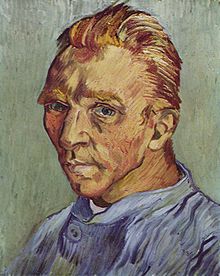
The movie “Les Miserables” and Francis Schaeffer

I got this off a Christian blog spot. This person makes some good points and quotes my favorite Christian philosopher Francis Schaeffer too. Prostitution, Chaos, and Christian Art The newest theatrical release of Victor Hugo’s 1862 novel “Les Miserables” was released on Christmas, but many Christians are refusing to see the movie. The reason simple — […]

“Schaeffer Sunday” Francis Schaeffer is one of the great evangelical theologians of our modern day

Francis Schaeffer was truly a great man and I enjoyed reading his books. A theologian #2: Rev. Francis Schaeffer Duriez, Colin. Francis Schaeffer: An Authentic Life. Wheaton, IL: Crossway Books, 2008. Pp. 240. Francis Schaeffer is one of the great evangelical theologians of our modern day. I was already familiar with some of his books and his […]

“Schaeffer Sundays” Francis Schaeffer’s own words concerning infanticide and youth enthansia

Francis Schaeffer: “Whatever Happened to the Human Race?” (Episode 2) SLAUGHTER OF THE INNOCENTS Published on Oct 6, 2012 by AdamMetropolis ___________ The 45 minute video above is from the film series created from Francis Schaeffer’s book “Whatever Happened to the Human Race?” with Dr. C. Everett Koop. This book  really helped develop my political views […]

Francis Schaeffer’s wife Edith passes away on Easter weekend 2013 Part 7 (includes pro-life editorial cartoon)

The Francis and Edith Schaeffer Story Pt.1 – Today’s Christian Videos The Francis and Edith Schaeffer Story – Part 3 of 3 Francis Schaeffer: “Whatever Happened to the Human Race” (Episode 1) ABORTION OF THE HUMAN RACE Published on Oct 6, 2012 by AdamMetropolis ________________ Picture of Francis Schaeffer and his wife Edith from the […]

The Mark of the Christian by Francis Schaeffer Part 1

  THE MARK OF A CHRISTIAN – CLASS 1 – Introduction Published on Mar 7, 2012 This is the introductory class on “The Mark Of A Christian” by Francis Schaeffer. The class was originally taught at Redeemer Presbyterian Church in Overland Park, KS by Dan Guinn from FrancisSchaefferStudies.org as part of the adult Sunday School hour […]

“Schaeffer Sundays” Francis Schaeffer’s own words concerning humanist dominated public schools in USA even though country was founded on a Christian base

Francis Schaeffer: “Whatever Happened to the Human Race?” (Episode 2) SLAUGHTER OF THE INNOCENTS Published on Oct 6, 2012 by AdamMetropolis The 45 minute video above is from the film series created from Francis Schaeffer’s book “Whatever Happened to the Human Race?” with Dr. C. Everett Koop. This book  really helped develop my political views concerning […]

“Schaeffer Sundays” Francis Schaeffer’s own words concerning where the Bible-believing Christians been the last few decades

Francis Schaeffer: “Whatever Happened to the Human Race” (Episode 1) ABORTION OF THE HUMAN RACE Published on Oct 6, 2012 by AdamMetropolis The 45 minute video above is from the film series created from Francis Schaeffer’s book “Whatever Happened to the Human Race?” with Dr. C. Everett Koop. This book  really helped develop my political views […]

Taking on Ark Times Bloggers on various issues Part E “Moral absolutes and abortion” Francis Schaeffer Quotes part 5(includes the film SLAUGHTER OF THE INNOCENTS) (editorial cartoon)

I have gone back and forth and back and forth with many liberals on the Arkansas Times Blog on many issues such as abortion, human rights, welfare, poverty, gun control  and issues dealing with popular culture. Here is another exchange I had with them a while back. My username at the Ark Times Blog is Saline […]

“Schaeffer Sundays” Francis Schaeffer’s own words concerning religious liberals and humanists

Francis Schaeffer: “Whatever Happened to the Human Race” (Episode 5) TRUTH AND HISTORY Published on Oct 7, 2012 by AdamMetropolis The 45 minute video above is from the film series created from Francis Schaeffer’s book “Whatever Happened to the Human Race?” with Dr. C. Everett Koop. This book  really helped develop my political views concerning abortion, […]

By Everette Hatcher III | Posted in Francis Schaeffer | Edit | Comments (0)

Music Monday Mad World – Gary Jules

______________

Mad World – Gary Jules

Uploaded on Jan 8, 2006

The original video of Gary Jules’ and Michael Andrews’ cover version of Mad World, directed by Michel Gondry. Throughout the video children are making animated figures on the sidewalk below. (the song was featured in the movie Donnie Darko. If you haven’t seen it, seriously consider it.)

Directed by Michel Gondry http://www.michelgondry.com.

_______________

Mad World

From Wikipedia, the free encyclopedia
Jump to: navigation, search
“Mad World”
Single by Tears for Fears
from the album The Hurting
B-side “Ideas as Opiates”
“Saxophones as Opiates” (12″)
Released 20 September 1982
Format 7″, 12″
Recorded 1982
Genre Synthpop, new wave, post-punk
Length 3:32
Label Phonogram, Mercury
Writer(s) Roland Orzabal
Producer Chris Hughes
Ross Cullum
Tears for Fears singles chronology
Pale Shelter (You Don’t Give Me Love)
(1982)
Mad World
(1982)
Change
(1983)
Music sample
0:00

Mad World” is a song by the British band Tears for Fears. Written by Roland Orzabal and sung by bassist Curt Smith, it was the band’s third single release and first chart hit, reaching #3 on the UK Singles Chart in November 1982. Both “Mad World” and its B-side, “Ideas as Opiates”, appeared on the band’s debut LP The Hurting the following year. The song eventually became Tears for Fears’ first international hit, reaching the Top 40 in several countries in 1982 and 1983, peaking notably at #2 in South Africa.[1]

Two decades later, the song made a popular resurgence when it was covered in a much slower, minimalist style by composers Michael Andrews and Gary Jules for the soundtrack to the movie Donnie Darko in 2001. This version reached #1 in the UK in December 2003, and also became an international hit.

Background

“Mad World” was originally written on acoustic guitar when Orzabal was 19, it was a deliberate attempt to write something in the vein of Duran Duran’s “Girls on Film“. After a few false starts with Orzabal on vocals, Smith took over and “suddenly it sounded fabulous”.[2]

It began life intended to be the b-side for the band’s second single “Pale Shelter (You Don’t Give Me Love)“. At Polygram’s insistence, the band instead decided it may be something people would like to hear on the radio and held back its release, waiting to issue the song as a single in its own right after re-recording it with producer Chris Hughes, a former drummer with Adam and the Ants.[3]

That came when I lived above a pizza restaurant in Bath and I could look out onto the centre of the city. Not that Bath is very mad – I should have called it “Bourgeois World”![4]

—Roland Orzabal

“Mad World” was the first single off the finished album. The intention was to gain attention from it and we’d hopefully build up a little following. We had no idea that it would become a hit. Nor did the record company.[4]

—Curt Smith

Curt Smith’s ad lib in the song’s final chorus resulted in a mondegreen. Smith clarified the actual lyric in 2010:

With Mad World’s again-resurgent popularity, I’m getting asked more frequently about the last line on the album version from The Hurting, a line which I occasionally also sing in concert. The actual line is: “Halargian world.” (Not “illogical world”, “raunchy young world”(!), “enlarging your world”, or a number of other interesting if not amusing guesses.) The real story: Halarge was an imaginary planet invented by either Chris Hughes or Ross Cullum during the recording of The Hurting. I added it as a joke during the lead vocal session, and we kept it. And there you have it.[5]

—Curt Smith

Meanings

[2] The song was influenced by the theories of Arthur Janov, author of The Primal Scream.[citation needed] The lyric “the dreams in which I’m dying are the best I’ve ever had” suggests that dreams of intense experiences such as death will be the best at releasing tension.[6]

Lyrically the song is pretty loose. It throws together a lot of different images to paint a picture without saying anything specific about the world.[4]

—Roland Orzabal

It’s very much a voyeur’s song. It’s looking out at a mad world from the eyes of a teenager.[4]

—Curt Smith

Song versions

The 7″ version of “Mad World” is the same mix of the song found on The Hurting. The song had only one remix on its initial release, the World Remix that was featured on a 7″ double-single. This mix is very similar to the album version, with the most notable differences being the additional echo added to the intro and middle sections and the subtraction of a subtle keyboard part from the bridge. A later remix by noted British music producer Afterlife was featured on the 2005 reissue of the Tears for Fears greatest hits collection Tears Roll Down (Greatest Hits 82–92).

B-side

Ideas as Opiates” is a song that originally served as the B-side to the “Mad World” single. It was later re-recorded for inclusion on The Hurting. The song takes its name from a chapter title in Arthur Janov‘s book Prisoners of Pain and features lyrics related to the concept of primal therapy. The song is musically sparse, featuring just a piano, drum machine, and saxophone. An alternative version of this song titled “Saxophones as Opiates” was included as a B-side on the 12″ single and is mostly instrumental.

That’s the chapter from Janov, and it’s really a reference to people’s mindsets, the way that the ego can suppress so much nasty information about oneself – the gentle way that the mind can fool oneself into thinking everything is great.[4]

—Roland Orzabal

It really was all about that kind of thing – the psychological answer to religion being the opiate of the masses, whereas we thought ideas were, more than anything else.[4]

—Curt Smith

Music video

Curt Smith in the “Mad World” music video

The promotional clip for “Mad World”, filmed in late summer 1982, was Tears for Fears’ first music video. It features a gloomy looking Curt Smith staring out a window, while Roland Orzabal performs a bizarre dance outside on a lakeside jetty. A brief party scene in the video features friends and family of the band, including Smith’s then-wife Lynn.

According to Smith, “When we made the video in a country estate on the cheap, we bussed all our friends and family up from Bath and had a fun day. The woman who’s having the birthday party in the video is my mum.”[2]

The clip was directed by Clive Richardson who was notable for his work at that time with Depeche Mode.

Track listings

7″: Mercury / IDEA3 (United Kingdom) / 812 213-7 (United States)
  1. “Mad World” – 3:32
  2. “Ideas as Opiates” – 3:54
7″: Mercury / IDEA3 (Ireland) / 6059 568 (Australia, Europe) / TOS 1411 (South Africa)
  1. “Mad World” (World Remix) – 3:30
  2. “Ideas as Opiates” – 3:54
7″ double pack: Mercury / IDEA33 (United Kingdom)
  1. “Mad World” – 3:32
  2. “Mad World” (World Remix) – 3:30
  3. “Suffer the Children” (Remix) – 4:15
  4. “Ideas as Opiates” – 3:54
12″: Mercury / IDEA312 (United Kingdom) / 6400 677 (Europe)
  1. “Mad World” – 3:32
  2. “Ideas as Opiates” – 3:54
  3. “Saxophones as Opiates” – 3:54

Chart positions

Year Chart Position
1982 UK Singles Chart 3
1983 Australian Singles Chart 12
1983 German Singles Chart 21
1982 Irish Singles Chart 6
1983 New Zealand Singles Chart[7] 25
1983 South African Singles Chart 2
1983 Swiss Singles Chart 10

Michael Andrews and Gary Jules version

“Mad World”
Single by Michael Andrews featuring Gary Jules
from the album Donnie Darko (Original Soundtrack) and Trading Snakeoil for Wolftickets
B-side “No Poetry”
Released 2001
15 December 2003
Format CD
Recorded 2000
Genre Piano rock
Length 3:06
Label Sanctuary

“Mad World” achieved a second round of success almost twenty years later after it was covered by Michael Andrews and Gary Jules for the film Donnie Darko (2001). While the Tears for Fears version featured synthesizers and heavy percussion, the Andrews/Jules version was stripped down; instead of a full musical backing, it used only a set of piano chords, a cello, and modest use of a vocoder on the chorus. Their version was originally released on CD in 2002 on the film’s soundtrack, but an increasing cult-following spawned by the movie’s DVD release finally prompted Jules and Andrews to issue the song as a proper single. The release was a success in late 2003, becoming the Number One single over the Christmas holiday in the UK, a feat Tears for Fears themselves never accomplished. The music video, directed by Michel Gondry, has since been very popular on YouTube, with its most popular posting garnering over 60 million views by September 2013.[8] It is included on the DVD compilation Michel Gondry 2: More Videos (Before and After DVD 1). The song was later included in the commercial to the videogame Gears of War. [9] A instrumental version plays in Gears of War 3 when Dom sacrifices himself to save Delta Squad by attacking hordes of Locust and Lambent. Its success did not translate to the United States, where it reached number 30 on the Billboard Modern Rock Tracks chart.

Gary Jules recently performed “Mad World” with Mylène Farmer on her Timeless 2013 Tour.[10]

Track listings

CD1: Sanctuary / SANXD250 (United Kingdom)
  1. “Mad World” – 3:06
  2. “No Poetry” – 3:59
  3. “Mad World” (alternate version) – 3:37
CD2: Sanctuary / SANXD250X (United Kingdom)
  1. “Mad World” (Grayed Out Mix) – 6:45
  2. “The Artifact & Living” – 2:26
  3. “Mad World” (video) – 3:20

Chart positions

Chart (2003/2004/2007/2009/2010) Peak
position
UK Singles Chart 1
US Billboard Modern Rock Tracks 30
Australian Singles Chart 28
Austrian Singles Chart 13
Belgium Flanders Singles Chart 23
Canadian Digital Singles Chart 1
Danish Singles Chart 6
Dutch Singles Chart 4
French Digital Singles Chart[11] 11
German Singles Chart 3
Irish Singles Chart 2
Portuguese Singles Chart[12] 1
Swedish Singles Chart 10
Swiss Singles Chart 53
New Zealand Singles Chart 37

Year-end charts

Chart (2004) Position
German Singles Chart[13] 14
Chart (2000–2009) Peak
position
UK Top 100 Songs of the Decade 53[14]

Certifications

Region Certification Sales/shipments
Germany (BVMI)[15] Gold 250,000^
Italy (FIMI)[16] Gold 25,000*
United Kingdom (BPI)[17] Platinum 600,000^
*sales figures based on certification alone
^shipments figures based on certification alone

Chart positions for Adam Lambert’s version

Chart (2009) Peak
position
Canadian Hot 100 10
U.S. Billboard Hot 100 19
U.S. Billboard Pop 100 30

Popular culture

  • In 2011, the song was covered in the TV reality show The Glee Project.
  • In late 2006, a condensed version of the Andrews/Jules cover of “Mad World” was featured in the award-winning commercial for the video game Gears of War.[18]
  • In addition to its usage in numerous advertisements and fan-made YouTube videos, the Andrews/Jules cover has also become a popular choice for background music in television dramas, having appeared in the following series among others: Being Human (U.S.), Brothers & Sisters, Cold Case, CSI, Dead Like Me, Smallville, The Cleveland Show, The OC, Jericho and The Mentalist. The Lambert version has appeared in ER, FlashForward and General Hospital. Curt Smith sang this song on the television show Psych.
  • It is used on Broadway as the closing number in Butley starring Nathan Lane (2006).
  • The Andrews/Jules version was used in the 28 July 2010, episode of So You Think You Can Dance by choreographer Stacey Tookey in a routine about homelessness, performed by Billy Bell and Ade Obayomi.
  • The 2011 game Gears of War 3 contains a distinct instrumental cover of Gary Jules’ version that plays when Dom saves Delta Squad by sacrificing himself to destroy the Locust and Lambent attacking them.
  • UFC fighter Chris Leben used the Gary Jules version as his walkout theme at UFC 138.
  • An instrumental cover of the Andrews/Jules version was used in one of the scenes of the 2011 Philippine film Manila Kingpin: The Asiong Salonga Story.
  • Cleveland from the animated Fox television program The Cleveland Show sang “Mad World” for the first 2 minutes of the show that aired 1 April 2012.
  • In the web-based parody of Yu-Gi-Oh!, Yu-Gi-Oh: The Abridged Series, “Mad World” is adopted as the theme for Noah Kaiba.
  • A commercial for the video game Battlefield: Bad Company titled “Mad World” uses the chorus, sung by Sweetwater. It is used as he and Haggard run through a destroyed street. Haggard is annoyed and questions the meaning of the line “the dreams in which I’m dying are the best I’ve ever had.” He then proposes the song “Shortnin’ Bread“.
  • The Gary Jules version was used in an advertisement for Underground: The Julian Assange Story, which was shown on Network Ten in Australia in 2012.
  • The Gary Jules version is also used in the credits of the movie Donnie Darko.

Other versions and covers

In addition to the Andrews/Jules version, “Mad World” has been recorded over the years by the following artists:

Samples and quotations

  • Wale (rapper) samples a version of the song on his track “Vanity” on his album The Gifted.
  • Prozak samples the song on the track “American Princess”, from the Strange Music compilation Strictly Strange 08 (2008).
  • British dubstep artist The Bug, with vocalist Warrior Queen, included the song “Insane” on the album London Zoo (2008). The song ends with a quote from “Mad World”.
  • Orbital sampled the song on “The Moebius”, the first song on their debut album.

Notes

  1. Jump up ^ [1]
  2. ^ Jump up to: a b Guardian: ‘Tears For Fears: how we made Mad World’
  3. Jump up ^ Mad World. Songfacts.com. Retrieved 9 April 2009.
  4. ^ Jump up to: a b c d e f Cranna, Ian (1999). In The Hurting: Remastered & Expanded [CD booklet]. London: Mercury Records.
  5. Jump up ^ Curt Smith. “It’s a Mad Halargian World.” Curt Smith: The Official Site. October 11, 2010.
  6. Jump up ^ Toby Creswell (2007), 1001 Songs, Hardie Grant Publishing, pp. 87–88, ISBN 978-1-74066-458-5
  7. Jump up ^ Mad World, charts.org.nz
  8. Jump up ^ Mad World (Gary Jules), Youtube.com
  9. Jump up ^ Bissell, Tom. Extra Lives: Why Video Games Matter. p. 56.
  10. Jump up ^ http://www.mylene.net/modules/index.php?r=4&z=3972#setlist
  11. Jump up ^ “French Digital Singles Chart”. SNEP. Lescharts. 2010-05-01.
  12. Jump up ^ Billboard
  13. Jump up ^ http://www.mtv.de/charts/Single_Jahrescharts_2004
  14. Jump up ^ Radio 1 Official Chart of the Decade, as broadcast on BBC Radio 1 on Tuesday 29 December 2009, presented by Nihal
  15. Jump up ^ “Gold-/Platin-Datenbank (Michael Andrews featuting Gary Jules; ‘Mad World’)” (in German). Bundesverband Musikindustrie.
  16. Jump up ^ “Italian single certifications – Michael Andrews feat. Gary Jules – Mad World” (in Italian). Federation of the Italian Music Industry. Select Online in the field Scegli la sezione. Select Weekand Year —-. Enter Michael Andrews feat. Gary Jules in the field Artista. Click Avvia la ricerca
  17. Jump up ^ “British single certifications – Michael Andrews ft Gary Jules – Mad World”. British Phonographic Industry. Enter Mad World in the field Search. Select Title in the field Search by. Select single in the field By Format. Click Go
  18. Jump up ^ Ross Miller (2006). “Mad World: Gears ad propels song to #1 on iTunes”. Joystiq. Retrieved 27 February 2010.

External links

_______________


____________

Open Letter #44 to Ricky Gervais on comparison of the Tony of AFTER LIFE to the Solomon of ECCLESIASTES, “We are chimps with brains the size of planets” asserts Tony Johnson

—-

—-


After Life #1 Trailer

—-

I listened to this question and answer session at Harvard in 1992 on cassette tapes and was captivated with Ravi Zacharias. His responses were so much better than Kath’s responses to Tony in AFTER LIFE. I have referenced work by Ravi many times in the past and Especially moving was Ravi’s own spiritual search which started in a hospital bed after a failed suicide attempt. I also want you to check out his talk at Princeton and the question and answer time afterwards which are both on YOU TUBEat these two links: Link for talk, Link for Q/A.

After Life 2 Trailer

—-

On Saturday April 18, 2020 at 6pm in London and noon in Arkansas, I had a chance to ask Ricky Gervais a question on his Twitter Live broadcast which was  “Is Tony a Nihilist?” At the 20:51 mark Ricky answers my question. Below is the video:

—-

—-

If Death is the end then what is the point Kath asks below:

——

Francis Schaeffer passed away on May 15, 1984 and on the 10th anniversary of that date I wrote many skeptics such as Carl Sagan and corresponded with them on the big questions covered by the Book of Ecclesiastes.

Kath: You are an atheist?

—-

Adrian Rogers on Evolution

—-
Ravi Zacharias  (March 26, 1946 – May 19, 2020) 

Francis Schaeffer (January 30, 1912 – May 15, 1984[1]

Francis Schaeffer.jpg


I grew up at Bellevue Baptist Church under the leadership of our pastor Adrian Rogers and I read many books by the Evangelical Philosopher Francis Schaeffer and in 1992 I heard cassette tapes of Ravi Zacharias in all his brilliance in his sessions at Harvard and have had the opportunity to contact many of the evolutionists or humanistic academics that they have mentioned in their works. Many of these scholars have taken the time to respond back to me in the last 20 years and some of the names  included are  Ernest Mayr (1904-2005), George Wald (1906-1997), Carl Sagan (1934-1996),  Robert Shapiro (1935-2011), Nicolaas Bloembergen (1920-),  Brian Charlesworth (1945-),  Francisco J. Ayala (1934-) Elliott Sober (1948-), Kevin Padian (1951-), Matt Cartmill (1943-) , Milton Fingerman (1928-), John J. Shea (1969-), , Michael A. Crawford (1938-), Paul Kurtz (1925-2012), Sol Gordon (1923-2008), Albert Ellis (1913-2007), Barbara Marie Tabler (1915-1996), Renate Vambery (1916-2005), Archie J. Bahm (1907-1996), Aron S “Gil” Martin ( 1910-1997), Matthew I. Spetter (1921-2012), H. J. Eysenck (1916-1997), Robert L. Erdmann (1929-2006), Mary Morain (1911-1999), Lloyd Morain (1917-2010),  Warren Allen Smith (1921-), Bette Chambers (1930-),  Gordon Stein (1941-1996) , Milton Friedman (1912-2006), John Hospers (1918-2011), Michael Martin (1932-).Harry Kroto (1939-), Marty E. Martin (1928-), Richard Rubenstein (1924-), James Terry McCollum (1936-), Edward O. WIlson (1929-), Lewis Wolpert (1929), Gerald Holton(1922-), Martin Rees (1942-), Alan Macfarlane (1941-),  Roald Hoffmann (1937-), Herbert Kroemer (1928-), Thomas H. Jukes(1906-1999) and  Ray T. Cragun (1976-).

 Adrian Rogers (September 12, 1931 – November 15, 2005) 

Adrian Rogers.jpg

Charles Darwin Autobiography


Francis Schaeffer “The Age of NONREASON”

——-

—-


—-

—-

(Above) Tony and Anne on the bench at the graveyard where their spouses are buried.

May 31, 2020 
Ricky Gervais 


Dear Ricky,  

This is the 44th day in a row that I have written another open letter to you to comment on some of your episodes of AFTER LIFE, but first I want make a few comments about Solomon and his secular point of view in ECCLESIASTES when he looks at life UNDER THE SUN.

Ecclesiastes is a book that is truly a picture of how modern secular man looks at the world. The Christian Scholar Ravi Zacharias noted, “The key to understanding the Book of Ecclesiastes is the term UNDER THE SUN — What that literally means is you lock God out of a closed system and you are left with only this world of Time plus Chance plus matter.”

Francis Schaeffer comments on ECCLESIASTES: 


Ecclesiastes 9:11

11 Again I saw that under the sun the race is not to the swift, nor the battle to the strong, nor bread to the wise, nor riches to the intelligent, nor favor to those with knowledge, but time and chance happen to them all.

Chance rules. If a man starts out only from himself and works outward it must eventually if he is consistent seem so that only chance rules. 

(Tony Johnson with his dog Brandi seen below:)

In episode 2 of the second season of AFTER LIFE is the following discussion: 
Tony: I drink in times of trouble. I can’t help it the world is filled with trouble. It is a horrible place. Everyone is screwed up in someway. Everyone has worries like money or health or famine, war. We are chimps with brains the size of planets. No wonder we get drunk and try to kill each other. It is mental.

Matt: Always good to talk.

Tony: I was just explaining my new plan is to drink myself to death till I eventually implode in on my own evolution. 
Kath: Do you believe in all that? 
Tony: What? The proven fact that there is evolution? Yeah

Kath: That is the problem that your science only deals with facts. I am the more opened mind type. I love anything paranormal. Do you know when an angel has entered the room?

Ricky Gervais plays bereaved husband Tony Johnson in AFTER LIFE 

—-

Tony does battle with Christians like Kath on many intellectual subjects and it is really not a fair fight. One thing that I have learned is that the scientists that modern science was born out of the Christian world view, and many of our greatest scientists such as Isaac Newton were firm believers in creationism.

In 1994 and 1995 I had the opportunity to correspond with the famous evolutionist Dr. Ernst Mayr of Harvard. He stated in his letter of 10-3-94, “Owing to your ideological commitments, it is only natural that you cannot accept the cogency of the scientific evidence. However, to a person such as myself without such commitments, the story of the gradual evolution of life as reconstructed by chemists and molecular biologists is totally convincing.”

_____________________________________________________________________

____________________________

I responded by pointing out three points. First, Scientific Naturalism is atheistic by definition. Second, many great scientists of the past were Christians, and that did not disqualify their observations and discoveries. Third, the fact that evolution is true does not rule out God’s existence (Harvard’s own Owen Gingerich and many others such as Francis Collins hold to a Creator and evolution).

Let me just spend some time on my second point. Francis Schaeffer in his book “HOW SHOULD WE THEN LIVE?” stated that according to Alfred North Whitehead and J. Robert Oppenheimer, both renowned philosophers and scientists of our era (but not Christians themselves), modern science was born out of the Christian world view. Whitehead said that Christianity is the “mother of science” because of the insistence on the rationality of God. In the article, “Christianity and Technological Advance – The Astonishing Connection,” by T. V. Varughese, Ph.D, he observed:

Without question, “technology” has now become the new magic word in place of the word “science.” Since technology represents the practical applications of science, it is clearly consumer-oriented. Herein is bright economic promise to all who can provide technology.

In terms of technology, our present world can be divided into at least three groups: countries that are strong providers of technology, both original and improved; countries that are mass producers because of cheaper labor; and countries that are mostly consumers. Without a doubt, being in the position of “originating” superior technology should be a goal for any major country. The difficult question, however, is “how.”

An obvious place to start suggests itself. Why not begin with the countries that have established themselves as strong originators of technology and see if there is a common thread between them? The western nations, after the Renaissance and the Reformation of the 16th century, offer a ready example. Any book on the history of inventions, such as the Guinness Book of Answers, will reveal that the vast majority of scientific inventions have originated in Europe (including Britain) and the USA since the dawn of the 17th century. What led to the fast technological advances in the European countries and North America around that time?

The answer is that something happened which set the stage for science and technology to emerge with full force. Strange as it may seem, that event was the return to Biblical Christianity in these countries.The Epistemological Foundation of Technology

According to Alfred North Whitehead and J. Robert Oppenheimer, both renowned philosophers and scientists of our era (but not Christians themselves), modern science was born out of the Christian world view. Whitehead said that Christianity is the “mother of science” because of the insistence on the rationality of God.[1] Entomologist Stanley Beck,though not a Christian himself, acknowledged the corner-stone premises of science which the Judeo-Christian world view offers: “The first of the unprovable premises on which science has been based is the belief that the world is real and the human mind is capable of knowing its real nature. The second and best-known postulate underlying the structure of scientific knowledge is that of cause and effect. The third basic scientific premise is that nature is unified.”[2] In other words, the epistemological foundation of technology has been the Judeo-Christian world view presented in the Bible…

Perhaps the most obvious affirmation that Biblical Christianity and science are friends and not foes comes from the fact that most of the early scientists after the Renaissance were also strong believers in the Bible as the authoritative source of knowledge concerning the origin of the universe and man’s place in it.[4] The book of Genesis, the opening book of the Bible, presents the distinctly Judeo-Christian world view of a personal Creator God behind the origin and sustenance of the universe (Genesis 1:1Colossians 1:17; etc.).

Among the early scientists of note who held the Biblical creationist world view are Blaise Pascal (1623-1662), Sir Isaac Newton (1642-1727), and Samuel Morse (1791-1872) – what motivated them was a confidence in the “rationality” behind the universe and the “goodness” of the material world. The creation account in Genesis presents an intelligent, purposeful Creator, who, after completing the creation work, declared it to be very good (Genesis 1:31). That assures us that the physical universe operates under reliable laws which may be discovered by the intelligent mind and used in practical applications. The confidence in the divinely pronounced goodness of the material world removed any reluctance concerning the development of material things for the betterment of life in this world. The spiritual world and the material world can work together in harmony.

 References –

  1. Francis A. Schaeffer: How Should We Then Live (Revell, 1976), p. 132.
  2. Henry M. Morris, Biblical Basis for Modern Science (Baker, 1991), p. 30.
  3. Schaeffer, p. 131.
  4. Henry M. Morris, Men of Science, Men of God (Master Books, CA, 1988), 107 pp.

_____________

Henry Morris pointed out:

Many of these great scientists of the past were before Darwin, but not all of them. However, all of them were acquainted with secular philosophies and some were in fact opponents of Darwinism (Agassiz, Pasteur, Lord Kelvin, Maxwell, Dawson, Virchow, Fabre, Fleming, etc). Many of them believed in the inspiration and authority of the Bible, as well as in the deity and saving work of Jesus Christ. They believed that God had supernaturally created all things, each with its own complex structure for its own unique purpose. They believed that, as scientists, they were “thinking God’s thoughts after Him,” learning to understand and control the laws and processes of nature for God’s glory and man’s good. They believed and practiced science in exactly the same way that modern creationist scientists do.

And somehow this attitude did not hinder them in their commitment to the “scientific method.” In fact one of them, Sir Francis Bacon, is credited with formulating and establishing the scientific method! They seem also to have been able to maintain a proper “scientific attitude,” for it was these men (Newton, Pasteur, Linnaeus, Faraday, Pascal, Lord Kelvin, Maxwell, Kepler, etc.) whose researches and analyses led to the very laws and concepts of science which brought about our modern scientific age…. 

To illustrate the caliber and significance of these great scientists of the past, Tables I and II have been prepared. These tabulations are not complete lists, of course, but at least are representative and they do point up the absurdity of modern assertions that no true scientist can be a creationist and Bible-believing Christian.

Table I lists the creationist “fathers” of many significant branches of modern science. Table II lists the creationist scientists responsible for various vital inventions, discoveries, and other contributions to mankind. These identifications are to some degree oversimplified, of course, for even in the early days of science every new development involved a number of other scientists, before and after. Nevertheless, in each instance, a strong case can be made for attributing the chief responsibility to the creationist scientist indicated. At the very least, his contribution was critically important and thus supports our contention that belief in creation and the Bible helps, rather than hinders, scientific discovery.


My relatives live 3 miles from Spring Hill, Tennessee. When the new General Motors plant opened there I got to go see it. What if I had said, “The assembly line created a beautiful Saturn automobile!” Hopefully, some would have corected me by responding, “The assembly line did not create the automobile. It was first designed by the General Motors engineers in Detroit.” ASSUMING EVOLUTION IS TRUE, IT WOULD STILL ONLY BE THE MECHANISM. DOES EVOLUTION ACCOUNT FOR THE DESIGNER?

________________

TABLE ISCIENTIFIC DISCIPLINES ESTABLISHED
BY CREATIONIST SCIENTISTS
DISCIPLINESCIENTIST
ANTISEPTIC SURGERYJOSEPH LISTER (1827-1912)
BACTERIOLOGYLOUIS PASTEUR (1822-1895)
CALCULUSISAAC NEWTON (1642-1727)
CELESTIAL MECHANICSJOHANN KEPLER (1571-1630)
CHEMISTRYROBERT BOYLE (1627-1691)
COMPARATIVE ANATOMYGEORGES CUVIER (1769-1832)
COMPUTER SCIENCECHARLES BABBAGE (1792-1871)
DIMENSIONAL ANALYSISLORD RAYLEIGH (1842-1919)
DYNAMICSISAAC NEWTON (1642-1727)
ELECTRONICSJOHN AMBROSE FLEMING(1849-1945)
ELECTRODYNAMICSJAMES CLERK MAXWELL(1831-1879)
ELECTRO-MAGNETICSMICHAEL FARADAY (1791-1867)
ENERGETICSLORD KELVIN (1824-1907)
ENTOMOLOGY OF LIVING INSECTSHENRI FABRE (1823-1915)
FIELD THEORYMICHAEL FARADAY (1791-1867)
FLUID MECHANICSGEORGE STOKES (1819-1903)
GALACTIC ASTRONOMYWILLIAM HERSCHEL (1738-1822)
GAS DYNAMICSROBERT BOYLE (1627-1691)
GENETICSGREGOR MENDEL (1822-1884)
GLACIAL GEOLOGYLOUIS AGASSIZ (1807-1873)
GYNECOLOGYJAMES SIMPSON (1811-1870)
HYDRAULICSLEONARDO DA VINCI (1452-1519)
HYDROGRAPHYMATTHEW MAURY (1806-1873)
HYDROSTATICSBLAISE PASCAL (1623-1662)
ICHTHYOLOGYLOUIS AGASSIZ (1807-1873)
ISOTOPIC CHEMISTRYWILLIAM RAMSAY (1852-1916)
MODEL ANALYSISLORD RAYLEIGH (1842-1919)
NATURAL HISTORYJOHN RAY (1627-1705)
NON-EUCLIDEAN GEOMETRYBERNHARD RIEMANN (1826- 1866)
OCEANOGRAPHYMATTHEW MAURY (1806-1873)
OPTICAL MINERALOGYDAVID BREWSTER (1781-1868)
PALEONTOLOGYJOHN WOODWARD (1665-1728)
PATHOLOGYRUDOLPH VIRCHOW (1821-1902)
PHYSICAL ASTRONOMYJOHANN KEPLER (1571-1630)
REVERSIBLE THERMODYNAMICSJAMES JOULE (1818-1889)
STATISTICAL THERMODYNAMICSJAMES CLERK MAXWELL(1831-1879)
STRATIGRAPHYNICHOLAS STENO (1631-1686)
SYSTEMATIC BIOLOGYCAROLUS LINNAEUS (1707-1778)
THERMODYNAMICSLORD KELVIN (1824-1907)
THERMOKINETICSHUMPHREY DAVY (1778-1829)
VERTEBRATE PALEONTOLOGYGEORGES CUVIER (1769-1832)
TABLE IINOTABLE INVENTIONS, DISCOVERIES
OR DEVELOPMENTS BY CREATIONIST SCIENTISTS
CONTRIBUTIONSCIENTIST
ABSOLUTE TEMPERATURE SCALELORD KELVIN (1824-1907)
ACTUARIAL TABLESCHARLES BABBAGE (1792-1871)
BAROMETERBLAISE PASCAL (1623-1662)
BIOGENESIS LAWLOUIS PASTEUR (1822-1895)
CALCULATING MACHINECHARLES BABBAGE (1792-1871)
CHLOROFORMJAMES SIMPSON (1811-1870)
CLASSIFICATION SYSTEMCAROLUS LINNAEUS (1707-1778)
DOUBLE STARSWILLIAM HERSCHEL (1738-1822)
ELECTRIC GENERATORMICHAEL FARADAY (1791-1867)
ELECTRIC MOTORJOSEPH HENRY (1797-1878)
EPHEMERIS TABLESJOHANN KEPLER (1571-1630)
FERMENTATION CONTROLLOUIS PASTEUR (1822-1895)
GALVANOMETERJOSEPH HENRY (1797-1878)
GLOBAL STAR CATALOGJOHN HERSCHEL (1792-1871)
INERT GASESWILLIAM RAMSAY (1852-1916)
KALEIDOSCOPEDAVID BREWSTER (1781-1868)
LAW OF GRAVITYISAAC NEWTON (1642-1727)
MINE SAFETY LAMPHUMPHREY DAVY (1778-1829)
PASTEURIZATIONLOUIS PASTEUR (1822-1895)
REFLECTING TELESCOPEISAAC NEWTON (1642-1727)
SCIENTIFIC METHODFRANCIS BACON (1561-1626)
SELF-INDUCTIONJOSEPH HENRY (1797-1878)
TELEGRAPHSAMUEL F.B. MORSE (1791-1872)
THERMIONIC VALVEAMBROSE FLEMING (1849-1945)
TRANS-ATLANTIC CABLELORD KELVIN (1824-1907)
VACCINATION & IMMUNIZATIONLOUIS PASTEUR (1822-1895)


The answer to find meaning in life is found in putting your faith and trust in Jesus Christ. The Bible is true from cover to cover and can be trusted.

Thank you again for your time and I know how busy you are.

Sincerely,

Everette Hatcher, everettehatcher@gmail.comhttp://www.thedailyhatch.org, cell ph 501-920-5733, 13900 Cottontail Lane, Alexander, AR 72002

PS: What is the meaning of life? Find it in the end of the open letter I wrote to you on April 23, 2020. 

Below is the workforce of THE TAMBURY GAZETTE 

Seen below is the third episode of AFTERLIFE (season 1) when Matt takes Tony to a comedy club with front row seats to cheer him up but it turns into disaster!!!

——

—-


—-

—-

—-


—-

Open Letter #43 to Ricky Gervais on comparison of the Tony of AFTER LIFE to the Solomon of ECCLESIASTES, Can belief in God and the afterlife influence behavior and can someone be born with a personal relationship with Christ?

—-

—-


After Life #1 Trailer

—-

I listened to this question and answer session at Harvard in 1992 on cassette tapes and was captivated with Ravi Zacharias. His responses were so much better than Kath’s responses to Tony in AFTER LIFE. I have referenced work by Ravi many times in the past and Especially moving was Ravi’s own spiritual search which started in a hospital bed after a failed suicide attempt. I also want you to check out his talk at Princeton and the question and answer time afterwards which are both on YOU TUBEat these two links: Link for talk, Link for Q/A.

After Life 2 Trailer

—-

On Saturday April 18, 2020 at 6pm in London and noon in Arkansas, I had a chance to ask Ricky Gervais a question on his Twitter Live broadcast which was  “Is Tony a Nihilist?” At the 20:51 mark Ricky answers my question. Below is the video:

—-

—-

If Death is the end then what is the point Kath asks below:

——

Francis Schaeffer passed away on May 15, 1984 and on the 10th anniversary of that date I wrote many skeptics such as Carl Sagan and corresponded with them on the big questions covered by the Book of Ecclesiastes.

Kath: You are an atheist?

—-

Adrian Rogers on Evolution

—-

(Above) Tony and Anne on the bench at the graveyard where their spouses are buried.

May 30, 2020 
Ricky Gervais 


Dear Ricky,  

This is the 43rd day in a row that I have written another open letter to you to comment on some of your episodes of AFTER LIFE.

My 2nd question tweeted to Ricky on Twitter Live on May 29, 2020:

‪ Have you read ECCLESIASTES cause Tony seeks meaning UNDER THE SUN in learning(1:16-18),laughter, ladies, and liquor (2:1-3, 8, 10, 11), and labor (2:4-6, 18-20). Matt asked Tony to throw himself into work, go to pub and comedy club, and a blind date.

My question was not selected but another question came in from another Christian. On Twitter Live on Friday May 29, 2020 you said: 

Have I ever explored Christianity? (Question from Tom Peaks) Yes I have. I was brought up Christian. I was born into Christianity like most people are born into their religion. I always assumed there was a God and a Santa. I think I stopped believing in God the same year I stopped believing in Santa Claus. I think God beat Santa to it. Although I kept quiet about Santa longer because I knew my presents were from my dad but if I expose that will I still get presents? So I kept quiet. You know you are surrounded by it. My mom wasn’t very religious. She was a working class woman and Jesus is an unpaid babysitter. It just helps they think. “If I am not watching you then Jesus is.” It is to curb bad behavior. Traditionally religion is associated with good behavior, but that is a random relationship. Actually there is not a relationship to good behavior whatsoever. You are either a moral person or you are not. No religion owns or invented morality. I read the Bible obviously as a Christian kid. I read the New Testament and I was fascinated with the Old Testament as well. I have no problem with spirituality or with people praying because it doesn’t affect me. Religion is something else…Then religion I know God and he wants you to give me money so you can go to heaven. That is religion.You don’t have to read the Old Testament to see it was written by men of the time. It really did favor the men who wrote it. But yes I have explored it. I explore it everyday since I am surrounded by it. When I stopped believing I started studying science. You are in society so you have to question it and question rules. I studied philosophy and everything in religion is using like philosophy logical thinking from the ancient Greeks to Bertrand Russell have pondered why do people believe this and what is the evidence. So the short answer is yes I have explored Christianity. 

Let me make two comments. First, you need to look at the work of Ravi Zacharias instead of people like Kath. Second, no one is born into a personal relationship with Christ. At the end of this letter I will share with you what is all about. 

When Kath, asks, “If your an atheist, and you don’t believe in heaven and hell and all that, how come you don’t go around raping and murdering as much as you want?” Tony’s answer is, “I do. I do go around raping and murdering as much as I want, which is not at all.”

Kath: If death is just the end then what is the point? 
Tony: What is the point in what? 
Kath: What is the point in living? Why don’t you just kill yourself?

Tony: So if you are watching a movie and you are really enjoying it. Maybe a movie with Kevin Hart in it. Then someone points out there is an end eventually. Do you just say “Forget it. What’s the point and you turn it off?” 
Kath: No because you can watch it again. 
Tony: Well, I think Life is precious because you can’t watch it again. I mean you can believe in an afterlife if it makes you feel better, but it doesn’t mean it is true. But once you realize you are not going to be around forever I think that is what makes it magical. One day you will eat your last meal, smell a flower, and hug your friend for the last time. You might not know it is the last time, but that is why you should do everything you love with passion. Treasure the few years you got because you know that is all there is.

On his Twitter Live broadcast of April 13, 2020 Ricky Gervais seemed to contradict his argument with Kath. He asserted, “Your favorite meal? What if it was your final meal? Couldn’t really enjoy that. Would they rush you as well. You don’t have time for pudding because you are being executed at 2 pm. Brings the whole meal [mood] down. I am not enjoying this. I am not enjoying this sticky toffee pudding. The priest is looking at his watch.”

—-

You contradict yourself with this example the death row inmate not getting to enjoy the meal because he knows that the 2pm execution is coming. Let me give you an example from Woody Allen. 

There’s an old joke – um… two elderly women are at a Catskill mountain resort, and one of ’em says, “Boy, the food at this place is really terrible.” The other one says, “Yeah, I know; and such small portions.” Well, that’s essentially how I feel about life – full of loneliness, and misery, and suffering, and unhappiness, and it’s all over much too quickly.

Woody Allen, Annie Hall: ScreenplayTags: humourlife

Is there a relationship in those who believe in God and good behavior? . I noticed in Woody Allen’s film “Crimes and Misdemeanors” you can see how Allen’s agnostic worldview permits him to allow the lead character to have his mistress killed when she threatens to call the cops. Judah noted, “God is a luxery I can not afford.” Earlier in the film Judah is terrified when he thinks there is a living God that will punish him in an afterlife, but only after he convinces himself there is no God is he at peace with his decision to have this troublesome lady killed. Check out this movie on Netflix and you will see what I mean about this potential moral problem that atheists can not answer. (I have looked this question many times in my previous posts.)

I know how much you and Richard Dawkins hold Bertrand Russell in high esteem. Let me quote from the article below. For though Bertrand Russell was an atheist, he was an outspoken social critic, denouncing war and restrictions on sexual freedom. Russell admitted that he could not live as though ethical values were simply a matter of personal taste, and that he therefore found his own views “incredible.” “I do not know the solution,” he confessed.” [7]

Let me share a portion of an article by William Lane Craig with you.

The Absurdity of Life without God

William Lane Craig

SUMMARY

Why on atheism life has no ultimate meaning, value, or purpose, and why this view is unlivable.

Francis Schaeffer has explained this point well. Modern man, says Schaeffer, resides in a two-story universe. In the lower story is the finite world without God; here life is absurd, as we have seen. In the upper story are meaning, value, and purpose. Now modern man lives in the lower story because he believes there is no God. But he cannot live happily in such an absurd world; therefore, he continually makes leaps of faith into the upper story to affirm meaning, value, and purpose, even though he has no right to, since he does not believe in God.

Let’s look again, then, at each of the three areas in which we saw life was absurd without God, to show how man cannot live consistently and happily with his atheism.

Meaning of Life

First, the area of meaning. We saw that without God, life has no meaning. Yet philosophers continue to live as though life does have meaning. For example, Sartre argued that one may create meaning for his life by freely choosing to follow a certain course of action. Sartre himself chose Marxism.

Now this is utterly inconsistent. It is inconsistent to say life is objectively absurd and then to say one may create meaning for his life. If life is really absurd, then man is trapped in the lower story. To try to create meaning in life represents a leap to the upper story. But Sartre has no basis for this leap. Without God, there can be no objective meaning in life. Sartre’s program is actually an exercise in self-delusion. Sartre is really saying, “Let’s pretend the universe has meaning.” And this is just fooling ourselves.

The point is this: if God does not exist, then life is objectively meaningless; but man cannot live consistently and happily knowing that life is meaningless; so in order to be happy he pretends life has meaning. But this is, of course, entirely inconsistent—for without God, man and the universe are without any real significance.

Value of Life

Turn now to the problem of value. Here is where the most blatant inconsistencies occur. First of all, atheistic humanists are totally inconsistent in affirming the traditional values of love and brotherhood. Camus has been rightly criticized for inconsistently holding both to the absurdity of life and the ethics of human love and brotherhood. The two are logically incompatible. Bertrand Russell, too, was inconsistent. For though he was an atheist, he was an outspoken social critic, denouncing war and restrictions on sexual freedom. Russell admitted that he could not live as though ethical values were simply a matter of personal taste, and that he therefore found his own views “incredible.” “I do not know the solution,” he confessed.” [7] The point is that if there is no God, then objective right and wrong cannot exist. As Dostoyevsky said, “All things are permitted.”

But Dostoyevsky also showed that man cannot live this way. He cannot live as though it is perfectly all right for soldiers to slaughter innocent children. He cannot live as though it is all right for dictators like Pol Pot to exterminate millions of their own countrymen. Everything in him cries out to say these acts are wrong—really wrong. But if there is no God, he cannot. So he makes a leap of faith and affirms values anyway. And when he does so, he reveals the inadequacy of a world without God.

Back to Woody Allen’s CRIMES AND MISDEMEANORS and the issue of MIGHT MAKES RIGHT and I encourage you to watch that film and answer the question “How could I convince Judah not to eliminate his troublesome mistress when he has every reason to do so?”

This issue also was covered by Solomon in ECCLESIASTES.Below Francis Schaeffer discusses ECCLESIASTES. 


Ecclesiastes 4:1

 Then I looked again at all the acts of oppression which were being done under the sun. And behold I saw the tears of the oppressed and that they had no one to comfort them; and on the side of their oppressors was power, but they had no one to comfort them.

Between birth and death power rules. Solomon looked over his kingdom and also around the world and proclaimed that right does not rule but power rules.

Ecclesiastes 7:14-15

14 In the day of prosperity be happy, but in the day of adversity consider—God has made the one as well as the other so that man will not discover anything that will be after him.

15 I have seen everything during my lifetime of futility; there is a righteous man who perishes in his righteousness and there is a wicked man who prolongs his life in his wickedness.

Ecclesiastes 8:14

14 There is futility which is done on the earth, that is, there are righteous men to whom it happens according to the deeds of the wicked. On the other hand, there are evil men to whom it happens according to the deeds of the righteous. I say that this too is futility.

We could say it in 20th century language, “The books are not balanced in this life.”

Now let’s look at what it means to have a relationship with Christ according to the scriptures. 


Our views below (this material is from Campus Crusade for Christ) concerning how to go to heaven
.

Just as there are physical laws that govern

the physical universe, so are there spiritual laws
that govern your relationship with God.

Law 1

God loves you and offers a wonderful plan for your life.

God’s Love
“God so loved the world that He gave His one and only Son, that whoever
believes in Him shall not perish but have eternal life” (John 3:16, NIV).

God’s Plan
[Christ speaking] “I came that they might have life, and might have it abundantly”
[that it might be full and meaningful] (John 10:10).

Why is it that most people are not experiencing that abundant life?

Because…

Law 2

Man is sinful and separated from God.
Therefore, he cannot know and experience
God’s love and plan for his life.

Man is Sinful
“All have sinned and fall short of the glory of God” (Romans 3:23).

Man was created to have fellowship with God; but, because of his own stubborn
self-will, he chose to go his own independent way and fellowship with God was broken.
This self-will, characterized by an attitude of active rebellion or passive indifference,
is an evidence of what the Bible calls sin.

Man Is Separated
“The wages of sin is death” [spiritual separation from God] (Romans 6:23).

Separation
Law 3

Jesus Christ is God’s only provision for man’s sin.
Through Him you can know and experience
God’s love and plan for your life.

He Died In Our Place
“God demonstrates His own love toward us, in that while we were yet sinners,
Christ died for us” (Romans 5:8).

He Rose from the Dead
“Christ died for our sins… He was buried… He was raised on the third day,
according to the Scriptures… He appeared to Peter, then to the twelve.
After that He appeared to more than five hundred…” (1 Corinthians 15:3-6).

He Is the Only Way to God
“Jesus said to him, ‘I am the way, and the truth, and the life, no one comes to
the Father but through Me’” (John 14:6).

Bridge The Gulf
Law 4

We must individually receive Jesus Christ as Savior and Lord;
then we can know and experience God’s love and plan for our lives.

We Must Receive Christ
“As many as received Him, to them He gave the right to become children
of God, even to those who believe in His name” (John 1:12).

We Receive Christ Through Faith
“By grace you have been saved through faith; and that not of yourselves,
it is the gift of God; not as result of works that no one should boast” (Ephesians 2:8,9).

When We Receive Christ, We Experience a New Birth
(Read John 3:1-8.)

We Receive Christ Through Personal Invitation
[Christ speaking] “Behold, I stand at the door and knock;
if any one hears My voice and opens the door, I will come in to him” (Revelation 3:20).

Receiving Christ involves turning to God from self (repentance) and trusting
Christ to come into our lives to forgive our sins and to make us what He wants us to be.
Just to agree intellectually that Jesus Christ is the Son of God and that He died on the cross
for our sins is not enough. Nor is it enough to have an emotional experience.
We receive Jesus Christ by faith, as an act of the will.

These two circles represent two kinds of lives:

Circles
wpe463.jpg (790 bytes)

Which circle best represents your life?
Which circle would you like to have represent your life?


The following explains how you can receive Christ:

You Can Receive Christ Right Now by Faith Through Prayer
(Prayer is talking with God)

God knows your heart and is not so concerned with your words as He is with the attitude
of your heart. The following is a suggested prayer:

Lord Jesus, I need You. Thank You for dying on the cross for my sins. I open the door of my life and receive You as my Savior and Lord. Thank You for forgiving my sins and giving me eternal life.
Take control of the throne of my life. Make me the kind of person You want me to be.

Does this prayer express the desire of your heart? If it does, I invite you to pray this
prayer right now, and Christ will come into your life, as He promised.

Now that you have received Christ


The answer to find meaning in life is found in putting your faith and trust in Jesus Christ. The Bible is true from cover to cover and can be trusted.

Thank you again for your time and I know how busy you are.

Sincerely,

Everette Hatcher, everettehatcher@gmail.comhttp://www.thedailyhatch.org, cell ph 501-920-5733, 13900 Cottontail Lane, Alexander, AR 72002

PS: What is the meaning of life? Find it in the end of the open letter I wrote to you on April 23, 2020. 

Below is the workforce of THE TAMBURY GAZETTE 

Seen below is the third episode of AFTERLIFE (season 1) when Matt takes Tony to a comedy club with front row seats to cheer him up but it turns into disaster!!!

——


Ravi Zacharias  (March 26, 1946 – May 19, 2020) 

Francis Schaeffer (January 30, 1912 – May 15, 1984[1]

Francis Schaeffer.jpg


I grew up at Bellevue Baptist Church under the leadership of our pastor Adrian Rogers and I read many books by the Evangelical Philosopher Francis Schaeffer and in 1992 I heard cassette tapes of Ravi Zacharias in all his brilliance in his sessions at Harvard and have had the opportunity to contact many of the evolutionists or humanistic academics that they have mentioned in their works. Many of these scholars have taken the time to respond back to me in the last 20 years and some of the names  included are  Ernest Mayr (1904-2005), George Wald (1906-1997), Carl Sagan (1934-1996),  Robert Shapiro (1935-2011), Nicolaas Bloembergen (1920-),  Brian Charlesworth (1945-),  Francisco J. Ayala (1934-) Elliott Sober (1948-), Kevin Padian (1951-), Matt Cartmill (1943-) , Milton Fingerman (1928-), John J. Shea (1969-), , Michael A. Crawford (1938-), Paul Kurtz (1925-2012), Sol Gordon (1923-2008), Albert Ellis (1913-2007), Barbara Marie Tabler (1915-1996), Renate Vambery (1916-2005), Archie J. Bahm (1907-1996), Aron S “Gil” Martin ( 1910-1997), Matthew I. Spetter (1921-2012), H. J. Eysenck (1916-1997), Robert L. Erdmann (1929-2006), Mary Morain (1911-1999), Lloyd Morain (1917-2010),  Warren Allen Smith (1921-), Bette Chambers (1930-),  Gordon Stein (1941-1996) , Milton Friedman (1912-2006), John Hospers (1918-2011), Michael Martin (1932-).Harry Kroto (1939-), Marty E. Martin (1928-), Richard Rubenstein (1924-), James Terry McCollum (1936-), Edward O. WIlson (1929-), Lewis Wolpert (1929), Gerald Holton(1922-), Martin Rees (1942-), Alan Macfarlane (1941-),  Roald Hoffmann (1937-), Herbert Kroemer (1928-), Thomas H. Jukes(1906-1999) and  Ray T. Cragun (1976-).

 Adrian Rogers (September 12, 1931 – November 15, 2005) 

Adrian Rogers.jpg

Charles Darwin Autobiography


Francis Schaeffer “The Age of NONREASON”

——-

—-


—-

—-

—-


—-

—-

—-


—-

Open Letter #42 to Ricky Gervais on comparison of the Tony of AFTER LIFE to the Solomon of ECCLESIASTES, Ravi Zacharias (March 26, 1946- May 19, 2020) had his memorial service today and it turned out to be a celebration which is in stark contrast to funerals of atheists who believe they will never see their loved ones again!

—-

—-


(Above) Tony and Anne on the bench at the graveyard where their spouses are buried.

May 29, 2020 
Ricky Gervais 


Dear Ricky,  

This is the 42nd day in a row that I have written another open letter to you to comment on some of your episodes of AFTER LIFE, and then I wanted to pass along some evidence that indicates the Bible is historically accurate from Francis Schaeffer and Dr. C. Everett Koop Book WHATEVER HAPPENED TO THE HUMAN RACE?

Tony Johnson in AFTER LIFE asserted, “You never know what’s around the corner, do you? One minute you’re happy and safe and smug about it, the next minute, everything’s taken away from you.” Let me tell you a recent story that illustrates that point. I have been reading the books and listening to the talks of Ravi Zacharias since his visit to Harvard in 1992 (which I heard on cassette tapes.) Then in January it was announced that Ravi was coming in February to Immanuel Baptist in Little Rock where my grandchildren go to church and my son and daughter-in-law invited me to come hear him speak. I also daydreamed of meeting him since back in the 1990’s my sister and her husband had a personal dinner with Ravi when he came in town to speak at Bellevue Baptist (the church I grew up attending.) However, one week before the event at Immanuel Ravi had to postpone the event because he had to have his bad back examined, and when he did they found cancer. He was sent then to M.D. Anderson Hospital in Houston and when they couldn’t do anything then he was sent home to Atlanta and he died two weeks later. Ravi Zacharias (March 26, 1946- May 19, 2020) was a Christian who knew the Bible well and how Christ could change a life. Ravi Zacharias put his faith in Christ while in a hospital bed after a failed suicide attempt. You can see how this relates to AFTERLIFE and this is why I have purposely put many of his responses to the issues you have raised against the Bible. So much better to read his responses than Kath’s. Also many of the issues that AFTERLIFE brings up can only be dealt with satisfactorily with spiritual answers.

Why do Christians such as Ravi Zacharias have funerals that seem like celebrations? This is in contrast to many atheists like Tony Johnson who hate funerals and it is probably because they don’t believe in the afterlife. 

Let’s take a look at Francis Schaeffer’s comments on ECCLESIASTES and then we will come back to Ray’s funeral and Ravi Zacharias’ funeral. 

Ecclesiastes 9:7-12

Go, eat your bread with joy, and drink your wine with a merry heart, for God has already approved what you do.

Let your garments be always white. Let not oil be lacking on your head.

Enjoy life with the wife whom you love, (DOES IT SOUND OPTIMISTIC? NOW COMES THE BACKLASH) all the days of your vain life that he has given you under the sun, because that is your portion in life and in your toil at which you toil under the sun.10 Whatever your hand finds to do, do it with your might, for there is no work or thought or knowledge or wisdom in Sheol, to which you are going.

11 Again I saw that under the sun the race is not to the swift, nor the battle to the strong, nor bread to the wise, nor riches to the intelligent, nor favor to those with knowledge, but time and chance happen to them all. 12 For man does not know his time. Like fish that are taken in an evil net, and like birds that are caught in a snare, so the children of man are snared at an evil time, when it suddenly falls upon them.

Solomon when at work takes off his hat and he stands by the grave of man and he says, “ALAS. ALAS. ALAS.”

But interestingly enough the story of Ecclesiastes does not end its message here because in two places in the New Testament it is picked up and carried along and put in its proper perspective.

Luke 12:16-21

16 And he told them a parable, saying, “The land of a rich man produced plentifully, 17 and he thought to himself, ‘What shall I do, for I have nowhere to store my crops?’ 18 And he said, ‘I will do this: I will tear down my barns and build larger ones, and there I will store all my grain and my goods. 19 And I will say to my soul, “Soul, you have ample goods laid up for many years; relax,eat, drink, be merry.”’ [ALMOST EVERYONE WHO HAS PROCEEDED HERE HAS FELT CERTAINLY THAT JESUS IS DELIBERATELY REFERRING TO SOLOMON’S SOLUTION.]20 But God said to him, ‘Fool! This night your soul is required of you, and the things you have prepared, whose will they be?’ 21 So is the one who lays up treasure for himself and is not rich toward God.”

Christ here points out the reason for the failure of the logic that is involved. He points out why it fails in logic and then why it fails in reality. This view of Solomon must end in failure philosophically and also in emotional desperation.

We are not made to live in the shortened environment of UNDER THE SUN in this life only!!! Neither are we made to live only in the environment of a bare concept of afterlife [ignoring trying to make this life better]. We are made to live in the environment of a God who exists and who is the judge. This is the difference and that is what Jesus is setting forth here.

I Corinthians 15:32

32 What do I gain if, humanly speaking, I fought with beasts at Ephesus? If the dead are not raised, “Let us eat and drink, for tomorrow we die.

There is no doubt here he is reaching back to Solomon again and he is just saying if there isn’t a resurrection of the dead then let’s just follow Solomon and let’s just eat and drink for tomorrow we die!!!! If there isn’t this full structure [including the resurrection of the dead] then just have the courage to follow Solomon and we can eat and drink because tomorrow we die and that is all we have. If the full structure isn’t there then pick up the cup and drink it dry! You can say it a different way in the 20th century: If the full structure is not there then go ahead and be an EXISTENTIALIST, but don’t cheat. Drink the cup to the end. Drink it dry! That is what Paul says. Paul  the educated man. Paul the man who knew his Greek philosophy. Paul the man who understood Solomon and the dilemma. Paul said it one way or the other. There is no room for a middle ground. IF CHRISTIANS AREN’T RAISED FROM THE DEAD THEN SOLOMON IS RIGHT IN ECCLESIASTES, BUT ONLY THEN. But if he is right then you should accept all of Solomon’s despair!


I wanted to ask you to take a look at the celebration today in Atlanta which was Ravi Zacharias funeral. This is in contrast to Tony Johnson’s attitude while preparing his father’s funeral. The BIG difference was that atheists like Tony have no expectation of ever seeing their relatives again in an AFTERLIFE. That is why the series name is so ironic. 

Ricky Gervais plays bereaved husband Tony Johnson in AFTER LIFE

In episode 6 of season 2 of AFTER LIFE Tony reports to his brother-in-law Matt that Tony’s father Ray had died the night before: 

Tony: It doesn’t matter what he wants. He is dead. I am in charge. I will pick a day that is convenient with me. I might not even turn up. I have paid. He’s dead.

Matt: Nice eulogy.
Tony: He was my dad. I will have a drink on him. 

Tony and his wife Lisa who died 6 months ago of cancer

This article discusses the memorial service for Ravi: 

RAVI ZACHARIASPublished May 29, 2020Last Update 5 hrs ago

Ravi Zacharias memorial: Pence, Tebow celebrate Christian apologist’s life and legacy

Caleb Parke

 By Caleb Parke | Fox News

Vice President Mike Pence, baseball player Tim Tebow and other leaders took part in an online memorial service Friday for renowned Christianevangelist Ravi Zacharias, who died on May 19 from a rare form of cancer. He was 74.

The popular author, speaker and founder of Ravi Zacharias International Ministries (RZIM) spent the greater part of his life defending Christianity. He revealed he discovered his faith while facing suicide at the age of 17.

The celebration of Zacharias’ life and legacy was held at Passion City Church in Atlanta and watched online by more than 75,000 online at RZIM.org/RaviMemorial.

Ravi Zacharias died May 19, from a rare form of cancer.

Ravi Zacharias died May 19, from a rare form of cancer. (Ravi Zacharias International Ministries)

Pence called Zacharias a “gentle giant of the faith” and his death a “personal loss.” When Pence was governor of Indiana, Zacharias spoke at the 2014 state prayer breakfast at his invitation.

“Yesterday President Trump said by making the intellectual case for Christianity, Ravi Zacharias was instrumental in helping millions of people around the world come to know the love and mercy of Jesus Christ,” Pence said.

RAVI ZACHARIAS TRIBUTES POUR IN FROM PENCE, CHRISTIAN LEADERS

The vice president, who visited the Zacharias family at RZIM’s headquarters in Alpharetta on May 22, added: “In the late Billy Grahm, it’s been observed that God gave us the greatest evangelist of the 20th century. In Ravi Zacharias, God gave us the greatest Christian apologist of this century.”

Tebow called Zacharias his “mentor, teacher, pastor, friend, and hero” reminiscing about the first time they met and most recently when he knelt by his bedside.

“If Ravi touched your life, then let’s honor him by honoring the one that he honored more than anything else, Jesus Christ,” Tebow urged those watching.

In addition to Pence and Tebow, tributes came from family and friends – including RZIM president Michael Ramsden, Brooklyn Tabernacle senior pastor Jim Cymbala, Passion Movement founder Louie Giglio, Christian music artist Matt Redman, and rapper Lecrae.

MARYLAND COUNTY WALKS BACK ON COMMUNION BAN AFTER CATHOLIC BACKLASH

“We are here today to give honor to the life and ministry of Ravi Zacharias, but we are also here today to give honor to his Lord and Savior Jesus Christ,” Giglio told those gathered in person and to the thousands tuning in online.

“He was a man of character, who answered questions with poise and grace, but the thing that impacted me most, every time I was around Ravi, I just wanted to know Christ more,” Louis Phillips, RZIM speaker, said of Zacharias’ impact prior to the service starting.

Ravi Zacharias died on May 19 from a rare form of cancer.

Ravi Zacharias died on May 19 from a rare form of cancer. (Ravi Zacharias International Ministries)

Pulse, the evangelism movement founded by Nick Hall, will host Make Jesus Known, a two-hour online apologetics event on May 30 to equip the global church to preach the gospel in partnership with RZIM to honor Zacharias.

“To millions of Christian around the world, Ravi Zacharias was the most famous and influential Christian apologist of the past century. But to me, he was a mentor and friend,” Hall told Fox News.

GEORGE FLOYD’S DEATH: FAITH LEADERS CALL FOR PRAYER AMID VIOLENT UNREST IN MINNEAPOLIS

“He showed me what it really means to pour into people and share the message of Christ with a hurting world,” he added. “I can think of no better way to honor his life than continuing his legacy of love, leadership and evangelism.”

Zacharias was a frequent guest on Fox News Channel and grew RZIM, which he founded in 1984, into a global team of nearly 100 Christian scholars and authors who continue his legacy around the world today.

Ravi Zacharias died Tuesday, May 19, 2020, from a rare form of cancer.

Ravi Zacharias died Tuesday, May 19, 2020, from a rare form of cancer. (Ravi Zacharias International Ministries)

In a private graveside service, Zacharias was buried May 21 in a casket built by Louisiana State Penitentiary, also known as Angola Prison, inmates, a request the Christian apologist had years ago, according to RZIM.

CLICK HERE TO GET THE FOX NEWS APP

“These prisoners know that this world is not their home and that no coffin could ever be their final destination. Jesus assured us of that. Such is the gospel story,” he wrote in his latest book, “Seeing Jesus from the East.”

He is survived by his wife, Margaret Reynolds Zacharias; two daughters, Sarah Zacharias Davis and Naomi Zacharias; a son, Nathan; and five grandchildren.Caleb Parke is an associate editor for FoxNews.com. You can follow him on Twitter @calebparke

Let me share a portion of an article by William Lane Craig with you.

The Absurdity of Life without God

William Lane Craig

SUMMARY

Why on atheism life has no ultimate meaning, value, or purpose, and why this view is unlivable.

The Absurdity of Life without God and Immortality

If there is no God, then man and the universe are doomed. Like prisoners condemned to death, we await our unavoidable execution. There is no God, and there is no immortality. And what is the consequence of this? It means that life itself is absurd. It means that the life we have is without ultimate significance, value, or purpose. Let’s look at each of these.

No Ultimate Meaning without Immortality and God

If each individual person passes out of existence when he dies, then what ultimate meaning can be given to his life? Does it really matter whether he ever existed at all? His life may be important relative to certain other events, but what is the ultimate significance of any of those events? If all the events are meaningless, then what can be the ultimate meaning of influencing any of them? Ultimately it makes no difference.

Look at it from another perspective: Scientists say that the universe originated in an explosion called the “Big Bang” about 13 billion years ago. Suppose the Big Bang had never occurred. Suppose the universe had never existed. What ultimate difference would it make? The universe is doomed to die anyway. In the end it makes no difference whether the universe ever existed or not. Therefore, it is without ultimate significance.

The same is true of the human race. Mankind is a doomed race in a dying universe. Because the human race will eventually cease to exist, it makes no ultimate difference whether it ever did exist. Mankind is thus no more significant than a swarm of mosquitos or a barnyard of pigs, for their end is all the same. The same blind cosmic process that coughed them up in the first place will eventually swallow them all again.

And the same is true of each individual person. The contributions of the scientist to the advance of human knowledge, the researches of the doctor to alleviate pain and suffering, the efforts of the diplomat to secure peace in the world, the sacrifices of good men everywhere to better the lot of the human race–all these come to nothing. This is the horror of modern man: because he ends in nothing, he is nothing.

But it is important to see that it is not just immortality that man needs if life is to be meaningful. Mere duration of existence does not make that existence meaningful. If man and the universe could exist forever, but if there were no God, their existence would still have no ultimate significance. To illustrate: I once read a science-fiction story in which an astronaut was marooned on a barren chunk of rock lost in outer space. He had with him two vials: one containing poison and the other a potion that would make him live forever. Realizing his predicament, he gulped down the poison. But then to his horror, he discovered he had swallowed the wrong vial—he had drunk the potion for immortality. And that meant that he was cursed to exist forever—a meaningless, unending life. Now if God does not exist, our lives are just like that. They could go on and on and still be utterly without meaning. We could still ask of life, “So what?” So it is not just immortality man needs if life is to be ultimately significant; he needs God and immortality. And if God does not exist, then he has neither.

Twentieth-century man came to understand this. Read Waiting for Godot by Samuel Beckett. During this entire play two men carry on trivial conversation while waiting for a third man to arrive, who never does. Our lives are like that, Beckett is saying; we just kill time waiting—for what, we don’t know. In a tragic portrayal of man, Beckett wrote another play in which the curtain opens revealing a stage littered with junk. For thirty long seconds, the audience sits and stares in silence at that junk. Then the curtain closes. That’s all.

French existentialists Jean-Paul Sartre and Albert Camus understood this, too. Sartre portrayed life in his play No Exit as hell—the final line of the play are the words of resignation, “Well, let’s get on with it.” Hence, Sartre writes elsewhere of the “nausea” of existence. Camus, too, saw life as absurd. At the end of his brief novel The Stranger, Camus’s hero discovers in a flash of insight that the universe has no meaning and there is no God to give it one.

Thus, if there is no God, then life itself becomes meaningless. Man and the universe are without ultimate significance.

The Success of Biblical Christianity

But if atheism fails in this regard, what about biblical Christianity? According to the Christian world view, God does exist, and man’s life does not end at the grave. In the resurrection body man may enjoy eternal life and fellowship with God. Biblical Christianity therefore provides the two conditions necessary for a meaningful, valuable, and purposeful life for man: God and immortality. Because of this, we can live consistently and happily. Thus, biblical Christianity succeeds precisely where atheism breaks down.

Conclusion

Now I want to make it clear that I have not yet shown biblical Christianity to be true. But what I have done is clearly spell out the alternatives. If God does not exist, then life is futile. If the God of the Bible does exist, then life is meaningful. Only the second of these two alternatives enables us to live happily and consistently. Therefore, it seems to me that even if the evidence for these two options were absolutely equal, a rational person ought to choose biblical Christianity. It seems to me positively irrational to prefer death, futility, and destruction to life, meaningfulness, and happiness. As Pascal said, we have nothing to lose and infinity to gain.

  • [1]Kai Nielsen, “Why Should I Be Moral?” American Philosophical Quarterly 21 (1984): 90.
  • [2]Richard Taylor, Ethics, Faith, and Reason (Englewood Cliffs, NJ: Prentice Hall, 1985), 90, 84.
  • [3]H.G. Wells, The Time Machine (New York: Berkeley, 1957), chap. 11.
  • [4]W.E. Hocking, Types of Philosophy (New York: Scribner’s, 1959), 27.
  • [5]Friedrich Nietzsche, “The Gay Science,” in The Portable Nietzsche, ed. and trans. W. Kaufmann (New York: Viking, 1954), 95.
  • [6]Bertrand Russell, “A Free Man’s Worship,” in Why I Am Not a Christian, ed. P. Edwards (New York: Simon & Schuster, 1957), 107.
  • [7]Bertrand Russell, Letter to the Observer, 6 October, 1957.
  • [8]Jean Paul Sartre, “Portrait of the Antisemite,” in Existentialism from Dostoyevsky to Satre, rev. ed., ed. Walter Kaufmann (New York: New Meridian Library, 1975), p. 330.
  • [9]Richard Wurmbrand, Tortured for Christ (London: Hodder & Stoughton, 1967), 34.
  • [10]Ernst Bloch, Das Prinzip Hoffnung, 2d ed., 2 vols. (Frankfurt am Main: Suhrkamp Verlag, 1959), 2:360-1.
  • [11]Loyal D. Rue, “The Saving Grace of Noble Lies,” address to the American Academy for the Advancement of Science, February, 1991.

—-

Francis Schaeffer has correctly argued:

The universe was created by an infinite personal God and He brought it into existence by spoken word and made man in His own image. When man tries to reduce [philosophically in a materialistic point of view] himself to less than this [less than being made in the image of God] he will always fail and he will always be willing to make these impossible leaps into the area of nonreason even though they don’t give an answer simply because that isn’t what he is. He himself testifies that this infinite personal God, the God of the Old and New Testament is there. 

Instead of making a leap into the area of nonreason the better choice would be to investigate the claims that the Bible is a historically accurate book and that God created the universe and reached out to humankind with the Bible. Below is a piece of that evidence given by Francis Schaeffer concerning the accuracy of the Bible.

TRUTH AND HISTORY (chapter 5 of WHATEVER HAPPENED TO THE HUMAN RACE?)

In the previous chapter we saw that the Bible gives us the explanation for the existence of the universe and its form and for the mannishness of man. Or, to reverse this, we came to see that the universe and its form and the mannishness of man are a testimony to the truth of the Bible. In this chapter we will consider a third testimony: the Bible’s openness to verification by historical study.

Christianity involves history. To say only that is already to have said something remarkable, because it separates the Judeo-Christian world-view from almost all other religious thought. It is rooted in history.

The Bible tells us how God communicated with man in history. For example, God revealed Himself to Abraham at a point in time and at a particular geographical place. He did likewise with Moses, David, Isaiah, Daniel and so on. The implications of this are extremely important to us. Because the truth God communicated in the Bible is so tied up with the flow of human events, it is possible by historical study to confirm some of the historical details.

It is remarkable that this possibility exists. Compare the information we have from other continents of that period. We know comparatively little about what happened in Africa or South America or China or Russia or even Europe. We see beautiful remains of temples and burial places, cult figures, utensils, and so forth, but there is not much actual “history” that can be reconstructed, at least not much when compared to that which is possible in the Middle East.

When we look at the material which has been discovered from the Nile to the Euphrates that derives from the 2500-year span before Christ, we are in a completely different situation from that in regard to South America or Asia. The kings of Egypt and Assyria built thousands of monuments commemorating their victories and recounting their different exploits. Whole libraries have been discovered from places like Nuzu and Mari and most recently at Elba, which give hundreds of thousands of texts relating to the historical details of their time. It is within this geographical area that the Bible is set. So it is possible to find material which bears upon what the Bible tells us.

The Bible purports to give us information on history. Is the history accurate? The more we understand about the Middle East between 2500 B.C. and A.D. 100, the more confident we can be that the information in the Bible is reliable, even when it speaks about the simple things of time and place.

Part A

The site of the biblical city called Lachish is about thirty miles southwest of Jerusalem. This city is referred to on a number of occasions in the Old Testament. Imagine a busy city with high walls surrounding it, and a gate in front that is the only entrance to the city. We know so much about Lachish from archaeological studies that a reconstruction of the whole city has been made in detail. This can be seen at the British Museum in the Lachish Room in the Assyrian section.

There is also a picture made by artists in the eighth century before Christ, the Lachish Relief, which was discovered in the city of Nineveh in the ancient Assyria. In this picture we can see the Jewish inhabitants of Lachish surrendering to Sennacherib, the king of Assyria. The details in the picture and the Assyrian writing on it give the Assyrian side of what the Bible tells us in Second Kings:

2 Kings 18:13-16

New American Standard Bible (NASB)

13 Now in the fourteenth year of King Hezekiah, Sennacherib king of Assyria came up against all the fortified cities of Judah and seized them. 14 Then Hezekiah king of Judah sent to the king of Assyria at Lachish, saying, “I have done wrong. Withdraw from me; whatever you impose on me I will bear.” So the king of Assyria required of Hezekiah king of Judah three hundred talents of silver and thirty talents of gold. 15 Hezekiah gave him all the silver which was found in the house of the Lord, and in the treasuries of the king’s house. 16 At that time Hezekiah cut off the gold from the doors of the temple of the Lord, and from the doorposts which Hezekiah king of Judah had overlaid, and gave it to the king of Assyria.

________

We should notice two things about this. First, this is a real-life situation–a real siege of a real city with real people on both sides of the war–and it happened at a particular date in history, near the turn of the eighth century B.C. Second, the two accounts of this incident in 701 B.C. (the account from the Bible and the Assyrian account from Nineveh) do not contradict, but rather confirm each other. The history of Lachish itself is not so important for us, but some of its smaller historical details.


The answer to find meaning in life is found in putting your faith and trust in Jesus Christ. The Bible is true from cover to cover and can be trusted.

Thank you again for your time and I know how busy you are.

Sincerely,

Everette Hatcher, everettehatcher@gmail.comhttp://www.thedailyhatch.org, cell ph 501-920-5733, 13900 Cottontail Lane, Alexander, AR 72002

PS: What is the meaning of life? Find it in the end of the open letter I wrote to you on April 23, 2020. 

Below is the workforce of THE TAMBURY GAZETTE 

Seen below is the third episode of AFTERLIFE (season 1) when Matt takes Tony to a comedy club with front row seats to cheer him up but it turns into disaster!!!

——

After Life #1 Trailer

—-

I listened to this question and answer session at Harvard in 1992 on cassette tapes and was captivated with Ravi Zacharias. His responses were so much better than Kath’s responses to Tony in AFTER LIFE. I have referenced work by Ravi many times in the past and Especially moving was Ravi’s own spiritual search which started in a hospital bed after a failed suicide attempt. I also want you to check out his talk at Princeton and the question and answer time afterwards which are both on YOU TUBEat these two links: Link for talk, Link for Q/A.

After Life 2 Trailer

—-

On Saturday April 18, 2020 at 6pm in London and noon in Arkansas, I had a chance to ask Ricky Gervais a question on his Twitter Live broadcast which was  “Is Tony a Nihilist?” At the 20:51 mark Ricky answers my question. Below is the video:

—-

—-

If Death is the end then what is the point Kath asks below:

——

Francis Schaeffer passed away on May 15, 1984 and on the 10th anniversary of that date I wrote many skeptics such as Carl Sagan and corresponded with them on the big questions covered by the Book of Ecclesiastes.

Kath: You are an atheist?

—-

Adrian Rogers on Evolution

—-
Ravi Zacharias  (March 26, 1946 – May 19, 2020) 

Francis Schaeffer (January 30, 1912 – May 15, 1984[1]

Francis Schaeffer.jpg


I grew up at Bellevue Baptist Church under the leadership of our pastor Adrian Rogers and I read many books by the Evangelical Philosopher Francis Schaeffer and in 1992 I heard cassette tapes of Ravi Zacharias in all his brilliance in his sessions at Harvard and have had the opportunity to contact many of the evolutionists or humanistic academics that they have mentioned in their works. Many of these scholars have taken the time to respond back to me in the last 20 years and some of the names  included are  Ernest Mayr (1904-2005), George Wald (1906-1997), Carl Sagan (1934-1996),  Robert Shapiro (1935-2011), Nicolaas Bloembergen (1920-),  Brian Charlesworth (1945-),  Francisco J. Ayala (1934-) Elliott Sober (1948-), Kevin Padian (1951-), Matt Cartmill (1943-) , Milton Fingerman (1928-), John J. Shea (1969-), , Michael A. Crawford (1938-), Paul Kurtz (1925-2012), Sol Gordon (1923-2008), Albert Ellis (1913-2007), Barbara Marie Tabler (1915-1996), Renate Vambery (1916-2005), Archie J. Bahm (1907-1996), Aron S “Gil” Martin ( 1910-1997), Matthew I. Spetter (1921-2012), H. J. Eysenck (1916-1997), Robert L. Erdmann (1929-2006), Mary Morain (1911-1999), Lloyd Morain (1917-2010),  Warren Allen Smith (1921-), Bette Chambers (1930-),  Gordon Stein (1941-1996) , Milton Friedman (1912-2006), John Hospers (1918-2011), Michael Martin (1932-).Harry Kroto (1939-), Marty E. Martin (1928-), Richard Rubenstein (1924-), James Terry McCollum (1936-), Edward O. WIlson (1929-), Lewis Wolpert (1929), Gerald Holton(1922-), Martin Rees (1942-), Alan Macfarlane (1941-),  Roald Hoffmann (1937-), Herbert Kroemer (1928-), Thomas H. Jukes(1906-1999) and  Ray T. Cragun (1976-).

 Adrian Rogers (September 12, 1931 – November 15, 2005) 

Adrian Rogers.jpg

Charles Darwin Autobiography


Francis Schaeffer “The Age of NONREASON”

——-

—-


—-

—-

—-


—-

—-

—-


—-