I wanted to let you know what I think about the minimum wage increase you have proposed for the whole country and I wanted to quote Milton Friedman who you are familiar with and you made it clear in July that you didn’t care for his views!Let me challenge you to take a closer look at what he had to say!
In another display of selfless masochism, I watched the Trump–Biden debate last night.
The candidates behaved better, for whatever that’s worth, but I was disappointed that there so little time (and even less substance) devoted to economic issues.
One of the few exceptions was the brief tussle regarding the minimum wage. Trump waffled on the issue, so I don’t give him any points, but Biden fully embraced the Bernie Sanders policyof basically doubling the minimum wage to $15 per hour.
The economic of this issue are very simple. If a worker generates, say, $9 of revenue per hour, and politicians say that worker can’t be employed for less than $15 per hour, that’s a recipe for unemployment.
Earlier this month, Professor Steven Landsburg on the University of Rochester opined for the Wall Street Journal on Biden’s minimum-wage policy.
It isn’t only that I think Mr. Biden is frequently wrong. It’s that he tends to be wrong in ways that suggest he never cared about being right. He makes no attempt to defend many of his policies with logic or evidence, and he deals with objections by ignoring or misrepresenting them. …Take Mr. Biden’s stance on the federal minimum wage, which he wants to increase to $15 an hour from $7.25. …So why does Mr. Biden want to raise the minimum wage…? He hasn’t said, so I have two guesses, neither of which reflects well on him. Guess No. 1: He’s dissembling about the cost. …The minimum wage…comes directly from employers but indirectly (after firms shrink and prices rise) from consumers. A minimum wage is a stealth tax on eating at McDonald’s or shopping at Walmart. …Mr. Biden should acknowledge the cost of wage hikes and argue for accepting it. Instead he’s silent about the cost, hoping he can foist it on people who won’t realize they’re footing this bill. Guess No. 2: He’s rewarding his friends and punishing his enemies. New York is going to vote for Mr. Biden. The state also has a high cost of living and high wages—so New Yorkers would be largely unaffected by the minimum-wage hike. Alabama is going to vote against Mr. Biden. Alabama has a low cost of living and relatively low wages—so under the Biden plan Alabama firms would shrink, to the benefit of competitors in New York. Alabama workers and consumers would pay a greater price than New Yorkers.
And Mark Perry of the American Enterprise Institute recently highlighted some of the adverse effects for unskilled workers.
It’s an economic reality that workers compete against other workers, not against employers, for jobs, and higher wages in the labor market. And it’s also true that lower-skilled, limited-experience, less-educated workers compete against higher-skilled, more experienced, more educated workers for jobs. …If the minimum wage is increased…, that will…take away from unskilled workers the one advantage they currently have to compete against skilled workers – the ability to offer to work for a significantly lower wage than what skilled workers can command. …Result of a minimum wage hike to $15 an hour? Demand for skilled workers goes up, demand for unskilled workers goes down, and employment opportunities for unskilled workers are reduced.
Since I recently shared videos with Milton Friedman’s wisdom on both taxes and spending, here’s what he said about the minimum wage.
Let’s share one last bit of evidence. Mark Perry’s article referenced some new research by Jeffrey Clemens, Lisa Kahn, and Jonathan Meer.
Here’s what those scholars found in a study published by the National Bureau of Economic Research.
We investigate whether changes in firms’ skill requirements are channels through which labor markets respond to minimum wage increases. …Data from the American Community Survey show that recent minimum wage changes resulted in increases in the average age and education of the individuals employed in low-wage jobs. Data on job vacancy postings show that the prevalence of a high school diploma requirement increases at the same time. The shift in skill requirements begins within the first quarter of a minimum wage hike. Further, it results from both within-firm shifts in postings and across-firms shifts towards firms that sought more-skilled workers at baseline. Given the poor labor market outcomes of individuals without high school diplomas, these findings have substantial policy relevance. This possibility was recognized well over a century ago by Smith (1907), who noted that the “enactment of a minimum wage involves the possibility of creating a class prevented by the State from obtaining employment.” Further, negative effects may be exacerbated for minority groups in the presence of labor market discrimination.
So why do politicians push for higher minimum wages, when all the evidence suggests that vulnerable workers bear the heaviest cost?
Part of the answer is that they don’t understand economics and don’t care about evidence.
But there’s also a more reprehensible answer, which is that they do understand, but they want to curry favor with union bosses, and those union bosses push for higher minimum wages as a way of reducing competition from lower-skilled workers.
P.S. Here’s my CNBC debate with Joe Biden’s top economic advisor on this issue.
P.P.P.S. But if you’re pressed for time, don’t listen to me pontificate. Instead, watch this video.
_____________
Thank you so much for your time. I know how valuable it is. I also appreciate the fine family that you have and your commitment as a father and a husband.
Sincerely,
Everette Hatcher III, 13900 Cottontail Lane, Alexander, AR 72002, ph 501-920-5733
DEBT LIMIT – A GUIDE TO AMERICAN FEDERAL DEBT MADE EASY.
President Clinton Signing the Balanced Budget Bill (1997)
Newt Gingich Explains How He Balanced the Budget as Speaker of the House
Ronald Reagan Talks About Balancing the Budget on Johnny Carson’s Tonigh…
President Reagan’s Remarks on Balanced Budget Amendment on July 12, 1982
—-
—
February 11, 2021
Office of Barack and Michelle Obama P.O. Box 91000 Washington, DC 20066
Dear President Obama,
I wrote you over 700 letters while you were President and I mailed them to the White House and also published them on my blog http://www.thedailyhatch.org .I received several letters back from your staff and I wanted to thank you for those letters.
I have been reading your autobiography A PROMISED LAND and I have been enjoying it.
Let me make a few comments on it, and here is the first quote of yours I want to comment on:
The realignment Johnson foresaw ended up taking longer than he had expected. But steadily, year by year—through Vietnam, riots… and Nixon’s southern strategy; through busing, Roe v. Wade, urban crime, and white flight; through affirmative action, the Moral Majority, union busting, and Robert Bork; through assault weapons bans and the rise of NEWT GINGRICH …and the Clinton impeachment—America’s voters and their representatives became more and more polarized.
Page 607
As it so happened, the same mid-December week we announced the deal with McConnell, Bill Clinton joined me in the Oval Office dining room for a visit. Whatever tensions had existed between us during the campaign had largely dissipated by then, and I found it useful to hear the lessons he’d learned after suffering a similar midterm shellacking at the hands of Newt Gingrich in 1994. At some point, we got into the nitty-gritty of the tax agreement I’d just made, and Clinton couldn’t have been more enthusiastic. “You need to tell that to some of our friends,” I said, noting the blowback we were getting from certain Democratic circles. “If I have the chance, I will,” Clinton said. That gave me an idea. “How about you get the chance right now?” Before he could answer, I walked over to Katie’s desk and asked her to have the press team rustle up any correspondents who were in the building. Fifteen minutes later, Bill Clinton and I stepped into the White House briefing room. Explaining to the startled reporters that they might like to get some perspective on our tax deal from the person who’d overseen just about the best U.S. economy we’d experienced in recent history, I turned the podium over to Clinton. It didn’t take long for the former president to own the room, mustering all of his raspy-voiced, lip-biting Arkansas charm to make the case for our deal with McConnell. In fact, shortly after the impromptu press conference began, I realized I had another commitment to get to, but Clinton was clearly enjoying himself so much that I didn’t want to cut him off. Instead, I leaned into the microphone to say that I had to leave but that President Clinton could stick around. Later, I asked Gibbs how the whole thing had played. “The coverage was great,” Gibbs said. “Though a few of the talking heads said that you diminished yourself by giving Clinton the platform.” I wasn’t too worried about that. I knew that Clinton’s poll numbers were a whole lot higher than mine at the time, partly because the conservative press that had once vilified him now found it useful to offer him up as a contrast to me, the kind of reasonable, centrist Democrat, they said, that Republicans could work with. His endorsement would help us sell the deal to the broader public and tamp down any potential rebellion among congressional Democrats. It was an irony that I—like many modern leaders—eventually learned to live with: You never looked as smart as the ex-president did on the sidelines.
There are two main things that Newt Gingrich and Bill Clinton teamed up on and accomplished and they were a balanced budget and welfare reform!
Kevin Williamson rightly noted:
“Reagan deficits” and “Clinton surpluses.” Presidents do not write the national budget, balanced or otherwise, nor do they create deficits or surpluses. Congress does that, by passing tax bills and appropriations bills. There were no Reagan deficits, nor were there Clinton surpluses: There were Tip O’Neill deficits and Newt Gingrich surpluses.
In the United States, our political discourse is extraordinarily democratic, and therefore extraordinarily stupid, and the immortality of certain myths — the Social Security “trust fund,” the impact of foreign-aid spending on the federal budget — makes it nearly impossible to discuss the fundamental facts of American government. Here are two phrases that should be struck from our political lexicon, their use designated an occasion for corporal punishment: “Reagan deficits” and “Clinton surpluses.” Presidents do not write the national budget, balanced or otherwise, nor do they create deficits or surpluses. Congress does that, by passing tax bills and appropriations bills. There were no Reagan deficits, nor were there Clinton surpluses: There were Tip O’Neill deficits and Newt Gingrich surpluses.
The governors in the Republican presidential field all can boast of having worked with legislatures to achieve balanced budgets. Rick Perry and Jon Huntsman can boast of having done so in situations that replicate in miniature the national fiscal picture — locked-in spending outpacing tax revenues reduced by recession and subsequent slow growth — but with an important difference: Unlike the federal government, states and cities do not really have much choice but to balance their budgets. It is a lucky thing that this is so, and one that bears further consideration: Most of our states and cities operate under legal prohibitions against operating deficits, but the federal example suggests that restraints on borrowing are easily set aside, and many of our states and cities have excellent credit ratings that would enable them to borrow at attractive rates. The real constraint here seems to be an informal norm against states’ and cities’ borrowing to finance regular operating deficits, even though they do borrow large sums for capital projects.
No such norm prevails at the federal level, where balanced budgets or surpluses require a combination of sober fiscal realism and delicate bipartisan diplomacy. Newt Gingrich has many fine qualities, but he is not the most obvious man for the job when the job calls for realism and delicate bipartisan diplomacy, virtues with which the former Speaker is associated by no sentient political being. But the facts are not to be denied: Under a fiscal course set by Newt Gingrich and his Republican congressional allies, the United States reported a budget surplus of $69.3 billion in 1998 and of $125.6 billion in 1999. Gingrich resigned from the House that year, but it was the continuation of Gingrich’s policies that produced the subsequent surpluses of $236.2 billion in 2000 and $128.2 billion in 2001. But this is not a conservative success story, conventionally understood: Gingrich balanced the budget in no small part by knuckling under to Democratic demands, including relatively high taxes, and by helping to entrench the myth that our entitlement liabilities are only a kind of fiscal hypothesis, something that can be made to vanish into the fiduciary ether with a flourish of the magical wand of government accounting practices. While Speaker Gingrich does deserve some credit for the millennial budget surpluses, President Gingrich would be crucified for attempting to revisit the policies that produced them — and conservatives would drive in the nails.
The foremost contributor to the Gingrich surpluses was taxes, and the main contributor on that front was the payroll tax, receipts from which far exceeded payouts to Social Security and Medicare. Because such excess payroll-tax receipts are by law automatically spent on federal securities, they camouflage the true extent of federal indebtedness. Thus the fiscal paradox of the Gingrich surpluses: Even though the federal government reported hundreds of billions of dollars in budget surpluses, the total national debt continued to climb, by $113 billion in the surplus year of 1998, by $130 billion in 1999, by $18 billion in 2000, and by $133 billion in 2001. What happened was in fact a redistribution of federal liabilities from publicly held debt to intragovernmental debt in the form of securities held by the so-called trust funds that support the major entitlements according to the epic fiction that is the federal ledger. The debt held by the public in the form of Treasury bonds and notes went down, but intragovernmental debt went up by an amount that exceeded that reduction. This of course makes those Gingrich surpluses look less attractive in retrospect. More important, it points to the major fiscal challenge in the coming years, when the entitlement programs will be the major driver of federal deficits. Social Security already is in a permanent deficit, and, with some $100 trillion in unfunded liabilities, Social Security and Medicare will prove impossible to sustain, especially with an aging population. If deficit hawks can take heart from anything, it is that the major Republican presidential contenders have credible plans for reforming Social Security and that most of them — the notable exception is Gingrich — have credible plans for reforming Medicare.
But the Gingrich surpluses were not accounting gimmickry only. There were real reforms, too — reforms that were enacted by and large over Republican objections, Gingrich’s in particular. Again, a very large role was played by taxes, specifically by the tax increases in the 1990 budget deal between Pres. George H. W. Bush and congressional Democrats, and the tax increase in the 1993 budget. The former so enraged Gingrich, who was at the time the minority whip, that he hung up on chief of staff John Sununu when Sununu called with the news. The latter helped to bring Republicans to the majority — every Republican had voted against it — and Gingrich to the speakership.
It also increased federal revenue substantially by steeply increasing the top tax rate (from 31 percent to 39.6 percent), inflicting new taxes on the middle class (raising the gasoline tax, for instance), raising the corporate-income tax, lifting the income cap on Medicare taxes, and increasing taxes on Social Security benefits, among other things. Conservatives, in thrall to something called Hauser’s Law — which is a law of economics in the same sense that Lady Gaga is a lady — argue that federal revenues always stay roughly the same regardless of tax rates, but this is demonstrably untrue. Federal tax receipts neared 21 percent of GDP in 2000, about one-sixth higher than their post-war average of 17.7 percent. The difference between 18 percent and 20 percent may not seem like very much, but when you are talking about a share of an economy equal to a quarter of the world’s economic output, the numbers are very large indeed. In fact, with the exception of World War II, there was not a year in American history in which federal spending broke 21 percent until 1975, when there began a long run of very high spending that ended with the Gingrich ascendancy in 1994. When Republicans won their landslide in 1994, federal spending was 21 percent of GDP; by 2000, it was down to 18.2 percent — a real reduction in federal spending relative to the size of the economy, if not in absolute terms. You may not remember 1994–2000 as a time of savage austerity measures: We had welfare reform, a reduction in military spending, and generally sensible restraint that endured until the peculiar economic ideas of Pres. George W. Bush and Rep. Tom DeLay went into effect, with the goal of reducing the putative budget surplus — to “return the surplus to the American people,” as DeLay put it — as though such surpluses were a permanent victory, and as though the real debt were not mounting in spite of them. If tax receipts today were comparable to the millennial levels, then the 2013 deficit would run about $418 billion; if we are collecting taxes at the current level, that deficit will be $1.4 trillion.
Conservatives are justified in balking at the idea that one in five dollars should be consumed by the parasitic class in Washington. But the lowest level of federal spending that Republicans have brought us in recent decades was 18.2 percent in 2001. Until such a time as there is evidence to the contrary, it probably is safe to think of 18.2 percent as a practical floor on federal spending, regardless of which party is in power. Perhaps some future Republican majority will do a better job of containing costs, but there is scant reason to think that likely: The most effective statutory constraint on federal spending, the so-called Pay-As-You-Go (PAYGO) rules, were undermined by Republicans, who chafed under the rules’ constraints when they desired to cut taxes without cutting spending.
This is a case, then, of picking our poison. Tax increases are undesirable for any number of reasons, some of them moral — if you go to bed with the devil, expect to wake up with a burning sensation — and some economic: Higher taxes may retard growth and certainly will cause massive amounts of capital to be reallocated from productive purposes to unproductive ones. Tax increases are a drag on growth, but so are endless substantial deficits. The best method of balancing the budget would be spending cuts, but there is no constituency in Congress, or in the country, for cuts of the requisite depth — and, in any case, those cuts would have real economic effects, too, though effects that probably would be less undesirable in the long run than entrenching the federal state at its current bloated level. The 2013 deficit will probably run right around $1 trillion; if Republicans are not prepared to cut $1 trillion in spending, then they should make their peace with tax increases — or make their peace with endless deficits, until such a time as the weight of them produces an avalanche that will destroy the economy of this country and seriously disrupt that of the rest of the world. Those are the choices.
Incidentally, except where noted, none of the deficit numbers above includes the mounting liabilities for Social Security and Medicare, which are the most significant fiscal threats as we move forward. Put simply, no balanced-budget program that fails to incorporate robust entitlement reform will prevent the eventual insolvency of the United States. But no entitlement-reform deal that neglects the rest of the deficit will prevent that outcome, either. The trick is to do both, and Newt Gingrich’s experience suggests that higher taxes — and let’s not use the euphemism “revenues” — probably will need to be a part of that picture.
Like higher taxes, bipartisanship is not a good on its own; given the perverse character of the contemporary Democratic party, it would be better to describe bipartisanship as a necessary evil. Faced with the master politician Bill Clinton, Gingrich had little choice but to cut relatively liberal deals, and contemporary Republicans will have little choice about doing so, either, regardless of what happens in 2012: A long-term solution, one that will stick, will require buy-in from both parties, and to proceed as though this were not the case is deeply unconservative, to the extent that wishful thinking is unconservative. The essential thing for Republicans to do is to identify and encourage the best deficit-reduction impulses that the Democrats harbor. (This may require the use of an advanced microscope.) The PAYGO rules, for example, were hated by congressional Republicans, because Democrats used them against unfunded, irresponsible tax cuts of the sort in which congressional Republicans specialize, and PAYGO finally was abandoned in 2002. Subsequently, the deficit more than doubled, from 1.5 percent of GDP in 2002 to 3.2 percent in 2008, then leaping to 10 percent of GDP in 2009. PAYGO was not perfect, but it is preferable to trillion-dollar deficits. Bipartisan compromise is not perfect, either, but it beats default and national impoverishment.
We are well past the point at which it is sufficient to achieve moral victories, ideological victories, or mere political victories. Political victories are a necessary but not a sufficient condition for achieving the business at hand, which is, to put it baldly, a matter of national survival. That fact already is beginning to sink in among Republican budget hawks: “Broad-based tax reform” is a Republican euphemism for tax increases, though it is not only a euphemism: It is important that our tax code be reformed along the most growth-oriented lines, those that minimize the distortion of economic decision-making, rather than along the class-warfare lines preferred by Pres. Barack Obama and his congressional allies. Phasing out the deductions for mortgage interest, state and local taxes, charitable giving, and the like would go a long way toward closing future deficits while removing destructive distortions from the tax code. It is even more critical that we enact similar reforms in the handout-ridden corporate tax code. A general policy of flattening and simplifying the tax regime — a model that has partisans in both parties — is greatly preferable to further politicizing the code with more brackets and more exemptions that encourage rent-seeking on a massive scale.
If Republicans find themselves in control of both chambers of Congress and the White House after 2012 — which seems to me the most likely outcome at this point — they will need to act quickly and decisively to pass a legislative program that reforms the major entitlements and brings spending and taxing into some kind of sensible alignment. But in order to balance the budget, a President Gingrich would almost certainly be obliged to accept policies that Speaker Gingrich opposed, and that most Republicans will continue to oppose — until, once again, they have no choice.
I have posted articles on my blog (www.thedailyhatch.org) about the balanced budget efforts of very prudent people like Milton Friedman and Ronald Reagan.
Sincerely,
Everette Hatcher III, 13900 Cottontail Lane, Alexander, AR 72002, ph 501-920-5733 everettehatcher@gmail.com
—
President Reagan’s Remarks on a Constitutional Amendment for a Balanced …
—
PAY IT BACKWARDS: The Federal Budget Surplus with Milton Friedman
How to Reduce Debt and Grow the Economy: Milton Friedman on Budget Recon… ——
Sixty Six who resisted “Sugar-coated Satan Sandwich” Debt Deal (Part 48) This post today is a part of a series I am doing on the 66 Republican Tea Party favorites that resisted eating the “Sugar-coated Satan Sandwich” Debt Deal. Actually that name did not originate from a representative who agrees with the Tea Party, but […]By Everette Hatcher III | Posted in spending out of control | Edit | Comments (0)
Sixty Six who resisted “Sugar-coated Satan Sandwich” Debt Deal (Part 47) This post today is a part of a series I am doing on the 66 Republican Tea Party favorites that resisted eating the “Sugar-coated Satan Sandwich” Debt Deal. Actually that name did not originate from a representative who agrees with the Tea Party, but […]By Everette Hatcher III | Posted in spending out of control | Edit | Comments (0)
Sixty Six who resisted “Sugar-coated Satan Sandwich” Debt Deal (Part 46) This post today is a part of a series I am doing on the 66 Republican Tea Party favorites that resisted eating the “Sugar-coated Satan Sandwich” Debt Deal. Actually that name did not originate from a representative who agrees with the Tea Party, […]By Everette Hatcher III | Posted in spending out of control | Edit | Comments (0)
Ronald Reagan with Milton Friedman Milton Friedman The Power of the Market 2-5
I am currently going through his film series “Free to Choose” which is one the most powerful film series I have ever seen. TEMIN: We don’t think the big capital arose before the government did? VON HOFFMAN: Listen, what are we doing here? I mean __ defending big government is like defending death and taxes. […]By Everette Hatcher III | Edit | Comments (0)
I am currently going through his film series “Free to Choose” which is one the most powerful film series I have ever seen worked pretty well for a whole generation. Now anything that works well for a whole generation isn’t entirely bad. From the fact __ from that fact, and the undeniable fact that things […]By Everette Hatcher III | Edit | Comments (0)
I am currently going through his film series “Free to Choose” which is one the most powerful film series I have ever seen. PART 5 of 7 MCKENZIE: Ah, well, that’s not on our agenda actually. (Laughter) VOICE OFF SCREEN: Why not? MCKENZIE: I boldly repeat the question, though, the expectation having been __ having […]By Everette Hatcher III | Edit | Comments (0)
I am currently going through his film series “Free to Choose” which is one the most powerful film series I have ever seen. PART 4 of 7 The massive growth of central government that started after the depression has continued ever since. If anything, it has even speeded up in recent years. Each year there […]
I am currently going through his film series “Free to Choose” which is one the most powerful film series I have ever seen. PART 3 OF 7 Worse still, America’s depression was to become worldwide because of what lies behind these doors. This is the vault of the Federal Reserve Bank of New York. Inside […]
I am currently going through his film series “Free to Choose” which is one the most powerful film series I have ever seen. For the past 7 years Maureen Ramsey has had to buy food and clothes for her family out of a government handout. For the whole of that time, her husband, Steve, hasn’t […]By Everette Hatcher III | Edit | Comments (0)
Friedman Friday:(“Free to Choose” episode 4 – From Cradle to Grave, Part 1 of 7) Volume 4 – From Cradle to Grave Abstract: Since the Depression years of the 1930s, there has been almost continuous expansion of governmental efforts to provide for people’s welfare. First, there was a tremendous expansion of public works. The Social Security Act […]
Michael Harrington: If you don’t have the expertise, the knowledge technology today, you’re out of the debate. And I think that we have to democratize information and government as well as the economy and society. FRIEDMAN: I am sorry to say Michael Harrington’s solution is not a solution to it. He wants minority rule, I […]By Everette Hatcher III | Posted in Current Events, Milton Friedman | Edit | Comments (0)
PETERSON: Well, let me ask you how you would cope with this problem, Dr. Friedman. The people decided that they wanted cool air, and there was tremendous need, and so we built a huge industry, the air conditioning industry, hundreds of thousands of jobs, tremendous earnings opportunities and nearly all of us now have air […]By Everette Hatcher III | Posted in Current Events, Milton Friedman | Edit | Comments (0)
Part 5 Milton Friedman: I do not believe it’s proper to put the situation in terms of industrialist versus government. On the contrary, one of the reasons why I am in favor of less government is because when you have more government industrialists take it over, and the two together form a coalition against the ordinary […]By Everette Hatcher III | Posted in Current Events, Milton Friedman | Edit | Comments (0)
The fundamental principal of the free society is voluntary cooperation. The economic market, buying and selling, is one example. But it’s only one example. Voluntary cooperation is far broader than that. To take an example that at first sight seems about as far away as you can get __ the language we speak; the words […]By Everette Hatcher III | Posted in Current Events, Milton Friedman | Edit | Comments (0)
_________________________ Pt3 Nowadays there’s a considerable amount of traffic at this border. People cross a little more freely than they use to. Many people from Hong Kong trade in China and the market has helped bring the two countries closer together, but the barriers between them are still very real. On this side […]By Everette Hatcher III | Posted in Current Events, Milton Friedman | Edit | Comments (0)
Aside from its harbor, the only other important resource of Hong Kong is people __ over 4_ million of them. Like America a century ago, Hong Kong in the past few decades has been a haven for people who sought the freedom to make the most of their own abilities. Many of them are […]By Everette Hatcher III | Posted in Current Events, Milton Friedman | Edit | Comments (0)
“FREE TO CHOOSE” 1: The Power of the Market (Milton Friedman) Free to Choose ^ | 1980 | Milton Friedman Posted on Monday, July 17, 2006 4:20:46 PM by Choose Ye This Day FREE TO CHOOSE: The Power of the Market Friedman: Once all of this was a swamp, covered with forest. The Canarce Indians […]
If you would like to see the first three episodes on inflation in Milton Friedman’s film series “Free to Choose” then go to a previous post I did. Ep. 9 – How to Cure Inflation [4/7]. Milton Friedman’s Free to Choose (1980) Uploaded by investbligurucom on Jun 16, 2010 While many people have a fairly […]
Charlie Rose interview of Milton Friedman My favorite economist: Milton Friedman : A Great Champion of Liberty by V. Sundaram Milton Friedman, the Nobel Prize-winning economist who advocated an unfettered free market and had the ear of three US Presidents – Nixon, Ford and Reagan – died last Thursday (16 November, 2006 ) in San Francisco […]By Everette Hatcher III | Posted in Milton Friedman | Edit | Comments (0)
Stearns Speaks on House Floor in Support of Balanced Budget Amendment Uploaded by RepCliffStearns on Nov 18, 2011 Speaking on House floor in support of Balanced Budget Resolution, 11/18/2011 ___________ Below are some of the main proposals of Milton Friedman. I highly respected his work. David J. Theroux said this about Milton Friedman’s view concerning […]By Everette Hatcher III | Posted in Milton Friedman | Edit | Comments (0)
Milton Friedman: Free To Choose – The Failure Of Socialism With Ronald Reagan (Full) Published on Mar 19, 2012 by NoNationalityNeeded Milton Friedman’s writings affected me greatly when I first discovered them and I wanted to share with you. We must not head down the path of socialism like Greece has done. Abstract: Ronald Reagan […]By Everette Hatcher III | Posted in Milton Friedman, President Obama | Edit | Comments (1)
What a great defense of Milton Friedman!!!! Defaming Milton Friedman by Johan Norberg This article appeared in Reason Online on September 26, 2008 PRINT PAGE CITE THIS Sans Serif Serif Share with your friends: ShareThis In the future, if you tell a student or a journalist that you favor free markets and limited government, there is […]
President Obama c/o The White House 1600 Pennsylvania Avenue NW Washington, DC 20500 Dear Mr. President, I know that you receive 20,000 letters a day and that you actually read 10 of them every day. I really do respect you for trying to get a pulse on what is going on out here. There have […]By Everette Hatcher III | Posted in David Barton, Founding Fathers, President Obama | Edit |Comments (0)
There have been many articles written by evangelicals like me who fear that our founding fathers would not recognize our country today because secular humanism has rid our nation of spiritual roots. I am deeply troubled by the secular agenda of those who are at war with religion in our public life. Lillian Kwon quoted somebody […]By Everette Hatcher III | Posted in David Barton, Founding Fathers | Edit | Comments (0)
There have been many articles written by evangelicals like me who fear that our founding fathers would not recognize our country today because secular humanism has rid our nation of spiritual roots. I am deeply troubled by the secular agenda of those who are at war with religion in our public life. Lillian Kwon quoted somebody […]By Everette Hatcher III | Posted in David Barton, Founding Fathers | Edit | Comments (0)
There have been many articles written by evangelicals like me who fear that our founding fathers would not recognize our country today because secular humanism has rid our nation of spiritual roots. I am deeply troubled by the secular agenda of those who are at war with religion in our public life. Lillian Kwon quoted somebody […]By Everette Hatcher III | Posted in David Barton, Founding Fathers | Edit | Comments (0)
There have been many articles written by evangelicals like me who fear that our founding fathers would not recognize our country today because secular humanism has rid our nation of spiritual roots. I am deeply troubled by the secular agenda of those who are at war with religion in our public life. Lillian Kwon quoted somebody […]By Everette Hatcher III | Posted in David Barton, Founding Fathers | Edit | Comments (0)
There have been many articles written by evangelicals like me who fear that our founding fathers would not recognize our country today because secular humanism has rid our nation of spiritual roots. I am deeply troubled by the secular agenda of those who are at war with religion in our public life. Lillian Kwon quoted somebody […]By Everette Hatcher III | Posted in Founding Fathers | Edit | Comments (0)
President Obama Speaks at The Ohio State University Commencement Ceremony Published on May 5, 2013 President Obama delivers the commencement address at The Ohio State University. May 5, 2013. You can learn a lot about what President Obama thinks the founding fathers were all about from his recent speech at Ohio State. May 7, 2013, […]By Everette Hatcher III | Posted in Founding Fathers, President Obama | Edit | Comments (0)
Dr. C. Everett Koop with Bill Graham. Francis Schaeffer: “Whatever Happened to the Human Race” (Episode 4) THE BASIS FOR HUMAN DIGNITY Published on Oct 7, 2012 by AdamMetropolis The 45 minute video above is from the film series created from Francis Schaeffer’s book “Whatever Happened to the Human Race?” with Dr. C. Everett Koop. This […]By Everette Hatcher III | Posted in Founding Fathers, Francis Schaeffer, Prolife | Edit |Comments (1)
America’s Founding Fathers Deist or Christian? – David Barton 4/6 There have been many articles written by evangelicals like me who fear that our founding fathers would not recognize our country today because secular humanism has rid our nation of spiritual roots. I am deeply troubled by the secular agenda of those who are at […]By Everette Hatcher III | Posted in David Barton, Founding Fathers | Tagged governor of connecticut, john witherspoon, jonathan trumbull | Edit | Comments (1)
3 Of 5 / The Bible’s Influence In America / American Heritage Series / David Barton There were 55 gentlemen who put together the constitution and their church affliation is of public record. Greg Koukl notes: Members of the Constitutional Convention, the most influential group of men shaping the political foundations of our nation, were […]By Everette Hatcher III | Posted in Founding Fathers | Edit | Comments (0)
I do not think that John Quincy Adams was a founding father in the same sense that his father was. However, I do think he was involved in the early days of our government working with many of the founding fathers. Michele Bachmann got into another history-related tussle on ABC’s “Good Morning America” today, standing […]By Everette Hatcher III | Posted in David Barton, Founding Fathers | Edit | Comments (0)
I have gone back and forth and back and forth with many liberals on the Arkansas Times Blog on many issues such as abortion, human rights, welfare, poverty, gun control and issues dealing with popular culture. Here is another exchange I had with them a while back. My username at the Ark Times Blog is Saline […]By Everette Hatcher III | Posted in Arkansas Times, Francis Schaeffer, Prolife | Edit |Comments (0)
I truly believe that many of the problems we have today in the USA are due to the advancement of humanism in the last few decades in our society. Ronald Reagan appointed the evangelical Dr. C. Everett Koop to the position of Surgeon General in his administration. He partnered with Dr. Francis Schaeffer in making the […]By Everette Hatcher III | Posted in Adrian Rogers, Francis Schaeffer | Edit | Comments (0)
Francis Schaeffer: “Whatever Happened to the Human Race” (Episode 4) THE BASIS FOR HUMAN DIGNITY Published on Oct 7, 2012 by AdamMetropolis ____________ The 45 minute video above is from the film series created from Francis Schaeffer’s book “Whatever Happened to the Human Race?” with Dr. C. Everett Koop. This book really helped develop my political […]By Everette Hatcher III | Posted in Francis Schaeffer | Edit | Comments (0)
The only known photograph of William Faulkner (right) with his eldest brother, John, was taken in 1949. Like his brother, John Faulkner was also a writer, though their writing styles differed considerably.
My grandfather, John Murphey, (born 1910) grew up in Oxford, Mississippi and knew both Johncy and “Bill” Faulkner. He told me that Bill was a very bashful shy man. Johncy was outgoing and would be very friendly and would love to stop and visit.
My grandfather was in the moving business and he had moved Johncy several times, but Johncy still had several outstanding bills. Then one day Johncy told my grandfather to take the bills to his brother and he would pay them in full. I don’t know the exact date, but my grandfather was told that Faulkner had got his first big check from a publisher and I am guessing that it was in the early 1930’s.
MSNBC anchor Andrea Mitchell was brutally mocked on Twitter Wednesday for her botched attempt to fact check Sen. Ted Cruz, R-Texas, over a Shakespeare quote.
During his Wednesday appearance on “America’s Newsoom,” Cruz invoked The Bard to summarize the second impeachment trial of former President Donald Trump.
“It’s reminiscent of Shakespeare [in] that it is full of sound and fury, and yet signifying nothing,” said Cruz, referencing part of a well-known soliloquy from “Macbeth.”
However, that reference was apparently lost on Mitchell.
“@SenTedCruz says #ImpeachmentTrial is like Shakespeare full of sound and fury signifying nothing. No, that’s Faulkner,” Mitchell tweeted.
Mitchell was quickly backed up by Washington Post columnist Jennifer Rubin, who wrote, “and it says volumes about his lack of soul. That’s Any Thinking Person.”
The NBC News chief Washington correspondent’s error led to a tsunami of fact-checking from critics, who pointed out that the title of William Faulkner’s 1929 novel “The Sound and the Fury” came from Shakespeare’s words.
“Oh dear Andrea, this tweet is a Scottish tragedy,” Washington Post correspondent Annie Gowen reacted.
“Faulkner wrote the book ‘The Sound and the Fury.’ But the phrase comes from Shakespeare’s Macbeth: ‘It is a tale, told by an idiot, full of sound and fury, signifying nothing.’ The whole passage is beautiful,” New York Times columnist Nicholas Kristof gently corrected Mitchell.
“Um, Andrea. You know how ‘Out, damn spot!’ might SOUND like it’s from a Tide commercial, but it’s REALLY from Macbeth? Well…” Bloomberg Opinion writer Robert George wrote.
“Unless Faulkner predates #MacBeth, @tedcruz wins this round,” Daily Caller editor Virginia Kruta declared.
“It pains me to say this but Ted Cruz wins this round,” The Nation correspondent Jeet Heer similarly admitted.
Cruz also had some fun at the expense of Mitchell and Rubin.
“Methinks she doth protest too much,” the senator reacted, adding, “One would think NBC would know the Bard. Andrea, take a look at Macbeth act 5, scene 5: ‘[Life] struts & frets his hour upon the stage, And then is heard no more. It is a tale Told by an idiot, full of sound & fury, Signifying nothing.'”
Cruz added, “Between NBC & the Washington Post, you’d think somebody would have read Macbeth.”
Mitchell eventually admitted her error and apolozied to the senator.
“I clearly studied too much American literature and not enough Macbeth. My apologies to Sen. Cruz,” the MSNBC anchor tweeted.
I just got finished watching Woody Allen’s latest movie “Midnight in Paris” and I loved it. In that movie there are several famous writers and artists that appear in the film. I am doing a series of posts that takes a look at this great writers and artists.
By the way, I know that some of you are wondering how many posts I will have before I am finished. Right now I have plans to look at Cole Porter, Fitzgerald, Heminingway, Juan Belmonte,Gertrude Stein, Gauguin, Lautrec, Geores Brague, Dali, Rodin,Coco Chanel, Modigliani, Matisse, Luis Bunuel, Josephine Baker, Van Gogh, Picasso, Man Ray, T.S. Elliot and several more.
Midnight in Paris is not only Woody Allen’s best movie in decades, it is also one of the most joyous, warm-hearted and magical movies of his entire career. A sumptuous love letter to both the city of Paris and its rich history, Allen’s romantic fantasy is also a touching ode to art and the artist that has (or had) created it. Above all that, though, the film is a look at the perils of trying to escape from an imperfect present into a mythically “perfect” era of the past.
Self-described hack Hollywood screenwriter Gil (Owen Wilson) has come to Paris with his fiance Inez (Rachel McAdams) to both help plan their upcoming wedding and to finish his first attempt at a literary novel. While Gil adores Paris and its history, Inez is contemptuous of both the city and Gil’s love for it. Inez’s mother (Mimi Kennedy) and father (Kurt Fuller) are even less supportive. The already stressed relationship between Gil and Inez cracks all the more when the couple meets the pedantic Paul (Michael Sheen), a former flame of Inez’s, and Carol (Nina Arianda).
While Inez spends more and more time with Paul, Gil just wanders Paris at night. For when the clock strikes midnight, that is when the true magic of the City of Light is revealed.
Ah, to be in 1920s Paris and to be able to rub shoulders with the likes of Ernest Hemingway (a hilarious Corey Stoll), Zelda and F. Scott Fitzgerald (Allison Pill and Tom Hiddleston, respectively), and Salvador Dali (an even more hilarious Adrien Brody). How cool would it be able to have Gertrude Stein (Kathy Bates) herself critique your first novel? Being a reader of Hemingway and Fitzgerald and a huge fan of William Faulkner (who is only mentioned in the film and not seen) I so wanted to be able to experience Owen Wilson’s lost-in-his-own-generation character’s time hoping adventure for myself. My first words to my wife after the movie ended were, “Now I want to go to Paris!”
In my review of Woody Allen’s 1987 drama September, I made note of his penchant for cynicism and pessimism, especially in his dramas. That penchant made Allen’s supposed “light” drama from last year, You Will Meet a Tall Dark Stranger, an almost soul crushing viewing experience for me. That film not only left me feeling depressed and unfulfilled, but it also had me questioning whether or not my recent career change had been the right one to make. I am guessing that, since I was struggling with a writing project of my own, I projected far too much of myself onto Josh Brolin’s washed up writer character. I wanted him to succeed in his own writing project because I wanted to succeed in my own writing project. When he did not and, in a Secret Window, Secret Garden styled plot development, the man stole another writer’s work and claimed it as his own, I was devastated.
Owen Wilson’s struggling writer character, however, is far more sympathetic and, even more important, a more honest character than Brolin’s scheming loser had been. I was rooting for him to find his way to happiness and fulfillment, which are things that Allen routinely denies his more sympathetic characters. Remembering the fate of the struggling writer in You Will Meet a Tall Dark Stranger, I spent most of the running of Midnight in Paris dreading Gil’s eventual fate. What bitter truth and/or horrible disappointment would come down on him and threaten to crush his hopes and dreams?
I will not answer that question in this review, but I will say that I left the move theater with a smile on my face and a glow in my heart.
Four stars out of four and one of the year’s best films.
After he wrote his first novel, Soldiers’ Pay, Faulkner traveled to Europe in the manner of many other young writers of the day. While in France, he adopted the look and air of a Bohemian poet by growing a beard and absorbing the art and culture of Paris’ Left Bank. One of his favorite places was in the Luxembourg Gardens, where he was photographed by William C. Odiorne. He wrote a long description of the Gardens, which he would later revise and incorporate into his novel Sanctuary.
Jimmy heard many family stories growing up and he too loved to tell stories. One of Jimmy Faulkner’s favorite stories was about how his famous uncle went to see the film Gone With The Wind seven times when it came out in 1939. “Brother Will (Faulkner was Jimmy’s uncle, but Jimmy called him Brother Will), never saw the ending,” Jimmy Faulkner said. “He always walked out the first time a Yankee came on the screen.” Jimmy also takes great pride in the often quoted description of Jimmy as “the only person who likes me (William Faulkner) for who I am.”
Jimmy Faulkner describes his taking Brother Will to the hospital the night before he died in the new introduction to his father’s book My Brother Bill . He writes, “I checked him in, and stayed with him until about 10 that night. When I was ready to leave, I went to his bedside, reached down and took his hand. I told him, ‘Brother Will, when you’re ready to come home, let me know and I’ll come get you. He said “Yes, Jim, I will.’” He never got home alive. He died around 2 in the morning on July 6, 1962.
___________________________
From left, Murry “Jack” Falkner, age eight; Sallie Murry Wilkins, age eight, the boys’ first cousin; William Faulkner, age ten; seated, John “Johncy” Falkner, age six. The picture was taken in September 1907.
1925: Faulkner travels to New Orleans. His goal is to book a freighter to Europe, hoping the expatriate experience will boost his career as it has those of writers such as Ernest Hemingway and Robert Frost. The New Orleans French Quarter is so congenial that he remains there six months, becoming friends with the writer Sherwood Anderson and launching his own career in fiction. Faulkner’s first novel, Soldiers’ Pay, receives Anderson’s blessing and is accepted by Anderson’s New York publisher, Boni and Liveright. Faulkner and his New Orleans roommate, the artist William Spratling, sail for Genoa in July, and Faulkner makes his way to Paris, his base for three months. He writes portions of two novels and several sketches, but he runs out of money and returns to Oxford, Mississippi, by Christmas.
My Great-Grandfather Murry was a kind and gentle man, to us children anyway. That is, although he was a Scot, he was (to us) neither especially pious nor stern either: he was simply a man of inflexible principles. One of them was everybody, children on up through all adults present, had to have a verse from the Bible ready and glib at tongue-tip when we gathered at the table for breakfast each morning; if you didn’t have your scripture verse ready, you didn’t have any breakfast; you would be excused long enough to leave the room and swot one up (there was a maiden aunt, a kind of sergeant-major for this duty, who retired with the culprit and gave him a brisk breezing which carried him over the jump next time).
It had to be an authentic, correct verse. While we were little, it could be the same one, once you had it down good, morning after morning, until you got a little older and bigger, when one morning (by this time you would be pretty glib at it, galloping through without even listening to yourself since you were already five or ten minutes ahead, already among the ham and steak and fried chicken and grits and sweet potatoes and two or three kinds of hot bread) you would suddenly find his eyes on you—very blue, very kind and gentle, and even now not stern so much as inflexible—and next morning you had a new verse. In a way, that was when you discovered that your childhood was over; you had outgrown it and entered the world.
An article from Biography.com below. I am currently going through all the personalities mentioned in Woody Allen’s movie “Midnight in Paris.” Today I am spending time on Coco Chanel. Coco Chanel Biography popular name of Gabrielle Chanel ( 1883 – 1971 ) Fashion designer. Born on August 19, 1883, in Saumur, France. With […]
Artists and bohemians inspired Woody Allen for ‘Midnight in Paris I love the movie “Midnight in Paris” by Woody Allen and I am going through the whole list of famous writers and artists that he included in the movie. Today we will look at Salvador Dali. In this clip below you will see when Picasso […]
2011 Roger Arpajou / Sony Pictures Classics Lea Seydoux as Gabrielle in “Midnight in Paris.” Adriana and Gil are seen above walking together in the movie “Midnight in Paris.” Adriana was a fictional character who was Picasso’s mistress in the film. Earlier she had been Georges Braque’s mistress before moving on to Picasso according to […]
How Should We Then Live 7#3 2011 Roger Arpajou / Sony Pictures Classics Owen Wilson as Gil in “Midnight in Paris.” Paul Gauguin and Henri Toulouse Lautrec were the greatest painters of the post-impressionists. They are pictured together in 1890 in Paris in Woody Allen’s new movie “Midnight in Paris.” My favorite philosopher Francis Schaeffer […]
How Should We Then Live 7#1 Dr. Francis Schaeffer examines the Age of Non-Reason and he mentions the work of Paul Gauguin. 2011 Roger Arpajou / Sony Pictures Classics Kurt Fuller as John and Mimi Kennedy as Helen in “Midnight in Paris.” I love the movie “Midnight in Paris” by Woody Allen and I am […]
Midnight In Paris – SPOILER Discussion by What The Flick?! Associated Press Gertrude Stein and Alice B. Toklas in 1934 This video clip below discusses Gertrude Stein’s friendship with Pablo Picasso: I love the movie “Midnight in Paris” by Woody Allen and I am going through the whole list of famous writers and artists that […]
2011 Roger Arpajou / Sony Pictures Classics Gad Elmaleh as Detective Tisserant in “Midnight in Paris.” I love the movie “Midnight in Paris” by Woody Allen and I am going through the whole list of famous writers and artists that he included in the movie. Juan Belmonte was the most famous bullfighter of the time […]
Woody Allen explores fantasy world with “Midnight in Paris” 2011 Roger Arpajou / Sony Pictures Classics Corey Stoll as Ernest Hemingway in “Midnight in Paris.” The New York Times Ernest Hemingway, around 1937 I love the movie “Midnight in Paris” by Woody Allen and I am going through the whole list of famous writers […]
What The Flick?!: Midnight In Paris – Review by What The Flick?! 2011 Roger Arpajou / Sony Pictures Classics Alison Pill as Zelda Fitzgerald and Tom Hiddleston as F. Scott Fitzgerald in “Midnight in Paris.” 2011 Roger Arpajou / Sony Pictures Classics Owen Wilson as Gil in “Midnight in Paris.” 2011 Roger Arpajou / Sony […]
The song used in “Midnight in Paris” I am going through the famous characters that Woody Allen presents in his excellent movie “Midnight in Paris.” This series may be a long one since there are so many great characters. De-Lovely – Movie Trailer De-Lovely – So in Love – Kevin Kline, Ashley Judd & Others […]
Photo by Phill Mullen The only known photograph of William Faulkner (right) with his eldest brother, John, was taken in 1949. Like his brother, John Faulkner was also a writer, though their writing styles differed considerably. My grandfather, John Murphey, (born 1910) grew up in Oxford, Mississippi and knew both Johncy and “Bill” Faulkner. He […]
I love the movie “Midnight in Paris” was so good that I will be doing a series on it. My favorite Woody Allen movie is Crimes and Misdemeanors and I will provide links to my earlier posts on that great movie. Movie Guide the Christian website had the following review: MIDNIGHT IN PARIS is the […]
The Associated Press reported today: The signature under the typewritten words on yellowing sheets of nearly century-old paper is unmistakable: Adolf Hitler, with the last few scribbled letters drooping downward. The date is 1919 and, decades before the Holocaust, the 30-year-old German soldier — born in Austria — penned what are believed to be […]
Here is an article I wrote a couple of years ago: Solomon, Woody Allen, Coldplay and Kansas What does King Solomon, the movie director Woody Allen and the modern rock bands Coldplay and Kansas have in common? All four took on the issues surrounding death, the meaning of life and a possible afterlife, although they all came up with their own conclusions on […]
Coldplay seeks to corner the market on earnest and expressive rock music that currently appeals to wide audiences Here is an article I wrote a couple of years ago about Chris Martin’s view of hell. He says he does not believe in it but for some reason he writes a song that teaches that it […]
In laying out a long-running objection to election fraud by former President Donald Trump, House impeachment managers are effectively making the case for the defense because the speech under the microscope is protected, even if they disagree with it, according to constitutional law expert Alan Dershowitz on Newsmax TV.
“Very good theater, terrible constitutional law,” Dershowitz told “The Chris Salcedo Show” of the House Democrats’ opening statements Wednesday.
“The videos make good theater; they’re very riveting,” the noted legal scholar said. “”But they prove President Trump’s constitutional defense.”
House Democrats are emphasizing that Trump had long argued the election was stolen, but then they show how the president challenged it “by all lawful means and all political means,” Dershowitz told host Chris Salcedo.
“The Constitution protects a person that says the Earth is flat as much as a person who says it’s round,” Dershowitz said. “The Constitution protects a Holocaust denier as much as it does a historian who can prove that 6 million Jews were killed.
“And the Constitution, the First Amendment, protects a president who’s wrong about the election as much as a president who’s right.”
Instead of tying the lone article of impeachment — incitement of insurrection — solely on Trump’s Jan. 6 “Stop the Steal” rally speech, which was delivered at a rally just before the Capitol siege, House Democrat impeachment managers are making a case that he’d long objected to a stolen election as a predicate to inciting the storming of the U.S. Capitol Building.
“Matters of opinion cannot be disputed or taken outside of constitutional protections,” Dershowitz said. “So I think the House managers were actually helping the Trump defense by trying to prove that what he said was false.”
Dershowitz did suggest that Democrats’ gaffe might be part of a plan to “lay a trap” for Trump defense lawyers — getting them to argue the validity of a stolen-election claim, which could derail the president’s case.
“That would be a serious mistake, because it would lose a number of senators who are now on their side,” Dershowitz concluded.
Important: See Newsmax TV now carried in 70 million cable homes, on DirecTV Ch. 349, Dish Network Ch. 216, Xfinity Ch. 1115, Spectrum, U-verse Ch. 1220, FiOS Ch. 615, Optimum Ch. 102, Cox cable, Suddenlink Ch. 102, CenturyLink 1209, Mediacom Ch. 277, Frontier 615 orFind More Cable Systems – Click Here.
I have read several books by Alan Dershowitz and he is a liberal but he does look at the constitution honestly and here he has made some very insightful observations that I am sure will upset Democrats but nonetheless will not slow them down from impeaching the President a second time because of their hate of all things Trump!
Dershowitz: Senate Rules Would Prevent Impeachment Trial Of Trump
An image from video of Alan Dershowitz, an attorney for President Donald Trump, walking from the podium after speaking on behalf of the president during the impeachment trial in the Senate on Jan. 27, 2020. (Senate Television via AP)By Newsmax Wires Sunday, 10 Jan 2021 2:42 PM
Harvard law professor and constitutional law expert Alan Dershowitz on Sunday warned an impeachment of President Donald Trump won’t go to trial — but could “lie around like a loaded weapon” for both parties in the future.
In an interview on Fox News’ “Sunday Morning Futures,” Dershowitz said a Senate trial of citizen Trump would be unconstitutional.
“It will not go to trial,” he said. “All Democrats can do is impeach the president in House of Representatives, for that you only need a majority vote.
“The case cannot come to trial in the Senate” because of rules that do no allow it until, “according to the Majority Leader [Mitch McConnell, R-Ky.), until 1 p.m. on Jan. 20” — an hour after Trump leaves office.
“Congress has no power to impeach or try a private citizen, whether it’d be a private citizen in Donald Trump or …. Barack Obama or anyone else,” he said. “The jurisdiction is limited to a sitting president and so there won’t be a trial.”
But Dershowitz said he worried more about is“the impact of impeachment on the First Amendment.”
“For 100 years the Supreme Court and other courts have struggled to develop a juris prudence which distinguishes between advocacy and incitement.”
“To impeach a president for having exercised his First Amendment rights would be so dangerous to the Constitution, it would lie around like a loaded weapon ready to be used by either party against the other party and that’s not what impeachment nor the 25th amendment were intended to be,” Dershowitz said.
The host emphasizes that “we should be furious about what happened on Capitol Hill,” but adds that “the media have played a huge, huge role in what’s going on in this country.”
“We need to reject all this violence, but what about the media?” asks Levin before displaying front pages of various newspapers from around the country.
“The New York Times: ‘Trump Incites Mob’. This is projection,” Levin contends. “This is projection. He never did that. Or The Washington Post: ‘Trump mob storms Capitol’. There were hundreds and hundreds of thousands of people there … That’s an awfully broad brush. Or the [New York] Daily News: ‘President Incites Insurrection’ … or USA Today: ‘Pro-Trump Mobs Storm US [sic] Capitol’. How about ‘Thugs Storm U.S. Capitol’? How about ‘Lawbreakers Storm U.S. Capitol’?”
Levin then calls out politicians like Rep. Adam Kinzinger, R-Ill., and Senate Minority Leader Chuck Schumer, D-N.Y., who he says are also “exploiting the situation.”
“They’re talking about impeaching the president of the United States or [invoking] the 25th Amendment nine days before he leaves office,” the host says. “Do they even know what’s involved in the 25th Amendment?
“So they double down, they triple down, they quadruple down. They’re not going to change at all. On one side of their mouth, they talk about unity. Out of the other side of their mouth, they spit on people,” he goes on. “Seventy-four million [Trump-voting] people and more, they’re not going away. Their concerns still exist.”
Meanwhile, Levin says, House Democrats are working toward their goal to “choke the system even further” by passing a rules package for the 117th Congressthat makes it “virtually impossible for Republicans to even propose legislation or amend legislation, even though [they] only has a 10- or 11-person majority in the House.”
“Nancy Pelosi … eliminated 100 years of tradition …”, the host argues, “and the media are trying to intimidate conservatives and constitutionalists by projecting onto them the violence that occurred by reprobates and others who need to be tracked down and punished.
“So it seems that the lessons have not been learned,” Levin concludes. “They certainly haven’t been learned by the left, they certainly haven’t been learned by the media, and they certainly haven’t been learned by the Never Trumpers.”
—-
December 13, 2020
Office of Barack and Michelle Obama P.O. Box 91000 Washington, DC 20066
Dear President Obama,
I wrote you over 700 letters while you were President and I mailed them to the White House and also published them on my blog http://www.thedailyhatch.org .I received several letters back from your staff and I wanted to thank you for those letters.
I have been reading your autobiography A PROMISED LAND and I have been enjoying it.
Let me make a few comments on it, and here is the first quote of yours I want to comment on:
The story of how this postwar consensus broke down—starting with LBJ’s signing of the Civil Rights Act of 1964 and his prediction that it would lead to the South’s wholesale abandonment of the Democratic Party—has been told many times before. The realignment Johnson foresaw ended up taking longer than he had expected. But steadily, year by year—through Vietnam, RIOTS…and Nixon’s southern strategy; through busing, Roe v. Wade, urban crime, and white flight; through affirmative action, the Moral Majority, union busting, and Robert Bork; through assault weapons bans and the rise of Newt Gingrich…and the Clinton impeachment—America’s voters and their representatives became more and more polarized.
During 2020 I have noticed lots of riots and looting across the USA and I wanted to ask you why it is always the liberals doing that? AND WHY DIDN’T ANYONE CONDEMN THESE ACTIONS AT THE 2020 CONVENTION AND DIDN’T YOU SPEAK AT THE CONVENTION TOO?
In Kenosha, Portland, Seattle, and Chicago, city officials have tolerated criminal activity performed by mobs for politically motivated reasons. Philadelphia appears to be the next hotspot for mob violence to go unchecked. Pictured: A barricade is set on fire during a night of looting and violence in Philadelphia on Oct. 27. (Photo: Gabriella Audi/AFP/Getty Images)
James Jay Carafano, a leading expert in national security and foreign policy challenges, is The Heritage Foundation’s vice president for foreign and defense policy studies, E. W. Richardson fellow, and director of the Kathryn and Shelby Cullom Davis Institute for International Studies. Read his research.
Like the replay of a bad movie, a law enforcement incident in Philadelphia triggered an excuse for violence and looting. It remains to be seen whether the City of Brotherly Love will become the next “Kenosha,” where city officials moved quickly to restore order and seek state and federal support—though sadly after 48 hours of opportunistic looting, violence, and destruction devastated the city.
Or perhaps Philadelphia will be the next Portland, Seattle, or Chicago, where systemic attacks seem to be a daily occurrence.
Police in Philadelphia are fully capable of restoring peace. The open question is whether the mayor and Larry Krasner, the former defense attorney-turned elected rogue prosecutor, will do their job and hold people accountable for their crimes.
When local, state, and federal governments work together, act quickly, and demonstrate no tolerance for organized violence to advance radical agendas, communities are kept safe and equal protection under the law is afforded for all citizens.
The left is actively working to undermine the integrity of our elections. Read the plan to stop them now. Learn more now >>
On the other hand, when local officials, the media, and politicians ignore, excuse, normalize, and enable violence, everyday Americans pay the price.
There is a plague sweeping this country that many don’t want to talk about: The deliberate use of street violence to advance radical political agendas, often under a smoke screen of campaigning for civil liberties. The evidence of organized criminal activity at the root of the outbreaks in American cities is mounting.
The list of people enabling this violence sadly includes some public officials, who are principally responsible for ensuring public safety. For example, a growing threat to peaceful communities is “rogue prosecutors,” former criminal defense attorneys recruited and funded by liberal billionaire backers, who—once elected—abuse their office by refusing to prosecute entire categories of crimes.
These rogue prosecutors are usurping the power of the legislature in the process, and ignoring victim’s rights—all to advance their politics.
Baltimore is a perfect example. Since being sworn into office, under the watch of Baltimore City State’s Attorney Marilyn J. Mosby.
Rogue prosecutors fuel street violence by refusing to prosecute rioters and looters. When confronted with the rising crimes rates, Mosby called the statistics “rhetoric.”
The only way to break the cycle of violence is for local and state officials to work with each other, and if necessary, the federal government. They need to stop enabling the destruction of property and lives on their streets, and start investigating and prosecuting the individuals (and organizations) behind the riots.
It’s time to start shaming and calling out the media, politicians, and advocates who excuse and normalize the violence.
There is a proven action plan for making our streets safe. It is past time for officials to start following this blueprint.
There is no time—zero time to waste. There are already fears of more violence in our streets, regardless of the outcome of the national elections.
In my hometown of Washington, D.C., downtown buildings are already boarding up in anticipation of violence on our streets after the election. If Trump wins, violence. If Biden wins, violence. This makes no sense, and it’s time for it to stop.
It is time for every official and public figure, every political party, in every part of the country to publically reject violence on American streets as a legitimate form of protected speech. Violence is not protected speech, period.
The notion of deliberately destroying the lives and property of our neighbors to advance a radical political agenda is abhorrent. American leaders—of all stripes—should stand up now as one and reject these violent acts. It has gone on for too long, well before the death of George Floyd.
Leaders in Philadelphia and across America must take a principled stand to demand the end to this violence, and they need to do it before the election. In one voice, they should demand: “Leave our streets alone.”
Sincerely,
Everette Hatcher III, 13900 Cottontail Lane, Alexander, AR 72002, ph 501-920-5733 everettehatcher@gmail.com
President Obama c/o The White House 1600 Pennsylvania Avenue NW Washington, DC 20500 Dear Mr. President, I know that you receive 20,000 letters a day and that you actually read 10 of them every day. I really do respect you for trying to get a pulse on what is going on out here. There have […]By Everette Hatcher III | Posted in David Barton, Founding Fathers, President Obama | Edit |Comments (0)
There have been many articles written by evangelicals like me who fear that our founding fathers would not recognize our country today because secular humanism has rid our nation of spiritual roots. I am deeply troubled by the secular agenda of those who are at war with religion in our public life. Lillian Kwon quoted somebody […]By Everette Hatcher III | Posted in David Barton, Founding Fathers | Edit | Comments (0)
There have been many articles written by evangelicals like me who fear that our founding fathers would not recognize our country today because secular humanism has rid our nation of spiritual roots. I am deeply troubled by the secular agenda of those who are at war with religion in our public life. Lillian Kwon quoted somebody […]By Everette Hatcher III | Posted in David Barton, Founding Fathers | Edit | Comments (0)
There have been many articles written by evangelicals like me who fear that our founding fathers would not recognize our country today because secular humanism has rid our nation of spiritual roots. I am deeply troubled by the secular agenda of those who are at war with religion in our public life. Lillian Kwon quoted somebody […]By Everette Hatcher III | Posted in David Barton, Founding Fathers | Edit | Comments (0)
There have been many articles written by evangelicals like me who fear that our founding fathers would not recognize our country today because secular humanism has rid our nation of spiritual roots. I am deeply troubled by the secular agenda of those who are at war with religion in our public life. Lillian Kwon quoted somebody […]By Everette Hatcher III | Posted in David Barton, Founding Fathers | Edit | Comments (0)
There have been many articles written by evangelicals like me who fear that our founding fathers would not recognize our country today because secular humanism has rid our nation of spiritual roots. I am deeply troubled by the secular agenda of those who are at war with religion in our public life. Lillian Kwon quoted somebody […]By Everette Hatcher III | Posted in Founding Fathers | Edit | Comments (0)
President Obama Speaks at The Ohio State University Commencement Ceremony Published on May 5, 2013 President Obama delivers the commencement address at The Ohio State University. May 5, 2013. You can learn a lot about what President Obama thinks the founding fathers were all about from his recent speech at Ohio State. May 7, 2013, […]By Everette Hatcher III | Posted in Founding Fathers, President Obama | Edit | Comments (0)
Dr. C. Everett Koop with Bill Graham. Francis Schaeffer: “Whatever Happened to the Human Race” (Episode 4) THE BASIS FOR HUMAN DIGNITY Published on Oct 7, 2012 by AdamMetropolis The 45 minute video above is from the film series created from Francis Schaeffer’s book “Whatever Happened to the Human Race?” with Dr. C. Everett Koop. This […]By Everette Hatcher III | Posted in Founding Fathers, Francis Schaeffer, Prolife | Edit |Comments (1)
America’s Founding Fathers Deist or Christian? – David Barton 4/6 There have been many articles written by evangelicals like me who fear that our founding fathers would not recognize our country today because secular humanism has rid our nation of spiritual roots. I am deeply troubled by the secular agenda of those who are at […]By Everette Hatcher III | Posted in David Barton, Founding Fathers | Tagged governor of connecticut, john witherspoon, jonathan trumbull | Edit | Comments (1)
3 Of 5 / The Bible’s Influence In America / American Heritage Series / David Barton There were 55 gentlemen who put together the constitution and their church affliation is of public record. Greg Koukl notes: Members of the Constitutional Convention, the most influential group of men shaping the political foundations of our nation, were […]By Everette Hatcher III | Posted in Founding Fathers | Edit | Comments (0)
I do not think that John Quincy Adams was a founding father in the same sense that his father was. However, I do think he was involved in the early days of our government working with many of the founding fathers. Michele Bachmann got into another history-related tussle on ABC’s “Good Morning America” today, standing […]By Everette Hatcher III | Posted in David Barton, Founding Fathers | Edit | Comments (0)
I have gone back and forth and back and forth with many liberals on the Arkansas Times Blog on many issues such as abortion, human rights, welfare, poverty, gun control and issues dealing with popular culture. Here is another exchange I had with them a while back. My username at the Ark Times Blog is Saline […]By Everette Hatcher III | Posted in Arkansas Times, Francis Schaeffer, Prolife | Edit |Comments (0)
I truly believe that many of the problems we have today in the USA are due to the advancement of humanism in the last few decades in our society. Ronald Reagan appointed the evangelical Dr. C. Everett Koop to the position of Surgeon General in his administration. He partnered with Dr. Francis Schaeffer in making the […]By Everette Hatcher III | Posted in Adrian Rogers, Francis Schaeffer | Edit | Comments (0)
Francis Schaeffer: “Whatever Happened to the Human Race” (Episode 4) THE BASIS FOR HUMAN DIGNITY Published on Oct 7, 2012 by AdamMetropolis ____________ The 45 minute video above is from the film series created from Francis Schaeffer’s book “Whatever Happened to the Human Race?” with Dr. C. Everett Koop. This book really helped develop my political […]By Everette Hatcher III | Posted in Francis Schaeffer | Edit | Comments (0)
I’ll remember Horace Barlow by rereading this amazing article. “Single units and sensation: A neuron doctrine
for perceptual psychology?”
Anticipated many directions in systems neuro today.
redwood.berkeley.edu/wp-content/upl…
——
December 2, 2019
December 2, 2019
Dr. Horace Barlow, Cambridge CB3 9AX, England
Dear Dr. Barlow,
Dear Dr. Barlow,
It have been a real honor to get the chance to correspond with you concerning the writings of your great grandfather Charles Darwin, and it was exactly two years ago when I first received a letter from you.
On November 22, 2017 I received your letter that stated:
Many thanks for your copious and charmingly expressed correspondence about Charles Darwin’s religious views, and about his descriptions of losing his sense of reverence, awe, and beauty in his old age.
Notice, however, that he clearly did not lose his sense of the value of truth, and of the importance of forever searching it out.
I have said that in one respect my mind has changed during the last twenty or thirty years. Up to the age of thirty, or beyond it, poetry of many kinds, such as the works of Milton, Gray, Byron, Wordsworth, Coleridge, and Shelley, gave me great pleasure, and even as a schoolboy I took intense delight in Shakespeare, especially in the historical plays. I have also said that formerly pictures gave me considerable, and music very great delight. But now for many years I cannot endure to read a line of poetry: I have tried lately to read Shakespeare, and found it so intolerably dull that it nauseated me. I have also almost lost my taste for pictures or music. Music generally sets me thinking too energetically on what I have been at work on, instead of giving me pleasure. I retain some taste for fine scenery, but it does not cause me the exquisite delight which it formerly did. .. This curious and lamentable loss of the higher æsthetic tastes is all the odder, as books on history, biographies, and travels (independently of any scientific facts which they may contain), and essays on all sorts of subjects interest me as much as ever they did. My mind seems to have become a kind of machine for grinding general laws out of large collections of facts, but why this should have caused the atrophy of that part of the brain alone, on which the higher tastes depend, I cannot conceive….The loss of these tastes is a loss of happiness, and may possibly be injurious to the intellect, and more probably to the moral character, by enfeebling the emotional part of our nature.
Francis Schaeffer commented:
This is the old man Darwin writing at the end of his life. What is saying here is the further he has gone on with his studies the more he has seen himself reduced to a machine as far as aesthetic things are concerned. We go through this we find that his struggles and my sincere conviction is that he never came to the logical conclusion of his own position, but he nevertheless in the death of the higher qualities as he calls them, art, music, poetry, and so on, what he had happen to him was his own theory was producing this in his own self just as his theories a hundred years later have produced this in our culture. I don’t think you can hold the evolutionary position as he held it without becoming a machine. What has happened to Darwin personally is merely a forerunner to what occurred to the whole culture as it has fallen in this world of pure material, pure chance and later determinism. Here he is in a situation where his mannishness has suffered in the midst of his own position.
“I am glad you were at the Messiah, it is the one thing that I should like to hear again, but I dare say I should find my soul too dried up to appreciate it as in old days; and then I should feel very flat, for it is a horrid bore to feel as I constantly do, that I am a withered leaf for every subject except Science. It sometimes makes me hate Science, though God knows I ought to be thankful for such a perennial interest, which makes me forget for some hours every day my accursed stomach.’
Francis Schaeffer summarized:
So he is glad for science because his stomach bothers him, but on the other hand when I think of what it costs me I almost hate science. You can almost hear young Jean-Jacques Rousseau speaking here, he sees what the machine is going to do and he hates the machine and Darwin is constructing the machine and it leads as we have seen to his own loss of human values in the area of aesthetics, the area of art and also in the area of nature. This is what it has cost him. His theory has led him to this place. When you come to this then it seems to me that you understand man’s dilemma very, very well, to think of the origin of the theory of mechanical evolution bringing Darwin himself to the place of this titanic tension.
–
You are rightly noted concerning Darwin:
Notice, however, that he clearly did not lose his sense of the value of truth, and of the importance of forever searching it out.
Let me challenge you to take a closer look at the Bible and it’s accuracy.
Shishak’s Invasion of Judah. First Kings 14 and 2 Chronicles 12 tell of Pharaoh Shishak’s conquest of Judah in the fifth year of the reign of King Rehoboam, the brainless son of Solomon, and how Solomon’s temple in Jerusalem was robbed of its treasures on that occasion. This victory is also commemorated in hieroglyphic wall carvings on the Temple of Amon at Thebes.
The Moabite Stone. Second Kings 3 reports that Mesha, the king of Moab, rebelled against the king of Israel following the death of Ahab. A three-foot stone slab, also called the Mesha Stele, confirms the revolt by claiming triumph over Ahab’s family, c. 850 BC, and that Israel had “perished forever.”
Obelisk of Shalmaneser III. In 2 Kings 9–10, Jehu is mentioned as King of Israel (841–814 BC). That the growing power of Assyria was already encroaching on the northern kings prior to their ultimate conquest in 722 BC is demonstrated by a six-and-a-half-foot black obelisk discovered in the ruins of the palace at Nimrud in 1846. On it, Jehu is shown kneeling before Shalmaneser III and offering tribute to the Assyrian king, the only relief we have to date of a Hebrew monarch.
I found Dr. Barlow to be a true gentleman and he was very kind to take the time to answer the questions that I submitted to him. In the upcoming months I will take time once a week to pay tribute to his life and reveal our correspondence. In the first week I noted:
Today I am posting my first letter to him in February of 2015 which discussed Charles Darwin lamenting his loss of aesthetic tastes which he blamed on Darwin’s own dedication to the study of evolution. In a later return letter, Dr. Barlow agreed that Darwin did in fact lose his aesthetic tastes at the end of his life.
In the third week, I look at the life of Brandon Burlsworth in the November 28, 2016 letter and the movie GREATER and the problem of evil which Charles Darwin definitely had a problem with once his daughter died.
On the 4th letter to Dr. Barlow looks at Darwin’s admission that he at times thinks that creation appears to look like the expression of a mind. Francis Schaeffer discusses Darwin’s own words in 1968 sermon at this link.
My Fifth Letter concerning Charles Darwin’s views on MORAL MOTIONS Which was mailed on March 1, 2017. Francis Schaeffer discusses Darwin’s own words concerning moral motions in Schaeffer’s 1968 sermon at this link.
6th letter on May 1, 2017 in which Charles Darwin’s hopes are that someone would find in Pompeii an old manuscript by a distinguished Roman that would show that Christ existed! Francis Schaeffer discusses Darwin’s own words concerning the possible manuscript finds in Schaeffer’s 1968 sermon at this link
7th letter on Darwin discussing DETERMINISM dated 7-1-17 . Francis Schaeffer discusses Darwin’s own words concerning determinism in Schaeffer’s 1968 sermon at this link.
8th letter responds to Dr. Barlow’s letter to me concerning Francis Schaeffer discussing Darwin’s own words concerning chance in Schaeffer’s 1968 sermon at this link.
9th letter in response to 11-22-17 letter I received from Professor Horace Barlow was mailed on 1-2-18 and included Charles Darwin’s comments on William Paley. Francis Schaeffer discusses Darwin’s own words concerning William Paley in Schaeffer’s 1968 sermon at this link.
10th letter in response to 11-22-17 letter I received from Professor Horace Barlow was mailed on 2-2-18 and includes Darwin’s comments asking for archaeological evidence for the Bible! Francis Schaeffer discusses Darwin’s own words concerning His desire to see archaeological evidence supporting the Bible’s accuracy in Schaeffer’s 1968 sermon at this link.
11th letterI mailed on 3-2-18 in response to 11-22-17 letter from Barlow that asserted: It is also sometimes asked whether chance, even together with selection, can define a “MORAL CODE,” which the religiously inclined say is defined by their God. I think the answer is “Yes, it certainly can…” Francis Schaeffer discusses Darwin’s own words concerning A MORAL CODE in Schaeffer’s 1968 sermon at this link.
12th letter on March 26, 2018 breaks down song DUST IN THE WIND “All we do, crumbles to the ground though we refuse to see, Dust in the Wind, All we are is dust in the wind, Don’t hang on, Nothing lasts forever but the Earth and Sky, It slips away, And all your money won’t another minute buy.”
In 13th letter I respond to Barlow’s November 22, 2017 letter and assertion “He {Darwin} clearly did not lose his sense of the VALUE of TRUTH, and of the importance of FOREVER SEARCHING it out.”
In 14th letter to Dr. Barlow on 10-2-18, I assert: “Let me demonstrate how the Bible’s view of the origin of life fits better with the evidence we have from archaeology than that of gradual evolution.”
In 15th letter in November 2, 2018 to Dr. Barlow I quote his relative Randal Keynes Who in the Richard Dawkins special “The Genius of Darwin” makes this point concerning Darwin, “he was, at different times, enormously confident in it,
and at other times, he was utterly uncertain.”
In 16th Letter on 12-2-18 to Dr. Barlow I respond to his letter that stated, If I am pressed to say whether I think belief in God helps people to make wise and beneficial decisions I am bound to say (and I fear this will cause you pain) “No, it is often very disastrous, leading to violence, death and vile behaviour…Muslim terrorists…violence within the Christian church itself”
17th letter sent on January 2, 2019 shows the great advantage we have over Charles Darwin when examining the archaeological record concerning the accuracy of the Bible
In the 18th letter I respond to the comment by Charles Darwin: “My mind seems to have become a kind of machine for grinding general laws out of large collections of facts, but why this should have caused the atrophy of that part of the brain alone, on which the higher tastes depend, I cannot conceive….The loss of these tastes is a loss of happiness.” Francis Schaeffer discusses Darwin’s own words on his loss of aesthetic tastes in Schaeffer’s 1968 sermon at this link.
In 19th letter on 2-2-19 I discuss Steven Weinberg’s words, But if language is to be of any use to us, we ought to try to preserve the meanings of words, and “God” historically has not meant the laws of nature. It has meant an interested personality
In the 20th letter on 3-2-19 I respond to Charles Darwin’s comment, “At the present day the most usual argument for the existence of an intelligent God is drawn from the deep [#1] inward conviction and feelings which are experienced by most persons...Formerly I was led by feelings such as those…to the firm conviction of the existence of God, and of the immortality of the soul. In my Journal I wrote that [#2] whilst standing in the midst of the grandeur of a Brazilian forest, ‘it is not possible to give an adequate idea of the higher feelings of wonder, admiration, and devotion which fill and elevate the mind.’ I well remember my conviction that there is more in man than the mere breath of his body. [#3] But now the grandest scenes would not cause any such convictions and feelings to rise in my mind. It may be truly said that I am like a man who has become colour-blind.” Francis Schaeffer discusses Darwin’s own words concerning his former belief in God in Schaeffer’s 1968 sermon at this link.
In the 21st letter on May 15, 2019 to Dr Barlow I discuss the writings of Francis Schaeffer who passed away the 35 years earlier on May 15, 1985. Francis Schaeffer discusses Darwin’s own words at length in Schaeffer’s 1968 sermon at this link.
In the 22nd letter I respond to Charles Darwin’s words, “I can indeed hardly see how anyone ought to wish Christianity to be true; for if so the plain language of the text seems to show that the men who do not believe…will be everlastingly punished. And this is a damnable doctrine.” Francis Schaeffer discusses Darwin’s own words about hell in Schaeffer’s 1968 sermon at this link.
In 23rd postcard sent on 7-2-19 I asked Dr Barlow if he was a humanist. Sir Julian Huxley, founder of the American Humanist Association noted, “I use the word ‘humanist’ to mean someone who believes that man is just as much a natural phenomenon as an animal or plant; that his body, mind and soul were not supernaturally created but are products of evolution, and that he is not under the control or guidance of any supernatural being.”
In my 24th letter on 8-2-19 I quote Jerry Bergman who noted Jean Louis Agassiz (1807-1873) is regarded as one of the greatest scientists of the 19th century. A founding father of the modern American scientific establishment, Agassiz was also a lifelong opponent of Charles Darwin’s theory of evolution. Agassiz “ruled in professorial majesty at Harvard’s Museum of Comparative Zoology.”
In my 25th letter on 9-2-19 I respond to Charles Darwin’s assertion, “This argument would be a valid one if all men of ALL RACES had the SAME INWARD CONVICTION of the existence of one God; but we know that this is very far from being the case.” Francis Schaeffer discusses Darwin’s own words concerning MORAL MOTIONS in Schaeffer’s 1968 sermon at this link.
In my 26th letteron 10-2-19 I quoted Bertrand Russell’s daughter’s statement, “I believe myself that his whole life was a search for God…. Indeed, he had first taken up philosophy in hope of finding proof of the evidence of the existence of God … Somewhere at the back of my father’s mind, at the bottom of his heart, in the depths of his soul there was an empty space that had once been filled by God, and he never found anything else to put in it”
In my 27th letter on 11-2-19 I disproved Richard Dawkins’ assertion, “Genesis says Abraham owned camels, but archaeological evidence shows that the camel was not domesticated until many centuries after Abraham.” Furthermore, I gave more evidence indicating the Bible is historically accurate.
In my 28th letter on 12-2-19 I respond to Charles Darwin’s statement, “I am glad you were at the Messiah, it is the one thing that I should like to hear again, but I dare say I should find my soul too dried up to appreciate it as in old days; and then I should feel very flat, for it is a horrid bore to feel as I constantly do, that I am a withered leaf for every subject except Science. It sometimes makes me hate Science.” Francis Schaeffer discusses Darwin’s own words concerning MORAL MOTIONS in Schaeffer’s 1968 sermon at this link.
and you will hear what far smarter people than I have to say on this matter. I agree with them.
Harry Kroto
__________________________
There are 3 videos in this series and they have statements by 150 academics and scientists and I hope to respond to all of them. Wikipedia notes Horace Basil BarlowFRS was a British visual neuroscientist.
In 1953 Barlow discovered that the frog brain has neurons which fire in response to specific visual stimuli. This was a precursor to the work of Hubel and Wiesel on visual receptive fields in the visual cortex. He has made a long study of visual inhibition, the process whereby a neuron firing in response to one group of retinal cells can inhibit the firing of another neuron; this allows perception of relative contrast.
In 1961 Barlow wrote a seminal article where he asked what the computational aims of the visual system are. He concluded that one of the main aims of visual processing is the reduction of redundancy. While the brightnesses of neighbouring points in images are usually very similar, the retina reduces this redundancy. His work thus was central to the field of statistics of natural scenes that relates the statistics of images of real world scenes to the properties of the nervous system.
Barlow and his co-workers also did substantial work in the field of factorial codes. The goal was to encode images with statistically redundant components or pixels such that the code components are statistically independent. Such codes are hard to find but highly useful for purposes of image classification etc.
His comments can be found on the 3rd video and the 128th clip in this series. Below the videos you will find his words.
50 Renowned Academics Speaking About God (Part 1)
Another 50 Renowned Academics Speaking About God (Part 2)
A Further 50 Renowned Academics Speaking About God (Part 3)
_______________
Interview of Horace Barlow – part 1
Published on Jun 18, 2014
Interviewed and filmed by Alan Macfarlane on 5 March 2012
______________________
Interview of Horace Barlow – part 2
Horace Barlow’s quote taken from interview with Alan Macfarlane:
HAS RELIGION EVER BEEN IMPORTANT TO YOU? IS IT IMPORTANT TO YOU? No, it is not important to me. Saying you don’t believe in God is a very foolish thing to say as it doesn’t explain why so many people talk about it, there has got to be more to it than that; also I think one has to respect what some godly people say and some of the things they do; I wish one could make more sense of it but I don’t think the godly people have done a very good job; I was never baptized or confirmed so have never been a practitioner, and I don’t miss it; DO YOU THINK THAT SCIENCE HAS DIS-PROVEN RELIGION AS DAWKINS ARGUES? I think it [science] provides some hope of acting rationally to handle the social and political problems we have to deal with on a personal level and one a worldwide level. Religion is a way of perpetuating a way of thought that might have otherwise been lost, and I imagine that is fine.
Dr. Barlow’s only three solid claims in this response to Alan Macfarlane is that science is #1 the best help today with our social problems,(which is in the original clip), #2 Saying you don’t believe in God (position of atheism) is foolish, and #3 we need an explanation for why so many people talk about [God.]
My response to #1 is to look at how the secular humanists have messed up so many things in the past and I include Barlow’s personal family friend Margaret Mead in that. My responses to #2 and #3 were both covered in my earlier response to Roald Hoffmann.
(Roald Hoffmann is a Nobel Prize winner who I have had the honor of corresponding with in the past. Pictured below)
(This July 1933 photo shows [left to right] anthropologist Gregory Bateson with Margaret Mead)
Horace Barlow’s words from interview conducted by Alan Macfarlane:
I don’t ever remember going to Bateson’s house in Granchester as a child; William Bateson’s wife was a friend of my mother’s; when Gregory Bateson was out in Bali he met Margaret Mead; Beatrice Bateson, his mother, felt she was too old to go out and inspect her so she sent my mother instead; she flew off in an Imperial Airlines plane and we saw her off from Hendon; that must have been 1937-8; my mother got on very well with Margaret Mead – she was not altogether convinced by her, but very impressed by her breadth of knowledge and energy; she came and stayed with us many times; I was even more sceptical than my mother and thought she was a very impressive person; Gregory was born 1904 and my mother, in 1886, so there was quite a big age difference between them; I never got on close intellectual terms with Gregory even though we were to some extent interested in the same sort of thing, both in cybernetics and psychology, and his ideas were always interesting; however, my model of a scientist was taken from my mother and not from Gregory; my mother was interested in genetics and the paper for which she was famous was on the reproductive system in plants like cowslips; my mother reasoned like a scientist whereas Gregory was a guru – he liked to think things out for himself; he obviously influenced many others too; I saw him once or twice when I went to Berkeley
Postscript:
I was sad to see that Jon Stewart is stepping down from the DAILY SHOW so I wanted to include one of the best clips I have ever seen on his show and it is a short debate between the brilliant scientists Edward J. Larson (an evolutionist), William A. Dembski (an Intelligent Design Proponent), and then he threw in a nutball in for laughs, Ellie Crystal (a metaphysical theorist). Dembski gives several great examples of design and it reminded me of many of the words of Darwin show above in my letter to Horace Barlow.
William Dembski on The Jon Stewart Show
Uploaded on Nov 15, 2010
Wednesday September 14, 2005 – Jon Stewart’s “Evolution, Schmevolution” segment with panelists Edward J. Larson (an evolutionist), William A. Dembski (an Intelligent Design Proponent), and Ellie Crystal (a metaphysical theorist).
I have gone back and forth and back and forth with many liberals on the Arkansas Times Blog on many issues such as abortion, human rights, welfare, poverty, gun control and issues dealing with popular culture. Here is another exchange I had with them a while back. My username at the Ark Times Blog is Saline […]
On March 17, 2013 at our worship service at Fellowship Bible Church, Ben Parkinson who is one of our teaching pastors spoke on Genesis 1. He spoke about an issue that I was very interested in. Ben started the sermon by reading the following scripture: Genesis 1-2:3 English Standard Version (ESV) The Creation of the […]
At the end of this post is a message by RC Sproul in which he discusses Sagan. Over the years I have confronted many atheists. Here is one story below: I really believe Hebrews 4:12 when it asserts: For the word of God is living and active and sharper than any two-edged sword, and piercing as far as the […]
In today’s news you will read about Kirk Cameron taking on the atheist Stephen Hawking over some recent assertions he made concerning the existence of heaven. Back in December of 1995 I had the opportunity to correspond with Carl Sagan about a year before his untimely death. Sarah Anne Hughes in her article,”Kirk Cameron criticizes […]
Office of Barack and Michelle Obama P.O. Box 91000 Washington, DC 20066
Dear President Obama,
I wrote you over 700 letters while you were President and I mailed them to the White House and also published them on my blog http://www.thedailyhatch.org .I received several letters back from your staff and I wanted to thank you for those letters.
I have been reading your autobiography A PROMISED LAND and I have been enjoying it.
Let me make a few comments on it, and here is the first quote of yours I want to comment on:
But with that came a corollary lesson: an awareness of what we risked when our actions failed to live up to our image and our ideals, the anger and resentment this could breed, the damage that was done. When I heard Indonesians talk about the hundreds of thousands slaughtered in a coup—widely believed to have CIA backing—that had brought a military dictatorship to power in 1967, or listened to Latin American environmental activists detailing how U.S. companies were befouling their countryside, or commiserated with Indian American or Pakistani American friends as they chronicled the countless times that they’d been pulled aside for “random” searches at airports since 9/11, I felt America’s defenses weakening, saw chinks in the armor that I was sure over time made our country less safe. That dual vision, as much as my skin color, distinguished me from previous presidents. For my supporters, it was a defining foreign policy strength, enabling me to amplify America’s influence around the world and anticipate problems that might arise from ill-considered policies. For my detractors, it was evidence of weakness, raising the possibility that I might hesitate to advance American interests because of a lack of conviction, or even divided loyalties. For some of my fellow citizens, it was far worse than that. Having the son of a black African with a Muslim name and socialist ideas ensconced in the White House with the full force of the U.S. government under his command was precisely the thing they wanted to be defended against.
—
Cal Thomas rightly noted:
Cuban President Raul Castro criticized the United States for what he asserted was America’s violation of human rights. Mr. Castro engaged in a form of moral equivalency when he asserted that the denial of health care and education for all and “equal pay” for women was somehow similar to the jailing of political dissidents. Mr. Castro claimed Cubapays women the same as men. Yes, and it is called equally shared poverty, which is a good definition of the communist form of government and its economic policies...From Raul Castro’s remarks and the president’s partial agreement with him, the signs do not provide cause for optimism.
At the beginning of his presidency, Barack Obama traveled to Cairo, Europe and the United Nations to “apologize” for past American actions and attitudes, which he claimed helped create divisions between countries. At a town hall meeting before a mix of French and German citizens in Strasbourg, France, on April 3, 2009, the president said the United States was partially to blame for increased tensions with Europe following the Iraq war: “There have been times where America [has] shown arrogance and been dismissive, even derisive” toward Europe.
Mitt Romney and other critics quickly dubbed these and similar remarks his “apology tour.”
With the president’s visit to Havana, Cuba, that tour has come full circle. In response to a question about Cuba’s human rights policies during a joint news conference, Cuban President Raul Castro criticized the United States for what he asserted was America’s violation of human rights. Mr. Castro engaged in a form of moral equivalency when he asserted that the denial of health care and education for all and “equal pay” for women was somehow similar to the jailing of political dissidents. Mr. Castro claimed Cubapays women the same as men. Yes, and it is called equally shared poverty, which is a good definition of the communist form of government and its economic policies.
In response to this smear, President Obamasaid, “I personally would not disagree with him.” Score another propaganda victory for communist Cuba.
Responding to a reporter’s question about political prisoners, Mr. Castro seemed to channel “Baghdad Bob,” the spokesman for Saddam Hussein, who claimed U.S. forces were not in Iraq as TV cameras showed them advancing on Baghdad behind him. Mr. Castrodenied Cuba holds political prisoners, but then told another reporter, “Give me a list of the political prisoners and I will release them immediately.”
The reporter didn’t have a list, but several human rights organizations do. Given Cuba’s record of oppression (an estimated 50 human rights advocates were arrested prior to President Obama’s visit and a “women in white” demonstration was broken up by police), the release of anyone from Cuba’s notorious prisons is about as likely as a democratic political system sprouting up in the country to challenge the communist dictatorship.
Mr. Obama promised aid to Cuba, from help in connecting its citizens to the Internet to trade. Business leaders who accompanied the president on the trip are anxious to build hotels and conduct other business in Cuba. The upside of this is that it might produce more openness in a society that has been closed for more than 50 years. The downside is that any prosperity will be used by the Cuban government to underwrite revolutions throughout Latin America; just as giving Iran its frozen assets will most assuredly facilitate the growth of terrorism throughout the world.
While the light of democracy can dispel the darkness of dictatorship, a light can be extinguished if its power source dims. So far, the United States has received nothing in return for the president’s initiative and his claim of a “new beginning” in the U.S.-Cuban relationship.
The “new beginning” Mr. Obama pledged for the Middle East in his Cairo speech has not reversed or even slowed the old turmoil that never seems to end. Will it be different in Cuba? From Raul Castro’s remarks and the president’s partial agreement with him, the signs do not provide cause for optimism.
Cal Thomas is a nationally syndicated columnist. His latest book is “What Works: Common Sense Solutions for a Stronger America” (Zondervan, 2014).
Sincerely,
Everette Hatcher III, 13900 Cottontail Lane, Alexander, AR 72002, ph 501-920-5733 everettehatcher@gmail.com
President Obama c/o The White House 1600 Pennsylvania Avenue NW Washington, DC 20500 Dear Mr. President, I know that you receive 20,000 letters a day and that you actually read 10 of them every day. I really do respect you for trying to get a pulse on what is going on out here. There have […]By Everette Hatcher III | Posted in David Barton, Founding Fathers, President Obama | Edit |Comments (0)
There have been many articles written by evangelicals like me who fear that our founding fathers would not recognize our country today because secular humanism has rid our nation of spiritual roots. I am deeply troubled by the secular agenda of those who are at war with religion in our public life. Lillian Kwon quoted somebody […]By Everette Hatcher III | Posted in David Barton, Founding Fathers | Edit | Comments (0)
There have been many articles written by evangelicals like me who fear that our founding fathers would not recognize our country today because secular humanism has rid our nation of spiritual roots. I am deeply troubled by the secular agenda of those who are at war with religion in our public life. Lillian Kwon quoted somebody […]By Everette Hatcher III | Posted in David Barton, Founding Fathers | Edit | Comments (0)
There have been many articles written by evangelicals like me who fear that our founding fathers would not recognize our country today because secular humanism has rid our nation of spiritual roots. I am deeply troubled by the secular agenda of those who are at war with religion in our public life. Lillian Kwon quoted somebody […]By Everette Hatcher III | Posted in David Barton, Founding Fathers | Edit | Comments (0)
There have been many articles written by evangelicals like me who fear that our founding fathers would not recognize our country today because secular humanism has rid our nation of spiritual roots. I am deeply troubled by the secular agenda of those who are at war with religion in our public life. Lillian Kwon quoted somebody […]By Everette Hatcher III | Posted in David Barton, Founding Fathers | Edit | Comments (0)
There have been many articles written by evangelicals like me who fear that our founding fathers would not recognize our country today because secular humanism has rid our nation of spiritual roots. I am deeply troubled by the secular agenda of those who are at war with religion in our public life. Lillian Kwon quoted somebody […]By Everette Hatcher III | Posted in Founding Fathers | Edit | Comments (0)
President Obama Speaks at The Ohio State University Commencement Ceremony Published on May 5, 2013 President Obama delivers the commencement address at The Ohio State University. May 5, 2013. You can learn a lot about what President Obama thinks the founding fathers were all about from his recent speech at Ohio State. May 7, 2013, […]By Everette Hatcher III | Posted in Founding Fathers, President Obama | Edit | Comments (0)
Dr. C. Everett Koop with Bill Graham. Francis Schaeffer: “Whatever Happened to the Human Race” (Episode 4) THE BASIS FOR HUMAN DIGNITY Published on Oct 7, 2012 by AdamMetropolis The 45 minute video above is from the film series created from Francis Schaeffer’s book “Whatever Happened to the Human Race?” with Dr. C. Everett Koop. This […]By Everette Hatcher III | Posted in Founding Fathers, Francis Schaeffer, Prolife | Edit |Comments (1)
America’s Founding Fathers Deist or Christian? – David Barton 4/6 There have been many articles written by evangelicals like me who fear that our founding fathers would not recognize our country today because secular humanism has rid our nation of spiritual roots. I am deeply troubled by the secular agenda of those who are at […]By Everette Hatcher III | Posted in David Barton, Founding Fathers | Tagged governor of connecticut, john witherspoon, jonathan trumbull | Edit | Comments (1)
3 Of 5 / The Bible’s Influence In America / American Heritage Series / David Barton There were 55 gentlemen who put together the constitution and their church affliation is of public record. Greg Koukl notes: Members of the Constitutional Convention, the most influential group of men shaping the political foundations of our nation, were […]By Everette Hatcher III | Posted in Founding Fathers | Edit | Comments (0)
I do not think that John Quincy Adams was a founding father in the same sense that his father was. However, I do think he was involved in the early days of our government working with many of the founding fathers. Michele Bachmann got into another history-related tussle on ABC’s “Good Morning America” today, standing […]By Everette Hatcher III | Posted in David Barton, Founding Fathers | Edit | Comments (0)
I have gone back and forth and back and forth with many liberals on the Arkansas Times Blog on many issues such as abortion, human rights, welfare, poverty, gun control and issues dealing with popular culture. Here is another exchange I had with them a while back. My username at the Ark Times Blog is Saline […]By Everette Hatcher III | Posted in Arkansas Times, Francis Schaeffer, Prolife | Edit |Comments (0)
I truly believe that many of the problems we have today in the USA are due to the advancement of humanism in the last few decades in our society. Ronald Reagan appointed the evangelical Dr. C. Everett Koop to the position of Surgeon General in his administration. He partnered with Dr. Francis Schaeffer in making the […]By Everette Hatcher III | Posted in Adrian Rogers, Francis Schaeffer | Edit | Comments (0)
Francis Schaeffer: “Whatever Happened to the Human Race” (Episode 4) THE BASIS FOR HUMAN DIGNITY Published on Oct 7, 2012 by AdamMetropolis ____________ The 45 minute video above is from the film series created from Francis Schaeffer’s book “Whatever Happened to the Human Race?” with Dr. C. Everett Koop. This book really helped develop my political […]By Everette Hatcher III | Posted in Francis Schaeffer | Edit | Comments (0)
While I understandablydon’t like politicians, I rarely think they are stupid. They do lots of idiotic things, of course, but they are making calculated decisions that it’s okay to hurt the economy if they achieve some political benefit. That’s immoral, but not dumb.
However, sometimes politicians say things so absurdly inaccurate that it makes me wonder if they actually are…what’s the politically correct term?…cognitively challenged.
Moreover, it appears that “all” doesn’t include the Congressional Budget Office.
The bean counters at CBO don’t have a reputation for being fire-breathing libertarians, so it’s especially noteworthy that its new estimates show that a higher minimum wage will reduce economic output, destroy 1.4 million jobs, raise prices, and increase the burden of government spending.
As the old joke goes, “other than that, Mrs. Lincoln, what did you think of the play?”
And “all” doesn’t include America’s premier source for financial news. The Wall Street Journalopined on Biden’s plan this morning.
…his proposal for a $15 federal minimum wage…by 2025, according to the CBO’s new average estimate, would result in a loss of 1.4 million jobs.The idled workers would be disproportionately younger and less educated, and CBO projects that half of themwould drop out of the labor force. …The federal budget deficit through 2031 would increase $54 billion, CBO says, as the government spent more on unemployment benefits and health-care programs. …setting the minimum wage at a high of $15 would essentially put the country through an economic experiment. This would mean imposing the urban labor costs of San Francisco and Manhattan on every out-of-the-way gas station in rural America.
Of course, we’ve already experienced some real-world experiments.
P.P.S. I strongly recommend this video on the topic from the Center for Freedom and Prosperity.
And now Joe Biden is showing he can be similarly detached from the real world, claiming this past weekend that a $15-per-hour minimum wage is a good idea because, “all the economics show that if you do that the whole economy rises.”
Though maybe that’s true if one can somehow claim that “1 out of 40” is the same as “all.”
It sometimes feels as if advocates and opponents of minimum wage hikes are talking in different universes. In large part, that stems from completely opposite interpretations of the balance of the academic literature on the subject.
Research on the minimum wage in the U.S. has been extensive, yet one can read Paul Krugman claiming “There’s just no evidence that raising the minimum wage costs jobs, at least when the starting point is as low as it is in modern America,” right through to other academics concluding “There is considerable support for the competitive market hypothesis that an effective minimum wage would result in lower employment.”
Which view better reflects our understanding? In a new working paper, economists David Neumark and Peter Shirley assemble the entire set of published papers that examine the impact of minimum wage hikes on employment outcomes at the state and local level in the U.S. since 1992. Contacting the researchers who wrote the papers, they identify those researchers’ “core” or preferred results in each case whenever possible, using the gathered estimates to summarize the last three decades of research.
Their conclusions, contrary to what you might read in the rest of the media, are clear:
The overwhelming majority of papers analyzing the U.S. estimate a negative effect on employment of minimum wage hikes (79.3 percent of them). In fact more than half of all papers have a negative impact that is statistically significant at the 10% level or more.
The negative impact is stronger for teens, young adults, and less‐educated workers, and especially strong for directly affected workers (those who see their wage rate increase automatically through the policy.)
There is no evidence of these impacts becoming less negative in studies from more recent years.
Studies that look at the impact of minimum wage hikes on low‐wage industries (rather than population groups) are less likely to find a negative impact on employment. But these are less good at identifying the impact of a wage floor hike on low‐wage workers as a group, because the proportion of workers directly affected is obviously smaller, and the employment results may reflect employers substituting low‐skilled labor for higher‐skilled labor.
Neumark and Shirley summarize their findings by saying: “our evidence indicates that concluding that the body of research evidence fails to find disemployment effects of minimum wages requires discarding or ignoring most of the evidence.”
Next time someone says “there’s no evidence the minimum wage costs jobs or hours,” point them in the direction of this paper, or indeed the Cato Policy Analysis of University of California, San Diego economist Jeffrey Clemens, who concluded that the “new conventional wisdom misreads the totality of recent evidence for the negative effects of minimum wages. Several strands of research arrive regularly at the conclusion that high minimum wages reduce opportunities for disadvantaged individuals.”
—
Cato scholars have also written on the economic arguments used to justify a $15 federal minimum wage, the particular risks of hiking minimum wages during this pandemic, and why there is no free lunch where minimum wage hikes are concerned (even if employment does not fall).
Ep. 4 – From Cradle to Grave [6/7]. Milton Friedman’s Free to Choose (1980)
February 9, 2021
President Biden c/o The White House
1600 Pennsylvania Avenue NW
Washington, DC 20500
Dear Mr. President,
Thank you for taking time to have your office try and get a pulse on what is going on out here in the country.
I wanted to let you know what I think about the minimum wage increase you have proposed for the whole country and I wanted to quote Milton Friedman who you are familiar with and you made it clear in July that you didn’t care for his views!Let me challenge you to take a closer look at what he had to say!
All too often, the policy debates of today are simply refights of the battles of yesteryear. As a result, old arguments often retain a striking relevance.
In February 1973, economist Milton Friedman gave an interview to Playboy magazine. It was a wide ranging interview, covering topics from monetary policy to political philosophy. Friedman was an economist with a rare gift for translating technical arguments into clear prose (as you will find in his books Capitalism and Freedom and Free to Choose). His remarks on the minimum wage, as given in that interview, are startlingly contemporary.
PLAYBOY: But you prefer the laissez-faire—free-enterprise—approach. FRIEDMAN: Generally. Because I think the government solution to a problem is usually as bad as the problem and very often makes the problem worse. Take, for example, the minimum wage, which has the effect of making the poor people at the bottom of the wage scale—those it was designed to help—worse off than before.
PLAYBOY: How so? FRIEDMAN: If you really want to get a feeling about the minimum wage, there’s nothing more instructive than going to the Congressional documents to read the proposals to raise the minimum wage and see who testifies. You very seldom find poor people testifying in favor of the minimum wage. The people who do are those who receive or pay wages much higher than the minimum. Frequently Northern textile manufacturers. John F. Kennedy, when he was in Congress, said explicitly that he was testifying in favor of a rise in the minimum wage because he wanted protection for the New England textile industry against competition from the so-called cheap labor of the South. But now look at it from the point of that cheap labor. If a high minimum wage makes unfeasible an otherwise feasible venture in the South, are people in the South benefited or harmed? Clearly harmed, because jobs otherwise available for them are no longer available. A minimum-wage law is, in reality, a law that makes it illegal for an employer to hire a person with limited skills.
PLAYBOY: Isn’t it, rather, a law that requires employers to pay a fair and livable wage? FRIEDMAN: How is a person better off unemployed at a dollar sixty an hour than employed at a dollar fifty? No hours a week at a dollar sixty comes to nothing. Let’s suppose there’s a teenager whom you as an employer would be perfectly willing to hire for a dollar fifty an hour. But the law says, no, it’s illegal for you to hire him at a dollar fifty an hour. You must hire him at a dollar sixty. Now, if you hire him at a dollar sixty, you’re really engaging in an act of charity. You’re paying a dollar fifty for his services and you’re giving him a gift of 10 cents. That’s something few employers, quite naturally, are willing to do or can afford to do without being put out of business by less generous competitors. As a result, the effect of a minimum-wage law is to produce unemployment among people with low skills. And who are the people with low skills? In the main, they tend to be teenagers and blacks, and women who have no special skills or have been out of the labor force and are coming back. This is why there are abnormally high unemployment rates among these groups.
_____________
Thank you so much for your time. I know how valuable it is. I also appreciate the fine family that you have and your commitment as a father and a husband.
Sincerely,
Everette Hatcher III, 13900 Cottontail Lane, Alexander, AR 72002, ph 501-920-5733
Elegant & important psychophysics from @TheKwonLab. Retinal ganglion cell dysfunction (not death) limits contrast sensitivity in glaucoma. Sidenote: credit to late/great Horace Barlow for the equivalent noise paradigm.
—-
November 2, 2019
November 2, 2019
Dr. Horace Barlow, Cambridge CB3 9AX, England
Dear Dr. Barlow,
I have enjoyed reading the book OUTGROWING GOD by your friend Richard Dawkins, and he certainly has much respect for you great grandfather Charles Darwin. However, he has not studied the Bible as extensively as Darwin did because many of Dawkins’ criticisms of the Bible don’t seem to be valid. For instance, on page 53 he states:
Genesis says Abraham owned camels, but archaeological evidence shows that the camel was not domesticated until many centuries after Abraham
Some Biblical texts, such as Genesis 12 and 24, claim that Abraham owned camels. Yet archaeological researchshows that camels were not domesticated in the land of Canaan until the 10th century B.C.E.—about a thousand years after the time of Abraham. This seems to suggest that camels in these Biblical stories are anachronistic.
Abraham’s Camels. Did camels exist in Biblical times? Camels appear with Abraham in some Biblical texts—and depictions thereof, such as The Caravan of Abram by James Tissot, based on Genesis 12. When were camels first domesticated? Although camel domestication had not taken place by the time of Abraham in the land of Canaan, it had in Mesopotamia. Photo: PD-1923.Mark W. Chavalas explores the history of camel domestication in his Biblical Views column “Did Abraham Ride a Camel?”published in the November/December 2018 issue of Biblical Archaeology Review. Although he agrees that camel domestication likely did not take place in Canaan until the 10th century B.C.E., he notes that Abraham’s place of origin was not Canaan—but Mesopotamia. Thus, to ascertain whether Abraham’s camels are anachronistic, we need to ask: When were camels first domesticated in Mesopotamia?
Chavalas explains that the events in the Biblical accounts of the Patriarchs and Matriarchs (Abraham and Sarah, Isaac and Rebekah, and Israel and Rachel) have been traditionally dated to c. 2000–1600 B.C.E. (during the Middle Bronze Age). Camels appear in Mesopotamian sources in the third millennium B.C.E.—before this period. However, the mere presence of camels in sources does not necessarily mean that camels were domesticated.
The question remains: When were camels domesticated in Mesopotamia?
In his examination of camel domestication history, Chavalas looks at a variety of textual, artistic, and archaeological sources from Mesopotamia dating to the third and second millennia. We will examine five of these sources here:
1. One of the first pieces of evidence for camel domestication comes from the site of Eshnunna in modern Iraq: A plaque from the mid-third millennium shows a camel being ridden by a human.
2. Another source is a 21st-century B.C.E. text from Puzrish-Dagan in modern Iraq that may record camel deliveries.
3. Third, an 18th-century B.C.E. text (quoting from an earlier third millennium text) from Nippur in modern Iraq says, “the milk of the camel is sweet.” Chavalas explains why he thinks this likely refers to a domesticated camel:
Having walked in many surveys through camel herds in Syria along the Middle Euphrates River, I believe that this text is describing a domesticated camel; who would want to milk a “wild camel”? At the very least, the Bactrian camel was being used for dairy needs at this time.
4. Next, an 18th-century B.C.E. cylinder seal depicts a two-humped camel with riders. Although this seal’s exact place of origin is unknown, it reputedly comes from Syria, and it resembles other seals from Alalakh (a site in modern Turkey near Turkey’s southern border with Syria).
5. Finally, a 17th-century text from Alalakh includes camels in a list of domesticated animals that required food.
Although domesticated camels may not have been widespread in Mesopotamia in the second millennium, these pieces of evidence show that by the second millennium, there were at least some domesticated camels. Thus, camel domestication had taken place in Mesopotamia by the time of Abraham. Accordingly, Chavalas argues that the camels in the stories of Abraham in Genesis are not anachronistic.
Learn more about the history of camel domestication in Mark W. Chavalas’s Biblical Views column “Did Abraham Ride a Camel?” published in the November/December 2018 issue of Biblical Archaeology Review.——————
Subscribers: Read the full Biblical Views column “Did Abraham Ride a Camel?” by Mark W. Chavalas in the November/December 2018 issue of Biblical Archaeology Review.
—-
Francis Schaeffer noted concerning Charles Darwin’s loss of faith:
This is very sad. He lies on his bunk and the Beagle tosses and turns and he makes daydreams, and his dreams and hopes are that someone would find in Pompeii or some place like this, an old manuscript by a distinguished Roman that would put his stamp of authority on it, which would be able to show that Christ existed. This is undoubtedly what he is talking about. Darwin gave up this hope with great difficulty.
Dr. Barlow you have an advantage of 150 years over your great grandfather and the archaeologist’s spade has continued to dig. Take a look at this piece of evidence from the book WHATEVER HAPPENED TO THE HUMAN RACE? by Francis Schaeffer and C. Everett Koop:
TRUTH AND HISTORY (chapter 5 of WHATEVER HAPPENED TO THE HUMAN RACE?)
In the previous chapter we saw that the Bible gives us the explanation for the existence of the universe and its form and for the mannishness of man. Or, to reverse this, we came to see that the universe and its form and the mannishness of man are a testimony to the truth of the Bible. In this chapter we will consider a third testimony: the Bible’s openness to verification by historical study.
Christianity involves history. To say only that is already to have said something remarkable, because it separates the Judeo-Christian world-view from almost all other religious thought. It is rooted in history.
The Bible tells us how God communicated with man in history. For example, God revealed Himself to Abraham at a point in time and at a particular geographical place. He did likewise with Moses, David, Isaiah, Daniel and so on. The implications of this are extremely important to us. Because the truth God communicated in the Bible is so tied up with the flow of human events, it is possible by historical study to confirm some of the historical details.
It is remarkable that this possibility exists. Compare the information we have from other continents of that period. We know comparatively little about what happened in Africa or South America or China or Russia or even Europe. We see beautiful remains of temples and burial places, cult figures, utensils, and so forth, but there is not much actual “history” that can be reconstructed, at least not much when compared to that which is possible in the Middle East.
When we look at the material which has been discovered from the Nile to the Euphrates that derives from the 2500-year span before Christ, we are in a completely different situation from that in regard to South America or Asia. The kings of Egypt and Assyria built thousands of monuments commemorating their victories and recounting their different exploits. Whole libraries have been discovered from places like Nuzu and Mari and most recently at Elba, which give hundreds of thousands of texts relating to the historical details of their time. It is within this geographical area that the Bible is set. So it is possible to find material which bears upon what the Bible tells us.
The Bible purports to give us information on history. Is the history accurate? The more we understand about the Middle East between 2500 B.C. and A.D. 100, the more confident we can be that the information in the Bible is reliable, even when it speaks about the simple things of time and place.
TRUTH AND HISTORY (chapter 5 of WHATEVER HAPPENED TO THE HUMAN RACE?, under footnote #94)
So the story goes on. We have stopped at only a few incidents in the sweep back to the year 1000 B.C. What we hope has emerged from this is a sense of the historical reliability of the Bible’s text. When the Bible refers to historical incidents, it is speaking about the same sort of “history” that historians examine elsewhere in other cultures and periods. This borne out by the fact that some of the incidents, some of the individuals, and some of the places have been confirmed by archaeological discoveries in the past hundred years has swept away the possibility of a naive skepticism about the Bible’s history. And what is particularly striking is that the tide has built up concerning the time before the year 1000 B.C. Our knowledge about the years 2500 B.C. to 1000 B.C. has vastly increased through discoveries sometimes of whole libraries and even of hitherto unknown people and languages.
There was a time, for example, when the Hittite people, referred to in the early parts of the Bible, were treated as fictitious by critical scholars. Then came the discoveries after 1906 at Boghaz Koi (Boghaz-koy) which not only gave us the certainty of their existence but stacks of details from their own archives!
The author as publicist. Darwin, above, wrote to influential scientists worldwide, begging their attention to his new book. This is from his letter to Asa Gray. The photograph of Darwin is by his son, William Erasmus Darwin, and was sent to Asa Gray in 1861. It, and Darwin’s letter, are in the Gray Herbarium. ARCHIVES AT THE GRAY HERBARIUM, HARVARD UNIVERSITY
Of the several thousand letters that charles darwin wrote during his lifetime, few were more important than one he sent on September 5, 1857, to Harvard botanist Asa Gray. Darwin wrote in his semi-legible scrawl: “I will enclose the briefest abstract of my notions on the means by which nature makes her species….I ask you not to mention my doctrine.” Asa Gray thus became the first person in North America to learn about Darwin’s ideas on natural selection.
Darwin revealed his theory to the general public two years later in his revolutionary book, On the Origin of Species. Its publication prompted fierce debate in this country. On one side arose Gray, Darwin’s friend and supporter, a taciturn man best known as a cataloguer and collector of plants. In opposition stood Gray’s Harvard colleague Louis Agassiz, a charming, brilliant lecturer and the most popular scientist in the land. Harvard thus became the most important battleground in the initial American engagement with natural selection.
~~~
Asa Gray was Fisher professor of natural history at Harvard from 1842 till 1873. Although he was originally trained as a medical doctor, his passion was plants. His reputation as a taxonomist helped him establish one of America’s premier collections of dried plants, which contained material from collectors who had traveled in the United States and around the world. By the early 1860s, his personal herbarium totaled almost 200,000 specimens.
Gray and Darwin’s epistolary relationship began in 1855, when Darwin wrote Gray. As usual with Darwin, he was humble, and he wanted information. The Englishman asked the American about alpine plants in the United States and their relationship to plants in Europe and Asia. During the next few years, Gray used his vast collection to provide much-needed information on two topics essential to Darwin’s theory–the distribution of plants, and variation in wild, non-domesticated species.
Gray in 1865. His copy of Origin, with marginalia, is in the Gray Herbarium. ARCHIVES AT THE GRAY HERBARIUM, HARVARD UNIVERSITY
Despite Gray’s world renown as a botanist, his colleague Louis Agassiz, professor of zoology and geology, commanded most of the scientific attention in Cambridge. Respected by scientists and liked by the general public, Agassiz was also friends with the Boston literati, among them Ralph Waldo Emerson, James Russell Lowell, and Oliver Wendell Holmes. Of Swiss origin, Agassiz had made his mark in science in 1840 with his best-known book, Études sur les glaciers. In it he proposed the then-unorthodox theory that great glaciers had once covered and carved northern Europe.
Agassiz first came to this country in 1846, to present a series of lectures in Boston. As many as 5,000 people a night attended his talks on subjects as diverse as fossil fishes, the Ice Age, and embryology. In 1847, Harvard wooed him away from Europe. The most important North American scientific periodical of the day, the American Journal of Science, reported, “Every scientific man in America will be rejoiced to hear so unexpected a piece of news.” In the following years, Agassiz continued to make science accessible to the public through lectures, books, and articles.
~~~
On November 11, 1859, Darwin began the arduous task of gaining support for the imminent publication of Origin of Species. (Not that sales mattered to him financially; he was independently wealthy. Nevertheless, he would receive two-thirds of the net profit!) Like any modern author, he asked his publisher, John Murray of London, to send presentation copies to potential reviewers.
He also wrote personal notes to 11 of the most important scientists of the day. The majority of these letters acknowledged that the recipient would not support Darwin’s theory of natural selection. In one letter he wrote: “How savage you will be, if you read it, and how you will long to crucify me alive!!” But Darwin also tried to push the veracity of his theory by writing later in the same letter, “I am fully convinced that you will become year after year, less fixed in your belief in the immutability of species.”
Two of Darwin’s November 11 letters crossed the Atlantic to Harvard. One went to Asa Gray and the other to Louis Agassiz. The letters are now preserved in the Gray Herbarium Library and the Houghton Library.
Agassiz’s letter is short, only three sentences. Darwin knew that Agassiz would not agree with his theory. He wrote: “As the conclusions at which I have arrived on several points differ so widely from yours,…I hope that you will at least give me credit, however erroneous you may think my conclusion, for having earnestly endeavored to arrive at the truth.” Agassiz did not reply to Darwin, who did not send him another letter until 1868.
In contrast, the letter to Gray (at top right) covers almost two full pages. Again Darwin is humble, and seeks out Gray’s approval, but he is also proud of the book. “If ever you do read it, & can screw out the time to send me…however short a note…I should be extremely grateful,” he writes. In a postscript Darwin adds “…I cannot possibly believe that a false theory would explain so many classes of facts.”
Agassiz, about 1861, and a page from his copy, at the Museum of Comparative Zoology. ERNST MAYR LIBRARY OF THE MUSEUM OF COMPARATIVE ZOOLOGY, HARVARD UNIVERSITY
Agassiz and Gray received their copies of Origin in late December. Gray peppered the margins of the small green book with “Yes,” “Well put,” and numerous exclamation points. He clearly approved of Darwin’s overall tone and reasoning. On the other hand, Agassiz’s marginalia range from “This is truly monstrous” to “The mistake of Darwin…” to “A sentence likely to mislead!”– notes that he elaborated on later in his more formal criticism of Darwin and his theory.
Professionally, the two men generally kept their comments about each other’s reaction to Darwin’s theory on a high level. Personally, they remained distant, indulging in a few caustic remarks to friends. On January 5, 1860, for example, Gray wrote a detailed letter about the American response to Origin of Species to the English botanist Joseph Hooker. In describing his own feelings, Gray wrote: “It is crammed full of most interesting matter–thoroughly digested–well expressed–close, cogent; and taken as a system it makes out a better case than I had supposed possible.” Several paragraphs later he described a much different response from Agassiz: “…when I saw him last, [he] had read but part of it. He says it is poor–very poor!! (entre nous). The fact [is] he growls over it much like a well cudgeled dog [and] is very much annoyed by it.”
~~~
Agassiz launched his public attack on Darwin at the American Academy of Arts and Sciences, Boston’s most important learned society. He told the group gathered on January 10, 1860, that modern species and fossil species had no genetic relationship. This tenet was central to the theory of special creationism, which held that God had created each and every species in its current location. Species did not change through time, but they did become extinct. Great catastrophes, like floods or the glaciers described by Agassiz in Études, had periodically destroyed life on earth. The fossil record indicated at least 48 successive periods of change, according to Agassiz.
He clarified his position a month later and condemned one of Darwin’s pivotal themes–variation within species. America’s foremost zoologist denied the “existence of varieties, properly so called, in the animal kingdom.” Instead, Agassiz viewed variation within species as merely a stage of growth or a cycle of development. God had created the species; therefore they were immutable. In addition to this line of attack, Agassiz categorically rejected Darwin’s use of domesticated animals as an example of change over time.
By mid summer Agassiz had clearly defined his position: he stood resolutely on the side of special creationism and against Darwin. Agassiz realized that some would question his statements, but knew that “after mature examination of the facts they would be generally received.” In July 1860, he concluded his review of Origin of Species in the American Journal of Science by writing, “I shall therefore consider the transmutation theory a scientific mistake, untrue in facts, unscientific in its methods, and mischievous in its tendency.”
Gray began his public defense of Darwin, also in the American Journal of Science, with a positive review of Origin in the March 1860 issue. He wrote that Darwin’s ideas on variation within plants and animals were “general, and even universal.” He supported the English naturalist’s use of domesticated animals as examples, and believed that Darwin’s various associations of facts “[seem] fair and natural.”
Although Gray vigorously defended Darwin and natural selection in this review, in a three-part series in the Atlantic Monthly, and throughout the springtime debates at Boston’s learned societies, he, like Agassiz, maintained a link between a supreme power and natural selection. Gray did not support Agassiz’s brand of special creationism, but did believe “that variation has been led along certain beneficial lines” by the hands of a creator. Natural selection occurred, but God played some not clearly defined role in the process.
Darwin never supported these statements on the role of a higher power. He wrote Gray: “I grieve to say that I am in an utterly hopeless muddle. I cannot think that the world, as we see it, is the result of chance; & yet I cannot look at each separate thing as a result of Design.”
Darwin did, however, realize the importance of Gray’s thesis in the developing battle between religion and science. (The bishop of Oxford popularized this debate in June 1860 by asking Darwin’s main supporter in England, Thomas Huxley, “Was it through his grandfather or his grandmother
that he claimed his descent from a monkey?”) With Darwin’s assistance, Gray’s Atlantic pieces, which contained his most cogent explanations for natural selection and Design, reached England as a small pamphlet bearing the Darwin-suggested motto, “Natural Selection not inconsistent with Natural Theology.”
Despite Gray’s strong religious feelings, he was at heart a scientist. Unlike Agassiz, he could separate his faith and his science. Gray ultimately concluded that “The work [Origin] is a scientific one…and by its science it must stand or fall.”
~~~
For Gray, 1860 was the most important year of the Darwinian debate. He would continue occasionally to write and speak out on the subject, but never as vigorously as during the first eight months of the decade. The controversy had taken him away from his beloved plants. He returned to his work of identifying and cataloguing, and to the next edition of his and John Torrey’s Manual of Botany. In 1864 he donated his library and plant specimens to Harvard; they became the nucleus of the Gray Herbarium. He continued to correspond with Darwin, whose work began to address many botanical problems, including carnivorous plants. They remained friends until Darwin died in 1882.
As a committed anti-evolutionist, Agassiz continued to oppose Darwin for the rest of his career. He presented three lecture courses and published 21 articles and three books between 1861 and 1866 extolling special creationism. None of these, however, were in professional or scientific journals. Despite his growing popularity with the general public, Agassiz’s influence in the scientific debate over evolution faded. When he died, in 1873, he was one of the last, and certainly the most important, of the scientists who subscribed to special creationism.
Ironically, Agassiz is one of the main reasons that Harvard remains a center for evolutionary studies. The worldwide scope of the animal and fossil collections at the Museum of Comparative Zoology, which Agassiz established and directed, combined with the specimens housed in the Gray Herbarium, facilitate ongoing research into questions of natural selection and speciation. In spite of their differences, both Gray and Agassiz shared a profound respect for the scientific method. Their rigorous examination of plants and animals laid the groundwork for the eventual acceptance of Charles Darwin’s theory of evolution.
Freelance writer David B. Williams likes to explore the historical as well as the natural parts of natural history. His “Lessons in Stone,” a geological tour of Harvard buildings, appeared in the November-December 1997 issue.
I found Dr. Barlow to be a true gentleman and he was very kind to take the time to answer the questions that I submitted to him. In the upcoming months I will take time once a week to pay tribute to his life and reveal our correspondence. In the first week I noted:
Today I am posting my first letter to him in February of 2015 which discussed Charles Darwin lamenting his loss of aesthetic tastes which he blamed on Darwin’s own dedication to the study of evolution. In a later return letter, Dr. Barlow agreed that Darwin did in fact lose his aesthetic tastes at the end of his life.
In the third week, I look at the life of Brandon Burlsworth in the November 28, 2016 letter and the movie GREATER and the problem of evil which Charles Darwin definitely had a problem with once his daughter died.
On the 4th letter to Dr. Barlow looks at Darwin’s admission that he at times thinks that creation appears to look like the expression of a mind. Francis Schaeffer discusses Darwin’s own words in 1968 sermon at this link.
My Fifth Letter concerning Charles Darwin’s views on MORAL MOTIONS Which was mailed on March 1, 2017. Francis Schaeffer discusses Darwin’s own words concerning moral motions in Schaeffer’s 1968 sermon at this link.
6th letter on May 1, 2017 in which Charles Darwin’s hopes are that someone would find in Pompeii an old manuscript by a distinguished Roman that would show that Christ existed! Francis Schaeffer discusses Darwin’s own words concerning the possible manuscript finds in Schaeffer’s 1968 sermon at this link
7th letter on Darwin discussing DETERMINISM dated 7-1-17 . Francis Schaeffer discusses Darwin’s own words concerning determinism in Schaeffer’s 1968 sermon at this link.
8th letter responds to Dr. Barlow’s letter to me concerning Francis Schaeffer discussing Darwin’s own words concerning chance in Schaeffer’s 1968 sermon at this link.
9th letter in response to 11-22-17 letter I received from Professor Horace Barlow was mailed on 1-2-18 and included Charles Darwin’s comments on William Paley. Francis Schaeffer discusses Darwin’s own words concerning William Paley in Schaeffer’s 1968 sermon at this link.
10th letter in response to 11-22-17 letter I received from Professor Horace Barlow was mailed on 2-2-18 and includes Darwin’s comments asking for archaeological evidence for the Bible! Francis Schaeffer discusses Darwin’s own words concerning His desire to see archaeological evidence supporting the Bible’s accuracy in Schaeffer’s 1968 sermon at this link.
11th letterI mailed on 3-2-18 in response to 11-22-17 letter from Barlow that asserted: It is also sometimes asked whether chance, even together with selection, can define a “MORAL CODE,” which the religiously inclined say is defined by their God. I think the answer is “Yes, it certainly can…” Francis Schaeffer discusses Darwin’s own words concerning A MORAL CODE in Schaeffer’s 1968 sermon at this link.
12th letter on March 26, 2018 breaks down song DUST IN THE WIND “All we do, crumbles to the ground though we refuse to see, Dust in the Wind, All we are is dust in the wind, Don’t hang on, Nothing lasts forever but the Earth and Sky, It slips away, And all your money won’t another minute buy.”
In 13th letter I respond to Barlow’s November 22, 2017 letter and assertion “He {Darwin} clearly did not lose his sense of the VALUE of TRUTH, and of the importance of FOREVER SEARCHING it out.”
In 14th letter to Dr. Barlow on 10-2-18, I assert: “Let me demonstrate how the Bible’s view of the origin of life fits better with the evidence we have from archaeology than that of gradual evolution.”
In 15th letter in November 2, 2018 to Dr. Barlow I quote his relative Randal Keynes Who in the Richard Dawkins special “The Genius of Darwin” makes this point concerning Darwin, “he was, at different times, enormously confident in it,
and at other times, he was utterly uncertain.”
In 16th Letter on 12-2-18 to Dr. Barlow I respond to his letter that stated, If I am pressed to say whether I think belief in God helps people to make wise and beneficial decisions I am bound to say (and I fear this will cause you pain) “No, it is often very disastrous, leading to violence, death and vile behaviour…Muslim terrorists…violence within the Christian church itself”
17th letter sent on January 2, 2019 shows the great advantage we have over Charles Darwin when examining the archaeological record concerning the accuracy of the Bible
In the 18th letter I respond to the comment by Charles Darwin: “My mind seems to have become a kind of machine for grinding general laws out of large collections of facts, but why this should have caused the atrophy of that part of the brain alone, on which the higher tastes depend, I cannot conceive….The loss of these tastes is a loss of happiness.” Francis Schaeffer discusses Darwin’s own words on his loss of aesthetic tastes in Schaeffer’s 1968 sermon at this link.
In 19th letter on 2-2-19 I discuss Steven Weinberg’s words, But if language is to be of any use to us, we ought to try to preserve the meanings of words, and “God” historically has not meant the laws of nature. It has meant an interested personality.
In the 20th letter on 3-2-19 I respond to Charles Darwin’s comment, “At the present day the most usual argument for the existence of an intelligent God is drawn from the deep [#1] inward conviction and feelings which are experienced by most persons...Formerly I was led by feelings such as those…to the firm conviction of the existence of God, and of the immortality of the soul. In my Journal I wrote that [#2] whilst standing in the midst of the grandeur of a Brazilian forest, ‘it is not possible to give an adequate idea of the higher feelings of wonder, admiration, and devotion which fill and elevate the mind.’ I well remember my conviction that there is more in man than the mere breath of his body. [#3] But now the grandest scenes would not cause any such convictions and feelings to rise in my mind. It may be truly said that I am like a man who has become colour-blind.” Francis Schaeffer discusses Darwin’s own words concerning his former belief in God in Schaeffer’s 1968 sermon at this link.
In the 21st letter on May 15, 2019 to Dr Barlow I discuss the writings of Francis Schaeffer who passed away the 35 years earlier on May 15, 1985. Francis Schaeffer discusses Darwin’s own words at length in Schaeffer’s 1968 sermon at this link.
In the 22nd letter I respond to Charles Darwin’s words, “I can indeed hardly see how anyone ought to wish Christianity to be true; for if so the plain language of the text seems to show that the men who do not believe…will be everlastingly punished. And this is a damnable doctrine.” Francis Schaeffer discusses Darwin’s own words about hell in Schaeffer’s 1968 sermon at this link.
In 23rd postcard sent on 7-2-19 I asked Dr Barlow if he was a humanist. Sir Julian Huxley, founder of the American Humanist Association noted, “I use the word ‘humanist’ to mean someone who believes that man is just as much a natural phenomenon as an animal or plant; that his body, mind and soul were not supernaturally created but are products of evolution, and that he is not under the control or guidance of any supernatural being.”
In my 24th letter on 8-2-19 I quote Jerry Bergman who noted Jean Louis Agassiz (1807-1873) is regarded as one of the greatest scientists of the 19th century. A founding father of the modern American scientific establishment, Agassiz was also a lifelong opponent of Charles Darwin’s theory of evolution. Agassiz “ruled in professorial majesty at Harvard’s Museum of Comparative Zoology.”
In my 25th letter on 9-2-19 I respond to Charles Darwin’s assertion, “This argument would be a valid one if all men of ALL RACES had the SAME INWARD CONVICTION of the existence of one God; but we know that this is very far from being the case.” Francis Schaeffer discusses Darwin’s own words concerning MORAL MOTIONS in Schaeffer’s 1968 sermon at this link.
In my 26th letteron 10-2-19 I quoted Bertrand Russell’s daughter’s statement, “I believe myself that his whole life was a search for God…. Indeed, he had first taken up philosophy in hope of finding proof of the evidence of the existence of God … Somewhere at the back of my father’s mind, at the bottom of his heart, in the depths of his soul there was an empty space that had once been filled by God, and he never found anything else to put in it”
In my 27th letter on 11-2-19 I disproved Richard Dawkins’ assertion, “Genesis says Abraham owned camels, but archaeological evidence shows that the camel was not domesticated until many centuries after Abraham.” Furthermore, I gave more evidence indicating the Bible is historically accurate.
and you will hear what far smarter people than I have to say on this matter. I agree with them.
Harry Kroto
__________________________
There are 3 videos in this series and they have statements by 150 academics and scientists and I hope to respond to all of them. Wikipedia notes Horace Basil BarlowFRS was a British visual neuroscientist.
In 1953 Barlow discovered that the frog brain has neurons which fire in response to specific visual stimuli. This was a precursor to the work of Hubel and Wiesel on visual receptive fields in the visual cortex. He has made a long study of visual inhibition, the process whereby a neuron firing in response to one group of retinal cells can inhibit the firing of another neuron; this allows perception of relative contrast.
In 1961 Barlow wrote a seminal article where he asked what the computational aims of the visual system are. He concluded that one of the main aims of visual processing is the reduction of redundancy. While the brightnesses of neighbouring points in images are usually very similar, the retina reduces this redundancy. His work thus was central to the field of statistics of natural scenes that relates the statistics of images of real world scenes to the properties of the nervous system.
Barlow and his co-workers also did substantial work in the field of factorial codes. The goal was to encode images with statistically redundant components or pixels such that the code components are statistically independent. Such codes are hard to find but highly useful for purposes of image classification etc.
His comments can be found on the 3rd video and the 128th clip in this series. Below the videos you will find his words.
50 Renowned Academics Speaking About God (Part 1)
Another 50 Renowned Academics Speaking About God (Part 2)
A Further 50 Renowned Academics Speaking About God (Part 3)
_______________
Interview of Horace Barlow – part 1
Published on Jun 18, 2014
Interviewed and filmed by Alan Macfarlane on 5 March 2012
______________________
Interview of Horace Barlow – part 2
Horace Barlow’s quote taken from interview with Alan Macfarlane:
HAS RELIGION EVER BEEN IMPORTANT TO YOU? IS IT IMPORTANT TO YOU? No, it is not important to me. Saying you don’t believe in God is a very foolish thing to say as it doesn’t explain why so many people talk about it, there has got to be more to it than that; also I think one has to respect what some godly people say and some of the things they do; I wish one could make more sense of it but I don’t think the godly people have done a very good job; I was never baptized or confirmed so have never been a practitioner, and I don’t miss it; DO YOU THINK THAT SCIENCE HAS DIS-PROVEN RELIGION AS DAWKINS ARGUES? I think it [science] provides some hope of acting rationally to handle the social and political problems we have to deal with on a personal level and one a worldwide level. Religion is a way of perpetuating a way of thought that might have otherwise been lost, and I imagine that is fine.
Dr. Barlow’s only three solid claims in this response to Alan Macfarlane is that science is #1 the best help today with our social problems,(which is in the original clip), #2 Saying you don’t believe in God (position of atheism) is foolish, and #3 we need an explanation for why so many people talk about [God.]
My response to #1 is to look at how the secular humanists have messed up so many things in the past and I include Barlow’s personal family friend Margaret Mead in that. My responses to #2 and #3 were both covered in my earlier response to Roald Hoffmann.
(Roald Hoffmann is a Nobel Prize winner who I have had the honor of corresponding with in the past. Pictured below)
(This July 1933 photo shows [left to right] anthropologist Gregory Bateson with Margaret Mead)
Horace Barlow’s words from interview conducted by Alan Macfarlane:
I don’t ever remember going to Bateson’s house in Granchester as a child; William Bateson’s wife was a friend of my mother’s; when Gregory Bateson was out in Bali he met Margaret Mead; Beatrice Bateson, his mother, felt she was too old to go out and inspect her so she sent my mother instead; she flew off in an Imperial Airlines plane and we saw her off from Hendon; that must have been 1937-8; my mother got on very well with Margaret Mead – she was not altogether convinced by her, but very impressed by her breadth of knowledge and energy; she came and stayed with us many times; I was even more sceptical than my mother and thought she was a very impressive person; Gregory was born 1904 and my mother, in 1886, so there was quite a big age difference between them; I never got on close intellectual terms with Gregory even though we were to some extent interested in the same sort of thing, both in cybernetics and psychology, and his ideas were always interesting; however, my model of a scientist was taken from my mother and not from Gregory; my mother was interested in genetics and the paper for which she was famous was on the reproductive system in plants like cowslips; my mother reasoned like a scientist whereas Gregory was a guru – he liked to think things out for himself; he obviously influenced many others too; I saw him once or twice when I went to Berkeley
Postscript:
I was sad to see that Jon Stewart is stepping down from the DAILY SHOW so I wanted to include one of the best clips I have ever seen on his show and it is a short debate between the brilliant scientists Edward J. Larson (an evolutionist), William A. Dembski (an Intelligent Design Proponent), and then he threw in a nutball in for laughs, Ellie Crystal (a metaphysical theorist). Dembski gives several great examples of design and it reminded me of many of the words of Darwin show above in my letter to Horace Barlow.
William Dembski on The Jon Stewart Show
Uploaded on Nov 15, 2010
Wednesday September 14, 2005 – Jon Stewart’s “Evolution, Schmevolution” segment with panelists Edward J. Larson (an evolutionist), William A. Dembski (an Intelligent Design Proponent), and Ellie Crystal (a metaphysical theorist).
I have gone back and forth and back and forth with many liberals on the Arkansas Times Blog on many issues such as abortion, human rights, welfare, poverty, gun control and issues dealing with popular culture. Here is another exchange I had with them a while back. My username at the Ark Times Blog is Saline […]
On March 17, 2013 at our worship service at Fellowship Bible Church, Ben Parkinson who is one of our teaching pastors spoke on Genesis 1. He spoke about an issue that I was very interested in. Ben started the sermon by reading the following scripture: Genesis 1-2:3 English Standard Version (ESV) The Creation of the […]
At the end of this post is a message by RC Sproul in which he discusses Sagan. Over the years I have confronted many atheists. Here is one story below: I really believe Hebrews 4:12 when it asserts: For the word of God is living and active and sharper than any two-edged sword, and piercing as far as the […]
In today’s news you will read about Kirk Cameron taking on the atheist Stephen Hawking over some recent assertions he made concerning the existence of heaven. Back in December of 1995 I had the opportunity to correspond with Carl Sagan about a year before his untimely death. Sarah Anne Hughes in her article,”Kirk Cameron criticizes […]
Office of Barack and Michelle Obama P.O. Box 91000 Washington, DC 20066
Dear President Obama,
I wrote you over 700 letters while you were President and I mailed them to the White House and also published them on my blog http://www.thedailyhatch.org .I received several letters back from your staff and I wanted to thank you for those letters.
There are several issues raised in your book that I would like to discuss with you such as the minimum wage law, the liberal press, the cause of 2007 financial meltdown, and especially your pro-choice (what I call pro-abortion) view which I strongly object to on both religious and scientific grounds, Two of the most impressive things in your book were your dedication to both the National Prayer Breakfast (which spoke at 8 times and your many visits to the sides of wounded warriors!!
I have been reading your autobiography A PROMISED LAND and I have been enjoying it.
Let me make a few comments on it, and here is the first quote of yours I want to comment on:
WHEN IT CAME to immigration, everyone agreed that the system was broken. The process of immigrating legally to the United States could take a decade or longer, often depending on what country you were coming from and how much money you had.Meanwhile, the economic gulf between us and our southern neighbors drove hundreds of thousands of people to illegally cross the 1,933-mile U.S.-Mexico border each year, searching for work and a better life. Congress had spent billions to harden the border, with fencing, cameras, drones, and an expanded and increasingly militarized border patrol. But rather than stop the flow of immigrants, these steps had spurred an industry of smugglers—coyotes—who made big money transporting human cargo in barbaric and sometimes deadly fashion. And although border crossings by poor Mexican and Central American migrants received most of the attention from politicians and the press, about 40 percent of America’s unauthorized immigrants arrived through airports or other legal ports of entry and then overstayed their visas. By 2010, an estimated eleven million undocumented persons were living in the United States, in large part thoroughly woven into the fabric of American life.Many were longtime residents, with children who either were U.S. citizens by virtue of having been born on American soil or had been brought to the United States at such an early age that they were American in every respect except for a piece of paper. Entire sectors of the U.S. economy relied on their labor, as undocumented immigrants were often willing to do the toughest, dirtiest work for meager pay—picking the fruits and vegetables that stocked our grocery stores, mopping the floors of offices, washing dishes at restaurants, and providing care to the elderly. But although American consumers benefited from this invisible workforce, many feared that immigrants were taking jobs from citizens, burdening social services programs, and changing the nation’s racial and cultural makeup, which led to demands for the government to crack down on illegal immigration. This sentiment was strongest among Republican constituencies, egged on by an increasingly nativist right-wing press. However, the politics didn’t fall neatly along partisan lines: The traditionally Democratic trade union rank and file, for example, saw the growing presence of undocumented workers on co nstruction sites as threatening their livelihoods, while Republican-leaning business groups interested in maintaining a steady supply of cheap labor (or, in the case of Silicon Valley, foreign-born computer programmers and engineers) often took pro-immigration positions. Back in 2007, the maverick version of John McCain, along with his sidekick Lindsey Graham, had actually joined Ted Kennedy to put together a comprehensive reform bill that offered citizenship to millions of undocumented immigrants while more tightly securing our borders. Despite strong support from President Bush, it had failed to clear the Senate. The bill did, however, receive twelve Republican votes, indicating the real possibility of a future bipartisan accord. I’d pledged during the campaign to resurrect similar legislation once elected, and I’d appointed former Arizona governor Janet Napolitano as head of the Department of Homeland Security—the agency that oversaw U.S. Immigration and Customs Enforcement (ICE) and U.S. Customs and Border Protection—partly because of her knowledge of border issues and her reputation for having previously managed immigration in a way that was both compassionate and tough. My hopes for a bill had thus far been dashed. With the economy in crisis and Americans losing jobs,few in Congress had any appetite to take on a hot-button issue like immigration. Kennedy was gone. McCain, having been criticized by the right flank for his relatively moderate immigration stance, showed little interest in taking up the banner again. Worse yet, my administration was deporting undocumented workers at an accelerating rate. This wasn’t a result of any directive from me, but rather it stemmed from a 2008 congressional mandate that both expanded ICE’s budget and increased collaboration between ICE and local law enforcement departments in an effort to deport more undocumented immigrants with criminal records. My team and I had made a strategic choice not to immediately try to reverse the policies we’d inherited in large part because we didn’t want to provide ammunition to critics who claimed that Democrats weren’t willing to enforce existing immigration laws—a perception that we thought could torpedo our chances of passing a future reform bill. But by 2010, immigrant-rights and Latino advocacy groups were criticizing our lack of progress..And although I continued to urge Congress to pass immigration reform, I had no realistic path for delivering a new comprehensive law before the midterms.
—-
Milton Friedmanwisely noted, “It’s just obvious you can’t have free immigration and a welfare state,” Is it prudent to allow illegal immigrants (60 percent of whom are high-school dropouts) access to Social Security, Medicare, and, over time, to 60 federal means-tested welfare programs? I don’t think so either!
The Heritage Foundation has issued the following statement in response to Senator Marco Rubio’s (R-FL) comments about our new study on the cost of amnesty.
Senator Rubio’s family story is a testament to the American Dream. His parents’ ability to scrimp and save and sacrifice for their children is something in which we all take pride. The story of the Rubios, in fact, makes the point we make with our study. They represent the immigration model that worked for America for centuries and one we need to get back to.
Senator Rubio’s parents came here in 1956, almost a decade before the introduction of the Great Society programs that laid the foundation of the modern welfare state. Over the following four and a half decades, our government has added layer upon layer of government involvement in our lives, creating a dependency that undermines self-respect and self-reliance.
That dependency has been devastating to our society; it has shattered communities, families, and individuals. It is now threatening the American Dream. This is true for all—native and immigrant alike, lawful or unlawful. We do not blame immigrants for being entrapped by that system; we blame the people who created that system. We especially blame people who now seek to expand it.
This is why Heritage has been leading the fight on the need to recreate upward mobility for low-income and middle-income Americans. The current welfare and entitlement systems lower opportunity and make it all but impossible for people to climb the ladder of success.
Heritage has worked with Senator Rubio on numerous issues, and we admire him. He is right: Our study is “an argument for welfare reform and entitlement reform.” He cannot pretend, however, that this already herculean task will be made easier after we have added millions of new people to a failing entitlement system. The time to fix it is now. We are ready to work with him and any man and woman of either party who realizes the urgency of our plight.
As Milton Friedman, the Nobel Prize-winning economist, once said:
It is one thing to have free immigration to jobs. It is another thing to have free immigration to welfare. You cannot have both. If you have a welfare state, if you have a state in which a resident is promised certain minimum level of income or a minimum subsistence regardless of whether he works or not produces it or not. Well then it really is an impossibility.
Sincerely,
Everette Hatcher III, 13900 Cottontail Lane, Alexander, AR 72002, ph 501-920-5733 everettehatcher@gmail.com
President Obama c/o The White House 1600 Pennsylvania Avenue NW Washington, DC 20500 Dear Mr. President, I know that you receive 20,000 letters a day and that you actually read 10 of them every day. I really do respect you for trying to get a pulse on what is going on out here. There have […]By Everette Hatcher III | Posted in David Barton, Founding Fathers, President Obama | Edit |Comments (0)
There have been many articles written by evangelicals like me who fear that our founding fathers would not recognize our country today because secular humanism has rid our nation of spiritual roots. I am deeply troubled by the secular agenda of those who are at war with religion in our public life. Lillian Kwon quoted somebody […]By Everette Hatcher III | Posted in David Barton, Founding Fathers | Edit | Comments (0)
There have been many articles written by evangelicals like me who fear that our founding fathers would not recognize our country today because secular humanism has rid our nation of spiritual roots. I am deeply troubled by the secular agenda of those who are at war with religion in our public life. Lillian Kwon quoted somebody […]By Everette Hatcher III | Posted in David Barton, Founding Fathers | Edit | Comments (0)
There have been many articles written by evangelicals like me who fear that our founding fathers would not recognize our country today because secular humanism has rid our nation of spiritual roots. I am deeply troubled by the secular agenda of those who are at war with religion in our public life. Lillian Kwon quoted somebody […]By Everette Hatcher III | Posted in David Barton, Founding Fathers | Edit | Comments (0)
There have been many articles written by evangelicals like me who fear that our founding fathers would not recognize our country today because secular humanism has rid our nation of spiritual roots. I am deeply troubled by the secular agenda of those who are at war with religion in our public life. Lillian Kwon quoted somebody […]By Everette Hatcher III | Posted in David Barton, Founding Fathers | Edit | Comments (0)
There have been many articles written by evangelicals like me who fear that our founding fathers would not recognize our country today because secular humanism has rid our nation of spiritual roots. I am deeply troubled by the secular agenda of those who are at war with religion in our public life. Lillian Kwon quoted somebody […]By Everette Hatcher III | Posted in Founding Fathers | Edit | Comments (0)
President Obama Speaks at The Ohio State University Commencement Ceremony Published on May 5, 2013 President Obama delivers the commencement address at The Ohio State University. May 5, 2013. You can learn a lot about what President Obama thinks the founding fathers were all about from his recent speech at Ohio State. May 7, 2013, […]By Everette Hatcher III | Posted in Founding Fathers, President Obama | Edit | Comments (0)
Dr. C. Everett Koop with Bill Graham. Francis Schaeffer: “Whatever Happened to the Human Race” (Episode 4) THE BASIS FOR HUMAN DIGNITY Published on Oct 7, 2012 by AdamMetropolis The 45 minute video above is from the film series created from Francis Schaeffer’s book “Whatever Happened to the Human Race?” with Dr. C. Everett Koop. This […]By Everette Hatcher III | Posted in Founding Fathers, Francis Schaeffer, Prolife | Edit |Comments (1)
America’s Founding Fathers Deist or Christian? – David Barton 4/6 There have been many articles written by evangelicals like me who fear that our founding fathers would not recognize our country today because secular humanism has rid our nation of spiritual roots. I am deeply troubled by the secular agenda of those who are at […]By Everette Hatcher III | Posted in David Barton, Founding Fathers | Tagged governor of connecticut, john witherspoon, jonathan trumbull | Edit | Comments (1)
3 Of 5 / The Bible’s Influence In America / American Heritage Series / David Barton There were 55 gentlemen who put together the constitution and their church affliation is of public record. Greg Koukl notes: Members of the Constitutional Convention, the most influential group of men shaping the political foundations of our nation, were […]By Everette Hatcher III | Posted in Founding Fathers | Edit | Comments (0)
I do not think that John Quincy Adams was a founding father in the same sense that his father was. However, I do think he was involved in the early days of our government working with many of the founding fathers. Michele Bachmann got into another history-related tussle on ABC’s “Good Morning America” today, standing […]By Everette Hatcher III | Posted in David Barton, Founding Fathers | Edit | Comments (0)
I have gone back and forth and back and forth with many liberals on the Arkansas Times Blog on many issues such as abortion, human rights, welfare, poverty, gun control and issues dealing with popular culture. Here is another exchange I had with them a while back. My username at the Ark Times Blog is Saline […]By Everette Hatcher III | Posted in Arkansas Times, Francis Schaeffer, Prolife | Edit |Comments (0)
I truly believe that many of the problems we have today in the USA are due to the advancement of humanism in the last few decades in our society. Ronald Reagan appointed the evangelical Dr. C. Everett Koop to the position of Surgeon General in his administration. He partnered with Dr. Francis Schaeffer in making the […]By Everette Hatcher III | Posted in Adrian Rogers, Francis Schaeffer | Edit | Comments (0)
Francis Schaeffer: “Whatever Happened to the Human Race” (Episode 4) THE BASIS FOR HUMAN DIGNITY Published on Oct 7, 2012 by AdamMetropolis ____________ The 45 minute video above is from the film series created from Francis Schaeffer’s book “Whatever Happened to the Human Race?” with Dr. C. Everett Koop. This book really helped develop my political […]By Everette Hatcher III | Posted in Francis Schaeffer | Edit | Comments (0)
How could a major corporation not see how propagandistic it comes off to suggest that when Republicans win a national election, that’s divisive, but when Democrats win one, that’s unifying?By Mollie Hemingway
In a generally weak year for Super Bowl commercials, Jeep’s stood out for being particularly obnoxious and tone-deaf. Called “The Middle,” left-wing political activist and world-famous singer Bruce Springsteen narrated and starred in the ad about how the country has been divided, but now it has a bright future as the “ReUnited States of America.”
While advertisements that appeal to virtues in order to increase sales and profits can work — see Toyota’s beautiful ad about the joy in adopting a child with special needs — this one fell flat and faced mockery and opposition from many viewers. Here are the three main reasons the ad didn’t work.
The Messenger Is Known For Hating Republicans
Many Americans love Springsteen’s music. His successful career has spanned four decades. Many liberals love that he shares their political views and works so hard as a political activist. Springsteen, like so many other wealthy celebrities, regularly speaks ill of Republican voters and politicians.
Just before the 2020 election, Springsteen called for “an exorcism in our nation’s capital” as dark music played on his radio show. Of Trump’s presidency, he said, “I thought it was a f—ing nightmare, but it was true.” The episode, titled “Farewell To The Thief,” also insulted President Trump’s family.
The 71-year-old Springsteen told Australians that he would leave the United States and move there if Trump was re-elected.
Springsteen’s posture against Republicans is well known and goes back decades. He was angry at President Ronald Reagan’s positive mention of Springsteen’s “Born In The U.S.A.” He endorsed and campaigned for John Kerry, Barack Obama, and Joe Biden.
Of President George W. Bush in 2008, Springsteen said the United States was now “suffering the consequences” of eight years of rule by a “very radical group of people who pushed things in a very radical direction, had great success in moving things in that direction, and we are suffering the consequences.” By 2016, he was calling President Trump a “moron.” In 2017 he bashed Trump in a protest song.
As one Twitter user put it, “That’s all I could think of, the whole spot. Being preached to by someone who doesn’t respect my views who relishes in suppressing them, having the nerve to pretend to be ‘my community’ and declare unity. They have no idea how transparently cynical the whole thing came across.”
The Images Were All Off
The ad began with images of a tiny Christian chapel in the middle of the continental United States. The chapel, which seats maybe a half dozen, features a cross on top of a map of the United States that is painted like the American flag.
Later Springsteen’s narration uses biblical imagery evocative of the Old Testament journey of the Jews to the promised land: “So, we can get there. We can make it to the mountaintop, through the desert, and we will cross this divide.” Springsteen says that the chapel is for all, which is undoubtedly true, but it’s very particular religious imagery to be used in service of car sales.
The ad featured the Springsteen, who is extremely well known for being from New Jersey, wearing a cowboy hat and boots, small earrings in each ear. He appeared to have continued his regular upkeep of plastic surgery. The overall effect was one of cosplay rather than authenticity.
A Jeep with no top on in the middle of what seemed to be a particularly frigid time in Kansas drove down a dismal road. No Jeep owner would do such a thing. In general, the images were frosty, cold, and dark.
The final image was a map of the continental United States minus, for inexplicable reasons, the upper peninsula of Michigan. In the center was a red star, an image historically associated with communism and more recently with socialism.
The Argument For Unity Was Not Made Well
“The middle has been a hard place to get to lately,” Springsteen said at the beginning of the ad. The end features the text, “To The ReUnited States Of America.”
What made the United States divided until recently, the viewer might ask. Why, according to Jeep, is the country reunited now?
For 74 million Trump-voting Americans who lived through four years of epithets and refusal by elites such as Springsteen to treat the president of the United States as legitimate, it’s not hard to see why the ad is going over like a lead balloon. One reason the middle has been a hard place to get to is because of wealthy and powerful people like Springsteen spewing hatred toward Republican presidents and their voters dating back to the 1980s.
Joe Biden, after winning a narrow election that came down to about 40,000 votes in three states, began asking the media to run with the narrative that he was a unifier. They dutifully did so, even as he signed radical executive orders and moved not one bit to the center but further and further to the left.
Corporate media, who have ignored or mocked concerns about election integrity despite the widespread sloppiness and rampant mail-in balloting associated with the 2020 election, have cheered on the crackdown of protesters in or near a riot at the nation’s capitol. They did so after spending months defending and contextualizing violent riots from the left that seized cities across the country, attacked federal buildings, killed dozens of Americans, set churches on fire, and terrorized small business owners.
How could a major corporation not see how propagandistic it comes off to suggest that when Republicans win a national election, that’s divisive, but when Democrats win one, that’s unifying? The corporate-approved approach is to paper over disagreement while Democrats hold power while amplifying a full-on #Resistance when Republicans are in power.
Jeep sales will not heal the fabric of the country. Jeep ads can’t even help toward that goal so long as they are using dishonest and manipulative partisan framing in service of car sales.Mollie Ziegler Hemingway is a senior editor at The Federalist. She is Senior Journalism Fellow at Hillsdale College and a Fox News contributor. She is the co-author of Justice on Trial: The Kavanaugh Confirmation and the Future of the Supreme Court. Follow her on Twitter at @mzhemingway
Around 150 violent demonstrators participated in a march called “Capitalism is Scary” in Portland, Oregon, Saturday night. Pictured: Police detain passengers in a mutual aid van during an Indigenous Peoples Day of Rage protest Oct. 11, 2020, in Portland. Protesters tore down statues of two U.S. presidents and broke windows of downtown businesses before police intervened. (Photo: Nathan Howard/ Stringer/Getty Images)
Violent demonstrators smashed windows and police declared a riot during an anti-capitalist march in Portland Saturday night.
Around 150 violent demonstrators participated in a march called “Capitalism is Scary,” according to The Oregonian.
Rioters destroyed the windows of 10 separate businesses, including multiple phone stores, a coffee shop, a computer storefront, a hotel, a bank, a pair of realty offices, and a restaurant with patrons inside, a report from the Portland Police Bureau revealed.
Individuals donning black clothing were seen on video attempting to destroy a local business’ storefront, as the sound of glass shattering was audible, according to footage obtained by the local outlet.
Law enforcement declared the march a riot and demanded members of the group vacate the area or be exposed to non-lethal munitions, the Portland Police Bureau wrote.
“This is the Portland Police Bureau,” officers announced via a loudspeaker, according to the department’s report. “To those marching on NE Martin Luther King Jr Blvd: This has been declared a riot. Members of this group have been observed damaging multiple businesses along NE Martin Luther King Jr. Blvd.”
“All persons must immediately leave the area. Failure to adhere to this order may subject you to arrest, citation, or crowd control agents, including, but not limited to, tear gas and/or impact weapons. Disperse immediately.”
Cops quelled the crowd around 8:30 p.m. and no arrests were made, according to the release. Authorities are investigating the vandalism and future apprehensions are possible, the department concluded.
Content created by The Daily Caller News Foundation is available without charge to any eligible news publisher that can provide a large audience. For licensing opportunities of this original content, email licensing@dailycallernewsfoundation.org.
In Kenosha, Portland, Seattle, and Chicago, city officials have tolerated criminal activity performed by mobs for politically motivated reasons. Philadelphia appears to be the next hotspot for mob violence to go unchecked. Pictured: A barricade is set on fire during a night of looting and violence in Philadelphia on Oct. 27. (Photo: Gabriella Audi/AFP/Getty Images)
James Jay Carafano, a leading expert in national security and foreign policy challenges, is The Heritage Foundation’s vice president for foreign and defense policy studies, E. W. Richardson fellow, and director of the Kathryn and Shelby Cullom Davis Institute for International Studies. Read his research.
Like the replay of a bad movie, a law enforcement incident in Philadelphia triggered an excuse for violence and looting. It remains to be seen whether the City of Brotherly Love will become the next “Kenosha,” where city officials moved quickly to restore order and seek state and federal support—though sadly after 48 hours of opportunistic looting, violence, and destruction devastated the city.
Or perhaps Philadelphia will be the next Portland, Seattle, or Chicago, where systemic attacks seem to be a daily occurrence.
Police in Philadelphia are fully capable of restoring peace. The open question is whether the mayor and Larry Krasner, the former defense attorney-turned elected rogue prosecutor, will do their job and hold people accountable for their crimes.
When local, state, and federal governments work together, act quickly, and demonstrate no tolerance for organized violence to advance radical agendas, communities are kept safe and equal protection under the law is afforded for all citizens.
The left is actively working to undermine the integrity of our elections. Read the plan to stop them now. Learn more now >>
On the other hand, when local officials, the media, and politicians ignore, excuse, normalize, and enable violence, everyday Americans pay the price.
There is a plague sweeping this country that many don’t want to talk about: The deliberate use of street violence to advance radical political agendas, often under a smoke screen of campaigning for civil liberties. The evidence of organized criminal activity at the root of the outbreaks in American cities is mounting.
The list of people enabling this violence sadly includes some public officials, who are principally responsible for ensuring public safety. For example, a growing threat to peaceful communities is “rogue prosecutors,” former criminal defense attorneys recruited and funded by liberal billionaire backers, who—once elected—abuse their office by refusing to prosecute entire categories of crimes.
These rogue prosecutors are usurping the power of the legislature in the process, and ignoring victim’s rights—all to advance their politics.
Baltimore is a perfect example. Since being sworn into office, under the watch of Baltimore City State’s Attorney Marilyn J. Mosby.
Rogue prosecutors fuel street violence by refusing to prosecute rioters and looters. When confronted with the rising crimes rates, Mosby called the statistics “rhetoric.”
The only way to break the cycle of violence is for local and state officials to work with each other, and if necessary, the federal government. They need to stop enabling the destruction of property and lives on their streets, and start investigating and prosecuting the individuals (and organizations) behind the riots.
It’s time to start shaming and calling out the media, politicians, and advocates who excuse and normalize the violence.
There is a proven action plan for making our streets safe. It is past time for officials to start following this blueprint.
There is no time—zero time to waste. There are already fears of more violence in our streets, regardless of the outcome of the national elections.
In my hometown of Washington, D.C., downtown buildings are already boarding up in anticipation of violence on our streets after the election. If Trump wins, violence. If Biden wins, violence. This makes no sense, and it’s time for it to stop.
It is time for every official and public figure, every political party, in every part of the country to publically reject violence on American streets as a legitimate form of protected speech. Violence is not protected speech, period.
The notion of deliberately destroying the lives and property of our neighbors to advance a radical political agenda is abhorrent. American leaders—of all stripes—should stand up now as one and reject these violent acts. It has gone on for too long, well before the death of George Floyd.
Leaders in Philadelphia and across America must take a principled stand to demand the end to this violence, and they need to do it before the election. In one voice, they should demand: “Leave our streets alone.”
Looters hit businesses in Philadelphia on Tuesday for a second straight night, as authorities struggled to contain civil unrest sparked by a video showing police fatally shooting Walter Wallace Jr., a Black man who was holding a knife.
Police said late Tuesday about a thousand people were looting businesses northeast of downtown, miles from the West Philadelphia neighborhood where the violence was concentrated a night earlier.
Police urged residents in several parts of the city to stay indoors because those areas were experiencing widespread demonstrations that had turned violent with looting.
Police had arrested 91 people late Monday and early Tuesday, most in connection with looting of pharmacies, shoe stores and other retail outlets, police said. Thirty officers were injured, mostly from hurled bricks and other projectiles, police said, and a sergeant’s leg was broken when she was hit by a pickup truck.
Like other large U.S. cities, Philadelphia had already been preparing for potential violence around the Nov. 3 election, Police Commissioner Danielle Outlaw said at a news conference Tuesday. The city is the most-populous in Pennsylvania, a state viewed as key to deciding the presidential election.
Ms. Outlaw said unrest caused by Monday’s shooting of Mr. Wallace could spill into election-related disturbances. “There may be some bleeding together, just given the timeline, as far as how close we are to Election Day and the days after,” she said.
To help manage tensions, city officials have requested assistance from law-enforcement agencies in surrounding counties and from the state government. The Pennsylvania National Guard said Tuesday it was sending several hundred members to Philadelphia at the request of Gov. Tom Wolf.
“We are exploring all of our options at this time to do everything that we can to ensure that all of our PPD resources are focused on what’s in front of us, whether it’s the actual civil unrest or even again the crime that continues to occur throughout the city,” Ms. Outlaw said.
The White House said the Trump administration would deploy federal resources if requested.
Bystander video that captured the episode in West Philadelphia was distributed on social media. The video shows Mr. Wallace standing on a sidewalk with two police officers pointing their guns at him. At one point a woman appeared to try to stop Mr. Wallace as he crossed the street. Officers fired several times when he re-emerged onto the street from between two parked cars and walked toward them.
A demonstrator shouts at police during a protest near where Walter Wallace, Jr. was killed.PHOTO: MARK MAKELA/GETTY IMAGES
A police spokesman said officers ordered Mr. Wallace to drop the knife before they fired their guns.
The two officers, whose names haven’t been released, each fired about seven rounds, police Chief Inspector Frank Vanore said. He said he didn’t know how many bullets struck Mr. Wallace. Mr. Vanore said police received a call about a man who was screaming and armed with a knife.
Speaking at a news conference Tuesday evening, Shaka Johnson, a lawyer for the Wallace family, said Mr. Wallace had mental health problems and was taking lithium under a doctor’s care.
“The man was suffering,” he said. “When you come to a scene where somebody is in a mental crisis, [and] the only tool you have to deal with it is a gun, that’s a problem.”
Mr. Johnson said police had been called to the Wallace home twice earlier Monday. Their third appearance, which ended with the deadly confrontation, came after Mr. Wallace’s brother had requested an ambulance, Mr. Johnson said, but the police officers got there first.
Mr. Wallace’s father, Walter Wallace Sr., decried the looting and called for justice for his son. “I can’t even sleep at night,” he said. “Every time I close my eyes, I get flashbacks about multiple shots.”
Ms. Outlaw, noting that the two officers hadn’t yet been interviewed, didn’t answer a number of questions about the incident, such as whether the officers had any information ahead of time about possible mental-health concerns and whether police had contact with Mr. Wallace before Monday.
“There are many questions that demand answers. Residents have my assurance that those questions will be fully addressed by the investigation,” Ms. Outlaw said. “Everyone involved, including the officers, will forever be impacted by this tragedy.”
District Attorney Larry Krasner said his office will investigate the incident along with the police department.
Law enforcement and the state of U.S. cities have drawn attention in this year’s presidential election. Speaking in West Salem, Wis., on Tuesday, President Trump said he supported “the heroes of law enforcement.”
“Last night Philadelphia was torn up by Biden-supporting radicals,” he said.
Former Vice President and Democratic presidential candidate Joe Biden and his running mate, Sen. Kamala Harris, said in a statement Tuesday, “Walter Wallace’s life, like too many others,’ was a Black life that mattered—to his mother, to his family, to his community, to all of us.” At the same time, they said, there was no excuse for attacking police officers and vandalizing businesses.
Philadelphia Mayor Jim Kenney said that he had spoken with Mr. Wallace’s wife and parents.
“I have watched the video of this tragic incident, and it presents difficult questions that must be answered,” he said. “We need a speedy and transparent resolution for the sake of Mr. Wallace, his family, the officers and for all Philadelphia.”
John McNesby, president of the local police union, asked the public for patience while the investigation proceeds.
“Our police officers are being vilified this evening for doing their job and keeping the community safe, after being confronted by a man with a knife,” Mr. McNesby said Monday. “We support and defend these officers, as they too are traumatized by being involved in a fatal shooting.”
Demonstrators in Philadelphia confront police during a march Tuesday protesting the death of Walter Wallace.PHOTO: MATT SLOCUM/ASSOCIATED PRESS
As word of the incident spread late Monday, protesters took to the streets. Looters hit businesses around the city, including on 52nd Street, a West Philadelphia commercial corridor that sustained major damage on May 31 and June 1 during protests over the killing of George Floyd in Minneapolis. Ms. Outlaw said the people who gathered to protest the incident weren’t the same people whom police later arrested.
Among the businesses hit were five SunRay pharmacies in West Philadelphia, said owner Marc Tancredi. In June, two SunRay locations were looted, including the one on 52nd Street.
“They broke into the pharmacy and stole the drugs like they did last time,” Mr. Tancredi said Tuesday. “Not as much physical damage to the location.”
Some looting was still occurring at 8 a.m. Tuesday, said Jabari Jones, president of the West Philadelphia Corridor Collaborative, a business association. He said he had examined the damage.
“It’s just another day where unfortunately the situation has boiled to the point where people have resorted to vandalism and looting,” he said.
Mr. Jones described the video of Mr. Wallace’s killing as “sickening” and wondered why officers didn’t take less-lethal steps to resolve the situation.
“I can understand the pent-up anger and rage,” Mr. Jones said. But he said damaging businesses hurts owners and residents who rely on them. “It is a balance of making sure neighborhood stores and places that provide products and services for residents in the community can still be open and provide those things.”
A looted store following protests in Philadelphia.PHOTO: DAVID DELGADO/REUTERS
Portland absorbed another night of violent protests Sunday that resulted in the toppling of two statues in the city and reports of numerous buildings with their windows smashed in, including the Oregon Historical Society.
The unrest was reportedly tied to the “Day of Rage” on the eve of Columbus Day.
Andy Ngo, a journalist who has been documenting the unrest in the city, posted images of the destruction on Twitter. The Oregonian reported that protesters managed to bring down statues of Abraham Lincoln and Theodore Roosevelt.
Justin “Jussie” Smollett[1] (/ˈdʒʌsi/JUSS-ee,born June 21, 1982)[1] is an American actor and singer. He began his career as a child actor in 1987 acting in films including The Mighty Ducks (1992) and Rob Reiner‘s North (1994). In 2015, Smollett portrayed musician Jamal Lyon in the Fox drama series Empire, a role that was hailed as groundbreaking for its positive depiction of a black gay man on television. Smollett has also appeared in Ridley Scott‘s science fiction film Alien: Covenant (2017) as Ricks and in Marshall (2017) as Langston Hughes.
Smollett was indicted in February 2019, for disorderly conduct for allegedly staging a fake hate crime assault;[2] the charges were dropped the following month.[3] In February 2020, he was indicted on six counts of making false police reports.[4][5][6]
On January 29, 2019, Smollett told police that he was attacked outside his apartment building by two men in ski masks. He reported they called him racialand homophobic slurs and said “this is MAGA country,” a reference to President Donald Trump‘s slogan “Make America Great Again.”[36] He claimed they used their hands, feet, and teeth as weapons in the assault.[37][38] According to a statement released by the Chicago Police Department, the two suspects then “poured an unknown liquid” on Smollett and put a noose around his neck.[39]Smollett said that he fought them off. Smollett was treated at Northwestern Memorial Hospital; not seriously injured, he was released “in good condition” later that morning.[36][40][41] The police were called after 2:30 a.m.;[42] when they arrived around 2:40 am, Smollett had a white rope around his neck.[43] Smollett said that the attack may have been motivated by his criticism of the Trump administration[44] and that he believed that the alleged assault was linked to the threatening letter that was sent to him earlier that month.[35]
On February 20, 2019, Smollett was charged by a grand jury with a class 4 felony for filing a false police report.[45][46][47] The next day, Smollett surrendered himself at the Chicago Police Department’s Central Booking station.[48] Shortly thereafter, CPD spokesman Anthony Guglielmi stated that Smollett “is under arrest and in the custody of detectives”.[49] On March 26, 2019, all charges filed against Smollett were dropped, with Judge Steven Watkins ordering the public court file sealed.[3][50] First Assistant State’s Attorney Joseph Magats said the office reached a deal with Smollett’s defense team in which prosecutors dropped the charges upon Smollett performing 16 hours of community service[51][52][53] and forfeiting his $10,000 bond.[54][55][56]
On April 12, 2019, the city of Chicago filed a lawsuit in the Circuit Court of Cook County against Smollett for the cost of overtime authorities expended investigating the alleged attack, totalling $130,105.15.[57][58][6][59] In November 2019, Smollett filed a counter-suit against the city of Chicago alleging he was the victim of “mass public ridicule and harm” and arguing he should not be made to reimburse the city for the cost of the investigation.[60] On February 11, 2020, after further investigation by a special prosecutor was completed, Smollett was indicted again by a Cook County grand jury on six counts pertaining to making four false police reports.[4][6] On June 12, 2020, a judge struck down Smollett’s claim that his February charge violated the principle of double jeopardy.[61]
Ocasio-Cortez also appeared bothered by what she saw as “gender dynamics” at work during the debate, in which Pence was the only male participant. She accused Pence of demanding answers for the questions he posed to Harris, while trying to avoid directly answering questions put to him by the debate moderator, Susan Page of USA Today.
“Why is it that Mike Pence doesn’t seem to have to answer any of the questions asked of him in this debate?” she wrote.
“Pence demanding that Harris answer *his* own personal questions when he won’t even answer the moderator’s is gross, and exemplary of the gender dynamics so many women have to deal with at work,” she added.
But perhaps the most touchy subject for Ocasio-Cortez – a member of so-called “Squad” of far-left lawmakers on Capitol Hill — was climate change.
During the debate, Pence had suggested that the Green New Deal – the signature legislative proposal of Ocasio-Cortez – was a product of “climate alarmists” that would be expensive and cost many Americans their jobs. Estimates have placed the deal’s price tag at more than $90 trillion.
Pence claimed that the Democratic presidential ticket of former Vice President Joe Biden and Harris would fully embrace the plan if elected.
“Now, Joe Biden and Kamala Harris would put us back in the Paris climate accord, they’d impose the Green New Deal, which would crush American energy, would increase the energy costs of American families in their homes, and literally crush American jobs,” Pence said.
Ocasio-Cortez responded by claiming the Green New Deal “has been lied about nonstop.”
“It’s a massive job-creation and infrastructure plan to decarbonize & increase quality of work and life,” she wrote.
The vice president also accused Biden and Harris of wanting to steer the U.S. away from traditional energy sources and ban fracking – a process that has helped contribute to the nation’s resurgence in the energy sector but has been a divisive topic among Democrats, who are split between the economic benefits of the process and what many see as its potentially harmful environmental impact.
The debate performance of Vice President Mike Pence drew close scrutiny by U.S. Rep. Alexandria Ocasio-Cortez, D-N.Y.
Harris quickly shot down Pence’s assertion about fracking.
“The American people know Joe Biden will not ban fracking,” Harris said. “That is a fact. That is a fact.”
Ocasio-Cortez – perhaps mindful of accusations that she was less than enthusiastic for the Biden-Harris ticket after preferring progressive Sen. Bernie Sanders for president earlier in the campaign – kept her fracking response limited to a single sentence.
“Fracking is bad, actually,” she wrote.Dom Calicchio is a Senior Editor at FoxNews.com. Reach him at dom.calicchio@foxnews.com.
—-
Amy Coney Barrett was appointed to the U.S. Court of Appeals for the Seventh Circuit in November 2017. She serves on the faculty of the Notre Dame Law School, teaching on constitutional law, federal courts, and statutory interpretation, and previously served on the Advisory Committee for the Federal Rules of Appellate Procedure. She earned her bachelor’s degree from Rhodes College in 1994 and her J.D. from Notre Dame Law School in 1997. Following law school, Barrett clerked for Judge Laurence Silberman of the U.S. Court of Appeals for the D.C. Circuit and for Associate Justice Antonin Scalia of the U.S. Supreme Court. She also practiced law with Washington, D.C. law firm Miller, Cassidy, Larroca & Lewin.
I have gone back and forth and back and forth with many liberals on the Arkansas Times Blog on many issues such as abortion, human rights, welfare, poverty, gun control and issues dealing with popular culture. Here is another exchange I had with them a while back. My username at the Ark Times Blog is Saline […]By Everette Hatcher III | Posted in Francis Schaeffer, Prolife | Edit | Comments (0)
I have gone back and forth and back and forth with many liberals on the Arkansas Times Blog on many issues such as abortion, human rights, welfare, poverty, gun control and issues dealing with popular culture. Here is another exchange I had with them a while back. My username at the Ark Times Blog is Saline […]By Everette Hatcher III | Posted in Francis Schaeffer, President Obama, Prolife | Edit | Comments (0)
I have gone back and forth and back and forth with many liberals on the Arkansas Times Blog on many issues such as abortion, human rights, welfare, poverty, gun control and issues dealing with popular culture. Here is another exchange I had with them a while back. My username at the Ark Times Blog is Saline […]By Everette Hatcher III | Posted in Francis Schaeffer, President Obama, Prolife | Edit | Comments (0)
I have gone back and forth and back and forth with many liberals on the Arkansas Times Blog on many issues such as abortion, human rights, welfare, poverty, gun control and issues dealing with popular culture. Here is another exchange I had with them a while back. My username at the Ark Times Blog is Saline […]By Everette Hatcher III | Posted in Francis Schaeffer, Prolife | Edit | Comments (0)
I have gone back and forth and back and forth with many liberals on the Arkansas Times Blog on many issues such as abortion, human rights, welfare, poverty, gun control and issues dealing with popular culture. Here is another exchange I had with them a while back. My username at the Ark Times Blog is Saline […]By Everette Hatcher III | Posted in Francis Schaeffer, Prolife | Edit | Comments (0)
I have gone back and forth and back and forth with many liberals on the Arkansas Times Blog on many issues such as abortion, human rights, welfare, poverty, gun control and issues dealing with popular culture. Here is another exchange I had with them a while back. My username at the Ark Times Blog is Saline […]By Everette Hatcher III | Posted in Francis Schaeffer, Prolife | Edit | Comments (3)
I have gone back and forth and back and forth with many liberals on the Arkansas Times Blog on many issues such as abortion, human rights, welfare, poverty, gun control and issues dealing with popular culture. Here is another exchange I had with them a while back. My username at the Ark Times Blog is Saline […]By Everette Hatcher III | Posted in Francis Schaeffer, Prolife | Edit | Comments (2)
It is truly sad to me that liberals will lie in order to attack good Christian people like state senator Jason Rapert of Conway, Arkansas because he headed a group of pro-life senators that got a pro-life bill through the Arkansas State Senate the last week of January in 2013. I have gone back and […]By Everette Hatcher III | Posted in Arkansas Times, Francis Schaeffer, Max Brantley, Prolife | Edit | Comments (0)
I have gone back and forth and back and forth with many liberals on the Arkansas Times Blog on many issues such as abortion, human rights, welfare, poverty, gun control and issues dealing with popular culture. Here is another exchange I had with them a while back. My username at the Ark Times Blog is Saline […]By Everette Hatcher III | Posted in Francis Schaeffer, Prolife | Edit | Comments (0)

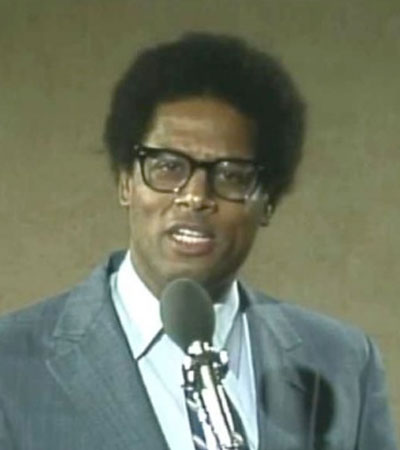


 , I made note of his penchant for cynicism and pessimism, especially in his dramas. That penchant made Allen’s supposed “light” drama from last year,
  , an almost soul crushing viewing experience for me. That film not only left me feeling depressed and unfulfilled, but it also had me questioning whether or not my recent career change had been the right one to make. I am guessing that, since I was struggling with a writing project of my own, I projected far too much of myself onto Josh Brolin’s washed up writer character. I wanted him to succeed in his own writing project because I wanted to succeed in my own writing project. When he did not and, in a
  styled plot development, the man stole another writer’s work and claimed it as his own, I was devastated.

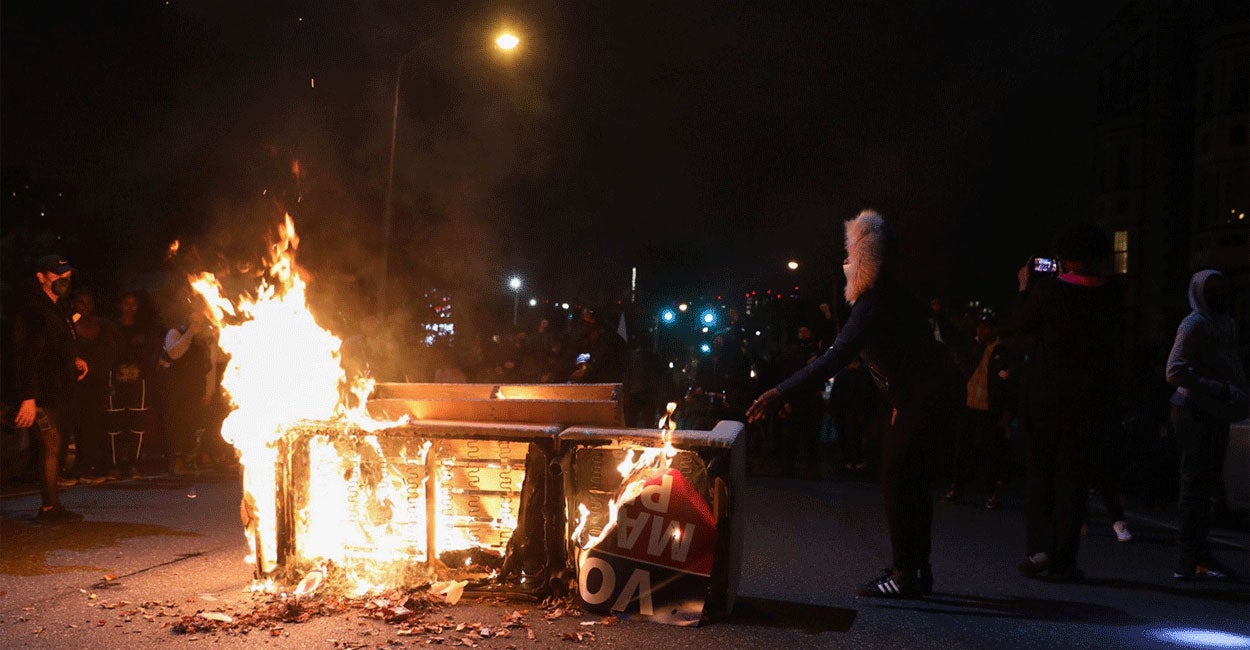
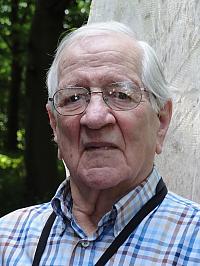
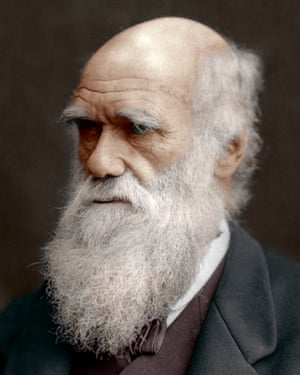


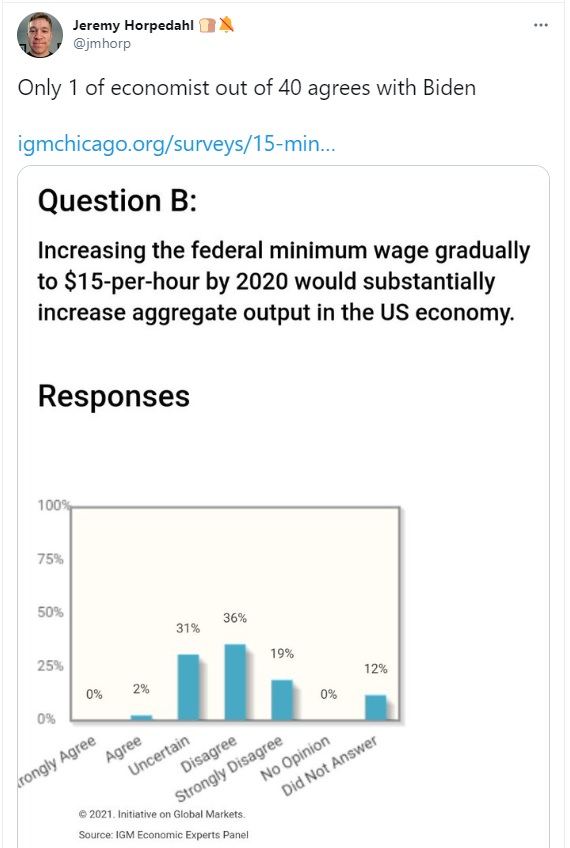

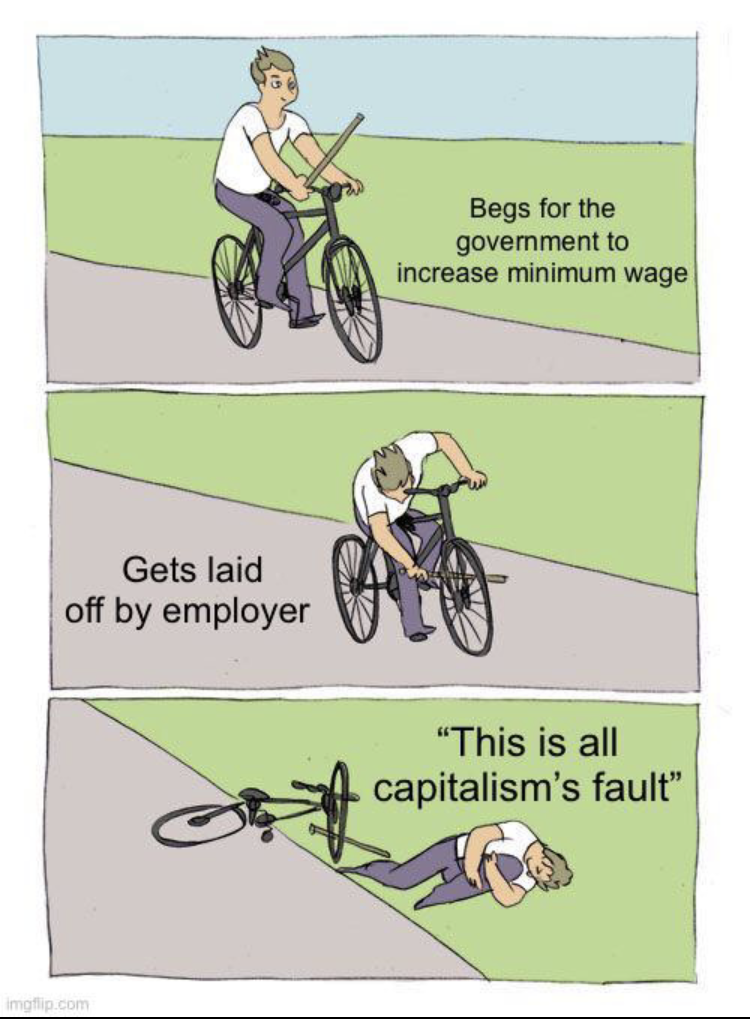








.jpg)