That’s true if you look at average levels of consumption in different nations, but the most compelling data is the fact that lower-income people in the United States generally enjoy living standards that are equal to or even higher than those for middle-class people in most European countries.
A bigger burden of government is not just a theoretical concern. President Biden has already pushed through a $1.9 trillion spending bill that includes some temporary provisions – such as per-child handouts – that, if made permanent, could add several trillion dollars to the burden of government spending.
And the White House has signaled support for $3 trillion of additional spending for items such as infrastructure, green energy, and other boondoggles.
So what will it mean for America if our medium-sized welfare state morphs into a European-style large welfare state?
The answer to that question is rather unpleasant, at least if some new research from the Congressional Budget Office is any indication. The study, authored by Jaeger Nelson and Kerk Phillips, considers the impact on growth based on six different scenarios (based on how much the spending burden increases and what taxes are increased).
If permanent spending is financed by new or increased taxes, then those taxes influence people’s decisions about how much to work and save. Those decisions then affect how much the economy produces and businesses invest and, ultimately, how much people can consume. Different types of taxes have different economic effects. Taxes on labor income reduce after-tax wages, so they reduce the return on each additional hour worked. …Higher taxes on capital income, such as dividends and capital gains, lower the average after-tax rate of return on private wealth holdings (or the return on investment), which reduces the incentive to save and invest and leads to reductions in saving, investment, and the capital stock. …we compare the effects of raising additional revenues through three illustrative tax policies: a flat tax on labor income, a flat tax on all income (including both labor and capital income), and a progressive tax on all income. The additional revenues generated by these policies are in addition to the revenues raised by taxes that already exist and are used to finance two specific increases in government spending. The two increases in government spending are set to 5 percent and 10 percent of GDP in 2020.
Here are some of the key results, as illustrated by the chart.
The least-worst result (the blue line) is a decline in GDP of about 3 percent, and that happens if the spending burden expand by 5-percentage points of GDP and is financed by a flat tax.
The worst-worst result (dashed red line) is a staggering decline in GDP of about 10 percent, and that happens if the spending burden climbs by 10-percentage points and is financed by a progressive tax.
Here’s some additional analysis, including a description of why progressive taxes impose the most damage.
This paper shows that flat labor and flat income tax policies have similar effects on output; labor taxes reduce the labor supply more, and income taxes reduce the capital stock more. For all three policies, the decline in income contracts the tax base considerably over time. As a result, to continuously generate enough revenues to finance the increase in government spending in each year, tax rates must steadily increase over time to account for the decline in the tax base. Moreover, labor and capital taxes put upward pressure on interest rates by reducing the capital-to-labor ratio over time… The largest declines in economic activity among the financing methods considered occur with the progressive tax on all income. Those declines occur because high-productivity workers reduce their hours worked and because higher taxes on asset income reduce the incentive to save and invest relatively more than under the two flat taxes.
There’s lots of additional information in the study, but I definitely want to draw attention to Table 4 because it shows that lower-income people will suffer big reductions in living standards if there’s an increase in the burden of government spending (circled in red).
What makes these results especially remarkable is that the authors only look at the damage caused by higher taxes.
Yet we know from other research that the economy also will suffer because of the higher spending burden. This is because of the various ways that growth is reduced when resources are diverted from the productive sector to the government.
For background, here’s a video on the theoretical reasons why government spending hinders growth.
—
—
—
P.S. The CBO study also points out that financing new spending with a value-added tax wouldn’t avert economic damage.
…by reducing the cost of time spent not working for pay relative to other goods, a consumption tax could reduce hours worked through a channel like that of a tax on labor.
While I freely self-identify as a libertarian, I don’t think of myself as a philosophical ideologue.
Instead, I’m someone who likes digging into data to determine the impact of government policy. And because I’ve repeatedly noticed that more government almost always leads to worse outcomes, I’ve become a practical ideologue.
In other words, when looking at at an issue, I now have a default assumption that government is going to be the problem, not the solution.
I think more people will share my viewpoint if they peruse this chart from Mark Perry.
It shows changes in prices for selected goods and services over the past 21 years, and the inescapable conclusion (as I noted when writing about the 2014 version of his chart) is that we get higher relative prices in sectors where there’s the most government intervention.
By contrast, we see falling relative prices (and sometimes falling absolute prices!) in sectors where there is little or no government intervention.
Here’s some of Mark’s description of what we can learn from his chart.
I’ve updated the chart above with price changes through the end of last year. During the most recent 21-year period from January 2000 to December 2020, the CPI for All Items increased by 54.6% and the chart displays the relative price increases over that time period for 14 selected consumer goods and services, and for average hourly wages.…Various observations that have been made about the huge divergence in price patterns over the last several decades… The greater (lower) the degree of government involvement in the provision of a good or service the greater (lower) the price increases (decreases) over time, e.g., hospital and medical costs, college tuition, childcare with both large degrees of government funding/regulation and large price increases vs. software, electronics, toys, cars and clothing with both relatively less government funding/regulation and falling prices.
We find that prices have skyrocketed in areas of the healthcare sector where government plays a big role, especially hospital care.
By contrast, prices have been steady (or even falling!) in areas of the healthcare sector where competitive markets are allowed to operate, most notably for cosmetic procedures.
It’s almost as if it makes sense to have a default assumption that government is the problem rather than the solution.
P.S. While the data in Mark’s chart tell a depressing story about the harmful effect of government intervention, he shares one bit of good news in his article.
The annual increase in college tuition and fees of only 1.4% last year was the smallest annual increase in the history of the CPI for college tuition and fees going back to 1978, and the only annual increase ever below 2%. That increase is far below the average annual increase in college tuition of nearly 7% over the last 42 years. So perhaps the “higher education bubble” is finally starting to show signs of deflating?
1. You spend your own money on yourself.
2. You spend your own money on someone else.
3. You spend someone else’s money on yourself.
4. You spend someone else’s money on someone else.
You can spend your own money on yourself. When you do that, why then you really watch out what you’re doing, and you try to get the most for your money.
You can spend your own money on somebody else. For example, I buy a birthday present for someone. Well, then I’m not so careful about the content of the present, but I’m very careful about the cost.
I can spend somebody else’s money on myself. And if I spend somebody else’s money on myself, then I’m sure going to have a good lunch!
I can spend somebody else’s money on somebody else. And if I spend somebody else’s money on somebody else, I’m not concerned about how much it is, and I’m not concerned about what I get.
Jason Fried wrote this on Mar 03 2010 There are43 comments.
About Jason Fried
Jason co-founded 37signals back in 1999. He also co-authored REWORK, the New York Times bestselling book on running a “right-sized” business. Co-founded, co-authored… Can he do anything on his own?
And I don’t like Obamacare because it further enriches and empowers Washington’s political class.
But I also like being honest and that means I’m willing to acknowledge that there’s one small part of Obamacare that will have a positive impact.
More specifically, the so-called Cadillac tax on expensive employer-provided health plans will slightly reduce the distortion in the tax code that encourages over-insurance and exacerbates the healthcare system’s pervasive third-party payer problem.
Indeed, we’re seeing some signs of this already, even though the tax preference isn’t capped until 2018. Here are some excerpts from a story published by Fox News, starting with a description of the law.
…companies desperate to avoid a 40 percent ObamaCare “Cadillac tax” are finding ways to shift the costs to workers. The so-called “Cadillac tax,” now four years away, will affect health plans that spend more than $10,200 per worker. “The excise tax, when it hits in 2018, will affect both employers and employees,”said Brian Marcotte, president of the National Business Group on Health.
Allow me to make an important correction before sharing other parts of the story.
Companies aren’t shifting costs to workers. The money currently spent on health insurance policies is part of total employee compensation.
Think of it this way. If a company hires you for a salary of $50,000 and also includes a $10,000 health insurance policy, what’s your total compensation?
If you give an answer other than $60,000, you’re either very bad at math or you have the logic skills of a politician.
So the story should have stated that the Cadillac tax is merely making workers more aware of costs that already exist.
Thanks for letting me vent. Now back to our main point, which is that the Cadillac tax discourages overinsurance, and this is already leading to some positive changes in the marketplace.
Employees will get incentives to reduce costs through such arrangements as wellness programs, including losing weight or stopping smoking. Meanwhile, employers are shifting workers into plans with higher deductibles, just as ObamaCare does in the health care exchanges, and using health savings accounts to help defray the costs.
I’m particularly happy that employers and employees are shifting to plans with higher deductibles. As I’ve explained before, health insurance should cover large, unanticipated costs, such as the onset of cancer or getting injured in a car wreck.
But it shouldn’t cover annual checkups, elective surgery, and other routine and/or predictable expenses.
And we have one other bit of good news. The tax isn’t going to raise nearly as much money as the politicians wanted!
The “Cadillac tax” was originally intended to take effect sooner, but unions and other groups convinced officials to delay it until 2018, reducing the anticipated income from $137 billion to $80 billion over ten years. But many analysts predict it will be far less than that. Henry Aaron of the Brookings Institution said, “before then, it’s expected that most of the businesses that offer that form of insurance will back off and make the insurance less generous, so the tax won’t bite.” …if employers are able to avoid it and less than expected is collected, ObamaCare could fall tens of billions short in paying for itself as promised.
I should hasten to add, by the way, that I’m glad that Obamacare isn’t paying for itself since that simply means lots of taxes to accompany all the additional spending.
I’d be even happier, of course, if we could figure out how to get rid of all the spending as well.
Just in case folks are thinking I’ve gone soft, let’s close today’s post with some humor directed at the rest of Obamacare.
The Affordable Care Act, in its brief time on this earth, has endured its share of storm and stress. The bungled rollout of the federal online interface cost proponents lots of political capital. There have been high-wire legal challenges to surmount. While public approval of the law’s ends remains steadily high, the popularity of the law itself is often recorded as lacking. There have been uneasy periods for Obamacare’s chief proponents as they’ve waited for enrollment milestones to be reached and rate-hike hysteria to be put to bed. (There’s recent news on that front, actually.) And as the law promises so much, over such a long time frame, there will be more uneasy periods to endure for the lawmakers who put their stamp on the reform.
But the simple fact is that some lawmakers voted for Obamacare and some voted against it, and there’s only so far any of them can run from their decision. That’s why I’ve had the occasion to talk about “the Obamacare bet.” The bill’s opponents have largely settled on a claim: The law is going to fail and their admonitions against it will be proven wise and correct. The bill’s supporters should go ahead and stake the opposite claim. Many of those who supported the bill, however, have been reluctant to go “all in” on the decision they made. Especially among those who voted for the law and have since found themselves in a tough electoral race.
Today, however, comes a change. As Greg Sargent reports over at The Plum Line, Sen. Mark Pryor (D-Ark.) — currently in a tough re-election race against his Republican opponent, Rep. Tom Cotton — is up with a new ad in which he heralds his yes vote on the Affordable Care Act. You can watch the spot and read the transcript below. While Pryor doesn’t exactly go “all in,” he lays more of his chips on the felt.
DAVID: When Mark was diagnosed with cancer, we thought we might lose him.
MARK: My family and my faith helped me through the rough times.
DAVID: But you know what? Mark’s insurance company didn’t want to pay for the treatment that ultimately saved his life.
MARK: No one should be fighting an insurance company while you’re fighting for your life. That’s why I helped pass a law that prevents insurance companies from canceling your policy if you get sick or denying coverage for pre-existing conditions.
(David, by the way, is Mark’s dad as well as a former senator from and governor of Arkansas.)
Now Mark Pryor’s ad could have been a bit bolder. You’ll note that nowhere does he say the words “Obamacare” or “Affordable Care Act,” just that he “pass[ed] a law.” Of course, he does make mention of the law’s most popular features — it prevents people from getting kicked off plans when the time comes to avail themselves of their coverage, and it ends the practice of denying coverage for pre-existing conditions. It’s hard to imagine voters tolerating a return to the status quo ante, which is one of the reasons that it’s been so devilish for the law’s opponents to craft an alternative.
Pryor may have buried the lead in this ad, in fact. As Gallup reported earlier this month, Arkansas leads “all other states in the sharpest reductions in their uninsured rate among adult residents since the healthcare law’s requirement to have insurance took effect at the beginning of the year.”
Republicans will undoubtedly cast this as an acknowledgment that their attacks on Pryor over the law are working and could no longer be ignored. They’ll argue Pryor is, in desperation, using his faith and personal experience as a shield against those attacks. But this misses what’s really going on here. This ad is actually coming at a point where there are signs the anti-Obamacare fires are cooling somewhat. GOP advertising against the law has fallen off sharply, and is surprisingly low in Arkansas.
This is correct. As Bloomberg News’ Heidi Pryzbyla reported earlier this week, Republicans have cut way back on on ads that attack Obamacare, in “a sign that the party’s favorite attack against Democrats is losing its punch.” Pryzbyla continues:
The shift — also taking place in competitive states such as Arkansas and Louisiana — shows Republicans are easing off their strategy of criticizing Democrats over the Affordable Care Act now that many Americans are benefiting from the law and the measure is unlikely to be repealed.
“The Republican Party is realizing you can’t really hang your hat on it,” said Andrew Taylor, a political science professor at North Carolina State University. “It just isn’t the kind of issue it was.”
There is a good reason for this shift. As Matt Yglesias pointed out back in June, the “phony Obamacare debate” — the one that broadly alleged that death panels existed, that the fubar launch of the federal website was the law’s death knell, that enrollment numbers would be way off target — has run its course, leaving only the most fundamental debate of all:
[Obamacare] is a large-scale effort to improve living standards for people in the bottom half of the income distribution by giving them additional economic resources. One of America’s political parties doesn’t like that idea in any non-health context and they don’t like it for health care either. They think the money it costs to provide those subsidies should be taken away, and it should be given to high-income households in the form of tax cuts.
This is an excellent and important policy debate to have. One of the great ideological issues not just of our time and place, but of democratic politics across eras and countries. Should economic resources be distributed more equally or less equally?
Since Yglesias wrote that piece, we’ve seen a brief return to the “phony” debate, thanks to a pair of judges on the D.C. Circuit appeals court, who issued a ruling in the Halbig v. Burwell case contending that (to quote Simon Maloy in Salon) “a single poorly worded snippet of the Affordable Care Act invalidates subsidies for people who purchased health coverage through the federal exchanges.” As Maloy inventively points out, this is a hilariously bad-faith argument to make, akin to George Costanza’s “Moops” argument in “Seinfeld”:
Beyond that, however, we are ultimately left with the discussion that Yglesias mentions as the real underlying debate: whether it is right and proper to redistribute money from the top to the bottom so that those on the lower rungs of the economic ladder can live and work longer without going into catastrophic debt.
This argument’s signature virtue is that — unlike all the “death panels” and doom-saying — it is, legitimately, a good-faith argument. Which may cause one to wonder: Why has it taken so long to burn off all the bad-faith arguments and get down to the real bone of contention? I’d posit that arguing that poor people aren’t morally fit enough to deserve health insurance lacks a certain salability outside the Ayn Rand set.
With that in mind, you might think it’s strange that so many of Obamacare’s proponents have seemed reluctant to take “the Obamacare bet.” I agree! It’s strange. From my perspective, the die has long been cast, so lawmakers who affirmed the bill with their vote may as well own it. Pryor’s ad suggests that perhaps those lawmakers long deemed to be vulnerable due to their votes on the Affordable Care Act may be coming around to this position.
None of this should cause you to expect some sort of sea change in the overall fundamentals of the 2014 election. The GOP is still in great shape for the midterms, and they may even discover that they don’t need an anti-Obamacare blitz to win in November. But that’s really just an even better reason for vulnerable lawmakers who supported the Affordable Care Act to put some sustained ballyhoo behind their decision to vote for the law. Win or lose, may as well remind people where you stood. Pryor’s effort is a lot bolder than most.
___________ Halbig, King and ObamaCare (Michael F. Cannon) Published on Jul 22, 2014 Two federal circuit courts have now ruled on ObamaCare’s health insurance exchanges and have arrived at different conclusions. Michael Cannon, one of the chief architects of this legal challenge, explains what the rulings mean and what’s in store for the future health […]
Arkansas’ own Nick Horton featured on Dan Mitchell’s blog!!! Below is the best video I have ever seen on Obamacare’s lies about Medicaid!!!! An Under-Appreciated Victory over Obamacare July 14, 2014 by Dan Mitchell Let’s enjoy some semi-good news today. We’ve discussed many times why Obamacare is bad news, whether we’re looking at it from […]
_______________ Obamacare increased government spending by expanding Medicaid and big subsidies for private insurance and it will bankrupt country eventually!!! The Hidden Economic Damage of Obamacare June 25, 2014 by Dan Mitchell Obamacare resulted in big increases in the fiscal burden of government (ironically, it would be even worse if Obama hadn’t unilaterally suspended parts of […]
________ Obamacare will explode the budget and we must eliminate it!!! Obamacare is Bad News for Your Wallet Today and Worse News for Your Wallet Tomorrow July 8, 2014 by Dan Mitchell I wrote a few weeks ago about the hidden economic damage of Obamacare, particularly the harm to the job market. Today, let’s get further […]
_________ Obama keeps putting off Obamacare like he was a king!!!! Some of the cartoons below point this out. Dan Mitchell always has great posts about the issues that I care about and he does a good job of picking out editorial cartoons that are very funny too. I really do miss Milton Friedman but […]
________ Will Republicans defeat Obamacare in Arkansas? February 21, 2014 4:24PM Spending Restraint in Arkansas By Nicole Kaeding Share For the fourth day in a row, the Arkansas House of Representatives has refused to approve the yearly appropriation for its Medicaid program, dubbed the “private-option.” If the legislature continues this refusal and reverses its […]
Open letter to President Obama (Part 520) (Emailed to White House on 5-3-13.) President Obama c/o The White House 1600 Pennsylvania Avenue NW Washington, DC 20500 Dear Mr. President, I know that you receive 20,000 letters a day and that you actually read 10 of them every day. I really do respect you for trying to get […]
__________ Obama just made the 18th executive branch’s unilateral change to Obamacare but who will challenge him on it? Obamacare and the Corruption of the Rule of Law February 11, 2014 by Dan Mitchell We’ve reached the stage where Obamacare is the punchline to a bad joke. The law has been a disaster, both for the economy […]
____________ Obamacare Death Panels Kills Jobs more often than people!!! Crying about Obamacare, but also Laughing at Obamacare February 8, 2014 by Dan Mitchell I asked back in September whether all the bad news about Obamacare meant it was time to feel sorry for President Obama and other statists. Some people apparently didn’t realize I was […]
Open letter to President Obama (Part 514) (Emailed to White House on 4-15-13.) President Obama c/o The White House 1600 Pennsylvania Avenue NW Washington, DC 20500 Dear Mr. President, I know that you receive 20,000 letters a day and that you actually read 10 of them every day. I really do respect you for trying to get […]
Analysis Hoosiers should keep Arkansas coach Eric Musselman in Indiana
Analysis: Hoosiers should keep Arkansas coach Eric Musselman in Indiana for the long haul
PAUL MYERBERG | USA TODAY |
It’s too bad Baylor awaits in the Elite Eight, since Arkansas might have a good chance at the Final Four in another region — if transported down to the Midwest, it would be very easy to make a case for the Razorbacks being the team to beat.
As it is, the way Baylor has looked in the opening weekend of the men’s NCAA Tournament paints the Bears not just as the favorites in the South but maybe the best team in the bracket, period, will all due respect to still-unbeaten Gonzaga.
Not to say coach Eric Musselman’s team won’t have a shot: Arkansas can run, shoot and most of all defend, three qualities that in tandem have the No. 3 Razorbacks back in the tournament’s second weekend for the first time since 1996.
Arkansas held Texas Tech to just 36.1% from the field, including 29.2% inside of 3-point range, and came up with several late stops in a 68-66 win to advance to the Sweet 16.
“This is why I came here. I came here to win,” said senior guard Justin Smith, a graduate transfer from Indiana. “And that’s it. And to have it come through, to come through fruition, it’s a testament to all the hard work we put in. We’re just gonna keep on going and see how far we can go.”
But the greatest tournament intrigue surrounding Musselman and the Razorbacks comes from another source.
The job at Indiana is open, again, and the Hoosiers are in the market for a savior, again, and — yeah, again — overtures pitched to some of the biggest names in coaching, college and otherwise, have been rebuffed.
Instead of dangling the job at current New York Knicks assistant Mike Woodson, an Indiana graduate who played for Bobby Knight, the Hoosiers should keep things simple: Don’t let Musselman leave the state.
He checks the boxes.
Musselman has spent more than three decades in coaching across an alphabet soup of competition levels: the NCAA, NBA, CBA, USBL and D-League.
The past nine seasons have come on the college level, as an assistant at Arizona State and LSU and the head coach at Nevada (2015-19) and with the Razorbacks.
He’s won at least 20 games in each of his six seasons as head coach and reached each of the past four tournaments, from 2016-18 with the Wolf Pack and again in his second year at Arkansas.
Justin Smith embraces coach Eric Musselman after Arkansas defeated Texas Tech in the second round of the 2021 NCAA Tournament at Hinkle Fieldhouse.
MARC LEBRYK, USA TODAY SPORTS
Musselman’s college teams have improved every season: Nevada won 24 games and the CBI championship in his first year — an achievement given the team he inherited won nine games a year earlier — and then 28 games in each of the next three, including a Sweet 16 berth in 2017 and a No. 9 ranking in the 2018 preseason Ferris Mowers Coaches Poll.
After going 20-12 overall and 7-11 in the SEC last season, Arkansas is 25-6 with as many NCAA Tournament wins in Indiana’s backyard as the Hoosiers have.
He’s been able to recruit: Arkansas’ 2020 class ranked in the top 10 nationally, according to 247Sports.com.
And if overlooked for much of the regular season even inside the SEC, where most national attention was devoted to Nate Oats and Alabama, Musselman’s team is strong across the board: seventh nationally in scoring offense, 43rd in made 3s, fourth in blocks, ninth in rebounds and seventh in steals, to name a few.
“It shows we can play with anybody. We’re going to be able to adjust and compete,” Smith said.
Musselman is “a coach that allows you the freedom, who allows you to play basketball,” he added. “The main thing, honestly, is just confidence. I think the way we prepare and we practice allows all of us as individuals to have confidence.”
By leading Arkansas past the Red Raiders, Musselman has already extended his stay in Indiana for another week. The Hoosiers should make it more permanent.
Follow colleges reporter Paul Myerberg on Twitter @PaulMyerberg
Razorbacks Remember Legend With Award
Uploaded on Aug 23, 2010
The Brandon Burlsworth Award will honor the former hog’s memory and help walk on hogs succeed.
This article was published August 26, 2016 at 5:45 a.m.
PHOTO BY GREATER PRODUCTIONS
Actor Christopher Severio portrays Brandon Burlsworth in “Greater,” which opens Friday nationwide.
Greater tells the story of University of Arkansas standout Brandon Burlsworth, who is touted in the film’s promotional materials as “the greatest walk-on in college football history.” He may well have been.
After redshirting his first year, he not only won a scholarship but became the Razorbacks’ starting right guard, and in his senior year, an All-American. He was drafted in the third round by the Indianapolis Colts. And had he lived, there’s no reason to believe he wouldn’t have started for the Colts his rookie year. He probably would have enjoyed a relatively long and lucrative career in the National Football League.
By all accounts, Burlsworth was an unfailingly polite, possibly obsessive-compulsive young man possessed of remarkable character and dignity. He was a hard worker, the antithesis of the stereotype of the entitled star athlete. He was the first Razorback player to earn a master’s degree (in business administration) before playing in his final game for the university. He had a deep and abiding Christian faith.
But in what would seem like a heavy-handed plot twist had it appeared in a young adult novel, Burlsworth died before he could play a single professional football game. Just 11 days after being drafted by the Colts, on April 28, 1999, a Wednesday afternoon, Burlsworth was returning to his hometown of Harrison after working out in the Razorbacks’ facility in Fayetteville. Near Alpena, on a relatively flat stretch of U.S. 412, his car clipped an oncoming 18-wheeler, then swerved and crashed head-on into a second truck. He was on his way to take his mother to church.
If you live in Arkansas, you probably know all this. If you don’t, you might be skeptical that anyone could be quite as earnest and decent as Burlsworth was. Maybe the unlikeliest thing about the film is how little truth it seems to change for dramatic purposes. While there is some compression of events and a brother (Grady Burlsworth) largely elided from the story, some of what seems Hollywooded up actually happened. Brandon’s mother, Barbara (Leslie Easterbrook), really was in the habit of telling her son to watch out for “big ol’ trucks” whenever he embarked on a journey. Brandon’s teammates really did drive him crazy by messing with the pens he’d laid out just so on his desk.
What’s most admirable about Greater is that, although it belongs to that class of films that is marketed (and sometimes dismissed) as “faith-based,” is that it insists on a certain humanity for the lineman. As in life, this Burlsworth isn’t perfect. We first meet him as a preteen (played by Ethan Waller), a junk-food loving football fan with no perceptible athletic talent — a slow, soft fat kid. (In real life, Burlsworth was a late bloomer. He didn’t develop into a star until his junior year at Harrison High. At the NFL combine in February 1999 he’d run 40 yards in 4.88 seconds, best among offensive linemen, and bench-pressed 225 pounds 28 times. And though he weighed 308 pounds and was just shy of 6 feet, 4 inches, he could dunk a basketball with two hands from a standing start. He wasn’t without God-given talent.)
As a film, Greater shares with its subject a certain straight-down-the-middle conventionality. Fayetteville-based producer Brian Reindl, a first-time filmmaker who worked 11 years on this project, seemed determined not to make a mistake. Director David Hunt similarly plays it safe, and even cinematographer Gabe Mayhan — who has demonstrated an extraordinary eye on other projects (including Josh Miller and Miles Miller’s All the Birds Have Flown South) — seems content to default to Hallmark Hall of Fame tastefulness. The football action scenes are especially well done. Lots of local faces pop up in small roles. The result is a fine, old-fashioned movie that hits all the expected beats and will no doubt be well received by people familiar with Burlsworth’s story.
But it’s not an adventurous film, and one might have hoped for a bit more nuance in the Brandon character (played as a young man with a certain appropriate stolidity by Louisiana actor Christopher Severio). Brandon’s good and humble and perhaps a little too naive — the only scene in the movie that feels false is his reaction to a few sips of alcohol his mischievous teammates slip him — but not particularly interesting. He believes what his mama, his coaches and his pastor tell him. He doesn’t need to see the big picture.
The filmmakers have enough sense to provide us with an alternate to this limited carrier of our empathy by framing the story through the eyes of Marty Burlsworth, Brandon’s much older brother. Marty, played by veteran character actor Neal McDonough (probably best known for his portrayal of super-villain Damien Darhkin the DC Comics-derived series Arrow, Flash and Legends of Tomorrow, though he also had a memorable arc as a bad guy on the 2012 season of Justified), is a fairly complex figure who undergoes an understandable crisis of faith after the death of his younger brother. Forcing the events of the film through the prism of Marty gives the movie whatever dramatic tension it achieves. (While McDonough seems too old to play a character who, in the movie’s earliest set scenes, is in his mid-to late-20s, he does some subtle work in what is by design not a terribly nuanced picture.)
In the film’s biggest departure from verisimilitudinous story-telling, a tempter figure, The Farmer (played by Justified veteran Nick Searcy), is introduced to call Marty’s attention to the random cruelty present in the universe. While it’s not the most original trope, it’s a lot of fun to watch these actors act.
In the end, Greater is not a movie for people who look to movies for something more than uplift or assurance, but that’s all right. It does no disservice to the memory of a young man who died before he should have, and it’s unlikely anyone will argue that it presents a false picture of Brandon Burlsworth. If it inspires people, especially young people, to do right and work hard, then it has accomplished more than a lot of more artfully conceived and daring movies.
MovieStyle on 08/26/2016
Print Headline: By the playbook; Film about former Razorback Burlsworth scores with authenticity
________________
Greater: Official Trailer – Old #2
Brandon Burlsworth
Uploaded on Aug 31, 2011
Brandon was a walk on turned All American at the University of Arkansas. He was drafted by the Indianapolis Colts and 11 days later was tragically killed in a car accident. The Brandon Burlsworth Foundation was founded in his name and has several programs: The Burls Kids program takes underprivileged children to all Arkansas Razorback and Indianapolis Colts home games. The BBF in partnership with Walmart provides eye care to 14,000 pre-K thru 12th grade students whose working families are trying, but still cannot afford extras like eye care and do not qualify for state funded programs. We hold football camps each year in Harrison and Little Rock and we have several football scholarship and awards including the Burlsworth Trophy, a national award given out to the most outstanding Division One college football player who began his career as a walk-on.
First Person video of Joplin MO tornado 5/22/11 The video i took while at Fastrip on east 20th street. We huddled in the back of the store until the glass got sucked out , then ran into the walk in storage fridge. Sorry for the lack of visuals but the audio is pretty telling of […]
God On Trial Uploaded on Jan 8, 2012 God on Trial is a 2008 BBC/WGBH Boston television play written by Frank Cottrell Boyce, starring Antony Sher, Rupert Graves and Jack Shepherd. The play takes place in Auschwitz during World War II. The Jewish prisoners put God on trial in absentia for abandoning the Jewish […]
On November 21, 2014 I received a letter from Nobel Laureate Harry Kroto and it said: …Please click on this URL http://vimeo.com/26991975 and you will hear what far smarter people than I have to say on this matter. I agree with them. Harry Kroto _________________ Below you have picture of Dr. Harry Kroto: ____________ Debate […]
On November 21, 2014 I received a letter from Nobel Laureate Harry Kroto and it said: …Please click on this URL http://vimeo.com/26991975 and you will hear what far smarter people than I have to say on this matter. I agree with them. Harry Kroto _________________ Below you have picture of Dr. Harry Kroto: ____________ Debate […]
______ Francis Schaeffer “BASIS FOR HUMAN DIGNITY” Whatever…HTTHR The Roots of Hitler’s Evil by Richard Weikart Professor of History California State Univ., Stanislaus [This essay first appeared in Books and Culture: A Christian Review (Mar./Apr. 2001): 18-21] What shaped the life of the man who today is the symbol of evil and brutality, but who […]
Peter May rightly notes, “Peter Singer is arguably the most famous and influential modern philosopher, offering the most radical challenge to traditional Judeo-Christian values.” Francis Schaeffer “BASIS FOR HUMAN DIGNITY” Whatever…HTTHR Dr. Francis Schaeffer: Whatever Happened to the Human Race Episode 1 ABORTION Published on Jan 10, 2015 Whatever Happened to the Human Race? Abortion […]
On November 21, 2014 I received a letter from Nobel Laureate Harry Kroto and it said: …Please click on this URL http://vimeo.com/26991975 and you will hear what far smarter people than I have to say on this matter. I agree with them. Harry Kroto _________________ Below you have picture of 1996 Chemistry Nobel Prize Winner Dr. […]
As progressives push hard for Democrats to eliminate the legislative filibuster after gaining control of the Senate, House and the presidency, many Democratic senators are distancing themselves from a letter they signed in 2017 backing the procedure.
Sens. Susan Collins, R-Maine, and Chris Coons, D-Del., led a letter in 2017 that asked Republican Leader Mitch McConnell, R-Ky., and Democratic Leader Chuck Schumer, D-N.Y., to preserve the legislative filibuster. As it’s existed for decades, the filibuster requires 60 votes in order to end debate on a bill and proceed to a final vote.
“We are writing to urge you to support our efforts to preserve existing rules, practices, and traditions” on the filibuster, the letter said.
Besides Collins and Coons, 59 other senators joined on the letter. Of that group, 27 Democratic signatories still hold federal elected office. Twenty-six still hold their Senate seats, and Vice President Harris assumed her new job on Jan. 20, vacating her former California Senate seat.
Sen. Chris Coons, D-Del., speaks as the Senate Judiciary Committee hears from legal experts on the final day of the confirmation hearing for Supreme Court nominee Amy Coney Barrett, on Capitol Hill in Washington, Thursday, Oct. 15, 2020. Coons has softened his support for the legislative filibuster in recent years after leading an effort to protect it in 2017. (AP Photo/J. Scott Applewhite)
But now, the momentum among Senate Democrats is for either full abolition of the filibuster or significantly weakening it. President Biden endorsed the latter idea Tuesday, announcing his support for a “talking filibuster.”
“I don’t think that you have to eliminate the filibuster, you have to do it what it used to be when I first got to the Senate back in the old days,” Biden told ABC. “You had to stand up and command the floor, you had to keep talking.”
The legislative filibuster has been a 60-vote threshold for what is called a “cloture vote” — or a vote to end debate on a bill — meaning that any 41 senators could prevent a bill from getting to a final vote. If there are not 60 votes, the bill cannot proceed.
The “talking filibuster” — as it was most recently seriously articulated by Sen. Jeff Merkley, D-Ore., in 2012 — would allow 41 senators to prevent a final vote by talking incessantly, around-the-clock, on the Senate floor. But once those senators stop talking, the threshold for a cloture vote is lowered to 51.
Harris’ office confirmed to Fox News Wednesday that she is now aligned with Biden on the filibuster issue. She’d previously taken an even more hostile position to the filibuster, saying she would fully “get rid” of it “to pass a Green New Deal” at a CNN town hall in 2019.
The legislative filibuster has been a 60-vote threshold for what is called a “cloture vote” — or a vote to end debate on a bill — meaning that any 41 senators could prevent a bill from getting to a final vote. If there are not 60 votes, the bill cannot proceed.
The “talking filibuster” — as it was most recently seriously articulated by Sen. Jeff Merkley, D-Ore., in 2012 — would allow 41 senators to prevent a final vote by talking incessantly, around-the-clock, on the Senate floor. But once those senators stop talking, the threshold for a cloture vote is lowered to 51.
Harris’ office confirmed to Fox News Wednesday that she is now aligned with Biden on the filibuster issue. She’d previously taken an even more hostile position to the filibuster, saying she would fully “get rid” of it “to pass a Green New Deal” at a CNN town hall in 2019.
Coons, who led the 2017 letter along with Collins, has also distanced himself from his previous stance.
Vice President Kamala Harris attends a ceremonial swearing-in for Sen. Patrick Leahy, D-Vt., as President Pro Tempore of the Senate on Capitol Hill in Washington, Thursday, Feb. 4, 2021. Harris has changed her stance on the legislative filibuster since signing a letter in 2017 backing it. (Michael Reynolds/Pool via AP) (AP)
“I’m going to try my hardest, first, to work across the aisle,” he said in September when asked about ending the filibuster. “Then, if, tragically, Republicans don’t change the tune or their behavior at all, I would.”
Fox News reached out to all of the other 26 Democratic signatories of the 2017 letter, and they all either distanced themselves from that position or did not respond to Fox News’ inquiry.
“Less than four years ago, when Donald Trump was President and Mitch McConnell was the Majority Leader, 61 Senators, including more than 25 Democrats, signed their names in opposition to any efforts that would curtail the filibuster,” a GOP aide told Fox News. “Other than the occupant of the White House, and the balance of power in the Senate, what’s changed?”
“I’m interested in getting results for the American people, and I hope we will find common ground to advance key priorities,” Sen. Tim Kaine. D-Va., said in a statement. “If Republicans try to use arcane rules to block us from getting results for the American people, then we’ll have a conversation at that time.”
Added Sen. Mark Warner, D-Va: “I am still hopeful that the Senate can work together in a bipartisan way to address the enormous challenges facing the country. But when it comes to fundamental issues like protecting Americans from draconian efforts attacking their constitutional right to vote, it would be a mistake to take any option off the table.”
“Senator Stabenow understands the urgency of passing important legislation, including voting rights, and thinks it warrants a discussion about the filibuster if Republicans refuse to work across the aisle,” Robyn Bryan, a spokesperson for Sen. Debbie Stabenow, D-Mich., said.
FILE – In this Oct. 26, 2018, file photo, Sen.Bob Casey, D-Pa., speaks to reporters in the studio of KDKA-TV in Pittsburgh. Casey has reversed his stance on the legislative filibuster since signing a 2017 letter in support of it. (AP Photo/Gene J. Puskar, File)
Representatives for Sen. Bob Casey, D-Pa., pointed to recent comments he made on MSNBC.
“Yes, absolutely,” Casey said when asked if he would support a “talking filibuster” or something similar. “Major changes to the filibuster for someone like me would not have been on the agenda even a few years ago. But the Senate does not work like it used to.”
“I hope any Democratic senator who’s not currently in support of changing the rules or altering them substantially, I hope they would change their minds,” Casey added.
Representatives for Sen. Angus King, I-Vt., who caucuses with Democrats, meanwhile, references a Bangor Daily News editorial that said King was completely against the filibuster in 2012 but now believes it’s helpful in stopping bad legislation. It said, however, that King is open to “modifications” similar to a talking filibuster.
The senators who did not respond to questions on their 2017 support of the filibuster were Sens. Joe Manchin. D-W.Va.; Patrick Leahy, D-Vt.; Amy Klobuchar, D-Minn.; Jeanne Shaheen, D-N.H.; Michael Bennet, D-Colo.; Martin Heinrich, D-N.M.; Sherrod Brown, D-Ohio; Dianne Feinstein, D-Calif.; Kirsten Gillibrand, D-N.Y.; Brian Schatz, D-Hawaii; Cory Booker, D-N.J.; Maria Cantwell, D-Wash.; Maize Hirono, D-Hawaii; John Tester, D-Mont.; Tom Carper, D-Del.; Maggie Hassan, D-N.H.; Tammy Duckworth, D-Ill.; Jack Reed, D-R-I.; Ed Markey, D-Mass.; Sheldon Whitehouse, D-R.I.; and Bob Menendez, D-N.J.
Some of these senators, however, have addressed the filibuster in other recent comments.
Sen. Dianne Feinstein, D-Calif., on Wednesday was asked if she supported changing the filibuster threshold by CNN and said she is still opposed to the idea. “Not at this time,” Feinstein said.
Sen. Mazie Hirono, D-Hawaii, speaks to reporters on Capitol Hill in Washington, Thursday, Jan. 30, 2020, during the impeachment trial of President Donald Trump on charges of abuse of power and obstruction of Congress. Hirono has changed her opinion on the legislative filibuster since signing a 2017 letter supporting it. (AP Photo/Julio Cortez)
Sen. Maize Hirono, D-Hawaii, meanwhile said last week she is already for getting rid of the current 60-vote threshold and thinks other Democrats will sign on soon.
“If Mitch McConnell continues to be totally an obstructionist, and he wants to use the 60 votes to stymie everything that President Biden wants to do and that we Democrats want to do that will actually help people,” Hirono said, “then I think the recognition will be among the Democrats that we’re gonna need to.”
The most recent talk about either removing or significantly weakening the filibuster was spurred by comments from Manchin that appeared to indicate he would be open to a talking filibuster. He said filibustering a bill should be more “painful” for a minority.
Manchin appeared to walk back any talk of a talking filibuster on Wednesday, however.
“You know where my position is,” he said. “There’s no little bit of this and a little bit — there’s no little bit here. You either protect the Senate, you protect the institution and you protect democracy or you don’t.”
Manchin and Sen. Kyrsten Sinema, D-Ariz., both committed to supporting the current form of the filibuster earlier this year. Sinema was not in the Senate in 2017.
Senate Minority Mitch McConnell, R-Ky., said their comments gave him the reassurance he needed to drop a demand that Senate Majority Leader Chuck Schumer, D-N.Y., put filibuster protections into the Senate’s organizing resolution.
But with Manchin seeming to flake at least in the eyes of some, other Democrats are beginning to push harder for filibuster changes.
—
I read something about your views on abortion:
Pro-life leaders express outrage after Senate fails to pass 20-week abortion ban
Posted: Thursday, February 15, 2018 12:00 amBY RICK SNIZEK, EXECUTIVE EDITOR
“Rhode Islanders should be outraged that pro-abortion Senators Jack Reed and Sheldon Whitehouse refused to protect late-term unborn babies who can feel pain, as Representatives Langevin and Cicilline refused when the bill was voted upon last October in the House,” Bracy said in a statement to Rhode Island Catholic.
Bracy cited a recent Marist poll on abortion which shows that 63 percent of Americans support a ban on abortion after 20 weeks of pregnancy, including 56 percent of Democrats and 56 percent of those who identify as “pro-choice.”
“It is clear that the members of our congressional delegation have taken an extreme position on abortion and are out of touch with the people,” Bracy said.
Owens said she was “truly disappointed” by Senator Reed’s decision to oppose the defense of human life, which is a tenet of his faith.
“While Mr. Reed had an opportunity to stand for human life, he has once again taken a hard stand against life in its most vulnerable stage, that of an unborn child,” she said.
“This is a huge disappointment and disregard for an innocent unborn child who can feel extreme pain. What happened to human rights and dignity and the inalienable right to life? Doesn’t that mean it cannot be given or taken away?”
Although three Democrats supported the bill — Sens. Joe Manchin of West Virginia, Bob Casey of Pennsylvania and Joe Donnelly of Indiana — Republican Sens. Lisa Murkowski of Alaska and Susan Collins of Maine voted against it.
The United States Conference of Catholic Bishops decried the Democrats’ filibuster of the bill.
Senator I wanted to talk to you about abortion.
Carl Sagan asked:
Does a woman’s “innate right to control her own body” encompass the right to kill a near-term fetus who is, for all intents and purposes, identical to a newborn child?… it is the beginning of a slippery slope. If it is impermissible to abort a pregnancy in the ninth month, what about the eighth, seventh, sixth…?
C. Everett Koop asserted:
Our question to a proabortion doctor who would not kill a newborn baby is this: “Would you then kill this infant a minute before he was born, or a minute before that, or a minute before that?” At what point in time can one consider life to be worthless and the next minute precious and worth saving?
Francis Schaeffer went on to say:
A much more serious example of this schizophrenic mentality is that we will transport a newborn baby, who is premature and has a congenital defect incompatible with life, to a hospital a considerable distance away–so that a sophisticated team of doctors and nurses can correct that defect and plan for the rehabilitation of the youngster. Meanwhile, in a number of other hospitals within gunshot distance of that center, other medical personnel are destroying perfectly normal infants in the womb.
THE GROWTH OF HUMAN LIFE
Our reasons against abortion are logical as well as moral. It is impossible for anyone to say when a developing fetus becomes viable, that is, has the ability to exist on its own. Smaller and smaller premature infants are being saved each year! There was a day when a 1000-gram preemie has no chance; now 50 percent of preemies under 1000 grams are being saved. Theoretically, there once was a point beyond which technology could not be expected to go in salvaging premature infants—but with further technological advances, who knows what the limits may be! The eventual possibilities are staggering.
The logical approach is to go back to the sperm and the egg. A sperm has twenty-three chromosomes; even though it is alive and can fertilize an egg, it can never make another sperm. An egg also has twenty-three chromosomes, and it can never make another egg. Thus, we have sperm that cannot reproduce and eggs that cannot reproduce unless they get together. Once the union of a sperm and an egg occurs and the twenty-three chromosomes of each are brought together into one cell that has forty-six chromosomes, that one cell has all the DNA (the whole genetic code) that will, if not interrupted, make a human being.
Our question to a proabortion doctor who would not kill a newborn baby is this: “Would you then kill this infant a minute before he was born, or a minute before that, or a minute before that?” At what point in time can one consider life to be worthless and the next minute precious and worth saving?
(Page 297)
Having already mentioned the union of sperm and egg to give forty-six chromosomes, let us briefly review the development of a baby. At twenty-one days, the first irregular beats occur in the developing heart, long before the mother is sure she is pregnant. Forty-five days after conception, electroencephalographic waves can be picked up from the baby’s developing brain.
By the ninth and tenth weeks, the thyroid and the adrenal glands are functioning. The baby can squint, swallow, and move his tongue. The sex hormones are already present. By twelve or thirteen weeks, he has fingernails; he sucks his thumb and will recoil from pain. His fingerprints, on the hands which have already formed, will never change throughout his lifetime except for size. Legally, it is understood that an individual’s fingerprints distinguish him as a separate identity and are the most difficult characteristic to falsify.
In the fourth month the growing baby is eight to ten inches long. The fifth month is a time of lengthening and strengthening. Skin, hair, and nails grow. Sweat glands come into being, oil glands excrete. This is the month in which the mother feels the infant’s movements.
In the sixth month the developing baby responds to light and sound. He can sleep and awaken. He gets hiccups and can hear the beat of his mother’s heart. Survival outside the womb is now possible. In the seventh month the nervous system becomes much more complex. The infant is about sixteen inches long and weighs about three pounds. The eighth and ninth months see a fattening of the baby.
We do not know how anyone who has seen the remarkable films of the intrauterine development of the human embryo can still maintain that the product of an abortion consists of just some membranes or a part of the woman’s body over which she has complete control–or indeed anything other than a human life within the confines of a tiny body. At the very least we must admit that an embryo is not simply an extension of another person’s body; it is something separate and uniquely irreplaceable. Another good reason we should not view the unborn baby as an extension of the woman’s body is that it did not originate only from the woman. The baby would not exist without the man’s seed.
(Page 298)
We are convinced that the reason the Supreme Court decision for abortion-on-demand never came to grips with the issue of the viability of the human fetus is that its viability (this is, ability to live outside of the womb on its own) is really not the important point.
Viable or not, the single-celled fertilized egg will develop into a human being unless some force destroys its life. We should add that biologists take the uniform position that life begins at conception; there is no logical reason why the proabortionist should try to arrive at a different definition when he is talking about people, the highest form of all biological creatures. After conception, no additional factor is necessary at a later time. All that makes up the adult is present as the ovum and the sperm are united–the whole genetic code is present.
Sincerely,
Everette Hatcher III, 13900 Cottontail Lane, Alexander, AR 72002, ph 501-920-5733 everettehatcher@gmail.com
(Emailed to White House on 12-21-12.) President Obama c/o The White House 1600 Pennsylvania Avenue NW Washington, DC 20500 Dear Mr. President, I know that you receive 20,000 letters a day and that you actually read 10 of them every day. I really do respect you for trying to get a pulse on […]By Everette Hatcher III | Posted in Milton Friedman, President Obama, spending out of control, Taxes | Edit | Comments (0)
(Emailed to White House on 12-21-12.) President Obama c/o The White House 1600 Pennsylvania Avenue NW Washington, DC 20500 Dear Mr. President, I know that you receive 20,000 letters a day and that you actually read 10 of them every day. I really do respect you for trying to get a pulse on what is […]By Everette Hatcher III | Posted in Milton Friedman, President Obama, Ronald Reagan, spending out of control, Taxes | Edit | Comments (0)
(Emailed to White House on 12-21-12) President Obama c/o The White House 1600 Pennsylvania Avenue NW Washington, DC 20500 Dear Mr. President, I know that you receive 20,000 letters a day and that you actually read 10 of them every day. I really do respect you for trying to get a pulse on what is […]By Everette Hatcher III | Posted in President Obama, Ronald Reagan, spending out of control, Taxes | Edit | Comments (0)
The federal government has a spending problem and Milton Friedman came up with the negative income tax to help poor people get out of the welfare trap. It seems that the government screws up about everything. Then why is President Obama wanting more taxes? _______________ Milton Friedman – The Negative Income Tax Published on […]By Everette Hatcher III | Posted in President Obama, spending out of control, Taxes | Edit | Comments (0)
I was sad to read that the Speaker John Boehner has been involved in punishing tea party republicans. Actually I have written letters to several of these same tea party heroes telling them that I have emailed Boehner encouraging him to listen to them. Rep. David Schweikert (R-AZ),Justin Amash (R-MI), and Tim Huelskamp (R-KS). have been contacted […]By Everette Hatcher III | Posted in Current Events, Speaker of the House John Boehner, spending out of control | Edit | Comments (0)
Michael Tanner of the Cato Institute in his article, “Hitting the Ceiling,” National Review Online, March 7, 2012 noted: After all, despite all the sturm und drang about spending cuts as part of last year’s debt-ceiling deal, federal spending not only increased from 2011 to 2012, it rose faster than inflation and population growth combined. […]By Everette Hatcher III | Posted in spending out of control, Taxes| Edit | Comments (0)
Michael Tanner of the Cato Institute in his article, “Hitting the Ceiling,” National Review Online, March 7, 2012 noted: After all, despite all the sturm und drang about spending cuts as part of last year’s debt-ceiling deal, federal spending not only increased from 2011 to 2012, it rose faster than inflation and population growth combined. […]By Everette Hatcher III | Posted in spending out of control, Taxes| Edit | Comments (0)
Some of the heroes are Mo Brooks, Martha Roby, Jeff Flake, Trent Franks, Duncan Hunter, Tom Mcclintock, Devin Nunes, Scott Tipton, Bill Posey, Steve Southerland and those others below in the following posts. THEY VOTED AGAINST THE DEBT CEILING INCREASE IN 2011 AND WE NEED THAT TYPE OF LEADERSHIP NOW SINCE PRESIDENT OBAMA HAS BEEN […]By Everette Hatcher III | Posted in spending out of control, Taxes| Edit | Comments (0)
I hated to see that Allen West may be on the way out. ABC News reported: Nov 7, 2012 7:20am What Happened to the Tea Party (and the Blue Dogs?) Some of the Republican Party‘s most controversial House members are clinging to narrow leads in races where only a few votes are left to count. […]By Everette Hatcher III | Posted in Current Events | Edit | Comments (0)
Rep Himes and Rep Schweikert Discuss the Debt and Budget Deal Michael Tanner of the Cato Institute in his article, “Hitting the Ceiling,” National Review Online, March 7, 2012 noted: After all, despite all the sturm und drang about spending cuts as part of last year’s debt-ceiling deal, federal spending not only increased from 2011 […]By Everette Hatcher III | Posted in spending out of control, Taxes| Edit | Comments (0)
Milton Friedman PBS Free to Choose 1980 Vol 4 of 10 From Cradle to Grave
Milton Friedman – Whats wrong with welfare? (Q&A)
Free To Choose – Milton Friedman on The Welfare System (1978) | Thomas S…
Milton Friedman Speaks: What is Wrong with the Welfare State? (B1229) – …
March 23, 2021
Office of Barack and Michelle Obama P.O. Box 91000 Washington, DC 20066
Dear President Obama,
I wrote you over 700 letters while you were President and I mailed them to the White House and also published them on my blog http://www.thedailyhatch.org .I received several letters back from your staff and I wanted to thank you for those letters.
There are several issues raised in your book that I would like to discuss with you such as the minimum wage law, the liberal press, the cause of 2007 financial meltdown, and especially your pro-choice (what I call pro-abortion) view which I strongly object to on both religious and scientific grounds, Two of the most impressive things in your book were your dedication to both the National Prayer Breakfast (which spoke at 8 times and your many visits to the sides of wounded warriors!!
I have been reading your autobiography A PROMISED LAND and I have been enjoying it.
Let me make a few comments on it, and here is the first quote of yours I want to comment on:
As our society grew more complex, more and more of the government’s function took the form of social insurance, with each of us chipping in through our tax dollars to protect ourselves collectively—for disaster relief if our house was destroyed in a hurricane; unemployment insurance if we lost a job; Social Security and Medicare to lessen the indignities of old age; reliable electricity and phone service for those who lived in rural areas where utility companies wouldn’t otherwise make a profit; public schools and universities to make education more egalitarian. It worked, more or less. In the span of a generation and for a majority of Americans, life got better, safer, more prosperous, and more just. A broad middle class flourished. The rich remained rich, if maybe not quite as rich as they would have liked, and the poor were fewer in number, and not as poor as they’d otherwise have been. And if we sometimes debated whether taxes were too high or certain regulations were discouraging innovation, whether the “nanny state” was sapping individual initiative or this or that program was wasteful, we generally understood the advantages of a society that at least tried to offer a fair shake to everyone and built a floor beneath which nobody could sink. Maintaining this social compact, though, required trust. It required that we see ourselves as bound together, if not as a family then at least as a community, each member worthy of concern and able to make claims on the whole. It required us to believe that whatever actions the government might take to help those in need were available to you and people like you; that nobody was gaming the system and that the misfortunes or stumbles or circumstances that caused others to suffer were ones to which you at some point in your life might fall prey.
Dana Milbank is a snarky leftist who writes for the Washington Post, but I have to give him credit for an amusing column today about the new big-brother diet guidelines from our incompetent federal government. Here are a few excerpts.
In the late 1970s, before the government began telling us what to eat, 15 percent of adults and 4 percent of children were obese. Now, after 30 years of Department of Agriculture (USDA) dietary guidelines, 34 percent of adults and 20 percent of children are obese. …Agriculture Secretary Tom Vilsack was a nutrition evangelist Monday morning as he rolled out the latest version of the dietary guidelines at George Washington University. …Vilsack said he can help fellow Americans to do the same – as long as they are willing to share with the government a few intimate details about themselves, such as how much they weigh, every morsel of food that passes their lips, and how they occupy themselves every minute of the day and night. …Undoubtedly, Americans would be healthier if they would follow the recommendations, but this sounds like TMI at the USDA. Using the drop-down “activity” menu on the website, you are asked to enter how many minutes a day you do such things as “dressing/undressing,” “sitting on toilet,” “sleeping,” “sitting quietly and watching television,” “slow dancing,” “singing in church,” “casino gambling,” “coal mining,” “washing dishes,” “wrestling” and “butchering animals.”
Sincerely,
Everette Hatcher III, 13900 Cottontail Lane, Alexander, AR 72002, ph 501-920-5733 everettehatcher@gmail.com
President Obama c/o The White House 1600 Pennsylvania Avenue NW Washington, DC 20500 Dear Mr. President, I know that you receive 20,000 letters a day and that you actually read 10 of them every day. I really do respect you for trying to get a pulse on what is going on out here. There have […]By Everette Hatcher III | Posted in David Barton, Founding Fathers, President Obama | Edit |Comments (0)
There have been many articles written by evangelicals like me who fear that our founding fathers would not recognize our country today because secular humanism has rid our nation of spiritual roots. I am deeply troubled by the secular agenda of those who are at war with religion in our public life. Lillian Kwon quoted somebody […]By Everette Hatcher III | Posted in David Barton, Founding Fathers | Edit | Comments (0)
There have been many articles written by evangelicals like me who fear that our founding fathers would not recognize our country today because secular humanism has rid our nation of spiritual roots. I am deeply troubled by the secular agenda of those who are at war with religion in our public life. Lillian Kwon quoted somebody […]By Everette Hatcher III | Posted in David Barton, Founding Fathers | Edit | Comments (0)
There have been many articles written by evangelicals like me who fear that our founding fathers would not recognize our country today because secular humanism has rid our nation of spiritual roots. I am deeply troubled by the secular agenda of those who are at war with religion in our public life. Lillian Kwon quoted somebody […]By Everette Hatcher III | Posted in David Barton, Founding Fathers | Edit | Comments (0)
There have been many articles written by evangelicals like me who fear that our founding fathers would not recognize our country today because secular humanism has rid our nation of spiritual roots. I am deeply troubled by the secular agenda of those who are at war with religion in our public life. Lillian Kwon quoted somebody […]By Everette Hatcher III | Posted in David Barton, Founding Fathers | Edit | Comments (0)
There have been many articles written by evangelicals like me who fear that our founding fathers would not recognize our country today because secular humanism has rid our nation of spiritual roots. I am deeply troubled by the secular agenda of those who are at war with religion in our public life. Lillian Kwon quoted somebody […]By Everette Hatcher III | Posted in Founding Fathers | Edit | Comments (0)
President Obama Speaks at The Ohio State University Commencement Ceremony Published on May 5, 2013 President Obama delivers the commencement address at The Ohio State University. May 5, 2013. You can learn a lot about what President Obama thinks the founding fathers were all about from his recent speech at Ohio State. May 7, 2013, […]By Everette Hatcher III | Posted in Founding Fathers, President Obama | Edit | Comments (0)
Dr. C. Everett Koop with Bill Graham. Francis Schaeffer: “Whatever Happened to the Human Race” (Episode 4) THE BASIS FOR HUMAN DIGNITY Published on Oct 7, 2012 by AdamMetropolis The 45 minute video above is from the film series created from Francis Schaeffer’s book “Whatever Happened to the Human Race?” with Dr. C. Everett Koop. This […]By Everette Hatcher III | Posted in Founding Fathers, Francis Schaeffer, Prolife | Edit |Comments (1)
America’s Founding Fathers Deist or Christian? – David Barton 4/6 There have been many articles written by evangelicals like me who fear that our founding fathers would not recognize our country today because secular humanism has rid our nation of spiritual roots. I am deeply troubled by the secular agenda of those who are at […]By Everette Hatcher III | Posted in David Barton, Founding Fathers | Tagged governor of connecticut, john witherspoon, jonathan trumbull | Edit | Comments (1)
3 Of 5 / The Bible’s Influence In America / American Heritage Series / David Barton There were 55 gentlemen who put together the constitution and their church affliation is of public record. Greg Koukl notes: Members of the Constitutional Convention, the most influential group of men shaping the political foundations of our nation, were […]By Everette Hatcher III | Posted in Founding Fathers | Edit | Comments (0)
I do not think that John Quincy Adams was a founding father in the same sense that his father was. However, I do think he was involved in the early days of our government working with many of the founding fathers. Michele Bachmann got into another history-related tussle on ABC’s “Good Morning America” today, standing […]By Everette Hatcher III | Posted in David Barton, Founding Fathers | Edit | Comments (0)
I have gone back and forth and back and forth with many liberals on the Arkansas Times Blog on many issues such as abortion, human rights, welfare, poverty, gun control and issues dealing with popular culture. Here is another exchange I had with them a while back. My username at the Ark Times Blog is Saline […]By Everette Hatcher III | Posted in Arkansas Times, Francis Schaeffer, Prolife | Edit |Comments (0)
I truly believe that many of the problems we have today in the USA are due to the advancement of humanism in the last few decades in our society. Ronald Reagan appointed the evangelical Dr. C. Everett Koop to the position of Surgeon General in his administration. He partnered with Dr. Francis Schaeffer in making the […]By Everette Hatcher III | Posted in Adrian Rogers, Francis Schaeffer | Edit | Comments (0)
Francis Schaeffer: “Whatever Happened to the Human Race” (Episode 4) THE BASIS FOR HUMAN DIGNITY Published on Oct 7, 2012 by AdamMetropolis ____________ The 45 minute video above is from the film series created from Francis Schaeffer’s book “Whatever Happened to the Human Race?” with Dr. C. Everett Koop. This book really helped develop my political […]By Everette Hatcher III | Posted in Francis Schaeffer | Edit | Comments (0)
Reading Horace Barlow’s papers today, decades after being written, and still so actual. “Why have multiple cortical areas?” is a paper that I keep re-reading just for the joy of it. Indeed one of the great thinkers in neuroscience and a major inspiration for all of us.
—
Horace seen below in 2017
December 20, 2019
Dr Barlow,
Merry Christmas and thank you for taking time to read this short note in my Christmas card.
I would love to have your insights on these two passages written by Charles Darwin concerning his lamentable loss of his aesthetic tastes for paintings, poetry, plays and fine scenery which he blamed on his consuming interest in evolution. What do you make of these letters?
I have said that in one respect my mind has changed during the last twenty or thirty years. Up to the age of thirty, or beyond it, poetry of many kinds…gave me great pleasure, and even as a schoolboy I took intense delight in Shakespeare, especially in the historical plays. I have also said that formerly pictures gave me considerable, and music very great delight. But now for many years I cannot endure to read a line of poetry: I have tried lately to read Shakespeare, and found it so intolerably dullthat it nauseated me. I have also almost lost my taste for pictures or music…This curious and lamentable loss of the higher æsthetic tastes is all the odder, as books on history, biographies, and travels (independently of any scientific facts which they may contain), and essays on all sorts of subjects interest me as much as ever they did. My mind seems to have become a kind of machine for grinding general laws out of large collections of facts, but why this should have caused the atrophy of that part of the brain alone, on which the higher tastes depend, I cannot conceive… The loss of these tastes is a loss of happiness…
“I am glad you were at the Messiah, it is the one thing that I should like to hear again, but I dare say I should find my soul too dried up to appreciate it as in old days; and then I should feel very flat, for it is a horrid bore to feel as I constantly do, that I am a withered leaf for every subject except Science. It sometimes makes me hate Science…
Francis Schaeffer summarized:
So he is glad for science because his stomach bothers him, but on the other hand when I think of what it costs me I almost hate science. You can almost hear young Jean-Jacques Rousseau speaking here, he sees what the machine is going to do and he hates the machine and Darwin is constructing the machine and it leads as we have seen to his own loss of human values in the area of aesthetics, the area of art and also in the area of nature. This is what it has cost him. His theory has led him to this place. When you come to this then it seems to me that you understand man’s dilemma very, very well, to think of the origin of the theory of mechanical evolution bringing Darwin himself to the place of this titanic tension.
I found Dr. Barlow to be a true gentleman and he was very kind to take the time to answer the questions that I submitted to him. In the upcoming months I will take time once a week to pay tribute to his life and reveal our correspondence. In the first week I noted:
Today I am posting my first letter to him in February of 2015 which discussed Charles Darwin lamenting his loss of aesthetic tastes which he blamed on Darwin’s own dedication to the study of evolution. In a later return letter, Dr. Barlow agreed that Darwin did in fact lose his aesthetic tastes at the end of his life.
In the third week, I look at the life of Brandon Burlsworth in the November 28, 2016 letter and the movie GREATER and the problem of evil which Charles Darwin definitely had a problem with once his daughter died.
On the 4th letter to Dr. Barlow looks at Darwin’s admission that he at times thinks that creation appears to look like the expression of a mind. Francis Schaeffer discusses Darwin’s own words in 1968 sermon at this link.
My Fifth Letter concerning Charles Darwin’s views on MORAL MOTIONS Which was mailed on March 1, 2017. Francis Schaeffer discusses Darwin’s own words concerning moral motions in Schaeffer’s 1968 sermon at this link.
6th letter on May 1, 2017 in which Charles Darwin’s hopes are that someone would find in Pompeii an old manuscript by a distinguished Roman that would show that Christ existed! Francis Schaeffer discusses Darwin’s own words concerning the possible manuscript finds in Schaeffer’s 1968 sermon at this link
7th letter on Darwin discussing DETERMINISM dated 7-1-17 . Francis Schaeffer discusses Darwin’s own words concerning determinism in Schaeffer’s 1968 sermon at this link.
8th letter responds to Dr. Barlow’s letter to me concerning Francis Schaeffer discussing Darwin’s own words concerning chance in Schaeffer’s 1968 sermon at this link.
9th letter in response to 11-22-17 letter I received from Professor Horace Barlow was mailed on 1-2-18 and included Charles Darwin’s comments on William Paley. Francis Schaeffer discusses Darwin’s own words concerning William Paley in Schaeffer’s 1968 sermon at this link.
10th letter in response to 11-22-17 letter I received from Professor Horace Barlow was mailed on 2-2-18 and includes Darwin’s comments asking for archaeological evidence for the Bible! Francis Schaeffer discusses Darwin’s own words concerning His desire to see archaeological evidence supporting the Bible’s accuracy in Schaeffer’s 1968 sermon at this link.
11th letterI mailed on 3-2-18 in response to 11-22-17 letter from Barlow that asserted: It is also sometimes asked whether chance, even together with selection, can define a “MORAL CODE,” which the religiously inclined say is defined by their God. I think the answer is “Yes, it certainly can…” Francis Schaeffer discusses Darwin’s own words concerning A MORAL CODE in Schaeffer’s 1968 sermon at this link.
12th letter on March 26, 2018 breaks down song DUST IN THE WIND “All we do, crumbles to the ground though we refuse to see, Dust in the Wind, All we are is dust in the wind, Don’t hang on, Nothing lasts forever but the Earth and Sky, It slips away, And all your money won’t another minute buy.”
In 13th letter I respond to Barlow’s November 22, 2017 letter and assertion “He {Darwin} clearly did not lose his sense of the VALUE of TRUTH, and of the importance of FOREVER SEARCHING it out.”
In 14th letter to Dr. Barlow on 10-2-18, I assert: “Let me demonstrate how the Bible’s view of the origin of life fits better with the evidence we have from archaeology than that of gradual evolution.”
In 15th letter in November 2, 2018 to Dr. Barlow I quote his relative Randal Keynes Who in the Richard Dawkins special “The Genius of Darwin” makes this point concerning Darwin, “he was, at different times, enormously confident in it,
and at other times, he was utterly uncertain.”
In 16th Letter on 12-2-18 to Dr. Barlow I respond to his letter that stated, If I am pressed to say whether I think belief in God helps people to make wise and beneficial decisions I am bound to say (and I fear this will cause you pain) “No, it is often very disastrous, leading to violence, death and vile behaviour…Muslim terrorists…violence within the Christian church itself”
17th letter sent on January 2, 2019 shows the great advantage we have over Charles Darwin when examining the archaeological record concerning the accuracy of the Bible
In the 18th letter I respond to the comment by Charles Darwin: “My mind seems to have become a kind of machine for grinding general laws out of large collections of facts, but why this should have caused the atrophy of that part of the brain alone, on which the higher tastes depend, I cannot conceive….The loss of these tastes is a loss of happiness.” Francis Schaeffer discusses Darwin’s own words on his loss of aesthetic tastes in Schaeffer’s 1968 sermon at this link.
In 19th letter on 2-2-19 I discuss Steven Weinberg’s words, But if language is to be of any use to us, we ought to try to preserve the meanings of words, and “God” historically has not meant the laws of nature. It has meant an interested personality
In the 20th letter on 3-2-19 I respond to Charles Darwin’s comment, “At the present day the most usual argument for the existence of an intelligent God is drawn from the deep [#1] inward conviction and feelings which are experienced by most persons...Formerly I was led by feelings such as those…to the firm conviction of the existence of God, and of the immortality of the soul. In my Journal I wrote that [#2] whilst standing in the midst of the grandeur of a Brazilian forest, ‘it is not possible to give an adequate idea of the higher feelings of wonder, admiration, and devotion which fill and elevate the mind.’ I well remember my conviction that there is more in man than the mere breath of his body. [#3] But now the grandest scenes would not cause any such convictions and feelings to rise in my mind. It may be truly said that I am like a man who has become colour-blind.” Francis Schaeffer discusses Darwin’s own words concerning his former belief in God in Schaeffer’s 1968 sermon at this link.
In the 21st letter on May 15, 2019 to Dr Barlow I discuss the writings of Francis Schaeffer who passed away the 35 years earlier on May 15, 1985. Francis Schaeffer discusses Darwin’s own words at length in Schaeffer’s 1968 sermon at this link.
In the 22nd letter I respond to Charles Darwin’s words, “I can indeed hardly see how anyone ought to wish Christianity to be true; for if so the plain language of the text seems to show that the men who do not believe…will be everlastingly punished. And this is a damnable doctrine.” Francis Schaeffer discusses Darwin’s own words about hell in Schaeffer’s 1968 sermon at this link.
In 23rd postcard sent on 7-2-19 I asked Dr Barlow if he was a humanist. Sir Julian Huxley, founder of the American Humanist Association noted, “I use the word ‘humanist’ to mean someone who believes that man is just as much a natural phenomenon as an animal or plant; that his body, mind and soul were not supernaturally created but are products of evolution, and that he is not under the control or guidance of any supernatural being.”
In my 24th letter on 8-2-19 I quote Jerry Bergman who noted Jean Louis Agassiz (1807-1873) is regarded as one of the greatest scientists of the 19th century. A founding father of the modern American scientific establishment, Agassiz was also a lifelong opponent of Charles Darwin’s theory of evolution. Agassiz “ruled in professorial majesty at Harvard’s Museum of Comparative Zoology.”
In my 25th letter on 9-2-19 I respond to Charles Darwin’s assertion, “This argument would be a valid one if all men of ALL RACES had the SAME INWARD CONVICTION of the existence of one God; but we know that this is very far from being the case.” Francis Schaeffer discusses Darwin’s own words concerning MORAL MOTIONS in Schaeffer’s 1968 sermon at this link.
In my 26th letteron 10-2-19 I quoted Bertrand Russell’s daughter’s statement, “I believe myself that his whole life was a search for God…. Indeed, he had first taken up philosophy in hope of finding proof of the evidence of the existence of God … Somewhere at the back of my father’s mind, at the bottom of his heart, in the depths of his soul there was an empty space that had once been filled by God, and he never found anything else to put in it”
In my 27th letter on 11-2-19 I disproved Richard Dawkins’ assertion, “Genesis says Abraham owned camels, but archaeological evidence shows that the camel was not domesticated until many centuries after Abraham.” Furthermore, I gave more evidence indicating the Bible is historically accurate.
In my 28th letter on 12-2-19 I respond to Charles Darwin’s statement, “I am glad you were at the Messiah, it is the one thing that I should like to hear again, but I dare say I should find my soul too dried up to appreciate it as in old days; and then I should feel very flat, for it is a horrid bore to feel as I constantly do, that I am a withered leaf for every subject except Science. It sometimes makes me hate Science.” Francis Schaeffer discusses Darwin’s own words concerning MORAL MOTIONS in Schaeffer’s 1968 sermon at this link.
In my 29th letter on 12-25-19 I responded to Charles Darwin’s statement, “I have said that in one respect my mind has changed during the last twenty or thirty years. Up to the age of thirty, or beyond it, poetry of many kinds…gave me great pleasure, and even as a schoolboy I took intense delight in Shakespeare, especially in the historical plays. I have also said that formerly pictures gave me considerable, and music very great delight. But now for many years I cannot endure to read a line of poetry: I have tried lately to read Shakespeare, and found it so intolerably dullthat it nauseated me…. My mind seems to have become a kind of machine for grinding general laws out of large collections of facts, but why this should have caused the atrophy of that part of the brain alone, on which the higher tastes depend, I cannot conceive… The loss of these tastes is a loss of happiness…” Francis Schaeffer discusses Darwin’s own words concerning his loss of aesthetic tastes in Schaeffer’s 1968 sermon at this link.
and you will hear what far smarter people than I have to say on this matter. I agree with them.
Harry Kroto
__________________________
There are 3 videos in this series and they have statements by 150 academics and scientists and I hope to respond to all of them. Wikipedia notes Horace Basil BarlowFRS was a British visual neuroscientist.
In 1953 Barlow discovered that the frog brain has neurons which fire in response to specific visual stimuli. This was a precursor to the work of Hubel and Wiesel on visual receptive fields in the visual cortex. He has made a long study of visual inhibition, the process whereby a neuron firing in response to one group of retinal cells can inhibit the firing of another neuron; this allows perception of relative contrast.
In 1961 Barlow wrote a seminal article where he asked what the computational aims of the visual system are. He concluded that one of the main aims of visual processing is the reduction of redundancy. While the brightnesses of neighbouring points in images are usually very similar, the retina reduces this redundancy. His work thus was central to the field of statistics of natural scenes that relates the statistics of images of real world scenes to the properties of the nervous system.
Barlow and his co-workers also did substantial work in the field of factorial codes. The goal was to encode images with statistically redundant components or pixels such that the code components are statistically independent. Such codes are hard to find but highly useful for purposes of image classification etc.
His comments can be found on the 3rd video and the 128th clip in this series. Below the videos you will find his words.
50 Renowned Academics Speaking About God (Part 1)
Another 50 Renowned Academics Speaking About God (Part 2)
A Further 50 Renowned Academics Speaking About God (Part 3)
_______________
Interview of Horace Barlow – part 1
Published on Jun 18, 2014
Interviewed and filmed by Alan Macfarlane on 5 March 2012
______________________
Interview of Horace Barlow – part 2
Horace Barlow’s quote taken from interview with Alan Macfarlane:
HAS RELIGION EVER BEEN IMPORTANT TO YOU? IS IT IMPORTANT TO YOU? No, it is not important to me. Saying you don’t believe in God is a very foolish thing to say as it doesn’t explain why so many people talk about it, there has got to be more to it than that; also I think one has to respect what some godly people say and some of the things they do; I wish one could make more sense of it but I don’t think the godly people have done a very good job; I was never baptized or confirmed so have never been a practitioner, and I don’t miss it; DO YOU THINK THAT SCIENCE HAS DIS-PROVEN RELIGION AS DAWKINS ARGUES? I think it [science] provides some hope of acting rationally to handle the social and political problems we have to deal with on a personal level and one a worldwide level. Religion is a way of perpetuating a way of thought that might have otherwise been lost, and I imagine that is fine.
Dr. Barlow’s only three solid claims in this response to Alan Macfarlane is that science is #1 the best help today with our social problems,(which is in the original clip), #2 Saying you don’t believe in God (position of atheism) is foolish, and #3 we need an explanation for why so many people talk about [God.]
My response to #1 is to look at how the secular humanists have messed up so many things in the past and I include Barlow’s personal family friend Margaret Mead in that. My responses to #2 and #3 were both covered in my earlier response to Roald Hoffmann.
(Roald Hoffmann is a Nobel Prize winner who I have had the honor of corresponding with in the past. Pictured below)
(This July 1933 photo shows [left to right] anthropologist Gregory Bateson with Margaret Mead)
Horace Barlow’s words from interview conducted by Alan Macfarlane:
I don’t ever remember going to Bateson’s house in Granchester as a child; William Bateson’s wife was a friend of my mother’s; when Gregory Bateson was out in Bali he met Margaret Mead; Beatrice Bateson, his mother, felt she was too old to go out and inspect her so she sent my mother instead; she flew off in an Imperial Airlines plane and we saw her off from Hendon; that must have been 1937-8; my mother got on very well with Margaret Mead – she was not altogether convinced by her, but very impressed by her breadth of knowledge and energy; she came and stayed with us many times; I was even more sceptical than my mother and thought she was a very impressive person; Gregory was born 1904 and my mother, in 1886, so there was quite a big age difference between them; I never got on close intellectual terms with Gregory even though we were to some extent interested in the same sort of thing, both in cybernetics and psychology, and his ideas were always interesting; however, my model of a scientist was taken from my mother and not from Gregory; my mother was interested in genetics and the paper for which she was famous was on the reproductive system in plants like cowslips; my mother reasoned like a scientist whereas Gregory was a guru – he liked to think things out for himself; he obviously influenced many others too; I saw him once or twice when I went to Berkeley
Postscript:
I was sad to see that Jon Stewart is stepping down from the DAILY SHOW so I wanted to include one of the best clips I have ever seen on his show and it is a short debate between the brilliant scientists Edward J. Larson (an evolutionist), William A. Dembski (an Intelligent Design Proponent), and then he threw in a nutball in for laughs, Ellie Crystal (a metaphysical theorist). Dembski gives several great examples of design and it reminded me of many of the words of Darwin show above in my letter to Horace Barlow.
William Dembski on The Jon Stewart Show
Uploaded on Nov 15, 2010
Wednesday September 14, 2005 – Jon Stewart’s “Evolution, Schmevolution” segment with panelists Edward J. Larson (an evolutionist), William A. Dembski (an Intelligent Design Proponent), and Ellie Crystal (a metaphysical theorist).
I have gone back and forth and back and forth with many liberals on the Arkansas Times Blog on many issues such as abortion, human rights, welfare, poverty, gun control and issues dealing with popular culture. Here is another exchange I had with them a while back. My username at the Ark Times Blog is Saline […]
On March 17, 2013 at our worship service at Fellowship Bible Church, Ben Parkinson who is one of our teaching pastors spoke on Genesis 1. He spoke about an issue that I was very interested in. Ben started the sermon by reading the following scripture: Genesis 1-2:3 English Standard Version (ESV) The Creation of the […]
At the end of this post is a message by RC Sproul in which he discusses Sagan. Over the years I have confronted many atheists. Here is one story below: I really believe Hebrews 4:12 when it asserts: For the word of God is living and active and sharper than any two-edged sword, and piercing as far as the […]
In today’s news you will read about Kirk Cameron taking on the atheist Stephen Hawking over some recent assertions he made concerning the existence of heaven. Back in December of 1995 I had the opportunity to correspond with Carl Sagan about a year before his untimely death. Sarah Anne Hughes in her article,”Kirk Cameron criticizes […]
Bob Dylan’s classic album “Bringing It All Back Home,” celebrating its 56th birthday on March 22, should become an anthem for a generation of conservatives who find themselves preserving things so radically counter-cultural they seem altogether new.
Millennials will know Dylan for “Make you Feel My Love,” a song beautifully covered by Adele. Country music fans will know his unforgettable duets with Johnny Cash, such as “Girl From the North Country.” Neither of these songs is on “Bringing It All Back Home,” but everyone knows a track that is: “Mr. Tambourine Man,” the folk classic covered by The Byrds.
The album is pure Dylan excellence, with a dose of anti-establishment protest that today’s conservatives can find relatable.
Take “On the Road Again,” the sixth song on “Bringing It All Back Home.” Young people today — including those who would rather live their lives than demonstrate — are forced to take sides in an ever-escalating culture war.
In “On the Road Again,” Dylan writes, “Well, there’s fistfights in the kitchen / They’re enough to make me cry / Then the mailman comes in, even he’s gotta take a side / Even the butler, he’s got something to prove.” The song has a nihilistic chorus: “Then you ask why I don’t live here / Honey, do you have to ask?” In a culture dominated by leftists injecting politics into every sphere of private and public life, the song seems refreshingly prophetic.
In 2016, Dylan won the Nobel Prize for Literature “for having created new poetic expressions within the great American song tradition.” Dylan skipped the Nobel Prize banquet but in a recorded speech later, he mused: “When I received the Nobel Prize for Literature, I got to wondering how exactly my songs related to literature.”
While he credits his roots in folk music for much of his songwriting, the folk-rock legend says there was something else behind it all. “I had principles and sensibilities and an informed view of the world, and I’d had that for a while.” Across his decades-long career, Dylan has earned his place as one of the greatest songwriters of all time.
In his autobiography “Chronicles,” Dylan said of “Bringing it All Back Home,” “What I did to break away, was to take simple folk changes and put new imagery and attitude to them, use catchphrases and metaphor combined with a new set of ordinances that evolved into something different that had not been heard before.” Throughout the album, Dylan builds on his legendary folk music with a new electric twist. He builds on his roots, even as he’s outgrown them.
Young people entering an economy wrecked by endless government-enforced lockdowns will find the rap-like, “Subterranean Homesick Blues” relatable. “A man in the coonskin cap, in the pigpen / Wants eleven-dollar bills, you only got ten.” It is the cry of the young disillusioned with the leadership that decides their fate.
Or take this line, reminiscent of last summer’s riots: “The pump don’t work / ‘Cause the vandals took the handles.” In other words, sometimes your headstrong political activism means people don’t get their water from the well.
Writers of protest music tend to issue many complaints but no solutions. This album is different. Sprinkled in the protest music are examples of quiet responses to the establishment’s reasonless rules.
In “Outlaw Blues” a man is in love with a “brown-skinned woman” in Jackson, Mississippi, which at the time banned interracial marriages. Later, Dylan promises (almost threatens?) to speak the truth — the simplest, and most effective, protest. “Don’t ask me nothin’ about nothin’ / I just might tell you the truth.”
“Love Minus Zero,” one of Dylan’s most beautiful and touching love songs, is about a woman who is true, wise, and gentle — the antidote to political opportunism and corruption. More than a love song, “Love Minus Zero,” is a cry for authenticity — a cry which conservatives can echo.
In the dime stores and bus stations,
People talk of situations,
Read books, repeat quotations,
Draw conclusions on the wall.
Some speak of the future,
My love she speaks softly.
Sometimes the quietest voices are the best remedy to what you find objectionable in the world around you, not the cacophonous, often narcissistic, world of political activism.
“She Belongs to Me” the album’s second track, is, at first listen, a song written from the standpoint of an infatuated lover. It is that, but on closer reading, Dylan is telling us something about himself, and what drives his music. “She’s got everything she needs, she’s an artist / She don’t look back.” This line could be said about Dylan himself.
The song may even seem counterintuitive as the second track in an album titled “Bringing it All Back Home,” but it helps us understand why Dylan’s musical relevance has lasted so long. Even as the demands of the present are such that we need not look back, home is always the destination.
Sarah Weaver is a graduate student at Hillsdale College. You can read more of her work as well as contact her through her website at sarah-weaver.net. Find Sarah on Twitter @SarahHopeWeaver.
–
_
bob dylan plays harmonica on the song I PLEDGE MY HEAD TO HEAVEN on this Keith Green album below
I pledge my head to heaven
Published on Mar 26, 2010
And extremely god fearing text! i’d rather be found dead to love my wife more than he who saved my soul…
Check out the text here:
Well, I pledge my head to heaven for the Gospel,
And I ask no man on Earth to fill my needs.
Like the sparrow up above, I am enveloped in His love,
And I trust Him like those little ones, He feeds.
Well I pledge my wife to heaven, for the Gospel,
Though our love each passing day just seems to grow.
As I told her when we wed, I’d surely rather be found dead,
Than to love her more than the one who saved my soul.
I’m your child, and I want to be in your family forever.
I’m your child, and I’m going to follow you,
No matter whatever the cost, I’m gonna count all things lost.
Well I pledge my son to heaven for the gospel.
Though he’s kicked and beaten, ridiculed and scorn.
I will teach him to rejoice, and lift a thankful praising voice,
And to be like Him who bore the nails and crown of thorns.
I’m your child, and I want to be in your family forever.
I’m your child, and I’m going to follow you,
No matter whatever the cost, I’m gonna count all things lost.
Oh no matter whatever the cost, I’m gonna count all things lost.
Well I’ve had the chance to gain the world, and to live just like a king,
But without your love, it doesn’t mean a thing.
Oh no matter whatever the cost, I’m gonna count all things lost,
Oh no matter whatever the cost, I’m gonna count all things lost.
Well I pledge my son, I pledge my wife, I pledge my head to heaven,
I pledge my son, I pledge my wife, I pledge my head to heaven, for the gospel.
Brooklyn-born Messianic Jew Al Kasha, 75, the double Oscar winning songwriter who in 1978 prayed with Bob Dylan at a Bible study in his Beverly Hills home to receive Christ, believes that Dylan never lost his faith despite many rumors to the contrary.
Bob Dylan made a well-publicized conversion to Christianity, went through a discipleship course at a Southern California Calvary Chapel, and produced three strongly Christian albums, “Slow Train Coming” – written in Kasha’s home — “Saved” and “Shot of Love”.
However, when a fourth “Christian” album failed to materialize in 1983, a rumor was circulated that Dylan had “renounced” his faith.
His new album, “Tempest,” is replete with Christian lyrics, as Kasha notes: “I am absolutely thrilled that Bob has shown through this new record that he has never lost God’s calling in life,” he said. “He’s never given up.
“I get upset when people think that he has because you don’t write all these songs just out there. It takes time to write them and they’re all about Christ so I’ve said this in the past — the media has hurt rather than helped him.”
Kasha went on to say, “I have known Dylan since 1960 when I was at Columbia as their youngest-ever record producer and they were going to drop him from the label as his first CD only sold 7,000 copies.
“I was 22 years old and they had all of these great artists like Rosemary Clooney, Guy Mitchell as well as Johnny Mathis and Tony Bennett, and when I heard this in a meeting, I stood up and, with my legs shaking, and told all of these veteran record producers, “We can’t drop him. He’s a great song writer and they finally agreed and now the rest is history.”
Despite all of his success, having won two Oscars for the theme songs from The Poseidon Adventure (The Morning After) and The Towering Inferno (We May Never Love Like This Again), (both with Joel Hirschhorn), he had a secret that was destroying his life – he was suffering from agoraphobia.
He told me that it was destroying his life, but then one night, in the bedroom which he woulnd’t leave, he tuned into a late Christian TV show and realized that Jesus was indeed his Messiah. He prayed in his room and gave his life over to Christ and was healed of his agoraphobia.
Not long after, Kasha met up with Jess Moody, pastor of the First Baptist Church of Van Nuys, an independent congregation with some 10,000 members, who Kasha said “was very sensitive to people in Hollywood.” It was Moody who then suggested that Kasha begin studying at theological seminary, and he became an ordained Southern Baptist pastor, and started his weekly Bible study in his home where he would teach with his two Oscars on the piano, as I well know as I often would attend, as would people like Bob Dylan, Donna Summer and Mel Carter.
“We had them all coming along to my home Bible study, and that would include struggling actors and actresses, singers and dancers, but also these big stars as well,” he told me. “At that time, there was no place for them to go so we would try to solve some problems that they were facing that were biblically based.”
He then spoke about Bob Dylan who he said had been told about the study by some friends who had shared about this Jewish man who was teaching about Jesus.
“He came to the house every week for six months. In fact he wrote the album, ‘Slow Train Coming’ in in our house. Bob was, at that time, going through a spiritual search and if you look at his track record as a writer, he was always seeking after Jesus and he finally realized that Jesus was his Savior.”
Kasha said that the night that Dylan prayed the “Sinners Prayer” with him, he was with his friend called Clark Mathias and his wife, Ceil.
I asked Ceil if she could remember what happened and she replied, “I sure do, like it was yesterday. There was an amazing warm feeling in our home and in our hearts, and he [Dylan] just opened up and said [after Al Kasha had asked him if he wanted to receive Jesus into his life], ‘Yes I do, yes I do, yes I do,’ and that was that.”
Al Kasha then added, “And he wrote his whole entire ‘Slow Train Coming’ Album in front of our fireplace.”
Did Bob Dylan ever share those songs with you when he was writing them?
“Yes he did,” said Kasha. “We gave him a key to the house because we were song writers and song writers feel a sense of spirit in a room. You know, Dan, you’re a writer yourself and I am sure you would say, ‘I want to sit where I feel something good.’ So he [Dylan] had a key to our house and we trusted him. I heard the guitar playing some nights but I wouldn’t bother him. It was an incredible experience.”
Kasha added, “He [Dylan] said that he felt out home was ‘spiritually anointed’. So many other people also got saved at our home and I see many of them here tonight for this affair. I could hug every one of them.”
I asked Al Kasha what his all-time favorite of the ones Bob Dylan wrote in his home.
“He has a song called ‘Jesus is Lord’ and I love that one,” he said. “However, there are many that I love and I don’t really want to pick out one because I want everyone to buy the album, but I love a lot of them.”
Kasha said that Bob Dylan was baptized after his conversion in Santa Monica, near Malibu, by people from the Calvary Chapel affiliated church.
“So is Bob Dylan a believer?” I again asked him.
“The answer is yes,” he said firmly, “and I think the world doesn’t like to see someone like him being a believer because he’ll bring other people to the Lord, which he’s done.”
Al Kasha concluded by saying, “Looking back, it is an amazing thing that happened in our home. It’s been all these years and our Bible study eventually wound up seeing people like Donna Summer and Bob Dylan accepting Christ.”
If you would like to know God personally, here are four steps…
_ Washed Out – Within and Without (Full Album) Published on Aug 16, 2013 Within and Without is the 2011 debut album by the artist Washed Out. Track List: 1. “Eyes Be Closed” 00:00 2. “Echoes” 4:48 3. “Amor Fati” 8:56 4. “Soft” 13:23 5. “Far Away” 18:54 6. “Before” 22:55 7. “You and I (Ft. Caroline Polachek)” 27:41 8. “Within and […]
Washed Out – It All Feels Right (Live on KEXP) Washed Out – Eyes Be Closed (Live on KEXP) Published on Feb 8, 2012 Washed Out performs “Eyes Be Closed” live in the KEXP studio. Recorded on 10/11/2011. Host: DJ El Toro Engineer: Kevin Suggs Cameras: Jim Beckmann, Shelly Corbett & Scott Holpainen Editing: Christopher […]
_ Feel It All Around by Washed Out – Portlandia Theme Published on Dec 24, 2011 This is the song Feel It All Around used in the opening for the TV Series on IFC called Portlandia. I claim no rights to the song or any rights to the show. All rights go to IFC, the […]
____________________ Sixteen Candles Final Scene Movie Ending Video if you were here i could deceive you and if you were here you would believe but would you suspect my emotion wandering, yeah do not want a part of this anymore The rain water drips through a crack in the ceiling and i’ll have to spend […]
________ Elvis Presley – Scene from “Viva Las Vegas” (MGM 1964) Elvis & Ann Margret Elvis Presley, Ann Margret – The Lady Loves Me – Viva Las Vegas Come On Everybody – Elvis and Ann-Margret HD. Hollywood Legend Ann-Margret on Faith, Love and Recovery Julie Blim – 700 Club Producer Scott Ross Ann-Margret interview on […]
__ Barry McGuire – Eve Of Destruction Barry McGuire Eve of Destruction [1965] Eve of Destruction (song) From Wikipedia, the free encyclopedia This article needs additional citations for verification. Please help improve this article by adding citations to reliable sources. Unsourced material may be challenged and removed. (April 2010)(Learn how and when to remove this […]
Barry McGuire – Eve Of Destruction Machine Gun by Jimi Hendrix Marvin Gaye ” What’s Going On ” Live 1972 Bob Dylan – Knockin’ On Heaven’s Door “Blowin’ in the Wind” – Bob Dylan | Vietnam War Montage Edwin Starr – War (Original Video – 1969) Uploaded on Dec 6, 2007 Original […]
__ Faces “Stay With Me” The Faces – Had Me A Real Good Time Stay with Me (Faces song) From Wikipedia, the free encyclopedia “Stay with Me” Single by Faces from the album A Nod Is As Good As a Wink… to a Blind Horse B-side “You’re So Rude” (US) “Debris” (Intl.) Released December 1971 […]
__ It is Enough – The Waiting Published on Feb 26, 2014 John 3:16-17 King James Version (KJV) 16,For God so loved the world, that he gave his only begotten Son, that whosoever believeth in him should not perish, but have everlasting life. 17,For God sent not his Son into the world to condemn […]
__ Religious Songs That Secular People Can Love: Bob Dylan, The Byrds, Sam Cooke, Johnny Cash & Your Favorites in Music, Religion| December 15th, 2015 7 Comments There are good reasons to find the onslaught of religious music this time of year objectionable. And yet—though I want to do my part in the War on […]
And since it’s comparatively easy to control the timing, level, and composition of that income, class-warfare taxes generally backfire.
Heck, well-to-do taxpayers can simply shift all their investments into tax-free municipal bonds (that’s bad for the rest of us, by the way, since it’s better for growth if they invest in private businesses rather than buying bonds from state and local governments).
Or, they can simply buy growth stocks rather than dividend stocks because politicians (thankfully) haven’t figured out how to tax unrealized capital gains.
Some of my left-leaning readers probably think that my analysis can be ignored or dismissed because I’m a curmudgeonly libertarian.
But I’m simply recycling conventional economic thinking on these issues.
And to confirm that point, let’s review a study on taxes and growth that the International Monetary Fund published last December. Written by Khaled Abdel-Kader and Ruud de Mooij, there are passages that sound like they could have been written by yours truly.
Such as the observation that taxes hinder prosperity by reducing economic output (what economist refer to as deadweight loss).
…public finance…theories teach us some important lessons about efficient tax design. By transferring resources from the private to the public sector, taxes inescapably impose a loss on society that goes beyond the revenue generated. …deadweight loss (or excess burden) is what determines a tax distortion. Efficient tax design aims to minimize the total deadweight loss of taxes.The size of this loss depends on two main factors. First, losses are bigger the more responsive the tax base is to taxation. Second, the loss increases more than proportionately with the tax rate: adding a distortion to an already high tax rate is more harmful than adding it to a low tax rate. Two prescriptions for efficient tax policy follow: (i) it is efficient to impose taxes at a higher rate if things are in inelastic demand or supply; and (ii) it is best to tax as many things as possible to keep rates low. …empirical studies on the growth impact of taxes…generally find that income taxes are more distortive for economic growth than taxes on consumption.
There are several parts of the above passage that deserve extra attention, such as the observation about elasticity (similar to the point I made in the video about why higher tax rates on upper-income taxpayers are so destructive).
But the most important thing to understand is what the authors wrote about how “the [deadweight] loss increases more than proportionately with the tax rate.”
In other words, it’s more damaging to increase top tax rates.
This observation, which is almost certainly universally recognizedin the economics profession, tells us why class-warfare taxes do the most economic damage, on a per-dollar-collected basis.
The IMF study also has worthwhile observations on different types of taxes, such as why it’s a good idea to have low income tax rates on people.
Optimal tax theory emphasizes the trade-off between equity and efficiency. …This requires balancing the revenue gain from a higher marginal top PIT rate at the initial base against the revenue loss induced by behavioral responses that a higher tax rate would induce—such as reduced labor effort, avoidance or evasion—measured by the elasticity of taxable income. …high marginal rates cause other adverse economic effects, e.g. on innovation and entrepreneurship, and thus create larger economic costs than is sometimes assumed.
Capital income—interest, dividends and capital gains—is used for future consumption so that taxes on it correspond to a differentiated consumption tax on present versus future consumption—one that compounds if the time horizon expands. Prudent people who prefer to postpone consumption to later in life (or transfer it to their heirs) will thus be taxed more than those who do not, even though they have the same life-time earnings. This violates horizontal equity principles. Moreover, it causes a distortion by encouraging individuals to substitute future with current consumption, i.e. they reduce savings. The tax is therefore also inefficient. A classical result, formalized by Chamley (1986) and Judd (1985), is that the optimal tax on capital is zero.
Indeed, the study even asks whether there should be a corporate income tax when the same income already is subject to dividend taxation when distributed to shareholders.
…capital income taxes can be levied directly on the people that ultimately receive that income, i.e. shareholders and creditors. So: why is there a need for a CIT? It is hard to justify a CIT on efficiency grounds. As explained before, the incidence of the CIT in a small open economy falls largely on workers, not on the firm or its shareholders. Since it is more efficient to tax labor directly than indirectly, the optimal CIT is found to be zero. …CIT systems…in most countries…create two major economic distortions. First, by raising the cost of capital on equity they distort investment decisions. This hurts economic growth and adversely affects efficiency. Second, by differentiating between debt and equity, they induce a bias toward debt finance. This not only creates an additional direct welfare loss, but also threatens financial stability. Both distortions can be eliminated by…cash-flow taxes, which allow for full expensing of investment instead of deductions for tax depreciation
And I like the fact that the study makes very sensible points about why there should not be a pro-debt bias in tax codes and why there should be “expensing” of business investment costs.
I’ll close by noting that the IMF study is not a libertarian document.
The authors are simply describing the economic costs of taxation and acknowledging the tradeoffs that exist when politicians impose various types of taxes (and the rates at which those taxes are imposed).
But that doesn’t mean the IMF is arguing for low taxes.
There are plenty of sections that make the (awful) argument that it’s okay to impose higher tax rates and sacrifice growth in order to achieve more equality.
And there are also sections that regurgitate the IMF’s anti-empirical argument that higher taxes can be good for growth if politicians wisely allocate the money so it is spent on genuine public goods.
Politicians doing what’s best for their countries rather than what’s best for themselves? Yeah, good luckwith that.
President Clinton Signing the Balanced Budget Bill (1997)
Newt Gingich Explains How He Balanced the Budget as Speaker of the House
Ronald Reagan Talks About Balancing the Budget on Johnny Carson’s Tonigh…
President Reagan’s Remarks on Balanced Budget Amendment on July 12, 1982
—-
—
February 22, 2021
Office of Barack and Michelle Obama P.O. Box 91000 Washington, DC 20066
Dear President Obama,
I wrote you over 700 letters while you were President and I mailed them to the White House and also published them on my blog http://www.thedailyhatch.org .I received several letters back from your staff and I wanted to thank you for those letters.
I have been reading your autobiography A PROMISED LAND and I have been enjoying it.
Let me make a few comments on it, and here is the first quote of yours I want to comment on:
The realignment Johnson foresaw ended up taking longer than he had expected. But steadily, year by year—through Vietnam, riots… and Nixon’s southern strategy; through busing, Roe v. Wade, urban crime, and white flight; through affirmative action, the Moral Majority, union busting, and Robert Bork; through assault weapons bans and the rise of NEWT GINGRICH …and the Clinton impeachment—America’s voters and their representatives became more and more polarized.
There are two main things that Newt Gingrich and Bill Clinton teamed up on and accomplished and they were a balanced budget and welfare reform!
I have posted articles on my blog (www.thedailyhatch.org) about the balanced budget efforts of very prudent people like Milton Friedman and Ronald Reagan.
The main reason we need a Balanced Budget Amendment is to control spending. Milton Friedman was right about that. Notice below that Ron Paul quotes Friedman on this issue.
Congressman Ron Paul (R-Texas) says merely scaling back to 2008 spending levels is nowhere near enough to fix the massive government debt problems.
“As Milton Friedman famously argued, what we really need is a constitutional amendment to limit taxes and spending, not simply to balance the budget,” Paul said in a speech to the House of Representatives made prior to the vote on the “Cut, Cap and Balance” bill. The bill is expected to pass the House tonight, but President Barack Obama has said he will veto it if it clears the Senate and reaches his desk.
What is needed is a dramatically smaller federal government, says Paul. “If we achieve this, a balanced budget will take care of itself,” he says. “We need to cut back at least to where spending was a decade ago.”
Sincerely,
Everette Hatcher III, 13900 Cottontail Lane, Alexander, AR 72002, ph 501-920-5733 everettehatcher@gmail.com
—
President Reagan’s Remarks on a Constitutional Amendment for a Balanced …
—
PAY IT BACKWARDS: The Federal Budget Surplus with Milton Friedman
How to Reduce Debt and Grow the Economy: Milton Friedman on Budget Recon… ——
Sixty Six who resisted “Sugar-coated Satan Sandwich” Debt Deal (Part 48) This post today is a part of a series I am doing on the 66 Republican Tea Party favorites that resisted eating the “Sugar-coated Satan Sandwich” Debt Deal. Actually that name did not originate from a representative who agrees with the Tea Party, but […]By Everette Hatcher III | Posted in spending out of control | Edit | Comments (0)
Sixty Six who resisted “Sugar-coated Satan Sandwich” Debt Deal (Part 47) This post today is a part of a series I am doing on the 66 Republican Tea Party favorites that resisted eating the “Sugar-coated Satan Sandwich” Debt Deal. Actually that name did not originate from a representative who agrees with the Tea Party, but […]By Everette Hatcher III | Posted in spending out of control | Edit | Comments (0)
Sixty Six who resisted “Sugar-coated Satan Sandwich” Debt Deal (Part 46) This post today is a part of a series I am doing on the 66 Republican Tea Party favorites that resisted eating the “Sugar-coated Satan Sandwich” Debt Deal. Actually that name did not originate from a representative who agrees with the Tea Party, […]By Everette Hatcher III | Posted in spending out of control | Edit | Comments (0)
Ronald Reagan with Milton Friedman Milton Friedman The Power of the Market 2-5
I am currently going through his film series “Free to Choose” which is one the most powerful film series I have ever seen. TEMIN: We don’t think the big capital arose before the government did? VON HOFFMAN: Listen, what are we doing here? I mean __ defending big government is like defending death and taxes. […]By Everette Hatcher III | Edit | Comments (0)
I am currently going through his film series “Free to Choose” which is one the most powerful film series I have ever seen worked pretty well for a whole generation. Now anything that works well for a whole generation isn’t entirely bad. From the fact __ from that fact, and the undeniable fact that things […]By Everette Hatcher III | Edit | Comments (0)
I am currently going through his film series “Free to Choose” which is one the most powerful film series I have ever seen. PART 5 of 7 MCKENZIE: Ah, well, that’s not on our agenda actually. (Laughter) VOICE OFF SCREEN: Why not? MCKENZIE: I boldly repeat the question, though, the expectation having been __ having […]By Everette Hatcher III | Edit | Comments (0)
I am currently going through his film series “Free to Choose” which is one the most powerful film series I have ever seen. PART 4 of 7 The massive growth of central government that started after the depression has continued ever since. If anything, it has even speeded up in recent years. Each year there […]
I am currently going through his film series “Free to Choose” which is one the most powerful film series I have ever seen. PART 3 OF 7 Worse still, America’s depression was to become worldwide because of what lies behind these doors. This is the vault of the Federal Reserve Bank of New York. Inside […]
I am currently going through his film series “Free to Choose” which is one the most powerful film series I have ever seen. For the past 7 years Maureen Ramsey has had to buy food and clothes for her family out of a government handout. For the whole of that time, her husband, Steve, hasn’t […]By Everette Hatcher III | Edit | Comments (0)
Friedman Friday:(“Free to Choose” episode 4 – From Cradle to Grave, Part 1 of 7) Volume 4 – From Cradle to Grave Abstract: Since the Depression years of the 1930s, there has been almost continuous expansion of governmental efforts to provide for people’s welfare. First, there was a tremendous expansion of public works. The Social Security Act […]
Michael Harrington: If you don’t have the expertise, the knowledge technology today, you’re out of the debate. And I think that we have to democratize information and government as well as the economy and society. FRIEDMAN: I am sorry to say Michael Harrington’s solution is not a solution to it. He wants minority rule, I […]By Everette Hatcher III | Posted in Current Events, Milton Friedman | Edit | Comments (0)
PETERSON: Well, let me ask you how you would cope with this problem, Dr. Friedman. The people decided that they wanted cool air, and there was tremendous need, and so we built a huge industry, the air conditioning industry, hundreds of thousands of jobs, tremendous earnings opportunities and nearly all of us now have air […]By Everette Hatcher III | Posted in Current Events, Milton Friedman | Edit | Comments (0)
Part 5 Milton Friedman: I do not believe it’s proper to put the situation in terms of industrialist versus government. On the contrary, one of the reasons why I am in favor of less government is because when you have more government industrialists take it over, and the two together form a coalition against the ordinary […]By Everette Hatcher III | Posted in Current Events, Milton Friedman | Edit | Comments (0)
The fundamental principal of the free society is voluntary cooperation. The economic market, buying and selling, is one example. But it’s only one example. Voluntary cooperation is far broader than that. To take an example that at first sight seems about as far away as you can get __ the language we speak; the words […]By Everette Hatcher III | Posted in Current Events, Milton Friedman | Edit | Comments (0)
_________________________ Pt3 Nowadays there’s a considerable amount of traffic at this border. People cross a little more freely than they use to. Many people from Hong Kong trade in China and the market has helped bring the two countries closer together, but the barriers between them are still very real. On this side […]By Everette Hatcher III | Posted in Current Events, Milton Friedman | Edit | Comments (0)
Aside from its harbor, the only other important resource of Hong Kong is people __ over 4_ million of them. Like America a century ago, Hong Kong in the past few decades has been a haven for people who sought the freedom to make the most of their own abilities. Many of them are […]By Everette Hatcher III | Posted in Current Events, Milton Friedman | Edit | Comments (0)
“FREE TO CHOOSE” 1: The Power of the Market (Milton Friedman) Free to Choose ^ | 1980 | Milton Friedman Posted on Monday, July 17, 2006 4:20:46 PM by Choose Ye This Day FREE TO CHOOSE: The Power of the Market Friedman: Once all of this was a swamp, covered with forest. The Canarce Indians […]
If you would like to see the first three episodes on inflation in Milton Friedman’s film series “Free to Choose” then go to a previous post I did. Ep. 9 – How to Cure Inflation [4/7]. Milton Friedman’s Free to Choose (1980) Uploaded by investbligurucom on Jun 16, 2010 While many people have a fairly […]
Charlie Rose interview of Milton Friedman My favorite economist: Milton Friedman : A Great Champion of Liberty by V. Sundaram Milton Friedman, the Nobel Prize-winning economist who advocated an unfettered free market and had the ear of three US Presidents – Nixon, Ford and Reagan – died last Thursday (16 November, 2006 ) in San Francisco […]By Everette Hatcher III | Posted in Milton Friedman | Edit | Comments (0)
Stearns Speaks on House Floor in Support of Balanced Budget Amendment Uploaded by RepCliffStearns on Nov 18, 2011 Speaking on House floor in support of Balanced Budget Resolution, 11/18/2011 ___________ Below are some of the main proposals of Milton Friedman. I highly respected his work. David J. Theroux said this about Milton Friedman’s view concerning […]By Everette Hatcher III | Posted in Milton Friedman | Edit | Comments (0)
Milton Friedman: Free To Choose – The Failure Of Socialism With Ronald Reagan (Full) Published on Mar 19, 2012 by NoNationalityNeeded Milton Friedman’s writings affected me greatly when I first discovered them and I wanted to share with you. We must not head down the path of socialism like Greece has done. Abstract: Ronald Reagan […]By Everette Hatcher III | Posted in Milton Friedman, President Obama | Edit | Comments (1)
What a great defense of Milton Friedman!!!! Defaming Milton Friedman by Johan Norberg This article appeared in Reason Online on September 26, 2008 PRINT PAGE CITE THIS Sans Serif Serif Share with your friends: ShareThis In the future, if you tell a student or a journalist that you favor free markets and limited government, there is […]
President Obama c/o The White House 1600 Pennsylvania Avenue NW Washington, DC 20500 Dear Mr. President, I know that you receive 20,000 letters a day and that you actually read 10 of them every day. I really do respect you for trying to get a pulse on what is going on out here. There have […]By Everette Hatcher III | Posted in David Barton, Founding Fathers, President Obama | Edit |Comments (0)
There have been many articles written by evangelicals like me who fear that our founding fathers would not recognize our country today because secular humanism has rid our nation of spiritual roots. I am deeply troubled by the secular agenda of those who are at war with religion in our public life. Lillian Kwon quoted somebody […]By Everette Hatcher III | Posted in David Barton, Founding Fathers | Edit | Comments (0)
There have been many articles written by evangelicals like me who fear that our founding fathers would not recognize our country today because secular humanism has rid our nation of spiritual roots. I am deeply troubled by the secular agenda of those who are at war with religion in our public life. Lillian Kwon quoted somebody […]By Everette Hatcher III | Posted in David Barton, Founding Fathers | Edit | Comments (0)
There have been many articles written by evangelicals like me who fear that our founding fathers would not recognize our country today because secular humanism has rid our nation of spiritual roots. I am deeply troubled by the secular agenda of those who are at war with religion in our public life. Lillian Kwon quoted somebody […]By Everette Hatcher III | Posted in David Barton, Founding Fathers | Edit | Comments (0)
There have been many articles written by evangelicals like me who fear that our founding fathers would not recognize our country today because secular humanism has rid our nation of spiritual roots. I am deeply troubled by the secular agenda of those who are at war with religion in our public life. Lillian Kwon quoted somebody […]By Everette Hatcher III | Posted in David Barton, Founding Fathers | Edit | Comments (0)
There have been many articles written by evangelicals like me who fear that our founding fathers would not recognize our country today because secular humanism has rid our nation of spiritual roots. I am deeply troubled by the secular agenda of those who are at war with religion in our public life. Lillian Kwon quoted somebody […]By Everette Hatcher III | Posted in Founding Fathers | Edit | Comments (0)
President Obama Speaks at The Ohio State University Commencement Ceremony Published on May 5, 2013 President Obama delivers the commencement address at The Ohio State University. May 5, 2013. You can learn a lot about what President Obama thinks the founding fathers were all about from his recent speech at Ohio State. May 7, 2013, […]By Everette Hatcher III | Posted in Founding Fathers, President Obama | Edit | Comments (0)
Dr. C. Everett Koop with Bill Graham. Francis Schaeffer: “Whatever Happened to the Human Race” (Episode 4) THE BASIS FOR HUMAN DIGNITY Published on Oct 7, 2012 by AdamMetropolis The 45 minute video above is from the film series created from Francis Schaeffer’s book “Whatever Happened to the Human Race?” with Dr. C. Everett Koop. This […]By Everette Hatcher III | Posted in Founding Fathers, Francis Schaeffer, Prolife | Edit |Comments (1)
America’s Founding Fathers Deist or Christian? – David Barton 4/6 There have been many articles written by evangelicals like me who fear that our founding fathers would not recognize our country today because secular humanism has rid our nation of spiritual roots. I am deeply troubled by the secular agenda of those who are at […]By Everette Hatcher III | Posted in David Barton, Founding Fathers | Tagged governor of connecticut, john witherspoon, jonathan trumbull | Edit | Comments (1)
3 Of 5 / The Bible’s Influence In America / American Heritage Series / David Barton There were 55 gentlemen who put together the constitution and their church affliation is of public record. Greg Koukl notes: Members of the Constitutional Convention, the most influential group of men shaping the political foundations of our nation, were […]By Everette Hatcher III | Posted in Founding Fathers | Edit | Comments (0)
I do not think that John Quincy Adams was a founding father in the same sense that his father was. However, I do think he was involved in the early days of our government working with many of the founding fathers. Michele Bachmann got into another history-related tussle on ABC’s “Good Morning America” today, standing […]By Everette Hatcher III | Posted in David Barton, Founding Fathers | Edit | Comments (0)
I have gone back and forth and back and forth with many liberals on the Arkansas Times Blog on many issues such as abortion, human rights, welfare, poverty, gun control and issues dealing with popular culture. Here is another exchange I had with them a while back. My username at the Ark Times Blog is Saline […]By Everette Hatcher III | Posted in Arkansas Times, Francis Schaeffer, Prolife | Edit |Comments (0)
I truly believe that many of the problems we have today in the USA are due to the advancement of humanism in the last few decades in our society. Ronald Reagan appointed the evangelical Dr. C. Everett Koop to the position of Surgeon General in his administration. He partnered with Dr. Francis Schaeffer in making the […]By Everette Hatcher III | Posted in Adrian Rogers, Francis Schaeffer | Edit | Comments (0)
Francis Schaeffer: “Whatever Happened to the Human Race” (Episode 4) THE BASIS FOR HUMAN DIGNITY Published on Oct 7, 2012 by AdamMetropolis ____________ The 45 minute video above is from the film series created from Francis Schaeffer’s book “Whatever Happened to the Human Race?” with Dr. C. Everett Koop. This book really helped develop my political […]By Everette Hatcher III | Posted in Francis Schaeffer | Edit | Comments (0)
As progressives push hard for Democrats to eliminate the legislative filibuster after gaining control of the Senate, House and the presidency, many Democratic senators are distancing themselves from a letter they signed in 2017 backing the procedure.
Sens. Susan Collins, R-Maine, and Chris Coons, D-Del., led a letter in 2017 that asked Republican Leader Mitch McConnell, R-Ky., and Democratic Leader Chuck Schumer, D-N.Y., to preserve the legislative filibuster. As it’s existed for decades, the filibuster requires 60 votes in order to end debate on a bill and proceed to a final vote.
“We are writing to urge you to support our efforts to preserve existing rules, practices, and traditions” on the filibuster, the letter said.
Besides Collins and Coons, 59 other senators joined on the letter. Of that group, 27 Democratic signatories still hold federal elected office. Twenty-six still hold their Senate seats, and Vice President Harris assumed her new job on Jan. 20, vacating her former California Senate seat.
Sen. Chris Coons, D-Del., speaks as the Senate Judiciary Committee hears from legal experts on the final day of the confirmation hearing for Supreme Court nominee Amy Coney Barrett, on Capitol Hill in Washington, Thursday, Oct. 15, 2020. Coons has softened his support for the legislative filibuster in recent years after leading an effort to protect it in 2017. (AP Photo/J. Scott Applewhite)
But now, the momentum among Senate Democrats is for either full abolition of the filibuster or significantly weakening it. President Biden endorsed the latter idea Tuesday, announcing his support for a “talking filibuster.”
“I don’t think that you have to eliminate the filibuster, you have to do it what it used to be when I first got to the Senate back in the old days,” Biden told ABC. “You had to stand up and command the floor, you had to keep talking.”
The legislative filibuster has been a 60-vote threshold for what is called a “cloture vote” — or a vote to end debate on a bill — meaning that any 41 senators could prevent a bill from getting to a final vote. If there are not 60 votes, the bill cannot proceed.
The “talking filibuster” — as it was most recently seriously articulated by Sen. Jeff Merkley, D-Ore., in 2012 — would allow 41 senators to prevent a final vote by talking incessantly, around-the-clock, on the Senate floor. But once those senators stop talking, the threshold for a cloture vote is lowered to 51.
Harris’ office confirmed to Fox News Wednesday that she is now aligned with Biden on the filibuster issue. She’d previously taken an even more hostile position to the filibuster, saying she would fully “get rid” of it “to pass a Green New Deal” at a CNN town hall in 2019.
The legislative filibuster has been a 60-vote threshold for what is called a “cloture vote” — or a vote to end debate on a bill — meaning that any 41 senators could prevent a bill from getting to a final vote. If there are not 60 votes, the bill cannot proceed.
The “talking filibuster” — as it was most recently seriously articulated by Sen. Jeff Merkley, D-Ore., in 2012 — would allow 41 senators to prevent a final vote by talking incessantly, around-the-clock, on the Senate floor. But once those senators stop talking, the threshold for a cloture vote is lowered to 51.
Harris’ office confirmed to Fox News Wednesday that she is now aligned with Biden on the filibuster issue. She’d previously taken an even more hostile position to the filibuster, saying she would fully “get rid” of it “to pass a Green New Deal” at a CNN town hall in 2019.
Coons, who led the 2017 letter along with Collins, has also distanced himself from his previous stance.
Vice President Kamala Harris attends a ceremonial swearing-in for Sen. Patrick Leahy, D-Vt., as President Pro Tempore of the Senate on Capitol Hill in Washington, Thursday, Feb. 4, 2021. Harris has changed her stance on the legislative filibuster since signing a letter in 2017 backing it. (Michael Reynolds/Pool via AP) (AP)
“I’m going to try my hardest, first, to work across the aisle,” he said in September when asked about ending the filibuster. “Then, if, tragically, Republicans don’t change the tune or their behavior at all, I would.”
Fox News reached out to all of the other 26 Democratic signatories of the 2017 letter, and they all either distanced themselves from that position or did not respond to Fox News’ inquiry.
“Less than four years ago, when Donald Trump was President and Mitch McConnell was the Majority Leader, 61 Senators, including more than 25 Democrats, signed their names in opposition to any efforts that would curtail the filibuster,” a GOP aide told Fox News. “Other than the occupant of the White House, and the balance of power in the Senate, what’s changed?”
“I’m interested in getting results for the American people, and I hope we will find common ground to advance key priorities,” Sen. Tim Kaine. D-Va., said in a statement. “If Republicans try to use arcane rules to block us from getting results for the American people, then we’ll have a conversation at that time.”
Added Sen. Mark Warner, D-Va: “I am still hopeful that the Senate can work together in a bipartisan way to address the enormous challenges facing the country. But when it comes to fundamental issues like protecting Americans from draconian efforts attacking their constitutional right to vote, it would be a mistake to take any option off the table.”
“Senator Stabenow understands the urgency of passing important legislation, including voting rights, and thinks it warrants a discussion about the filibuster if Republicans refuse to work across the aisle,” Robyn Bryan, a spokesperson for Sen. Debbie Stabenow, D-Mich., said.
FILE – In this Oct. 26, 2018, file photo, Sen.Bob Casey, D-Pa., speaks to reporters in the studio of KDKA-TV in Pittsburgh. Casey has reversed his stance on the legislative filibuster since signing a 2017 letter in support of it. (AP Photo/Gene J. Puskar, File)
Representatives for Sen. Bob Casey, D-Pa., pointed to recent comments he made on MSNBC.
“Yes, absolutely,” Casey said when asked if he would support a “talking filibuster” or something similar. “Major changes to the filibuster for someone like me would not have been on the agenda even a few years ago. But the Senate does not work like it used to.”
“I hope any Democratic senator who’s not currently in support of changing the rules or altering them substantially, I hope they would change their minds,” Casey added.
Representatives for Sen. Angus King, I-Vt., who caucuses with Democrats, meanwhile, references a Bangor Daily News editorial that said King was completely against the filibuster in 2012 but now believes it’s helpful in stopping bad legislation. It said, however, that King is open to “modifications” similar to a talking filibuster.
The senators who did not respond to questions on their 2017 support of the filibuster were Sens. Joe Manchin. D-W.Va.; Patrick Leahy, D-Vt.; Amy Klobuchar, D-Minn.; Jeanne Shaheen, D-N.H.; Michael Bennet, D-Colo.; Martin Heinrich, D-N.M.; Sherrod Brown, D-Ohio; Dianne Feinstein, D-Calif.; Kirsten Gillibrand, D-N.Y.; Brian Schatz, D-Hawaii; Cory Booker, D-N.J.; Maria Cantwell, D-Wash.; Maize Hirono, D-Hawaii; John Tester, D-Mont.; Tom Carper, D-Del.; Maggie Hassan, D-N.H.; Tammy Duckworth, D-Ill.; Jack Reed, D-R-I.; Ed Markey, D-Mass.; Sheldon Whitehouse, D-R.I.; and Bob Menendez, D-N.J.
Some of these senators, however, have addressed the filibuster in other recent comments.
Sen. Dianne Feinstein, D-Calif., on Wednesday was asked if she supported changing the filibuster threshold by CNN and said she is still opposed to the idea. “Not at this time,” Feinstein said.
Sen. Mazie Hirono, D-Hawaii, speaks to reporters on Capitol Hill in Washington, Thursday, Jan. 30, 2020, during the impeachment trial of President Donald Trump on charges of abuse of power and obstruction of Congress. Hirono has changed her opinion on the legislative filibuster since signing a 2017 letter supporting it. (AP Photo/Julio Cortez)
Sen. Maize Hirono, D-Hawaii, meanwhile said last week she is already for getting rid of the current 60-vote threshold and thinks other Democrats will sign on soon.
“If Mitch McConnell continues to be totally an obstructionist, and he wants to use the 60 votes to stymie everything that President Biden wants to do and that we Democrats want to do that will actually help people,” Hirono said, “then I think the recognition will be among the Democrats that we’re gonna need to.”
The most recent talk about either removing or significantly weakening the filibuster was spurred by comments from Manchin that appeared to indicate he would be open to a talking filibuster. He said filibustering a bill should be more “painful” for a minority.
Manchin appeared to walk back any talk of a talking filibuster on Wednesday, however.
“You know where my position is,” he said. “There’s no little bit of this and a little bit — there’s no little bit here. You either protect the Senate, you protect the institution and you protect democracy or you don’t.”
Manchin and Sen. Kyrsten Sinema, D-Ariz., both committed to supporting the current form of the filibuster earlier this year. Sinema was not in the Senate in 2017.
Senate Minority Mitch McConnell, R-Ky., said their comments gave him the reassurance he needed to drop a demand that Senate Majority Leader Chuck Schumer, D-N.Y., put filibuster protections into the Senate’s organizing resolution.
But with Manchin seeming to flake at least in the eyes of some, other Democrats are beginning to push harder for filibuster changes.
On abortion rights, Markey said now is the time for Massachusetts “to be the leader in ensuring we put on the books” a women’s right to choose.
Senator, I wanted to talk to you about why I am pro-life.
Carl Sagan stated, “So if a sperm and egg are as human as the fertilized egg produced by their union, and if it is murder to destroy a fertilized egg–despite the fact that it’s only potentially a baby–why isn’t it murder to destroy a sperm or an egg?”
Newsweek answered the question life begins long ago (see below).
This address was delivered by the late Dr. Schaeffer in 1982 at the Coral Ridge Presbyterian Church, Fort Lauderdale, Florida. It is based on one of his books, which bears the same title.
Dr. C. Everett Koop, in our seminars for Whatever Happened to the Human Race, often said that (speaking for himself), “When I graduated from medical school, the idea was ‘how can I save this life?’ But for a great number of the medical students now, it’s not, ‘How can I save this life?’, but ‘Should I save this life?’”
Believe me, it’s everywhere. It isn’t just abortion. It’s infanticide. It’s allowing the babies to starve to death after they are born. If they do not come up to some doctor’s concept of a quality of life worth living. I’ll just say in passing — and never forget it – it takes about 15 days, often, for these babies to starve to death. And I’d say something else that we haven’t stressed enough. In abortion itself, there is no abortion method that is not painful to the child — just as painful that month before birth as the baby you see a month after birth in one of these cribs down here that I passed — just as painful…
The January 11 Newsweek has an article about the baby in the womb. The first 5 or 6 pages are marvelous. If you haven’t seen it, you should see if you can get that issue. It’s January 11 and about the first 5 or 6 pages show conclusively what every biologist has known all along, and that is that human life begins at conception. There is no other time for human life to begin, except at conception. Monkey life begins at conception. Donkey life begins at conception. And human life begins at conception. Biologically, there is no discussion — never should have been — from a scientific viewpoint. I am not speaking of religion now. And this 5 or 6 pages very carefully goes into the fact that human life begins at conception. But you flip the page and there is this big black headline, “But is it a person?” And I’ll read the last sentence, “The problem is not determining when actual human life begins, but when the value of that life begins to out weigh other considerations, such as the health or even the happiness of the mother.”
We are not just talking about the health of the mother (it’s a propaganda line), or even the happiness of the mother. Listen! Spell that out! It means that the mother, FOR HER OWN HENDONISTIC HAPPINESS — selfish happiness — can take human life by her choice, by law. Do you understand what I have said? By law, on the basis of her individual choice of what makes her happy. She can take what has been declared to be, in the first five pages [of the article], without any question, human life. In other words, they acknowledge that human life is there, but it is an open question as to whether it is not right to kill that human life if it makes the mother happy.
And basically that is no different than Stalin, Mao, or Hitler, killing who they killed for what they conceived to be the good of society. There is absolutely no line between the two statements — no absolute line, whatsoever. One follows along: Once that it is acknowledged that it is human life that is involved (and as I said, this issue of Newsweek shows conclusively that it is) the acceptance of death of human life in babies born or unborn, opens the door to the arbitrary taking of any human life. From then on, it’s purely arbitrary.
I understand many humanists support financially NARAL.Did you know that the founder of NARAL left the abortion business because as technology advanced he discovered that the unborn baby experienced pain? Here is a little more about Dr. Bernard Nathanson:
In 1985, Nathanson employed the new fetal imaging technology to produce a documentary film, “The Silent Scream,” which energized the pro-life movement and threw the pro-choice side onto the defensive by showing in graphic detail the killing of a twelve-week-old fetus in a suction abortion. Nathanson used the footage to describe the facts of fetal development and to make the case for the humanity and dignity of the child in the womb. At one point, viewers see the child draw back from the surgical instrument and open his mouth: “This,” Nathanson says in the narration, “is the silent scream of a child threatened imminently with extinction.”
Publicity for “The Silent Scream” was provided by no less a figure than President Ronald Reagan, who showed the film in the White House and touted it in speeches. Like Nathanson, Reagan, who had signed one of the first abortion-legalization bills when he was Governor of California, was a zealous convert to the pro-life cause. During his term as president, Reagan wrote and published a powerful pro-life book entitled Abortion and the Conscience of the Nation—a book that Nathanson praised for telling the truth about the life of the child in the womb and the injustice of abortion.
My last question to you today is WHAT ABOUT UNBORN WOMAN’S RIGHTS? Don’t little baby girls who are just months away from being born have the right to life? This letter has been about politics but the spiritual answers your heart is seeking can be found in putting your faith and trust in Jesus Christ. The Bible is true from cover to cover and can be trusted. Without the Bible then we are left with Schaeffer’s final conclusion,“If there are no absolutes by which to judge society, then society is absolute.”
Sincerely,
Everette Hatcher III, 13900 Cottontail Lane, Alexander, AR 72002, ph 501-920-5733 everettehatcher@gmail.com
(Emailed to White House on 12-21-12.) President Obama c/o The White House 1600 Pennsylvania Avenue NW Washington, DC 20500 Dear Mr. President, I know that you receive 20,000 letters a day and that you actually read 10 of them every day. I really do respect you for trying to get a pulse on […]By Everette Hatcher III | Posted in Milton Friedman, President Obama, spending out of control, Taxes | Edit | Comments (0)
(Emailed to White House on 12-21-12.) President Obama c/o The White House 1600 Pennsylvania Avenue NW Washington, DC 20500 Dear Mr. President, I know that you receive 20,000 letters a day and that you actually read 10 of them every day. I really do respect you for trying to get a pulse on what is […]By Everette Hatcher III | Posted in Milton Friedman, President Obama, Ronald Reagan, spending out of control, Taxes | Edit | Comments (0)
(Emailed to White House on 12-21-12) President Obama c/o The White House 1600 Pennsylvania Avenue NW Washington, DC 20500 Dear Mr. President, I know that you receive 20,000 letters a day and that you actually read 10 of them every day. I really do respect you for trying to get a pulse on what is […]By Everette Hatcher III | Posted in President Obama, Ronald Reagan, spending out of control, Taxes | Edit | Comments (0)
The federal government has a spending problem and Milton Friedman came up with the negative income tax to help poor people get out of the welfare trap. It seems that the government screws up about everything. Then why is President Obama wanting more taxes? _______________ Milton Friedman – The Negative Income Tax Published on […]By Everette Hatcher III | Posted in President Obama, spending out of control, Taxes | Edit | Comments (0)
I was sad to read that the Speaker John Boehner has been involved in punishing tea party republicans. Actually I have written letters to several of these same tea party heroes telling them that I have emailed Boehner encouraging him to listen to them. Rep. David Schweikert (R-AZ),Justin Amash (R-MI), and Tim Huelskamp (R-KS). have been contacted […]By Everette Hatcher III | Posted in Current Events, Speaker of the House John Boehner, spending out of control | Edit | Comments (0)
Michael Tanner of the Cato Institute in his article, “Hitting the Ceiling,” National Review Online, March 7, 2012 noted: After all, despite all the sturm und drang about spending cuts as part of last year’s debt-ceiling deal, federal spending not only increased from 2011 to 2012, it rose faster than inflation and population growth combined. […]By Everette Hatcher III | Posted in spending out of control, Taxes| Edit | Comments (0)
Michael Tanner of the Cato Institute in his article, “Hitting the Ceiling,” National Review Online, March 7, 2012 noted: After all, despite all the sturm und drang about spending cuts as part of last year’s debt-ceiling deal, federal spending not only increased from 2011 to 2012, it rose faster than inflation and population growth combined. […]By Everette Hatcher III | Posted in spending out of control, Taxes| Edit | Comments (0)
Some of the heroes are Mo Brooks, Martha Roby, Jeff Flake, Trent Franks, Duncan Hunter, Tom Mcclintock, Devin Nunes, Scott Tipton, Bill Posey, Steve Southerland and those others below in the following posts. THEY VOTED AGAINST THE DEBT CEILING INCREASE IN 2011 AND WE NEED THAT TYPE OF LEADERSHIP NOW SINCE PRESIDENT OBAMA HAS BEEN […]By Everette Hatcher III | Posted in spending out of control, Taxes| Edit | Comments (0)
I hated to see that Allen West may be on the way out. ABC News reported: Nov 7, 2012 7:20am What Happened to the Tea Party (and the Blue Dogs?) Some of the Republican Party‘s most controversial House members are clinging to narrow leads in races where only a few votes are left to count. […]By Everette Hatcher III | Posted in Current Events | Edit | Comments (0)
Rep Himes and Rep Schweikert Discuss the Debt and Budget Deal Michael Tanner of the Cato Institute in his article, “Hitting the Ceiling,” National Review Online, March 7, 2012 noted: After all, despite all the sturm und drang about spending cuts as part of last year’s debt-ceiling deal, federal spending not only increased from 2011 […]By Everette Hatcher III | Posted in spending out of control, Taxes| Edit | Comments (0)
NEIL ASPINALL: The double A side ‘Strawberry Fields Forever’ and ‘Penny Lane’ was The Beatles’ first release of 1967.
GEORGE: It was pretty bad, wasn’t it, that Engelbert Humperdinck stopped ‘Strawberry Fields Forever’ form getting to Number One? But I don’t think it was a worry. At first, we wanted to have good chart positions, but then I think we started taking it for granted. It might have been a bit of a shock being Number Two – but then again, there were always so many different charts that you could be Number Two in one chart and Number One in another.
JOHN: The charts? I read them all. There’s room for everything. I don’t mind Humperbert Engeldinck. They’re the cats. It’s their scene.67
PAUL: It’s fine if you’re kept from being Number One by a record like ‘Release me’, because you’re not trying to do the same kind of thing. That’s a completely different scene altogether.67
JOHN: When [singles] first come out, we follow how much the initial sales were. Not for the money reason, just to see how it’s doing compared to the last one; just because we made it. We need that satisfaction, not the glory of Number One.68
GEORGE MARTIN: The only reason that ‘Strawberry Fields Forever’ and ‘Penny Lane’ didn’t go onto the new album was a feeling that if we issued a single, it shouldn’t go onto an album. That was a crazy idea, and I’m afraid I was partly responsible. It’s nonsense these days, but in those days it was an aspect that we’d try to give the public value for money.
The idea of a double A side came from me and Brian, really. Brian was desperate to recover popularity, and so we wanted to make sure that we had a marvellous seller. He came to me and said, ‘I must have a really great single. What have you got?’ I said, ‘Well, I’ve got three tracks – and two of them are the best tracks they’ve ever made. We could put the two together and make a smashing single.’ We did, and it was a smashing single – but it was also a dreadful mistake. We would have sold far more and got higher up in the charts if we had issued one of those with, say,’When I’m Sixty-Four’ on the back.
NEIL ASPINALL: The charts didn’t worry the band; but if you’re going to be in the entertainment business, you do want to be successful. They realised that splitting the sales with the double A side had made it Number Two. But it had to happen at some time, and for it to happen then wasn’t a bad idea.
RINGO: I don’t think it was important to categorise the songs into A and B sides any more. We just felt: ‘This is the record.’ The other attitude was an old trap that people were put into when they made records.
JOHN: The people who have bought our records in the past must realise that we couldn’t go on making the same type forever. We must change, and I believe those people know this.
I’ve had a lot of time to think, and only now am I beginning to realise many of the things I should have known years ago. I’m getting to understand my own feelings. Don’t forget that under this frilly shirt is a hundred-year-old man who’s seen and done so much, but at the same time knowing so little.67
PAUL: We were now in another phase of our career, and we were happy. We’d been through all the touring, and that was marvellous; but now we were more into being artists. We didn’t have to be performing every night, so instead we could be writing or chatting with our mates or visiting an art exhibition. (For instance, John and Yoko would never have met if we hadn’t had all that time spare for him to look around exhibitions and ‘bang a nail in’.) Having the time off gave us a lot of freedom to come in with crazy ideas.
I spent a lot of time listening to avant-garde artists and going to places like Wigmore Hall, where I saw the composer Luciano Berio (I remember meeting him afterwards, and he was a very unassuming bloke). George was into Indian music. We were all opening our minds to different areas, and then we’d come together and share it all with each other. It was exciting, because there was a lot of cross-fertilisation.
JOHN: ‘Sgt Pepper’ is Paul, after a trip to America. The whole West Coast long-named group thing was coming in, when people were no longer The Beatles or The Crickets – they were suddenly Fred and His Incredible Shrinking Grateful Airplanes. I think he got influenced by that. He was trying to put some distance between The Beatles and the public – and so there was this identity of Sgt Pepper. Intellectually, that’s the same thing he did by writing ‘she loves you’ instead of ‘I love you’.80
PAUL: It was at the start of the hippy times, and there was a jingly-jangly hippy aura all around in America. I started thinking about what would be a really mad name to call a band. At the time there were lots of groups with names like ‘Laughing Joe and His Medicine Band’ or ‘Col Tucker’s Medical Brew and Compound’; all that old Western going-round-on-wagons stuff, with long rambling names. And so, in the same way that in ‘I Am The Walrus’ John would throw together ‘choking smokers’ and ‘elementary penguin’, I threw those together: ‘Sgt Pepper’s Lonely Hearts Club Band’.
I took an idea back to the guys in London: ‘As we’re trying to get away from ourselves – to get away from touring and into a more surreal thing – how about if we become an alter-ego band, something like, say, “Sgt Pepper’s Lonely Hearts”? I’ve got a little bit of a song cooking with that title.’
JOHN: How can we tour when we’re making stuff like we’re doing on the new album? We can only do what we’re doing. We’ve toured – that was then. If we do another tour, we’ll probably hire London for one big happening, and we’d have us and the Stones and The Who, and everybody else on it. Unless that happens, forget it. I don’t want to be a moptop. For those who want moptops, The Monkees are right up there, man.67
PAUL: AT THE MOMENT WE HAVEN’T AN ACT TO SUIT THE ORDINARY TYPE OF TOUR THAT GOES ON. IF WE CAN THINK OF A WAY OF GETTING FOUR FKYING SAUCERS LANDING ON THE TOP OF THE ALBERT HALL, IT WOULD BE POSSIBLE. BUT AT THE MOMENT THERE ISN’T MUCH HAPPENING IN THAT DIRECTION.67
JOHN: We didn’t make any images for ourselves. You did the image-making – the papers, TV, and all that. I’ve never cared a toss about images. There’s this big scoop about the new-look Lennon being photographed at the airport or somewhere. Who cares? I don’t If some photographer wants to take pictures of me and say that I’ve changed, let him. I’m there. I’m only answered to myself. Nobody else.67
NEIL ASPINALL: I used to share a flat in Sloane Street with Mal. One day in February Paul called, saying that he was writing a song and asking if he and Mal could come over. The song was the start of ‘Sgt Pepper’.
At my place he carried on writing and the song developed. At the end of every Beatles show, Paul used to say, ‘It’s time to go. We’re going to go to bed, and this is our last number.’ Then they’d play the last number and leave. Just then Mal went to the bathroom, and I said to Paul, ‘Why don’t you have Sgt Pepper as the compère of the album? He comes on at the beginning of the show and introduces the band, and at the end he closes it. A bit later, Paul told John about it in the studio, and John came up to me and said, ‘Nobody likes a smart-arse, Neil.’
GEORGE MARTIN: The idea came about gradually. Basically it was Paul’s idea: he came in and said he had the song ‘Sgt Pepper’s Lonely Hearts Club Band’ and that he was identifying it with the band, with The Beatles themselves. We recorded the song first, and then the thought came to make it into an idea for the album. It was at a time when they wanted to concentrate on the studio, and that probably fomented the idea of the alter-ego group: ‘Let Sgt Pepper do the touring.’
PAUL: We would be Sgt Pepper’s band, and for the whole of the album we’d pretend to be someone else. So, when John walked up to the microphone to sing, it wouldn’t be the new John Lennon vocal, it would be whoever he was in this new group, his fantasy character. It liberated you –you could do anything when you got to the mike or on your guitar, because it wasn’t you.
RINGO: The album was always going to have ‘Sgt Pepper’ at the beginning; and if you listen to the first two tracks, you can hear it was going to be a show album. It was Sgt Pepper and his Lonely Hearts Club Band with all these other acts, and it was going to run like a rock opera. It had started out with a feeling that it was going to be something totally different, but we only got as far as Sgt Pepper and Billy Shears (singing ‘With A Little Help From My Friends’), and then we thought: ‘Sod it! it’s just two tracks.’ It still kept the title and the feel that it’s all connected, although in the end we didn’t actually connect all the songs up.
JOHN: Sgt Pepper is called the first concept album, but it doesn’t go anywhere. All my contributions to the album have absolutely nothing to do with this idea of Sgt Pepper and his band; but it works, because we said it worked, and that’s how the album appeared. But it was not put together as it sounds, except for Sgt Pepper introducing Billy Shears, and the so-called reprise. Every other song could have been on any other album.80
I can’t really get into writing Tommy. I read that Pete Townshend said that he had just a bunch of songs and they sort of melted intoTommy in the studio. It’s like Sgt Pepper – a bunch of songs, and you stick two bits of Pepper in it and it’s a concept.75
GEORGE: I felt we were just in the studio to make the next record, and Paul was going on about this idea of some fictitious band. That side of it didn’t really interest me, other that the title song and the album cover.
RINGO: Sgt Pepper was our grandest endeavour. It gave everybody – including me – a lot of leeway to come up with ideas and to try different material. John and Paul would write songs at home, usually – or wherever they were – and bring them in and say, ‘I’ve got this.’ The actual writing process was getting to be separate by now, but they’d come in with bits and help each other, and we’d all help. The great thing about the band was that whoever had the best idea (it didn’t matter who), that would be the one we’d use. No one was standing on their ego, saying, ‘Well, it’s mine,’ and getting possessive. Always, the best was used. That’s why the standard of the songs always remained high. Anything could happen, and that was an exciting process. I got to hang out and listen to it unfolding, although I wasn’t there every day.
GEORGE MARTIN: I’d been involved in a lot of avant-garde type recordings, and I did a lot of experimenting in the early days – long before Beatles – with electronic tracks and musique concrète. I introduced The Beatles to some new sounds and ideas; but when Sgt Peppercame along, they wanted every trick brought out of the bag. Whatever I could find, they accepted.
RINGO: As we got up to Sgt Pepper, George Martin had really become an integral part of it all. We were putting in strings, brass, pianos, etc., and George was the only one who could write it all down. He was also brilliant. One of them would mention: ‘Oh, I’d like the violin to go “de de diddle”,’ or whatever, and George would catch it and put it down. He became part of the band.
John, Paul and George – the writers – were putting whatever they wanted on the tracks, and we were spending a long time in the studio. We were still recording the basic tracks as we always did, but it would take weeks to do the overdubs for the strings or whatever, and then the percussion would be overdubbed later and later. Sgt Pepper was great for me, because it” a fine album – but I did learn to play chess while we were recording it (Neil taught me).
GEORGE: It was becoming difficult for me, because I wasn’t really that into it. Up to that time, we had recorded more like a band; we would learn the songs and then play them (although we were starting to do overdubs, and had done a lot on Revolver). Sgt Pepper was the one album where things were done slightly differently. A lot of the time it ended up with just Paul playing the piano and Ringo keeping the tempo, and we weren’t allowed to play as a band so much. It became an assembly process – just little parts and then overdubbing – and for me it became a bit tiring and a bit boring. I had a few moments in there that I enjoyed, but generally I didn’t really like making the album much.
I’d just got back from India, and my heart was still out there. After what had happened in 1966, everything else seemed like hard work. It was a job, like doing something I didn’t really want to do, and I was losing interest in being ‘fab’ at that point.
Before then everything I’d known had been in the West, and so the trips to India had really opened me up. I was into the whole thing; the music, the culture, the smells. There were good and bad smells, lots of colours, many different things – and that’s what I’d become used to. I’d been let out of the confines of the group, and it was difficult for me to come back into the sessions. In a way, it felt like going backwards. Everybody else thought that Sgt Pepper was a revolutionary record – but for me it was not as enjoyable as Rubber Soul or Revolver, purely because I had gone through so many trips of my own and I was growing out of that kind of thing.
Throughout that period I was quite close to John (although people always saw the Lennon-McCartney aspect). We were the ones that had had ‘The Dental Experience’ together.
NEIL ASPINALL: Spending six months on Sgt Pepper did allow them to experiment more, and take more time over the record. Sometimes being stuck together in the same place for too long can have an adverse effect; it can tend to be a bit disruptive rather than pulling things together. But that didn’t happen; everything was OK – although it did get a bit boring for me, really.
JOHN: I never took it [LSD] in the studio. Once I did, actually. I thought I was taking some uppers and I was not in the state of handling it. I took it and I suddenly got so scared on the mike. I said, ‘What is it? I feel ill.’ I thought I felt ill and I thought I was going cracked. I said I must go and get some air. They all took me upstairs on the roof, and George Martin was looking at me funny, and then it dawned on me that I must have taken some acid.
I said, ‘Well, I can’t go on. You’ll have to do it and I’ll just stay and watch.’ I got very nervous just watching them all, and I kept saying, ‘Is this all right?’ They had all been very kind and they said, ‘Yes, it’s all right.’ I said, ‘Are you sure it’s all right?’ They carried on making the record.70
We didn’t really shove the LP full of pot and drugs but, I mean, there was an effect. We were more consciously trying to keep it out. You wouldn’t say, ‘I had some acid, baby, so groovy,’ but there was a feeling that something had happened between Revolver and Sgt Pepper. (Whether it would have happened anyway is pure speculation.)68
GEORGE MARTIN: I was aware of them smoking pot, but I wasn’t aware that they did anything serious. In fact, I was so innocent that I actually took John up to the roof when he was having an LSD trip, not knowing what it was. If I’d known it was LSD, the roof would have been the last place I would have taken him.
He was in the studio and I was in the control room, and he said he wasn’t feeling too good. So I said, ‘Come up here,’ and asked George and Paul to go on overdubbing the voice. ‘I’ll take John out for a breath of fresh air,’ I said, but of course I couldn’t take him out the front because there were 500 screaming kids who’d have torn him apart. So the only place I could take him to get fresh air was the roof. It was a wonderful starry night, and John went to the edge, which was a parapet about eighteen inches high, and looked up at the stars and said, ‘Aren’t they fantastic?’ Of course, to him I suppose they would have been especially fantastic. At the time they just looked like starts to me.
I suppose I was a big brother to them. I was fourteen years older than they were. I guess I was straight, and they knew I disapproved very strongly of bad). They never smoked pot in front of me; they used to nip down to the canteen below and have a little drag and come out giggling a bit. I knew what they were doing, but it didn’t any difference.
RINGO: The song ‘With A Little Help From My Friends’ was written specifically for me, but they had one line that I wouldn’t sing. It was ‘What would you do if I sang out of tune? Would you stand up and throw tomatoes at me?’ I said, ‘There’s not a chance in hell am I going to sing this line,’ because we still had lots of really deep memories of the kids throwing jelly beans and toys on stage; and I thought that if we ever did get out there again, I was not going to be bombarded with tomatoes.
JOHN: Paul had the line about ‘little help from my friends’. He had some kind of structure for it – and we wrote it pretty well fifty/fifty based on his original idea.70
RINGO: ‘Lucy In The Sky With Diamonds’ and all the madness that went on around it was absolutely bonkers. I was actually with John when Julian came in with this little kid’s painting, a crazy little painting, and John (as the dad) said, ‘Oh, what’s that?’ and Julian said, ‘It’s Lucy in the sky with diamonds.’ And then John got busy.
PAUL: I showed up at John’s house and he had a drawing Julian had done at school with the title ‘Lucy in the Sky with Diamonds’ above it. Then we went up to his music room and wrote the song, swapping psychedelic suggestions as we went. I remember coming up with ‘cellophane flowers’ and ‘newspaper taxis’ and John answered with things like ‘kaleidoscope eyes’ and ‘looking glass ties’. We never noticed the LSD initial until it was pointed out later – by which point people didn’t believe us.
JOHN: I saw Mel Tormé introducing a Lennon-McCartney show, saying how ‘Lucy In The Sky With Diamonds’ was about LSD. It never was, and nobody believes me. I swear to God, or swear to Mao, or to anybody you like, I had no idea it spelt LSD. This is the truth: my son came home with a drawing and showed me this strange-looking woman flying around. I said, ‘What is it?’ and he said, ‘It’s Lucy in the sky with diamonds,’ and I thought, ‘That’s beautiful.’ I immediately wrote a song about it. And the song had gone out, the whole album had been published, and somebody noticed that the letters spelt out LSD. I had no idea, and of course after that I was checking all the songs to see what the letters spelt out. They didn’t spell out anything, none of the others. It wasn’t about that at all.71
The images were from Alice in Wonderland. It was Alice in the boat. She is buying an egg and it turns into Humpty-Dumpty. The woman serving in the shop turns into a sheep, and the next minute they’re rowing in a rowing boat somewhere – and I was visualising that. There was also the image of the female who would someday come save me – ‘a girl with kaleidoscope eyes’ who would come out of the sky. It’s not an acid song.80
GEORGE: I liked ‘Lucy In The Sky With Diamonds’ a lot. John always had a way of having an edge to his songs. I particularly liked the sounds on it where I managed to superimpose some Indian instruments onto the Western music. There were specific things that I had written, like ‘Within You Without You’, to try to feature the Indian instruments; but under normal circumstances that wouldn’t work on a Western song like ‘Lucy’, which has chord changes and modulations (whereas tambouras and sitars stay in the same key forever). I liked the way the drone of the tamboura could be fitted in there.
There was another thing: during vocals in Indian music they have an instrument called a sarangi, which sounds like the human voice, and the vocalist and sarangi player are more or less in unison in a performance. For ‘Lucy’ I thought of trying that idea, but because I’m not a sarangi player I played it on the guitar. In the middle eight of the song you can hear the guitar playing along with John’s voice. I was trying to copy Indian classical music.
PAUL: There were all sorts of ideas: ‘Let’s use bass harmonicas on this,’ or, ‘Let’s use comb and paper on this. Hey, we used to do that when we were kids, that’s a laugh.’
GEORGE: John got the idea for ‘Mr Kite’ when we were filming in Sevenoaks in Kent. We had a lunch break, and we went in an antique shop on the way to the restaurant. We were looking around when John came out of the shop with a little poster which had more or less the whole lyric of the song ‘Being For The Benefit Of Mr Kite!’ on it.
JOHN: It was from this old poster for an old-fashioned circus from the 1800s that I’d bought at an antique shop. We’d been filming a TV piece to go with ‘Strawberry Fields Forever’. There was a break and I went into this shop and bought an old poster advertising a variety show which starred Mr Kite.
It said the Hendersons would also be there, late of Pablo Fanques Fair. There would be hoops and horses and someone going through a hogshead of real fire. Then there was Henry the Horse. The band would start at ten to six. All at Bishopsgate. I hardly made up a word, just connecting the lists together. Word for word, really.
I wasn’t very proud of that. There was no real work. I was just going through the motions because we needed a new song for Sgt Pepper at that moment.67 I had to write it quick because otherwise I wouldn’t have been on the album.70 [Later] there were all kinds of stories about Henry the Horse being heroin. I had never seen heroin in that period.80
GEORGE: ‘Within You Without You’ came about after I had spent a bit of time in India and fallen under the spell of the country and its music. I had brought back a lot of instruments. It was written at Klaus Voormann’s house in Hampstead after dinner one night. The song came to me when I was playing a pedal harmonium.
I’d also spent a lot of time with Ravi Shankar, trying to figure out how to sit and hold the sitar, and how to play it. ‘Within You Without You’ was a song that I wrote based upon a piece of music of Ravi’s that he’d recorded for All-India Radio. It was a very long piece – maybe thirty or forty minutes – and was written in different parts, with a progression in each. I wrote a mini version of it, using sounds similar to those I’d discovered in his piece I recorded in three segments and spliced them together later.
JOHN: [‘Within You Without You’ is] one of George’s best songs. One of my favourites of his, too. He’s clear on that song. His mind and his music are clear. There is his innate talent; he brought that sound together.
RINGO: ‘WITHIN YOU WITHOUT YOU’ IS BRILLIANT. I LOVE IT.
JOHN: GEORGE HAS DONE A GREAT INDIAN ONE. WE CAME ALONG ONE NIGHT AND HE HAD ABOUT 400 INDIAN FELLAS PLAYING THERE, AND IT WAS A GREAT SWINGING EVENING, AS THEY SAY.67
JOHN: ‘When I’m Sixty-Four’ was something Paul wrote in the Cavern days, We just stuck a few more words on it like ‘grandchildren on your knee’ and ‘Vera, Chuck and Dave’. It was just one of those ones that he’d had, that we’ve all got, really; half a song. And this was just one that was quite a hit with us. We used to do them when the amps broke down, just sing it on the piano.67
PAUL: There was a story in the paper about ‘Lovely Rita’, the meter maid. She’d just retired as a traffic warden. The phrase ‘meter maid’ was so American that it appealed, and to me a ‘maid’ was always a little sexy thing: ‘Meter maid. Hey, come and check my meter, baby.’ I saw a bit of that, and then I saw that she looked like a ‘military man’. The song got played around with and pulled apart, and I remember wandering around Heswall (where my dad lived and my brother now lives), trying to write the words to it. I pulled them all together and we recorded it.
JOHN: He makes them up like a novelist. You hear lots of McCartney-influenced songs on the radio – these stories about boring people doing boring things: being postmen and secretaries and writing home. I’m not interested in writing third-party songs. I like to write about me, because I know me.80
I was writing ‘A Day In The Life’ with the Daily Mail propped in front of me on the piano. I had it open at their News in Brief, or Far and near, whatever they call it.67 I noticed two stories. One was about the Guinnes heir who killed himself in a car. That was the main headline story. He died in London in a car crash.80
PAUL: John got ‘he blew his mind out in a car’ from a newspaper story. We transposed it a bit – ‘blew his mind out’ was a bit dramatic. In fact, he crashed his car. But that’s what we were saying about history: Malcolm Muggeridge said that all history is a lie, because every fact that gets reported gets distorted. Even in the Battle of Hastings, King Harold didn’t die with an arrow in his eye; that’s just what the Bayeux tapestry says – they put it in because it looked better. And now if you research Harold, you find he was off somewhere else – playing Shea Stadium, probably.
JOHN: On the next page was a story about 4,000 potholes in the streets of Blackburn, Lancashire.80 There was still one word missing in that verse when we came to record. I knew the line had to go: ‘Now they know how many holes it takes to – something – the Albert Hall.’ It was a nonsense verse, really, but for some reason I couldn’t think of the verb. What did the holes do to the Albert Hall? It was Terry [Doran] who said ‘fill’ the Albert Hall. And that was it. Perhaps I was looking for that word all the time, but couldn’t put my tongue on it. Other people don’t necessarily give you a word or a line, they just throw in the word you’re looking for anyway.67
Paul and I were definitely working together, especially on ‘A Day In The Life’. The way we wrote a lot of the time: you’d write the good bit, the part that was easy, like ‘I read the news today’ or whatever it was. Then when you got stuck or whenever it got hard, instead of carrying on, you just drop it. Then we would meet each other, and I would sing half and he would be inspired to write the next bit, and vice versa. He was a bit shy about it, because I think he thought it was already a good song. Sometimes we wouldn’t let each other interfere with a song either, because you tend to be a bit lax with someone else’s stuff; you experiment a bit.70 Paul’s contribution was the beautiful little lick in the song: ‘I’d love to turn you on,’ that he’d had floating around in his head and couldn’t use. I thought it was a damn good piece of work.80
PAUL: John and I sat down, and he had the opening verse and the tune. He got the idea of how it would continue from the Daily Mail, where there was the mad article about the holes in Blackburn. Then the next article would be that Dame So-and-so had played the Albert Hall. So they all got mixed together in a little poetic jumble that sounded nice.
Then I threw in a little bit I played on the piano: ‘Woke up, fell out of bed, dragged a comb across my head…’ which was a little party piece of mine, although I didn’t have any more written. Then we thought, ‘Oh, we’ll have an alarm clock to start it,’ which we did on the session. We got Mal Evans to count out: ‘Three, four – twenty-five,’ and then the alarm went off and we knew that was the cue to go into the next bit of the song. We just divided it all up.
There was also the big orchestral build-up. I just sat down and thought, ‘Oh, this is a great opportunity. This is the song, man!’ It was a crazy song, anyway, with ‘I’d love to turn you on’ and lots of psychedelic references. We could go anywhere with this song; it was definitely going to go big places. I started to try to sell an idea to John: ‘We take fifteen bars, just an arbitrary amount, and then we’ll try something new. We’ll tell the orchestra to start on whatever the lowest note on their to do it in their own time.’ We actually put that in the score: ‘From here you’re on your own.’
I had to go round to all the session musicians and talk to them: ‘You’ve got fifteen bars. If you want to go together, you can.’ The trumpet players, always famous for their fondness of lubricating substances, didn’t care, so they’d be there at the note ahead of everyone. The strings all watched each other like little sheep: ‘Are you going up?’ – ‘Yes.’ – ‘So am I.’ And they’d go up a little more, all very delicate and cosy, all going up together. But listen to those trumpets – they’re just freaking out. The result was a crazy big swing storm, which we put together with all the other little ideas. It was very exciting to be doing that instead of twelve-bar blues. The whole album was made like that.
At that stage, we had just discovered stereo (which was just coming in), so we panned everything everywhere. I remember we asked why there were always little breaks between songs on a record. The engineers told us they were traditionally three seconds long, and they were there so the DJs could get their records lined up. We thought, ‘You could put something in there, little funny sounds.’ And then we heard the engineers talking about frequencies, and we asked about them. They said, ‘Well, you’ve got low and high frequencies. Only your dog can hear the highest ones.’ We said, ‘You’re kidding.’ Then they told us that people had experimented with low frequencies as weapons – you can blow a city away if the right frequency is strong enough.
So we thought, ‘Well, we’ve got to have a bit that only the dogs can hear. Why just make records for humans?’ It got a bit insane and everyone added a bit more. We put those bits on the end of the record just for a laugh, really: ‘Let’s have a bit for Martha, Fluffy and Rover.’
JOHN: Was that the one [‘A Day In The Life’] that everyone thought was something obscene, and never was? If you play it backwards and all that. We listened to it backwards and it seemed to say something obscene but we had no idea; it was just one of those things.69
I’d like to meet the man who banned this song of ours. I’d like to turn him on to what’s happening. Why don’t they charge the Electricity Board with spreading drugs because to get electricity you have to ‘switch on’? Hidden meanings. Everything depends on the way you read a thing. If they want to read drugs into our stuff, they will. But it’s them that’s reading it, them!67
RINGO: People think things are hidden on the album. Well, I didn’t think anything was hidden. We did put a lot of animal noises on, but a lot of the talking that was on there was only there because the state of the art was pretty primitive at that time. If we talked on one track, you could never get rid of it, and it would be moved onto the next track as you jumped across.
We did some talking that was absolutely up-front. We all went out and talked on a mike and turned it backwards. It was not as if it was that secretive; all those people who play records backwards and get something rude should play it the right way and it probably says something really nice.
GEORGE MARTIN: In terms of asking me for particular interpretations, John was the least articulate. He would deal in moods, he would deal in colours, almost, and he would never be specific about what instruments or what line I had. I would do that myself. Paul, however, would actually sit down at the piano with me, and we’d work things out. John was more likely to say (as in the case of ‘Being For The Benefit Of Mr Kite!’): ‘It’s a fairground sequence. I want to be in that circus atmosphere; I want to smell the sawdust when I hear that song.’ So it was up to me to provide that.
NEIL ASPINALL: Brian was in America with his business partner, Nat Weiss. Being a bit nervous – as you sometimes are before flying – he left a note with Nat about the cover for the new album.
GEORGE: Brian had a premonition that his plane was going to crash, so he sent a letter saying: ‘Brown paper bags for Sgt Pepper.’
PAUL: This album was a big production, and we wanted the album sleeve to be really interesting. Everyone agreed. When we were kids, we’d take a half-hour bus ride to Lewis’s department store to buy an album, and then we’d come back on the bus, take it out of the brown paper bag and read it cover to cover. They were the full-size albums then (not like CDs): you read them and you studied them. We liked the idea of reaching out to the record-buyer, because of our memories of spending our own hard-earned cash and really loving anyone who gave us value for money. So, for the cover, we wouldn’t just have our Beatle jackets on, or we wouldn’t just be suave guys in turtlenecks (looking like we did on Rubber Soul). It would now be much more pantomime, much more ‘Mr Bojangles’.
For our outfits, we went to Berman’s, the theatrical costumiers, and ordered up the wildest things, based on old military tunics. That’s where they sent you if you were making a film: ‘Go down to Berman’s and get your soldier suits.’ They had books there that showed you what was available. Did we want Edwardian or Crimean? We just chose oddball things from everywhere and put them together. We all chose our own colours and our own materials: ‘You can’t have that, he’s having it…’
We went for bright psychedelic colours, a bit like the fluorescent socks you used to get in the Fifties (they came in very pink, very turquoise or very yellow). At the back of our minds, I think the plan was to have garish uniforms which would actually go against the idea of uniform. At the time everyone was into that ‘I Was Lord Kitchener’s Valet’ thing; kids in bands wearing soldiers’ outfits and putting flowers in the barrels of rifles.
JOHN: Pepper was just an evolvement of the Beatle boots and all that. It was just another psychedelic image. Beatle haircuts and boots were just as big as flowered pants in their time. I never felt that when Pepper came out, Haight-Ashbury was a direct result. It always seemed to me that they were all happening at once. Kids were already wearing army jackets on the King’s Road; all we did was make them famous.72
PAUL: To help us get into the character of Sgt Pepper’s band, we started to think about who our heroes might be: ‘Well, then, who would this band like on the cover? Who would my character admire?’ We wrote a list. They could be as diverse as we wanted; Marlon Brando, James Dean, Albert Einstein – or whoever. So we started choosing… Dixie Dean (an old Everton football hero I’d heard my dad talk about, I didn’t really know him), Graucho Marx and so on. It got to be anyone we liked.
NEIL ASPINALL: I remember being in the studio, and everybody was asking: ‘Who do you want in the band?’ All these crazy suggestions were coming out. John was talking about Albert Stubbins – and nobody quite knew who he was. He was a Liverpool centre forward.
RINGO: Sgt Pepper was a special album, so when the time came for the sleeve we wanted to dress up, and we wanted to be these people, all the ‘Peppers’. It was Flower Power coming into its fullest. It was love and peace; it was a fabulous period, for me and the world.
PAUL: We got artistic people involved. I was very good friends with Robert Fraser, the London art-dealer; a guy with one of the greatest visual eyes that I’ve ever met. It was a great thrill, being a friend of his at the time, and I took the whole album-cover idea to him. He represented the artist Peter Blake, and he was very good friends with the photographer Michel Cooper. Robert said, ‘Let Michael take some pictures. We’ll get Peter to do a background, and then we’ll collage it all together.’
I went down to Peter’s house and gave him a little drawing of mine as a starting point. The cover was going to be a picture of a presentation somewhere up north: The Beatles being given the keys to the city by the mayor, beside a floral clock like the one they have in the municipal park. And then, inside the cover, we were going to be sitting there, with pictures of our favourite icons around us.
That was the original plan, but then Peter collaged it into one big idea. It all came together and we had the photo session in the evening. We had all the plants delivered by a florist; people think they’re pot plants – marijuana plants – but they’re not, it was all straight.
NEIL ASPINALL: The sleeve was the result of conversations with Peter Blake. They had a list of the people they wanted standing in the background, so Mal and I went to all the different libraries and got prints of them, which Peter Blake blew up and tinted. He used them to make the collage, along with the plants and everything else you see on the cover.
PAUL: The Fool were part of our crowd. They were a group of artists who later painted the Baker Street shop and used to make clothes for us. They had wanted to do a big psychedelic painting for the gatefold, and The Beatles loved the idea. But Robert Fraser hated it. He said, ‘It’s not good art.’ And I said, ‘Well, I don’t care about you, mate. You may not like it, but it’s our bloody cover.’ We stuck out, so The Fool did the painting. Robert kept saying, ‘No, it’s just not a good painting.’ He did have a great eye for it, and I agree with him now, but it would have been OK for the time. Instead, Robert told us we had to have one of the big four-head photographs from the Michael Cooper session for the gatefold, and he was right. There was a lot of crossover with our friends, with everyone throwing in their twopenny worth.
When we started dreaming up ideas for the cover, the main problem was that people thought it would be too expensive. They’d never paid so much to have a cover put together. Normally it was about seventy quid: a good photographer like Angus McBean would come in and take your snap, and that would be his fee; seventy pounds.
NEIL ASPINALL: When the cover was finished, Sir Joseph Lockwood had a meeting with Paul. I was there when he brought the album cover in. It had the flowers, the drum, the four Beatles – and a big blue sky. They’d wiped out all the people behind, because he was frightened that they might all sue or not want to be on the cover.
PAUL: I said, ‘Don’t worry, Joe – it’s going to be great, man.’ He said ‘We’ll have dozens of lawsuits on our hands – it will be absolutely terrible. The legal department is going mad with it.’ I told him, ‘Don’t worry, just write them all a letter. I bet you they won’t mind. So write to them, and then come back to me.’
NEIL ASPINALL: Paul refused and said that no way would they lose all the people. In the end Brian’s office wrote to everybody, saying: ‘Sign here if you agree.’ Everybody did, except Leo Gorcey of the Bowery Boys who wanted $500. He was on the back row, so they just put a bit of blue sky where he had been. Brian thought the sleeve was wonderful. It gave him a bit of a headache having to ask everybody’s permission, but he thought the idea was great.
GEORGE: There were those who refused to be on there, saying, ‘I’m no a lonely heart,’ or, ‘I don’t want to be on there.’ Letters had to go out to get permission from everybody, and some people did turn us down.
PAUL: At that time, EMI was very much a colonial record company. It still is – they sell records in India and China – so they were/are very aware of Indian sensibilities. I remember Sir Joe (a good old mate, actually) coming round to my house in St John’s Wood, and saying, ‘I say, Paul, we really can’t do it, old chap. You can’t have Gandhi.’ I said, ‘Why not? We’re revering him.’ – ‘Oh, no, no. It might be taken the wrong way. He’s rather sacred in India, you know.’ So Gandhi had to go.
NEIL ASPINALL: Gandhi was sitting under the palm tree, so they just put another palm frond there in his place.
GEORGE: I still have no idea who chose some of those people. I think Peter Blake put a lot of the more confusing people in there. It was just a broad spectrum of people. The ones I wanted were people I admired. I didn’t put anybody on there because I didn’t like them (unlike some people…)
PAUL: John wanted a couple of far-out ones like Hitler and Jesus, which was John just wanting to be bold and brassy. He was into risk-taking, and I knew what he was doing. I didn’t agree with it, but he was just trying to be far out, really.
Robert Fraser and Michael Cooper were mates with The Rolling Stones, as were we, and they said, ‘It would be great to have a reference to the Stones on there.’ So we slung that in the corner.
JOHN: If you look closely at the album cover, you’ll see two people who are flying, and two who aren’t. (That’s just a little ‘in’ joke. Two of them didn’t share it with two others.)71
RINGO: Have a look at the cover and come to your own conclusion! There’s a lot of red-eyed photos around.
PAUL: We wanted the whole of Pepper to be so that you could look at the front cover for years, and study all those people and read all the words on the back. And there were little hand-outs, little badges. We originally wanted to have an envelope stuck inside the sleeve with gifts in, but it became too hard to produce. It was hard enough, anyway, and the record company were having to bite the bullet: it was costing a little bit more than their usual two pence cardboard cover.
JOHN: Sgt Pepper’s Lonely Hearts Club Band is one of the most important steps in our career. It had to be just right. We tried, and I think succeeded in achieving what we set out to do. If we hadn’t, then it wouldn’t be out now.67
GEORGE MARTIN: Looking back on Pepper, you can see it was quite an icon. It was the record of that time, and it probably did change the face of recording, but we didn’t do it consciously. I think there was a gradual development by the boys, as they tried to make life a bit more interesting on record. They felt: ‘We don’t have to go up onstage and do this; we can do it just for ourselves, and just for the studio.’ So it became a different kind of art form – like making a film rather than a live performance. That affected their thinking and their writing, and it affected the way I put it together, too.
I think Pepper did represent what the young people were on about, and it seemed to coincide with the revolution in young people’s thinking. It was the epitome of the Swinging Sixties. It linked up with Mary Quant and miniskirts and all those things – the freedom of sex, the freedom of soft drugs like marijuana and so on.
JOHN: It took nine months. It wasn’t nine months in the studio, but we’d work then stop a bit, work it out, rest, work… I just like to get in and get out. I get a bit bored. Generally, our other albums took three intensive weeks of work. Afterwards, we would slow down for one week, and then we could judge the whole thing. It was the most expensive [album] and of course, the record company was screaming. They screamed at the price of the record cover, etc., etc. And now it’s probably pinned all over the walls.74
PAUL: After the record was finished, I thought it was great. I thought it was a huge advance, and I was very pleased because a month or two earlier the press and the music papers had been saying, ‘What are The Beatles up to? Drying up, I suppose.’ So it was nice, making an album like Pepper and thinking, ‘Yeah, drying up, I suppose. That’s right.’ It was lovely to have them on that when it came out. I loved it. I had a party to celebrate – that whole weekend was a bit of a party, as far as I recall. I remember getting telegrams saying: ‘Long live Sgt Pepper.’ People would come round and say, ‘Great album, man.’
It certainly got noticed. It was released on the Friday, and on the Sunday Jimi Hendrix opened with ‘Sgt Pepper’ when we saw him at the Saville Theatre. That was the single biggest tribute for me. I was a big fan of Jimi’s, and he’d only had since the Friday to learn it.
John was very pleased with the album. It fitted with what we were doing, and he certainly had some great tracks on it. ‘A Day In The Life’ is a classic.
GEORGE: I Liked Sgt Pepper when it was finished. I knew it was different for the public, and I was very happy with the concept of the cover. ‘A Day In The Life’ had the big orchestra and the big piano chord, and ‘Lucy In The Sky With Diamonds’ I liked musically. But the rest of it was just ordinary songs.
JOHN: All the differences in Pepper were in retrospect. It wasn’t sitting there thinking, ‘Oh, we’ve had LSD,’ so tinkle, tinkle…67
In those days, reviews weren’t very important – because we had it made whatever happened. Nowadays, I’m as sensitive as shit, and every review counts. But those days, we were too big to touch. I don’t remember the reviews at all. We were so blasé, we never even read the news clippings. I didn’t bother with them or read anything about us. It was a bore.70
RINGO: Sgt Pepper seemed to capture the mood of that year, and it also allowed a lot of other people to kick off from there and to really go for it. When that album came out the public loved it. It was a monster. Everybody loved it, and they all admitted it was a really fine piece of work. Which it was.
While we were making the album, they thought we were actually in there self-indulging, just in the studio as the Fabs. Like in the movies, where people get famous and then end up in the studio writing huge operas that never work out. We, however, were actually in there recording this fine body of work, and making, I believe, one of the most popular albums ever.
PAUL: Other people were starting to get interested in what we were doing. I always felt that the Stones took our lead and followed. We would do a certain thing, like Pepper, then a year later they would do Satanic Majesties. There were others, Donovan for example, who were making some pretty funky little records at the time, but I don’t think anyone was getting into the art and craziness of instrumentation as much as we were.
The biggest influence, as I’ve said a lot of times, was the Beach Boys’ Pet Sounds album, and it was basically the harmonies that I nicked from there. Again it wasn’t really avant-garde, it was just straight music, surf music – but stretched a bit, lyrically and melodically.
JOHN: When you get down to it, it was nothing more than an album called Sgt Pepper with the tracks stuck together. It was a beautiful idea then, but it doesn’t mean a thing now.
I actively dislike bits of them which didn’t come out right. There are bits of ‘Lucy In The Sky’ I don’t like. Some of the sound in ‘Mr Kite’ isn’t right. I like ‘A Day In The Life’, but it’s still not half as nice as I thought it was when we were doing it. I suppose we could have worked harder on it, but I couldn’t be arsed doing any more. ‘Sgt Pepper’ is a nice song, ‘Getting Better’ is a nice song, and George’s ‘Within You Without You’ is beautiful. But what else is on it musically besides the whole concept of having tracks running into each other?67
PAUL: The mood of the album was in the spirit of the age, because we ourselves were fitting into the mood of the time. The idea wasn’t to do anything to cater for that mood – we happened to be in that mood anyway. And it wasn’t just the general mood of the time that influenced us; I was searching for references that were more on the fringe of things. The actual mood of the time was more likely to be The Move, or Status Quo or whatever – whereas outside all of that there was this avant-garde mode, which I think was coming into Pepper.
There was definitely a movement of people. All I am saying is: we weren’t really trying to cater for that movement – we were just being part of it, as we always had been. I maintain The Beatles weren’t the leaders of the generation, but the spokesmen. We were only doing what the kids in the art schools were all doing. It was a wild time, and it feels to me like a time warp – there we were in a magical wizard-land with velvet patchwork clothes and burning joss sticks, and here we are now soberly dressed.
GEORGE: The summer of 1967 was the Summer of Love for us. There were music festivals, and everywhere we went people were smiling and sitting on lawns drinking tea. A lot of it was bullshit; it was just what the press was saying. But there was definitely a vibe: we could feel what was going on with our friends – and people who had similar goals in America – even though we were miles away. You could just pick up the vibes, man.
RINGO: Of course the scene was a very small world – England, America, Holland and France – but we’re talking about major cities. I had a guy working for me in Weybridge, the artist Paul Dudley, and when he was around me he had his beads on and his Afghan – but when he went back up North he put his brown suit on. A lot of Flower Power didn’t translate in, say, Oldham or Bradford, and not really in Liverpool. But I felt it was universal, anyway.
PAUL: The year 1967 seems rather golden. I’ve got memories of bombing around London to all the clubs and the shops – of going down the King’s Road, Fulham Road and to Chelsea and Mason’s Yard (where we had the Indica art gallery and book store). It always seemed to be sunny and we wore the far-out clothes and the far-out little sunglasses. The rest of it was just music. Maybe calling it the Summer of Love is a bit too easy; but it was a golden summer.
There were posters coming in from San Francisco; all those psychedelic posters were great. George went to San Francisco that year, and I made a similar trip. It was a straight ‘hello, hi there’ visit: I woke Grace Slick up one morning, and I met Jack Casady of Jefferson Airplane, among others. I simply went there to see what the place was all about, just before the tour buses moved into Haight-Ashbury.
DEREK TAYLOR: I’d left The Beatles in December 1964, and gone to live in Hollywood for three years. Things had got very ‘successful’, which means I took on too much: The Byrds, Beach Boys, Van Dyke Parks, Mamas and Papas, Chad and Jeremy – the intelligent side of US pop – and so I’d dropped out because it was all too much.
Then, to keep active, I became one of the tree founders of the first International Pop Festival at Monterey which was to take place in June 1967. Very soon we had a billboard up outside nice little gimcrack offices, and the first name on it was Petula Clark. Since we had already secured the Monterey showground for three days – five concerts at 8,000 seats each – filling the rest of the bill was a matter of some urgency. And now we had to ask ourselves, ‘Why are we doing a festival? Why should anyone make any money out of it?’ The festival should be for people, for music, love and, yes, flowers. That was my slogan and we were to put it on bumper stickers, posters and make it all come true. The festival became a charitable affair no one being paid for appearing.
The preparations were easier to deal with because of the LSD experience; now it really was Music, Love and Flowers, not only on the bumper stickers but also in the air and in the offices and even on the telephone. We succeeded in eliminating the word ‘problem’ (as in ‘Problem: how do we feed 8,000 people?’), not by pretending that things couldn’t go wrong – we would never have got the festival into shape if we had lost our sense of reality – but by refusing absolutely to become ‘hung up’.
My own time was spent knee-deep in the hardest of work, and I stayed very straight through all of it. The worst people to deal with, at first, were the police and the city fathers and mothers. Having squared and bribed and charmed them out of the way, we then had to take on the Diggers, who believed in free food and drink and music for all, man, and the Hell’s Angels (free beer and dope for us, man) and finally other acid-heads who, previously drugged out of harm’s way, now decided that they would take over ‘security’ and let everyone into the festival. ‘Hey, man, why not?’
The police and fire departments, extremely negative at first, found they had nothing at all to trouble them and it soon became so cool and easy and peaceable that they were banding each other flowers. I presented a glass-prism necklace to the chief of police at the final conference. ‘This is from us to you and it makes us one,’ I said without cracking up, and he took it without embarrassment. Imagine such times… I wonder if you can. It did happen in Monterey, a long time ago.
Musically, the festival was stunning beyond description. Almost all of the artists were beyond praise, not only for their offer of free services, but for the power of their performance. Anyone who saw very show – and I didn’t because I was too busy – saw a parade of popular music stars that will never be equalled. Cloud-cuckoo-land? No! An earthly paradise? You bet! Every generation should be so lucky.
PAUL: John Phillips and some others came to see me in London, asking if The Beatles would perform at Monterey. I said we couldn’t, but recommended Jimi Hendrix. They’d never heard of him: ‘Is he any good?’ Jimi played it, and he was great.
GEORGE: I wasn’t there and didn’t know anything about it. We just took acid in St George’s Hill and wondered what it could have been like.
PAUL: AFTER I TOOK IT, IT OPENED MY EYES. WE ONLY USE ONE-TENTH OF OUR BRAIN. IF THE POLITICANS WOULD TAKE LSD, THERE WOULDN’T BE ANY MORE WAR OR POVERTY OR FAMINE.
PAUL: When acid came around, we heard that you were never the same after you took it – it alters your life, and you can never think in the same way again. I think John was rather excited by this prospect, but I was rather frightened by it. ‘Just what I need,’ I thought. ‘I’m going to have some funny little thing, and then I’ll never be able to get back home again. Oh Jeez!’
So I delayed, and I think I was seen to stall a little bit within the group. Talk about peer pressure! I mean, The Beatles had got to be one of the ultimate peer pressures going; they were my mates, my fellow musicians. I remember in 1965 we’d had a few days off in Los Angeles and had hired a house in Hollywood. John, George and Ringo took acid there, but I wouldn’t do it that day. It took me quite a while to get round to it, until I eventually thought, ‘We can’t all in The Beatles, with me being the only one who hasn’t taken it.’
On 19th June 1967, I was interviewed by ITN about drug-taking. That would be the day after my birthday – how wonderful for me! I remember a couple of men from ITN showed up, and then the newscaster arrived: ‘Is it true you’ve had drugs?’ They were at my door – I couldn’t tell them to go away – so I thought, ‘Well, I’m either going to try to bluff this, or I’m going to tell him the truth.’ I made a lightning decision: ‘Sod it. I’ll give them the truth.’
I spoke to the reporter beforehand, and said, ‘You know what’s going to happen here: I’m going to get the blame for telling everyone I take drugs. But you’re the people who are going to distribute the news.’ I said, ‘I’ll tell you. But if you’ve got any worries about the news having an effect on kids, then don’t show it. I’ll tell you the truth, but if you disseminate the whole thing to the public then it won’t be my responsibility. I’m not sure I want to preach this but, seeing as you’re asking – yeah, I’ve taken LSD.’ I’d had it about four times at the stage, and I told him so. I felt it was reasonable, but it became a big news item.
JOHN: Who gave the drugs to The Beatles? I didn’t invent those things. I bought it from someone who got it from somebody. We neverinvented the stuff.
The big story about The Beatles and LSD came from when the British TV interviewed Paul and said, ‘Have you ever taken LSD?’ Paul said ‘yes’, and then the press said, ‘And do you feel any responsibility about announcing this?’ Paul said, ‘Yes. Don’t put the film out.’ And, of course, they showed the whole film. The same type of people five years later are saying, ‘Paul McCartney and The Beatles are propagating drugs.’ We didn’t do it. How dare they say we propagated it, when they twisted everything we did?75
I don’t think we did anything to kids – anything somebody does, they do to themselves.72 I never felt any responsibility, being a so-called idol. It’s wrong of people to expect it. What they are doing is putting their responsibilities on us, as Paul said to the newspapers when he admitted taking LSD. If they were worried about him being responsible, they should have been responsible enough and not printed it, if they were genuinely worried about people copying.67 There’s an illusion that just because somebody buys your record that they’re going to do what you tell them. It doesn’t work that way.75
PAUL: I don’t know whether people attacked me for it. It was half and half. A lot of people knew it was going on that year. My friends would say, ‘Wow! I hear you told the news,’ or something. I’m sure the newspapers attacked me for it, but I made a big disclaimer beforehand because I didn’t want to excite people into taking LSD. I think even on the interview I mention that.
We had all taken it by then, and it was just that they happened to ask me. If they’d asked and of our friends, they would have said the same thing. I lived the most locally, I think: I was the shortest trip from ITN.
JOHN: I don’t think there’s any truth coming over about what’s happening at all. The only true thing in a newspaper is the name of the newspaper. I’m not saying they’re intentionally evil; they just can’t control it. They just won’t allow the truth to come out, so there’s something wrong with the system.
Television is a little better, but it is still under the influence of the system that doesn’t allow the truth to come out. You’ve still got a system which restricts and inhibits people speaking their minds. We can speak our minds now, but there will be limits imposed and rules which are to safeguard something or other. But safeguarding it has a side effect. And the choice is where to draw the line. We couldn’t describe making love to somebody, because the system doesn’t allow that.68
GEORGE: It was all over the newspapers. The press had a field day. I thought Paul should have been quiet about it – I wish he hadn’t said anything, because it made everything messy. People were bugging us about it for ages. Somebody must have heard a rumour and then gone to ask him about it.
It seemed strange to me, because we’d been trying to get him to take LSD for about eighteen months – and then one day he’s on the television talking about it.
JOHN: He always times his big announcements right on the letter, doesn’t he?72
PAUL: The others always thought I had announced it on purpose. The truth was that I got caught on camera by a news team and had to decide quickly whether to tell the truth or not.
RINGO: We weren’t actually telling anybody about LSD, bar the people who knew us, and Paul decided to come out and tell people. He always mentioned things like that. Public reaction was pretty mixed. The problem was that it gave the press an excuse to be on all our cases. I personally didn’t think it was any of their business; but once Paul said it (and this applied to anything anyone ever said in The Beatles), the other three had to deal with it – which we did with all love, because we loved each other. But I could have done without it, myself.
The press started asking all those questions: ‘Do you think it’s right to take drugs, because the public do what you say?’ In those days, we felt everyone should be doing it. I felt they should all be smoking grass and taking acid. I was twenty-seven years old, and that’s what I was doing. It was the drug of love – love towards our fellow man or woman.
JOHN: We don’t give instructions on how to live your life. The only thing we can do – because we’re in the public eye – is to reflect what we do, and they can judge for themselves what happens to us. If they’re using us as a guideline, we can only try and do what’s right for us and therefore, we hope, right for them.68
PAUL: I ADMIT THERE ARE DANGERS IN TAKING IT, BUT I TOOK IT WITH A DELIBERATE PURPOSE IN MIND: TO FIND THE ANSWER TO WHAT LIFE IS ALL ABOUT.
RINGO: WE WERE BIG ENOUGH TO COMMAND AN AUDIENCE OF THAT SIZE, AND IT WAS FOR LOVE. IT WAS FOR LOVE AND BLOODY PEACE. IT WAS A FABULOUS TIME. I EVEN GET EXCITED NOW WHEN I REALISE THAT’S WHAT IT WAS FOR: PEACE AND LOVE, PEOPLE PUTTING FLOWERS IN GUNS.
RINGO: The Our World broadcast was great, going out to hundreds of millions of people around the world. It was the first worldwide satellite broadcast ever. It’s a standard thing that people do now; but the, when we did it, it was a first. That was exciting; we were doing a lot of firsts. They were exciting times.
PAUL: I stayed up all the night before the show, drawing on the shirt that I wore. I had some chemicals called Trichem – you could draw on a shirt with them, and then you could launder the shirt and the pattern stayed on. I used them a lot; many’s the shirt or door I’ve painted with them. It was good fun. That shirt got nicked after the show; still – easy come, easy go.
GEORGE: I don’t know how many millions of people saw the broadcast, but it was supposed to be a phenomenal number. It was probably the very earliest that technology enabled that kind of satellite link: they broadcast from Japan and Mexico and Canada – all over the place.
I remember the recording, because we decided to get some people in who looked like the ‘love generation’. If you look closely at the floor, I know that Mick Jagger is there. But there’s also an Eric Clapton, I believe, in full psychedelic regalia and permed hair, sitting right there. It was good: the orchestra was there and it was played live. We rehearsed for a while, and then it was: ‘You’re on at twelve o’clock, lads.’ The man upstairs pointed his finger and that was that. We did it – one take.
NEIL ASPINALL: It was a professional shoot. I remember camera crews and a lot of colourful people. It was psychedelic and all the rest of it, but the BBC filmed it in black and white! If we’d have known that, we’d have filmed it ourselves.
RINGO: We loved dressing up, and we had suits made for the show. Simon and Marijke from The Fool made mine. It was so bloody heavy, I had all this beading on and it weighed a ton.
You can see the happy faces. I had Keith Moon next to me. Everyone was joining in – it was a fabulous time, both musically and spiritually. And for that show, the writers of the song were masters at hitting the nail on the head.
PAUL: The Beatles sang ‘All You Need Is Love’. It was John’s song, mainly; one of those we had around at the time. It fits very well, so it might have been written especially for the show (and once we had it, it was certainly tailored to suit the programme). But I’ve got a feeling it was just one of John’s songs that was coming anyway. We went down to Olympic Studios in Barnes and recorded it, and everyone said, ‘Ah, this is the one we should use for the show.’
BRIAN EPSTEIN: I’ve never had a moment’s worry that they wouldn’t come up with something marvellous. The commitment for the TV programme was arranged some months ago. The time got nearer and nearer, and they still hadn’t written anything. Then, about three weeks before the programme, they sat down to write. The record was completed in ten days.
This is an inspired song, because they wrote it for a worldwide programme and they really wanted to give the world a message. It could hardly have been a better message. It is a wonderful, beautiful, spine-chilling record.
PAUL: It goes back a little in style to our earlier days, I suppose, but it’s really next time around on the spiral. I’d sum it up as taking a look back with a new feeling.67
JOHN: We just put a track down. Because I knew the chords I played it on whatever it was, harpsichord. George played a violin because we felt like doing it like that and Paul played a double bass. And they can’t play them, so we got some nice little noises coming out. It sounded like an orchestra, but it’s just them two playing the violin and that. So then we thought, ‘Ah, well, we’ll have some more orchestra around this little freaky orchestra that we’ve got.’ But there was no perception of how it sounded at the end until they did it that day, until the rehearsal. It still sounded a bit strange then.80
GEORGE MARTIN: John wrote ‘All You Need Is Love’ especially for the television show. Brian suddenly whirled in and said that we were to represent Britain in a round-the-world hook-up, and we’d got to write a song. It was a challenge. We had less than two weeks to get it together, and then we learnt there were going to be over 300 million people watching, which was for those days a phenomenal figure. John came up with the idea of the song, which was ideal, lovely.
GEORGE: Because of the mood of the time, it seemed to be a great idea to perform that song while everybody else was showing knitting in Canada or Irish clog dances in Venezuela. We thought, ‘Well, we’ll sing “All You Need Is Love”, because it’s a subtle bit of PR for God.’ I don’t know if the song was written before that, because there were lots of songs in circulation at the time.
GEORGE MARTIN: In arranging it, we shoved ‘La Marseillaise’ on the front, and a whole string of stuff on the end. I fell into deep water over that. I’m afraid that amongst all the little bits and pieces I used in the play-out (which the boys didn’t know about) was a bit of ‘In The Mood’. Everyone thought ‘In The Mood’ was in the public domain, and it is – but the introduction isn’t. The introduction is an arrangement, and it was the introduction I took. That was a published work. EMI came to me and said: ‘You put this in the arrangement, so now you’ve got to indemnify us against any action that might be taken.’ I said, ‘You must be joking. I got fifteen pounds for doing that arrangement, that’s all.’ They saw the joke. I think they paid a fee to Keith Prowse, or whoever the publisher was, and I wrote the arrangements out. ‘Greensleeves’ was also there (at half tempo) to weave in with a bit of Bach and the bit of ‘In The Mood’.
PAUL: We went around to EMI for the show. We’d done a lot of pre-recording, so we sang live to the backing track. We’d worked on it all with George Martin’s help, and it was a good day. We went in there early in the morning to rehearse with the cameras, and there was a big orchestra – for all that stuff with ‘Greensleeves’ playing on the way out of the song. The band was asked to invite people, so we had people like Mick and Eric, and all our friends and wifelets.
GEORGE MARTIN: I was on camera for the broadcast. It was a bit of a panic because it was done in the big No. 1 studio at EMI. The control room was then just at the bottom of the stairs. It wasn’t very large, and there was Geoff Emerick, the tape operator and myself in there. We had prepared a basic track of the recording for the television show, but we were going to do a lot live. There was a live orchestra, the singing was live, the audience certainly was, and we knew it was going to be a live television show. There was also a camera in the control room.
With about thirty seconds to go, there was a phone call. It was the producer of the show, saying: ‘I’m afraid I’ve lost all contact with the studio – you’re going to have to relay the instructions to them, because we’re going on air any moment now.’ I thought, ‘My God, if you’re going to make a fool of yourself, you might as well do it properly in front of 350 million people.’ At that point I just laughed.
NEIL ASPINALL: ‘All You Need Is Love’ went straight to Number One. I think that it expressed the mood of the time, with Flower Power and all that whole movement. It really was ‘all you need is love’ time.
RINGO: In July, we all went on holiday to Greece to buy an island. We went with Alexis Mardas – ‘Magic Alex’.
GEORGE: Alex wasn’t magic at all, but John thought he had something, and he became friendly with us. His dad was something to do with the military in Greece, and Alex knew all the military there, very strange.
JOHN: I’m not worried about the political situation in Greece, as long as it doesn’t affect us. I don’t care if the government is all fascist, or communist. I don’t care. They’re all as bad as here; worse, most of them. I’ve seen England and the USA, and I don’t care for either of their governments. They’re all the same. Look what they do here. They stopped Radio Caroline and tried to put the Stones away while they’re spending billions on nuclear armaments and the place is full of US bases that no one knows about.67
NEIL ASPINALL: There was talk of getting an island. I don’t know what it was all about – it was a bit silly, really. The idea was that you’d have four houses with tunnels connecting them to a central dome.
JOHN: We’re all going to live there, perhaps forever, just coming home for visits. Or it might just be six months a year. It’ll be fantastic, all on our own on this island. There some little houses which we’ll do up and knock together and live communally.67
DEREK TAYLOR: We were all going to live together now, in a huge estate. The four Beatles and Brian would have their network at the centre of the compound: a dome of glass and iron tracery (not unlike the old Crystal Palace) above the mutual creative/play area, from which arbours and avenues would lead off like spokes from a wheel to the four vast and incredibly beautiful separate living units. In the outer grounds, the houses of the inner clique: Neil, Mal, Terry and Derek, complete with partners, families and friends. Norfolk, perhaps, there was a lot of empty land there. What an idea! No thought of wind or rain or flood, and as for cold… there would be no more cold when we were through with the world. We would set up a chain reaction so strong that nothing could stand in our way. And why the hell not? ‘They’ve tried everything else,’ said John realistically. ‘Wars, nationalism, fascism, communism, capitalism, nastiness, religion – none of it works. So why not this?’
GEORGE: We rented a boat and sailed it up and down the coast from Athens, looking at islands. Somebody had said we should invest some money, so we thought: ‘Well, let’s buy an island. We’ll just go there and drop out.’
It was a great trip. John and I were on acid all the time, sitting on the front of the ship playing ukuleles. Greece was on the left; a big island on the right. The sun was shining and we sang ‘Hare Krishna’ for hours and hours. Eventually we landed on a little beach with a village, but as soon as we stepped off the boat it started pouring with rain. There were storms and lightning, and the only building on the island was a little fisherman’s cottage – so we all piled in: ”Scuse us, squire. You don’t mind if we come and shelter in your cottage, do you?’
The island was covered in big pebbles, but Alex said, ‘It doesn’t matter. We’ll have the military come and lift them all off and carry them away.’ But we got back on the boat and sailed away, and never thought about the island again.
It was about the only time The Beatles ever made any money on a business venture. To make the purchase, we’d changed the money into international dollars or some currency. Then, when they changed the money back, the exchange rate had gone up and so we made about twenty shillings or so.
NEIL ASPINALL: I was only there for a day. I said, ‘I’m going home,’ and so did Ringo.
RINGO: It came to nothing. We didn’t buy an island, we came home. We were great at going on holiday with big ideas, but we never carried them out. We were also going to buy a village in England – one with rows of houses on four sides and a village green in the middle. We were going to have a side each.
THAT WAS WHAT HAPPENED WHEN WE GOT OUT. IT WAS SAFER MAKING RECORDS, BECAUSE ONCE THEY LET US OUT WE’D JUST GO BARMY.
JOHN: IT COULDN’T MAKE IT WITH A NAME LIKE HAIGHT-ASHBURY.68
GEORGE: We went to America in August, a couple of months after the Monterey Pop Festival. My sister-in-law at the time, Jenny Boyd (who was Jennifer Juniper in the Donovan song), had been living in San Francisco, and she’d decided she was going to come back to live in England. We all went for a day out to see her; Derek and Neil, the not-so-magic Alex, and myself and Pattie.
NEIL ASPINALL: Haight-Ashbury is the meeting of two streets in a part of San Francisco. We’d heard all the rumours about the hippies and the way people were behaving there, so we just decided to drop in. We were going to see Pattie’s sister, and when we got to San Francisco we went to check it out. We didn’t make the trip just to go to Haight-Ashbury – it was one of the stops on the way.
GEORGE: We went up to San Francisco in a Lear jet. Derek took us to visit a disc jockey, and we went straight from the airport to the radio station in a limo. The DJ gave us some concoction and then we went off to Haight-Ashbury. I went there expecting it to be a brilliant place, with groovy gypsy people making works of art and paintings and carvings in little workshops. But it was full of horrible spotty drop-out kids on drugs, and it turned me right off the whole scene. I could only describe it as being like the Bowery: a lot of bums and drop-outs; many of them very young kids who’d dropped acid and come from all over America to this mecca of LSD.
We walked down the street, and I was being treated like the Messiah. The Beatles were pretty big, and for one of them to be there was a big event. I became really afraid, because the concoction that the DJ had given me was having an effect. I could see all the spotty youths, but I was seeing them from a twisted angle. It was like the manifestation of a scene from an Hieronymus Bosch painting, getting bigger and bigger, fish with heads, faces like vacuum cleaners coming out of shop doorways… They were handing me things – like a big Indian pipe with feathers on it, and books and incense – and trying to give me drugs. I remember saying to one guy: ‘No thanks, I don’t want it.’ And then I heard his whining voice saying, ‘Hey, man – you put me down.’ It was terrible. We walked quicker and quicker through the park and in the end we jumped in the limo, said, ‘Let’s get out of here,’ and drove back to the airport.
NEIL ASPINALL: We were walking past bikers and hippies, and there were arguments going on. We got to the park and sat on the grass. Someone said, ‘That’s George Harrison,’ and a crowd started to build. Somebody came to George and handed him a guitar and said, ‘Will you play us a tune?’ and he played a little bit. Suddenly there were too many people and we thought: ‘hey, we’d better get out of here.’
They started to close in, and we realised we had about a mile to go to get back to the limo. We started off at a slow walk, but soon we looked round and there were a thousand people behind us, saying, ‘Give us an autograph,’ and patting us on the back. We walked a bit faster, until in the end we were running for our lives.
We realised that maybe the drug vibe had lowered our guard, and we’d put ourselves in a situation that we’d always avoided. We’d always stayed in hotel rooms and had limos and police escorts, and the crowds had been kept back. Now we’d almost deliberately put ourselves in the middle of a situation where a crowd had developed, and there were just six of us (including two women). We made it OK. They were a happy bunch of souls, and there was no harm intended, but when there’s a lot of people you can get hurt in the crush.
DEREK TAYLOR: Photographs tell the story of this great visit by one of the Fab Pied Pipers; it is one of the best-known moments in The Great Novel. The crowds that gathered, well-meaning though they were, pressed upon the English visitors and made life difficult and a little dangerous. George didn’t enjoy Haight-Ashbury, yet it was right and inevitable that one of Them should have been there in those times.
GEORGE: It certainly showed me what was really happening in the drug culture. It wasn’t what I’d thought – spiritual awakenings and being artistic – it was like alcoholism, like any addiction. The kids at Haight-Ashbury had left school and dossed out there, and instead of drinking alcohol they were on all kinds of drugs.
That was the turning-point for me – that’s when I went right off the whole drug cult and stopped taking the dreaded lysergic acid. I had some in a little bottle (it was liquid). I put it under a microscope, and it looked like bits of old rope. I thought that I couldn’t put that into my brain any more.
People were making concoctions that were really wicked – ten times stronger than LSD. STP was one; it took its name from the fuel additive used in Indy-car racing. Mama Cass Elliot phoned us up and said, ‘Watch out, there’s this new one going round called STP.’ I never took it. They concocted weird mixtures and the people in Haight-Ashbury got really fucked-up. It made me realise: ‘This is not it.’ And that’s when I really went for the meditation.
NEIL ASPINALL: We went back by Lear jet. At the time, I was flying in more sense than one, and suddenly I saw all these lights coming on in the cockpit. We had taken off like a rocket, and then we started coming down just as fast, with all the warning lights flashing and the pilots saying: ‘We’re going to be all right, Harry.’ It was quite frightening, but they got it together.
GEORGE: I was sitting right behind the pilots; two big brown-brogue-shoed Frank Sinatras. As it took off, the plane went into a stall – we hadn’t got very high before we went into a steep turn and the plane made a lurch and dropped. The whole dashboard lit up saying ‘UNSAFE’ right across it. I thought, ‘Well, that’s it.’ Alex was chanting, ‘Hare Krishna, Hare Krishna,’ and I was saying, ‘Om, Christ, Om…’
Somehow it recovered itself, and we flew down to Monterey and stopped there. We went to the beach and became calm again.
DEREK TAYLOR: Lear jets were the passion of young pop stars then – the Porsches of the air. Personally, I found them as terrifying as any other very fast, easily-manoeuvrable vehicle, but I went anyway.
We went on to Monterey, and had difficulty getting coffee in a coffee-shop. When the waitress, pretending not to see us in this Lytham-St-Anne’s-on-Pacific, was hailed by George (‘We have got the money, you know,’ he said finally, not quietly, waving a thousand dollars in bills) she recognised him and dropped every piece of crockery she was holding. Dozens of plates and saucers and cups shattered on the floor – she had collected them, too many of them, as she busied herself to avoid the cloud of denim in the corner. Things hadn’t loosened up everywhere yet, it seemed.
GEORGE: PEOPLE WERE SO OUT OF THEIR MINDS, TRYING TO SHOVE STP ON ME, AND ACID – EVERY STEP I TOOK THERE WAS SOMEBODY TRYING TO GIVE ME SOMETHING – BUT I DIDN’T WANT TO KNOW ABOUT THAT.67
MAHARISHI MAHESH YOGI: Love is the sweet expression of life. It is the supreme content of life. Love is the force of life, powerful and sublime. The flower of life blooms in love and radiates love all around.
GEORGE: I had seen David Wynne again, and had been talking to him about yogis. He said he had made a sketch of one who was quite remarkable, because he had a lifeline on his hands that didn’t end. He showed me a photograph of this fella’s hand and said, ‘He’s going to be in London next week doing a lecture.’ So I thought: ‘Well, that’s good. I’d like to see him.’
On August 24th, all of us except Ringo attended the lecture given by Maharishi at the Hilton Hotel. I got the tickets. I was actually after a mantra. I had got to the point where I thought I would like to meditate; I’d read about it and I knew I needed a mantra – a password to get through into the other world. And, as we always seemed to do everything together, John and Paul came with me.
PAUL: It was George’s idea to go. During Sgt Pepper, George was the most interested in it – but for George it was a direction. But it was nice to hear Ravi Shankar’s music, it was interesting and very beautiful – and it was deep, technically deep.
I remember Peregrine Worsthorne being there, and I read his article the next day to see what he thought. He was a little bit sceptical. But we were looking for something; we’d been into drugs, and the next step was to try to find a meaning for it all.
We’d seen Maharishi up North when we were kids. He was on the telly every few years on Granada’s People and Places programme, the local current-affairs show. Wed all say, ‘Hey, did you see that crazy guy last night?’ So we knew all about him: he was the giggly little guy going round the globe seven times to heal the world (and this was his third spin).
I thought he made a lot of sense; I think we all did. He said that with a simple system of meditation – twenty minutes in the morning, twenty minutes in the evening – you could improve your quality of life and find some sort of meaning in doing so.
JOHN: We thought, ‘What a nice man,’ and we were looking for that. I mean, everyone’s looking for it, but we were all looking for it that day. We met him and saw a good thing and went along with it. Nice trip, thank you very much.
The youth of today are really looking for some answers – for proper answers the established church can’t give them, their parents can’t give them, material things can’t give them.68
RINGO: At that time Maureen was in hospital having Jason, and I was visiting. I came home and put on the answerphone, and there was a message from John: ‘Oh, man, we’ve seen this guy, and we’re all going to Wales. You’ve got to come.’ The next message was from George, saying, ‘Wow, man – we’ve seen him. Maharishi’s great! We’re all going to Wales on Saturday, and you’ve got to come.’
JOHN: Cyn and I were thinking of going to Libya, until this came up. Libya or Bangor? Well, there was no choice, was there?67
GEORGE: Maharishi happened to be having a seminar in Bangor and had said, ‘Come tomorrow and I’ll show how to meditate.’ So, the next day we jumped on a train and went.
Mick Jagger was also there. He was always lurking around in the background, trying to find out what was happening. Mick never wanted to miss out on what the Fabs were doing.
NEIL ASPINALL: We were all at Euston; they were getting on a train. I was going to go up in the car, because I wanted the freedom of having wheels. John’s wife Cyn got left behind in the crush, and as the train left station she was just standing there, so I drove her to Bangor that day. Some friends of mine were staying in a caravan in North Wales, and after I dropped Cyn off I went to see them. I didn’t go to any the lectures.
PAUL: At first it was a big outing. We rang our mates: ‘Hey, come and see him!’ It was like a good book you’d read: ‘You ought to read it. I’ll send you a copy!’
I remember Cynthia not making the train, which was terrible and very symbolic. She was the only one of our party not to get there. There’s a bit of film of her not making it. That was the end of her and John, really, weirdly enough. There was a big crowd at the train station, and there was another to meet us in Bangor. We all wandered through in our psychedelic gear. It was like a summer camp.
The seminar was in a school: you sit around and he tells you how to meditate, then you go up to your room and try it. And, of course, you can’t do it for the first half hour. You’re sitting there and you’ve got a mantra, but you keep thinking: ‘Bloody hell, that train was a bit much, wasn’t it? – oh, sorry – mantra – du du du du du du – bloody hell – I wonder what our next record’s going to be? – oh, stop, stop, stop…’ You spend all your first few days just trying to stop your mind dealing with your social calendar. But it was good, and I eventually got the hang of it.
JOHN: You just sit there and let your mind go; it doesn’t matter what you’re thinking about, just let it go. And then you introduce the mantra, the vibration, to take over from the thought. You don’t will it or use your will power.67
GEORGE: The moment you find yourself thinking about things, then you replace that thought with the mantra again.
JOHN: There’s none of this sitting in the lotus position or standing on your head. You just do it as long as you like: ‘Tventy minutes a day is prescribed for ze verkers. Tventy minutes in ze morning and tventy minutes after verk.’ It makes you happy, intelligent and [gives you] more energy. I mean, look how it all started. I believe he just landed in Hawaii in his nightshirt – all on his own, nobody with him – in 1958.68
One of his analogies is it’s like dipping a cloth into gold. You dip it in and you bring it out. If you leave it in, it gets soggy, like you’re just sitting in a cave all your life. And if you bring it out, it fades. So the meditation is going in and going out and going in. So after however many years when you bring it out, it” the same.
You don’t have to go to Wales and do it, or even cut yourself off from society and reality. And you don’t have to get so hung up about it that you go round in a trance. I can’t understand why people are so stubborn and why they’re not open-minded. If the Maharishi was asking people to devote their lives to meditation, that would be different. But what possible harm can it do anyone to try for half-an-hour a day?67
RINGO: Maureen had had the baby and everything was really cool, so we all went to Wales to meet Maharishi. He didn’t know who we were then, which was really fabulous. Only when we got off the train and he saw all the kids running, I think then he may have felt, ‘Wow, things are looking up for me.’ They ran right past him and were looking in our faces, and I think he realised that these boys could get his message across real fast. And so after we met him, he brought up the idea of us going on tour again and opening up a place in every city. But we didn’t do that, because things began to change.
There were lots of people there – Donovan was there. Everybody was very open: ‘What’s happening? Let’s do this, lets look at that.’
I was really impressed with the Maharishi. I was impressed because he was laughing all the time. That really struck home the first time I saw him: this man is really happy and he’s having a great time in life. So we listened to his lectures, we started meditating and we were given our mantras. It was another point of view. For the first time, we were getting into Eastern philosophies –and that was another breakthrough.
JOHN: Bangor was incredible. Maharishi reckons the message will get through if we can put it across. People know us, know how we think, how we were brought up and what we’ve done. We’ll be able to explain it to them, and they’ll understand, and they know we’re not trying to trick them. The thing is, that the more people who do it, perhaps one day one of them will be prime minister or something. He’d be better than Harold Wilson, anyway, wouldn’t he? If there’s any possibility of getting this across, it’s worth it. At the very least, it can’t do any harm.
What he says about life and the universe is the same message that Jesus, Buddha and Krishna and all the big boys were putting over. If you ask Maharishi for a few laws for living by, they’d be the same as Christianity. Christianity is the answer as well; it’s the same thing. All the religions are all the same, it’s just a matter of people opening their minds up. Buddha was a groove, Jesus was all right (but Maharishi doesn’t do miracles for a kick-off). I don’t know how divine or how superhuman he is. He was born quite ordinary, but he’s working at it.
Even if you go into the meditation bit just curious or cynical, once you go into it, you see. The only thing you can do is judge on your own experience. I’m less sceptical than I ever was. Mick came up and got a sniff, and he was on the phone saying: ‘Send Keith, send Brian – send them all down.’ You get a sniff and you’re hooked.68
MAHARISHI MAHESH YOGI: They came backstage after one of my lectures, and they said to me: ‘Even from an early age we have been seeking a highly spiritual existence. We tried drugs and that didn’t work.’ They are such practical and intelligent young boys that it took them only two days to find that Transcendental Meditation is the answer.
JOHN: Another groovy thing: everybody gives one week’s wages when they join. I think it’s the fairest thing I’ve ever heard of. And that’s all you ever pay, just the once.68
NEIL ASPINALL: Everybody going to the Maharishi was like everybody ending up with moustaches on Sgt Pepper. A lot of it was follow-the leader (whoever the leader was at the time). One got a moustache, and so everybody got a moustache. If somebody wore flared trousers, then within a couple of weeks everybody was wearing flared trousers. I think the Maharishi was in the same mode as that for some of us, but for George it was serious.
GEORGE: I couldn’t really speak for the others and their experiences, but, inasmuch as we’d collectively come through from Liverpool and gone through everything together, there was a collective consciousness within The Beatles. I assumed that whatever one of us felt, the others would not be far out of line with. So I handed over all the books about yogis to John, Paul and Ringo. And when we came to meet Maharishi, I got tickets for them all to go but I never really asked them what they thought or were experiencing.
In Bangor we had a press conference saying that we’d given up drugs. It wasn’t really because of Maharishi. It came out of my desire to further the experience of meditation. I was doing yoga exercises anyway in order to learn how to play the sitar. I got a little bit down the line, and then Maharishi came along at the time I wanted to try meditation.
JOHN: If we’d met Maharishi before we had taken LSD, we wouldn’t have needed to take it. We’d dropped drugs before this meditation thing. George mentioned he was dropping out of it, and I said, ‘Well, it’s not doing me any harm. I’ll carry on.’ But I suddenly thought: ‘I’ve seen all that scene. There’s no point, and [what] if it does do anything to your chemistry or brains?’ Then someone wrote to me and said that whether you like it or not, whether you have no ill effects, something happens up there. So I decided that if I ever did meet someone who could tell me the answer, I” have nothing left to do it with.
We don’t regret having taken LSD. It was a stepping-stone. But now we should be able to experience things at first hand, instead of artificially with a wrong stepping-stone like drugs.68
PAUL: There was a press conference. It was suggested that as we were going with the Maharishi, it might be a good idea to accommodate the press; it also saved them waiting around outside our windows. I don’t remember that we specifically said that we’d given up drugs – but at the time I think we probably had, anyway.
GEORGE: LSD isn’t a real answer. It doesn’t give you anything. It enables you to see a lot of possibilities that you may never noticed before, but it isn’t the answer. You don’t just take LSD and that’s it forever, you’re OK. To get really high, you have to do it straight. I want to get high, and you can’t get high on LSD. You can take it and take it as many times as you like, but you get to a point that you can’t get any further unless you stop taking it.67
PAUL: You cannot keep on taking drugs forever. You get to the stage where you are taking fifteen aspirins a day, without having a headache. We were looking for something more natural. This is it.
It was an experience we went through. Now it’s over and we don’t need it any more. We think we’re finding other ways of getting there.67
GEORGE: It helps you find fulfilment in life, helps you live life to the full. Young people are searching for a bit of peace inside themselves.67
JOHN: Don’t believe that jazz about there’s nothing you can do, and ‘turn on and just drop out, man’ – because you’ve got to turn on and drop in, or they’re going to drop all over you.
GEORGE: We don’t know how this will come out in the music. Don’t expect to hear Transcendental Meditation all the time. We don’t want this thing to come out like Cliff and Billy Graham.67
MAHARISHI MAHESH YOGI: I can train them as practical philosophers of the present century, something very great and of use to the world. I see the possibility of a great future for them.
GEORGE: I was only twenty-three when we made Sgt Pepper, and I’d already been through India and LSD and was on the road to transcendentalism. After having such an intense period of growing up and so much success in The Beatles and realising that this wasn’t the answer to everything, the question came: ‘What is it all about?’ And then, purely because of the force-fed LSD experience, I had the realisation of God.
Nobody I know in the Christian religions seems to have a deep enough understanding of the science of God to be able to translate it into human terms. Church leaders are purveying a kind of nonsense because they don’t really understand it themselves. So they blind you with ignorance, like a government does, as if the power of the Church has become reason enough for you not to question anything it says. It’s like, ‘You don’t know anything about Christ and God because we’re the ones who own the franchise.’
I had read enough from the Vivekenandas and Yoganandas to comprehend how to see God: by using the Yogic system of transcending through the relative states of consciousness (waking, sleeping, dreaming) to get to the most subtle level of pure consciousness. It is in that level that the individual experiences pure awareness, pure consciousness, the source of all being. We said it in ‘Tomorrow Never Knows’.
The void is the transcendent, beyond waking, sleeping, dreaming. Everything in creation is the effect of that pure state of being, the transcendent or the God. God is the cause. And the effect is all three worlds: the causal, the astral and the physical.
I believe absolutely in the power of prayer, but it’s like love: people say ‘I love you’, but it’s a question of ‘how deep is your love?’ Maharishi used to say that if you have a bow and an arrow, and you can only pull back the bow a little, the arrow won’t go far. But if you can draw the bow right back, you can get the maximum range from the arrow. With prayer, some people are so powerful at doing it that their prayers really work, whereas others might have the intention but not the ability. A strong bloke can lift a heavy weight dead easy. Another guy won’t have the strength. Both have the same intention, but only one has manifested the ability to do it. For prayer to really work, you have to do it in the transcendent, as the more manifest the material world is (or the conscious level is), the less effect it has. So the power of prayer is subject to one’s own spiritual development. That’s why the transcendent level of consciousness is so important, and also why the mantra is so important in reaching that level. The mantra is like a prescription. If you have the right word on a prescription, you get the right medicine.
We go through life being pulled by our senses and our ego, seeking new experiences; because without experience we can’t get knowledge, and without knowledge we can’t gain liberation. But along the way we become entwined with ignorance and darkness because of our ego and our association with material energy. So, although we are made of God, we can’t reflect God because of all the pollution that’s gathered along the way; and it’s such an epic battle to get all of that out of your system. A bee goes to a flower to collect pollen, and then tries to find one that’s got more. It’s the basic nature of the bee to seek more nectar, just as it’s the soul’s nature to always seek a better experience. When you’ve had all these experiences – met all the famous people, made some money, toured the world and got all the acclaim – you still think: ‘Is that it?’ Some people might be satisfied with that, but I wasn’t and I’m still not.
Being in The Beatles did help speed up the process of God-realisation, but it also hindered it as there were more impressions and more entanglements to get out of. Every experience and thought has been recorded on your file within. Meditation is only a means to an end. You do it to release all the clutter out of your system, so that when it’s gone you become that which you are anyway. That’s the joke: we already arewhatever it is we would like to be. All we have to do is undo it.
All we wanted to do was be in a rock band but, as Shakespeare said, all the world’s a stage and the people are only players. We were just playing a part. Being The Beatles was like a suit that we wore for that period of time, but that isn’t us really. None of us are. Our true nature is looking to re-establish that which is within. All knowing.
JOHN: ON ANY TRIPS – WHETHER THEY’RE CHEMICAL OR ANYTHING – THINGS THAT YOU DISCOVER ARE SELF-AWARENESS; ALL THE THINGS THAT YOU’VE ALREADY KNOWN. NOBODY’S TELLING YOU ANYTHING NEW. A SCIENTIST DOESN’T DISCOVER ANYTHING NEW, HE JUST TELLS YOU WHAT’S ALREADY THERE. NOBODY CAN TELL YOU NOTING. EVEN SOMEBODY LIKE A DYLAN OR A SARTRE OR SOMEBODY LIKE THAT. THEY TELL YOU SOMETHING THAT IS LIKE A REVELATION – BUT IT ALWAYS IS SOMETHING THAT YOU KNOW INSIDE THAT THEY’VE JUST AFFIRMED FOR YOU.
JOHN: I can’t find words to play tribute to him. It is just that he was lovable, and it is those lovable things we think about now.67
PAUL: This is a terrible shock. I am terribly upset.67
RINGO: WE LOVED BRIAN. HE WAS A GENEROUS MAN. WE OWE SO MUCH TO HIM. WE HAVE COME A LONG WAY WITH BRIAN ALONG THE SAME ROAD.67
GEORGE: He dedicated so much of his life to The Beatles. We liked and loved him. He was one of us. There is no such thing as death. It is a comfort to us all to know that he is OK.67
RINGO: In Bangor we heard that Brian had died. That was a real downer because of the confusion and the disbelief: ‘You’re kidding me!’ Your belief system gets suspended because you so badly don’t want to hear it. You don’t know what to do with it. If you look at our faces in the film shot at the time, it was all a bit like: ‘What is it? What does it mean? Our friend has gone.’ It was more ‘our friend’ than anything else. Brian was a friend of ours, and we were all left behind. After we arrived there with hope and flowers – now this. And then we all left – real slow.
GEORGE: There was a phone call. I don’t know who took it; I think it might have been John. Blood drained from his face: ‘Brian’s dead.’
There was very little we knew, other than that he’d been found dead. It was very strange for it to happen at the precise moment, when we’d just got involved with meditation. That may not sound like a big deal, but it actually was. It is a very big change in your life when you start making the journey inward, and for Brian to kick the bucket that particular day was pretty far out. So we just packed up and went outside where the press were. There is footage of us saying we were ‘shocked and stunned’. We got in the car and drove back to London.
PAUL: It was stunning because we were off on this ‘finding the meaning of life’ journey, and there he was dead. I remember us trying to deal with our grief; going for a policy talk with Maharishi to see whether he could throw any light on the matter. We said, ‘Look, this is a real old friend of ours. He’s been our manager for ever and ever – and he’s died. Should we leave? Maybe we shouldn’t stay here. What should we do, O Great One?’
________________
11:30 mark of
The Beatles Anthology 7 [Legendado/Parte 1] HD
________________
And he said, ‘Well, he’s died. He’s only passed on. It’s all right, really.’ That was in line with his thinking, so we had a talk with the press again and said that we were very sad – as we all were, because Brian was a great guy – but that there wasn’t an awful lot you could do about it.
We were all gutted about him dying. I recall John being as shocked as all of us. Just gutted. It was sheer shock because he was one of the people we’d known longest; he was a huge confidant of ours and we knew him very well. When anyone dies like that there is the huge shock of them being wrenched out of the picture, when you think, ‘I’m not going to see him any more.’ I loved the guy.
JOHN: We loved him and he was one of us. Maharishi’s meditation gives you confidence enough to withstand something like this, even after the short amount we’ve had.67
NEIL ASPINALL: I remember meeting Gerry Marsden. He was on the beach at Bangor with a rubber dinghy, and it was pure coincidence that we met. I had heard on the car radio that Brian had died. I told Gerry, and it was a real shock for him. Then I went to where the guys were with the Maharishi. I said to John that Brian had died, and he said, ‘I know – isn’t it exciting?’ and I thought, ‘What?’ But they were all in a state of shock.
GEORGE MARTIN: I was personally very fond of Brian, and I found out about it in quite a bizarre way, really. I have a country cottage (which is where I live permanently now) and after a heavy day in London I had gone down there and the local shopkeeper said, ‘Sorry about the news.’ I said, ‘What news?’ and he told me, ‘Your friend has died.’
I hadn’t known. It was just the time when my wife was having her first baby, Lucie. When she came out of hospital we went back to our flat in London, and there was a bouquet of flowers on the doorstep which hadn’t been taken in. It had been sent by Brian and the flowers were dead. It was the day that we heard that Brian had died, so it was a pretty emotional time.
RINGO: Maharishi told us not to hold on to Brian – to love him and let him go, because we are all powerful forces and we could stop him going on in the natural progression up to heaven. He said, ‘You know you have to grieve for him and love him, and now you send him on his way.’ And it really helped.
JOHN: We all feel very sad, but it’s controlled grief and controlled emotion. As soon as I find myself feeling depressed, I think of something nice about him. But you can’t hide the hurt – I went to the phone book and saw his name and it hit me a few minutes ago. The memory must be kept nice, but of course there’s something inside that tells us that Brian’s death is sad.
It hurts when someone close dies, and Brian was very close. We’ve all been through that feeling of wanting a good cry. But it wouldn’t get us anywhere, would it?
We all feel it, but these talks on Transcendental Meditation have helped us to stand up to it so much better. You don’t get upset when a young kid becomes a teenager, or a teenager becomes an adult, or when an adult gets old. Well, Brian is just passing into the next phase. His spirit is still around, and always will be. It” a physical memory we have of him, and as men we will build on that memory. It” a loss of genius, but other geniuses’ bodies have died as well, and the world still gains from their spirits.
He was due to come up to Bangor and join us in these Transcendental Meditations with the Maharishi. It’s a drag he didn’t make it.67
RINGO: I’ve never thought Brian committed suicide. I’ve always thought Brian took his downers – that were probably prescribed by a doctor – then woke up and took some more. His night out is well documented. I feel that happened with Keith Moon, as well; just one too many downers: ‘I can deal with it.’ And to Jimi, Jim Morrison – all those people; I don’t think any of them set out to die.
GEORGE: The last time I talked to Brian, he had gone through a change – which was inevitable. Whoever takes LSD, they change, and they don’t go back to how they were before. The effect wears off over a period of time, but there’s a certain change that’s not going to go away. I felt with Brian that he was interested in India and in what I was thinking and feeling. Maybe he would have liked to meet Maharishi, but unfortunately it didn’t work out like that.
I believe it was an accident. In those days everybody was topping themselves accidentally by taking uppers and/or amphetamine and alcohol – loads of whisky or brandy and uppers – and then they’d choke on sandwiches. That was the favourite thing, and that’s the kind of thing that Brian did: he threw up and choked on the barf.
He was obviously very unhappy, and in a way the film The Rutles shows the situation just as much as the reality: ‘Unable to raise some friends, he decided to take a teaching post in Australia.’
PAUL: I don’t think there was anything sinister in his death. There were rumours of very sinister circumstances, but I personally think it was a drink-and-sleeping-pills overdose. I think what happened – and there’s no evidence whatsoever expect people I talk to – was that Brian was going down to his house in the country. It was a Friday night, and there were going to be friends there. Brian was gay and I think there were going to be young men at the house. Brian went down with one of his friends, but no one had showed up – so he thought: ‘Ugh – it’s Friday night! I’ve got time to get back to London if I rush. Then I can get back to the clubs.’ It seems feasible to me, knowing Brian. Then he drove back up to London and went to the clubs, but they were all closing and there was not a lot of action.
So he had a few bevvies, then to console himself had a sleeping pill or two before to bed (Brian always did that, he was quite into the pills). And then I think he woke up in the middle of the night and thought: My God, I can’t sleep. I haven’t had a pill.’ Then he had a few more pills, and I think that could have killed him.
I went round a couple of days later and saw Brian’s butler. He didn’t seem to feel there was anything suspicious, nor that Brian was in any kind of black mood. My feeling was that it was an accident.
NEIL ASPINALL: People had to break Brian’s bedroom door down after he’d died. I don’t believe he’d tried to kill himself. He was coming up the next day to Bangor.
GEORGE MARTIN: I had the same doctor as Brian did, and I knew the circumstances. I think that Brian used to take uppers and downers, and he used to drink a lot. He wasn’t a terribly happy man.
RINGO: Brian’s role with us had changed because he wasn’t booking us around the world any more. We were working in the studio; we’d make a record and the record would come out. What was there left for him to do? Book the studio – one phone call. That was the extent of it at that time.
In the beginning he was everywhere we were, and we were everywhere he was. George and I had an apartment in the same block as him in London; we would just walk in and out on each other. And then he got his place in the country and we’d go down for soirées; lovely technicoloured weekends. But then suddenly I was married with a kid; so I had a family and The Beatles and Brian, and by then he was taking third place in my book. It’s just how it was, there were other priorities – and I think everyone else was feeling the same.
We were still as close to Brian as we had been in the early days. We would spend time in his house and he’d come out to us. We’d go out together. Of course, we weren’t spending as much time with him because we weren’t doing as much out there where he would come along.
GEORGE: Brian hadn’t really done anything since we stopped touring. He was at a bit of a loss. We were in the studio after that, and he had never really hung out in the studio, although in the early days he might have come occasionally to hear tracks. And, with us being in the studio there was very little for him to do with us. But we did meet him socially.
PAUL: Gradually, with The Beatles, we’d always wanted to get the tools of the art into our own hands. Even before we got into our own company, Apple, we were virtually managing ourselves. So Brian had become a bit redundant, and we said to him: ‘Look, we don’t want to put you out of a job, but we do like doing it ourselves.’ So it got a bit difficult. And, without ever saying anything (he was still our manager), I think he felt a bit sidelined – and I’m sure it contributed to his unhappiness.
NEIL ASPINALL: In a sense, he didn’t have to work so hard; not on The Beatles’ behalf, anyway. That was a good thing for him, as it was for everybody else; just getting a bit of a break, really.
Brian was very close to the band, but I always thought he did too much – not for The Beatles, but running careers for Cilla, Gerry and the Pacemakers, Billy J. Kramer and Tommy Quickly, and then going in with Robert Stigwood and Cream and The Bee Gees. I know Brian was trying to shift the emphasis in his business towards Robert Stigwood and Vic Lewis looking after all the other bands, leaving Brian with just The Beatles.
GEORGE MARTIN: It was thought he’d been losing control over them to a certain extent. They were getting so big, and so important, and his own affairs weren’t being handled terribly well. At the same time, when he died, they knew that they’d lost their leader.
He was the guy who’d shepherd them from the beginning. Ironically, if he’d gone on living, I think it would have been even more tragic in a way; because he may have lost the boys anyway. But at that time it was a pretty awful disaster.
RINGO: IT’S HARD TO SAY WHETHER WE WOULD HAVE LEFT BRIAN, BUT I DON’T THINK WE WOULD HAVE DONE. WE WERE SORT OF LEAVING EACH OTHER, ANYWAY, BECAUSE THERE WAS LESS FOR HIM TO DO. BUT I STILL THINK THAT IF BRIAN WAS AROUND TODAY, HE WOULD BE MANAGING US. AND IF WE’D BEEN WITH BRIAN, WE WOULDN’T HAVE HAD TO GO THROUGH ALLEN KLEIN TO BE OUR OWN MEN.
JOHN: We had complete faith in Brian when he was running us. I mean, if you’re asking me in retrospect, and I say he made those mistakes, you’d say, ‘Well, what a silly businessman.’ But to us he was the expert.
I liked Brian. I had a very close relationship with him for years. In the group I was closest to him. He had great qualities and he was good fun . He was a theatrical man rather than a businessman, and he was a bit like that with us.
With a classy, well-spoken manager, The Beatles had that bit of a classy touch which was different. He literally cleaned us up. There were great fights between him and me, over years and years, about me not wanting to dress up. He and Paul had some kind of collusion to keep me straight.71 They did have to cover up a lot for me, but I kept spoiling the image. I’m not putting Paul down, and I’m not putting Brian down: they did a good job in containing my personality from causing too much trouble.80 It never got too bad like that, though. Brain was never overbearing, and if Brian and Paul and everybody said, ‘Well, look, why don’t we just trim our hair a bit and look like this,’ you’re going to say ‘all right’ in the end, or, ‘Fuck it: I’ll just loosen my collar.’
People always have images, like: George Martin did everything and The Beatles did nothing; or The Beatles did everything and George Martin was invisible; or Brian Epstein did everything. It was never like that. It was a combination. What I think about The Beatles is that if there had been even Paul and John and two other people, we’d never have been The Beatles. It had to be that combination of Paul, John, George and Ringo to make The Beatles. There’s no such thing as, ‘Well, John and Paul wrote all the songs, therefore they contributed more,’ because if it hadn’t been us, we would have got songs from somewhere else. And Brian contributed as much as us in the early days: we were the talent and he was the hustler. He sold us. He presented us. There was a lot of heavy grind for Brian in the early days, and he was good at handling the tours. (Thought once we went to Italy and never got paid, and in Manila he nearly got us killed…) He did all that for us, so we would have never made it without him, and vice versa.72
BRIAN EPSTEIN: One did everything. One worked very hard. One shouted from the rooftops about the group when there was no enthusiasm for groups. People thought you were mad, but you went on shouting.
DEREK TAYLOR: There was a famous early story; one of those legends that may or may not have been true. I think it was at the EMI studios when Brian said, ‘I think one of you is flat,’ and John said, ‘We’ll do the songs, you keep on counting the percentages.’ Brian told me that they’d said that, and it could have been said. But it would only happen once; he was quite nervous of them as well.
Nobody liked to be rounded upon by the four of them – in however jokey a way. It was not pleasant for those four buggers to be at you. It was ‘whoosh’ – and all the fans were in you at once. It didn’t last, but it was very painful. Crawl away quietly and lick your wounds.
JOHN: Brian could never make us do what we really, really didn’t want to do. He wasn’t strong enough.
Brian came to us in Paris once and said he’d had enough, and he wanted to sell us to Delfont or Grade, I’ve forgotten which one. And we all told him – I told him personally – that we would stop. We all said it: ‘Whatever you do, if you do that, we stop now. We don’t play any more, and we disband. We’re not going to let anybody else have us, especially them.’
They don’t understand, the Richenbergs and the Grades. They couldn’t handle people like us. They’re used to the donkeys that they had after the war, Tommy Handley and all them people, and the poor old Crazy Gang who, like Derek used to say, look like they’d been injected with silicone to be brought on stage at eighty.
So whenever Brian tried to make us do something, we didn’t care whether it was legal or not. It’s the same now. If anything happened, I wouldn’t give a shit whether it was legal or not. I’d fuck off, and let them catch me. Let them come and chase me to fucking Japan or Africa, and get me to fucking work if I don’t want to. Piss on them. No contract would hold us.72
PAUL: It’s a misconception that Brian and I put The Beatles in suits – we all showed up happily at the tailor’s. And the haircut was me and John together in Paris.
BRIAN EPSTEIN: I don’t know whether it was William Shakespeare or Ringo Starr who said: ‘When this business stops being fun, I’m giving it up,’ but whoever it was, I know what he meant and there was a time early this year when I almost gave it up.
RINGO: Brian was great. You could trust Brian. He was a lot of fun, and he really knew his records; like the guy in the movie Diner. We used to have a game with Brian where we’d say to him: ‘OK, “C’mon Everybody” – what was the B said?’ and he’d tell us. So we’d say, ‘What number did it reach?’ and he’d know. It was thrilling.
He tried to educate us, taking us to different restaurants instead of the greasy spoon. He persuaded us to wear ties, he persuaded us to dress up a bit more, and it’s true that he said: ‘Don’t drink on stage, and try not to smoke through the set.’ He really was instrumental in bending our attitude this much, so that the public would bend theirs that much to accept us.
PAUL: We were all pretty close to Brian, but John might have been slightly closer. I think in the early days John had taken him aside and said, ‘Look, if you want to deal with this group, then I’m the man you go through.’ He could do that, John: he was wise to the possibility – whereas the rest of us would say, ‘All right, man, sure.’
The theory is that when John went off to Spain on holiday with Brian, that’s what it was about – John trying to get his position clear as leader of the group. Also, I’m sure Brian was in love with John. We were all in love with John, but Brian was gay so that added an edge.
GEORGE MARTIN: I was very, very good friends with Brian. I knew he was gay – but Brian, Judy (my wife) and I were a triangle of good friends. We used to go away together sometimes and it was great fun.
Wondering about his contribution to their success, I know I wouldn’t have met them without him. Who’s to say what would have happened if Brian hadn’t been along? Who’s to say whether Ringo would have ever been part of the group? There are so many ifs about that one cannot evaluate.
JOHN: Would The Beatles be where they are today if it weren’t for Epstein? Not the same as we know it, no. But the question doesn’t apply, because we met him and what happened, happened. If he hadn’t come along, we would all – the four of us and Brian – have been working towards the same thing, even thought it might have been with different aims. We all knew what we wanted to get over, and he helped us and we helped him.67
PAUL: As for Brian’s homosexuality, we were very innocent and I think Brian could see that, so he never hit on me at all: there was never any question of it. We would go to clubs and pubs that were open late, and looking back on it, they must have been gay clubs because there were friends of Brian’s there that I knew later to be gay friends of his. But he wasn’t overtly gay; he was rather macho, and his friends were just nice guys. I don’t think any of us knew about the gay world.
It was always obvious Brian was gay and we could talk to him about gay things, but he would never come out with, ‘Hello, Paul, you’re looking nice today.’ I was quite obviously un-gay, due to my hunting of the female hordes, and I think we all must have given the same impression. There has been a suggestion since that John had some homosexual thing with Brian, but I personally doubt it. All the intimate moments we shared were always about girls.
Somebody mentioned that show business is run by gays, and there is a lot of gay influence; many heads of companies and people in power are gay, and it must have helped us a lot having a gay contact. They felt happier with us because at least they could deal more easily with our manager. Looking back, I can see connections were formed with gay producers. Though, at the time, we didn’t know.
Plugging into the gay network wasn’t a bad thing, but it was Brian who would do the plugging in; we were just pawns in the game. It was very good for us, and anyone who says Brian wasn’t a good manager is wrong: Brian was a great manager.
GEORGE: Brian was not on the same kind of journey that we were on. He was, up to a point, but he had his own set of karma that he had to work out, and it was as if we were the vehicle by which he could do what he wanted.
When you look at the Brian Epstein story – how he was kicked out of the Army, how he was a misfit at school, how he left RADA (he’d fancied himself as an actor), how he was given a job in the family business but wasn’t really happy in it – you can see we were the ideal vehicle for him. It was a mutual thing that seemed to happen: we needed somebody to elevate us out of that cellar, and he needed somebody to get him out of the hole that he was in. It was a mutually beneficial meeting, but once we got to London and he became a theatregoer and an impresario and a multi-millionaire, there wasn’t really the same kind of relationship.
We didn’t hang out together and try to discover what the folds in our trousers were doing (as in Aldous Huxley’s The Doors of Perception). Brian was off into the gay world, and we didn’t know too much about that. We knew that he was ‘a friend of Dorothy’s’, but we didn’t really go with him into that world. It was in the days when everything was in the closet. (And personally I’m glad it was. I mean, that’s all you need, to have a gay manager poncing around the band room while everybody’s in their undies!)
We never knew what he was up to, really; you’d just hear stories that he’d been robbed or he was beaten up by somebody. That happened to him when he took acid once, so I believe. I saw him a day or two afterwards. He’d been up in his room and he had all the newspapers and he’d ripped them all into little pieces, which says something. I’m sure an analyst would agree.
JOHN: Brian had hellish tempers and fits and ‘lock-outs’, and he’d vanish for days. He would just flip out. We weren’t too aware of it. It was later on we started finding out about those things. He’d come to a crisis now and then, and the whole business would stop because he’d been on sleeping pills for days on end, and wouldn’t be awake for days. Or beaten up by some docker on the Old Kent Road. Suddenly the whole business would stop because Brian would be missing.
I didn’t watch him deteriorate. There was a period of about two years before he died when we didn’t hardly see anything of him. After we stopped touring, he had nothing to do, really. The money just came in from records. Billy J. and all of them were sinking fast, and all his other protegés – his bullfighters and all those people – were vanishing. So, really, we grew apart.
Whenever somebody dies, you think, ‘If only I’d spoken more to him, he might have been a bit happier.’ I felt guilty because I was closer to him earlier, and then for two years I was having my own internal problems, and we didn’t see him and I have no idea of the kind of life he was living.
It was always very embarrassing: ‘Shall we have dinner together?’ So would be an atmosphere, and we’d gradually break down, and turn him on to acid and all that jazz. Or try and straighten him out – which was what we were trying to do. But we didn’t: he died instead.72
I introduced Brian to pills – which gives me a guilt association with his death – to make him talk; to find out what he was like. I remember him saying, ‘Don’t ever throw it back in my face,’ which I didn’t.70
GEORGE: It’s shit. You can be a multi-millionaire and have everything you can think of in life, go through millions of lives, and not even catch on to what the purpose is. You can try to see what the purpose is, and try to relate it back to Lime Street, Liverpool, just being a Scouse kid. That’s what I thought: ‘Well, this step from one to the other isn’t really that difficult; it’s just a change of attitude and s shift in perception.’ I always felt really close to the people, to the public, and to where I grew up, and the people who had become Beatles fans around the world.
That is, I suppose, why I wrote some songs that were trying to say: ‘Hey, you can all experience this, it’s available for everyone.’ But then you realise you can take the horse to the water, but you can’t make him drink. You can be standing right in front of the truth and not necessarily see it, and people only get it when they’re ready to get it. Sometimes people took the songs the wrong way, as if I was trying to preach, but I wasn’t.
PAUL: Brian would be really happy to hear how much we loved him.
JOHN: Brian has died only in body, and his spirit will always be working with us. His power and force were everything, and his power and his force will linger on. when we were on the right track he knew it, and when we were on the wrong track he told us so – and he was usually right. But anyway, he isn’t really dead.67
JOHN: It is up to us, now, to sort out the way we, and Brian, wanted things to go. He might be dead physically, but that” a negative way of thinking. He helped to give us the strength to do what we did, and the same urge is still alive.
We have no idea of whether we’ll get a new manager. We’ve always been in control of what we’re doing, and we’ll have to do what we have to, now. We know what we should do and what we shouldn’t do. Brian was a natural guide, and we’ll certainly miss him.67
GEORGE: After Brian died there was a huge void, because it was when he came along that we started to become professional and started advancing towards the record business and the London Palladium. We didn’t know anything about our personal business and finances; he had taken care of everything, and it was chaos after that.
JOHN: We collapsed. I knew that we were in trouble then. I didn’t really have any misconceptions about our ability to do anything other than play music, and I was scared. I thought, ‘We’ve had it now.’70
RINGO: We wondered what we were going to do. We were suddenly like chickens without heads. What are we going to do? What are we going to do?
Then we heard that Clive Epstein felt he owned us, and so we went to see him to talk about his plans. But he said that he was more interested in his furniture store and his life in Liverpool. So, as time went on, we got free from Clive and started the whole Apple organisation. We didn’t consider getting anybody else in to take Brian’s place – not immediately, because the roles had changed now that we were recording instead of touring.
NEIL ASPINALL: They decided they had to keep on trucking. They’d always discussed whatever they were doing with Brian, but now there was nobody. There was Brian’s organisation, but they hadn’t ever related to that; they’d only related to Brian. What were they going to do? They didn’t have a single piece of paper to explain the nature of their contract.
There was a meeting of the six of us – the fours days, Mal and I. They were sitting in somebody else’s office and they realised they didn’t have a single contract for anything with Brian; not with a record company, not with a film company – Brian had them all. They were sitting there with nothing, in an office that didn’t even belong to them.
It didn’t make them vulnerable, but it did make them realise that they had to get it together. Suddenly the lunatics had got hold of the asylum.
There were several different sets of advice coming in at them about what they should do, but they decided they needed an office and an organisation of their own. And that’s really why they expanded Apple.
GEORGE MARTIN: It was impossible for any one of the boys to become a manager of the group, because it was a democracy (and the other three wouldn’t have stood for it, anyway). As for the rest of the people associated with them, neither Neil Aspinall nor Mal Evans was really ‘up there’ where Brian had been. Neil did eventually take over and he became manager of Apple, but at that time he wasn’t of sufficient clout to be on first-name terms with someone like Joe Lockwood. So it was a very difficult time.
In the management vacuum there were all sorts of vultures flapping their wings over the body, but nothing really materialised. I’d never got involved with them on the managerial front; I didn’t want to get involved. I thought that if I ever did, then I would lose the rapport I had with them in the studio (where we were mates). We were all on the same level and we could talk the same language. If ever I got into a managerial position of saying: ‘You shouldn’t do that, you should do this,’ then I would lose the studio relationship.
PAUL: I don’t think I was too worried about the prospect of going ahead without Brian, because we’d been starting to have more of our own influence in the studio. We were almost managing ourselves, really. It was very sad to lose an old mate under those circumstances, but I don’t think the major worry was: ‘Oh, what are we going to do now? We haven’t got a manager.’ We’d been moving away from that, anyway.
GEORGE: That was when Neil stepped in and tried to figure out what was happening. Clive Epstein was forced into the situation where he had to take over NEMS – the management company – but he wasn’t interested; he didn’t really have the desire.
There was also another situation where Robert Stigwood had been involved. Brian was getting cheesed off with managing Billy J. Kramer and Cilla Black and all those people, so he’d got Stigwood in. After Brian’s death, Robert thought he was going to take over the show and become our manager. He was actually poised on some deal with Deutsche Grammophon or Philips Records. They were going to give him money.
Brian kept trying to tell us something before he died – but he never got round to it. He had a big party down at his house and we were supposed to go there and have a meeting before the party. Unfortunately it was in the ‘Summer of Love’ and everybody was just wacko. We were in our psychedelic motor cars with our permed hair, and we were permanently stoned (Brian wasn’t doing so badly himself, either) – so we never had the meeting.
Later, we found out that he’d given Stigwood the option to acquire 51% of NEMS, which in effect meant management of The Beatles. So we had a meeting with Robert Stigwood and we said: ‘Look, NEMS is built basically on The Beatles, so bugger off. We’ll have 51%, and you can have the 49%.’ He backed off then, and formed his own company. He did very well, whereas NEMS just caved in. I think Neil, along with a couple of lawyers, was trying to find where everything was. There was also a big fiasco with Northern Songs, who published our music then.
PAUL: We told Brian that if he sold us to Stigwood, we would only ever record out-of-tune versions of ‘God Save The Queen’.
JOHN: Brian did a few things that show he cooked us. We never got anything out of it, and Brian did. The fact that NEMS was a bigger company than The Beatles. We have no company. There’s Northern Songs, NEMS and Dick James. What did we have? A couple of quid in the bank. That’s where Brian fucked up. He’s the one who would say: ‘Sign for another ten years.’ And who got the benefit? Not us. We’re the ones who were tied by the balls.71
NEIL ASPINALL: They could have just given up and said: ‘Oh, Brian’s dead. That’s it. What do we do now? Oh, we don’t do anything – right?’ Or they could go out and do something to keep the organisation together. NEMS was still there, along with a lot of NEMS people (like Tony Barrow, who was later on the Magical Mystery Tour bus; organising things and looking after the press). They gave Magical Mystery Tourto NEMS to sell for them, and they were still their agents.
Robert Stigwood came to visit them when they were filming Magical Mystery Tour. We were in a hotel having dinner, sitting at the table, and Robert was intimating that he was now The Beatles’ manager because he’d been Brian’s partner (and therefore he had NEMS): ‘So therefore,’ he said, ‘I’m your manager.’ And they just said to him, ‘No, you’re not. You can have everything else, but you’re nothing to do with us.’
In fact, Brian had set it up already that the company had split and become NEMS holding company and NEMS Enterprises. The Beatles had been put into the holding company, which was nothing to do with Stigwood. I think I’m simplifying that a bit, but that’s what it was like. Anyway, he didn’t have anything to do with The Beatles, but he tried. Good try, Robert.
JOHN: I’m not going to have some stranger running the scene, that’s all. I also like to be friends with whoever’s going to run it. I like to work with friends.71
RINGO: Robert Stigwood was another person who, we suddenly realised, had a percentage. I don’t know how it worked, but for a very reasonable price we got out of it. It was one of those magic moments. Stigwood felt he had a huge piece, we felt he didn’t, and it got sorted out really quickly.
We heard that Allen Klein had expressed an interest. We didn’t respond.
Nobody in the band itself said, ‘Look, I’ll run the thing for this period of time.’ We never thought we would run it, we just thought we’d start things and then get other people in.
JOHN: Although Apple turned into The Beatles’ baby, Apple was conceived by the Epsteins and NEMS before we took over; before we said, ‘It’s going to be like this.’ They had it lined up so we would do the same as Northern Songs – sell ourselves to ourselves.
They were going to set it up, sell 80% to the public, and we were going to be minority shareholders with 5% each, and God knows who else running it.72
PAUL: One lovely sunny day we were all out in the garden when Robert arrived for a visit. He’d brought a picture by Magritte which he knew I’d like, and so he just propped up the picture on the picture on the table and left. And when we came in we saw the picture: a big green apple with ‘au revoir’ written across it in Magritte’s handwriting. It was a dead cool conceptual thing of Robert’s to do – he knew I’d love it and he knew I’d pay him later. We showed Magritte’s apple to Gene Mahon, the ad guy, and used it as a basis for ours.
NEIL ASPINALL: I think the original plan for Apple came, as usual, from accountants. They’d told Brian that The Beatles should really diversify and invest in other things. So he’d set up a company in Baker Street called Apple Publishing; and that’s all it was, just a little publishing company. Terry Doran was running it.
JOHN: Our accountant came up and said, ‘We’ve got this amount of money. Do you want to give it to the Government, or do something with it?’ So we decided to play businessmen for a bit.68
Originally, we didn’t want an Apple. Clive Epstein said, like they did every few years, ‘If you don’t do this, it will go in taxes.’ So we really didn’t want to go into fucking business, but the thing was: ‘If we have to go in, let’s go into something we like.’72
GEORGE: I’ve no idea who thought of Apple first. It was a bad idea, whoever thought of it! I think it came out of Brian dying, and then the thing about Stigwood and Clive Epstein coming along. We were thinking, ‘Oh, well, we’d better just make our own thing.’
Because of the hippy period, everybody thought, ‘Well, we can do this, and we can do that, and we can have a new way of doing things.’ It was true, really, and it was a brave attempt in many ways. It was still very much a Britain with a post-war mentality, and in the mid-Sixties there was an awakening of interest and an awareness of people’s abilities and their way of doing things. One example was Mary Quant.
Everybody was trying to break out of the old moulds and we thought that we’d be able to do that in a business sense. We thought we’d be able to develop and give other people a break and be able to make films ourselves. In fact, do everything ourselves!
You have to remember that in 1967 everybody was on such a buzz! I don’t mean just The Beatles, but the whole planet (at least San Francisco, LA and London). There was a feeling about how everybody was going to change the world, and we had ideas along the lines of: ‘Wouldn’t it be nice if we could help other people, instead of them getting screwed around in business as we have been all the time?’
It was a problem with the hippy period – particularly with reefer – that you’d sit around and think of all these great ideas, but nobody actually did anything. Or if they did do something, then a lot of the time it was a failure. The idea of it was much better than the reality. It was easy to sit around thinking of groovy ideas, but to put them into reality was something else. We couldn’t, because we weren’t businessmen. All we knew was hanging around thinking of groovy ideas, but to put them into reality was something else. We couldn’t, because we weren’t businessmen. All we knew was hanging around studios, making up tunes.
PAUL: The theory had been that we’d put all our affairs into one bundle in our own company. It would be all the things we’d ever wanted to do.
We were full of bright ideas: ‘Yeah, we could do this. We could do that.’ There was a lot of that around to give us all the enthusiasm; but there wasn’t an awful lot of planning. So it soon started to get into budgetary problems with people spending too much, and there were hot and cold running secretaries. Occasionally it would get a bit weird, because you couldn’t just fly on your enthusiasm alone, and I suppose Brian would have always handled all those things that we didn’t plan for.
We actually started to try to run Apple ourselves, financially; and that was difficult, because we had to wear two hats. We all shared the responsibility, but I know John got a bit annoyed, saying, ‘Paul’s trying to be the leader of the group.’ I don’t think I was particularly trying to ‘manage’ us. What I think I was doing was getting us to self-manage from within the group.
It is possible that I was there more than anyone. When we did Magical Mystery Tour, for instance, I ended up directing it, even though we said that The Beatles had directed it. I was there most of the time, and all the late-night chats with the cameramen about what we were going to do tomorrow, and the editing etc., would tend to be with me rather than with the others.
JOHN: Now we’re our managers, now we have to make all the decisions. We’ve always had full responsibility for what we did, but we still had a father figure, and if we didn’t feel like it – well, Brian would do it. Now we’ve got to work out all our business, everything. It threw me quite a bit.68
PAUL: We had a lot of friends who used to make clothes for us, and, as lots of boutiques were opening at that time, it seemed natural for us to start a little clothes shop of our own. But a rude awakening comes in any venture like that. We started to meet with people from the rag trade and they said: ‘Wow! We love this stuff, we’re really interested. It will be massive next year.’ We’d say, ‘No! It’s got to be ready next month. Our mates want it now, this summer!’ They said that we should be thinking what was going to be fashionable next year, as they needed that long to gear up the factories. We told them: ‘Oh, we couldn’t tell you about next year, mate – it moves too fast for that, you know.’ So we could never get into the trade proper, and we decided just to open a boutique ourselves.
JOHN: We ended up with a clothes shop. I don’t know how. Initially, Clive Epstein came up to us and said, ‘You’ve got so much money and we’re thinking of investing it into retail shops for you.’ You can just imagine The Beatles with a string of retail fucking shoe shops – that was the way they thought.
So we said, ‘Imagine us owning fucking retail shops. At least if we’re going to open a shop, let’s open something that we’d want, that we’d like to buy.’ We were thinking, ‘Let’s be the Woolworth of something,’ or how great it was to go into Marks & Spencer and get a decent sweater when you were about eighteen. Cheap, but good quality. We wanted Apple to be that.
We said, ‘Well, let’s sell groovy clothes,’ or something. Paul came up with a nice idea which was: ‘Let’s sell everything white.’ You can never get anything white, like cups and all that. I’ve been looking for a decent set of white cups for five years.71 It didn’t end up with that. It ended up with Apple and all this junk and The Fool and all the stupid clothes and all that.70
DEREK TAYLOR: I came over for the opening of the Apple boutique in December 1967. I took more acid and talked to George about Apple.
We went to the party at the opening of the boutique. We decided that we would all serve mankind as best we could. John said things like: ‘We’ll have a shop, and if anyone wants the counter – we’ll sell them the counter. And if they want the chair, they can have it, you know, and that’s the way it’s going to be.’
GEORGE: The Apple boutique started as an excellent idea. I’d still like to have a shop that sells worthwhile things. What we were trying to do was to sell all the stuff that we liked. Apart from the loony clothes and the hippy flower-power stuff, we were supposed to support all kinds of different music (which now they’d call ‘world music’), and we’d sell books about various things we were into, as well as spiritual objects, incense and whatever.
PAUL: The shop in Baker Street was great, and we thought that to get people’s attention we would put a beautiful big mural on the wall. The painting was gorgeous; it was done by The Fool.
GEORGE: TRYING TO INFLUENCE PEOPLE AND DOING THINGS LIKE PAINTING THE APPLE SHOP WAS ALL JUST PART OF THE TEDDY BOY IN US, THE TEDDY-BOY THEME OF ‘WE’LL SHOW THEM’. WE THOUGHT, ‘WE’LL PAINT THE BUILDING ONE NIGHT, AND THE NEXT MORNING PEOPLE WILL COME UP THE STREET AND THE WHOLE BLOODY BUILDING’S GOING TO BE PSYCHEDELIC.’ THAT WAS WHAT IT WAS ALL ABOUT – I THINK WE WOULD HAVE BEEN PIRATES IN A DIFFERENT LIFE.
PAUL: YOU KNOW, IT’S JUST GREAT BE BACK AT WORK AGAIN.67
JOHN: At the beginning of 1967, we realised that we wouldn’t be doing any more concert tours, because we couldn’t reproduce onstage the type of music that we’d started to record. So, if stage shows were to be out, we wanted something to replace them. Television was the obvious answer.67
GEORGE: For years we looked around for a screenplay that was suitable, but in the time that had elapsed since A Hard Day’s Nightand Help! – although it was probably only two tears – it was if we’d gone through five hundred years mentally. We didn’t see any way of making a similar film of four jolly lads nipping around singing catchy little tunes. It had to be something that had more meaning.
I remember we had Patrick McGoohan around, and he’d written a couple of episodes of a series called The Prisoner, which we liked very much. We thought, ‘Well, maybe he could write something for us.’ Then there was David Helliwell, who wrote Little Malcolm and His Struggle Against the Eunuchs – we got him up and asked him to write us something. I know there was also a Joe Orton project, but I don’t have any recollection of anybody meeting Joe Orton or ever seeing the screenplay (although it did come out later). I think that was probably a Brian Epstein kind of trip.
PAUL: I’m not sure whose idea Magical Mystery Tour was. It could have been mine, but I’m not sure whether I want to take the blame for it! We were all in on it – but a lot of the material at that time could have been my idea, because I was coming up with a lot of concepts, likeSgt Pepper. (I’m not saying that was my album – obviously we all worked on it – but I was coming up with a lot of ideas.)
Privately, I’d got a camera and I would go out in the park and make films. We’d show our little home movies to each other, and we’d put crazy soundtracks on them. I used to do a bit of editing at home – I had a little machine and I was getting very into it. So for the next Beatles project, I thought: ‘Let’s go and make a film – what a great thing to do.’ It was all done on whims.
There wasn’t a script for Magical Mystery Tour; you don’t need scripts for that kind of film. It was just a mad idea. We said to everyone: ‘Be on the coach on Monday morning.’ I told them all, ‘We’re going to make it up as we go along, but don’t worry – it’ll be all right.’ I did have to keep chatting to people, because the security of a script is obviously very helpful. But we knew we weren’t doing a regular film – we were doing a crazy roly-poly Sixties film, with ‘I am the eggman’ and so on.
JOHN: WE HAVEN’T GOT A SCRIPT YET, BUT WE’VE GOT A BLOKE GOING ROUND THE LAVATORIES OF BRITAIN, CRIBBING ALL THE NOTES OFF THE WALLS.67
RINGO: Magical Mystery Tour was Paul’s idea. It was a good way to work. Paul had a great piece of paper – just a blank piece of white paper with a circle on it. The plan was: ‘We start here – and we’ve got to do something here…’ We filled it in as we went along.
We rented a bus and off we went. There was some planning: John would always want a midget or two around, and we had to get an aircraft hangar to put the set in. We’d do the music, of course. They were the finest videos, and it was a lot of fun. To get the actors we looked through the actors’ directory, Spotlight: ‘Oh, we need someone like this, and someone like that.’ We needed a large lady to play my auntie. So we found a large lady.
JOHN: It’s about a group of common or garden people on a coach tour around everywhere, really, and things happen to them.67
GEORGE: It was basically a charabanc trip, which people used to go on from Liverpool to see the Blackpool lights – they’d get loads of crates of beer and all get pissed (in the English sense). It was very flimsy, and we had no idea what we were doing. At least, I didn’t. I had no idea what was happening, and maybe I didn’t pay enough attention because my problem, basically, was that I was in another world.
This is where Paul felt somebody had to try to do something; and so he decided he’d push what he felt. As for me, I didn’t really belong; I was just an appendage. There were a number of people whose help we called upon. Denis O’Dell was one – I think he’d been an associate producer on A Hard Day’s Night, and later he was brought in to have something to do with Apple. We were in need of having a having a grown-up person, a father figure, in the business side of the film. In one respect Magical Mystery Tour was probably quite good because it got us doing something; it got us out and got us together.
JOHN: I was still under a false impression. I still felt every now and then that Brian would come in and say, ‘It’s time to record,’ or, ‘Time to do this.’ And Paul started doing that: ‘Now we’re going to make a movie. Now we’re going to make a record.’ And he assumed that if he didn’t call us, nobody would ever make a record. Paul would say, well, now he felt like it – and suddenly I’d have to whip out twenty songs. He’d come in with about twenty good songs and say, ‘We’re recording.’ And I suddenly had to write a fucking stack of songs.72
NEIL ASPINALL: Paul and John sat down in Paul’s place in St John’s Wood. They drew a circle, and then marked it off like the spokes on a wheel. It was a case of: ‘We can have a song here, and a dream sequence there,’ and so on. They mapped it out.
JOHN: We knew most of the scenes we wanted to include; but we bent our ideas to fit the people concerned, once we got to know our cast. If somebody wanted to do something we hadn’t planned, they went ahead. If it worked, we kept it in. There was a lovely little five-year-old girl, Nicola, on the bus. Because she was there, and because we realised she was right for it, we put in a bit where I just chat to her and give her a balloon.67
PAUL: I wandered off to France and did the ‘Fool On The Hill’ part one morning with a couple of mates. It wasn’t quite ‘union’ – you were supposed to take millions of cameramen, but we didn’t want to do that. We knew we were bucking the system and making a far-out, silly little film – and only occasionally did it get embarrassing.
Most of the time we were able to say to people: ‘Look, this is very free-wheeling, so just go down to the beach…’ We had Ivor Cutler, who played Buster Bloodvessel. His romantic interest was Jessie (the fat lady) and we got him on the sand, where he drew a big heart around her. We’d say, ‘That’s nice,’ and it would be part of the sequence.
It did get a little hairy once or twice. I felt a bit sorry for people like Nat Jackley, whom we’d admired. He was an old music-hall comedian who used to do eccentric dancing and funny walks. He was great at all of that, and John and I really loved him. John wanted to do a sequence with him, but he got a bit annoyed because there wasn’t enough script. Some of the older guys who were used to working with scripts – which, after all, is only sensible – were a little bit disappointed with the film.
RINGO: It was good. We would get off the bus: ‘Let’s stop here,’ and go and do this and that. Go on the beach, draw a heart, dance. Then we’d put the music to it. It took two weeks to film and a long time to edit. We were a little unlucky with our first director. We had ‘walking cameramen – they’d walk and film the shots. When we looked at the first three or four days of rushes, we found he’d forgotten to turn the camera off – so we just had hours of pavement. Thank you, eh?
JOHN: We didn’t get directors, we got cameramen who walked in. And what we say to them is, ‘Are you a director?’ And they say ‘yes’ and we say, ‘Are you any good?’ and he says ‘yes’. And we say, ‘Well, you’re on.’ And that’s the big business scene.72
RINGO: I used three different drum kits. I had a kit made for a giant – and this is what happens when you don’t really think it out: there was a giant bass drum and tom-toms and a giant snare. The snare was so big I couldn’t get my leg to the bass drum and we could never use it as a kit. But it was fine for miming. Then I had the mini-kit; that was just my bit of fun. And there was a normal kit.
GEORGE: I remember the big hangar down in Kent when we were driving around the airfield in the Mini Cooper, and filming ‘Your Mother Should Know’, which was quite interesting. I enjoyed that scene.
NEIL ASPINALL: All sorts of things happened. We were in the big coach with all the decoration on the side and we came to a little narrow bridge. The bus was too wide to go across the bridge so we got stuck, and we couldn’t easily go forwards or backwards. The driver had to back off, but by then there was a trail of cars a hundred yards long in both directions and everybody was getting really cheesed off.
When John and Paul were editing the damned thing, they found out that nobody had filmed any linking shots. There wasn’t one shot of the bus from the outside. So I said that I’d do it. I got Nick Knowland as cameraman, and Mal and I got the bus out again, put all the posters on the side, and drove off into the sunset.
We stopped by a little gypsy camp. I got a couple of children to wave at the bus going past, and because there was nobody on board I told the bus driver to drive fast. We did those shots with the bus driving up and over the camera, then of it going away. So, now we had a few links. That sort of thing was going on all the time, and I keep thinking, ‘When did they do the music?’
JOHN: Magical Mystery Tour is one of my favourite albums, because it was so weird. ‘I Am The Walrus’ is also one of my favourite tracks – because I did it, of course, but also because it’s one of those that has enough little bitties going to keep you interested even a hundred years later.74
It’s from ‘The Walrus and the Carpenter’; Alice in Wonderland. To me, it was a beautiful poem. It never dawned on me that Lewis Carroll was commenting on the capitalist system. I never went into that bit about what he really meant, like people are doing with The Beatles’ work. Later I went back and looked at it and realised that the Walrus was the bad guy in the story, and the Carpenter was the good guy. I thought, ‘Oh, shit. I’ve picked the wrong guy.’ But that wouldn’t have been the same, would it? ‘I am the Carpenter…’80
We saw the movie in LA, and the Walrus was a big capitalist that ate all the fucking oysters. I always had the image of the Walrus in the garden and I loved it, and so I didn’t ever check what the Walrus was. He’s a fucking bastard – that’s what he turns out to be. But the way it’s written, everybody presumes that means something. I mean, even I did. We all just presumed that because I said ‘I am the Walrus’ that it must mean ‘I am God’ or something. It’s just poetry, but it became symbolic of me.70
‘Walrus’ is just saying a dream – the words don’t mean a lot. People draw so many conclusions and it’s ridiculous.69 I’ve had tongue in cheek all along – all of them had tongue in cheek. Just because other people see depths of whatever in it… What does it really mean, ‘I am the eggman’? It could have been the pudding basin, for all I care. It’s not that serious.80
I’d seen some other people who liked Dylan and Jesus going on about Hare Krishna. It was Ginsberg in particular I was referring to. The words ‘element’ry penguin’ meant that it’s naive to just go around chanting Hare Krishna or just putting your faith in one idol.
In those days I was writing obscurely, à la Dylan, never saying what you mean but giving the impression of something, where more orless can be read into it. It’s a good game. I thought, ‘They get away with this artsy-fartsy crap.’ There has been more said about Dylan’s wonderful lyrics than was ever in the lyrics at all. Mine, too. But it was the intellectuals who read all this into Dylan or The Beatles. Dylan got away with murder. I thought, ‘I can write this crap, too.’
You just stick a few images together, thread them together, and you call it poetry. But I was just using the mind that wrote In His Own Write to write that song.
There was even some live BBC radio. They were reciting Shakespeare or something and I just fed whatever lines were on the radio right into the song.80 Do you know what they’re saying at the end there? ‘Everybody’s got one, everybody’s got one.’ We did about half a dozen mixes and I just used whatever was coming through at that time. I never knew it was King Lear until, years later, somebody told me – because I could hardly make out what he was saying. It was interesting to mix the whole thing with a live radio coming through it. So that’s the secret of that one.74
PAUL: It was shown on BBC1 on Boxing Day, which is traditionally music hall and Bruce Forsyth and Jimmy Tarbuck time. Now we had this very stoned show on, just when everyone’s getting over Christmas. I think a few people were surprised. The critics certainly had a field day and said, ‘Oh, disaster, disaster!’
GEORGE MARTIN: Magical Mystery Tour was not really a success – in fact, that’s putting it mildly. When it came out originally on British television, it was a colour film shown in black and white, because they didn’t have colour on BBC1 in those days. It looked awful and it was a disaster. Everyone said it was pretentious and overblown, but it was a kind of avantgarde video, if you like.
The Beatles were the first guys to make videos – they’re accepted now as part of our business, and Magical Mystery Tour was a rather fanciful example.
It was a little bit pretentious – but it was also quite good fun. Maybe it was a little bit boring, and maybe some of the songs weren’t great, but it was an attempt.
RINGO: Being British, we thought we’d give it to the BBC (which in those days was the biggest channel), who showed it in black and white. We were stupid and they were stupid. It was hated. They all had their chance to say, ‘They’ve gone too far. Who do they think they are? What does it mean?’ It was like the rock-opera situation: ‘They’re not Beethoven.’ They were still looking for things that made sense, and this was pretty abstract.
It was a crowd of people having a lot of fun with whatever came into mind. It was really slated but, of course, when people started seeing it in colour they realised that it was a lot of fun. In a weird way, I certainly feel it stood the test of time, but I can see that somebody watching it in black and white would lose so much of it – it would make no sense (especially the aerial ballet shot). We sent a guy out filming all over Iceland, and then it was shown in black and white – I mean, what is this? Painted silly clowns and magicians. What does it mean?
You have to remember that anything we did in the early days was a love song – ‘Love Me Do’, ‘I Want To Hold Your Hand’, ‘Please Please Me’, blah de blah, and now suddenly ‘I Am The Walrus’ and ‘you let your knickers down’. ‘Oh, my God, what are they doing? They’ve gone too far.’ There were always a lot of people who said, ‘They’ve gone too far this time.’
PAUL: WAS IT REALLY AS BAD AS THAT? IT WASN’T THE WORST PROGRAMME OVER CHRISTMAS. I MEAN, YOU COULDN’T CALL THE QUEEN’S SPEECH A GAS, EITHER, COULD YOU?67
JOHN: They thought we were stepping out of our roles. They’d like just to keep us in the cardboard suits that were designed for us. Whatever image they have for themselves, they’re disappointed if we don’t fulfil it. And we never do, so there’s always a lot of disappointment.68
NEIL ASPINALL: There was a whole flying sequence, a beautiful little tune where the clouds all change colour, but in black and white there are obviously no colour changes. So I could understand why an audience would say. ‘What’s this?’ and be a bit disappointed.
GEORGE: The press hated it. With all the success that we had, every time something came out (a new record or whatever), they’d all try to slam it; because once they’ve built you up that high, all they can do is knock you back down again. That’s what happens; that’s life.
They really didn’t like the film, but that’s understandable because from an artistic point of view it wasn’t a brilliantly scripted affair that was executed well. It was like a little home movie; an elaborate home movie. We just had fun. We were supposed to; we were on the bus with the crates of beer and the accordionist.
I think the film had its moments. The bits that were good are still good, and the bits that weren’t so good are still not so good. It hasn’t matured with age, but there were always a couple of good songs, and there were a few funny scenes. To me, the scene that stands out is the one of John shovelling the spaghetti onto the fat woman’s plate. That was the best bit of the movie for me. It was John’s idea.
JOHN: Paul said, ‘Well, here’s the segment, you write a piece for that. And I thought, ‘Fucking Ada, I’ve never made a film. What does he mean, write a script?’ So I ran off and wrote the dream sequence for the fat woman and all the things with spaghetti and all that.70
PAUL: People like Steven Spielberg have said since, ‘When I was in film school, that was a film we really took notice of.’ It was an art film rather than a proper film. I think we all thought it was OK. It wasn’t the greatest thing we’d ever done, but I defend it anyway, on the lines that nowhere else do you see a performance of ‘I Am The Walrus’. That’s the only performance ever.
I think things like that are enough to make it an interesting film. And John’s dream with the spaghetti, too. That was an actual dream where he came in and said, ‘Hey, I had this wild dream last night. I’d like to do it. I’m a waiter…’ So we just put all these ideas in and it was very haphazard. It’s how you learn, by your mistakes.
Not that it was a mistake overall, but there were millions of little mistakes going along. We never had clapperboards, for instance, so when we came to edit – with music – it was very difficult. We put two weeks by to edit it – and it took eleven. So it went slightly over budget on the editing. I would be down in Soho with the editor all day – it was my job – and the guys would drop by, so I suppose I’m quite a bit to blame for that.
At the same time I’m quite proud of it. It was daring, even though back then it was certainly shown at the wrong time to the wrong audience.
________________
at 10:52 mark Paul mentions Steven Spielberg
The Beatles Anthology 7 [Legendado/Parte 2] HD
__________________________________
JOHN: I don’t think we have any responsibility to the fans. You give them the choice of liking what you’re doing, or not liking it. If they don’t like it, they let you know – fast. If you allow everything to be dictated by fans, you’re just running your life for other people. All we do is try to give fans an even deal.67
RINGO: It was a good shoot. It was a lot of fun, and again we were making videos – making little movies – and it was to save us going on the road; going round the TV shows and saying ‘hello’ yet again to Cathy McGowan.
John’s poetry in those songs was so great. In one line he could say what it takes most people a whole song or a novel to say with the same sharp bite. The songs were getting better, both melodically and musically.
JOHN: Every bloody record I put out banned by the BBC for some reason or another. Even ‘Walrus’ was banned on the BBC at one time, because it said ‘knickers’.80 We chose the word because it is a lovely expressive word. It rolls off the tongue.
Somebody heard Joyce Grenfell talking yesterday about ‘pull your knickers down’. So, listen, Sir Henry Fielding, or whoever it is running the BBC.67
PAUL: I directed the promo film we made for ‘Hello, Goodbye’. Directing a film is something that everyone always wants to get into. It was something I’d always been interested in, until I actually tried it. Then I realised it was too much like hard work. Someone summed it up when they said: ‘There’s always someone arriving saying: “Do you want the gold pistols or the silver pistols?”‘ Then you think: ‘Um, um…’ There was so much of that going on – so many decisions to be made – that I ended up hating it.
I didn’t really direct the film – all we needed was a couple of cameras, some good cameramen, a bit of sound and some dancing girls. I thought, ‘We’ll just hire a theatre and show up there one afternoon.’ And that’s what we did: we took our Sgt Pepper suits along and filmed at the Saville Theatre in the West End.
RINGO: CANDY IS A YOUNG GIRL WHO GOES ROUND MAKING LOVE TO LOTS OF MEN, AND I’M THE FIRST.67
RINGO: At the end of the year I was off to Rome to film a movie: Candy – what a great movie. It was the mind-blowing thrill of my life. I was filming with Marlon Brando, Richard Burton, Walter Matthau and all those guys. Wow!
It was great. Marlon was such a lot of fun, he loved to play. We were all having lunch the day he was due to arrive; Elizabeth Taylor was there (because of Richard Burton), and she was dynamite. But with Marlon coming I was really excited – not just a little – because this wasMarlon Bloody Brando, and I’m a big fan! He came, and he was so charming and so loving. What he did was to ‘do Marlon’ for me. He picked a spoon and really looked at it, doing his Brando. I just thought, ‘It’s Marlon Brando, it’s Brando!’ It was great. I love you, Marlon.
Richard and Elizabeth turned out to be really good friends. One fabulous thing he did was to read ‘I Am The Walrus’ off the album sleeve in that voice if his. It was just amazing. We’d go and stay with them on their boat, and that drove Richard crazy. Because I used to play games with his head. I would say, ‘God, the English language, what a load of crap!’ and he would explode. And I’d say, ‘Shakespeare – give us a break.’ It was just a little game I would play with him, and he’d always fall for it and get angry and send me off his boat: ‘Get off my boat, you little whippersnapper.’
I loved acting, I really loved it. And I loved meeting all those great actors and sitting around and hanging out. They all gave me tips, that was my acting school: ”h, you know, maybe if you did it this way…’
RINGO: I’D READ THE BOOK OF THE FILM, AND I THOUGHT, ‘YOU’RE JOKING. HOW CAN THEY MAKE THAT INTO A FILM?’ RANDY ISN’T THE WORD FOR IT. NO WONDER IT’S BEEN BANNED!68
Office of Barack and Michelle Obama P.O. Box 91000 Washington, DC 20066
Dear President Obama,
I wrote you over 700 letters while you were President and I mailed them to the White House and also published them on my blog http://www.thedailyhatch.org .I received several letters back from your staff and I wanted to thank you for those letters.
There are several issues raised in your book that I would like to discuss with you such as the minimum wage law, the liberal press, the cause of 2007 financial meltdown, and especially your pro-choice (what I call pro-abortion) view which I strongly object to on both religious and scientific grounds, Two of the most impressive things in your book were your dedication to both the National Prayer Breakfast (which spoke at 8 times and your many visits to the sides of wounded warriors!!
I have been reading your autobiography A PROMISED LAND and I have been enjoying it.
Let me make a few comments on it, and here is the first quote of yours I want to comment on:
ONE AFTERNOON a couple of months after the Af-Pak announcement, I walked alone across the South Lawn—trailed by a military aide carrying the football and my veterans affairs staffer, Matt Flavin—to board the Marine One helicopter and make the brief flight to Maryland for the first of what would be regular visits to Bethesda Naval Hospital and Walter Reed Army Medical Center. On arrival, I was greeted by commanders of the facility, who gave me a quick overview of the number and condition of wounded warriors on-site before leading me through a maze of stairs, elevators, and corridors to the main patients’ ward. For the next hour, I proceeded from room to room, sanitizing my hands and donning scrubs and surgical gloves where necessary, stopping in the hallway to get some background on the recovering service member from hospital staffers before knocking softly on the door. Though patients at the hospitals came from every branch of the military, many who were there during my first few years in office were members of the U.S. Army and Marine Corps that patrolled the insurgent-dominated areas of Iraq and Afghanistan and had been injured by gunfire or IEDs. Almost all were male and working-class: whites from small rural towns or fading manufacturing hubs, Blacks and Hispanics from cities like Houston or Trenton, Asian Americans and Pacific Islanders from California. Usually they had family members sitting with them—mostly parents, grandparents, and siblings, though if the service member was older, there would be a wife and kids too—toddlers squirming in laps, five-year-olds with toy cars, teenagers playing video games. As soon as I entered the room, everyone would shift around, smiling shyly, appearing not quite sure what to do. For me, this was one of the vagaries of the job, the fact that my presence reliably caused a disruption and a bout of nervousness among those I was meeting. I tried always to lighten the mood, doing what I could to put people at ease. Unless fully incapacitated, the service members would usually raise their bed upright, sometimes pulling themselves to a seated position by reaching for the sturdy metal handle on the bedpost. Several insisted on hopping out of bed, often balancing on their good leg to salute and shake my hand. I‘d ask them about their hometown and how long they’d been in the service. I’d ask them how they got their injury and how soon they might be starting rehab or be getting fitted for a prosthetic. We often talked sports, and some would ask me to sign a unit flag hung on the wall, and I’d give each service member a commemorative challenge coin. Then we’d all position ourselves around the bed as Pete Souza took pictures with his camera and with their phones, and Matt would give out business cards so they could call him personally at the White House if they needed anything at all. How those men inspired me! Their courage and determination, their insistence that they’d be back at it in no time, their general lack of fuss. It made so much of what passes for patriotism—the gaudy rituals at football games, the desultory flag waving at parades, the blather of politicians—seem empty and trite. The patients I met had nothing but praise for the hospital teams responsible for their treatment—the doctors, nurses, and orderlies, most of them service members themselves but some of them civilians, a surprising number of them foreign-born, originally from places like Nigeria, El Salvador, or the Philippines. Indeed, it was heartening to see how well these wounded warriors were cared for, beginning with the seamless, fast-moving chain that allowed a Marine injured in a dusty Afghan village to be medevaced to the closest base, stabilized, then transported to Germany and onward to Bethesda or Walter Reed for state-of-the-art surgery, all in a matter of days. Because of that system—a melding of advanced technology, logistical precision, and highly trained and dedicated people, the kind of thing that the U.S. military does better than any other organization on earth—many soldiers who would have died from similar wounds during the Vietnam era were now able to sit with me at their bedside, debating the merits of the Bears versus the Packers. Still, no level of precision or care could erase the brutal, life-changing nature of the injuries these men had suffered. Those who had lost a single leg, especially if the amputation was below the knee, often described themselves as being lucky. Double or even triple amputees were not uncommon, nor were severe cranial trauma, spinal injuries, disfiguring facial wounds, or the loss of eyesight, hearing, or any number of basic bodily functions. The service members I met were adamant that they had no regrets about sacrificing so much for their country and were understandably offended by anyone who viewed them with even a modicum of pity. Taking their cues from their wounded sons, the parents I met were careful to express only the certainty of their child’s recovery, along with their deep wells of pride. And yet each time I entered a room, each time I shook a hand, I could not ignore how incredibly young most of these service members were, many of them barely out of high school. I couldn’t help but notice the rims of anguish around the eyes of the parents, who themselves were often younger than me. I wouldn’t forget the barely suppressed anger in the voice of a father I met at one point, as he explained that his handsome son, who lay before us likely paralyzed for life, was celebrating his twenty-first birthday that day, or the vacant expression on the face of a young mother who sat with a baby cheerfully gurgling in her arms, pondering a life with a husband who was probably going to survive but would no longer be capable of conscious thought. Later, toward the end of my presidency, The New York Times would run an article about my visits to the military hospitals. In it, a national security official from a previous administration opined that the practice, no matter how well intentioned, was not something a commander in chief should do—that visits with the wounded inevitably clouded a president’s capacity to make clear-eyed, strategic decisions. I was tempted to call that man and explain that I was never more clear-eyed than on the flights back from Walter Reed and Bethesda. Clear about the true costs of war, and who bore those costs. Clear about war’s folly, the sorry tales we humans collectively store in our heads and pass on from generation to generation—abstractions that fan hate and justify cruelty and force even the righteous among us to participate in carnage. Clear that by virtue of my office, I could not avoid responsibility for lives lost or shattered, even if I somehow justified my decisions by what I perceived to be some larger good. Looking through the helicopter window at the tidy green landscape below, I thought about Lincoln during the Civil War, his habit of wandering through makeshift infirmaries not so far from where we were flying, talking softly to soldiers who lay on flimsy cots, bereft of antiseptics to stanch infections or drugs to manage pain, the stench of gangrene everywhere, the clattering and wheezing of impending death. I wondered how Lincoln had managed it, what prayers he said afterward. He must have known it was a necessary penance. A penance I, too, had to pay.
Obama pledges support for veterans at annual Wounded Warrior bicycle ride
GREGORY KORTE | USA TODAY | 7:50 pm E
WASHINGTON — With the sound of President Obama blasting a starting horn and a military band playing “Stars and Stripes Forever,” 65 wounded service members and veterans pedaled around the South Lawn of the White House and off on a three-day, 60-mile cycling tour.
In hosting the annual Wounded Warrior Ride for the final time in his presidency, Obama said the indomitable spirit of the U.S. armed forces is about is “about dedicating your life to a cause that is bigger than yourself.”
“It’s about support and love for each other and for our country that flows through everybody who serves under our proud flag. And it’s about the country that pledges to be with you every step of the way, not just when we need you, but also when you need us.”
Many of the riders — from every branch of the armed forces and almost every rank — used adaptive bicycles, but Obama noted that others were “still working through wounds that are harder to see, like post-traumatic stress.”
The annual ride began in 2004 with a single rider and is sponsored by the Wounded Warrior Project, a veterans charity that ousted two executives last month after a CBS News investigation into lavish spending and high overhead costs.
President Obama fist pumps a rider after signaling the start of the Wounded Warrior Ride, on the South Lawn of the White House Thursday.MARK WILSON, GETTY IMAGES
Sincerely,
Everette Hatcher III, 13900 Cottontail Lane, Alexander, AR 72002, ph 501-920-5733 everettehatcher@gmail.com
Lt. Cmdr. John Terry doing lunges with President Obama at Walter Reed National Military Medical Center. Commander Terry, who provided the image, said, “I will remember that day until I die.”
President Obama c/o The White House 1600 Pennsylvania Avenue NW Washington, DC 20500 Dear Mr. President, I know that you receive 20,000 letters a day and that you actually read 10 of them every day. I really do respect you for trying to get a pulse on what is going on out here. There have […]By Everette Hatcher III | Posted in David Barton, Founding Fathers, President Obama | Edit |Comments (0)
There have been many articles written by evangelicals like me who fear that our founding fathers would not recognize our country today because secular humanism has rid our nation of spiritual roots. I am deeply troubled by the secular agenda of those who are at war with religion in our public life. Lillian Kwon quoted somebody […]By Everette Hatcher III | Posted in David Barton, Founding Fathers | Edit | Comments (0)
There have been many articles written by evangelicals like me who fear that our founding fathers would not recognize our country today because secular humanism has rid our nation of spiritual roots. I am deeply troubled by the secular agenda of those who are at war with religion in our public life. Lillian Kwon quoted somebody […]By Everette Hatcher III | Posted in David Barton, Founding Fathers | Edit | Comments (0)
There have been many articles written by evangelicals like me who fear that our founding fathers would not recognize our country today because secular humanism has rid our nation of spiritual roots. I am deeply troubled by the secular agenda of those who are at war with religion in our public life. Lillian Kwon quoted somebody […]By Everette Hatcher III | Posted in David Barton, Founding Fathers | Edit | Comments (0)
There have been many articles written by evangelicals like me who fear that our founding fathers would not recognize our country today because secular humanism has rid our nation of spiritual roots. I am deeply troubled by the secular agenda of those who are at war with religion in our public life. Lillian Kwon quoted somebody […]By Everette Hatcher III | Posted in David Barton, Founding Fathers | Edit | Comments (0)
There have been many articles written by evangelicals like me who fear that our founding fathers would not recognize our country today because secular humanism has rid our nation of spiritual roots. I am deeply troubled by the secular agenda of those who are at war with religion in our public life. Lillian Kwon quoted somebody […]By Everette Hatcher III | Posted in Founding Fathers | Edit | Comments (0)
President Obama Speaks at The Ohio State University Commencement Ceremony Published on May 5, 2013 President Obama delivers the commencement address at The Ohio State University. May 5, 2013. You can learn a lot about what President Obama thinks the founding fathers were all about from his recent speech at Ohio State. May 7, 2013, […]By Everette Hatcher III | Posted in Founding Fathers, President Obama | Edit | Comments (0)
Dr. C. Everett Koop with Bill Graham. Francis Schaeffer: “Whatever Happened to the Human Race” (Episode 4) THE BASIS FOR HUMAN DIGNITY Published on Oct 7, 2012 by AdamMetropolis The 45 minute video above is from the film series created from Francis Schaeffer’s book “Whatever Happened to the Human Race?” with Dr. C. Everett Koop. This […]By Everette Hatcher III | Posted in Founding Fathers, Francis Schaeffer, Prolife | Edit |Comments (1)
America’s Founding Fathers Deist or Christian? – David Barton 4/6 There have been many articles written by evangelicals like me who fear that our founding fathers would not recognize our country today because secular humanism has rid our nation of spiritual roots. I am deeply troubled by the secular agenda of those who are at […]By Everette Hatcher III | Posted in David Barton, Founding Fathers | Tagged governor of connecticut, john witherspoon, jonathan trumbull | Edit | Comments (1)
3 Of 5 / The Bible’s Influence In America / American Heritage Series / David Barton There were 55 gentlemen who put together the constitution and their church affliation is of public record. Greg Koukl notes: Members of the Constitutional Convention, the most influential group of men shaping the political foundations of our nation, were […]By Everette Hatcher III | Posted in Founding Fathers | Edit | Comments (0)
I do not think that John Quincy Adams was a founding father in the same sense that his father was. However, I do think he was involved in the early days of our government working with many of the founding fathers. Michele Bachmann got into another history-related tussle on ABC’s “Good Morning America” today, standing […]By Everette Hatcher III | Posted in David Barton, Founding Fathers | Edit | Comments (0)
I have gone back and forth and back and forth with many liberals on the Arkansas Times Blog on many issues such as abortion, human rights, welfare, poverty, gun control and issues dealing with popular culture. Here is another exchange I had with them a while back. My username at the Ark Times Blog is Saline […]By Everette Hatcher III | Posted in Arkansas Times, Francis Schaeffer, Prolife | Edit |Comments (0)
I truly believe that many of the problems we have today in the USA are due to the advancement of humanism in the last few decades in our society. Ronald Reagan appointed the evangelical Dr. C. Everett Koop to the position of Surgeon General in his administration. He partnered with Dr. Francis Schaeffer in making the […]By Everette Hatcher III | Posted in Adrian Rogers, Francis Schaeffer | Edit | Comments (0)
Francis Schaeffer: “Whatever Happened to the Human Race” (Episode 4) THE BASIS FOR HUMAN DIGNITY Published on Oct 7, 2012 by AdamMetropolis ____________ The 45 minute video above is from the film series created from Francis Schaeffer’s book “Whatever Happened to the Human Race?” with Dr. C. Everett Koop. This book really helped develop my political […]By Everette Hatcher III | Posted in Francis Schaeffer | Edit | Comments (0)

 is the fact that lower-income people in the United States generally enjoy living standards that are equal to or even higher than those for middle-class people in most European countries.
…Higher taxes on capital income, such as dividends and capital gains, lower the average after-tax rate of return on private wealth holdings (or the return on investment), which reduces the incentive to save and invest and leads to reductions in saving, investment, and the capital stock. …we compare the effects of raising additional revenues through three illustrative tax policies: a flat tax on labor income, a flat tax on all income (including both labor and capital income), and a progressive tax on all income. The additional revenues generated by these policies are in addition to the revenues raised by taxes that already exist and are used to finance two specific increases in government spending. The two increases in government spending are set to 5 percent and 10 percent of GDP in 2020.
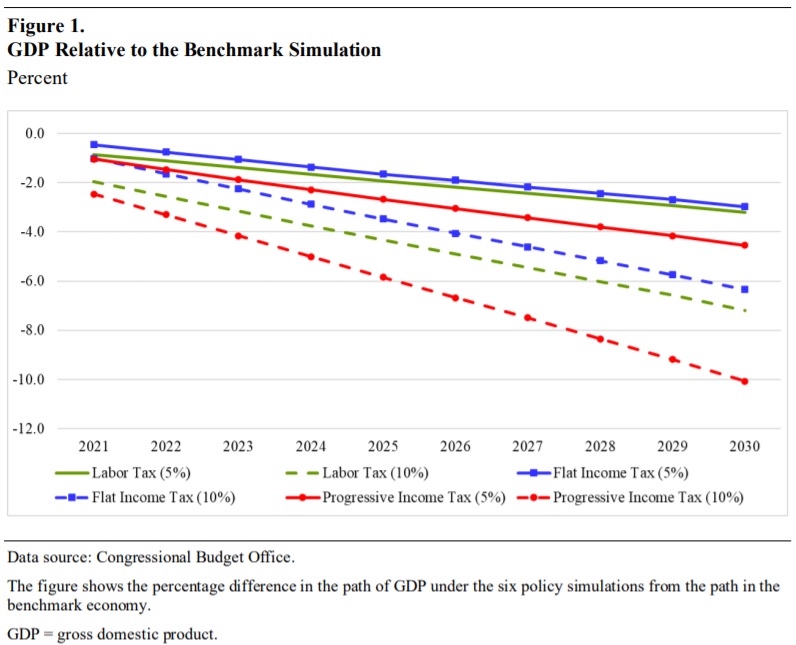
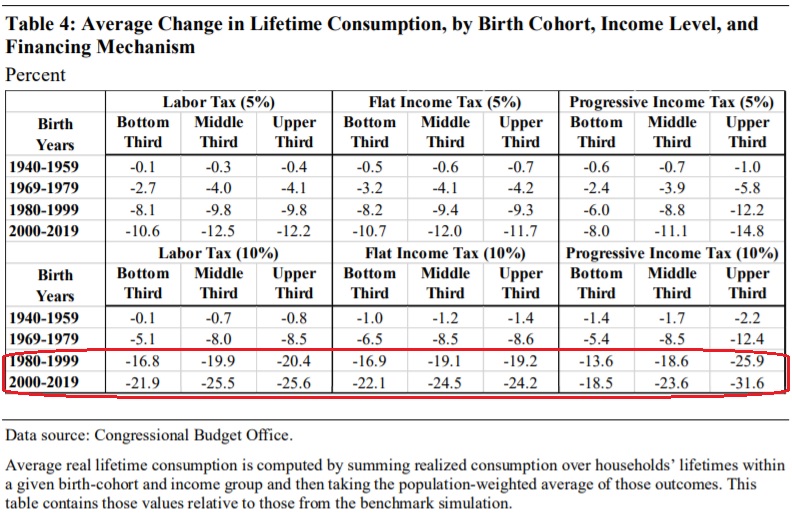

…Various observations that have been made about the huge divergence in price patterns over the last several decades… The greater (lower) the degree of government involvement in the provision of a good or service the greater (lower) the price increases (decreases) over time, e.g., hospital and medical costs, college tuition, childcare with both large degrees of government funding/regulation and large price increases vs. software, electronics, toys, cars and clothing with both relatively less government funding/regulation and falling prices.
 We find that prices have skyrocketed in areas of the healthcare sector where government plays a big role, especially hospital care.






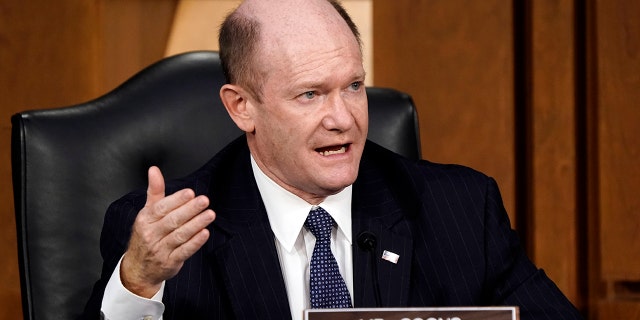
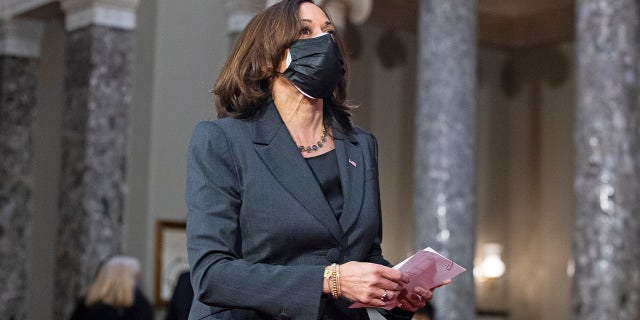



/https://public-media.smithsonianmag.com/filer/Charles-Darwin-1880-631.jpg)




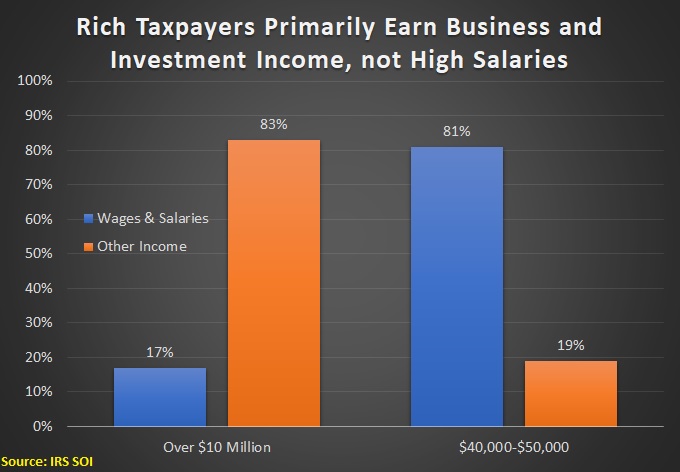


 The Daily Hatch
Jason Fried wrote this on Mar 03 2010 There are 43 comments.