Category Archives: Uncategorized

Music Monday My letter to Graham Nash

_______

_____

____

I have read over 40 autobiographies by ROCKERS and it seems to me that almost every one of those books can be reduced to 4 points. Once fame hit me then I became hooked on drugs. Next I became an alcoholic (or may have been hooked on both at same time). Thirdly, I chased the skirts and thought happiness would be found through more sex with more women. Finally, in my old age I have found being faithful to my wife and getting over addictions has led to happiness like I never knew before. (Almost every autobiography I have read from rockers has these points in it although Steven Tyler is still chasing the skirts!!).

Graham Nash has written a very good autobiography called WILD TALES and it certainly does include a lot of wild tales!!!!

_

_

November 16, 2018

Graham Nash,

Dear Mr. Nash, 

Your music reminds me a lot about the Memphis Blues. I thought of your music when I heard the news today, “In 2 days, Mississippi River has risen 10 feet north of St. Louis.”

Everybody is now educating themselves on the great flood of 1927. The 1927 Great Mississippi Flood was the most destructive river flood in the history of the United States, causing over $400 million in damages and killing 246 people in seven states and displaced 700,000 people.

My grandfather moved to Memphis in 1927 and he told me about this flood. There was a lady named Memphis Minnie and she wrote about this flood. I always heard that there was lots of great blues music that had come out of Memphis, but I always thought that was overstated and that the Blues was not a significant form of music. (Live and learn, the Blues music out of Memphis had a GREAT AFFECT ON MUSIC WORLDWIDE!!!)

However, at the same time I was listening to groups like Led Zeppelin and the ROLLING STONES, I had no idea that many of their songs were based on old Blues songs out of Memphis.

One of my favorite Led Zeppelin songs was “When the Levee breaks.” It was based on a song by Memphis Minnie.

There are many paths that people can take to deal with the Blues but the one found by many people in this area is to repent of their sins and embrace the gospel. Actually the answer to find meaning in life is found in putting your faith and trust in Jesus Christ. The Bible is true from cover to cover and can be trusted.

When I examine the Blues they are really an expression of one’s desperation to deal with the hard realities we face in life. Some seek escapism through alcohol or drugs. In fact, many famous Blues musicians have died from from addictions to drugs or alcohol!!

In your book WILD TALES is this passage:

During the Stones’ set a fan was  fatally stabbed by a HELLS ANGEL a short distance from the front of the stage which more or less signaled the end of the Woodstock era. The minute we finished, we grabbed our guitars and took off for the helicopter at a dead run. 

Francis Schaeffer wrote something about this incident and it seems to agree with your assessment:

At about the same time as the Berkeley Free Speech Move- 
ment came a heavy participation in drugs. The beats had not 
been deeply into drugs the way the hippies were. But soon 
after 1964 the drug scene became the hallmark of young 
people.
The philosophic basis for the drug scene came from Aldous 
Huxley's concept that, since, for the rationalist, reason is not 
taking us anywhere, we should look for a final experience, one 
that can be produced "on call," one that we do not need to 
wait for. The drug scene, in other words, was at first an ideol- 
ogy, an ideology that had very practical consequences. Some of 
us at L'Abri have cried over the young people who have blown 
their minds. But many of them thought, like Alan Watts, Gary 
Snyder, Alan Ginsberg and Timothy Leary, that if you could 
simply turn everyone on, there would be an answer to man's 
longings. It wasn't just the far-out freaks who suggested that 
you could put drugs in the drinking water and turn on a whole 
city so that the "pigs" and the kids would all have flowers in 
their hair. In those days it really was an optimistic ideological 
concept. 

So two things have to be said here. FIRST, the young people's 
analysis of culture was right, and, SECOND, they really thought 
they had an answer to the problem. Up through Woodstock 
(1969) the YOUNG PEOPLE WERE OPTIMISTIC CONCERNING DRUGS-- 
BEING THE IDEOLOGICAL ANSWER. The desire for community and 
togetherness that was the impetus for Woodstock was not wrong, of course. God has made us in his own image, and he 
means for us to be in a strong horizontal relationship with each 
other. While Christianity appeals and applies to the individual, 
it is not individualistic. God means for us to have community. 
There are really two orthodoxies: an orthodoxy of doctrine 
and an orthodoxy of community, and both go together. So the 
longing for community in Woodstock was right. But the path 
was wrong. 

AFTER WOODSTOCK TWO EVENTS "ENDED THE AGE OF INNOCENCE," 
to use the expression of Rolling Stone magazine. The FIRST 
occurred at Altamont, California, where the ROLLING STONES put 
on a festival and hired the Hell's Angels (for several barrels of 
beer) to police the grounds. Instead, the Hell's Angels killed 
people without any cause, and it was a bad scene indeed. But 
people thought maybe this was a fluke, maybe it was just 
California! IT TOOK A SECOND EVENT TO BE CONVINCING. 

On the Isle of Wight, 450,000 people assembled, and it was 
totally ugly. A number of people from L'Abri were there, and I 
know a man closely associated with the rock world who knows 
the organizer of this festival. Everyone agrees that the situation 
was just plain hideous. 

THUS, AFTER THESE TWO ROCK FESTIVALS THE PICTURE CHANGED. IT IS  
NOT THAT KIDS HAVE STOPPED TAKING DRUGS, FOR MORE ARE TAKING  
DRUGS ALL THE TIME. And what the eventual outcome will be is 
certainly unpredictable. I know that in many places, California 
for example, drugs are down through the high schools and on 
into the heads of ten- and eleven-year-olds. But drugs are not 
considered a philosophic expression anymore; among the very 
young they are just a peer group thing. It's like permissive 
sexuality. You have to sleep with a certain number of boys or 
you're not in; you have to take a certain kind of drug or you're 
not in. THE OPTIMISTIC IDEOLOGY HAS DIED. 

I was curious what you thought of these assertions. Thank you for your time and keep up the good work on your music. I have enjoyed it a great deal .

Everette Hatcher, cell phone 501-920-5733, everettehatcher@gmail.com

Image result for Stones' set a fan was actually fatally stabbed by the HELL'S ANGELS

_

photo: Graham Nash, David Crosby and Neil Young of CSNY at Altamont

Image result for altamont crosby stills nash

919 × 677Images may be subject to copyright. Learn More CSN&Y – LONG TIME GONE- ALTAMONT SPEEDWAY (RARE 8mm & 16mm VIDEO) – YouTube
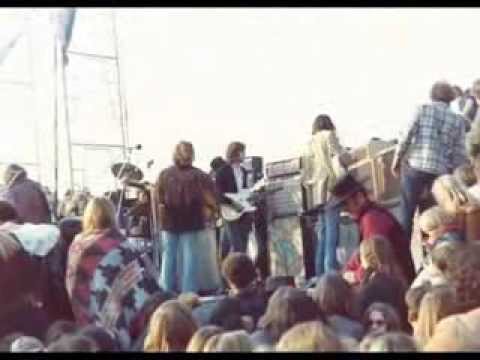
Image result for altamont crosby stills nash

CD

______________

Related posts:

MUSIC MONDAY The song LITTLE ONE sung by Rebecca St. James in the film SARAH’S CHOICE

May 30, 2016 – 12:39 am

Little One – From the Film, “Sarah’s Choice” Rebecca St James on faith and values – theDove.us Sarah’s Choice Trailer Sarah’s Choice – Behind the Scenes Rebecca St. James on Sarah’s Choice – CBN.com Rebecca St James Interview on Real Videos Sarah’s Choice – The Proposal Sarahs Choice Pregnancy Test Sarahs Choice Crossroad Sarah’s Choice […]By Everette Hatcher III | Posted in Current Events | Edit | Comments (0)

MUSIC MONDAY Rebecca St James

May 23, 2016 – 12:13 am

Lion – Rebecca St. James I will praise You – Rebecca St James Rebecca St James 1995 TBN – Everything I Do Rebecca St. James & Rachel Scott “Blessed Be Your Name” Rebecca St. James From Wikipedia, the free encyclopedia Rebecca St. James St. James in 2007 Background information Birth name Rebecca Jean Smallbone Also […]By Everette Hatcher III | Posted in Current Events | Edit | Comments (0)

MUSIC MONDAY “Foster the People” Cubbie Fink married to Rebecca St. James who is one of my favorite Christian singers!!!

May 16, 2016 – 7:13 am

Foster The People – Pumped up Kicks Foster the People From Wikipedia, the free encyclopedia Foster the People Foster the People at the 2011 MuchMusic Video Awards, from left to right: Pontius, Foster, and Fink Background information Origin Los Angeles, California, U.S. Genres Indie pop alternative rock indietronica alternative dance neo-psychedelia[1] Years active 2009–present Labels […]By Everette Hatcher III | Posted in Current Events | Edit | Comments (0)

MUSIC MONDAY ‘Apple gave me advice’: Coldplay’s Chris Martin turned to 11-year-old daughter for words of wisdom ahead of Superbowl 50 By DAILYMAIL.COM REPORTER PUBLISHED: 00:58 EST, 2 February 2016

May 9, 2016 – 1:12 am

‘Apple gave me advice’: Coldplay’s Chris Martin turned to 11-year-old daughter for words of wisdom ahead of Superbowl 50 By DAILYMAIL.COM REPORTER PUBLISHED: 00:58 EST, 2 February 2016 | UPDATED: 17:20 EST, 2 February 2016 n Facebook They’ve sold 80 million records and been around for 20 years. But Coldplay’s lead singer Chris Martin, 38, […]By Everette Hatcher III | Posted in Current Events | Edit | Comments (0)

MUSIC MONDAY Chris Martin, Lead Singer of Coldplay: 5 Fast Facts You Need to Know Published 3:44 pm EDT, February 7, 2016

May 2, 2016 – 1:05 am

__________ Chris Martin, Lead Singer of Coldplay: 5 Fast Facts You Need to Know Published 3:44 pm EDT, February 7, 2016 Updated 3:44 pm EDT, February 7, 2016 Comment By Lauren Weigle 17.6k (Getty) Chris Martin has been the front-man of the band Coldplay for about 20 years, though the band changed its name a […]By Everette Hatcher III | Posted in Current Events | Edit | Comments (0)

MUSIC MONDAY Christian Rock Pioneer Larry Norman’s Songs Part 14

April 25, 2016 – 12:57 am

Christian Rock Pioneer Larry Norman’s Songs Part 14 I posted a lot in the past about my favorite Christian musicians such as Keith Green (I enjoyed reading Green’s monthly publications too), and 2nd Chapter of Acts and others. Today I wanted to talk about one of Larry Norman’s songs. David Rogers introduced me to Larry […]By Everette Hatcher III | Posted in Current Events | Edit | Comments (0)

MUSIC MONDAY Christian Rock Pioneer Larry Norman’s Songs Part 13

April 18, 2016 – 12:56 am

Christian Rock Pioneer Larry Norman’s Songs Part 13 I posted a lot in the past about my favorite Christian musicians such as Keith Green (I enjoyed reading Green’s monthly publications too), and 2nd Chapter of Acts and others. Today I wanted to talk about one of Larry Norman’s songs. David Rogers introduced me to Larry […]By Everette Hatcher III | Posted in Current Events | Edit | Comments (0)

MUSIC MONDAY Christian Rock Pioneer Larry Norman’s Songs Part 12

April 11, 2016 – 1:30 am

Christian Rock Pioneer Larry Norman’s Songs Part 12 I posted a lot in the past about my favorite Christian musicians such as Keith Green (I enjoyed reading Green’s monthly publications too), and 2nd Chapter of Acts and others. Today I wanted to talk about one of Larry Norman’s songs. David Rogers introduced me to Larry […]By Everette Hatcher III | Posted in Current Events | Edit | Comments (0)

MUSIC MONDAY Christian Rock Pioneer Larry Norman’s Songs Part 11

April 4, 2016 – 1:23 am

Christian Rock Pioneer Larry Norman’s Songs Part 11 I posted a lot in the past about my favorite Christian musicians such as Keith Green (I enjoyed reading Green’s monthly publications too), and 2nd Chapter of Acts and others. Today I wanted to talk about one of Larry Norman’s songs. David Rogers introduced me to Larry […]By Everette Hatcher III | Posted in Current Events | Edit | Comments (0)

MUSIC MONDAY Christian Rock Pioneer Larry Norman’s Songs Part 10 more on Album “Only Visiting This Planet”

March 28, 2016 – 1:22 am

Christian Rock Pioneer Larry Norman’s Songs Part 10 more on Album “Only Visiting This Planet” I posted a lot in the past about my favorite Christian musicians such as Keith Green (I enjoyed reading Green’s monthly publications too), and 2nd Chapter of Acts and others. Today I wanted to talk about one of Larry Norman’s […]By Everette Hatcher III | Posted in Current Events | Edit | Comments (0)

FRANCIS SCHAEFFER ANALYZES ART AND CULTURE Part 255 My May 15, 1994 letter to Hans Bethe Part D (Featured Artist is Nicholas Hlobo )

_

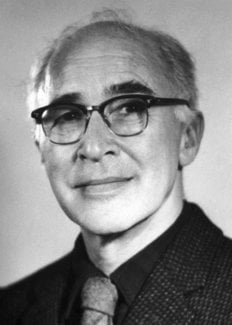
Hans Bethe

Nuclear Physicist, Los Alamos, NMMITTrinity SiteUniversity of California, BerkeleyBorn Jul 2 1906European Refugee, Manhattan Project Veteran, Postwar Nuclear Program, Hydrogen Bomb, Scientist, Nobel Prize Winner, Spouse to Manhattan Project Worker, Trinity Test Eyewitness

Hans Bethe

LISTEN TO HANS BETHE’S ORAL HISTORY ON VOICES OF THE MANHATTAN PROJECT

Hans Bethe

Hans Bethe (1906-2005) was a German-American nuclear physicist and winner of the 1967 Nobel Prize in Physics. 

After becoming an American citizen and gaining his security clearance, war work took him to the Radiation Laboratory at MIT, working on microwave radar. After spending the summer of 1942 at the University of California, Berkeley working on a design for the atomic bomb, Bethe was selected by J. Robert Oppenheimer to lead the T (Theoretical) Division of Los Alamos. He and his wife Rose moved to Los Alamos in 1943. Their son, Henry, was born at Los Alamos.

As theory chief, Bethe oversaw and coordinated the work of the various theory groups working on creating a model for how neutrons diffuse through a critical mass, figuring out how to calculate the efficiency of nuclear explosions, determining critical masses and the limits of sub-critical ones, understanding how liquids and gases behaved in fractions of micro-seconds at immense temperatures and pressures, and designing an initiator. 

Bethe completed the theoretical work on the implosion method used in the Trinity test and “Fat Man” weapon dropped on Nagasaki, which validated his results.  He also studied the hydrodynamic aspects of implosion, the neutron initiator, and radiation propagation from an exploding atomic bomb.

SCIENTIFIC CONTRIBUTIONS

Bethe was a professor at Cornell for his entire career, except for two sabbatical leaves and his absence during World War II when he worked on the Manhattan Project. At the end of World War II, Bethe worked on the United States’ development of the hydrogen bomb, although he was opposed to the weapon’s development and hoped that he would show that the H-bomb was impossible to build.

Between 1956 and 1964, he served on the President’s Science Advisory Committee, and in 1958 he headed a presidential study of nuclear disarmament. He helped to negotiate the 1963 Limited Test Ban Treaty with the Soviet Union, and acted as an informal advisor to Presidents Eisenhower, Kennedy, and Johnson. Later, he campaigned against President Ronald Reagan’s proposed Strategic Defense Initiative missile system and advocated for the peaceful use of nuclear energy. 

In 1967, Bethe was awarded the Nobel Prize in Physics for his work on how stars produce energy. For more information on Bethe’s scientific research and achievements, visit theNobel Prize website

Hans Bethe’s Timeline

  • 1906 Jul 2nd Born in Strasbourg, Alsace-Lorraine.
  • 1924 to 1926 Studied at the University of Frankfurt.
  • 1928 Jul Studied at Munich, and obtained his Ph.D. in theoretical physics with Professor Arnold Sommerfeld.

Gallery

  • Hans Bethe’s ID badge at Los Alamos
  • Hans and Rose Bethe at the 1967 Nobel Prize Ceremony

This is the fourth part of the letter to Hans Bethe, but the third part was posted last week on my blog.

The 5 Conclusions of Humanism according to King Solomon of Israel in the Book of Ecclesiastes!!!!!

Image result for king solomon

The Humanistic world view tells us there is no afterlife and all we have is this life “under the sun.”

Image result for francis schaeffer

SECTION 3 A Study in the Book of Ecclesiastes done by Francis Schaeffer(Christian Philosopher). Solomon limits himself to “under the sun” – In other words the meaning of life on the basis of human life standing alone between birth and death. It is indeed the book of modern man. Solomon is the universal man with unlimited resources who says let us see where I go. Ravi Zacharias 

Image result for ravi zacharias

“The key to understanding the Book of Ecclesiastes is the term ‘under the sun.’ What that literally means is you lock God out of a closed system and you are left with only this world of time plus chance plus us (Matter)”

1st Conclusion: Nothing in life truly satisfies and that includes wisdom, great works and pleasure. A) Will wisdom satisfy someone under the sun? We know it is good in its proper place. Take a look at this quote by Mike Malone: “Knowing God is the deepest longing of the human heart. It is knowledge so high and lofty that it transcends language, which can never exhaust the glorious reality of God. The wise man would take you by the hand and lead you to the fountain, where you may drink to your heart’s content, never tasting enough, yet never failing to be satisfied.” But what did Solomon find out about wisdom “under the sun”? Ecclesiastes 1:16-18 (Living Bible): I said to myself, ‘Look, I am better educated than any of the kings before me in Jerusalem. I have greater wisdom and knowledge.’So I worked hard to be wise instead of foolish[c]—but now I realize that even this was like chasing the wind. For the more my wisdom, the more my grief; to increase knowledge only increases distress.”

B) Do great works of men bring satisfaction?Ecclesiastes 2:4-6, 18-20: Then I tried to find fulfillment by inaugurating a great public works program: homes, vineyards, gardens, parks, and orchards for myself, and reservoirs to hold the water to irrigate my plantations.And I am disgusted about this—that I must leave the fruits of all my hard work to others. 19 And who can tell whether my son will be a wise man or a fool? And yet all I have will be given to him—how discouraging!So I turned in despair from hard work as the answer to my search for satisfaction.C) Does pleasure give lasting satisfaction?

Image result for hugh hefner


KJV and Living Bible Ecclesiastes 2:1-3, 8, 10, 11: I said in mine heart, Go to now, I will prove thee with mirth, therefore enjoy pleasure: and, behold, this also is vanity.I said of laughter, It is mad: and of mirth, What doeth it? I sought in mine heart to give myself unto wine, yet acquainting mine heart with wisdom; and to lay hold on folly,And then there were my many beautiful concubines.10 Anything I wanted I took and did not restrain myself from any joy…11 But as I looked at everything I had tried, it was all so useless, a chasing of the wind, and there was nothing really worthwhile anywhere…
2nd Conclusion: Power reigns in this life and the scales are not balanced!!!!!Ecclesiastes 4:1 (King James Version): So I returned, and considered all the oppressions that are done under the sun: and behold the tears of such as were oppressed, and they had no comforter; and on the side of their oppressors there was power; but they had no comforter.
Ecclesiastes 7:15 (King James Version) All things have I seen in the days of my vanity: there is a just man that perisheth in his righteousness, and there is a wicked man that prolongeth his life in his wickedness.If you are a humanist you must admit that men like Hitler will not be punished in the afterlife because you deny there is an afterlife? Right?

Image result for hitler

3rd Conclusion – Death is the great equalizer. Just as the beasts will not be remembered so ultimately brilliant men will not be remembered. Ecclesiastes 3:20 “All go unto one place; All are of the dust, and all turn to dust again.” Here Solomon comes to the same point that Kerry Livgren came to in January of 1978 when he wrote the hit song DUST IN THE WIND. Can you refute the nihilistic claims of this song within the humanistic world view? Solomon couldn’t but maybe you can.

Image result for rock band kansas dust in the wind

4th Conclusion – Chance and time plus matter (us) has determined the past and it will determine the future.By the way, what are the ingredients that make evolution work? George Wald – “Time is the Hero.”

Image result for george wald

 Jacques Monod – “Pure chance, absolutely free but blind, is at the root of the stupendous edifice of evolution.”

Image result for manod jac nobel prize

496 × 744Images may be subject to copyright. Learn More

Image result for movie on the beach 1959

182 × 268Images may be subject to copyright. Learn More

 I can not think of a better illustration of this in action than the movie ON THE BEACH by Nevil Shute. On May 4, 1994 I watched the movie for the first time and again I thought of the humanist who believes that history is not heading somewhere with a purpose but is guided by pure chance, absolutely free but blind. I thought of the passage Ecclesiastes 9:10-12 Whatsoever thy hand findeth to do, do it with thy might; for there is no work, nor device, nor knowledge, nor wisdom, in the grave, whither thou goest.11 I returned, and saw under the sun, that the race is not to the swift, nor the battle to the strong, neither yet bread to the wise, nor yet riches to men of understanding, nor yet favour to men of skill; but time and chance happeneth to them all.12 For man also knoweth not his time: as the fishes that are taken in an evil net, and as the birds that are caught in the snare; so are the sons of men snared in an evil time, when it falleth suddenly upon them.

5th Conclusion – Life is just a series ofcontinual and unending cycles and man is stuck in the middle of the cycle. Youth, old age, Death.
Does Solomon at this point embrace nihilism? Yes!!! He exclaims that the hates life (Ecclesiastes 2:17), he longs for death (4:2-3) Yet he stills has a fear of death (2:14-16). How do you want your life to go the next million years? The humanist world view has no answer (see H. J. Blackham earlier quote). Ecclesiastes2:15-16: 15 Then said I in my heart, As it happeneth to the fool, so it happeneth even to me; and why was I then more wise? Then I said in my heart, that this also is vanity.16 For there is no remembrance of the wise more than of the fool for ever; seeing that which now is in the days to come shall all be forgotten. And how dieth the wise man? as the fool.(Also refer to the lyrics of the song DUST IN THE WIND by the group KANSAS).Can you refute any of the conclusions of Solomon? Will you ridicule this material. In 1988 in the September-October of the HUMANIST MAGAZINE a 3 page article was devoted to cutting Schaeffer down to size, but even in that article which was called FRANCIS SCHAEFFER: A LOOK AT ONE OF THE FOREMOST FIGURES IN THE CRUSADE AGAINST HUMANISM the writer gave Schaeffer his due by saying “Schaeffer’s books are not the typical hodge-podge of newspaper headlines and obscure  Biblical prophecies, as in Hal Lindsey’s books. Schaeffer demonstrates a familiarity with the major theologians and some understanding of philosophy, art and literature. His books are clearly in a different league from the typical evangelical Christian reading matter…:” Why did I write about the meaning of life in this letter addressed to you?????? The answer is very simple: You have a spiritual need that must be met, and only Christ can meet it!!!! In the introduction of the book A SHATTERED VISAGE, Ravi Zacharias said this “The most telling aspect of the afternoon I spoke to a group of scientists at the Bell Lab in Holmdel, NJ was the nature of the questions that were raised following the address. None had to do with the technical or scientific expertise that the audience represented. They all had to do with the heart searching questions of men and women in pursuit of meaning of life. I have found these same questions asked time and time again in a variety of settings. After the intellectual that comes to the fore.” Ecclesiastes 3:11b “God has planted eternity in the hearts of men.” 

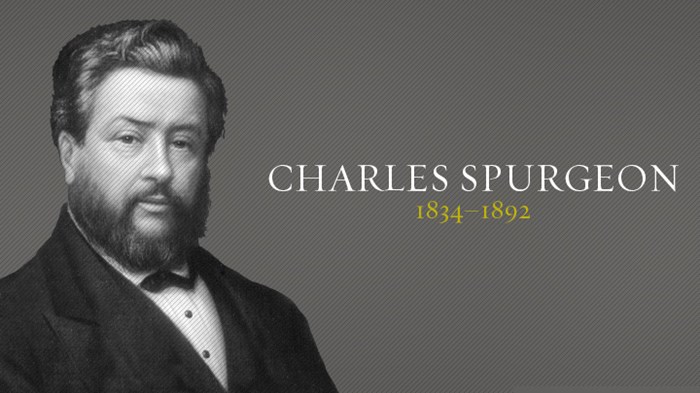
Image result for charles spurgeon

Charles Spurgeon “The soul is insatiable till it finds the savoir.”I want to finish with a prediction: There is coming a time in your life that the most important thing to you will be to get your prayer answered by God. When I was ridden in a hospital many years ago I was told that I may not live. My thoughts turned to spiritual things. Does it take a tragic situation for you to wake up? I will pray that you see the humanistic worldview for what it is, and that you would honestly pursue the Bible. Thank you for your time

Related posts:

______________  

FRANCIS SCHAEFFER ANALYZES ART AND CULTURE Part 51 THE BEATLES (Part C, List of those on cover of Stg.Pepper’s ) (Feature on artist Raqib Shaw )

March 19, 2015 – 12:21 am

  The Beatles in a press conference after their Return from the USA Uploaded on Nov 29, 2010 The Beatles in a press conference after their Return from the USA. The Beatles:   I have dedicated several posts to this series on the Beatles and I don’t know when this series will end because Francis […]By Everette Hatcher III | Posted in Francis Schaeffer | Tagged George HarrisonJohn LennonPaul MacCartneyRaqib ShawRingo Starr | Edit | Comments (0)

FRANCIS SCHAEFFER ANALYZES ART AND CULTURE Part 50 THE BEATLES (Part B, The Psychedelic Music of the Beatles) (Feature on artist Peter Blake )

__

Featured artist is Nicholas Hlobo

Nicholas Hlobo’s Post-Apartheid Sculpture Art | Brilliant Ideas Ep. 58

Preview: Nicholas Hlobo in Season 9 of Art21 “Art in the Twenty-First Century” (2018) https://www.youtube.com/watch?v=sQ462yJFwDI Nicholas Hlobo Nicholas Hlobo was born in Cape Town, South Africa, in 1975 and grew up in Transkei, South Africa. His works on paper, sculptures, installations, and performances utilize rubber, ribbon, leather, and a variety of domestic objects to explore both his identity as a gay Xhosa man and issues of masculinity, sexuality, and ethnicity in South African culture. Subtly and subversively weaving together bodily innuendos and historical references, Hlobo uses raw materials to represent female and male forms and question gender roles. Interested in the history of colonization in South Africa and the broad and subtle ways that colonization occurs in contemporary life, Hlobo cuts and stitches materials back together, to represent the idea of the healing that follows a tearing apart. Nicholas Hlobo received a fine-art degree from the Technikon Witwatersrand (2002). His awards and residencies include the Rolex Visual Arts Protégé (2010–11); Standard Bank Young Artist Award (2009); and Tollman Award for Visual Art (2006). He has had major exhibitions at Uppsala Konstmuseum, Sweden (2017); Museum Beelden aan Zee, The Hague (2016); Smithsonian National Museum of African Art, Washington DC (2015); Savannah College of Art and Design (2014, 2010, 2007); Museum fur Moderne Kunst, Frankfurt (2014); Locust Project, Miami (2013); Biennale of Sydney (2012); La Triennale at the Palais de Tokyo, Paris (2012); Venice Biennale (2011); National Museum of Art, Architecture and Design, Oslo (2011); Liverpool Biennial (2010); Tate Modern, London (2008); Institute of Contemporary Art, Boston (2008); Guangzhou Triennial, China (2008); and Studio Museum in Harlem (2008). Hlobo lives and works in Johannesburg.

Related posts:

   ___

Music Monday My letter to Elton John concerning Ryan White’s Faith

__

__

__

__

__

Image result for c. everett koop cartoon

__

Image result for ryan white c. everett koop

Ryan White’s mother Jeanne White Ginder (left) and William L. Yarber of Indiana University (right) present the former U.S. Surgeon General C. Everett Koop with the 2010 Ryan White Distinguished Leadership Award. The award is given by the Rural Center for AIDS/STD Prevention at IU.

Image result for elton john c. everett koop

__

(seen below) Sean Michel made it  to Hollywood in the 2007 AMERICAN IDOL COMPETITION while singing the Johnny Cash song GOD’S GONNA CUT YOU DOWN

Image result for sean michel arkansas american idol

Simon was taken back by the song GOD’S GONNA CUT YOU DOWN

Image result for american idol judges 2007

Check out on You Tube the song THIS IS AMAZING GRACE (It has about 30 million views)9

__

April 9, 2017

Dear Elton,

I have just completed reading your book  “LOVE IS THE CURE: On Life, Loss, and the End of AIDS.” I know that over and over in this book  that you say  that ignorance is the problem and all  we need is more education. I agree with you that education will help and it will  tell us how to extend our lives further. But the real problem of the human condition is a spiritual problem and  our quest to find a lasting meaning for lives. Nevertheless, let me address the first point.

In your book you point out that Ryan White was a Christian and he put his faith in  Christ for his salvation.  Likewise you quote the evangelical C. Everett Koop on pages 44-45:

The idea of mandatory testing was surprisingly discredited by, of all people, C. Everett Koop, Ronald Reagan’s archconservative surgeon general. Known mostly to the public for his antiabortion views, Koop’s 1986 report on AIDS was a revelation. The report didn’t just dismiss mandatory testing as impractical and counterproductive. It called for AIDS education at “the earliest grade possible…” This was heady stuff. Five years into  the epidemic, the surgeon general’s report represented the first major governmental effort to educate the public about AIDS. The fundamentalists were furious at Koop’s frank discussion of the disease and the sexual behavior that spread it, but to his credit, he stood by his findings. 

Let me get you straight here. You admire C. Everett Koop here because he looked at the evidence and stuck with the conclusion that his  logic led him to? With that in mind I wanted to challenge you to examine again Christianity. In my first letter I quoted you saying that you grew up going to Sunday School and you admired Christ. What about the Bible? Have you ever examined the accuracy of it? If it is God’s message to us then you would expect it to be accurate. Let me share with you a passage from the book WHATEVER HAPPENED TO THE HUMAN RACE? by Francis Schaeffer and C. Everett Koop:

We now take a jump back in time to the middle of the ninth century before Christ, that is, about 850 B.C. Most people have heard of Jezebel. She was the wife of Ahab, the king of the northern kingdom of Israel. Her wickedness has become so proverbial that we talk about someone as a “Jezebel.” She urged her husband to have Naboth killed, simply because Ahab had expressed his liking for a piece of land owned by Naboth, who would not sell it. The Bible tells us also that she introduced into Israel the worship of her homeland, the Baal worship of Tyre. This led to the opposition of Elijah the Prophet and to the famous conflict on Mount Carmel between Elijah and the priests of Baal.

Here again one finds archaeological confirmations of what the Bible says. Take for example: “As for the other events of Ahab’s reign, including all he did, the palace he built and inlaid with ivory, and the cities he fortified, are they not written in the book of the annals of the kings of Israel?” (I Kings 22:39).

This is a very brief reference in the Bible to events which must have taken a long time: building projects which probably spanned decades. Archaeological excavations at the site of Samaria, the capital, reveal something of the former splendor of the royal citadel. Remnants of the “ivory house” were found and attracted special attention (Palestinian Archaeological Museum, Jerusalem). This appears to have been a treasure pavilion in which the walls and furnishings had been adorned with colored ivory work set with inlays giving a brilliant too, with the denunciations revealed by the prophet Amos:

“I will tear down the winter house along with the summer house; the houses adorned with ivory will be destroyed and the mansions will be demolished,” declares the Lord. (Amos 3:15)

Other archaeological confirmation exists for the time of Ahab. Excavations at Hazor and Megiddo have given evidence of the the extent of fortifications carried out by Ahab. At Megiddo, in particular, Ahab’s works were very extensive including a large series of stables formerly assigned to Solomon’s time.

On the political front, Ahab had to contend with danger from the Aramacaus king of Syria who besieged Samaria, Ahab’s capital. Ben-hadad’s existence is attested by a stela (a column with writing on it) which has been discovered with his name written on it (Melquart Stela, Aleppo Museum, Syria). Again, a detail of history given in the Bible is shown to be correct. (TRUTH AND HISTORY, chapter 5 of WHATEVER HAPPENED TO THE HUMAN RACE?, under footnote #94)

IF YOU TRULY WANT A SOLUTION TO THE MAIN PROBLEM then read the Book of John and pray and ask God to reveal if Jesus was really his son or not.  Both Ryan White and C. Everett Koop knew that truth. Are you willing to do that and follow the evidence wherever it leads? Or are you like a thief who can’t find a policeman?

In my last letter I told you that the loss of my good friend Larry Speaks has got me thinking a lot about the meaning of life. In this letter today I want to do 3 things.

First, I will tell you what the sermon and music was about today on Palm Sunday at the church service I attended.

Second, I want to take a short look at the message WHO IS JESUS? by Adrian Rogers and Rogers interaction with a scientist from NASA.  This sermon was Larry’s favorite sermon.

Third, I want to start looking at the 6 L words that Solomon pursued UNDER THE SUN to try to get meaning and satisfaction in this life without God in the picture in the Book of Ecclesiastes. Today’s word  is LEARNING. Can one find a lasting meaning to life  in the area of education? Solomon had a lot to say about that in the Book of Ecclesiastes.

Today I was invited by our family friend Sean  Michel to come hear him preach at Calvary Chapel today in Bauxite, Arkansas. Not only did Sean Michel preach but he also helped provide some of the music. In fact, one of the songs they played was my favorite and it is called “This is Amazing Grace,” by Phil Wickham and you can check it out on You Tube. In Sean’s sermon we discover that it is  NOT an uneducated head that is the problem to finding God but an UNWILLING STUBBORN HEART.II Corinthians 4:3-4 (Amplified Bible)

But even if our gospel is [in some sense] hidden [behind a veil], it is hidden [only] to those who are perishing;among them the god of this world [Satan] has blinded the minds of the unbelieving to prevent them from seeing the illuminating light of the gospel of the glory of Christ, who is the image of God. 

This verse is clarified even more by Matthew 11:25 (AMP)

25 At that time Jesus said, “I praise You, Father, Lord of heaven and earth [I openly and joyfully acknowledge Your great wisdom], that You have hidden these things [these spiritual truths] from the wise and intelligent and revealed them to infants [to new believers, to those seeking God’s will and purpose].

Here we must observe that many people don’t want to find the truth just like a thief doesn’t want to find a policeman. I now want to share a portion of the sermon WHO IS JESUS? by Adrian Rogers because this very point is made:

Here is how the story goes:

Years ago Adrian Rogers counseled with a NASA scientist and his severely depressed wife. The wife pointed to her husband and said, “My problem is him.” She went on to explain that her husband was a drinker, a liar, and an adulterer.

Dr. Rogers asked the man if he were a Christian. “No!” the man laughed. “I’m an atheist.” “Really?” Dr. Rogers replied. “That means you’re someone who knows that God does not exist.” “That’s right,” said the man. “Would it be fair to say that you don’t know all there is to know in the universe?” “Of course,” the man admitted. Dr. Rogers asked, “Would it be generous to say you know half of all there is to know?” “Yes!” Then Dr. Rogers inquired,“Wouldn’t it be possible that God’s existence might be in the half you don’t know?” The man acknowledged, “Okay, but I don’t think He exists.” Dr. Rogers replied, “Well then, you’re not an atheist; you’re an agnostic. You’re a doubter.” The man asserted, “Yes, and I’m a big one.” Then Dr. Rogers popped the question, “It doesn’t matter what size you are. I want to know what kind [of doubter] you are.” 

“What kinds are there?”

“There are honest doubters and dishonest doubters. An honest doubter is willing to search out the truth and live by the results; a dishonest doubter doesn’t want to know the truth. He can’t find God for the same reason a thief can’t find a policeman.”

“I want to know the truth.”

“Would you like to prove that God exists?”

“It can’t be done.”

“It can be done. You’ve just been in the wrong laboratory. Jesus said, ‘If any man’s will is to do His will, he will know whether my teaching is from God or whether I am speaking on my own authority’ (John 7:17). I suggest you read one chapter of the book of John each day, but before you do, pray something like this, ‘God, I don’t know if You’re there, I don’t know if the Bible is true, I don’t know if Jesus is Your Son. But if You show me that You are there, that the Bible is true, and that Jesus is Your Son, then I will follow You. My will is to do your will.”

The man agreed. About three weeks later he returned to Dr. Rogers’s office and invited Jesus Christ to be his Savior and Lord.

_________

WHAT DOES SOLOMON HAVE TO SAY ABOUT PURSUING LEARNING in the Book of Ecclesiastes?

Francis Schaeffer noted that Solomon took a look at the meaning of life on the basis of human life standing alone between birth and death “under the sun.” This phrase UNDER THE SUN appears over and over in Ecclesiastes. The Christian Scholar Ravi Zacharias noted, “The key to understanding the Book of Ecclesiastes is the term UNDER THE SUN — What that literally means is you lock God out of a closed system and you are left with only this world of Time plus Chance plus matter.” 

As you know Solomon was searching for  for meaning in life in what I call the 6 big L words in the Book of Ecclesiastes. He looked into LEARNING (1:12-18, 2:12-17), laughter, ladies, luxuries, and liquor (2:1-2, 8, 10, 11), and labor (2:4-6, 18-20).

Here is his final conclusion concerning LEARNING:

ECCLESIASTES 1:12-18, 2:12-17 LEARNING

12 I the Preacher have been king over Israel in Jerusalem.13And I applied my heart to seek and to search out by wisdom all that is done under heaven. It is an unhappy business that God has given to the children of man to be busy with. 14 I have seen everything that is done UNDER THE SUN, and behold, all is vanity and a striving after wind.

15 What is crooked cannot be made straight,
    and what is lacking cannot be counted.

16 I said in my heart, “I have acquired great wisdom, surpassing all who were over Jerusalem before me, and my heart has had great experience of wisdom and knowledge.” 17 And I applied my heart to know wisdom and to know madness and folly. I perceived that this also is but a striving after wind.

18For in much wisdom is much vexation,
    and he who increases knowledge increases sorrow.

12So I turned to consider wisdom and madness and folly. For what can the man do who comes after the king? Only what has already been done. 13 Then I saw that there is more gain in wisdom than in folly, as there is more gain in light than in darkness. 14 The wise person has his eyes in his head, but the fool walks in darkness. And yet I perceived that the same event happens to all of them.15 Then I said in my heart, “What happens to the fool will happen to me also. Why then have I been so very wise?” And I said in my heart that this also is vanity. 16 For of the wise as of the fool there is no enduring remembrance, seeing that in the days to come all will have been long forgotten. How the wise dies just like the fool! 1So I hated life, because what is done UNDER THE SUN was grievous to me, for all is vanity and a striving after wind.

 Ecclesiastes was written to those who wanted to examine life UNDER THE SUN without God in the picture and Solomon’s conclusion in the final chapter was found in Ecclesiastes 12 when he looked at life ABOVE THE SUN:

13 The end of the matter; all has been heard. Fear God and keep his commandments, for this is the whole duty of man. 14 For God will bring every deed into judgment, with every secret thing, whether good or evil.

In an earlier letter to you I quoted Psalms chapter 22. Why not take a few minutes and just read the short chapter of Psalms 22 that was written hundreds of years before the Romans even invented the practice of Crucifixion. 1000 years BC the Jews had the practice of stoning people but we read in this chapter a graphic description of Christ dying on the cross. How do you explain that without looking ABOVE THE SUN to God.

Thanks for your time.

Sincerely,

Everette Hatcher, everettehatcher@gmail.comhttp://www.thedailyhatch.org, cell ph 501-920-5733, Box 23416, LittleRock, AR 72221

PS: Like I promised I will continue to write you and go through these 6 L words that Solomon was pursuing UNDER THE SUN in the Book of Ecclesiastes in order to find a lasting meaning to our lives.

FRANCIS SCHAEFFER ANALYZES ART AND CULTURE Part 254 My May 15, 1994 letter to Hans Bethe Part C (Featured Artist is Josephine Halvorson )

_


This is the third part of the letter, but the second part was part of my blog post a week ago under the title of FRANCIS SCHAEFFER ANALYZES ART AND CULTURE Part 253 My May 15, 1994 letter to Hans Bethe Part B (Featured Artist is Trenton Doyle Hancock). Next week will be the fourth part.

SECTION #2 If there is no Afterlife, how can there be any lasting meaning to our lives? Should people be asking themselves these types of Questions???

Image result for albert camus

Albert Camus:The fundamental question about life is meaning, anything else is secondary and until that question of meaning is dealt with I really cannot for what the answers are for the other queries.George H. Smith – Religions are successful, not because they provide the correct answers, but because they ask important questions—Questions that concern every human being. What is the nature of the universe? Is there a purpose, or plan, to human existence? …PESSIMISM FROM AGNOSTICS?Nathaniel Brandon: But twentieth-century philosophy has almost totally backed off from the responsibility of offering such a vision or addressing itself to the kind of questions human beings struggle with in the course of their existence. Twentieth-century philosophy typically scorns system building. The problems to which it addresses itself grow smaller and smaller and more and more remote from human experience. At their philosophical conferences and conventions, philosophers explicitly acknowledge that they have nothing of practical value to offer anyone. This is not my accusation; they announce it themselves.During the same period of history, the twentieth century, orthodox religion has lost more and more of its hold over people’s minds and lives. It is perceived as more and more irrelevant. Its demise as a cultural force really began with the Renaissance and has been declining ever since.But the need for answers persists. The need for values by which to guide our lives remains unabated. The hunger for intelligibility is as strong as it ever was. The world around us is more and more confusing, more and more frightening; the need to understand it cries out in anguish.The ENCYCLPEDIA OF PHILOSOPHY on page 471 “When Fred Hoyle in his book THE NATURE OF THE UNIVERSE turns to what he calls ‘the deeper issues’ and remarks that we find ourselves in a ‘dreadful situation’ in which there is ‘scarcely a clue as to whether our existence has ourselves in a ‘dreadful situation’ in which there is ‘scarcely a clue as to whether our existence has any real significance.’ He is using the word ‘significance’ in this comic sense.”

Image result for fred hoyle

On Sunday April 11, 1920 in Chicago there was a debate on this question: Has life any meaning? The following 3 quotes were taken from that meeting:Percy Ward -How can life have any meaning at all, when all living things, along with the world on which they live, are doomed to destruction? What meaning can there be to life, when its dominant law is age-long and world-wide struggle for existence? What possible meaning can there be to life, when the chief experience of living things is suffering and pain? Percy Ward – “To what end is comic evolution moving? All this life which rises, step by step, from moneron to main is impotent effort; the road to nowhere. Imagine an artist devoting his entire life to the painting of a wonderful picture; and then, when his picture is completed, tearing it to ribbons, what could be the meaning of such a painter’s behavior? Arthur J. Balfour – “Man, so far as natural science by itself is able to teach us, is no longer the final cause of the universe, the heaven-descended heir of all the ages. His very existence is an accident, history a brief and transitory episode in the life of one of the meanest of the planets…Man will go down into the pit, and all his thoughts will perish, the uneasy consciousness, which in this obscure corner has for a long space broken the contented silence of the universe, will be at rest. Matter will know itself no longer. Imperishable monuments and immortal deeds, death itself, will be as though they had never been.”SHOULD TRUE HUMANISTS BE OPTIMISTS OR NIHILISTS?????????Paul Kurtz –

Image result for paul kurtz

220 × 323Images may be subject to copyright. Learn More

“The universe is neutral, indifferent to man’s existential yearnings. But we instinctively discover life, experience its throb, its excitement, its attraction. Life is here to be lived, enjoyed, suffered, and endured…Again–one cannot ‘prove’ this normative principle to everyone’s satisfaction. Living beings tend instinctively to maintain themselves and to reproduce beyond ultimate justification. It is a brute fact of our contingent natures; It is an instinctive desire to live.”

Image result for j p moreland

220 × 330Images may be subject to copyright. Learn More


J.P. Moreland – “2 Objections to optimistic humanism: #1 There is no rational justification for choosing it over nihilism. As far as rationality is concerned, it has nothing to offer over nihilism. Therefore, optimistic humanism suffers from some of the same objections we raised against nihilism. Kurtz himself admits that the ultimate values of humanism are incapable of rational justification!!!!!!  #2 Optimistic Humanism really answers the question of the meaning of life in the negative, just as nihilism does. For the optimistic humanist life has no objective value or purpose; It offers only subjective satisfaction, one should think long and hard before embracing such a horrible view. If there is a decent case that life has objective value and purpose, then such a case should be given as good a hearing as possible.  

Image result for r c sproul

R.C. Sproul:Nihilism has two traditional enemies–Theism and Naive Humanism. The theist contradicts the nihilist because the existence of God guarantees that ultimate meaning and significance of personal life and history. Naive Humanism is considered naive by the nihilist because it rhapsodizes–with no rational foundation–the dignity and significance of human life. The humanist declares that man is a cosmic accident whose origin was fortuitous and entrenched in meaningless insignificance. Yet in between the humanist mindlessly crusades for, defends, and celebrates the chimera of human dignity…Herein is the dilemma: Nihilism declares that nothing really matters ultimately…In my judgment, no philosophical treatise has ever surpassed or equaled the penetrating analysis of the ultimate question of meaning versus vanity that is found in the Book of Ecclesiastes

PAGE 4

Image result for kirby anderson

J. Kerby Anderson– “The cynicism and skepticism in the arts, politics, commerce, and the media all testify to the futility of trying to find wisdom and meaning in a world without wisdom based on ‘the Fear of the Lord’ is folly.

Image result for ravi zacharias

1200 × 628Images may be subject to copyright. Learn More

Ravi Zacharias – “Having killed God, the atheist is left with no reason for being, no morality to espouse, no meaning to life and no hope beyond the grave.”Arthur Ashe – (born in 1943, won U.S.Open in 1968, and Wimbledon in 1975) “If I am just remembered as an exceptional tennis player then my life really was not much.”The next two quotes by Kai Nielson and the next quote by J.P. Moreland were taken from a debate held at Ole Miss on March 24, 1988. This debate was later published by Prometheus Books by the title DOES GOD EXIST?
Does death ultimately take away the love we feel for others?Kai Nielson – “If you love someone, whether there is a God or not, that love can go on. It remains intact. It might even be more intact, because if death ends it all, the love relationships between people in life are all the more precious because that is all there is in that respect. So that’s perfectly intact, God or no God. Indeed, as I have just argued, it may even become more important.”

Image result for clarence darrow

220 × 305Images may be subject to copyright. Learn More

Clarence Darrow – “I love my friends, but they all must come to a tragic end. Death is more terrible the more one is attached to things in the world.” Do we need a lasting purpose to our lives?Kai Nielson – “There are all those intentions, purposes, goals, and the like that you can figure out and can have. They are what John Rawls called life plans. You can have all these purposes in life even though there is no purpose to life. So life doesn’t become meaningless and pointless if you were not made for a purpose.”

Image result for francis schaeffer

200 × 238Images may be subject to copyright. Learn More

Francis Schaeffer – “The struggle for modern man is to begin with himself and find a meaning in life. Not just plans in life. It is nothing to have plans in life. Anybody can find plans in life. A child can fill up his time with plans of building tomorrow’s sand castle when today’s have been washed away. There is a difference between finding plans in life and purpose.”J.P.Moreland – “James Rachels says that we don’t need purpose in the sense of an over arching objective purpose to life, but we can have purpose in life, as Nielson says. And he means by that ‘subjective satisfaction,’ things that we find worthwhile to us. Now if this is true, what’s the difference, let’s say between becoming a doctor and feeding the poor and sitting around pinching heads off rats or being a Sisyphus and pushing a rock up and down a hill, or giving your time to flipping tiddlywinks? There is no difference since each of these options could be satisfying and worthwhile to someone.”Marvin Kohl – (Taken from an article in FREE INQUIRY, Spring 81 issue, article entitled, “The Meaning of Life and belief in God” ) “….Belief in beneficent providence is untrue. It is untrue because there is no evidence to warrant the claim that there is a benevolent force behind nature. Not only does the secular humanist deny that we have knowledge about a friend behind the universe; He also denies that we have knowledge about divine or cosmic purpose. The argument in its essential form is simple and, I believe, decisive. Purposes can only be correctly assigned to sentient beings; And since man does not have knowledge that God or other sentient beings govern the universe, He cannot on a cognitive level maintain that the universe has any purpose…The facts also indicate that many, like lady Katharine (Bertrand Russell’s Christian daughter who was quoted earlier in the article), are given insight about the meaning of life, about  the chief end of human living, when they believe God makes a disclosure about his own nature and purpose and gently embraces them in his absolute love. In short, it appears to be true that belief in God has had and still has the power to give comfort and consolation to millions of devout believers. Largely because of this, two important claims cannot be easily, if at all, dismissed. They are: (1) that in addition to other basic human needs, there is a need for psychological security, which includes the need to believe in God, or at least believe that the cosmos is guided by a loving purpose; and (2) that this need is often successfully met if a man genuinely recognizes that his goal for living is in, and given to him by, God.”Aldous Huxley – “Science does not retain the sovereignty over metaphysical pronouncements…Science does not have the right to give to me my reason for being and my definition for existence, but I am going to take science’s view because I want this world not to have meaning because it frees me to my own erotic and political desires.”

Image result for aldous huxley

_

Featured artist is Josephine Halvorson

Josephine Halvorson Is on the Clock | “New York Close Up” | Art21

Josephine Halvorson

Josephine Halvorson was born in 1981 in Brewster, Massachusetts, formerly worked in New York, and currently lives and works in Western Massachusetts. Combining acute attention to detail and an insistence on painting from life, Halvorson gives herself only one day to complete each canvas.

Traveling outside of New York to paint, she works onsite, often selecting scenes that convey a sense of postindustrial grit. Her subjects range from a patch of missing paint on a wall to doors, windows, and other architectural details, but she acknowledges that “anything in the world could be a painting.” Interested in her relationship to the subjects of her paintings, Halvorson resists the term painter; she prefers to think of painting as recording time spent with an object in its environment.

Links:
Artist’s website

Related posts:

Taking on Ark Times Bloggers on various issues Part F “Carl Sagan’s views on how God should try and contact us” includes film “The Basis for Human Dignity”

April 8, 2013 – 7:07 am

I have gone back and forth and back and forth with many liberals on the Arkansas Times Blog on many issues such as abortion, human rights, welfare, poverty, gun control  and issues dealing with popular culture. Here is another exchange I had with them a while back. My username at the Ark Times Blog is Saline […] By Everette Hatcher III | Posted in Francis SchaefferProlife | Edit | Comments (0)

Carl Sagan v. Nancy Pearcey

March 18, 2013 – 9:11 am

On March 17, 2013 at our worship service at Fellowship Bible Church, Ben Parkinson who is one of our teaching pastors spoke on Genesis 1. He spoke about an issue that I was very interested in. Ben started the sermon by reading the following scripture: Genesis 1-2:3 English Standard Version (ESV) The Creation of the […] By Everette Hatcher III | Posted in Adrian RogersAtheists ConfrontedCurrent Events | TaggedBen ParkinsonCarl Sagan | Edit | Comments (0)

Review of Carl Sagan book (Part 4 of series on Evolution)

May 24, 2012 – 1:47 am

Review of Carl Sagan book (Part 4 of series on Evolution) The Long War against God-Henry Morris, part 5 of 6 Uploaded by FLIPWORLDUPSIDEDOWN3 on Aug 30, 2010 http://www.icr.org/ http://store.icr.org/prodinfo.asp?number=BLOWA2http://store.icr.org/prodinfo.asp?number=BLOWASGhttp://www.fliptheworldupsidedown.com/blog _______________________ I got this from a blogger in April of 2008 concerning candidate Obama’s view on evolution: Q: York County was recently in the news […] By Everette Hatcher III | Posted in Atheists ConfrontedCurrent EventsPresident Obama | EditComments (0)

_

Music Monday My Letter to Steven Tyler of Aerosmith

_I have read over 40 autobiographies by ROCKERS and it seems to me that almost every one of those books can be reduced to 4 points. Once fame hit me then I became hooked on drugs. Next I became an alcoholic (or may have been hooked on both at same time). Thirdly, I chased the skirts and thought happiness would be found through more sex with more women. Finally, in my old age I have found being faithful to my wife and getting over addictions has led to happiness like I never knew before. (Almost every autobiography I have read from rockers has these points in it although Steven Tyler is still chasing the skirts!!).

_

_

_

_

January  1, 2018

Steven Tyler

Dear Steven,

I really enjoyed reading your autobiography recently, Does the Noise in My Head Bother You?: A Rock ‘n’ Roll Memoir, and it caused me to get on the internet and look some more about your life and I ran across this picture of you and Michael Jackson and Andy Warhol at the  famous Studio 54 nightclub.

I live in Arkansas and I just can’t get enough of the CRYSTAL BRIDGES MUSEUM in Bentonville.  In 1981 I visited 20 European countries on a college trip and I was hooked on art.

Francis Schaeffer is one of my favorite writers and he was constantly talking about modern culture and art in his books and that really got me interested in finding out what it was all about.  Actually on my blog http://www.thedailyhatch.org I devote my blog every Thursday to the series called FRANCIS SCHAEFFER ANALYZES ART AND CULTURE  and I examine the work of a modern day artist.

Here is an alphabetical list of those I have featured so far:

Marina AbramovicIda Applebroog,Matthew Barney, Aubrey Beardsley, Larry BellWallace BermanPeter BlakeDerek BoshierPauline BotyBrenda Bury,  Allora & Calzadilla,   Christo and Jeanne-Claude, Heinz Edelmann Olafur EliassonTracey EminJan Fabre, Makoto Fujimura, Hamish Fulton, Ellen GallaugherRyan GanderFrancoise GilotJohn Giorno, Rodney Graham,  Cai Guo-QiangBrion GysinJann HaworthArturo HerreraOliver HerringDavid Hockney, David Hooker,  Nancy HoltRoni HornPeter HowsonRobert Indiana, Jasper Johns, Martin KarplusMargaret KeaneMike Kelley, Peter KienJeff Koons Annie Leibovitz, John LennonRichard LinderSally MannKerry James MarshallTrey McCarley, Linda McCartney, Paul McCartneyPaul McCarthyJosiah McElhenyBarry McGee, Richard MerkinNicholas MonroYoko OnoTony Oursler,John OutterbridgeNam June PaikEduardo PaolozziGeorge PettyWilliam Pope L.Gerhard Richter, Anna Margaret Rose,  James RosenquistSusan RothenbergGeorges Rouault, Richard SerraShahzia Sikander, Raqub ShawThomas ShutteSaul SteinbergHiroshi SugimotoStuart SutcliffeMika Tajima,Richard TuttleLuc Tuymans, Alberto Vargas,  Banks Violett, H.C. Westermann,  Fred WilsonKrzysztof Wodiczko,Andrew WyethJamie Wyeth, Bill WymanDavid WynneAndrea Zittel,

Since you  knew Andy Warhol. Let me share with you some of what Francis Schaeffer wrote about Andy Warhol’s art and interviews:

The Observer June 12, 1966 does a big spread on Warhol. Andy is a mass communicator. Someone has described pop art as Dada plus Madison Avenue or commercialism and I think that is a good definition. Dada was started in Zurich and came along in modern art. Dada means nothing. The word “Dada” means rocking horse, but it was chosen by chance. The whole concept Dada is everything means nothing. Pop Art has been said to be the Dada concept put forth in modern commercialization.

Everything in his work is being leveled down to an universal monotony which he can always sell for $8000.00.

Andy Warhol says, “It stops you thinking about things. I wish I were a machine. I don’t want to be heard. I don’t want human emotions. I have never been touched by a painting. I don’t want to think. The world would be easier to live  in if we all were machines. It is nothing in the end anyway.”

Notice Andy Warhol’s words very closely concerning the time he takes to make his movies:

“It stops you thinking about things. I wish I were a machine. I don’t want to be heard. I don’t want human emotions. I have never been touched by a painting. I don’t want to think. The world would be easier to live  in if we all were machines. It is nothing in the end anyway.”

Francis Schaeffer said that modern man may say that we all are the results of chance plus time and there is no life beyond the grave but then people can’t live that way because of the “mannishness of man.” We all have significance and the ability to love and be loved and we have the ability of rational thought that distinguishes us from machines and animals and that indicates that we were man in the image of God.

YOU HAVE LOVED AND DEEP DOWN YOU KNOW THAT GOD PUT YOU ON THIS EARTH FOR A PURPOSE AND THAT IS WHY WE HAVE ART TO BEGIN WITH BECAUSE OF MAN’S CREATIVITY!!

In your autobiography you point out what types of music have influenced yours. A lot of the great groups of the 1960’s came from Memphis and of course the blues did!!!!!

Your music reminds me a lot about the Memphis Blues. I thought of your music when I heard the news a while back, “In 2 days, Mississippi River has risen 10 feet north of St. Louis.”

Everybody is now educating themselves on the great flood of 1927. The 1927 Great Mississippi Flood was the most destructive river flood in the history of the United States, causing over $400million in damages and killing 246 people in seven states and displaced 700,000 people.

My grandfather moved to Memphis in 1927 and he told me about this flood. There was a lady named Memphis Minnie and she wrote about this flood. I always heard that there was lots of great blues music that had come out of Memphis, but I always thought that was overstated and that the Blues was not a significant form of music. (Live and learn, the Blues music out of Memphis had a GREAT AFFECT ON MUSIC WORLDWIDE!!!)

However, at the same time I was listening to groups like Led Zeppelin and the ROLLING STONES, I had no idea that many of their songs were based on old Blues songs out of Memphis.

One of my favorite Led Zeppelin songs was “When the Levee breaks.” It was based on a song by Memphis Minnie.

There are many paths that people can take to deal with the Blues but the one found by many people in this area is to repent of their sins and embrace the gospel. Actually the answer to find meaning in life is found in putting your faith and trust in Jesus Christ. The Bible is true from cover to cover and can be trusted.

When I examine the Blues they are really an expression of one’s desperation to deal with the hard realities we face in life. Some seek escapism through alcohol or drugs. In fact, many famous Blues musicians have died from from addictions to drugs or alcohol!!

Sincerely,

Everette Hatcher, cell phone 501-920-5733, everettehatcher@gmail.com

FRANCIS SCHAEFFER ANALYZES ART AND CULTURE Part 253 My May 15, 1994 letter to Hans Bethe Part B (Featured Artist is Trenton Doyle Hancock)

__

This is the second part of the letter, but the first part was part of my blog post a week ago under the title of FRANCIS SCHAEFFER ANALYZES ART AND CULTURE Part 252 My May 15, 1994 letter to Hans Bethe Part A . The third part will be next week.

SECTION #1 Evolution is discussed by these scholars: H.G.Wells, Antony Flew, Neal Gillespie, Carl Sagan, Richard Dawkins, Joseph McCabe, Louis Russell, Leo Hickey, Francis Crick, Michael Ruse, Norman D. Newell, Robert C. Cowen, Jeremy Rifkin, Francis Schaeffer, H.J.Blackham, Paul Churchland, J.W.Burrow, Douglas Futuyma, William Provine, and Bertrand Russell!!!!______________________ I am trying in this letter to show that the following statements are true and can not be refuted logically.1. Theistic evolution is not rational.2. Evolution has been considered a fact by the vast majority of leading scholars worldwide for many years now.3. There  has been a drift from belief to agnosticism caused by science in recent years.4. The vast majority of leading scientists today do not consider creationism scientific.5. There are philosophical implications of Darwinism.——————
1. Theistic evolution is not rational.http://creation.mobi/hg-wells-evolution-and-the-gospelH G Wells

Image result for H. G. Wells


‘If all the animals and man had been evolved in this ascendant manner, then there had been no first parents, no Eden, and no Fall. And if there had been no fall, then the entire historical fabric of Christianity, the story of the first sin and the reason for an atonement, upon which the current teaching based Christian emotion and morality, collapsed like a house of cards.’—-Antony Flew

Image result for antony flew


It is obviously impossible to square any evolutionary account of the origin of the species with a substantially literal reading of the first chapters of Genesis.—-
2.Evolution has been considered a fact by the vast majority of leading scholars worldwide for many years now.—-
Humanist Manifesto II (1973): Science affirms that the human species is an emergence from natural evolutionary forces.—Neal Gillespie
Darwin’s rejection of special creation was part of the transformation of biology into a positive science, one committed to thoroughly naturalistic explanations based on material causes and the uniformity of nature…——Carl Sagan

Image result for carl sagan


Evolution is fact, not a theory—-Lee Dembart of the Los Angeles Times commenting on the book by Richard Dawkins called “The Blind Watchmaker”:The book cuts through the nonsense about the origin of life and leaves it for dead….He demonstrates beyond a shadow of a doubt that evolution is the only possible explanation for the world we see around us. In this work Dawkins refutes the argument that the complexity of life cannot be random, this implying a designer or creator.—-
Joseph McCabe in a debate with George Mccready Price:
Something over 50 years ago a great man of science launched the doctrine of evolution upon the world. Generation by generation , decade by decade, scientific men have fought out that issue. I say that there is not an university professor in the world today who does not emphatically endorse the doctrine of evolution ….100 years ago, in the days of Lamarck and Darwin, men looked across that broad river and there was nothing between (man and ape)….Now we men of the Stone Age carrying us nearer to the ape; the pilot down man, and one or two others, going as far again in the direction of the ape.—-Louis S Russell, director, Royal Ontario Museum, It’s completely false to say that there’s a lacking of transitional forms. We have plenty of them —-more than sometimes we can deal with.—-Leo Hickey, former director, Yale Peabody Museum, There are myriad transitional forms. There’s really no problem finding them.—-

Image result for francis crick

250 × 275Images may be subject to copyright. Learn More

Francis Crick: The ultimate aim of the modern movement in biology is, in fact, to explain all biology in terms of physics and chemistry.—-
3. There has been a drift from belief to agnosticism caused by science in recent years———————-
Dr Huston Smith: One reason education undoes belief (in God) is it’s teaching of evolution; Darwin’s own drift from orthodoxy to agnosticism was symptomatic.—-Asa Gray (1810-1888), a Harvard professor of botony was a supporter of theistic evolution. He tried to persuade Darwin to adopt the  position of  theistic evolution. Darwin quickly struck down Gray’s  argument, “The view that each variation has been providentially arranged seems to me to make natural selection entirely superfluous, and indeed takes the whole case of the appearance of new species out of the range of science. ——Michael Denton “ today it is perhaps the Darwinian view of nature more than any other that is responsible for the agnostic and sceptical outlook of the twentieth century…(It is) a theory that literally changed the world.”

PAGE 2

Vincent Sarich in a debate with Mr Gish said, “As far as I am concerned it was not God that created man, but quite clearly and obviously man that in ultimate example of his overwhelming pride created an omnipotent God in his own idealized image of himself and in doing so thought to make himself all powerful and independent of any laws but those of his own making.”—-4. Leading scientists worldwide today do not believe creationism is scientific.Michael Ruse – “And, I learnt what a hollow sham modern day creationism really is : crude, dogmatic, biblical literal-ism masquerading as  genuine science.”
Norman D. Newell
 – “Finally I should like to define the word science, and explain why scientific creationism cannot be included in its definition. Science is characterized by the willingness of an investigator to follow evidence wherever it leads.”Robert C. Cowen – It is this many-faceted on-going science story that should be told in public school biology courses. Creationists want those courses to include the possibility of – and the “scientific” evidence for – a creator as well. There is no such “scientific” evidence. The concept of a supernatural creator is inherently religious. It has no place in a science class.

Image result for jeremy rifkin

Jeremy Rifkin – “Evolutionary theory has been enshrined as the centerpiece of our educational system, and elaborate walls have been erected around it to protect it from unnecessary abuse.”5.There are philosophical implications of Darwinism.Francis Schaeffer in his book WHATEVER HAPPENED TO THE HUMAN RACE? co-authored by C. Everett Koop in 1979 said this, “Humanism: 1. Rejects the doctrine of creation. 2. Therefore rejects the idea that there is anything stable or ‘given’ about human nature. 3. Sees human nature as part of a long, unfolding process of development in which everything is changing. 4. Casts around for some solution to the problem of despair that this determinist-evolutionist vision induces…

Image result for h. j. blackham

The humanist H. J. Blackham has expressed this with a dramatic illustration: On humanist assumptions, life leads to nothing, and every pretense that it does not is a deceit. If there is a bridge over a gorge which spans only half the distance and ends in mid-air, and if the bridge is crowded with human beings pressing on, one after the other they fall into the abyss. The bridge leads nowhere, and those who are pressing forward to cross it are going nowhere….It does not matter where they think they are going, what preparations for the journey they may have made, how much they may be enjoying it all. The objection merely points out objectively that such a situation is a model of futility“( H. J. Blackham, et al., Objections to Humanism (Riverside, Connecticut: Greenwood Press, 1967). Mr. Schaeffer comments, “One does not have to be highly educated to understand this. It follows directly from the starting point of the humanists’ position, namely, that everything is just matter. That is, that which has exited forever and in ever is only some form of matter or energy, and everything in our world now is this and only this in a more or less complex form.”Paul Churchland – “The important point about the standard evolutionary story is that the human species and all of its features are the wholly physical outcome of a purely physical process. If this is the correct account of our origin, then there seems neither need nor room to fit any nonphysical substances or properties into our theoretical accounts of ourselves. We are creatures of matter.”J.W.Burrow – “Nature, according to Darwin, was the product of blind chance and a blind struggle, and man a lonely, intelligent mutation, scrambling with the brutes for his sustenance. To some the sense of loss was irrevocable; It was as if an umbilical cord had been cut, and men found themselves part of a cold passionless universe.”

Image result for douglas futuyma

200 × 284Images may be subject to copyright. Learn More

Douglas Futuyma –  “Whether people are explicitly religious or not they tend to imagine that humans are in some sense the center of the universe. And what evolution does is to remove humans from the center of the universe. We are just one product of a very long historical process that has given rise to an enormous amount of organisms, and we are just one of them. So in one sense there is nothing special about us.”William B. Provine in “The End of Ethics?” article in HARD CHOICES (a magazine companion to the television series HARD CHOICES) wrote:Even though it is often asserted that science is fully compatible with our Judeo-Christian tradition, in fact it is not… To be sure, even in antiquity, the mechanistic view of life–that chance was responsible for the shape of the world– had a few adherents. But belief in overarching order was dominant; it can be seen as easily in such scientists as Newton, Harvey, and Einstein as in the theologians Augustine, Luther, and Tillich. But beginning with Darwin, biology has undermined that tradition. Darwin in effect asserted that all living organisms had been created by a combination of chance and necessity–natural selection.In the twentieth century, this view of life has been reinforced by a whole series of discoveries…Mind is the only remaining frontier, but it would be shortsighted to doubt that it can, one day, be duplicated in the form of thinking robots or analyzed in terms of the chemistry and electricity of the brain. The extreme mechanic view of life, which every new discovery in biology tends to confirm, has certain implications. First, God has no role in the physical world…Second, except for the laws of probability and cause and effect, there is no organizing principle in the world, and no purpose. 

Image result for bertrand russell

Bertrand Russell – “That Man is the product of causes which had no prevision of the end they were achieving; that his origin, his growth, his hopes and fears, his loves and his beliefs, are but the outcome of accidental collocations of atoms; that no fire, no heroism, no intensity of thought and feeling, can preserve an individual life beyond the grave; that all the labours of the ages, all the devotion, all the inspiration, all the noonday brightness of human genius, are destined to extinction in the vast death of the solar system, and that the whole temple of Man’s achievement must inevitably be buried beneath the débris of a universe in ruins—all these things, if not quite beyond dispute, are yet so nearly certain, that no philosophy which rejects them can hope to stand. Only within the scaffolding of these truths, only on the firm foundation of unyielding despair, can the soul’s habitation henceforth be safely built.”(Bertrand Russell, Free Man’s Worship)

Trenton Doyle Hancock: Real Biography | “Exclusive” | Art21

Featured artist is Trenton Doyle Hancock

Trenton Doyle Hancock

Trenton Doyle Hancock was born in 1974 in Oklahoma City, Oklahoma. Raised in Paris, Texas, Hancock earned his BFA from Texas A&M University, Commerce, and his MFA from the Tyler School of Art at Temple University, Philadelphia. Hancock’s prints, drawings, and collaged-felt paintings work together to tell the story of the Mounds—a group of mythical creatures that are the tragic protagonists of the artist’s unfolding narrative. Each new work by Hancock is a contribution to the saga of the Mounds, portraying the birth, life, death, afterlife, and even dream states of these half-animal, half-plant creatures.

Influenced by the history of painting, especially Abstract Expressionism, Hancock transforms traditionally formal decisions—such as the use of color, language, and pattern—into opportunities to create new characters, develop sub-plots, and convey symbolic meaning. Hancock’s paintings often rework Biblical stories that the artist learned as a child from his family and local church community. Balancing moral dilemmas with wit and a musical sense of language and color, Hancock’s works create a painterly space of psychological dimensions.

Trenton Doyle Hancock was featured in the 2000 and 2002 Whitney Biennial exhibitions, one of the youngest artists in history to participate in this prestigious survey. His work has been the subject of one-person exhibitions at Contemporary Arts Museum, Houston; Modern Art Museum of Fort Worth; and Museum of Contemporary Art, North Miami. The recipient of numerous awards, Hancock lives and works in Houston, where he was a 2002 Core Artist in Residence at the Glassell School of Art of the Museum of Fine Arts, Houston.

Related posts:

Taking on Ark Times Bloggers on various issues Part F “Carl Sagan’s views on how God should try and contact us” includes film “The Basis for Human Dignity”

April 8, 2013 – 7:07 am

I have gone back and forth and back and forth with many liberals on the Arkansas Times Blog on many issues such as abortion, human rights, welfare, poverty, gun control  and issues dealing with popular culture. Here is another exchange I had with them a while back. My username at the Ark Times Blog is Saline […] By Everette Hatcher III | Posted in Francis SchaefferProlife | Edit | Comments (0)

Carl Sagan v. Nancy Pearcey

March 18, 2013 – 9:11 am

On March 17, 2013 at our worship service at Fellowship Bible Church, Ben Parkinson who is one of our teaching pastors spoke on Genesis 1. He spoke about an issue that I was very interested in. Ben started the sermon by reading the following scripture: Genesis 1-2:3 English Standard Version (ESV) The Creation of the […] By Everette Hatcher III | Posted in Adrian RogersAtheists ConfrontedCurrent Events | TaggedBen ParkinsonCarl Sagan | Edit | Comments (0)

Review of Carl Sagan book (Part 4 of series on Evolution)

May 24, 2012 – 1:47 am

Review of Carl Sagan book (Part 4 of series on Evolution) The Long War against God-Henry Morris, part 5 of 6 Uploaded by FLIPWORLDUPSIDEDOWN3 on Aug 30, 2010 http://www.icr.org/ http://store.icr.org/prodinfo.asp?number=BLOWA2http://store.icr.org/prodinfo.asp?number=BLOWASGhttp://www.fliptheworldupsidedown.com/blog _______________________ I got this from a blogger in April of 2008 concerning candidate Obama’s view on evolution: Q: York County was recently in the news […] By Everette Hatcher III | Posted in Atheists ConfrontedCurrent EventsPresident Obama | EditComments (0)

Review of Carl Sagan book (Part 3 of series on Evolution)

May 23, 2012 – 1:43 am

Review of Carl Sagan book (Part 3 of series on Evolution) The Long War against God-Henry Morris, part 4 of 6 Uploaded by FLIPWORLDUPSIDEDOWN3 on Aug 30, 2010 http://www.icr.org/ http://store.icr.org/prodinfo.asp?number=BLOWA2http://store.icr.org/prodinfo.asp?number=BLOWASGhttp://www.fliptheworldupsidedown.com/blog______________________________________ I got this from a blogger in April of 2008 concerning candidate Obama’s view on evolution: Q: York County was recently in the news […] By Everette Hatcher III | Posted in Atheists ConfrontedCurrent EventsPresident Obama | EditComments (0)

Carl Sagan versus RC Sproul

January 9, 2012 – 2:44 pm

At the end of this post is a message by RC Sproul in which he discusses Sagan. Over the years I have confronted many atheists. Here is one story below: I really believe Hebrews 4:12 when it asserts: For the word of God is living and active and sharper than any two-edged sword, and piercing as far as the […] By Everette Hatcher III | Posted in Adrian RogersAtheists ConfrontedCurrent EventsFrancis Schaeffer | Tagged Bill ElliffCarl SaganJodie FosterRC Sproul | Edit | Comments (0)

Review of Carl Sagan book (Part 4 of series on Evolution)jh68

November 8, 2011 – 12:01 am

Review of Carl Sagan book (Part 4 of series on Evolution) The Long War against God-Henry Morris, part 5 of 6 Uploaded by FLIPWORLDUPSIDEDOWN3 on Aug 30, 2010 http://www.icr.org/ http://store.icr.org/prodinfo.asp?number=BLOWA2http://store.icr.org/prodinfo.asp?number=BLOWASGhttp://www.fliptheworldupsidedown.com/blog _______________________ This is a review I did a few years ago. THE DEMON-HAUNTED WORLD: Science as a Candle in the Dark by Carl […] By Everette Hatcher III | Posted in Atheists ConfrontedCurrent Events | Edit | Comments (0)

Review of Carl Sagan book (Part 3 of series on Evolution)

November 4, 2011 – 12:57 am

Review of Carl Sagan book (Part 3 of series on Evolution) The Long War against God-Henry Morris, part 4 of 6 Uploaded by FLIPWORLDUPSIDEDOWN3 on Aug 30, 2010 http://www.icr.org/ http://store.icr.org/prodinfo.asp?number=BLOWA2http://store.icr.org/prodinfo.asp?number=BLOWASGhttp://www.fliptheworldupsidedown.com/blog______________________________________ I was really enjoyed this review of Carl Sagan’s book “Pale Blue Dot.” Carl Sagan’s Pale Blue Dot by Larry Vardiman, Ph.D. […] By Everette Hatcher III | Posted in Atheists ConfrontedCurrent Events | Edit | Comments (0)

Atheists confronted: How I confronted Carl Sagan the year before he died jh47

May 19, 2011 – 10:30 am

In today’s news you will read about Kirk Cameron taking on the atheist Stephen Hawking over some recent assertions he made concerning the existence of heaven. Back in December of 1995 I had the opportunity to correspond with Carl Sagan about a year before his untimely death. Sarah Anne Hughes in her article,”Kirk Cameron criticizes […] By Everette Hatcher III | Posted in Atheists Confronted | Edit | Comments (2)

FRANCIS SCHAEFFER ANALYZES ART AND CULTURE Part 18 “Michelangelo’s DAVID is the statement of what humanistic man saw himself as being tomorrow” (Feature on artist Paul McCarthy)

April 25, 2014 – 8:26 am

In this post we are going to see that through the years  humanist thought has encouraged artists like Michelangelo to think that the future was extremely bright versus the place today where many artist who hold the humanist and secular worldview are very pessimistic.   In contrast to Michelangelo’s DAVID when humanist man thought he […] By Everette Hatcher III | Posted in Francis Schaeffer | Tagged David LeedsJ.I.PACKERJoe CarterMassimiliano GioniMichelangeloMichelangelo’s DAVIDMichelangelo’s Florence PietàPaul McCarthyRenaissanceRick PearceyRush LimbaughTony Bartolucci | Edit |Comments (0)

Was Antony Flew the most prominent atheist of the 20th century?

April 25, 2014 – 1:59 am

_________ Antony Flew on God and Atheism Published on Feb 11, 2013 Lee Strobel interviews philosopher and scholar Antony Flew on his conversion from atheism to deism. Much of it has to do with intelligent design. Flew was considered one of the most influential and important thinker for atheism during his time before his death […] By Everette Hatcher III | Posted in Current Events | Edit | Comments (0)

WOODY WEDNESDAY List of Best Woody Allen movies!!

__ The only problem I have with this list is that MIDNIGHT IN PARIS should have been in the top 5.

Woody Allen Movies List: Best To Worst

Annie Hall

PG

Annie Hall

(1977)As:Cast, Director, WriterRole:Alvy SingerDirector:Woody AllenGenres:Romance, ComedyStar Cast:Christopher Walken, Diane Keaton, Tony Roberts, Carol Kane

Manhattan

R

Manhattan

(1979)As:Cast, Director, WriterRole:IsaacDirector:Woody AllenGenres:Drama, Romance, ComedyStar Cast:Diane Keaton, Meryl Streep, Mariel Hemingway, Michael Murphy

Zelig

PG

Zelig

(1983)As:Cast, Director, WriterRole:Leonard ZeligDirector:Woody AllenGenres:ComedyStar Cast:Mia Farrow, Patrick Horgan, John Buckwalter, Marvin Chatinover

Love and Death

TV-MA

Love and Death

(1975)As:Cast, Director, WriterRole:BorisDirector:Woody AllenGenres:Comedy, WarStar Cast:Diane Keaton, Frank Adu, Georges Adet, Edmond Ardisson

Hannah and Her Sisters

PG-13

Hannah and Her Sisters

(1986)As:Cast, Director, WriterDirector:Woody AllenGenres:Comedy, DramaStar Cast:Michael Caine, Mia Farrow, Julia Louis-Dreyfus, Carrie Fisher

tfp-no-profile-image-found

PG-13

Crimes and Misdemeanors

(1989)As:Cast, Director, WriterDirector:Woody AllenGenres:Comedy, DramaStar Cast:Mia Farrow, Bill Bernstein, Martin Landau, Claire Bloom

Play It Again, Sam

TV-PG

Play It Again, Sam

(1972)As:Cast, WriterRole:AllanDirector:Herbert RossGenres:Comedy, RomanceStar Cast:Diane Keaton, Tony Roberts, Jerry Lacy, Susan Anspach

Broadway Danny Rose

PG

Broadway Danny Rose

(1984)As:Cast, Director, WriterRole:Danny RoseDirector:Woody AllenGenres:ComedyStar Cast:Mia Farrow, Nick Apollo Forte, Sandy Baron, Corbett Monica

Interiors

TV-MA

Interiors

(1978)As:Director, WriterDirector:Woody AllenGenres:DramaStar Cast:Diane Keaton, Richard Jordan, Mary Beth Hurt, E.G. Marshall, Kristin Griffith

Stardust Memories

PG

Stardust Memories

(1980)As:Cast, Director, WriterRole:Sandy BatesDirector:Woody AllenGenres:Drama, ComedyStar Cast:Sharon Stone, Jessica Harper, Tony Roberts, Charlotte Rampling

The Front

PG

The Front

(1976)As:CastRole:Howard PrinceDirector:Martin RittGenres:Comedy, DramaStar Cast:Andrea Marcovicci, Zero Mostel, Michael Murphy, Herschel Bernardi

The Purple Rose of Cairo

PG

The Purple Rose of Cairo

(1985)As:Director, WriterDirector:Woody AllenGenres:Romance, Fantasy, ComedyStar Cast:Mia Farrow, Jeff Daniels, Danny Aiello, Irving Metzman, Stephanie Farrow

Sleeper

TV-14

Sleeper

(1973)As:Cast, Director, WriterRole:Miles MonroeDirector:Woody AllenGenres:Sci-Fi, ComedyStar Cast:John Beck, Diane Keaton, Don Keefer, Mary Gregory

Take the Money and Run

M

Take the Money and Run

(1969)As:Cast, Director, WriterRole:Virgil StarkwellDirector:Woody AllenGenres:Crime, ComedyStar Cast:Janet Margolin, Lonny Chapman, Marcel Hillaire, Jacquelyn Hyde

Midnight in Paris

PG-13

Midnight in Paris

(2011)As:Director, WriterDirector:Woody AllenGenres:Romance, Comedy, FantasyStar Cast:Owen Wilson, Adrien Brody, Marion Cotillard, Rachel McAdams, Kathy Bates

Match Point

R

Match Point

(2005)As:Director, WriterDirector:Woody AllenGenres:Sport, Thriller, Romance, DramaStar Cast:Scarlett Johansson, Brian Cox, Matthew Goode, Penelope Wilton, Jonathan Rhys Meyers

Husbands and Wives

R

Husbands and Wives

(1992)As:Cast, Director, WriterRole:Gabe RothDirector:Woody AllenGenres:Comedy, Drama, RomanceStar Cast:Mia Farrow, Liam Neeson, Nick Metropolis, Sydney Pollack

Radio Days

PG

Radio Days

(1987)As:Cast, Director, WriterDirector:Woody AllenGenres:ComedyStar Cast:Larry David, Mia Farrow, Seth Green, Diane Keaton

Bananas

TV-14

Bananas

(1971)As:Cast, Director, WriterRole:Fielding MellishDirector:Woody AllenGenres:ComedyStar Cast:Sylvester Stallone, Louise Lasser, Carlos Montalbán, Nati Abascal

Bullets Over Broadway

R

Bullets Over Broadway

(1994)As:Director, WriterDirector:Woody AllenGenres:Comedy, CrimeStar Cast:John Cusack, Dianne Wiest, Mary-Louise Parker, Chazz Palminteri, Edie Falco

Deconstructing Harry

R

Deconstructing Harry

(1997)As:Cast, Director, WriterDirector:Woody AllenGenres:ComedyStar Cast:Julia Louis-Dreyfus, Dan Frazer, Paul Giamatti, Elisabeth Shue, Tobey Maguire

Manhattan Murder Mystery

PG

Manhattan Murder Mystery

(1993)As:Cast, Director, WriterRole:Larry LiptonDirector:Woody AllenGenres:Comedy, MysteryStar Cast:Diane Keaton, Zach Braff, Ron Rifkin, Jerry Adler

Another Woman

PG

Another Woman

(1988)As:Director, WriterDirector:Woody AllenGenres:DramaStar Cast:Mia Farrow, Gene Hackman, Gena Rowlands, Ian Holm, Blythe Danner

Blue Jasmine

PG-13

Blue Jasmine

(2013)As:Director, WriterDirector:Woody AllenGenres:DramaStar Cast:Alec Baldwin, Cate Blanchett, Louis C.K., Charlie Tahan, Joy Carlin

Sweet and Lowdown

PG-13

Sweet and Lowdown

(1999)As:Cast, Director, WriterRole:Woody AllenDirector:Woody AllenGenres:Drama, Comedy, MusicStar Cast:Uma Thurman, Sean Penn, Tony Darrow, John Waters

Everything You Always Wanted to Know About Sex * But Were Afraid to Ask

TV-MA

Everything You Always Wanted to Know About Sex * But Were Afraid to Ask

(1972)As:Cast, Director, WriterRole:Victor / Fabrizio / The Fool / SpermDirector:Woody AllenGenres:ComedyStar Cast:Burt Reynolds, Lou Jacobi, John Carradine, Anthony Quayle

Whatever Works

PG-13

Whatever Works

(2009)As:Director, WriterDirector:Woody AllenGenres:Comedy, RomanceStar Cast:Larry David, Adam Brooks, Lyle Kanouse, Michael McKean, Clifford Lee Dickson

A Midsummer Night's Sex Comedy

PG

A Midsummer Night’s Sex Comedy

(1982)As:Cast, Director, WriterRole:AndrewDirector:Woody AllenGenres:ComedyStar Cast:Mia Farrow, José Ferrer, Julie Hagerty, Tony Roberts

Mighty Aphrodite

R

Mighty Aphrodite

(1995)As:Cast, Director, WriterDirector:Woody AllenGenres:Fantasy, Romance, ComedyStar Cast:Helena Bonham Carter, Paul Giamatti, Mira Sorvino, Pamela Blair

Vicky Cristina Barcelona

PG-13

Vicky Cristina Barcelona

(2008)As:Director, WriterDirector:Woody AllenGenres:Drama, RomanceStar Cast:Patricia Clarkson, Chris Messina, Scarlett Johansson, Rebecca Hall, Penélope Cruz

Everyone Says I Love You

R

Everyone Says I Love You

(1996)As:Cast, Director, WriterDirector:Woody AllenGenres:Musical, Comedy, RomanceStar Cast:Natasha Lyonne, Tim Roth, Edward Norton, Drew Barrymore

Shadows and Fog

PG-13

Shadows and Fog

(1991)As:Cast, Director, WriterRole:KleinmanDirector:Woody AllenGenres:ComedyStar Cast:John Cusack, John Malkovich, Mia Farrow, Lily Tomlin

Café Society

PG-13

Café Society

(2016)As:Cast, Director, WriterDirector:Woody AllenGenres:Comedy, Drama, RomanceStar Cast:Steve Carell, Kristen Stewart, Sheryl Lee, Todd Weeks

The Curse of the Jade Scorpion

PG-13

The Curse of the Jade Scorpion

(2001)As:Cast, Director, WriterRole:CW BriggsDirector:Woody AllenGenres:Comedy, Mystery, Crime, RomanceStar Cast:Dan Aykroyd, Charlize Theron, John Tormey, John Schuck

Small Time Crooks

PG

Small Time Crooks

(2000)As:Cast, Director, WriterRole:RayDirector:Woody AllenGenres:Crime, ComedyStar Cast:Hugh Grant, Tracey Ullman, Tony Darrow, Michael Rapaport

What's New Pussycat

What’s New Pussycat

(1965)As:Cast, WriterRole:VictorDirector:Clive DonnerGenres:ComedyStar Cast:Peter O’Toole, Richard Burton, Peter Sellers, Paula Prentiss

September

PG

September

(1987)As:Director, WriterDirector:Woody AllenGenres:DramaStar Cast:Mia Farrow, Denholm Elliott, Dianne Wiest, Elaine Stritch, Sam Waterston

Cassandra's Dream

PG-13

Cassandra’s Dream

(2007)As:Director, WriterDirector:Woody AllenGenres:Drama, Thriller, Crime, RomanceStar Cast:Colin Farrell, Ewan McGregor, Peter-Hugo Daly, John Benfield, Clare Higgins

Hollywood Ending

PG-13

Hollywood Ending

(2002)As:Cast, Director, WriterDirector:Woody AllenGenres:Comedy, RomanceStar Cast:Tiffani Thiessen, Téa Leoni, Bob Dorian, Ivan Martin

Scoop

PG-13

Scoop

(2006)As:Cast, Director, WriterDirector:Woody AllenGenres:Mystery, Crime, ComedyStar Cast:Ian McShane, Scarlett Johansson, Hugh Jackman, Robert Bathurst

Alice

PG-13

Alice

(1990)As:Director, WriterDirector:Woody AllenGenres:Comedy, RomanceStar Cast:Mia Farrow, Bernadette Peters, Joe Mantegna, William Hurt, June Squibb

Irrational Man

R

Irrational Man

(2015)As:Director, WriterDirector:Woody AllenGenres:Drama, ComedyStar Cast:Emma Stone, Joaquin Phoenix, Joe Stapleton, Nancy Carroll, Allison Gallerani

Melinda and Melinda

TV-MA

Melinda and Melinda

(2004)As:Director, WriterDirector:Woody AllenGenres:Comedy, Romance, DramaStar Cast:Wallace Shawn, Larry Pine, Will Ferrell, Steve Carell, Radha Mitchell

What's Up, Tiger Lily?

PG

What’s Up, Tiger Lily?

(1966)As:Cast, Producer, Director, WriterRole:Woody Allen / Dub Voice / ProjectionistDirector:Woody Allen, Senkichi TaniguchiGenres:Comedy, Crime, Thriller, AdventureStar Cast:Frank Buxton, Louise Lasser, Len Maxwell, Spoonful The Lovin’

Magic in the Moonlight

PG-13

Magic in the Moonlight

(2014)As:Director, WriterDirector:Woody AllenGenres:Comedy, RomanceStar Cast:Colin Firth, Antonia Clarke, Natasha Andrews, Valérie Beaulieu, Peter Wollasch

The Impostors

R

The Impostors

(1998)As:CastDirector:Stanley TucciGenres:ComedyStar Cast:Billy Connolly, Oliver Platt, Stanley Tucci, Walker Jones, Jessica Walling

Anything Else

R

Anything Else

(2003)As:Cast, Director, WriterRole:David DobelDirector:Woody AllenGenres:Romance, ComedyStar Cast:Danny DeVito, Jason Biggs, Christina Ricci, Fisher Stevens

New York Stories

PG

New York Stories

(1989)As:Cast, Director, WriterRole:SheldonDirector:Francis Ford Coppola, Woody Allen, Martin ScorseseGenres:Comedy, Drama, RomanceStar Cast:Marvin Chatinover, Mae Questel, Mia Farrow, Molly Regan

To Rome with Love

R

To Rome with Love

(2012)As:Cast, Director, WriterDirector:Woody AllenGenres:Romance, ComedyStar Cast:Pierluigi Marchionne, Flavio Parenti, Alison Pill, Alessandro Tiberi

You Will Meet a Tall Dark Stranger

R

You Will Meet a Tall Dark Stranger

(2010)As:Director, WriterDirector:Woody AllenGenres:Romance, Drama, ComedyStar Cast:Anthony Hopkins, Gemma Jones, Pauline Collins, Rupert Frazer, Kelly Harrison

Don't Drink the Water

G

Don’t Drink the Water

(1969)As:WriterDirector:Howard MorrisGenres:ComedyStar Cast:Michael Constantine, Jackie Gleason, Ted Bessell, Joan Delaney, Estelle Parsons

Celebrity

R

Celebrity

(1998)As:Director, WriterDirector:Woody AllenGenres:Comedy, DramaStar Cast:Leonardo DiCaprio, Melanie Griffith, Charlize Theron, Greg Mottola, Jeff Mazzola

Wonder Wheel

PG-13

Wonder Wheel

(2017)As:Director, WriterDirector:Woody AllenGenres:DramaStar Cast:Kate Winslet, Jim Belushi, Max Casella, Justin Timberlake, Juno Temple

Fading Gigolo

R

Fading Gigolo

(2013)As:CastRole:MurrayDirector:John TurturroGenres:ComedyStar Cast:Liev Schreiber, Sharon Stone, John Turturro, Vanessa Paradis

Related posts:

I have spent alot of time talking about Woody Allen films on this blog and looking at his worldview. He has a hopelessmeaningless, nihilistic worldview that believes we are going to turn to dust and there is no afterlife. Even though he has this view he has taken the opportunity to look at the weaknesses of his own secular view. I salute him for doing that. That is why I have returned to his work over and over and presented my own Christian worldview as an alternative.

My interest in Woody Allen is so great that I have a “Woody Wednesday” on my blog www.thedailyhatch.org every week. Also I have done over 30 posts on the historical characters mentioned in his film “Midnight in Paris.” (Salvador DaliErnest Hemingway,T.S.Elliot,  Cole Porter,Paul Gauguin,  Luis Bunuel, and Pablo Picasso were just a few of the characters.)


I love Woody Allen’s latest movie “Midnight in Paris”
June 12, 2011 – 11:52 pm

“Woody Wednesday” A 2010 review of Woody Allen’s Annie Hall

February 27, 2013 – 7:34 am

I have spent alot of time talking about Woody Allen films on this blog and looking at his worldview. He has a hopeless, meaningless, nihilistic worldview that believes we are going to turn to dust and there is no afterlife. Even though he has this view he has taken the opportunity to look at the weaknesses of […]By Everette Hatcher III | Posted in Current Events | Edit | Comments (0)

“Woody Wednesday” In 2009 interview Woody Allen talks about the lack of meaning of life and the allure of younger women

February 20, 2013 – 1:58 am

I have spent alot of time talking about Woody Allen films on this blog and looking at his worldview. He has a hopeless, meaningless, nihilistic worldview that believes we are going to turn to dust and there is no afterlife. Even though he has this view he has taken the opportunity to look at the weaknesses of […]By Everette Hatcher III | Posted in Current Events | Edit | Comments (0)

Woody Allen video interview in France talk about making movies in Paris vs NY and other subjects like God, etc

February 20, 2013 – 12:49 am

Woody Allen video interview in France Related posts: “Woody Wednesdays” Woody Allen on God and Death June 6, 2012 – 6:00 am Good website on Woody Allen How can I believe in God when just last week I got my tongue caught in the roller of an electric typewriter? If Jesus Christ came back today and […]By Everette Hatcher III | Posted in Current Events | Edit | Comments (0)

“Woody Wednesday” Woody Allen on the Emptiness of Life by Toby Simmons

February 13, 2013 – 7:48 am

I have spent alot of time talking about Woody Allen films on this blog and looking at his worldview. He has a hopeless, meaningless, nihilistic worldview that believes we are going to turn to dust and there is no afterlife. Even though he has this view he has taken the opportunity to look at the weaknesses of […]By Everette Hatcher III | Posted in Current Events | Edit | Comments (0)

Woody Allen interviews Billy Graham (Woody Wednesday)

February 6, 2013 – 1:49 am

A surprisingly civil discussion between evangelical Billy Graham and agnostic comedian Woody Allen. Skip to 2:00 in the video to hear Graham discuss premarital sex, to 4:30 to hear him respond to Allen’s question about the worst sin and to 7:55 for the comparison between accepting Christ and taking LSD. ___________________ The Christian Post > […]By Everette Hatcher III | Posted in Current Events | Edit | Comments (0)

__

Music Monday My letter to Eric Clapton

________I have read over 40 autobiographies by ROCKERS and it seems to me that almost every one of those books can be reduced to 4 points. Once fame hit me then I became hooked on drugs. Next I became an alcoholic (or may have been hooked on both at same time). Thirdly, I chased the skirts and thought happiness would be found through more sex with more women. Finally, in my old age I have found being faithful to my wife and getting over addictions has led to happiness like I never knew before. (Almost every autobiography I have read from rockers has these points in it although Steven Tyler is still chasing the skirts!!).

________

___________________ ______________

Image result for eric clapton jimmy page

  ________

__

For 16 years Larry Speaks owned his store (Southern Fruit & Grocery Sheridan, AR 72150) and he gave free cassette tapes of the message WHO IS JESUS? by Adrian Rogers to any customer who would like them.

See outside

Map of Southern Fruit & Grocery
map expand icon

______

Image result for mccain mall

Francis Schaeffer pictured below

Image result for francis schaeffer

The Visit of the Queen of Sheba to King Solomon’, oil on canvas painting by Edward Poynter, 1890

Image result for king solomon

Adrian Rogers pictured below

Image result for adrian rogers

The Passion of the Christ: The Crucifixion.

Image result for crucifixion of jesus the passion of christ

_____   April 7, 2017

Eric Clapton

Dear Eric,

I read a story about you and I wanted to ask you if it is true. Francis Schaeffer talked about the views of the Beatles  and other 1960’s Rock Groups including CREAM.  His son Frank wrote recently about the impact of SGT. PEPPER’S LONELY HEARTS CLUB BAND:

“Sgt. Pepper’s” became my personal sound track of liberation back then…Genie, my wife of 44 years… grew up in the Bay Area and as a teen had the distinction of seeing the Beatles three times (!) live and the Rolling Stones four times (!) live.

Meanwhile, I was growing up in Switzerland in a mission(L’Abri Fellowship), and my “almost famous” rock-n-roll high point came when I got a job helping with theLed Zeppelin’slight show at the Montreux Jazz/rock festival.I met Jimmy Page and noticed he was reading one of my dad’s first books, ESCAPE FROM REASON. (No kidding.)

This was back in the days when Dad was a sort of hippie guru for Jesus catering to Beats, hippies and dropouts hitching across Europe.Eric Claptonhad given Page the book as it turned out. I was trying to be “cool” that day on the light show crew… and I wasn’t too pleased to find my brief escape into the rock world from the world of my Dad’s evangelical mission was no escape from my God-world at all. He’d been giving lectures on Bob Dylan, and drug guru Timothy Leary had been a guest at L’Abri. And now I got to briefly “hang out with the band” and Dad got there first, or at least one of his books did! Sheesh! It’s hard to be cool!

…Anyway… Just before coming to my parent’s mission in 1969 – Genie was visiting a friend and knew nothing about the place — she was hanging out with the Santana drummer in California. My then teen bride-to-be Genie might as well have gone to another planet when she stumbled into Dad and Mom’s ministry. The only Billy Graham she’d ever heard of was the Fillmore West manager!

I wonder if my wife-to-be was in the Fillmore West rock palace when Dad and I were there one night in 1968 listening to the Jefferson Airplane together and some hippie handed Dad a joint? Dad passed it on down the row, not taking any himself but totally un-shocked and loving Grace Slick as much as I did… if only Jerry Falwell could have seen us then…

This was back in the days when Dad was a sort of hippie guru for Jesus catering to Beats, hippies and dropouts hitching across Europe. Eric Clapton had given Page the book as it turned out. (Don’t write me, neither “got saved,” and I have no idea how this story ends!)

__

I discovered that on this morning of April 7, 2017  my good friend Larry Speaks has died and gone to heaven. Let me tell you a little about him. After Larry put is faith in Christ alone for his salvation over 20 years ago he got started on  a hobby of listening and  discussing some of the great sermons that he heard. One of those sermons was WHO IS JESUS? by Adrian Rogers. In fact, he asked me to run off some cassette tapes of that message  so he could give it to people who used to come into his store SOUTHERN FRUIT & GROCERY. After he sold the store he continued to give out this message and over the years I switched to putting it on CD’s for him to give out. Even the last years of his life he would go to McCain Mall and walk through the mall and give out the CD’s. He was thrilled that so many people were glad to get them, and he was disappointed when occasionally someone would decline to accept his gift.

I have determined today to write you a few letters concerning the meaning of it all and the writings of Solomon and today’s letter is on a subject that I am currently thinking a lot about. I know that you have had to deal with the issue of death through the years too.

In the last years of his life King Solomon took time to look back and then he wrote the BOOK OF ECCLESIASTES. Solomon did believe in God but in this book he  took a look at life “UNDER THE SUN.” Christian scholar Ravi Zacharias has noted, “The key to understanding the Book of Ecclesiastes is the term ‘UNDER THE SUN.’ What that literally means is you lock God out of a closed system, and you are left with only this world of time plus chance plus matter.”

Francis Schaeffer comments on the Book of Ecclesiastes and the subject of death:

Ecclesiastes 9:11

11 Again I saw that under the sun the race is not to the swift, nor the battle to the strong, nor bread to the wise, nor riches to the intelligent, nor favor to those with knowledge, but time and chance happen to them all.

Chance rules. If a man starts out only from himself and works outward it must eventually if he is consistent seem so that only chance rules and naturally in such a setting you can not expect him to have anything else but finally a hate of life.

Ecclesiastes 2:17-18a

17 So I hated life, because what is done under the sun was grievous to me, for all is vanity and a striving after wind. 18 I hated all my toil in which I toil under the sun…

That first great cry “So I hated life.” Naturally if you hate life you long for death and you find him saying this in Ecclesiastes 4:2-3:

And I thought the dead who are already dead more fortunate than the living who are still alive. But better than both is he who has not yet been and has not seen the evil deeds that are done under the sun.

He lays down an order. It is best never have to been. It is better to be dead, and worse to be alive. But like all men and one could think of the face of Vincent Van Gogh in his final paintings as he came to hate life and you watch something die in his self portraits, the dilemma is double because as one is consistent and one sees life as a game of chance, one must come in a way to hate life. Yet at the same time men never get beyond the fear to die. Solomon didn’t either. So you find him in saying this.

Ecclesiastes 2:14-15

14 The wise person has his eyes in his head, but the fool walks in darkness. And yet I perceived that the same event happens to all of them. 15 Then I said in my heart, “What happens to the fool will happen to me also. Why then have I been so very wise?” And I said in my heart that this also is vanity.

The Hebrew is stronger than this and it says “it happens EVEN TO ME,” Solomon on the throne, Solomon the universal man. EVEN TO ME, even to Solomon.

Ecclesiastes 3:18-21

18 I said in my heart with regard to the children of man that God is testing them that they may see that they themselves are but beasts. 19 For what happens to the children of man and what happens to the beasts is the same; as one dies, so dies the other. They all have the same breath, and man has no advantage over the beasts, for all is vanity.[n] 20 All go to one place. All are from the dust, and to dust all return.21 Who knows whether the spirit of man goes upward and the spirit of the beast goes down into the earth?

What he is saying is as far as the eyes are concerned everything grinds to a stop at death.

Ecclesiastes 4:16

16 There was no end of all the people, all of whom he led. Yet those who come later will not rejoice in him. Surely this also is vanity and a striving after wind.

That is true. There is no place better to feel this than here in Switzerland. You can walk over these hills and men have walked over these hills for at least 4000 years and when do you know when you have passed their graves or who cares? It doesn’t have to be 4000 years ago. Visit a cemetery and look at the tombstones from 40 years ago. Just feel it. IS THIS ALL THERE IS? You can almost see Solomon shrugging his shoulders.

__________

By the way, the final chapter of Ecclesiastes finishes with Solomon emphasizing that serving God is the only proper response of man. Solomon looks above the sun and brings God back into the picture.  I am hoping that your good friend Woody Allen will also come to that same conclusion that Solomon came to concerning the meaning of life and man’s proper place in the universe in Ecclesiastes 12:13-14:
13 Now all has been heard;
here is the conclusion of the matter:
Fear God and keep his commandments,
for this is the whole duty of man.

14 For God will bring every deed into judgment,
including every hidden thing,
whether it is good or evil

NOW BACK TO MY FRIEND LARRY SPEAKS. If Larry was here now he would urge you to listen to the message WHO IS JESUS? by Adrian Rogers. Therefore, I wanted to give you a little part of that message. Under the point THE PROPHETIC WITNESS OF THE SCRIPTURES Adrian Rogers talks about Psalm 22:

__

The Amazing Prophecy of the Cross

Psalm 22 is an incredible chapter. Perhaps more than any other chapter in the Bible, you cannot read it and come away not loving the Bible and the Lord Jesus Christ.

Turn to Psalm 22. Just below the name of a psalm, often the name of the one who wrote it is given. Who is the human author of Psalm 22?

Through the inspiration of the Holy Spirit, almost half (73) of the Bible’s 150 psalms were written by King David.

One thousand years before Jesus Christ, David prophetically foretold His crucifixion.

Since crucifixion was a Roman, not Jewish, form of execution, how is that possible?  Crucifixion was completely unknown to the Jewish culture. It would be another 800 years before crucifixion came into the Jewish world. But here we find by divine inspiration a portrait of the cross.

__

Expect another letter or email on Larry and Solomon coming soon. Thanks for your time.

Sincerely,

Everette Hatcher, everettehatcher@gmail.com, http://www.thedailyhatch.org, cell ph 501-920-5733, Box 23416, LittleRock, AR 72221

______________

Related posts:

MUSIC MONDAY The song LITTLE ONE sung by Rebecca St. James in the film SARAH’S CHOICE

May 30, 2016 – 12:39 am

Little One – From the Film, “Sarah’s Choice” Rebecca St James on faith and values – theDove.us Sarah’s Choice Trailer Sarah’s Choice – Behind the Scenes Rebecca St. James on Sarah’s Choice – CBN.com Rebecca St James Interview on Real Videos Sarah’s Choice – The Proposal Sarahs Choice Pregnancy Test Sarahs Choice Crossroad Sarah’s Choice […]By Everette Hatcher III | Posted in Current Events | Edit | Comments (0)

MUSIC MONDAY Rebecca St James

May 23, 2016 – 12:13 am

Lion – Rebecca St. James I will praise You – Rebecca St James Rebecca St James 1995 TBN – Everything I Do Rebecca St. James & Rachel Scott “Blessed Be Your Name” Rebecca St. James From Wikipedia, the free encyclopedia Rebecca St. James St. James in 2007 Background information Birth name Rebecca Jean Smallbone Also […]By Everette Hatcher III | Posted in Current Events | Edit | Comments (0)

MUSIC MONDAY “Foster the People” Cubbie Fink married to Rebecca St. James who is one of my favorite Christian singers!!!

May 16, 2016 – 7:13 am

Foster The People – Pumped up Kicks Foster the People From Wikipedia, the free encyclopedia Foster the People Foster the People at the 2011 MuchMusic Video Awards, from left to right: Pontius, Foster, and Fink Background information Origin Los Angeles, California, U.S. Genres Indie pop alternative rock indietronica alternative dance neo-psychedelia[1] Years active 2009–present Labels […]By Everette Hatcher III | Posted in Current Events | Edit | Comments (0)

MUSIC MONDAY ‘Apple gave me advice’: Coldplay’s Chris Martin turned to 11-year-old daughter for words of wisdom ahead of Superbowl 50 By DAILYMAIL.COM REPORTER PUBLISHED: 00:58 EST, 2 February 2016

May 9, 2016 – 1:12 am

‘Apple gave me advice’: Coldplay’s Chris Martin turned to 11-year-old daughter for words of wisdom ahead of Superbowl 50 By DAILYMAIL.COM REPORTER PUBLISHED: 00:58 EST, 2 February 2016 | UPDATED: 17:20 EST, 2 February 2016 n Facebook They’ve sold 80 million records and been around for 20 years. But Coldplay’s lead singer Chris Martin, 38, […]By Everette Hatcher III | Posted in Current Events | Edit | Comments (0)

MUSIC MONDAY Chris Martin, Lead Singer of Coldplay: 5 Fast Facts You Need to Know Published 3:44 pm EDT, February 7, 2016

May 2, 2016 – 1:05 am

__________ Chris Martin, Lead Singer of Coldplay: 5 Fast Facts You Need to Know Published 3:44 pm EDT, February 7, 2016 Updated 3:44 pm EDT, February 7, 2016 Comment By Lauren Weigle 17.6k (Getty) Chris Martin has been the front-man of the band Coldplay for about 20 years, though the band changed its name a […]By Everette Hatcher III | Posted in Current Events | Edit | Comments (0)

MUSIC MONDAY Christian Rock Pioneer Larry Norman’s Songs Part 14

April 25, 2016 – 12:57 am

Christian Rock Pioneer Larry Norman’s Songs Part 14 I posted a lot in the past about my favorite Christian musicians such as Keith Green (I enjoyed reading Green’s monthly publications too), and 2nd Chapter of Acts and others. Today I wanted to talk about one of Larry Norman’s songs. David Rogers introduced me to Larry […]By Everette Hatcher III | Posted in Current Events | Edit | Comments (0)

MUSIC MONDAY Christian Rock Pioneer Larry Norman’s Songs Part 13

April 18, 2016 – 12:56 am

Christian Rock Pioneer Larry Norman’s Songs Part 13 I posted a lot in the past about my favorite Christian musicians such as Keith Green (I enjoyed reading Green’s monthly publications too), and 2nd Chapter of Acts and others. Today I wanted to talk about one of Larry Norman’s songs. David Rogers introduced me to Larry […]By Everette Hatcher III | Posted in Current Events | Edit | Comments (0)

MUSIC MONDAY Christian Rock Pioneer Larry Norman’s Songs Part 12

April 11, 2016 – 1:30 am

Christian Rock Pioneer Larry Norman’s Songs Part 12 I posted a lot in the past about my favorite Christian musicians such as Keith Green (I enjoyed reading Green’s monthly publications too), and 2nd Chapter of Acts and others. Today I wanted to talk about one of Larry Norman’s songs. David Rogers introduced me to Larry […]By Everette Hatcher III | Posted in Current Events | Edit | Comments (0)

MUSIC MONDAY Christian Rock Pioneer Larry Norman’s Songs Part 11

April 4, 2016 – 1:23 am

Christian Rock Pioneer Larry Norman’s Songs Part 11 I posted a lot in the past about my favorite Christian musicians such as Keith Green (I enjoyed reading Green’s monthly publications too), and 2nd Chapter of Acts and others. Today I wanted to talk about one of Larry Norman’s songs. David Rogers introduced me to Larry […]By Everette Hatcher III | Posted in Current Events | Edit | Comments (0)

MUSIC MONDAY Christian Rock Pioneer Larry Norman’s Songs Part 10 more on Album “Only Visiting This Planet”

March 28, 2016 – 1:22 am

Christian Rock Pioneer Larry Norman’s Songs Part 10 more on Album “Only Visiting This Planet” I posted a lot in the past about my favorite Christian musicians such as Keith Green (I enjoyed reading Green’s monthly publications too), and 2nd Chapter of Acts and others. Today I wanted to talk about one of Larry Norman’s […]By Everette Hatcher III | Posted in Current Events | Edit | Comments (0)
FRIEDMAN FRIDAY Milton Friedman on Donahue #2

_

Milton Friedman on Donahue #2


Related posts:

Free to Choose by Milton Friedman: Episode “Created Equal” (Part 1 of transcript and video)

September 20, 2011 – 11:58 am

 Milton Friedman and Ronald Reagan Liberals like President Obama (and John Brummett) want to shoot for an equality of outcome. That system does not work. In fact, our free society allows for the closest gap between the wealthy and the poor. Unlike other countries where free enterprise and other freedoms are not present.  This is a seven part series. […] By Everette Hatcher III | Posted in John BrummettMilton FriedmanRonald Reagan | Tagged dr friedmanequality of opportunityequality of outcomefreedom advocatespersonal freedom. | Edit | Comments (0)
Milton Friedman Friday: (“Free to Choose” episode 4 – From Cradle to Grave, Part 3 of 7)

September 23, 2011 – 12:11 am

 I am currently going through his film series “Free to Choose” which is one the most powerful film series I have ever seen. PART 3 OF 7 Worse still, America’s depression was to become worldwide because of what lies behind these doors. This is the vault of the Federal Reserve Bank of New York. Inside […]

By Everette Hatcher III | Edit | Comments (0)

Milton Friedman Friday:(“Free to Choose” episode 4 – From Cradle to Grave, Part 2 of 7)

September 16, 2011 – 12:10 am

 I am currently going through his film series “Free to Choose” which is one the most powerful film series I have ever seen. For the past 7 years Maureen Ramsey has had to buy food and clothes for her family out of a government handout. For the whole of that time, her husband, Steve, hasn’t […] By Everette Hatcher III | Edit | Comments (0)
Friedman Friday:(“Free to Choose” episode 4 – From Cradle to Grave, Part 1 of 7)

September 9, 2011 – 12:09 am

Friedman Friday:(“Free to Choose” episode 4 – From Cradle to Grave, Part 1 of 7) Volume 4 – From Cradle to Grave Abstract: Since the Depression years of the 1930s, there has been almost continuous expansion of governmental efforts to provide for people’s welfare. First, there was a tremendous expansion of public works. The Social Security Act […]

By Everette Hatcher III | Edit | Comments (0)

“Friedman Friday” (“Free to Choose” episode 1 – Power of the Market. part 3 of 7)

February 17, 2012 – 12:12 am

  _________________________   Pt3  Nowadays there’s a considerable amount of traffic at this border. People cross a little more freely than they use to. Many people from Hong Kong trade in China and the market has helped bring the two countries closer together, but the barriers between them are still very real. On this side […] By Everette Hatcher III | Posted in Current EventsMilton Friedman | Edit | Comments (0)

“Friedman Friday” (“Free to Choose” episode 1 – Power of the Market. part 2 of 7)

February 10, 2012 – 12:09 am

  Aside from its harbor, the only other important resource of Hong Kong is people __ over 4_ million of them. Like America a century ago, Hong Kong in the past few decades has been a haven for people who sought the freedom to make the most of their own abilities. Many of them are […] By Everette Hatcher III | Posted in Current EventsMilton Friedman | Edit | Comments (0)

“Friedman Friday” (“Free to Choose” episode 1 – Power of the Market. part 1of 7)

February 3, 2012 – 12:07 am

“FREE TO CHOOSE” 1: The Power of the Market (Milton Friedman) Free to Choose ^ | 1980 | Milton Friedman Posted on Monday, July 17, 2006 4:20:46 PM by Choose Ye This Day FREE TO CHOOSE: The Power of the Market Friedman: Once all of this was a swamp, covered with forest. The Canarce Indians […]

By Everette Hatcher III | Posted in Current EventsMilton Friedman | Edit | Comments (0)
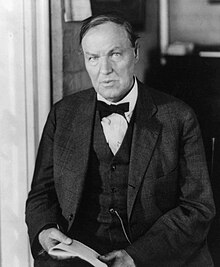
“Friedman Friday,” EPISODE “The Failure of Socialism” of Free to Choose in 1990 by Milton Friedman (Part 1)

December 7, 2012 – 5:55 am

Milton Friedman: Free To Choose – The Failure Of Socialism With Ronald Reagan (Full) Published on Mar 19, 2012 by NoNationalityNeeded Milton Friedman’s writings affected me greatly when I first discovered them and I wanted to share with you. We must not head down the path of socialism like Greece has done. Abstract: Ronald Reagan […] By Everette Hatcher III | Posted in Milton FriedmanPresident Obama | Edit | Comments (1)

FRANCIS SCHAEFFER ANALYZES ART AND CULTURE Part 252 My May 15, 1994 letter to Hans Bethe Part A (Featured Artist is Tommy Hartung)

__

Hans Bethe

From Wikipedia, the free encyclopedia
Hans Bethe
Hans Bethe.jpg
Born Hans Albrecht Bethe
July 2, 1906
Strasbourg, Germany
Died March 6, 2005 (aged 98)
Ithaca, New York, United States
Residence Germany
United States
Nationality German
American
Fields Nuclear physics
Institutions
Alma mater University of Frankfurt
University of Munich
Doctoral advisor Arnold Sommerfeld
Doctoral students
Other notable students Freeman Dyson
Known for
Notable awards
Spouse
Rose Ewald (married in 1939; two children)
Signature

Hans Albrecht Bethe (German: [ˈhans ˈalbʁɛçt ˈbeːtə]; July 2, 1906 – March 6, 2005) was a German and American nuclear physicist who, in addition to making important contributions to astrophysics, quantum electrodynamics and solid-state physics, won the 1967 Nobel Prize in Physics for his work on the theory of stellar nucleosynthesis.[1][2]

For most of his career, Bethe was a professor at Cornell University.[3] During World War II, he was head of the Theoretical Division at the secret Los Alamos laboratory which developed the first atomic bombs. There he played a key role in calculating the critical mass of the weapons and developing the theory behind the implosion method used in both the Trinity test and the “Fat Man” weapon dropped on Nagasaki in August 1945.

After the war, Bethe also played an important role in the development of the hydrogen bomb, though he had originally joined the project with the hope of proving it could not be made. Bethe later campaigned with Albert Einstein and the Emergency Committee of Atomic Scientists against nuclear testing and the nuclear arms race. He helped persuade the Kennedy and Nixon administrations to sign, respectively, the 1963 Partial Nuclear Test Ban Treaty and 1972 Anti-Ballistic Missile Treaty (SALT I).

His scientific research never ceased and he was publishing papers well into his nineties, making him one of the few scientists to have published at least one major paper in his field during every decade of his career – which, in Bethe’s case, spanned nearly seventy years. Freeman Dyson, once one of his students, called him the “supreme problem-solver of the 20th century”.[4]

Early years[edit]

Bethe was born in Strasbourg, which was then part of Germany, on July 2, 1906, the only child of Anna (née Kuhn) and Albrecht Bethe, a privatdozent of physiology at the University of Strasbourg.[5] Although his mother, the daughter of a professor at the University of Strasbourg, was Jewish,[6] he was raised a Protestant like his father.[7] Despite having a religious background,[8] he was not religious in later life, and described himself as an atheist.[9]

Hans Bethe, aged 12, with his parents

His father accepted a position as professor and director of the Institute of Physiology at the University of Kiel in 1912, and the family moved into the director’s apartment at the Institute. He was initially schooled privately by a professional teacher as part of a group of eight girls and boys.[10] The family moved again in 1915 when his father became the head of the new Institute of Physiology at the University of Frankfurt am Main.[7]

Bethe attended the Goethe-Gymnasium in Frankfurt, Germany. His education was interrupted in 1916, when he contracted tuberculosis, and he was sent to Bad Kreuznach to recuperate. By 1917, he had recovered sufficiently to attend the local realschule, and the following year he was sent to the Odenwaldschule, a private, coeducational boarding school.[11] He attended the Goethe-Gymnasium again for his final three years of secondary schooling, from 1922 to 1924.[12]

Having passed his abitur, Bethe entered the University of Frankfurt in 1924. He decided to major in chemistry. The instruction in physics was poor, and while there were distinguished mathematicians in Frankfurt like Carl Ludwig Siegel and Otto Szász, Bethe disliked their approaches, which presented mathematics without reference to the other sciences.[13] Bethe found that he was a poor experimentalist who destroyed his lab coat by spilling sulfuric acid on it, but he found the advanced physics taught by the associate professor, Walter Gerlach, more interesting.[13][14] Gerlach left in 1925, and was replaced by Karl Meissner, who advised Bethe that he should go to a university with a better school of theoretical physics, specifically the University of Munich, where he could study under Arnold Sommerfeld.[15][16]

Bethe entered the University of Munich in April 1926, where Sommerfeld took him on as a student on Meissner’s recommendation.[17] Sommerfeld taught an advanced course on differential equations in physics, which Bethe enjoyed. Because he was such a renowned scholar, Sommerfeld frequently received advance copies of scientific papers, which he put up for discussion at weekly evening seminars. When Bethe arrived, Sommerfeld had just received Erwin Schrödinger‘s papers on wave mechanics.[18]

For his PhD thesis, Sommerfeld suggested that Bethe examine electron diffraction in crystals. As a starting point, Sommerfeld suggested Paul Ewald‘s 1914 paper on X-ray diffraction in crystals. Bethe later recalled that he became too ambitious, and, in pursuit of greater accuracy, his calculations became unnecessarily complicated.[19] When he met Wolfgang Pauli for the first time, Pauli told him: “After Sommerfeld’s tales about you, I had expected much better from you than your thesis.”[20] “I guess from Pauli,” Bethe later recalled, “that was a compliment.”[20]

Early work[edit]

After Bethe received his doctorate, Erwin Madelung offered him an assistantship in Frankfurt, and in September 1928 Bethe moved in with his father, who had recently divorced his mother. His father met Vera Congehl earlier that year, and married her in 1929. They had two children, Doris, born in 1933, and Klaus, born in 1934.[21] Bethe did not find the work in Frankfurt very stimulating, and in 1929 he accepted an offer from Ewald at the Technische Hochschule in Stuttgart. While there, he wrote what he considered to be his greatest paper,[22] Zur Theorie des Durchgangs schneller Korpuskularstrahlen durch Materie (“The Theory of the Passage of Fast Corpuscular Rays Through Matter”).[23] Starting from Max Born‘s interpretation of the Schrödinger equation, Bethe produced a simplified formula for collision problems using a Fourier transform, which is known today as the Bethe formula. He submitted this paper for his habilitation in 1930.[22][24][25]

Sommerfeld recommended Bethe for a Rockefeller Foundation Travelling Scholarship in 1929. This provided $150 a month (about $2,000 in 2016 dollars[A]) to study abroad. In 1930, Bethe chose to do postdoctoral work at the Cavendish Laboratory at the University of Cambridge in England, where he worked under the supervision of Ralph Fowler.[26] At the request of Patrick Blackett, who was working with cloud chambers, Bethe created a relativistic version of the Bethe formula.[27] Bethe was also known for his sense of humor, and with Guido Beck and Wolfgang Riezler, two other postdoctoral research fellows, created a hoax paper On the Quantum Theory of the Temperature of Absolute Zero where he calculated the fine structure constant from the absolute zero temperature in Celsius units.[28] The paper poked fun at a certain class of papers in theoretical physics of the day, which were purely speculative and based on spurious numerical arguments such as Arthur Eddington‘s attempts to explain the value of the fine structure constant from fundamental quantities in an earlier paper. They were forced to issue an apology.[29]

For the second half of his scholarship, Bethe chose to go to Enrico Fermi‘s laboratory in Rome in February 1931. He was greatly impressed by Fermi and regretted that he had not gone to Rome first.[30] Bethe developed the Bethe ansatz, a method for finding the exact solutions for the eigenvalues and eigenvectors of certain one-dimensional quantum many-body models.[31] He was influenced by Fermi’s simplicity and Sommerfeld’s rigor in approaching problems, and these qualities influenced his own later research.[32]

The Rockefeller Foundation offered an extension of Bethe’s fellowship, allowing him to return to Italy in 1932.[33] In the meantime, Bethe worked for Sommerfeld in Munich as a privatdozent. Since Bethe was fluent in English, Sommerfeld had Bethe supervise all his English-speaking postdoctoral fellows, including Lloyd P. Smith from Cornell University.[34] Bethe accepted a request from Karl Scheel to write an article for the Handbuch der Physik on the quantum mechanics of hydrogen and helium. Reviewing the article decades later, Robert Bacher and Victor Weisskopf noted that it was unusual in the depth and breadth of its treatment of the subject, yet required very little updating for the 1959 edition. Bethe was then asked by Sommerfeld to help him with the handbuch article on electrons in metals. The article covered the basis of what is now called solid state physics. Bethe took a very new field and provided a clear, coherent and complete coverage of it.[33] His work on the handbuch articles occupied most of his time in Rome, but he also co-wrote a paper with Fermi on another new field, quantum electrodynamics, describing the relativistic interactions of charged particles.[35]

In 1932, Bethe accepted an appointment as an assistant professor at the University of Tübingen, where Hans Geiger was the professor of experimental physics.[36][37] One of the first laws passed by the new National Socialist government was the Law for the Restoration of the Professional Civil Service. Due to his Jewish background, Bethe was dismissed from his job at the University, which was a government post. Geiger refused to help, but Sommerfeld immediately gave Bethe back his fellowship at Munich. Sommerfeld spent much of the summer term of 1933 finding places for Jewish students and colleagues.[38]

Bethe left Germany in 1933, moving to England after receiving an offer for a position as lecturer at the University of Manchester for a year through Sommerfeld’s connection to William Lawrence Bragg.[38] He moved in with his friend Rudolf Peierls and Peierls’ wife Genia. Peierls was a fellow German physicist who had also been barred from academic positions in Germany because his parents were Jewish. This meant that Bethe had someone to speak to in German, and did not have to eat English food.[39] Their relationship was professional as well as personal. Peierls aroused Bethe’s interest in nuclear physics.[40] After James Chadwick and Maurice Goldhaber discovered the photodisintegration of deuterium,[41] Chadwick challenged Bethe and Peierls to come up with a theoretical explanation of this phenomenon. This they did on the four-hour train ride from Cambridge back to Manchester.[42] Bethe would investigate further in the years ahead.[40]

In 1933, the physics department at Cornell was looking for a new theoretical physicist, and Lloyd Smith strongly recommended Bethe. This was supported by Bragg, who was visiting Cornell at the time. In August 1934, Cornell offered Bethe a position as an acting assistant professor. Bethe had already accepted a fellowship for a year to work with Nevill Mott at the University of Bristol for a semester, but Cornell agreed to let him start in the spring of 1935.[43] Before leaving for the United States, he visited the Niels Bohr Institute in Copenhagen in September 1934, where he proposed to Hilde Levi, who accepted. However, the match was opposed by Bethe’s mother, who did not want him marrying a Jewish girl, and Bethe broke off their engagement a few days before their wedding date in December.[44]

United States[edit]

Bethe arrived in the United States in February 1935, and joined the faculty at Cornell University on a salary of $3,000.[45] Bethe’s appointment was part of a deliberate effort on the part of the new head of its physics department, Roswell Clifton Gibbs, to move into nuclear physics.[46] Gibbs had hired Stanley Livingston, who had worked with Ernest Lawrence, to build a cyclotron at Cornell.[46] To complete the team, Cornell needed an experimentalist, and, on the advice of Bethe and Livingston, recruited Robert Bacher. Bethe received requests to visit Columbia University from Isidor Isaac Rabi, Princeton University from Edward Condon, University of Rochester from Lee DuBridge, Purdue University from Karl Lark-Horovitz, the University of Illinois at Urbana–Champaign from Francis Wheeler Loomis, and Harvard University from John Hasbrouck Van Vleck. Gibbs moved to prevent Bethe from being poached by having him appointed as a regular assistant professor in 1936, with an assurance that promotion to professor would soon follow.[47]

Together with Bacher and Livingston, Bethe published a series of three articles,[48][49][50] which summarized most of what was known on the subject of nuclear physics until that time, an account that became informally known as “Bethe’s Bible”, and remained the standard work on the subject for many years. In this account, he also continued where others left off, filling in gaps in the older literature.[51] Loomis offered Bethe a full professorship at the University of Illinois at Urbana–Champaign, but Cornell matched the offer, and the salary of $6,000.[52] He wrote to his mother:

I am about the leading theoretician in America. That does not mean the best. Wigner is certainly better and Oppenheimer and Teller probably just as good. But I do more and talk more and that counts too.[53]

Illustration of the proton–proton chain reaction sequence
Overview of the CNO-I cycle. The helium nucleus is released at the top-left step.

On March 17, 1938, Bethe attended the Carnegie Institute and George Washington University‘s fourth annual Washington Conference of Theoretical Physics. There were only 34 invited attendees, but they included Gregory Breit, Subrahmanyan Chandrasekhar, George Gamow, Donald Menzel, John von Neumann, Bengt Strömgren, Edward Teller and Merle Tuve. Bethe initially declined the invitation to attend, because the conference’s topic, stellar energy generation, did not interest him, but Teller persuaded him to come. At the conference, Strömgren detailed what was known about the temperature, density and chemical composition of the Sun, and challenged the physicists to come up with an explanation. Gamow and Carl Friedrich von Weizsäcker had proposed in a 1937 paper that the Sun’s energy was the result of a proton–proton chain reaction:[54][55]


p
+
p
2
1D
+
e+
+
ν
e

But this did not account for the observation of elements heavier than helium. By the end of the conference, Bethe, working in collaboration with Charles Critchfield, had come up with a series of subsequent nuclear reactions that explained how the Sun shines:[56]

2
1D
+
p
3
2He
+
γ
3
2He
+ 3
2He
4
2He
+
p
3
2He
+ 4
2He
7
4Be
+
γ
7
4Be
+
e−
7
3Li
+
ν
e
7
3Li
+
p
4
2He

That this did not explain the processes in heavier stars was not overlooked. At the time there were doubts about whether the proton–proton cycle described the processes in the Sun, but more recent measurements of the Sun’s core temperature and luminosity show that it does.[54] When he returned to Cornell, Bethe studied the relevant nuclear reactions and reaction cross sections, leading to his discovery of the carbon-nitrogen-oxygen cycle (CNO cycle):[57]

12
6C
+
p
13
7N
+
γ
13
7N
13
6C
+
e+
+
ν
e
13
6C
+
p
14
7N
+
γ
14
7N
+
p
15
😯
+
γ
15
😯
15
7N
+
e+
+
ν
e
15
7N
+
p
12
6C
+ 4
2He

The two papers, one on the proton–proton cycle, co-authored with Critchfield, and the other on the carbon-oxygen-nitrogen (CNO) cycle, were sent to the Physical Review for publication.[58] After Kristallnacht, Bethe’s mother had become afraid to remain in Germany. Taking advantage of her Strasbourg origin, she was able to emigrate to the United States in June 1939 on the French quota, rather than the German one, which was full.[59] Bethe’s graduate student Robert Marshak noted that the New York Academy of Sciences was offering a $500 prize for the best unpublished paper on the topic of solar and stellar energy. So Bethe, in need of $250 to release his mother’s furniture, withdrew the CNO cycle paper and sent it in to the New York Academy of Sciences. It won the prize, and Bethe gave Marshak $50 finder’s fee and used $250 to release his mother’s furniture. The paper was subsequently published in the Physical Review in March. It was a breakthrough in the understanding of the stars, and would win Bethe the Nobel Prize in Physics in 1967.[60][58] In 2002, at age 96, Bethe sent a handwritten note to John N. Bahcall congratulating him on the use of solar neutrino observations to show that the CNO cycle accounts for about 7% of the Sun’s energy; the neutrino observations had started with Raymond Davis Jr., whose experiment was based on Bahcall’s calculations and encouragement, and led to Davis’s receiving a share of the 2002 Nobel Prize.[61]

Bethe married Rose Ewald, the daughter of Paul Ewald, on September 13, 1939, in a simple civil ceremony.[62] They had two children, Henry and Monica.[63] (Henry was a contract bridge expert and former husband of Kitty Munson Cooper.)[64] He became a naturalized citizen of the United States in March 1941.[65] Writing to Sommerfeld in 1947, Bethe confided that “I am much more at home in America than I ever was in Germany. As if I was born in Germany only by mistake, and only came to my true homeland at 28.”[66]

Manhattan Project[edit]

Bethe’s Los Alamos Laboratory ID badge

When the Second World War began, Bethe wanted to contribute to the war effort,[67] but was unable to work on classified projects until he became a citizen. Following the advice of the Caltech aerodynamicist Theodore von Kármán, Bethe collaborated with his friend Teller on a theory of shock waves which are generated by the passage of a projectile through a gas. Bethe considered it one of their most influential papers. He also worked on a theory of armor penetration, which was immediately classified by the Army, making it inaccessible to Bethe, who was not an American citizen at the time.[68]

After receiving security clearance in December 1941, Bethe joined the MIT Radiation Laboratory, where he invented the Bethe-hole directional coupler, which is used in microwave waveguides such as those used in radar sets.[69] In Chicago in June 1942, and then at the University of California, Berkeley, in July, he participated in a series of meetings at the invitation of Robert Oppenheimer, which discussed the first designs for the atomic bomb. They went over the preliminary calculations by Robert Serber, Stan Frankel, and others, and discussed the possibilities of using uranium-235 and plutonium. Teller then raised the prospect of a thermonuclear device, Teller’s “Super” bomb. At one point Teller asked if the nitrogen in the atmosphere could be set alight. It fell to Bethe and Emil Konopinski to perform the calculations to prove that this could not occur.[70] “The fission bomb had to be done,” he later recalled, “because the Germans were presumably doing it.”[71]

When Oppenheimer was put in charge of forming a secret weapons design laboratory, Los Alamos, he appointed Bethe director of the T (Theoretical) Division, the laboratory’s smallest but most prestigious division. This move irked the equally qualified but more difficult to manage Teller and Felix Bloch, who had coveted the job.[72][73] A series of disagreements between Bethe and Teller between February and June 1944 over the relative priority of Super research led to Teller’s group being removed from T Division and placed directly under Oppenheimer. In September it became part of Fermi’s new F Division.[74]

Bethe’s work at Los Alamos included calculating the critical mass and efficiency of uranium-235 and the multiplication of nuclear fission in an exploding atomic bomb. Along with Richard Feynman, he developed a formula for calculating the bomb’s explosive yield.[75] After August 1944, when the laboratory was reorganized and reoriented to solve the problem of the implosion of the plutonium bomb, Bethe spent much of his time studying the hydrodynamic aspects of implosion, a job which he continued into 1944.[76] In 1945, he worked on the neutron initiator, and later on radiation propagation from an exploding atomic bomb.[77] The Trinity nuclear test validated the accuracy of T Division’s results.[78] When it was detonated in the New Mexico desert on July 16, 1945, Bethe’s immediate concern was for its efficient operation, and not its moral implications. He is reported to have commented: “I am not a philosopher.”[79]

Hydrogen bomb[edit]

After the war, Bethe argued that a crash project for the hydrogen bomb should not be attempted, though after President Harry Truman announced the beginning of such a project, and the outbreak of the Korean War, Bethe signed up and played a key role in the weapon’s development. Though he would see the project through to its end, Bethe hoped that it would be impossible to create the hydrogen bomb.[80] He would later remark in 1968 on the apparent contradiction in his stance, having first opposed the development of the weapon and later helping to create it:

Just a few months before, the Korean war had broken out, and for the first time I saw direct confrontation with the communists. It was too disturbing. The cold war looked as if it were about to get hot. I knew then I had to reverse my earlier position. If I did not work on the bomb, somebody else would — and I had thought if I were around Los Alamos I might still be a force for disarmament. So I agreed to join in developing the H-bomb. It seemed quite logical. But sometimes I wish I were a more consistent idealist.[81]

As for his own role in the project, and its relation to the dispute over who was responsible for the design, Bethe later said that:

After the H-bomb was made, reporters started to call Teller the father of the H-bomb. For the sake of history, I think it is more precise to say that Ulam is the father, because he provided the seed, and Teller is the mother, because he remained with the child. As for me, I guess I am the midwife.[81]

In 1954, Bethe testified on behalf of J. Robert Oppenheimer during the Oppenheimer security hearing. Specifically, Bethe argued that Oppenheimer’s stances against developing the hydrogen bomb in the late 1940s had not hindered its actual development, a topic which was seen as a key motivating factor behind the hearing. Bethe contended that the developments which led to the successful Teller–Ulam design were a matter of serendipity and not a question of manpower or logical development of previously existing ideas. During the hearing, Bethe and his wife also tried hard to convince Edward Teller against testifying. However, Teller did not agree, and his testimony played a major role in the revocation of Oppenheimer’s security clearance. While Bethe and Teller had been on very good terms during the prewar years, the conflict between them during the Manhattan Project, and especially during the Oppenheimer episode, permanently marred their relationship.[82]

Later work[edit]

Lamb shift[edit]

Hans Bethe lecturing at Dalhousie University, 1978. On the day he learnt that he had been awarded the Nobel Prize in Physics, he still insisted on teaching his regular physics class.[83]

After the war ended, Bethe returned to Cornell. In June 1947, he participated in the Shelter Island Conference. Sponsored by the National Academy of Sciences and held at Shelter Island, New York, the conference on the “Foundations of Quantum Mechanics” was the first major physics conference held since the war. It was a chance for American physicists to come to together, pick up where they had left off before the war, and establish the direction of post-war research.[84][85]

A major talking point at the conference was the discovery by Willis Lamb and his graduate student Robert Retherford shortly before the conference began that one of the two possible quantum states of hydrogen atoms had slightly more energy than predicted by the Paul Dirac‘s theory; this became known as the Lamb shift. Oppenheimer and Weisskopf suggested that this was a result of quantum fluctuations of the electromagnetic field. Pre-war quantum electrodynamics (QED) gave absurd, infinite values for this; but the Lamb shift showed that it was both real and finite. Hans Kramers proposed renormalization as a solution, but no one knew how to do the calculation.[86][84]

Bethe managed to work it out on the train from New York to Schenectady. He arrived at a value of 1040 MHz, extremely close to that obtained experimentally by Lamb and Retherford. He did so by realising that it was a non-relativistic process, which greatly simplified the calculations. His paper, published in the Physical Review in August 1947 was only two pages long and contained just 12 mathematical equations, but was enormously influential. Hitherto, it had been assumed that the infinities meant that QED was fundamentally flawed, and that a new, radical theory was required. Bethe demonstrated that this was not necessary.[87]

One of Bethe’s most famous papers is one he never wrote: the 1948 Alpher–Bethe–Gamow paper.[88] George Gamow added Bethe’s name (in absentia) without consulting him, knowing that Bethe would not mind, and against Ralph Alpher‘s wishes. This was apparently a reflection of Gamow’s sense of humor, wanting to have a paper title that would sound like the first three letters of the Greek alphabet. As one of the Physical Review’s reviewers, Bethe saw the manuscript and struck out the words “in absentia”.[89]

Astrophysics[edit]

Bethe believed that the atomic nucleus was like a quantum liquid drop. He investigated the nuclear matter problem by considering the work done by Keith Brueckner on perturbation theory. Working with Jeffrey Goldstone, he produced a solution for the case where there was an infinite hard-core potential. Then, working with Baird Brandow and Albert Petschek, he came up with an approximation that converted the scattering equation into an easily solved differential equation. This then led him to the Bethe-Faddeev equation, a generalisation of Ludvig Faddeev‘s approach to three-body scattering. He then used these techniques to examine the neutron stars, which have densities similar to those of nuclei.[90]

Bethe continued to do research on supernovae, neutron stars, black holes, and other problems in theoretical astrophysics into his late nineties. In doing this, he collaborated with Gerald E. Brown of Stony Brook University. In 1978, Brown proposed that they collaborate on supernovae. These were reasonably well understood by this time, but the calculations were still a problem. Using techniques honed from decades of working with nuclear physics, and some experience with calculations involving nuclear explosions, Bethe tackled the problems involved in stellar gravitational collapse, and the way in which various factors affected a supernova explosion. Once again, he was able to reduce the problem to a set of differential equations, and solve them.[91][92]

At age 85, Bethe wrote an important article about the solar neutrino problem, in which he helped establish the conversion mechanism for electron neutrinos into muon neutrinos proposed by Stanislav Mikheyev, Alexei Smirnov and Lincoln Wolfenstein to explain a vexing discrepancy between theory and experiment. Bethe argued that physics beyond the Standard Model was required to understand the solar neutrino problem, because it assumed that neutrinos have no mass, and therefore cannot metamorphosize into each other; whereas the MSW effect required this to occur. Bethe hoped that corroborating evidence would be found by the Sudbury Neutrino Observatory (SNO) in Ontario, Canada, by his 90th birthday, but he did not get the call from SNO until June 2001, when he was nearly 95.[93][94]

In 1996, Kip Thorne approached Bethe and Brown about LIGO, the Laser Interferometer Gravitational-Wave Observatory, designed to detect the gravitational waves from merging neutron stars and black holes. Since Bethe and Brown were good at calculating things that could not be seen, could they look at the mergers? The 90-year-old Bethe quickly became enthused, and soon began the required calculations. The result was a 1998 paper on the “Evolution of Binary Compact Objects Which Merge”, which Brown regarded as the best that the two produced together.[95][96]

Political stances[edit]

Bethe being interviewed by journalists

In 1968, Bethe, along with IBM physicist Richard Garwin, published an article criticising in detail the anti-ICBM defense system proposed by the Department of Defense. The two physicists described in the article that nearly any measure taken by the US would be easily thwarted with the deployment of relatively simple decoys.[97] Bethe was one of the primary voices in the scientific community behind the signing of the 1963 Partial Test Ban Treaty prohibiting further atmospheric testing of nuclear weapons.[98]

During the 1980s and 1990s, Bethe campaigned for the peaceful use of nuclear energy. After the Chernobyl disaster, Bethe was part of a committee of experts that analysed the incident. They concluded that the reactor suffered from a fundamentally faulty design and human error also had significantly contributed to the accident. “My colleagues and I established,” he explained “that the Chernobyl disaster tells us about the deficiencies of the Soviet political and administrative system rather than about problems with nuclear power.”[99] Throughout his life Bethe remained a strong advocate for electricity from nuclear energy, which he described in 1977 as “a necessity, not merely an option.”[100]

In the 1980s he and other physicists opposed the Strategic Defense Initiative missile system conceived by the Ronald Reagan administration.[101] In 1995, at the age of 88, Bethe wrote an open letter calling on all scientists to “cease and desist” from working on any aspect of nuclear weapons development and manufacture.[102] In 2004, he joined 47 other Nobel laureates in signing a letter endorsing John Kerry for President of the United States as someone who would “restore science to its appropriate place in government”.[103]

Historian Gregg Herken wrote:

When Oppenheimer died, Oppie’s long-time friend, Hans Bethe, assumed the mantle of the scientist of conscience in this country. Like Jefferson and Adams, Teller and Bethe would live on into the new century which they and their colleagues had done so much to shape.[104]

Personal life[edit]

Bethe’s hobbies included a passion for stamp-collecting.[105] He loved the outdoors, and was an enthusiastic hiker all his life, exploring the Alps and the Rockies.[106] He died in his home in Ithaca, New York on March 6, 2005 [107] of congestive heart failure.[71] He was survived by his wife Rose and two children.[108] At the time of his death, he was the John Wendell Anderson Emeritus Professor of Physics Emeritus at Cornell University.[109]

Honors and awards[edit]

Bethe received numerous honors and awards in his lifetime and afterwards. He became a Fellow of the American Academy of Arts and Sciences in 1947,[110] and that year was received the National Academy of Sciences‘s Henry Draper Medal.[111] He was awarded the Max Planck Medal in 1955, the Franklin Medal in 1959, the Royal Astronomical Society‘s Eddington Medal and the United States Atomic Energy Commission‘s Enrico Fermi Award in 1961,[112] the Rumford Prize in 1963,[113] the Nobel Prize in Physics in 1967,[63]the National Medal of Science in 1975,[114] Oersted Medal in 1993,[115] the Bruce Medal in 2001,[116] and the Benjamin Franklin Medal for Distinguished Achievement in the Sciences by the American Philosophical Society posthumously in 2005.[117]

Bethe was elected Foreign Member of the Royal Society (ForMemRS) in 1957,[1] and he gave the 1993 Bakerian Lecture at the Royal Society on the Mechanism of Supernovae.[118]

Cornell named the third of five new residential colleges, each of which is named after a distinguished former member of the Cornell faculty, Hans Bethe House after him,[119] as was the Hans Bethe Center, 322 4th St. NE, Washington, DC, home to the Council for a Livable World, where Bethe was a longtime board member,[120] and the Bethe Center for Theoretical Physics at University of Bonn in Germany.[121] He also has an asteroid, 30828 Bethe, that was discovered in 1990 named after him,[122] as was the American Physical Society‘s Hans Bethe Prize.[123]

Selected publications[edit]

Notes[edit]

  1. Jump up^ Federal Reserve Bank of Minneapolis Community Development Project. “Consumer Price Index (estimate) 1800–”. Federal Reserve Bank of Minneapolis. Retrieved January 2, 2017.

Citations[edit]

    1. ^ Jump up to:a b c Lee, S.; Brown, G. E. (2007). “Hans Albrecht Bethe. 2 July 1906 — 6 March 2005: Elected ForMemRS 1957”. Biographical Memoirs of Fellows of the Royal Society. 53: 1. doi:10.1098/rsbm.2007.0018.
    1. Jump up^ Horgan, John (1992). “Illuminator of the Stars”. Scientific American. 267 (4): 32. doi:10.1038/scientificamerican1092-32.
    1. Jump up^ Available at http://www.JamesKeckCollectedWorks.org [1] are the class notes taken by one of his students at Cornell from the graduate courses on Nuclear Physics and on Applications of Quantum Mechanics he taught in the spring of 1947.
    1. Jump up^ Wark, David (11 January 2007). “The Supreme Problem Solver”. Nature. 445 (7124): 149. Bibcode:2007Natur.445..149W. doi:10.1038/445149a.
    1. Jump up^ Bernstein 1980, p. 7.
    1. Jump up^ Bernstein 1980, p. 8.
    1. ^ Jump up to:a b Schweber 2012, pp. 32–34.
    1. Jump up^ “Interview with Hans Bethe by Charles Weiner at Cornell University”. American Institute of Physics. November 17, 1967. Retrieved 25 April 2012. When asked by Charles Weiner if there was religion in his home, Bethe replied: “No. My father was, I think, slightly religious. I was taught to pray in the evening before going to bed, and I attended the Protestant religious instruction, which was given in the schools in Germany. I was also confirmed, and the instruction which I got in this connection got religion out of my system completely. It was never very strong before, and the confirmation had the consequence that I just didn’t believe.”
    1. Jump up^ Brian 2001, p. 117.
    1. Jump up^ Schweber 2012, pp. 30–31.
    1. Jump up^ Schweber 2012, pp. 36–40.
    1. Jump up^ Schweber 2012, p. 45.
    1. ^ Jump up to:a b Bernstein 1980, pp. 11–12.
    1. Jump up^ Schweber 2012, pp. 70–73.
    1. Jump up^ Bernstein 1980, p. 13.
    1. Jump up^ Schweber 2012, p. 93.
    1. Jump up^ Schweber 2012, pp. 118–119.
    1. Jump up^ Bernstein 1980, pp. 15–16.
    1. Jump up^ Bernstein 1980, pp. 20–21.
    1. ^ Jump up to:a b Schweber 2012, p. 142.
    1. Jump up^ Schweber 2012, pp. 156–157.
    1. ^ Jump up to:a b Bernstein 1980, pp. 25–27.
    1. Jump up^ Bethe, Hans (1930). “Zur Theorie des Durchgangs schneller Korpuskularstrahlen durch Materie”. Annalen der Physik (in German). 397 (3): 325–400. Bibcode:1930AnP…397..325B. doi:10.1002/andp.19303970303.
    1. Jump up^ Schweber 2012, p. 181.
    1. Jump up^ Brown & Lee 2006, p. 7.
    1. Jump up^ Schweber 2012, pp. 182–183.
    1. Jump up^ Schweber 2012, p. 187.
    1. Jump up^ Corlin, Axel; Stein, J. S.; Beck, G.; Bethe, H.; Riezler, W. (1931). “Zuschriften”. Die Naturwissenschaften. 19 (2): 37. Bibcode:1931NW…..19…37C. doi:10.1007/BF01523870.
    1. Jump up^ Schweber 2012, pp. 190–192.
    1. Jump up^ Schweber 2012, p. 193.
    1. Jump up^ Schweber 2012, pp. 199–202.
    1. Jump up^ Schweber 2012, p. 195.
    1. ^ Jump up to:a b Schweber 2012, pp. 202–208.
    1. Jump up^ Bernstein 1980, p. 32.
    1. Jump up^ Schweber 2012, pp. 211, 220–221.
    1. Jump up^ Bernstein 1980, p. 33.
    1. Jump up^ Schweber 2012, pp. 223–224.
    1. ^ Jump up to:a b Bernstein 1980, p. 35.
    1. Jump up^ Schweber 2012, pp. 237–240.
    1. ^ Jump up to:a b Schweber 2012, p. 244.
    1. Jump up^ Chadwick, J.; Goldhaber, M. (1934). “A ‘Nuclear Photo-effect’: Disintegration of the Diplon by γ-Rays”. Nature. 134 (3381): 237. Bibcode:1934Natur.134..237C. doi:10.1038/134237a0.
    1. Jump up^ Brown & Lee 2009, p. 9.
    1. Jump up^ Schweber 2012, pp. 262–263.
    1. Jump up^ Schweber 2012, pp. 272–275.
    1. Jump up^ Brown & Lee 2006, p. 136.
    1. ^ Jump up to:a b Schweber 2012, pp. 296–298.
    1. Jump up^ Schweber 2012, pp. 305–307.
    1. Jump up^ Bethe, H.; Bacher, R (1936). “Nuclear Physics. A: Stationary States of Nuclei”. Reviews of Modern Physics. 8 (2): 82–229. Bibcode:1936RvMP….8…82B. doi:10.1103/RevModPhys.8.82.
    1. Jump up^ Bethe, H. (1937). “Nuclear Physics. B: Nuclear Dynamics, Theoretical”. Reviews of Modern Physics. 9 (2): 69–244. Bibcode:1937RvMP….9…69B. doi:10.1103/RevModPhys.9.69.
    1. Jump up^ Bethe, H.; Livingston, M. S. (1937). “Nuclear Physics. C: Nuclear Dynamics, Experimental”. Reviews of Modern Physics. 9 (2): 245–390. Bibcode:1937RvMP….9..245L. doi:10.1103/RevModPhys.9.245.
    1. Jump up^ Brown & Lee 2009, p. 11.
    1. Jump up^ Schweber 2012, p. 313.
    1. Jump up^ Schweber 2012, p. 370.
    1. ^ Jump up to:a b Bernstein 1980, pp. 45–47.
    1. Jump up^ Schweber 2012, pp. 345–347.
    1. Jump up^ Schweber 2012, p. 347.
    1. Jump up^ Schweber 2012, pp. 348–350.
    1. ^ Jump up to:a b Schweber 2012, pp. 351–352.
    1. Jump up^ Bernstein 1980, p. 39.
    1. Jump up^ Bernstein 1980, pp. 51–52.
    1. Jump up^ Brown & Lee 2006, p. 149.
    1. Jump up^ Bernstein 1980, pp. 54–55.
    1. ^ Jump up to:a b “Hans Bethe – Biographical”. The Nobel Foundation. Retrieved July 7, 2013.
    1. Jump up^ Truscott, Alan. “Bridge: Son of Nobel Prize Winner Is Famed in His Own Right”. The New York Times. February 24, 1988. Retrieved April 11, 2015.
    1. Jump up^ Schweber 2012, p. 382.
    1. Jump up^ Brown & Lee 2006, p. 143.
    1. Jump up^ Bernstein 1980, p. 61.
    1. Jump up^ Brown & Lee 2009, pp. 13–14.
    1. Jump up^ Brown & Lee 2009, p. 13.
    1. Jump up^ Hoddeson et al. 1993, pp. 42–47.
    1. ^ Jump up to:a b Weil, Martin (March 8, 2005). “Hans Bethe Dies; Nobel Prize Winner Worked on A-Bomb”. The Washington Post. p. B06.
    1. Jump up^ Hoddeson et al. 1993, pp. 92–83.
    1. Jump up^ Szasz 1992, pp. 19–20.
    1. Jump up^ Hoddeson et al. 1993, pp. 204, 246.
    1. Jump up^ Hoddeson et al. 1993, pp. 179–184.
    1. Jump up^ Hoddeson et al. 1993, p. 129.
    1. Jump up^ Hoddeson et al. 1993, pp. 308–310.
    1. Jump up^ Hoddeson et al. 1993, pp. 344–345.
    1. Jump up^ Peplow, Mark (March 8, 2005). “Hans Bethe – Nuclear physicist dies at 98”. Nature. doi:10.1038/news050307-7.
    1. Jump up^ Bernstein 1980, pp. 92–96.
    1. ^ Jump up to:a b Schweber 2000, p. 166.
    1. Jump up^ Bernstein 1980, pp. 97–99.
    1. Jump up^ Brown & Lee 2006, p. 166.
    1. ^ Jump up to:a b Brown & Lee 2006, pp. 157–158.
    1. Jump up^ Brown & Lee 2009, p. 15.
    1. Jump up^ H. Bethe (1947). “The Electromagnetic Shift of Energy Levels”. Physical Review. 72 (4): 339–341. Bibcode:1947PhRv…72..339B. doi:10.1103/PhysRev.72.339.
    1. Jump up^ Brown & Lee 2006, pp. 158–159.
    1. Jump up^ Alpher, R. A.; Bethe, H.; Gamow, G. (1 April 1948). “The Origin of Chemical Elements” (PDF). Physical Review. 73 (7): 803–804. Bibcode:1948PhRv…73..803A. doi:10.1103/PhysRev.73.803. Retrieved March 10, 2011.
    1. Jump up^ Bernstein 1980, p. 46.
    1. Jump up^ Brown & Lee 2006, pp. 165–171.
    1. Jump up^ “Hans A. Bethe Prize winners”. American Physical Society. Retrieved July 7, 2013.
    1. Jump up^ Brown & Lee 2006, pp. 176–180.
    1. Jump up^ Brown & Lee 2006, pp. 151–153.
    1. Jump up^ Bahcall, J.N.; Bethe, H.A. (1990). “A solution of the solar neutrino problem”. Physical Review Letters. 65 (18): 2233–2235. Bibcode:1990PhRvL..65.2233B. doi:10.1103/PhysRevLett.65.2233.
    1. Jump up^ Brown & Lee 2006, p. 182.
    1. Jump up^ Bethe, Hans A.; Brown, G. E. (1998). “Evolution of Binary Compact Objects That Merge”. Astrophysical Journal. 506 (2): 780–789. arXiv:astro-ph/9802084Freely accessible. Bibcode:1998ApJ…506..780B. doi:10.1086/306265.
    1. Jump up^ Garwin, R. L.; Bethe, H.A. (March 1968). “Anti-Ballistic Missile Systems”. Scientific American. 218 (3): 21–31. doi:10.1038/scientificamerican0368-21.
    1. Jump up^ Bernstein 1980, pp. 107–112.
    1. Jump up^ Rhodes, Richard. “Chernobyl”. PBS. Retrieved July 6, 2013.
    1. Jump up^ Brown & Lee 2006, p. 266.
    1. Jump up^ Bethe 1991, pp. 113–131.
    1. Jump up^ “Hans Albrecht Bethe”. Nuclear Age Peace Foundation. Retrieved July 6, 2013.
    1. Jump up^ “48 Nobel Winning Scientists Endorse Kerry-June 21, 2004”. George Washington University. Retrieved July 6, 2013.
    1. Jump up^ Herken 2002, p. 334.
    1. Jump up^ Schweber 2012, p. 44.
    1. Jump up^ Brown & Lee 2006, pp. 126–128.
    1. Jump up^ Nobel Laureate Hans Bethe passes away at age of 98, March 7, 2005, Wikinews
    1. Jump up^ Tucker, Anthony (March 8, 2005). “Obituary: Hans Bethe”. The Guardian.
    1. Jump up^ “Hans Bethe”. Array of Contemporary Physicists. Retrieved July 7, 2013.
    1. Jump up^ “Book of Members, 1780–2010: Chapter B” (PDF). American Academy of Arts and Sciences. Retrieved June 24, 2011.
    1. Jump up^ “Henry Draper Medal”. National Academy of Sciences. Archived from the original on July 22, 2012. Retrieved February 24, 2011.
    1. Jump up^ Brown & Lee 2009, p. 17.
    1. Jump up^ “Past Recipients of the Rumford Prize”. American Academy of Arts and Sciences. Archived from the original on September 27, 2012. Retrieved February 24, 2011.
    1. Jump up^ “The President’s national Medal of Science”. National Science Foundation.
    1. Jump up^ “Oersted Medal”. Retrieved July 7, 2013.
    1. Jump up^ “Past Winners of the Catherine Wolfe Bruce Gold Medal”. Astronomical Society of the Pacific. Retrieved 24 February 2011.
    1. Jump up^ “Benjamin Franklin Medal for Distinguished Achievement in the Sciences Recipients”. American Philosophical Society. Retrieved November 26, 2011.
    1. Jump up^ Bethe, Hans A. (1994). “Mechanism of Supernovae”. Phil. Trans. R. Soc. London. A 346: 251–258.
    1. Jump up^ “Hans Bethe House”. Cornell University. Retrieved July 7, 2013.
    1. Jump up^ “Council for a Livable World, Our Legacy”. Retrieved July 7, 2013.
    1. Jump up^ “Bethe Center for Theoretical Physics”. Retrieved July 7, 2013.
    1. Jump up^ “JPL Small-Body Database Browser on 30828 Bethe”. NASA. Retrieved July 7, 2013.
  1. Jump up^ “Hans A. Bethe Prize Prize for astrophysics, nuclear physics, nuclear astrophysics and related fields”. American Physical Society. Retrieved July 7, 2013.

References[edit]

  • Bernstein, Jeremy (1980). Hans Bethe, Prophet of Energy. New York: Basic Books. ISBN 978-0-465-02903-7.
  • Bethe, Hans A. (1991). The Road from Los Alamos. New York: American Institute of Physics. ISBN 978-0-88318-707-4.
  • Brian, Denis (2001). The Voice Of Genius: Conversations With Nobel Scientists And Other Luminaries. Cambridge, Massachusetts: Perseus Pub. ISBN 978-0-7382-0447-5.
  • Brown, Gerald E.; Lee, Sabine (2009). Hans Albrecht Bethe (PDF). Biographical Memoirs. Washington, D.C.: National Academy of Sciences.
  • Brown, Gerald E.; Lee, Chang-Hwan, eds. (2006). Hans Bethe and his Physics. New Jersey: World Scientific Publishing. ISBN 9812566090.
  • Herken, Gregg (2002). Brotherhood of the Bomb: The Tangled Lives and Loyalties of Robert Oppenheimer, Ernest Lawrence, and Edward Teller. New York: Henry Holt and Company. ISBN 0-8050-6588-1.
  • Hoddeson, Lillian; Henriksen, Paul W.; Meade, Roger A.; Westfall, Catherine L. (1993). Critical Assembly: A Technical History of Los Alamos During the Oppenheimer Years, 1943–1945. New York: Cambridge University Press. ISBN 0-521-44132-3. OCLC 26764320.
  • Schweber, Silvan S. (2000). In the Shadow of the Bomb: Bethe, Oppenheimer, and the Moral Responsibility of the Scientist. Princeton: Princeton University Press. ISBN 978-0-691-04989-2.
  • Schweber, Silvan S. (2012). Nuclear Forces: The Making of the Physicist Hans Bethe. Cambridge, Massachusetts: Harvard University Press. ISBN 978-0-674-06587-1.
  • Szasz, Ferenc Morton (1992). British Scientists and the Manhattan Project: the Los Alamos Years. New York: St. Martin’s Press. ISBN 978-0-312-06167-8. OCLC 23901666.

External links[edit]

Portion of my 5-15-94 letter to Hans Bethe

On May 15, 1994 on the 10th anniversary of the passing of Francis Schaeffer I attempted to send a letter to almost every living Nobel Prize winner and I believe  Dr.Hans Bethe  was probably among that group and here is a portion of that letter below:

Could you take 3 minutes and attempt to refute the nihilistic message of the song which appears at the beginning of the enclosed tape? Back in 1980 I watched the series COSMOS and on May 5, 1994 I again sat down to watch it again. In this letter today I will tell you of 3 GENTLEMEN who contemplated the world around them. The first one is an evolutionist by the name of Carl Sagan. Mr. Sagan is what I would call a humanist full of optimism.
The second man also sought to contemplate the world around him and this man was King Solomon of Israel. In the Book of Ecclesiastes, Solomon limits himself to the question of human life lived “under the sun” between birth and death and what answers this would give (that is exactly what Mr. Sagan has done in COSMOS).It is this belief that life is only between birth and death that eventually causes Solomon to embrace nihilism. In the first few words of Ecclesiastes he observes the continual cycles of the earth and makes some very interesting conclusions”…to search for understanding about everything in the universe.”
The third man I want to mention is Francis Schaeffer who I believe was the greatest Christian philosopher of the 20th century. However, when he was a young agnostic many years ago he also had an experience similar to King Solomon’s when he contemplated the world and universe around him.
contemplated the world and the universe around him.
CARL SAGAN:”Our contemplations of the Cosmos stir us. There is a tingling in the spine, a catch in the voice, a faint sensation as if a distant memory of falling from a great height. We know we are approaching the grandest of mysteries.”
KING SOLOMON: Ecclesiastes 1:2-11;3:18-19 (Living Bible): 2 In my opinion, nothing is worthwhile; everything is futile. 3-7 For what does a man get for all his hard work?
Generations come and go, but it makes no difference.[b] The sun rises and sets and hurries around to rise again. The wind blows south and north, here and there, twisting back and forth, getting nowhere.* The rivers run into the sea, but the sea is never full, and the water returns again to the rivers and flows again to the sea . .everything is unutterably weary and tiresome. No matter how much we see, we are never satisfied; no matter how much we hear, we are not content. History merely repeats itself…For men and animals both breathe the same air, and both die. So mankind has no real advantage over the beasts; what an absurdity!
—-
What Solomon said ties into this following statement by evolutionist Douglas Futuyma – “Whether people are explicitly religious or not they tend to imagine that humans are in some sense the center of the universe. And what evolution does is to remove humans from the center of the universe. We are just one product of a very long historical process that has given rise to an enormous amount of organisms, and we are just one of them. So in one sense there is nothing special about us.”
———-
FRANCIS SCHAEFFER: There is no doubt in my mind that Solomon had the same experience in his life that I had as a younger man (at the age of 18 in 1930). I remember standing by the sea and the moon arose and it was copper and beauty. Then the moon did not look like a flat dish but a globe or a sphere since it was close to the horizon. One could feel the global shape of the earth too. Then it occurred to me that I could contemplate the interplay of the spheres and I was exalted because I thought I can look upon them with all their power, might, and size, but they could contempt nothing. Then came upon me a horror of great darkness because it suddenly occurred to me that although I could contemplate them and they could contemplate nothing yet they would continue to turn in ongoing cycles when I saw no more forever and I was crushed.
__________________
PAGE 1 B
Solomon died 3000 years ago and Francis Schaeffer passed away on May 15, 1984  exactly 10 years ago.
I firmly believe Solomon was correct when he said in Ecclesiastes 7:2 “It is better to spend your time at funerals than at festivals. For you are going to die, and it is a good thing to think about it while there is time.”
Suppose that you to learn that you only had just one year to live—the number of your days would be 365. What would you do with the precious few days that remained to you? With death stalking you, you would have little interest in trivial subjects and would instead be concerned with essentials. I know that is what I did when I was bed ridden in a hospital in Memphis at age 15. I was told that I may not live. My thoughts turned to spiritual things. Thank you for your time.
Sincerely,
Everette Hatcher III, P.O. Box 23426, Little Rock, AR 72221
TIME MAGAZINE May 28, 1984:
DIED, Francis Schaeffer, 72. Christian theologian and a leading scholar of evangelical Protestantism; of cancer; in Rochester, Minn. Schaeffer, a Philadelphia-born Presbyterian, and his wife in 1955 founded L’Abri (French for ‘the shelter’), a chalet in the Swiss Alps known among students and intellectuals for a reasoned rather than emotional approach to religious counseling. His 23 philosophical books include the bestseller How Should We Then Live? (1976).” (January 30, 1912-May 15, 1985)

Adrian Rogers is pictured below and Francis Schaeffer above.

Watching the film HOW SHOULD WE THEN LIVE? in 1979 impacted my life greatly

Francis Schaeffer in the film WHATEVER HAPPENED TO THE HUMAN RACE?

Francis and Edith Schaeffer


_____

_

Featured artist is Tommy Hartung

Tommy Hartung’s Undergound Movies | “New York Close Up” | Art21

Tommy Hartung

Tommy Hartung was born in 1979 in Akron, Ohio, and lives and works in New York. Growing up on a farm in upstate New York, Hartung spent countless days alone in the woods, building forts and living in a world of his imagination—which he considers the beginning of his artistic practice.

Continuing to build fantastical worlds in his adult work, Hartung combines stop-motion animation and self-produced videos with found footage and cheap consumer technologies; all of his production sets are built in his studio using found objects. Employing sculpture and video, Hartung’s work addresses wide-ranging topics—such as the Bible and the history of colonialism—with a surrealist DIY aesthetic, tackling critical issues through streams of consciousness storytelling.

Related posts:

FRANCIS SCHAEFFER ANALYZES ART AND CULTURE Part 52 THE BEATLES (Part D, There is evidence that the Beatles may have been exposed to Francis Schaeffer!!!) (Feature on artist Anna Margaret Rose Freeman )

______________   George Harrison Swears & Insults Paul and Yoko Lucy in the Sky with Diamonds- The Beatles The Beatles:   I have dedicated several posts to this series on the Beatles and I don’t know when this series will end because Francis Schaeffer spent a lot of time listening to the Beatles and talking […]

FRANCIS SCHAEFFER ANALYZES ART AND CULTURE Part 51 THE BEATLES (Part C, List of those on cover of Stg.Pepper’s ) (Feature on artist Raqib Shaw )

  The Beatles in a press conference after their Return from the USA Uploaded on Nov 29, 2010 The Beatles in a press conference after their Return from the USA. The Beatles:   I have dedicated several posts to this series on the Beatles and I don’t know when this series will end because Francis […]

FRANCIS SCHAEFFER ANALYZES ART AND CULTURE Part 50 THE BEATLES (Part B, The Psychedelic Music of the Beatles) (Feature on artist Peter Blake )

__________________   Beatles 1966 Last interview I have dedicated several posts to this series on the Beatles and I don’t know when this series will end because Francis Schaeffer spent a lot of time listening to the Beatles and talking and writing about them and their impact on the culture of the 1960’s. In this […]

FRANCIS SCHAEFFER ANALYZES ART AND CULTURE Part 49 THE BEATLES (Part A, The Meaning of Stg. Pepper’s Cover) (Feature on artist Mika Tajima)

_______________ The Beatles documentary || A Long and Winding Road || Episode 5 (This video discusses Stg. Pepper’s creation I have dedicated several posts to this series on the Beatles and I don’t know when this series will end because Francis Schaeffer spent a lot of time listening to the Beatles and talking and writing about […]

FRANCIS SCHAEFFER ANALYZES ART AND CULTURE PART 48 “BLOW UP” by Michelangelo Antonioni makes Philosophic Statement (Feature on artist Nancy Holt)

_______________ Francis Schaeffer pictured below: _____________________ I have included the 27 minute  episode THE AGE OF NONREASON by Francis Schaeffer. In that video Schaeffer noted,  ” Sergeant Pepper’s Lonely Hearts Club Band…for a time it became the rallying cry for young people throughout the world. It expressed the essence of their lives, thoughts and their feelings.” How Should […]

FRANCIS SCHAEFFER ANALYZES ART AND CULTURE Part 47 Woody Allen and Professor Levy and the death of “Optimistic Humanism” from the movie CRIMES AND MISDEMEANORS Plus Charles Darwin’s comments too!!! (Feature on artist Rodney Graham)

Crimes and Misdemeanors: A Discussion: Part 1 ___________________________________ Today I will answer the simple question: IS IT POSSIBLE TO BE AN OPTIMISTIC SECULAR HUMANIST THAT DOES NOT BELIEVE IN GOD OR AN AFTERLIFE? This question has been around for a long time and you can go back to the 19th century and read this same […]

FRANCIS SCHAEFFER ANALYZES ART AND CULTURE PART 46 Friedrich Nietzsche (Featured artist is Thomas Schütte)

____________________________________ Francis Schaeffer pictured below: __________ Francis Schaeffer has written extensively on art and culture spanning the last 2000years and here are some posts I have done on this subject before : Francis Schaeffer’s “How should we then live?” Video and outline of episode 10 “Final Choices” , episode 9 “The Age of Personal Peace and Affluence”, episode 8 […]

FRANCIS SCHAEFFER ANALYZES ART AND CULTURE Part 45 Woody Allen “Reason is Dead” (Feature on artists Allora & Calzadilla )

Love and Death [Woody Allen] – What if there is no God? [PL] ___________ _______________ How Should We then Live Episode 7 small (Age of Nonreason) #02 How Should We Then Live? (Promo Clip) Dr. Francis Schaeffer 10 Worldview and Truth Two Minute Warning: How Then Should We Live?: Francis Schaeffer at 100 Francis Schaeffer […]

FRANCIS SCHAEFFER ANALYZES ART AND CULTURE Part 44 The Book of Genesis (Featured artist is Trey McCarley )

___________________________________ Francis Schaeffer pictured below: ____________________________ Francis Schaeffer “BASIS FOR HUMAN DIGNITY” Whatever…HTTHR Dr. Francis schaeffer – The flow of Materialism(from Part 4 of Whatever happened to human race?) Dr. Francis Schaeffer – The Biblical flow of Truth & History (intro) Francis Schaeffer – The Biblical Flow of History & Truth (1) Dr. Francis Schaeffer […]

__

__