Here below is the genetic argument for personhood:
My good friend Dr. Kevin R. Henke is a scientist and also an atheistic evolutionist. I had a lot of discussions with Kevin over religious views. I remember going over John 7:17 with him one day. It says:
John 7:17 (Amplified Bible)
17If any man desires to do His will (God’s pleasure), he will know (have the needed illumination to recognize, and can tell for himself) whether the teaching is from God or whether I am speaking from Myself and of My own accord and on My own authority.
I challenged Kevin to read a chapter a day of the Book of John and pray to God and ask God, “Dear God, if you are there then reveal yourself to me, and I pledge to serve you the rest of my life.”
Kevin did that and he even wrote down the thoughts that came to his mind and sent it to me and these thoughts filled a notebook.
Kevin did not become a Christian, but I am still praying for him. I do respect Kevin because he is an honest man. Interestingly enough he told me that he was pro-life because the unborn baby has all the genetic code at the time of conception that they will have for the rest of their life. Below are some other comments by other scientists:
Dr. Hymie Gordon (Mayo Clinic): “By all criteria of modern molecular biology, life is present from the moment of conception.”
Dr. Micheline Matthews-Roth (Harvard University Medical School): “It is scientifically correct to say that an individual human life begins at conception.”
Dr. Alfred Bongioanni (University of Pennsylvania): “I have learned from my earliest medical education that human life begins at the time of conception.”
Dr. Jerome LeJeune, “the Father of Modern Genetics” (University of Descartes, Paris): “To accept the fact that after fertilization has taken place a new human has come into being is no longer a matter of taste or opinion . . . it is plain experimental evidence.”
Back on April 27, 2009 Fox News ran a story by Hollie McKay(“Supermodel Kathy Ireland Lashes Out Against Pro Choice,”) on Jill Ireland.
It’s no secret that the majority of Hollywood stars are strong advocates for a woman’s right to choose whether or not she wants to terminate a pregnancy, however former “Sports Illustrated” supermodel-turned-entrepreneur-turned-author Kathy Ireland has gone against the grain of the glitterati and spoken out against abortion.
“My entire life I was pro-choice — who was I to tell another woman what she could or couldn’t do with her body? But when I was 18, I became a Christian and I dove into the medical books, I dove into science,”Ireland told Tarts while promoting her insightful new book “Real Solutions for Busy Mom: Your Guide to Success and Sanity.”
“What I read was astounding and I learned that at the moment of conception a new life comes into being. The complete genetic blueprint is there, the DNA is determined, the blood type is determined, the sex is determined, the unique set of fingerprints that nobody has had or ever will have is already there.”
However Ireland admitted that she did everything she could to avoid becoming a believer in pro-life.
“I called Planned Parenthood and begged them to give me their best argument and all they could come up with that it is really just a clump of cells and if you get it early enough it doesn’t even look like a baby. Well, we’re all clumps of cells and the unborn does not look like a baby the same way the baby does not look like a teenager, a teenager does not look like a senior citizen. That unborn baby looks exactly the way human beings are supposed to look at that stage of development. It doesn’t suddenly become a human being at a certain point in time,” Ireland argued. “I’ve also asked leading scientists across our country to please show me some shred of evidence that the unborn is not a human being. I didn’t want to be pro-life, but this is not a woman’s rights issue but a human rights issue.”
Kevin R. Henke is an American geochemistand former instructor at the University of Kentucky‘s department of Geology.[3] He currently works as a senior research scientist at the University of Kentucky’s Center for Applied Energy Research.[4] He is well known for his criticism of young earth creationism and the scientific arguments they make for a young earth. In particular, he has been critical of the RATE project‘s results, which claim to show that zircons contain too much helium to be billions of years old, and has argued that Russell Humphreys, a young-earth creationist who was involved in the project, has made errors in his research. These flaws include that, according to Henke, “The vast majority of Humphreys et al.’s critical a, b, and Q/Q0 values that are used in these “dating” equations are either missing, poorly defined, improperly measured or inaccurate.”[5][6]Henke has also accused Humphreys of misidentifying his specimens, fudging his data, and not considering the possibility of helium contamination in this research.[7] He has also criticized John Woodmorappe for arguing that radiometric dating is unreliable.[8]On one occasion, Henke called Kent Hovind on the phone regarding Hovind’s $250,000 challenge to “prove” evolution. Hovind told Henke that in order to win the money he would have to recreate the Big Bang in a laboratory. Henke responded by proposing several alternative “proofs” that pertained to geology (his field of expertise), but Hovind refused, saying that the project must be chosen by him and it must not pertain to the area in which Henke has scientific expertise. Hovind therefore required Henke to prove that dogs and bananas had a common ancestor, and lowered the award to only $2,000 should he succeed. Henke accepted the challenge, and later drafted a contract, which was then posted on Talk.origins. However, one of Henke’s requirements was that the judges be unbiased, and Hovind rejected the challenge for this reason, insisting that he should be the only one who can choose the judges.[9][10]
and you will hear what far smarter people than I have to say on this matter. I agree with them.
Harry Kroto
Nick Gathergood, David-Birkett, Harry-Kroto
I have attempted to respond to all of Dr. Kroto’s friends arguments and I have posted my responses one per week for over a year now. Here are some of my earlier posts:
In the second video below in the 67th clip in this series are Richard Dawkins’ words that Harry Kroto wanted me to see. Since then I have read several of Richard Dawkins books and have attempted to respond to the contents of these books directly to Richard Dawkins by mail. In fact, I have been writing Richard Dawkins letters since May 15, 1994 which was the 10th anniversary of the passing of one of my heroes, Francis Schaeffer. Francis Schaeffer spent a lot of time responding to many of Richard Dawkins’ heroes such as Carl Sagan, Jacques Monod, H.J. Blackham, Isaac Newton, Ludwig Wittgenstein, Max Planck, Johann Sebastian Bach, Francis Bacon, Samuel Beckett, Leonardo Da Vinci, Albert Einstein, Michael Faraday, Gerald Horton, Edmund Leach, Louis Pasteur, George Wald, Jacob Bronowski, Steven Weinberg, Charles Darwin, Paul Kurtz, Peter Singer, Jonathan Miller, William B. Provine, Woody Allen, Noam Chomsky, James D. Watson, Francis Crick, Michael Polanyi, The Huxley family, Antony Flew, and Edward O. Wilson (Dawkins has since revised his opinion of Flew and Wilson, but he earlier regarded them very highly).
Francis Schaeffer 1911-1984
_
_
Both Francis Schaeffer and Richard Dawkins have talked extensively about the life of Charles Darwin.
_
Sir Harry Kroto with his high school friend Sir Ian McKellan at the FSU National High Field Magnetic Lab on Tuesday, October 27, 2009.
50 Renowned Academics Speaking About God (Part 1)
_
Another 50 Renowned Academics Speaking About God (Part 2)
_
_
Edit Post ‹ The Daily Hatch — WordPress
A Further 50 Renowned Academics Speaking About God (Part 3)
_
Richard Dawkins Photos Photos – Professor Stephen Hawking Unveils Medal For Science Communication – Zimbio
On November 21, 2014 I received a letter from Nobel Laureate Harry Kroto and it said: …Please click on this URL http://vimeo.com/26991975 and you will hear what far smarter people than I have to say on this matter. I agree with them. Harry Kroto _________________ Below you have picture of 1996 Chemistry Nobel Prize Winner […]
The Beatles were “inspired by the musique concrète of German composer and early electronic music pioneer Karlheinz Stockhausen…” as SCOTT THILL has asserted. Francis Schaeffer noted that ideas of “Non-resolution” and “Fragmentation” came down German and French streams with the influence of Beethoven’s last Quartets and then the influence of Debussy and later Schoenberg’s non-resolution which is in total contrast […]
_______ On November 21, 2014 I received a letter from Nobel Laureate Harry Kroto and it said: …Please click on this URL http://vimeo.com/26991975 and you will hear what far smarter people than I have to say on this matter. I agree with them. Harry Kroto _________________ Below you have picture of 1996 Chemistry Nobel Prize […]
On November 21, 2014 I received a letter from Nobel Laureate Harry Kroto and it said: …Please click on this URL http://vimeo.com/26991975 and you will hear what far smarter people than I have to say on this matter. I agree with them. Harry Kroto ____________________ Below you have picture of 1996 Chemistry Nobel Prize Winner Dr. […]
I enjoyed your latest book Outgrowing God which is one of my favorite books that you have written.
However, there are some some weak parts of the book. For instance, in chapter two you write:
“We have no more reason to believe [the Old Testament narratives] than we do Homer’s stories about Achilles or Helen. . . The stories of Abraham and Joseph are Hebrew legends, just as Homer’s are Greek legends.” (chapter 2)
Here is a portion of an article by Brian Thomas that refutes Dawkins assertion:
With so many loud voices in our culture asserting that Genesis is a myth, one would think archaeologists have uncovered clear evidence that refutes it. On the contrary, some incredible archaeological finds confirm key events in Genesis.
Secular sources also confirm kings and cities mentioned in Genesis 14. The first verse says, “And it came to pass in the days of Amraphel king of Shinar, Arioch king of Ellasar, Chedorlaomer king of Elam, and Tidal king of nations.” In 1895, assyriologist Theophilus Pinches found cuneiform tablet Sp. III. 2 archived at the British Museum. He presented his translation to the Victoria Institute in 1897, showing what the Hebrew of Genesis calls Arioch as Eri-aku, Chedorlaomer as Kudurlagmal, Tidal as Tudhula, and possibly Amraphel as Hammurabi, though the text breaks off after “Hammu.”7
Genesis 14:2 refers to Sodom, Gomorrah, and three other “cities of the plain.”8 Excavations at Bab edh-Dhra southeast of the Dead Sea starting in the 1960s revealed many clues that match the Sodom account.9 For example, the city and even its nearby cemetery were burned from the top down and, in places, lie beneath several feet of ash even today.
All these artifacts and more—including a 2,000-year-old stone commemorative building over the cave at Machpelah called the Tomb of the Patriarchs—bury the idea that Genesis was a myth. Archaeology clearly confirms Genesis.
—-
Dr. Dawkins, you have a 150 year advantage over your hero Charles Darwin and the archaeologist’s spade has continued to dig. Take a look at this piece of evidence from the book WHATEVER HAPPENED TO THE HUMAN RACE? by Francis Schaeffer and C. Everett Koop:
TRUTH AND HISTORY (chapter 5 of WHATEVER HAPPENED TO THE HUMAN RACE?)
In the previous chapter we saw that the Bible gives us the explanation for the existence of the universe and its form and for the mannishness of man. Or, to reverse this, we came to see that the universe and its form and the mannishness of man are a testimony to the truth of the Bible. In this chapter we will consider a third testimony: the Bible’s openness to verification by historical study.
Christianity involves history. To say only that is already to have said something remarkable, because it separates the Judeo-Christian world-view from almost all other religious thought. It is rooted in history.
The Bible tells us how God communicated with man in history. For example, God revealed Himself to Abraham at a point in time and at a particular geographical place. He did likewise with Moses, David, Isaiah, Daniel and so on. The implications of this are extremely important to us. Because the truth God communicated in the Bible is so tied up with the flow of human events, it is possible by historical study to confirm some of the historical details.
It is remarkable that this possibility exists. Compare the information we have from other continents of that period. We know comparatively little about what happened in Africa or South America or China or Russia or even Europe. We see beautiful remains of temples and burial places, cult figures, utensils, and so forth, but there is not much actual “history” that can be reconstructed, at least not much when compared to that which is possible in the Middle East.
When we look at the material which has been discovered from the Nile to the Euphrates that derives from the 2500-year span before Christ, we are in a completely different situation from that in regard to South America or Asia. The kings of Egypt and Assyria built thousands of monuments commemorating their victories and recounting their different exploits. Whole libraries have been discovered from places like Nuzu and Mari and most recently at Elba, which give hundreds of thousands of texts relating to the historical details of their time. It is within this geographical area that the Bible is set. So it is possible to find material which bears upon what the Bible tells us.
The Bible purports to give us information on history. Is the history accurate? The more we understand about the Middle East between 2500 B.C. and A.D. 100, the more confident we can be that the information in the Bible is reliable, even when it speaks about the simple things of time and place.
We should take one last step back into the history of the Old Testament. In the previous note we looked first at the Dead Sea Scrolls, dating to around 100 B.C. Then we went back to the period of the Late Monarchy and looked first at the siege of Hezekiah in Jerusalem by Sennacherib in 701 B.C. and also at the last years of Judah down to about 600 B.C. Then we went further back to about 850 B.C., to Ahab and Jezebel, the ivory house, the Black Obelisk, the Moabite Stone and so on–then back again to about 950 B.C., to the time of Solomon and his son Rehoboam and the campaign by Shishak, the Egyptian pharaoh.
This should have built up in our minds a vivid impression of the historic reliability of the biblical text, including even the seemingly obscure details such as the ration tablets in Babylon. We saw, in other words, not only that the Bible gives us a marvelous world view that ties in with the nature of reality and answers the basic problems which philosophers have asked down through the centuries, but also that the Bible is completely reliable, EVEN ON THE HISTORICAL LEVEL.
The previous notes looked back to the time of Moses and Joshua, the escape from Egypt, and the settlement in Canaan. Now we will go back further–back as far as Genesis 12, near the beginning of the Bible.
Do we find that the narrative fades away to a never-never land of myths and legends? By no means. For we have to remind ourselves that although Genesis 12 deals with events a long time ago from our moment of history (about 2000 B.C. or a bit later), the civilized world was already not just old but ancient when Abram/Abraham left “Ur of the Chaldeans” (see Genesis 11:31).
Ur itself was excavated some fifty years ago. In the British Museum, for example, one can see the magnificent contents of a royal burial chamber from Ur. This includes a gold headdress still in position about the head of a queen who died in Ur about 2500 B.C. It has also been possible to reconstruct from archaeological remains what the streets and buildings must have been like at the time.
Like Ur, the rest of the world of the patriarchs (that is, of Abraham, Isaac, and Jacob) was firm reality. Such places as Haran, where Abraham went first, have been discovered. So has Shechem from this time, with its Canaanite stone walls, which are still standing, and its temple.
Genesis 12:5-9New American Standard Bible (NASB)
5 Abram took Sarai his wife and Lot his nephew, and all their possessions which they had accumulated, and the [a]persons which they had acquired in Haran, and they [b]set out for the land of Canaan; thus they came to the land of Canaan. 6 Abram passed through the land as far as the site of Shechem, to the[c]oak of Moreh. Now the Canaanite was then in the land.7 The Lord appeared to Abram and said, “To your [d]descendants I will give this land.” So he built an altar there to the Lord who had appeared to him. 8 Then he proceeded from there to the mountain on the east of Bethel, and pitched his tent, with Bethel on the west and Ai on the east; and there he built an altar to the Lord andcalled upon the name of the Lord. 9 Abram journeyed on, continuing toward the[e]Negev.
Haran and Shechem may be unfamiliar names to us but the Negrev (or Negeb) is a name we have all read frequently in the news accounts of our own day.
Episode #050: In her New Haven, Connecticut studio, artist Jessica Stockholder discusses the relationship between beauty, pleasure and taste, and how all three have a role in defining and being defined by politics — alongside documentation of an exhibition of her sculptures at Mitchell-Innes & Nash gallery in New York City.
VIDEO | Producer: Wesley Miller & Nick Ravich. Interview: Susan Sollins. Camera: Mead Hunt & Joel Shapiro. Sound: Merce Williams. Editor: Jenny Chiurco. Artwork Courtesy: Jessica Stockholder. Special Thanks: Jay Gorney and Mitchell-Innes & Nash, New York.
______________________
Some of Stockholder’s artwork below:
“I am happy with this painting but it is hard to say why… It is very hard to say what abstract shapes mean but they do mean something….I know what I am doing at some level both physically and conceptionally there is a kind of thinking process that goes on that I can’t tell you about Just go with it and trust that it is significant” (leaving it up to chance?)
Jessica Stockholder: Form | Art21 “Exclusive”
Uploaded on Mar 5, 2010
Episode #096: From her home in New Haven, Connecticut, Jessica Stockholder discusses the strength of form and the difficulty in articulating the meaning behind abstract shapes.
A pioneer of multimedia genre-bending installations, Jessica Stockholders site-specific interventions and autonomous floor and wall pieces have been described as paintings in space. Her work is energetic, cacophonous, and idiosyncratic, but closer observation reveals formal decisions about color and composition, and a tempering of chaos with control.
VIDEO | Producer: Wesley Miller and Nick Ravich. Interview: Susan Sollins. Camera: Mead Hunt. Sound: Merce Williams. Editor: Jenny Chiurco and Mary Ann Toman. Artwork Courtesy: Jessica Stockholder.
On November 21, 2014 I received a letter from Nobel Laureate Harry Kroto and it said: …Please click on this URL http://vimeo.com/26991975 and you will hear what far smarter people than I have to say on this matter. I agree with them. Harry Kroto _________________ Below you have picture of 1996 Chemistry Nobel Prize Winner […]
The Beatles were “inspired by the musique concrète of German composer and early electronic music pioneer Karlheinz Stockhausen…” as SCOTT THILL has asserted. Francis Schaeffer noted that ideas of “Non-resolution” and “Fragmentation” came down German and French streams with the influence of Beethoven’s last Quartets and then the influence of Debussy and later Schoenberg’s non-resolution which is in total contrast […]
_______ On November 21, 2014 I received a letter from Nobel Laureate Harry Kroto and it said: …Please click on this URL http://vimeo.com/26991975 and you will hear what far smarter people than I have to say on this matter. I agree with them. Harry Kroto _________________ Below you have picture of 1996 Chemistry Nobel Prize […]
On November 21, 2014 I received a letter from Nobel Laureate Harry Kroto and it said: …Please click on this URL http://vimeo.com/26991975 and you will hear what far smarter people than I have to say on this matter. I agree with them. Harry Kroto ____________________ Below you have picture of 1996 Chemistry Nobel Prize Winner Dr. […]
Canary Islands 2014: Harold Kroto and Richard Dawkins
_
Richard Dawkins & Daniel Dennett vs. Francis Collins & Benjamin Carson – Evolution Debate
__
Bach
Francis Schaeffer
__
Charles Darwin photograph by Herbert Rose Barraud, 1881
Mark Henry, teaching pastor of Fellowship Bible Church
Isaac Newton
Louis Pasteur below
Michael Faraday
Henri Fabre
Blaise Pascal
____
___________________________________
1-29-17
Richard Dawkins Washington, DC
Dear Mr. Dawkins,
I know that you are good friends with Daniel Dennett and I have noticed how many times he quotes you in his books. He was kind enough to send me a very thoughtful response on January 12, 2017, and it just so happens that I am in the middle of reading his book DARWIN’S DANGEROUS IDEA. Of course, I have read several of your books such as The God Delusion, An Appetite for Wonder: The Making of a Scientist, and Brief Candle in the Dark: My Life in Science.
I also recently enjoyed watching both you and Dr. Dennett on Jonathan Miller’s BBC program Atheism: A Rough History of Disbelief. Francis Schaeffer used to quote Jonathan Miller back in the 1960’s during his teachings at L ‘Abri.
I once was the guest of the week on a British radio show called Desert Island Discs. You have to choose the eight records you would take with you if marooned on a desert island. Among my choices was ‘Mache dich mein Herze rein’ from Bach’s St Matthew Passion. The interviewer was unable to understand how I could choose religious music without being religious. You might as well say, how can you enjoy Wuthering Heights when you know perfectly well that Cathy and Heathcliff never really existed?
But there is an additional point that I might have made, and which needs to be made whenever religion is given credit for, say, the Sistine Chapel or Raphael’s Annunciation. Even great artists have to earn a living, and they will take commissions where they are to be had. I have no reason to doubt that Raphael and Michelangelo were Christians – it was pretty much the only option in their time – but the fact is almost incidental. Its enormous wealth had made the Church the dominant patron of the arts. If history had worked out differently, and Michelangelo had been commissioned to paint a ceiling for a giant Museum of Science, mightn’t he have produced something at least as inspirational as the Sistine Chapel? How sad that we shall never hear Beethoven’s Mesozoic Symphony, or Mozart’s opera The Expanding Universe.
I thought of that quote from you today when I was in church. Our teaching pastor Mark Henry of FELLOWSHIP BIBLE CHURCH in Little Rock, Arkansas, pointed out that the Holy Spirit has empowered many Christians over the centuries to empty their hearts of their own worldly desires and to serve God through their actions.
2 RESPONSES TO YOUR ASSERTION THAT AN EARLIER ACCEPTANCE OF EVOLUTION WOULD HAVE ENRICHED MUSIC AND THE ARTS.
First, we have the testimony of Charles Darwin himself concerning this.
Second, we have the actual result of what Christianity’s impact on the world was.
I have said that in one respect my mind has changed during the last twenty or thirty years. Up to the age of thirty, or beyond it, poetry of many kinds, such as the works of Milton, Gray, Byron, Wordsworth, Coleridge, and Shelley, gave me great pleasure, and even as a schoolboy I took intense delight in Shakespeare, especially in the historical plays. I have also said that formerly pictures gave me considerable, and music very great delight. But now for many years I cannot endure to read a line of poetry: I have tried lately to read Shakespeare, and found it so intolerably dull that it nauseated me. I have also almost lost my taste for pictures or music. Music generally sets me thinking too energetically on what I have been at work on, instead of giving me pleasure. I retain some taste for fine scenery, but it does not cause me the exquisite delight which it formerly did…
This curious and lamentable loss of the higher æsthetic tastes is all the odder, as books on history, biographies, and travels (independently of any scientific facts which they may contain), and essays on all sorts of subjects interest me as much as ever they did. My mind seems to have become a kind of machine for grinding general laws out of large collections of facts, but why this should have caused the atrophy of that part of the brain alone, on which the higher tastes depend, I cannot conceive. A man with a mind more highly organised or better constituted than mine, would not, I suppose, have thus suffered; and if I had to live my life again, I would have made a rule to read some poetry and listen to some music at least once every week; for perhaps the parts of my brain now atrophied would thus have been kept active through use. The loss of these tastes is a loss of happiness, and may possibly be injurious to the intellect, and more probably to the moral character, by enfeebling the emotional part of our nature.
Francis Schaeffer commented:
This is the old man Darwin writing at the end of his life. What he is saying here is the further he has gone on with his studies the more he has seen himself reduced to a machine as far as aesthetic things are concerned. I think this is crucial because as we go through this we find that his struggles and my sincere conviction is that he never came to the logical conclusion of his own position, but he nevertheless in the death of the higher qualities as he calls them, art, music, poetry, and so on, what he had happen to him was his own theory was producing this in his own self just as his theories a hundred years later have produced this in our culture. I don’t think you can hold the evolutionary position as he held it without becoming a machine. What has happened to Darwin personally is merely a forerunner to what occurred to the whole culture as it has fallen in this world of pure material, pure chance and later determinism. Here he is in a situation where his mannishness has suffered in the midst of his own position.
Let’s take a closer look at the music by Bach that you call your favorite.
From Francis Schaeffer’s How Should We Then Live? (p. 92):
Johann Sebastian Bach (1685 – 1750) was certainly the zenith of the composers coming out of the Reformation. His music was a direct result of the Reformation culture and the biblical Christianity of the time, which was so much a part of Bach himself. There would have been no Bach had there been no Luther. Bach wrote on his score initials representing such phrases as: “With the help of Jesus” – “To God alone be the glory” – “In the name of Jesus.” It was appropriate that the last thing Bach the Christian wrote was “Before Thy Throne I Now Appear.” Bach consciously related both the form and the words of his music to biblical truth. Out of the biblical context came a rich combination of music and words and a diversity of unity. This rested on the fact that the Bible gives unity to the universal and the particulars, and therefore the particulars have meaning. Expressed musically, there can be endless variety and diversity without chaos. There is variety yet resolution.
And this is why I love Bach.
IF JESUS WAS IN FACT A REAL MAN AND THE HOLY SPIRIT DID UPON HIS DISCIPLES THEN YOU WOULD EXPECT THE WORLD TO BE CHANGED.
___What if Jesus Had Never Been Bornby D. James Kennedy This book documents the positive impact Jesus Christ and the Christian Church has made on the world in nearly every conceivable area – morality, health, sex, hospitals, art, music, charity, economics, government, science, education and the founding of America. Some critics believe that all these advances would have happened sooner or later, but there is little evidence to support this other then hopeful conjecture. Despite excesses by self proclaimed Christians over the ages, the problems have not been due to Jesus’ teachings, rather the failure to follow those teachings. Even with imperfect people, Christianity has had a much more positive impact on the world than any other religion. This book is desperately needed to counter the constant attacks on the Christian faith.We need to understand that the changes made by Christianity did not happen overnight. Many people – most couldn’t read or write – became Christian without examining or having the ability to examine current belief systems. At a time when books were only available to a select group of people – and then in limited number, it took decades for changes in morality to take hold of society as a whole. It certainly is true that Christianity has had shortcomings. However, the sins of the Church were no worse then the pagan world. Christianity at its worst was far better then Paganism at its best. Whereas the pagan world could never advance morally, the shortcomings of the Christian church were an aberration that were corrected by itself over time. Excerpts from the book: “Jesus Christ, the greatest man who ever lived, has changed virtually every aspect of human life – and most people don’t know it.” “Despite its humble origins, the Church has made more changes on earth for the good than any other movement or force in history. To get an overview of some of the positive contributions Christianity has made through the centuries, here are a fewhighlights:• Hospitals, which essentially began during the Middle Ages.• Universities, which also began during the Middle Ages. In addition, most of the world’s greatest universities were started by Christians for Christian purposes.• Literacy and education for the masses.• Capitalism and free-enterprise.• Representative government, particularly as it has been seen in the American experiment.• The separation of political powers.• Civil liberties.• The abolition of slavery, both in antiquity and in more modern times.• Modem science.• The discovery of the New World by Columbus.• The elevation of women.• Benevolence and charity; the good Samaritan ethic.• Higher standards of justice.• The elevation of the common man.• The condemnation of adultery, homosexuality, and other sexual perversions. This has helped to preserve the human race, and it has spared many from heartache.• High regard for human life.• The civilizing of many barbarian and primitive cultures.• The codifying and setting to writing of many of the world’s languages.• Greater development of art and music. The inspiration for the greatest works of art.• The countless changed lives transformed from liabilities into assets to society because of the gospel. • The eternal salvation of countless souls! The last one mentioned, the salvation of souls, is the primary goal of the spread of Christianity. All the other benefits listed are basically just by-products of what Christianity has often brought when applied to daily living. When Jesus Christ took upon Himself the form of man, He imbued mankind with a dignity and inherent value that had never been dreamed of before. Whatever Jesus touched or whatever He did transformed that aspect of human life. Many people will read about the innumerable small incidents in the life of Christ while never dreaming that those casually mentioned “little” things were to transform the history of humankind. Christ’s influence on the world is immeasurable. The purpose of this book is to glimpse what we can measure, to see those numerous areas of life where Christ’s influence can be concretely traced. Not all have been happy about Jesus Christ’s coming into the world. Friederich Nietzsche, the nineteenth-century atheist philosopher who coined the phrase “God is dead,” likened Christianity to poison that has infected the whole world. Nietzsche said that history is the battle between Rome (the pagans) and Israel (the Jews and the Christians); and he be-moaned the fact that Israel (through Christianity) was winning and that the cross “has by now triumphed over all other, nobler virtues.” In his book,The Antichrist, Nietzsche wrote: I condemn Christianity; I bring against the Christian Church the most terrible of all the accusations that an accuser has ever had in his mouth. It is, to me, the greatest of all imaginable corruption; it seeks to work the ultimate corruption, the worst possible corruption. The Christian Church has left nothing untouched by its depravity; it has turned every value into worthlessness, and every truth into a lie, and every integrity into baseness of soul. Nietzsche held up as heroes a “herd of blond beasts of prey, a race of conquerors and masters.” According to Nietzsche, and later Hitler, by whom or what were these Teutonic warriors corrupted? Answer: Christianity. “This splendid ruling stock was corrupted, first by the Catholic laudation of feminine virtues, secondly by the Puritan and plebeian ideals of the Reformation, and thirdly by intermarriage with inferior stock.” Had Jesus never come, wailed Nietzsche, we would never have had the corruption of “slave morals” into the human race. Many of the ideas of Nietzsche were put into practice by his philosophical disciple, Hitler, and about 16 million died as a result. In Mein Kampf, Hitler blamed the Church for perpetuating the ideas and laws of the Jews. Hitler wanted to completely uproot Christianity once he had finished uprooting the Jews. In a private conversation “shortly after the National Socialists’ rise to power,” recorded by Herman Rauschning, Hitler said: Historically speaking, the Christian religion is nothing but a Jewish sect…. After the destruction of Judaism, the extinction of Christian slave morals must follow logically… . I shall know the moment when to confront, for the sake of the German people and the world, their Asiatic slave morals with our picture of the free man, the godlike man…. It is not merely a question of Christianity and Judaism. We are fighting against the most ancient curse that humanity has brought upon itself. We are fighting against the perversion of our soundest instincts. Ah, the God of the deserts, that crazed, stupid, vengeful Asiatic despot with his powers to make laws! … That poison with which both Jews and Christians have spoiled and soiled the free, wonderful instincts of man and lowered them to the level of doglike fright. Both Nietzsche and Hitler wished that Christ had never been born. Others share this sentiment. For example, Charles Lam Markmann, who wrote a favorable book on the history of the ACLU, entitled The Noblest Cry, said: “If the otherwise admirably civilized pagans of Greece and their Roman successors had had the wit to laugh Judaism into desuetude, the world would have been spared the 2000-year sickness of Christendom.”… the point of this book is to say to Nietzsche, Freud, Hitler, Robert Ingersoll, Lenin, Stalin, Mao, Madalyn Murray O’Hare, Phil Donahue, the ACLU, and other leading anti-Christians of the past and present, that the overwhelming impact of Christ’s life on Planet Earth has been positive, not negative. What these people refuse to acknowledge is that civil liberties have been bequeathed by Christianity and not by atheism or humanism. Prior to the coming of Christ, human life on this planet was exceedingly cheap. Life was expendable prior to Christianity’s influence. Even today, in parts of the world where the gospel of Christ or Christianity has not penetrated, life is exceedingly cheap. But Jesus Christ … gave mankind a new perspective on the value of human life. Furthermore, Christianity bridged the gap between the Jews – who first received the divine revelation that man was made in God’s image – and the pagans, who attributed little value to human life. Meanwhile, as we in the post-Christian West abandon our Judeo-Christian heritage, life is becoming cheap once again. Children:In the ancient world, child sacrifice was a common phenomenon. Only about half of the children born lived beyond the age of eight, in part because of widespread infanticide, with famine and illness also being factors. Infanticide was not only legal, it was applauded…it was commonly held in Rome that killing one’s own children could be an act of beauty. But then Jesus came. Since that time, Christians have cherished life as sacred, even the life of the unborn. In ancient Rome, Christians saved many of these babies and brought them up in the faith. Abortion disappeared in the early church. Infanticide and abandonment disappeared. Foundling homes, orphanages, and nursery homes were started to house the children. These new practices, based on this higher view of life, helped to create a foundation in western civilization for an ethic of human life that persists to this day – although it is currently under severe attack. And it all goes back to Jesus Christ. If He had never been born, we would never have seen this change in the value of human life. Women:Prior to Christian influence, a woman’s life was also very cheap. In ancient cultures, the wife was the property of her husband. Prior to the Christian influences in India, widows were voluntarily or involuntarily burned on the husbands funeral pyres – a grisly practice known as suttee. Furthermore, infanticide – particularly for girls – was common in India, prior to the great missionary William Carey. These centuries-old practices, suttee and infanticide, were finally stopped only in the early nineteenth century… In other areas of the globe where the gospel of Christ has not penetrated, the value of woman’s lives is cheap. How ironic that feminists today do not give any credit to Christ or Christianity. Slavery:Half of the population of the Roman Empire was slaves. Three fourths of the population of Athens was slaves. The life of a slave could be taken at the whim of the master. Over the centuries, Christianity abolished slavery, first in the ancient world and then later in the nineteenth century, largely through the efforts of the strong evangelical William Wilberforce. It didn’t happen over night, and certainly there have been dedicated Christians who were slaveowners. Nonetheless, the end of slavery, which has plagued mankind for thousands of years, has come primarily through the efforts of Christians. “Once the gospel did spread, the seeds were sown for the eventual dissolution of slavery. Thus by reforming the heart, Christianity, in time, reformed the social order! “Robert E. Lee, who freed the slaves he had inherited by marriage, once wrote that the War between the States was needless bloodshed in terms of ending slavery, for he believed the evil institution would have eventually withered away because of Christianity.” Compassion and Mercy:The world before Christianity was like the Russian tundra – quite cold and inhospitable. One scholar, Dr. Martineau, exhaustively searched through historical documents and concluded that antiquity has left no trace of any organized charitable effort. Disinterested benevolence was unknown. When Christ and the Bible became known, charity and benevolence flourished. While poverty has always been a part of life on earth, the Church of Jesus Christ has done more – and often still does more – than any other institution in history to alleviate poverty. Furthermore, it has set the pattern for relief that is copied worldwide. All charity points back to Jesus Christ, whether people recognize it or not. Capitalism:“If Jesus had never been born, it is unlikely that capitalism and the free enterprise system – which has brought unparalleled prosperity to billions of people – would ever have developed. In this chapter, I will trace the links between the Christian faith and the prosperity enjoyed in the West, particularly in the United States.” Science:“Hasn’t religion always been the enemy of science? No! Furthermore, many scholars agree that the scientific revolution that gained great momentum in the seventeenth century was birthed for the most part by Reformed Christianity.” Here is a list of some of the outstanding bible-believing scientists who founded the following branches of science:Antiseptic surgery, Joseph ListerBacteriology, Louis PasteurCalculus, Isaac NewtonCelestial Mechanics, Johannes keplerChemistry, Robert BoyleComparative Anatomy, Georges CuvierComputer Science, Charles BabbageDimensional Analysis, Lord RayleighDynamics, Isaac NewtonElectronics, John flemingElectrodynamics, James MaxwellElectromagnetics, Michael FaradayEnergetics, Lord kelvinEntomology of Living Insects, Henri FabreFluid Mechanics, George StokesGas Dynamics, Robert BoyleGenetics, Gregor mendelGynecology, James SimpsonHydrostatics, Blaise PascalNatural History, John Ray.When Christian Morals are removed from society: “During one of the darkest periods of World War II, after the collapse of France and before American involvement, Churchill wrote that the question in the minds of friends and foes was: ‘Will Britain surrender too?’ At that time he made a speech that contained this sentence: ‘I expect that the Battle of Britain is about to begin. Upon this battle depends the survival of Christian civilization’ The great statesman recognized the link between Christianity and civility, in contrast with new-paganism and tyranny. Providentially, Christian civilization won. But where it has lost, all manner of terrors have been unleashed.” “No century has been like ours in terms of man killing his fellow man. About 130 million . . . died because of atheistic ideology” – Hitler, Stalin and Mao of China. When a person denies the existence of God, you only have the material world. You’ve killed the spiritual world. “The frightening thing about a humanist and atheistic state is that there is nothing beyond man to which one can make an appeal. The founders of this country said that men have been created equal and have been endowed by their Creator with certain inalienable rights. We have an appeal beyond man, beyond the State, to God Himself, whereas in the humanist state there is nothing but man. The humanist state inevitably leads to tyranny and despotism. As Dostoevsky said, ‘If God is dead, then all things are permissible.’” “With atheism there are no objective moral standards. This is not to say that all atheists are immoral people. In reality, there are many nice people who are atheists, but their niceness isborrowed capital from Christianity; it is not because of their atheism, but despite it.” If the atheist had been raised in an atheistic society, they would be very different people, while the Christian would be the same. The Christian who is unloving, is unloving despite of his professed Christianity, not because of it. Historian Will Durant, who is a humanist, said in the February 1977 issue of the Humanist Magazine: There is no significant example in history, before our time, of a society successfully maintaining moral life without the aid of religion. Boston College professor William Kilpatrick has written a book on the subject of morality in public schools. In Why Johnny Can’t Tell Right from Wrong (1992) he writes: “Youngsters are forced to question values and virtues they’ve never acquired in the first place or upon which they have only a tenuous hold.” “When you devalue God, you devalue human life. How could Hitler ruthlessly exterminate six million Jews and millions of other? How could the Communists kill and torture over a hundred million people? How could they do that to other human beings?” “The answer you give to the question ‘What is a human being?’ will determine precisely what you can do to one.” “. . .when the restraining influence of Christianity is removed from a country or culture, unmitigated disaster will naturally follow.” “One of our Supreme Court Justices, Oliver Wendell Holmes said: ‘I see no reason for attributing to man a significant difference in kind from that which belongs to a grain of sand.’” “And yet we sometimes hear the statement that ‘more people have been killed in the name of Christ than in any other name.’” This is simply a lie. Where do we go from here?Is secularism inevitable? From Harvard University to the YMCA, so many of the institutions we discussed in this book were started by Christians for Christian purposes, often at great sacrifice and expense; and then eventually they drifted away from their original [intent]. Is this trend unavoidable? “Religion begat prosperity, but the daughter hath consumed the mother.” Cotton Mather made this observation toward the end of the seventeenth century after the Christianity of the Pilgrims and Puritans had begun to wane. They had only been in the New World for three or four generations, and they were already beginning to allow the prosperity they enjoyed to crowd out the cause of that prosperity; Christianity. “Many of the good things we enjoy today grew out of the religion of Jesus Christ, but He is often denied the credit” The proof of this denial is in nearly every history book in public schools in America. Source:1. http://www.access.gpo.gov/congress/senate/farewell/sd106-21.pdf
and you will hear what far smarter people than I have to say on this matter. I agree with them.
Harry Kroto
Nick Gathergood, David-Birkett, Harry-Kroto
I have attempted to respond to all of Dr. Kroto’s friends arguments and I have posted my responses one per week for over a year now. Here are some of my earlier posts:
In the second video below in the 67th clip in this series are Richard Dawkins’ words that Harry Kroto wanted me to see. Since then I have read several of Richard Dawkins books and have attempted to respond to the contents of these books directly to Richard Dawkins by mail. In fact, I have been writing Richard Dawkins letters since May 15, 1994 which was the 10th anniversary of the passing of one of my heroes, Francis Schaeffer. Francis Schaeffer spent a lot of time responding to many of Richard Dawkins’ heroes such as Carl Sagan, Jacques Monod, H.J. Blackham, Isaac Newton, Ludwig Wittgenstein, Max Planck, Johann Sebastian Bach, Francis Bacon, Samuel Beckett, Leonardo Da Vinci, Albert Einstein, Michael Faraday, Gerald Horton, Edmund Leach, Louis Pasteur, George Wald, Jacob Bronowski, Steven Weinberg, Charles Darwin, Paul Kurtz, Peter Singer, Jonathan Miller, William B. Provine, Woody Allen, Noam Chomsky, James D. Watson, Francis Crick, Michael Polanyi, The Huxley family, Antony Flew, and Edward O. Wilson (Dawkins has since revised his opinion of Flew and Wilson, but he earlier regarded them very highly).
Francis Schaeffer 1911-1984
_
_
Both Francis Schaeffer and Richard Dawkins have talked extensively about the life of Charles Darwin.
_
Sir Harry Kroto with his high school friend Sir Ian McKellan at the FSU National High Field Magnetic Lab on Tuesday, October 27, 2009.
50 Renowned Academics Speaking About God (Part 1)
_
Another 50 Renowned Academics Speaking About God (Part 2)
_
_
Edit Post ‹ The Daily Hatch — WordPress
A Further 50 Renowned Academics Speaking About God (Part 3)
_
Richard Dawkins Photos Photos – Professor Stephen Hawking Unveils Medal For Science Communication – Zimbio
On November 21, 2014 I received a letter from Nobel Laureate Harry Kroto and it said: …Please click on this URL http://vimeo.com/26991975 and you will hear what far smarter people than I have to say on this matter. I agree with them. Harry Kroto _________________ Below you have picture of 1996 Chemistry Nobel Prize Winner […]
The Beatles were “inspired by the musique concrète of German composer and early electronic music pioneer Karlheinz Stockhausen…” as SCOTT THILL has asserted. Francis Schaeffer noted that ideas of “Non-resolution” and “Fragmentation” came down German and French streams with the influence of Beethoven’s last Quartets and then the influence of Debussy and later Schoenberg’s non-resolution which is in total contrast […]
_______ On November 21, 2014 I received a letter from Nobel Laureate Harry Kroto and it said: …Please click on this URL http://vimeo.com/26991975 and you will hear what far smarter people than I have to say on this matter. I agree with them. Harry Kroto _________________ Below you have picture of 1996 Chemistry Nobel Prize […]
On November 21, 2014 I received a letter from Nobel Laureate Harry Kroto and it said: …Please click on this URL http://vimeo.com/26991975 and you will hear what far smarter people than I have to say on this matter. I agree with them. Harry Kroto ____________________ Below you have picture of 1996 Chemistry Nobel Prize Winner Dr. […]
I enjoyed your latest book Outgrowing God which is one of my favorite books that you have written. However, there are some some weak parts of the book. For instance, on page 49:
There’s some beautiful English writing in the King James Bible. Ecclesiastes is at least as good as the Song of Songs, although it’s poetry is bleak and world-weary. If you read nothing else in the Bible, I recommend those two books, Ecclesiastes and the Song of Songs.
__
Here is the universal man and his genius. Solomon is the universal man with a empire at his disposal. Solomon had it all.
Ecclesiastes 1:3
English Standard Version (ESV)
3 What does man gain by all the toil at which he toils under the sun?
Francis Schaeffer noted that Solomon took a look at the meaning of life on the basis of human life standing alone between birth and death “under the sun.” This phrase UNDER THE SUN appears over and over in Ecclesiastes. The Christian Scholar Ravi Zacharias noted, “The key to understanding the Book of Ecclesiastes is the term UNDER THE SUN — What that literally means is you lock God out of a closed system and you are left with only this world of Time plus Chance plus matter.”
Francis Schaeffer has some great insights into Ecclesiastes that I wanted to share with you:
XXXX Lack of Satisfaction in life
In Ecclesiastes 1:8 he drives this home when he states, “All things are wearisome; Man is not able to tell it. The eye is not satisfied with seeing, Nor is the ear filled with hearing.” Solomon is stating here the fact that there is no final satisfaction because you don’t get to the end of the thing. THERE IS NO FINAL SATISFACTION. This is related to Leonardo da Vinci’s similar search for universals and then meaning in life.
In Ecclesiastes 5:11 Solomon again pursues this theme, “When good things increase, those who consume them increase. So what is the advantage to their owners except to look on?” Doesn’t that sound modern? It is as modern as this evening. Solomon here is stating the fact there is no reaching completion in anything and this is the reason there is no final satisfaction. There is simply no place to stop. It is impossible when laying up wealth for oneself when to stop. It is impossible to have the satisfaction of completion.
XXXX Pursuing Learning
Now let us look down the details of his searching.
In Ecclesiastes 1: 13a we have the details of the universal man’s procedure. “And I set my mind to seek and explore by wisdomconcerning all that has been done under heaven.”
So like any sensible man the instrument that is used is INTELLECT, and RAITIONALITY, and LOGIC. It is to be noted that even men who despise these in their theories begin and use them or they could not speak. There is no other way to begin except in the way they which man is and that is rational and intellectual with movements of that is logical within him. As a Christian I must say gently in passing that is the way God made him.
So we find first of all Solomon turned to WISDOM and logic. Wisdom is not to be confused with knowledge. A man may have great knowledge and no wisdom. Wisdom is the use of rationality and logic. A man can be very wise and have limited knowledge. Here he turns to wisdom in all that implies and the total rationality of man. —-
Why not take a few minutes and just read the short chapter of Psalms 22 that was written hundreds of years before the Romans even invented the practice of Crucifixion. 1000 years BC the Jews had the practice of stoning people but we read in this chapter a graphic description of Christ dying on the cross. How do you explain that without looking ABOVE THE SUN to God. Ecclesiastes was written to those who wanted to examine life UNDER THE SUN without God in the picture and Solomon’s conclusion in the final chapter was found in Ecclesiastes 12 when he looked at life ABOVE THE SUN:
13 The end of the matter; all has been heard. Fear God and keep his commandments, for this is the whole duty of man. 14 For God will bring every deed into judgment, with every secret thing, whether good or evil.
Richard Dawkins vs John Lennox | The God Delusion Debate
Ben Stein vs. Richard Dawkins Interview
XXXX Peter Singer – The Genius of Darwin: The Uncut Interviews – Richard Dawkins
XXXXXXX
__
__
Science Confirms the Bible with Ken Ham
__
Schaeffer with his wife Edith in Switzerland.
Richard Dawkins and John Lennox
_
_
Francis and Edith Schaeffer seen below:
__
_
Dawkins, Hitchens, Dennett, Harris
Canary Islands 2014: Harold Kroto and Richard Dawkins
__
Francis Schaeffer pictured below:
The Basis of Human Dignity by Francis Schaeffer
Richard Dawkins, founder of the Richard Dawkins Foundation for Reason and Science. Credit: Don Arnold Getty Images
—
Francis Schaeffer in 1984
Christian Manifesto by Francis Schaeffer
Francis Schaeffer in 1982
—-
Whatever Happened to the Human Race? Episode 1
—
—
–
Garik Israelian, Stephen Hawking, Alexey Leonov, Brian May, Richard Dawkins and Harry Kroto
—-
—-
—-
Dark History of Evolution-Henry Morris, Ph.D.
—-
Featured artist is William Kentridge
William Kentridge was born in Johannesburg, South Africa, in 1955. He attended the University of the Witwatersrand, Johannesburg (1973–76), Johannesburg Art Foundation (1976–78), and studied mime and theater at L’École Internationale de Théâtre Jacques Lecoq, Paris (1981–82). Having witnessed first-hand one of the twentieth century’s most contentious struggles—the dissolution of apartheid—Kentridge brings the ambiguity and subtlety of personal experience to public subjects that are most often framed in narrowly defined terms.
Using film, drawing, sculpture, animation, and performance, he transmutes sobering political events into powerful poetic allegories. In a now-signature technique, Kentridge photographs his charcoal drawings and paper collages over time, recording scenes as they evolve. Working without a script or storyboard, he plots out each animated film, preserving every addition and erasure. Aware of myriad ways in which we construct the world by looking, Kentridge uses stereoscopic viewers and creates optical illusions with anamorphic projection, to extend his drawings-in-time into three dimensions.
Kentridge has had major exhibitions at San Francisco Museum of Modern Art (2009); Philadelphia Museum of Art (2008); Moderna Museet, Stockholm, (2007); and the Metropolitan Museum of Art, New York (2004); among others. He has also participated in Prospect.1 New Orleans (2008); the Sydney Biennale (1996, 2008); and Documenta (1997, 2002). His opera and theater works, often produced in collaboration with Handspring Puppet Company, have appeared at Brooklyn Academy of Music (2007); Standard Bank National Arts Festival, Grahamstown, South Africa (1992, 1996, 1998); and Festival d’Avignon, France (1995, 1996).
His production of Dmitri Shostakovich’s opera, The Nose, premiered in 2010 at the Metropolitan Opera, New York, in conjunction with a retrospective organized by San Francisco Museum of Modern Art and the Museum of Modern Art, New York. William Kentridge lives and works in Johannesburg, South Africa.
On November 21, 2014 I received a letter from Nobel Laureate Harry Kroto and it said: …Please click on this URL http://vimeo.com/26991975 and you will hear what far smarter people than I have to say on this matter. I agree with them. Harry Kroto _________________ Below you have picture of 1996 Chemistry Nobel Prize Winner […]
The Beatles were “inspired by the musique concrète of German composer and early electronic music pioneer Karlheinz Stockhausen…” as SCOTT THILL has asserted. Francis Schaeffer noted that ideas of “Non-resolution” and “Fragmentation” came down German and French streams with the influence of Beethoven’s last Quartets and then the influence of Debussy and later Schoenberg’s non-resolution which is in total contrast […]
_______ On November 21, 2014 I received a letter from Nobel Laureate Harry Kroto and it said: …Please click on this URL http://vimeo.com/26991975 and you will hear what far smarter people than I have to say on this matter. I agree with them. Harry Kroto _________________ Below you have picture of 1996 Chemistry Nobel Prize […]
On November 21, 2014 I received a letter from Nobel Laureate Harry Kroto and it said: …Please click on this URL http://vimeo.com/26991975 and you will hear what far smarter people than I have to say on this matter. I agree with them. Harry Kroto ____________________ Below you have picture of 1996 Chemistry Nobel Prize Winner Dr. […]
and you will hear what far smarter people than I have to say on this matter. I agree with them.
Harry Kroto
Nick Gathergood, David-Birkett, Harry-Kroto
I have attempted to respond to all of Dr. Kroto’s friends arguments and I have posted my responses one per week for over a year now. Here are some of my earlier posts:
In the second video below in the 67th clip in this series are Richard Dawkins’ words that Harry Kroto wanted me to see. Since then I have read several of Richard Dawkins books and have attempted to respond to the contents of these books directly to Richard Dawkins by mail. In fact, I have been writing Richard Dawkins letters since May 15, 1994 which was the 10th anniversary of the passing of one of my heroes, Francis Schaeffer. Francis Schaeffer spent a lot of time responding to many of Richard Dawkins’ heroes such as Carl Sagan, Jacques Monod, H.J. Blackham, Isaac Newton, Ludwig Wittgenstein, Max Planck, Johann Sebastian Bach, Francis Bacon, Samuel Beckett, Leonardo Da Vinci, Albert Einstein, Michael Faraday, Gerald Horton, Edmund Leach, Louis Pasteur, George Wald, Jacob Bronowski, Steven Weinberg, Charles Darwin, Paul Kurtz, Peter Singer, Jonathan Miller, William B. Provine, Woody Allen, Noam Chomsky, James D. Watson, Francis Crick, Michael Polanyi, The Huxley family, Antony Flew, and Edward O. Wilson (Dawkins has since revised his opinion of Flew and Wilson, but he earlier regarded them very highly).
Francis Schaeffer 1911-1984
_
_
Both Francis Schaeffer and Richard Dawkins have talked extensively about the life of Charles Darwin.
_
Sir Harry Kroto with his high school friend Sir Ian McKellan at the FSU National High Field Magnetic Lab on Tuesday, October 27, 2009.
50 Renowned Academics Speaking About God (Part 1)
_
Another 50 Renowned Academics Speaking About God (Part 2)
_
_
Edit Post ‹ The Daily Hatch — WordPress
A Further 50 Renowned Academics Speaking About God (Part 3)
_
Richard Dawkins Photos Photos – Professor Stephen Hawking Unveils Medal For Science Communication – Zimbio
Richard Dawkins, founder of the Richard Dawkins Foundation for Reason and Science. Credit: Don Arnold Getty Images
16
–
Garik Israelian, Stephen Hawking, Alexey Leonov, Brian May, Richard Dawkins and Harry Kroto
—-
—-
—-
—-
11-9-16
Richard Dawkins Washington, DC
Dear Mr. Dawkins,
This letter is concerning my personal interaction with Clinton, election of Trump (which has been compared to BREXIT VOTE in the UK) and a movie recommendation.
I believe I have probably pointed out in earlier letters that I have read several of your books and some of my favorites were:
I have even listened to “On The Origin Of The Species(Charles/Francis Darwin)” which was narrated by you!!!!
I am currently the JUSTICE OF THE PEACE for District 2 of Saline County which is the 6th largest county in Arkansas and I just finished going through my 3rd election. I won my first election by 4 1/2% and my last two elections by double digit margins in probably the most Democratic leaning district in the whole county even though I am a Republican.
At the age of 21 in January of 1983 I moved from Memphis to Little Rock and I had never seen a politician in person. I suppose it was because Memphis is a large city and I lived in a suburb outside it. However, the first week I was in Little Rock I got to meet Governor Bill Clinton and I ran into both of our U.S. Senators and our Congressman in downtown Little Rock when I was dropping off a deposit at Worthen Bank and attending a meeting in a small meeting room at the State House Convention Center. In fact, I ran into them again and again often at restaurants, movie theaters and ballgames around town. After a while I didn’t really take notice anymore since it was so common. My uncle explained to me that Little Rock was a capitol city and since we worked downtown we could often run into politicians.
Our plant location was on 300 Industrial Road which is right next to the Arkansas River within a few hundred feet from where the Clinton Library stands today. In 1985 we moved to another part of Little Rock.
A quick couple of stories about my personal interaction with Bill Clinton. One of the first times I spoke with him was at the 1983 ARKANSAS INDEPENDENT GROCERY WHOLESALER MEETING and he came into our meeting tardy because he said there was a big emergency at the Capitol and that was Hillary wanted a private meeting with him. The amazing thing that day was that I noticed that he personally greeted the dozen or so elderly men that owned these grocery wholesale businesses and called them all by their first names. Since then the Krogers and large supermarkets of the world have completely run these wholesalers out of business in Arkansas.
A year later I was at a relative’s wedding and I was seated on the aisle and when the father of the bride began to escort her down the aisle I noticed that Bill Clinton was in the seat directly behind me. Being a politician he couldn’t resist shaking the father’s hand and Hillary promptly elbowed Bill and his face turned red. I am sure she has had to elbow him a few times since 1984!!!
I am an evangelical conservative so even though I was very upset that Donald Trump was the Republican Nominee, I did hold my noise and vote for him over Hillary Clinton. However, I DIDN’T HAVE A GOOD EXPLANATION WHY CLINTON LOST UNTIL I READ THESE WORDS A FEW DAYS AGO in the DAILY MAIL:
In the waning days of the presidential campaign, Bill and Hillary Clinton had a knock-down, drag-out fight about her effort to blame FBI Director James Comey for her slump in the polls and looming danger of defeat….[Bill Clinton] got so angry that he threw his phone off the roof of his penthouse apartment and toward the Arkansas River.’
Bill has a luxurious penthouse apartment with an outdoor garden at the Clinton Presidential Library and Museum in Little Rock.
During the campaign, Bill Clinton felt that he was ignored by Hillary’s top advisers when he urged them to make the economy the centerpiece of her campaign.
He repeatedly urged them to connect with the people who had been left behind by the revolutions in technology and globalization.
_________
Are you buying Bill’s explanation?
I just saw the movie GREATER about the life of Brandon Burlsworth and there was a secularist farmer played by Nick Searcy that reminded me of you and when the DVD is released on 12-20-16 I would like to send you a free one.
Yesterday while in my attic I ran across a cassette tape labeled “April 1999” and it has the recording of my 12 year old son calling into a local radio show where he got to talk to Brandon Burlsworth who had just been drafted by the Indianapolis Colts to play in the NFL. Just a few days later Burlsworth was on his way to his Harrison, Ark., home from Fayetteville, where he received an SEC West title ring along with the rest of the 1998 Razorbacks on April 28, 1999. Every Wednesday, he returned to take his mom, Barbara, to church. The drive was supposed to take about 90 minutes.
He never made it.
The 22-year-old Burlsworth, who had been drafted by the Colts 11 days earlier after earning first-team All-America honors as a fifth-year senior, was involved in a head-on crash with a tractor-trailer about 15 miles outside Harrison and was killed. He was in the prime of his life and football career, and then he was gone.
There’s a great deal of Christian content in this film. It can perhaps best be summarized by saying that Brandon’s unwavering faith deeply informs everything he does, while his brother’s faltering faith after Brandon’s death is something he grapples with mightily.
Brandon has deep trust in God. At every step along his journey, when naysayers rise up to tell him that he’s being unrealistic, Brandon keeps moving forward in faith. Marty is more pragmatic, asking his brother things like, “You think God would give you D I [Division 1] dreams and a D III (Division III) body?” To Marty, the answer to that rhetorical, spiritual question is self-evident. Brandon, however, soldiers on, refusing to give up. “Have faith, Marty,” he says elsewhere. “This is my road.”
For his part, Marty struggles to cling to his faith in the wake of his brother’s death. That internal battle is depicted in a dramatic way through ongoing dialogue with a doubter named the Farmer. Marty’s trying to summon the courage to go into Brandon’s memorial service at Harrison High School. And the Farmer (played by Nick Searcy), depicted very nearly as a Satan-like tempter, repeatedly delivers soliloquies about the utter foolishness of faith. In one scene, the man (who’s whittling a portrait of Marty into a block of wood, almost as if he’s creating a voodoo doll) says, “Brandon did have faith. He believed if he worked hard and did everything he was supposed to do, God would make everything turn out for the best. Did everything turn out for the best, Marty?”
Elsewhere, the Farmer taunts, “There is no loving God, Marty. That’s ridiculous. There’s just a howling void. And a real man, an honest man, doesn’t get down on his knees to pray to it for his mercy. He stands up to it, and he looks it right in his face and he howls right back.”
But Marty also talks with his godly mother about how to process the randomness of Brandon’s death. She tells him that it’s only random when looked at from an earthly perspective. “If you assume this is all there is, you’d have a point, Marty. But that’s not true. This life is a drop in the ocean. One tick of eternity’s clock, and we’ll all be together again, Marty. And every trouble we had here will recede away like a dream.”
__
It has been a pleasure to send you these letters in the past and I hope you take me up on this offer to see this inspirational true story about Brandon Burlsworth who was truly one of the greatest rags to richest stories in sports history. Also I would encourage you to google FRANCIS SCHAEFFER THE PROBLEM OF EVIL.
On November 21, 2014 I received a letter from Nobel Laureate Harry Kroto and it said: …Please click on this URL http://vimeo.com/26991975 and you will hear what far smarter people than I have to say on this matter. I agree with them. Harry Kroto _________________ Below you have picture of 1996 Chemistry Nobel Prize Winner […]
The Beatles were “inspired by the musique concrète of German composer and early electronic music pioneer Karlheinz Stockhausen…” as SCOTT THILL has asserted. Francis Schaeffer noted that ideas of “Non-resolution” and “Fragmentation” came down German and French streams with the influence of Beethoven’s last Quartets and then the influence of Debussy and later Schoenberg’s non-resolution which is in total contrast […]
_______ On November 21, 2014 I received a letter from Nobel Laureate Harry Kroto and it said: …Please click on this URL http://vimeo.com/26991975 and you will hear what far smarter people than I have to say on this matter. I agree with them. Harry Kroto _________________ Below you have picture of 1996 Chemistry Nobel Prize […]
On November 21, 2014 I received a letter from Nobel Laureate Harry Kroto and it said: …Please click on this URL http://vimeo.com/26991975 and you will hear what far smarter people than I have to say on this matter. I agree with them. Harry Kroto ____________________ Below you have picture of 1996 Chemistry Nobel Prize Winner Dr. […]
I enjoyed your latest book Outgrowing God which is one of my favorite books that you have written.
However, there are some some weak parts of the book. For instance, in chapter 2 you write:
“We have no more reason to believe [the Old Testament narratives] than we do Homer’s stories about Achilles or Helen. . . The stories of Abraham and Joseph are Hebrew legends, just as Homer’s are Greek legends.” (chapter 2)
Is there archaeological evidence for Hittites living in southern Palestine in patriarchal times? Genesis 23 states that “the sons of Heth” were in control of Hebron back in Abraham’s time. Five or six centuries later the twelve spies reported back to Moses and the Hebrew host (Num. 13:29) that there were Hittite settlements in the hill country of Canaan. But since the main center of Hittite power was in eastern Asia Minor and their capital was Hattusas (Boghazkoy), and since their first rise to prominence in the Near East came in the reign of Mursilis I (1620-1590 B.C.), who sacked the great metropolis of Babylon around 1600, many modern scholars have questioned the historicity of Hittites in Palestine as early as 2050, when Sarah was buried in the cave of Machpelah. And yet archaeological evidence also indicates that the Hittites occupied or brought into vassalage many of the kingdoms of Syria; and in the days of Ramses II of Egypt there was a major showdown with Muwatallis (1306-1282) of the Hittite New Kingdom, and a remarkable nonaggression pact was made between the two superpowers, the text of which has been preserved both in Egyptian and in Hittite. The treaty line was drawn in such a way as to give northern Syria to the Hittites and southern Syria (plus all Palestine) to the Egyptian sphere of influence (cf. G. Steindorff and K. C. Seele, When Egypt Ruled the East [Chicago: University of Chicago, 1942], p. 251).
More recent archaeological discoveries have indicated further southward penetration than this line and an earlier stage of Hittite activity than that of the Old Kingdom and New Kingdom empires. Cuneiform mercantile tablets have been recovered from Kultepe (ancient Kanesh) in Cappadocia, left by early Assyrian merchants between 1950 and 1850 B.C. (Vos, Archaelogy, p. 314). But even before the arrival of the Indo-EuropeanAnatolian immigrants (the Nesili-speakers), there was an earlier race of Hattians of nonIndo-European background. These were subdued by invaders of 2300-2000 B.C., who subsequently adopted the name Hatti for themselves, despite the linguistic and cultural differences between them and their predecessors.
O. R. Gurney, an eminent Hittite specialist, suggested that the original Hattians may have been much more widespread than in Asia Minor alone, and that they may even have set up colonies in regions as far south as Palestine (Tenney, Zondervan Pictorial Encyclopedia, 3:170). (Note that “Hatti” and “Hitti” would be written in the same consonants back in the B.C. era, and the vowels were supplied only by oral tradition.) In 1936 E. Forrer proposed on the basis of a Hittite text by King Mursilis II (ca. 1330 B.C.) that a Hittite group had migrated into Egyptian territory (i.e., regions of Syria-Palestine controlled by Egypt) earlier in the second millennium (cf. Encyclopaedia Britannica, 14th ed., S.V. “Hittites”; Tenney, Zondervan Pictorial Encyclopedia, 3:169-170).
Military penetration south of the Tarsus range began in the seventeenth century under Labarnas; Mursilis I succeeded in destroying Aleppo in Syria, and even ravaged Mari and plundered the Hurrians of the upper Euphrates. But the “Hittites” of Genesis may have had little in common with these Indo-European, Nesili-speaking conquerors, but rather may have come from the Hatti who historically preceded them in Asia Minor. Little can be concluded from the names referred to in Genesis 23, for Ephron and Zohar appear to be Semitic, Canaanite names–indicating an easy assimilation of the regional culture by these “Hittite” settlers in Hebron.
The Hittites are referred to later on in Israelite history. In Joshua’s invasion they furnished resistance to his troops (Josh. 9:1-2; Josh. 11:3), but they were presumably crushed and annihilated by their Hebrew conquerors. Yet by the time of David there were some Hittites, at least, to furnish contingents for David’s army. Such was Uriah, the husband of Bathsheba, who was clearly a committed believer and a devoted worshiper of Yahweh (2 Sam. 11:11). Solomon found the Neo-Hittites to be of sufficient political importance to have some of their princesses in his harem (1 Kings 11:1). Later on, in the 840s, Benhadad of Damascus led his troops in precipitous flight from their siege of Samaria because of their fear that “the king of Israel has hired against us the kings of the Hittites” (2 Kings 7:6).
During the earlier part of the first millennium B.C, various kings of northern Syria (whose territories had been part of the Hittite Empire in earlier centuries) bore names like Sapalulme (Suppiluliumas), Mutallu (Muwatallis), Lubarna (Labarnas), and Katuzili (Hattusilis). Hence they may have carried on something of the Hittite tradition, even though they had by now attained their independence. Among the “Neo-Hittite” principalities of Syria were Tuwana, Tunna, Hupisna, Shinukhtu, and Ishtunda (Tenney, Zondervan Pictorial Encyclopedia, 3:168). These names all appear in the cuneiform records (largely the Assyrian) of the time of the Hebrew divided monarchy.
—
Dr. Dawkins, you have a 150 year advantage over your hero Charles Darwin and the archaeologist’s spade has continued to dig. Take a look at this piece of evidence from the book WHATEVER HAPPENED TO THE HUMAN RACE? by Francis Schaeffer and C. Everett Koop:
TRUTH AND HISTORY (chapter 5 of WHATEVER HAPPENED TO THE HUMAN RACE?)
In the previous chapter we saw that the Bible gives us the explanation for the existence of the universe and its form and for the mannishness of man. Or, to reverse this, we came to see that the universe and its form and the mannishness of man are a testimony to the truth of the Bible. In this chapter we will consider a third testimony: the Bible’s openness to verification by historical study.
Christianity involves history. To say only that is already to have said something remarkable, because it separates the Judeo-Christian world-view from almost all other religious thought. It is rooted in history.
The Bible tells us how God communicated with man in history. For example, God revealed Himself to Abraham at a point in time and at a particular geographical place. He did likewise with Moses, David, Isaiah, Daniel and so on. The implications of this are extremely important to us. Because the truth God communicated in the Bible is so tied up with the flow of human events, it is possible by historical study to confirm some of the historical details.
It is remarkable that this possibility exists. Compare the information we have from other continents of that period. We know comparatively little about what happened in Africa or South America or China or Russia or even Europe. We see beautiful remains of temples and burial places, cult figures, utensils, and so forth, but there is not much actual “history” that can be reconstructed, at least not much when compared to that which is possible in the Middle East.
When we look at the material which has been discovered from the Nile to the Euphrates that derives from the 2500-year span before Christ, we are in a completely different situation from that in regard to South America or Asia. The kings of Egypt and Assyria built thousands of monuments commemorating their victories and recounting their different exploits. Whole libraries have been discovered from places like Nuzu and Mari and most recently at Elba, which give hundreds of thousands of texts relating to the historical details of their time. It is within this geographical area that the Bible is set. So it is possible to find material which bears upon what the Bible tells us.
The Bible purports to give us information on history. Is the history accurate? The more we understand about the Middle East between 2500 B.C. and A.D. 100, the more confident we can be that the information in the Bible is reliable, even when it speaks about the simple things of time and place.
If we take another hundred-year step backwards in time, we come to King Solomon, son of David. On his death the Jewish Kingdom was divided into two sections as a result of a civil revolt. Israel to the north with Jeroboam as king and Judah (as it was called subsequently) to the south under Rehoboam, Solomon’s son. In both the Book of Kings and Chronicles in the Bible we read how during Rehoboam’s reign: 25 In the fifth year of King Rehoboam, Shishak king of Egypt came up against Jerusalem. (I Kings 14:25; II Chronicles 12:2), and how Shishak stripped Rehoboam of the wealth accumulated by his able father, Solomon. The reality of this event is confirmed by archaeology to a remarkable degree.
Shishak subdued not only Rehoboam but Jeroboam as well. The proof of this comes first from a fragment in a victory monument erected by Shishak and discovered at Megiddo, a city in the land of Israel. So the Egyptian king’s force swept northwards, subdued the two Jewish kings, and then erected a victory monument to that effect. Traces of the destruction have also been discovered in such cities as Hazor, Gezer, and Megiddo. These confirm what was written in Second Chronicles:
4 And he took the fortified cities of Judah and came as far as Jerusalem. 5 Then Shemaiah the prophet came to Rehoboam and to the princes of Judah, who had gathered at Jerusalem because of Shishak, and said to them, “Thus says theLord, ‘You abandoned me, so I have abandoned you to the hand of Shishak.’”6 Then the princes of Israel and the king humbled themselves and said, “TheLord is righteous.” 7 When the Lordsaw that they humbled themselves, the word of the Lord came to Shemaiah: “They have humbled themselves. I will not destroy them, but I will grant them some deliverance, and my wrath shall not be poured out on Jerusalem by the hand of Shishak.8 Nevertheless, they shall be servants to him, that they may know my service and the service of the kingdoms of the countries.”
9 So Shishak king of Egypt came up against Jerusalem. He took away the treasures of the house of the Lord and the treasures of the king’s house. He took away everything. He also took away the shields of gold that Solomon had made…( II Chronicles 12:4-9)
Further confirmation comes from the huge victory scene engraved on Shishak’s order at the Temple of Karnak in Egypt. The figure of the king is somewhat obscured, but he is clearly named and he is seen smiting Hebrew captives before the god Amon, and there are symbolic rows of names of conquered towns of Israel and Judah.
Solomon’s is remembered also for his great wealth. The Bible tells us:
14 Now the weight of gold that came to Solomon in one year was 666 talents of gold, 15 besides that which came from the explorers and from the business of the merchants, and from all the kings of the west and from the governors of the land. 16 King Solomon made 200 large shields of beaten gold; 600 shekels[a]of gold went into each shield. 17 And he made 300 shields of beaten gold; three minas[b] of gold went into each shield. And the king put them in the House of the Forest of Lebanon. (I Kings 10:14-17)
This wealth that the Bible speaks of has been challenged. Surely, some have said, these figures are an exaggeration. Excavations, however, have confirmed enormous quantities of precious metals, owned and distributed by kings during this period. For example, Shishak’s son Osorkon I (statuette of Osorkon I, Brooklyn Museum, New York), the one who stood to gain from the booty carried off from Rehoboam’s capital, is reported to have made donations to his god Amon totaling 470 tons of precious metal, gold, and silver, during only the first four years of his reign. This, of course, is much more than Solomon’s 66 talents which equals approximately twenty tons of gold per annum. We also have confirmation of the Bible’s reference to Solomon’s gold as coming from Ophir. The location of Ophir is still unknown, but an ostracon dated a little later than Solomon’s time actually mentions that thirty shekels of gold had come from Ophir for Beth-horon.
We ask you, humbly, to help. Hi, reader in the U.S., it seems you use Wikipedia a lot; that’s great! It’s a little awkward to ask, but this Thursday we need your help. Time is running out in 2019 to help us. We’re a non-profit and we don’t have salespeople. We depend on donations averaging $16.36, and fewer than 2% of readers give. If you donate just $2.75, the price of your Thursday coffee, Wikipedia could keep thriving. Thank you.Please select a payment method
MAYBE LATER CLOSE
Sir Peter Paul Rubens (/ˈruːbənz/;[1] Dutch: [ˈrybə(n)s]; 28 June 1577 – 30 May 1640) was a Flemish artist. He is considered the most influential artist of Flemish Baroque tradition. Rubens’s highly charged compositions reference erudite aspects of classical and Christian history. His unique and immensely popular Baroque style emphasized movement, colour, and sensuality, which followed the immediate, dramatic artistic style promoted in the Counter-Reformation. Rubens specialized in making altarpieces, portraits, landscapes, and history paintings of mythological and allegorical subjects.
In addition to running a large studio in Antwerp that produced paintings popular with nobility and art collectors throughout Europe, Rubens was a classically educated humanist scholar and diplomat who was knighted by both Philip IV of Spain and Charles I of England. Rubens was a prolific artist. The catalogue of his works by Michael Jaffé lists 1,403 pieces, excluding numerous copies made in his workshop.[2]
His commissioned works were mostly “history paintings“, which included religious and mythological subjects, and hunt scenes. He painted portraits, especially of friends, and self-portraits, and in later life painted several landscapes. Rubens designed tapestries and prints, as well as his own house. He also oversaw the ephemeral decorations of the royal entry into Antwerp by the Cardinal-Infante Ferdinand of Austria in 1635.
His drawings are predominantly very forceful and without great detail. He also made great use of oil sketches as preparatory studies. He was one of the last major artists to make consistent use of wooden panels as a support medium, even for very large works, but he used canvas as well, especially when the work needed to be sent a long distance. For altarpieces he sometimes painted on slate to reduce reflection problems.
Jan Rubens became the legal adviser (and lover) of Anna of Saxony, the second wife of William I of Orange, and settled at her court in Siegen in 1570, fathering her daughter Christine who was born in 1571.[4]
Following Jan Rubens’s imprisonment for the affair, Peter Paul Rubens was born in 1577. The family returned to Cologne the next year. In 1589, two years after his father’s death, Rubens moved with his mother Maria Pypelincks to Antwerp, where he was raised as a Catholic.
Religion figured prominently in much of his work, and Rubens later became one of the leading voices of the Catholic Counter-Reformation style of painting[5] (he had said “My passion comes from the heavens, not from earthly musings”).[citation needed]
In 1600 Rubens travelled to Italy. He stopped first in Venice, where he saw paintings by Titian, Veronese, and Tintoretto, before settling in Mantua at the court of Duke Vincenzo I Gonzaga. The colouring and compositions of Veronese and Tintoretto had an immediate effect on Rubens’s painting, and his later, mature style was profoundly influenced by Titian.[8] With financial support from the Duke, Rubens travelled to Rome by way of Florence in 1601. There, he studied classical Greek and Roman art and copied works of the Italian masters. The Hellenistic sculpture Laocoön and His Sons was especially influential on him, as was the art of Michelangelo, Raphael, and Leonardo da Vinci.[9] He was also influenced by the recent, highly naturalistic paintings by Caravaggio.
The Fall of Phaeton, 1604, in the National Gallery of Art in Washington, D.C.
Rubens travelled to Spain on a diplomatic mission in 1603, delivering gifts from the Gonzagas to the court of Philip III.[12] While there, he studied the extensive collections of Raphael and Titian that had been collected by Philip II.[13] He also painted an equestrian portrait of the Duke of Lerma during his stay (Prado, Madrid) that demonstrates the influence of works like Titian’s Charles V at Mühlberg (1548; Prado, Madrid). This journey marked the first of many during his career that combined art and diplomacy.
He returned to Italy in 1604, where he remained for the next four years, first in Mantua and then in Genoa and Rome. In Genoa, Rubens painted numerous portraits, such as the Marchesa Brigida Spinola-Doria (National Gallery of Art, Washington, D.C.), and the portrait of Maria di Antonio Serra Pallavicini, in a style that influenced later paintings by Anthony van Dyck, Joshua Reynolds and Thomas Gainsborough.[14]
Madonna on Floral Wreath, together with Jan Brueghel the Elder, 1619
He also began a book illustrating the palaces in the city, which was published in 1622 as Palazzi di Genova. From 1606 to 1608, he was mostly in Rome. During this period Rubens received, with the assistance of Cardinal Jacopo Serra (the brother of Maria Pallavicini), his most important commission to date for the High Altar of the city’s most fashionable new church, Santa Maria in Vallicella also known as the Chiesa Nuova.
The subject was to be St. Gregory the Great and important local saints adoring an icon of the Virgin and Child. The first version, a single canvas (now at the Musée des Beaux-Arts, Grenoble), was immediately replaced by a second version on three slate panels that permits the actual miraculous holy image of the “Santa Maria in Vallicella” to be revealed on important feast days by a removable copper cover, also painted by the artist.[15]
Rubens’s experiences in Italy continued to influence his work. He continued to write many of his letters and correspondences in Italian, signed his name as “Pietro Paolo Rubens”, and spoke longingly of returning to the peninsula—a hope that never materialized.[16]
Upon hearing of his mother’s illness in 1608, Rubens planned his departure from Italy for Antwerp. However, she died before he arrived home. His return coincided with a period of renewed prosperity in the city with the signing of the Treaty of Antwerp in April 1609, which initiated the Twelve Years’ Truce. In September 1609 Rubens was appointed as court painter by Albert VII, Archduke of Austria, and Infanta Isabella Clara Eugenia of Spain, sovereigns of the Low Countries.
He received special permission to base his studio in Antwerp instead of at their court in Brussels, and to also work for other clients. He remained close to the Archduchess Isabella until her death in 1633, and was called upon not only as a painter but also as an ambassador and diplomat. Rubens further cemented his ties to the city when, on 3 October 1609, he married Isabella Brant, the daughter of a leading Antwerp citizen and humanist, Jan Brant.
In 1610 Rubens moved into a new house and studio that he designed. Now the Rubenshuis Museum, the Italian-influenced villa in the centre of Antwerp accommodated his workshop, where he and his apprentices made most of the paintings, and his personal art collection and library, both among the most extensive in Antwerp. During this time he built up a studio with numerous students and assistants. His most famous pupil was the young Anthony van Dyck, who soon became the leading Flemish portraitist and collaborated frequently with Rubens. He also often collaborated with the many specialists active in the city, including the animal painter Frans Snyders, who contributed the eagle to Prometheus Bound (c. 1611–12, completed by 1618), and his good friend the flower-painter Jan Brueghel the Elder.
Another house was built by Rubens to the north of Antwerp in the polder village of Doel, “Hooghuis” (1613/1643), perhaps as an investment. The “High House” was built next to the village church.
Rubens used the production of prints and book title-pages, especially for his friend Balthasar Moretus, the owner of the large Plantin-Moretus publishing house, to extend his fame throughout Europe during this part of his career. In 1618, Rubens embarked upon a printmaking enterprise by soliciting an unusual triple privilege (an early form of copyright) to protect his designs in France, the Southern Netherlands, and United Provinces.[18] He enlisted Lucas Vorsterman to engrave a number of his notable religious and mythological paintings, to which Rubens appended personal and professional dedications to noteworthy individuals in the Southern Netherlands, United Provinces, England, France, and Spain.[18] With the exception of a few etchings, Rubens left the printmaking to specialists, who included Lucas Vorsterman, Paulus Pontius and Willem Panneels.[19] He recruited a number of engravers trained by Christoffel Jegher, whom he carefully schooled in the more vigorous style he wanted. Rubens also designed the last significant woodcuts before the 19th-century revival in the technique.[20]
Marie de’ Medici Cycle and diplomatic missions (1621–1630)[edit]
In 1621, the Queen Mother of France, Marie de’ Medici, commissioned Rubens to paint two large allegorical cycles celebrating her life and the life of her late husband, Henry IV, for the Luxembourg Palace in Paris. The Marie de’ Medici cycle (now in the Louvre) was installed in 1625, and although he began work on the second series it was never completed.[21] Marie was exiled from France in 1630 by her son, Louis XIII, and died in 1642 in the same house in Cologne where Rubens had lived as a child.[22]
After the end of the Twelve Years’ Truce in 1621, the Spanish Habsburg rulers entrusted Rubens with a number of diplomatic missions.[23] While in Paris in 1622 to discuss the Marie de’ Medici cycle, Rubens engaged in clandestine information gathering activities, which at the time was an important task of diplomats. He relied on his friendship with Nicolas-Claude Fabri de Peiresc to get information on political developments in France.[24] Between 1627 and 1630, Rubens’s diplomatic career was particularly active, and he moved between the courts of Spain and England in an attempt to bring peace between the Spanish Netherlands and the United Provinces. He also made several trips to the northern Netherlands as both an artist and a diplomat.
At the courts he sometimes encountered the attitude that courtiers should not use their hands in any art or trade, but he was also received as a gentleman by many. Rubens was raised by Philip IV of Spain to the nobility in 1624 and knighted by Charles I of England in 1630. Philip IV confirmed Rubens’s status as a knight a few months later.[25] Rubens was awarded an honorary Master of Arts degree from Cambridge University in 1629.[26]
Rubens was in Madrid for eight months in 1628–1629. In addition to diplomatic negotiations, he executed several important works for Philip IV and private patrons. He also began a renewed study of Titian’s paintings, copying numerous works including the Madrid Fall of Man (1628–29).[27] During this stay, he befriended the court painter Diego Velázquez and the two planned to travel to Italy together the following year. Rubens, however, returned to Antwerp and Velázquez made the journey without him.[28]
His stay in Antwerp was brief, and he soon travelled on to London where he remained until April 1630. An important work from this period is the Allegory of Peace and War (1629; National Gallery, London).[29] It illustrates the artist’s lively concern for peace, and was given to Charles I as a gift.
While Rubens’s international reputation with collectors and nobility abroad continued to grow during this decade, he and his workshop also continued to paint monumental paintings for local patrons in Antwerp. The Assumption of the Virgin Mary (1625–6) for the Cathedral of Antwerp is one prominent example.
Rubens’s last decade was spent in and around Antwerp. Major works for foreign patrons still occupied him, such as the ceiling paintings for the Banqueting House at Inigo Jones‘s Palace of Whitehall, but he also explored more personal artistic directions.
In 1630, four years after the death of his first wife Isabella, the 53-year-old painter married his first wife’s niece, the 16-year-old Hélène Fourment. Hélène inspired the voluptuous figures in many of his paintings from the 1630s, including The Feast of Venus (Kunsthistorisches Museum, Vienna), The Three Graces and The Judgment of Paris (both Prado, Madrid). In the latter painting, which was made for the Spanish court, the artist’s young wife was recognized by viewers in the figure of Venus. In an intimate portrait of her, Hélène Fourment in a Fur Wrap, also known as Het Pelsken, Rubens’s wife is even partially modelled after classical sculptures of the Venus Pudica, such as the Medici Venus.
In 1635, Rubens bought an estate outside Antwerp, the Steen, where he spent much of his time. Landscapes, such as his Château de Steen with Hunter (National Gallery, London) and Farmers Returning from the Fields (Pitti Gallery, Florence), reflect the more personal nature of many of his later works. He also drew upon the Netherlandish traditions of Pieter Bruegel the Elder for inspiration in later works like Flemish Kermis (c. 1630; Louvre, Paris).
Rubens died from heart failure, a result of his chronic gout, on 30 May 1640. He was interred in Saint James’ Church, Antwerp. His epitaph read:[30]
D.O.M./PETRVS PAVLVS RVBENIVS eques/IOANNIS, huius urbis senatoris/flfius steini Toparcha:/qui inter cæteras quibus ad miraculum/excelluit doctrinæ historiæ priscæ/omniumq. bonarum artiu. et elegantiaru. dotes/ non sui tantum sæculi,/ sed et omnes ævi/ Appeles dicit meruit:/atque ad Regum Principumq. Virorum amicitias/gradum sibi fecit:/a. PHILIPPO IV. Hispaniarum Indiarumq. Rege / inter Sanctioris Concilli scribas Adscitus,/ et ad CAROLVM Magmnæ Brittaniæ Regem/Anno M.DC.XXIX. delegatus,/pacis inter eosdem principes mox initæ/fundamenta filiciter posuit./ Obiit anno sal. M.DC.XL.XXX. May ætatis LXIV.
Hoc momumenteum a Clarissimo GEVARTIO/olim PETRO PAVLO RVBENIO consecratum/ a Posteris huc usque neglectum,/ Rubeniana stirpe Masculina jam inde extincta/ hoc anno M.DCC.LV. Poni Curavit./ R.D. JOANNES BAPT. JACOBVS DE PARYS. Hujus insignis Eccelsiæ Canonicus/ ex matre et avia Rubenia nepos./ R.I.P.//
The artist had eight children, three with Isabella and five with Hélène; his youngest child was born eight months after his death. Many of his descendants married into important noble families of Antwerp.
His nudes of various biblical and mythological women are especially well-known. Painted in the Baroque tradition of depicting women as soft-bodied, passive, and highly sexualized beings, his nudes emphasize the concepts of fertility, desire, physical beauty, temptation, and virtue. Skillfully rendered, these paintings of nude women were undoubtedly created to appeal to his largely male audience of patrons.[31] Additionally, Rubens was quite fond of painting full-figured women, giving rise to terms like ‘Rubensian’ or ‘Rubenesque’ (sometimes ‘Rubensesque’). And while the male gaze features heavily in Rubens’s paintings of females generally, he brings multi-layered allegory and symbolism to his portraits.[32] His large-scale cycle representing Marie de Medicis focuses on several classic female archetypes like the virgin, consort, wife, widow, and diplomatic regent.[33] The inclusion of this iconography in his female portraits, along with his art depicting noblewomen of the day, serve to elevate his female portrait sitters to the status and importance of his male portrait sitters.[33]
Rubens’s depiction of males is equally stylized, replete with meaning, and quite the opposite of his female subjects. His male nudes represent highly athletic and large mythical or biblical men. Unlike his female nudes, most of his male nudes are depicted partially nude, with sashes, armour, or shadows shielding them from being completely unclothed. These men are twisting, reaching, bending, and grasping: all of which portrays his male subjects engaged in a great deal of physical, sometimes aggressive, action. The concepts Rubens artistically represents illustrate the male as powerful, capable, forceful and compelling. The allegorical and symbolic subjects he painted reference the classic masculine tropes of athleticism, high achievement, valour in war, and civil authority.[32] Male archetypes readily found in Rubens’s paintings include the hero, husband, father, civic leader, king, and the battle weary.
Rubens was a great admirer of Leonardo da Vinci’s work. Using an engraving done 50 years after Leonardo started his project on the Battle of Anghiari, Rubens did a masterly drawing of the Battle which is now in the Louvre in Paris. “The idea that an ancient copy of a lost artwork can be as important as the original is familiar to scholars,” says Salvatore Settis, archaeologist and art historian.
Peter Paul Rubens works at the Royal Museums of Fine Arts, Brussels, Belgium
Paintings from Rubens’s workshop can be divided into three categories: those he painted by himself, those he painted in part (mainly hands and faces), and those he only supervised as other painters produced them from his drawings or oil sketches. He had, as was usual at the time, a large workshop with many apprentices and students, some of whom, such as Anthony van Dyck, became famous in their own right. He also often sub-contracted elements such as animals or still-life in large compositions to specialists such as Frans Snyders, or other artists such as Jacob Jordaens.
On November 21, 2014 I received a letter from Nobel Laureate Harry Kroto and it said: …Please click on this URL http://vimeo.com/26991975 and you will hear what far smarter people than I have to say on this matter. I agree with them. Harry Kroto _________________ Below you have picture of 1996 Chemistry Nobel Prize Winner […]
The Beatles were “inspired by the musique concrète of German composer and early electronic music pioneer Karlheinz Stockhausen…” as SCOTT THILL has asserted. Francis Schaeffer noted that ideas of “Non-resolution” and “Fragmentation” came down German and French streams with the influence of Beethoven’s last Quartets and then the influence of Debussy and later Schoenberg’s non-resolution which is in total contrast […]
_______ On November 21, 2014 I received a letter from Nobel Laureate Harry Kroto and it said: …Please click on this URL http://vimeo.com/26991975 and you will hear what far smarter people than I have to say on this matter. I agree with them. Harry Kroto _________________ Below you have picture of 1996 Chemistry Nobel Prize […]
On November 21, 2014 I received a letter from Nobel Laureate Harry Kroto and it said: …Please click on this URL http://vimeo.com/26991975 and you will hear what far smarter people than I have to say on this matter. I agree with them. Harry Kroto ____________________ Below you have picture of 1996 Chemistry Nobel Prize Winner Dr. […]
Canary Islands 2014: Harold Kroto and Richard Dawkins
_
John J. Shea pictured below
__
Thomas Henry Huxley
Chuck Colson pictured below:
Chuck Colson below saying nice things about the 100th anniversary of Francis Schaeffer’s birth
__
June 1, 2016
Richard Dawkins Washington, DC
Dear Mr. Dawkins,
Last month I wrote you on Dr. Ignaz Semmelweis and the historical existence of Moses and on the accuracy and prophecy of Psalms chapter 22. Today after finishing the book BRIEF CANDLE IN THE DARK I wanted to talk about something you said on page 57:
Some digger wasp species pick up a small stone in their jaws and use it as a hammer to tamp down the soil–a feat which has been dramatically hailed as tool use, once thought a human monopoly.
Do you think there is a categorical difference between humans and animals or are they just different in degrees? It seems this comment above would lead me to believe that you do think there is only a difference in degrees.
Dr. John J. Shea appeared on the TV series APE MAN with Walter Cronkite back in the 1990’s and claimed that there is only a degree of difference between monkeys and humans and not a categorical difference. After that program aired I had the opportunity to correspond with Dr. Shea and he was kind enough to send me a two page response to my questions. (This correspondence took place back in 1994 and 1995.)
Dr. Shea also suggested that I read SHADOWS OF FORGOTTEN ANCESTORS by Carl Sagan and his wife Ann Druyan, and I did so. Here are my thoughts on the question.
First, only humans lie in the sense we are held morally responsible. Sagan wrote, “Deception in the social relations of animals…is an emerging and productive topic in biology…” (p. 379). This may be true, but are animals responsible to God? I think not. Romans 3:23 teaches that “All MEN have sinned and fall short of the glory of God.” Animals may deceive but they are not morally responsible.
Second, only men feel guilt. Sagan refers briefly to the fact that men feel guilt (p. 4.14), but he does not spend a lot of time on this. Romans 1:19 asserts, “For that which is known about God is evident to them and made plain in their inner consciousness, because God has show it to them” (Amplified Bible). Here Sagan turns to Thomas Henry Huxley who he quotes:
On all sides, I shall hear the cry–“We are men and women, not a mere better sort of apes, a little longer in the leg, more compact in the foot, and bigger in brain than your brutal Chimpanzees and Gorillas. The power of knowledge–the conscience of good and evil--the pitiful tenderness of human affections, raise us out of all real fellowship with the brutes, however, closely they may seem to approximate us.”
To this I can reply that the exclamation would be just and would be most just and would have my entire sympathy, if it were only relevant. But, it is not I who seek to base Man’s dignity upon this great toe, or insinuate that we are lost if an Ape has a hippocampus minor (in its brain). On the contrary, I have done my best to sweep away this vanity…
WHY DID SAGAN AND HUXLEY FACE SUCH A LARGE CHORUS THAT WAS OBJECTING TO THIS VIEW THAT WE DON’T HAVE A GOD-GIVEN CONSCIENCE? The answer is very simple and it deals with the consequences of Social Darwinism. Chuck Colson said that Larry King was not very impressed with his long talk on the historical accuracy of the scriptures, but when he touched on this subject things got interesting:
Larry King invited me to dinner. “I don’t believe in God,” Larry told me straight out. “But tell me why you believe.” I responded, “Have you seen Woody Allen‘s movie CRIMES AND MISDEMEANORS?
Yes, he loved it, in fact. It’s about a doctor who is haunted by GUILT after hiring a killer to murder his mistress. His Jewish father has taught him that God will surely bring justice. In the end the doctor suppresses his GUILT, convincing himself that LIFE IS AN DARWINIAN STRUGGLE WHERE ONLY THE RUTHLESS SURVIVE.
I asked Larry, “Is that our only choice–to be tormented by GUILT or else kill our conscience? Larry, how do you deal with your conscience?” He dropped his fork. I said, “What do you do with the GUILT that is in here? What do you do with what you know you have done wrong?
Then he was ready to listen. I went on and shared with him from Romans which teaches about the voice of conscience that God has given us.
__________
Third, men have a longing for significance which expresses itself most clearly in the fear of non being.
Fourth, I would point to the fact that only people worship.
Fifth, men are not satisfied unless they have their spiritual needs met. Carl Sagan quotes the poet Walt Whitman, “Not one (animal) is dissatisfied…Not one is respectable or unhappy over the whole earth…” Sagan comments, “On this basis of the evidence presented in this book, we doubt if any of Whitman’s six purported differences between other animals and humans is true…” (p. 389).
I read Sagan’s book cover to cover and made over 15 pages of notes, and I have yet to find any of the “evidence” that Sagan speaks of on page 389. I find the comments of NOAM CHOMSKY more logical. He calls animal language an “evolutionary miracle” akin to “finding an island of humans who could be taught to fly.”
I like Francis Schaeffer‘s term “Mannishness” of man. He defines it as those aspects of man, such as significance, love, rationality and the fear of non being, which mark him off from animals and machines and give evidence of his being created in the image of a personal God.
The scientist Blaise Pascal is quoted by Sagan on page 364 and then Sagan notes, “Most of the philosophers adjudged great in the history of western thought held that humans are fundamentally different from other animals…”
As you know Pascal was the inventor of the barometer and he lived from 1623 to 1662. Pascal also observed, “There is a God-shaped vacuum in the heart of every man,and only God can fill it.”
What is the solution? “For God so loved the world that He gave his one and only Son, that whoever believes in him should not perish but have eternal life” (John 3:16). The scriptural directive is not for us to work harder to achieve God’s favor (Romans 3:20), but to accept God’s mercy through our repentance and receiving Christ as a free gift (Ephesians 2:8-10).
Thank you again for your time and I know how busy you are.
and you will hear what far smarter people than I have to say on this matter. I agree with them.
Harry Kroto
Nick Gathergood, David-Birkett, Harry-Kroto
I have attempted to respond to all of Dr. Kroto’s friends arguments and I have posted my responses one per week for over a year now. Here are some of my earlier posts:
In the second video below in the 67th clip in this series are Richard Dawkins’ words that Harry Kroto wanted me to see. Since then I have read several of Richard Dawkins books and have attempted to respond to the contents of these books directly to Richard Dawkins by mail. In fact, I have been writing Richard Dawkins letters since May 15, 1994 which was the 10th anniversary of the passing of one of my heroes, Francis Schaeffer. Francis Schaeffer spent a lot of time responding to many of Richard Dawkins’ heroes such as Carl Sagan, Jacques Monod, H.J. Blackham, Isaac Newton, Ludwig Wittgenstein, Max Planck, Johann Sebastian Bach, Francis Bacon, Samuel Beckett, Leonardo Da Vinci, Albert Einstein, Michael Faraday, Gerald Horton, Edmund Leach, Louis Pasteur, George Wald, Jacob Bronowski, Steven Weinberg, Charles Darwin, Paul Kurtz, Peter Singer, Jonathan Miller, William B. Provine, Woody Allen, Noam Chomsky, James D. Watson, Francis Crick, Michael Polanyi, The Huxley family, Antony Flew, and Edward O. Wilson (Dawkins has since revised his opinion of Flew and Wilson, but he earlier regarded them very highly).
Francis Schaeffer 1911-1984
_
_
Both Francis Schaeffer and Richard Dawkins have talked extensively about the life of Charles Darwin.
_
Sir Harry Kroto with his high school friend Sir Ian McKellan at the FSU National High Field Magnetic Lab on Tuesday, October 27, 2009.
50 Renowned Academics Speaking About God (Part 1)
_
Another 50 Renowned Academics Speaking About God (Part 2)
_
_
Edit Post ‹ The Daily Hatch — WordPress
A Further 50 Renowned Academics Speaking About God (Part 3)
_
Richard Dawkins Photos Photos – Professor Stephen Hawking Unveils Medal For Science Communication – Zimbio
On November 21, 2014 I received a letter from Nobel Laureate Harry Kroto and it said: …Please click on this URL http://vimeo.com/26991975 and you will hear what far smarter people than I have to say on this matter. I agree with them. Harry Kroto _________________ Below you have picture of 1996 Chemistry Nobel Prize Winner […]
The Beatles were “inspired by the musique concrète of German composer and early electronic music pioneer Karlheinz Stockhausen…” as SCOTT THILL has asserted. Francis Schaeffer noted that ideas of “Non-resolution” and “Fragmentation” came down German and French streams with the influence of Beethoven’s last Quartets and then the influence of Debussy and later Schoenberg’s non-resolution which is in total contrast […]
_______ On November 21, 2014 I received a letter from Nobel Laureate Harry Kroto and it said: …Please click on this URL http://vimeo.com/26991975 and you will hear what far smarter people than I have to say on this matter. I agree with them. Harry Kroto _________________ Below you have picture of 1996 Chemistry Nobel Prize […]
On November 21, 2014 I received a letter from Nobel Laureate Harry Kroto and it said: …Please click on this URL http://vimeo.com/26991975 and you will hear what far smarter people than I have to say on this matter. I agree with them. Harry Kroto ____________________ Below you have picture of 1996 Chemistry Nobel Prize Winner Dr. […]
IF YOU had to describe Milton Friedman with a single adjective—not an easy task—you could do worse than “tireless”. Until his death, at the age of 94 on November 16th, the American economist was still penning sharply worded newspaper articles on the merits of the free market. He was also involved in a television documentary to spread the word, a quarter of a century after his series, “Free to Choose”. Clearly, Mr Friedman thought he still had a lot of work to do. He was right.
This may seem a strange epitaph for the most influential economist of the past half-century (see article). When Mr Friedman was attacking the growth of the state and trumpeting freedom of choice 50 years ago, few listened; now many do. Ideas that once seemed daft—ending peacetime conscription, deregulating industries from transport to banking, the negative income tax, school vouchers—have become either reality or part of mainstream political discourse. And his impact was probably greatest in places where non-economists might not spot it: largely thanks to him, governments no longer believe they can buy permanently lower unemployment at the price of a little more inflation.
The incredible growing state
You could even be forgiven for thinking that the whole world had been remade in Mr Friedman’s image. Communism no longer rules half of Europe. Even in China and Vietnam capitalism has taken hold. Politicians of left and right speak of the power, and sometimes of the virtues, of market forces. No wonder those forces are so often held to be untrammelled, unfettered or merely triumphant from Seattle to Shanghai.
And yet, and yet. The Doha round of trade talks is in tatters, because farm protection is still too precious. Politicians in both Europe and America continue to blanch at foreign takeovers. For the big picture, take the most obvious measure of the size of the state, the ratio of government spending to GDP. Since 1989, the year Ronald Reagan, the American president most in tune with Mr Friedman’s ideas, left office, and the Berlin Wall came down, America’s government has grown just as fast as its economy—an economy which has barrelled along for much of that time. The state’s slice of GDP is forecast to be 36.6% in 2006, up from 36.1% 17 years ago. The public sector has also swollen in Europe’s three biggest economies—Britain, France and Germany—and in OECD economies as a whole. Governments are as convinced as ever that they know best how to spend their citizens’ money.
Education is a case in point, not least in Mr Friedman’s homeland. For many years he argued that parents should be given more choice in how and where their children are schooled. The government, he said, should not spend money on their behalf, but should give them vouchers that they could spend on the education they thought best. Competition between schools would do more than any amount of bureaucratic direction to raise the often woeful standards of American primary and secondary education. This newspaper has long subscribed wholeheartedly to the idea of school vouchers. They are making headway, but too slowly, blocked by the teachers’ unions (when did state-protected producers ever embrace competition?) and sometimes in court.
“Judged by practice,” wrote Mr Friedman and his wife, Rose, in their memoirs, published eight years ago, “we have been, despite some successes, mostly on the losing side. Judged by ideas, we have been on the winning side.” As summaries go, that is hard to beat. Those of liberal spirit, including The Economist, have plenty to thank Mr Friedman for—and, sadly, an enormous amount still to do.
Related posts:
Milton Friedman: There’s No Such Thing as a Free Lunch
Liberals like President Obama want to shoot for an equality of outcome. That system does not work. In fact, our free society allows for the closest gap between the wealthy and the poor. Unlike other countries where free enterprise and other freedoms are not present. This is a seven part series. Created Equal [7/7]. Milton Friedman’s Free to Choose […]
By Everette Hatcher III | Posted in Milton Friedman | Edit | Comments (0)
Liberals like President Obama want to shoot for an equality of outcome. That system does not work. In fact, our free society allows for the closest gap between the wealthy and the poor. Unlike other countries where free enterprise and other freedoms are not present. This is a seven part series. Created Equal [6/7]. Milton Friedman’s Free to Choose […]
By Everette Hatcher III | Posted in Milton Friedman | Edit | Comments (0)
Liberals like President Obama want to shoot for an equality of outcome. That system does not work. In fact, our free society allows for the closest gap between the wealthy and the poor. Unlike other countries where free enterprise and other freedoms are not present. This is a seven part series. Created Equal [5/7]. Milton Friedman’s Free to Choose […]
By Everette Hatcher III | Posted in Milton Friedman | Edit | Comments (0)
Liberals like President Obama want to shoot for an equality of outcome. That system does not work. In fact, our free society allows for the closest gap between the wealthy and the poor. Unlike other countries where free enterprise and other freedoms are not present. This is a seven part series. Created Equal [4/7]. Milton Friedman’s Free to Choose […]
By Everette Hatcher III | Posted in Milton Friedman | Edit | Comments (0)
Friedman Friday” Free to Choose by Milton Friedman: Episode “Created Equal” (Part 3 of transcript and video) Liberals like President Obama want to shoot for an equality of outcome. That system does not work. In fact, our free society allows for the closest gap between the wealthy and the poor. Unlike other countries where free enterprise and other […]
By Everette Hatcher III | Posted in Milton Friedman | Tagged containment devices, equality of outcome, oil spill, youtube | Edit | Comments (0)
Free to Choose by Milton Friedman: Episode “Created Equal” (Part 2 of transcript and video) Liberals like President Obama want to shoot for an equality of outcome. That system does not work. In fact, our free society allows for the closest gap between the wealthy and the poor. Unlike other countries where free enterprise and other freedoms are […]
By Everette Hatcher III | Posted in Milton Friedman | Tagged equality of outcome, menuhin school, new millionaires, world war ii | Edit | Comments (0)
I am currently going through his film series “Free to Choose” which is one the most powerful film series I have ever seen. TEMIN: We don’t think the big capital arose before the government did? VON HOFFMAN: Listen, what are we doing here? I mean __ defending big government is like defending death and taxes. […]
By Everette Hatcher III | Edit | Comments (0)
I am currently going through his film series “Free to Choose” which is one the most powerful film series I have ever seen worked pretty well for a whole generation. Now anything that works well for a whole generation isn’t entirely bad. From the fact __ from that fact, and the undeniable fact that things […]
By Everette Hatcher III | Edit | Comments (0)
I am currently going through his film series “Free to Choose” which is one the most powerful film series I have ever seen. PART 5 of 7 MCKENZIE: Ah, well, that’s not on our agenda actually. (Laughter) VOICE OFF SCREEN: Why not? MCKENZIE: I boldly repeat the question, though, the expectation having been __ having […]
By Everette Hatcher III | Edit | Comments (0)
I am currently going through his film series “Free to Choose” which is one the most powerful film series I have ever seen. PART 4 of 7 The massive growth of central government that started after the depression has continued ever since. If anything, it has even speeded up in recent years. Each year there […]
I am currently going through his film series “Free to Choose” which is one the most powerful film series I have ever seen. PART 3 OF 7 Worse still, America’s depression was to become worldwide because of what lies behind these doors. This is the vault of the Federal Reserve Bank of New York. Inside […]
I am currently going through his film series “Free to Choose” which is one the most powerful film series I have ever seen. For the past 7 years Maureen Ramsey has had to buy food and clothes for her family out of a government handout. For the whole of that time, her husband, Steve, hasn’t […]
By Everette Hatcher III | Edit | Comments (0)
Friedman Friday:(“Free to Choose” episode 4 – From Cradle to Grave, Part 1 of 7) Volume 4 – From Cradle to Grave Abstract: Since the Depression years of the 1930s, there has been almost continuous expansion of governmental efforts to provide for people’s welfare. First, there was a tremendous expansion of public works. The Social Security Act […]
I enjoyed your latest book Outgrowing God which is one of my favorite books that you have written.
However, there are some some weak parts of the book. For instance, on page 13 you write:
The philosopher Bertrand Russell made the point with a vivd word picture. If I were to tell you, he said, thst there is a china teapot in orbit around the sun, you could not disprove my claim.But failure to disprove something is not a good reason to believe it.
Let me respond with this fine article below by Nate Sala:
Oftentimes, when discussing the existence of God with atheists (or agnostics), the notions of supporting evidence and burden of proof are raised. This is important as good evidence provides a foundation for a reasonable inference on this issue, as well as the idea that those who make claims must support them with some kind of evidence. For example, if God exists then there should be some evidence to support claims of His existence. And, as Christian case-makers continue to show, there are a number of evidences that support the existence of God.
Unfortunately, some atheists believe that there can be no evidence for God whatsoever; and it is from this mistaken presupposition that a particular strategy involving a teapot floating in space has emerged. So the argument goes: we cannot conclusively prove that there is not a teapot orbiting the sun somewhere in outer space; but, given the lack of evidence for such a teapot, its likelihood is so low that the reasonable conclusion should be that it does not exist. Likewise, we cannot conclusively prove that God does not exist; but, given the lack of evidence for God, the reasonable conclusion should be that He does not exist.
This particular argument originated with philosopher Bertrand Russell in a letter he wrote in 1958:
“I do not think the existence of the Christian God any more probable than the existence of the Gods of Olympus or Valhalla. To take another illustration: nobody can prove that there is not between the Earth and Mars a china teapot revolving in an elliptical orbit, but nobody thinks this sufficiently likely to be taken into account in practice. I think the Christian God just as unlikely.”[1]
A number of decades later Richard Dawkins commented on Russell’s idea in The God Delusion:
“Russell’s point is that the burden of proof rests with the believers, not the non-believers. Mine is the related point that the odds in favour of the teapot (spaghetti monster / Esmerelda and Keith / unicorn etc.) are not equal to the odds against.”[2]
There are a couple of problematic elements in Russell’s and Dawkins’ comments. First, they both assume that there is no evidence for God. At least, it seems that Russell’s presupposition is that there is no evidence, thus allowing for his analogy; and Dawkins appears to accept Russell’s analogy wholesale. Second, Dawkins claims (via Russell) that, since there is no evidence for God, theists are the only ones that bear the burden of proof. This reminds me of a similar strategy amongst some atheists that attempts the same result, i.e. placing the burden of proof squarely on the theist’s shoulders. To read more on that, see “Why Atheism Is Not a Lack of Belief.”
Here is the problem with Russell’s presupposition. When an atheist states that there is no evidence for a teapot floating in outer space, he likely means there is no empirical evidence for it. In other words, to say that there is no evidence is to say that, as far as we know, no one has seen or touched a teapot in space. But to suggest that evidence for God is the same thing as empirical evidence for a teapot is to misunderstand the evidence for God typically appealed to by theists. As Dr. Brian Garvey writes, “God is invoked as an explanation for… why the universe exists at all, why it is intelligible, why it is governed by laws, why it is governed by the laws it is rather than some other laws, and doubtless many more things.”[3] Therefore, the evidences for God are the universe, its intelligibility, its physical laws, etc.
Russell’s analogy fails in large part because it likens two different sets of evidences, i.e. evidences for an object and evidences that are effects of an explanation. Russell’s teapot is not an explanation for anything. It simply exists as a rhetorical device. God, on the other hand, is an explanation for a number of things. With regard to the universe itself, consider the Kalam Cosmological Argument:[4]
The fine-tuning of the universe is due to either physical necessity, chance or design.
It is not due to physical necessity or chance.
Therefore, it is due to design.
In both arguments a causal agent, namely God, is inferred as being the explanation for the universe, as well as its features. This does not mean that God is a physical object floating in space, like a teacup. It just means that God is an inference to the best explanation. Considering God as an explanation for the universe (as well as the universe as evidence for God), Dawkins’ comment on the burden of proof should be reevaluated.
Whether or not Russell’s floating teacup actually exists is irrelevant to the universe: as I stated earlier, his teacup is not an explanation for anything. So one’s worldview of the universe is not devoid of explanation if Russell’s teacup does not exist. However, if God does not exist there must be another explanation for the universe and its particular features. To illustrate consider Garvey’s chart below:[6]
So in contradistinction to the theist who proposes God as the explanation for “the most general laws,” i.e. the properties of the universe, the atheist proposes “something other than God.” So atheism is not a passive enterprise by any means. It is a proposition that reality is explained by (other than). Thus, both theists and atheists are looking at the same evidences (the universe and its features) and drawing two different conclusions. This means that Dawkins’ assertion, that the theist is the only one who bears the burden of proof, is flatly false. Both parties have their own burdens to bear.
While Russell’s teapot is probably not very popular anymore (considering its circular nature), it, nevertheless, still floats around the internet (pun intended) as useful fodder for those who don’t know any better. However, its failure is largely due to the disanalogy between evidence for a teapot and evidence for God. So the next time you cross paths with Russell’s floating teapot, have an apple, and then an orange.
[1] Bertrand Russell, “Is There a God?” in The Collected Papers of Bertrand Russell Volume 11, ed. John G. Slater (New York, NY: Routledge, 1997): 547-548.
[2] Richard Dawkins, The God Delusion (New York, NY: Bantam Press, 2006), 76.
[3] Brian Garvey, “Absence of Evidence, Evidence of Absence, and the Atheist’s Teapot” Ars Disputandi 10 (2010), 18.
[4] J.P. Moreland and William Lane Craig, Philosophical Foundations for a Christian Worldview (Downers Grove, IL: InterVarsity Press, 2003), 468.
[6] Brian Garvey, “Absence of Evidence, Evidence of Absence, and the Atheist’s Teapot” Ars Disputandi 10 (2010), 18.
Nate SalaSpeaker, Educator, President of A Clear Lens, Inc. and host of A Clear Lens Podcast. B.Sc
—-
Dr. Dawkins, you have a 150 year advantage over your hero Charles Darwin and the archaeologist’s spade has continued to dig. Take a look at this piece of evidence from the book WHATEVER HAPPENED TO THE HUMAN RACE? by Francis Schaeffer and C. Everett Koop:
TRUTH AND HISTORY (chapter 5 of WHATEVER HAPPENED TO THE HUMAN RACE?)
In the previous chapter we saw that the Bible gives us the explanation for the existence of the universe and its form and for the mannishness of man. Or, to reverse this, we came to see that the universe and its form and the mannishness of man are a testimony to the truth of the Bible. In this chapter we will consider a third testimony: the Bible’s openness to verification by historical study.
Christianity involves history. To say only that is already to have said something remarkable, because it separates the Judeo-Christian world-view from almost all other religious thought. It is rooted in history.
The Bible tells us how God communicated with man in history. For example, God revealed Himself to Abraham at a point in time and at a particular geographical place. He did likewise with Moses, David, Isaiah, Daniel and so on. The implications of this are extremely important to us. Because the truth God communicated in the Bible is so tied up with the flow of human events, it is possible by historical study to confirm some of the historical details.
It is remarkable that this possibility exists. Compare the information we have from other continents of that period. We know comparatively little about what happened in Africa or South America or China or Russia or even Europe. We see beautiful remains of temples and burial places, cult figures, utensils, and so forth, but there is not much actual “history” that can be reconstructed, at least not much when compared to that which is possible in the Middle East.
When we look at the material which has been discovered from the Nile to the Euphrates that derives from the 2500-year span before Christ, we are in a completely different situation from that in regard to South America or Asia. The kings of Egypt and Assyria built thousands of monuments commemorating their victories and recounting their different exploits. Whole libraries have been discovered from places like Nuzu and Mari and most recently at Elba, which give hundreds of thousands of texts relating to the historical details of their time. It is within this geographical area that the Bible is set. So it is possible to find material which bears upon what the Bible tells us.
The Bible purports to give us information on history. Is the history accurate? The more we understand about the Middle East between 2500 B.C. and A.D. 100, the more confident we can be that the information in the Bible is reliable, even when it speaks about the simple things of time and place.
A common assumption among liberal scholars is that because the Gospels are theologically motivated writings–which they are–they cannot also be historically accurate. In other words, because Luke, say (when he wrote the Book of Luke and the Book of Acts), was convinced of the deity of Christ, this influenced his work to the point where it ceased to be reliable as a historical account. The assumption that a writing cannot be both historical and theological is false.
The experience of the famous classical archaeologist Sir William Ramsay illustrates this well. When he began his pioneer work of exploration in Asia Minor, he accepted the view then current among the Tubingen scholars of his day that the Book of Acts was written long after the events in Paul’s life and was therefore historically inaccurate. However, his travels and discoveries increasingly forced upon his mind a totally different picture, and he became convinced that Acts was minutely accurate in many details which could be checked.
What is even more interesting is the way “liberal” modern scholars today deal with Ramsay’s discoveries and others like them. In the NEW TESTAMENT : THE HISTORY OF THE INVESTIGATION OF ITS PROBLEMS, the German scholar Werner G. Kummel made no reference at all to Ramsay. This provoked a protest from British and American scholars, whereupon in a subsequent edition Kummel responded. His response was revealing. He made it clear that it was his deliberate intention to leave Ramsay out of his work, since “Ramsay’s apologetic analysis of archaeology [in other words, relating it to the New Testament in a positive way] signified no methodologically essential advance for New Testament research.” This is a quite amazing assertion. Statements like these reveal the philosophic assumptions involved in much liberal scholarship.
A modern classical scholar, A.N.Sherwin-White, says about the Book of Acts: “For Acts the confirmation of historicity is overwhelming…Any attempt to reject its basic historicity, even in matters of detail, must not appear absurd. Roman historians have long taken this for granted.”
When we consider the pages of the New Testament, therefore, we must remember what it is we are looking at. The New Testament writers themselves make abundantly clear that they are giving an account of objectively true events.
(Under footnote #98)
Acts is a fairly full account of Paul’s journeys, starting in Pisidian Antioch and ending in Rome itself. The record is quite evidently that of an eyewitness of the events, in part at least. Throughout, however, it is the report of a meticulous historian. The narrative in the Book of Acts takes us back behind the missionary journeys to Paul’s famous conversion on the Damascus Road, and back further through the Day of Pentecost to the time when Jesus finally left His disciples and ascended to be with the Father.
But we must understand that the story begins earlier still, for Acts is quite explicitly the second part of a continuous narrative by the same author, Luke, which reaches back to the birth of Jesus.
Luke 2:1-7 New American Standard Bible (NASB)
2 Now in those days a decree went out from Caesar Augustus, that a census be taken of all [a]the inhabited earth. 2 [b]This was the first census taken while[c]Quirinius was governor of Syria. 3 And everyone was on his way to register for the census, each to his own city. 4 Joseph also went up from Galilee, from the city of Nazareth, to Judea, to the city of David which is called Bethlehem, because he was of the house and family of David, 5 in order to register along with Mary, who was engaged to him, and was with child. 6 While they were there, the days were completed for her to give birth. 7 And she gave birth to her firstborn son; and she wrapped Him in cloths, and laid Him in a [d]manger, because there was no room for them in the inn.
In the opening sentences of his Gospel, Luke states his reason for writing:
Luke 1:1-4 New American Standard Bible (NASB)
1 Inasmuch as many have undertaken to compile an account of the things[a]accomplished among us, 2 just as they were handed down to us by those whofrom the beginning [b]were eyewitnesses and [c]servants of the [d]word, 3 it seemed fitting for me as well, having [e]investigated everything carefully from the beginning, to write it out for you in consecutive order, most excellentTheophilus; 4 so that you may know the exact truth about the things you have been[f]taught.
In Luke and Acts, therefore, we have something which purports to be an adequate history, something which Theophilus (or anyone) can rely on as its pages are read. This is not the language of “myths and fables,” and archaeological discoveries serve only to confirm this.
For example, it is now known that Luke’s references to the titles of officials encountered along the way are uniformly accurate. This was no mean achievement in those days, for they varied from place to place and from time to time in the same place. They were proconsuls in Corinth and Cyprus, asiarchs at Ephesus, politarchesat Thessalonica, and protosor “first man” in Malta. Back in Palestine, Luke was careful to give Herod Antipas the correct title of tetrarch of Galilee. And so one. The details are precise.
The mention of Pontius Pilate as Roman governor of Judea has been confirmed recently by an inscription discovered at Caesarea, which was the Roman capital of that part of the Roman Empire. Although Pilate’s existence has been well known for the past 2000 years by those who have read the Bible, now his governorship has been clearly attested outside the Bible.
Black Mountain College was a phenomenal circumstance. The fact that so many artists of that level in their respective fields could organize and develop such an institution is unparalleled. Who would’ve thought that a small mountain town of western North Carolina would be their home, albeit for a short while.
SUSAN WEIL and ROBERT RAUSCHENBERG at Black Mountain College
__________’
______________
_____________
Susan Weil and Rauschenberg on their wedding day with members of their wedding party, Outer Island, Connecticut, June 1950
Black Mountain College; Black Mountain College Museum + Arts Center ; colleges ; experimental community ; Progressive education ; Progressives ; Bauhaus ; German immigration ; immigrants ; Marcel Breuer ; Walter Gropius ; John Andrew Rice ; Josef Albers ; Anni Albers ; Hazel Larsen Archer ; Buckminster Fuller ; Ruth Asawa ; Charles Olson ; Robert Rauschenberg ; Merce Cunningham ; John Cage ; Robert Creeley ; Jonathan Williams ; Franz Kline ; photography ; Appalachia ; education ; National Historical Register ; architecture ; farms ; farming ; craft ; art ; textiles ; weaving ; ceramics ; music ; social services ; social work ; schools ; sociology ;
Considered by many to be one of the most influential American artists due to his radical blending of materials and methods, Robert Rauschenberg was a crucial figure in the transition from Abstract Expressionism to later modern movements. One of the key Neo-Dada movement artists, his experimental approach expanded the traditional boundaries of art, opening up avenues of exploration for future artists. Although Rauschenberg was the enfant terrible of the art world in the 1950s, he was deeply respected and admired by his predecessors. Despite this admiration, he disagreed with many of their convictions and literally erased their precedent to move forward into new aesthetic territory that reiterated the earlier Dada inquiry into the definition of art.
ROBERT RAUSCHENBERG KEY IDEAS
Engaged in questioning the definition of a work of art and the role of the artist, Rauschenberg shifted from a conceptual outlook where the authentic mark of the brushstroke described the artist’s inner world towards a reflection on the contemporary world, where an interaction with popular media and mass-produced goods reflected a unique artistic vision.
Rauschenberg merged the realms of kitsch and fine art, employing both traditional media and found objects within his “combines” by inserting appropriated photographs and urban detritus amidst standard wall paintings.
Rauschenberg believed that painting related to “both art and life. Neither can be made.” Following from this belief, he created artworks that move between these realms in constant dialogue with the viewers and the surrounding world, as well as with art history.
Preferring to leave the interpretation of the works to his viewers, Rauschenberg allowed chance to determine the placement and combination of the different found images and objects in his artwork such that there were no predetermined arrangements or meanings embedded within the works.
Today is the birthday of Robert Rauschenberg, an artist who played a pivotal role in the development of American art after WWII.
This blog post, written by Museum President Don Bacigalupi, is excerpted from Crystal Bridges’ permanent collection catalog, Celebrating the American Spirit: Masterworks from Crystal Bridges Museum of American Art.
The art world of the late 1940s and early 1950s had been dominated by the grand gestures and larger-than-life personas of the abstract expressionists. Artists such as Jackson Pollock and Willem de Kooning created images in which their bold, expressive marks were understood to be records of their inner lives—painting as revelation. Younger artists like Rauschenberg and Jasper Johns attacked the cult of personality promulgated by the New York School. Juxtaposing the highly lauded gestural brushstroke with modes of representation drawn from mass culture, they challenged viewers to assess which manner of image making more effectively conveyed meaning. Rauschenberg and Johns are credited with both reviving an interest in dada and surrealism and with paving the way for the development of pop art in the 1960s.
Rauschenberg spent the 1950s experimenting with novel ways to narrow the gap between art and life, bringing commonplace images and materials into his work through methods including collage, assemblage, and transfer drawing. In 1962, he began to silkscreen photographic images into his compositions. The following year he produced Untitled, a painting dominated by an anonymous photograph of a contemporary urban street scene. Unlike Rauschenberg’s earlier assemblages and “combines,” in which the artist assembled multiple small images and objects into larger, fragmentary wholes, here a single black-and-white candid shot occupies the entire canvas. In contrast to Rauschenberg’s earlier picture-making techniques, silkscreen allowed the artist to render any given image in any given scale.
In Untitled, the enlarged, silkscreened snapshot serves as the ground onto which Rauschenberg applied additional layers of signification, including discrete passages of dripping paint, scumbled washes, stenciled letters of various sizes, and some apparent rubbings or erasures. Photographic and hand-drawn images become nearly indistinguishable. A “one way” street sign that is part of the photograph points at and is balanced by an upside-down cruciform shape drawn in graphite across the painted surface. A rectangular Coca-Cola sign in the upper right of the photograph is mirrored at left by an array of applied uppercase letters that suggest words (“Strange” or “X-change” or even “Sex Change”).
Confronted with the large, sign-filled photograph and hints of readable language, the viewer cannot help but search for narrative meaning. Yet the sheer number and diversity of marks and signs in the picture frustrate this enterprise, leading the viewer down a series of interpretive dead ends. A restless and prolific image maker, Rauschenberg created pleasingly composed and visually enticing works that rarely cohere into a traditional meaning or story. Ultimately, Rauschenberg succeeded in focusing his viewers’ attention on the complex interplay between art and life, opening up myriad possibilities for future generations of artists.
Robert Rauschenberg & Jasper Johns – A relationship in three photographs
by ob
“Most critics agree that Johns and Rauschenberg’s finest work grew out of the period between 1954 and 1961, a time of intense emotional involvement during which they searched together for an alternative to Abstract Expressionist picturemaking. Rauschenberg once remarked of this moment “We gave each other permission…”
________________________
Flag, Encaustic, oil and collage on fabric mounted on plywood,1954-55 by Jasper Johns:
B
_________________
00
This is perhaps one of the most famous photographs taken at the Archie Bray Foundation. From left to right are Soetsu Yanagi, Bernard Leach, Rudy Autio, Peter Voulkos, and Shoji Hamada.
_____________
Shoji Hamada, Bernard Leach, Soetsu Yanagi, and Marguerite Wildenhain at Black Mountain College
On November 21, 2014 I received a letter from Nobel Laureate Harry Kroto and it said: …Please click on this URL http://vimeo.com/26991975 and you will hear what far smarter people than I have to say on this matter. I agree with them. Harry Kroto _________________ Below you have picture of 1996 Chemistry Nobel Prize Winner […]
The Beatles were “inspired by the musique concrète of German composer and early electronic music pioneer Karlheinz Stockhausen…” as SCOTT THILL has asserted. Francis Schaeffer noted that ideas of “Non-resolution” and “Fragmentation” came down German and French streams with the influence of Beethoven’s last Quartets and then the influence of Debussy and later Schoenberg’s non-resolution which is in total contrast […]
_______ On November 21, 2014 I received a letter from Nobel Laureate Harry Kroto and it said: …Please click on this URL http://vimeo.com/26991975 and you will hear what far smarter people than I have to say on this matter. I agree with them. Harry Kroto _________________ Below you have picture of 1996 Chemistry Nobel Prize […]
On November 21, 2014 I received a letter from Nobel Laureate Harry Kroto and it said: …Please click on this URL http://vimeo.com/26991975 and you will hear what far smarter people than I have to say on this matter. I agree with them. Harry Kroto ____________________ Below you have picture of 1996 Chemistry Nobel Prize Winner Dr. […]
and you will hear what far smarter people than I have to say on this matter. I agree with them.
Harry Kroto
Nick Gathergood, David-Birkett, Harry-Kroto
I have attempted to respond to all of Dr. Kroto’s friends arguments and I have posted my responses one per week for over a year now. Here are some of my earlier posts:
In the second video below in the 67th clip in this series are Richard Dawkins’ words that Harry Kroto wanted me to see. Since then I have read several of Richard Dawkins books and have attempted to respond to the contents of these books directly to Richard Dawkins by mail. In fact, I have been writing Richard Dawkins letters since May 15, 1994 which was the 10th anniversary of the passing of one of my heroes, Francis Schaeffer. Francis Schaeffer spent a lot of time responding to many of Richard Dawkins’ heroes such as Carl Sagan, Jacques Monod, H.J. Blackham, Isaac Newton, Ludwig Wittgenstein, Max Planck, Johann Sebastian Bach, Francis Bacon, Samuel Beckett, Leonardo Da Vinci, Albert Einstein, Michael Faraday, Gerald Horton, Edmund Leach, Louis Pasteur, George Wald, Jacob Bronowski, Steven Weinberg, Charles Darwin, Paul Kurtz, Peter Singer, Jonathan Miller, William B. Provine, Woody Allen, Noam Chomsky, James D. Watson, Francis Crick, Michael Polanyi, The Huxley family, Antony Flew, and Edward O. Wilson (Dawkins has since revised his opinion of Flew and Wilson, but he earlier regarded them very highly).
Francis Schaeffer 1911-1984
_
_
Both Francis Schaeffer and Richard Dawkins have talked extensively about the life of Charles Darwin.
_
Sir Harry Kroto with his high school friend Sir Ian McKellan at the FSU National High Field Magnetic Lab on Tuesday, October 27, 2009.
50 Renowned Academics Speaking About God (Part 1)
_
Another 50 Renowned Academics Speaking About God (Part 2)
_
_
Edit Post ‹ The Daily Hatch — WordPress
A Further 50 Renowned Academics Speaking About God (Part 3)
_
Richard Dawkins Photos Photos – Professor Stephen Hawking Unveils Medal For Science Communication – Zimbio
“If all the evidence in the universe turned in favour of creationism, I would be the first to admit it, and I would immediately change my mind. As things stand, however, all available evidence (and there is a vast amount of it) favours evolution.” ― Richard Dawkins, The God Delusion
I am very impressed that you react to evidence and will be willing to change your beliefs if the evidence led you away from your current cherished secular beliefs. Last time I wrote you I presented you evidence that indicated that Moses did actually exist. Today I wanted to give you medical evidence that indicates it took several thousand years for the medical community to catch up to Moses’ words:
“He who touches the dead body of anyone shall be unclean seven days. He shall purify himself with the water on the third day and on the seventh day; then he will be clean. But if he does not purify himself on the third day and on the seventh day, he will not be clean.”
This is the story of a man whose ideas could have saved a lot of lives and spared countless numbers of women and newborns’ feverish and agonizing deaths.
You’ll notice I said “could have.”
The year was 1846, and our would-be hero was a Hungarian doctor named Ignaz Semmelweis.
It was a time Lessler describes as “the start of the golden age of the physician scientist,” when physicians were expected to have scientific training.
So doctors like Semmelweis were no longer thinking of illness as an imbalance caused by bad air or evil spirits. They looked instead to anatomy. Autopsies became more common, and doctors got interested in numbers and collecting data.
The young Dr. Semmelweis was no exception. When he showed up for his new job in the maternity clinic at the General Hospital in Vienna, he started collecting some data of his own. Semmelweis wanted to figure out why so many women in maternity wards were dying frompuerperal fever — commonly known as childbed fever.
He studied two maternity wards in the hospital. One was staffed by all male doctors and medical students, and the other was staffed by female midwives. And he counted the number of deaths on each ward.
When Semmelweis crunched the numbers, he discovered that women in the clinic staffed by doctors and medical students died at a rate nearly five times higher than women in the midwives’ clinic.
But why?
Semmelweis went through the differences between the two wards and started ruling out ideas.
Right away he discovered a big difference between the two clinics.
In the midwives’ clinic, women gave birth on their sides. In the doctors’ clinic, women gave birth on their backs. So he had women in the doctors’ clinic give birth on their sides. The result, Lessler says, was “no effect.”
Then Semmelweis noticed that whenever someone on the ward died of childbed fever, a priest would walk slowly through the doctors’ clinic, past the women’s beds with an attendant ringing a bell. This time Semmelweis theorized that the priest and the bell ringing so terrified the women after birth that they developed a fever, got sick and died.
So Semmelweis had the priest change his route and ditch the bell. Lessler says, “It had no effect.”
By now, Semmelweis was frustrated. He took a leave from his hospital duties and traveled to Venice. He hoped the break and a good dose of art would clear his head.
When Semmelweis got back to the hospital, some sad but important news was waiting for him. One of his colleagues, a pathologist, had fallen ill and died. It was a common occurrence, according to Jacalyn Duffin, who teaches the history of medicine at Queen’s University in Kingston, Ontario.
This was a revelation — childbed fever wasn’t something only women in childbirth got sick from. It was something other people in the hospital could get sick from as well.
“This often happened to the pathologists,” Duffin says. “There was nothing new about the way he died. He pricked his finger while doing an autopsy on someone who had died from childbed fever.” And then he got very sick himself and died.
Semmelweis studied the pathologist’s symptoms and realized the pathologist died from the same thing as the women he had autopsied. This was a revelation: Childbed fever wasn’t something only women in childbirth got sick from. It was something other people in the hospital could get sick from as well.
But it still didn’t answer Semmelweis’ original question: “Why were more women dying from childbed fever in the doctors’ clinic than in the midwives’ clinic?”
Duffin says the death of the pathologist offered him a clue.
“The big difference between the doctors’ ward and the midwives’ ward is that the doctors were doing autopsies and the midwives weren’t,” she says.
So Semmelweis hypothesized that there were cadaverous particles, little pieces of corpse, that students were getting on their hands from the cadavers they dissected. And when they delivered the babies, these particles would get inside the women who would develop the disease and die.
If Semmelweis’ hypothesis was correct, getting rid of those cadaverous particles should cut down on the death rate from childbed fever.
So he ordered his medical staff to start cleaning their hands and instruments not just with soap but with a chlorine solution. Chlorine, as we know today, is about the best disinfectant there is. Semmelweis didn’t know anything about germs. He chose the chlorine because he thought it would be the best way to get rid of any smell left behind by those little bits of corpse.
Semmelweis didn’t know anything about germs. He chose the chlorine because he thought it would be the best way to get rid of any smell left behind by those little bits of corpse.
And when he imposed this, the rate of childbed fever fell dramatically.
What Semmelweis had discovered is something that still holds true today: Hand-washing is one of the most important tools in public health. It can keep kids from getting the flu, prevent the spread of disease and keep infections at bay.
You’d think everyone would be thrilled. Semmelweis had solved the problem! But they weren’t thrilled.
For one thing, doctors were upset because Semmelweis’ hypothesis made it look like they were the ones giving childbed fever to the women.
And Semmelweis was not very tactful. He publicly berated people who disagreed with him and made some influential enemies.
Eventually the doctors gave up the chlorine hand-washing, and Semmelweis — he lost his job.
Even today, convincing health care providers to take hand washing seriously is a challenge.
Semmelweis kept trying to convince doctors in other parts of Europe to wash with chlorine, but no one would listen to him.
Even today, convincing health care providers to take hand-washing seriously is a challenge. Hundreds of thousands of hospital patients get infections each year, infections that can be deadly and hard to treat. The Centers for Disease Control and Prevention says hand hygiene is one of the most important ways to prevent these infections.
Over the years, Semmelweis got angrier and eventually even strange. There’s been speculation he developed a mental condition brought on by possibly syphilis or even Alzheimer’s. And in 1865, when he was only 47 years old, Ignaz Semmelweis was committed to a mental asylum.
The sad end to the story is that Semmelweis was probably beaten in the asylum and eventually died of sepsis, a potentially fatal complication of an infection in the bloodstream — basically, it’s the same disease Semmelweis fought so hard to prevent in those women who died from childbed fever.
On November 21, 2014 I received a letter from Nobel Laureate Harry Kroto and it said: …Please click on this URL http://vimeo.com/26991975 and you will hear what far smarter people than I have to say on this matter. I agree with them. Harry Kroto _________________ Below you have picture of 1996 Chemistry Nobel Prize Winner […]
The Beatles were “inspired by the musique concrète of German composer and early electronic music pioneer Karlheinz Stockhausen…” as SCOTT THILL has asserted. Francis Schaeffer noted that ideas of “Non-resolution” and “Fragmentation” came down German and French streams with the influence of Beethoven’s last Quartets and then the influence of Debussy and later Schoenberg’s non-resolution which is in total contrast […]
_______ On November 21, 2014 I received a letter from Nobel Laureate Harry Kroto and it said: …Please click on this URL http://vimeo.com/26991975 and you will hear what far smarter people than I have to say on this matter. I agree with them. Harry Kroto _________________ Below you have picture of 1996 Chemistry Nobel Prize […]
On November 21, 2014 I received a letter from Nobel Laureate Harry Kroto and it said: …Please click on this URL http://vimeo.com/26991975 and you will hear what far smarter people than I have to say on this matter. I agree with them. Harry Kroto ____________________ Below you have picture of 1996 Chemistry Nobel Prize Winner Dr. […]


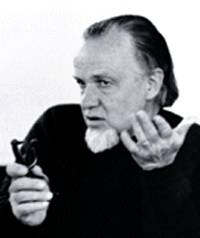
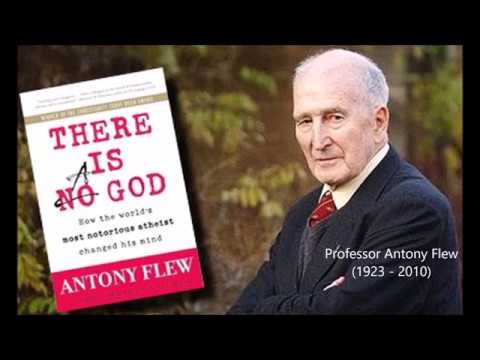


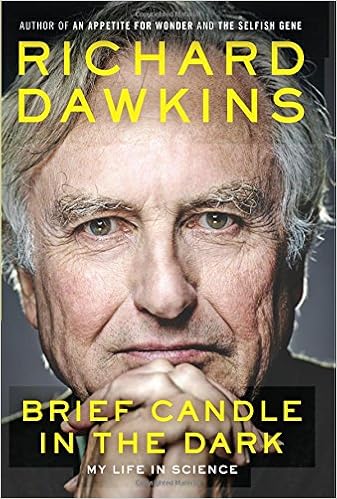
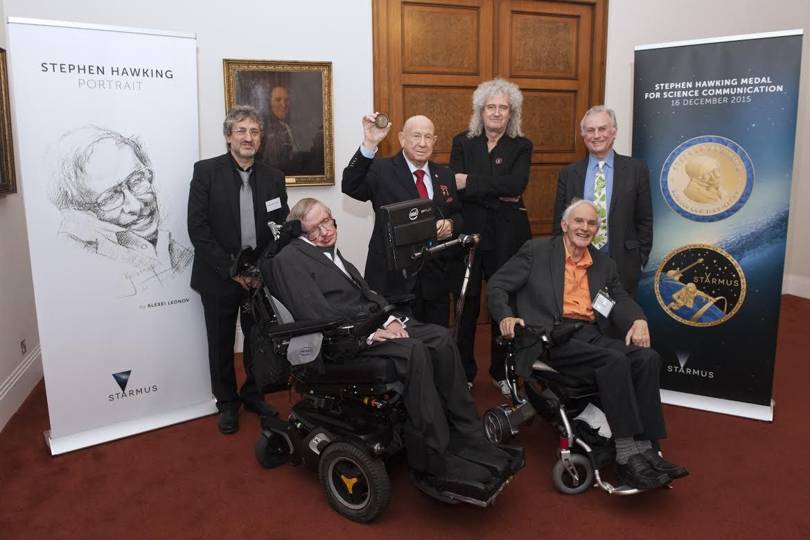

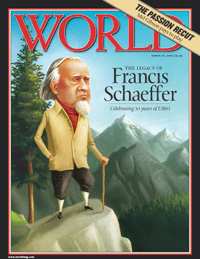
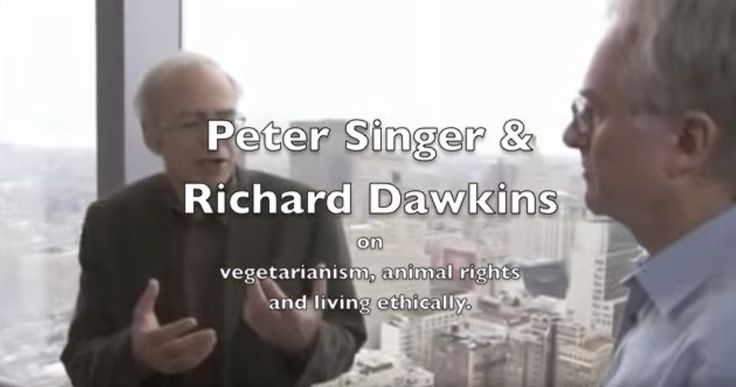



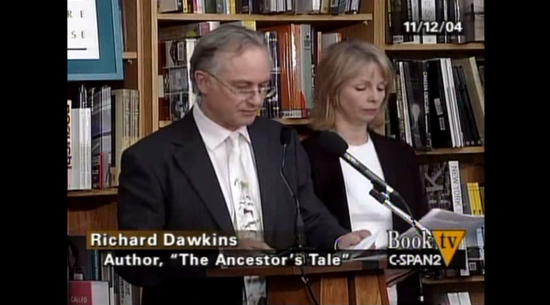






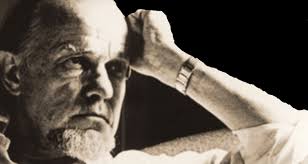

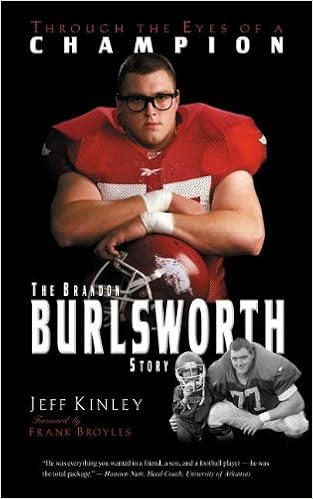
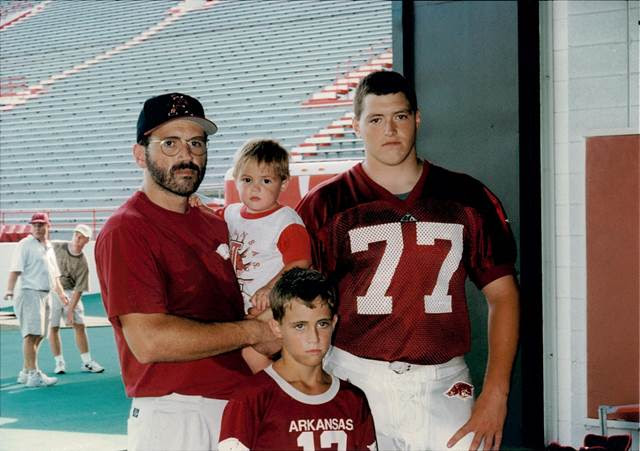

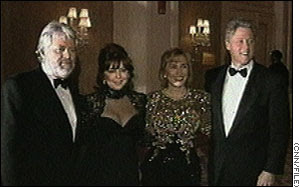



.JPG)


.jpg)


.jpg)


.jpg)
.jpg)










.JPG)

.JPG)


