Amy Coney Barrett was appointed to the U.S. Court of Appeals for the Seventh Circuit in November 2017. She serves on the faculty of the Notre Dame Law School, teaching on constitutional law, federal courts, and statutory interpretation, and previously served on the Advisory Committee for the Federal Rules of Appellate Procedure. She earned her bachelor’s degree from Rhodes College in 1994 and her J.D. from Notre Dame Law School in 1997. Following law school, Barrett clerked for Judge Laurence Silberman of the U.S. Court of Appeals for the D.C. Circuit and for Associate Justice Antonin Scalia of the U.S. Supreme Court. She also practiced law with Washington, D.C. law firm Miller, Cassidy, Larroca & Lewin.
I have gone back and forth and back and forth with many liberals on the Arkansas Times Blog on many issues such as abortion, human rights, welfare, poverty, gun control and issues dealing with popular culture. Here is another exchange I had with them a while back. My username at the Ark Times Blog is Saline […]By Everette Hatcher III | Posted in Francis Schaeffer, Prolife | Edit | Comments (0)
I have gone back and forth and back and forth with many liberals on the Arkansas Times Blog on many issues such as abortion, human rights, welfare, poverty, gun control and issues dealing with popular culture. Here is another exchange I had with them a while back. My username at the Ark Times Blog is Saline […]By Everette Hatcher III | Posted in Francis Schaeffer, President Obama, Prolife | Edit | Comments (0)
I have gone back and forth and back and forth with many liberals on the Arkansas Times Blog on many issues such as abortion, human rights, welfare, poverty, gun control and issues dealing with popular culture. Here is another exchange I had with them a while back. My username at the Ark Times Blog is Saline […]By Everette Hatcher III | Posted in Francis Schaeffer, President Obama, Prolife | Edit | Comments (0)
I have gone back and forth and back and forth with many liberals on the Arkansas Times Blog on many issues such as abortion, human rights, welfare, poverty, gun control and issues dealing with popular culture. Here is another exchange I had with them a while back. My username at the Ark Times Blog is Saline […]By Everette Hatcher III | Posted in Francis Schaeffer, Prolife | Edit | Comments (0)
I have gone back and forth and back and forth with many liberals on the Arkansas Times Blog on many issues such as abortion, human rights, welfare, poverty, gun control and issues dealing with popular culture. Here is another exchange I had with them a while back. My username at the Ark Times Blog is Saline […]By Everette Hatcher III | Posted in Francis Schaeffer, Prolife | Edit | Comments (0)
I have gone back and forth and back and forth with many liberals on the Arkansas Times Blog on many issues such as abortion, human rights, welfare, poverty, gun control and issues dealing with popular culture. Here is another exchange I had with them a while back. My username at the Ark Times Blog is Saline […]By Everette Hatcher III | Posted in Francis Schaeffer, Prolife | Edit | Comments (3)
I have gone back and forth and back and forth with many liberals on the Arkansas Times Blog on many issues such as abortion, human rights, welfare, poverty, gun control and issues dealing with popular culture. Here is another exchange I had with them a while back. My username at the Ark Times Blog is Saline […]By Everette Hatcher III | Posted in Francis Schaeffer, Prolife | Edit | Comments (2)
It is truly sad to me that liberals will lie in order to attack good Christian people like state senator Jason Rapert of Conway, Arkansas because he headed a group of pro-life senators that got a pro-life bill through the Arkansas State Senate the last week of January in 2013. I have gone back and […]By Everette Hatcher III | Posted in Arkansas Times, Francis Schaeffer, Max Brantley, Prolife | Edit | Comments (0)
I have gone back and forth and back and forth with many liberals on the Arkansas Times Blog on many issues such as abortion, human rights, welfare, poverty, gun control and issues dealing with popular culture. Here is another exchange I had with them a while back. My username at the Ark Times Blog is Saline […]By Everette Hatcher III | Posted in Francis Schaeffer, Prolife | Edit | Comments (0)
At no time in our nation’s history has there been a greater need for our leaders to appreciate the value of science in formulating public policy. During his long record of public service, Joe Biden has consistently demonstrated his willingness to listen to experts, his understanding of the value of international collaboration in research, and his respect for the contribution that immigrants make to the intellectual life of our country. As American citizens and as scientists, we wholeheartedly endorse Joe Biden for President.
Let me make three comments. First, as a scientist you should know that there is a scientific reason that unborn babies are considered as persons from conception and continually through a pregnancy. Amy Coney Barrett believes this and she should be supported by scientists such as yourself. Even liberals have pointed out how qualified she is to be on the Supreme Court.
My friend Dr. Kevin R. Henke (who by the way is an atheist) told me that he was pro-life because the unborn baby has all the genetic code at the time of conception that they will have for the rest of their life. Below are some other comments by other scientists:
Dr. Hymie Gordon (Mayo Clinic): “By all criteria of modern molecular biology, life is present from the moment of conception.”
Dr. Micheline Matthews-Roth (Harvard University Medical School): “It is scientifically correct to say that an individual human life begins at conception.”
Dr. Alfred Bongioanni (University of Pennsylvania): “I have learned from my earliest medical education that human life begins at the time of conception.”
Dr. Jerome LeJeune, “the Father of Modern Genetics” (University of Descartes, Paris): “To accept the fact that after fertilization has taken place a new human has come into being is no longer a matter of taste or opinion . . . it is plain experimental evidence.”
Second, both Harris and Biden do not understand the sin nature of humans since they support the reduction of resources for our police departments.
Your letter talks about the “value of international collaboration” and that leads me to my second point. Third, why can’t there be a civility between people who have differing political and religious views? For instance, I wrote Carl Sagan 5 letters between 1992 and 1996 and he discussed issues with mesuch as abortion and the origin of life and we both were always civil and never attacked each other personally like this story I am about to tell you below.
I am reading a book by Sarah Huckabee Sanders and I wanted to share areviewwith you.
In the press accounts, Red Hen co-owner Stephanie Wilkinson was polite in asking Sanders, part of a bigger family group, to leave because she didn’t like Trump’s policies. “I explained that the restaurant has certain standards that I feel it has to uphold, such as honesty, and compassion, and cooperation,” she said.
Sanders, in her new book Speaking for Myself, already Amazon’s No. 13 best seller, tells a very different story. She said Wilkinson told her, “You’re a terrible person. You are not welcome here, and I would like you to leave.”
A stunned Sanders and her husband Bryan decided to go home, but the others went across the street to a restaurant called the Southern Inn. There, she wrote, Wilkinson and others followed to “protest and harass” her group, who were, ironically, mostly liberal Democrats.
That prompted her brother-in-law to walk outside, where he told the Red Hen owner, “Sarah and her husband aren’t here. Nearly everyone you’re harassing right now voted for Hillary Clinton. What you’re doing is uncalled-for.”
— Let me say something nice about Joe Biden and that is he said he would be excited if a vaccine for COVID-19 was available soon even if it cost him the election. That sounds like the words of a statesman and not a politician and I want to salute him for that!
— —- Amy Coney Barrett Deserves to Be on the Supreme Court I disagree with Trump’s judicial nominee on almost everything. But I still think she’s brilliant.By Noah FeldmanSeptember 26, 2020, 8:00 AM EDT Like many other liberals, I’m devastated by Justice Ruth Bader Ginsburg’s death, which opened the way for President Donald Trump to nominate […]By Everette Hatcher III | Posted in Uncategorized | Edit | Comments (0)
— Amy Coney Barrett was appointed to the U.S. Court of Appeals for the Seventh Circuit in November 2017. She serves on the faculty of the Notre Dame Law School, teaching on constitutional law, federal courts, and statutory interpretation, and previously served on the Advisory Committee for the Federal Rules of Appellate Procedure. She earned […]By Everette Hatcher III | Posted in Uncategorized | Edit | Comments (0)
— — Amy Howe Independent Contractor and Reporter Posted Mon, September 21st, 2020 5:00 pmEmail AmyBio & Post Archive » Profile of a potential nominee: Amy Coney Barrett President Donald Trump announced on Saturday that he would nominate a woman to fill the vacancy left by the death of Justice Ruth Bader Ginsburg. According to news […]By Everette Hatcher III | Posted in Uncategorized | Edit | Comments (0)
— —- — Amy Coney Barrett (born January 28, 1972)[1][2] is an American lawyer, jurist, and academic who serves as a circuit judge on the U.S. Court of Appeals for the Seventh Circuit. Barrett considers herself a public-meaning originalist; her judicial philosophy has been likened to that of her mentor and former boss, Antonin Scalia.[3] Barrett’s scholarship focuses on originalism. Amy Coney Barrett Barrett in […]By Everette Hatcher III | Posted in Uncategorized | Edit | Comments (0)
— —- — Amy Coney Barrett (born January 28, 1972)[1][2] is an American lawyer, jurist, and academic who serves as a circuit judge on the U.S. Court of Appeals for the Seventh Circuit. Barrett considers herself a public-meaning originalist; her judicial philosophy has been likened to that of her mentor and former boss, Antonin Scalia.[3] Barrett’s scholarship focuses on originalism. Amy Coney Barrett Barrett in […]By Everette Hatcher III | Posted in Uncategorized | Edit | Comments (0)
— I grew up and went to EVANGELICAL CHRISTIAN SCHOOL in Memphis and ran some of our track meets at RHODES COLLEGE and I know that campus well and I even was contacted by a official at Rhodes with some recruiting material after a good performance in my sophomore year in my mile run there […]By Everette Hatcher III | Posted in Uncategorized | Edit | Comments (0)
— — — Amy Coney Barrett (born January 28, 1972)[1][2] is an American lawyer, jurist, and academic who serves as a circuit judge on the U.S. Court of Appeals for the Seventh Circuit. Barrett considers herself a public-meaning originalist; her judicial philosophy has been likened to that of her mentor and former boss, Antonin Scalia.[3] Barrett’s scholarship focuses on originalism. Amy Coney Barrett Barrett in […]By Everette Hatcher III | Posted in Uncategorized | Edit | Comments (0)
— —- — Amy Coney Barrett (born January 28, 1972)[1][2] is an American lawyer, jurist, and academic who serves as a circuit judge on the U.S. Court of Appeals for the Seventh Circuit. Barrett considers herself a public-meaning originalist; her judicial philosophy has been likened to that of her mentor and former boss, Antonin Scalia.[3] Barrett’s scholarship focuses on originalism. Amy Coney Barrett Barrett in […]By Everette Hatcher III | Posted in Uncategorized | Edit | Comments (0)
— —- I grew up and went to EVANGELICAL CHRISTIAN SCHOOL in Memphis and ran some of our track meets at RHODES COLLEGE and I know that campus well and I even was contacted by a official at Rhodes with some recruiting material after a good performance in my sophomore year in my mile run […]By Everette Hatcher III | Posted in Uncategorized | Edit | Comments (0)
— — —- Amy Coney Barrett Opened Up about Adoption, Pregnancy in 2019 D.C. Talk By TOBIAS HOONHOUTSeptember 22, 2020 2:41 PM While she hasn’t explicitly challenged the precedent established by Roe v. Wade in her capacity as a judge, Amy Coney Barrett — pegged by some as the odds-on favorite to be President Trump’s Supreme Court nominee […]By Everette Hatcher III | Posted in Uncategorized | Edit | Comments (0)
— —- OPINION DECLARATIONS The Truth About People of Praise If the nominee is Amy Coney Barrett, Democrats should resist the urge to target her for her faith. By Peggy NoonanSept. 24, 2020 7:28 pm ET I strongly felt in the winter of 2016 that it was right and wise to hold off on […]By Everette Hatcher III | Posted in Uncategorized | Edit | Comments (0)
— I grew up and went to EVANGELICAL CHRISTIAN SCHOOL in Memphis and ran some of our track meets at RHODES COLLEGE and I know that campus well and I even was contacted by a official at Rhodes with some recruiting material after a good performance in my sophomore year in my mile run there […]By Everette Hatcher III | Posted in Uncategorized | Edit | Comments (0)
I have gone back and forth and back and forth with many liberals on the Arkansas Times Blog on many issues such as abortion, human rights, welfare, poverty, gun control and issues dealing with popular culture. Here is another exchange I had with them a while back. My username at the Ark Times Blog is Saline […]By Everette Hatcher III | Posted in Francis Schaeffer, Prolife | Edit | Comments (0)
I have gone back and forth and back and forth with many liberals on the Arkansas Times Blog on many issues such as abortion, human rights, welfare, poverty, gun control and issues dealing with popular culture. Here is another exchange I had with them a while back. My username at the Ark Times Blog is Saline […]By Everette Hatcher III | Posted in Francis Schaeffer, President Obama, Prolife | Edit | Comments (0)
I have gone back and forth and back and forth with many liberals on the Arkansas Times Blog on many issues such as abortion, human rights, welfare, poverty, gun control and issues dealing with popular culture. Here is another exchange I had with them a while back. My username at the Ark Times Blog is Saline […]By Everette Hatcher III | Posted in Francis Schaeffer, President Obama, Prolife | Edit | Comments (0)
I have gone back and forth and back and forth with many liberals on the Arkansas Times Blog on many issues such as abortion, human rights, welfare, poverty, gun control and issues dealing with popular culture. Here is another exchange I had with them a while back. My username at the Ark Times Blog is Saline […]By Everette Hatcher III | Posted in Francis Schaeffer, Prolife | Edit | Comments (0)
I have gone back and forth and back and forth with many liberals on the Arkansas Times Blog on many issues such as abortion, human rights, welfare, poverty, gun control and issues dealing with popular culture. Here is another exchange I had with them a while back. My username at the Ark Times Blog is Saline […]By Everette Hatcher III | Posted in Francis Schaeffer, Prolife | Edit | Comments (0)
I have gone back and forth and back and forth with many liberals on the Arkansas Times Blog on many issues such as abortion, human rights, welfare, poverty, gun control and issues dealing with popular culture. Here is another exchange I had with them a while back. My username at the Ark Times Blog is Saline […]By Everette Hatcher III | Posted in Francis Schaeffer, Prolife | Edit | Comments (3)
I have gone back and forth and back and forth with many liberals on the Arkansas Times Blog on many issues such as abortion, human rights, welfare, poverty, gun control and issues dealing with popular culture. Here is another exchange I had with them a while back. My username at the Ark Times Blog is Saline […]By Everette Hatcher III | Posted in Francis Schaeffer, Prolife | Edit | Comments (2)
It is truly sad to me that liberals will lie in order to attack good Christian people like state senator Jason Rapert of Conway, Arkansas because he headed a group of pro-life senators that got a pro-life bill through the Arkansas State Senate the last week of January in 2013. I have gone back and […]By Everette Hatcher III | Posted in Arkansas Times, Francis Schaeffer, Max Brantley, Prolife | Edit | Comments (0)
I have gone back and forth and back and forth with many liberals on the Arkansas Times Blog on many issues such as abortion, human rights, welfare, poverty, gun control and issues dealing with popular culture. Here is another exchange I had with them a while back. My username at the Ark Times Blog is Saline […]By Everette Hatcher III | Posted in Francis Schaeffer, Prolife | Edit | Comments (0)
Today is April Fools Day and I have a hard time believing that you don’t recognize there is evidence from history and archaeology that supports the accuracy of the Bible. Are you just playing an April’s Fool Day joke on everyone? You need to take a few minutes and read the evidence below. I have taken the time to read and study over a dozen of your books and as you know I come from a different worldview than you do!!!
Reason, as played out in the grand cooperative enterprise called science, makes me proud of Homo sapiens. Sapiens literally means ‘wise,’ but we have deserved the accolade only since we crawled from the swamp of primitive superstition and supernatural gullibility and embraced reason, logic, science and evidence-based truth.
—
In this article WHO WOULD RALLY AGAINST REASON? You argue over and over that one must follow the evidence where it leads!!!!
Below is a piece of that evidence given by Francis Schaeffer concerning the accuracy of the Bible.
TRUTH AND HISTORY (chapter 5 of WHATEVER HAPPENED TO THE HUMAN RACE?)
There is also a confirmation of what the Bible says concerning the Egyptian King Tirhakah who came up to oppose the Assyrians. Confirmation of his reality is typified by a sphinx-ram in the British Museum (British Museum Ref. B.B.1779). The small figure between the legs of the ram is a representation of King Tirhakah. The Bible says that when Sennacherib heard that Tirhakah, king of Eqypt, was coming to fight against him, he sent messengers to tell Hezekiah that help from Egypt would be of no use to him.
2 Kings 19:9, 109 Now the king heard concerning Tirhakah king of Cush, “Behold, he has set out to fight against you.” So he sent messengers again to Hezekiah, saying,10 “Thus shall you speak to Hezekiah king of Judah: ‘Do not let your God in whom you trust deceive you by promising that Jerusalem will not be given into the hand of the king of Assyria. (Isaiah 37:9-10 also says about the same thing.)
The date of Sennacherib’s campaign in Palestine is 701 B.C., and something which has often puzzled historians is the role of Tirhakah, who was not king of Egypt and Ethiopia until 690 B.C. But the solution to this problem is simple. In 701 B.C. Tirhakah was only a prince at the side of his military brother, the new Pharaoh Shebitku, who sent Tirhakah with an army to help Hezekiah fend off the Assyrian advance. But the story in Kings and Isaiah does not end in 701 B.C. It carries right through to the death of Sennacherib in 681 B.C., which is nine years after Tirhakah had become king of Egypt and Ethiopia. In other words, the biblical narrative, from the standpoint of 681 B.C., mentions Tirhakah by the title he bore at that time (that is, 681 B.C.), not as he was in 701 B.C. This is still done today, using a man’s title as he is known at the time of writing even it one is speaking of a previous time in his personal history.
Unaware of the the importance of these facts, and falling into wrong interpretations of some of Tirhakah’s inscriptions, some Old Testament scholars have stumbled over each in their eagerness to diagnose historical errors in the Books of the Kings and Isaiah. But as the archaeological confirmation shows, they were quite mistaken. What is striking about these archaeological finds is the way they often converge; there is often not just one line of evidence but several in which the biblical account is confirmed. We do not have confirmation of every single detail in the biblical account, by any means. Nor do we need such total confirmation in view of the amount of evidence there is. To insist on confirmation at every point would be to treat the Bible in a prejudiced way, simply because it is the Bible. The fact that is a religious book does not mean that it cannot also be true when it deals with history.
Not all archaeological finds have a convergence of many different interrelated lines like these around the life of Hezekiah, but they are no less striking. For example, take the “ration tablets” discovered in the ruins of Bablyon. The Bible tells us that after the Assyrians had destroyed the nothern kingdom of Samaria (around 721 B.C.), the southern kingdom, Judah, survived for almost another 150 years until approximately 586 B.C. By this time Assyria, one of the greatest military powers of the ancient world, had been defeated by Bablyon, a neighboring state to the east. That was in 609 B.C. Four years later the Babylonian general, Nebuchadnezzar–then the crown prince–came west and completely defeated Necho II, king of Egypt, at the battle of Carchemish. As a result of this victory he laid claim to Judah, which had previously been in the sphere of influence of Egypt. King Jehoiakim of Judah thus now paid tribute to the Babylonians. The Bible tells us that Jehoiakim rebelled three years later: “During Jehoiakim’s reign Nebuchadnezzar king of Bablyon invaded the land, and Jehoiakim became his vassal for three years. But then he changed his mind and rebelled against Nebuchnezzar” (II Kings 24:1).
The political background for this step can be understood from the Babylonian Chronicles (British Museum, Ref. 21946, records events from 597 B.C. down to 594). These were a compressed chronological summary of the principal events from the Babylonian court. There had been a crucial battle in 601 B.C. between the Egyptians and the Babylonians. This had left both sides weakened, and Jehoiakim took this opportunity to declare his independence of the Babylonian king. His independence, or rather Judah’s independence, did not last long, for Jehoiakim himself died in 598 B.C., leaving his throne and the crisis to his son, Jehoiachin. Second Kings (II Kings 24:10-12, 17) tells us what happened:
10 At that time the servants of Nebuchadnezzar king of Babylon came up to Jerusalem, and the city was besieged. 11 And Nebuchadnezzar king of Babylon came to the city while his servants were besieging it, 12 and Jehoiachin the king of Judah gave himself up to the king of Babylon, himself and his mother and his servants and his officials and his palace officials. The king of Babylon took him prisoner in the eighth year of his reign. 17 And the king of Babylon made Mattaniah, Jehoiachin’s uncle, king in his place, and changed his name to Zedekiah.
The story of Jehoiachin does not end there, however. The royal family were kept at the court of Nebuchadnezzar, and the Bible says that they , like other royal captives, were provided for by the king with rations of grain and oil (II Kings 25:27-30):
27 And in the thirty-seventh year of the exile of Jehoiachin king of Judah, in the twelfth month, on the twenty-seventh day of the month, Evil-merodach king of Babylon, in the year that he began to reign, graciously freed[a] Jehoiachin king of Judah from prison.28 And he spoke kindly to him and gave him a seat above the seats of the kings who were with him in Babylon. 29 So Jehoiachin put off his prison garments. And every day of his life he dined regularly at the king’s table, 30 and for his allowance, a regular allowance was given him by the king, according to his daily needs, as long as he lived.
The records of these allowances referred to in the Bible were unearthed in excavations in Babylon in basement storerooms of the royal palace (in Staat-Liches Museum, East Berlin, Vorderas Abteilung; Babylon 28122 and 28126). These are known as the “ration tablets” and they record who received such “rations.” In these, Jehoiachin is mentioned by name.
We also have confirmation of the Babylonian advance towards Judah in Nebuchadezzar’s first campaign. Among the ruins of Lachish were discovered a number of ostraca. Ostraca are broken pieces of earthenware called postherds, which were used for writing on in ink. (The Lachish ostraca are in the Palestinian Archaeological Museum, Jerusalem.) These brief letters reveal the increasing tensions within the growing state of Judah and tie in well with the picture given in the Bible by the Book of Jeremiah the Prophet. In Ostracon VI, the princes are accused of “weakening our hands” (that is, discouraging the writers), which is the very phraseology used in the Bible by the Judean princes against Jeremiah. Also, the use of fire beacons for signaling is found in both Ostracon IV and Jeremiah 6:1, each using the same terminology.
These events took place around the year 600 B.C. Events we considered earlier in relation to the capture of Lachish by Sennacherib during the reign of Hezekiah were around the year 700 B.C.
Garik Israelian, Stephen Hawking, Alexey Leonov, Brian May, Richard Dawkins and Harry Kroto
—-
—-
—-
—-
Featured artist is
Njideka Akunyili Crosby
Born in Nigeria Njideka Akunyili Crosby, went to USA Swarthmore College, where she studied biology and studio art. Njideka Akunyili Crosby earned her MFA from Yale.
The artist recommended herself when she has been named a 2017 MacArthur fellow. Akunyili Crosby explores cultural hybridity through a welter of references. Njideka Akunyili Crosby creates contemporary paintings of herself, her family, and friends.add
On November 21, 2014 I received a letter from Nobel Laureate Harry Kroto and it said: …Please click on this URL http://vimeo.com/26991975 and you will hear what far smarter people than I have to say on this matter. I agree with them. Harry Kroto _________________ Below you have picture of 1996 Chemistry Nobel Prize Winner […]
The Beatles were “inspired by the musique concrète of German composer and early electronic music pioneer Karlheinz Stockhausen…” as SCOTT THILL has asserted. Francis Schaeffer noted that ideas of “Non-resolution” and “Fragmentation” came down German and French streams with the influence of Beethoven’s last Quartets and then the influence of Debussy and later Schoenberg’s non-resolution which is in total contrast […]
_______ On November 21, 2014 I received a letter from Nobel Laureate Harry Kroto and it said: …Please click on this URL http://vimeo.com/26991975 and you will hear what far smarter people than I have to say on this matter. I agree with them. Harry Kroto _________________ Below you have picture of 1996 Chemistry Nobel Prize […]
On November 21, 2014 I received a letter from Nobel Laureate Harry Kroto and it said: …Please click on this URL http://vimeo.com/26991975 and you will hear what far smarter people than I have to say on this matter. I agree with them. Harry Kroto ____________________ Below you have picture of 1996 Chemistry Nobel Prize Winner Dr. […]
Hugh Hefner Playboy Mansion 10236 Charing Cross Road Los Angeles, CA 90024-1815
Dear Mr. Hefner,
You are a big fan of Woody Allen movies and I understand that Woody has visited with you on occasion. I am also a HUGE WOODY ALLEN FAN and I wanted to ask you a question later in this letter that is purely based on a situation in a Woody Allen movie.
I hope that we can begin to, and what I called back in the sixties, a new a new morality, that we begin to find a form of situation ethics that would define sexual values not as a set of absolutes but a things that really were good for people and would permit a more human humanizing and loving interconnection between people.
In the first two letters I sent you I referenced the sermon “THE PLAYBOY’S PAYDAY,” by Adrian Rogers which was delivered in 1984 and based on Proverbs 5. I wanted to quote from that sermon the following words:
Proverbs Chapter 5
My son, give attention to my wisdom, Incline your ear to my understanding; 2 That you may observe discretion And your lips may reserve knowledge. 3 For the lips of an adulteress drip honey And smoother than oil is her speech; 4 But in the end she is bitter as wormwood, Sharp as a two-edged sword. 6 She does not ponder the path of life; Her ways are unstable, she does not know it.
Now, where is a young man going to get discretion? Where are we going to learn knowledge? How are we going to learn what is right and what is wrong in our sexual relationships? Do you think we’re going to learn it from Hollywood? Do you think we’re going to learn it from television? Do you think we’re going to learn from Hugh Hefner, Margaret Mead, Johnny Carson? Shall they be our teachers? Are they going to tell us?
__________
While on FIRING LINE you were asked by William F. Buckley on what authority do you make these pronouncements and it was clear that you do not have one except to say that you believe in this idea of situation ethics. As a Christian I believe the Bible is the inerrant word of God and as such it gives us an absolute authority to follow. However, lets take a look at your situation ethics approach for a moment.
Woody Allen’s 1989 movie, CRIMES AND MISDEMEANORS , is an excellent movie that demonstrates the need of God while making decisions in the area of personal morality. In this film, Allen attacks his own atheistic view of morality. Martin Landau plays a Jewish eye doctor named Judah Rosenthal raised by a religious father who always told him, “The eyes of God are always upon you.” However, Judah later concludes that God doesn’t exist. He has his mistress (played in the film by Anjelica Huston) murdered because she continually threatened to blow the whistle on his past questionable, probably illegal, business activities. She also attempted to break up Judah ‘s respectable marriage by going public with their two-year affair. Judah struggles with his conscience throughout the remainder of the movie. He continues to be haunted by his father’s words: “The eyes of God are always upon you.” This is a very scary phrase to a young boy, Judah observes. He often wondered how penetrating God’s eyes are.
Later in the film, Judah reflects on the conversation his religious father had with Judah ‘s unbelieving Aunt May at the dinner table many years ago:
“Come on Sol, open your eyes. Six million Jews burned to death by the Nazis, and they got away with it because might makes right,” says aunt May
Sol replies, “May, how did they get away with it?”
Judah asks, “If a man kills, then what?”
Sol responds to his son, “Then in one way or another he will be punished.”
Aunt May comments, “I say if he can do it and get away with it and he chooses not to be bothered by the ethics, then he is home free.”
Judah ‘s final conclusion was that might did make right. He observed that one day, because of this conclusion, he woke up and the cloud of guilt was gone. He was, as his aunt said, “home free.”
Woody Allen has exposed a weakness in his own humanistic view that God is not necessary as a basis for good ethics. There must be an enforcement factor in order to convince Judah not to resort to murder. Otherwise, it is fully to Judah ‘s advantage to remove this troublesome woman from his life.
The Bible tells us, “{God} has also set eternity in the hearts of men…” (Ecclesiastes 3:11 NIV). The secularist calls this an illusion, but the Bible tells us that the idea that we will survive the grave was planted in everyone’s heart by God Himself. Romans 1:19-21 tells us that God has instilled a conscience in everyone that points each of them to Him and tells them what is right and wrong (also Romans 2:14 -15).
It’s no wonder, then, that one of Allen’s fellow humanists would comment, “Certain moral truths — such as do not kill, do not steal, and do not lie — do have a special status of being not just ‘mere opinion’ but bulwarks of humanitarian action. I have no intention of saying, ‘I think Hitler was wrong.’ Hitler WAS wrong.” (Gloria Leitner, “A Perspective on Belief,” THE HUMANIST, May/June 1997, pp. 38-39)
Here Leitner is reasoning from her God-given conscience and not from humanist philosophy. It wasn’t long before she received criticism. Humanist Abigail Ann Martin responded, “Neither am I an advocate of Hitler; however, by whose criteria is he evil?” (THE HUMANIST, September/October 1997, p. 2)
The secularist can only give incomplete answers to these questions: How could you, HUGH, have convinced Judah not to kill? On what basis could you convince Judah it was wrong for him to murder? WHAT IN YOUR SYSTEM OF “SITUATION ETHICS” COULD HAVE DONE THE JOB?
As a Christian, I would agree with Judah ‘s father that “The eyes of God are always upon us.” Proverbs 5:21 asserts, “For the ways of man are before the eyes of the Lord, and He ponders all his paths.” Revelation 20:12 states, “…And the dead were judged (sentenced) by what they had done (their whole way of feeling and acting, their aims and endeavors) in accordance with what was recorded in the books” (Amplified Version). The Bible is revealed truth from God. It is the basis for our morality. Judah inherited the Jewish ethical values of the Ten Commandments from his father, but, through years of life as a skeptic, his standards had been lowered. Finally, we discover that Judah ‘s secular version of morality does not resemble his father’s biblically-based morality. HUGH YOU INHERITED THE ETHICAL VALUES OF THE TEN COMMANDMENTS FROM YOUR PARENTS BUT YOU TURNED AWAY FROM THE CHRISTIAN FAITH. RECENTLY I READ SOMETHING ON JOHN ANKERBERG’S WEBSITE THAT GAVE ME HOPE THAT YOU BE OPEN TO LOOKING AT THE HISTORICAL CLAIMS OF THE BIBLE.HERE IS A QUOTE FROM LEE STROBEL:
I had a chance to go to the Playboy Mansion, interview Hugh Hefner for a TV program that I was doing. And I asked him about the resurrection. And he seemed confused. And I said, “What about the evidence for the resurrection?” and he said, “What are you talking about?” And I said, “What do you do with the historical data that support the return of Jesus from the dead?” And he said, “I have never heard this before.” And I gave him a copy of my book The Case for Christ. And he was looking through the Table of Contents and said, “This is fascinating. Nobody has ever told me this before.”
And then he said something very interesting. He said, “If this is true, this trips a whole bunch of dominoes that have a wonderful effect.” He said, “I am getting to be an old man. I wish it were true that there were eternal life.” And I said, “You know what, look into the evidence yourself. Come to your own verdict. But I am telling you there is convincing, there is powerful, persuasive, compelling evidence that Jesus did return from the dead. And when He tells His followers they will spend eternity with Him, we can believe Him as a result.”
THE FIRST STEP TO FINDING OUT IF THE BIBLE IS TRUE TO INVESTIGATE ITS HISTORICAL CLAIMS. God created the universe and reached out to humankind with the Bible. Below is a piece of that evidence given by Francis Schaeffer and Dr. C. Everett Koop in their book WHATEVER HAPPENED TO THE HUMAN RACE? Chapter 5 concerning the accuracy of the Bible:
We looked earlier at the city of Lachish. Let us return to the same period in Israel’s history when Lachich was besieged and captured by the Assyrian King Sennacherib. The king of Judah at the time was Hezekiah.
Perhaps you remember the story of how Jesus healed a blind man and told him to go and wash in the Pool of Siloam. It is the same place known by King Hezekiah, approximately 700 years earlier. One of the remarkable things about the flow of the Bible is that historical events separated by hundreds of years took place in the same geographic spots, and standing in these places today, we can feel that flow of history about us. The crucial archaeological discovery which relates the Pool of Siloam is the tunnel which lies behind it.
One day in 1880 a small Arab boy was playing with his friend and fell into the pool. When he clambered out, he found a small opening about two feet wide and five feet high. On examination, it turned out to be a tunnel reaching back into the rock. But that was not all. On the side of the tunnel an inscribed stone (now kept in the museum in Istanbul) was discovered, which told how the tunnel had been built originally. The inscription in classical Hebrew reads as follows:
The boring through is completed. And this is the story of the boring: while yet they plied the pick, each toward his fellow, and while there were yet three cubits [4 14 feet] to be bored through, there was heard the voice of one calling to the other that there was a hole in the rock on the right hand and on the left hand. And on the day of the boring through the workers on the tunnel struck each to meet his fellow, pick upon pick. Then the water poured from the source to the Pool 1,200 cubits [about 600 yards] and a 100 cubits was the height of the rock above the heads of the workers in the tunnel.
We know this as Hezekiah’s Tunnel. The Bible tells us how Hezekiah made provision for a better water supply to the city:Now the rest of the acts of Hezekiah and all his might, and how he made the pool and the conduit and brought water into the city, are they not written in the Book of the Chronicles of the Kings of Judah?(II Kings 20:20). We know here three things: the biblical account, the tunnel itself of which the Bible speaks, and the original stone with its inscription in classical Hebrew.
From the Assyrian side, there is additional confirmation of the incidents mentioned in the Bible. There is a clay prism in the British Museum called the Taylor Prism (British Museum, Ref. 91032). It is only fifteen inches high and was discovered in the Assyrian palace at Nineveh. This particular prism dates from about 691 B.C. and tells about Sennacherib’s exploits. A section from the prism reads, “As for Hezekiah, the Jew, who did not submit to my yoke, forty-six of his strong walled cities, as well as small cities in their neighborhood I have besieged and took…himself like a caged bird, I shut up in Jerusalem, his royal city. Earthworks I threw up against him,” Thus, there is a three-way confirmation concerning Hezekiah’s tunnel from the Hebrew side and this amazing confirmation from the Assyrian side.
___________
Thank you again for your time and I know how busy you are.
PS: I plan to write you again and will be responding to your past statements like I did today. Since you and I are both big Woody Allen fans I wanted to encourage you to google “WOODY ALLEN CHARACTERS REFERENCED” and it will list several posts from my blog http://www.thedailyhatch.org. I actually went through all 39 historical characters referenced in the Woody Allen film MIDNIGHT IN PARIS.
Leonardo Drew was born in Tallahassee, Florida in 1961, and grew up in Bridgeport, Connecticut. Although often mistaken for accumulations of found objects, his sculptures are instead made of “brand new stuff”—materials such as wood, rusted iron, cotton, paper, and mud—that he intentionally subjects to processes of weathering, burning, oxidation, and decay. Whether jutting out from a wall or traversing rooms as freestanding installations, his pieces challenge the architecture of the space in which they’re shown.
Memories of his childhood surroundings—from the housing project where he lived to the adjacent landfill—resurface in the intricate grids and configurations of many of his pieces. Never content with work that comes easily, Drew constantly reaches beyond “what’s comfortable” and charts a course of daily investigation, never knowing what the work will be about but letting it find its way, and asking, “What if….”
Leonardo Drew attended Parsons School of Design, and received a BFA from Cooper Union (1985). Among the honors and grants he has received are the Joyce Alexander Wein Artist Prize (2011); Asian Cultural Council Grant (1997); Joan Mitchell Foundation Grant (1994); and the Mid-Atlantic Arts Foundation Grant (1993). Drew has been awarded residencies at Artpace (1995); the Studio Museum in Harlem (1991); Vermont Studio School (1990); and Skowhegan (1998). Major exhibitions of his work have appeared at SCAD Museum of Art (2013); DeCordova Museum and Sculpture Park (2011); Artpace (2010); Weatherspoon Art Museum (2010); Blaffer Gallery (2009); Sikkema Jenkins (2007); Centro Arte Contemporanea, Siena (2006); the Fabric Workshop (2002); Hirshhorn Museum and Sculpture Garden (2000); Bronx Museum of the Arts (2000); Saint Louis Art Museum (1996); Carnegie International (1995); MCA San Diego (1995); and Biennial Dakar (1992). Leonardo Drew lives and works in Brooklyn, New York.
I have gone back and forth and back and forth with many liberals on the Arkansas Times Blog on many issues such as abortion, human rights, welfare, poverty, gun control and issues dealing with popular culture. Here is another exchange I had with them a while back. My username at the Ark Times Blog is Saline […]
By Everette Hatcher III | Posted in Francis Schaeffer, Prolife | Edit | Comments (0)
On March 17, 2013 at our worship service at Fellowship Bible Church, Ben Parkinson who is one of our teaching pastors spoke on Genesis 1. He spoke about an issue that I was very interested in. Ben started the sermon by reading the following scripture: Genesis 1-2:3 English Standard Version (ESV) The Creation of the […]
By Everette Hatcher III | Posted in Adrian Rogers, Atheists Confronted, Current Events | TaggedBen Parkinson, Carl Sagan | Edit | Comments (0)
Milton Friedman was an American economist and leading representative of the Chicago School during the last half of the 20th century. Friedman received the Nobel Prize in 1976, having made significant contributions to several branches of economic theory, while also writing and speaking on public policy issues from a distinctly free-market perspective. His combination of technical acumen and policy advocacy made him one of the most influential economists and libertarians of his generation.
Friedman was born in New York City to immigrants from central Europe who moved to northern New Jersey when Friedman was a child. He graduated from high school just prior to his 16th birthday, and he attended Rutgers University on a scholarship. After graduating from Rutgers in 1932, Friedman pursued graduate studies in economics at the University of Chicago, which would become his intellectual home for the most productive period of his career. While at Chicago, he met a fellow graduate student, Rose Director, who would become his wife, lifelong partner, and frequent coauthor. In 1998, they published their memoirs, Two Lucky People.
Friedman received his MA from Chicago in 1933 and then accepted a fellowship at Columbia University. While at Columbia, he also held a position with the National Bureau of Economic Research, where he worked closely with future Nobel laureate Simon Kuznets on a study titled Incomes from Independent Professional Practice. Friedman recounted,
That book was finished by 1940, but its publication was delayed until after the war because of controversy among some Bureau directors about our conclusion that the medical profession’s monopoly powers had raised substantially the incomes of physicians relative to that of dentists.
It also served as his doctoral dissertation, which was approved by the Columbia faculty in 1946.
During the Great Depression and World War II, Friedman held several government positions in Washington, D.C. He also taught briefly at the University of Wisconsin and the University of Minnesota, before returning to the University of Chicago in September 1946, where he would spend the next 30 years, retiring in 1977. He and Rose then moved to California, where he accepted a position at Stanford University’s Hoover Institution, which he held until his death.
Friedman’s contributions to economics have been enormous and far reaching. In 1953, he published his Essays inPositive Economics. The introductory essay set forth his fundamental methodological position:
the relevant question to ask about the “assumptions” of a theory is not whether they are descriptively “realistic,” for they never are, but whether they are sufficiently good approximations for the purpose in hand. And this question can be answered only by seeing whether the theory works, which means whether it yields sufficiently accurate predictions.
In a 1996 interview, he elaborated: “The validity of a theory depends upon whether its implications are refuted, not upon the reality or unreality of its assumptions.”
Friedman’s methodological position, adopted by most of his colleagues at Chicago and eventually a good portion of the profession, laid the groundwork for important empirical work and elegant mathematical modeling that have helped economists better understand the world. It also placed the Chicago School squarely in opposition to the Austrian School, whose proponents embraced many of the same promarket positions as Friedman, but who argued that economists must base their work on a set of assumptions that can be demonstrated to be logically correct. Moreover, the Austrians argued that much empirical work was of limited value because social scientists cannot model human behavior in the same way that physical scientists model their objects of study. One can say, for instance, that a price control will lead to a shortage, but the magnitude of that shortage will be difficult, if not impossible, to predict.
Friedman considered his A Theory of the Consumption Function, published in 1957, as his “best purely scientific contribution” to economics. In it, he argues for the “permanent income hypothesis,” which maintains that people make consumption decisions based on the permanent component of their income stream, not on transitory components. In short, people are forward-looking and act based on long-term income prospects. This hypothesis has several implications. First, people tend to smooth their consumption over their lifetimes. For instance, young people with high future earning power may rationally accumulate debt early in life, knowing that they will be able to pay it off as their incomes increase. Second, tax cuts may not spur consumption if the public believes those cuts to be only temporary. The permanent income hypothesis has become one of the cornerstones of modern macroeconomics.
Although Friedman considered A Theory of the Consumption Function to be his most significant contribution, his work in the area of monetary theory was surely his most influential. Inflation, Friedman famously argued, was “always and everywhere a monetary phenomenon.” It is not fundamentally caused by unions demanding higher wages for their members, thus increasing labor costs and the prices of goods. Nor is it a product of companies wielding expansive market power and charging monopolistic prices. Instead, it is caused by too much money chasing too few goods. Central banks, Friedman concluded, should focus narrowly on maintaining price stability and adopt rules that would ensure such an outcome.
In 1963, Friedman, with Anna J. Schwartz, published A Monetary History of the United States, 1867-1960. The book spanned almost a century of monetary history, but its most important section dealt with what the authors called “the great contraction.” Friedman and Schwartz argued that the Great Depression was not caused by the failings of the market system. Rather, they maintained, the Federal Reserve had pursued a monetary policy that was excessively tight and that had led to a sharp decline in economic activity. A Monetary History was a rare scholarly achievement: It has had great influence among both the economics profession and policymakers.
In his 1967 presidential address to the American Economic Association, Friedman questioned the theoretical and empirical validity of the “Phillips curve,” a statistical relationship that purportedly demonstrated a permanent tradeoff between unemployment and inflation. This tradeoff implied a set of choices for society. If you wanted greater employment, you simply had to increase the money supply. That in turn would produce higher inflation, which might be acceptable given current circumstances. Conversely, if inflation became too high, one could simply tighten the money supply and accept more unemployment. Not surprisingly, these ideas were popular with activist policymakers. Friedman challenged these conclusions, arguing that the tradeoff between unemployment and inflation was temporary and resulted only from unanticipated changes in inflation. The public, he claimed, was unlikely to be systematically fooled, and policymakers could not easily manipulate the economy. He later recalled,
As employers and workers caught on to what was happening, any trade-off would disappear. I introduced the concept of a “natural rate of unemployment” to which the level of unemployment would tend whatever the rate of inflation once economic agents came to expect that rate of inflation. To keep unemployment below the natural level requires not simply inflation, but accelerating inflation.
Friedman’s argument was later refined and expanded by economists Edward Prescott and Finn Kydland, and it would become increasingly accepted as stagflation gripped the American economy in the 1970s.
While Friedman was engaged in technical economic research at the highest levels, he also took an active interest in public-policy issues. In 1962, he published Capitalism and Freedom, the product of a series of lectures he gave at Wabash College in 1956. Although directed at a general audience, the book contains sophisticated and sometimes technical arguments for a number of free-market proposals, all presented in clear and accessible prose. For instance, Friedman called for the establishment of unilateral free trade and flexible exchange rates, introduced the idea of school vouchers, and argued for the privatization of social security. Also, as the title of the book suggests, Friedman argued that economic freedom is a necessary prerequisite for political freedom, a proposition that has been criticized by many political scientists. In Capitalism and Freedom, Friedman made it clear that he believed some state involvement was necessary if a stable and prosperous society were to function. “The consistent liberal is not an anarchist,” he wrote. Yet he later rejected or greatly qualified his support for certain government actions that he defended in the book, such as antitrust laws to counter monopolies. Empirical work by his colleagues at the University of Chicago had demonstrated, Friedman argued, that antitrust laws were more often counterproductive than beneficial. His policy advocacy was based on an abiding belief in human freedom—in liberalism—as well as the findings of modern economic science.
Friedman was the author of a column for Newsweek from 1966 to 1983, as was Paul Samuelson, a long-time friend of the Friedmans and the leading Keynesian economist of the 20th century during most of this period. Some of Friedman’s Newsweek articles were later collected in two anthologies, An Economist’s Protest and There’s No Such Thing as a Free Lunch.
Perhaps more than any other endeavor, Free to Choose, cowritten with his wife, brought the Friedmans’ liberal ideas to a wide audience. In its preface, the authors compare Free to Choose to Capitalism and Freedom, noting that the new volume “is a less abstract and more concrete book. Readers of Capitalism and Freedom will find here a fuller development of the philosophy that permeates both books—here, there are more nuts and bolts, less theoretical framework.” In addition, they wrote that much of the analysis in Free to Choose is informed by work done in the 1960s and 1970s by public choice economists who modeled the political system, like the economic system, as a market with self-interested actors. Free to Choose became a best seller, selling more than 400,000 copies in its first year. Perhaps even more important, however, was the 10-part PBS series that accompanied its publication. Each episode dealt with a chapter in the book, followed by debates in which Friedman took on his critics. The show was a huge success and brought liberalism into the living rooms of thousands of people who were unfamiliar with such ideas.
Friedman served as an economic advisor to Barry Goldwater during his 1964 presidential candidacy, as well as to Presidents Nixon and Reagan. Although he had their ear, they often did not follow his advice. The most grievous example was Nixon’s imposition of wage and price controls in 1971, which Friedman widely criticized. Friedman also was a stalwart opponent of conscription, persuasively arguing that a volunteer army was both more just and more efficient. In addition, Friedman actively campaigned for tax and spending limitations on the state level; in fact, he was in Michigan speaking in favor of such a proposal when he was informed that he had won the Nobel Prize. He also spent much energy promoting school vouchers, establishing the Milton and Rose D. Friedman Foundation for Educational Choice in 1996.
Friedman died in 2006, survived by his wife Rose, his daughter Janet, and his son David, also an economist. “Milton Friedman was a giant,” stated Paul Samuelson upon Friedman’s death. “No 20th-century economist had his importance in moving the American economic profession rightward from 1940 to the present.”
Further Readings
Friedman, Milton. Capitalism and Freedom. Chicago: University of Chicago Press, 1962.
———. Essays in Positive Economics. Chicago: University of Chicago Press, 1953.
———. “The Role of Monetary Policy.” American Economic Review 58 no. 1 (March 1968): 1–17.
———. A Theory of the Consumption Function. Princeton, NJ: Princeton University Press, 1957.
Friedman, Milton, and Rose D. Friedman. Free to Choose. New York: Harcourt Brace Jovanovich, 1980.
———. Two Lucky People: Memoirs. Chicago: University of Chicago Press, 1998.
Friedman, Milton, and Anna J. Schwartz. A Monetary History of the United States, 1867-1960. Princeton, NJ: Princeton University Press, 1963.
Hetzel, Robert L. “The Contributions of Milton Friedman to Economics.” Federal Reserve Bank of Richmond Economic Quarterly 93 no. 1 (Winter 2007): 1–30.by Aaron Steelman
Michael Harrington: If you don’t have the expertise, the knowledge technology today, you’re out of the debate. And I think that we have to democratize information and government as well as the economy and society. FRIEDMAN: I am sorry to say Michael Harrington’s solution is not a solution to it. He wants minority rule, I […]
By Everette Hatcher III | Posted in Current Events, Milton Friedman | Edit | Comments (0)
PETERSON: Well, let me ask you how you would cope with this problem, Dr. Friedman. The people decided that they wanted cool air, and there was tremendous need, and so we built a huge industry, the air conditioning industry, hundreds of thousands of jobs, tremendous earnings opportunities and nearly all of us now have air […]
By Everette Hatcher III | Posted in Current Events, Milton Friedman | Edit | Comments (0)
Part 5 Milton Friedman: I do not believe it’s proper to put the situation in terms of industrialist versus government. On the contrary, one of the reasons why I am in favor of less government is because when you have more government industrialists take it over, and the two together form a coalition against the ordinary […]
By Everette Hatcher III | Posted in Current Events, Milton Friedman | Edit | Comments (0)
The fundamental principal of the free society is voluntary cooperation. The economic market, buying and selling, is one example. But it’s only one example. Voluntary cooperation is far broader than that. To take an example that at first sight seems about as far away as you can get __ the language we speak; the words […]
By Everette Hatcher III | Posted in Current Events, Milton Friedman | Edit | Comments (0)
_________________________ Pt3 Nowadays there’s a considerable amount of traffic at this border. People cross a little more freely than they use to. Many people from Hong Kong trade in China and the market has helped bring the two countries closer together, but the barriers between them are still very real. On this side […]
By Everette Hatcher III | Posted in Current Events, Milton Friedman | Edit | Comments (0)
Aside from its harbor, the only other important resource of Hong Kong is people __ over 4_ million of them. Like America a century ago, Hong Kong in the past few decades has been a haven for people who sought the freedom to make the most of their own abilities. Many of them are […]
By Everette Hatcher III | Posted in Current Events, Milton Friedman | Edit | Comments (0)
“FREE TO CHOOSE” 1: The Power of the Market (Milton Friedman) Free to Choose ^ | 1980 | Milton Friedman Posted on Monday, July 17, 2006 4:20:46 PM by Choose Ye This Day FREE TO CHOOSE: The Power of the Market Friedman: Once all of this was a swamp, covered with forest. The Canarce Indians […]
If you would like to see the first three episodes on inflation in Milton Friedman’s film series “Free to Choose” then go to a previous post I did. Ep. 9 – How to Cure Inflation [4/7]. Milton Friedman’s Free to Choose (1980) Uploaded by investbligurucom on Jun 16, 2010 While many people have a fairly […]
Charlie Rose interview of Milton Friedman My favorite economist: Milton Friedman : A Great Champion of Liberty by V. Sundaram Milton Friedman, the Nobel Prize-winning economist who advocated an unfettered free market and had the ear of three US Presidents – Nixon, Ford and Reagan – died last Thursday (16 November, 2006 ) in San Francisco […]
By Everette Hatcher III | Posted in Milton Friedman | Edit | Comments (0)
Stearns Speaks on House Floor in Support of Balanced Budget Amendment Uploaded by RepCliffStearns on Nov 18, 2011 Speaking on House floor in support of Balanced Budget Resolution, 11/18/2011 ___________ Below are some of the main proposals of Milton Friedman. I highly respected his work. David J. Theroux said this about Milton Friedman’s view concerning […]
By Everette Hatcher III | Posted in Milton Friedman | Edit | Comments (0)
Milton Friedman: Free To Choose – The Failure Of Socialism With Ronald Reagan (Full) Published on Mar 19, 2012 by NoNationalityNeeded Milton Friedman’s writings affected me greatly when I first discovered them and I wanted to share with you. We must not head down the path of socialism like Greece has done. Abstract: Ronald Reagan […]
By Everette Hatcher III | Posted in Milton Friedman, President Obama | Edit | Comments (1)
What a great defense of Milton Friedman!!!! Defaming Milton Friedman by Johan Norberg This article appeared in Reason Online on September 26, 2008 PRINT PAGE CITE THIS Sans Serif Serif Share with your friends: ShareThis In the future, if you tell a student or a journalist that you favor free markets and limited government, there is […]
Dawkins interviews animal rights advocate Peter Singer. Francis Schaeffer discussed Singer’s views in several of his books and I had the privilege of corresponding with Dr. Singer and have read several of his books.
February 25, 2019
Richard Dawkins c/o Richard Dawkins Foundation, Washington, DC 20005
Practices such as branding cattle, castration without anaesthetic, and bullfighting should be treated as morally equivalent to doing the same thing to human beings.
Dr. John J. Shea appeared on the TV series APE MAN with Walter Cronkite back in the 1990’s and claimed that there is only a degree of difference between monkeys and humans and not a categorical difference. After that program aired I had the opportunity to correspond with Dr. Shea and he was kind enough to send me a two page response to my questions. (This correspondence took place back in 1994 and 1995.)
Dr. Shea also suggested that I read SHADOWS OF FORGOTTEN ANCESTORS by Carl Sagan and his wife Ann Druyan, and I did so. Here are my thoughts on the question.
First, only humans lie in the sense we are held morally responsible. Sagan wrote, “Deception in the social relations of animals…is an emerging and productive topic in biology…” (p. 379). This may be true, but are animals responsible to God? I think not. Romans 3:23 teaches that “All MEN have sinned and fall short of the glory of God.” Animals may deceive but they are not morally responsible.
Second, only men feel guilt. Sagan refers briefly to the fact that men feel guilt (p. 4.14), but he does not spend a lot of time on this. Romans 1:19 asserts, “For that which is known about God is evident to them and made plain in their inner consciousness, because God has show it to them” (Amplified Bible). Here Sagan turns to Thomas Henry Huxley who he quotes:
On all sides, I shall hear the cry–“We are men and women, not a mere better sort of apes, a little longer in the leg, more compact in the foot, and bigger in brain than your brutal Chimpanzees and Gorillas. The power of knowledge–the conscience of good and evil--the pitiful tenderness of human affections, raise us out of all real fellowship with the brutes, however, closely they may seem to approximate us.”
To this I can reply that the exclamation would be just and would be most just and would have my entire sympathy, if it were only relevant. But, it is not I who seek to base Man’s dignity upon this great toe, or insinuate that we are lost if an Ape has a hippocampus minor (in its brain). On the contrary, I have done my best to sweep away this vanity…
WHY DID SAGAN AND HUXLEY FACE SUCH A LARGE CHORUS THAT WAS OBJECTING TO THIS VIEW THAT WE DON’T HAVE A GOD-GIVEN CONSCIENCE? The answer is very simple and it deals with the consequences of Social Darwinism. Chuck Colson said that Larry King was not very impressed with his long talk on the historical accuracy of the scriptures, but when he touched on this subject things got interesting:
Larry King invited me to dinner. “I don’t believe in God,” Larry told me straight out. “But tell me why you believe.” I responded, “Have you seen Woody Allen‘s movie CRIMES AND MISDEMEANORS?
Yes, he loved it, in fact. It’s about a doctor who is haunted by GUILT after hiring a killer to murder his mistress. His Jewish father has taught him that God will surely bring justice. In the end the doctor suppresses his GUILT, convincing himself that LIFE IS AN DARWINIAN STRUGGLE WHERE ONLY THE RUTHLESS SURVIVE.
I asked Larry, “Is that our only choice–to be tormented by GUILT or else kill our conscience? Larry, how do you deal with your conscience?” He dropped his fork. I said, “What do you do with the GUILT that is in here? What do you do with what you know you have done wrong?
Then he was ready to listen. I went on and shared with him from Romans which teaches about the voice of conscience that God has given us.
__________
Third, men have a longing for significance which expresses itself most clearly in the fear of non being.
Fourth, I would point to the fact that only people worship.
Fifth, men are not satisfied unless they have their spiritual needs met. Carl Sagan quotes the poet Walt Whitman, “Not one (animal) is dissatisfied…Not one is respectable or unhappy over the whole earth…” Sagan comments, “On this basis of the evidence presented in this book, we doubt if any of Whitman’s six purported differences between other animals and humans is true…” (p. 389).
I read Sagan’s book cover to cover and made over 15 pages of notes, and I have yet to find any of the “evidence” that Sagan speaks of on page 389. I find the comments of NOAM CHOMSKY more logical. He calls animal language an “evolutionary miracle” akin to “finding an island of humans who could be taught to fly.”
I like Francis Schaeffer‘s term “Mannishness” of man. He defines it as those aspects of man, such as significance, love, rationality and the fear of non being, which mark him off from animals and machines and give evidence of his being created in the image of a personal God.
The scientist Blaise Pascal is quoted by Sagan on page 364 and then Sagan notes, “Most of the philosophers adjudged great in the history of western thought held that humans are fundamentally different from other animals…”
As you know Pascal was the inventor of the barometer and he lived from 1623 to 1662. Pascal also observed, “There is a God-shaped vacuum in the heart of every man,and only God can fill it.”
What is the solution? “For God so loved the world that He gave his one and only Son, that whoever believes in him should not perish but have eternal life” (John 3:16). The scriptural directive is not for us to work harder to achieve God’s favor (Romans 3:20), but to accept God’s mercy through our repentance and receiving Christ as a free gift (Ephesians 2:8-10).
The UK artist Leon Kossoff has died aged 92 after a brief illness. His gallery, London’s Annely Juda Fine Art, confirms the news. “He saw beauty in everything and in everybody,” the gallery says in a statement. One of the most important 20th-century British artists, he was part of the School of London along with other figurative painters including Lucian Freud and Frank Auerbach.
Known for his cityscapes of London, Kossoff was born in the city in 1926 to Russian immigrant parents, the second of seven children, and grew up in the East End. “My father struggled to support us working as a baker, there wasn’t much culture in that world and artists were considered wastrels,” he told Kristine McKenna in a 1993 interview for the Los Angeles Times. One major formative moment was a visit aged nine to the National Gallery in London, where he saw Rembrandt’s painting A Woman Bathing in a Stream (around 1654).
“I don’t know what struck me about it because none of the other paintings in the National Gallery where I saw it interested me at all,” he said. “But somehow that painting opened up a whole world to me—not a world of painting so much as a way of feeling about life that I hadn’t experienced before.”
Kossoff was evacuated in 1939 to Norfolk during the Second World War, and was also influenced by the work of the East Anglican watercolourists he saw there. He later served in the Jewish Infantry Brigade Group in Italy, Belgium and the Netherlands, and went on to enroll in Central Saint Martins in London in 1949, where he met Frank Auerbach. He also studied with David Bomberg at the Borough Polytechnic and at the Royal College of Art. He began showing at Helen Lessore’s Beaux Arts Gallery in 1956.
Kossoff worked in a very thickly impasto style in a muted, somewhat sombre palette. He returned to familiar subjects throughout his career, like Christ Church in Spitalfields and Kilburn tube station, as well as making works with Old Masters such as Nicholas Poussin and his early inspiration as a jumping-off point and portraits of those close to him. “His lyrical paintings of swimming pools, city churches, railway junctions, underground stations and back gardens testify to his delight in the world around him—a world full of change, loss, survival and renewal, all of which he orchestrates into paintings of extraordinary density and feeling,” Annely Juda Fine Art says in a statement. “So too with his paintings of people—friends, family, nudes and Londoners going about their ordinary business—all brought to life through Kossoff’s vivid and energetic handling of paint.”
Kossoff represented Britain at the 1995 Venice Biennale. The following year, he had a major retrospective at the Tate in London. He has shown at institutions including the National Gallery and Whitechapel in London; the Los Angeles County Museum of Art and the J. Paul Getty Museum in Los Angeles; the Museum of Modern Art in New York; the Lousiana Museum of Modern art in Humlebæk; the Kunstmuseum Luzern; the Düsseldorf Kunstverein and the Stedelijk Museum in Amsterdam. He also taught at the Regent Street Polytechnic and the Chelsea School of Art. Most recently, Kossoff had a solo exhibition, A London Life, at Piano Nobile gallery in London, which closed in May.
“His death robs us of one of Britain’s greatest painters, but his work reminds us of the continuing potency of painting to comprehend the world in which we live,” Annely Juda Fine Art says.
On November 21, 2014 I received a letter from Nobel Laureate Harry Kroto and it said: …Please click on this URL http://vimeo.com/26991975 and you will hear what far smarter people than I have to say on this matter. I agree with them. Harry Kroto _________________ Below you have picture of 1996 Chemistry Nobel Prize Winner […]
The Beatles were “inspired by the musique concrète of German composer and early electronic music pioneer Karlheinz Stockhausen…” as SCOTT THILL has asserted. Francis Schaeffer noted that ideas of “Non-resolution” and “Fragmentation” came down German and French streams with the influence of Beethoven’s last Quartets and then the influence of Debussy and later Schoenberg’s non-resolution which is in total contrast […]
_______ On November 21, 2014 I received a letter from Nobel Laureate Harry Kroto and it said: …Please click on this URL http://vimeo.com/26991975 and you will hear what far smarter people than I have to say on this matter. I agree with them. Harry Kroto _________________ Below you have picture of 1996 Chemistry Nobel Prize […]
On November 21, 2014 I received a letter from Nobel Laureate Harry Kroto and it said: …Please click on this URL http://vimeo.com/26991975 and you will hear what far smarter people than I have to say on this matter. I agree with them. Harry Kroto ____________________ Below you have picture of 1996 Chemistry Nobel Prize Winner Dr. […]
In my 32 letters to Dr. Horace Barlow between February 11, 2015 and April 18, 2020, I answered questions concerning religious zealots who killed people on behalf of their religious views, and I have discussed other troubling issues such as the existence of suffering in the world that Charles Darwin wondered about in his autobiography.
I suggested to Dr. Barlow to watch the Woody Allen movie CRIMES AND MISDEMEANORS since the bankruptcy of secular morality which has no moral basis for not evolving into survival of the fittest.
Dr. Barlow and I discussed that idea that evolution is unguided by chance and that the only possible alternative to that is special creation.
Darwin’s Doubts:
Dr. Barlow agreed with my February 11, 2015 letter that Charles Darwin did lose his appreciation of poetry, Shakespeare, paintings, music, and his love of fine scenery and that he blamed it on his study of evolution. Francis Schaefferasserts that Darwin was a forerunner in his personal life what has happened to our society as a whole with this adoption of the Chance Evolutionary worldview. Darwin himself said, “The loss of these [aesthetic] tastes is a loss of happiness.”
In my March 18, 2020 letter to Dr. Barlow I wrote: I wanted to recommend a book to you that I thought you would really enjoy. It is the book “Why Darwin Matters” by the skeptic Michael Shermer. Michael had lost his faith just like Charles Darwin and I agree with his view that what Darwin wrote mattered a great deal and has a big impact on our secular society today. Furthermore, I pointed out that Darwin also lost his earlier form belief that both our conscience and the nature around us testifies of God’s existence.
Skeptical Luminaries right to left: paranormal investigator Joe Nickell, Center for Inquiry founder Paul Kurtz, the Amazing One himself, and psychologist and magician Ray Hyman and Michael Shermer on left
Darwin wrote: At the present day the most usual argument for the existence of an intelligent God is drawn from the deep inward conviction and feelings which are experienced by most persons.Formerly I was led by feelings such as those just referred to, to the firm conviction of the existence of God and of the immortality of the soul. In my Journal I wrote that whilst standing in the midst of the grandeur of a Brazilian forest, ‘it is not possible to give an adequate idea of the higher feelings of wonder, admiration, and devotion which fill and elevate the mind.’ I well remember my conviction that there is more in man than the mere breath of his body; but now the grandest scenes would not cause any such convictions and feelings to rise in my mind. It may be truly said that I am like a man who has become colour-blind.
In another place again Darwin returned to these two evidences which had convinced him earlier of God’s existence (the grand universe around us and our conscious selves). Darwin, C. R. to Doedes, N. D., 2 Apr 1873:
“But I may say that the impossibility. of conceiving that this grand and wondrous universe, with our conscious selves, arose through chance, seems to me the chief argument for the existence of God; but whether this is an argument of real value, I have never been able to decide.”
“Another source of conviction in the existence of God, connected with the reason and not with the feelings, impresses me as having much more weight.This follows from the extreme difficulty or rather impossibility of conceiving this immense and wonderful universe, including man with his capacity of looking far backwards and far into futurity, as the result of blind chance or necessity. When thus reflecting, I feel compelled to look to a First Cause having an intelligent mind in some degree analogous to that of man; and I deserve to be called a Theist. This conclusion was strong in my mind about the time, as far as I can remember, when I wrote the Origin of Species, and it is since that time that it has very gradually, with many fluctuations, become weaker. But then arises the doubt…”
Francis Schaeffer commented:
Francis Schaeffer
On the basis of his reason he has to say there must be an intelligent mind, someone analogous to man. You couldn’t describe the God of the Bible better. That is man is made in God’s image and therefore, you know a great deal about God when you know something about man. What he is really saying here is that everything in my experience tells me it must be so, and my mind demands it is so. Not just these feelings he talked about earlier but his MIND demands it is so, but now how does he counter this? How does he escape this? Here is how he does it!!!
Charles Darwin went on to observe: “—can the mind of man, which has, as I fully believe, been developed from a mind as low as that possessed by the lowest animals, be trusted when it draws such grand conclusions?”
Francis Schaeffer
Francis Schaeffer asserted:
So he says my mind can only come to one conclusion, and that is there is a mind behind it all. However, the doubt comes because his mind has come from the lowest form of earthworm, so how can I trust my mind. But this is a joker isn’t it? Then how can you trust his mind to support such a theory as this? He proved too much. The fact that Darwin found it necessary to take such an escape shows the tremendous weight of Romans 1, that the only escape he can make is to say how can I trust my mind when I come from the lowest animal the earthworm?…This is a tremendous demonstration of the weakness of his own position.
In my November 2, 2018 letter to Dr. Barlow, I quoted Randal Keynes who said in an interview with Richard Dawkins, “[Darwin] was, at different times, enormously confident in it,and at other times, he was utterly uncertain.He had a deep fear, I think,that one species would be discovered that had some element of its make-upthat could only have been designed.”
In my February 11, 2015 letter to Dr. Barlow, I quoted Francis Schaeffer who rightly noted:
Charles Darwin in his autobiography and letters showed that all through his life he never really came to a quietness concerning the possibility that chance really explained the situation of the biological world. You will find there is much material on this [from Darwin] extended over many many years that constantly he was wrestling with this problem. Darwin never came to a place of satisfaction. You have philosophically only two possible beginnings. The first would be a personal beginning and the other would be an impersonal beginning plus time plus chance. There is no other possible alternative except the alternative that everything comes out of nothing and that has to be a total nothing and that has to be a total nothing without mass, energy or motion existing. No one holds this last view because it is unthinkable. Darwin understood this and therefore until his death he was uncomfortable with the idea of chance producing the biological variation.
Darwin rejected the Gospel
Darwin pictured above
The naturalistic worldview has brought forth a pessimistic worldview and it is best conveyed in the song DUST IN THE WIND and the BOOK OF ECCLESIASTES. The problem with Solomon’s search for meaning in ECCLESIASTES was that he limited himself to searching UNDER THE SUN without God in the picture. In my December 2, 2018 letter to Dr. Barlow, I pointed out that the spiritual answer that sinners like us need is the gospel and the forgiveness we can experience through Christ. Darwin rejected the Christian Gospel that his wife Emma embraced.
Evidence for Christian View
I have demonstrated that Charles Darwin earlier in his life longed to see archaeological evidence that supported the accuracy of the Bible, and he also questioned the lack of fossil evidence supporting gradual evolution. Later in life, Darwin accused the Old Testament of historical errors just like Richard Dawkins did recently when he mistakenly accused the Book of Genesis of incorrectly placing camels in the Middle East during the time of Abraham. In fact, evidence indicates the Book of Genesis was correct after all.
Whole libraries have been discovered from places like Nuzu and Mari and most recently at Elba, which give hundreds of thousands of texts relating to the historical details of their time. It is within this geographical area that the Bible is set. So it is possible to find material which bears upon what the Bible tells us.
In my February 11, 2015 letter to Dr. Barlow I quoted Adrian Rogers who rightly noted: For centuries man believed the earth was flat, but now we know the earth is a globe. The prophet Isaiah, writing 750 years before the birth of Christ, revealed that “God sitteth upon the circle of the earth” (Isaiah 40:22). The word translated here as “circle” was more commonly translated “sphere.” In other words, Isaiah explained that the earth was a globe centuries before science discovered it.
(Adrian Rogers pictured below)
When Ptolemy charted the heavens, he counted 1026 stars in the sky. But with the invention of the telescope man discovered millions and millions of stars, something that Jeremiah 33:22 revealed nearly three thousand years ago: “The host of heaven cannot be numbered.” How did these men of God know the truth of science long before the rest of the world discovered it? They were moved by the Holy Spirit to write the truth.
A modern classical scholar, A.N.Sherwin-White, says about the Book of Acts: “For Acts the confirmation of historicity is overwhelming…Any attempt to reject its basic historicity, even in matters of detail, must not appear absurd. Roman historians have long taken this for granted.”
The experience of the famous classical archaeologist Sir William Ramsay illustrates this well. When he began his pioneer work of exploration in Asia Minor, he accepted the view then current among the Tubingen scholars of his day that the Book of Acts was written long after the events in Paul’s life and was therefore historically inaccurate. However, his travels and discoveries increasingly forced upon his mind a totally different picture, and he became convinced that Acts was minutely accurate in many details which could be checked.
Sir William Mitchell Ramsay, FBA (15 March 1851 – 20 April 1939) pictured below:
In Luke and Acts, therefore, we have something which purports to be an adequate history, something which Theophilus (or anyone) can rely on as its pages are read. This is not the language of “myths and fables,” and archaeological discoveries serve only to confirm this.
For example, it is now known that Luke’s references to the titles of officials encountered along the way are uniformly accurate. This was no mean achievement in those days, for they varied from place to place and from time to time in the same place. They were proconsuls in Corinth and Cyprus, asiarchs at Ephesus, politarches at Thessalonica, and protos or “first man” in Malta. Back in Palestine, Luke was careful to give Herod Antipas the correct title of tetrarch of Galilee. And so one. The details are precise.
(Bertrand Russell with his son John and daughter Kait)
—
Reaction of skeptics to evidence? (Just like Darwin’s Christian wife reached out to him so did Bertrand Russell’s daughter but they hold to their implicit faith!! In my October 2, 2019 letter to Dr. Barlow I asked if he ever met Bertrand Russell’s born again daughter:
(Dora Russell and son John and daughter Kait above)
I am looking forward to reading Richard Dawkins’ latest book OUTGROWING GOD. As you know that doesn’t always happen, and Sir Bertrand Russell’s own Lady Katharine Tait is a prime example. Did you ever have a chance to hear Russell speak in person? Did you ever get to meet Lady Tait?
(Bertrand Russell with John and Kait)
[Bertrand Russell’s born again daughter wrote the book “My Father—Bertrand Russell,” by Katharine Tait.
His daughter declared:“I believe myself that his whole life was a search for God…. Indeed, he had first taken up philosophy in hope of finding proof of the evidence of the existence of God … Somewhere at the back of my father’s mind, at the bottom of his heart, in the depths of his soul there was an empty space that had once been filled by God, and he never found anything else to put in it” (185).
(SEE BELOW)
Person(s) in Photograph: Bertrand Russell, Patricia Russell, Kate Russell, John Russell
Description: Kate, Russell, Peter and John in Redwood National Park, 1939. In spring 1939 Russell moved to Santa Barbara to take up a professorship at the University of California at Los Angeles.
Archive Box Number: 6,25
Date: c. 1939
BELOW ARE THE COMMENTS BY FRANCIS SCHAEFFER IN the 1960’s CONCERNING BERTRAND RUSSELL’S VIEWS AND HOW THEY WERE SHAPED:
1024 × 682Images may be subject to copyright. Learn More
Francis Schaeffer noted concerning the IMPLICIT FAITH of Bertrand Russell:
I was lecturing at the University of St. Andrews one night and someone put forth the question, “If Christianity is so clear and reasonable then why doesn’t Bertrand Russell then become a Christian? Is it because he hasn’t discovered theology?”
It wasn’t a matter of studying theology that was involved but rather that he had too much faith. I was surrounded by humanists and you could hear the gasps. Bertrand Russell and faith; Isn’t this the man of reason? I pointed out that this is a man of high orthodoxy who will hold his IMPLICIT FAITH on the basis of his presuppositions no matter how many times he has to zig and zag because it doesn’t conform to the facts.
You must understand what the term IMPLICIT FAITH means. In the old Roman Catholic Church when someone who became a Roman Catholic they had to promise implicit faith. That meant that you not only had to believe everything that Roman Catholic Church taught then but also everything it would teach in the future. It seems to me this is the kind of faith that these people have in the uniformity of natural causes in a closed system and they have accepted it no matter what it leads them into.
I think that these men are men of a high level of IMPLICIT FAITH in their own set of presuppositions. Paul said (in Romans Chapter One) they won’t carry it to it’s logical conclusion even though they hold a great deal of the truth and they have revolted and they have set up a series of universals in themselves which they won’t transgress no matter if they conform to the facts or not.
Here below is the Romans passage that Schaeffer is referring to and verse 19 refers to what Schaeffer calls “the mannishness of man” and verse 20 refers to Schaeffer’s other point which is “the universe and it’s form.”
Romans 1:18-20 Amplified Bible :
18 For God’s [holy] wrath and indignation are revealed from heaven against all ungodliness and unrighteousness of men, who in their wickedness repress and hinder the truth and make it inoperative. 19 For that which is known about God is evident to them and made plain in their inner consciousness, because God [Himself] has shown it to them. 20 For ever since the creation of the world His invisible nature and attributes, that is, His eternal power and divinity, have been made intelligible and clearly discernible in and through the things that have been made (His handiworks). So [men] are without excuse [altogether without any defense or justification].
We can actually see the two points makes playing themselves out in Bertrand Russell’s own life.
It is so with all who spend their lives in the quest of something elusive, and yet omnipresent, and at once subtle and infinite. One seeks it in music, and the sea, and sunsets; at times I have seemed very near it in crowds when I have been feeling strongly what they were feeling; one seeks it in love above all.But if one lets oneself imagine one has found it, some cruel irony is sure to come and show one that it is not really found. The outcome is that one is a ghost, floating through the world without any real contact. Even when one feels nearest to other people, something in one seems obstinately to belong to God and to refuse to enter into any earthly communion—at least that is how I should express it if I thought there was a God. It is odd isn’t it? I care passionately for this world, and many things and people in it, and yet…what is it all? There must be something more important, one feels, though I don’t believe there is. I am haunted—some ghost, from some extra-mundane region, seems always trying to tell me something that I am to repeat to the world, but I cannot understand the message.
Francis Schaeffer
Debating from 2015-2020 Darwin’s great grandson (Horace Barlow) about Francis Schaeffer’s 1968 critique of Darwinism!
The autobiography of Charles Darwin read by Francis Schaeffer in 1968 was not the same one originally released in 1892 because that one omitted the religious statements of Charles Darwin.
pictured below with his eldest child William:
Notice this statement below from the Freedom from Religion Foundation:
(Nora Barlow pictured below)
Charles Darwin wrote the Rev. J. Fordyce on July 7, 1879, that “an agnostic would be the most correct description of my state of mind.” Darwin penned his memoirs between the ages of 67 and 73, finishing the main text in 1876. These memoirs were published posthumously in 1887 by his family under the title Life and Letters of Charles Darwin, with his hardest-hitting views on religion excised. Only in 1958 did Darwin’s granddaughter Nora Barlow publish his Autobiography with original omissions restored D. 1882. ——-
Charles Robert Darwin (1809 – 1882) had 10 children and 7 of them survived to adulthood.
Sir Horace Darwin, KBE, FRS (13 May 1851 – 22 September 1928), the fifth son and ninth child of the British naturalist Charles Darwin and his wife Emma, the youngest of their seven children who survived to adulthood.
(Horace Darwin pictured below)
Emma Nora Barlow, Lady Barlow (née Darwin; 22 December 1885 – 29 May 1989) Nora, as she was known, was the daughter of the civil engineer Sir Horace Darwin and his wife The Hon. Lady Ida Darwin (née Farrer),
Horace Darwin married Emma Cecilia “Ida” Farrer (1854–1946) pictured below.
—-
Francis Schaeffer
Horace Barlow was the son of Nora Barlow. From February 11, 2015 to July 1, 2017, I wrote 7 letters to Dr. Horace Barlow because I wanted to discuss primarily the views of his grandfather CharlesDarwin and Francis Schaeffer’s 1968 critique of Darwinism!
In December of 2017, I received a two page typed letter from Dr. Barlow reacting to several of the points made in the previous letters and emails. Over the next few weeks I will be posting the 32 letters I wrote to Dr. Barlow from February 11, 2015 to April 18, 2020 one per week every Tuesday and below is a list of those letters. Sadly Dr. Barlow passed away on July 5, 2020 at age 98. However, I want to summarize some the issues we discussed in the next few days.
Franicis Schaeffer
If you wish to hear Francis Schaeffer’s 1968 talk on Darwin’s autobiography then you can access part 1 at this link and part 2 at this link.
—-
—
—-
—-
TRIBUTE TO HORACE BARLOW
Summerfieldlab @summerfeildlab
Horace Barlow was extraordinary. I heard him speak in Durham in 2017, where he was invited to give the opening remarks. Instead, he gave a 1h lecture comprisingly mostly new ideas (at the sprightly age of 96). Our field is diminished by his loss.
I found Dr. Barlow to be a true gentleman and he was very kind to take the time to answer the questions that I submitted to him. In the upcoming months I will take time once a week to pay tribute to his life and reveal our correspondence. In the first week I noted:
Today I am posting my first letter to him in February of 2015 which discussed Charles Darwin lamenting his loss of aesthetic tastes which he blamed on Darwin’s own dedication to the study of evolution. In a later return letter, Dr. Barlow agreed that Darwin did in fact lose his aesthetic tastes at the end of his life.
In the second week I look at the views of Michael Polanyi and share the comments of Francis Schaeffer concerning Polanyi’s views.
In the third week, I look at the life of Brandon Burlsworth in the November 28, 2016 letter and the movie GREATER and the problem of evil which Charles Darwin definitely had a problem with once his daughter died.
On the 4th letter to Dr. Barlow looks at Darwin’s admission that he at times thinks that creation appears to look like the expression of a mind. Francis Schaeffer discusses Darwin’s own words in 1968 sermon at this link.
My Fifth Letter concerning Charles Darwin’s views on MORAL MOTIONS Which was mailed on March 1, 2017. Francis Schaeffer discusses Darwin’s own words concerning moral motions in Schaeffer’s 1968 sermon at this link.
6th letter on May 1, 2017 in which Charles Darwin’s hopes are that someone would find in Pompeii an old manuscript by a distinguished Roman that would show that Christ existed! Francis Schaeffer discusses Darwin’s own words concerning the possible manuscript finds in Schaeffer’s 1968 sermon at this link.
7th letter on Darwin discussing DETERMINISM dated 7-1-17 . Francis Schaeffer discusses Darwin’s own words concerning determinism in Schaeffer’s 1968 sermon at this link.
Thanks 8th letter responds to Dr. Barlow’s letter to me concerning the Francis Schaeffer discusses Darwin’s own words concerning chance in Schaeffer’s 1968 sermon at this link.
Thanks 9th letter in response to 11-22-17 letter I received from Professor Horace Barlow was mailed on 1-2-18 and included Charles Darwin’s comments on William Paley. Francis Schaeffer discusses Darwin’s own words concerning William Paley in Schaeffer’s 1968 sermon at this link.
10th letter in response to 11-22-17 letter I received from Professor Horace Barlow was mailed on 2-2-18 and includes Darwin’s comments asking for archaeological evidence for the Bible! Francis Schaeffer discusses Darwin’s own words concerning His desire to see archaeological evidence supporting the Bible’s accuracy in Schaeffer’s 1968 sermon at this link.
11th letter I mailed on 3-2-18 in response to 11-22-17 letter from Barlow that asserted: It is also sometimes asked whether chance, even together with selection, can define a “MORAL CODE,” which the religiously inclined say is defined by their God. I think the answer is “Yes, it certainly can…” Francis Schaeffer discusses Darwin’s own words concerning A MORAL CODE in Schaeffer’s 1968 sermon at this link.
12th letter on March 26, 2018 breaks down song DUST IN THE WIND “All we do, crumbles to the ground though we refuse to see, Dust in the Wind, All we are is dust in the wind, Don’t hang on, Nothing lasts forever but the Earth and Sky, It slips away, And all your money won’t another minute buy.”
In 13th letter I respond to Barlow’s November 22, 2017 letter and assertion “He {Darwin} clearly did not lose his sense of the VALUE of TRUTH, and of the importance of FOREVER SEARCHING it out.”
In 14th letter to Dr. Barlow on 10-2-18, I assert: “Let me demonstrate how the Bible’s view of the origin of life fits better with the evidence we have from archaeology than that of gradual evolution.”In 15th letter in November 2, 2018 to Dr. Barlow I quote his relative Randal Keynes Who in the Richard Dawkins special “The Genius of Darwin” makes this point concerning Darwin, “he was, at different times, enormously confident in it,and at other times, he was utterly uncertain.”In 16th Letter on 12-2-18 to Dr. Barlow I respond to his letter that stated, If I am pressed to say whether I think belief in God helps people to make wise and beneficial decisions I am bound to say (and I fear this will cause you pain) “No, it is often very disastrous, leading to violence, death and vile behaviour…Muslim terrorists…violence within the Christian church itself”17th letter sent on January 2, 2019 shows the great advantage we have over Charles Darwin when examining the archaeological record concerning the accuracy of the Bible!In the 18th letter I respond to the comment by Charles Darwin: “My mind seems to have become a kind of machine for grinding general laws out of large collections of facts, but why this should have caused the atrophy of that part of the brain alone, on which the higher tastes depend, I cannot conceive….The loss of these tastes is a loss of happiness.” Francis Schaeffer discusses Darwin’s own words on his loss of aesthetic tastes in Schaeffer’s 1968 sermon at this link.In 19th letter on 2-2-19 I discuss Steven Weinberg’s words, But if language is to be of any use to us, we ought to try to preserve the meanings of words, and “God” historically has not meant the laws of nature. It has meant an interested personality.
In the 20th letter on 3-2-19 I respond to Charles Darwin’s comment, “At the present day the most usual argument for the existence of an intelligent God is drawn from the deep [#1] inward conviction and feelings which are experienced by most persons...Formerly I was led by feelings such as those…to the firm conviction of the existence of God, and of the immortality of the soul. In my Journal I wrote that [#2] whilst standing in the midst of the grandeur of a Brazilian forest, ‘it is not possible to give an adequate idea of the higher feelings of wonder, admiration, and devotion which fill and elevate the mind.’ I well remember my conviction that there is more in man than the mere breath of his body. [#3] But now the grandest scenes would not cause any such convictions and feelings to rise in my mind. It may be truly said that I am like a man who has become colour-blind.” Francis Schaeffer discusses Darwin’s own words concerning his former belief in God in Schaeffer’s 1968 sermon at this link.
In the 21st letter on May 15, 2019 to Dr Barlow I discuss the writings of Francis Schaeffer who passed away the 35 years earlier on May 15, 1985. Francis Schaeffer discusses Darwin’s own words at length in Schaeffer’s 1968 sermon at this link.
In the 22nd letter I respond to Charles Darwin’s words, “I can indeed hardly see how anyone ought to wish Christianity to be true; for if so the plain language of the text seems to show that the men who do not believe…will be everlastingly punished. And this is a damnable doctrine.” Francis Schaeffer discusses Darwin’s own words about hell in Schaeffer’s 1968 sermon at this link
In 23rd postcard sent on 7-2-19 I asked Dr Barlow if he was a humanist. Sir Julian Huxley, founder of the American Humanist Association noted, “I use the word ‘humanist’ to mean someone who believes that man is just as much a natural phenomenon as an animal or plant; that his body, mind and soul were not supernaturally created but are products of evolution, and that he is not under the control or guidance of any supernatural being.”
In my 24th letter on 8-2-19 I quote Jerry Bergman who noted Jean Louis Agassiz (1807-1873) is regarded as one of the greatest scientists of the 19th century. A founding father of the modern American scientific establishment, Agassiz was also a lifelong opponent of Charles Darwin’s theory of evolution. Agassiz “ruled in professorial majesty at Harvard’s Museum of Comparative Zoology.”
In my 25th letter on 9-2-19 I respond to Charles Darwin’s assertion, “This argument would be a valid one if all men of ALL RACES had the SAME INWARD CONVICTION of the existence of one God; but we know that this is very far from being the case.” Francis Schaeffer discusses Darwin’s own words concerning MORAL MOTIONS in Schaeffer’s 1968 sermon at this link.
In my 26th letter on 10-2-19 I quoted Bertrand Russell’s daughter’s statement, “I believe myself that his whole life was a search for God…. Indeed, he had first taken up philosophy in hope of finding proof of the evidence of the existence of God … Somewhere at the back of my father’s mind, at the bottom of his heart, in the depths of his soul there was an empty space that had once been filled by God, and he never found anything else to put in it”
In my 27th letter on 11-2-19 I disproved Richard Dawkins’ assertion, “Genesis says Abraham owned camels, but archaeological evidence shows that the camel was not domesticated until many centuries after Abraham.” Furthermore, I gave more evidence indicating the Bible is historically accurate.
In my 28th letter on 12-2-19 I respond to Charles Darwin’s statement, “I am glad you were at the Messiah, it is the one thing that I should like to hear again, but I dare say I should find my soul too dried up to appreciate it as in old days; and then I should feel very flat, for it is a horrid bore to feel as I constantly do, that I am a withered leaf for every subject except Science. It sometimes makes me hate Science.” Francis Schaeffer discusses Darwin’s own words concerning MORAL MOTIONS in Schaeffer’s 1968 sermon at this link.
In my 29th letter on 12-25-19 I responded to Charles Darwin’s statement, “I have said that in one respect my mind has changed during the last twenty or thirty years. Up to the age of thirty, or beyond it, poetry of many kinds…gave me great pleasure, and even as a schoolboy I took intense delight in Shakespeare, especially in the historical plays. I have also said that formerly pictures gave me considerable, and music very great delight. But now for many years I cannot endure to read a line of poetry: I have tried lately to read Shakespeare, and found it so intolerably dullthat it nauseated me…. My mind seems to have become a kind of machine for grinding general laws out of large collections of facts, but why this should have caused the atrophy of that part of the brain alone, on which the higher tastes depend, I cannot conceive… The loss of these tastes is a loss of happiness…” Francis Schaeffer discusses Darwin’s own words concerning his loss of aesthetic tastes in Schaeffer’s 1968 sermon at this link.
In my 30th letter on 2-2-20 I quote Dustin Shramek who asserted, “Without God the universe is the result of a cosmic accident, a chance explosion. There is no reason for which it exist. As for man, he is a freak of nature–a blind product of matter plus time plus chance. Man is just a lump of slime that evolved into rationality. There is no more purpose in life for the human race than for a species of insect; for both are the result of the blind interaction of chance and necessity.”
In my 31st letter on 3-18-20 I quote Francis Schaeffer who noted, “Darwin is saying that he gave up the New Testament because it was connected to the Old Testament. He gave up the Old Testament because it conflicted with his own theory. Did he have a real answer himself and the answer is no. At the end of his life we see that he is dehumanized by his position and on the other side we see that he never comes to the place of intellectual satisfaction for himself that his answers were sufficient.” Francis Schaeffer discusses Darwin’s own words concerning his loss of his Christian faith in Schaeffer’s 1968 sermon at this link.
In my 32nd letter on 4-18-20 quoted H.J. Blackham on where humanism leads “On humanist assumptions, life leads to nothing, and every pretense that it does not is a deceit. If there is a bridge over a gorge which spans only half the distance and ends in mid-air, and if the bridge is crowded with human beings pressing on, one after the other they fall into the abyss. The bridge leads nowhere, and those who are pressing forward to cross it are going nowhere….It does not matter where they think they are going, what preparations for the journey they may have made, how much they may be enjoying it all. The objection merely points out objectively that such a situation is a model of futility“
I have gone back and forth and back and forth with many liberals on the Arkansas Times Blog on many issues such as abortion, human rights, welfare, poverty, gun control and issues dealing with popular culture. Here is another exchange I had with them a while back. My username at the Ark Times Blog is Saline […]By Everette Hatcher III | Posted in Francis Schaeffer, Prolife | Edit | Comments (0)
On March 17, 2013 at our worship service at Fellowship Bible Church, Ben Parkinson who is one of our teaching pastors spoke on Genesis 1. He spoke about an issue that I was very interested in. Ben started the sermon by reading the following scripture: Genesis 1-2:3 English Standard Version (ESV) The Creation of the […]By Everette Hatcher III | Posted in Adrian Rogers, Atheists Confronted, Current Events | TaggedBen Parkinson, Carl Sagan | Edit | Comments (0)
In today’s news you will read about Kirk Cameron taking on the atheist Stephen Hawking over some recent assertions he made concerning the existence of heaven. Back in December of 1995 I had the opportunity to correspond with Carl Sagan about a year before his untimely death. Sarah Anne Hughes in her article,”Kirk Cameron criticizes […]By Everette Hatcher III | Posted in Atheists Confronted | Edit | Comments (2)
“With respect to immortality, nothing shows me [so clearly] how strong and almost instinctive a belief it is as the consideration of the view now held by most physicists, namely, that the sun with all the planets will in time grow too cold for life, unless indeed some great body dashes into the sun and thus gives it fresh life. Believing as I do that man in the distant future will be a far more perfect creature than he now is,”
Francis Schaeffer
Francis Schaeffer commented in 1968:
Now you have now the birth of Julian Huxley’s evolutionary optimistic humanism already stated by Darwin. Darwin now has a theory that man is going to be better. If you had lived at 1860 or 1890 and you said to Darwin, “By 1970 will man be better?” He certainly would have the hope that man would be better as Julian Huxley does today. Of course, I wonder what he would say if he lived in our day and saw what has been made of his own views in the direction of (the mass murder) Richard Speck (and deterministic thinking of today’s philosophers). I wonder what he would say. So you have the factor, already the dilemma in Darwin that I pointed out in Julian Huxley and that is evolutionary optimistic humanism rests always on tomorrow. You never have an argument from the present or the past for evolutionary optimistic humanism.You can have evolutionary nihilism on the basis of the present and the past. Every time you have someone bringing in evolutionary optimistic humanism it is always based on what is going to be produced tomorrow. When is it coming? The years pass and is it coming?
Below is a portion of my December 2, 2017 which was responding to his November 22, 2017 letter:
Francis Schaeffer (1912-1984) taught at the Swiss L’Abri Community.
Let me give you some background on why I have written you. Since 1974 I have been reading the books of Francis Schaeffer. Then later in the 1970’s Schaeffer released two film series. Here is what Wikipedia had to say about Schaeffer:
Also over the last 25 years I have had the opportunity to listen to hundreds of Schaeffer’s recorded messages from the L’Abri community in Switzerland.
Charles Darwin (1809-1882)
—-
Adrian Rogers pictured
On the tenth anniversary of Francis Schaeffer’s passing, May 15, 1994, I sent out to several hundred prominent skeptics an evangelistic letter that told about Schaeffer’s life. This same letter included the CD entitled “Dust, Darwin, and Disbelief,” by Adrian Rogers and Bill Elliff which quoted your great grandfather, Charles Darwin. That CD started off with the song DUST IN THE WIND by the group KANSAS for the simple reason that if we accept that we are the result of chance then all we are is DUST IN THE WIND.
I thought the inclusion of the song DUST IN THE WIND was logical, but that logic was challenged by the third paragraph in your November 22, 2017 letter which said:
Horace Barlow pictured above
You may ask, “What is to take the place of Religious Belief in helping to understand the world around us? It has order and purpose, which cannot be explained by Blind chance as evolution teaches.” I agree it cannot be explained by Blind chance alone, but Darwin did not claim that this happens, and modern evolutionists agree. We say that chance variations (mutations) occur in the substances (called genes nowadays) that control development and cause son and daughter to resemble father and mother. These genes control the development of the offspring, and and influence their success in life, and in particular they influence the types of mutated genes that are passed on to the next generation. Chance, together with “Survival of the fittest,” thus causes the appearance of apparently purposeful adaptations of the population of genes in a species.
If you are correct then I was wrong to include the song DUST IN THE WIND. Let me respond by quoting Francis Schaeffer from his talk In the spring of 1968 which centered on your great uncle Francis Darwin’s book:
Darwin in his autobiography Darwin, Francis ed. 1892. Charles Darwin: his life told in an autobiographical chapter, and in a selected series of his published letters [abridged edition]. London: John Murray, and in his letters showed that all through his life he NEVER really came to a QUIETNESS concerning the possibility that chance really explained the situation of the biological world. You will find there is much material on this [from Darwin] extended over many many years that constantly he was wrestling with this problem. Darwin never came to a place of satisfaction. You have philosophically ONLY TWO possible beginnings. The first would be a PERSONAL beginning and the other would be an IMPERSONEL beginning plus time plus CHANCE. There is no other possible alternative except the alternative that everything comes out of nothing and that has to be a total nothing and that has to be a total nothing without mass, energy or motion existing. No one holds this last view because it is unthinkable. Darwin understood this and therefore until his death he was uncomfortable with the idea of CHANCE producing the biological variation.
Below is a portion of my 25th letter September 2, 2019 to Dr. Barlow that demonstrates that humanist philosophers have given up their optimism and become pessimistic about the future:
I want to thank you again for this opportunity to write you every month about your great grandfather Charles Darwin. Today we are going to look at where our moral motions come from and this is a subject that Darwin talked about a great deal.
On August 28, 2019 on You Tube Richard Dawkins stated in an interview about his book OUTGROWING GOD:
Jesus was obviously a nice person if he lived. Either Jesus was a nice person or whoever wrote his lines was a nice person….The SERMON ON THE MOUNT is classically regarded as a very wonderful set of rules for living and indeed it is….Taken as a whole the Bible is a terrible set of rules for living….[Instead], live our lives by moral philosophers and by the general progress we see in morality as we look from decades to decades.
Let us pause for a moment and look at what Humanist autonomous philosophers have given us.
The history of the nonchristian Philosophers up until the 18th century went like this:Here is a circle which stands for what the unified and true knowledge of the universe is. The next man would say “No,” and cross out the circle. He then would say “Here is the circle.” Then the next man would say “No,”and cross out that circle. Then he would make his circle and the next man would cross it out and make his circle. This continued through the centuries. They never found the circle, but they optimistically thought someone would beginning with man himself and on the basis of man’s reasoning alone.Then the endless rows of circles through the and the crossing out were broken and a drastic shift came because the humanist ideal had failed. Humanist man gave up his optimism for pessimism. He gave up the hope of an unified answer and this makes modern man who he is.
If Evolution by chance occurred then Ecclesiastes is correct about our lives seeking lasting lasting meaning “under the sun” is like chasing the wind and I pointed out that nihilism was the logical response of a person blocks out the possibility that God exists in my last letter to Dr. Barlow on April 18, 2020. I suggested that Dr. Barlow watch the NetFlix series AFTER LIFE which demonstrates this over and over and below is the complete letter:
April 18, 2020
Dr. Horace Barlow, Cambridge CB3 9AX, England
Dear Dr. Barlow,
As you know I have writing you since 2015 and I was so thrilled to get a detailed letter back from you in November of 2017 that answered several of the questions that I have asked you about Charles Darwin’s views. In many of the letters I have written to you have referred also to Solomon and his words in the last book he wrote which was ECCLESIASTES. Well, Ricky Gervais has written and starred in a film series on Netflix called AFTER LIFE that reminds me of a modern day Solomon looking in vain for the meaning in life UNDER THE SUN in the fictional town Tambury which is really filmed in London.
Seen below is the third episode of AFTERLIFE (season 1) when Matt takes Tony to a comedy club with front row seats to cheer him up but it turns into disaster!!!
Today I got to ask a question to Ricky and he took time to answer me and I thought you would enjoy some of my open letter to Ricky which I published today:
(Above) Tony and Anne on the bench at the graveyard where their spouses are buried.
I have been a big fan of yours for 20 years now and I have taken an interest especially in your philosophical views concerning atheism and your attacks on Christianity, and since 2016 I have written you 9 letters basically concerning the Book of Ecclesiastes and the subject of nihilism. Then I ran across your series AFTER LIFE and Tony reminded me so much of Solomon in the Book of Ecclesiastes and the nihilism that Solomon embraced.
Today, Saturday April 18, 2020 at 6pm in London and noon in Arkansas, I had a chance to ask you on your Twitter Live broadcast “Is Tony a Nihilist?” At the 20:51 mark you answer my question with the following comments:
Not, I mean he [Tony] dabbles with it [nihilism] but a lot of this stuff is like he is being provocative and he is trying to sort of hurt people. No, It is difficult to say. I don’t. The one thing he wants he can’t have so he is angry. He has to compromise. He had the perfect marriage and he doesn’t know how to act or feel anymore. He is confused. He is in pain. He is ill. He is probably ill you know. If you are not right in your [mind] then you are ill, and you can’t just step out of it. You know. You even know you are not normal or well, but what can you do? You don’t feel good. That will do. Did we get serious then? That won’t happen again!
It seems to me that you would classify Tony as angry and confused but not a nihilist. You are the writer so you should know, but let me ask you if you can philosophically back up the view that Tony is not living the life of a nihilist (one who does think there are no rules for his life and no purpose for his life and no basis for morality).
As a member of the British Humanist Association you are familiar with the view of optimistic humanism. Let me share some views on that:
Tony and his wife Lisa who died 6 months ago of cancer
Paul Kurtz – (writer of Humanist Manifesto 2 in 1973 and Dr. Kurtz was a very kind gentleman who took time to correspond with me.)
“The universe is neutral, indifferent to man’s existential yearnings. But we instinctively discover life, experience its throb, its excitement, its attraction. Life is here to be lived, enjoyed, suffered, and endured…Again–one cannot ‘prove’ this normative principle to everyone’s satisfaction. Living beings tend instinctively to maintain themselves and to reproduce beyond ultimate justification. It is a brute fact of our contingent natures; It is an instinctive desire to live.”
220 × 330Images may be subject to copyright. Learn More
J.P. Moreland – “2 Objections to optimistic humanism: #1 There is no rational justification for choosing it over nihilism. As far as rationality is concerned, it has nothing to offer over nihilism. Therefore, optimistic humanism suffers from some of the same objections we raised against nihilism. Kurtz himself admits that the ultimate values of humanism are incapable of rational justification!!!!!! #2 Optimistic Humanism really answers the question of the meaning of life in the negative, just as nihilism does. For the optimistic humanist life has no objective value or purpose; It offers only subjective satisfaction, one should think long and hard before embracing such a horrible view. If there is a decent case that life has objective value and purpose, then such a case should be given as good a hearing as possible.
R.C. Sproul:Nihilism has two traditional enemies–Theism and Naive Humanism. The theist contradicts the nihilist because the existence of God guarantees that ultimate meaning and significance of personal life and history. Naive Humanism is considered naive by the nihilist because it rhapsodizes–with no rational foundation–the dignity and significance of human life. The humanist declares that man is a cosmic accident whose origin was fortuitous and entrenched in meaningless insignificance. Yet in between the humanist mindlessly crusades for, defends, and celebrates the chimera of human dignity…Herein is the dilemma: Nihilism declares that nothing really matters ultimately…In my judgment, no philosophical treatise has ever surpassed or equaled the penetrating analysis of the ultimate question of meaning versus vanity that is found in the Book of Ecclesiastes
The humanist H. J. Blackham was the founder of the British Humanist Association and he asserted: “On humanist assumptions, life leads to nothing, and every pretense that it does not is a deceit. If there is a bridge over a gorge which spans only half the distance and ends in mid-air, and if the bridge is crowded with human beings pressing on, one after the other they fall into the abyss. The bridge leads nowhere, and those who are pressing forward to cross it are going nowhere….It does not matter where they think they are going, what preparations for the journey they may have made, how much they may be enjoying it all. The objection merely points out objectively that such a situation is a model of futility“( H. J. Blackham, et al., Objections to Humanism (Riverside, Connecticut: Greenwood Press, 1967). Francis Schaeffer comments concerning Blackham’s assertion, “One does not have to be highly educated to understand this. It follows directly from the starting point of the humanists’ position, namely, that everything is just matter. That is, that which has exited forever and in ever is only some form of matter or energy, and everything in our world now is this and only this in a more or less complex form.”
The 5 Conclusions of Humanism according to King Solomon of Israel in the Book of Ecclesiastes!!!!!
The Humanistic world view tells us there is no afterlife and all we have is this life “under the sun.”
Francis Schaeffer (Christian Philosopher) notes Solomon limits himself to “under the sun” – In other words the meaning of life on the basis of human life standing alone between birth and death. It is indeed the book of modern man. Solomon is the universal man with unlimited resources who says let us see where I go. Ravi Zacharias –
“The key to understanding the Book of Ecclesiastes is the term ‘under the sun.’ What that literally means is you lock God out of a closed system and you are left with only this world of time plus chance plus us (Matter)”
1st Conclusion: Nothing in life truly satisfies and that includes wisdom, great works and pleasure. A) Will wisdom satisfy someone under the sun? We know it is good in its proper place. T
But what did Solomon find out about wisdom “under the sun”? Ecclesiastes 1:16-18 (Living Bible): I said to myself, ‘Look, I am better educated than any of the kings before me in Jerusalem. I have greater wisdom and knowledge.’So I worked hard to be wise instead of foolish[c]—but now I realize that even this was like chasing the wind. For the more my wisdom, the more my grief; to increase knowledge only increases distress.” (That is NIHILISM!!!!)
—
KJV and Living Bible Ecclesiastes 2:1-3, 8, 10, 11: I said in mine heart, Go to now, I will prove thee with mirth, therefore enjoy pleasure: and, behold, this also is vanity.2 I said of laughter, It is mad: and of mirth, What doeth it? 3 I sought in mine heart to give myself unto wine, yet acquainting mine heart with wisdom; and to lay hold on folly,And then there were my many beautiful concubines.10 Anything I wanted I took and did not restrain myself from any joy…11 But as I looked at everything I had tried, it was all so useless, a chasing of the wind, and there was nothing really worthwhile anywhere…
2nd Conclusion: Power reigns in this life and the scales are not balanced!!!!!Ecclesiastes 4:1 (King James Version): So I returned, and considered all the oppressions that are done under the sun: and behold the tears of such as were oppressed, and they had no comforter; and on the side of their oppressors there was power; but they had no comforter. Ecclesiastes 7:15 (King James Version) All things have I seen in the days of my vanity: there is a just man that perisheth in his righteousness, and there is a wicked man that prolongeth his life in his wickedness.If you are a humanist you must admit that men like Hitler will not be punished in the afterlife because you deny there is an afterlife? Right?
3rd Conclusion – Death is the great equalizer. Just as the beasts will not be remembered so ultimately brilliant men will not be remembered. Ecclesiastes 3:20 “All go unto one place; All are of the dust, and all turn to dust again.” Here Solomon comes to the same point that Kerry Livgren came to in January of 1978 when he wrote the hit song DUST IN THE WIND. Can you refute the nihilistic claims of this song within the humanistic world view? Solomon couldn’t but maybe you can.
4th Conclusion – Chance and time plus matter (us) has determined the past and it will determine the future.By the way, what are the ingredients that make evolution work? George Wald – “Time is the Hero.”
Jacques Monod – “Pure chance, absolutely free but blind, is at the root of the stupendous edifice of evolution.”
496 × 744Images may be subject to copyright. Learn More
I can not think of a better illustration of this in action than the movie ON THE BEACH by Nevil Shute. On May 4, 1994 I watched the movie for the first time and again I thought of the humanist who believes that history is not heading somewhere with a purpose but is guided by pure chance, absolutely free but blind. I thought of the passage Ecclesiastes 9:10-12 Whatsoever thy hand findeth to do, do it with thy might; for there is no work, nor device, nor knowledge, nor wisdom, in the grave, whither thou goest.11 I returned, and saw under the sun, that the race is not to the swift, nor the battle to the strong, neither yet bread to the wise, nor yet riches to men of understanding, nor yet favour to men of skill; but time and chance happeneth to them all.12 For man also knoweth not his time: as the fishes that are taken in an evil net, and as the birds that are caught in the snare; so are the sons of men snared in an evil time, when it falleth suddenly upon them.
5th Conclusion – Life is just a series ofcontinual and unending cycles and man is stuck in the middle of the cycle. Youth, old age, Death. Does Solomon at this point embrace nihilism? Yes!!! He exclaims that the hates life (Ecclesiastes 2:17), he longs for death (4:2-3) Yet he stills has a fear of death (2:14-16).
Adrian Rogers (September 12, 1931 – November 15, 2005)
I first starting studying Ecclesiastes in 1976 when I heard Adrian Rogers give a sermon on the nihilism of King Solomon. These facts in Ecclesiastes inspired the author of the song DUST IN THE WIND. Kerry Livgren of KANSAS, who wrote the song noted, “I happened to be reading a book of American Indian poetry and somewhere in it I came across the line, ‘We’re just dust in the wind.’ I remembered in the BOOK of ECCLESIASTES where it said, ‘All is vanity,’ ” Livgren said of the passage that it reminds man he came from dust and will return to dust.
I remember a visit in 1976 that Adrian Rogers made to our Junior High Chapel service at EVANGELICAL CHRISTIAN SCHOOL, and it was that day that I personally began a lifelong interest in King Solomon’s life, and his search for satisfaction as pictured in the Book of Ecclesiastes.
(Kerry Livgren, Dave Hope in back)
Solomon was searching for meaning and satisfaction in life in what Rogers called the 6 big L words in the Book of Ecclesiastes. He looked into Learning (1:16-18), Laughter, Ladies, Luxuries, and Liquor (2:1-3, 8, 10, 11), and Labor (2:4-6, 18-20).
Ecclesiastes 2:8-10The Message (MSG)
I piled up silver and gold, loot from kings and kingdoms. I gathered a chorus of singers to entertain me with song, and—most exquisite of all pleasures— voluptuous maidens for my bed.
9-10 Oh, how I prospered! I left all my predecessors in Jerusalem far behind, left them behind in the dust. What’s more, I kept a clear head through it all. Everything I wanted I took—I never said no to myself. I gave in to every impulse, held back nothing. I sucked the marrow of pleasure out of every task—my reward to myself for a hard day’s work!
(Edward John Poynter Painting below of Solomon)
Francis Schaeffer observed concerning Solomon, “You can not know woman by knowing 1000 women.”
King Solomon in Ecclesiastes 2:11 sums up his search for meaning with these words, “…behold, all was vanity and a striving after wind, and there was nothing to be gained under the sun.”
After hearing the sermon by Adrian Rogers in 1976, I took a special interest in the Book of Ecclesiastes and then the next year I bought the album POINT OF KNOW RETURN by the group rock group KANSAS. On that album was the song “Dust in the Wind” and it rose to #6 on the charts in 1978. That song told me that Kerry Livgren the writer of that song had come to the same conclusion that Solomon had. I remember mentioning to my friends at church that we may soon see some members of KANSAS become Christians because their search for the meaning of life had obviously come up empty even though they had risen from being an unknown band to the top of the music business and had all the wealth and fame that came with that.
(That is the same reason I am excited about Ricky’s series AFTER LIFE!!!)
_____________________
–
Furthermore, Solomon realized death comes to everyone and there must be something more. I was hoping the members of KANSAS would keep looking for something more than just material pursuits UNDER THE SUN.
Livgren wrote:
“All we do, crumbles to the ground though we refuse to see, Dust in the Wind, All we are is dust in the wind, Don’t hang on, Nothing lasts forever but the Earth and Sky, It slips away, And all your money won’t another minute buy.”
—-
—-
Both Kerry Livgren and the bass player DAVE HOPE of KANSAS became Christians eventually. Kerry Livgren first tried Eastern Religions and DAVE HOPE had to come out of a heavy drug addiction. I was elated to see their personal testimony on The 700 Club in 1981 and that same interview can be seen on youtube today. Livgren lives in Topeka, Kansas today where he teaches “Diggers,” a Sunday school class at Topeka Bible Church. DAVE HOPE is the head of Worship, Evangelism and Outreach at Immanuel Anglican Church in Destin, Florida.
By the way, the final chapter of Ecclesiastes finishes with Solomon emphasizing that serving God is the only proper response of man. Solomon looks above the sun and brings God back into the picture. 13 Now all has been heard; here is the conclusion of the matter: Fear God and keep his commandments, for this is the whole duty of man.
14 For God will bring every deed into judgment, including every hidden thing, whether it is good or evil
Let me give a couple examples of nihilism and the first one is from the film series AFTER LIFE:
After Life on Netflix stars Ricky Gervais as a bereaved husband (Image: Netflix)
—
—-
—-
—
In the 5th episode of the second season of AFTERLIFE we have the following conversation:
Tony: How long have you been posting your mail in a dog waste bin?
Older Gentleman: About a year I would say.
Tony: It says “Dog waste” on it. Older Gentleman: yeah but my eyes are shot. Tony: What did you think the smell was? Wasn’t that a clue?
Older Gentleman: Yeah. I thought it was me. I have no one to be hygienic for. No point is there. No one to wash for. Tony: Yourself maybe?
Older Gentleman: No point is there. No point to anything is there really? Where do they take dog crap? They probably bury it don’t they? That’s where we all are going to end up. We are all just future [dog crap]. I have no self esteem. —
AFTER LIFE is filled with episodes with the lead character Tony Johnson (played by Ricky Gervais) considering suicide, and he is surrounded by other characters such as Julian who he helps commit suicide and Brian who considered suicide in the past.
Sadly since Ricky is an atheist he doesn’t have any spiritual answers to the big problems in life that require more than secular answers.
A still from ‘After Life’ that captures the vibe of the Tambury Gazette. (Twitter)
Below is the workforce of THE TAMBURY GAZETTE
Edward O. Wilson tries to put a positive spin on humanism but it still ends up as nihilism when he discusses Gauguin’s 3 famous questions: Where do we come from? What are we? Where are we going?:
I am currently reading the book TALES FROM THE ANT WORLD by Edward O. Wilson. I have enjoyed reading several of his books. In Wilson’s book THE MEANING OF HUMAN EXISTENCE, and THE SOCIAL CONQUEST OF EARTH he discusses Paul Gauguin.
Here are Edward O. Wilson’s conclusions on Gauguin’s journey:
AND AS FOR YOU, PAUL GAUGUIN, why did you write those lines on your painting? Of course, the ready answer I suppose is that you wanted to be very clear about the symbolization of the great range of human activity depicted in your Tahitian panorama, just in case someone might miss the point. But I sense there was something more. Perhaps you asked the THREE QUESTIONS in such a way to imply that NO ANSWERS exist, either in the civilized world you rejected and left behind or in the primitive world you adopted in order to find peace. Or again, perhaps you meant that art can go no further than what you have done; and all that was left for you to do personally was express the troubling questions in script. Let me suggest yet another reason for the mystery you left us, one not necessarily in conflict with these other conjectures. I think what you wrote is an EXCLAMATION OF TRIUMPH. You had lived out your passion to travel far, to discover and embrace novel styles of visual art, to ask the questions in a new way, and from all that createan authentically original work. In this sense your career is one for the ages; it was not paid out in vain. In our own time, by bringing rational analysis and art together and joining science and humanities in partnership, we have drawn closer to the answers you sought.
(In my 2-2-17 letter to Dr. Wilson I made the following observations below.)
I have to accept your first conclusion concerning Gauguin and that is the pessimistic and nihilistic one. Your speculation that possibly Gauguin wrote an “exclamation of triumph” is not realistic at all because he was looking UNDER THE SUN for answers to these 3 big questions and they must be given spiritual answers. The ironic thing is that if the spiritual quest finds fulfilling answers then a more abundant life can be lived on this earth.
Gauguin as an artist strived to give his work a more human touch, expressing feelings and knowledge and human reactions to the realities of life, while at the same time freeing himself as an artist to express color and design boldly, overcoming the narrowness of merely copying what the eye can register as the Impressionists painted. In an attempt to obtain his goal of “regaining humanity,” as he called it, he moved to Tahiti in 1891. It was here that he painted his greatest work in 1897: Whence? What? Whither?
During the course of 1897 Gauguin referred increasingly to his own death, alluding to suicide in letters and his journal. In the autumn he noted that “The artist dies, his heirs make a grab for his works, sort out the copyright, his estate, and whatever else there might be to do. Now he has been stripped to the bone. I think about these things, and am going to strip myself first: it gives me a sense of relief.”
As Gauguin contemplated taking his own life he set out to create a painting that would leave a lasting legacy of his faith, worldview, artistic insight and intentions by asking three metaphysical questions: Where do we come from? What art we? Where are we going?
(What could be the only photos of Paul Gauguin and his Tahitian muse have surfaced. Gauguin is at the center of this photo, kissing a woman that could be his mistress Pahura. (Daniel Blau) in summer of 1896)
“In the bottom right-hand corner there is a sleeping child, then three covering women. Two figures dressed in purple are deep in conversation. A crouching figure, which defies perspective, and is meant to do so, looks very large. This figure is raising its arm and looking in astonishment at the two women who dare to think about their own fate. The central figure is picking fruit from a tree. Two cats by a child…a white goat. The idol is raising both its arms with rhythmic energy and seems to be pointing to somewhere beyond here. A covering girl appears to be listening to the idol. An old woman, close to the end of life, completes the circle.She is ready to accept her fate. At her feet a strange, white bird with a lizard in its talons symbolizes the futility of empty words…”
Where do we come from? A baby lies next to some young women as the source of life. What are we? A woman stands reaching for the apple, a probable reference to Eve in the garden and man’s fall into sin and ruin. Where are we going? From right to left we see the process of ageing taking place culminating in an old woman, “ready to accept her fate.” Art historian H.R. Rookmaaker suggests that in the background “mysterious figures, in sad colors, standing near the tree of knowledge, are sad as a result of that knowledge.” (H.R. Rookmaaker seen below)
It is interesting to note that a few days after completing this work, Gauguin went off into the woods and swallowed a large amount of arsenic. But his body rejected it and he was unable to keep the poison down.
I give this example to show how form and content can beautifully integrate in such a way as to make the work a more powerful vehicle of expression. It should be obvious to the reader by now that I do not share Gauguin’s unfortunate outlook on life, but as an artist and a Christian, I appreciate the thought and purpose behind his masterpiece. Both the aesthetic quality and intellectual content marry to form an important and thought-provoking piece of art. The creators of the religious kitsch that line the shelves at your local happy Christian bookstore could learn much from the serious attention Gauguin put into his work.
—-
Gauguin’s conclusion is logical, and Francis Schaeffer says that Woody Allen has come to this same nihilistic conclusion.
Schaeffer noted: One of the most striking developments in the last half-century is the growth of a profound pessimism among both the well-educated and less-educated people. The thinkers in our society have been admitting for a long time that they have no final answers at all. Take Woody Allen, for example. Most people know his as a comedian, but he has thought through where mankind stands after the “religious answers” have been abandoned. In an article in Esquire (May 1977), he says that man is left with:
… alienation, loneliness [and] emptiness verging on madness…. The fundamental thing behind all motivation and all activity is the constant struggle against annihilation and against death. It’s absolutely stupefying in its terror, and it renders anyone’s accomplishments meaningless. As Camus wrote, it’s not only that he (the individual) dies, or that man (as a whole) dies, but that you struggle to do a work of art that will last and then you realize that the universe itself is not going to exist after a period of time. Until those issues are resolved within each person – religiously or psychologically or existentially – the social and political issues will never be resolved, except in a slapdash way. Allen sums up his view in his film Annie Hall with these words: “Life is divided into the horrible and the miserable.”
Many would like to dismiss this sort of statement as coming from one who is merely a pessimist by temperament, one who sees life without the benefit of a sense of humor. Woody Allen does not allow us that luxury. He speaks as a human being who has simply looked life in the face and has the courage to say what he sees. If there is no personal God, nothing beyond what our eyes can see and our hands can touch, then Woody Allen is right: life is both meaningless and terrifying.
As the famous artist Paul Gauguin wrote on his last painting shortly before he tried to commit suicide: “Whence come we? What are we? Whither do we go?” The answers are nowhere, nothing, and nowhere.
(John Fischer wrote) If Edvard Munch’s The Scream had a voice, it would sound like Francis Schaeffer. Schaeffer, who died in 1984, understood the existential cry of a humanity trapped in a prison of its own making.
Schaeffer was the closest thing to a “man of sorrows” I have seen. He could not allow himself to be happy when most of the world was desperately lost and he knew why. He was the first Christian I found who could embrace faith and the despair of a lost humanity all at the same time. Though he had been found, he still knew what it was to be lost.
—
—
_______________________________________
xxx
TRIBUTE TO HORACE BARLOW:
Arpan @DrArpan100
Horace Barlow FRS was an extraordinary neuroscientist. His supervisions were always inspirational and he had a gift of being able to infuse curiosity in his students. He has had a massive impact on the field of visual neuroscience. He never stopped questioning and thinking. RIP.
——
Horace seen below in 2017
XXXXX
Francis Schaeffer
Debating from 2015-2020 Darwin’s great grandson (Horace Barlow) about Francis Schaeffer’s 1968 critique of Darwinism!
The autobiography of Charles Darwin read by Francis Schaeffer in 1968 was not the same one originally released in 1892 because that one omitted the religious statements of Charles Darwin.
pictured below with his eldest child William:
Notice this statement below from the Freedom from Religion Foundation:
(Nora Barlow pictured below)
Charles Darwin wrote the Rev. J. Fordyce on July 7, 1879, that “an agnostic would be the most correct description of my state of mind.” Darwin penned his memoirs between the ages of 67 and 73, finishing the main text in 1876. These memoirs were published posthumously in 1887 by his family under the title Life and Letters of Charles Darwin, with his hardest-hitting views on religion excised. Only in 1958 did Darwin’s granddaughter Nora Barlow publish his Autobiography with original omissions restored D. 1882. ——-
Charles Robert Darwin (1809 – 1882) had 10 children and 7 of them survived to adulthood.
Sir Horace Darwin, KBE, FRS (13 May 1851 – 22 September 1928), the fifth son and ninth child of the British naturalist Charles Darwin and his wife Emma, the youngest of their seven children who survived to adulthood.
(Horace Darwin pictured below)
Emma Nora Barlow, Lady Barlow (née Darwin; 22 December 1885 – 29 May 1989) Nora, as she was known, was the daughter of the civil engineer Sir Horace Darwin and his wife The Hon. Lady Ida Darwin (née Farrer),
Horace Darwin married Emma Cecilia “Ida” Farrer (1854–1946) pictured below.
—-
Francis Schaeffer
Horace Barlow was the son of Nora Barlow. From February 11, 2015 to July 1, 2017, I wrote 7 letters to Dr. Horace Barlow because I wanted to discuss primarily the views of his grandfather CharlesDarwin and Francis Schaeffer’s 1968 critique of Darwinism!
In December of 2017, I received a two page typed letter from Dr. Barlow reacting to several of the points made in the previous letters and emails. Over the next few weeks I will be posting the 32 letters I wrote to Dr. Barlow from February 11, 2015 to April 18, 2020 one per week every Tuesday and below is a list of those letters. Sadly Dr. Barlow passed away on July 5, 2020 at age 98. However, I want to summarize some the issues we discussed in the next few days.
Franicis Schaeffer
If you wish to hear Francis Schaeffer’s 1968 talk on Darwin’s autobiography then you can access part 1 at this link and part 2 at this link.
I found Dr. Barlow to be a true gentleman and he was very kind to take the time to answer the questions that I submitted to him. In the upcoming months I will take time once a week to pay tribute to his life and reveal our correspondence. In the first week I noted:
Today I am posting my first letter to him in February of 2015 which discussed Charles Darwin lamenting his loss of aesthetic tastes which he blamed on Darwin’s own dedication to the study of evolution. In a later return letter, Dr. Barlow agreed that Darwin did in fact lose his aesthetic tastes at the end of his life.
In the second week I look at the views of Michael Polanyi and share the comments of Francis Schaeffer concerning Polanyi’s views.
In the third week, I look at the life of Brandon Burlsworth in the November 28, 2016 letter and the movie GREATER and the problem of evil which Charles Darwin definitely had a problem with once his daughter died.
On the 4th letter to Dr. Barlow looks at Darwin’s admission that he at times thinks that creation appears to look like the expression of a mind. Francis Schaeffer discusses Darwin’s own words in 1968 sermon at this link.
My Fifth Letter concerning Charles Darwin’s views on MORAL MOTIONS Which was mailed on March 1, 2017. Francis Schaeffer discusses Darwin’s own words concerning moral motions in Schaeffer’s 1968 sermon at this link.
6th letter on May 1, 2017 in which Charles Darwin’s hopes are that someone would find in Pompeii an old manuscript by a distinguished Roman that would show that Christ existed! Francis Schaeffer discusses Darwin’s own words concerning the possible manuscript finds in Schaeffer’s 1968 sermon at this link.
7th letter on Darwin discussing DETERMINISM dated 7-1-17 . Francis Schaeffer discusses Darwin’s own words concerning determinism in Schaeffer’s 1968 sermon at this link.
Thanks 8th letter responds to Dr. Barlow’s letter to me concerning the Francis Schaeffer discusses Darwin’s own words concerning chance in Schaeffer’s 1968 sermon at this link.
Thanks 9th letter in response to 11-22-17 letter I received from Professor Horace Barlow was mailed on 1-2-18 and included Charles Darwin’s comments on William Paley. Francis Schaeffer discusses Darwin’s own words concerning William Paley in Schaeffer’s 1968 sermon at this link.
10th letter in response to 11-22-17 letter I received from Professor Horace Barlow was mailed on 2-2-18 and includes Darwin’s comments asking for archaeological evidence for the Bible! Francis Schaeffer discusses Darwin’s own words concerning His desire to see archaeological evidence supporting the Bible’s accuracy in Schaeffer’s 1968 sermon at this link.
11th letter I mailed on 3-2-18 in response to 11-22-17 letter from Barlow that asserted: It is also sometimes asked whether chance, even together with selection, can define a “MORAL CODE,” which the religiously inclined say is defined by their God. I think the answer is “Yes, it certainly can…” Francis Schaeffer discusses Darwin’s own words concerning A MORAL CODE in Schaeffer’s 1968 sermon at this link.
12th letter on March 26, 2018 breaks down song DUST IN THE WIND “All we do, crumbles to the ground though we refuse to see, Dust in the Wind, All we are is dust in the wind, Don’t hang on, Nothing lasts forever but the Earth and Sky, It slips away, And all your money won’t another minute buy.”
In 13th letter I respond to Barlow’s November 22, 2017 letter and assertion “He {Darwin} clearly did not lose his sense of the VALUE of TRUTH, and of the importance of FOREVER SEARCHING it out.”
In 14th letter to Dr. Barlow on 10-2-18, I assert: “Let me demonstrate how the Bible’s view of the origin of life fits better with the evidence we have from archaeology than that of gradual evolution.”In 15th letter in November 2, 2018 to Dr. Barlow I quote his relative Randal Keynes Who in the Richard Dawkins special “The Genius of Darwin” makes this point concerning Darwin, “he was, at different times, enormously confident in it,and at other times, he was utterly uncertain.”In 16th Letter on 12-2-18 to Dr. Barlow I respond to his letter that stated, If I am pressed to say whether I think belief in God helps people to make wise and beneficial decisions I am bound to say (and I fear this will cause you pain) “No, it is often very disastrous, leading to violence, death and vile behaviour…Muslim terrorists…violence within the Christian church itself”17th letter sent on January 2, 2019 shows the great advantage we have over Charles Darwin when examining the archaeological record concerning the accuracy of the Bible!In the 18th letter I respond to the comment by Charles Darwin: “My mind seems to have become a kind of machine for grinding general laws out of large collections of facts, but why this should have caused the atrophy of that part of the brain alone, on which the higher tastes depend, I cannot conceive….The loss of these tastes is a loss of happiness.” Francis Schaeffer discusses Darwin’s own words on his loss of aesthetic tastes in Schaeffer’s 1968 sermon at this link.In 19th letter on 2-2-19 I discuss Steven Weinberg’s words, But if language is to be of any use to us, we ought to try to preserve the meanings of words, and “God” historically has not meant the laws of nature. It has meant an interested personality.
In the 20th letter on 3-2-19 I respond to Charles Darwin’s comment, “At the present day the most usual argument for the existence of an intelligent God is drawn from the deep [#1] inward conviction and feelings which are experienced by most persons...Formerly I was led by feelings such as those…to the firm conviction of the existence of God, and of the immortality of the soul. In my Journal I wrote that [#2] whilst standing in the midst of the grandeur of a Brazilian forest, ‘it is not possible to give an adequate idea of the higher feelings of wonder, admiration, and devotion which fill and elevate the mind.’ I well remember my conviction that there is more in man than the mere breath of his body. [#3] But now the grandest scenes would not cause any such convictions and feelings to rise in my mind. It may be truly said that I am like a man who has become colour-blind.” Francis Schaeffer discusses Darwin’s own words concerning his former belief in God in Schaeffer’s 1968 sermon at this link.
In the 21st letter on May 15, 2019 to Dr Barlow I discuss the writings of Francis Schaeffer who passed away the 35 years earlier on May 15, 1985. Francis Schaeffer discusses Darwin’s own words at length in Schaeffer’s 1968 sermon at this link.
In the 22nd letter I respond to Charles Darwin’s words, “I can indeed hardly see how anyone ought to wish Christianity to be true; for if so the plain language of the text seems to show that the men who do not believe…will be everlastingly punished. And this is a damnable doctrine.” Francis Schaeffer discusses Darwin’s own words about hell in Schaeffer’s 1968 sermon at this link
In 23rd postcard sent on 7-2-19 I asked Dr Barlow if he was a humanist. Sir Julian Huxley, founder of the American Humanist Association noted, “I use the word ‘humanist’ to mean someone who believes that man is just as much a natural phenomenon as an animal or plant; that his body, mind and soul were not supernaturally created but are products of evolution, and that he is not under the control or guidance of any supernatural being.”
In my 24th letter on 8-2-19 I quote Jerry Bergman who noted Jean Louis Agassiz (1807-1873) is regarded as one of the greatest scientists of the 19th century. A founding father of the modern American scientific establishment, Agassiz was also a lifelong opponent of Charles Darwin’s theory of evolution. Agassiz “ruled in professorial majesty at Harvard’s Museum of Comparative Zoology.”
In my 25th letter on 9-2-19 I respond to Charles Darwin’s assertion, “This argument would be a valid one if all men of ALL RACES had the SAME INWARD CONVICTION of the existence of one God; but we know that this is very far from being the case.” Francis Schaeffer discusses Darwin’s own words concerning MORAL MOTIONS in Schaeffer’s 1968 sermon at this link.
In my 26th letter on 10-2-19 I quoted Bertrand Russell’s daughter’s statement, “I believe myself that his whole life was a search for God…. Indeed, he had first taken up philosophy in hope of finding proof of the evidence of the existence of God … Somewhere at the back of my father’s mind, at the bottom of his heart, in the depths of his soul there was an empty space that had once been filled by God, and he never found anything else to put in it”
In my 27th letter on 11-2-19 I disproved Richard Dawkins’ assertion, “Genesis says Abraham owned camels, but archaeological evidence shows that the camel was not domesticated until many centuries after Abraham.” Furthermore, I gave more evidence indicating the Bible is historically accurate.
In my 28th letter on 12-2-19 I respond to Charles Darwin’s statement, “I am glad you were at the Messiah, it is the one thing that I should like to hear again, but I dare say I should find my soul too dried up to appreciate it as in old days; and then I should feel very flat, for it is a horrid bore to feel as I constantly do, that I am a withered leaf for every subject except Science. It sometimes makes me hate Science.” Francis Schaeffer discusses Darwin’s own words concerning MORAL MOTIONS in Schaeffer’s 1968 sermon at this link.
In my 29th letter on 12-25-19 I responded to Charles Darwin’s statement, “I have said that in one respect my mind has changed during the last twenty or thirty years. Up to the age of thirty, or beyond it, poetry of many kinds…gave me great pleasure, and even as a schoolboy I took intense delight in Shakespeare, especially in the historical plays. I have also said that formerly pictures gave me considerable, and music very great delight. But now for many years I cannot endure to read a line of poetry: I have tried lately to read Shakespeare, and found it so intolerably dullthat it nauseated me…. My mind seems to have become a kind of machine for grinding general laws out of large collections of facts, but why this should have caused the atrophy of that part of the brain alone, on which the higher tastes depend, I cannot conceive… The loss of these tastes is a loss of happiness…” Francis Schaeffer discusses Darwin’s own words concerning his loss of aesthetic tastes in Schaeffer’s 1968 sermon at this link.
In my 30th letter on 2-2-20 I quote Dustin Shramek who asserted, “Without God the universe is the result of a cosmic accident, a chance explosion. There is no reason for which it exist. As for man, he is a freak of nature–a blind product of matter plus time plus chance. Man is just a lump of slime that evolved into rationality. There is no more purpose in life for the human race than for a species of insect; for both are the result of the blind interaction of chance and necessity.”
In my 31st letter on 3-18-20 I quote Francis Schaeffer who noted, “Darwin is saying that he gave up the New Testament because it was connected to the Old Testament. He gave up the Old Testament because it conflicted with his own theory. Did he have a real answer himself and the answer is no. At the end of his life we see that he is dehumanized by his position and on the other side we see that he never comes to the place of intellectual satisfaction for himself that his answers were sufficient.” Francis Schaeffer discusses Darwin’s own words concerning his loss of his Christian faith in Schaeffer’s 1968 sermon at this link.
In my 32nd letter on 4-18-20 quoted H.J. Blackham on where humanism leads “On humanist assumptions, life leads to nothing, and every pretense that it does not is a deceit. If there is a bridge over a gorge which spans only half the distance and ends in mid-air, and if the bridge is crowded with human beings pressing on, one after the other they fall into the abyss. The bridge leads nowhere, and those who are pressing forward to cross it are going nowhere….It does not matter where they think they are going, what preparations for the journey they may have made, how much they may be enjoying it all. The objection merely points out objectively that such a situation is a model of futility“
I have gone back and forth and back and forth with many liberals on the Arkansas Times Blog on many issues such as abortion, human rights, welfare, poverty, gun control and issues dealing with popular culture. Here is another exchange I had with them a while back. My username at the Ark Times Blog is Saline […]By Everette Hatcher III | Posted in Francis Schaeffer, Prolife | Edit | Comments (0)
On March 17, 2013 at our worship service at Fellowship Bible Church, Ben Parkinson who is one of our teaching pastors spoke on Genesis 1. He spoke about an issue that I was very interested in. Ben started the sermon by reading the following scripture: Genesis 1-2:3 English Standard Version (ESV) The Creation of the […]By Everette Hatcher III | Posted in Adrian Rogers, Atheists Confronted, Current Events | TaggedBen Parkinson, Carl Sagan | Edit | Comments (0)
In today’s news you will read about Kirk Cameron taking on the atheist Stephen Hawking over some recent assertions he made concerning the existence of heaven. Back in December of 1995 I had the opportunity to correspond with Carl Sagan about a year before his untimely death. Sarah Anne Hughes in her article,”Kirk Cameron criticizes […]By Everette Hatcher III | Posted in Atheists Confronted | Edit | Comments (2)
Debating from 2015-2020 Darwin’s great grandson (Horace Barlow) about Francis Schaeffer’s 1968 critique of Darwinism!
Dr. Barlow in his November 22, 2017 letter asserted concerning his great-grandfather Charles Darwin:
“Notice, however, that he clearly did not lose his sense of the value of truth, and of the importance of forever searching it out.”
I am sure that Charles Darwin would be a creationist today if he “did not lose his sense of the value of truth, and of the importance of forever searching it out.” Let’s look again at Darwin’s honest question.
Archaeology done by evolutionists has been twisted through the years to fit an narrative that supports gradual evolution but the fact remains that Charles Darwin rightly asked, “Why, if species have descended from other species by insensibly fine gradations, do we not everywhere see innumerable transitional forms?”
—
On October 2, 2018 I Sent an article from 2009 which was 150 years after Darwin’s Origin of the species was published to Dr. Barlow looking at a the fossil evidence:
October 2, 2018
Dr. Horace Barlow, Department of Physiology, Development and Neuroscience, University of Cambridge, United Kingdom,
Dear Dr. Barlow,
I look forward to the 2nd of each month because I get to write you a letter. You were so kind to write me such an extensive letter that I received on December 2, 2017, and I going to try to be worthy to answer the questions you raised.
I thought of you two days ago when our teaching pastor Mark Henry was preaching at our church. You can hear the whole sermon by googling Fellowship Bible Church Little Rock Sermons. He quoted I Thessalonians 2:13: 13 And we also thank God constantly[d] for this, that when you received the word of God, which you heard from us, you accepted it not as the word of men[e] but as what it really is, the word of God, which is at work in you believers.
Mark asserted, “We have to receive and accept the word of God.” As a man of science you may have a problem with that unless there is good evidence showing that the Bible is true. Let me demonstrate how the Bible’s view of the origin of life fits better with the evidence we have from archaeology than that of gradual evolution.
Genesis 1:24-27: 24 And God said, “Let the land produce living creatures according to their kinds: the livestock, the creatures that move along the ground, and the wild animals, each according to its kind.” And it was so. 25 God made the wild animals according to their kinds, the livestock according to their kinds, and all the creatures that move along the ground accordingto their kinds. And God saw that it was good.
26 Then God said, “Let us make mankind in our image, in our likeness, so that they may rule over the fish in the sea and the birds in the sky, over the livestock and all the wild animals,[a] and over all the creatures that move along the ground.”
27 So God created mankind in his own image, in the image of God he created them; male and female he created them.
John D. Morris noted:
The Institute for Creation Research is well known for its conviction that the scriptural account of creation is true as it stands. In particular, we notice that ten times in Genesis 1 God created the various plant and animal types “after their kind.” He did not transform one kind into a different kind, as evolution insists. Once the kind was created it could vary and adapt, but no new basic kinds would appear by this limited variation. In some cases, a kind might today be known as a species, but in others the term genus or family, as identified in modern taxonomy, might be more appropriate.
Francis Schaeffer in the footnotes in his book WHATEVER HAPPENED TO THE HUMAN RACE? observed:
The more fossil evidence we find, the more apparent it becomes that there have always been distinct breaks in the fossil record. Darwin admitted that the paleontological evidence in his day was slender, but, he said, as more is discovered the new evidence will support the hypothesis. This just has not happened. The evidence of preman is sketchy, and recent discoveries in Africa and elsewhere have generated some difficult new problems in this area. But it is not just the so-called missing links between man and preman that constitute the problem, but all the missing links, right down the whole line. Not only are links missing; the chains themselves are missing. If one removes the speculative guesses, rather than links of different chains leading from simple to more complex organisms, one finds virtual explosions of mature life forms at different periods in geological time and many simple forms of life that remain unchanged for several millions of years up to their extinction or even to today.
Evolutionists call creationists ridiculous when they agree with Darwin that the fossil record still doesn’t support the view of gradual evolution. I have enclosed an article dealing with this. At the conclusion of this article Brian Thomas rightly notes:
Fossils do reveal some truth about Darwin’s theory—they reveal that the same inconsistencies he noted between his theory and the fossil data persist, even after 150 years of frantic searches for elusive transitions. Not only is there no single, undisputed transition, but real fossils reveal that animals were fully formed from the beginning.
I wonder what your great grandfather would have to say about that if he was here today to examine the fossil evidence again? Here are Charles Darwin’s exact words below from 159 years ago.
Why, if species have descended from other species by insensibly fine gradations, do we not everywhere see innumerable transitional forms?Why is not all nature in confusion instead of the species being, as we see them, well defined?
…But, as by this theory innumerable transitional forms must have existed, why do we not find them embedded in countless numbers in the crust of the earth? It will be much more convenient to discuss this question in the chapter on the Imperfection of the geological record; and I will here only state that I believe the answer mainly lies in the record being incomparably less perfect than is generally supposed;
“Creationists claim there are no transitional fossils, aka missing links. Biologists and paleontologists, among others, know this claim is false,” according to a recent LiveScience article that then describes what it claims are 12 specific transitional form fossils.1 But do these examples really confirm Darwinism?
Charles Darwin raised a lack of transitional fossils as a possible objection to his own theory: “Why, if species have descended from other species by fine gradations, do we not everywhere see innumerable transitional forms?”2Later in this chapter of his landmark book, he expressed hope that future discoveries would be made of transitional forms, or of creatures that showed some transitional structure—perhaps a half-scale/half-feather.
Although some creationists do say that “there are no transitional fossils,” it would be more accurate to state that there are no undisputed transitional forms. Although the article asserts that the fossil record “is full of them,” the reality is that it does not contain a single universally accepted transitional form. Every transitional fossil candidate has both proponents and doubters even among evolutionary “biologists and paleontologists.”
The first supposed transitional form offered in the report is Sahelanthropus. This 2001 discovery was first hailed as a transitional form in the ape-to-human line, but controversy over its transitional status immediately ensued. Brigitte Senut of the Natural History Museum in Paris was skeptical, saying that its skull features, “especially the [canine teeth],”3 were characteristic of female gorillas, not human-like gorillas. Senut and her colleagues also disputed that Sahelanthropus was even in the ancestry of humans at all: “To represent a valid clade, hominids must share unique defining features, and Sahelanthropus does not appear to have been an obligate biped [creature that walked on two feet].”4 In other words, Sahelanthropus is at best a highly disputed fossil of an extinct ape, having no clear transitional features.
LiveScience also listed a medium-neck-length fossil giraffe named Bohlinia and the “walking manatee” as transitional forms. However, Bohlinia is just variation within what is still clearly the giraffe kind and doesn’t answer the question, “Where did the giraffe kind come from?” Such variations within kinds do not refute the creation concept, but rather are predicted by it.5 And the “walking manatee” walked because it had fully formed, ready-to-walk legs, hips, nerves, and musculature. The article does not mention that this particular fossil is shown elsewhere to be a dead-end species, “transitioning” to nothing, according to evolutionists.6
The LiveScience article, borrowing from geologist Donald Prothero, also claimed that Moeritherium is “the ultimate transitional fossil,” the ancestor of elephants. This was an amphibious mammal, shaped like a hippo, with a mobile, muscular lip fused with its nostril. But it had none of the real characteristics of an elephant—not the trunk, size, tusks, nor the specialized weight-bearing knee joint structure.7
The “classic fossil of Archaeopteryx” is not a transitional form either, but was fully bird. Its “reptile-like” teeth and wing claws are found in some birds today.8 Many reptiles have no teeth, but nobody claims that they evolved from birds. And the discovery of a “frog-amander” has yet to be agreed upon as transitional by evolutionists. John Bolt, a curator at the Field Museum in Chicago, told National Geographic that “it is difficult to say for sure whether this creature was itself a common ancestor of the two modern groups, given that there is only one known specimen of Gerobatrachus, and an incomplete one at that.”9
Other extinct creatures had “shared features,” physical structures that are found in different kinds of living organisms. However, “shared features” are not transitional features, which is what Darwin needed. There is no scientific evidence to refute the idea that shared features were designed into creatures by a Creator who wisely formed them with the equipment to live in various shared habitats.
Fossils do reveal some truth about Darwin’s theory—they reveal that the same inconsistencies he noted between his theory and the fossil data persist, even after 150 years of frantic searches for elusive transitions.10Not only is there no single, undisputed transition, but real fossils reveal that animals were fully formed from the beginning.
Darwin, C. 1902. On The Origin of Species by Means of Natural Selection: or The Preservation of Favoured Races in the Struggle for Life, 6th Edition. New York: P. F. Collier & Son. 233.
Rose, K. D. and J. D. Archibald. 2005. The Rise of Placental Mammals: Origins and Relationships of the Major Extant Clades. Baltimore, MD: The Johns Hopkins University Press, 87.
Gish, D. 1995. Evolution: The Fossils Still Say No! El Cajon, CA: Institute for Creation Research.
* Mr. Thomas is Science Writer.
Darwin did accuse the Old Testament of errors:
“But I had gradually come by this time, i.e. 1836 to 1836, to see that the Old Testament was no more to be trusted than the sacred books of the Hindoos. The question then continually rose before my mind and would not be banished,—is it credible that if God were now to make a revelation to the Hindoos”
Just like Darwin Richard Dawkins in his latest book has attacked the Old Testament for an error and I discussed it below.
Here is a portion of a letter I wrote to Dr. Barlow on November 2, 2019:
November 2, 2019
Dr. Horace Barlow, Cambridge CB3 9AX, England Dear Dr. Barlow,
I have enjoyed reading the book OUTGROWING GOD by your friend Richard Dawkins, and he certainly has much respect for you great grandfather Charles Darwin. However, he has not studied the Bible as extensively as Darwin did because many of Dawkins’ criticisms of the Bible don’t seem to be valid. For instance, on page 53 he states:
Genesis says Abraham owned camels, but archaeological evidence shows that the camel was not domesticated until many centuries after Abraham
Some Biblical texts, such as Genesis 12 and 24, claim that Abraham owned camels. Yet archaeological researchshows that camels were not domesticated in the land of Canaan until the 10th century B.C.E.—about a thousand years after the time of Abraham. This seems to suggest that camels in these Biblical stories are anachronistic.
Abraham’s Camels. Did camels exist in Biblical times? Camels appear with Abraham in some Biblical texts—and depictions thereof, such as The Caravan of Abram by James Tissot, based on Genesis 12. When were camels first domesticated? Although camel domestication had not taken place by the time of Abraham in the land of Canaan, it had in Mesopotamia. Photo: PD-1923.Mark W. Chavalas explores the history of camel domestication in his Biblical Views column “Did Abraham Ride a Camel?”published in the November/December 2018 issue of Biblical Archaeology Review. Although he agrees that camel domestication likely did not take place in Canaan until the 10th century B.C.E., he notes that Abraham’s place of origin was not Canaan—but Mesopotamia. Thus, to ascertain whether Abraham’s camels are anachronistic, we need to ask: When were camels first domesticated in Mesopotamia?
Chavalas explains that the events in the Biblical accounts of the Patriarchs and Matriarchs (Abraham and Sarah, Isaac and Rebekah, and Israel and Rachel) have been traditionally dated to c. 2000–1600 B.C.E. (during the Middle Bronze Age). Camels appear in Mesopotamian sources in the third millennium B.C.E.—before this period. However, the mere presence of camels in sources does not necessarily mean that camels were domesticated.
The question remains: When were camels domesticated in Mesopotamia?
In his examination of camel domestication history, Chavalas looks at a variety of textual, artistic, and archaeological sources from Mesopotamia dating to the third and second millennia. We will examine five of these sources here:
1. One of the first pieces of evidence for camel domestication comes from the site of Eshnunna in modern Iraq: A plaque from the mid-third millennium shows a camel being ridden by a human.
2. Another source is a 21st-century B.C.E. text from Puzrish-Dagan in modern Iraq that may record camel deliveries.
3. Third, an 18th-century B.C.E. text (quoting from an earlier third millennium text) from Nippur in modern Iraq says, “the milk of the camel is sweet.” Chavalas explains why he thinks this likely refers to a domesticated camel:
Having walked in many surveys through camel herds in Syria along the Middle Euphrates River, I believe that this text is describing a domesticated camel; who would want to milk a “wild camel”? At the very least, the Bactrian camel was being used for dairy needs at this time.
4. Next, an 18th-century B.C.E. cylinder seal depicts a two-humped camel with riders. Although this seal’s exact place of origin is unknown, it reputedly comes from Syria, and it resembles other seals from Alalakh (a site in modern Turkey near Turkey’s southern border with Syria).
5. Finally, a 17th-century text from Alalakh includes camels in a list of domesticated animals that required food.
Although domesticated camels may not have been widespread in Mesopotamia in the second millennium, these pieces of evidence show that by the second millennium, there were at least some domesticated camels. Thus, camel domestication had taken place in Mesopotamia by the time of Abraham. Accordingly, Chavalas argues that the camels in the stories of Abraham in Genesis are not anachronistic.
Learn more about the history of camel domestication in Mark W. Chavalas’s Biblical Views column “Did Abraham Ride a Camel?” published in the November/December 2018 issue of Biblical Archaeology Review.——————
Subscribers: Read the full Biblical Views column “Did Abraham Ride a Camel?” by Mark W. Chavalas in the November/December 2018 issue of Biblical Archaeology Review.
(END OF PORTION OF NOVEMBER 2, 2019 letter to Dr. Barlow from Dawkins new book) NOW A LOOK AT ARCHAEOLOGY THAT DOES INDICATE THE BIBLE IS HISTORICALLY ACCURATE:
Below is a piece of that evidence given by Francis Schaeffer concerning the accuracy of the Bible.
TRUTH AND HISTORY (chapter 5 of WHATEVER HAPPENED TO THE HUMAN RACE?, under footnotes #97 and #98)
A common assumption among liberal scholars is that because the Gospels are theologically motivated writings–which they are–they cannot also be historically accurate. In other words, because Luke, say (when he wrote the Book of Luke and the Book of Acts), was convinced of the deity of Christ, this influenced his work to the point where it ceased to be reliable as a historical account. The assumption that a writing cannot be both historical and theological is false.
The experience of the famous classical archaeologist Sir William Ramsay illustrates this well. When he began his pioneer work of exploration in Asia Minor, he accepted the view then current among the Tubingen scholars of his day that the Book of Acts was written long after the events in Paul’s life and was therefore historically inaccurate. However, his travels and discoveries increasingly forced upon his mind a totally different picture, and he became convinced that Acts was minutely accurate in many details which could be checked.
What is even more interesting is the way “liberal” modern scholars today deal with Ramsay’s discoveries and others like them. In the NEW TESTAMENT : THE HISTORY OF THE INVESTIGATION OF ITS PROBLEMS, the German scholar Werner G. Kummel made no reference at all to Ramsay. This provoked a protest from British and American scholars, whereupon in a subsequent edition Kummel responded. His response was revealing. He made it clear that it was his deliberate intention to leave Ramsay out of his work, since “Ramsay’s apologetic analysis of archaeology [in other words, relating it to the New Testament in a positive way] signified no methodologically essential advance for New Testament research.” This is a quite amazing assertion. Statements like these reveal the philosophic assumptions involved in much liberal scholarship.
A modern classical scholar, A.N.Sherwin-White, says about the Book of Acts: “For Acts the confirmation of historicity is overwhelming…Any attempt to reject its basic historicity, even in matters of detail, must not appear absurd. Roman historians have long taken this for granted.”
When we consider the pages of the New Testament, therefore, we must remember what it is we are looking at. The New Testament writers themselves make abundantly clear that they are giving an account of objectively true events.
(Under footnote #98)
Acts is a fairly full account of Paul’s journeys, starting in Pisidian Antioch and ending in Rome itself. The record is quite evidently that of an eyewitness of the events, in part at least. Throughout, however, it is the report of a meticulous historian. The narrative in the Book of Acts takes us back behind the missionary journeys to Paul’s famous conversion on the Damascus Road, and back further through the Day of Pentecost to the time when Jesus finally left His disciples and ascended to be with the Father.
But we must understand that the story begins earlier still, for Acts is quite explicitly the second part of a continuous narrative by the same author, Luke, which reaches back to the birth of Jesus.
Luke 2:1-7 New American Standard Bible (NASB)
2 Now in those days a decree went out from Caesar Augustus, that a census be taken of all [a]the inhabited earth. 2 [b]This was the first census taken while[c]Quirinius was governor of Syria. 3 And everyone was on his way to register for the census, each to his own city. 4 Joseph also went up from Galilee, from the city of Nazareth, to Judea, to the city of David which is called Bethlehem, because he was of the house and family of David, 5 in order to register along with Mary, who was engaged to him, and was with child. 6 While they were there, the days were completed for her to give birth. 7 And she gave birth to her firstborn son; and she wrapped Him in cloths, and laid Him in a [d]manger, because there was no room for them in the inn.
In the opening sentences of his Gospel, Luke states his reason for writing:
Luke 1:1-4 New American Standard Bible (NASB)
1 Inasmuch as many have undertaken to compile an account of the things[a]accomplished among us, 2 just as they were handed down to us by those whofrom the beginning [b]were eyewitnesses and [c]servants of the [d]word, 3 it seemed fitting for me as well, having [e]investigated everything carefully from the beginning, to write it out for you in consecutive order, most excellentTheophilus; 4 so that you may know the exact truth about the things you have been[f]taught.
In Luke and Acts, therefore, we have something which purports to be an adequate history, something which Theophilus (or anyone) can rely on as its pages are read. This is not the language of “myths and fables,” and archaeological discoveries serve only to confirm this.
For example, it is now known that Luke’s references to the titles of officials encountered along the way are uniformly accurate. This was no mean achievement in those days, for they varied from place to place and from time to time in the same place. They were proconsuls in Corinth and Cyprus, asiarchs at Ephesus, politarchesat Thessalonica, and protosor “first man” in Malta. Back in Palestine, Luke was careful to give Herod Antipas the correct title of tetrarch of Galilee. And so one. The details are precise.
The mention of Pontius Pilate as Roman governor of Judea has been confirmed recently by an inscription discovered at Caesarea, which was the Roman capital of that part of the Roman Empire. Although Pilate’s existence has been well known for the past 2000 years by those who have read the Bible, now his governorship has been clearly attested outside the Bible.
XXX
The autobiography of Charles Darwin read by Francis Schaeffer in 1968 was not the same one originally released in 1892 because that one omitted the religious statements of Charles Darwin.
pictured below with his eldest child William:
Notice this statement below from the Freedom from Religion Foundation:
(Nora Barlow pictured below)
Charles Darwin wrote the Rev. J. Fordyce on July 7, 1879, that “an agnostic would be the most correct description of my state of mind.” Darwin penned his memoirs between the ages of 67 and 73, finishing the main text in 1876. These memoirs were published posthumously in 1887 by his family under the title Life and Letters of Charles Darwin, with his hardest-hitting views on religion excised. Only in 1958 did Darwin’s granddaughter Nora Barlow publish his Autobiography with original omissions restored D. 1882. ——-
Charles Robert Darwin (1809 – 1882) had 10 children and 7 of them survived to adulthood.
Sir Horace Darwin, KBE, FRS (13 May 1851 – 22 September 1928), the fifth son and ninth child of the British naturalist Charles Darwin and his wife Emma, the youngest of their seven children who survived to adulthood.
(Horace Darwin pictured below)
Emma Nora Barlow, Lady Barlow (née Darwin; 22 December 1885 – 29 May 1989) Nora, as she was known, was the daughter of the civil engineer Sir Horace Darwin and his wife The Hon. Lady Ida Darwin (née Farrer),
Horace Darwin married Emma Cecilia “Ida” Farrer (1854–1946) pictured below.
—-
Francis Schaeffer
Horace Barlow was the son of Nora Barlow. From February 11, 2015 to July 1, 2017, I wrote 7 letters to Dr. Horace Barlow because I wanted to discuss primarily the views of his grandfather CharlesDarwin and Francis Schaeffer’s 1968 critique of Darwinism!
In December of 2017, I received a two page typed letter from Dr. Barlow reacting to several of the points made in the previous letters and emails. Over the next few weeks I will be posting the 32 letters I wrote to Dr. Barlow from February 11, 2015 to April 18, 2020 one per week every Tuesday and below is a list of those letters. Sadly Dr. Barlow passed away on July 5, 2020 at age 98. However, I want to summarize some the issues we discussed in the next few days.
Franicis Schaeffer
If you wish to hear Francis Schaeffer’s 1968 talk on Darwin’s autobiography then you can access part 1 at this link and part 2 at this link.
I found Dr. Barlow to be a true gentleman and he was very kind to take the time to answer the questions that I submitted to him. In the upcoming months I will take time once a week to pay tribute to his life and reveal our correspondence. In the first week I noted:
Today I am posting my first letter to him in February of 2015 which discussed Charles Darwin lamenting his loss of aesthetic tastes which he blamed on Darwin’s own dedication to the study of evolution. In a later return letter, Dr. Barlow agreed that Darwin did in fact lose his aesthetic tastes at the end of his life.
In the second week I look at the views of Michael Polanyi and share the comments of Francis Schaeffer concerning Polanyi’s views.
In the third week, I look at the life of Brandon Burlsworth in the November 28, 2016 letter and the movie GREATER and the problem of evil which Charles Darwin definitely had a problem with once his daughter died.
On the 4th letter to Dr. Barlow looks at Darwin’s admission that he at times thinks that creation appears to look like the expression of a mind. Francis Schaeffer discusses Darwin’s own words in 1968 sermon at this link.
My Fifth Letter concerning Charles Darwin’s views on MORAL MOTIONS Which was mailed on March 1, 2017. Francis Schaeffer discusses Darwin’s own words concerning moral motions in Schaeffer’s 1968 sermon at this link.
6th letter on May 1, 2017 in which Charles Darwin’s hopes are that someone would find in Pompeii an old manuscript by a distinguished Roman that would show that Christ existed! Francis Schaeffer discusses Darwin’s own words concerning the possible manuscript finds in Schaeffer’s 1968 sermon at this link.
7th letter on Darwin discussing DETERMINISM dated 7-1-17 . Francis Schaeffer discusses Darwin’s own words concerning determinism in Schaeffer’s 1968 sermon at this link.
Thanks 8th letter responds to Dr. Barlow’s letter to me concerning the Francis Schaeffer discusses Darwin’s own words concerning chance in Schaeffer’s 1968 sermon at this link.
Thanks 9th letter in response to 11-22-17 letter I received from Professor Horace Barlow was mailed on 1-2-18 and included Charles Darwin’s comments on William Paley. Francis Schaeffer discusses Darwin’s own words concerning William Paley in Schaeffer’s 1968 sermon at this link.
10th letter in response to 11-22-17 letter I received from Professor Horace Barlow was mailed on 2-2-18 and includes Darwin’s comments asking for archaeological evidence for the Bible! Francis Schaeffer discusses Darwin’s own words concerning His desire to see archaeological evidence supporting the Bible’s accuracy in Schaeffer’s 1968 sermon at this link.
11th letter I mailed on 3-2-18 in response to 11-22-17 letter from Barlow that asserted: It is also sometimes asked whether chance, even together with selection, can define a “MORAL CODE,” which the religiously inclined say is defined by their God. I think the answer is “Yes, it certainly can…” Francis Schaeffer discusses Darwin’s own words concerning A MORAL CODE in Schaeffer’s 1968 sermon at this link.
12th letter on March 26, 2018 breaks down song DUST IN THE WIND “All we do, crumbles to the ground though we refuse to see, Dust in the Wind, All we are is dust in the wind, Don’t hang on, Nothing lasts forever but the Earth and Sky, It slips away, And all your money won’t another minute buy.”
In 13th letter I respond to Barlow’s November 22, 2017 letter and assertion “He {Darwin} clearly did not lose his sense of the VALUE of TRUTH, and of the importance of FOREVER SEARCHING it out.”
In 14th letter to Dr. Barlow on 10-2-18, I assert: “Let me demonstrate how the Bible’s view of the origin of life fits better with the evidence we have from archaeology than that of gradual evolution.”In 15th letter in November 2, 2018 to Dr. Barlow I quote his relative Randal Keynes Who in the Richard Dawkins special “The Genius of Darwin” makes this point concerning Darwin, “he was, at different times, enormously confident in it,and at other times, he was utterly uncertain.”In 16th Letter on 12-2-18 to Dr. Barlow I respond to his letter that stated, If I am pressed to say whether I think belief in God helps people to make wise and beneficial decisions I am bound to say (and I fear this will cause you pain) “No, it is often very disastrous, leading to violence, death and vile behaviour…Muslim terrorists…violence within the Christian church itself”17th letter sent on January 2, 2019 shows the great advantage we have over Charles Darwin when examining the archaeological record concerning the accuracy of the Bible!In the 18th letter I respond to the comment by Charles Darwin: “My mind seems to have become a kind of machine for grinding general laws out of large collections of facts, but why this should have caused the atrophy of that part of the brain alone, on which the higher tastes depend, I cannot conceive….The loss of these tastes is a loss of happiness.” Francis Schaeffer discusses Darwin’s own words on his loss of aesthetic tastes in Schaeffer’s 1968 sermon at this link.In 19th letter on 2-2-19 I discuss Steven Weinberg’s words, But if language is to be of any use to us, we ought to try to preserve the meanings of words, and “God” historically has not meant the laws of nature. It has meant an interested personality.
In the 20th letter on 3-2-19 I respond to Charles Darwin’s comment, “At the present day the most usual argument for the existence of an intelligent God is drawn from the deep [#1] inward conviction and feelings which are experienced by most persons...Formerly I was led by feelings such as those…to the firm conviction of the existence of God, and of the immortality of the soul. In my Journal I wrote that [#2] whilst standing in the midst of the grandeur of a Brazilian forest, ‘it is not possible to give an adequate idea of the higher feelings of wonder, admiration, and devotion which fill and elevate the mind.’ I well remember my conviction that there is more in man than the mere breath of his body. [#3] But now the grandest scenes would not cause any such convictions and feelings to rise in my mind. It may be truly said that I am like a man who has become colour-blind.” Francis Schaeffer discusses Darwin’s own words concerning his former belief in God in Schaeffer’s 1968 sermon at this link.
In the 21st letter on May 15, 2019 to Dr Barlow I discuss the writings of Francis Schaeffer who passed away the 35 years earlier on May 15, 1985. Francis Schaeffer discusses Darwin’s own words at length in Schaeffer’s 1968 sermon at this link.
In the 22nd letter I respond to Charles Darwin’s words, “I can indeed hardly see how anyone ought to wish Christianity to be true; for if so the plain language of the text seems to show that the men who do not believe…will be everlastingly punished. And this is a damnable doctrine.” Francis Schaeffer discusses Darwin’s own words about hell in Schaeffer’s 1968 sermon at this link
In 23rd postcard sent on 7-2-19 I asked Dr Barlow if he was a humanist. Sir Julian Huxley, founder of the American Humanist Association noted, “I use the word ‘humanist’ to mean someone who believes that man is just as much a natural phenomenon as an animal or plant; that his body, mind and soul were not supernaturally created but are products of evolution, and that he is not under the control or guidance of any supernatural being.”
In my 24th letter on 8-2-19 I quote Jerry Bergman who noted Jean Louis Agassiz (1807-1873) is regarded as one of the greatest scientists of the 19th century. A founding father of the modern American scientific establishment, Agassiz was also a lifelong opponent of Charles Darwin’s theory of evolution. Agassiz “ruled in professorial majesty at Harvard’s Museum of Comparative Zoology.”
In my 25th letter on 9-2-19 I respond to Charles Darwin’s assertion, “This argument would be a valid one if all men of ALL RACES had the SAME INWARD CONVICTION of the existence of one God; but we know that this is very far from being the case.” Francis Schaeffer discusses Darwin’s own words concerning MORAL MOTIONS in Schaeffer’s 1968 sermon at this link.
In my 26th letter on 10-2-19 I quoted Bertrand Russell’s daughter’s statement, “I believe myself that his whole life was a search for God…. Indeed, he had first taken up philosophy in hope of finding proof of the evidence of the existence of God … Somewhere at the back of my father’s mind, at the bottom of his heart, in the depths of his soul there was an empty space that had once been filled by God, and he never found anything else to put in it”
In my 27th letter on 11-2-19 I disproved Richard Dawkins’ assertion, “Genesis says Abraham owned camels, but archaeological evidence shows that the camel was not domesticated until many centuries after Abraham.” Furthermore, I gave more evidence indicating the Bible is historically accurate.
In my 28th letter on 12-2-19 I respond to Charles Darwin’s statement, “I am glad you were at the Messiah, it is the one thing that I should like to hear again, but I dare say I should find my soul too dried up to appreciate it as in old days; and then I should feel very flat, for it is a horrid bore to feel as I constantly do, that I am a withered leaf for every subject except Science. It sometimes makes me hate Science.” Francis Schaeffer discusses Darwin’s own words concerning MORAL MOTIONS in Schaeffer’s 1968 sermon at this link.
In my 29th letter on 12-25-19 I responded to Charles Darwin’s statement, “I have said that in one respect my mind has changed during the last twenty or thirty years. Up to the age of thirty, or beyond it, poetry of many kinds…gave me great pleasure, and even as a schoolboy I took intense delight in Shakespeare, especially in the historical plays. I have also said that formerly pictures gave me considerable, and music very great delight. But now for many years I cannot endure to read a line of poetry: I have tried lately to read Shakespeare, and found it so intolerably dullthat it nauseated me…. My mind seems to have become a kind of machine for grinding general laws out of large collections of facts, but why this should have caused the atrophy of that part of the brain alone, on which the higher tastes depend, I cannot conceive… The loss of these tastes is a loss of happiness…” Francis Schaeffer discusses Darwin’s own words concerning his loss of aesthetic tastes in Schaeffer’s 1968 sermon at this link.
In my 30th letter on 2-2-20 I quote Dustin Shramek who asserted, “Without God the universe is the result of a cosmic accident, a chance explosion. There is no reason for which it exist. As for man, he is a freak of nature–a blind product of matter plus time plus chance. Man is just a lump of slime that evolved into rationality. There is no more purpose in life for the human race than for a species of insect; for both are the result of the blind interaction of chance and necessity.”
In my 31st letter on 3-18-20 I quote Francis Schaeffer who noted, “Darwin is saying that he gave up the New Testament because it was connected to the Old Testament. He gave up the Old Testament because it conflicted with his own theory. Did he have a real answer himself and the answer is no. At the end of his life we see that he is dehumanized by his position and on the other side we see that he never comes to the place of intellectual satisfaction for himself that his answers were sufficient.” Francis Schaeffer discusses Darwin’s own words concerning his loss of his Christian faith in Schaeffer’s 1968 sermon at this link.
In my 32nd letter on 4-18-20 quoted H.J. Blackham on where humanism leads “On humanist assumptions, life leads to nothing, and every pretense that it does not is a deceit. If there is a bridge over a gorge which spans only half the distance and ends in mid-air, and if the bridge is crowded with human beings pressing on, one after the other they fall into the abyss. The bridge leads nowhere, and those who are pressing forward to cross it are going nowhere….It does not matter where they think they are going, what preparations for the journey they may have made, how much they may be enjoying it all. The objection merely points out objectively that such a situation is a model of futility“
I have gone back and forth and back and forth with many liberals on the Arkansas Times Blog on many issues such as abortion, human rights, welfare, poverty, gun control and issues dealing with popular culture. Here is another exchange I had with them a while back. My username at the Ark Times Blog is Saline […]By Everette Hatcher III | Posted in Francis Schaeffer, Prolife | Edit | Comments (0)
On March 17, 2013 at our worship service at Fellowship Bible Church, Ben Parkinson who is one of our teaching pastors spoke on Genesis 1. He spoke about an issue that I was very interested in. Ben started the sermon by reading the following scripture: Genesis 1-2:3 English Standard Version (ESV) The Creation of the […]By Everette Hatcher III | Posted in Adrian Rogers, Atheists Confronted, Current Events | TaggedBen Parkinson, Carl Sagan | Edit | Comments (0)
In today’s news you will read about Kirk Cameron taking on the atheist Stephen Hawking over some recent assertions he made concerning the existence of heaven. Back in December of 1995 I had the opportunity to correspond with Carl Sagan about a year before his untimely death. Sarah Anne Hughes in her article,”Kirk Cameron criticizes […]By Everette Hatcher III | Posted in Atheists Confronted | Edit | Comments (2)
Very sad news – I met him 20 years ago when I was a fellow at @TrinCollCam Wow! had many wonderful conversations with him about optics, achromaticity of light bending in the universe (gravitational lensing, my field), learnt a lot about cones and rods and neurons from him, fond memories. Actually, the entire Huxley-Darwin clan was wonderfully warm to me
Francis Schaeffer
Darwin.
—-
—
In his letter on November 22, 2017 Dr. Barlow asserted:
One reason I am interested in this topic is the selfish one that I have never been able to decide how to describe my own religious beliefs. If I declare my an atheist, I cannot help asking myself “Who am I to set at naught a concept that has guided the life of so many people, some of whom I hold the very deepest respect?”
On the other hand, if I am pressed to say whether I think belief in God helps people to make wise and beneficial decisions I am bound to say (and I fear this will cause you pain) No, it is often very disastrous, leading to violence, death and vile behaviour, as with the current quarrel with Muslim terrorists, and as has been shown by inter-sectal violence within the Christian Church itself. Furthermore, I feel that many religious doctrines, such as Papal Infallibility, are absolutely appalling, and the same goes for many political policies supported by many different religions.
This prompted later to send Dr. Barlow this letter below on March 2, 2019, (Steven Weinberg, what is meant by God?)
Charles Darwin
220 × 289Images may be subject to copyright. Learn More
Steven Weinberg
496 × 744Images may be subject to copyright. Learn MoreFrancis Schaeffer
200 × 238Images may be subject to copyright. Learn More
_____________________
March 2, 2019
Dr. Horace Barlow, Department of Physiology, Development and Neuroscience, University of Cambridge, Downing Street,Physiological Laboratory, Cambridge United Kingdom,
Dear Dr. Barlow,
Have you wondered why so many people throw out the word “God” so much? Your great grandfather Charles Darwin saw it as silly too. So many people were using the word God to mean something much different than the traditional Biblical view.In Steven Weinberg’s book DREAMS OF A FINAL THEORY he asserted:
And coming to that point which I think we will come to, some would say, well, then the explanation is God made it so. And I suppose that’s a natural reaction to this dilemma. Unfortunately to me it seems quite unsatisfactory. Either by God you mean something definite or you don’t mean something definite. If by God you mean a personality who is concerned about human beings, who did all this out of love for human beings, who watches us and who intervenes, then I would have to say in the first place how do you know, what makes you think so?And in the second place, is that really an explanation? If that’s true, what explains that? Why is there such a God? It isn’t the end of the chain of whys, it just is another step, and you have to take the step beyond that.I think much more often, however, when a physicist says, “Well, then the explanation is God,” they don’t mean anything particular by it. That’s just the word they apply. Einstein said that he didn’t believe in a God who was concerned with human affairs, who intervenes in human life, but a God who was simply an abstract principle of harmony and order.
And so then I rather grieve that they use the word “God,” because I do think one should have some loyalty to the way words are used historically, and that’s not what people have historically meant by “God” – not an abstract principle of harmony and order. If that’s all you mean by it, if God is practically synonymous with the laws of nature, then we don’t need the word. Why not just say the laws of nature? It isn’t that it’s wrong, because after all G-O-D is just a set of letters of the alphabet, and you can let it mean anything you like. But if language is to be of any use to us, we ought to try to preserve the meanings of words, and “God” historically has not meant the laws of nature. It has meant an interested personality. And that’s not something we’re finding scientifically. It’s not something for which I see any evidence.
I totally agree with you that these scientists have twisted the word GOD unfairly. It reminds of what Charles Darwin had to say about this issue.
“Mr. Darwin begs me to say that he receives so many letters, that he cannot answer them all.
“He considers that the theory of Evolution is quite compatible with the belief in a God; but that you must remember that different persons have different definitions of what they mean by God.”
Francis Schaeffer commented on Darwin’s autobiography:
You find a great confusion in his writings although there is a general structure in them. Here he says the word “God” is alright but you find later what he doesn’t take is a personal God. Of course, what you open is the whole modern linguistics concerning the word “God.” is God a pantheistic God? What kind of God is God? Darwin says there is nothing incompatible with the word “God.”
Steven Weinberg said of the the personal God of the Bible, “It’s not something for which I see any evidence.” Let me give you some.
TRUTH AND HISTORY (chapter 5 of WHATEVER HAPPENED TO THE HUMAN RACE?)
In the previous chapter we saw that the Bible gives us the explanation for the existence of the universe and its form and for the mannishness of man. Or, to reverse this, we came to see that the universe and its form and the mannishness of man are a testimony to the truth of the Bible. In this chapter we will consider a third testimony: the Bible’s openness to verification by historical study.
Christianity involves history. To say only that is already to have said something remarkable, because it separates the Judeo-Christian world-view from almost all other religious thought. It is rooted in history.
The Bible tells us how God communicated with man in history. For example, God revealed Himself to Abraham at a point in time and at a particular geographical place. He did likewise with Moses, David, Isaiah, Daniel and so on. The implications of this are extremely important to us. Because the truth God communicated in the Bible is so tied up with the flow of human events, it is possible by historical study to confirm some of the historical details.
It is remarkable that this possibility exists. Compare the information we have from other continents of that period. We know comparatively little about what happened in Africa or South America or China or Russia or even Europe. We see beautiful remains of temples and burial places, cult figures, utensils, and so forth, but there is not much actual “history” that can be reconstructed, at least not much when compared to that which is possible in the Middle East.
When we look at the material which has been discovered from the Nile to the Euphrates that derives from the 2500-year span before Christ, we are in a completely different situation from that in regard to South America or Asia. The kings of Egypt and Assyria built thousands of monuments commemorating their victories and recounting their different exploits. Whole libraries have been discovered from places like Nuzu and Mari and most recently at Elba, which give hundreds of thousands of texts relating to the historical details of their time. It is within this geographical area that the Bible is set. So it is possible to find material which bears upon what the Bible tells us.
The Bible purports to give us information on history. Is the history accurate? The more we understand about the Middle East between 2500 B.C. and A.D. 100, the more confident we can be that the information in the Bible is reliable, even when it speaks about the simple things of time and place.
Debating from 2015-2020 Darwin’s great grandson (Horace Barlow) about Francis Schaeffer’s 1968 critique of Darwinism!
The autobiography of Charles Darwin read by Francis Schaeffer in 1968 was not the same one originally released in 1892 because that one omitted the religious statements of Charles Darwin.
pictured below with his eldest child William:
Notice this statement below from the Freedom from Religion Foundation:
(Nora Barlow pictured below)
Charles Darwin wrote the Rev. J. Fordyce on July 7, 1879, that “an agnostic would be the most correct description of my state of mind.” Darwin penned his memoirs between the ages of 67 and 73, finishing the main text in 1876. These memoirs were published posthumously in 1887 by his family under the title Life and Letters of Charles Darwin, with his hardest-hitting views on religion excised. Only in 1958 did Darwin’s granddaughter Nora Barlow publish his Autobiography with original omissions restored D. 1882. ——-
Charles Robert Darwin (1809 – 1882) had 10 children and 7 of them survived to adulthood.
Sir Horace Darwin, KBE, FRS (13 May 1851 – 22 September 1928), the fifth son and ninth child of the British naturalist Charles Darwin and his wife Emma, the youngest of their seven children who survived to adulthood.
(Horace Darwin pictured below)
Emma Nora Barlow, Lady Barlow (née Darwin; 22 December 1885 – 29 May 1989) Nora, as she was known, was the daughter of the civil engineer Sir Horace Darwin and his wife The Hon. Lady Ida Darwin (née Farrer),
Horace Darwin married Emma Cecilia “Ida” Farrer (1854–1946) pictured below.
—-
Francis Schaeffer
Horace Barlow was the son of Nora Barlow. From February 11, 2015 to July 1, 2017, I wrote 7 letters to Dr. Horace Barlow because I wanted to discuss primarily the views of his grandfather CharlesDarwin and Francis Schaeffer’s 1968 critique of Darwinism!
In December of 2017, I received a two page typed letter from Dr. Barlow reacting to several of the points made in the previous letters and emails. Over the next few weeks I will be posting the 32 letters I wrote to Dr. Barlow from February 11, 2015 to April 18, 2020 one per week every Tuesday and below is a list of those letters. Sadly Dr. Barlow passed away on July 5, 2020 at age 98. However, I want to summarize some the issues we discussed in the next few days.
Franicis Schaeffer
If you wish to hear Francis Schaeffer’s 1968 talk on Darwin’s autobiography then you can access part 1 at this link and part 2 at this link.
I found Dr. Barlow to be a true gentleman and he was very kind to take the time to answer the questions that I submitted to him. In the upcoming months I will take time once a week to pay tribute to his life and reveal our correspondence. In the first week I noted:
Today I am posting my first letter to him in February of 2015 which discussed Charles Darwin lamenting his loss of aesthetic tastes which he blamed on Darwin’s own dedication to the study of evolution. In a later return letter, Dr. Barlow agreed that Darwin did in fact lose his aesthetic tastes at the end of his life.
In the second week I look at the views of Michael Polanyi and share the comments of Francis Schaeffer concerning Polanyi’s views.
In the third week, I look at the life of Brandon Burlsworth in the November 28, 2016 letter and the movie GREATER and the problem of evil which Charles Darwin definitely had a problem with once his daughter died.
On the 4th letter to Dr. Barlow looks at Darwin’s admission that he at times thinks that creation appears to look like the expression of a mind. Francis Schaeffer discusses Darwin’s own words in 1968 sermon at this link.
My Fifth Letter concerning Charles Darwin’s views on MORAL MOTIONS Which was mailed on March 1, 2017. Francis Schaeffer discusses Darwin’s own words concerning moral motions in Schaeffer’s 1968 sermon at this link.
6th letter on May 1, 2017 in which Charles Darwin’s hopes are that someone would find in Pompeii an old manuscript by a distinguished Roman that would show that Christ existed! Francis Schaeffer discusses Darwin’s own words concerning the possible manuscript finds in Schaeffer’s 1968 sermon at this link.
7th letter on Darwin discussing DETERMINISM dated 7-1-17 . Francis Schaeffer discusses Darwin’s own words concerning determinism in Schaeffer’s 1968 sermon at this link.
Thanks 8th letter responds to Dr. Barlow’s letter to me concerning the Francis Schaeffer discusses Darwin’s own words concerning chance in Schaeffer’s 1968 sermon at this link.
Thanks 9th letter in response to 11-22-17 letter I received from Professor Horace Barlow was mailed on 1-2-18 and included Charles Darwin’s comments on William Paley. Francis Schaeffer discusses Darwin’s own words concerning William Paley in Schaeffer’s 1968 sermon at this link.
10th letter in response to 11-22-17 letter I received from Professor Horace Barlow was mailed on 2-2-18 and includes Darwin’s comments asking for archaeological evidence for the Bible! Francis Schaeffer discusses Darwin’s own words concerning His desire to see archaeological evidence supporting the Bible’s accuracy in Schaeffer’s 1968 sermon at this link.
11th letter I mailed on 3-2-18 in response to 11-22-17 letter from Barlow that asserted: It is also sometimes asked whether chance, even together with selection, can define a “MORAL CODE,” which the religiously inclined say is defined by their God. I think the answer is “Yes, it certainly can…” Francis Schaeffer discusses Darwin’s own words concerning A MORAL CODE in Schaeffer’s 1968 sermon at this link.
12th letter on March 26, 2018 breaks down song DUST IN THE WIND “All we do, crumbles to the ground though we refuse to see, Dust in the Wind, All we are is dust in the wind, Don’t hang on, Nothing lasts forever but the Earth and Sky, It slips away, And all your money won’t another minute buy.”
In 13th letter I respond to Barlow’s November 22, 2017 letter and assertion “He {Darwin} clearly did not lose his sense of the VALUE of TRUTH, and of the importance of FOREVER SEARCHING it out.”
In 14th letter to Dr. Barlow on 10-2-18, I assert: “Let me demonstrate how the Bible’s view of the origin of life fits better with the evidence we have from archaeology than that of gradual evolution.”In 15th letter in November 2, 2018 to Dr. Barlow I quote his relative Randal Keynes Who in the Richard Dawkins special “The Genius of Darwin” makes this point concerning Darwin, “he was, at different times, enormously confident in it,and at other times, he was utterly uncertain.”In 16th Letter on 12-2-18 to Dr. Barlow I respond to his letter that stated, If I am pressed to say whether I think belief in God helps people to make wise and beneficial decisions I am bound to say (and I fear this will cause you pain) “No, it is often very disastrous, leading to violence, death and vile behaviour…Muslim terrorists…violence within the Christian church itself”17th letter sent on January 2, 2019 shows the great advantage we have over Charles Darwin when examining the archaeological record concerning the accuracy of the Bible!In the 18th letter I respond to the comment by Charles Darwin: “My mind seems to have become a kind of machine for grinding general laws out of large collections of facts, but why this should have caused the atrophy of that part of the brain alone, on which the higher tastes depend, I cannot conceive….The loss of these tastes is a loss of happiness.” Francis Schaeffer discusses Darwin’s own words on his loss of aesthetic tastes in Schaeffer’s 1968 sermon at this link.In 19th letter on 2-2-19 I discuss Steven Weinberg’s words, But if language is to be of any use to us, we ought to try to preserve the meanings of words, and “God” historically has not meant the laws of nature. It has meant an interested personality.
In the 20th letter on 3-2-19 I respond to Charles Darwin’s comment, “At the present day the most usual argument for the existence of an intelligent God is drawn from the deep [#1] inward conviction and feelings which are experienced by most persons...Formerly I was led by feelings such as those…to the firm conviction of the existence of God, and of the immortality of the soul. In my Journal I wrote that [#2] whilst standing in the midst of the grandeur of a Brazilian forest, ‘it is not possible to give an adequate idea of the higher feelings of wonder, admiration, and devotion which fill and elevate the mind.’ I well remember my conviction that there is more in man than the mere breath of his body. [#3] But now the grandest scenes would not cause any such convictions and feelings to rise in my mind. It may be truly said that I am like a man who has become colour-blind.” Francis Schaeffer discusses Darwin’s own words concerning his former belief in God in Schaeffer’s 1968 sermon at this link.
In the 21st letter on May 15, 2019 to Dr Barlow I discuss the writings of Francis Schaeffer who passed away the 35 years earlier on May 15, 1985. Francis Schaeffer discusses Darwin’s own words at length in Schaeffer’s 1968 sermon at this link.
In the 22nd letter I respond to Charles Darwin’s words, “I can indeed hardly see how anyone ought to wish Christianity to be true; for if so the plain language of the text seems to show that the men who do not believe…will be everlastingly punished. And this is a damnable doctrine.” Francis Schaeffer discusses Darwin’s own words about hell in Schaeffer’s 1968 sermon at this link
In 23rd postcard sent on 7-2-19 I asked Dr Barlow if he was a humanist. Sir Julian Huxley, founder of the American Humanist Association noted, “I use the word ‘humanist’ to mean someone who believes that man is just as much a natural phenomenon as an animal or plant; that his body, mind and soul were not supernaturally created but are products of evolution, and that he is not under the control or guidance of any supernatural being.”
In my 24th letter on 8-2-19 I quote Jerry Bergman who noted Jean Louis Agassiz (1807-1873) is regarded as one of the greatest scientists of the 19th century. A founding father of the modern American scientific establishment, Agassiz was also a lifelong opponent of Charles Darwin’s theory of evolution. Agassiz “ruled in professorial majesty at Harvard’s Museum of Comparative Zoology.”
In my 25th letter on 9-2-19 I respond to Charles Darwin’s assertion, “This argument would be a valid one if all men of ALL RACES had the SAME INWARD CONVICTION of the existence of one God; but we know that this is very far from being the case.” Francis Schaeffer discusses Darwin’s own words concerning MORAL MOTIONS in Schaeffer’s 1968 sermon at this link.
In my 26th letter on 10-2-19 I quoted Bertrand Russell’s daughter’s statement, “I believe myself that his whole life was a search for God…. Indeed, he had first taken up philosophy in hope of finding proof of the evidence of the existence of God … Somewhere at the back of my father’s mind, at the bottom of his heart, in the depths of his soul there was an empty space that had once been filled by God, and he never found anything else to put in it”
In my 27th letter on 11-2-19 I disproved Richard Dawkins’ assertion, “Genesis says Abraham owned camels, but archaeological evidence shows that the camel was not domesticated until many centuries after Abraham.” Furthermore, I gave more evidence indicating the Bible is historically accurate.
In my 28th letter on 12-2-19 I respond to Charles Darwin’s statement, “I am glad you were at the Messiah, it is the one thing that I should like to hear again, but I dare say I should find my soul too dried up to appreciate it as in old days; and then I should feel very flat, for it is a horrid bore to feel as I constantly do, that I am a withered leaf for every subject except Science. It sometimes makes me hate Science.” Francis Schaeffer discusses Darwin’s own words concerning MORAL MOTIONS in Schaeffer’s 1968 sermon at this link.
In my 29th letter on 12-25-19 I responded to Charles Darwin’s statement, “I have said that in one respect my mind has changed during the last twenty or thirty years. Up to the age of thirty, or beyond it, poetry of many kinds…gave me great pleasure, and even as a schoolboy I took intense delight in Shakespeare, especially in the historical plays. I have also said that formerly pictures gave me considerable, and music very great delight. But now for many years I cannot endure to read a line of poetry: I have tried lately to read Shakespeare, and found it so intolerably dullthat it nauseated me…. My mind seems to have become a kind of machine for grinding general laws out of large collections of facts, but why this should have caused the atrophy of that part of the brain alone, on which the higher tastes depend, I cannot conceive… The loss of these tastes is a loss of happiness…” Francis Schaeffer discusses Darwin’s own words concerning his loss of aesthetic tastes in Schaeffer’s 1968 sermon at this link.
In my 30th letter on 2-2-20 I quote Dustin Shramek who asserted, “Without God the universe is the result of a cosmic accident, a chance explosion. There is no reason for which it exist. As for man, he is a freak of nature–a blind product of matter plus time plus chance. Man is just a lump of slime that evolved into rationality. There is no more purpose in life for the human race than for a species of insect; for both are the result of the blind interaction of chance and necessity.”
In my 31st letter on 3-18-20 I quote Francis Schaeffer who noted, “Darwin is saying that he gave up the New Testament because it was connected to the Old Testament. He gave up the Old Testament because it conflicted with his own theory. Did he have a real answer himself and the answer is no. At the end of his life we see that he is dehumanized by his position and on the other side we see that he never comes to the place of intellectual satisfaction for himself that his answers were sufficient.” Francis Schaeffer discusses Darwin’s own words concerning his loss of his Christian faith in Schaeffer’s 1968 sermon at this link.
In my 32nd letter on 4-18-20 quoted H.J. Blackham on where humanism leads “On humanist assumptions, life leads to nothing, and every pretense that it does not is a deceit. If there is a bridge over a gorge which spans only half the distance and ends in mid-air, and if the bridge is crowded with human beings pressing on, one after the other they fall into the abyss. The bridge leads nowhere, and those who are pressing forward to cross it are going nowhere….It does not matter where they think they are going, what preparations for the journey they may have made, how much they may be enjoying it all. The objection merely points out objectively that such a situation is a model of futility“
I have gone back and forth and back and forth with many liberals on the Arkansas Times Blog on many issues such as abortion, human rights, welfare, poverty, gun control and issues dealing with popular culture. Here is another exchange I had with them a while back. My username at the Ark Times Blog is Saline […]By Everette Hatcher III | Posted in Francis Schaeffer, Prolife | Edit | Comments (0)
On March 17, 2013 at our worship service at Fellowship Bible Church, Ben Parkinson who is one of our teaching pastors spoke on Genesis 1. He spoke about an issue that I was very interested in. Ben started the sermon by reading the following scripture: Genesis 1-2:3 English Standard Version (ESV) The Creation of the […]By Everette Hatcher III | Posted in Adrian Rogers, Atheists Confronted, Current Events | TaggedBen Parkinson, Carl Sagan | Edit | Comments (0)
In today’s news you will read about Kirk Cameron taking on the atheist Stephen Hawking over some recent assertions he made concerning the existence of heaven. Back in December of 1995 I had the opportunity to correspond with Carl Sagan about a year before his untimely death. Sarah Anne Hughes in her article,”Kirk Cameron criticizes […]By Everette Hatcher III | Posted in Atheists Confronted | Edit | Comments (2)

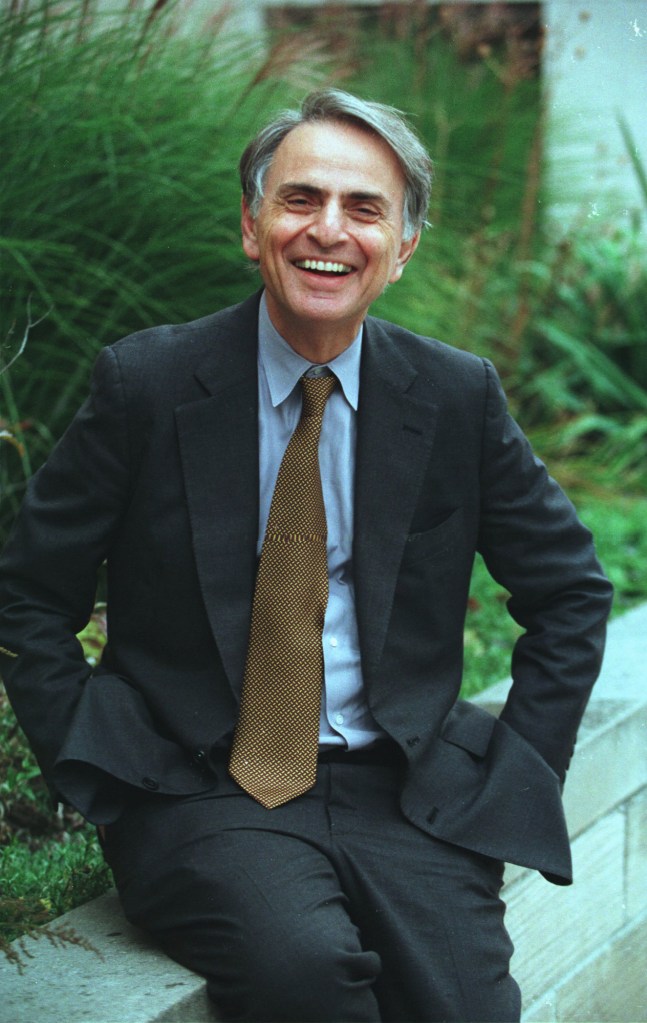
 © Provided by Washington Examiner41RON9E+KLL._SX327_BO1,204,203,200_.jpg
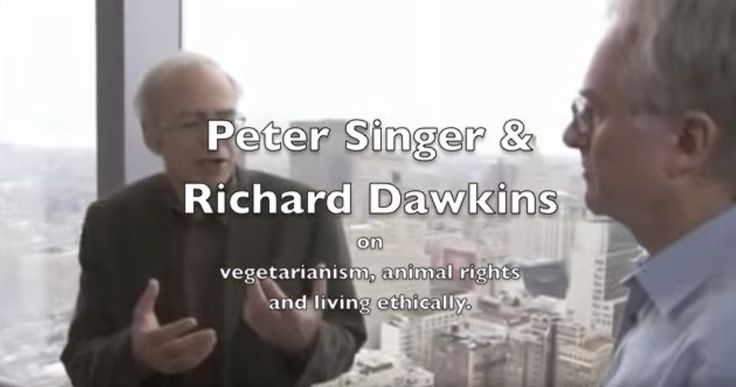



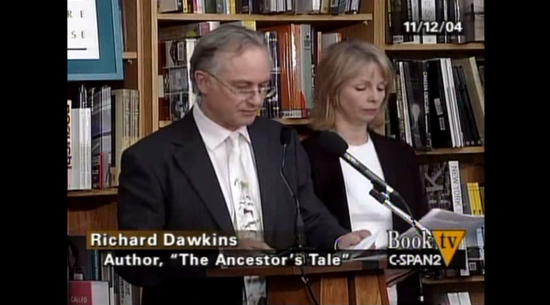


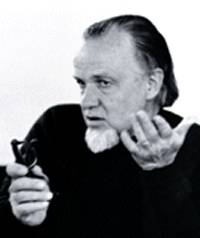

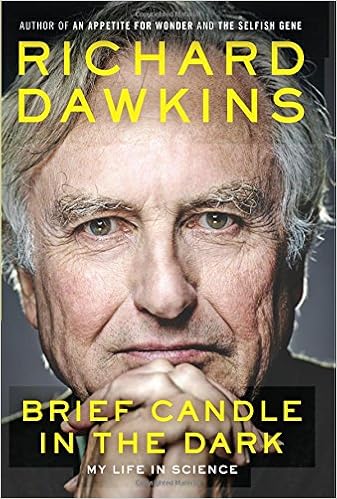
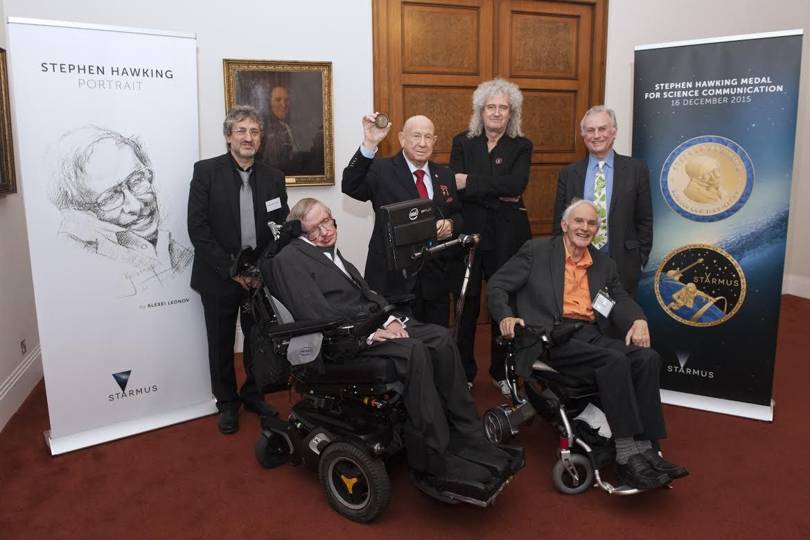



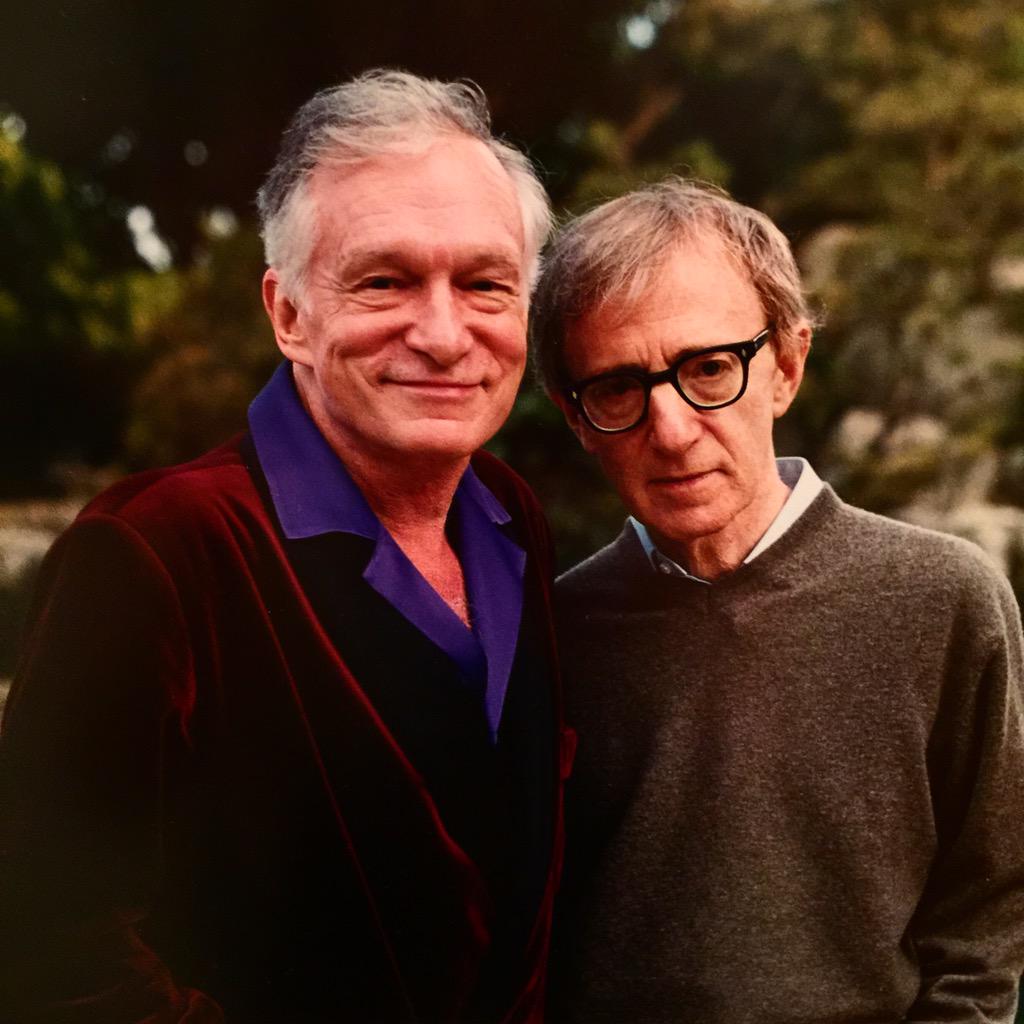



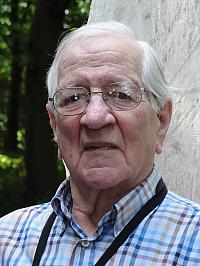
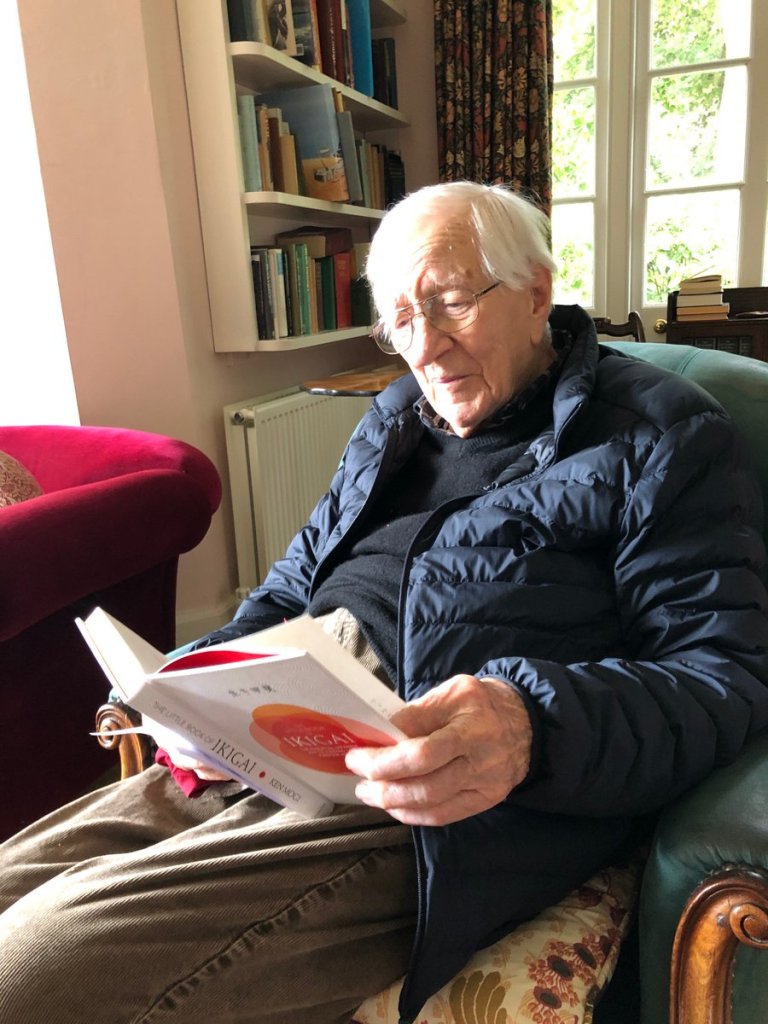
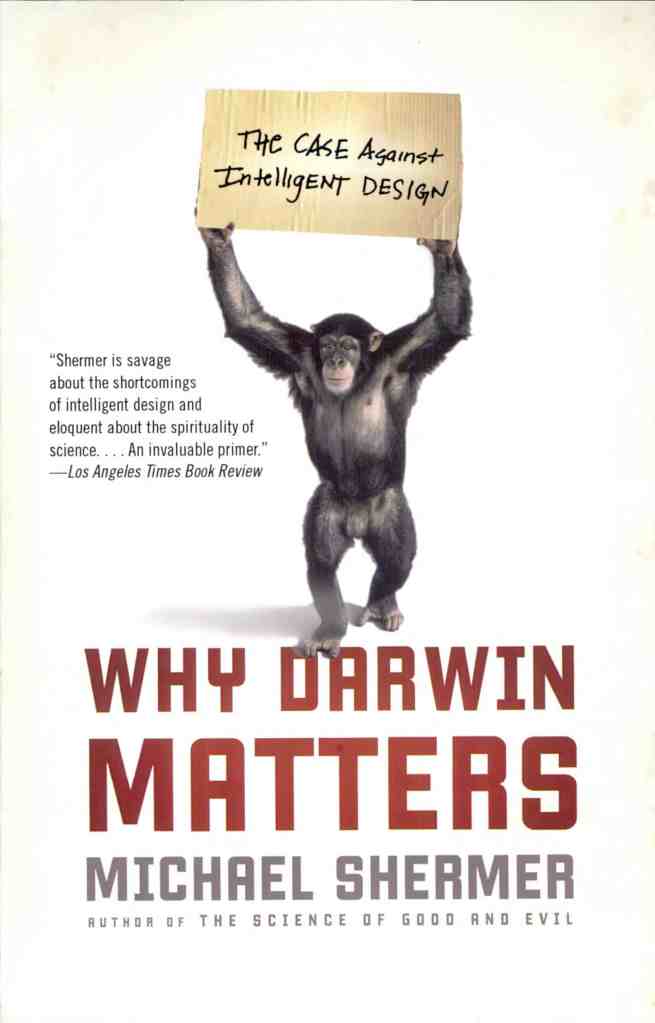

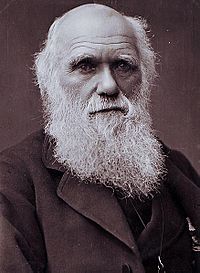
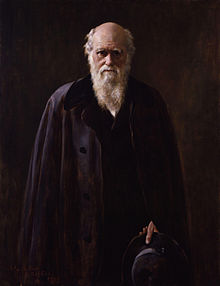
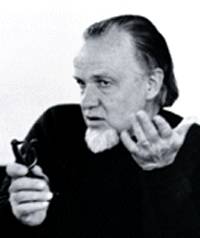
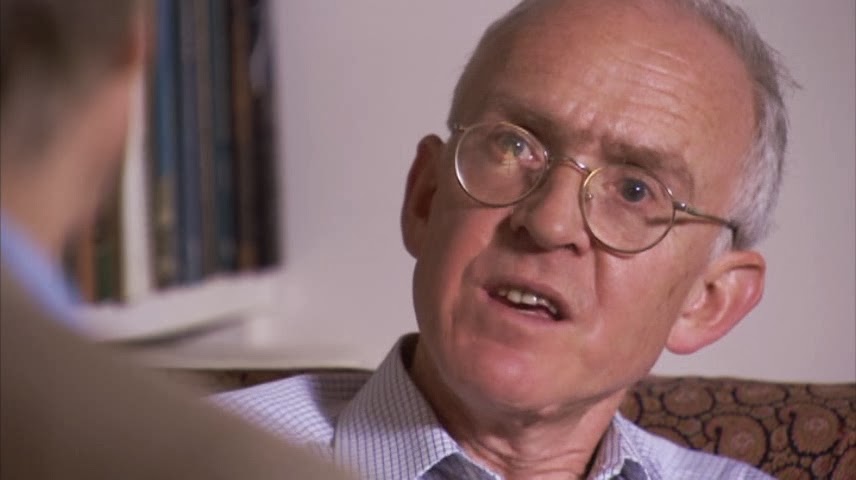
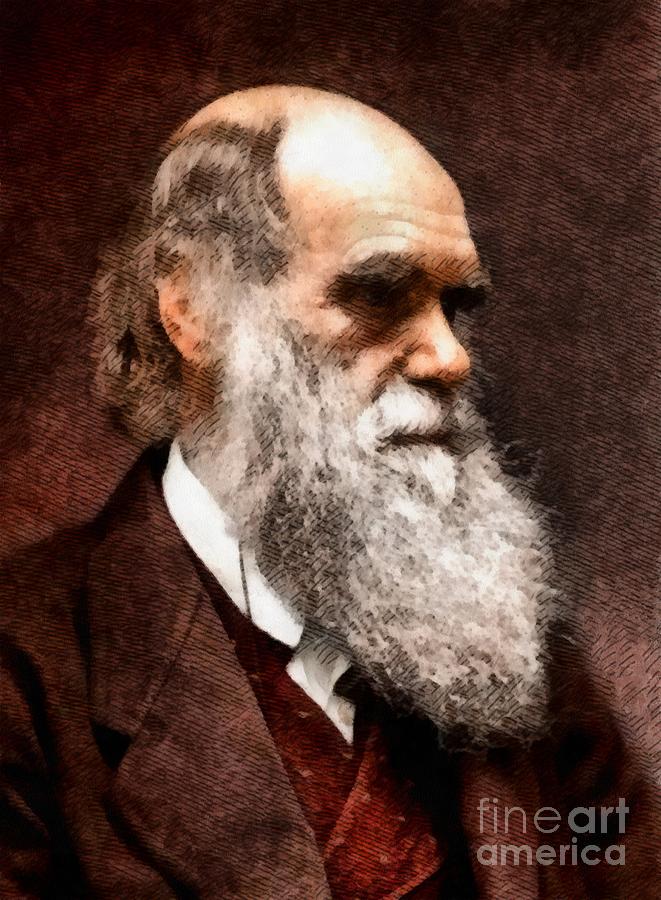
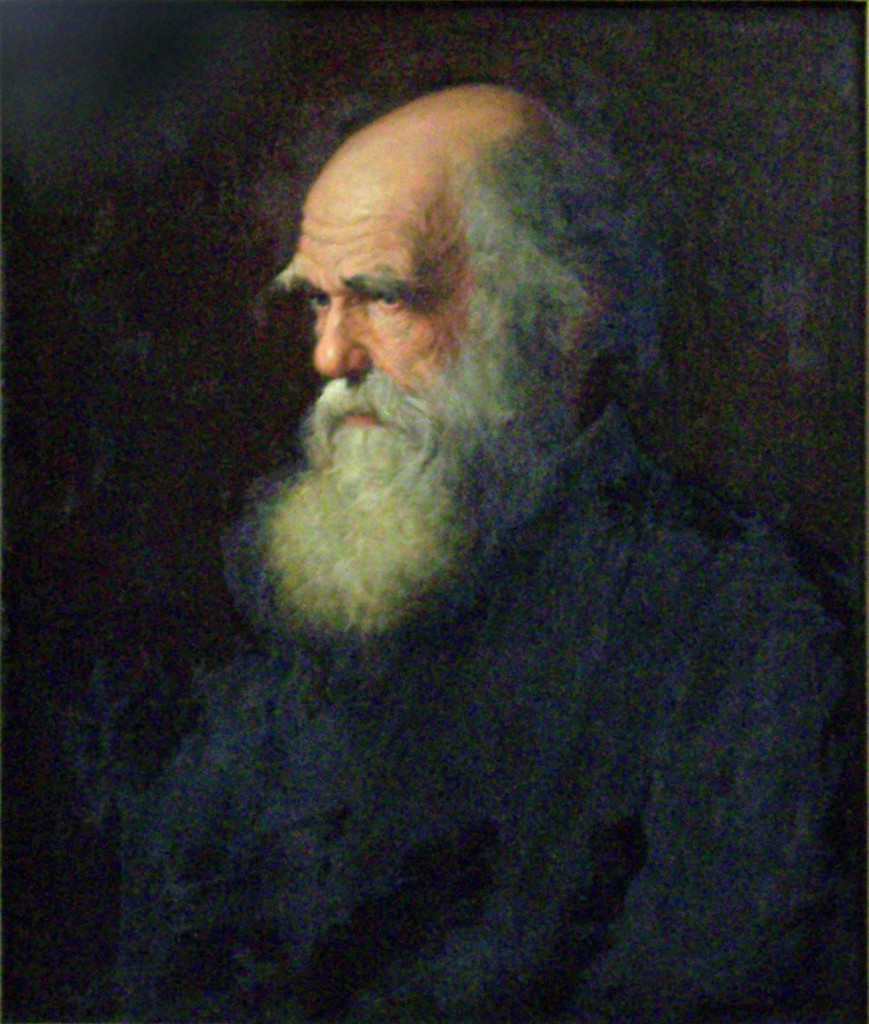
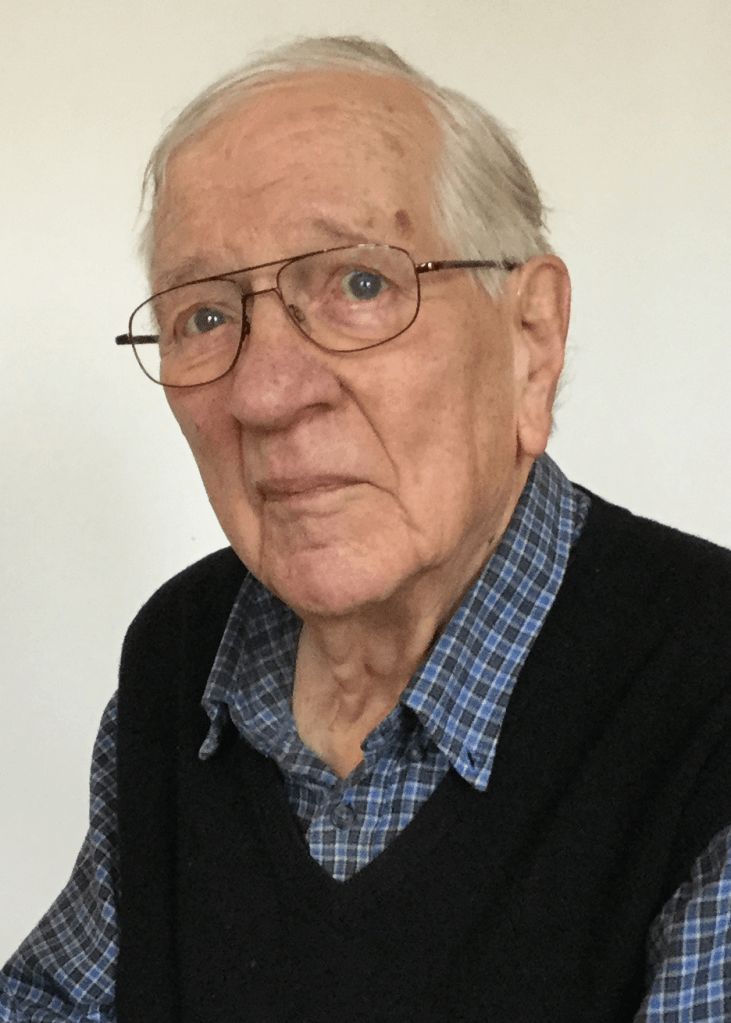
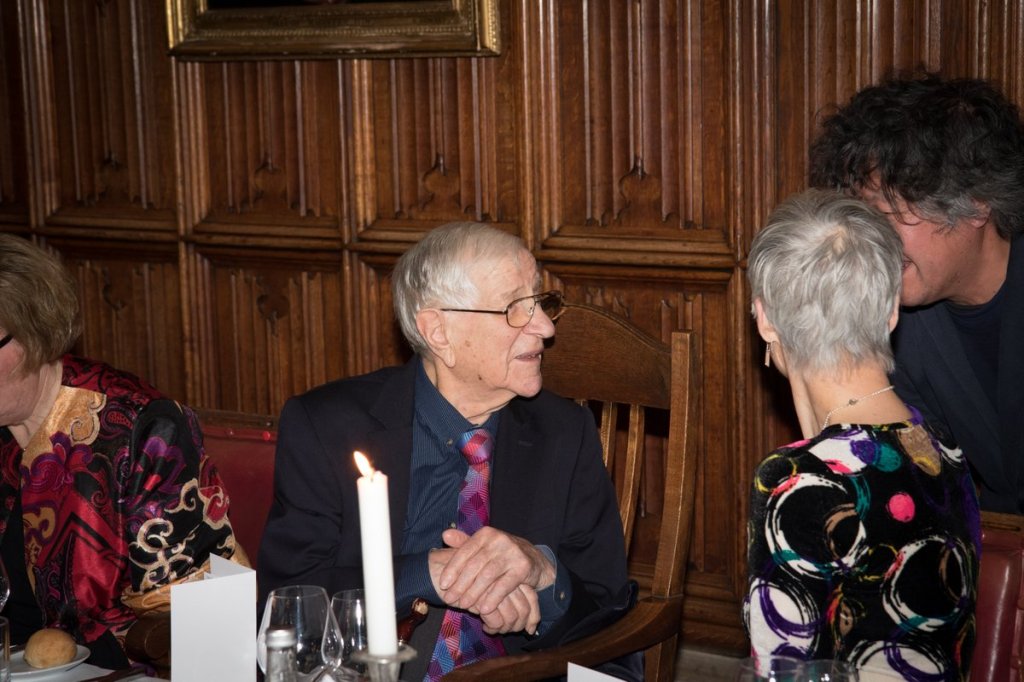




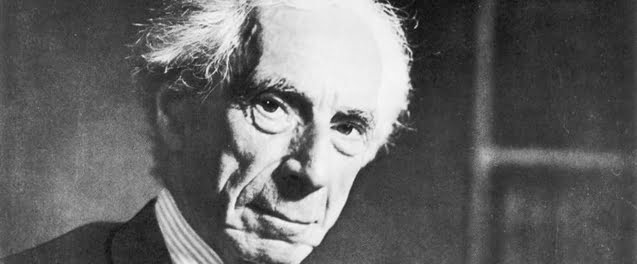





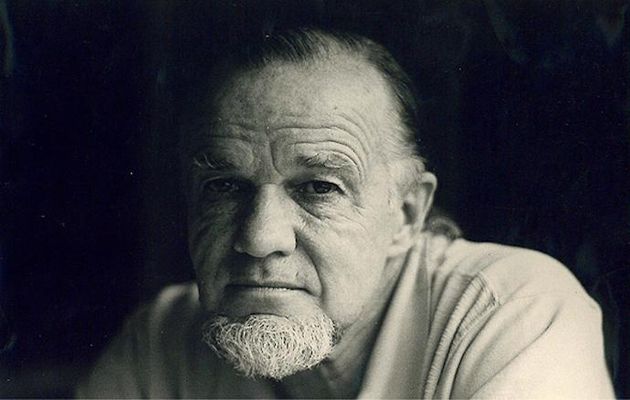


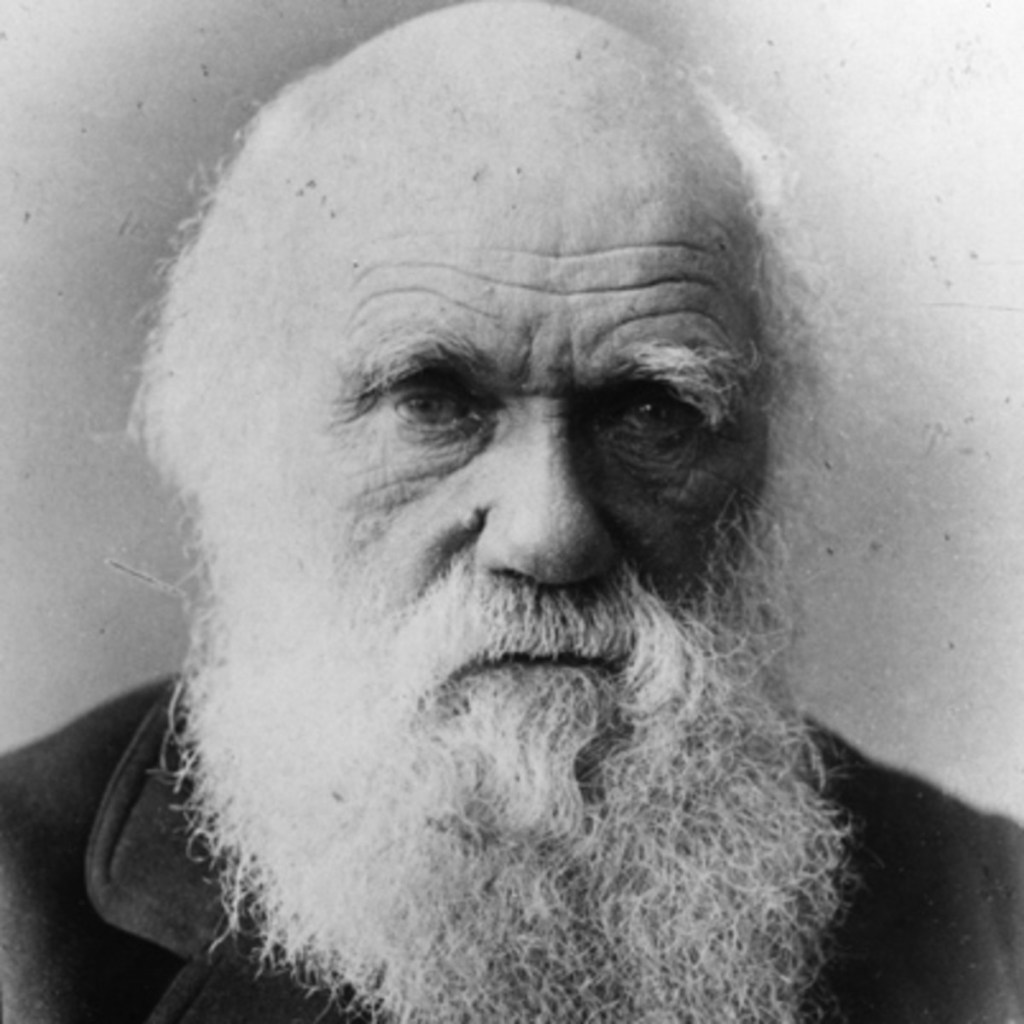
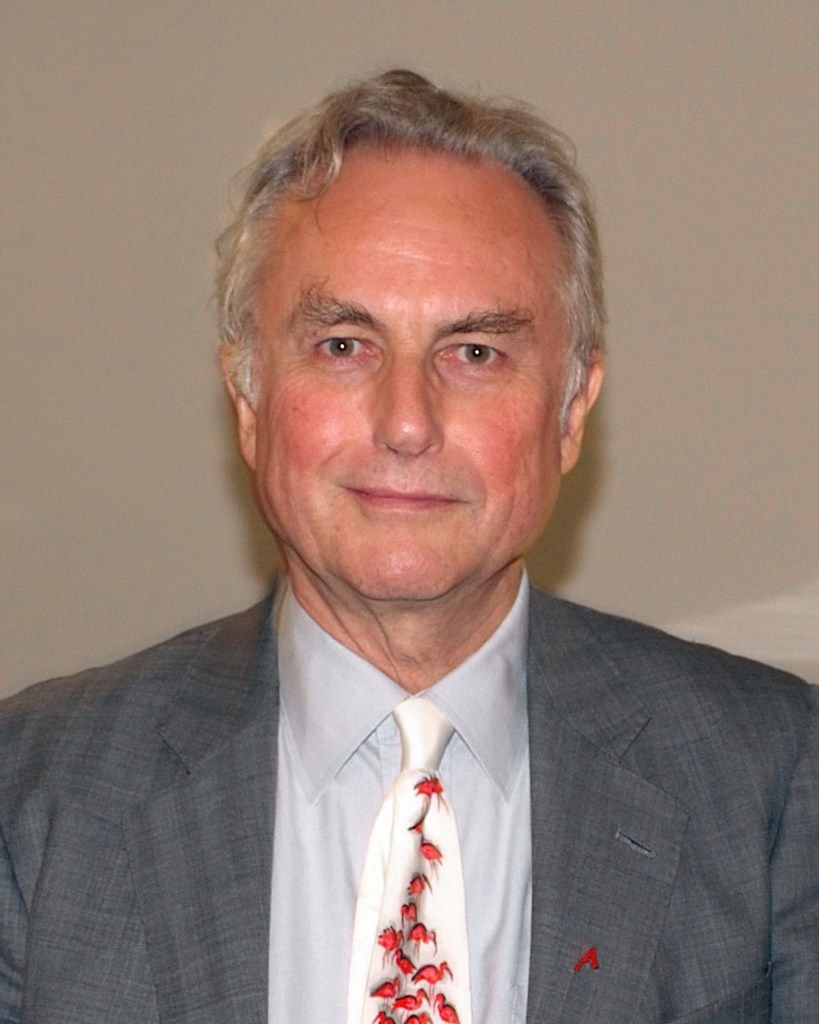




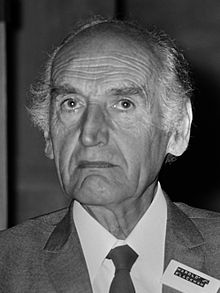
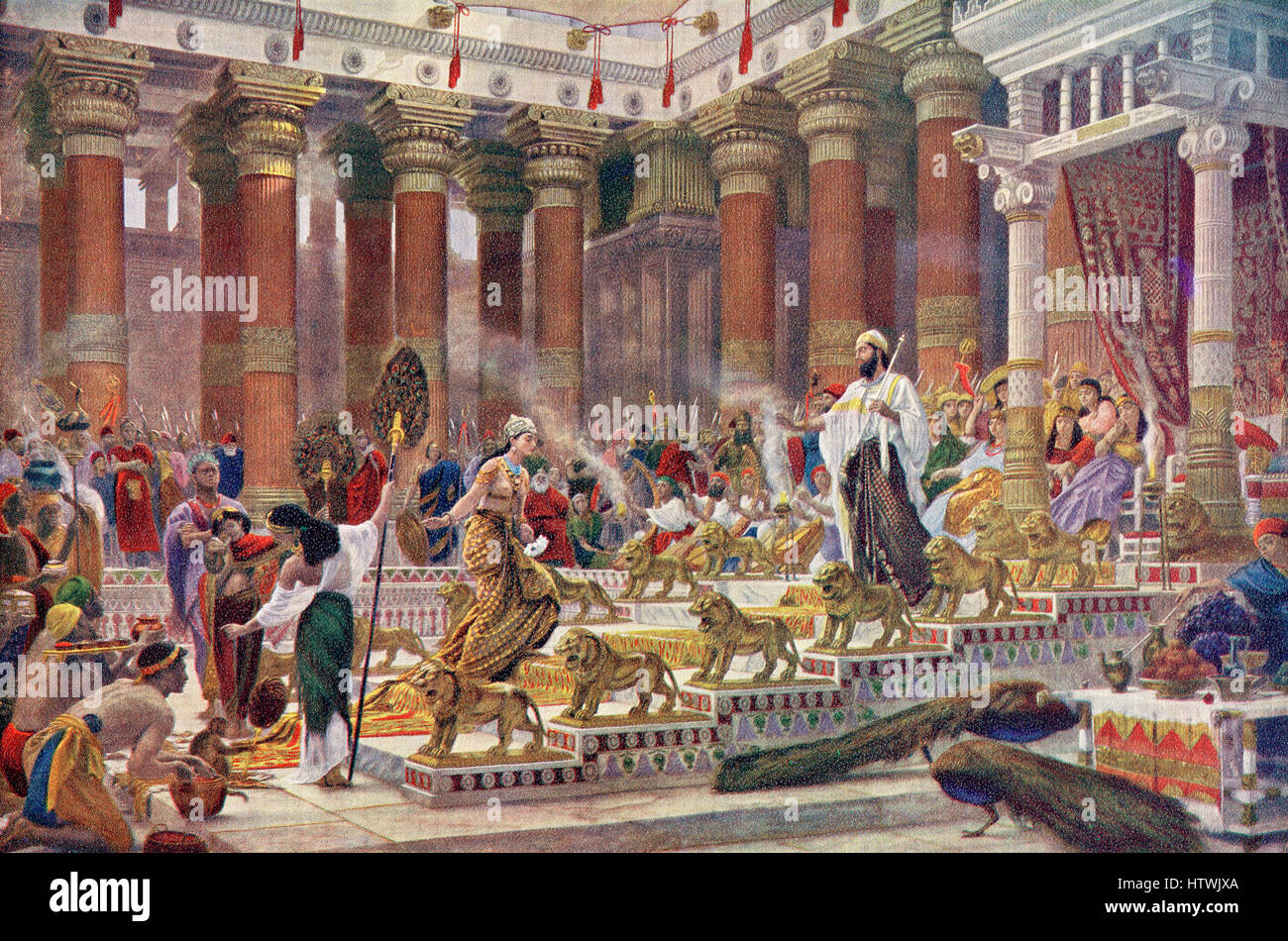



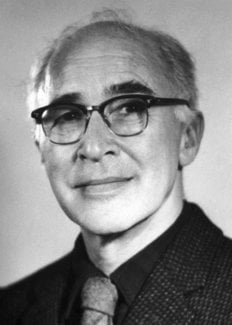
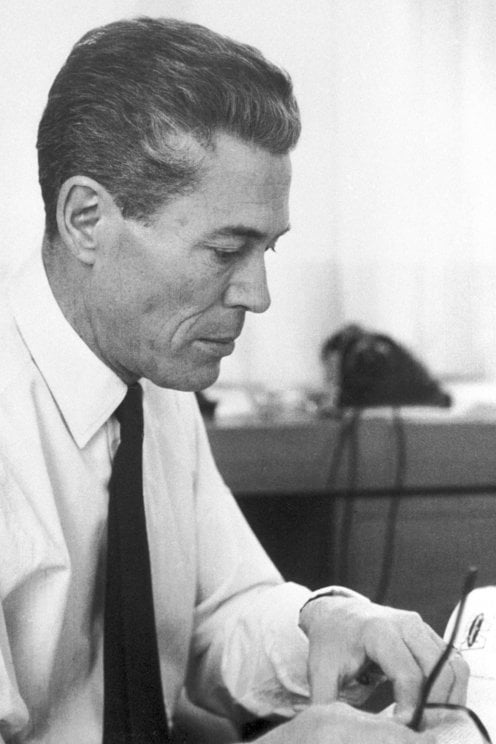


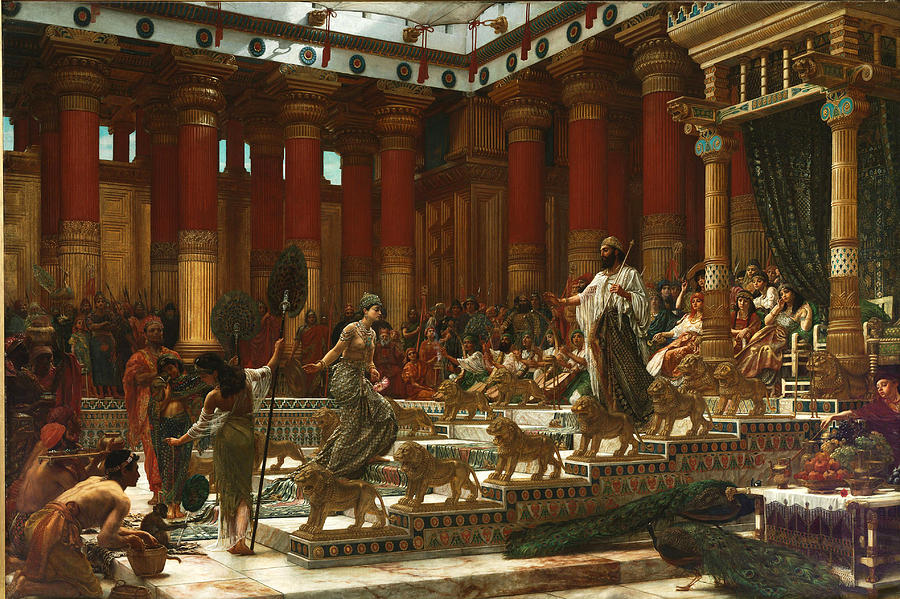





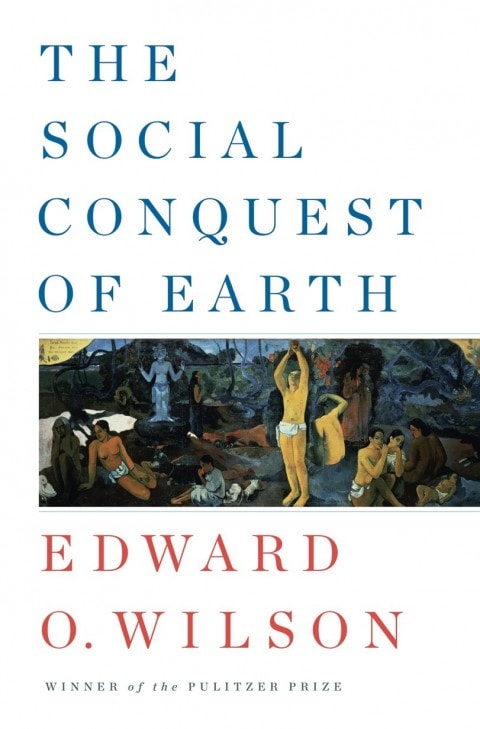

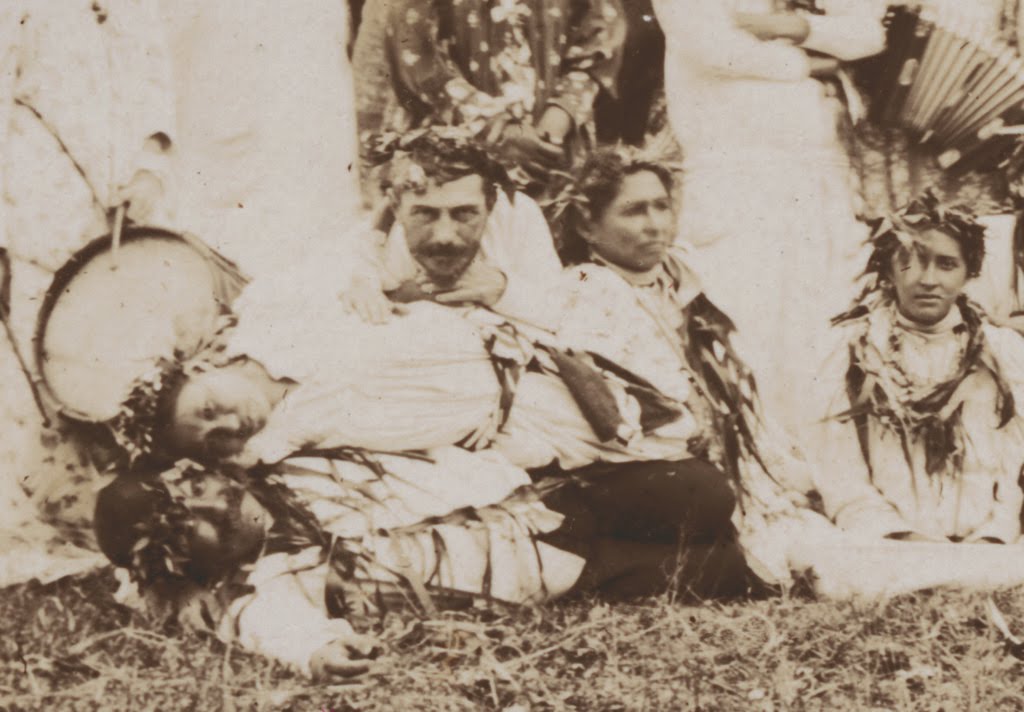
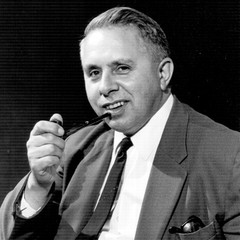


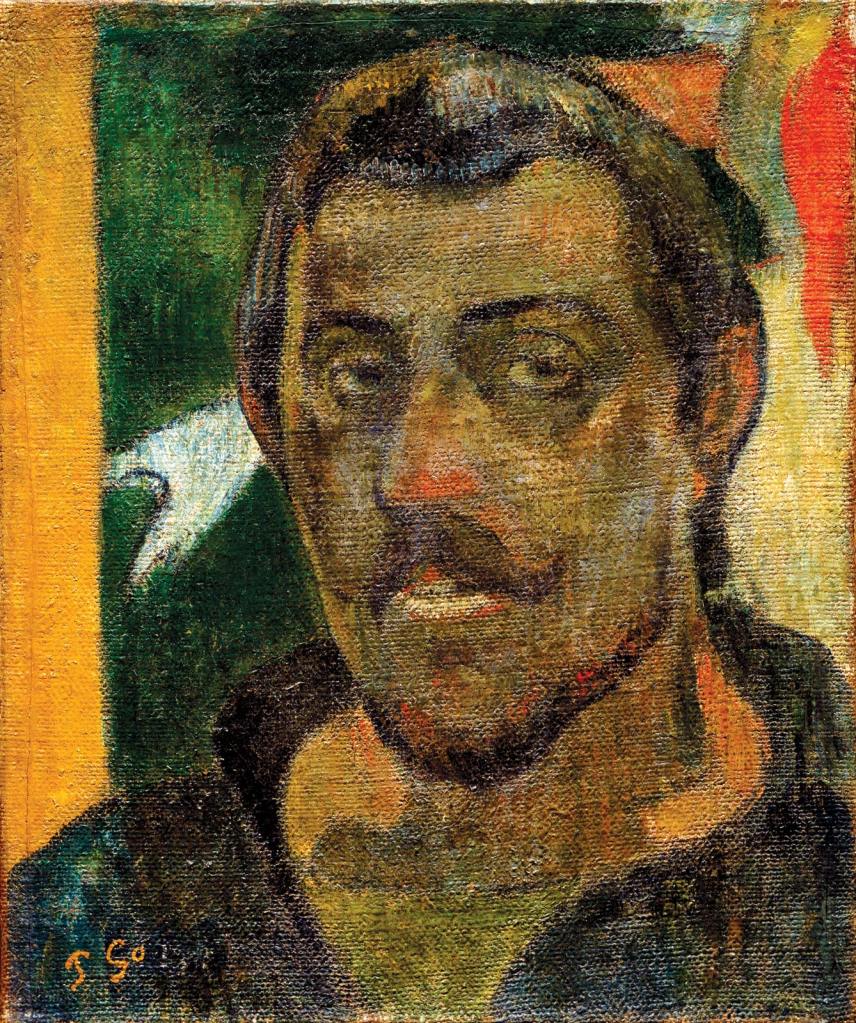

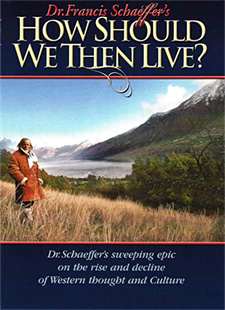
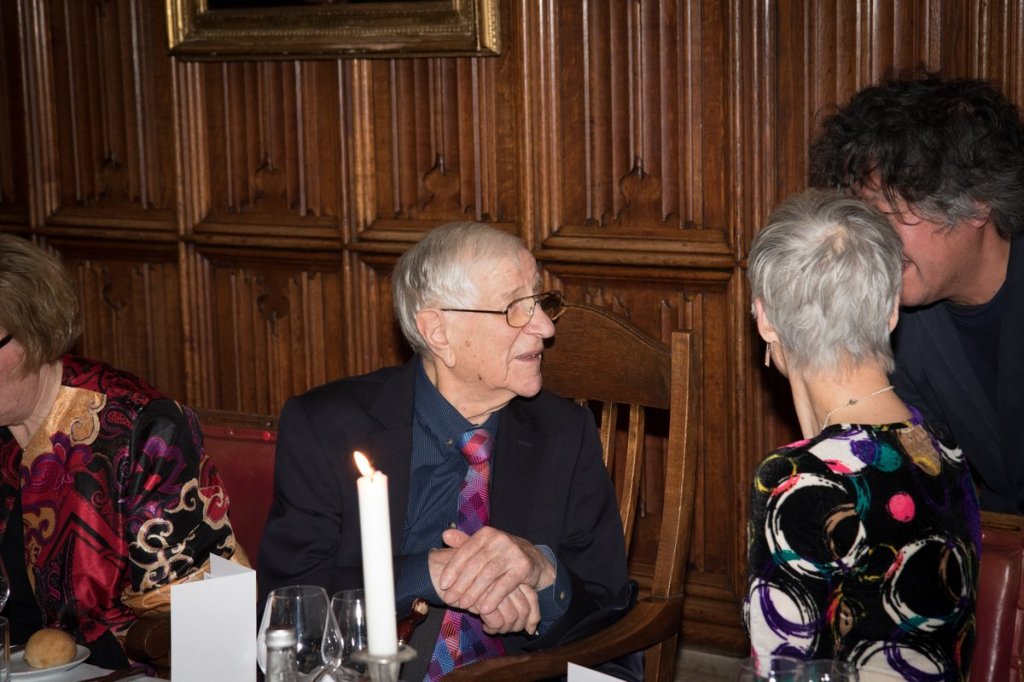

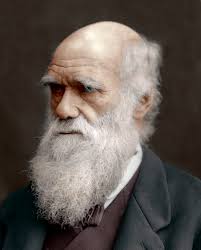
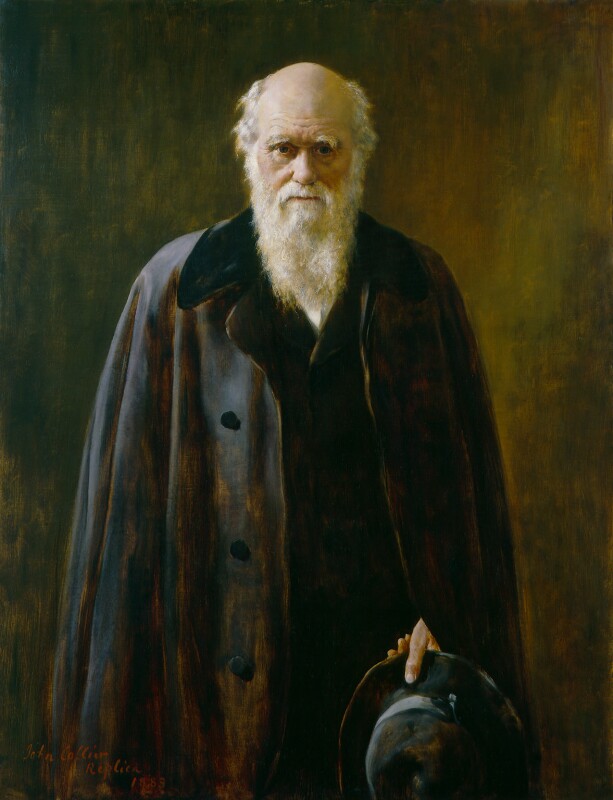
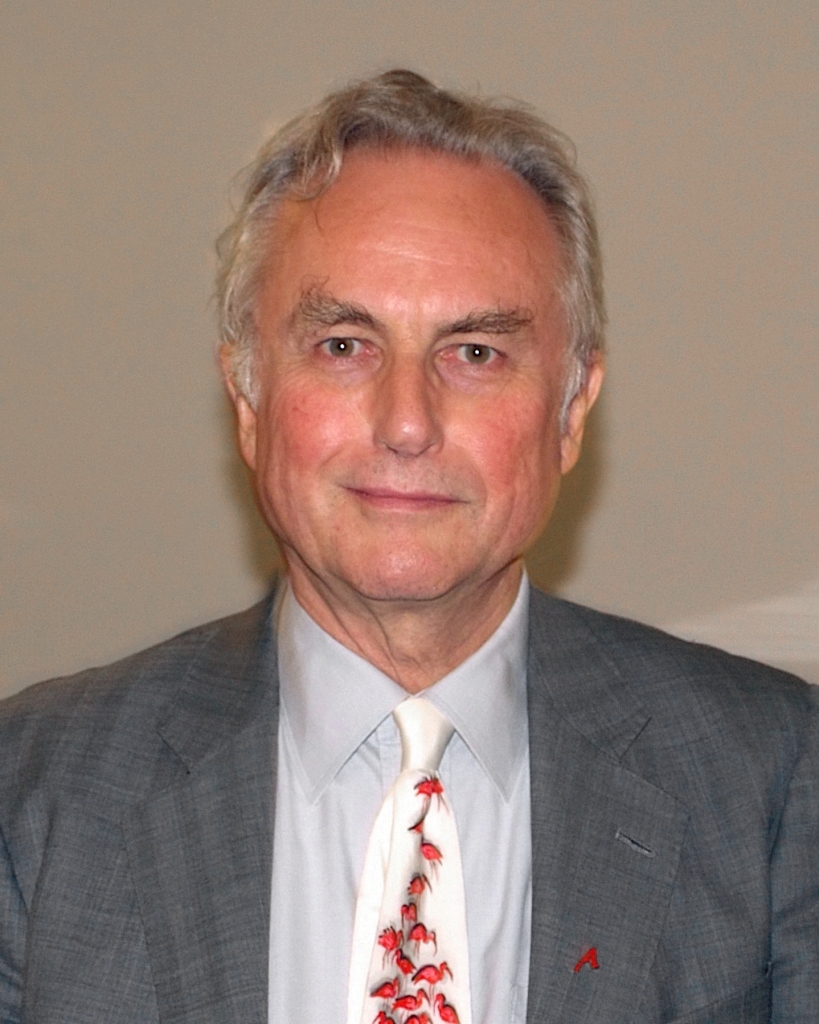
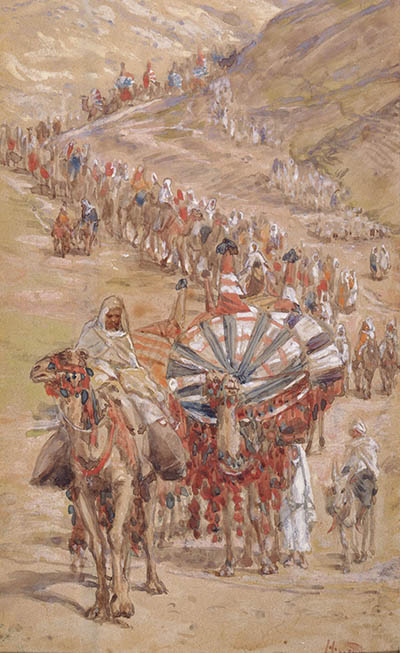

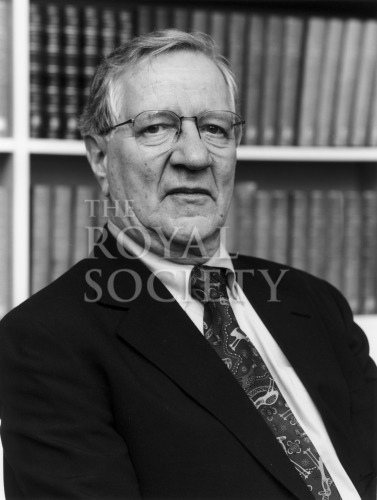
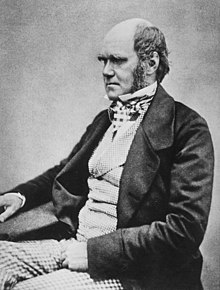
/https://public-media.smithsonianmag.com/filer/Charles-Darwin-1880-631.jpg)


