Category Archives: Uncategorized

Debating from 2015-2020 Darwin’s great grandson (Horace Barlow) about Francis Schaeffer’s 1968 critique of Darwinism! Part 6 (Darwin: “My judgment often fluctuates . . . In my most extreme fluctuations I have never been an Atheist in the sense of denying the existence of a God. I think that generally, but not always, that an Agnostic would be the more correct description of my state of mind.”

—-

TRIBUTES PAID TO PROFESSOR HORACE BARLOW

PUBLISHED DATE: July 07, 2020

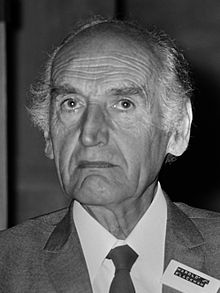
Professor Horace Barlow (8 December 1921 – 5 July 2020) was a neuroscientist and Fellow of Trinity College Cambridge.

Professor Horace Barlow by Louise Riley-Smith, 2003

Horace Barlow was born into a scientific family: his mother was Nora Darwin, the granddaughter of Charles Darwin, who worked in the field of genetics with William Bateson at Cambridge and his paternal grandfather was physician to Queen Victoria’s household.

He studied Natural Sciences at Cambridge University and then completed medical training at Harvard Medical School and University College Hospital, London before returning to Cambridge to study neurophysiology under the tutelage of Lord Adrian. He was awarded an Sc.D in 1943.

His research investigated the visual system at the level of single neurons and their interactions in both humans and animals. His emphasis was on understanding the act of seeing through the underlying machinery of vision.

After holding various positions at Cambridge University he became Professor of Physiological Optics and Physiology at the University of California, Berkeley. He later returned to Cambridge, where he was Royal Society Research Professor of Physiology.

Professor Barlow was elected Fellow of the Royal Society in 1969 and was awarded the Society’s Royal Medal in 1993. In the same year (1993) he received the Australia Prize for research into the mechanisms of visual perception. His other awards include Swartz Prize for Theoretical and Computational Neuroscience (2009) and Ken Nakayama Prize from the Vision Sciences Society (2016).

Trinity Fellow, Professor Roger Keynes, of the Department of Physiology, Development and Neuroscience at the University of Cambridge, said:

Horace Barlow made seminal discoveries in brain physiology. After medical qualification he began research in the Cambridge Physiological Laboratory, recording electrical signals from single nerve cells in the frog’s eye. These showed that nerve cells are wired to detect essential features of the frog’s visual world, such as a small moving insect, and its direction. His approach paved the way for major advances in understanding how visual information in mammals is processed and stored in the brain. He also initiated psychophysical studies of human visual perception and wrote cogently on the brain in all its aspects, working in his departmental office and visiting Trinity well into his 90s.

Priyamvada Natarajan, Professor in the Departments of Astronomy and Physics at Yale University, and a Trinity alumna, said:

Deeply sad to hear the news of his passing. I fondly remember many wonderful conversations with Horace Barlow during my time at Trinity as a junior research fellow in 1997-2003. We chatted about science – in particular, about optics, and how the various wavelengths of light revealed disparate aspects of the cosmos and about the achromatic bending of light (gravitational lensing) that I worked on and its analogy to geometric optics. He patiently answered many of my naive questions about neuroscience and we were both ardent fans of Ramon Cajal’s drawings of neurons. Horace was soft-spoken, utterly curious about the natural world, and remarkably insightful –  it was a privilege to know him.

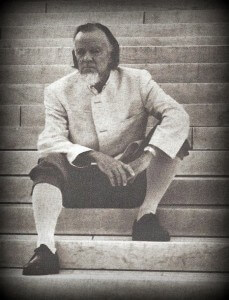
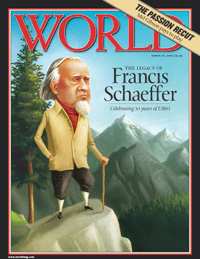
Image result for francis schaeffer

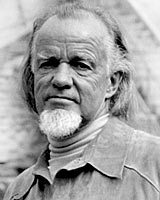
Francis Schaeffer

Below is a portion of my February 11, 2015 letter to Dr. Barlow followed by his response in his November 22, 2017 letter:
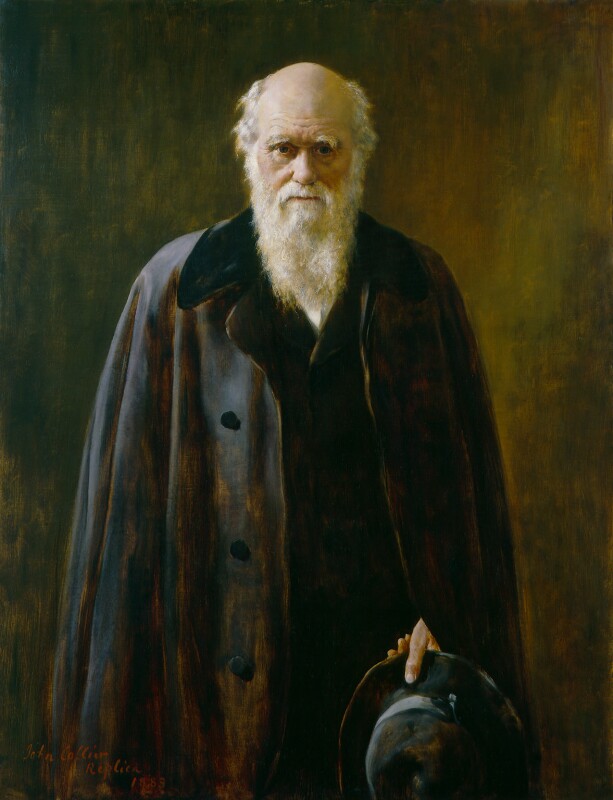
Darwin, C. R. to Fordyce, John, 7 May 1879

“What my own views may be is a question of no consequence to any one but myself. But, as you ask, I may state that my judgment often fluctuates . . . In my most extreme fluctuations I have never been an Atheist in the sense of denying the existence of a God. I think that generally (and more and more as I grow older), but not always, that an Agnostic would be the more correct description of my state of mind.”
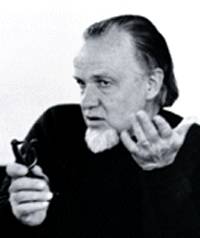
Francis Schaeffer asserted:

What we find now is that he comes to the place in being agnostic, but as we read through this section on religion what we find is in reality his reason leads him against this position, which is interesting but his theory makes him accept the  position of agnosticism. You will notice as we go on, on the basis of his intellect he can’t stand the thought of his own position, of there not being an answer. Nevertheless, he is increasingly forced to this because it wouldn’t conform to his own theory, man being shoved against his own will because of presuppositions. I think what you have in Darwin is a magnificent example, although a sad one of what I lecture on in apologetics,  and that is if a man takes a set of nonchristian presuppositions he is forced eventually to be in a place of tension. The more consistent he is with his own nonchristian presuppositions the more he is away from the real world. When he is closer to the real world then he is more illogical to his own presuppositions. Darwin shows this in his own writings in his own lifetime. So the things in his human nature he is sorry to lose, but he loses them, at the same time he finds that couldn’t explain things on the basis of his reason.  Yet he was driven to certain conclusions which were away from what he himself felt were the real world on the basis of his own presuppositions. He was never satisfied. Just as I very often use Sartre and Camus to point out this dilemma of nonchristian presuppositions, in actuality these sections from Darwin are a perfect example of the same thing.
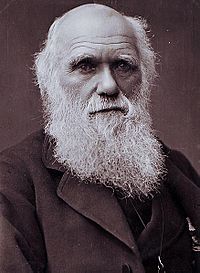
Darwin’s words:

From Charles Darwin, Autobiography (1876), in The Life and Letters of Charles Darwin, ed. Francis Darwin, vol. 1 (London: John Murray, 1888), pp. 307 to 313.

“Another source of conviction in the existence of God, connected with the reason and not with the feelings, impresses me as having much more weight. This follows from the extreme difficulty or rather impossibility of conceiving this immense and wonderful universe, including man with his capacity of looking far backwards and far into futurity, as the result of blind chance or necessity. When thus reflecting, I feel compelled to look to a First Cause having an intelligent mind in some degree analogous to that of man; and I deserve to be called a Theist. This conclusion was strong in my mind about the time, as far as I can remember, when I wrote the Origin of Species, and it is since that time that it has very gradually, with many fluctuations, become weaker. But then arises the doubt
Francis Schaeffer commented:

On the basis of his reason he has to say there must be an intelligent mind, someone analogous to man. You couldn’t describe the God of the Bible better. That is man is made in God’s image  and therefore, you know a great deal about God when you know something about man. What he is really saying here is that everything in my experience tells me it must be so, and my mind demands it is so. Not just these feelings he talked about earlier but his MIND demands it is so, but now how does he counter this? How does he escape this? Here is how he does it!!!
Darwin’s words:

—can the mind of man, which has, as I fully believe, been developed from a mind as low as that possessed by the lowest animals, be trusted when it draws such grand conclusions?
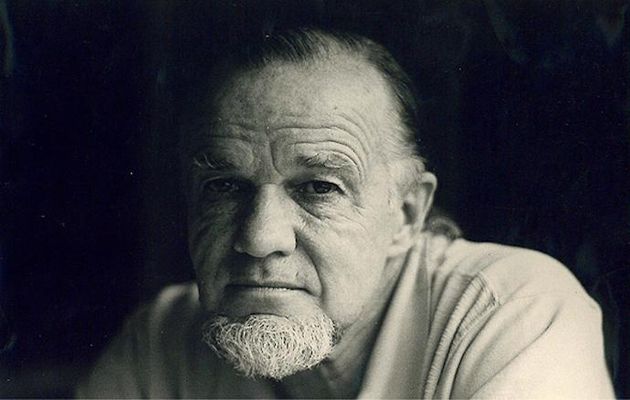
Francis Schaeffer commented:

So he says my mind can only come to one conclusion, and that is there is a mind behind it all. However, the doubt comes because his mind has come from the lowest form of earthworm, so how can I trust my mind. But this is a joker isn’t it?  Then how can you trust his mind to support such a theory as this? He proved too much. The fact that Darwin found it necessary to take such an escape shows the tremendous weight of Romans 1, that the only escape he can make is to say how can I trust my mind when I come from the lowest animal the earthworm? Obviously think of the grandeur of his concept, I don’t think it is true, but the grandeur of his concept, so what you find is that Darwin is presenting something here that is wrong I feel, but it is not nothing. It is a tremendously grand concept that he has put forward. So he is accepting the dictates of his mind to put forth a grand concept which he later can’t accept in this basic area with his reason, but he rejects what he could accept with his reason on this escape. It really doesn’t make sense. This is a tremendous demonstration of the weakness of his own position.
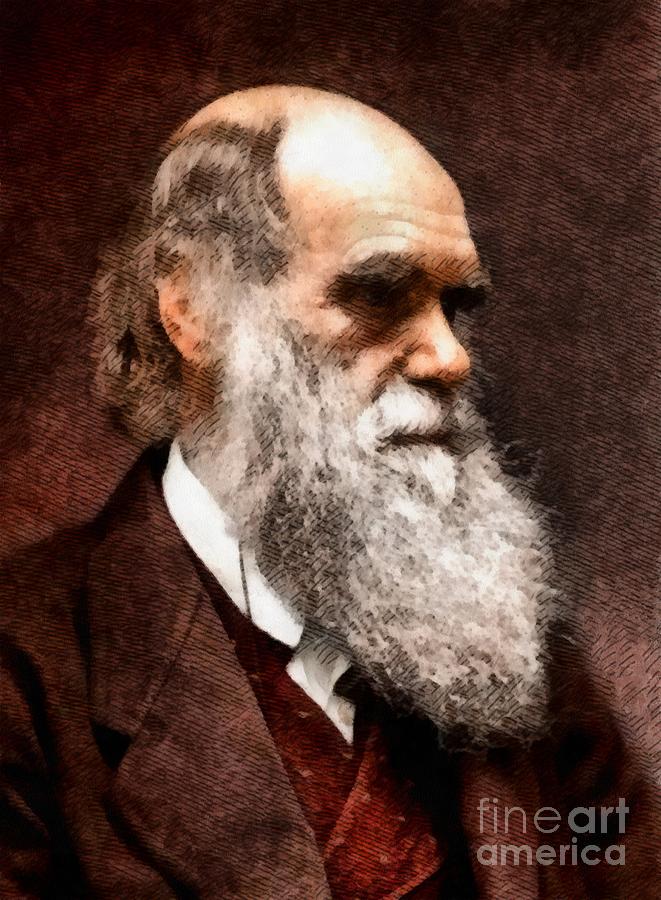
Darwin clings to agnosticism:

“I cannot pretend to throw the least light on such abstruse problems. The mystery of the beginning of all things is insoluble by us, and I for one must be content to remain an Agnostic.”
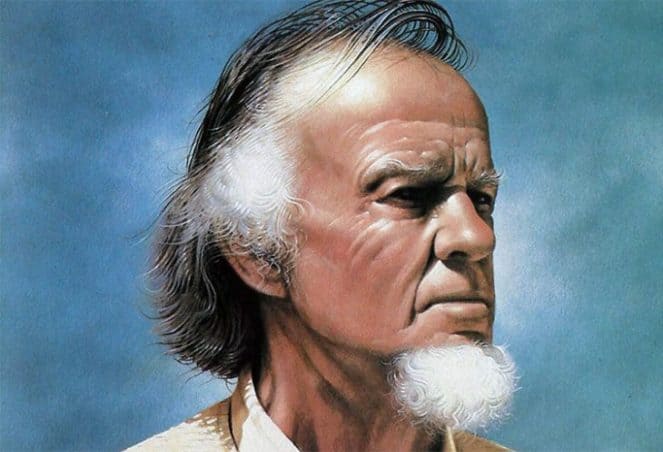
Francis Schaeffer commented:

What a stupid reply and I didn’t say wicked. It just seems to me that here is 2 plus 2 equals 36 at this particular place.

 

Here is Dr. Barlow’s response in his November 22, 2017 letter:

——

Saying you don’t believe in God is a very foolish thing to say as it doesn’t explain why so many people talk about it, there has got to be more to it than that; also I think one has to respect what some godly people say and some of the things they do; I wish one could make more sense of it but I don’t think the godly people have done a very good job;

This reminds me of a story that Adrian Rogers told about his interaction with an agnostic:

Here we must observe that many people don’t want to find the truth just like a thief doesn’t want to find a policeman. I now want to share a portion of the sermon WHO IS JESUS? by Adrian Rogers because this very point is made:

Here is how the story goes:

Years ago Adrian Rogers counseled with a NASA scientist and his severely depressed wife. The wife pointed to her husband and said, “My problem is him.” She went on to explain that her husband was a drinker, a liar, and an adulterer.

Dr. Rogers asked the man if he were a Christian. “No!” the man laughed. “I’m an atheist.” “Really?” Dr. Rogers replied. “That means you’re someone who knows that God does not exist.” “That’s right,” said the man. “Would it be fair to say that you don’t know all there is to know in the universe?” “Of course,” the man admitted. Dr. Rogers asked, “Would it be generous to say you know half of all there is to know?” “Yes!” Then Dr. Rogers inquired,“Wouldn’t it be possible that God’s existence might be in the half you don’t know?” The man acknowledged, “Okay, but I don’t think He exists.” Dr. Rogers replied, “Well then, you’re not an atheist; you’re an agnostic.You’re a doubter.” The man asserted, “Yes, and I’m a big one.” Then Dr. Rogers popped the question, “It doesn’t matter what size you are. I want to know what kind [of doubter] you are.” 

“What kinds are there?”

“There are honest doubters and dishonest doubters. An honest doubter is willing to search out the truth and live by the results; a dishonest doubter doesn’t want to know the truth. He can’t find God for the same reason a thief can’t find a policeman.”

“I want to know the truth.”

“Would you like to prove that God exists?”

“It can’t be done.”

“It can be done. You’ve just been in the wrong laboratory. Jesus said, ‘If any man’s will is to do His will, he will know whether my teaching is from God or whether I am speaking on my own authority’ (John 7:17). I suggest you read one chapter of the book of John each day, but before you do, pray something like this, ‘God, I don’t know if You’re there, I don’t know if the Bible is true, I don’t know if Jesus is Your Son. But if You show me that You are there, that the Bible is true, and that Jesus is Your Son, then I will follow You. My will is to do your will.”

The man agreed. About three weeks later he returned to Dr. Rogers’s office and invited Jesus Christ to be his Savior and Lord.
 

Another quote from Dr. Barlow’s November 22, 2017 letter:

 After acknowledging that Charles Darwin did lose his aesthetic tastes for art, poetry, and for fine scenery which he attributed to his study of evolution, Dr. Barlow came back and asserted, “Notice, however, that he clearly did not lose his sense of the value of truth, and of the importance of forever searching it out. “ 
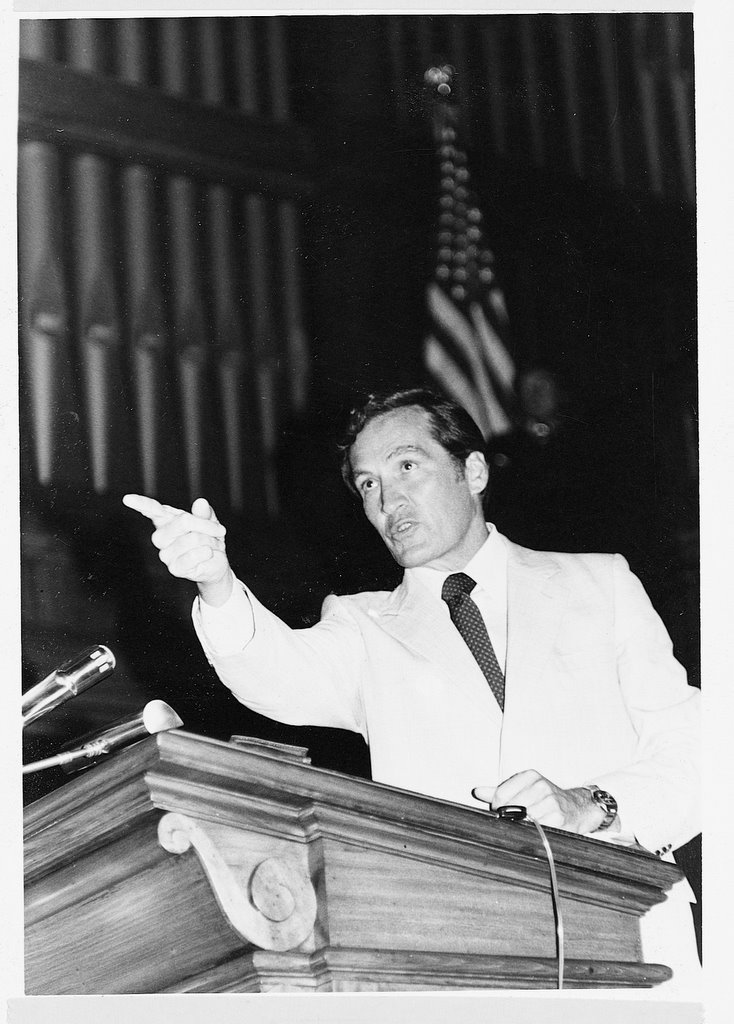
 

Here is some evidence:

—-

Let me quote from my former pastor Adrian Rogers:

Skeptics seem to think that the Bible is full of scientific errors. However, before an individual can make that assertion, they had better make sure they know both science and Scripture. You see, I have heard unbelievers state that the Bible is not a book of science, but a book of religion, which is basically true. It is not written to teach us about science, but to teach us about God. But the God of salvation and the God of creation are the same. Science doesn’t take God by surprise. A close look at Scripture reveals that it is scientifically accurate.

Every now and then science may disagree with the Bible, but usually science just needs time to catch up. For example, in 1861 a French scientific academy printed a brochure offering 51 incontrovertible facts that proved the Bible in error. Today there is not a single reputable scientist who would support those supposed “facts,” because modern science has disproved them all!

The ancients believed the earth was held up by Atlas, or resting on pillars, or even seated on the backs of elephants. But today we know the earth is suspended in space, a fact the Word of God records in Job 26:7: “He . . . hangeth the earth upon nothing.” God revealed the facts of cosmology long before man had any idea of the truth.

For centuries man believed the earth was flat, but now we know the earth is a globe. The prophet Isaiah, writing 750 years before the birth of Christ, revealed that “God sitteth upon the circle of the earth” (Isaiah 40:22). The word translated here as “circle” was more commonly translated “sphere.” In other words, Isaiah explained that the earth was a globe centuries before science discovered it.

When Ptolemy charted the heavens, he counted 1026 stars in the sky. But with the invention of the telescope man discovered millions and millions of stars, something that Jeremiah 33:22 revealed nearly three thousand years ago: “The host of heaven cannot be numbered.” How did these men of God know the truth of science long before the rest of the world discovered it? They were moved by the Holy Spirit to write the truth. God’s Word is not filled with errors. It is filled with facts, even scientific facts.

When the black plague was killing one quarter of Europe’s population in the fourteenth century, it was the church, not science, that helped overcome the dread disease. The leaders in the church noticed the instructions given by the Lord to Moses in Leviticus 13:46: “All the days wherein the plague shall be in him he shall be defiled; he is unclean: he shall dwell alone; without the camp shall his habitation be.” These early believers did not know microbiology or understand what germs were, but they could understand a clear teaching to quarantine someone who was sick. So they followed the Biblical dictum, quarantined those sick with the plague, and stopped it from spreading. The Bible had its science correct even before man discovered the truth! Don’t accept the charge that the Bible is filled with scientific errors. Modern science seems determined to explain God away, and refuses to acknowledge any evidence of the supernatural. But the science of Scripture is one reason to accept the Bible as God’s Word.

Debating from 2015-2020 Darwin’s great grandson (Horace Barlow) about Francis Schaeffer’s 1968 critique of Darwinism!

Image result for Emma Nora Barlow, Lady Barlow

The autobiography of Charles Darwin read by Francis Schaeffer in 1968 was not the same one originally released in 1892 because that one omitted the religious statements of Charles Darwin. 

pictured below with his eldest child William: 

Image result for Horace Barlow charles darwin

Notice this statement below from the Freedom from Religion Foundation: 

(Nora Barlow pictured below)
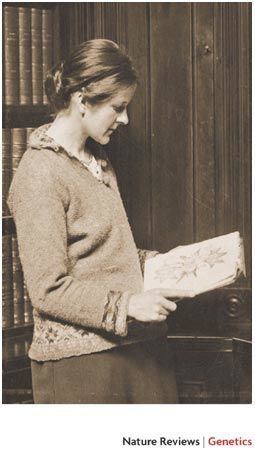
Charles Darwin wrote the Rev. J. Fordyce on July 7, 1879, that “an agnostic would be the most correct description of my state of mind.” Darwin penned his memoirs between the ages of 67 and 73, finishing the main text in 1876. These memoirs were published posthumously in 1887 by his family under the title Life and Letters of Charles Darwin, with his hardest-hitting views on religion excised. Only in 1958 did Darwin’s granddaughter Nora Barlow publish his Autobiography with original omissions restored  D. 1882.
——-

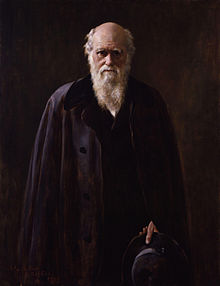
Charles Robert Darwin  (1809 – 1882) had 10 children and 7 of them survived to adulthood.

Sir Horace DarwinKBEFRS (13 May 1851 – 22 September 1928), the fifth son and ninth child of the British naturalist Charles Darwin and his wife Emma, the youngest of their seven children who survived to adulthood.

(Horace Darwin pictured below)

Horace Darwin.jpg

Emma Nora Barlow, Lady Barlow (née Darwin; 22 December 1885 – 29 May 1989) Nora, as she was known, was the daughter of the civil engineer Sir Horace Darwin and his wife The Hon. Lady Ida Darwin (née Farrer),

Horace Basil Barlow FRS (1921-) Barlow is the son of the civil servant Sir Alan Barlow and his wife Lady Nora (née Darwin). Barlow is the great-grandson of Charles Darwin

XXXXXXXXXXXXXXX

Horace Darwin married Emma Cecilia “Ida” Farrer (1854–1946) pictured below.

Image result for Ida Darwin hoRACE

—-

Image result for francis schaeffer

Francis Schaeffer

Horace Barlow was the son of Nora Barlow. From February 11, 2015 to July 1, 2017, I wrote 7 letters to Dr. Horace Barlow because I wanted to discuss primarily the views of his grandfather Charles Darwin and Francis Schaeffer’s 1968 critique of Darwinism!
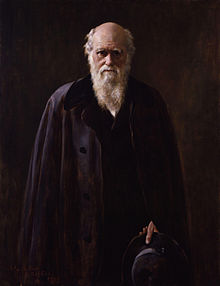
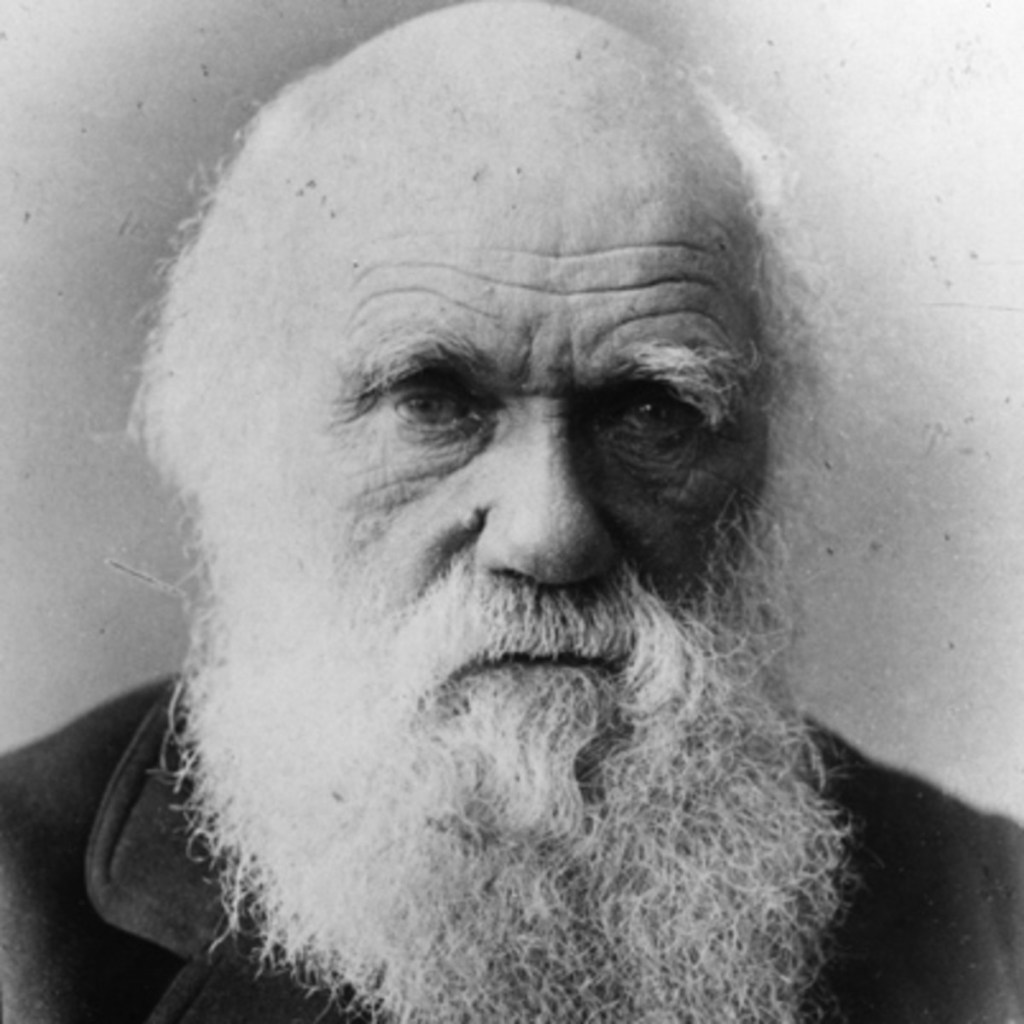
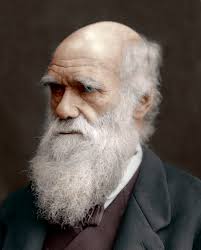
Image result for charles darwin

In December of 2017, I received a two page typed letter from Dr. Barlow reacting to several of the points made in the previous letters and emails. Over the next few weeks I will be posting the 32 letters I wrote to Dr. Barlow from February 11, 2015 to April 18, 2020 one per week every Tuesday and below is a list of those letters. Sadly Dr. Barlow passed away on July 5, 2020 at age 98. However, I want to summarize some the issues we discussed in the next few days. 
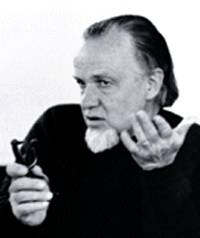
Image result for francis schaeffer

Franicis Schaeffer

If you wish to hear Francis Schaeffer’s 1968 talk on Darwin’s autobiography then you can access part 1 at this link and part 2 at this link.

—-

—-

—-

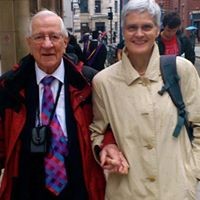
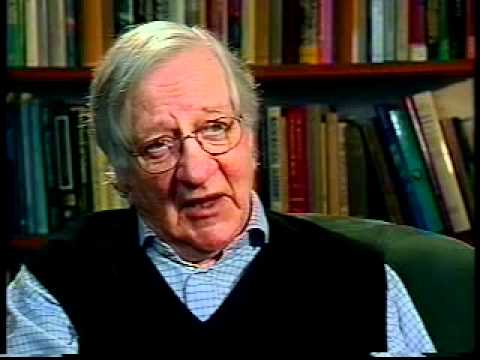
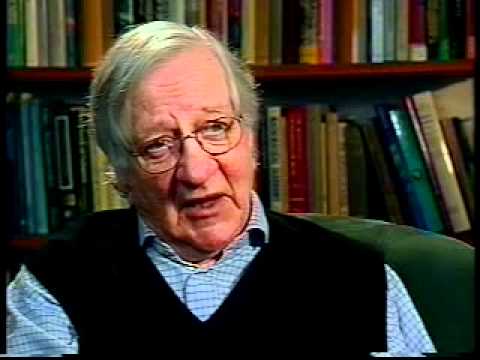
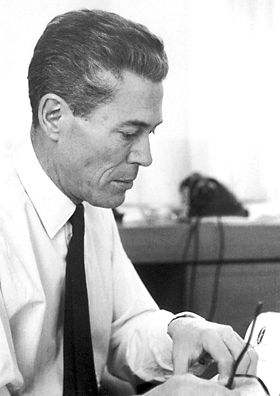
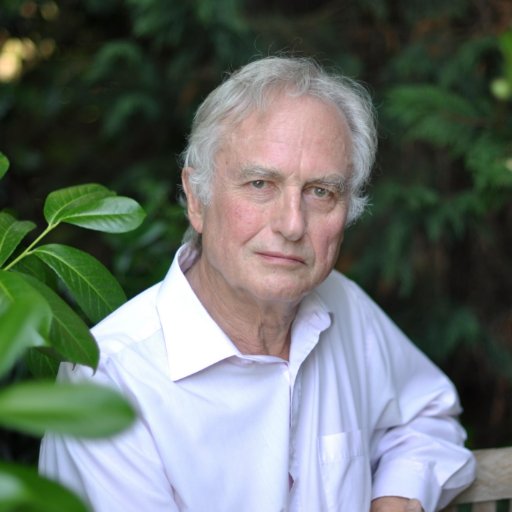
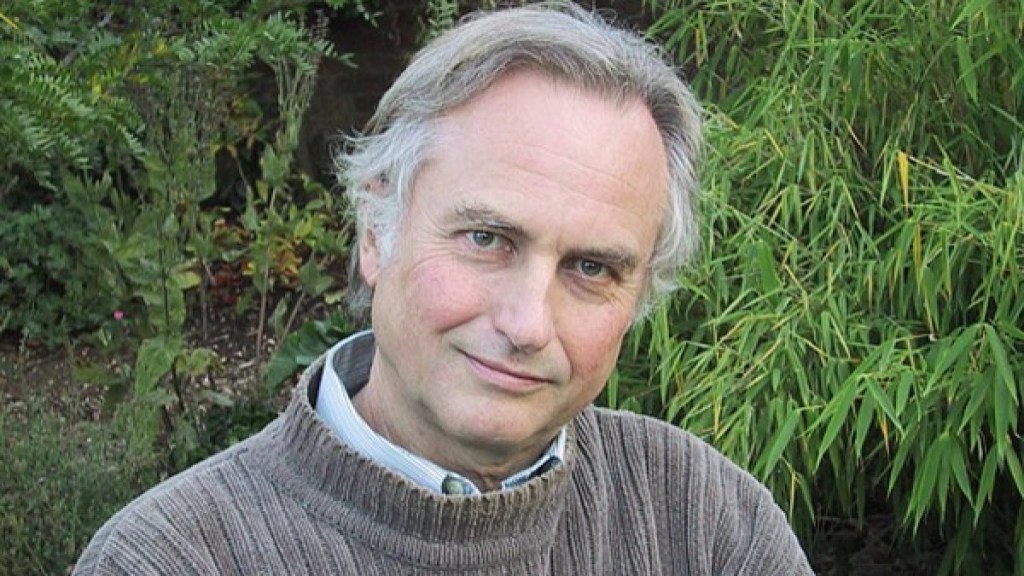
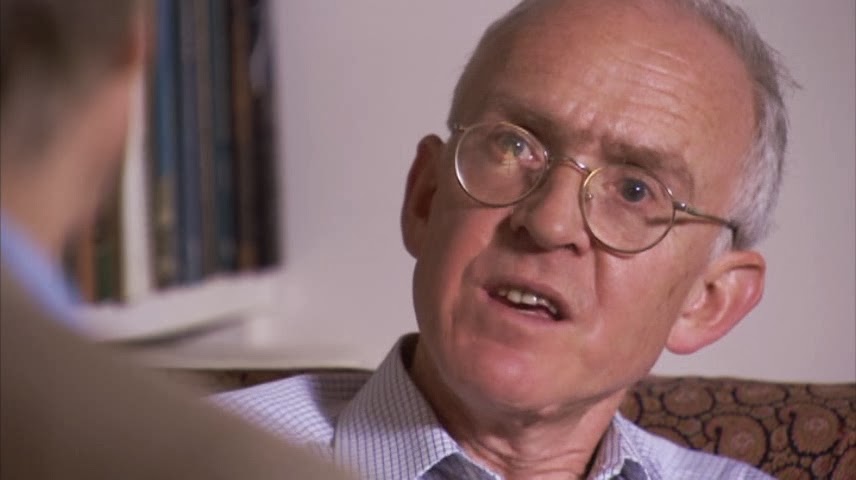
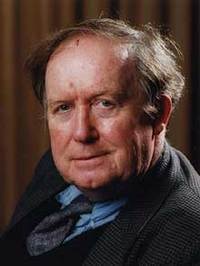
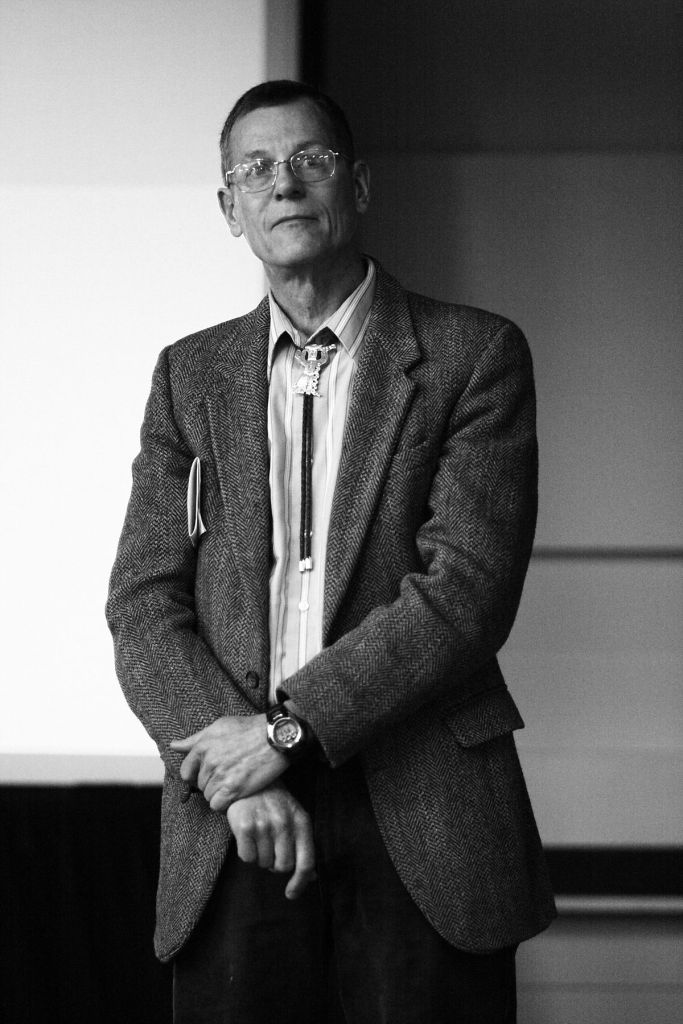
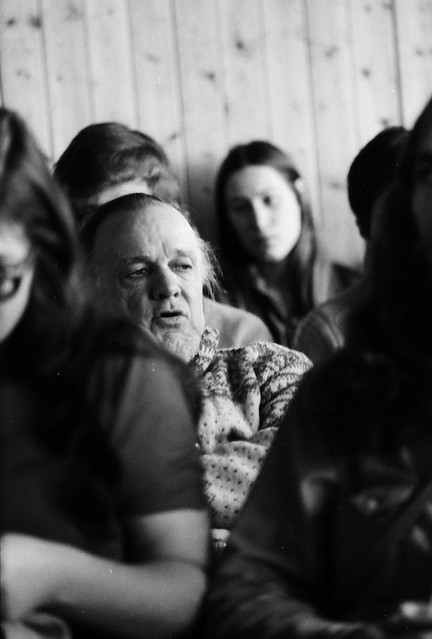
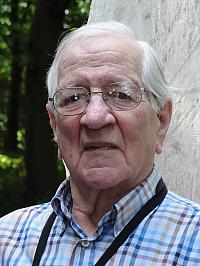
Horace Barlow pictured below:

_____________

I found Dr. Barlow to be a true gentleman and he was very kind to take the time to answer the questions that I submitted to him. In the upcoming months I will take time once a week to pay tribute to his life and reveal our correspondence. In the first week I noted:

 Today I am posting my first letter to him in February of 2015 which discussed Charles Darwin lamenting his loss of aesthetic tastes which he blamed on Darwin’s own dedication to the study of evolution. In a later return letter, Dr. Barlow agreed that Darwin did in fact lose his aesthetic tastes at the end of his life.

In the second week I look at the views of Michael Polanyi and share the comments of Francis Schaeffer concerning Polanyi’s views.

In the third week, I look at the life of Brandon Burlsworth in the November 28, 2016 letter and the movie GREATER and the problem of evil which Charles Darwin definitely had a problem with once his daughter died.

On the 4th letter to Dr. Barlow looks at Darwin’s admission that he at times thinks that creation appears to look like the expression of a mind. Francis Schaeffer discusses Darwin’s own words in 1968 sermon at this link.

My Fifth Letter concerning Charles Darwin’s views on MORAL MOTIONS Which was mailed on March 1, 2017. Francis Schaeffer discusses Darwin’s own words concerning moral motions in Schaeffer’s 1968 sermon at this link.

6th letter on May 1, 2017 in which Charles Darwin’s hopes are that someone would find in Pompeii an old manuscript by a distinguished Roman that would show that Christ existed! Francis Schaeffer discusses Darwin’s own words concerning the possible manuscript finds in Schaeffer’s 1968 sermon at this link.

7th letter on Darwin discussing DETERMINISM  dated 7-1-17 . Francis Schaeffer discusses Darwin’s own words concerning determinism in Schaeffer’s 1968 sermon at this link.

Thanks 8th letter responds to Dr. Barlow’s letter to me concerning the Francis Schaeffer discusses Darwin’s own words concerning chance in Schaeffer’s 1968 sermon at this link.

Thanks 9th letter in response to 11-22-17 letter I received from Professor Horace Barlow was mailed on 1-2-18 and included Charles Darwin’s comments on William Paley. Francis Schaeffer discusses Darwin’s own words concerning William Paley in Schaeffer’s 1968 sermon at this link.

10th letter in response to 11-22-17 letter I received from Professor Horace Barlow was mailed on 2-2-18 and includes Darwin’s comments asking for archaeological evidence for the Bible! Francis Schaeffer discusses Darwin’s own words concerning His desire to see archaeological evidence supporting the Bible’s accuracy  in Schaeffer’s 1968 sermon at this link.

11th letter I mailed on 3-2-18  in response to 11-22-17 letter from Barlow that asserted: It is also sometimes asked whether chance, even together with selection, can define a “MORAL CODE,” which the religiously inclined say is defined by their God. I think the answer is “Yes, it certainly can…” Francis Schaeffer discusses Darwin’s own words concerning A MORAL CODE in Schaeffer’s 1968 sermon at this link.

12th letter on March 26, 2018 breaks down song DUST IN THE WIND “All we do, crumbles to the ground though we refuse to see, Dust in the Wind, All we are is dust in the wind, Don’t hang on, Nothing lasts forever but the Earth and Sky, It slips away, And all your money won’t another minute buy.”

In 13th letter I respond to Barlow’s November 22, 2017 letter and assertion “He {Darwin} clearly did not lose his sense of the VALUE of TRUTH, and of the importance of FOREVER SEARCHING it out.”

In 14th letter to Dr. Barlow on 10-2-18, I assert: “Let me demonstrate how the Bible’s view of the origin of life fits better with the evidence we have from archaeology than that of gradual evolution.”In 15th letter in November 2, 2018 to Dr. Barlow I quote his relative Randal Keynes Who in the Richard Dawkins special “The Genius of Darwin” makes this point concerning Darwin, “he was, at different times, enormously confident in it,and at other times, he was utterly uncertain.”In 16th Letter on 12-2-18 to Dr. Barlow I respond to his letter that stated, If I am pressed to say whether I think belief in God helps people to make wise and beneficial decisions I am bound to say (and I fear this will cause you pain) “No, it is often very disastrous, leading to violence, death and vile behaviour…Muslim terrorists…violence within the Christian church itself”17th letter sent on January 2, 2019 shows the great advantage we have over Charles Darwin when examining the archaeological record concerning the accuracy of the Bible!In the 18th letter I respond to the comment by Charles Darwin: “My mind seems to have become a kind of machine for grinding general laws out of large collections of facts, but why this should have caused the atrophy of that part of the brain alone, on which the higher tastes depend, I cannot conceive….The loss of these tastes is a loss of happiness.” Francis Schaeffer discusses Darwin’s own words on his loss of aesthetic tastes  in Schaeffer’s 1968 sermon at this link.In 19th letter on 2-2-19  I discuss Steven Weinberg’s words,  But if language is to be of any use to us, we ought to try to preserve the meanings of words, and “God” historically has not meant the laws of nature. It has meant an interested personality.

In the 20th letter on 3-2-19 I respond to Charles Darwin’s comment, “At the present day the most usual argument for the existence of an intelligent God is drawn from the deep [#1] inward conviction and feelings which are experienced by most persons...Formerly I was led by feelings such as those…to the firm conviction of the existence of God, and of the immortality of the soul. In my Journal I wrote that [#2] whilst standing in the midst of the grandeur of a Brazilian forest, ‘it is not possible to give an adequate idea of the higher feelings of wonder, admiration, and devotion which fill and elevate the mind.’ I well remember my conviction that there is more in man than the mere breath of his body. [#3] But now the grandest scenes would not cause any such convictions and feelings to rise in my mind. It may be truly said that I am like a man who has become colour-blind.” Francis Schaeffer discusses Darwin’s own words concerning his former belief in God in Schaeffer’s 1968 sermon at this link.

In the 21st letter on May 15, 2019 to Dr Barlow I discuss the writings of Francis Schaeffer who passed away the 35 years earlier on May 15, 1985. Francis Schaeffer discusses Darwin’s own words at length in Schaeffer’s 1968 sermon at this link.

In the 22nd letter I respond to Charles Darwin’s words, “I can indeed hardly see how anyone ought to wish Christianity to be true; for if so the plain language of the text seems to show that the men who do not believe…will be everlastingly punished. And this is a damnable doctrine.” Francis Schaeffer discusses Darwin’s own words about hell  in Schaeffer’s 1968 sermon at this link

In 23rd postcard sent on 7-2-19 I asked Dr Barlow if he was a humanist. Sir Julian Huxley, founder of the American Humanist Association noted, “I use the word ‘humanist’ to mean someone who believes that man is just as much a natural phenomenon as an animal or plant; that his body, mind and soul were not supernaturally created but are products of evolution, and that he is not under the control or guidance of any supernatural being.”

In my 24th letter on 8-2-19 I quote Jerry  Bergman who noted Jean Louis Agassiz (1807-1873) is regarded as one of the greatest scientists of the 19th century. A founding father of the modern American scientific establishment, Agassiz was also a lifelong opponent of Charles Darwin’s theory of evolution. Agassiz “ruled in professorial majesty at Harvard’s Museum of Comparative Zoology.”

In my 25th letter on 9-2-19 I respond to Charles Darwin’s assertion,  “This argument would be a valid one if all men of ALL RACES had the SAME INWARD CONVICTION of the existence of one God; but we know that this is very far from being the case.” Francis Schaeffer discusses Darwin’s own words concerning MORAL MOTIONS in Schaeffer’s 1968 sermon at this link.

In my 26th letter on 10-2-19 I quoted Bertrand Russell’s daughter’s statement, “I believe myself that his whole life was a search for God…. Indeed, he had first taken up philosophy in hope of finding proof of the evidence of the existence of God … Somewhere at the back of my father’s mind, at the bottom of his heart, in the depths of his soul  there was an empty space that had once been filled by God, and he never found anything else to put in it”

In my 27th letter on 11-2-19 I disproved Richard Dawkins’ assertion, “Genesis says Abraham owned camels, but archaeological evidence shows that the camel was not domesticated until many centuries after Abraham.” Furthermore, I gave more evidence indicating the Bible is historically accurate.

In my 28th letter on 12-2-19 I respond to Charles Darwin’s statement, “I am glad you were at the Messiah, it is the one thing that I should like to hear again, but I dare say I should find my soul too dried up to appreciate it as in old days; and then I should feel very flat, for it is a horrid bore to feel as I constantly do, that I am a withered leaf for every subject except Science. It sometimes makes me hate Science.” Francis Schaeffer discusses Darwin’s own words concerning MORAL MOTIONS in Schaeffer’s 1968 sermon at this link. 

In my 29th letter on 12-25-19 I responded to Charles Darwin’s statement, “I have said that in one respect my mind has changed during the last twenty or thirty years. Up to the age of thirty, or beyond it, poetry of many kinds…gave me great pleasure, and even as a schoolboy I took intense delight in Shakespeare, especially in the historical plays. I have also said that formerly pictures gave me considerable, and music very great delight. But now for many years I cannot endure to read a line of poetry: I have tried lately to read Shakespeare, and found it so intolerably dullthat it nauseated me…. My mind seems to have become a kind of machine for grinding general laws out of large collections of facts, but why this should have caused the atrophy of that part of the brain alone, on which the higher tastes depend, I cannot conceive… The loss of these tastes is a loss of happiness…” Francis Schaeffer discusses Darwin’s own words concerning his loss of aesthetic tastes in Schaeffer’s 1968 sermon at this link.

In my 30th letter on 2-2-20 I quote Dustin Shramek who asserted, “Without God the universe is the result of a cosmic accident, a chance explosion. There is no reason for which it exist. As for man, he is a freak of nature–a blind product of matter plus time plus chance. Man is just a lump of slime that evolved into rationality. There is no more purpose in life for the human race than for a species of insect; for both are the result of the blind interaction of chance and necessity.”

In my 31st letter on 3-18-20 I quote Francis Schaeffer who noted, “Darwin is saying that he gave up the New Testament because it was connected to the Old Testament. He gave up the Old Testament because it conflicted with his own theory. Did he have a real answer himself and the answer is no. At the end of his life we see that he is dehumanized by his position and on the other side we see that he never comes to the place of intellectual satisfaction for himself that his answers were sufficient.” Francis Schaeffer discusses Darwin’s own words concerning his loss of his Christian faith in Schaeffer’s 1968 sermon at this link.

In my 32nd letter on 4-18-20 quoted H.J. Blackham on where humanism leads On humanist assumptions, life leads to nothing, and every pretense that it does not is a deceit. If there is a bridge over a gorge which spans only half the distance and ends in mid-air, and if the bridge is crowded with human beings pressing on, one after the other they fall into the abyss. The bridge leads nowhere, and those who are pressing forward to cross it are going nowhere….It does not matter where they think they are going, what preparations for the journey they may have made, how much they may be enjoying it all. The objection merely points out objectively that such a situation is a model of futility

TRIBUTE TO HORACE BARLOW:

Paul Linton @LintonVision
Nice (and very informative) obituary of Horace Barlow. Only minor quibble is that it slightly downplays the extent to which the psychophysics of 3D vision (Julesz, 1960) inspired the neuroscience (Barlow et al. 1967; Nikara et al. 1968):


Figure thumbnail gr1
Horace Barlow.View Large ImageDownload Hi-res imageHorace Barlow was one of the truly great neuroscientists of his time, in the Cambridge tradition of quantitative neurophysiology and psychophysics. His fundamental theoretical and empirical contributions to our understanding of brain function have inspired and influenced generations of neurophysiologists, psychologists and computational neuroscientists and are certain to endure for generations to come.Horace Basil Barlow, FRS, was born in 1921 in Chesham Bois, Buckinghamshire, son of Sir Alan Barlow and Lady Nora Barlow (née Darwin). He was educated at Winchester College and studied medicine during the war years, first at Cambridge and then at Harvard Medical School, which awarded him an MD in 1946. He completed medical training at University College Hospital, London, before commencing research in neurophysiology with E.D. Adrian at the Cambridge Physiology Laboratory. After various positions at Cambridge University, he became Professor of Physiological Optics and Physiology at UC Berkeley. In 1974, he returned to Trinity College and the Cambridge Physiology Department to take the Royal Society Research Chair of Physiology, where he continued to make important contributions to neuroscience well after his formal retirement. Horace was elected a Fellow of the Royal Society in 1969 and won their Royal Medal in 1993. He was awarded the Australia Prize in the latter year and several others, including the Ferrier Medal in 1980 and the Ken Nakayama Prize from the Vision Sciences Society in 2016.Many interesting and charismatic people impacted on the young Horace. The first — and arguably most important — was his mother, granddaughter of Charles Darwin. She held no formal degree but worked as a biologist and later, as Darwin’s biographer, founded scholarly research into his life and achievements. Her example, together with his abilities and preference for maths over the humanities, veered Horace towards science. His contemporaries at Winchester College, Christopher Longuet-Higgins, Freeman Dyson and James Lighthill, all of whom became prominent scientists, played an influential role. During his university years there was no shortage of creative minds: his supervisor, the eminent Lord Adrian, and his tutor William Rushton, as well as Pat Merton and Tommy Gold. These latter three were part of the Ratio Club, a London-based club of about 20 carefully selected young neurobiologists, neurologists, psychologists, engineers, mathematicians and physicists, who periodically met in Queen’s Square to discuss cybernetics, information theory and brain function (see group photo). Cybernetics and information theory were central planks in Horace’s conceptual framework throughout his lifetime.Horace started his scientific career early, publishing three papers before he completed his MD: one (in Nature) with Rushton during his Cambridge undergraduate days and two with fellow students at Harvard. His next project, assigned to him by Adrian, was to investigate the proposal of Marshall and Talbot that small scanning eye-movements serve a fundamental role in vision. Horace devised a novel method for measuring eye position precisely (photographing a small spot of mercury placed on the cornea) and found that, between rapid gaze shifts, the eyes were essentially still. He concluded that the fixations rather than scanning eye-movements were fundamental to vision, dismissed Marshall and Talbot’s idea and moved on. However, the importance of the dynamics of perception, including ‘temporal interpolation’ of moving stimuli, remained central to his thinking, emerging clearly in his Ferrier lecture in 1980.Adrian’s supervision style was quite liberal, in the Cambridge tradition, described by Horace as “incisive, but economical, guidance”. Thus, Horace was free to pursue his own scientific curiosities, such as how neurons integrate information. He observed that Sherrington’s classic preparations used artificial stimuli, electric shocks applied to spinal roots, whereas applying light to the retina allows for behaviourally relevant natural stimuli. He developed a preparation for recording spikes from single ganglion cells in frog retina — no mean feat at the time — to study the most basic element of integration, signal summation. Inspired by Rushton, Horace took a quantitative approach and, by measuring thresholds as a function of stimulus area, discovered that integration was not uniform over the receptive field but that there were clear inhibitory surrounds forming separate ‘on’ and ‘off’ regions. More surprisingly, one type of ganglion cell could be a feature detector whose spike discharge anticipates the future position of a fly.This study initiated 30 years of ground-breaking collaborative work on retinal ganglion cells. Horace joined Stephen Kuffler, who had independently described the inhibitory surround in cat retina. Together with Fitzgerald, they discovered that ganglion cells adapt their receptive fields to cover the full range of light levels, switching from cones to rods at low light levels and losing the inhibitory surround. In 1963, Horace and Richard Hill discovered motion-sensitive cells in rabbit retina. Working with the most exacting of retinal physiologists, Bill Levick, Horace revealed further hidden complexities in retinal processing: a motion-sensitive ganglion cell is driven by an array of subunits. Then, in classic experiments, they established the first physiologically informed model of the underlying mechanism: the Barlow and Levick model of elementary motion detection.In 1964, Horace accepted a professorship at the Berkeley School of Optometry, where he continued his neurophysiological experiments, investigating integration by neurons in primary visual cortex (V1). One particularly influential study was conducted with former student Colin Blakemore (in Berkeley on a Harkness Fellowship) and the enthusiastic and charismatic young Australian Jack Pettigrew. Following leads from Jack’s undergraduate work in Sydney, they demonstrated that cells in cat primary visual cortex were selective to binocular disparity, the signals that support binocular depth perception. This was important and unexpected, as stereoscopic depth was thought to be a high-level perceptual property emerging late in processing. However, the results meshed well with Béla Julesz’s demonstrations in the early 1960s of ‘random-dot stereograms’, showing that depth can emerge from point-by-point disparities in otherwise random patterns. The discovery reinforced Horace’s conviction that single sensory neurons coded meaningful information.His work on retinal and cortical neurons brought home to Horace the fundamental realisation that physiological experiments could answer questions of psychological interest. Much of the sensory apparatus for complex behavioural patterns (like detecting and catching flies) may lie in the retina rather than ‘mysterious centres’ too difficult to study by physiological means. Furthermore, the lateral inhibition mechanism that he discovered in frog retina had been postulated by Ernst Mach and others to account for perceptual phenomena, such as simultaneous contrast and Mach Bands. This line of thought culminated in ‘A neural doctrine for perceptual psychology’, published in the fledgling journal Perception in 1972. The provocative formulation of ‘dogmas’ stimulated much important debate, theorising and experimental work, and the central idea of that paper, that perception corresponds to the activity of specific cells, has been hugely influential to physiologists and psychologists alike. Indeed, Horace’s doctrine is still relevant, as it goes far beyond ‘lock and key’ feature detectors. His doctrine incorporates the concepts of statistical inference, efficiency and redundancy that he formulated earlier in his career and suggests the far-reaching idea that he subsequently pursued: single neurons use synaptic plasticity to capture the redundancy that is knowledge.Horace started thinking about signals, noise and perceptual judgements when as an undergraduate he presented a new paper to a discussion group. The landmark study of Hecht, Shlaer and Pirenne demonstrated that the absolute threshold of human vision is limited by noise: quantal fluctuations whose effects can be determined psychophysically by testing the predictions of statistical models. Horace also discussed the problem of signal and noise in the Ratio Club (it was one of their chosen topics), especially with his Cambridge colleague Tommy Gold (later Professor of Astronomy at Cornell University). After his experiments on frog retina, Horace revisited Hecht et al. with a penetrating statistical analysis of published data. He found that the number of quantal events required to reach threshold is elevated by the presence of background noise that he attributed to the thermal activation of visual pigment molecules. This novel conclusion was confirmed a quarter of a century later by recording from rods. His theoretical findings prompted Horace to consider that “thresholds are efficient statistical judgements of constant fallibility”, and he quickly confirmed this more general principle with new psychophysical experiments.Figure thumbnail gr2The young Horace Barlow (bottom right) in May 1952, together with members and guests of the Ratio Club, outside Peterhouse College, Cambridge: Back row (partly obscured): H. Shipton, J. Bates, W.E. Hick, J. Pringle, D. Sholl, J. Westcott and D. Mackay. Middle row: G. Brindley, T. McLardy. W.R. Ashby, T. Gold and A. Uttley. Front row: A. Turing, G. Sutton, W. Rushton, G. Dawson and H. Barlow.View Large ImageDownload Hi-res imageHorace’s scientific approach, to try to understand the principles guiding brain function, was uncommon among physiologists. His 1961 paper on ‘Possible principles underlying the transmission of sensory messages’ (in Sensory Communication, W.D. Keidel, U.O. Keidel, M.E. Wigand and W.A. Rosenblith, eds) opens with, “a wing would be a most mystifying structure if one did not know that birds flew”. Horace argued that we need first to understand the goals of the system to avoid being buried in a mass of irrelevant neurophysiological and neuroanatomical details while missing crucial observations. He reasoned that, because neurons have limited representational capacity, they should economise on impulses by forming efficient representations. According to information theory, this can be achieved by eliminating redundancy using lateral inhibition and adaptation, and because both are observed in retina this must be a goal of early sensory processing. Two decades later, Barlow’s efficient coding hypothesis was validated. This prompted a new round of theory, measurements and experiments, which explained the function of mechanisms in the earlier stages of vision, olfaction and audition. Efficiency and ‘the economy of impulses’ continue to guide our understanding of neural codes at all levels.Horace’s approach was intrinsically interdisciplinary, a popular buzzword in modern grant writing but less usual in his day. He looked for guiding principles of brain function without undue concern whether his supporting data came from psychophysics or physiology, humans or animals, vertebrates or invertebrates. He was always trying — and usually succeeding — to merge detailed observations into the big picture of brain function, following the example of his famous great-grandfather. He was very much a ‘hands-on’ scientist, in the Cambridge mould: he never led a large research group nor took on many graduate students. That was not his style. He led by example, and his example was highly influential. There are very few sensory neuroscientists who would claim not to have been influenced by Horace’s work, one way or the other.Horace never stopped trying to understand the brain. During his own Festschrift in 1987 he gave the most interesting and original talk of the workshop. Following his major theme of how the brain maximises efficiency, he advanced a novel explanation for ‘adaptation’ (the fact that cells reduce firing rate after repeated excitation), suggesting that it is a complex phenomenon serving to ‘decorrelate’ sensory input, reducing inherent redundancy to take full advantage of the limited dynamic range of neurons. This changed the way many people thought about adaptation and again led to new lines of research.The ideas of redundancy and correlated activity of sensory pathways also underlie his highly influential paper on ‘Unsupervised learning’ (Neural Comput. (1989) 1, 295–311). This paper was one of the first to draw attention to the importance of unsupervised learning as opposed to supervised or reinforced learning. Unsupervised learning is about how a nervous system (or indeed artificial intelligence) recognises ‘statistical regularities’, or patterns in its inputs, and is of fundamental importance for understanding the cortex. Horace connected old ideas, such as Tolman’s ‘cognitive maps’ and Craik’s ‘working models’, with modern concepts of entropy, concluding that redundancy in sensory signals provides the knowledge incorporated in those maps. Such knowledge enables unexpected discrepancies to be immediately identified and dealt with. Horace’s information theory-based approach underlies many modern approaches to unsupervised learning in neural networks and Bayesian learning.In the 30-odd years after his formal ‘retirement’, Horace continued to make highly original and creative contributions to the field. He published 56 articles during this period, many as the single author. His interests were very varied, including information redundancy, predictive coding, Bayesian inference, unsupervised learning, development and many others, but all were motivated by the common themes of information theory and neural efficiency. A recent example of his creative thinking was his talk at the symposium on ‘Turing Enduring: Information Processing by Brains and Machines’ (Rockefeller University, December 2012), published in the journal Visual Neuroscience. There, Horace challenged the traditional (and still prevalent) wisdom that orientation-tuned simple and complex cells in primary visual cortex act as ‘edge-detectors’. Looking for more general guiding principles of brain function, he claimed that “the prime role of V1 is to search for regularity or redundancy in the input”, leading to the hypothesis that simple cells perform cross-correlations between the retinal input and internal templates, while complex cells calculate auto-correlations in the retinal input. Characteristically, he did not leave this as a simple hypothesis but provided solid quantitative psychophysical data in favour of his theory.Horace was renowned for his intelligence and quick-wittedness. Neuroscientists presented their research to the Cambridge ‘Craik Club’ with some trepidation. But this was unwarranted, for besides being smart Horace was kind, especially to young researchers. He quickly understood the message of the talk and gave many useful suggestions, absolutely on point, and never intended to humiliate. But his clever quips could also be fun. At a dinner that he gave for a bunch of graduate students, he invited his friend Francis Crick, who held forth on several topics throughout the evening. At one stage, Francis brought up his lineage, lamenting that he could trace it back only to Elizabethan times. With a disarming smile, Horace instantly retorted, “oh yes Francis, and which Elizabeth is that?”Most of Horace’s ideas have survived the test of time, stimulating and motivating generations of neuroscientists and leading to a cascade of advancements far too extensive to summarise here. But if we are to apply his cherished information theory, we know that there is more information in the rare and unexpected event: so did he get anything wrong? Probably not seriously. One idea that clearly evolved over time was his intuition about information redundancy in the image. Initially, he emphasised the role of reducing redundancy for efficient neural coding and economy of neuron numbers as well as impulses, but later he realised the importance of redundancy in identifying structure and statistical regularities in the environment, as sensory redundancy is the main source of knowledge. But this was not a mistake, merely a change of emphasis. If we go right back to the beginning, to his experiments that led him to dismiss the importance of eye drift, perhaps we might say that his assessment was premature, as recent work is showing how the small eye-movements serve an important functional role, conditioning the spatio-temporal frequency spectrum of the image. But while he did not exactly predict this, his intuitions about the importance of temporal dynamics and interpolations, prominent in his Ferrier lecture, were not too far off the mark.The last scientific gathering with Horace was for his 95th birthday, in December 2016. This was a fun occasion for his scientific family, some 100-odd people whose professional lives had been touched by Horace and who had passed the legacy down to their students and students’ students. The celebrations were followed by a workshop, which Horace concluded with a first-rate scientific talk, highlighting the role of information processing in the brain and urging us to consider the importance of information and entropy. His scientific curiosity never escaped him.Horace leaves his wife Miranda, 7 children and 13 grandchildren. His extended scientific family will miss him dearly.Article InfoPublication HistoryPublished online: July 31, 2020

Related posts:

Taking on Ark Times Bloggers on various issues Part F “Carl Sagan’s views on how God should try and contact us” includes film “The Basis for Human Dignity”

April 8, 2013 – 7:07 am

I have gone back and forth and back and forth with many liberals on the Arkansas Times Blog on many issues such as abortion, human rights, welfare, poverty, gun control  and issues dealing with popular culture. Here is another exchange I had with them a while back. My username at the Ark Times Blog is Saline […]By Everette Hatcher III | Posted in Francis SchaefferProlife | Edit | Comments (0)

Carl Sagan v. Nancy Pearcey

March 18, 2013 – 9:11 am

On March 17, 2013 at our worship service at Fellowship Bible Church, Ben Parkinson who is one of our teaching pastors spoke on Genesis 1. He spoke about an issue that I was very interested in. Ben started the sermon by reading the following scripture: Genesis 1-2:3 English Standard Version (ESV) The Creation of the […]By Everette Hatcher III | Posted in Adrian RogersAtheists ConfrontedCurrent Events | TaggedBen ParkinsonCarl Sagan | Edit | Comments (0)

Review of Carl Sagan book (Part 4 of series on Evolution)

May 24, 2012 – 1:47 am

Review of Carl Sagan book (Part 4 of series on Evolution) The Long War against God-Henry Morris, part 5 of 6 Uploaded by FLIPWORLDUPSIDEDOWN3 on Aug 30, 2010 http://www.icr.org/ http://store.icr.org/prodinfo.asp?number=BLOWA2http://store.icr.org/prodinfo.asp?number=BLOWASGhttp://www.fliptheworldupsidedown.com/blog _______________________ I got this from a blogger in April of 2008 concerning candidate Obama’s view on evolution: Q: York County was recently in the news […]By Everette Hatcher III | Posted in Atheists ConfrontedCurrent EventsPresident Obama | EditComments (0)

Review of Carl Sagan book (Part 3 of series on Evolution)

May 23, 2012 – 1:43 am

Review of Carl Sagan book (Part 3 of series on Evolution) The Long War against God-Henry Morris, part 4 of 6 Uploaded by FLIPWORLDUPSIDEDOWN3 on Aug 30, 2010 http://www.icr.org/ http://store.icr.org/prodinfo.asp?number=BLOWA2http://store.icr.org/prodinfo.asp?number=BLOWASGhttp://www.fliptheworldupsidedown.com/blog______________________________________ I got this from a blogger in April of 2008 concerning candidate Obama’s view on evolution: Q: York County was recently in the news […]By Everette Hatcher III | Posted in Atheists ConfrontedCurrent EventsPresident Obama | EditComments (0)

Carl Sagan versus RC Sproul

January 9, 2012 – 2:44 pm

At the end of this post is a message by RC Sproul in which he discusses Sagan. Over the years I have confronted many atheists. Here is one story below: I really believe Hebrews 4:12 when it asserts: For the word of God is living and active and sharper than any two-edged sword, and piercing as far as the […]By Everette Hatcher III | Posted in Adrian RogersAtheists ConfrontedCurrent EventsFrancis Schaeffer | Tagged Bill ElliffCarl SaganJodie FosterRC Sproul | Edit | Comments (0)

Review of Carl Sagan book (Part 4 of series on Evolution)jh68

November 8, 2011 – 12:01 am

Review of Carl Sagan book (Part 4 of series on Evolution) The Long War against God-Henry Morris, part 5 of 6 Uploaded by FLIPWORLDUPSIDEDOWN3 on Aug 30, 2010 http://www.icr.org/ http://store.icr.org/prodinfo.asp?number=BLOWA2http://store.icr.org/prodinfo.asp?number=BLOWASGhttp://www.fliptheworldupsidedown.com/blog _______________________ This is a review I did a few years ago. THE DEMON-HAUNTED WORLD: Science as a Candle in the Dark by Carl […]By Everette Hatcher III | Posted in Atheists ConfrontedCurrent Events | Edit | Comments (0)

Review of Carl Sagan book (Part 3 of series on Evolution)

November 4, 2011 – 12:57 am

Review of Carl Sagan book (Part 3 of series on Evolution) The Long War against God-Henry Morris, part 4 of 6 Uploaded by FLIPWORLDUPSIDEDOWN3 on Aug 30, 2010 http://www.icr.org/ http://store.icr.org/prodinfo.asp?number=BLOWA2http://store.icr.org/prodinfo.asp?number=BLOWASGhttp://www.fliptheworldupsidedown.com/blog______________________________________ I was really enjoyed this review of Carl Sagan’s book “Pale Blue Dot.” Carl Sagan’s Pale Blue Dot by Larry Vardiman, Ph.D. […]By Everette Hatcher III | Posted in Atheists ConfrontedCurrent Events | Edit | Comments (0)

Atheists confronted: How I confronted Carl Sagan the year before he died jh47

May 19, 2011 – 10:30 am

In today’s news you will read about Kirk Cameron taking on the atheist Stephen Hawking over some recent assertions he made concerning the existence of heaven. Back in December of 1995 I had the opportunity to correspond with Carl Sagan about a year before his untimely death. Sarah Anne Hughes in her article,”Kirk Cameron criticizes […]By Everette Hatcher III | Posted in Atheists Confronted | Edit | Comments (2)

My correspondence with George Wald and Antony Flew!!!

May 12, 2014 – 1:14 am

FRANCIS SCHAEFFER ANALYZES ART AND CULTURE Part 41 Sarvepalli Radhakrishnan (Featured artist is Marina Abramović)

January 8, 2015 – 5:23 am

FRANCIS SCHAEFFER ANALYZES ART AND CULTURE Part 40 Timothy Leary (Featured artist is Margaret Keane)

January 1, 2015 – 4:14 am

FRANCIS SCHAEFFER ANALYZES ART AND CULTURE Part 39 Tom Wolfe (Featured artist is Richard Serra)

December 25, 2014 – 5:04 am

FRANCIS SCHAEFFER ANALYZES ART AND CULTURE Part 38 Woody Allen and Albert Camus “There is but one truly serious philosophical problem, and that is suicide” (Feature on artist Hamish Fulton Photographer )

December 18, 2014 – 4:30 am

FRANCIS SCHAEFFER ANALYZES ART AND CULTURE Part 37 Mahatma Gandhi and “Relieving the Tension in the East” (Feature on artist Luc Tuymans)

December 11, 2014 – 4:19 am

FRANCIS SCHAEFFER ANALYZES ART AND CULTURE Part 36 Julian Huxley:”God does not in fact exist, but act as if He does!” (Feature on artist Barry McGee)

December 4, 2014 – 4:10 am

FRANCIS SCHAEFFER ANALYZES ART AND CULTURE Part 35 Robert M. Pirsig (Feature on artist Kerry James Marshall)

November 27, 2014 – 4:43 am

FRANCIS SCHAEFFER ANALYZES ART AND CULTURE Part 34 Aleksandr Solzhenitsyn (Feature on artist Shahzia Sikander)

November 20, 2014 – 4:28 am

FRANCIS SCHAEFFER ANALYZES ART AND CULTURE Part 33 Aldous Huxley (Feature on artist Matthew Barney )

November 13, 2014 – 4:39 am

FRANCIS SCHAEFFER ANALYZES ART AND CULTURE Part 32 Steven Weinberg and Woody Allen and “The Meaningless of All Things” (Feature on photographer Martin Karplus )

November 6, 2014 – 4:42 am

FRANCIS SCHAEFFER ANALYZES ART AND CULTURE Part 31 David Hume and “How do we know we know?” (Feature on artist William Pope L. )

October 30, 2014 – 5:34 am

FRANCIS SCHAEFFER ANALYZES ART AND CULTURE Part 30 Rene Descartes and “How do we know we know?” (Feature on artist Olafur Eliasson)

October 23, 2014 – 5:01 am

FRANCIS SCHAEFFER ANALYZES ART AND CULTURE Part 29 W.H. Thorpe and “The Search for an Adequate World-View: A Question of Method” (Feature on artist Jeff Koons)

October 16, 2014 – 5:06 am

FRANCIS SCHAEFFER ANALYZES ART AND CULTURE Part 28 Woody Allen and “The Mannishness of Man” (Feature on artist Ryan Gander)

October 9, 2014 – 5:10 am

FRANCIS SCHAEFFER ANALYZES ART AND CULTURE Part 27 Jurgen Habermas (Featured artist is Hiroshi Sugimoto)

September 25, 2014 – 1:01 pm

FRANCIS SCHAEFFER ANALYZES ART AND CULTURE Part 26 Bettina Aptheker (Featured artist is Krzysztof Wodiczko)

September 25, 2014 – 4:00 am

FRANCIS SCHAEFFER ANALYZES ART AND CULTURE Part 25 BOB DYLAN (Part C) Francis Schaeffer comments on Bob Dylan’s song “Ballad of a Thin Man” and the disconnect between the young generation of the 60’s and their parents’ generation (Feature on artist Fred Wilson)

September 18, 2014 – 3:57 am

FRANCIS SCHAEFFER ANALYZES ART AND CULTURE Part 24 BOB DYLAN (Part B) Francis Schaeffer comments on Bob Dylan’s words from HIGHWAY 61 REVISITED!! (Feature on artist Susan Rothenberg)
September 11, 2014 – 4:18 am

FRANCIS SCHAEFFER ANALYZES ART AND CULTURE Part 23 BOB DYLAN (Part A) (Feature on artist Josiah McElheny)Francis Schaeffer on the proper place of rebellion with comments by Bob Dylan and Samuel Rutherford

September 2, 2014 – 8:42 am

FRANCIS SCHAEFFER ANALYZES ART AND CULTURE Part 22 “The School of Athens by Raphael” (Feature on the artist Sally Mann)

August 11, 2014 – 2:19 pm

FRANCIS SCHAEFFER ANALYZES ART AND CULTURE Part 21 William B. Provine (Feature on artist Andrea Zittel)

June 12, 2014 – 2:52 pm

FRANCIS SCHAEFFER ANALYZES ART AND CULTURE Part 20 Woody Allen and Materialistic Humanism: The World-View of Our Era (Feature on artist Ida Applebroog)

May 12, 2014 – 4:35 am

FRANCIS SCHAEFFER ANALYZES ART AND CULTURE Part 19 Movie Director Luis Bunuel (Feature on artist Oliver Herring)

May 1, 2014 – 11:53 am

FRANCIS SCHAEFFER ANALYZES ART AND CULTURE Part 18 “Michelangelo’s DAVID is the statement of what humanistic man saw himself as being tomorrow” (Feature on artist Paul McCarthy)

April 25, 2014 – 8:26 am

FRANCIS SCHAEFFER ANALYZES ART AND CULTURE Part 17 Francis Schaeffer discusses quotes of Andy Warhol from “The Observer June 12, 1966″ Part C (Feature on artist David Hockney plus many pictures of Warhol with famous friends)

April 18, 2014 – 7:37 am

FRANCIS SCHAEFFER ANALYZES ART AND CULTURE Part 16 Francis Schaeffer discusses quotes of Andy Warhol from “The Observer June 12, 1966″ Part B (Feature on artist James Rosenquist plus many pictures of Warhol with famous friends)

April 11, 2014 – 6:14 am

FRANCIS SCHAEFFER ANALYZES ART AND CULTURE Part 15 Francis Schaeffer discusses quotes of Andy Warhol from “The Observer June 12, 1966″ Part A (Feature on artist Robert Indiana plus many pictures of Warhol with famous friends)

April 4, 2014 – 5:58 am

FRANCIS SCHAEFFER ANALYZES ART AND CULTURE Part 14 David Friedrich Strauss (Feature on artist Roni Horn )

March 28, 2014 – 2:50 pm

FRANCIS SCHAEFFER ANALYZES ART AND CULTURE Part 13 Jacob Bronowski and Materialistic Humanism: The World-View of Our Era (Feature on artist Ellen Gallagher )

March 21, 2014 – 7:18 am

FRANCIS SCHAEFFER ANALYZES ART AND CULTURE Part 12 H.J.Blackham and Materialistic Humanism: The World-View of Our Era (Feature on artist Arturo Herrera)

March 14, 2014 – 9:07 am

FRANCIS SCHAEFFER ANALYZES ART AND CULTURE Part 11 Thomas Aquinas and his Effect on Art and HOW SHOULD WE THEN LIVE? Episode 2: THE MIDDLES AGES (Feature on artist Tony Oursler )

March 4, 2014 – 9:04 pm

FRANCIS SCHAEFFER ANALYZES ART AND CULTURE Part 10 David Douglas Duncan (Feature on artist Georges Rouault )

February 28, 2014 – 5:16 am

FRANCIS SCHAEFFER ANALYZES ART AND CULTURE Part 9 Jasper Johns (Feature on artist Cai Guo-Qiang )

February 21, 2014 – 6:51 am

FRANCIS SCHAEFFER ANALYZES ART AND CULTURE Part 8 “The Last Year at Marienbad” by Alain Resnais (Feature on artist Richard Tuttle and his return to the faith of his youth)

February 13, 2014 – 7:59 am

FRANCIS SCHAEFFER ANALYZES ART AND CULTURE Part 7 Jean Paul Sartre (Feature on artist David Hooker )

February 4, 2014 – 2:00 pm

FRANCIS SCHAEFFER ANALYZES ART AND CULTURE Part 6 The Adoration of the Lamb by Jan Van Eyck which was saved by MONUMENT MEN IN WW2 (Feature on artist Makoto Fujimura)

January 31, 2014 – 5:43 am

FRANCIS SCHAEFFER ANALYZES ART AND CULTURE Part 5 John Cage (Feature on artist Gerhard Richter)

January 21, 2014 – 8:07 am

FRANCIS SCHAEFFER ANALYZES ART AND CULTURE Part 4 ( Schaeffer and H.R. Rookmaaker worked together well!!! (Feature on artist Mike Kelley Part B )

January 14, 2014 – 8:52 am

FRANCIS SCHAEFFER ANALYZES ART AND CULTURE Part 3 PAUL GAUGUIN’S 3 QUESTIONS: “Where do we come from? What art we? Where are we going? and his conclusion was a suicide attempt” (Feature on artist Mike Kelley Part A)

January 7, 2014 – 11:06 pm

FRANCIS SCHAEFFER ANALYZES ART AND CULTURE Part 2 “A look at how modern art was born by discussing Monet, Renoir, Pissaro, Sisley, Degas,Cezanne, Van Gogh, Gauguin, Seurat, and Picasso” (Feature on artist Peter Howson)

January 1, 2014 – 4:27 am

FRANCIS SCHAEFFER ANALYZES ART AND CULTURE Part 1 HOW SHOULD WE THEN LIVE? “The Roman Age” (Feature on artist Tracey Emin)

December 10, 2013 – 2:38 pm

Debating from 2015-2020 Darwin’s great grandson (Horace Barlow) about Francis Schaeffer’s 1968 critique of Darwinism! Part 5 (Darwin: “…Nor can I overlook the difficulty from the immense amount of suffering through the world”

—-

TRIBUTE TO HORACE BARLOW:

Arpan @DrArpan100

Horace Barlow FRS was an extraordinary neuroscientist. His supervisions were always inspirational and he had a gift of being able to infuse curiosity in his students. He has had a massive impact on the field of visual neuroscience. He never stopped questioning and thinking. RIP.

——

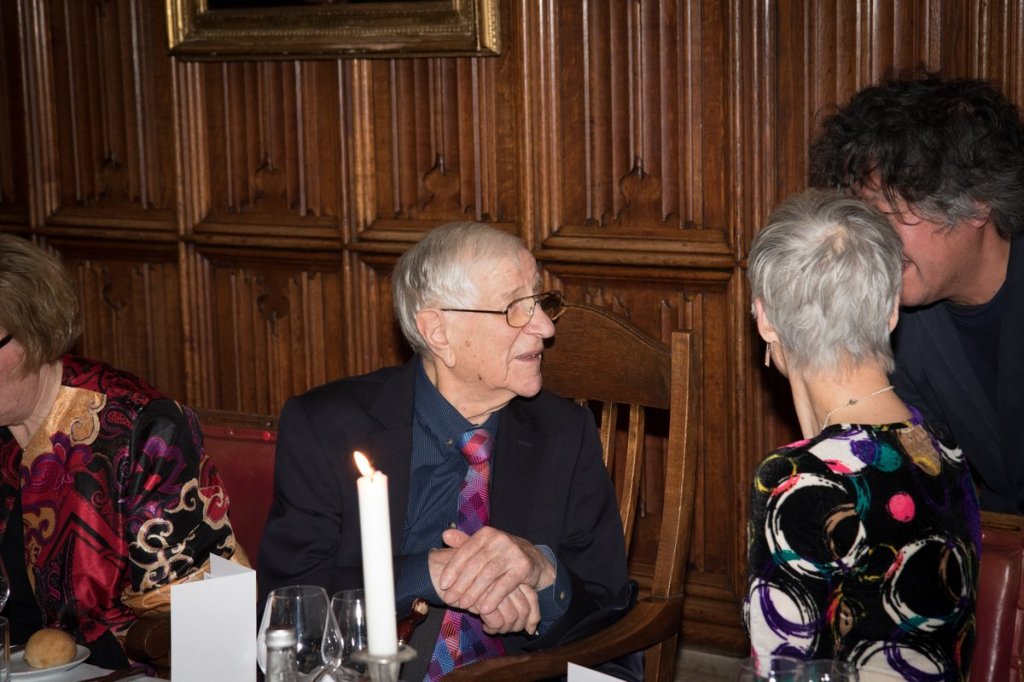
Horace seen below in 2017 

Below is a portion of a letter I wrote on 7-1-17 to Dr. Barlow which he responded to in the letter I received in December of 2017. Basically Darwin brings up several issues such as the difficulty of reconciling the existence of a loving God with evil and suffering in the world (this may stem from the loss of his beloved daughter Anne) and also he slips in this curious phrase “but Man can do his duty” which implies that he realizes without God in the picture we may be left with determinism or survival of the fittest as our moral guide which Darwin is disgusted by.

“My mother was very enthusiastic about her grandfather and in those days thought he was rather under-rated, though by the time she died she realized that public opinion had risen almost to the point of matching her own and she thought that [Charles Darwin] was perhaps overrated.”

Just like your mother, I too think that Darwin is not thought of highly enough by some people and he is too esteemed by others. I do respect him to laying his most inner thoughts out there for all to see in the letters he wrote to his friends. One thought he had was on the issue of DETERMINISM, and I read it in the book  Charles Darwin: his life told in an autobiographical chapter, and in a selected series of his published letters.  

In that book he made the statement that MAN MUST DO HIS DUTY, and it is in light of DETERMINISM that had reared its ugly head. 

In this letterI am going to quote some of Charles Darwin’s own words and then include the comments of Francis Schaeffer on those words.

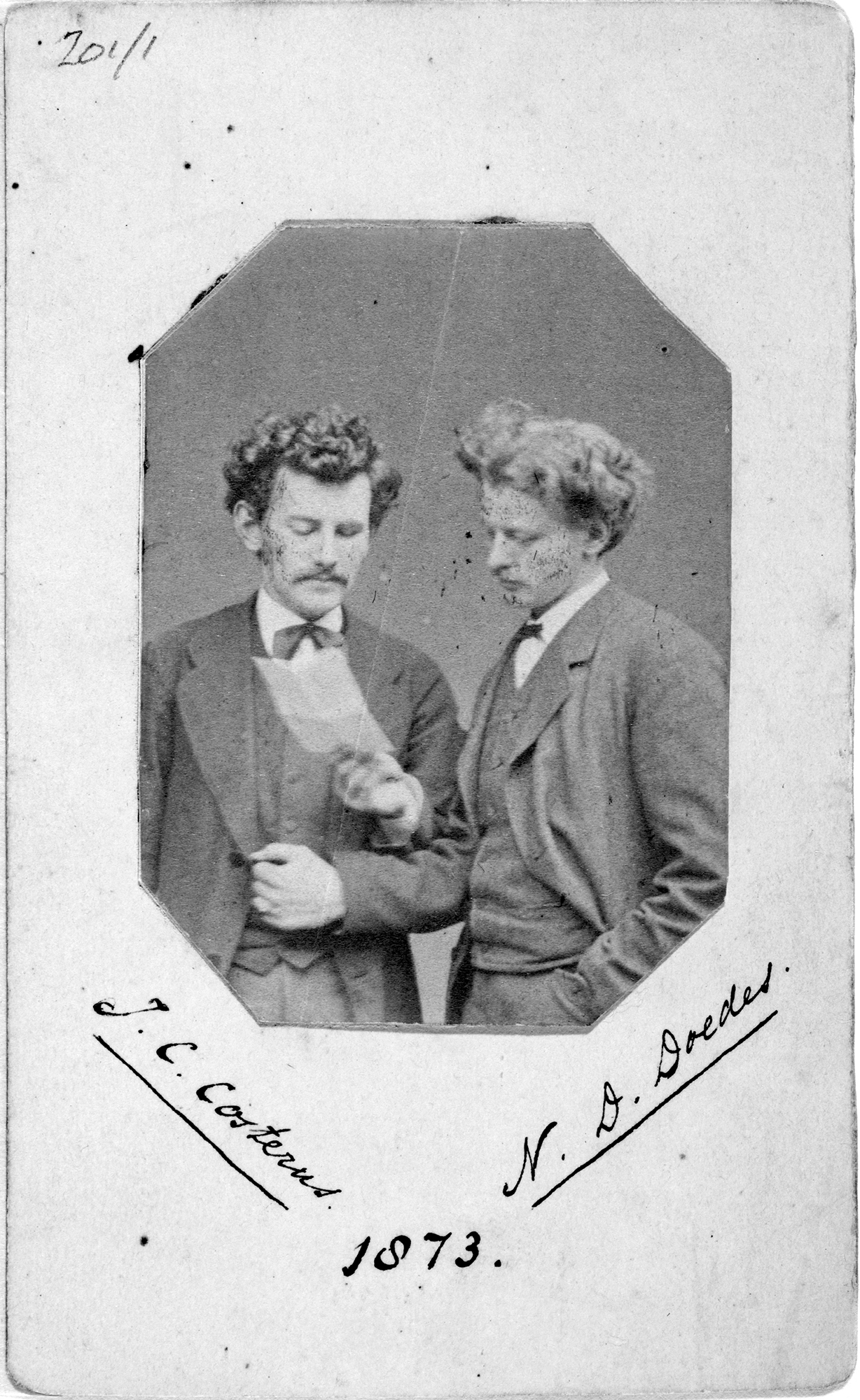
Darwin, C. R. to Doedes, N. D., 2 Apr 1873

I am sure you will excuse my writing at length, when I tell you that I have long been much out of health, and am now staying away from my home for rest.It is impossible to answer your question briefly;and I am not sure that I could do so, even if I wrote at some length. But I may say that the impossibility of conceiving that this grand and wondrous universe, with our conscious selves, arose through chance, seems to me the chief argument for the existence of God; but whether this is an argument of real value, I have never been able to decide…….Nor can I overlook the difficulty from the immense amount of suffering through the world. I am, also, induced to defer to a certain extent to the judgment of the many able men who have fully believed in God; but here again I see how poor an argument this is. The safest conclusion seems to me that the whole subject is beyond the scope of man’s intellect;but man can do his duty.”

Francis Schaeffer commented:

What he is saying is that at this point I have no answer. You find Darwin already in a modern hell. On his own position ruling out an answer but yet not being able to live without an answer.  What he (Darwin) is saying is that at this point I have no answer, but the interesting thing is he puts a semicolon after that and then says, “but man can do his duty.” Darwin understands, he is a brilliant man,  what he has said undercuts all duty and all morals. So he adds as a faith sentence, “but man can do his duty.” It doesn’t fit really, but he adds it because he sees that he must say this because otherwise what happens to man? You can switch on further down the road and Darwin would be appalled to see where his own position has been taken, through Freud and Deterministic psychology. Modern Man has a dilemma because the word “duty” doesn’t have a meaning anymore. (Determinism: The doctrine that human action is not free, but results from such causes as psychological and chemical makeup which render free-will an illusion.)

You will remember the thing I have quoted to you about Richard Speck and the psychologists who would stand in the evolutionary stream of Freud. Let me read to you from Newsweek September 25, 1967, a review of the book by Marvin Ziporyn BORN TO RAISE HELL interestingly enough printed by Groth Press, which is this psychologist’s analysis of Richard Speck in Chicago who killed these nurses in Chicago. It runs like this:

Ziporyn who lost his post at Chicago for publishing his work with Speck, diagnosed his patient as a man unable to control himself as a result of his own medical and emotional past. You weren’t any more responsible for what you did than a man is responsible for sneezing. he said to Speck at one point.  That is Zoporyn’s biggest problem which is convincing Speck there is no difference in a sneeze and eight murders. Ziporyn admits he is a strict determinist and he is an adherent to Freud’s dictum that biology is destiny. He advocates rehabilitation. Determinists strive to change or regulate conditions rather than men but to avoid such tragedies as Richard Speck the scope of change it requires staggers the imagination.

The bigger dilemma is that man disappears. Who is hurt? The eight nurses are hurt, including their pain, terror and their sexual violation and it becomes nothing, zero in this type of analysis. Society has a terrible problem because there is no right and wrong in society, and that will deal with Darwin’s words “but man can do his duty” because those who take Darwin’s theory and extend it have eradicated the possibility of the word “duty.” …Darwin I think senses this but he doesn’t know how to handle it.

Richard Speck

Ladies Richard Speck murdered below:

__

In Chapter 7, “THE MAN WITHOUT THE BIBLE,” of the book DEATH IN THE CITY, Schaeffer writes concerning Richard Speck and “Determinism”: 

This view raises three serious questions. First of all, what about the nurses who were killed, some of them in a very violent fashion? These must then be written off. With this kind of explanation they become zero. Second, what about society? Society and the problems of ordering it also are written off. In such a situation, order in society is merely like a big machine dealing on a machine level with little machines. Third, what about Speck himself? The psychologist’s explanation does the most harm to him, for as a man he disappears. He simply becomes a flow of consciousness. He, too, becomes a zero.

In our generation there is a constant tendency to explain sin lightly and think that such an explanation is more humanitarian. But it is not. It decreases the importance and significance of man. Consequently, we can be glad for the sake of man that the Bible’s explanation is so emphatic.
Paul repeats it in verse 25: “They exchanged the truth about God for a lie and worshipped and served the creature [that which has been created] rather than the Creator.” This is the second of the three repetitions.

Paul was thinking of the gods of silver and stone and also the worship of the universe or any part of it. He says men have made such gods rather than worshipping the living God. Even on the basis of what they know themselves to be, they should have known better. Isaiah said 700 years before, ‘Aren’t you silly to make gods that are less than yourself. You must carry them; they don’t carry you. Now isn’t it silly to make an integration point that is less than you yourself are.’ Paul used precisely the same argument on Mars Hill. Men who refuse to bow before God take the facts concerning the universe and man, push these facts through their own presuppositional grid, fail to carry their thinking to a reasonable conclusion, and so are faced with an overwhelming lie. Idols of stone are obvious lies because they are less than man, but so are non-Christian presuppositions such as the idea of the total uniformity of natural cause and effect in a closed system, the final explanation of the impersonal plus time plus chance, which ultimately makes man only a machine.

__________________

Below is the larger biblical passage of scripture that Schaeffer was referring to in Chapter 7, “THE MAN WITHOUT THE BIBLE,” of the book DEATH IN THE CITY:

Romans 1:18-32New American Standard Bible (NASB)

Unbelief and Its Consequences

18 For the wrath of God is revealed from heaven against all ungodliness and unrighteousness of men who suppress the truth in unrighteousness, 19 becausethat which is known about God is evident within them; for God made it evident to them. 20 For since the creation of the world His invisible attributes, His eternal power and divine nature, have been clearly seen, being understood through what has been made, so that they are without excuse. 21 For even though they knew God, they did not honor Him as God or give thanks, but they became futile in their speculations, and their foolish heart was darkened.22 Professing to be wise, they became fools, 23 and exchanged the glory of the incorruptible God for an image in the form of corruptible man and of birds and four-footed animals and crawling creatures.

24 Therefore God gave them over in the lusts of their hearts to impurity, so that their bodies would be dishonored among them.25 For they exchanged the truth of God for a lie, and worshiped and served the creature rather than the Creator, who is blessed forever. Amen.

26 For this reason God gave them over to degrading passions; for their women exchanged the natural function for that which is unnatural, 27 and in the same way also the men abandoned the natural function of the woman and burned in their desire toward one another, men with men committing indecent acts and receiving in their own persons the due penalty of their error.

28 And just as they did not see fit to acknowledge God any longer, God gave them over to a depraved mind, to do those things which are not proper,29 being filled with all unrighteousness, wickedness, greed, evil; full of envy, murder, strife, deceit, malice; they aregossips, 30 slanderers, haters of God, insolent, arrogant, boastful, inventors of evil, disobedient to parents, 31 without understanding, untrustworthy, unloving, unmerciful; 32 and although they know the ordinance of God, that those who practice such things are worthy of death, they not only do the same, but also give hearty approval to those who practice them.

_____________________________________

Why is determinism dangerous? Francis Schaeffer in his book HOW SHOULD WE THEN LIVE? tells why it is dangerous:

Modern determinists have not presented only abstract theories.  Rather, there have been two practical results.  First, and most important, as their ideas about what people are have been increasingly accepted, people consciously or unconsciously have opened themselves to being treated as machines and treating other people as machines.  Second, each theory of determinism has carried with it a method of manipulation.  So even though many — even most — people may reject the concept that man is totally a product of psychological, sociological, or chemical conditioning, manipulation by these methods is still very much a live possibility.  In fact, these techniques are all at the disposal of of authoritation states, and they are in some degree already being used.

Paul Chopan has rightly noted:

Naturalism takes for granted the following tenets:

  • Nature is all there is.
  • All reality is comprised of or rooted in matter.
  • There is no supernatural—no Creator, no miracles, no souls,
    no angels, no life after death.
  • Science becomes the only (or best) means of knowledge.

__________________

What is the answer to the problem of DETERMINISM? It is found in the Biblical view that the Bible is true and there was a place named THE GARDEN OF EDEN and the fact that God did create this world and it was not created by impersonal chance plus time. 

Francis A. Schaeffer on Human Free WillTHE GOD WHO IS THERE, (DOWNERS GROVE, IL: INTERVARSITY PRESS, 1968), P 131.

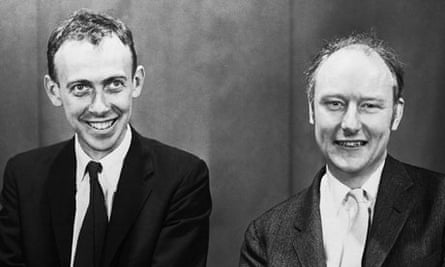
(James D. Watson and Francis Crick below)

The historic Christian position is that man’s dilemma has a moral cause. God, being nondetermined, created man as a nondetermined person. This is a difficult idea for anyone thinking in twentieth-century terms because most twentieth-century thinking sees man as determined. He is determined either by chemical factors, as the Marquis de Sade held and Francis Crick is trying to prove,or by psychological factors, as Freud and others have suggested, or by sociological factors, such as B.F. Skinner holds. In these cases, or as a result of a fusion of them, man is considered to be programmed. If this is the case, then man is not the tremendous thing the Bible says he is, made in the image of God as a personality who can make a free first choice. Because God created a true universe outside of himself (or as an extension of his essence), there is a true history which exists, man as created in God’s image is therefore a significant man in a significant history, who can choose to obey the commandments of God and love him, or revolt against him.

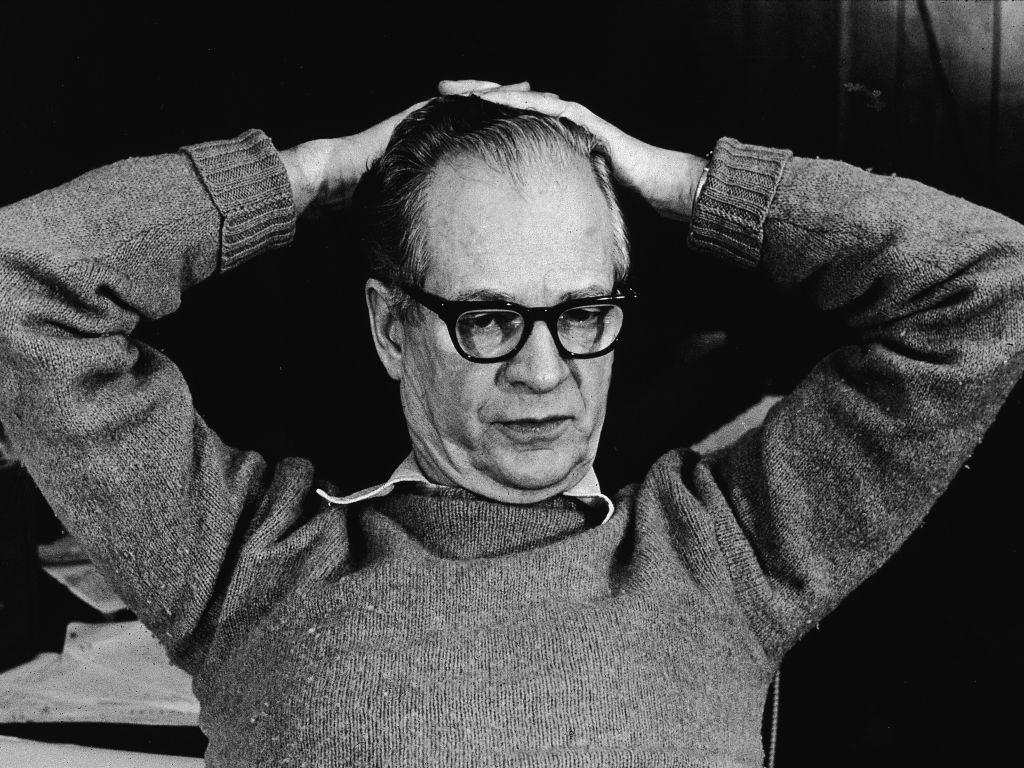
(B.F. Skinner)

THE CRUX OF THE ISSUE IS DID MAN HAVE A CHOICE AND IS MAN RESPONSIBLE FOR HIS CHOICES?

Image result for francis schaeffer

Francis Schaeffer

XXXXXXXXXXXXX

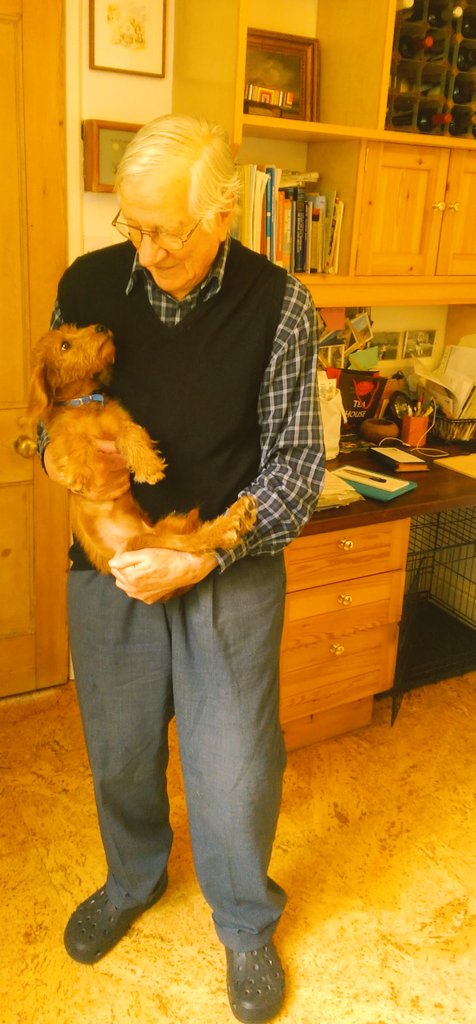
Horace Barlow below

Morality has been undercut and that is why Darwin resorts to “Man can do his duty but Dr. Barlow has a different perspective when it comes to a secular morality in the letter I received in December of 2017:

Chance mutations increase the diversity present in the population under consideration, and evolutionists naturally think of this as a “good thing,” for without diversity there can be no evolution. This is not often true for religiously determined moral codes, for most Gods are jealous and demand conformity among their followers, often enforced by persecution and extreme cruelty. As an evolutionist, I regard diversity itself as a desirable asset, and I think this improves my judgment when I hear a proposal that I do not initially agree with.

:

_____________

Here is response from Dr. Barlow on the letter I received in December of 2017 concerning evil in the world and he blames religious people for their part:

On the other hand, if I am pressed to say whether I think belief in God helps people to make wise and beneficial decisions I am bound to say (and I fear this will cause you pain) No, it is often very disastrous, leading to violence, death and vile behaviour, as with the current quarrel with Muslim terrorists, and as has been shown by inter-sectal violence within the Christian Church itself. 

Let me first take on Darwin’s question of evil and suffering and take on Dr. Barlow’s objection to religion next:


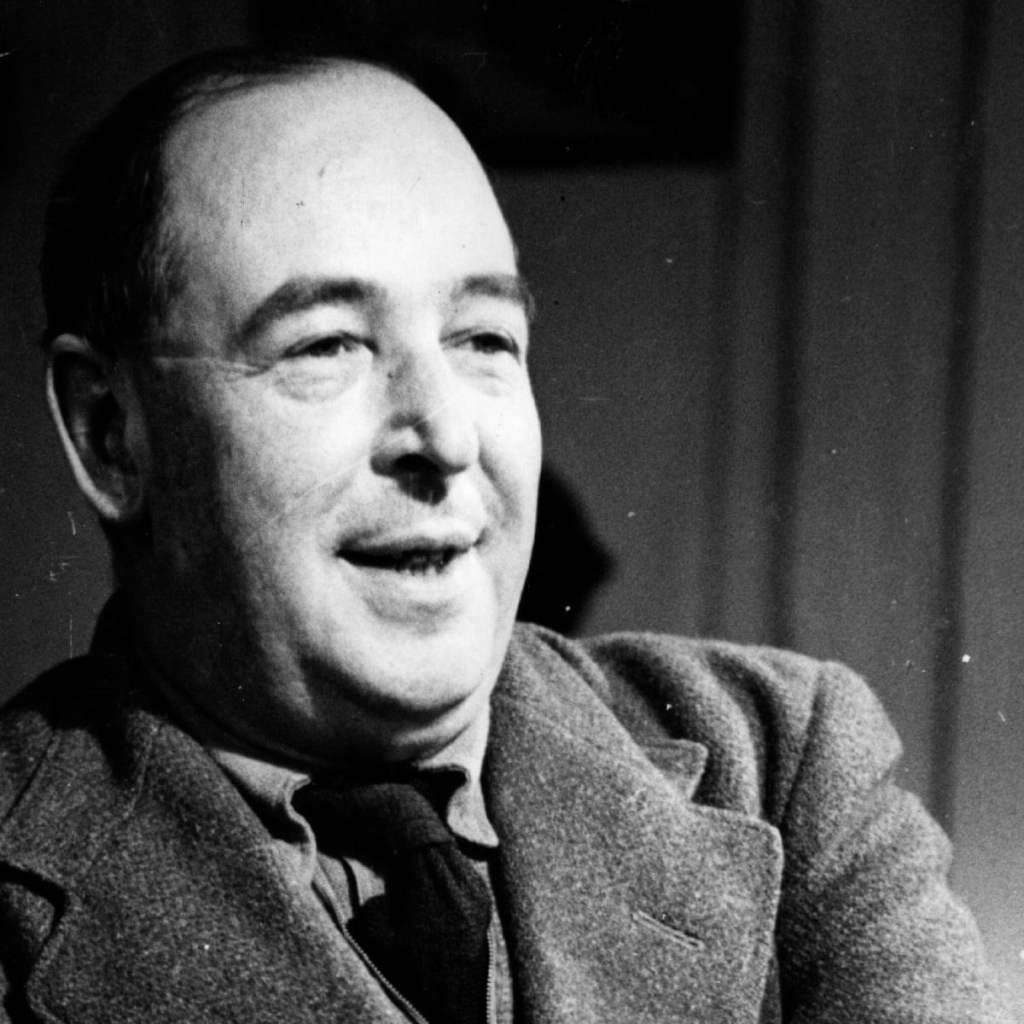
(C.S. Lewis pictured above)

How can a good God allow evil and suffering? Here is an explanation from the Evangelism Explosion leader’s guide: Their thinking is that either God is not powerful enough to prevent evil or else God is not good. He is often blamed for tragedy. “Where was God when I went through this, or when that happened.”  God is blamed for natural disasters, Even my insurance company describes them as “acts of God.” How to handle this one-  (O.N.E.)a. Origin of evil— man’s choice- God created a perfect world…b. Nature of God—He forgives, I John 1:9—He uses tragedy to bring us to Himself, C.S. Lewis, “God whispers to us in our pleasures, speaks in our conscience, but shouts in our pains:  it is His megaphone to arouse a deaf world.”c. End of it all—Bible teaches that God will one day put an end to all evil, and pain and death. “God will wipe away every tear from their eyes; there shall be no more death, nor sorrow, nor crying.  There shall be no more pain, for the former things have passed away” (Rev. 21:4).As Christians we have this hope of Heaven and eternity. Share how it has made a tremendous difference in your life and that you know for sure that when you die you are going to spend eternity in Heaven. Ask the person, “May I ask you a question? Do you have this hope? Do you know for certain that when you die you are going to Heaven, or is that something you would say you’re still working on?”How could a loving God send people to Hell?(O.N.E.)a. Origin of hell—never intended for people. Created for Satan and his demons. Jesus said, “Depart from Me, you cursed, into everlasting fire prepared for the devil and his angels” (Matt 25:41). Man chooses to sin and ignore God. The penalty is death (eternal separation from God) and, yes, Hell. But God doesn’t send anyone to Hell, we choose it by refusing or ignoring God in attitude and action. b. Nature of God—“ God is not willing that any should perish, but that all should come to repentance” (2 Peter 3:9). He is so loving that He sent His own Son to die and pay the penalty for our sin so that we could avoid Hell and have the assurance of Heaven. No one in Hell will be able to blame God. He doesn’t send people there, it’s our own choice. We must choose to repent, to stop ignoring God in attitude and action, accepting His salvation and yielding to His leadership.c. End of it all—Bible teaches that God will one day put an end to all evil, pain, death, and penalty of Hell. “God will wipe away every tear from their eyes; there shall be no more death, nor sorrow, nor crying.  There shall be no more pain, for the former things have passed away” (Rev. 21:4).As Christians , we need not worry about Hell. The Bible says, “these things have been written . . . so that you may know you have eternal life” (1 John 5:13).  I have complete confidence that when I die, I’m going to Heaven.  May I ask you a question?___________________________-
(Horace Barlow below)

In response to Dr. Barlow’s letter was this letter below that I mailed to him on December 2, 2018:

Image result for nicolaas bloembergen

Dr. Nicolaas Bloembergen of Harvard

Image result for hitler

Hitler and Mussolini

Image result for hitler  MUSSOLINI

Ravi Zacharias

Image result for ravi zacharias havard

Francis Schaeffer

Image result for francis schaeffer

__

December2, 2018

December 2, 2018

Dr. Horace Barlow, Department of Physiology, Development and Neuroscience, University of Cambridge, Downing Street, Physiological Laboratory, United Kingdom,

Dear Dr. Barlow,

It was a year ago today that I first responded to your letter of November 22, 2017. Every month since then I have written to you on the second of every month. Almost every letter has dealt with the legacy of Charles Darwin your great-grandfather in one way or another.

Let me share with you a correspondence I had with Dr. Nicolaas Bloembergen of Harvard (where you earned your medical degree during WWII) and it is because he had some of the same reservations about Christianity that you have now.

He won the Nobel Prize in Physics in 1981 and was born in Dordrecht, the Netherlands on March 11, 1920. He spent the last two years of World War II hiding from the Nazis. I found his life story very interesting.

In his September 6, 1995 letter to me he wrote:

Less zealotry and more compassion for those who have different concepts of the world from yours would help make this world more livable.

I mention this to you because in your letter of November 22, 2017 you asserted something very similar:

If I am pressed to say whether I think belief in God helps people to make wise and beneficial decisions I am bound to say (and I fear this will cause you pain) “No, it is often very disastrous, leading to violence, death and vile behaviour…Muslim terrorists…violence within the Christian church itself” 

Back in 1995 when I responded to Dr. Bloembergen I quoted something I heard Ravi Zacharias say on an audio cassette tape and it went like this:

Atheists Charge: “What about the thousands who have been killed in the name of religion?”

The emotion-laden question is not nearly as troublesome to answer if the questioner first explains all the killing that has resulted from those who have lived without God, such as HITLER, STALIN, MUSSOLINI, et al. The antitheist is quick to excoriate all religious belief by generically laying the blame at the door of all who claim to be religious, without distinction. By the same measure, why is there not an equal enthusiasm to distribute blame for violence engendered by some of the irreligious?

But the rub goes even deeper than that. The attackers of religion have forgotten that these large-scale slaughters at the hands of antitheists were the logical outworking of their God-denying philosophy. Contrastingly, the violence spawned by those who killed in the name of Christ would never have been sanctioned by the Christ of the Scriptures. Those who killed in the name of God were clearly self-serving politicizers of religion, an amalgam Christ ever resisted in His life and teaching. Their means and their message were in contradiction to the gospel. Atheism, on the other hand, provides the logical basis for an autonomous, domineering will, expelling morality. CHARLES DARWIN himself predicted this slippery slope of violence if evolutionary theory were translated into a philosophy of life. Nietzsche talked of the enshrouding darkness that had fallen over mankind–he saw its ramifications. The Russian novelist Fyodor Dostoevski repeatedly wrote of the hell that is let loose when man comes adrift from his Creators moorings and himself becomes god–he understood the consequences.

On July 3, 2016, I got a call from 96-year-old Dr. Bloembergen who told me he hoped to make 100. You may wonder why the urgency on my part to discuss these matters with you? Dr. Bloembergen died on 9-5-17 at the age of 97.

When my son Wilson was 8 years old his great-grandfather, L.R. “Tom” Sawyer, died just three weeks shy of his 98th birthday. Wilson declared, “I will make it to 100!!” I told him that Mr. Sawyer was the oldest person who ever lived in our family and that it was HIGHLY UNLIKELY that Wilson would outlive Mr. Sawyer in terms of years. I am almost 57 years old myself and many people call that MIDDLE AGED, but who am I kidding because how many 114 year old people do you see walking around?

Let me close by sharing with you a portion of my LAST EMAIL to Dr. Bloembergen:

Dear Dr. Bloembergen,

It was such a privilege to get a telephone call from you on July 1, 2016 because I know your time is very valuable. Since you said writing letters and mailing them was difficult for you I have chosen to email you this time around….Christianity is different than every other religion for two reasons according to Francis Schaeffer:

In every other religion, we have to do something–everything from burning a joss stick to sacrificing our firstborn child to dropping a coin the collection plate–the whole spectrum. But with Christianity we do not do anything; God has done it all: He has created us and He has sent His Son; His Son died and because the Son is infinite, therefore He bears out total guilt. We do not need to bear our guilt, nor do we even have to merit the merit of Christ. He does it all. So in one way, it is the easiest religion in the world….

In the book WHATEVER HAPPENED TO THE HUMAN RACE?, and especially in the extensive notes of fifth chapter [shows] the way the Bible measures up to history. Once we say that, this is very exciting. It is very exciting because other religions are not founded in history, they are “out there” somewhere, or you can think of them as inside your own head–whichever way you are looking at it. On the other hand, the Bible claims to rooted in history. 

Taking a look at the holy books of Islam and Mormonism and you find many historical inaccuracies.  For instance, the Book of Mormon was wrong about horses, cows, steel, the wheel,  honey bees and barley existing in North America 2000 years ago. Furthermore, in 2012 during the Presidential Race Harry Kroto also asked why no one seemed to ask Mitt Romney if he actually believed that Christ visited North America 2000 years ago as the Book of Mormon claimed.

Blaise Pascal asserted, “There is a God-shaped vacuum in the heart of every man which cannot be filled by any created thing, but only by God the Creator, made known through Jesus Christ.”  In other words, the spiritual answers your heart is seeking can be found in putting your faith and trust in Jesus Christ. The Bible is true from cover to cover and can be trusted.

Let me close by talking to you about the ROMAN ROAD TO CHRIST.

  1. Rom. 3:10, “As it is written, ‘There is none righteous, not even one . . . “
  2. Rom. 3:23, “For all have sinned and fall short of the glory of God.”
  3. Rom. 5:12, “Therefore, just as through one man sin entered into the world, and death through sin, and so death spread to all men, because all sinned.”
  4. Rom. 6:23, “For the wages of sin is death, but the free gift of God is eternal life in Christ Jesus our Lord.”
  5. Rom. 5:8, “But God demonstrates His own love toward us, in that while we were yet sinners, Christ died for us.”
  6. Rom. 10:9-10, “if you confess with your mouth Jesus as Lord, and believe in your heart that God raised Him from the dead, you shall be saved; for with the heart man believes, resulting in righteousness, and with the mouth he confesses, resulting in salvation.”
  7. Rom. 10:13, “For whoever will call upon the name of the Lord will be saved.”

Thanks for your time. Again it was such an honor to get to talk to you. I hope you enjoy the CDs on Michael Polanyi. He was a very wise man and his son John is a very outstanding man too.

Sincerely,

Everette Hatcher, everettehatcher@gmail.comhttp://www.thedailyhatch.org, cell ph 501-920-5733, 13900 cottontail lane, Alexander, AR 72002

Nicolaas “Nico” Bloembergen (March 11, 1920 – September 5, 2017) was a Dutch-American physicist and Nobel laureate, recognized for his work in developing driving principles behind nonlinear optics for laser spectroscopy.[1] During his career, he was a professor at both Harvard University and later at the University of Arizona.

Debating from 2015-2020 Darwin’s great grandson (Horace Barlow) about Francis Schaeffer’s 1968 critique of Darwinism!

Image result for Emma Nora Barlow, Lady Barlow

The autobiography of Charles Darwin read by Francis Schaeffer in 1968 was not the same one originally released in 1892 because that one omitted the religious statements of Charles Darwin. 

pictured below with his eldest child William: 

Image result for Horace Barlow charles darwin

Notice this statement below from the Freedom from Religion Foundation: 

(Nora Barlow pictured below)

Charles Darwin wrote the Rev. J. Fordyce on July 7, 1879, that “an agnostic would be the most correct description of my state of mind.” Darwin penned his memoirs between the ages of 67 and 73, finishing the main text in 1876. These memoirs were published posthumously in 1887 by his family under the title Life and Letters of Charles Darwin, with his hardest-hitting views on religion excised. Only in 1958 did Darwin’s granddaughter Nora Barlow publish his Autobiography with original omissions restored  D. 1882.
——-

Charles Robert Darwin  (1809 – 1882) had 10 children and 7 of them survived to adulthood.

Sir Horace DarwinKBEFRS (13 May 1851 – 22 September 1928), the fifth son and ninth child of the British naturalist Charles Darwin and his wife Emma, the youngest of their seven children who survived to adulthood.

(Horace Darwin pictured below)

Horace Darwin.jpg

Emma Nora Barlow, Lady Barlow (née Darwin; 22 December 1885 – 29 May 1989) Nora, as she was known, was the daughter of the civil engineer Sir Horace Darwin and his wife The Hon. Lady Ida Darwin (née Farrer),

Horace Basil Barlow FRS (1921-) Barlow is the son of the civil servant Sir Alan Barlow and his wife Lady Nora (née Darwin). Barlow is the great-grandson of Charles Darwin

XXXXXXXXXXXXXXX

Horace Darwin married Emma Cecilia “Ida” Farrer (1854–1946) pictured below.

Image result for Ida Darwin hoRACE

—-

Image result for francis schaeffer

Francis Schaeffer

Horace Barlow was the son of Nora Barlow. From February 11, 2015 to July 1, 2017, I wrote 7 letters to Dr. Horace Barlow because I wanted to discuss primarily the views of his grandfather Charles Darwin and Francis Schaeffer’s 1968 critique of Darwinism!

Image result for charles darwin

In December of 2017, I received a two page typed letter from Dr. Barlow reacting to several of the points made in the previous letters and emails. Over the next few weeks I will be posting the 32 letters I wrote to Dr. Barlow from February 11, 2015 to April 18, 2020 one per week every Tuesday and below is a list of those letters. Sadly Dr. Barlow passed away on July 5, 2020 at age 98. However, I want to summarize some the issues we discussed in the next few days. 

Image result for francis schaeffer

Franicis Schaeffer

If you wish to hear Francis Schaeffer’s 1968 talk on Darwin’s autobiography then you can access part 1 at this link and part 2 at this link.

—-

—-

—-

Horace Barlow pictured below:

_____________

I found Dr. Barlow to be a true gentleman and he was very kind to take the time to answer the questions that I submitted to him. In the upcoming months I will take time once a week to pay tribute to his life and reveal our correspondence. In the first week I noted:

 Today I am posting my first letter to him in February of 2015 which discussed Charles Darwin lamenting his loss of aesthetic tastes which he blamed on Darwin’s own dedication to the study of evolution. In a later return letter, Dr. Barlow agreed that Darwin did in fact lose his aesthetic tastes at the end of his life.

In the second week I look at the views of Michael Polanyi and share the comments of Francis Schaeffer concerning Polanyi’s views.

In the third week, I look at the life of Brandon Burlsworth in the November 28, 2016 letter and the movie GREATER and the problem of evil which Charles Darwin definitely had a problem with once his daughter died.

On the 4th letter to Dr. Barlow looks at Darwin’s admission that he at times thinks that creation appears to look like the expression of a mind. Francis Schaeffer discusses Darwin’s own words in 1968 sermon at this link.

My Fifth Letter concerning Charles Darwin’s views on MORAL MOTIONS Which was mailed on March 1, 2017. Francis Schaeffer discusses Darwin’s own words concerning moral motions in Schaeffer’s 1968 sermon at this link.

6th letter on May 1, 2017 in which Charles Darwin’s hopes are that someone would find in Pompeii an old manuscript by a distinguished Roman that would show that Christ existed! Francis Schaeffer discusses Darwin’s own words concerning the possible manuscript finds in Schaeffer’s 1968 sermon at this link.

7th letter on Darwin discussing DETERMINISM  dated 7-1-17 . Francis Schaeffer discusses Darwin’s own words concerning determinism in Schaeffer’s 1968 sermon at this link.

Thanks 8th letter responds to Dr. Barlow’s letter to me concerning the Francis Schaeffer discusses Darwin’s own words concerning chance in Schaeffer’s 1968 sermon at this link.

Thanks 9th letter in response to 11-22-17 letter I received from Professor Horace Barlow was mailed on 1-2-18 and included Charles Darwin’s comments on William Paley. Francis Schaeffer discusses Darwin’s own words concerning William Paley in Schaeffer’s 1968 sermon at this link.

10th letter in response to 11-22-17 letter I received from Professor Horace Barlow was mailed on 2-2-18 and includes Darwin’s comments asking for archaeological evidence for the Bible! Francis Schaeffer discusses Darwin’s own words concerning His desire to see archaeological evidence supporting the Bible’s accuracy  in Schaeffer’s 1968 sermon at this link.

11th letter I mailed on 3-2-18  in response to 11-22-17 letter from Barlow that asserted: It is also sometimes asked whether chance, even together with selection, can define a “MORAL CODE,” which the religiously inclined say is defined by their God. I think the answer is “Yes, it certainly can…” Francis Schaeffer discusses Darwin’s own words concerning A MORAL CODE in Schaeffer’s 1968 sermon at this link.

12th letter on March 26, 2018 breaks down song DUST IN THE WIND “All we do, crumbles to the ground though we refuse to see, Dust in the Wind, All we are is dust in the wind, Don’t hang on, Nothing lasts forever but the Earth and Sky, It slips away, And all your money won’t another minute buy.”

In 13th letter I respond to Barlow’s November 22, 2017 letter and assertion “He {Darwin} clearly did not lose his sense of the VALUE of TRUTH, and of the importance of FOREVER SEARCHING it out.”

In 14th letter to Dr. Barlow on 10-2-18, I assert: “Let me demonstrate how the Bible’s view of the origin of life fits better with the evidence we have from archaeology than that of gradual evolution.”In 15th letter in November 2, 2018 to Dr. Barlow I quote his relative Randal Keynes Who in the Richard Dawkins special “The Genius of Darwin” makes this point concerning Darwin, “he was, at different times, enormously confident in it,and at other times, he was utterly uncertain.”In 16th Letter on 12-2-18 to Dr. Barlow I respond to his letter that stated, If I am pressed to say whether I think belief in God helps people to make wise and beneficial decisions I am bound to say (and I fear this will cause you pain) “No, it is often very disastrous, leading to violence, death and vile behaviour…Muslim terrorists…violence within the Christian church itself”17th letter sent on January 2, 2019 shows the great advantage we have over Charles Darwin when examining the archaeological record concerning the accuracy of the Bible!In the 18th letter I respond to the comment by Charles Darwin: “My mind seems to have become a kind of machine for grinding general laws out of large collections of facts, but why this should have caused the atrophy of that part of the brain alone, on which the higher tastes depend, I cannot conceive….The loss of these tastes is a loss of happiness.” Francis Schaeffer discusses Darwin’s own words on his loss of aesthetic tastes  in Schaeffer’s 1968 sermon at this link.In 19th letter on 2-2-19  I discuss Steven Weinberg’s words,  But if language is to be of any use to us, we ought to try to preserve the meanings of words, and “God” historically has not meant the laws of nature. It has meant an interested personality.

In the 20th letter on 3-2-19 I respond to Charles Darwin’s comment, “At the present day the most usual argument for the existence of an intelligent God is drawn from the deep [#1] inward conviction and feelings which are experienced by most persons...Formerly I was led by feelings such as those…to the firm conviction of the existence of God, and of the immortality of the soul. In my Journal I wrote that [#2] whilst standing in the midst of the grandeur of a Brazilian forest, ‘it is not possible to give an adequate idea of the higher feelings of wonder, admiration, and devotion which fill and elevate the mind.’ I well remember my conviction that there is more in man than the mere breath of his body. [#3] But now the grandest scenes would not cause any such convictions and feelings to rise in my mind. It may be truly said that I am like a man who has become colour-blind.” Francis Schaeffer discusses Darwin’s own words concerning his former belief in God in Schaeffer’s 1968 sermon at this link.

In the 21st letter on May 15, 2019 to Dr Barlow I discuss the writings of Francis Schaeffer who passed away the 35 years earlier on May 15, 1985. Francis Schaeffer discusses Darwin’s own words at length in Schaeffer’s 1968 sermon at this link.

In the 22nd letter I respond to Charles Darwin’s words, “I can indeed hardly see how anyone ought to wish Christianity to be true; for if so the plain language of the text seems to show that the men who do not believe…will be everlastingly punished. And this is a damnable doctrine.” Francis Schaeffer discusses Darwin’s own words about hell  in Schaeffer’s 1968 sermon at this link

In 23rd postcard sent on 7-2-19 I asked Dr Barlow if he was a humanist. Sir Julian Huxley, founder of the American Humanist Association noted, “I use the word ‘humanist’ to mean someone who believes that man is just as much a natural phenomenon as an animal or plant; that his body, mind and soul were not supernaturally created but are products of evolution, and that he is not under the control or guidance of any supernatural being.”

In my 24th letter on 8-2-19 I quote Jerry  Bergman who noted Jean Louis Agassiz (1807-1873) is regarded as one of the greatest scientists of the 19th century. A founding father of the modern American scientific establishment, Agassiz was also a lifelong opponent of Charles Darwin’s theory of evolution. Agassiz “ruled in professorial majesty at Harvard’s Museum of Comparative Zoology.”

In my 25th letter on 9-2-19 I respond to Charles Darwin’s assertion,  “This argument would be a valid one if all men of ALL RACES had the SAME INWARD CONVICTION of the existence of one God; but we know that this is very far from being the case.” Francis Schaeffer discusses Darwin’s own words concerning MORAL MOTIONS in Schaeffer’s 1968 sermon at this link.

In my 26th letter on 10-2-19 I quoted Bertrand Russell’s daughter’s statement, “I believe myself that his whole life was a search for God…. Indeed, he had first taken up philosophy in hope of finding proof of the evidence of the existence of God … Somewhere at the back of my father’s mind, at the bottom of his heart, in the depths of his soul  there was an empty space that had once been filled by God, and he never found anything else to put in it”

In my 27th letter on 11-2-19 I disproved Richard Dawkins’ assertion, “Genesis says Abraham owned camels, but archaeological evidence shows that the camel was not domesticated until many centuries after Abraham.” Furthermore, I gave more evidence indicating the Bible is historically accurate.

In my 28th letter on 12-2-19 I respond to Charles Darwin’s statement, “I am glad you were at the Messiah, it is the one thing that I should like to hear again, but I dare say I should find my soul too dried up to appreciate it as in old days; and then I should feel very flat, for it is a horrid bore to feel as I constantly do, that I am a withered leaf for every subject except Science. It sometimes makes me hate Science.” Francis Schaeffer discusses Darwin’s own words concerning MORAL MOTIONS in Schaeffer’s 1968 sermon at this link. 

In my 29th letter on 12-25-19 I responded to Charles Darwin’s statement, “I have said that in one respect my mind has changed during the last twenty or thirty years. Up to the age of thirty, or beyond it, poetry of many kinds…gave me great pleasure, and even as a schoolboy I took intense delight in Shakespeare, especially in the historical plays. I have also said that formerly pictures gave me considerable, and music very great delight. But now for many years I cannot endure to read a line of poetry: I have tried lately to read Shakespeare, and found it so intolerably dullthat it nauseated me…. My mind seems to have become a kind of machine for grinding general laws out of large collections of facts, but why this should have caused the atrophy of that part of the brain alone, on which the higher tastes depend, I cannot conceive… The loss of these tastes is a loss of happiness…” Francis Schaeffer discusses Darwin’s own words concerning his loss of aesthetic tastes in Schaeffer’s 1968 sermon at this link.

In my 30th letter on 2-2-20 I quote Dustin Shramek who asserted, “Without God the universe is the result of a cosmic accident, a chance explosion. There is no reason for which it exist. As for man, he is a freak of nature–a blind product of matter plus time plus chance. Man is just a lump of slime that evolved into rationality. There is no more purpose in life for the human race than for a species of insect; for both are the result of the blind interaction of chance and necessity.”

In my 31st letter on 3-18-20 I quote Francis Schaeffer who noted, “Darwin is saying that he gave up the New Testament because it was connected to the Old Testament. He gave up the Old Testament because it conflicted with his own theory. Did he have a real answer himself and the answer is no. At the end of his life we see that he is dehumanized by his position and on the other side we see that he never comes to the place of intellectual satisfaction for himself that his answers were sufficient.” Francis Schaeffer discusses Darwin’s own words concerning his loss of his Christian faith in Schaeffer’s 1968 sermon at this link.

In my 32nd letter on 4-18-20 quoted H.J. Blackham on where humanism leads On humanist assumptions, life leads to nothing, and every pretense that it does not is a deceit. If there is a bridge over a gorge which spans only half the distance and ends in mid-air, and if the bridge is crowded with human beings pressing on, one after the other they fall into the abyss. The bridge leads nowhere, and those who are pressing forward to cross it are going nowhere….It does not matter where they think they are going, what preparations for the journey they may have made, how much they may be enjoying it all. The objection merely points out objectively that such a situation is a model of futility

Related posts:

Taking on Ark Times Bloggers on various issues Part F “Carl Sagan’s views on how God should try and contact us” includes film “The Basis for Human Dignity”

April 8, 2013 – 7:07 am

I have gone back and forth and back and forth with many liberals on the Arkansas Times Blog on many issues such as abortion, human rights, welfare, poverty, gun control  and issues dealing with popular culture. Here is another exchange I had with them a while back. My username at the Ark Times Blog is Saline […]By Everette Hatcher III | Posted in Francis SchaefferProlife | Edit | Comments (0)

Carl Sagan v. Nancy Pearcey

March 18, 2013 – 9:11 am

On March 17, 2013 at our worship service at Fellowship Bible Church, Ben Parkinson who is one of our teaching pastors spoke on Genesis 1. He spoke about an issue that I was very interested in. Ben started the sermon by reading the following scripture: Genesis 1-2:3 English Standard Version (ESV) The Creation of the […]By Everette Hatcher III | Posted in Adrian RogersAtheists ConfrontedCurrent Events | TaggedBen ParkinsonCarl Sagan | Edit | Comments (0)

Review of Carl Sagan book (Part 4 of series on Evolution)

May 24, 2012 – 1:47 am

Review of Carl Sagan book (Part 4 of series on Evolution) The Long War against God-Henry Morris, part 5 of 6 Uploaded by FLIPWORLDUPSIDEDOWN3 on Aug 30, 2010 http://www.icr.org/ http://store.icr.org/prodinfo.asp?number=BLOWA2http://store.icr.org/prodinfo.asp?number=BLOWASGhttp://www.fliptheworldupsidedown.com/blog _______________________ I got this from a blogger in April of 2008 concerning candidate Obama’s view on evolution: Q: York County was recently in the news […]By Everette Hatcher III | Posted in Atheists ConfrontedCurrent EventsPresident Obama | EditComments (0)

Review of Carl Sagan book (Part 3 of series on Evolution)

May 23, 2012 – 1:43 am

Review of Carl Sagan book (Part 3 of series on Evolution) The Long War against God-Henry Morris, part 4 of 6 Uploaded by FLIPWORLDUPSIDEDOWN3 on Aug 30, 2010 http://www.icr.org/ http://store.icr.org/prodinfo.asp?number=BLOWA2http://store.icr.org/prodinfo.asp?number=BLOWASGhttp://www.fliptheworldupsidedown.com/blog______________________________________ I got this from a blogger in April of 2008 concerning candidate Obama’s view on evolution: Q: York County was recently in the news […]By Everette Hatcher III | Posted in Atheists ConfrontedCurrent EventsPresident Obama | EditComments (0)

Carl Sagan versus RC Sproul

January 9, 2012 – 2:44 pm

At the end of this post is a message by RC Sproul in which he discusses Sagan. Over the years I have confronted many atheists. Here is one story below: I really believe Hebrews 4:12 when it asserts: For the word of God is living and active and sharper than any two-edged sword, and piercing as far as the […]By Everette Hatcher III | Posted in Adrian RogersAtheists ConfrontedCurrent EventsFrancis Schaeffer | Tagged Bill ElliffCarl SaganJodie FosterRC Sproul | Edit | Comments (0)

Review of Carl Sagan book (Part 4 of series on Evolution)jh68

November 8, 2011 – 12:01 am

Review of Carl Sagan book (Part 4 of series on Evolution) The Long War against God-Henry Morris, part 5 of 6 Uploaded by FLIPWORLDUPSIDEDOWN3 on Aug 30, 2010 http://www.icr.org/ http://store.icr.org/prodinfo.asp?number=BLOWA2http://store.icr.org/prodinfo.asp?number=BLOWASGhttp://www.fliptheworldupsidedown.com/blog _______________________ This is a review I did a few years ago. THE DEMON-HAUNTED WORLD: Science as a Candle in the Dark by Carl […]By Everette Hatcher III | Posted in Atheists ConfrontedCurrent Events | Edit | Comments (0)

Review of Carl Sagan book (Part 3 of series on Evolution)

November 4, 2011 – 12:57 am

Review of Carl Sagan book (Part 3 of series on Evolution) The Long War against God-Henry Morris, part 4 of 6 Uploaded by FLIPWORLDUPSIDEDOWN3 on Aug 30, 2010 http://www.icr.org/ http://store.icr.org/prodinfo.asp?number=BLOWA2http://store.icr.org/prodinfo.asp?number=BLOWASGhttp://www.fliptheworldupsidedown.com/blog______________________________________ I was really enjoyed this review of Carl Sagan’s book “Pale Blue Dot.” Carl Sagan’s Pale Blue Dot by Larry Vardiman, Ph.D. […]By Everette Hatcher III | Posted in Atheists ConfrontedCurrent Events | Edit | Comments (0)

Atheists confronted: How I confronted Carl Sagan the year before he died jh47

May 19, 2011 – 10:30 am

In today’s news you will read about Kirk Cameron taking on the atheist Stephen Hawking over some recent assertions he made concerning the existence of heaven. Back in December of 1995 I had the opportunity to correspond with Carl Sagan about a year before his untimely death. Sarah Anne Hughes in her article,”Kirk Cameron criticizes […]By Everette Hatcher III | Posted in Atheists Confronted | Edit | Comments (2)

My correspondence with George Wald and Antony Flew!!!

May 12, 2014 – 1:14 am

FRANCIS SCHAEFFER ANALYZES ART AND CULTURE Part 41 Sarvepalli Radhakrishnan (Featured artist is Marina Abramović)

January 8, 2015 – 5:23 am

FRANCIS SCHAEFFER ANALYZES ART AND CULTURE Part 40 Timothy Leary (Featured artist is Margaret Keane)

January 1, 2015 – 4:14 am

FRANCIS SCHAEFFER ANALYZES ART AND CULTURE Part 39 Tom Wolfe (Featured artist is Richard Serra)

December 25, 2014 – 5:04 am

FRANCIS SCHAEFFER ANALYZES ART AND CULTURE Part 38 Woody Allen and Albert Camus “There is but one truly serious philosophical problem, and that is suicide” (Feature on artist Hamish Fulton Photographer )

December 18, 2014 – 4:30 am

FRANCIS SCHAEFFER ANALYZES ART AND CULTURE Part 37 Mahatma Gandhi and “Relieving the Tension in the East” (Feature on artist Luc Tuymans)

December 11, 2014 – 4:19 am

FRANCIS SCHAEFFER ANALYZES ART AND CULTURE Part 36 Julian Huxley:”God does not in fact exist, but act as if He does!” (Feature on artist Barry McGee)

December 4, 2014 – 4:10 am

FRANCIS SCHAEFFER ANALYZES ART AND CULTURE Part 35 Robert M. Pirsig (Feature on artist Kerry James Marshall)

November 27, 2014 – 4:43 am

FRANCIS SCHAEFFER ANALYZES ART AND CULTURE Part 34 Aleksandr Solzhenitsyn (Feature on artist Shahzia Sikander)

November 20, 2014 – 4:28 am

FRANCIS SCHAEFFER ANALYZES ART AND CULTURE Part 33 Aldous Huxley (Feature on artist Matthew Barney )

November 13, 2014 – 4:39 am

FRANCIS SCHAEFFER ANALYZES ART AND CULTURE Part 32 Steven Weinberg and Woody Allen and “The Meaningless of All Things” (Feature on photographer Martin Karplus )

November 6, 2014 – 4:42 am

FRANCIS SCHAEFFER ANALYZES ART AND CULTURE Part 31 David Hume and “How do we know we know?” (Feature on artist William Pope L. )

October 30, 2014 – 5:34 am

FRANCIS SCHAEFFER ANALYZES ART AND CULTURE Part 30 Rene Descartes and “How do we know we know?” (Feature on artist Olafur Eliasson)

October 23, 2014 – 5:01 am

FRANCIS SCHAEFFER ANALYZES ART AND CULTURE Part 29 W.H. Thorpe and “The Search for an Adequate World-View: A Question of Method” (Feature on artist Jeff Koons)

October 16, 2014 – 5:06 am

FRANCIS SCHAEFFER ANALYZES ART AND CULTURE Part 28 Woody Allen and “The Mannishness of Man” (Feature on artist Ryan Gander)

October 9, 2014 – 5:10 am

FRANCIS SCHAEFFER ANALYZES ART AND CULTURE Part 27 Jurgen Habermas (Featured artist is Hiroshi Sugimoto)

September 25, 2014 – 1:01 pm

FRANCIS SCHAEFFER ANALYZES ART AND CULTURE Part 26 Bettina Aptheker (Featured artist is Krzysztof Wodiczko)

September 25, 2014 – 4:00 am

FRANCIS SCHAEFFER ANALYZES ART AND CULTURE Part 25 BOB DYLAN (Part C) Francis Schaeffer comments on Bob Dylan’s song “Ballad of a Thin Man” and the disconnect between the young generation of the 60’s and their parents’ generation (Feature on artist Fred Wilson)

September 18, 2014 – 3:57 am

FRANCIS SCHAEFFER ANALYZES ART AND CULTURE Part 24 BOB DYLAN (Part B) Francis Schaeffer comments on Bob Dylan’s words from HIGHWAY 61 REVISITED!! (Feature on artist Susan Rothenberg)

September 11, 2014 – 4:18 am

FRANCIS SCHAEFFER ANALYZES ART AND CULTURE Part 23 BOB DYLAN (Part A) (Feature on artist Josiah McElheny)Francis Schaeffer on the proper place of rebellion with comments by Bob Dylan and Samuel Rutherford

September 2, 2014 – 8:42 am

FRANCIS SCHAEFFER ANALYZES ART AND CULTURE Part 22 “The School of Athens by Raphael” (Feature on the artist Sally Mann)

August 11, 2014 – 2:19 pm

FRANCIS SCHAEFFER ANALYZES ART AND CULTURE Part 21 William B. Provine (Feature on artist Andrea Zittel)

June 12, 2014 – 2:52 pm

FRANCIS SCHAEFFER ANALYZES ART AND CULTURE Part 20 Woody Allen and Materialistic Humanism: The World-View of Our Era (Feature on artist Ida Applebroog)

May 12, 2014 – 4:35 am

FRANCIS SCHAEFFER ANALYZES ART AND CULTURE Part 19 Movie Director Luis Bunuel (Feature on artist Oliver Herring)

May 1, 2014 – 11:53 am

FRANCIS SCHAEFFER ANALYZES ART AND CULTURE Part 18 “Michelangelo’s DAVID is the statement of what humanistic man saw himself as being tomorrow” (Feature on artist Paul McCarthy)

April 25, 2014 – 8:26 am

FRANCIS SCHAEFFER ANALYZES ART AND CULTURE Part 17 Francis Schaeffer discusses quotes of Andy Warhol from “The Observer June 12, 1966″ Part C (Feature on artist David Hockney plus many pictures of Warhol with famous friends)

April 18, 2014 – 7:37 am

FRANCIS SCHAEFFER ANALYZES ART AND CULTURE Part 16 Francis Schaeffer discusses quotes of Andy Warhol from “The Observer June 12, 1966″ Part B (Feature on artist James Rosenquist plus many pictures of Warhol with famous friends)

April 11, 2014 – 6:14 am

FRANCIS SCHAEFFER ANALYZES ART AND CULTURE Part 15 Francis Schaeffer discusses quotes of Andy Warhol from “The Observer June 12, 1966″ Part A (Feature on artist Robert Indiana plus many pictures of Warhol with famous friends)

April 4, 2014 – 5:58 am

FRANCIS SCHAEFFER ANALYZES ART AND CULTURE Part 14 David Friedrich Strauss (Feature on artist Roni Horn )

March 28, 2014 – 2:50 pm

FRANCIS SCHAEFFER ANALYZES ART AND CULTURE Part 13 Jacob Bronowski and Materialistic Humanism: The World-View of Our Era (Feature on artist Ellen Gallagher )

March 21, 2014 – 7:18 am

FRANCIS SCHAEFFER ANALYZES ART AND CULTURE Part 12 H.J.Blackham and Materialistic Humanism: The World-View of Our Era (Feature on artist Arturo Herrera)

March 14, 2014 – 9:07 am

FRANCIS SCHAEFFER ANALYZES ART AND CULTURE Part 11 Thomas Aquinas and his Effect on Art and HOW SHOULD WE THEN LIVE? Episode 2: THE MIDDLES AGES (Feature on artist Tony Oursler )

March 4, 2014 – 9:04 pm

FRANCIS SCHAEFFER ANALYZES ART AND CULTURE Part 10 David Douglas Duncan (Feature on artist Georges Rouault )

February 28, 2014 – 5:16 am

FRANCIS SCHAEFFER ANALYZES ART AND CULTURE Part 9 Jasper Johns (Feature on artist Cai Guo-Qiang )

February 21, 2014 – 6:51 am

FRANCIS SCHAEFFER ANALYZES ART AND CULTURE Part 8 “The Last Year at Marienbad” by Alain Resnais (Feature on artist Richard Tuttle and his return to the faith of his youth)

February 13, 2014 – 7:59 am

FRANCIS SCHAEFFER ANALYZES ART AND CULTURE Part 7 Jean Paul Sartre (Feature on artist David Hooker )

February 4, 2014 – 2:00 pm

FRANCIS SCHAEFFER ANALYZES ART AND CULTURE Part 6 The Adoration of the Lamb by Jan Van Eyck which was saved by MONUMENT MEN IN WW2 (Feature on artist Makoto Fujimura)

January 31, 2014 – 5:43 am

FRANCIS SCHAEFFER ANALYZES ART AND CULTURE Part 5 John Cage (Feature on artist Gerhard Richter)

January 21, 2014 – 8:07 am

FRANCIS SCHAEFFER ANALYZES ART AND CULTURE Part 4 ( Schaeffer and H.R. Rookmaaker worked together well!!! (Feature on artist Mike Kelley Part B )

January 14, 2014 – 8:52 am

FRANCIS SCHAEFFER ANALYZES ART AND CULTURE Part 3 PAUL GAUGUIN’S 3 QUESTIONS: “Where do we come from? What art we? Where are we going? and his conclusion was a suicide attempt” (Feature on artist Mike Kelley Part A)

January 7, 2014 – 11:06 pm

FRANCIS SCHAEFFER ANALYZES ART AND CULTURE Part 2 “A look at how modern art was born by discussing Monet, Renoir, Pissaro, Sisley, Degas,Cezanne, Van Gogh, Gauguin, Seurat, and Picasso” (Feature on artist Peter Howson)

January 1, 2014 – 4:27 am

FRANCIS SCHAEFFER ANALYZES ART AND CULTURE Part 1 HOW SHOULD WE THEN LIVE? “The Roman Age” (Feature on artist Tracey Emin)

December 10, 2013 – 2:38 pm

Debating from 2015-2020 Darwin’s great grandson (Horace Barlow) about Francis Schaeffer’s 1968 critique of Darwinism! Part 4 (Darwin: “But I may say that the impossibility of conceiving that this grand and wondrous universe, with our conscious selves, arose through CHANCE, seems to me the chief argument for the existence of God; but whether this is an argument of real value, I have never been able to decide.”

—-

Image result for francis schaeffer

Francis Schaeffer

Debating from 2015-2020 Darwin’s great grandson (Horace Barlow) about Francis Schaeffer’s 1968 critique of Darwinism!

Image result for Emma Nora Barlow, Lady Barlow


In my February 11, 2015 Letter to Dr. Barlow I made the following points about Charles Darwin and the subject of CHANCE and Dr. Barlow responded to many of these points in his November 22, 2017 letter:

Darwin, C. R. to Doedes, N. D., 2 Apr 1873

It is impossible to answer your question briefly; and I am not sure that I could do so, even if I wrote at some length. But I may say that the impossibility of conceiving that this grand and wondrous universe, with our conscious selves, arose through chance, seems to me the chief argument for the existence of God; but whether this is an argument of real value, I have never been able to decide.”


Francis Schaeffer observed:

So he sees here exactly the same that I would labor and what Paul gives in Romans chapter one, and that is first this tremendous universe [and it’s form] and the second thing, the mannishness of man and the concept of this arising from chance is very difficult for him to come to accept and he is forced to leap into this, his own kind of Kierkegaardian leap, but he is forced to leap into this because of his presuppositions but when in reality the real world troubles him. He sees there is no third alternative. If you do not have the existence of God then you only have chance. In my own lectures I am constantly pointing out there are only two possibilities, either a personal God or this concept of the impersonal plus time plus chance and Darwin understood this . You will notice that he divides it into the same exact two points that Paul does in Romans chapter one into and that Carl Gustav Jung (1875-1961) will in the problem of existence, the external universe, and man and his consciousness. Paul points out there are these two steps that man is confronted with, what I would call two things in the real world. The universe and it’s form and I usually quote Jean Paul Sartre here, and Sartre says the basic philosophic problem is that something is there rather than nothing is there and I then I add at the point the very thing that Darwin feels and that is it isn’t a bare universe that is out there, it is an universe in a specific form. I always bring in Einstein and the uniformity of the form of the universe and that it is constructed as a well formulated word puzzle or you have Carl Gustav Jung who says two things cut across a man’s will that he can not truly be autonomous, the external world and what Carl Gustav Jung would call his “collected unconsciousness.” It is the thing that churns up out of man, the mannishness of man. Darwin understood way back here this is a real problem. So he says “the impossibility of conceiving that this grand and wondrous  universe,” part one, the real world, the external universe, and part two “with our conscious selves arose through chance” and then he goes on and says this is not “an argument of real value.” This only thing he has to put in its place is his faith in his own theory.

______________

Here below is the Romans passage that Schaeffer is referring to and verse 19 refers to what Schaeffer calls “the mannishness of man” and verse 20 refers to Schaeffer’s other point which is  “the universe and it’s form.”Romans 1:18-22Amplified Bible (AMP) 18 For God’s [holy] wrath and indignation are revealed from heaven against all ungodliness and unrighteousness of men, who in their wickedness repress and hinder the truth andmake it inoperative. 19 For that which is known about God is evident to them and made plain in their inner consciousness,because God [Himself] has shown it to them. 20 For ever since the creation of the world His invisible nature and attributes, that is, His eternal power and divinity, have been made intelligible and clearly discernible in and through the things that have been made (His handiworks). So [men] are without excuse [altogether without any defense or justification], 21 Because when they knew and recognized Him as God, they did not honor andglorify Him as God or give Him thanks. But instead they became futile andgodless in their thinking [with vain imaginings, foolish reasoning, and stupid speculations] and their senseless minds were darkened. 22 Claiming to be wise, they became fools [professing to be smart, they made simpletons of themselves].


Francis Schaeffer noted that in Darwin’s 1876 Autobiography that Darwin he is going to set forth two arguments for God in this and again you will find when he comes to the end of this that he is in tremendous tension. Darwin wrote, 

At the present day the most usual argument for the existence of an intelligent God is drawn from the deep inward conviction and feelings which are experienced by most persons.Formerly I was led by feelings such as those just referred to (although I do not think that the religious sentiment was ever strongly developed in me), to the firm conviction of the existence of God and of the immortality of the soul. In my Journal I wrote that whilst standing in the midst of the grandeur of a Brazilian forest, ‘it is not possible to give an adequate idea of the higher feelings of wonder, admiration, and devotion which fill and elevate the mind.’ I well remember my conviction that there is more in man than the mere breath of his body; but now the grandest scenes would not cause any such convictions and feelings to rise in my mind. It may be truly said that I am like a man who has become colour-blind.

Francis Schaeffer remarked:

Now Darwin says when I look back and when I look at nature I came to the conclusion that man can not be just a fly! But now Darwin has moved from being a younger man to an older man and he has allowed his presuppositions to enter in to block his logic. These things at the end of his life he had no intellectual answer for. To block them out in favor of his theory. Remember the letter of his that said he had lost all aesthetic senses when he had got older and he had become a clod himself. Now interesting he says just the same thing, but not in relation to the arts, namely music, pictures, etc, but to nature itself. Darwin said, “But now the grandest scenes would not cause any such convictions  and feelings to rise in my mind. It may be truly said that I am like a man who has become colour-blind…” So now you see that Darwin’s presuppositions have not only robbed him of the beauty of man’s creation in art, but now the universe. He can’t look at it now and see the beauty. The reason he can’t see the beauty is for a very, very , very simple reason: THE BEAUTY DRIVES HIM TO DISTRACTION. THIS IS WHERE MODERN MAN IS AND IT IS HELL. The art is hell because it reminds him of man and how great man is, and where does it fit in his system? It doesn’t. When he looks at nature and it’s beauty he is driven to the same distraction and so consequently you find what has built up inside him is a real death, not  only the beauty of the artistic but the beauty of nature. He has no answer in his logic and he is left in tension.  He dies and has become less than human because these two great things (such as any kind of art and the beauty of  nature) that would make him human  stand against his theory

My Fourth letter dated 2-1-17 was an Email on first cause! And if creation was done by expression of a mind?

When I read the book  Charles Darwin: his life told in an autobiographical chapter, and in a selected series of his published lettersI also read  a commentary on it by Francis Schaeffer and I wanted to both  quote some of Charles Darwin’s own words to you and then include the comments of Francis Schaeffer on those words.

Darwin, C. R. to Doedes, N. D., 2 Apr 1873

“It is impossible to answer your question briefly; and I am not sure that I could do so, even if I wrote at some length. But I may say that the impossibility of conceiving that this grand and wondrous universe, with our conscious selves, arose through chance, seems to me the chief argument for the existence of God; but whether this is an argument of real value, I have never been able to decide…Nor can I overlook the difficulty from the immense amount of suffering through the world. I am aware that if we admit a First Cause, the mind still craves to know whence it came, and how it arose.”

Jan Constantijn Costerus and Nicolaas Dirk Doedes pictured below:

Image result for charles darwin Doedes, N. D., 2 Apr 1873


Francis Schaeffer noted:

What he is saying is if you say there is a first cause, then the mind says, “Where did this come from?” I think this is a bit old fashioned, with some of the modern thinkers, this would not have carry as much weight today as it did when Darwin expressed it. Jean Paul Sartre said it as well as anyone could possibly say it. The philosophic problem is that something is there and not nothing being there. No one has the luxury of beginning with nothing. Nobody I have ever read has put forth that everything came from nothing. I have never met such a person in all my reading,or all my discussion. If you are going to begin with nothing being there, it has to be nothing nothing, and it can’t be something nothing. When someone says they believe nothing is there, in reality they have already built in something there. The only question is do you begin with an impersonal something or a personal something. All human thought is shut up to these two possibilities. Either you begin with an impersonal and then have Darwin’s own dilemma which impersonal plus chance, now he didn’t bring in the amount of time that modern man would though. Modern man has brought in huge amounts of time into the equation as though that would make a difference because I have said many times that time can’t make a qualitative difference but only a quantitative difference. The dilemma is it is either God or chance. Now you find this intriguing thing in Darwin’s own situation, he can’t understand how chance could have produced these two great factors of the universe and its form and the mannishness of man.

From Charles Darwin, Autobiography (1876), in The Life and Letters of Charles Darwin, ed. Francis Darwin, vol. 1 (London: John Murray, 1888), pp. 307 to 313.

“Another source of conviction in the existence of God, connected with the reason and not with the feelings, impresses me as having much more weight. This follows from the extreme difficulty or rather impossibility of conceiving this immense and wonderful universe, including man with his capacity of looking far backwards and far into futurity, as the result of blind chance or necessity. When thus reflecting, I feel compelled to look to a First Cause having an intelligent mind in some degree analogous to that of man; and I deserve to be called a Theist. This conclusion was strong in my mind about the time, as far as I can remember, when I wrote the Origin of Species, and it is since that time that it has very gradually, with many fluctuations, become weaker. But then arises the doubt…”

Image result for charles darwin

Francis Schaeffer commented:

On the basis of his reason he has to say there must be an intelligent mind, someone analogous to man. You couldn’t describe the God of the Bible better. That is man is made in God’s image  and therefore, you know a great deal about God when you know something about man. What he is really saying here is that everything in my experience tells me it must be so, and my mind demands it is so. Not just these feelings he talked about earlier but his MIND demands it is so, but now how does he counter this? How does he escape this? Here is how he does it!!!

Charles Darwin went on to observe:  “—can the mind of man, which has, as I fully believe, been developed from a mind as low as that possessed by the lowest animals, be trusted when it draws such grand conclusions?”

Image result for charles darwin monkey
Image result for francis schaeffer

1024 × 682Images may be subject to copyright. Learn More

Francis Schaeffe


Francis Schaeffer asserted:

So he says my mind can only come to one conclusion, and that is there is a mind behind it all. However, the doubt comes because his mind has come from the lowest form of earthworm, so how can I trust my mind. But this is a joker isn’t it?  Then how can you trust his mind to support such a theory as this? He proved too much. The fact that Darwin found it necessary to take such an escape shows the tremendous weight of Romans 1, that the only escape he can make is to say how can I trust my mind when I come from the lowest animal the earthworm? Obviously think of the grandeur of his concept, I don’t think it is true, but the grandeur of his concept, so what you find is that Darwin is presenting something here that is wrong I feel, but it is not nothing. It is a tremendously grand concept that he has put forward. So he is accepting the dictates of his mind to put forth a grand concept which he later can’t accept in this basic area with his reason, but he rejects what he could accept with his reason on this escape. It really doesn’t make sense. This is a tremendous demonstration of the weakness of his own position.

Dr. Barlow responds to the points I made in earlier letters in his November 22, 2017 letter:

You may ask, “What is to take the place of Religious Belief in helping to understand the world around us? It has order and purpose, which cannot be explained by Blind chance as evolution teaches.” I agree it cannot be explained by Blind chance alone, but Darwin did not claim that this happens, and modern evolutionists agree. We say that chance variations (mutations) occur in the substances (called genes nowadays) that control development and cause son and daughter to resemble father and mother. These genes control the development of the offspring, and and influence their success in life, and in particular they influence the types of mutated genes that are passed on to the next generation. Chance, together with “Survival of the fittest,” thus causes the appearance of apparently purposeful adaptations of the population of genes in a species. 


These points made by Dr. Barlow seemed to be contradicted by the following quote from the Nobel Prize winner Jacques Monod:

It necessarily follows that chance alone is at the source of every innovation, and of all creation in the biosphere. Pure chance, absolutely free but blind, at the very root of the stupendous edifice of evolution: this central concept of modern biology is no longer one among many other possible or even conceivable hypotheses. It is today the sole conceivable hypothesis, the only one that squares with observed and tested fact. And nothing warrants the supposition – or the hope – that on this score our position is ever likely to be revised. There is no scientific concept, in any of the sciences, more destructive of anthropocentrism than this one.

Jacques Monod, Chance and Necessity

In my letter to Dr. Barlow on November 2, 2018 I responded to some of Dr. Barlow’s points and I tried to make the point that Darwin never did get comfortable with the idea that chance was responsible for all of the creation and Randal Keynes actually makes the point that Darwin was at times despondent about the possibility that evidence would appear showing that a species had been designed:

Many thanks for your copious and charmingly expressed correspondence about Charles Darwin’s religious views, and about his descriptions of losing his sense of reverence, awe, and beauty in his old age. Notice, however, that he clearly did not lose his sense of the value of truth, and of the importance of forever searching it out.

Darwin may have been searching for truth, but he never did come to a complete satisfaction that he had found it with his theory of evolution. Notice that your relative Randal Keynes makes this very point on Richard Dawkins special “The Genius of Darwin”:

(Richard Dawkins words below)

Back in England at Down Housenow 20 years after his
voyage on the Beagle,Darwin had worked out the answers
to the biggest questions ever asked.But he was strangely reluctant
to go public with his idea.Darwin himself said that he’d
become a kind of machinefor grinding theories out of
huge assemblages of facts.I think that wasn’t really
what it was like at all.He was an extraordinarily
imaginative, deep thinker.He had a prodigiously
curious mind as well.He was drawn to facts
that didn’t fit.He once said,
“I cannot bear to be beaten.”Darwin’s theory explained how
the diversity of life from the planethad evolved spontaneously
without interference from any god.But he was acutely aware
of how upsettingthis flat contradiction of
the religious story would be.He hesitated to publish.Then, in June 1858,
Darwin received a letterfrom a naturalist travelling in the
Far East, Alfred Russel Wallace,which set our similar ideas.Darwin was in despair about
being scooped.He was even ready to drop
his life’s work.But he was persuaded by
Charles Lyell and othersto present his unpublished work
alongside Wallace’s notes,and then complete his masterpiece
for publication.

Dawkins interviews Darwin’s great-great-grandson below.

 I’ve come to meet Randal Keynes,
Darwin’s great-great-grandsonto try to understand
Darwin’s frame of mindas he finished his book.This is a book about
geology by Mr Greenough.It has this wonderful inscription –“Charles Darwin, Buenos Aires,
October 1832.”So he’s on the Beagle,really getting into
his stride as a geologist.This is a scrapbook,
a children’s scrapbookthat belonged to Darwin’s daughter
Annie. ‘Darwin was
no aggressive polemicist.‘He didn’t take to the stage
to publicize his work,‘but sought to influence leading
thinkers behind the scenes,‘by sending them proof copies of the
book with apologetic letters
attached.’He would write things like,
“This vile rag of a theory of mine.”Was that genuine modesty or was there
an element of false modesty about it? It was entirely real, um, and this is
a very strange point about him.Through the years when he was
steeling himself for publication,um, he was, at different times,
enormously confident in it,
and at other times,
he was utterly uncertain.
He had a deep fear, I think,that one species would be discoveredthat had some element of its make-upthat could only have been designed. Doubts may have lingered
in Darwin’s mind,but finally, 150 years ago,
he set out his ideas on evolutionand how it worked
in The Origin Of Species.   

Image result for charles darwin

Charles Darwin (1809-1882) pictured above

Image result for francis darwin

Francis Darwin (1848-1925) pictured above

Image result for francis schaeffer

Francis Schaeffer (1912-1984)

A letter to Sir J. D. Hooker, June 17, 1868, which repeats to some extent what is given in the Autobiography:—

“I am glad you were at the Messiah, it is the one thing that I should like to hear again, but I dare say I should find my soul too dried up to appreciate it as in old days; and then I should feel very flat, for it is a horrid bore to feel as I constantly do, that I am a withered leaf for every subject except Science. It sometimes makes me hate Science, though God knows I ought to be thankful for such a perennial interest, which makes me forget for some hours every day my accursed stomach.’

Francis Schaeffer summarized Darwin’s statement:

So he is glad for science because his stomach bothers him, but on the other hand when I think of what it costs me I almost hate science. You can almost hear young Jean-Jacques Rousseau speaking here, he sees what the machine is going to do and he hates the machine and Darwin is constructing the machine and it leads as we have seen to his own loss of human values in the area of aesthetics, the area of art and also in the area of nature. This is what it has cost him. His theory has led him to this place. When you come to this then it seems to me that you understand man’s dilemma very, very well, to think of the origin of the theory of mechanical evolution bringing  Darwin himself to the place of this titanic tension.

 Schaeffer discusses further Darwin’s doubts about evolution:

Darwin in his autobiography ( Darwin, Francis ed. 1892. Charles Darwin: his life told in an autobiographical chapter, and in a selected series of his published letters [abridged edition]. London: John Murray.  ) and in his letters Darwin showed that all through his life he never really came to a quietness concerning the possibility that chance really explained the situation of the biological world. You will find there is much material on this [from Darwin] extended over many many years that constantly he was wrestling with this problem. Darwin never came to a place of satisfaction. You have philosophically only two possible beginnings. The first would be a personal beginning and the other would be an impersonal beginning plus time plus chance. There is no other possible alternative except the alternative that everything comes out of nothing and that has to be a total nothing and that has to be a total nothing without mass, energy or motion existing. No one holds this last view because it is unthinkable. Darwin understood this and therefore until his death he was uncomfortable with the idea of chance producing the biological variation.

On May 15, 1994, the 10th anniversary of the passing of Francis Schaeffer, I mailed a letter to about 250 of the world top skeptics and I have posted this letter on my blog (  [Part 1Part 2Part 3Part 4] ). In that letter were these quotes:

J.W.Burrow – “Nature, according to Darwin, was the product of blind chance and a blind struggle, and man a lonely, intelligent mutation, scrambling with the brutes for his sustenance. To some the sense of loss was irrevocable; It was as if an umbilical cord had been cut, and men found themselves part of a cold passionless universe.”


William B. Provine in “The End of Ethics?” article in HARD CHOICES (a magazine companion to the television series HARD CHOICES) wrote:Even though it is often asserted that science is fully compatible with our Judeo-Christian tradition, in fact it is not… To be sure, even in antiquity, the mechanistic view of life–that chance was responsible for the shape of the world– had a few adherents. But belief in overarching order was dominant; it can be seen as easily in such scientists as Newton, Harvey, and Einstein as in the theologians Augustine, Luther, and Tillich. But beginning with Darwin, biology has undermined that tradition. Darwin in effect asserted that all living organisms had been created by a combination of CHANCE and necessity–natural selection.In the twentieth century, this view of life has been reinforced by a whole series of discoveries…Mind is the only remaining frontier, but it would be shortsighted to doubt that it can, one day, be duplicated in the form of thinking robots or analyzed in terms of the chemistry and electricity of the brain. The extreme mechanic view of life, which every new discovery in biology tends to confirm, has certain implications. First, God has no role in the physical world…Second, except for the laws of probability and cause and effect, there is no organizing principle in the world, and NO PURPOSE.


Bertrand Russell – “
That Man is the product of causes which had no prevision of the end they were achieving; that his origin, his growth, his hopes and fears, his loves and his beliefs, are but the outcome of accidental collocations of atoms; that no fire, no heroism, no intensity of thought and feeling, can preserve an individual life beyond the grave; that all the labours of the ages, all the devotion, all the inspiration, all the noonday brightness of human genius, are destined to extinction in the vast death of the solar system, and that the whole temple of Man’s achievement must inevitably be buried beneath the débris of a universe in ruins—all these things, if not quite beyond dispute, are yet so nearly certain, that no philosophy which rejects them can hope to stand. Only within the scaffolding of these truths, only on the firm foundation of unyielding despair, can the soul’s habitation henceforth be safely built.”(Bertrand Russell, Free Man’s Worship)

—-

It is either a personal God who created it all or evolution by chance. Take a look at this statement by George Wald:

George Wald 1987.jpg

George Wald in 1987


“When it comes to the origin of life, we have only two possibilities as to how life arose. One is spontaneous generation arising to evolution; the other is a supernatural creative act of God. There is NO THIRD possibility…Spontaneous generation was scientifically disproved one hundred years ago by Louis Pasteur, Spellanzani, Reddy and others. That leads us scientifically to only one possible conclusion — that life arose as a supernatural creative act of God…I will not accept that philosophically because I do not want to believe in God. Therefore, I choose to believe in that which I know is scientifically impossible, spontaneous generationarising to evolution.” – Scientific American, August, 1954.

The Designed CreationBY HENRY M. MORRIS, PH.D.  | FRIDAY, AUGUST 08, 1997

“Understand, ye brutish among the people: and ye fools, when will ye be wise? He that planted the ear, shall He not hear? He that formed the eye, shall He not see?” (Psalm 94:8,9)

The concept of evolution, according to this verse, is nothing but brute-like foolishness. If an automobile presupposes an auto-maker, and a clock implies a clock-maker, surely the infinitely more intricate and complex eyes and ears of living creatures require an ear-maker and an eye-maker! “The hearing ear, and the seeing eye, the LORD hath made even both of them” (Proverbs 20:12).

The most basic of all scientific laws—the law of cause and effect (no effect greater than its cause)—becomes utmost nonsense if the cosmos is the product of chaos and the universe evolved by chance. “The fool hath said in his heart, There is no God” (Psalm 14:1).

Every creature, from the single-celled amoebae to the amazing human body, bears the impress of intricate planning and construction. The notion that such complex structures could evolve by random mutations and natural selection is simply a measure of the audacity of human rebellion and the absurdity of humanistic reasoning. Such things never happen in the real world, and there is no real scientific evidence whatever for “vertical” evolution from one kind to a higher kind. The only genuine evidence for evolution is the fact that the leaders of intellectualism believe it, and the only reason they believe it is their frantic desire to escape God. “Professing themselves to be wise, they became fools” (Romans 1:22).

The ear did not “evolve;” it was planted. The eye did not “happen by chance;” it was formed. Every wise man and woman will say with the psalmist, “I will praise thee; for I am fearfully and wonderfully made: marvelous are thy works; and that my soul knoweth right well” (Psalm 139:14). HMM

——

The autobiography of Charles Darwin read by Francis Schaeffer in 1968 was not the same one originally released in 1892 because that one omitted the religious statements of Charles Darwin. 

pictured below with his eldest child William: 

Image result for Horace Barlow charles darwin

Notice this statement below from the Freedom from Religion Foundation: 

(Nora Barlow pictured below)

Charles Darwin wrote the Rev. J. Fordyce on July 7, 1879, that “an agnostic would be the most correct description of my state of mind.” Darwin penned his memoirs between the ages of 67 and 73, finishing the main text in 1876. These memoirs were published posthumously in 1887 by his family under the title Life and Letters of Charles Darwin, with his hardest-hitting views on religion excised. Only in 1958 did Darwin’s granddaughter Nora Barlow publish his Autobiography with original omissions restored  D. 1882.
——-

Charles Robert Darwin  (1809 – 1882) had 10 children and 7 of them survived to adulthood.

Sir Horace DarwinKBEFRS (13 May 1851 – 22 September 1928), the fifth son and ninth child of the British naturalist Charles Darwin and his wife Emma, the youngest of their seven children who survived to adulthood.

(Horace Darwin pictured below)

Horace Darwin.jpg

Emma Nora Barlow, Lady Barlow (née Darwin; 22 December 1885 – 29 May 1989) Nora, as she was known, was the daughter of the civil engineer Sir Horace Darwin and his wife The Hon. Lady Ida Darwin (née Farrer),

Horace Basil Barlow FRS (1921-) Barlow is the son of the civil servant Sir Alan Barlow and his wife Lady Nora (née Darwin). Barlow is the great-grandson of Charles Darwin

XXXXXXXXXXXXXXX

Horace Darwin married Emma Cecilia “Ida” Farrer (1854–1946) pictured below.

Image result for Ida Darwin hoRACE

—-

Image result for francis schaeffer

Francis Schaeffer

Horace Barlow was the son of Nora Barlow. From February 11, 2015 to July 1, 2017, I wrote 7 letters to Dr. Horace Barlow because I wanted to discuss primarily the views of his grandfather Charles Darwin and Francis Schaeffer’s 1968 critique of Darwinism!

Image result for charles darwin

In December of 2017, I received a two page typed letter from Dr. Barlow reacting to several of the points made in the previous letters and emails. Over the next few weeks I will be posting the 32 letters I wrote to Dr. Barlow from February 11, 2015 to April 18, 2020 one per week every Tuesday and below is a list of those letters. Sadly Dr. Barlow passed away on July 5, 2020 at age 98. However, I want to summarize some the issues we discussed in the next few days. 

Image result for francis schaeffer

Franicis Schaeffer

If you wish to hear Francis Schaeffer’s 1968 talk on Darwin’s autobiography then you can access part 1 at this link and part 2 at this link.

—-

—-

—-

Horace Barlow pictured below:

_____________

I found Dr. Barlow to be a true gentleman and he was very kind to take the time to answer the questions that I submitted to him. In the upcoming months I will take time once a week to pay tribute to his life and reveal our correspondence. In the first week I noted:

 Today I am posting my first letter to him in February of 2015 which discussed Charles Darwin lamenting his loss of aesthetic tastes which he blamed on Darwin’s own dedication to the study of evolution. In a later return letter, Dr. Barlow agreed that Darwin did in fact lose his aesthetic tastes at the end of his life.

In the second week I look at the views of Michael Polanyi and share the comments of Francis Schaeffer concerning Polanyi’s views.

In the third week, I look at the life of Brandon Burlsworth in the November 28, 2016 letter and the movie GREATER and the problem of evil which Charles Darwin definitely had a problem with once his daughter died.

On the 4th letter to Dr. Barlow looks at Darwin’s admission that he at times thinks that creation appears to look like the expression of a mind. Francis Schaeffer discusses Darwin’s own words in 1968 sermon at this link.

My Fifth Letter concerning Charles Darwin’s views on MORAL MOTIONS Which was mailed on March 1, 2017. Francis Schaeffer discusses Darwin’s own words concerning moral motions in Schaeffer’s 1968 sermon at this link.

6th letter on May 1, 2017 in which Charles Darwin’s hopes are that someone would find in Pompeii an old manuscript by a distinguished Roman that would show that Christ existed! Francis Schaeffer discusses Darwin’s own words concerning the possible manuscript finds in Schaeffer’s 1968 sermon at this link.

7th letter on Darwin discussing DETERMINISM  dated 7-1-17 . Francis Schaeffer discusses Darwin’s own words concerning determinism in Schaeffer’s 1968 sermon at this link.

Thanks 8th letter responds to Dr. Barlow’s letter to me concerning the Francis Schaeffer discusses Darwin’s own words concerning chance in Schaeffer’s 1968 sermon at this link.

Thanks 9th letter in response to 11-22-17 letter I received from Professor Horace Barlow was mailed on 1-2-18 and included Charles Darwin’s comments on William Paley. Francis Schaeffer discusses Darwin’s own words concerning William Paley in Schaeffer’s 1968 sermon at this link.

10th letter in response to 11-22-17 letter I received from Professor Horace Barlow was mailed on 2-2-18 and includes Darwin’s comments asking for archaeological evidence for the Bible! Francis Schaeffer discusses Darwin’s own words concerning His desire to see archaeological evidence supporting the Bible’s accuracy  in Schaeffer’s 1968 sermon at this link.

11th letter I mailed on 3-2-18  in response to 11-22-17 letter from Barlow that asserted: It is also sometimes asked whether chance, even together with selection, can define a “MORAL CODE,” which the religiously inclined say is defined by their God. I think the answer is “Yes, it certainly can…” Francis Schaeffer discusses Darwin’s own words concerning A MORAL CODE in Schaeffer’s 1968 sermon at this link.

12th letter on March 26, 2018 breaks down song DUST IN THE WIND “All we do, crumbles to the ground though we refuse to see, Dust in the Wind, All we are is dust in the wind, Don’t hang on, Nothing lasts forever but the Earth and Sky, It slips away, And all your money won’t another minute buy.”

In 13th letter I respond to Barlow’s November 22, 2017 letter and assertion “He {Darwin} clearly did not lose his sense of the VALUE of TRUTH, and of the importance of FOREVER SEARCHING it out.”

In 14th letter to Dr. Barlow on 10-2-18, I assert: “Let me demonstrate how the Bible’s view of the origin of life fits better with the evidence we have from archaeology than that of gradual evolution.”In 15th letter in November 2, 2018 to Dr. Barlow I quote his relative Randal Keynes Who in the Richard Dawkins special “The Genius of Darwin” makes this point concerning Darwin, “he was, at different times, enormously confident in it,and at other times, he was utterly uncertain.”In 16th Letter on 12-2-18 to Dr. Barlow I respond to his letter that stated, If I am pressed to say whether I think belief in God helps people to make wise and beneficial decisions I am bound to say (and I fear this will cause you pain) “No, it is often very disastrous, leading to violence, death and vile behaviour…Muslim terrorists…violence within the Christian church itself”17th letter sent on January 2, 2019 shows the great advantage we have over Charles Darwin when examining the archaeological record concerning the accuracy of the Bible!In the 18th letter I respond to the comment by Charles Darwin: “My mind seems to have become a kind of machine for grinding general laws out of large collections of facts, but why this should have caused the atrophy of that part of the brain alone, on which the higher tastes depend, I cannot conceive….The loss of these tastes is a loss of happiness.” Francis Schaeffer discusses Darwin’s own words on his loss of aesthetic tastes  in Schaeffer’s 1968 sermon at this link.In 19th letter on 2-2-19  I discuss Steven Weinberg’s words,  But if language is to be of any use to us, we ought to try to preserve the meanings of words, and “God” historically has not meant the laws of nature. It has meant an interested personality.

In the 20th letter on 3-2-19 I respond to Charles Darwin’s comment, “At the present day the most usual argument for the existence of an intelligent God is drawn from the deep [#1] inward conviction and feelings which are experienced by most persons...Formerly I was led by feelings such as those…to the firm conviction of the existence of God, and of the immortality of the soul. In my Journal I wrote that [#2] whilst standing in the midst of the grandeur of a Brazilian forest, ‘it is not possible to give an adequate idea of the higher feelings of wonder, admiration, and devotion which fill and elevate the mind.’ I well remember my conviction that there is more in man than the mere breath of his body. [#3] But now the grandest scenes would not cause any such convictions and feelings to rise in my mind. It may be truly said that I am like a man who has become colour-blind.” Francis Schaeffer discusses Darwin’s own words concerning his former belief in God in Schaeffer’s 1968 sermon at this link.

In the 21st letter on May 15, 2019 to Dr Barlow I discuss the writings of Francis Schaeffer who passed away the 35 years earlier on May 15, 1985. Francis Schaeffer discusses Darwin’s own words at length in Schaeffer’s 1968 sermon at this link.

In the 22nd letter I respond to Charles Darwin’s words, “I can indeed hardly see how anyone ought to wish Christianity to be true; for if so the plain language of the text seems to show that the men who do not believe…will be everlastingly punished. And this is a damnable doctrine.” Francis Schaeffer discusses Darwin’s own words about hell  in Schaeffer’s 1968 sermon at this link

In 23rd postcard sent on 7-2-19 I asked Dr Barlow if he was a humanist. Sir Julian Huxley, founder of the American Humanist Association noted, “I use the word ‘humanist’ to mean someone who believes that man is just as much a natural phenomenon as an animal or plant; that his body, mind and soul were not supernaturally created but are products of evolution, and that he is not under the control or guidance of any supernatural being.”

In my 24th letter on 8-2-19 I quote Jerry  Bergman who noted Jean Louis Agassiz (1807-1873) is regarded as one of the greatest scientists of the 19th century. A founding father of the modern American scientific establishment, Agassiz was also a lifelong opponent of Charles Darwin’s theory of evolution. Agassiz “ruled in professorial majesty at Harvard’s Museum of Comparative Zoology.”

In my 25th letter on 9-2-19 I respond to Charles Darwin’s assertion,  “This argument would be a valid one if all men of ALL RACES had the SAME INWARD CONVICTION of the existence of one God; but we know that this is very far from being the case.” Francis Schaeffer discusses Darwin’s own words concerning MORAL MOTIONS in Schaeffer’s 1968 sermon at this link.

In my 26th letter on 10-2-19 I quoted Bertrand Russell’s daughter’s statement, “I believe myself that his whole life was a search for God…. Indeed, he had first taken up philosophy in hope of finding proof of the evidence of the existence of God … Somewhere at the back of my father’s mind, at the bottom of his heart, in the depths of his soul  there was an empty space that had once been filled by God, and he never found anything else to put in it”

In my 27th letter on 11-2-19 I disproved Richard Dawkins’ assertion, “Genesis says Abraham owned camels, but archaeological evidence shows that the camel was not domesticated until many centuries after Abraham.” Furthermore, I gave more evidence indicating the Bible is historically accurate.

In my 28th letter on 12-2-19 I respond to Charles Darwin’s statement, “I am glad you were at the Messiah, it is the one thing that I should like to hear again, but I dare say I should find my soul too dried up to appreciate it as in old days; and then I should feel very flat, for it is a horrid bore to feel as I constantly do, that I am a withered leaf for every subject except Science. It sometimes makes me hate Science.” Francis Schaeffer discusses Darwin’s own words concerning MORAL MOTIONS in Schaeffer’s 1968 sermon at this link. 

In my 29th letter on 12-25-19 I responded to Charles Darwin’s statement, “I have said that in one respect my mind has changed during the last twenty or thirty years. Up to the age of thirty, or beyond it, poetry of many kinds…gave me great pleasure, and even as a schoolboy I took intense delight in Shakespeare, especially in the historical plays. I have also said that formerly pictures gave me considerable, and music very great delight. But now for many years I cannot endure to read a line of poetry: I have tried lately to read Shakespeare, and found it so intolerably dullthat it nauseated me…. My mind seems to have become a kind of machine for grinding general laws out of large collections of facts, but why this should have caused the atrophy of that part of the brain alone, on which the higher tastes depend, I cannot conceive… The loss of these tastes is a loss of happiness…” Francis Schaeffer discusses Darwin’s own words concerning his loss of aesthetic tastes in Schaeffer’s 1968 sermon at this link.

In my 30th letter on 2-2-20 I quote Dustin Shramek who asserted, “Without God the universe is the result of a cosmic accident, a chance explosion. There is no reason for which it exist. As for man, he is a freak of nature–a blind product of matter plus time plus chance. Man is just a lump of slime that evolved into rationality. There is no more purpose in life for the human race than for a species of insect; for both are the result of the blind interaction of chance and necessity.”

In my 31st letter on 3-18-20 I quote Francis Schaeffer who noted, “Darwin is saying that he gave up the New Testament because it was connected to the Old Testament. He gave up the Old Testament because it conflicted with his own theory. Did he have a real answer himself and the answer is no. At the end of his life we see that he is dehumanized by his position and on the other side we see that he never comes to the place of intellectual satisfaction for himself that his answers were sufficient.” Francis Schaeffer discusses Darwin’s own words concerning his loss of his Christian faith in Schaeffer’s 1968 sermon at this link.

In my 32nd letter on 4-18-20 quoted H.J. Blackham on where humanism leads On humanist assumptions, life leads to nothing, and every pretense that it does not is a deceit. If there is a bridge over a gorge which spans only half the distance and ends in mid-air, and if the bridge is crowded with human beings pressing on, one after the other they fall into the abyss. The bridge leads nowhere, and those who are pressing forward to cross it are going nowhere….It does not matter where they think they are going, what preparations for the journey they may have made, how much they may be enjoying it all. The objection merely points out objectively that such a situation is a model of futility

TRIBUTE TO HORACE BARLOW:

Dan Ruderman @DLRuderman
Obituary of my postdoc advisor at Cambridge, Horace Barlow FRS. He was a kind and brilliant man.

Figure thumbnail gr1
Horace Barlow.View Large ImageDownload Hi-res imageHorace Barlow was one of the truly great neuroscientists of his time, in the Cambridge tradition of quantitative neurophysiology and psychophysics. His fundamental theoretical and empirical contributions to our understanding of brain function have inspired and influenced generations of neurophysiologists, psychologists and computational neuroscientists and are certain to endure for generations to come.Horace Basil Barlow, FRS, was born in 1921 in Chesham Bois, Buckinghamshire, son of Sir Alan Barlow and Lady Nora Barlow (née Darwin). He was educated at Winchester College and studied medicine during the war years, first at Cambridge and then at Harvard Medical School, which awarded him an MD in 1946. He completed medical training at University College Hospital, London, before commencing research in neurophysiology with E.D. Adrian at the Cambridge Physiology Laboratory. After various positions at Cambridge University, he became Professor of Physiological Optics and Physiology at UC Berkeley. In 1974, he returned to Trinity College and the Cambridge Physiology Department to take the Royal Society Research Chair of Physiology, where he continued to make important contributions to neuroscience well after his formal retirement. Horace was elected a Fellow of the Royal Society in 1969 and won their Royal Medal in 1993. He was awarded the Australia Prize in the latter year and several others, including the Ferrier Medal in 1980 and the Ken Nakayama Prize from the Vision Sciences Society in 2016.Many interesting and charismatic people impacted on the young Horace. The first — and arguably most important — was his mother, granddaughter of Charles Darwin. She held no formal degree but worked as a biologist and later, as Darwin’s biographer, founded scholarly research into his life and achievements. Her example, together with his abilities and preference for maths over the humanities, veered Horace towards science. His contemporaries at Winchester College, Christopher Longuet-Higgins, Freeman Dyson and James Lighthill, all of whom became prominent scientists, played an influential role. During his university years there was no shortage of creative minds: his supervisor, the eminent Lord Adrian, and his tutor William Rushton, as well as Pat Merton and Tommy Gold. These latter three were part of the Ratio Club, a London-based club of about 20 carefully selected young neurobiologists, neurologists, psychologists, engineers, mathematicians and physicists, who periodically met in Queen’s Square to discuss cybernetics, information theory and brain function (see group photo). Cybernetics and information theory were central planks in Horace’s conceptual framework throughout his lifetime.Horace started his scientific career early, publishing three papers before he completed his MD: one (in Nature) with Rushton during his Cambridge undergraduate days and two with fellow students at Harvard. His next project, assigned to him by Adrian, was to investigate the proposal of Marshall and Talbot that small scanning eye-movements serve a fundamental role in vision. Horace devised a novel method for measuring eye position precisely (photographing a small spot of mercury placed on the cornea) and found that, between rapid gaze shifts, the eyes were essentially still. He concluded that the fixations rather than scanning eye-movements were fundamental to vision, dismissed Marshall and Talbot’s idea and moved on. However, the importance of the dynamics of perception, including ‘temporal interpolation’ of moving stimuli, remained central to his thinking, emerging clearly in his Ferrier lecture in 1980.Adrian’s supervision style was quite liberal, in the Cambridge tradition, described by Horace as “incisive, but economical, guidance”. Thus, Horace was free to pursue his own scientific curiosities, such as how neurons integrate information. He observed that Sherrington’s classic preparations used artificial stimuli, electric shocks applied to spinal roots, whereas applying light to the retina allows for behaviourally relevant natural stimuli. He developed a preparation for recording spikes from single ganglion cells in frog retina — no mean feat at the time — to study the most basic element of integration, signal summation. Inspired by Rushton, Horace took a quantitative approach and, by measuring thresholds as a function of stimulus area, discovered that integration was not uniform over the receptive field but that there were clear inhibitory surrounds forming separate ‘on’ and ‘off’ regions. More surprisingly, one type of ganglion cell could be a feature detector whose spike discharge anticipates the future position of a fly.This study initiated 30 years of ground-breaking collaborative work on retinal ganglion cells. Horace joined Stephen Kuffler, who had independently described the inhibitory surround in cat retina. Together with Fitzgerald, they discovered that ganglion cells adapt their receptive fields to cover the full range of light levels, switching from cones to rods at low light levels and losing the inhibitory surround. In 1963, Horace and Richard Hill discovered motion-sensitive cells in rabbit retina. Working with the most exacting of retinal physiologists, Bill Levick, Horace revealed further hidden complexities in retinal processing: a motion-sensitive ganglion cell is driven by an array of subunits. Then, in classic experiments, they established the first physiologically informed model of the underlying mechanism: the Barlow and Levick model of elementary motion detection.In 1964, Horace accepted a professorship at the Berkeley School of Optometry, where he continued his neurophysiological experiments, investigating integration by neurons in primary visual cortex (V1). One particularly influential study was conducted with former student Colin Blakemore (in Berkeley on a Harkness Fellowship) and the enthusiastic and charismatic young Australian Jack Pettigrew. Following leads from Jack’s undergraduate work in Sydney, they demonstrated that cells in cat primary visual cortex were selective to binocular disparity, the signals that support binocular depth perception. This was important and unexpected, as stereoscopic depth was thought to be a high-level perceptual property emerging late in processing. However, the results meshed well with Béla Julesz’s demonstrations in the early 1960s of ‘random-dot stereograms’, showing that depth can emerge from point-by-point disparities in otherwise random patterns. The discovery reinforced Horace’s conviction that single sensory neurons coded meaningful information.His work on retinal and cortical neurons brought home to Horace the fundamental realisation that physiological experiments could answer questions of psychological interest. Much of the sensory apparatus for complex behavioural patterns (like detecting and catching flies) may lie in the retina rather than ‘mysterious centres’ too difficult to study by physiological means. Furthermore, the lateral inhibition mechanism that he discovered in frog retina had been postulated by Ernst Mach and others to account for perceptual phenomena, such as simultaneous contrast and Mach Bands. This line of thought culminated in ‘A neural doctrine for perceptual psychology’, published in the fledgling journal Perception in 1972. The provocative formulation of ‘dogmas’ stimulated much important debate, theorising and experimental work, and the central idea of that paper, that perception corresponds to the activity of specific cells, has been hugely influential to physiologists and psychologists alike. Indeed, Horace’s doctrine is still relevant, as it goes far beyond ‘lock and key’ feature detectors. His doctrine incorporates the concepts of statistical inference, efficiency and redundancy that he formulated earlier in his career and suggests the far-reaching idea that he subsequently pursued: single neurons use synaptic plasticity to capture the redundancy that is knowledge.Horace started thinking about signals, noise and perceptual judgements when as an undergraduate he presented a new paper to a discussion group. The landmark study of Hecht, Shlaer and Pirenne demonstrated that the absolute threshold of human vision is limited by noise: quantal fluctuations whose effects can be determined psychophysically by testing the predictions of statistical models. Horace also discussed the problem of signal and noise in the Ratio Club (it was one of their chosen topics), especially with his Cambridge colleague Tommy Gold (later Professor of Astronomy at Cornell University). After his experiments on frog retina, Horace revisited Hecht et al. with a penetrating statistical analysis of published data. He found that the number of quantal events required to reach threshold is elevated by the presence of background noise that he attributed to the thermal activation of visual pigment molecules. This novel conclusion was confirmed a quarter of a century later by recording from rods. His theoretical findings prompted Horace to consider that “thresholds are efficient statistical judgements of constant fallibility”, and he quickly confirmed this more general principle with new psychophysical experiments.Figure thumbnail gr2The young Horace Barlow (bottom right) in May 1952, together with members and guests of the Ratio Club, outside Peterhouse College, Cambridge: Back row (partly obscured): H. Shipton, J. Bates, W.E. Hick, J. Pringle, D. Sholl, J. Westcott and D. Mackay. Middle row: G. Brindley, T. McLardy. W.R. Ashby, T. Gold and A. Uttley. Front row: A. Turing, G. Sutton, W. Rushton, G. Dawson and H. Barlow.View Large ImageDownload Hi-res imageHorace’s scientific approach, to try to understand the principles guiding brain function, was uncommon among physiologists. His 1961 paper on ‘Possible principles underlying the transmission of sensory messages’ (in Sensory Communication, W.D. Keidel, U.O. Keidel, M.E. Wigand and W.A. Rosenblith, eds) opens with, “a wing would be a most mystifying structure if one did not know that birds flew”. Horace argued that we need first to understand the goals of the system to avoid being buried in a mass of irrelevant neurophysiological and neuroanatomical details while missing crucial observations. He reasoned that, because neurons have limited representational capacity, they should economise on impulses by forming efficient representations. According to information theory, this can be achieved by eliminating redundancy using lateral inhibition and adaptation, and because both are observed in retina this must be a goal of early sensory processing. Two decades later, Barlow’s efficient coding hypothesis was validated. This prompted a new round of theory, measurements and experiments, which explained the function of mechanisms in the earlier stages of vision, olfaction and audition. Efficiency and ‘the economy of impulses’ continue to guide our understanding of neural codes at all levels.Horace’s approach was intrinsically interdisciplinary, a popular buzzword in modern grant writing but less usual in his day. He looked for guiding principles of brain function without undue concern whether his supporting data came from psychophysics or physiology, humans or animals, vertebrates or invertebrates. He was always trying — and usually succeeding — to merge detailed observations into the big picture of brain function, following the example of his famous great-grandfather. He was very much a ‘hands-on’ scientist, in the Cambridge mould: he never led a large research group nor took on many graduate students. That was not his style. He led by example, and his example was highly influential. There are very few sensory neuroscientists who would claim not to have been influenced by Horace’s work, one way or the other.Horace never stopped trying to understand the brain. During his own Festschrift in 1987 he gave the most interesting and original talk of the workshop. Following his major theme of how the brain maximises efficiency, he advanced a novel explanation for ‘adaptation’ (the fact that cells reduce firing rate after repeated excitation), suggesting that it is a complex phenomenon serving to ‘decorrelate’ sensory input, reducing inherent redundancy to take full advantage of the limited dynamic range of neurons. This changed the way many people thought about adaptation and again led to new lines of research.The ideas of redundancy and correlated activity of sensory pathways also underlie his highly influential paper on ‘Unsupervised learning’ (Neural Comput. (1989) 1, 295–311). This paper was one of the first to draw attention to the importance of unsupervised learning as opposed to supervised or reinforced learning. Unsupervised learning is about how a nervous system (or indeed artificial intelligence) recognises ‘statistical regularities’, or patterns in its inputs, and is of fundamental importance for understanding the cortex. Horace connected old ideas, such as Tolman’s ‘cognitive maps’ and Craik’s ‘working models’, with modern concepts of entropy, concluding that redundancy in sensory signals provides the knowledge incorporated in those maps. Such knowledge enables unexpected discrepancies to be immediately identified and dealt with. Horace’s information theory-based approach underlies many modern approaches to unsupervised learning in neural networks and Bayesian learning.In the 30-odd years after his formal ‘retirement’, Horace continued to make highly original and creative contributions to the field. He published 56 articles during this period, many as the single author. His interests were very varied, including information redundancy, predictive coding, Bayesian inference, unsupervised learning, development and many others, but all were motivated by the common themes of information theory and neural efficiency. A recent example of his creative thinking was his talk at the symposium on ‘Turing Enduring: Information Processing by Brains and Machines’ (Rockefeller University, December 2012), published in the journal Visual Neuroscience. There, Horace challenged the traditional (and still prevalent) wisdom that orientation-tuned simple and complex cells in primary visual cortex act as ‘edge-detectors’. Looking for more general guiding principles of brain function, he claimed that “the prime role of V1 is to search for regularity or redundancy in the input”, leading to the hypothesis that simple cells perform cross-correlations between the retinal input and internal templates, while complex cells calculate auto-correlations in the retinal input. Characteristically, he did not leave this as a simple hypothesis but provided solid quantitative psychophysical data in favour of his theory.Horace was renowned for his intelligence and quick-wittedness. Neuroscientists presented their research to the Cambridge ‘Craik Club’ with some trepidation. But this was unwarranted, for besides being smart Horace was kind, especially to young researchers. He quickly understood the message of the talk and gave many useful suggestions, absolutely on point, and never intended to humiliate. But his clever quips could also be fun. At a dinner that he gave for a bunch of graduate students, he invited his friend Francis Crick, who held forth on several topics throughout the evening. At one stage, Francis brought up his lineage, lamenting that he could trace it back only to Elizabethan times. With a disarming smile, Horace instantly retorted, “oh yes Francis, and which Elizabeth is that?”Most of Horace’s ideas have survived the test of time, stimulating and motivating generations of neuroscientists and leading to a cascade of advancements far too extensive to summarise here. But if we are to apply his cherished information theory, we know that there is more information in the rare and unexpected event: so did he get anything wrong? Probably not seriously. One idea that clearly evolved over time was his intuition about information redundancy in the image. Initially, he emphasised the role of reducing redundancy for efficient neural coding and economy of neuron numbers as well as impulses, but later he realised the importance of redundancy in identifying structure and statistical regularities in the environment, as sensory redundancy is the main source of knowledge. But this was not a mistake, merely a change of emphasis. If we go right back to the beginning, to his experiments that led him to dismiss the importance of eye drift, perhaps we might say that his assessment was premature, as recent work is showing how the small eye-movements serve an important functional role, conditioning the spatio-temporal frequency spectrum of the image. But while he did not exactly predict this, his intuitions about the importance of temporal dynamics and interpolations, prominent in his Ferrier lecture, were not too far off the mark.The last scientific gathering with Horace was for his 95th birthday, in December 2016. This was a fun occasion for his scientific family, some 100-odd people whose professional lives had been touched by Horace and who had passed the legacy down to their students and students’ students. The celebrations were followed by a workshop, which Horace concluded with a first-rate scientific talk, highlighting the role of information processing in the brain and urging us to consider the importance of information and entropy. His scientific curiosity never escaped him.Horace leaves his wife Miranda, 7 children and 13 grandchildren. His extended scientific family will miss him dearly.Article InfoPublication HistoryPublished online: July 31, 2020

——

Related posts:

Taking on Ark Times Bloggers on various issues Part F “Carl Sagan’s views on how God should try and contact us” includes film “The Basis for Human Dignity”

April 8, 2013 – 7:07 am

I have gone back and forth and back and forth with many liberals on the Arkansas Times Blog on many issues such as abortion, human rights, welfare, poverty, gun control  and issues dealing with popular culture. Here is another exchange I had with them a while back. My username at the Ark Times Blog is Saline […]By Everette Hatcher III | Posted in Francis SchaefferProlife | Edit | Comments (0)

Carl Sagan v. Nancy Pearcey

March 18, 2013 – 9:11 am

On March 17, 2013 at our worship service at Fellowship Bible Church, Ben Parkinson who is one of our teaching pastors spoke on Genesis 1. He spoke about an issue that I was very interested in. Ben started the sermon by reading the following scripture: Genesis 1-2:3 English Standard Version (ESV) The Creation of the […]By Everette Hatcher III | Posted in Adrian RogersAtheists ConfrontedCurrent Events | TaggedBen ParkinsonCarl Sagan | Edit | Comments (0)

Review of Carl Sagan book (Part 4 of series on Evolution)

May 24, 2012 – 1:47 am

Review of Carl Sagan book (Part 4 of series on Evolution) The Long War against God-Henry Morris, part 5 of 6 Uploaded by FLIPWORLDUPSIDEDOWN3 on Aug 30, 2010 http://www.icr.org/ http://store.icr.org/prodinfo.asp?number=BLOWA2http://store.icr.org/prodinfo.asp?number=BLOWASGhttp://www.fliptheworldupsidedown.com/blog _______________________ I got this from a blogger in April of 2008 concerning candidate Obama’s view on evolution: Q: York County was recently in the news […]By Everette Hatcher III | Posted in Atheists ConfrontedCurrent EventsPresident Obama | EditComments (0)

Review of Carl Sagan book (Part 3 of series on Evolution)

May 23, 2012 – 1:43 am

Review of Carl Sagan book (Part 3 of series on Evolution) The Long War against God-Henry Morris, part 4 of 6 Uploaded by FLIPWORLDUPSIDEDOWN3 on Aug 30, 2010 http://www.icr.org/ http://store.icr.org/prodinfo.asp?number=BLOWA2http://store.icr.org/prodinfo.asp?number=BLOWASGhttp://www.fliptheworldupsidedown.com/blog______________________________________ I got this from a blogger in April of 2008 concerning candidate Obama’s view on evolution: Q: York County was recently in the news […]By Everette Hatcher III | Posted in Atheists ConfrontedCurrent EventsPresident Obama | EditComments (0)

Carl Sagan versus RC Sproul

January 9, 2012 – 2:44 pm

At the end of this post is a message by RC Sproul in which he discusses Sagan. Over the years I have confronted many atheists. Here is one story below: I really believe Hebrews 4:12 when it asserts: For the word of God is living and active and sharper than any two-edged sword, and piercing as far as the […]By Everette Hatcher III | Posted in Adrian RogersAtheists ConfrontedCurrent EventsFrancis Schaeffer | Tagged Bill ElliffCarl SaganJodie FosterRC Sproul | Edit | Comments (0)

Review of Carl Sagan book (Part 4 of series on Evolution)jh68

November 8, 2011 – 12:01 am

Review of Carl Sagan book (Part 4 of series on Evolution) The Long War against God-Henry Morris, part 5 of 6 Uploaded by FLIPWORLDUPSIDEDOWN3 on Aug 30, 2010 http://www.icr.org/ http://store.icr.org/prodinfo.asp?number=BLOWA2http://store.icr.org/prodinfo.asp?number=BLOWASGhttp://www.fliptheworldupsidedown.com/blog _______________________ This is a review I did a few years ago. THE DEMON-HAUNTED WORLD: Science as a Candle in the Dark by Carl […]By Everette Hatcher III | Posted in Atheists ConfrontedCurrent Events | Edit | Comments (0)

Review of Carl Sagan book (Part 3 of series on Evolution)

November 4, 2011 – 12:57 am

Review of Carl Sagan book (Part 3 of series on Evolution) The Long War against God-Henry Morris, part 4 of 6 Uploaded by FLIPWORLDUPSIDEDOWN3 on Aug 30, 2010 http://www.icr.org/ http://store.icr.org/prodinfo.asp?number=BLOWA2http://store.icr.org/prodinfo.asp?number=BLOWASGhttp://www.fliptheworldupsidedown.com/blog______________________________________ I was really enjoyed this review of Carl Sagan’s book “Pale Blue Dot.” Carl Sagan’s Pale Blue Dot by Larry Vardiman, Ph.D. […]By Everette Hatcher III | Posted in Atheists ConfrontedCurrent Events | Edit | Comments (0)

Atheists confronted: How I confronted Carl Sagan the year before he died jh47

May 19, 2011 – 10:30 am

In today’s news you will read about Kirk Cameron taking on the atheist Stephen Hawking over some recent assertions he made concerning the existence of heaven. Back in December of 1995 I had the opportunity to correspond with Carl Sagan about a year before his untimely death. Sarah Anne Hughes in her article,”Kirk Cameron criticizes […]By Everette Hatcher III | Posted in Atheists Confronted | Edit | Comments (2)

My correspondence with George Wald and Antony Flew!!!

May 12, 2014 – 1:14 am

FRANCIS SCHAEFFER ANALYZES ART AND CULTURE Part 41 Sarvepalli Radhakrishnan (Featured artist is Marina Abramović)

January 8, 2015 – 5:23 am

FRANCIS SCHAEFFER ANALYZES ART AND CULTURE Part 40 Timothy Leary (Featured artist is Margaret Keane)

January 1, 2015 – 4:14 am

FRANCIS SCHAEFFER ANALYZES ART AND CULTURE Part 39 Tom Wolfe (Featured artist is Richard Serra)

December 25, 2014 – 5:04 am

FRANCIS SCHAEFFER ANALYZES ART AND CULTURE Part 38 Woody Allen and Albert Camus “There is but one truly serious philosophical problem, and that is suicide” (Feature on artist Hamish Fulton Photographer )

December 18, 2014 – 4:30 am

FRANCIS SCHAEFFER ANALYZES ART AND CULTURE Part 37 Mahatma Gandhi and “Relieving the Tension in the East” (Feature on artist Luc Tuymans)

December 11, 2014 – 4:19 am

FRANCIS SCHAEFFER ANALYZES ART AND CULTURE Part 36 Julian Huxley:”God does not in fact exist, but act as if He does!” (Feature on artist Barry McGee)

December 4, 2014 – 4:10 am

FRANCIS SCHAEFFER ANALYZES ART AND CULTURE Part 35 Robert M. Pirsig (Feature on artist Kerry James Marshall)

November 27, 2014 – 4:43 am

FRANCIS SCHAEFFER ANALYZES ART AND CULTURE Part 34 Aleksandr Solzhenitsyn (Feature on artist Shahzia Sikander)

November 20, 2014 – 4:28 am

FRANCIS SCHAEFFER ANALYZES ART AND CULTURE Part 33 Aldous Huxley (Feature on artist Matthew Barney )

November 13, 2014 – 4:39 am

FRANCIS SCHAEFFER ANALYZES ART AND CULTURE Part 32 Steven Weinberg and Woody Allen and “The Meaningless of All Things” (Feature on photographer Martin Karplus )

November 6, 2014 – 4:42 am

FRANCIS SCHAEFFER ANALYZES ART AND CULTURE Part 31 David Hume and “How do we know we know?” (Feature on artist William Pope L. )

October 30, 2014 – 5:34 am

FRANCIS SCHAEFFER ANALYZES ART AND CULTURE Part 30 Rene Descartes and “How do we know we know?” (Feature on artist Olafur Eliasson)

October 23, 2014 – 5:01 am

FRANCIS SCHAEFFER ANALYZES ART AND CULTURE Part 29 W.H. Thorpe and “The Search for an Adequate World-View: A Question of Method” (Feature on artist Jeff Koons)

October 16, 2014 – 5:06 am

FRANCIS SCHAEFFER ANALYZES ART AND CULTURE Part 28 Woody Allen and “The Mannishness of Man” (Feature on artist Ryan Gander)

October 9, 2014 – 5:10 am

FRANCIS SCHAEFFER ANALYZES ART AND CULTURE Part 27 Jurgen Habermas (Featured artist is Hiroshi Sugimoto)

September 25, 2014 – 1:01 pm

FRANCIS SCHAEFFER ANALYZES ART AND CULTURE Part 26 Bettina Aptheker (Featured artist is Krzysztof Wodiczko)

September 25, 2014 – 4:00 am

FRANCIS SCHAEFFER ANALYZES ART AND CULTURE Part 25 BOB DYLAN (Part C) Francis Schaeffer comments on Bob Dylan’s song “Ballad of a Thin Man” and the disconnect between the young generation of the 60’s and their parents’ generation (Feature on artist Fred Wilson)

September 18, 2014 – 3:57 am

FRANCIS SCHAEFFER ANALYZES ART AND CULTURE Part 24 BOB DYLAN (Part B) Francis Schaeffer comments on Bob Dylan’s words from HIGHWAY 61 REVISITED!! (Feature on artist Susan Rothenberg)

September 11, 2014 – 4:18 am

FRANCIS SCHAEFFER ANALYZES ART AND CULTURE Part 23 BOB DYLAN (Part A) (Feature on artist Josiah McElheny)Francis Schaeffer on the proper place of rebellion with comments by Bob Dylan and Samuel Rutherford

September 2, 2014 – 8:42 am

FRANCIS SCHAEFFER ANALYZES ART AND CULTURE Part 22 “The School of Athens by Raphael” (Feature on the artist Sally Mann)

August 11, 2014 – 2:19 pm

FRANCIS SCHAEFFER ANALYZES ART AND CULTURE Part 21 William B. Provine (Feature on artist Andrea Zittel)

June 12, 2014 – 2:52 pm

FRANCIS SCHAEFFER ANALYZES ART AND CULTURE Part 20 Woody Allen and Materialistic Humanism: The World-View of Our Era (Feature on artist Ida Applebroog)

May 12, 2014 – 4:35 am

FRANCIS SCHAEFFER ANALYZES ART AND CULTURE Part 19 Movie Director Luis Bunuel (Feature on artist Oliver Herring)

May 1, 2014 – 11:53 am

FRANCIS SCHAEFFER ANALYZES ART AND CULTURE Part 18 “Michelangelo’s DAVID is the statement of what humanistic man saw himself as being tomorrow” (Feature on artist Paul McCarthy)

April 25, 2014 – 8:26 am

FRANCIS SCHAEFFER ANALYZES ART AND CULTURE Part 17 Francis Schaeffer discusses quotes of Andy Warhol from “The Observer June 12, 1966″ Part C (Feature on artist David Hockney plus many pictures of Warhol with famous friends)

April 18, 2014 – 7:37 am

FRANCIS SCHAEFFER ANALYZES ART AND CULTURE Part 16 Francis Schaeffer discusses quotes of Andy Warhol from “The Observer June 12, 1966″ Part B (Feature on artist James Rosenquist plus many pictures of Warhol with famous friends)

April 11, 2014 – 6:14 am

FRANCIS SCHAEFFER ANALYZES ART AND CULTURE Part 15 Francis Schaeffer discusses quotes of Andy Warhol from “The Observer June 12, 1966″ Part A (Feature on artist Robert Indiana plus many pictures of Warhol with famous friends)

April 4, 2014 – 5:58 am

FRANCIS SCHAEFFER ANALYZES ART AND CULTURE Part 14 David Friedrich Strauss (Feature on artist Roni Horn )

March 28, 2014 – 2:50 pm

FRANCIS SCHAEFFER ANALYZES ART AND CULTURE Part 13 Jacob Bronowski and Materialistic Humanism: The World-View of Our Era (Feature on artist Ellen Gallagher )

March 21, 2014 – 7:18 am

FRANCIS SCHAEFFER ANALYZES ART AND CULTURE Part 12 H.J.Blackham and Materialistic Humanism: The World-View of Our Era (Feature on artist Arturo Herrera)

March 14, 2014 – 9:07 am

FRANCIS SCHAEFFER ANALYZES ART AND CULTURE Part 11 Thomas Aquinas and his Effect on Art and HOW SHOULD WE THEN LIVE? Episode 2: THE MIDDLES AGES (Feature on artist Tony Oursler )

March 4, 2014 – 9:04 pm

FRANCIS SCHAEFFER ANALYZES ART AND CULTURE Part 10 David Douglas Duncan (Feature on artist Georges Rouault )

February 28, 2014 – 5:16 am

FRANCIS SCHAEFFER ANALYZES ART AND CULTURE Part 9 Jasper Johns (Feature on artist Cai Guo-Qiang )

February 21, 2014 – 6:51 am

FRANCIS SCHAEFFER ANALYZES ART AND CULTURE Part 8 “The Last Year at Marienbad” by Alain Resnais (Feature on artist Richard Tuttle and his return to the faith of his youth)

February 13, 2014 – 7:59 am

FRANCIS SCHAEFFER ANALYZES ART AND CULTURE Part 7 Jean Paul Sartre (Feature on artist David Hooker )

February 4, 2014 – 2:00 pm

FRANCIS SCHAEFFER ANALYZES ART AND CULTURE Part 6 The Adoration of the Lamb by Jan Van Eyck which was saved by MONUMENT MEN IN WW2 (Feature on artist Makoto Fujimura)

January 31, 2014 – 5:43 am

FRANCIS SCHAEFFER ANALYZES ART AND CULTURE Part 5 John Cage (Feature on artist Gerhard Richter)

January 21, 2014 – 8:07 am

FRANCIS SCHAEFFER ANALYZES ART AND CULTURE Part 4 ( Schaeffer and H.R. Rookmaaker worked together well!!! (Feature on artist Mike Kelley Part B )

January 14, 2014 – 8:52 am

FRANCIS SCHAEFFER ANALYZES ART AND CULTURE Part 3 PAUL GAUGUIN’S 3 QUESTIONS: “Where do we come from? What art we? Where are we going? and his conclusion was a suicide attempt” (Feature on artist Mike Kelley Part A)

January 7, 2014 – 11:06 pm

FRANCIS SCHAEFFER ANALYZES ART AND CULTURE Part 2 “A look at how modern art was born by discussing Monet, Renoir, Pissaro, Sisley, Degas,Cezanne, Van Gogh, Gauguin, Seurat, and Picasso” (Feature on artist Peter Howson)

January 1, 2014 – 4:27 am

FRANCIS SCHAEFFER ANALYZES ART AND CULTURE Part 1 HOW SHOULD WE THEN LIVE? “The Roman Age” (Feature on artist Tracey Emin)

December 10, 2013 – 2:38 pm

Debating from 2015-2020 Darwin’s great grandson (Horace Barlow) about Francis Schaeffer’s 1968 critique of Darwinism! Part 3 (Darwin: “I can well remember often inventing day-dreams of old letters between distinguished Romans, and manuscripts being discovered at Pompeii or elsewhere, which confirmed in the most striking manner all that was written in the Gospels”)


TRIBUTE TO HORACE BARLOW:

Fernando Rozenblit @frozenblit

Horace Barlow participated in the “Ratio Club”: a UK group of young scientists discussing the recent advances in cybernetics. The “Ratio Club” had members such as Grey Walter (mechanical turtles!) and Alan Turing, among other notable scientists. (1/3) en.wikipedia.org/wiki/Ratio_Club

—-

A portion of my letter to Dr. Barlow on May 1, 2017 which he responded to on November 22, 2017:

In Francis Crick’s book the ASTONISHING HYPOTHESIS: THE SCIENTIFIC SEARCH FOR THE SOUL I read these words:

(James D. Watson and Francis Crick below)

J
Image result for francis crick

Many educated people, especially in the Western world, also share the belief that the soul is a metaphor and that there is no personal life either before conception or after death. They may call themselves atheists, agnostics, humanists, or just lapsed believers, but they all deny the major claims of the traditional religions. Yet this does not mean that they normally think of themselves in a radically different way. The old habits of thought die hard. A man may, in religious terms, be an unbeliever but psychologically he may continue to think of himself in much the same way as a believer does, at least for everyday matters.

We need, therefore, to state the idea in stronger terms. The scientific belief is that our minds — the behavior of our brains — can be explained by the interactions of nerve cells (and other cells) and the molecules associated with them. (This idea is not novel. An especially clear statement of it can be found in a well-known paper by Horace Barlow.) This is to most people a really surprising concept. It does not come easily to believe that I am the detailed behavior of a set of nerve cells, however many there may be and however intricate their interactions. Try for a moment to imagine this point of view. (“Whatever he may say, Mabel, I know I’m in there somewhere, looking out on the world.”)

——

Why does the Astonishing Hypothesis seem so surprising? I think there are three main reasons. The first is that many people are reluctant to accept what is often called the “reductionist approach” — that a complex system can be explained by the behavior of its parts and their interactions with each other. For a system with many levels of activity, this process may have to be repeated more than once — that is, the behavior of a particular part may have to be explained by the properties of its parts and their interactions. For example, to understand the brain we may need to know the many interactions of nerve cells with each other; in addition, the behavior of each nerve cell may need explanation in terms of the ions and molecules of which it is composed.

(Francis Crick and James D. Watson below)

After reading the above passage I concluded that you do endorse the Secular Humanist point of view that Francis Crick embraced and that is the reductionist point of view. I wanted to point out that the vast majority of great scientists of the last 500 years did hold the view that we live in an open system and they did not hold the view of the uniformity of natural causes in a closed system. Recently I read the article ANSWERING THE NEW ATHEISTS, by  KerbyAnderson,  Sunday, January 30 th, 2011, and that article notes:

(Sean McDowell)

Image result for kerby anderson

Are science and Christianity at odds with one another? Certainly there have been times in the past when that has been the case. But to only focus on those conflicts is to miss the larger point that modern science grew out of a Christian world view. In a previous radio program based upon the book Origin Science by Dr. Norman Geisler and me, I explain Christianity’s contribution to the rise of modern science.{27}

Image result for Dr. Norman Geisler

Sean McDowell and Jonathan Morrow also point out in their book that most scientific pioneers were theists. This includes such notable as Nicolas Copernicus, Robert Boyle, Isaac Newton, Blaise Pascal, Johannes Kepler, Louis Pasteur, Francis Bacon, and Max Planck. Many of these men actually pursued science because of their belief in the Christian God.

Alister McGrath challenges this idea that science and religion are in conflict with one another. He says, “Once upon a time, back in the second half of the nineteenth century, it was certainly possible to believe that science and religion were permanently at war. . . . This is now seen as a hopelessly outmoded historical stereotype that scholarship has totally discredited.”{28}

.Do religious people have a blind faith? Certainly some religious people exercise blind faith. But is this true of all religions, including Christianity? Of course not. The enormous number of Christian books on topics ranging from apologetics to theology demonstrate that the Christian faith is based upon evidence.

The Christian faith is not a blind faith. It is a faith based upon evidence. In fact, some authors contend that it takes more faith to be an atheist than to believe in God.{7}

What kind of evidence would it take today to convince you  that God exists and the Bible is true? I submit to you that Biblical Archaeology is a field that has advanced tremendously in the last few decades and I propose you look in that area. Did you know that Charles Darwin was looking for evidence that confirmed the Bible’s accuracy back in the 19th century and this is one of the exact areas that he mentioned.

Darwin wrote in his Autobiography in 1876:

“But I was very unwilling to give up my belief; I feel sure of this, for I can well remember often and often inventing day-dreams of old letters between distinguished Romans, and manuscripts being discovered at Pompeii or elsewhere, which confirmed in the most striking manner all that was written in the Gospels.

Image result for francis schaeffer

Francis Schaeffer commented:

This is very sad. He lies on his bunk and the Beagle tosses and turns and he makes daydreams, and his dreams and hopes are that someone would find in Pompeii or some place like this, an old manuscript by a distinguished Roman that would put his stamp of authority on it, which would be able to show that Christ existed. This is undoubtedly what he is talking about. Darwin gave up this hope with great difficulty. I think he didn’t want to come to the position where his accepted presuppositions were driving him. He didn’t want to give it up, just as an older man he understood where it would lead and “man can do his duty.” Instinctively this of brains understood where this whole thing was going to eventually go…

Pompeii

Related image

SINCE CHARLES DARWIN’S DEATH WE NOW HAVE LOTS OF HISTORICAL RECORDS AND MUCH EVIDENCE FROM THE FIELD OF ARCHAEOLOGY THAT SHOW THE BIBLE IS HISTORICALLY ACCURATE.

Just like Darwin you need to ask yourself this same question but you will be doing it almost a century and a half later: Is the Bible historically accurate and have I taken the time to examine the evidence? Obviously Darwin was hoping that archaeology would provide some hope for the accuracy of the Bible. 

The answer to find meaning in life is found in putting your faith and trust in Jesus Christ. The Bible is true from cover to cover and can be Tusted and find some evidence at this link!!!

AFTER ADEQUATE AND SUFFICIENT QUESTIONS OF YOURS BEING ANSWERED THEN YOU CAN BECOME CONVINCED AS SCHAEFFER’S STORY POINTS OUT.

Is your faith in the evidence that supports the theory of evolution comparable to the faith I have in the Word of God being true and God creating the world? Recently I ran across the term “Implicit Faith” and I thought of your view that evolution must be true and we have to be living in a closed system. When I read the book  Charles Darwin: his life told in an autobiographical chapter, and in a selected series of his published lettersI also read  a commentary on it by Francis Schaeffer. I wanted to both  quote some of Charles Darwin’s own words to you and then include the comments of Francis Schaeffer on those words.

The passages which here follow are extracts, somewhat abbreviated, from a part of the Autobiography, written in 1876, in which my father gives the history of his religious views:—

“By further reflecting that the clearest evidence would be requisite to make any sane man believe in the miracles by which Christianity is supported,—and that the more we know of the fixed laws of nature the more incredible do miracles become,—that the men at that time were ignorant and credulous to a degree almost incomprehensible by us,”

Francis Schaeffer commented:

 He now says who can accept the miracles? But notice again this is an argument from presuppositions, because what this means is that he has accepted the uniformity of natural causes in a closed system which I say is the basic presupposition  of modern man. So therefore since he has accepted a closed system he assumes there is no miracle, but that doesn’t mean he has any evidence that there were no miracles. It doesn’t mean he  is at ease as a man because he has ruled these things out. Darwin is a man in tension. Does  the uniformity of natural causes in a closed system explain the wonder of the universe and secondly the mannishness of man? He himself feels caught on these two great hooks of the real world. In others I would say, “DARWIN your presuppositions don’t even satisfy you. You rule miracles on the basis of your presuppositions but your belief of the uniformity of natural causes in a closed system does not even satisfy you.” Darwin went to his death unsatisfied and yet  he was forced to give up his own presuppositions but he never gave them up. It seems to me you have the old man Darwin perspiring in his tension that you can only think of Paul’s conclusion in Romans 1, that when men deliberately turn away from the truth that is there, the external universe and the mannishness of man, God gives them up to an unsound mind. If there even was anybody that ever demonstrated this it was Darwin himself  at the end of his life. It is a position that Darwin holds with implicit faith. You must understand what the term IMPLICIT FAITH  means. In the old Roman Catholic Church when someone who became a Roman Catholic they had to promise implicit faith. That meant that you not only had to believe everything that Roman Catholic Church taught then but also everything it would teach in the future. It seems to me this is the kind of faith that these people have in the uniformity of natural causes in a closed system and they have accepted it no matter what it leads them into. 

There was an amazing man by the name of  H.J.Blackham(1903-2009) and he was the former president of the BRITISH HUMANIST ASSOCIATION. Francis Schaeffer and Dr. C. Everett Koop quoted him in their book WHATEVER HAPPENED TO THE HUMAN RACE?

The humanist H. J. Blackham has expressed this with a dramatic illustration:

Image result for H. J. Blackham

On humanist assumptions, life leads to nothing, and every pretense that it does not is a deceit.79

One does not have to be highly educated to understand this. It follows directly from the starting point of the humanists’ position, namely, that everything is just matter. That is, that which has existed forever and ever is only some form of matter or energy, and everything in our world now is this and only this in a more or less complex form.

_______________

To sum up Schaeffer is saying, “If man has been kicked up out of that which is only impersonal by chance , then those things that make him man-hope of purpose and significance, love, motions of morality and rationality, beauty and verbal communication-are ultimately unfulfillable and thus meaningless.” (Francis Schaeffer in THE GOD WHO IS THERE)

IF WE ARE LEFT WITH JUST THE MACHINE THEN WHAT IS THE FINAL CONCLUSION IF THERE WAS NO PERSONAL GOD THAT CREATED US?

Comments about the evidence supporting the accuracy of the Bible probably prompted Dr. Barlow to write in the letter I received from him in December of 2017: “Notice, however, that he [Charles Darwin] clearly did not lose his sense of the value of truth, and of the importance of forever searching it out.”

(Darwin pictured above)

This image has an empty alt attribute; its file name is image-9.jpeg

I responded in a letter on February 2, 2018 with lots of evidence indicating that since Darwin was wishing for archaeological evidence back in 1839 that supported the Bible’s accuracy that there is an abundance of evidence from archaeology now doing just that:

Here is one of your advantages over your great grandfather. With this in mind shouldn’t you investigate evidence that has turned up since your great grandfather’s day?

Here is a simple suggestion. Google the words “53 PEOPLE CONFIRMED.” That should bring you to this article, 53 People in the Bible Confirmed Archaeologically A web-exclusive supplement to Lawrence Mykytiuk’s BAR articles identifying real Hebrew Bible people Lawrence Mykytiuk • 04/12/2017.

You noted that Darwin “clearly did not lose his sense of the value of truth, and of the importance of forever searching it out.”

I wonder how Charles Darwin would have reacted to this article if he was here with us today and could examine the evidence he was wishing for back in the 19th century. I would love to get your reaction to that.

You have been very courteous in your correspondence while at the same time you are willing to listen. It is my goal to imitate that in my life too.

Sincerely,

Everette Hatcher, everettehatcher@gmail.comhttp://www.thedailyhatch.org, cell ph 501-920-5733, 13900 cottontail lane, Alexander, AR 72002 United States

_

53 People in the Bible Confirmed Archaeologically

A web-exclusive supplement to Lawrence Mykytiuk’s BAR articles identifying real Hebrew Bible people

Lawrence Mykytiuk   •  04/12/2017

This Bible History Daily feature was originally published in 2014. It has been updated.—Ed.


1.-Sargon-II-Khorsabad-Bridgeman


1.-Sargon-II-Khorsabad-Bridgeman

Sargon II, one of fifty Hebrew Bible figures identified in the archaeological record.

In “Archaeology Confirms 50 Real People in the Bible” in the March/April 2014 issue of Biblical Archaeology Review, Purdue University scholar Lawrence Mykytiuk lists 50 figures from the Hebrew Bible who have been confirmed archaeologically. His follow-up article, “Archaeology Confirms 3 More Bible People,” published in the May/June 2017 issue of BAR, adds another three people to the list. The identified persons include Israelite kings and Mesopotamian monarchs as well as lesser-known figures.

Mykytiuk writes that these figures “mentioned in the Bible have been identified in the archaeological record. Their names appear in inscriptions written during the period described by the Bible and in most instances during or quite close to the lifetime of the person identified.” The extensive Biblical and archaeological documentation supporting the BAR study is published here in a web-exclusive collection of endnotes detailing the Biblical references and inscriptions referring to each of the figures.

Guide to the Endnotes

53 Bible People Confirmed in Authentic Inscriptions Chart

53 Figures: The Biblical and Archaeological Evidence

“Almost Real” People: The Biblical and Archaeological Evidence

Symbols & Abbreviations

Date Sources


BAS Library Members: Read Lawrence Mykytiuk’s Biblical Archaeology Review articles “Archaeology Confirms 50 Real People in the Bible” in the March/April 2014 and “Archaeology Confirms 3 More Bible People” in the May/June 2017 issue.

Not a BAS Library member yet? Join the BAS Library today.

P1120870 Louvre stèle de Mésha AO5066 rwk.JPG

The Mesha Stele in its current location: The brown fragments are pieces of the original stele, whereas the smoother black material is Ganneau’s reconstruction from the 1870s. (Mentions Omri)

The Black Obelisk of Shalmaneser III, 9th century BC, from Nimrud, Iraq. The British Museum.jpg

Black Obelisk of Shalmaneser III in the British Museum. The White Obelisk of Ashurnasirpal I is located next to it. It is the most complete Assyrian obelisk yet discovered, and is historically significant because it is thought to display the earliest ancient depiction of a biblical figure – Jehu, King of Israel. 

seals-of-isaiah-and-king-hezekiah-discovered

Visitors of the Seals of Isaiah and King Hezekiah Discovered exhibit can see up close the bullae of King Hezekiah (left) and of Isaiah (right). Photo: Courtesy Dr. Eilat Mazar.

This broken 2,700-year-old clay seal, discovered in an ancient Jerusalem rubbish pit, may include the name of the biblical prophet Isaiah.


Hezekiah Bulla


53 Bible People Confirmed in Authentic Inscriptions

NameWho was he?When he reigned or flourished B.C.E.Where in the Bible?
Egypt
1Shishak (= Sheshonq I)pharaoh945–9241 Kings 11:40, etc.
2So (= Osorkon IV)pharaoh730–7152 Kings 17:4
3Tirhakah (= Taharqa)pharaoh690–6642 Kings 19:9, etc.
4Necho II (= Neco II)pharaoh610–5952 Chronicles 35:20, etc.
5Hophra (= Apries)pharaoh589–570Jeremiah 44:30
Moab
6Meshakingearly to mid-ninth century2 Kings 3:4–27
Aram-Damascus
7Hadadezerkingearly ninth century to 844/8421 Kings 11:23, etc.
8Ben-hadad, son of Hadadezerking844/8422 Kings 6:24, etc.
9Hazaelking844/842–c. 8001 Kings 19:15, etc.
10Ben-hadad, son of Hazaelkingearly eighth century2 Kings 13:3, etc.
11Rezinkingmid-eighth century to 7322 Kings 15:37, etc.
Northern Kingdom of Israel
12Omriking884–8731 Kings 16:16, etc.
13Ahabking873–8521 Kings 16:28, etc.
14Jehuking842/841–815/8141 Kings 19:16, etc.
15Joash (= Jehoash)king805–7902 Kings 13:9, etc.
16Jeroboam IIking790–750/7492 Kings 13:13, etc.
17Menahemking749–7382 Kings 15:14, etc.
18Pekahking750(?)–732/7312 Kings 15:25, etc.
19Hosheaking732/731–7222 Kings 15:30, etc.
20Sanballat “I”governor of Samaria under Persian rulec. mid-fifth centuryNehemiah 2:10, etc.
Southern Kingdom of Judah
21Davidkingc. 1010–9701 Samuel 16:13, etc.
22Uzziah (= Azariah)king788/787–736/7352 Kings 14:21, etc.
23Ahaz (= Jehoahaz)king742/741–7262 Kings 15:38, etc.
24Hezekiahking726–697/6962 Kings 16:20, etc.
25Manassehking697/696–642/6412 Kings 20:21, etc.
26Hilkiahhigh priest during Josiah’s reignwithin 640/639–6092 Kings 22:4, etc.
27Shaphanscribe during Josiah’s reignwithin 640/639–6092 Kings 22:3, etc.
28Azariahhigh priest during Josiah’s reignwithin 640/639–6091 Chronicles 5:39, etc.
29Gemariahofficial during Jehoiakim’s reignwithin 609–598Jeremiah 36:10, etc.
30Jehoiachin (= Jeconiah = Coniah)king598–5972 Kings 24:6, etc.
31Shelemiahfather of Jehucal the royal officiallate seventh centuryJeremiah 37:3, etc.
32Jehucal (= Jucal)official during Zedekiah’s reignwithin 597–586Jeremiah 37:3, etc.
33Pashhurfather of Gedaliah the royal officiallate seventh centuryJeremiah 38:1
34Gedaliahofficial during Zedekiah’s reignwithin 597–586Jeremiah 38:1
Assyria
35Tiglath-pileser III (= Pul)king744–7272 Kings 15:19, etc.
36Shalmaneser Vking726–7222 Kings 17:3, etc.
37Sargon IIking721–705Isaiah 20:1
38Sennacheribking704–6812 Kings 18:13, etc.
39Adrammelech (= Ardamullissu = Arad-mullissu)son and assassin of Sennacheribearly seventh century2 Kings 19:37, etc.
40Esarhaddonking680–6692 Kings 19:37, etc.
Babylonia
41Merodach-baladan IIking721–710 and 7032 Kings 20:12, etc.
42Nebuchadnezzar IIking604–5622 Kings 24:1, etc.
43Nebo-sarsekimofficial of Nebuchadnezzar IIearly sixth centuryJeremiah 39:3
44Nergal-sharezerofficer of Nebuchadnezzar IIearly sixth centuryJeremiah 39:3
45Nebuzaradana chief officer of Nebuchadnezzar IIearly sixth century2 Kings 25:8, etc. & Jeremiah 39:9, etc.
46Evil-merodach (= Awel Marduk = Amel Marduk)king561–5602 Kings 25:27, etc.
47Belshazzarson and co-regent of Nabonidusc. 543?–540Daniel 5:1, etc.
Persia
48Cyrus II (= Cyrus the Great)king559–5302 Chronicles 36:22, etc.
49Darius I (= Darius the Great)king520–486Ezra 4:5, etc.
50Tattenaiprovincial governor of Trans-Euphrateslate sixth to early fifth centuryEzra 5:3, etc.
51Xerxes I (= Ahasuerus)king486–465Esther 1:1, etc.
52Artaxerxes I Longimanusking465-425/424Ezra 4:7, etc.
53Darius II Nothusking425/424-405/404Nehemiah 12:22


(At this link: https://creation.com/archaeology-belshazzar)

Belshazzar: The second most powerful man in Babylon

How archaeology vindicated the Bible’s curious claims about King Belshazzar

by Keaton Halley

Belshazzar

The Bible presents the famous ‘writing on the wall’ episode as occurring on the same day that the city of Babylon, capital of Babylonia, fell to the Medo-Persian empire under King Cyrus the Great. Indeed, Daniel gave King Belshazzar this interpretation of the writing: “God has numbered the days of your kingdom and brought it to an end” (v. 26), and “your kingdom is divided and given to the Medes and Persians” (v. 28). The Bible claims that Belshazzar was killed “that very night” (v. 30), and with his death the Babylonian kingdom was now controlled by Medo-Persia.4

However, all other known historical records once disagreed. Ancient historians like Herodotus, Megasthenes, Berossus, and Alexander Polyhistor, not to mention a vast number of cuneiform documents, were united in claiming that the last king of the Neo-Babylonian empire was Nabonidus.5 Belshazzar was not even mentioned anywhere except in the book of Daniel and literature derived from it.6

Cylinder-Nabonidus
Nabonidus Cylinder from Ur

Buried treasures

But just when it looked like all the evidence was stacked against Scripture, a series of archaeological discoveries showed that Belshazzar did exist after all, and the details given about him in the Bible are profoundly correct. 

First, in 1854, four clay cylinders with identical inscriptions were excavated from Ur.7 These Nabonidus Cylinders contained Nabonidus’ prayer to the moon god for “Belshazzar, the eldest son—my offspring.”8 Thus, Belshazzar’s existence was confirmed—as Nabonidus’ firstborn son and heir to his throne. 

Then, in 1882, a translation of another ancient cuneiform text, the Nabonidus Chronicle, was published. According to this document, Nabonidus was a mostly absentee king, spending 10 years of his 17-year reign living in Tema, Arabia (725 km / 450 miles away from Babylon). The king left Belshazzar, whom the text calls “the crown prince”, to take care of affairs in Babylon during that time.9 Also, the Chronicle explained that Nabonidus was away from Babylon when it fell. Two days earlier he had fled from the Persians when they defeated him at Sippar, so Belshazzar was the highest authority in Babylon at the time of its capture.

Nabonidus-Chronicle
Nabonidus Chronicle tablet

Next, the Persian Verse Account of Nabonidus, published in 1924, stated that, as “he started out for a long journey”, Nabonidus “entrusted the kingship” to “his oldest (son), the firstborn.”10 So Belshazzar clearly functioned in the role of a king for years while his father was away.

Furthermore, a variety of other ancient cuneiform texts were found in the early 1900s which also mentioned Belshazzar, including a tablet from Erech in which both he and his father Nabonidus were jointly invoked in an oath, suggesting that both had royal authority.11

Image result for francis schaeffer

Francis Schaeffer

Debating from 2015-2020 Darwin’s great grandson (Horace Barlow) about Francis Schaeffer’s 1968 critique of Darwinism!

Image result for Emma Nora Barlow, Lady Barlow

The autobiography of Charles Darwin read by Francis Schaeffer in 1968 was not the same one originally released in 1892 because that one omitted the religious statements of Charles Darwin. 

pictured below with his eldest child William: 

Image result for Horace Barlow charles darwin

Notice this statement below from the Freedom from Religion Foundation: 

(Nora Barlow pictured below)

Charles Darwin wrote the Rev. J. Fordyce on July 7, 1879, that “an agnostic would be the most correct description of my state of mind.” Darwin penned his memoirs between the ages of 67 and 73, finishing the main text in 1876. These memoirs were published posthumously in 1887 by his family under the title Life and Letters of Charles Darwin, with his hardest-hitting views on religion excised. Only in 1958 did Darwin’s granddaughter Nora Barlow publish his Autobiography with original omissions restored  D. 1882.
——-

Charles Robert Darwin  (1809 – 1882) had 10 children and 7 of them survived to adulthood.

Sir Horace DarwinKBEFRS (13 May 1851 – 22 September 1928), the fifth son and ninth child of the British naturalist Charles Darwin and his wife Emma, the youngest of their seven children who survived to adulthood.

(Horace Darwin pictured below)

Horace Darwin.jpg

Emma Nora Barlow, Lady Barlow (née Darwin; 22 December 1885 – 29 May 1989) Nora, as she was known, was the daughter of the civil engineer Sir Horace Darwin and his wife The Hon. Lady Ida Darwin (née Farrer),

Horace Basil Barlow FRS (1921-) Barlow is the son of the civil servant Sir Alan Barlow and his wife Lady Nora (née Darwin). Barlow is the great-grandson of Charles Darwin

XXXXXXXXXXXXXXX

Horace Darwin married Emma Cecilia “Ida” Farrer (1854–1946) pictured below.

Image result for Ida Darwin hoRACE

—-

Image result for francis schaeffer

Francis Schaeffer

Horace Barlow was the son of Nora Barlow. From February 11, 2015 to July 1, 2017, I wrote 7 letters to Dr. Horace Barlow because I wanted to discuss primarily the views of his grandfather Charles Darwin and Francis Schaeffer’s 1968 critique of Darwinism!

Image result for charles darwin

In December of 2017, I received a two page typed letter from Dr. Barlow reacting to several of the points made in the previous letters and emails. Over the next few weeks I will be posting the 32 letters I wrote to Dr. Barlow from February 11, 2015 to April 18, 2020 one per week every Tuesday and below is a list of those letters. Sadly Dr. Barlow passed away on July 5, 2020 at age 98. However, I want to summarize some the issues we discussed in the next few days. 

Image result for francis schaeffer

Franicis Schaeffer

If you wish to hear Francis Schaeffer’s 1968 talk on Darwin’s autobiography then you can access part 1 at this link and part 2 at this link.

—-

—-

—-

Horace Barlow pictured below:

_____________

I found Dr. Barlow to be a true gentleman and he was very kind to take the time to answer the questions that I submitted to him. In the upcoming months I will take time once a week to pay tribute to his life and reveal our correspondence. In the first week I noted:

 Today I am posting my first letter to him in February of 2015 which discussed Charles Darwin lamenting his loss of aesthetic tastes which he blamed on Darwin’s own dedication to the study of evolution. In a later return letter, Dr. Barlow agreed that Darwin did in fact lose his aesthetic tastes at the end of his life.

In the second week I look at the views of Michael Polanyi and share the comments of Francis Schaeffer concerning Polanyi’s views.

In the third week, I look at the life of Brandon Burlsworth in the November 28, 2016 letter and the movie GREATER and the problem of evil which Charles Darwin definitely had a problem with once his daughter died.

On the 4th letter to Dr. Barlow looks at Darwin’s admission that he at times thinks that creation appears to look like the expression of a mind. Francis Schaeffer discusses Darwin’s own words in 1968 sermon at this link.

My Fifth Letter concerning Charles Darwin’s views on MORAL MOTIONS Which was mailed on March 1, 2017. Francis Schaeffer discusses Darwin’s own words concerning moral motions in Schaeffer’s 1968 sermon at this link.

6th letter on May 1, 2017 in which Charles Darwin’s hopes are that someone would find in Pompeii an old manuscript by a distinguished Roman that would show that Christ existed! Francis Schaeffer discusses Darwin’s own words concerning the possible manuscript finds in Schaeffer’s 1968 sermon at this link.

7th letter on Darwin discussing DETERMINISM  dated 7-1-17 . Francis Schaeffer discusses Darwin’s own words concerning determinism in Schaeffer’s 1968 sermon at this link.

Thanks 8th letter responds to Dr. Barlow’s letter to me concerning the Francis Schaeffer discusses Darwin’s own words concerning chance in Schaeffer’s 1968 sermon at this link.

Thanks 9th letter in response to 11-22-17 letter I received from Professor Horace Barlow was mailed on 1-2-18 and included Charles Darwin’s comments on William Paley. Francis Schaeffer discusses Darwin’s own words concerning William Paley in Schaeffer’s 1968 sermon at this link.

10th letter in response to 11-22-17 letter I received from Professor Horace Barlow was mailed on 2-2-18 and includes Darwin’s comments asking for archaeological evidence for the Bible! Francis Schaeffer discusses Darwin’s own words concerning His desire to see archaeological evidence supporting the Bible’s accuracy  in Schaeffer’s 1968 sermon at this link.

11th letter I mailed on 3-2-18  in response to 11-22-17 letter from Barlow that asserted: It is also sometimes asked whether chance, even together with selection, can define a “MORAL CODE,” which the religiously inclined say is defined by their God. I think the answer is “Yes, it certainly can…” Francis Schaeffer discusses Darwin’s own words concerning A MORAL CODE in Schaeffer’s 1968 sermon at this link.

12th letter on March 26, 2018 breaks down song DUST IN THE WIND “All we do, crumbles to the ground though we refuse to see, Dust in the Wind, All we are is dust in the wind, Don’t hang on, Nothing lasts forever but the Earth and Sky, It slips away, And all your money won’t another minute buy.”

In 13th letter I respond to Barlow’s November 22, 2017 letter and assertion “He {Darwin} clearly did not lose his sense of the VALUE of TRUTH, and of the importance of FOREVER SEARCHING it out.”

In 14th letter to Dr. Barlow on 10-2-18, I assert: “Let me demonstrate how the Bible’s view of the origin of life fits better with the evidence we have from archaeology than that of gradual evolution.”In 15th letter in November 2, 2018 to Dr. Barlow I quote his relative Randal Keynes Who in the Richard Dawkins special “The Genius of Darwin” makes this point concerning Darwin, “he was, at different times, enormously confident in it,and at other times, he was utterly uncertain.”In 16th Letter on 12-2-18 to Dr. Barlow I respond to his letter that stated, If I am pressed to say whether I think belief in God helps people to make wise and beneficial decisions I am bound to say (and I fear this will cause you pain) “No, it is often very disastrous, leading to violence, death and vile behaviour…Muslim terrorists…violence within the Christian church itself”17th letter sent on January 2, 2019 shows the great advantage we have over Charles Darwin when examining the archaeological record concerning the accuracy of the Bible!In the 18th letter I respond to the comment by Charles Darwin: “My mind seems to have become a kind of machine for grinding general laws out of large collections of facts, but why this should have caused the atrophy of that part of the brain alone, on which the higher tastes depend, I cannot conceive….The loss of these tastes is a loss of happiness.” Francis Schaeffer discusses Darwin’s own words on his loss of aesthetic tastes  in Schaeffer’s 1968 sermon at this link.In 19th letter on 2-2-19  I discuss Steven Weinberg’s words,  But if language is to be of any use to us, we ought to try to preserve the meanings of words, and “God” historically has not meant the laws of nature. It has meant an interested personality.

In the 20th letter on 3-2-19 I respond to Charles Darwin’s comment, “At the present day the most usual argument for the existence of an intelligent God is drawn from the deep [#1] inward conviction and feelings which are experienced by most persons...Formerly I was led by feelings such as those…to the firm conviction of the existence of God, and of the immortality of the soul. In my Journal I wrote that [#2] whilst standing in the midst of the grandeur of a Brazilian forest, ‘it is not possible to give an adequate idea of the higher feelings of wonder, admiration, and devotion which fill and elevate the mind.’ I well remember my conviction that there is more in man than the mere breath of his body. [#3] But now the grandest scenes would not cause any such convictions and feelings to rise in my mind. It may be truly said that I am like a man who has become colour-blind.” Francis Schaeffer discusses Darwin’s own words concerning his former belief in God in Schaeffer’s 1968 sermon at this link.

In the 21st letter on May 15, 2019 to Dr Barlow I discuss the writings of Francis Schaeffer who passed away the 35 years earlier on May 15, 1985. Francis Schaeffer discusses Darwin’s own words at length in Schaeffer’s 1968 sermon at this link.

In the 22nd letter I respond to Charles Darwin’s words, “I can indeed hardly see how anyone ought to wish Christianity to be true; for if so the plain language of the text seems to show that the men who do not believe…will be everlastingly punished. And this is a damnable doctrine.” Francis Schaeffer discusses Darwin’s own words about hell  in Schaeffer’s 1968 sermon at this link

In 23rd postcard sent on 7-2-19 I asked Dr Barlow if he was a humanist. Sir Julian Huxley, founder of the American Humanist Association noted, “I use the word ‘humanist’ to mean someone who believes that man is just as much a natural phenomenon as an animal or plant; that his body, mind and soul were not supernaturally created but are products of evolution, and that he is not under the control or guidance of any supernatural being.”

In my 24th letter on 8-2-19 I quote Jerry  Bergman who noted Jean Louis Agassiz (1807-1873) is regarded as one of the greatest scientists of the 19th century. A founding father of the modern American scientific establishment, Agassiz was also a lifelong opponent of Charles Darwin’s theory of evolution. Agassiz “ruled in professorial majesty at Harvard’s Museum of Comparative Zoology.”

In my 25th letter on 9-2-19 I respond to Charles Darwin’s assertion,  “This argument would be a valid one if all men of ALL RACES had the SAME INWARD CONVICTION of the existence of one God; but we know that this is very far from being the case.” Francis Schaeffer discusses Darwin’s own words concerning MORAL MOTIONS in Schaeffer’s 1968 sermon at this link.

In my 26th letter on 10-2-19 I quoted Bertrand Russell’s daughter’s statement, “I believe myself that his whole life was a search for God…. Indeed, he had first taken up philosophy in hope of finding proof of the evidence of the existence of God … Somewhere at the back of my father’s mind, at the bottom of his heart, in the depths of his soul  there was an empty space that had once been filled by God, and he never found anything else to put in it”

In my 27th letter on 11-2-19 I disproved Richard Dawkins’ assertion, “Genesis says Abraham owned camels, but archaeological evidence shows that the camel was not domesticated until many centuries after Abraham.” Furthermore, I gave more evidence indicating the Bible is historically accurate.

In my 28th letter on 12-2-19 I respond to Charles Darwin’s statement, “I am glad you were at the Messiah, it is the one thing that I should like to hear again, but I dare say I should find my soul too dried up to appreciate it as in old days; and then I should feel very flat, for it is a horrid bore to feel as I constantly do, that I am a withered leaf for every subject except Science. It sometimes makes me hate Science.” Francis Schaeffer discusses Darwin’s own words concerning MORAL MOTIONS in Schaeffer’s 1968 sermon at this link. 

In my 29th letter on 12-25-19 I responded to Charles Darwin’s statement, “I have said that in one respect my mind has changed during the last twenty or thirty years. Up to the age of thirty, or beyond it, poetry of many kinds…gave me great pleasure, and even as a schoolboy I took intense delight in Shakespeare, especially in the historical plays. I have also said that formerly pictures gave me considerable, and music very great delight. But now for many years I cannot endure to read a line of poetry: I have tried lately to read Shakespeare, and found it so intolerably dullthat it nauseated me…. My mind seems to have become a kind of machine for grinding general laws out of large collections of facts, but why this should have caused the atrophy of that part of the brain alone, on which the higher tastes depend, I cannot conceive… The loss of these tastes is a loss of happiness…” Francis Schaeffer discusses Darwin’s own words concerning his loss of aesthetic tastes in Schaeffer’s 1968 sermon at this link.

In my 30th letter on 2-2-20 I quote Dustin Shramek who asserted, “Without God the universe is the result of a cosmic accident, a chance explosion. There is no reason for which it exist. As for man, he is a freak of nature–a blind product of matter plus time plus chance. Man is just a lump of slime that evolved into rationality. There is no more purpose in life for the human race than for a species of insect; for both are the result of the blind interaction of chance and necessity.”

In my 31st letter on 3-18-20 I quote Francis Schaeffer who noted, “Darwin is saying that he gave up the New Testament because it was connected to the Old Testament. He gave up the Old Testament because it conflicted with his own theory. Did he have a real answer himself and the answer is no. At the end of his life we see that he is dehumanized by his position and on the other side we see that he never comes to the place of intellectual satisfaction for himself that his answers were sufficient.” Francis Schaeffer discusses Darwin’s own words concerning his loss of his Christian faith in Schaeffer’s 1968 sermon at this link.

In my 32nd letter on 4-18-20 quoted H.J. Blackham on where humanism leads On humanist assumptions, life leads to nothing, and every pretense that it does not is a deceit. If there is a bridge over a gorge which spans only half the distance and ends in mid-air, and if the bridge is crowded with human beings pressing on, one after the other they fall into the abyss. The bridge leads nowhere, and those who are pressing forward to cross it are going nowhere….It does not matter where they think they are going, what preparations for the journey they may have made, how much they may be enjoying it all. The objection merely points out objectively that such a situation is a model of futility

Related posts:

Taking on Ark Times Bloggers on various issues Part F “Carl Sagan’s views on how God should try and contact us” includes film “The Basis for Human Dignity”

April 8, 2013 – 7:07 am

I have gone back and forth and back and forth with many liberals on the Arkansas Times Blog on many issues such as abortion, human rights, welfare, poverty, gun control  and issues dealing with popular culture. Here is another exchange I had with them a while back. My username at the Ark Times Blog is Saline […]By Everette Hatcher III | Posted in Francis SchaefferProlife | Edit | Comments (0)

Carl Sagan v. Nancy Pearcey

March 18, 2013 – 9:11 am

On March 17, 2013 at our worship service at Fellowship Bible Church, Ben Parkinson who is one of our teaching pastors spoke on Genesis 1. He spoke about an issue that I was very interested in. Ben started the sermon by reading the following scripture: Genesis 1-2:3 English Standard Version (ESV) The Creation of the […]By Everette Hatcher III | Posted in Adrian RogersAtheists ConfrontedCurrent Events | TaggedBen ParkinsonCarl Sagan | Edit | Comments (0)

Review of Carl Sagan book (Part 4 of series on Evolution)

May 24, 2012 – 1:47 am

Review of Carl Sagan book (Part 4 of series on Evolution) The Long War against God-Henry Morris, part 5 of 6 Uploaded by FLIPWORLDUPSIDEDOWN3 on Aug 30, 2010 http://www.icr.org/ http://store.icr.org/prodinfo.asp?number=BLOWA2http://store.icr.org/prodinfo.asp?number=BLOWASGhttp://www.fliptheworldupsidedown.com/blog _______________________ I got this from a blogger in April of 2008 concerning candidate Obama’s view on evolution: Q: York County was recently in the news […]By Everette Hatcher III | Posted in Atheists ConfrontedCurrent EventsPresident Obama | EditComments (0)

Review of Carl Sagan book (Part 3 of series on Evolution)

May 23, 2012 – 1:43 am

Review of Carl Sagan book (Part 3 of series on Evolution) The Long War against God-Henry Morris, part 4 of 6 Uploaded by FLIPWORLDUPSIDEDOWN3 on Aug 30, 2010 http://www.icr.org/ http://store.icr.org/prodinfo.asp?number=BLOWA2http://store.icr.org/prodinfo.asp?number=BLOWASGhttp://www.fliptheworldupsidedown.com/blog______________________________________ I got this from a blogger in April of 2008 concerning candidate Obama’s view on evolution: Q: York County was recently in the news […]By Everette Hatcher III | Posted in Atheists ConfrontedCurrent EventsPresident Obama | EditComments (0)

Carl Sagan versus RC Sproul

January 9, 2012 – 2:44 pm

At the end of this post is a message by RC Sproul in which he discusses Sagan. Over the years I have confronted many atheists. Here is one story below: I really believe Hebrews 4:12 when it asserts: For the word of God is living and active and sharper than any two-edged sword, and piercing as far as the […]By Everette Hatcher III | Posted in Adrian RogersAtheists ConfrontedCurrent EventsFrancis Schaeffer | Tagged Bill ElliffCarl SaganJodie FosterRC Sproul | Edit | Comments (0)

Review of Carl Sagan book (Part 4 of series on Evolution)jh68

November 8, 2011 – 12:01 am

Review of Carl Sagan book (Part 4 of series on Evolution) The Long War against God-Henry Morris, part 5 of 6 Uploaded by FLIPWORLDUPSIDEDOWN3 on Aug 30, 2010 http://www.icr.org/ http://store.icr.org/prodinfo.asp?number=BLOWA2http://store.icr.org/prodinfo.asp?number=BLOWASGhttp://www.fliptheworldupsidedown.com/blog _______________________ This is a review I did a few years ago. THE DEMON-HAUNTED WORLD: Science as a Candle in the Dark by Carl […]By Everette Hatcher III | Posted in Atheists ConfrontedCurrent Events | Edit | Comments (0)

Review of Carl Sagan book (Part 3 of series on Evolution)

November 4, 2011 – 12:57 am

Review of Carl Sagan book (Part 3 of series on Evolution) The Long War against God-Henry Morris, part 4 of 6 Uploaded by FLIPWORLDUPSIDEDOWN3 on Aug 30, 2010 http://www.icr.org/ http://store.icr.org/prodinfo.asp?number=BLOWA2http://store.icr.org/prodinfo.asp?number=BLOWASGhttp://www.fliptheworldupsidedown.com/blog______________________________________ I was really enjoyed this review of Carl Sagan’s book “Pale Blue Dot.” Carl Sagan’s Pale Blue Dot by Larry Vardiman, Ph.D. […]By Everette Hatcher III | Posted in Atheists ConfrontedCurrent Events | Edit | Comments (0)

Atheists confronted: How I confronted Carl Sagan the year before he died jh47

May 19, 2011 – 10:30 am

In today’s news you will read about Kirk Cameron taking on the atheist Stephen Hawking over some recent assertions he made concerning the existence of heaven. Back in December of 1995 I had the opportunity to correspond with Carl Sagan about a year before his untimely death. Sarah Anne Hughes in her article,”Kirk Cameron criticizes […]By Everette Hatcher III | Posted in Atheists Confronted | Edit | Comments (2)

My correspondence with George Wald and Antony Flew!!!

May 12, 2014 – 1:14 am

FRANCIS SCHAEFFER ANALYZES ART AND CULTURE Part 41 Sarvepalli Radhakrishnan (Featured artist is Marina Abramović)

January 8, 2015 – 5:23 am

FRANCIS SCHAEFFER ANALYZES ART AND CULTURE Part 40 Timothy Leary (Featured artist is Margaret Keane)

January 1, 2015 – 4:14 am

FRANCIS SCHAEFFER ANALYZES ART AND CULTURE Part 39 Tom Wolfe (Featured artist is Richard Serra)

December 25, 2014 – 5:04 am

FRANCIS SCHAEFFER ANALYZES ART AND CULTURE Part 38 Woody Allen and Albert Camus “There is but one truly serious philosophical problem, and that is suicide” (Feature on artist Hamish Fulton Photographer )

December 18, 2014 – 4:30 am

FRANCIS SCHAEFFER ANALYZES ART AND CULTURE Part 37 Mahatma Gandhi and “Relieving the Tension in the East” (Feature on artist Luc Tuymans)

December 11, 2014 – 4:19 am

FRANCIS SCHAEFFER ANALYZES ART AND CULTURE Part 36 Julian Huxley:”God does not in fact exist, but act as if He does!” (Feature on artist Barry McGee)

December 4, 2014 – 4:10 am

FRANCIS SCHAEFFER ANALYZES ART AND CULTURE Part 35 Robert M. Pirsig (Feature on artist Kerry James Marshall)

November 27, 2014 – 4:43 am

FRANCIS SCHAEFFER ANALYZES ART AND CULTURE Part 34 Aleksandr Solzhenitsyn (Feature on artist Shahzia Sikander)

November 20, 2014 – 4:28 am

FRANCIS SCHAEFFER ANALYZES ART AND CULTURE Part 33 Aldous Huxley (Feature on artist Matthew Barney )

November 13, 2014 – 4:39 am

FRANCIS SCHAEFFER ANALYZES ART AND CULTURE Part 32 Steven Weinberg and Woody Allen and “The Meaningless of All Things” (Feature on photographer Martin Karplus )

November 6, 2014 – 4:42 am

FRANCIS SCHAEFFER ANALYZES ART AND CULTURE Part 31 David Hume and “How do we know we know?” (Feature on artist William Pope L. )

October 30, 2014 – 5:34 am

FRANCIS SCHAEFFER ANALYZES ART AND CULTURE Part 30 Rene Descartes and “How do we know we know?” (Feature on artist Olafur Eliasson)

October 23, 2014 – 5:01 am

FRANCIS SCHAEFFER ANALYZES ART AND CULTURE Part 29 W.H. Thorpe and “The Search for an Adequate World-View: A Question of Method” (Feature on artist Jeff Koons)

October 16, 2014 – 5:06 am

FRANCIS SCHAEFFER ANALYZES ART AND CULTURE Part 28 Woody Allen and “The Mannishness of Man” (Feature on artist Ryan Gander)

October 9, 2014 – 5:10 am

FRANCIS SCHAEFFER ANALYZES ART AND CULTURE Part 27 Jurgen Habermas (Featured artist is Hiroshi Sugimoto)

September 25, 2014 – 1:01 pm

FRANCIS SCHAEFFER ANALYZES ART AND CULTURE Part 26 Bettina Aptheker (Featured artist is Krzysztof Wodiczko)

September 25, 2014 – 4:00 am

FRANCIS SCHAEFFER ANALYZES ART AND CULTURE Part 25 BOB DYLAN (Part C) Francis Schaeffer comments on Bob Dylan’s song “Ballad of a Thin Man” and the disconnect between the young generation of the 60’s and their parents’ generation (Feature on artist Fred Wilson)

September 18, 2014 – 3:57 am

FRANCIS SCHAEFFER ANALYZES ART AND CULTURE Part 24 BOB DYLAN (Part B) Francis Schaeffer comments on Bob Dylan’s words from HIGHWAY 61 REVISITED!! (Feature on artist Susan Rothenberg)

September 11, 2014 – 4:18 am

FRANCIS SCHAEFFER ANALYZES ART AND CULTURE Part 23 BOB DYLAN (Part A) (Feature on artist Josiah McElheny)Francis Schaeffer on the proper place of rebellion with comments by Bob Dylan and Samuel Rutherford

September 2, 2014 – 8:42 am

FRANCIS SCHAEFFER ANALYZES ART AND CULTURE Part 22 “The School of Athens by Raphael” (Feature on the artist Sally Mann)

August 11, 2014 – 2:19 pm

FRANCIS SCHAEFFER ANALYZES ART AND CULTURE Part 21 William B. Provine (Feature on artist Andrea Zittel)

June 12, 2014 – 2:52 pm

FRANCIS SCHAEFFER ANALYZES ART AND CULTURE Part 20 Woody Allen and Materialistic Humanism: The World-View of Our Era (Feature on artist Ida Applebroog)

May 12, 2014 – 4:35 am

FRANCIS SCHAEFFER ANALYZES ART AND CULTURE Part 19 Movie Director Luis Bunuel (Feature on artist Oliver Herring)

May 1, 2014 – 11:53 am

FRANCIS SCHAEFFER ANALYZES ART AND CULTURE Part 18 “Michelangelo’s DAVID is the statement of what humanistic man saw himself as being tomorrow” (Feature on artist Paul McCarthy)

April 25, 2014 – 8:26 am

FRANCIS SCHAEFFER ANALYZES ART AND CULTURE Part 17 Francis Schaeffer discusses quotes of Andy Warhol from “The Observer June 12, 1966″ Part C (Feature on artist David Hockney plus many pictures of Warhol with famous friends)

April 18, 2014 – 7:37 am

FRANCIS SCHAEFFER ANALYZES ART AND CULTURE Part 16 Francis Schaeffer discusses quotes of Andy Warhol from “The Observer June 12, 1966″ Part B (Feature on artist James Rosenquist plus many pictures of Warhol with famous friends)

April 11, 2014 – 6:14 am

FRANCIS SCHAEFFER ANALYZES ART AND CULTURE Part 15 Francis Schaeffer discusses quotes of Andy Warhol from “The Observer June 12, 1966″ Part A (Feature on artist Robert Indiana plus many pictures of Warhol with famous friends)

April 4, 2014 – 5:58 am

FRANCIS SCHAEFFER ANALYZES ART AND CULTURE Part 14 David Friedrich Strauss (Feature on artist Roni Horn )

March 28, 2014 – 2:50 pm

FRANCIS SCHAEFFER ANALYZES ART AND CULTURE Part 13 Jacob Bronowski and Materialistic Humanism: The World-View of Our Era (Feature on artist Ellen Gallagher )

March 21, 2014 – 7:18 am

FRANCIS SCHAEFFER ANALYZES ART AND CULTURE Part 12 H.J.Blackham and Materialistic Humanism: The World-View of Our Era (Feature on artist Arturo Herrera)

March 14, 2014 – 9:07 am

FRANCIS SCHAEFFER ANALYZES ART AND CULTURE Part 11 Thomas Aquinas and his Effect on Art and HOW SHOULD WE THEN LIVE? Episode 2: THE MIDDLES AGES (Feature on artist Tony Oursler )

March 4, 2014 – 9:04 pm

FRANCIS SCHAEFFER ANALYZES ART AND CULTURE Part 10 David Douglas Duncan (Feature on artist Georges Rouault )

February 28, 2014 – 5:16 am

FRANCIS SCHAEFFER ANALYZES ART AND CULTURE Part 9 Jasper Johns (Feature on artist Cai Guo-Qiang )

February 21, 2014 – 6:51 am

FRANCIS SCHAEFFER ANALYZES ART AND CULTURE Part 8 “The Last Year at Marienbad” by Alain Resnais (Feature on artist Richard Tuttle and his return to the faith of his youth)

February 13, 2014 – 7:59 am

FRANCIS SCHAEFFER ANALYZES ART AND CULTURE Part 7 Jean Paul Sartre (Feature on artist David Hooker )

February 4, 2014 – 2:00 pm

FRANCIS SCHAEFFER ANALYZES ART AND CULTURE Part 6 The Adoration of the Lamb by Jan Van Eyck which was saved by MONUMENT MEN IN WW2 (Feature on artist Makoto Fujimura)

January 31, 2014 – 5:43 am

FRANCIS SCHAEFFER ANALYZES ART AND CULTURE Part 5 John Cage (Feature on artist Gerhard Richter)

January 21, 2014 – 8:07 am

FRANCIS SCHAEFFER ANALYZES ART AND CULTURE Part 4 ( Schaeffer and H.R. Rookmaaker worked together well!!! (Feature on artist Mike Kelley Part B )

January 14, 2014 – 8:52 am

FRANCIS SCHAEFFER ANALYZES ART AND CULTURE Part 3 PAUL GAUGUIN’S 3 QUESTIONS: “Where do we come from? What art we? Where are we going? and his conclusion was a suicide attempt” (Feature on artist Mike Kelley Part A)

January 7, 2014 – 11:06 pm

FRANCIS SCHAEFFER ANALYZES ART AND CULTURE Part 2 “A look at how modern art was born by discussing Monet, Renoir, Pissaro, Sisley, Degas,Cezanne, Van Gogh, Gauguin, Seurat, and Picasso” (Feature on artist Peter Howson)

January 1, 2014 – 4:27 am

FRANCIS SCHAEFFER ANALYZES ART AND CULTURE Part 1 HOW SHOULD WE THEN LIVE? “The Roman Age” (Feature on artist Tracey Emin)

December 10, 2013 – 2:38 pm

Debating from 2015-2020 Darwin’s great grandson (Horace Barlow) about Francis Schaeffer’s 1968 critique of Darwinism! Part 2 (Darwin: “This curious and lamentable loss of the higher æsthetic tastes is all the odder… My mind seems to have become a kind of machine for grinding general laws out of large collections of facts, but why this should have caused the atrophy of that part of the brain alone, on which the higher tastes depend, I cannot conceive”)

—-

Image result for francis schaeffer

Francis Schaeffer

Debating from 2015-2020 Darwin’s great grandson (Horace Barlow) about Francis Schaeffer’s 1968 critique of Darwinism!

Image result for Emma Nora Barlow, Lady Barlow

The autobiography of Charles Darwin read by Francis Schaeffer in 1968 was not the same one originally released in 1892 because that one omitted the religious statements of Charles Darwin

. LOSS OF AESTHETIC TASTES:

Below is a portion of my February 11, 2015 letter to Dr Barlow which he responded to in his November 22, 2017 letter.

Horace Barlow: At the 25:18:12 mark in the You Tube video you noted, “At Winchester I was interested in photography; I was also interested in music but not good enough at it; I was taught piano to begin with but only reached about grade three; we had an aunt whom I later liked very much; she used to sing folk songs and I couldn’t stand that; I later took up the flute and played in orchestras; I still play; music has been important in my life;

Your love of music and of photography and of nature made me think of you when I read the book Charles Darwin: his life told in an autobiographical chapter, and in a selected series of his published letters because of what Darwin said about science causing him to lose his aesthetic tastes and enjoyment of the beauty of nature. These are two things you still seem to enjoy. I am going to quote some of Charles Darwin’s own words and then include the comments of Francis Schaeffer on those words….

 CHARLES DARWIN’S AUTOBIOGRAPHY. Addendum. Written May 1st, 1881 [the year before his death].

I have said that in one respect my mind has changed during the last twenty or thirty years. Up to the age of thirty, or beyond it, poetry of many kinds, such as the works of Milton, Gray, Byron, Wordsworth, Coleridge, and Shelley, gave me great pleasure, and even as a schoolboy I took intense delight in Shakespeare, especially in the historical plays. I have also said that formerly pictures gave me considerable, and music very great delight. But now for many years I cannot endure to read a line of poetry: I have tried lately to read Shakespeare, and found it so intolerably dull that it nauseated me. I have also almost lost my taste for pictures or music. Music generally sets me thinking too energetically on what I have been at work on, instead of giving me pleasure. I retain some taste for fine scenery, but it does not cause me the exquisite delight which it formerly did. On the other hand, novels, which are works of the imagination, though not of a very high order, have been for years a wonderful relief and pleasure to me, and I often bless all novelists. A surprising number have been read aloud to me, and I like all if moderately good, and if they do not end unhappily—against which a law ought to be passed. A novel, according to my taste, does not come into the first class unless it contains some person whom one can thoroughly love, and if a pretty woman all the better.

This curious and lamentable loss of the higher æsthetic tastes is all the odder, as books on history, biographies, and travels (independently of any scientific facts which they may contain), and essays on all sorts of subjects interest me as much as ever they did. My mind seems to have become a kind of machine for grinding general laws out of large collections of facts, but why this should have caused the atrophy of that part of the brain alone, on which the higher tastes depend, I cannot conceive. A man with a mind more highly organised or better constituted than mine, would not, I suppose, have thus suffered; and if I had to live my life again, I would have made a rule to read some poetry and listen to some music at least once every week; for perhaps the parts of my brain now atrophied would thus have been kept active through use. The loss of these tastes is a loss of happiness, and may possibly be injurious to the intellect, and more probably to the moral character, by enfeebling the emotional part of our nature.

Francis Schaeffer commented:

This is the old man Darwin writing at the end of his life. What he is saying here is the further he has gone on with his studies the more he has seen himself reduced to a machine as far as aesthetic things are concerned. I think this is crucial because as we go through this we find that his struggles and my sincere conviction is that he never came to the logical conclusion of his own position, but he nevertheless in the death of the higher qualities as he calls them, art, music, poetry, and so on, what he had happen to him was his own theory was producing this in his own self just as his theories a hundred years later have produced this in our culture. I don’t think you can hold the evolutionary position as he held it without becoming a machine. What has happened to Darwin personally is merely a forerunner to what occurred to the whole culture as it has fallen in this world of pure material, pure chance and later determinism. Here he is in a situation where his mannishness has suffered in the midst of his own position.

Francis Schaeffer noted that in Darwin’s 1876 Autobiography that Darwin he is going to set forth two arguments for God in this and again you will find when he comes to the end of this that he is in tremendous tension. Darwin wrote, 

At the present day the most usual argument for the existence of an intelligent God is drawn from the deep inward conviction and feelings which are experienced by most persons.Formerly I was led by feelings such as those just referred to (although I do not think that the religious sentiment was ever strongly developed in me), to the firm conviction of the existence of God and of the immortality of the soul. In my Journal I wrote that whilst standing in the midst of the grandeur of a Brazilian forest, ‘it is not possible to give an adequate idea of the higher feelings of wonder, admiration, and devotion which fill and elevate the mind.’ I well remember my conviction that there is more in man than the mere breath of his body; but now the grandest scenes would not cause any such convictions and feelings to rise in my mind. It may be truly said that I am like a man who has become colour-blind.


Francis Schaeffer remarked:

Now Darwin says when I look back and when I look at nature I came to the conclusion that man can not be just a fly! But now Darwin has moved from being a younger man to an older man and he has allowed his presuppositions to enter in to block his logic. These things at the end of his life he had no intellectual answer for. To block them out in favor of his theory. Remember the letter of his that said he had lost all aesthetic senses when he had got older and he had become a clod himself. Now interesting he says just the same thing, but not in relation to the arts, namely music, pictures, etc, but to nature itself. Darwin said, “But now the grandest scenes would not cause any such convictions  and feelings to rise in my mind. It may be truly said that I am like a man who has become colour-blind…” So now you see that Darwin’s presuppositions have not only robbed him of the beauty of man’s creation in art, but now the universe. He can’t look at it now and see the beauty. The reason he can’t see the beauty is for a very, very , very simple reason: THE BEAUTY DRIVES HIM TO DISTRACTION. THIS IS WHERE MODERN MAN IS AND IT IS HELL. The art is hell because it reminds him of man and how great man is, and where does it fit in his system? It doesn’t. When he looks at nature and it’s beauty he is driven to the same distraction and so consequently you find what has built up inside him is a real death, not  only the beauty of the artistic but the beauty of nature. He has no answer in his logic and he is left in tension.  He dies and has become less than human because these two great things (such as any kind of art and the beauty of  nature) that would make him human  stand against his theory.

A letter to Sir J. D. Hooker, June 17, 1868, which repeats to some extent what is given in the Autobiography:—

“I am glad you were at the Messiah, it is the one thing that I should like to hear again, but I dare say I should find my soul too dried up to appreciate it as in old days; and then I should feel very flat, for it is a horrid bore to feel as I constantly do, that I am a withered leaf for every subject except Science. It sometimes makes me hate Science, though God knows I ought to be thankful for such a perennial interest, which makes me forget for some hours every day my accursed stomach.’

Francis Schaeffer summarized:

So he is glad for science because his stomach bothers him, but on the other hand when I think of what it costs me I almost hate science. You can almost hear young Jean-Jacques Rousseau speaking here, he sees what the machine is going to do and he hates the machine and Darwin is constructing the machine and it leads as we have seen to his own loss of human values in the area of aesthetics, the area of art and also in the area of nature. This is what it has cost him. His theory has led him to this place. When you come to this then it seems to me that you understand man’s dilemma very, very well, to think of the origin of the theory of mechanical evolution bringing  Darwin himself to the place of this titanic tension.

XXXXXXX

The response Letter from Horace Barlow on 11-22-17 indicated that Dr. Barlow had taken time to read my previous 7 letters and emails and you can tell that from his following response:

Many thanks for your copious and charmingly expressed correspondence about Charles Darwin’s religious views, and about his descriptions of losing his sense of reverence, awe, and beauty in his old age. 

Notice, however, that he clearly did not lose his sense of the value of truth, and of the importance of forever searching it out. 

——

On May 1, 2017 in letter to Dr. Barlow I did give some evidence concerning the accuracy of the Bible. Barlow rightly pointed out in his November letter of 2017 that “Notice, however, that he [Charles Darwin] clearly did not lose his sense of the value of truth, and of the importance of forever searching it out.” I was also hoping that Barlow had that same motivation:

SINCE CHARLES DARWIN’S DEATH WE NOW HAVE LOTS OF HISTORICAL RECORDS AND MUCH EVIDENCE FROM THE FIELD OF ARCHAEOLOGY THAT SHOW THE BIBLE IS HISTORICALLY ACCURATE.

Just like Darwin you need to ask yourself this same question but you will be doing it almost a century and a half later: Is the Bible historically accurate and have I taken the time to examine the evidence? Obviously Darwin was hoping that archaeology would provide some hope for the accuracy of the Bible. Here are some of the posts I have done in the past on the subject and if you like you could just google these subjects: 1. The Babylonian Chronicleof Nebuchadnezzars Siege of Jerusalem2. Hezekiah’s Siloam Tunnel Inscription. 3. Taylor Prism (Sennacherib Hexagonal Prism)


pictured below with his eldest child William: 

Image result for Horace Barlow charles darwin

Notice this statement below from the Freedom from Religion Foundation: 

(Nora Barlow pictured below)

Charles Darwin wrote the Rev. J. Fordyce on July 7, 1879, that “an agnostic would be the most correct description of my state of mind.” Darwin penned his memoirs between the ages of 67 and 73, finishing the main text in 1876. These memoirs were published posthumously in 1887 by his family under the title Life and Letters of Charles Darwin, with his hardest-hitting views on religion excised. Only in 1958 did Darwin’s granddaughter Nora Barlow publish his Autobiography with original omissions restored  D. 1882.
——-

Charles Robert Darwin  (1809 – 1882) had 10 children and 7 of them survived to adulthood.

Sir Horace DarwinKBEFRS (13 May 1851 – 22 September 1928), the fifth son and ninth child of the British naturalist Charles Darwin and his wife Emma, the youngest of their seven children who survived to adulthood.

(Horace Darwin pictured below)

Horace Darwin.jpg

Emma Nora Barlow, Lady Barlow (née Darwin; 22 December 1885 – 29 May 1989) Nora, as she was known, was the daughter of the civil engineer Sir Horace Darwin and his wife The Hon. Lady Ida Darwin (née Farrer),

Horace Basil Barlow FRS (1921-) Barlow is the son of the civil servant Sir Alan Barlow and his wife Lady Nora (née Darwin). Barlow is the great-grandson of Charles Darwin

XXXXXXXXXXXXXXX

Horace Darwin married Emma Cecilia “Ida” Farrer (1854–1946) pictured below.

Image result for Ida Darwin hoRACE

—-

Image result for francis schaeffer

Francis Schaeffer

Horace Barlow was the son of Nora Barlow. From February 11, 2015 to July 1, 2017, I wrote 7 letters to Dr. Horace Barlow because I wanted to discuss primarily the views of his grandfather Charles Darwin and Francis Schaeffer’s 1968 critique of Darwinism!

Image result for charles darwin

In December of 2017, I received a two page typed letter from Dr. Barlow reacting to several of the points made in the previous letters and emails. Over the next few weeks I will be posting the 32 letters I wrote to Dr. Barlow from February 11, 2015 to April 18, 2020 one per week every Tuesday and below is a list of those letters. Sadly Dr. Barlow passed away on July 5, 2020 at age 98. However, I want to summarize some the issues we discussed in the next few days. 

Image result for francis schaeffer

Franicis Schaeffer

If you wish to hear Francis Schaeffer’s 1968 talk on Darwin’s autobiography then you can access part 1 at this link and part 2 at this link.

—-

—-

—-

Horace Barlow pictured below:

_____________

I found Dr. Barlow to be a true gentleman and he was very kind to take the time to answer the questions that I submitted to him. In the upcoming months I will take time once a week to pay tribute to his life and reveal our correspondence. In the first week I noted:

 Today I am posting my first letter to him in February of 2015 which discussed Charles Darwin lamenting his loss of aesthetic tastes which he blamed on Darwin’s own dedication to the study of evolution. In a later return letter, Dr. Barlow agreed that Darwin did in fact lose his aesthetic tastes at the end of his life.

In the second week I look at the views of Michael Polanyi and share the comments of Francis Schaeffer concerning Polanyi’s views.

In the third week, I look at the life of Brandon Burlsworth in the November 28, 2016 letter and the movie GREATER and the problem of evil which Charles Darwin definitely had a problem with once his daughter died.

On the 4th letter to Dr. Barlow looks at Darwin’s admission that he at times thinks that creation appears to look like the expression of a mind. Francis Schaeffer discusses Darwin’s own words in 1968 sermon at this link.

My Fifth Letter concerning Charles Darwin’s views on MORAL MOTIONS Which was mailed on March 1, 2017. Francis Schaeffer discusses Darwin’s own words concerning moral motions in Schaeffer’s 1968 sermon at this link.

6th letter on May 1, 2017 in which Charles Darwin’s hopes are that someone would find in Pompeii an old manuscript by a distinguished Roman that would show that Christ existed! Francis Schaeffer discusses Darwin’s own words concerning the possible manuscript finds in Schaeffer’s 1968 sermon at this link.

7th letter on Darwin discussing DETERMINISM  dated 7-1-17 . Francis Schaeffer discusses Darwin’s own words concerning determinism in Schaeffer’s 1968 sermon at this link.

Thanks 8th letter responds to Dr. Barlow’s letter to me concerning the Francis Schaeffer discusses Darwin’s own words concerning chance in Schaeffer’s 1968 sermon at this link.

Thanks 9th letter in response to 11-22-17 letter I received from Professor Horace Barlow was mailed on 1-2-18 and included Charles Darwin’s comments on William Paley. Francis Schaeffer discusses Darwin’s own words concerning William Paley in Schaeffer’s 1968 sermon at this link.

10th letter in response to 11-22-17 letter I received from Professor Horace Barlow was mailed on 2-2-18 and includes Darwin’s comments asking for archaeological evidence for the Bible! Francis Schaeffer discusses Darwin’s own words concerning His desire to see archaeological evidence supporting the Bible’s accuracy  in Schaeffer’s 1968 sermon at this link.

11th letter I mailed on 3-2-18  in response to 11-22-17 letter from Barlow that asserted: It is also sometimes asked whether chance, even together with selection, can define a “MORAL CODE,” which the religiously inclined say is defined by their God. I think the answer is “Yes, it certainly can…” Francis Schaeffer discusses Darwin’s own words concerning A MORAL CODE in Schaeffer’s 1968 sermon at this link.

12th letter on March 26, 2018 breaks down song DUST IN THE WIND “All we do, crumbles to the ground though we refuse to see, Dust in the Wind, All we are is dust in the wind, Don’t hang on, Nothing lasts forever but the Earth and Sky, It slips away, And all your money won’t another minute buy.”

In 13th letter I respond to Barlow’s November 22, 2017 letter and assertion “He {Darwin} clearly did not lose his sense of the VALUE of TRUTH, and of the importance of FOREVER SEARCHING it out.”

In 14th letter to Dr. Barlow on 10-2-18, I assert: “Let me demonstrate how the Bible’s view of the origin of life fits better with the evidence we have from archaeology than that of gradual evolution.”In 15th letter in November 2, 2018 to Dr. Barlow I quote his relative Randal Keynes Who in the Richard Dawkins special “The Genius of Darwin” makes this point concerning Darwin, “he was, at different times, enormously confident in it,and at other times, he was utterly uncertain.”In 16th Letter on 12-2-18 to Dr. Barlow I respond to his letter that stated, If I am pressed to say whether I think belief in God helps people to make wise and beneficial decisions I am bound to say (and I fear this will cause you pain) “No, it is often very disastrous, leading to violence, death and vile behaviour…Muslim terrorists…violence within the Christian church itself”17th letter sent on January 2, 2019 shows the great advantage we have over Charles Darwin when examining the archaeological record concerning the accuracy of the Bible!In the 18th letter I respond to the comment by Charles Darwin: “My mind seems to have become a kind of machine for grinding general laws out of large collections of facts, but why this should have caused the atrophy of that part of the brain alone, on which the higher tastes depend, I cannot conceive….The loss of these tastes is a loss of happiness.” Francis Schaeffer discusses Darwin’s own words on his loss of aesthetic tastes  in Schaeffer’s 1968 sermon at this link.In 19th letter on 2-2-19  I discuss Steven Weinberg’s words,  But if language is to be of any use to us, we ought to try to preserve the meanings of words, and “God” historically has not meant the laws of nature. It has meant an interested personality.

In the 20th letter on 3-2-19 I respond to Charles Darwin’s comment, “At the present day the most usual argument for the existence of an intelligent God is drawn from the deep [#1] inward conviction and feelings which are experienced by most persons...Formerly I was led by feelings such as those…to the firm conviction of the existence of God, and of the immortality of the soul. In my Journal I wrote that [#2] whilst standing in the midst of the grandeur of a Brazilian forest, ‘it is not possible to give an adequate idea of the higher feelings of wonder, admiration, and devotion which fill and elevate the mind.’ I well remember my conviction that there is more in man than the mere breath of his body. [#3] But now the grandest scenes would not cause any such convictions and feelings to rise in my mind. It may be truly said that I am like a man who has become colour-blind.” Francis Schaeffer discusses Darwin’s own words concerning his former belief in God in Schaeffer’s 1968 sermon at this link.

In the 21st letter on May 15, 2019 to Dr Barlow I discuss the writings of Francis Schaeffer who passed away the 35 years earlier on May 15, 1985. Francis Schaeffer discusses Darwin’s own words at length in Schaeffer’s 1968 sermon at this link.

In the 22nd letter I respond to Charles Darwin’s words, “I can indeed hardly see how anyone ought to wish Christianity to be true; for if so the plain language of the text seems to show that the men who do not believe…will be everlastingly punished. And this is a damnable doctrine.” Francis Schaeffer discusses Darwin’s own words about hell  in Schaeffer’s 1968 sermon at this link

In 23rd postcard sent on 7-2-19 I asked Dr Barlow if he was a humanist. Sir Julian Huxley, founder of the American Humanist Association noted, “I use the word ‘humanist’ to mean someone who believes that man is just as much a natural phenomenon as an animal or plant; that his body, mind and soul were not supernaturally created but are products of evolution, and that he is not under the control or guidance of any supernatural being.”

In my 24th letter on 8-2-19 I quote Jerry  Bergman who noted Jean Louis Agassiz (1807-1873) is regarded as one of the greatest scientists of the 19th century. A founding father of the modern American scientific establishment, Agassiz was also a lifelong opponent of Charles Darwin’s theory of evolution. Agassiz “ruled in professorial majesty at Harvard’s Museum of Comparative Zoology.”

In my 25th letter on 9-2-19 I respond to Charles Darwin’s assertion,  “This argument would be a valid one if all men of ALL RACES had the SAME INWARD CONVICTION of the existence of one God; but we know that this is very far from being the case.” Francis Schaeffer discusses Darwin’s own words concerning MORAL MOTIONS in Schaeffer’s 1968 sermon at this link.

In my 26th letter on 10-2-19 I quoted Bertrand Russell’s daughter’s statement, “I believe myself that his whole life was a search for God…. Indeed, he had first taken up philosophy in hope of finding proof of the evidence of the existence of God … Somewhere at the back of my father’s mind, at the bottom of his heart, in the depths of his soul  there was an empty space that had once been filled by God, and he never found anything else to put in it”

In my 27th letter on 11-2-19 I disproved Richard Dawkins’ assertion, “Genesis says Abraham owned camels, but archaeological evidence shows that the camel was not domesticated until many centuries after Abraham.” Furthermore, I gave more evidence indicating the Bible is historically accurate.

In my 28th letter on 12-2-19 I respond to Charles Darwin’s statement, “I am glad you were at the Messiah, it is the one thing that I should like to hear again, but I dare say I should find my soul too dried up to appreciate it as in old days; and then I should feel very flat, for it is a horrid bore to feel as I constantly do, that I am a withered leaf for every subject except Science. It sometimes makes me hate Science.” Francis Schaeffer discusses Darwin’s own words concerning MORAL MOTIONS in Schaeffer’s 1968 sermon at this link. 

In my 29th letter on 12-25-19 I responded to Charles Darwin’s statement, “I have said that in one respect my mind has changed during the last twenty or thirty years. Up to the age of thirty, or beyond it, poetry of many kinds…gave me great pleasure, and even as a schoolboy I took intense delight in Shakespeare, especially in the historical plays. I have also said that formerly pictures gave me considerable, and music very great delight. But now for many years I cannot endure to read a line of poetry: I have tried lately to read Shakespeare, and found it so intolerably dullthat it nauseated me…. My mind seems to have become a kind of machine for grinding general laws out of large collections of facts, but why this should have caused the atrophy of that part of the brain alone, on which the higher tastes depend, I cannot conceive… The loss of these tastes is a loss of happiness…” Francis Schaeffer discusses Darwin’s own words concerning his loss of aesthetic tastes in Schaeffer’s 1968 sermon at this link.

In my 30th letter on 2-2-20 I quote Dustin Shramek who asserted, “Without God the universe is the result of a cosmic accident, a chance explosion. There is no reason for which it exist. As for man, he is a freak of nature–a blind product of matter plus time plus chance. Man is just a lump of slime that evolved into rationality. There is no more purpose in life for the human race than for a species of insect; for both are the result of the blind interaction of chance and necessity.”

In my 31st letter on 3-18-20 I quote Francis Schaeffer who noted, “Darwin is saying that he gave up the New Testament because it was connected to the Old Testament. He gave up the Old Testament because it conflicted with his own theory. Did he have a real answer himself and the answer is no. At the end of his life we see that he is dehumanized by his position and on the other side we see that he never comes to the place of intellectual satisfaction for himself that his answers were sufficient.” Francis Schaeffer discusses Darwin’s own words concerning his loss of his Christian faith in Schaeffer’s 1968 sermon at this link.

In my 32nd letter on 4-18-20 quoted H.J. Blackham on where humanism leads On humanist assumptions, life leads to nothing, and every pretense that it does not is a deceit. If there is a bridge over a gorge which spans only half the distance and ends in mid-air, and if the bridge is crowded with human beings pressing on, one after the other they fall into the abyss. The bridge leads nowhere, and those who are pressing forward to cross it are going nowhere….It does not matter where they think they are going, what preparations for the journey they may have made, how much they may be enjoying it all. The objection merely points out objectively that such a situation is a model of futility

TRIBUTE TO HORACE BARLOW:

Abhi Banerjee @abhi_mit

Lovely piece on Horace Barlow (1921–2020) in @CurrentBiology by Simon Laughlin and David Burr
bit.ly/2Ph6smp

Figure thumbnail gr1

Horace Barlow.View Large ImageDownload Hi-res imageHorace Barlow was one of the truly great neuroscientists of his time, in the Cambridge tradition of quantitative neurophysiology and psychophysics. His fundamental theoretical and empirical contributions to our understanding of brain function have inspired and influenced generations of neurophysiologists, psychologists and computational neuroscientists and are certain to endure for generations to come.Horace Basil Barlow, FRS, was born in 1921 in Chesham Bois, Buckinghamshire, son of Sir Alan Barlow and Lady Nora Barlow (née Darwin). He was educated at Winchester College and studied medicine during the war years, first at Cambridge and then at Harvard Medical School, which awarded him an MD in 1946. He completed medical training at University College Hospital, London, before commencing research in neurophysiology with E.D. Adrian at the Cambridge Physiology Laboratory. After various positions at Cambridge University, he became Professor of Physiological Optics and Physiology at UC Berkeley. In 1974, he returned to Trinity College and the Cambridge Physiology Department to take the Royal Society Research Chair of Physiology, where he continued to make important contributions to neuroscience well after his formal retirement. Horace was elected a Fellow of the Royal Society in 1969 and won their Royal Medal in 1993. He was awarded the Australia Prize in the latter year and several others, including the Ferrier Medal in 1980 and the Ken Nakayama Prize from the Vision Sciences Society in 2016.Many interesting and charismatic people impacted on the young Horace. The first — and arguably most important — was his mother, granddaughter of Charles Darwin. She held no formal degree but worked as a biologist and later, as Darwin’s biographer, founded scholarly research into his life and achievements. Her example, together with his abilities and preference for maths over the humanities, veered Horace towards science. His contemporaries at Winchester College, Christopher Longuet-Higgins, Freeman Dyson and James Lighthill, all of whom became prominent scientists, played an influential role. During his university years there was no shortage of creative minds: his supervisor, the eminent Lord Adrian, and his tutor William Rushton, as well as Pat Merton and Tommy Gold. These latter three were part of the Ratio Club, a London-based club of about 20 carefully selected young neurobiologists, neurologists, psychologists, engineers, mathematicians and physicists, who periodically met in Queen’s Square to discuss cybernetics, information theory and brain function (see group photo). Cybernetics and information theory were central planks in Horace’s conceptual framework throughout his lifetime.Horace started his scientific career early, publishing three papers before he completed his MD: one (in Nature) with Rushton during his Cambridge undergraduate days and two with fellow students at Harvard. His next project, assigned to him by Adrian, was to investigate the proposal of Marshall and Talbot that small scanning eye-movements serve a fundamental role in vision. Horace devised a novel method for measuring eye position precisely (photographing a small spot of mercury placed on the cornea) and found that, between rapid gaze shifts, the eyes were essentially still. He concluded that the fixations rather than scanning eye-movements were fundamental to vision, dismissed Marshall and Talbot’s idea and moved on. However, the importance of the dynamics of perception, including ‘temporal interpolation’ of moving stimuli, remained central to his thinking, emerging clearly in his Ferrier lecture in 1980.Adrian’s supervision style was quite liberal, in the Cambridge tradition, described by Horace as “incisive, but economical, guidance”. Thus, Horace was free to pursue his own scientific curiosities, such as how neurons integrate information. He observed that Sherrington’s classic preparations used artificial stimuli, electric shocks applied to spinal roots, whereas applying light to the retina allows for behaviourally relevant natural stimuli. He developed a preparation for recording spikes from single ganglion cells in frog retina — no mean feat at the time — to study the most basic element of integration, signal summation. Inspired by Rushton, Horace took a quantitative approach and, by measuring thresholds as a function of stimulus area, discovered that integration was not uniform over the receptive field but that there were clear inhibitory surrounds forming separate ‘on’ and ‘off’ regions. More surprisingly, one type of ganglion cell could be a feature detector whose spike discharge anticipates the future position of a fly.This study initiated 30 years of ground-breaking collaborative work on retinal ganglion cells. Horace joined Stephen Kuffler, who had independently described the inhibitory surround in cat retina. Together with Fitzgerald, they discovered that ganglion cells adapt their receptive fields to cover the full range of light levels, switching from cones to rods at low light levels and losing the inhibitory surround. In 1963, Horace and Richard Hill discovered motion-sensitive cells in rabbit retina. Working with the most exacting of retinal physiologists, Bill Levick, Horace revealed further hidden complexities in retinal processing: a motion-sensitive ganglion cell is driven by an array of subunits. Then, in classic experiments, they established the first physiologically informed model of the underlying mechanism: the Barlow and Levick model of elementary motion detection.In 1964, Horace accepted a professorship at the Berkeley School of Optometry, where he continued his neurophysiological experiments, investigating integration by neurons in primary visual cortex (V1). One particularly influential study was conducted with former student Colin Blakemore (in Berkeley on a Harkness Fellowship) and the enthusiastic and charismatic young Australian Jack Pettigrew. Following leads from Jack’s undergraduate work in Sydney, they demonstrated that cells in cat primary visual cortex were selective to binocular disparity, the signals that support binocular depth perception. This was important and unexpected, as stereoscopic depth was thought to be a high-level perceptual property emerging late in processing. However, the results meshed well with Béla Julesz’s demonstrations in the early 1960s of ‘random-dot stereograms’, showing that depth can emerge from point-by-point disparities in otherwise random patterns. The discovery reinforced Horace’s conviction that single sensory neurons coded meaningful information.His work on retinal and cortical neurons brought home to Horace the fundamental realisation that physiological experiments could answer questions of psychological interest. Much of the sensory apparatus for complex behavioural patterns (like detecting and catching flies) may lie in the retina rather than ‘mysterious centres’ too difficult to study by physiological means. Furthermore, the lateral inhibition mechanism that he discovered in frog retina had been postulated by Ernst Mach and others to account for perceptual phenomena, such as simultaneous contrast and Mach Bands. This line of thought culminated in ‘A neural doctrine for perceptual psychology’, published in the fledgling journal Perception in 1972. The provocative formulation of ‘dogmas’ stimulated much important debate, theorising and experimental work, and the central idea of that paper, that perception corresponds to the activity of specific cells, has been hugely influential to physiologists and psychologists alike. Indeed, Horace’s doctrine is still relevant, as it goes far beyond ‘lock and key’ feature detectors. His doctrine incorporates the concepts of statistical inference, efficiency and redundancy that he formulated earlier in his career and suggests the far-reaching idea that he subsequently pursued: single neurons use synaptic plasticity to capture the redundancy that is knowledge.Horace started thinking about signals, noise and perceptual judgements when as an undergraduate he presented a new paper to a discussion group. The landmark study of Hecht, Shlaer and Pirenne demonstrated that the absolute threshold of human vision is limited by noise: quantal fluctuations whose effects can be determined psychophysically by testing the predictions of statistical models. Horace also discussed the problem of signal and noise in the Ratio Club (it was one of their chosen topics), especially with his Cambridge colleague Tommy Gold (later Professor of Astronomy at Cornell University). After his experiments on frog retina, Horace revisited Hecht et al. with a penetrating statistical analysis of published data. He found that the number of quantal events required to reach threshold is elevated by the presence of background noise that he attributed to the thermal activation of visual pigment molecules. This novel conclusion was confirmed a quarter of a century later by recording from rods. His theoretical findings prompted Horace to consider that “thresholds are efficient statistical judgements of constant fallibility”, and he quickly confirmed this more general principle with new psychophysical experiments.Figure thumbnail gr2The young Horace Barlow (bottom right) in May 1952, together with members and guests of the Ratio Club, outside Peterhouse College, Cambridge: Back row (partly obscured): H. Shipton, J. Bates, W.E. Hick, J. Pringle, D. Sholl, J. Westcott and D. Mackay. Middle row: G. Brindley, T. McLardy. W.R. Ashby, T. Gold and A. Uttley. Front row: A. Turing, G. Sutton, W. Rushton, G. Dawson and H. Barlow.View Large ImageDownload Hi-res imageHorace’s scientific approach, to try to understand the principles guiding brain function, was uncommon among physiologists. His 1961 paper on ‘Possible principles underlying the transmission of sensory messages’ (in Sensory Communication, W.D. Keidel, U.O. Keidel, M.E. Wigand and W.A. Rosenblith, eds) opens with, “a wing would be a most mystifying structure if one did not know that birds flew”. Horace argued that we need first to understand the goals of the system to avoid being buried in a mass of irrelevant neurophysiological and neuroanatomical details while missing crucial observations. He reasoned that, because neurons have limited representational capacity, they should economise on impulses by forming efficient representations. According to information theory, this can be achieved by eliminating redundancy using lateral inhibition and adaptation, and because both are observed in retina this must be a goal of early sensory processing. Two decades later, Barlow’s efficient coding hypothesis was validated. This prompted a new round of theory, measurements and experiments, which explained the function of mechanisms in the earlier stages of vision, olfaction and audition. Efficiency and ‘the economy of impulses’ continue to guide our understanding of neural codes at all levels.Horace’s approach was intrinsically interdisciplinary, a popular buzzword in modern grant writing but less usual in his day. He looked for guiding principles of brain function without undue concern whether his supporting data came from psychophysics or physiology, humans or animals, vertebrates or invertebrates. He was always trying — and usually succeeding — to merge detailed observations into the big picture of brain function, following the example of his famous great-grandfather. He was very much a ‘hands-on’ scientist, in the Cambridge mould: he never led a large research group nor took on many graduate students. That was not his style. He led by example, and his example was highly influential. There are very few sensory neuroscientists who would claim not to have been influenced by Horace’s work, one way or the other.Horace never stopped trying to understand the brain. During his own Festschrift in 1987 he gave the most interesting and original talk of the workshop. Following his major theme of how the brain maximises efficiency, he advanced a novel explanation for ‘adaptation’ (the fact that cells reduce firing rate after repeated excitation), suggesting that it is a complex phenomenon serving to ‘decorrelate’ sensory input, reducing inherent redundancy to take full advantage of the limited dynamic range of neurons. This changed the way many people thought about adaptation and again led to new lines of research.The ideas of redundancy and correlated activity of sensory pathways also underlie his highly influential paper on ‘Unsupervised learning’ (Neural Comput. (1989) 1, 295–311). This paper was one of the first to draw attention to the importance of unsupervised learning as opposed to supervised or reinforced learning. Unsupervised learning is about how a nervous system (or indeed artificial intelligence) recognises ‘statistical regularities’, or patterns in its inputs, and is of fundamental importance for understanding the cortex. Horace connected old ideas, such as Tolman’s ‘cognitive maps’ and Craik’s ‘working models’, with modern concepts of entropy, concluding that redundancy in sensory signals provides the knowledge incorporated in those maps. Such knowledge enables unexpected discrepancies to be immediately identified and dealt with. Horace’s information theory-based approach underlies many modern approaches to unsupervised learning in neural networks and Bayesian learning.In the 30-odd years after his formal ‘retirement’, Horace continued to make highly original and creative contributions to the field. He published 56 articles during this period, many as the single author. His interests were very varied, including information redundancy, predictive coding, Bayesian inference, unsupervised learning, development and many others, but all were motivated by the common themes of information theory and neural efficiency. A recent example of his creative thinking was his talk at the symposium on ‘Turing Enduring: Information Processing by Brains and Machines’ (Rockefeller University, December 2012), published in the journal Visual Neuroscience. There, Horace challenged the traditional (and still prevalent) wisdom that orientation-tuned simple and complex cells in primary visual cortex act as ‘edge-detectors’. Looking for more general guiding principles of brain function, he claimed that “the prime role of V1 is to search for regularity or redundancy in the input”, leading to the hypothesis that simple cells perform cross-correlations between the retinal input and internal templates, while complex cells calculate auto-correlations in the retinal input. Characteristically, he did not leave this as a simple hypothesis but provided solid quantitative psychophysical data in favour of his theory.Horace was renowned for his intelligence and quick-wittedness. Neuroscientists presented their research to the Cambridge ‘Craik Club’ with some trepidation. But this was unwarranted, for besides being smart Horace was kind, especially to young researchers. He quickly understood the message of the talk and gave many useful suggestions, absolutely on point, and never intended to humiliate. But his clever quips could also be fun. At a dinner that he gave for a bunch of graduate students, he invited his friend Francis Crick, who held forth on several topics throughout the evening. At one stage, Francis brought up his lineage, lamenting that he could trace it back only to Elizabethan times. With a disarming smile, Horace instantly retorted, “oh yes Francis, and which Elizabeth is that?”Most of Horace’s ideas have survived the test of time, stimulating and motivating generations of neuroscientists and leading to a cascade of advancements far too extensive to summarise here. But if we are to apply his cherished information theory, we know that there is more information in the rare and unexpected event: so did he get anything wrong? Probably not seriously. One idea that clearly evolved over time was his intuition about information redundancy in the image. Initially, he emphasised the role of reducing redundancy for efficient neural coding and economy of neuron numbers as well as impulses, but later he realised the importance of redundancy in identifying structure and statistical regularities in the environment, as sensory redundancy is the main source of knowledge. But this was not a mistake, merely a change of emphasis. If we go right back to the beginning, to his experiments that led him to dismiss the importance of eye drift, perhaps we might say that his assessment was premature, as recent work is showing how the small eye-movements serve an important functional role, conditioning the spatio-temporal frequency spectrum of the image. But while he did not exactly predict this, his intuitions about the importance of temporal dynamics and interpolations, prominent in his Ferrier lecture, were not too far off the mark.The last scientific gathering with Horace was for his 95th birthday, in December 2016. This was a fun occasion for his scientific family, some 100-odd people whose professional lives had been touched by Horace and who had passed the legacy down to their students and students’ students. The celebrations were followed by a workshop, which Horace concluded with a first-rate scientific talk, highlighting the role of information processing in the brain and urging us to consider the importance of information and entropy. His scientific curiosity never escaped him.Horace leaves his wife Miranda, 7 children and 13 grandchildren. His extended scientific family will miss him dearly.Article InfoPublication HistoryPublished online: July 31, 2020

Related posts:

Taking on Ark Times Bloggers on various issues Part F “Carl Sagan’s views on how God should try and contact us” includes film “The Basis for Human Dignity”

April 8, 2013 – 7:07 am

I have gone back and forth and back and forth with many liberals on the Arkansas Times Blog on many issues such as abortion, human rights, welfare, poverty, gun control  and issues dealing with popular culture. Here is another exchange I had with them a while back. My username at the Ark Times Blog is Saline […]By Everette Hatcher III | Posted in Francis SchaefferProlife | Edit | Comments (0)

Carl Sagan v. Nancy Pearcey

March 18, 2013 – 9:11 am

On March 17, 2013 at our worship service at Fellowship Bible Church, Ben Parkinson who is one of our teaching pastors spoke on Genesis 1. He spoke about an issue that I was very interested in. Ben started the sermon by reading the following scripture: Genesis 1-2:3 English Standard Version (ESV) The Creation of the […]By Everette Hatcher III | Posted in Adrian RogersAtheists ConfrontedCurrent Events | TaggedBen ParkinsonCarl Sagan | Edit | Comments (0)

Review of Carl Sagan book (Part 4 of series on Evolution)

May 24, 2012 – 1:47 am

Review of Carl Sagan book (Part 4 of series on Evolution) The Long War against God-Henry Morris, part 5 of 6 Uploaded by FLIPWORLDUPSIDEDOWN3 on Aug 30, 2010 http://www.icr.org/ http://store.icr.org/prodinfo.asp?number=BLOWA2http://store.icr.org/prodinfo.asp?number=BLOWASGhttp://www.fliptheworldupsidedown.com/blog _______________________ I got this from a blogger in April of 2008 concerning candidate Obama’s view on evolution: Q: York County was recently in the news […]By Everette Hatcher III | Posted in Atheists ConfrontedCurrent EventsPresident Obama | EditComments (0)

Review of Carl Sagan book (Part 3 of series on Evolution)

May 23, 2012 – 1:43 am

Review of Carl Sagan book (Part 3 of series on Evolution) The Long War against God-Henry Morris, part 4 of 6 Uploaded by FLIPWORLDUPSIDEDOWN3 on Aug 30, 2010 http://www.icr.org/ http://store.icr.org/prodinfo.asp?number=BLOWA2http://store.icr.org/prodinfo.asp?number=BLOWASGhttp://www.fliptheworldupsidedown.com/blog______________________________________ I got this from a blogger in April of 2008 concerning candidate Obama’s view on evolution: Q: York County was recently in the news […]By Everette Hatcher III | Posted in Atheists ConfrontedCurrent EventsPresident Obama | EditComments (0)

Carl Sagan versus RC Sproul

January 9, 2012 – 2:44 pm

At the end of this post is a message by RC Sproul in which he discusses Sagan. Over the years I have confronted many atheists. Here is one story below: I really believe Hebrews 4:12 when it asserts: For the word of God is living and active and sharper than any two-edged sword, and piercing as far as the […]By Everette Hatcher III | Posted in Adrian RogersAtheists ConfrontedCurrent EventsFrancis Schaeffer | Tagged Bill ElliffCarl SaganJodie FosterRC Sproul | Edit | Comments (0)

Review of Carl Sagan book (Part 4 of series on Evolution)jh68

November 8, 2011 – 12:01 am

Review of Carl Sagan book (Part 4 of series on Evolution) The Long War against God-Henry Morris, part 5 of 6 Uploaded by FLIPWORLDUPSIDEDOWN3 on Aug 30, 2010 http://www.icr.org/ http://store.icr.org/prodinfo.asp?number=BLOWA2http://store.icr.org/prodinfo.asp?number=BLOWASGhttp://www.fliptheworldupsidedown.com/blog _______________________ This is a review I did a few years ago. THE DEMON-HAUNTED WORLD: Science as a Candle in the Dark by Carl […]By Everette Hatcher III | Posted in Atheists ConfrontedCurrent Events | Edit | Comments (0)

Review of Carl Sagan book (Part 3 of series on Evolution)

November 4, 2011 – 12:57 am

Review of Carl Sagan book (Part 3 of series on Evolution) The Long War against God-Henry Morris, part 4 of 6 Uploaded by FLIPWORLDUPSIDEDOWN3 on Aug 30, 2010 http://www.icr.org/ http://store.icr.org/prodinfo.asp?number=BLOWA2http://store.icr.org/prodinfo.asp?number=BLOWASGhttp://www.fliptheworldupsidedown.com/blog______________________________________ I was really enjoyed this review of Carl Sagan’s book “Pale Blue Dot.” Carl Sagan’s Pale Blue Dot by Larry Vardiman, Ph.D. […]By Everette Hatcher III | Posted in Atheists ConfrontedCurrent Events | Edit | Comments (0)

Atheists confronted: How I confronted Carl Sagan the year before he died jh47

May 19, 2011 – 10:30 am

In today’s news you will read about Kirk Cameron taking on the atheist Stephen Hawking over some recent assertions he made concerning the existence of heaven. Back in December of 1995 I had the opportunity to correspond with Carl Sagan about a year before his untimely death. Sarah Anne Hughes in her article,”Kirk Cameron criticizes […]By Everette Hatcher III | Posted in Atheists Confronted | Edit | Comments (2)

My correspondence with George Wald and Antony Flew!!!

May 12, 2014 – 1:14 am

FRANCIS SCHAEFFER ANALYZES ART AND CULTURE Part 41 Sarvepalli Radhakrishnan (Featured artist is Marina Abramović)

January 8, 2015 – 5:23 am

FRANCIS SCHAEFFER ANALYZES ART AND CULTURE Part 40 Timothy Leary (Featured artist is Margaret Keane)

January 1, 2015 – 4:14 am

FRANCIS SCHAEFFER ANALYZES ART AND CULTURE Part 39 Tom Wolfe (Featured artist is Richard Serra)

December 25, 2014 – 5:04 am

FRANCIS SCHAEFFER ANALYZES ART AND CULTURE Part 38 Woody Allen and Albert Camus “There is but one truly serious philosophical problem, and that is suicide” (Feature on artist Hamish Fulton Photographer )

December 18, 2014 – 4:30 am

FRANCIS SCHAEFFER ANALYZES ART AND CULTURE Part 37 Mahatma Gandhi and “Relieving the Tension in the East” (Feature on artist Luc Tuymans)

December 11, 2014 – 4:19 am

FRANCIS SCHAEFFER ANALYZES ART AND CULTURE Part 36 Julian Huxley:”God does not in fact exist, but act as if He does!” (Feature on artist Barry McGee)

December 4, 2014 – 4:10 am

FRANCIS SCHAEFFER ANALYZES ART AND CULTURE Part 35 Robert M. Pirsig (Feature on artist Kerry James Marshall)

November 27, 2014 – 4:43 am

FRANCIS SCHAEFFER ANALYZES ART AND CULTURE Part 34 Aleksandr Solzhenitsyn (Feature on artist Shahzia Sikander)

November 20, 2014 – 4:28 am

FRANCIS SCHAEFFER ANALYZES ART AND CULTURE Part 33 Aldous Huxley (Feature on artist Matthew Barney )

November 13, 2014 – 4:39 am

FRANCIS SCHAEFFER ANALYZES ART AND CULTURE Part 32 Steven Weinberg and Woody Allen and “The Meaningless of All Things” (Feature on photographer Martin Karplus )

November 6, 2014 – 4:42 am

FRANCIS SCHAEFFER ANALYZES ART AND CULTURE Part 31 David Hume and “How do we know we know?” (Feature on artist William Pope L. )

October 30, 2014 – 5:34 am

FRANCIS SCHAEFFER ANALYZES ART AND CULTURE Part 30 Rene Descartes and “How do we know we know?” (Feature on artist Olafur Eliasson)

October 23, 2014 – 5:01 am

FRANCIS SCHAEFFER ANALYZES ART AND CULTURE Part 29 W.H. Thorpe and “The Search for an Adequate World-View: A Question of Method” (Feature on artist Jeff Koons)

October 16, 2014 – 5:06 am

FRANCIS SCHAEFFER ANALYZES ART AND CULTURE Part 28 Woody Allen and “The Mannishness of Man” (Feature on artist Ryan Gander)

October 9, 2014 – 5:10 am

FRANCIS SCHAEFFER ANALYZES ART AND CULTURE Part 27 Jurgen Habermas (Featured artist is Hiroshi Sugimoto)

September 25, 2014 – 1:01 pm

FRANCIS SCHAEFFER ANALYZES ART AND CULTURE Part 26 Bettina Aptheker (Featured artist is Krzysztof Wodiczko)

September 25, 2014 – 4:00 am

FRANCIS SCHAEFFER ANALYZES ART AND CULTURE Part 25 BOB DYLAN (Part C) Francis Schaeffer comments on Bob Dylan’s song “Ballad of a Thin Man” and the disconnect between the young generation of the 60’s and their parents’ generation (Feature on artist Fred Wilson)

September 18, 2014 – 3:57 am

FRANCIS SCHAEFFER ANALYZES ART AND CULTURE Part 24 BOB DYLAN (Part B) Francis Schaeffer comments on Bob Dylan’s words from HIGHWAY 61 REVISITED!! (Feature on artist Susan Rothenberg)

September 11, 2014 – 4:18 am

FRANCIS SCHAEFFER ANALYZES ART AND CULTURE Part 23 BOB DYLAN (Part A) (Feature on artist Josiah McElheny)Francis Schaeffer on the proper place of rebellion with comments by Bob Dylan and Samuel Rutherford

September 2, 2014 – 8:42 am

FRANCIS SCHAEFFER ANALYZES ART AND CULTURE Part 22 “The School of Athens by Raphael” (Feature on the artist Sally Mann)

August 11, 2014 – 2:19 pm

FRANCIS SCHAEFFER ANALYZES ART AND CULTURE Part 21 William B. Provine (Feature on artist Andrea Zittel)

June 12, 2014 – 2:52 pm

FRANCIS SCHAEFFER ANALYZES ART AND CULTURE Part 20 Woody Allen and Materialistic Humanism: The World-View of Our Era (Feature on artist Ida Applebroog)

May 12, 2014 – 4:35 am

FRANCIS SCHAEFFER ANALYZES ART AND CULTURE Part 19 Movie Director Luis Bunuel (Feature on artist Oliver Herring)

May 1, 2014 – 11:53 am

FRANCIS SCHAEFFER ANALYZES ART AND CULTURE Part 18 “Michelangelo’s DAVID is the statement of what humanistic man saw himself as being tomorrow” (Feature on artist Paul McCarthy)

April 25, 2014 – 8:26 am

FRANCIS SCHAEFFER ANALYZES ART AND CULTURE Part 17 Francis Schaeffer discusses quotes of Andy Warhol from “The Observer June 12, 1966″ Part C (Feature on artist David Hockney plus many pictures of Warhol with famous friends)

April 18, 2014 – 7:37 am

FRANCIS SCHAEFFER ANALYZES ART AND CULTURE Part 16 Francis Schaeffer discusses quotes of Andy Warhol from “The Observer June 12, 1966″ Part B (Feature on artist James Rosenquist plus many pictures of Warhol with famous friends)

April 11, 2014 – 6:14 am

FRANCIS SCHAEFFER ANALYZES ART AND CULTURE Part 15 Francis Schaeffer discusses quotes of Andy Warhol from “The Observer June 12, 1966″ Part A (Feature on artist Robert Indiana plus many pictures of Warhol with famous friends)

April 4, 2014 – 5:58 am

FRANCIS SCHAEFFER ANALYZES ART AND CULTURE Part 14 David Friedrich Strauss (Feature on artist Roni Horn )

March 28, 2014 – 2:50 pm

FRANCIS SCHAEFFER ANALYZES ART AND CULTURE Part 13 Jacob Bronowski and Materialistic Humanism: The World-View of Our Era (Feature on artist Ellen Gallagher )

March 21, 2014 – 7:18 am

FRANCIS SCHAEFFER ANALYZES ART AND CULTURE Part 12 H.J.Blackham and Materialistic Humanism: The World-View of Our Era (Feature on artist Arturo Herrera)

March 14, 2014 – 9:07 am

FRANCIS SCHAEFFER ANALYZES ART AND CULTURE Part 11 Thomas Aquinas and his Effect on Art and HOW SHOULD WE THEN LIVE? Episode 2: THE MIDDLES AGES (Feature on artist Tony Oursler )

March 4, 2014 – 9:04 pm

FRANCIS SCHAEFFER ANALYZES ART AND CULTURE Part 10 David Douglas Duncan (Feature on artist Georges Rouault )

February 28, 2014 – 5:16 am

FRANCIS SCHAEFFER ANALYZES ART AND CULTURE Part 9 Jasper Johns (Feature on artist Cai Guo-Qiang )

February 21, 2014 – 6:51 am

FRANCIS SCHAEFFER ANALYZES ART AND CULTURE Part 8 “The Last Year at Marienbad” by Alain Resnais (Feature on artist Richard Tuttle and his return to the faith of his youth)

February 13, 2014 – 7:59 am

FRANCIS SCHAEFFER ANALYZES ART AND CULTURE Part 7 Jean Paul Sartre (Feature on artist David Hooker )

February 4, 2014 – 2:00 pm

FRANCIS SCHAEFFER ANALYZES ART AND CULTURE Part 6 The Adoration of the Lamb by Jan Van Eyck which was saved by MONUMENT MEN IN WW2 (Feature on artist Makoto Fujimura)

January 31, 2014 – 5:43 am

FRANCIS SCHAEFFER ANALYZES ART AND CULTURE Part 5 John Cage (Feature on artist Gerhard Richter)

January 21, 2014 – 8:07 am

FRANCIS SCHAEFFER ANALYZES ART AND CULTURE Part 4 ( Schaeffer and H.R. Rookmaaker worked together well!!! (Feature on artist Mike Kelley Part B )

January 14, 2014 – 8:52 am

FRANCIS SCHAEFFER ANALYZES ART AND CULTURE Part 3 PAUL GAUGUIN’S 3 QUESTIONS: “Where do we come from? What art we? Where are we going? and his conclusion was a suicide attempt” (Feature on artist Mike Kelley Part A)

January 7, 2014 – 11:06 pm

FRANCIS SCHAEFFER ANALYZES ART AND CULTURE Part 2 “A look at how modern art was born by discussing Monet, Renoir, Pissaro, Sisley, Degas,Cezanne, Van Gogh, Gauguin, Seurat, and Picasso” (Feature on artist Peter Howson)

January 1, 2014 – 4:27 am

FRANCIS SCHAEFFER ANALYZES ART AND CULTURE Part 1 HOW SHOULD WE THEN LIVE? “The Roman Age” (Feature on artist Tracey Emin)

December 10, 2013 – 2:38 pm

FRANCIS SCHAEFFER ANALYZES ART AND CULTURE PART 334 (Fugazi) I have lots of young people come to us and [they] can’t find any meaning to life. It’s the meaning of the words “punk rock.” SCHAEFFER TAKES LOOK AT ECCLESIASTES AND THE ISSUE OF DEATH AND SUICIDE!! Featured artist is Louise Bourgeois

__

I am a patient boy
I wait, I wait, I wait, I wait
My time is like water down a drain
Everybody’s moving,
Everybody’s moving,
Everybody’s moving, moving, moving, moving
Please don’t leave me to remain
I’m in the waiting room, I don’t want the news
I cannot use it
I don’t want the news
I won’t live by it
Sitting outside of town
Everybody’s always down
Tell me why?
Because, they can’t get up
Ah, come on and get up
Come on and get up
But I don’t sit idly by
I’m planning a big surprise
I’m gonna fight for what I wanna be
And I won’t make the same mistakes (’cause I know)
Because I know how much time that wastes (and function)
Function is the key
I’m in the waiting room, I don’t want the news
I cannot use it
I don’t want the news
I won’t live by it
Sitting outside of town
Everybody’s always down
Tell me why?
Because, they can’t get up
Ah, come on and get up
I’m from the waiting room
Sitting in the waiting room
Sitting in the waiting room (tell me why)
Because, they can’t get up
Source: LyricFind
Songwriters: Ian MacKaye

—-

Fugazi (/fuˈɡɑːzi/; foo-GAH-zee) is an American punk rock band that formed in Washington, D.C. in 1987. The band consists of guitarists and vocalists Ian MacKaye and Guy Picciotto, bassist Joe Lallyand drummer Brendan Canty.

Fugazi
Fugazi.jpg

Fugazi, playing live in 2002 at Emo’s
Background information
Origin Washington, D.C., U.S.
Genres
Years active 1987–2003 (on hiatus)
Labels Dischord
Associated acts
Website www.dischord.com/band/fugazi
Members
Past members Colin Sears

Fugazi are noted for their unique sound, blending elements of dub/reggae with high energy rock and punk/hardcore-styled guitars, as well as for their approach to the business of music, which found success while avoiding all contact with the corporate music industry.[2][3] The band, and others from the punk and hardcore scene leading up to the early 1990s, were among the early adopters of what grew to be known as the DIY ethic.

Fugazi have performed numerous worldwide tours, produced six studio albums, a film and a comprehensive live series, gaining the band critical acclaim and success around the world.[4] Fugazi has been on an indefinite hiatus since 2003.

HistoryEdit

Formation and early years (1986–1989)Edit

After the hardcore punk group Minor Threatdissolved, Ian MacKaye (vocals and guitar) was active with a few short-lived groups, most notably Embrace. MacKaye decided he wanted a project that was “like The Stooges with reggae“, but was wary about forming another band after Embrace’s break up. MacKaye recalled, “My interests were not necessarily to be in a band, but to be with people who wanted to play music with me.”[5]

MacKaye recruited ex-Dag Nasty drummer Colin Sears and bass guitarist Joe Lally, and the trio began practicing together in September 1986. After a few months of rehearsals, Sears returned to Dag Nasty and was replaced by Brendan Canty (earlier of Rites of Spring). One day Canty’s Rites of Spring bandmate Guy Picciotto dropped by during a practice session to see how his friend was getting along; he later admitted he secretly harbored the idea of joining the group. But Picciotto was disappointed that there seemed to be no place for him.[6]

—-

—-

This post includes a lot of material that is very depressing, but don’t stop reading until you get to the end of this long post. There is hope.

Francis Schaeffer noted:

I have lots of young people and older ones come to us from the ends of the earth. And as they come to us, they have gone to the end of this logically and they are not living in a romantic setting. They realize what the situation is. They can’t find any meaning to life. It’s the meaning to the black poetry. It’s the meaning of the black plays. It’s the meaning of all this. It’s the meaning of the words “punk rock.”

__

Take a look at the lyrics from this song “Give me the Cure” by Fugazi:

I never thought too hard on dying before
I never sucked on the dying
I never licked the side of dying before
And now I’m feeling the dying

You’ve got your hands over your ears
You’ve got your mouth running on
You’ve got your eyes looking for something
That can never be found
Like a reason
Good god, I don’t need a reason

I never thought too hard on dying before
I never thought on the dying
I never ever held the hand of dying before
And now I’m feeling the dying

And you’ve got to
And you’ve got to
And you’ve got to
Give me the shot
Give me the pill
Give me the cure
Now what you’ve done to my world

I never thought too hard on dying before
I never thought on the dying
I never walked the side of dying before
And now I’m feel like I’m…
(it breaks, it breaks, it breaks, yeah)

Under your skin
Cap over your eyes
I’m at the tip of your finger
(it breaks, it breaks, it breaks, yeah)

Tell me the reason
Give me the shot
Give me the pill
Give me the cure
(it breaks, it breaks, it breaks)
Now what you’ve done to my world

Coming around
Coming around
Coming around
Coming down

Give me the shot
Give me the pill
Give me the cure
Now what you’ve done to my world

Give me the shot
Now c’mon, give me the pill
Give me the cure
Now what you’ve done to my world

—-

——

Francis Schaeffer pictured below in 1971 at L Abri

Image result for francis schaeffer labri

_

Image result for francis schaeffer labri

Francis Schaeffer noted:

I have lots of young people and older ones come to us from the ends of the earth. And as they come to us, they have gone to the end of this logically and they are not living in a romantic setting. They realize what the situation is. They can’t find any meaning to life. It’s the meaning to the black poetry. It’s the meaning of the black plays. It’s the meaning of all this. It’s the meaning of the words “punk rock.”

“They are the natural outcome of a change from a Christian World View to a Humanistic one…
The result is a relativistic value system. A lack of a final meaning to life — that’s first. Why does human life have any value at all, if that is all that reality is? Not only are you going to die individually, but the whole human race is going to die, someday. It may not take the falling of the atom bombs, but someday the world will grow too hot, too cold. That’s what we are told on this other final reality, and someday all you people not only will be individually dead, but the whole conscious life on this world will be dead, and nobody will see the birds fly. And there’s no meaning to life.

As you know, I don’t speak academically, shut off in some scholastic cubicle, as it were. I have lots of young people and older ones come to us from the ends of the earth. And as they come to us, they have gone to the end of this logically and they are not living in a romantic setting. They realize what the situation is. They can’t find any meaning to life. It’s the meaning to the black poetry. It’s the meaning of the black plays. It’s the meaning of all this. It’s the meaning of the words “punk rock.” And I must say, that on the basis of what they are being taught in school, that the final reality is only this material thing, they are not wrong. They’re right! On this other basis there is no meaning to life and not only is there no meaning to life, but there is no value system that is fixed, and we find that the law is based then only on a relativistic basis and that law becomes purely arbitrary.

OUTLINE OF ECCLESIATES BY SCHAEFFER

_______

William Lane Craig on Man’s predicament if God doesn’t exist

Read Waiting for Godot by Samuel Beckett. During this entire play two men carry on trivial conversation while waiting for a third man to arrive, who never does. Our lives are like that, Beckett is saying; we just kill time waiting—for what, we don’t know.

Thus, if there is no God, then life itself becomes meaningless. Man and the universe are without ultimate significance.

Francis Schaeffer looks at Nihilism of Solomon and the causes of it!!!

Notes on Ecclesiastes by Francis Schaeffer

Solomon is the author of Ecclesiastes and he is truly an universal man like Leonardo da Vinci.

Two men of the Renaissance stand above all others – Michelangelo and Leonardo da Vinci and it is in them that one can perhaps grasp a view of the ultimate conclusion of humanism for man. Michelangelo was unequaled as a sculptor in the Renaissance and arguably no one has ever matched his talents.

The other giant of the Renaissance period was Leonardo da Vinci – the perfect Renaissance Man, the man who could do almost anything and does it better than most anyone else. As an inventor, an engineer, an anatomist, an architect, an artist, a chemist, a mathematician, he was almost without equal. It was perhaps his mathematics that lead da Vinci to come to his understanding of the ultimate meaning of Humanism. Leonardo is generally accepted as the first modern mathematician. He not only knew mathematics abstractly but applied it in his Notebooks to all manner of engineering problems. He was one of the unique geniuses of history, and in his brilliance he perceived that beginning humanistically with mathematics one only had particulars. He understood that man beginning from himself would never be able to come to meaning on the basis of mathematics. And he knew that having only individual things, particulars, one never could come to universals or meaning and thus one only ends with mechanics. In this he saw ahead to where our generation has come: everything, including man, is the machine.

Leonardo da Vinci compares well to Solomon and they  both were universal men searching for the meaning in life. Solomon was searching for a meaning in the midst of the details of life. His struggle was to find the meaning of life. Not just plans in life. Anybody can find plans in life. A child can fill up his time with plans of building tomorrow’s sand castle when today’s has been washed away. There is  a difference between finding plans in life and purpose in life. Humanism since the Renaissance and onward has never found it and it has never found it since. Modern man has not found it and it has always got worse and darker in a very real way.

We have here the declaration of Solomon’s universality:

1 Kings 4:30-34

English Standard Version (ESV)

30 so that Solomon’s wisdom surpassed the wisdom of all the people of the east and all the wisdom of Egypt. 31 For he was wiser than all other men, wiser than Ethan the Ezrahite, and Heman, Calcol, and Darda, the sons of Mahol, and his fame was in all the surrounding nations. 32 He also spoke 3,000 proverbs, and his songs were 1,005. 33 He spoke of trees, from the cedar that is in Lebanon to the hyssop that grows out of the wall. He spoke also of beasts, and of birds, and of reptiles, and of fish. 34 And people of all nations came to hear the wisdom of Solomon, and from all the kings of the earth, who had heard of his wisdom.

_________________________

Here is the universal man and his genius. Solomon is the universal man with a empire at his disposal. Solomon had it all.

Ecclesiastes 1:3

English Standard Version (ESV)

What does man gain by all the toil
    at which he toils under the sun?

Schaeffer noted that Solomon took a look at the meaning of life on the basis of human life standing alone between birth and death “under the sun.” This phrase UNDER THE SUN appears over and over in Ecclesiastes.

(Added by me:The Christian Scholar Ravi Zacharias noted, “The key to understanding the Book of Ecclesiastes is the term UNDER THE SUN — What that literally means is you lock God out of a closed system and you are left with only this world of Time plus Chance plus matter.” )

Man is caught in the cycle

Ecclesiastes 1:1-7

English Standard Version (ESV)

All Is Vanity

The words of the Preacher, the son of David, king in Jerusalem.

Vanity of vanities, says the Preacher,
    vanity of vanities! All is vanity.
What does man gain by all the toil
    at which he toils under the sun?
A generation goes, and a generation comes,
    but the earth remains forever.
The sun rises, and the sun goes down,
    and hastens to the place where it rises.
The wind blows to the south
    and goes around to the north;
around and around goes the wind,
    and on its circuits the wind returns.
All streams run to the sea,
    but the sea is not full;
to the place where the streams flow,
    there they flow again.

All things are full of weariness;
    a man cannot utter it;
the eye is not satisfied with seeing,
    nor the ear filled with hearing.
What has been is what will be,
    and what has been done is what will be done,
    and there is nothing new under the sun.
10 Is there a thing of which it is said,
    “See, this is new”?
It has been already
    in the ages before us.

_____________

Solomon is showing a high degree of comprehension of evaporation and the results of it. Seeing also in reality nothing changes. There is change but always in a set framework and that is cycle. You can relate this to the concepts of modern man. Ecclesiastes is the only pessimistic book in the Bible and that is because of the place where Solomon limits himself. He limits himself to the question of human life, life under the sun between birth and death and the answers this would give.

Ecclesiastes 1:4

English Standard Version (ESV)

A generation goes, and a generation comes,
    but the earth remains forever.

___________________

Ecclesiastes 4:16

English Standard Version (ESV)

16 There was no end of all the people, all of whom he led. Yet those who come later will not rejoice in him. Surely this also is vanity and a striving after wind.

__________________________

In verses 1:4 and 4:16 Solomon places man in the cycle. He doesn’t place man outside of the cycle. Man doesn’t escape the cycle. Man is only cycle. Birth and death and youth and old age. With this in mind Solomon makes this statement.

Ecclesiastes 6:12

12 For who knows what is good for a man during his lifetime, during the few years of his futile life? He will spend them like a shadow. For who can tell a man what will be after him under the sun?

____________________

There is no doubt in my mind that Solomon had the same experience in his life that I had as a younger man. I remember standing by the sea and the moon arose and it was copper and beauty. Then the moon did not look like a flat dish but a globe or a sphere since it was close to the horizon. One could feel the global shape of the earth too. Then it occurred to me that I could contemplate the interplay of the spheres and I was exalted because I thought I can look upon them with all their power, might, and size, but they could contempt nothing and I felt as man as God. Then came upon me a horror of great darkness because it suddenly occurred to me that although I could contemplate them and they could contemplate nothing yet they would continue to turn in ongoing cycles when I saw no more forever and I was crushed.

THIS IS SOLOMON’S FEELING TOO. The universal man, Solomon, beyond our intelligence with an empire at his disposal with the opportunity of observation so he could recite these words here in Ecclesiastes 6:12, “For who knows what is good for a man during his lifetime, during the few years of his futile life? He will spend them like a shadow. For who can tell a man what will be after him under the sun?”

Lack of Satisfaction in life

In Ecclesiastes 1:8 he drives this home when he states, “All things are wearisome; Man is not able to tell itThe eye is not satisfied with seeing, Nor is the ear filled with hearing.” Solomon is stating here the fact that there is no final satisfaction because you don’t get to the end of the thing. THERE IS NO FINAL SATISFACTION. This is related to Leonardo da Vinci’s similar search for universals and then meaning in life. 

In Ecclesiastes 5:11 Solomon again pursues this theme, When good things increase, those who consume them increase. So what is the advantage to their owners except to look on?”  Doesn’t that sound modern? It is as modern as this evening. Solomon here is stating the fact there is no reaching completion in anything and this is the reason there is no final satisfaction. There is simply no place to stop. It is impossible when laying up wealth for oneself when to stop. It is impossible to have the satisfaction of completion. 

Pursuing Learning

Now let us look down the details of his searching.

In Ecclesiastes 1: 13a we have the details of the universal man’s procedure. “And I set my mind to seek and explore by wisdom concerning all that has been done under heaven.”

So like any sensible man the instrument that is used is INTELLECT, and RAITIONALITY, and LOGIC. It is to be noted that even men who despise these in their theories begin and use them or they could not speak. There is no other way to begin except in the way they which man is and that is rational and intellectual with movements of that is logical within him. As a Christian I must say gently in passing that is the way God made him.

So we find first of all Solomon turned to WISDOM and logic. Wisdom is not to be confused with knowledge. A man may have great knowledge and no wisdom. Wisdom is the use of rationality and logic. A man can be very wise and have limited knowledge. Here he turns to wisdom in all that implies and the total rationality of man.

Works of Men done Under the Sun

After wisdom Solomon comes to the great WORKS of men. Ecclesiastes 1:14,  “I have seen all the works which have been done under the sun, and behold, all is [p]vanity and striving after wind.” Solomon is the man with an empire at this disposal that speaks. This is the man who has the copper refineries in Ezion-geber. This is the man who made the stables across his empire. This is the man who built the temple in Jerusalem. This is the man who stands on the world trade routes. He is not a provincial. He knew what was happening on the Phonetician coast and he knew what was happening in Egypt. There is no doubt he already knew something of building. This is Solomon and he pursues the greatness of his own construction and his conclusion is VANITY AND VEXATION OF SPIRIT.

Ecclesiastes 2:18-20

18 Thus I hated all the fruit of my labor for which I had labored under the sun, for I must leave it to the man who will come after me. 19 And who knows whether he will be a wise man or a fool? Yet he will have control over all the fruit of my labor for which I have labored by acting wisely under the sun. This too is vanity. 20 Therefore I completely despaired of all the fruit of my labor for which I had labored under the sun.

He looked at the works of his hands, great and multiplied by his wealth and his position and he shrugged his shoulders.

Ecclesiastes 2:22-23

22 For what does a man get in all his labor and in his striving with which he labors under the sun? 23 Because all his days his task is painful and grievous; even at night his mind does not rest. This too is vanity.

Man can not rest and yet he is never done and yet the things which he builds will out live him. If one wants an ironical three phrases these are they. There is a Dutch saying, “The tailor makes many suits but one day he will make a suit that will outlast the tailor.”

God has put eternity in our hearts but we can not know the beginning or the end of the thing from a vantage point of UNDER THE SUN

Ecclesiastes 1:16-18

16 I said to myself, “Behold, I have magnified and increased wisdom more than all who were over Jerusalem before me; and my mind has observed a wealth of wisdom and knowledge.” 17 And I set my mind to know wisdom and to know madness and folly; I realized that this also is striving after wind.18 Because in much wisdom there is much grief, and increasing knowledge results in increasing pain.

Solomon points out that you can not know the beginnings or what follows:

Ecclesiastes 3:11

11 He has made everything  appropriate in its time. He has also set eternity in their heart, yet so that man will not find out the work which God has done from the beginning even to the end.

Ecclesiastes 1:11

11 There is no remembrance of earlier things; And also of the later things which will occur, There will be for them no remembrance among those who will come later still.

Ecclesiastes 2:16

16 For there is no lasting remembrance of the wise man as with the fool, inasmuch as in the coming days all will be forgotten. And how the wise man and the fool alike die!

You bring together here the factor of the beginning and you can’t know what immediately follows after your death and of course you can’t know the final ends. What do you do and the answer is to get drunk and this was not thought of in the RUBAIYAT OF OMAR KAHAYYAM:

Ecclesiastes 2:1-3

I said to myself, “Come now, I will test you with pleasure. So enjoy yourself.” And behold, it too was futility. I said of laughter, “It is madness,” and of pleasure, “What does it accomplish?” I explored with my mind how to stimulate my body with wine while my mind was guiding me wisely, and how to take hold of folly, until I could see what good there is for the sons of men to do under heaven the few years of their lives.

The Daughter of the Vine:

You know, my Friends, with what a brave Carouse
I made a Second Marriage in my house;
Divorced old barren Reason from my Bed,
And took the Daughter of the Vine to Spouse.

from the Rubaiyat of Omar Khayyam (Translation by Edward Fitzgerald)

A perfectly good philosophy coming out of Islam, but Solomon is not the first man that thought of it nor the last. In light of what has been presented by Solomon is the solution just to get intoxicated and black the think out? So many people have taken to alcohol and the dope which so often follows in our day. This approach is incomplete, temporary and immature. Papa Hemingway can find the champagne of Paris sufficient for a time, but one he left his youth he never found it sufficient again. He had a lifetime spent looking back to Paris and that champagne and never finding it enough. It is no solution and Solomon says so too.

Ecclesiastes 2:4-11

I enlarged my works: I built houses for myself, I planted vineyards for myself; I made gardens and parks for myself and I planted in them all kinds of fruit trees; I made ponds of water for myself from which to irrigate a forest of growing trees. I bought male and female slaves and I had homeborn slaves. Also I possessed flocks and herds larger than all who preceded me in Jerusalem. Also, I collected for myself silver and gold and the treasure of kings and provinces. I provided for myself MALE AND  FEMALE SINGERS AND THE PLEASURES OF MEN–MANY CONCUBINES.

Then I became great and increased more than all who preceded me in Jerusalem. My wisdom also stood by me. 10 All that my eyes desired I did not refuse them. I did not withhold my heart from any pleasure, for my heart was pleased because of all my labor and this was my reward for all my labor.11 Thus I considered all my activities which my hands had done and the labor which I had exerted, and behold all was vanity and striving after wind and there was no profit under the sun.

He doesn’t mean there is no temporary profit but there is no real profit. Nothing that lasts. The walls crumble if they are as old as the Pyramids. You only see a shell of the Pyramids and not the glory that they were. This is what Solomon is saying. Look upon Solomon’s wonder and consider the Cedars of Lebanon which were not in his domain but at his disposal.

Ecclesiastes 6:2

a man to whom God has given riches and wealth and honor so that his soul lacks nothing of all that he desires; yet God has not empowered him to eat from them, for a foreigner enjoys them. This is vanity and a severe affliction.

Can someone stuff himself with food he can’t digest? Solomon came to this place of strife and confusion when he went on in his search for meaning.

 Oppressed have no comforter

Ecclesiastes 4:1

 Then I looked again at all the acts of oppression which were being done under the sun. And behold I saw the tears of the oppressed and that they had no one to comfort them; and on the side of their oppressors was power, but they had no one to comfort them.

Between birth and death power rules. Solomon looked over his kingdom and also around the world and proclaimed that right does not rule but power rules.

Ecclesiastes 7:14-15

14 In the day of prosperity be happy, but in the day of adversity consider—God has made the one as well as the other so that man will not discover anything that will be after him.

15 I have seen everything during my lifetime of futility; there is a righteous man who perishes in his righteousness and there is a wicked man who prolongs his life in his wickedness.

Ecclesiastes 8:14

14 There is futility which is done on the earth, that is, there are righteous men to whom it happens according to the deeds of the wicked. On the other hand, there are evil men to whom it happens according to the deeds of the righteous. I say that this too is futility.

We could say it in 20th century language, “The books are not balanced in this life.”

Pursuing Ladies

If one would flee to alcohol, then surely one may choose sexual pursuits to flee to. Solomon looks in this area too.

Ecclesiastes 7:25-28

25 I directed my mind to know, to investigate and to seek wisdom and an explanation, and to know the evil of folly and the foolishness of madness. 26 And I discovered more bitter than death the woman whose heart is snares and nets, whose hands are chains. One who is pleasing to God will escape from her, but the sinner will be captured by her.

27 “Behold, I have discovered this,” says the Preacher, “adding one thing to another to find an explanation, 28 I have looked for other answers but have found none. I found one man in a thousand that I could respect, but not one woman. (Good News Translation on verse 28)

One can understand both Solomon’s expertness in this field and his bitterness.

I Kings 11:1-3 (New American Standard Bible) 

11 Now King Solomon loved many foreign women along with the daughter of Pharaoh: Moabite, Ammonite, Edomite, Sidonian, and Hittite women, from the nations concerning which the Lord had said to the sons of Israel, “You shall not associate with them, nor shall they associate with you, for they will surely turn your heart away after their gods.” Solomon held fast to these in love. He had seven hundred wives, princesses, and three hundred concubines, and his wives turned his heart away.

An expert but also the reason for his bitterness. Certainly there have been many men over the centuries who have daydreamed of Solomon’s wealth in this area [of women], but at the end it was sorry, not only sorry but nothing and less than nothing. The simple fact is that one can not know woman in the real sense by pursuing 1000 women. It is not possible. Woman is not found this way. All that is left in this setting if one were to pursue the meaning of life in this direction is this most bitter word found in Ecclesiastes 7:28, “I have looked for other answers but have found none. I found one man in a thousand that I could respect, but not one woman.” (Good News Translation on verse 28) He was searching in the wrong way. He was searching for the answer to life in the limited circle of that which is beautiful in itself but not an answer finally in sexual life. More than that he finally tried to find it in variety and he didn’t even touch one woman at the end.

Relative truth/ Chance and time/ death comes to fool and wiseman/ tried pagan religions

He plunged in such a scientific procedure finally into the thought of final relative truth.

Ecclesiastes 8:6-7

For there is a time and a way for everything, although man’s trouble lies heavy on him. For he does not know what is to be, for who can tell him how it will be?

In such a setting he is led into misery. Relative truth is also expressed in Ecclesiastes 3:1, “For everything there is a season, and a time for every matter under heaven…” He is not saying this in a positive sense, but it is in a negative sense here. Relative truth in light of Ecclesiastes 8:6-7. When you come to the concept of relative truth only one more step remains and that is that chance rules. Chance is king.

__

Ecclesiastes 9:11

11 Again I saw that under the sun the race is not to the swift, nor the battle to the strong, nor bread to the wise, nor riches to the intelligent, nor favor to those with knowledge, but time and chance happen to them all.

Chance rules. If a man starts out only from himself and works outward it must eventually if he is consistent seem so that only chance rules and naturally in such a setting you can not expect him to have anything else but finally a hate of life.

Ecclesiastes 2:17-18a

17 So I hated life, because what is done under the sun was grievous to me, for all is vanity and a striving after wind. 18 I hated all my toil in which I toil under the sun…

That first great cry “So I hated life.” Naturally if you hate life you long for death and you find him saying this in Ecclesiastes 4:2-3:

And I thought the dead who are already dead more fortunate than the living who are still alive. But better than both is he who has not yet been and has not seen the evil deeds that are done under the sun.

He lays down an order. It is best never have to been. It is better to be dead, and worse to be alive. But like all men and one could think of the face of Vincent Van Gogh in his final paintings as he came to hate life and you watch something die in his self portraits, the dilemma is double because as one is consistent and one sees life as a game of chance, one must come in a way to hate life. Yet at the same time men never get beyond the fear to die. Solomon didn’t either. So you find him in saying this.

Ecclesiastes 2:14-15

14 The wise person has his eyes in his head, but the fool walks in darkness. And yet I perceived that the same event happens to all of them. 15 Then I said in my heart, “What happens to the fool will happen to me also. Why then have I been so very wise?” And I said in my heart that this also is vanity.

The Hebrew is stronger than this and it says “it happens EVEN TO ME,” Solomon on the throne, Solomon the universal man. EVEN TO ME, even to Solomon.

Ecclesiastes 3:18-21

18 I said in my heart with regard to the children of man that God is testing them that they may see that they themselves are but beasts. 19 For what happens to the children of man and what happens to the beasts is the same; as one dies, so dies the other. They all have the same breath, and man has no advantage over the beasts, for all is vanity.[n] 20 All go to one place. All are from the dust, and to dust all return.21 Who knows whether the spirit of man goes upward and the spirit of the beast goes down into the earth?

What he is saying is as far as the eyes are concerned everything grinds to a stop at death.

Ecclesiastes 4:16

16 There was no end of all the people, all of whom he led. Yet those who come later will not rejoice in him. Surely this also is vanity and a striving after wind.

That is true. There is no place better to feel this than here in Switzerland. You can walk over these hills and men have walked over these hills for at least 4000 years and when do you know when you have passed their graves or who cares? It doesn’t have to be 4000 years ago. Visit a cemetery and look at the tombstones from 40 years ago. Just feel it. IS THIS ALL THERE IS? You can almost see Solomon shrugging his shoulders.

Ecclesiastes 8:8

There is no man that hath power over the spirit to retain the spirit; neither hath he power in the day of death: and there is no discharge in that war; neither shall wickedness deliver those that are given to it. (King James Version)

A remarkable two phrase. THERE IS NO DISCHARGE IN THAT WAR or you can translate it “no casting of weapons in that war.” Some wars they come to the end. Even the THIRTY YEARS WAR (1618-1648) finally finished, but this is a war where there is no casting of weapons and putting down the shield because all men fight this battle and one day lose. But more than this he adds, WICKEDNESS WON’T DELIVER YOU FROM THAT FIGHT. Wickedness delivers men from many things, from tedium in a strange city for example. But wickedness won’t deliver you from this war. It isn’t that kind of war. More than this he finally casts death in the world of chance.

Ecclesiastes 9:12

12 For man does not know his time. Like fish that are taken in an evil net, and like birds that are caught in a snare, so the children of man are snared at an evil time, when it suddenly falls upon them.

Death can come at anytime. Death seen merely by the eye of man between birth and death and UNDER THE SUN. Death too is a thing of chance. Albert Camus speeding in a car with a pretty girl at his side and then Camus dead. Lawrence of Arabia coming up over a crest of a hill 100 miles per hour on his motorcycle and some boys are standing in the road and Lawrence turns aside and dies.

————

Woody Allen has embraced NIHILISM but he continues marching on.

Image result for woody allen

In the movie MIDNIGHT IN PARIS the idea of nihilism is clearly taught.

(Disclaimer: I am friends with atheists who live very good lives and have  embraced life. I am not accusing  all atheists of embracing nihilism, but just that some like Woody Allen have nihilistic tendencies. However, a few have taken the logic of NIHILISM a step further and that could possibly lead to SUICIDE.)

Adriana and Gil Pender in MIDNIGHT IN PARIS

In the movie Gertrude Stein says to Gil, “Now, about your book,it’s very unusual, indeed.I mean, in a way, it’s almost like science fiction….The artist’s job is not to succumb to DESPAIR,but to find an antidote for the emptiness of existence.You have a clear and lively voice. Don’t be such a defeatist.”

Also in the film we find this exchange:

ADRIANA: I can never decide whether Paris is more beautiful by day or by night.

GIL PENDER: No, you can’t. You couldn’t pick one. I mean,I can give you a checkmate argument for each side.You know, I sometimes think,”How’s anyone gonna come up with a book, or a painting, or a symphony or a sculpture that can compete with a great city?”You can’t, ’cause, like,you look around, every…every street, every boulevard is its own special art form.And when you think that in the cold,violent, meaningless universe,that Paris exists, these lights…I mean, come on, there’s nothing happening on Jupiter or Neptune,but from way out in space you can see these lights, the cafe’s, people drinking, and singing…I mean, for all we know, Paris is the hottest spot in the universe.

Annie Hall – The Opening Scene [HD]

Manhattan

Image result for francis schaeffer

Francis Schaeffer two months before he died said if he was talking to a gentleman he was sitting next to on an airplane about Christ he wouldn’t start off quoting Bible verses. Schaeffer asserted:

I would go back rather to their dilemma if they hold the modern worldview of the final reality only being energy, etc., I would start with that. I would begin as I stress in the book THE GOD WHO IS THERE about their own [humanist] prophets who really show where their view goes. For instance, Jacques Monod, Nobel Prize winner from France, in his book NECESSITY AND CHANCE said there is no way to tell the OUGHT from the IS. In other words, you live in a totally silent universe. 

The men like Monod and Sartre or whoever the man might know that is his [humanist] prophet and they point out quite properly and conclusively what life is like, not just that there is no meaningfulness in life but everyone according to modern man is just living out some kind of game plan. It may be knocking 1/10th of a second off a downhill ski run or making one more million dollars. But all you are doing is making a game plan within the mix of a meaningless situation. WOODY ALLEN exploits this very strongly in his films. He really lives it. I feel for that man, and he has expressed it so thoroughly in ANNIE HALL and MANHATTAN and so on.

Francis Schaeffer is correct about Woody Allen and that Allen has embraced nihilism. I hope that many will read below at the bottom of this post about the men Dave Hope and Kerry Livgren of the rock group KANSAS who also came to the end of themselves but they turned away from nihilism and found meaning to their lives.

Image result for kansas dust in the wind

.

_

_

A suicide attempt appears in MIDNIGHT IN PARIS when Zelda Fitzgerald goes to the Seine River with the intention of jumping and Gil Pender stops her. It seems the nihilist worldview of Woody Allen keeps him putting suicides into his films.

Remember Professor Levy from the movie CRIMES AND MISDEMEANOR? After addressing the question  IS IT POSSIBLE TO BE AN OPTIMISTIC SECULAR HUMANIST THAT DOES NOT BELIEVE IN GOD OR AN AFTERLIFE? Levy jumps out a window!!!

After Levy committed suicide, Cliff reviewed a clip from the documentary footage in which Levy states: “But we must always remember that when we are born we need a great deal of love to persuade us to stay in life. Once we get that love, it usually lasts us. But the universe is a pretty cold place. It’s we who invest it with our feelings. And under certain conditions, we feel that the thing isn’t worth it anymore.”

Hearing the news of Levy’s death, Halley says, “No matter how elaborate a philosophical system you work out, in the end it’s got to be incomplete.”

Professor Levy seen below:

Crimes e Pecados

What is Woody Allen’s main outlook on life? Francis Schaeffer described it as existentialism. 

______________

__________

     
  Materialistic Humanism: The World-View of Our Era

So some humanists act as if they have a great advantage over Christians. They act as if the advance of science and technology and a better understanding of history (through such concepts as the evolutionary theory) have all made the idea of God and Creation quite ridiculous.
This superior attitude, however, is strange because one of the most striking developments in the last half-century is the growth of a profound pessimism among both the well-educated and less-educated people. The thinkers in our society have been admitting for a long time that they have no final answers at all.
Take Woody Allen, for example. Most people know his as a comedian, but he has thought through where mankind stands after the “religious answers” have been abandoned. In an article in Esquire (May 1977), he says that man is left with:
… alienation, loneliness [and] emptiness verging on madness…. The fundamental thing behind all motivation and all activity is the constant struggle against annihilation and against death. It’s absolutely stupefying in its terror, and it renders anyone’s accomplishments meaningless. As Camus wrote, it’s not only that he (the individual) dies, or that man (as a whole) dies, but that you struggle to do a work of art that will last and then you realize that the universe itself is not going to exist after a period of time. Until those issues are resolved within each person – religiously or psychologically or existentially – the social and political issues will never be resolved, except in a slapdash way.
Allen sums up his view in his film Annie Hall with these words: “Life is divided into the horrible and the miserable.”


  Reason Is Dead

However, our intention here is neither to go into the history of irrationalism, nor to examine the proponents of existentialism in our own century, but rather to concentrate on its main thesis. It is this that confronts us on all sides today, and it is impossible to understand modern man without understanding this concept.
Because we shall be using several terms a great deal now, we would ask the reader to attend carefully. When we speak of irrationalism or existentialism or the existential methodology, we are pointing to a quite simple idea. It may have been expressed in a variety of complicated ways by philosophers, but it is not a difficult concept.
Imagine that you are at the movies watching a suspense film. As the story unfolds, the tension increases until finally the hero is trapped in some impossible situation and everyone is groaning inwardly, wondering how he is going to get out of the mess. The suspense is heightened by the knowledge (of the audience, not the hero) that help is on the way in the form of the good guys. The only question is: will the good guys arrive in time?
Now imagine for a moment that the audience is slipped the information that there are no good guys, that the situation of the hero is not just desperate, but completely hopeless. Obviously, the first thing that would happen is that the suspense would be gone. You and the entire audience would simply be waiting for the axe to fall.
If the hero faced the end with courage, this would be morally edifying, but the situation itself would be tragic. If, however, the hero acted as if help were around the corner and kept buoying himself up with this thought (“Someone is on the way!” – “Help is at hand!”), all you could feel for him would be pity. It would be a means to keep hope alive within a hopeless situation. The hero’s hope would change nothing on the outside; it would be unable to manufacture, out of nothing, good guys coming to the rescue. All it would achieve would the hero’s own mental state of hopefulness rather than hopelessness.
The hopefulness itself would rest on a lie or an illusion and thus, viewed objectively, would be finally absurd. And if the hero really knew what the situation was, but consciously used the falsehood to buoy up his feelings and go whistling along, we would either say, “Poor guy!” or “He’s a fool.” It is this kind of conscious deceit that someone like Woody Allen has looked full in the face and will have none of.
Now this is what the existential methodology is about. If the universe we are living in is what the materialistic humanists say it is, then with our reason (when we stop to think about it) we could find absolutely no way to have meaning or morality or hope or beauty. This would plunge us into despair. We would have to take seriously the challenge of Albert Camus (1913-1960) in the first sentence of The Myth of Sisyphus: “There is but one truly serious philosophical problem, and that is suicide.”92 Why stay alive in an absurd universe? Ah! But that is not where we stop. We say to ourselves – “There is hope!” (even though there is no help). “We shall overcome!” (even though nothing is more certain than that we shall be destroyed, both individually at death and cosmically with the end of all conscious life). This is what confronts us on all sides today: the modern irrational-ism.

(Scott and Zelda pictured below)

Dr. Francis Schaeffer – The Biblical flow of Truth & History (intro)

Francis Schaeffer – The Biblical Flow of History & Truth (1)

Dr. Francis Schaeffer – The Biblical Flow of Truth & History (part 2)

Ernest Hemingway and  both his good friend Scott Fitzgerald and Scott’s wife Zelda tried to blot it all out with alcohol and later in the film MIDNIGHT IN PARIS we see Zelda trying to commit suicide.  She actually was in different stages of mental distress the last 15 years of her life which ended at age 48 when a fire killed 9 people at Highland Hospital in Asheville, North Carolina (according to Wikipedia). Unfortunately her husband F. Scott Fitzgerald died 8 years earlier in 1940 from alcoholism.  Ernest Hemingway ended his life on  July 2, 1961 by shooting himself with his favorite shotgun.
(An older Zelda in 1942 seen below)
__
(Francis Scott Key Fitzgerald with friend Ernest Hemingway, left)
 

midnight in paris – Fitzgeralds and Hemingway

______________

ZELDA FITZGERALD: You look lost!-

GIL PENDER: Oh, yeah!- You’re an American?-

ZELDA FITZGERALD: If you count Alabama as America, which I do.I miss the bathtub gin. What do you do?-

GIL PENDER: Me? I’m a writer.-

ZELDA FITZGERALD: Who do you write?-

GIL PENDER: Oh, right now I’m working on a novel.- Oh, yes?

ZELDA FITZGERALD: I’m Zelda, by the way. Oh, Scott! Scott!- Yes, what it is, sweetheart?- Here’s a writer, from, um… where?-

GIL PENDER: California.

SCOTT FITZGERALD: Scott Fitzgerald, and who are you, old sport?

GIL PENDER: Gil…the… You havethe same names as…As what? Scott Fitzgerald and…Scott and Zelda Fitzgerald.

SCOTT FITZGERALD:The Fitzgeralds. Isn’t she beautiful?

GIL PENDER: Yes. Yes! Yeah, that’s… that’sa coincidence…like….uh…

ZELDA FITZGERALD: You have a glazed look in your eye. Stunned.Stupefied. Anesthetized. Lobotomized

GIL PENDER: I…I…keep looking at the man playing piano, and I believe it or not, recognize hisface from some old sheet music.

ZELDA FITZGERALD: I know I can be one of the great writers of musical lyrics- not that I can write melodies, and I try,and then I hear the songs he writes, and then I realize: I’ll never write a great lyric,- and MY TALENT REALLY LIES IN DRINKING.-

SCOTT FITZGERALD: Sure does.

Later in MIDNIGHT IN PARIS we find Zelda attempting to jump in the Seine river and end her life.
 GIL PENDER:God, is that who I think it is?
ADRIANA: What is she doing here,staring into the water?Oh my God! Zelda, what are you doing?!- Please?
ZELDA: I don’t want to live!-
ADRIANA: Stop!- What is it?-
ZELDA: Scott and that beautiful countess.They were– It was so obvious they were whispering about me,and the more they drank, the more he fell in love with her!
GIL PENDER: He…Scott loves only you.- I can tell you that with absolute certainty.-
ZELDA: No.- He’s tired of me!-
GIL PENDER: You’re wrong. You’re wrong. I know.-
ZELDA: How?-
GIL PENDER: Trust me. I know.- Sometimes you get a feel for people, and I get…-
ZELDA: My skin hurts!-
ADRIANA: What do you mean?-
ZELDA: I don’t wanna…I hate the way I look!
ADRIANA:Don’t do that!-
GIL PENDER: Here. Take this.-
ZELDA:What is this?
GIL PENDER: It’s a Valium. It’llmake you feel better.-
ADRIANA:You carry medicine?-
GIL PENDER: No, not normally.It’s just since I’vebeen engaged to Inez,I’ve been having panic attacks, but I’msure they’ll subside after the wedding.
ADRIANA: I’ve never heard of Valium. What is this?
GIL PENDER:It’s the…pill of the future.
 __
I have posted this article below earlier but I wanted to include a portion of it today.

Tuesday, 13 September 2011

Philosophical Atheist, Before you Commit Suicide Read Ecclesiastes

People interested in truth often look to philosophy for answers. However, atheist philosophies offer more questions than answers, and this has serious consequences. Statistics show that atheists end up more prone to suicide than people who have a spiritual foundation.[1] One woman, Sharon Rocha, ended up committing suicide after reading an article at the Raving Atheists blog. In her suicide note, Rocha stated “I have been stripped of my delusions… The universe is a cold, uncaring place in which life is short, meaningless and full of suffering.”[2] If you are an atheist thinking of suicide or just seriously interested in the meaning of life, I recommend reading Solomon’s book Ecclesiastes. The book outlines the deceptions of a false perception of reality and the delight of knowing the God who created the universe for a good purpose.

The name Ecclesiastes is translated from Latin into The Preacher. So what exactly is the connection between philosophy and a preacher preaching the gospel? Well, as I’ve written various articles on Christianity, I’ve found that few atheists are interested in reading them. However, when I’ve pointedly challenged the philosophical roots of atheism, I’ve found some atheists eager to step up and defend their beliefs through dialogue and debate. Philosophical questions and challenges are at the core of the book of Ecclesiastes and there is an undertone of evangelism. There’s a saying “You can attract more bees with honey than with vinegar.” But, as we’ll see in Ecclesiastes, you can attract even more bees by prodding the beehive. But you’d better be prepared for what you’re getting into.

Ecclesiastes 12.11 states: “The words of the wise are like goads, their collected sayings like firmly embedded nails–given by one Shepherd.” (NIV)

Goads are pointed prods that are used to help direct cattle and sheep. Words of truth prick the conscience and help to guide people towards moral and ethical reason. The firmly embedded nails signify the fixed principles of logic and the reality of absolute truth. Words of logic help to pin down people who have developed a false paradigm and a false view of reality. Logic helps people to see that their beliefs are not in harmony with reality.

Dr. Francis schaeffer – The flow of Materialism(from Part 4 of Whatever happened to human race?)

Meaninglessness and Materialism

There is a wealth of insight in the book of Ecclesiastes, but you can break down the main philosophical aspects into three main points:

1. The Emptiness of Worldly Pre-occupations – Eccl. 2:1-11

2. The Brevity of Life – Eccl. 12:1-8

3. The Only Logical Purpose in Life – Eccl. 12:13-14[9]

Solomon begins Ecclesiastes 1.2-3 announcing “‘Meaningless! Meaningless!’ says the Teacher. ‘Utterly meaningless! Everything is meaningless.’ What do people gain from all their labors at which they toil under the sun?” How discouraging can you get? The key to understanding the book of Ecclesiastes is to understand that he makes many false statements based upon a materialist perspective, in viewing everything “under the sun” as meaningless. Solomon addresses common materialist idols in society and shows why these are meaningless and empty pursuits. Solomon tries learning, laughter an liquor in an attempt to find satisfaction, but he’s left empty.

Solomon was the perfect candidate to dispel the illusion that wealth and physical pleasure can bring the kind of deep fulfillment we’re searching for in life. As the wealthiest man in history he had everything available at his fingertips. Whatever he desired, he could have. But time after time he was struck by the emptiness of all these material allurements.

Common folks don’t have the money to be able to fulfill whatever whim we may have. In society we are led to believe that if we just had a bigger house, a better job, a more pleasant husband or wife, or whatever it may be, then we would be happy. For us common folks, happiness may seem as though it’s always just around the corner. If only… then I’d be happy. But Solomon became the ultimate object lesson in this regard because he was able to try anything and everything he wanted and he finding out first-hand that materialism represents a sad and vacuous existence compared to theism.

King Solomon of Israel wrote the book of Ecclesiastes after he had backslidden to a certain degree. He had known what was right, but disobeyed God in his life and took on many wives, horse stables and wealth, though these things were forbidden for a king of Israel. Deuteronomy 17:16-17 outlines:

“Only he shall not multiply horses to himself, nor cause the people to return to Egypt, to the end that he may multiply horses; because Yahweh has said to you, You shall henceforth return no more that way. Neither shall he multiply wives to himself, that his heart not turn away: neither shall he greatly multiply to himself silver and gold.”

It seems Solomon allowed his great wisdom get to his head, so to speak, and to fill him with pride. His heart gradually became dulled to God’s presence and purpose. But, nevertheless, God disciplined him and allowed him to see his folly. Though he had made mistakes, Solomon offers that truth is still truth and a person should continue to teach the truth as God guides:

“And moreover, because the preacher was wise, he still taught the people knowledge; yea, he gave good heed, and sought out, and set in order many proverbs.”[10]

Though he learned lessons the hard way, Solomon gave “good heed” to present the truths that he learned and to help teach people his wisdom. It seems he may have been the first “life coach.” In the United States the “pursuit of happiness” is considered a fundamental right from the Declaration of Independence. But this pursuit, in and of itself, can become destructive when relativism rules. A 2011 study shows the 10 countries with the highest suicide rates tend to be countries where atheism has predominated. Most on the list are countries of the former Soviet Union where atheism was enforced by the state for over 70 years.[11] Other statistics bear out the fact that atheists are more prone to suicide than theists. The American Journal of Psychiatry published an article December 2004, Religious Affiliation and Suicide Attempt, with some basic conclusions:

“CONCLUSIONS: Religious affiliation is associated with less suicidal behavior in depressed inpatients. After other factors were controlled, it was found that greater moral objections to suicide and lower aggression level in religiously affiliated subjects may function as protective factors against suicide attempts. Further study about the influence of religious affiliation on aggressive behavior and how moral objections can reduce the probability of acting on suicidal thoughts may offer new therapeutic strategies in suicide prevention.”[12]

Two key aspects were cited in the AJP article: less aggressive behavior and a moral objection to suicide. The decrease of aggression in spiritual people may have to do with the knowledge that there is in-fact deep meaning in life. Sometimes intellectuals are prone to suicide. Solomon confirmed that materialist knowledge without spiritual truth brings grief: “For with much wisdom comes much sorrow; the more knowledge, the more grief.”[13]

(Alan Sandage below)

Like Solomon, people who have large IQs can tend to have inflated egos. In 2010, in an exclusive interview with the Guardian, Stephen Hawking declared that heaven is a “fairy tale” for fearful people.[14] He is correct in one sense that Christians are fearful in that we fear God with a sense of awe and wonder at his majestic wisdom and power. In contrast to Hawking, the Jewish physicist Alan Sandage was an atheist most of his life but simply could not dispel all the evidence he had seen in the cosmos pointing to God’s necessary existence. He became a Christian at age 60, explaining, “I could not live a life full of cynicism. I chose to believe, and a peace of mind came over me.”[15] One of the reasons Sandage believed was the complexity of the universe: “The world is too complicated in all its parts and interconnections to be due to chance alone.”[16]

(Stephen Hawking below in black and white and then a picture from recent movie about Hawking)

It doesn’t take a great mind to understand what Solomon and Sandage knew, it only takes an open mind. Three decades ago, Stephen Hawking declared humanity was on the verge of discovering the “theory of everything”with a 50 per cent chance of knowing it by 2000. But by 2010 Hawking had given up hope.[17] If only Hawking had read the book of Ecclesiastes, he could have saved a lot of wasted time: “He has also set eternity in the hearts of men; yet they cannot fathom what God has done from beginning to end.”[18] Hawking is a good example showing that intelligence and wisdom are two very distinct things.

(King Solomon author of Ecclesiastes below

The “one shepherd” mentioned in Ecclesiastes 12.9 seems to portray Jesus. In John 10.11, Jesus is quoted as saying “I am the good shepherd. The good shepherd lays down his life for the sheep.” NIV Jesus is also referred to as the “word made flesh.” In this sense Jesus is the source of all truth and spiritual satisfaction, as implied by Psalm 81:16. “I would satisfy you with wild honey from the rock”, Jesus being the rock of our salvation.The Logical Conclusions             One of the conclusions of Ecclesiastes is that we can live a live of true joy when God is the foundation of our lives:“It is good and fitting for one to eat and drink, and to enjoy the good of all his labor in which he toils under the sun all the days of his life which God gives him; for it is his heritage. As for every man to whom God has given riches and wealth, and given him power to eat of it, to receive his heritage and rejoice in his labor—this is the gift of God. For he will not dwell unduly on the days of his life, because God keeps him busy with the joy of his heart.”[19]Another conclusion is that there is ultimate justice in the world and this knowledge has ramifications for a healthy personal life and for a healthy society:

“Now all has been heard; here is the conclusion of the matter: Fear God and keep his commandments, for this is the duty of all mankind. For God will bring every deed into judgment, including every hidden thing, whether it is good or evil.”[20]

We will be less prone to bitterness when we realize God will address all injustice in the future. And we understand why corruption is rampant today in society because many people do not believe there is any kind of accountability to our Creator. People assume that they can do anything they can get away with. Hopefully more people will recognize that atheism neither works as a personal philosophy nor as a good basis for society.

Even Communist China sees that theism is pragmatically more effective and beneficial than an atheistic model of society: “The officially atheist Chinese government is surprisingly open to Christianity, at least partially, because it sees a link between the faith and economic success, said a sought after scholar who has relations with governments in Asia.”[21] Dr. William Jeynes, senior fellow of The Witherspoon Institute in Princeton, N.J., outlined this fact. But the truth is a dangerous thing and has a way of shaking up deceptive paradigms: “Jeynes concluded by saying that the key message he wants to convey is that China is both open to Christianity and nervous about the religion because of the potential problems it could bring to the communist government.”[22]

Endnotes

[1] American Journal of Psychiatry, Religious Affiliation and Suicide Attempt, Kanita Dervic, M.D., Maria A. Oquendo, M.D., et al., Am J Psychiatry 161:2303-2308, December 2004 (http://ajp.psychiatryonline.org/cgi/content/abstract/161/12/2303)
[2] Raving Theist, Peterson Mother Commits Suicide After Reading Atheist Blog, (http://ravingatheist.com/2003/05/peterson-mother-commits-suicide-after-reading-atheist-blog/)
[3] Proverbs 24.13, NIV
[4] IN DEFENSE OF NON-NATURAL, NON-THEISTIC MORAL REALISM” Erik Wielenberg FAITH AND PHILOSOPHY, Vol. 26 No. 1 January 2009 (http://philpapers.org/archive/WIEIDO.1.pdf)
[5] Ibid.
[6] Ibid.
[7] Ecclesiastes 6.7 (NIV)
[8] Ecclesiastes 1.8b, KJV
[9] Ecclesiastes: Guide to Evangelism (http://www.discoveret.org/lcoc/news/01n0606.htm)
[10] Ecclesiastes 12.9, KJV
[11] Top 10 Countries With Highest Suicide Rates – 2011, (http://www.top-10lists.com/2011/05/top-10-countries-with-highest-suicide.html)
[12] See American Journal of Psychiatry
[13] Ecclesiastes 1.18
[14] The Guardian, Stephen Hawking: ‘There is no heaven; it’s a fairy story’, (http://www.guardian.co.uk/science/2011/may/15/stephen-hawking-interview-there-is-no-heaven)
[15] The Telegraph, Allan Sandage (http://www.telegraph.co.uk/news/obituaries/science-obituaries/8150004/Allan-Sandage.html)
[16] Leadership U, A Scientist Reflects on Religious Belief (http://www.leaderu.com/truth/1truth15.html)
[17] New Scientist, Stephen Hawking says there’s no theory of everything,  September 2, 2010,
(http://www.newscientist.com/blogs/culturelab/2010/09/stephen-hawking-says-theres-no-theory-of-everything.html)
[18]  Ecclesiastes 3.11b, NIV
[19] Ecclesiastes. 5:18-20
[20] Ecclesiastes 12:13-14, NIV
[21] The Christian Post, Scholar: China Notices Link Between Christianity, U.S. Economic Success (http://www.christianpost.com/news/scholar-china-notices-link-between-christianity-us-economic-success-50287/)
[22] Ibid.

____

If we are left with only time and chance and the view of the UNIFORMITY OF  NATURAL CAUSES in a closed system then our only choice is NIHILISM.  TWO OTHER ALSO HELD THIS SAME view  of uniformity of natural causes in a closed system in 1978 when their hit song DUST IN THE WIND rose to the top 10 in the music charts.

_______________________________________

IF WE ARE LEFT WITH JUST THE MACHINE THEN WHAT IS THE FINAL CONCLUSION IF THERE WAS NO PERSONAL GOD THAT CREATED US? Examine the  song DUST IN THE WIND by Kerry Livgren of the group KANSAS which was a hit song in 1978 when it rose to #6 on the charts because so many people connected with the message of the song. It included these words, “All we do, crumbles to the ground though we refuse to see, Dust in the Wind, All we are is dust in the wind, Don’t hang on, Nothing lasts forever but the Earth and Sky, It slips away, And all your money won’t another minute buy.”

Kerry Livgren himself said that he wrote the song because he saw where man was without a personal God in the picture. Solomon pointed out in the Book of Ecclesiastes that those who believe that God doesn’t exist must accept three things. FIRST, death is the end and SECOND, chance and time are the only guiding forces in this life.  FINALLY, power reigns in this life and the scales are never balanced. The Christian can  face death and also confront the world knowing that it is not determined by chance and time alone and finally there is a judge who will balance the scales.

Related image

Both Kerry Livgren and the bass player Dave Hope of Kansas became Christians eventually. Kerry Livgren first tried Eastern Religions and Dave Hope had to come out of a heavy drug addiction. I was shocked and elated to see their personal testimony on The 700 Club in 1981 and that same  interview can be seen on You Tube today. Livgren lives in Topeka, Kansas today where he teaches “Diggers,” a Sunday school class at Topeka Bible ChurchDAVE HOPE is the head of Worship, Evangelism and Outreach at Immanuel Anglican Church in Destin, Florida.

(Kerry Livgren in front and Dave Hope in background)

Image result for kerry livgren kansas

The answer to find meaning in life is found in putting your faith and trust in Jesus Christ. The Bible is true from cover to cover and can be trusted.

You can hear DAVE HOPE and Kerry Livgren’s stories from this youtube link:

(part 1 ten minutes)

(part 2 ten minutes)

Kansas – Dust in the Wind (Official Video)

Uploaded on Nov 7, 2009

Pre-Order Miracles Out of Nowhere now at http://www.miraclesoutofnowhere.com

About the film:
In 1973, six guys in a local band from America’s heartland began a journey that surpassed even their own wildest expectations, by achieving worldwide superstardom… watch the story unfold as the incredible story of the band KANSAS is told for the first time in the DVD Miracles Out of Nowhere.

_____________________________

Let me close by talking to you about the ROMAN ROAD TO CHRIST.

  1. Rom. 3:10, “As it is written, ‘There is none righteous, not even one . . . “
  2. Rom. 3:23, “For all have sinned and fall short of the glory of God.”
  3. Rom. 5:12, “Therefore, just as through one man sin entered into the world, and death through sin, and so death spread to all men, because all sinned.”
  4. Rom. 6:23, “For the wages of sin is death, but the free gift of God is eternal life in Christ Jesus our Lord.”
  5. Rom. 5:8, “But God demonstrates His own love toward us, in that while we were yet sinners, Christ died for us.”
  6. Rom. 10:9-10, “if you confess with your mouth Jesus as Lord, and believe in your heart that God raised Him from the dead, you shall be saved; for with the heart man believes, resulting in righteousness, and with the mouth he confesses, resulting in salvation.”
  7. Rom. 10:13, “For whoever will call upon the name of the Lord will be saved.”

Featured artist is Louise Bourgeois

Related posts:

“Woody Wednesday” ECCLESIASTES AND WOODY ALLEN’S FILMS: SOLOMON “WOULD GOT ALONG WELL WITH WOODY!” (Part 7 MIDNIGHT IN PARIS Part F, SURREALISTS AND THE IDEA OF ABSURDITY AND CHANCE)

Woody Allen believes that we live in a cold, violent and meaningless universe and it seems that his main character (Gil Pender, played by Owen Wilson) in the movie MIDNIGHT IN PARIS shares that view. Pender’s meeting with the Surrealists is by far the best scene in the movie because they are ones who can […]

“Woody Wednesday” ECCLESIASTES AND WOODY ALLEN’S FILMS: SOLOMON “WOULD GOT ALONG WELL WITH WOODY!” (Part 6 MIDNIGHT IN PARIS Part E, A FURTHER LOOK AT T.S. Eliot’s DESPAIR AND THEN HIS SOLUTION)

In the last post I pointed out how King Solomon in Ecclesiastes painted a dismal situation for modern man in life UNDER THE SUN  and that Bertrand Russell, and T.S. Eliot and  other modern writers had agreed with Solomon’s view. However, T.S. Eliot had found a solution to this problem and put his faith in […]

“Woody Wednesday” ECCLESIASTES AND WOODY ALLEN’S FILMS: SOLOMON “WOULD GOT ALONG WELL WITH WOODY!” (Part 5 MIDNIGHT IN PARIS Part D, A LOOK AT T.S. Eliot’s DESPAIR AND THEN HIS SOLUTION)

In MIDNIGHT IN PARIS Gil Pender ponders the advice he gets from his literary heroes from the 1920’s. King Solomon in Ecclesiastes painted a dismal situation for modern man in life UNDER THE SUN  and many modern artists, poets, and philosophers have agreed. In the 1920’s T.S.Eliot and his  house guest Bertrand Russell were two of […]

“Woody Wednesday” ECCLESIASTES AND WOODY ALLEN’S FILMS: SOLOMON “WOULD GOT ALONG WELL WITH WOODY!” (Part 4 MIDNIGHT IN PARIS Part C, IS THE ANSWER TO FINDING SATISFACTION FOUND IN WINE, WOMEN AND SONG?)

Ernest Hemingway and Scott Fitzgerald left the prohibitionist America for wet Paris in the 1920’s and they both drank a lot. WINE, WOMEN AND SONG  was their motto and I am afraid ultimately wine got the best of Fitzgerald and shortened his career. Woody Allen pictures this culture in the first few clips in the […]

“Woody Wednesday” ECCLESIASTES AND WOODY ALLEN’S FILMS: SOLOMON “WOULD GOT ALONG WELL WITH WOODY!” (Part 3 MIDNIGHT IN PARIS Part B, THE SURREALISTS Salvador Dali, Man Ray, and Luis Bunuel try to break out of cycle!!!)

In the film MIDNIGHT IN PARIS Woody Allen the best scene of the movie is when Gil Pender encounters the SURREALISTS!!!  This series deals with the Book of Ecclesiastes and Woody Allen films.  The first post  dealt with MAGIC IN THE MOONLIGHT and it dealt with the fact that in the Book of Ecclesiastes Solomon does contend […]

“Woody Wednesday” ECCLESIASTES AND WOODY ALLEN’S FILMS: SOLOMON “WOULD GOT ALONG WELL WITH WOODY!” (Part 2 MIDNIGHT IN PARIS Part A, When was the greatest time to live in Paris? 1920’s or La Belle Époque [1873-1914] )

In the film MIDNIGHT IN PARIS Woody Allen is really looking at one main question through the pursuits of his main character GIL PENDER. That question is WAS THERE EVER A GOLDEN AGE AND DID THE MOST TALENTED UNIVERSAL MEN OF THAT TIME FIND TRUE SATISFACTION DURING IT? This is the second post I have […]

“Woody Wednesday” ECCLESIASTES AND WOODY ALLEN’S FILMS: SOLOMON “WOULD GOT ALONG WELL WITH WOODY!” (Part 1 MAGIC IN THE MOONLIGHT)

I am starting a series of posts called ECCLESIASTES AND WOODY ALLEN’S FILMS: SOLOMON “WOULD GOT ALONG WELL WITH WOODY!” The quote from the title is actually taken from the film MAGIC IN THE MOONLIGHT where Stanley derides the belief that life has meaning, saying it’s instead “nasty, brutish, and short. Is that Hobbes? I would have […]

The Surrealists, Woody Allen, Ecclesiastes, Chance and Absurdity!!!

Bright Lights, Brilliant Minds A Tale of Three Cities Episode:2 Paris 1928 BBC Documentary 2014

Published on Aug 28, 2014

Bright Lights, Brilliant Minds A Tale of Three Cities Episode:2 Paris 1928 BBC Documentary 2014

Dr James Fox tells the story of Paris in 1928. It was a city that attracted people dreaming of a better world after World War I. This was the year when the surrealists Magritte, Dali and Bunuel brought their bizarre new vision to the people, and when emigre writers and musicians such as Ernest Hemingway and George Gershwin came looking for inspiration.

Paris in 1928 was where black musicians and dancers like Josephine Baker found adulation, where Cole Porter took time off from partying to write Let’s Do it, and where radical architect Le Corbusier planned a modernist utopia that involved pulling down much of Paris itself.

Midnight In Paris: A Review

In Film, Reviews on June 16, 2011 at 10:16 am by ERIC PLAAG AND MATT SMITH

Gil, who once lived in Paris briefly, longs for the era of great writing that was the 1920s, when the city was populated by great artists intermingling and collaborating and drinking, like Hemingway, Picasso, Fitzgerald, Dali, and so on. One night after having suffered through another one of Inez’s pseudo-intellectual friend Paul’s (a squirmingly awkward and hilarious turn by Michael Sheen) speeches about art, instead of going dancing with the group, Gil decides to walk back to the hotel and wander the streets at night, gathering some fresh and air and inspiration. He gets lost during this sojourn, and picked up, half drunk, by a couple in an old Peugeot. The people are Zelda and F. Scott Fitzgerald, and soon Gil is hobnobbing with everyone from Ernest Hemingway and Pablo Picasso to Salvador Dali and Luis Bunuel, and having his novel read and critiqued by Gertrude Stein.

__________

The wine, women and song of Paris

Gil Pender (Owen Wilson) is a successful screenwriter who wants more from life. While on holiday in Paris with his fiancée Inez (Rachel McAdams) and her stuffy, conservative parents, Gil’s finds himself at a creative impasse, working on his novel about nostalgia. Goaded by Inez to stick to money-making movies, Gil separates himself from the group one night – lost and drunk – and at the stroke of twelve, finds himself back in 1920′s Paris. There, he runs into all the greats including Cole Porter, F. Scott Fitzgerald, Ernest Hemingway, Gertrude Stein and Alice B. Toklas. When he meets Picasso’s girlfriend Adriana (Marion Cotillard), Gil’s got to choose between the past and present.

GAC_MidnightInParis

___

——

Kansas – Dust In The Wind

Ecclesiastes 1

Published on Sep 4, 2012

Calvary Chapel Spring Valley | Sunday Evening | September 2, 2012 | Pastor Derek Neider

_____________________

Related posts

_________

__

Debating from 2015-2020 Darwin’s great grandson (Horace Barlow) about Francis Schaeffer’s 1968 critique of Darwinism! Part 1 (Darwin: “This argument would be a valid one if all men of all races had the same inward conviction of the existence of one God; but we know that this is very far from being the case”)

—-

Tribute to Horace Barlow:

Nima Dehghani @neurovium

I learned that Horace (Barlow) passed away. He was a visionary, a neurotheory pioneer. I feel terrible since I had promised him a draft based on our discussion and only managed to rewrite and put it in the bin 5 times. Here is the last pic I have of him w his (then) new puppy👇


There is a fantastic interview with Horace in “mechanical minds in history”, as well as a chapter on “Ratio club” where pioneers met and discussed ideas around cybernetics, brain and information processing (you can find it online). ppl like Turing, McCulloch, MacKay, Ashby etc
One of the cool things from the interview is that Horace wanted to get into physics, but his classmate was Freeman Dyson. Seeing Dyson’s prowess with math pushed Horace to go to biology since. (I think most ppl if had a classmate like Dyson would feel the same) Another cool thing is that when he discussed his plan to test the retina inhibiton story (his visionary 1953 paper) with his PhD advisor Lord Adrian (yeah “the” Adrian), since he was questioning Hartline’s idea, Adrian told him not to bother. But,Barlow didn’t give up even though both Adrian and Hartline were Nobel laurates…and out came his ground breaking paper. That is good lesson for everyone, specially younger scientists, to know that even the most accomplished can be wrong. Don’t give up and follow your curiosity

If you have not, check the @SfNtweets interview with him as part of their history of neuro collection. There is much to learn from history of science as told by the greats..
RIP Horace, you have been a role model for many and have pushed us to think deeply. A generous deep thinker, driven by curiosity, a visionary skeptic, a great physiologist and a pioneer theorist…there are not more like him. Sad loss for the field.

—-

Image result for francis schaeffer

Francis Schaeffer

Debating from 2015-2020 Darwin’s great grandson (Horace Barlow) about Francis Schaeffer’s 1968 critique of Darwinism!

Image result for Emma Nora Barlow, Lady Barlow

The autobiography of Charles Darwin read by Francis Schaeffer in 1968 was not the same one originally released in 1892 because that one omitted the religious statements of Charles Darwin. 

pictured below with his eldest child William: 

Image result for Horace Barlow charles darwin

Notice this statement below from the Freedom from Religion Foundation: 

(Nora Barlow pictured below)

Charles Darwin wrote the Rev. J. Fordyce on July 7, 1879, that “an agnostic would be the most correct description of my state of mind.” Darwin penned his memoirs between the ages of 67 and 73, finishing the main text in 1876. These memoirs were published posthumously in 1887 by his family under the title Life and Letters of Charles Darwin, with his hardest-hitting views on religion excised. Only in 1958 did Darwin’s granddaughter Nora Barlow publish his Autobiography with original omissions restored  D. 1882.
——-

Charles Robert Darwin  (1809 – 1882) had 10 children and 7 of them survived to adulthood.

Sir Horace DarwinKBEFRS (13 May 1851 – 22 September 1928), the fifth son and ninth child of the British naturalist Charles Darwin and his wife Emma, the youngest of their seven children who survived to adulthood.

(Horace Darwin pictured below)

Horace Darwin.jpg

Emma Nora Barlow, Lady Barlow (née Darwin; 22 December 1885 – 29 May 1989) Nora, as she was known, was the daughter of the civil engineer Sir Horace Darwin and his wife The Hon. Lady Ida Darwin (née Farrer),

Horace Basil Barlow FRS (1921-) Barlow is the son of the civil servant Sir Alan Barlow and his wife Lady Nora (née Darwin). Barlow is the great-grandson of Charles Darwin

XXXXXXXXXXXXXXX

Horace Darwin married Emma Cecilia “Ida” Farrer (1854–1946) pictured below.

Image result for Ida Darwin hoRACE

—-

Image result for francis schaeffer

Francis Schaeffer

Horace Barlow was the son of Nora Barlow. From February 11, 2015 to July 1, 2017, I wrote 7 letters to Dr. Horace Barlow because I wanted to discuss primarily the views of his grandfather Charles Darwin and Francis Schaeffer’s 1968 critique of Darwinism!

Image result for charles darwin

In December of 2017, I received a two page typed letter from Dr. Barlow reacting to several of the points made in the previous letters and emails. Over the next few weeks I will be posting the 32 letters I wrote to Dr. Barlow from February 11, 2015 to April 18, 2020 one per week every Tuesday and below is a list of those letters. Sadly Dr. Barlow passed away on July 5, 2020 at age 98. However, I want to summarize some the issues we discussed in the next few days. 

Image result for francis schaeffer

Franicis Schaeffer

If you wish to hear Francis Schaeffer’s 1968 talk on Darwin’s autobiography then you can access part 1 at this link and part 2 at this link.

Let me share with you a portion of my fifth letter mailed on March 1, 2017 and Dr. Barlow responded to several points made in the letter:

When I read the book  Charles Darwin: his life told in an autobiographical chapter, and in a selected series of his published lettersI also read  a commentary on it by Francis Schaeffer and I wanted to both  quote some of Charles Darwin’s own words to you and then include the comments of Francis Schaeffer on those words. I have also enclosed a CD with two messages from Adrian Rogers and Bill Elliff concerning Darwinism.

Bill Elliff and Adrian Rogers pictured below:

Image result for bill elliff summit church

_

Image result for adrian rogers

The passages which here follow are extracts, somewhat abbreviated, from a part of the Autobiography, written in 1876, in which my father (Charles, this book was put together by Francis Darwin) gives the history of his religious views:—

CHARLES DARWIN’S WORDS:

But now the grandest scenes would not cause any such convictions  and feelings to rise in my mind. It may be truly said that I am like a man who has become colour-blindand the universal belief by men of the existence of redness makes my present loss of perception of not the least value as evidence. This argument would be a valid one if all men of all races had the same inward conviction of the existence of one God; but we know that this is very far from being the case. Therefore I cannot see that such inward convictions and feelings are of any weight as evidence of what really exists. The state of mind which grand scenes formerly excited in me, and which was intimately connected with a belief in God, did not essentially differ from that which is often called the sense of sublimity; and however difficult it may be to explain the genesis of this sense, it can hardly be advanced as an argument for the existence of God, any more than the powerful though vague and similar feelings excited by music.

Image result for francis schaeffer

Francis Schaeffer observed:

You notice that Darwin had already said he had lost his sense of music [appreciation]. However, he brings forth what I think is a false argument. I usually use it in the area of morality. I mention that materialistic anthropologists point out that different people have different moral [systems]  and this is perfectly true, but what the materialist anthropologist can never point out is why man has a sense of moral motion and that is the problem here. Therefore, it is perfectly true that men have different concepts of God and different concepts of moral motion, but Darwin himself is not satisfied in his own position and WHERE DO THEY [MORAL MOTIONS] COME FROM AT ALL? So you are wrestling with the same dilemma here in this reference as you do in the area of all things human. For these men it is not the distinction that raises the problem, but it is the overwhelming factor of the existence of the humanness of man, the mannishness of man. The simple fact is he saw that you are shut up to either God or chance, and he said basically “I don’t see how it could be chance” and at the same time he looks at a mountain or listens to a piece of music it is a testimony that really chance isn’t sufficient enough. So gradually with the sensitivity of his own inborn self conscience he kills it. He deliberately  kills the beauty so it doesn’t argue with his theory. Maybe I am being false to Darwin here. Who can say about Darwin’s subconscious thoughts? It seems to me though this is exactly the case. What you find is a man who can’t stand the argument of the external beauty and the mannishness of man so he just gives it up in this particular place.

_________________

Let make 2 points here. First, the Bible teaches that everyone knows in their heart that God exists because of the beauty of God’s creation and the conscience that God has planted in everyone’s heart (Romans 1).

Second, all humans have moral motions.

Francis Schaffer in his book THE GOD WHO IS THERE addresses these same issues:

“[in Christianity] there is a sufficient basis for morals. Nobody has ever discovered a way of having real “morals” without a moral absolute. If there is no moral absolute, we are left with hedonism (doing what I like) or some form of the social contract theory (what is best for society as a a hole is right). However, neither of these alternative corresponds to the moral motions that men have. Talk to people long enough and deeply enough, and you will find that they consider some things are really right and something are really wrong. Without absolutes, morals as morals cease to exist, and humanistic mean starting from himself is unable to find the absolute he needs. But because the God of the Bible is there, real morals exist. Within this framework I can say one action is right and another wrong, without talking nonsense.” 117

Now back to my first point, concerning ROMANS CHAPTER ONE. It has been found that when atheists are asked with a polygraph machine if they believe in God and  they so “NO” the polygraph indicates they are lying. Claude Brown actually tested this with over 15,000 job applicants over a long period of time in his trucking line during the 1970’s and most of the 1980’s.   

Romans 1:18-19 (Amplified Bible) ” For God’s wrath and indignation are revealed from heaven against all ungodliness and unrighteousness of men, who in their wickedness REPRESS and HINDER the truth and make it inoperative. For that which is KNOWN about God is EVIDENT to them and MADE PLAIN IN THEIR INNER CONSCIOUSNESS, because God  has SHOWN IT TO THEM,”(emphasis mine). At the 37 minute mark on the CD that I sent you today Adrian Rogers noted, “”There is no such thing anywhere on earth as a true atheist. If a man says he doesn’t believe in God, then he is lying. God has put his moral consciousness into every man’s heart, and a man has to try to kick his conscience to death to say he doesn’t believe in God.”

ROMANS CHAPTER ONE IS RIGHT WHEN IT SAYS THAT GOD PUT THAT CONSCIENCE IN EVERYONE’S HEART THAT BEARS WITNESS THAT HE CREATED THEM FOR A PURPOSE AND THAT IS WHY THE VAST MAJORITY OF PEOPLE IN THE WORLD ARE ATTEMPTING TO SEEK OUT GOD!!!!

XXXXXXX

Dr. Barlow responded to this letter on moral motions with these comments in the letter I received from him in December of 2017:

It is also sometimes asked whether chance, even together with selection, can define a “MORAL CODE,” which the religiously inclined say is defined by their God. I think the answer is “Yes, it certainly can…” Chance mutations increase the diversity present in the population under consideration, and evolutionists naturally think of this as a “good thing,” for without diversity there can be no evolution. This is not often true for religiously determined moral codes, for most Gods are jealous and demand conformity among their followers, often enforced by persecution and extreme cruelty. As an evolutionist, I regard diversity itself as a desirable asset, and I think this improves my judgment when I hear a proposal that I do not initially agree with

XXXX

On March 2, 2018 In my letter to Dr. Barlow I included this article below that pointed out the bankruptcy of his secular moral basis and Woody Allen demonstrates that in a grand way in his film CRIMES AND MISDEMEANORS.

DISCUSSING FILMS AND SPIRITUAL MATTERS
By Everette Hatcher III

“Existential subjects to me are still the only subjects worth dealing with. I don’t think that one can aim more deeply than at the so-called existential themes, the spiritual themes.” WOODY ALLEN

Evangelical Chuck Colson has observed that it used to be true that most Americans knew the Bible. Evangelists could simply call on them to repent and return. But today, most people lack understanding of biblical terms or concepts. Colson recommends that we first attempt to find common ground to engage people’s attention. That then may open a door to discuss spiritual matters.

(Judah pictured below)

Woody Allen’s 1989 movie, CRIMES AND MISDEMEANORS , is an excellent icebreaker concerning the need of God while making decisions in the area of personal morality. In this film, Allen attacks his own atheistic view of morality. Martin Landau plays a Jewish eye doctor named Judah Rosenthal raised by a religious father who always told him, “The eyes of God are always upon you.” However, Judah later concludes that God doesn’t exist. He has his mistress (played in the film by Anjelica Huston) murdered because she continually threatened to blow the whistle on his past questionable, probably illegal, business activities. She also attempted to break up Judah ‘s respectable marriage by going public with their two-year affair. Judah struggles with his conscience throughout the remainder of the movie. He continues to be haunted by his father’s words: “The eyes of God are always upon you.” This is a very scary phrase to a young boy, Judah observes. He often wondered how penetrating God’s eyes are.

(Judah with his hitman brother)


Later in the film, Judah reflects on the conversation his religious father had with Judah ‘s unbelieving Aunt May at the dinner table many years ago:

(Aunt May pictured below)

Crimes-and-misdemeanors- seder

“Come on Sol, open your eyes. Six million Jews burned to death by the Nazis, and they got away with it because might makes right,” says aunt May

Sol replies, “May, how did they get away with it?”

Judah asks, “If a man kills, then what?”

Sol responds to his son, “Then in one way or another he will be punished.”

Aunt May comments, “I say if he can do it and get away with it and he chooses not to be bothered by the ethics, then he is home free.”

Judah ‘s final conclusion was that might did make right. He observed that one day, because of this conclusion, he woke up and the cloud of guilt was gone. He was, as his aunt said, “home free.”

Woody Allen has exposed a weakness in his own humanistic view that God is not necessary as a basis for good ethics. There must be an enforcement factor in order to convince Judah not to resort to murder. Otherwise, it is fully to Judah ‘s advantage to remove this troublesome woman from his life.

The Bible tells us, “{God} has also set eternity in the hearts of men…” (Ecclesiastes 3:11 NIV). The secularist calls this an illusion, but the Bible tells us that the idea that we will survive the grave was planted in everyone’s heart by God Himself. Romans 1:19-21 tells us that God has instilled a conscience in everyone that points each of them to Him and tells them what is right and wrong (also Romans 2:14 -15).

It’s no wonder, then, that one of Allen’s fellow humanists would comment, “Certain moral truths — such as do not kill, do not steal, and do not lie — do have a special status of being not just ‘mere opinion’ but bulwarks of humanitarian action. I have no intention of saying, ‘I think Hitler was wrong.’ Hitler WAS wrong.” (Gloria Leitner, “A Perspective on Belief,” THE HUMANIST, May/June 1997, pp. 38-39)

Here Leitner is reasoning from her God-given conscience and not from humanist philosophy. It wasn’t long before she received criticism. Humanist Abigail Ann Martin responded, “Neither am I an advocate of Hitler; however, by whose criteria is he evil?” (THE HUMANIST, September/October 1997, p. 2)

The secularist can only give incomplete answers to these questions: How could you have convinced Judah not to kill? On what basis could you convince Judah it was wrong for him to murder?

As Christians, we would agree with Judah ‘s father that “The eyes of God are always upon us.” Proverbs 5:21 asserts, “For the ways of man are before the eyes of the Lord, and He ponders all his paths.” Revelation 20:12 states, “…And the dead were judged (sentenced) by what they had done (their whole way of feeling and acting, their aims and endeavors) in accordance with what was recorded in the books” (Amplified Version). The Bible is revealed truth from God. It is the basis for our morality. Judah inherited the Jewish ethical values of the Ten Commandments from his father, but, through years of life as a skeptic, his standards had been lowered. Finally, we discover that Judah ‘s secular version of morality does not resemble his father’s biblically-based morality.

Woody Allen’s CRIMES AND MISDEMEANORS forces unbelievers to grapple with the logical conclusions of a purely secular morality. It opens a door for Christians to find common ground with those whom they attempt to share Christ; we all have to deal with personal morality issues. However, the secularist has no basis for asserting that Judah is wrong.

Larry King actually mentioned on his show, LARRY KING LIVE, that Chuck Colson had discussed the movie CRIMES AND MISDEMEANORS with him. Colson asked King if life was just a Darwinian struggle where the ruthless come out on top. Colson continued, “When we do wrong, is that our only choice? Either live tormented by guilt, or else kill our conscience and live like beasts?” (BREAKPOINT COMMENTARY, “Finding Common Ground,” September 14, 1993)

Later, Colson noted that discussing the movie CRIMES AND MISDEMEANORS with King presented the perfect opportunity to tell him about Christ’s atoning work on the cross. Colson believes the Lord is working on Larry King. How about your neighbors? Is there a way you can use a movie to find common ground with your lost friends and then talk to them about spiritual matters?(Caution: CRIMES AND MISDEMEANORS is rated PG-13. It does include some adult themes.)

Access this on the web at www.excelstillmore.com/html/beinformed/article1.shtml .(Originally published in December 2003 edition of Excel Magazine)

—-

—-

—-

—-

Horace Barlow pictured below:

_____________

I found Dr. Barlow to be a true gentleman and he was very kind to take the time to answer the questions that I submitted to him. In the upcoming months I will take time once a week to pay tribute to his life and reveal our correspondence. In the first week I noted:

 Today I am posting my first letter to him in February of 2015 which discussed Charles Darwin lamenting his loss of aesthetic tastes which he blamed on Darwin’s own dedication to the study of evolution. In a later return letter, Dr. Barlow agreed that Darwin did in fact lose his aesthetic tastes at the end of his life.

In the second week I look at the views of Michael Polanyi and share the comments of Francis Schaeffer concerning Polanyi’s views.

In the third week, I look at the life of Brandon Burlsworth in the November 28, 2016 letter and the movie GREATER and the problem of evil which Charles Darwin definitely had a problem with once his daughter died.

On the 4th letter to Dr. Barlow looks at Darwin’s admission that he at times thinks that creation appears to look like the expression of a mind. Francis Schaeffer discusses Darwin’s own words in 1968 sermon at this link.

My Fifth Letter concerning Charles Darwin’s views on MORAL MOTIONS Which was mailed on March 1, 2017. Francis Schaeffer discusses Darwin’s own words concerning moral motions in Schaeffer’s 1968 sermon at this link.

6th letter on May 1, 2017 in which Charles Darwin’s hopes are that someone would find in Pompeii an old manuscript by a distinguished Roman that would show that Christ existed! Francis Schaeffer discusses Darwin’s own words concerning the possible manuscript finds in Schaeffer’s 1968 sermon at this link.

7th letter on Darwin discussing DETERMINISM  dated 7-1-17 . Francis Schaeffer discusses Darwin’s own words concerning determinism in Schaeffer’s 1968 sermon at this link.

Thanks 8th letter responds to Dr. Barlow’s letter to me concerning the Francis Schaeffer discusses Darwin’s own words concerning chance in Schaeffer’s 1968 sermon at this link.

Thanks 9th letter in response to 11-22-17 letter I received from Professor Horace Barlow was mailed on 1-2-18 and included Charles Darwin’s comments on William Paley. Francis Schaeffer discusses Darwin’s own words concerning William Paley in Schaeffer’s 1968 sermon at this link.

10th letter in response to 11-22-17 letter I received from Professor Horace Barlow was mailed on 2-2-18 and includes Darwin’s comments asking for archaeological evidence for the Bible! Francis Schaeffer discusses Darwin’s own words concerning His desire to see archaeological evidence supporting the Bible’s accuracy  in Schaeffer’s 1968 sermon at this link.

11th letter I mailed on 3-2-18  in response to 11-22-17 letter from Barlow that asserted: It is also sometimes asked whether chance, even together with selection, can define a “MORAL CODE,” which the religiously inclined say is defined by their God. I think the answer is “Yes, it certainly can…” Francis Schaeffer discusses Darwin’s own words concerning A MORAL CODE in Schaeffer’s 1968 sermon at this link.

12th letter on March 26, 2018 breaks down song DUST IN THE WIND “All we do, crumbles to the ground though we refuse to see, Dust in the Wind, All we are is dust in the wind, Don’t hang on, Nothing lasts forever but the Earth and Sky, It slips away, And all your money won’t another minute buy.”

In 13th letter I respond to Barlow’s November 22, 2017 letter and assertion “He {Darwin} clearly did not lose his sense of the VALUE of TRUTH, and of the importance of FOREVER SEARCHING it out.”

In 14th letter to Dr. Barlow on 10-2-18, I assert: “Let me demonstrate how the Bible’s view of the origin of life fits better with the evidence we have from archaeology than that of gradual evolution.”In 15th letter in November 2, 2018 to Dr. Barlow I quote his relative Randal Keynes Who in the Richard Dawkins special “The Genius of Darwin” makes this point concerning Darwin, “he was, at different times, enormously confident in it,and at other times, he was utterly uncertain.”In 16th Letter on 12-2-18 to Dr. Barlow I respond to his letter that stated, If I am pressed to say whether I think belief in God helps people to make wise and beneficial decisions I am bound to say (and I fear this will cause you pain) “No, it is often very disastrous, leading to violence, death and vile behaviour…Muslim terrorists…violence within the Christian church itself”17th letter sent on January 2, 2019 shows the great advantage we have over Charles Darwin when examining the archaeological record concerning the accuracy of the Bible!In the 18th letter I respond to the comment by Charles Darwin: “My mind seems to have become a kind of machine for grinding general laws out of large collections of facts, but why this should have caused the atrophy of that part of the brain alone, on which the higher tastes depend, I cannot conceive….The loss of these tastes is a loss of happiness.” Francis Schaeffer discusses Darwin’s own words on his loss of aesthetic tastes  in Schaeffer’s 1968 sermon at this link.In 19th letter on 2-2-19  I discuss Steven Weinberg’s words,  But if language is to be of any use to us, we ought to try to preserve the meanings of words, and “God” historically has not meant the laws of nature. It has meant an interested personality.

In the 20th letter on 3-2-19 I respond to Charles Darwin’s comment, “At the present day the most usual argument for the existence of an intelligent God is drawn from the deep [#1] inward conviction and feelings which are experienced by most persons...Formerly I was led by feelings such as those…to the firm conviction of the existence of God, and of the immortality of the soul. In my Journal I wrote that [#2] whilst standing in the midst of the grandeur of a Brazilian forest, ‘it is not possible to give an adequate idea of the higher feelings of wonder, admiration, and devotion which fill and elevate the mind.’ I well remember my conviction that there is more in man than the mere breath of his body. [#3] But now the grandest scenes would not cause any such convictions and feelings to rise in my mind. It may be truly said that I am like a man who has become colour-blind.” Francis Schaeffer discusses Darwin’s own words concerning his former belief in God in Schaeffer’s 1968 sermon at this link.

In the 21st letter on May 15, 2019 to Dr Barlow I discuss the writings of Francis Schaeffer who passed away the 35 years earlier on May 15, 1985. Francis Schaeffer discusses Darwin’s own words at length in Schaeffer’s 1968 sermon at this link.

In the 22nd letter I respond to Charles Darwin’s words, “I can indeed hardly see how anyone ought to wish Christianity to be true; for if so the plain language of the text seems to show that the men who do not believe…will be everlastingly punished. And this is a damnable doctrine.” Francis Schaeffer discusses Darwin’s own words about hell  in Schaeffer’s 1968 sermon at this link

In 23rd postcard sent on 7-2-19 I asked Dr Barlow if he was a humanist. Sir Julian Huxley, founder of the American Humanist Association noted, “I use the word ‘humanist’ to mean someone who believes that man is just as much a natural phenomenon as an animal or plant; that his body, mind and soul were not supernaturally created but are products of evolution, and that he is not under the control or guidance of any supernatural being.”

In my 24th letter on 8-2-19 I quote Jerry  Bergman who noted Jean Louis Agassiz (1807-1873) is regarded as one of the greatest scientists of the 19th century. A founding father of the modern American scientific establishment, Agassiz was also a lifelong opponent of Charles Darwin’s theory of evolution. Agassiz “ruled in professorial majesty at Harvard’s Museum of Comparative Zoology.”

In my 25th letter on 9-2-19 I respond to Charles Darwin’s assertion,  “This argument would be a valid one if all men of ALL RACES had the SAME INWARD CONVICTION of the existence of one God; but we know that this is very far from being the case.” Francis Schaeffer discusses Darwin’s own words concerning MORAL MOTIONS in Schaeffer’s 1968 sermon at this link.

In my 26th letter on 10-2-19 I quoted Bertrand Russell’s daughter’s statement, “I believe myself that his whole life was a search for God…. Indeed, he had first taken up philosophy in hope of finding proof of the evidence of the existence of God … Somewhere at the back of my father’s mind, at the bottom of his heart, in the depths of his soul  there was an empty space that had once been filled by God, and he never found anything else to put in it”

In my 27th letter on 11-2-19 I disproved Richard Dawkins’ assertion, “Genesis says Abraham owned camels, but archaeological evidence shows that the camel was not domesticated until many centuries after Abraham.” Furthermore, I gave more evidence indicating the Bible is historically accurate.

In my 28th letter on 12-2-19 I respond to Charles Darwin’s statement, “I am glad you were at the Messiah, it is the one thing that I should like to hear again, but I dare say I should find my soul too dried up to appreciate it as in old days; and then I should feel very flat, for it is a horrid bore to feel as I constantly do, that I am a withered leaf for every subject except Science. It sometimes makes me hate Science.” Francis Schaeffer discusses Darwin’s own words concerning MORAL MOTIONS in Schaeffer’s 1968 sermon at this link. 

In my 29th letter on 12-25-19 I responded to Charles Darwin’s statement, “I have said that in one respect my mind has changed during the last twenty or thirty years. Up to the age of thirty, or beyond it, poetry of many kinds…gave me great pleasure, and even as a schoolboy I took intense delight in Shakespeare, especially in the historical plays. I have also said that formerly pictures gave me considerable, and music very great delight. But now for many years I cannot endure to read a line of poetry: I have tried lately to read Shakespeare, and found it so intolerably dullthat it nauseated me…. My mind seems to have become a kind of machine for grinding general laws out of large collections of facts, but why this should have caused the atrophy of that part of the brain alone, on which the higher tastes depend, I cannot conceive… The loss of these tastes is a loss of happiness…” Francis Schaeffer discusses Darwin’s own words concerning his loss of aesthetic tastes in Schaeffer’s 1968 sermon at this link.

In my 30th letter on 2-2-20 I quote Dustin Shramek who asserted, “Without God the universe is the result of a cosmic accident, a chance explosion. There is no reason for which it exist. As for man, he is a freak of nature–a blind product of matter plus time plus chance. Man is just a lump of slime that evolved into rationality. There is no more purpose in life for the human race than for a species of insect; for both are the result of the blind interaction of chance and necessity.”

In my 31st letter on 3-18-20 I quote Francis Schaeffer who noted, “Darwin is saying that he gave up the New Testament because it was connected to the Old Testament. He gave up the Old Testament because it conflicted with his own theory. Did he have a real answer himself and the answer is no. At the end of his life we see that he is dehumanized by his position and on the other side we see that he never comes to the place of intellectual satisfaction for himself that his answers were sufficient.” Francis Schaeffer discusses Darwin’s own words concerning his loss of his Christian faith in Schaeffer’s 1968 sermon at this link.

In my 32nd letter on 4-18-20 quoted H.J. Blackham on where humanism leads On humanist assumptions, life leads to nothing, and every pretense that it does not is a deceit. If there is a bridge over a gorge which spans only half the distance and ends in mid-air, and if the bridge is crowded with human beings pressing on, one after the other they fall into the abyss. The bridge leads nowhere, and those who are pressing forward to cross it are going nowhere….It does not matter where they think they are going, what preparations for the journey they may have made, how much they may be enjoying it all. The objection merely points out objectively that such a situation is a model of futility

Related posts:

Taking on Ark Times Bloggers on various issues Part F “Carl Sagan’s views on how God should try and contact us” includes film “The Basis for Human Dignity”

April 8, 2013 – 7:07 am

I have gone back and forth and back and forth with many liberals on the Arkansas Times Blog on many issues such as abortion, human rights, welfare, poverty, gun control  and issues dealing with popular culture. Here is another exchange I had with them a while back. My username at the Ark Times Blog is Saline […]By Everette Hatcher III | Posted in Francis SchaefferProlife | Edit | Comments (0)

Carl Sagan v. Nancy Pearcey

March 18, 2013 – 9:11 am

On March 17, 2013 at our worship service at Fellowship Bible Church, Ben Parkinson who is one of our teaching pastors spoke on Genesis 1. He spoke about an issue that I was very interested in. Ben started the sermon by reading the following scripture: Genesis 1-2:3 English Standard Version (ESV) The Creation of the […]By Everette Hatcher III | Posted in Adrian RogersAtheists ConfrontedCurrent Events | TaggedBen ParkinsonCarl Sagan | Edit | Comments (0)

Review of Carl Sagan book (Part 4 of series on Evolution)

May 24, 2012 – 1:47 am

Review of Carl Sagan book (Part 4 of series on Evolution) The Long War against God-Henry Morris, part 5 of 6 Uploaded by FLIPWORLDUPSIDEDOWN3 on Aug 30, 2010 http://www.icr.org/ http://store.icr.org/prodinfo.asp?number=BLOWA2http://store.icr.org/prodinfo.asp?number=BLOWASGhttp://www.fliptheworldupsidedown.com/blog _______________________ I got this from a blogger in April of 2008 concerning candidate Obama’s view on evolution: Q: York County was recently in the news […]By Everette Hatcher III | Posted in Atheists ConfrontedCurrent EventsPresident Obama | EditComments (0)

Review of Carl Sagan book (Part 3 of series on Evolution)

May 23, 2012 – 1:43 am

Review of Carl Sagan book (Part 3 of series on Evolution) The Long War against God-Henry Morris, part 4 of 6 Uploaded by FLIPWORLDUPSIDEDOWN3 on Aug 30, 2010 http://www.icr.org/ http://store.icr.org/prodinfo.asp?number=BLOWA2http://store.icr.org/prodinfo.asp?number=BLOWASGhttp://www.fliptheworldupsidedown.com/blog______________________________________ I got this from a blogger in April of 2008 concerning candidate Obama’s view on evolution: Q: York County was recently in the news […]By Everette Hatcher III | Posted in Atheists ConfrontedCurrent EventsPresident Obama | EditComments (0)

Carl Sagan versus RC Sproul

January 9, 2012 – 2:44 pm

At the end of this post is a message by RC Sproul in which he discusses Sagan. Over the years I have confronted many atheists. Here is one story below: I really believe Hebrews 4:12 when it asserts: For the word of God is living and active and sharper than any two-edged sword, and piercing as far as the […]By Everette Hatcher III | Posted in Adrian RogersAtheists ConfrontedCurrent EventsFrancis Schaeffer | Tagged Bill ElliffCarl SaganJodie FosterRC Sproul | Edit | Comments (0)

Review of Carl Sagan book (Part 4 of series on Evolution)jh68

November 8, 2011 – 12:01 am

Review of Carl Sagan book (Part 4 of series on Evolution) The Long War against God-Henry Morris, part 5 of 6 Uploaded by FLIPWORLDUPSIDEDOWN3 on Aug 30, 2010 http://www.icr.org/ http://store.icr.org/prodinfo.asp?number=BLOWA2http://store.icr.org/prodinfo.asp?number=BLOWASGhttp://www.fliptheworldupsidedown.com/blog _______________________ This is a review I did a few years ago. THE DEMON-HAUNTED WORLD: Science as a Candle in the Dark by Carl […]By Everette Hatcher III | Posted in Atheists ConfrontedCurrent Events | Edit | Comments (0)

Review of Carl Sagan book (Part 3 of series on Evolution)

November 4, 2011 – 12:57 am

Review of Carl Sagan book (Part 3 of series on Evolution) The Long War against God-Henry Morris, part 4 of 6 Uploaded by FLIPWORLDUPSIDEDOWN3 on Aug 30, 2010 http://www.icr.org/ http://store.icr.org/prodinfo.asp?number=BLOWA2http://store.icr.org/prodinfo.asp?number=BLOWASGhttp://www.fliptheworldupsidedown.com/blog______________________________________ I was really enjoyed this review of Carl Sagan’s book “Pale Blue Dot.” Carl Sagan’s Pale Blue Dot by Larry Vardiman, Ph.D. […]By Everette Hatcher III | Posted in Atheists ConfrontedCurrent Events | Edit | Comments (0)

Atheists confronted: How I confronted Carl Sagan the year before he died jh47

May 19, 2011 – 10:30 am

In today’s news you will read about Kirk Cameron taking on the atheist Stephen Hawking over some recent assertions he made concerning the existence of heaven. Back in December of 1995 I had the opportunity to correspond with Carl Sagan about a year before his untimely death. Sarah Anne Hughes in her article,”Kirk Cameron criticizes […]By Everette Hatcher III | Posted in Atheists Confronted | Edit | Comments (2)

My correspondence with George Wald and Antony Flew!!!

May 12, 2014 – 1:14 am

FRANCIS SCHAEFFER ANALYZES ART AND CULTURE Part 41 Sarvepalli Radhakrishnan (Featured artist is Marina Abramović)

January 8, 2015 – 5:23 am

FRANCIS SCHAEFFER ANALYZES ART AND CULTURE Part 40 Timothy Leary (Featured artist is Margaret Keane)

January 1, 2015 – 4:14 am

FRANCIS SCHAEFFER ANALYZES ART AND CULTURE Part 39 Tom Wolfe (Featured artist is Richard Serra)

December 25, 2014 – 5:04 am

FRANCIS SCHAEFFER ANALYZES ART AND CULTURE Part 38 Woody Allen and Albert Camus “There is but one truly serious philosophical problem, and that is suicide” (Feature on artist Hamish Fulton Photographer )

December 18, 2014 – 4:30 am

FRANCIS SCHAEFFER ANALYZES ART AND CULTURE Part 37 Mahatma Gandhi and “Relieving the Tension in the East” (Feature on artist Luc Tuymans)

December 11, 2014 – 4:19 am

FRANCIS SCHAEFFER ANALYZES ART AND CULTURE Part 36 Julian Huxley:”God does not in fact exist, but act as if He does!” (Feature on artist Barry McGee)

December 4, 2014 – 4:10 am

FRANCIS SCHAEFFER ANALYZES ART AND CULTURE Part 35 Robert M. Pirsig (Feature on artist Kerry James Marshall)

November 27, 2014 – 4:43 am

FRANCIS SCHAEFFER ANALYZES ART AND CULTURE Part 34 Aleksandr Solzhenitsyn (Feature on artist Shahzia Sikander)

November 20, 2014 – 4:28 am

FRANCIS SCHAEFFER ANALYZES ART AND CULTURE Part 33 Aldous Huxley (Feature on artist Matthew Barney )

November 13, 2014 – 4:39 am

FRANCIS SCHAEFFER ANALYZES ART AND CULTURE Part 32 Steven Weinberg and Woody Allen and “The Meaningless of All Things” (Feature on photographer Martin Karplus )

November 6, 2014 – 4:42 am

FRANCIS SCHAEFFER ANALYZES ART AND CULTURE Part 31 David Hume and “How do we know we know?” (Feature on artist William Pope L. )

October 30, 2014 – 5:34 am

FRANCIS SCHAEFFER ANALYZES ART AND CULTURE Part 30 Rene Descartes and “How do we know we know?” (Feature on artist Olafur Eliasson)

October 23, 2014 – 5:01 am

FRANCIS SCHAEFFER ANALYZES ART AND CULTURE Part 29 W.H. Thorpe and “The Search for an Adequate World-View: A Question of Method” (Feature on artist Jeff Koons)

October 16, 2014 – 5:06 am

FRANCIS SCHAEFFER ANALYZES ART AND CULTURE Part 28 Woody Allen and “The Mannishness of Man” (Feature on artist Ryan Gander)

October 9, 2014 – 5:10 am

FRANCIS SCHAEFFER ANALYZES ART AND CULTURE Part 27 Jurgen Habermas (Featured artist is Hiroshi Sugimoto)

September 25, 2014 – 1:01 pm

FRANCIS SCHAEFFER ANALYZES ART AND CULTURE Part 26 Bettina Aptheker (Featured artist is Krzysztof Wodiczko)

September 25, 2014 – 4:00 am

FRANCIS SCHAEFFER ANALYZES ART AND CULTURE Part 25 BOB DYLAN (Part C) Francis Schaeffer comments on Bob Dylan’s song “Ballad of a Thin Man” and the disconnect between the young generation of the 60’s and their parents’ generation (Feature on artist Fred Wilson)

September 18, 2014 – 3:57 am

FRANCIS SCHAEFFER ANALYZES ART AND CULTURE Part 24 BOB DYLAN (Part B) Francis Schaeffer comments on Bob Dylan’s words from HIGHWAY 61 REVISITED!! (Feature on artist Susan Rothenberg)

September 11, 2014 – 4:18 am

FRANCIS SCHAEFFER ANALYZES ART AND CULTURE Part 23 BOB DYLAN (Part A) (Feature on artist Josiah McElheny)Francis Schaeffer on the proper place of rebellion with comments by Bob Dylan and Samuel Rutherford

September 2, 2014 – 8:42 am

FRANCIS SCHAEFFER ANALYZES ART AND CULTURE Part 22 “The School of Athens by Raphael” (Feature on the artist Sally Mann)

August 11, 2014 – 2:19 pm

FRANCIS SCHAEFFER ANALYZES ART AND CULTURE Part 21 William B. Provine (Feature on artist Andrea Zittel)

June 12, 2014 – 2:52 pm

FRANCIS SCHAEFFER ANALYZES ART AND CULTURE Part 20 Woody Allen and Materialistic Humanism: The World-View of Our Era (Feature on artist Ida Applebroog)

May 12, 2014 – 4:35 am

FRANCIS SCHAEFFER ANALYZES ART AND CULTURE Part 19 Movie Director Luis Bunuel (Feature on artist Oliver Herring)

May 1, 2014 – 11:53 am

FRANCIS SCHAEFFER ANALYZES ART AND CULTURE Part 18 “Michelangelo’s DAVID is the statement of what humanistic man saw himself as being tomorrow” (Feature on artist Paul McCarthy)

April 25, 2014 – 8:26 am

FRANCIS SCHAEFFER ANALYZES ART AND CULTURE Part 17 Francis Schaeffer discusses quotes of Andy Warhol from “The Observer June 12, 1966″ Part C (Feature on artist David Hockney plus many pictures of Warhol with famous friends)

April 18, 2014 – 7:37 am

FRANCIS SCHAEFFER ANALYZES ART AND CULTURE Part 16 Francis Schaeffer discusses quotes of Andy Warhol from “The Observer June 12, 1966″ Part B (Feature on artist James Rosenquist plus many pictures of Warhol with famous friends)

April 11, 2014 – 6:14 am

FRANCIS SCHAEFFER ANALYZES ART AND CULTURE Part 15 Francis Schaeffer discusses quotes of Andy Warhol from “The Observer June 12, 1966″ Part A (Feature on artist Robert Indiana plus many pictures of Warhol with famous friends)

April 4, 2014 – 5:58 am

FRANCIS SCHAEFFER ANALYZES ART AND CULTURE Part 14 David Friedrich Strauss (Feature on artist Roni Horn )

March 28, 2014 – 2:50 pm

FRANCIS SCHAEFFER ANALYZES ART AND CULTURE Part 13 Jacob Bronowski and Materialistic Humanism: The World-View of Our Era (Feature on artist Ellen Gallagher )

March 21, 2014 – 7:18 am

FRANCIS SCHAEFFER ANALYZES ART AND CULTURE Part 12 H.J.Blackham and Materialistic Humanism: The World-View of Our Era (Feature on artist Arturo Herrera)

March 14, 2014 – 9:07 am

FRANCIS SCHAEFFER ANALYZES ART AND CULTURE Part 11 Thomas Aquinas and his Effect on Art and HOW SHOULD WE THEN LIVE? Episode 2: THE MIDDLES AGES (Feature on artist Tony Oursler )

March 4, 2014 – 9:04 pm

FRANCIS SCHAEFFER ANALYZES ART AND CULTURE Part 10 David Douglas Duncan (Feature on artist Georges Rouault )

February 28, 2014 – 5:16 am

FRANCIS SCHAEFFER ANALYZES ART AND CULTURE Part 9 Jasper Johns (Feature on artist Cai Guo-Qiang )

February 21, 2014 – 6:51 am

FRANCIS SCHAEFFER ANALYZES ART AND CULTURE Part 8 “The Last Year at Marienbad” by Alain Resnais (Feature on artist Richard Tuttle and his return to the faith of his youth)

February 13, 2014 – 7:59 am

FRANCIS SCHAEFFER ANALYZES ART AND CULTURE Part 7 Jean Paul Sartre (Feature on artist David Hooker )

February 4, 2014 – 2:00 pm

FRANCIS SCHAEFFER ANALYZES ART AND CULTURE Part 6 The Adoration of the Lamb by Jan Van Eyck which was saved by MONUMENT MEN IN WW2 (Feature on artist Makoto Fujimura)

January 31, 2014 – 5:43 am

FRANCIS SCHAEFFER ANALYZES ART AND CULTURE Part 5 John Cage (Feature on artist Gerhard Richter)

January 21, 2014 – 8:07 am

FRANCIS SCHAEFFER ANALYZES ART AND CULTURE Part 4 ( Schaeffer and H.R. Rookmaaker worked together well!!! (Feature on artist Mike Kelley Part B )

January 14, 2014 – 8:52 am

FRANCIS SCHAEFFER ANALYZES ART AND CULTURE Part 3 PAUL GAUGUIN’S 3 QUESTIONS: “Where do we come from? What art we? Where are we going? and his conclusion was a suicide attempt” (Feature on artist Mike Kelley Part A)

January 7, 2014 – 11:06 pm

FRANCIS SCHAEFFER ANALYZES ART AND CULTURE Part 2 “A look at how modern art was born by discussing Monet, Renoir, Pissaro, Sisley, Degas,Cezanne, Van Gogh, Gauguin, Seurat, and Picasso” (Feature on artist Peter Howson)

January 1, 2014 – 4:27 am

FRANCIS SCHAEFFER ANALYZES ART AND CULTURE Part 1 HOW SHOULD WE THEN LIVE? “The Roman Age” (Feature on artist Tracey Emin)

December 10, 2013 – 2:38 pm

Music Monday John Lennon – Imagine – Lyrics

________________

John Lennon – Serve Yourself

Serve Yourself Lyrics

from Anthology

John Lennon - lyrics Anthology Other Album Songs


“Serve Yourself” is track #10 on the album Anthology. It was written by Lennon, John.

(No other information is available for this lyric – would you like to add something today?)

show more
Play Music

SUBMIT CORRECTIONS CANCEL

You say, you found Jesus Christ
He’s the only one
You say, you’ve found Buddha
Sittin’ in the sun

You say, you found Mohammed
Facin’ to the East
You say, you found Krishna
Dancin’ in the streets

Well there’s somethin’ missing in this God Almighty stew
And it’s your mother
(Your mother, don’t forget your mother, lad)
You got to serve yourself
Ain’t nobody gonna do it for you

You got to serve yourself
Ain’t nobody gonna do it for you
Well, you may believe in devils and you may believe in Lords
But if you don’t go out and serve yourself, lad
Ain’t no room service here

It’s still the same old story
A bloody Holy War
A fight for love and glory
Ain’t gonna study war no more

A fight for God and country
We’re gonna set you free
We’ll put you back in the stone Age
If you won’t be like me, get it?

You got to serve yourself
Ain’t nobody gonna do for you
You got to serve yourself
Ain’t nobody gonna do for you
Well you may believe in devils and you may believe in Lords

But Christ, you’re gonna have to serve yourself
And that’s all there is to it
So get right back here it’s in the bloody fridge
God, when I was a kid

Didn’t have stuff like this
TV-fuckin’ dinners and all that crap
You fuckin’ kids are all the fuckin’ same!
Want a fuckin’ car now, lucky to have a pair of shoes!

You tell me, you found Jesus Christ
Well that’s great and he’s the only one
You say, you just found Buddha
Sittin’ on his ass in the sun

You say, you found Mohammed
Kneeling on a bloody carpet facin’ the East
You say, you found Krishna
With a bald head dancin’ in the street
(Well, Christ, now you’re being heard)

You got to serve yourself
Ain’t nobody gonna do for you
You got to serve yourself
Ain’t nobody gonna do for you
(That’s right, lad, you better get that straight into your fuckin’ head)
You got to serve yourself
(You know that, who else is gonna do it for you, it ain’t me, I tell you that)

Well, you may believe in Jesus and you may believe in Marx
And you may believe in Marks and Spencer’s
And you may believe in bloody Woolworths
But there’s something missing in this whole bloody stew

And it’s your mother, your poor bloody mother
(She what bore you in the back bedroom
Full of piss and shit and fuckin’ midwives
God, you can’t forget that awful moment
You know, you should have been in the bloody war, lad
And you would know all about it, well, I’ll tell you something)

It’s still the same old story
A Holy bloody War, you know with the Pope and all that stuff
A fight for love and glory
Ain’t gonna study no more war

A fight for God and country and the Queen and all that
We’re gonna set you free
Bomb you back into the fuckin’ Stone Age
If you won’t be like me, you know, get down on your knees and pray

Well there’s somethin’ missing in this God Almighty stew
And it’s your goddamn mother you dirty little git
Now get in there and wash yer ears!

Read more: John Lennon – Serve Yourself Lyrics | MetroLyrics

‘IMAGINE’ JOHN LENNON A CHRISTIAN?
Contrary to atheist claims, new film says, Beatles were on spiritual journey
Published: 12/07/2012 at 8:52 PM
image: http://www.wnd.com/files/2011/12/Drew-Zahn_avatar.jpg

author-image DREW ZAHN About | Email | Archive

image: http://www.wnd.com/wp-content/themes/worldnet-theme/_/images//feed.png

rss feed Subscribe to feed

image: http://www.wnd.com/wp-content/plugins/wp-print/images/print.png

Printer Friendly
Text smaller
Text bigger
1.7K
image: http://www.wnd.com/files/2012/12/121203beatlesz-340×170.jpg

121203beatlesz
The Beatles’ legendary founder John Lennon has become a celebrated “atheist” for penning the lyrics “imagine there’s no heaven” and claiming his band had become “more popular than Jesus.”

But history’s temptation to embrace the Beatles as champions of anti-Christianity is a bit overzealous and betrays the band members’ personal journeys of faith, claims international evangelist Ray Comfort, whose new film “Genius” and book “The Beatles, God & the Bible” are sure to challenge what many have come to believe about “the Fab Four.”

“I believe that history has given John Lennon a bad rap,” Comfort writes in “The Beatles, God & the Bible.” “Like all of us, he had his many sins, but he wasn’t the hard, satanically driven, proud, anti-Christian, God-hating person many make him out to be.”

Get “The Beatles, God & the Bible” as well as the video “Genius” at one discount price from the WND Supertore!

Comfort told WND the key to understanding the Beatles’ faith is putting some of their controversial comments in the proper context

“It’s true that back in their heyday in 1964 or ’65, someone asked the Beatles if they believed in God and John Lennon said they were all atheists,” Comfort explained. “But as they began to mature in their thinking, they realized that God exists. As they matured, each one of the Beatles acknowledged the existence of God in their own particular way.”

In fact, in 1980, the year of his death, Lennon confessed, “I’m a most religious fellow. … I was brought up a Christian, and I only now understand some of the things that Christ was saying in those parables.”

As a young man, fellow Beatle George Harrison wrote, “I want to find God. I’m not interested in material things, this world, fame – I’m going for the real goal.”

Later in life, the band’s drummer, Ringo Starr said, “For me, God is in my life. I don’t hide from that.”

In the 1990s, Beatle Paul McCartney said, “I’m not religious, but I’m very spiritual,” and notably prayed for his wife when she was having trouble giving birth to their daughter.

He also said, “God wouldn’t have given us tears if He didn’t want us to cry.”

So did John Lennon actually become a Christian?

Comfort doesn’t go that far, but he does say that many have tried to press Lennon into an anti-Christian mold that just doesn’t fit. For example, Comfort said, making Lennon’s “Imagine” into some kind of “atheist anthem” is taking the singer’s words – and stated intent behind the song – out of context.

image: http://www.wnd.com/files/2012/11/BD162.jpg

“That’s the general impression, and that’s the wrong impression,” Comfort said. “The song ‘Imagine’ actually substantiates the reality of the existence of heaven and hell. For example, if I said to you, ‘Imagine there’s no New York; it’s easy if you try,’ I’m acknowledging New York exists, but suggesting we pretend or ‘imagine’ that it doesn’t.

“It’s interesting that when Lennon was asked about the meaning behind ‘Imagine’ during a interview for Playboy magazine only a few months before he died, he said why he wrote ‘Imagine’ and what it’s about,” Comfort said. “Someone gave him a Christian prayer book, and Lennon says the song ‘Imagine’ is a prayer praying that Christian denominations would stop infighting all just live as one.”

In fact, Lennon told Playboy, “The concept of positive prayer … if you can imagine a world at peace, with no denominations of religion – not without religion, but without this ‘my God-is-bigger-than-your-God’ thing – then it can be true.”

“That’s why John Lennon wrote it,” Comfort told WND, “and yet there are atheists out there saying the song ‘Imagine’ is the ‘atheist anthem.’ But the composer of the song says, no, he wrote it as a prayer that Christian denominations would come together. Nobody seems to know that.

“Even the statement he said, ‘We’re more popular than Jesus,’ you have to look at in the context in which he said it,” Comfort explained. “He said it to a reporter in England who was a friend, and Lennon was comparing the Beatles’ fame to his only frame of reference, the church in England that at times was spiritually dead, with preachers preaching in monotone to mostly older congregations in cold, stone buildings surrounded by graveyards. And so he looked at Christianity as he knew it and Jesus Christ as a historical figure and looked at millions of teenagers throughout world going crazy for the Beatles, and he said, ‘We’re more popular that Jesus,’ that Christianity as he know it in England would shrink and vanish. He had no idea how big Christianity was in the United States.

“When you see it from that perspective,” Comfort said, “we can have a measure of sympathy for this man.”

Lennon said of the comment in a later interview in Chicago, “Originally I pointed out that fact in reference to England, that we meant more to kids than Jesus did, or religion at that time. I wasn’t knocking it or putting it down. I was just saying it as a fact, and it’s true more for England than here. I’m not saying that we’re better or greater, or comparing us with Jesus Christ as a person or God as a thing or whatever it is. I just said what I said, and it was wrong.”

Comfort acknowledges that whether the Beatle’s subsequent apology expressed sorrow for what he said or sorrow that it cost the band millions of fans in the U.S. is uncertain. And Lennon certainly didn’t possess a biblical view of heaven and hell, regardless of why he wrote “Imagine,” Comort said, but it’s time for Christians to stop blasting the Beatle as the 1964 incarnation of the Antichrist.

“I love John Lennon the genius, I despise his bitter tongue and I pity his confusion,” Comfort told WND. “And I really empathize with the guy over those two things, the statement, ‘We’re more popular than Jesus,’ which had to be looked at in context, and the song ‘Imagine,’ which isn’t anti-God at all – it says really the opposite when you find out why he wrote it.”

Bringing Lennon’s journey to life

Comfort’s work on the film “Genius” isn’t an endeavor to un-tarnish Lennon’s image, however, so much as an opportunity to talk with millions about the larger issues of heaven, hell and the place of Jesus in their lives.

“The movie looks at the life and death of John Lennon, his musical genius, forming the Beatles and their incredible popularity throughout the whole world. We look at his statements about being more popular than Jesus and why he wrote ‘Imagine,’ and then we look at his death and why the young guy killed him,” Comfort explained. “It’s not common knowledge, but Mark David Chapman murdered Lennon just to become famous.

“And so I went down on the street with a camera and presented moral scenarios that examine what crimes people might commit and why,” Comfort said. “The first one was if they found an apartment with a trap door to a bank and they could take $2 million and not be caught, would they take the money? When people said, ‘Yeah, I’d take the money,’ I took it one step further: A woman wants to get rid of her husband – she says he’s a rat – and all she wants you to do is drop a tablet of arsenic into his coffee and she’ll give you $10 million, and again, the scenario is you won’t get caught. We found a number of people who said they would murder for money with no problem of conscience, even if we brought the price down.

“It’s chilling because it reveals what people will do for money,” said Comfort. “There are ordinary people out there who would kill you. All they need is the right money and the belief that they won’t get caught.”

“And then we took a camera and asked people on the street, ‘John Lennon said to imagine there’s no heaven. Do you think there’s a heaven?’” Comfort continued. “It’s a very smooth segue into a gospel message.”

Now Comfort, whose “180″ short feature film that accompanied Comfort’s “Hitler, God and the Bible” was distributed freely to college students across the country, is hoping to again bring the message of “Genius” to a wider audience.

“We want to give out a million free DVDs, and we have an army of Christians chomping at the bit, and we want to give them out at a 1,000 universities across the U.S. That’s my plan,” Comfort told WND. “I just need [God] to supply all my needs, and then we’re onto it.”

Ken Mansfield, executive at Capitol Records and the first U.S. manager of the Beatles’ Apple Records, said, “‘Genius’ will open your eyes.”

Other reviewers have called it “fast-paced, thought-provoking and compelling.” It is being called “33 minutes that will rock your soul.”

The trailer for “Genius” can be seen below:
Read more at http://www.wnd.com/2012/12/imagine-john-lennon-a-christian/#T1GFKOzeXCBWMPZC.99

Ray Comfort is the founder/president/CEO of Living Waters Publications. From humble beginnings, the ministry has become internationally recognized, reaching the lost and equipping Christians with every necessary resource to fulfill the great commission. In addition to his main ministry, Ray is co-host (with Kirk Cameron) of the award-winning television program “The Way of the Master,” which airs in 70 countries around the world. He also co-hosts a daily radio program by the same name, airing on the Sirius Satellite Radio Network and hundreds of terrestrial stations. Ray is a bestselling author of more than 60 books. He and his wife, Sue, live in Southern California, where they have three grown children.
See the complete collection of Ray Comfort books and videos here.

Also available is “The Lennon Prophecy: A New Examination of the Death Clues of The Beatles,” by Joseph Niezgoda.

Media interested in interviewing Ray Comfort about his new book and video on the Beatles can email media1@wnd.com.
Read more at http://www.wnd.com/2012/12/imagine-john-lennon-a-christian/#T1GFKOzeXCBWMPZC.99

John Lennon – Imagine – Lyrics

Uploaded on Dec 3, 2011

John Lennon in Imagine! with Lyrics!
Lyrics:

Imagine there’s no heaven
It’s easy if you try
No hell below us
Above us only sky
Imagine all the people living for today

Imagine there’s no countries
It isn’t hard to do
Nothing to kill or die for
And no religion too
Imagine all the people living life in peace

You, you may say
I’m a dreamer, but I’m not the only one
I hope some day you’ll join us
And the world will be as one

Imagine no possessions
I wonder if you can
No need for greed or hunger
A brotherhood of man
Imagine all the people sharing all the world

You, you may say
I’m a dreamer, but I’m not the only one
I hope some day you’ll join us
And the world will live as one

_______________

John MacArthur CREATION DAY ONE


—-

I have posted many of the sermons by John MacArthur. He is a great bible teacher and this sermon below is another great message. His series on the Book of Proverbs was outstanding too.  I also have posted several of the visits MacArthur made to Larry King’s Show. One of two most popular posts I have ever done are posts from John MacArthur. One is on what the Bible has to say about alcohol and then what the Bible says concerning the prophecy of the city of Tyre.

https://www.gty.org/library/sermons-library/90-213/creation-day-2

This is message number six in our look at Genesis chapter 1 in the study of origins.  Some people have asked me, “Are you going to do the entire Book of Genesis?” and the answer is, “No.”  Others have asked me, “How many messages will there be?”  And the answer is, “I don’t know at this particular point.”  As you might imagine, we’re just taking what comes in the text.  I was also asked tonight if I had preached on this before.  And the answer to that is no.  This is the first time I’ve really gone verse by verse through the account of creation.  Obviously, I’ve studied it through the years and, of course, writing the notes for the Study Bible as well, going into it in some depth.  But this is the first time for me, so I’m sharing with you as I go.  And that’s the richest way to do it actually.

Now, as we come to Genesis chapter 1, we come to that now very familiar verse to us.  “In the beginning God created the heavens and the earth,” and that answers the questions of origin.  The heavens and the earth, which was a Jewish phrase substituting for the absence of a word for universe by which they described the universe.  And it answers the question of origin.  “In the beginning God created the universe.”  Now, we’ve been adding to that as we’ve been working our way into the text of Genesis a little bit.  And let me sum up what the Word of God in Genesis teaches about origin.  It is really unmistakable.  It is plain language.  There is an inescapable account here in Genesis telling us about the origin of the universe. 

And, summing it up, this is what it says.  The eternal God, at some point in the past, created out of nothing, without preexisting material, the universe as it is now in six solar days.  He captures creation on the sixth day by creating man in His own image.  That is intelligent, with personality, with self-consciousness and cognition, or the ability to think and reason.  This creation occurred in six days.  The seventh day it was over, and God rested from creating.  It occurred about 6000 years ago, and the entire creation was mature and aged at the instant of its creation.  At the time of creation, death did not exist.  In fact, no corrupting influence of any kind existed.  And that’s why God looked at His creation and said, “It is very good.”  There was no death.  There was no corrupting influence.  Therefore, there couldn’t have been any animals dying, any plants dying.  There couldn’t have been any kind of natural selection process going on.  There couldn’t have been any survival of the fittest because everything survived in that perfect creation. 

Death and corruption entered the creation for the first time when Adam and Eve sinned and disobeyed God.  Then came death and then came corruption.  But that is described in chapter 3 and has nothing to do with the six days of creation.  Later on, after the fall, the surface of the now-cursed earth was reshaped drastically by a worldwide flood.  It was so deep that it completely covered the mountains all over the face of the earth.  It was that cataclysmic world flood that drastically reshaped the surface of the earth, which also deposited fossil beds all over the globe.  That flood wiped out all humanity, with the exception of eight people and the animals in Noah’s ark.  They alone were the survivors. 


(5:08)

Now that is the Genesis record of origin…creation, the fall, the flood reshaping cataclysmically the face of the now corrupted cursed earth.  Great judgment falls on all of humanity so that only eight survive.  All of us then are the descendants of those eight.  Noah, his three sons, Noah’s wife and their wives.  That is the Genesis record. 

And let me say something to you that maybe you can just kind of file in your permanently useful file.  Science is not a hermeneutic for interpreting Genesis.  Or, for that matter, for interpreting any other portion of Scripture.  Science is not a hermeneutic.  It is not a principle of interpretation.  The Bible does not bow to science.  The accuracy of the Genesis text is no different than the accuracy of any other portion of Scripture.  All Scripture is given by inspiration of God.  All Scripture is God-breathed.  All Scripture comes not by any private interpretation, but holy men of God spoke as they were moved by the Holy Spirit.  Jesus summed it up when he said, “Thy Word is truth.”  The Bible is true whether you’re talking about Revelation and eschatological prophecy or whether you’re talking about Genesis and historic origins.  The Bible is true whether you’re talking the history of Israel or the history of the Canaanites.  The Bible is true whether you’re talking about salvation or sanctification, whether you’re talking about the life of Jesus or the theology of Jesus.  Whatever the Bible says is absolutely true.  And the Bible is as true in Genesis as it is anywhere else and everywhere else. 

Furthermore, since origins are not repeatable, they are outside the realm of science.  Since origins were not observable, since there was only one there and that was God, no one can comment on origins but God.  And so what you have in Genesis is the only and accurate firsthand eyewitness account of origins by the Creator, Himself.  Now, in spite of that very clear-cut approach to the Word of God, many people, including Christians, have turned to science and turned to scientists who speak authoritatively on Genesis. 

In fact, there are theologians, many of them, bible commentators, pastors, well-known, popular pastors and preachers, some of whom you would even know, who deny the Genesis account.  They flatly deny the Genesis account because they accept evolutionary science to one degree or another.  I’ve said this to you all the way along, and I’ll repeat it again without going into all the verification.  Science has proven nothing that negates the Genesis record.  In fact, the Genesis record is what answers the mystery of science.  But, sadly, Christians and Christian theologians, bible commentators, Christian college professors, as well as pastors and teachers, have denied the Genesis account, being intimidated by science. 

Now, there is one book.  There is one book that comments on Genesis, of great note.  One book that I would say is absolutely authoritative, and it’s the only authoritative book.  One true, infallible, inerrant, authoritative commentary that has been written on Genesis.  One unarguable divine book, one heavenly inspired commentary on Genesis that speaks with absolute authority, is to be unchallenged in its truthfulness.  And, frankly, for me, this Book forever settles the issue of the accuracy of Genesis.  What Book is it?  It’s the New Testament.  It’s the New Testament. 

It was not written by any scientist and not even by a creation scientist.  It was not written by theologians or a theologian.  It was written by simple men, who were given the words to write by God, Himself, so that the Creator is the author.  You have in Genesis the account of the creation.  You have, in the New Testament, the Creator’s inspired commentary on the Genesis record.  If you go to the New Testament, you will find there is an affirmation there of six-day creation.  There is an affirmation of divine fiat, or instantaneous creation.  There is an affirmation of man being made in the image of God, an affirmation of Adam being created and then Eve.  There is an affirmation of the fall there in very specific terms.  There is an affirmation of the flood there in very specific terms.  There is an affirmation of Noah and the surviving family of Noah.  All of the Genesis record is very carefully referred to by the inspired New Testament. 

Hubert Thomas, in his French book on Genesis 1 to 11, in the introduction, writes this, “In effect, three main points are demonstrated by reading the list we provide.  These three points confirm that the New Testament can in no case whatsoever be appealed to in order to sustain any sort of evolutionary theory.”  He’s absolutely right.  You can’t find anything about evolution in Genesis.  It’s not there.  You can’t find it anywhere in the Old Testament and you can’t find anywhere in the New Testament where, commenting on Genesis, somebody casts it into an evolutionary light or into the light of legend or fantasy or some kind of poetic license. 

And then Thomas goes on to give three reasons.  “First, without exception, references to creation and especially the citations of Genesis 1 to 11 point to historical events.  They are no different than the historical death of the Lord Jesus Christ on Golgotha.  As far as the New Testament is concerned, creation ex nihilo…that is out of nothing…and the creation of Adam and Eve, Cain and Abel, Noah and the flood, as far as the New Testament is concerned there is no legend and no parable.  All deal with persons and events of historical and universal significance.”

“Secondly,” writes Thomas, “without exception creation is always mentioned as a unique event which took place at a particular moment in past time,” not something that’s going on all the time, as is the theory of evolution.  He further says, “Creation took place, it was finished.  Events occurred which corrupted the world, and now it awaits a new creation which will take place in the future at a given moment.” 

Thirdly,” Thomas says, “recitations of creation given in Genesis 1 to 3 are considered in the New Testament to be literally true, historical and of surpassing importance.  The New Testament doctrine based on these citations, out of Genesis 1 to 3, would be without any validity and even erroneous if the events of Genesis were not historically true.  For example, consider the entry of sin into the world.  If Adam were not the head of the whole human race, then Jesus Christ, the last Adam, is not the head of the new creation,” end quote.  He’s referring to Romans where it says as in Adam all died, so in Christ shall all be made alive.  And clearly the New Testament writer, under the inspiration of the Holy Spirit, saw sin and death enter the world through the very historic man, Adam, and through his very historic act of disobedience.

And so, that sort of sums up the issue for us.  The New Testament makes no small number of references to Genesis and to creation.  And it does so very naturally.  It doesn’t…it doesn’t come across affected.  It doesn’t come across as sort of incredulous.  It doesn’t come across saying, “Oh I know this is hard to believe and I know you’re going…you’re going to really have a tough time swallowing this, but this is how it is.”  It doesn’t do that.  There is no attempt to defend, no attempt to explain somebody’s incredulity, it’s simply stated as fact. 

Now, for example, Matthew 13:35, “I will utter things which have been kept secret from the foundation of the world,” indicating there was a point in time when the world was founded.  Mark 13:19, “For in those days shall be affliction such as was not from the beginning of the creation which God created.”  John 1:3, “All things were made by Him and without Him was not anything made that was made.”  That is there alone a verse that would immediately cancel the creation of anything by chance by some random process.  Everything made was made by God. 

Acts 4:24, “Lord, Thou art God which has made heaven and earth and the sea and all that is in them.”  That’s as comprehensive as you can say it.  Acts 14:15, “That you should turn from these vanities, these idols under the living God who made heaven and earth and the sea and all things that are therein.”  Everything, the heaven, the earth, the sea and everything that inhabits all of that.  Romans 1:20, “For the invisible things of Him…that is of God…from the creation of the world are clearly seen.”  Second Corinthians 4:6, “For God…and we studied this last Sunday night…who commanded the light to shine out of darkness.”  That’s exactly what He did on day one.  He commanded the light to shine out of darkness. 

Colossians 1:16, “By Him were all things created that are in heaven and that are in earth, visible and invisible, all things were created by Him and for Him.”  Hebrews 1:10, “And Thou, Lord, in the beginning hast laid the foundation of the earth and the heavens are the works of Thine hands.”  And we’re going to see that a little later on day two.  Hebrews 11:3, “Through faith we understand that the worlds were framed by the Word of God.”  He spoke them into existence so that those things which are seen were not made of things which do appear.”  That’s ex nihilo.  He created things which are seen but they weren’t made from anything which existed before.

In Matthew 19 Jesus said, “Have you not read that He which made them at the beginning made them male and female?”  Again, speaking of mankind as being the direct result of the creative act of God.  Acts 17:26says, “God has made of one blood all nations of men for to dwell on the face of the earth and has determined the times before appointed in the bounds of their habitation.”  He is the creator of all the nations of men.  First Corinthians 11:8 and 9, “For the man is not of the woman, but the woman of the man, neither was the man created for the woman but the woman for the man.”  Again created.  First Timothy 2:13 and 14, “For Adam was first formed, then Eve.”  Romans 5:14 takes us to the fall, “Nevertheless death reigned from Adam to Moses.”  Romans 5:17, “By one man’s sin, Adam’s, death reigned by one.”  First Corinthians 15:21, “Since by man came death”…by man meaning Christ…“came the resurrection from the dead.”

And I remind you again of 2 Peter 3:5 and 6, how that Peter refers to the flood and even to the pre-shaped world when it was engulfed in water, when he says that, “By the Word of God the heavens were of old and the earth standing out of the water and in the water,” and so forth as we noted last time.  Ephesians 3:9, “The mystery which from the beginning of the world has been hid in God who created all things by Jesus Christ.”  James 3:9, “Therewith bless we God, even the Father, and therewith curse we men which are made after the similitude of God.”  Again, God is the One who made man in His image. 

Revelation 4:11, “Thou art worthy, O Lord, to receive glory and honor and power, for Thou hast created all things and for Thy pleasure they are and were created.”  Revelation 10:6, “And swear by Him that lives forever and ever who created heaven and the things that therein are and the earth and the things that therein are, and the sea and the things that therein are.”  Revelation 14:7, “Worship Him that made heaven and earth, the sea and the fountains of waters.”  Romans 1:25, “Man worships and serves the creature more than the Creator.”  And so it goes.  Hebrews 2:10, “It became Him for whom are all things and by whom are all things.”  And so it goes.  Over and over and over and over in the New Testament creation account is referred to.

Now as we have been saying, evolution has been introduced really as an atheistic alternative, as a godless alternative.  And evolution demands irrational faith in impotent chance.  Evolution can’t happen.  It is impossible.  It has been proven by science that it can’t happen, as we saw, because of DNA, genetic code information systems.  Creation is rational faith in Almighty God.  Evolution is irrational faith in impotent chance.  Evolution is…is really naturalism.  Any sort of evolution is a form of naturalism. 

Naturalism believes that God exists only in the mind of non-intellectuals, only in the mind of low-level religious people.  Naturalism says nature is all there is.  That’s really all there is.  And that is virtually the assumption that underlies all natural science.  It underlies all naturalistic, humanistic philosophy.  It underlies all intellectual work.  It underlies all morality, or better, immorality.  In other words, the underpinning of our entire culture is this idea of nature is all there is. 

If naturalism is true, then man created God, God didn’t create man.  And belief in God is nothing more than a groundless superstition, and more importantly, since it is a superstition, we don’t have to listen to anything in the foolish Bible, certainly not the Ten Commandments, the moral laws, and so forth.  So, we aren’t interested in what religious people think.  They’re a threat.  They’re non-intellectuals.  They’re…they’re more than a bother.  They intrude on our moral freedom.  In fact, we don’t even talk about morality anymore.  We just talk about rights and values, don’t we?  Rights and values.  And rights and values are to be decided on by every individual. 

People don’t do wrong because of sin.  With all…in the wake of all this massacre up in Littleton, Colorado, you haven’t heard anybody talking about sin.  People don’t do wrong because of sin.  They do wrong because somehow they overextended their rights.  Somehow they had warped values.  They are psychologized rather than theologized.  There is no Creator, there is no moral law, there is no moral judge.  There is no purpose for life.  There is no reason for life except to get through it as happy as you can.  There is no destiny.  And there is no true theology.  Folks, I want to take you there ‘cause that’s the most important thing.  There is, in a naturalist’s world, the humanist’s world, the evolutionary world, no true theology.  So a theologian is really a useless interruption.  In fact, they would probably hope that theologians are so low on the evolutionary chain as to be unable to survive.  There’s no such thing as a true theology because there’s no such thing as a true God. 

The issue for evolutionists is not that Genesis is not believable.  It’s just a simple, straightforward account.  It’s not that they want to argue about whether Genesis is true or not, I mean that…they’ve already won that battle.  And that’s why I’m going back there.  Listen, they’ve already convinced most of the Christian world that Genesis isn’t true.  They have successfully attacked with their relentless theories and scientific illusions and sleight of hand and misrepresentation.  They have successfully attacked Genesis and gotten most of the evangelical Christian world to believe that Genesis is not a true account.  But that’s not really…they’re just not trying to debunk Genesis.  I mean, that in itself doesn’t gain them much ground. 

The real issue with evolutionists is that if God created man and cares so greatly about what he does as to identify eternal consequences for his behavior, that is a serious threat to their sinful pleasures.  The naturalistic evolutionist hates God and loves sin.  Sometime you should read Paul Johnson’s book, the historian’s book on the Intellectuals.  Read the…read the biographies.  It’s absolutely riveting reading, the biographies of the people who shaped western society.  They were perverse, to put it mildly, in their own personal lives.  The naturalist hates God and loves sin.  The theistic evolutionist who wants to bring evolution and impose it on Genesis and kind of marry it up with God, he will say he loves God and he will say he hates sin, but he actually loves God a little and his academic reputation a lot. 

Now let me tell you something, and I’m not blowing my own horn.  It just so happens that it does refer to me.  The governing discipline in the world, the governing discipline in the world, the governing discipline in the matter of life on this planet, the most important realm of thought, the most important arena of understanding is not science.  Did you hear that?  Now you would think it was.  You would think it was.  That’s what our whole society goes back to all the time.  And what do we do?  I picked up three magazines this afternoon to read them, Newsweek, Time magazine.  One of them had some kind of a missing link on the cover.  The other one promised on the pages on the inside to show the difference in the brain makeup of a criminal from a normal person, and it had some kind of photographs of some medical analysis of brain patterns.  And then the discussion is all about the processes of evolution that lead to or away from that kind of behavior. 

Listen, the queen of sciences in our world today, in the sense of knowledge is naturalistic science.  They’re supposed to have all the answers for everything and the fact is they don’t.  The governing discipline in the matter of life in the universe at every single point is not science.  The governing discipline is theology.  The only way you will ever understand the universe, the only way you will ever understand the history of man, the only way you will ever understand behavior and why people do what they do, the only way you will ever understand the flow of life and where we came from and where we’re going is when you understand a true theology, the only way you’ll ever understand it. 

We cannot then allow our theology to vacate its throne at the beginning of the Bible and take a footstool while science ascends the throne.  Science and every other discipline, every other realm or arena or sphere or paradigm of human thought bows to the king of all disciplines.  And the king of all disciplines is a true theology, and a true theology is a theology that comes from the Word of God.  Theologians aren’t respected today.  That’s tragic.  And in some measure they’re not respected because they’ve jettisoned their position.  Theologians aren’t respected who hold their ground because they’re the enemy. 

There’s a concerted effort to paint them as non-intellectuals, people who are bound up in superstition and fantasy.  But every one of you, as a Christian…and I am going to elevate you, you don’t even have to take any classes.  I’m going to do this to you just…you are all theologians.  And I want you to understand what I mean by that.  You understand theology.  You may not understand every nuance of theology. 

You may not be able to tell the difference between sublapsarianism, infralapsarianism, and a Labrador retriever.  You may…I just threw that in.  You may not be able to explain the doctrine of the homoousios or every aspect of kenosis.  You may not know all the terminology.  You may not know all of the ins and outs of every theological concept.  But let me tell you something, folks, you are all theologians because you know the true and living God, and you know the means by which He is known.  And furthermore, you know the Word of the living God which is the substance of all truth in theology.

Give evolution the throne and you make the Bible the servant of man and you court disaster.  But the queen of sciences today is natural…naturalism.  Everything goes back to it, and naturalism is defined in evolutionary terms.  So what rules our whole society is evolution.  It’s even gotten into theology to the point now…I am reading a number of different resources lately where the writer is saying, “God Himself is also evolving.”  Oh yeah.  This is God in process of becoming what He would like to become.  So even God has been swept up and God is just another little piece of the evolutionary process. 

Give evolution the throne and it takes over everything.  Give it the throne in the first few verses of the first book of the first page of the Bible and you’ve abdicated at the very outset.  And in a world that evolves, it’s very hard to have any fixed points.  That’s why educators today are relativists.  And they’re basically relativists on everything.  You know, you hear all this about we’ve got problems in the schools, and you’ve heard it lately.  “Well what are we going to do?  What are we going to do?  We can’t have kids going shooting up the schools.  What are we going to do about this?  We’ve got to teach them some standards.  We’ve got to teach them some standards.” 

So I have a great solution.  Just take into every single school the very finest Bible teachers in a given community and let them have the kids every day for a week, and just let them teach the Word of God to them.  That’s the standard.  That’s the absolute standard.  Fat chance.  That isn’t going to happen.  And until it happens, things are going to get worse ’cause there are no answers.  What they’re talking about…and when the educators get into this and they say, “We need help, we got to do something,” they use this phrase, “Values clarification.”  Values again. 

(31:00)

What does values clarification mean?  Well they…it basically…you know, they’ve got it down to you work hard and you don’t hurt people.  Moral reasoning which means I have all the freedoms to do whatever I want but my freedom stops where your nose begins.  If I want to go out and beat my head against the wall, and if I want to go out and behave in a certain fashion, that’s fine.  But I cannot take a weapon and shoot you because now I’ve invaded your space.  So I have to learn to reason morally and know that my freedoms have some moral limitation and the limitation is where, by society’s standards I’ve stepped over some line that effects you. 

By the way, it gets very, very fuzzy, and the society is so fuzzy on it they don’t know what to do about it.  They’re letting people produce video games, television programs, music, movies that cross the line by miles in creating evil influences in the lives of young people that are as deadly as if somebody put a gun to their head and fired it.  There is no hope for a society where naturalistic evolution is the queen of the sciences, where everything has to answer to that.  Students are supposed to be given values clarification by teachers who don’t have any moral standards.  They’re supposed to be taught moral reasoning by people who don’t have any absolutes.  And then they’re told they need to forge their own lifestyle.  No authority, no sin, no fixed divine law, no shame, no guilt, no set consequences. 

But there’s one thing in our society that they’re not relativistic about.  Do you know what it is?  Evolution.  That is the one dominating absolute in our society.  If you say you don’t believe in evolution, you literally are viewed as a moron, somebody who doesn’t have all his marbles, somebody who is bereft of normal reasoning ability.  There’s a sweeping relativity until it comes to the one fixed absolute that makes the relative system work, and that is evolution.  You see, if you come and say, “Well, you know, I don’t believe in evolution; I believe in divine creation by God,” the whole relativistic house of cards collapses cause you have to have…you have to have randomness, free choice, free expression. 

You can’t have fixed absolutes, you can’t have the lawgiver and a law and a judge and all of that.  So the one absolute that perseveres in the midst of this relativity is the absolute of evolution.  And that is they are absolutely convinced beyond any argument that everything that exists today is a result of chance and random processes.  As one writer said, and I’ll never forget the statement, “The universe as we know it is just one of those things that happens from time to time.”

But contrary to all of that, theology is the queen of science.  This theology is what is the most important realm of thought.  Theology is the controlling element in all of human understanding.  And an unwavering faith in the accuracy and truthfulness of the Bible is at the heart of all sound theology.  And it starts with believing the Genesis account.  That is critical to a Christian worldview.  As I told you a few weeks ago, the Master’s College participates in the Christian College Coalition, 110 Christian colleges, of which five or six affirm the Genesis account.  So we have a hundred Christian colleges that do not have a Christian worldview.  What is a Christian college?  Well, I get exercised about that but let’s go to the text.  I’m trying to do two things in these messages, give you some…some rational thought, a little philosophical thought, some scientific stuff before we slide into the text, but let’s go to the text. 

Let’s look at day one.  “In the beginning God created the heavens and the earth, the earth was formless and void”…desolate and uninhabited.  Remember, that’s what we told you that means.  It was desolate and uninhabited.  It hadn’t yet been shaped or inhabited by any living thing.  And it was completely engulfed with darkness.  “The earth”…it says…”was covered with the deep, covered with the water.”  Says, “The darkness was over the surface of the deep,” which is an Old Testament word for the ocean, “and the Spirit of God was moving over the surface of the waters.”

So what you had, day one, is God creates time, space, and matter.  Those are the elements…time, space, and matter.  God creates them out of nothing.  And you have this tohu and bohu, this unformed, unshaped and uninhabited mass of these elements.  And this earth that He has…the elements are mixed perhaps like so much mud, as it were, not sorted out, and it’s covered with water completely and then surrounded by darkness.

And then on day one, verse 3, “God said, ‘Let there be light,’ and there was light.”  So God created light.  “Saw the light that it was good, and separated the light from the darkness.  God called the light day, the darkness He called night, and there was evening and there was morning, one day.”  So, on the first day God created the essential elements of time, space, and matter.  God then added light.  He fixed the light/dark cycle in the permanent day/night continuum of 24-hour solar days. 

That’s why it says in verse 5 there was evening and there was morning.  And somebody says, “Well, the sun hasn’t been created, or the moon.”  That’s fine.  God could still cycle the light any way He wanted until He attached that light to the heavenly bodies, which He does, as we’ll see later on.  So, basically, the first day the elements are created and they’re left in a shapeless and uninhabited form and surrounded by darkness.  Then light is created and there’s a mingling of light and darkness in the normal 24-hour cycle and that’s day one.

Let’s go to day two.  God continued to shape those elements into a habitable environment for the life that He would create.  And then God said in verse 6, “Let there be an expanse in the midst of the waters, and let it separate the waters from the waters.  And God made the expanse and separated the waters which were below the expanse from the waters which were above the expanse and it was so.  And God called the expanse heaven and there was evening and there was morning, a second day.”  All right, let’s jump in and see what happened here.  Day one, God separated light from darkness. 

Day two, God separated heaven from earth.  That’s what the expanse is referring to.  Day three, as we shall see, God separated water on earth from dry land.  So day one, day two, day three, series of separations.  Before God can create life He has to separate light from darkness, and create the continuum of light and dark in the 24-hour solar day.  He has to separate the heaven from the earth, which He does on day two.  Then He has to separate the water that is now completely engulfing on day one and two, He has to separate that from the dry land so there’s a place for the fish in the sea and the land life on dry land.  Thus the universe is made ready for life in the first three days, a very reasonable approach.  Light from dark, heaven from earth, dry land from water.

Let’s look at it then in more particulars.  Verse 6, “Then God said,” and again I remind you that creation was simply by the Word of God.  He spoke things into existence.  As day two began, when the dawning of the day came, the universe was light and dark, the earth was an undifferentiated mass of elements completely engulfed in water.  But then God said, “Let there be an expanse in the midst of the waters and let it separate from the waters from the waters.”  And this is quite interesting.  On day one the earth was covered all with water.  On day two, God separated that water in to two places.  That’s what it’s saying here.  He put an expanse in between and some water was above and some remained on the earth. 

So you have the water that was still on the earth and now some water that’s separated and taken above.  That’s exactly what it is saying.  And in between those two elements of water there is an expanse.  Now the word “expanse” is the Hebrew word raqia.  It means…interesting word.  It means expanse.  It means spread out thinness.  And looking in the Old Testament to find its usage, in Exodus 39:3 when they were making things for the worship of God in the tabernacle, it says they got gold and they hammered out…they hammered out sheets of gold.  They flattened it out and spread it out and hammered it into thinness.  They use the same verb as the verb expanse. 

The picture is of a thin area that God just cuts right through the waters that surround the earth.  All the way around the earth is this water and God just cuts as if you would go in there with a knife and just cut all the way through that sphere of the undifferentiated mass of elements of the earth, separating it into two parts.  There’s still the part that’s spherical and the water surrounding it, but now there’s water above it, separated by this expanse.  Expanse is intended to convey the idea of space…space.

Look at verse 8.  God called this expanse what?  Heaven.  It’s what we understand as heaven.  It’s what we understand as the space above us.  Heaven is shamayim, and it literally means the sky, or the skies.  It refers to the universe and the space above us.  So there was no heaven.  There was no space as we know until the second day, and God just cut all the way around that sphere and released some of that water and sent it up, creating between the waters above and water below space.  The Jewish writer, Cassuto, says, “From this we may infer that immediately after its formation the firmament occupied of its own accord the place appointed for it by the will of God, which is the sight of the heavens as we know it.”  Literally created space.  “Thus as soon as the firmament was established in the midst of the layer of water, it began to rise, arching like a vault.”

That’s very graphic.  God cuts that water and then it just begins to rise, and it begins to expand until it’s going further and further, creating in between space.  Cassuto says, “In its course…in the course it expands arching like a vault, in the course of its upward expansion it lifted at the same time the upper waters resting on top of it.”  It just took them right up.  “This marked a considerable advance in the marshalling of the components of the universe.  Above now stands the vault of heaven, surrounded by the upper waters.  Beneath stretches the expanse of lower waters, that is the waters of the vast sea which still covers all the heavy undifferentiated matter on the earth.  “The universe”…he writes…“is beginning to take shape.”

Now that’s a very reasonable account written by Moses.  At this…at the…as you go back into ancient literature you…you read some other legends that developed in the Mesopotamian mythology that are kind of interesting to compare with this.  And pagan stories, there’s a lot of them to try to explain creation.  None of them teaches evolution.  But, for example, the legends of Mesopotamia say that after the God, Marduk…and by the way, you can name him a lot of different names depending on what the nation you belong to or what version you want…but the God, Marduk, had vanquished Tiamat, the goddess of the world ocean, depicted as a great and mighty sea monster, as well as the other monsters and monstrosities that she had created to aid her in her combat.  And after he had slain his chief enemy with his weapons, he cut her carcass horizontally and divided her into two halves which lay one on top of the other and out of the upper half he formed a heaven and out of the lower half he made the earth, which included the sea. 

You can read that whole story in the Babylonian account of creation.  And it says actually in the text, translated, “He split her like a fish into two parts.  The one half of her he set up and laid there with the beams of the heavens.  He pulled down a bar and stationed a watch,” which refers to the earth below.  In summary then the Babylonian priestly myth, which the Greeks also followed, says that the upper part of the universe and the earth here is the result of the cutting in half of the body of Tiamat, or Tamtu, or Tamte, a lot of different names.  And that’s just…I just tell you that to show you how bizarre and silly those legends are.

But what the Bible says is completely reasonable.  God took the waters way up…way up.  Left some still engulfing the earth, and in between created the separator between the waters which was the expanse we call heaven, space…the vast space of the universe.  Go to verse 7, and verse 7 basically reiterates, “And God made the expanse and separated the waters which were below the expanse from the waters which were above the expanse and it was so.”  And, again, he repeats the same thing again just to be sure you get it.  There is an expanse and God separated it.  The waters went up, some of the waters stayed below, He created space in between. 

Just a couple of footnotes here.  It’s important to understand that this is all creative.  That is to say it is all creative power going on here of proportions that are just absolutely beyond our capacity to comprehend.  And I want you to…I say that in reference to verse 7 because the word used there, God made the expanse.  And some people have said, “Well this isn’t create, this isn’t the word bārā.”  This is another word, asah, in Hebrew.  Does it signify some different activity?  But does it signify that this…and do we need to make a distinction here?  A lot of times Bible teachers will make distinctions that they shouldn’t make because all languages have synonyms, and even words that have shades of variation can be used in a synonym fashion. 

And the question here is does the word “made” change the actual action of God?  And the answer is no.  It does not signify any different activity on God’s part than creating out of nothing.  In fact, over in chapter 2 verse 3 the verse ends, God rested the seventh day, blessed it, and sanctified it.  Rested from all His work which God has created and made.  And there you have those two words bara and asah and, basically, presented as synonyms.  And I think that’s a wonderful note that the Spirit of God has placed there so we wouldn’t worry about whether there was some distinction. 

The word bara is the defining word.  And here in this context it…it means to create something out of nothing, or to put it another way, to do something that transcends normal ability, to do something that can’t be done.  That’s bara in this text.  And made is just a synonym to use another word referring to the same thing.  Now bara can be used simply for something normal.  It’s used in Isaiah 54:16, “Behold, I have created the smith who blows the fire and coals and brings out a weapon.”  God…57:19 of Isaiah, says, “Creating the praise of the lips.”  Those things are more normal.  They don’t necessarily speak of the same power of creation exhibited in Genesis. 

So bara doesn’t always mean creating in the sense of ex nihilo, divine fiat creation, but in this context that is distinctively what it means.  And the word “made” is just another word to affirm the same thing.  We could say it is a synonym.  And by the way, in Exodus, for you scholars, Exodus 34:10, asah is used as a synonym for bara in Exodus 34:10.  So I see them used in synonym fashion. 

We could say it this way.  In the Genesis context this word, asah, is used to specify the kind of bara, the kind of creation of which the verse speaks.  God is creating and in this creating He makes something that never existed.  He is creating but in the creating, as verse 1 indicates, the broad picture, He is making things expressed by the use of the other word.  And so in verse 7 He made the expanse.  It was still creation, but it was a component of creation, it was the making of something that never before existed.

Now, I’m going to hurry and finish.  The separation of water above the sky and below has led to much discussion, folks, much discussion.  The question is what is this water?  And, you know, I have to confess to you, I don’t know.  I don’t know.  It could be that clear out at the end of infinite space there is water.  We know that there is water in the air, that we know.  We feel the rain.  There…there may be some other feature that we don’t know about way at the other…at the very end of the limitless vault of heavenly space.  I don’t know.  There are many who believe that there…there’s a…in this creation there was created around the earth a canopy, a canopy of water. 

This is the view of Whitcomb and Morris, that the waters above the expanse, the waters above heaven were…were like a vapor that just engulfed the whole earth and created a kind of a hothouse environment.  And that’s, they suggest, why animals lived so long and plants lived so long.  You had animals living long enough to become dinosaurs.  You had people living long enough to become like Methuselah, 900-plus years old because they were shielded from ultra-violet light because of this water canopy.  And then at the flood, that canopy burst loose and drowned the earth, along with the tectonic cataclysm that occurred underneath the earth that broke up the basic elements of the earth and created the post-flood environment. 

But we can’t know that for certain.  The suggestions are made that this vapor was a water vapor canopy up over the earth.  There’s nothing in here about that.  So, folks, you can’t be dogmatic about it.  It seems a reasonable explanation.  And the suggestion has been made that water vapor has the ability to transmit incoming solar radiation and to retain and disperse much of the radiation reflected from the earth’s surface.  So it would serve as a global greenhouse, maintaining a uniformly pleasant warm temperatures around the world. 

They say that with nearly uniform temperatures, great air mass movements would be inhibited, windstorms would be unknown.  With no global air circulation the hydrological cycle of the present world could not be implemented.  There could be no rain except directly over the bodies of water from which it might have evaporated.  With no global air circulation, because it’s all protected by this canopy, there would be no turbulence, no dust particles transported in the upper atmosphere.  The water vapor in the canopy would have been stable and not precipitate itself. 

Further, the planet would have been maintained not only at uniform temperature, but at comfortable uniform humidities by means of daily local evaporation and condensation, like dew or ground fog.  The combination further of warm temperature, adequate moisture everywhere would be conducive to extensive stands of lush vegetation over the world.  No barren deserts and no ice caps.  A vapor canopy would be effective in filtering out ultra-violet radiation, cosmic rays, other destructive energies and it goes on and on and on.

And then at the flood when God wanted to drown the earth, He just broke that thing loose and it plunged to earth and we were all exposed to the ultra-violet light and life was shortened up and people just lived 60 years after that.  Is that really the way it was?  Well it doesn’t say that in Genesis.  The text of Genesis doesn’t specify a canopy, but it does say there were waters above and waters below.  There have been scientists, good creation scientists who have said this canopy theory doesn’t fly. 

Robert Whitelaw and Walter Brown summarized the difficulties like this.  “The heat problem, a large vapor or ice canopy would so increase heat that it would roast all living things if you have no movement of air and you just have this heat.  The light problem,” they suggest, “starlight, which God said would be for signs and seasons, could scarcely have been seen and sunlight could not have reached through with sufficient heat to support tropical plants.  The pressure problem, a vapor canopy holding more than 40 feet water would increase such high pressure at its base that its temperature would exceed 220 degrees Fahrenheit. 

“The support problem, neither vapor, liquid, nor ice canopy, could have physically survived for the many centuries between creation and the flood,” a couple of thousand years.  It would condense, evaporate, or vaporize, it wouldn’t just stay there.  And then the ultraviolet problem.  “A canopy surrounding the atmosphere would not have been protected from ultraviolet light which would have disassociated water into hydrogen and oxygen, thus immediately destroying the canopy,” and on and on and on.

Look, I’m not going to get into this argument.  I haven’t got any idea.  All I know is there was water here and water up there.  That’s all I know.  Now the canopy makes sense…there’s a canopy…there was one up there somewhere, there was water up there somewhere.  Obviously it didn’t do what all those…maybe it didn’t…maybe it wasn’t water like the first group of scientists said it was, and maybe it wasn’t doing what the second group of scientists thought it would do if it was up there.  But it was up there. 

Now you say, “That’s a pretty simple non-scientific explanation.”  Well I’m a theologian.  That’s what the Bible says.  It doesn’t give an explanation of science.  it just says water went up and some water stayed here.  We could safely say this.  The resolution may be as simple as this.  God creating the kind of canopy, the kind of vault in the universe, the kind of water in the atmosphere that was controlled so as not to produce the ill effects that Whitelaw and Brown mentioned.  We do know this.  There was water up there and at the flood, water came pouring down, according to Genesis 7, and drowned the entire earth. 

So, between the waters God created space.  Look at this note, this is really interesting.  Verse 7, end of the verse, “And it was so.”  Is that redundant?  Is that redundant?  He said in verse 6, “Let there be an expanse in the midst of the waters.”  In verse 7, “And God made the expanse.”  And why does He add, “And it was so,” is that just a redundant sort of editorial comment?  No, it serves a very necessary purpose, very critical statement.  There is no such comment in verse 3.  God said, “Let there be light, and there was light.”  It doesn’t say, “And it was so.”

I’ll tell you why.  That little phrase used here in verse 9, verse 11, verse 15, and verse 24 is used to affirm something that is fixed, something that doesn’t change, something that has remained for all time.  You can’t say that after verse 3, “Let there be light and there was light,” cause there’s light and darkness, light and darkness, light and darkness.  It’s not fixed.  But when you say God created the heavens, that’s fixed.  “And it was so” lends itself to the understanding of the firm and fixed and unchanging nature of that element of creation. 

And verse 8 ends, “God called the expanse heaven.”  And by the way, He doesn’t say it was good yet.  He didn’t say it on day one.  He didn’t say it on day two.  He won’t say it until verse 10 when the earth is habitable.  Then He’ll say “It was good,” only after it’s finally shaped into its habitable condition.  And verse 8 ends, “God called the expanse heaven and there was evening and there was morning, a second day.”  He did it in a day.  Created the firmament, the expanse, the heavens, the sky.  We’re ready for day three.  Somewhere in here, just plant this thought, the angels were created.  Do you know where?  Stay tuned.  I was going to tell you tonight but now I don’t have any time.

I would just like to close with a little praise, if I could.  Psalm 104 probably is as good as any.  Listen to this.  Psalm 104, “Bless the Lord, O my soul, O Lord, my God, Thou art very great.  Thou art clothed with splendor and majesty, covering Thyself with light as with a cloak, stretching out heaven like a tent curtain.  He lays the beams of His upper chambers in the waters.  He makes the clouds His chariot.  He walks upon the wings of the wind.  He makes the winds His messengers, flaming fire His ministers.”

Now if there was wind at the time of the creation, then maybe Whitcomb and Morris are wrong after all…or least they’ve overstated the effect of the canopy.  But here is…here is the psalmist’s praiseful recollection of God stretching out heaven, of God taking the water to the upper chambers.  And he praises God saying, “Bless the Lord, O my soul.”  And in verse 5 he says, “He established the earth upon its foundation so that it will not totter forever and ever.  Thou dost cover it with the deep as with a garment.”  You can see all the creation allusions here affirming what happened.  And we’re going to see more in that Psalm as God separates the land from the sea and creates the springs and the valleys and the animals.  It’s a tremendous, tremendous text.

Related posts:

RC Sproul and Stephen C. Meyer discuss evolution

January 17, 2012 – 8:26 am

RC Sproul Interviews Stephen Meyer, Part 1 of 5 Uploaded by LigonierMinistries on Mar 2, 2010 RC Sproul sits down with Stephen Meyer, author of the book, “Signature in the Cell”, and they discuss philosophy, evolution, education, Intelligent Design, and more.   Below is more on the bio of Stephen C. Meyer: Dr. Stephen C. […]By Everette Hatcher III | Posted in Current Events | Edit|Comments (0)

RC Sproul and Ben Stein discuss evolution

January 12, 2012 – 8:23 am

A very interesting discussion of Ben Stein’s movie “Expelled” and the issue of evolution.   Review by Movie Guide: Content: (BBB, CC, L, V) Very strong Judeo-Christian worldview with positive proof of God and refutation of Darwinism and atheism and the false philosophies of our age, with positive references to God and Jesus Christ, but more […]By Everette Hatcher III | Posted in Current Events | Edit|Comments (0)

Evolution debating with Ark Times Bloggers Part 1 “Steven Jay Gould and the fossil record”

June 4, 2013 – 8:22 am

The Long War against God-Henry Morris, part 1 of 6 Uploaded by FLIPWORLDUPSIDEDOWN3 on Aug 30, 2010 _________ I have debated with Ark Times Bloggers many times in the past on many different subjects. Here are some of the subjects: communism, morality, origin of evil, and the Tea Party. I have always loved to post about evolution […]By Everette Hatcher III | Posted in Arkansas TimesCurrent Events | Edit|Comments (0)

Adrian Rogers on evolution

November 15, 2012 – 6:27 am

  Picture of Adrian Rogers above from 1970′s while pastor of Bellevue Baptist of Memphis, and president of Southern Baptist Convention. (Little known fact, Rogers was the starting quarterback his senior year of the Palm Beach High School football team that won the state title and a hero to a 7th grader at the same school […]By Everette Hatcher III | Posted in Adrian RogersCurrent Events | Edit|Comments (0)

Francis Schaeffer’s “How should we then live?” Video and outline of episode 5 “The Revolutionary Age”

October 30, 2012 – 3:00 pm

E P I S O D E 5 How Should We Then Live? Episode 5: The Revolutionary Age I was impacted by this film series by Francis Schaeffer back in the 1970′s and I wanted to share it with you. Francis Schaeffer noted, “Reformation Did Not Bring Perfection. But gradually on basis of biblical teaching there […]By Everette Hatcher III | Posted in Francis Schaeffer | Edit|Comments (0)

Review of Carl Sagan book (Part 4 of series on Evolution)

May 24, 2012 – 1:47 am

Review of Carl Sagan book (Part 4 of series on Evolution) The Long War against God-Henry Morris, part 5 of 6 Uploaded by FLIPWORLDUPSIDEDOWN3 on Aug 30, 2010 http://www.icr.org/ http://store.icr.org/prodinfo.asp?number=BLOWA2 http://store.icr.org/prodinfo.asp?number=BLOWASGhttp://www.fliptheworldupsidedown.com/blog_______________________ I got this from a blogger in April of 2008 concerning candidate Obama’s view on evolution: Q: York County was recently in the news […]By Everette Hatcher III | Posted in Atheists ConfrontedCurrent EventsPresident Obama | Edit|Comments (0)

Review of Carl Sagan book (Part 3 of series on Evolution)

May 23, 2012 – 1:43 am

Review of Carl Sagan book (Part 3 of series on Evolution) The Long War against God-Henry Morris, part 4 of 6 Uploaded by FLIPWORLDUPSIDEDOWN3 on Aug 30, 2010 http://www.icr.org/ http://store.icr.org/prodinfo.asp?number=BLOWA2 http://store.icr.org/prodinfo.asp?number=BLOWASGhttp://www.fliptheworldupsidedown.com/blog______________________________________ I got this from a blogger in April of 2008 concerning candidate Obama’s view on evolution: Q: York County was recently in the news […]By Everette Hatcher III | Posted in Atheists ConfrontedCurrent EventsPresident Obama | Edit|Comments (0)

Dr. Bergman: “Evolution teaches that the living world has no plan or purpose except survival”(Section B of Part 2 of series on Evolution)

May 22, 2012 – 1:39 am

Dr. Bergman: “Evolution teaches that the living world has no plan or purpose except survival”(Section B of Part 2 of series on Evolution) The Long War against God-Henry Morris, part 3 of 6 Uploaded by FLIPWORLDUPSIDEDOWN3 on Aug 30, 2010 http://www.icr.org/ http://store.icr.org/prodinfo.asp?number=BLOWA2 http://store.icr.org/prodinfo.asp?number=BLOWASGhttp://www.fliptheworldupsidedown.com/blog________________________________________ I got this from a blogger in April of 2008 concerning candidate […]By Everette Hatcher III | Posted in Current EventsPresident Obama | Edit|Comments (0)

Dr. Bergman: “Evolution teaches that the living world has no plan or purpose except survival”(Section A of Part 2 of series on Evolution)

May 21, 2012 – 12:54 am

Dr. Bergman: “Evolution teaches that the living world has no plan or purpose except survival”(Section A of Part 2 of series on Evolution) The Long War against God-Henry Morris, part 2 of 6 Uploaded by FLIPWORLDUPSIDEDOWN3 on Aug 30, 2010 http://www.icr.org/ http://store.icr.org/prodinfo.asp?number=BLOWA2 http://store.icr.org/prodinfo.asp?number=BLOWASGhttp://www.fliptheworldupsidedown.com/blog ____________ I got this from a blogger in April of 2008 concerning candidate […]By Everette Hatcher III | Posted in Current EventsPresident Obama | Edit|Comments (0)

THREE TELLING ARGUMENTS AGAINST EVOLUTION by Adrian Rogers (Part 1 of series on Evolution)

May 18, 2012 – 12:42 am

THREE TELLING ARGUMENTS AGAINST EVOLUTION by Adrian Rogers (Part 1 of series on Evolution) The Long War against God-Henry Morris, part 1 of 6 Uploaded by FLIPWORLDUPSIDEDOWN3 on Aug 30, 2010 http://www.icr.org/ http://store.icr.org/prodinfo.asp?number=BLOWA2 http://store.icr.org/prodinfo.asp?number=BLOWASGhttp://www.fliptheworldupsidedown.com/blog_____________________________________ I got this from a blogger in April of 2008 concerning candidate Obama’s view on evolution: Q: York County was recently […]

By Everette Hatcher III | Posted in Adrian RogersCurrent EventsPresident Obama | Edit | Comments (0)

FRANCIS SCHAEFFER ANALYZES ART AND CULTURE Part 333 “Evidence is the only way we know to discover what’s true about the real world” (Schaeffer v. Richard Dawkins) Featured Artist is David Goldblatt

_

Bill Maher and Richard Dawkins

Image result for richard dawkins obama

March 26, 2019

Richard Dawkins c/o Richard Dawkins Foundation, 
Washington, DC 20005

Dear Mr. Dawkins,

i have enjoyed reading about a dozen of your books and some of the most intriguing were The God DelusionAn Appetite for Wonder: The Making of a Scientist, and Brief Candle in the Dark: My Life in Science.

I wanted to comment on something you wrote in your book Science in the Soul: Selected Writings of a Passionate Rationalist, and here is the quote on page 309:

Evidence is the only way we know to discover what’s true about the real world.

In this article WHO WOULD RALLY AGAINST REASON? You argue over and over that one must follow the evidence where it leads!!!!

Below is a piece of that evidence given by Francis Schaeffer concerning the accuracy of the Bible.

TRUTH AND HISTORY (chapter 5 of WHATEVER HAPPENED TO THE HUMAN RACE?)

We looked earlier at the city of Lachish. Let us return to the same period in Israel’s history when Lachich was besieged and captured by the Assyrian King Sennacherib. The king of Judah at the time was Hezekiah.

Perhaps you remember the story of how Jesus healed a blind man and told him to go and wash in the Pool of Siloam. It is the same place known by King Hezekiah, approximately 700 years earlier. One of the remarkable things about the flow of the Bible is that historical events separated by hundreds of years took place in the same geographic spots, and standing in these places today, we can feel that flow of history about us. The crucial archaeological discovery which relates the Pool of Siloam is the tunnel which lies behind it.

One day in 1880 a small Arab boy was playing with his friend and fell into the pool. When he clambered out, he found a small opening about two feet wide and five feet high. On examination, it turned out to be a tunnel reaching  back into the rock. But that was not all. On the side of the tunnel an inscribed stone (now kept in the museum in Istanbul) was discovered, which told how the tunnel had been built originally. The inscription in classical Hebrew reads as follows:

The boring through is completed. And this is the story of the boring: while yet they plied the pick, each toward his fellow, and while there were yet three cubits [4 14 feet] to be bored through, there was heard the voice of one calling to the other that there was a hole in the rock on the right hand and on the left hand. And on the day of the boring through the workers on the tunnel struck each to meet his fellow, pick upon pick. Then the water poured from the source to the Pool 1,200 cubits [about 600 yards] and a 100 cubits was the height of the rock above the heads of the workers in the tunnel. 

We know this as Hezekiah’s Tunnel. The Bible tells us how Hezekiah made provision for a better water supply to the city:Now the rest of the acts of Hezekiah and all his might, and how he made the pool and the conduit and brought water into the city, are they not written in the Book of the Chronicles of the Kings of Judah?(II Kings 20:20). We know here three things: the biblical account, the tunnel itself of which the Bible speaks, and the original stone with its inscription in classical Hebrew.

From the Assyrian side, there is additional confirmation of the incidents mentioned in the Bible. There is a clay prism in the British Museum called the Taylor Prism (British Museum, Ref. 91032). It is only fifteen inches high and was discovered in the Assyrian palace at Nineveh. This particular prism dates from about 691 B.C. and tells about Sennacherib’s exploits. A section from the prism reads, “As for Hezekiah,  the Jew, who did not submit to my yoke, forty-six of his strong walled cities, as well as small cities  in their neighborhood I have besieged and took…himself like a caged bird, I shut up in Jerusalem, his royal city. Earthworks I threw up against him,” Thus, there is a three-way confirmation concerning Hezekiah’s tunnel from the Hebrew side and this amazing confirmation from the Assyrian side.

The answer to find meaning in life is found in putting your faith and trust in Jesus Christ. The Bible is true from cover to cover and can be trusted.

Thank you again for your time and I know how busy you are.

Everette Hatcher, everettehatcher@gmail.comhttp://www.thedailyhatch.org, cell ph 501-920-5733, Box 23416, LittleRock, AR 72221, United States

__

Image result for francis schaeffer

__

Image result for richard dawkins peter singer

__

Image result for francis schaeffer

Francis and Edith Schaeffer at their home in Switzerland with some visiting friends

__

Image result for richard dawkins young

Schaeffer with his wife Edith in Switzerland.


Image result for john lennox and richard dawkins

Richard Dawkins and John Lennox

_

DawkinsWard

_

Image result for francis schaeffer c. everett koop whatever happened to human race?

_

Dawkins, Hitchens, Dennett, Harris 

Image result for four horsemen richard dawkins

Canary Islands 2014: Harold Kroto and Richard Dawkins

Image result for harry kroto richard dawkins

__

Francis Schaeffer pictured below:

The Basis of Human Dignity by Francis Schaeffer

Richard Dawkins, founder of the Richard Dawkins Foundation for Reason and Science. Credit: Don Arnold Getty Images

Francis Schaeffer in 1984

Christian Manifesto by Francis Schaeffer

Francis Schaeffer in 1982

—-

Whatever Happened to the Human Race? Episode 1

Image result for richard dawkins brief candle in the dark

Garik Israelian, Stephen Hawking, Alexey Leonov, Brian May, Richard Dawkins and Harry Kroto

—-

—-

—-

—-

David Goldblatt: In Conversation

David Goldblatt

David Goldblatt was born in Randfontein, South Africa, in 1930. Since the early 1960s up until his passing in 2018, Goldblatt photographed the people, landscapes, and architectural structures of South Africa, using photography as a means of social criticism. Chronicling South Africa during apartheid, Goldblatt’s powerful monochrome photographs reveal the stark contrast between the lives of Blacks and Whites as well as the ways that public structures have manifested the citizens’ self-image.

Inspired by the photography in magazines such as Life and Picture Post, Goldblatt began his career photographing the desperate lives of Black African miners during the initial years of apartheid. Raised Jewish, Goldblatt was both fascinated and fearful of the anti-Jewish and anti-Black movement by White right-wing Afrikaners. He critically probed Afrikaner privilege in his series In Boksburg, demonstrating the extraordinary contradictions and complexities of apartheid. His Structures series—which began in the 1980s—examined the ways that architecture reflected the country’s changing politics. In the 2000s, Goldblatt explored urban and rural landscapes in his work.

David Goldblatt received an honorary doctorate in fine arts at the University of Cape Town (2001). His awards and residencies include the Infinity Lifetime Achievement Award from the International Center for Photography, New York (2013); Henri Cartier-Bresson Award (2009); Lifetime Achievement Award, Arts and Culture Trust (2009); and Hasselblad Foundation International Award in Photography (2006). He has had major exhibitions at Centre Pompidou, Paris (2018); Minneapolis Institute of Art (2014); San Francisco Museum of Modern Art (2012); Barbican Centre, London (2012); Venice Biennale (2011); Jewish Museum, New York (2010); New Museum, New York (2009); documenta 12 (2007); documenta 11 (2002); and Museum of Modern Art (1998). In 1989, he founded the Market Photography Workshop in Johannesburg. Goldblatt lived and worked in Johannesburg, where he passed away in June 2018.

—-

Related posts:

RESPONDING TO HARRY KROTO’S BRILLIANT RENOWNED ACADEMICS!! Part 48 Nobel Prize Winner and Global Warming Denier Ivar Giaever “I think religion is to blame for a lot of the ills in this world!”

October 20, 2015 – 5:20 am

  On November 21, 2014 I received a letter from Nobel Laureate Harry Kroto and it said: …Please click on this URL http://vimeo.com/26991975 and you will hear what far smarter people than I have to say on this matter. I agree with them. Harry Kroto _________________ Below you have picture of 1996 Chemistry Nobel Prize Winner […]

FRANCIS SCHAEFFER ANALYZES ART AND CULTURE PART 78 THE BEATLES (Breaking down the song TOMORROW NEVER KNOWS) Featured musical artist is Stuart Gerber

September 24, 2015 – 5:42 am

The Beatles were “inspired by the musique concrète of German composer and early electronic music pioneer Karlheinz Stockhausen…”  as SCOTT THILL has asserted. Francis Schaeffer noted that ideas of  “Non-resolution” and “Fragmentation” came down German and French streams with the influence of Beethoven’s last Quartets and then the influence of Debussy and later Schoenberg’s non-resolution which is in total contrast […]

RESPONDING TO HARRY KROTO’S BRILLIANT RENOWNED ACADEMICS!! Part 42 Peter Singer, Professor of Bioethics at Princeton University, THE PROBLEM OF EVIL

September 8, 2015 – 5:10 am

  _______ On November 21, 2014 I received a letter from Nobel Laureate Harry Kroto and it said: …Please click on this URL http://vimeo.com/26991975 and you will hear what far smarter people than I have to say on this matter. I agree with them. Harry Kroto _________________ Below you have picture of 1996 Chemistry Nobel Prize […]

RESPONDING TO HARRY KROTO’S BRILLIANT RENOWNED ACADEMICS!! Bart Ehrman “Why should one think that God performed the miracle of inspiring the words in the first place if He didn’t perform the miracle of preserving the words?”

September 2, 2015 – 8:42 am

On November 21, 2014 I received a letter from Nobel Laureate Harry Kroto and it said: …Please click on this URL http://vimeo.com/26991975 and you will hear what far smarter people than I have to say on this matter. I agree with them. Harry Kroto ____________________ Below you have picture of 1996 Chemistry Nobel Prize Winner Dr. […]