Category Archives: Francis Schaeffer

RESPONDING TO HARRY KROTO’S BRILLIANT RENOWNED ACADEMICS!! Part 29 (Dr. Barry Supple, Economist at Cambridge, SHOULD JEWS CONSIDER THE OLD TESTAMENT PROPHECIES AND THEIR ACCURACY?)

________________

Painting of Dr. Barry Supple:

Professor Barry Supple, Master (1984–1993)

Below is a very good interview of the Economist Dr. Barry Supple of Cambridge conducted by Dr. Alan Macfarlane. Dr. Supple was taught by  Jack Fisher (1908-1988). Harold Joseph Laski ( 1893 – 1950). Wikipedia notes that Laski’s main political role came as a writer and lecturer on every topic of concern to the left, including socialism, capitalism, working conditions, eugenics, woman suffrage, imperialism, decolonisation, disarmament, human rights, worker education, and Zionism.

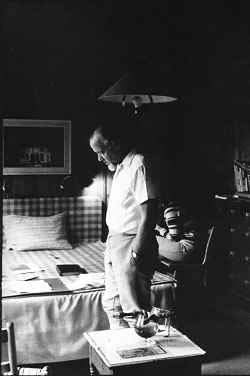
Picture of Barry Supple below:

Barry Supple – Emeritus Professor of Economic History, University of Cambridge, and a former Director of the Leverhulme Trust

Interview with Barry Supple, Part 1 of 2

Published on Feb 19, 2013

Barry Supple interviewed by Alan Macfarlane 3rd July 2010.

All revenues are donated to the World Oral Literature Project: http://www.oralliterature.org/

For a full, higher quality, downloadable version, please see http://www.alanmacfarlane.com

Interview with Barry Supple, Part 2 of 2

On November 21, 2014 I received a letter from Nobel Laureate Harry Kroto and it said:

…Please click on this URL http://vimeo.com/26991975

and you will hear what far smarter people than I have to say on this matter. I agree with them.

Harry Kroto

_________

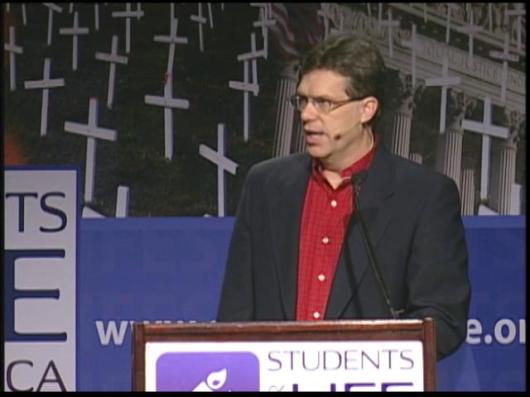
Dr. Harry Kroto is the 1996 Chemistry Nobel Prize Winner and he is seen the photo below:

________________________________________________

There are 3 videos in this series and they have statements by 150 academics and scientists and I hope to respond to all of them. Wikipedia notes  Barry Emanuel Supple, CBE, FBA (born 27 October 1930, Hackney, London), is Emeritus Professor of Economic History, University of Cambridge, and a former Director of the Leverhulme Trust. He is the father of theatre and opera director Tim Supple.

The comments of Dr. Supple are found on the second video below in the 93rd clip and below I have the written transcript of his comments and my response.

50 Renowned Academics Speaking About God (Part 1)

Another 50 Renowned Academics Speaking About God (Part 2)

A Further 50 Renowned Academics Speaking About God (Part 3)

_______________

I grew up at Bellevue Baptist Church under the leadership of our pastor Adrian Rogers and I read many books by the Evangelical Philosopher Francis Schaeffer and have had the opportunity to contact many of the evolutionists or humanistic academics that they have mentioned in their works. Many of these scholars have taken the time to respond back to me in the last 20 years and some of the names  included are  Ernest Mayr (1904-2005), George Wald (1906-1997), Carl Sagan (1934-1996),  Robert Shapiro (1935-2011), Nicolaas Bloembergen (1920-),  Brian Charlesworth (1945-),  Francisco J. Ayala (1934-) Elliott Sober (1948-), Kevin Padian (1951-), Matt Cartmill (1943-) , Milton Fingerman (1928-), John J. Shea (1969-), , Michael A. Crawford (1938-), Paul Kurtz (1925-2012), Sol Gordon (1923-2008), Albert Ellis (1913-2007), Barbara Marie Tabler (1915-1996), Renate Vambery (1916-2005), Archie J. Bahm (1907-1996), Aron S “Gil” Martin ( 1910-1997), Matthew I. Spetter (1921-2012), H. J. Eysenck (1916-1997), Robert L. Erdmann (1929-2006), Mary Morain (1911-1999), Lloyd Morain (1917-2010),  Warren Allen Smith (1921-), Bette Chambers (1930-),  Gordon Stein (1941-1996) , Milton Friedman (1912-2006), John Hospers (1918-2011), Michael Martin (1932-).Harry Kroto (1939-), Marty E. Martin (1928-), Richard Rubenstein (1924-), James Terry McCollum (1936-), Edward O. WIlson (1929-), Lewis Wolpert (1929), Gerald Holton (1922-),  Martin Rees (1942-), Roald Hoffmann (1937-), and  Ray T. Cragun (1976-).

_________________

Quote  Barry Supple

Quite early on, encouraged by my father, I was sceptical, but never would have dreamt of not being Bar Mitzvahed because that is what happened in that community; the only Hebrew that I ever learned was in order to read the section of the law which was relevant to the timing of the ceremony; I never went to the synagogue again, and walked out of my brother’s Bar Mitzvah because I had a soccer match; over the years I have never dissociated myself from the Jewish background but never felt that I wanted to be identified as a religious Jew; the only times I have been back to a synagogue is for weddings.

10:43:17 An early memory that I have is of my mother falling off a roundabout on holiday somewhere, probably at Walton on the Naze; I think the reason that it is powerful is that at that time I had mixed feelings about it; I think she must have done something that I didn’t like because I was both anguished and slightly pleased about what I took to be a punishment; I have a memory, which is obviously not true, of her flying through the air; I can’t identify when that was but it would have been before the Second World War, probably about 1937-8; there is a haziness because I also have other memories; I do remember the time that I first learnt that death was inevitable because an aunt, a sibling of my mother’s, informed me; I must have been six or seven and was devastated by it and my parents were very upset, and they berated this aunt, Frances; that memory was quite strong, both because of the incident and seeing my parents’ reaction and defensiveness towards me; I have other memories, mostly concerned with this rather riotous family of siblings who lived together in the same house.

__________________

SHOULD JEWS CONSIDER THE OLD TESTAMENT PROPHECIES AND THEIR ACCURACY?

As a Jew, Barry Supple of all people should know that following the Bible’s command to find the Messiah and worship him is the main instruction of the Old Testament, and I am going to make the case that the prophecies of the Old Testament should not be discarded and many of them have already been fulfilled in history. Let’s look at one of them.

HOW COULD A PROPHET IN THE OLD TESTAMENT PREDICT EVENTS THAT TOOK PLACE HUNDREDS OF YEARS LATER?

I  have been amazed at the prophecies in the Bible that have been fulfilled in history, and also many of the historical details in the Bible have been confirmed by archaeology too. One of the most amazing is the prediction that the Jews would be brought back and settle in Jerusalem again. Another prophecy in Psalms 22 describes messiah dying on a cross  almost 1000 years before the Romans came up with this type of punishment.

Many times it has been alleged that the author of the Book of Daniel was from a later period but how did a later author know these 5 HISTORICAL FACTS? How did he know [1] that Belshazzar was ruling during the last few years of the Babylonian Empire when the name “Belshazzar” was lost to history until 1853 when it was uncovered in the monuments? [2] The author also knew that the Babylonians executed individuals by casting them into fire, and that the Persians threw the condemned to the lions. [3] He knew  the practice in the 6th Century was to mention first the Medes, then the Persians and not the other way around. [4] Plus he knew the laws made by Persian kings could not be revoked and [5] he knew that in the sixth century B.C., Susa was in the province of Elam (Dan. 8:2).

One of the top 10 posts on my blog on this next subject concerning Tyre.   John MacArthur went through every detail of the prophecy concerning Tyre and how history shows the Bible prophecy was correct.  Carl Sagan said he had taken a look at Old Testament prophecy and it did not impress him because it was too vague.

HOW CAN ANYONE SAY THAT THIS FOLLOWING PROPHECY CONCERNING TYRE IS “TOO VAGUE?”

Photo of John MacArthur

Biblical Inspiration Validated By Prophecy, Part 1 (Selected Scriptures) John MacArthur

Here is the transcript:

Let’s look at some illustrations of this. Ezekiel chapter 26…Ezekiel chapter 26, I’m going to move rapidly so that we can cover a few of these prophecies. A lot of these I have some notes in the footnotes in the MacArthur Study Bible that will help fill out the things that I don’t have time to say. You can check those sources and others in the commentaries written on these various prophetic books. But for us, we’ll get a good idea of the amazing fulfillment of these prophecies. Ezekiel chapter 26 through chapter 28 and even some comments in chapter 9 are prophecies against a city named Tyre…T-y-r-e. These are prophecies against a city named Tyre. It is identified in the second verse, mentioned there Tyre, verse 2. Now the prophecies start in verse 3, “Behold, I am against you, O Tyre. I will bring up many nations against you as the sea brings up its waves, nation after nation after nation hitting against Tyre like waves hitting against the shore.” And here come the details. “They will destroy the walls of Tyre and break down her towers and I will scrape her debris from her and make her a bare rock. She will be a place for the spreading of nets in the midst of the sea for I have spoken, declares the Lord God, and she will become spoil for the nations.” Go down to verse 8. “He will slay your daughters on the mainland with the sword and He will make siege walls against you, cast up a mound against you and raise up a large shield against you.” Go down to verse 12, “They will make a spoil of your riches, a prey of your merchandise, break down your walls, destroy your pleasant houses, throw your stones and your timbers and your debris into the water.” Verse 14, “I will make you a bare rock. You will be a place for the spreading of nets. You will be built no more for I, the Lord, have spoken declares the Lord God.” Verse 21, “I shall bring terrors on you and you will be no more. Thou you will be sought, you will never be found again, declares the Lord God.”

Now the elements of this prophecy are really very, very detailed. The prophecy says the mainland city of Tyre will be destroyed. The prophecy says many nations will rise against Tyre, they’ll come successively, not all at once collectively together as one force but like waves, one after another. It says that the rubble of that city will be thrown into the water. It says that Tyre will become like a bare flat rock. It says that fishermen shall dry their nets there. It says Tyre will never be rebuilt again. And there are even other details that I read you about casting a siege and breaking down the walls of that place.

Now you have to understand that when Ezekiel makes this prophecy, you’re not talking about some small town here. You’re talking about one of the greatest cities in the ancient world, the great Phoenician seaport of Tyre and the Phoenicians were one of the most advanced civilizations in ancient times and they were the sailors. They were the ones who sailed the Mediterranean. They were the great traders of the world, the greatest sailors in the world history, the greatest navigators in ancient times. They were the foremost explorers of their day and they were therefore great colonizers.

You find a ruler named Hiram I who controlled the Phoenician world, Phoenicia. This city under his reign, this city of Tyre was fortified with a wall, according to history, 150 feet high, fifteen feet thick. It had a very capable fleet. It was flourishing when Joshua led Israel into the promised land. In fact, Hiram began his reign eight years before Solomon, overlapping David’s reign. David sought help from Hiram when David wanted to build his palace and he got artisans and cedars from Hiram to help with the palace. Hiram later aided Solomon when Solomon set out to build the temple by sending cedars down, the cedars of Lebanon.

But this prophecy was given that this great city would be destroyed with all this detail laid out. Three years after the prophecy…three years…Nebuchadnezzar, the king of Babylon, laid a siege against the city of Tyre. It lasted from 585 to 573, thirteen years of siege against this city. Finally after thirteen years of being surrounded by the forces of Babylon and Nebuchadnezzar and having their supplies cut off, they finally surrendered to the terms and the first part of the prophecy was fulfilled because Nebuchadnezzar immediately broke down all the walls and broke down all the towers, verse 4, destroying the walls, breaking down all the towers. That made the city indefensible. That was not an unusual thing for conquerors to do, but you can imagine it was a serious enterprise. It doesn’t mean you have to break down the entire wall, but you had to render it ineffective by putting massive holes in it at the appropriate places.


Upon arriving, however, he was shocked to find no spoils which was a great disappointment to a conqueror because the people had used their superb fleet to remove everything of value far away, at least far enough away to an island about a half mile off shore. They had just continually over those years been shuttling everything of value off shore. By the way, in the twenty-ninth chapter of Ezekiel verses 17 to 20, Ezekiel says that the Babylonians would get no plunder and they did not get any plunder. So the mainland city was destroyed, it was flattened, it was nothing but rubble, basically. The island city then flourished a half mile off shore. It remained a powerful city, by the way, for 250 years. That was the new city of Tyre.

While during those 250 years the timbers and the stones remained in ruins on the shore for that whole duration. All the prophecy then was not fulfilled, only a portion of it was fulfilled. In the ordinary course of events, those ruins would have become a tell, t-e-l-l, a mound, such as archaeologists find and dig into as the wind-swept dirts cover over the centuries, they bury the rubble of the city. And surely when parts of the wall fell, eventually all the wall fell and normally would have been buried under a tell to be discovered long time later by archaeologists. No one, no one at all would go to the monumental effort of throwing all that debris into the water, but that is exactly what this Scripture says. Verse 12, “They will break down the walls, destroy the pleasant houses, throw your stones and your timbers and your debris into the water.” Why would anybody do that? Why would you cart down debris and throw it into the water? Well for 250 years nobody did that, it wasn’t fulfilled. Then along came Alexander the Great. Alexander the Great, at this time, is age 24, he is bent on conquering the world. He has come on his way east. He has an infantry we are told that numbers about 33 thousand men and he has about 15 thousand in his calvary and he is on his way to establish his great world empire. He has just defeated the Persians under Darius III at the battle of Isis in the year 333. He is on his march now to the east and toward Egypt. He wants to conquer the great Egyptian society. In order to get to Egypt, he has to make a bend around the eastern part of the Mediterranean and come down the coast. He comes in to Phoenicia which is now the land of Israel, basically. He calls on the Phoenician cities to open their gates to him and to supply him all the supplies that he needs. And, of course, the first place that he stops as he starts south is that northernmost place called Tyre. He sent word to the Tyrenians of what he wanted and they sent word back and said, “We’re not giving you anything.”

And so, Alexander was upset. And you don’t want to get Alexander the Great upset. It’s amazing the lengths that that man would go to achieve the satisfaction of his own agenda. He had no fleet, he had no ships. How in the world was he going to get what he needed from Tyre which was a half mile off shore? Answer? He saw all the debris that had been lying there for 250 years and to make a long story short, he built a causeway all the way to the island…at least two thousand feet long. And we are told by historians and we can see it because it’s still there in part today, at least 200 feet wide across the strait separating the old and the new. Arian, the Greek historian, has written in his book, History of Alexander in India how this was accomplished. And he gives all kinds of fascinating details.


Tyre had become fortified like Alcatraz, surrounded by powerful walls that went right down to the edge of the sea. Really a very impregnable place. So Alexander knew that if he was going to conquer them, he couldn’t just go pull up to the wall in ships, he could build ships relatively…that was a relative possibility, but he could only get up to a wall he couldn’t get across, so he decided that he would need to build a land peninsula and move massive machines that were very tall with flip-down bridges that he could set on the top of the wall to walk right in to the city. The work went well at first, until the water started getting deeper and deeper and as the water got deeper, the project moved slower and all the people in Tyre stood on the wall and threw boulders at his army, trying to build their causeway.

They stopped the work in order to protect their lives, this only made him more angry. And so he decided that he would build a great shield called a tortoise, for obvious reasons, and that he would hold up the shield. You remember in the passage that I just read you, there is reference made that there would be raised up, in verse 8, a large shield against you. You find that in history. They actually tried to shield the workers from the stones that were being thrown on them. Meanwhile, Alexander’s engineers were on the shore building monster towers called Heliopolis…Heliopolis, a hundred and sixty-feet high, twenty stories high. And they held at the top light artillery and men. Highest towers, by the way, ever used in the history of war. High above the city walls, they would just roll them across the causeway when it was finished, drop down the cause…the bridge and march into the city. They were basically resisted and resisted and resisted, raids from the people of Tyre, everything they could do to stop them, it all was for not. In the end, even using some ships that he acquired, he collected the navies from all the local places he could go. He got help from places like Sidon and Biblis(?) and Rhodes and Malous(?) and Lycia and Macedon and Cyprus and he got enough ships to move out into the deep water and continue his building.

Seven months it took him, seven months. At the end of seven months, these monstrous towers rolled across that causeway, flipped down the bridges, went into the city. Eight thousand were slain in the battle, seven thousand were executed military style, thirty thousand were sold as slaves to replenish the treasuries of Alexander. Philip Myer the historian says, “Alexander the Great reduced Tyre to ruins in 332, or 333 B.C. She recovered in a measure but never to the place she previously held in the world. The once great city is now as bare…writes this historian…as the top of a rock and is a place where fishermen dry their nets.”

By the way, that island city was repopulated and later restored…destroyed by the Muslims, 1281. The Muslims came, conquering in the name of Allah. But the main city has never been rebuilt and that is consistent with verse 21, “You will never be found again,” declares the Lord God. There’s a little village out there on that island. It’s in the news in modern times. There’s a place where the Israelis have retaliated against refugee camps in past years. Jerusalem has been rebuilt, just for information sake, seventeen times…seventeen times. Twenty-five centuries ago a Jewish prophet in exile in Babylon was told by God that the city of Tyre would never be rebuilt, and it never has. Today you can’t even find a ruin on that site.


And frankly, that’s astounding to me because the location is staggeringly beautiful, one of the most beautiful spots along the Mediterranean. There’s a fresh water spring there that has been measured some years ago that produces a flow of ten million gallons of water a day, enough for a large city. Never been rebuilt. Some mathematicians got a hold of this prophecy, took all of the little parts of this prophecy, put them all together and said, “The probability that this could all happen by chance is one in seventy-five million.” That’s probably conservative. Amos weighed in on the destruction of Tyre. Turn to Amos chapter 1 verse 9, “Thus says the Lord, for three transgressions of Tyre and for four, I will not revoke its punishment because they delivered up an entire population to Edom and did not remember the covenant of brotherhood, so I will send fire upon the wall of Tyre and it will consume her citadels.” And we know historically that Tyre was literally burned by the missiles of Nebuchadnezzar. In the original attack, Tyre was burned by missiles, fiery arrows fired by the forces of Nebuchadnezzar in the thirteen-year siege.

This is an amazing Scripture until you understand that God wrote this and God told the prophet what the prophet never could have known because God knows exactly what’s going to happen because God is in charge of exactly what’s going to happen. In the ninth chapter of Zechariah there is more against Tyre, verse 2, there is a word of the Lord against this land, Tyre and Sidon. And then in verse 3, “Tyre build herself a fortress, piled up silver like dust and gold like the mire of the streets,” and that was because the Phoenicians out of Tyre were doing this trade all over the Mediterranean area. Also they were trading with the east because the goods coming from the east would come through there to go to the Mediterranean. They were trading with the south, people coming up from Egypt and those coming down from the north, so that they were very, very wealthy. “Behold…says verse 4…the Lord will dispossess her, cast her wealth into the sea. She will be consumed with fire.” Again Zechariah noted what was true in the raid or the siege of Nebuchadnezzar that the city was set on fire. Other cities in Phoenicia that became later known as Philistine cities, Ashkelon, Gaza, Ekron, these cities also, including Ashdod in verse 6, would be a part of the prophecy as well.

Going further down the course…the coast, it’s Gaza, Ekron, Ashkelon, Ashdod, they’re all going to be captured. They all were captured. And of the five great cities, the only one left out of the prophecy because it was a little bit inland was the city of Gath…the city of Gath.

Josephus, the great historian, records for us in immense detail, and you can read Josephus’ history how all these components came to pass. The success of Alexander’s evasion of Syria and Palestine in the fourth century is known history in all its detail. He absorbed Syria. Tyre was obliterated. Her commerce destroyed to the amazement of her neighbors. Interestingly enough, not only was Gath spared in all of this, but another city was spared, the city of Sidon…Sidon did not share the same fate as Tyre.

Let’s go back to the twenty-eighth chapter of Ezekiel and look at the city of Sidon. Twin cities, twenty miles north of Tyre is the city in ancient times called Sidon. Now apparently Sidon was the center of Baal worship, the worship of Ashteroth and Tammuz, the capital city, you could say, of idolatry. It had been founded and back in Genesis 10 by one of the sons of Canaan, Genesis chapter 10 verse 15. Now look at 28:22 and let’s just see what the Bible says is going to happen to Sidon. Now it says, “The Lord God, behold, I am against you, O Sidon. I shall be glorified in your midst. Then they will know that I am the Lord when I execute judgments in her and I shall manifest My holiness in her, for I shall send pestilence to her and blood to her streets and the wounded shall fall in her midst by the sword upon her on every side, then they will know that I am the Lord.”


Three things to point out…blood in the streets, swords everywhere and no ultimate destruction. Unlike Tyre, there’s no statement that this city would not survive and today you can go there and find Sidon flourishing as the seaport city of Saida. But you won’t find Tyre.

In 351 B.C. the city was ruled by Persia and it revolted and the Persian army besieged it, 351 B.C. When all hope of saving the city was gone, forty thousand citizens chose rather to die than submit to Persian vengeance. So what they did? They shut themselves up in their houses, set their houses on fire and died in the flames. It was a horrific way to die. But the city was rebuilt again and again and again and re-conquered again and again. Floyd Hamilton says, “Blood has flowed in the streets over and over but the city stayed in existence and stands today as a monument to fulfilled prophecy. It was taken three times by the Crusaders, three times by the Muslims, all by the sword. In 1840 it was bombarded by the combined fleets of England, France and Turkey. No human eye could have seen how in the future this city would be in a bloodbath induced by swords, but would never be extinct when one twenty miles down the coast would be extinct.” But we aren’t surprised because God knows the truth. One writer says, “No well accredited prophecy is found in any other book or even oral tradition now existing or that has ever been existing in the world.” You can’t find in any religious book in the world a well-attested and accurate fulfilled prophecy. The Bible is always exactly correct about everything.

Maybe I have time for one more. Ezekiel chapter 30, since we’re having such a great time doing this. This one, chapter 30, Ezekiel chapter 30, let’s go down to verse 13. And this is Egypt, not Tennessee, just for some of you. “Thus says the Lord God, I will also destroy the idols and make the images cease from Memphis and there will no longer be a prince in the land of Egypt and I will put fear in the land of Egypt, I will make Pathros desolate, set a fire in Zoan, and execute judgments on Thebes and I will pour out My wrath on Sin…with an upper case S, proper name…the stronghold of Egypt and I will also cut off the multitude of Thebes…”now we could stop at that point.

What does this say? It says about Memphis that the idols in Memphis will be destroyed. That’s unmistakable. “I will destroy the idols and make the images cease from Memphis.” It says Thebes will be destroyed, judgments will be executed on Thebes and the multitude will be cut off. That means they will be killed. Thebes destroyed and its population killed. And then that most interesting statement, “That there will no longer be…in verse 13…a prince in the land of Egypt.” No more native ruler in Egypt.

Now let’s start with Memphis. It was a very ancient and a very important place for the origins of religious worship in Egypt. It was regarded as a very sacred place because of its original religious beginning. It was the capital of what was called middle Egypt and it was the stronghold of religion and therefore the stronghold of idols. And God said it would be destroyed and its idols in particular would be destroyed. And that is exactly what happened to Memphis. The historian Herodotus records that Cambyses did that and he did that by first attacking the city called Sin, verse 15, the stronghold of Egypt, verse 15, “I’ll pour out My wrath on Sin, the stronghold of Egypt.” It was called Pelusium, the Greek term for it. It was the key to Egypt. It was the stronghold, and if you could break through at that point, you could conquer. Herodotus says that’s where Cambyses came in and launched his attach which was successful.


Now the Egyptians were hopeless idolaters. In fact, they mummified cats. They mummified cats…you know about the holy cows in India, well they had holy cats and holy dogs and particularly cats were of interest to them because they had a cat goddess, Ugastet…Ugastet, the cat goddess and all the cats and they were all urchin cats, not domesticated cats. They all were basically the protectors of her honor, so they mummified cats when they died.

Well, Cambyses was pretty shrewd. They also worshiped dogs and so when he launched his attack against Pelusium, he launched it with a whole bunch of cats and dogs. And his army came following the cats and following the dogs. And because the animals were held to be so sacred in Egypt so that no Egyptian would use any weapon against those animals, he came in and won his victory. He slew Apis, the sacred cow and he began to destroy the idols and destroyed them all in Memphis. Memphis disappeared. It began at this point to disappear, its idols disappeared with it. Today archaeologists don’t know where Memphis was. Likely it was the second largest city in Egypt and they can’t find it.

I’ve been there, to that site, on one of my trips to Egypt. And I was absolutely fascinated to hear from the guide that there in that region although they do not know exactly where the city was, there in that region they have discovered ancient statutes buried face down in the sand that they date before Moses and after. And they find these statues with the face buried in the sand and the back rotted out. The Bible said that the idols of Memphis would be struck down, history says that’s exactly what happened.

Then there were to be judgments on Thebes, according to verse 14. Cambyses, this Persian, invaded Egypt, brought destruction on Thebes, burning their temples, destroying all their statutes, but Thebes recovered for a while. Second blow came a century before Christ, 89 B.C. A siege was laid on Thebes for three years and when Thebes fell on that time in 89 B.C., it fell into complete oblivion. It was flattened, nothing left, fulfilling prophecy. Its people were killed, never returned. And again it was an amazing city. History says 66 feet was the height of the wall and 24 feet was the width.

When the Bible says something is going to happen, it’s exactly what happens…exactly what happens. God judged that land from the top to the bottom, from Sin all the way to Thebes, top to bottom, and destroyed its idols.

The final prediction was that there would no longer be a prince in the land of Egypt. That would be the son of an Egyptian king. That has been fulfilled. From 350 B.C. and on Egypt has never had an Egyptian as a ruler. The famous rulers that you think about, Sadat, Abdulnasser, familiar names, neither of them was an Egyptian. They’ll never have an Egyptian ruler, Scripture is accurate about that.

Well there are many more such prophecies but I will save them for next time. Fascinating, isn’t it? The Word of God stands. Believe me, the critics would love to dismantle the Scripture on the basis of these things, but they cannot do that. History confirms the truthfulness of the Word of God. Let’s pray.

What a blessing and an encouragement it is to our hearts, Lord, to see the Word of God be vindicated by history. Amazing things to think about, but why would we be surprised, this is Your truth and You are God and You are omniscient and You cannot err. We thank You that Your Word has stood the test of scrutiny through the centuries and it still stands firm, accurate. And if it can be trusted in these things, it can be trusted in all that it affirms and declares and teaches and commands and prophesies. And indeed, what You have said will happen has happened and what You have said is yet to happen will happen, just as surely, just as precisely, just as accurately. Your character is at stake and You are the God of truth who knows all things, even the end from the beginning and You can tell us about the things that have not yet happened. We thank You that Your Word is so trustworthy. We trust it spiritually and believing it place our life and our eternity in Your hands, and we do it with joy and confidence because Your Word is true. And we thank You from the depths of our being for giving us this truth, in Christ’s name. Amen.

The Bible and Archaeology – Is the Bible from God? (Kyle Butt 42 min)

Dr. Wolpert, you want some evidence that indicates that the Bible is true? Here is a good place to start and that is taking a closer look at the archaeology of the Old Testament times. Is the Bible historically accurate? Here are some of the posts I have done in the past on the subject: 1. The Babylonian Chronicleof Nebuchadnezzars Siege of Jerusalem2. Hezekiah’s Siloam Tunnel Inscription. 3. Taylor Prism (Sennacherib Hexagonal Prism)4. Biblical Cities Attested Archaeologically. 5. The Discovery of the Hittites6.Shishak Smiting His Captives7. Moabite Stone8Black Obelisk of Shalmaneser III9A Verification of places in Gospel of John and Book of Acts., 9B Discovery of Ebla Tablets10. Cyrus Cylinder11. Puru “The lot of Yahali” 9th Century B.C.E.12. The Uzziah Tablet Inscription13. The Pilate Inscription14. Caiaphas Ossuary14 B Pontius Pilate Part 214c. Three greatest American Archaeologists moved to accept Bible’s accuracy through archaeology.

Related posts:

RESPONDING TO HARRY KROTO’S BRILLIANT RENOWNED ACADEMICS!! (PART 9, Lord Martin Rees, cosmologist and astrophysicist at Cambridge, ANY EVIDENCE TO BACK UP RELIGIOUS DOGMAS? )

RESPONDING TO HARRY KROTO’S BRILLIANT RENOWNED ACADEMICS!! (PART 8 Dr. Alan Dershowitz, Harvard, and the problem of evil)

RESPONDING TO HARRY KROTO’S BRILLIANT RENOWNED ACADEMICS!! (Dr. Lewis Wolpert, Emeritus Professor of Biology, University College London, DOES SCIENCE GO AGAINST HIS PRO-CHOICE VIEW?)

RESPONDING TO HARRY KROTO’S BRILLIANT RENOWNED ACADEMICS!! (Nobel Laureate Dr. Aaron Ciechanover, Does he think that HITLER GOT OFF HOOK OR NOT? )

RESPONDING TO HARRY KROTO’S BRILLIANT RENOWNED ACADEMICS!! (Dr. Leonard Mlodinow , Professor of Physics, Cal Tech, CAN SCIENCE CONFLICT WITH RELIGIOUS BELIEF AND STILL BOTH BE TRUE? )

RESPONDING TO HARRY KROTO’S BRILLIANT RENOWNED ACADEMICS!! (Dr. Herbert Huppert, Professor of Theoretical Geophysics, Cambridge University, IS MAINTAINING THE FAITH JUST MAINTAINING THE CULTURE? )

RESPONDING TO HARRY KROTO’S BRILLIANT RENOWNED ACADEMICS!! (PART 7 Professor Leonard Susskind, Physics Dept Stanford)

RESPONDING TO HARRY KROTO’S BRILLIANT RENOWNED ACADEMICS!! (PART 6 Professor Alan Macfarlane, Anthropologist and Historian, Cambridge and the issue of HELL)

RESPONDING TO HARRY KROTO’S BRILLIANT RENOWNED ACADEMICS!! (PART 5 Saul Perlmutter, Nobel Laureate, Astrophysicist at the University of California )

RESPONDING TO HARRY KROTO’S BRILLIANT RENOWNED ACADEMICS!! Today Dr. Stuart Kauffman!!!!

FRANCIS SCHAEFFER ANALYZES ART AND CULTURE Part 41 Sarvepalli Radhakrishnan (Featured artist is Marina Abramović)

FRANCIS SCHAEFFER ANALYZES ART AND CULTURE Part 40 Timothy Leary (Featured artist is Margaret Keane)

FRANCIS SCHAEFFER ANALYZES ART AND CULTURE Part 39 Tom Wolfe (Featured artist is Richard Serra)

FRANCIS SCHAEFFER ANALYZES ART AND CULTURE Part 38 Woody Allen and Albert Camus “There is but one truly serious philosophical problem, and that is suicide” (Feature on artist Hamish Fulton Photographer )

FRANCIS SCHAEFFER ANALYZES ART AND CULTURE Part 37 Mahatma Gandhi and “Relieving the Tension in the East” (Feature on artist Luc Tuymans)

FRANCIS SCHAEFFER ANALYZES ART AND CULTURE Part 36 Julian Huxley:”God does not in fact exist, but act as if He does!” (Feature on artist Barry McGee)

FRANCIS SCHAEFFER ANALYZES ART AND CULTURE Part 35 Robert M. Pirsig (Feature on artist Kerry James Marshall)

FRANCIS SCHAEFFER ANALYZES ART AND CULTURE Part 34 Aleksandr Solzhenitsyn (Feature on artist Shahzia Sikander)

FRANCIS SCHAEFFER ANALYZES ART AND CULTURE Part 33 Aldous Huxley (Feature on artist Matthew Barney )

FRANCIS SCHAEFFER ANALYZES ART AND CULTURE Part 32 Steven Weinberg and Woody Allen and “The Meaningless of All Things” (Feature on photographer Martin Karplus )

FRANCIS SCHAEFFER ANALYZES ART AND CULTURE Part 31 David Hume and “How do we know we know?” (Feature on artist William Pope L. )

FRANCIS SCHAEFFER ANALYZES ART AND CULTURE Part 30 Rene Descartes and “How do we know we know?” (Feature on artist Olafur Eliasson)

FRANCIS SCHAEFFER ANALYZES ART AND CULTURE Part 29 W.H. Thorpe and “The Search for an Adequate World-View: A Question of Method” (Feature on artist Jeff Koons)

FRANCIS SCHAEFFER ANALYZES ART AND CULTURE Part 28 Woody Allen and “The Mannishness of Man” (Feature on artist Ryan Gander)

FRANCIS SCHAEFFER ANALYZES ART AND CULTURE Part 27 Jurgen Habermas (Featured artist is Hiroshi Sugimoto)

FRANCIS SCHAEFFER ANALYZES ART AND CULTURE Part 26 Bettina Aptheker (Featured artist is Krzysztof Wodiczko)

FRANCIS SCHAEFFER ANALYZES ART AND CULTURE Part 25 BOB DYLAN (Part C) Francis Schaeffer comments on Bob Dylan’s song “Ballad of a Thin Man” and the disconnect between the young generation of the 60’s and their parents’ generation (Feature on artist Fred Wilson)

FRANCIS SCHAEFFER ANALYZES ART AND CULTURE Part 24 BOB DYLAN (Part B) Francis Schaeffer comments on Bob Dylan’s words from HIGHWAY 61 REVISITED!! (Feature on artist Susan Rothenberg)

FRANCIS SCHAEFFER ANALYZES ART AND CULTURE Part 23 BOB DYLAN (Part A) (Feature on artist Josiah McElheny)Francis Schaeffer on the proper place of rebellion with comments by Bob Dylan and Samuel Rutherford

FRANCIS SCHAEFFER ANALYZES ART AND CULTURE Part 22 “The School of Athens by Raphael” (Feature on the artist Sally Mann)

FRANCIS SCHAEFFER ANALYZES ART AND CULTURE Part 21 William B. Provine (Feature on artist Andrea Zittel)

FRANCIS SCHAEFFER ANALYZES ART AND CULTURE Part 20 Woody Allen and Materialistic Humanism: The World-View of Our Era (Feature on artist Ida Applebroog)

FRANCIS SCHAEFFER ANALYZES ART AND CULTURE Part 19 Movie Director Luis Bunuel (Feature on artist Oliver Herring)

FRANCIS SCHAEFFER ANALYZES ART AND CULTURE Part 18 “Michelangelo’s DAVID is the statement of what humanistic man saw himself as being tomorrow” (Feature on artist Paul McCarthy)

FRANCIS SCHAEFFER ANALYZES ART AND CULTURE Part 17 Francis Schaeffer discusses quotes of Andy Warhol from “The Observer June 12, 1966″ Part C (Feature on artist David Hockney plus many pictures of Warhol with famous friends)

FRANCIS SCHAEFFER ANALYZES ART AND CULTURE Part 16 Francis Schaeffer discusses quotes of Andy Warhol from “The Observer June 12, 1966″ Part B (Feature on artist James Rosenquist plus many pictures of Warhol with famous friends)

FRANCIS SCHAEFFER ANALYZES ART AND CULTURE Part 15 Francis Schaeffer discusses quotes of Andy Warhol from “The Observer June 12, 1966″ Part A (Feature on artist Robert Indiana plus many pictures of Warhol with famous friends)

FRANCIS SCHAEFFER ANALYZES ART AND CULTURE Part 14 David Friedrich Strauss (Feature on artist Roni Horn )

FRANCIS SCHAEFFER ANALYZES ART AND CULTURE Part 13 Jacob Bronowski and Materialistic Humanism: The World-View of Our Era (Feature on artist Ellen Gallagher )

FRANCIS SCHAEFFER ANALYZES ART AND CULTURE Part 12 H.J.Blackham and Materialistic Humanism: The World-View of Our Era (Feature on artist Arturo Herrera)

FRANCIS SCHAEFFER ANALYZES ART AND CULTURE Part 11 Thomas Aquinas and his Effect on Art and HOW SHOULD WE THEN LIVE? Episode 2: THE MIDDLES AGES (Feature on artist Tony Oursler )

FRANCIS SCHAEFFER ANALYZES ART AND CULTURE Part 10 David Douglas Duncan (Feature on artist Georges Rouault )

FRANCIS SCHAEFFER ANALYZES ART AND CULTURE Part 9 Jasper Johns (Feature on artist Cai Guo-Qiang )

FRANCIS SCHAEFFER ANALYZES ART AND CULTURE Part 8 “The Last Year at Marienbad” by Alain Resnais (Feature on artist Richard Tuttle and his return to the faith of his youth)

FRANCIS SCHAEFFER ANALYZES ART AND CULTURE Part 7 Jean Paul Sartre (Feature on artist David Hooker )

FRANCIS SCHAEFFER ANALYZES ART AND CULTURE Part 6 The Adoration of the Lamb by Jan Van Eyck which was saved by MONUMENT MEN IN WW2 (Feature on artist Makoto Fujimura)

FRANCIS SCHAEFFER ANALYZES ART AND CULTURE Part 5 John Cage (Feature on artist Gerhard Richter)

FRANCIS SCHAEFFER ANALYZES ART AND CULTURE Part 4 ( Schaeffer and H.R. Rookmaaker worked together well!!! (Feature on artist Mike Kelley Part B )

FRANCIS SCHAEFFER ANALYZES ART AND CULTURE Part 3 PAUL GAUGUIN’S 3 QUESTIONS: “Where do we come from? What art we? Where are we going? and his conclusion was a suicide attempt” (Feature on artist Mike Kelley Part A)

FRANCIS SCHAEFFER ANALYZES ART AND CULTURE Part 2 “A look at how modern art was born by discussing Monet, Renoir, Pissaro, Sisley, Degas,Cezanne, Van Gogh, Gauguin, Seurat, and Picasso” (Feature on artist Peter Howson)

FRANCIS SCHAEFFER ANALYZES ART AND CULTURE Part 1 HOW SHOULD WE THEN LIVE? “The Roman Age” (Feature on artist Tracey Emin)

_________________

“Schaeffer Sunday” Wintery Knight and William Lane Craig: “Can atheists distinguish between right and wrong actions?”

______________________________________

How Should We then Live Episode 7 small (Age of Nonreason)

I love the works of Francis Schaeffer and I have been on the internet reading several blogs that talk about Schaeffer’s work and the work below was really helpful. Schaeffer’s film series “How should we then live?  Wikipedia notes, “According to Schaeffer, How Should We Then Live traces Western history from Ancient Rome until the time of writing (1976) along three lines: the philosophic, scientific, and religious.[3] He also makes extensive references to art and architecture as a means of showing how these movements reflected changing patterns of thought through time. Schaeffer’s central premise is: when we base society on the Bible, on the infinite-personal God who is there and has spoken,[4] this provides an absolute by which we can conduct our lives and by which we can judge society.  Here are some posts I have done on this series: Francis Schaeffer’s “How should we then live?” Video and outline of episode 10 “Final Choices” episode 9 “The Age of Personal Peace and Affluence”episode 8 “The Age of Fragmentation”episode 7 “The Age of Non-Reason” episode 6 “The Scientific Age”  episode 5 “The Revolutionary Age” episode 4 “The Reformation” episode 3 “The Renaissance”episode 2 “The Middle Ages,”, and  episode 1 “The Roman Age,” .

ll

Can atheists distinguish between right and wrong actions?

Take a look at two atheists who try to affirm that morality is simultaneously objective and subjective.

Atheists deny that there is any design for the universe – they think there is no Designer. That means there is no way that the universe ought to be, objectively speaking. I.e. – when there were no humans around, there was no way the universe ought to have been. When humans appear, they evolve arbitrary customs and conventions in order to live together more peaceably. These are not real in any sense – they are just aids to survival and group cohesion. Different groups in different times and places evolve different rules, and no set of rules is any better than any other, because there is no way we ought to be. We call this atheistic/evolutionary form of morality “moral relativism”. It stands in contrast with the theistic view of morality, which is called “moral objectivism”.

In their view, slavery is not really right or wrong, it’s just a matter of opinion decided by majority rule in different social groups living in different places and times. Some groups in certain places and times think it’s right, and some groups in some places and times think it’s wrong. In our view (theism), God creates the universe, and he designs it to be a certain way. There is a certain way we ought to be. So if God thinks slavery is wrong, then it really is wrong, and his opinion of right and wrong becomes a duty for us.

What’s wrong with moral relativism?

I found this list of the seven flaws of moral relativism at the Australian site Faith Interface.

Here’s the summary:

  1. Moral relativists can’t accuse others of wrongdoing.
  2. Relativists can’t complain about the problem of evil.
  3. Relativists can’t place blame or accept praise.
  4. Relativists can’t make charges of unfairness or injustice.
  5. Relativists can’t improve their morality.
  6. Relativists can’t hold meaningful moral discussions.
  7. Relativists can’t promote the obligation of tolerance.

Here’s my favorite flaw of relativism (#6):

Relativists can’t hold meaningful moral discussions. What’s there to talk about? If morals are entirely relative and all views are equal, then no way of thinking is better than another. No moral position can be judged as adequate or deficient, unreasonable, acceptable, or even barbaric. If ethical disputes make sense only when morals are objective, then relativism can only be consistently lived out in silence. For this reason, it is rare to meet a rational and consistent relativist, as most are quick to impose their own moral rules like “It’s wrong to push your own morality on others”. This puts relativists in an untenable position – if they speak up about moral issues, they surrender their relativism; if they do not speak up, they surrender their humanity. If the notion of moral discourse makes sense intuitively, then moral relativism is false.

I sometimes get a lot of flack from atheists who complain that I don’t let them make any moral statements without asking first them to ground morality on their worldview. And that’s because on atheism morality IS NOT rationally grounded, so they can’t answer. In an accidental universe, you can only describe people’s personal preferences or social customs, that vary by time and place. It’s all arbitrary – like having discussions about what food is best or what clothing is best. The answer is always going to be “it depends”. It depends on the person who is speaking because it’s a subjective claim, not an objective claim. There is no objective way we ought to behave, on atheism. What atheists are really talking about when they say that something is right or that something is wrong is that in our group, we have evolved these beliefs that this behavior is good or this behavior is bad – we have these group preferences.

The horror of atheism, then, is that they reduce murder and slaver to beingmatters of opinion. And these majority opinions are arbitrary and can be different in different times and places. When you are talking to an atheist, you are talking to a person who literally thinks that the decision to rape or not rape is the same as the decision to drive on the left side of the road or the right side of the road. In both cases, it’s just something that groups decide one way or another arbitrarily, depending on how they evolved in different places and at different times.

All Christians should be able to draw out the moral relativism of atheists and challenge them on it, because once they are forced to affirm objective morality, they have to affirm God as the moral lawgiver. Take some time and read the linked article, then ask your atheistic friends to justify their talk about right and wrong. What do they mean by right and wrong? Why would they sacrifice their own self-interest in order to do “right”? Is the only reason that atheists have to be “good” far of being caught and punished by their group for breaking these arbitrary rules that vary by place and time? Do atheists only do the “right” thing when others are watching?

Episode 1 ABORTION

Dr. Francis schaeffer – The flow of Materialism(from Part 4 of Whatever happened to human race?)

Dr. Francis Schaeffer – The Biblical flow of Truth & History (intro)

Francis Schaeffer – The Biblical Flow of History & Truth (1)

Dr. Francis Schaeffer – The Biblical Flow of Truth & History (part 2)

__________

Related posts:

Francis Schaeffer’s “How should we then live?” Video and outline of episode 10 “Final Choices” (Schaeffer Sundays)

E P I S O D E 1 0   Dr. Francis Schaeffer – Episode X – Final Choices 27 min FINAL CHOICES I. Authoritarianism the Only Humanistic Social Option One man or an elite giving authoritative arbitrary absolutes. A. Society is sole absolute in absence of other absolutes. B. But society has to be […]

Francis Schaeffer’s “How should we then live?” Video and outline of episode 9 “The Age of Personal Peace and Affluence” (Schaeffer Sundays)

E P I S O D E 9 Dr. Francis Schaeffer – Episode IX – The Age of Personal Peace and Affluence 27 min T h e Age of Personal Peace and Afflunce I. By the Early 1960s People Were Bombarded From Every Side by Modern Man’s Humanistic Thought II. Modern Form of Humanistic Thought Leads […]

Francis Schaeffer’s “How should we then live?” Video and outline of episode 8 “The Age of Fragmentation” (Schaeffer Sundays)

E P I S O D E 8 Dr. Francis Schaeffer – Episode VIII – The Age of Fragmentation 27 min I saw this film series in 1979 and it had a major impact on me. T h e Age of FRAGMENTATION I. Art As a Vehicle Of Modern Thought A. Impressionism (Monet, Renoir, Pissarro, Sisley, […]

Francis Schaeffer’s “How should we then live?” Video and outline of episode 7 “The Age of Non-Reason” (Schaeffer Sundays)

E P I S O D E 7 Dr. Francis Schaeffer – Episode VII – The Age of Non Reason I am thrilled to get this film series with you. I saw it first in 1979 and it had such a big impact on me. Today’s episode is where we see modern humanist man act […]

Francis Schaeffer’s “How should we then live?” Video and outline of episode 6 “The Scientific Age” (Schaeffer Sundays)

E P I S O D E 6 How Should We Then Live 6#1 Uploaded by NoMirrorHDDHrorriMoN on Oct 3, 2011 How Should We Then Live? Episode 6 of 12 ________ I am sharing with you a film series that I saw in 1979. In this film Francis Schaeffer asserted that was a shift in […]

Francis Schaeffer’s “How should we then live?” Video and outline of episode 5 “The Revolutionary Age” (Schaeffer Sundays)

E P I S O D E 5 How Should We Then Live? Episode 5: The Revolutionary Age I was impacted by this film series by Francis Schaeffer back in the 1970′s and I wanted to share it with you. Francis Schaeffer noted, “Reformation Did Not Bring Perfection. But gradually on basis of biblical teaching there […]

Francis Schaeffer’s “How should we then live?” Video and outline of episode 4 “The Reformation” (Schaeffer Sundays)

Dr. Francis Schaeffer – Episode IV – The Reformation 27 min I was impacted by this film series by Francis Schaeffer back in the 1970′s and I wanted to share it with you. Schaeffer makes three key points concerning the Reformation: “1. Erasmian Christian humanism rejected by Farel. 2. Bible gives needed answers not only as to […]

“Schaeffer Sundays” Francis Schaeffer’s “How should we then live?” Video and outline of episode 3 “The Renaissance”

Francis Schaeffer’s “How should we then live?” Video and outline of episode 3 “The Renaissance” Francis Schaeffer: “How Should We Then Live?” (Episode 3) THE RENAISSANCE I was impacted by this film series by Francis Schaeffer back in the 1970′s and I wanted to share it with you. Schaeffer really shows why we have so […]

Francis Schaeffer’s “How should we then live?” Video and outline of episode 2 “The Middle Ages” (Schaeffer Sundays)

  Francis Schaeffer: “How Should We Then Live?” (Episode 2) THE MIDDLE AGES I was impacted by this film series by Francis Schaeffer back in the 1970′s and I wanted to share it with you. Schaeffer points out that during this time period unfortunately we have the “Church’s deviation from early church’s teaching in regard […]

Francis Schaeffer’s “How should we then live?” Video and outline of episode 1 “The Roman Age” (Schaeffer Sundays)

Francis Schaeffer: “How Should We Then Live?” (Episode 1) THE ROMAN AGE   Today I am starting a series that really had a big impact on my life back in the 1970′s when I first saw it. There are ten parts and today is the first. Francis Schaeffer takes a look at Rome and why […]

Francis Schaeffer: “Whatever Happened to the Human Race” (Episode 5) TRUTH AND HISTORY

Francis Schaeffer: “Whatever Happened to the Human Race” (Episode 5) TRUTH AND HISTORY Published on Oct 7, 2012 by AdamMetropolis This crucial series is narrated by the late Dr. Francis Schaeffer and former Surgeon General Dr. C. Everett Koop. Today, choices are being made that undermine human rights at their most basic level. Practices once […]

Francis Schaeffer: “Whatever Happened to the Human Race” (Episode 4) THE BASIS FOR HUMAN DIGNITY

The opening song at the beginning of this episode is very insightful. Francis Schaeffer: “Whatever Happened to the Human Race” (Episode 4) THE BASIS FOR HUMAN DIGNITY Published on Oct 7, 2012 by AdamMetropolis This crucial series is narrated by the late Dr. Francis Schaeffer and former Surgeon General Dr. C. Everett Koop. Today, choices […]

Francis Schaeffer: “Whatever Happened to the Human Race” (Episode 3) DEATH BY SOMEONE’S CHOICE

Francis Schaeffer: “Whatever Happened to the Human Race” (Episode 3) DEATH BY SOMEONE’S CHOICE Published on Oct 6, 2012 by AdamMetropolis This crucial series is narrated by the late Dr. Francis Schaeffer and former Surgeon General Dr. C. Everett Koop. Today, choices are being made that undermine human rights at their most basic level. Practices […]

Francis Schaeffer: “Whatever Happened to the Human Race?” (Episode 2) SLAUGHTER OF THE INNOCENTS

Francis Schaeffer: “Whatever Happened to the Human Race?” (Episode 2) SLAUGHTER OF THE INNOCENTS Published on Oct 6, 2012 by AdamMetropolis This crucial series is narrated by the late Dr. Francis Schaeffer and former Surgeon General Dr. C. Everett Koop. Today, choices are being made that undermine human rights at their most basic level. Practices […]

Francis Schaeffer: “Whatever Happened to the Human Race” (Episode 1) ABORTION OF THE HUMAN RACE

It is not possible to know where the pro-life evangelicals are coming from unless you look at the work of the person who inspired them the most. That person was Francis Schaeffer.  I do care about economic issues but the pro-life issue is the most important to me. Several years ago Adrian Rogers (past president of […]

The following essay explores the role that Francis Schaeffer played in the rise of the pro-life movement. It examines the place of How Should We Then Live?, Whatever Happened to the Human Race?, and A Christian Manifesto in that process.

This essay below is worth the read. Schaeffer, Francis – “Francis Schaeffer and the Pro-Life Movement” [How Should We Then Live?, Whatever Happened to the Human Race?, A Christian Manifesto] Editor note: <p> </p> [The following essay explores the role that Francis Schaeffer played in the rise of the pro-life movement.  It examines the place of […]

SANCTITY OF LIFE SATURDAY Corresponding with Nobel Prize Winner Nicolaas Bloembergen

Corresponding with Nobel Prize Winner Nicolaas Bloembergen

____________________

Back in 1995 I have the opportunity to correspond with Nobel Prize Winner Nicolaas Bloembergen concerning the issue of abortion.

프란시스 쉐퍼 – 그러면 우리는 어떻게 살 것인가 introduction (Episode 1)

02 How Should We Then Live? (Promo Clip) Dr. Francis Schaeffer

The clip above is from episode 9 THE AGE OF PERSONAL PEACE AND AFFLUENCE

10 Worldview and Truth

In above clip Schaeffer quotes Paul’s speech in Greece from Romans 1 (from Episode FINAL CHOICES)

Two Minute Warning: How Then Should We Live?: Francis Schaeffer at 100

A Christian Manifesto Francis Schaeffer

Published on Dec 18, 2012

A video important to today. The man was very wise in the ways of God. And of government. Hope you enjoy a good solis teaching from the past. The truth never gets old.

ABC network has rejected [an]… ad… sponsored by the Caring Outreach, [which] has nothing to do with politics but is a 30-second television ad that features information on fetal development.

Nicolaas Bloembergen

I wanted to share with you a correspondence I had with Dr. Nicolaas Bloembergen of Harvard. He won the Nobel Prize in Physics in 1981 and was born in Dordrecht, the Netherlands on March 11, 1920. He spent the last two years of World War II hiding from the Nazis. I found his story very interesting.

In his September 6, 1995 letter to me he wrote:

I respect your anti-abortion views, but do not attempt to impose your views on others. It is more important to be concerned with the fate of already born children than that of the unborn.

Less zealotry and more compassion for those who have different concepts of the world from yours would help make this world more livable.

I wrote him back on October 24, 1995  that I read a work by Professor J. Beckwith, Dept of Philosophy, Univ of Nevada, Las Vegas that seemed to address the issue he brought up in his letter. Here is what Dr. Beckwith wrote:

Some abortion-rights advocates, in response to pro-life arguments, emote such bumper-sticker slogans as: “Pro-choice, but personally opposed,”  or “Abortion is against my beliefs, but I would never dream of imposing my beliefs on others.” These slogans attempt to articulate in a simple way a common avenue taken by politicians and others who want to avoid the slings and arrows that naturally follow a firm position on abortion. It is an attempt to find “a compromise” or “a middle ground”; it’s a way to avoid being labeled “an extremist” of either camp.

During the 1984 presidential campaign — when questions of Geraldine Ferraro’s Catholicism and its apparent conflict with her abortion-rights stance were prominent in the media — New York Governor Mario Cuomo, in a lecture delivered at the University of Notre Dame, attempted to give this “middle ground” intellectual respectability. He tried to provide a philosophical foundation for his friend’s position, but failed miserably. For one cannot appeal to the fact that we live in a pluralistic society (characterized by moral pluralism/relativism) when the very question of who is part of that society (that is, whether it includes unborn children) is itself the point under dispute. Cuomo begged the question and lost the argument.

The pro-abortionist’s unargued assumption of moral relativism to solve the abortion debate reveals a tremendous ignorance of the pro-life position. For the fact is that if one believes that the unborn are fully human (persons), then the unborn carried in the wombs of pro-choice women are just as human as those carried in the wombs of pro-life women. For the pro-lifer, an unborn child is no less a human person simply because the child happens to be living inside Whoopi Goldberg or Cybil Shepherd. Ideology does not change identity.

Pro-choicers ought to put at least some effort into understanding the pro-life position. When they tell pro-lifers (as they often do) that they have a right to believe what they want to believe, they are unwittingly promoting the radical tactics of Operation Rescue (OR). Think about it. If you believed that a class of persons were being murdered by methods that include dismemberment, suffocation, and burning — resulting in excruciating pain in many cases — wouldn’t you be perplexed if someone tried to ease your outrage by telling you that you didn’t have to participate in the murders if you didn’t want to? That is exactly what pro-lifers hear when abortion-rights supporters tell them, “Don’t like abortion, don’t have one,” or “I’m pro-choice, but personally opposed.” In the mind of the pro-lifer, this is like telling an abolitionist, “Don’t like slavery, don’t own one,” or telling Dietrich Bonhoffer, “Don’t like the holocaust, don’t kill a Jew.” Consequently, to request that pro-lifers “shouldn’t force their pro-life belief on others” while at the same time claiming that “they have a right to believe what they want to believe” is to reveal an incredible ignorance of their position.

Contrary to popular belief, the so-called “pro-choice” position is not neutral. The abortion-rights activist’s claim that women should have the “right to choose” to kill their unborn fetuses amounts to denying the pro-life position that the unborn are worthy of protection. And the pro-lifer’s affirmation that the unborn are fully human with a “right to life” amounts to denying the abortion-rights position that women have a fundamental right to terminate their pregnancies, since such a termination would result in a homicide. It seems, then, that appealing to moral relativism (or moral pluralism ala Mario Cuomo) to “solve” the abortion debate is an intellectual impossibility and solves nothing.

____________________________________

We can say that we want a society where no one forces their view on others, but if we are discussing who is a part of that society (that is, whether it includes unborn children) then we have to settle that question first.

_______________________________________________________

Francis Schaeffer “BASIS FOR HUMAN DIGNITY” Whatever…HTTHR

Dr. Francis schaeffer – The flow of Materialism(from Part 4 of Whatever happened to human race?)

Dr. Francis Schaeffer – The Biblical flow of Truth & History (intro)

Francis Schaeffer – The Biblical Flow of History & Truth (1)

Dr. Francis Schaeffer – The Biblical Flow of Truth & History (part 2)

Related posts:

“Schaeffer Sunday” Francis Schaeffer: “Whatever Happened to the Human Race” (Episode 1) ABORTION OF THE HUMAN RACE

It is not possible to know where the pro-life evangelicals are coming from unless you look at the work of the person who inspired them the most. That person was Francis Schaeffer.  I do care about economic issues but the pro-life issue is the most important to me. Several years ago Adrian Rogers (past president of […]

“Sanctity of Life Saturday” Francis Schaeffer and Dr. C. Everett Koop asked Reagan to issue pro-life proclamation in 1983 (includes video ABORTION OF THE HUMAN RACE)

In the film series “WHATEVER HAPPENED TO THE HUMAN RACE?” the arguments are presented  against abortion (Episode 1),  infanticide (Episode 2),   euthenasia (Episode 3), and then there is a discussion of the Christian versus Humanist worldview concerning the issue of “the basis for human dignity” in Episode 4 and then in the last episode a close […]

Open letter to President Obama (Part 221 B) Dr. C. Everett Koop and Francis Schaeffer rightly called abortion “the watershed issue of our era”

 Dr. Koop was delayed in his confirmation by Ted Kennedy because of his film Whatever Happened to the Human Race? Francis Schaeffer February 21, 1982 (Part 1) Uploaded by DeBunker7 on Feb 21, 2008 READ THIS FIRST: In decline of all civilizations we first see a war against the freedom of ideas. Discussion is limited […]

Francis Schaeffer: “Whatever Happened to the Human Race” (Episode 1) ABORTION OF THE HUMAN RACE

It is not possible to know where the pro-life evangelicals are coming from unless you look at the work of the person who inspired them the most. That person was Francis Schaeffer.  I do care about economic issues but the pro-life issue is the most important to me. Several years ago Adrian Rogers (past president of […]

“Schaeffer Sunday” Taking on Ark Times Bloggers on the “Absurdity of Life without God!!” Part 6 (You have to base your morality on God’s revealed word or what are your left with?)

The Existence of God (Part 1) Uploaded on Mar 6, 2009 Examining the Creation/Evolution Controversy in Light of Reason and Revelation Does God Have to Be Good or Are Things Good Just Because God Says So? Published on Aug 24, 2012 Dr William Lane Craig was invited by the School of Oriental and African Studies (SOAS) Christian […]

Sam Harris rightly noted earlier this month on Bill Maher’s show that liberals are still getting “agitated over the abortion clinic bombings that happened in 1984″ but they are not upset at what is happening in the Muslim world right now!!!!

__________ Real Time with Bill Maher: Ben Affleck, Sam Harris and Bill Maher Debate Radical Islam (HBO) Sam Harris rightly noted earlier this month on Bill Maher’s show that liberals are still getting “agitated over the abortion clinic bombings that happened in 1984″ but they are not upset at what is happening in the Muslim […]

FRANCIS SCHAEFFER ANALYZES ART AND CULTURE Part 31 David Hume and “How do we know we know?” (Feature on artist William Pope L. )

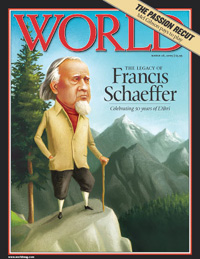
________________________________________   Francis Schaeffer pictured below:   _________   Dr. Francis Schaeffer – Episode 2 – The Middle Ages NoMirrorHDDHrorriMoN Francis Schaeffer has written extensively on art and culture spanning the last 2000years and here are some posts I have done on this subject before : Francis Schaeffer’s “How should we then live?” Video and outline […]

Examples of Adrian Rogers and Francis Schaeffer Confronting Modern Culture With The Bible! Part 2 Evolutionist William Provine

_______________________________ Adrian Rogers pictured below: __________________ I sent William Provine a letter several months ago with a CD of the following message by Adrian Rogers and in the letter were several arguments from Schaeffer. Adrian Rogers – How you can be certain the Bible is the word of God Today I am sending out another […]

WHO DID FRANCIS SCHAEFFER INFLUENCE?

WHO DID FRANCIS SCHAEFFER INFLUENCE? Here are some key people listed below: Theologians Harold O. J. Brown, David Wells, Os Guinness, Timothy George, John Warwick Montgomery, John Piper, Norm Geisler, Wayne Grudem and L. Russ Bush, founders of ministries including James Dobson, D. James Kennedy, Jerry Falwell, R. C. Sproul, Chuck Colson and Tim and […]

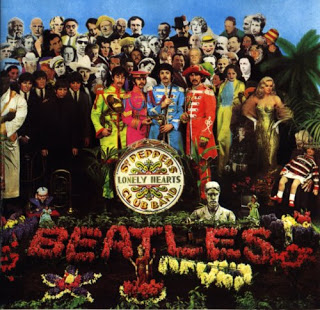
FRANCIS SCHAEFFER ANALYZES ART AND CULTURE Part 62 THE BEATLES (Part N The last 4 people alive from cover of Stg. Pepper’s and the reason Bob Dylan was put on the cover!) (Feature on artist Larry Bell)

_____________________

Today we are going to look at the four men on the cover of Sgt. Pepper’s that are still alive today:   Bob Dylan, Dion, Larry Bell and  Bobby Breen.

Great article on Dylan and Sergeant Pepper’s Lonely Hearts Club Band Cover:

A famous album by the fab four – The Beatles – is “Sergeant peppers lonely hearts club band“. The album itself is one of the must influential albums of all time. New recording techniques and experiments with different styles of music made this album more of a piece of art than just an LP. The cover of the album was a work of art on its own.
The cover won a Grammy Award. It featured lots of famous people like Edgar Allan Poe, Karl Marx, T.E. Lawrence, Laurel & Hardy and Albert Einstein. The Beatles themselves are represented by wax statues of the young beatles at Madame Tussauds. But offcourse, i’m referencing this album because one of the celebrities featured on the album is Bob Dylan himself.
Dylan’s portrait is shown in the top right corner, overlooking the rest of the pack.

[sgt-pepper_bob_dylan.jpg]

In the very fine article, The Sgt. Pepper’s Album Cover: Faces in the Crowd,” by  on  March 29, 2015, she made this observation concerning the picking of  BOB DYLAN to be on the cover:

Although his debut album had been released only five years previous, Dylan was already a giant figure in the minds of his fans—including the Beatles. Everything they had written since the Rubber Soul era carried a touch of Dylan’s influence, if only in the way he opened up the possibilities of rock lyrics to subjects other than boy-meets-girl.


sgt-pepper

________

 is correct that the Beatles were heavily influenced by Dylan and I wanted to make a further observation down those same lines. Dylan’s songs pointed out over and over that the previous generation was bankrupt in their values of PERSONAL PEACE and AFFLUENCE and this new generation was not interested in just “keeping up with the Joneses.”  Dylan was consistently bringing up the big questions in life and those were the questions the Beatles wanted answered!!! Sergeant Pepper’s Lonely Hearts Club Band Album really did look at every potential answer to meaning in life and to as many people as the Beatles could imagine had the answers to life’s big questions. One of the persons on the cover did have access to those answers and I am saving that person for last in this series on the Beatles. 

Dylan and Lennon pictured below:

DYLAN AND LENNON IN CAR IN LONDON PT1

johnny-cash-and-bob-dylan

I have dedicated several posts to this series on the Beatles and I don’t know whenthis series will end because Francis Schaeffer spent a lot of time listening to the Beatles and talking and writing about them and their impact on the culture of the 1960’s. In this series we have looked at several areas in life where the Beatles looked for meaning and hope but also we have examined some of the lives of those  writers, artists, poets, painters, scientists, athletes, models, actors,  religious leaders, musicians, comedians, and philosophers  that were put on the cover of Sergeant Pepper’s Lonely Hearts Club Band album. We have discovered that many of these individuals on the cover have even taken a Kierkegaardian leap into the area of nonreason in order to find meaning for their lives and that is the reason I have included the 27 minute  episode THE AGE OF NONREASON by Francis Schaeffer. In that video Schaeffer noted,  ” Sergeant Pepper’s Lonely Hearts Club Band…for a time it became the rallying cry for young people throughout the world. It expressed the essence of their lives, thoughts and their feelings.”

____________

_

_

Four people still alive that appeared on the cover:  Bob Dylan: The man who introduced the Beatles to marijuana.  Dion: Besides Dylan, the onetime heartthrob was the only pop music figure in the gallery. Larry Bell: American sculptor who worked as a bouncer at the Unicorn in LA. Bobby Breen: Child star of the 1930s. I am going to take a look at four of their lives below.

In the book HOW SHOULD WE THEN LIVE? Francis Schaeffer wrote:

In this flow there was also the period of psychedelic rock, an attempt to find this experience without drugs, by the use of a certain type of music. This was the period of the Beatles’ Revolver (1966) and Strawberry Fields Forever (1967). In the same period and in the same direction was Blonde on Blonde (1966) by Bob Dylan. 

Actually Schaeffer spent a lot of time talking about Bob Dylan.


BOB DYLAN AND JOHN LENNON IN LONDON PT2

Ballad Of A Thin Man

_______

Bob Dylan looked into the modern thought  of the 1960’s and he saw that the educated class did not have the answers and he was looking for the answers to the big questions of life in his writings. Over and over again back then reporters were asking him what his songs meant. Actually his songs were an effort to bring up the big questions but he did not have the answers. In the song “A Ballad of a Thin Man” Dylan ridicules the reporter “Mr. Jones” throughout the song for his lack of understanding of this new generation.  “Oh my God, am I here all alone?” is the feeling that Mr. Jones has after following around Dylan because he doesn’t even to begin to understand the deep seated dissatisfaction of this new generation with the status quo. Every person that ever lived has had this feeling at one time or another and Romans chapter one discusses the inner conscience that everyone has that points them to the God of the Bible that created the world and put them on this earth for a purpose. 

Francis Schaeffer in his film series THE AGE OF PERSONAL PEACE AND AFFLUENCE  made the following points concerning the young people of the 1960’s:

I. By the Early 1960s People Were Bombarded From Every Side by Modern Man’s Humanistic Thought

II. Modern Form of Humanistic Thought Leads to Pessimism

Regarding a Meaning for Life and for Fixed Values

A. General acceptance of selfish values (personal peace and affluence) accompanied rejection of Christian consensus.

1. Personal peace means: I want to be left alone, and I don’t care what happens to the man across the street or across the world. I want my own life-style to be undisturbed regardless of what it will mean — even to my own children and grandchildren.

2. Affluence means things, things, things, always more things — and success is seen as an abundance of things.

B. Students wish to escape meaninglessness of much of adult society.

1. Watershed was Berkeley in 1964.

Bob Dylan also was writing in his music about the disconnect between the young generation of the 1960’s and their parents’ generation. Francis Schaeffer noted:

It is called “A Ballad of a a Thin Man” and it apparently was written by Bob Dylan himself. Last time I read you the back cover of the album and I pointed out that when you go to the museums and also in the Theater and  in the pop records you see this same message. This is far from nothing. The very music is tremendous. It is great communication. It is like pop art. It is very destructive and just like the Theatre of the absurd although it destroys everything and leaves you with nonsense seemingly yet when you listen to the words with great care it has made a very selective destruction. Let me read the words.

You walk into the room
With your pencil in your hand
You see somebody naked
And you say who is that man?
You try so hard
But you don’t understand
Just what you would’ve said
When you get home

Something is happening
But you don’t know what it is
Do you Mister Jones?

You sneak into the window
And you say, “Is this where it is?”
Somebody points his finger at you
And says, “It’s his”
And you say, “What’s mine?”
Someone else says, “Where what is?”
And you say, “Oh my God, am I here all alone?”

Something is happening
But you don’t know what it is
Do you Mister Jones?

You hand in your ticket
And you go see the geek
Who walks up to you
When he hears you speak
And says, “How does it feel
To be such a freak?”
And you say, “Impossible”
As he hands you a bone

Something is happening
And you don’t know what it is
Do you Mister Jones?

You have many contacts
Out there among the lumberjacks
To get you facts
When someone attacks your imagination
But no one has any respect
Anyway they just expect
You to hand over your check
To tax deductible charity organizations

The sword swallower walks up to you
And he kneels
He crosses himself
And then he clicks his high heels
And without further notice
Asks you how it feels
And says, “Here’s your throat back
Thanks for the loan”

Something is happening
And you don’t know what it is
Do you Mister Jones?

You crawl into the room
Like a camel and you frown
You put your eyes in your pocket
And you put your nose into the ground
There ought to be a law
Against you comin’ around
You got to be made
To be wearing a telephone

But something is happening
And you don’t know what it is
Do you Mister Jones?

Something is happening here
And you don’t know what it is
Do you Mister Jones?

Songwriters
Bob Dylan

Francis Schaeffer pictured below:

_______________

Francis Schaeffer observed:

In the June 28, 1966 issue of Look Magazine in the article on California the writer concludes, “It may seem ironical that a highly technical society demands a means for mystically exploration and this is LSD.” All of these may sound different. LSD and Bob Dylan may sounds miles apart. A tremendous art work in one of our great museums and the kids in a concert listening to Bob Dylan but in reality the message is the same. The tension is that according to all logic and rationality ALL IS ABSURD, yet man at the same time can not live with this and he is in this tremendous tension. He just can’t get away from being human. This is exactly what Paul was talking about in the Book of Romans and that man really knows about God and he knows about God in his conscience and from God’s external [creative] works.

_____________

At one point in his life Bob Dylan did come to the same final conclusion that Solomon did so long ago in the Book of Ecclesiastes  when he observed the world around him and Dylan expressed this same conclusion in his song “Gotta Serve Somebody” back in the early 1980’s.

Ecclesiastes 12:13-14:
13 Now all has been heard;
here is the conclusion of the matter:
Fear God and keep his commandments,
for this is the whole duty of man.

14 For God will bring every deed into judgment,
including every hidden thing,
whether it is good or evil.

____________________________

In fact, at this same time, Dylan joined my favorite Christian musician Keith Green and played the harmonica for this song below:

I pledge my head to heaven

NOTICE BELOW THAT JOHN LENNON REFERENCES DYLAN’S SONG “A Ballad of a a Thin Man” IN THE THIRD STANZA.

John Lennon, Eric Clapton, Keith Richards, Mitch Mitchell, Jimi Hendrix

Uploaded on Jul 1, 2010

John Lennon (Beatles), Eric Clapton (Cream), Keith Richards (Rolling Stones), Mitch Mitchell (Jimi Hendrix Experience) – Yer Blues

“Yer Blues”

2,3Yes I’m lonely wanna die
Yes I’m lonely wanna die
If I ain’t dead already
Ooh girl you know the reason whyIn the morning wanna die
In the evening wanna die
If I ain’t dead already
Ooh girl you know the reason whyMy mother was of the sky
My father was of the earth
But I am of the universe
And you know what it’s worth
I’m lonely wanna die
If I ain’t dead already
Ooh girl you know the reason whyThe eagle picks my eye
The worm he licks my bone
I feel so suicidal
Just like Dylan’s Mr. Jones
Lonely wanna die
If I ain’t dead already
Ooh girl you know the reason whyBlack cloud crossed my mind
Blue mist round my soul
Feel so suicidal
Even hate my rock ‘n’ roll
Wanna die yeah wanna die
If I ain’t dead already
Ooh girl you know the reason why
By Tom Breihan / November 7, 2014 – 11:19 am

The producer Glyn Johns worked with people like the Beatles, the Rolling Stones, and the Who on some of their peak-era classics. And according to Johns, he almost worked on something that could’ve been a bigger deal than any of the real albums on his résumé. In his new memoir, Sound Man, Johns claims that Bob Dylan enlisted his help in making an album with both the Beatles and the Stones. Together. Honestly, it’s probably best that the album never happened; the entire baby boom generation might’ve immediately immolated.

According to Rolling Stone, Johns writes that he encountered Dylan at a New York airport and said nice things about his work with the Beatles and Stones. And then, Johns writes, this happened:

He said he had this idea to make a record with the Beatles and the Stones. And he asked me if I would find out whether the others would be interested. I was completely bowled over. Can you imagine the three greatest influences on popular music in the previous decade making an album together?

Johns contacted all the relevant parties and tried to make it happen, but a few key parties were just not down with the idea:

Keith and George thought it was fantastic. But they would since they were both huge Dylan fans. Ringo, Charlie and Bill were amicable to the idea as long as everyone else was interested. John didn’t say a flat no, but he wasn’t that interested. Paul and Mick both said absolutely not…. I had it all figured out. We would pool the best material from Mick and Keith, Paul and John, Bob and George, and then select the best rhythm section from the two bands to suit whichever songs we were cutting. Paul and Mick were probably, right, however I would have given anything to have given it a go.

Sound Man is out 11/13, via Blue Rider Press.

Great Album

____________

_

_

Beatles Comments about Bob Dylan

Traveling Wilburys – End Of The Line

TARNISHED WILBURY’S:

Friday, May 3rd, 2013

I’D HAVE YOU ANY TIME:

Friday, June 8th, 2012

PALOMINO JAM?:

Monday, May 21st, 2012

GEORGE AND BOB:

Sunday, October 9th, 2011

HARI AND ZIMMY PLAYING TENNIS ON THE ISLE OF WIGHT 1969:

Wednesday, September 7th, 2011

THE WILVER SILBURIES:

Tuesday, November 16th, 2010

CAMPEST MAN BOOTS EVER:

Tuesday, September 14th, 2010

ZIMMY AND RINGY:

Thursday, July 29th, 2010

WORDS FROM A MASTER:

Thursday, June 24th, 2010

“They were fantastic singers. Lennon, to this day, it’s hard to find a better singer than Lennon was, or than McCartney was and still is.

“I’m in awe of McCartney. He’s about the only one that I am in awe of. He can do it all. And he’s never let up… He’s just so effortless.”

Bob Dylan 2007.

BOB AND GEORGE:

Tuesday, June 15th, 2010

Traveling Wilburys – Handle With Care

Traveling Wilburys-Runaway (Del Shannon`s song)

The True History Of The Traveling Wilbury’s

______________

When I think about the group THE TRAVELING WILBURY’S and the close friendships that Bob Dylan had with many of the Beatles it makes me think of the song A LITTLE HELP FROM MY FRIENDS and that song is discussed below:

September 19, 2011

By Elvis Costello

My absolute favorite albums are Rubber Soul and Revolver. On both records you can hear references to other music — R&B, Dylan, psychedelia — but it’s not done in a way that is obvious or dates the records. When you picked up Revolver, you knew it was something different. Heck, they are wearing sunglasses indoors in the picture on the back of the cover and not even looking at the camera . . . and the music was so strange and yet so vivid. If I had to pick a favorite song from those albums, it would be “And Your Bird Can Sing” . . . no, “Girl” . . . no, “For No One” . . . and so on, and so on. . . .

Their breakup album, Let It Be, contains songs both gorgeous and jagged. I suppose ambition and human frailty creeps into every group, but they delivered some incredible performances. I remember going to Leicester Square and seeing the film of Let It Be in 1970. I left with a melancholy feeling.

The Beatles – Girl

62

‘Girl’

the beatles 100 greatest songs
Gunter Zint/K & K Ulf Kruger OHG/Redferns

Main Writer: Lennon
Recorded: November 11, 1965
Released: December 6, 1965
Not released as a single

Like so many of the love songs the Beatles were writing on Rubber Soul, this deceptively simple ballad sounds like the confession of a man who’s vulnerable and confused in the presence of a woman who’s tougher and more independent than he is (“The kind of girl you want so much/It makes you sorry”). Yet even as she keeps making a fool out of him, his voice is full of admiration and affection for her as he sings, “She promises the Earth to me/And I believe her/After all this time, I don’t know why.” “When I heard this, as a young teenager, it hit the nail on the head,” Jackson Browne told Rolling Stone. “It embodied the feelings I was living with every day — completely burning with sexual desire, with almost a regret at being so overpowered.” The obvious inspiration is Bob Dylan, but Lennon surpasses him here — “Girl” makes “Just Like a Woman” sound like kid stuff. Years later, Lennon said that the fantasy girl in the song’s lyric was an archetype he had been searching for his entire life (“There is no such thing as the girl — she was a dream”) and finally found in Yoko Ono.

Appears On: Rubber Soul

61

‘With a Little Help From My Friends’

the beatles 100 greatest songs
Ron Case/Getty Images

Writers: McCartney-Lennon
Recorded: March 29 and 30, 1967
Released: June 2, 1967
Not released as a single

The Beatles cut this in an all-night session after the photo shoot for the Sgt. Pepper cover. At dawn, Starr trudged up the stairs to head home — but the other Beatles cajoled him into doing his lead vocal then and there, standing around the microphone for moral support. Though nervous and exhausted, Starr delivered a magnificently soulful vocal, right up to that final high note.

The lyrics about loneliness and vulnerability were in some ways more revealing than Lennon and McCartney might have written for themselves. But there’s also a typical Beatle joke. As McCartney admitted, “I remember giggling with John when we wrote the lines ‘What do you see when you turn out the light? I can’t tell you, but I know it’s mine.’ It could have been him playing with his willy under the covers, or it could have been taken on a deeper level.”

Appears On:Sgt. Pepper’s Lonely Hearts Club Band

JUST LIKE DYLAN DION ALSO HAD A CONVERSION TO CHRISTIANITY AT A LATER POINT IN HIS LIFE.

Dion — Abraham, Martin and John — Smothers Brothers Comedy Hour.

Published on Dec 16, 2014

Remembering heroes of the past, wondering about today’s role models.

Dion DiMucci

From Wikipedia, the free encyclopedia
Dion DiMucci
DionDiMucci.jpg
Background information
Birth name Dion Francis DiMucci
Also known as Dion
Born July 18, 1939 (age 75)
The Bronx, New York, United States
Origin Italian-American
Genres Rock, pop, doo-wop, R&B,blues
Occupation(s) Singer, songwriter
Instruments Vocals, guitar
Years active 1957–present
Labels Laurie, Arista, Mohawk, Columbia, ABC, Warner Brothers, Dayspring, Blue Horizon
Associated acts Dion and the Belmonts, Dion and the Del-Satins, The Timberlanes, The Wanderers
Website http://www.diondimucci.com/
Notable instruments
Martin Guitars (acoustic)

Dion Francis DiMucci (born July 18, 1939), better known mononymously as Dion, is an American singer-songwriter whose work has incorporated elements of doo-wop, rock and R&B styles—and, most recently, straight blues. He was one of the most popular American rock and roll performers of the pre-British Invasion era. He had more than a dozen Top 40 hits in the late 1950s and early 60s. He is best remembered for the 1961 singles, “Runaround Sue” and “The Wanderer“, written with Ernie Maresca.

Solo stardom: 1960–1964[edit]

By the end of 1960, Dion had released his first solo album on Laurie, Alone with Dion, and the single “Lonely Teenager“, which rose to No. 12 in the US charts. The name on his solo releases was simply “Dion”. Follow-ups “Havin’ Fun” and “Kissin’ Game” had less success, and the signs were that Dion would drift onto the cabaret circuit. However, he then recorded, with a new vocal group, the Del-Satins, an up-tempo number co-written with Ernie Maresca. The record, “Runaround Sue“, stormed up the U.S. charts, reaching No. 1 in October 1961, and No. 11 in the UK,[7] where he also toured. “Runaround Sue” sold over a million copies, achieving gold disc status.[8]

For the next single, Laurie promoted the A-side, “The Majestic”, but it was the B-side, Maresca’s “The Wanderer“, which received more radio play and climbed swiftly up the charts to reach No. 2 in the U.S. in February 1962 and No. 10 in the UK (the 1976 re-release made the UK Top 20).[7]

By the end of 1961, Dion had become a major star, touring worldwide and making an appearance in the Columbia Pictures musical film Twist Around the Clock. He followed with a string of singles – “Lovers Who Wander” (No. 3), “Little Diane” (No. 8), “Love Came to Me” (No. 10) – in 1962, several of which he wrote or co-wrote. He also had successful albums with Runaround Sue and Lovers Who Wander.
At the end of 1962, Dion moved from Laurie to Columbia Records. The first Columbia single, Leiber and Stoller‘s “Ruby Baby” (originally a hit for the Drifters) reached No. 2, while “Donna the Prima Donna” and “Drip Drop” (another cover of a Drifters hit) both reached No. 6 in late 1963. (Dion also recorded an Italian version of “Donna the Prima Donna” using the identical backup vocals.) His other Columbia releases were less successful, and problems with his addiction and changing public tastes saw a period of commercial decline.

While Dion’s career appeared to be nearing an end, he still retained enough credibility to be, along with Bob Dylan, one of only two rock artists featured on the album cover of the BeatlesSgt. Pepper’s Lonely Hearts Club Band in 1967.

In April 1968, Dion experienced what he identified as a powerful religious experience. After getting clean once again from heroin addiction, an experience he documented in his 1970 song “Your Own Backyard”, he approached Laurie Records for a new contract. They agreed on condition that he record the song “Abraham, Martin & John“, written by Dick Holler (also the writer of the Royal Guardsmen‘s “Snoopy Vs. The Red Baron”) in response to the assassination of John F. Kennedy and those of Martin Luther King and Robert F. Kennedy during the summer of 1968. The success of this song – later recorded by many others including Marvin Gaye – which reached No. 4 in the US charts and No. 1 in Canada, resuscitated Dion’s career. It sold over one million copies, and was awarded a gold disc.[8]

Mature and Christian period: 1969–1986[edit]

For the next few years, Dion’s music became radically different, moving to more contemplative and mature material. He released several albums essentially as a singer-songwriter, to moderate sales, moving to the Warner Brothers label in 1969.

There followed a live reunion show with the Belmonts at Madison Square Garden on June 2, 1972, which was recorded and released as a live album by Warner. A year later, in 1973, Dion and the original Belmonts performed once more, doing a sold out concert at the Nassau Coliseum on Long Island, New York. However, no recording of the 1973 reunion was ever released. This was followed in 1975 by the album Born To Be With You, produced by Phil Spector. The album was a commercial failure, but has been subsequently praised by such artists as Jason Pierce of Spiritualized and Pete Townshend of the Who.[citation needed]

In 1978, Dion released an album drawing on many of his teenage influences, Return of the Wanderer, another commercial failure.

In December 1979, there was a radical spiritual change in Dion, who had become a born-again Christian.[9] Thereafter, his recordings for several years were in a contemporary Christian vein, in which he released five albums on the DaySpring Recordslabel, a division of Word Records in Waco, Texas. These albums reflecting his evangelical Christian convictions were Inside Job (1980), Only Jesus (1981), I Put Away My Idols (1983) which charted at #37, Seasons (1984), Kingdom in the Streets (1985) and Velvet & Steel (1986). Several singles were successfully released to Christian radio, notably “Still in the Spirit” from Kingdom in the Streets.

In 1984, Dion won the GMA Dove Award (Christian Music Award) for the album I Put Away My Idols. He was also nominated for Grammy Award for Best Gospel Vocal Performance, Male for the same album.

On September 24, 1985, Dion was a guest on 100 Huntley Street.

It Was 20 Years Ago Today Documentary

Published on Jun 8, 2012

The beginning of the 1987 documentary that examines the Beatles, Sgt. Pepper’s Lonely Hearts Club Band, released in 1967. This beginning is not included on the YouTube version that is already posted, so here it is.

Good map of people on cover below:

  1. Sri Yukteswar Giri: Indian guru, one of four chosen for the cover by George Harrison.
  2. Aleister Crowley: Notorious mystic, polymath, and drug user chosen, designer Jann Haworth says, by John Lennon.
  3. Mae West: “What would I be doing in a lonely hearts club?” she reportedly joked. Ringo Starr appeared in her 1978 film “Sextette.”
  4. Lenny Bruce: By 1967, the Beatles shared some of the late comic’s persecution complex.
  5. Karlheinz Stockhausen: Avant-garde composer who (though chosen by McCartney) once credited Lennon as the crucial link between pop and “serious” music.
  6. W.C. Fields: Wisecracking actor, apparently chosen by Peter Blake.
  7. Carl Jung: Psychoanalyst who famously dreamed of “dirty, sooty” Liverpool (the Beatles’ hometown), where he discovers Self in the form of a blooming magnolia.
  8. Edgar Allan Poe: Chosen by Lennon, who would soon write the line “Man you should have seen them kicking Edgar Allan Poe” (”I Am the Walrus”).
  9. Fred Astaire: McCartney, a big fan, has said “Here, There and Everywhere” was inspired by “Cheek to Cheek.”
  10. Richard Merkin: Self-proclaimed “literary painter” chosen by Haworth and/or Blake.
  11. Vargas girl: Iconic pinup. Haworth now finds the cover’s preponderance of blond bombshells (and lack of other influential women) “scathing, terrible.”
  12. Leo Gorcey (missing): Actor who starred in 1930s-’40s comedy-drama serials “Dead End Kids” and “Bowery Boys” asked for $400 for permission to use his image and was painted out.
  13. Huntz Hall: Gorcey’s fellow actor in “Dead End Kids” and “Bowery Boys” series.
  14. Simon Rodia: Immigrant construction worker who created the Watts Towers in Los Angeles.
  15. Bob Dylan: The man who introduced the Beatles to marijuana.
  16. Aubrey Beardsley: Influential Victorian-era illustrator whose work enjoyed a ’60s revival.
  17. Sir Robert Peel: UK prime minister of 1830s and ’40s who reformed the police force.
  18. Aldous Huxley: Author of “Brave New World,” advocated psychedelic drug use.
  19. Dylan Thomas: The Welsh poet, who died in 1953. As a child, Lennon took comfort in stories about artists such as Thomas and van Gogh, who “seemed to see things other people didn’t see.”
  20. Terry Southern: Novelist and satirist. Ringo starred in 1969 feature film of his novel “The Magic Christian.”
  21. Dion: Besides Dylan, the onetime heartthrob was the only pop music figure in the gallery.
  22. Tony Curtis: The actor, a family friend of the Haworths, inspired a generation of hairstyles in late ’50s England.
  23. Wallace Berman: West Coast collage/assemblage artist chosen by designers Haworth and Blake.
  24. Tommy Handley: BBC comedian of the Beatles’ childhood eulogized by the bishop of London for his “satire without malice.”
  25. Marilyn Monroe: Famously sang “Happy Birthday” for JFK; contrary to popular belief, McCartney does not own the rights to the song.
  26. William S. Burroughs: Experimental writer, influenced McCartney with his cut-up tape recordings.
  27. Sri Mahavatara Babaji: Indian guru.
  28. Stan Laurel: British-born comic actor, one half of the duo Laurel and Hardy.
  29. Richard Lindner: “Mechanistic Cubist” painter chosen by the designers.
  30. Oliver Hardy: Laurel’s comic partner.
  31. Karl Marx: Though an avid reader of his work, Lennon was an uncertain revolutionary (”Don’t you know that you can count me out”).
  32. H.G. Wells: Science fiction pioneer (”War of the Worlds,” “The Time Machine”) and utopian thinker.
  33. Sri Paramahansa Yogananda: Harrison liked to give away copies of his “Autobiography of a Yogi.”
  34. (Window dummy)
  35. Stuart Sutcliffe: Ex-Beatle whose premature death haunted Lennon.
  36. (Window dummy)
  37. Max Miller: Risque comedian of McCartney’s beloved music hall era.
  38. Petty girl: Like Vargas’s, George Petty’s pinup girls were World War II icons.
  39. Marlon Brando: In “The Wild One,” the rival biker gang is called the Beetles.
  40. Tom Mix: Early Western film star.
  41. Oscar Wilde: Another of the artists who “suffered because of their visions,” as Lennon once told Playboy.
  42. Tyrone Power: Hollywood star of the Beatles’ formative years.
  43. Larry Bell: American sculptor who worked as a bouncer at the Unicorn in LA.
  44. Dr. David Livingstone: Scottish explorer and African missionary.
  45. Johnny Weissmuller: Movie Tarzan whose famous whoop preceded McCartney’s.
  46. Stephen Crane: “Red Badge of Courage” author who died at 28 after living the last years of his life in England.
  47. Issy Bonn: British comic and singer whose raised right hand just behind Paul’s head — an Eastern death symbol? — was seen as a clue to the rampant “Paul is dead” rumors.
  48. George Bernard Shaw: Playwright, critic, socialist, vegetarian.
  49. H.C. Westermann: American sculptor and printmaker, chosen by the designers.
  50. Albert Stubbins: Midcentury English footballer whose best years were with Liverpool.
  51. Sri Lahiri Mahasaya: Indian guru.
  52. Lewis Carroll: Lennon, a big fan of the “Alice” author, took Carroll’s verse “The Walrus and the Carpenter” as inspiration for “I Am the Walrus.”
  53. T.E. Lawrence: “Lawrence of Arabia” famously portrayed by Swinging Londoner Peter O’Toole.
  54. Sonny Liston: Wax image of the former heavyweight champ, whose nemesis, the future Muhammad Ali, posed for photos with the Beatles.
  55. George Petty girl
  56. George Harrison (wax): Wax images of the youthful Beatles were provided by Madame Tussauds, which threw in Liston and Diana Dors for good measure.
  57. John Lennon (wax)
  58. Shirley Temple (hidden behind wax Lennon’s left shoulder): First of three images of the child star (including the doll wearing the Rolling Stones jersey), a bit of overkill for which Haworth blames herself.
  59. Ringo Starr (wax)
  60. Paul McCartney (wax)
  61. Albert Einstein (hidden behind real-life Lennon’s right shoulder): Scientific genius who said, “I live my daydreams in music.”
  62. John Lennon: “Sgt. Pepper” outfits designed by Manuel Cuevas, who still sews flashy costumes in Nashville. He hardly remembers it: “I made a bunch of funny outfits for them,” he says.
  63. Ringo Starr: Declined to make any suggestions and doesn’t recall the photo shoot — “I suppose I must have been there because I’m in the photograph,” he has said.
  64. Paul McCartney: Originated the “Sgt. Pepper” concept; chose most of the showbiz celebrities.
  65. George Harrison: “Within You Without You,” his sole contribution to “Sgt. Pepper,” reconfirmed his interest in Eastern philosophy.
  66. Bobby Breen: Child star of the 1930s.
  67. Marlene Dietrich: Once shared the stage at the Prince of Wales Theatre with young Beatles.
  68. Mohandas Gandhi (blacked out).
  69. Order of the Buffalos Legionnaire
  70. Diana Dors: British Marilyn whose second husband was Richard Dawson.
  71. Shirley Temple

___________

How Should We then Live Episode 7 small (Age of Nonreason)

The Beatles Dont Let Me Down Rooftop Concert 1969

The Beatles Get Back Rooftop Concert, 1969 360p

__________

Bobby Breen in “Rainbow on the River”

Bobby Breen

From Wikipedia, the free encyclopedia
Bobby Breen
Bobby Breen.jpg

Bobby Breen
Born November 4, 1927 (age 87)
Montréal, Quebec, Canada
Occupation Actor, singer
Years active 1936–1964

Bobby Breen (born November 4, 1927) is a former Canadian-born actor and singer who reached major popularity as a child star in the 1930s.

Life and Career[edit]

He made his professional debut at age four in a night club in Toronto and was an immediate sensation. He made his radio debut soon after. He played in vaudeville and his sister paid for his musical education. Breen went to Hollywood in 1935. His first major appearance was on Eddie Cantor‘s weekly radio show in 1936, and he soon became the leading child star at RKO Radio Pictures. He is best remembered today for his films, and for the fact that he was a boy soprano. His first film was Let’s Sing Again (1936), followed by eight more, including Rainbow on the River (1936), Make a Wish (1937), Hawaii Calls (1938), Way Down South (1939), and his last film, Johnny Doughboy (1942). He was RKO’s biggest child star at this time and, while he played the leading part, his co-stars included famous actors like Basil Rathbone, Alan Mowbray, Charlie Ruggles, May Robson and Dolores Costello.

He continued working as a singer in nightclubs and a musical performer in stock theatre, later serving as a guest pianist for the NBC Symphony Orchestra on radio, and hosting a local TV show in New York. He also recorded briefly for the Motown label, singing on two singles and an unreleased album in 1964.[1][2] In 1953, Breen appeared on ABC‘s reality show, The Comeback Story, to explain how his career nose-dived as he entered his teen years and how he fought to recover.

As of 2002, Breen was living with his family in Tamarac, Florida and worked as the owner/operator of Bobby Breen Enterprises, a local talent agency, and even appeared sometimes as a singer at smaller concerts.[3]

Filmography[edit]

Bobby Breen with Louise Beavers in his second film Rainbow on the River

In popular culture[edit]

Featured artist today is Larry Bell:

________

(Look at the 9:45 mark to 16:00 mark and he used a glass piece that had broken because of chance creation of it, “Serendipity” of it and mentions Marcel Duchamp )   (at 34:25 mark “Some people trust Jesus but I don’t) (at 39:30 tells the Peter Blake story)

Quickfire: Larry Bell

(In the video below I learned that Peter Blake saw a show of his at Robert Frazier Gallery in London and liked his work and Peter was also a friend of Dennis Hopper who had taken the picture of Larry and put him in)

Meet Larry Bell, Artist – Artistic Evolution

Uploaded on Oct 31, 2011

Meet Larry Bell, Artist
We caught up with Larry Bell during the Artist Panel on October 6, 2011. To ask him a few questions about the Artistic Evolutions show, his first memories of the Museum, and The Beatles.

Larry Bell: Seeing Through Glass

Published on May 24, 2013

Filmed in his Taos studio, Larry Bell demonstrates how he uses glass and an industrial process called vacuum deposition of thin films to create his stunning sculptures. He also shares his thoughts about the conservation of his work.

More about the GCI’s Modern and Contemporary Art Research Initiative at http://www.getty.edu/conservation//mo…

Meet the Artist: Larry Bell

In a career that spans over 50 years, artist Larry Bell has had his work featured all over the world, including at the Langham Place in Mong Kok. This autumn, he is showcasing some of his recent works in Hong Kong. He speaks to Laura Chan about his work and his impressions of the city.

By Laura Chan | Sep 11, 2014

Over the years, Larry Bell has taken on all kinds of creative endeavors, from abstract paintings to sculptures to experimentation with thin film deposition. You may have seen his “Happy Man” sculpture outside Langham Place in Mong Kok—or maybe you’ve seen his likeness on the album cover of The Beatles’ Sgt. Pepper’s Lonely Hearts Club Band. He has been hard at work in his US studio in New Mexico, and is coming to Hong Kong this fall to exhibit his more recent creations as part of White Cube’s “Light and Red” exhibit, through November 15.

HK: Last time you were in Hong Kong, in 2004, you unveiled your sculpture outside Langham Place. How did that feel?
Larry Bell: I was thrilled. When I came, a year or so before to look at the site, it was so hard to tell what kind of a space it was to sit in; it was all big building equipment, cranes and half-built foundations. But all around, the place was so full of people. I thought [that] it was a great high-visibility site. The big pieces I’ve done have are mostly in sheltered places, like businesses and schools, but this was in front of everybody.

HK: Do you think Hong Kong has changed since then?
LB:
Last time I came, I spent all my time in Kowloon. Over there, it has really changed. There are so many big buildings that have popped up over the last 10 years.

HK: Do you prefer sticking around the studio, or traveling for exhibits?
LB: Making is the most fun. It’s great fun to come to a place like [Hong Kong], with great people, and such incredible food. But in the studio, I’m not a tourist: it’s my scene and it’s what I do. The studio is a special place to be, whether I am working on something, or waiting for a muse to kick me out of the chair to work.

HK: Your career spans over 50 years. What has changed about the art world since the 60s and 70s?
LB:
When I started, contemporary art had no audience. There was a giant argument going on [as to] whether anyone had the right to paint abstractly without knowing how to paint the figure. Somehow non-objective or abstract work was less credible than figurative work. But then, if there’s an audience who wants stuff, and there’s some suggestion that it has some value—financial value—the audience grows. It’s not the history of art that establishes the value of work, it’s the perversity of merchandising. It has nothing to do with art. Art is probably something that only artists experience in their studio when they’re working.

HK: What are you most proud of?
LB:
That I made it 54 years; I’m celebrating my 54th year of unemployment. There have been good times and rough times, but I’m still hanging on. If the whole thing falls apart tomorrow—I still did all of that.

HK: How did you get on the cover of the Beatles’ Sgt. Pepper’s Lonely Hearts Club Band album?
LB: I don’t really know… but I know this much: I had a show in London around 1964 or ’65, in a gallery of a guy named Robert Fraser. He was really close with a lot of music people, who would go to all his art shows. So I think one of the Beatles saw my show, because, as I understand, the people on the cover were chosen by the musicians; one of them must have said to put me on it. One day I got a letter from the music publisher asking to use my picture, which was actually taken by Dennis Hopper on Venice Beach. But I had no idea it would become an icon like that. That’s all I know about it; I virtually had nothing to do with it.

HK: Any thoughts on their music?
LB: Well, I wasn’t that nuts over the Beatles. I always liked the Stones better.

Works featured in Light and Red:

Light Knot made with polyester coated with aluminium and silicon monoxide.
Photo: Jack Hems; © Larry Bell; courtesy White Cube

Part of Bell’s new series of collages on red Hiromi paper
Photo: Alan Shaffer; © Larry Bell; courtesy White Cube

Through Nov 15, Larry Bell’s Light Knots and Collages will feature in “Light and Red” at White Cube (50 Connaught Rd. Central).

__________________________________

Larry Bell

Larry Bell has had a long and varied career, and also influential enough to land himself on the cover of The Beatles’ 1967 albumSgt. Pepper’s Lonely Hearts Club Band.

Born in 1939 in Chicago, Illinois, and now based in Toas, New Mexico and Venice, California, his earliest work were, like Donald Judd, Abstract-expressionist paintings.

In the 1960s, Bell began making some of his most recognisable works: Cube structures that sit on transparent plinths. Three of these works were featured in the influential 1966 minimalist exhibition Primary Structures, which also featured the work of Donald Judd, Dan Flavin, Ellsworth Kelly, Carl Andre and Sol LeWitt (amongst others).

I often see people disregard the relationship between the plinth and a sculpture, and furthermore the plinth’s sculptural presence. It’s always refreshing to look at Bell’s work, because he brings an awareness to the plinth by making it part of the work itself.

________________

_______________

Born in Chicago in 1939

Larry Bell’s work emerged in the mid-1960s, and is often included in major exhibitions of Minimal art. His work was shown in the first exhibit to focus on Minimal art, Primary Structures, at the Jewish Museum in 1966. Bells work was also included in the seminal Museum of Modern Art exhibit, The Responsive Eye in 1965. More recently, Bells work was prominently presented in the Museum of Contemporary Arts show, A Minimal Future? Art as Object 1958-1968, and discussed at length in the catalogue essays.

Bell is one of the most prominent and influential artists to have come out of the Los Angeles art scene of the 1960s, first showing at the Huysman Gallery, and then at Ferus. He became associated with the most important movements at the time, such as Light and Space art and what was described as Finish Fetish (a term coined by the late critic John Coplans). Bell has continued to investigate the complexities of highly refined surface treatments of glass, as well as large-scale sculptural installations.

Larry Bell was born in Chicago, and currently resides in Taos, New Mexico. The artist now maintains studios in Taos, New Mexico and Venice, California. Having grown up in the San Fernando Valley, Bell attended Chouinard Art School in Los Angeles from 1957 through 1959, where he was a student of Robert Irwin. He was extraordinarily successful as a young artist, and showed regularly at Pace Gallery in New York between 1965 and 1973. In September of 2005, Pace Wildenstein presented a show of works titled Larry Bell: The Sixties.

His work is in public collections throughout the world, including The Museum of Modern Art, New York; The Albright-Knox Gallery, Buffalo; Art Institute of Chicago; Solomon R. Guggenheim Museum, New York; Los Angeles County Museum; Massachusetts Institute of Technology, Cambridge; Museum Ludwig, Cologne; San Francisco Museum of Modern Art; Stedelijk Museum, Amsterdam; Tate Gallery, London; Walker Art Center, Minneapolis; and the Whitney Museum of American Art.

Larry Bell (artist)

From Wikipedia, the free encyclopedia
Larry Bell
Born 1939 (age 75–76)
Chicago, Illinois
Nationality American
Known for Sculpture
Movement Minimal Art, Geometric abstraction

Larry Bell (born in 1939) is a contemporary American artist and sculptor. He lives and works in Taos, New Mexico, and maintains a studio in Venice, California. From 1957 to 1959 he studied at the Chouinard Art Institute in Los Angeles as a student of Robert Irwin, Richards Ruben, Robert Chuey, and Emerson Woelffer.[1] He is a grant recipient from, among others, the National Endowment for the Arts and theGuggenheim Foundation, and his artworks are found in the collections of many major cultural institutions. Bell’s work has been shown at museums and in public spaces in the United States and abroad over the course of his 40-year career. Larry Bell is one of the Sgt. Pepper’s Lonely Hearts Club Band cutouts.

Critical analysis of work[edit]

Larry Bell’s art addresses the relationship between the art object and its environment through the sculptural and reflective properties of his work. Bell is often associated with Light and Space, a group of mostly West Coast artists whose work is primarily concerned with perceptual experience stemming from the viewer’s interaction with their work. This group also includes, among others, artists James Turrell, John McCracken, Peter Alexander, Robert Irwin and Craig Kauffman On the occasion of the Tate Gallery’s exhibit Three Artists from Los Angeles: Larry Bell, Robert Irwin, Doug Wheeler, Michael Compton wrote the following to describe the effect of Bell’s artwork:

At various times and particularly in the 1960s some artists have worked near what could be called the upper limits of perceptions, that is, where the eye is on the point of being overwhelmed by a superabundance of stimulation and is in danger of losing its power to control it… These artists sometimes produce the effect that the threat to our power to resolve what is seen heightens our awareness of the process of seeing…However, the three artists in this show… operate in various ways near the lowest thresholds of visual discrimination. The effect of this is again to cause one to make a considerable effort to discern and so to become conscious of the process of seeing.[2]

1960s[edit]

Untitled (1964), bismuth, chromium, gold, and rhodium on gold-plated brass;Hirshhorn Museum and Sculpture Garden

Bell’s earliest pieces are paintings in the Abstract Expressionist tradition. He began incorporating fragments and shards of clear and mirrored glass into his compositions. At the same time, he began in his painting to produce angular geometric compositions that alluded to or represented three-dimensional forms. These works frequently depicted rectilinear forms with truncated corners. Next there came a series of shadow boxesor “ghost boxes”, three-dimensional cases whose surfaces often featured shapes reminiscent of those in the preceding paintings. Of this transition, critic Peter Frank has observed:

The earliest boxes contained within them, coated onto the glass or even defining their parameters, the angled contours and beveled edges with which the paintings had inferred three-dimensionality; the illusion of volume was thus conflated with actual volume.[3]

As happy as Larry
The American artist behind the ‘Light and Red’ exhibition now showing in Central speaks to Fionnuala McHugh about rage, age and hallucinations.
Bell in White Cube.

Larry Bell – painter, sculptor, long-distance driver, dog lover and 1960s icon – was in Hong Kong recently. Usually he divides his time between his studios in Venice, California, and Taos, in New Mexico, but he’d come here for the opening of his exhibition titled “Light and Red”. His work is being shown at White Cube, which seems appropriate because if there’s any shape with which Bell is associated, it’s a cube.

For years, he created boxes out of glass. If you look at them now, you eventually reach a point where you can’t quite decide if he’s trying to express the beauty of containment or if he’s signalling a desperate urge to escape. In 2011, as part of the 54th Venice Biennale, six of his 1960s cubes were set on six pedestals in one of the gilded rooms of the Palazzo Contarini Degli Scrigni. The photographs of the installation capture a wonderfully translucent zoo of caged light.

I’m unfit for employment of any kind – if I went into the army, everyone should sell their defence bonds
That exhibition was titled “Venice in Venice: Glow & Reflection – Venice California Art from 1960 to the Present”, and showed the work of a group of young, experimental Californian artists who hung out together in Los Angeles under a sky so perfect it had, 50 years earlier, attracted what used to be called the moving-picture industry.

The Light and Space artists, as they were collectively termed, aren’t internationally renowned – the most famous is probably James Turrell – but even if you’ve never heard of Bell, you’ll almost certainly have glimpsed him. He’s featured on the cover of “Sgt Pepper’s Lonely Hearts Club Band”, the 1967 Beatles album that became a defining moment of 60s iconography.
Larry Bell with pieces from his “Light and Red” exhibition at White Cube, in Central.

And the bronze stick-man outside Langham Place, in Mong Kok, which weighs an un-spindly 2,700kg, that’s by Bell. It’s No26 in a group of 27 works from his “Sumer” series.

The figures grew out of some electronic doodling on his Mac in 1993, which he initially sent to long-time friend, architect Frank Gehry, who wanted ideas for a client’s house. The series takes its name from the Sumerians, who lived about 7,000 years ago in Mesopotamia, the cradle of human civilisation, and it has been interpreted as a commentary on “the post-human condition”. There may be those who wonder if this cultural reference in Mong Kok on a busy Saturday afternoon is, rather like the glass boxes, sending out a mixed message.

At any rate, it was the architect of Langham Place who called the figure Happy Man. Bell’s namecard has a whole row of them stick-dancing, stick-bending, stick-arms-akimbo.

IN A BACKROOM IN White Cube, in Central, early on the evening of the Mid-Autumn Festival, as the city prepares itself to focus on (moon) light, Bell – rather heavier than he was when a pal, the actor Dennis Hopper, took photos of him nattily dressed in striped trousers and corresponding shoes half a century ago – is craggily handsome in a red gingham shirt.

He’s now 74. Is he a Happy Man?

“I can’t tell sh** without these,” he says, holding out the two hearing-aids, like a pair of pink broad beans, he’s just removed from his ears to be admired. “Sometimes they work, sometimes they get plugged up with wax.”
The cover of the 1967 Beatles album “Sgt Pepper’s Lonely Hearts Club Band” was a defining piece of 1960s iconography and features a picture of Bell. Can you find him?

Bell bears an ironic name. When he was 46, he was told by a consultant that he’d had profound hearing loss his entire life. He’d only made the appointment because someone in Los Angeles, who collected his work, had slammed her cutlery on the table at a smart dinner-party and shouted, in frustration, “Larry, get your damn ears checked!”

…In 1962, he had his first show at Los Angeles’ influential Ferus Gallery. Shortly afterwards, three men in suits knocked on his door. Bell – in a response which may be familiar to some of Hong Kong’s creative residents – was convinced they were building inspectors and, as he wasn’t supposed to be living in his studio, hid. Eventually, after peering through a crack in the window, he invited the trio in, misheard the introductions, and only when the visit was well-established did he realise he was hosting artist Marcel Duchamp.
The cover of the 1967 Beatles album “Sgt Pepper’s Lonely Hearts Club Band” features a picture of Bell.
The episode sounds appropriately surreal, although perhaps more Magritte than Duchamp – you imagine the men in bowler hats, the interior artist with his eye at a keyhole, the over-arching blue sky. When asked, Bell obligingly begins to paint a verbal picture of the return visit he made to Duchamp in New York a few years later.

First of all, what was he wearing? “Oh, I was pretty well turned-out,” Bell says, comfortably. “Duchamp was a pretty slick guy himself, a very conservative dresser. Formal. He was sitting in his parlour, smoking a cigar. He did it very eloquently. Very elegantly. He smoked it like this.”

Bell borrows a pen, places it between the little finger and ring finger of his left hand, makes puffing gestures.

“I was 25, he was 73, 74. [Actually, Duchamp was 78.] It wasn’t a big room, about the size of this one” – a glance around White Cube’s back office – “but there was a Brancusi, a de Chirico, a Magritte. I couldn’t take my eyes off the Brancusi and he paid no attention to it. I thought, ‘I’m in a room with a guy who thinks being with a Brancusi is nothing.’ Brancusi was my great hero, everything he did was so simple.”

Teeny, Duchamp’s second wife (who was American and had been married to Matisse’s son, Pierre), brought in some food. The dazzled Bell, on the launching pad of his career, sat while Duchamp – who would die three years later – talked about a show he was planning of his early work. “I said, ‘Really, how early?’ And he said, ‘Oh, I was four or six.'”

Now the slim-hipped, fashion-plate dude he was is almost as old as Duchamp on that afternoon in 1965. As if reading my mind, Bell says, unprompted, “I’m not jealous of my age then. I like myself more now than I did when I was younger.” Why? He pauses. “I’m celebrating my 54th year of employment. I’ve managed to do my thing all of this time. I don’t feel any value in my trip other than working … I’m nothing but what I do.”

The reason he was in New York that year was to exhibit his work at Pace gallery. The show was a success: a West Coast statement of artistic arrival intended to be heard along the East Coast. At the time, Bell was paying to have his glass-coating process done in Los Angeles by a company he’d found in the phone book, but someone suggested that he start doing it himself; so he bought the necessary equipment second-hand in New York (it was huge enough to be nicknamed The Tank), plus an instruction manual titled Vacuum Deposition of Thin Films, and based himself in the city for the next few years.

In an interview in Hunter Drohojowska-Philp’s book Rebels in Paradise: The Los Angeles Art Scene and the 1960s, Bell is quoted as saying, “I made more money when I was 25 than my dad made in his whole life. I was totally unprepared … It gave me a nervous breakdown by the time I was 30 and turned me into an alcoholic.”

“There were hard times financially,” he admits now.

He was married (he’d met his wife, Gloria, at a Duchamp opening at the Pasadena Art Museum) but the money was flowing through his fingers and he was adrift. Success made him feel simultaneously guilty about those artists left behind in Los Angeles and baffled by those artists he met in New York. He returned to California and then, in 1972, to New Mexico. In deliberately-enforced isolation, the work – the muse, he calls it – kept him going.

His son, Oliver, is a videographer, and nowadays, of course, the whole world can watch short films of his studio on Vimeo. “I don’t believe in intellect,” Bell says firmly. “It has to be hands-on.”

In the clips, Bell and his assistants (he has five) move around wearing white face-masks: the vacuum process requires that the glass be spotlessly clean. There’s an iconic note to that, too. Hopper told him that the masked look he wore, to devastating effect, in his role as Frank Booth in the film Blue Velvet was partly inspired by Bell.

Time for Bell’s close-up.

“Squish your hair, Larry,” says Herskovic Ponder before he goes off to be photographed, adding, fondly, “These artists are such hippies.” (Bell’s sign-off to his emails is, indeed, Peace and Love.) Decades ago, Bell had been a customer at her parents’ photography store in Los Angeles, which had a stellar clientele; other customers bringing in their snaps for printing, in those pre-digital, pre-selfie days, had included Elvis Presley, Marlon Brando and Tony Curtis.

They met again several years ago, by which time Bell was divorced, had re-rented his former studio in Venice – “After 30 years, I needed a scene where there was some action”, he says – and was commuting there from Taos.

This is his third show with White Cube. At the London opening, last October, Sir Peter Blake – the British artist who co-designed the “Sgt Pepper’s Lonely Hearts Club Band” cover with his now-ex-wife – came to say hello, and to show him photographs of how the image was created. In an early montage, Adolf Hitler (one of John Lennon’s choices) was standing to the right of Bell until wiser counsels prevailed. In the end, Bell was placed between Tyrone Power, the actor, and David Livingstone, the missionary explorer to whom Henry Stanley addressed his famously presumptive remark.

On the gallery’s walls are a series of scarlet-bordered collages he created on paper he had made in Japan. The red is the loudest red he could find. He was, he says, playing with the idea of strength. He points out the design of the glass boxes: they’re a little deeper at the top than the bottom to make them less reflective so what you see isn’t just surface light but the texture within. Downstairs, his “Light Knot” sculptures, made from polyester film, float calmly in space, as if they carry no weight at all. Those glass boxes have been specially designed, too; they’re wider at the top than the bottom, “to change the feeling of the container”. It is, he says contentedly, “a very good show”.

He always does the 1,000-mile journey between his Venice and Taos studios by car; he’s clocked up 400,000 miles in his Chevrolet Suburban. Until a month ago, when the coughing got too bad, Bell – like Duchamp – was a cigar-smoker and the only constant companion who would tolerate the auto-fug was Pinky, his bulldog. That’s when he does his meditating, when Pinky and he are on a road trip. He switches off the radio, takes out his hearing-aids and drives with his thoughts through the happy, silent night.

________________
Related posts:

Francis Schaeffer’s “How should we then live?” Video and outline of episode 6 “The Scientific Age” (Schaeffer Sundays)

Francis Schaeffer’s “How should we then live?” Video and outline of episode 5 “The Revolutionary Age” (Schaeffer Sundays)

Francis Schaeffer’s “How should we then live?” Video and outline of episode 4 “The Reformation” (Schaeffer Sundays)

“Schaeffer Sundays” Francis Schaeffer’s “How should we then live?” Video and outline of episode 3 “The Renaissance”

Francis Schaeffer’s “How should we then live?” Video and outline of episode 2 “The Middle Ages” (Schaeffer Sundays)

Francis Schaeffer’s “How should we then live?” Video and outline of episode 1 “The Roman Age” (Schaeffer Sundays)

Infanticide—An Expression of Oneism Posted by Dr. Peter Jones on Apr 12, 2013

Infanticide—An Expression of Oneism Posted by Dr. Peter Jones on Apr 12, 2013

_________________

E12 ATP: Peter Jones, the Beatles, and the Clash of Cosmologies

Published on May 30, 2014

In the Above the Paygrade segment Brian welcomes Dr. Peter Jones, Executive Director of truthXchange, a ministry dedicated to exposing and opposing the rise of paganism. They begin at Peter’s youth, running around causing trouble with his childhood friend, John Lennon (yes, that John Lennon) and then how their subsequent biographies map the current worldview clash between Eastern “One-ism” and historic Christian “Two-ism.” They delve deeply into how the current debate over human sexuality is an expression of this cosmological divide.

Posted by on Apr 12, 2013 in Blog, InsideOut | 2 comments

Infanticide—An Expression of Oneism

Infanticide—An Expression of Oneism

According to news reports, District Attorney Seth Williams will soon reveal the charges he will file against Kermit Gosnell, the 69-year-old abortion center owner who, after failed abortions, killed Karnamay Mongar and seven other infants with scissors. We have rarely seen such a grisly case of blood-letting, yet the mainstream media are not reporting it.

Even the somewhat liberal Kirsten Powers of USAToday states:

The deafening silence of too much of the media, once a force for justice in America, is a disgrace…When Rush Limbaugh attacked Sandra Fluke, there was non-stop media hysteria…Yet, accusations of babies having their heads severed — a major human rights story if there ever was one — doesn’t make the cut.

Had Kermit Gosnell killed dogs, we would be seeing wall-to-wall coverage, but  his filthy clinic and his ghoulish collection of aborted babies (dating back thirty years!) had never been checked by the “authorities.”

Why the inaction and deafening silence? It is a question of worldview, a Oneist worldview.

Most of you who read my Inside/Outs have concluded that our American/Western society is “awful.” But how do we analyze “awful” and what can we do about it?  Among the many offensive changes is the chilling holocaust of abortion.

Rare have been the times that biblical Christianity has been in such open conflict with its enemy, today calling itself by the innocuous term, “progressivism.” Elizabeth Fox-Genovese, the Marxist feminist PhD Harvard American Historian, observed about the Sixties, at the end of her life in 1998 “within a remarkably brief period …has occurred a cataclysmic transformation of the very nature of our society.”

There is a simple way to understand the deep conflict of contemporary worldviews. Don’t be intimidated by the word “worldview.” According to the Apostle Paul, there are only two: You worship creation or you worship the Creator (Rom 1:25). This is the ultimate “binary,” by which I mean things that are and remain distinct or different, and will never be fused into one.

The two irreconcilable worldviews may be described in the following ways:

Oneism

The world is self-creating and self-explanatory, and everything is made up of the same stuff, whether matter, spirit or a mixture. There is one basic kind of self-creating existence. In one way or another we worship evolving Nature as divine. Since everything shares in the same divine substance, all distinctions are eliminated and everything is god.

Twoism

The world is the work of an external Creator who caringly made it but is separate and different from it. There are two kinds of existence—the Creator who is uncreated, and everything else, which is created. This worldview celebrates two-ness. We worship as divine only the personal triune Creator, who defined distinctions as the essence of all existence.

If you can do the theological arithmetic of One or Two you will understand the deep conflict in our world. Present opposition to the Gospel is twofold: 1. The promotion of a Oneist view of all of reality, and, 2. The determined elimination of “the binary,” that is, all expressions of biblical Twoism, and especially the binary of the distinction between the Creator and the creation.

In forthcoming Inside/Outs I intend to show, in each area of life where we see conflict, how various social disagreements find their roots in the religious conflict of these two worldviews.

So let’s see how Oneism and Twoism are evident in the issue of abortionist Kermit Gosnell. Francis Schaeffer was right when he warned us a generation ago about the worldview known as secular humanism, which believed that since humanity is only the product of chance, then there are no moral reasons why we should treat fellow human beings as special, created in God’s image.

But there is now a further reason to explain this human tragedy—the “logic” of Oneism.  Pro-abortion advocates argue that the fetus is part of the woman’s body. She “owns” it and is thus free to get rid of it, as she might choose to have a face lift or a tummy tuck. (Biologists understand that the mother’s own body treats the fetus as a foreigner, as evidenced by morning sickness and the biological preparation for independent life.) Planned Parenthood recently stated, without embarrassment that the decision to kill the child who survives an abortion remains with the mother and her doctor! The binary is busted in this horrendous act of infanticide.

This is a noxious form of Oneism. The distinction between two human beings, each made individually in God’s image and deserving of utmost respect, is rejected in favor of the rights of one human being. The mother is important. The baby ultimately has no existence.

Oneism claims to unite us, but without the Twoist world of morals, Oneism leads to more than “awful.” It leads to total degradation and judgment.

Related posts:

FRANCIS SCHAEFFER ANALYZES ART AND CULTURE Part 59 THE BEATLES (Part K, Advocating drugs was reason Aldous Huxley was on cover of Stg. Pepper’s) (Feature on artist Aubrey Beardsley)

(HD) Paul McCartney & Ringo Starr – With a Little Help From My Friends (Live) John Lennon The Final Interview BBC Radio 1 December 6th 1980 A young Aldous Huxley pictured below: _______   Much attention in this post is given to the songs LUCY IN THE SKY WITH DIAMONDS and TOMORROW NEVER KNOWS which […]

FRANCIS SCHAEFFER ANALYZES ART AND CULTURE Part 58 THE BEATLES (Part J, Why was Carl Gustav Jung on the cover of Stg. Pepper’s?) (Feature on artist Richard Merkin)

______________ The Beatles documentary || A Long and Winding Road || Episode 5 (This video discusses Stg. Pepper’s creation   I have dedicated several posts to this series on the Beatles and I don’t know when this series will end because Francis Schaeffer spent a lot of time listening to the Beatles and talking and writing […]

FRANCIS SCHAEFFER ANALYZES ART AND CULTURE Part 57 THE BEATLES (Part I, Schaeffer loved the Beatles’ music and most of all SERGEANT PEPPER’S LONELY HEARTS CLUB BAND ) (Feature on artist Heinz Edelmann )

_______________________ When I’m Sixty-Four- The Beatles The Beatles first radio interview (10/27/1962) Published on Mar 3, 2013 The Beatles (John Lennon, Paul McCartney, George Harrison and Ringo Starr) with Monty Lister at their first radio interview, 27 October 1962. Before their fourth and final live appearance at the Hulme Hall in Birkenhead, The Beatles recorded […]

FRANCIS SCHAEFFER ANALYZES ART AND CULTURE Part 56 THE BEATLES (Part H, Stg. Pepper’s and Relativism) (Feature on artist Alberto Vargas )

Great Album   I have dedicated several posts to this series on the Beatles and I don’t know when this series will end because Francis Schaeffer spent a lot of time listening to the Beatles and talking and writing about them and their impact on the culture of the 1960’s. In this series we have […]

FRANCIS SCHAEFFER ANALYZES ART AND CULTURE Part 55 THE BEATLES (Part G, The Beatles and Rebellion) (Feature on artist Wallace Berman )

____________________________ The Beatles – Revolution (1968) Published on Sep 5, 2013 I have dedicated several posts to this series on the Beatles and I don’t know when this series will end because Francis Schaeffer spent a lot of time listening to the Beatles and talking and writing about them and their impact on the culture […]

FRANCIS SCHAEFFER ANALYZES ART AND CULTURE Part 54 THE BEATLES (Part F, Sgt Pepper’s & Eastern Religion) (Feature on artist Richard Lindner )

I have dedicated several posts to this series on the Beatles and I don’t know when this series will end because Francis Schaeffer spent a lot of time listening to the Beatles and talking and writing about them and their impact on the culture of the 1960’s. In this series we have looked at several […]

FRANCIS SCHAEFFER ANALYZES ART AND CULTURE Part 53 THE BEATLES (Part E, Stg. Pepper’s and John Lennon’s search in 1967 for truth was through drugs, money, laughter, etc & similar to King Solomon’s, LOTS OF PICTURES OF JOHN AND CYNTHIA) (Feature on artist Yoko Ono)

  John Lennon – Imagine HD JOHN LENNON AT THE TOMORROW SHOW Published on Mar 5, 2012 Possibly the last television interview with John Lennon I have dedicated several posts to this series on the Beatles and I don’t know when this series will end because Francis Schaeffer spent a lot of time listening to […]

FRANCIS SCHAEFFER ANALYZES ART AND CULTURE Part 52 THE BEATLES (Part D, There is evidence that the Beatles may have been exposed to Francis Schaeffer!!!) (Feature on artist Anna Margaret Rose Freeman )

______________   George Harrison Swears & Insults Paul and Yoko Lucy in the Sky with Diamonds- The Beatles The Beatles:   I have dedicated several posts to this series on the Beatles and I don’t know when this series will end because Francis Schaeffer spent a lot of time listening to the Beatles and talking […]

FRANCIS SCHAEFFER ANALYZES ART AND CULTURE Part 51 THE BEATLES (Part C, List of those on cover of Stg.Pepper’s ) (Feature on artist Raqib Shaw )

  The Beatles in a press conference after their Return from the USA Uploaded on Nov 29, 2010 The Beatles in a press conference after their Return from the USA. The Beatles:   I have dedicated several posts to this series on the Beatles and I don’t know when this series will end because Francis […]

FRANCIS SCHAEFFER ANALYZES ART AND CULTURE Part 50 THE BEATLES (Part B, The Psychedelic Music of the Beatles) (Feature on artist Peter Blake )

__________________   Beatles 1966 Last interview I have dedicated several posts to this series on the Beatles and I don’t know when this series will end because Francis Schaeffer spent a lot of time listening to the Beatles and talking and writing about them and their impact on the culture of the 1960’s. In this […]

_____________________

“Schaeffer Sunday” Evolutionary dogma with the biblical message are doomed to undermine faith

Francis Schaeffer rightly noted, “These two world views stand as totals in complete antithesis in content and also in their natural results….It is not just that they happen to bring forth different results, but it is absolutely inevitable that they will bring forth different results.”

Darwin’s Dangerous Doctrine

by Henry Morris III, D.Min. *

Nearly every candidate for pastoral ordination has been challenged with the charge given by the Apostle Paul in 2 Timothy 4:2-3:

Preach the word; be instant in season, out of season; reprove, rebuke, exhort with all long suffering and doctrine. For the time will come when they will not endure sound doctrine; but after their own lusts shall they heap to themselves teachers, having itching ears.

So why will more than 10,000 pastors publically endorse evolutionary naturalism as “compatible” with Christianity during the month of February 2009?1 One word: Darwin.

On February 12, much of the world will be celebrating the 200th birthday of Charles Darwin, whose popularized notion of evolution has influenced science, education, and many other realms of society for the past 150 years since the publication of his book On the Origin of Species. The media will no doubt hail him as a hero for his contribution to science.

Sadly, many Christians will elevate the life and work of Charles Darwin on February 12. Aberrant hybrids of the biblical creation account, such as progressive creation, the day-age theory, and theistic evolution, are growing in popularity across church denominations and even among evangelicals, who “subscribe” to the inerrancy of the Scriptures.

“Oh, we absolutely do not believe in evolution,” these believers will tell ICR speakers at our seminars across the country. “We are committed to inspiration, but we don’t like to stir up dissension among our folks. A lot of our members hold to long ages, and we don’t think it’s necessary to choose between the ‘young earth’ and the ‘old earth’ positions. The Gospel is what’s important today, and we want to emphasize evangelism and godly living rather than controversial issues like origins.”

Oceans of Piffle

Thomas G. Barnes, a former ICR colleague and long-time Professor of Physics at the University of Texas at El Paso, concluded:

The inevitable consequence of evolutionary training is indoctrination in an inverted form of logic. Inverted logic begins at the wrong end and runs counter to the fundamental laws of science. Inverted logic is the type that would erroneously lead one to think he can lift himself up by his own bootstraps, with his feet still inside the boots.2

The “science falsely so called”3 is so full of inverted logic, empty promises, and unproven “facts” that it defies human reason why and how so many embrace its “piffle.”

Willingly Ignorant

Indeed, the major purveyors of this piffle know that it is nonsense! Richard Lewontin, a Harvard professor and a widely published, highly influential evolutionary geneticist, had this to say about the “scientific method” routinely used by him and his colleagues:

It is not that the methods and institutions of science somehow compel us to accept a material explanation of the phenomenal world, but, on the contrary, that we are forced by our a priori adherence to material causes to create an apparatus of investigation and a set of concepts that produce material explanations, no matter how counter-intuitive, no matter how mystifying to the uninitiated. Moreover that materialism is absolute for we cannot allow a Divine foot in the door.4

It is no wonder the Apostle Peter insists: “For this they willingly are ignorant of, that by the word of God the heavens were of old.”5 The “language” and “knowledge” of the creation speak every day and every night.6 That speech is so “clearly seen” that self-blinded, rebellious people who worship and serve “the creature more than the Creator” are “without excuse.”7

Deadly Compromise

That a majority of the world’s naturalistically-educated scientists believe in evolution is not a surprise. Jesus told us that “many” would follow the broad “way, that leadeth to destruction.”8 Much more disturbing, however, is the growing number of evangelical leaders who are willing–even passionate–to embrace some form of compromise with the atheistic theories of naturalism, causing them to subjugate the inerrant Word of God to “fit” with that which is alien to the text of Scripture.

Surely such leaders are aware that the evolutionary and creationist worldviews are in diametrical opposition to one another. Surely pastors know that “the backslider in heart shall be filled with his own ways” (Proverbs 14:14). Surely evangelically-trained Christian leaders are aware of the writings and warnings of Dr. Francis Schaeffer.

These two world views stand as totals in complete antithesis in content and also in their natural results….It is not just that they happen to bring forth different results, but it is absolutely inevitable that they will bring forth different results.9

One wonders if such leaders love “the praise of men more than the praise of God” (John 12:43).

“Progressive creationism” is not a modern interpretation developed to bring the Genesis record into harmony with modern science, but a very ancient concept devised to impose a theistic connotation upon the almost universal pagan evolutionary philosophies of antiquity. The primeval existence of the cosmos, with matter in some form present from eternity, was a dogma common to all ancient religions and philosophies, seeking as they were to function without an omnipotent, holy, eternal, personal, Creator God. Compromising monotheists, both in ancient Israel and in the early Christian church, repeatedly resorted to various allegorical interpretations of Scripture, involving some form of protracted creation, seeking to amalgamate creationist/redemptionist theology with pagan humanistic philosophy. Almost inevitably, however, such compromises ended in complete apostasy on the part of the compromisers.10

Charles Darwin began as a biblical creationist, but slid into total atheism as he accepted the “proof” of Lyellian uniformitarianism, the geological ages, and a form of the so-called progressive creationism. It was not long before he became a committed theistic evolutionist, and ultimately a full-fledged atheist.

After the infamous Scopes trial in which William Jennings Bryan embraced the compromised day-age theory during his “defense,” other creationist organizations failed to stand firm on the biblical account and quickly capitulated to theistic evolution or other such hybrids.

Exponential Decline

Those among the Lord’s family who are inclined to merge some portion of the evolutionary dogma with the biblical message are doomed to undermine their own faith, as well as those whom they influence. These two belief systems are diametrically opposed. It is not possible to “serve two masters” (Matthew 6:24). One or the other will dominate.

Ideas do have consequences. If one entertains an atheistically-founded doctrine, he or she will ultimately encounter conflict between the revelation that originates from the Creator God and the rebellious desires of godless humanity, which seeks to exclude God from its thinking.

The very reason for postulating an ancient cosmos is to escape from God–to push Him as far away in space and as far back in time as possible, hoping thereby eventually to escape His control altogether, letting Nature become “god.”

…Furthermore, if one must make a choice between a full-fledged theistic evolutionism and a compromising “progressive creationism,” with its “day/age” theory of Genesis one would have to judge the latter worse than the former, theologically speaking….Surely all those who really believe in the God of the Bible should see that any compromise with the geological-age system is theological chaos. Whether the compromise involves the day/age theory or the gap theory, the very concept of the geological ages implies divine confusion and cruelty, and the God of the Bible could not have been involved in such a thing as that at all.11

The decline of intellectual capability is frighteningly described in Romans 1. Once a person sees the evidence for God in the “things that are made” (Romans 1:20), and in spite of the speech and knowledge that presents itself every day to humanity everywhere (Psalm 19)–once a person rejects that knowledge in favor of a doctrine that changes “the glory of the uncorruptible God” and changes “the truth of God into a lie” (Romans 1:23, 25)–such a person becomes “vain in their imaginations” and their “foolish heart” becomes darkened (Romans 1:21). “Professing themselves to be wise, they became fools…. And even as they did not like to retain God in their knowledge, God gave them over to a reprobate mind.” (Romans 1:22, 28)

While the primary application of those warnings are directed toward godless men and women who “hold the truth in unrighteousness” (Romans 1:18), it is entirely possible for God’s own people to be plundered “through philosophy and vain deceit” (Colossians 2:8), and for those of the King’s children who do not grow in their faith to lose assurance of their salvation (2 Peter 1:9) or have their faith made “shipwreck” (1 Timothy 1:19).

Compromise with the “error of the wicked” can only end in a “fall from your own stedfastness” (2 Peter 3:17).

Contend for the Faith

Jude’s admonition to “earnestly contend for the faith which was once delivered unto the saints” (Jude 1:3) has never been more critical. Revivals in society have always been preceded by revivals among the saints. The promise for national healing is dependent on God’s people humbling themselves and turning from their sinful behavior (2 Chronicles 7:14). Once the repentance of that which is ungodly has been made, then prayer and seeking the face of our Creator will bring healing to the land. ICR’s founder phrased it this way some 20 years ago:

If it were not for the continued apathetic and compromising attitude of Christian theologians and other intellectuals on this vital doctrine of recent creation, evolutionary humanism would long since have been exposed and defeated. The world will never take the Biblical doctrine of the divine control and imminent consummation of all things very seriously until we ourselves take the Biblical doctrine of the recent creation of all things seriously. Neither in space nor in time is our great God of creation and consummation “very far from every one of us.”12

It is that understanding and the many challenges of God’s Word that drive the work of ICR today. All of us are committed to contend and to fight for the truth of God’s Word, at every level and in every opportunity that God opens up for us.

Become an unashamed “creation advocate” today and stand with ICR on the front lines of our battle for truth.

References

  1. Ford, L. 2008. Capitulating on Creation: Changing the truth of God into a lie. Acts & Facts. 37 (9): 4.
  2. Barnes, T. G. 1985. Oceans of Piffle in Evolutionary Indoctrination. Acts & Facts. 14 (4).
  3. 1 Timothy 6:20.
  4. Lewontin, R. C. 1997. Billions and Billions of Demons. The New York Review of Books. 44 (1): 31.
  5. 2 Peter 3:5.
  6. Psalm 19:2-3.
  7. Romans 1:20, 25.
  8. Matthew 7:13.
  9. Schaeffer, F. 1981. A Christian Manifesto. Westchester, IL: Crossway Books, 18.
  10. Morris, H. 1984. Recent Creation Is a Vital Doctrine. Acts & Facts. 13 (6).
  11. Ibid.
  12. Ibid.

* Dr. Morris is Chief Executive Officer of the Institute for Creation Research.

Cite this article: Morris III, H. M. 2009. Darwin’s Dangerous Doctrine. Acts & Facts. 38 (2): 6.

Episode 1 ABORTION

Dr. Francis schaeffer – The flow of Materialism(from Part 4 of Whatever happened to human race?)

Dr. Francis Schaeffer – The Biblical flow of Truth & History (intro)

Francis Schaeffer – The Biblical Flow of History & Truth (1)

Dr. Francis Schaeffer – The Biblical Flow of Truth & History (part 2)

__________

SANCTITY OF LIFE SATURDAY Katha Pollitt versus Scott Klusendorf on abortion rights!!!

_________________

Episode 1 ABORTION

Dr. Francis schaeffer – The flow of Materialism(from Part 4 of Whatever happened to human race?)

Dr. Francis Schaeffer – The Biblical flow of Truth & History (intro)

Francis Schaeffer – The Biblical Flow of History & Truth (1)

Dr. Francis Schaeffer – The Biblical Flow of Truth & History (part 2)

__________

______________

Katha Pollitt gives it her best try to portray abortion in a positive light while  Scott Klusendorf has pointed that “…when the pro-life debate has faltered, it’s because the focus has been shifted from the real issue: What is the unborn?”

Katha Pollitt “Pro: Reclaiming Abortion Rights”

Published on Nov 4, 2014

http://www.politics-prose.com/event/b…

Forty years after Roe v. Wade, even its supporters often feel a need to qualify their position on abortion. In her impassioned and eminently reasonable defense of a woman’s right to choose, Pollitt, The Nation’s award-winning “Subject to Debate” columnist, shows how this moral right is also a force for social good. (Picador)

Founded by Carla Cohen and Barbara Meade in 1984, Politics & Prose Bookstore is Washington, D.C.’s premier independent bookstore and cultural hub, a gathering place for people interested in reading and discussing books. Politics & Prose offers superior service, unusual book choices, and a haven for book lovers in the store and online. Visit them on the web at http://www.politics-prose.com/

  • Category

  • License

    • Standard YouTube License

Scott Klusendorf on Pro-life Apologetics

Published on Feb 13, 2014

Scott Klusendorf, the acclaimed author of The Case for Life and Stand for Life and founder of the Life Training Institute, taught the principles of pro-life apologetics at Redefine. To view the video mentioned in this speech, visit http://www.prolifetraining.com/aborti…

See more of Redefine in this photo album: https://www.facebook.com/media/set/?s…

Pro-Life Arguments and the Vanishing Pro-Life Apologist

Article ID: DA021

By: Scott Klusendorf

Pro-Life Arguments- SYNOPSIS

The past few years have witnessed a stunning development in the pro-life movement. Many pro-life leaders now think we can make abortion rare by downplaying the moral question, “Does abortion take the life of a defenseless human being?” They favor a new strategy that appeals to the self-interests of women rather than moral truth. One leader asserts that an emphasis on unborn babies will only drive women of childbearing age away from the pro-life movement. But this new strategy is dangerous because it leaves the pro-abortion culture largely unchallenged. At the same time, it unilaterally strips the pro-life movement of its most powerful tools of persuasion. If pro-life advocates are to make abortion unthinkable, they must speak frankly about the nature of abortion.

For the past 26 years, pro-life apologists have argued that elective abortion unjustly takes the life of a defenseless human being. The rationale for their argument is clear-cut and can be expressed in the following syllogism:

1. Intentionally killing an innocent person is a moral wrong.

2. Elective abortion is the intentional killing of an innocent human person.

3. Hence, elective abortion is a moral wrong.

Despite the clarity and soundness of this argument, some pro-life leaders now question its ability to persuade. They contend that although abortion is an objective moral evil, pro-life advocates should reconsider their arguments or risk alienating women of childbearing age.

Pro-Life Arguments- THE CHANGING PRO-LIFE FOCUS

Paul Swope, for example, calls it a “failure to communicate” when pro-lifers focus primarily on the fetus rather than the felt needs of women. “The pro-life movement,” he writes, “must show that abortion is not in a woman’s own self-interest, and that the choice of life offers hope and a positive, expanded sense of self.”1

Swope believes pro-life advocates have won the moral and philosophical debate over the status of the fetus, but have failed to address the needs of women. He cites research indicating that even “pro-choice” women agree that abortion is killing. “The women believe that abortion is wrong, an evil, and that God will punish a woman who makes that choice.” Yet, the choice of abortion becomes one of self-preservation (at least socially), and since the woman did not intend to get pregnant, she reasons that “God will ultimately forgive her.”2

Until recently, the pro-life response was to point out that hardship did not justify homicide, but Swope thinks that a focus on babies only makes matters worse. He writes, “The pro-life movement’s own self-chosen slogans and educational presentations have tended to exacerbate the problem, as they focus almost exclusively on the unborn child, not the mother.”3

Pro-life feminist Frederica Matthews-Green agrees, “Pro-Lifers will not be able to break through this deadlock by stressing the humanity of the unborn. [T]hat is a question nobody is asking. But there is a question they are asking. It is, ‘How can we live without it?’ The problem is not moral, but practical.”4

There is merit to what both say. Pro-lifers must do more than stress the humanity of the unborn, especially with those facing the terror of unplanned pregnancy. This is why crisis pregnancy centers are so important. It is also true that for some abortion-minded women, appeals to self-interest may dissuade them from killing their babies.

But Swope and Matthews-Green are not saying we should reframe the debate in the narrow context of crisis counseling. Rather, they are telling the pro-life movement in general to speak less of the fetus and more to the self- interested needs of women. Although both have made important contributions to our cause, I think they are mistaken for the following reasons.

1. It is simply not true that the pro-life movement has won the debate over the status of the fetus. Both authors rightly point out that a majority of Americans support legal abortion even though most say that it is morally wrong. They interpret these contradictory findings to mean that while pro-lifers have won the moral debate over the humanity of the fetus, practical considerations keep many Americans committed to abortion.

Swope and Matthews-Green are confusing what the public says with what it truly believes. People hold contradictory and incoherent views on abortion precisely because they don’t really believe that the unborn are filly human, despite their rhetoric to the contrary. As philosopher Francis Beckwith points out, why do women only kill their fetuses when confronted with practical difficulties, rather than their already born children, if they truly believe their fetuses are fully human?5

Put differently; is there any reasonable person in America today who would argue that while he personally opposed the enslavement of blacks, he wouldn’t oppose the legal right of his neighbor to won one if he so chose? In fact, when people tell me they personally oppose abortion but think it should be legal anyway, I ask a simple question to audit their core beliefs about the unborn. I ask why they personally oppose abortion. Nearly always, the response is, “I oppose it because it kills a baby,” at which point I merely repeat their own words. “Let me see if I’ve got this straight: You say you oppose abortion because it kills a baby, but you think it should be legal to kill babies?” Those who are intellectually honest respond with stunned silence before conceding, “Gee, I never thought of it like that.” But many others reply glibly, “Well, its not the same thing.”

People who talk like this cannot possibly have thought much about the status of the fetus, let alone have resolved the issue in our favor. When it comes to first trimester abortion, polling data suggests the public has indeed resolved the issue, but it hardly agrees with us. A whopping 62 percent support the practice precisely because they don’t think the unborn at that stage of development are human persons.6 This is not a practical problem, but a deeply moral and intellectual one.

________________

Francis Schaeffer below pictured on cover of World Magazine:

______________________

______________________________________________

2. A strategy centered primarily on the self-interest of the woman sets a dangerous precedent for the pro-life movement. As Dr. Beckwith points out, even if appeals to self-interest temporarily reduce the number of abortions, it does not follow that our culture is becoming pro-life.

Say, for example, that Planned Parenthood releases a study demonstrating that women who abort live on average 10 years longer than those who don’t. Or, take an exact case from Boston where the National Abortion Access Project is running ads (soon to be released nationally) depicting abortion as “the responsible choice” for women who don’t want to “pay the price and have the baby.”

What principled argument against abortion can Swope or Matthews-Green make in either case? Beckwith writes, “Nurturing an unprincipled, self-interested culture may have the unfortunate con­sequence of increasing the number of people who think that unless their needs are pacified they are perfectly justified in performing homicide on the most vulnerable of our population.”7

Swope replies that moral persuasion simply does not work with many women. Consequently, he produces pro-life television ads that speak to the self-interest of women rather than the morality of abortion. He claims to have data proving the ads not only save babies, but change public opinion as well. “A 30 second ad with the objective of reaching women of childbearing age is simply not the place to teach about abstract moral obligations,” he writes.8

Perhaps so, but we shouldn’t then claim that these ads genuinely convert people to the pro-life view. True conversion on any ethical issue requires moral and intellectual assent. How can there be moral and intellectual assent if nothing in the ads speaks to moral or intellectual issues? What you get in this case are not true converts to the pro-life position, but self-interested converts who may readily abandon their newly found pro-life views. As one abortion rights leader put it, “The overwhelming majority of Americans are against abortion except in cases of rape, incest, and their own personal circumstances.” That is the heart of the issue.

Data from the pregnancy care profession seems to confirm this. Pro-life crisis pregnancy centers (CPCs) outnumber abortion clinics nearly two to one, but there are still 1.3 million abortions annually. In fact Care Net, the nation’s largest affiliate of CPCs, reports that 80 percent of clients seen by its centers are not abortion minded.10 That means the vast majority of women considering abortion blow right by the local CPC on their way to Planned Parenthood. This is true despite Care Net’s laudable 1993 goal of making pregnancy care centers “so accessible and so effective in serving women that we put abortionists virtually out of business by the end of the decade.”11

Four years ago, I visited a well-funded midwestern CPC whose staff took me through comfortably furnished residential quarters that can house 40 pregnant women, most in their own private rooms. Residents enjoy impressive meals and round-the-clock medical care. The CPC also has a large, well-stocked library, classrooms in which clients pursue various courses of study, and an impressive list of services offered to women not in need of residency. The facility has the capacity to care for hundreds of nonresident clients as well. It’s hard to imagine a crisis pregnancy center that is more caring and more in tune with the self-interested needs of its clients.

Despite this CPC’s effective management and comprehensive services, it saved 80 babies that year in a metro area in which some ten thousand were killed! At times, the facility was less than half full. When pregnant women reject help from one of the best-run CPCs in the country, we don’t have practical problems; we have moral and philosophical problems. We struggle in the practical realm precisely because the culture does not agree with us that abortion is a serious moral wrong. But this center is hardly alone.

According to research presented by the Family Research Council (FRC) at a 1998 Focus on the Family conference for crisis pregnancy center staff the number of abortion-minded clients visiting CPCs is declining nationwide. For example, 10 CPCs, noted for their size and strong leadership, were asked to report their statistics for 1994 to 1996. The number of abortion-minded clients increased in four centers, but decreased in six. The number of “service on1y” clients (those coming in for diapers, clothing, etc., but not at risk for abortion) increased in seven, remained unchanged in one, and decreased in two. The FRC report warns that if these trends continue throughout the CPC movement, it could “threaten the primary mission of centers — to reach women at risk for abortion.”12

It’s not that women at risk are unaware that CPCs can help. According to a 1997 survey by the Wirthlin Group, 66 percent of American women were aware of crisis pregnancy centers and the services they provide, while 49 percent knew of their local center. Most important, 87 percent of those aware of CPCs believed they have a positive impact on the women they serve.13 Despite excellent services and high approval ratings, these centers are failing to reach the women most at risk.

Crisis pregnancy centers are vital to the pro-life movement, but even if there were one on every street corner in America, it would never “put abortionists virtually out of business,” much less by the end of the decade. “I’m glad that some women can be loved into loving their babies,” writes Gregg Cunningham of the Center for Bio-Ethical Reform. “But I won’t let that fact blind me to the reality that there are many others who will kill their babies if they are not made more horrified of abortion than they are terrified of their own crisis pregnancies.”14

3. Downplaying the truth about abortion patronizes the very women we are trying to help. Speaking of pro-choice women facing a crisis pregnancy, Swope writes, an “emphasis on babies, whether dismembered fetuses or happy newborns, will tend to deepen the woman’s sense of denial, isolation, and despair, the very emotions that will lead her to choose abortion.”15

Swope is right that pro-lifers must address the woman’s emotional concerns but wrong to say that we must downplay the truth about abortion in order to do this. Are we to conclude that women can’t look at abortion objectively? As feminist author and abortion advocate, Naomi Wolf, points out, this view is condescending to women:

The pro-choice movement often treats with contempt the pro-lifers’ practice of holding up to our faces their disturbing graphics….[But] how can we charge that it is vile and repulsive for pro-lifers to brandish vile and repulsive images if the images are real? To insist that truth is in poor taste is the very height of hypocrisy. Besides, if these images are often the facts of the matter, and if we then claim that it is offensive for pro-choice women to be confronted by them, then we are making a judgment that women are too inherently weak to face a truth about which they have to make a grave decision. This view is unworthy offeminism.16

Some (though thankfully not all) CPCs have a policy forbidding the use of abortion pictures in counseling sessions, even when the client may consent to viewing them. As unpleasant as it seems, breaking people’s hearts over abortion is often an indispensable predicate to changing their minds. Pictures change the way they feel, and facts change the way they think. Both are vital. “I wish it weren’t so, but whatever might be a CPCs reasons for categorically rejecting the use of graphic depictions of abortion, those reasons had better be more important than the lives of the babies who will die because of that policy,” writes Cunningham.17

Francis Schaeffer “BASIS FOR HUMAN DIGNITY” Whatever…HTTHR

_________

___________________

4. Downplaying the truth about abortion is totally unnecessary and strips the pro-life movement of its most powerful tools of persuasion. We can win if we force abortion advocates to defend killing babies. The national debate over partial-birth abortion (PBA) is a case in point. Though President Clinton has twice vetoed legislation banning the procedure, the debate has helped pro-lifers in at least five ways.

First, public opinion has shifted modestly in our favor. Although Swope disputes that this has anything to do with PBA, the evidence is compelling.18 Since the partial-birth issue was first raised in 1995, the percentage of those who think abortion should be legal under any circumstances has dropped on average from 33 percent to 22 percent.19 The trend among women 18 and over is also encouraging. According to a 1999 study by The Center for Gender Equity, more women oppose abortion than support it. Fifty-three percent now say abortion should be illegal altogether or allowed only in cases of rape, incest, or endangerment of the mother’s life.20 That’s an eight-percent shift away from abortion rights compared to a poll taken two years prior.

Why the shift? For the first time in 25 years, the debate is about the abortion act itself and how it affects the unborn.21 “When someone holds up a model of a six-month-old fetus and a pair of surgical scissors, we say ‘choice’ and we lose,” writes Naomi Wolf.22

At a National Abortion Federation meeting in 1996, Kathryn Kohlbert cautioned delegates that if the debate over partial-birth abortion focuses on what happens to the unborn, their side will get “creamed.” She urged focusing exclusively on the woman:

If the debate is whether or not the fetus feels pain, we lose. If the debate in the public arena is what’s the effect of anesthesia. [on the fetus], we’ll lose. If the debate is on whether or not women ought to be entitled to late abortion, we will probably lose. But if the debate is on the circumstances of individual women, and [how] the government shouldn’t be making those decisions, then I think we can win these fights.23

We have yet to convince many of the inhumanity of abortion in the first trimester. But graphic depictions of abortion have put our opponents on the defensive.

Second, the shift in public opinion has led to legislative progress. Despite recent setbacks in the states of Washington and Colorado, where ballot initiatives banning PBA suffered narrow defeats, the trend has been remarkably positive for the pro-life movement. For instance, New Jersey legislators — including many liberal Democrats — are supporting limits on abortion. According to The New York Times, the New Jersey experience is typical of the national trend where 31 states have now passed measures restricting access to abortion. Pro-lifers are forcing liberals to defend the abortion act itself. In New Jersey; lawmakers were actually shown videos of abortion procedures prior to a committee vote on PBA.24

Mary Balch, director of the National Right to Life State Legislative Department, explains her success with liberal lawmakers: “All we had done was to say to them, ‘Pro-abortionists support removing a large, living unborn baby almost entirely from her mother’s womb, stabbing her in the head with scissors, and sucking out her brains. Are you willing to support that?”25

Swope replies that his strategy does not necessarily apply to legislative or political change, but only to reaching the general public. This misses the point entirely. Politicians will restrict abortion precisely because public opinion demands it. Most legislators, especially those who are pro-abortion, are not going to support pro-life legislation in the absence of intense pressure from constituents. What changed the minds of constituents in this case was not concern for the self-interest of women, but the brutal reality of abortion.

Third, both the American Medical Association and the American College of Obstetrics and Gynecology have issued reports condemning partial-birth abortion.26 The AMA has gone even further, stating that late-term abortions are rarely, if ever, needed to save the mother’s life or physical health.27 Though abortion advocates within the AMA have protested that the reports were politically motivated, they’ve presented no evidence to challenge the fact that partial-birth abortion procedures are nearly always performed on healthy women carrying healthy babies. Both organizations have a history of supporting abortion-on-demand, yet the debate over PBA forced each to issue statements questioning the morality of some abortions.

Fourth, PBA legislation has raised the issue of fetal pain, further calling into question the morality of abortion. An editorial in the Journal of the American Medical Association states, “It is beyond ironic that the pain management practiced for an intact D&X on a human fetus would not meet the federal standards for the humane care of animals used in medical research.”28 Other medical journals have raised similar concerns.29

Fifth, the PBA debate has undermined the credibility of abortion advocates in general. Simply put they were caught lying, and even their staunchest supporters in the media felt cheated. Pro-abortion columnist Richard Cohen writes, “I was led to believe that these late-term abortions were extremely rare and performed only when the life of the mother was in danger or the fetus irreparably deformed. I was wrong.”30 A short time later, Ron Fitzimmons, executive director of the National Coalition of Abortion Providers, admitted that he and others intentionally lied to the public when they said only four-hundred of these grisly procedures were done each year. He confessed that thousands of these procedures are performed annually on perfectly healthy mothers carrying perfectly healthy babies.31

The partial birth debate damaged the pro-abortion side because it focused on what abortion does to the unborn. Pro-lifers did two things right. First, we forced abortion advocates to defend the indefensible. Second, we marshaled factual evidence to show that our opponents were lying. That’s the essence of effective pro-life apologetics as we approach the twenty-first century.

Pro-Life Arguments- CHANGING OUR BEHAVIOR, NOT OUR MESSAGE

The primary challenge confronting the pro-life movement is not persuading the public that our position is practical, but that our position is true. Public revulsion over partial-birth abortion has given us a rare opportunity to frame the debate in moral terms. But we are doing precious little to press our advantage.

This past January, I conducted a state-by-state survey of major pro-life events around the country. State pro-life groups were eager to send me their list of activities, as January is their most active month due to the anniversary of Roe. v. Wade. Listed were numerous banquets, rallies, Christian rock concerts, potluck suppers, golf tournaments, marches, candlelight vigils, prayer services, and religious events. Shocking was the fact that not one of the events I surveyed remotely related to impacting the culture at the idea level or equipping our people to think and defend their views persuasively.32

The American public is confused and holds contradictory positions on abortion because people think the issue is morally complex. This confusion can be cleared up if pro-life apologists frame the debate around one question, as Gregory Koukl, president of Stand to Reason, explains: “Imagine that your child walks up when your back is turned and asks, ‘Daddy, can I kill this? What is the first thing you must find out before you can answer him? You can never answer the question “Can I kill this?” unless you’ve answered a prior question: What is it?”33

The answer to the question “What is the unborn?” trumps all other considerations. It is key to answering virtually every objection to the pro-life view. The following dialogue illustrates why there is only one issue to resolve, not many:

Abortion Advocate: Abortion is a private choice between a woman and her doctor.

Pro-Lifer: Do we allow parents to mistreat their children if done in private?

Abortion Advocate: Of course not. Those children are human beings.

Pro-Lifer: Then the issue isn’t privacy. It’s “What is the unborn?”

Abortion Advocate: But many poor women cannot afford to raise another child.

Pro-Lifer: When human beings get expensive, may we kill them?

Abortion Advocate: Well, no, but aborting a fetus is not the same as killing a person.

Pro-Lifer: So, once again, the issue is “What is the unborn? Is the fetus a human person?”

Abortion Advocate: But you’re being too simplistic. This is a very complex issue involving women who must make agonizing decisions.

Pro-Lifer: The decision may be psychologically complex for the mother, but morally it is not complex at all. When blacks are mistreated in a certain society; do we spin a tale about com­plex, agonizing decisions for the whites in power or do we condemn the evil of racism?

Abortion Advocate: Aborting a fetus that is not a person is one thing, discriminating against black persons is quite another.

Pro-Lifer: So we’re agreed: If abortion kills a defenseless human being, then the issue wouldn’t be complex at all. The question is, “What is the unborn?”

Abortion Advocate: Enough with your abstract philosophy. Let’s talk about real life. Do you really think a woman should be forced to bring an unwanted child into the world?

Pro-Lifer: The homeless are unwanted, may we kill them?

Abortion Advocate: But it’s not the same.

Pro-Lifer: That’s the issue, isn’t it? Are they the same? If the unborn are human like the homeless, then we can’t kill them to get them out of the way. We’re back to my first question, “What is the unborn?”

Abortion Advocate: But you still shouldn’t force your morality on women.

Pro-Lifer: You don’t really believe what you just said. You’d feel very comfortable forcing your morality on a mother who was physically abusing her two-year-old, wouldn’t you?

Abortion Advocate: But the two cases are not the same.

Pro-Lifer: Oh? Why is that?

Abortion Advocate: Because you’re assuming the unborn are human, like the two-year-old.

Pro-Lifer: And you’re assuming they’re not. So the issue is quite simple, isn’t it? It’s not forcing morality; it’s not privacy; it’s not economic hardship; it’s not unwantedness; it’s “What is the unborn?”

What we must change is not our message, but our behavior. Babies are dying whose lives could be saved if pro-life advocates were equipped to argue their case persuasively. We can win if we force abortion advocates to defend killing babies. The battle over partial-birth abortion indicates this.

When the pro-life debate has faltered, it’s because the focus has been shifted from the real issue: What is the unborn? The reluctance of some pro-lifers to advance moral arguments is a tacit admission they either don’t have a moral case to offer or lack the courage to proclaim it. Either way, these pro-lifers have not merely failed to communicate, they’ve abandoned the fight altogether. This we cannot do.

notes

1. Paul Swope, “Abortion: A Failure to Communicate,” First Things, April 1998.

2. Ibid.

3. Ibid.

4. Frederica Matthews-Green, Real Choices (Sisters, OR: Multnomah, 1994), 32.

5. Francis J. Beckwith, letter to the editor, First Things (October, 1998).

6. Susan Yoachum, “California Pro-Choice — Early-on Poll Says Late-Term Abortions Opposed,” The San Francisco Chronicle, 10 March 1997, and The New York Times/CBS poll (January 1998).

7. Francis J. Beckwith, “Taking Abortion Seriously,” unpublished paper, 1999. This paper will be presented at the 51st Annual Meeting of the Evangelical Theological Society in Danvers, Massachusetts, 17-19 November 1999.

8. Reply to Francis J. Beckwith’s letter to the editor, First Things, October1998.

9. David Shaw, “Abortion Bias Seeps into News,” The Los Angeles Times, 1-4 July 1990.

10. Care Net Volunteer Training Manual, 1995, 24.

11. “Action Line” (the former newsletter of the Christian Action Council, the group now known as Care Net), January 1993; see also Kim Lawton, “20 Years after Roe, Christianity Today, 11 January 1993, 38.

12. Kurt Young, “Assessing Center Impact Increasing Center Effectiveness,” Family Outreach Council, February 1998. This paper was presented at a Focus on the Family conference specifically to address the decline in abortion-minded clients.

13. Poll cited in National Rights to Life News, 7 May 1998.

14. 12 April 1993 letter from Gregg Cunningham to Scott Klusendorf.

15. Swope.

16. Naomi Wolf, “Our Bodies, Our Souls,” The New Republic, 16 October 1996.

17. 12 April 1993 letter from Cunningham to Klusendorf. I have letters on file from CPCs that have responsibly used graphic visual aids to deter women from abortion.

18. Swope credits his ads (in states where they run) rather than PBA for the shift, but this flies in the face of nearly every opinion poll taken since 1997. Pollsters consistently cite PBA for the change in public attitudes. See also n. 21.

19. USA Today/CNN poll, 1997; cited in Ruth Padawer, “Partial Birth Battle Changing Public Views,” USA Today, 17 November 1997.

20. Study conducted by the Center for Gender Equality, January 1999. Cited in John Leo, “The Joy of Sexual Values,” U.S. News and World Report, 1 March 1999. Another sign of slippage in support for legal abortion is UCLA’s annual survey of college freshman, where in 1998 only 50.9 percent favored the practice, down front 65 percent in 1990.

21. Even pro-abortion feminists concede this. Faye Wattleton, Executive Director of the Center for Gender Equity said the debate over PBA has affected women’s overall views on abortion. “We’ve been seeing an erosion of support [for abortion], and that probably grows out of the late-term abortion debate.” (Cited in The Boston Herald, 4 February 1999.)

22. Naomi Wolf, “Pro-Choice and Pro-Life,” The New York Time’s, 3 April 1997.

23. Diane Gianelli, “Abortion Rights Leader Urges End to Half-Truths.” American Medical News, 3 March 1997.

24. Abby Goodnough, “Trenton Turning from Its longtime Support of Abortion Rights,” The New York Times, 22 February 1998.

25. “The Untold Story of Partial-Birth Abortion,” National Right to Life News, 15 March 1999.

26. On the AMA, see M. L. Sprang and M. G. Neerhof, “Rationale for Banning Abortions Late in Pregnancy,” Journal of the American Medical Association, 26 August 1998. On the ACOG, see Diane Gianelli, “AMA Report: Third Trimester Abortions Rarely Necessary” American Medical News, 26 May 1997.

27. Gianelli, “AMA Report.”

28. Sprang and Neerhof.

29. Xenophon Giannakoulopoulos, et al, “Fetal Plasma Cortisol and B-Endorphin Response to Intrauterine Needling,” The Lancet (July 9, 1994): See also Diane Gianelli, “Anesthesiologists Question Claims in Abortion Debate,” American Medical News, 1 January 1996.

30. Richard Cohen, “Late Abortions Can Transcend the Issue of Choice,” The New York Times, 26 September 1996.

31. David Stout, “An Abortion Advocate Says He Lied about Procedure,” The New York Times, 26 February 1997. See also Gianelli, “Abortion Rights Leader Urges End to Half-Truths.”

32. I am speaking here only of major events as advertised by pro-life groups. I do not mean to imply that local pro-life groups or individuals did nothing to persuade the public.

33. Gregory P. Koukl, Precious Human Unborn Persons (San Pedro, CA: Stand to Reason, 1997), 4-5.

___________________

Francis Schaeffer pictured below:

Dr. Francis schaeffer – The flow of Materialism(from Part 4 of Whatever happened to human race?)

Dr. Francis Schaeffer – The Biblical flow of Truth & History (intro)

Francis Schaeffer – The Biblical Flow of History & Truth (1)

Dr. Francis Schaeffer – The Biblical Flow of Truth & History (part 2)

Related posts:

Sam Harris rightly noted earlier this month on Bill Maher’s show that liberals are still getting “agitated over the abortion clinic bombings that happened in 1984″ but they are not upset at what is happening in the Muslim world right now!!!!

__________ Real Time with Bill Maher: Ben Affleck, Sam Harris and Bill Maher Debate Radical Islam (HBO) Sam Harris rightly noted earlier this month on Bill Maher’s show that liberals are still getting “agitated over the abortion clinic bombings that happened in 1984″ but they are not upset at what is happening in the Muslim […]

“Sanctity of Life Saturday” Atheist Nat Hentoff USED TO THINK that abortion is part of a woman’s fundamental right to privacy

Nat Hentoff is an atheist, but he became a pro-life activist because of the scientific evidence that shows that the unborn child is a distinct and separate human being and even has a separate DNA. His perspective is a very intriguing one that I thought you would be interested in. I have shared before many   […]

Open letter to President Obama (Part 673) Pro-life Atheist Nat Hentoff: Mr. President, did you mean what you said at Notre Dame about “working together to reduce the number of women seeking abortions”?

Open letter to President Obama (Part 673) (Emailed to White House on 6-12-13.) President Obama c/o The White House 1600 Pennsylvania Avenue NW Washington, DC 20500 Dear Mr. President, I know that you receive 20,000 letters a day and that you actually read 10 of them every day. I really do respect you for trying to get […]

Open letter to President Obama (Part 663) Kermit Gosnell, millionaire abortionist

Open letter to President Obama (Part 663) (Emailed to White House on 6-5-13.) President Obama c/o The White House 1600 Pennsylvania Avenue NW Washington, DC 20500 Dear Mr. President, I know that you receive 20,000 letters a day and that you actually read 10 of them every day. I really do respect you for trying to get […]

Open letter to President Obama (Part 661) ANALYSIS: Will the Kermit Gosnell verdict change the abortion debate?

Open letter to President Obama (Part 661) (Emailed to White House on 6-5-13.) President Obama c/o The White House 1600 Pennsylvania Avenue NW Washington, DC 20500 Dear Mr. President, I know that you receive 20,000 letters a day and that you actually read 10 of them every day. I really do respect you for trying to get […]

“Sanctity of Life Saturday” Pro-life Atheist Nat Hentoff: Mr. President, did you mean what you said at Notre Dame about “working together to reduce the number of women seeking abortions”?

Pro-life Atheist Nat Hentoff: Mr. President, did you mean what you said at Notre Dame about “working together to reduce the number of women seeking abortions”? Nat Hentoff is an atheist, but he became a pro-life activist because of the scientific evidence that shows that the unborn child is a distinct and separate human being […]

The Founding Fathers and Abortion in Colonial America

Francis Schaeffer Whatever Happened to the Human Race (Episode 1) ABORTION _____________________________________   Francis Schaeffer “BASIS FOR HUMAN DIGNITY” Whatever…HTTHR Dr. Francis schaeffer – The flow of Materialism(from Part 4 of Whatever happened to human race?) Dr. Francis Schaeffer – The Biblical flow of Truth & History (intro) Francis Schaeffer – The Biblical Flow of […]

“Sanctity of Life Saturday” Pro-life atheist Nat Hentoff: With Obama you will get more abortions!!!

Pro-life atheist Nat Hentoff: With Obama you will get more abortions!!! Nat Hentoff is an atheist, but he became a pro-life activist because of the scientific evidence that shows that the unborn child is a distinct and separate human being and even has a separate DNA. His perspective is a very intriguing one that I […]

Open letter to President Obama (Part 641) Pro-life atheist Nat Hentoff: With Obama you will get more abortions!!!

Open letter to President Obama (Part 641) (Emailed to White House on 6-12-13.) President Obama c/o The White House 1600 Pennsylvania Avenue NW Washington, DC 20500 Dear Mr. President, I know that you receive 20,000 letters a day and that you actually read 10 of them every day. I really do respect you for trying to get […]

“Schaeffer Sunday” Abortion debating with Ark Times Bloggers Part 13 “Is it a choice or a child?” and a Heritage Foundation article on 2013 March for Life (includes film THE BASIS FOR HUMAN DIGNITY and editorial cartoon)

I have debated with Ark Times Bloggers many times in the past on many different subjects. Abortion is probably the most often debated subject and I have noticed that many pro-life individuals are now surfacing on the Arkansas Times Blog.  Here are some examples. Arhogfan501 asserted: This is the beginning of the end for recreational abortion […]

Francis Schaeffer and Operation Mobilization

________________________________

George Verwer pictured above and Francis Schaeffer below:

I got to take part in the Summer campaign of Operation Mobilization (OM) in 1979 in Manchester, England in an outreach to Muslims and Hindus, but before I went I spent a week in a similar campaign in Toronto, Canada and then I went to a OM conference in Belgium in June. We had some great speakers such as George Verwer, but I didn’t have an experience like Doug Nichols did in 1966.

Francis Schaeffer

http://thegospelcoalition.org/blogs/justintaylor/2012/11/27/no-little-person/

It was a long time ago, in the summer of 1966, that Doug [Nichols] was working for Operation Mobilization and was stationed in London during their big annual conference. He was assigned to the clean-up crew. One night at around 12:30 AM he was sweeping the steps at the conference center when an older gentleman approached him and asked if this was where the conference was being held. Doug said that it was, but that just about everyone had already gone to bed. This man was dressed very simply and had just a small bag with him. He said that he was attending the conference. Doug replied he would try to find him a place to sleep and led him to a room where about 50 people were bunked down on the floor. The older gentleman had nothing to sleep on, so Doug laid down some padding and a blanket and offered a towel for a pillow. The man said that would be just fine and that he appreciated it very much.

Doug asked the man if he had been able to eat dinner. It turns out that he hadn’t eaten since he had been travelling all day. Doug took him to the dining room but it was locked. He soon jimmied the lock and found some cornflakes and milk and bread and jam. As the man ate, the two began to talk. The man said that he and his wife had been working in Switzerland for several years, where he had a small ministry that served hippies and travellers. He spoke about his work and spoke about some of the people he had seen turn to Christ. When he finished eating, both men turned in for the night.

Doug woke up the next morning only to find out that he was in big trouble. The conference leaders came to him and said, “Don’t you know who it was that you put on the floor last night? That’s Francis Schaeffer! He’s the speaker for this conference! We had a whole room set aside for him!”

Doug had no idea that he was sleeping on the floor next to a celebrity, that he had told a man to sleep on the floor who had a profoundly important ministry. He had no idea that this man had helped shape the Christian church of that day, and really, the church of our day. And Schaeffer never let on. In humility he had accepted his lot and been grateful for it.


Related posts:

FRANCIS SCHAEFFER ANALYZES ART AND CULTURE Part 51 THE BEATLES (Part C, List of those on cover of Stg.Pepper’s ) (Feature on artist Raqib Shaw )

  The Beatles in a press conference after their Return from the USA Uploaded on Nov 29, 2010 The Beatles in a press conference after their Return from the USA. The Beatles:   I have dedicated several posts to this series on the Beatles and I don’t know when this series will end because Francis […]

FRANCIS SCHAEFFER ANALYZES ART AND CULTURE Part 50 THE BEATLES (Part B, The Psychedelic Music of the Beatles) (Feature on artist Peter Blake )

__________________   Beatles 1966 Last interview I have dedicated several posts to this series on the Beatles and I don’t know when this series will end because Francis Schaeffer spent a lot of time listening to the Beatles and talking and writing about them and their impact on the culture of the 1960’s. In this […]

FRANCIS SCHAEFFER ANALYZES ART AND CULTURE Part 49 THE BEATLES (Part A, The Meaning of Stg. Pepper’s Cover) (Feature on artist Mika Tajima)

_______________ The Beatles documentary || A Long and Winding Road || Episode 5 (This video discusses Stg. Pepper’s creation I have dedicated several posts to this series on the Beatles and I don’t know when this series will end because Francis Schaeffer spent a lot of time listening to the Beatles and talking and writing about […]

FRANCIS SCHAEFFER ANALYZES ART AND CULTURE PART 48 “BLOW UP” by Michelangelo Antonioni makes Philosophic Statement (Feature on artist Nancy Holt)

_______________ Francis Schaeffer pictured below: _____________________ Why am I doing this series FRANCIS SCHAEFFER ANALYZES ART AND CULTURE? John Fischer probably expressed it best when he noted: Schaeffer was the closest thing to a “man of sorrows” I have seen. He could not allow himself to be happy when most of the world was desperately lost […]

FRANCIS SCHAEFFER ANALYZES ART AND CULTURE Part 47 Woody Allen and Professor Levy and the death of “Optimistic Humanism” from the movie CRIMES AND MISDEMEANORS Plus Charles Darwin’s comments too!!! (Feature on artist Rodney Graham)

Crimes and Misdemeanors: A Discussion: Part 1 ___________________________________ Today I will answer the simple question: IS IT POSSIBLE TO BE AN OPTIMISTIC SECULAR HUMANIST THAT DOES NOT BELIEVE IN GOD OR AN AFTERLIFE? This question has been around for a long time and you can go back to the 19th century and read this same […]

FRANCIS SCHAEFFER ANALYZES ART AND CULTURE PART 46 Friedrich Nietzsche (Featured artist is Thomas Schütte)

____________________________________ Francis Schaeffer pictured below: ______________ Francis Schaeffer has written extensively on art and culture spanning the last 2000years and here are some posts I have done on this subject before : Francis Schaeffer’s “How should we then live?” Video and outline of episode 10 “Final Choices” , episode 9 “The Age of Personal Peace and Affluence”, episode 8 […]

FRANCIS SCHAEFFER ANALYZES ART AND CULTURE Part 45 Woody Allen “Reason is Dead” (Feature on artists Allora & Calzadilla )

Love and Death [Woody Allen] – What if there is no God? [PL] ___________ _______________ How Should We then Live Episode 7 small (Age of Nonreason) #02 How Should We Then Live? (Promo Clip) Dr. Francis Schaeffer 10 Worldview and Truth Two Minute Warning: How Then Should We Live?: Francis Schaeffer at 100 Francis Schaeffer […]

FRANCIS SCHAEFFER ANALYZES ART AND CULTURE Part 44 The Book of Genesis (Featured artist is Trey McCarley )

___________________________________ Francis Schaeffer pictured below: ____________________________ Francis Schaeffer “BASIS FOR HUMAN DIGNITY” Whatever…HTTHR Dr. Francis schaeffer – The flow of Materialism(from Part 4 of Whatever happened to human race?) Dr. Francis Schaeffer – The Biblical flow of Truth & History (intro) Francis Schaeffer – The Biblical Flow of History & Truth (1) Dr. Francis Schaeffer […]

FRANCIS SCHAEFFER ANALYZES ART AND CULTURE Part 43 “Freedom within Form” (Featured artist is Jan Fabre)

________________ Francis Schaeffer “BASIS FOR HUMAN DIGNITY” Whatever…HTTHR Dr. Francis schaeffer – The flow of Materialism(from Part 4 of Whatever happened to human race?) Dr. Francis Schaeffer – The Biblical flow of Truth & History (intro) Francis Schaeffer – The Biblical Flow of History & Truth (1) Dr. Francis Schaeffer – The Biblical Flow of […]

FRANCIS SCHAEFFER ANALYZES ART AND CULTURE Part 42 Historical Adam and Eve (Featured artist is Banks Violette)

_______________________________________________ Francis Schaeffer “BASIS FOR HUMAN DIGNITY” Whatever…HTTHR Dr. Francis schaeffer – The flow of Materialism(from Part 4 of Whatever happened to human race?) Dr. Francis Schaeffer – The Biblical flow of Truth & History (intro) Francis Schaeffer – The Biblical Flow of History & Truth (1) Dr. Francis Schaeffer – The Biblical Flow of […]


_____________

FRANCIS SCHAEFFER ANALYZES ART AND CULTURE Part 61 THE BEATLES (Part M, Why was Karl Marx on the cover of Stg. Pepper’s?) (Feature on artist George Petty)

The Beatles were good friends of Allen Ginsberg and Terry Southern and many others who were involved in the FREE SPEECH MOVEMENT in Berkeley in the 1960’s. The movement started off just being about FREE SPEECH, but then it turned quickly to the New Left and the Marxist-Leninist point of view. It was in this atmosphere in the mid-sixties that caused KARL MARX to be a logical choice to be on the cover of Sgt. Pepper’s.

Beatles 1966 Last interview

69 THE BEATLES TWO OF US

As a university student, Karl Marx (1818-1883) joined a movement known as the Young Hegelians, who strongly criticized the political and cultural establishments of the day. He became a journalist, and the radical nature of his writings would eventually get him expelled by the governments of Germany, France and Belgium. In 1848, Marx and fellow German thinker Friedrich Engels published “The Communist Manifesto,” which introduced their concept of socialism as a natural result of the conflicts inherent in the capitalist system. Marx later moved to London, where he would live for the rest of his life. In 1867, he published the first volume of “Capital” (Das Kapital), in which he laid out his vision of capitalism and its inevitable tendencies toward self-destruction, and took part in a growing international workers’ movement based on his revolutionary theories.

#02 How Should We Then Live? (Promo Clip) Dr. Francis Schaeffer

Karl Marx is seen next to Oliver Hardy on the cover of  Stg. Pepper’s Lonely Hearts Club Band. 

1. Sri Yukteswar (Indian Guru)
2. Aleister Crowley (black magician)
3. Mae West
4. Lenny Bruce
5. Stockhausen (modern German composer)
6. W.C. Fields
7. Carl Jung (psychologist)
8. Edgar Allen Poe
9. Fred Astaire
10. Merkin (American artist)
12. Huntz Hall (Bowery Boy)
13. Simon Rodia (creater of Watts Towers)
14. Bob Dylan
15. Aubrey Beardsly (Victorian artist)
16. Sir Robert Peel (Police pioneer)
17. Aldous Huxley (philosopher)
18. Dylan Thomas (Welsh poet)
19. Terry Southern (author)
20. Dion (American pop singer)
21. Tony Curtis
22. Wallace Berman (Los Angeles artist)
23. Tommy Handley (wartime comedian)
24. Marilyn Monroe
25. William Buroughs (author)
26. Mahavatar Babaji (Indian Guru)
27. Stan Laurel
28. Richard Lindner (New York artist)
29. Oliver Hardy
30. Karl Marx
31. H.G. Wells
32. Paramhansa Yogananda (Indian Guru)
33. Stuart Sutcliffe
35. Max Muller
37. Marlon Brando
38. Tom Mix (cowboy film star)
39. Oscar Wilde
40. Tyrone Power
41. Larry Bell (modern painter)
42. Dr. Livingstone
43. Johnny Weissmuller (Tarzan)
44. Stephen Crane (American writer)
45. Issy Bonn (comedian)
46. George Bernard Shaw
47. Albert Stubbins (Liverpool footballer)
49. Lahiri Mahasaya (Indian Guru)
50. Lewis Carol
51. Sonny Liston (boxer)
52 – 55. The Beatles (in wax)
57. Marlene Dietrich
58. Diana Dors
59. Shirley Temple
60. Bobby Breen (singing prodigy)
61. T.E. Lawrence (Lawrence of Arabia)
In these pics from alternate shots of the cover photo, you can still see Leo Gorcey, who was removed because he requested a fee, next to his fellow Bowery Boy pal Huntz Hal, and Ghandi, who was removed because EMI felt his inclusion might offend record buyers in India.
http://www.beatlesagain.com/btsgtppr.html

About BED PEACE

1969 was the year that John & Yoko intensified their long running campaign for World Peace.

They approached the task with the same entrepreneurial expertise as an advertising agency selling a brand of soap powder to the masses. John & Yoko’s product however was PEACE, not soft soap, and they were determined to use any slogan, event and gimmick in order to persuade the World to buy it.

BED PEACE (directed by Yoko & John and filmed by Nic Knowland) is a document of the Montreal events and features John & Yoko in conversation with, amongst others, The World Press, satirist Al Capp, activist Dick Gregory, comedian Tommy Smothers, 

protesters at Berkeley’s People’s Park,

Rabbi Abraham L. Feinberg, quiltmaker Christine Kemp, psychologists Timothy Leary & Rosemary Leary, CFOX DJs Charles P. Rodney Chandler & Roger Scott, producer André Perry, journalist Ritchie Yorke, DJ & Promoter Murray The K, filmmaker Jonas Mekas, publicist Derek Taylor & personal assistantAnthony Fawcett.

Featured songs are Plastic Ono Band’s GIVE PEACE A CHANCE & INSTANT KARMA, Yoko’s REMEMBER LOVE & WHO HAS SEEN THE WIND & John’s acoustic version of BECAUSE.

“As we said before: WAR IS OVER! (If You Want It) – yoko

BED PEACE starring John Lennon & Yoko Ono

WHY WAS KARL MARX ON THE COVER? The answer is very simple. Back in Berkeley in 1964 there were the riots that broke out and the Free Speech Movement and this movement was encouraged later by John Lennon and Yoko as they spoke with the protesters by phone in the above video. Also Allen Ginsberg and Terry Southern were good friends with Paul McCartney and they were involved in the Free Speech Movement.  The movement started off just being about FREE SPEECH, but then it turned quickly to the New Left and the Marxist-Leninist point of view. It was in this atmosphere in the mid-sixties that caused Karl Marx to be a logical choice to be on the cover.

Jean Genet, Allen Ginsberg, William Burroughs, Terry Southern
Chicago, 1968

genet_burroughs_ginsberg_terrysouthern_chgo1968

_______________

John Lennon with Allen Ginsberg below:

Paul and Linda McCartney with Allen Ginsberg below:

___________

Francis Schaeffer asserted:

In some places the Marxist-Leninist line or the Maoist line took over…But the Marxist-Leninism is another leap into the area of nonreason-as idealistic as drug-taking was in the early days. The young followed Marxism in spite of clear evidence that oppression was not an excess of Stalin, but was and is an integral part of the system of communism. 

William Lane Craig’s book THE ABSURDITY OF LIFE WITHOUT GOD.   Without God there is no meaning in life.

William Lane Craig notes:

First, the area of meaning. We saw that without God, life has no meaning. Yet philosophers continue to live as though life does have meaning. For example, Sartre argued that one may create meaning for his life by freely choosing to follow a certain course of action. Sartre himself chose Marxism.

Now this is utterly inconsistent. It is inconsistent to say that life is objectively absurd and then to say that one may create meaning for his life. If life is really absurd, then man is trapped in the lower story. To try to create meaning in life represents a leap to the upper story. But Sartre has no basis for this leap. Without God, there can be no objective meaning in life. Sartre’s program is actually an exercise in self-delusion. For the universe does not really acquire meaning just because I happen to give it one. This is easy to see: for suppose I give the universe one meaning, and you give it another. Who is right? The answer, of course, is neither one. For the universe without God remains objectively meaningless, no matter how we regard it. Sartre is really saying, “Let’s pretend the universe has meaning.” And this is just fooling ourselves.

The point is this: if God does not exist, then life is objectively meaningless; but man cannot live consistently and happily knowing that life is meaningless; so in order to be happy he pretends that life has meaning. But this is, of course, entirely inconsistent—for without God, man and the universe are without any real significance.

Sartre’s worldview is discussed in the film series “How should we then live?” by Francis Schaeffer below.

Transcript from “How Should we then live?”:

Humanist man beginning only from himself has concluded that he is only a machine. Humanist man has no place for a personal God, but there is also no place for man’s significance as man and no place for love, no place for freedom.

Man is only a machine, but the men who hold this position could not and can not live like machines. If they could then modern man would not have his tensions either in his intellectual position or in his life, but he can’t. So they leap away from reason to try to find something that gives meaning to their lives, to life itself, even though to do so they deny their reason.

Once this is done any type of thing could be put there. Because in the area of nonreason, reason gives no basis for a choice. This is the hallmark of modern man. How did it happen? It happened because proud humanist man, though he was finite, insisted in beginning only from himself and only from what he could learn and not from other knowledge, he did not succeed. Perhaps the best known of existentialist philosophers was Jean Paul Sartre. He used to spend much of his time here in Paris at the Les Deux Magots.

Sartre’s position is in the area of reason everything is absurd, but one can authenticate himself, that is give validity to his existence by an act of the willIn Sartre’s position one could equally help an old woman across the street or run her down.

Reason was not involved, and there was nothing to show the direction this authentication by an act of the will should take. But Sartre himself could live consistantly with his own position. At a certain point he signed the Algerian Manifesto which declared that the Algerian war was a dirty war. This action meant that man could use his reason to decide that some things were right and some things were wrong and so he destroyed his own system.

Berkeley’s Campus Free Speech Movement at 50

The Free Speech Movement: civil disobedience in Berkeley 1964

Mario Savio, leader of the Free Speech Movement at UC Berkeley (1964) – from THE EDUCATION ARCHIVE

I have dedicated several posts to this series on the Beatles and I don’t know when this series will end because Francis Schaeffer spent a lot of time listening to the Beatles and talking and writing about them and their impact on the culture of the 1960’s. In this series we have looked at several areas in life where the Beatles looked for meaning and hope but also we have examined some of the lives of those  writers, artists, poets, painters, scientists, athletes, models, actors,  religious leaders, musicians, comedians, and philosophers  that were put on the cover of Sergeant Pepper’s Lonely Hearts Club Band album. We have discovered that many of these individuals on the cover have even taken a Kierkegaardian leap into the area of nonreason in order to find meaning for their lives and that is the reason I have included the 27 minute  episode THE AGE OF NONREASON by Francis Schaeffer. In that video Schaeffer noted,  ” Sergeant Pepper’s Lonely Hearts Club Band…for a time it became the rallying cry for young people throughout the world. It expressed the essence of their lives, thoughts and their feelings.”

 Sergeant Pepper’s Lonely Hearts Club Band Album really did look at every potential answer to meaning in life and to as many people as the Beatles could imagine had the answers to life’s big questions. One of the persons on the cover did have access to those answers and I am saving that person for last in this series on the Beatles. 

During this long series on the Beatles it has become quite evident that there were reasons why certain writers, artists, poets, painters, scientists, athletes, models, actors,  religious leaders, musicians, comedians, and philosophers were put on the cover of Sergeant Pepper’s Lonely Hearts Club Band and that is the Beatles had made it to the top of the world but they were still searching for purpose and lasting meaning for their lives. They felt they were in the same boat as those pictured on the cover and so they called it appropriately Sergeant Pepper’s Lonely Hearts Club Band.  In his article “Philosophy and its Effect on Society  Robert A. Sungenis, notes that all these individuals “are all viewing the burial scene of the Beatles, which, in the framework we are using here, represents the passing of idealistic innocence and the failure to find a rational answer and meaning to life, an answer to love, purpose, significance and morals. They instead were leaping into the irrational, whether it was by drugs, the occult, suicide, or the bizarre.”

Communism catches the attention of the young at heart but it has always brought repression wherever it is tried. “True Communism has never been tried” is something I was told just a few months ago by a well meaning young person who was impressed with the ideas of Karl Marx. I responded that there are only 5 communist countries in the world today and they lack political, economic and religious freedom.
Tony Bartolucci noted that Schaeffer has correctly pointed out:
Hope in Marxism-Leninism is a leap in the area of nonreason. From the Russian Revolution until 1959 a total of 66 million prisoners died. This was deemed acceptable to the leaders because internal security was to be gained at any cost. The ends justified the means. The materialism of Marxism gives no basis for human dignity or rights. These hold to their philosophy against all reason and close their eyes to the oppression of the system.
WHY DOES COMMUNISM FAIL?
Communism has always failed because of its materialist base.  Francis Schaeffer does a great job of showing that in this clip below. Also Schaeffer shows that there were lots of similar things about the basis for both the French and Russia revolutions and he exposes the materialist and humanist basis of both revolutions.

Schaeffer compares communism with French Revolution and Napoleon.

1. Lenin took charge in Russia much as Napoleon took charge in France – when people get desperate enough, they’ll take a dictator.

Other examples: Hitler, Julius Caesar. It could happen again.

2. Communism is very repressive, stifling political and artistic freedom. Even allies have to be coerced. (Poland).

Communists say repression is temporary until utopia can be reached – yet there is no evidence of progress in that direction. Dictatorship appears to be permanent.

3. No ultimate basis for morality (right and wrong) – materialist base of communism is just as humanistic as French. Only have “arbitrary absolutes” no final basis for right and wrong.

How is Christianity different from both French Revolution and Communism?

Contrast N.T. Christianity – very positive government reform and great strides against injustice. (especially under Wesleyan revival).

Bible gives absolutes – standards of right and wrong. It shows the problems and why they exist (man’s fall and rebellion against God).

WHY DOES THE IDEA OF COMMUNISM CATCH THE ATTENTION OF SO MANY IDEALISTIC YOUNG PEOPLE? The reason is very simple. 

In HOW SHOULD WE THEN LIVE? The Rise and Decline of Western Thought and Culture, the late Francis A. Schaeffer wrote:

Materialism, the philosophic base for Marxist-Leninism, gives no basis for the dignity or rights of man.  Where Marxist-Leninism is not in power it attracts and converts by talking much of dignity and rights, but its materialistic base gives no basis for the dignity or rights of man.  Yet is attracts by its constant talk of idealism.

To understand this phenomenon we must understand that Marx reached over to that for which Christianity does give a base–the dignity of man–and took the words as words of his own.  The only understanding of idealistic sounding Marxist-Leninism is that it is (in this sense) a Christian heresy.  Not having the Christian base, until it comes to power it uses the words for which Christianity does give a base.  But wherever Marxist-Leninism has had power, it has at no place in history shown where it has not brought forth oppression.  As soon as they have had the power, the desire of the majority has become a concept without meaning.

Is Christianity at all like Communism?

Sometimes Communism sounds very “Christian” – desirable goals of equality, justice, etc but these terms are just borrowed from the New Testament. Schaeffer elsewhere explains by saying Marxism is a Christian heresy.

Below is a great article. Free-lance columnist Bradley R. Gitz, who lives and teaches in Batesville, received his Ph.D. in political science from the University of Illinois.

This article was published January 30, 2011 at 2:28 a.m. Here is a portion of that article below:
A final advantage is the mutation of socialism into so many variants over the past century or so. Precisely because Karl Marx was unclear as to how it would work in practice, socialism has always been something of an empty vessel into which would be revolutionaries seeking personal meaning and utopian causes to support can pour pretty much anything.
A desire to increase state power, soak the rich and expand the welfare state is about all that is left of the original vision. Socialism for young lefties these days means “social justice” and compassion for the poor, not the gulag and the NKVD.
In the end, the one argument that will never wash is that communismcan’t be said to have failed because it was never actually tried. This is a transparent intellectual dodge that ignores the fact that “people’s democracies” were established all over the place in the first three decades after World War II.
Such sophistry is resorted to only because communism in all of those places produced hell on earth rather than heaven.
That the attempts to build communism in a remarkable variety of different geographical regions led to only tyranny and mass bloodshed tells us only that it was never feasible in the first place, and that societies built on the socialist principle ironically suffer from the kind of “inner contradictions” that Marx mistakenly predicted would destroy capitalism.
Yes, all economies are mixed in nature, and one could plausibly argue that the socialist impulse took the rough edges off of capitalism by sponsoring the creation of welfare-state programs that command considerable public support.
But the fact remains that no society in history has been able to achieve sustained prosperity without respect for private property and market forces of supply and demand. Nations, therefore, retain their economic dynamism only to the extent that they resist the temptation to travel too far down the socialist road.

Francis Schaeffer notes:

At Berkeley the Free Speech Movement arose simultaneously with the hippie world of drugs. At first it was politically neither left nor right, but rather a call for the freedom to express any political views on Sproul Plaza. Then soon the Free Speech Movement became the Dirty Speech Movement, in which freedom was seen as shouting four-letter words into a mike.  Soon after, it became the platform for the political New Left which followed the teaching of Herbert Marcuse. Marcuse was a German professor of philosophy related to the neo-Marxist teaching of the “Frankfurt School,” along with...Jurgen Habermas (1929-). 

Herbert Marcuse, “Liberation from the Affluent Society” (1967)

Brannon Howse talks some about the Frankfurt School in some of his publications too. 

During the 1960’s many young people were turning to the New Left fueled by Marcuse and Habermas but something happened to slow many young people’s enthusiasm for that movement.

1970 bombing took away righteous standing of Anti-War movement

Francis Schaeffer mentioned the 1970 bombing in his film series “How should we then live?” and I wanted to give some more history on it. Schaeffer asserted:

In the United States the New Left also slowly ground down,losing favor because of the excesses of the bombings, especially in the bombing of the University of Wisconsin lab in 1970, where a graduate student was killed. This was not the last bomb that was or will be planted in the United States. Hard-core groups of radicals still remain and are active, and could become more active, but the violence which the New Left produced as its natural heritage (as it also had in Europe) caused the majority of young people in the United States no longer to see it as a hope. So some young people began in 1964 to challenge the false values of personal peace and affluence, and we must admire them for this. Humanism, man beginning only from himself, had destroyed the old basis of values, and could find no way to generate with certainty any new values.  In the resulting vacuum the impoverished values of personal peace and affluence had comes to stand supreme. And now, for the majority of the young people, after the passing of the false hopes of drugs as an ideology and the fading of the New Left, what remained? Only apathy was left. In the United States by the beginning of the seventies, apathy was almost complete. In contrast to the political activists of the sixties, not many of the young even went to the polls to vote, even though the national voting age was lowered to eighteen. Hope was gone.

After the turmoil of the sixties, many people thought that it was so much the better when the universities quieted down in the early seventies. I could have wept. The young people had been right in their analysis, though wrong in their solutions. How much worse when many gave up hope and simply accepted the same values as their parents–personal peace and affluence. (How Should We Then Live, pp. 209-210

______________________

Sunday, August 28th, 2011, 11:11pm

Aug. 24 marked the 41st anniversary of the Sterling Hall bombing on the University of Wisconsin-Madison campus.

Four men planned the bomb at the height of the student protests over the Vietnam War. Back then, current Madison Mayor Paul Soglin was one of the leaders of those student protests in the capitol city. This weekend, Soglin recalled the unrest felt by UW-Madison students.

“The anti-war movement adopted a lot of its tactics and strategies from the civil rights movement which was about ten years older,” said Soglin. “It was one of picketing, demonstration, and passive resistance.”

The four men who planned the bombing focused on the Army Mathematics Research Center housed in Sterling Hall because it was funded by the U.S. Department of Defense and therefore, worked on weapons technology. Karl Armstrong was one of the four men and he recently spoke with CBS News in his first television interview detailing the moments right before the bomb was set off.

“He asked me, he says, ‘Should we go ahead? Are we gonna do this?’ I think I made a comment to him about something like, ‘Now, I know what war is about,'” remembered Armstrong. “And I told him to light it.”

The bomb killed one researcher and father of three, 33-year-old Robert Fassnacht, although Armstrong maintains they planned the attack thinking no one would get hurt. The four men heard about the death as they were in their getaway car after the bomb went off.

“I felt good about doing the bombing, the bombing per se, but not taking someone’s life,” recalled Armstrong.

The researcher’s wife told CBS News that she harbors no ill will toward Armstrong and the other bombers. Three of the four men were captured and served time in prison. Armstrong served eight years of a 23-year sentence.

The fourth man, Leo Burt, was last seen in the fall of 1970 in Ontario and is to this day, still wanted by the FBI, with a $150,000 reward for his capture.

E P I S O D E 9

T h e Age of Personal Peace and Affluence 

I. By the Early 1960s People Were Bombarded From Every Side by Modern Man’s Humanistic Thought

II. Modern Form of Humanistic Thought Leads to Pessimism

Regarding a Meaning for Life and for Fixed Values

A. General acceptance of selfish values (personal peace and affluence) accompanied rejection of Christian consensus.

1. Personal peace means: I want to be left alone, and I don’t care what happens to the man across the street or across the world. I want my own life-style to be undisturbed regardless of what it will mean — even to my own children and grandchildren.

2. Affluence means things, things, things, always more things — and success is seen as an abundance of things.

B. Students wish to escape meaninglessness of much of adult society.

1. Watershed was Berkeley in 1964.

2. Drug Taking as an ideology: “turning on” the world.

3. Free Speech Movement on Sproul Plaza.

a) At first neither Left nor Right.

b) Soon became the New Left.

(1) Followed Marcuse and Habermas.

(2) Paris riots.

4. Student analysis of problem was right, but solution wrong.

5. Woodstock, Altamont, and the end of innocence.

6. Drug taking survives the death of ideology but as an escape.

7. Demise of New Left: radical bombings.

8. Apathy supreme. The young accept values of the older generation: their own idea of personal peace and affluence, even though adopting a different life-style.

C. Marxism and Maoism as pseudo-ideals.

1. Vogue for idealistic communism which is another form of leap into the area of non-reason.

2. Solzhenitsyn: violence and expediency as norms of communism.

3. Communist repression in Hungary and Czechoslovakia.

4. Communism has neither philosophic nor historic base for freedom. There is no base for “Communism with a human face.”

5. Utopian Marxism steals its talk of human dignity from Christianity.

6. But when it comes to power, the desire of majority has no meaning.

7. Two streams of communism.

a) Those who hold it as an idealistic leap.

b) Old-line communists who hold orthodox communist ideology and bureaucratic structure as it exists in Russia.

8. Many in West might accept communism if it seemed to give peace and affluence.

III. Legal and Political Results of Attempted Human Autonomy

A. Relativistic law.

1. Base for nonarbitrary law gone; only inertia allows a few principles to survive.

2. Holmes and sociological (variable) law.

3. Sociological law comes from failure of natural law (see evolution of existential from rationalistic theology).

4. Courts are now generating law.

5. Medical, legal, and historical arbitrariness of Supreme Court ruling on abortion and current abortion practice.

B. Sociological law opens door to racism, abrogation of freedoms,  euthanasia, and so on.

IV. Social Alternatives After Death of Christian Consensus

A. Hedonism? But might is right when pleasures conflict.

B. Without external absolute, majority vote is absolute. But this justifies a Hitler.

V. Conclusion

A. If there is no absolute by which to judge society, then society is absolute.

B. Humanist thinking—making the individual and mankind the center of all things (autonomous) — has led to death in our culture and in our political life.

Note: Social alternatives after the death of Christian consensus are continued in Episode Ten.

Questions

1. What was the basic cause of campus unrest in the sixties? What has happened to the campus scene since, and why?

2. What elements — in the life and thought of the communist and noncommunist world alike — suggest a possible base for world agreement?

3. “To prophesy doom about Western society is premature. We are, like all others who have lived in times of great change, too close to the details to see the broader picture. One thing we do know:

Society has always gone on, and the most wonderful epochs have followed the greatest depressions. To suggest that our day is the exception says more about our headache than it does about our head.” Debate.

4. As Dr. Schaeffer shows, many apparently isolated events and options gain new meaning when seen in the context of the whole. How far does your own involvement in business, law, financing, and so on reveal an acquiescence to current values?

Key Events and Persons

Oliver Wendell Holmes: 1841-1935

Herbert Marcuse: 1898-1979

Jurgen Habermas 1929-

Alexander Solzhenitsyn: 1917-

Hungarian Revolution: 1956

Free Speech Movement: 1964

Czechoslovakian repression: 1968

Woodstock and Altamont: 1969

Radical bombings: 1970

Supreme Court abortion ruling: 1973

Solzhenitsyn’s The Gulag Archipelago: 1973-74

Further Study

Keeping one’s eyes and ears open is the most useful study project: the prevalence of pornographic films and books, more and more suggestive advertising and TV shows, and signs of arbitrary absolutes.

The following books will repay careful reading, and Solzhenitsyn, though long and horrifying, should not be skipped.

Os Guinness, The Dust of Death (1973).

Alexander Solzhenitsyn, The Gulag Archipelago: Parts I-II (1973), Parts III-IV (1974).

_____________

A Christian Manifesto Francis Schaeffer

Published on Dec 18, 2012

A video important to today. The man was very wise in the ways of God. And of government. Hope you enjoy a good solis teaching from the past. The truth never gets old.

The Roots of the Emergent Church by Francis Schaeffer

#02 How Should We Then Live? (Promo Clip) Dr. Francis Schaeffer

10 Worldview and Truth

Two Minute Warning: How Then Should We Live?: Francis Schaeffer at 100

Francis Schaeffer “BASIS FOR HUMAN DIGNITY” Whatever…HTTHR

_______________________

Karl Marx’s most important work was THE COMMUNIST MANIFESTO and ironically Francis Schaeffer’s most popular book was A CHRISTIAN MANIFESTO in 1981 and A.T.Coates in a review noted:

It’s more than a catchy title: A Christian Manifesto. On a flyleaf, Schaeffer names his book’s predecessors to mark his as a Christian political document: “The Communist Manifesto, 1848/ Humanist Manifesto I, 1933/ Humanist Manifesto II, 1973.” Keeping in mind that this book came out in 1981, it’s clear that this move serves two purposes: 1) it places Schaeffer’s book both in the tradition of and in opposition to these other manifestos, and 2) it posits a genealogical connection between communism and humanism—even in the capitalist world, Schaeffer implies, “humanism” springs from Marxism. For Schaeffer, Christianity and “humanism” are mutually incompatible “world views.” A “world view” describes “the overall way people think and view the world and life as a whole” (17). According to Schaeffer, humanism considers ultimate reality to be a random flux of energy and matter, our world to be nothing but the result of pure chance. In the period from 1933-1973, this world view took over American culture, which was founded on “Judeo-Christian” values (55).

_______

EARLIER IN THIS POST I NOTED THAT Francis Schaeffer asserted:

In some places the Marxist-Leninist line or the Maoist line took over…But the Marxist-Leninism is another leap into the area of nonreason-as idealistic as drug-taking was in the early days. The young followed Marxism in spite of clear evidence that oppression was not an excess of Stalin, but was and is an integral part of the system of communism….

The universe was created by an infinite personal God and He brought it into existence by spoken word and made man in His own image. When man tries to reduce [philosophically in a materialistic point of view] himself to less than this [less than being made in the image of God] he will always fail and he will always be willing to make these impossible leaps into the area of nonreason even though they don’t give an answer simply because that isn’t what he is. He himself testifies that this infinite personal God, the God of the Old and New Testament is there. 

Instead of making a leap into the area of nonreason the better choice would be to investigate the claims that the Bible is a historically accurate book and that God created the universe and reached out to humankind with the Bible. Below is a piece of that evidence given by Francis Schaeffer concerning the accuracy of the Bible.

The Bible and Archaeology – Is the Bible from God? (Kyle Butt 42 min)

You want some evidence that indicates that the Bible is true? Here is a good place to start and that is taking a closer look at the archaeology of the Old Testament times. Is the Bible historically accurate? Here are some of the posts I have done in the past on the subject: 1. The Babylonian Chronicleof Nebuchadnezzars Siege of Jerusalem2. Hezekiah’s Siloam Tunnel Inscription. 3. Taylor Prism (Sennacherib Hexagonal Prism)4. Biblical Cities Attested Archaeologically. 5. The Discovery of the Hittites6.Shishak Smiting His Captives7. Moabite Stone8Black Obelisk of Shalmaneser III9A Verification of places in Gospel of John and Book of Acts., 9B Discovery of Ebla Tablets10. Cyrus Cylinder11. Puru “The lot of Yahali” 9th Century B.C.E.12. The Uzziah Tablet Inscription13. The Pilate Inscription14. Caiaphas Ossuary14 B Pontius Pilate Part 214c. Three greatest American Archaeologists moved to accept Bible’s accuracy through archaeology.

TRUTH AND HISTORY (chapter 5 of WHATEVER HAPPENED TO THE HUMAN RACE?, under footnote #94)

There is also a confirmation of what the Bible says concerning the Egyptian King Tirhakah who came up to oppose the Assyrians. Confirmation of his reality is typified by a sphinx-ram in the British Museum (British Museum Ref. B.B.1779). The small figure between the legs of the ram is a representation of King Tirhakah. The Bible says that when Sennacherib heard that  Tirhakah, king of Eqypt, was coming to fight against him, he sent messengers to tell Hezekiah that help from Egypt would be of no use to him.

2 Kings 19:9, 10 Now the king heard concerning Tirhakah king of Cush, “Behold, he has set out to fight against you.” So he sent messengers again to Hezekiah, saying,10 “Thus shall you speak to Hezekiah king of Judah: ‘Do not let your God in whom you trust deceive you by promising that Jerusalem will not be given into the hand of the king of Assyria. (Isaiah 37:9-10 also says about the same thing.)

The date of Sennacherib’s campaign in Palestine is 701 B.C., and something which has often puzzled historians is the role of Tirhakah, who was not king of Egypt and Ethiopia until 690 B.C. But the solution to this problem is simple. In 701 B.C. Tirhakah was only a prince at the side of his military brother, the new Pharaoh Shebitku, who sent Tirhakah with an army to help Hezekiah fend off the Assyrian advance. But the story in Kings and Isaiah does not end in 701 B.C. It carries right through to the death of Sennacherib in 681 B.C., which is nine years after Tirhakah had become king of Egypt and Ethiopia. In other words, the biblical narrative, from the standpoint of 681 B.C., mentions Tirhakah by the title he bore at that time (that is, 681 B.C.), not as he was in 701 B.C. This is still done today, using a man’s title as he is known at the time of writing even it one is speaking of a previous time in his personal history.

Unaware of the the importance of these facts, and falling into wrong interpretations of some of Tirhakah’s inscriptions, some Old Testament scholars have stumbled over each in their eagerness to diagnose historical errors in the Books of the Kings and Isaiah. But as the archaeological confirmation shows, they were quite mistaken. What is striking about these archaeological finds is the way they often converge; there is often not just one line of evidence but several in which the biblical account is confirmed. We do not have confirmation of every single detail in the biblical account, by any means. Nor do we need such total confirmation in view of the amount of evidence there is. To insist on confirmation at every point would be to treat the Bible in a prejudiced way, simply because it is the Bible. The fact that is a religious book does not mean that it cannot also be true when it deals with history.

Not all archaeological finds have a convergence of many different interrelated lines like these around the life of Hezekiah, but they are no less striking. For example, take the “ration tablets” discovered in the ruins of Bablyon. The Bible tells us that after the Assyrians had destroyed the nothern kingdom of Samaria (around 721 B.C.), the southern kingdom, Judah, survived for almost another 150 years until approximately 586 B.C. By this time Assyria, one of the greatest military powers of the ancient world, had been defeated by Bablyon, a neighboring state to the east. That was in 609 B.C. Four years later the Babylonian general, Nebuchadnezzar–then the crown prince–came west and completely defeated Necho II, king of Egypt, at the battle of Carchemish. As a result of this victory he laid claim to Judah, which had previously been in the sphere of influence of Egypt. King Jehoiakim of Judah thus now paid tribute to the Babylonians. The Bible tells us that Jehoiakim rebelled three years later: “During Jehoiakim’s reign Nebuchadnezzar king of Bablyon invaded the land, and Jehoiakim became his vassal for three years. But then he changed his mind and rebelled against Nebuchnezzar” (II Kings 24:1).

The political background for this step can be understood from the Babylonian Chronicles (British Museum, Ref. 21946, records events from 597 B.C. down to 594). These were a compressed chronological summary of the principal events from the Babylonian court. There had been a crucial battle in 601 B.C. between the Egyptians and the Babylonians. This had left both sides weakened, and Jehoiakim took this opportunity to declare his independence of the Babylonian king. His independence, or rather Judah’s independence, did not last long, for Jehoiakim himself died in 598 B.C., leaving his throne and the crisis to his son, Jehoiachin. Second Kings (II Kings 24:10-12, 17) tells us what happened:

10 At that time the servants of Nebuchadnezzar king of Babylon came up to Jerusalem, and the city was besieged. 11 And Nebuchadnezzar king of Babylon came to the city while his servants were besieging it, 12 and Jehoiachin the king of Judah gave himself up to the king of Babylon, himself and his mother and his servants and his officials and his palace officials. The king of Babylon took him prisoner in the eighth year of his reign. 17 And the king of Babylon made Mattaniah, Jehoiachin’s uncle, king in his place, and changed his name to Zedekiah.

The story of Jehoiachin does not end there, however. The royal family were kept at the court of Nebuchadnezzar, and the Bible says that they , like other royal captives, were provided for by the king with rations of grain and oil (II Kings 25:27-30):

27 And in the thirty-seventh year of the exile of Jehoiachin king of Judah, in the twelfth month, on the twenty-seventh day of the month, Evil-merodach king of Babylon, in the year that he began to reign, graciously freed[a] Jehoiachin king of Judah from prison. 28 And he spoke kindly to him and gave him a seat above the seats of the kings who were with him in Babylon. 29 So Jehoiachin put off his prison garments. And every day of his life he dined regularly at the king’s table, 30 and for his allowance, a regular allowance was given him by the king, according to his daily needs, as long as he lived.

The records of these allowances referred to in the Bible were unearthed in excavations in Babylon in basement storerooms of the royal palace (in Staat-Liches Museum, East Berlin, Vorderas Abteilung; Babylon 28122 and 28126). These are known as the “ration tablets” and they record who received such “rations.” In these, Jehoiachin is mentioned by name.

We also have confirmation of the Babylonian advance towards Judah in Nebuchadezzar’s first campaign. Among the ruins of Lachish were discovered a number of ostraca. Ostraca are broken pieces of earthenware called postherds, which were used for writing on in ink. (The Lachish ostraca are in the Palestinian Archaeological Museum, Jerusalem.) These brief letters reveal the increasing tensions within the growing state of Judah and tie in well with the picture given in the Bible by the Book of Jeremiah the Prophet. In Ostracon VI, the princes are accused of “weakening our hands” (that is, discouraging the writers), which is the very phraseology used in the Bible by the Judean princes against Jeremiah. Also, the use of fire beacons for signaling is found in both Ostracon IV and Jeremiah 6:1, each using the same terminology.

These events took place around the year 600 B.C. Events we considered earlier in relation to the capture of Lachish by Sennacherib during the reign of Hezekiah were around the year 700 B.C.

Statue of Tirhakah discovered in Sudan

Owen Jarus reports in The Independent the discovery of a massive statue of Pharaoh Taharqa [English Bible: Tirhakah] deep in Sudan.

No statue of a pharaoh has ever been found further south of Egypt than this one. At the height of his reign, King Taharqa controlled an empire stretching from Sudan to the Levant.

A massive, one ton, statue of Taharqa that was found deep in Sudan. Taharqa was a pharaoh of the 25th dynasty of Egypt and came to power ca. 690 BC, controlling an empire stretching from Sudan to the Levant. The pharaohs of this dynasty were from Nubia – a territory located in modern day Sudan and southern Egypt.

Taharqa statue. Photo: Berber-Abidiya Archaeological Project.

The Nubian pharaohs tried to incorporate Egyptian culture into their own. They built pyramids in Sudan – even though pyramid building in Egypt hadn’t been practised in nearly 800 years. Taharqa’s rule was a high water mark for the 25th dynasty. By the end of his reign a conflict with the Assyrians had forced him to retreat south, back into Nubia – where he died in 664 BC. Egypt became an Assyrian vassal – eventually gaining independence during the 26th dynasty. Taharqa’s successors were never able to retake Egypt.

In addition to Taharqa’s statue, those of two of his successors – Senkamanisken and Aspelta – were found alongside. These two rulers controlled territory in Sudan, but not Egypt.

. . .

While this is the furthest south that a pharaoh’s statue has been found, it doesn’t necessarily mean that Dangeil is the southern border of Taharqa’s empire. It’s possible that he controlled territory further up the Nile.

The statue of Taharqa is truly monumental. “It’s a symbol of royal power,” said Dr. Anderson, an indicator that Dangeil was an “important royal city.”

It’s made of granite and weighs more than one ton. It stood about 2.6 meters (8.5 feet) when it had its head. In ancient times it was smashed into several pieces on purpose. This was also done to the two other statues. It’s not known who did this or why. It happened “a long time after Taharqa,” said Anderson.

. . .

The largest piece of Taharqa’s statue is the torso and base. This part of the statue is so heavy that the archaeological team had to use 18 men to move it onto a truck.

“We had trouble moving him a couple hundred meters,” said Anderson. The move was “extremely well planned,” with the team spending eight to nine days figuring out how to accomplish it without the statue (or the movers) getting damaged.

The full account from The Independent may be read here. A longer article by Jarus, with several photos, may be found in Heritage Key.

After the Assyrian king Sennacherib captured Lachish, he headed for Jerusalem. On the way he heard that King Tirhakah of Ethiopia (Cush) had come out to fight against him.

The king heard that King Tirhakah of Ethiopia was marching out to fight him. He again sent messengers to Hezekiah, ordering them: “Tell King Hezekiah of Judah this: ‘Don’t let your God in whom you trust mislead you when he says, “Jerusalem will not be handed over to the king of Assyria.” Certainly you have heard how the kings of Assyria have annihilated all lands. Do you really think you will be rescued? (2 Kings 19:9-11 NET; cf. Isaiah 37:9)

Hezekiah was king of Judah from 716/15 – 687/86 B.C. (Thiele). The events recorded in the Bible took place shortly before 700 B.C. Tirhakah evidently came to power before 690 B.C., was already a leading commander of the army, or there may be another solution to the problem.

HT: Biblical Paths.

September 19, 2011

By Elvis Costello

My absolute favorite albums are Rubber Soul and Revolver. On both records you can hear references to other music — R&B, Dylan, psychedelia — but it’s not done in a way that is obvious or dates the records. When you picked up Revolver, you knew it was something different. Heck, they are wearing sunglasses indoors in the picture on the back of the cover and not even looking at the camera . . . and the music was so strange and yet so vivid. If I had to pick a favorite song from those albums, it would be “And Your Bird Can Sing” . . . no, “Girl” . . . no, “For No One” . . . and so on, and so on. . . .

Their breakup album, Let It Be, contains songs both gorgeous and jagged. I suppose ambition and human frailty creeps into every group, but they delivered some incredible performances. I remember going to Leicester Square and seeing the film of Let It Be in 1970. I left with a melancholy feeling.

PAUL McCARTNEY & WINGS – LIVE 1976 – “Lady Madonna”

86

‘Lady Madonna’

the beatles 100 greatest songs
Michael Ochs Archives/Getty Images

Main Writer: McCartney
Recorded: February 3 and 6, 1968
Released: March 18, 1968
11 weeks; No. 4

Like many of McCartney’s finest songs, “Lady Madonna” is a tribute to working-class womanhood, expressed through Irish-Catholic imagery. “‘Lady Madonna’ started off as the Virgin Mary, then it was a working-class woman, of which obviously there’s millions in Liverpool,” he later said. “There are a lot of Catholics in Liverpool because of the Irish connection.” The Madonna of the song is a long-suffering but indestructible matriarch, as tough as the title character of “Eleanor Rigby,” yet as comforting as Mother Mary from “Let It Be.”

Musically, “Lady Madonna” has an earthier inspiration: the New Orleans piano boogie of Fats Domino. McCartney called it “a Fats Domino impression,” composed while trying to play something bluesy on the piano. The recorded version is a full-on tribute to the New Orleans R&B sound, with tootling saxophones. Domino must have taken it as a compliment. A few months after the song came out, he released his own cover version, which became the last Top 100 hit of his career.

Appears On: Past Masters

Paul McCartney — Back In The USSR (Live in Kiev 2008)

Uploaded on Jun 15, 2008

Paul McCartney’s “Back In The USSR” in Kiev’s historic Independence Square
14.06.2008

This RIP was made from NOVY TV Channel (http://www.novy.tv/ )

The beatles – Back in the USSR

85

‘Back in the USSR’

the beatles 100 greatest songs
S&G Press Agency/Redferns/Getty Images

Main Writer: McCartney
Recorded: August 22 and 23, 1968
Released: November 25, 1968
Not released as a single

The witty opening track to the White Album got a helping hand from one of the American rock stars it parodied: In February 1968, McCartney played his variation on Chuck Berry’s “Back in the U.S.A.” for Beach Boys vocalist Mike Love while the two were visiting India. Love suggested that McCartney add a “California Girls”-style section about the women of the Soviet Union. McCartney then recorded a loose, jovial demo of the song in May.

By the time they started work on the album version on August 22nd, though, the Beatles were at each other’s throats. When McCartney criticized Starr’s drumming on “USSR,” Starr announced he was quitting the band, walked out and headed off for a Mediterranean vacation. The other three Beatles got back to work, recording the basic track with McCartney on drums and Lennon playing six-string bass. They finished it the next day with jet-airplane noise from a sound-effects collection. When Starr returned two weeks later, they covered his drum kit in flowers to welcome him back.

Appears On: The Beatles

Today’s featured artist is George Petty

Article on George Petty:

George Petty - skating majorette

George Petty - signature

George Petty - skater with ponytail
George Petty is most famous for his pin-up drawings that appeared in Esquire magazine in the 1930’s and the covers for many Ice Capades programs. There is an excellent 1997 book on him, Petty – The Classic Pin-Up Art of George Petty. It’s worth getting and I hereby credit it as my main source of information on Petty.
George Petty - Telephone Petty was born in 1894 in Louisiana, the son of a photographer, also named George, who moved his family to the potentially more prosperous Chicago around 1900. George survived traditional schooling, though he thrived at evening classes at the Chicago Art Institute. He spent a great deal of time in his father’s photography studio where he mastered the airbrush, a tool invented around 1889 and used solely to retouch photographs (or their negatives). Petty would help change that.
Prior to World War I, study in Europe was de rigueur for the aspiring artist. After his graduation from high school, Petty’s mother took George and his sister to Paris where he was enrolled at the Académie Julian. This art school was quite famous and had such illustrious alumni as John Singer Sargent, Alfonse Mucha, Matisse, and, most significant to Petty, J.C. Leyendecker. George studied in Paris until 1916, then returned to Chicago. At the age of 18, he should have been prime fodder for the War, but shortly after Petty’s return from Europe, his father died, leaving George the head of the family and so exempt from service.
George Petty - 1933 World's Fair Not wanting to be a photographer or a photo-retoucher, he closed his father’s studio and went to work for an ad agency, where his first published work was a stylish ice skater on the cover of the 1920 Marshall Field catalog (at right). Ice skaters were to figure prominently in his future. At the agencies, Petty excelled at retouching and his skill with the airbrush was prodigious. He did lots and lots of retouching, all the while focusing his efforts on breaking into the illustration market. There were plenty of advertisements, but his few covers and magazine assignments led nowhere. He began using the airbrush in his drawings, not a common medium at the time, but the results were stunning, like the poster at left that won Petty first prize in the 1933 Chicago World’s Fair poster contest. George Petty - fashion ad

George Petty - girl in gown with gunIn the early Thirties, George opened his own studio and started to get more and more work that relied on pretty women. His daughter Marjorie Jule, born in 1919, was modeling for him and her body topped with an endless variety of faces would appear in many of these ads. In 1933, the depths of the depression, Esquire Magazine was started. At a time when The Saturday Evening Post was a nickel, The Ladies Home Journal a dime, and Good Housekeeping and Cosmopolitan a quarter, Esquiredebuted at 50 cents. Only Fortune, started in 1930, just three months after the stock market crash, was priced higher at $1. And just as Fortune had confounded the prophets by being successful, Esquire‘s first issue sold out – even with a print run of 100,000.

Petty’s work was in that first issue, a cartoon. He wasn’t a cartoonist, but that’s what the magazine needed and they were willing to supply him with situations and gags. The drawings he submitted were printed full page on good paper and the magazine’s 10″x14″ format was perfect for the slick, well-rendered images George was capable of. With his command of the airbrush, a strong foundation in drawing, plenty of practice drawing lissome women, and a willing model, Petty had assembled the components of a meteoric career. His cartoons appeared in seven of the first dozen issues and were thinly disguised excuses for rendering the female body. Even when they were fully clothed, his women looked like, if you’ll pardon the expression, their clothes were airbrushed on.Witness the “cartoon” at above right from a 1935 issue and also issued as part of a spiral-bound portfolio of Petty cartoons from 1937 titled aptly enough, Petty – A Portfolio. Click for larger image.

The exposure brought Petty to the attention of national ad agencies and within two years George was doing monthly ads for Old Gold Cigarettes and Jantzen Swim Wear as well as others, many of which appeared in the same issues of Esquire as his cartoons.The cartoons were a huge success. Quickly dubbed The Petty Girl, the public clamored for more of her and Esquire was more than happy to oblige. With its high production values, the magazine was able to add fold-outs as a design feature. In the Christmas, 1939 issue, one (of four) of these was devoted to the largest Petty Girl yet seen. That’s about 1/2 of her at the right. Fully 30″ long, the modern pin-up was born and Esquire‘s circulation soared yet again.

George Petty - Esquire Petty Girl

George Petty - Girl in bathing suit runningIt’s rather difficult to convey just how famous Petty became – and how fast! This rather obscure Chicago commercial artist was suddenly thrust upon the national stage, literally, overnight. His signature was prominently displayed in all of his advertising work. Jantzen created the “Petty Girl” swimsuit in 1940. Old Gold offered prints of the Petty Girls in their ads. His hands, a brush, and Petty Girl appeared in a watch ad. He was given highly publicized commissions to paint posters for films. The aforementioned portfolio was released. In 1942, when 3700 Chicago high school art students cast their votes for most important artist from their three years of art studies, Petty won first place – as a write-in. He did a cover for Time in 1942 as well as the first in a line of covers for the annual Ice Capades revue. And it would be incorrect to attribute all the fame to the Esquire pin-ups. If anything, it was his national advertising images that got him the most attention – and money.

George Petty - girl in cat suitIt was money that finally severed the Esquire relationship. The money Esquire paid bought less and less of Petty’s time as his advertising career soared. Alberto Vargas had been brought in as a replacement during negotiations and in 1942, after a year of uneasy coexistence, the Petty Girl made way for the Varga Girl in Esquire, anyway. Petty continued his high-profile commercial art and spent the war years doing ads and posters (see “It’s for YOU…” below). In 1945, he began a three year alliance with little-known True Magazine and helped them double their circulation. While many of the images still retained his trademark telephone, he was beginning to branch out into more lively poses as the True page above left and “The Panther Girl” (at right) done for the 1946 Ziegfield Follies clearly show.

George Petty - It's For You adPetty had always been a sharp businessman and insisted on retaining all secondary rights to his images as well as the return of his original paintings. He licensed their use on playing cards, on drinking glasses, and elsewhere. At left is from an ad I just found in a 1943 issue of The American Weeklywherein for $2 sent directly to Petty, you’d get a set of four 12″x18″ posters printed in six colors!

And he never ceased working. He did a calendar for Ridge Tools in 1953. He returned to Esquire with a 1955 calendar, designed the hood ornaments for the 1954 and 1955 Nash automobiles and in the early Sixties was back doing paintings for The Ice Capades. Petty died in 1975 after witnessing a minor revival of his work, including a new pin-up for the 40th anniversary issue of Esquire.

George Petty

From Wikipedia, the free encyclopedia

The Ballerina – 1965

George Brown Petty IV (April 27, 1894 – July 21, 1975) was an American pin-up artist. His pin-up art appeared primarily in Esquire and Fawcett Publications’s True but was also in calendars marketed by Esquire,True and Ridgid Tool Company. Petty’s Esquire gatefolds originated and popularized the magazine device of centerfold spreads. Reproductions of his work were widely rendered by military artists as nose artdecorating warplanes during the Second World War, including the Memphis Belle, known as “Petty Girls”.

Birth and early career[edit]

George Petty was born in Abbeville, the seat of Vermilion Parish in south Louisiana to George Brown Petty III and his wife, Sarah. George, IV, was the couple’s second child; his sister Elizabeth had been born in 1891. The Petty family moved to Chicago, Illinois, just before the turn of the century, where George, III, a photographer of some note, enjoyed considerable success with images of young women, madonnas, and nudes.

Petty was not a particularly good student in high school, spending a great deal of time on extracurricular activities instead of schoolwork. His artistic bent first became obvious in high school, where he was the staff artist for the school newspaper.

During his high school years, he enrolled in evening classes at Chicago Academy of Fine Arts under the tutoring of Ruth VanSickle Ford, where he taught his own art course, charging classmates $5.00 per session. He also worked in his father’s photo shop where he learned how to use an airbrush. Petty studied art at the Académie Julian with Jean-Paul Laurens and others until 1916, when World War I caused Joseph P. Herrick, ambassador at that time, to order all Americans to return home.

Petty returned to Chicago, and worked as an airbrush retoucher for a local printing company. He was able to establish himself as a freelance artist, painting calendar girls and magazine covers for The Household. By 1926, he was able to open his own studio.

Artistic influences[edit]

George Petty never discussed in detail those artists who influenced him, other than J. C. Leyendecker (an artist for The Saturday Evening Post during George’s high school days) for his interpretation of men, Coles Phillips for his technique, and Maxfield Parrish for his use of light. However, it can be inferred from his later work that other influences included artists who were extremely popular in Paris at the time, such as Alfons Mucha, George Barbier and, in particular, the watercolor technique of England’sWilliam Russell Flint.

“The Petty Girl”[edit]

Petty is especially known for “the Petty Girl”, a series of pin-up paintings of women done for Esquire from the autumn of 1933 until 1956. Petty frequently depicted these women with the relative lengths of their legs being longer—and the relative sizes of their heads being smaller—than those of his actual models.

Petty appeared as a guest on the popular TV program What’s My Line.

Petty died in San Pedro, California, on July 21, 1975.

Use in popular culture[edit]

Crew of the Memphis Belle with the Petty Girl nose art

Sources[edit]

Reid Stewart Austin (The Best of Gil Elvgren) examined the life and art of George Petty in the 192-page Petty: The Classic Pin-Up Art of George Petty. Published by Gramercy in 1997, the lavish volume features a foreword by Hugh Hefner and an introductory essay by Petty’s daughter, Marjorie Petty, who was his main model. In The New York Times Book Review, famed designer George Lois praised this collection of Petty’s creations, commenting:

Just as the cool, unapproachable Gibson Girl was the feminine ideal of young men at the turn of the century, the voluptuous Petty Girl became the ideal of their wide-eyed sons. I’m going on the record to swear that George Brown Petty IV consistently created better-designed women than God, and now I’ve got a big beautiful book to prove it.

________________

_______________

Related posts:

THE ARTISTS, POETS and PROFESSORS of BLACK MOUNTAIN COLLEGE (the college featured in the film THE LONGEST RIDE) Part 6 Vera Williams (Political activist and writer of Children Books)

_____________

The Longest Ride: Britt Robertson Red Carpet Movie Premiere Interview

Nicholas Sparks Project to Focus on Black Mountain College

BY HARRIET STAFFnotebook10

Well this is odd/interesting/anodynely adverbial: Best-selling, “achingly tender” novelist Nicholas Sparks (author of Our Favorite Ryan Gosling Movie) is focusing on a new project about–wait for it–Black Mountain College! From, appropriately, Black Mountain News:

Sparks, writer of “Safe Haven,” “The Lucky One,” “The Notebook,” and “Nights in Rodanthe,” has turned his sights to the mountains for his latest novel, “The Longest Ride.”

Playing a key role in the parallel story of two couples is Black Mountain College, an experimental institution that from 1933-57 sought to push art and design to the forefront of American education.

A Sparks book and movie focusing on the college will remind the public of how the institution helped transform art and architecture, Alice Sebrell, Black Mountain College Museum + Arts Center program director, said.

“I think it’s exciting, because it is going to bring the story of Black Mountain College to a whole new audience,” Sebrell said.

The college had two campuses in Black Mountain. School officials rented the Blue Ridge Assembly conference center until 1941 then bought property just north of town. Now Camp Rockmont owns the land, on which some college buildings remain.

In the socially conservative 1940s and ‘50s, the college was a refuge for the American avant-garde, including artists and innovators such as Franz Kline, John Cage, Buckminster Fuller, Merce Cunningham, Robert Creeley, Jacob Lawrence, Willem de Kooning, Robert Rauschenberg, and M.C. Richards. During World War II, it was a haven for refugee European artists such as designers Josef and Anni Albers, who arrived from Germany.

Highly democratic and faculty-owned, the school considered the creative arts and practical responsibilities as equally important components to intellectual development.

In the Longest Ride, Sparks features two couples, one young and an older husband and wife, who visited the college annually for many years, said Sebrell, who read an advance electronic version of the book.

“They met and befriended some of the artists at the college. This is fictionalized, but it is loosely based on history. And they began buying art from those artists,” she said.

Posted in Poetry News on Friday, August 2nd, 2013 by Harriet Staff.

Author/Illustrator Vera B. Williams talks about her writing process.

Uploaded on Jul 30, 2009

Vera B. Williams discusses her writing process regarding her book, A Chair for my Mother. She also talks about her own mother and family and her influence on her writing.
http://www.schoolwideblog.com

My first post in this series was on the composer John Cage and my second post was on Susan Weil and Robert Rauschenberg who were good friend of CageThe third post in this series was on Jorge Fick. Earlier we noted that  Fick was a student at Black Mountain College and an artist that lived in New York and he lent a suit to the famous poet Dylan Thomas and Thomas died in that suit.

The fourth post in this series is on the artist  Xanti Schawinsky and he had a great influence on John Cage who  later taught at Black Mountain College. Schawinsky taught at Black Mountain College from 1936-1938 and Cage right after World War II. In the fifth post I discuss David Weinrib and his wife Karen Karnes who were good friends with John Cage and they all lived in the same community. In the 6th post I focus on Vera B. William and she attended Black Mountain College where she met her first husband Paul and they later  co-founded the Gate Hill Cooperative Community and Vera served as a teacher for the community from 1953-70. John Cage and several others from Black Mountain College also lived in the Community with them during the 1950’s.

John Cage pictured below at Gate Hill Cooperative Community around 1955:

Vera B. Williams Creates Community in Her Books

Vera Baker was born in Hollywood, California, on January 28, 1927. She and her family moved to New York City when she was quite young. Luckily for Vera, they lived near a studio space called Bronx House where she learned painting, writing, acting, and dance. When she was nine-years-old, one of her paintings, called “Yentas,” was put on exhibit at the Museum of Modern Art. She was filmed there explaining to First Lady Eleanor Roosevelt the meaning behind her work. The Movietone film reel ran before the regular features at the movies. This, Vera recalled, made her quite a big shot in the neighborhood!

She attended Black Mountain College in North Carolina. Black Mountain was a very unusual college, begun by teachers who had fled the Nazis in the 1930s. Looking for a peaceful way to learn and live together, students and faculty studied the arts and practical crafts needed to be self-sufficient. Vera learned to plant corn, make butter, work a printing press, and build her own house. She also graduated with a degree in graphic arts and married a fellow student, Paul Williams. They lived at Gate Hill Cooperative with other graduates of Black Mountain College from 1953 to 1970. Through the years, Vera became involved in politics and demonstrated for non-violence and the rights of women and children.

Vera and her husband raised three children at Gate Hill, and she taught in the community school. After her divorce in 1970, she moved to Canada and lived on a houseboat in Vancouver while working as a teacher and a baker. She loved the Yukon River and took a 500-mile trip down it. Vera later captured much of the joy of her travels in the children’s book, Three Days on a River in a Red Canoe, which combines how-to information with the story of an amazing family adventure. This book won a Parents’ Choice Award for Illustration.

Books about Rosa and Her Family

Cover to A Chair for My MotherWhen Vera was growing up in Brooklyn, she and her family didn’t have a lot of money, especially nothing for any luxuries like nice furniture. A Chair for My Mother is based on the memory of her mother wishing for and wanting a new chair so much that it put the family finances in trouble as they struggled to pay for the chair in installments. In Vera’s book, she changed what happened to make it a warmer story. The mother, so tired from working all day, brings a big empty jar from the restaurant where she works. Over time, the jar fills up with little savings from here and there. When the chair is finally bought outright, Grandma, Rosa, and Mother all enjoy a rest on its plush and comforting cushions.

A Chair for My Mother won the Caldecott Honor in 1983. Vera has taken us back to visit Rosa and her family twice more. InSomething Special for Me, this time around the savings from the big jar will be used for something that Rosa wants. She finds the perfect gift, one that gives joy to herself and others. Music, Music for Everyone finds Rosa using her special gift to help raise money for her family when her grandmother is ill.

Stringbean’s Trip to the Shining Sea

When Stringbean and his older brother take off (with their parents’ permission) on a trip from their home in the Heartland to the California Coast, Stringbean faithfully sends back postcards from all the strange and exciting places they visit along the way. Like Three Days on a River in a Red Canoe, Stringbean’s trip recreates the wonders and hardships of a family trip. Along the way, Stringbean grows up quite a bit and learns important things about his family’s past.

Amber Was Brave, Essie Was Smart

This is another story pulled together from fragments of Vera’s childhood. Unlike her other writings, Vera has the sisters speak to us from simple poems. Plain and short, they carry the feelings and events of two young girls who need to look after each other. As in her Rosa books, the family is living through hard times.

Amber’s and Essie’s father has gone to jail, and their mother must work very hard to support them. Amber, the little sister, cannot really understand what has happened. Neither sister really knows whether or not life will ever be better or how they should feel about their father now. Amber Was Brave… has a lot of artistry to it. With only the barest of words which ring true to the thoughts of the young girls, the author manages to convey a world of hurt, love, and forgiving.

Scooter

When Elana Rose Rosen and her mother first move to an apartment in New York City, “Lanny” is lonely for her father, her cousin, and her grandparents back in California. But with her beautiful blue and silver scooter, she finds the courage to try to make new friends. This book is written in Lanny’s own words with great honesty, giving full expression to her joy, jealousy, anger, and outrage. Brave and resourceful, Elana Rose Rosen is a terrific kid to get to know.

We own many of Vera B. Williams’ books in our library. Click your CRRL Library Card to reserve a book to pick up at your favorite branch. If you wish, you can contact the author at this address: Vera B. Williams, c/o Author Mail, Greenwillow Books, 105 Madison Avenue, New York, NY 10016.

Vera on the Web:


Black Mountain College: An Introduction
http://www.pbs.org/wnet/americanmasters/database/black_mountain_college….
From PBS, a little history behind the famous North Carolina school of the 30s and 40s that focused on liberal arts and communal living.


Vera B. Williams from Biography Resource Center and Who’s Who Database http://www.librarypoint.org/articles_databases
Use your CRRL library card to access these articles from Contemporary Authors, Major Authors and Illustrators for Children and Young Adults, and St. James Guide to Children’s Writers.

____________

Vera B. Williams

Vera B. Williams, born in 1927, didn’t illustrate her first picture book until 1975. But her path towards an artistic career began much earlier, when she was growing up in New York City in the 1930s and 40s. At the Bronx House, a local community center, she acted, danced, and painted. When Williams was 9 years old, one of her paintings was included in a WPA exhibit at the Museum of Modern Art. She later graduated from New York City’s High School of Music and Art, and then graduated from the Black Mountain School in North Carolina with a degree in graphic arts.
Williams has pursued a wide variety of personal and professional interests throughout her life. She raised three children; she helped found an alternative community and school in New York; she ran a bakery in Ontario, canoed down 500 miles of the Yukon River, and has contributed her talents and time to political organization and activism. Williams’ life experiences, love of children, and social conscience shine through her fine collection of books for young readers

Vera Williams

From Wikipedia, the free encyclopedia
Vera B. Williams
Born January 28, 1927 (age 88)[1]
Hollywood, California, USA[1]
Occupation Writer and illustrator
Nationality American
Period 1975-present
Genre Children’s literature, picture books
Notable works As writer:
It’s a Gingerbread House(1978)
Spouse Paul Williams (-1970)
Children Sarah
Jennifer
Merce

Vera B. Williams (born January 28, 1927) is an American children’s writer and illustrator. Her best known work, A Chair for My Mother, has won multiple awards and was featured on the children’s television show Reading Rainbow.[2] For her lifetime contribution as a children’s illustrator she was U.S. nominee in 2004 for the biennial, international Hans Christian Andersen Award, the highest recognition available to creators of children’s books.[3] Additionally, she was awarded the 2009 NSK Neustadt Prize for Children’s Literature.[4]

Biography[edit]

Early life and education[edit]

Vera Baker was born January 28, 1927 in Hollywood, California. She has one sister, Naomi.[5] As a child, her family moved to the Bronx, New York, where her father was frequently absent during her early childhood. Encouraged by their parents to explore the arts, she studied at The High School of Music & Art[5] and Black Mountain College in North Carolina, where she received her BFA in Graphic Art in 1949.[1]

Marriage and children[edit]

While at Black Mountain College, she married fellow student Paul Williams. The couple divorced in 1970. Together they had three children:

  • Sarah Williams
  • Jennifer Williams
  • Merce Williams

She has five grandchildren:

  • Hudson Williams
  • August Williams
  • William Babcock
  • Rebecca Babcock
  • Clare Babcock

Career[edit]

Williams was a co-founder of the Gate Hill Cooperative Community and served as a teacher for the community from 1953-70. She taught at alternative schools in New York and Ontario throughout the 1960s and early 1970s. Following her divorce, she emigrated to Canada, where she committed to becoming a children’s author and illustrator. In 1975 she was invited by Remy Charlip to illustrate Hooray For Me, which she did while living on a houseboat in Vancouver.[5] She established a publishing relationship with Greenwillow Books that continues to this day. Today, Ms. Williams lives in New York City and remains active in local issues such as The House of Elder Artists[6] and participated in the 2007 PEN World Voices literary festival.[7]

Philosophical and political views[edit]

Ms. Williams has long supported nonviolent and nuclear disarmament causes. In 1981 she spent a month in Alderson Federal Prison Camp following arrest at a women’s peaceful blockade of the Pentagon.[8] She served on the executive committee of theWar Resisters League from 1984 to 1987.

Works[edit]

As author[edit]

  • It’s a Gingerbread House (1978)
  • The Great Watermelon Birthday (1980)
  • Three Days on a River in a Red Canoe (1981)
  • A Chair for My Mother (1982)
  • Something Special for Me (1983)
  • Music, Music for Everyone (1984)
  • My Mother, Leah and George Sand (1986)
  • Cherries and Cherry Pits (1986)
  • Stringbean’s Trip to the Shining Sea with Jennifer Williams (1988)
  • “More More More” Said the Baby (1990)
  • Scooter (1993)
  • Lucky Song (1997)
  • Amber Was Brave, Essie Was Smart (2001)
  • A Chair for Always (2009)


_____________

‘The Longest Ride’: Nicholas Sparks novel becomes a film


Two young lovers with polarized passions and conflicting ideals come across an elderly man, whose memories of his own decades-long romance with his beloved wife deeply inspire them.

Directed by George Tillman Jr., “The Longest Ride” centers on the star-crossed love affair between Luke (played by Scott Eastwood), a former champion bull-rider looking to make a comeback, and Sophia (Britt Robertson), a college student who is about to embark upon her dream job in New York City’s art world.

Their world is shaken when they both rescue an elderly widower named Ira (Jack Huston), who has been seriously injured in a crash. They befriend the old man and discover the details about his fascinating life and long marriage.

“The Longest Ride” is based on the book of the same name by Nicholas Sparks.


‘The Longest Ride’ is something I’ve never done in film before,” Sparks said. “It’s really two stories in one. [The novel] has an epic quality that applies to both love stories. The love story between Ruth and Ira, which starts before World War II, is contrasted with the entirely different world of professional bull-riding.”

He said that what differentiated this film from the other adaptations of his work was its epic quality and the dual love story, of two stories coming together.

“When you meet the person with whom you fall in love, the feeling’s the same, whether you’re in the 1930s or in the present day,” he said. “Everybody goes through the same emotions. There’s universality to the way we feel, and that’s what I wanted to show. I think the fun of the film is trying to figure out how on earth these two stories are going to come together in the end.”

Sparks did more research for “The Longest Ride” than he had for any of his other novels.

“My explorations covered many areas I didn’t know anything about,” he explains. “I needed to find out what the art world was like in the ’30s and ’40s; what life was like for Jewish people in North Carolina in the 1930s; and the many facets of the Professional Bull Rider’s tour and its riders.”

Black Mountain College

Sparks research for the novel led him to Black Mountain College, which was the center of the modern art movement in the ’30s, ’40s and ’50s. Black Mountain College was founded in the ’30s as an experimental college, and came to define the Modern Art movement.

“Everyone from De Kooning to Rauschenberg was there,” Sparks said. “Robert De Niro’s father, another noted artist, attended Black Mountain College. There were very famous artists there, and if you look at the American modern art movement in the 1940s and 1950s, there were important intersections there with the great works of this century.”

“The Longest Ride” opens April 15 in cinemas nationwide, from 20th Century Fox, to be distributed by Warner Bros.


______________

Related posts:

FRANCIS SCHAEFFER ANALYZES ART AND CULTURE Part 55 THE BEATLES (Part G, The Beatles and Rebellion) (Feature on artist Wallace Berman )

FRANCIS SCHAEFFER ANALYZES ART AND CULTURE Part 54 THE BEATLES (Part F, Sgt Pepper’s & Eastern Religion) (Feature on artist Richard Lindner )

FRANCIS SCHAEFFER ANALYZES ART AND CULTURE Part 53 THE BEATLES (Part E, Stg. Pepper’s and John Lennon’s search in 1967 for truth was through drugs, money, laughter, etc & similar to King Solomon’s, LOTS OF PICTURES OF JOHN AND CYNTHIA) (Feature on artist Yoko Ono)

FRANCIS SCHAEFFER ANALYZES ART AND CULTURE Part 52 THE BEATLES (Part D, There is evidence that the Beatles may have been exposed to Francis Schaeffer!!!) (Feature on artist Anna Margaret Rose Freeman )

FRANCIS SCHAEFFER ANALYZES ART AND CULTURE Part 51 THE BEATLES (Part C, List of those on cover of Stg.Pepper’s ) (Feature on artist Raqib Shaw )

FRANCIS SCHAEFFER ANALYZES ART AND CULTURE Part 50 THE BEATLES (Part B, The Psychedelic Music of the Beatles) (Feature on artist Peter Blake )

FRANCIS SCHAEFFER ANALYZES ART AND CULTURE Part 49 THE BEATLES (Part A, The Meaning of Stg. Pepper’s Cover) (Feature on artist Mika Tajima)

FRANCIS SCHAEFFER ANALYZES ART AND CULTURE PART 48 “BLOW UP” by Michelangelo Antonioni makes Philosophic Statement (Feature on artist Nancy Holt)

FRANCIS SCHAEFFER ANALYZES ART AND CULTURE Part 47 Woody Allen and Professor Levy and the death of “Optimistic Humanism” from the movie CRIMES AND MISDEMEANORS Plus Charles Darwin’s comments too!!! (Feature on artist Rodney Graham)

FRANCIS SCHAEFFER ANALYZES ART AND CULTURE PART 46 Friedrich Nietzsche (Featured artist is Thomas Schütte)

RESPONDING TO HARRY KROTO’S BRILLIANT RENOWNED ACADEMICS!! Part 21 (Dr. Lawrence Krauss, theoretical physicist and cosmologist at Arizona State, “…most scientists don’t think enough about God…There’s no evidence that we need any supernatural hand of God”)

RESPONDING TO HARRY KROTO’S BRILLIANT RENOWNED ACADEMICS!! PART 20 (Carolyn Porco, director of CICLOPS, Like Darwin she gave up her Christianity because of Evolution & is obsessed both with the Beatles & the thought that the human race may end!!)

RESPONDING TO HARRY KROTO’S BRILLIANT RENOWNED ACADEMICS!! PART 19 ( Sir John Walker, Nobel Prize Winner in Chemistry, Like Darwin he gave up his Christianity with great difficulty )

RESPONDING TO HARRY KROTO’S BRILLIANT RENOWNED ACADEMICS!! PART 18 (Brian Harrison, Historian, Oxford University, Charles Darwin also wrestled with the issue of Biblical Archaeology and the accuracy of the Bible)

March 24, 2015 – 12:57 am

_____________