Category Archives: Current Events

George Harrison – The Last Performance (John Fugelsang) with transcript too!!!

_____

George Harrison – The Last Performance (John Fugelsang)

Published on Aug 3, 2012

Due to the relentless spamming of the comment section by religious marketers, I’ve had to disable the comments. I asked nicely – repeatedly – for them to stop posting their crass sales garbage but they refused. Sorry to those who posted thoughtful comments.

Broadcast the day George Harrison died.

The last interview & last performance of a truly great individual.

__________

In the above video George Harrison says at the beginning:

FRIDAY, JUNE 02, 2006

George Harrison on VH1: Yin & Yang with John Fugelsang

Recorded: May 14, 1997

GH: It may sound like a lofty thing to say on VH1, but basically, you know, what are we doing on this planet? I think through the Beatle experience that we’d had, we’d grown so many years within a short period of time. I’d experienced so many things and met so many people but I realized there was nothing actually that was giving me a buzz anymore. I wanted something better. I remember thinking, I’d love to meet somebody who will really impress me. I don’t mean because somebody like you know, Burt Lancaster because he was in a movie. I mean, I met Burt Lancaster and he impressed me on that level, but I meant somebody who could really impress me. And that’s when I met Ravi, which was funny, because he’s this little fellow with an obscure instrument from our point of view, and yet it lead me into such depths. And that’s the most important thing, it still is for me. You know, I get confused when I look around at the world, and I see everybody’s running around. And you know, as Bob Dylan said, “He not busy being born is busy dying,” and yet nobody’s trying to figure out what’s the cause of death and what happens when you die. I mean, that to me is the only thing really that’s of any importance, the rest is all secondary.

Q: Do you think pop musicians are afraid to deal with subjects that are so big, or it just doesn’t occur to them, or do people think, Oh, it’s not commercial enough, who wants to talk about life itself?

GH: I don’t know what anybody else thinks and you know, as the years have gone by, I seem to have found myself more and more out on a limb, as far as, you know, that kind of thing goes. I mean, even close friends of mine, you know, they maybe don’t want to talk about it because they don’t understand it. But I believed in the thing that I read years ago, which I think was in the Bible, it said, “Knock and the door will be opened.” And it’s true, if you want to know anything in this life, you just have to knock on the door, whether that be physically on somebody else’s door and ask them a question, or, which I was lucky to find, is the meditation, is, you know, it’s all within. Because if you think about it, there isn’t anything, I mean, in creation, the whole of creation, that is perfect, you know, there is nothing that goes wrong with nature, only what man does, then it goes wrong. But we are made of that thing, the very essence of our being, of every atom in our body is made from this perfect knowledge, this perfect consciousness. But superimposed on that, is through, if I can use the word, the tidalwave of bullshit that goes through the world. . .

Q: It’s cable, you can say that.

GH: Yeah, so there’s this . . . we’re being barraged by, you know, bullshit. But not only that, the way the world is structured or the way creation is structured, we have duality which says, “Yes no. Good bad. Lost gained. Birth death.” And it’s this circle that you get trapped in, it’s like the “Memphis Blues Again,” and that’s the hardest thing to understand, what is causing both of these things. What’s causing day and night, good and bad, it’s all the cause and this is the effect. So, I mean, we’re getting really transcendental here, but to say that our physical being is really on a very very subtle level, it’s just like the sap in a tree is the sap and it runs throughout all the parts of the tree. Now, it’s like that, our bodies are manifesting into physical bodies, but the cause, the sap, is pure consciousness, pure awareness, and that is perfect knowledge. But we have to tap into that to understand it, and that’s really why for me this record’s important, because it’s another little key to open up the within for each individual to be able to see it, and turn off your mind, relax and float downstream.

Q: Ravi, you said a very beautiful thing a couple years back in an interview. They asked you what it was like for you to become a big rock star, quote unquote, a big pop star as it were, and I recall you saying that it was easier for you because you were older at the time as opposed to someone like George who was in his early twenties when it happened. Do you think that that may be a reason why you found a search for something deeper in life? I think about you embracing Eastern philosophy, I think about Dylan becoming born again. Do you think it drove you to search for something deeper because you were worshipped by millions and why do you think that it drove you to search for something deeper as opposed to someone like Elvis who had a hard time handling it?

GH: Actually, Elvis, I think looked for something deeper too, because I know that he was, you know, at different times he was involved with different organizations. And I mean, it was sad about Elvis, I think compared to the Beatles, Elvis, I always saw the problem for him was that he was the only one who had that experience. Whereas like hippies, you know, so it takes more people to have that, to share the experience. I mean, the four of us all experienced the thing, and in a way, we gained strength and supported each other in the turmoil. But yeah, I think fame is a good thing in terms of giving you heightened experience or at least more experience. But then, it’s what you do with that, or what that uncovers. I think for me, you know, as I say, I realize I just want more. This isn’t it, this isn’t it, you know. Fame is not the goal, money, although money is nice to have, it can buy you a bit of freedom, you know, you can go to the Bahamas when you want, but it doesn’t, it’s not the answer, and the answer, you know, is how to get peace of mind, and how to be happy, that’s really what we’re supposed to be here for. And the difficult thing is that we all go through our lives and through our days and we don’t experience bliss, and it’s a very subtle thing to experience that and to be able to know how to do that is something you don’t just stumble across, you’ve got to search for it.

Q: Did you experience bliss onstage or in the studio? In a way, did performing put you in touch with that bliss?

GH: Well, we had happiness at times, but you know, not the kind of bliss I mean, where like, every atom of your body is just buzzing, you know. Because, again, it’s beyond the mind, it’s when there’s no thought involved. I mean, it’s a pretty tricky thing to try to get to that stage because it means controlling the mind and being able to transcend the relative states of consciousness: waking, sleeping, dreaming, which is all we really know. But there is another state that goes beyond all that and it’s in that state, that’s where, you know, the bliss and the knowledge that’s available is.

Q: When you think about all the talent you assembled and all the money you raised for the album, it was a very controversial thing in Bangla Desh, John Lennon used to get in trouble all the time for his activism, did anyone tell you, you know, look, it’s a little bit hot, don’t go there. Were you discouraged at all by people for pursuing it?

GH: No, not really. I think that was one of the things that I developed just by being in the Beatles was being bold. And I think John had a lot to do with that, you know, because John Lennon, you know, if he felt something strongly, he just did it. And you know, I picked up a lot of that by being a friend of John’s, just that attitude of “well, just go for it, just do it.” Like when Ravi said to me, he wanted me and Peter Sellers to come and introduce the show and he could make $25,000. Straightaway I thought of the John Lennon aspect of it which was, you know, film it and make a record of it and you know, let’s make a million dollars. And you know, I think that boldness was by having that fame by learning through the Beatles, you know, that you get a bit more clout if you’re well known.

Q: Let’s talk about the concert, because it’s just such a great, I mean, it was really, it’s credited as being the first all-star benefit concert, the precusor to Live-Aid and all the benefit concerts of the eighties. How did you go about getting the talent who showed up? Eric Clapton, Ringo, Bob, Billy Preston.

GH: I just got on the telephone in Los Angeles. There was a fellow, there was an Indian astrologer who I’d met in L.A., and so I said to him, “Hey, is there any good particular day to put this concert on?” And he said, August something, August the 1st or August the 2nd. And I thought New York was the best place to put it, just because all the media, and you know, it’s in between Europe and L.A. And I checked Madison Square Garden, I found it was vacant on that day, on August, was it the 1st or the 2nd?

Q: The 1st.

GH: And I just got on the telephone and I started calling people and there was certain people I could really, I knew I could rely on, who was Ringo and Keltner, who were the drummers.

Q: Badfinger.

GH: We got Badfinger just to be acoustic guitar players. I was hanging out a lot of the time with Leon Russell and Leon said he’d come and bring Don Preston, and Leon actually was very helpful in the song itself, “Bangla Desh.” I kind of wrote the song, but he suggested to me to put, to write that intro, you know, where it kind of sets up the story.

Q: “My friend came to me. . .”

GH: Yeah, so, and then Leon of course played on the single, we quickly made the single to try and get it out on the radio before the show.

Q: How quick was it?

GH: We did it in one night, I think.

Q: Wrote it, recorded it?

GH: I wrote it, you know, one day, and a couple of days later assembled the people who played on it. And I was calling Eric all the time, Eric was in a bad way at that time, had a slight drinking problem or something, but he managed to make it eventually. But that’s why we ended up with Jesse Ed Davis, because he was around and so we started showing him the songs we were going to do in case Eric never made it. And then Eric came, and we decided to have them both on, because you couldn’t chase Jesse away.

Q: Those three guitarists on one show, it was terrific.

GH: Yeah, Don Preston as well, actually. He was Leon’s guitar player. And then Bob. . .

Q: Now tell me, how did you get Bob? How did you get Bob out of seclusion up in New York state to come up and do the show?

GH: I just asked him really, and I don’t know, my relationship with Bob is, I don’t know, I’ve always just tried to be straight with him, because he’s also been surrounded by a tidal wave of bullshit. And so, I just always tried to be straight with him and you know, he responded. The night before the show though, was a bit tricky, because we went down to Madison Square where they were setting it up and we stood on the stage and it suddenly was a whole frightening scenario. And Bob turned to me and he said, “Hey man, I don’t think I can make this. I’ve got a lot of things to do in New Jersey,” or something like that. And by that time I was so stressed out, because I’d just been on the telephone for like, I think it was three weeks, about three weeks of setting the entire thing up. I’d been on the phone about twelve hours a day. And at that point I said, “Look, don’t tell me about that. At least you’ve been on stage on your own, that’s all you’ve ever done. I’ve always been in a band, I’ve never stood out front and done that . . .”

Q: You had never done a tour before.

GH: “. . . so I don’t want to know about that.” And right up until he came on the stage, I didn’t know if he was going to come.

Q: When the show began, you didn’t know?

GH: Yeah, and I had on a list on my guitar and I had a bit where it said “Bob?” and if you look in the film, I turn around to see if he’s around and he’s so nervous that he’s just coming on, even before I announced him.

Q: He hadn’t been onstage in a long time.

GH: So, he delivered. And that really, I think, you know, it really made the show by having, you know, Ravi and myself is one thing, but Bob just gave it that extra bit of clout.

Related posts:

FRANCIS SCHAEFFER ANALYZES ART AND CULTURE Part 75 THE BEATLES (Part Z WHY DID LENNON CHOOSE HITLER FOR THE COVER OF STG. PEPPER’S? ) (Feature on artist Peter Kien )

Why did John Lennon submit Hitler as one of his selections to appear on the cover of Sgt. Pepper’s Album? It may have been the same reason that TIME MAGAZINE picked Hitler as the MAN OF THE YEAR in 1938 and that is they thought Hitler’s presence should not be ignored.  Francis Schaeffer holding up […]

FRANCIS SCHAEFFER ANALYZES ART AND CULTURE Part 74 THE BEATLES (Part Y, The link between the Beatles’ song HAPPINESS IS A WARM GUN and PEANUTS creator Charles Schulz) (Featured artist is Andrew Wyeth)

_ John Lennon wrote this song as a satirical attempt to damage the gun industry and it is truly ironic that this post which was scheduled weeks ago comes out less than 24 hours after the shooting on air of two journalists in Virginia that has sparked a national debate on guns.(I personally find gun […]

FRANCIS SCHAEFFER ANALYZES ART AND CULTURE Part 73 THE BEATLES (Part X, Why did Albert Einstein get chosen to be on the cover of SGT. PEPPER’S? ) (Feature on artist John Lennon)

______________ The Beatles were looking for lasting satisfaction in their lives and their journey took them down many of the same paths that other young people of the 1960’s were taking. No wonder in the video THE AGE OF NON-REASON Schaeffer noted,  ” Sergeant Pepper’s Lonely Hearts Club Band…for a time it became the rallying cry for young people throughout […]

FRANCIS SCHAEFFER ANALYZES ART AND CULTURE Part 72 THE BEATLES (Part V Breaking down the song ” The Walrus” ) (Featured artist is Brenda Bury)

______ The Beatles – I Am The Walrus   LYRIC BREAKDOWN – THE BEATLES – I AM THE WALRUS (REACT)   _____________ THE SONG “THE WALRUS” DOES A GREAT JOB OF PRESENTING HINDUISM TO THE WORLD IN THE OPENING LINE “I am he as you are he as you are me and we are all […]

FRANCIS SCHAEFFER ANALYZES ART AND CULTURE Part 71 THE BEATLES (Part U, WHY SO MANY ALCOHOLICS ON COVER OF SGT. PEPPER’S?) (Feature on Photographer Linda McCartney )

Who are the alcoholics on the cover of Sgt. Pepper’s Lonely Hearts Club Band Album cover? James Joyce, W.C. Fields, and Tony Curtis are three we can start off with.  Ronald Fields, W.C.Fields’ grandson,  in the video clip  below at the 17:40 noted that his grandfather said, “I only have one regret. I wonder what it […]

FRANCIS SCHAEFFER ANALYZES ART AND CULTURE Part 70 THE BEATLES (Part T, Lennon’s friend and drug guru Timothy Leary spent time at Swiss retreat L’Abri in 1971 with Francis Schaeffer) (Feature on artist Paul McCartney)

________________________ The Beatles at Apple Studios, Savile Row, London on Thursday 30 January 1969 This is not the first time I have written about Timothy Leary but I wanted to point out his connection with the Beatles in this post. What did Timothy Leary have to do with one of the songs on ABBEY ROAD […]

FRANCIS SCHAEFFER ANALYZES ART AND CULTURE Part 69 THE BEATLES (Part S, WHY WAS SIMON RODILLA CHOSEN TO BE ON COVER OF SGT. PEPPER’S? ) (Feature on artist John Outterbridge )

_______________ SIMON RODILLA was put on the cover of Sgt. Pepper’s because of the word LABOR!!! He dedicated his own life to his work and built something that impressed beyond his death and it impressed Jann Haworth and that is why she chose to put him on the cover. Read more about SIMON RODILLA and […]

FRANCIS SCHAEFFER ANALYZES ART AND CULTURE Part 68 THE BEATLES (PART R WHY WAS JOHNNY WEISSMULLER CHOSEN TO BE ON COVER OF SGT. PEPPER’S?) Artist featured today is Eduardo Paolozzi

________________ Tarzan Escapes (1936) – 2-Tarzan and Jane Waking in the Treehouse File:Johnny Weissmuller and Duke Kahanamoku at Olympics.jpg _______________ Tarzan Finds A Son 1939 PART 1 The Beatles, working on the movie “Eight arms To Hold You” in Nassau, Bahamas, went swimming in the pool at the Nassau Beach Hotel, with their clothes February […]

FRANCIS SCHAEFFER ANALYZES ART AND CULTURE Part 67 THE BEATLES (Part Q, RICHES AND LUXURIES NEVER SATISFIED THE BEATLES! ) (Feature on artist Derek Boshier )

_____________ The Beatles Money (That’s What I Want)  Julian and John Lennon meet the HAPPY DAYS crew: mick jagger john lennon and yoko ono by bob gruen nyc 1972   The Beatles were looking for lasting satisfaction in their lives and their journey took them down many of the same paths that other young people […]

FRANCIS SCHAEFFER ANALYZES ART AND CULTURE Part 66 THE BEATLES (Part P, The Beatles’ best song ever is A DAY IN THE LIFE which is on Sgt Pepper’s!) (Feature on artist and clothes designer Manuel Cuevas )

  SGT. PEPPER’S LONELY HEARTS CLUB BAND ALBUM was the Beatles’ finest work and in my view it had their best song of all-time in it. The revolutionary song was A DAY IN THE LIFE which both showed the common place part of everyday life and also the sudden unexpected side of life.  The shocking […]

MUSIC MONDAY Paul McCartney’s song BAND ON THE RUN

Paul McCartney & Wings – Band On The Run (Rockshow) [HD]

Band on the Run (song)

From Wikipedia, the free encyclopedia
“Band on the Run”

French single sleeve
Single by Paul McCartney and Wings
from the album Band on the Run
B-side Nineteen Hundred and Eighty-Five(US)
Zoo Gang(UK)
Released 8 April 1974 (US)
28 June 1974 (UK)
Format 7″ single
Recorded September 1973
Genre Rock
Length 5:09 (album and single versions)
3:50 (radio edit)
Label Apple
Writer(s) Paul McCartney, Linda McCartney
Producer(s) Paul McCartney
Certification Gold (RIAA, 4 June 1974)[1]
Gold (BPI, 1 September 1974)[2]
Paul McCartney and Wings singles chronology
Jet
(1974)
Band on the Run
(1974)
Junior’s Farm
(1974)
Band on the Run track listing
Alternative cover

Spanish cover with “Zoo Gang” on b-side

Band on the Run” is the title song of Paul McCartney and Wings‘ 1973 album Band on the Run. The song was released as a single in 1974, following the success of “Jet“, and became an international chart success. The song topped the charts in the United States, also reaching number 3 in the United Kingdom.[3][4] The single sold over one million copies in 1974 in America.[3] It has since become one of the band’s most famous songs.

A medley of song fragments that vary in style from folk rock to funk, “Band on the Run” is one of McCartney’s longest singles at 5:09. The song was partly inspired by a comment that George Harrisonhad made during a meeting of the BeatlesApple record label. The song-wide theme is one of freedom and escape, and its creation coincided with Harrison, John Lennon and Ringo Starr having parted with manager Allen Klein in March 1973, leading to improved relations between McCartney and his fellow ex-Beatles. The original demos for this and other tracks on Band on the Run were stolen shortly after Wings arrived in Lagos, Nigeria, to begin recording the album. With the band reduced to a trio consisting of McCartney, his wife Linda, and Denny Laine, “Band on the Run” was recorded atEMI‘s Lagos studio and completed at AIR Studios in London.

Background[edit]

It was symbolic: “If we ever get out of here … All I need is a pint a day” … [In the Beatles] we’d started off as just kids really, who loved our music and wanted to earn a bob or two so we could get a guitar and get a nice car. It was very simple ambitions at first. But then, you know, as it went on it became business meetings and all of that … So there was a feeling of “if we ever get out of here”, yeah. And I did.

– Paul McCartney, to Clash Music[5]

Paul McCartney noted the drug busts musicians of the late 1960s and early 1970s experienced as an inspiration for the “Band on the Run”, also referencing the “desperado” image he attributed to bands like The Byrds and Eagles as an influence.[6] McCartney, who had been having legal trouble involving pot possession, said, “We were being outlawed for pot … And our [Wings’] argument on [‘Band on the Run’] was ‘Don’t put us on the wrong side … We’re not criminals, we don’t want to be. So I just made up a story about people breaking out of prison.'”[6]

In a subsequent interview, McCartney stated that the lyric “If we ever get out of here” was inspired by George Harrison saying these words during one of the Beatles’ many business meetings.[7] McCartney recalled: “He was saying that we were all prisoners in some way [due to the ongoing problems with their company Apple] … I thought it would be a nice way to start an album.”[8][nb 1] McCartney added, referring to his inspiration for “Band on the Run”: “It’s a million things … all put together. Band on the run – escaping, freedom, criminals. You name it, it’s there.”[9]

According to Mojo contributor Tom Doyle, the song’s lyrics, recalled through memory following the robbery of the band’s demo tapes for the Band on the Run album, were altered to reflect on the band’s then-current status, “stuck inside the four walls of the small, cell-like studio, faced with grim uncertainty.”[10]

Nineteen Hundred and Eighty-Five“, the closing track of the Band on the Run album, concludes with a brief excerpt of the chorus.[11]

Composition[edit]

“Band on the Run” is a three-part medley, with the first section being a slow ballad, the second featuring a funk rock style,[12] and the final a country-esque section.[12] The lyrics of the entire song, however, are related, with all being based around a general theme of freedom and escape.[13][14]

Recording[edit]

The original demo recording for “Band on the Run”, as well as multiple other tracks from the album, was stolen from the McCartneys by a group of thugs while Paul McCartney and Wings were recording in Lagos, Nigeria.[5] Robbed at knife-point, they relinquished the demos, only recovering the songs through memory.[10] Paul McCartney later remarked, “It was stuff that would be worth a bit on eBay these days, you know? But no, we figured the guys who mugged us wouldn’t even be remotely interested. If they’d have known, they could have just held on to them and made themselves a little fortune. But they didn’t know, and we reckoned they’d probably record over them.”[5]

The song was recorded in two parts, in different sessions. The first two were taped in Lagos while the third section was recorded in October 1973 at AIR Studios in London.[15]

Release[edit]

Originally, Paul McCartney planned not to release any singles from Band on the Run, a strategy he compared to that used by The Beatles.[16] However, he was convinced by Capitol Records promotion man Al Coury to release singles from the album, resulting in the single release of “Jet” and “Band on the Run”.[17]

Al [Coury, promotion man for Capitol Records] released ‘Jet,’ which I wasn’t even thinking of releasing as a single, and ‘Band on the Run’ too. He single-handedly turned [Band on the Run] around.[17]

“Band on the Run”, backed with “Nineteen Hundred and Eighty-Five”, was released in America on 8 April 1974 as the follow-up single to Paul McCartney and Wings’ top-ten hit “Jet“. The song was a smash hit for the band, becoming McCartney’s third solo American chart-topping single and Wings’ second.[3] The single was later released in Britain (instead backed with “Zoo Gang“, the theme song to the television show of the same name), reaching number 3 on the British charts.[4] The song was also a top 40 single in multiple European countries, such as the Netherlands (number 7),[18] Belgium (number 21),[19] and Germany (number 22).[20]

The US radio edit was 3:50 in length. The difference was largely caused by the removal of the middle or the second part of the song, as well as the verse that starts with “Well, the undertaker drew a heavy sigh …”[21]

The single was certified Gold by the Recording Industry Association of America for sales of over one million copies.[22] It was the second of five number-one singles for the band on the Billboard Hot 100.[3] In 1974, Billboard ranked it number 22 on its Top Pop Singles year-end chart.[23] Billboard also listed the song as Paul McCartney’s sixth most successful chart hit of all time, excluding Beatles releases.[24]

“Band on the Run” has also been featured on numerous McCartney/Wings compilation albums, including Wings Greatest,[25] All the Best!,[26] and Wingspan: Hits and History.[27] The song is also performed in many of McCartney’s live shows, with a live version being included on the 1976 live album Wings over America.[28]

Videos[edit]

An official video, directed by Michael Coulson, was released along with the song. It served mostly as a tribute to The Beatles, featuring montages of still pictures from their career. Present-day McCartney and Wings were not shown. The video ends with a collage of Beatles pictures much like the album cover of Sgt. Pepper’s Lonely Hearts Club Band.[29]

In 2014, a new video for “Band on the Run” was created. The video designed by Ben Ib, an artist who created tour visuals for Paul McCartney (as well as Roger Waters and The Smashing Pumpkins) and the cover for Paul McCartney’s 2013 solo album New.[30] In the video, all of the objects, including the “band on the run” itself, are made up of words.[31]

Reception[edit]

The song was praised by former bandmate and songwriting partner, John Lennon, who considered it “a great song and a great album”.[32] In 2014, Billboard praised “Band on the Run” for having “three distinct parts that don’t depend on a chorus yet still manage to feel anthemic.”[24] AllMusic critic Stewart Mason called the track “classic McCartney”, lauding the song for “manag[ing] to be experimental in form yet so deliciously melodic that its structural oddities largely go unnoticed.”[12]

“Band on the Run” also won the “Best Pop Vocal Performance by a Duo, Group or Chorus” at the 17th Annual Grammy Awards.[33] NME ranked the song as the tenth best song of the 1970s, as well as the fifteenth best solo song by an ex-Beatle.[34][35] In 2010, AOL Radio listeners voted “Band on the Run” the best song of Paul McCartney’s solo career, achieving a better ranking than “Maybe I’m Amazed” and “Silly Love Songs“.[36] In 2012, Rolling Stone readers ranked the song as McCartney’s fourth best song of all time, behind “Maybe I’m Amazed“, “Hey Jude“, and “Yesterday“.[37] Rolling Stone readers also ranked the song the fifth best solo song by ex-members of The Beatles.[38]

Personnel[edit]

Chart positions[edit]

Weekly singles charts[edit]

Chart (1974) Peak
position
Belgium (Ultratop)[19] 21
Canada (RPM 100 Top Singles)[39] 1
Germany (Media Control)[20] 22
Japan (Oricon)[40] 58
Netherlands (Dutch Top 40)[18] 7
UK Singles Chart (Official Charts Company)[4] 3
US Billboard Hot 100[3] 1
US Easy Listening (Billboard)[3] 22

Year-end charts[edit]

Chart (1974) Position
Canada (RPM 100 Top Singles)[41] 20
UK Singles Chart (Official Charts Company)[42] 46
US Billboard Hot 100[43] 22

Other appearances[edit]

Cover versions[edit]

Notes[edit]

  1. Jump up^ Speaking to Clash Music in 2009, however, he said: “I don’t remember that being a George line. I don’t know about that.”[5]

References[edit]

Citations[edit]

  1. Jump up^ “RIAA Gold and Platinum”. RIAA. Retrieved2012-10-12.
  2. Jump up^ “Certified Awards Search”. BPI. Archived from the original on 2012-10-02. Retrieved 2012-10-12.
  3. ^ Jump up to:a b c d e f “Paul McCartney Charts and Awards”.allmusic. Retrieved 2011-10-13.
  4. ^ Jump up to:a b c “Official Charts: Paul McCartney”. The Official UK Charts Company. Retrieved 2011-10-13.
  5. ^ Jump up to:a b c d Harper 2010.
  6. ^ Jump up to:a b McGee 2003, pp. 223–224.
  7. Jump up^ “BBC – Radio 2 – Sold On Song – Song Library – Band On The Run”. BBC. Retrieved 21 March 2009.
  8. Jump up^ Spizer 2005, pp. 274.
  9. Jump up^ Gambaccini 1976.
  10. ^ Jump up to:a b Doyle 2014, pp. 92.
  11. Jump up^ Jackson 2012, pp. 122.
  12. ^ Jump up to:a b c Mason, Stewart. “Band on the Run (song) review”.AllMusic.
  13. Jump up^ Rodriguez 2010, pp. 160.
  14. Jump up^ Jackson 2012, pp. 108–109.
  15. Jump up^ Perasi 2013, pp. 103.
  16. Jump up^ Badman 2009.
  17. ^ Jump up to:a b McGee 2003, pp. 59–60.
  18. ^ Jump up to:a b “Dutchcharts.nl Paul McCartney discography”. Hung Medien. MegaCharts. Retrieved 2 August 2011.
  19. ^ Jump up to:a b “Belgian Chart”. ultratip.be/nl. Retrieved2014-11-17.
  20. ^ Jump up to:a b “charts.de”. GfK Entertainment. Retrieved24 February 2012.
  21. Jump up^ Wiener 1994, pp. 396.
  22. Jump up^ riaa.com
  23. Jump up^ “Top Pop Singles” Billboard December 26, 1974: TA-8
  24. ^ Jump up to:a b “Paul McCartney’s Top 10 Billboard Hits”. Billboard.
  25. Jump up^ Erlewine, Stephen Thomas. “Wings Greatest”. allmusic.
  26. Jump up^ Erlewine, Stephen Thomas. “All the Best”. allmusic. Retrieved 7 April 2015.
  27. Jump up^ Erlewine, Stephen Thomas. “Wingspan: Hits and History”. allmusic. Retrieved 7 April 2015.
  28. Jump up^ Erlewine, Stephen Thomas. “Wings Over America”.allmusic. Retrieved 7 April 2015.
  29. Jump up^ “Wings – Band On The Run (Original Video)”. Youtube. Retrieved April 6, 2013.
  30. Jump up^ “New Lyric Video: ‘Band on the Run'”. Paul McCartney. Retrieved 15 March 2015.
  31. Jump up^ Wilkening, Matthew. “Paul McCartney, ‘Band on the Run’ Lyric Video – Exclusive Premiere”. Ultimate Classic Rock. Retrieved 7 April 2015.
  32. Jump up^ Doyle 2014, pp. 100.
  33. Jump up^ “Paul McCartney – Awards”. Grammy Awards.
  34. Jump up^ “100 Best Tracks of the Seventies”. New Musical Express.
  35. Jump up^ Beaumont, Mark. “The Best Of The Post-Beatles”. New Musical Express. Retrieved 14 March 2015.
  36. Jump up^ Rae Votta, “10 Best Paul McCartney Songs”, AOL Radio, April 2010 (retrieved 25 June 2012).
  37. Jump up^ “Readers’ Poll: What Is the Best Paul McCartney Song of All Time?”. Rolling Stone. Retrieved 14 March 2015.
  38. Jump up^ “Readers’ Poll: The 10 Greatest Solo Beatle Songs”.Rolling Stone. Retrieved 14 March 2015.
  39. Jump up^ “Canadian Chart”. http://www.collectionscanada.gc.ca. Retrieved 2014-11-17.
  40. Jump up^ “Japanese Chart”. nifty.com. Retrieved 2014-11-17.
  41. Jump up^ “The Top 200 Singles of ’74”. RPM. 1974-12-28. Retrieved 2010-12-06.
  42. Jump up^ “Top 100 End of Year UK Charts – 1974”.
  43. Jump up^ “Billboard Top 100 – 1974”. Retrieved 2011-01-03.
  44. Jump up^ “Activision Unveils Full Guitar Hero(R) World Tour Set List”. Prnewswire.com. 2008-10-26. Retrieved2011-07-09.[dead link]
  45. Jump up^ “Paul McCartney watched by Yoko Ono in Liverpool as Dave Grohl helps out”. New Musical Express. Archivedfrom the original on 12 February 2009. Retrieved 21 March2009.
  46. Jump up^ “TORI AMOS | HEREINMYHEAD.COM | lyrics | band on the run”. Hereinmyhead.Com. Retrieved 2011-07-09.
  47. Jump up^ “Performs the Hits of Wings”. Allmusic. Retrieved28 December 2011.

Sources[edit]

  • Badman, Keith (2009). The Beatles: Off The Record 2 – The Dream is Over: Off the Record. Omnibus Press.
  • Doyle, Tom (2014). Man on the Run: Paul McCartney in the 1970s. Ballantine Books. ISBN 978-0804179140.
  • Gambaccini, Paul (1976). Paul McCartney: In His Own Words. Music Sales Corp. ISBN 978-0966264951.
  • Harper, Simon (2010). “The Making Of Paul McCartney”. Clash Music. Retrieved 14 March 2015.
  • Jackson, A.G. (2012). Still the Greatest: The Essential Solo Beatles Songs. Scarecrow Press. ISBN 9780810882225.
  • McGee, Garry (2003). Band on the Run: A History of Paul McCartney and Wings. Taylor Trade Publishing.
  • Perasi (2013). Paul McCartney: Recording Sessions (1969-2013). L.I.L.Y. Publishing. ISBN 978-88-909122-1-4.
  • Rodriguez, Robert (2010). Fab Four FAQ 2.0: The Beatles’ Solo Years, 1970-1980. Backbeat Books. ISBN 0879309687.
  • Spizer, Bruce (2005). The Beatles Solo on Apple Records. 498 Productions. ISBN 0-9662649-5-9.
  • Wiener, Allen J. (1994). The Beatles: The Ultimate Recording Guide. Bob Adams Press.

External links[edit]

Preceded by
The Streak” by Ray Stevens
Billboard Hot 100 number-one single
8 June 1974
Succeeded by
Billy Don’t Be a Hero” by Bo Donaldson and the Heywoods
Preceded by
The Streak” by Ray Stevens
Canadian RPM Singles Chart number-one single
8 June 1974
Succeeded by
Sundown” by Gordon Lightfoot

Related posts:

MUSIC MONDAY I’m Waiting for the Man sung by Nico in 1982 (about waiting for drug fix)

I’m Waiting for the Man sung by Nico in 1982 (about waiting for drug fix) __________ Nico Icon documentary part 3 Nico Icon documentary part 4 NICO – I’m Waiting For The Man – (1982, Warehouse, Preston, UK) One of the top 10 songs from The Velvet Underground and Nico is the song “I’m Waiting […]

MUSIC MONDAY Nico’s sad story of drugs and her interaction with Jim Morrison

Nico’s sad story of drugs and her interaction with Jim Morrison Nico – These Days The Doors (1991) – Movie Trailer / Best Parts The Doors Movie – Back Door Man/When The Music’s Over/Arrest of Jim Morrison Uploaded on Jul 30, 2009 A clip from “The Doors” movie with “Back Door Man”, “When The Music’s […]

MUSIC MONDAY Christian Singer’s Controversial Journey Revealed in New Documentary: ‘I Placed Homosexuality on Jesus’ Shoulders’ Oct. 2, 2014 2:23pm Billy Hallowell

Dennis Jernigan – You Are My All In All Uploaded on Oct 18, 2009 Dennis Jernigan – You Are My All In All __________________________________________ Christian Singer’s Controversial Journey Revealed in New Documentary: ‘I Placed Homosexuality on Jesus’ Shoulders’ Oct. 2, 2014 2:23pm Billy Hallowell Singer-songwriter Dennis Jernigan has been making Christian music for decades, recording […]

MUSIC MONDAY Cole Porter’s songs “De-Lovely” and “Let’s misbehave”

Cole Porter’s songs “De-Lovely” and “Let’s misbehave”   ‘At Long Last Love’: Let’s Misbehave/De-Lovely Uploaded on Apr 1, 2009 Burt Reynolds and Cybil Shepherd give an extraordinarily charming performance of Cole Porter’s songs in Peter Bogdanovich’s absolutely wonderful tribute to the golden age of film musicals, ‘At Long Last Love’. _____________________ De-Lovely   From Wikipedia, […]

MUSIC MONDAY Cole Porter’s song’s “My Heart Belongs to Daddy”

________ _______ Cole Porter’s song’s “My Heart Belongs to Daddy” My Heart Belongs To Daddy Uploaded on Jun 20, 2010 Mary Martin became popular on Broadway and received attention in the national media singing “My Heart Belongs to Daddy”. “Mary stopped the show with “My Heart Belongs to Daddy”. With that one song in the […]

MUSIC MONDAY Cole Porter’s song “Love for Sale”

______________ Love For Sale (De-Lovely) Love for Sale (song) From Wikipedia, the free encyclopedia Jump to: navigation, search This article needs additional citations for verification. Please help improve this article by adding citations to reliable sources. Unsourced material may be challenged and removed. (September 2008) “Love for Sale“ Written by Cole Porter Published 1930 Form […]

MUSIC MONDAY Cole Porter’s song “Ev’ry Time We Say Goodbye”

Cole Porter’s song “Ev’ry Time We Say Goodbye” _________________ Natalie Cole – Ev’ry Time We Say Goodbye Ev’ry Time We Say Goodbye   From Wikipedia, the free encyclopedia   Jump to: navigation, search   This article needs additional citations for verification. Please help improve this article by adding citations to reliable sources. Unsourced material may be […]

MUSIC MONDAY Cole Porter’s song “So in Love”

Cole Porter’s song “So in Love” __________________ So in love – De-lovely So in Love From Wikipedia, the free encyclopedia Jump to: navigation, search For the song by Orchestral Manoeuvres in the Dark, see So in Love (OMD song). For the song by Jill Scott, see So in Love (Jill Scott song). Not to be […]

MUSIC MONDAY Cole Porter’s song “Night and Day”

____________________ Cole Porter’s song “Night and Day” Cole Porter´s Day and Night by Fred Astaire & Ginger Rogers Night and Day (song) From Wikipedia, the free encyclopedia Jump to: navigation, search This article includes a list of references, but its sources remain unclear because it has insufficient inline citations. Please help to improve this article […]

MUSIC MONDAY John Lennon and Bob Dylan Conversation mention Johnny Cash and his song “Big River”

Johnny Cash – Big River Uploaded on Jan 16, 2008 Grand Ole Opry, 1962 _______________________________ John Lennon and Bob Dylan Conversation mention Johnny Cash and his song “Big River” _______________________ Big River (Johnny Cash song) From Wikipedia, the free encyclopedia Jump to: navigation, search This article may require cleanup to meet Wikipedia’s quality standards. No […]

THE ARTISTS, POETS and PROFESSORS of BLACK MOUNTAIN COLLEGE (the college featured in the film THE LONGEST RIDE) Part 20 Walter Gropius, Bauhaus,

_________________

Nicholas Sparks Talks Adapting ‘The Longest Ride’ to the Screen

The Longest Ride Official Trailer #1 (2015) – Britt Robertson Movie HD


My first post in this series was on the composer John Cage and my second post was on Susan Weil and Robert Rauschenberg who were good friend of CageThe third post in this series was on Jorge Fick. Earlier we noted that  Fick was a student at Black Mountain College and an artist that lived in New York and he lent a suit to the famous poet Dylan Thomas and Thomas died in that suit.

The fourth post in this series is on the artist  Xanti Schawinsky and he had a great influence on John Cage who  later taught at Black Mountain College. Schawinsky taught at Black Mountain College from 1936-1938 and Cage right after World War II. In the fifth post I discuss David Weinrib and his wife Karen Karnes who were good friends with John Cage and they all lived in the same community. In the 6th post I focus on Vera B. William and she attended Black Mountain College where she met her first husband Paul and they later  co-founded the Gate Hill Cooperative Community and Vera served as a teacher for the community from 1953-70. John Cage and several others from Black Mountain College also lived in the Community with them during the 1950’s. In the 7th post I look at the life and work of M.C.Richards who also was part of the Gate Hill Cooperative Community and Black Mountain College.

In the 8th post I look at book the life of   Anni Albers who is  perhaps the best known textile artist of the 20th century and at Paul Klee who was one  of her teachers at Bauhaus. In the 9th post the experience of Bill Treichler in the years of 1947-1949  is examined at Black Mountain College. In 1988, Martha and Bill started The Crooked Lake Review, a local history journal and Bill passed away in 2008 at age 84.

In the 10th post I look at the art of Irwin Kremen who studied at Black Mountain College in 1946-47 and there Kremen spent his time focused on writing and the literature classes given by the poet M. C. Richards. In the 11th post I discuss the fact that Josef Albers led the procession of dozens of Bauhaus faculty and students to Black Mountain.

In the 12th post I feature Wassily Kandinsky (1866-1944) who was featured in the film THE LONGEST RIDE and the film showed Kandinsky teaching at BLACK MOUNTAIN COLLEGE which was not true according to my research. Evidently he was invited but he had to decline because of his busy schedule but many of his associates at BRAUHAUS did teach there. In the 13th post I look at the writings of the communist Charles Perrow. 

Willem de Kooning was such a major figure in the art world and because of that I have dedicated the 14th15th and 16th posts in this series on him. Paul McCartney got interested in art through his friendship with Willem because Linda’s father had him as a client. Willem was a  part of New York School of Abstract expressionism or Action painting, others included Jackson Pollock, Elaine de Kooning, Lee Krasner, Franz Kline, Arshile Gorky, Mark Rothko, Hans Hofmann, Adolph Gottlieb, Anne Ryan, Robert Motherwell, Philip Guston, Clyfford Still, and Richard Pousette-Dart.

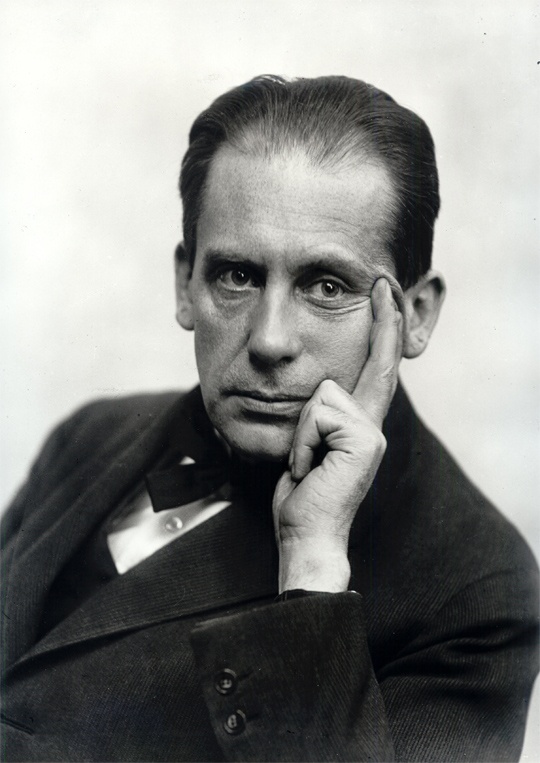
In the 17th post I look at the founder Ted Dreier and his strength as a fundraiser that make the dream of Black Mountain College possible. In the 18th post I look at the life of the famous San Francisco poet Robert Duncan who was both a student at Black Mountain College in 1933 and a professor in 1956. In the 19th post I look at the composer Heinrich Jalowetz who starting teaching at Black Mountain College in 1938 and he was one of  Arnold Schoenberg‘s seven ‘Dead Friends’ (the others being Berg, Webern, Alexander Zemlinsky, Franz Schreker, Karl Kraus and Adolf Loos). In the 20th post I look at the amazing life of Walter Gropius, educator, architect and founder of the Bauhaus.

Opening of the ’50 Years of the Bauhaus’ exhibition in Stuttgart: speech by Walter Gropius to students from the Hochschule für Gestaltung (College of Design) in Ulm, protesting about its closure, 1968

after 1933

The Bauhaus was forced to close down in 1933 due to pressure from the Nazis. However, its ideas continued to spread all over the world along with the emigrating Bauhaus members – to the USA, Switzerland, Russia, Israel and many other countries.

In the USA, Josef Albers became a respected art teacher at Black Mountain College (Asheville, North Carolina), which at times regarded itself as a successor to the Bauhaus. In 1937, László Moholy-Nagy founded the New Bauhaus in Chicago, which took up the educational programme developed in Weimar and Dessau by Walter Gropius and developed it further. Photography now played a more important part than it had earlier. The methodology of the New Bauhaus was adopted and modified by many other American colleges. This played a role in pushing back the Beaux Arts tradition that had predominated in the USA up to that time. In addition, the emigré former Bauhaus Directors Walter Gropius, Professor at the Graduate School of Design at Harvard University, and Ludwig Mies van der Rohe, Director of the Department of Architecture at the Armour Institute in Chicago, contributed to the further spread of Bauhaus thought in their work and teaching.

In West Germany, the Bauhaus idea of linking the arts and crafts was initially continued after the Second World War at crafts colleges such as those in Krefeld, Cologne and Kassel. From 1955, the College of Design in Ulm arrived on the scene with a claim to be working in the spirit of the Bauhaus. The goal was ‘to improve the quality, form and usefulness of consumer goods that are manufactured in Germany’. Although the college later tried to distance itself from the Bauhaus model by developing contours of its own, its beginnings under its first Rector, former Bauhaus student Max Bill, were clearly marked by the Bauhaus. The college in Ulm became the internationally most important college of design after the Bauhaus, and its products represented German design for many decades.

In East Germany, an initial attempt to revive the Bauhaus in Dessau failed one year after the end of the war. The college was politically unwelcome in the early period of the GDR, and a rapprochement with it only took place in 1976 with the reconstruction of the Dessau Bauhaus building in accordance with its historic monument status. A start was made on establishing a historical collection on the Bauhaus, and the Bauhaus theatre was revived. Ten years later, the GDR celebrated the reopening of the Bauhaus as a ‘Centre for Design’, under the aegis of the East German Construction Ministry. The fall of Communism in 1989 ended this chapter of the Bauhaus’s history.

Some elements of the Bauhaus teaching method – particularly the preliminary course – are still being used at college level. The Bauhaus’s influence continues to be seen above all in its fundamental ideas and methods, even more than in specific forms and products.


___________

Allegra Fuller Snyder – Black Mountain: The Start of a Critical Path

Published on Oct 12, 2012

Reviewing 4 Black Mountain College Museum International Conference
Allegra Fuller Snyder (Conference Keynote Speaker)
Black Mountain: The Start of a Critical Path

Allegra Fuller Snyder is Buckmister Fuller’s only living child and is the Founder, first President, and now Board member emeritus of the Buckminster Fuller Institute. She is also Professor Emerita of Dance and Dance Ethnology, UCLA; 1992 American Dance Guild Honoree of the Year; former Chair of the Department of Dance; and founding Coordinator of the World Arts and Cultures Program. She has been on the Dance Faculty at Cal Arts as well as Professor of Performance Studies at New York University, and Honorary Visiting Professor at the University of Surrey, Guildford, England. She began her career as a performer and choreographer and has been concerned with the relation of dance to film since the late 1940s. She has made several prize winning documentary films on dance. She has done dance research around the world, was the recipient of several Fulbright Scholarships. Among many special projects Snyder was a Core Consultant on the PBS series DANCING for WNET/Channel 13. Recently returning to performance, Jennifer Fisher of the LA times said of her in “Spirit Dances 6: Inspired by Isadora,” “She was a haiku and an epic.”

Sponsored by the Green Restaurants of AIR (Asheville Independent Restaurants)

Videography and Post by Michael Folliett
at Image Preservations.com

GIVING UP THE HORSE – TED DREIER AND WALTER GROPIUS

Theodore (‘Ted’) Dreier was – in many ways – the unsung hero of Black Mountain College. John Andrew Rice receives much of the credit for the College’s founding, though Dreier was at his side following the famous ‘Rollins fracas’ (1) and remained a central member of the College community for the first sixteen years of its existence. Dreier was never the outspoken and confrontational pedagogue that Rice was, nor was he a ground breaking artist like Josef or Anni Albers, the other longest-serving members of the BMC faculty. However, Dreier’s contributions to the College were just as – if not more – crucial to its survival than anyone else’s. Through his dogged commitment, patient accounting, and relentless fundraising, Black Mountain College continued operation through immense difficulty. Dreier gave much of his life to the College, which could never have survived without him.

Summer Arts Institute Faculty, Black Mountain College, 1946. Left to right: Leo Amino, Jacob Lawrence, Leo Lionni, Ted Dreier, Nora Lionni, Beaumont Newhall, Gwendolyn Lawrence, Ise Gropius, Jean Varda (in tree), Nancy Newhall (sitting), Walter Gropius, Mary "Molly" Gregory, Josef Albers, Anni Albers. Courtesy of Western Regional Archives.

An engineer with a degree from Harvard, Dreier always wished he could spend more time teaching at Black Mountain. He was listed in various Black Mountain Bulletins as the instructor in mathematics and physics. Later, he spent a great deal of time preparing a course on the ‘Philosophy of Science.’ Yet most of the time, he found himself in charge (first as treasurer, later as rector) of the College’s finances and its physical plant. Many of his wealthy contacts were called upon time and time again to rescue Black Mountain from collapse. Dreier had an unshakable belief in the College’s mission, so eloquently put forward by Rice from the beginning, but he matched that ideological commitment with a practical ability to raise funds and win supporters – the much-needed ‘Friends of the College.’ His family lived at Black Mountain, and his son – Ted Jr. – grew up and studied there. The distressing chapter of Dreier’s Black Mountain story came years after Rice’s departure, when – after the Second World War – the College went through its most difficult and trying period.

An American of German descent, Dreier had very close relationships with Josef and Anni Albers, and also – on even more personal terms – with Walter and Ise Gropius, and their daughter Ati, who graduated from Black Mountain College in 1946 and who was the godmother of the Dreiers’ daughter. Founder of the legendary German design school, the Bauhaus, Gropius exercised enormous influence over Black Mountain. Though he never served there permanently, he was a member of the Board of Advisors, taught at the famous summer art institutes, and acted in generous friendship toward Black Mountain and the Dreier family.

In the Bauhaus Archive, Berlin, a large portion of Gropius’ collected correspondence illustrates the close relationship his family had with the Dreiers. It also – quite painfully for one invested in the history of the College – tells the story of Dreier’s disillusionment and, finally, his departure from the radical institution he played such a large part in creating. One letter to Dreier shows the sacrifices Gropius was willing to make in order to allow his daughter Ati’s continued education at Black Mountain:

I had meant to write to you regarding Ati when your letter arrived. Meanwhile I have carefully checked up on my financial status regarding a second college year for Ati. I have given up my horse, our second car and we put up a roomer in Ati’s room. After this the utmost my shrunken budget allows me to spend for Ati’s next College year is 1000$. I should like to leave it to you to decide which may be the better way for Ati to make good on the difference either in your summer camp or here in war work.(2)

In response, Dreier assured Gropius that Ati might find work as part of the summer music institute – work that would not be so demanding as in a war factory or on the College farm, and which would allow her time and energy to pursue her studies in art. On April 26, Dreier wrote, ‘Ati was quite jealous of my having heard from you before she did but she was really extremely happy to think that there was a good chance now of her coming back next year […] I have a feeling myself that it would be a good thing and I believe that the Albers agree with me.’

Many other letters between Dreier and Gropius sketch a close, familial relationship. They invite one another and their families for visits to Cambridge, Mass., Black Mountain, and New York; they recount holidays together and hopes for putting the College’s affairs in order. Dreier even wrote to Ise Gropius about the possibility of moving to post-war Germany:

The other day we had a faculty candidate for history who had been in Military Government in Germany for a year speak. He had been Educational and Fine Arts Officer […] Most people liked his talk which was certainly very interesting, but there is something that bothers me terribly about the kind of aloof objectivity with which such a man can talk about Germany and the people and the problems of education and denazification. Although I am naturally not considering any such thing seriously because I still hope things may work out here at Black Mountain (and please consider my mentioning it confidential), the idea had crossed my mind that if I left maybe a place that I could be of as much use as any would be in Germany […] But the very thought of living comfortably in a country while everyone else was half-starving and discouraged is something that would be almost impossible to do if one has any feelings for the people at all. (3)

With the closeness of their relationship, it is no wonder that Dreier included Gropius in the mailing of his resignation from Black Mountain. On August 31, 1948, Dreier wrote to Walter and Ise, ‘This is just a line to say that the die is finally cast. A few days ago I came to the conclusion that I simply could not undertake another reorganization of the college […] I said I wanted to leave.’ (4) In fact, Dreier stayed on just a bit longer in order to help transition to the leadership of Josef Albers as College rector.

Beside personal correspondence, one of the most fascinating pieces in the Gropius collection is Ted Dreier’s ‘Summary Report – Black Mountain College: the First 15 ½ Years,’ written as part of his resignation. The ten-page document was written at a point when Dreier was understandably frustrated and bitter, yet the clarity (and even charity) of his writing still comes through when addressing the core principles of the Black Mountain experiment. He writes, ‘For 15 ½ years Black Mountain has stood for a non-political radicalism in higher education which, like all true radicalism, sought to find modern means for getting back to fundamentals.’ (5) This, he concedes, was largely achieved in the early years, and the character of the College under Albers exemplified these ideals. Dreier saw the reconstitution of the College after the War as the period in which things changed. Infighting was rampant. Younger members of staff who – Dreier points out – had no connection to the foundation of the College advocated divergent pedagogies. ‘There has to be agreement,’ Dreier wrote, ‘about method as well as about aim, and readiness to follow the method.’ (6)

Yet Dreier had not entirely given up hope for Black Mountain, even as he knew his time there was finished: ‘If the effort is made to continue the College it will have to be made by others who may or may not stand for what Black Mountain has stood for in the past.’ Even in despair, Dreier anticipated a rebirth of the College. This is exactly what would happen, very much in the way Dreier describes. When Charles Olson became the dominant force at Black Mountain in the early 1950s, he looked back to the founding principles laid out by Rice and Dreier, while also looking toward a future that would be, in many ways, quite different. Olson’s Black Mountain – and especially his style of leadership – would probably not have been met with Dreier’s enthusiasm. (We must recognize, Olson’s leadership finally failed; he was not the organizer and fundraiser that Dreier had been.) In the end, it was Olson – not Dreier – who had to spend years liquidating the College’s assets and setting its affairs in order. But, after Dreier’s departure, the College did gain new life. Many people today know of Black Mountain through the Olson phase, which included writers Robert Creeley and Robert Duncan, and the creation of the “Black Mountain Review”. However, Dreier must be given his due. If it were not for his strenuous efforts on behalf of the institution, there would have been no place at Lake Eden for those who followed.

by Jonathan Creasy
Trinity College Dublin/ New Dublin Press


(1) Rice was terminated from his tenured position as professor at Rollins College in Florida when the College’s President, Hamilton Holt, objected to Rice’s teaching practices and general demeanor. A famous hearing occurred, held by the American Association of University Professors (AAUP), in which Rice was vindicated, but he left Rollins anyway. This is the fabled beginning of the move toward Black Mountain. Most of the initial faculty and students at BMC followed Rice from Rollins. Dreier was a key member of this group. (For more detail, see Martin Duberman’s Black Mountain: An Exploration in Community, Dutton: 1972.)
(2) Letter from Walter Gropius to Theodore Dreier, April 16, 1944. The Bauhaus Archive, Berlin.
(3) Letter from Theodore Dreier to Ise Gropius, August 22, 1947. The Bauhaus Archive, Berlin.
(4) Letter from Theodore Dreier to Walter and Ise Gropius, August 31, 1948. The Bauhaus Archive.
(5) Dreier, Theodore. ‘Summary Report – Black Mountain College: The First 15 ½ Years.’ Walter Gropius Collection, The Bauhaus Archive, Berlin.
(6) Ibid.


XXXXXXXXXXXXXXXXX

Walter Gropius, educator, architect and founder of the Bauhaus, fled Germany for England where he worked with Maxwell Fry and the Isokon Group in London. In 1937, he accepted an invitation to teach architecture at the Graduate School of Design at Harvard University. From 1938-52 he was Chairman of the Department of Architecture.

Gropius first visited Black Mountain in December 1937. His former Bauhaus colleagues Josef and Anni Albers and Xanti Schawinksy were teaching there, and the visit was an occasion both for a visit with friends and for an informal discussion of plans for the development of the Lake Eden property which the college had purchased in June 1937. Gropius and his wife Ise Frank Gropius, along with their daugher Beate “Ati”, had arrived in the United States the previous May.

In January 1939, Gropius and Marcel Breuer, with whom he had formed a partnership, were commissioned by the college to design a complex of buildings for the Lake Eden campus. Had these buildings been constructed, they would have been the architects’ first major architectural project in the United States, and their influence undoubtedly would have been equal to that of the Bauhaus buildings at Dessau. (Gropius-Breuer designs)

A publicity and fundraising campaign for the buildings was launched with a meeting at the Museum of Modern Art in January 1940 and with a second meeting in June. For a number of reasons – the necessity of a move to Lake Eden in June 1941, the impending entry of the United States in the European conflict, and failure to raise the initial $75,000 to construct the first building – the buildings were never constructed.

From 1939 until 1949, when Josef and Anni Albers left the college, Gropius had a close relationship with Black Mountain. He was a member of the Advisory Council from April 1940 until the spring of 1949 and visited the college for meetings. He also was guest lecturer at the 1944, 1945 qnd 1946 Summer Art Institutes. After the war the college turned to the newly-formed Architects Collaborative, of which Gropius was a member, for plans for a women’s dorm. In May 1946 his house was one of three opened for a benefit for the college. His daughter Beate ‘Ati’ Gropius (Johansen) attended the college from the summer of 1943 through the summer of 1946.

At Harvard Gropius encountered an entrenched beaux-arts tradition, and the transition to a modern curriculum was a slow process. He invited Josef Albers to teach seminars and for a full semester, but he was never able to obtain a tenured professorship for him. On the other hand, Albers, when he observed the struggles Gropius encountered in effecting change at Harvard, was not eager to leave Black Mountain where there was no established tradition. Gropius encouraged his Harvard students to study with Albers at Black Mountain and to attend the summer program for practical building experience.

Black Mountain. An Interdisciplinary Experiment 1933 – 1957

from: 05.06.2015 to: 27.09.2015
Hamburger Bahnhof – Museum für Gegenwart – Berlin

The Hamburger Bahnhof – Museum für Gegenwart – Berlin presents the first comprehensive exhibition in Germany devoted to the legendary Black Mountain College. Founded in 1933 in North Carolina, USA, Black Mountain rapidly rose to fame on account of its progressive teaching methods and the many prominent figures who taught and studied there. Its influence upon the development of the arts in the second half of the 20th century was enormous; the performatisation of the arts, in particular, that emerged as from the 1950s derived vital impetus from the experimental practice at Black Mountain. The founders wanted to establish a democratic, experiential, interdisciplinary educational facility in line with the forward-thinking pedagogical ideas of philosopher John Dewey. The exhibition traces the history of this university experiment in its main outlines. In the first few years of its existence, the college was strongly shaped by German and European émigrés – among them several former Bauhaus members such as Josef and Anni Albers, Alexander “Xanti” Schawinsky and Walter Gropius. After the Second World War, the creative impulses issued increasingly from young American artists and academics, who commuted between rural Black Mountain and the urban centres on the East and West Coast. Right up to its closure in 1957, the college remained imbued with the ideas of European modernism, the philosophy of American pragmatism and teaching methods that aimed to encourage personal initiative as well as the social competence of the individual.

Within an architectural environment designed by the architects’ collective raumlabor_berlin, the exhibition at the Hamburger Bahnhof is showing works both by teachers at the college, such as Josef and Anni Albers, Richard Buckminster Fuller, John Cage, Merce Cunningham, Shoji Hamada, Franz Kline, Xanti Schawinsky and Jack Tworkov, and by a number of Black Mountain students, including Ruth Asawa, Ray Johnson, Ursula Mamlok, Robert Rauschenberg, Dorothea Rockburne and Cy Twombly. A wealth of photographs and documentary film footage, as well as publications produced by the college, offer an insight into the way in which the institute worked and into life on campus.

The interdisciplinary and experimental methods and community-based forms of living adopted at Black Mountain had a profound influence upon the artistic and social transformations of the 1960s and are still relevant today. In order to investigate the contemporary relevance of Black Mountain’s pedagogical approach, students from various colleges are presenting archival materials in the form of readings, concerts and performances within the exhibition itself over the entire duration of the show. Specifically for these performances, artist and composer Arnold Dreyblatt has developed a concept under the title “Performing the Black Mountain Archive”. Within the framework of a score drawn up by Dreyblatt, short performances will take place at various locations within the exhibition every morning between 11 a.m. and 1 p.m. and every afternoon between 3 p.m. and 5 p.m.

The project “Performing the Black Mountain Archive” will be implemented by students from the following colleges and universities: Universität der Künste Berlin (Sound Studies), Hochschulübergreifendes Zentrum Tanz, Berlin (Dance, Context, Choreography), Rheinische Friedrich-Wilhelms-Universität, Bonn (North American Studies Program / German Studies), Hochschule für Bildende Künste Dresden (Fine Art), Muthesius Kunsthochschule, Kiel (Media Art / Typography and Design), Hochschule der Künste Bern (Performance Art / Media Art CAP), Kunstakademiet i Oslo (Fine Art), Norwegian Theater Academy – Høgskolen i Østfold, Fredrikstad (Theatre), Konstfack – University College of Arts, Crafts and Design, Stockholm (Fine Art).

In collaboration with the Freie Universität Berlin (Institute of Theatre Studies, Prof. Annette Jael Lehmann) and the Dahlem Humanities Center, it has been possible to prepare two public symposia (in May 2014 and on September 25 + 26, 2015) and maintain a blog directly related to the exhibition.

For further information see www.black-mountain-research.com

Exhibition curators: Eugen Blume, Gabriele Knapstein

Curatorial assistance and project management: Matilda Felix

The exhibition is accompanied by a catalogue, published by Spector Books, Leipzig

For further information about the Black Mountain College see www.blackmountaincollege.org

An exhibition by the Nationalgalerie  in the Hamburger Bahnhof – Museum für Gegenwart – Berlin, Staatliche Museen zu Berlin, in cooperation with the Freie Universität Berlin and the Dahlem Humanities Center

With the support of the German Federal Cultural Foundation

The Longest Ride
The Longest Ride
The Longest Ride

Nicholas Sparks Flick ‘The Longest Ride’ With Scott Eastwood & Britt Robertson

Photo of Kevin JagernauthBy Kevin Jagernauth | The PlaylistDecember 22, 2014 at 9:59PM

0
The Longest Ride

“I cried at ‘The Notebook.’ If anybody said they didn’t cry in ‘The Notebook‘ they are just lying,” Scott Eastwood declared to ET. If you wept while watching the Nicholas Sparks adaptation Eastwood speaks of, then chances are you are the target demographic for “The Longest Ride.” And the first trailer is here.

Co-starring Eastwood and Britt Robertson and directed by George Tillman Jr. (“Notorious,” “Faster“), the movie tracks some intersecting storylines, first following a love affair between Luke, a former champion bull rider looking to make a comeback, and Sophia, a college student who is about to embark upon her dream job in New York City’s art world. Will the country boy and city bound gal make it? Well, good thing Sophia and Luke make an unexpected connection with Ira, whose memories of his own decades-long romance with his beloved wife deeply inspire the young couple. Cue tears, romance and hankies.

Alan Alda Talks ‘Longest Ride’ | TODAY

_____________

________________

Related posts:

FRANCIS SCHAEFFER ANALYZES ART AND CULTURE Part 55 THE BEATLES (Part G, The Beatles and Rebellion) (Feature on artist Wallace Berman )

FRANCIS SCHAEFFER ANALYZES ART AND CULTURE Part 54 THE BEATLES (Part F, Sgt Pepper’s & Eastern Religion) (Feature on artist Richard Lindner )

FRANCIS SCHAEFFER ANALYZES ART AND CULTURE Part 53 THE BEATLES (Part E, Stg. Pepper’s and John Lennon’s search in 1967 for truth was through drugs, money, laughter, etc & similar to King Solomon’s, LOTS OF PICTURES OF JOHN AND CYNTHIA) (Feature on artist Yoko Ono)

_____________

Little Rock Touchdown Club – August 31, 2015 with Felix Jones and Peyton Hillis

___


Little Rock Touchdown Club – August 31, 2015

Felix Jones, Peyton Hillis talk to LR Touchdown Club

By Brandon Riddle

This article was published today at 1:38 p.m.

Two former Arkansas running backs spoke to the Little Rock Touchdown Club on Monday, telling stories of their Razorback years and how life has changed since their time in college.

During a question-and-answer session hosted by sports media personality David Bazzel, the Razorback alumni — Felix Jones and Peyton Hillis — spoke on challenges throughout their lives and the importance of their alma mater.

Hillis, now retired, said his career was the result of not being the “top guy,” referencing being a seventh-round NFL draft pick in 2008.

“I’ve always had to start from the bottom and rise to the top, and I’m very proud of that just because if I didn’t have the foundation that I had as a kid, I wouldn’t be here today,” he said.

Jones, who was drafted in 2008 to play for the Dallas Cowboys in the first round, said he lives in Dallas, actively trying out for teams as a free agent.

“I hope things happen the way I want them to happen, but you know, I’m definitely excited about what I did and where I’ve been,” he said.

Jones and Hillis each gave their views on Arkansas coach Bret Bielema, who begins his third year this fall.

Hillis said, “I definitely think that he has it on the right track. The foundation of any football team should be the running game … and I think he’s done a great job with that.”

He added that Bielema is able to get talent from across the U.S. to fill voids and make the team more competitive.

“I’m excited to see what he has planned this year for the season,” Jones said.

Read Tuesday’s Arkansas Democrat-Gazette for full details.


Frank Broyles, Barry Switzer, and Bobby Burnett (L-R) (1965 Cotton Bowl)

Related posts:

Shawn Andrews at Little Rock Touchdown Club

Andrews supports athletes Share on facebook Share on twitter More Sharing Services0 By Jeff Halpern This article was published November 25, 2014 at 2:37 a.m. PHOTO BY JEFF HALPERN Former Arkansas offensive lineman Shawn Andrews was the guest at the Little Rock Touchdown Club on Nov. 24, 2014. Comments aAFont Size It’s been 11 years […]

Rocket Ismail does a great job at Little Rock Touchdown Club (with Video of full event)

_______ Little Rock Touchdown Club – November 3, 2014 I really enjoyed the stories that Rocket told about Lou Holtz. I noticed another big crowd today at the lunch when I looked around at the audience. Lou told Rocket to make the play Share on facebookShare on twitterMore Sharing Services0 By Jeremy Muck This article […]

SEC Network Analyst Dari Nowkah said at the Little Rock Touchdown Club that those outside the SEC say the conference is overrated but that obviously is not true!

________ SEC Network Analyst Dari Nowkah said at the Little Rock Touchdown Club that those outside the SEC say the conference is overrated but that obviously is not true!!!! With SEC teams winning seven consecutive national championships in 2006-2012 and having at least one team in each of the past eight BCS Championship Games, Nowkah […]

Lee Roy Jordan does a great job at Little Rock Touchdown Club!!!

___________ Little Rock Touchdown Club – October 6 2014 This is what the Arkansas Democrat-Gazette had to say about Lee Roy: After last season, Alabama lost a three-year starter at quarterback, AJ McCarron, who led the Crimson Tide to national championships after the 2011 and 2012 seasons, and was a fifth-round draft pick of the […]

Little Rock Touchdown Club Ed Orgeron Part 4

Little Rock Touchdown Club Ed Orgeron Published on Sep 29, 2014 Ed Orgeron speaks to the Little Rock Touchdown Club. ____________________________________ Coach O did a great job speaking at our luncheon on Monday. Former USC, Ole Miss coach Ed Orgeron enjoys being with family after years on the road Ed Orgeron, center, is happy to […]

Little Rock Touchdown Club Ed Orgeron Part 3

Little Rock Touchdown Club Ed Orgeron Published on Sep 29, 2014 Ed Orgeron speaks to the Little Rock Touchdown Club. ____________________________________ I enjoyed hearing Coach Orgeron at luncheon this week. Ed Orgeron covets Kansas job  9h ago Charlie Weis had barely been gone as head coach of the Kansas Jayhawks for 24 hours when former […]

Little Rock Touchdown Club Ed Orgeron Part 2

Little Rock Touchdown Club Ed Orgeron Published on Sep 29, 2014 Ed Orgeron speaks to the Little Rock Touchdown Club. ____________________________________ I always enjoy going to the Little Rock Touchdown Club and hearing Rex Nelson go through the SEC Roundup of the previous week is usually one of the highlights. He started off by saying: […]

Little Rock Touchdown Club Ed Orgeron Part 1

Little Rock Touchdown Club Ed Orgeron Published on Sep 29, 2014 Ed Orgeron speaks to the Little Rock Touchdown Club. ____________________________________ I really enjoyed hearing Ed Orgeron speak at the Little Rock Touchdown Club yesterday and Little Rock native George Schroeder got to interview him afterwards and his is the result below. Ed Orgeron, college […]

Charlotte Jones Anderson did a great job at Little Rock Touchdown Club!!!

________________ I really enjoyed hearing Jerry Jones’ daughter speak at the Little Rock Touchdown Club this week. Like it is Savvy Anderson graces Jerry’s Cowboys Share on facebookShare on twitterMore Sharing Services1 By Wally Hall This article was published September 23, 2014 at 2:31 a.m. Comments aAFont Size Looks like Jane, plays like Tarzan. Charlotte […]

Evangelical Mike Singletary to speak at Little Rock Touchdown Club Today!!!!

___________ Today downtown at the Little Rock Touchdown Club Mike Singletary is speaking.  Mike Singletary: Christ Means Everything – CBN.com SPORTS Mike Singletary: ‘Christ Means Everything’ By Shawn BrownThe 700 Club CBN.com – Mike Singletary spent 12 seasons as a key member of the celebrated Chicago Bears defense of the 1980s. This NFL Hall of […]

____________________

THE ARTISTS, POETS and PROFESSORS of BLACK MOUNTAIN COLLEGE (the college featured in the film THE LONGEST RIDE) Part 19 composer Heinrich Jalowetz, student of Arnold Schoenberg

_______________

Fully Awake – PREVIEW

____________

My first post in this series was on the composer John Cage and my second post was on Susan Weil and Robert Rauschenberg who were good friend of CageThe third post in this series was on Jorge Fick. Earlier we noted that  Fick was a student at Black Mountain College and an artist that lived in New York and he lent a suit to the famous poet Dylan Thomas and Thomas died in that suit.

The fourth post in this series is on the artist  Xanti Schawinsky and he had a great influence on John Cage who  later taught at Black Mountain College. Schawinsky taught at Black Mountain College from 1936-1938 and Cage right after World War II. In the fifth post I discuss David Weinrib and his wife Karen Karnes who were good friends with John Cage and they all lived in the same community. In the 6th post I focus on Vera B. William and she attended Black Mountain College where she met her first husband Paul and they later  co-founded the Gate Hill Cooperative Community and Vera served as a teacher for the community from 1953-70. John Cage and several others from Black Mountain College also lived in the Community with them during the 1950’s. In the 7th post I look at the life and work of M.C.Richards who also was part of the Gate Hill Cooperative Community and Black Mountain College.

In the 8th post I look at book the life of   Anni Albers who is  perhaps the best known textile artist of the 20th century and at Paul Klee who was one  of her teachers at Bauhaus. In the 9th post the experience of Bill Treichler in the years of 1947-1949  is examined at Black Mountain College. In 1988, Martha and Bill started The Crooked Lake Review, a local history journal and Bill passed away in 2008 at age 84.

In the 10th post I look at the art of Irwin Kremen who studied at Black Mountain College in 1946-47 and there Kremen spent his time focused on writing and the literature classes given by the poet M. C. Richards. In the 11th post I discuss the fact that Josef Albers led the procession of dozens of Bauhaus faculty and students to Black Mountain.

In the 12th post I feature Wassily Kandinsky (1866-1944) who was featured in the film THE LONGEST RIDE and the film showed Kandinsky teaching at BLACK MOUNTAIN COLLEGE which was not true according to my research. Evidently he was invited but he had to decline because of his busy schedule but many of his associates at BRAUHAUS did teach there. In the 13th post I look at the writings of the communist Charles Perrow. 

Willem de Kooning was such a major figure in the art world and because of that I have dedicated the 14th15th and 16th posts in this series on him. Paul McCartney got interested in art through his friendship with Willem because Linda’s father had him as a client. Willem was a  part of New York School of Abstract expressionism or Action painting, others included Jackson Pollock, Elaine de Kooning, Lee Krasner, Franz Kline, Arshile Gorky, Mark Rothko, Hans Hofmann, Adolph Gottlieb, Anne Ryan, Robert Motherwell, Philip Guston, Clyfford Still, and Richard Pousette-Dart.

In the 17th post I look at the founder Ted Dreier and his strength as a fundraiser that make the dream of Black Mountain College possible. In the 18th post I look at the life of the famous San Francisco poet Robert Duncan who was both a student at Black Mountain College in 1933 and a professor in 1956. In the 19th post I look at the composer Heinrich Jalowetz who starting teaching at Black Mountain College in 1938 and he was one of  Arnold Schoenberg‘s seven ‘Dead Friends’ (the others being Berg, Webern, Alexander Zemlinsky, Franz Schreker, Karl Kraus and Adolf Loos).

Scott Eastwood Interview – The Longest Ride

In the article ‘The Longest Ride,’ A Love Story About Luke, A Champion Bull Rider, And Sophia, A Young College Girl, Is Based On The Bestselling Nicholas Sparks Novel, Hits Theaters April 10, 2015, I read:

From the art of bull riding to the art of…art, Nicholas Sparks’ research took him to unexpected places. “One of the story’s principal locales ended up being one of the greatest moments of kismet in my entire career,” he continues. “I remember sitting at the desk thinking, how on earth is this couple [young Ira and Ruth] from North Carolina going to become big art collectors?

“My research led me to Black Mountain College, which was the center of the modern art movement in the 1930s, 1940s and 1950s.”

Black Mountain College was founded in the 1930s as an experimental college. It came to define the modern art movement. “Everyone from de Kooning to Rauschenberg was there,” says Sparks. “Robert De Niro’s father, another noted artist, attended Black Mountain College. There were very famous artists there and if you look at the American modern art movement in the 1940s and 1950s, there were important intersections there with the great works of this century.”

Group Portrait, Blue Ridge Campus, Black Mountain College. Photograph of Charles Lindsley (?), John Evarts, Robert Wunsch, Erwin Straus, Heinrich Jalowetz.


Heinrich Jalowetz (Black Mountain College music instructor, 1939-1946) with students

Faculty meeting at Black Mountain College, Blue Ridge campus. Left to right: Robert Wunsch, Josef Albers, Heinrich Jalowetz, Theodore Dreier, Erwin Straus,…

Faculty meeting; Left to right: Robert Wunsch, Josef Albers, Heinrich Jalowetz, Theodore Dreier, Erwin Straus, unknown, Lawrence Kocher.

__________


Albers1

Josef Albers critiquing student work. Left to right: Frances Kuntz,
Hope Stephens (Foote), Lisa Jalowetz (Aronson), Bela Martin, Elizabeth Brett (Hamlin).


_______________

Jalowetz, Heinrich. At BMC 1939-46. Taught Music. Had been conductor in Europe, including Prague and Cologne, member of Schoenberg’s inner circle. Forced out by Nazis. Died 1946.

Heinrich Jalowetz

From Wikipedia, the free encyclopedia

Heinrich Jalowetz (December 3, 1882,[1] Brno – February 2, 1946,[2] Black Mountain, North Carolina, USA) was an Austrian musicologist and conductor who settled in the USA. He was one of the core members of what became known as the Second Viennese Schoolin the orbit of Arnold Schoenberg.

A musicology pupil of Guido Adler,[3] Jalowetz was among Schoenberg’s first students in Vienna, 1904-1908. From 1909 to 1933 he worked as a conductor in Regensburg, Danzig, Stettin, Prague, Vienna and Cologne (as successor to Otto Klemperer). After emigrating to the USA in 1938 he taught at Black Mountain College, North Carolina. Though his name is less widely known than that of many of Schoenberg’s more famous students, Schoenberg regarded Jalowetz very highly indeed. He is one of the seven ‘Dead Friends’ (the others being Berg, Webern, Alexander Zemlinsky, Franz Schreker, Karl Kraus and Adolf Loos) to whom he once envisaged dedicating his book Style and Idea, with the comment that those men ‘belong to those with whom principles of music, art, artistic morality and civic morality need not be discussed. There was a silent and sound mutual understanding on all these matters’.

Stravinsky on art and limits vs. Schaeffer on 20th-century music

5584025334_3ed64aa69a_z

I’m in the country this summer, reading, resting, and working on curriculum projects. One of these projects is sets of Composer Study lessons. The best part, so far, has been reading some great books about music and the appreciation of music, including Igor Stravinsky’s Poetics of Music in the Form of Six Lessons.

Here are a few gems:

“The old original sin was chiefly a sin of knowledge; the new original sin, if I may speak in these terms, is first and for most a sin of non-acknowledgement — a refusal to acknowledge the truth and the laws that proceed therefrom, laws that we have called fundamental.”

“For imagination is not only the mother of caprice but the servant and handmaiden of the creative will as well. The creator’s function is to sift the elements he receives from her, for human activity must impose limits on itself. The more art is controlled, limited, worked over, the more it is free.”

“I have no use for theoretical freedom.”

I find these fascinating because they contradict a simplistic understanding of the “modern” period in art and cultural history as one of license and fragmentation, in which art governed by chance and lacking in limits was elevated above the art of order and natural law that supposedly existed before (in the Golden Age of Bach and Rembrandt who Believed in God).

In trying to remember where I got that simplistic understanding in the first place, I realized it probably originated from Francis Schaeffer and a system of teaching about art and culture that was born out of his book How Shall We Then Live?, published in 1976. I looked it up today, my country retreat handily having a copy. He doesn’t have much to say about Stravinsky (and no wonder, I suppose, because Stravinsky, though hugely influential in 20th-century music, does not strengthen his case), but he does have this to say about Schoenberg:

“Then came Schoenberg (1874-1951), and with him we are into the music which was a vehicle for modern thought. Schoenberg totally rejected the past tradition in music and invented the ’12-tone row.’ This was ‘modern’ in that there was perpetual variation with no resolution. This stands in sharp contrast to Bach who, on his biblical base, had much diversity but always resolution. Bach’s music had resolution because as a Christian he believed that there will be resolution both for each individual life and for history. As the music which came out of the biblical teaching of the Reformation was shaped by that world view, so the world view of modern man shapes modern music.”

Here, in contrast, is what Stravinsky has to say about Schoenberg’s music inPoetics of Music:

“Cacophony means bad sound, contraband merchandise, uncoordinated music that will not stand up under serious criticism. Whatever opinion one may hold about the music of Arnold Schoenberg (to take as an example a composer evolving along lines essentially different from mine, both aesthetically and technically), whose works have frequently given rise to violent reactions or ironic smiles — it is impossible for a self-respecting mind equipped with genuine musical culture not to feel that the composer of Pierrot Lunaire is fully aware of what he is doing and that he is not trying to deceive anyone. He adopted the musical system suited to his needs and, within that system, he is perfectly consistent with himself, perfectly coherent. One cannot dismiss music that he dislikes by labeling it cacophony.”

Schaeffer argues that Schoenberg turns his back on resolution, but Stravinsky argues that, within the perfectly rational system he uses, Schoenberg is coherent. What is resolution in music but meeting the expectations of a certain system of tonality? “Will they be met? Will they be met? Yes, here it is.” That’s what’s happening in our brains when we listen. A friend of mine who studied music composition once told me that, with training, the ear hears 12-tone music with the same dialogue of expectation and fulfillment that we naturally bring to our more common system of major/minor tonality.

It isn’t that 12-tone music is a system of constant variation but no resolution. It’s that resolution occurs under different circumstances within the 12-tone system. The tonality of Bach happens to be better-known and easier for us to hear, but Schoenberg’s system is no less ordered. It doesn’t deny an ordered universe.

Back to those interesting Stravinsky quotes at the beginning of the post, you would think that the “revolutionary” whose Rite of Spring caused an actual riot upon first hearing would support Schaeffer’s claims about fragmentation in 20th century music, but in Poetics of Music he sounds as orderly and unified as Schaeffer could wish. “Art is by essence constructive,” Stravinsky says, and “art is the contrary of chaos. It never gives itself up to chaos without immediately finding its living works, its very existence, threatened.”

I find Stravinsky’s words encouraging as I go about the large task of trying to help students hear order in music, to listen, within any given musical framework, for tension and release, for narrative, for drama, for idea, for dialogue. It is no less difficult with Mozart, which students can hear simply as “nice” or “boring,” than it is for Schoenberg and Stravinsky, which they might perceive as “ugly,” but it is a worthwhile endeavor for both.

Schoenberg: Variations for Orchestra Op 31 (1934) – Pierre Boulez and the CSO (Part 1)

Arnold Schoenberg

From Wikipedia, the free encyclopedia

Arnold Schoenberg, Los Angeles, 1948

Arnold Schoenberg or Schönberg (German: [ˈaːʁnɔlt ˈʃøːnbɛʁk]; 13 September 1874 – 13 July 1951) was an Austrian composer and painter, associated with the expressionist movement in German poetry and art, and leader of the Second Viennese School. With the rise of the Nazi Party, by 1938 Schoenberg’s works were labelled as degenerate music because he was Jewish (Anon. 1997–2013); he moved to the United States in 1934.

Schoenberg’s approach, both in terms of harmony and development, has been one of the most influential of 20th-century musical thought. Many European and American composers from at least three generations have consciously extended his thinking, whereas others have passionately reacted against it.

Schoenberg was known early in his career for simultaneously extending the traditionally opposed German Romantic styles of Brahms and Wagner. Later, his name would come to personify innovations in atonality (although Schoenberg himself detested that term) that would become the most polemical feature of 20th-century art music. In the 1920s, Schoenberg developed the twelve-tone technique, an influential compositional method of manipulating an ordered series of all twelve notes in the chromatic scale. He also coined the term developing variation and was the first modern composer to embrace ways of developing motifs without resorting to the dominance of a centralized melodic idea.

Schoenberg was also a painter, an important music theorist, and an influential teacher of composition; his students included Alban Berg, Anton Webern, Hanns Eisler, Egon Wellesz, and later John Cage, Lou Harrison, Earl Kim,Leon Kirchner, and other prominent musicians. Many of Schoenberg’s practices, including the formalization of compositional method and his habit of openly inviting audiences to think analytically, are echoed in avant-gardemusical thought throughout the 20th century. His often polemical views of music history and aesthetics were crucial to many significant 20th-century musicologists and critics, including Theodor W. Adorno, Charles Rosen andCarl Dahlhaus, as well as the pianists Artur Schnabel, Rudolf Serkin, Eduard Steuermann and Glenn Gould.

Schoenberg’s archival legacy is collected at the Arnold Schönberg Center in Vienna.

Bogeyman — Prophet — Guardian (Schoenberg documentary): Episode 1: Part 1

Biography[edit]

Early life[edit]

Arnold Schönberg in Payerbach, 1903

Arnold Schoenberg was born into a lower middle-class Jewish family in the Leopoldstadt district (in earlier times a Jewish ghetto) of Vienna, at “Obere Donaustraße 5”. His father Samuel, a native of Bratislava, was ashopkeeper, and his mother Pauline was native of Prague. Arnold was largely self-taught. He took only counterpoint lessons with the composer Alexander von Zemlinsky, who was to become his first brother-in-law (Beaumont 2000, 87).

In his twenties, Schoenberg earned a living by orchestrating operettas, while composing his own works, such as the string sextet Verklärte Nacht (“Transfigured Night”) (1899). He later made an orchestral version of this, which became one of his most popular pieces. Both Richard Strauss and Gustav Mahler recognized Schoenberg’s significance as a composer; Strauss when he encountered Schoenberg’s Gurre-Lieder, and Mahler after hearing several of Schoenberg’s early works.

Strauss turned to a more conservative idiom in his own work after 1909, and at that point dismissed Schoenberg. Mahler adopted him as a protégé and continued to support him, even after Schoenberg’s style reached a point Mahler could no longer understand. Mahler worried about who would look after him after his death. Schoenberg, who had initially despised and mocked Mahler’s music, was converted by the “thunderbolt” of Mahler’s Third Symphony, which he considered a work of genius. Afterward he “spoke of Mahler as a saint” (Stuckenschmidt 1977, 103; Schoenberg 1975, 136).

In 1898 Schoenberg converted to Christianity in the Lutheran church. According to MacDonald (2008, 93) this was partly to strengthen his attachment to Western European cultural traditions, and partly as a means of self-defence “in a time of resurgent anti-Semitism”. In 1933, after long meditation, he returned to Judaism, because he realised that “his racial and religious heritage was inescapable”, and to take up an unmistakable position on the side opposing Nazism. He would self-identify as a member of the Jewish religion later in life (Marquis Who’s Who n.d.).

In October 1901, he married Mathilde Zemlinsky, the sister of the conductor and composer Alexander von Zemlinsky, with whom Schoenberg had been studying since about 1894. Mathilde bore him two children, Gertrud (1902–1947) and Georg (1906–1974). Gertrud would marry Schoenberg’s pupil Felix Greissle in 1921 (Neighbour 2001). During the summer of 1908, his wife Mathilde left him for several months for a young Austrian painter,Richard Gerstl. This period marked a distinct change in Schoenberg’s work. It was during the absence of his wife that he composed “You lean against a silver-willow” (German: Du lehnest wider eine Silberweide), the thirteenth song in the cycle Das Buch der Hängenden Gärten, Op. 15, based on the collection of the same name by the German mystical poet Stefan George. This was the first composition without any reference at all to a key (Stuckenschmidt 1977, 96). Also in this year, he completed one of his most revolutionary compositions, the String Quartet No. 2, whose first two movements, though chromatic in color, use traditional key signatures, yet whose final two movements, also settings of George, daringly weaken the links with traditional tonality. Both movements end on tonic chords, and the work is not fully non-tonal. Breaking with previous string-quartet practice, it incorporates a soprano vocal line.

Schoenberg’s Der Rote Blick (Red Gaze), 1910

Bogeyman — Prophet — Guardian (Schoenberg documentary): Episode 1: Part 2

Bogeyman — Prophet — Guardian (Schoenberg documentary): Episode 1: Part 3

Bogeyman — Prophet — Guardian (Schoenberg documentary): Episode 2: Part 1

Bogeyman — Prophet — Guardian (Schoenberg documentary): Episode 2: Part 2

Bogeyman — Prophet — Guardian (Schoenberg documentary): Episode 2: Part 3

Published on Jun 26, 2013

Final part of the second episode in a two-part series on composer Arnold Schoenberg. Directed by the inimitable Barrie Gavin, 1974.


During the summer of 1910, Schoenberg wrote his Harmonielehre (Theory of Harmony, Schoenberg 1922), which remains one of the most influential music-theory books. From about 1911, Schoenberg belonged to a circle of artists and intellectuals who included Lene Schneider-Kainer, Franz Werfel, Herwarth Walden and the latter’s wife, Else Lasker-Schüler.

In 1910 he met Edward Clark, an English music journalist then working in Germany. Clark became his sole English student, and in his later capacity as a producer for the BBC he was responsible for introducing many of Schoenberg’s works, and Schoenberg himself, to Britain (as well as Webern, Berg and others).

Another of his most important works from this atonal or pantonal period is the highly influential Pierrot Lunaire, Op. 21, of 1912, a novel cycle of expressionist songs set to a German translation of poems by the Belgian-French poetAlbert Giraud. Utilizing the technique of Sprechstimme, or melodramatically spoken recitation, the work pairs a female vocalist with a small ensemble of five musicians. The ensemble, which is now commonly referred to as the Pierrot ensemble, consists of flute (doubling on piccolo), clarinet (doubling on bass clarinet), violin (doubling on viola), violoncello, speaker, and piano.

Wilhelm Bopp, director of the Vienna Conservatory from 1907, wanted a break from the stale environment personified for him by Robert Fuchs and Hermann Graedener. Having considered many candidates, he offered teaching positions to Schoenberg and Franz Schreker in 1912. At the time Schoenberg lived in Berlin. He was not completely cut off from the Vienna Conservatory, having taught a private theory course a year earlier. He seriously considered the offer, but he declined. Writing afterward to Alban Berg, he cited his “aversion to Vienna” as the main reason for his decision, while contemplating that it might have been the wrong one financially, but having made it he felt content. A couple of months later he wrote to Schreker suggesting that it might have been a bad idea for him as well to accept the teaching position (Hailey 1993, 55–57).

World War I[edit]

Arnold Schoenberg, byEgon Schiele 1917

World War I brought a crisis in his development. Military service disrupted his life when at the age of 42 he was in the army. He was never able to work uninterrupted or over a period of time, and as a result he left many unfinished works and undeveloped “beginnings”. On one occasion, a superior officer demanded to know if he was “this notorious Schoenberg, then”; Schoenberg replied: “Beg to report, sir, yes. Nobody wanted to be, someone had to be, so I let it be me” (Schoenberg 1975, 104) (according to Norman Lebrecht (2001), this is a reference to Schoenberg’s apparent “destiny” as the “Emancipator of Dissonance”).

In what Ross calls an “act of war psychosis,” Schoenberg drew comparisons between Germany’s assault on France and his assault on decadent bourgeois artistic values. In August 1914, while denouncing the music of Bizet,Stravinsky and Ravel, he wrote: “Now comes the reckoning! Now we will throw these mediocre kitschmongers into slavery, and teach them to venerate the German spirit and to worship the German God” (Ross 2007, 60).

The deteriorating relation between contemporary composers and the public led him to found the Society for Private Musical Performances (Verein für musikalische Privataufführungen in German) in Vienna in 1918. He sought to provide a forum in which modern musical compositions could be carefully prepared and rehearsed, and properly performed under conditions protected from the dictates of fashion and pressures of commerce. From its inception through 1921, when it ended because of economic reasons, the Society presented 353 performances to paid members, sometimes at the rate of one per week. During the first year and a half, Schoenberg did not let any of his own works be performed (Rosen 1975, 65). Instead, audiences at the Society’s concerts heard difficult contemporary compositions by Scriabin, Debussy, Mahler, Webern, Berg, Reger, and other leading figures of early 20th-century music (Rosen 1996, 66).

Development of the twelve-tone method[edit]

Arnold Schoenberg, 1927, by Man Ray

Later, Schoenberg was to develop the most influential version of the dodecaphonic (also known as twelve-tone) method of composition, which in French and English was given the alternative name serialism by René Leibowitz andHumphrey Searle in 1947. This technique was taken up by many of his students, who constituted the so-called Second Viennese School. They included Anton Webern, Alban Berg and Hanns Eisler, all of whom were profoundly influenced by Schoenberg. He published a number of books, ranging from his famous Harmonielehre (Theory of Harmony) to Fundamentals of Musical Composition (Schoenberg 1967), many of which are still in print and used by musicians and developing composers.

Schoenberg viewed his development as a natural progression, and he did not deprecate his earlier works when he ventured into serialism. In 1923 he wrote to the Swiss philanthropist Werner Reinhart:

“For the present, it matters more to me if people understand my older works … They are the natural forerunners of my later works, and only those who understand and comprehend these will be able to gain an understanding of the later works that goes beyond a fashionable bare minimum. I do not attach so much importance to being a musical bogey-man as to being a natural continuer of properly-understood good old tradition!” (Stein 1987, 100; quoted in Strimple 2005, 22)

His first wife died in October 1923, and in August of the next year Schoenberg married Gertrud Kolisch (1898–1967), sister of his pupil, the violinist Rudolf Kolisch (Neighbour 2001; Silverman 2010, 223). She wrote the libretto for Schoenberg’s one-act opera Von heute auf morgen under the pseudonym Max Blonda. At her request Schoenberg’s (ultimately unfinished) piece, Die Jakobsleiter was prepared for performance by Schoenberg’s studentWinfried Zillig. After her husband’s death in 1951 she founded Belmont Music Publishers devoted to the publication of his works (Shoaf 1992, 64). Arnold used the notes G and E (German: Es, i.e., “S”) for “Gertrud Schoenberg”, in the Suite, for septet, Op. 29 (1925) (MacDonald 2008, 216) (see musical cryptogram).

Following the 1924 death of composer Ferruccio Busoni, who had served as Director of a Master Class in Composition at the Prussian Academy of Arts in Berlin, Schoenberg was appointed to this post the next year, but because of health problems was unable to take up his post until 1926. Among his notable students during this period were the composers Roberto Gerhard, Nikos Skalkottas, and Josef Rufer.

Along with his twelve-tone works, 1930 marks Schoenberg’s return to tonality, with numbers 4 and 6 of the Six Pieces for Male Chorus Op.35, the other pieces being dodecaphonic (Auner 1999, 85).

Third Reich and move to America[edit]

Schoenberg continued in his post until the Nazis came to power under Adolf Hitler in 1933. While vacationing in France, he was warned that returning to Germany would be dangerous. Schoenberg formally reclaimed membership in the Jewish religion at a Paris synagogue, then traveled with his family to the United States (Friedrich 1986, 31). However, this happened only after his attempts to move to Britain came to nothing. He enlisted the aid of his former student and great champion Edward Clark, now a senior producer with the BBC, in helping him gain a British teaching post or even a British publisher, but to no avail.

His first teaching position in the United States was at the Malkin Conservatory in Boston. He moved to Los Angeles, where he taught at the University of Southern California and the University of California, Los Angeles, both of which later named a music building on their respective campuses Schoenberg Hall (UCLA Department of Music [2008]; University of Southern California Thornton School of Music [2008]). He was appointed visiting professor at UCLA in 1935 on the recommendation of Otto Klemperer, music director and conductor of the Los Angeles Philharmonic Orchestra[citation needed]; and the next year was promoted to professor at a salary of $5,100 per year, which enabled him in either May 1936 or 1937 to buy a Spanish Revival house at 116 North Rockingham in Brentwood Park, near the UCLA campus, for $18,000. This address was directly across the street from Shirley Temple‘s house, and there he befriended fellow composer (and tennis partner) George Gershwin. The Schoenbergs were able to employ domestic help and began holding Sunday afternoon gatherings that were known for excellent coffee and Viennese pastries. Frequent guests included Otto Klemperer (who studied composition privately with Schoenberg beginning in April 1936), Edgard Varèse, Joseph Achron, Louis Gruenberg, Ernst Toch, and, on occasion, well-known actors such as Harpo Marx and Peter Lorre (Crawford 2009, 116; Feisst 2011, 6; Laskin 2008; MacDonald 2008, 79; Schoenberg 1975, 514; Starr 1997, 383; Watkins 2010, 114). Composers Leonard Rosenman and George Tremblay studied with Schoenberg at this time.

After his move to the United States in 1934 (Steinberg 1995, 463), the composer used the alternative spelling of his surname Schoenberg, rather than Schönberg, in what he called “deference to American practice” (Foss 1951, 401), though according to one writer he first made the change a year earlier (Ross 2007, 45).

He lived there the rest of his life, but at first he was not settled. In around 1934, he applied for a position of teacher of harmony and theory at the New South Wales State Conservatorium in Sydney. The Director, Edgar Bainton, rejected him for being Jewish and for having “modernist ideas and dangerous tendencies”. Schoenberg also at one time explored the idea of emigrating to New Zealand. His secretary and student (and nephew of Schoenberg’s mother-in-law Henriette Kolisch), was Richard (Dick) Hoffmann Jr, Viennese-born but who lived in New Zealand 1935–47, and Schoenberg had since childhood been fascinated with islands, and with New Zealand in particular, possibly because of the beauty of the postage stamps issued by that country (Plush 1996).

Stroop Report original caption: “Smoking out the Jews and bandits.” –Warsaw Ghetto Uprising

During this final period, he composed several notable works, including the difficult Violin Concerto, Op. 36 (1934/36), the Kol Nidre, Op. 39, for chorus and orchestra (1938), the Ode to Napoleon Buonaparte, Op. 41 (1942), the haunting Piano Concerto, Op. 42 (1942), and his memorial to the victims of the Holocaust, A Survivor from Warsaw, Op. 46 (1947). He was unable to complete his opera Moses und Aron (1932/33), which was one of the first works of its genre written completely using dodecaphonic composition. Along with twelve-tone music, Schoenberg also returned to tonality with works during his last period, like the Suite for Strings in G major (1935), theChamber Symphony No. 2 in E minor, Op. 38 (begun in 1906, completed in 1939), the Variations on a Recitative in D minor, Op. 40 (1941). During this period his notable students included John Cage and Lou Harrison.

In 1941 he became a citizen of the United States.

Later years and death[edit]

Schoenberg’s grave in theZentralfriedhof, Vienna

Schoenberg’s superstitious nature may have triggered his death. The composer had triskaidekaphobia (the fear of the number 13), and according to friend Katia Mann, he feared he would die during a year that was a multiple of 13 (quoted in Lebrecht 1985, 294). He dreaded his sixty-fifth birthday in 1939 so much that a friend asked the composer and astrologer Dane Rudhyar to prepare Schoenberg’s horoscope. Rudhyar did this and told Schoenberg that the year was dangerous, but not fatal.

But in 1950, on his seventy-sixth birthday, an astrologer wrote Schoenberg a note warning him that the year was a critical one: 7 + 6 = 13 (Nuria Schoenberg-Nono, quoted in Lebrecht 1985, 295). This stunned and depressed the composer, for up to that point he had only been wary of multiples of 13 and never considered adding the digits of his age. He died on Friday, 13 July 1951, shortly before midnight. Schoenberg had stayed in bed all day, sick, anxious and depressed. His wife Gertrud reported in a telegram to her sister-in-law Ottilie the next day that Arnold died at 11:45 pm, 15 minutes before midnight (Stuckenschmidt 1977, 520). In a letter to Ottilie dated 4 August 1951, Gertrud explained, “About a quarter to twelve I looked at the clock and said to myself: another quarter of an hour and then the worst is over. Then the doctor called me. Arnold’s throat rattled twice, his heart gave a powerful beat and that was the end” (Stuckenschmidt 1977, 521).

Schoenberg’s ashes were later interred at the Zentralfriedhof in Vienna on 6 June 1974 (McCoy 1999, 15).

Music[edit]

MENU
0:00
Played by the Carmel Quartet with soprano Rona Israel-Kolatt, in 2007

Problems playing this file? See media help.

In Schoenberg’s Variations for Orchestra, Op. 31tone row form P1’s second half has the same notes, in a different order, as the first half of I10: “Thus it is possible to employ P1 and I10 simultaneously and in parallel motion without causing note doubling” (Leeuw 2005, 154–55). About this sound Play 

Featuring hexachordal combinatoriality between its primary forms, P1 and I6, Schoenberg’s Piano Piece, Op. 33a tone row About this sound Play  contains threeperfect fifths, which is the relation between P1 and I6, and a source of contrast between, “accumulations of 5ths”, and, “generally more complex simultaneity” (Leeuw 2005, 155–57). For example group A consists of B-F-C-B while the, “more blended”, group B consists of A-F-C-D

Schoenberg’s significant compositions in the repertory of modern art music extend over a period of more than 50 years. Traditionally they are divided into three periods though this division is arguably arbitrary as the music in each of these periods is considerably varied. The idea that his twelve-tone period “represents a stylistically unified body of works is simply not supported by the musical evidence” (Haimo 1990, 4), and important musical characteristics—especially those related to motivic development—transcend these boundaries completely. The first of these periods, 1894–1907, is identified in the legacy of the high-Romantic composers of the late nineteenth century, as well as with “expressionist” movements in poetry and art. The second, 1908–1922, is typified by the abandonment of key centers, a move often described (though not by Schoenberg) as “free atonality”. The third, from 1923 onward, commences with Schoenberg’s invention of dodecaphonic, or “twelve-tone” compositional method. Schoenberg’s best-known students, Hanns Eisler,Alban Berg, and Anton Webern, followed Schoenberg faithfully through each of these intellectual and aesthetic transitions, though not without considerable experimentation and variety of approach.

First period: Late Romanticism[edit]

Beginning with songs and string quartets written around the turn of the century, Schoenberg’s concerns as a composer positioned him uniquely among his peers, in that his procedures exhibited characteristics of both Brahms and Wagner, who for most contemporary listeners, were considered polar opposites, representing mutually exclusive directions in the legacy of German music. Schoenberg’s Six Songs, Op. 3 (1899–1903), for example, exhibit a conservative clarity of tonal organization typical of Brahms and Mahler, reflecting an interest in balanced phrases and an undisturbed hierarchy of key relationships. However, the songs also explore unusually bold incidental chromaticism, and seem to aspire to a Wagnerian “representational” approach to motivic identity. The synthesis of these approaches reaches an apex in his Verklärte Nacht, Op. 4 (1899), a programmatic work for string sextet that develops several distinctive “leitmotif“-like themes, each one eclipsing and subordinating the last. The only motivic elements that persist throughout the work are those that are perpetually dissolved, varied, and re-combined, in a technique, identified primarily in Brahms’s music, that Schoenberg called “developing variation”. Schoenberg’s procedures in the work are organized in two ways simultaneously; at once suggesting a Wagnerian narrative of motivic ideas, as well as a Brahmsian approach to motivic development and tonal cohesion.

Second period: Free atonality[edit]

Schoenberg’s music from 1908 onward experiments in a variety of ways with the absence of traditional keys or tonal centers. His first explicitly atonal piece was the second string quartet, Op. 10, with soprano. The last movement of this piece has no key signature, marking Schoenberg’s formal divorce from diatonic harmonies. Other important works of the era include his song cycle Das Buch der Hängenden Gärten, Op. 15 (1908–1909), his Five Orchestral Pieces, Op. 16 (1909), the influential Pierrot Lunaire, Op. 21 (1912), as well as his dramatic Erwartung, Op. 17 (1909). The urgency of musical constructions lacking in tonal centers, or traditional dissonance-consonance relationships, however, can be traced as far back as his Chamber Symphony No. 1, Op. 9 (1906), a work remarkable for its tonal development of whole-tone andquartal harmony, and its initiation of dynamic and unusual ensemble relationships, involving dramatic interruption and unpredictable instrumental allegiances; many of these features would typify the timbre-oriented chamber music aesthetic of the coming century.

Third period: Twelve-tone and tonal works[edit]

In the early 1920s, he worked at evolving a means of order that would make his musical texture simpler and clearer. This resulted in the “method of composing with twelve tones which are related only with one another” (Schoenberg 1984, 218), in which the twelve pitches of the octave (unrealized compositionally) are regarded as equal, and no one note or tonality is given the emphasis it occupied in classical harmony. He regarded it as the equivalent in music of Albert Einstein‘s discoveries in physics. Schoenberg announced it characteristically, during a walk with his friend Josef Rufer, when he said, “I have made a discovery which will ensure the supremacy of German music for the next hundred years” (Stuckenschmidt 1977, 277). This period included the Variations for Orchestra, Op. 31 (1928); Piano Pieces, Opp. 33a & b (1931), and the Piano Concerto, Op. 42 (1942). Contrary to his reputation for strictness, Schoenberg’s use of the technique varied widely according to the demands of each individual composition. Thus the structure of his unfinished opera Moses und Aron is unlike that of his Fantasy for Violin and Piano, Op. 47 (1949).

Ten features of Schoenberg’s mature twelve-tone practice are characteristic, interdependent, and interactive (Haimo 1990, 41):

  1. Hexachordal inversional combinatoriality
  2. Aggregates
  3. Linear set presentation
  4. Partitioning
  5. Isomorphic partitioning
  6. Invariants
  7. Hexachordal levels
  8. Harmony, “consistent with and derived from the properties of the referential set”
  9. Metre, established through “pitch-relational characteristics”
  10. Multidimensional set presentations

Reception and legacy[edit]

First works[edit]

After some early difficulties, Schoenberg began to win public acceptance with works such as the tone poem Pelleas und Melisande at a Berlin performance in 1907. At the Vienna première of the Gurre-Lieder in 1913, he received an ovation that lasted a quarter of an hour and culminated with Schoenberg’s being presented with a laurel crown (Rosen 1996, 4; Stuckenschmidt 1977, 184).

Nonetheless, much of his work was not well received. His Chamber Symphony No. 1 premièred unremarkably in 1907. However, when it was played again in the Skandalkonzert on 31 March 1913, (which also included works by Berg, Webern and Zemlinsky), “one could hear the shrill sound of door keys among the violent clapping, and in the second gallery the first fight of the evening began.” Later in the concert, during a performance of the Altenberg Lieder by Berg, fighting broke out after Schoenberg interrupted the performance to threaten removal by the police of any troublemakers (Stuckenschmidt 1977, 185).

Twelve-tone period[edit]

According to Ethan Haimo, understanding of Schoenberg’s twelve-tone work has been difficult to achieve owing in part to the “truly revolutionary nature” of his new system, misinformation disseminated by some early writers about the system’s “rules” and “exceptions” that bear “little relation to the most significant features of Schoenberg’s music”, the composer’s secretiveness, and the widespread unavailability of his sketches and manuscripts until the late 1970s. During his life, he was “subjected to a range of criticism and abuse that is shocking even in hindsight” (Haimo 1990, 2–3).

Watschenkonzert, caricature in Die Zeit from 6 April 1913

Schoenberg criticized Igor Stravinsky‘s new neoclassical trend in the poem “Der neue Klassizismus” (in which he derogates Neoclassicism, and obliquely refers to Stravinsky as “Der kleine Modernsky”), which he used as text for the third of his Drei Satiren, Op. 28 (Schonberg 1970, 503).

Schoenberg’s serial technique of composition with twelve notes became one of the most central and polemical issues among American and European musicians during the mid- to late-twentieth century. Beginning in the 1940s and continuing to the present day, composers such as Pierre Boulez, Karlheinz Stockhausen, Luigi Nono and Milton Babbitt have extended Schoenberg’s legacy in increasingly radical directions. The major cities of the United States (e.g., Los Angeles, New York, and Boston) have had historically significant performances of Schoenberg’s music, with advocates such as Babbitt in New York and the Franco-American conductor-pianist Jacques-Louis Monod. Schoenberg’s students have been influential teachers at major American universities: Leonard Stein at USC, UCLA and CalArts; Richard Hoffmann at Oberlin; Patricia Carpenter at Columbia; and Leon Kirchner and Earl Kim at Harvard. Musicians associated with Schoenberg have had a profound influence upon contemporary music performance practice in the USA (e.g., Louis Krasner, Eugene Lehner and Rudolf Kolisch at the New England Conservatory of Music; Eduard Steuermann and Felix Galimir at the Juilliard School). In Europe, the work of Hans Keller, Luigi Rognoni, and René Leibowitz has had a measurable influence in spreading Schoenberg’s musical legacy outside of Germany and Austria.

Criticism[edit]

In the 1920s, Ernst Krenek criticized a certain unnamed brand of contemporary music (presumably Schoenberg and his disciples) as “the self-gratification of an individual who sits in his studio and invents rules according to which he then writes down his notes.” Schoenberg took offense at this masturbatory metaphor and answered that Krenek “wishes for only whores as listeners” (Ross 2007, 156).

Allen Shawn has noted that, given Schoenberg’s living circumstances, his work is usually defended rather than listened to, and that it is difficult to experience it apart from the ideology that surrounds it (Taruskin 2004, 7). Richard Taruskin asserts that Schoenberg committed what he terms a “poietic fallacy”, the conviction that what matters most (or all that matters) in a work of art is the making of it, the maker’s input, and that the listener’s pleasure must not be the composer’s primary objective (Taruskin 2004, 10). Taruskin also criticizes the ideas of measuring Schoenberg’s value as a composer in terms of his influence on other artists, the overrating of technical innovation, and the restriction of criticism to matters of structure and craft while derogating other approaches as vulgarian (Taruskin 2004, 12).[clarification needed]

Personality and extramusical interests[edit]

Arnold Schoenberg, self-portrait, 1910

Schoenberg was a painter of considerable ability, whose pictures were considered good enough to exhibit alongside those of Franz Marc and Wassily Kandinsky (Stuckenschmidt 1977, 142) as fellow members of the expressionist Blue Rider group.

He was interested in Hopalong Cassidy films, which Paul Buhle and David Wagner (2002, v–vii) attribute to the films’ left-wing screenwriters—a rather odd claim in light of Schoenberg’s statement that he was a “bourgeois” turnedmonarchist (Stuckenschmidt 1977, 551–52).

Schoenberg experienced triskaidekaphobia (the fear of the number 13), which possibly began in 1908 with the composition of the thirteenth song of the song cycle Das Buch der Hängenden Gärten Op. 15 (Stuckenschmidt 1977, 96).Moses und Aron was originally spelled Moses und Aaron, but when he realised this contained 13 letters, he changed it[citation needed]. His superstitious nature may have triggered his death. According to friend Katia Mann, he feared he would die during a year that was a multiple of 13 (quoted in Lebrecht 1985, 294).

Francis Schaeffer in his book HOW SHOULD WE THEN LIVE? noted on pages 200-203:

Jackson Pollock (1912-1956) is perhaps the clearest example in the United States of painting deliberately in order to make the statements that all is chance. He placed canvases horizontally on the floor and dripped paint on them from suspended cans swinging over them. Thus, his paintings were a product of chance. But wait a minute! Is there not an order in the lines of paint on his canvases? Yes, because it was not really chance shaping his canvases! The universe is not a random universe; it has order. Therefore, as the dripping paint from the swinging cans moved over the canvases, the lines of paint were following the order of the universe itself. The universe is not what these painters said it is.

The third way the idea spread was through music. This came about first in classical music, though later many of the same elements came into popular music, such as rock. In classical music two streams are involved: the German and the French.

The first shift in German music came with the last Quartets of Beethoven, composed in 1825 and 1826. These certainly were not what we would call “modern,” but they were a shift from the music prior to them. Leonard Bernstein (1918-) speaks of Beethoven as the “new artist–the artist as priest and prophet.” Joseph Machlis (1906-) says in INTRODUCTION TO COMTEMPORARY MUSIC (1961), “Schoenberg took his point of departure from the final Quartets of Beethoven.” And Stravinsky said, “These Quartets are my highest articles of musical belief (which is a longer word for love, whatever else), as indispensable to the ways and meaning of art, as a musician of my era thinks of art and has to learn it, as temperature is to life.”

Beethoven was followed by Wagner (1813-1883); then came Gustav Mahler (1860-1911). Leonard Bernstein in the NORTON LECTURES at Harvard University in 1973 says of Mahler and especially Mahler’s Ninth Symphony, “Ours is the century of death and Mahler is its musical prophet…If Mahler knew this (personal death, death of tonality, and the death of culture as it had been) and his message is so clear, how do we knowing it too, manage to survive? Why are we still here, struggling to go on? We are now face to face with the truly ultimate ambiguity of all…We learn to accept our mortality; yet we persist in our search for immortality…All this ultimate ambiguity is to be heard in the finale of Mahler’s Ninth.” Notice how closely this parallels Nietzsche’s poem on page 193. (Oh Man! Take heed, of what the dark midnight says: I slept, I slept–from deep dreams I awoke: The world is deep–and more profound than day would have thought. Profound in her pain–Pleasure–more profound than pain of heart, Woe speaks; pass on. But all pleasure seeks eternity–a deep and profound eternity.) This is modern man’s position. He has come to a position of the death of man in his own mind, but he cannot live with it, for it does not describe what he is.

Then came Schoenberg (1874-1951), and with him we are into the music which was a vehicle for modern thought. Schoenberg totally rejected the past tradition in music and invented the “12 tone row.” This was “modern” in that there was perpetual variation with NO RESOLUTION. This stands in sharp contrast to Bach who, on his biblical base, had much diversity but always resolution. Bach’s music had resolution because as a Christian he believed that there will be resolution both for eah individual life and for history. As the music which came out of the biblical teaching of the Reformation was shaped by that world-view, so the world-view of modern man shapes modern music.

Among Schoenberg’s pupils were Allen Berg (1885-1935), Anton Webern (1883-1945), and John Cage (1912-). Each of these carried on this line of nonresolution in his own way. Donald Jay Grout (1902-) in A HISTORY OF WESTERN MUSIC speaks of Schoenberg’s and Berg’s subject matter in the modern world: “…isolated, helpless in the grip of forces he does not understand, prey to inner conflict, tension, anxiety and fear.” One can understand that a music of nonresolution is a fitting expression of the place to which modern man has come.

In INTRODUCTION TO CONTEMPORARY MUSIC Joseph Machlis says of Webern that his way of placing the weightier sounds on the offbeat and perpetually varying the rhythmic phrase imparts to his music its indefinable quality of “hovering suspension.” Machlis adds that Karlheinz Stockhausen (1928-), and the German Cologne school in general, take up from Webern with the formation of electronic  music which “generates, transforms and manipulates sounds electronically.” Stockhausen produced the first published score of electronic music in his ELECTRONIC STUDIES. A part of his concern was with the element of chance in composition. As we shall see, this ties into the work of John Cage, whom we will study in more detail below. But first let us look at the French stream.

The French shift began with Claude Debussy (1862-1918). His direction was not so much that of nonresolution but of FRAGMENTATION. Many of us enjoy and admire much of Debussy’s music, but he opened the door to FRAGMENTATION in music and has influenced most of the composers since, not only in classical music but in popular music and rock as well. Even the music which is one of the glories of America–black jazz and black spirituals–was gradually infiltrated.

It is worth reemphasizing that this FRAGMENTATION in music is parallel to the FRAGMENTATION which occurred in painting. An again let us say that these were not just changes of technique; they expressed a world-view and became a vehicle for carrying that world-view to masses of people which the bare philosophic writings never would have touched.

John Cage provides perhaps the clearest example of what is involved in the shift of music. Cage believed the universe is a universe of chance. He tried carrying this out with great consistency. For example, at times he flipped coins to decide what the music should be. At other times he erected a machine that led an orchestra by chance motions so that the orchestra would not know what was coming next. Thus there was no order. Or again, he placed two conductors leading the same orchestra, separated from each other by a partition, so that what resulted was utter confusion. There is a close tie-in again to painting; in 1947 Cage made a composition he called MUSIC FOR MARCEL DUCHAMP. But the sound produced by his music was composed only of silence (interrupted only by random environmental sounds), but as soon as he used his chance methods sheer noise was the outcome.

But Cage also showed that one cannot live on such a base, that the chance concept of the universe does not fit the universe as it is. Cage is an expert in mycology, the science of mushrooms. And he himself said, “I became aware that if I approached mushrooms in the spirit of my chance operation, I would die shortly.” Mushroom picking must be carefully discriminative. His theory of the universe does not fit the universe that exists.

All of this music by chance, which results in noise, makes a strange contrast to the airplanes sitting in our airports or slicing through our skies. An airplane is carefully formed; it is orderly (and many would also think it beautiful). This is in sharp contrast to the intellectualized art which states that the universe is chance. Why is the airplane carefully formed and orderly, and what Cage produced utter noise? Simply because an airplane must fit the orderly flow lines of the universe if it is to fly!

Sir Archibald Russel (1905-) was the British designer for the Concorde airliner. In a NEWSWEEK: European Edition interview (February 16, 1976) he was asked : “Many people find that the Concorde is a work of art in its design. Did you consider its aesthetic appearance when you were designing it?” His answer was, “When one designs an airplane, he must stay as close as possible to the laws of nature. You are really playing with the laws of nature and trying not to offend them. It so happens that our ideas of beauty are those of nature. That’s why I doubt that the Russian supersonic airplane is a crib of ours. The Russians have the same basic phenomena imposed on them by nature as we do.”

Cage’s music and the world-view for which it is the vehicle do not fit the universe that is. Someone might here bring in Einstein, Werner Heisenberg’s principle of uncertainty and quantum, but we have considered them on page 162, and so will not repeat the discussion here. The universe is not what Cage in his music and Pollock in his painting say it is. And we must add that Cage’s music does not fit what people are, either. It has had to become increasingly spectacular to keep interest; for example, a nude cellist has played Cage’s music under water.

A further question is: Is this art really art? Is it not rather a bare philosophic, intellectual statement, separated from the fullness of who people are and the fullness of what the universe is? The more it tends to be only an intellectual statement, rather than a work of art, the more it becomes anti-art

Q&A with Vincent Katz about Black Mountain College

Happy Wednesday! Here’s our Q&A with Vincent Katz, editor of  Black Mountain College: Experiment in Art. Unavailable for several years, this generously illustrated book documents the most successful experiment in the history of American arts education. Vincent Katz is a poet, translator, and curator based in New York City.


What inspired you to edit a book about Black Mountain College?

I was asked by Juan Manuel Bonet, the Director of the Reina Sofia Museum in Madrid, if I would be interested in curating an exhibition on Black Mountainfor the museum. I had curated the first museum retrospective of Rudy Burckhardt’s work for the Institute of Modern Art in Valencia, when Bonet had been the Director there. I said yes to the Black Mountain idea instantly, though I must admit that my knowledge of the school then was much less than it has become. With Bonet’s support, we put on an exhibition of more than 300 objects, including paintings, sculptures, prints, drawings, artist’s books, manuscripts, films, and audio. MIT published the English version of the catalogue, and it is on a scale commensurate with the exhibition, including four essays by specialists and over 500 illustrations, many in color.


Has your perception of Black Mountain College’s influence changed in the years since the first edition of this book came out in 2003?

I have found that Black Mountain infiltrates itself into almost any discussion of modern and contemporary art, from the early history of the Bauhaus to the work of contemporary artists today. I have noticed many people referring to Black Mountain in recent years. This is especially true in the poetry world, where the influence of poets such as Charles Olson, Robert Creeley, Robert Duncan, and others continues to be central to the most innovative practices in poetry. In the world of visual arts, the wide range of artists who taught and studied at Black Mountain—from Josef and Anni Albers to Willem de Kooning, Franz Kline, Robert Rauschenberg, Cy Twombly, Susan Weil, Dorothea Rockburne, and a multitude of others—is such that one constantly finds references to people who either studied with these artists, knew them, or were influenced by their work.


Josef Albers, Buckminster Fuller, Robert Rauschenberg, and Cy Twombly, among several others, were all connected to Black Mountain College. How did such a small school (fewer than 1,200 students in 23 years) attract such a high caliber of artistic talent?

The school had a unique approach to education, and the arts program was central from the beginning. There was no governing board, so the teachers, with input from the students, had entire decision-making powers. Students would create their own curricula, based on the availability of teachers in their chosen areas. There were ample opportunities for collaborative work and cross-fertilization. Dorothea Rockburne went to study art but found some of her most fruitful studies at Black Mountain in mathematics. Sculptors studied poetry, poets were involved in dance and pottery. The printing press played a central role, with teachers like M.C. Richards and Charles Olson encouraging students to take the reins and publish their own work. Jonathan Williams, who came to study with Harry Callahan and Aaron Siskind, ended up being, in addition to an excellent portrait photographer, one of the most important poetry publishers of his time. Word somehow got out, and the most adventurous students were attracted to the place.


Why was this school so successful and, alternatively, unsuccessful?

The success of the school was based on its freedom from conventional supervision—artists had a significant say in how the curriculum was designed and implemented. This was true from the school’s very first years, when Josef Albers was instrumental in establishing its pedagogical basis, and it was true in the school’s final years, when Charles Olson took the lead in offering as challenging a curriculum as he could devise. The perils were financial and organizational. Without a governing board, the school was always strapped for cash and often did not know if it could continue. Teachers often worked for room and board, an indication of their willingness to sacrifice for the educational ideals the school embodied.  Finally, the organizational challenges become too great, as the numbers of students dwindled. The school started selling off pieces of the farm that had always given it part of its identity, and ultimately it had to close.


Do you think this level of experimental art still happens today?

I believe that the same level of experimental art does happen today, though it is rare. Rarer still is an educational institution that will sacrifice everything for its ideals, thus bringing students into the creative nexus of experimentation and collaboration.


_____________

ART DOCUMENTATION • Volume 22, Number 2 • 2003

Alternative Education

BLACK MOUNTAIN COLLEGE: EXPERIMENT IN ART /

Edited by Vincent Katz.–Cambridge, MA: The MIT Press,

March 2003.–329 p.” ill.–ISBN 0-262-11-279-5

(cl., alk. paper):  $75.00

Seventy years after its formation, the educational experiment embodied in Black Mountain College still holds fascination for those seeking to discern the wellsprings of American art, music, and literature in the twentieth century.  This generously endowed book accompanied the exhibition Black Mountain College: Una Aventura Americana, curated by Vincent Katz, at the Museo Nacional Centro de Arte Reina Sofia in Madrid from October 28, 2002 to January 13, 2003.  Katz, a poet and critic, also contributed the book’s longest and most substantive essay, profiling sixty-five renowned painters, sculptors, photographers, and fiber artists who passed through Black Mountain College as faculty or students.  Drawing on recent interviews as well as documentary sources, Katz characterizes the College’s impact on each artist’s development.  he also discusses the innovative artistic interactions during the late 1940s that were generated by the presence of Buckminster Fuller and John Cage on campus.  Although Katz describes the educational and cultural forces that led to the school’s founding in North Carolina in 1933, he neither provides a comprehensive history of the college nor does he explore the college’s demise in 1956.  For this, researchers need to turn to the definitive monograph The Arts at Black Mountain College by Mary Emma Harris (Cambridge, MA: MIT Press, 1987) that has recently been reprinted.  Harris provides the historical and scholarly framework that is lacking in Black Mountain College: Experiment in Art; she includes a roster of faculty and students, a comprehensive bibliography, and scores of documentary photographs.  However, Harris’s book reproduces only a handful of art works in color, whereas half of the 470 illustrations in the new book are in color.  Katz has made a concerted effort to include several examples of each artist’s work, often selecting unfamiliar pieces that were created during the artist’s tenure at Black Mountain, many of which are still in the artist’s possession.  Unfortunately, none of the illustrations are referred to in the text.

The book’s second essay is by Martin Brody, a composer and music professor at Wellesley College.  Brody takes one event, Black Mountain’s 1944 Summer Music Institute celebrating Arnold Schoenberg’s eightieth birthday, and traces its impact on the musical and cultural landscape of the United States.

Kevin Power, chair of American Literature at the Universidad de Allocate, contributes the book’s third essay, an impressionistic accounting of the short-lived literary journal Black Mountain Review (1953-57).  Under the editorship of poet Robert Creeley, the Black Mountain Review gained a reputation as an experimental forum where the poetics of American experience and language were explored.

The final essay is Robert Creeley’s eloquent reminiscence of Charles Olson, the expansive poet who served as Black Mountain’s Rector during the College’s final years.  Creeley describes Olson’s impact on the College and perceptively characterizes his mentor’s energy, focus, and intensity.

Three previously unpublished poems by Olson, Creeley and John Wieners complete the book by conveying a bit of the spirit and vitality that characterized Black Mountain.  Regrettably, the poems are not indexed or referenced by name in the Table of Contents.

The book’s scholarly apparatus leaves much to be desired.  The two-page bibliography cites only major publications on the College and books by and about the most well known faculty members.  This index, limited to personal names, is similarly inadequate.  Scholars will continue to rely on the extensive bibliographies in Harris’s The Arts at Black Mountain College, as well as historian Martin Duberman’s Black Mountain College: An Exploration in Community (New York, NY: Dutton, 1972).

This book is a welcome complement to the available literature on Black Mountain College because it focuses on the creative output of specific influential artists and includes abundant visual documentation.  It is most appropriate for the scholar or graduate student who already has some familiarity with Black Mountain College and with the cultural milieu of the United States in the mid-twentieth century.

Janis Ekdahl

New York, NY


________________

Related posts:

FRANCIS SCHAEFFER ANALYZES ART AND CULTURE Part 55 THE BEATLES (Part G, The Beatles and Rebellion) (Feature on artist Wallace Berman )

FRANCIS SCHAEFFER ANALYZES ART AND CULTURE Part 54 THE BEATLES (Part F, Sgt Pepper’s & Eastern Religion) (Feature on artist Richard Lindner )

FRANCIS SCHAEFFER ANALYZES ART AND CULTURE Part 53 THE BEATLES (Part E, Stg. Pepper’s and John Lennon’s search in 1967 for truth was through drugs, money, laughter, etc & similar to King Solomon’s, LOTS OF PICTURES OF JOHN AND CYNTHIA) (Feature on artist Yoko Ono)


_____________

MUSIC MONDAY Paul McCartney’s song “Picasso’s Last Words (Drink to Me)”


 – Picasso’s Last Words (Drink To Me) – Lyrics

Picasso’s Last Words (Drink to Me)

From Wikipedia, the free encyclopedia
“Picasso’s Last Words (Drink to Me)”
Song by Paul McCartney & Wings from the album Band on the Run
Released 7 December 1973
Recorded September–October 1973
Lagos, Nigeria
Genre Rock
Length 5:50
Label Apple
Writer Paul and Linda McCartney
Producer Paul McCartney and Geoff Emerick
Band on the Run track listing

Picasso’s Last Words (Drink to Me)” is a song from Paul McCartney & Wings‘ album Band on the Run. It was not released as a single. Wings band member Denny Laine covered “Picasso’s Last Words (Drink to Me)” in 2007 on his album Performs the Hits of Wings.[1] An abbreviated performance of the song appears on the live album Wings over America.

Writing[edit]

In an interview on British TV channel ITV1 for the program Wings: Band on the Run, to promote the November 2010 2xCD/2xDVD rerelease of the original album, McCartney says he was on vacation inMontego Bay, Jamaica where he “snuck” onto the set of the film Papillon where he met “Dustin Hoffman and Steve McQueen“. After a dinner with Hoffman, with McCartney playing around on guitar, Hoffman did not believe that McCartney could write a song “about anything”, so Hoffman pulled out a magazine where they saw the story of the death of Pablo Picasso and his famous last words, “Drink to me, drink to my health. You know I can’t drink anymore.” McCartney created a demo of the song and lyrics on the spot, prompting Hoffman to exclaim to his wife: “…look, he’s doing it…he’s doing it!”[2]

Recording[edit]

While recording Band on the Run in Lagos, Nigeria, Wings were invited to former Cream drummer Ginger Baker‘s ARC Studios in the nearby suburb of Ikeja. While Baker insisted to McCartney that they should record the entire album there, he was reluctant and agreed he would spend one day there. “Picasso’s Last Words” was recorded during that time and Baker contributed by playing a tin can full of gravel.[3]

Personnel[edit]

References[edit]

  1. Jump up^ “Performs the Hits of Wings”. Allmusic. Retrieved 28 December 2011.
  2. Jump up^ Presenters: Dermot O’Leary (2010-10-31). “Wings: Band on the Run”. ITV. ITV1. Missing or empty |title= (help)
  3. Jump up^ Lewisohn, Mark “Band on the Run – 25th Anniversary Edition; The Recording of Band on the Run” Parlophone (4 99176 2).

Related posts:

MUSIC MONDAY I’m Waiting for the Man sung by Nico in 1982 (about waiting for drug fix)

I’m Waiting for the Man sung by Nico in 1982 (about waiting for drug fix) __________ Nico Icon documentary part 3 Nico Icon documentary part 4 NICO – I’m Waiting For The Man – (1982, Warehouse, Preston, UK) One of the top 10 songs from The Velvet Underground and Nico is the song “I’m Waiting […]

MUSIC MONDAY Nico’s sad story of drugs and her interaction with Jim Morrison

Nico’s sad story of drugs and her interaction with Jim Morrison Nico – These Days The Doors (1991) – Movie Trailer / Best Parts The Doors Movie – Back Door Man/When The Music’s Over/Arrest of Jim Morrison Uploaded on Jul 30, 2009 A clip from “The Doors” movie with “Back Door Man”, “When The Music’s […]

MUSIC MONDAY Christian Singer’s Controversial Journey Revealed in New Documentary: ‘I Placed Homosexuality on Jesus’ Shoulders’ Oct. 2, 2014 2:23pm Billy Hallowell

Dennis Jernigan – You Are My All In All Uploaded on Oct 18, 2009 Dennis Jernigan – You Are My All In All __________________________________________ Christian Singer’s Controversial Journey Revealed in New Documentary: ‘I Placed Homosexuality on Jesus’ Shoulders’ Oct. 2, 2014 2:23pm Billy Hallowell Singer-songwriter Dennis Jernigan has been making Christian music for decades, recording […]

MUSIC MONDAY Cole Porter’s songs “De-Lovely” and “Let’s misbehave”

Cole Porter’s songs “De-Lovely” and “Let’s misbehave”   ‘At Long Last Love’: Let’s Misbehave/De-Lovely Uploaded on Apr 1, 2009 Burt Reynolds and Cybil Shepherd give an extraordinarily charming performance of Cole Porter’s songs in Peter Bogdanovich’s absolutely wonderful tribute to the golden age of film musicals, ‘At Long Last Love’. _____________________ De-Lovely   From Wikipedia, […]

MUSIC MONDAY Cole Porter’s song’s “My Heart Belongs to Daddy”

________ _______ Cole Porter’s song’s “My Heart Belongs to Daddy” My Heart Belongs To Daddy Uploaded on Jun 20, 2010 Mary Martin became popular on Broadway and received attention in the national media singing “My Heart Belongs to Daddy”. “Mary stopped the show with “My Heart Belongs to Daddy”. With that one song in the […]

MUSIC MONDAY Cole Porter’s song “Love for Sale”

______________ Love For Sale (De-Lovely) Love for Sale (song) From Wikipedia, the free encyclopedia Jump to: navigation, search This article needs additional citations for verification. Please help improve this article by adding citations to reliable sources. Unsourced material may be challenged and removed. (September 2008) “Love for Sale“ Written by Cole Porter Published 1930 Form […]

MUSIC MONDAY Cole Porter’s song “Ev’ry Time We Say Goodbye”

Cole Porter’s song “Ev’ry Time We Say Goodbye” _________________ Natalie Cole – Ev’ry Time We Say Goodbye Ev’ry Time We Say Goodbye   From Wikipedia, the free encyclopedia   Jump to: navigation, search   This article needs additional citations for verification. Please help improve this article by adding citations to reliable sources. Unsourced material may be […]

MUSIC MONDAY Cole Porter’s song “So in Love”

Cole Porter’s song “So in Love” __________________ So in love – De-lovely So in Love From Wikipedia, the free encyclopedia Jump to: navigation, search For the song by Orchestral Manoeuvres in the Dark, see So in Love (OMD song). For the song by Jill Scott, see So in Love (Jill Scott song). Not to be […]

MUSIC MONDAY Cole Porter’s song “Night and Day”

____________________ Cole Porter’s song “Night and Day” Cole Porter´s Day and Night by Fred Astaire & Ginger Rogers Night and Day (song) From Wikipedia, the free encyclopedia Jump to: navigation, search This article includes a list of references, but its sources remain unclear because it has insufficient inline citations. Please help to improve this article […]

MUSIC MONDAY John Lennon and Bob Dylan Conversation mention Johnny Cash and his song “Big River”

Johnny Cash – Big River Uploaded on Jan 16, 2008 Grand Ole Opry, 1962 _______________________________ John Lennon and Bob Dylan Conversation mention Johnny Cash and his song “Big River” _______________________ Big River (Johnny Cash song) From Wikipedia, the free encyclopedia Jump to: navigation, search This article may require cleanup to meet Wikipedia’s quality standards. No […]

RESPONDING TO HARRY KROTO’S BRILLIANT RENOWNED ACADEMICS!! Elizabeth Loftus, UC Irvine, “…Out there in the world of religious beliefs…you can indoctrinate people with these beliefs even if they don’t make much sense”

On November 21, 2014 I received a letter from Nobel Laureate Harry Kroto and it said:

…Please click on this URL http://vimeo.com/26991975

and you will hear what far smarter people than I have to say on this matter. I agree with them.

Harry Kroto

_________________


Below you have picture of 1996 Chemistry Nobel Prize Winner Dr. Harry Kroto (on right and  Reg Colin on left):

______________________

Elizabeth Loftus

From Wikipedia, the free encyclopedia
Elizabeth F. Loftus
Elizabeth Loftus-TAM 9-July 2011.JPG

Elizabeth Loftus in 2011
Born October 16, 1944
Los Angeles[1]
Residence California
Citizenship United States
Nationality United States
Fields Psychology, CognitivePsychology, Psychology and Law
Institutions University of California, Irvine
University of Washington
New School University
National Judicial College,University of Nevada
Harvard University
Georgetown University Law Center
Alma mater Stanford University
University of California, Los Angeles
Doctoral advisor Patrick Suppes
Known for Studies of human memory and their application to forensic settings
Notable awards Grawemeyer Award (2005)
National Academy of Sciences(2004)
Royal Society of Edinburgh(2005)

Elizabeth F. Loftus (born Elizabeth Fishman, in 1944)[2][3][4] is an American cognitive psychologist and expert on human memory. She has conducted extensive research on the malleability of human memory. Loftus is best known for her ground-breaking work on the misinformation effect and eyewitness memory,[5] and the creation and nature of false memories,[6] including recovered memories of childhood sexual abuse.[7] As well as her prolific work inside the laboratory, Loftus has been heavily involved in applying her research to legal settings; she has consulted or provided expert witness testimony for hundreds of cases.[7][8] Loftus has been recognized throughout the world for her work, receiving numerous awards and honorary degrees. In 2002, Loftus was ranked 58th in the Review of General Psychology’s list of the 100 most influential psychological researchers of the 20th century, and was the highest ranked woman on the list.[9]

_____________________________

In  the third video below in the 117th clip in this series are her words and  my response is below them. 

50 Renowned Academics Speaking About God (Part 1)

Another 50 Renowned Academics Speaking About God (Part 2)

A Further 50 Renowned Academics Speaking About God (Part 3)

I grew up at Bellevue Baptist Church under the leadership of our pastor Adrian Rogers and I read many books by the Evangelical Philosopher Francis Schaeffer and have had the opportunity to contact many of the evolutionists or humanistic academics that they have mentioned in their works. Many of these scholars have taken the time to respond back to me in the last 20 years and some of the names  included are  Ernest Mayr (1904-2005), George Wald (1906-1997), Carl Sagan (1934-1996),  Robert Shapiro (1935-2011), Nicolaas Bloembergen (1920-),  Brian Charlesworth (1945-),  Francisco J. Ayala (1934-) Elliott Sober (1948-), Kevin Padian (1951-), Matt Cartmill (1943-) , Milton Fingerman (1928-), John J. Shea (1969-), , Michael A. Crawford (1938-), Paul Kurtz (1925-2012), Sol Gordon (1923-2008), Albert Ellis (1913-2007), Barbara Marie Tabler (1915-1996), Renate Vambery (1916-2005), Archie J. Bahm (1907-1996), Aron S “Gil” Martin ( 1910-1997), Matthew I. Spetter (1921-2012), H. J. Eysenck (1916-1997), Robert L. Erdmann (1929-2006), Mary Morain (1911-1999), Lloyd Morain (1917-2010),  Warren Allen Smith (1921-), Bette Chambers (1930-),  Gordon Stein (1941-1996) , Milton Friedman (1912-2006), John Hospers (1918-2011), Michael Martin (1932-), John R. Cole  (1942-),   Wolf Roder,  Susan Blackmore (1951-),  Christopher C. French (1956-)  Walter R. Rowe Thomas Gilovich (1954-), Paul QuinceyHarry Kroto (1939-), Marty E. Martin (1928-), Richard Rubenstein (1924-), James Terry McCollum (1936-), Edward O. WIlson (1929-), Lewis Wolpert (1929), Gerald Holton (1922-), Martin Rees (1942-), Alan Macfarlane (1941-),  Roald Hoffmann (1937-), Herbert Kroemer (1928-), Thomas H. Jukes (1906-1999), Glenn BranchGeoff Harcourt (1931-), and  Ray T. Cragun (1976-).

___________

Elizabeth Loftus QUOTE from the program CLOSER TO TRUTH:

In our research we have planted whole memories into the minds of people. We have made people believe that they did things that they didn’t do, complete memories, you choked on a small object, you were attacked by a vicious animal. Some whole very rich event happened to you when you were younger…So it seems if we can do that in a short period of time because we are bringing a seemly credible source to bear on the subject but out there in the world of religious beliefs where you are soaked in repetition of those beliefs. You are hearing from them and from lots of other people. People all around you are believing them, it is no wonder that you can indoctrinate people with these beliefs even if they don’t make much sense.

___________

Let me respond to some of the professor’s points. First, the reason that so many people believe in God is given to us in the first chapter of the book of Romans and I explain more below. Actually the Bible assumes that every knows that God exists but some people just choose to ignore God and rebel against God. Second, the Bible is rooted in history and as a result we can investigate the accuracy of the historical details given in the Bible. That is also discussed below. You can judge for yourself if these beliefs “don’t make much sense” by examining the accuracy of the truth claims dealing with real historical events first and if they don’t match the historical details then I would agree that they should be abandoned. 

Below is a letter I wrote to Dr. Loftus earlier.

January 16, 2015

Professor Elizabeth Loftus, UC Irvine,

Dear Dr. Loftus,

I saw recently your involvement in the film series RENOWNED ACADEMICS SPEAKING ABOUT GOD on You Tube and I am almost my finished with my response to your quote and it will be appearing soon on http://www.thedailyhatch.org.

Now on to the other topics I wanted to discuss with you today. I wanted to write you today for two reasons. First, is there a good chance that deep down in your conscience you have repressed the belief in your heart that God does exist and is there a possibility  this deep belief of yours  be shown through a lie-detector? (Back in the late 1990’s I had the opportunity to correspond with over a dozen members of CSICOP on just this very issue.)

Second, I wanted to point out some scientific evidence that caused Antony Flew to switch from an atheist (as you are now) to a theist. Twenty years I had the opportunity to correspond with two individuals that were regarded as two of the most famous atheists of the 20th Century, Antony Flew and Carl Sagan. (I have enclosed some of those letters between us.) I had read the books and seen the films of the Christian philosopher Francis Schaeffer and he had discussed the works of both of these men. I sent both of these gentlemen philosophical arguments from Schaeffer in these letters and in the first letter I sent a cassette tape of my pastor’s sermon IS THE BIBLE TRUE? (CD is enclosed also.) You may have noticed in the news a few years that Antony Flew actually became a theist in 2004 and remained one until his death in 2010. Carl Sagan remained a skeptic until his dying day in 1996.

You will notice in the enclosed letter from June 1, 1994 that Dr. Flew commented, “Thank you for sending me the IS THE BIBLE TRUE? tape to which I have just listened with great interest and, I trust, profit.” It would be a great honor for me if you would take time and drop me a note and let me know what your reaction is to this same message.

I have a good friend who is a street preacher who preaches on the Santa Monica Promenade in California and during the Q/A sessions he does have lots of atheists that enjoy their time at the mic. When this happens he  always quotes Romans 1:18-19 (Amplified Bible) ” For God’s wrath and indignation are revealed from heaven against all ungodliness and unrighteousness of men, who in their wickedness REPRESS and HINDER the truth and make it inoperative. For that which is KNOWN about God is EVIDENT to them and MADE PLAIN IN THEIR INNER CONSCIOUSNESS, because God  has SHOWN IT TO THEM,”(emphasis mine). Then he  tells the atheist that the atheist already knows that God exists but he has been suppressing that knowledge in unrighteousness. This usually infuriates the atheist.

My friend draws some large crowds at times and was thinking about setting up a lie detector test and see if atheists actually secretly believe in God. He discussed this project with me since he knew that I had done a lot of research on the idea about 20 years ago.

Nelson Price in THE EMMANUEL FACTOR (1987) tells the story about Brown Trucking Company in Georgia who used to give polygraph tests to their job applicants. However, in part of the test the operator asked, “Do you believe in God?” In every instance when a professing atheist answered “No,” the test showed the person to be lying. My pastor Adrian Rogers used to tell this same story to illustrate Romans 1:19 and it was his conclusion that “there is no such thing anywhere on earth as a true atheist. If a man says he doesn’t believe in God, then he is lying. God has put his moral consciousness into every man’s heart, and a man has to try to kick his conscience to death to say he doesn’t believe in God.”

It is true that polygraph tests for use in hiring were banned by Congress in 1988.  Mr and Mrs Claude Brown on Aug 25, 1994  wrote me a letter confirming that over 15,000 applicants previous to 1988 had taken the polygraph test and EVERYTIME SOMEONE SAID THEY DID NOT BELIEVE IN GOD, THE MACHINE SAID THEY WERE LYING.

It had been difficult to catch up to the Browns. I had heard about them from Dr. Rogers’ sermon but I did not have enough information to locate them. Dr. Rogers referred me to Dr. Nelson Price and Dr. Price’s office told me that Claude Brown lived in Atlanta. After writing letters to all 9 of the entries for Claude Brown in the Atlanta telephone book, I finally got in touch with the Browns.

Adrian Rogers also pointed out that the Bible does not recognize the theoretical atheist.  Psalms 14:1: The fool has said in his heart, “There is no God.”  Dr Rogers notes, “The fool is treating God like he would treat food he did not desire in a cafeteria line. ‘No broccoli for me!’ ” In other words, the fool just doesn’t want God in his life and is a practical atheist, but not a theoretical atheist. Charles Ryrie in the The Ryrie Study Bible came to the same conclusion on this verse.

Here are the conclusions of the experts I wrote in the secular world concerning the lie detector test and it’s ability to get at the truth:

Professor Frank Horvath of the School of Criminal Justice at Michigan State University has testified before Congress concerning the validity of the polygraph machine. He has stated on numerous occasions that “the evidence from those who have actually been affected by polygraph testing in the workplace is quite contrary to what has been expressed by critics. I give this evidence greater weight than I give to the most of the comments of critics” (letter to me dated October 6, 1994).

There was no better organization suited to investigate this claim concerning the lie detector test than the Committee for the Scientific Investigation of Claims of the Paranormal (CSICOP). This organization changed their name to the Committe for Skeptical Inquiry in 2006. This organization includes anyone who wants to help debunk the whole ever-expanding gamut of misleading, outlandish, and fraudulent claims made in the name of science. I AM WRITING YOU TODAY BECAUSE YOU ARE ASSOCIATED WITH CSICOP.

I read The Skeptical Review(publication of CSICOP) for several years during the 90’s and I would write letters to these scientists about taking this project on and putting it to the test.  Below are some of  their responses (15 to 20 years old now):

1st Observation: Religious culture of USA could have influenced polygraph test results.
ANTONY FLEW  (formerly of Reading University in England, now deceased, in a letter to me dated 8-11-96) noted, “For all the evidence so far available seems to be of people from a culture in which people are either directly brought up to believe in the existence of God or at least are strongly even if only unconsciously influenced by those who do. Even if everyone from such a culture revealed unconscious belief, it would not really begin to show that — as Descartes maintained— the idea of God is so to speak the Creator’s trademark, stamped on human souls by their Creator at their creation.”

2nd Observation: Polygraph Machines do not work. JOHN R. COLE, anthropologist, editor, National Center for Science Education, Dr. WOLF RODER, professor of Geography, University of Cincinnati, Dr. SUSAN BLACKMORE,Dept of Psychology, University of the West of England, Dr. CHRISTOPHER C. FRENCH, Psychology Dept, Goldsmith’s College, University of London, Dr.WALTER F. ROWE, The George Washington University, Dept of Forensic Sciences, Graduate School of Arts and Sciences.

3rd Observation: The sample size probably was not large enough to apply statistical inference. (These gentlemen made the following assertion before I received the letter back from Claude Brown that revealed that the sample size was over 15,000.) JOHN GEOHEGAN, Chairman of New Mexicans for Science and Reason, Dr. WOLF RODER, and Dr WALTER F. ROWE (in a letter dated July 12, 1994) stated, “The polygraph operator for Brown Trucking Company has probably examined only a few hundred or a few thousand job applicants. I would surmise that only a very small number of these were actually atheists. It seems a statistically insignificant (and distinctly nonrandom) sampling of the 5 billion human beings currently inhabiting the earth. Dr. Nelson Price also seems to be impugning the integrity of anyone who claims to be an atheist in a rather underhanded fashion.”

4th Observation: The question (Do you believe in God?)  was out of place and it surprised the applicants. THOMAS GILOVICH, psychologist, Cornell Univ., Dr. ZEN FAULKES, professor of Biology, University of Victoria (Canada), ROBERT CRAIG, Head of Indiana Skeptics Organization, Dr. WALTER ROWE, 
 
5th Observation: Proof that everyone believes in God’s existence does not prove that God does in fact exist. PAUL QUINCEY, Nathional Physical Laboratory,(England), Dr. CLAUDIO BENSKI, Schneider Electric, CFEPP, (France),
6th Observation: Both the courts and Congress recognize that lie-detectors don’t work and that is why they were banned in 1988.  (Governments and the military still use them.)
Dr WALTER ROWE, KATHLEEN M. DILLION, professor of Psychology, Western New England College.
7th Observation:This information concerning Claude Brown’s claim has been passed on to us via a tv preacher and eveybody knows that they are untrustworthy– look at their history. WOLF RODER.
______________
Solomon wisely noted in Ecclesiastes 3:11 “God has planted eternity in the heart of men…” (Living Bible). No wonder Bertrand Russell wrote in his autobiography, “It is odd, isn’t it? I feel passionately for this world and many things and people in it, and yet…what is it all? There must be something more important, one feels, though I don’t believe there is. I am haunted. Some ghosts, for some extra mundane regions, seem always trying to tell me something that I am to repeat to the world, but I cannot understand that message.”
Gene Emery, science writer for Providence Journal-Bulletin is a past winner of the CSICOP “Responsibility in Journalism Award” and he had the best suggestion of all when he suggested, “Actually, if you want to make a good case about whether Romans 1:19 is true, arrange to have a polygraph operator (preferably an atheist or agnostic) brought to the next CSICOP meeting. (I’m not a member of CSICOP, by the way, so I can’t give you an official invitation or anything.) If none of the folks at that meeting can convince the machine that they truly believe in God, maybe there is, in fact, an innate willingness to believe in God.”

DO YOU HAVE ANY REACTIONS TO ADD TO THESE 7 OBSERVATIONS THAT I GOT 15 YEARS AGO? Thank you again for your time and I know how busy you are.

Everette Hatcher, everettehatcher@gmail.com, http://www.thedailyhatch.org, cell ph 501-920-5733, Box 23416, LittleRock, AR 72221

Is the Bible historically accurate? Here are some of the posts I have done in the past on the subject: 1. The Babylonian Chronicleof Nebuchadnezzars Siege of Jerusalem2. Hezekiah’s Siloam Tunnel Inscription. 3. Taylor Prism (Sennacherib Hexagonal Prism)4. Biblical Cities Attested Archaeologically. 5. The Discovery of the Hittites6.Shishak Smiting His Captives7. Moabite Stone8Black Obelisk of Shalmaneser III9A Verification of places in Gospel of John and Book of Acts., 9B Discovery of Ebla Tablets10. Cyrus Cylinder11. Puru “The lot of Yahali” 9th Century B.C.E.12. The Uzziah Tablet Inscription13. The Pilate Inscription14. Caiaphas Ossuary14 B Pontius Pilate Part 214c. Three greatest American Archaeologists moved to accept Bible’s accuracy through archaeology.

The Bible and Archaeology – Is the Bible from God? (Kyle Butt 42 min)

Below is a piece of that evidence given by Francis Schaeffer concerning the accuracy of the Bible.

TRUTH AND HISTORY (chapter 5 of WHATEVER HAPPENED TO THE HUMAN RACE?, under footnote #96)

Now we should Now we should turn to one of the most spectacular of modern archaeological discoveries, Ebla. While digging on an extensive mound forty-four miles south of Aleppo in Syria in 1974/75, an Italian archaeological expedition came across another of the vast libraries to which we referred earlier. A small room within the palace suddenly yielded up a thousand tablets and fragments, while another not far away a further fourteen thousand. There lay row upon row, just where they had fallen from the burning wooden shelves when the palace was destroyed about 2250 B.C.

What secrets did these tablets reveal? Without wishing to seem unnecessarily repetitive, we can say immediately that Ebla represents yet another discovery from the ancient past which does not make it harder for us to believe the Bible, but quite the opposite. And remember, these tablets date from well before the time of Abraham. The implications of this discovery will not be exhausted by even the turn of this century. The translation and publication of such a vast number of tablets will take years and years. It is important to understand that the information we now have from Ebla does not bear directly upon the Bible. As far as has been discovered, there is no certain reference to individuals mentioned in the Bible, though many names are similar, for example, Ishmael, Israel, and so forth. Biblical place names like Megiddo, Hazor, Lachish are also referred to. What is clear, however, is that certain individuals outside the Bible who previously had been considered fictitious by the critical scholars, simply because of their antiquity, are now quite definitely historic characters.

For example, the Assyrian King Tudiya (approximately 2500 B.C.) had already been known from the Assyrian king list composed about 1000 B.C. His name appeared at the head of the list, but his reality was dismissed by many scholars as “free invention, or a corruption.”  In fact, he was very much a real king of Ebla. Thus, the genealogical tradition of the earlier parts of the Assyrian king list has been vindicated. It preserves faithfully, over a period of 1,500 years, the memory of real, early people who were Assyrian rulers. What we must learn from this is that when we find similar material in the Old Testament, such as the genealogical list in Genesis 7 or the patriarchal stories, we should be careful not to reject them out of hand, as the scholars have so often done. We must remember that these ancient cultures were just as capable of recording their histories as we are.

The most important aspect of the Ebla discoveries is undoubtedly their language. This has been found to be ancient West-Semitic language to which such languages as Hebrew, Canaanite, Ugaritic, Aramaic, and Moabite are related. Thus we have now, for the first time, the whole “tradition” of West-Semitic language stretching over 2,500 years–something which was previously true only of Egyptian and Akkadian, to which Babylonian and Assyrian belong.

Up until quite recently, therefore, this meant that scholars could argue that many words which appeared in the Hebrew Old Testament were what they called “late.” What they meant by this was that these words indicated a much later authorship than the time stated by the text itself. It would be as if one of us pretended to write a sixteenth-century  book using such modern words as AUTOMOBILE and COMPUTER. In the case of the Pentateuch, for example, this was one of the arguments which led some scholars to suggest that it was not Moses who wrote these books, as the Bible says, but anonymous scribes from approximately 1,000 years later. The discoveries at Ebla have shown that many of these words were not late, but very early. Here is yet another example of a claimed “scientific” approach that merely reflects the philosophical prejudices of the scholars involved.

 
Archaeology Confirms The Biblical Account

        Oftentimes people are not told about the archaeological discoveries that document the truths written in the Bible. We are told that science and the Bible disagree. But as is really the case: True science and the Bible do not contradict each other. We supply many short articles which show that archaeology confirms God’s Written Word, The Bible.

        The below articles are excerpted from various Archaeological trade journals and publications including Light on Archaeology magazine, and Associates for Biblical Research.

Archaeology: The study of human antiquities – usually as
discovered by excavation.  (Chambers English Dictionary)

Below we supply articles from the Associates for Biblical Research and Light on Archaeology to point the reader to the wealth of information that has literally been unearthed by the spades of patient, dedicated people which helps to confirm the historical accuracy of the Bible – God’s Word. Many sights exist in the lands mentioned in the Bible where artifacts of many kinds reveal the life and customs of the people who lived there many centuries earlier.

The Bible has been ridiculed and dismissed in recent times as inaccurate and unreliable. However, students of Biblical Archaeology have found that as the science of archaeology becomes more sophisticated, much more evidence is coming to light regularly that says just the opposite! Finds have been made that show us how historically accurate God’s Word really is.

For those of us who have been privileged to visit Israel – God’s Land, it is thrilling to look down and examine the shaft that Joab climbed up to take the city of Jebus (later Jerusalem) for King David.[2 Sam 5.7-9 : 1 Chron 11.5-7] It is exciting to wade through King Hezekiah’s tunnel, from the spring of Gihon to the pool of Siloam (Silwan). [2 Kings 20.20] It is fascinating to examine the actual scrolls found at Qumram by the Dead Sea and to walk around the Citadel of Jerusalem; the remains of Herod’s fortress palace where Christ was paraded, mocked and then condemned by Pilate.[ Luke 23.1-25] All of these places give us visible evidence of the accuracy of the Biblical record.

The following series of articles are only a small sample of the information available, but, hopefully, the object will be achieved to direct the reader to further studies of the deeper truths revealed in the Bible.

So with your Bible in hand, you are invited to examine the evidence to see whether the work of the archaeologist confirms or denies God’s Word.

NOTE:  We supply the below articles with the gracious permission of Bible Archeology.  They also provide a free magazine as well, the address for signing up for that is supplied at the end of this study. 

TEL MARDIKH: Have you heard of the Empire of Ebla? It is not surprising if you have not – for modern history text books make no references to this kingdom, which existed from approximately 2,300 B.C. to 1,700 B.C.

In fact, only students of ancient Middle East history are likely to have come across the name of Ebla, and even then, only in passing – not realizing the extent and power of this empire which stretched around the shores of the eastern Mediterranean for nearly 600 years. Now the re-writing of our history books will again be necessary to fill the gaps in our knowledge of the past; for there has been a remarkable archaeological discovery in Syria between Aleppo and Damascus, on the site of Tel Mardikh.

On this site of a 4,000 year old fortification, perhaps the most remarkable ‘find’ of the century has been uncovered – 18,000 fired clay and rock tablets relating to the economy, administration and international dealings of this once great empire of Ebla.

Popular history of the third millennium B.C. is taught with little regard for the Biblical account of the customs, manners, social behavior and level of education of the people of this period.

Now for the first time it appears that there exists a record contemporary with the Biblical account of the times, and so different is the picture it reveals from that of accepted historical suppositions, that the linguist in charge of the tablets, Dr Pettinato, has claimed that this discovery calls for a fundamental revision of third millennium B.C. culture and history.

The tablets were discovered in some out-buildings of a palace situated within the vast fortifications around the top of the tel. Many of the buildings, due to their solid roofs of some two feet in thickness, are intact and free of debris. Most of the walls are plastered a gray-green color, with murals in good condition. The two rooms in which the tablets were discovered had been shelved with wood but, due to time and the weight of the tablets, this shelving had collapsed with some breakages; but the tablets, many containing 3,000 lines of cuneiform writing, are in readable condition.

The tablets tell of an ’empire’ and names many areas under the control of Ebla, such as Sinai, Assyria, Lebanon, Cyprus, Carchemish, Lachish, Gaza, Hazor and others. Bible students will readily recognize that many of these names appear in the Old Testament record and it is interesting to note that of the three languages of the tablets, an hitherto unknown tongue, closely resembling Hebrew is prevalent and many common names recorded by the people of Ebla are easily recognizable to Bible readers.

  • AB-RA-MU – (ABRAM)
  • E-SA-UM – (ESAU)
  • IS-MA-EL – (ISHMAEL)
  • IS-RA-EL – (ISRAEL)
  • MI-KA-EL – (MICHAEL)
  • MI-KA-YAH – (MICAIAH)
  • YE-RU-SA-LU-UM – (JERUSALEM)

Further, many common Ebla words are the same as Hebrew, such as ‘and’ (WA), ‘perfect’ (TAMMIN), ‘fall’ (NAPAL) and ‘good’ (TOB).

But perhaps most interesting of all are the quite extensive descriptions of the Creation and of the Flood, so often derided by modern historians.

The tablets are being translated and published and their contents will be invaluable in enlarging our understanding of the world of 2,000 BC; for they reveal a sophisticated system of international and civil law, including treaties of trade between Ebla and her neighbors within the framework of political agreements. These have been likened to the present-day Treaty of Rome between the EC members.

In addition, long lists of zoological, geographic and mathematical material have been found and there are weather forecasts in some meteorological texts. Records were made of visiting Mesopotamian scribes and mathematicians.

Proverbs and literary works are also preserved, including a set of bilingual tablets for the purpose of teaching translation, besides thousands of matching words. There seems no doubt that the tablets of Tel Mardikh contain the worlds oldest vocabulary lists – a source of no little consternation to students of ancient languages; for it is widely held that Biblical Hebrew is an evolved language, used during the first millennium BC Isaiah, the Hebrew prophet however, had indicated that his language was ‘the language of Canaan’, [Isaiah 19v18] and the Tel Mardikh tablets now support the Biblical reference – Hebrew has now to be recognized as one of the world’s oldest languages (and perhaps the language spoken by Noah, Canaan being the grandson of Noah through Ham). [ Genesis 10v6]

Interesting for Bible students is the fact that the Bible records that Abram, together with his father Terah, left the city of Ur in southern Mesopotamia to go into Canaan. They traveled as far as Haran and dwelt there. [Genesis 11v31,32] Haran was some 300 miles north east from the site at Tell Mardikh and appears to be named after Haran, Abram’s brother. [ Genesis 11v27 ] On his journey to Canaan, Abram in all probability, passed through Tel Mardikh, the then centre of trade and commerce, and of course, the language of Abram would be that of Ebla and of Canaan.

The other two languages written in cuneiform and discovered at Tel Mardikh are Sumerian and Akkadian. It had previously been assumed that the earliest cuneiform languages, were these two languages, developed in east and south Mesopotamia and the possibility that Syrian and Canaanite communications existed in cuneiform had been ruled out (with the exception of Ugaritic texts). But the Tel Mardikh tablets now reveal Sumerian scripts pre-dating those found in eastern Mesopotamia – throwing accepted theories of language origins to the winds. The Akkadian scripts found at Tel Mardikh refer mainly to the later period of the history of Ebla. One of the deities worshipped at Mardikh was Marduk or the Merodak of the Bible. It appears to be basically the same name as Nimrod, the ‘mighty hunter before the Lord’ mentioned in Genesis 10v9 Nimrod, who founded the city of Babel, appears to have been deified and the cult continued long after Ebla had ceased. The main consonants of Nimrod are M R D, hence:

  • N i M R o D
  • M a R D ikh
  • M e R o D ak

Tel Mardikh was then the place of worship for Mardikh.

The finds of Tel Mardikh and the Empire of Ebla, so far have only revealed confirmation of the scriptural narrative.

Related posts:

FRANCIS SCHAEFFER ANALYZES ART AND CULTURE Part 53 THE BEATLES (Part E, Stg. Pepper’s and John Lennon’s search in 1967 for truth was through drugs, money, laughter, etc & similar to King Solomon’s, LOTS OF PICTURES OF JOHN AND CYNTHIA) (Feature on artist Yoko Ono)

The John Lennon and the Beatles really were on a long search for meaning and fulfillment in their lives  just like King Solomon did in the Book of Ecclesiastes. Solomon looked into learning (1:12-18, 2:12-17), laughter, ladies, luxuries, and liquor (2:1-2, 8, 10, 11), and labor (2:4-6, 18-20). He fount that without God in the picture all […]

FRANCIS SCHAEFFER ANALYZES ART AND CULTURE Part 52 THE BEATLES (Part D, There is evidence that the Beatles may have been exposed to Francis Schaeffer!!!) (Feature on artist Anna Margaret Rose Freeman )

______________   George Harrison Swears & Insults Paul and Yoko Lucy in the Sky with Diamonds- The Beatles The Beatles:   I have dedicated several posts to this series on the Beatles and I don’t know when this series will end because Francis Schaeffer spent a lot of time listening to the Beatles and talking […]

FRANCIS SCHAEFFER ANALYZES ART AND CULTURE Part 51 THE BEATLES (Part C, List of those on cover of Stg.Pepper’s ) (Feature on artist Raqib Shaw )

  The Beatles in a press conference after their Return from the USA Uploaded on Nov 29, 2010 The Beatles in a press conference after their Return from the USA. The Beatles:   I have dedicated several posts to this series on the Beatles and I don’t know when this series will end because Francis […]

FRANCIS SCHAEFFER ANALYZES ART AND CULTURE Part 50 THE BEATLES (Part B, The Psychedelic Music of the Beatles) (Feature on artist Peter Blake )

__________________   Beatles 1966 Last interview I have dedicated several posts to this series on the Beatles and I don’t know when this series will end because Francis Schaeffer spent a lot of time listening to the Beatles and talking and writing about them and their impact on the culture of the 1960’s. In this […]

FRANCIS SCHAEFFER ANALYZES ART AND CULTURE Part 49 THE BEATLES (Part A, The Meaning of Stg. Pepper’s Cover) (Feature on artist Mika Tajima)

_______________ The Beatles documentary || A Long and Winding Road || Episode 5 (This video discusses Stg. Pepper’s creation I have dedicated several posts to this series on the Beatles and I don’t know when this series will end because Francis Schaeffer spent a lot of time listening to the Beatles and talking and writing about […]

FRANCIS SCHAEFFER ANALYZES ART AND CULTURE PART 48 “BLOW UP” by Michelangelo Antonioni makes Philosophic Statement (Feature on artist Nancy Holt)

_______________ Francis Schaeffer pictured below: _____________________ I have included the 27 minute  episode THE AGE OF NONREASON by Francis Schaeffer. In that video Schaeffer noted,  ” Sergeant Pepper’s Lonely Hearts Club Band…for a time it became the rallying cry for young people throughout the world. It expressed the essence of their lives, thoughts and their feelings.” How Should […]

FRANCIS SCHAEFFER ANALYZES ART AND CULTURE Part 47 Woody Allen and Professor Levy and the death of “Optimistic Humanism” from the movie CRIMES AND MISDEMEANORS Plus Charles Darwin’s comments too!!! (Feature on artist Rodney Graham)

Crimes and Misdemeanors: A Discussion: Part 1 ___________________________________ Today I will answer the simple question: IS IT POSSIBLE TO BE AN OPTIMISTIC SECULAR HUMANIST THAT DOES NOT BELIEVE IN GOD OR AN AFTERLIFE? This question has been around for a long time and you can go back to the 19th century and read this same […]

FRANCIS SCHAEFFER ANALYZES ART AND CULTURE PART 46 Friedrich Nietzsche (Featured artist is Thomas Schütte)

____________________________________ Francis Schaeffer pictured below: __________ Francis Schaeffer has written extensively on art and culture spanning the last 2000years and here are some posts I have done on this subject before : Francis Schaeffer’s “How should we then live?” Video and outline of episode 10 “Final Choices” , episode 9 “The Age of Personal Peace and Affluence”, episode 8 […]

FRANCIS SCHAEFFER ANALYZES ART AND CULTURE Part 45 Woody Allen “Reason is Dead” (Feature on artists Allora & Calzadilla )

Love and Death [Woody Allen] – What if there is no God? [PL] ___________ _______________ How Should We then Live Episode 7 small (Age of Nonreason) #02 How Should We Then Live? (Promo Clip) Dr. Francis Schaeffer 10 Worldview and Truth Two Minute Warning: How Then Should We Live?: Francis Schaeffer at 100 Francis Schaeffer […]

FRANCIS SCHAEFFER ANALYZES ART AND CULTURE Part 44 The Book of Genesis (Featured artist is Trey McCarley )

___________________________________ Francis Schaeffer pictured below: ____________________________ Francis Schaeffer “BASIS FOR HUMAN DIGNITY” Whatever…HTTHR Dr. Francis schaeffer – The flow of Materialism(from Part 4 of Whatever happened to human race?) Dr. Francis Schaeffer – The Biblical flow of Truth & History (intro) Francis Schaeffer – The Biblical Flow of History & Truth (1) Dr. Francis Schaeffer […]

Tennessee is the sleeper and I am picking them to battle Georgia for the 1st place of the SEC East on October 10th in Knoxville

____________________

Georgia has a lot questions at QB and also the receivers are unproven.

Missouri has a lot of holes to fill like they did last year but they did pull off a miracle and win the east two years in a row but I’m betting they will have a hard time pulling that off again.

Florida has a lot to overcome on offense since only one offensive lineman returns for a poor offense.

Tennessee is the sleeper and I am picking them to battle Georgia for the 1st place of the East on October 10th in Knoxville

Athlon previews the storylines in the SEC East this spring.

SEC East 2015 Spring Preview and Power Rankings

Spring practice is already underway for a handful of college football teams, and the offseason workouts and scrimmages provide the first glimpse of how all 128 teams will look in 2015.


Georgia is the early favorite in the SEC East for 2015, but the Bulldogs will be pushed by Florida, Missouri and Tennessee. The Volunteers are a team on the rise under coach Butch Jones, while the Gators have the talent to rebound in coach Jim McElwain’s first year. The Tigers have key personnel losses to address, but coach Gary Pinkel’s team always seems to find the right answers to reload the roster.

What are the key questions and storylines shaping each SEC East’s roster and outlook for 2015? Let’s take a quick look at the seven teams and the priority list for each coach.


SEC East Spring Preview and Storylines to Watch

(Teams listed by pre-spring power rank)


1. Georgia

2014 Record: 10-3 (6-2 SEC)
Returning Starters:
Offense – 6, Defense – 6

Key Coaching Changes:

Brian Schottenheimer (offensive coordinator)

Rob Sale (OL coach)
Thomas Brown (RB coach)


Georgia’s Spring Priorities

1. Quarterback Battle
New play-caller Brian Schottenheimer doesn’t need to overhaul the offense with Nick Chubb leading the way at running back, but the Bulldogs have question marks in the passing game. Who will replace Hutson Mason at quarterback? Will it be Brice Ramsey (24 of 39 for 333 yards last year)? Or will Faton Bauta or Jacob Park push for the job this spring?

2. Who Emerges at WR?
The Bulldogs are losing their top two receivers (Chris Conley and Michael Bennett) from last year. If Malcolm Mitchell can stay healthy, he could be one of the top receivers in the SEC. While Mitchell and tight end Jeb Blazevich are solid targets, Georgia needs a few more playmakers to emerge this spring.

3. Development of the Secondary
Georgia’s secondary entered last season with plenty of question marks but allowed only 10 touchdown passes in SEC contests. This unit loses only two key players from the 2014 depth chart and the overall experience and snaps in coordinator Jeremy Pruitt’s defense should help the secondary improve in 2015. How will this unit replace cornerback Damian Swann after he earned second-team All-SEC honors last year?
 

2. Missouri

2014 Record: 11-3 (7-1 SEC)
Returning Starters: Offense – 6, Defense – 6


Key Coaching Changes:


Barry Odom (defensive coordinator)

Ryan Walters (Safeties coach)


Missouri’s Spring Priorities

1. The Next Standouts at DE?
Missouri consistently produces standouts at end under line coach Craig Kuligowski. Will that trend continue in 2015? The odds are in the Tigers’ favor, but this is a big spring for Marcus Loud, Charles Harris and Rocel McWilliams. Junior college recruit Marcell Frazier will arrive this summer.

2. New Targets for QB Maty Mauk
In his first season as a starter, Maty Mauk had his share of ups and downs. Mauk completed only 48.9 percent of his throws in SEC games but also limited his interceptions to just four over the final seven contests. How much will Mauk improve this offseason? It’s critical for the junior to take the next step for Missouri to contend in the East.

3. New Receivers
Bud Sasser, Jimmie Hunt and Darius White all depart, leaving Nate Brown (five receptions) and Wesley Leftwich (three receptions) as the top returning wide receivers. Mauk’s development could be tied to how quickly Missouri can reload in the receiving corps.
 

3. Tennessee

2014 Record: 7-6 (3-5 SEC)
Returning Starters: Offense – 9, Defense – 8

Key Coaching Changes:


Mike DeBord (offensive coordinator)

Tennessee’s Spring Priorities

1. Improving the OL
Tennessee allowed 43 sacks in 13 games last season. But there’s reason for optimism in 2015 with the return of four starters and improved depth. How much will this group progress? This spring will provide the first glimpse for coach Butch Jones.

2. Development of QB Joshua Dobbs
New coordinator Mike DeBord is tasked with getting quarterback Joshua Dobbs to the next level in his development. Dobbs threw for 1,206 yards and nine touchdowns and rushed for 469 yards and eight scores over the final six games. If the junior takes another step forward this offseason, he should be in the mix for All-SEC honors in 2015.

3. Next Step on Defense
After allowing 6.1 yards per play in SEC-only contests in 2013, the Volunteers lowered that number to 5.4 in 2014. With eight starters back, it’s possible Tennessee takes another noticeable jump in defensive production. End Derek Barnett is one of the nation’s rising stars at defensive end, and the addition of tackle Kahlil McKenzie is another example of how the team’s talent level has improved under coach Butch Jones.


4. Florida

2014 Record: 7-5 (4-4 SEC)
Returning Starters:
Offense – 4, Defense – 7

Key Coaching Changes:

Jim McElwain (head coach)
Doug Nussmeier (offensive coordinator)
Geoff Collins (defensive coordinator)
Randy Shannon (co-defensive coordinator, LB coach)

Florida’s Spring Priorities

1. Quarterback Battle
Treon Harris started the last six games as a true freshman last season and passed for 1,140 yards, nine scores and 10 picks. Can he build on his freshman campaign or will he be pushed for time by redshirt freshman Will Grier?

2. Rebuilding the OL
While the quarterback position will garner most of the offseason storylines, the offensive line could be a bigger problem spot for Florida in 2015. Only one starter (Trip Thurman) is back, as this unit must replace center Max Garcia, left tackle D.J. Humphries, guard Tyler Moore and tackle Chaz Green. How will this unit jell in the spring?

3. Replacing Dante Fowler
With seven starters back, the defense should once again be the strength of this team. But the Gators have one critical void to address, as end Dante Fowler left early for the NFL. Fowler led the team with 8.5 sacks and 15 tackles for a loss in 2013.

– See more at: http://athlonsports.com/college-football/sec-east-2015-spring-preview-and-power-rankings#sthash.mTB6FsSo.dpuf

Related posts:

Tennessee Football’s 10 Most Heartbreaking Losses, 1989-2007 (The Hogs made the list twice!!) Part 2

Photo by Saul Young Former UT quarterback Peyton Manning, center, is congratulated by head coach Phil Fulmer as his jersey is retired Saturday before the South Carolina game in 2005. The hogs made the list twice: Tennessee Football’s 10 Most Heartbreaking Losses, 1989-2007 By Will Shelton (Senior Analyst) on August 12, 2008 2,722 reads 25 […]

Tennessee Football’s 10 Most Heartbreaking Losses, 1989-2007 (The Hogs made the list twice!!) Part 1

Photo by BYRON SMALL/KNOXVILLE NEWS SENTINEL Septermber 2, 1997 – University of tennessee football Coach Phillip Fulmer announced Monday, Nov, 3, 2008, his plans to step down. Here’s Fulmer talks with then UT quarterback Peyton Manning on the sidelines. The hogs made the list twice: Tennessee Football’s 10 Most Heartbreaking Losses, 1989-2007 By Will Shelton […]

I was shocked to learn that both Arkansas and Tennessee pay their football coaches top 4 salaries!!!

___________ I was shocked to learn that both Arkansas and Tennessee pay their football coaches top 4 salaries!!!Everybody knows that when Texas and Alabama won the national titles they raised their coaches up to the highest paid football coaches in the nation and who could blame them? Also you can not blame Oklahoma, Ohio State, […]

Hogs benefit by trading Kentucky for Tennessee in 2012 football schedule?

Photo by Michael Patrick, copyright © 2012 Tennessee head coach Derek Dooley wears the trophy helmet while celebrating with his players at the conclusion of winning the Chick-fil-A Kickoff Game Friday, Aug. 31, 2012 at the Georgia Dome in Atlanta. (MICHAEL PATRICK/NEWS SENTINEL) ____________ I have written before that I was disappointed in the 2012 […]

Tennessee Vols thrilled about not playing Hogs in football this year!!!

Photo by Amy Smotherman Burgess, ©KNS/2011 Arkansas wide receiver Joe Adams runs back a punt for a touchdown against Tennessee at Donald W. Reynolds Razorback Stadium in Fayetteville on Nov. 12, 2011. (AMY SMOTHERMAN BURGESS/NEWS SENTINEL) It appears the Tennessee Vols are very happy about one thing this coming season: THEY DON’T HAVE TO PLAY […]

Is there any doubt that the SEC is the best football conference in the country? (With 4 of the top 5 teams ranked are from SEC West on 10-20-14)

________ Four SEC West Teams In AP Top Five Published on Oct 19, 2014 For the first time ever, four teams from the same conference are ranked in the top five of the AP Top 25 — and all four are from the same division. ESPN college football reporter Adam Rittenberg provides his rankings reaction. […]

Michael Singletary has his priorities right. 1. Faith, 2. Family 3. Football!!!!

Michael Singletary has his priorities right. 1. Faith, 2. Family 3. Football. You can see that both from the talk at the Little Rock Touchdown Club and his talk on Father’s Day in 2010 in Chicago. ___________ Little Rock Touchdown Club Sept 9 2014 Mike Singletary gives inspirational Father’s Day speech By BearsSTH, June 21, […]

Is the SEC the best football conference in 2014?

___________ College Football Free Picks: Tennessee vs Oklahoma    ESPN reaction to Stoops quote on SEC Oklahoma was very impressive in their first two games and they could attempt to make a statement with a blow out for this game according to some of their players. I am picking Tennessee to keep the game close but […]

Is Oklahoma going to try and run up the score in Tennessee?

___________ ESPN reaction to Stoops quote on SEC   I am going to try and be objective although I am a SEC man through and through. About twenty years ago I started attending a nationwide convention of Hardware Stores twice a year and one of the times we met was in August right before the […]

Prediction: Close game between the Tennessee Vols and Arkansas State Red Wolves this week!!!!


_____________

Bret Bielema at Little Rock Touchdown Club entertained the sellout crowd of more than 700 with humor and homespun stories!

_________

Streamed live on Aug 24, 2015

Bret Bielema speaks to the Touchdown Club

____________

Bret Bielema is first speaker in 2015

""

https://cm.g.doubleclick.net/push?client=ca-pub-4836457508486497&srn=gdn

By Harry King
Arkansas News Bureau

– See more at: http://arkansasnews.com/harry-king/king-bielema-draws-keeps-big-crowd#sthash.ipmj1pOi.dpuf

— Working out before 8 a.m. Monday, a regular at the neighborhood gym planned to complete his routine, clean up, and then hightail it downtown to grab a parking spot before the flood of people for Bret Bielema’s appearance at the Little Rock Touchdown Club.

“Upbeat,” is what the man expected from the Arkansas coach and Bielema delivered. He also entertained the sellout crowd of more than 700 with humor and homespun stories, reviewed lessons learned during tough losses to Texas A&M, Alabama, and Mississippi State, and never missed a beat when his friend, country music singer Justin Moore, made a surprise appearance.

Moore, who grew up less than an hour southwest of Little Rock, got the crowd on its feet, by moving up a riser and referencing his 5-foot-7 frame with a “Let me stand up here you might see me” and then leading an enthusiastic “Woo Pig Sooie.”

Bielema said Moore had agreed to sing with him on stage “as soon as we win a SEC championship” and later mentioned Brad Paisley’s free concert after the Toledo game in Little Rock, glancing at Moore while calling Paisley a “good country singer, but not a great one.”

Club president David Bazzel set the table for Bielema, saying the Razorback program was in shambles when Bielema arrived and complimenting him for never throwing his players under the bus as the losses piled up.

Among the positives cited by Bielema:

—His assistants are the “best group of coaches I’ve had in a long time,” mentioning offensive coordinator Dan Enos and defensive coordinator Robb Smith by name. This year alone, he added Enos, linebacker coach Vernon Hargreaves, and special teams coordinator/running backs coach Jemal Singleton.

—Fifth-year senior quarterback Brandon Allen should be better because “he has got a lot of really good players around him.” This year, he said, Allen can throw the ball to the wide receivers and they “actually catch it.”

—The players did unbelievable work under strength and conditioning coach Ben Herbert and NFL scouts noticed, telling him the Razorbacks “look like an SEC football team.” Thanks he told them, “Just leave them alone.”

—Depth in the defensive line was the biggest surprise of fall practice. Arkansas had a good defensive line last year, he said, “it was called Trey Flowers and Darius Philon.” This year, he said, there are four who can play and four behind them who can play.

—Not once in his snapshot of the cornerbacks, the safeties, and the linebackers was there a negative. In each group, he cited newcomers expected to contribute.

During a brief news conference prior to the program, Bielema shared some interesting math concerning distribution of the football in light of the season-ending injury to running back Jonathan Williams.

My quick assumption was that Alex Collins’ carries would increase. Not so, said Bielema. For the past two years, the plan has been for Collins to get 15-20 carries per game. “I don’t see that changing,” the coach said.

Instead, he surmised that Kody Walker would split the load with Collins, much like Williams did, and would be eligible for 15-20 carries per game. In addition, he said freshman Rawleigh Williams could get 12-15 carries per game a few weeks into the season.

He surprised me when he told the TD Club crowd that there is no doubt in his mind that Walker can rush for 1,000 yards in Arkansas’ system.

Bielema’s analysis of touches is based on 80 plays a game, he said, adding that tight end Hunter Henry and wide receiver Keon Hatcher each deserve to be targeted for 10 passes per game and that Dominique Reed and other receivers should be in line for 6-10 passes per game.

Forty-five minutes before the doors opened, more than a dozen people were in line, all of them convinced Bielema is the right man for the job. Nothing he said changed their opinion.

Harry King is sports columnist for GateHouse Media’s Arkansas News Bureau. Email: hleonk42@gmail.com

– See more at: http://arkansasnews.com/harry-king/king-bielema-draws-keeps-big-crowd#sthash.ipmj1pOi.dpuf


// g?b=a+f+b:(g+=f.length,f=a.indexOf("&",g),b=0<=f?a.substring(0,g)+b+a.substring(f):a.substring(0,g)+b)}return 2E3<b.length?void 0!==d?q(a,c,d,void 0,e):a:b};var ca=function(){var a=/[&\?]exk=([^& ]+)/.exec(t.location.href);return a&&2==a.length?a[1]:null};var ea=function(){var a=da;if(!a)return"";var c=/.*[&#?]google_debug(=[^&]*)?(&.*)?$/;try{var b=c.exec(decodeURIComponent(a));if(b)return b[1]&&1<b[1].length?b[1].substring(1):"true"}catch(d){}return""};var fa=function(a){var c=a.toString();a.name&&-1==c.indexOf(a.name)&&(c+=": "+a.name);a.message&&-1==c.indexOf(a.message)&&(c+=": "+a.message);if(a.stack){a=a.stack;var b=c;try{-1==a.indexOf(b)&&(a=b+"\n"+a);for(var d;a!=d;)d=a,a=a.replace(/((https?:\/..*\/)[^\/:]*:\d+(?:.|\n)*)\2/,"$1");c=a.replace(/\n */g,"\n")}catch(e){c=b}}return c},u=function(a,c){a.google_image_requests||(a.google_image_requests=[]);var b=a.document.createElement("img");b.src=c;a.google_image_requests.push(b)};var v=document,t=window;var ga=String.prototype.trim?function(a){return a.trim()}:function(a){return a.replace(/^[\s\xa0]+|[\s\xa0]+$/g,"")},ha=function(a,c){return ac?1:0};var w=Array.prototype,ia=w.indexOf?function(a,c,b){return w.indexOf.call(a,c,b)}:function(a,c,b){b=null==b?0:0>b?Math.max(0,a.length+b):b;if(k(a))return k(c)&&1==c.length?a.indexOf(c,b):-1;for(;b<a.length;b++)if(b in a&&a[b]===c)return b;return-1},ja=w.map?function(a,c,b){return w.map.call(a,c,b)}:function(a,c,b){for(var d=a.length,e=Array(d),f=k(a)?a.split(""):a,g=0;gparseFloat(a))?String(c):a}(),wa={},xa=function(a){if(!wa[a]){for(var c=0,b=ga(String(va)).split("."),d=ga(String(a)).split("."),e=Math.max(b.length,d.length),f=0;0==c&&f<e;f++){var g=b[f]||"",l=d[f]||"",r=RegExp("(\\d*)(\\D*)","g"),F=RegExp("(\\d*)(\\D*)","g");do{var m=r.exec(g)||["","",""],C=F.exec(l)||["","",""];if(0==m[0].length&&0==C[0].length)break;c=ha(0==m[1].length?0:parseInt(m[1],10),0==C[1].length?0:parseInt(C[1],10))||ha(0==m[2].length,0==C[2].length)||ha(m[2],C[2])}while(0==c)}wa[a]=0<=c}},ya=h.document,za=ya&&B?ua()||("CSS1Compat"==ya.compatMode?parseInt(va,10):5):void 0;var Aa;if(!(Aa=!ra&&!B)){var Ba;if(Ba=B)Ba=9<=za;Aa=Ba}Aa||ra&&xa("1.9.1");B&&xa("9");var D=null,Ca=function(a,c){for(var b in a)Object.prototype.hasOwnProperty.call(a,b)&&c.call(null,a[b],b,a)};function E(a){return"function"==typeof encodeURIComponent?encodeURIComponent(a):escape(a)}var Da=function(){if(!v.body)return!1;if(!D){var a=v.createElement("iframe");a.style.display="none";a.id="anonIframe";D=a;v.body.appendChild(a)}return!0},Ea={};var Fa=!0,Ga={},Ha={},Ka=function(a,c,b,d){var e=Ia,f,g=Fa;try{f=c()}catch(l){try{var r=fa(l);c="";l.fileName&&(c=l.fileName);var F=-1;l.lineNumber&&(F=l.lineNumber);g=e(a,r,c,F,b)}catch(m){try{var C=fa(m);a="";m.fileName&&(a=m.fileName);b=-1;m.lineNumber&&(b=m.lineNumber);Ia("pAR",C,a,b,void 0,void 0)}catch(Qa){Ja({context:"mRE",msg:Qa.toString()+"\n"+(Qa.stack||"")},void 0)}}if(!g)throw l;}finally{if(d)try{d()}catch(Ub){}}return f},Ia=function(a,c,b,d,e,f){var g={};if(e)try{e(g)}catch(l){}g.context=a;g.msg=c.substring(0,512);b&&(g.file=b);0<d&&(g.line=d.toString());g.url=v.URL.substring(0,512);g.ref=v.referrer.substring(0,512);La(g);Ja(g,f);return Fa},Ja=function(a,c){try{if(Math.random()<(c||.01)){var b="/pagead/gen_204?id=jserror"+Ma(a),d="http"+("http:"==t.location.protocol?"":"s")+"://pagead2.googlesyndication.com"+b,d=d.substring(0,2E3);u(t,d)}}catch(e){}},La=function(a){var c=a||{};Ca(Ga,function(a,d){c[d]=a});Ca(Ha,function(a,d){null!=t[a]&&(c[d]=t[a])})},G=function(a,c,b,d,e){return function(){var f=arguments;return Ka(a,function(){return c.apply(b,f)},d,e)}},Ma=function(a){var c="";Ca(a,function(a,d){if(0===a||a)c+="&"+d+"="+E(String(a))});return c};var Na=function(a,c,b){if("array"==aa(c))for(var d=0;d<c.length;d++)Na(a,String(c[d]),b);else null!=c&&b.push("&",a,""===c?"":"=",encodeURIComponent(String(c)))},Oa=function(a,c,b){for(b=b||0;b<c.length;b+=2)Na(c[b],c[b+1],a);return a},Pa=function(a,c){var b=2==arguments.length?Oa([a],arguments[1],0):Oa([a],arguments,1);if(b[1]){var d=b[0],e=d.indexOf("#");0e?b[1]="?":e==d.length-1&&(b[1]=void 0)}return b.join("")};var Ra={j:947190538,l:947190541,m:947190542,h:79463068,i:79463069},Sa={g:"ud=1",f:"ts=0",o:"sc=1",c:"gz=1"};if(v&&v.URL)var da=v.URL,Fa=!(da&&0=c)){var d=0,e=function(){a();d++;dc;){if(b.google_osd_static_frame)return b;if(b.aswift_0&&(!a||b.aswift_0.google_osd_static_frame))return b.aswift_0;c++;b=b!=b.parent?b.parent:null}}catch(e){}return null},Xa=function(a,c,b,d,e){if(10<Va)t.clearInterval(M);else if(++Va,t.postMessage&&(c.b||c.a)){var f=Wa(!0);if(f){var g={};J(c,g);g[0]="goog_request_monitoring";g[6]=a;g[16]=b;d&&d.length&&(g[17]=d.join(","));e&&(g[19]=e);try{var l=L(g);f.postMessage(l,"*")}catch(r){}}}},Ya=function(a){var c=Wa(!1),b=!c;!c&&t&&(c=t.parent);if(c&&c.postMessage)try{c.postMessage(a,"*"),b&&t.postMessage(a,"*")}catch(d){}};var N=!1,O=function(a){if(a=a.match(/[\d]+/g))a.length=3};if(navigator.plugins&&navigator.plugins.length){var Za=navigator.plugins["Shockwave Flash"];Za&&(N=!0,Za.description&&O(Za.description));navigator.plugins["Shockwave Flash 2.0"]&&(N=!0)}else if(navigator.mimeTypes&&navigator.mimeTypes.length){var $a=navigator.mimeTypes["application/x-shockwave-flash"];(N=$a&&$a.enabledPlugin)&&O($a.enabledPlugin.description)}else try{var P=new ActiveXObject("ShockwaveFlash.ShockwaveFlash.7"),N=!0;O(P.GetVariable("$version"))}catch(ab){try{P=new ActiveXObject("ShockwaveFlash.ShockwaveFlash.6"),N=!0}catch(bb){try{P=new ActiveXObject("ShockwaveFlash.ShockwaveFlash"),N=!0,O(P.GetVariable("$version"))}catch(cb){}}};var db=z("Firefox"),eb=oa()||z("iPod"),fb=z("iPad"),gb=z("Android")&&!(na()||z("Firefox")||A()||z("Silk")),hb=na(),ib=z("Safari")&&!(na()||z("Coast")||A()||z("Edge")||z("Silk")||z("Android"))&&!(oa()||z("iPad")||z("iPod"));var Q=function(a){return(a=a.exec(y))?a[1]:""};(function(){if(db)return Q(/Firefox\/([0-9.]+)/);if(B||pa)return va;if(hb)return Q(/Chrome\/([0-9.]+)/);if(ib&&!(oa()||z("iPad")||z("iPod")))return Q(/Version\/([0-9.]+)/);if(eb||fb){var a;if(a=/Version\/(\S+).*Mobile\/(\S+)/.exec(y))return a[1]+"."+a[2]}else if(gb)return(a=Q(/Android\s+([0-9.]+)/))?a:Q(/Version\/([0-9.]+)/);return""})();var kb=function(){var a=t.parent&&t.parent!=t,c=a&&0<="//tpc.googlesyndication.com".indexOf(t.location.host);if(a&&t.name&&0==t.name.indexOf("google_ads_iframe")||c){var b;a=t||t;try{var d;if(a.document&&!a.document.body)d=new x(-1,-1);else{var e=(a||window).document,f="CSS1Compat"==e.compatMode?e.documentElement:e.body;d=(new x(f.clientWidth,f.clientHeight)).round()}b=d}catch(g){b=new x(-12245933,-12245933)}return jb(b)}b=t.document.getElementsByTagName("SCRIPT");return 0<b.length&&(b=b[b.length-1],b.parentElement&&b.parentElement.id&&0<b.parentElement.id.indexOf("_ad_container"))?jb(void 0,b.parentElement):null},jb=function(a,c){var b=lb("IMG",a,c);return b||(b=lb("IFRAME",a,c))?b:(b=lb("OBJECT",a,c))?b:null},lb=function(a,c,b){var d=document;b=b||d;d=a&&"*"!=a?a.toUpperCase():"";b=b.querySelectorAll&&b.querySelector&&d?b.querySelectorAll(d+""):b.getElementsByTagName(d||"*");for(d=0;d<b.length;d++){var e=b[d];if("OBJECT"==a)a:{var f=e.getAttribute("height");if(null!=f&&0<f&&0==e.clientHeight)for(var f=e.children,g=0;g<f.length;g++){var l=f[g];if("OBJECT"==l.nodeName||"EMBED"==l.nodeName){e=l;break a}}}f=e.clientHeight;g=e.clientWidth;if(l=c)l=new x(g,f),l=Math.abs(c.width-l.width)<.1*c.width&&Math.abs(c.height-l.height)<.1*c.height;if(l||!c&&10<f&&10<g)return e}return null};var mb,R=0,S="",T=!1,U=!1,V=!1,nb=!0,ob=!1,pb=!1,qb=!1,rb=!1,sb="",tb=0,ub=0,W=0,vb=[],K=null,wb="",xb=[],yb=null,zb=[],Ab=!1,Bb="",Cb="",Db=(new Date).getTime(),Eb=!1,Fb="",Gb=!1,Hb=["1","0","3"],X=0,Y=0,Ib=0,Jb="",Lb=function(a,c,b){T&&(nb||3!=(b||3)||pb)&&Kb(a,c,!0);(V||U&&ob)&&Kb(a,c)},Mb=function(){var a=yb;return a?2!=a():!0},Kb=function(a,c,b){(c=c||wb)&&!Ab&&(2==Y||b)&&Mb()&&(c=Nb(c,b),u(a,c),rb=!0,b?T=!1:Ab=!0)},Nb=function(a,c){var b;b=c?"osdim":V?"osd2":"osdtos";var d=["//pagead2.googlesyndication.com/activeview","?id=",b];"osd2"==b&&U&&ob&&d.push("&ts=1");S&&d.push("&avi=",S);mb&&d.push("&cid=",mb);d.push("&ti=1");d.push("&",a);d.push("&uc="+Ib);Eb?d.push("&tgt="+Fb):d.push("&tgt=nf");d.push("&cl="+(Gb?1:0));""!=sb&&(d.push("&lop=1"),b=n()-tb,d.push("&tslp="+b));d=d.join("");for(b=0;b<xb.length;b++){try{var e=xb[b]()}catch(f){}var g="max_length";2<=e.length&&(3==e.length&&(g=e[2]),d=q(d,E(e[0]),E(e[1]),g))}2E3<d.length&&(d=d.substring(0,2E3));return d},Z=function(a,c){if(Bb){try{var b=q(Bb,"vi",a);Da()&&u(D.contentWindow,b)}catch(d){}0<=ia(Hb,a)&&(Bb="");var b=c||wb,e;e=q("//pagead2.googlesyndication.com/pagead/gen_204?id=sldb","avi",S);e=q(e,"vi",a);b&&(e+="&"+b);try{u(t,e)}catch(f){}}},Ob=function(){Z("-1")},Qb=function(a){if(a&&a.data&&k(a.data)){var c;var b=a.data;if(k(b)){c={};for(var b=b.split("\n"),d=0;d=e)){var f=Number(b[d].substr(0,e)),e=b[d].substr(e+1);switch(f){case 5:case 8:case 11:case 15:case 16:case 18:e="true"==e;break;case 4:case 7:case 6:case 14:case 20:case 21:case 22:case 23:e=Number(e);break;case 3:case 19:if("function"==aa(decodeURIComponent))try{e=decodeURIComponent(e)}catch(g){throw Error("Error: URI malformed: "+e);}break;case 17:e=ja(decodeURIComponent(e).split(","),Number)}c[f]=e}}c=c[0]?c:null}else c=null;if(c&&(b=new I(c[4],c[12]),K&&K.match(b))){for(b=0;bX&&!U&&2==Y&&Rb(t,"osd2","hs="+X)},Tb=function(){var a={};J(K,a);a[0]="goog_dom_content_loaded";var c=L(a);try{Ta(function(){Ya(c)},10,"osd_listener::ldcl_int")}catch(b){}},Vb=function(){var a={};J(K,a);a[0]="goog_creative_loaded";var c=L(a);Ta(function(){Ya(c)},10,"osd_listener::lcel_int");Gb=!0},Wb=function(a){if(k(a)){a=a.split("&");for(var c=a.length-1;0<=c;c–){var b=a[c],d=Sa;b==d.g?(nb=!1,a.splice(c,1)):b==d.c?(W=1,a.splice(c,1)):b==d.f&&(U=!1,a.splice(c,1))}Jb=a.join("&")}},Xb=function(){if(!Eb){var a=kb();a&&(Eb=!0,Fb=a.tagName,a.complete||a.naturalWidth?Vb():H(a,"load",Vb,"osd_listener::creative_load"))}};p("osdlfm",G("osd_listener::init",function(a,c,b,d,e,f,g,l,r,F){R=a;Bb=c;Cb=d;T=f;mb=F;l&&Wb(l);U=f;1!=r&&2!=r&&3!=r||vb.push(Ra["MRC_TEST_"+r]);K=new I(e,ca());H(t,"load",Ob,"osd_listener::load");H(t,"message",Qb,"osd_listener::message");S=b||"";H(t,"unload",Sb,"osd_listener::unload");var m=t.document;!m.readyState||"complete"!=m.readyState&&"loaded"!=m.readyState?("msie"in Ea?Ea.msie:Ea.msie=-1!=navigator.userAgent.toLowerCase().indexOf("msie"))&&!window.opera?H(m,"readystatechange",function(){"complete"!=m.readyState&&"loaded"!=m.readyState||Tb()},"osd_listener::rsc"):H(m,"DOMContentLoaded",Tb,"osd_listener::dcl"):Tb();-1==R?Y=f?3:1:-2==R?Y=3:0

Tom Osborne below:

_____________

Little Rock Touchdown Club founder David Bazzel announced the club’s new awards and 2013 speakers Tuesday

Frank Broyles below:

__________

Frank Broyles, Barry Switzer, and Bobby Burnett (L-R) (1965 Cotton Bowl)

Related posts:

Shawn Andrews at Little Rock Touchdown Club

Andrews supports athletes Share on facebook Share on twitter More Sharing Services0 By Jeff Halpern This article was published November 25, 2014 at 2:37 a.m. PHOTO BY JEFF HALPERN Former Arkansas offensive lineman Shawn Andrews was the guest at the Little Rock Touchdown Club on Nov. 24, 2014. Comments aAFont Size It’s been 11 years […]

Rocket Ismail does a great job at Little Rock Touchdown Club (with Video of full event)

_______ Little Rock Touchdown Club – November 3, 2014 I really enjoyed the stories that Rocket told about Lou Holtz. I noticed another big crowd today at the lunch when I looked around at the audience. Lou told Rocket to make the play Share on facebookShare on twitterMore Sharing Services0 By Jeremy Muck This article […]

SEC Network Analyst Dari Nowkah said at the Little Rock Touchdown Club that those outside the SEC say the conference is overrated but that obviously is not true!

________ SEC Network Analyst Dari Nowkah said at the Little Rock Touchdown Club that those outside the SEC say the conference is overrated but that obviously is not true!!!! With SEC teams winning seven consecutive national championships in 2006-2012 and having at least one team in each of the past eight BCS Championship Games, Nowkah […]

Lee Roy Jordan does a great job at Little Rock Touchdown Club!!!

___________ Little Rock Touchdown Club – October 6 2014 This is what the Arkansas Democrat-Gazette had to say about Lee Roy: After last season, Alabama lost a three-year starter at quarterback, AJ McCarron, who led the Crimson Tide to national championships after the 2011 and 2012 seasons, and was a fifth-round draft pick of the […]

Little Rock Touchdown Club Ed Orgeron Part 4

Little Rock Touchdown Club Ed Orgeron Published on Sep 29, 2014 Ed Orgeron speaks to the Little Rock Touchdown Club. ____________________________________ Coach O did a great job speaking at our luncheon on Monday. Former USC, Ole Miss coach Ed Orgeron enjoys being with family after years on the road Ed Orgeron, center, is happy to […]

Little Rock Touchdown Club Ed Orgeron Part 3

Little Rock Touchdown Club Ed Orgeron Published on Sep 29, 2014 Ed Orgeron speaks to the Little Rock Touchdown Club. ____________________________________ I enjoyed hearing Coach Orgeron at luncheon this week. Ed Orgeron covets Kansas job  9h ago Charlie Weis had barely been gone as head coach of the Kansas Jayhawks for 24 hours when former […]

Little Rock Touchdown Club Ed Orgeron Part 2

Little Rock Touchdown Club Ed Orgeron Published on Sep 29, 2014 Ed Orgeron speaks to the Little Rock Touchdown Club. ____________________________________ I always enjoy going to the Little Rock Touchdown Club and hearing Rex Nelson go through the SEC Roundup of the previous week is usually one of the highlights. He started off by saying: […]

Little Rock Touchdown Club Ed Orgeron Part 1

Little Rock Touchdown Club Ed Orgeron Published on Sep 29, 2014 Ed Orgeron speaks to the Little Rock Touchdown Club. ____________________________________ I really enjoyed hearing Ed Orgeron speak at the Little Rock Touchdown Club yesterday and Little Rock native George Schroeder got to interview him afterwards and his is the result below. Ed Orgeron, college […]

Charlotte Jones Anderson did a great job at Little Rock Touchdown Club!!!

________________ I really enjoyed hearing Jerry Jones’ daughter speak at the Little Rock Touchdown Club this week. Like it is Savvy Anderson graces Jerry’s Cowboys Share on facebookShare on twitterMore Sharing Services1 By Wally Hall This article was published September 23, 2014 at 2:31 a.m. Comments aAFont Size Looks like Jane, plays like Tarzan. Charlotte […]

Evangelical Mike Singletary to speak at Little Rock Touchdown Club Today!!!!

___________ Today downtown at the Little Rock Touchdown Club Mike Singletary is speaking.  Mike Singletary: Christ Means Everything – CBN.com SPORTS Mike Singletary: ‘Christ Means Everything’ By Shawn BrownThe 700 Club CBN.com – Mike Singletary spent 12 seasons as a key member of the celebrated Chicago Bears defense of the 1980s. This NFL Hall of […]

____________________

Video of Bret Bielema’s great speech at Little Rock Touchdown Club on August 24, 2015!!!

_________

Streamed live on Aug 24, 2015

Bret Bielema speaks to the Touchdown Club

____________

Bielema speaks to sold-out crowd at LR Touchdown Club

By Brandon Riddle

This article was published today at 12:53 p.m.

Arkansas coach Bret Bielema addressed a sold-out meeting of the Little Rock Touchdown Club on Monday, speaking on prospects for the coming season.

Bielema said the team’s efforts have improved since last season.

“We look like a [Southeastern Conference] football team, and we’re beginning to perform like it. Began to act like it a little bit at the end of last year, and I think it’s only been enhanced since then,” he said.

Part of that effort, he said, comes from a challenge he is working with the team to overcome: Getting his players to think alike.

“You don’t know what you don’t know,” Bielema said, adding that no matter where a player comes from, he and teammates have to learn how to adapt and become unified.

The Razorbacks’ head football coach said his team has increasingly embraced the Bielema vision.

“Those kids are doing things that they know we want them to do without asking, and that’s probably the No. 1 thing that gets me excited,” Bielema said.

Bielema said Week 6 in October will have the Razorbacks up against “one of the toughest environments in college football” at the University of Alabama.

“The thing that we try to stress to our guys is, what we do in Week 3 and Week 4 on a Tuesday night, Wednesday night and a Thursday night, and specifically on Saturday night, is going to have a great effect on where you are in Week 6,” he said.

Bielema also spoke on hardships and highlights from last season, including a victory over Louisiana State University in which the Razorbacks won 17-0 last November.

To see the faces of the players after that LSU win was “magical,” he said.

Bielema said other moments last fall weren’t as easy on the team, which ended the season 7-6, 2-6, at No. 7 in SEC play.

In a preseason poll released Sunday, the Associated Press ranked the Razorbacks at No. 18.

Country musician Justin Moore spoke to the full room of attendees before Bielema took the stage at the Little Rock Marriott.

The Razorbacks’ fall football season starts at 2:30 p.m. Sept. 5 against the University of Texas at El Paso. The game will be televised on ESPNU.

Read Tuesday’s Arkansas Democrat-Gazette for full details.

Bret Bielema is first speaker in 2015


Tom Osborne below:

_____________

Little Rock Touchdown Club founder David Bazzel announced the club’s new awards and 2013 speakers Tuesday

Frank Broyles below:

__________

Frank Broyles, Barry Switzer, and Bobby Burnett (L-R) (1965 Cotton Bowl)

Related posts:

Shawn Andrews at Little Rock Touchdown Club

Andrews supports athletes Share on facebook Share on twitter More Sharing Services0 By Jeff Halpern This article was published November 25, 2014 at 2:37 a.m. PHOTO BY JEFF HALPERN Former Arkansas offensive lineman Shawn Andrews was the guest at the Little Rock Touchdown Club on Nov. 24, 2014. Comments aAFont Size It’s been 11 years […]

Rocket Ismail does a great job at Little Rock Touchdown Club (with Video of full event)

_______ Little Rock Touchdown Club – November 3, 2014 I really enjoyed the stories that Rocket told about Lou Holtz. I noticed another big crowd today at the lunch when I looked around at the audience. Lou told Rocket to make the play Share on facebookShare on twitterMore Sharing Services0 By Jeremy Muck This article […]

SEC Network Analyst Dari Nowkah said at the Little Rock Touchdown Club that those outside the SEC say the conference is overrated but that obviously is not true!

________ SEC Network Analyst Dari Nowkah said at the Little Rock Touchdown Club that those outside the SEC say the conference is overrated but that obviously is not true!!!! With SEC teams winning seven consecutive national championships in 2006-2012 and having at least one team in each of the past eight BCS Championship Games, Nowkah […]

Lee Roy Jordan does a great job at Little Rock Touchdown Club!!!

___________ Little Rock Touchdown Club – October 6 2014 This is what the Arkansas Democrat-Gazette had to say about Lee Roy: After last season, Alabama lost a three-year starter at quarterback, AJ McCarron, who led the Crimson Tide to national championships after the 2011 and 2012 seasons, and was a fifth-round draft pick of the […]

Little Rock Touchdown Club Ed Orgeron Part 4

Little Rock Touchdown Club Ed Orgeron Published on Sep 29, 2014 Ed Orgeron speaks to the Little Rock Touchdown Club. ____________________________________ Coach O did a great job speaking at our luncheon on Monday. Former USC, Ole Miss coach Ed Orgeron enjoys being with family after years on the road Ed Orgeron, center, is happy to […]

Little Rock Touchdown Club Ed Orgeron Part 3

Little Rock Touchdown Club Ed Orgeron Published on Sep 29, 2014 Ed Orgeron speaks to the Little Rock Touchdown Club. ____________________________________ I enjoyed hearing Coach Orgeron at luncheon this week. Ed Orgeron covets Kansas job  9h ago Charlie Weis had barely been gone as head coach of the Kansas Jayhawks for 24 hours when former […]

Little Rock Touchdown Club Ed Orgeron Part 2

Little Rock Touchdown Club Ed Orgeron Published on Sep 29, 2014 Ed Orgeron speaks to the Little Rock Touchdown Club. ____________________________________ I always enjoy going to the Little Rock Touchdown Club and hearing Rex Nelson go through the SEC Roundup of the previous week is usually one of the highlights. He started off by saying: […]

Little Rock Touchdown Club Ed Orgeron Part 1

Little Rock Touchdown Club Ed Orgeron Published on Sep 29, 2014 Ed Orgeron speaks to the Little Rock Touchdown Club. ____________________________________ I really enjoyed hearing Ed Orgeron speak at the Little Rock Touchdown Club yesterday and Little Rock native George Schroeder got to interview him afterwards and his is the result below. Ed Orgeron, college […]

Charlotte Jones Anderson did a great job at Little Rock Touchdown Club!!!

________________ I really enjoyed hearing Jerry Jones’ daughter speak at the Little Rock Touchdown Club this week. Like it is Savvy Anderson graces Jerry’s Cowboys Share on facebookShare on twitterMore Sharing Services1 By Wally Hall This article was published September 23, 2014 at 2:31 a.m. Comments aAFont Size Looks like Jane, plays like Tarzan. Charlotte […]

Evangelical Mike Singletary to speak at Little Rock Touchdown Club Today!!!!

___________ Today downtown at the Little Rock Touchdown Club Mike Singletary is speaking.  Mike Singletary: Christ Means Everything – CBN.com SPORTS Mike Singletary: ‘Christ Means Everything’ By Shawn BrownThe 700 Club CBN.com – Mike Singletary spent 12 seasons as a key member of the celebrated Chicago Bears defense of the 1980s. This NFL Hall of […]

____________________