and you will hear what far smarter people than I have to say on this matter. I agree with them.
Harry Kroto
I have attempted to respond to all of Dr. Kroto’s friends arguments and I have posted my responses one per week for over a year now. Here are some of my earlier posts:
Hinde was the master of St. John’s College, Cambridge in 1989-94.[2] He is the chair of BritishPugwash. He studies “the application of biological and psychological data to understanding the bases of religion and ethics” and “eliminating the causes of war”.[3]
. “Can Nonhuman Primates Help Us Understand Human Behavior?”. In Smuts, B.B., Cheney, D.L., Seyfarth, R.M., Wrangham, R.W., Struhsaker, T.T. (eds). Primate Societies. Chicago & London: University of Chicago Press. pp. 413–420. ISBN0-226-76715-9.
Cooperation and prosocial behaviour (Ed. with Jo Groebel). Cambridge University Press, 1991. ISBN 0-521-39110-5
The institution of war (Ed.). New York: St. Martin’s Press, 1992. ISBN 0-312-06611-2
Relationships: a dialectical perspective. Hove, East Sussex: Psychological Press, 1997. ISBN 0-86377-706-6
Why gods persist: a scientific approach to religion. London: Routledge, 1999. ISBN 0-415-20825-4
Why good is good: the sources of morality. London: Routledge, 2002. ISBN 0-415-27752-3
War, no more: eliminating conflict in the nuclear age (Ed. with Joseph Rotblat). London: Pluto Press, 2003. ISBN 0-7453-2192-5
In the second video below in the 99th clip in this series are his words and my response is below them.
50 Renowned Academics Speaking About God (Part 1)
Another 50 Renowned Academics Speaking About God (Part 2)
A Further 50 Renowned Academics Speaking About God (Part 3)
Interview of Robert Hinde – 2007 – part 1
Uploaded on Jan 22, 2008
Interview of the ethologist and sometime Master of St John’s College, Cambridge. For full downloadable version in higher quality, please see http://www.alanmacfarlane.com
Below is a letter in which I respond to the quote from Dr. Hinde:
April 13, 2016
Professor Robert Hinde, Department of Zoology, University of Cambridge, United Kingdom,
Dear Dr. Hinde,
I have been simply amazed at the people over the years you have been associated with. Students such as Pat Bateson, Jane Goodall and Dian Fossey. Also you were around such famous people as Bill Thorpe, Danny Lehrman and Jay Rosenblatt, Gabriel Horn, Danny Lehrman and Jay Rosenblatt, and Frank Beach. And I was stunned that you got to write a paper withErnst Mayr. I also had the honor of corresponding with him back in 1995.
Thank you for taking the time to give an interview to Dr. Alan MacFarlane. Dr. MacFarlane’s series of interviews have been so intriguing and yours was one of the best.
In the You Tube video “A Further 50 Renowned Academics Speaking About God (Part 2),” you asserted:
Later interest in religion was not influenced by work with YMCA at that time; called up and sent to Southern Rhodesia to train as a pilot; went on to flying training school and flew tiger moths; group of us were selected for Coastal Command and sent down to George in South Africa to train as a navigator; came home on a troop ship via South America; took months and months despite being on a fairly fast troop ship without an escort, having to keep watch for submarines; I was then a mild sceptical Christian but the man I was on lookout duty with was a passionate atheist; talked for weeks and weeks and when we got to England, he was a Christian and I was an agnostic;
If you are an agnostic/atheist and a humanist then what do you have to say about the negative view that many humanists have about the ultimate meaningless of life?
I know that you are active in the BRITISH HUMANIST ASSOCIATION so I thought this short letter may interest you.
H. J. Blackham was the founder of the BRITISH HUMANIST ASSOCIATION and he asserted:
“On humanist assumptions, life leads to nothing, and every pretense that it does not is a deceit. If there is a bridge over a gorge which spans only half the distance and ends in mid-air, and if the bridge is crowded with human beings pressing on, one after the other they fall into the abyss. The bridge leads nowhere, and those who are pressing forward to cross it are going nowhere….It does not matter where they think they are going, what preparations for the journey they may have made, how much they may be enjoying it all. The objection merely points out objectively that such a situation is a model of futility“( H. J. Blackham, et al., Objections to Humanism (Riverside, Connecticut: Greenwood Press, 1967).
On John Ankerberg’s show in 1986 there was a debate between Dr. Paul Kurtz, and Dr. Norman Geisler and when part of the above quote was read, Dr. Kurtz responded:
I think you may be quoting Blackham out of context because I’ve heard Blackham speak, and read much of what he said, but Blackham has argued continuously that life is full of meaning;
Harold J. Blackham (1903-2009)
With that in mind I wanted to ask you what does the BRITISH HUMANIST ASSOCIATION have to offer in the area of meaning and values? Francis Schaeffer two months before he died said if he was talking to a gentleman he was sitting next to on an airplane about Christ he wouldn’t start off quoting Bible verses. Schaeffer asserted:
I would go back rather to their dilemma if they hold the modern worldview of the final reality only being energy, etc., I would start with that. I would begin as I stress in the book THE GOD WHO IS THERE about their own [humanist] prophets who really show where their view goes. For instance, Jacques Monod, Nobel Prize winner from France, in his book NECESSITY AND CHANCE said there is no way to tell the OUGHT from the IS. In other words, you live in a totally silent universe.
The men like Monod and Sartre or whoever the man might know that is his [humanist] prophet and they point out quite properly and conclusively what life is like, not just that there is no meaningfulness in life but everyone according to modern man is just living out some kind of game plan. It may be knocking 1/10th of a second off a downhill ski run or making one more million dollars. But all you are doing is making a game plan within the mix of a meaningless situation. WOODY ALLEN exploits this very strongly in his films. He really lives it. I feel for that man, and he has expressed it so thoroughly in ANNIE HALL and MANHATTAN and so on.
According to the Humanist worldview Jacques Monod the universe is silent about values and therefore his good friendWoody Allendemonstrated this very fact so well in his 1989 movieCRIMES AND MISDEMEANORS. In other words, if we can’t get our values from the Bible then the answer is MIGHT MAKES RIGHT!!!!
I CHALLENGE YOU TO TAKE 90 MINUTES AND WATCH THE MOVIE “CRIMES AND MISDEMEANORS” AND THEN ANSWER THE QUESTION: “What reason is there that Judah should not have his mistress eliminated if there is no God and afterlife of judgment and rewards?”
CRIMES AND MISDEMEANORS was written and directed by Woody Allen
Judah has his mistress eliminated through his brother’s underworld connections
Anjelica Huston
__
King Solomon closed the Book of Ecclesiastes (Richard Dawkins’ favorite Book of the Bible) with these words, “The end of the matter; all has been heard. Fear God and keep his commandments, for this is the whole duty of man.For God will bring every deed into judgment, with[d] every secret thing, whether good or evil.” With that in mind I have enclosed a short booklet called THIS WAS YOUR LIFE!
In light of your work with monkeys I thought you would be interested in this article below:
This observation uncovers the most serious objection to the idea that evolution is adequate to explain morality. There is one question that can never be answered by any evolutionary assessment of ethics. The question is this: Why ought I be moral tomorrow?
One of the distinctives of morality is its “oughtness,” its moral incumbency. Assessments of mere behavior, however, are descriptive only. Since morality is essentially prescriptive–telling what should be the case, as opposed to what is the case–and since all evolutionary assessments of moral behavior are descriptive, then evolution cannot account for the most important thing that needs to be explained: morality’s “oughtness.”
The question that really needs to be answered is: “Why shouldn’t the chimp (or a human, for that matter) be selfish?” The evolutionary answer might be that when we’re selfish, we hurt the group. That answer, though, presumes another moral value: We ought to be concerned about the welfare of the group. Why should that concern us? Answer: If the group doesn’t survive, then the species doesn’t survive. But why should I care about the survival of the species?
Here’s the problem. All of these responses meant to explain morality ultimately depend on some prior moral notion to hold them together. It’s going to be hard to explain, on an evolutionary view of things why I should not be selfish, or steal, or rape, or even kill tomorrow without smuggling morality into the answer.
The evolutionary explanation disembowels morality, reducing it to mere descriptions of conduct. The best the Darwinist explanation can do–if it succeeds at all–is explain past behavior. It cannot inform future behavior. The essence of morality, though, is not description, but prescription.
Evolution may be an explanation for the existence of conduct we choose to call moral, but it gives no explanation why I should obey any moral rules in the future. If one countered that we have a moral obligation to evolve, then the game would be up, because if we have moral obligations prior to evolution, then evolution itself can’t be their source.
Evolutionists are Wrong about Ethics
Darwinists opt for an evolutionary explanation for morality without sufficient justification. In order to make their naturalistic explanation work, “morality” must reside in the genes. “Good,” beneficial tendencies can then be chosen by natural selection. Nature, through the mechanics of genetic chemistry, cultivates behaviors we call morality.
This creates two problems. First, evolution doesn’t explain what it’s meant to explain. It can only account for preprogrammed behavior, which doesn’t qualify as morality. Moral choices, by their nature, are made by free agents, not dictated by internal mechanics.
Secondly, the Darwinist explanation reduces morality to mere descriptions of behavior. The morality that evolution needs to account for, however, entails much more than conduct. Minimally, it involves motive and intent as well. Both are non-physical elements which can’t, even in principle, evolve in a Darwinian sense.
Further, this assessment of morality, being descriptive only, ignores the most fundamental moral question of all: Why should I be moral tomorrow? Evolution cannot answer that question. It can only attempt to describe why humans acted in a certain way in the past. Morality dictates what future behavior ought to be.
Evolution does not explain morality. Bongo is not a bad chimp, he’s just a chimp. No moral rules apply to him. Eat the banana, Bongo.
Thank you again for your time. I know how busy you are.
Interview of the ethologist and sometime Master of St John’s College, Cambridge. For full downloadable version in higher quality, please see http://www.alanmacfarlane.com
The John Lennon and the Beatles really were on a long search for meaning and fulfillment in their lives just like King Solomon did in the Book of Ecclesiastes. Solomon looked into learning (1:12-18, 2:12-17), laughter, ladies, luxuries, and liquor (2:1-2, 8, 10, 11), and labor (2:4-6, 18-20). He fount that without God in the picture all […]
______________ George Harrison Swears & Insults Paul and Yoko Lucy in the Sky with Diamonds- The Beatles The Beatles: I have dedicated several posts to this series on the Beatles and I don’t know when this series will end because Francis Schaeffer spent a lot of time listening to the Beatles and talking […]
The Beatles in a press conference after their Return from the USA Uploaded on Nov 29, 2010 The Beatles in a press conference after their Return from the USA. The Beatles: I have dedicated several posts to this series on the Beatles and I don’t know when this series will end because Francis […]
__________________ Beatles 1966 Last interview I have dedicated several posts to this series on the Beatles and I don’t know when this series will end because Francis Schaeffer spent a lot of time listening to the Beatles and talking and writing about them and their impact on the culture of the 1960’s. In this […]
_______________ The Beatles documentary || A Long and Winding Road || Episode 5 (This video discusses Stg. Pepper’s creation I have dedicated several posts to this series on the Beatles and I don’t know when this series will end because Francis Schaeffer spent a lot of time listening to the Beatles and talking and writing about […]
_______________ Francis Schaeffer pictured below: _____________________ I have included the 27 minute episode THE AGE OF NONREASON by Francis Schaeffer. In that video Schaeffer noted, ” Sergeant Pepper’s Lonely Hearts Club Band…for a time it became the rallying cry for young people throughout the world. It expressed the essence of their lives, thoughts and their feelings.” How Should […]
Crimes and Misdemeanors: A Discussion: Part 1 ___________________________________ Today I will answer the simple question: IS IT POSSIBLE TO BE AN OPTIMISTIC SECULAR HUMANIST THAT DOES NOT BELIEVE IN GOD OR AN AFTERLIFE? This question has been around for a long time and you can go back to the 19th century and read this same […]
____________________________________ Francis Schaeffer pictured below: __________ Francis Schaeffer has written extensively on art and culture spanning the last 2000years and here are some posts I have done on this subject before : Francis Schaeffer’s “How should we then live?” Video and outline of episode 10 “Final Choices” , episode 9 “The Age of Personal Peace and Affluence”, episode 8 […]
Love and Death [Woody Allen] – What if there is no God? [PL] ___________ _______________ How Should We then Live Episode 7 small (Age of Nonreason) #02 How Should We Then Live? (Promo Clip) Dr. Francis Schaeffer 10 Worldview and Truth Two Minute Warning: How Then Should We Live?: Francis Schaeffer at 100 Francis Schaeffer […]
___________________________________ Francis Schaeffer pictured below: ____________________________ Francis Schaeffer “BASIS FOR HUMAN DIGNITY” Whatever…HTTHR Dr. Francis schaeffer – The flow of Materialism(from Part 4 of Whatever happened to human race?) Dr. Francis Schaeffer – The Biblical flow of Truth & History (intro) Francis Schaeffer – The Biblical Flow of History & Truth (1) Dr. Francis Schaeffer […]
and you will hear what far smarter people than I have to say on this matter. I agree with them.
Harry Kroto
I have attempted to respond to all of Dr. Kroto’s friends arguments and I have posted my responses one per week for over a year now. Here are some of my earlier posts:
Nicholas Keynes Humphrey (born 1943) is an English psychologist, based in Cambridge, who is known for his work on the evolution of human intelligence and consciousness. His interests are wide ranging. He studied mountain gorillas with Dian Fossey in Rwanda, he was the first to demonstrate the existence of “blindsight” after brain damage in monkeys, he proposed the celebrated theory of the “social function of intellect” and he is the only scientist ever to edit the literary journal Granta.
Humphrey played a significant role in the anti-nuclear movement in the late 1970s and delivered the BBC Bronowski memorial lecture titled “Four Minutes to Midnight” in 1981.
His ten books include Consciousness Regained, The Inner Eye, A History of the Mind, Leaps of Faith, The Mind Made Flesh, Seeing Red, and Soul Dust. He has been the recipient of several honours, including the Martin Luther King Memorial Prize, the Pufendorf medal and the British Psychological Society’s book award.
He has been Lecturer in Psychology at Oxford, Assistant Director of the Subdepartment of Animal Behaviour at Cambridge, Senior Research Fellow in Parapsychology at Cambridge, Professor of Psychology at the New School for Social Research, New York, and School Professor at the London School of Economics.
Humphrey is the son of the immunologist John H. Humphrey and his wife Janet Humphrey (née Hill), daughter of the Nobel Prize–winning physiologist Archibald Hill. His great uncle was the economist John Maynard Keynes. He married Caroline Waddington, daughter of C. H. Waddington in 1967 (divorced 1977). From 1977 to 1984 he was the partner of the English actress Susannah York. He married Ayla Kohn in 1994, with whom he has two children Ada 1995 and Samuel 1997.
His doctoral research at Cambridge, supervised by Lawrence Weiskrantz, was on the neuropsychology of vision in primates. He made the first single cell recordings from the superior colliculus of monkeys, and discovered the existence of a previously unsuspected capacity for vision after total lesions of the striate cortex (a capacity which, when it was later confirmed in human beings, came to be called “blindsight“).
On moving to Oxford, he turned his attention to evolutionary aesthetics. He did research on monkey visual preferences (especially colour preferences) and wrote an essay “The Illusion of beauty”, which, as a radio broadcast, won the Glaxo Science Writers Prize in 1980.
Work in evolutionary psychology and philosophy of mind[edit]
He returned to Cambridge, to the Sub Department of Animal Behaviour in 1970, and there met Dian Fossey, who invited him to spend three months at her gorilla study camp in Rwanda. His experience with the gorillas, and a subsequent visit to Richard Leakey‘s field-site on Lake Turkana, set Humphrey thinking about how cognitive skills – intelligence and consciousness – could have arisen as an adaption to social life. In 1976 he wrote an essay titled “The Social Function of Intellect”, which is widely regarded as one of the foundational works of evolutionary psychology and the basis for Machiavellian intelligence theory. This paper formed the basis of his first book Consciousness Regained: Chapters in the Development of Mind (1983).
In 1984 Humphrey left his academic post at Cambridge to work on his Channel 4 television series “The Inner Eye” on the development of the human mind. This series was finished in 1986 with the release of a book of the same name.
In 1987, Daniel Dennett invited Humphrey to work with him at his Center for Cognitive Studies at Tufts University. They worked on developing an empirically based theory of consciousness, and undertook a study on Multiple Personality Disorder.
Humphrey’s next book A History of the Mind (1992) put forward a theory on how consciousness as feeling rather than thinking may have evolved. This book won the inaugural British Psychological Society’s annual Book of the Year Award in 1993.
His writings on consciousness continued in The Mind Made Flesh: Essays from the Frontiers of Evolution and Psychology (2002), Seeing Red: A Study in Consciousness (2006), and most recently Soul Dust: the Magic of Consciousness (2011). In this last book he puts forward a radical new theory. Consciousness, he argues, is nothing less than a magical-mystery show that we stage inside our own heads – a show that paves the way for spirituality, and allows us to reap the rewards, and anxieties, of living in what he calls the “soul niche.”
In the third video below in the 141st clip in this series are his words and my response is below them.
50 Renowned Academics Speaking About God (Part 1)
Another 50 Renowned Academics Speaking About God (Part 2)
A Further 50 Renowned Academics Speaking About God (Part 3)
Richard Dawkins interviews Prof. Nicholas Humphrey (Enemies of Reason Uncut Interviews)
_________________________________
Below is a letter and I respond to Dr. Humphrey’s quote:
London School of Economics
UK
September 29, 2015
Dear Dr. Humphrey,
In the popular You Tube video “Renowned Academics Speaking About God” you made the following statement:
As a scientist and as a scholar I am completely confident I don’t find that there is anything added by the postulate of a God at the beginning of the universe or as the designer of consciousness. It doesn’t make any difference if God created the Big Bang, that hasn’t added anything to our statement, unless you want to say he went on to live and die amongst us and bring us to the path of the New Testament. That is a very different kind of God.
Victor Stenger in this same You Tube clip refers this type of God as a capital “G” type God and that is exactly what I am talking about. Let me respond with the words of Francis Schaeffer from his book HE IS THERE AND HE IS NOT SILENT (the chapter is entitled, “Is Propositional Revelation Nonsense?”
Of course, if the infinite uncreated Personal communicated to the finite created personal, he would not exhaust himself in his communication; but two things are clear here:
1. Even communication between once created person and another is not exhaustive, but that does not mean that for that reason it is not true.
2. If the uncreated Personal really cared for the created personal, it could not be thought unexpected for him to tell the created personal things of a propositional nature; otherwise as a finite being the created personal would have numerous things he could not know if he just began with himself as a limited, finite reference point. In such a case, there is no intrinsic reason why the uncreated Personal could communicate some vaguely true things, but could not communicate propositional truth concerning the world surrounding the created personal – for fun, let’s call that science. Or why he could not communicate propositional truth to the created personal concerning the sequence that followed the uncreated Personal making everything he made – let’s call thathistory. There is no reason we could think of why he could not tell these two types of propositional things truly. They would not be exhaustive; but could we think of any reason why they would not be true? The above is, of course, what the Bible claims for itself in regard to propositional revelation.
Recently I had the opportunity to come across a very interesting article by Michael Polanyi,LIFE TRANSCENDING PHYSICS AND CHEMISTRY, in the magazine CHEMICAL AND ENGINEERING NEWS, August 21, 1967, and I also got hold of a 1968 talk by Francis Schaeffer based on this article. Polanyi’s son John actually won the 1986 Nobel Prize for Chemistry. This article by Michael Polanyi concerns Francis Crick and James Watson and their discovery of DNA in 1953. Polanyi noted:
Mechanisms, whether man-made or morphological, are boundary conditions harnessing the laws of in animate nature, being themselves irreducible to those laws. The pattern of organic bases in DNA which functions as a genetic code is a boundary condition irreducible to physics and chemistry. Further controlling principles of life may be represented as a hierarchy of boundary conditions extending, in the case of man, to consciousness and responsibility.
I would like to send you a CD copy of this talk because I thought you may find it very interesting. It includes references to not only James D. Watson, and Francis Crick but also Maurice Wilkins, Erwin Schrodinger, J.S. Haldane (his son was the famous J.B.S. Haldane), Peter Medawar, and Barry Commoner. I WONDER IF YOU EVER HAD THE OPPORTUNITY TO RUN ACROSS THESE MEN OR ANY OF THEIR FORMER STUDENTS?
Below is a portion of the transcript from the CD and Michael Polanyi’s words are in italics while Francis Schaeffer’s words are not:
During the past 15 years, I have worked on these questions, achieving gradually stages of the argument presented in this paper. These are:
Machines are not formed by physical and chemical equilibration.
The functional terms needed for characterizing a machine cannot for defined in terms of physics and chemistry.
Polanyi is talking about specific machines but I would include the great cause and effect machine of the external universe that functions on a cause and effect basis. So if this is true of the watch, then you have to ask the same question about the total machine that Sartre points out that is there, and that is the cause and effect universe.Polanyi doesn’t touch on this and he doesn’t have an answer, and I know people who know him. Yet nevertheless he sees the situation exactly as it is. And I would point out what Alfred North Whitehead (1861–1947) and J. Robert Oppenheimer (1904–1967) said and that it needed a Christian consensus to produce modern science because it was the Christian consensus that gave the concept that the world being created by a reasonable God and that it could be found out and discovered by reason. So the modern science when it began with Copernicus and Galileo and all these men conceived that the cause and effect system of the universe would be there on the basis that it was created by a reasonable God, and that is Einstein’s big dilemma and that is why he became a mystic at the end of life…What Polanyi says here can be extended to the watch, and the bridge and the automobile but also to the big cause and effect universe.You have to give some kind of answer to this too and I would say this to Michael Polanyi if Iever have a chance to talk to him.You need another explanation too Polanyi.
3. No physical chemical topography will tell us that we have a machine before us and what its functions are.
In other words, if you only know the chemicals and the physics you don’t know if you have a machine. It may just be junk. So nobody in the world could tell if it was a machine from merely the “physical chemical-topography.” You have to look at the machineness of the machine to say it is a machine. You could take an automobile and smash it into a small piece of metal with a giant press and it would have the same properties of the automobile, but the automobile would have disappeared. The automobile-ness of the automobile is something else than the physical chemical-topography.
4. Such a topography can completely identify one particular specimen of a machine, but can tell us nothing about a class of machines.
5. And if we are asked how the same solid system can be subject to control by two independent principles, the answer is: The boundary conditions of the system are free of control by physics and can be controlled therefore by nonphysical, purely technical, principles.
In other words you have to explain the engineering by something other than merely physical principles and of course it is. You can’t explain the watchness of the watch merely by this. You can explain it on the basis of engineering principles in which the human mind conceives of a use for the machine and produces the machine. But notice where Polanyi is and that is in our argument of a need of personality in the universe though Polanyi doesn’t draw this final conclusion, though I thought that is the only explanation.
If you look at the watch a man has made it for the purpose of telling time. When you see the automobile a man has made it for the purpose of locomotion and the explanation of the difference is not in the chemical and physical properties but in the personality of a man to make these two different machines for two different purposes out of the same material. So what you are left here is the need of personality in the universe.
____
Thank you for your time. I know how busy you are and I want to thank you for taking the time to read this letter.
Sincerely,
Everette Hatcher,
P.O. Box 23416, Little Rock, AR 72221, United States, cell ph 501-920-5733, everettehatcher@gmail.com
The John Lennon and the Beatles really were on a long search for meaning and fulfillment in their lives just like King Solomon did in the Book of Ecclesiastes. Solomon looked into learning (1:12-18, 2:12-17), laughter, ladies, luxuries, and liquor (2:1-2, 8, 10, 11), and labor (2:4-6, 18-20). He fount that without God in the picture all […]
______________ George Harrison Swears & Insults Paul and Yoko Lucy in the Sky with Diamonds- The Beatles The Beatles: I have dedicated several posts to this series on the Beatles and I don’t know when this series will end because Francis Schaeffer spent a lot of time listening to the Beatles and talking […]
The Beatles in a press conference after their Return from the USA Uploaded on Nov 29, 2010 The Beatles in a press conference after their Return from the USA. The Beatles: I have dedicated several posts to this series on the Beatles and I don’t know when this series will end because Francis […]
__________________ Beatles 1966 Last interview I have dedicated several posts to this series on the Beatles and I don’t know when this series will end because Francis Schaeffer spent a lot of time listening to the Beatles and talking and writing about them and their impact on the culture of the 1960’s. In this […]
_______________ The Beatles documentary || A Long and Winding Road || Episode 5 (This video discusses Stg. Pepper’s creation I have dedicated several posts to this series on the Beatles and I don’t know when this series will end because Francis Schaeffer spent a lot of time listening to the Beatles and talking and writing about […]
_______________ Francis Schaeffer pictured below: _____________________ I have included the 27 minute episode THE AGE OF NONREASON by Francis Schaeffer. In that video Schaeffer noted, ” Sergeant Pepper’s Lonely Hearts Club Band…for a time it became the rallying cry for young people throughout the world. It expressed the essence of their lives, thoughts and their feelings.” How Should […]
Crimes and Misdemeanors: A Discussion: Part 1 ___________________________________ Today I will answer the simple question: IS IT POSSIBLE TO BE AN OPTIMISTIC SECULAR HUMANIST THAT DOES NOT BELIEVE IN GOD OR AN AFTERLIFE? This question has been around for a long time and you can go back to the 19th century and read this same […]
____________________________________ Francis Schaeffer pictured below: __________ Francis Schaeffer has written extensively on art and culture spanning the last 2000years and here are some posts I have done on this subject before : Francis Schaeffer’s “How should we then live?” Video and outline of episode 10 “Final Choices” , episode 9 “The Age of Personal Peace and Affluence”, episode 8 […]
Love and Death [Woody Allen] – What if there is no God? [PL] ___________ _______________ How Should We then Live Episode 7 small (Age of Nonreason) #02 How Should We Then Live? (Promo Clip) Dr. Francis Schaeffer 10 Worldview and Truth Two Minute Warning: How Then Should We Live?: Francis Schaeffer at 100 Francis Schaeffer […]
___________________________________ Francis Schaeffer pictured below: ____________________________ Francis Schaeffer “BASIS FOR HUMAN DIGNITY” Whatever…HTTHR Dr. Francis schaeffer – The flow of Materialism(from Part 4 of Whatever happened to human race?) Dr. Francis Schaeffer – The Biblical flow of Truth & History (intro) Francis Schaeffer – The Biblical Flow of History & Truth (1) Dr. Francis Schaeffer […]
and you will hear what far smarter people than I have to say on this matter. I agree with them.
Harry Kroto
I have attempted to respond to all of Dr. Kroto’s friends arguments and I have posted my responses one per week for over a year now. Here are some of my earlier posts:
Martinus J.G. Veltman was born in Waalwijk, Netherlands on June 27, 1931. He started studying mathematics and physics at Utrecht University in 1948. He obtained his PhD in theoretical physics in 1963 and became professor at Utrecht University in 1966.
In 1963/64, during an extended stay at SLAC he designed the computer program Schoonschip for symbolic manipulation of mathematical equations, which is now considered the very first Computer algebra system.
In 1971, Gerardus ‘t Hooft, who was completing his PhD under the supervision of Veltman, renormalizedYang–Mills theory. They showed that if the symmetries of Yang–Mills theory were to be realized in the spontaneously broken mode, referred to as the Higgs mechanism, then Yang–Mills theory can be renormalized.[1][2] Renormalization of Yang–Mills theory is a major achievement of twentieth century physics.
Eventually, he shared the Nobel Prize for Physics in 1999 with ‘t Hooft, “for elucidating the quantum structure of electroweak interactions in physics”.[4] Veltman and ‘t Hooft joined in the celebrations at Utrecht University when the prize was awarded.
In 2003, Veltman published a book about particle physics for a broad audience, entitled Facts and Mysteries in Elementary Particle Physics, published by World Scientific Publishing.
In the first video below in the 24th clip in this series are his words and my response is below them.
50 Renowned Academics Speaking About God (Part 1)
Another 50 Renowned Academics Speaking About God (Part 2)
A Further 50 Renowned Academics Speaking About God (Part 3)
Below in this letter I respond to Dr. Veltman’s quote:
April 9, 2015
Dr. Martinus J. G. Veltman, University of Michigan, Physics Dept,
Dear Dr. Veltman,
When I heard in your interview at Vega.org.uk about you experimenting when you were young and it reminded me of my friend in Little Rock who used allow his older brother to use him for experiments with explosives and electricity a lot when they were kids. His brother eventually grew up to be a prominent scientist in Arkansas and owns a large laboratory . He tells me that “my brother almost blew me up several times!!!!”Let me start off by saying that this is not the first time that I have written you. Earlier I shared several letters of correspondence I had with Carl Sagan, and Antony Flew. Both men were strong believers in evolution as you are today. Instead of talking to you about their views today I wanted to discuss the views of you and Charles Darwin.
TWO THINGS MADE ME THINK OF YOU RECENTLY. On April 5, 2015 at the Fellowship Bible Church Easter morning service in Little Rock, Arkansas our pastor Mark Henry described DOUBTING THOMASand that description made me think of you. Moreover, your skeptical view towards Christianity reminds me ofCHARLES DARWIN’S growing doubts throughout his life on these same theological issues such as skepticism in reaction to the claims of the Bible!!!
I’m an evangelical Christian and you are a secularist but I am sure we can both agree with the apostle Paul when he said in First Corinthians 15 that if Christ did not rise from the dead then Christians are to be most pited!!!! I attended Easter services this week and this issue came up and Mark Henry asserted that there is plenty of evidence that indicates that the Bible is historically accurate. Did you know that CHARLES DARWIN thought about this very subject quite a lot?
I just finished reading the online addition of the book Darwin, Francis ed. 1892. Charles Darwin: his life told in an autobiographical chapter, and in a selected series of his published letters [abridged edition]. London: John Murray. There are several points that Charles Darwin makes in this book that were very wise, honest, logical, shocking and some that were not so wise. The Christian Philosopher Francis Schaeffer once said of Darwin’s writings, “Darwin in his autobiography and in his letters showed that all through his life he never really came to a quietness concerning the possibility that chance really explained the situation of the biological world. You will find there is much material on this [from Darwin] extended over many many years that constantly he was wrestling with this problem.”
Wikipedia says this about your views on religions and superstitions:
We are living in a totally ridiculous world. We have all kinds of things from horoscopes to Zen Buddhism to faith healers to religions to what have you. All kinds of things are going around in the world […], including what politicians do and the kind of nonsense they let us swallow. The whole world around us is full of nonsense, baloney, big speak and what have you. And that of course is not new. 99% of what people do usually moves in the sphere of something which is irrational, not correct, what have you? So in this whole world of all the baloney that goes on why does it [science] exist? It’s because […] a few hundred years ago Galilei, Copernicus and these people discovered the scientific method. And the scientific method is something that allows you to make progress whereby your statement is this: In the scientific method […] the only criterion we have is that it can be explored experimentally and if we have a theory we will believe it if it produces something that can be verified experimentally. And in this way without telling us why and how it is there we have separated our science from religion. We have found a basis on which we can access without being put on a stack and set to fire. So for science it’s very essential that we take a position that through the scientific method that keeps us away of all the irrationalities that seem to dominate human activities. And I think we should stay there. And the fact that I’m busy in science has little or nothing to do with religion. In fact I protect myself, I don’t want to have to do with religion. Because once I start with that I don’t know where it will end. But probably I will be burned or shot or something in the end. I don’t want anything to do with it. I talk about things I can observe and other things I can predict and for the rest you can have it.
Quotes like this indicate to me that you are a DOUBTING THOMAS type. YOU MAY FIND IT INTERESTING THAT CHARLES DARWIN WAS ALSO INTERESTED IN THE HISTORICAL ASPECT OF THE BIBLE. When I read the book Charles Darwin: his life told in an autobiographical chapter, and in a selected series of his published letters, I also read a commentary on it by Francis Schaeffer and I wanted to both quote some of Charles Darwin’s own words to you and then include the comments of Francis Schaeffer on those words. I have also enclosed a CD with two messages from Adrian Rogers and Bill Elliff concerning Darwinism.
“It is impossible to answer your question briefly; and I am not sure that I could do so, even if I wrote at some length. But I may say that the impossibility of conceiving that this grand and wondrous universe, with our conscious selves, arose through chance, seems to me the chief argument for the existence of God; but whether this is an argument of real value, I have never been able to decide…Nor can I overlook the difficulty from the immense amount of suffering through the world.I am aware that if we admit a First Cause,the mind still craves to know whence it came, and how it arose.”
Francis Schaeffer noted:
What he is saying is if you say there is a first cause, then the mind says, “Where did this come from?” I think this is a bit old fashioned, with some of the modern thinkers, this would not have carry as much weight today as it did when Darwin expressed it. Jean Paul Sartre said it as well as anyone could possibly say it. The philosophic problem is that something is there and not nothing being there. No one has the luxury of beginning with nothing. Nobody I have ever read has put forth that everything came from nothing. I have never met such a person in all my reading,or all my discussion. If you are going to begin with nothing being there, it has to be nothing nothing, and it can’t be something nothing. When someone says they believe nothing is there, in reality they have already built in something there. The only question is do you begin with an impersonal something or a personal something. All human thought is shut up to these two possibilities. Either you begin with an impersonal and then have Darwin’s own dilemma which impersonal plus chance, now he didn’t bring in the amount of time that modern man would though. Modern man has brought in huge amounts of time into the equation as though that would make a difference because I have said many times that time can’t make a qualitative difference but only a quantitative difference. The dilemma is it is either God or chance. Now you find this intriguing thing in Darwin’s own situation, he can’t understand how chance could have produced these two great factors of the universe and its form and the mannishness of man.
“Another source of conviction in the existence of God, connected with the reason and not with the feelings, impresses me as having much more weight. This follows from the extreme difficulty or rather impossibility of conceiving this immense and wonderful universe, including man with his capacity of looking far backwards and far into futurity, as the result of blind chance or necessity. When thus reflecting, I feel compelled to look to a First Cause having an intelligent mind in some degree analogous to that of man; and I deserve to be called a Theist. This conclusion was strong in my mind about the time, as far as I can remember, when I wrote the Origin of Species, and it is since that time that it has very gradually, with many fluctuations, become weaker. But then arises the doubt…”
Francis Schaeffer commented:
On the basis of his reason he has to say there must be an intelligent mind, someone analogous to man. You couldn’t describe the God of the Bible better. That is man is made in God’s image and therefore, you know a great deal about God when you know something about man. What he is really saying here is that everything in my experience tells me it must be so, and my mind demands it is so. Not just these feelings he talked about earlier but his MIND demands it is so, but now how does he counter this? How does he escape this? Here is how he does it!!!
Charles Darwin went on to observe: “—can the mind of man, which has, as I fully believe, been developed from a mind as low as that possessed by the lowest animals, be trusted when it draws such grand conclusions?”
Francis Schaeffer asserted:
So he says my mind can only come to one conclusion, and that is there is a mind behind it all. However, the doubt comes because his mind has come from the lowest form of earthworm, so how can I trust my mind. But this is a joker isn’t it? Then how can you trust his mind to support such a theory as this? He proved too much. The fact that Darwin found it necessary to take such an escape shows the tremendous weight of Romans 1, that the only escape he can make is to say how can I trust my mind when I come from the lowest animal the earthworm? Obviously think of the grandeur of his concept, I don’t think it is true, but the grandeur of his concept, so what you find is that Darwin is presenting something here that is wrong I feel, but it is not nothing. It is a tremendously grand concept that he has put forward. So he is accepting the dictates of his mind to put forth a grand concept which he later can’t accept in this basic area with his reason, but he rejects what he could accept with his reason on this escape. It really doesn’t make sense. This is a tremendous demonstration of the weakness of his own position.
Darwin also noted, “I cannot pretend to throw the least light on such abstruse problems. The mystery of the beginning of all things is insoluble by us, and I for one must be content to remain an Agnostic.”
Francis Schaeffer remarked:
What a stupid reply and I didn’t say wicked. It just seems to me that here is 2 plus 2 equals 36 at this particular place.
Nevertheless you have expressed my inward conviction, though far more vividly and clearly than I could have done, that the Universe is not the result of chance.* But then with me the horrid doubt always arises whether the convictions of man’s mind, which has been developed from the mind of the lower animals, are of any value or at all trustworthy. Would any one trust in the convictions of a monkey’s mind, if there are any convictions in such a mind?
Francis Schaeffer observed:
Can you feel this man? He is in real agony. You can feel the whole of modern man in this tension with Darwin. My mind can’t accept that ultimate of chance, that the universe is a result of chance. He has said 3 or 4 times now that he can’t accept that it all happened by chance and then he will write someone else and say something different. How does he say this (about the mind of a monkey) and then put forth this grand theory? Wrong theory I feel but great just the same. Grand in the same way as when I look at many of the paintings today and I differ with their message but you must say the mark of the mannishness of man are one those paintings titanic-ally even though the message is wrong and this is the same with Darwin. But how can he say you can’t think, you come from a monkey’s mind, and you can’t trust a monkey’s mind, and you can’t trust a monkey’s conviction, so how can you trust me? Trust me here, but not there is what Darwin is saying. In other words it is very selective.
Now we are down to the last year of Darwin’s life.
* The Duke of Argyll (Good Words, April 1885, p. 244) has recorded a few words on this subject, spoken by my father in the last year of his life. “. . . in the course of that conversation I said to Mr. Darwin, with reference to some of his own remarkable works on the Fertilisation of Orchids, and upon The Earthworms,and various other observations he made of the wonderful contrivances for certain purposes in nature—I said it was impossible to look at these without seeing that they were the effect and the expression of mind. I shall never forget Mr. Darwin’s answer. He looked at me very hard and said, ‘Well, that often comes over me with overwhelming force; but at other times,’ and he shook his head vaguely, adding, ‘it seems to go away.'”
Francis Schaeffer summarized :
And this is the great Darwin, and it makes you cry inside. This is the great Darwin and he ends as a man in total tension.
Francis Schaeffer noted that in Darwin’s 1876 Autobiography that Darwin he is going to set forth two arguments for God in this and again you will find when he comes to the end of this that he is in tremendous tension. Darwin wrote,
At the present day the most usual argument for the existence of an intelligent God is drawn from the deep inward conviction and feelings which are experienced by most persons.Formerly I was led by feelings such as those just referred to (although I do not think that the religious sentiment was ever strongly developed in me), to the firm conviction of the existence of God and of the immortality of the soul. In my Journal I wrote that whilst standing in the midst of the grandeur of a Brazilian forest, ‘it is not possible to give an adequate idea of the higher feelings of wonder, admiration, and devotion which fill and elevate the mind.’ I well remember my conviction that there is more in man than the mere breath of his body; but now the grandest scenes would not cause any such convictions and feelings to rise in my mind. It may be truly said that I am like a man who has become colour-blind.
Francis Schaeffer remarked:
Now Darwin says when I look back and when I look at nature I came to the conclusion that man can not be just a fly! But now Darwin has moved from being a younger man to an older man and he has allowed his presuppositions to enter in to block his logic. These things at the end of his life he had no intellectual answer for. To block them out in favor of his theory. Remember the letter of his that said he had lost all aesthetic senses when he had got older and he had become a clod himself. Now interesting he says just the same thing, but not in relation to the arts, namely music, pictures, etc, but to nature itself. Darwin said, “But now the grandest scenes would not cause any such convictions and feelings to rise in my mind. It may be truly said that I am like a man who has become colour-blind…” So now you see that Darwin’s presuppositions have not only robbed him of the beauty of man’s creation in art, but now the universe. He can’t look at it now and see the beauty. The reason he can’t see the beauty is for a very, very , very simple reason: THE BEAUTY DRIVES HIM TO DISTRACTION. THIS IS WHERE MODERN MAN IS AND IT IS HELL. The art is hell because it reminds him of man and how great man is, and where does it fit in his system? It doesn’t. When he looks at nature and it’s beauty he is driven to the same distraction and so consequently you find what has built up inside him is a real death, not only the beauty of the artistic but the beauty of nature. He has no answer in his logic and he is left in tension. He dies and has become less than human because these two great things (such as any kind of art and the beauty of nature) that would make him human stand against his theory.
________________________
DO THESE WORDS OF DARWIN APPLY TO YOU TODAY? “I am like a man who has become colour-blind.” As a secularist you believe that it is sad indeed that millions of Christians are hoping for heaven but no heaven is waiting for them. Paul took a close look at this issue too. I Corinthians 15 asserts:
12 But if it is preached that Christ has been raised from the dead, how can some of you say that there is no resurrection of the dead?13 If there is no resurrection of the dead, then not even Christ has been raised.14 And if Christ has not been raised, our preaching is useless and so is your faith.15 More than that, we are then found to be false witnesses about God, for we have testified about God that he raised Christ from the dead. But he did not raise him if in fact the dead are not raised.16 For if the dead are not raised, then Christ has not been raised either.17 And if Christ has not been raised, your faith is futile; you are still in your sins.18 Then those also who have fallen asleep in Christ are lost.19 If only for this life we have hope in Christ, we are of all people most to be pitied.
I sent you a CD that starts off with the song DUST IN THE WIND by Kerry Livgren of the group KANSAS which was a hit song in 1978 when it rose to #6 on the charts because so many people connected with the message of the song. It included these words, “All we do, crumbles to the ground though we refuse to see, Dust in the Wind, All we are is dust in the wind, Don’t hang on, Nothing lasts forever but the Earth and Sky, It slips away, And all your money won’t another minute buy.”
Kerry Livgren himself said that he wrote the song because he saw where man was without a personal God in the picture. Solomon pointed out in the Book of Ecclesiastes that those who believe that God doesn’t exist must accept three things. FIRST, death is the end and SECOND, chance and time are the only guiding forces in this life. FINALLY, power reigns in this life and the scales are never balanced. The Christian can face death and also confront the world knowing that it is not determined by chance and time alone and finally there is a judge who will balance the scales.
Both Kerry Livgren and the bass player Dave Hope of Kansas became Christians eventually. Kerry Livgren first tried Eastern Religions and Dave Hope had to come out of a heavy drug addiction. I was shocked and elated to see their personal testimony on The 700 Club in 1981 and that same interview can be seen on You Tube today. Livgren lives in Topeka, Kansas today where he teaches “Diggers,” a Sunday school class at Topeka Bible Church. DAVE HOPE is the head of Worship, Evangelism and Outreach at Immanuel Anglican Church in Destin, Florida.
About the film:
In 1973, six guys in a local band from America’s heartland began a journey that surpassed even their own wildest expectations, by achieving worldwide superstardom… watch the story unfold as the incredible story of the band KANSAS is told for the first time in the DVD Miracles Out of Nowhere.
The John Lennon and the Beatles really were on a long search for meaning and fulfillment in their lives just like King Solomon did in the Book of Ecclesiastes. Solomon looked into learning (1:12-18, 2:12-17), laughter, ladies, luxuries, and liquor (2:1-2, 8, 10, 11), and labor (2:4-6, 18-20). He fount that without God in the picture all […]
______________ George Harrison Swears & Insults Paul and Yoko Lucy in the Sky with Diamonds- The Beatles The Beatles: I have dedicated several posts to this series on the Beatles and I don’t know when this series will end because Francis Schaeffer spent a lot of time listening to the Beatles and talking […]
The Beatles in a press conference after their Return from the USA Uploaded on Nov 29, 2010 The Beatles in a press conference after their Return from the USA. The Beatles: I have dedicated several posts to this series on the Beatles and I don’t know when this series will end because Francis […]
__________________ Beatles 1966 Last interview I have dedicated several posts to this series on the Beatles and I don’t know when this series will end because Francis Schaeffer spent a lot of time listening to the Beatles and talking and writing about them and their impact on the culture of the 1960’s. In this […]
_______________ The Beatles documentary || A Long and Winding Road || Episode 5 (This video discusses Stg. Pepper’s creation I have dedicated several posts to this series on the Beatles and I don’t know when this series will end because Francis Schaeffer spent a lot of time listening to the Beatles and talking and writing about […]
_______________ Francis Schaeffer pictured below: _____________________ I have included the 27 minute episode THE AGE OF NONREASON by Francis Schaeffer. In that video Schaeffer noted, ” Sergeant Pepper’s Lonely Hearts Club Band…for a time it became the rallying cry for young people throughout the world. It expressed the essence of their lives, thoughts and their feelings.” How Should […]
Crimes and Misdemeanors: A Discussion: Part 1 ___________________________________ Today I will answer the simple question: IS IT POSSIBLE TO BE AN OPTIMISTIC SECULAR HUMANIST THAT DOES NOT BELIEVE IN GOD OR AN AFTERLIFE? This question has been around for a long time and you can go back to the 19th century and read this same […]
____________________________________ Francis Schaeffer pictured below: __________ Francis Schaeffer has written extensively on art and culture spanning the last 2000years and here are some posts I have done on this subject before : Francis Schaeffer’s “How should we then live?” Video and outline of episode 10 “Final Choices” , episode 9 “The Age of Personal Peace and Affluence”, episode 8 […]
Love and Death [Woody Allen] – What if there is no God? [PL] ___________ _______________ How Should We then Live Episode 7 small (Age of Nonreason) #02 How Should We Then Live? (Promo Clip) Dr. Francis Schaeffer 10 Worldview and Truth Two Minute Warning: How Then Should We Live?: Francis Schaeffer at 100 Francis Schaeffer […]
___________________________________ Francis Schaeffer pictured below: ____________________________ Francis Schaeffer “BASIS FOR HUMAN DIGNITY” Whatever…HTTHR Dr. Francis schaeffer – The flow of Materialism(from Part 4 of Whatever happened to human race?) Dr. Francis Schaeffer – The Biblical flow of Truth & History (intro) Francis Schaeffer – The Biblical Flow of History & Truth (1) Dr. Francis Schaeffer […]
I was sad to learn of Dr. Provine’s death. William Ball “Will” Provine (February 19, 1942 – September 1, 2015) He grew up an evangelical in Tennessee which is the state that I grew up in, but when confronted by evolution he gave up his former beliefs in the Bible and embraced his new secular worldview. I was introduced to his work by the book WHATEVER HAPPENED TO THE HUMAN RACE? by Francis Schaeffer and C. Everett Koop in 1979. I contacted Dr. Provine twice and one time I included a link to this post below that I did on him on June 12, 2014.
Dr Provine is a very honest believer in Darwinism. He rightly draws the right conclusions about the implications of Darwinism. I have attacked optimistic humanism many times in the past and it seems that he has confirmed all I have said about it.
I am not a proponent of determinism, but Will Provine was.
Editor’s note: Though saddened by the occasion, Evolution News is gratified to welcome the godfather of the modern ID movement, Phillip E. Johnson, Professor of Law Emeritus at the University of California, Berkeley School of Law and author of Darwin on Trial and other books. He is Program Advisor to Discovery Institute’s Center for Science & Culture. Look here for Professor Johnson’s articles, reviews of his books, and multimedia files of his interviews and lectures.
I have just learned that Will Provine has died. I am sad to hear that, as I had hoped to see him again. After he retired several years ago, he contacted me to see if I would welcome a visit if he and his wife got to California. I gave him a warm affirmative, but it never happened.
Will Provine was one of those rare people with a strong viewpoint who is still willing to imagine that there is an opposing view that is worth hearing. He taught evolutionary science for much of his career at Cornell University and believed that evolution tells us that we have no need for God and that none of us has free will, but that our actions and lives are determined by our genes and our experiences. He even gave an introductory lecture to entering freshmen expressing this way of thinking about the world.
Nonetheless, he welcomed me into his classroom on a number of occasions to present a very different way of understanding the world. Some years, he even had his students read my book Darwin on Trial. He would certainly try to tear my arguments to shreds with the students, but at least he let them hear a different viewpoint. It is highly unusual for a professor of evolution to even admit that there is a different way of thinking, except among a few backwoods Bible-thumpers. Provine always treated me with respect, and never tried to marginalize me as a “literal-minded creationist.”
We enjoyed each other’s company, perhaps because we understood that we had a lot in common. We had come to our differing understandings honestly and with careful study, rather than because of what we had been told by others or because of peer pressure.
One of the most popular of my videos is of a debate held at Stanford between Provine and me. I never used technology in my talks, relying on my voice and my arguments. Provine liked technology and had many visuals with his presentation. Whenever I made a statement he disagreed with and it was his turn, he would bring out “the bull,” indicating that what I had said was all wrong.
Over the course of the debate, this began to wear on people. My wife noticed that one woman, who clearly agreed with Provine, began to waver as she realized he wasn’t making coherent arguments, but was essentially name-calling. This video has been seen and discussed widely and has helped our cause.
Despite the fact that he had different views from my own, Provine was a friend and, in his own way, helped me by emphasizing the right issues, rather than hiding them.
Image: Will Provine, 1994, debating Phillip Johnson at Stanford University.
________
Dr. Johnson correctly summed up Dr. Provine’s views with these words, “believed that evolution tells us that we have no need for God and that none of us has free will, but that our actions and lives are determined by our genes and our experiences.” I have been able to correspond with a proponent of determinism by the name of Christof Koch and below is one of the letters I wrote to him.
I was raised as a Roman Catholic and I think a lot about it. Certainly it’s difficult to reconcile some of these ideas with a classical Roman Catholic doctrine of a really independent actor, and this relates to the question we haven’t talked about, the question of free will and volition; but neuroscience, of course, like all of science, throws some doubts on that, some “water” on the idea that I can really truly act like the unmoved mover, the uncaused cause. Because how would that be? If I can truly act independent, that means that something happens without there being any something happening before, and how is that supposed to work in real life? So, those are issues I’m profoundly interested in, to reconcile, to come to a single understanding of everything in the universe, including things outside the universe.
____________
If you believe that man is a product of blind chance plus time then I can see how you can believe in determinism. However, the Bible says otherwise.
“The Biblical position is clear — man cannot be explained as totally determined and conditioned — a position that built the concept of the dignity of man. People today are trying to hang on to the dignity of man, and they do not know how to because they have lost the truth that man is made in the image of God. He was an unprogrammed man, a significant man in a significant history, and he could change history.”
Today I writing concerning an issue that was very dear to your mentor Francis Crick also and it is the subject of Determinism. I just finished reading the online addition of the book Darwin, Francis ed. 1892. Charles Darwin: his life told in an autobiographical chapter, and in a selected series of his published letters [abridged edition]. London: John Murray. There are several points that Charles Darwin makes in this book that were very wise, honest, logical, shocking and some that were not so wise. The Christian Philosopher Francis Schaeffer once said of Darwin’s writings, “Darwin in his autobiography and in his letters showed that all through his life he never really came to a quietness concerning the possibility that chance really explained the situation of the biological world. You will find there is much material on this [from Darwin] extended over many many years that constantly he was wrestling with this problem.”
Recently I noticed this comment by you:
I was raised as a Roman Catholic and I think a lot about it. Certainly it’s difficult to reconcile some of these ideas with a classical Roman Catholic doctrine of a really independent actor, and this relates to the question we haven’t talked about, the question of free will and volition; but neuroscience, of course, like all of science, throws some doubts on that, some “water” on the idea that I can really truly act like the unmoved mover, the uncaused cause. Because how would that be? If I can truly act independent, that means that something happens without there being any something happening before, and how is that supposed to work in real life? So, those are issues I’m profoundly interested in, to reconcile, to come to a single understanding of everything in the universe, including things outside the universe.
This quote from you made me think of you when I read the book Charles Darwin: his life told in an autobiographical chapter, and in a selected series of his published lettersbecause of what Darwin said the phrase MAN MUST DO HIS DUTY.I am going to quote some of Charles Darwin’s own words and then include the comments of Francis Schaeffer on those words. I have also enclosed a CD with two messages from Adrian Rogers and Bill Elliff concerning Darwinism.
I am sure you will excuse my writing at length, when I tell you that I have long been much out of health, and am now staying away from my home for rest.It is impossible to answer your question briefly; and I am not sure that I could do so, even if I wrote at some length. But I may say that the impossibility of conceiving that this grand and wondrous universe, with our conscious selves, arose through chance, seems to me the chief argument for the existence of God; but whether this is an argument of real value, I have never been able to decide…….Nor can I overlook the difficulty from the immense amount of suffering through the world. I am, also, induced to defer to a certain extent to the judgment of the many able men who have fully believed in God; but here again I see how poor an argument this is. The safest conclusion seems to me that the whole subject is beyond the scope of man’s intellect;but man can do his duty.”
Francis Schaeffer commented:
What he is saying is that at this point I have no answer. You find Darwin already in a modern hell. On his own position ruling out an answer but yet not being able to live without an answer. What he (Darwin) is saying is that at this point I have no answer, but the interesting thing is he puts a semicolon after that and then says, “but man can do his duty.” Darwin understands, he is a brilliant man, what he has said undercuts all duty and all morals. So he adds as a faith sentence, “but man can do his duty.” It doesn’t fit really, but he adds it because he sees that he must say this because otherwise what happens to man? You can switch on further down the road and Darwin would be appalled to see where his own position has been taken, through Freud and Deterministic psychology. Modern Man has a dilemma because the word “duty” doesn’t have a meaning anymore. (Determinism: The doctrine that human action is not free, but results from such causes as psychological and chemical makeup which render free-will an illusion.)
You will remember the thing I have quoted to you about Richard Speck and the psychologists who would stand in the evolutionary stream of Freud. Let me read to you from Newsweek September 25, 1967, a review of the book by Marvin Ziporyn BORN TO RAISE HELL interestingly enough printed by Groth Press, which is this psychologist’s analysis of Richard Speck in Chicago who killed these nurses in Chicago. It runs like this:
Ziporyn who lost his post at Chicago for publishing his work with Speck, diagnosed his patient as a man unable to control himself as a result of his own medical and emotional past. You weren’t any more responsible for what you did than a man is responsible for sneezing. he said to Speck at one point. That is Zoporyn’s biggest problem which is convincing Speck there is no difference in a sneeze and eight murders. Ziporyn admits he is a strict determinist and he is an adherent to Freud’s dictum that biology is destiny. He advocates rehabilitation. Determinists strive to change or regulate conditions rather than men but to avoid such tragedies as Richard Speck the scope of change it requires staggers the imagination.
The bigger dilemma is that man disappears. Who is hurt? The eight nurses are hurt, including their pain, terror and their sexual violation and it becomes nothing, zero in this type of analysis. Society has a terrible problem because there is no right and wrong in society, and that will deal with Darwin’s words “but man can do his duty” because those who take Darwin’s theory and extend it have eradicated the possibility of the word “duty.” …Darwin I think senses this but he doesn’t know how to handle it.
In Chapter 7, “THE MAN WITHOUT THE BIBLE,” of the book DEATH IN THE CITY, Schaeffer writes concerning Richard Speck and “Determinism”:
This view raises three serious questions. First of all, what about the nurses who were killed, some of them in a very violent fashion? These must then be written off. With this kind of explanation they become zero. Second, what about society? Society and the problems of ordering it also are written off. In such a situation, order in society is merely like a big machine dealing on a machine level with little machines. Third, what about Speck himself? The psychologist’s explanation does the most harm to him, for as a man he disappears. He simply becomes a flow of consciousness. He, too, becomes a zero.
In our generation there is a constant tendency to explain sin lightly and think that such an explanation is more humanitarian. But it is not. It decreases the importance and significance of man. Consequently, we can be glad for the sake of man that the Bible’s explanation is so emphatic. Paul repeats it in verse 25: “They exchanged the truth about God for a lie and worshipped and served the creature [that which has been created] rather than the Creator.” This is the second of the three repetitions.
Paul was thinking of the gods of silver and stone and also the worship of the universe or any part of it. He says men have made such gods rather than worshipping the living God. Even on the basis of what they know themselves to be, they should have known better. Isaiah said 700 years before, ‘Aren’t you silly to make gods that are less than yourself. You must carry them; they don’t carry you. Now isn’t it silly to make an integration point that is less than you yourself are.’ Paul used precisely the same argument on Mars Hill. Men who refuse to bow before God take the facts concerning the universe and man, push these facts through their own presuppositional grid, fail to carry their thinking to a reasonable conclusion, and so are faced with an overwhelming lie. Idols of stone are obvious lies because they are less than man, but so are non-Christian presuppositions such as the idea of the total uniformity of natural cause and effect in a closed system, the final explanation of the impersonal plus time plus chance, which ultimately makes man only a machine.
__________________
Below is the larger biblical passage of scripture that Schaeffer was referring to in Chapter 7, “THE MAN WITHOUT THE BIBLE,” of the book DEATH IN THE CITY:
Romans 1:18-32New American Standard Bible (NASB)
Unbelief and Its Consequences
18 For the wrath of God is revealed from heaven against all ungodliness and unrighteousness of men who suppress the truth in unrighteousness,19 becausethat which is known about God is evident within them; for God made it evident to them.20 For since the creation of the world His invisible attributes, His eternal power and divine nature, have been clearly seen, being understood through what has been made, so that they are without excuse.21 For even though they knew God, they did not honor Him as God or give thanks, but they became futile in their speculations, and their foolish heart was darkened.22 Professing to be wise, they became fools,23 and exchanged the glory of the incorruptible God for an image in the form of corruptible man and of birds and four-footed animals and crawling creatures.
24 Therefore God gave them over in the lusts of their hearts to impurity, so that their bodies would be dishonored among them.25 For they exchanged the truth of God for a lie, and worshiped and served the creature rather than the Creator, who is blessed forever. Amen.
26 For this reason God gave them over to degrading passions; for their women exchanged the natural function for that which is unnatural,27 and in the same way also the men abandoned the natural function of the woman and burned in their desire toward one another, men with men committing indecent acts and receiving in their own persons the due penalty of their error.
28 And just as they did not see fit to acknowledge God any longer, God gave them over to a depraved mind, to do those things which are not proper,29 being filled with all unrighteousness, wickedness, greed, evil; full of envy, murder, strife, deceit, malice; they are gossips,30 slanderers, haters of God, insolent, arrogant, boastful, inventors of evil, disobedient to parents,31 without understanding, untrustworthy, unloving, unmerciful;32 and although they know the ordinance of God, that those who practice such things are worthy of death, they not only do the same, but also give hearty approval to those who practice them.
In a remote corner of the universe, on a small blue planet gravitating around a humdrum sun in the outer districts of the Milky Way, organisms arose from the primordial mud and ooze in an epic struggle for survival that spanned aeons. Despite all evidence to the contrary, these bipedal creatures thought of themselves as extraordinarily privileged, occupying a unique place in a cosmos of a trillion trillion stars. Conceited as they were, they believed that they, and only they, could escape the iron law of cause and effect that governs everything. They could do this by virtue of something they called free will, which allowed them to do things without any material reason.
Can you truly act freely? The question of free will is no mere philosophical banter; it engages people in a way that few other metaphysical questions do. It is the bedrock of society’s notions of responsibility, praise and blame. Ultimately it is about the degree of control you exert over your life.
Let’s say you are living with a loving and lovely spouse. A chance meeting with a stranger turns this life utterly upside down. You begin talking for hours on the phone, you share your innermost secrets, you start an affaire de coeur. You realize perfectly well that this is all wrong from an ethical point of view; it will wreak havoc with many lives, with no guarantee of a happy and productive future. Yet something in you yearns for change.
Such gut-churning choices confront you with the question of how much say you really have in the matter. You feel that you could, in principle, break off the affair. Despite many attempts, you somehow never manage to do so.
In my thoughts on these matters of free will, I neglect millennia of learned philosophical debates and focus on what physics, neurobiology and psychology have to say, for they have provided partial answers to this ancient conundrum.
Shades of Freedom I recently served on a jury in United States District Court in Los Angeles. The defendant was a heavily tattooed member of a street gang that smuggled and sold drugs. He was charged with murdering a fellow gang member with two shots to the head.
As the background to the crime was laid out by law enforcement, relatives, and present and past gang members—some of them testifying while handcuffed, shackled and dressed in bright orange prison jumpsuits—I thought about the individual and societal forces that had shaped the defendant. Did he ever have a choice? Did his violent upbringing make it inevitable that he would kill? Fortunately, the jury was not called on to answer these irresolvable questions or to determine his punishment. We only had to decide, beyond a reasonable doubt, whether he was guilty as charged, whether he had shot a particular person at a particular place and time. And this we did.
_________________
You can see easily why your comments reminded me of the Richard Speck case and Schaeffer’s comments concerning Darwin and Freud.
Modern determinists have not presented only abstract theories. Rather, there have been two practical results. First, and most important, as their ideas about what people are have been increasingly accepted, people consciously or unconsciously have opened themselves to being treated as machines and treating other people as machines. Second, each theory of determinism has carried with it a method of manipulation. So even though many — even most — people may reject the concept that man is totally a product of psychological, sociological, or chemical conditioning, manipulation by these methods is still very much a live possibility. In fact, these techniques are all at the disposal of of authoritation states, and they are in some degree already being used.
Naturalism takes for granted the following tenets:
Nature is all there is.
All reality is comprised of or rooted in matter.
There is no supernatural—no Creator, no miracles, no souls,
no angels, no life after death.
Science becomes the only (or best) means of knowledge.
__________________
What is the answer to the problem of DETERMINISM? It is found in the Biblical view that the Bible is true and there was a place named THE GARDEN OF EDEN and the fact that God did create this world and it was not created by impersonal chance plus time.
The historic Christian position is that man’s dilemma has a moral cause. God, being nondetermined, created man as a nondetermined person. This is a difficult idea for anyone thinking in twentieth-century terms because most twentieth-century thinking sees man as determined. He is determined either by chemical factors, as the Marquis de Sade held and Francis Crick is trying to prove, or by psychological factors, as Freud and others have suggested, or by sociological factors, such as B.F. Skinner holds. In these cases, or as a result of a fusion of them, man is considered to be programmed. If this is the case, then man is not the tremendous thing the Bible says he is, made in the image of God as a personality who can make a free first choice. Because God created a true universe outside of himself (or as an extension of his essence), there is a true history which exists, man as created in God’s image is therefore a significant man in a significant history, who can choose to obey the commandments of God and love him, or revolt against him.
THE CRUX OF THE ISSUE IS DID MAN HAVE A CHOICE AND IS MAN RESPONSIBLE FOR HIS CHOICES?
REMEMBER THAT GREAT PASSAGE FROM ROMANS CHAPTER ONE THAT I QUOTED EARLIER IN THIS LETTER AND DARWIN’S WORDS IN THE APRIL 2, 1873 LETTER TO Doedes, N. D.?
Darwin noted, “It is impossible to answer your question briefly; and I am not sure that I could do so, even if I wrote at some length. But I may say that the impossibility of conceiving that this grand and wondrous universe, with our conscious selves, arose through chance, seems to me the chief argument for the existence of God; but whether this is an argument of real value, I have never been able to decide……”
Franicis Schaeffer observed:
So he sees here exactly the same that I would labor and what Paul gives in Romans chapter one, and that is first this tremendous universe [and it’s form] and the second thing, the mannishness of man and the concept of this arising from chance is very difficult for him to come to accept… You will notice that he divides it into the same exact two points that Paul does in Romans chapter one into and that Carl Gustav Jung (1875-1961) will in the problem of existence, the external universe, and man and his consciousness. Paul points out there are these two steps that man is confronted with, what I would call two things in the real world. The universe and it’s form and I usually quote Jean Paul Sartre here, and Sartre says the basic philosophic problem is that something is there rather than nothing is there and I then I add at the point the very thing that Darwin feels and that is it isn’t a bare universe that is out there, it is an universe in a specific form. I always bring in Einstein and the uniformity of the form of the universe and that it is constructed as a well formulated word puzzle or you have Carl Gustav Jung who says two things cut across a man’s will that he can not truly be autonomous, the external world and what Carl Gustav Jung would call his “collected unconsciousness.” It is the thing that churns up out of man, the mannishness of man. Darwin understood way back here this is a real problem. So he says “the impossibility of conceiving that this grand and wondrous universe,” part one, the real world, the external universe, and part two “with our conscious selves arose through chance” and then he goes on and says this is not “an argument of real value.”
Francis Schaeffer noted that in Darwin’s 1876 Autobiography that Darwin he is going to set forth two arguments for God in this and again you will find when he comes to the end of this that he is in tremendous tension. Darwin wrote,
At the present day the most usual argument for the existence of an intelligent God is drawn from the deep inward conviction and feelings which are experienced by most persons.Formerly I was led by feelings such as those just referred to (although I do not think that the religious sentiment was ever strongly developed in me), to the firm conviction of the existence of God and of the immortality of the soul. In my Journal I wrote that whilst standing in the midst of the grandeur of a Brazilian forest, ‘it is not possible to give an adequate idea of the higher feelings of wonder, admiration, and devotion which fill and elevate the mind.’ I well remember my conviction that there is more in man than the mere breath of his body; but now the grandest scenes would not cause any such convictions and feelings to rise in my mind. It may be truly said that I am like a man who has become colour-blind.
Francis Schaeffer remarked:
Now Darwin says when I look back and when I look at nature I came to the conclusion that man can not be just a fly! But now Darwin has moved from being a younger man to an older man and he has allowed his presuppositions to enter in to block his logic. These things at the end of his life he had no intellectual answer for. To block them out in favor of his theory. Remember the letter of his that said he had lost all aesthetic senses when he had got older and he had become a clod himself. Now interesting he says just the same thing, but not in relation to the arts, namely music, pictures, etc, but to nature itself. Darwin said, “But now the grandest scenes would not cause any such convictions and feelings to rise in my mind. It may be truly said that I am like a man who has become colour-blind…” So now you see that Darwin’s presuppositions have not only robbed him of the beauty of man’s creation in art, but now the universe. He can’t look at it now and see the beauty. The reason he can’t see the beauty is for a very, very , very simple reason: THE BEAUTY DRIVES HIM TO DISTRACTION. THIS IS WHERE MODERN MAN IS AND IT IS HELL. The art is hell because it reminds him of man and how great man is, and where does it fit in his system? It doesn’t. When he looks at nature and it’s beauty he is driven to the same distraction and so consequently you find what has built up inside him is a real death, not only the beauty of the artistic but the beauty of nature. He has no answer in his logic and he is left in tension. He dies and has become less than human because these two great things (such as any kind of art and the beauty of nature) that would make him human stand against his theory.
________________________
Dr. Koch can you still look at God’s beautiful creation and say that it just appears to be the work of an intellect? If so then you like Darwin can say, “I am like a man who has become colour-blind.”
_______________________________________
IF WE ARE LEFT WITH JUST THE MACHINE THEN WHAT IS THE FINAL CONCLUSION IF THERE WAS NO PERSONAL GOD THAT CREATED US? I sent you a CD that starts off with the song DUST IN THE WIND by Kerry Livgren of the group KANSAS which was a hit song in 1978 when it rose to #6 on the charts because so many people connected with the message of the song. It included these words, “All we do, crumbles to the ground though we refuse to see, Dust in the Wind, All we are is dust in the wind, Don’t hang on, Nothing lasts forever but the Earth and Sky, It slips away, And all your money won’t another minute buy.”
Kerry Livgren himself said that he wrote the song because he saw where man was without a personal God in the picture. Solomon pointed out in the Book of Ecclesiastes that those who believe that God doesn’t exist must accept three things. FIRST, death is the end and SECOND, chance and time are the only guiding forces in this life. FINALLY, power reigns in this life and the scales are never balanced. The Christian can face death and also confront the world knowing that it is not determined by chance and time alone and finally there is a judge who will balance the scales.
Both Kerry Livgren and the bass player Dave Hope of Kansas became Christians eventually. Kerry Livgren first tried Eastern Religions and Dave Hope had to come out of a heavy drug addiction. I was shocked and elated to see their personal testimony on The 700 Club in 1981 and that same interview can be seen on You Tube today. Livgren lives in Topeka, Kansas today where he teaches “Diggers,” a Sunday school class at Topeka Bible Church. DAVE HOPE is the head of Worship, Evangelism and Outreach at Immanuel Anglican Church in Destin, Florida.
About the film:
In 1973, six guys in a local band from America’s heartland began a journey that surpassed even their own wildest expectations, by achieving worldwide superstardom… watch the story unfold as the incredible story of the band KANSAS is told for the first time in the DVD Miracles Out of Nowhere.
Pierre Soulages is born December 24, 1919 in Rodez.
Very young he was attracted by the Romanesque art and prehistory.He began painting in this isolated province that have not penetrated the contemporary artistic trends.
At 18, he went to Paris to prepare the professorship of drawing and the entrance examination to the higher National School of Fine Arts.There is accepted but convinced of the poor education they are receiving immediately refuses to enter and leaves for Rodez.During this short stay in Paris he frequented the Louvre, he saw exhibitions of Cézanne and Picasso which are for him revelations.
Mobilized in 1940, he will be demobilized in 1941. occupied Paris, he went to Montpellier and regularly attends the Musée Fabre.
Montpellier in turn occupied, began for him a period of hiding to escape the STO during which he no longer paints.
It was not until 1946 that he can devote all his time to painting.He then settled in the Paris suburbs.His paintings where black dominates are abstract and dark.They are immediately noticed as they differ from the semi-figurative painting and colorful post-war.
He finds a studio in Paris, rue Schoelcher, near Montparnasse.In 1948 he participated in exhibitions in Paris and Europe, including “Französische abstrakte malerei” in several German museums.It is by far the youngest of this small group of painters where the first masters of abstract art are, Kupka, Domela, Herbin, etc.The poster is made with one of his black and white paintings.
1949 personal exhibition in Paris, Lydia Conti gallery and group exhibitions in New York, London, Sao Paulo and Copenhagen.
From 1949 to 1952, achieving three ballets and theater sets.First engravings in etching the Lacourière workshop.
Other group exhibitions in New York then travel several American museums.This is the case of “Advancing french art” (1951), the “Younger European Artists’ Guggenheim Museum (1953) and” The New Decade “, Museum of Modern Art (1955).
He exhibited regularly at the Kootz Gallery, New York, and later at the Galerie de France, Paris.
By the early 50s, works acquired by the Phillips Gallery, Washington, the Guggenheim Museum and the Museum of Modern Art, New York, the Tate Gallery, London, the National Museum of Modern Art, Paris, the Museu de arte moderna, Rio de Janeiro, etc … Today, Pierre Soulages is represented in more than 110 museums on all continents with over 230 paintings.
1960 first retrospective exhibitions in museums in Hanover, Essen, Zurich, The Hague.
1966-1968, several new retrospective devoted to his work including the Museum of Fine Arts, Houston (1966), where for the first time he “tends” his canvases with steel cables, between floor and ceiling.In 1968 he created a ceramic wall with Mégard workshop for a building in Pittsburgh.
In 1979 he exhibited at MNAM – Centre Georges Pompidou his first single pigment paints based on the reflection of light by the black surface finish.This nascent pictorial light of the difference between two obscurities carries a great emotional power and great potential for development, it would later call “black light” and “outrenoir”.
From 1987 to 1994, he produced the 104 windows in the abbey of Conques.
Between 1994 and 1998, 3 volumes of the publication of the catalog raisonné “Soulages, complete works: paintings,” by Pierre Encrevé, Seuil, Paris.
Other works have appeared where rhythm, space and light are born violent contacts of black and white on the entire surface of the canvas, another pictorial light.
Attached to his homeland, Soulages consents in 2005 with his wife Colette, an exceptional donation to the Community of agglomeration of Grand Rodez: 500 pieces, all of engravings (etchings, lithographs, serigraphs) preparatory work for windows of Conques, paintings on canvas and paper (a single set, including gouache, inks and walnut husk), documentation, books, photographs, films, correspondence …
In December 2012, Pierre Soulages and his wife make a new donation to the Grand Rodez Urban Community: 14 new paintings covering the period from 1946 to 1986. A donation estimated then at 6.8 million euros which allows the museum Ruthénois to host almost all painter works on very few periods in the largest collection of Soulages in the world.
The Soulages museum in Rodez was inaugurated in May 2014 with the opening of the first exhibition “Outrenoir in Europe, museums and foundations.”
In 2007, the Fabre Museum in Montpellier devotes a room to present the donation made by the artist to the city.This donation includes 20 paintings from 1951 to 2006 including the major works of the 1960s, two great outrenoir 1970s and several large polyptychs.
On the occasion of its 90th anniversary, the Centre Pompidou presents in October 2009 the largest retrospective ever devoted to a living artist with the Centre since the early 1980s, with more than 2000 m2 of exhibition space.Despite three weeks of closure due to staff strike, exposure receives 502,000 visitors, ranking fourth in the most popular exhibitions in the history of the Centre Pompidou.Meanwhile, the Louvre exhibits the same year a painting by the artist 300 × 236 cm, dated 9 July 2000, in the Salon Carré of the Denon wing.
He is the favorite painter of his peers, French artists.
Pierre Soulages, “Peinture 130.2 x 162.5 cm, 27 juillet 1956” (1956) (all images courtesy Dominique Lévy and Galerie Perrotin)
On the third floor of the Pierre Soulages show currently on view at Dominique Lévy gallery, viewers will discover paintings from the 1950s and 60s. Some are small and others medium-scale. In each case, they are typically dense in their structure, but given to a more inadvertent openness than most of his recent work. These earlier paintings contain overlapping black and umber brushwork at vertical, horizontal, and diagonal angles, holding forth shimmers of light – discreet underpinnings of ochre and yellow – peering between constructed sections. While the boldness of the artist’s strokes is present, they have little to do with action painting. They are neither expressionist nor endowed solely through the immediacy of their painterly application. Rather they appear definitive in their positioning and precise in their execution. They are the kind of paintings that made an impression on important New York curators, such as James Johnson Sweeny, and gallerists, including Betty Parsons, Sidney Janis, and Samuel Kootz in the late forties and early fifties. For many, Pierre Soulages was regarded as the Parisian counterpart to the abstract expressionists in New York. The only problem was that the French audience, in general, appeared less interested in his work than the Americans.
Soulages’s paintings were then, and still are, given to sections more than a holistic intake. The early works suggest a more symbolic aspect than those presently included on the first and second floors on the walls of Galerie Perrotin and Dominique Lévy. Whereas earlier works, such as “Peinture 146 x 97 cm, 10 janvier 1951” and “Peinture 195 x 130 cm, mai 1953,” respectively in the collections of MoMA and the Guggenheim, suggest a kind of contradiction between form and space, between the gesture and the surface, between the support and its interior. These painterly ideas were closer to Soulages than the more metaphorical interpretations of being an expression of post-World War II trauma where hope lingers in the crevices between the charred remnants (a popular interpretation that Soulages attempted to discourage).
Pierre Soulages, “Peinture 157 x 222 cm, 6 avril 2013” (2013)
The surfaces in the recent work from 2013–14 reveals more literal variations of black pigment, often utilizing an uncompromising matt underpainting as a support for glossy black on top; or, alternatively, light refracting from severe cuts into a hardened density of pigment, unequaled in works associated with subsequent modes of pastiche used in some overworked paintings associated with painters of The New York School in the turbulent late fifties. By 1979, Soulages had shifted his emphasis by moving away from former juxtapositions toward a more formally ordered surface, yet still latent with energy through his ability to discover light emanating from various angles, reminiscent in some way to the play of light on dark found in an extraordinary brick loggia designed by Josef Albers on the campus of Rochester Institute of Technology (destroyed 2001). However, the focus on the presence of light continues in the paintings of Soulages to be borne from the blackness as made evident in the paintings of the last two years.
The most recent paintings constitute a latent subterfuge, whereby the light bounces rhythmically from one panel to another within a single painting Three of these are hung off the walls as they are suspended with thin wire to hold them in place in the open space of the galleries. Some paintings reveal a rough-edged contour over a smoothly chiseled surface. The affect reeks with a kind of abdominal essence, a respite from the normative facture found in earlier paintings. The assertion of light in Soulages’s resilient paintings is remarkable in its immediacy, given that the work not only exalts a heightened sensory elegance, but a clearly anchored youthful appearance. They are not at all the works of a retiring artist, but appear to have been made through the strength of accurate perception, thereby suggesting equivalence between the color black the truth of absence. They are paintings that offer substance to the way we perceive light. The pigment literally emit light by refracting off the surface, a point of view closer to Eastern Taoism than to the traditions of Western painting that began in medieval times.
Pierre Soulages, “Peinture 175 x 222 cm, 23 mai 2013” (2013)
The concurrent showing of work by Soulages at Dominique Lévy and Galerie Perrotin is his first exhibition in New York since 2005, nearly a decade ago. The previous exhibitions were also concurrent, then shown at the Robert Miller Gallery and at Hain Chanin Fine Art. On that occasion, which I believed important, I did an interview with Soulages in which we discussed the emergence of his work independent of any direct influences either in Paris or New York, suggesting that he was a kind of renegade painter in spite of the efforts of a few French gallerists and writers to help him. What made him a renegade was his commitment to the color black, which I believe he understood as a color.
Before 2005, Soulages had not shown in New York since the mid-1970s, which constituted a breath of thirty years. Yet, in spite of the intervals of his relevance to New York, his presence here remains central to the history of the advance in abstract painting shared between the European continent and the United States. Stated succinctly in a talk given by critic Brooks Adams at the opening of this masterfully executed exhibition on Madison Avenue, “This show is a proposal about Post-War abstraction.” Adams’ point is that a reevaluation concerning the painting exalted in this era where silent linkages appear between the two continents is well in order. Soulages is a central figure within this revisionist history, given the highly esteemed, renegade painter that he continues to be.
Pierre Soulagescontinues at Dominique Lévy and Galerie Perrotin (909 Madison Avenue, Upper East Side, Manhattan) through June 27.
I have gone back and forth and back and forth with many liberals on the Arkansas Times Blog on many issues such as abortion, human rights, welfare, poverty, gun control and issues dealing with popular culture. Here is another exchange I had with them a while back. My username at the Ark Times Blog is Saline […]
I have posted many of the sermons by John MacArthur. He is a great bible teacher and this sermon below is another great message. His series on the Book of Proverbs was outstanding too. I also have posted several of the visits MacArthur made to Larry King’s Show. One of two most popular posts I […]
I have posted many of the sermons by John MacArthur. He is a great bible teacher and this sermon below is another great message. His series on the Book of Proverbs was outstanding too. I also have posted several of the visits MacArthur made to Larry King’s Show. One of two most popular posts I […]
Prophecy–The Biblical Prophesy About Tyre.mp4 Uploaded by TruthIsLife7 on Dec 5, 2010 A short summary of the prophecy about Tyre and it’s precise fulfillment. Go to this link and watch the whole series for the amazing fulfillment from secular sources. http://www.youtube.com/watch?v=qvt4mDZUefo ________________ John MacArthur on the amazing fulfilled prophecy on Tyre and how it was fulfilled […]
John MacArthur on the Bible and Science (Part 2) I have posted many of the sermons by John MacArthur. He is a great bible teacher and this sermon below is another great message. His series on the Book of Proverbs was outstanding too. I also have posted several of the visits MacArthur made to Larry […]
John MacArthur on the Bible and Science (Part 1) I have posted many of the sermons by John MacArthur. He is a great bible teacher and this sermon below is another great message. His series on the Book of Proverbs was outstanding too. I also have posted several of the visits MacArthur made to Larry […]
Adrian Rogers – How you can be certain the Bible is the word of God Great article by Adrian Rogers. What evidence is there that the Bible is in fact God’s Word? I want to give you five reasons to affirm the Bible is the Word of God. First, I believe the Bible is the […]
Is there any evidence the Bible is true? Articles By PleaseConvinceMe Apologetics Radio The Old Testament is Filled with Fulfilled Prophecy Jim Wallace A Simple Litmus Test There are many ways to verify the reliability of scripture from both internal evidences of transmission and agreement, to external confirmation through archeology and science. But perhaps the […]
I have gone back and forth and back and forth with many liberals on the Arkansas Times Blog on many issues such as abortion, human rights, welfare, poverty, gun control and issues dealing with popular culture. Here is another exchange I had with them a while back. My username at the Ark Times Blog is […]
Here is some very convincing evidence that points to the view that the Bible is historically accurate. Archaeological and External Evidence for the Bible Archeology consistently confirms the Bible! Archaeology and the Old Testament Ebla tablets—discovered in 1970s in Northern Syria. Documents written on clay tablets from around 2300 B.C. demonstrate that personal and place […]
and you will hear what far smarter people than I have to say on this matter. I agree with them.
Harry Kroto
Nick Gathergood, David-Birkett, Harry-Kroto
I have attempted to respond to all of Dr. Kroto’s friends arguments and I have posted my responses one per week for over a year now. Here are some of my earlier posts:
Elvin, the only child of (Herbert) Lionel Elvin and Mona Bedortha Dutton, grew up in Cambridge; attended The Dragon School; and matriculated as an undergraduate at King’s College, Cambridge. He held posts at the University of Glasgow and at St, Antony’s College, Oxford.
He is noted for his high level equilibrium trap theory to explain why an industrial revolution happened in Europe but not in China, despite the fact that the state of scientific knowledge was far more advanced in China much earlier than in Europe. Essentially, Elvin proposed that pre-industrial production methods were extremely efficient in China, which obviated much of the economic pressure for scientific progress. At the same time, a philosophical shift occurred, where Taoism was gradually replaced by Confucianism as the dominant intellectual paradigm, and moral philosophy and the development of rigid social organization became more important than scientific inquiry among intellectuals.
In the third video below in the 133rd clip in this series are his words and my response is below them.
50 Renowned Academics Speaking About God (Part 1)
Another 50 Renowned Academics Speaking About God (Part 2)
A Further 50 Renowned Academics Speaking About God (Part 3)
_________________________________
Below is my letter in which I respond to Dr. Elvin’s quote:
May 24, 2016
Professor John Mark Elvin,
Dear Dr. Elvin,
I know that your father was active in the BRITISH HUMANIST ASSOCIATION and that he was longtime friends with H.J. Blackham. Blackham was the founder of the BRITISH HUMANIST ASSOCIATION and he asserted:
“On humanist assumptions, life leads to nothing, and every pretense that it does not is a deceit. If there is a bridge over a gorge which spans only half the distance and ends in mid-air, and if the bridge is crowded with human beings pressing on, one after the other they fall into the abyss. The bridge leads nowhere, and those who are pressing forward to cross it are going nowhere….It does not matter where they think they are going, what preparations for the journey they may have made, how much they may be enjoying it all. The objection merely points out objectively that such a situation is a model of futility“( H. J. Blackham, et al., Objections to Humanism (Riverside, Connecticut: Greenwood Press, 1967).
On John Ankerberg’s show in 1986 there was a debate between Dr. Paul Kurtz, and Dr. Norman Geisler and when part of the above quote was read, Dr. Kurtz responded:
I think you may be quoting Blackham out of context because I’ve heard Blackham speak, and read much of what he said, but Blackham has argued continuously that life is full of meaning;
I just finished reading the online addition of the book Darwin, Francis ed. 1892. Charles Darwin: his life told in an autobiographical chapter, and in a selected series of his published letters [abridged edition]. London: John Murray. There are several points that Charles Darwin makes in this book that were very wise, honest, logical, shocking and some that were not so wise. The Christian Philosopher Francis Schaeffer once said of Darwin’s writings, “Darwin in his autobiography and in his letters showed that all through his life he never really came to a quietness concerning the possibility that chance really explained the situation of the biological world. You will find there is much material on this [from Darwin] extended over many many years that constantly he was wrestling with this problem.”
Huxley, a lifelong internationalist with a concern for education, got involved in the creation of the United Nations Educational, Scientific and Cultural Organization (UNESCO), and became the organization’s first Director-General in 1946. His term of office, six years in the Charter, was cut down to two years at the behest of the USA delegation.[15] The reasons are not known for sure, but his left-wing tendencies and humanism were likely factors. In a fortnight he dashed off a 60-page booklet on the purpose and philosophy of UNESCO, eventually printed and issued as an official document. There were, however, many conservative opponents of his scientific humanism. His idea of restraining population growth with birth control was anathema to both the Catholic Church and the Comintern/Cominform. In its first few years UNESCO was dynamic and broke new ground; since Huxley it has become larger, more bureaucratic and stable.[16][17] The personal and social side of the years in Paris are well described by his wife.[18]
I was curious if either your father or you got to meet Julian Huxley?
Recently I ran across this quote from you from that excellent in-depth interview you did with Alan Macfarlane :
I was puzzled by the fact that I was told nonsense, not just something I might not agree with, but nonsense. This was nonsense, and the contrast fascinated me and I was already about age eleven and in some way you could say someone who took as his guide Bertrand Russell’s work that was accessible to me beginning with his popular essays.
You mentioned in your quote the Nobel Prize winner Bertrand Russell. Like you I have read much of his material concerning the existence of God. One quote really stands out to me and here it is:
That Man is the product of causes which had no prevision of the end they were achieving; that his origin, his growth, his hopes and fears, his loves and his beliefs, are but the outcome of accidental collocations of atoms; …that all the labors of the ages, all the devotion, all the inspiration, all the noonday brightness of human genius, are destined to extinction in the vast death of the solar system, and that the whole temple of Man’s achievement must inevitably be buried beneath the debris of a universe in ruins—all these things, if not quite beyond dispute, are yet so nearly certain, that no philosophy which rejects them can hope to stand. Bertrand Russell
This nihilistic quote seems to go against what he saying at other times in his life and that was he advocated evolutionary optimistic humanism and even in the 19th century Charles Darwin in his autobiography was touting the same product then!!!!!
“Believing as I do that man in the distant future will be a far more perfect creature than he now is,”
Francis Schaeffer (1912-1984) pictured below
Bertrand Russell (18 May 1872 – 2 February 1970) pictured below
__
__
Charles Darwin
T. H. Huxley with Julian in 1893
Julian and Aldous Huxley
FRANCIS SCHAEFFER COMMENTED:
Now you have now the birth of Julian Huxley’s evolutionary optimistic humanism already stated by Darwin. Darwin now has a theory that man is going to be better. If you had lived at 1860 or 1890 and you said to Darwin, “By 1970 will man be better?” He certainly would have the hope that man would be better as Julian Huxley does today. Of course, I wonder what he would say if he lived in our day and saw what has been made of his own views in the direction of (the mass murder) Richard Speck (and deterministic thinking of today’s philosophers). I wonder what he would say. So you have the factor, already the dilemma in Darwin that I pointed out in Julian Huxley and that is evolutionary optimistic humanism rests always on tomorrow. You never have an argument from the present or the past for evolutionary optimistic humanism.
You can have evolutionary nihilism on the basis of the present and the past. Every time you have someone bringing in evolutionary optimistic humanism it is always based on what is going to be produced tomorrow. When is it coming? The years pass and is it coming? Arthur Koestler doesn’t think it is coming. He sees lots of problems here and puts forth for another solution.
“…it is an intolerable thought that he and all other sentient beings are doomed to complete annihilation after such long-continued slow progress. To those who fully admit the immortality of the human soul, the destruction of our world will not appear so dreadful.”
Francis Schaeffer commented:
Here you feel Marcel Proust and the dust of death is on everything today because the dust of death is on everything tomorrow. Here you have the dilemma of Nevil Shute’s ON THE BEACH. If it is true that all we have left is biological continuity and increased biological complexity, which is all we have left in Darwinism here, or with many of the modern philosophers, then you can’t stand Shute’s ON THE BEACH. Maybe tomorrow at noon human life may be wiped out. Darwin already feels the tension, because if human life is going to be wiped out tomorrow, what is it worth today? Darwin can’t stand the thought of death of all men. Charlie Chaplin when he heard there was no life on Mars said, “I’m lonely.”
You think of the Swedish Opera (ANIARA) that is pictured inside a spaceship. There was a group of men and women going into outer space and they had come to another planet and the singing inside the spaceship was normal opera music. Suddenly there was a big explosion and the world had blown up and these were the last people left, the only conscious people left, and the last scene is the spaceship is off course and it will never land, but will just sail out into outer space and that is the end of the plot. They say when it was shown in Stockholm the first time, the tough Swedes with all their modern mannishness, came out (after the opera was over) with hardly a word said, just complete silence.
Darwin already with his own position says he CAN’T STAND IT!! You can say, “Why can’t you stand it?” We would say to Darwin, “You were not made for this kind of thing. Man was made in the image of God. Your CAN’T- STAND- IT- NESS is screaming at you that your position is wrong. Why can’t you listen to yourself?”
You find all he is left here is biological continuity, and thus his feeling as well as his reason now is against his own theory, yet he holds it against the conclusions of his reason. Reason doesn’t make it hard to be a Christian. Darwin shows us the other way. He is holding his position against his reason.
____________
These words of Darwin ring in my ear, “…it is an intolerable thought that he and all other sentient beings are doomed to complete annihilation after such long-continued slow progress…” . Schaeffer rightly noted, “Maybe tomorrow at noon human life may be wiped out. Darwin already feels the tension, because if human life is going to be wiped out tomorrow, what is it worth today? Darwin can’t stand the thought of death of all men.” IN OTHER WORDS ALL WE ARE IS DUST IN THE WIND. I sent you a CD that starts off with the song DUST IN THE WIND by Kerry Livgren of the group KANSAS which was a hit song in 1978 when it rose to #6 on the charts because so many people connected with the message of the song. It included these words, “All we do, crumbles to the ground though we refuse to see, Dust in the Wind, All we are is dust in the wind, Don’t hang on, Nothing lasts forever but the Earth and Sky, It slips away, And all your money won’t another minute buy.”
Kerry Livgren himself said that he wrote the song because he saw where man was without a personal God in the picture. Solomon pointed out in the Book of Ecclesiastes that those who believe that God doesn’t exist must accept three things. FIRST, death is the end and SECOND, chance and time are the only guiding forces in this life. FINALLY, power reigns in this life and the scales are never balanced. The Christian can face death and also confront the world knowing that it is not determined by chance and time alone and finally there is a judge who will balance the scales.
Both Kerry Livgren and the bass player Dave Hope of Kansas became Christians eventually. Kerry Livgren first tried Eastern Religions and Dave Hope had to come out of a heavy drug addiction. I was shocked and elated to see their personal testimony on The 700 Club in 1981 and that same interview can be seen on You Tube today. Livgren lives in Topeka, Kansas today where he teaches “Diggers,” a Sunday school class at Topeka Bible Church. DAVE HOPE is the head of Worship, Evangelism and Outreach at Immanuel Anglican Church in Destin, Florida.
About the film:
In 1973, six guys in a local band from America’s heartland began a journey that surpassed even their own wildest expectations, by achieving worldwide superstardom… watch the story unfold as the incredible story of the band KANSAS is told for the first time in the DVD Miracles Out of Nowhere.
The John Lennon and the Beatles really were on a long search for meaning and fulfillment in their lives just like King Solomon did in the Book of Ecclesiastes. Solomon looked into learning (1:12-18, 2:12-17), laughter, ladies, luxuries, and liquor (2:1-2, 8, 10, 11), and labor (2:4-6, 18-20). He fount that without God in the picture all […]
______________ George Harrison Swears & Insults Paul and Yoko Lucy in the Sky with Diamonds- The Beatles The Beatles: I have dedicated several posts to this series on the Beatles and I don’t know when this series will end because Francis Schaeffer spent a lot of time listening to the Beatles and talking […]
The Beatles in a press conference after their Return from the USA Uploaded on Nov 29, 2010 The Beatles in a press conference after their Return from the USA. The Beatles: I have dedicated several posts to this series on the Beatles and I don’t know when this series will end because Francis […]
__________________ Beatles 1966 Last interview I have dedicated several posts to this series on the Beatles and I don’t know when this series will end because Francis Schaeffer spent a lot of time listening to the Beatles and talking and writing about them and their impact on the culture of the 1960’s. In this […]
_______________ The Beatles documentary || A Long and Winding Road || Episode 5 (This video discusses Stg. Pepper’s creation I have dedicated several posts to this series on the Beatles and I don’t know when this series will end because Francis Schaeffer spent a lot of time listening to the Beatles and talking and writing about […]
_______________ Francis Schaeffer pictured below: _____________________ I have included the 27 minute episode THE AGE OF NONREASON by Francis Schaeffer. In that video Schaeffer noted, ” Sergeant Pepper’s Lonely Hearts Club Band…for a time it became the rallying cry for young people throughout the world. It expressed the essence of their lives, thoughts and their feelings.” How Should […]
Crimes and Misdemeanors: A Discussion: Part 1 ___________________________________ Today I will answer the simple question: IS IT POSSIBLE TO BE AN OPTIMISTIC SECULAR HUMANIST THAT DOES NOT BELIEVE IN GOD OR AN AFTERLIFE? This question has been around for a long time and you can go back to the 19th century and read this same […]
____________________________________ Francis Schaeffer pictured below: __________ Francis Schaeffer has written extensively on art and culture spanning the last 2000years and here are some posts I have done on this subject before : Francis Schaeffer’s “How should we then live?” Video and outline of episode 10 “Final Choices” , episode 9 “The Age of Personal Peace and Affluence”, episode 8 […]
Love and Death [Woody Allen] – What if there is no God? [PL] ___________ _______________ How Should We then Live Episode 7 small (Age of Nonreason) #02 How Should We Then Live? (Promo Clip) Dr. Francis Schaeffer 10 Worldview and Truth Two Minute Warning: How Then Should We Live?: Francis Schaeffer at 100 Francis Schaeffer […]
___________________________________ Francis Schaeffer pictured below: ____________________________ Francis Schaeffer “BASIS FOR HUMAN DIGNITY” Whatever…HTTHR Dr. Francis schaeffer – The flow of Materialism(from Part 4 of Whatever happened to human race?) Dr. Francis Schaeffer – The Biblical flow of Truth & History (intro) Francis Schaeffer – The Biblical Flow of History & Truth (1) Dr. Francis Schaeffer […]
Setting the record straight was Will Provine’s widow Gail when she stated, “[Will] did not believe in an ULTIMATE meaning in life (i.e. God’s plan), but he did believe in proximate meaning (i.e. relationships with people — friendship and especially LOVE 🙂 ). So one’s existence is ultimately senseless and useless, but certainly not to those whose lives we touch here on earth.”
Many humanists today try to leave the impression that nothing is lost by giving up belief in God, but Will Provine made it clear that one’s existence is ultimately senseless and useless in the big scheme of things. Sadly many humanists are living in denial. Will Provine was a very kind man who had many close friendships and lived a fulfilling life and I salute him for his observations in this area.
We covered the passing of our evolutionary interlocutor Will Provine, an honest and loving atheist, at some length (see here, here, here, here, and here). One sweet thing that came out of this was hearing from Professor Provine’s widow, Gail Provine.
She emailed to express her approval of what we wrote, which not only gave me the opportunity to personally wish her comfort but, frankly, also made my day, despite the sad occasion. Some of us had the merit of meeting and knowing her late husband; others (such as myself) unfortunately did not. We evidently got something right, nevertheless, and despite the divergence of his picture of reality from ours.
However, Mrs. Provine took issue with our word choice in one respect and I wanted to acknowledge that. Commenting on the initial post at ENV, “William Provine, RIP: Noble in His Honesty,” she wrote:
Kudos to you! You really got Will, and I think he would have agreed with everything you said except probably your use of the word “nihilistic” to describe his worldview. If you accept this definition of nihilist from the Merriam-Webster dictionary,
a: a viewpoint that traditional values and beliefs are unfounded and that existence is senseless and useless
b: a doctrine that denies any objective ground of truth and especially of moral truths
then I would say that Will’s worldview was in no way nihilistic. He did not believe in an ULTIMATE foundation for ethics (i.e. the Bible), but he certainly thought that as a society we must have a robust set of ethics and morals that we teach our children (and that we learn from our parents and community). In the same way, he did not believe in an ULTIMATE meaning in life (i.e. God’s plan), but he did believe in proximate meaning (i.e. relationships with people — friendship and especially LOVE 🙂 ). So one’s existence is ultimately senseless and useless, but certainly not to those whose lives we touch here on earth.
Anyway, I found your obit to be the most accurate portrayal of Will of those out there. Thank you again.
Best wishes,
Gail
What a wonderful email, and what an admirably upbeat, appreciative attitude from a woman who has recently lost, at least in this life, the man she loves. Wow. As Paul Nelson observed, some people of religious faith could take a lesson from that.
As to the point about “nihilism,” she observed in a follow-up note, “I remember someone kept trying to label Will a ‘nihilist’ in his Wiki entry, and he kept taking it out.” It’s interesting to learn that some atheist evolutionary advocates too are plagued by disinformation specialists on Wikipedia, an experience we know well.
I leave to philosophers the task of defining the term nihilist, but I think intelligent design advocates should know as well as anyone the importance of allowing honest people to label and define their beliefs as they see fit. The courtesy is withheld from us by some on the evolutionary side of the Darwin debate, so we owe to it Professor Provine not to stick a word on him that he explicitly rejected.
Thank you, Mrs. Provine, for your kind words and gentle correction! I’m glad to offer my apology.
Photo: Gail and Will Provine, courtesy of Mrs. Provine.
Photo taken in 1944 after a reading of Picasso’s play El deseo pillado por la cola: Standing from left to right: Jacques Lacan, Cécile Éluard, Pierre Reverdy, Louise Leiris, Pablo Picasso, Zanie de Campan, Valentine Hugo, Simone de Beauvoir, Brassaï. Sitting, from left to right: Jean-Paul Sartre, Albert Camus, Michel Leiris, Jean Aubier. Photo by Brassaï. –
Schaeffer was the closest thing to a “man of sorrows” I have seen. He could not allow himself to be happy when most of the world was desperately lost and he knew why. He was the first Christian I found who could embrace faith and the despair of a lost humanity all at the same time. Though he had been found, he still knew what it was to be lost.
Schaeffer was the first Christian leader who taught me to weep over the world instead of judging it. Schaeffer modeled a caring and thoughtful engagement in the history of philosophy and its influence through movies, novels, plays, music, and art. Here was Schaeffer, teaching at Wheaton College about the existential dilemma expressed in Michelangelo Antonioni’s 1966 film, Blowup, when movies were still forbidden to students. He didn’t bat an eye. He ignored our legalism and went on teaching because he had been personally gripped by the desperation of such cultural statements.
Schaeffer taught his followers not to sneer at or dismiss the dissonance in modern art. He showed how these artists were merely expressing the outcome of the presuppositions of the modern era that did away with God and put all conclusions on a strictly human, rational level. Instead of shaking our heads at a depressing, dark, abstract work of art, the true Christian reaction should be to weep for the lost person who created it. Schaeffer was a rare Christian leader who advocated understanding and empathizing with non-Christians instead of taking issue with them.
Francis Schaeffer in Art and the Bible noted, “Many modern artists, it seems to me, have forgotten the value that art has in itself. Much modern art is far too intellectual to be great art. Many modern artists seem not to see the distinction between man and non-man, and it is a part of the lostness of modern man that they no longer see value in the work of art as a work of art.”
Many modern artists are left in this point of desperation that Schaeffer points out and it reminds me of the despair that Solomon speaks of in Ecclesiastes. Christian scholar Ravi Zacharias has noted, “The key to understanding the Book of Ecclesiastes is the term ‘under the sun.’ What that literally means is you lock God out of a closed system, and you are left with only this world of time plus chanceplus matter.” THIS IS EXACT POINT SCHAEFFER SAYS SECULAR ARTISTSARE PAINTING FROM TODAY BECAUSE THEY BELIEVED ARE A RESULTOF MINDLESS CHANCE.
___________
Existentialism and the Meaningful Life [The Common Room]
Published on Jul 7, 2015
Torrey Common Room Discussion with Janelle Aijian, Matt Jenson, and Diane Vincent
The hallmark of the Enlightenment had been “Reason Is King.” The leading thinkers had consciously rejected the need for revelation. As Paul Hazard in European Thought in the Eighteenth Century says, they put Christianity on trial.91
Gradually, however, the problems of this enthronement of human reason emerged. The reason of man was not big enough to handle the big questions, and what man was left with relative knowledge and relative morality. The noose around the humanist’s neck tightened with every passing decade and generation.
What would he do?
Ironically, even though the basis of the humanists’ whole endeavor had been the central importance of man’s reason, when faced with the problems of relative knowledge and relative morality they repudiated reason. Rather than admit defeat in front of God’s revelation, the humanists extended the revolution further – and in a direction which would have been quite unthinkable to their eighteenth-century predecessors. Modern irrationalism was born.
We could go back as far as Immanuel Kant (1724-1804) in philosophy and to Friedrich Schleiermacher (1768-1834) in theology. Modern existentialism is also related to Søren Kierkegaard (1813-1855). However, our intention here is neither to go into the history of irrationalism, nor to examine the proponents of existentialism in our own century, but rather to concentrate on its main thesis. It is this that confronts us on all sides today, and it is impossible to understand modern man without understanding this concept.
Because we shall be using several terms a great deal now, we would ask the reader to attend carefully. When we speak of irrationalism or existentialism or the existential methodology, we are pointing to a quite simple idea. It may have been expressed in a variety of complicated ways by philosophers, but it is not a difficult concept.
Imagine that you are at the movies watching a suspense film. As the story unfolds, the tension increases until finally the hero is trapped in some impossible situation and everyone is groaning inwardly, wondering how he is going to get out of the mess. The suspense is heightened by the knowledge (of the audience, not the hero) that help is on the way in the form of the good guys. The only question is: will the good guys arrive in time?
Now imagine for a moment that the audience is slipped the information that there are no good guys, that the situation of the hero is not just desperate, but completely hopeless. Obviously, the first thing that would happen is that the suspense would be gone. You and the entire audience would simply be waiting for the axe to fall.
If the hero faced the end with courage, this would be morally edifying, but the situation itself would be tragic. If, however, the hero acted as if help were around the corner and kept buoying himself up with this thought (“Someone is on the way!” – “Help is at hand!”), all you could feel for him would be pity. It would be a means to keep hope alive within a hopeless situation. The hero’s hope would change nothing on the outside; it would be unable to manufacture, out of nothing, good guys coming to the rescue. All it would achieve would the hero’s own mental state of hopefulness rather than hopelessness.
The hopefulness itself would rest on a lie or an illusion and thus, viewed objectively, would be finally absurd. And if the hero really knew what the situation was, but consciously used the falsehood to buoy up his feelings and go whistling along, we would either say, “Poor guy!” or “He’s a fool.” It is this kind of conscious deceit that someone like Woody Allen has looked full in the face and will have none of.
Now this is what the existential methodology is about. If the universe we are living in is what the materialistic humanists say it is, then with our reason (when we stop to think about it) we could find absolutely no way to have meaning or morality or hope or beauty. This would plunge us into despair. We would have to take seriously the challenge of Albert Camus (1913-1960) in the first sentence of The Myth of Sisyphus: “There is but one truly serious philosophical problem, and that is suicide.”92 Why stay alive in an absurd universe? Ah! But that is not where we stop. We say to ourselves – “There is hope!” (even though there is no help). “We shall overcome!” (even though nothing is more certain than that we shall be destroyed, both individually at death and cosmically with the end of all conscious life). This is what confronts us on all sides today: the modern irrational-ism.
_________________
Robert Zaretsky, Author, “A Life Worth Living: Albert Camus and the Quest for Meaning,”7 Things You Didn’t Know About Albert Camus,“Posted: 11/07/2013 7:38 am, “Camus was not a pessimist. Sure, he liked to remind us that there was no reason to hope. How could one in a universe of “tender indifference” to our repeated demands for meaning? But this was never a reason for despair. Think of the scene from “Annie Hall,” where Woody Allen puts the moves on a young woman who, while staring at a Jackson Pollock canvas, replies with an apocalyptic vision of the world. Like Allen, Camus would have asked if she was busy tomorrow night and, upon hearing she planned to commit suicide then, would pause only a moment before asking if she was busy tonight.”
How can we reconcile the statement of Zaretsky with Camus’ own words: “There is but one truly serious philosophical problem, and that is suicide.”
In 1972’s Play It Again, Sam, Allen plays a film critic trying to get over his wife’s leaving him by dating again. In one scene, Allen tries to pick up a depressive woman in front of the early Jackson Pollock work. This painting, because of its elusive title, has been the subject of much debate as to what it portrays. This makes for a nifty gag when Allen strolls up and asks the suicidal belle, “What does it say to you?”
______________
Woody Allen in Play It Again Sam
Uploaded on May 20, 2009
Scene from ‘Play it Again Sam’ (1972)
____________
Allan: That’s quite a lovely Jackson Pollock, isn’t it?
Museum Girl: It restates the negativeness of the universe. The hideous lonely emptiness of existence. Nothingness. The predicament of Man forced to live in a barren, Godless eternity like a tiny flame flickering in an immense void with nothing but waste, horror and degradation, forming a useless bleak straitjacket in a black absurd cosmos.
Awesome Jim Dine Artist #9 Jim Dine Artwork Description
One main reason why home renovation Awesome Jim Dine Artist #9 Jim Dine Artwork is quite well-liked by homeowners is the fact that it amplifies the valuation on a home. These uncomplicated upgrades by Carolyn Alexandra could increase the value of your property.
The majority of home improvement specialists confirm that front doorstep really is the top improvement goal. Though some premium front doors are a little costly, they are going to go very far with minimal maintenance. Steel doors are more advantageous simply because it has more beneficial security and insulation compared to hardwood entrance doors.
Another desired transformation is adding up wood patio. Search the web for wooden deck area Awesome Jim Dine Artist #9 Jim Dine Artwork photographs so you have an idea of the reason why the valuation on your house can jump high after adding this impressive functionality.
Almost all experts agree that kitchen redesigning is among major priorities in home remodeling Jim Dine Artist. You may start off kitchen redesigning with minor improvements like putting in better kitchen sink unit, remarkable backsplash and shelves.
Each time you find yourself doubtful with your Awesome Jim Dine Artist #9 Jim Dine Artwork improvement plan, do not think twice to work with interior designer.
Awesome Jim Dine Artist #9 Jim Dine Artwork Details
Title : Awesome Jim Dine Artist #9 Jim Dine Artwork
He first earned respect in the art world with his Happenings. Pioneered with artists Claes Oldenburg and Allan Kaprow, in conjunction with musician John Cage, the “Happenings” were chaotic performance art that was a stark contrast with the more somber mood of the expressionists popular in the New York art world. The first of these was the 30 second The Smiling Worker performed in 1959.
In the early 1960s, he began attaching objects, particularly tools of autobiographical significance, to his canvases.[3]Job #1 from 1962, in the collection of the Honolulu Museum of Art, which incorporates paint cans, paint brushes, a screwdriver, and a piece of wood is an example of such a pop art work. These provided commercial as well as critical success, but left Dine unsatisfied. In September 1966 police raided an exhibition of his work displayed atRobert Fraser‘s gallery in London, England. Twenty of his works were seized and Fraser was charged under the Obscene Publications Act of 1959, Dine’s work was found to be indecent but not obscene and Fraser was fined 20 guineas.[4] The following year Dine moved to London and continued to be represented by Fraser, spending the next four years developing his art.
Returning to the United States in 1971 he focused on several series of drawings. Since 1976 Dine has been represented by The Pace Gallery. In the 1980s sculpture resumed a prominent place in his art. In the time since then there has been an apparent shift in the subject of his art from man-made objects to nature.
The Virginia Museum of Fine Arts purchased six works by Dine, and in 1983 he was a juror in “The Next Juried Show” at the VMFA, judging prints and drawings. The juried shows at the VMFA were a series of biennial exhibitions covering all areas including Communication Arts, Craft Media, Painting & Sculpture, Photography, Video Arts, and Prints and Drawings, each on an every-other-year schedule. “The Next Juried Show” was the last of the series, however.
In 1984 the Walker Art Center in Minneapolis, Minnesota, exhibited his work as “Jim Dine: Five Themes”. 1987 saw the publication of the book Jim Dine: Drawings 1973 – 1987,[5] to coincide with a touring exhibition. In 1989 the Minneapolis Institute of Arts hosted Jim Dine Drawings: 1973-1987. In 1983, he was elected into the National Academy of Design as an Associate member, and became a full Academician in 1994.
Dine at the Galerie de Bellefeuille, Westmount, Quebec, Canada, 2009
On May 16, 2008, Jim Dine formally presented a nine meter high bronze statue depicting a walking Pinocchio, named Walking to Borås to the city of Borås, Sweden.
Dine previously worked on a commercial book, paintings, and sculptures that focused on Pinocchio.
Another large bronze sculpture of Pinocchio by Jim Dine exists near the entrance of the Cincinnati Art Museum.
Chris Bruce, compiler, with an essay by Jim Dine. Extending the Artist’s Hand: Contemporary Sculpture from the Walla Walla Foundry. Pullman, Washington: Museum of Art, Washington State University, 2004. ISBN 978-0-9755662-0-6
John Coplans, “New Paintings of Common Objects”, Artforum, November, 1962. (Illustrations)
Jump up^Dine, Jim; Celant, Germano; Bell, Clare; Solomon R. Guggenheim Museum; Cincinnati Art Museum (1999-01-01). Jim Dine : walking memory, 1959-1969. New York : Guggenheim Museum : Hardcover edition distributed by H.N. Abrams.
Jump up^Honolulu Museum of Art, wall label, Job #1 by Jim Dine, 1962, accession TCM.1991.22.16.ab
Jump up^Jones, Jonathan (November 3, 2001). “My name is Jimmy”. London: Guardian.co.uk. Retrieved 2010-02-07.
E P I S O D E 5 How Should We Then Live? Episode 5: The Revolutionary Age I was impacted by this film series by Francis Schaeffer back in the 1970′s and I wanted to share it with you. Francis Schaeffer noted, “Reformation Did Not Bring Perfection. But gradually on basis of biblical teaching there […]
Dr. Francis Schaeffer – Episode IV – The Reformation 27 min I was impacted by this film series by Francis Schaeffer back in the 1970′s and I wanted to share it with you. Schaeffer makes three key points concerning the Reformation: “1. Erasmian Christian humanism rejected by Farel. 2. Bible gives needed answers not only as to […]
Francis Schaeffer’s “How should we then live?” Video and outline of episode 3 “The Renaissance” Francis Schaeffer: “How Should We Then Live?” (Episode 3) THE RENAISSANCE I was impacted by this film series by Francis Schaeffer back in the 1970′s and I wanted to share it with you. Schaeffer really shows why we have so […]
Francis Schaeffer: “How Should We Then Live?” (Episode 2) THE MIDDLE AGES I was impacted by this film series by Francis Schaeffer back in the 1970′s and I wanted to share it with you. Schaeffer points out that during this time period unfortunately we have the “Church’s deviation from early church’s teaching in regard […]
Francis Schaeffer: “How Should We Then Live?” (Episode 1) THE ROMAN AGE Today I am starting a series that really had a big impact on my life back in the 1970′s when I first saw it. There are ten parts and today is the first. Francis Schaeffer takes a look at Rome and why […]
and you will hear what far smarter people than I have to say on this matter. I agree with them.
Harry Kroto
Nick Gathergood, David-Birkett, Harry-Kroto
I have attempted to respond to all of Dr. Kroto’s friends arguments and I have posted my responses one per week for over a year now. Here are some of my earlier posts:
He is married to Albertha Schik (Betteke) and has two daughters, Saskia and Ellen. Saskia has translated one of her father’s popular speculative books Planetenbiljart into English. The book’s English title is Playing with Planets and was launched in Singapore in November 2008.
Gerard ‘t Hooft was born in Den Helder on July 5, 1946, but grew up in The Hague, the seat of government of the Netherlands. He was the middle child of a family of three. He comes from a family of scholars. His grandmother was a sister of Nobel prize laureate Frits Zernike, and was married to Pieter Nicolaas van Kampen, who was a well-known professor of zoology atLeiden University. His uncle Nico van Kampen was an (emeritus) professor of theoretical physics at Utrecht University, and while his mother did not opt for a scientific career because of her gender,[1] she did marry a maritime engineer.[1] Following his family’s footsteps, he showed interest in science at an early age. When his primary school teacher asked him what he wanted to be when he grew up, he boldly declared, “a man who knows everything.”[1]
After primary school Gerard attended the Dalton Lyceum, a school that applied the ideas of the Dalton Plan, an educational method that suited him well. He easily passed his science and mathematics courses, but struggled with his language courses. Nonetheless, he passed his classes in English, French, German, classical Greek and Latin. At the age of sixteen he earned a silver medal in the second Dutch Math Olympiad. [1]
After obtaining his doctorate ‘t Hooft went to CERN in Geneva, where he had a fellowship. He further refined his methods for Yang–Mills theories with Veltman (who went back to Geneva). In this time he became interested in the possibility that the strong interaction could be described as a massless Yang–Mills theory, i.e. one of a type that he had just proved to be renormalizable and hence be susceptible to detailed calculation and comparison with experiment. According to his calculations, this type of theory possessed just the right kind of scaling properties (asymptotic freedom) that this theory should have according to deep inelastic scattering experiments. This was contrary to popular perception of Yang–Mills theories at the time, that like gravitation and electrodynamics, their intensity should decrease with increasing distance between the interacting particles; such conventional behaviour with distance was unable to explain the results of deep inelastic scattering, whereas ‘t Hooft’s calculations could. When he mentioned his results at a small conference at Marseilles in 1972, Kurt Symanzik urged him to publish this result.[1] He did not, and the result was eventually rediscovered and published by Hugh David Politzer, David Gross, and Frank Wilczek in 1973, which led to them earning the 2004 Nobel Prize in Physics.[4][5]
In 1974, ‘t Hooft returned to Utrecht where he became assistant professor. In 1976, he was invited for a guest position at Stanford and a position at Harvard as Morris Loeb lecturer. His eldest daughter, Saskia Anne, was born in Boston, while his second daughter, Ellen Marga, was born in 1978 after he returned to Utrecht, where he was made full professor.[1] On July 1, 2011 he was appointed Distinguished professor by Utrecht University.[6]
In 1999 ‘t Hooft shared the Nobel prize in Physics with his thesis adviser Veltman for “elucidating the quantum structure of the electroweak interactions in physics”.[7] Before that time his work had already been recognized by other notable awards. In 1981, he was awarded the Wolf Prize,[8] possibly the most prestigious prize in physics after the Nobel prize. Five years later he received the Lorentz Medal, awarded every four years in recognition of the most important contributions in theoretical physics.[9] In 1995, he was one of the first recipients of the Spinozapremie, the highest award available to scientists in the Netherlands.[10] In the same year he was also honoured with a Franklin Medal.[11]
Since his Nobel Prize, ‘t Hooft has received a slew of awards, honorary doctorates and honorary professorships.[12] He was knighted commander in the Order of the Netherlands Lion, and officer in the French Legion of Honor. The asteroid 9491 Thooft has been named in his honor,[13] and he has written a constitution for its future inhabitants.[14]
In the first video below in the 18th clip in this series are his words and my response is below them.
50 Renowned Academics Speaking About God (Part 1)
Another 50 Renowned Academics Speaking About God (Part 2)
A Further 50 Renowned Academics Speaking About God (Part 3)
_________________
Below is the letter in which I respond to his quote:
June 16, 2016
Gerardus ‘t Hooft, Spinoza Instituut, TD Utrecht
Dear Dr. Hooft,
Since I wrote you last I was very sad on April 30th to learn of the passing of the great scientist Harry Kroto. Not only was Harry Kroto a Nobel Prize winning chemist but judging from comments of his close friends, Kroto was an even better man personally.
Tim Logan, chair of Chemistry and Biochemistry at Florida State: “What always brought out the best in Harry was his wife, Margaret. Margaret and Harry were always together, until the end of Harry’s life. She served as his business manager, scheduling his many speaking engagements around the world, organizing the travel, and supporting him in many, many ways. What I found so remarkable is that even after 57 years together, they were so obviously in love. Harry would include photos and sketches he made of her in his lectures, and he always acknowledged her as his moral compass.”
HAVE YOU EVER WONDERED WHY I WAS PROMPTED ORIGINALLY TO WRITE YOU? It was because Harry Kroto took the time in 2014 to correspond with me. After I wrote him in the spring and summer of 2014 he emailed me twice and then sent me a letter in November of 2014. In that letter he referred me to a film series Renowned Academics talk about God that featured your comments.
I saw your interviews that were featured on Harry Kroto’s website VEGA and I even noticed that he was so proud of those interviews that he played clips of them at some of the BEYOND BELIEF CONFERENCES (he actually spoke there in 2006, 2007 and 2008 and all those speeches are on You Tube). You may be familiar with the VEGA website and it includes lots of videos from Nobel Prize Winners.
I have always been fascinated by brilliant individuals and recently I had the opportunity to come across a very interesting article by Michael Polanyi,LIFE TRANSCENDING PHYSICS AND CHEMISTRY, in the magazine CHEMICAL AND ENGINEERING NEWS, August 21, 1967, and I also got hold of a 1968 talk by Francis Schaeffer based on this article. ISN’T IT AMAZING THAT JUST LIKE KROTO’S FAMILY POLANYI HAD TO FLEE EUROPE BECAUSE OF HITLER’S INSANE GRUDGE AGAINST THE JEWS!!!!I know you don’t believe in God or the Devil but if anyone was demon-possessed it had to be Hitler.
Mechanisms, whether man-made or morphological, are boundary conditions harnessing the laws of in animate nature, being themselves irreducible to those laws. The pattern of organic bases in DNA which functions as a genetic code is a boundary condition irreducible to physics and chemistry. Further controlling principles of life may be represented as a hierarchy of boundary conditions extending, in the case of man, to consciousness and responsibility.
I am sending you this two CD’s of this talk because I thought you may find it very interesting. It includes references to not only James D. Watson, and Francis Crick but also Maurice Wilkins, Erwin Schrodinger, J.S. Haldane (his son was the famous J.B.S. Haldane), Peter Medawar, and Barry Commoner.
Let me get to the main reason that I am writing you today and it is to respond to your quote in the You Tube series RENOWNED ACADEMICS TALK ABOUT GOD. Here is your quote from that series:
“Gerardus `t Hooft – Science Video Interview”. 2004. Retrieved 25 April 2012. “When asked by the interviewer about his belief in an afterlife, Hooft replied, “Well, such beliefs I think I related to religions of the past and I don’t think that notions such as ‘afterlife’ has any…scientific basis. Not in terms of modern science. So I can only say no.””
Let me respond with a simple approach and that is to ask you if Hitler got off without facing judgment?
I have done a lot of blog posts in the past about War heroes from Arkansas. Now there seems to be an opportunity to write again on this subject. On June 6, 2014 on the news I saw a story about one of those who fought on D Day 70 years on June 6, 1944 and it was 92-year-old Denman Wolfe who is a Fayetteville, Arkansas resident who landed on Omaha beach as an army ranger. Wolfe says he jumped from the boat into rough water that was over his head. Wolfe said,”Cross the beach as best as you could, you couldn’t stop to think about nothing, you had to move on through…The Germans were up on the hill, mowing us down with machine guns and their 88 artillery. So, people just falling all around you.”
“I’m proud to have been a ranger, yes I really am,” expressed Wolfe. He says the real heroes are the soldiers that lost their lives on D-day.
Albert Camus asserted,”A man without ethics is a wild beast loosed upon the world.” Sounds like a good description of Hitler. Denman Wolfe and his friends were sent to bring Hitler and his friends to justice, and about a year later the Nuremberg Trials were held. Both Hitler and Himmler noted that Christianity’s notion of charity should be “replaced by the ethic of strength over weakness.” If God doesn’t exist then on what basis could we say that Hitler was wrong and why did Wolfe risk his life for others when there was no afterlife to reward good and punish evil?Agnostic Professor Arthur Allen Leff(1935–1981) of Yale Law School put it this way, “As things stand now, everything is up for grabs. Nevertheless, Napalming babies is bad, and starving the poor is wicked. Buying and selling each other is depraved and there is in the world such a thing as evil. [All together now:] Sez who? God help us.” Likewise, Fyodor Dostoyevsky(1821–1881) observed in his novel THE BROTHERS KARAMAZOV, “if there is no God, all things are permissible.”
Both the British and American prosecutors were expressing something well understood in the law at that time – the law of man and nations is subject to the laws of God and the laws of nature. Sir William Blackstone in his “Commentaries on the Laws of England” in 1765 explained the law of nature in this way, “This law of nature, being co-eval [co-existent] with mankind and dictated by God himself, is of course superior in obligation to any other. It is binding over all the globe, in all countries, and at all times: no human laws are of any validity, if contrary to this. …”
This great country began with these great words: “We hold these truths to be self-evident, that all men are created equal. They are endowed by their Creator with certain inalienable rights,… among these are life, liberty and the pursuit of happiness.” There are at least three great principles in there: a Creator, man was created, and certain moral absolutes.
I wanted to write you today for two reasons. First, I wanted to demonstrate to you how weak a philosophy humanism is through an illustration given in a Woody Allen movie. Second, I wanted to point out some scientific evidence that caused Antony Flew to switch from an atheist (as you are now) to a theist. Twenty years I had the opportunity to correspond with two individuals that were regarded as two of the most famous atheists of the 20th Century, Antony Flew and Carl Sagan. (I have enclosed some of those letters between us.) I had read the books and seen the films of the Christian philosopher Francis Schaeffer and he had discussed the works of both of these men. I sent both of these gentlemen philosophical arguments from Schaeffer in these letters and in the first letter I sent a cassette tape of my pastor’s sermon IS THE BIBLE TRUE? You may have noticed in the news a few years ago that Antony Flew actually became a theist in 2004 and remained one until his death in 2010. Carl Sagan remained a skeptic until his dying day in 1996.
You will notice in the enclosed letter from June 1, 1994 that Dr. Flew commented, “Thank you for sending me the IS THE BIBLE TRUE? tape to which I have just listened with great interest and, I trust, profit.” It would be a great honor for me if you would take time and drop me a note and let me know what your reaction is to this same message.
Carl Sagan said that he missed his parents terribly and he wished he could believe in the afterlife but he was not convinced because of the lack of proof. I had the opportunity to correspond back and forth with Carl Sagan. I presented him evidence that the Bible was true and there was an afterlife, but he would not accept the evidence.
Today I want to take another approach to the issue of the afterlife and that is the pure and simple fact that without an enforcement factor people can do what they want in this life and get away with it. This is a big glaring weakness in the Humanist Manifestos that have been published so far. All three of them do not recognize the existence of God who is our final judge. (I am not claiming that this is evidence that points to an afterlife, but this post will demonstrate that atheists many times have not thought through the full ramifications of their philosophy of life.)
I had the unique opportunity to discuss this very issue with Robert Lester Mondale and his wife Rosemary on April 14, 1996 at his cabin in Fredricktown, Missouri , and my visit was very enjoyable and informative. Mr. Mondale had the distinction of being the only person to sign all three of the Humanist Manifestos in 1933, 1973 and 2003. I asked him which signers of Humanist Manifesto Number One did he know well and he said that Raymond B. Bragg, and Edwin H. Wilsonand him were known as “the three young radicals of the group.” Harold P. Marley used to have a cabin near his and they used to take long walks together, but Marley’s wife got a job in Hot Springs, Arkansas and they moved down there.
Roy Wood Sellars was a popular professor of philosophy that he knew. I asked if he knew John Dewey and he said he did not, but Dewey did contact him one time to ask him some questions about an article he had written, but Mondale could not recall anything else about that.
Mondale told me some stories about his neighbors and we got to talking about some of his church members when he was an Unitarian pastor. Once during the 1930’s he was told by one of his wealthier Jewish members that he shouldn’t continue to be critical of the Nazis. This member had just come back from Germany and according to him Hitler had done a great job of getting the economy moving and things were good.
Of course, just a few years later after World War II was over Mondale discovered on a second hand basis what exactly had happened over there when he visited with a Lutheran pastor friend who had just returned from Germany. This Lutheran preacher was one of the first to be allowed in after the liberation of the concentration camps in 1945, and he told Mondale what level of devastation and destruction of innocent lives went on inside these camps. As Mondale listened to his friend he could feel his own face turning pale.
I asked, “If those Nazis escaped to Brazil or Argentina and lived out their lives in peace would they face judgment after they died?”
Mondale responded, “I don’t think there is anything after death.”
I told Mr. Mondale that there is sense in me that says justice will be given eventually and God will judge those Nazis even if they evade punishment here on earth. I did point out that in Ecclesiastes 4:1 Solomon did note that without God in the picture the scales may not be balanced in this life and power could reign, but at the same time the Bible teaches that all must face the ultimate Judge.
Then I asked him if he got to watch the O.J. Simpson trial and he said that he did and he thought that the prosecution had plenty of evidence too. Again I asked Mr. Mondale the same question concerning O.J. and he responded, “I don’t think there is a God that will intervene and I don’t believe in the afterlife.”
Dan Guinn posted on his blog at http://www.francisschaefferstudies.org concerning the Nazis and evolution: As Schaeffer points out, “…these ideas helped produce an even more far-reaching yet logical conclusion: the Nazi movement in Germany. Heinrich Himmler (1900-1945), leader of the Gestapo, stated that the law of nature must take its course in the survival of the fittest. The result was the gas chambers. Hitler stated numerous times that Christianity and its notion of charity should be “replaced by the ethic of strength over weakness.” Surely many factors were involved in the rise of National Socialism in Germany. For example, the Christian consensus had largely been lost by the undermining from a rationalistic philosophy and a romantic pantheism on the secular side, and a liberal theology (which was an adoption of rationalism in theological terminology) in the universities and many of the churches. Thus biblical Christianity was no longer giving the consensus for German society. After World War I came political and economic chaos and a flood of moral permissiveness in Germany. Thus, many factors created the situation. But in that setting the theory of the survival of the fittest sanctioned what occurred. ”
Francis Schaeffer notes that this idea ties into today when we are actually talking about making infanticide legal in some academic settings. Look at what these three humanist scholars have written:
Peter Singer, who recently was seated in an endowed chair at Princeton’s Center for Human Values, said, “Killing a disabled infant is not morally equivalent to killing a person. Very often it is not wrong at all.”
In May 1973, James D. Watson, the Nobel Prize laureate who discovered the double helix of DNA, granted an interview to Prism magazine, then a publication of the American Medical Association. Time later reported the interview to the general public, quoting Watson as having said, “If a child were not declared alive until three days after birth, then all parents could be allowed the choice only a few are given under the present system. The doctor could allow the child to die if the parents so choose and save a lot of misery and suffering. I believe this view is the only rational, compassionate attitude to have.”
In January 1978, Francis Crick, also a Nobel laureate, was quoted in the Pacific News Service as saying “… no newborn infant should be declared human until it has passed certain tests regarding its genetic endowment and that if it fails these tests it forfeits the right to live.”
Woody Allen’s 1989 movie, CRIMES AND MISDEMEANORS, was on this very subject of the Nazis that Lester Mondale and I discussed on that day in 1996 at Mondale’s cabin in Missouri. In this film, Allen attacks his own atheistic view of morality. Martin Landau plays a Jewish eye doctor named Judah Rosenthal raised by a religious father who always told him, “The eyes of God are always upon you.” However, Judah later concludes that God doesn’t exist. He has his mistress (played in the film by Anjelica Huston) murdered because she continually threatened to blow the whistle on his past questionable, probably illegal, business activities. She also attempted to break up Judah’s respectable marriage by going public with their two-year affair. Judah struggles with his conscience throughout the remainder of the movie and continues to be haunted by his father’s words: “The eyes of God are always upon you.” This is a very scary phrase to a young boy, Judah observes. He often wondered how penetrating God’s eyes are.
Later in the film, Judah reflects on the conversation his religious father had with Judah ‘s unbelieving Aunt May at the dinner table many years ago:
“Come on Sol, open your eyes. Six million Jews burned to death by the Nazis, and they got away with it because might makes right,” says aunt May
Sol replies, “May, how did they get away with it?”
Judah asks, “If a man kills, then what?”
Sol responds to his son, “Then in one way or another he will be punished.”
Aunt May comments, “I say if he can do it and get away with it and he chooses not to be bothered by the ethics, then he is home free.”
Judah ‘s final conclusion was that might did make right. He observed that one day, because of this conclusion, he woke up and the cloud of guilt was gone. He was, as his aunt said, “home free.”
Woody Allen has exposed a weakness in his own humanistic view that God is not necessary as a basis for good ethics. There must be an enforcement factor in order to convince Judah not to resort to murder. Otherwise, it is fully to Judah ‘s advantage to remove this troublesome woman from his life. CAN A MATERIALIST OR A HUMANIST THAT DOES NOT BELIEVE IN AN AFTERLIFE GIVE JUDAH ONE REASON WHY HE SHOULDN’T HAVE HIS MISTRESS KILLED?
The Bible tells us, “{God} has also set eternity in the hearts of men…” (Ecclesiastes 3:11 NIV). The secularist calls this an illusion, but the Bible tells us that the idea that we will survive the grave was planted in everyone’s heart by God Himself. Romans 1:19-21 tells us that God has instilled a conscience in everyone that points each of them to Him and tells them what is right and wrong (also Romans 2:14 -15).
It’s no wonder, then, that one of Allen’s fellow humanists would comment, “Certain moral truths — such as do not kill, do not steal, and do not lie — do have a special status of being not just ‘mere opinion’ but bulwarks of humanitarian action. I have no intention of saying, ‘I think Hitler was wrong.’ Hitler WAS wrong.” (Gloria Leitner, “A Perspective on Belief,” THE HUMANIST, May/June 1997, pp. 38-39)
Here Leitner is reasoning from her God-given conscience and not from humanist philosophy. It wasn’t long before she received criticism. Humanist Abigail Ann Martin responded, “Neither am I an advocate of Hitler; however, by whose criteria is he evil?” (THE HUMANIST, September/October 1997, p. 2)
On the April 13, 2014 episode of THE GOOD WIFE called “The Materialist,” Alicia in a custody case asks the father Professor Mercer some questions about his own academic publications. She reads from his book that he is a “materialist and he believes that “free-will is just an illusion,” and we are all just products of the physical world and that includes our thoughts and emotions and there is no basis for calling anything right or wrong. Sounds like to me the good professor would agree wholeheartedly with the humanist Abigail Ann Martin’s assertion concerning Hitler’s morality too! Jean-Paul Sartre noted, “No finite point has meaning without an infinite reference point.”
Christians agree with Judah ‘s father that “The eyes of God are always upon us.” Proverbs 5:21 asserts, “For the ways of man are before the eyes of the Lord, and He ponders all his paths.” Revelation 20:12 states, “…And the dead were judged (sentenced) by what they had done (their whole way of feeling and acting, their aims and endeavors) in accordance with what was recorded in the books” (Amplified Version). The Bible is revealed truth from God. It is the basis for our morality. Judah inherited the Jewish ethical values of the Ten Commandments from his father, but, through years of life as a skeptic, his standards had been lowered. Finally, we discover that Judah ‘s secular version of morality does not resemble his father’s biblically-based morality.
Woody Allen’s CRIMES AND MISDEMEANORS forces unbelievers to grapple with the logical conclusions of a purely secular morality, and the secularist has no basis for asserting that Judah is wrong.
Larry King actually mentioned on his show, LARRY KING LIVE, that Chuck Colson had discussed the movie CRIMES AND MISDEMEANORS with him. Colson asked King if life was just a Darwinian struggle where the ruthless come out on top. Colson continued, “When we do wrong, is that our only choice? Either live tormented by guilt, or else kill our conscience and live like beasts?” (BREAKPOINT COMMENTARY, “Finding Common Ground,” September 14, 1993)
Josef Mengele tortured and murdered many Jews and then lived the rest of his long life out in South America in peace. Will he ever face judgment for his actions?
The ironic thing is that at the end of our visit I that pointed out to Mr. Mondale that Paul Kurtz had said in light of the horrible events in World War II that Kurtz witnessed himself in the death camps (Kurtz entered a death camp as an U.S. Soldier to liberate it) that it was obvious that Humanist Manifesto I was way too optimistic and it was necessary to come up with another one. I thought that might encourage Mr. Mondale to comment further on our earlier conversion concerning evil deeds, but he just said, “That doesn’t surprise me that Kurtz would say something like that.”
The second Humanist Manifesto was written in 1973 by Paul Kurtz and Edwin H. Wilson, and was intended to update the previous one. It begins with a statement that the excesses of Nazism and world war had made the first seem “far too optimistic”, and indicated a more hardheaded and realistic approach in its seventeen-point statement, which was much longer and more elaborate than the previous version. Nevertheless, much of the unbridled optimism of the first remained, with hopes stated that war would become obsolete and poverty would be eliminated.
R. Lester Mondale of Fredricktown, Missouri died on August 19, 2003, he was ninety-nine years old. Mondale was the last living signer of Humanist Manifesto I (he was the youngest to sign in 1933). He was also the only person to sign all three manifestos.
An AHA member perhaps since the organization’s founding, he received the AHA’s Humanist Pioneer award in 1973 and the Humanist Founder award in 2001. Mondale became a Unitarian minister after being raised a Methodist.
He was very active with the American Humanist Association, the American Ethical Union and served as president of the Fellowship of Religious Humanists in the 60’s and 70’s. Humanists Vice President Sarah Oelberg says that Mondale’s death marks “truly the end of an era” and AHA Director of Planned Giving Bette Chambers calls him “a great man, a great Humanist.”
Lester is survived by his wife, Rosemary, and four daughters: Karen Mondale of St. Louis, Missouri; Julia Jensen of St. Cloud, Minnesota; Tarrie Swenstad of Odin, Minnesota; and Ellen Mondale of Bethesda, Maryland. Also surviving him are his three brothers: Walter Mondale, former vice president of the United States, Pete Mondale, and Morton Mondale. Lester Mondale was also a proud grandparent of seven and a great-grandparent.
___
Thank you again for your time and I know how busy you are.
The Mondale siblings: Lester, Walter, Mort, Pete, and Clifford and Eleanor Archer (adopted sister); credit: University of Minnesota Law Library Archives
The John Lennon and the Beatles really were on a long search for meaning and fulfillment in their lives just like King Solomon did in the Book of Ecclesiastes. Solomon looked into learning (1:12-18, 2:12-17), laughter, ladies, luxuries, and liquor (2:1-2, 8, 10, 11), and labor (2:4-6, 18-20). He fount that without God in the picture all […]
______________ George Harrison Swears & Insults Paul and Yoko Lucy in the Sky with Diamonds- The Beatles The Beatles: I have dedicated several posts to this series on the Beatles and I don’t know when this series will end because Francis Schaeffer spent a lot of time listening to the Beatles and talking […]
The Beatles in a press conference after their Return from the USA Uploaded on Nov 29, 2010 The Beatles in a press conference after their Return from the USA. The Beatles: I have dedicated several posts to this series on the Beatles and I don’t know when this series will end because Francis […]
__________________ Beatles 1966 Last interview I have dedicated several posts to this series on the Beatles and I don’t know when this series will end because Francis Schaeffer spent a lot of time listening to the Beatles and talking and writing about them and their impact on the culture of the 1960’s. In this […]
_______________ The Beatles documentary || A Long and Winding Road || Episode 5 (This video discusses Stg. Pepper’s creation I have dedicated several posts to this series on the Beatles and I don’t know when this series will end because Francis Schaeffer spent a lot of time listening to the Beatles and talking and writing about […]
_______________ Francis Schaeffer pictured below: _____________________ I have included the 27 minute episode THE AGE OF NONREASON by Francis Schaeffer. In that video Schaeffer noted, ” Sergeant Pepper’s Lonely Hearts Club Band…for a time it became the rallying cry for young people throughout the world. It expressed the essence of their lives, thoughts and their feelings.” How Should […]
Crimes and Misdemeanors: A Discussion: Part 1 ___________________________________ Today I will answer the simple question: IS IT POSSIBLE TO BE AN OPTIMISTIC SECULAR HUMANIST THAT DOES NOT BELIEVE IN GOD OR AN AFTERLIFE? This question has been around for a long time and you can go back to the 19th century and read this same […]
____________________________________ Francis Schaeffer pictured below: __________ Francis Schaeffer has written extensively on art and culture spanning the last 2000years and here are some posts I have done on this subject before : Francis Schaeffer’s “How should we then live?” Video and outline of episode 10 “Final Choices” , episode 9 “The Age of Personal Peace and Affluence”, episode 8 […]
Love and Death [Woody Allen] – What if there is no God? [PL] ___________ _______________ How Should We then Live Episode 7 small (Age of Nonreason) #02 How Should We Then Live? (Promo Clip) Dr. Francis Schaeffer 10 Worldview and Truth Two Minute Warning: How Then Should We Live?: Francis Schaeffer at 100 Francis Schaeffer […]
___________________________________ Francis Schaeffer pictured below: ____________________________ Francis Schaeffer “BASIS FOR HUMAN DIGNITY” Whatever…HTTHR Dr. Francis schaeffer – The flow of Materialism(from Part 4 of Whatever happened to human race?) Dr. Francis Schaeffer – The Biblical flow of Truth & History (intro) Francis Schaeffer – The Biblical Flow of History & Truth (1) Dr. Francis Schaeffer […]
I was sad when I learned of Will Provine’s death. He was a very engaging speaker on the subject of Darwinism and I think he correctly realized what the full ramifications are when accepting evolution. This is the fourth post I have done on Dr. Provine and the previous ones are these links, 1st, 2nd and 3rd. In the article below I read these words:
In a 1994 debate with Phillip Johnson, a leading figure in the intelligent design movement, the late evolutionary biologist William Provine insisted: “No ultimate foundations for ethics exist, no ultimate meaning in life exists, and free will is merely a human myth. These are all conclusions to which Darwin came quite clearly.”
In a video on YouTube, University of Chicago evolutionary biologist Jerry Coyne states that science has demonstrated that
the universe and life are pointless….Pointless in the sense that there is no externally imposed purpose or point in the universe. As atheists this is something that is manifestly true to us. We make our own meaning and purpose.
He went on:
Evolution is the greatest killer of belief that has ever happened on this planet because it showed that some of the best evidence for God, which was the design of animals and plants that so wonderfully matched their environment could be the result of this naturalistic, blind materialistic process of natural selection.
Coyne is by no means alone in claiming Darwinism, with its insistence that all organisms have arisen through chance events (mutations) without plan or purpose, leads logically to the position that human life has no meaning or purpose. In my book The Death of Humanity: And the Case for Life, I provide many examples of evolutionary biologists and other intellectuals who argue Darwinism sweeps away the benighted notion that human life has meaning.
In a 1994 debate with Phillip Johnson, a leading figure in the intelligent design movement, the late evolutionary biologist William Provine insisted: “No ultimate foundations for ethics exist, no ultimate meaning in life exists, and free will is merely a human myth. These are all conclusions to which Darwin came quite clearly.”
However, as I also explain in detail in my new book, many Darwinists are unable to really live in accord with their own philosophy. For instance, Coyne has stated that evolution “says that there is no special purpose for your life, because it is a naturalistic philosophy. We have no more extrinsic purpose than a squirrel or an armadillo.” But, in a different blog post, Coyne waxed indignant at those who have blamed mass shootings, such as those at Columbine, on Darwinism. (Coyne will likely be enraged that I explain Eric Harris’s Darwinian motivations in The Death of Humanity.) But why does Coyne care about these people, whose lives — according to his philosophy — have no meaning or purpose? He evidently recognizes that the lives of those teenagers gunned down at Columbine did have some point or purpose after all, greater than squirrels or armadillos.
Duke University philosophy professor Alex Rosenberg shows the same inconsistency. He co-authored an article in 2003, “Darwin’s Nihilistic Idea: Evolution and the Meaninglessness of Life,” in which he dismissed morality as an illusion. However, Rosenberg assured us that we have nothing to fear, because nihilism has no effect on our behavior, since “Most of us just couldn’t persistently be mean, even if we tried.” Rosenberg needs to take some of my history courses — or just read the news — if he doesn’t think many people could be mean to each other.
In a 2013 debate with William Lane Craig, Rosenberg objected to some of Craig’s arguments as “morally offensive,” because some of his relatives were murdered in the Holocaust. But if life is meaningless and morality is an illusion, why does it matter if Hitler killed millions? That would be just another meaningless event in the meaningless flow of history. Rosenberg apparently knows better.
Despite what they may say, many Darwinists are fully aware that human lives have meaning and purpose, no matter how loudly they deny it.
Dr. Weikart is professor of history at California State University, Stanislaus, and Senior Fellow with Discovery Institute’s Center for Science & Culture; his new book, The Death of Humanity: And the Case for Life, has just been released.
#02 How Should We Then Live? (Promo Clip) Dr. Francis Schaeffer
10 Worldview and Truth
Two Minute Warning: How Then Should We Live?: Francis Schaeffer at 100
Francis Schaeffer Whatever Happened to the Human Race (Episode 1) ABORTION
Francis Schaeffer “BASIS FOR HUMAN DIGNITY” Whatever…HTTHR
_________________
Woody Allen – Sleeper (final scene)
_________________
I have spent alot of time talking about Woody Allen films on this blog and looking at his worldview. He has a hopeless, meaningless, nihilistic worldview that believes we are going to turn to dust and there is no afterlife. Even though he has this view he has taken the opportunity to look at the weaknesses of his own secular view. I salute him for doing that. That is why I have returned to his work over and over and presented my own Christian worldview as an alternative.
My interest in Woody Allen is so great that I have a “Woody Wednesday” on my blog www.thedailyhatch.org every week. Also I have done over 30 posts on the historical characters mentioned in his film “Midnight in Paris.” (Salvador Dali, Ernest Hemingway,T.S.Elliot, Cole Porter,Paul Gauguin, Luis Bunuel, and Pablo Picassowere just a few of the characters.) Francis Schaeffer also discussed Woody Allen several times in his writings on modern culture. Here is a section that again mentions the nihilistic conclusions that Schaeffer says that Woody Allen has come to and Schaeffer salutes Allen for being consistent with his Godless worldview unlike many of the optimistic humanists that I have encountered.
Materialistic Humanism: The World-View of Our Era
What has produced the inhumanity we have been considering in the previous chapters is that society in the West has adopted a world-view which says that all reality is made up only of matter. This view is sometimes referred to as philosophic materialism, because it holds that only matter exists; sometimes it is called naturalism, because it says that no supernatural exists. Humanism which begins from man alone and makes man the measure of all things usually is materialistic in its philosophy. Whatever the label, this is the underlying world-view of our society today. In this view the universe did not get here because it was created by a “supernatural” God. Rather, the universe has existed forever in some form, and its present form just happened as a result of chance events way back in time.
Society in the West has largely rested on the base that God exists and that the Bible is true. In all sorts of ways this view affected the society. The materialistic or naturalistic or humanistic world-view almost always takes a superior attitude toward Christianity. Those who hold such a view have argued that Christianity is unscientific, that it cannot be proved, that it belongs simply to the realm of “faith.” Christianity, they say, rests only on faith, while humanism rests on facts.
Professor Edmund R. Leach of Cambridge Universityexpressed this view clearly:
Our idea of God is a product of history. What I now believe about the supernatural is derived from what I was taught by my parents, and what they taught me was derived from what they were taught, and so on. But such beliefs are justified by faith alone, never by reason, and the true believer is expected to go on reaffirming his faith in the same verbal formula even if the passage of history and the growth of scientific knowledge should have turned the words into plain nonsense.78
So some humanists act as if they have a great advantage over Christians. They act as if the advance of science and technology and a better understanding of history (through such concepts as the evolutionary theory) have all made the idea of God and Creation quite ridiculous.
This superior attitude, however, is strange because one of the most striking developments in the last half-century is the growth of a profound pessimism among both the well-educated and less-educated people. The thinkers in our society have been admitting for a long time that they have no final answers at all.
_________________________________________________________________________ Take Woody Allen, for example. Most people know his as a comedian, but he has thought through where mankind stands after the “religious answers” have been abandoned. In an article in Esquire (May 1977), he says that man is left with: … alienation, loneliness [and] emptiness verging on madness…. The fundamental thing behind all motivation and all activity is the constant struggle against annihilation and against death. It’s absolutely stupefying in its terror, and it renders anyone’s accomplishments meaningless. As Camus wrote, it’s not only that he (the individual) dies, or that man (as a whole) dies, but that you struggle to do a work of art that will last and then you realize that the universe itself is not going to exist after a period of time. Until those issues are resolved within each person – religiously or psychologically or existentially – the social and political issues will never be resolved, except in a slapdash way.
Allen sums up his view in his film Annie Hall with these words: “Life is divided into the horrible and the miserable.”
Many would like to dismiss this sort of statement as coming from one who is merely a pessimist by temperament, one who sees life without the benefit of a sense of humor. Woody Allen does not allow us that luxury. He speaks as a human being who has simply looked life in the face and has the courage to say what he sees. If there is no personal God, nothing beyond what our eyes can see and our hands can touch, then Woody Allen is right: life is both meaningless and terrifying. As the famous artist Paul Gauguin wrote on his last painting shortly before he tried to commit suicide: “Whence come we? What are we? Whither do we go?” The answers are nowhere, nothing, and nowhere.
The humanist H. J. Blackham has expressed this with a dramatic illustration: On humanist assumptions, life leads to nothing, and every pretense that it does not is a deceit. If there is a bridge over a gorge which spans only half the distance and ends in mid-air, and if the bridge is crowded with human beings pressing on, one after the other they fall into the abyss. The bridge leads nowhere, and those who are pressing forward to cross it are going nowhere….It does not matter where they think they are going, what preparations for the journey they may have made, how much they may be enjoying it all. The objection merely points out objectively that such a situation is a model of futility.79
One does not have to be highly educated to understand this. It follows directly from the starting point of the humanists’ position, namely, that everything is just matter. That is, that which has existed forever and ever is only some form of matter or energy, and everything in our world now is this and only this in a more or less complex form. Thus, Jacob Bronowski says in The Identity of Man (1965): “Man is a part of nature, in the same sense that a stone is, or a cactus, or a camel.” In this view, men and women are by chance more complex, but not unique.
Within this world-view there is no room for believing that a human being has any final distinct value above that of an animal or of nonliving matter. People are merely a different arrangement of molecules. There are two points, therefore, that need to be made about the humanist world-view. First, the superior attitude toward Christianity – as if Christianity had all the problems and humanism had all the answers – is quite unjustified. The humanists of the Enlightenment two centuries ago thought they were going to find all the answers, but as time has passed, this optimistic hope has been proved wrong. It is their own descendants, those who share their materialistic world-view, who have been saying louder and louder as the years have passed, “There are no final answers.” Second, this humanist world-view has also brought us to the present devaluation of human life – not technology and not overcrowding, although these have played a part. And this same world-view has given us no limits to prevent us from sliding into an even worse devaluation of human life in the future.
So it is naive and irresponsible to imagine that this world-view will reverse the direction in the future. A well-meaning commitment to “do what is right” will not be sufficient. Without a firm set of principles that flows out of a world-view that gives adequate reason for a unique value to all human life, there cannot be and will not be any substantial resistance to the present evil brought on by the low view of human life we have been considering in previous chapters. It was the materialistic world-view that brought in the inhumanity; it must be a different world-view that drives it out.
An emotional uneasiness about abortion, infanticide, euthanasia, and the abuse of genetic knowledge is not enough. To stand against the present devaluation of human life, a significant percentage of people within our society must adopt and live by a world-view which not only hopes or intends to give a basis for human dignity but which really does. The radical movements of the sixties were right to hope for a better world; they were right to protest against the shallowness and falseness of our plastic society. But their radicalness lasted only during the life span of the adolescence of their members. Although these movements claimed to be radical, they lacked a sufficient root. Their world-view was incapable of giving life to the aspirations of its adherents. Why? Because it, too – like the society they were condemning – had no sufficient base. So protests are not enough. Having the right ideals is not enough. Even those with a very short memory, those who can look back only to the sixties, can see that there must be more than that. A truly radical alternative has to be found.
But where? And how?
______________
Francis Schaeffer in Art and the Bible noted, “Many modern artists, it seems to me, have forgotten the value that art has in itself. Much modern art is far too intellectual to be great art. Many modern artists seem not to see the distinction between man and non-man, and it is a part of the lostness of modern man that they no longer see value in the work of art as a work of art.”
Many modern artists are left in this point of desperation that Schaeffer points out and it reminds me of the despair that Solomon speaks of in Ecclesiastes. Christian scholar Ravi Zacharias has noted, “The key to understanding the Book of Ecclesiastes is the term ‘under the sun.’ What that literally means is you lock God out of a closed system, and you are left with only this world of time plus chance plus matter.” THIS IS EXACT POINT SCHAEFFER SAYS SECULAR ARTISTS ARE PAINTING FROM TODAY BECAUSE THEY BELIEVED ARE A RESULT OF MINDLESS CHANCE.
This is an archived article. It originally appeared on March 1, 1993. Some information may be outdated.
A red-haired boy sits next to his mother in the psychiatrist’s office. She is describing her son’s problems and expressing her disappointment in him. Why is he always depressed? Why can’t he be like other boys his age? The doctor turns to the boy and asks why he is depressed. In a hopeless daze the boy replies, “The universe is expanding, and if the universe is everything…and if it’s expanding…someday it will break apart and that’s the end of everything…what’s the point?”
His mother leans over, slaps the kid and scolds: “What is that your business!”
This scene from Annie Hall typifies Woody Allen’s quest for understanding! Allen touches on various topics and themes in all his cinematic works, but three subjects continually resurface: the existence of God, the fear of death and the nature of morality. These are all Jewish questions or at least theological issues. Woody Allen is a seeker who wants answers to the Ultimate Questions. His movie characters differ, yet they are all, in some way, asking these questions he wants answered. They are all “Woody Allens” wrestling with the same issues. He explains:
Maybe it’s because I’m depressed so often that I’m drawn to writers like Kafka, Dostoevski and to a filmmaker like Bergman. I think I have all the symptoms and problems that their characters are occupied with: an obsession with death, an obsession with God or the lack of God, the question of why we are here. Almost all of my work is autobiographical—exaggerated but true.1
But Woody Allen does not allow himself to dwell too long on these universal problems. The mother’s response to her red-haired son’s angst is typical of the comedic lid the filmmaker presses over his depressing outlook to close the issue. True, Woody Allen has made his mark by asking big questions. But it is the absence of satisfactory answers to those questions that causes much of the angst—and humor—we see on the screen. Off screen we see little difference.
Allen’s (authorized) biography, published in 1991, sheds some light on his life and times. Woody Allen, whose given name was Allan Konigsberg, was born and raised in Brooklyn, New York. Allen describes his Jewish family and neighborhood as being from “the heart of the old world, their values are God and carpeting.”2 While he did not embrace the religion of his youth, his Jewishness is ever present in his characters, plots and dialogue. Jewish thought is intrinsic to his life and work.
__________________________
________________________
One can see this in the 1977 film Annie Hall, where Allen’s character, Alvy, is put in contrast to his Midwestern, gentile girlfriend. In one scene he is visiting Annie’s parents. Her grandmother stares at him, picturing him as a stereotypical Chasidic Jew with side locks, black hat and a long coat. The screen splits as Alvy imagines his family on the right and hers on the left. Her parents ask what his parents will be doing for “the holidays”:
“We fast, to atone for our sins,” his mother explains.
Annie’s mother is confused. “What sins? I don’t understand.”
Alvy’s father responds with a shrug: “To tell you the truth, neither do we.”
Nothing worth knowing can be understood by the mind.3
Allen suggests that the greatest thinkers in history died knowing no more than he does now.
In Crimes and Misdemeanors Woody Allen tackles the issue of morality on a much more serious level. Wealthy ophthalmologist Judah Rosenthal has been having an extramarital affair for two years. When he attempts to end his illicit relationship, his mistress threatens to tell his wife. When backed into an impossible corner and offered an easy way out, Judah finds himself thinking the unthinkable.
Judah’s moral confusion is presented against a backdrop of the religion of his youth. Though he has long since rejected the Jewish religion, he is continually confronted with memories that activate his conscience. He remembers the words of his childhood rabbi:
“The eyes of God are on us always.”
Judah later speaks with another rabbi, a contemporary of his. The rabbi remarks on their contrasting worldviews:
“You see it [the world] as harsh and empty of values and pitiless. And I couldn’t go on living if I didn’t feel with all my heart a moral structure with real meaning and forgiveness and some kind of higher power and a reason to live. Otherwise there is no basis to know how to live.”
These words are ultimately pushed aside, as Judah succumbs to the simple solution of hiring a hit-man to murder his demanding lady in waiting. After the crime, Judah experiences gut-wrenching guilt. Judah Rosenthal finds the case for morality so strong that after the murder he blurts out:
“Without God, life is a cesspool!”
His conscience pushes him to great despair as, again, he examines the situation from a past vantage point. He envisions a Passover seder from his childhood. The conversation becomes a family debate over the importance of the celebration. Some of the relatives don’t believe in God and consider the ritual a foolish waste of time. The head of the extended family stoutly defends his faith, saying, “If necessary, I will always choose God over truth.”
Perhaps this is why Judah rejected his religion—he could not see faith as anything other than some sort of noble delusion for those who refuse to accept life’s ugly truths. As Judah continues to dwell on his crime, he has another vision in which his rabbi friend challenges him with the question: “You don’t think God sees?”
“God is a luxury I can’t afford,” Judah replies. There is a final ring to the statement as Judah decides to put the entire incident behind him.
Judah almost turns himself in; however, the price is too high and so he chooses denial, the most common escape. “In reality,” he says in the last scene, “we rationalize, we deny or else we couldn’t go on living.”
Another character, Professor Levy, speaks on morality in one of the film’s subplots. Levy is an aging philosopher much admired by the character played by Woody Allen, a filmmaker. The filmmaker is planning a documentary based on Levy’s life, and we first see the professor on videotape, discussing the paradox of the ancient Israelites:
“They created a God who cares but who also demands that you behave morally. This God asks Abraham to sacrifice his son, who is beloved to him.…After 5,000 years we have not succeeded to create a really and entirely loving image of God.”
Levy eventually commits suicide. Despite his great learning, his final note discloses nothing more than the obvious: “I’ve gone out the window.”
Professor Levy’s suicide leaves Allen’s character stunned. Still, his humor ameliorates the situation as the filmmaker protests,
“When I grew up in Brooklyn, nobody committed suicide; everyone was too unhappy.”
The final comment on Levy’s suicide is a surprising departure from Allen’s security blanket of humor:
“No matter how elaborate a philosophical system you work out, in the end it’s gotta be incomplete.”
Remember, all of the dialogue is written by Woody Allen. Though his own character supplies comic relief to this dark film, his conclusions are just as bleak. Everyone is guilty of something whether it’s considered a crime or a misdemeanor.
Yet, Allen’s theological questions rarely address the nature of that guilt. The word “sin” is reserved for the grossest offenses—the ones that make the evening news—or would, if they were discovered. Judah Rosenthal’s crime is easily recognizable as sin, while various other infidelities and compromises are mere misdemeanors.
Sin against God is not something Allen appears to take seriously in any of his films. When evangelist Billy Graham was a guest on one of Allen’s 1960s television specials, the comedian was asked (not by Graham) to name his greatest sin. He responded:
“I once had impure thoughts about Art Linkletter.”24
However, when he distances himself from the personal nature of sin and looks to crimes or sins against humanity, Allen speaks with a passion.
In Hannah and Her Sisters the viewer is introduced to the character of Frederick, an angry, isolated artist who is disgusted with the conditions of the world. Of Auschwitz, Frederick remarks to his girlfriend:
“The real question is: ‘Given what people are, why doesn’t it happen more often?’ Of course, it does, in subtler forms.…”
In Allen’s theology, all have fallen short to a greater or lesser degree, but ironically, his view of human imperfection never appears in the same discussion as his thoughts about God.
He does admit to being disconnected with the universe:
“I am two with nature.”25
But he doesn’t mention a connection with a personal God because he doesn’t see a correlation between human failures and the question of connectedness to God.
While Allen is a unique thinker, he seems to be pedestrian when it comes to wrestling with problems of immorality and even inhumanity. While he calls the existence of God into question, he does not deal with our responsibility in acknowledging God if he does exist.
It is simple to analyze sin on a human level. The more people get hurt, the bigger the sin. But the biblical perspective is quite different: Any and all sin causes separation from God. One cannot view such a cosmic separation as large or small based on degrees of sin. Ironically, one of Allen’s short stories underscores the foolishness of comparison degrees of sin:
“Astronomers talk of an inhabited planet named Quelm, so distant from earth that a man traveling at the speed of light would take six million years to get there, although they are planning a new express route that will cut two hours off the trip.”26
The biblical perspective of separation from God is similar. Having “better morals” than the drug pusher, the rapist or the ax murderer makes a big difference—in our society. We should all strive to be the best people we can be, if only to improve the overall quality of life. But in terms of a relationship with God, doing the best one can is like being two hours closer to Quelm. God is so removed from any unrighteousness that the difference between “a little unrighteous” and a lot is irrelevant.
The question his films and essays never ask is: Could being alienated from God be the root cause of our alienation from one another…and even our alienation from our own selves?
“It’s hard to get your heart and your head to agree in life. In my case they’re not even friendly.”27
Woody Allen has a unique way of expressing the uneasy terms on which many people find their heads and their hearts. Perhaps that is why he has received 14 Academy Award nominations. Allen will shoot a scene as many as twenty times, hoping to capture the actors and scenery perfectly. His biographer says “he doesn’t like to go to the next thing until what he’s working on is perfect—a process that guarantees self-defeat.”28
Is filmmaking Woody Allen’s escape from the world at large? His biographer notes, “He assigns himself mental tasks throughout the day with the intent that not a moment will pass without his mind being occupied and therefore insulated from the dilemma of eschatology.”29
It is a continual process—writing takes his mind off of the ultimate questions, yet the characters he creates are always obsessed with those very same questions. Allen determines their fate, occasionally handing out a happy ending. And he seems painfully aware that he will have little to say about the ending of his own script.
There is much to be appreciated and enjoyed in Woody Allen’s humor, but it also seems as if he uses jokes to avoid taking the possibility of God’s existence very seriously. Maybe Woody Allen is afraid to find that God doesn’t exist, or on the other hand maybe he’s afraid to find that he does. In either case, he seems to need to add a comic edge to questions about God to prove that he is not wholehearted in his hope for answers.
Will Woody Allen tackle the problem of his own halfhearted search for God in a serious way in some future film or essay? Maybe, but if the Bible can be believed, it’s an issue that God has already dealt with. The prophet Jeremiah quotes the Creator as saying: “You will seek me and find me when you seek me with all your heart.” (Jer. 29:13).
____________________________________
Endnotes
Eric Lax, Woody Allen, (New York: Knopf Publishing, 1991), p. 179.
Ibid., p. 166.
Manhattan, 1979.
Lax, p. 141.
Stardust Memories, 1980.
Lax, p. 150.
Sleeper, 1973.
Hannah and Her Sisters, 1986.
Woody Allen, “My Speech to the Graduates,” Side Effects, (New York: Random House Publ., 1980), p. 82.
Sleeper.
Lax, p. 183.
Woody Allen, “Death (A Play),” Without Feathers, (New York: Random House Publ., 1975), p. 106.
Woody Allen, “My Philosophy,” Getting Even, (New York: Warner Books, 1971), p. 25.
Allen, “Early Essays,” Without Feathers, p. 108.
Allen, “Selections From the Allen Notebook,” Without Feathers, p. 10.
Allen, “My Apology,” Side Effects, p. 54.
Stardust Memories.
Allen, “My Speech to the Graduates,” Side Effects, p. 82.
Sleeper.
Allen, “Selections From the Allen Notebook,” Without Feathers, p. 8.
Allen, “Examining Psychic Phenomena,” Without Feathers, p. 11.
Lax, p. 41.
Love and Death, 1975.
Lax, p. 132.
Ibid., p. 39.
Allen, “Fabulous Tales and Mythical Beasts,” Without Feathers, p. 194.
Elena and Olivia Ceballos are 19-year-old twin sisters from Georgia who work as visual development artists at Big Ideas Entertainment on the Veggie Talesfranchise. Their development as artists is as intertwined as the name they use online—Elioli—which is the first three letters of each of their names combined. The sisters work individually and together on projects; perhaps they have carried their collaborative habits into their professional work since they both are employed by the same company.
The sisters are notably prolific, even considering their advantage of being two people. Their constant output gives the impression that they are dedicated to self-improvement and studying the techniques of their art form.
You can see more work from Elena and Olivia on their Tumblr and EliOliArt.com, where you can travel back in time and see work such as the drawing below by then-16-year-old Olivia, already showing burgeoning skills beyond her years:
I have gone back and forth and back and forth with many liberals on the Arkansas Times Blog on many issues such as abortion, human rights, welfare, poverty, gun control and issues dealing with popular culture. Here is another exchange I had with them a while back. My username at the Ark Times Blog is Saline […]
I have posted many of the sermons by John MacArthur. He is a great bible teacher and this sermon below is another great message. His series on the Book of Proverbs was outstanding too. I also have posted several of the visits MacArthur made to Larry King’s Show. One of two most popular posts I […]
I have posted many of the sermons by John MacArthur. He is a great bible teacher and this sermon below is another great message. His series on the Book of Proverbs was outstanding too. I also have posted several of the visits MacArthur made to Larry King’s Show. One of two most popular posts I […]
Prophecy–The Biblical Prophesy About Tyre.mp4 Uploaded by TruthIsLife7 on Dec 5, 2010 A short summary of the prophecy about Tyre and it’s precise fulfillment. Go to this link and watch the whole series for the amazing fulfillment from secular sources. http://www.youtube.com/watch?v=qvt4mDZUefo ________________ John MacArthur on the amazing fulfilled prophecy on Tyre and how it was fulfilled […]
John MacArthur on the Bible and Science (Part 2) I have posted many of the sermons by John MacArthur. He is a great bible teacher and this sermon below is another great message. His series on the Book of Proverbs was outstanding too. I also have posted several of the visits MacArthur made to Larry […]
John MacArthur on the Bible and Science (Part 1) I have posted many of the sermons by John MacArthur. He is a great bible teacher and this sermon below is another great message. His series on the Book of Proverbs was outstanding too. I also have posted several of the visits MacArthur made to Larry […]
Adrian Rogers – How you can be certain the Bible is the word of God Great article by Adrian Rogers. What evidence is there that the Bible is in fact God’s Word? I want to give you five reasons to affirm the Bible is the Word of God. First, I believe the Bible is the […]
Is there any evidence the Bible is true? Articles By PleaseConvinceMe Apologetics Radio The Old Testament is Filled with Fulfilled Prophecy Jim Wallace A Simple Litmus Test There are many ways to verify the reliability of scripture from both internal evidences of transmission and agreement, to external confirmation through archeology and science. But perhaps the […]
I have gone back and forth and back and forth with many liberals on the Arkansas Times Blog on many issues such as abortion, human rights, welfare, poverty, gun control and issues dealing with popular culture. Here is another exchange I had with them a while back. My username at the Ark Times Blog is […]
Here is some very convincing evidence that points to the view that the Bible is historically accurate. Archaeological and External Evidence for the Bible Archeology consistently confirms the Bible! Archaeology and the Old Testament Ebla tablets—discovered in 1970s in Northern Syria. Documents written on clay tablets from around 2300 B.C. demonstrate that personal and place […]


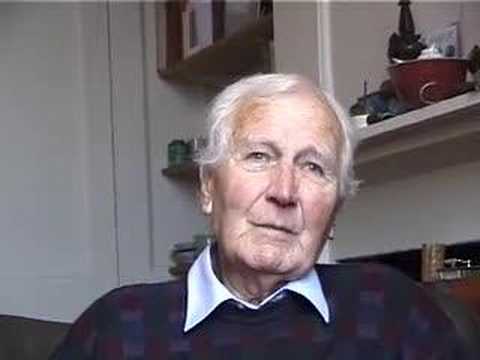


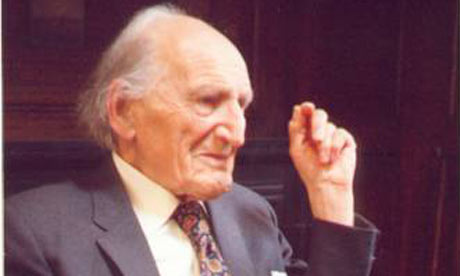
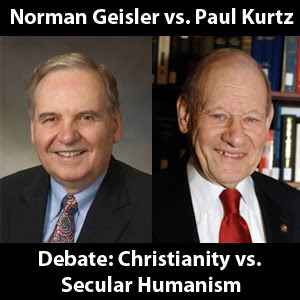







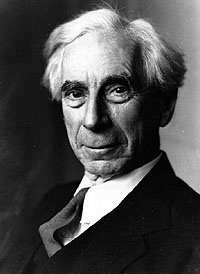
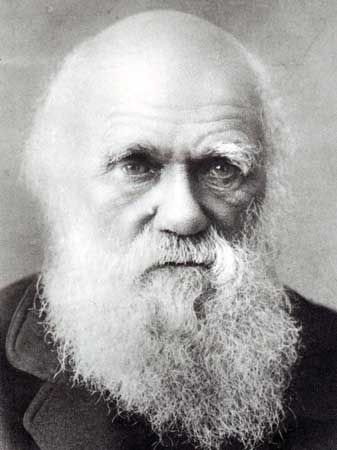 _
_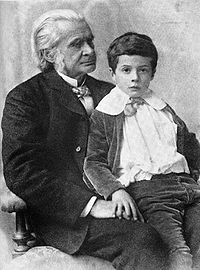


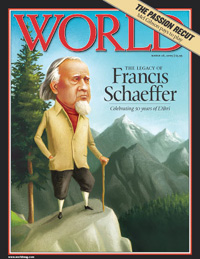


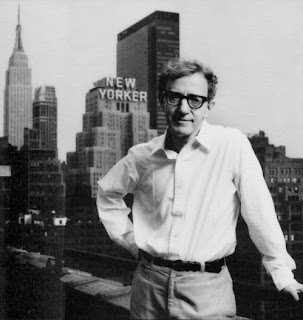




 The sisters are notably prolific, even considering their advantage of being two people. Their constant output gives the impression that they are dedicated to self-improvement and studying the techniques of their art form.


 You can see more work from Elena and Olivia on their


 The Daily Hatch
