Over the past couple of years, one of the most disturbing – and also revealing – things to happen in Washington is when Congresswoman Alexandria Ocasio-Cortez proposed giving more money to people “unwilling to work.”
As discussed in this interview, the left seems to want more dependency.
This is a very unfortunate development. Just four years ago, Joe Biden rejected no-strings-handouts such as “basic income.”
Let’s address one of the specific issues from the interview.
Regarding bonus unemployment benefits. I warned that we should be careful about over-interpreting short-run data. And that’s especially true because the states providing extra payments for joblessness are generally the states that also had the most onerous lockdown policies during the pandemic.
So, if unemployment is dropping in a state, is it because extra benefits have been cancelled, or is it a result of relaxed lockdown policies? Or is it something else, like lower tax rates?
One obvious way of trying to answer these questions is to ask people why they’re not working.
Here are the results of a recent poll, as reported by Λxios.
About 1.8 million out-of-work Americans have turned down jobs because of the generosity of unemployment insurance benefits, according to Morning Consult poll results released Wednesday. …U.S. businesses have been wrestling with labor supply shortages as folks capable of working have opted not to work for a variety of reasons. … Morning Consult surveyed 5,000 U.S. adults from June 22-25, 2021. Of those actively collecting unemployment benefits, 29% said they turned down job offers during the pandemic. In response to a follow-up question, 45% of that group said they turned down jobs specifically because of the generosity of the benefits.
So our friends on the left tell us that bigger handouts have no adverse economic consequences while the people getting the payments openly admit that they aren’t working because they can live off the taxpayers.
P.P.S. Since the interview also included some discussion of basic income, here’s a recent study showing how those universal handouts would cripple work incentives.
Regulatory policy is one of the five ingredients in the recipe for growth and prosperity.
Ideally, there should be a minimal amount of red tape, and it should be governed by sensible cost-benefit analysis (i.e., so it deals with genuine externalities such as pollution).
Unfortunately, politicians rarely favor this light-touch approach, in part because of unseemly “public choice” incentives and in part because they focus only on the benefit side of the cost-benefit equation.
But the cost is very real.
And that means that there are substantial benefits when governments reduce the regulatory burden.
Let’s look at some research published by Italy’s central bank. Sauro Mocetti, Emanuela Ciapanna, and Alessandro Notarpietro investigated the impact of liberalization last decade. Here’s what they looked at.
…the importance of structural reforms, aimed at promoting sustainable and balanced growth, has been at the center of the economic debate, in Italy… Structural reforms are measures designed for modifying the very structure of an economy; they typically act on the supply side,i.e. by removing obstacles to an efficient (and equitable) production of goods and services, and by increasing productivity, so as to improve a country’s capacity to increase its growth potential… The aim of this paper is to assess the macroeconomic impact of three major structural reforms carried out in Italy over the last decade. They include (i)liberalization of services, (ii) incentives to “business innovation” (included in the so-called “Industry 4.0” Plan) and (iii) several measures in the civil justice system aimed at increasing the courts efficiency.
And here are their results.
Our results indicate that the three reforms, introduced in different years and with different timing, starting in 2011 and up to 2017, have already begun to produce their effects on the main macroeconomic variables and on Italy’s potential output. In particular, and taking into account the uncertainty surrounding our micro-econometric estimates, by 2019 GDP was between 3 and 6% higher than it would otherwise have been in the absence of these reforms, with the largest contribution being attributable to the liberalizations in the service sector. A further increase of about 2 percentage points would be reached in the next decade, due to the unfolding of the effects of all the reforms considered here. Therefore, the long-run increase in Italy’s potential output would lie in between 4% and 8%. We also detect non-negligible effects on the labor market: employment would increase in the long term by about 0.4%, while the unemployment rate would be reduced by about 0.3 percentage points.
More output and more jobs. Hard to argue with that outcome.
Here are some charts from the study. Figure 7 shows the impact on some macroeconomic aggregates.
And Figure 8 shows the estimated improvement in the labor market.
These results are good news, but Italy still has a long way to go. It’s only ranked #51 according to Economic Freedom of the World, and it’s score for regulation has only improved by a slight margin over the past decade.
Last year, I shared this video from the Competitive Enterprise Institute to help explain how government bureaucrats are making it harder for Americans to clean their plates, bowls, and silverware.
Washington’s dishwasher mandate is just one example of how red tape diminishes the quality of life.
Bureaucrats have concocted other ways of spreading misery and frustration.
Call me crazy, but I don’t like spending extra time in the shower, flushing more than once, and risking self-immolation when I refill my lawnmower.
But there is a bit of good news. The Trump Administration wants to make it easier for us to clean up after dinner.
The Wall Street Journal’s editorial is a good summary of the issue.
For years American homes have been stuck with dishwashers that take forever and still don’t get the job done. A new Department of Energy rule…will help change that. …Regulations on energy and water usage—tightened in 2013 by the Obama Administration—mean that dishwashers now take at least two hours to complete a full wash cycle.Dishes may still emerge with pieces of last night’s lasagna baked on. …CEI petitioned the Energy Department to allow dishwashers that would reduce the average cycle to one hour from two, while also giving better performance. CEI argued that if the aim of the regulation was to conserve water and energy, it’s unlikely they achieved their purpose. People responded to poor dishwasher performance by pre-rinsing each dish before putting it through their washers, wasting more water… The revised DOE rule is…an example of how common-sense deregulation can deliver real benefits for the public.
And Sam Rutzick of Reason explains this latest development in the battle for clean dishes.
Trump’s Department of Energy finalized a rule establishing a new product class for residential dishwashers that will have a normal cycle time of up to one hour and that can use five gallons of water per cycle. Those rules effectively roll back an Obama-era rule limiting standard dishwashers to use no more than 3.1 gallons of water per cycle.That limit forced dishwasher companies to adjust their products’ cycle lengths. And the supposedly more efficient but less useful dishwashers have been a punchline…the average dishwasher cycle time has jumped from the one-hour cycle that was common a decade ago to more than two hours today. The tighter rules didn’t lead to energy savings for customers. …they actually increased water consumption by 63 billion gallons, as households would have to run their dishwashers multiple cycles, or pre-rinse their dishes by hand, in order to get dishes actually clean.
But Rutzick’s column contains a very important caveat.
Joe Biden may reverse this important bit of deregulation.
Unfortunately, the new rules may not last. While the incoming administration has been vague about which deregulatory efforts they intend to undo, they have spoken in favor of tightening environmental regulations—and the new dishwasher rules could be a casualty. If so, that’ll be bad news for consumers.
But I fear environmentalism is an area where he will push policy significantly to the left.
So I’m not overly optimistic that we’ll have better dishwashers in the future.
The only good news is that Americans, every time they do the dishes, will have an irritating reminder that government is the problem rather than the solution.
P.S. Yes, I realize better dishwashers are not as important as better tax policy (or as important as worse trade policy), but I don’t think politicians should be undermining our quality of life.
Open letter to President Obama (Part 549)
(Emailed to White House on 6-25-13.)
President Obama c/o The White House 1600 Pennsylvania Avenue NW Washington, DC 20500
But the regulatory burden goes way beyond these odd anecdotes. We’re talking about a huge cost to the economy, and it’s been getting worse for the past 12 years.
Team Obama is now the red tape record holder. …pages in the Code of Federal Regulations hit an all-time high of 174,545 in 2012, an increase of more than 21% during the last decade.…the cost of federal rules exceeded $1.8 trillion, roughly equal to the GDP of Canada. These costs are embedded in nearly everything Americans buy…at $14,768 per household, meaning that red tape is now the second largest item in the typical family budget after housing. Last year 4,062 regulations were at various stages of implementation inside the Beltway. The government completed work on 1,172, an increase of 16% over the 1,010 that the feds imposed in 2011, which was a 40% increase over 722 in 2010. …the Obama Administration did not break the all-time record of 81,405 pages it set in 2010. But the 78,961 pages it churned out in 2012 mean that the President has posted three of the four greatest paperwork years on record. And to be fair, if Mr. Obama were ever to acknowledge that this is a problem, he could reasonably blame George W. Bush for setting a lousy example. Despite the Obama myth that the Bush years were an era of deregulation, the Bush Administration routinely generated more than 70,000 pages a year in the Federal Register.
If those numbers don’t make you sit up and take notice, how about these ones?
Today’s Byzantine system is good fortax lawyers, accountants, and bureaucrats, but it’s bad news for America. We need to wipe the slate clean and get rid of this corrupt mess. And you knowhow to make that happen.
_____________
Thank you so much for your time. I know how valuable it is. I also appreciate the fine family that you have and your commitment as a father and a husband.
Sincerely,
Everette Hatcher III, 13900 Cottontail Lane, Alexander, AR 72002, ph 501-920-5733, lowcostsqueegees@yahoo.com
Dan Mitchell Talking about China, Regulation, and Wealth with Cavuto These posts are all dealing with issues that President Obama did not help on in his first term. I am hopeful that he will continue to respond to my letters that I have written him and that he will especially reconsider his view on the […]
I wondered why President Obama was claiming that he was not increasing regulations as much as Bush did. However, the real truth coming out in this article below: Chart of the Week: Obama Tops Bush With More, Costlier Major Regulations Alison Meyer March 18, 2012 at 2:40 pm President Obama famously declared in this year’s […]
In this article below you will see that the American people do not want Obamacare but yet it is being crammed down their throats and all the regulations that go with that too. Sickening Regulation by Michael D. Tanner Michael Tanner is a senior fellow at the Cato Institute and author of Leviathan on the […]
The Heritage Foundation website does it again. Take a look. CAFE Standards: Fleet-Wide Regulations Costly and Unwarranted By Diane Katz November 28, 2011 Automakers would be required to double current fleet-wide fuel economy by 2025 under regulations proposed last week by the Obama Administration. Advocates contend that this crackdown on the internal combustion engine would […]
Arkansas a model for other states on Medicaid expansion, I hope not!!!! This is a great article and I am sad that many of the Republicans in Arkansas are actually trusting the Obama administration to keep their word. Currently we have 3 scandals with this administration and that speaks volumes about their integrity. Think Again: […]
I have put up lots of cartoons from Dan Mitchell’s blog before and they have got lots of hits before. Many of them have dealt with the economy, eternal unemployment benefits, socialism, Greece, welfare state or on gun control. Reagan inherited a sluggish economy like President Obama did but he cut taxes and regulations and got the […]
I have put up lots of cartoons from Dan Mitchell’s blog before and they have got lots of hits before. Many of them have dealt with the economy, eternal unemployment benefits, socialism, Greece, welfare state or on gun control. The sad truth is Obama is wrong about the mean rich people keeping this county down. The Grinch […]
Obama is condemned by his own words from 2008 by encouraging housing loans to unworthy credit borrowers. Housing Finance Nominee: Expect Big Government Housing Policies Doomed to Fail John Ligon May 3, 2013 at 10:00 am Polaris/Newscom President Obama nominated Representative Mel Watt (D–NC) as new chief regulator to the Federal Housing Finance Agency (FHFA), […]
But there’s another positive trend at the state level. As indicated by this map from the Tax Foundation, tax rates have been reduced in several jurisdictions.
But stopping something bad is an achievement, regardless.
What about other states? The Tax Foundation’s article has all the details you could possibly want, including phase-in times and presence (in some states) of revenue triggers.
For purposes of today’s column, let’s simply focus on what’s happening to top tax rates. Here’s a table with the key results, ranked by the size of the rate reduction.
Kudos to Arizona, of course, but Iowa and Louisiana also deserve praise for significantly dropping their top tax rates.
As these states move in the right direction, keep in mind that some states are shifting (or trying to shift) in the wrong direction.
Much of my writing is focused on the real-world impact of government policy, and this is why I repeatedly look at the relative economic performance of big government jurisdictions and small government jurisdictions.
So we’ve looked at high-tax states that are languishing, such as California and Illinois, and compared them to zero-income-tax states such as Texas.
With this in mind, you can understand that I was intrigued to see that even the establishment media is noticing that Texas is out-pacing the rest of the nation.
Here are some excerpts from a report by CNN Money on rapid population growth in Texas.
More Americans moved to Texas in recent years than any other state: A net gain of more than 387,000 in the latest Census for 2013. …Five Texas cities — Austin, Houston, San Antonio, Dallas and Fort Worth — were among the top 20 fastest growing large metro areas. Some smaller Texas metro areas grew even faster. In oil-rich Odessa, the population grew 3.3% and nearby Midland recorded a 3% gain.
But why is the population growing?
Well, CNN Money points out that low housing prices and jobs are big reasons.
And on the issue of housing, the article does acknowledge the role of “easy regulations” that enable new home construction.
But on the topic of jobs, the piece contains some good data on employment growth, but no mention of policy.
Jobs is the No. 1 reason for population moves, with affordable housing a close second. …Jobs are plentiful in Austin, where the unemployment rate is just 4.6%. Moody’s Analytics projects job growth to average 4% a year through 2015. Just as important, many jobs there are well paid: The median income of more than $75,000 is nearly 20% higher than the national median.
That’s it. Read the entire article if you don’t believe me, but the reporter was able to write a complete article about the booming economy in Texas without mentioning – not even once – that there’s no state income tax.
But that wasn’t the only omission.
The article doesn’t mention that Texas is the 4th-best state in the Tax Foundation’s ranking of state and local tax burdens.
The article doesn’t mention that Texas was the least oppressive state in the Texas Public Policy Foundation’s Soft Tyranny Index.
The article doesn’t mention that Texas was ranked #11 in the Tax Foundation’s State Business Tax Climate Index.
The article doesn’t mention that Texas is in 14th place in the Mercatus ranking of overall freedom for the 50 states (and in 10th place for fiscal freedom).
By the way, I’m not trying to argue that Texas is the best state.
Indeed, it only got the top ranking in one of the measures cited above.
My point, instead, is simply to note that it takes willful blindness to write about the strong population growth and job performance of Texas without making at least a passing reference to the fact that it is a low-tax, pro-market state.
At least compared to other states. And especially compared to the high-tax states that are stagnating.
Such as California, as illustrated by this data and this data, as well as this Lisa Benson cartoon.
Such as Illinois, as illustrated by this data and this Eric Allie cartoon.
P.S. Paul Krugman has tried to defend California, which has made him an easy target. I debunked him earlier this year, and I also linked to a superb Kevin Williamson takedown of Krugman at the bottom of this post.
P.P.S. Once again, I repeat the two-part challenge I’ve issued to the left. I’ll be happy if any statists can successfully respond to just one of the two questions I posed.
California is the Greece of the USA, but Texas is not perfect either!!! Just Because California Is Terrible, that Doesn’t Mean Texas Is Perfect January 21, 2013 by Dan Mitchell Texas is in much better shape than California. Taxes are lower, in part because Texas has no state income tax. No wonder the Lone Star State […]
We should lower federal taxes because jobs are going to states like Texas that have low taxes. (We should lower state taxes too!!) What Can We Learn by Comparing the Employment Situation in Texas vs. California? April 3, 2013 by Dan Mitchell One of the great things about federalism, above and beyond the fact that it […]
I got on the Arkansas Times Blog and noticed that a person on there was bragging about the high minimum wage law in San Francisco and how everything was going so well there. On 2-15-13 on the Arkansas Times Blog I posted: Couldn’t be better (the person using the username “Couldn’t be better) is bragging […]
Does Government Have a Revenue or Spending Problem? People say the government has a debt problem. Debt is caused by deficits, which is the difference between what the government collects in tax revenue and the amount of government spending. Every time the government runs a deficit, the government debt increases. So what’s to blame: too […]
Former California Governor Arnold Schwarzenegger with his family I posted a portion of an article by John Fund of the Wall Street Journal that pointed out that many businesses are leaving California because of all of their government red tape and moving to Texas. My username is SalineRepublican and this is […]
John Fund at Chamber Day, Part 1 Last week I got to attend the first ever “Conservative Lunch Series” presented by KARN and Americans for Prosperity Foundation at the Little Rock Hilton on University Avenue. This monthly luncheon will be held the fourth Wednesday of every month. The speaker for today’s luncheon was John Fund. John […]
___________ California and France have raised taxes so much that it has hurt economic growth!!! Mirror, Mirror, on the Wall, which Nation and State Punish Success Most of All? September 25, 2014 by Dan Mitchell I’ve shared some interested rankings on tax policy, including a map from the Tax Foundation showing which states have the earliest […]
___________ Jerry Brown raised taxes in California and a rise in the minimum wage, but it won’t work like Krugman thinks!!!! This cartoon below shows what will eventually happen to California and any other state that keeps raising taxes higher and higher. Krugman’s “Gotcha” Moment Leaves Something to Be Desired July 25, 2014 by […]
Open letter to President Obama (Part 573) (Emailed to White House on 7-29-13.) President Obama c/o The White House 1600 Pennsylvania Avenue NW Washington, DC 20500 Dear Mr. President, I know that you receive 20,000 letters a day and that you actually read 10 of them every day. I really do respect you for trying to get […]
Open letter to President Obama (Part 561) (Emailed to White House on 6-25-13.) President Obama c/o The White House 1600 Pennsylvania Avenue NW Washington, DC 20500 Dear Mr. President, I know that you receive 20,000 letters a day and that you actually read 10 of them every day. I really do respect you for trying to get […]
This means Joe Biden and Democrats need to make a choice: What matters most, their desire to make government bigger, or their promise not to impose higher taxes on families making less than $400K per year?
We now have the answer to that question, and I hope nobody is surprised to learn that they picked government over taxpayers.
Here are some excerpts from a report by the New York Times.
Democrats have agreed to include a tax on imports from nations that lack aggressive climate change policies as part of a sweeping $3.5 trillion budget plan… The move to tax imports was made public Wednesday, the same day that the European Union outlined its own proposal for a similar carbon border tax, a novel tool that is designed to protect domestic manufacturing.…skeptics caution that a carbon border tax, which has yet to be implemented by any country, would be difficult to carry out, and could anger trading partners and face a challenge at the World Trade Organization. Unlike the Europeans, who outlined their plan in a 291-page document, Democrats released no details about their tax proposal on Wednesday. Calling it simply a “polluter import fee,” the framework does not explain what would be taxed, at what rate or how much revenue it would expect to generate. …verifying the amount of carbon…produced by foreign manufacturing is tricky, experts say.
It’s always a bad idea to give politicians a new source of revenue.
But it’s a worse idea to give them a new source of revenue that will require bureaucrats to measure the amount of carbon produced by every imported good. As I pointed out a few days ago when discussing the European Union’s version of this protectionist scheme, that’s a huge recipe for cronyism and favoritism.
P.S. I’ll be very curious to see how different international bureaucracies react to these anti-trade proposals. The OECD and IMF, while usually bad on fiscal issues, historically have favored unfettered trade. And the World Trade Organizationexists specifically to protect global commerce. But will these organizations now change their position to curry favor with the nations that control their purse strings?
The theory of “public choice” suggests we shouldn’t be optimistic.
I asked yesterday for readers to weigh in on why they support (or don’t support) the Second Amendment. The poll is getting lots of responses, though some folks have complained that I should have included more answers, such as “To protect the rights of hunters.”
And I even had a few left-wing friends tell me I should have included more options for them, such as “The Second Amendment doesn’t mean military-style weapons” or “The Second Amendment doesn’t guarantee individual gun ownership.”
Speaking of our friends on the left, Vice President Joe Biden is overseeing an Administration effort to concoct new gun laws. In the interests of being helpful, I suggest the Veep’s team look at these four videos.
The good news, as I wrote earlier this year, is that he probably isn’t serious about some of his worst ideas.
Biden is a statist, but not overly ideological. His support for bigger government is largely a strategy of catering to the various interest groups that dominate the Democratic Party. The good news is that he’s an incrementalist and won’t aggressively push for a horrifying FDR-style agenda if he gets to the White House.
But what if Joe Biden’s health deteriorates and Kamala Harris – sooner or later – winds up in charge?
And it doesn’t appear that being Biden’s choice for Vice President has led her to moderate her views. Consider this campaign ad, where she openly asserted that “equitable treatment means we all end up at the same place.”
The notion that we should strive for equality of outcomes rather than equality of opportunity is horrifying.
For all intents and purposes,Harris has embraced a harsh version of redistributionism where everyone above average is punished and everyone below average is rewarded.
This goes way beyond a safety net and it’s definitely a recipe for economic misery since people on both sides of the equationhave less incentive to be productive.
I’m not the only one to be taken aback by Harris’ dogmatic leftism.
Robby Soave, writing for Reason, is very critical of her radical outlook.
Harris gives voice to a leftist-progressive narrative about the importance of equity—equal outcomes—rather than mere equality before the law. …Harris contrasted equal treatment—all people getting the same thing—with equitable treatment,which means “we all end up at the same place.” …This may seem like a trivial difference, but when it comes to public policy, the difference matters. A government shouldbe obligated to treat all citizens equally, giving them the same access to civil rights and liberties like voting, marriage, religious freedom, and gun ownership. …A mandate to foster equity, though, would give the government power to violate these rights in order to achieve identical social results for all people.
And, in a column for National Review, Brad Polumbo expresses similar reservations about her views.
Whether she embraces the label “socialist” or not, Harris’s stated agenda and Senate record both reveal her to be positioned a long way to the left on matters of economic policy. From health care to the environment to housing, Harris thinks the answer to almost every problem we face is simply more government and more taxpayer money — raising taxes and further indebting future generations in the process.…Harris…supports an astounding $40 trillion in new spending over the next decade. In a sign of just how far left the Democratic Party has shifted on economics, Harris backs more than 20 times as much spending as Hillary Clinton proposed in 2016. …And this is not just a matter of spending. During her failed presidential campaign, Harris supported a federal-government takeover of health care… The senator jumped on the “Green New Deal” bandwagon as well. She co-sponsored the Green New Deal resolution in the Senate that called for a “new national, social, industrial, and economic mobilization on a scale not seen since World War II and the New Deal era.” …she supports enacting price controls on housing across the country. …The left-wing group Progressive Punch analyzed Harris’s voting record and found that she is the fourth-most liberal senator, more liberal even than Massachusetts senator Elizabeth Warren. Similarly, the nonpartisan organization GovTrack.us deemed Harris the furthest-left member of the Senate for the 2019 legislative year. (Spoiler alert: If your voting record is to the left of Bernie Sanders, you might be a socialist.)
To be fair, Harris is simply a politician, so we have no idea what she really believes. Her hard-left agenda might simply be her way of appealing to Democratic voters, much as Republicans who run for president suddenly decide they support big tax cuts and sweeping tax reform.
But whether she’s sincere or insincere, it’s troubling that she actually says it’s the role of government to make sure we all “end up at the same place.”
Let’s close with a video clip from Milton Friedman. At the risk of understatement, he has a different perspective than Ms. Harris.
Since we highlighted Harris’ key quote, let’s also highlight the key quote from Friedman.
Amen.
P.S. It appears Republicans will hold the Senate, which presumably (hopefully?) means that any radical proposals would be dead on arrival, regardless of whether they’re proposed by Biden or Harris.
After Barack Obama took office (and especially after he was reelected), there was a big uptick in the number of rich people who chose to emigrate from the United States.
There are many reasons wealthy people choose to move from one nation to another, but Obama’s embrace of class-warfare tax policy (including FATCA) was seen as a big factor.
Joe Biden’s tax agenda is significantly more punitive than Obama’s, so we may see something similar happen if he wins the 2020 election.
Given the economic importance of innovators, entrepreneurs, and inventors, this would be not be good news for the American economy.
The New York Timesreported late last year that the United States could be shooting itself in the foot by discouraging wealthy residents.
…a different group of Americans say they are considering leaving — people of both parties who would be hit by the wealth tax… Wealthy Americans often leave high-tax states like New York and California for lower-tax ones like Florida and Texas. But renouncing citizenship is a far more permanent, costly and complicated proposition. …“America’s the most attractive destination for capital, entrepreneurs and people wanting to get a great education,” said Reaz H. Jafri, a partner and head of the immigration practice at Withers, an international law firm. “But in today’s world, when you have other economic centers of excellence — like Singapore, Switzerland and London — people don’t view the U.S. as the only place to be.” …now, the price may be right to leave. While the cost of expatriating varies depending on a person’s assets, the wealthiest are betting that if a Democrat wins…, leaving now means a lower exit tax. …The wealthy who are considering renouncing their citizenship fear a wealth tax less than the possibility that the tax on capital gains could be raised to the ordinary income tax rate, effectively doubling what a wealthy person would pay… When Eduardo Saverin, a founder of Facebook…renounced his United States citizenship shortly before the social network went public, …several estimates said that renouncing his citizenship…saved him $700 million in taxes.
Here are some excerpts from a 2017 Bloomberg story.
Australia is luring increasing numbers of global millionaires, helping make it one of the fastest growing wealthy nations in the world… Over the past decade, total wealth held in Australia has risen by 85 percent compared to 30 percent in the U.S. and 28 percent in the U.K… As a result, the average Australian is now significantly wealthier than the average American or Briton. …Given its relatively small population, Australia also makes an appearance on a list of average wealth per person. This one is, however, dominated by small tax havens.
Here’s one of the charts from the story.
As you can see, Australia is doing very well, though the small tax havens like Monaco are world leaders.
I’m mystified, however, that the Cayman Islands isn’t listed.
But I’m digressing.
Let’s get back to our main topic. It’s worth noting that even Greece is seeking to attract rich foreigners.
The new tax law is aimed at attracting fresh revenues into the country’s state coffers – mainly from foreigners as well as Greeks who are taxed abroad – by relocating their tax domicile to Greece, as it tries to woo “high-net-worth individuals” to the Greek tax register.The non-dom model provides for revenues obtained abroad to be taxed at a flat amount… Having these foreigners stay in Greece for at least 183 days a year, as the law requires, will also entail expenditure on accommodation and everyday costs that will be added to the Greek economy. …most eligible foreigners will be able to considerably lighten their tax burden if they relocate to Greece…nevertheless, the amount of 500,000 euros’ worth of investment in Greece required of foreigners and the annual flat tax of 100,000 euros demanded (plus 20,000 euros per family member) may keep many of them away.
The system is too restrictive, but it will make the beleaguered nation an attractive destination for some rich people. After all, they don’t even have to pay a flat tax, just a flat fee.
Italy has enjoyed some success with a similar regime to entice millionaires.
Last but not least, an article published last year has some fascinating details on the where rich people move and why they move.
The world’s wealthiest people are also the most mobile. High net worth individuals (HNWIs) – persons with wealth over US$1 million – may decide to pick up and move for a number of reasons. In some cases they are attracted by jurisdictions with more favorable tax laws… Unlike the middle class, wealthy citizens have the means to pick up and leave when things start to sideways in their home country. An uptick in HNWI migration from a country can often be a signal of negative economic or societal factors influencing a country. …Time-honored locations – such as Switzerland and the Cayman Islands – continue to attract the world’s wealthy, but no country is experiencing HNWI inflows quite like Australia. …The country has a robust economy, and is perceived as being a safe place to raise a family. Even better, Australia has no inheritance tax
Here’s a map from the article.
The good news is that the United States is attracting more millionaires than it’s losing (perhaps because of the EB-5 program).
The bad news is that this ratio could flip after the election. Indeed, it may already be happening even though recent data on expatriation paints a rosy picture.
The bottom line is that the United States should be competing to attract millionaires, not repel them. Assuming, of course, politicians care about jobs and prosperity for the rest of the population.
P.S. American politicians, copying laws normally imposed by the world’s most loathsome regimes, have imposed an “exit tax” so they can grab extra cash from rich people who choose to become citizens elsewhere.
P.P.S. I’ve argued that Australia is a good place to emigrate even for those of us who aren’t rich.
While acknowledging that Social Security and Medicare also are in desperate need of modernization, I wrote that Medicaid reformshould be the first priority.
But I’d be happy if we made progress on any type of entitlement reform, so I don’t think there are right or wrong answers to this kind of question.
We have the same type of question this week. A reader sent an email to ask “Which federal department should be abolished first?”
I guess this is what is meant when people talk about a target-rich environment. We have an abundance of candidates:
Simply stated, there is no legitimate argument for HUD. And I think there would be the least political resistance.
As with the answer to the question about entitlements, this is a judgment call. I’d be happy to be proven wrong if it meant that politicians were aggressively going after another department. Anything that reduces the burden of government spending is a step in the right direction
I identified four heroes from the “Battle of Ideas” video I shared in late August – Friedrich Hayek, Milton Friedman, Ronald Reagan, and Margaret Thatcher. Here’s one of those heroes, Milton Friedman, explaining what’s needed to control big government.
Libertarians and others are often torn about school choice. They may wish to see the government schooling monopoly weakened, but they may resist supporting choice mechanisms, like vouchers and education savings accounts, because they don’t go far enough. Indeed, most current choice programs continue to rely on taxpayer funding of education and don’t address the underlying compulsory nature of elementary and secondary schooling.
Skeptics may also have legitimate fears that taxpayer-funded education choice programs will lead to over-regulation of previously independent and parochial schooling options, making all schooling mirror compulsory mass schooling, with no substantive variation.
Friedman Challenged Compulsory Schooling Laws
Milton Friedman had these same concerns. The Nobel prize-winning economist is widely considered to be the one to popularize the idea of vouchers and school choice beginning with his 1955 paper, “The Role of Government in Education.” His vision continues to be realized through the important work of EdChoice, formerly the Friedman Foundation for Education Choice, that Friedman and his economist wife, Rose, founded in 1996.
July 31 is Milton Friedman’s birthday. He died in 2006 at the age of 94, but his ideas continue to have an impact, particularly in education policy.
Friedman saw vouchers and other choice programs as half-measures. He recognized the larger problems of taxpayer funding and compulsion, but saw vouchers as an important starting point in allowing parents to regain control of their children’s education. In their popular book, Free To Choose, first published in 1980, the Friedmans wrote:
We regard the voucher plan as a partial solution because it affects neither the financing of schooling nor the compulsory attendance laws. We favor going much farther. (p.161)
They continued:
The compulsory attendance laws are the justification for government control over the standards of private schools. But it is far from clear that there is any justification for the compulsory attendance laws themselves. (p. 162)
The Friedmans admitted that their “own views on this have changed over time,” as they realized that “compulsory attendance at schools is not necessary to achieve that minimum standard of literacy and knowledge,” and that “schooling was well-nigh universal in the United States before either compulsory attendance or government financing of schooling existed. Like most laws, compulsory attendance laws have costs as well as benefits. We no longer believe the benefits justify the costs.” (pp. 162-3)
Still, they felt that vouchers would be the essential starting point toward chipping away at monopoly mass schooling by putting parents back in charge. School choice, in other words, would be a necessary but not sufficient policy approach toward addressing the underlying issue of government control of education.
Vouchers as a First Step
In their book, the Friedmans presented the potential outcomes of their proposed voucher plan, which would give parents access to some or all of the average per-pupil expenditures of a child enrolled in public school. They believed that vouchers would help create a more competitive education market, encouraging education entrepreneurship. They felt that parents would be more empowered with greater control over their children’s education and have a stronger desire to contribute some of their own money toward education. They asserted that in many places “the public school has fostered residential stratification, by tying the kind and cost of schooling to residential location” and suggested that voucher programs would lead to increased integration and heterogeneity. (pp. 166-7)
To the critics who said, and still say, that school choice programs would destroy the public schools, the Friedmans replied that these critics fail to
explain why, if the public school system is doing such a splendid job, it needs to fear competition from nongovernmental, competitive schools or, if it isn’t, why anyone should object to its “destruction.” (p. 170)
What I appreciate most about the Friedmans discussion of vouchers and the promise of school choice is their unrelenting support of parents. They believed that parents, not government bureaucrats and intellectuals, know what is best for their children’s education and well-being and are fully capable of choosing wisely for their children—when they have the opportunity to do so.
They wrote:
Parents generally have both greater interest in their children’s schooling and more intimate knowledge of their capacities and needs than anyone else. Social reformers, and educational reformers in particular, often self-righteously take for granted that parents, especially those who are poor and have little education themselves, have little interest in their children’s education and no competence to choose for them. That is a gratuitous insult. Such parents have frequently had limited opportunity to choose. However, U.S. history has demonstrated that, given the opportunity, they have often been willing to sacrifice a great deal, and have done so wisely, for their children’s welfare. (p. 160).
Today, school voucher programs exist in 15 states plus the District of Columbia. These programs have consistently shown that when parents are given the choice to opt-out of an assigned district school, many will take advantage of the opportunity. In Washington, D.C., low-income parents who win a voucher lottery send their children to private schools.
The most recent three-year federal evaluationof voucher program participants found that while student academic achievement was comparable to achievement for non-voucher students remaining in public schools, there were statistically significant improvements in other important areas. For instance, voucher participants had lower rates of chronic absenteeism than the control groups, as well as higher student satisfaction scores. There were also tremendous cost-savings.
In Wisconsin, the Milwaukee Parental Choice Program has served over 28,000 low-income students attending 129 participating private schools.
According to Corey DeAngelis, Director of School Choice at the Reason Foundation and a prolific researcher on the topic, the recent analysis of the D.C. voucher program “reveals that private schools produce the same academic outcomes for only a third of the cost of the public schools. In other words, school choice is a great investment.”
In Wisconsin, the Milwaukee Parental Choice Program was created in 1990 and is the nation’s oldest voucher program. It currently serves over 28,000 low-income students attending 129 participating private schools. Like the D.C. voucher program, data on test scores of Milwaukee voucher students show similar results to public school students, but non-academic results are promising.
Increased Access and Decreased Crime
Recent research found voucher recipients had lower crime rates and lower incidences of unplanned pregnancies in young adulthood. On his birthday, let’s celebrate Milton Friedman’s vision of enabling parents, not government, to be in control of a child’s education.
According to Howard Fuller, an education professor at Marquette University, founder of the Black Alliance for Educational Options, and one of the developers of the Milwaukee voucher program, the key is parent empowerment—particularly for low-income minority families.
In an interview with NPR, Fuller said: “What I’m saying to you is that there are thousands of black children whose lives are much better today because of the Milwaukee parental choice program,” he says. “They were able to access better schools than they would have without a voucher.”
Putting parents back in charge of their child’s education through school choice measures was Milton Friedman’s goal. It was not his ultimate goal, as it would not fully address the funding and compulsion components of government schooling; but it was, and remains, an important first step. As the Friedmans wrote in Free To Choose:
The strong American tradition of voluntary action has provided many excellent examples that demonstrate what can be done when parents have greater choice. (p. 159).
On his birthday, let’s celebrate Milton Friedman’s vision of enabling parents, not government, to be in control of a child’s education.
Michael Harrington: If you don’t have the expertise, the knowledge technology today, you’re out of the debate. And I think that we have to democratize information and government as well as the economy and society. FRIEDMAN: I am sorry to say Michael Harrington’s solution is not a solution to it. He wants minority rule, I […]
By Everette Hatcher III | Posted in Current Events, Milton Friedman | Edit | Comments (0)
PETERSON: Well, let me ask you how you would cope with this problem, Dr. Friedman. The people decided that they wanted cool air, and there was tremendous need, and so we built a huge industry, the air conditioning industry, hundreds of thousands of jobs, tremendous earnings opportunities and nearly all of us now have air […]
By Everette Hatcher III | Posted in Current Events, Milton Friedman | Edit | Comments (0)
Part 5 Milton Friedman: I do not believe it’s proper to put the situation in terms of industrialist versus government. On the contrary, one of the reasons why I am in favor of less government is because when you have more government industrialists take it over, and the two together form a coalition against the ordinary […]
By Everette Hatcher III | Posted in Current Events, Milton Friedman | Edit | Comments (0)
The fundamental principal of the free society is voluntary cooperation. The economic market, buying and selling, is one example. But it’s only one example. Voluntary cooperation is far broader than that. To take an example that at first sight seems about as far away as you can get __ the language we speak; the words […]
By Everette Hatcher III | Posted in Current Events, Milton Friedman | Edit | Comments (0)
_________________________ Pt3 Nowadays there’s a considerable amount of traffic at this border. People cross a little more freely than they use to. Many people from Hong Kong trade in China and the market has helped bring the two countries closer together, but the barriers between them are still very real. On this side […]
By Everette Hatcher III | Posted in Current Events, Milton Friedman | Edit | Comments (0)
Aside from its harbor, the only other important resource of Hong Kong is people __ over 4_ million of them. Like America a century ago, Hong Kong in the past few decades has been a haven for people who sought the freedom to make the most of their own abilities. Many of them are […]
By Everette Hatcher III | Posted in Current Events, Milton Friedman | Edit | Comments (0)
“FREE TO CHOOSE” 1: The Power of the Market (Milton Friedman) Free to Choose ^ | 1980 | Milton Friedman Posted on Monday, July 17, 2006 4:20:46 PM by Choose Ye This Day FREE TO CHOOSE: The Power of the Market Friedman: Once all of this was a swamp, covered with forest. The Canarce Indians […]
If you would like to see the first three episodes on inflation in Milton Friedman’s film series “Free to Choose” then go to a previous post I did. Ep. 9 – How to Cure Inflation [4/7]. Milton Friedman’s Free to Choose (1980) Uploaded by investbligurucom on Jun 16, 2010 While many people have a fairly […]
Charlie Rose interview of Milton Friedman My favorite economist: Milton Friedman : A Great Champion of Liberty by V. Sundaram Milton Friedman, the Nobel Prize-winning economist who advocated an unfettered free market and had the ear of three US Presidents – Nixon, Ford and Reagan – died last Thursday (16 November, 2006 ) in San Francisco […]
By Everette Hatcher III | Posted in Milton Friedman | Edit | Comments (0)
Stearns Speaks on House Floor in Support of Balanced Budget Amendment Uploaded by RepCliffStearns on Nov 18, 2011 Speaking on House floor in support of Balanced Budget Resolution, 11/18/2011 ___________ Below are some of the main proposals of Milton Friedman. I highly respected his work. David J. Theroux said this about Milton Friedman’s view concerning […]
By Everette Hatcher III | Posted in Milton Friedman | Edit | Comments (0)
Milton Friedman: Free To Choose – The Failure Of Socialism With Ronald Reagan (Full) Published on Mar 19, 2012 by NoNationalityNeeded Milton Friedman’s writings affected me greatly when I first discovered them and I wanted to share with you. We must not head down the path of socialism like Greece has done. Abstract: Ronald Reagan […]
By Everette Hatcher III | Posted in Milton Friedman, President Obama | Edit | Comments (1)
What a great defense of Milton Friedman!!!! Defaming Milton Friedman by Johan Norberg This article appeared in Reason Online on September 26, 2008 PRINT PAGE CITE THIS Sans Serif Serif Share with your friends: ShareThis In the future, if you tell a student or a journalist that you favor free markets and limited government, there is […]
Francis Schaeffer has rightly noted concerning Hugh Hefner that Hefner’s goal with the “playboy mentality is just to smash the puritanical ethnic.” I have made the comparison throughout this series of blog posts between Hefner and King Solomon (the author of the BOOK of ECCLESIASTES). I have noticed that many preachers who have delivered sermons on Ecclesiastes have also mentioned Hefner as a modern day example of King Solomon especially because they both tried to find sexual satisfaction through the volume of women you could slept with in a lifetime.
Ecclesiastes 2:8-10 The Message (MSG)
I piled up silver and gold, loot from kings and kingdoms. I gathered a chorus of singers to entertain me with song, and—most exquisite of all pleasures— voluptuous maidens for my bed.
9-10 Oh, how I prospered! I left all my predecessors in Jerusalem far behind, left them behind in the dust. What’s more, I kept a clear head through it all. Everything I wanted I took—I never said no to myself. I gave in to every impulse, held back nothing. I sucked the marrow of pleasure out of every task—my reward to myself for a hard day’s work!
1 Kings 11:1-3 English Standard Version (ESV)
11 Now King Solomon loved many foreign women, along with the daughter of Pharaoh: Moabite, Ammonite, Edomite, Sidonian, and Hittite women, 2 from the nations concerning which the Lord had said to the people of Israel, “You shall not enter into marriage with them, neither shall they with you, for surely they will turn away your heart after their gods.” Solomon clung to these in love.3 He had 700 wives, who were princesses, and 300 concubines. And his wives turned away his heart.
Francis Schaeffer observed concerning Solomon, “You can not know woman by knowing 1000 women.”
–
__
May 7, 2016
Hugh Hefner Playboy Mansion 10236 Charing Cross Road Los Angeles, CA 90024-1815
Dear Mr. Hefner,
I got to attend the Paul McCartney concert on April 30, 2016 in Little Rock and I really enjoyed the song BLACKBIRD that Paul played. My family and I really appreciated that stand that Paul took back in the 1960’s by writing that song. I wanted to tell you something that I really appreciate about both your life and also Paul’s. YOU BOTH HAVE ALWAYS STOOD FOR RACIAL EQUALITY!!!!
Today I got to attend the graduation of my niece from Miss St University and I noticed that Miss St had won their conference in basketball in 1959, 1960, 1961, 1962, and 1963 but they had only chose to attend the tournament in 1963. I wondered why. SINCE YOU GREW UP IN CHICAGO YOU MAY KNOW THE ANSWER CONCERNING “LOYOLA OF CHICAGO” WINNING THE NCAA BASKETBALL NATIONAL CHAMPIONSHIP IN 1963 WITH AN INTEGRATED TEAM!!!! Here is the rest of the story:
The significance was not lost in the moment. When Jerry Harkness extended his hand to Joe Dan Gold before the ball was tipped, the glare of the popping flashbulbs nearly blinded both men.
People understood then what was happening, what it meant that Gold, a white basketball player from Mississippi State, was shaking hands with Harkness, an African-American player from Loyola (Ill.) on a March day in 1963 in East Lansing, Mich.
Just five months earlier, with U.S. marshals and federal troops on hand to quell the rioting, James Meredith enrolled at the University of Mississippi, integrating the school only 90 miles from MSU’s campus.
Less than a month after the game, Martin Luther King Jr. would write his famous “Letter from a Birmingham Jail,” an influential essay that spread across the nation.
In between the two seminal moments in civil rights history, a team from Starkville snuck out of town, defying a state injunction to play a basketball game against a team with a largely African-American roster.
Nearly 50 years later, that NCAA tournament regional semifinal game between Mississippi State and Loyola has been all but forgotten, rendered a footnote to our racial, social and athletic history. The significance that was present in that moment has eroded over time.
Mississippi State won the SEC championship in 1959, 1961 and 1962, but each year, the Maroons watched Kentucky represent the league in the postseason, victimized by an unwritten but largely enforced Mississippi rule that prohibited state schools from playing against integrated teams.
That year, 1963, Loyola was 24-2 and ranked third in the country. The Ramblers, with four African-American players on their roster, beat Tennessee Tech by 69 points, setting up a regional semifinal against Mississippi State.
“The biggest thing at the time,” said Harkness, a two-time All-American, “is we didn’t know if they were coming.”
Neither did Mississippi State.
Gov. Ross Barnett, an avowed segrationist, made no secret of his stance concerning the game: The Maroons were not to leave.
But buoyed by an angry fan base that was tired of seeing its team stay home while Kentucky competed, and an equally fed-up coach in James “Babe” McCarthy, Mississippi State president Dean Colvard vowed to let his team play.
“It had begun to look as if our first major racial issue might pertain to basketball rather than to admissions,” Colvard later said. “Although I knew opinion would be divided and feelings would be intense because of the unwritten law, I thought I had gained sufficient following that, win or lose, I should take decisive action.”
The state, backed by the university board, wouldn’t cede so easily. Sen. Billy Mitts, a former Mississippi State student body president and cheerleader, convinced a judge to issue a temporary injunction to prevent the team from leaving.
But in perhaps the best end-around in sports history, Colvard directed McCarthy to head for the Tennessee state line and stay in Memphis while he traveled to Alabama for a speaking engagement to prevent the injunction from being served. The next day, an assistant coach ferried the freshmen and some of the reserve players to a private plane as decoys and, when they saw that the coast was clear, called for the rest of the team to join them.
“That was the nerve-racking part,” Shows said. “We didn’t have our coach. We didn’t have half our team. We didn’t know if we were going to be able to play the game. But it wasn’t us boys. Don’t build us up. It was Dr. Colvard and Coach McCarthy. Those two men had the backbone.”
The plane carrying the players arrived in Nashville, where McCarthy and athletic director Wade Walker had flown into from Memphis. Reunited now, the MSU traveling party flew a commercial flight to East Lansing.
Meanwhile in Chicago, the Rambler players were quickly getting an idea of what they were up against. Hate mail arrived in the dorms — some directly from Ku Klux Klan members.
Loyola had been through its own racial strife before. Coach George Ireland loved showing up Southern teams and already had taken his squad to New Orleans and Houston, where they were met with less than warm receptions. In New Orleans, the black players had to stay with other black families, sequestered from their teammates, and in Houston, fans spewed vitriol and hate from the stands.
But this — printed letters arriving directly in the dorms — was worse.
“That was personal,” Harkness said. “They know where you are, where you live. It was frightening.”
Ireland eventually had the mail forwarded directly to him, and on March 15, the two teams made history.
“God bless those kids,” Shows said. “We had no fans there, but someone played our fight song. I’ll never forget that.”
So what really happened in this game?
Nothing and everything.
No riots or fights. No drama.
Loyola won 61-51 and went on to win the national title, upsetting two-time defending national champion Cincinnati at Louisville’s Freedom Hall in front of a crowd that included, Harkness remembers, native son Cassius Clay.
Mississippi State returned home to a surprisingly warm reception from fans. Shows remembers the plane flying over the highway and seeing bumper-to-bumper traffic below, with throngs of people driving to the airport to greet the Maroons. A postgame newspaper survey found that Mississippians were overwhelmingly in favor of letting the team play the game.
Colvard kept his job, as did McCarthy. For a time, the players and participants were rightly feted. Harkness went with Jesse Jackson to listen to Dr. King speak, and was stunned at the number of people who knew about his game.
“We did it together,” Harkness said. “To me, that’s why it’s so important. We showed you could do it together, without a fight.”
The game didn’t usher in dramatic change immediately. The SEC wouldn’t welcome its first black basketball player until 1967, when Perry Wallace played for Vanderbilt, and it wasn’t until 1968 that an African-American earned a football letter in the league.
___
Jesus said “A new commandment I give to you, that you love one another, even as I have loved you, that you also love one another.”
Hugh Hefner isn’t one of the names you usually think of when you hear the words “civil rights pioneer.” So I was more than a little dubious when I got invited to a screening of Hugh Hefner: Playboy, Activist and Rebel, the newly released documentary that, the publicist promised, would show how the founder of Playboy magazine had been in the vanguard of the struggle for racial equality in the 1960s.
And for the first few moments, I sat there rolling my eyes at what seemed to be no more than the expected hagiography, an attempt by a rich old guy to shape his legacy while he still could. (Despitehis recent effort to take Playboy Enterprises private again, Hefner is 84.) But I came around as race men such as Jesse Jackson, Jim Brown and Dick Gregory popped up among the documentary’s talking heads to testify about the many things Hefner had done to help advance the movement of African Americans into the U.S. mainstream.
The ABOLITION MOVEMENT that brought forth the freedom of the slaves was a direct result of evangelicals throughout the country taking this political stance to the street in the 1840’s because of their Christian beliefs.
Christ came and laid his life down to die for our sins and there is evidence that indicates the Bible is true!!!!! Some 400 years before crucifixion was invented, both Israel’s King David and the prophet Zechariah described the Messiah’s death in words that perfectly depict that mode of execution. Further, they said that the body would be pierced and that none of the bones would be broken, contrary to customary procedure in cases of crucifixion (Psalm 22 and 34:20; Zechariah 12:10). Again, historians and New Testament writers confirm the fulfillment: Jesus of Nazareth died on a Roman cross, and his extraordinarily quick death eliminated the need for the usual breaking of bones. A spear was thrust into his side to verify that he was, indeed, dead.
Psalm 22 New American Standard Bible (NASB)
A Cry of Anguish and a Song of Praise.
For the choir director; upon [a]Aijeleth Hashshahar. A Psalm of David.
22My God, my God, why have You forsaken me? [b]Far from my deliverance are the words of my [c]groaning. 2 O my God, I cry by day, but You do not answer; And by night, but [d]I have no rest. 6 But I am a worm and not a man,
A reproach of men and despised by the people. 7All who see me [g]sneer at me; They [h]separate with the lip, they wag the head, saying, 8 “[i]Commit yourself to the Lord; let Him deliver him; Let Him rescue him, because He delights in him.”
12 Many bulls have surrounded me; Strong bulls of Bashan have encircled me. 13 They open wide their mouth at me, As a ravening and a roaring lion. 14 I am poured out like water, And all my bones are out of joint; My heart is like wax; It is melted within [l]me. 15 My strength is dried up like a potsherd, And my tongue cleaves to my jaws; And You lay me [m]in the dust of death. 16 For dogs have surrounded me; [n]A band of evildoers has encompassed me; [o]They pierced my hands and my feet. 17 I can count all my bones. They look, they stare at me; 18 They divide my garments among them, And for my clothing they cast lots.
Francis Schaeffer ended HOW SHOULD WE THEN LIVE? Episode 7 with these words:
When we think of Christ of course we think of his substitutionary death upon the cross when he who claimed to be God died in a substitutionary way and as such his death had infinite value and as we accept that gift raising the empty hands of faith with no humanistic elements we have that which is real life and that is being in relationship to the infinite personal God who is there and being in a personal relationship to Him. But Christ brings life in another way that is not as often clearly thought about perhaps. He connects himself with what the Bible teaches in his teaching and as such he is a prophet as well as a savior. It is upon the basis of what he taught and the Bible teaches because he himself wraps these together that we have life instead of death in the sense of having some knowledge that is more than men can have from himself, beginning from himself alone. Both of these elements are the place where Christ gives us life.
PS: This is the 34th letter I have written to you and I have again responded to your life experiences and unlike most of the letters in the past, today I have praised you for some very good things you have done. I wish more people in the 1950’s and 1960’s had been bold enough to take strong stands for racial equality like you did!!!!
Born in 1982 in New Orleans, Zarouhie Abdalian now lives in Oakland, California. Her site- and context-specific sculptures and installations are often located in public spaces and draw viewers into participating and engaging with their surroundings.
Committed to democratizing performance space, Abdalian explains that her minimalist interventions, based on formal or conceptual concerns, often focus on the features of a site that audiences experience elsewhere in their everyday lives. Choosing to work with unremarkable attributes, Abdalian intends to extend the experience of her work beyond the context of art. Her experimental sound pieces, at times made in collaboration with Joseph Rosenzweig, articulate features of the spaces in which they are installed, using resonance, vibrations, and other physical aspects of sound to alter the viewer/participant’s perception and awareness of the space.
Ecclesiastes 2-3 Published on Sep 19, 2012 Calvary Chapel Spring Valley | Sunday Evening | September 16, 2012 | Derek Neider _____________________________ I have written on the Book of Ecclesiastes and the subject of the meaning of our lives on several occasions on this blog. In this series on Ecclesiastes I hope to show how secular […] By Everette Hatcher III | Posted in Current Events | Edit | Comments (0)
Is Love All You Need? Jesus v. Lennon Posted on January 19, 2011 by Jovan Payes 0 On June 25, 1967, the Beatles participated in the first worldwide TV special called “Our World”. During this special, the Beatles introduced “All You Need is Love”; one of their most famous and recognizable songs. In it, John Lennon […] By Everette Hatcher III | Posted in Francis Schaeffer | Edit | Comments (0)
___________________ Something happened to the Beatles in their journey through the 1960’s and although they started off wanting only to hold their girlfriend’s hand it later evolved into wanting to smash all previous sexual standards. The Beatles: Why Don’t We Do It in the Road? _______ Beatle Ringo Starr, and his girlfriend, later his wife, […] By Everette Hatcher III | Posted in Current Events | Edit | Comments (0)
__________ Marvin Minsky __ I was sorry recently to learn of the passing of one of the great scholars of our generation. I have written about Marvin Minsky several times before in this series and today I again look at a letter I wrote to him in the last couple of years. It is my […] By Everette Hatcher III | Posted in Adrian Rogers, Francis Schaeffer | Edit | Comments (0)
Why was Tony Curtis on the cover of SGT PEPPERS? I have no idea but if I had to hazard a guess I would say that probably it was because he was in the smash hit SOME LIKE IT HOT. Above from the movie SOME LIKE IT HOT __ __ Jojo was a man who […] By Everette Hatcher III | Posted in Current Events | Edit | Comments (0)
President Biden c/o The White House 1600 Pennsylvania Avenue NW Washington, DC 20500
Dear Mr. President,
I wanted to reach out to you because of some of the troubling moral issues coming out of your administration. Your administration uses terms your pastor would never approve of like the ones used in this article below:
Biden Administration Uses Term ‘Birthing Person’ Instead of ‘Mother’
The Biden administration has decided to bleep out the word “mother” and replace it with “birthing people,” but struggles to explain the change. (Photo: Dougal Waters/Getty Images)
Joe Biden ran on an absurdly radical platform for a “moderate,” but it looks like he saved a lot of his truly crazy ideas for the White House. Just when Americans think his policies can’t get any more deranged, he unleashes a budget that cancels moms.
In a bizarre attempt to transgender the English language, Biden has decided to bleep out the word “mother” and replace it with “birthing people”—a demeaning term that reduces women to some sort of utilitarian breeding center in another effort to eradicate gender. And yet, when Biden’s wokest leaders have been asked to explain the change, they can’t or won’t.
In Wednesday’s Senate committee meeting, Health and Human Services Secretary Xavier Becerra struggled to field questions on why the word “mom” is being treated like the world’s newest profanity. When Sen. James Lankford, R-Okla., pressed him, “Can you help me get a good definition of ‘birthing people?’” the secretary fumbled awkwardly for an answer.
“I’ll check on the language there,” Becerra replied, “but I think if we’re talking about those who give birth, I think we’re talking about—” he paused. “I don’t know how else to explain it to—” he trailed off clumsily.
“I was a little taken aback when I read it,” Lankford said. He asked, what’s the point of the shift? Will there be regulations to go along with it? Becerra told him again that he’d have to “go back and take a look.”
Lankford pushed harder. “Language is important … ” he argued. “Would you at least admit calling a mom a ‘birthing person’ could be offensive to some moms? They don’t want to get a ‘Happy Birthing Person’ card in May. Can you at least admit that that term itself could be offensive?”
Becerra didn’t answer. Instead, he repeated, “Senator, I’ll go back and take a look at the terminology that was used and get back to you. But again, we’re trying to be precise … ” Well, Lankford said, “‘Mom’ is a pretty good word that’s worked for a while. And I think it’s pretty precise.”
Shalanda Young, Office of Management and Budget deputy director, also came under fire when she testified about the budget on the House side.
Rep. Jason Smith, R-Mo., was just as incredulous about the phrase “birthing people,” and Young replied, “There are certain people who do not have gender identities that apply to female and male, so we think our language needs to be more inclusive on how we deal with complex issues.”
So, Smith followed up, “Is the administration’s official policy to replace the term ‘woman’ with ‘birthing people?’” “I think our official policy,” Young said, “is to make sure that when people get service from their government that they feel included, and we’re trying to use inclusive language.”
But how about making sure the 99.99% of mothers who are women feel included?
Smith could only shake his head in astonishment. “Joe Biden and Washington Democrats are trying to turn America into crazy town,” he fumed in an interview later. “One of the proudest moments that any of us have is whenever we get the title of mom or dad … And the fact that you have the woke liberal left trying to take motherhood from moms by trying to redefine the word … it’s absolutely absurd.”
But then, he said, “we’ve learned that when Democrats are in charge, these are the kind of priorities they have.” Don’t forget, he reminded people, “on the opening prayer of Congress this year, they didn’t even use the word ‘amen.’ They said ‘amen and a woman.’ You just can’t make this stuff up.”
In the fantasy land known as the Democratic Party, social justice now requires that you deny biology, science, morality, and common sense. But equally disturbing, Republicans agree, is Becerra’s refusal to admit that something else exists: a law against partial-birth abortion. Six times he refused to acknowledge that the practice was illegal in the Senate hearing.
Sen. Steve Daines, R-Mont., was not deterred. He kept on, doggedly determined to get some sort of recognition on the established law. “Is partial-birth abortion legal or illegal in the United States?” he pressed. “A woman has a right in this country to exercise reproductive choice,” the former California attorney general replied. “Is it illegal?” Daines asked again. Becerra ignored him, talking again about Roe v. Wade.
On the final attempt, Becerra said, “Senator, I’ll direct you then to the decisions that the courts have issued with regard to that particular statute if you like, and that’s why I continue to repeat to you is that what is the law is the right of a woman under Roe v. Wade to receive reproductive health care services.”
Of course, this isn’t the first time Becerra has eschewed the 2003 law (which, incidentally, he voted against as a member of the House). His dishonesty on the subject has gotten to be such a pattern that PolitiFact took the unusual step of nailing him with a “false” rating.
“The 2003 law is not obscure,” the fact-checkers write. “Becerra, then representing a district in California, voted against the measure, as did 132 other Democrats out of the 205 then serving in the chamber.”
If anyone should remember the law, it’s a man who served in the House when it passed.
Meanwhile, Biden may not know what to call moms—but he’s certainly doing his part to make sure there are less of them. His push for taxpayer-funded abortion was another subject that put Becerra on the hot seat.
When Sen. Mike Braun, R-Ind., asked if he was part of omitting the Hyde Amendment from the Health and Human Services Department portion of the budget, the secretary smugly answered, “Remember, senator, that President Biden, before he became president, he said that he was against maintaining the Hyde Amendment. The budget is a reflection of what the president has said in the past … “
But it’s not a reflection of most Americans’ values, Senate Minority Leader Mitch McConnell, R-Ky., was careful to point out on the floor. He’s keeping his radical campaign promise, McConnell said, “[and] shrug[ing] off a commonsense precedent upheld by administrations of both parties for more than 40 years … ”
That decision “aligns him with an increasingly radical consensus among elected Democrats. But it puts him way out of step with the clear majority of Americans who oppose taxpayer-funded abortion. Mr. President,” McConnell said, “the administration’s budget request continues to make headlines for all the wrong reasons. But its plan to sell out on longstanding protections for the most vulnerable Americans might just be the lowest of the low.”
John MacArthur gave a sermon in June of 2021 entitled “When Government Rewards Evil and Punishes Good” and in that sermon he makes the following points:
INTRODUCTION AND DISCUSSION OF ROMANS 13
GOVERNMENT CAN FORFEIT ITS AUTHORITY
THE WORLD IS THE ENEMY OF THE GOSPEL
ALL OF HUMAN HISTORY IS PROGRESSING TOWARD A GLOBAL KINGDOM UNDER THE POWER OF SATAN
ONE FALSE WORLD RELIGION IS FINAL PLAY BY SATAN
REAL PERSECUTION CAN ONLY BE DONE BY GOVERNMENT
PERSECUTION IN BOOK OF DANIEL
THE LAW IS KING AND NOT THE GOVERNOR OF CALIFORNIA
GOVERNMENT HAS BECOME PURVEYOR OF WICKEDNESS
THERE IS A PLACE FOR CIVIL DISOBEDIENCE
DOES GOVERNMENT WIN?
Let me just share a portion of that sermon with you and you can watch it on You Tube:
[Cantrell:] “G. K. Chesterton once made this . . . observation: ‘It is only by believing in God that we can ever criticize the government. Once abolish God, and the government becomes . . . God . . . . Wherever the people do not believe in something beyond the [government], they will worship [it]. . . . They will worship the strongest thing in the world.’”
Francis Schaeffer in CHRISTIAN MANIFESTO noted:
For myself I think we should not rule out the courts, and especially the Supreme Court, as being such an elite for these reasons:
They are already ruling on the basis of sociological, arbitrary law. They are making much law, as well as ruling on law. They dominate the two other parts of government.
They rule on what the other two branches of government can and cannot do, and they usually go unchallenged. It has been said that in the last couple of years the Supreme Court has tended to defer to the other two branches of government. However, while one could hope this will set a trend toward self-restraint away from an “Imperial Court,” the figures suggest otherwise. In the first 195 years of the existence of the United States the Supreme Court voided only ninety-one acts of Congress—that is, considerably less than one every two years. In the last ten years it has voided fifteen acts of Congress—that is, an average of one and a half acts of Congress have been voided each year.
At the same time I would stress the fact that the main point is not trying to choose at this moment what the elite might be. Instead we must realize the possibility of such an elite if the masses do not get their “economic numbers.” As I write this there are strikes in Britain—partially, at least, because of the price of rectifying fifty or so years of flagrant economic spending. The United States has also had its fifty years of spending, and this presents a painful problem. Indeed, the political price for solving the problem may be too high to make any solution possible.
I hope the window does not close. I hope those with a humanistic world view who have increasingly controlled our culture for the last twenty, thirty, forty years, something like this, cannot close the open window with all their efforts. But if they do, if they take over with increased power and control, will we be so foolish as to think that religion and religious institutions will not be even further affected than they have been so far? I wonder how many of us are aware of the cases that the churches have faced in the last ten years in various places. The things that have been brought into courts of law should make our hair stand on end. Do you think that in such a case as I have portrayed (and may it not happen!) that the Christians and the Christian institutions will not be even further affected?
Robert L. Toms, an attorney-at-law, lists the issues pending this year and which are up for final adjudication during the coming decade before the United States’ courts, administrative bodies, executive departments, and legislatures:
1. Is a minister of the gospel liable for malpractice to a counselee for using spiritual guidance rather than psychological or medical techniques?
2. Can a Christian residence house in a college have the same standing as a fraternity and sorority house for purposes of off-campus residency rules?
3. Can Christian high school students assemble on the public school campus for religious discussion?
4. Can Christian teachers in public schools meet before class for prayer?
5. Can Christian college students meet in groups on the state university campus?
6. Can HEW require a Bible college to admit drug addicts and alcoholics as “handicapped persons”? …
7. Can a church build a religious school or a daycare center in an area zoned residential?
8. Can parents who send their children to religious schools not approved by a state board of education be prosecuted under the truancy laws?
9. Is an independent, wholly religious school entitled to an exemption from unemployment taxes as are church-owned schools?
10. Will the State enforce antiemployment discrimination laws against a church which in accordance with its stated religious beliefs fires a practicing homosexual staff member?
11. Can seminary trustees refuse to graduate a practicing homosexual?
12. Can a city continue its forty-year practice of having a nativity scene in front of the city hall?
13. Can zoning laws be used to prevent small group Bible studies from meeting in homes?
14. Can a court decide which doctrinal group in a church split gets the sanctuary?
15. Must a religious school accept as a teacher an otherwise qualified practicing homosexual?
16. Can a church be fined by a court for exuberant noise in worship?
17. Can a state department of health close a church-run juvenile home for policies that include spanking?
18. Can religious solicitation in public places be confined to official booths?
19. Is an unborn fetus a “person” and entitled to Constitutional protection?
20. Can the Ten Commandments be posted in a public classroom?
21. Can students in public education have a period of silent meditation and prayer?
22. Can Christmas carols be sung in public schools?
23. Must an employee who believes he should worship on Saturday be permitted a work holiday on that day in order to worship?
24. Can the graduation ceremony of a public high school be held in a church?
25. Can a State official seize a church on allegations of misconduct by dissident members and run the church through a court-appointed receiver?
26. Can the State set minimum standards for private religious school curricula?
27. Is religious tax exemption a right or privilege, and, if it is a privilege, are the exemptions an unwarranted support of religion by the State?
28. Should churches be taxed like any other part of society?
29. Can Federal labor laws be used to enforce collective bargaining rights and unionization in religious enterprises?
30. Can the State require a license before a religious ministry may solicit funds for its work?
31. Are hospitals, schools, counseling groups, halfway houses, famine-relief organizations, youth organizations, homes for unwed mothers, orphanages, etc., run with religious motivations or are they secular and subject to all controls secular organizations are subject to?
He [attorney Robert L. Toms] further says:
… two U.S. trial courts have recently ruled that a group of college students who wish to discuss religion could not meet in the context of a public state university, that religious speech must go on elsewhere since it might “establish religion” on the campus….The State must screen out religious speech from the otherwise free speech practiced on a university campus.
We might differ as to what the ruling should be in some of these cases, but that does not change the weight of the whole. It should be said that it is not only Protestants who are facing the implications of the above list, but Roman Catholics and Jews as well.
And for Christians who are in the habit of drifting complacently, a case presently before the courts should be a loud-sounding alarm bell. As I write, Samuel E. Ericsson, an attorney-at-law, is defending Grace Community Church, the largest Protestant church in Los Angeles County, in a clergyman malpractice suit. This suit was brought by parents because the pastors of that church cared for their son (who had later committed suicide) instead of turning him over to professional psychiatric and psychological care. Obviously if the church lost this case, all religions would be greatly affected. In fact, anyone who tried to help someone with questions or fears could be sued if he or she did not fall under the category of professional psychiatric and psychological competence. And to make matters more complicated, no one has thought how to set standards acceptably for professional psychiatric and psychological competence!
Samuel Ericsson has put the case in the proper perspective when in a letter to me dated May 1, 1981, he wrote: “I believe that clergyman malpractice, or more accurately spiritual counseling malpractice, is going to present the secular courts with a head-on clash between the two competing world views, secularism and Christianity.”
Should not all of us be thinking what to do about it if the window does shut? The Christian theologians, the educators, the lawyers, the evangelical leadership, have not had a very good record in the past of seeing things as a whole. That is, they have not seen the contrast between the consensus which is based on there being a Law Giver and what that naturally brings forth, and the totally different material-energy, chance world view of reality and what that naturally brings forth. Now if we have not run very well in the past with the footmen when it has been so very easy, I wonder what is going to happen to us if we have to run with the horsemen? What will protect us from what is happening in most of the world today? Have we run with the footmen? Very, very poorly. What happens if we must run with the horsemen?
(END OF CHAPTER 6 page 466)
Thank you so much for your time. I know how valuable it is. I also appreciate the fine family that you have and your commitment as a father and a husband. I also respect you for putting your faith in Christ for your eternal life. I am pleading to you on the basis of the Bible to please review your religious views concerning abortion. It was the Bible that caused the abolition movement of the 1800’s and it also was the basis for Martin Luther King’s movement for civil rights and it also is the basis for recognizing the unborn children. I wanted to encourage you to investigate the work of Dr. Bernard Nathanson who like you used to be pro-abortion. I also want you to watch the You Tube series WHATEVER HAPPENED TO THE HUMAN RACE? by Francis Schaeffer and Dr. C. Everett Koop. Also it makes me wonder what our the moral climate Of our nation is when we concentrate more on potential mistakes of the police and we let criminals back on the street so fast! Our national was founded of LEX REX and not REX LEX!
Sincerely,
Everette Hatcher III, 13900 Cottontail Lane, Alexander, AR 72002, ph 501-920-5733,
PS: In this series of letters John MacArthur covers several points. In the first letter, he quotes you saying that the greatest threat to America—he said on one occasion—is systemic racism, which doesn’t exist; he said white supremacy, which doesn’t exist with any power; and then he said global warming, which doesn’t exist either, and if it does, God’s in charge of it.
In reality the greatest threat to this nation is the government, the government. And I want to show you how we are to understand that. Turn to Romans 13
In the 2nd letter, Dr. MacArthur noted When government turns the divine design on its head and protects those who do evil and makes those who do good afraid, it forfeits its divine purpose
In the 3rd letter Dr. MacArthur noted The world is the enemy of the gospel. The world is the enemy of the church. I pointed out that this manifests itself today in the form of HUMANISM.
In the 4th letter Dr. MacArthur points out how much today the devil is having his way in our society and that the Bible predicts that these will get worse!
In the 5th letter Francis Schaeffer points out “The HUMANIST MANIFESTOS not only say that humanism is a religion, but the Supreme Court has declared it to be a religion. The 1961 case of Torcaso v. Watkins specifically defines secular humanism as a religion equivalent to theistic and other non theistic religions.”
In the 6th letter Dr. MacArthur noted God has given government the sword, the power; and when they prostitute that power and they begin to punish those who do good and protect those who do evil, they wield that power against the people of God.
In the 7th letter Dr. MacArthur asserted, Throughout history, even in the Western world, people lived under what was called the divine right of kings. Kings were believed to have had a divine right. This was absolute monarchy. What broke that was basically the Reformers. The Reformers—a little phrase was “the law is king,” not the man.
In the 8th letter Dr. MacArthur noted that today the United States “Government has already become the purveyor of wickedness. Government is a murderer, slaughtering millions of infants in abortion.”
Judge gives preliminary OK to $3.5M settlement of IRS caseis discussed about the 2013 lawsuit during the Barack Obama administration over treatment of conservative groups who said they were singled out for extra IRS scrutiny on tax-exempt status applications. Then Dr. MacArthur talks about persecution in the Book of Daniel.
“These are groups of law-abiding citizens who should have never had their First Amendment rights infringed upon by the IRS,” Jenny Beth Martin, president of the Tea Party Patriots umbrella group, said Wednesday. “These are groups that want the government to be accountable.”
The government has been used to persecuting people they don’t like for centuries! Let me just share a portion of that sermon by John MacArthur with you and you can watch it on You Tube:
Francis Schaeffer, who died in 1984, says, “If [there’s] no final place for civil disobedience, then the government has been made autonomous, and as such, it has been put in the place of the living God.” And that point is exactly when the early Christians performed their acts of civil disobedience, even when it cost them their lives. “Acts of State which contradict God’s [Laws] are illegitimate and acts of tyranny. Tyranny is ruling without the sanction of God. To resist tyranny is to honour God. . . . The bottom line is that at a certain point there is not only the right, but the duty to disobey the State.”
Whatever Happened To The Human Race? | Episode 4 | The Basis for Human Dignity
Sunday Night Prime – Dr. Bernard Nathanson – Fr Groeschel, CFR with Fr …
——
Francis Schaeffer pictured above
Larry King had John MacArthur as a guest on his CNN program several times.
Francis Schaeffer: “Whatever Happened to the Human Race” (Episode 1) ABORTION OF THE HUMAN RACE Published on Oct 6, 2012 by AdamMetropolis ________________ Picture of Francis Schaeffer and his wife Edith from the 1930′s above. I was sad to read about Edith passing away on Easter weekend in 2013. I wanted to pass along this fine […]By Everette Hatcher III | Posted in Francis Schaeffer, Prolife | Edit | Comments (0)
I have gone back and forth and back and forth with many liberals on the Arkansas Times Blog on many issues such as abortion, human rights, welfare, poverty, gun control and issues dealing with popular culture. Here is another exchange I had with them a while back. My username at the Ark Times Blog is Saline […]By Everette Hatcher III | Posted in Francis Schaeffer, Prolife | Edit | Comments (0)
I have gone back and forth and back and forth with many liberals on the Arkansas Times Blog on many issues such as abortion, human rights, welfare, poverty, gun control and issues dealing with popular culture. Here is another exchange I had with them a while back. My username at the Ark Times Blog is Saline […]By Everette Hatcher III | Posted in Francis Schaeffer, Prolife | Edit | Comments (0)
It is truly sad to me that liberals will lie in order to attack good Christian people like state senator Jason Rapert of Conway, Arkansas because he headed a group of pro-life senators that got a pro-life bill through the Arkansas State Senate the last week of January in 2013. I have gone back and […]By Everette Hatcher III | Posted in Arkansas Times, Francis Schaeffer, Max Brantley, Prolife | Edit | Comments (0)
I have gone back and forth and back and forth with many liberals on the Arkansas Times Blog on many issues such as abortion, human rights, welfare, poverty, gun control and issues dealing with popular culture. Here is another exchange I had with them a while back. My username at the Ark Times Blog is Saline […]By Everette Hatcher III | Posted in Francis Schaeffer, Prolife | Edit | Comments (0)
I have gone back and forth and back and forth with many liberals on the Arkansas Times Blog on many issues such as abortion, human rights, welfare, poverty, gun control and issues dealing with popular culture. Here is another exchange I had with them a while back. My username at the Ark Times Blog is Saline […]By Everette Hatcher III | Posted in Francis Schaeffer, Prolife | Edit | Comments (0)
I have gone back and forth and back and forth with many liberals on the Arkansas Times Blog on many issues such as abortion, human rights, welfare, poverty, gun control and issues dealing with popular culture. Here is another exchange I had with them a while back. My username at the Ark Times Blog is Saline […]By Everette Hatcher III | Posted in Francis Schaeffer, Prolife | Edit | Comments (0)
Sometimes you can see evidences in someone’s life of how content they really are. I saw something like that on 2-8-13 when I confronted a blogger that goes by the name “AngryOldWoman” on the Arkansas Times Blog. See below. Leadership Crisis in America Published on Jul 11, 2012 Picture of Adrian Rogers above from 1970′s […]By Everette Hatcher III | Posted in Adrian Rogers, Arkansas Times, Prolife | Edit | Comments (0)
In the film series “WHATEVER HAPPENED TO THE HUMAN RACE?” the arguments are presented against abortion (Episode 1), infanticide (Episode 2), euthenasia (Episode 3), and then there is a discussion of the Christian versus Humanist worldview concerning the issue of “the basis for human dignity” in Episode 4 and then in the last episode a close […]By Everette Hatcher III | Posted in Francis Schaeffer, Prolife | Edit | Comments (0)
I have gone back and forth and back and forth with many liberals on the Arkansas Times Blog on many issues such as abortion, human rights, welfare, poverty, gun control and issues dealing with popular culture. Here is another exchange I had with them a while back. My username at the Ark Times Blog is Saline […]By Everette Hatcher III | Posted in Francis Schaeffer, Prolife | Edit | Comments (0)
I have gone back and forth and back and forth with many liberals on the Arkansas Times Blog on many issues such as abortion, human rights, welfare, poverty, gun control and issues dealing with popular culture. Here is another exchange I had with them a while back. My username at the Ark Times Blog is Saline […]By Everette Hatcher III | Posted in Francis Schaeffer, Prolife | Edit | Comments (3)
I have gone back and forth and back and forth with many liberals on the Arkansas Times Blog on many issues such as abortion, human rights, welfare, poverty, gun control and issues dealing with popular culture. Here is another exchange I had with them a while back. My username at the Ark Times Blog is Saline […]By Everette Hatcher III | Posted in Francis Schaeffer, Prolife | Edit | Comments (2)
Francis Schaeffer’s “How should we then live?” Video and outline of episode 3 “The Renaissance” Francis Schaeffer: “How Should We Then Live?” (Episode 3) THE RENAISSANCE I was impacted by this film series by Francis Schaeffer back in the 1970′s and I wanted to share it with you. Schaeffer really shows why we have so […]By Everette Hatcher III | Posted in Francis Schaeffer | Edit | Comments (0)
Francis Schaeffer: “How Should We Then Live?” (Episode 1) THE ROMAN AGE Today I am starting a series that really had a big impact on my life back in the 1970′s when I first saw it. There are ten parts and today is the first. Francis Schaeffer takes a look at Rome and why […]
Just two months ago, the NCAA had promised to boycott states that protected girls sports or banned gender experimentation on minors. That all fell apart just a few weeks later. Pictured: The NCAA logo is seen painted on the grass at the 2021 NCAA Division II Women’s Golf Championship at TPC Michigan May 15, 2021, in Dearborn. (Photo: Justin Tafoya/NCAA Photos via Getty Images)
For the refused-to-be-canceled crowd, it was a headline to celebrate. “The NCAA threatened states over anti-transgender bills,” the big print of The Washington Post read. “But the games went on.”
It was the surest sign in a post-Georgia, Coke-boycotting world that fed-up conservatives were the newest force to be reckoned with. It’s also the most recent evidence—out of piles of examples—that the right side may be winning the woke wars.
For the far left, the retreat of a major sports league is a public defeat that it can’t seem to reconcile. After 2016, when the NCAA was the most powerful leverage liberals had in states like North Carolina, they’d begun to count on these hardcore allies to help them beat back local attacks on their often dangerous LGBT agenda.
It worked until recently, when Americans—sick of being force-fed transgender politics—suddenly decided to take the momentum from their stand on election reform and start applying it across the board. Their unofficial mantra—refuse to be intimidated—began working.
Suddenly, the tough talk about retaliation from corporations and other organizations was being exposed for what it was: empty threats from big-mouthed bullies.
Just two months ago, the NCAA had promised to boycott states that protected girls sports or banned gender experimentation on minors. That all fell apart just a few weeks later, when so many states had passed conservative legislation that the league finally realized it had nowhere to go. Suddenly, tournaments that weren’t supposed to be awarded to places like Arkansas, Alabama, and Tennessee got the news that they would still be hosts after all.
GLAAD and other LGBT groups, who are used to these leagues’ blind allegiance, have been hysterical ever since. They’ve accused the NCAA of “going back on its word” to choose locations that were “safe, healthy, and free of discrimination.”
Human Rights Campaign President Alphonso David had even harsher words, insisting that the “NCAA should be ashamed of themselves for violating their own policy … ” Their “failure to take action here,” he went on, “means that they are part of the problem.”
Internally, the hand-wringing at places like the Human Rights Campaign has to be even worse. For years, the LGBT crowd has relied on scare tactics to move its agenda forward since it’s always lacked broad public support. If the NCAA won’t do its bidding, then the damage—especially now, as the demand for these bills keeps growing—is severe.
In a letter from far-left activists to the NCAA, Athlete Ally asks, “What changed?” One thing did, The Washington Times points out: the states that are passing these laws “are no longer outliers.”
In Florida, the latest state to protect girls sports, the threat from the NCAA more than backfired. Instead of frightening leaders away, it motivated conservatives to pass a bill even faster.
The governor told one news anchor that he remembers the day the letter from the sports league was issued. “I called the speaker of the House in Florida and said, ‘Did you hear what they said?’” And he replied, “Now we’ve definitely got to get this done.” There, as in other states, the rally cry seemed to be, “We’ll show them!”
And to the delight of commonsense Americans all across this country, they have. Last week in Louisiana, despite the governor’s warnings, the Legislature passed another bill to save girls sports by bipartisan, veto-proof majorities: 29-6 in the Senate and 78-17 in the House.
Then, in a major punch to the left’s gut, Oklahoma—one of the few states that was openly worried about the NCAA’s threat—realized the league was bluffing, went back to the drawing board, and passed its proposal out of the House.
When Oklahoma state Rep. Justin Humphrey, R-Lane, realized that the NCAA was scheduling tournaments in states with policies based on biology, he said, “I kind of laughed.” LGBT activists were appalled. “It was really scary to know that so many lawmakers in Oklahoma [saw] this as a reversal to the NCAA’s earlier statement,” one said. “That had been the only thing that persuaded folks [to back off these] girls sports bills.”
When the NCAA announced that Florida would host a softball championship this spring, Republicans could barely contain their glee. “I guess the NCAA boycott of Florida is over after two weeks,” state Rep. Chris Latvala, R-Clearwater, tweeted. “Go Knights!”
The news for conservatives was even sweeter when the state’s bill became law on the first day of LGBT Pride Month. Turns out, the tug of the left may be strong, but so is the $730 million in revenue from the Southeastern Conference.
Our influence as red states, Texas Gov. Greg Abbott, a Republican, pointed out, is bigger than we think. “Will they even be able to have sports events anymore in the United States [if they boycott us]? I don’t think so.”
In the end, Beth Stelzer, president of Save Women’s Sports, says, most of these states would have moved forward even if it did cost them a few collegiate events. They, like the majority of Americans, had already made up their minds: “We need to do the right thing and stand up for females. People over profits. Facts over feelings.”
Who would have thought at the start of this legislative season that protecting girls sportswould be the issue that separated the leaders who had courage and the leaders who are cowards? But it did.
Originally published in Tony Perkins’ “Washington Update,” which is written with the aid of Family Research Council senior writers.
John MacArthur gave a sermon in June of 2021 entitled “When Government Rewards Evil and Punishes Good” and in that sermon he makes the following points:
INTRODUCTION AND DISCUSSION OF ROMANS 13
GOVERNMENT CAN FORFEIT ITS AUTHORITY
THE WORLD IS THE ENEMY OF THE GOSPEL
ALL OF HUMAN HISTORY IS PROGRESSING TOWARD A GLOBAL KINGDOM UNDER THE POWER OF SATAN
ONE FALSE WORLD RELIGION IS FINAL PLAY BY SATAN
REAL PERSECUTION CAN ONLY BE DONE BY GOVERNMENT
PERSECUTION IN BOOK OF DANIEL
THE LAW IS KING AND NOT THE GOVERNOR OF CALIFORNIA
GOVERNMENT HAS BECOME PURVEYOR OF WICKEDNESS
THERE IS A PLACE FOR CIVIL DISOBEDIENCE
DOES GOVERNMENT WIN?
Let me just share a portion of that sermon with you and you can watch it on You Tube:
John Calvin said, “[We’re] subject to the men who rule over us, but subject only in the Lord. If they command anything against Him let us not pay the least regard to it, nor be moved by all the dignity which they possess as magistrates.”
Francis Schaeffer in CHRISTIAN MANIFESTO noted:
I hope the window does not close. I hope those with a humanistic world view who have increasingly controlled our culture for the last twenty, thirty, forty years, something like this, cannot close the open window with all their efforts. But if they do, if they take over with increased power and control, will we be so foolish as to think that religion and religious institutions will not be even further affected than they have been so far? I wonder how many of us are aware of the cases that the churches have faced in the last ten years in various places. The things that have been brought into courts of law should make our hair stand on end. Do you think that in such a case as I have portrayed (and may it not happen!) that the Christians and the Christian institutions will not be even further affected?
Robert L. Toms, an attorney-at-law, lists the issues pending this year and which are up for final adjudication during the coming decade before the United States’ courts, administrative bodies, executive departments, and legislatures:
1. Is a minister of the gospel liable for malpractice to a counselee for using spiritual guidance rather than psychological or medical techniques?
2. Can a Christian residence house in a college have the same standing as a fraternity and sorority house for purposes of off-campus residency rules?
3. Can Christian high school students assemble on the public school campus for religious discussion?
4. Can Christian teachers in public schools meet before class for prayer?
5. Can Christian college students meet in groups on the state university campus?
6. Can HEW require a Bible college to admit drug addicts and alcoholics as “handicapped persons”? …
7. Can a church build a religious school or a daycare center in an area zoned residential?
8. Can parents who send their children to religious schools not approved by a state board of education be prosecuted under the truancy laws?
9. Is an independent, wholly religious school entitled to an exemption from unemployment taxes as are church-owned schools?
10. Will the State enforce antiemployment discrimination laws against a church which in accordance with its stated religious beliefs fires a practicing homosexual staff member?
11. Can seminary trustees refuse to graduate a practicing homosexual?
12. Can a city continue its forty-year practice of having a nativity scene in front of the city hall?
13. Can zoning laws be used to prevent small group Bible studies from meeting in homes?
14. Can a court decide which doctrinal group in a church split gets the sanctuary?
15. Must a religious school accept as a teacher an otherwise qualified practicing homosexual?
16. Can a church be fined by a court for exuberant noise in worship?
17. Can a state department of health close a church-run juvenile home for policies that include spanking?
18. Can religious solicitation in public places be confined to official booths?
19. Is an unborn fetus a “person” and entitled to Constitutional protection?
20. Can the Ten Commandments be posted in a public classroom?
21. Can students in public education have a period of silent meditation and prayer?
22. Can Christmas carols be sung in public schools?
23. Must an employee who believes he should worship on Saturday be permitted a work holiday on that day in order to worship?
24. Can the graduation ceremony of a public high school be held in a church?
25. Can a State official seize a church on allegations of misconduct by dissident members and run the church through a court-appointed receiver?
26. Can the State set minimum standards for private religious school curricula?
27. Is religious tax exemption a right or privilege, and, if it is a privilege, are the exemptions an unwarranted support of religion by the State?
28. Should churches be taxed like any other part of society?
29. Can Federal labor laws be used to enforce collective bargaining rights and unionization in religious enterprises?
30. Can the State require a license before a religious ministry may solicit funds for its work?
31. Are hospitals, schools, counseling groups, halfway houses, famine-relief organizations, youth organizations, homes for unwed mothers, orphanages, etc., run with religious motivations or are they secular and subject to all controls secular organizations are subject to?
He [attorney Robert L. Toms] further says:
… two U.S. trial courts have recently ruled that a group of college students who wish to discuss religion could not meet in the context of a public state university, that religious speech must go on elsewhere since it might “establish religion” on the campus….The State must screen out religious speech from the otherwise free speech practiced on a university campus.
We might differ as to what the ruling should be in some of these cases, but that does not change the weight of the whole. It should be said that it is not only Protestants who are facing the implications of the above list, but Roman Catholics and Jews as well.
And for Christians who are in the habit of drifting complacently, a case presently before the courts should be a loud-sounding alarm bell. As I write, Samuel E. Ericsson, an attorney-at-law, is defending Grace Community Church, the largest Protestant church in Los Angeles County, in a clergyman malpractice suit. This suit was brought by parents because the pastors of that church cared for their son (who had later committed suicide) instead of turning him over to professional psychiatric and psychological care. Obviously if the church lost this case, all religions would be greatly affected. In fact, anyone who tried to help someone with questions or fears could be sued if he or she did not fall under the category of professional psychiatric and psychological competence. And to make matters more complicated, no one has thought how to set standards acceptably for professional psychiatric and psychological competence!
Samuel Ericsson has put the case in the proper perspective when in a letter to me dated May 1, 1981, he wrote: “I believe that clergyman malpractice, or more accurately spiritual counseling malpractice, is going to present the secular courts with a head-on clash between the two competing world views, secularism and Christianity.”
Thank you so much for your time. I know how valuable it is. I also appreciate the fine family that you have and your commitment as a father and a husband. I also respect you for putting your faith in Christ for your eternal life. I am pleading to you on the basis of the Bible to please review your religious views concerning abortion. It was the Bible that caused the abolition movement of the 1800’s and it also was the basis for Martin Luther King’s movement for civil rights and it also is the basis for recognizing the unborn children. I wanted to encourage you to investigate the work of Dr. Bernard Nathanson who like you used to be pro-abortion. I also want you to watch the You Tube series WHATEVER HAPPENED TO THE HUMAN RACE? by Francis Schaeffer and Dr. C. Everett Koop. Also it makes me wonder what our the moral climate Of our nation is when we concentrate more on potential mistakes of the police and we let criminals back on the street so fast! Our national was founded of LEX REX and not REX LEX!
Sincerely,
Everette Hatcher III, 13900 Cottontail Lane, Alexander, AR 72002, ph 501-920-5733,
PS: In this series of letters John MacArthur covers several points. In the first letter, he quotes you saying that the greatest threat to America—he said on one occasion—is systemic racism, which doesn’t exist; he said white supremacy, which doesn’t exist with any power; and then he said global warming, which doesn’t exist either, and if it does, God’s in charge of it.
In reality the greatest threat to this nation is the government, the government. And I want to show you how we are to understand that. Turn to Romans 13
In the 2nd letter, Dr. MacArthur noted When government turns the divine design on its head and protects those who do evil and makes those who do good afraid, it forfeits its divine purpose
In the 3rd letter Dr. MacArthur noted The world is the enemy of the gospel. The world is the enemy of the church. I pointed out that this manifests itself today in the form of HUMANISM.
In the 4th letter Dr. MacArthur points out how much today the devil is having his way in our society and that the Bible predicts that these will get worse!
In the 5th letter Francis Schaeffer points out “The HUMANIST MANIFESTOS not only say that humanism is a religion, but the Supreme Court has declared it to be a religion. The 1961 case of Torcaso v. Watkins specifically defines secular humanism as a religion equivalent to theistic and other non theistic religions.”
In the 6th letter Dr. MacArthur noted God has given government the sword, the power; and when they prostitute that power and they begin to punish those who do good and protect those who do evil, they wield that power against the people of God.
In the 7th letter Dr. MacArthur asserted, Throughout history, even in the Western world, people lived under what was called the divine right of kings. Kings were believed to have had a divine right. This was absolute monarchy. What broke that was basically the Reformers. The Reformers—a little phrase was “the law is king,” not the man.
In the 8th letter Dr. MacArthur noted that today the United States “Government has already become the purveyor of wickedness. Government is a murderer, slaughtering millions of infants in abortion.”
Judge gives preliminary OK to $3.5M settlement of IRS caseis discussed about the 2013 lawsuit during the Barack Obama administration over treatment of conservative groups who said they were singled out for extra IRS scrutiny on tax-exempt status applications. Then Dr. MacArthur talks about persecution in the Book of Daniel.
“These are groups of law-abiding citizens who should have never had their First Amendment rights infringed upon by the IRS,” Jenny Beth Martin, president of the Tea Party Patriots umbrella group, said Wednesday. “These are groups that want the government to be accountable.”
The government has been used to persecuting people they don’t like for centuries! Let me just share a portion of that sermon by John MacArthur with you and you can watch it on You Tube:
Francis Schaeffer, who died in 1984, says, “If [there’s] no final place for civil disobedience, then the government has been made autonomous, and as such, it has been put in the place of the living God.” And that point is exactly when the early Christians performed their acts of civil disobedience, even when it cost them their lives. “Acts of State which contradict God’s [Laws] are illegitimate and acts of tyranny. Tyranny is ruling without the sanction of God. To resist tyranny is to honour God. . . . The bottom line is that at a certain point there is not only the right, but the duty to disobey the State.”
Whatever Happened To The Human Race? | Episode 4 | The Basis for Human Dignity
Sunday Night Prime – Dr. Bernard Nathanson – Fr Groeschel, CFR with Fr …
——
Francis Schaeffer pictured above
Larry King had John MacArthur as a guest on his CNN program several times.
Francis Schaeffer: “Whatever Happened to the Human Race” (Episode 1) ABORTION OF THE HUMAN RACE Published on Oct 6, 2012 by AdamMetropolis ________________ Picture of Francis Schaeffer and his wife Edith from the 1930′s above. I was sad to read about Edith passing away on Easter weekend in 2013. I wanted to pass along this fine […]By Everette Hatcher III | Posted in Francis Schaeffer, Prolife | Edit | Comments (0)
I have gone back and forth and back and forth with many liberals on the Arkansas Times Blog on many issues such as abortion, human rights, welfare, poverty, gun control and issues dealing with popular culture. Here is another exchange I had with them a while back. My username at the Ark Times Blog is Saline […]By Everette Hatcher III | Posted in Francis Schaeffer, Prolife | Edit | Comments (0)
I have gone back and forth and back and forth with many liberals on the Arkansas Times Blog on many issues such as abortion, human rights, welfare, poverty, gun control and issues dealing with popular culture. Here is another exchange I had with them a while back. My username at the Ark Times Blog is Saline […]By Everette Hatcher III | Posted in Francis Schaeffer, Prolife | Edit | Comments (0)
It is truly sad to me that liberals will lie in order to attack good Christian people like state senator Jason Rapert of Conway, Arkansas because he headed a group of pro-life senators that got a pro-life bill through the Arkansas State Senate the last week of January in 2013. I have gone back and […]By Everette Hatcher III | Posted in Arkansas Times, Francis Schaeffer, Max Brantley, Prolife | Edit | Comments (0)
I have gone back and forth and back and forth with many liberals on the Arkansas Times Blog on many issues such as abortion, human rights, welfare, poverty, gun control and issues dealing with popular culture. Here is another exchange I had with them a while back. My username at the Ark Times Blog is Saline […]By Everette Hatcher III | Posted in Francis Schaeffer, Prolife | Edit | Comments (0)
I have gone back and forth and back and forth with many liberals on the Arkansas Times Blog on many issues such as abortion, human rights, welfare, poverty, gun control and issues dealing with popular culture. Here is another exchange I had with them a while back. My username at the Ark Times Blog is Saline […]By Everette Hatcher III | Posted in Francis Schaeffer, Prolife | Edit | Comments (0)
I have gone back and forth and back and forth with many liberals on the Arkansas Times Blog on many issues such as abortion, human rights, welfare, poverty, gun control and issues dealing with popular culture. Here is another exchange I had with them a while back. My username at the Ark Times Blog is Saline […]By Everette Hatcher III | Posted in Francis Schaeffer, Prolife | Edit | Comments (0)
Sometimes you can see evidences in someone’s life of how content they really are. I saw something like that on 2-8-13 when I confronted a blogger that goes by the name “AngryOldWoman” on the Arkansas Times Blog. See below. Leadership Crisis in America Published on Jul 11, 2012 Picture of Adrian Rogers above from 1970′s […]By Everette Hatcher III | Posted in Adrian Rogers, Arkansas Times, Prolife | Edit | Comments (0)
In the film series “WHATEVER HAPPENED TO THE HUMAN RACE?” the arguments are presented against abortion (Episode 1), infanticide (Episode 2), euthenasia (Episode 3), and then there is a discussion of the Christian versus Humanist worldview concerning the issue of “the basis for human dignity” in Episode 4 and then in the last episode a close […]By Everette Hatcher III | Posted in Francis Schaeffer, Prolife | Edit | Comments (0)
I have gone back and forth and back and forth with many liberals on the Arkansas Times Blog on many issues such as abortion, human rights, welfare, poverty, gun control and issues dealing with popular culture. Here is another exchange I had with them a while back. My username at the Ark Times Blog is Saline […]By Everette Hatcher III | Posted in Francis Schaeffer, Prolife | Edit | Comments (0)
I have gone back and forth and back and forth with many liberals on the Arkansas Times Blog on many issues such as abortion, human rights, welfare, poverty, gun control and issues dealing with popular culture. Here is another exchange I had with them a while back. My username at the Ark Times Blog is Saline […]By Everette Hatcher III | Posted in Francis Schaeffer, Prolife | Edit | Comments (3)
I have gone back and forth and back and forth with many liberals on the Arkansas Times Blog on many issues such as abortion, human rights, welfare, poverty, gun control and issues dealing with popular culture. Here is another exchange I had with them a while back. My username at the Ark Times Blog is Saline […]By Everette Hatcher III | Posted in Francis Schaeffer, Prolife | Edit | Comments (2)
Francis Schaeffer’s “How should we then live?” Video and outline of episode 3 “The Renaissance” Francis Schaeffer: “How Should We Then Live?” (Episode 3) THE RENAISSANCE I was impacted by this film series by Francis Schaeffer back in the 1970′s and I wanted to share it with you. Schaeffer really shows why we have so […]By Everette Hatcher III | Posted in Francis Schaeffer | Edit | Comments (0)
Francis Schaeffer: “How Should We Then Live?” (Episode 1) THE ROMAN AGE Today I am starting a series that really had a big impact on my life back in the 1970′s when I first saw it. There are ten parts and today is the first. Francis Schaeffer takes a look at Rome and why […]
Part I of this series looked at socialism’s track record of failure, while Part II pointed out that greater levels of socialism lead to greater levels of misery.
I’ve wondered whether sub-par government schools are part of the problem. Are they mis-educating kids?
I don’t know if that was a problem in the past, but Richard Rahn warns in the Washington Times that it will probably be a problem in the future.
Recent polls have shown rising support for socialism and an increasingly negative view of capitalism, particularly among the young. …Most of those who say they support socialism are probably unaware that it has failed every place and time that it has been tried. …They may also not be aware that socialism relies on coercion to function… By contrast, capitalism relies on the voluntary exchange of goods and services… Last week at the NEA’s annual meeting, the delegates demanded that the union issue a study criticizing, among many things, “capitalism.” Has anyone thought through the alternatives – a system based on slavery or serfdom…? Under capitalism, investment and productive labor are allocated by individual consumer choice. …Under socialism, there is no good mechanism for meeting consumer demand; the socialist leaders decide what the people should have. There is no mechanism for creating and encouraging innovation – that is why socialist states normally only produce something new after it has already been produced in a capitalist country… So why then are the teachers’ unions advocating that capitalism be attacked, and socialism be applauded? The answer is simple, willful ignorance.
I’ve always supported school choice because I want better educational outcomes, especially for poor and minority students.
In recent months, I’ve wondered we also need school choice because of what teacher unions are doing on issues such as critical race theory and school re-openings.
Now it seems we need choice simply to protect kids from the risk of being propagandized.
From an economic perspective, one major goal is to change the cost-benefit analysis for criminals. If bad guys have to worry that good guys may be armed, that significantly increases the potential cost of illegal behavior.
A well-functioning system of law enforcement can help, of course, but that’s not a description of how things work in some communities – even in normal times, much less when there’s civil unrest.
But all this evidence and analysis doesn’t seem to matter for Joe Biden. A look at his campaign website shows support for a wide range of gun-control laws from the soon-to-be Democratic nominee.
…gun violence is a public health epidemic. …In 1994, Biden – along with Senator Dianne Feinstein – secured the passage of 10-year bans on assault weapons and high-capacity magazines. As president, Joe Biden will defeat the NRA again. …As president, Biden will: …Ban the manufacture and sale of assault weapons and high-capacity magazines. …Regulate possession of existing assault weapons under the National Firearms Act. …Biden supports legislation restricting the number of firearms an individual may purchase per month to one. …End the online sale of firearms and ammunitions. …Give states incentives to set up gun licensing programs.
What’s especially discouraging is that Biden apparently hasn’t learned anything about so-called assault weapons since 1994.
In a 2019 column for Reason, Jacob Sullum dissected Biden’s incoherent views on the topic.
Joe Biden…is still proud of the ban on “assault weapons”… Biden argues that it made mass shootings less common…, citing a study reported in The Journal of Trauma and Acute Care Surgery last January. But that is not what the researchers, led by New York University epidemiologist Charles DiMaggio, actually found.…The study…looked not at the number of mass shootings, as Biden claims, but the number of mass-shooting deaths as a share of all firearm homicides. The difference in total fatalities during the period when the ban was in effect amounted to 15 fewer deaths over a decade, or 1.5 a year on average, including mass shootings that did not involve weapons covered by the ban. …The causal mechanism imagined by Biden is even harder to figure out. He describes “assault weapons” as “military-style firearms designed to fire rapidly.” But they do not fire any faster than any other semi-automatic. …Under the 1994 ban, removing “military-style” features such as folding stocks, flash suppressors, or bayonet mounts transformed forbidden “assault weapons” into legal firearms, even though the compliant models fired the same ammunition at the same rate with the same muzzle velocity as the ones targeted by the law.
I wonder if Biden understands the policy he’s advocating.
Does he think that “assault weapons” are actual machine guns, capable of firing multiple rounds with one pull on the trigger (a remarkably common misconception among gun-control advocates)?
Or, if he understands that a so-called assault weapon is just like any other gun (firing one round each time the trigger is pulled), then why would he think anything would be achieved by banning some guns and leaving others (that work the same way) legal?
The bottom line is that people are “voting with their dollars” for gun ownership for the simple reason that they know it’s unwise to trust government (either to protect them from crime or to respect their rights).
But that doesn’t mean their constitutional freedoms will be secure if Biden wins the 2020 election.
But the main goal of that column was to explain that the internal revenue code already is heavily weighted against investors, entrepreneurs, business owners and other upper-income taxpayers.
And to underscore that point, I shared two charts from Brian Riedl’s chartbook to show that the “rich” are now paying a much larger share of the tax burden – notwithstanding the Reagan tax cuts, Bush tax cuts, and Trump tax cuts – than they were 40 years ago.
Not only that, but the United States has a tax system that is more “progressive” than all other developed nations (all of whom also impose heavy tax burdens on upper-income taxpayers, but differ from the United States in that they also pillage lower-income and middle-class residents).
In other words, Biden’s class-warfare tax plan is bad policy.
Today’s column, by contrast, will point out that his tax increases are impractical. Simply stated, they won’t collect much revenue because people change their behavior when incentives to earn and report income are altered.
This is especially true when looking at upper-income taxpayers who – compared to the rest of us – have much greater ability to change the timing, level, and composition of their income.
This helps to explain why rich people paid five times as much tax to the IRS during the 1980s when Reagan slashed the top tax rate from 70 percent to 28 percent.
When writing about this topic, I normally use the Laffer Curve to help people understand why simplistic assumptions about tax policy are wrong (that you can double tax revenue by doubling tax rates, for instance). And I point out that even folks way on the left, such as Paul Krugman, agree with this common-sense view (though it’s also worth noting that some people on the right discredit the concept by making silly assertions that “all tax cuts pay for themselves”).
But instead of showing the curve again, I want to go back to Brian Riedl’s chartbook and review his data on of revenue changes during the eight years of the Obama Administration.
It shows that Obama technically cut taxes by $822 billion (as further explained in the postscript, most of that occurred when some of the Bush tax cuts were made permanent by the “fiscal cliff” deal in 2012) and raised taxes by $1.32 trillion (most of that occurred as a result of the Obamacare legislation).
If we do the math, that means Obama imposed a cumulative net tax increase of about $510 billion during his eight years in office
But, if you look at the red bar on the chart, you’ll see that the government didn’t wind up with more money because of what the number crunchers refer to as “economic and technical reestimates.”
Indeed, those reestimates resulted in more than $3.1 trillion of lost revenue during the Obama years.
I don’t want the politicians and bureaucrats in Washington to have more tax revenue, but I obviously don’t like it when tax revenues shrink simply because the economy is stagnant and people have less taxable income.
Yet that’s precisely what we got during the Obama years.
To be sure, it would be inaccurate to assert that revenues declined solely because of Obama’s tax increase. There were many other bad policies that also contributed to taxable income falling short of projections.
Heck, maybe there was simply some bad luck as well.
But even if we add lots of caveats, the inescapable conclusion is that it’s not a good idea to adopt policies – such as class-warfare tax rates – that discourage people from earning and reporting taxable income.
The bottom line is that we should hope Biden’s proposed tax increases die a quick death.
P.S. The “fiscal cliff” was the term used to describe the scheduled expiration of the 2001 and 2003 Bush tax cuts. According to the way budget data is measured in Washington, extending some of those provisions counted as a tax cut even though the practical impact was to protect people from a tax increase.
P.P.S. Even though Biden absurdly asserted that paying higher taxes is “patriotic,” it’s worth pointing out that he engaged in very aggressive tax avoidance to protect his family’s money.
The good news, as I wrote earlier this year, is that he probably isn’t serious about some of his worst ideas.
Biden is a statist, but not overly ideological. His support for bigger government is largely a strategy of catering to the various interest groups that dominate the Democratic Party. The good news is that he’s an incrementalist and won’t aggressively push for a horrifying FDR-style agenda if he gets to the White House.
But what if Joe Biden’s health deteriorates and Kamala Harris – sooner or later – winds up in charge?
And it doesn’t appear that being Biden’s choice for Vice President has led her to moderate her views. Consider this campaign ad, where she openly asserted that “equitable treatment means we all end up at the same place.”
The notion that we should strive for equality of outcomes rather than equality of opportunity is horrifying.
For all intents and purposes,Harris has embraced a harsh version of redistributionism where everyone above average is punished and everyone below average is rewarded.
This goes way beyond a safety net and it’s definitely a recipe for economic misery since people on both sides of the equationhave less incentive to be productive.
I’m not the only one to be taken aback by Harris’ dogmatic leftism.
Robby Soave, writing for Reason, is very critical of her radical outlook.
Harris gives voice to a leftist-progressive narrative about the importance of equity—equal outcomes—rather than mere equality before the law. …Harris contrasted equal treatment—all people getting the same thing—with equitable treatment,which means “we all end up at the same place.” …This may seem like a trivial difference, but when it comes to public policy, the difference matters. A government shouldbe obligated to treat all citizens equally, giving them the same access to civil rights and liberties like voting, marriage, religious freedom, and gun ownership. …A mandate to foster equity, though, would give the government power to violate these rights in order to achieve identical social results for all people.
And, in a column for National Review, Brad Polumbo expresses similar reservations about her views.
Whether she embraces the label “socialist” or not, Harris’s stated agenda and Senate record both reveal her to be positioned a long way to the left on matters of economic policy. From health care to the environment to housing, Harris thinks the answer to almost every problem we face is simply more government and more taxpayer money — raising taxes and further indebting future generations in the process.…Harris…supports an astounding $40 trillion in new spending over the next decade. In a sign of just how far left the Democratic Party has shifted on economics, Harris backs more than 20 times as much spending as Hillary Clinton proposed in 2016. …And this is not just a matter of spending. During her failed presidential campaign, Harris supported a federal-government takeover of health care… The senator jumped on the “Green New Deal” bandwagon as well. She co-sponsored the Green New Deal resolution in the Senate that called for a “new national, social, industrial, and economic mobilization on a scale not seen since World War II and the New Deal era.” …she supports enacting price controls on housing across the country. …The left-wing group Progressive Punch analyzed Harris’s voting record and found that she is the fourth-most liberal senator, more liberal even than Massachusetts senator Elizabeth Warren. Similarly, the nonpartisan organization GovTrack.us deemed Harris the furthest-left member of the Senate for the 2019 legislative year. (Spoiler alert: If your voting record is to the left of Bernie Sanders, you might be a socialist.)
To be fair, Harris is simply a politician, so we have no idea what she really believes. Her hard-left agenda might simply be her way of appealing to Democratic voters, much as Republicans who run for president suddenly decide they support big tax cuts and sweeping tax reform.
But whether she’s sincere or insincere, it’s troubling that she actually says it’s the role of government to make sure we all “end up at the same place.”
Let’s close with a video clip from Milton Friedman. At the risk of understatement, he has a different perspective than Ms. Harris.
Since we highlighted Harris’ key quote, let’s also highlight the key quote from Friedman.
Amen.
P.S. It appears Republicans will hold the Senate, which presumably (hopefully?) means that any radical proposals would be dead on arrival, regardless of whether they’re proposed by Biden or Harris.
After Barack Obama took office (and especially after he was reelected), there was a big uptick in the number of rich people who chose to emigrate from the United States.
There are many reasons wealthy people choose to move from one nation to another, but Obama’s embrace of class-warfare tax policy (including FATCA) was seen as a big factor.
Joe Biden’s tax agenda is significantly more punitive than Obama’s, so we may see something similar happen if he wins the 2020 election.
Given the economic importance of innovators, entrepreneurs, and inventors, this would be not be good news for the American economy.
The New York Timesreported late last year that the United States could be shooting itself in the foot by discouraging wealthy residents.
…a different group of Americans say they are considering leaving — people of both parties who would be hit by the wealth tax… Wealthy Americans often leave high-tax states like New York and California for lower-tax ones like Florida and Texas. But renouncing citizenship is a far more permanent, costly and complicated proposition. …“America’s the most attractive destination for capital, entrepreneurs and people wanting to get a great education,” said Reaz H. Jafri, a partner and head of the immigration practice at Withers, an international law firm. “But in today’s world, when you have other economic centers of excellence — like Singapore, Switzerland and London — people don’t view the U.S. as the only place to be.” …now, the price may be right to leave. While the cost of expatriating varies depending on a person’s assets, the wealthiest are betting that if a Democrat wins…, leaving now means a lower exit tax. …The wealthy who are considering renouncing their citizenship fear a wealth tax less than the possibility that the tax on capital gains could be raised to the ordinary income tax rate, effectively doubling what a wealthy person would pay… When Eduardo Saverin, a founder of Facebook…renounced his United States citizenship shortly before the social network went public, …several estimates said that renouncing his citizenship…saved him $700 million in taxes.
Here are some excerpts from a 2017 Bloomberg story.
Australia is luring increasing numbers of global millionaires, helping make it one of the fastest growing wealthy nations in the world… Over the past decade, total wealth held in Australia has risen by 85 percent compared to 30 percent in the U.S. and 28 percent in the U.K… As a result, the average Australian is now significantly wealthier than the average American or Briton. …Given its relatively small population, Australia also makes an appearance on a list of average wealth per person. This one is, however, dominated by small tax havens.
Here’s one of the charts from the story.
As you can see, Australia is doing very well, though the small tax havens like Monaco are world leaders.
I’m mystified, however, that the Cayman Islands isn’t listed.
But I’m digressing.
Let’s get back to our main topic. It’s worth noting that even Greece is seeking to attract rich foreigners.
The new tax law is aimed at attracting fresh revenues into the country’s state coffers – mainly from foreigners as well as Greeks who are taxed abroad – by relocating their tax domicile to Greece, as it tries to woo “high-net-worth individuals” to the Greek tax register.The non-dom model provides for revenues obtained abroad to be taxed at a flat amount… Having these foreigners stay in Greece for at least 183 days a year, as the law requires, will also entail expenditure on accommodation and everyday costs that will be added to the Greek economy. …most eligible foreigners will be able to considerably lighten their tax burden if they relocate to Greece…nevertheless, the amount of 500,000 euros’ worth of investment in Greece required of foreigners and the annual flat tax of 100,000 euros demanded (plus 20,000 euros per family member) may keep many of them away.
The system is too restrictive, but it will make the beleaguered nation an attractive destination for some rich people. After all, they don’t even have to pay a flat tax, just a flat fee.
Italy has enjoyed some success with a similar regime to entice millionaires.
Last but not least, an article published last year has some fascinating details on the where rich people move and why they move.
The world’s wealthiest people are also the most mobile. High net worth individuals (HNWIs) – persons with wealth over US$1 million – may decide to pick up and move for a number of reasons. In some cases they are attracted by jurisdictions with more favorable tax laws… Unlike the middle class, wealthy citizens have the means to pick up and leave when things start to sideways in their home country. An uptick in HNWI migration from a country can often be a signal of negative economic or societal factors influencing a country. …Time-honored locations – such as Switzerland and the Cayman Islands – continue to attract the world’s wealthy, but no country is experiencing HNWI inflows quite like Australia. …The country has a robust economy, and is perceived as being a safe place to raise a family. Even better, Australia has no inheritance tax
Here’s a map from the article.
The good news is that the United States is attracting more millionaires than it’s losing (perhaps because of the EB-5 program).
The bad news is that this ratio could flip after the election. Indeed, it may already be happening even though recent data on expatriation paints a rosy picture.
The bottom line is that the United States should be competing to attract millionaires, not repel them. Assuming, of course, politicians care about jobs and prosperity for the rest of the population.
P.S. American politicians, copying laws normally imposed by the world’s most loathsome regimes, have imposed an “exit tax” so they can grab extra cash from rich people who choose to become citizens elsewhere.
P.P.S. I’ve argued that Australia is a good place to emigrate even for those of us who aren’t rich.
While acknowledging that Social Security and Medicare also are in desperate need of modernization, I wrote that Medicaid reformshould be the first priority.
But I’d be happy if we made progress on any type of entitlement reform, so I don’t think there are right or wrong answers to this kind of question.
We have the same type of question this week. A reader sent an email to ask “Which federal department should be abolished first?”
I guess this is what is meant when people talk about a target-rich environment. We have an abundance of candidates:
Simply stated, there is no legitimate argument for HUD. And I think there would be the least political resistance.
As with the answer to the question about entitlements, this is a judgment call. I’d be happy to be proven wrong if it meant that politicians were aggressively going after another department. Anything that reduces the burden of government spending is a step in the right direction
I identified four heroes from the “Battle of Ideas” video I shared in late August – Friedrich Hayek, Milton Friedman, Ronald Reagan, and Margaret Thatcher. Here’s one of those heroes, Milton Friedman, explaining what’s needed to control big government.
Libertarians and others are often torn about school choice. They may wish to see the government schooling monopoly weakened, but they may resist supporting choice mechanisms, like vouchers and education savings accounts, because they don’t go far enough. Indeed, most current choice programs continue to rely on taxpayer funding of education and don’t address the underlying compulsory nature of elementary and secondary schooling.
Skeptics may also have legitimate fears that taxpayer-funded education choice programs will lead to over-regulation of previously independent and parochial schooling options, making all schooling mirror compulsory mass schooling, with no substantive variation.
Friedman Challenged Compulsory Schooling Laws
Milton Friedman had these same concerns. The Nobel prize-winning economist is widely considered to be the one to popularize the idea of vouchers and school choice beginning with his 1955 paper, “The Role of Government in Education.” His vision continues to be realized through the important work of EdChoice, formerly the Friedman Foundation for Education Choice, that Friedman and his economist wife, Rose, founded in 1996.
July 31 is Milton Friedman’s birthday. He died in 2006 at the age of 94, but his ideas continue to have an impact, particularly in education policy.
Friedman saw vouchers and other choice programs as half-measures. He recognized the larger problems of taxpayer funding and compulsion, but saw vouchers as an important starting point in allowing parents to regain control of their children’s education. In their popular book, Free To Choose, first published in 1980, the Friedmans wrote:
We regard the voucher plan as a partial solution because it affects neither the financing of schooling nor the compulsory attendance laws. We favor going much farther. (p.161)
They continued:
The compulsory attendance laws are the justification for government control over the standards of private schools. But it is far from clear that there is any justification for the compulsory attendance laws themselves. (p. 162)
The Friedmans admitted that their “own views on this have changed over time,” as they realized that “compulsory attendance at schools is not necessary to achieve that minimum standard of literacy and knowledge,” and that “schooling was well-nigh universal in the United States before either compulsory attendance or government financing of schooling existed. Like most laws, compulsory attendance laws have costs as well as benefits. We no longer believe the benefits justify the costs.” (pp. 162-3)
Still, they felt that vouchers would be the essential starting point toward chipping away at monopoly mass schooling by putting parents back in charge. School choice, in other words, would be a necessary but not sufficient policy approach toward addressing the underlying issue of government control of education.
Vouchers as a First Step
In their book, the Friedmans presented the potential outcomes of their proposed voucher plan, which would give parents access to some or all of the average per-pupil expenditures of a child enrolled in public school. They believed that vouchers would help create a more competitive education market, encouraging education entrepreneurship. They felt that parents would be more empowered with greater control over their children’s education and have a stronger desire to contribute some of their own money toward education. They asserted that in many places “the public school has fostered residential stratification, by tying the kind and cost of schooling to residential location” and suggested that voucher programs would lead to increased integration and heterogeneity. (pp. 166-7)
To the critics who said, and still say, that school choice programs would destroy the public schools, the Friedmans replied that these critics fail to
explain why, if the public school system is doing such a splendid job, it needs to fear competition from nongovernmental, competitive schools or, if it isn’t, why anyone should object to its “destruction.” (p. 170)
What I appreciate most about the Friedmans discussion of vouchers and the promise of school choice is their unrelenting support of parents. They believed that parents, not government bureaucrats and intellectuals, know what is best for their children’s education and well-being and are fully capable of choosing wisely for their children—when they have the opportunity to do so.
They wrote:
Parents generally have both greater interest in their children’s schooling and more intimate knowledge of their capacities and needs than anyone else. Social reformers, and educational reformers in particular, often self-righteously take for granted that parents, especially those who are poor and have little education themselves, have little interest in their children’s education and no competence to choose for them. That is a gratuitous insult. Such parents have frequently had limited opportunity to choose. However, U.S. history has demonstrated that, given the opportunity, they have often been willing to sacrifice a great deal, and have done so wisely, for their children’s welfare. (p. 160).
Today, school voucher programs exist in 15 states plus the District of Columbia. These programs have consistently shown that when parents are given the choice to opt-out of an assigned district school, many will take advantage of the opportunity. In Washington, D.C., low-income parents who win a voucher lottery send their children to private schools.
The most recent three-year federal evaluationof voucher program participants found that while student academic achievement was comparable to achievement for non-voucher students remaining in public schools, there were statistically significant improvements in other important areas. For instance, voucher participants had lower rates of chronic absenteeism than the control groups, as well as higher student satisfaction scores. There were also tremendous cost-savings.
In Wisconsin, the Milwaukee Parental Choice Program has served over 28,000 low-income students attending 129 participating private schools.
According to Corey DeAngelis, Director of School Choice at the Reason Foundation and a prolific researcher on the topic, the recent analysis of the D.C. voucher program “reveals that private schools produce the same academic outcomes for only a third of the cost of the public schools. In other words, school choice is a great investment.”
In Wisconsin, the Milwaukee Parental Choice Program was created in 1990 and is the nation’s oldest voucher program. It currently serves over 28,000 low-income students attending 129 participating private schools. Like the D.C. voucher program, data on test scores of Milwaukee voucher students show similar results to public school students, but non-academic results are promising.
Increased Access and Decreased Crime
Recent research found voucher recipients had lower crime rates and lower incidences of unplanned pregnancies in young adulthood. On his birthday, let’s celebrate Milton Friedman’s vision of enabling parents, not government, to be in control of a child’s education.
According to Howard Fuller, an education professor at Marquette University, founder of the Black Alliance for Educational Options, and one of the developers of the Milwaukee voucher program, the key is parent empowerment—particularly for low-income minority families.
In an interview with NPR, Fuller said: “What I’m saying to you is that there are thousands of black children whose lives are much better today because of the Milwaukee parental choice program,” he says. “They were able to access better schools than they would have without a voucher.”
Putting parents back in charge of their child’s education through school choice measures was Milton Friedman’s goal. It was not his ultimate goal, as it would not fully address the funding and compulsion components of government schooling; but it was, and remains, an important first step. As the Friedmans wrote in Free To Choose:
The strong American tradition of voluntary action has provided many excellent examples that demonstrate what can be done when parents have greater choice. (p. 159).
On his birthday, let’s celebrate Milton Friedman’s vision of enabling parents, not government, to be in control of a child’s education.
Michael Harrington: If you don’t have the expertise, the knowledge technology today, you’re out of the debate. And I think that we have to democratize information and government as well as the economy and society. FRIEDMAN: I am sorry to say Michael Harrington’s solution is not a solution to it. He wants minority rule, I […]
By Everette Hatcher III | Posted in Current Events, Milton Friedman | Edit | Comments (0)
PETERSON: Well, let me ask you how you would cope with this problem, Dr. Friedman. The people decided that they wanted cool air, and there was tremendous need, and so we built a huge industry, the air conditioning industry, hundreds of thousands of jobs, tremendous earnings opportunities and nearly all of us now have air […]
By Everette Hatcher III | Posted in Current Events, Milton Friedman | Edit | Comments (0)
Part 5 Milton Friedman: I do not believe it’s proper to put the situation in terms of industrialist versus government. On the contrary, one of the reasons why I am in favor of less government is because when you have more government industrialists take it over, and the two together form a coalition against the ordinary […]
By Everette Hatcher III | Posted in Current Events, Milton Friedman | Edit | Comments (0)
The fundamental principal of the free society is voluntary cooperation. The economic market, buying and selling, is one example. But it’s only one example. Voluntary cooperation is far broader than that. To take an example that at first sight seems about as far away as you can get __ the language we speak; the words […]
By Everette Hatcher III | Posted in Current Events, Milton Friedman | Edit | Comments (0)
_________________________ Pt3 Nowadays there’s a considerable amount of traffic at this border. People cross a little more freely than they use to. Many people from Hong Kong trade in China and the market has helped bring the two countries closer together, but the barriers between them are still very real. On this side […]
By Everette Hatcher III | Posted in Current Events, Milton Friedman | Edit | Comments (0)
Aside from its harbor, the only other important resource of Hong Kong is people __ over 4_ million of them. Like America a century ago, Hong Kong in the past few decades has been a haven for people who sought the freedom to make the most of their own abilities. Many of them are […]
By Everette Hatcher III | Posted in Current Events, Milton Friedman | Edit | Comments (0)
“FREE TO CHOOSE” 1: The Power of the Market (Milton Friedman) Free to Choose ^ | 1980 | Milton Friedman Posted on Monday, July 17, 2006 4:20:46 PM by Choose Ye This Day FREE TO CHOOSE: The Power of the Market Friedman: Once all of this was a swamp, covered with forest. The Canarce Indians […]
If you would like to see the first three episodes on inflation in Milton Friedman’s film series “Free to Choose” then go to a previous post I did. Ep. 9 – How to Cure Inflation [4/7]. Milton Friedman’s Free to Choose (1980) Uploaded by investbligurucom on Jun 16, 2010 While many people have a fairly […]
Charlie Rose interview of Milton Friedman My favorite economist: Milton Friedman : A Great Champion of Liberty by V. Sundaram Milton Friedman, the Nobel Prize-winning economist who advocated an unfettered free market and had the ear of three US Presidents – Nixon, Ford and Reagan – died last Thursday (16 November, 2006 ) in San Francisco […]
By Everette Hatcher III | Posted in Milton Friedman | Edit | Comments (0)
Stearns Speaks on House Floor in Support of Balanced Budget Amendment Uploaded by RepCliffStearns on Nov 18, 2011 Speaking on House floor in support of Balanced Budget Resolution, 11/18/2011 ___________ Below are some of the main proposals of Milton Friedman. I highly respected his work. David J. Theroux said this about Milton Friedman’s view concerning […]
By Everette Hatcher III | Posted in Milton Friedman | Edit | Comments (0)
Milton Friedman: Free To Choose – The Failure Of Socialism With Ronald Reagan (Full) Published on Mar 19, 2012 by NoNationalityNeeded Milton Friedman’s writings affected me greatly when I first discovered them and I wanted to share with you. We must not head down the path of socialism like Greece has done. Abstract: Ronald Reagan […]
By Everette Hatcher III | Posted in Milton Friedman, President Obama | Edit | Comments (1)
What a great defense of Milton Friedman!!!! Defaming Milton Friedman by Johan Norberg This article appeared in Reason Online on September 26, 2008 PRINT PAGE CITE THIS Sans Serif Serif Share with your friends: ShareThis In the future, if you tell a student or a journalist that you favor free markets and limited government, there is […]
Over the next four years (and beyond), it’s quite likely that the biggest threat to global trade will be the European Union.
More specifically, politicians and bureaucrats in Brussels want to toss a hand grenade into cross-border commerce by imposing trade taxes on nations that don’t impose carbon taxes.
The Wall Street Journal has a must-read editorial about this threat to world commerce.
Western politicians have failed to persuade their own voters to commit economic suicide by banning fossil fuels, and forget about China, Russia or India. The climate lobby’s fallback, which is starting to emerge, is to punish the foreigners and their own consumers with climate tariffs. Bureaucrats at the European Commission are due to unveil the proposed Carbon Border Adjustment Mechanism (CBAM) later this month…Brussels wants to impose tariffs to bring the cost of carbon-dioxide emissions tied to an imported good into line with what a European producer would pay to produce the same good. …a carbon tariff would impose an enormous burden on companies seeking to sell to the EU—even the low-emitting firms—and as a result probably will trigger a trade war. …Under the leaked plan, foreign firms would have to undertake detailed carbon audits to report emissions to EU regulators, and then would have to work out what proportion of the emissions attributable to goods shipped to the EU already were covered by carbon taxes elsewhere. …The choice between costly compliance or a punitive default tariff risks deterring smaller foreign companies from trying to navigate this system.
Needless to say, the so-called carbon audits will create big openings for cronyism and favoritism.
Lobbyists will be fat and happy while businesses and consumers will get hit with higher costs.
The editorial’s conclusion wisely warns that it would be a big mistake for Europeans to trigger a trade war.
Western elites haven’t convinced their voters to pay the price of their climate obsessions. Like Donald Trump, they now want to blame foreigners. In the process they’ll force their consumers to pay more for imports and domestic goods, and they’ll harm their own exporters if countries retaliate. The last thing the world economy needs as it recovers from a pandemic is a climate-change trade war.
Writing for Forbes, Tilak Doshi speculates whether the United States will copy the Europeans.
…the European Parliament overwhelmingly endorsed the creation of a “carbon border adjustment mechanism” (CBAM) that would shield EU companies against cheaper imports from countries with “weaker” climate policies. …Now that the Biden administration has elevated climate change to its highest priority across the whole of government,it would seem that the EU and the US working together with like-minded governments in Canada and the UK would be in a position to set up a “trans-Atlantic climate club” and thereby impose a global cost on carbon emissions. …Australian Trade Minister Dan Tehan labelled carbon tariffs “a new form of protectionism.” …For most developing countries, “worries of an increasing carbon footprint generated by economic growth are second to worries that growth many not happen at all.” …What sets off this new protectionism from its predecessors is the sheer scope of its application.
I’m actually hopeful on this issue.
Biden and his team doubtlessly are sympathetic to the E.U.’s initiative, but I don’t think Congress will approve a carbon tax on the American people.
And if the U.S. doesn’t have a carbon tax, there wouldn’t be any reason to impose discriminatory taxes on other nations that also don’t have that levy.
That being said, the Biden Administration would have some leeway to cause problems. For instance, would they push for the World Trade Organization to accept the E.U.’s attack on free trade?
When dealing with politicians, I always hope for the best, but assume the worst.
One of America’s leading public intellectuals, Walter Williams, has passed away.
In 2014, I shared a teaser for Suffer No Fools, a video biography of his life. To commemorate the life of this great man, here’s the full video.
I first got to know Walter when I was a Ph.D. student at George Mason University in the 1980s, where my then-wife was his research assistant, but I was fortunate to become a friend later in life when I got to become a member of the “Politically Incorrect Boys Club” with Walter, Ed Crane, and Richard Rahn. This meant lots of fun dinners featuring everything from juvenile humor to grousing about the foolishness of ever-expanding government.
I had an opportunity to reminisce about Walter for WMAL this morning, and you can hear my remarks by clicking here.
Then I recalled a left-leaning friend once telling me that Walter must be some sort of “Uncle Tom” because he opposed racial preferences and the welfare state.
This statement struck me as ludicrous because Walter was a take-no-prisoners troublemaker who got in trouble as a young man (everything from arrests to a court martial) because he refused to tolerate racism.
Here are some excerpts from his must-read autobiography, Up from the Projects, staring with this passage about his time at Fort Stewart after getting drafted.
Numerous forms of troublemaking made me unpopular with many of the soldiers, including black ones. Some warned that was going to get into a lot of trouble, to which I’d flippantly reply, “What kind of trouble? Is somebody going to paint me black and send me to Georgia?”
And here’s some of what he wrote about his assignment to South Korea.
We had been told to fill out forms that contained vital personal information such as blood type, race, religion, next of kin, etc. …I had checked off “Caucasian.” A warrant officer told me I had made a mistake. …He wanted to know why I would say Caucasian when I was actually a Negro. “I’m not stupid,” I replied. “If I checked off ‘Negro,’ I’d get the worst job over here.
Here’s a passage from his time as a Ph.D. student at UCLA.
My fellow students were in awe of someone who’d challenge Professors Alchian and Hirschleifer as I did. One notable challenge occurred when Professor Alchian said to me in class, “Williams, I bet you’re against discrimination.” I replied that no, I favored discrimination. Smiling, he asked whether that included racial discrimination. “Yes,” I said. “I practiced it a lot when I was dating.”
I should point out that while he believed in freedom of association (including the right to discriminate), Walter also noted that capitalism was the best way of punishing bad types of discrimination.
He appreciated that his professors didn’t relax their standards because of his race.
Flunking economic theory the first time around, I later realized, did have a benefit. It convinced me that UCLA professors didn’t care anything about my race. …The university’s economics professors weren’t practicing affirmative action with me. …Sometimes I sarcastically, perhaps cynically, say that I’m glad I received virtually all of my education before it became fashionable for white people like black people. …I encountered back then a more honest assessment of my strengths and weaknesses.
Walter also had the self-confidence to deal with white mistakes, such as this anecdote from when he lived in a rich suburb of D.C.
Being among the very few blacks in Chevy Chase taught me a lesson about racial relationships. Living in a corner house…prompted a Saturday chore of picking up trash that people discarded from passing cars. One Saturday, while doing that, an elderly white neighbor approached me to ask me whether, when I completed my tasks, I would be interested in working that afternoon in his yard. I told him very nicely that I would be spending that afternoon putting the final touches on my Ph.D. dissertation. The man’s face turned red with embarrassment and he apologized profusely. Some blacks might have been insulted and charged the man with racism. But I realized that the man was a Bayesian…, meaning that if a black person was spotted in Chevy Chase, picking up trash, the overwhelming probability was that he was a worker as opposed to a homeowner. Playing racial odds doesn’t make one a racist.
Here’s a final excerpt showing how he enjoyed shocking people.
At the leftist reception, …the questioner asked, “How do you feel about the enslavement of your ancestors?” They were all shocked by my response… I started off by saying that slavery is one of the most despicable abuses of human rights. …But I went further to tell them that I, Walter E. Williams, have benefited enormously from the horrible suffering of my ancestors. …my wealth and personal liberties are greater having been born in the United States than in any African country.
Indeed, Walter relished the opportunity to tease his white friends and colleagues, often granting them a pardon for their skin color.
The bottom line is that Walter was a man, not a victim. He fought and achieved.
Since I’ve cited so many of his columns over the years, it would be impractical to list everything. But I definitely recommend the moral arguments he made in videos on capitalism and profits.
P.S. I also can’t resist suggesting that you watch Walter’s conversation with his Nobel Prize-winning colleague, Jim Buchanan.
Author Biography
Eric Schurenberg is Editor-in-Chief of BNET.com and Editorial Director of CBS MoneyWatch.com. Previously, Eric was managing editor of MONEY. As managing editor, he expanded the editorial focus to new interests including real estate, family finance, health, retirement, and the workplace. Prior to MONEY, Eric was deputy editor of Business 2.0. He was also the managing editor of goldman.com, a Web site for Goldman Sachs Group’s personal wealth management business, and an assistant managing editor at Fortune magazine. Schurenberg has won a Gerald Loeb Award for distinguished business journalism, a National Magazine Award, and a Page One Award.
Social Security isn’t the only cause of America’s fiscal problems, but it is Exhibit A in why it is so hard to fix them. No serious solution to our debt can ignore a program that will tax and spend about 4.8% of GDP this year and account for about 20% of all federal spending-and that within a few decades will count almost a third of the population as beneficiaries. But whenever I write about Social Security here at CBS MoneyWatch, I’m always struck by how much disagreement there is about how the system really works.
A handful of misconceptions tend to crop up repeatedly-often having to do with that fiscal fun-house mirror, the Social Security trust fund. And despite the efforts of writers like Allan Sloan and experts like the Urban Institute’s Eugene Steuerle, the myths won’t die. This column won’t kill them either, but that doesn’t mean we shouldn’t take a whack. Here goes:
Myth: Social Security benefits are earned; reducing them amounts to confiscation
It’s not hard to see why this illusion exists, since Social Security’s own website refers to “earned credits” and sometimes refers to payroll taxes as contributions. But despite Social Security’s fetish for language that echoes private pensions, no one ever vests in Social Security. You don’t own your benefits until you cash the check.
It’s more accurate to say your benefits are an entitlement granted by act of Congress and subject to change at any time by another act of Congress. As long as voters consider benefits inviolate, they will be. When voters decide fiscal responsibility is more important, then Social Security benefits- “earned” or not-will be up for review.
__________________________________________
Professor Williams explains what’s ahead for Social Security
Debating from 2015-2020 Darwin’s great grandson (Horace Barlow) about Francis Schaeffer’s 1968 critique of Darwinism!
The autobiography of Charles Darwin read by Francis Schaeffer in 1968 was not the same one originally released in 1892 because that one omitted the religious statements of Charles Darwin
. LOSS OF AESTHETIC TASTES:
Below is a portion of my February 11, 2015 letter to Dr Barlow which he responded to in his November 22, 2017 letter.
Horace Barlow: At the 25:18:12 mark in the You Tube video you noted, “At Winchester I was interested in photography; I was also interested in music but not good enough at it; I was taught piano to begin with but only reached about grade three; we had an aunt whom I later liked very much; she used to sing folk songs and I couldn’t stand that; I later took up the flute and played in orchestras; I still play; music has been important in my life;
Your love of music and of photography and of nature made me think of you when I read the book Charles Darwin: his life told in an autobiographical chapter, and in a selected series of his published lettersbecause of what Darwin said about science causing him to lose hisaesthetic tastes and enjoyment of the beauty of nature. These are two things you still seem to enjoy. I am going to quote some of Charles Darwin’s own words and then include the comments of Francis Schaeffer on those words….
I have said that in one respect my mind has changed during the last twenty or thirty years. Up to the age of thirty, or beyond it, poetry of many kinds, such as the works of Milton, Gray, Byron, Wordsworth, Coleridge, and Shelley, gave me great pleasure, and even as a schoolboy I took intense delight in Shakespeare, especially in the historical plays. I have also said that formerly pictures gave me considerable, and music very great delight. But now for many years I cannot endure to read a line of poetry: I have tried lately to read Shakespeare, and found it so intolerably dull that it nauseated me. I have also almost lost my taste for pictures or music. Music generally sets me thinking too energetically on what I have been at work on, instead of giving me pleasure. I retain some taste for fine scenery, but it does not cause me the exquisite delight which it formerly did. On the other hand, novels, which are works of the imagination, though not of a very high order, have been for years a wonderful relief and pleasure to me, and I often bless all novelists. A surprising number have been read aloud to me, and I like all if moderately good, and if they do not end unhappily—against which a law ought to be passed. A novel, according to my taste, does not come into the first class unless it contains some person whom one can thoroughly love, and if a pretty woman all the better.
This curious and lamentable loss of the higher æsthetic tastes is all the odder, as books on history, biographies, and travels (independently of any scientific facts which they may contain), and essays on all sorts of subjects interest me as much as ever they did. My mind seems to have become a kind of machine for grinding general laws out of large collections of facts, but why this should have caused the atrophy of that part of the brain alone, on which the higher tastes depend, I cannot conceive. A man with a mind more highly organised or better constituted than mine, would not, I suppose, have thus suffered; and if I had to live my life again, I would have made a rule to read some poetry and listen to some music at least once every week; for perhaps the parts of my brain now atrophied would thus have been kept active through use. The loss of these tastes is a loss of happiness, and may possibly be injurious to the intellect, and more probably to the moral character, by enfeebling the emotional part of our nature.
Francis Schaeffer commented:
This is the old man Darwin writing at the end of his life. What he is saying here is the further he has gone on with his studies the more he has seen himself reduced to a machine as far as aesthetic things are concerned. I think this is crucial because as we go through this we find that his struggles and my sincere conviction is that he never came to the logical conclusion of his own position, but he nevertheless in the death of the higher qualities as he calls them, art, music, poetry, and so on, what he had happen to him was his own theory was producing this in his own self just as his theories a hundred years later have produced this in our culture. I don’t think you can hold the evolutionary position as he held it without becoming a machine. What has happened to Darwin personally is merely a forerunner to what occurred to the whole culture as it has fallen in this world of pure material, pure chance and later determinism. Here he is in a situation where his mannishness has suffered in the midst of his own position.
Francis Schaeffer noted that in Darwin’s 1876 Autobiography that Darwin he is going to set forth two arguments for God in this and again you will find when he comes to the end of this that he is in tremendous tension. Darwin wrote,
At the present day the most usual argument for the existence of an intelligent God is drawn from the deep inward conviction and feelings which are experienced by most persons.Formerly I was led by feelings such as those just referred to (although I do not think that the religious sentiment was ever strongly developed in me), to the firm conviction of the existence of God and of the immortality of the soul. In my Journal I wrote that whilst standing in the midst of the grandeur of a Brazilian forest, ‘it is not possible to give an adequate idea of the higher feelings of wonder, admiration, and devotion which fill and elevate the mind.’ I well remember my conviction that there is more in man than the mere breath of his body; but now the grandest scenes would not cause any such convictions and feelings to rise in my mind. It may be truly said that I am like a man who has become colour-blind.
Francis Schaeffer remarked:
Now Darwin says when I look back and when I look at nature I came to the conclusion that man can not be just a fly! But now Darwin has moved from being a younger man to an older man and he has allowed his presuppositions to enter in to block his logic. These things at the end of his life he had no intellectual answer for. To block them out in favor of his theory. Remember the letter of his that said he had lost all aesthetic senses when he had got older and he had become a clod himself. Now interesting he says just the same thing, but not in relation to the arts, namely music, pictures, etc, but to nature itself. Darwin said, “But now the grandest scenes would not cause any such convictions and feelings to rise in my mind. It may be truly said that I am like a man who has become colour-blind…” So now you see that Darwin’s presuppositions have not only robbed him of the beauty of man’s creation in art, but now the universe. He can’t look at it now and see the beauty. The reason he can’t see the beauty is for a very, very , very simple reason: THE BEAUTY DRIVES HIM TO DISTRACTION. THIS IS WHERE MODERN MAN IS AND IT IS HELL. The art is hell because it reminds him of man and how great man is, and where does it fit in his system? It doesn’t. When he looks at nature and it’s beauty he is driven to the same distraction and so consequently you find what has built up inside him is a real death, not only the beauty of the artistic but the beauty of nature. He has no answer in his logic and he is left in tension. He dies and has become less than human because these two great things (such as any kind of art and the beauty of nature) that would make him human stand against his theory.
“I am glad you were at the Messiah, it is the one thing that I should like to hear again, but I dare say I should find my soul too dried up to appreciate it as in old days; and then I should feel very flat, for it is a horrid bore to feel as I constantly do, that I am a withered leaf for every subject except Science. It sometimes makes me hate Science, though God knows I ought to be thankful for such a perennial interest, which makes me forget for some hours every day my accursed stomach.’
Francis Schaeffer summarized:
So he is glad for science because his stomach bothers him, but on the other hand when I think of what it costs me I almost hate science. You can almost hear young Jean-Jacques Rousseau speaking here, he sees what the machine is going to do and he hates the machine and Darwin is constructing the machine and it leads as we have seen to his own loss of human values in the area of aesthetics, the area of art and also in the area of nature. This is what it has cost him. His theory has led him to this place. When you come to this then it seems to me that you understand man’s dilemma very, very well, to think of the origin of the theory of mechanical evolution bringing Darwin himself to the place of this titanic tension.
XXXXXXX
The response Letter from Horace Barlow on 11-22-17 indicated that Dr. Barlow had taken time to read my previous 7 letters and emails and you can tell that from his following response:
Many thanks for your copious and charmingly expressed correspondence about Charles Darwin’s religious views, and about his descriptions of losing his sense of reverence, awe, and beauty in his old age.
Notice, however, that he clearly did not lose his sense of the value of truth, and of the importance of forever searching it out.
——
—
On May 1, 2017 in letter to Dr. Barlow I did give some evidence concerning the accuracy of the Bible. Barlow rightly pointed out in his November letter of 2017 that “Notice, however, that he [Charles Darwin] clearly did not lose his sense of the value of truth, and of the importance of forever searching it out.” I was also hoping that Barlow had that same motivation:
SINCE CHARLES DARWIN’S DEATH WE NOW HAVE LOTS OF HISTORICAL RECORDS AND MUCH EVIDENCE FROM THE FIELD OF ARCHAEOLOGY THAT SHOW THE BIBLE IS HISTORICALLY ACCURATE.
Just like Darwin you need to ask yourself this same question but you will be doing it almost a century and a half later: Is the Bible historically accurate and have I taken the time to examine the evidence? Obviously Darwin was hoping that archaeology would provide some hope for the accuracy of the Bible. Here are some of the posts I have done in the past on the subject and if you like you could just google these subjects: 1. The Babylonian Chronicle, of Nebuchadnezzars Siege of Jerusalem, 2. Hezekiah’s Siloam Tunnel Inscription.3. Taylor Prism (Sennacherib Hexagonal Prism),
pictured below with his eldest child William:
Notice this statement below from the Freedom from Religion Foundation:
(Nora Barlow pictured below)
Charles Darwin wrote the Rev. J. Fordyce on July 7, 1879, that “an agnostic would be the most correct description of my state of mind.” Darwin penned his memoirs between the ages of 67 and 73, finishing the main text in 1876. These memoirs were published posthumously in 1887 by his family under the title Life and Letters of Charles Darwin, with his hardest-hitting views on religion excised. Only in 1958 did Darwin’s granddaughter Nora Barlow publish his Autobiography with original omissions restored D. 1882. ——-
Charles Robert Darwin (1809 – 1882) had 10 children and 7 of them survived to adulthood.
Sir Horace Darwin, KBE, FRS (13 May 1851 – 22 September 1928), the fifth son and ninth child of the British naturalist Charles Darwin and his wife Emma, the youngest of their seven children who survived to adulthood.
(Horace Darwin pictured below)
Emma Nora Barlow, Lady Barlow (née Darwin; 22 December 1885 – 29 May 1989) Nora, as she was known, was the daughter of the civil engineer Sir Horace Darwin and his wife The Hon. Lady Ida Darwin (née Farrer),
Horace Darwin married Emma Cecilia “Ida” Farrer (1854–1946) pictured below.
—-
Francis Schaeffer
Horace Barlow was the son of Nora Barlow. From February 11, 2015 to July 1, 2017, I wrote 7 letters to Dr. Horace Barlow because I wanted to discuss primarily the views of his grandfather CharlesDarwin and Francis Schaeffer’s 1968 critique of Darwinism!
—
15 AUG HORACE BARLOW (1921-2020)
—
Credit: Left: the Ratio Club in Cambridge, May 1952. Back row: Harold Shipton, John Bates, William Hick, John Pringle, Donald Sholl, John Westcott, Donald Mackay. Middle row: Giles Brindley, Turner McLardy, Ross Ashby, Tommy Gold, Albert Uttley. Front row: Alan Turing, Gurney Sutton, William Rushton, George Dawson, Horace Barlow. (Photo: Wellcome Collection, archive reference GC/179/B.25, used under CC BY / Cropped). Right: Horace Barlow at home in Cambridge, March 2016 (Photo: Ida Barlow).
In December of 2017, I received a two page typed letter from Dr. Barlow reacting to several of the points made in the previous letters and emails. From August of 2020 to June of 2021 I posted these 32 letters I wrote to Dr. Barlow from February 11, 2015 to April 18, 2020 and below is a list of those letters. Sadly Dr. Barlow passed away on July 5, 2020 at age 98. However, I want to summarize some the issues we discussed in a series of 10 posts.
Francis Schaeffer discusses Darwin’s own words concerning moral motions in Schaeffer’s 1968 sermon at this link.
I found Dr. Barlow to be a true gentleman and he was very kind to take the time to answer the questions that I submitted to him. In the upcoming months I will take time once a week to pay tribute to his life and reveal our correspondence. In the first week I noted:
Today I am posting my first letter to him in February of 2015 which discussed Charles Darwin lamenting his loss of aesthetic tastes which he blamed on Darwin’s own dedication to the study of evolution. In a later return letter, Dr. Barlow agreed that Darwin did in fact lose his aesthetic tastes at the end of his life.
In the second week I look at the views of Michael Polanyi and share the comments of Francis Schaeffer concerning Polanyi’s views.
In the third week, I look at the life of Brandon Burlsworth in the November 28, 2016 letter and the movie GREATER and the problem of evil which Charles Darwin definitely had a problem with once his daughter died.
On the 4th letter to Dr. Barlow looks at Darwin’s admission that he at times thinks that creation appears to look like the expression of a mind. Francis Schaeffer discusses Darwin’s own words in 1968 sermon at this link.
My Fifth Letter concerning Charles Darwin’s views on MORAL MOTIONS Which was mailed on March 1, 2017. Francis Schaeffer discusses Darwin’s own words concerning moral motions in Schaeffer’s 1968 sermon at this link.
6th letter on May 1, 2017 in which Charles Darwin’s hopes are that someone would find in Pompeii an old manuscript by a distinguished Roman that would show that Christ existed! Francis Schaeffer discusses Darwin’s own words concerning the possible manuscript finds in Schaeffer’s 1968 sermon at this link.
7th letter on Darwin discussing DETERMINISM dated 7-1-17 . Francis Schaeffer discusses Darwin’s own words concerning determinism in Schaeffer’s 1968 sermon at this link.
Thanks 8th letter responds to Dr. Barlow’s letter to me concerning the Francis Schaeffer discusses Darwin’s own words concerning chance in Schaeffer’s 1968 sermon at this link.
Thanks 9th letter in response to 11-22-17 letter I received from Professor Horace Barlow was mailed on 1-2-18 and included Charles Darwin’s comments on William Paley. Francis Schaeffer discusses Darwin’s own words concerning William Paley in Schaeffer’s 1968 sermon at this link.
10th letter in response to 11-22-17 letter I received from Professor Horace Barlow was mailed on 2-2-18 and includes Darwin’s comments asking for archaeological evidence for the Bible! Francis Schaeffer discusses Darwin’s own words concerning His desire to see archaeological evidence supporting the Bible’s accuracy in Schaeffer’s 1968 sermon at this link.
11th letter I mailed on 3-2-18 in response to 11-22-17 letter from Barlow that asserted: It is also sometimes asked whether chance, even together with selection, can define a “MORAL CODE,” which the religiously inclined say is defined by their God. I think the answer is “Yes, it certainly can…” Francis Schaeffer discusses Darwin’s own words concerning A MORAL CODE in Schaeffer’s 1968 sermon at this link.
12th letter on March 26, 2018 breaks down song DUST IN THE WIND “All we do, crumbles to the ground though we refuse to see, Dust in the Wind, All we are is dust in the wind, Don’t hang on, Nothing lasts forever but the Earth and Sky, It slips away, And all your money won’t another minute buy.”
In 13th letter I respond to Barlow’s November 22, 2017 letter and assertion “He {Darwin} clearly did not lose his sense of the VALUE of TRUTH, and of the importance of FOREVER SEARCHING it out.”
In 14th letter to Dr. Barlow on 10-2-18, I assert: “Let me demonstrate how the Bible’s view of the origin of life fits better with the evidence we have from archaeology than that of gradual evolution.”In 15th letter in November 2, 2018 to Dr. Barlow I quote his relative Randal Keynes Who in the Richard Dawkins special “The Genius of Darwin” makes this point concerning Darwin, “he was, at different times, enormously confident in it,and at other times, he was utterly uncertain.”In 16th Letter on 12-2-18 to Dr. Barlow I respond to his letter that stated, If I am pressed to say whether I think belief in God helps people to make wise and beneficial decisions I am bound to say (and I fear this will cause you pain) “No, it is often very disastrous, leading to violence, death and vile behaviour…Muslim terrorists…violence within the Christian church itself”17th letter sent on January 2, 2019 shows the great advantage we have over Charles Darwin when examining the archaeological record concerning the accuracy of the Bible!In the 18th letter I respond to the comment by Charles Darwin: “My mind seems to have become a kind of machine for grinding general laws out of large collections of facts, but why this should have caused the atrophy of that part of the brain alone, on which the higher tastes depend, I cannot conceive….The loss of these tastes is a loss of happiness.” Francis Schaeffer discusses Darwin’s own words on his loss of aesthetic tastes in Schaeffer’s 1968 sermon at this link.In 19th letter on 2-2-19 I discuss Steven Weinberg’s words, But if language is to be of any use to us, we ought to try to preserve the meanings of words, and “God” historically has not meant the laws of nature. It has meant an interested personality.
In the 20th letter on 3-2-19 I respond to Charles Darwin’s comment, “At the present day the most usual argument for the existence of an intelligent God is drawn from the deep [#1] inward conviction and feelings which are experienced by most persons...Formerly I was led by feelings such as those…to the firm conviction of the existence of God, and of the immortality of the soul. In my Journal I wrote that [#2] whilst standing in the midst of the grandeur of a Brazilian forest, ‘it is not possible to give an adequate idea of the higher feelings of wonder, admiration, and devotion which fill and elevate the mind.’ I well remember my conviction that there is more in man than the mere breath of his body. [#3] But now the grandest scenes would not cause any such convictions and feelings to rise in my mind. It may be truly said that I am like a man who has become colour-blind.” Francis Schaeffer discusses Darwin’s own words concerning his former belief in God in Schaeffer’s 1968 sermon at this link.
In the 21st letter on May 15, 2019 to Dr Barlow I discuss the writings of Francis Schaeffer who passed away the 35 years earlier on May 15, 1985. Francis Schaeffer discusses Darwin’s own words at length in Schaeffer’s 1968 sermon at this link.
In the 22nd letter I respond to Charles Darwin’s words, “I can indeed hardly see how anyone ought to wish Christianity to be true; for if so the plain language of the text seems to show that the men who do not believe…will be everlastingly punished. And this is a damnable doctrine.” Francis Schaeffer discusses Darwin’s own words about hell in Schaeffer’s 1968 sermon at this link
In 23rd postcard sent on 7-2-19 I asked Dr Barlow if he was a humanist. Sir Julian Huxley, founder of the American Humanist Association noted, “I use the word ‘humanist’ to mean someone who believes that man is just as much a natural phenomenon as an animal or plant; that his body, mind and soul were not supernaturally created but are products of evolution, and that he is not under the control or guidance of any supernatural being.”
In my 24th letter on 8-2-19 I quote Jerry Bergman who noted Jean Louis Agassiz (1807-1873) is regarded as one of the greatest scientists of the 19th century. A founding father of the modern American scientific establishment, Agassiz was also a lifelong opponent of Charles Darwin’s theory of evolution. Agassiz “ruled in professorial majesty at Harvard’s Museum of Comparative Zoology.”
In my 25th letter on 9-2-19 I respond to Charles Darwin’s assertion, “This argument would be a valid one if all men of ALL RACES had the SAME INWARD CONVICTION of the existence of one God; but we know that this is very far from being the case.” Francis Schaeffer discusses Darwin’s own words concerning MORAL MOTIONS in Schaeffer’s 1968 sermon at this link.
In my 26th letter on 10-2-19 I quoted Bertrand Russell’s daughter’s statement, “I believe myself that his whole life was a search for God…. Indeed, he had first taken up philosophy in hope of finding proof of the evidence of the existence of God … Somewhere at the back of my father’s mind, at the bottom of his heart, in the depths of his soul there was an empty space that had once been filled by God, and he never found anything else to put in it”
In my 27th letter on 11-2-19 I disproved Richard Dawkins’ assertion, “Genesis says Abraham owned camels, but archaeological evidence shows that the camel was not domesticated until many centuries after Abraham.” Furthermore, I gave more evidence indicating the Bible is historically accurate.
In my 28th letter on 12-2-19 I respond to Charles Darwin’s statement, “I am glad you were at the Messiah, it is the one thing that I should like to hear again, but I dare say I should find my soul too dried up to appreciate it as in old days; and then I should feel very flat, for it is a horrid bore to feel as I constantly do, that I am a withered leaf for every subject except Science. It sometimes makes me hate Science.” Francis Schaeffer discusses Darwin’s own words concerning MORAL MOTIONS in Schaeffer’s 1968 sermon at this link.
In my 29th letter on 12-25-19 I responded to Charles Darwin’s statement, “I have said that in one respect my mind has changed during the last twenty or thirty years. Up to the age of thirty, or beyond it, poetry of many kinds…gave me great pleasure, and even as a schoolboy I took intense delight in Shakespeare, especially in the historical plays. I have also said that formerly pictures gave me considerable, and music very great delight. But now for many years I cannot endure to read a line of poetry: I have tried lately to read Shakespeare, and found it so intolerably dullthat it nauseated me…. My mind seems to have become a kind of machine for grinding general laws out of large collections of facts, but why this should have caused the atrophy of that part of the brain alone, on which the higher tastes depend, I cannot conceive… The loss of these tastes is a loss of happiness…” Francis Schaeffer discusses Darwin’s own words concerning his loss of aesthetic tastes in Schaeffer’s 1968 sermon at this link.
In my 30th letter on 2-2-20 I quote Dustin Shramek who asserted, “Without God the universe is the result of a cosmic accident, a chance explosion. There is no reason for which it exist. As for man, he is a freak of nature–a blind product of matter plus time plus chance. Man is just a lump of slime that evolved into rationality. There is no more purpose in life for the human race than for a species of insect; for both are the result of the blind interaction of chance and necessity.”
In my 31st letter on 3-18-20 I quote Francis Schaeffer who noted, “Darwin is saying that he gave up the New Testament because it was connected to the Old Testament. He gave up the Old Testament because it conflicted with his own theory. Did he have a real answer himself and the answer is no. At the end of his life we see that he is dehumanized by his position and on the other side we see that he never comes to the place of intellectual satisfaction for himself that his answers were sufficient.” Francis Schaeffer discusses Darwin’s own words concerning his loss of his Christian faith in Schaeffer’s 1968 sermon at this link.
In my 32nd letter on 4-18-20 quoted H.J. Blackham on where humanism leads “On humanist assumptions, life leads to nothing, and every pretense that it does not is a deceit. If there is a bridge over a gorge which spans only half the distance and ends in mid-air, and if the bridge is crowded with human beings pressing on, one after the other they fall into the abyss. The bridge leads nowhere, and those who are pressing forward to cross it are going nowhere….It does not matter where they think they are going, what preparations for the journey they may have made, how much they may be enjoying it all. The objection merely points out objectively that such a situation is a model of futility“
—
TRIBUTE TO HORACE BARLOW:
Abhi Banerjee @abhi_mit
Lovely piece on Horace Barlow (1921–2020) in @CurrentBiology by Simon Laughlin and David Burr bit.ly/2Ph6smp
Horace Barlow.View Large ImageDownload Hi-res imageHorace Barlow was one of the truly great neuroscientists of his time, in the Cambridge tradition of quantitative neurophysiology and psychophysics. His fundamental theoretical and empirical contributions to our understanding of brain function have inspired and influenced generations of neurophysiologists, psychologists and computational neuroscientists and are certain to endure for generations to come.Horace Basil Barlow, FRS, was born in 1921 in Chesham Bois, Buckinghamshire, son of Sir Alan Barlow and Lady Nora Barlow (née Darwin). He was educated at Winchester College and studied medicine during the war years, first at Cambridge and then at Harvard Medical School, which awarded him an MD in 1946. He completed medical training at University College Hospital, London, before commencing research in neurophysiology with E.D. Adrian at the Cambridge Physiology Laboratory. After various positions at Cambridge University, he became Professor of Physiological Optics and Physiology at UC Berkeley. In 1974, he returned to Trinity College and the Cambridge Physiology Department to take the Royal Society Research Chair of Physiology, where he continued to make important contributions to neuroscience well after his formal retirement. Horace was elected a Fellow of the Royal Society in 1969 and won their Royal Medal in 1993. He was awarded the Australia Prize in the latter year and several others, including the Ferrier Medal in 1980 and the Ken Nakayama Prize from the Vision Sciences Society in 2016.Many interesting and charismatic people impacted on the young Horace. The first — and arguably most important — was his mother, granddaughter of Charles Darwin. She held no formal degree but worked as a biologist and later, as Darwin’s biographer, founded scholarly research into his life and achievements. Her example, together with his abilities and preference for maths over the humanities, veered Horace towards science. His contemporaries at Winchester College, Christopher Longuet-Higgins, Freeman Dyson and James Lighthill, all of whom became prominent scientists, played an influential role. During his university years there was no shortage of creative minds: his supervisor, the eminent Lord Adrian, and his tutor William Rushton, as well as Pat Merton and Tommy Gold. These latter three were part of the Ratio Club, a London-based club of about 20 carefully selected young neurobiologists, neurologists, psychologists, engineers, mathematicians and physicists, who periodically met in Queen’s Square to discuss cybernetics, information theory and brain function (see group photo). Cybernetics and information theory were central planks in Horace’s conceptual framework throughout his lifetime.Horace started his scientific career early, publishing three papers before he completed his MD: one (in Nature) with Rushton during his Cambridge undergraduate days and two with fellow students at Harvard. His next project, assigned to him by Adrian, was to investigate the proposal of Marshall and Talbot that small scanning eye-movements serve a fundamental role in vision. Horace devised a novel method for measuring eye position precisely (photographing a small spot of mercury placed on the cornea) and found that, between rapid gaze shifts, the eyes were essentially still. He concluded that the fixations rather than scanning eye-movements were fundamental to vision, dismissed Marshall and Talbot’s idea and moved on. However, the importance of the dynamics of perception, including ‘temporal interpolation’ of moving stimuli, remained central to his thinking, emerging clearly in his Ferrier lecture in 1980.Adrian’s supervision style was quite liberal, in the Cambridge tradition, described by Horace as “incisive, but economical, guidance”. Thus, Horace was free to pursue his own scientific curiosities, such as how neurons integrate information. He observed that Sherrington’s classic preparations used artificial stimuli, electric shocks applied to spinal roots, whereas applying light to the retina allows for behaviourally relevant natural stimuli. He developed a preparation for recording spikes from single ganglion cells in frog retina — no mean feat at the time — to study the most basic element of integration, signal summation. Inspired by Rushton, Horace took a quantitative approach and, by measuring thresholds as a function of stimulus area, discovered that integration was not uniform over the receptive field but that there were clear inhibitory surrounds forming separate ‘on’ and ‘off’ regions. More surprisingly, one type of ganglion cell could be a feature detector whose spike discharge anticipates the future position of a fly.This study initiated 30 years of ground-breaking collaborative work on retinal ganglion cells. Horace joined Stephen Kuffler, who had independently described the inhibitory surround in cat retina. Together with Fitzgerald, they discovered that ganglion cells adapt their receptive fields to cover the full range of light levels, switching from cones to rods at low light levels and losing the inhibitory surround. In 1963, Horace and Richard Hill discovered motion-sensitive cells in rabbit retina. Working with the most exacting of retinal physiologists, Bill Levick, Horace revealed further hidden complexities in retinal processing: a motion-sensitive ganglion cell is driven by an array of subunits. Then, in classic experiments, they established the first physiologically informed model of the underlying mechanism: the Barlow and Levick model of elementary motion detection.In 1964, Horace accepted a professorship at the Berkeley School of Optometry, where he continued his neurophysiological experiments, investigating integration by neurons in primary visual cortex (V1). One particularly influential study was conducted with former student Colin Blakemore (in Berkeley on a Harkness Fellowship) and the enthusiastic and charismatic young Australian Jack Pettigrew. Following leads from Jack’s undergraduate work in Sydney, they demonstrated that cells in cat primary visual cortex were selective to binocular disparity, the signals that support binocular depth perception. This was important and unexpected, as stereoscopic depth was thought to be a high-level perceptual property emerging late in processing. However, the results meshed well with Béla Julesz’s demonstrations in the early 1960s of ‘random-dot stereograms’, showing that depth can emerge from point-by-point disparities in otherwise random patterns. The discovery reinforced Horace’s conviction that single sensory neurons coded meaningful information.His work on retinal and cortical neurons brought home to Horace the fundamental realisation that physiological experiments could answer questions of psychological interest. Much of the sensory apparatus for complex behavioural patterns (like detecting and catching flies) may lie in the retina rather than ‘mysterious centres’ too difficult to study by physiological means. Furthermore, the lateral inhibition mechanism that he discovered in frog retina had been postulated by Ernst Mach and others to account for perceptual phenomena, such as simultaneous contrast and Mach Bands. This line of thought culminated in ‘A neural doctrine for perceptual psychology’, published in the fledgling journal Perception in 1972. The provocative formulation of ‘dogmas’ stimulated much important debate, theorising and experimental work, and the central idea of that paper, that perception corresponds to the activity of specific cells, has been hugely influential to physiologists and psychologists alike. Indeed, Horace’s doctrine is still relevant, as it goes far beyond ‘lock and key’ feature detectors. His doctrine incorporates the concepts of statistical inference, efficiency and redundancy that he formulated earlier in his career and suggests the far-reaching idea that he subsequently pursued: single neurons use synaptic plasticity to capture the redundancy that is knowledge.Horace started thinking about signals, noise and perceptual judgements when as an undergraduate he presented a new paper to a discussion group. The landmark study of Hecht, Shlaer and Pirenne demonstrated that the absolute threshold of human vision is limited by noise: quantal fluctuations whose effects can be determined psychophysically by testing the predictions of statistical models. Horace also discussed the problem of signal and noise in the Ratio Club (it was one of their chosen topics), especially with his Cambridge colleague Tommy Gold (later Professor of Astronomy at Cornell University). After his experiments on frog retina, Horace revisited Hecht et al. with a penetrating statistical analysis of published data. He found that the number of quantal events required to reach threshold is elevated by the presence of background noise that he attributed to the thermal activation of visual pigment molecules. This novel conclusion was confirmed a quarter of a century later by recording from rods. His theoretical findings prompted Horace to consider that “thresholds are efficient statistical judgements of constant fallibility”, and he quickly confirmed this more general principle with new psychophysical experiments.The young Horace Barlow (bottom right) in May 1952, together with members and guests of the Ratio Club, outside Peterhouse College, Cambridge: Back row (partly obscured): H. Shipton, J. Bates, W.E. Hick, J. Pringle, D. Sholl, J. Westcott and D. Mackay. Middle row: G. Brindley, T. McLardy. W.R. Ashby, T. Gold and A. Uttley. Front row: A. Turing, G. Sutton, W. Rushton, G. Dawson and H. Barlow.View Large ImageDownload Hi-res imageHorace’s scientific approach, to try to understand the principles guiding brain function, was uncommon among physiologists. His 1961 paper on ‘Possible principles underlying the transmission of sensory messages’ (in Sensory Communication, W.D. Keidel, U.O. Keidel, M.E. Wigand and W.A. Rosenblith, eds) opens with, “a wing would be a most mystifying structure if one did not know that birds flew”. Horace argued that we need first to understand the goals of the system to avoid being buried in a mass of irrelevant neurophysiological and neuroanatomical details while missing crucial observations. He reasoned that, because neurons have limited representational capacity, they should economise on impulses by forming efficient representations. According to information theory, this can be achieved by eliminating redundancy using lateral inhibition and adaptation, and because both are observed in retina this must be a goal of early sensory processing. Two decades later, Barlow’s efficient coding hypothesis was validated. This prompted a new round of theory, measurements and experiments, which explained the function of mechanisms in the earlier stages of vision, olfaction and audition. Efficiency and ‘the economy of impulses’ continue to guide our understanding of neural codes at all levels.Horace’s approach was intrinsically interdisciplinary, a popular buzzword in modern grant writing but less usual in his day. He looked for guiding principles of brain function without undue concern whether his supporting data came from psychophysics or physiology, humans or animals, vertebrates or invertebrates. He was always trying — and usually succeeding — to merge detailed observations into the big picture of brain function, following the example of his famous great-grandfather. He was very much a ‘hands-on’ scientist, in the Cambridge mould: he never led a large research group nor took on many graduate students. That was not his style. He led by example, and his example was highly influential. There are very few sensory neuroscientists who would claim not to have been influenced by Horace’s work, one way or the other.Horace never stopped trying to understand the brain. During his own Festschrift in 1987 he gave the most interesting and original talk of the workshop. Following his major theme of how the brain maximises efficiency, he advanced a novel explanation for ‘adaptation’ (the fact that cells reduce firing rate after repeated excitation), suggesting that it is a complex phenomenon serving to ‘decorrelate’ sensory input, reducing inherent redundancy to take full advantage of the limited dynamic range of neurons. This changed the way many people thought about adaptation and again led to new lines of research.The ideas of redundancy and correlated activity of sensory pathways also underlie his highly influential paper on ‘Unsupervised learning’ (Neural Comput. (1989) 1, 295–311). This paper was one of the first to draw attention to the importance of unsupervised learning as opposed to supervised or reinforced learning. Unsupervised learning is about how a nervous system (or indeed artificial intelligence) recognises ‘statistical regularities’, or patterns in its inputs, and is of fundamental importance for understanding the cortex. Horace connected old ideas, such as Tolman’s ‘cognitive maps’ and Craik’s ‘working models’, with modern concepts of entropy, concluding that redundancy in sensory signals provides the knowledge incorporated in those maps. Such knowledge enables unexpected discrepancies to be immediately identified and dealt with. Horace’s information theory-based approach underlies many modern approaches to unsupervised learning in neural networks and Bayesian learning.In the 30-odd years after his formal ‘retirement’, Horace continued to make highly original and creative contributions to the field. He published 56 articles during this period, many as the single author. His interests were very varied, including information redundancy, predictive coding, Bayesian inference, unsupervised learning, development and many others, but all were motivated by the common themes of information theory and neural efficiency. A recent example of his creative thinking was his talk at the symposium on ‘Turing Enduring: Information Processing by Brains and Machines’ (Rockefeller University, December 2012), published in the journal Visual Neuroscience. There, Horace challenged the traditional (and still prevalent) wisdom that orientation-tuned simple and complex cells in primary visual cortex act as ‘edge-detectors’. Looking for more general guiding principles of brain function, he claimed that “the prime role of V1 is to search for regularity or redundancy in the input”, leading to the hypothesis that simple cells perform cross-correlations between the retinal input and internal templates, while complex cells calculate auto-correlations in the retinal input. Characteristically, he did not leave this as a simple hypothesis but provided solid quantitative psychophysical data in favour of his theory.Horace was renowned for his intelligence and quick-wittedness. Neuroscientists presented their research to the Cambridge ‘Craik Club’ with some trepidation. But this was unwarranted, for besides being smart Horace was kind, especially to young researchers. He quickly understood the message of the talk and gave many useful suggestions, absolutely on point, and never intended to humiliate. But his clever quips could also be fun. At a dinner that he gave for a bunch of graduate students, he invited his friend Francis Crick, who held forth on several topics throughout the evening. At one stage, Francis brought up his lineage, lamenting that he could trace it back only to Elizabethan times. With a disarming smile, Horace instantly retorted, “oh yes Francis, and which Elizabeth is that?”Most of Horace’s ideas have survived the test of time, stimulating and motivating generations of neuroscientists and leading to a cascade of advancements far too extensive to summarise here. But if we are to apply his cherished information theory, we know that there is more information in the rare and unexpected event: so did he get anything wrong? Probably not seriously. One idea that clearly evolved over time was his intuition about information redundancy in the image. Initially, he emphasised the role of reducing redundancy for efficient neural coding and economy of neuron numbers as well as impulses, but later he realised the importance of redundancy in identifying structure and statistical regularities in the environment, as sensory redundancy is the main source of knowledge. But this was not a mistake, merely a change of emphasis. If we go right back to the beginning, to his experiments that led him to dismiss the importance of eye drift, perhaps we might say that his assessment was premature, as recent work is showing how the small eye-movements serve an important functional role, conditioning the spatio-temporal frequency spectrum of the image. But while he did not exactly predict this, his intuitions about the importance of temporal dynamics and interpolations, prominent in his Ferrier lecture, were not too far off the mark.The last scientific gathering with Horace was for his 95th birthday, in December 2016. This was a fun occasion for his scientific family, some 100-odd people whose professional lives had been touched by Horace and who had passed the legacy down to their students and students’ students. The celebrations were followed by a workshop, which Horace concluded with a first-rate scientific talk, highlighting the role of information processing in the brain and urging us to consider the importance of information and entropy. His scientific curiosity never escaped him.Horace leaves his wife Miranda, 7 children and 13 grandchildren. His extended scientific family will miss him dearly.Article InfoPublication HistoryPublished online: July 31, 2020
I have gone back and forth and back and forth with many liberals on the Arkansas Times Blog on many issues such as abortion, human rights, welfare, poverty, gun control and issues dealing with popular culture. Here is another exchange I had with them a while back. My username at the Ark Times Blog is Saline […]By Everette Hatcher III | Posted in Francis Schaeffer, Prolife | Edit | Comments (0)
On March 17, 2013 at our worship service at Fellowship Bible Church, Ben Parkinson who is one of our teaching pastors spoke on Genesis 1. He spoke about an issue that I was very interested in. Ben started the sermon by reading the following scripture: Genesis 1-2:3 English Standard Version (ESV) The Creation of the […]By Everette Hatcher III | Posted in Adrian Rogers, Atheists Confronted, Current Events | TaggedBen Parkinson, Carl Sagan | Edit | Comments (0)
In today’s news you will read about Kirk Cameron taking on the atheist Stephen Hawking over some recent assertions he made concerning the existence of heaven. Back in December of 1995 I had the opportunity to correspond with Carl Sagan about a year before his untimely death. Sarah Anne Hughes in her article,”Kirk Cameron criticizes […]By Everette Hatcher III | Posted in Atheists Confronted | Edit | Comments (2)
The NCAA is vowing to only host events in the places that share its views on gender. Pictured: The NCAA logo on a basketball before a game between the Maryland Terrapins and the Michigan Wolverines at the Xfinity Center Dec. 31, 2020, in College Park, Maryland. (Photo: G Fiume/Maryland Terrapins/Getty Images)
In case companies hadn’t noticed, now isn’t exactly a good time to drop a bombshell about radical politics. Either the NCAA hasn’t been paying attention to the massive uproar in Georgia, or it doesn’t seem to grasp the intensity of the pushback.
Either way, most Americans (including the moderate ones) are fired up about the abuse Republicans are taking over election reform—and this time, they don’t mind saying so. That’s bad news for a woke collegiate sports association who’s used to dangling a few championship games in front of states and getting its way.
When the NCAA first tried this stunt—way back in 2016—it was meddling in the North Carolina privacy bill. Now, five years later, it’s upping its extremism by joining the fight against girls sports.
In a statement Monday, the association reminded everyone that its loyalty isn’t to women’s rights but to “transgender student-athletes,” the smallest fringe group of competitors in America. This commitment, it claims, is “grounded in our values of inclusion and fair competition.” What it’s not grounded in, normal people will argue, is science, morality, common sense, or true equity.
In what are meant to be ominous tones, the NCAA warns that it is “monitoring” the states that are taking a stand against this wildly unpopular agenda and vowing to only host events in the places that share its absurd views on gender.
To its surprise (and thanks, in large part, to the awakening that’s happened after Georgia), most legislators have had one response: Good riddance. Whatever power the NCAA thinks it holds over these elected officials has been dramatically diminished the more entitled and radical the left’s policy demands become.
To ordinary Americans, it’s illogical to force girls to compete against biological men. Once you step outside of the Washington, D.C., bubble and talk to people in both parties, they’ll agree. As polling across the spectrum shows, it’s one of the strongest areas of bipartisan consensus in the nation.
Some surveys, like Scott Rasmussen’s Just the News Daily Poll, show Democrats agreeing with Republicans by a 50%-25% margin. On the right, it’s no contest, almost everyone (81%) wants their daughters to be able to compete on a level playing field for titles, scholarships, and opportunities.
Even more liberal outlets, like Politico in its Morning Consult poll, pointed out that this is a culture debate that isn’t really a debate.
Across gender, party, and generational lines, protecting women’s rights makes sense in most people’s minds, “so let’s dispense with the notion that transgenderism as pushed by corporate media, Big Tech, Hollywood, and corporate America is somehow ‘mainstream,’” The Federalist’s John Daniel Davidson insisted. “It’s not even close to mainstream.”
Of course, if the NCAA had been paying attention to the sweeping condemnation of South Dakota Gov. Kristi Noem for vetoing her state’s sports bill, it might understand why leaders didn’t take too kindly to the association’s warning.
“The NCAA likes to threaten Florida and other states. Well, here’s a threat to the NCAA,” Sen. Rick Scott, R-Fla., thundered back. “The American people are not going to allow biological males to compete in women’s sports. It’s not going to happen. If you keep threatening the public with your woke elitist psychobabble, the NCAA will not last much longer. Florida cannot be replaced, but you can be replaced.”
Other leaders in places like Kansas, where bills are racing through the Legislature to protect girls, Republicans are putting the NCAA in its place. State Sen. Ty Masterson, R-Andover, fired back:
Republicans in the Kansas Senate will not cower in the face of such intimidation and inflammatory rhetoric. We will not back down in defense of fairness in women’s sports. We will not sell out decades of progress by women for a few days of a basketball tournament. We will continue to engage in this debate with scientific facts, civility, and respect.
No one, Texas state Rep. Valoree Swanson, R-Spring, said, is going to fall for these intimidation tactics anymore. “This is about fairness and common sense,” the Lone Star representative insisted. “I am proud to stand with our female athletes in Texas, and I refuse to abandon them. Biological males are free to compete in sports in Texas, but not in sports exclusively for girls.”
One Florida legislator turned the tables on the NCAA, calling out its horrible treatment of girls in the latest collegiate tournament. Maybe it should learn to treat its own athletes with “dignity and respect,” state Rep. Chris Latvala, R-Clearwater, argued. “The women’s basketball tourney had subpar facilities and COVID testing and volleyball tournaments wasn’t even going to have announcers for the first two rounds.”
But hypocrisy from these big business hostage-takers is exactly what Americans have come to expect, Sen. Marsha Blackburn, R-Tenn., pointed out on “Washington Watch.”
Just look at how these same sports leagues and CEOs act in China, she argued. They’re boycotting Georgia for making democracy safer and happily operating in countries that don’t have democracy or human rights.
“The MLB, the PGA, the NFL, the NBA, all of your sporting leagues should do what they’re there to do: play ball … The activism like this is just astounding.” And frankly, she said, “It’s not good corporate governance.”
No one—least of all an America sports association—should willingly put female athletes at a disadvantage. “We should all [be able] to say this is not right,” she insisted. Girls deserve “the right to compete and excel.”
—
Francis Schaeffer in CHRISTIAN MANIFESTO noted:
Robert L. Toms, an attorney-at-law, lists the issues pending this year and which are up for final adjudication during the coming decade before the United States’ courts, administrative bodies, executive departments, and legislatures:
1. Is a minister of the gospel liable for malpractice to a counselee for using spiritual guidance rather than psychological or medical techniques?
2. Can a Christian residence house in a college have the same standing as a fraternity and sorority house for purposes of off-campus residency rules?
3. Can Christian high school students assemble on the public school campus for religious discussion?
4. Can Christian teachers in public schools meet before class for prayer?
5. Can Christian college students meet in groups on the state university campus?
6. Can HEW require a Bible college to admit drug addicts and alcoholics as “handicapped persons”? …
7. Can a church build a religious school or a daycare center in an area zoned residential?
8. Can parents who send their children to religious schools not approved by a state board of education be prosecuted under the truancy laws?
9. Is an independent, wholly religious school entitled to an exemption from unemployment taxes as are church-owned schools?
10. Will the State enforce antiemployment discrimination laws against a church which in accordance with its stated religious beliefs fires a practicing homosexual staff member?
11. Can seminary trustees refuse to graduate a practicing homosexual?
12. Can a city continue its forty-year practice of having a nativity scene in front of the city hall?
13. Can zoning laws be used to prevent small group Bible studies from meeting in homes?
14. Can a court decide which doctrinal group in a church split gets the sanctuary?
15. Must a religious school accept as a teacher an otherwise qualified practicing homosexual?
16. Can a church be fined by a court for exuberant noise in worship?
17. Can a state department of health close a church-run juvenile home for policies that include spanking?
18. Can religious solicitation in public places be confined to official booths?
19. Is an unborn fetus a “person” and entitled to Constitutional protection?
20. Can the Ten Commandments be posted in a public classroom?
21. Can students in public education have a period of silent meditation and prayer?
22. Can Christmas carols be sung in public schools?
23. Must an employee who believes he should worship on Saturday be permitted a work holiday on that day in order to worship?
24. Can the graduation ceremony of a public high school be held in a church?
25. Can a State official seize a church on allegations of misconduct by dissident members and run the church through a court-appointed receiver?
26. Can the State set minimum standards for private religious school curricula?
27. Is religious tax exemption a right or privilege, and, if it is a privilege, are the exemptions an unwarranted support of religion by the State?
28. Should churches be taxed like any other part of society?
29. Can Federal labor laws be used to enforce collective bargaining rights and unionization in religious enterprises?
30. Can the State require a license before a religious ministry may solicit funds for its work?
31. Are hospitals, schools, counseling groups, halfway houses, famine-relief organizations, youth organizations, homes for unwed mothers, orphanages, etc., run with religious motivations or are they secular and subject to all controls secular organizations are subject to?
He [attorney Robert L. Toms] further says:
… two U.S. trial courts have recently ruled that a group of college students who wish to discuss religion could not meet in the context of a public state university, that religious speech must go on elsewhere since it might “establish religion” on the campus….The State must screen out religious speech from the otherwise free speech practiced on a university campus.
We might differ as to what the ruling should be in some of these cases, but that does not change the weight of the whole. It should be said that it is not only Protestants who are facing the implications of the above list, but Roman Catholics and Jews as well.
John MacArthur gave a sermon in June of 2021 entitled “When Government Rewards Evil and Punishes Good” and in that sermon he makes the following points:
INTRODUCTION AND DISCUSSION OF ROMANS 13
GOVERNMENT CAN FORFEIT ITS AUTHORITY
THE WORLD IS THE ENEMY OF THE GOSPEL
ALL OF HUMAN HISTORY IS PROGRESSING TOWARD A GLOBAL KINGDOM UNDER THE POWER OF SATAN
ONE FALSE WORLD RELIGION IS FINAL PLAY BY SATAN
REAL PERSECUTION CAN ONLY BE DONE BY GOVERNMENT
PERSECUTION IN BOOK OF DANIEL
THE LAW IS KING AND NOT THE GOVERNOR OF CALIFORNIA
GOVERNMENT HAS BECOME PURVEYOR OF WICKEDNESS
THERE IS A PLACE FOR CIVIL DISOBEDIENCE
DOES GOVERNMENT WIN?
Let me just share a portion of that sermon with you and you can watch it on You Tube:
Now Scottish Covenanters, amazing people. Andrew Melville was jailed in the Tower of London for the gospel. He was actually jailed because he confronted King James of the King James Bible. This is what Melville said: “There are two kings and two kingdoms in Scotland: There is King James, the head of the Commonwealth, and there is King Jesus, the Head of the [Church], whose subject King James is, and of whose kingdom he is not the head, nor a lord, but only a member.” For that he was jailed.
[Cantrell:] “In 1660 the Covenanters signed their National Covenant” with their blood. “Historian S.M. Houghton tells . . . they were determined”—quoting—“to: resist to the death the claims of the king . . . to override the Crown Rights of the Redeemer in His [Church] (King Jesus). Their National Covenant [gave] high honour to the eternal God and His most holy Word; demands the faithful preaching of that Word, the due and right ministration of the sacraments . . . . The subscribers further say that they fear neither ‘the foul aspersions of rebellion, combination, or what else our adversaries from their craft and malice would put upon us, seeing what we do is so well warranted, and [arises] from an unfeigned desire to maintain the true worship of God, the majesty of our King, and the peace of [His] kingdom, for the common happiness of ourselves and our posterity.’ They [pledged] themselves as in the sight of God to ‘be good examples to others of all godliness, soberness, and righteousness, and . . . every duty we owe to God and man.’”
Thank you so much for your time. I know how valuable it is. I also appreciate the fine family that you have and your commitment as a father and a husband. I also respect you for putting your faith in Christ for your eternal life. I am pleading to you on the basis of the Bible to please review your religious views concerning abortion. It was the Bible that caused the abolition movement of the 1800’s and it also was the basis for Martin Luther King’s movement for civil rights and it also is the basis for recognizing the unborn children. I wanted to encourage you to investigate the work of Dr. Bernard Nathanson who like you used to be pro-abortion. I also want you to watch the You Tube series WHATEVER HAPPENED TO THE HUMAN RACE? by Francis Schaeffer and Dr. C. Everett Koop. Also it makes me wonder what our the moral climate Of our nation is when we concentrate more on potential mistakes of the police and we let criminals back on the street so fast! Our national was founded of LEX REX and not REX LEX!
Sincerely,
Everette Hatcher III, 13900 Cottontail Lane, Alexander, AR 72002, ph 501-920-5733,
PS: In this series of letters John MacArthur covers several points. In the first letter, he quotes you saying that the greatest threat to America—he said on one occasion—is systemic racism, which doesn’t exist; he said white supremacy, which doesn’t exist with any power; and then he said global warming, which doesn’t exist either, and if it does, God’s in charge of it.
In reality the greatest threat to this nation is the government, the government. And I want to show you how we are to understand that. Turn to Romans 13
In the 2nd letter, Dr. MacArthur noted When government turns the divine design on its head and protects those who do evil and makes those who do good afraid, it forfeits its divine purpose
In the 3rd letter Dr. MacArthur noted The world is the enemy of the gospel. The world is the enemy of the church. I pointed out that this manifests itself today in the form of HUMANISM.
In the 4th letter Dr. MacArthur points out how much today the devil is having his way in our society and that the Bible predicts that these will get worse!
In the 5th letter Francis Schaeffer points out “The HUMANIST MANIFESTOS not only say that humanism is a religion, but the Supreme Court has declared it to be a religion. The 1961 case of Torcaso v. Watkins specifically defines secular humanism as a religion equivalent to theistic and other non theistic religions.”
In the 6th letter Dr. MacArthur noted God has given government the sword, the power; and when they prostitute that power and they begin to punish those who do good and protect those who do evil, they wield that power against the people of God.
In the 7th letter Dr. MacArthur asserted, Throughout history, even in the Western world, people lived under what was called the divine right of kings. Kings were believed to have had a divine right. This was absolute monarchy. What broke that was basically the Reformers. The Reformers—a little phrase was “the law is king,” not the man.
In the 8th letter Dr. MacArthur noted that today the United States “Government has already become the purveyor of wickedness. Government is a murderer, slaughtering millions of infants in abortion.”
Judge gives preliminary OK to $3.5M settlement of IRS caseis discussed about the 2013 lawsuit during the Barack Obama administration over treatment of conservative groups who said they were singled out for extra IRS scrutiny on tax-exempt status applications. Then Dr. MacArthur talks about persecution in the Book of Daniel.
“These are groups of law-abiding citizens who should have never had their First Amendment rights infringed upon by the IRS,” Jenny Beth Martin, president of the Tea Party Patriots umbrella group, said Wednesday. “These are groups that want the government to be accountable.”
The government has been used to persecuting people they don’t like for centuries! Let me just share a portion of that sermon by John MacArthur with you and you can watch it on You Tube:
Francis Schaeffer, who died in 1984, says, “If [there’s] no final place for civil disobedience, then the government has been made autonomous, and as such, it has been put in the place of the living God.” And that point is exactly when the early Christians performed their acts of civil disobedience, even when it cost them their lives. “Acts of State which contradict God’s [Laws] are illegitimate and acts of tyranny. Tyranny is ruling without the sanction of God. To resist tyranny is to honour God. . . . The bottom line is that at a certain point there is not only the right, but the duty to disobey the State.”
Whatever Happened To The Human Race? | Episode 4 | The Basis for Human Dignity
Sunday Night Prime – Dr. Bernard Nathanson – Fr Groeschel, CFR with Fr …
——
Francis Schaeffer pictured above
Larry King had John MacArthur as a guest on his CNN program several times.
Francis Schaeffer: “Whatever Happened to the Human Race” (Episode 1) ABORTION OF THE HUMAN RACE Published on Oct 6, 2012 by AdamMetropolis ________________ Picture of Francis Schaeffer and his wife Edith from the 1930′s above. I was sad to read about Edith passing away on Easter weekend in 2013. I wanted to pass along this fine […]By Everette Hatcher III | Posted in Francis Schaeffer, Prolife | Edit | Comments (0)
I have gone back and forth and back and forth with many liberals on the Arkansas Times Blog on many issues such as abortion, human rights, welfare, poverty, gun control and issues dealing with popular culture. Here is another exchange I had with them a while back. My username at the Ark Times Blog is Saline […]By Everette Hatcher III | Posted in Francis Schaeffer, Prolife | Edit | Comments (0)
I have gone back and forth and back and forth with many liberals on the Arkansas Times Blog on many issues such as abortion, human rights, welfare, poverty, gun control and issues dealing with popular culture. Here is another exchange I had with them a while back. My username at the Ark Times Blog is Saline […]By Everette Hatcher III | Posted in Francis Schaeffer, Prolife | Edit | Comments (0)
It is truly sad to me that liberals will lie in order to attack good Christian people like state senator Jason Rapert of Conway, Arkansas because he headed a group of pro-life senators that got a pro-life bill through the Arkansas State Senate the last week of January in 2013. I have gone back and […]By Everette Hatcher III | Posted in Arkansas Times, Francis Schaeffer, Max Brantley, Prolife | Edit | Comments (0)
I have gone back and forth and back and forth with many liberals on the Arkansas Times Blog on many issues such as abortion, human rights, welfare, poverty, gun control and issues dealing with popular culture. Here is another exchange I had with them a while back. My username at the Ark Times Blog is Saline […]By Everette Hatcher III | Posted in Francis Schaeffer, Prolife | Edit | Comments (0)
I have gone back and forth and back and forth with many liberals on the Arkansas Times Blog on many issues such as abortion, human rights, welfare, poverty, gun control and issues dealing with popular culture. Here is another exchange I had with them a while back. My username at the Ark Times Blog is Saline […]By Everette Hatcher III | Posted in Francis Schaeffer, Prolife | Edit | Comments (0)
I have gone back and forth and back and forth with many liberals on the Arkansas Times Blog on many issues such as abortion, human rights, welfare, poverty, gun control and issues dealing with popular culture. Here is another exchange I had with them a while back. My username at the Ark Times Blog is Saline […]By Everette Hatcher III | Posted in Francis Schaeffer, Prolife | Edit | Comments (0)
Sometimes you can see evidences in someone’s life of how content they really are. I saw something like that on 2-8-13 when I confronted a blogger that goes by the name “AngryOldWoman” on the Arkansas Times Blog. See below. Leadership Crisis in America Published on Jul 11, 2012 Picture of Adrian Rogers above from 1970′s […]By Everette Hatcher III | Posted in Adrian Rogers, Arkansas Times, Prolife | Edit | Comments (0)
In the film series “WHATEVER HAPPENED TO THE HUMAN RACE?” the arguments are presented against abortion (Episode 1), infanticide (Episode 2), euthenasia (Episode 3), and then there is a discussion of the Christian versus Humanist worldview concerning the issue of “the basis for human dignity” in Episode 4 and then in the last episode a close […]By Everette Hatcher III | Posted in Francis Schaeffer, Prolife | Edit | Comments (0)
I have gone back and forth and back and forth with many liberals on the Arkansas Times Blog on many issues such as abortion, human rights, welfare, poverty, gun control and issues dealing with popular culture. Here is another exchange I had with them a while back. My username at the Ark Times Blog is Saline […]By Everette Hatcher III | Posted in Francis Schaeffer, Prolife | Edit | Comments (0)
I have gone back and forth and back and forth with many liberals on the Arkansas Times Blog on many issues such as abortion, human rights, welfare, poverty, gun control and issues dealing with popular culture. Here is another exchange I had with them a while back. My username at the Ark Times Blog is Saline […]By Everette Hatcher III | Posted in Francis Schaeffer, Prolife | Edit | Comments (3)
I have gone back and forth and back and forth with many liberals on the Arkansas Times Blog on many issues such as abortion, human rights, welfare, poverty, gun control and issues dealing with popular culture. Here is another exchange I had with them a while back. My username at the Ark Times Blog is Saline […]By Everette Hatcher III | Posted in Francis Schaeffer, Prolife | Edit | Comments (2)
Francis Schaeffer’s “How should we then live?” Video and outline of episode 3 “The Renaissance” Francis Schaeffer: “How Should We Then Live?” (Episode 3) THE RENAISSANCE I was impacted by this film series by Francis Schaeffer back in the 1970′s and I wanted to share it with you. Schaeffer really shows why we have so […]By Everette Hatcher III | Posted in Francis Schaeffer | Edit | Comments (0)
Francis Schaeffer: “How Should We Then Live?” (Episode 1) THE ROMAN AGE Today I am starting a series that really had a big impact on my life back in the 1970′s when I first saw it. There are ten parts and today is the first. Francis Schaeffer takes a look at Rome and why […]


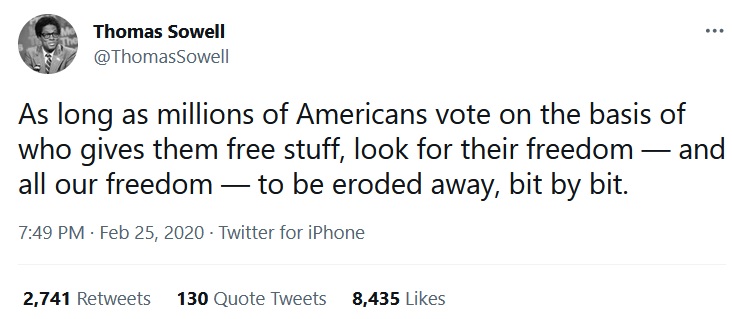 where government dependency is normal and desirable.
with labor supply shortages as folks capable of working have opted not to work for a variety of reasons. … Morning Consult surveyed 5,000 U.S. adults from June 22-25, 2021. Of those actively collecting unemployment benefits, 29% said they turned down job offers during the pandemic. In response to a follow-up question, 45% of that group said they turned down jobs specifically because of the generosity of the benefits.
 Ideally, there should be a minimal amount of red tape, and it should be governed by sensible cost-benefit analysis (i.e., so it deals with genuine externalities such as pollution).
they typically act on the supply side,i.e. by removing obstacles to an efficient (and equitable) production of goods and services, and by increasing productivity, so as to improve a country’s capacity to increase its growth potential… The aim of this paper is to assess the macroeconomic impact of three major structural reforms carried out in Italy over the last decade. They include (i)liberalization of services, (ii) incentives to “business innovation” (included in the so-called “Industry 4.0” Plan) and (iii) several measures in the civil justice system aimed at increasing the courts efficiency.

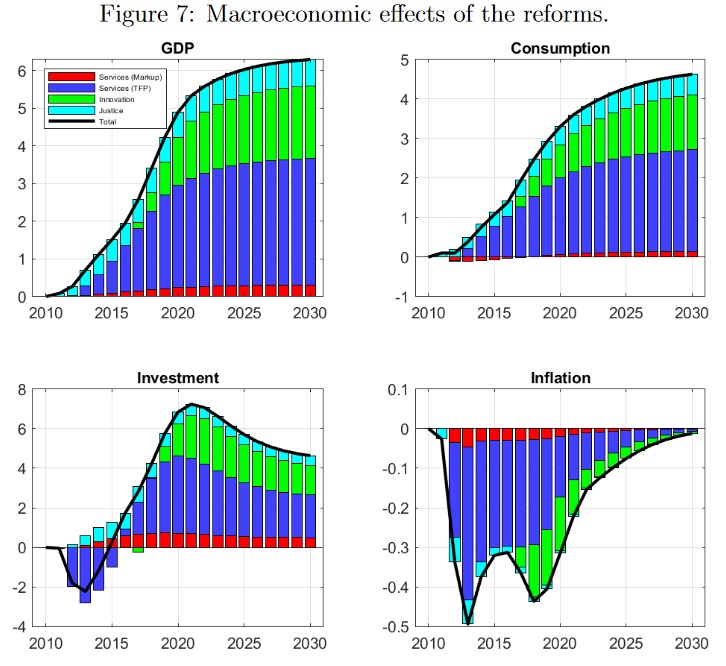
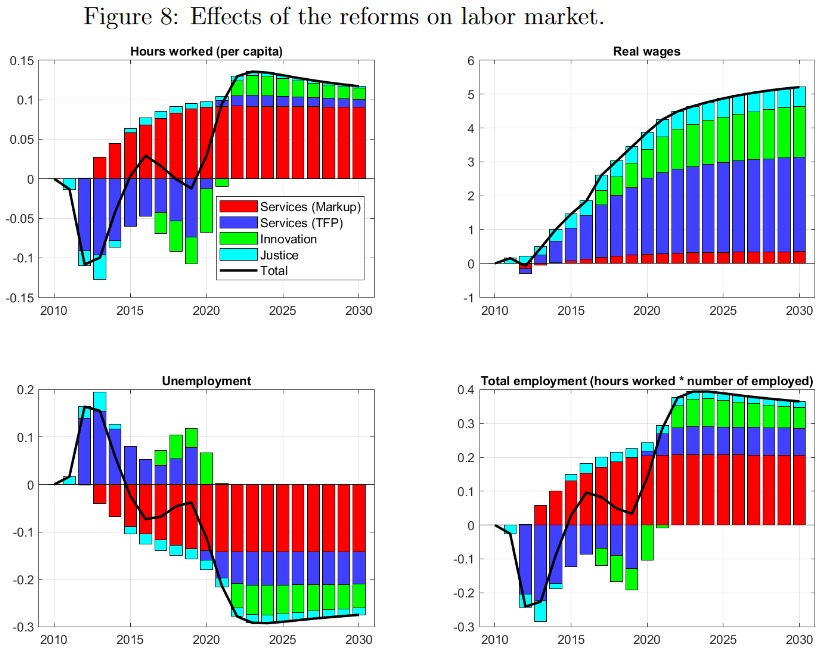
 Inferior light bulbs
Dishes may still emerge with pieces of last night’s lasagna baked on. …CEI petitioned the Energy Department to allow dishwashers that would reduce the average cycle to one hour from two, while also giving better performance. CEI argued that if the aim of the regulation was to conserve water and energy, it’s unlikely they achieved their purpose. People responded to poor dishwasher performance by pre-rinsing each dish before putting it through their washers, wasting more water… The revised DOE rule is…an example of how common-sense deregulation can deliver real benefits for the public.
That limit forced dishwasher companies to adjust their products’ cycle lengths. And the supposedly more efficient but less useful dishwashers have been a punchline…the average dishwasher cycle time has jumped from the one-hour cycle that was common a decade ago to more than two hours today. The tighter rules didn’t lead to energy savings for customers. …they actually increased water consumption by 63 billion gallons, as households would have to run their dishwashers multiple cycles, or pre-rinse their dishes by hand, in order to get dishes actually clean.
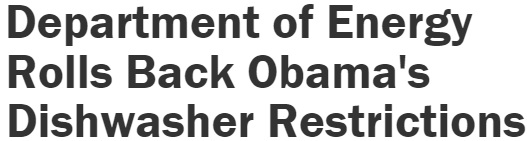
 But I fear environmentalism is an area where he will push policy significantly to the left.







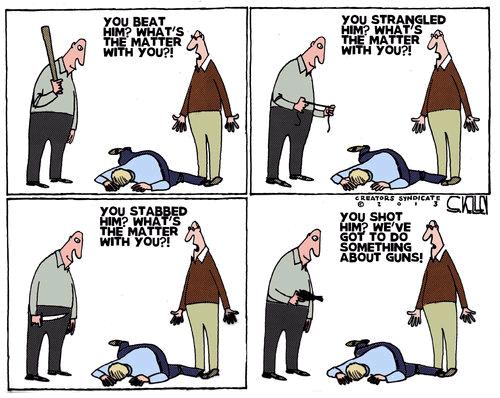
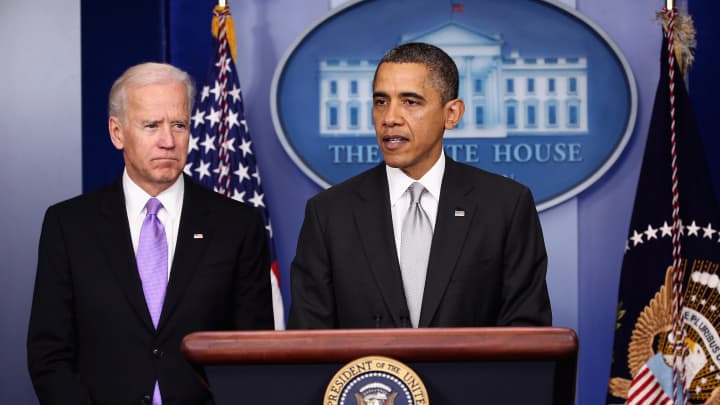


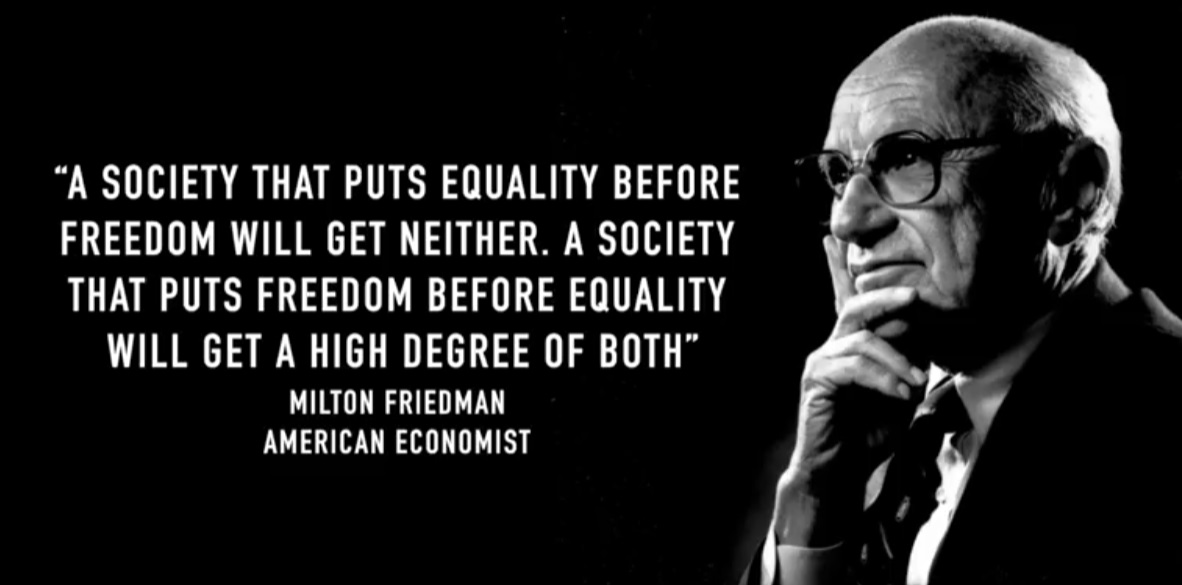



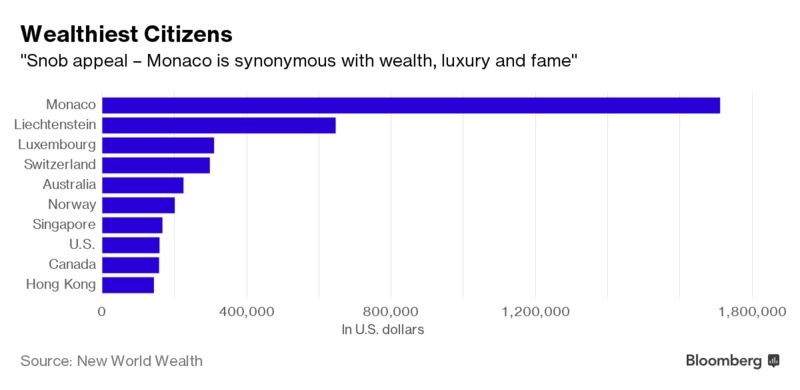





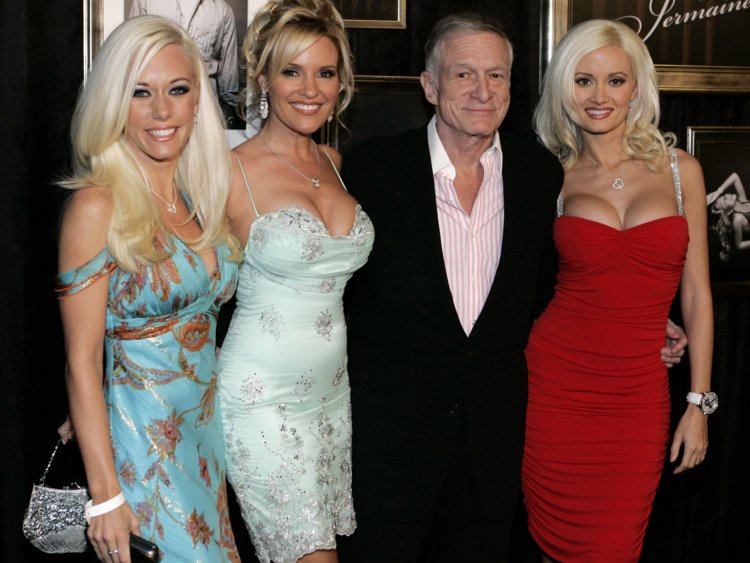











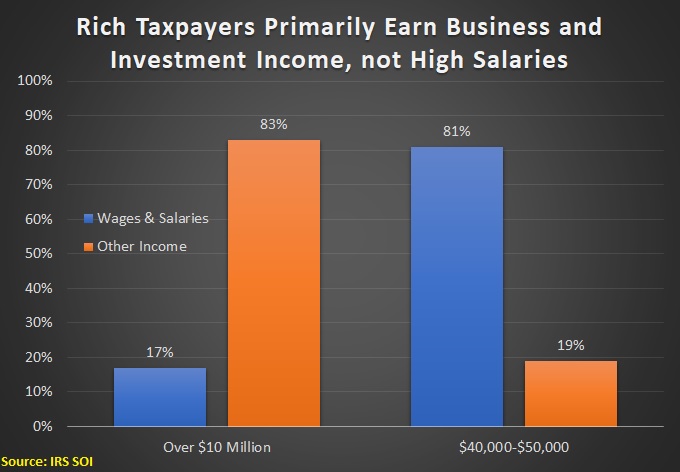
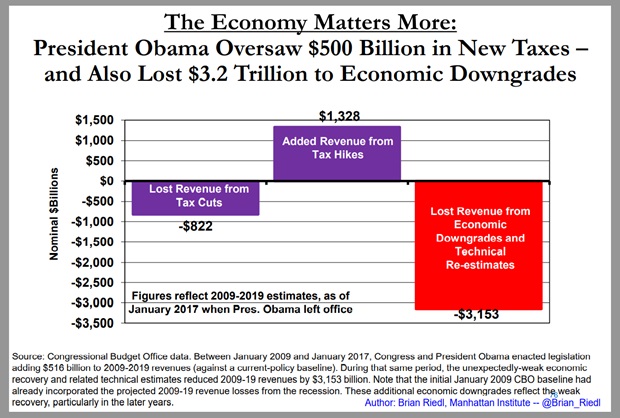
















 The young Horace Barlow (bottom right) in May 1952, together with members and guests of the Ratio Club, outside Peterhouse College, Cambridge: Back row (partly obscured): H. Shipton, J. Bates, W.E. Hick, J. Pringle, D. Sholl, J. Westcott and D. Mackay. Middle row: G. Brindley, T. McLardy. W.R. Ashby, T. Gold and A. Uttley. Front row: A. Turing, G. Sutton, W. Rushton, G. Dawson and H. Barlow.


 The Daily Hatch