
_
On November 21, 2014 I received a letter from Nobel Laureate Harry Kroto and it said:
…Please click on this URL http://vimeo.com/26991975
and you will hear what far smarter people than I have to say on this matter. I agree with them.
Harry Kroto

Nick Gathergood, David-Birkett, Harry-Kroto
I have attempted to respond to all of Dr. Kroto’s friends arguments and I have posted my responses one per week for over a year now. Here are some of my earlier posts:
Arif Ahmed, Sir David Attenborough, Mark Balaguer, Horace Barlow, Michael Bate, Patricia Churchland, Aaron Ciechanover, Noam Chomsky,Alan Dershowitz, Hubert Dreyfus, Bart Ehrman, Stephan Feuchtwang, David Friend, Riccardo Giacconi, Ivar Giaever , Roy Glauber, Rebecca Goldstein, David J. Gross, Brian Greene, Susan Greenfield, Stephen F Gudeman, Alan Guth, Jonathan Haidt, Theodor W. Hänsch, Brian Harrison, Hermann Hauser, Roald Hoffmann, Bruce Hood, Herbert Huppert, Gareth Stedman Jones, Steve Jones, Shelly Kagan, Michio Kaku, Stuart Kauffman, Lawrence Krauss, Harry Kroto, George Lakoff, Elizabeth Loftus, Alan Macfarlane, Peter Millican, Marvin Minsky, Leonard Mlodinow, Yujin Nagasawa, Alva Noe, Douglas Osheroff, Jonathan Parry, Saul Perlmutter, Herman Philipse, Carolyn Porco, Robert M. Price, Lisa Randall, Lord Martin Rees, Oliver Sacks, John Searle, Marcus du Sautoy, Simon Schaffer, J. L. Schellenberg, Lee Silver, Peter Singer, Walter Sinnott-Armstrong, Ronald de Sousa, Victor Stenger, Barry Supple, Leonard Susskind, Raymond Tallis, Neil deGrasse Tyson, .Alexander Vilenkin, Sir John Walker, Frank Wilczek, Steven Weinberg, and Lewis Wolpert,
John Gurdon
| Sir John Gurdon FRS FMedSci |
|
|---|---|
 |
|
| Born | John Bertrand Gurdon 2 October 1933 Dippenhall, Surrey, England |
| Citizenship | British |
| Nationality | English |
| Fields | Biology and Developmental Biology |
| Institutions | University of Oxford University of Cambridge California Institute of Technology |
| Alma mater | Christ Church, Oxford |
| Thesis | Nuclear transplantation in Xenopus (1960) |
| Doctoral advisor | Michael Fischberg[1] |
| Doctoral students | Douglas A. Melton Vincent Pasque |
| Known for | Nuclear transfer, cloning |
| Notable awards | William Bate Hardy Prize (1984) Royal Medal (1985) International Prize for Biology(1987) Wolf Prize in Medicine (1989) Edwin Grant Conklin Medal (2001) Albert Lasker Basic Medical Research Award (2009) Nobel Prize in Physiology or Medicine (2012) |
| Website www.zoo.cam.ac.uk/zoostaff/gurdon.htm |
|
Sir John Bertrand Gurdon FRS FMedSci (born 2 October 1933), is an English developmental biologist. He is best known for his pioneering research in nuclear transplantation[2][3][4] and cloning.[1][5][6][7] He was awarded the Lasker Award in 2009. In 2012, he and Shinya Yamanaka were awarded the Nobel Prize for Physiology or Medicine for the discovery that mature cells can be converted to stem cells.[8]
Early days[edit]
Gurdon attended Edgeborough and then Eton College, where he ranked last out of the 250 boys in his year group at biology, and was in the bottom set in every other science subject. A schoolmaster wrote a report stating “I believe he has ideas about becoming a scientist; on his present showing this is quite ridiculous.”[9][10][11] Gurdon explains it is the only document he ever framed; Gurdon also told a reporter “When you have problems like an experiment doesn’t work, which often happens, it’s nice to remind yourself that perhaps after all you are not so good at this job and the schoolmaster may have been right.”[12]
Gurdon went to Christ Church, Oxford, to study classics but switched to zoology. For his DPhil degree he studied nuclear transplantation in a frog species of the genus Xenopus[13][14] with Michael Fischberg at Oxford. Following postdoctoral work at Caltech,[15] he returned to England and his early posts were at the Department of Zoology of the University of Oxford (1962–71).
Gurdon has spent much of his research career at the University of Cambridge, first at the MRC Laboratory of Molecular Biology (1971–83) and then at the Department of Zoology (1983–present). In 1989, he was a founding member of the Wellcome/CRC Institute for Cell Biology and Cancer (later Wellcome/CR UK) in Cambridge, and was its Chair until 2001. He was a member of the Nuffield Council on Bioethics 1991–1995, and Master of Magdalene College, Cambridge, from 1995 to 2002.
Research[edit]

A video from an open-access article co-authored by Gurdon:[16] Animalview of different embryos developing in Xenopus laevis eggs: a diploidlaevis x laevis is shown on the top, cleaving and entering gastrulationabout 50 min earlier than haploid [laevis] x laevis(middle) and [laevis] x tropicalis cybrid (bottom) embryos.
Nuclear transfer[edit]
In 1958, Gurdon, then at the University of Oxford, successfully cloned a frog using intact nuclei from the somatic cells of a Xenopus tadpole.[17][18] This work was an important extension of work of Briggs and King in 1952 on transplanting nuclei from embryonic blastula cells[19] and the successful induction of polyploidy in the stickleback, Gasterosteus aculatus, in 1956 by Har Swarup reported in Nature.[20] At that time he could not conclusively show that the transplanted nuclei derived from a fully differentiated cell. This was finally shown in 1975 by a group working at the Basel Institute for Immunology in Switzerland.[21] They transplanted a nucleus from an antibody-producing lymphocyte (proof that it was fully differentiated) into an enucleated egg and obtained living tadpoles.
Gurdon’s experiments captured the attention of the scientific community and the tools and techniques he developed for nuclear transfer are still used today. The term clone[22] (from the ancient Greek word κλών (klōn, “twig”)) had already been in use since the beginning of the 20th century in reference to plants. In 1963 the British biologist J. B. S. Haldane, in describing Gurdon’s results, became one of the first to use the word “clone” in reference to animals.
Messenger RNA expression[edit]
Gurdon and colleagues also pioneered the use of Xenopus (genus of highly aquatic frog) eggs and oocytes to translate microinjected messenger RNA molecules,[23] a technique which has been widely used to identify the proteins encoded and to study their function.
Recent research[edit]
Gurdon’s recent research has focused on analysing intercellular signalling factors involved in cell differentiation, and on elucidating the mechanisms involved in reprogramming the nucleus in transplantation experiments, including the role of histone variants,[24][25] and demethylation of the transplanted DNA.[26]
Politics and religion[edit]
Gurdon has stated that he is politically “middle of the road”, and religiously agnostic because “there is no scientific proof either way”. During his tenure as Master of Magdalene College, Gurdon created some controversy when he suggested that fellows should occasionally be allowed to deliver “an address on anything they would like to talk about” in college chapel services.[27] In an interview with EWTN.com, Gurdon reports that “I’m what you might call liberal minded. I’m not a Roman Catholic. I’m a Christian, of the Church of England.” [28]
Honours and awards[edit]
Gurdon was made a Fellow of the Royal Society (FRS) in 1971, and was knighted in 1995. In 2004, the Wellcome Trust/Cancer Research UK Institute for Cell Biology and Cancer was renamed the Gurdon Institute[29] in his honour. He has also received numerous awards, medals and honorary degrees.[15] In 2005, he was elected as an Honorary Member of the American Association of Anatomists. He was awarded the 2009 Albert Lasker Basic Medical Research award and in 2014 delivered the Harveian Oration at the Royal College of Physicians.[30]
Nobel Prize[edit]
In 2012 Gurdon was awarded, jointly with Shinya Yamanaka, the Nobel Prize for Physiology or Medicine “for the discovery that mature cells can be reprogrammed to become pluripotent“.[31] His Nobel Lecture was called “The Egg and the Nucleus: A Battle for Supremacy”.
- 1933 births
- Alumni of Christ Church, Oxford
- British biologists
- British Nobel laureates
- English Nobel laureates
- Fellows of Churchill College, Cambridge
- Fellows of the Royal Society
- Fullerian Professors of Physiology
- British Anglicans
- British agnostics
- Knights Bachelor
- Living people
- Masters of Magdalene College, Cambridge
- Members of the French Academy of Sciences
- Members of the United States National Academy of Sciences
- Nobel laureates in Physiology or Medicine
- Recipients of the Copley Medal
- Royal Medal winners
- Wolf Prize in Medicine laureates
- Recipients of the Albert Lasker Award for Basic Medical Research
In the first video below in the 13th clip in this series are his words and my response is below them.
50 Renowned Academics Speaking About God (Part 1)
Another 50 Renowned Academics Speaking About God (Part 2)
A Further 50 Renowned Academics Speaking About God (Part 3)
______
Interview of Sir John Gurdon, part 1
Interview of Sir John Gurdon, part 2
In the You Tube video “A Further 50 Renowned Academics Speaking About God (Part 1),” you asserted:
in terms of religious views I would say I am actually agnostic on the grounds of I don’t know; there is no scientific proof either way
Here is the fuller QUOTE taken from your interview with Alan MacFarlane:
I have respect for people who put a lot into life and contribute; on religion, my father took us to church every Sunday morning; I support the church; in terms of religious views I would say I am agnostic on the grounds of I don’t know; there is no scientific proof either way; I support the ethics of the Church of England; I am anti-Roman Catholic as I think they should let people decide for themselves on contraception; I find myself giving lectures to theology students from time to time; this happened because when Master of Magdalene College I thought the sermons were boring; I suggested to the Chaplain at Magdalene that he occasionally asked Fellows to give an address on anything they would like to talk about; the letter was not responded to but the Bishop of Coventry, Simon Barrington-Ward, came back to Magdalene and I mentioned the idea to him; he thought it a good idea and I was asked to give an address; I chose to take as a theme that you should not be prevented from trying to relieve human suffering by your religious views; rather controversial, and the Chaplain didn’t like it at all, (by this time I was Master of the College), he got preferment at Windsor and decided that it was interesting and invited me to give it to the theology students in Windsor Castle; I did so and he was very supportive; we disagree on a number of things but I continue do it; these are priests in service who come for revision classes, sent by their Bishop; after the talk I get them to vote; the first time they voted against the line I was taking; the Chaplain suggested that the next time we have a secret vote and then it came out in favour; I like talking on to what extent religion should interfere in the relief of suffering; a classic case is cystic fibrosis and should you get rid of embryos that are going to have it by in vitro-fertilization, and avoid enormous suffering; as Master of Magdalene never found any difficulty in presiding in Chapel; I don’t think an agnostic position is inappropriate; I support what the church does very strongly, but the fact that I can’t prove what we believe is a good reason to be called agnostic; Richard Dawkins’ views are rather too aggressive but make him good as a television presenter; he was a graduate student shortly after me and worked underTinbergen; he does interest people in science and that is good though I wouldn’t agree with his views on religion (he knew Richard Dawkins as a graduate student)
One of my favorite messages by Adrian Rogers is called “WHO IS JESUS?”and he goes through the Old Testament and looks at the scriptures that describe the Messiah. I want to encourage you to listen to this audio message which I will send to anyone anywhere anytime. I have given thousands of these CD’s away over the years that contain this message and they all contain the following story from Adrian Rogers. Here is how the story goes:
Years ago Adrian Rogers counseled with a NASA scientist and his severely depressed wife. The wife pointed to her husband and said, “My problem is him.” She went on to explain that her husband was a drinker, a liar, and an adulterer. Dr. Rogers asked the man if he were a Christian. “No!” the man laughed. “I’m an atheist.”
“Really?” Dr. Rogers replied. “That means you’re someone who knows that God does not exist.”
“That’s right,” said the man.
“Would it be fair to say that you don’t know all there is to know in the universe?”
“Of course.”
“Would it be generous to say you know half of all there is to know?”
“Yes.”
“Wouldn’t it be possible that God’s existence might be in the half you don’t know?”
“Okay, but I don’t think He exists.”
“Well then, you’re not an atheist; you’re an agnostic. You’re a doubter.”
“Yes, and I’m a big one.”
“It doesn’t matter what size you are. I want to know what kind you are.”
“What kinds are there?”
“There are honest doubters and dishonest doubters. An honest doubter is willing to search out the truth and live by the results; a dishonest doubter doesn’t want to know the truth. He can’t find God for the same reason a thief can’t find a policeman.”
“I want to know the truth.”
“Would you like to prove that God exists?”
“It can’t be done.”
“It can be done. You’ve just been in the wrong laboratory. Jesus said, ‘If any man’s will is to do His will, he will know whether my teaching is from God or whether I am speaking on my own authority’ (John 7:17). I suggest you read one chapter of the book of John each day, but before you do, pray something like this, ‘God, I don’t know if You’re there, I don’t know if the Bible is true, I don’t know if Jesus is Your Son. But if You show me that You are there, that the Bible is true, and that Jesus is Your Son, then I will follow You. My will is to do your will.”
The man agreed. About three weeks later he returned to Dr. Rogers’s office and invited Jesus Christ to be his Savior and Lord.
__
By your own statement you are an agnostic. The only question left is if you really want to know or not. A while back on Easter we had a special service at our church, Fellowship Bible Church or Little Rock, Arkansas. On that day I heard a song that I wanted to discuss with you. It is called MAN OF SORROWS and it can be found on You Tube Man Of Sorrows – Hillsong Live (2013 Album Glorious Ruins) Worship Song with Lyrics and here are the lyrics:
“Man Of Sorrows”
By His own betrayed
The sin of man and wrath of God
Has been on Jesus laid
Silent as He stood accused
Beaten mocked and scorned
Bowing to the Father’s will
He took a crown of thorns
Oh that rugged cross
My salvation
Where Your love poured out over me
Now my soul cries out
Hallelujah
Praise and honour unto Thee
Sent of heaven God’s own Son
To purchase and redeem
And reconcile the very ones
Who nailed Him to that tree
Now my debt is paid
It is paid in full
By the precious blood
That my Jesus spilled
Now the curse of sin
Has no hold on me
Whom the Son sets free
Oh is free indeed
See the stone is rolled away
Behold the empty tomb
Hallelujah God be praised
He’s risen from the grave
We sang that song at our Easter service.
On Easter morning March 27, 2016 at FELLOWSHIP BIBLE CHURCH our teaching pastor Brandon Barnard delivered the message THIS CHANGES EVERYTHING based on I Corinthians chapter 15 and I wanted to share a portion of that sermon with you today.
This day is the day that changes everything. The resurrection changes everything and that is why we are gathered here today to celebrate the resurrection of our Lord Jesus Christ because it changes everything.
Some of you are going to be blown away by the opportunity before you this Easter morning because the resurrection of Jesus Christ stands at the very heart of Christianity. If what we we are gathered here to celebrate did not happen then people need to pity us as believers. They need to feel sorry for you and me more than anyone on earth because we have set our hopes firmly on a lie.
But if the resurrection really did happen, then we need to repent and we need to believe in Jesus and we need to rejoice that we have hope in this life and the life to come.
Paul wrote this to the believers in Corinth.
1 Corinthians 15:3-6, 13-21 English Standard Version (ESV)
3 For I delivered to you as of first importance what I also received: that Christ died for our sins in accordance with the Scriptures, 4 that he was buried, that he was raised on the third day in accordance with the Scriptures, 5 and that he appeared to Cephas, then to the twelve. 6 Then he appeared to more than five hundred brothers at one time, most of whom are still alive, though some have fallen asleep.
13 But if there is no resurrection of the dead, then not even Christ has been raised. 14 And if Christ has not been raised, then our preaching is in vain and your faith is in vain. 15 We are even found to be misrepresenting God, because we testified about God that he raised Christ, whom he did not raise if it is true that the dead are not raised.16 For if the dead are not raised, not even Christ has been raised. 17 And if Christ has not been raised, your faith is futile and you are still in your sins. 18 Then those also who have fallen asleep in Christ have perished.19 If in Christ we have hope[a] in this life only, we are of all people most to be pitied.
20 But in fact Christ has been raised from the dead, the firstfruits of those who have fallen asleep. 21 For as by a man came death, by a man has come also the resurrection of the dead.
_____
If Christ hasn’t been raised then these facts are true:
- PREACHING AND FAITH ARE IN VAIN.
- WE ARE FALSE WITNESSES
- WE ARE STILL IN OUR SINS.
- THOSE WHO DIED IN FAITH ARE STILL DEAD
- WE ARE TO BE PITIED MORE THAN ANYONE ELSE IN THE WORLD.
Verse 20 says, “but Christ has been raised!!! Therefore, these things are true:
- Our faith is significant, valuable and eternal.
- we are truth tellers!!
- we are forgiven of our sins.
- death is not our final stop.
- don’t pity us but join us in believing in Jesus Christ.
You said above that you are an agnostic. However, would you agree that if the Bible is correct in regards to history then Jesus did rise from the grave? Let’s take a closer look at evidence concerning the accuracy of the Bible.
I know that you highly respected Surgeon General C. Everett Koop and he co-authored with Francis Schaeffer the book WHATEVER HAPPENED TO THE HUMAN RACE? Below is a piece of evidence from that book.

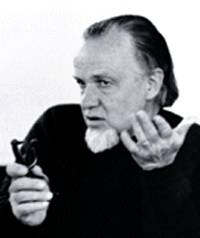
Francis Schaeffer (30 January 1912 – 15 May 1984[1]) and his wife Edith (November 3, 1914 – March 30, 2013)

C. Everett Koop, MD (October 14, 1916 – February 25, 2013) 13th Surgeon General of the United States

__
Two things should be mentioned about the time of Moses in Old Testament history.
First, consider the archaeological evidence that relates to the period. True, it is not of the same explicitness that we have found, say, in relation to the existence of Ahab or Jehu or Jehoiakim. We have no inscription from Egypt which refers to Moses being taken out of the bulrushes and removed from the waterproof basket his mother had made him. But this does not mean that the Book of Exodus is a fictitious account, as some critics has suggested. Some say it is simply an idealized reading-back into history by the Jews under the later monarchy. There is not a reason why these “books of Moses,” as they are called, should not be treated as history, just as we have been forced to treat the Books of Kings and Chronicles dating 500 years later.
There is ample evidence about the building projects of the Egyptian kings, and the evidence we have fits well with Exodus. There are scenes of brick-making (for example, Theban Tomb 100 of Rekhmire). Contemporary parchments and papyri tell of production targets which had to be met. One speaks of a satisfied official report of his men as “making their quota of bricks daily” (Papyrus Anastasi III vso, p.3, in the British Museum. Also Louvre Leather Roll in the Louvre, Paris, col ii, mentions quotes of bricks and “taskmasters”). Actual bricks found show signs of straw which had to be mixed in with the clay, just as Exodus says. This matter of bricks and straw is further affirmed by the record that one despairing official complained, “There are no men to make bricks nor straw in my area.”
We know from contemporary discoveries that Semites were found at all levels of Egypt’s cosmopolitan society. (Brooklyn Museum, New York, no. 35, 1446. Papyrus Brooklyn). There is nothing strange therefore about Joseph’s becoming so important in the pharaoh’s court.
The store cities of Pithom and Raamses (Rameses) mentioned in Exodus 1:11 are well known in Egyptian inscriptions. Raamses was actually in the east-Delta capital, Pi-Ramses (near Goshen), where the Israelites would have had ample experience of agriculture. Thus, the references to agriculture found in the law of Moses would not have been strange to the Israelites even though they were in the desert at the time the law was given. Certainly there is no reason to say, as some critics do, that these sections on agriculture were an indication of a reading-back from a latter period when the Jews were settled in Canaan.
The form of the covenant made at Sinai has remarkable parallels with the covenant forms of other people at that time. (On covenants and parties to a treaty, the Louvre; and Treaty Tablet from Boghaz Koi (i.e., Hittite) in Turkey, Museum of Archaeology in Istanbul.) The covenant form at Sinai resembles just as the forms of letter writings of the first century after Christ (the types of introductions and greetings) are reflected in the letters of the apostles in the New Testament, it is not surprising to find the covenant form of the second millennium before Christ reflected in what occurred at Mount Sinai. God has always spoken to people within the culture of their time, which does not mean that God’s communication is limited by that culture. It is God’s communication but within the forms appropriate to the time.
The Pentateuch tells us that Moses led the Israelites up the east side of the Dead Sea after their long stay in the desert. There they encountered the hostile kingdom of Moab. We have firsthand evidence for the existence of this kingdom of Moab–contrary to what has been said by critical scholars who have denied the existence of Moab at this time. It can be found in a war scene from a temple at Luxor (Al Uqsor). This commemorates a victory by Ramses II over the Moabite nation at Batora (Luxor Temple, Egypt).
Also the definite presence of the Israelites in west Palestine (Canaan) no later than the end of the thirteenth century B.C. is attested by a victory stela of Pharaoh Merenptah (son and successor of Ramses II) to commemorate his victory over Libya (Israel Stela, Cairo Museum, no. 34025). In it he mentions his previous success in Canaan against Aschalon, Gize, Yenom, and Israel; hence there can be no doubt the nation of Israel was in existence at the latest by this time of approximately 1220 B.C. This is not to say it could not have been earlier, but it cannot be later than this date.
Christ came and laid his life down to die for our sins and there is evidence that indicates the Bible is true!!!!! Some 400 years before crucifixion was invented, both Israel’s King David and the prophet Zechariah described the Messiah’s death in words that perfectly depict that mode of execution. Further, they said that the body would be pierced and that none of the bones would be broken, contrary to customary procedure in cases of crucifixion (Psalm 22 and 34:20; Zechariah 12:10). Again, historians and New Testament writers confirm the fulfillment: Jesus of Nazareth died on a Roman cross, and his extraordinarily quick death eliminated the need for the usual breaking of bones. A spear was thrust into his side to verify that he was, indeed, dead.
Psalm 22 New American Standard Bible (NASB)
A Cry of Anguish and a Song of Praise.
For the choir director; upon [a]Aijeleth Hashshahar. A Psalm of David.
22 My God, my God, why have You forsaken me?
[b]Far from my deliverance are the words of my [c]groaning.
2 O my God, I cry by day, but You do not answer;
And by night, but [d]I have no rest.
6 But I am a worm and not a man,
A reproach of men and despised by the people.
7 All who see me [g]sneer at me;
They [h]separate with the lip, they wag the head, saying,
8 “[i]Commit yourself to the Lord; let Him deliver him;
Let Him rescue him, because He delights in him.”
12 Many bulls have surrounded me;
Strong bulls of Bashan have encircled me.
13 They open wide their mouth at me,
As a ravening and a roaring lion.
14 I am poured out like water,
And all my bones are out of joint;
My heart is like wax;
It is melted within [l]me.
15 My strength is dried up like a potsherd,
And my tongue cleaves to my jaws;
And You lay me [m]in the dust of death.
16 For dogs have surrounded me;
[n]A band of evildoers has encompassed me;
[o]They pierced my hands and my feet.
17 I can count all my bones.
They look, they stare at me;
18 They divide my garments among them,
And for my clothing they cast lots.
Francis Schaeffer ended HOW SHOULD WE THEN LIVE? Episode 7 with these words:
When we think of Christ of course we think of his substitutionary death upon the cross when he who claimed to be God died in a substitutionary way and as such his death had infinite value and as we accept that gift raising the empty hands of faith with no humanistic elements we have that which is real life and that is being in relationship to the infinite personal God who is there and being in a personal relationship to Him. But Christ brings life in another way that is not as often clearly thought about perhaps. He connects himself with what the Bible teaches in his teaching and as such he is a prophet as well as a savior. It is upon the basis of what he taught and the Bible teaches because he himself wraps these together that we have life instead of death in the sense of having some knowledge that is more than men can have from himself, beginning from himself alone. Both of these elements are the place where Christ gives us life.
The answer to find meaning in life is found in putting your faith and trust in Jesus Christ. The Bible is true from cover to cover and can be trusted.
Thanks for your time.
Sincerely,
Everette Hatcher, everettehatcher@gmail.com, http://www.thedailyhatch.org, cell ph 501-920-5733, Box 23416, LittleRock, AR 72221
____________
Related posts:
FRANCIS SCHAEFFER ANALYZES ART AND CULTURE Part 53 THE BEATLES (Part E, Stg. Pepper’s and John Lennon’s search in 1967 for truth was through drugs, money, laughter, etc & similar to King Solomon’s, LOTS OF PICTURES OF JOHN AND CYNTHIA) (Feature on artist Yoko Ono)
The John Lennon and the Beatles really were on a long search for meaning and fulfillment in their lives just like King Solomon did in the Book of Ecclesiastes. Solomon looked into learning (1:12-18, 2:12-17), laughter, ladies, luxuries, and liquor (2:1-2, 8, 10, 11), and labor (2:4-6, 18-20). He fount that without God in the picture all […]
FRANCIS SCHAEFFER ANALYZES ART AND CULTURE Part 52 THE BEATLES (Part D, There is evidence that the Beatles may have been exposed to Francis Schaeffer!!!) (Feature on artist Anna Margaret Rose Freeman )
______________ George Harrison Swears & Insults Paul and Yoko Lucy in the Sky with Diamonds- The Beatles The Beatles: I have dedicated several posts to this series on the Beatles and I don’t know when this series will end because Francis Schaeffer spent a lot of time listening to the Beatles and talking […]
FRANCIS SCHAEFFER ANALYZES ART AND CULTURE Part 51 THE BEATLES (Part C, List of those on cover of Stg.Pepper’s ) (Feature on artist Raqib Shaw )
The Beatles in a press conference after their Return from the USA Uploaded on Nov 29, 2010 The Beatles in a press conference after their Return from the USA. The Beatles: I have dedicated several posts to this series on the Beatles and I don’t know when this series will end because Francis […]
FRANCIS SCHAEFFER ANALYZES ART AND CULTURE Part 50 THE BEATLES (Part B, The Psychedelic Music of the Beatles) (Feature on artist Peter Blake )
__________________ Beatles 1966 Last interview I have dedicated several posts to this series on the Beatles and I don’t know when this series will end because Francis Schaeffer spent a lot of time listening to the Beatles and talking and writing about them and their impact on the culture of the 1960’s. In this […]
FRANCIS SCHAEFFER ANALYZES ART AND CULTURE Part 49 THE BEATLES (Part A, The Meaning of Stg. Pepper’s Cover) (Feature on artist Mika Tajima)
_______________ The Beatles documentary || A Long and Winding Road || Episode 5 (This video discusses Stg. Pepper’s creation I have dedicated several posts to this series on the Beatles and I don’t know when this series will end because Francis Schaeffer spent a lot of time listening to the Beatles and talking and writing about […]
FRANCIS SCHAEFFER ANALYZES ART AND CULTURE PART 48 “BLOW UP” by Michelangelo Antonioni makes Philosophic Statement (Feature on artist Nancy Holt)
_______________ Francis Schaeffer pictured below: _____________________ I have included the 27 minute episode THE AGE OF NONREASON by Francis Schaeffer. In that video Schaeffer noted, ” Sergeant Pepper’s Lonely Hearts Club Band…for a time it became the rallying cry for young people throughout the world. It expressed the essence of their lives, thoughts and their feelings.” How Should […]
FRANCIS SCHAEFFER ANALYZES ART AND CULTURE Part 47 Woody Allen and Professor Levy and the death of “Optimistic Humanism” from the movie CRIMES AND MISDEMEANORS Plus Charles Darwin’s comments too!!! (Feature on artist Rodney Graham)
Crimes and Misdemeanors: A Discussion: Part 1 ___________________________________ Today I will answer the simple question: IS IT POSSIBLE TO BE AN OPTIMISTIC SECULAR HUMANIST THAT DOES NOT BELIEVE IN GOD OR AN AFTERLIFE? This question has been around for a long time and you can go back to the 19th century and read this same […]
FRANCIS SCHAEFFER ANALYZES ART AND CULTURE PART 46 Friedrich Nietzsche (Featured artist is Thomas Schütte)
____________________________________ Francis Schaeffer pictured below: __________ Francis Schaeffer has written extensively on art and culture spanning the last 2000years and here are some posts I have done on this subject before : Francis Schaeffer’s “How should we then live?” Video and outline of episode 10 “Final Choices” , episode 9 “The Age of Personal Peace and Affluence”, episode 8 […]
FRANCIS SCHAEFFER ANALYZES ART AND CULTURE Part 45 Woody Allen “Reason is Dead” (Feature on artists Allora & Calzadilla )
Love and Death [Woody Allen] – What if there is no God? [PL] ___________ _______________ How Should We then Live Episode 7 small (Age of Nonreason) #02 How Should We Then Live? (Promo Clip) Dr. Francis Schaeffer 10 Worldview and Truth Two Minute Warning: How Then Should We Live?: Francis Schaeffer at 100 Francis Schaeffer […]
FRANCIS SCHAEFFER ANALYZES ART AND CULTURE Part 44 The Book of Genesis (Featured artist is Trey McCarley )
___________________________________ Francis Schaeffer pictured below: ____________________________ Francis Schaeffer “BASIS FOR HUMAN DIGNITY” Whatever…HTTHR Dr. Francis schaeffer – The flow of Materialism(from Part 4 of Whatever happened to human race?) Dr. Francis Schaeffer – The Biblical flow of Truth & History (intro) Francis Schaeffer – The Biblical Flow of History & Truth (1) Dr. Francis Schaeffer […]
_______________
_
_




 The Daily Hatch