I found Dr. Barlow to be a true gentleman and he was very kind to take the time to answer the questions that I submitted to him. In the upcoming months I will take time once a week to pay tribute to his life and reveal our correspondence. In the first week I noted:
Today I am posting my first letter to him in February of 2015 which discussed Charles Darwin lamenting his loss of aesthetic tastes which he blamed on Darwin’s own dedication to the study of evolution. In a later return letter, Dr. Barlow agreed that Darwin did in fact lose his aesthetic tastes at the end of his life.
In the third week, I look at the life of Brandon Burlsworth in the November 28, 2016 letter and the movie GREATER and the problem of evil which Charles Darwin definitely had a problem with once his daughter died.
On the 4th letter to Dr. Barlow looks at Darwin’s admission that he at times thinks that creation appears to look like the expression of a mind. Francis Schaeffer discusses Darwin’s own words in 1968 sermon at this link.
My Fifth Letter concerning Charles Darwin’s views on MORAL MOTIONS Which was mailed on March 1, 2017. Francis Schaeffer discusses Darwin’s own words concerning moral motions in Schaeffer’s 1968 sermon at this link.
6th letter on May 1, 2017 in which Charles Darwin’s hopes are that someone would find in Pompeii an old manuscript by a distinguished Roman that would show that Christ existed! Francis Schaeffer discusses Darwin’s own words concerning the possible manuscript finds in Schaeffer’s 1968 sermon at this link
7th letter on Darwin discussing DETERMINISM dated 7-1-17 . Francis Schaeffer discusses Darwin’s own words concerning determinism in Schaeffer’s 1968 sermon at this link.
8th letter responds to Dr. Barlow’s letter to me concerning Francis Schaeffer discussing Darwin’s own words concerning chance in Schaeffer’s 1968 sermon at this link.
I found Dr. Barlow to be a true gentleman and he was very kind to take the time to answer the questions that I submitted to him. In the upcoming months I will take time once a week to pay tribute to his life and reveal our correspondence. In the first week I noted:
Today I am posting my first letter to him in February of 2015 which discussed Charles Darwin lamenting his loss of aesthetic tastes which he blamed on Darwin’s own dedication to the study of evolution. In a later return letter, Dr. Barlow agreed that Darwin did in fact lose his aesthetic tastes at the end of his life.
In the second week I look at the views of Michael Polanyi and share the comments of Francis Schaeffer concerning Polanyi’s views.
In the third week, I look at the life of Brandon Burlsworth in the November 28, 2016 letter and the movie GREATER and the problem of evil which Charles Darwin definitely had a problem with once his daughter died.
On the 4th letter to Dr. Barlow looks at Darwin’s admission that he at times thinks that creation appears to look like the expression of a mind. Francis Schaeffer discusses Darwin’s own words in 1968 sermon at this link.
My Fifth Letter concerning Charles Darwin’s views on MORAL MOTIONS Which was mailed on March 1, 2017. Francis Schaeffer discusses Darwin’s own words concerning moral motions in Schaeffer’s 1968 sermon at this link.
6th letter on May 1, 2017 in which Charles Darwin’s hopes are that someone would find in Pompeii an old manuscript by a distinguished Roman that would show that Christ existed! Francis Schaeffer discusses Darwin’s own words concerning the possible manuscript finds in Schaeffer’s 1968 sermon at this link
7th letter on Darwin discussing DETERMINISM dated 7-1-17 . Francis Schaeffer discusses Darwin’s own words concerning determinism in Schaeffer’s 1968 sermon at this link.
8th letter responds to Dr. Barlow’s letter to me concerning the universe being the result of chance. Francis Schaeffer discusses Darwin’s own words concerning chance in Schaeffer’s 1968 sermon at this link.
Horace Barlow Death – Dead: A great loss was made known to InsideEko. As friends and families of the deceased are mourning the passing of their loved and cherished Horace Barlow.
Having heard about this great loss, the family of this individual is passing through pains, mourning the unexpected passing of their beloved.
This departure was confirmed through social media posts made by Twitter users who pour out tributes, and condolences to the family of the deceased.
ANOTHER GIANT OF NEUROSCIENCE HAS PASSED: HORACE BARLOW DIED ON JULY 5 AT THE AGE OF 98. I CAN’T SUMMARIZE HORACE’S CONTRIBUTIONS ANY BETTER THAN WAS DONE BY OLIVER BRADDICK IN A MESSAGE SENT TO THE CVNET LISTSERV:
“HORACE WAS ONE OF THE CREATORS OF MODERN VISUAL NEUROSCIENCE AND ITS SYNTHESIS WITH THE STUDY OF PERCEPTION. HE HAD BEEN PUBLISHING SEMINAL RESEARCH ON VISION FOR NEARLY 70 YEARS, INCLUDING HIS DISCOVERIES OF SPECIFIC RESPONSES, INCLUDING ‘FLY DETECTORS’, IN THE FROG’S RETINA IN 1953 (6 YEARS BEFORE THE FAMOUS PAPER ON THE SAME THEME BY LETTVIN ET AL). HE PIONEERED COMPUTATIONAL THINKING ABOUT VISUAL INFORMATION CODING, INCLUDING PERHAPS THE EARLIEST RECOGNITION OF THE IMPORTANCE OF NOISE, WHICH WAS AN ENDURING THEME OF HIS WORK, AND HIS WRITINGS REFLECTED DEEP AND ORIGINAL THOUGHT ABOUT HOW NEURAL SIGNALS RELATED TO PERCEPTUAL FUNCTION.
MANY OF US WILL REMEMBER WITH PLEASURE HIS RECEIVING THE KEN NAKAYAMA AWARD AT VSS IN 2016, AND HIS 95TH BIRTHDAY THE SAME YEAR.
HORACE WAS THE GREAT-GRANDSON OF CHARLES DARWIN. HE LEAVES FOUR CHILDREN BY HIS FIRST MARRIAGE TO RUTHALA SALAMAN, AND THREE CHILDREN WITH MIRANDA WESTON SMITH WHOM HE MARRIED IN 1980.”
HORACE’S WORK HAD AN ENORMOUS EFFECT ON MY THINKING ABOUT THE BRAIN. I DON’T THINK I’VE EVER GIVEN A LECTURE ON NEUROSCIENCE IN GENERAL OR ON MY OWN LAB’S RESEARCH WITHOUT SEVERAL SLIDES OF HORACE’S CONTRIBUTIONS. REQUIEM AETERNAM.
RIP HORACE BARLOW, A GIANT OF NEUROSCIENCE. I HAVE VERY FOND MEMORIES OF HIS VISIT TO THE BARROW NEUROLOGICAL INSTITUTE IN 2013, AND THE DINNER AFTERWARDS. BARLOW’S SEMINAL WORK ON REDUNDANCY REDUCTION IN VISUAL PROCESSING WAS AN INSPIRATION FOR ONE OF MY MAIN RESEARCH LINES, ON THE PERCEPTION OF ANGLES, CURVES, CORNERS, AND OTHER VISUAL DISCONTINUITIES
RIP Horace Barlow, a giant of neuroscience. I have very fond memories of his visit to the Barrow Neurological Institute in 2013, and the dinner afterwards. Barlow’s seminal work on redundancy reduction in visual processing was an inspiration for one of my main research lines, on the perception of angles, curves, corners, and other visual discontinuities.
30
1
1
I LEARNED THAT HORACE (BARLOW) PASSED AWAY. HE WAS A VISIONARY, A NEUROTHEORY PIONEER. I FEEL TERRIBLE SINCE I HAD PROMISED HIM A DRAFT BASED ON OUR DISCUSSION AND ONLY MANAGED TO REWRITE AND PUT IT IN THE BIN 5 TIMES. HERE IS THE LAST PIC I HAVE OF HIM W HIS (THEN) NEW PUPPY
Nima Dehghani
@neurovium
I learned that Horace (Barlow) passed away. He was a visionary, a neurotheory pioneer. I feel terrible since I had promised him a draft based on our discussion and only managed to rewrite and put it in the bin 5 times. Here is the last pic I have of him w his (then) new puppy
SAD NEWS THAT HORACE BARLOW HAS DIED. BARLOW PROPOSED: •FEATURE SELECTIVITY• IN SENSORY NEURONS (WHICH CODE INFORMATION IN AN •EFFICIENT• WAY) & THAT ONE COULD USE •NOISE• TO PROBE SENSORY SYSTEMS. ONE OF THE 1ST COMPUTATIONAL NEUROSCIENTISTS. A GIANT AND AN INSPIRATION.
Steven Dakin
@StevenDakin
Sad news that Horace Barlow has died. Barlow proposed: •feature selectivity• in sensory neurons (which code information in an •efficient• way) & that one could use •noise• to probe sensory systems. One of the 1st computational neuroscientists. A giant and an inspiration.
My favorite Horace Barlow paper is his study on single photon detection. He estimated the thermal stability of rhodopsin from the false positive rate of human observers detecting dim flashes. Spanned psychophysics to biochemistry in one study. In 1956. Single author.
Very sad news that Horace Barlow has died. He was my dad’s supervisor in the late 1960s and a friend ever since. Last year, at 98, he came to a conference in Cambridge and asked questions after every talk. He was a brilliant thinker and an inspiration. https://en.wikipedia.org/wiki/Horace_Barlow…
More details have not been released about this death, and actual death age and date are yet to confirmed by us. We are still working on getting more details about the death, as family statement on the death is yet to be released.
1st letter in response to 11-22-17 letter I received from Professor Horace Barlow was mailed on 12-2-17 and included these pictures:
_
Francis Schaeffer (1912-1984) taught at the Swiss L’Abri Community.
_
Adrian Rogers pictured above and Bill Elliff below.
_
Charles Darwin (1809-1882)
I had the opportunity to watch over 50 interviews conducted by Dr. Alan Macfarlane on You Tube and I recommend them very highly as the best in depth interviews I have ever seen.
Horace Barlow pictured above with interviewer Professor Alan Macfarlane below:
FILMED INTERVIEWS WITH LEADING THINKERS
Dr. Alan Macfarlane noted:
The interviews were started by Jack Goody in 1982. He arranged for the filming of seminars by Audrey Richards, Meyer Fortes and M.N.Srinivas. Since then, with the help of others, and particularly Sarah Harrison, I have filmed and edited over ninety archival interviews. Having started with leading anthropologists, my subjects have broadened to include other social scientists and, recently, biological and physical scientists.
1150 words
December 2, 2017
Dr. Horace Barlow, Department of Physiology, Development and Neuroscience, University of Cambridge, Downing Street,Physiological Laboratory, United Kingdom,
Dear Dr. Barlow,
I was so thrilled to receive your letter yesterday evening that I had to spend most of December 2nd thinking how to respond to your thought provoking words.
Let me give you some background on why I have written you. Since 1974 I have been reading the books of Francis Schaeffer. Then later in the 1970’s Schaeffer released two film series. Here is what Wikipedia had to say about Schaeffer:
Also over the last 25 years I have had the opportunity to listen to hundreds of Schaeffer’s recorded messages from the L’Abri community in Switzerland.
On the tenth anniversary of Francis Schaeffer’s passing, May 15, 1994, I sent out to several hundred prominent skeptics an evangelistic letter that told about Schaeffer’s life. This same letter included the CD entitled “Dust, Darwin, and Disbelief,” by Adrian Rogers and Bill Elliff which quoted your great grandfather, Charles Darwin. That CD started off with the song DUST IN THE WIND by the group KANSAS for the simple reason that if we accept that we are the result of chance then all we are is DUST IN THE WIND.
I thought the inclusion of the song DUST IN THE WIND was logical, but that logic was challenged by the third paragraph in your November 22, 2017 letter which said:
You may ask, “What is to take the place of Religious Belief in helping to understand the world around us? It has order and purpose, which cannot be explained by Blind chance as evolution teaches.” I agree it cannot be explained by Blind chance alone, but Darwin did not claim that this happens, and modern evolutionists agree. We say that chance variations (mutations) occur in the substances (called genes nowadays) that control development and cause son and daughter to resemble father and mother. These genes control the development of the offspring, and and influence their success in life, and in particular they influence the types of mutated genes that are passed on to the next generation. Chance, together with “Survival of the fittest,” thus causes the appearance of apparently purposeful adaptations of the population of genes in a species.
If you are correct then I was wrong to include the song DUST IN THE WIND. Let me respond by quoting Francis Schaeffer from his talk In the spring of 1968 which centered on your great uncle Francis Darwin’s book:
Darwin in his autobiography Darwin, Francis ed. 1892. Charles Darwin: his life told in an autobiographical chapter, and in a selected series of his published letters [abridged edition]. London: John Murray, and in his letters showed that all through his life he NEVER really came to a QUIETNESS concerning the possibility that chance really explained the situation of the biological world. You will find there is much material on this [from Darwin] extended over many many years that constantly he was wrestling with this problem. Darwin never came to a place of satisfaction. You have philosophically ONLY TWO possible beginnings. The first would be a PERSONAL beginning and the other would be an IMPERSONEL beginning plus time plus CHANCE. There is no other possible alternative except the alternative that everything comes out of nothing and that has to be a total nothing and that has to be a total nothing without mass, energy or motion existing. No one holds this last view because it is unthinkable. Darwin understood this and therefore until his death he was uncomfortable with the idea of CHANCE producing the biological variation.
Darwin, C. R.to Graham, William3 July 1881 (letter written less than a year before Darwin’s death and less than 40 years before your birth, Dr Barlow):
Nevertheless you have EXPRESSED MY INWARD CONVICTION, though far more vividly and clearly than I could have done, that the Universe is NOT THE RESULT OF CHANCE.* But THEN with me the HORRID DOUBT ALWAYS ARISES whether the convictions of man’s mind, which has been developed from the mind of the lower animals, are of any value or at all trustworthy. Would any one trust in the convictions of a monkey’s mind, if there are any convictions in such a mind?
Francis Schaeffer comments:
Can you feel this man? He is in real agony. You can feel the whole of modern man in this tension with Darwin. My mind can’t accept that ultimate of chance, that the universe is a result of chance. He has said 3 or 4 times now that he can’t accept that it all happened by chance and then he will write someone else and say something different. How does he say this (about the mind of a monkey) and then put forth this grand theory? Wrong theory I feel but great just the same. Grand in the same way as when I look at many of the paintings today and I differ with their message but you must say the mark of the mannishness of man are one those paintings titanic-ally even though the message is wrong and this is the same with Darwin. But how can he say you can’t think, you come from a monkey’s mind, and you can’t trust a monkey’s mind, and you can’t trust a monkey’s conviction, so how can you trust me? Trust me here, but not there is what Darwin is saying. In other words it is very selective.
Evidently Darwin was telling his friends that he was an agnostic and that he did not think that God had anything to do with it but it was all left to the hands of chance. Is that the way you are reading this?
The answer to find meaning in life is found in putting your faith and trust in Jesus Christ. The Bible is true from cover to cover and can be trusted. The world is not a result of blind chance, but we all were put here for a purpose by God. If you want to investigate the evidence concerning the accuracy of the Bible then I suggest you read Psalms 22 which was written about a thousand years before the crucifixion events it described. Furthermore, when King David wrote those words the practice of stoning was the primary way of executing someone in Israel.
Let me repeat how thrilling it was to receive a letter from you. I really do appreciate you also giving such an extensive interview to Dr. Alan Macfarlane. His interviews are the best I have ever seen on YouTube. I have enjoyed corresponding with him too.
There are 3 videos in this series and they have statements by 150 academics and scientists and I hope to respond to all of them. Wikipedia notes Horace Basil BarlowFRS was a British visual neuroscientist.
In 1953 Barlow discovered that the frog brain has neurons which fire in response to specific visual stimuli. This was a precursor to the work of Hubel and Wiesel on visual receptive fields in the visual cortex. He has made a long study of visual inhibition, the process whereby a neuron firing in response to one group of retinal cells can inhibit the firing of another neuron; this allows perception of relative contrast.
In 1961 Barlow wrote a seminal article where he asked what the computational aims of the visual system are. He concluded that one of the main aims of visual processing is the reduction of redundancy. While the brightnesses of neighbouring points in images are usually very similar, the retina reduces this redundancy. His work thus was central to the field of statistics of natural scenes that relates the statistics of images of real world scenes to the properties of the nervous system.
Barlow and his co-workers also did substantial work in the field of factorial codes. The goal was to encode images with statistically redundant components or pixels such that the code components are statistically independent. Such codes are hard to find but highly useful for purposes of image classification etc.
His comments can be found on the 3rd video and the 128th clip in this series. Below the videos you will find his words.
50 Renowned Academics Speaking About God (Part 1)
Another 50 Renowned Academics Speaking About God (Part 2)
A Further 50 Renowned Academics Speaking About God (Part 3)
_______________
Interview of Horace Barlow – part 1
Published on Jun 18, 2014
Interviewed and filmed by Alan Macfarlane on 5 March 2012
______________________
Interview of Horace Barlow – part 2
Horace Barlow’s quote taken from interview with Alan Macfarlane:
HAS RELIGION EVER BEEN IMPORTANT TO YOU? IS IT IMPORTANT TO YOU? No, it is not important to me. Saying you don’t believe in God is a very foolish thing to say as it doesn’t explain why so many people talk about it, there has got to be more to it than that; also I think one has to respect what some godly people say and some of the things they do; I wish one could make more sense of it but I don’t think the godly people have done a very good job; I was never baptized or confirmed so have never been a practitioner, and I don’t miss it; DO YOU THINK THAT SCIENCE HAS DIS-PROVEN RELIGION AS DAWKINS ARGUES? I think it [science] provides some hope of acting rationally to handle the social and political problems we have to deal with on a personal level and one a worldwide level. Religion is a way of perpetuating a way of thought that might have otherwise been lost, and I imagine that is fine.
Dr. Barlow’s only three solid claims in this response to Alan Macfarlane is that science is #1 the best help today with our social problems,(which is in the original clip), #2 Saying you don’t believe in God (position of atheism) is foolish, and #3 we need an explanation for why so many people talk about [God.]
My response to #1 is to look at how the secular humanists have messed up so many things in the past and I include Barlow’s personal family friend Margaret Mead in that. My responses to #2 and #3 were both covered in my earlier response to Roald Hoffmann.
(Roald Hoffmann is a Nobel Prize winner who I have had the honor of corresponding with in the past. Pictured below)
(This July 1933 photo shows [left to right] anthropologist Gregory Bateson with Margaret Mead)
Horace Barlow’s words from interview conducted by Alan Macfarlane:
I don’t ever remember going to Bateson’s house in Granchester as a child; William Bateson’s wife was a friend of my mother’s; when Gregory Bateson was out in Bali he met Margaret Mead; Beatrice Bateson, his mother, felt she was too old to go out and inspect her so she sent my mother instead; she flew off in an Imperial Airlines plane and we saw her off from Hendon; that must have been 1937-8; my mother got on very well with Margaret Mead – she was not altogether convinced by her, but very impressed by her breadth of knowledge and energy; she came and stayed with us many times; I was even more sceptical than my mother and thought she was a very impressive person; Gregory was born 1904 and my mother, in 1886, so there was quite a big age difference between them; I never got on close intellectual terms with Gregory even though we were to some extent interested in the same sort of thing, both in cybernetics and psychology, and his ideas were always interesting; however, my model of a scientist was taken from my mother and not from Gregory; my mother was interested in genetics and the paper for which she was famous was on the reproductive system in plants like cowslips; my mother reasoned like a scientist whereas Gregory was a guru – he liked to think things out for himself; he obviously influenced many others too; I saw him once or twice when I went to Berkeley
Postscript:
I was sad to see that Jon Stewart is stepping down from the DAILY SHOW so I wanted to include one of the best clips I have ever seen on his show and it is a short debate between the brilliant scientists Edward J. Larson (an evolutionist), William A. Dembski (an Intelligent Design Proponent), and then he threw in a nutball in for laughs, Ellie Crystal (a metaphysical theorist). Dembski gives several great examples of design and it reminded me of many of the words of Darwin show above in my letter to Horace Barlow.
William Dembski on The Jon Stewart Show
Uploaded on Nov 15, 2010
Wednesday September 14, 2005 – Jon Stewart’s “Evolution, Schmevolution” segment with panelists Edward J. Larson (an evolutionist), William A. Dembski (an Intelligent Design Proponent), and Ellie Crystal (a metaphysical theorist).
I have gone back and forth and back and forth with many liberals on the Arkansas Times Blog on many issues such as abortion, human rights, welfare, poverty, gun control and issues dealing with popular culture. Here is another exchange I had with them a while back. My username at the Ark Times Blog is Saline […]
On March 17, 2013 at our worship service at Fellowship Bible Church, Ben Parkinson who is one of our teaching pastors spoke on Genesis 1. He spoke about an issue that I was very interested in. Ben started the sermon by reading the following scripture: Genesis 1-2:3 English Standard Version (ESV) The Creation of the […]
At the end of this post is a message by RC Sproul in which he discusses Sagan. Over the years I have confronted many atheists. Here is one story below: I really believe Hebrews 4:12 when it asserts: For the word of God is living and active and sharper than any two-edged sword, and piercing as far as the […]
In today’s news you will read about Kirk Cameron taking on the atheist Stephen Hawking over some recent assertions he made concerning the existence of heaven. Back in December of 1995 I had the opportunity to correspond with Carl Sagan about a year before his untimely death. Sarah Anne Hughes in her article,”Kirk Cameron criticizes […]
I found Dr. Barlow to be a true gentleman and he was very kind to take the time to answer the questions that I submitted to him. In the upcoming months I will take time once a week to pay tribute to his life and reveal our correspondence. In the first week I noted:
Today I am posting my first letter to him in February of 2015 which discussed Charles Darwin lamenting his loss of aesthetic tastes which he blamed on Darwin’s own dedication to the study of evolution. In a later return letter, Dr. Barlow agreed that Darwin did in fact lose his aesthetic tastes at the end of his life.
In the second week I look at the views of Michael Polanyi and share the comments of Francis Schaeffer concerning Polanyi’s views.
In the third week, I look at the life of Brandon Burlsworth in the November 28, 2016 letter and the movie GREATER and the problem of evil which Charles Darwin definitely had a problem with once his daughter died.
On the 4th letter to Dr. Barlow looks at Darwin’s admission that he at times thinks that creation appears to look like the expression of a mind. Francis Schaeffer discusses Darwin’s own words in 1968 sermon at this link.
My Fifth Letter concerning Charles Darwin’s views on MORAL MOTIONS Which was mailed on March 1, 2017. Francis Schaeffer discusses Darwin’s own words concerning moral motions in Schaeffer’s 1968 sermon at this link.
6th letter on May 1, 2017 in which Charles Darwin’s hopes are that someone would find in Pompeii an old manuscript by a distinguished Roman that would show that Christ existed! Francis Schaeffer discusses Darwin’s own words concerning the possible manuscript finds in Schaeffer’s 1968 sermon at this link
7th letter on Darwin discussing DETERMINISM dated 7-1-17 . Francis Schaeffer discusses Darwin’s own words concerning determinism in Schaeffer’s 1968 sermon at this link.
and you will hear what far smarter people than I have to say on this matter. I agree with them.
Harry Kroto
__________________________
XXXXXXXxxxxxxx 7th letter on Darwin discussing DETERMINISM dated 7-1-17
July 1, 2017
Dr. Horace Barlow, Department of Physiology, Development and Neuroscience, University of Cambridge, Downing Street,Physiological Laboratory, Cambridge CB2 3EG, United Kingdom,
Dear Dr. Barlow,
In your fine interview with Alan Macfarlane on YOUTUBE were these words:
DID YOUR GRANDMOTHER TALK ABOUT HER GRANDFATHER? DID SHE KNOW HIM WELL? Hon. Lady Emma Cecilia “Ida” Darwin (née Farrer; 7 November 1854 – 5 July 1946)
Ida Darwin
Charles Robert Darwin (1809 – 1882) had 10 children and 7 of them survived to adulthood.
Sir Horace Darwin, KBE, FRS (13 May 1851 – 22 September 1928), the fifth son and ninth child of the British naturalist Charles Darwin and his wife Emma, the youngest of their seven children who survived to adulthood.
Emma Nora Barlow, Lady Barlow (née Darwin; 22 December 1885 – 29 May 1989) Nora, as she was known, was the daughter of the civil engineer Sir Horace Darwin and his wife The Hon. Lady Ida Darwin (née Farrer),
“My mother was very enthusiastic about her grandfather and in those days thought he was rather under-rated, though by the time she died she realized that public opinion had risen almost to the point of matching her own and she thought that [Charles Darwin] was perhaps overrated.”
I am sure you will excuse my writing at length, when I tell you that I have long been much out of health, and am now staying away from my home for rest.It is impossible to answer your question briefly; and I am not sure that I could do so, even if I wrote at some length. But I may say that the impossibility of conceiving that this grand and wondrous universe, with our conscious selves, arose through chance, seems to me the chief argument for the existence of God; but whether this is an argument of real value, I have never been able to decide…….Nor can I overlook the difficulty from the immense amount of suffering through the world. I am, also, induced to defer to a certain extent to the judgment of the many able men who have fully believed in God; but here again I see how poor an argument this is. The safest conclusion seems to me that the whole subject is beyond the scope of man’s intellect;but man can do his duty.”
Francis Schaeffer commented:
What he is saying is that at this point I have no answer. You find Darwin already in a modern hell. On his own position ruling out an answer but yet not being able to live without an answer. What he (Darwin) is saying is that at this point I have no answer, but the interesting thing is he puts a semicolon after that and then says, “but man can do his duty.” Darwin understands, he is a brilliant man, what he has said undercuts all duty and all morals. So he adds as a faith sentence, “but man can do his duty.” It doesn’t fit really, but he adds it because he sees that he must say this because otherwise what happens to man? You can switch on further down the road and Darwin would be appalled to see where his own position has been taken, through Freud and Deterministic psychology. Modern Man has a dilemma because the word “duty” doesn’t have a meaning anymore. (Determinism: The doctrine that human action is not free, but results from such causes as psychological and chemical makeup which render free-will an illusion.)
You will remember the thing I have quoted to you about Richard Speck and the psychologists who would stand in the evolutionary stream of Freud. Let me read to you from Newsweek September 25, 1967, a review of the book by Marvin Ziporyn BORN TO RAISE HELL interestingly enough printed by Groth Press, which is this psychologist’s analysis of Richard Speck in Chicago who killed these nurses in Chicago. It runs like this:
Ziporyn who lost his post at Chicago for publishing his work with Speck, diagnosed his patient as a man unable to control himself as a result of his own medical and emotional past. You weren’t any more responsible for what you did than a man is responsible for sneezing. he said to Speck at one point. That is Zoporyn’s biggest problem which is convincing Speck there is no difference in a sneeze and eight murders. Ziporyn admits he is a strict determinist and he is an adherent to Freud’s dictum that biology is destiny. He advocates rehabilitation. Determinists strive to change or regulate conditions rather than men but to avoid such tragedies as Richard Speck the scope of change it requires staggers the imagination.
The bigger dilemma is that man disappears. Who is hurt? The eight nurses are hurt, including their pain, terror and their sexual violation and it becomes nothing, zero in this type of analysis. Society has a terrible problem because there is no right and wrong in society, and that will deal with Darwin’s words “but man can do his duty” because those who take Darwin’s theory and extend it have eradicated the possibility of the word “duty.” …Darwin I think senses this but he doesn’t know how to handle it.
Richard Speck
Ladies Richard Speck murdered below:
__
In Chapter 7, “THE MAN WITHOUT THE BIBLE,” of the book DEATH IN THE CITY, Schaeffer writes concerning Richard Speck and “Determinism”:
This view raises three serious questions. First of all, what about the nurses who were killed, some of them in a very violent fashion? These must then be written off. With this kind of explanation they become zero. Second, what about society? Society and the problems of ordering it also are written off. In such a situation, order in society is merely like a big machine dealing on a machine level with little machines. Third, what about Speck himself? The psychologist’s explanation does the most harm to him, for as a man he disappears. He simply becomes a flow of consciousness. He, too, becomes a zero.
In our generation there is a constant tendency to explain sin lightly and think that such an explanation is more humanitarian. But it is not. It decreases the importance and significance of man. Consequently, we can be glad for the sake of man that the Bible’s explanation is so emphatic. Paul repeats it in verse 25: “They exchanged the truth about God for a lie and worshipped and served the creature [that which has been created] rather than the Creator.” This is the second of the three repetitions.
Paul was thinking of the gods of silver and stone and also the worship of the universe or any part of it. He says men have made such gods rather than worshipping the living God. Even on the basis of what they know themselves to be, they should have known better. Isaiah said 700 years before, ‘Aren’t you silly to make gods that are less than yourself. You must carry them; they don’t carry you. Now isn’t it silly to make an integration point that is less than you yourself are.’ Paul used precisely the same argument on Mars Hill. Men who refuse to bow before God take the facts concerning the universe and man, push these facts through their own presuppositional grid, fail to carry their thinking to a reasonable conclusion, and so are faced with an overwhelming lie. Idols of stone are obvious lies because they are less than man, but so are non-Christian presuppositions such as the idea of the total uniformity of natural cause and effect in a closed system, the final explanation of the impersonal plus time plus chance, which ultimately makes man only a machine.
__________________
Below is the larger biblical passage of scripture that Schaeffer was referring to in Chapter 7, “THE MAN WITHOUT THE BIBLE,” of the book DEATH IN THE CITY:
Romans 1:18-32New American Standard Bible (NASB)
Unbelief and Its Consequences
18 For the wrath of God is revealed from heaven against all ungodliness and unrighteousness of men who suppress the truth in unrighteousness,19 becausethat which is known about God is evident within them; for God made it evident to them.20 For since the creation of the world His invisible attributes, His eternal power and divine nature, have been clearly seen, being understood through what has been made, so that they are without excuse.21 For even though they knew God, they did not honor Him as God or give thanks, but they became futile in their speculations, and their foolish heart was darkened.22 Professing to be wise, they became fools,23 and exchanged the glory of the incorruptible God for an image in the form of corruptible man and of birds and four-footed animals and crawling creatures.
24 Therefore God gave them over in the lusts of their hearts to impurity, so that their bodies would be dishonored among them.25 For they exchanged the truth of God for a lie, and worshiped and served the creature rather than the Creator, who is blessed forever. Amen.
26 For this reason God gave them over to degrading passions; for their women exchanged the natural function for that which is unnatural,27 and in the same way also the men abandoned the natural function of the woman and burned in their desire toward one another, men with men committing indecent acts and receiving in their own persons the due penalty of their error.
28 And just as they did not see fit to acknowledge God any longer, God gave them over to a depraved mind, to do those things which are not proper,29 being filled with all unrighteousness, wickedness, greed, evil; full of envy, murder, strife, deceit, malice; they are gossips,30 slanderers, haters of God, insolent, arrogant, boastful, inventors of evil, disobedient to parents,31 without understanding, untrustworthy, unloving, unmerciful;32 and although they know the ordinance of God, that those who practice such things are worthy of death, they not only do the same, but also give hearty approval to those who practice them.
Modern determinists have not presented only abstract theories. Rather, there have been two practical results. First, and most important, as their ideas about what people are have been increasingly accepted, people consciously or unconsciously have opened themselves to being treated as machines and treating other people as machines. Second, each theory of determinism has carried with it a method of manipulation. So even though many — even most — people may reject the concept that man is totally a product of psychological, sociological, or chemical conditioning, manipulation by these methods is still very much a live possibility. In fact, these techniques are all at the disposal of of authoritation states, and they are in some degree already being used.
Naturalism takes for granted the following tenets:
Nature is all there is.
All reality is comprised of or rooted in matter.
There is no supernatural—no Creator, no miracles, no souls,
no angels, no life after death.
Science becomes the only (or best) means of knowledge.
__________________
What is the answer to the problem of DETERMINISM? It is found in the Biblical view that the Bible is true and there was a place named THE GARDEN OF EDEN and the fact that God did create this world and it was not created by impersonal chance plus time.
The historic Christian position is that man’s dilemma has a moral cause. God, being nondetermined, created man as a nondetermined person. This is a difficult idea for anyone thinking in twentieth-century terms because most twentieth-century thinking sees man as determined. He is determined either by chemical factors, as the Marquis de Sade held and Francis Crick is trying to prove, or by psychological factors, as Freud and others have suggested, or by sociological factors, such as B.F. Skinner holds. In these cases, or as a result of a fusion of them, man is considered to be programmed. If this is the case, then man is not the tremendous thing the Bible says he is, made in the image of God as a personality who can make a free first choice. Because God created a true universe outside of himself (or as an extension of his essence), there is a true history which exists, man as created in God’s image is therefore a significant man in a significant history, who can choose to obey the commandments of God and love him, or revolt against him.
THE CRUX OF THE ISSUE IS DID MAN HAVE A CHOICE AND IS MAN RESPONSIBLE FOR HIS CHOICES?
REMEMBER THAT GREAT PASSAGE FROM ROMANS CHAPTER ONE THAT I QUOTED EARLIER IN THIS LETTER AND DARWIN’S WORDS IN THE APRIL 2, 1873 LETTER TO Doedes, N. D.?
Darwin noted, “It is impossible to answer your question briefly; and I am not sure that I could do so, even if I wrote at some length. But I may say that the impossibility of conceiving that this grand and wondrous universe, with our conscious selves, arose through chance, seems to me the chief argument for the existence of God; but whether this is an argument of real value, I have never been able to decide……”
Franicis Schaeffer observed:
So he sees here exactly the same that I would labor and what Paul gives in Romans chapter one, and that is first this tremendous universe [and it’s form] and the second thing, the mannishness of man and the concept of this arising from chance is very difficult for him to come to accept… You will notice that he divides it into the same exact two points that Paul does in Romans chapter one into and that Carl Gustav Jung (1875-1961) will in the problem of existence, the external universe, and man and his consciousness. Paul points out there are these two steps that man is confronted with, what I would call two things in the real world. The universe and it’s form and I usually quote Jean Paul Sartre here, and Sartre says the basic philosophic problem is that something is there rather than nothing is there and I then I add at the point the very thing that Darwin feels and that is it isn’t a bare universe that is out there, it is an universe in a specific form. I always bring in Einstein and the uniformity of the form of the universe and that it is constructed as a well formulated word puzzle or you have Carl Gustav Jung who says two things cut across a man’s will that he can not truly be autonomous, the external world and what Carl Gustav Jung would call his “collected unconsciousness.” It is the thing that churns up out of man, the mannishness of man. Darwin understood way back here this is a real problem. So he says “the impossibility of conceiving that this grand and wondrous universe,” part one, the real world, the external universe, and part two “with our conscious selves arose through chance” and then he goes on and says this is not “an argument of real value.”
Francis Schaeffer noted that in Darwin’s 1876 Autobiography that Darwin he is going to set forth two arguments for God in this and again you will find when he comes to the end of this that he is in tremendous tension. Darwin wrote,
At the present day the most usual argument for the existence of an intelligent God is drawn from the deep inward conviction and feelings which are experienced by most persons.Formerly I was led by feelings such as those just referred to (although I do not think that the religious sentiment was ever strongly developed in me), to the firm conviction of the existence of God and of the immortality of the soul. In my Journal I wrote that whilst standing in the midst of the grandeur of a Brazilian forest, ‘it is not possible to give an adequate idea of the higher feelings of wonder, admiration, and devotion which fill and elevate the mind.’ I well remember my conviction that there is more in man than the mere breath of his body; but now the grandest scenes would not cause any such convictions and feelings to rise in my mind. It may be truly said that I am like a man who has become colour-blind.
Francis Schaeffer remarked:
Now Darwin says when I look back and when I look at nature I came to the conclusion that man can not be just a fly! But now Darwin has moved from being a younger man to an older man and he has allowed his presuppositions to enter in to block his logic. These things at the end of his life he had no intellectual answer for. To block them out in favor of his theory. Remember the letter of his that said he had lost all aesthetic senses when he had got older and he had become a clod himself. Now interesting he says just the same thing, but not in relation to the arts, namely music, pictures, etc, but to nature itself. Darwin said, “But now the grandest scenes would not cause any such convictions and feelings to rise in my mind. It may be truly said that I am like a man who has become colour-blind…” So now you see that Darwin’s presuppositions have not only robbed him of the beauty of man’s creation in art, but now the universe. He can’t look at it now and see the beauty. The reason he can’t see the beauty is for a very, very , very simple reason: THE BEAUTY DRIVES HIM TO DISTRACTION. THIS IS WHERE MODERN MAN IS AND IT IS HELL. The art is hell because it reminds him of man and how great man is, and where does it fit in his system? It doesn’t. When he looks at nature and it’s beauty he is driven to the same distraction and so consequently you find what has built up inside him is a real death, not only the beauty of the artistic but the beauty of nature. He has no answer in his logic and he is left in tension. He dies and has become less than human because these two great things (such as any kind of art and the beauty of nature) that would make him human stand against his theory.
________________________
Can you still look at God’s beautiful creation and say that it just appears to be the work of an intellect? If so then you like Darwin can say, “I am like a man who has become colour-blind.”
Christopher Longuet-Higgins, Freeman Dyson and James Lighthill, all of whom became prominent scientists, played
an influential role. During his university years there was no shortage of creative minds: his supervisor, the eminent Lord Adrian, and his tutor William Rushton,
as well as Pat Merton and Tommy Gold. These latter three were part of the Ratio Club, a London-based club of about 20 carefully selected young neurobiologists, neurologists, psychologists, engineers, mathematicians and physicists, who periodically met in Queen’s Square to discuss cybernetics, information theory and brain function (see group photo). Cybernetics and information theory were central planks in Horace’s conceptual framework throughout his lifetime.
Horace started his scientific career early, publishing three papers before
he completed his MD: one (in Nature) with Rushton during his Cambridge undergraduate days and two with fellow students at Harvard. His next project, assigned to him by Adrian, was to investigate the proposal of Marshall and Talbot that small scanning eye- movements serve a fundamental role in vision. Horace devised a novel method for measuring eye position precisely (photographing a small spot of mercury placed on the cornea) and found that, between rapid gaze shifts, the eyes were essentially still. He concluded
that the fixations rather than scanning
eye-movements were fundamental
to vision, dismissed Marshall and Talbot’s idea and moved on. However, the importance of the dynamics
of perception, including ‘temporal interpolation’ of moving stimuli, remained central to his thinking, emerging clearly in his Ferrier lecture in 1980.
Adrian’s supervision style was quite liberal, in the Cambridge tradition, described by Horace as “incisive, but economical, guidance”. Thus, Horace was free to pursue his own scientific curiosities, such as how neurons integrate information. He observed that Sherrington’s classic preparations used artificial stimuli, electric shocks applied to spinal roots, whereas applying light to the retina allows for behaviourally relevant natural stimuli. He developed a preparation for recording spikes from single ganglion cells in frog retina —
no mean feat at the time — to study
the most basic element of integration, signal summation. Inspired by Rushton, Horace took a quantitative approach and, by measuring thresholds as a function of stimulus area, discovered that integration was not uniform over the receptive field but that there were clear inhibitory surrounds forming separate ‘on’ and ‘off’ regions. More surprisingly, one type of ganglion cell could be a feature detector whose spike discharge anticipates the future position of a fly.
This study initiated 30 years of ground-breaking collaborative work on retinal ganglion cells. Horace joined Stephen Kuffler, who had independently described the inhibitory surround in cat retina. Together with Fitzgerald, they discovered that ganglion cells adapt their receptive fields to cover the full range of light levels, switching from cones to rods at low light levels and losing the inhibitory surround. In 1963, Horace and Richard Hill discovered motion-sensitive cells in rabbit retina. Working with the most exacting of retinal physiologists, Bill Levick, Horace revealed further hidden complexities in retinal processing: a motion-sensitive ganglion cell is driven by an array of subunits. Then, in classic experiments, they established the first physiologically informed model of the underlying mechanism: the Barlow and Levick model of elementary motion detection.
In 1964, Horace accepted a professorship at the Berkeley School of Optometry, where he continued
Magazine
his neurophysiological experiments, investigating integration by neurons in primary visual cortex (V1). One particularly influential study was conducted with former student Colin Blakemore (in Berkeley on a Harkness Fellowship) and the enthusiastic
and charismatic young Australian
Jack Pettigrew. Following leads from Jack’s undergraduate work in Sydney, they demonstrated that cells in cat primary visual cortex were selective
to binocular disparity, the signals that support binocular depth perception. This was important and unexpected, as stereoscopic depth was thought to be a high-level perceptual property emerging late in processing. However, the
results meshed well with Béla Julesz’s demonstrations in the early 1960s of ‘random-dot stereograms’, showing that depth can emerge from point-by- point disparities in otherwise random patterns. The discovery reinforced Horace’s conviction that single sensory neurons coded meaningful information.
His work on retinal and cortical neurons brought home to Horace the fundamental realisation that physiological experiments could answer questions of psychological interest. Much of the sensory apparatus for complex behavioural patterns (like detecting and catching flies) may lie in the retina rather than ‘mysterious centres’ too difficult to study by physiological means. Furthermore, the lateral inhibition mechanism that he discovered in frog retina had been postulated by Ernst Mach and others to account for perceptual phenomena, such as simultaneous contrast and Mach Bands. This line of thought culminated in ‘A neural doctrine for perceptual psychology’, published in the fledgling journal Perception in 1972. The provocative formulation of ‘dogmas’ stimulated much important debate, theorising and experimental work,
and the central idea of that paper, that perception corresponds to the activity of specific cells, has been hugely influential to physiologists and psychologists
alike. Indeed, Horace’s doctrine is still relevant, as it goes far beyond ‘lock
and key’ feature detectors. His doctrine incorporates the concepts of statistical inference, efficiency and redundancy that he formulated earlier in his career and suggests the far-reaching idea that he subsequently pursued: single neurons use synaptic plasticity to capture the redundancy that is knowledge.
There are 3 videos in this series and they have statements by 150 academics and scientists and I hope to respond to all of them. Wikipedia notes Horace Basil BarlowFRS was a British visual neuroscientist.
In 1953 Barlow discovered that the frog brain has neurons which fire in response to specific visual stimuli. This was a precursor to the work of Hubel and Wiesel on visual receptive fields in the visual cortex. He has made a long study of visual inhibition, the process whereby a neuron firing in response to one group of retinal cells can inhibit the firing of another neuron; this allows perception of relative contrast.
In 1961 Barlow wrote a seminal article where he asked what the computational aims of the visual system are. He concluded that one of the main aims of visual processing is the reduction of redundancy. While the brightnesses of neighbouring points in images are usually very similar, the retina reduces this redundancy. His work thus was central to the field of statistics of natural scenes that relates the statistics of images of real world scenes to the properties of the nervous system.
Barlow and his co-workers also did substantial work in the field of factorial codes. The goal was to encode images with statistically redundant components or pixels such that the code components are statistically independent. Such codes are hard to find but highly useful for purposes of image classification etc.
His comments can be found on the 3rd video and the 128th clip in this series. Below the videos you will find his words.
50 Renowned Academics Speaking About God (Part 1)
Another 50 Renowned Academics Speaking About God (Part 2)
A Further 50 Renowned Academics Speaking About God (Part 3)
_______________
Interview of Horace Barlow – part 1
Published on Jun 18, 2014
Interviewed and filmed by Alan Macfarlane on 5 March 2012
______________________
Interview of Horace Barlow – part 2
Horace Barlow’s quote taken from interview with Alan Macfarlane:
HAS RELIGION EVER BEEN IMPORTANT TO YOU? IS IT IMPORTANT TO YOU? No, it is not important to me. Saying you don’t believe in God is a very foolish thing to say as it doesn’t explain why so many people talk about it, there has got to be more to it than that; also I think one has to respect what some godly people say and some of the things they do; I wish one could make more sense of it but I don’t think the godly people have done a very good job; I was never baptized or confirmed so have never been a practitioner, and I don’t miss it; DO YOU THINK THAT SCIENCE HAS DIS-PROVEN RELIGION AS DAWKINS ARGUES? I think it [science] provides some hope of acting rationally to handle the social and political problems we have to deal with on a personal level and one a worldwide level. Religion is a way of perpetuating a way of thought that might have otherwise been lost, and I imagine that is fine.
Dr. Barlow’s only three solid claims in this response to Alan Macfarlane is that science is #1 the best help today with our social problems,(which is in the original clip), #2 Saying you don’t believe in God (position of atheism) is foolish, and #3 we need an explanation for why so many people talk about [God.]
My response to #1 is to look at how the secular humanists have messed up so many things in the past and I include Barlow’s personal family friend Margaret Mead in that. My responses to #2 and #3 were both covered in my earlier response to Roald Hoffmann.
(Roald Hoffmann is a Nobel Prize winner who I have had the honor of corresponding with in the past. Pictured below)
(This July 1933 photo shows [left to right] anthropologist Gregory Bateson with Margaret Mead)
Horace Barlow’s words from interview conducted by Alan Macfarlane:
I don’t ever remember going to Bateson’s house in Granchester as a child; William Bateson’s wife was a friend of my mother’s; when Gregory Bateson was out in Bali he met Margaret Mead; Beatrice Bateson, his mother, felt she was too old to go out and inspect her so she sent my mother instead; she flew off in an Imperial Airlines plane and we saw her off from Hendon; that must have been 1937-8; my mother got on very well with Margaret Mead – she was not altogether convinced by her, but very impressed by her breadth of knowledge and energy; she came and stayed with us many times; I was even more sceptical than my mother and thought she was a very impressive person; Gregory was born 1904 and my mother, in 1886, so there was quite a big age difference between them; I never got on close intellectual terms with Gregory even though we were to some extent interested in the same sort of thing, both in cybernetics and psychology, and his ideas were always interesting; however, my model of a scientist was taken from my mother and not from Gregory; my mother was interested in genetics and the paper for which she was famous was on the reproductive system in plants like cowslips; my mother reasoned like a scientist whereas Gregory was a guru – he liked to think things out for himself; he obviously influenced many others too; I saw him once or twice when I went to Berkeley
Postscript:
I was sad to see that Jon Stewart is stepping down from the DAILY SHOW so I wanted to include one of the best clips I have ever seen on his show and it is a short debate between the brilliant scientists Edward J. Larson (an evolutionist), William A. Dembski (an Intelligent Design Proponent), and then he threw in a nutball in for laughs, Ellie Crystal (a metaphysical theorist). Dembski gives several great examples of design and it reminded me of many of the words of Darwin show above in my letter to Horace Barlow.
William Dembski on The Jon Stewart Show
Uploaded on Nov 15, 2010
Wednesday September 14, 2005 – Jon Stewart’s “Evolution, Schmevolution” segment with panelists Edward J. Larson (an evolutionist), William A. Dembski (an Intelligent Design Proponent), and Ellie Crystal (a metaphysical theorist).
I have gone back and forth and back and forth with many liberals on the Arkansas Times Blog on many issues such as abortion, human rights, welfare, poverty, gun control and issues dealing with popular culture. Here is another exchange I had with them a while back. My username at the Ark Times Blog is Saline […]
On March 17, 2013 at our worship service at Fellowship Bible Church, Ben Parkinson who is one of our teaching pastors spoke on Genesis 1. He spoke about an issue that I was very interested in. Ben started the sermon by reading the following scripture: Genesis 1-2:3 English Standard Version (ESV) The Creation of the […]
At the end of this post is a message by RC Sproul in which he discusses Sagan. Over the years I have confronted many atheists. Here is one story below: I really believe Hebrews 4:12 when it asserts: For the word of God is living and active and sharper than any two-edged sword, and piercing as far as the […]
In today’s news you will read about Kirk Cameron taking on the atheist Stephen Hawking over some recent assertions he made concerning the existence of heaven. Back in December of 1995 I had the opportunity to correspond with Carl Sagan about a year before his untimely death. Sarah Anne Hughes in her article,”Kirk Cameron criticizes […]
I found Dr. Barlow to be a true gentleman and he was very kind to take the time to answer the questions that I submitted to him. In the upcoming months I will take time once a week to pay tribute to his life and reveal our correspondence. In the first week I noted:
Today I am posting my first letter to him in February of 2015 which discussed Charles Darwin lamenting his loss of aesthetic tastes which he blamed on Darwin’s own dedication to the study of evolution. In a later return letter, Dr. Barlow agreed that Darwin did in fact lose his aesthetic tastes at the end of his life.
In the second week I look at the views of Michael Polanyi and share the comments of Francis Schaeffer concerning Polanyi’s views.
In the third week, I look at the life of Brandon Burlsworth in the November 28, 2016 letter and the movie GREATER and the problem of evil which Charles Darwin definitely had a problem with once his daughter died.
On the 4th letter to Dr. Barlow looks at Darwin’s admission that he at times thinks that creation appears to look like the expression of a mind. Francis Schaeffer discusses Darwin’s own words in 1968 sermon at this link.
My Fifth Letter concerning Charles Darwin’s views on MORAL MOTIONS Which was mailed on March 1, 2017. Francis Schaeffer discusses Darwin’s own words concerning moral motions in Schaeffer’s 1968 sermon at this link.
6th letter on May 1, 2017 in which Charles Darwin’s hopes are that someone would find in Pompeii an old manuscript by a distinguished Roman that would show that Christ existed! Francis Schaeffer discusses Darwin’s own words concerning the possible manuscript finds in Schaeffer’s 1968 sermon at this link.
and you will hear what far smarter people than I have to say on this matter. I agree with them.
Harry Kroto
__________________________
Obituary
Horace Barlow (1921–2020)
David Burr1 and Simon Laughlin2
Horace Barlow was one of the truly
great neuroscientists of his time, in the Cambridge tradition of quantitative neurophysiology and psychophysics.
His fundamental theoretical and
empirical contributions to our understanding of brain function have inspired and influenced generations of neurophysiologists, psychologists and computational neuroscientists and are certain to endure for generations to come.
Horace Basil Barlow, FRS, was born in 1921 in Chesham Bois, Buckinghamshire, son of Sir Alan Barlow and Lady Nora Barlow (née Darwin). He was educated at Winchester College and studied medicine during the war years, first at Cambridge and then at Harvard Medical School, which awarded him an MD in 1946. He completed medical training at University College Hospital, London, before commencing research in neurophysiology with E.D. Adrian at the Cambridge Physiology Laboratory. After various positions at Cambridge University, he became Professor of Physiological Optics and Physiology at UC Berkeley. In 1974, he returned to Trinity College and the Cambridge Physiology Department to take the Royal Society Research Chair of Physiology, where he continued to make important contributions to neuroscience well after his formal retirement. Horace was elected a Fellow of the Royal Society in 1969 and won their Royal Medal in 1993. He was awarded the Australia
Prize in the latter year and several others, including the Ferrier Medal in 1980 and the Ken Nakayama Prize from the Vision Sciences Society in 2016.
Many interesting and charismatic people impacted on the young Horace. The first — and arguably most important — was his mother, granddaughter of Charles Darwin. She held no formal degree but worked
as a biologist and later, as Darwin’s biographer, founded scholarly research into his life and achievements. Her example, together with his abilities and preference for maths over the humanities, veered Horace towards science. His contemporaries at Winchester College,
——
—
XXXXXXXXxxxxxx 6th letter on May 1, 2017 in which Charles Darwin’s hopes are that someone would find in Pompeii an old manuscript by a distinguished Roman that would show that Christ existed!
May 1, 2017
Dr. Horace Barlow, Department of Physiology, Development and Neuroscience, University of Cambridge, Physiological Laboratory, United Kingdom,
Dear Dr. Barlow,
In Francis Crick’s book the ASTONISHING HYPOTHESIS: THE SCIENTIFIC SEARCH FOR THE SOUL I read these words:
Many educated people, especially in the Western world, also share the belief that the soul is a metaphor and that there is no personal life either before conception or after death. They may call themselves atheists, agnostics, humanists, or just lapsed believers, but they all deny the major claims of the traditional religions. Yet this does not mean that they normally think of themselves in a radically different way. The old habits of thought die hard. A man may, in religious terms, be an unbeliever but psychologically he may continue to think of himself in much the same way as a believer does, at least for everyday matters.
We need, therefore, to state the idea in stronger terms. The scientific belief is that our minds — the behavior of our brains — can be explained by the interactions of nerve cells (and other cells) and the molecules associated with them. (This idea is not novel. An especially clear statement of it can be found in a well-known paper by Horace Barlow.) This is to most people a really surprising concept. It does not come easily to believe that I am the detailed behavior of a set of nerve cells, however many there may be and however intricate their interactions. Try for a moment to imagine this point of view. (“Whatever he may say, Mabel, I know I’m in there somewhere, looking out on the world.”)
Why does the Astonishing Hypothesis seem so surprising? I think there are three main reasons. The first is that many people are reluctant to accept what is often called the “reductionist approach” — that a complex system can be explained by the behavior of its parts and their interactions with each other. For a system with many levels of activity, this process may have to be repeated more than once — that is, the behavior of a particular part may have to be explained by the properties of its parts and their interactions. For example, to understand the brain we may need to know the many interactions of nerve cells with each other; in addition, the behavior of each nerve cell may need explanation in terms of the ions and molecules of which it is composed.
After reading the above passage I concluded that you do endorse the Secular Humanist point of view that Francis Crick embraced and that is the reductionist point of view. I wanted to point out that the vast majority of great scientists of the last 500 years did hold the view that we live in an open system and they did not hold the view of the uniformity of natural causes in a closed system. Recently I read the article ANSWERING THE NEW ATHEISTS, by KerbyAnderson, Sunday, January 30 th, 2011, and that article notes:
Are science and Christianity at odds with one another? Certainly there have been times in the past when that has been the case. But to only focus on those conflicts is to miss the larger point that modern science grew out of a Christian world view. In a previous radio program based upon the book Origin Science by Dr. Norman Geisler and me, I explain Christianity’s contribution to the rise of modern science.{27}
Alister McGrath challenges this idea that science and religion are in conflict with one another. He says, “Once upon a time, back in the second half of the nineteenth century, it was certainly possible to believe that science and religion were permanently at war. . . . This is now seen as a hopelessly outmoded historical stereotype that scholarship has totally discredited.”{28}
….Do religious people have a blind faith? Certainly some religious people exercise blind faith. But is this true of all religions, including Christianity? Of course not. The enormous number of Christian books on topics ranging from apologetics to theology demonstrate that the Christian faith is based upon evidence.
The Christian faith is not a blind faith. It is a faith based upon evidence. In fact, some authors contend that it takes more faith to be an atheist than to believe in God.{7}
What kind of evidence would it take today to convince you that God exists and the Bible is true? I submit to you that Biblical Archaeology is a field that has advanced tremendously in the last few decades and I propose you look in that area. Did you know that Charles Darwin was looking for evidence that confirmed the Bible’s accuracy back in the 19th century and this is one of the exact areas that he mentioned.
“But I was very unwilling to give up my belief; I feel sure of this, for I can well remember often and often inventing day-dreams of old letters between distinguished Romans, and manuscripts being discovered at Pompeii or elsewhere, which confirmed in the most striking manner all that was written in the Gospels.
Francis Schaeffer commented:
This is very sad. He lies on his bunk and the Beagle tosses and turns and he makes daydreams, and his dreams and hopes are that someone would find in Pompeii or some place like this, an old manuscript by a distinguished Roman that would put his stamp of authority on it, which would be able to show that Christ existed. This is undoubtedly what he is talking about. Darwin gave up this hope with great difficulty. I think he didn’t want to come to the position where his accepted presuppositions were driving him. He didn’t want to give it up, just as an older man he understood where it would lead and “man can do his duty.” Instinctively this of brains understood where this whole thing was going to eventually go…
Pompeii
SINCE CHARLES DARWIN’S DEATH WE NOW HAVE LOTS OF HISTORICAL RECORDS AND MUCH EVIDENCE FROM THE FIELD OF ARCHAEOLOGY THAT SHOW THE BIBLE IS HISTORICALLY ACCURATE.
Just like Darwin you need to ask yourself this same question but you will be doing it almost a century and a half later: Is the Bible historically accurate and have I taken the time to examine the evidence? Obviously Darwin was hoping that archaeology would provide some hope for the accuracy of the Bible. Here are some of the posts I have done in the past on the subject and if you like you could just google these subjects: 1. The Babylonian Chronicle, of Nebuchadnezzars Siege of Jerusalem, 2. Hezekiah’s Siloam Tunnel Inscription.3. Taylor Prism (Sennacherib Hexagonal Prism),
AFTER ADEQUATE AND SUFFICIENT QUESTIONS OF YOURS BEING ANSWERED THEN YOU CAN BECOME CONVINCED AS SCHAEFFER’S STORY POINTS OUT.
Is your faith in the evidence that supports the theory of evolution comparable to the faith I have in the Word of God being true and God creating the world? Recently I ran across the term “Implicit Faith” and I thought of your view that evolution must be true and we have to be living in a closed system. When I read the book Charles Darwin: his life told in an autobiographical chapter, and in a selected series of his published letters, I also read a commentary on it by Francis Schaeffer. I wanted to both quote some of Charles Darwin’s own words to you and then include the comments of Francis Schaeffer on those words.
“By further reflecting that the clearest evidence would be requisite to make any sane man believe in the miracles by which Christianity is supported,—and that the more we know of the fixed laws of nature the more incredible do miracles become,—that the men at that time were ignorant and credulous to a degree almost incomprehensible by us,”
Francis Schaeffer commented:
He now says who can accept the miracles? But notice again this is an argument from presuppositions, because what this means is that he has accepted the uniformity of natural causes in a closed system which I say is the basic presupposition of modern man. So therefore since he has accepted a closed system he assumes there is no miracle, but that doesn’t mean he has any evidence that there were no miracles. It doesn’t mean he is at ease as a man because he has ruled these things out. Darwin is a man in tension. Does the uniformity of natural causes in a closed system explain the wonder of the universe and secondly the mannishness of man? He himself feels caught on these two great hooks of the real world. In others I would say, “DARWIN your presuppositions don’t even satisfy you. You rule miracles on the basis of your presuppositions but your belief of the uniformity of natural causes in a closed system does not even satisfy you.” Darwin went to his death unsatisfied and yet he was forced to give up his own presuppositions but he never gave them up. It seems to me you have the old man Darwin perspiring in his tension that you can only think of Paul’s conclusion in Romans 1, that when men deliberately turn away from the truth that is there, the external universe and the mannishness of man, God gives them up to an unsound mind. If there even was anybody that ever demonstrated this it was Darwin himself at the end of his life. It is a position that Darwin holds with implicit faith. You must understand what the term IMPLICIT FAITH means. In the old Roman Catholic Church when someone who became a Roman Catholic they had to promise implicit faith. That meant that you not only had to believe everything that Roman Catholic Church taught then but also everything it would teach in the future. It seems to me this is the kind of faith that these people have in the uniformity of natural causes in a closed system and they have accepted it no matter what it leads them into.
There was an amazing man by the name of H.J.Blackham(1903-2009) and he was the former president of the BRITISH HUMANIST ASSOCIATION. Francis Schaeffer and Dr. C. Everett Koop quoted him in their book WHATEVER HAPPENED TO THE HUMAN RACE?
The humanist H. J. Blackham has expressed this with a dramatic illustration:
On humanist assumptions, life leads to nothing, and every pretense that it does not is a deceit.79
One does not have to be highly educated to understand this. It follows directly from the starting point of the humanists’ position, namely, that everything is just matter. That is, that which has existed forever and ever is only some form of matter or energy, and everything in our world now is this and only this in a more or less complex form.
_______________
To sum up Schaeffer is saying, “If man has been kicked up out of that which is only impersonal by chance , then those things that make him man-hope of purpose and significance, love, motions of morality and rationality, beauty and verbal communication-are ultimately unfulfillable and thus meaningless.” (Francis Schaeffer in THE GOD WHO IS THERE)
IF WE ARE LEFT WITH JUST THE MACHINE THEN WHAT IS THE FINAL CONCLUSION IF THERE WAS NO PERSONAL GOD THAT CREATED US?
There are 3 videos in this series and they have statements by 150 academics and scientists and I hope to respond to all of them. Wikipedia notes Horace Basil BarlowFRS was a British visual neuroscientist.
In 1953 Barlow discovered that the frog brain has neurons which fire in response to specific visual stimuli. This was a precursor to the work of Hubel and Wiesel on visual receptive fields in the visual cortex. He has made a long study of visual inhibition, the process whereby a neuron firing in response to one group of retinal cells can inhibit the firing of another neuron; this allows perception of relative contrast.
In 1961 Barlow wrote a seminal article where he asked what the computational aims of the visual system are. He concluded that one of the main aims of visual processing is the reduction of redundancy. While the brightnesses of neighbouring points in images are usually very similar, the retina reduces this redundancy. His work thus was central to the field of statistics of natural scenes that relates the statistics of images of real world scenes to the properties of the nervous system.
Barlow and his co-workers also did substantial work in the field of factorial codes. The goal was to encode images with statistically redundant components or pixels such that the code components are statistically independent. Such codes are hard to find but highly useful for purposes of image classification etc.
His comments can be found on the 3rd video and the 128th clip in this series. Below the videos you will find his words.
50 Renowned Academics Speaking About God (Part 1)
Another 50 Renowned Academics Speaking About God (Part 2)
A Further 50 Renowned Academics Speaking About God (Part 3)
_______________
Interview of Horace Barlow – part 1
Published on Jun 18, 2014
Interviewed and filmed by Alan Macfarlane on 5 March 2012
______________________
Interview of Horace Barlow – part 2
Horace Barlow’s quote taken from interview with Alan Macfarlane:
HAS RELIGION EVER BEEN IMPORTANT TO YOU? IS IT IMPORTANT TO YOU? No, it is not important to me. Saying you don’t believe in God is a very foolish thing to say as it doesn’t explain why so many people talk about it, there has got to be more to it than that; also I think one has to respect what some godly people say and some of the things they do; I wish one could make more sense of it but I don’t think the godly people have done a very good job; I was never baptized or confirmed so have never been a practitioner, and I don’t miss it; DO YOU THINK THAT SCIENCE HAS DIS-PROVEN RELIGION AS DAWKINS ARGUES? I think it [science] provides some hope of acting rationally to handle the social and political problems we have to deal with on a personal level and one a worldwide level. Religion is a way of perpetuating a way of thought that might have otherwise been lost, and I imagine that is fine.
Dr. Barlow’s only three solid claims in this response to Alan Macfarlane is that science is #1 the best help today with our social problems,(which is in the original clip), #2 Saying you don’t believe in God (position of atheism) is foolish, and #3 we need an explanation for why so many people talk about [God.]
My response to #1 is to look at how the secular humanists have messed up so many things in the past and I include Barlow’s personal family friend Margaret Mead in that. My responses to #2 and #3 were both covered in my earlier response to Roald Hoffmann.
(Roald Hoffmann is a Nobel Prize winner who I have had the honor of corresponding with in the past. Pictured below)
(This July 1933 photo shows [left to right] anthropologist Gregory Bateson with Margaret Mead)
Horace Barlow’s words from interview conducted by Alan Macfarlane:
I don’t ever remember going to Bateson’s house in Granchester as a child; William Bateson’s wife was a friend of my mother’s; when Gregory Bateson was out in Bali he met Margaret Mead; Beatrice Bateson, his mother, felt she was too old to go out and inspect her so she sent my mother instead; she flew off in an Imperial Airlines plane and we saw her off from Hendon; that must have been 1937-8; my mother got on very well with Margaret Mead – she was not altogether convinced by her, but very impressed by her breadth of knowledge and energy; she came and stayed with us many times; I was even more sceptical than my mother and thought she was a very impressive person; Gregory was born 1904 and my mother, in 1886, so there was quite a big age difference between them; I never got on close intellectual terms with Gregory even though we were to some extent interested in the same sort of thing, both in cybernetics and psychology, and his ideas were always interesting; however, my model of a scientist was taken from my mother and not from Gregory; my mother was interested in genetics and the paper for which she was famous was on the reproductive system in plants like cowslips; my mother reasoned like a scientist whereas Gregory was a guru – he liked to think things out for himself; he obviously influenced many others too; I saw him once or twice when I went to Berkeley
Postscript:
I was sad to see that Jon Stewart is stepping down from the DAILY SHOW so I wanted to include one of the best clips I have ever seen on his show and it is a short debate between the brilliant scientists Edward J. Larson (an evolutionist), William A. Dembski (an Intelligent Design Proponent), and then he threw in a nutball in for laughs, Ellie Crystal (a metaphysical theorist). Dembski gives several great examples of design and it reminded me of many of the words of Darwin show above in my letter to Horace Barlow.
William Dembski on The Jon Stewart Show
Uploaded on Nov 15, 2010
Wednesday September 14, 2005 – Jon Stewart’s “Evolution, Schmevolution” segment with panelists Edward J. Larson (an evolutionist), William A. Dembski (an Intelligent Design Proponent), and Ellie Crystal (a metaphysical theorist).
I have gone back and forth and back and forth with many liberals on the Arkansas Times Blog on many issues such as abortion, human rights, welfare, poverty, gun control and issues dealing with popular culture. Here is another exchange I had with them a while back. My username at the Ark Times Blog is Saline […]
On March 17, 2013 at our worship service at Fellowship Bible Church, Ben Parkinson who is one of our teaching pastors spoke on Genesis 1. He spoke about an issue that I was very interested in. Ben started the sermon by reading the following scripture: Genesis 1-2:3 English Standard Version (ESV) The Creation of the […]
At the end of this post is a message by RC Sproul in which he discusses Sagan. Over the years I have confronted many atheists. Here is one story below: I really believe Hebrews 4:12 when it asserts: For the word of God is living and active and sharper than any two-edged sword, and piercing as far as the […]
In today’s news you will read about Kirk Cameron taking on the atheist Stephen Hawking over some recent assertions he made concerning the existence of heaven. Back in December of 1995 I had the opportunity to correspond with Carl Sagan about a year before his untimely death. Sarah Anne Hughes in her article,”Kirk Cameron criticizes […]
I found Dr. Barlow to be a true gentleman and he was very kind to take the time to answer the questions that I submitted to him. In the upcoming months I will take time once a week to pay tribute to his life and reveal our correspondence. In the first week I noted:
Today I am posting my first letter to him in February of 2015 which discussed Charles Darwin lamenting his loss of aesthetic tastes which he blamed on Darwin’s own dedication to the study of evolution. In a later return letter, Dr. Barlow agreed that Darwin did in fact lose his aesthetic tastes at the end of his life.
In the second week I look at the views of Michael Polanyi and share the comments of Francis Schaeffer concerning Polanyi’s views.
In the third week, I look at the life of Brandon Burlsworth in the November 28, 2016 letter and the movie GREATER and the problem of evil which Charles Darwin definitely had a problem with once his daughter died.
On the 4th letter to Dr. Barlow looks at Darwin’s admission that he at times thinks that creation appears to look like the expression of a mind. Francis Schaeffer discusses Darwin’s own words in 1968 sermon at this link.
My Fifth Letter concerning Charles Darwin’s views on MORAL MOTIONS Which was mailed on March 1, 2017. Francis Schaeffer discusses Darwin’s own words concerning moral motions in Schaeffer’s 1968 sermon at this link.
and you will hear what far smarter people than I have to say on this matter. I agree with them.
Harry Kroto
__________________________
Tribute for Horace Barlow:
Horace started thinking about signals, noise and perceptual judgements when as an undergraduate he presented a new paper to a discussion group. The landmark study of Hecht, Shlaer and Pirenne demonstrated that the absolute threshold of human vision is limited by noise: quantal fluctuations whose effects can be determined psychophysically
by testing the predictions of statistical models. Horace also discussed the problem of signal and noise in the
Ratio Club (it was one of their chosen topics), especially with his Cambridge colleague Tommy Gold (later Professor of Astronomy at Cornell University). After his experiments on frog retina, Horace revisited Hecht et al. with a penetrating statistical analysis of published data. He found that the number of quantal events required to reach threshold is elevated by the presence of background noise that he attributed to the thermal activation
of visual pigment molecules. This novel conclusion was confirmed a quarter of
a century later by recording from rods. His theoretical findings prompted Horace to consider that “thresholds are efficient statistical judgements of constant fallibility”, and he quickly confirmed
this more general principle with new psychophysical experiments.
Horace’s scientific approach, to try
to understand the principles guiding brain function, was uncommon among physiologists. His 1961 paper on ‘Possible principles underlying the transmission of sensory messages’ (in Sensory Communication, W.D. Keidel, U.O. Keidel, M.E. Wigand and W.A. Rosenblith, eds) opens with, “a wing would be a most mystifying structure
if one did not know that birds flew”. Horace argued that we need first to understand the goals of the system
to avoid being buried in a mass of irrelevant neurophysiological and neuroanatomical details while missing crucial observations. He reasoned
that, because neurons have limited representational capacity, they should economise on impulses by forming efficient representations. According to information theory, this can be achieved by eliminating redundancy using lateral inhibition and adaptation, and because both are observed in retina this must be a goal of early sensory processing. Two decades later, Barlow’s efficient coding hypothesis was validated. This prompted a new round of theory, measurements
The young Horace Barlow (bottom right) in May 1952, together with members and guests of the Ratio Club, outside Peterhouse College, Cambridge: Back row (partly obscured): H. Shipton, J. Bates, W.E. Hick, J. Pringle, D. Sholl, J. Westcott and D. Mackay. Middle row: G. Brindley, T. McLardy. W.R. Ashby, T. Gold and A. Uttley. Front row: A. Turing, G. Sutton, W. Rushton, G. Dawson and H. Barlow.
ll
and experiments, which explained the function of mechanisms in the earlier stages of vision, olfaction and audition. Efficiency and ‘the economy of impulses’ continue to guide our understanding of neural codes at all levels.
Horace’s approach was intrinsically interdisciplinary, a popular buzzword in modern grant writing but less usual in his day. He looked for guiding principles of brain function without undue concern whether his supporting data came from psychophysics or physiology, humans or animals, vertebrates or invertebrates. He was always trying — and usually succeeding — to merge detailed observations into the big picture of brain function, following the example of his famous great-grandfather. He was very much a ‘hands-on’ scientist, in
the Cambridge mould: he never led a large research group nor took on many graduate students. That was not his style. He led by example, and his example
was highly influential. There are very few sensory neuroscientists who would claim not to have been influenced by Horace’s work, one way or the other.
Horace never stopped trying to understand the brain. During his own Festschrift in 1987 he gave the most interesting and original talk of the workshop. Following his major theme
of how the brain maximises efficiency, he advanced a novel explanation for ‘adaptation’ (the fact that cells reduce firing rate after repeated excitation), suggesting that it is a complex phenomenon serving to ‘decorrelate’ sensory input, reducing inherent redundancy to take full advantage of the limited dynamic range of neurons. This changed the way many people thought about adaptation and again led to new lines of research.
The ideas of redundancy and correlated activity of sensory pathways also underlie his highly influential paper on ‘Unsupervised learning’ (Neural Comput. (1989) 1, 295–311). This paper was one of the first to draw attention to the importance of unsupervised learning as opposed to supervised or reinforced learning. Unsupervised learning is about how a nervous system (or indeed artificial intelligence) recognises ‘statistical regularities’, or patterns in its inputs,
and is of fundamental importance
for understanding the cortex. Horace connected old ideas, such as Tolman’s ‘cognitive maps’ and Craik’s ‘working models’, with modern concepts of entropy, concluding that redundancy
in sensory signals provides the knowledge incorporated in those maps. Such knowledge enables unexpected
.
1Professor of Physiological Psychology at the
2 University of Florence, Florence, Italy. Emeritus
Professor of Neurobiology at Cambridge University, Cambridge, UK.
E-mail: dcb492@gmail.com (D.B.); sl104@cam.ac.uk (S.L.
XXXXXXXXXXXXXx Fifth Letter
MORAL MOTIONS CSICOP 2 more letters after this letter, March 1, 2017
March 1, 2017
Dr. Horace Barlow, Department of Physiology, Development and Neuroscience, University of Cambridge, Downing Street,Physiological Laboratory, Cambridge CB2 3EG, United Kingdom,
But now the grandest scenes would not cause any such convictions and feelings to rise in my mind. It may be truly said that I am like a man who has become colour-blindand the universal belief by men of the existence of redness makes my present loss of perception of not the least value as evidence. This argument would be a valid one if all men of all races had the same inward conviction of the existence of one God; but we know that this is very far from being the case. Therefore I cannot see that such inward convictions and feelings are of any weight as evidence of what really exists. The state of mind which grand scenes formerly excited in me, and which was intimately connected with a belief in God, did not essentially differ from that which is often called the sense of sublimity; and however difficult it may be to explain the genesis of this sense, it can hardly be advanced as an argument for the existence of God, any more than the powerful though vague and similar feelings excited by music.
Francis Schaeffer observed:
You notice that Darwin had already said he had lost his sense of music [appreciation]. However, he brings forth what I think is a false argument. I usually use it in the area of morality. I mention that materialistic anthropologists point out that different people have different moral [systems] and this is perfectly true, but what the materialist anthropologist can never point out is why man has a sense of moral motion and that is the problem here. Therefore, it is perfectly true that men have different concepts of God and different concepts of moral motion, but Darwin himself is not satisfied in his own position and WHERE DO THEY [MORAL MOTIONS] COME FROM AT ALL? So you are wrestling with the same dilemma here in this reference as you do in the area of all things human. For these men it is not the distinction that raises the problem, but it is the overwhelming factor of the existence of the humanness of man, the mannishness of man. The simple fact is he saw that you are shut up to either God or chance, and he said basically “I don’t see how it could be chance” and at the same time he looks at a mountain or listens to a piece of music it is a testimony that really chance isn’t sufficient enough. So gradually with the sensitivity of his own inborn self conscience he kills it. He deliberately kills the beauty so it doesn’t argue with his theory. Maybe I am being false to Darwin here. Who can say about Darwin’s subconscious thoughts? It seems to me though this is exactly the case. What you find is a man who can’t stand the argument of the external beauty and the mannishness of man so he just gives it up in this particular place.
_________________
Let make 2 points here. First, the Bible teaches that everyone knows in their heart that God exists because of the beauty of God’s creation and the conscience that God has planted in everyone’s heart (Romans 1).
“[in Christianity] there is a sufficient basis for morals. Nobody has ever discovered a way of having real “morals” without a moral absolute. If there is no moral absolute, we are left with hedonism (doing what I like) or some form of the social contract theory (what is best for society as a a hole is right). However, neither of these alternative corresponds to the moral motions that men have. Talk to people long enough and deeply enough, and you will find that they consider some things are really right and something are really wrong. Without absolutes, morals as morals cease to exist, and humanistic mean starting from himself is unable to find the absolute he needs. But because the God of the Bible is there, real morals exist. Within this framework I can say one action is right and another wrong, without talking nonsense.” 117
Romans 1:18-19 (Amplified Bible) ” For God’s wrath and indignation are revealed from heaven against all ungodliness and unrighteousness of men, who in their wickedness REPRESS and HINDER the truth and make it inoperative. For that which is KNOWN about God is EVIDENT to them and MADE PLAIN IN THEIR INNER CONSCIOUSNESS, because God has SHOWN IT TO THEM,”(emphasis mine). At the 37 minute mark on the CD that I sent you today Adrian Rogers noted, “”There is no such thing anywhere on earth as a true atheist. If a man says he doesn’t believe in God, then he is lying. God has put his moral consciousness into every man’s heart, and a man has to try to kick his conscience to death to say he doesn’t believe in God.”
ROMANS CHAPTER ONE IS RIGHT WHEN IT SAYS THAT GOD PUT THAT CONSCIENCE IN EVERYONE’S HEART THAT BEARS WITNESS THAT HE CREATED THEM FOR A PURPOSE AND THAT IS WHY THE VAST MAJORITY OF PEOPLE IN THE WORLD ARE ATTEMPTING TO SEEK OUT GOD!!!!
I sent you a CD that starts off with the song DUST IN THE WIND by Kerry Livgren of the group KANSAS which was a hit song in 1978 when it rose to #6 on the charts because so many people connected with the message of the song. It included these words, “All we do, crumbles to the ground though we refuse to see, Dust in the Wind, All we are is dust in the wind, Don’t hang on, Nothing lasts forever but the Earth and Sky, It slips away, And all your money won’t another minute buy.”
(Rock group KANSAS playing DUST IN THE WIND in YOUTUBE Video)
Kerry Livgren himself said that he wrote the song because he saw where man was without a personal God in the picture. Solomon pointed out in the Book of Ecclesiastes that those who believe that God doesn’t exist must accept three things. FIRST, death is the end and SECOND, chance and time are the only guiding forces in this life. FINALLY, power reigns in this life and the scales are never balanced. The Christian can face death and also confront the world knowing that it is not determined by chance and time alone and finally there is a judge who will balance the scales.
(The Visit of the Queen of Sheba to King Solomon’, oil on canvas painting by Edward Poynter, 1890)
Both Kerry Livgren and the bass player Dave Hope of Kansas became Christians eventually. Kerry Livgrenfirst tried Eastern Religions and Dave Hope had to come out of a heavy drug addiction. I was shocked and elated to see their personal testimony on The 700 Club in 1981 and that same interview can be seen on You Tube today. Livgren lives in Topeka, Kansas today where he teaches “Diggers,” a Sunday school class at Topeka Bible Church. DAVE HOPE is the head of Worship, Evangelism and Outreach at Immanuel Anglican Church in Destin, Florida.
There are 3 videos in this series and they have statements by 150 academics and scientists and I hope to respond to all of them. Wikipedia notes Horace Basil BarlowFRS was a British visual neuroscientist.
In 1953 Barlow discovered that the frog brain has neurons which fire in response to specific visual stimuli. This was a precursor to the work of Hubel and Wiesel on visual receptive fields in the visual cortex. He has made a long study of visual inhibition, the process whereby a neuron firing in response to one group of retinal cells can inhibit the firing of another neuron; this allows perception of relative contrast.
In 1961 Barlow wrote a seminal article where he asked what the computational aims of the visual system are. He concluded that one of the main aims of visual processing is the reduction of redundancy. While the brightnesses of neighbouring points in images are usually very similar, the retina reduces this redundancy. His work thus was central to the field of statistics of natural scenes that relates the statistics of images of real world scenes to the properties of the nervous system.
Barlow and his co-workers also did substantial work in the field of factorial codes. The goal was to encode images with statistically redundant components or pixels such that the code components are statistically independent. Such codes are hard to find but highly useful for purposes of image classification etc.
His comments can be found on the 3rd video and the 128th clip in this series. Below the videos you will find his words.
50 Renowned Academics Speaking About God (Part 1)
Another 50 Renowned Academics Speaking About God (Part 2)
A Further 50 Renowned Academics Speaking About God (Part 3)
_______________
Interview of Horace Barlow – part 1
Published on Jun 18, 2014
Interviewed and filmed by Alan Macfarlane on 5 March 2012
______________________
Interview of Horace Barlow – part 2
Horace Barlow’s quote taken from interview with Alan Macfarlane:
HAS RELIGION EVER BEEN IMPORTANT TO YOU? IS IT IMPORTANT TO YOU? No, it is not important to me. Saying you don’t believe in God is a very foolish thing to say as it doesn’t explain why so many people talk about it, there has got to be more to it than that; also I think one has to respect what some godly people say and some of the things they do; I wish one could make more sense of it but I don’t think the godly people have done a very good job; I was never baptized or confirmed so have never been a practitioner, and I don’t miss it; DO YOU THINK THAT SCIENCE HAS DIS-PROVEN RELIGION AS DAWKINS ARGUES? I think it [science] provides some hope of acting rationally to handle the social and political problems we have to deal with on a personal level and one a worldwide level. Religion is a way of perpetuating a way of thought that might have otherwise been lost, and I imagine that is fine.
Dr. Barlow’s only three solid claims in this response to Alan Macfarlane is that science is #1 the best help today with our social problems,(which is in the original clip), #2 Saying you don’t believe in God (position of atheism) is foolish, and #3 we need an explanation for why so many people talk about [God.]
My response to #1 is to look at how the secular humanists have messed up so many things in the past and I include Barlow’s personal family friend Margaret Mead in that. My responses to #2 and #3 were both covered in my earlier response to Roald Hoffmann.
(Roald Hoffmann is a Nobel Prize winner who I have had the honor of corresponding with in the past. Pictured below)
(This July 1933 photo shows [left to right] anthropologist Gregory Bateson with Margaret Mead)
Horace Barlow’s words from interview conducted by Alan Macfarlane:
I don’t ever remember going to Bateson’s house in Granchester as a child; William Bateson’s wife was a friend of my mother’s; when Gregory Bateson was out in Bali he met Margaret Mead; Beatrice Bateson, his mother, felt she was too old to go out and inspect her so she sent my mother instead; she flew off in an Imperial Airlines plane and we saw her off from Hendon; that must have been 1937-8; my mother got on very well with Margaret Mead – she was not altogether convinced by her, but very impressed by her breadth of knowledge and energy; she came and stayed with us many times; I was even more sceptical than my mother and thought she was a very impressive person; Gregory was born 1904 and my mother, in 1886, so there was quite a big age difference between them; I never got on close intellectual terms with Gregory even though we were to some extent interested in the same sort of thing, both in cybernetics and psychology, and his ideas were always interesting; however, my model of a scientist was taken from my mother and not from Gregory; my mother was interested in genetics and the paper for which she was famous was on the reproductive system in plants like cowslips; my mother reasoned like a scientist whereas Gregory was a guru – he liked to think things out for himself; he obviously influenced many others too; I saw him once or twice when I went to Berkeley
Postscript:
I was sad to see that Jon Stewart is stepping down from the DAILY SHOW so I wanted to include one of the best clips I have ever seen on his show and it is a short debate between the brilliant scientists Edward J. Larson (an evolutionist), William A. Dembski (an Intelligent Design Proponent), and then he threw in a nutball in for laughs, Ellie Crystal (a metaphysical theorist). Dembski gives several great examples of design and it reminded me of many of the words of Darwin show above in my letter to Horace Barlow.
William Dembski on The Jon Stewart Show
Uploaded on Nov 15, 2010
Wednesday September 14, 2005 – Jon Stewart’s “Evolution, Schmevolution” segment with panelists Edward J. Larson (an evolutionist), William A. Dembski (an Intelligent Design Proponent), and Ellie Crystal (a metaphysical theorist).
I have gone back and forth and back and forth with many liberals on the Arkansas Times Blog on many issues such as abortion, human rights, welfare, poverty, gun control and issues dealing with popular culture. Here is another exchange I had with them a while back. My username at the Ark Times Blog is Saline […]
On March 17, 2013 at our worship service at Fellowship Bible Church, Ben Parkinson who is one of our teaching pastors spoke on Genesis 1. He spoke about an issue that I was very interested in. Ben started the sermon by reading the following scripture: Genesis 1-2:3 English Standard Version (ESV) The Creation of the […]
At the end of this post is a message by RC Sproul in which he discusses Sagan. Over the years I have confronted many atheists. Here is one story below: I really believe Hebrews 4:12 when it asserts: For the word of God is living and active and sharper than any two-edged sword, and piercing as far as the […]
In today’s news you will read about Kirk Cameron taking on the atheist Stephen Hawking over some recent assertions he made concerning the existence of heaven. Back in December of 1995 I had the opportunity to correspond with Carl Sagan about a year before his untimely death. Sarah Anne Hughes in her article,”Kirk Cameron criticizes […]
I found Dr. Barlow to be a true gentleman and he was very kind to take the time to answer the questions that I submitted to him. In the upcoming months I will take time once a week to pay tribute to his life and reveal our correspondence. In the first week I noted:
Today I am posting my first letter to him in February of 2015 which discussed Charles Darwin lamenting his loss of aesthetic tastes which he blamed on Darwin’s own dedication to the study of evolution. In a later return letter, Dr. Barlow agreed that Darwin did in fact lose his aesthetic tastes at the end of his life.
In the second week I look at the views of Michael Polanyi and share the comments of Francis Schaeffer concerning Polanyi’s views.
In the third week, I look at the life of Brandon Burlsworth in the November 28, 2016 letter and the movie GREATER and the problem of evil which Charles Darwin definitely had a problem with once his daughter died.
On the 4th letter to Dr. Barlow looks at Darwin’s admission that he at times thinks that creation appears to look like the expression of a mind. Francis Schaeffer discusses Darwin’s own words in 1968 sermon at this link.
and you will hear what far smarter people than I have to say on this matter. I agree with them.
Harry Kroto
__________________________
Tribute for Horace Barlow:
discrepancies to be immediately identified and dealt with. Horace’s information theory-based approach underlies many modern approaches to unsupervised learning in neural networks and Bayesian learning.
In the 30-odd years after his formal ‘retirement’, Horace continued to make highly original and creative contributions to the field. He published 56 articles during this period, many as the single author. His interests were very varied, including information redundancy, predictive coding, Bayesian inference, unsupervised learning, development and many others, but all were motivated by the common themes of information theory and neural efficiency. A recent example of his creative thinking was
his talk at the symposium on ‘Turing Enduring: Information Processing by Brains and Machines’ (Rockefeller University, December 2012), published in the journal Visual Neuroscience. There, Horace challenged the traditional (and still prevalent) wisdom that orientation- tuned simple and complex cells in primary visual cortex act as ‘edge- detectors’. Looking for more general guiding principles of brain function, he claimed that “the prime role of V1 is to search for regularity or redundancy in the input”, leading to the hypothesis that simple cells perform cross-correlations between the retinal input and internal templates, while complex cells calculate auto-correlations in the retinal input. Characteristically, he did not leave this as a simple hypothesis but provided solid quantitative psychophysical data in favour of his theory.
Horace was renowned for his intelligence and quick-wittedness. Neuroscientists presented their research to the Cambridge ‘Craik Club’ with some trepidation. But this was unwarranted,
for besides being smart Horace was
kind, especially to young researchers. He quickly understood the message of the talk and gave many useful suggestions, absolutely on point, and never intended to humiliate. But his clever quips could also be fun. At a dinner that he gave for
a bunch of graduate students, he invited his friend Francis Crick, who held forth on several topics throughout the evening. At one stage, Francis brought up his lineage, lamenting that he could trace it back only to Elizabethan times. With a disarming smile, Horace instantly retorted, “oh yes Francis, and which Elizabeth is that?”
1Professor of Physiological Psychology at the
2 University of Florence, Florence, Italy. Emeritus
Professor of Neurobiology at Cambridge University, Cambridge, UK.
E-mail: dcb492@gmail.com (D.B.); sl104@cam.ac.uk (S.L.
XXXXXXXXXXXX
Fourth letter dated 2-1-17 was an Email on first cause, By chance? Mind of monkey, creation done by expression of a mind? To Horace Barlow, I hope all is well with you and yours, Letter on correspondence with email Duke of Argyll (1823-1900)
pictured below with his eldest child William:
Dear Dr. Barlow,
I’m an evangelical Christian and you are a secularist but I am sure we can both agree with the apostle Paul when he said in First Corinthians 15 that if Christ did not rise from the dead then Christians are to be most pited!!!! This passage is one of favorite at Fellowship Bible Church in Little Rock at Easter time. Our pastor Mark Henry has asserted that there is plenty of evidence that indicates that the Bible is historically accurate. Did you know that CHARLES DARWIN thought about this very subject quite a lot?
I just finished reading the online addition of the book Darwin, Francis ed. 1892. Charles Darwin: his life told in an autobiographical chapter, and in a selected series of his published letters [abridged edition]. London: John Murray. There are several points that Charles Darwin makes in this book that were very wise, honest, logical, shocking and some that were not so wise. The Christian Philosopher Francis Schaeffer once said of Darwin’s writings, “Darwin in his autobiography and in his letters showed that all through his life he never really came to a quietness concerning the possibility that chance really explained the situation of the biological world. You will find there is much material on this [from Darwin] extended over many manufacturers years that constantly he was wrestling with this problem.”
“It is impossible to answer your question briefly; and I am not sure that I could do so, even if I wrote at some length. But I may say that the impossibility of conceiving that this grand and wondrous universe, with our conscious selves, arose through chance, seems to me the chief argument for the existence of God; but whether this is an argument of real value, I have never been able to decide…Nor can I overlook the difficulty from the immense amount of suffering through the world. I am aware that if we admit a First Cause, the mind still craves to know whence it came, and how it arose.”
Jan Constantijn Costerus and Nicolaas Dirk Doedes pictured below:
Francis Schaeffer noted:
What he is saying is if you say there is a first cause, then the mind says, “Where did this come from?” I think this is a bit old fashioned, with some of the modern thinkers, this would not have carry as much weight today as it did when Darwin expressed it. Jean Paul Sartre said it as well as anyone could possibly say it. The philosophic problem is that something is there and not nothing being there. No one has the luxury of beginning with nothing. Nobody I have ever read has put forth that everything came from nothing. I have never met such a person in all my reading,or all my discussion. If you are going to begin with nothing being there, it has to be nothing nothing, and it can’t be something nothing. When someone says they believe nothing is there, in reality they have already built in something there. The only question is do you begin with an impersonal something or a personal something. All human thought is shut up to these two possibilities. Either you begin with an impersonal and then have Darwin’s own dilemma which impersonal plus chance, now he didn’t bring in the amount of time that modern man would though. Modern man has brought in huge amounts of time into the equation as though that would make a difference because I have said many times that time can’t make a qualitative difference but only a quantitative difference. The dilemma is it is either God or chance. Now you find this intriguing thing in Darwin’s own situation, he can’t understand how chance could have produced these two great factors of the universe and its form and the mannishness of man.
“Another source of conviction in the existence of God, connected with the reason and not with the feelings, impresses me as having much more weight. This follows from the extreme difficulty or rather impossibility of conceiving this immense and wonderful universe, including man with his capacity of looking far backwards and far into futurity, as the result of blind chance or necessity. When thus reflecting, I feel compelled to look to a First Cause having an intelligent mind in some degree analogous to that of man; and I deserve to be called a Theist. This conclusion was strong in my mind about the time, as far as I can remember, when I wrote the Origin of Species, and it is since that time that it has very gradually, with many fluctuations, become weaker. But then arises the doubt…”
Francis Schaeffer commented:
On the basis of his reason he has to say there must be an intelligent mind, someone analogous to man. You couldn’t describe the God of the Bible better. That is man is made in God’s image and therefore, you know a great deal about God when you know something about man. What he is really saying here is that everything in my experience tells me it must be so, and my mind demands it is so. Not just these feelings he talked about earlier but his MIND demands it is so, but now how does he counter this? How does he escape this? Here is how he does it!!!
Charles Darwin went on to observe: “—can the mind of man, which has, as I fully believe, been developed from a mind as low as that possessed by the lowest animals, be trusted when it draws such grand conclusions?”
Francis Schaeffer asserted:
So he says my mind can only come to one conclusion, and that is there is a mind behind it all. However, the doubt comes because his mind has come from the lowest form of earthworm, so how can I trust my mind. But this is a joker isn’t it? Then how can you trust his mind to support such a theory as this? He proved too much. The fact that Darwin found it necessary to take such an escape shows the tremendous weight of Romans 1, that the only escape he can make is to say how can I trust my mind when I come from the lowest animal the earthworm? Obviously think of the grandeur of his concept, I don’t think it is true, but the grandeur of his concept, so what you find is that Darwin is presenting something here that is wrong I feel, but it is not nothing. It is a tremendously grand concept that he has put forward. So he is accepting the dictates of his mind to put forth a grand concept which he later can’t accept in this basic area with his reason, but he rejects what he could accept with his reason on this escape. It really doesn’t make sense. This is a tremendous demonstration of the weakness of his own position.
Darwin also noted, “I cannot pretend to throw the least light on such abstruse problems. The mystery of the beginning of all things is insoluble by us, and I for one must be content to remain an Agnostic.”
Francis Schaeffer remarked:
What a stupid reply and I didn’t say wicked. It just seems to me that here is 2 plus 2 equals 36 at this particular place.
Nevertheless you have expressed my inward conviction, though far more vividly and clearly than I could have done, that the Universe is not the result of chance.* But then with me the horrid doubt always arises whether the convictions of man’s mind, which has been developed from the mind of the lower animals, are of any value or at all trustworthy. Would any one trust in the convictions of a monkey’s mind, if there are any convictions in such a mind?
Francis Schaeffer observed:
Can you feel this man? He is in real agony. You can feel the whole of modern man in this tension with Darwin. My mind can’t accept that ultimate of chance, that the universe is a result of chance. He has said 3 or 4 times now that he can’t accept that it all happened by chance and then he will write someone else and say something different. How does he say this (about the mind of a monkey) and then put forth this grand theory? Wrong theory I feel but great just the same. Grand in the same way as when I look at many of the paintings today and I differ with their message but you must say the mark of the mannishness of man are one those paintings titanic-ally even though the message is wrong and this is the same with Darwin. But how can he say you can’t think, you come from a monkey’s mind, and you can’t trust a monkey’s mind, and you can’t trust a monkey’s conviction, so how can you trust me? Trust me here, but not there is what Darwin is saying. In other words it is very selective.
Now we are down to the last year of Darwin’s life.
* The Duke of Argyll (Good Words, April 1885, p. 244) has recorded a few words on this subject, spoken by my father in the last year of his life. “. . . in the course of that conversation I said to Mr. Darwin, with reference to some of his own remarkable works on the Fertilisation of Orchids, and upon The Earthworms,and various other observations he made of the wonderful contrivances for certain purposes in nature—I said it was impossible to look at these without seeing that they were the effect and the expression of mind. I shall never forget Mr. Darwin’s answer. He looked at me very hard and said, ‘Well, that often comes over me with overwhelming force; but at other times,’ and he shook his head vaguely, adding, ‘it seems to go away.’”
(Despite differing opinions, Darwin and Argyll had great respect for each other and he served as one of the pall bearers at Darwin’s funeral.)
__
Francis Schaeffer summarized :
And this is the great Darwin, and it makes you cry inside. This is the great Darwin and he ends as a man in total tension.
Francis Schaeffer noted that in Darwin’s 1876 Autobiography that Darwin he is going to set forth two arguments for God in this and again you will find when he comes to the end of this that he is in tremendous tension. Darwin wrote,
At the present day the most usual argument for the existence of an intelligent God is drawn from the deep inward conviction and feelings which are experienced by most persons.Formerly I was led by feelings such as those just referred to (although I do not think that the religious sentiment was ever strongly developed in me), to the firm conviction of the existence of God and of the immortality of the soul. In my Journal I wrote that whilst standing in the midst of the grandeur of a Brazilian forest, ‘it is not possible to give an adequate idea of the higher feelings of wonder, admiration, and devotion which fill and elevate the mind.’ I well remember my conviction that there is more in man than the mere breath of his body; but now the grandest scenes would not cause any such convictions and feelings to rise in my mind. It may be truly said that I am like a man who has become colour-blind.
Francis Schaeffer remarked:
Now Darwin says when I look back and when I look at nature I came to the conclusion that man can not be just a fly! But now Darwin has moved from being a younger man to an older man and he has allowed his presuppositions to enter in to block his logic. These things at the end of his life he had no intellectual answer for. To block them out in favor of his theory. Remember the letter of his that said he had lost all aesthetic senses when he had got older and he had become a clod himself. Now interesting he says just the same thing, but not in relation to the arts, namely music, pictures, etc, but to nature itself. Darwin said, “But now the grandest scenes would not cause any such convictions and feelings to rise in my mind. It may be truly said that I am like a man who has become colour-blind…” So now you see that Darwin’s presuppositions have not only robbed him of the beauty of man’s creation in art, but now the universe. He can’t look at it now and see the beauty. The reason he can’t see the beauty is for a very, very , very simple reason: THE BEAUTY DRIVES HIM TO DISTRACTION. THIS IS WHERE MODERN MAN IS AND IT IS HELL. The art is hell because it reminds him of man and how great man is, and where does it fit in his system? It doesn’t. When he looks at nature and it’s beauty he is driven to the same distraction and so consequently you find what has built up inside him is a real death, not only the beauty of the artistic but the beauty of nature. He has no answer in his logic and he is left in tension. He dies and has become less than human because these two great things (such as any kind of art and the beauty of nature) that would make him human stand against his theory.
________________________
Erasmus Alvey Darwin with Charles Darwin’s sons
DO THESE WORDS OF DARWIN APPLY TO YOU TODAY? “I am like a man who has become colour-blind.” As a secularist you believe that it is sad indeed that millions of Christians are hoping for heaven but no heaven is waiting for them. Paul took a close look at this issue too. I Corinthians 15 asserts:
12 But if it is preached that Christ has been raised from the dead, how can some of you say that there is no resurrection of the dead?13 If there is no resurrection of the dead, then not even Christ has been raised.14 And if Christ has not been raised, our preaching is useless and so is your faith.15 More than that, we are then found to be false witnesses about God, for we have testified about God that he raised Christ from the dead. But he did not raise him if in fact the dead are not raised.16 For if the dead are not raised, then Christ has not been raised either.17 And if Christ has not been raised, your faith is futile; you are still in your sins.18 Then those also who have fallen asleep in Christ are lost.19 If only for this life we have hope in Christ, we are of all people most to be pitied.
There are 3 videos in this series and they have statements by 150 academics and scientists and I hope to respond to all of them. Wikipedia notes Horace Basil BarlowFRS was a British visual neuroscientist.
In 1953 Barlow discovered that the frog brain has neurons which fire in response to specific visual stimuli. This was a precursor to the work of Hubel and Wiesel on visual receptive fields in the visual cortex. He has made a long study of visual inhibition, the process whereby a neuron firing in response to one group of retinal cells can inhibit the firing of another neuron; this allows perception of relative contrast.
In 1961 Barlow wrote a seminal article where he asked what the computational aims of the visual system are. He concluded that one of the main aims of visual processing is the reduction of redundancy. While the brightnesses of neighbouring points in images are usually very similar, the retina reduces this redundancy. His work thus was central to the field of statistics of natural scenes that relates the statistics of images of real world scenes to the properties of the nervous system.
——
—
Barlow and his co-workers also did substantial work in the field of factorial codes. The goal was to encode images with statistically redundant components or pixels such that the code components are statistically independent. Such codes are hard to find but highly useful for purposes of image classification etc.
His comments can be found on the 3rd video and the 128th clip in this series. Below the videos you will find his words.
50 Renowned Academics Speaking About God (Part 1)
Another 50 Renowned Academics Speaking About God (Part 2)
A Further 50 Renowned Academics Speaking About God (Part 3)
_______________
Interview of Horace Barlow – part 1
Published on Jun 18, 2014
Interviewed and filmed by Alan Macfarlane on 5 March 2012
______________________
Interview of Horace Barlow – part 2
Horace Barlow’s quote taken from interview with Alan Macfarlane:
HAS RELIGION EVER BEEN IMPORTANT TO YOU? IS IT IMPORTANT TO YOU? No, it is not important to me. Saying you don’t believe in God is a very foolish thing to say as it doesn’t explain why so many people talk about it, there has got to be more to it than that; also I think one has to respect what some godly people say and some of the things they do; I wish one could make more sense of it but I don’t think the godly people have done a very good job; I was never baptized or confirmed so have never been a practitioner, and I don’t miss it; DO YOU THINK THAT SCIENCE HAS DIS-PROVEN RELIGION AS DAWKINS ARGUES? I think it [science] provides some hope of acting rationally to handle the social and political problems we have to deal with on a personal level and one a worldwide level. Religion is a way of perpetuating a way of thought that might have otherwise been lost, and I imagine that is fine.
Dr. Barlow’s only three solid claims in this response to Alan Macfarlane is that science is #1 the best help today with our social problems,(which is in the original clip), #2 Saying you don’t believe in God (position of atheism) is foolish, and #3 we need an explanation for why so many people talk about [God.]
My response to #1 is to look at how the secular humanists have messed up so many things in the past and I include Barlow’s personal family friend Margaret Mead in that. My responses to #2 and #3 were both covered in my earlier response to Roald Hoffmann.
(Roald Hoffmann is a Nobel Prize winner who I have had the honor of corresponding with in the past. Pictured below)
(This July 1933 photo shows [left to right] anthropologist Gregory Bateson with Margaret Mead)
Horace Barlow’s words from interview conducted by Alan Macfarlane:
I don’t ever remember going to Bateson’s house in Granchester as a child; William Bateson’s wife was a friend of my mother’s; when Gregory Bateson was out in Bali he met Margaret Mead; Beatrice Bateson, his mother, felt she was too old to go out and inspect her so she sent my mother instead; she flew off in an Imperial Airlines plane and we saw her off from Hendon; that must have been 1937-8; my mother got on very well with Margaret Mead – she was not altogether convinced by her, but very impressed by her breadth of knowledge and energy; she came and stayed with us many times; I was even more sceptical than my mother and thought she was a very impressive person; Gregory was born 1904 and my mother, in 1886, so there was quite a big age difference between them; I never got on close intellectual terms with Gregory even though we were to some extent interested in the same sort of thing, both in cybernetics and psychology, and his ideas were always interesting; however, my model of a scientist was taken from my mother and not from Gregory; my mother was interested in genetics and the paper for which she was famous was on the reproductive system in plants like cowslips; my mother reasoned like a scientist whereas Gregory was a guru – he liked to think things out for himself; he obviously influenced many others too; I saw him once or twice when I went to Berkeley
Postscript:
I was sad to see that Jon Stewart is stepping down from the DAILY SHOW so I wanted to include one of the best clips I have ever seen on his show and it is a short debate between the brilliant scientists Edward J. Larson (an evolutionist), William A. Dembski (an Intelligent Design Proponent), and then he threw in a nutball in for laughs, Ellie Crystal (a metaphysical theorist). Dembski gives several great examples of design and it reminded me of many of the words of Darwin show above in my letter to Horace Barlow.
William Dembski on The Jon Stewart Show
Uploaded on Nov 15, 2010
Wednesday September 14, 2005 – Jon Stewart’s “Evolution, Schmevolution” segment with panelists Edward J. Larson (an evolutionist), William A. Dembski (an Intelligent Design Proponent), and Ellie Crystal (a metaphysical theorist).
I have gone back and forth and back and forth with many liberals on the Arkansas Times Blog on many issues such as abortion, human rights, welfare, poverty, gun control and issues dealing with popular culture. Here is another exchange I had with them a while back. My username at the Ark Times Blog is Saline […]
On March 17, 2013 at our worship service at Fellowship Bible Church, Ben Parkinson who is one of our teaching pastors spoke on Genesis 1. He spoke about an issue that I was very interested in. Ben started the sermon by reading the following scripture: Genesis 1-2:3 English Standard Version (ESV) The Creation of the […]
At the end of this post is a message by RC Sproul in which he discusses Sagan. Over the years I have confronted many atheists. Here is one story below: I really believe Hebrews 4:12 when it asserts: For the word of God is living and active and sharper than any two-edged sword, and piercing as far as the […]
In today’s news you will read about Kirk Cameron taking on the atheist Stephen Hawking over some recent assertions he made concerning the existence of heaven. Back in December of 1995 I had the opportunity to correspond with Carl Sagan about a year before his untimely death. Sarah Anne Hughes in her article,”Kirk Cameron criticizes […]
I found Dr. Barlow to be a true gentleman and he was very kind to take the time to answer the questions that I submitted to him. In the upcoming months I will take time once a week to pay tribute to his life and reveal our correspondence. In the first week I noted:
Today I am posting my first letter to him in February of 2015 which discussed Charles Darwin lamenting his loss of aesthetic tastes which he blamed on Darwin’s own dedication to the study of evolution. In a later return letter, Dr. Barlow agreed that Darwin did in fact lose his aesthetic tastes at the end of his life.
In the second week I look at the views of Michael Polanyi and share the comments of Francis Schaeffer concerning Polanyi’s views.
In the third week, I look at the life of Brandon Burlsworth in the November 28, 2016 letter and the movie GREATER and the problem of evil which Charles Darwin definitely had a problem with once his daughter died.
and you will hear what far smarter people than I have to say on this matter. I agree with them.
Harry Kroto
__________________________
Most of Horace’s ideas have
survived the test of time, stimulating
and motivating generations of neuroscientists and leading to a cascade of advancements far too extensive to summarise here. But if we are to apply his cherished information theory, we know that there is more information in the rare and unexpected event: so did he get anything wrong? Probably not seriously. One idea that clearly evolved over time was his intuition about information redundancy in the image. Initially,
he emphasised the role of reducing redundancy for efficient neural coding and economy of neuron numbers as well as impulses, but later he realised the importance of redundancy in identifying structure and statistical regularities in
the environment, as sensory redundancy is the main source of knowledge. But
this was not a mistake, merely a change of emphasis. If we go right back to the beginning, to his experiments that led him to dismiss the importance of eye drift, perhaps we might say that his assessment was premature, as recent work is showing how the small eye- movements serve an important functional role, conditioning the spatio-temporal frequency spectrum of the image. But while he did not exactly predict this,
his intuitions about the importance of temporal dynamics and interpolations, prominent in his Ferrier lecture, were not too far off the mark.
The last scientific gathering with Horace was for his 95th birthday, in December 2016. This was a fun occasion for his scientific family, some 100-odd people whose professional lives had been touched by Horace and who had passed the legacy down to their students and students’ students. The celebrations were followed by a workshop, which Horace concluded with a first-rate scientific talk, highlighting the role of information processing in the brain and urging us to consider the importance of information and entropy. His scientific curiosity never escaped him.
Horace leaves his wife Miranda, 7 children and 13 grandchildren. His extended scientific family will miss him dearly.
1Professor of Physiological Psychology at the
2 University of Florence, Florence, Italy. Emeritus
Professor of Neurobiology at Cambridge University, Cambridge, UK.
E-mail:
XXXXXX third letter Emailed Burlsworth and Political letter on 11-28-16
To Horace Barlow, Concerning my personal interaction with Clinton, election of Trump (which has been compared to your BREXIT VOTE in the UK) and a movie recommendation, From Everette Hatcher of Little Rock on 11-28-16
I am currently the JUSTICE OF THE PEACE for District 2 of Saline County which is the 6th largest county in Arkansas and I just finished going through my 3rd election. I won my first election by 4 1/2% and my last two elections by double digit margins in probably the most Democratic leaning district in the whole county even though I am a Republican.
At the age of 21 in January of 1983 I moved from Memphis to Little Rock and I had never seen a politician in person. I suppose it was because Memphis is a large city and I lived in a suburb outside it. However, the first week I was in Little Rock I got to meet Governor Bill Clinton and I ran into both of our U.S. Senators and our Congressman in downtown Little Rock when I was dropping off a deposit at Worthen Bank and attending a meeting in a small meeting room at the State House Convention Center. In fact, I ran into them again and again often at restaurants, movie theaters and ballgames around town. After a while I didn’t really take notice anymore since it was so common. My uncle explained to me that Little Rock was a capitol city and since we worked downtown we could often run into politicians.
Our plant location was on 300 Industrial Road which is right next to the Arkansas River within a few hundred feet from where the Clinton Library stands today. In 1985 we moved to another part of Little Rock.
A quick couple of stories about my personal interaction with Bill Clinton. One of the first times I spoke with him was at the 1983 ARKANSAS INDEPENDENT GROCERY WHOLESALER MEETING and he came into our meeting tardy because he said there was a big emergency at the Capitol and that was Hillary wanted a private meeting with him. The amazing thing that day was that I noticed that he personally greeted the dozen or so elderly men that owned these grocery wholesale businesses and called them all by their first names. Since then the Krogers and large supermarkets of the world have completely run these wholesalers out of business in Arkansas.
A year later I was at a relative’s wedding and I was seated on the aisle and when the father of the bride began to escort her down the aisle I noticed that Bill Clinton was in the seat directly behind me. Being a politician he couldn’t resist shaking the father’s hand and Hillary promptly elbowed Bill and his face turned red. I am sure she has had to elbow him a few times since 1984!!!
I am an evangelical conservative so even though I was very upset that Donald Trump was the Republican Nominee, I did hold my noise and vote for him over Hillary Clinton. However, I DIDN’T HAVE A GOOD EXPLANATION WHY CLINTON LOST UNTIL I READ THESE WORDS A FEW DAYS AGO in the DAILY MAIL:
In the waning days of the presidential campaign, Bill and Hillary Clinton had a knock-down, drag-out fight about her effort to blame FBI Director James Comey for her slump in the polls and looming danger of defeat….[Bill Clinton] got so angry that he threw his phone off the roof of his penthouse apartment and toward the Arkansas River.’
Bill has a luxurious penthouse apartment with an outdoor garden at the Clinton Presidential Library and Museum in Little Rock.
During the campaign, Bill Clinton felt that he was ignored by Hillary’s top advisers when he urged them to make the economy the centerpiece of her campaign.
He repeatedly urged them to connect with the people who had been left behind by the revolutions in technology and globalization.
_________
Are you buying Bill’s explanation?
I just saw the movie GREATER about the life of Brandon Burlsworth and there was a secularist farmer played by Nick Searcy that reminded me of you and when the DVD is released on 12-20-16 I would like to send you a free one.
Yesterday while in my attic I ran across a cassette tape labeled “April 1999” and it has the recording of my 12 year old son calling into a local radio show where he got to talk to Brandon Burlsworth who had just been drafted by the Indianapolis Colts to play in the NFL. Just a few days later Burlsworth was on his way to his Harrison, Ark., home from Fayetteville, where he received an SEC West title ring along with the rest of the 1998 Razorbacks on April 28, 1999. Every Wednesday, he returned to take his mom, Barbara, to church. The drive was supposed to take about 90 minutes.
He never made it.
The 22-year-old Burlsworth, who had been drafted by the Colts 11 days earlier after earning first-team All-America honors as a fifth-year senior, was involved in a head-on crash with a tractor-trailer about 15 miles outside Harrison and was killed. He was in the prime of his life and football career, and then he was gone.
There’s a great deal of Christian content in this film. It can perhaps best be summarized by saying that Brandon’s unwavering faith deeply informs everything he does, while his brother’s faltering faith after Brandon’s death is something he grapples with mightily.
Brandon has deep trust in God. At every step along his journey, when naysayers rise up to tell him that he’s being unrealistic, Brandon keeps moving forward in faith. Marty is more pragmatic, asking his brother things like, “You think God would give you D I [Division 1] dreams and a D III (Division III) body?” To Marty, the answer to that rhetorical, spiritual question is self-evident. Brandon, however, soldiers on, refusing to give up. “Have faith, Marty,” he says elsewhere. “This is my road.”
For his part, Marty struggles to cling to his faith in the wake of his brother’s death. That internal battle is depicted in a dramatic way through ongoing dialogue with a doubter named the Farmer. Marty’s trying to summon the courage to go into Brandon’s memorial service at Harrison High School. And the Farmer (played by Nick Searcy), depicted very nearly as a Satan-like tempter, repeatedly delivers soliloquies about the utter foolishness of faith. In one scene, the man (who’s whittling a portrait of Marty into a block of wood, almost as if he’s creating a voodoo doll) says, “Brandon did have faith. He believed if he worked hard and did everything he was supposed to do, God would make everything turn out for the best. Did everything turn out for the best, Marty?”
Elsewhere, the Farmer taunts, “There is no loving God, Marty. That’s ridiculous. There’s just a howling void. And a real man, an honest man, doesn’t get down on his knees to pray to it for his mercy. He stands up to it, and he looks it right in his face and he howls right back.”
But Marty also talks with his godly mother about how to process the randomness of Brandon’s death. She tells him that it’s only random when looked at from an earthly perspective. “If you assume this is all there is, you’d have a point, Marty. But that’s not true. This life is a drop in the ocean. One tick of eternity’s clock, and we’ll all be together again, Marty. And every trouble we had here will recede away like a dream.”
__
It has been a pleasure to send you these letters in the past and I hope you take me up on this offer to see this inspirational true story about Brandon Burlsworth who was truly one of the greatest rags to richest stories in sports history. Also I would encourage you to google FRANCIS SCHAEFFER THE PROBLEM OF EVIL.
Brandon below with his brother Marty and his two nephews
XXXXXXXXX
__________
______
Linda Bloodworth-Thomason and Harry Thomason with the Clintons in the White House
___
___
Bill was on the phone at his luxurious penthouse apartment he keeps at the Clinton Presidential Library in Little Rock
XXXXXXXXXXX
There are 3 videos in this series and they have statements by 150 academics and scientists and I hope to respond to all of them. Wikipedia notes Horace Basil BarlowFRS was a British visual neuroscientist.
In 1953 Barlow discovered that the frog brain has neurons which fire in response to specific visual stimuli. This was a precursor to the work of Hubel and Wiesel on visual receptive fields in the visual cortex. He has made a long study of visual inhibition, the process whereby a neuron firing in response to one group of retinal cells can inhibit the firing of another neuron; this allows perception of relative contrast.
In 1961 Barlow wrote a seminal article where he asked what the computational aims of the visual system are. He concluded that one of the main aims of visual processing is the reduction of redundancy. While the brightnesses of neighbouring points in images are usually very similar, the retina reduces this redundancy. His work thus was central to the field of statistics of natural scenes that relates the statistics of images of real world scenes to the properties of the nervous system.
Barlow and his co-workers also did substantial work in the field of factorial codes. The goal was to encode images with statistically redundant components or pixels such that the code components are statistically independent. Such codes are hard to find but highly useful for purposes of image classification etc.
His comments can be found on the 3rd video and the 128th clip in this series. Below the videos you will find his words.
50 Renowned Academics Speaking About God (Part 1)
Another 50 Renowned Academics Speaking About God (Part 2)
A Further 50 Renowned Academics Speaking About God (Part 3)
_______________
Interview of Horace Barlow – part 1
Published on Jun 18, 2014
Interviewed and filmed by Alan Macfarlane on 5 March 2012
______________________
Interview of Horace Barlow – part 2
Horace Barlow’s quote taken from interview with Alan Macfarlane:
HAS RELIGION EVER BEEN IMPORTANT TO YOU? IS IT IMPORTANT TO YOU? No, it is not important to me. Saying you don’t believe in God is a very foolish thing to say as it doesn’t explain why so many people talk about it, there has got to be more to it than that; also I think one has to respect what some godly people say and some of the things they do; I wish one could make more sense of it but I don’t think the godly people have done a very good job; I was never baptized or confirmed so have never been a practitioner, and I don’t miss it; DO YOU THINK THAT SCIENCE HAS DIS-PROVEN RELIGION AS DAWKINS ARGUES? I think it [science] provides some hope of acting rationally to handle the social and political problems we have to deal with on a personal level and one a worldwide level. Religion is a way of perpetuating a way of thought that might have otherwise been lost, and I imagine that is fine.
Dr. Barlow’s only three solid claims in this response to Alan Macfarlane is that science is #1 the best help today with our social problems,(which is in the original clip), #2 Saying you don’t believe in God (position of atheism) is foolish, and #3 we need an explanation for why so many people talk about [God.]
My response to #1 is to look at how the secular humanists have messed up so many things in the past and I include Barlow’s personal family friend Margaret Mead in that. My responses to #2 and #3 were both covered in my earlier response to Roald Hoffmann.
(Roald Hoffmann is a Nobel Prize winner who I have had the honor of corresponding with in the past. Pictured below)
(This July 1933 photo shows [left to right] anthropologist Gregory Bateson with Margaret Mead)
Horace Barlow’s words from interview conducted by Alan Macfarlane:
I don’t ever remember going to Bateson’s house in Granchester as a child; William Bateson’s wife was a friend of my mother’s; when Gregory Bateson was out in Bali he met Margaret Mead; Beatrice Bateson, his mother, felt she was too old to go out and inspect her so she sent my mother instead; she flew off in an Imperial Airlines plane and we saw her off from Hendon; that must have been 1937-8; my mother got on very well with Margaret Mead – she was not altogether convinced by her, but very impressed by her breadth of knowledge and energy; she came and stayed with us many times; I was even more sceptical than my mother and thought she was a very impressive person; Gregory was born 1904 and my mother, in 1886, so there was quite a big age difference between them; I never got on close intellectual terms with Gregory even though we were to some extent interested in the same sort of thing, both in cybernetics and psychology, and his ideas were always interesting; however, my model of a scientist was taken from my mother and not from Gregory; my mother was interested in genetics and the paper for which she was famous was on the reproductive system in plants like cowslips; my mother reasoned like a scientist whereas Gregory was a guru – he liked to think things out for himself; he obviously influenced many others too; I saw him once or twice when I went to Berkeley
Postscript:
I was sad to see that Jon Stewart is stepping down from the DAILY SHOW so I wanted to include one of the best clips I have ever seen on his show and it is a short debate between the brilliant scientists Edward J. Larson (an evolutionist), William A. Dembski (an Intelligent Design Proponent), and then he threw in a nutball in for laughs, Ellie Crystal (a metaphysical theorist). Dembski gives several great examples of design and it reminded me of many of the words of Darwin show above in my letter to Horace Barlow.
William Dembski on The Jon Stewart Show
Uploaded on Nov 15, 2010
Wednesday September 14, 2005 – Jon Stewart’s “Evolution, Schmevolution” segment with panelists Edward J. Larson (an evolutionist), William A. Dembski (an Intelligent Design Proponent), and Ellie Crystal (a metaphysical theorist).
I have gone back and forth and back and forth with many liberals on the Arkansas Times Blog on many issues such as abortion, human rights, welfare, poverty, gun control and issues dealing with popular culture. Here is another exchange I had with them a while back. My username at the Ark Times Blog is Saline […]
On March 17, 2013 at our worship service at Fellowship Bible Church, Ben Parkinson who is one of our teaching pastors spoke on Genesis 1. He spoke about an issue that I was very interested in. Ben started the sermon by reading the following scripture: Genesis 1-2:3 English Standard Version (ESV) The Creation of the […]
At the end of this post is a message by RC Sproul in which he discusses Sagan. Over the years I have confronted many atheists. Here is one story below: I really believe Hebrews 4:12 when it asserts: For the word of God is living and active and sharper than any two-edged sword, and piercing as far as the […]
In today’s news you will read about Kirk Cameron taking on the atheist Stephen Hawking over some recent assertions he made concerning the existence of heaven. Back in December of 1995 I had the opportunity to correspond with Carl Sagan about a year before his untimely death. Sarah Anne Hughes in her article,”Kirk Cameron criticizes […]
I found Dr. Barlow to be a true gentleman and he was very kind to take the time to answer the questions that I submitted to him. In the upcoming months I will take time once a week to pay tribute to his life and reveal our correspondence. In the first week I noted:
Today I am posting my first letter to him in February of 2015 which discussed Charles Darwin lamenting his loss of aesthetic tastes which he blamed on Darwin’s own dedication to the study of evolution. In a later return letter, Dr. Barlow agreed that Darwin did in fact lose his aesthetic tastes at the end of his life.
In the second week I look at the views of Michael Polanyi and share the comments of Francis Schaeffer concerning Polanyi’s views.
It is with a heavy heart that we inform you that Horace Barlow, FRS, has passed away on Sunday 5th of July 2020. Horace was a titan of vision research, whose work set the basis for contemporary visual neuroscience. He came from a family of scientists: his mother, Nora Darwin, was a geneticist and Charles Darwin’s granddaughter. Horace studied Natural Sciences at Cambridge and then went on to complete his studies at Harvard Medical School and University College Hospital in London before coming back to Cambridge in the late 1940s.
From the very beginning of his academic career he was interested in vision, having given a talk on colour vision to an undergraduate club while studying Natural Sciences, and becoming fascinated by the subject. In 1953, Barlow made a key development in vision research when, while recording electrical signals from nerve cells in the frog’s eye, he discovered neurons in the frog brain that fired in response to specific visual stimuli, such as small insects. This study opened the way to many discoveries about the inner workings of the visual cortex in animals and humans. His work on visual inhibition was also essential to understanding how the brain processes visual information, discarding redundant stimuli. Horace had an interdisciplinary approach to his research and was a member of the Ratio Club, a group of prominent Cambridge scientists from different fields interested in the topic of cybernetics. He wrote extensively on the statistical processing of visual images and his work has been extremely influential in the field of image classification.
A Trinity College Fellow, Horace became Professor of Physiological Optics and Physiology at the University of California, Berkeley and Royal Society Research Professor of Physiology at the University of Cambridge. He was elected Fellow of the Royal Society in 1969 and was awarded the Society’s Royal Medal in 1993. His academic accolades include the Australia Prize for research into the mechanisms of visual perception, the Swartz Prize for Theoretical and Computational Neuroscience and the Ken Nakayama Prize from the Vision Sciences Society.
Horace was key member and a leading light for our Department, and was still involved with PDN events and seminars until very recently. Wolfram Schultz shares his memories of Horace and his contribution to our Department: “I knew Horace before coming to Cambridge in 2001 for his work on visual adaptation, which was also a basis for several of our studies on reward adaptation, and just today I cited him in a review article I am writing (his work from 1961, more than half a century ago). Horace helped me to start the Adrian Seminars in 2006 by suggesting them to me, and encouraging me, when the Anatomy and Physiology departments fused, and making contact with the Gatsby Foundation for many years of funding these seminars. He was an active member of our Adrian Committee and hosted several prominent speakers that also led to memorable dinners”.
Roy Patterson also remembers Horace’s focus and dedication: “Horace had the most amazing powers of concentration which I observed over many years in department talks and conferences around Cambridge. He sat motionless in the front row, never dozed off, and always posed an insightful, discussion provoking question at the end. It was absolutely amazing!”
Horace will be honoured with a private family funeral in the coming weeks. Horace’s former colleagues are organising a scientific tribute to his life and work, to take place on a date close to Horace’s 100th birthday next year.
—-
XXXXXXXXXXXX
(Click on link below to hear Francis Schaeffer comments in 1968 on Michael Polanyi in part 4 of his message on evolution)
I must tell you how much I enjoyed your in-depth interview that you gave Dr. Alan Macfarlane. His series of interviews have been helpful to me and I wish more people would take time to ask questions as he does. Thank for you taking the time to do that interview.
__________
James Watson (1928-) and Francis Crick (8 June 1916 – 28 July 2004)
Recently I had the opportunity to come across a very interesting article by Michael Polanyi,LIFE TRANSCENDING PHYSICS AND CHEMISTRY, in the magazine CHEMICAL AND ENGINEERING NEWS, August 21, 1967, and I also got hold of a 1968 talk by Francis Schaeffer based on this article. Polanyi’s son John actually won the 1986 Nobel Prize for Chemistry.This article by Michael Polanyi concerns Francis Crick and James Watson and their discovery of DNA in 1953. Polanyi noted:
Mechanisms, whether man-made or morphological, are boundary conditions harnessing the laws of in animate nature, being themselves irreducible to those laws. The pattern of organic bases in DNA which functions as a genetic code is a boundary condition irreducible to physics and chemistry. Further controlling principles of life may be represented as a hierarchy of boundary conditions extending, in the case of man, to consciousness and responsibility.
I would like to send you a CD copy of this talk because I thought you may find it very interesting. It includes references to not only James D. Watson, and Francis Crick but also Maurice Wilkins, Erwin Schrodinger, J.S. Haldane (his son was the famous J.B.S. Haldane), Peter Medawar, and Barry Commoner. I WONDER IF YOU EVER HAD THE OPPORTUNITY TO RUN ACROSS THESE MEN OR ANY OF THEIR FORMER STUDENTS?
John Scott Haldane (2 May 1860 – 14/15 March 1936)
Erwin Schrödinger (12 August 1887 – 4 January 1961)
Sir Peter Medawar ( 28 February 1915 – 2 October 1987)
Barry Commoner (May 28, 1917 – September 30, 2012)
Below is a portion of the transcript from the CD and Michael Polanyi’s words are in italics while Francis Schaeffer’s words are not:
During the past 15 years, I have worked on these questions, achieving gradually stages of the argument presented in this paper. These are:
Machines are not formed by physical and chemical equilibration.
The functional terms needed for characterizing a machine cannot for defined in terms of physics and chemistry.
Polanyi is talking about specific machines but I would include the great cause and effect machine of the external universe that functions on a cause and effect basis. So if this is true of the watch, then you have to ask the same question about the total machine that Sartre points out that is there, and that is the cause and effect universe. Polanyi doesn’t touch on this and he doesn’t have an answer, and I know people who know him. Yet nevertheless he sees the situation exactly as it is. And I would point out what Alfred North Whitehead (1861–1947) and J. Robert Oppenheimer (1904–1967) said and that it needed a Christian consensus to produce modern science because it was the Christian consensus that gave the concept that the world being created by a reasonable God and that it could be found out and discovered by reason. So the modern science when it began with Copernicus and Galileo and all these men conceived that the cause and effect system of the universe would be there on the basis that it was created by a reasonable God, and that is Einstein’s big dilemma and that is why he became a mystic at the end of life…What Polanyi says here can be extended to the watch, and the bridge and the automobile but also to the big cause and effect universe.You have to give some kind of answer to this too and I would say this to Michael Polanyi if Iever have a chance to talk to him.You need another explanation too Polanyi.
3. No physical chemical topography will tell us that we have a machine before us and what its functions are.
In other words, if you only know the chemicals and the physics you don’t know if you have a machine. It may just be junk. So nobody in the world could tell if it was a machine from merely the “physical chemical-topography.” You have to look at the machineness of the machine to say it is a machine. You could take an automobile and smash it into a small piece of metal with a giant press and it would have the same properties of the automobile, but the automobile would have disappeared. The automobile-ness of the automobile is something else than the physical chemical-topography.
4. Such a topography can completely identify one particular specimen of a machine, but can tell us nothing about a class of machines.
5. And if we are asked how the same solid system can be subject to control by two independent principles, the answer is: The boundary conditions of the system are free of control by physics and can be controlled therefore by nonphysical, purely technical, principles.
In other words you have to explain the engineering by something other than merely physical principles and of course it is. You can’t explain the watchness of the watch merely by this. You can explain it on the basis of engineering principles in which the human mind conceives of a use for the machine and produces the machine. But notice where Polanyi is and that is in our argument of a need of personality in the universethough Polanyi doesn’t draw this final conclusion, though I thought that is the only explanation.
If you look at the watch a man has made it for the purpose of telling time. When you see the automobile a man has made it for the purpose of locomotion and the explanation of the difference is not in the chemical and physical properties but in the personality of a man to make these two different machines for two different purposes out of the same material. So what you are left here is the need of personality in the universe.
____
Thank you for your time. I know how busy you are and I want to thank you for taking the time to read this letter.
Sincerely,
Everette Hatcher,
13900 Cottontail Lane, Alexander, AR 72002, United States, cell ph 501-920-5733, everettehatcher@gmail.com
XXXXXXXXXXXXXXXXXXXXX
There are 3 videos in this series and they have statements by 150 academics and scientists and I hope to respond to all of them. Wikipedia notes Horace Basil BarlowFRS was a British visual neuroscientist.
In 1953 Barlow discovered that the frog brain has neurons which fire in response to specific visual stimuli. This was a precursor to the work of Hubel and Wiesel on visual receptive fields in the visual cortex. He has made a long study of visual inhibition, the process whereby a neuron firing in response to one group of retinal cells can inhibit the firing of another neuron; this allows perception of relative contrast.
In 1961 Barlow wrote a seminal article where he asked what the computational aims of the visual system are. He concluded that one of the main aims of visual processing is the reduction of redundancy. While the brightnesses of neighbouring points in images are usually very similar, the retina reduces this redundancy. His work thus was central to the field of statistics of natural scenes that relates the statistics of images of real world scenes to the properties of the nervous system.
Barlow and his co-workers also did substantial work in the field of factorial codes. The goal was to encode images with statistically redundant components or pixels such that the code components are statistically independent. Such codes are hard to find but highly useful for purposes of image classification etc.
His comments can be found on the 3rd video and the 128th clip in this series. Below the videos you will find his words.
50 Renowned Academics Speaking About God (Part 1)
Another 50 Renowned Academics Speaking About God (Part 2)
A Further 50 Renowned Academics Speaking About God (Part 3)
_______________
Interview of Horace Barlow – part 1
Published on Jun 18, 2014
Interviewed and filmed by Alan Macfarlane on 5 March 2012
______________________
Interview of Horace Barlow – part 2
Horace Barlow’s quote taken from interview with Alan Macfarlane:
HAS RELIGION EVER BEEN IMPORTANT TO YOU? IS IT IMPORTANT TO YOU? No, it is not important to me. Saying you don’t believe in God is a very foolish thing to say as it doesn’t explain why so many people talk about it, there has got to be more to it than that; also I think one has to respect what some godly people say and some of the things they do; I wish one could make more sense of it but I don’t think the godly people have done a very good job; I was never baptized or confirmed so have never been a practitioner, and I don’t miss it; DO YOU THINK THAT SCIENCE HAS DIS-PROVEN RELIGION AS DAWKINS ARGUES? I think it [science] provides some hope of acting rationally to handle the social and political problems we have to deal with on a personal level and one a worldwide level. Religion is a way of perpetuating a way of thought that might have otherwise been lost, and I imagine that is fine.
Dr. Barlow’s only three solid claims in this response to Alan Macfarlane is that science is #1 the best help today with our social problems,(which is in the original clip), #2 Saying you don’t believe in God (position of atheism) is foolish, and #3 we need an explanation for why so many people talk about [God.]
My response to #1 is to look at how the secular humanists have messed up so many things in the past and I include Barlow’s personal family friend Margaret Mead in that. My responses to #2 and #3 were both covered in my earlier response to Roald Hoffmann.
(Roald Hoffmann is a Nobel Prize winner who I have had the honor of corresponding with in the past. Pictured below)
(This July 1933 photo shows [left to right] anthropologist Gregory Bateson with Margaret Mead)
Horace Barlow’s words from interview conducted by Alan Macfarlane:
I don’t ever remember going to Bateson’s house in Granchester as a child; William Bateson’s wife was a friend of my mother’s; when Gregory Bateson was out in Bali he met Margaret Mead; Beatrice Bateson, his mother, felt she was too old to go out and inspect her so she sent my mother instead; she flew off in an Imperial Airlines plane and we saw her off from Hendon; that must have been 1937-8; my mother got on very well with Margaret Mead – she was not altogether convinced by her, but very impressed by her breadth of knowledge and energy; she came and stayed with us many times; I was even more sceptical than my mother and thought she was a very impressive person; Gregory was born 1904 and my mother, in 1886, so there was quite a big age difference between them; I never got on close intellectual terms with Gregory even though we were to some extent interested in the same sort of thing, both in cybernetics and psychology, and his ideas were always interesting; however, my model of a scientist was taken from my mother and not from Gregory; my mother was interested in genetics and the paper for which she was famous was on the reproductive system in plants like cowslips; my mother reasoned like a scientist whereas Gregory was a guru – he liked to think things out for himself; he obviously influenced many others too; I saw him once or twice when I went to Berkeley
Postscript:
I was sad to see that Jon Stewart is stepping down from the DAILY SHOW so I wanted to include one of the best clips I have ever seen on his show and it is a short debate between the brilliant scientists Edward J. Larson (an evolutionist), William A. Dembski (an Intelligent Design Proponent), and then he threw in a nutball in for laughs, Ellie Crystal (a metaphysical theorist). Dembski gives several great examples of design and it reminded me of many of the words of Darwin show above in my letter to Horace Barlow.
William Dembski on The Jon Stewart Show
Uploaded on Nov 15, 2010
Wednesday September 14, 2005 – Jon Stewart’s “Evolution, Schmevolution” segment with panelists Edward J. Larson (an evolutionist), William A. Dembski (an Intelligent Design Proponent), and Ellie Crystal (a metaphysical theorist).
I have gone back and forth and back and forth with many liberals on the Arkansas Times Blog on many issues such as abortion, human rights, welfare, poverty, gun control and issues dealing with popular culture. Here is another exchange I had with them a while back. My username at the Ark Times Blog is Saline […]
On March 17, 2013 at our worship service at Fellowship Bible Church, Ben Parkinson who is one of our teaching pastors spoke on Genesis 1. He spoke about an issue that I was very interested in. Ben started the sermon by reading the following scripture: Genesis 1-2:3 English Standard Version (ESV) The Creation of the […]
At the end of this post is a message by RC Sproul in which he discusses Sagan. Over the years I have confronted many atheists. Here is one story below: I really believe Hebrews 4:12 when it asserts: For the word of God is living and active and sharper than any two-edged sword, and piercing as far as the […]
In today’s news you will read about Kirk Cameron taking on the atheist Stephen Hawking over some recent assertions he made concerning the existence of heaven. Back in December of 1995 I had the opportunity to correspond with Carl Sagan about a year before his untimely death. Sarah Anne Hughes in her article,”Kirk Cameron criticizes […]
I found Dr. Barlow to be a true gentleman and he was very kind to take the time to answer the questions that I submitted to him. In the upcoming months I will take time once a week to pay tribute to his life and reveal our correspondence. Today I am posting my first letter to him in February of 2015 which discussed Charles Darwin lamenting his loss of aesthetic tastes which he blamed on Darwin’s own dedication to the study of evolution. In a later return letter, Dr. Barlow agreed that Darwin did in fact lose his aesthetic tastes at the end of his life.
Professor Horace Barlow (8 December 1921 – 5 July 2020) was a neuroscientist and Fellow of Trinity College Cambridge.
Professor Horace Barlow by Louise Riley-Smith, 2003
Horace Barlow was born into a scientific family: his mother was Nora Darwin, the granddaughter of Charles Darwin, who worked in the field of genetics with William Bateson at Cambridge and his paternal grandfather was physician to Queen Victoria’s household.
He studied Natural Sciences at Cambridge University and then completed medical training at Harvard Medical School and University College Hospital, London before returning to Cambridge to study neurophysiology under the tutelage of Lord Adrian. He was awarded an Sc.D in 1943.
His research investigated the visual system at the level of single neurons and their interactions in both humans and animals. His emphasis was on understanding the act of seeing through the underlying machinery of vision.
After holding various positions at Cambridge University he became Professor of Physiological Optics and Physiology at the University of California, Berkeley. He later returned to Cambridge, where he was Royal Society Research Professor of Physiology.
Professor Barlow was elected Fellow of the Royal Society in 1969 and was awarded the Society’s Royal Medal in 1993. In the same year (1993) he received the Australia Prize for research into the mechanisms of visual perception. His other awards include Swartz Prize for Theoretical and Computational Neuroscience (2009) and Ken Nakayama Prize from the Vision Sciences Society (2016).
Trinity Fellow, Professor Roger Keynes, of the Department of Physiology, Development and Neuroscience at the University of Cambridge, said:
Horace Barlow made seminal discoveries in brain physiology. After medical qualification he began research in the Cambridge Physiological Laboratory, recording electrical signals from single nerve cells in the frog’s eye. These showed that nerve cells are wired to detect essential features of the frog’s visual world, such as a small moving insect, and its direction. His approach paved the way for major advances in understanding how visual information in mammals is processed and stored in the brain. He also initiated psychophysical studies of human visual perception and wrote cogently on the brain in all its aspects, working in his departmental office and visiting Trinity well into his 90s.
Priyamvada Natarajan, Professor in the Departments of Astronomy and Physics at Yale University, and a Trinity alumna, said:
Deeply sad to hear the news of his passing. I fondly remember many wonderful conversations with Horace Barlow during my time at Trinity as a junior research fellow in 1997-2003. We chatted about science – in particular, about optics, and how the various wavelengths of light revealed disparate aspects of the cosmos and about the achromatic bending of light (gravitational lensing) that I worked on and its analogy to geometric optics. He patiently answered many of my naive questions about neuroscience and we were both ardent fans of Ramon Cajal’s drawings of neurons. Horace was soft-spoken, utterly curious about the natural world, and remarkably insightful – it was a privilege to know him.
February 11, 2015
Dr. Horace Barlow, Department of Physiology,
Dear Dr. Barlow,
I just finished reading the online addition of the book Darwin, Francis ed. 1892. Charles Darwin: his life told in an autobiographical chapter, and in a selected series of his published letters [abridged edition]. London: John Murray. There are several points that Charles Darwin makes in this book that were very wise, honest, logical, shocking and some that were not so wise. The Christian Philosopher Francis Schaeffer once said of Darwin’s writings, “Darwin in his autobiography and in his letters showed that all through his life he never really came to a quietness concerning the possibility that chance really explained the situation of the biological world. You will find there is much material on this [from Darwin] extended over many many years that constantly he was wrestling with this problem.”
(Charles Darwin below)
Recently I watched a lengthy interview you did on You Tube with Dr. Alan Macfarlane:
HAS RELIGION EVER BEEN IMPORTANT TO YOU? IS IT IMPORTANT TO YOU? No, it is not important to me. Saying you don’t believe in God is a very foolish thing to say as it doesn’t explain why so many people talk about it, there has got to be more to it than that; also I think one has to respect what some godly people say and some of the things they do; I don’t have a lack of respect for religion. YOU ARE NOT A RICHARD DAWKINS? No. No. No. I just think it is foolish. Well, I wish one could make more sense of it but I don’t think the godly people have done a very good job; I was never baptized or confirmed so have never been a practitioner, and I don’t miss it; DO YOU THINK THAT SCIENCE HAS DIS-PROVEN RELIGION AS DAWKINS ARGUES? I think it provides some hope of acting rationally to handle the social and political problems we have to deal with on a personal level and one a worldwide level. Religion is a way of perpetuating a way of thought that might have otherwise been lost, and I imagine that is fine.
________
I just want to say that Alan Macfarlane’s series on You Tube has been so enjoyable to watch and I have got some much out of them. Thank you for taking the time to sit down with him and give such a thorough interview. I especially enjoyed hearing about such interesting people that you interacted with such as Gregory Bateson, Margaret Mead, Beatrice Bateson, Thomas Barlow (your grandfather), and your mother too. I noticed that you in your interview with Dr. Macfarlane said that your mother thought that Charles Darwin was underrated when she was younger but may be a little overrated by the time she died. I THINK DARWIN OPENED UP ABOUT HIS MOST INNER FEELINGS MUCH MORE THAN HE HAS BEEN GIVEN CREDIT FOR AND THAT IS WHAT I WROTE YOU ABOUT TODAY. AlsoI was curious if your grandfather Horace Darwin (whom you are named after) ever got to meet you?
At the 25:18:12 mark in the You Tube video you noted, “At Winchester I was interested in photography; I was also interested in music but not good enough at it; I was taught piano to begin with but only reached about grade three; we had an aunt whom I later liked very much; she used to sing folk songs and I couldn’t stand that; I later took up the flute and played in orchestras; I still play; music has been important in my life; I don’t like listening to music as background; there is a quartet club in Cambridge and I still go to that quite often; I used to be in a quartet which met mostly in my house, but the first and second violins got married, had children, and the quartet came to an end; my taste is for early classical music in the main.”
Your love of music and of photography o
f nature made me think of you when I read the book Charles Darwin: his life told in an autobiographical chapter, and in a selected series of his published lettersbecause of what Darwin said about science causing him to lose hisaesthetic tastes and enjoyment of the beauty of nature. These are two things you still seem to enjoy. I am going to quote some of Charles Darwin’s own words and then include the comments of Francis Schaeffer on those words. I have also enclosed a CD with two messages from Adrian Rogers and Bill Elliff concerning Darwinism.
I have said that in one respect my mind has changed during the last twenty or thirty years. Up to the age of thirty, or beyond it, poetry of many kinds, such as the works of Milton, Gray, Byron, Wordsworth, Coleridge, and Shelley, gave me great pleasure, and even as a schoolboy I took intense delight in Shakespeare, especially in the historical plays. I have also said that formerly pictures gave me considerable, and music very great delight. But now for many years I cannot endure to read a line of poetry: I have tried lately to read Shakespeare, and found it so intolerably dull that it nauseated me. I have also almost lost my taste for pictures or music. Music generally sets me thinking too energetically on what I have been at work on, instead of giving me pleasure. I retain some taste for fine scenery, but it does not cause me the exquisite delight which it formerly did. On the other hand, novels, which are works of the imagination, though not of a very high order, have been for years a wonderful relief and pleasure to me, and I often bless all novelists. A surprising number have been read aloud to me, and I like all if moderately good, and if they do not end unhappily—against which a law ought to be passed. A novel, according to my taste, does not come into the first class unless it contains some person whom one can thoroughly love, and if a pretty woman all the better.
This curious and lamentable loss of the higher æsthetic tastes is all the odder, as books on history, biographies, and travels (independently of any scientific facts which they may contain), and essays on all sorts of subjects interest me as much as ever they did. My mind seems to have become a kind of machine for grinding general laws out of large collections of facts, but why this should have caused the atrophy of that part of the brain alone, on which the higher tastes depend, I cannot conceive. A man with a mind more highly organised or better constituted than mine, would not, I suppose, have thus suffered; and if I had to live my life again, I would have made a rule to read some poetry and listen to some music at least once every week; for perhaps the parts of my brain now atrophied would thus have been kept active through use. The loss of these tastes is a loss of happiness, and may possibly be injurious to the intellect, and more probably to the moral character, by enfeebling the emotional part of our nature.
Francis Schaeffer commented:
This is the old man Darwin writing at the end of his life. What he is saying here is the further he has gone on with his studies the more he has seen himself reduced to a machine as far as aesthetic things are concerned. I think this is crucial because as we go through this we find that his struggles and my sincere conviction is that he never came to the logical conclusion of his own position, but he nevertheless in the death of the higher qualities as he calls them, art, music, poetry, and so on, what he had happen to him was his own theory was producing this in his own self just as his theories a hundred years later have produced this in our culture. I don’t think you can hold the evolutionary position as he held it without becoming a machine. What has happened to Darwin personally is merely a forerunner to what occurred to the whole culture as it has fallen in this world of pure material, pure chance and later determinism. Here he is in a situation where his mannishness has suffered in the midst of his own position.
“What my own views may be is a question of no consequence to any one but myself. But, as you ask, I may state that my judgment often fluctuates . . . In my most extreme fluctuations I have never been an Atheist in the sense of denying the existence of a God. I think that generally (and more and more as I grow older), but not always, that an Agnostic would be the more correct description of my state of mind.”
Francis Schaeffer asserted:
What we find now is that he comes to the place in being agnostic, but as we read through this section on religion what we find is in reality his reason leads him against this position, which is interesting but his theory makes him accept the position of agnosticism. You will notice as we go on, on the basis of his intellect he can’t stand the thought of his own position, of there not being an answer. Nevertheless, he is increasingly forced to this because it wouldn’t conform to his own theory, man being shoved against his own will because of presuppositions. I think what you have in Darwin is a magnificent example, although a sad one of what I lecture on in apologetics, and that is if a man takes a set of nonchristian presuppositions he is forced eventually to be in a place of tension. The more consistent he is with his own nonchristian presuppositions the more he is away from the real world. When he is closer to the real world then he is more illogical to his own presuppositions. Darwin shows this in his own writings in his own lifetime. So the things in his human nature he is sorry to lose, but he loses them, at the same time he finds that couldn’t explain things on the basis of his reason. Yet he was driven to certain conclusions which were away from what he himself felt were the real world on the basis of his own presuppositions. He was never satisfied. Just as I very often use Sartre and Camus to point out this dilemma of nonchristian presuppositions, in actuality these sections from Darwin are a perfect example of the same thing.
“It is impossible to answer your question briefly; and I am not sure that I could do so, even if I wrote at some length. But I may say that the impossibility of conceiving that this grand and wondrous universe, with our conscious selves, arose through chance, seems to me the chief argument for the existence of God; but whether this is an argument of real value, I have never been able to decide.”
Francis Schaeffer observed:
So he sees here exactly the same that I would labor and what Paul gives in Romans chapter one, and that is first this tremendous universe [and it’s form] and the second thing, the mannishness of man and the concept of this arising from chance is very difficult for him to come to accept and he is forced to leap into this, his own kind of Kierkegaardian leap, but he is forced to leap into this because of his presuppositions but when in reality the real world troubles him. He sees there is no third alternative. If you do not have the existence of God then you only have chance. In my own lectures I am constantly pointing out there are only two possibilities, either a personal God or this concept of the impersonal plus time plus chance and Darwin understood this . You will notice that he divides it into the same exact two points that Paul does in Romans chapter one into and that Carl Gustav Jung (1875-1961) will in the problem of existence, the external universe, and man and his consciousness. Paul points out there are these two steps that man is confronted with, what I would call two things in the real world. The universe and it’s form and I usually quote Jean Paul Sartre here, and Sartre says the basic philosophic problem is that something is there rather than nothing is there and I then I add at the point the very thing that Darwin feels and that is it isn’t a bare universe that is out there, it is an universe in a specific form. I always bring in Einstein and the uniformity of the form of the universe and that it is constructed as a well formulated word puzzle or you have Carl Gustav Jung who says two things cut across a man’s will that he can not truly be autonomous, the external world and what Carl Gustav Jung would call his “collected unconsciousness.” It is the thing that churns up out of man, the mannishness of man. Darwin understood way back here this is a real problem. So he says “the impossibility of conceiving that this grand and wondrous universe,” part one, the real world, the external universe, and part two “with our conscious selves arose through chance” and then he goes on and says this is not “an argument of real value.” This only thing he has to put in its place is his faith in his own theory.
______________
Here below is the Romans passage that Schaeffer is referring to and verse 19 refers to what Schaeffer calls “the mannishness of man” and verse 20 refers to Schaeffer’s other point which is “the universe and it’s form.”Romans 1:18-22Amplified Bible (AMP) 18 For God’s [holy] wrath and indignation are revealed from heaven against all ungodliness and unrighteousness of men, who in their wickedness repress and hinder the truth andmake it inoperative. 19 For that which is known about God is evident to them and made plain in their inner consciousness,because God [Himself] has shown it to them. 20 For ever since the creation of the world His invisible nature and attributes, that is, His eternal power and divinity, have been made intelligible and clearly discernible in and through the things that have been made (His handiworks). So [men] are without excuse [altogether without any defense or justification], 21 Because when they knew and recognized Him as God, they did not honor andglorify Him as God or give Him thanks. But instead they became futile andgodless in their thinking [with vain imaginings, foolish reasoning, and stupid speculations] and their senseless minds were darkened. 22 Claiming to be wise, they became fools [professing to be smart, they made simpletons of themselves].
_________________
Francis Schaeffer noted that in Darwin’s 1876 Autobiography that Darwin he is going to set forth two arguments for God in this and again you will find when he comes to the end of this that he is in tremendous tension. Darwin wrote,
At the present day the most usual argument for the existence of an intelligent God is drawn from the deep inward conviction and feelings which are experienced by most persons.Formerly I was led by feelings such as those just referred to (although I do not think that the religious sentiment was ever strongly developed in me), to the firm conviction of the existence of God and of the immortality of the soul. In my Journal I wrote that whilst standing in the midst of the grandeur of a Brazilian forest, ‘it is not possible to give an adequate idea of the higher feelings of wonder, admiration, and devotion which fill and elevate the mind.’ I well remember my conviction that there is more in man than the mere breath of his body; but now the grandest scenes would not cause any such convictions and feelings to rise in my mind. It may be truly said that I am like a man who has become colour-blind.
Francis Schaeffer remarked:
Now Darwin says when I look back and when I look at nature I came to the conclusion that man can not be just a fly! But now Darwin has moved from being a younger man to an older man and he has allowed his presuppositions to enter in to block his logic. These things at the end of his life he had no intellectual answer for. To block them out in favor of his theory. Remember the letter of his that said he had lost all aesthetic senses when he had got older and he had become a clod himself. Now interesting he says just the same thing, but not in relation to the arts, namely music, pictures, etc, but to nature itself. Darwin said, “But now the grandest scenes would not cause any such convictions and feelings to rise in my mind. It may be truly said that I am like a man who has become colour-blind…” So now you see that Darwin’s presuppositions have not only robbed him of the beauty of man’s creation in art, but now the universe. He can’t look at it now and see the beauty. The reason he can’t see the beauty is for a very, very , very simple reason: THE BEAUTY DRIVES HIM TO DISTRACTION. THIS IS WHERE MODERN MAN IS AND IT IS HELL. The art is hell because it reminds him of man and how great man is, and where does it fit in his system? It doesn’t. When he looks at nature and it’s beauty he is driven to the same distraction and so consequently you find what has built up inside him is a real death, not only the beauty of the artistic but the beauty of nature. He has no answer in his logic and he is left in tension. He dies and has become less than human because these two great things (such as any kind of art and the beauty of nature) that would make him human stand against his theory.
“I am glad you were at the Messiah, it is the one thing that I should like to hear again, but I dare say I should find my soul too dried up to appreciate it as in old days; and then I should feel very flat, for it is a horrid bore to feel as I constantly do, that I am a withered leaf for every subject except Science. It sometimes makes me hate Science, though God knows I ought to be thankful for such a perennial interest, which makes me forget for some hours every day my accursed stomach.’
Francis Schaeffer summarized:
So he is glad for science because his stomach bothers him, but on the other hand when I think of what it costs me I almost hate science. You can almost hear young Jean-Jacques Rousseau speaking here, he sees what the machine is going to do and he hates the machine and Darwin is constructing the machine and it leads as we have seen to his own loss of human values in the area of aesthetics, the area of art and also in the area of nature. This is what it has cost him. His theory has led him to this place. When you come to this then it seems to me that you understand man’s dilemma very, very well, to think of the origin of the theory of mechanical evolution bringing Darwin himself to the place of this titanic tension.
IF WE ARE LEFT WITH JUST THE MACHINE THEN WHAT IS THE FINAL CONCLUSION IF THERE WAS NO PERSONAL GOD THAT CREATED US? I sent you a CD that starts off with the song DUST IN THE WIND by Kerry Livgren of the group KANSAS which was a hit song in 1978 when it rose to #6 on the charts because so many people connected with the message of the song. It included these words, “All we do, crumbles to the ground though we refuse to see, Dust in the Wind, All we are is dust in the wind, Don’t hang on, Nothing lasts forever but the Earth and Sky, It slips away, And all your money won’t another minute buy.”
Kerry Livgren himself said that he wrote the song because he saw where man was without a personal God in the picture. Solomon pointed out in the Book of Ecclesiastes that those who believe that God doesn’t exist must accept three things. FIRST, death is the end and SECOND, chance and time are the only guiding forces in this life. FINALLY, power reigns in this life and the scales are never balanced. The Christian can face death and also confront the world knowing that it is not determined by chance and time alone and finally there is a judge who will balance the scales.
Both Kerry Livgren and the bass player Dave Hope of Kansas became Christians eventually. Kerry Livgrenfirst tried Eastern Religions and Dave Hope had to come out of a heavy drug addiction. I was shocked and elated to see their personal testimony on The 700 Club in 1981 and that same interview can be seen on You Tube today. Livgren lives in Topeka, Kansas today where he teaches “Diggers,” a Sunday school class at Topeka Bible Church. DAVE HOPE is the head of Worship, Evangelism and Outreach at Immanuel Anglican Church in Destin, Florida.
About the film:
In 1973, six guys in a local band from America’s heartland began a journey that surpassed even their own wildest expectations, by achieving worldwide superstardom… watch the story unfold as the incredible story of the band KANSAS is told for the first time in the DVD Miracles Out of Nowhere.
_____________________________
Adrian Rogers on Darwinism
There are 3 videos in this series and they have statements by 150 academics and scientists and I hope to respond to all of them. Wikipedia notes Horace Basil BarlowFRS was a British visual neuroscientist.
In 1953 Barlow discovered that the frog brain has neurons which fire in response to specific visual stimuli. This was a precursor to the work of Hubel and Wiesel on visual receptive fields in the visual cortex. He has made a long study of visual inhibition, the process whereby a neuron firing in response to one group of retinal cells can inhibit the firing of another neuron; this allows perception of relative contrast.
In 1961 Barlow wrote a seminal article where he asked what the computational aims of the visual system are. He concluded that one of the main aims of visual processing is the reduction of redundancy. While the brightnesses of neighbouring points in images are usually very similar, the retina reduces this redundancy. His work thus was central to the field of statistics of natural scenes that relates the statistics of images of real world scenes to the properties of the nervous system.
Barlow and his co-workers also did substantial work in the field of factorial codes. The goal was to encode images with statistically redundant components or pixels such that the code components are statistically independent. Such codes are hard to find but highly useful for purposes of image classification etc.
His comments can be found on the 3rd video and the 128th clip in this series. Below the videos you will find his words.
50 Renowned Academics Speaking About God (Part 1)
Another 50 Renowned Academics Speaking About God (Part 2)
A Further 50 Renowned Academics Speaking About God (Part 3)
_______________
Interview of Horace Barlow – part 1
Published on Jun 18, 2014
Interviewed and filmed by Alan Macfarlane on 5 March 2012
______________________
Interview of Horace Barlow – part 2
Horace Barlow’s quote taken from interview with Alan Macfarlane:
HAS RELIGION EVER BEEN IMPORTANT TO YOU? IS IT IMPORTANT TO YOU? No, it is not important to me. Saying you don’t believe in God is a very foolish thing to say as it doesn’t explain why so many people talk about it, there has got to be more to it than that; also I think one has to respect what some godly people say and some of the things they do; I wish one could make more sense of it but I don’t think the godly people have done a very good job; I was never baptized or confirmed so have never been a practitioner, and I don’t miss it; DO YOU THINK THAT SCIENCE HAS DIS-PROVEN RELIGION AS DAWKINS ARGUES? I think it [science] provides some hope of acting rationally to handle the social and political problems we have to deal with on a personal level and one a worldwide level. Religion is a way of perpetuating a way of thought that might have otherwise been lost, and I imagine that is fine.
Dr. Barlow’s only three solid claims in this response to Alan Macfarlane is that science is #1 the best help today with our social problems,(which is in the original clip), #2 Saying you don’t believe in God (position of atheism) is foolish, and #3 we need an explanation for why so many people talk about [God.]
My response to #1 is to look at how the secular humanists have messed up so many things in the past and I include Barlow’s personal family friend Margaret Mead in that. My responses to #2 and #3 were both covered in my earlier response to Roald Hoffmann.
(Roald Hoffmann is a Nobel Prize winner who I have had the honor of corresponding with in the past. Pictured below)
(This July 1933 photo shows [left to right] anthropologist Gregory Bateson with Margaret Mead)
Horace Barlow’s words from interview conducted by Alan Macfarlane:
I don’t ever remember going to Bateson’s house in Granchester as a child; William Bateson’s wife was a friend of my mother’s; when Gregory Bateson was out in Bali he met Margaret Mead; Beatrice Bateson, his mother, felt she was too old to go out and inspect her so she sent my mother instead; she flew off in an Imperial Airlines plane and we saw her off from Hendon; that must have been 1937-8; my mother got on very well with Margaret Mead – she was not altogether convinced by her, but very impressed by her breadth of knowledge and energy; she came and stayed with us many times; I was even more sceptical than my mother and thought she was a very impressive person; Gregory was born 1904 and my mother, in 1886, so there was quite a big age difference between them; I never got on close intellectual terms with Gregory even though we were to some extent interested in the same sort of thing, both in cybernetics and psychology, and his ideas were always interesting; however, my model of a scientist was taken from my mother and not from Gregory; my mother was interested in genetics and the paper for which she was famous was on the reproductive system in plants like cowslips; my mother reasoned like a scientist whereas Gregory was a guru – he liked to think things out for himself; he obviously influenced many others too; I saw him once or twice when I went to Berkeley
Postscript:
I was sad to see that Jon Stewart is stepping down from the DAILY SHOW so I wanted to include one of the best clips I have ever seen on his show and it is a short debate between the brilliant scientists Edward J. Larson (an evolutionist), William A. Dembski (an Intelligent Design Proponent), and then he threw in a nutball in for laughs, Ellie Crystal (a metaphysical theorist). Dembski gives several great examples of design and it reminded me of many of the words of Darwin show above in my letter to Horace Barlow.
William Dembski on The Jon Stewart Show
Uploaded on Nov 15, 2010
Wednesday September 14, 2005 – Jon Stewart’s “Evolution, Schmevolution” segment with panelists Edward J. Larson (an evolutionist), William A. Dembski (an Intelligent Design Proponent), and Ellie Crystal (a metaphysical theorist).
I have gone back and forth and back and forth with many liberals on the Arkansas Times Blog on many issues such as abortion, human rights, welfare, poverty, gun control and issues dealing with popular culture. Here is another exchange I had with them a while back. My username at the Ark Times Blog is Saline […]
On March 17, 2013 at our worship service at Fellowship Bible Church, Ben Parkinson who is one of our teaching pastors spoke on Genesis 1. He spoke about an issue that I was very interested in. Ben started the sermon by reading the following scripture: Genesis 1-2:3 English Standard Version (ESV) The Creation of the […]
At the end of this post is a message by RC Sproul in which he discusses Sagan. Over the years I have confronted many atheists. Here is one story below: I really believe Hebrews 4:12 when it asserts: For the word of God is living and active and sharper than any two-edged sword, and piercing as far as the […]
In today’s news you will read about Kirk Cameron taking on the atheist Stephen Hawking over some recent assertions he made concerning the existence of heaven. Back in December of 1995 I had the opportunity to correspond with Carl Sagan about a year before his untimely death. Sarah Anne Hughes in her article,”Kirk Cameron criticizes […]
Csaba Csáki, Eric Sather, Witold Skiba, Shu-fang Su, Emanuel Katz, Matthew Schwartz, Shiyamala Thambyahpillai, Liam Fitzpatrick, David Simmons-Duffin, Brian Shuve
In 2007, Randall was named one of Time magazine’s 100 Most Influential People (Time 100) under the section for “Scientists & Thinkers”. Randall was given this honor for her work regarding the evidence of a higher dimension.[10]
Randall has written the libretto for an opera, Hypermusic Prologue: A Projective Opera in Seven Planes, in collaboration with the composer Hèctor Parra.[11]
In the third video below in the 120th clip in this series are her words and my response is below them.
50 Renowned Academics Speaking About God (Part 1)
Another 50 Renowned Academics Speaking About God (Part 2)
A Further 50 Renowned Academics Speaking About God (Part 3)
__________
QUOTE FROM LISA RANDALL:
Today’s politicians seem more comfortable invoking God and religion than they do presenting facts or numbers. Now that is odd. It’s not like they can’t talk about the former but it’s like they have to talk about the former where as talking about science is going to harm you and I actually think we are going to have to get past that if we are going to make progress in some of the big issues we have today.
Reading Dr. Randall’s quote inspired me to write her a letter (which was mailed on September 21, 2015) about a scientist that my favorite philosopher Francis Schaeffer loved to quote. Michael Polanyi took on Harvard’s James D. Watson and the British scientist Francis Crick concerning their reduction-ism and he knocked it out of the park. By the way Polanyi’s son John won the 1986 Nobel Prize for Chemistry. Below is my letter to Dr. Randall and I am hoping she gets some time to respond to me (a politician) about this scientific matter.
September 21, 2015
Dr. Lisa Randall, Professor of Science, Harvard University,
Dear Dr. Randall,
Like you the first time I got to vote in the Presidential Election was in 1980 and there were very interesting candidates including a born and raised New Yorker like you named Barry Commoner. The thing I remember most about Barry was that he had profanity in his radio advertisements. Recently I had the opportunity to come across a very interesting article by Michael Polanyi,LIFE TRANSCENDING PHYSICS AND CHEMISTRY, in the magazine CHEMICAL AND ENGINEERING NEWS, August 21, 1967, and it talks a lot about Barry Commoner. I also got hold of a 1968 talk by Francis Schaeffer based on this article. Polanyi’s son John actually won the 1986 Nobel Prize for Chemistry. This article by Michael Polanyi concerns Francis Crick and James Watson and their discovery of DNA in 1953. Polanyi noted:
Mechanisms, whether man-made or morphological, are boundary conditions harnessing the laws of in animate nature, being themselves irreducible to those laws. The pattern of organic bases in DNA which functions as a genetic code is a boundary condition irreducible to physics and chemistry. Further controlling principles of life may be represented as a hierarchy of boundary conditions extending, in the case of man, to consciousness and responsibility.
I would like to send you a CD copy of this talk because I thought you may find it very interesting. It includes references to not only James D. Watson, and Francis Crick but also Maurice Wilkins, Erwin Schrodinger, J.S. Haldane (his son was the famous J.B.S. Haldane), Peter Medawar, and Barry Commoner. I WONDER IF YOU EVER HAD THE OPPORTUNITY TO RUN ACROSS THESE MEN OR ANY OF THEIR FORMER STUDENTS?
Below is a portion of the transcript from the CD and Michael Polanyi’s words are in italics while Francis Schaeffer’s words are not:
Francis Schaeffer in the fall of 1968 examined an article by Michael Polanyi on Francis Crick and James D. Watson and their views on the ramifications of their DNA discovery.
It deals with Michael Polanyi’s evaluation of Francis Crick and James D. Watson’s concepts of DNA. I will read from NEWSWEEK Feb 26, 1968, a summary, a review of James D. Watson’s book THE DOUBLE HELIX, 226 pages, $5.95, which Watson who was one of the men working with Crick has written this book and this is the review of it. The letters DNA…is the genetic material, the stuff of life that predetermines nearly everything about the nature of individual cells and entire organisms. To know how DNA works is to understand what life is.
I am not going to explain this but I am going to assume that you understand.
In 1953 James D. Watson with two British scientists discovered the three dimensional structure of DNA and the world took a giant step forward towards such knowledge. In the decade that followed, Watson, Crick and Maurice Wilkins were awarded the Nobel Prize in 1962 and molecular biology came of age and surpassed even physics as the most glamorous of the sciences. Whether or not the discovery of DNA’s double helical strands is as important a breakthrough as Newton’s discovery of gravity…”
Here you have the story of DNA with Watson and Crick being the principle ones to work it out. I know men who have worked with Crick and the men who have worked with Crick say he has a simple propitiation. He is completely atheistic and as such his work is all committed to an end. He wants to reduce a simple form of life to a mechanical, deterministic situation within the philosophic concept that if this can be true of a small morsel of life then it would be true of all of life. Then life could be explained by just physics and chemistry and the mechanical.
This is an article by Michael Polanyi, LIFE TRANSCENDING PHYSICS AND CHEMISTRY, in the magazine CHEMICAL AND ENGINEERING NEWS, August 21, 1967, just a year ago.
For most people Michael Polanyi is an unknown name, which Francis Crick is known by almost everybody. Polanyi is almost unknown except among scholars and I have never known a scholar in any of these related areas that didn’t know Polanyi. Polanyi is a tremendous force in the current intellectual world.
This article is the climax of 15 years of Polanyi’s work.
This article by Polanyi is somewhat technical and I’m sorry for anyone who gets lost. Having said that however, it is worthwhile struggling through. I will only read parts of the article but I will be fair to the article and what I have left out is largely the most technical parts that would add nothing except depth.
The discovery by James D. Watson and Francis Crick of the genetic function of DNA combined with the evidence these scientists provided for the self-duplication of DNA, is widely held to prove that living beings can be interpreted at least in principles, by the laws of physic and chemistry.
This is the principle of Crick and Watson that Polanyi will argue against. Now if their position is right then all human life is reduced to chemicals and physics and you would come to the final deterministic argument.
(On page 55 of the article) Barry Commoner has queried this view by citing evidence to show that the self-duplication of DNA is not proven (“Science and Survival”).
If that would hold then it would destroy the position of Crick, Watson and I would add Peter Medawar. Especially for the British the name Medawar is very important in this discussion.
(On page 55 of the article) But the latter point though important, is not in fact decisive. For even if we granted the self-duplication of DNA, this would not show that living beings can be represented in terms of physics and chemistry. It would, for example, not offer a possible physical-chemical explanation of human consciousness.
It becomes very interesting. What he is talking about here is the very thing that I constantly in my arguments would discuss under the term “the mannishness of man.” And he says it doesn’t explain this and the rest of his article goes on and explains his proposition.
For my part, I differ–from Commoner and from most biologists, by holding that no mechanism–be it a machine or a machine like feature of an organism–can be represented in terms of physics and chemistry.
Now he says Commoner would accept that a machine could be explained in terms of chemical and physical laws, but Commoner would not accept that human consciousness could be. But Polanyi says that I differ because you can’t explain the machine either. This is the heart of his argument and I think it is titanic and when I first ran into Polanyi’s argument I must say I was overwhelmed because I had never heard anyone on the dilemma of explaining the machine on the basis of chemical and physical properties and laws. So constantly you know in my lectures that I say that modern science back to Galileo and these other early scientists that they thought of two parts of the universe, the machine portion which follows on the basis of cause and effect and then man, and those I would put under the term of modern scientists, the originators of modern science in contrast to modern, modern science, that they always had two parts of the universe, the machine, it functions on the basis of cause and effect and then man. I point out in my lectures that modern modern science has included everything in the machine.So there is no place for God and no place for man. God disappears and man is included in the machine. So the distinction between modern science, Copernicus, Newton and those before them and modern modern science definition is that modern science had a place for God and man because they were not included in the machine, but modern modern science by also putting the social sciences and psychology on the basis of mechanism this being the case, these are now included in the machine. I would say that you might explain the machines in certain ways but what you could not explain was man, but Polanyi is carrying the argument a step more profoundly and saying you can’t explain the machine either on the basis on mere chemistry and physics. I must say I think Polanyi wins and Crick, Watson and Medawar are stymied by Polanyi’s argument. As far as I know and I have listened and listened and all the arguments I have ever heard about Polanyi, no one has ever been able to disprove his proposition. It is one of the great propositions of the second half of the 20th century.
My account of the situation will seem to oscillate in several directions, and I shall set out, therefore, its stages in order.
I shall show that:
Commoner’s criteria of irreducibility to physics and chemistry are incomplete; they are necessary but not sufficient conditions of it.
Machines are irreducible to physics and chemistry.
By virtue of the principle of boundary control, mechanistic structures of living beings appear to be likewise irreducible.
You have to understand his terminology and “boundary control” means a place where you enter a qualitative new condition. Please listen or you wouldn’t understand the rest of the article… Remember what that means. He has said that machines can not be reduced to physics and chemistry and now he says by the virtue of the principle of boundary control mechanistic structures of living beings, the mechanistic part of living beings including man likewise can not be reduced to physics and chemistry. Polanyi is going to say the argument is not only good for the consciousness of man (or what I call the “mannishness of man”), but also for the biological component parts or machine parts of the organism.
We would say that man has two parts, he is partially a machine and something more than a machine, the spirit or the mannishness of man…Of course, you must understand that the heart is a pump, and when this concept was first put forth it shocked people. People didn’t want to think of the heart as a pump…So when Harvey first put forth the concept of the heart as a pump he really shook the world...Polanyi is not a Christian and I don’t think he is consistent at the end of his argument. He doesn’t draw what I think is the only possible conclusion. Nevertheless, what Polanyi is saying is what if the heart is a pump, are we really reduced to chemical laws and physics. So any of you who have had any discussion on this realizes that this touches on a tremendous factor and it is usually accepted today without debate and it is a part of the implicit faith of modern man and that is the uniformity of natural causes in a closed system and that man is reducible to some form of determinism and certainly the physical parts of man can be reducible to physics and chemistry and Crick, Watson, and Medawar have pushed this to it’s tremendous conclusion in the last few years. It is part of this intellectual discussion and incidentally the death of man.
4. The structure of DNA, which according to Watson and Crick controls heredity, is not explicable by physics and chemistry.
5. Assuming that morphological differentiation reflects the information content of DNA, we can prove that the morphology of living beings forms a boundary condition which, as such, is not explicable by physics and chemistry (the suggestion arrived at in the third item).
________
Thank you for your time. I know how busy you are and I want to thank you for taking the time to read this letter.
Sincerely,
Everette Hatcher,
P.O. Box 23416, Little Rock, AR 72221, United States, cell ph 501-920-5733, everettehatcher@gmail.com
___________________
If you want to hear a politician like me talk about facts then let me leave you two.
1. Evolution can’t explain 4 things that we can have to know
In the video below Adrian Rogers notes four facts about the theory of Evolution:
1. Four Bridges that the Evolutionist Cannot Cross
a. The Origin of Life
The first bridge the evolutionists cannot logically cross is the origin of life—the origin of life. Now, whence came life?
(George Wald is pictured above and I had the opportunity to correspond with him)
Let me tell you something: Dr. George Wald–Professor Emeritus of Biology at Harvard University—he won the Nobel Prize in Biology in 1971—writing in Scientific American on the origin of life, has said this—and I want you to listen carefully: “There are only two possibilities as to how life arose: One is spontaneous generation arising to evolution. The other is a supernatural creative act of God. There is no third possibility.” And, we would all say amen. Either God did it, or it just happened accidentally. All right. But now, let’s go on. So far, he’s doing good. He said there’s no third possibility. “Spontaneous generation, that life arose from nonliving matter, was scientifically disproved 120 years ago”—that was 120 years from when he made this statement—“by Louis Pasteur and others. That leaves us with only one possible conclusion: that life arose as a supernatural creative act of God.”So far, so good. But now, tune your ears, and don’t miss this. I want you to hear what this Nobel Prize winning scientist, Professor Emeritus of Biology at Harvard, said. Now remember, he said there are only two possibilities: Either there’s a creative act of God, or it is spontaneous generation that arises or moves to evolution. He said—and I’m continuing to quote: “I will not accept that…”—what that is he referring to? That it is a supernatural creative act of God—“I will not accept that philosophically, because I do not want to believe in God. Therefore, I choose to believe what I know is scientifically impossible: spontaneous generation arising to evolution.”
b. The Fixity of the Species
The second bridge the evolutionist cannot cross is the steadfastness, the fixity, of the species—that is, “the basic categories of life.” We don’t have any evolutionary fossilized remains, missing links.
c. The Second Law of Thermodynamics
The third bridge that the evolutionist cannot logically cross is the Second Law of Thermodynamics. Now, what is the Second Law of Thermodynamics? This law says that energy is never destroyed. Everything tends to wear out, to run down, to disintegrate, and, ultimately, to die, but energy just moves to some other form. All processes, by definition, involve change, but the change—now, listen very carefully—is not in the upward direction of complexity, as the evolutionist declares. But, change left to itself is always in disintegration, not in integration. Now, that’s the Second Law of Thermodynamics. It’s called…—to itself, everything collapses, deteriorates, grows old, and dies, sooner or later—it’s called entropy.
d. The Non-Physical Properties Found in Creation
Now, here’s the fourth bridge that the evolutionists cannot logically cross, and that is the non-physical properties found in creation. Now, what do I mean by the non-physical properties found in creation? Music, The love of music, art, beauty, a hunger for God, worship. What is there in the survival of the fittest—what is there in the evolutionary process—that would produce these things? How can they be accounted for under the survival of the fittest? Where do these things come from? Genesis 1, verse 26: “And God said, Let us make man in our image, after our likeness…” (Genesis 1:26). You see, we have these inner things—this love for beauty, for art, for truth, for eternity. That didn’t come from some primordial ooze; that came from the God who created us.
Adrian Rogers on Darwinism
2. There is evidence that indicates the Bible is true.
Scientists insist on evidence and don’t want to be encouraged to believe anything on “blind faith.” Therefore, I have included some evidence below that seems to confirm the Biblical accounts. Check it out.
The Bible and Archaeology – Is the Bible from God? (Kyle Butt 42 min)
Below is a piece of that evidence given by Francis Schaeffer concerning the accuracy of the Bible.
TRUTH AND HISTORY (chapter 5 of WHATEVER HAPPENED TO THE HUMAN RACE?, under footnote #96)
We should take one last step back into the history of the Old Testament. In the previous note we looked first at the Dead Sea Scrolls, dating to around 100 B.C. Then we went back to the period of the Late Monarchy and looked first at the siege of Hezekiah in Jerusalemby Sennacherib in 701 B.C. and also at the last years of Judah down to about 600 B.C. Then we went further back to about 850 B.C., to Ahab and Jezebel, the ivory house, the Black Obelisk, the Moabite Stone and so on–then back again to about 950 B.C., to the time of Solomon and his son Rehoboam and the campaign by Shishak, the Egyptian pharaoh.
This should have built up in our minds a vivid impression of the historic reliability of the biblical text, including even the seemingly obscure details such as the ration tabletsin Babylon. We saw, in other words, not only that the Bible gives us a marvelous world view that ties in with the nature of reality and answers the basic problems which philosophers have asked down through the centuries, but also that the Bible is completely reliable, EVEN ON THE HISTORICAL LEVEL.
The previous notes looked back to the time of Moses and Joshua, the escape from Egypt, and the settlement in Canaan. Now we will go back further–back as far as Genesis 12, near the beginning of the Bible.
Do we find that the narrative fades away to a never-never land of myths and legends? By no means. For we have to remind ourselves that although Genesis 12 deals with events a long time ago from our moment of history (about 2000 B.C. or a bit later), the civilized world was already not just old but ancient when Abram/Abraham left “Ur of the Chaldeans” (see Genesis 11:31).
Ur itself was excavated some fifty years ago. In the British Museum, for example, one can see the magnificent contents of a royal burial chamber from Ur. This includes a gold headdress still in position about the head of a queen who died in Ur about 2500 B.C. It has also been possible to reconstruct from archaeological remains what the streets and buildings must have been like at the time.
Like Ur, the rest of the world of the patriarchs (that is, of Abraham, Isaac, and Jacob) was firm reality. Such places as Haran, where Abraham went first, have been discovered. So has Shechem from this time, with its Canaanite stone walls, which are still standing, and its temple.
Genesis 12:5-9New American Standard Bible (NASB)
5 Abram took Sarai his wife and Lot his nephew, and all their possessions which they had accumulated, and the [a]persons which they had acquired in Haran, and they [b]set out for the land of Canaan; thus they came to the land of Canaan.6 Abram passed through the land as far as the site of Shechem, to the[c]oak of Moreh. Now the Canaanite was then in the land.7 The Lord appeared to Abram and said, “To your [d]descendants I will give this land.” So he built an altar there to the Lord who had appeared to him.8 Then he proceeded from there to the mountain on the east of Bethel, and pitched his tent, with Bethel on the west and Ai on the east; and there he built an altar to the Lord andcalled upon the name of the Lord.9 Abram journeyed on, continuing toward the[e]Negev.
Haran and Shechem may be unfamiliar names to us but the Negrev (or Negeb) is a name we have all read frequently in the news accounts of our own day.
This article was first published in the Spring 2005 issue of Bible and Spade.
“If the full meaning of a passage [in the Bible] is to be grasped, the context of the passage needs to be appropriately developed” (Greenwold 2004: 72). In his pithy study of Luke’s Gospel account of Elizabeth and Zachariah, Greenwold gives an example of what he means: “All too often in our church lifetime, we end up being given many theological and doctrinal factual ornaments, but seldom are we shown the tree upon which to hang them. It’s as if we have been handed dozens of pieces to a puzzle, but have never seen what the finished picture on the top of the puzzle box looks like” (2004: 73). I think that Greenwold has it right.
Jesus and the woman at Jacob’s well in John 4 is an excellent case in point. The story takes place near the Old Testament city of Shechem. Shechem is mentioned 60 times in the Old Testament. The city had been abandoned by New Testament times, but Stephen reiterates its importance in his speech in Acts 7:16. A small village, Sychar, was near the ruins of Shechem in New Testament times and is mentioned in the John 4 account (Jn 4:5). Unfortunately, most Bible studies of events at or near Shechem, and commentaries on the Book of John, omit Shechem’s pivotal role in Bible history and how it fit into God’s salvation plan.
The narrow pass where ancient Shechem is located at the modern city of Nablus, view west. Mt. Gerizim is on the left and Mt. Ebal on the right. Dr. James C. Martin.
Archaeological investigations have corroborated much of what the Bible has to say about Shechem’s physical and cultural aspects. Archaeology has confirmed Shechem’s location, its history, and many Biblical details. In this article I will integrate what archaeology has illuminated about this important place and its geographical importance with a macro look at Shechem’s place in revealing God’s promise and plan to restore believers to Him.1
Map of Shechem area showing the location of Tell Balata (ancient Shechem), Joseph’s tomb and Jacob’s Well. ASOR, 2002.
Location and Exploration
About 30 mi (49 km) north of Jerusalem is a low, 15-acre mound, known as Tell Balata. This nondescript ruin covers what was ancient Shechem. The tell rests in a long, narrow, east-west valley with the two highest mountains in central Palestine towering over it, Mt. Ebal on the north and Mt. Gerizim on the south. The Hebrew word shekemmeans “back” or “shoulder,” which probably refers to Shechem’s placement between the two mountains. Coming from the south, the major road from Beersheba, Hebron and Jerusalem splits here. One branch goes east, around Mt. Ebal, and provides access to the Jordan Valley and cities like Beth Shan. The western arm leads to the coastal plain and cities to the north such as Samaria and Dothan. Thus, ancient Shechem and its modern counterpart, Nablus, are in a very strategic location along the watershed road between Judah, the Jordan Valley, Transjordan, and the Galilee.2
In 1903, a group of German scholars under the direction of H. Tiersch examined Tell Balata and concluded it was ancient Shechem. Until that time there had been controversy over whether Tell Balata, or the modern city of Nablus nearby, was the location of ancient Shechem. Tiersch’s identification has never been seriously questioned.
E. Sellin led an Austro-German excavation team to Tell Balata in 1913 and 1914. His work was interrupted by World War I. Sellin began work again in 1926 and continued until 1936. Work was resumed in 1956 by an American team under the direction of G. E. Wright and B. W. Anderson. The latest season of excavations at Tell Balata was in 1973 under the direction of W. G. Dever (Campbell 1993: 1347; Seger 1997:21).
Aerial view of the ruins of Shechem. On the right is the Middle Bronze fortification wall and in the upper center the “Migdal,” or fortress, temple. Holy Land Satellite Atlas, 1999, p. 100.
Abram at Shechem
The first mention of Shechem in the Bible is Genesis 12:6, when Abram first entered Canaan. It is succinctly described: “Abram traveled through the land as far as the site of the great tree of Moreh at Shechem.” At that time, God promised Abram, “To your offspring I will give this land” (Gn 12:7). The next mention of Shechem is 11 chapters, and about 200 years, later, when the Bible records that Jacob, Abram’s grandson, “camped within sight of the city” (Gn 33:18).
Assuming a conservative dating for the Patriarchal events in the Bible,3 note that Abram camped in Canaan about 2090 BC and there is no mention of a city. However, when Jacob arrived 200 hundred years later, around 1890 BC, the Bible notes that he “camped within sight of the city [Shechem].” In the original Hebrew, the word translated in our English Bible as “city” meant a permanent, walled settlement (Hansen 2003:81, Wood 1999:23). Genesis 34:20 and 24 report that Shechem had a city gate; therefore it was fortified.
Can archaeology clarify if there was or was not a city? Yes. The absence of a “city” and walls at Tell Balata when Abram came through and the existence of a city in the time of Jacob is in complete agreement with what the Bible indicates is Shechem’s early history.
Excavations have revealed that the earliest urbanization at Tell Balata was in MB I (Levels XXII-XXI), about 1900–1750 BC. MB I was when Jacob lived by the city of Shechem. Prior to MB I, in the time of Abram’s visit, archaeology has demonstrated that there was a gap in settlement and an absence of fortification walls. Thus, there was no “city” for Abram to reference, as the Bible correctly infers (Campbell 1993: 1347).
Jacob and Joseph at Shechem
What was the city like when Jacob settled there? Archaeologists have revealed that Tell Balata in MB I had structures with mudbrick walls on stone foundations and they have found an abundance of artifacts typical of domestic living (Toombs 1992: 1179). The Bible records that during Jacob’s stay he purchased land near Shechem. This parcel would become the place where his son, Joseph, would later be entombed (Jos 24:32). The tumultuous Dinah affair also occurred during Jacob’s stay at Shechem. Its aftermath resulted in the murder of Shechem’s male population by two of Jacob’s sons (Gn 33–34). Subsequently, God told Jacob to move to Bethel (Gn 35:1) and then on to Hebron (Gn 35:7).
The next Biblical mention of Shechem is in connection with the story of 17-year-old Joseph, Jacob’s son, who was sold into slavery by his jealous brothers (Gn 37). In the account, Joseph’s brothers were grazing the family’s flocks near Shechem when Jacob sent Joseph to inquire of them. After looking for them at Shechem, he found them a short distance north at Dothan. There, the brothers conspired to sell Joseph into slavery, setting the stage for the subsequent accounts of Joseph’s rise to power, Jacob and his family moving to Egypt and, later, Israel’s oppression by Egyptian Pharaohs.
The earliest known extra-Biblical written record of Shechem comes from the Middle Bronze period. It is an inscription on a stele (an upright standing stone) of an Egyptian, Khu-Sebek, who was a nobleman in the court of Sesostris III (ca. 1880–1840 BC). It was found in 1901 by the renowned archaeologist J. Garstang at Abydos, Egypt. King Sesostris III became ruler shortly after Jacob was at Shechem, and he was probably the king when Jacob died in Egypt. Khu-Sebek’s stele describes how the king’s army campaigned in a foreign country named Sekmem (Shechem) and how “Sekmem fell” (Toombs 1992: 1179). W. Shea believes that the campaign on Khu-Sebek’s stele is none other than the Egyptians’ account of the military encounters experienced by the entourage accompanying Joseph when Jacob’s embalmed body was brought to Canaan for entombment at Machpelah (Gn 50:12–14) (Shea 1992: 38 ff.).
Khu-Sebek’s stele reveals that as early as the 19th century BC, Shechem was an important strategic location and a place worthy of mention in a notable Egyptian’s biography.
Stela of Khu-Sebek. He is shown seated, accompanied by members of his family, his nurse, and the superintendent of the cabinet. Discovered by British archaeologist John Garstang at Abydos, Egypt, in 1901, the stela is now on display in the museum of the University of Manchester, England. Mike Luddeni.
Joshua at Shechem
A little over 400 years later, God rescued the Israelites from Egyptian bondage and led them through the desert wilderness for 40 years. Near the end of this sojourn, their leader Moses said that once they entered the land God had promised them (at Shechem, see Gn 12:7!), they were to erect an altar on Mt. Ebal (Dt 27:4) and read portions of the Law while the people were assembled before Mounts Ebal and Gerizim (Dt 11:26–30; 27:12, 13).
As I noted above, the mountains of Ebal and Gerizim overlook the valley wherein lay Shechem. The mountains form a natural amphitheater in which the recitation of the Law could easily be heard. Despite the mountains’ heights (Ebal is 3,083 ft [940 m] and Gerizim is 2,890 ft [881 m]), there are many contemporary accounts of people speaking from the slopes of the mountains and being heard in the valley below. Even with the noise of the busy modern city of Nablus, I myself have been in the park at the top of Gerizim and clearly heard the voices of children playing in the Balata refugee camp at Gerizim’s base.
Joshua fulfilled Moses’ instructions and led the people directly to Gerizim and Ebal after defeating the stronghold at Ai (Jos 7–8). Assuming an “early Exodus” date (1446 BC), the Israelite entry into Canaan, after 40 years in the wilderness, was approximately 1406 BC, in the Late Bronze (LB) IB period.4 LB IB corresponds with Tell Balata’s Level XIV (Campbell 1993: 1347; Toombs 1992: 1178). During the 350 years of the previous MB period, the city had been fortified with earthen embankments and cyclopean wall fortifications. However, Shechem was destroyed around 1540 BC. The ferocity of the destruction resulted in debris covering the city up to a depth of 5.25 ft (1.6 m). It is surmised that the Egyptian armies of Ahmose I or Amenhotep I were the aggressors (Toombs 1992: 1182).
About 90 years after that catastrophe the city was rebuilt early in the LB I period, around 1450 BC. Level XIV corresponds to this date and is noted for the reconstruction of the city’s defensive walls, homes, and a well built, fortress-type, temple. This Level XIV occupation was the city at which Joshua and the Israelites arrived to fulfill Moses’ orders to read the Law before Ebal and Gerizim around 1406 BC.
The Book of Joshua makes an interesting observation about that visit:
All Israel, aliens and citizens alike…. were standing on both sides of the ark of the covenant of the LORD, facing those who carried it…. There was not a word of all that Moses had commanded that Joshua did not read to the whole assembly of Israel, including the women and children, and the aliens who lived among them (Jos 8:33, 35).
It appears that the crowd who heard the words of the Law that day was composed of both Israelites and native Shechemites (aliens)! The Bible implies that both Shechemites and Israelites co-existed at Shechem. This unusual situation can be further confirmed by the fact that Shechem became one of only three Israelite Cities of Refuge on the west side of the Jordan River, as well as being a city of the Levitical priesthood (Jos 20:7; 21:21). All this occurred even though there is no record in the Bible of it being taken in battle.5
Years later, Joshua again gathered the Israelites at Shechem (Jos 24). He reminded them of God’s promises and how He had fulfilled those promises and delivered them from diversities. Joshua then challenged the people to say whom they would serve and they promised to serve God (Jos 24:14–20). The renewal ceremony between the Israelites and God recognized the promises God made to Abraham (Gn 12:7; 17:7, 8), Jacob, and the people at Sinai through Moses (Ex 24:8).
The next event at Shechem in the Bible was the fulfillment of another promise: the burial of the Patriarch Joseph. Just before his death in Egypt, Joseph asked his brothers to bring his body back to the land “promised to Abraham, Isaac and Jacob” when God delivered them from Egypt (Gn 50:24–25).
And Joseph’s bones, which the Israelites had brought up from Egypt, were buried at Shechem in the tract of land that Jacob bought for a hundred pieces of silver from the sons of Hamor, the father of Shechem. This became the inheritance of Joseph’s descendants (Jos 24:32).
Today, there is a place near Tell Balata venerated by the Jewish and Samaritan faiths as the traditional location of Joseph’s tomb. The shrine marking the tomb, and an associated Jewish school, were reduced to rubble in October 2000 in the wake of the most recent hostilities between the Palestinian Arabs and the State of Israel. Conflicting views have abounded as to whether this was, in fact, Joseph’s final resting place. Unfortunately, no archaeological excavations are known to have taken place at this site that could verify that this was the true location of the tomb of Joseph. Several ancient texts mention the site, but the exact location of Joseph’s tomb is still in question.
The discovery of a LB Egyptian library at Amarna has provided additional insights on the LB period. Letters in the library reveal Egypt’s relationship with Canaan’s rulers in the mid-14th century BC. Some of the letters disclose that the kings of Shechem were independent of Egypt. Further, Shechem’s rulers were criticized by other Canaanite rulers for cooperating with an invading group of desert people called the Habiru. Many conservative evangelical scholars (e.g., Wood 1997; 2003: 269–71) believe the Habiru were the Israelites of the early Judges period.6
Letter from Labayu, king of Shechem, to the king of Egypt, probably Amenhotep III. It is defiant in tone, suggesting Labayu had a measure of independence from Egypt (Hess 1993). The letter, numbered El Amarna 252, is written in Akkadian cuneiform, albeit with Canaanite grammar and syntax, and is on display in the British Museum. Mike Luddeni.
Abimelech at Shechem
Later in Bible history, Abimelech, the son of Gideon’s Shechemite concubine (Jgs 8:31), colluded with some Shechemites to kill 70 of Abimelech’s brothers (Jgs 8:30–31; 9). However, Abimelech’s youngest brother Jotham survived (Jgs 9:5). Jotham climbed to the top of Mt. Gerizim and shouted to the Shechemites below. He foretold the destruction of the men of Shechem by fire (Jgs 9:7–21). Later in the same chapter we read that the people of Shechem rose against Abimelech’s leadership. In response, Abimelech fought against the city and razed it. During the attack the leaders of Shechem tried to save themselves in “the stronghold of the temple of El-berith” (Jgs 9:46). The story continues:
He [Abimelech] took an ax and cut off some branches, which he lifted to his shoulders. He ordered the men with him, “Quick! Do what you have seen me do!” So all the men cut branches and followed Abimelech. They piled them against the stronghold and set it on fire over the people inside. So all the people in the tower of Shechem, about a thousand men and women, also died (Jgs 9:48–49).
Archaeologists (e.g., E. Campbell, B. Mazar, G. E. Wright and L. Stager) refer to the “tower of Shechem” as “the Tower (migdal) Temple or Fortress-Temple” of Shechem (Campbell 1993: 1348, Stager 2003: 26 and 68 note 1). Stager recently reexamined the work of Wright who, in 1926, excavated a large building that has been reported to be this Fortress-Temple (Stager 2003). Stager’s conclusions are that this Temple, “Temple 1, ” was, in fact, the migdal referred to in Judges 9. It is the largest such Canaanite structure found in Israel and was 70 ft (21 m) wide, 86 ft (26 m) long with stone foundation walls 17 ft (5.1 m) thick. The foundation supported a multistory mudbrick and timber temple with an entrance flanked by two large towers. Stager hypothesized that the courtyard of this temple could have been where Joshua “took a large stone and set it up there under the oak near the holy place of the LORD” (Jos 24:26).
Stager (2003: 68) places the destruction of the Fortress-Temple around 1100 BC. So does Seger (1997: 22), who correlates the destruction debris found at Level XI as being from the Iron IA period. Campbell (1993: 1347) states that there was a “significant” destruction “around 1100 BCE” and guardedly concludes, “connecting Level XI with the story underlying Judges 9 is plausible” (1993: 1352).
Dating Shechem’s destruction to 1100 BC helps confirm the Biblical date of 1406 BC as the beginning of the Conquest in Canaan. To do this, it is necessary to know that immediately after we read in the Bible of Abimelech’s destruction of Shechem, Jephthah, the ninth Judge, appears (Jgs 11, 12). Jephthah was hired by Israelites who lived in Gilead, east of the Jordan River, to confront the Ammonites who had made war on them for 18 years. Jephthah first attempted diplomacy with the Ammonite king. He reminded the Ammonite king that the Israelites had been in the land east of the Jordan River for “300 years” (Jgs 11:21–26). Jephthah, of course, was referring to the time when Moses led the Israelites through that region and defeated numerous kings (Nm 21:21–31).
Thus, if Abimelech destroyed Shechem ca. 1125–1100 BC (Jgs 9), and Abimelech was a contemporary of Jephthah, the Conquest would have occurred about 300 years earlier, in ca. 1400 BC (1100 BC + 300 years = 1400 BC).
Shechem in the Time of the Divided Monarchy
The Bible sheds little light on Shechem’s role during the reigns of Saul, David or Solomon. Rehoboam, Solomon’s son, was next in line for the throne. All the Israelites assembled at Shechem to anoint Rehoboam king. Rehoboam, however, acted foolishly by chiding the northern tribes and telling them he would tax them heavily. In defense, the northern tribes retaliated by separating themselves from Rehoboam and the southern kingdom. The northern tribes made Jeroboam I king of their region. The country, formerly unified under David and Solomon, became divided. The northern region and tribes, led by Jeroboam I, was known as Israel. The southern area and tribes, first led by Rehoboam, is referred to as Judah in the Bible.
Levels X and IX at Tell Balata represent the Jeroboam I period and are noted for carefully built houses of selected stones. The discovery of stone foundations for stairs suggests two-story, four-room houses, typical homes of that period (Dever 1994: 80–81). Campbell concludes that Level IX (920–810 BC) has “tangible evidence of Jeroboam I’s rebuilding (1 Kg 12:25) and a return to city status” (1993: 1352–53).
The Assyrian invasion of Israel in 724 BC (2 Kgs 17:5–6) brought another destruction to Shechem. The evidence is in Level VII. Toombs noted that in Level VII the city was “reduced to a heap of ruins, completely covered by debris of fallen brickwork, burned beams and tumbled building stones,” typical examples of Assyrian thoroughness (1992: 1185). In addition to the destruction, the Assyrians placed exiled peoples from other nations into the region around Shechem, a common Assyrian practice (2 Kgs 17:23–24).
These new peoples added Yahweh to their own beliefs (2 Kgs 17:25–30). The new religion mimicked Judaism in many respects and Mt. Gerizim was made the center of its worship. New Testament practitioners of the cult are called “Samaritans,” which also referred to the people who lived in the vicinity (Mt 10:5; Lk 9:52, 10:53; 17:16; Jn 4:7, 9, 22, 39, 40; 8:48; Acts 8:25). A remnant of the ancient Samaritans still lives on Mt. Gerizim and they practice sacrifices there just as they did 2,700 years ago.7
Shechem in the Intertestamental Period
Between the Old and New Testaments, Shechem had a modest recovery and there is an abundance of evidence that excellent buildings were constructed in this, the Hellenistic, period (ca. 330–107 BC). It was during this time that the Samaritans built a large temple and sacrificial platform on Mt. Gerizim, the remains of which were still visible in Jesus’ day (Jn 4:20).
As fighting between the Ptolemies and Seleucids swirled around the country in the intertestamental period, physical decline again took place at Shechem. This decline culminated when the Jewish leader, John Hyrcanus, took advantage of the temporary absence of outside armies and destroyed the Samaritan temple on Mt. Gerizim (ca. 126 BC). He leveled the city in 107 BC. Shechem never recovered from this destruction and lay in ruins until identified by Tierschin 1901.
Shechem in the New Testament Period
Samaritans continued to live in the area during the following years, the Roman period. This is confirmed by the discovery of human burials from the period on the lower slopes of Mt. Ebal (Magen 1993: 1358–59). It is known that Samaritans also made several attempts to renew their cult worship on Mt. Gerizim. The Romans suppressed their efforts and in AD 72 constructed a new city, Flavia-Neapolis, about 1 mi (1.6 km) west of Tell Balata (Magen 2001: 40). This new city is now Nablus, a modern Arab city of about 120,000 people8 whose name is probably a corruption of Roman city, Neapolis.
About 500 yd (460 m) southeast of Tell Balata is an ancient well, venerated to be a well that Jacob, the Patriarch, dug when he lived there. Such a well is not mentioned in the Old Testament. There is a small Arab village, Askar, just north of the well. Most scholars associate Askar with Sychar, the village in John 4 near “Jacob’s well” (Jn 4:6). The authenticity of the well is not only based on its physical identification in John 4, but also on “the fact that all traditions-—Jewish, Samaritan, Christian and Muslim-—support it” (Stefanovic 1992: 608). Several churches in Christian history have been built on the site of the well and today it is located under a recently constructed Greek Orthodox church. Access to the well is gained by going down steps from the apse of the new church.
Jacob’s well as it appeared in the 1870s. In the right background is Mt. Gerizim with the tomb of the Arab sheikh, where the ruins of the Samaritan temple were located in New Testament times, visible at the peak.Todd Bolen.
Jacob’s well, at the base of Mt. Gerizim, is at the junction of the main road leading from Jerusalem in the south. Here, the road splits with the eastern branch going toward the Jordan Valley and the western branch leading to Nablus, and in NT times, Samaria and the Galilee. It is an excellent setting for one of the most important passages in the Bible-—the account of Jesus’ verbal Messianic announcement in the fourth chapter of John. In this passage Jesus meets a Samaritan woman at Jacob’s well, dialogues with her, and tells her He is the long-awaited Messiah.
Mt. Gerizim (left peak) as seen from Jacob’s well. When the Samaritan woman said to Jesus, “Our fathers worshipped on this mountain,” she was no doubt referring to the ruins of the Samaritan temple on top of Mt. Gerizim. The small structure on the peak marks the location of the ruins of the Samaritan temple that easily could have been seen from Jacob’s well in Jesus’ day. Bryant Wood.
Significance of Shechem in Understanding John 4
This article began by stating that context in reading the Bible was important to full understanding of what the original writers wanted the original hearers/listeners to know. In the case of Shechem, it is clear that the writer of John’s Gospel was appealing to the hearer/reader’s understanding of Shechem’s unique historical and theological context.
First, the author established that the event took place at Sychar (Jn 4:6). By making reference to Jacob he reminded his readers/hearers that this is where Jacob first settled when he returned to the Promised Land from Paddan Aram (Gn 33:18). At this spot Abram received God’s promise that “To your offspring I will give this land” (Gn 12:7). In addition to God’s promise given here to Abram, the writer wanted the hearer/reader to remember that many human agreements were made at Shechem in Bible history. Unfortunately, most were corrupted because of man’s sin. For example, Jacob made a promise to spare Hamor and the Shechemites after Dinah was sexually violated. Jacob’s use of circumcision to confirm the agreement with the Shechemites was the same symbol God had ordained as “the sign of the covenant between Me and you” (Gn 17:11). To seal a human agreement in this manner and have it subsequently abrogated as Jacob’s sons had done (Gn 34), could not have escaped the attention of the original hearers/reader.
Later, we read in the Bible that Jacob did not destroy family idols: rather he simply placed them under a tree near Shechem (Gn 35). This whole account is a testimony to the human condition and our willful tendency not to obey God. Jacob, who even had the privilege of a personal revelation from God, still could not totally eliminate idol worship; he played on the edge and placed the idols under a tree rather than destroying them.
The reader/hearer also should have been reminded that Shechem was near the place where Joseph’s brothers sold him into slavery and then concocted a lie to explain Joseph’s absence to their father Jacob (Gn 37)—another example of man’s deceit and deception.
All of these accounts are, in themselves, mini-stories that illustrate the human condition and how incapable we are of making a lasting promise to God. As a result, we are in need of rescue and restoration and only God, with His patience, could develop and execute a plan, seen throughout Bible history, for accomplishing a restoration that did not rely on man’s fallible nature.
Juxtaposed against the human failings, lies and deceits, the hearer/reader’s attention was brought to the fact that Shechem was where God reminded the people that He is faithful. Having given Abram the promise of the land, the Israelites were to remember that promise by going to Shechem, building an altar worshipping and re-reading God’s Law. This would refresh in the minds of the Israelites how God had led them out of bondage as He had promised and into a land He had promised. The rededication ceremony was accomplished and is described in Joshua 8. Following the conquest, Joshua again assembled the people at Shechem where he reviewed God’s promises and Israel’s obligations, eliciting from the people an agreement that they would “serve the Lord our God and obey Him” (Jos 24:24). This promise was another one that was repeatedly broken as revealed in the succeeding books of the Old Testament.
Earlier in Israel’s history Joseph, as he lay dying in Egypt, reminded the people that God would lead them to the land He had promised to Abraham, Isaac and his father Jacob. He asked that when they did return, they “carry my bones up from this place” (Gn 50:25). This was fulfilled in Joshua 24:32 when the body of Joseph was placed in a tomb in Shechem.
The Hebrew hearer/reader would also remember that Shechem became the center for the idolatrous worship practices that occurred following Israel’s capture by the Assyrians. Importing peoples from other lands and exporting Jewish believers, syncretism of pagan beliefs and Jewish practices resulted in a corrupted form of worship that became centered at Shechem and on Mt. Gerizim by people who were known as Samaritans. They chose to be worshippers of other gods despite their earlier promise in Joshua 24.
Ruins of a fifth century AD octagonal church on Mt. Gerizim, view north. The church, dedicated to Mary, was built on top of a temple built by the Samaritans in the late fifth century BC. John Hyrcanus destroyed the temple in the late second century BC. The small domed building at the northeast corner, the tomb of an Arab sheikh, is the structure visible from Jacob’s well in the valley below. IAA.
I believe the author of John wanted the reader and hearer to recognize and associate Shechem with God’s eternal unbroken promises, man’s corrupted state, the need for a Rescuer and how a Rescuer had been promised throughout history. In John 4 the Rescuer is revealed. The Samaritan woman makes known the promise: “I know that Messiah is coming (He who is called Christ); when that One comes, He will declare all things to us.” And the Rescuer, Jesus, replied that the Messiah was at hand: “I Who speak to you am He” (Jn 4:26)!
The Samaritan woman’s response was to immediately run into the village, leaving her water jar behind, and tell everyone that the Rescuer was there. What glorious news! The Samaritans rushed to the well, welcomed Him and exclaimed that Jesus was the Rescuer, “the Savior of the world” (Jn 4:42).
It should challenge us to remember that shortly after Jesus’ declaration that He was Messiah, He would complete the promise and achieve the rescue through His death, burial and ascension. As He prepared His disciples for their duties, He told them that they would be His “witnesses in Jerusalem, and in all Judea and Samaria, and to the ends of the earth” (Acts 1:8). The story of Shechem and the Samaritan region had come full circle—from the promises to the Patriarchs to fulfillment of salvation as heard by the woman at the well and declared to the disciples.
Now we have the contextual history of Shechem. It is apparent that the original hearer/reader of John’s Gospel fully understood how Shechem had been a focal point of God’s unbroken promises and man’s fallibility. Hopefully, for the reader of this essay, all pieces of the puzzle of Shechem can now be understood and assembled so one can see the finished picture. And what a wonderful picture it is!
Footnotes
1. The author wishes to express his appreciation to Dr. James C. Martin for permission to use the photographs credited to him in this article.
2. For a discussion of geographical criteria that make for strategic locations in ancient Israel, see Hansen 1991.
3. For these dates, see Davis 1975: 29.
4. For a brief discussion of how this date is derived, see Hansen 2003: 80.
5. See Wood 1997 for his explanation of this unusual situation.
6. For a more thorough discussion of the Amarna tablets and the identity of the Habiru, see Archer 1994: 288–95; Wood 1995 and 2003: 269–71.
7. For a description of the modern Samaritans and how they practice Passover, see Bolen 2001.
2003 Large Cities that Have Walls up to the Sky: Canaanite Fortifications in the Late Bronze I Period.Bible and Spade 16: 78–88.
Hess, Richard S.
1993 Smitten Ant Bites Back: Rhetorical Forms in the Amarna Correspondence from Shechem. Pp. 95–111 in Verses in Ancient Near Eastern Prose, eds. Johannes C. de Moor and Wilfred G.E. Watson, Alter Orient und Altes Testament 42. Kevelaer, Germany: Butzon & Bercker.
Magen, Itzhak
1993 Neapolis. Pp. 1354–59 in The New Encyclopedia of Archaeological Excavations in the Holy Land4, ed. Ephraim Stern. New York: Simon & Schuster.
2001 The Sacred Precinct on Mount Gerizim. Bible and Spade 14:37–40.
Seger, Joe D.
1997 Shechem. Pp. 19–23 in The Oxford Encyclopedia of Archaeology in the Near East 5, ed. Eric M. Myers. New York: Oxford University Press.
2003 The Shechem Temple where Abimelech Massacred a Thousand. Biblical Archaeological Review28.4:26–35, 68–69.
Stefanovic, Zdravko
1992 Jacob’s Well. Pp. 608–609 in The Anchor Bible Dictionary 3, ed. David N. Freedman. New York: Doubleday.
Toombs, Lawrence E.
1992 Shechem. Pp. 1174–86 in The Anchor Bible Dictionary 5, ed, David N. Freedman. New York: Doubleday.
Wood, Bryant G.
1995 Reexamining The Late Bronze Era: An Interview with Bryant Wood by Gordon Govier. Bible and Spade 8: 47–53.
1997 The Role of Shechem in the Conquest of Canaan. Pp 245–56 in To Understand the Scriptures: Essays in Honor of William H. Shea, ed. David Merling. Berrien Springs MI: Institute of Archaeology/Siegfried H. Horn Archaeological Museum.
1999 The Search for Joshua’s Ai: Excavations at Kh. el-Maqatir. Bible and Spade 12:21–30.
The John Lennon and the Beatles really were on a long search for meaning and fulfillment in their lives just like King Solomon did in the Book of Ecclesiastes. Solomon looked into learning (1:12-18, 2:12-17), laughter, ladies, luxuries, and liquor (2:1-2, 8, 10, 11), and labor (2:4-6, 18-20). He fount that without God in the picture all […]
______________ George Harrison Swears & Insults Paul and Yoko Lucy in the Sky with Diamonds- The Beatles The Beatles: I have dedicated several posts to this series on the Beatles and I don’t know when this series will end because Francis Schaeffer spent a lot of time listening to the Beatles and talking […]
The Beatles in a press conference after their Return from the USA Uploaded on Nov 29, 2010 The Beatles in a press conference after their Return from the USA. The Beatles: I have dedicated several posts to this series on the Beatles and I don’t know when this series will end because Francis […]
__________________ Beatles 1966 Last interview I have dedicated several posts to this series on the Beatles and I don’t know when this series will end because Francis Schaeffer spent a lot of time listening to the Beatles and talking and writing about them and their impact on the culture of the 1960’s. In this […]
_______________ The Beatles documentary || A Long and Winding Road || Episode 5 (This video discusses Stg. Pepper’s creation I have dedicated several posts to this series on the Beatles and I don’t know when this series will end because Francis Schaeffer spent a lot of time listening to the Beatles and talking and writing about […]
_______________ Francis Schaeffer pictured below: _____________________ I have included the 27 minute episode THE AGE OF NONREASON by Francis Schaeffer. In that video Schaeffer noted, ” Sergeant Pepper’s Lonely Hearts Club Band…for a time it became the rallying cry for young people throughout the world. It expressed the essence of their lives, thoughts and their feelings.” How Should […]
Crimes and Misdemeanors: A Discussion: Part 1 ___________________________________ Today I will answer the simple question: IS IT POSSIBLE TO BE AN OPTIMISTIC SECULAR HUMANIST THAT DOES NOT BELIEVE IN GOD OR AN AFTERLIFE? This question has been around for a long time and you can go back to the 19th century and read this same […]
____________________________________ Francis Schaeffer pictured below: __________ Francis Schaeffer has written extensively on art and culture spanning the last 2000years and here are some posts I have done on this subject before : Francis Schaeffer’s “How should we then live?” Video and outline of episode 10 “Final Choices” , episode 9 “The Age of Personal Peace and Affluence”, episode 8 […]
Love and Death [Woody Allen] – What if there is no God? [PL] ___________ _______________ How Should We then Live Episode 7 small (Age of Nonreason) #02 How Should We Then Live? (Promo Clip) Dr. Francis Schaeffer 10 Worldview and Truth Two Minute Warning: How Then Should We Live?: Francis Schaeffer at 100 Francis Schaeffer […]
___________________________________ Francis Schaeffer pictured below: ____________________________ Francis Schaeffer “BASIS FOR HUMAN DIGNITY” Whatever…HTTHR Dr. Francis schaeffer – The flow of Materialism(from Part 4 of Whatever happened to human race?) Dr. Francis Schaeffer – The Biblical flow of Truth & History (intro) Francis Schaeffer – The Biblical Flow of History & Truth (1) Dr. Francis Schaeffer […]

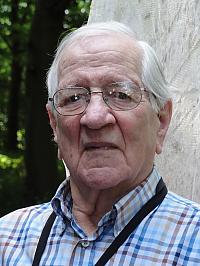
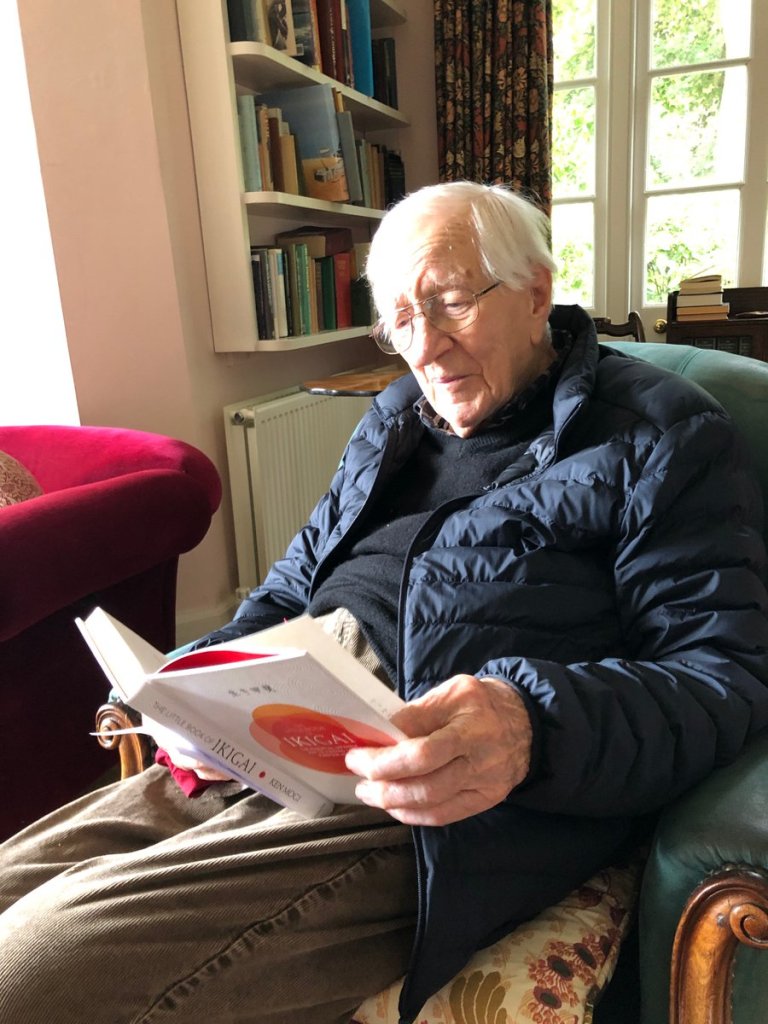
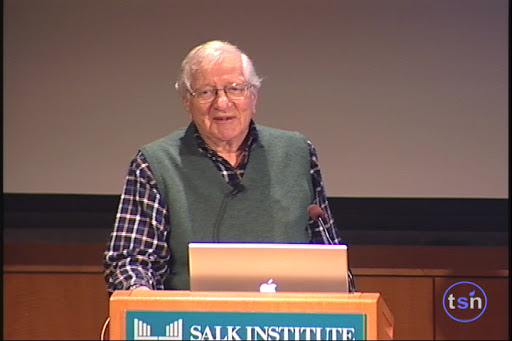







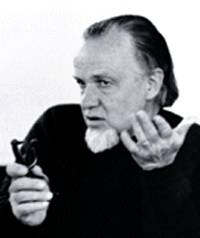


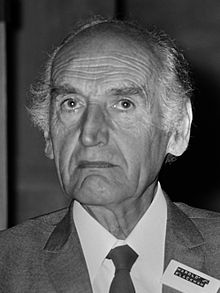





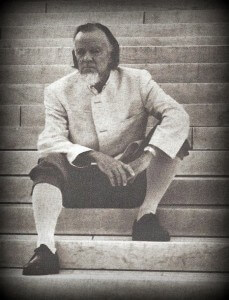
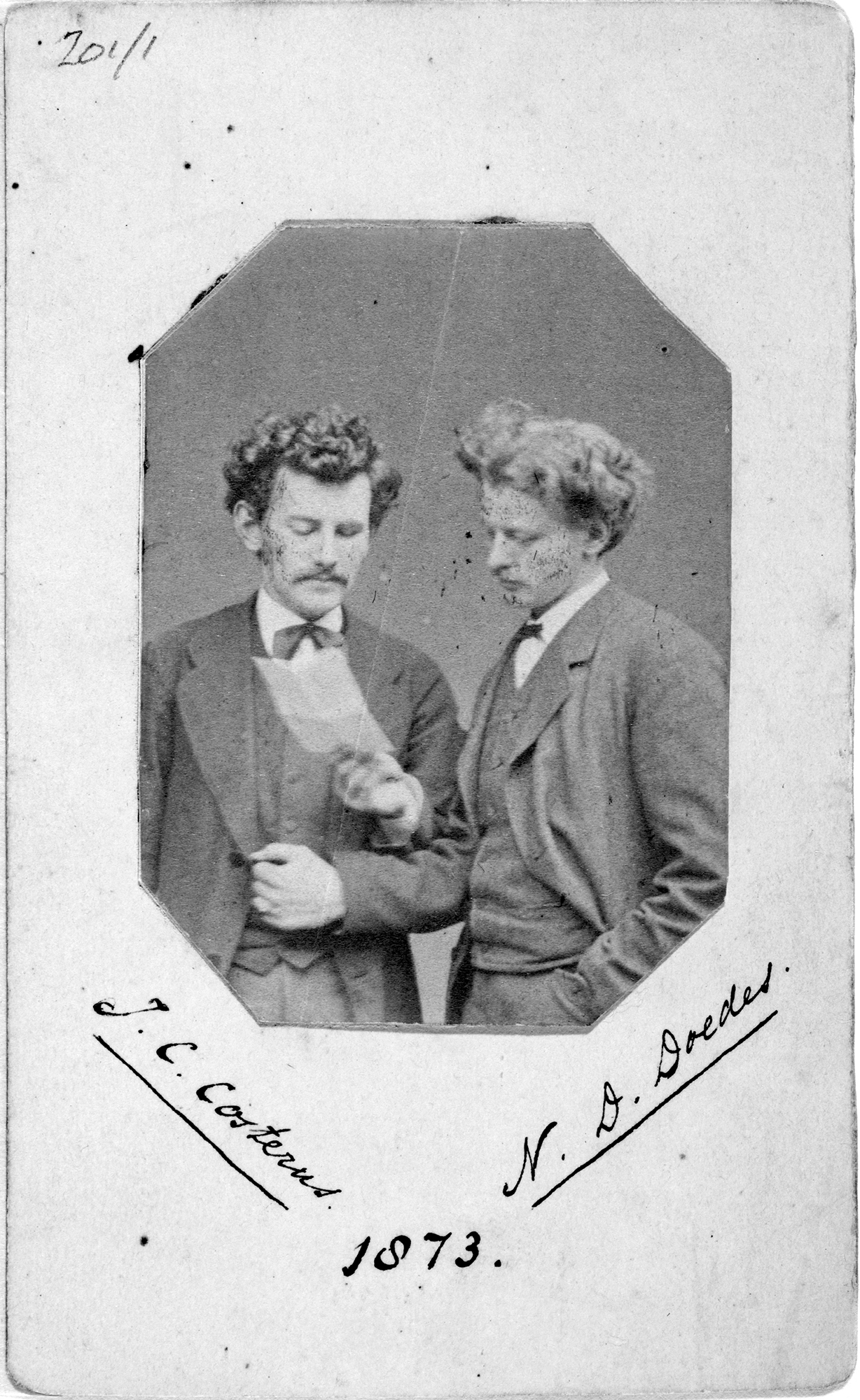
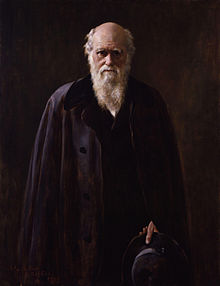


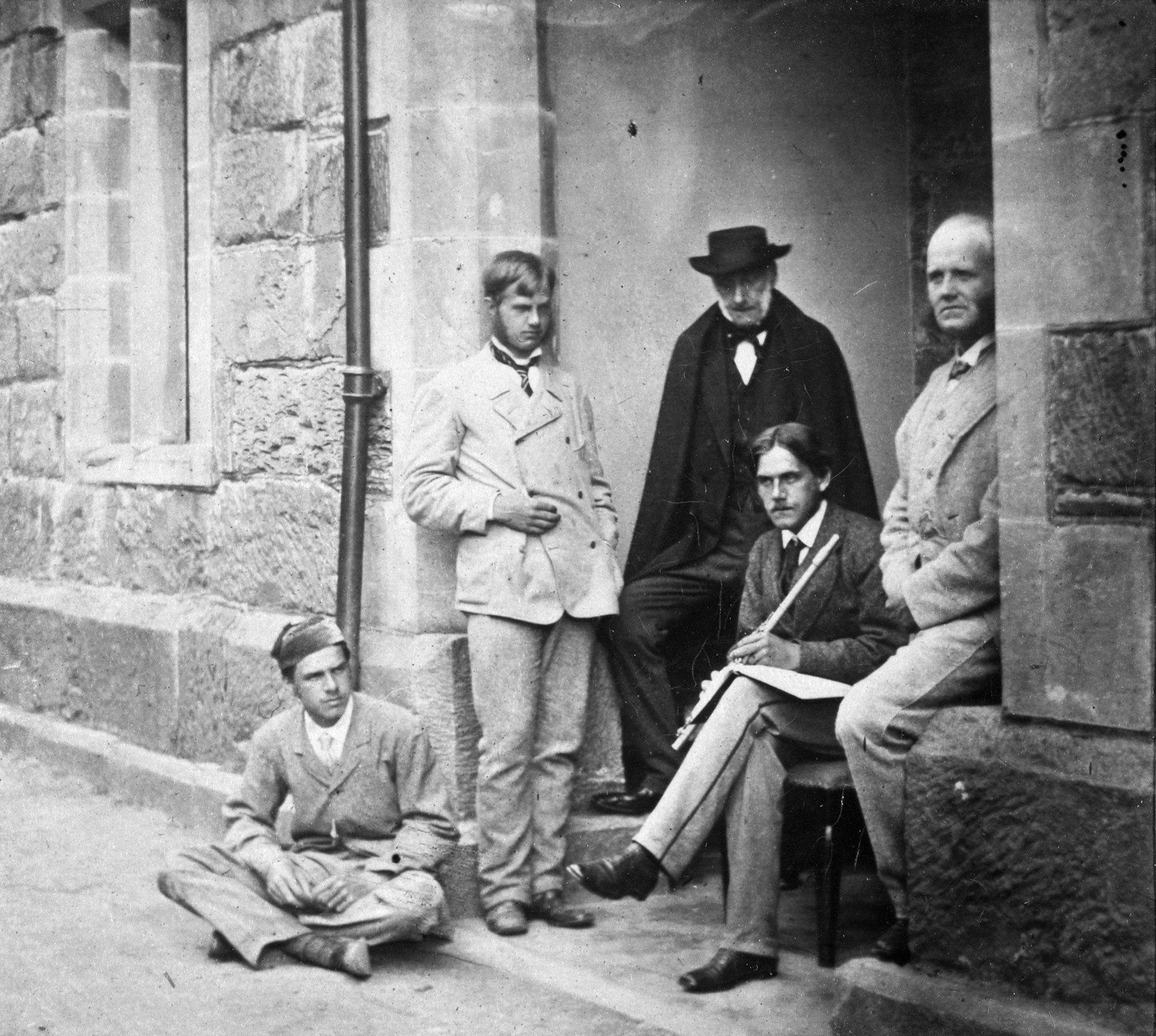
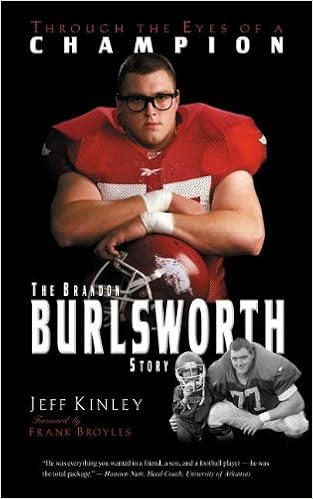
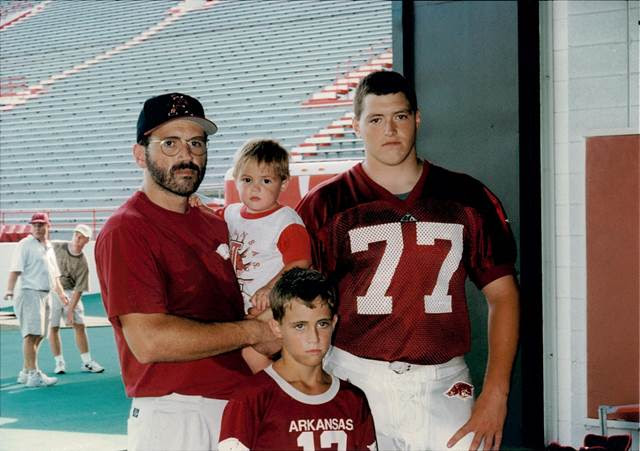




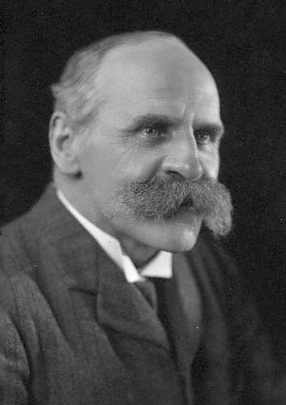


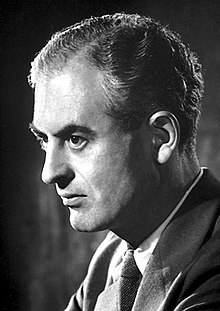


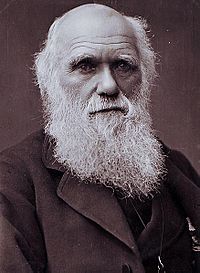
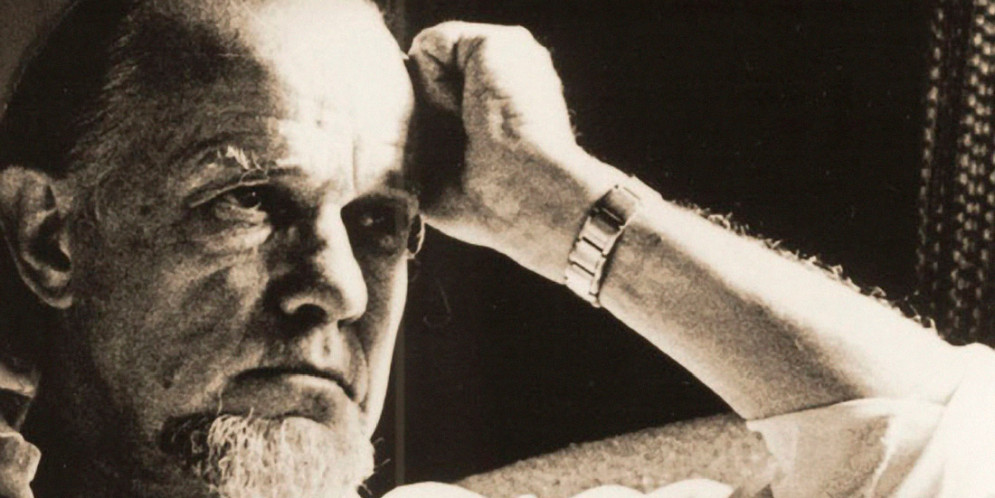
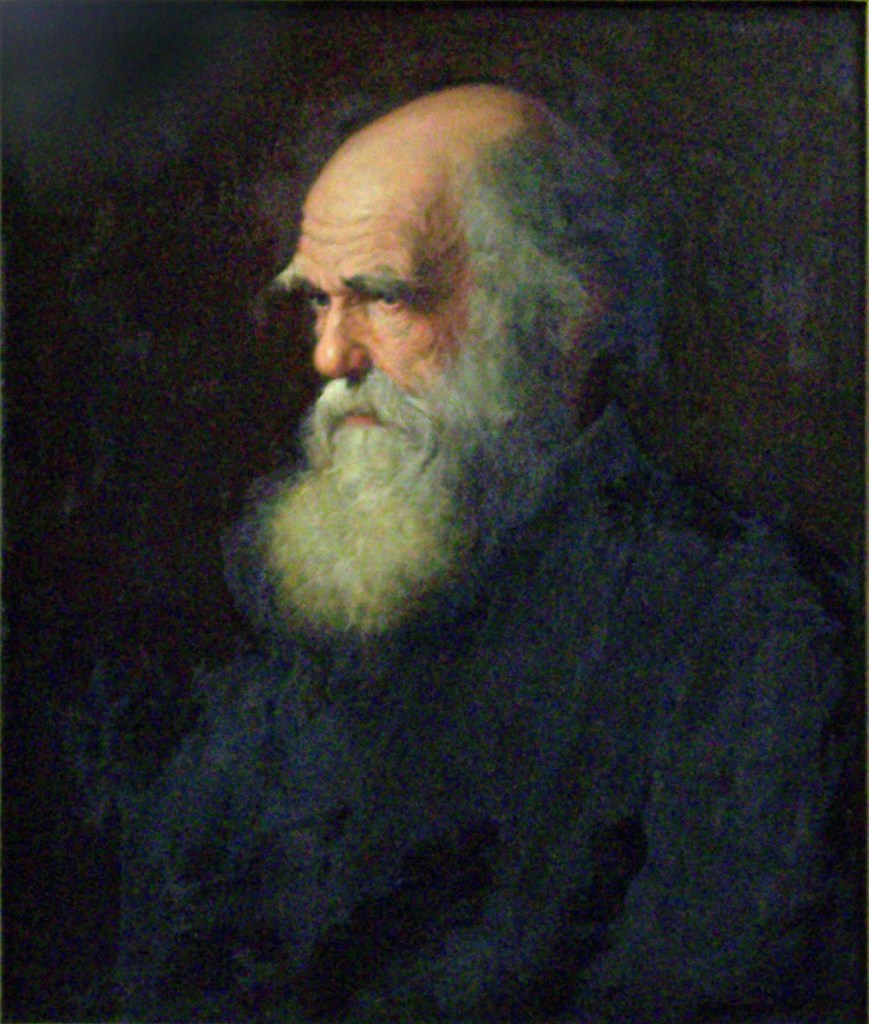
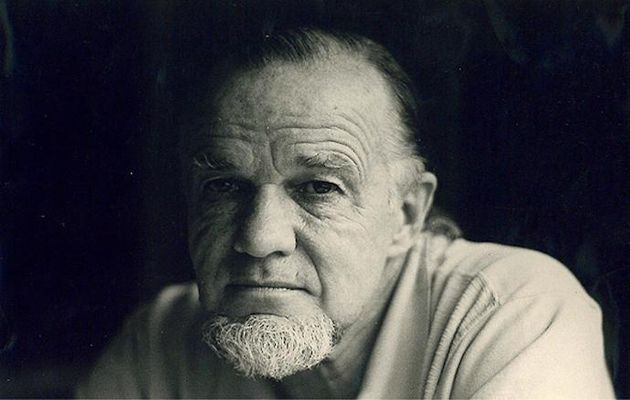
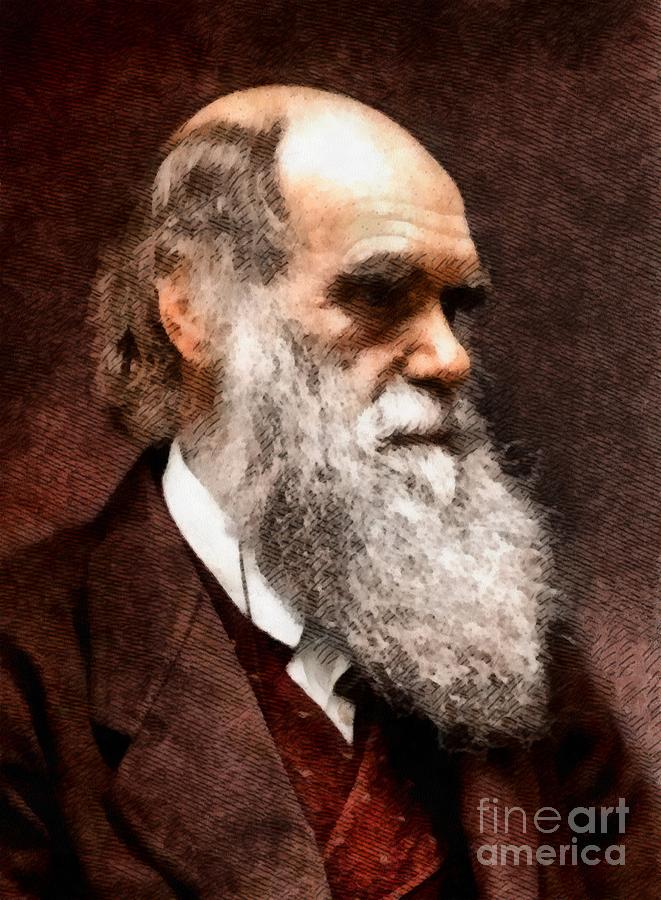
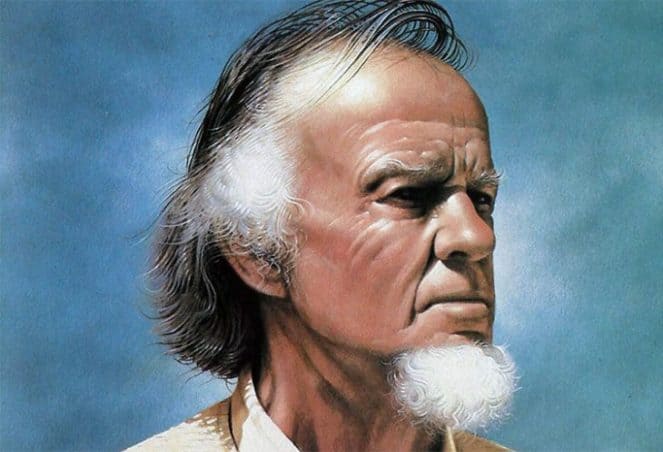


 The Daily Hatch