Art forms can be used for any type of message, from pure fantasy to detailed history. That a work of art is in the form of fantasy or epic or painting does not mean that there is no propositional content. just as one can have propositional statements in prose, there can be propositional statements in poetry, in painting, in virtually any art form.
Some years ago a theologian at Princeton commented that he did not mind saying the Creeds, providing that he could sing them. What he meant was that so long as he could make them a work of art, he didn’t feel that he had to worry about the content. But this is both poor theology and poor aesthetics….There is the same dilemma in art styles and forms. Think, for example, of T. S. Eliot’s form of poetry in The Waste Land.The fragmented form matches the vision of fragmented man. But it is intriguing that after T. S. Eliot became a Christian — for example, in The Journey of the Magi — he did not use quite this same form. Rather, he adapted it for the message he was now giving — a message with a Christian character. But he didn’t entirely give up the form; he didn’t go back to Tennyson. Rather, he adapted the form that he used in The Waste Land, changing it to fit the message that he was now giving. In other words, T. S. Eliot the Christian wrote somewhat differently than T. S. Eliot the “modern man.” Therefore, while we must use twentieth-century styles, we must not use them in such a way as to be dominated by the world-views out of which they have arisen. Christianity is a message with its own distinctive propositional content, not a set of “religious” truths in an upper story. The whole man is to be addressed, and this includes his mind as well as his emotions and his aesthetic sensitivity. Therefore, an art form or style that is no longer able to carry content cannot be used to give the Christian message. I am not saying that the style is in itself wrong, but that it has limitations. Totally fractured prose or poetry cannot be used to give the Christian message for the simple reason that it cannot carry intellectual content, and you canot preach Christianity without content. The biblical message, the good news, is a good news of content….
The problem is just as prevalent in folk music as it is in rock. Joan Baez sang so beautifully, “You may call him Jesus, but I call him Savior.” But as far as Joan Baez and most of her listeners were concerned, when she said, “I call him Savior,” she was not calling him Savior in the way a Christian calls him Savior. She could have been singing southern folk or country and western or a Hindu lyric just as well. So when we come along and say, “My purpose is to sing folk so that I will be understood,” we must find a way to make it clear that we are singing folk to convey a world-view and not just to sing folk.
Joan Baez – Virgin Mary (Had One Son)
The form in which a world-view is given can either weaken or strengthen the content, even if the viewer or reader does not in every case analyze this completely. In other words, depending upon the vehicle you use, something can come across that an audience does not notice and yet will be moving either in the direction of your world-view or away from your world-view. And as a Christian adopts and adapts various contemporary techniques, he must wrestle with the whole question, looking to the Holy Spirit for help to know when to invent, when to adopt, when to adapt, and when to not use a specific style at all. This is something each artist wrestles with for a lifetime, not something he settles once and for all. In conclusion, therefore, often we will use twentieth-century art forms, but we must be careful to keep them from distorting the world-view which is distinctively ours as Christians. In one way, styles are completely neutral. But in another way, they must not be used in an unthinking, naive way.
Pierre Huyghe was born in 1962 in Paris, France. He attended the École Nationale Supérieure des Arts Décoratifs, Paris (1982–85). Employing folly, leisure, adventure, and celebration in creating art, Huyghe’s films, installations, and public events range from a small-town parade to a puppet theater, from a model amusement park to an expedition to Antarctica.
By filming staged scenarios (such as a re-creation of the true-life bank robbery featured in the movie, Dog Day Afternoon), Huyghe probes the capacity of cinema to distort and ultimately shape memory. While blurring the traditional distinction between fiction and reality—and revealing the experience of fiction to be as palpable as anything in daily life—Huyghe’s playful work often addresses complex social topics, such as the yearning for utopia, the lure of spectacle in mass media, and the impact of Modernism on contemporary values and belief systems.
He has received many awards, including the Solomon R. Guggenheim Museum’s Hugo Boss Prize (2002); the Special Award from the Jury of the Venice Biennial (2001); and a Deutscher Akademischer Austausch Dienst (DAAD) Fellowship (1999–2000). Huyghe has had solo exhibitions at Tate Modern, London, and ARC, Musée d’art Moderne de la Ville de Paris (2006); Carpenter Center, Harvard University, Cambridge, Massachusetts (2004); Modern Art Museum of Fort Worth (2004); Dia Center for the Arts, New York (2003); Solomon R. Guggenheim Museum, New York (2003); Museum of Contemporary Art, Chicago (2000); and Centre Georges Pompidou, Paris (2000). The Public Art Fund commissioned Huyghe to create “A Journey that Wasn’t” (2006), which included an expedition to Antarctica, a performance in Central Park, and a video installation at the Whitney Biennial in New York. Huyghe lives and works in Paris and New York.
I want to make two points today. First, Greg Koukl has rightly noted that the nudity of a ten year old girl in the art of Robert Mapplethorpe is not defensible, and it demonstrates where our culture is morally. It the same place morally where Rome was 2000 years ago as Francis Schaeffer has demonstrated […]
E P I S O D E 1 0 Dr. Francis Schaeffer – Episode X – Final Choices 27 min FINAL CHOICES I. Authoritarianism the Only Humanistic Social Option One man or an elite giving authoritative arbitrary absolutes. A. Society is sole absolute in absence of other absolutes. B. But society has to be […]
E P I S O D E 9 Dr. Francis Schaeffer – Episode IX – The Age of Personal Peace and Affluence 27 min T h e Age of Personal Peace and Afflunce I. By the Early 1960s People Were Bombarded From Every Side by Modern Man’s Humanistic Thought II. Modern Form of Humanistic Thought Leads […]
E P I S O D E 8 Dr. Francis Schaeffer – Episode VIII – The Age of Fragmentation 27 min I saw this film series in 1979 and it had a major impact on me. T h e Age of FRAGMENTATION I. Art As a Vehicle Of Modern Thought A. Impressionism (Monet, Renoir, Pissarro, Sisley, […]
E P I S O D E 7 Dr. Francis Schaeffer – Episode VII – The Age of Non Reason I am thrilled to get this film series with you. I saw it first in 1979 and it had such a big impact on me. Today’s episode is where we see modern humanist man act […]
E P I S O D E 6 How Should We Then Live 6#1 Uploaded by NoMirrorHDDHrorriMoN on Oct 3, 2011 How Should We Then Live? Episode 6 of 12 ________ I am sharing with you a film series that I saw in 1979. In this film Francis Schaeffer asserted that was a shift in […]
E P I S O D E 5 How Should We Then Live? Episode 5: The Revolutionary Age I was impacted by this film series by Francis Schaeffer back in the 1970′s and I wanted to share it with you. Francis Schaeffer noted, “Reformation Did Not Bring Perfection. But gradually on basis of biblical teaching there […]
Dr. Francis Schaeffer – Episode IV – The Reformation 27 min I was impacted by this film series by Francis Schaeffer back in the 1970′s and I wanted to share it with you. Schaeffer makes three key points concerning the Reformation: “1. Erasmian Christian humanism rejected by Farel. 2. Bible gives needed answers not only as to […]
Francis Schaeffer’s “How should we then live?” Video and outline of episode 3 “The Renaissance” Francis Schaeffer: “How Should We Then Live?” (Episode 3) THE RENAISSANCE I was impacted by this film series by Francis Schaeffer back in the 1970′s and I wanted to share it with you. Schaeffer really shows why we have so […]
Francis Schaeffer: “How Should We Then Live?” (Episode 2) THE MIDDLE AGES I was impacted by this film series by Francis Schaeffer back in the 1970′s and I wanted to share it with you. Schaeffer points out that during this time period unfortunately we have the “Church’s deviation from early church’s teaching in regard […]
Francis Schaeffer: “How Should We Then Live?” (Episode 1) THE ROMAN AGE Today I am starting a series that really had a big impact on my life back in the 1970′s when I first saw it. There are ten parts and today is the first. Francis Schaeffer takes a look at Rome and why […]
Image copyrightJOE BOYDImage captionClive Palmer, Robin Williamson and Mike Heron on the cover of the first Incredible String Band album
The Incredible String Band were one of the most influential bands of the Sixties but their roots lie in the folk clubs of Edinburgh.
Their incredible journey took them from experimenting in Scotland’s all-night venues to an infamous appearance at Woodstock, the biggest counter-cultural event of the decade.
Led Zeppelin, Bob Dylan, the Beatles and the Rolling Stones were all said to have been influenced by the psychedelic folk rock of the band, who played “world music” a decade before the term was coined.
Comedian and banjo-player Billy Connolly, who was a massive fan and who got to know them when they played the folk clubs of Glasgow, described the band as “hairy, exotic and interesting”.
The story of how a group of folkies playing the Crown Bar in Edinburgh and late night clubs in Glasgow’s Sauchiehall Street rose to become musical pioneers, who are still revered around the world, is told in a new book by the Incredible String Band’s Mike Heron and long-time fan Andrew Greig.
Image copyrightIAN FERGUSONImage captionMike, Robin and Clive backstage at Clive’s Incredible Folk club in Glasgow in 1966
Heron begins the story by telling how a middle-class, private school-boy was looking for an escape through music.
After playing in a rock ‘n’ roll covers band he got into folk music because he wanted to be a songwriter and “people in folk clubs actually listen to the words”.
Heron hooked up with established folk scene stars Robin Williamson and Clive Palmer as the Incredible String Band began to break out of its folk roots.
He says his band-mates were very much part of the beatnik scene, open to influences from all over the world.
“Clive was ultimate Beatnik,” Heron says.
“He lived in a tent pitched in a flat. He started off busking in Paris and he was grooved into it. Robin was too.”
Image copyrightIAN FERGUSONImage captionMike, Clive and Robin on stage in 1966
Heron on the other hand was still living with his parents, who were pushing him to continue his training as a chartered accountant.
He says he admired Robin and Clive: “I was a bit like their apprentice at first.
“They were into Eastern mystic thought and all that kind of thing.”
At first the band played a mix of British folk, bluegrass and old-time jug band music.
But the music quickly progressed as they wrote their own songs and brought in influences from India (they’d seen Ravi Shankar in Edinburgh), Afghanistan, Morocco and even Bulgaria.
Image copyrightINCREDIBLE STRING BANDImage captionThe cover of the Incredible String Band’s first US album
Heron says: “We were listening to all these things but there was no-one playing the kind of thing we wanted to listen to, a composite kind of thing.
“We just played the kind of music people would like to sit around and have a joint to, interesting music that was made up of all these influences that seemed to be cool to the beatniks.
“We kind of invented this kind of music we wanted to listen to.”
The music caught the ear of American record company scout Joe Boyd, who was looking to set up a UK branch of Elektra Records.
He had stumbled across Robin and Clive in early 1965 and returned a year later to sign them up.
Image copyrightMARY STEWARTImage captionMike, Robin and Clive at Temple Cottage, north of Glasgow, in 1966
By this time Heron had joined and they had become singer-songwriters. Boyd liked what he heard.
He has previously said: “Their lyrics turned out to be witty, romantic and literate, and the melodies soared. They had also started taking LSD, so were ahead of the zeitgeist curve.”
The Incredible String Band went to London, recorded their first album and immediately split up.
Heron says: “When the money trickled in from the first album and the three of us got an advance, Robin and Clive just took off.
“Robin just went immediately to Morocco and didn’t come back. Because people just did that in those days.
“Clive went off to Afghanistan for a good six months.
“Nowadays that seems amazing that a band has just made its first album and two of them toddle off around the world.
“I was astonished. I was not really a beatnik. I thought that was it, the band was over.”
According to Heron, Clive never really came back. He was not really interested in the band.
Image copyrightMARY STEWARTImage captionMike Heron plays mouth organ to a small boy at Temple Cottage
Robin Williamson only returned to Edinburgh when the money dried up and the pair resumed ISB as a duo.
When Williamson did return he was laden with Moroccan instruments, including a gimbri.
Their second album The 5000 Spirits or the Layers of the Onion, which came out in 1967, was cited much later by David Bowie as one of the best albums ever.
It has been described by critics as the Summer of Love condensed into one album.
Its opening track, Chinese White, was the first time Andrew Greig had heard of ISB and it “blew my mind”.
From the weird North African instrument in the opening bars to the lyric which states: “The bent twig of darkness/Grows the petals of the morning/It shows to them the birds singing/Just behind the dawning”, the whole thing was a revelation to a 16-year-old school boy from Anstruther in Fife.
Image copyrightANDREW GREIGImage captionAndrew Greig tried to emulate the Incredible String Band with Fate & Ferret
Greig says: “I was a fan out in the provinces and lots of people around about me were turned on, there is no other word for it, by the band.
“There were no drugs available in East Fife at the time. The music just astonished us.
“There was a school folk club that was doing fairly earnest American protest songs and Scottish folk songs, there was also the Beatles and The Stones, which we loved, but we had never heard anything like Chinese White.”
Greig says: “The fact that they were Scottish and cutting edge, that’s what liberated us to think, ‘well if they can do it, we can do something like that’. It gave us permission.”
The young boy from Fife formed a band in the image of the String Band called Fate & Ferret.
He says: “We adopted their manner of dress and walked around the back-country in Fife with flutes and whistles and mandolins and sausages and cider.
“It was curiously innocent in a way. We had this idea of being travelling troubadours. It was that medieval and rural vibe.”
Greig, who has had a successful career as a writer, wanted to use his experiences with the band to “memorialise” the Sixties.
His book – You Know What You Could Be – takes its title from one of Heron’s early String Band songs.
Its lyrics sum up Greig’s feelings about growing up in the Sixties: “You know what you could be/Tell me my friend/Why you worry all the time/What you should be”.
He says: “It was that kind of liberation call.
“My story and Mike’s are both of people trying to become who they need to be when you don’t actually know who that is yet.
“They are both stories of formation. The ridiculous and often comic process by which you try to become who you need to be.”
Trip to Woodstock
In the book Mike Heron only tells the ISB story up to the point where Greig takes over.
However, there was much more to come including a trip to Woodstock, the famous festival in upstate New York in 1969 that has become one of the most iconic events in music history.
Heron says: “It was brilliant to be there but it was very primitive.”
He says the roads to the site were so choked up that they had to be flown in by a military helicopter.
“It was open at the side and the pilot kept going sideways so we could see these huge crowds below. Ravi Shankar was on the plane with us. He was not very relaxed.”
The band were supposed to have played on the Friday but it was pouring with rain and they were afraid they would be electrocuted.
The band were asked to play an acoustic set but by this time their girlfriends were in the band and Heron says it would have been “unchivalrous” to leave them out.
Instead they played in the baking heat of the Saturday.
Image captionMike Heron and Andrew Greig are now friends who have written a book together
Heron, who is now 74, says: “It was very tricky to play there.
“The stage was high and rickety so that didn’t help. The music we were playing was quite delicate so when we went on on the Saturday it was a bit rowdy.
“Everyone had been dropping assorted drugs. They wanted things like Canned Heat. They didn’t want plinky, British, thoughtful music. It was too floaty. It wasn’t really what was required.”
The Incredible String Band split in 1974 but reunited for occasional performances from 1997 to 2006.
Andrew Greig says it is “astonishing” to be friends with and write a book with the man whose band he idolised as a 16-year-old in Fife.
He says: “On one level he is a god, a myth, a legend, an inspiration of my youth .
“On the other hand he is a guy who I spend time with, who I eat curry with. It’s an odd experience but a lovely one.”
You Know What You Could Be by Mike Heron and Andrew Greig will be published by riverrun on 6 April
300 × 335Images may be subject to copyright. Learn More
In his book HOW SHOULD WE THEN LIVE? Francis Schaeffer noted:
The man who followed on from that point was English–Aldous Huxley (1894-1963). He proposed drugs as a solution. We should, he said, give healthy people drugs and they can then find truth inside their own heads. All that was left for Aldous Huxley and those who followed him was truth inside a person’s own head. With Huxley’s idea, what began with the existential philosophers – man’s individual subjectivity attempting to give order as well as meaning, in contrast to order being shaped by what is objective or external to oneself – came to its logical conclusion. Truth is in one’s own head. The ideal of objective truth was gone.
745 × 1024Images may be subject to copyright. Learn More
This emphasis on hallucinogenic drugs brought with it many rock groups–for example, Cream, Jefferson Airplane, Grateful Dead, Incredible String Band, Pink Floyd, and Jimi Hendrix. Most of their work was from 1965-1958. The Beatles’Sergeant Pepper’s Lonely Hearts Club Band (1967) also fits here. This disc is a total unity, not just an isolated series of individual songs, and for a time it became the rallying cry for young people throughout the world. As a whole, this music was the vehicle to carry the drug culture and the mentality which went with it across frontiers which were almost impassible by other means of communication.
Together with the advent of the “drug Age” was the increased interest in the West in the religious experience of Hinduism and Buddhism. Schaeffer tells us that: “This grasping for a nonrational meaning to life and values is the central reason that these Eastern religions are so popular in the West today.” Drugs and Eastern religions came like a flood into the Western world. They became the way that people chose to find meaning and values in life. By themselves or together, drugs and Eastern religion became the way that people searched inside themselves for ultimate truth.
Along with drugs and Eastern religions there has been a remarkable increase “of the occult appearing as an upper-story hope.” As modern man searches for answers it “many moderns would rather have demons than be left with the idea that everything in the universe is only one big machine.” For many people having the “occult in the upper story of nonreason in the hope of having meaning” is better than leaving the upper story of nonreason empty. For them horror or the macabre are more acceptable than the idea that they are just a machine.
Francis Schaeffer has correctly argued:
The universe was created by an infinite personal God and He brought it into existence by spoken word and made man in His own image. When man tries to reduce [philosophically in a materialistic point of view] himself to less than this [less than being made in the image of God] he will always fail and he will always be willing to make these impossible leaps into the area of nonreason even though they don’t give an answer simply because that isn’t what he is. He himself testifies that this infinite personal God, the God of the Old and New Testament is there.
Instead of making a leap into the area of nonreason the better choice would be to investigate the claims that the Bible is a historically accurate book and that God created the universe and reached out to humankind with the Bible. Below is a piece of that evidence given by Francis Schaeffer concerning the accuracy of the Bible.
TRUTH AND HISTORY (chapter 5 of WHATEVER HAPPENED TO THE HUMAN RACE?,
If we take another hundred-year step backwards in time, we come to King Solomon, son of David. On his death the Jewish Kingdom was divided into two sections as a result of a civil revolt. Israel to the north with Jeroboam as king and Judah (as it was called subsequently) to the south under Rehoboam, Solomon’s son. In both the Book of Kings and Chronicles in the Bible we read how during Rehoboam’s reign: 25 In the fifth year of King Rehoboam, Shishak king of Egypt came up against Jerusalem. (I Kings 14:25; II Chronicles 12:2), and how Shishak stripped Rehoboam of the wealth accumulated by his able father, Solomon. The reality of this event is confirmed by archaeology to a remarkable degree.
Shishak subdued not only Rehoboam but Jeroboam as well. The proof of this comes first from a fragment in a victory monument erected by Shishak and discovered at Megiddo, a city in the land of Israel. So the Egyptian king’s force swept northwards, subdued the two Jewish kings, and then erected a victory monument to that effect. Traces of the destruction have also been discovered in such cities as Hazor, Gezer, and Megiddo. These confirm what was written in Second Chronicles:
2028 × 1352Images may be subject to copyright. Learn More
4 And he took the fortified cities of Judah and came as far as Jerusalem.5 Then Shemaiah the prophet came to Rehoboam and to the princes of Judah, who had gathered at Jerusalem because of Shishak, and said to them, “Thus says theLord, ‘You abandoned me, so I have abandoned you to the hand of Shishak.’”6 Then the princes of Israel and the king humbled themselves and said, “TheLord is righteous.”7 When the Lord saw that they humbled themselves, the word of the Lord came to Shemaiah: “They have humbled themselves. I will not destroy them, but I will grant them some deliverance, and my wrath shall not be poured out on Jerusalem by the hand of Shishak.8 Nevertheless, they shall be servants to him, that they may know my service and the service of the kingdoms of the countries.”
9 So Shishak king of Egypt came up against Jerusalem. He took away the treasures of the house of the Lord and the treasures of the king’s house. He took away everything. He also took away the shields of gold that Solomon had made…( II Chronicles 12:4-9)
400 × 308Images may be subject to copyright. Learn More
Further confirmation comes from the huge victory scene engraved on Shishak’s order at the Temple of Karnak in Egypt. The figure of the king is somewhat obscured, but he is clearly named and he is seen smiting Hebrew captives before the god Amon, and there are symbolic rows of names of conquered towns of Israel and Judah.
Solomon’s is remembered also for his great wealth. The Bible tells us:
14 Now the weight of gold that came to Solomon in one year was 666 talents of gold,15 besides that which came from the explorers and from the business of the merchants, and from all the kings of the west and from the governors of the land.16 King Solomon made 200 large shields of beaten gold; 600 shekels[a]of gold went into each shield.17 And he made 300 shields of beaten gold; three minas[b] of gold went into each shield. And the king put them in the House of the Forest of Lebanon. (I Kings 10:14-17)
This wealth that the Bible speaks of has been challenged. Surely, some have said, these figures are an exaggeration. Excavations, however, have confirmed enormous quantities of precious metals, owned and distributed by kings during this period. For example, Shishak’s son Osorkon I (statuette of Osorkon I, Brooklyn Museum, New York), the one who stood to gain from the booty carried off from Rehoboam’s capital, is reported to have made donations to his god Amon totaling 470 tons of precious metal, gold, and silver, during only the first four years of his reign. This, of course, is much more than Solomon’s 66 talents which equals approximately twenty tons of gold per annum. We also have confirmation of the Bible’s reference to Solomon’s gold as coming from Ophir. The location of Ophir is still unknown, but an ostracon dated a little later than Solomon’s time actually mentions that thirty shekels of gold had come from Ophir for Beth-horon.
The John Lennon and the Beatles really were on a long search for meaning and fulfillment in their lives just like King Solomon did in the Book of Ecclesiastes. Solomon looked into learning (1:12-18, 2:12-17), laughter, ladies, luxuries, and liquor (2:1-2, 8, 10, 11), and labor (2:4-6, 18-20). He fount that without God in the picture all […]
______________ George Harrison Swears & Insults Paul and Yoko Lucy in the Sky with Diamonds- The Beatles The Beatles: I have dedicated several posts to this series on the Beatles and I don’t know when this series will end because Francis Schaeffer spent a lot of time listening to the Beatles and talking […]
The Beatles in a press conference after their Return from the USA Uploaded on Nov 29, 2010 The Beatles in a press conference after their Return from the USA. The Beatles: I have dedicated several posts to this series on the Beatles and I don’t know when this series will end because Francis […]
__________________ Beatles 1966 Last interview I have dedicated several posts to this series on the Beatles and I don’t know when this series will end because Francis Schaeffer spent a lot of time listening to the Beatles and talking and writing about them and their impact on the culture of the 1960’s. In this […]
_______________ The Beatles documentary || A Long and Winding Road || Episode 5 (This video discusses Stg. Pepper’s creation I have dedicated several posts to this series on the Beatles and I don’t know when this series will end because Francis Schaeffer spent a lot of time listening to the Beatles and talking and writing about […]
_______________ Francis Schaeffer pictured below: _____________________ I have included the 27 minute episode THE AGE OF NONREASON by Francis Schaeffer. In that video Schaeffer noted, ” Sergeant Pepper’s Lonely Hearts Club Band…for a time it became the rallying cry for young people throughout the world. It expressed the essence of their lives, thoughts and their feelings.” How Should […]
Crimes and Misdemeanors: A Discussion: Part 1 ___________________________________ Today I will answer the simple question: IS IT POSSIBLE TO BE AN OPTIMISTIC SECULAR HUMANIST THAT DOES NOT BELIEVE IN GOD OR AN AFTERLIFE? This question has been around for a long time and you can go back to the 19th century and read this same […]
____________________________________ Francis Schaeffer pictured below: __________ Francis Schaeffer has written extensively on art and culture spanning the last 2000years and here are some posts I have done on this subject before : Francis Schaeffer’s “How should we then live?” Video and outline of episode 10 “Final Choices” , episode 9 “The Age of Personal Peace and Affluence”, episode 8 […]
Love and Death [Woody Allen] – What if there is no God? [PL] ___________ _______________ How Should We then Live Episode 7 small (Age of Nonreason) #02 How Should We Then Live? (Promo Clip) Dr. Francis Schaeffer 10 Worldview and Truth Two Minute Warning: How Then Should We Live?: Francis Schaeffer at 100 Francis Schaeffer […]
___________________________________ Francis Schaeffer pictured below: ____________________________ Francis Schaeffer “BASIS FOR HUMAN DIGNITY” Whatever…HTTHR Dr. Francis schaeffer – The flow of Materialism(from Part 4 of Whatever happened to human race?) Dr. Francis Schaeffer – The Biblical flow of Truth & History (intro) Francis Schaeffer – The Biblical Flow of History & Truth (1) Dr. Francis Schaeffer […]
Bertrand Russell:We may define “faith” as a firm belief in something for which there is no evidence. Where there is evidence, no one speaks of “faith.” We do not speak of faith that two and two are four or that the earth is round. We only speak of faith when we wish to substitute emotion for evidence.
Well Bertie, we got some evidence for you below from Sir William Mitchell Ramsay who was your contemporary.
320 × 168Images may be subject to copyright. Learn More
and you will hear what far smarter people than I have to say on this matter. I agree with them.
Harry Kroto
I have attempted to respond to all of Dr. Kroto’s friends arguments and I have posted my responses one per week for over a year now. Here are some of my earlier posts:
In the first video below in the 14th clip in this series are his words and I will be responding to them in the next few weeks since Sir Bertrand Russell is probably the most quoted skeptic of our time, unless it was someone like Carl Sagan or Antony Flew.
50 Renowned Academics Speaking About God (Part 1)
Another 50 Renowned Academics Speaking About God (Part 2)
A Further 50 Renowned Academics Speaking About God (Part 3)
__
Quote from Bertrand Russell:
Q: Why are you not a Christian?
Russell: Because I see no evidence whatever for any of the Christian dogmas. I’ve examined all the stock arguments in favor of the existence of God, and none of them seem to me to be logically valid.
Q: Do you think there’s a practical reason for having a religious belief, for many people?
Russell: Well, there can’t be a practical reason for believing what isn’t true. That’s quite… at least, I rule it out as impossible. Either the thing is true, or it isn’t. If it is true, you should believe it, and if it isn’t, you shouldn’t. And if you can’t find out whether it’s true or whether it isn’t, you should suspend judgment. But you can’t… it seems to me a fundamental dishonesty and a fundamental treachery to intellectual integrity to hold a belief because you think it’s useful, and not because you think it’s true.
__
__
229 × 300Images may be subject to copyright. Learn More
Francis Schaeffer noted concerning the IMPLICIT FAITH of Bertrand Russell:
I was lecturing at the University of St. Andrews one night and someone put forth the question, “If Christianity is so clear and reasonable then why doesn’t Bertrand Russell then become a Christian? Is it because he hasn’t discovered theology?”
It wasn’t a matter of studying theology that was involved but rather that he had too much faith. I was surrounded by humanists and you could hear the gasps. Bertrand Russell and faith; Isn’t this the man of reason? I pointed out that this is a man of high orthodoxy who will hold his IMPLICIT FAITH on the basis of his presuppositions no matter how many times he has to zig and zag because it doesn’t conform to the facts.
You must understand what the term IMPLICIT FAITH means. In the old Roman Catholic Church when someone who became a Roman Catholic they had to promise implicit faith. That meant that you not only had to believe everything that Roman Catholic Church taught then but also everything it would teach in the future. It seems to me this is the kind of faith that these people have in the uniformity of natural causes in a closed system and they have accepted it no matter what it leads them into.
I think that these men are men of a high level of IMPLICIT FAITH in their own set of presuppositions. Paul said (in Romans Chapter One) they won’t carry it to it’s logical conclusion even though they hold a great deal of the truth and they have revolted and they have set up a series of universals in themselves which they won’t transgress no matter if they conform to the facts or not.
Here below is the Romans passage that Schaeffer is referring to and verse 19 refers to what Schaeffer calls “the mannishness of man” and verse 20 refers to Schaeffer’s other point which is “the universe and it’s form.”
Romans 1:18-20 Amplified Bible :
18 For God’s [holy] wrath and indignation are revealed from heaven against all ungodliness and unrighteousness of men, who in their wickedness repress and hinder the truth and make it inoperative. 19 For that which is known about God is evident to them and made plain in their inner consciousness, because God [Himself] has shown it to them. 20 For ever since the creation of the world His invisible nature and attributes, that is, His eternal power and divinity, have been made intelligible and clearly discernible in and through the things that have been made (His handiworks). So [men] are without excuse [altogether without any defense or justification].
We can actually see the two points makes playing themselves out in Bertrand Russell’s own life.
170 × 223Images may be subject to copyright. Learn More
It is quite true what you say, that you have never expressed yourself—but who has, that has anything to express? The things one says are all unsuccessful attempts to say something else—something that perhaps by its very nature cannot be said. I know that I have struggled all my life to say something that I never shall learn how to say. And it is the same with you. It is so with all who spend their lives in the quest of something elusive, and yet omnipresent, and at once subtle and infinite. One seeks it in music, and the sea, and sunsets; at times I have seemed very near it in crowds when I have been feeling strongly what they were feeling; one seeks it in love above all. But if one lets oneself imagine one has found it, some cruel irony is sure to come and show one that it is not really found. The outcome is that one is a ghost, floating through the world without any real contact. Even when one feels nearest to other people, something in one seems obstinately to belong to God and to refuse to enter into any earthly communion—at least that is how I should express it if I thought there was a God. It is odd isn’t it? I care passionately for this world, and many things and people in it, and yet…what is it all? There must be something more important, one feels, though I don’t believe there is. I am haunted—some ghost, from some extra-mundane region, seems always trying to tell me something that I am to repeat to the world, but I cannot understand the message. But it is from listening to the ghost that one comes to feel oneself a ghost. I feel I shall find the truth on my deathbed and be surrounded by people too stupid to understand—fussing about medicines instead of searching for wisdom. Love and imagination mingled; that seems the main thing so far.
During Bertrand Russell’s lifetime (1872-1970) there lived another scholar who also doubted that the Bible was true and his name was Sir William Mitchell Ramsay (1851-1939. Ramsay taught from 1885 to until his retirement in 1911 but he continued writing books.
In 1880 Ramsay received an Oxford studentship for travel and research in Greece. At Smyrna, he met Sir C. W. Wilson, then British consul-general in Anatolia, who advised him on inland areas suitable for exploration. Ramsay and Wilson made two long journeys during 1881-1882.
He traveled widely in Asia Minor and rapidly became the recognized authority on all matters relating to the districts associated with St Paul’s missionary journeys and on Christianity in the early Roman Empire. Greece and Turkey remained the focus of Ramsay’s research for the remainder of his academic career. In 1883, he discovered the world’s oldest complete piece of music, the Seikilos epitaph. He was known for his expertise in the historic geographyand topography of Asia Minor and of its political, social, cultural, and religious history. He was Fellow of Exeter College, Oxford, in 1882.
From 1885 to 1886 Ramsay held the newly created Lincoln and Merton professorship of classical archaeology and art at Oxford and became a fellow of Lincoln College (honorary fellow 1898). In 1886 Ramsay was appointed Regius Professor of Humanity at the University of Aberdeen. He remained affiliated with Aberdeen until his retirement in 1911.
What information did William Ramsay find out about the accuracy of the Bible?
Francis Schaeffer discusses Ramsay’s life below:
TRUTH AND HISTORY (chapter 5 of WHATEVER HAPPENED TO THE HUMAN RACE?, under footnotes #97 and #98)
A common assumption among liberal scholars is that because the Gospels are theologically motivated writings–which they are–they cannot also be historically accurate. In other words, because Luke, say (when he wrote the Book of Luke and the Book of Acts), was convinced of the deity of Christ, this influenced his work to the point where it ceased to be reliable as a historical account. The assumption that a writing cannot be both historical and theological is false.
The experience of the famous classical archaeologist Sir William Ramsay illustrates this well. When he began his pioneer work of exploration in Asia Minor, he accepted the view then current among the Tubingen scholars of his day that the Book of Acts was written long after the events in Paul’s life and was therefore historically inaccurate. However, his travels and discoveries increasingly forced upon his mind a totally different picture, and he became convinced that Acts was minutely accurate in many details which could be checked.
What is even more interesting is the way “liberal” modern scholars today deal with Ramsay’s discoveries and others like them. In the NEW TESTAMENT : THE HISTORY OF THE INVESTIGATION OF ITS PROBLEMS, the German scholar Werner G. Kummel made no reference at all to Ramsay. This provoked a protest from British and American scholars, whereupon in a subsequent edition Kummel responded. His response was revealing. He made it clear that it was his deliberate intention to leave Ramsay out of his work, since “Ramsay’s apologetic analysis of archaeology [in other words, relating it to the New Testament in a positive way] signified no methodologically essential advance for New Testament research.” This is a quite amazing assertion. Statements like these reveal the philosophic assumptions involved in much liberal scholarship.
A modern classical scholar, A.N.Sherwin-White, says about the Book of Acts: “For Acts the confirmation of historicity is overwhelming…Any attempt to reject its basic historicity, even in matters of detail, must not appear absurd. Roman historians have long taken this for granted.”
When we consider the pages of the New Testament, therefore, we must remember what it is we are looking at. The New Testament writers themselves make abundantly clear that they are giving an account of objectively true events.
(Under footnote #98)
Acts is a fairly full account of Paul’s journeys, starting in Pisidian Antioch and ending in Rome itself. The record is quite evidently that of an eyewitness of the events, in part at least. Throughout, however, it is the report of a meticulous historian. The narrative in the Book of Acts takes us back behind the missionary journeys to Paul’s famous conversion on the Damascus Road, and back further through the Day of Pentecost to the time when Jesus finally left His disciples and ascended to be with the Father.
But we must understand that the story begins earlier still, for Acts is quite explicitly the second part of a continuous narrative by the same author, Luke, which reaches back to the birth of Jesus.
Luke 2:1-7 New American Standard Bible (NASB)
2 Now in those days a decree went out from Caesar Augustus, that a census be taken of all [a]the inhabited earth.2 [b]This was the first census taken while[c]Quirinius was governor of Syria.3 And everyone was on his way to register for the census, each to his own city.4 Joseph also went up from Galilee, from the city of Nazareth, to Judea, to the city of David which is called Bethlehem, because he was of the house and family of David,5 in order to register along with Mary, who was engaged to him, and was with child.6 While they were there, the days were completed for her to give birth.7 And she gave birth to her firstborn son; and she wrapped Him in cloths, and laid Him in a [d]manger, because there was no room for them in the inn.
In the opening sentences of his Gospel, Luke states his reason for writing:
Luke 1:1-4 New American Standard Bible (NASB)
1 Inasmuch as many have undertaken to compile an account of the things[a]accomplished among us,2 just as they were handed down to us by those whofrom the beginning [b]were eyewitnesses and [c]servants of the [d]word,3 it seemed fitting for me as well, having [e]investigated everything carefully from the beginning, to write it out for you in consecutive order, most excellentTheophilus;4 so that you may know the exact truth about the things you have been[f]taught.
In Luke and Acts, therefore, we have something which purports to be an adequate history, something which Theophilus (or anyone) can rely on as its pages are read. This is not the language of “myths and fables,” and archaeological discoveries serve only to confirm this.
For example, it is now known that Luke’s references to the titles of officials encountered along the way are uniformly accurate. This was no mean achievement in those days, for they varied from place to place and from time to time in the same place. They were proconsuls in Corinth and Cyprus, asiarchs at Ephesus, politarchesat Thessalonica, and protosor “first man” in Malta. Back in Palestine, Luke was careful to give Herod Antipas the correct title of tetrarch of Galilee. And so one. The details are precise.
The mention of Pontius Pilate as Roman governor of Judea has been confirmed recently by an inscription discovered at Caesarea, which was the Roman capital of that part of the Roman Empire. Although Pilate’s existence has been well known for the past 2000 years by those who have read the Bible, now his governorship has been clearly attested outside the Bible.
I see that there are several active posts attempting to question the historical veracity of the Bible. Clearly the attackers have not run across Sir William Ramsay: “First Professor of Classical Archaeology” and “Lincoln and Merton Professorship of Classical Archaeology and Art” at Oxford, and “Regius Professor of Humanity” at the University of Aberdeen, if you are into academic titles.
I’m grabbing a few snippets from his Wikipedia biography which as far as I’m concerned puts the question of historical veracity of Biblical accounts to rest. Here we have a skeptical archeologist who set out to prove once and for all that the New Testament was fiction. He wound up proving the opposite and became a Christian himself.
William Ramsay was known for his careful attention to New Testament events, particularly the Book of Acts and Pauline Epistles. When he first went to Asia Minor, many of the cities mentioned in Acts had no known location and almost nothing was known of their detailed history or politics. The Acts of the Apostles was the only record and Ramsay, skeptical, fully expected his own research to prove the author of Acts hopelessly inaccurate since no man could possibly know the details of Asia Minor more than a hundred years after the event—this is, when Acts was then supposed to have been written.
He therefore set out to put the writer of Acts on trial.
He devoted his life to unearthing the ancient cities and documents of Asia Minor. After a lifetime of study, however, he concluded: ‘Further study … showed that the book could bear the most minute scrutiny as an authority for the facts of the Aegean world, and that it was written with such judgment, skill, art and perception of truth as to be a model of historical statement’ (The Bearing of Recent Discovery, p. 85). On page 89 of the same book, Ramsay accounted, ‘I set out to look for truth on the borderland where Greece and Asia meet, and found it there [in Acts]. You may press the words of Luke in a degree beyond any other historian’s and they stand the keenest scrutiny and the hardest treatment…‘
When Ramsay turned his attention to Paul’s letters, most of which the critics dismissed as forgeries, he concluded that all thirteen New Testament letters that claimed to have been written by Paul were authentic.
Today we look at the 3rd letter in the Kroto correspondence and his admiration of Bertrand Russell. (Below The Nobel chemistry laureates Harold Kroto, Robert Curl and Richard Smalley) It is with sadness that I write this post having learned of the death of Sir Harold Kroto on April 30, 2016 at the age of […]
On November 21, 2014 I received a letter from Nobel Laureate Harry Kroto and it said: …Please click on this URL http://vimeo.com/26991975 and you will hear what far smarter people than I have to say on this matter. I agree with them. Harry Kroto _________________ Below you have picture of Dr. Harry Kroto: Gareth Stedman […]
Top 10 Woody Allen Movies __________ John Piippo makes the case that Bertrand Russell would have loved Woody Allen because they both were atheists who don’t deny the ramifications of atheism!!! Monday, August 06, 2012 (More On) Woody Allen’s Atheism As I wrote in a previous post, I like Woody Allen. I have long admired his […]
______ Top 10 Woody Allen Movies PBS American Masters – Woody Allen A Documentary 01 PBS American Masters – Woody Allen A Documentary 02 __________ John Piippo makes the case that Bertrand Russell would have loved Woody Allen because they both were two atheists who don’t deny the ramifications of atheism!!! Monday, August 06, 2012 […]
THE MORAL ARGUMENT BERTRAND RUSSELL But aren’t you now saying in effect, I mean by God whatever is good or the sum total of what is good — the system of what is good, and, therefore, when a young man loves anything that is good he is loving God. Is that what you’re […]
Great debate Fr. Frederick C. Copleston vs Bertrand Russell – Part 1 Uploaded by riversonthemoon on Jul 15, 2009 BBC Radio Third Programme Recording January 28, 1948. BBC Recording number T7324W. This is an excerpt from the full broadcast from cassette tape A303/5 Open University Course, Problems of Philosophy Units 7-8. Older than 50 years, […]
Uploaded by riversonthemoon on Jul 15, 2009 BBC Radio Third Programme Recording January 28, 1948. BBC Recording number T7324W. This is an excerpt from the full broadcast from cassette tape A303/5 Open University Course, Problems of Philosophy Units 7-8. Older than 50 years, out of UK/BBC copyright. Pardon the hissy audio. It was recorded 51 […]
Fr. Frederick C. Copleston vs Bertrand Russell – Part 1 Uploaded by riversonthemoon on Jul 15, 2009 BBC Radio Third Programme Recording January 28, 1948. BBC Recording number T7324W. This is an excerpt from the full broadcast from cassette tape A303/5 Open University Course, Problems of Philosophy Units 7-8. Older than 50 years, out of […]
THE MORAL ARGUMENT BERTRAND RUSSELL But aren’t you now saying in effect, I mean by God whatever is good or the sum total of what is good — the system of what is good, and, therefore, when a young man loves anything that is good he is loving God. Is that what you’re […]
Fr. Frederick C. Copleston vs Bertrand Russell – Part 1 Uploaded by riversonthemoon on Jul 15, 2009 BBC Radio Third Programme Recording January 28, 1948. BBC Recording number T7324W. This is an excerpt from the full broadcast from cassette tape A303/5 Open University Course, Problems of Philosophy Units 7-8. Older than 50 years, out of […]
Lynda Hollenbeck of the Saline Courier conducted an interview with Burt Reynolds in Benton, Arkansas during the filming of “White Lightning” in 1972 and it was republished in the September 7, 2018 edition of the newspaper. Here is an excerpt:
Reynolds obviously likes people. While he admitted that sometimes the loss of privacy was upsetting, he said he would be ungrateful if he didn’t respond to the attention of his fans. He said he loves talking to people and appreciates the general attitude of people in Arkansas, which he described as “people trying to make friends.”
He said his formula for living the life of a star was to give up his privacy for six weeks, then hide for six weeks.
—
I was real sad to read about the passing of Burt Reynolds. I grew up watching his movies and I attended a 2 hour show in Little Rock when he told his life story back in the mid 1990’s and I read his autobiography in 2015. Below is the 3rd and last letter I wrote to Reynolds.
Mike Martin Field at Dick Howser Stadium – Florida State Seminoles
___
___
Larry Joe Speaks was 69 years old (his middle name came from his father Joe who fought in the BATTLE OF THE BULGE in World War 2)
__
For 16 years Larry owned his store (Southern Fruit & Grocery Sheridan, AR 72150) and he gave free cassette tapes of the message WHO IS JESUS? by Adrian Rogers to any customer who would like them.
The Visit of the Queen of Sheba to King Solomon’, oil on canvas painting by Edward Poynter, 1890
Adrian Rogers pictured below
The Passion of the Christ: The Crucifixion.
_____
April 7, 2017
Burt Reynolds, c/o G.P.Putnam’s Sons, 345 Hudson Street, New York, NY, 10014,
Dear Burt,
I discovered that on this morning of April 7, 2017 my good friend Larry Speaks has died and gone to heaven. Let me tell you a little about him. After Larry put is faith in Christ alone for his salvation over 20 years ago he got started on a hobby of listening and discussing some of the great sermons that he heard. One of those sermons was WHO IS JESUS? by Adrian Rogers. In fact, he asked me to run off some cassette tapes of that message so he could give it to people who used to come into his store SOUTHERN FRUIT & GROCERY. After he sold the store he continued to give out this message and over the years I switched to putting it on CD’s for him to give out. Even the last years of his life he would go to McCain Mall and walk through the mall and give out the CD’s. He was thrilled that so many people were glad to get them, and he was disappointed when occasionally someone would decline to accept his gift.
I have determined today to write you a few letters concerning the meaning of it all and the writings of Solomon in the Book of Ecclesiastes. Today’s letter is on a subject that I am currently thinking a lot about and that is on the subject of death.
I have to say again that I really enjoyed reading your book BUT ENOUGH ABOUT ME because it was a book that revealed the real you and some of the hurts that you experienced along the way. Losing one of your closest friends was part of that story:
Richard Dalton “Peanut” Howser was small in stature, but he was the best athlete I ever saw. We played on the ninth-grade football team together and then all through high school. He was too small to play college football, so he concentrated on baseball and made All American in his sophomore, junior, and senior years. He was drafted by the Kansas City Athletics and was American League Rookie of the Year and captain of the team. He went on to manage the New York Yankees and then the Kansas City Royals, who won the World Series three times with Peanut at the helm.
We stayed the best of friends over the years. Besides being a great athlete, he was a magnificent man. He died of cancer in 1987 at fifty-one. When he got sick, I went to see him and he handled himself the way I hope I would. Not a day goes by that I don’t miss him something terrible. There’s a structure at Florida State University called the Dick Howser Stadium. Across the street, the football dorm is called Burt Reynolds Hall. So I guess old Peanut and Buddy are still together.
I also remember you telling that story in Little Rock at the EVENING WITH BURT REYNOLDS at the Robinson Auditorium in 1994.
In the last years of his life King Solomon took time to look back and then he wrote the BOOK OF ECCLESIASTES. Solomon did believe in God but in this book he took a look at life “UNDER THE SUN.” Christian scholar Ravi Zacharias has noted, “The key to understanding the Book of Ecclesiastes is the term ‘UNDER THE SUN.’ What that literally means is you lock God out of a closed system, and you are left with only this world of time plus chance plus matter.”
Francis Schaeffer comments on the Book of Ecclesiastes and the subject of death:
Ecclesiastes 9:11
11 Again I saw that under the sun the race is not to the swift, nor the battle to the strong, nor bread to the wise, nor riches to the intelligent, nor favor to those with knowledge, but time and chance happen to them all.
Chance rules. If a man starts out only from himself and works outward it must eventually if he is consistent seem so that only chance rules and naturally in such a setting you can not expect him to have anything else but finally a hate of life.
Ecclesiastes 2:17-18a
17 So I hated life, because what is done under the sun was grievous to me, for all is vanity and a striving after wind. 18 I hated all my toil in which I toil under the sun…
That first great cry “So I hated life.” Naturally if you hate life you long for death and you find him saying this in Ecclesiastes 4:2-3:
2 And I thought the dead who are already dead more fortunate than the living who are still alive.3 But better than both is he who has not yet been and has not seen the evil deeds that are done under the sun.
He lays down an order. It is best never have to been. It is better to be dead, and worse to be alive. But like all men and one could think of the face of Vincent Van Gogh in his final paintings as he came to hate life and you watch something die in his self portraits, the dilemma is double because as one is consistent and one sees life as a game of chance, one must come in a way to hate life. Yet at the same time men never get beyond the fear to die. Solomon didn’t either. So you find him in saying this.
1280 × 853Images may be subject to copyright. Learn More
Ecclesiastes 2:14-15
14 The wise person has his eyes in his head, but the fool walks in darkness. And yet I perceived that the same event happens to all of them.15 Then I said in my heart, “What happens to the fool will happen to me also. Why then have I been so very wise?” And I said in my heart that this also is vanity.
The Hebrew is stronger than this and it says “it happens EVEN TO ME,” Solomon on the throne, Solomon the universal man. EVEN TO ME, even to Solomon.
Ecclesiastes 3:18-21
18 I said in my heart with regard to the children of man that God is testing them that they may see that they themselves are but beasts.19 For what happens to the children of man and what happens to the beasts is the same; as one dies, so dies the other. They all have the same breath, and man has no advantage over the beasts, for all is vanity.[n]20 All go to one place. All are from the dust, and to dust all return.21 Who knows whether the spirit of man goes upward and the spirit of the beast goes down into the earth?
What he is saying is as far as the eyes are concerned everything grinds to a stop at death.
Ecclesiastes 4:16
16 There was no end of all the people, all of whom he led. Yet those who come later will not rejoice in him. Surely this also is vanity and a striving after wind.
That is true. There is no place better to feel this than here in Switzerland. You can walk over these hills and men have walked over these hills for at least 4000 years and when do you know when you have passed their graves or who cares? It doesn’t have to be 4000 years ago. Visit a cemetery and look at the tombstones from 40 years ago. Just feel it. IS THIS ALL THERE IS? You can almost see Solomon shrugging his shoulders.
__________
By the way, the final chapter of Ecclesiastes finishes with Solomon emphasizing that serving God is the only proper response of man. Solomon looks above the sun and brings God back into the picture. I am hoping that your good friend Woody Allen will also come to that same conclusion that Solomon came to concerning the meaning of life and man’s proper place in the universe in Ecclesiastes 12:13-14:
13 Now all has been heard;
here is the conclusion of the matter:
Fear God and keep his commandments,
for this is the whole duty of man.
14 For God will bring every deed into judgment,
including every hidden thing,
whether it is good or evil
NOW BACK TO MY FRIEND LARRY SPEAKS. If Larry was here now he would urge you to listen to the message WHO IS JESUS? by Adrian Rogers. Therefore, I wanted to give you a little part of that message. Under the point THE PROPHETIC WITNESS OF THE SCRIPTURES Adrian Rogers talks about Psalm 22:
Psalm 22 is an incredible chapter. Perhaps more than any other chapter in the Bible, you cannot read it and come away not loving the Bible and the Lord Jesus Christ.
Turn to Psalm 22. Just below the name of a psalm, often the name of the one who wrote it is given. Who is the human author of Psalm 22?
Through the inspiration of the Holy Spirit, almost half (73) of the Bible’s 150 psalms were written by King David.
One thousand years before Jesus Christ, David prophetically foretold His crucifixion.
Since crucifixion was a Roman, not Jewish, form of execution, how is that possible? Crucifixion was completely unknown to the Jewish culture. It would be another 800 years before crucifixion came into the Jewish world. But here we find by divine inspiration a portrait of the cross.
__
Expect another letter on Larry and Solomon coming soon. Thanks for your time.
Episode #042: Mark Dion at his Pennsylvania home and studio. Mark Dions work examines the ways in which dominant ideologies and public institutions shape our understanding of history, knowledge, and the natural world. Appropriating archeological and other scientific methods of collecting, ordering, and exhibiting objects, Dion creates artworks that question the distinctions between objective (rational) scientific methods and subjective (irrational) influences. Mark Dion is featured in the Season 4 (2007) episode Ecology of the Art:21—Art in the Twenty-First Century television series on PBS. DISCUSS: What do you think about this video? Leave a comment! Learn more about Mark Dion: http://www.art21.org/artists/mark-dion VIDEO | Producer: Susan Sollins & Nick Ravich. Camera: Joel Shapiro. Sound: Roger Phenix. Editor: Steven Wechsler.
Mark Dion was born in New Bedford, Massachusetts, in 1961. He received a BFA (1986) and an honorary doctorate (2003) from the University of Hartford, School of Art, Connecticut. Dion’s work examines the ways in which dominant ideologies and public institutions shape our understanding of history, knowledge, and the natural world. “The job of the artist,” he says, “is to go against the grain of dominant culture, to challenge perception and convention.” Appropriating archaeological and other scientific methods of collecting, ordering, and exhibiting objects, Dion creates works that question the distinctions between “objective” (“rational”) scientific methods and “subjective” (“irrational”) influences.
The artist’s spectacular and often fantastical curiosity cabinets, modeled on Wunderkabinetts of the sixteenth century, exalt atypical orderings of objects and specimens. By locating the roots of environmental politics and public policy in the construction of knowledge about nature, Mark Dion questions the authoritative role of the scientific voice in contemporary society.
He has received numerous awards, including the ninth annual Larry Aldrich Foundation Award (2001). He has had major exhibitions at Miami Art Museum (2006); the Museum of Modern Art, New York (2004); the Aldrich Contemporary Art Museum, Ridgefield, Connecticut (2003); and Tate Gallery, London (1999). Neukom Vivarium (2006), a permanent outdoor installation and learning lab for the Olympic Sculpture Park, was commissioned by the Seattle Art Museum. Dion lives and works in Pennsylvania.
and you will hear what far smarter people than I have to say on this matter. I agree with them.
Harry Kroto
__
Harold W. Kroto (left) receives the Nobel Prize in chemistry from Swedish King Carl XVI Gustaf in Stockholm, in 1996.
Soren Andersson/AP
__
I have attempted to respond to all of Dr. Kroto’s friends arguments and I have posted my responses one per week for over a year now. Here are some of my earlier posts:
In the first video below in the 14th clip in this series are his words and I will be responding to them in the next few weeks since Sir Bertrand Russell is probably the most quoted skeptic of our time, unless it was someone like Carl Sagan or Antony Flew.
50 Renowned Academics Speaking About God (Part 1)
Another 50 Renowned Academics Speaking About God (Part 2)
A Further 50 Renowned Academics Speaking About God (Part 3)
__
Quote from Bertrand Russell:
Q: Why are you not a Christian?
Russell: Because I see no evidence whatever for any of the Christian dogmas. I’ve examined all the stock arguments in favor of the existence of God, and none of them seem to me to be logically valid.
Q: Do you think there’s a practical reason for having a religious belief, for many people?
Russell: Well, there can’t be a practical reason for believing what isn’t true. That’s quite… at least, I rule it out as impossible. Either the thing is true, or it isn’t. If it is true, you should believe it, and if it isn’t, you shouldn’t. And if you can’t find out whether it’s true or whether it isn’t, you should suspend judgment. But you can’t… it seems to me a fundamental dishonesty and a fundamental treachery to intellectual integrity to hold a belief because you think it’s useful, and not because you think it’s true._
From WHATEVER HAPPENED TO THE HUMAN RACE?
The Unveiling of Truth
The famous Hindu writer and statesman Sarvepalli Radhakrishnan once wrote, “The altars erected to the unknown gods in the Graeco-Roman world were but an expression of man’s ignorance of the divine nature. The sense of failure in man’s quest for the unseen is symbolized by them. When asked to define the nature of God, the seer of the Upanishad sat silent, and when pressed to answer claimed that the Absolute is silence.”
By contrast, the Apostle Paul, speaking in the context of the very same altars to unknown gods in Athens, said, “…Now what you worship as something unknown I am going to proclaim to you” (Acts 17:23). And again, writing to the Corinthians not far away, “However, as it is written: `No eye has seen, nor ear has heard, no mind has conceived …’ but God has revealed it to us …” (1 Corinthians 2:9,10). This claim is common to the whole Bible. God has not waited for us to stumble to Him in the dark (which would be impossible anyway), but has revealed Himself to us. The word revelation in Greek is apokalupsis which means literally “unveiling”; so God has “unveiled” to us the things we could not know because of our finiteness and sin.
This revelation or unveiling to finite and sinful people is the Bible as the written Word. This is the claim of the whole Bible. Moreover, through the Bible we learn of the life and teaching of the Second Person of the Trinity, who became man at a point in history and so became the Living Word of the Godhead: “For in Christ all the fullness of the Deity lives in bodily form” (Colossians 2:9).
In this claim the dilemma of all humanistic systems is overcome at a stroke. The infinite God has spoken. None of the many finite attempts to define truth, doomed to failure as we have seen, is necessary. God has communicated to man, the infinite to the finite. God has communicated, in addition, in words that are understandable to us. The One who made man capable of language in the first place has communicated to man in language. Also, God has communicated truth about both spiritual reality and physical reality, about both the nature of God and the nature of man, about both events in past history and events in the future. Where all humanistic systems of thought are unable to give an adequate explanation of things, the Bible as God’s statement is adequate.
It is equally important to note that the Bible’s answer does not have to be believed blindly. There are good and sufficient reasons for seeing that it is true. It is the key that fits into the lock of what we know best about ourselves and the universe around us.
To change the metaphor: Imagine a book which has been mutilated, leaving just one inch of printed matter on each page. Although it would obviously be impossible to piece together and understand the book’s story, few people would imagine that the printing which was left on those one-inch portions had come together by chance. However, if the torn pieces of each page were found in a trunk and were added in the right places, then the story could be read and would make sense.
So it is with Christianity. The ripped pages remaining in the book correspond to the universe and its form and to the mannishness of man. The parts of the pages discovered in the trunk correspond to the Scriptures, which are God’s propositional communication to mankind. Neither the universe nor personality can give the answer to the whole meaning of the created order. Yet both are important as a testimony in helping us know that the Scriptures, God’s communication to man, are what they claim to be. The question is whether the communication given by God completes and explains the portions we had before and especially whether it explains what was open to observation before (though without an explanation), that is, that the existence of the universe and its form and the mannishness of man are not just chance configurations of the printer’s scrambled type.
This illustration is important for several reasons. First, it emphasizes that Christians do not start out from themselves autonomously, as the humanists try to do. God gives the pages, and thus God gives the answers. Second, it helps us see the proper place of man’s reason. Just as a scientist does not create the order in the universe but does recognize it, so reason does not create the answer but simply recognizes it. Of course this does not mean that reason will necessarily receive the answer. Each person has to choose to receive God’s truth. But God’s truth is clear. The individual must acknowledge that he (and mankind) is not autonomous, not the center of all things, and he must acknowledge that he has many times done what he knows to be wrong and thus needs the work of Christ for himself. Those who refuse to back down from the position of autonomy make it impossible for themselves to receive the truth, even though there are good and sufficient reasons for knowing that it is the truth.
_________________
Now to pages 119 to 123 of THE GOD WHO IS THERE in chapter 5 (How Do We Know It Is True?) of section three (How Historic Christianity Differs from the New Theology).
All men on their own level face a problem. Confronted with the existence and form of the external universe and the “mannishness” of man, how does it fit together, and what sense does it make?
(Then Schaeffer goes on and talks about propositional communication from the personal God before us, not only the things of the cosmos and history match up… a moral absolute and morals; the universal point of reference and the particulars, and the emotional and aesthetic realities of man as well.)
The Nature of Proof
In dealing with the question of proof which has been raised by the illustration of the book, I want to suggest that scientific proof, philosophical proof and religious proof follow the same rules. We may have any problem before us which we wish to solve; it may concern a chemical reaction or the meaning of man. After the question has been defined, in each case proof consists of two steps:
A. The theory must be non-contradictory and must give an answer to the phenomenon in question.
B. We must be able to live consistently with our theory.
…Then there is the negative consideration. After a careful definition has weeded out the trivial, the other possible answers that do not involve a mystical leap of faith are of the following nature:
That the impersonal plus time plus chance have produced a personal man. But this theory is against all experience and thus usually the advocates of this theory end with a leap of faith, often hidden by connotation words.
That man is not personal, but dead;that he is in reality a machine, and therefore personality is an illusion. This theory could fit the first criterion of being non-contradictory, but it will not fit the second, for man simply cannot life as though he were a machine. This may be observed as far back in the history of man as we have evidence–for example, from the art and artifacts of the caves or from man’s burial rites….Although man may say that he is no more than a machine, his whole life denies it.
That in the future man will find another reasonable answer. Firstly, this could be said about any answer to anything and would bring all thought and science to an end. It must be seen to be an evasion and an especially weak reply if the person using it applies it only to this one question. Secondly, no one can live with this answer, for it simply is not possible to hold one’s breath and wait until some solution is found in the future. Continually the individual makes moral judgments which affect himself and others, and he must be using some working hypothesis from which to start. Thus, if a person offers this seriously as an alternative theory, he should be prepared to go into deep freeze and stop making judgments which touch on the problem of man. Bertrand Russell, for example, should have stopped making sociological decisions which involved others. This position is only possible if one stops the clock.
That the scientific theory of relativity may in the future prove to be a sufficient answer for human life. But the scientific theory of relativity cannot be applied to human life in this way. The scientific theory is constantly being tested, both as a theory and by measurement. Therefore it does not mean that “anything goes,” as it does when relativity is applied to human values. Moreover, in science the speed of light in a vacuum is considered an absolute standard. Therefore, scientific relativity does not imply that all scientific laws are in a constant state of flux. To use scientific relativity to buttress the concept of relativity in regard to human life and human values is completely invalid.
I mailed this above to a professor that I have a lot of respect for and asked a few questions and he gave me permission to post this response of his:
Hi Everette
Thanks for writing. Francis Schaeffer and Bertrand Russell (and the philosophical issues involved) aren’t really my key field of expertise, but let me give you my take on the quote you sent me.
As I understand it, Schaeffer is saying that the position “we don’t (or even can’t) know now but will know later” is invalid, because consistency requires those taking this position not to make any value judgments at all in the present time. Then, as an example, he says even Bertrand Russell shows the invalidity of this position because he made sociological decisions which affected others. If the position were true, and Bertrand Russell held to it consistently, he should not have made any sociological decisions affecting others at all. But since he did make those decisions, his act of doing so shows the position to be completely untenable. Schaeffer is not saying Bertrand Russell should be silent (for either of the two reasons you mention). That would be a different discussion. Schaeffer may argue that elsewhere, but it is not his point here. He is saying that even the example of as renowned an opponent of Christianity (and God’s absolutes) as Bertrand Russell, demonstrates the fallacy of the “we don’t (or even can’t) know now but will know later” position.
It is so with all who spend their lives in the quest of something elusive, and yet omnipresent, and at once subtle and infinite. One seeks it in music, and the sea, and sunsets; at times I have seemed very near it in crowds when I have been feeling strongly what they were feeling; one seeks it in love above all. But if one lets oneself imagine one has found it, some cruel irony is sure to come and show one that it is not really found. The outcome is that one is a ghost, floating through the world without any real contact. Even when one feels nearest to other people, something in one seems obstinately to belong to God and to refuse to enter into any earthly communion—at least that is how I should express it if I thought there was a God. It is odd isn’t it? I care passionately for this world, and many things and people in it, and yet…what is it all? There must be something more important, one feels, though I don’t believe there is. I am haunted—some ghost, from some extra-mundane region, seems always trying to tell me something that I am to repeat to the world, but I cannot understand the message.
There was evidence during Bertrand Russell’s own life that indicated that the Bible was true and could be trusted.
Here is some below:
TRUTH AND HISTORY (chapter 5 of WHATEVER HAPPENED TO THE HUMAN RACE?, under footnotes #97 and #98) written by Francis Schaeffer and C. Everett Koop
A common assumption among liberal scholars is that because the Gospels are theologically motivated writings–which they are–they cannot also be historically accurate. In other words, because Luke, say (when he wrote the Book of Luke and the Book of Acts), was convinced of the deity of Christ, this influenced his work to the point where it ceased to be reliable as a historical account. The assumption that a writing cannot be both historical and theological is false.
The experience of the famous classical archaeologist Sir William Ramsay illustrates this well. When he began his pioneer work of exploration in Asia Minor, he accepted the view then current among the Tubingen scholars of his day that the Book of Acts was written long after the events in Paul’s life and was therefore historically inaccurate. However, his travels and discoveries increasingly forced upon his mind a totally different picture, and he became convinced that Acts was minutely accurate in many details which could be checked.
Bertrand Russell pictured above and Francis Schaeffer below:
Take a look at this 7th episode from Schaeffer’s series “HOW SHOULD WE THEN LIVE? The Age of Nonreason”:
How Should We Then Live – Episode Seven – 07 – Portuguese Subtitles
_
Instead of making a leap into the area of nonreason the better choice would be to investigate the claims that the Bible is a historically accurate book and that God created the universe and reached out to humankind with the Bible.
Schaeffer then points to the historical accuracy of the Bible in Chapter 5 of the book WHATEVER HAPPENED TO THE HUMAN RACE?
The Bible and Archaeology – Is the Bible from God? (Kyle Butt 42 min)
Today we look at the 3rd letter in the Kroto correspondence and his admiration of Bertrand Russell. (Below The Nobel chemistry laureates Harold Kroto, Robert Curl and Richard Smalley) It is with sadness that I write this post having learned of the death of Sir Harold Kroto on April 30, 2016 at the age of […]
On November 21, 2014 I received a letter from Nobel Laureate Harry Kroto and it said: …Please click on this URL http://vimeo.com/26991975 and you will hear what far smarter people than I have to say on this matter. I agree with them. Harry Kroto _________________ Below you have picture of Dr. Harry Kroto: Gareth Stedman […]
Top 10 Woody Allen Movies __________ John Piippo makes the case that Bertrand Russell would have loved Woody Allen because they both were atheists who don’t deny the ramifications of atheism!!! Monday, August 06, 2012 (More On) Woody Allen’s Atheism As I wrote in a previous post, I like Woody Allen. I have long admired his […]
______ Top 10 Woody Allen Movies PBS American Masters – Woody Allen A Documentary 01 PBS American Masters – Woody Allen A Documentary 02 __________ John Piippo makes the case that Bertrand Russell would have loved Woody Allen because they both were two atheists who don’t deny the ramifications of atheism!!! Monday, August 06, 2012 […]
THE MORAL ARGUMENT BERTRAND RUSSELL But aren’t you now saying in effect, I mean by God whatever is good or the sum total of what is good — the system of what is good, and, therefore, when a young man loves anything that is good he is loving God. Is that what you’re […]
Great debate Fr. Frederick C. Copleston vs Bertrand Russell – Part 1 Uploaded by riversonthemoon on Jul 15, 2009 BBC Radio Third Programme Recording January 28, 1948. BBC Recording number T7324W. This is an excerpt from the full broadcast from cassette tape A303/5 Open University Course, Problems of Philosophy Units 7-8. Older than 50 years, […]
Uploaded by riversonthemoon on Jul 15, 2009 BBC Radio Third Programme Recording January 28, 1948. BBC Recording number T7324W. This is an excerpt from the full broadcast from cassette tape A303/5 Open University Course, Problems of Philosophy Units 7-8. Older than 50 years, out of UK/BBC copyright. Pardon the hissy audio. It was recorded 51 […]
Fr. Frederick C. Copleston vs Bertrand Russell – Part 1 Uploaded by riversonthemoon on Jul 15, 2009 BBC Radio Third Programme Recording January 28, 1948. BBC Recording number T7324W. This is an excerpt from the full broadcast from cassette tape A303/5 Open University Course, Problems of Philosophy Units 7-8. Older than 50 years, out of […]
THE MORAL ARGUMENT BERTRAND RUSSELL But aren’t you now saying in effect, I mean by God whatever is good or the sum total of what is good — the system of what is good, and, therefore, when a young man loves anything that is good he is loving God. Is that what you’re […]
Fr. Frederick C. Copleston vs Bertrand Russell – Part 1 Uploaded by riversonthemoon on Jul 15, 2009 BBC Radio Third Programme Recording January 28, 1948. BBC Recording number T7324W. This is an excerpt from the full broadcast from cassette tape A303/5 Open University Course, Problems of Philosophy Units 7-8. Older than 50 years, out of […]
Lynda Hollenbeck of the Saline Courier conducted an interview with Burt Reynolds in Benton, Arkansas during the filming of “White Lightning” in 1972 and it was republished in the September 7, 2018 edition of the newspaper. Here is an excerpt:
Reynolds said, “People in the south have a sense of humor. I have been pleasantly surprised that their reactions have all been warm and friendly.”
He mentioned the fact that he liked this area so well that he had purchased some property near Bull Shoals, with the intention of building a cabin there some time.
–
I was real sad to read about the passing of Burt Reynolds. I grew up watching his movies and I attended a 2 hour show in Little Rock when he told his life story back in the mid 1990’s and I read his autobiography in 2015. I wrote Mr. Reynolds three letters and below is the second one.
Adrian Rogers pictured below:
_____________________
_________
LOS ANGELES – AUGUST 24 : Producer Linda Bloodworth-Thomason sitting on the set of her TV show “Evening Shade” on August 24, 1990 in Los Angeles, California. (Photo by Michael Grecco)
__________
________________
December 1, 2016
Burt Reynolds, c/o G.P.Putnam’s Sons, 345 Hudson Street, New York, NY, 10014,
Dear Burt,
I really enjoyed the book BUT ENOUGH ABOUT ME by you and it is a very good book.
I remember going down to the Robinson Center in Little Rock back around 1993 to see “An evening with Burt Reynolds.” It was very enjoyable as you told stories about your life.
Before you appeared that evening in Little Rock I was told that you had an afternoon free and Harry Thomason arranged for his brother Danny who is a friend of mine to show you around town. My friend told me that you were very impressed with the neighborhood in the Heights on Edge Hill Road. You were told the prices of several of the homes back in 1993 and you were amazed the prices were all under 10 million and you said the homes in Beverly Hills were 5 times as much.
During that afternoon Danny asked you if you knew the name Adrian Rogers? I was told that you replied that Adrian Rogers was your hero when you were was in the 7th grade because that year Adrian Rogers was the starting quarterback at Palm Beach High School and Rogers led the team to a State Title in Football.
(Palm Beach High School pictured below)
I later told Dr. Rogers that story myself and he told me that had heard later that Reynolds was in the student body back then. I don’t know what exact year that was, but I do remember when I was in high school one time Dr. Rogers asked what event I ran for the track team. When I told him he replied, “I ran the 440 yard dash in 49!!!” I was very impressed by that until he said, “Yes , that is right, 1949!”
In the sermon ‘THE PLAYBOY’S PAYDAY” in 1984 Adrian Rogers discussed Proverbs 5. In that message he gave an example about a man who loved oranges and he compared that love of oranges to the way some men treat women sexually.
I remember a visit in 1976 that Adrian Rogers made to our Junior High Chapel service at EVANGELICAL CHRISTIAN SCHOOL. He gave a message on Solomon’s search for satisfaction
He was searching for meaning and satisfaction in life in what I call the 6 big L words in the Book of Ecclesiastes. He looked into Learning (1:16-18), Laughter, Ladies, Luxuries, and Liquor (2:1-3, 8, 10, 11), and Labor (2:4-6, 18-20).
When he got to the issue of LADIES he gave the same example concerning oranges and here it is:
Solomon happens to be talking to his son; that’s why he’s talking to his son about the girls. But I just want to say a word to some of you girls, also, about some of these guys. You know what a man will do? He’ll come to a girl and date a girl and take her out and wine her and dine her and then he’ll begin to say to her, I love you. I really love you. He’ll tell her that several times. He’ll just pour the sugar in her ear, and then he’ll say to her, Do you love me? And if she says, Yes, then he’ll say, Prove it. And what he means by that is he wants her to show her love, to prove her love by sexual immorality. If there’s one thing that doesn’t prove love, it’s that.
Do you know what proves love? Do you know what really proves love? You are able to appreciate and enjoy a person and that person’s character without having to sully their purity by doing it.
This guy says to this gal, Oh, I just can’t wait. I just can’t wait! I just can’t wait! The Bible says Jacob waited for Rachel seven years because of the love that he had for her, and it seemed as a few days. You see, lust can’t wait. Love can wait. Lust wants to get. Love wants to give. And when that guy says, I love you, I love you, I love you, what he really means is I love me, I love me, I love me. Oh, he loves you, but not with Bible love.
A man goes out here in an orange grove. He gets one of those big succulent oranges. He takes his pin knife and cuts a plug out of it, puts it up to his mouth, and squeezes all of the juice out of it. Then he throws it on the ground like a piece of garbage, wipes his mouth and says, Man, I just love oranges. Young lady, that’s the way he loves you! And when you’re left like a piece of garbage, he says, Boy, that was wonderful. Aren’t oranges good! But what he really means is, I love me.
____________
Ecclesiastes 2:8-10The Message (MSG)
I piled up silver and gold, loot from kings and kingdoms. I gathered a chorus of singers to entertain me with song, and—most exquisite of all pleasures— voluptuous maidens for my bed.
9-10 Oh, how I prospered! I left all my predecessors in Jerusalem far behind, left them behind in the dust. What’s more, I kept a clear head through it all. Everything I wanted I took—I never said no to myself. I gave in to every impulse, held back nothing. I sucked the marrow of pleasure out of every task—my reward to myself for a hard day’s work!
1 Kings 11:1-3 English Standard Version (ESV)
11 Now King Solomon loved many foreign women, along with the daughter of Pharaoh: Moabite, Ammonite, Edomite, Sidonian, and Hittite women,2 from the nations concerning which the Lord had said to the people of Israel, “You shall not enter into marriage with them, neither shall they with you, for surely they will turn away your heart after their gods.” Solomon clung to these in love.3 He had 700 wives, who were princesses, and 300 concubines. And his wives turned away his heart.
Francis Schaeffer observed concerning Solomon, “You can not know woman but knowing 1000 women.”
King Solomon in Ecclesiastes 2:11 sums up his search for meaning in the area of the Sexual Revolution with these words, “…behold, all was vanity and a striving after wind, and there was nothing to be gained under the sun.”
150 × 213Images may be subject to copyright.
After hearing the sermon by Adrian Rogers in 1976I took a special interest in the Book of Ecclesiastes and then the next year I bought the album POINT OF KNOW RETURN by the group rock group KANSAS. On that album was the song “Dust in the Wind” by Kansas and it rose to #6 on the charts in 1978. That song told me that Kerry Livgren the writer of that song and a member of Kansas had come to the same conclusion that Solomon had. I remember mentioning to my friends at church that we may soon see some members of Kansas become Christians because their search for the meaning of life had obviously come up empty even though they had risen from being an unknown band to the top of the music business and had all the wealth and fame that came with that. Furthermore, Solomon realized death comes to everyone and there must be something more.
Livgren wrote:
“All we do, crumbles to the ground though we refuse to see, Dust in the Wind, All we are is dust in the wind, Don’t hang on, Nothing lasts forever but the Earth and Sky, It slips away, And all your money won’t another minute buy.”
Take a minute and compare Kerry Livgren’s words to that of the late British humanist H.J. Blackham:
“On humanist assumptions, life leads to nothing, and every pretense that it does not is a deceit. If there is a bridge over a gorge which spans only half the distance and ends in mid-air, and if the bridge is crowded with human beings pressing on, one after the other they fall into the abyss. The bridge leads nowhere, and those who are pressing forward to cross it are going nowhere….It does not matter where they think they are going, what preparations for the journey they may have made, how much they may be enjoying it all. The objection merely points out objectively that such a situation is a model of futility“( H. J. Blackham, et al., Objections to Humanism (Riverside, Connecticut: Greenwood Press, 1967).
601 × 485Images may be subject to copyright. Learn More
_____________________________________
Both Kerry Livgren and the bass player DAVE HOPE of Kansas became Christians eventually. Kerry Livgren first tried Eastern Religions and DAVE HOPE had to come out of a heavy drug addiction. I was shocked and elated to see their personal testimony on The 700 Club in 1981 and that same interview can be seen on youtube today. Livgren lives in Topeka, Kansas today where he teaches “Diggers,” a Sunday school class at Topeka Bible Church. DAVE HOPE is the head of Worship, Evangelism and Outreach at Immanuel Anglican Church in Destin, Florida.
Those who reject God must accept three realities of their life UNDER THE SUN. FIRST, death is the end and SECOND, chance and time are the only guiding forces in this life. FINALLY, power reigns in this life and the scales are never balanced. In contrast, Dave Hope and Kerry Livgren believe death is not the end and the Christian can face death and also confront the world knowing that it is not determined by chance and time alone and finally there is a judge who will balance the scales.
Solomon’s experiment was a search for meaning to life “under the sun.” Then in last few words in the Book of Ecclesiastes he looks above the sun and brings God back into the picture: “The conclusion, when all has been heard, is: Fear God and keep His commandments, because this applies to every person. For God will bring every act to judgment, everything which is hidden, whether it is good or evil.”
Kansas, circa 1973 (Phil Ehart, Kerry Livgren, Steve Walsh, Rich Williams, Robby Steinhardt, Dave Hope) (photo credit: DON HUNSTEIN)
____________
Sincerely,
Everette Hatcher, everettehatcher@gmail.com, P.O. Box 23416, Little Rock, AR 72221, cell ph 501-920-5733
You can hear DAVE HOPE and Kerry Livgren’s stories from this youtube link:
(part 1 ten minutes)
Kerry Livgren
(part 2 ten minutes)
Dave Hope
Featured artist
Abigail DeVille Listens to History | Art21 “New York Close Up”
How does an artist express both the joy and pain in harrowing histories? Through her immersive performances and installation works, Abigail DeVille celebrates the bravery and optimism—while also memorializing the suffering—embedded within the African American experience. Calling out official American history as “garbage,” Deville uses discarded materials herself, like old furniture and tattered flags, to construct complex room-sized installations evoking the overlooked histories of Black Americans in all its messiness and grandeur. “There’s something, that if you’re quiet enough and you listen,” says the artist, “you’re being guided or directed to uncover specific bits of information.” DeVille’s “The New Migration,” presented by the Studio Museum and staged on the streets of Harlem in 2014, was inspired by the women and men of the Great Migration—the millions of African Americans who escaped the systemic racism and state violence of the Jim Crow South in the twentieth century. Directed by collaborator Charlotte Brathwaite and also performed in Anacostia and Baltimore, “The New Migration” is a grand on-the-street procession of musicians, dancers, marching bands, and community members of all ages donning DeVille’s wearable sculptures, which for the artist signify the weight of history. The project also references the current gentrification of American cities like Harlem and Chicago as the next migration forcing communities of color from their homes. A reckoning facilitated through festivity, DeVille’s collaborative community performance honors the agency and hope of Black communities today. “It’s something for me to constantly be reminded of,” says DeVille, “that we as a people, we’re going to get there.” Featuring the artist’s installation “Only When It’s Dark Enough Can You See the Stars” at The Contemporary, Baltimore; and the artist’s 2014 Anacostia performance hosted by the Anacostia Arts Center. Locations include The National Great Blacks in Wax Museum. Also featuring music by Artem Bemba, Burnt Sugar the Arkestra Chamber, Cloudjumper, Jade Hicks, Justin Hicks, Kenita Miller-Hicks, New Edition Legacy Marching Band, and Pedro Santiago. Abigail DeVille (b. 1981, New York, New York, USA) lives and works in the Bronx, New York. Learn more about the artist at: https://art21.org/artist/abigail-devi… CREDITS | “New York Close Up” Series Producer: Nick Ravich. Director & Producer: Wesley Miller. Editor: Anna Gustavi. Cinematography & Sound: Amitabh Joshi, Paul Lieber, John Marton, Michael T. Miller, Wesley Miller, Cauleen Smith, Think Out Loud Productions. Music: Artem Bemba, Burnt Sugar the Arkestra Chamber, Cloudjumper, Jade Hicks, Justin Hicks, Kenita Miller-Hicks, New Edition Legacy Marching Band, Pedro Santiago. Design & Graphics: Open, Uros Perisic. Archival Photography: Library of Congress, Prelinger Archives. Artwork Courtesy: Abigail DeVille. Performance Co-Creator & Director: Charlotte Brathwaite. Performers: M. Liz Andrews, Mikel Banks, Asim Barnes, Flip Barnes, JM Denson, Avram Fefer, Asma Feyijinmi, Daniela Fifi, Paula Henderson, Ayesha Jordan, Ifasen Kwame, Shango Kwame, André Lassalle, Hiroyuki Matsuura, Nina Angela Mercer, Candace Mickens, Paul Pryce, Sheldon Scott, Jessica Silva, André D. Singleton, Greg Tate, Ibrahim Turay, LaFrae Sci, Ayinde Utsey. Thanks: Rushern Baker IV, Kent Barrett, Holly Bass, Asha Elana Casey, The Contemporary, Peggy Cooper Cafritz, Oscar Cornejo, Sandra Cornejo, DC Commission on the Arts & Humanities, Stephen Crouch, Jessica Denson, The DeVille Family, David O. Fakunle, Catherine Feliz, Arianne Gelardin, Jackson Gilman-Forlini, Angela Goerner, Deana Haggag, Jennifer Harrison Newman, Lauren Haynes, Lee Heinemann, Ariel Jackson, Amanda Jiron-Murphy, Anthony Joshua, Nathan Lewis, The Loading Dock, Deirdre Ehlen MacWilliams, Samuel Margai, Dr. Joanne Martin, Michael Metcalf, MICA, Kenita Miller, Morris-Jumel Mansion, National Great Blacks in Wax Museum, Jared M. Nickerson, Mary Olin Geiger , The Peale Center for Baltimore History & Architecture, Philip A. Robinson, Terry Scott, Jazmin Smith, Ginevra Shay, The Studio Museum in Harlem, Monica Utsey, Kimberly J. Wade, Nico Wheadon. “New York Close Up” is supported, in part, by The Lambent Foundation; public funds from the New York City Department of Cultural Affairs in partnership with the City Council; and by individual contributors.
and you will hear what far smarter people than I have to say on this matter. I agree with them.
Harry Kroto
__
Harry Kroto
538 × 379Images may be subject to copyright. Learn More
I have attempted to respond to all of Dr. Kroto’s friends arguments and I have posted my responses one per week for over a year now. Here are some of my earlier posts:
In the first video below in the 14th clip in this series are his words and I will be responding to them in the next few weeks since Sir Bertrand Russell is probably the most quoted skeptic of our time, unless it was someone like Carl Sagan or Antony Flew.
50 Renowned Academics Speaking About God (Part 1)
Another 50 Renowned Academics Speaking About God (Part 2)
A Further 50 Renowned Academics Speaking About God (Part 3)
__
Quote from Bertrand Russell:
Q: Why are you not a Christian?
Russell: Because I see no evidence whatever for any of the Christian dogmas. I’ve examined all the stock arguments in favor of the existence of God, and none of them seem to me to be logically valid.
Q: Do you think there’s a practical reason for having a religious belief, for many people?
Russell: Well, there can’t be a practical reason for believing what isn’t true. That’s quite… at least, I rule it out as impossible. Either the thing is true, or it isn’t. If it is true, you should believe it, and if it isn’t, you shouldn’t. And if you can’t find out whether it’s true or whether it isn’t, you should suspend judgment. But you can’t… it seems to me a fundamental dishonesty and a fundamental treachery to intellectual integrity to hold a belief because you think it’s useful, and not because you think it’s true._
Bertrand Russell is perceived as one of the most formidable foes of the Christian religion that our century has known. In Part 1 we noted that Russell’s essay, “Why I Am Not a Christian,” offered two general reasons for his unbelief. The first of these we have considered already. The second was this: in order to be a Christian, one must have “some kind of belief about Christ.” He then added: “I do not think Christ was the best and wisest of men, although I grant him a very high degree of moral goodness” (1957, 5).
Belief in Christ
There are a few things that should be said about this statement before we address the philosopher’s specific objections to Christ and his teaching.
First, he ought to have identified his source of information regarding the Lord. Where did he learn about Christ? From the New Testament, of course. And yet he repeatedly impeaches this document as a reliable source of information. He simply wanders through the Gospel accounts, taking what he wishes to exploit and rejecting the rest. His approach to the New Testament was grossly dishonest. Russell’s daughter wrote about her exposure to Christian history at his feet: “[W]e heard ‘the other side’ only from people who disagreed with it. There was never a cogent presentation of the Christian faith, for instance, from someone who really believed in it” (1975, 94). Again she declared: “When [father] wanted to attack religion, he sought out its most egregious errors and held them up to ridicule, while avoiding serious discussion of the basic message” (Ibid., 188).
Second, do not forget Russell’s statement that he attributed to Christ “a very high degree of moral goodness.” That will ring quite phoney as he subsequently castigates the Lord for his alleged cruelty, etc.
Finally, how did the professor determine what constitutes “moral goodness”? He really had not a clue. In an essay titled, “What I Believe,” he penned this shocking statement: “Outside human desires there is no moral standard” (Ibid., 62). Could human conduct ever be judged immoral if “human desire” were the only standard? But let us consider some of Russell’s objections to Jesus and his teaching.
The Existence of Jesus
Incredibly, Mr. Russell wrote: “Historically it is quite doubtful whether Christ ever existed at all, and if He did we do not know anything about Him” (Ibid., 16). What shall we say of this?
It ignores a vast body of historical evidence which establishes the existence of Jesus. The New Testament documents, Jewish testimony (e.g., Josephus and the Talmud), and Roman history (Tacitus, Suetonius) all declare the historical existence of Christ (see Jackson 1986, 29ff).
It is impossible that a religion that has impacted humanity as Christianity has, was grounded in a man who did not even exist.
If Christ never existed, why do men like Russell consume so much time opposing him? Do they expend such energy on other “mythical” characters?
Most infidels are at least candid enough to concede the existence of Jesus (see Allen 1990, 229).
Defective Teaching
Ignoring his personal inclination—that Christ did not exist—Russell affirmed that Jesus “as He appears in the Gospels,” was quite defective in his teaching. For one thing, he argued, Christ “certainly thought His second coming would occur in the clouds of glory before the death of all the people who were living at that time” (Ibid., 16).
He is obviously alluding to Matthew 16:28. Having no concept at all as to how to interpret Scripture, Mr. Russell failed to recognize that the term “coming” is employed in several different senses in the New Testament (see Jackson 2005, 31ff), and that in the passage cited above, the Lord was not speaking of his Second Coming. Rather, he was alluding to a representative coming in his kingdom, which, in fact, occurred on the day of Pentecost (cf. Mark 9:1; Acts 1:8; 2:4).
The Moral Problem
Russell alleged that “a very serious defect” in “Christ’s moral character” was that “He believed in hell” (Ibid., 17). The professor declared that “any person who is really profoundly humane” could not believe in everlasting punishment. Hell, he asserted, is a doctrine of “cruelty” (Ibid., 18).
Does this objection have any real validity? It does not, and for the following reasons.
Elsewhere Russell argued that “outside of human desires there is no moral standard” (Ibid., 62), which means he had no business attempting to define what is “humane” or what is “cruel.”
The “hell” of the Bible is eternal separation from the Creator (cf. Matthew 25:41,46; 2 Thessalonians 1:7-9). Would the popular philosopher contend that it is humane to force ungodly rebels to spend eternity in the presence of the God they have denied and despised?
Even Russell acknowledged that the punishment of criminals is necessary for the welfare of society (Ibid., 72). He just thinks he knows more than God about how to deal with criminals in eternity (see Jackson 1992, 55-62).
Mr. Russell found fault with Christ in connection with the destruction of the Gadarene swine (Matthew 8:28-34), and the “curious story of the [cursing of] the fig tree,” recorded in Matthew 21 (Ibid., 18-19). As to the narrative regarding the swine we must note: the Son of God, as sovereign over the creation (Colossians 1:16), has a right to use his creatures in any way that is consistent with his plan for the benefit of humanity.
The destruction of the swine was doubtless motivated by a desire to awaken the people of this region to a higher level of spirituality. A parallel narrative clearly indicates that the Gadarene citizens were more concerned with their animals than they were human beings (Mark 5:16-17).
Moreover, there is nothing at all difficult about the record concerning the fig tree. Christ did not blight the fig tree merely because it was not bearing fruit at a time in the year when figs were unavailable. Rather, the tree was one of nature’s oddities. It was leafed out, but without figs. The Palestinean order of a certain species was: figs first, then leaves. The tree gave the appearance of having fruit, but it had none.
It was thus a fitting illustration of the Jewish nation—a people professing fruit, but bearing none. The Savior destroyed the tree as a visual-aid lesson to proclaim the coming doom of national Israel. Of course men like Russell do not take the time to explore the background of a biblical context; they aim to discredit Christ no matter what it takes.
The Emotional Factor
Russell said that men do not accept religion as a result of intellectual argument; rather, they adopt it on “emotional grounds” (Ibid., 19). He illustrated this by suggesting that society is told that if it does not accept Christianity, wickedness will reign. Since most folks do not want a world of this nature, they emotionally embrace the Christian system without carefully analyzing the facts.
We must say two things in response to this.
The same charge could be made regarding unbelief. Atheism is accepted emotionally rather than intellectually. Dr. Joshua Liebman declared that much of atheism has “roots” in the “soil of emotion” long before the unbeliever has been exposed to philosophy or science. Aldous Huxley openly admitted that his rejection of religion was due to the fact that he did not want his sexual freedom hindered! (Jackson 1974, 3).
Christianity is a great deterrent to evil, and no person, who has any respect for the facts of history, will deny this.
Hindrance to Progress
Repudiating history, Russell callously wrote: “I say quite deliberately that the Christian religion, as organized in its churches, has been and still is the principle enemy of moral progress in the world” (Ibid., 21). That is a strange statement indeed—particularly in view of other things the philosopher said. For example, elsewhere he wrote: “In antiquity, when male supremacy was unquestioned and Christian ethics were still unknown, women were harmless but rather silly, and a man who took them seriously was somewhat despised” (1950, 101; emphasis added). Again:
Christianity, as soon as it conquered the state, put an end to gladiatorial shows. . . . Christianity also did much to soften the lot of slaves. It established charity on a large scale, and inaugurated hospitals . . . . In a new form, it passed over into modern Liberalism, and remains the inspiration of much that is most hopeful in our somber world (Ibid., 137).
The philosopher was hopelessly confused!
Many of the moral objections the professor entertained against Christianity were really not directed against its pristine form, but rather against modern abuses of the system (e.g., the perversions of the Roman Catholic Church).
Bertrand Russell’s charges against Christianity were without merit. The religion of Jesus Christ shines brighter after every critic’s attack.
REFERENCES
Allen, Steve. 1990. Steve Allen on the Bible, Religion, & Morality. Buffalo, NY: Prometheus.
Jackson, Wayne. 1974. Fortify Your Faith. Stockton, CA: Apologetics Press.
Jackson, Wayne. 1986. What Think Ye Of Christ? Essays in Apologetics. Vol. 2. Montgomery, AL: Apologetics Press.
Jackson, Wayne. 1992. The Goodness of God And An Eternal Hell. Essays in Apologetics. Vol. 5. Montgomery, AL: Apologetics Press.
Jackson, Wayne. 2005. The A.D. 70 Theory—A Review of the Max King Doctrine. Stockton, CA: Courier Publications.
Russell, Bertrand. 1950. Unpopular Essays. New York, NY: Simon & Schuster.
Russell, Bertrand. 1957. Why I Am Not a Christian and other essays on religion and related subjects. New York, NY: Simon & Schuster.
Tait, Katharine. 1975. My Father Bertrand Russell. New York, NY: Harcourt, Brace, Jovanovich.
SCRIPTURE REFERENCES
Matthew 16:28; Mark 9:1; Acts 1:8, 2:4; Matthew 25:41, 46; 2 Thessalonians 1:7-9; Matthew 8:28-34; Matthew 21; Colossians 1:16; Mark 5:16-17
Bertrand Russell pictured above and Francis Schaeffer below:
Francis Schaeffer noted in his book HOW SHOULD WE THEN LIVE? (p. 182 in Vol 5 of Complete Works) in the chapter The Breakdown in Philosophy and Science:
In his lecture at Acapulco, George Wald finished with only one final value. It was the same one with which English philosopher Bertrand Russell (1872-1970) was left. For Wald and Russell and for many other modern thinkers, the final value is the biological continuity of the human race. If this is the only final value, one is left wondering why this then has importance.
Now having traveled from the pride of man in the High Renaissance and the Enlightenment down to the present despair, we can understand where modern people are. They have no place for a personal God. But equally they have no place for man as man, or for love, or for freedom, or for significance. This brings a crucial problem. Beginning only from man himself, people affirm that man is only a machine. But those who hold this position cannot live like machines! If they could, there would have been no tensions in their intellectual position or in their lives. But even people who believe they are machines cannot live like machines, and thus they must “leap upstairs” against their reason and try to find something which gives meaning to life, even though to do so they have to deny their reason.
Francis Schaeffer in another place worded it like this:
The universe was created by an infinite personal God and He brought it into existence by spoken word and made man in His own image. When man tries to reduce [philosophically in a materialistic point of view] himself to less than this [less than being made in the image of God] he will always fail and he will always be willing to make these impossible leaps into the area of nonreason even though they don’t give an answer simply because that isn’t what he is. He himself testifies that this infinite personal God, the God of the Old and New Testament is there.
We all know deep down that God exists and even atheists have to grapple with that knowledge.
Solomon wisely noted in Ecclesiastes 3:11 “God has planted eternity in the heart of men…” (Living Bible). No wonder Bertrand Russell wrote in his autobiography, “It is odd, isn’t it? I feel passionately for this world and many things and people in it, and yet…what is it all? There must be something more important, one feels, though I don’t believe there is. I am haunted. Some ghosts, for some extra mundane regions, seem always trying to tell me something that I am to repeat to the world, but I cannot understand that message.”
Take a look at this 7th episode from Schaeffer’s series “HOW SHOULD WE THEN LIVE? The Age of Nonreason”:
How Should We Then Live – Episode Seven – 07 – Portuguese Subtitles
_
Instead of making a leap into the area of nonreason the better choice would be to investigate the claims that the Bible is a historically accurate book and that God created the universe and reached out to humankind with the Bible.
Schaeffer then points to the historical accuracy of the Bible in Chapter 5 of the book WHATEVER HAPPENED TO THE HUMAN RACE?
The Bible and Archaeology – Is the Bible from God? (Kyle Butt 42 min)
Today we look at the 3rd letter in the Kroto correspondence and his admiration of Bertrand Russell. (Below The Nobel chemistry laureates Harold Kroto, Robert Curl and Richard Smalley) It is with sadness that I write this post having learned of the death of Sir Harold Kroto on April 30, 2016 at the age of […]
On November 21, 2014 I received a letter from Nobel Laureate Harry Kroto and it said: …Please click on this URL http://vimeo.com/26991975 and you will hear what far smarter people than I have to say on this matter. I agree with them. Harry Kroto _________________ Below you have picture of Dr. Harry Kroto: Gareth Stedman […]
Top 10 Woody Allen Movies __________ John Piippo makes the case that Bertrand Russell would have loved Woody Allen because they both were atheists who don’t deny the ramifications of atheism!!! Monday, August 06, 2012 (More On) Woody Allen’s Atheism As I wrote in a previous post, I like Woody Allen. I have long admired his […]
______ Top 10 Woody Allen Movies PBS American Masters – Woody Allen A Documentary 01 PBS American Masters – Woody Allen A Documentary 02 __________ John Piippo makes the case that Bertrand Russell would have loved Woody Allen because they both were two atheists who don’t deny the ramifications of atheism!!! Monday, August 06, 2012 […]
THE MORAL ARGUMENT BERTRAND RUSSELL But aren’t you now saying in effect, I mean by God whatever is good or the sum total of what is good — the system of what is good, and, therefore, when a young man loves anything that is good he is loving God. Is that what you’re […]
Great debate Fr. Frederick C. Copleston vs Bertrand Russell – Part 1 Uploaded by riversonthemoon on Jul 15, 2009 BBC Radio Third Programme Recording January 28, 1948. BBC Recording number T7324W. This is an excerpt from the full broadcast from cassette tape A303/5 Open University Course, Problems of Philosophy Units 7-8. Older than 50 years, […]
Uploaded by riversonthemoon on Jul 15, 2009 BBC Radio Third Programme Recording January 28, 1948. BBC Recording number T7324W. This is an excerpt from the full broadcast from cassette tape A303/5 Open University Course, Problems of Philosophy Units 7-8. Older than 50 years, out of UK/BBC copyright. Pardon the hissy audio. It was recorded 51 […]
Fr. Frederick C. Copleston vs Bertrand Russell – Part 1 Uploaded by riversonthemoon on Jul 15, 2009 BBC Radio Third Programme Recording January 28, 1948. BBC Recording number T7324W. This is an excerpt from the full broadcast from cassette tape A303/5 Open University Course, Problems of Philosophy Units 7-8. Older than 50 years, out of […]
THE MORAL ARGUMENT BERTRAND RUSSELL But aren’t you now saying in effect, I mean by God whatever is good or the sum total of what is good — the system of what is good, and, therefore, when a young man loves anything that is good he is loving God. Is that what you’re […]
Fr. Frederick C. Copleston vs Bertrand Russell – Part 1 Uploaded by riversonthemoon on Jul 15, 2009 BBC Radio Third Programme Recording January 28, 1948. BBC Recording number T7324W. This is an excerpt from the full broadcast from cassette tape A303/5 Open University Course, Problems of Philosophy Units 7-8. Older than 50 years, out of […]
Lynda Hollenbeck of the Saline Courier conducted an interview with Burt Reynolds in Benton, Arkansas during the filming of “White Lightning” in 1972 and it was republished in the September 7, 2018 edition of the newspaper. Here is an excerpt:
As fate would have it, I met a man named Bill Waits from Little Rock who had appeared as an extra for several scenes in the film. He introduced to members of the crew and eventually to Arthur Wilde, who handled publicity for the production…While Wilde couldn’t arrange a formal interview, he suggested that I hang around and spot a time when Reynolds was relaxing between scenes. The moment finally arrived when the crew took a lunch break…My courage in tow, I walked up to Reynolds, stated my name and purpose and almost fainted when he smiled and said he’d be delighted to talk to me while he ate lunch. He said, “While it probably won’t be an Oscar contender, it’s a film that doesn’t put the south down. It’s strictly southern—the bad guys are southern, the good guys are southern, they aren’t any Yankees at all! all the cast members are southern people, so there aren’t faked accents.”
I was real sad to read about the passing of Burt Reynolds. I grew up watching his movies and I attended a 2 hour show in Little Rock when he told his life story back in the mid 1990’s and I read his autobiography in 2015.
714 × 548Images may be subject to copyright. Learn More
Burt Reynolds grew up and went to the high school where my pastor Adrian Rogers led the team to a state title as quarterback (while Burt was in the 7th grade.) Burt actually told a friend of mine that Adrian Rogers was a hero to him. Another good friend of his was the pastor Jess Moody.
Jess Moody, a pastor, tells a joke about Burt Reynolds. Burt wanted to hunt, but they could only go to one land. The landowner doesn’t like Jess, but when he got there he was excited to see him and asked him to kill his mule since it was ill. He plays a trick on Burt and tells him it went bad and kills the mule in front of him. Burt kills two of his cows and they run. (This joke can be seen on You Tube as told by Moody.)
I actually wrote three letters to Burt and here is the first one below.
Pablo Picasso: Midnight in Paris
___
Gertrude Stein (Kathy Bates) and Marical e Fonzo Bo (Picasso) in ‘Midnight in Paris’.
(In the movie MIDNIGHT IN PARIS you have the may character Gil Pender very interested in Picasso’s mistress Adriana, played by Marion Cotillard. PICTURED ABOVE.)
Francis Schaeffer pictured below:
______
January 1, 2016
Burt Reynolds, c/o G.P.Putnam’s Sons, 345 Hudson Street, New York, NY, 10014,
Dear Burt,
I really enjoyed your book BUT ENOUGH ABOUT ME and in it I took special notice of this from the first chapter:
The FSU football coach, Tom Nugent, called me into his office.
“What’s Miami giving you?” he said.
“A lot, coach,” I said.
“Can they give you this?” he asked, pointing to a chart on the wall showing a seven-to-one ratio of women to men on campus. The number was so high because FSU had been a girls’ school until only a few years before. He let that sink in for a while and then he pulled down a blackboard and drew a chalk figure 7 and then a 1. He pointed to the 7 and said, “This represents the girls. Then he pointed to the 1 and said, “This is you. Think about that!”
I thought about it. And about the fact that if I went to FSU, Peanut and I would still be together.
“Coach,” I said, “I think I know where I can get a hell of an education.”
_________
It is obvious throughout your book that you have tried to get as much sex as you can during your life. In fact, at one point you mention that Rev Jess Moody would look out over the congregation many times and see you with a different lady every week. With this in mind I want to recommend (your friend) Woody Allen’s movie MIDNIGHT IN PARIS to you because I think you would find Picasso’s character in the story very intriguing, and I wanted to compare Picasso to King Solomon and to you in this letter since they both tried to get sexual satisfaction by the sheer volume of their sexual conquests. According to the Bible Solomon actually slept with over 1000 women ( Eccl 2:8, I Kings 11:3).
__
The Woody Allen movie Everything You Always Wanted to Know About Sex* (*But Were Afraid to Ask)
Painting of King Solomon below
Woody Allen made it known that his pessimistic view on life started at a young age when he learned about man’s mortality. But in the Bible Solomon’s first book was the SONG OF SOLOMON which was written in his early 20’s and is very upbeat. The Book of PROVERBS was written probably when he was in the middle of his life. Finally, the Book of ECCLESIASTES was written at the end of his life and is extremely pessimistic!
Concerning the Book of Ecclesiastes Francis Schaeffer noted:
Solomon was searching for a meaning in the midst of the details of life.His struggle was to find the meaning of life. Not just plans in life. Anybody can find plans in life. A child can fill up his time with plans of building tomorrow’s sand castle when today’s has been washed away. There is a difference between finding plans in life and purpose in life. Humanism since the Renaissance and onward has never found it and it has never found it. Modern man has not found it and it has always got worse and darker in a very real way.
Ecclesiastes is the only pessimistic book in the Bible and that is because of the place where Solomon limits himself. He limits himself to the question of human life, life under the sun between birth and death and the answers this would give.
Ecclesiastes 2:4-11
4 I enlarged my works: I built houses for myself, I planted vineyards for myself;5 I made gardens and parks for myself and I planted in them all kinds of fruit trees;6 I made ponds of water for myself from which to irrigate a forest of growing trees.7 I bought male and female slaves and I had homeborn slaves. Also I possessed flocks and herds larger than all who preceded me in Jerusalem.8 Also, I collected for myself silver and gold and the treasure of kings and provinces. I provided for myself MALE AND FEMALE SINGERS AND THE PLEASURES OF MEN–MANY CONCUBINES.
9 Then I became great and increased more than all who preceded me in Jerusalem. My wisdom also stood by me.10 All that my eyes desired I did not refuse them. I did not withhold my heart from any pleasure…
If one would flee to alcohol, then surely one may choose sexual pursuits to flee to. Solomon looks in this area too.
Ecclesiastes 7:25-28
25 I directed my mind to know, to investigate and to seek wisdom and an explanation, and to know the evil of folly and the foolishness of madness.26 And I discovered more bitter than death the woman whose heart is snares and nets, whose hands are chains. One who is pleasing to God will escape from her, but the sinner will be captured by her.
27 “Behold, I have discovered this,” says the Preacher, “adding one thing to another to find an explanation,28 I have looked for other answers but have found none. I found one man in a thousand that I could respect, but not one woman. (Good News Translation on verse 28)
One can understand both Solomon’s expertness in this field and his bitterness.
(Jennifer Billingsley sits on the dock with Burt Reynolds in a scene from the United Artist)
1024 × 822Images may be subject to copyright. Learn More
I Kings 11:1-3 (New American Standard Bible)
11 Now King Solomon loved many foreign women along with the daughter of Pharaoh: Moabite, Ammonite, Edomite, Sidonian, and Hittite women,2 from the nations concerning which the Lord had said to the sons of Israel, “You shall notassociate with them, nor shall they associate with you, for they will surely turn your heart away after their gods.” Solomon held fast to these in love.3 He had seven hundred wives, princesses, and three hundred concubines, and his wives turned his heart away.
An expert but also the reason for his bitterness. Certainly there have been many men over the centuries who have daydreamed of Solomon’s wealth in this area [of women], but at the end it was sorry, not only sorry but nothing and less than nothing. The simple fact is that one can not know woman in the real sense by pursuing 1000 women. It is not possible. Woman is not found this way. All that is left in this setting if one were to pursue the meaning of life in this direction is this most bitter word found in Ecclesiastes 7:28, “I have looked for other answers but have found none. I FOUND ONE MAN IN A THOUSAND THAT I COULD RESPECT, BUT NOT ONE WOMAN.” (Good News Translation on verse 28) He was searching in the wrong way. He was searching for the answer to life in the limited circle of that which is beautiful in itself but not an answer finally in sexual life. More than that he finally tried to find it in variety and HE DIDN’T EVEN TOUCH ONE WOMAN AT THE END.
______________
BURT, may I be bold enough to ask you this same question? Through your whole life you have bedded many women but have you even touched one women the way that God designed man to do?
In the Book of Ecclesiastes Solomon looked into learning (1:16-18), laughter, ladies, luxuries, and liquor (2:1-3, 8, 10, 11), and labor (2:4-6, 18-20) and he concluded that his search UNDER THE SUN was just a striving after the wind!!Then in last few words in the Book of Ecclesiastes he looks above the sun and brings God back into the picture: “The conclusion, when all has been heard, is: Fear God and keep His commandments, because this applies to every person. For God will bring every act to judgment, everything which is hidden, whether it is good or evil.”
I have enclosed a gospel tract called HAPPY HOUR and I hope you have time to read it.
Sincerely,
Everette Hatcher, cell ph 501-920-5733, everettehatcher@gmail.com, P.O.Box 23416, Little Rock, AR 72221,
Louise Despont Draws Deep | ART21 “New York Close Up”
Louise Despont was born in 1983 in New York; she lives and works in New York and in Bali, Indonesia. Since discovering the potential of working with pencil and architectural stencils on paper, Despont has adopted an intuitive process in which she allows her drawings to develop as she creates them, resulting in an almost devotional object comprised of dense colors and shapes.
Preferring to draw on ledger paper with preexisting lines, Despont sees a parallel between the mathematical accounting the paper was designed to organize and the way that her practice is an accounting of her time spent. Even when Despont creates large-scale installations—such as for her 2016 solo exhibition at the Drawing Center, New York—her practice remains personally labor intensive. Having collected images for many years, Despont complements her broad visual references with her interest in energy and spirituality.
The John Lennon and the Beatles really were on a long search for meaning and fulfillment in their lives just like King Solomon did in the Book of Ecclesiastes. Solomon looked into learning (1:12-18, 2:12-17), laughter, ladies, luxuries, and liquor (2:1-2, 8, 10, 11), and labor (2:4-6, 18-20). He fount that without God in the picture all […]
______________ George Harrison Swears & Insults Paul and Yoko Lucy in the Sky with Diamonds- The Beatles The Beatles: I have dedicated several posts to this series on the Beatles and I don’t know when this series will end because Francis Schaeffer spent a lot of time listening to the Beatles and talking […]
The Beatles in a press conference after their Return from the USA Uploaded on Nov 29, 2010 The Beatles in a press conference after their Return from the USA. The Beatles: I have dedicated several posts to this series on the Beatles and I don’t know when this series will end because Francis […]
__________________ Beatles 1966 Last interview I have dedicated several posts to this series on the Beatles and I don’t know when this series will end because Francis Schaeffer spent a lot of time listening to the Beatles and talking and writing about them and their impact on the culture of the 1960’s. In this […]
Fighting the Good Fight: The Life and Legacy of J. Gresham Machen | Stephen Nichols, PhD
Published on Aug 23, 2015
Bethlehem Bible Church (2012) – Stephen J. Nichols is a professor and Bible and Theology department chair at Lancaster Bible College (PA) and Graduate School. Buy Nichols’ book J. Gresham Machen: A Guided Tour of His Life and Thought: http://www.amazon.com/J-Gresham-Mache…
John Gresham Machen (/ˈdʒɒnˈɡrɛsəmˈmeɪtʃən/; July 28, 1881 – January 1, 1937) was an American Presbyterian theologian in the early 20th century. He was the Professor of New Testament at Princeton Seminary between 1906 and 1929, and led a conservative revolt against modernist theology at Princeton and formed Westminster Theological Seminary as a more orthodox alternative. As the Northern Presbyterian Church continued to reject conservative attempts to enforce faithfulness to the Westminster Confession, Machen led a small group of conservatives out of the church to form the Orthodox Presbyterian Church. When the northern Presbyterian church (PCUSA) rejected his arguments during the mid-1920s and decided to reorganize Princeton Seminary to create a liberal school, Machen took the lead in founding Westminster Seminary in Philadelphia (1929) where he taught New Testament until his death. His continued opposition during the 1930s to liberalism in his denomination’s foreign missions agencies led to the creation of a new organization, the Independent Board for Presbyterian Foreign Missions (1933). The trial, conviction and suspension from the ministry of Independent Board members, including Machen, in 1935 and 1936 provided the rationale for the formation in 1936 of the OPC.
Machen’s influence can still be felt today through the existence of the institutions that he founded—Westminster Theological Seminary, The Independent Board for Presbyterian Foreign Missions, and the Orthodox Presbyterian Church. In addition, his textbook on basic New Testament Greek is still used today in many seminaries, including PCUSA schools.
Asked how to say his name, he told The Literary Digest, “The first syllable is pronounced like May, the name of the month. In the second syllable the ch is as in chin, with e as in pen: may’chen. In Gresham, the h is silent: gres’am.”[1]
Christianity and Liberalism (Part 1): Introduction | J. Gresham Machen
Machen’s upbringing was considered[who?] to be privileged. He attended a private college and received a classical education including Latin and Greek. He also learnt to play the piano.[citation needed]
In 1898, the 17-year-old Machen began studying at Johns Hopkins University for his undergraduate degree, and performed sufficiently well to gain a scholarship. He majored in classics and was a member of the Phi Kappa PsiFraternity. Machen was a brilliant scholar and in 1901 was elected to the Phi Beta Kappa Society after graduation.
He also pursued theological studies in Germany for a year in 1905. In a letter to his father, he admitted being thrown into confusion about his faith because of the liberalism taught by Professor Wilhelm Herrmann. Although he had an enormous respect for Herrmann, his time in Germany and his engagement with Modernist theologians led him to reject the movement and embrace conservative Reformed theology more firmly than before.
In 1906, Machen joined the Princeton Seminary as an instructor in the New Testament, after receiving an assurance that he would not have to sign a statement of faith. Among his Princeton influences were Francis Landey Patton, who had been the prosecutor in a nineteenth-century heresy trial, and B. B. Warfield, whom he described as the greatest man he had ever met. Warfield maintained that correct doctrine was the primary means by which Christians influenced the surrounding culture. He emphasised a high view of scripture and the defence of supernaturalism. It appears that under their influence Machen resolved his crisis of faith. In 1914, he was ordained and the next year he became an Assistant Professor of New Testament studies.
Machen did not serve “conventionally” during World War I, but instead went to France with the YMCA to do volunteer work near and at the front – a task he continued with for some time after the war. Though not a combatant, he witnessed first-hand the devastations of modern warfare. Suspicious of his family friend Woodrow Wilson‘s project of spreading democracy and of imperialism, he was staunchly opposed to the war, and upon returning to the U.S., he saw that many of the provisions of, “the Treaty of Versailles constituted an attack upon international and interracial peace….[W]ar will follow upon war in a wearisome progression.”[2]
After returning from Europe, Machen continued his work as a New Testament scholar at Princeton. During this period he gained a reputation as one of the few true scholars who was able to debate the growing prevalence of Modernist theology whilst maintaining an evangelical stance. The Origin of Paul’s Religion (1921) is perhaps Machen’s best known scholarly work. This book was a successful attempt at critiquing the Modernist belief that Paul’s religion was based mainly upon Greek philosophy and was entirely different from the religion of Jesus. Christianity and Liberalism (1923) is another of Machen’s books that critiqued theological modernism. The book compared conservative and Protestant Christianity to the rising popularity of Modernist (or “Liberal”) theology. He concluded that “the chief modern rival of Christianity is Liberalism”. In What is Faith? (1925) he set before him the pastoral task of anchoring faith in the historical fact of Christ’s atonement. He found liberal theology anti-intellectual, insofar as it spiritualized Christianity and treated it as merely an expression of individual experience, thus emptying the Bible and creeds of all definitive meaning. These books, along with a number of others, placed Machen firmly in one theological camp within the Presbyterian Church. His work throughout the 1920s was divided between his time at Princeton and his political work with evangelical Presbyterians. Despite his conservative theological beliefs, Machen was never able to fully embrace popularist fundamentalism either. His refusal to accept premillennialism and other aspects of Fundamentalist belief was based upon his belief that Reformed Theology was the most biblical form of Christian belief – a theology that was generally missing from Fundamentalism at the time. Moreover, Machen’s scholarly work and ability to engage with modernist theology was at odds with Fundamentalism’s anti-intellectual attitude.[original research?]
Between 1924 and 1925, relations among the Princeton faculty deteriorated when The Presbyterian questioned if there were two different parties on the faculty. In response Machen remarked that his differences with Charles Erdman related to the importance they attributed to doctrine. He noted that Erdman was tolerant of those in doctrinal error. Erdman wrote privately ‘he (Dwight L. Moody) knew that controversialists do not usually win followers for Christ.’
The 1929 General Assembly voted to reorganise Princeton Seminary and appointed two of the Auburn Affirmation signatories as trustees. The Auburn Affirmation was a response by liberals[3] within the Northern Presbyterian Church that condemned the General Assembly’s response to the controversy arising out of Harry Emerson Fosdick‘s May 1922 sermon “Shall the Fundamentalists Win?”. Machen and some colleagues withdrew and set up Westminster Theological Seminary to continue reformed orthodox theology.
In 1933, Machen, concerned about liberalism tolerated by Presbyterians on the mission field, formed The Independent Board for Presbyterian Foreign Missions. The next Presbyterian General Assembly reaffirmed that Independent Board was unconstitutional and gave the associated clergy an ultimatum to break their links. When Machen and seven other clergy refused, they were suspended from the Presbyterian ministry. The controversy divided Machen from many of his fundamentalist friends including Clarence Macartney who dropped away at the prospect of schism. Ultimately, Machen withdrew from the Northern Presbyterian Church and formed what later came to be known as the Orthodox Presbyterian Church.
In his book The Great Evangelical Disaster, Francis Schaeffer details the theological shift in American Christianity from conservatism to liberalism. In that discussion, Schaeffer describes how Machen’s “defrocking” rightly became front page news in the secular media of the country. Schaeffer concludes: “A good case could be made that the news about Machen was the most significant U.S. news in the first half of the twentieth century. It was the culmination of a long trend toward liberalism within the Presbyterian Church and represented the same trend in most other denominations” (p 35).
Machen was suspicious of mixing religion and politics. He found attempts to establish a Christian culture by political means insensitive to minorities.[4] He was even more concerned about the corrupting influence of politics on Christianity and saw the social gospel as a terrible warning. He opposed school prayer and Bible reading in public school[citation needed]. This position, however, implied that Christians should run their own schools.[5]
Historian George Marsden has described Machen as “radically libertarian. He opposed almost any extension of state power and took stands on a variety of issues. Like most libertarians, his stances violated usual categories of liberal or conservative.”[6] He opposed the establishment of a federal Department of Education, suggesting before a joint Congressional committee that government control of the children was the ultimate sacrifice of freedom.[7] He was not against locally operated public schools per se, but feared the influence of materialist ideology and opposition to higher human aspirations.[8] He also opposed Prohibition – a costly stance in an age when abstinence was almost a creed among Protestants.[6] He was opposed to a foreign policy of imperialism and militarism.[9]
Much to the sadness of those who had been involved in the movements that he had led, Machen died in 1937 at the age of 55. Some commentators (notably Ned Stonehouse) point out that Machen’s “constitution” was not always strong, and that he was constantly “burdened” with his responsibilities at the time.[citation needed]
Machen had decided to honor some speaking engagements he had in North Dakota in December, 1936, but developed pleurisy in the exceptionally cold weather there. After Christmas, he was hospitalized for pneumonia and died on January 1, 1937. Just before his death, he dictated a telegram to long-time friend and colleague John Murray—the content of that telegram reflected deeply his lifelong faith: “I’m so thankful for active obedience of Christ. No hope without it.”[10] He is buried in Greenmount Cemetery in Baltimore, Maryland. The stone covering his grave bears, very simply, his name, degree, dates, and the phrase “Faithful Unto Death,” in Greek.
Machen’s grave
The Baltimore-born journalist, H. L. Mencken, wrote an editorial on Machen in December 1931[11] and later contributed an obituary entitled “Dr. Fundamentalis” which was published in the Baltimore Evening Sun on January 18, 1937. While disagreeing with Machen’s theology, Mencken nevertheless articulated a great respect and admiration for his intellectual ability. He noted that Machen “fell out with the reformers who have been trying, in late years, to convert the Presbyterian Church into a kind of literary and social club, devoted vaguely to good works,” and that “though he lost in the end and was forced out of Princeton, it must be manifest that he marched off to Philadelphia with all the honors of war.” Mencken also compared Machen to William Jennings Bryan, another well-known Presbyterian, with the statement, “Dr. Machen himself was to Bryan as the Matterhorn is to a wart.”[12]
Machen left half his considerable estate to Westminster Seminary in Philadelphia. Giving $10,000 outright to the seminary, Dr. Machen provided that half of the balance, after certain bequests to his brothers and others were cared for, should be placed in the hands of five trustees to be held for the benefit of Westminster Seminary. Ten per cent of the residuary estate was to go to the Independent Board. The will was drawn in 1935, before the establishing of The Presbyterian Guardian and before the organization of the new Church. The gross estate was estimated at $175,000.[13]
God Transcendent (1949) edited by Ned B. Stonehouse from Machen’s sermons, ISBN0-85151-355-7.
What is Christianity? And Other Addresses (1951) edited by Ned B. Stonehouse
The New Testament : An Introduction to its Literature and History (1976) edited by W. John Cook from two sets of Machen’s course materials, ISBN0-85151-240-2.
Coray, Henry W. (1981). J. Gresham Machen: A Silhouette. Grand Rapids 1981, Kregel Publications. ISBN0-8254-2327-9.
Gatiss, L (2008). Christianity and the Tolerance of Liberalism: J.Gresham Machen and the Presbyterian Controversy of 1922-1937. London, Latimer Trust ISBN978-0-946307-63-0
Hart, D. G. (2003). Defending the Faith: J. Gresham Machen and the Crisis of Conservative Protestantism in Modern America. P & R Publishing. ISBN0-87552-563-6
Machen, J. Gresham (1923). Christianity and Liberalism. Wm. B. Eerdmans Publishing Company. ISBN0-8028-1121-3
Marsden, George M.. “Understanding J. Gresham Machen.” In Understanding Fundamentalism and Evangelicalism p. 182-201. Grand Rapids 1991, Eerdmans. ISBN0-8028-0539-6.
Noll, M. A. (1988). “John Gresham Machen”. In S. B. Ferguson, D. F. Wright, and J. I. Packer (Eds.), The New Dictionary of Theology. Inter-Varsity Press, Leicester. ISBN0-8308-1400-0
I remember like yesterday hearing my pastor Adrian Rogersin 1979 going through the amazing fulfilled prophecy of Ezekiel 26-28 and the story of the city of Tyre. In 1980 in my senior year (taught by Mark Brink) at Evangelical Christian High School, I watched the film series by Francis Schaeffer called WHATEVER HAPPENED TO THE HUMAN RACE? Later that same year I read the book by the same name and I was amazed at the historical accuracy of the Bible and the many examples from archaeology that Schaeffer gave and recently I have shared several of these in my current series on Schaeffer and the Beatles. The reason I did that was because many people in the 1960’s had taken non-rational leaps into such areas as communism, the occult, drugs, and easternmysticism, but sitting right there in front of them was the historical accurate Bible which contained sufficient evidence to warrant trust.
(Adrian Rogers met with Presidents Jimmy Carter and Ronald Reagan.)
Anyone who has read my blog for any length of time knows that politically Milton Friedman and Ronald Reagan were my heroes. Spiritually my heroes have been both Francis Schaeffer and Adrian Rogers. An interesting fact about both of these two men and that is they both believed the Bible is the inspired and inerrant word of God. Both men defended the historical accuracy of the Bible even though both of the religious denominations they belonged to started to shift to the liberal view that the Bible contains errors in it.
Francis Schaeffer’s battle on this issue came in the 1930’s when he got to know Dr. J. Gresham Machen was involved in a battle with the Presbyterian Church USA over their leftward shift in theology. Francis Schaeffer observed:
H.L. Mencken died when I was a young man and I read some of the stuff he wrote and he came at just the point of the total collapse of the American consensus back in the 1930’s or a little before. H.L.Mencken was very destructive to the American consensus and he was way out. It is he who said the famous thing about Dr. J. Gresham Machen. Dr. Machen was the man who was fighting the battle for historic Christianity against the liberals in the big denominations and expressly the Presbyterian denomination and the liberals were trying to laugh Machen out of court. But H.L. Mencken said a remarkable thing, “Well, if you really want to be a Christian there is only one kind of Christian to be and that is the Machen kind.” This is wonderful. This is exactly where the battlefield is. When you take Christianity and chip away at it like the liberals wanted to do then you don’t have anything left. This is no halfway war. If you are going to be a Christian you have to be a biblical Christian. Machen and Mencken understood this and this is my position too.
Adrian Rogers also was that type of Christian too. Recently a relative told me that his Bible Study Teacher at the church he started attended recently started a series on Genesis and he said on the front end that evolution is true. I encouraged my relative to ask the simple question: DO YOU BELIEVE IN A LITERAL “ADAM AND EVE?” I sent him the sermon on Evolution by Adrian Rogers and here is a portion of it below:
H.G. Wells
H. G. Wells, the brilliant historian who wrote The Outlines of History, said this—and I quote: “If all animals and man evolved, then there were no first parents, and no Paradise, and no Fall. If there had been no Fall, then the entire historic fabric of Christianity, the story of the first sin, and the reason for the atonement, collapses like a house of cards.” H. G. Wells says—and, by the way, I don’t believe that he did believe in creation—but he said, “If there’s no creation, then you’ve ripped away the foundation of Christianity.”
Now, the Bible teaches that man was created by God and that he fell into sin. The evolutionist believes that he started in some primordial soup and has been coming up and up. And, these two ideas are diametrically opposed. What we call sin the evolutionist would just call a stumble up. And so, the evolutionist believes that all a man needs—he’s just going up and up, and better and better—he needs a boost from beneath. The Bible teaches he’s a sinner and needs a birth from above. And, these are both at heads, in collision.
What is evolution? Evolution is man’s way of hiding from God, because, if there’s no creation, there is no Creator. And, if you remove God from the equation, then sinful man has his biggest problem removed—and that is responsibility to a holy God. And, once you remove God from the equation, then man can think what he wants to think, do what he wants to do, be what he wants to be, and no holds barred, and he has no fear of future judgment.
Francis Schaeffer & the SBC
Actually Francis Schaeffer’s good friend Paige Patterson talked Adrian Rogers into running for President of the Southern Baptist Convention in 1979 and the liberal shift was halted. In the article “Francis Schaeffer ‘indispensable’ to SBC,” (Thursday, October 30, 2014,) David Roach wrote:
The late Francis Schaeffer was known to pick up the phone during the early years of the Southern Baptist Convention’s conservative resurgence. Paige Patterson knew to expect a call from Schaeffer around Christmas with the question, “You’re not growing weary in well-doing are you?”
Patterson, a leader in the movement to return the SBC to a high view of Scripture, would reply, “No, Dr. Schaeffer. I’m under fire, but I’m doing fine. And I’m trusting the Lord and proceeding on.”
To some it may seem strange that an international Presbyterian apologist and analyst of pop culture would take such interest in a Baptist controversy over biblical inerrancy.
But to Schaeffer it made perfect sense.
He believed churches were acquiescing to the world, abandoning their belief that the Bible is without error in everything it said. A watered-down theology left the SBC with decreased power to battle cultural evils. To Schaeffer the convention was the last major American denomination with hope for reversing this “great evangelical disaster,” as he put it.
Thirty years after Schaeffer’s death, Baptist leaders still remember how he took time from his speaking, writing and filmmaking schedule to quietly encourage Patterson; Paul Pressler, a judge from Texas with whom Patterson worked closely during the conservative resurgence; Adrian Rogers, a Memphis pastor who served three terms SBC president; and others.
By the early 1990s, conservatives had elected an unbroken string of convention presidents and moved in position to shift the balance of power on all convention boards and committees from the theologically moderate establishment. But at the time of Schaeffer’s annual calls, the outcome of the controversy was still in doubt.
(Paige Patterson)
“I strongly suspect that he was afraid I would not hold strong,” Patterson, now president of Southwestern Baptist Theological Seminary in Texas, told Baptist Press. “He had seen so many people fold up under pressure that he assumed we probably would too. So he would call and ask for a report.”
Schaeffer’s interest in engaging culture made him particularly appealing to Southern Baptist conservatives. He helped provide them with a “battle plan” to fight cultural evils and what they perceived as theological drift in their denomination, Richard Land, president of Southern Evangelical Seminary, told BP.
Along with theologian Carl F.H. Henry, Schaeffer was the key intellectual influence on leaders of the conservative resurgence, Land said. When conservatives started to be elected as the executives of Baptist institutions, Henry spoke at Land’s inauguration at the Christian Life Commission (the ERLC’s precursor), R. Albert Mohler Jr.’s at Southern Baptist Theological Seminary in Kentucky and Timothy George’s at Beeson Divinity School in Alabama.
“If Schaeffer had still been alive, we would have had him come,” Land said. He noted that Schaeffer was “close” to Rogers and “admired” by Bailey Smith, two conservative SBC presidents. Edith Schaeffer and Patterson’s wife Dorothy were close friends and traveled together in the early 1980s speaking on the importance of the home.
Clark Pinnock, a former New Orleans Baptist Theological Seminary professor who mentored conservative resurgence leaders before taking a leftward theological turn in his own thinking, served on Schaeffer’s staff at L’Abri.
(ADRIAN ROGERS, chairman of the committee that drafted changes to the Baptist Faith & Message, joins Al Mohler, Chuck Kelley and Richard Land in a news conference shortly after the new statement of faith was adopted by messengers to the Southern Baptist Convention annual meeting in Orlando, Fla)
Mount Sinai is one of the most important sites of the entire Bible. It was here that the Hebrew people came shortly after their flight from Egypt. Here God spoke to them through Moses, giving them directions for their life as newly formed nation and making a covenant with them.
The thing to notice about this epochal moment for Israel is the emphasis on history which the Bible itself makes. Time and time again Moses reminds the people of what has happened on Mount Sinai:
Deuteronomy 4:11-12New International Version (NIV)
11 You came near and stood at the foot of the mountain while it blazed with fireto the very heavens, with black clouds and deep darkness.12 Then the Lordspoke to you out of the fire. You heard the sound of words but saw no form;there was only a voice.
Moses emphasized that those alive at the time had actually heard God’s voice. They had received God’s direct communication in words. They were eyewitnesses of what had occurred–they saw the cloud and the mountain burning with fire. They saw and they heard. Moses says, on the basis of what they themselves have seen and heard in their own lifetime, they are not to be afraid of their present or future enemies.
On the same basis too, Moses urges them to obey God: “Only be careful, and watch yourselves closely so that you do not forget the things your eyes have seen…” (Deuteronomy 4:9)
Thus the people’s confidence and trust in God and their obedience to Him are alike rooted in truth that is historical and open to observation…The relationship between God and His people was not based on an upward experience inside their own heads, but upon a reality which was seen and heard. They were called to obey God not because of a leap of faith, but because of God’s real acts in history. For God is the LIVING GOD….”Religious Truth” according to the Bible involves the same sort of truth which people operate on in their everyday lives. If something is true, then its opposite cannot also be true.
From the Bible’s viewpoint, all truth finally rests upon the fact that the infinite-personal God exists in contrast to His not existing. This means that God exists objectively. He exists whether or not people say He does. The Bible also teaches that God is personal.
Much of the Bible is in the sphere of normal existence and is observable. God communicated himself in language. This is not surprising for He was the creator of people who use language in communicating with other people.
In the Hebrew (and biblical) view, truth is grounded ultimately in the existence and character of God and what has been given us by God in creation and revelation. Because people are finite, reality cannot be exhausted by human reason.
It is within this Judeo-Christian view of truth that, by its own insistence, we must understand the Bible. Moses could appeal to real historical events as the basis for Israel’s confidence and obedience into the future. He could even pass down to subsequent generations physical reminders of what God had done, so that the people could see them and remember.
________________
A 700 Club Special! ~ Francis Schaeffer 1982
Dr. Francis Schaeffer – Faith, Seeing & Believing
John 21:1-14New International Version (NIV)
Jesus and the Miraculous Catch of Fish
21 Afterward Jesus appeared again to his disciples, by the Sea of Galilee.[a] It happened this way:2 Simon Peter, Thomas (also known as Didymus[b]), Nathanael from Cana in Galilee, the sons of Zebedee, and two other disciples were together.3 “I’m going out to fish,” Simon Peter told them, and they said, “We’ll go with you.” So they went out and got into the boat, but that night they caught nothing.
4 Early in the morning, Jesus stood on the shore, but the disciples did not realize that it was Jesus.
5 He called out to them, “Friends, haven’t you any fish?”
“No,” they answered.
6 He said, “Throw your net on the right side of the boat and you will find some.”When they did, they were unable to haul the net in because of the large number of fish.
7 Then the disciple whom Jesus loved said to Peter, “It is the Lord!” As soon as Simon Peter heard him say, “It is the Lord,” he wrapped his outer garment around him (for he had taken it off) and jumped into the water.8 The other disciples followed in the boat, towing the net full of fish, for they were not far from shore, about a hundred yards.[c]9 When they landed, they saw a fire of burning coals there with fish on it, and some bread.
10 Jesus said to them, “Bring some of the fish you have just caught.”11 So Simon Peter climbed back into the boat and dragged the net ashore. It was full of large fish, 153, but even with so many the net was not torn.12 Jesus said to them, “Come and have breakfast.” None of the disciples dared ask him, “Who are you?” They knew it was the Lord.13 Jesus came, took the bread and gave it to them, and did the same with the fish.14 This was now the third time Jesus appeared to his disciples after he was raised from the dead.
__________
The resurrected Christ stood there on the beach of the Sea of Galilee. Before the disciples reached the shore, He had already prepared a fire with fish cooking on it for them to eat. It was a fire that could be seen and felt; the fire cooked the fish, and the fish and bread could be eaten for breakfast.
When the fire died down, it left ashes on the beach; the disciples were well fed with bread and fish and Christ’s footprints would have been visible on the beach…
Thomas, Christ tells us, should have believed the ample evidence given to him of the physical evidence of the resurrection by the other apostles. Christ rebuked him for not accepting this evidence.He at that time and we today have the same sufficient witness of those who have seen and heard and were able to touch the resurrected Christ and were able to observe what He had done.
Because Thomas insisted on seeing and touching we have a more sure witness than we otherwise would have had. In the testimony of those who saw and heard we have a sure witness and this includes Thomas’ doubt and his personal verification which removed that doubt. WE SHOULD BOW BEFORE THE TOTAL WITNESS OF THE RECORD WHICH WE HAVE IN THE BIBLE, OF THE TESTIMONY OF THE EXISTENCE OF THE UNIVERSE AND IT’S FORM AND THE UNIQUENESS OF MAN. IT IS ENOUGH! BELIEVE HE HAS RISEN.
John 20:24-29New International Version (NIV)
Jesus Appears to Thomas
24 Now Thomas (also known as Didymus[a]), one of the Twelve, was not with the disciples when Jesus came.25 So the other disciples told him, “We have seen the Lord!”
But he said to them, “Unless I see the nail marks in his hands and put my finger where the nails were, and put my hand into his side, I will not believe.”
26 A week later his disciples were in the house again, and Thomas was with them. Though the doors were locked, Jesus came and stood among them and said, “Peace be with you!”27 Then he said to Thomas, “Put your finger here; see my hands. Reach out your hand and put it into my side. Stop doubting and believe.”
28 Thomas said to him, “My Lord and my God!”
29 Then Jesus told him, “Because you have seen me, you have believed;blessed are those who have not seen and yet have believed.”
_______________
Dr. Francis Schaeffer – The Biblical flow of Truth & History (intro)
Francis Schaeffer – The Biblical Flow of History & Truth (1)
Dr. Francis Schaeffer – The Biblical Flow of Truth & History (part 2)
In the appendix of his book, He Is There and He Is Not Silent, Francis Schaeffer wrote a little piece called “Is Propositional Revelation Nonsense?” Schaeffer explains that, “To modern man, and much modern theology, the concept of propositional revelation and the historic Christian view of infallibility is not so much mistaken as meaningless” (345). The 20th century came with many challenges to theological formulation, not the least of which was the assault on propositional truth and revelation. Such camps as existentialists and logical positivists attempted to remove religious truth from the reason and revelation while others sought to justify meaning, reality, and truth with other criterion of verification such as experience and perception. However, center to the Christian faith is the belief that God has spoken and revealed himself in the written Word of God. In this revelation, God used language as the medium to carry and convey biblical truths and realities. This is not to say that God has revealed himself exhaustively, but it does mean that he has revealed himself truly and definitively. Schaeffer makes two points which I would like to mention here:
Even communication between one created person and another is not exhaustive; but that does not mean that for that reason it is not true.
If the uncreated Personal really cared for the created personal, it could not be thought unthinkable for him to tell the created personal things of a propositional nature; otherwise, as a finite being, the created personal would have numerous things he could not know if he just began with himself as a limited, finite reference point.
Schaffer makes some salient points here that deserve to be brought up in the 21stcentury. While we do not disagree that revelation is also personal, we cannot flinch on the assault on propositional revelation. God has revealed himself to us, his nature and his acts, through propositional revelation (i.e. the Bible), and the implications of this truth is that we do not have the rights to reinvent or rename the God Who Is There. If we do not begin with God and his revelation, Schaeffer is correct to conclude that there are many things we could not know about God based on such a limited, finite reference point as ourselves. It is no coincidence that, at the time of Schaeffer’s publishing of this book (1972), John Hick was advancing his pluralistic hypothesis which argued for the ineffability of the “Real” which argued that one cannot know anything about God as he is (ding an sich).Adapting the Kantian model of the noumenal and phenomenal worlds, Hick argues that God (“Real”) has not and cannot reveal himself truly and definitely; furthermore, it is impossible to know anything at all about the Real (except that it is ineffable and that it exists which is something he claims to know). The result when God is not the beginning, the reference point, the apriori grounds of knowledge and revelation, then knowing and defining God is a free-for-all to anyone who wants to postulate their phenomenological interpretations as religious truth. Schaeffer concludes his little article with this important paragraph in which he said:
“The importance of all this is that most people today (including some who still call themselves evangelical) who have given up the historical and biblical concept of revelation and infallibility have not done so because of the consideration of detailed problems objectively approached, but because they have accepted, either in analyzed fashion or blindly, the other set of presuppositions. Often this has taken place by means of cultural injection, without their realizing what has happened to them” (349, emphasis added).
In the days ahead, I hope to share how propositional truth is foundational to personal truth and give a few examples of the redefinition of revelation in contemporary contexts.
Long ago, at many times and in many ways, God spoke to our fathers by the prophets, but in these last days he has spoken to us by his Son, whom he appointed the heir of all things, through whom also he created the world.
Hebrews 1:1-2
_____________
The Bible and Archaeology – Is the Bible from God? (Kyle Butt 42 min)
Raúl de Nieves was born in 1983 in Michoacán, Mexico and lives and works in New York. De Nieves, who works in sculpture and performance, attributes his art practice to his childhood education in Mexico, where he was taught to sew and crochet.
Originally planning to enroll in art school in San Francisco, de Nieves ultimately changed his mind and decided to study on his own, taking cues from his friends who were enrolled in classes, but leaving himself the liberty to follow his own instincts and interests—and allowing him to work for several years on the same pieces. De Nieves makes intricate sculptures using plastic beads that require intensive manual labor. He has gained recognition in both the art and fashion worlds, and has often worked with discarded shoes, resulting in pieces that are more fantastical than practical (though still possible) to wear. The expansive faux stained glass window and beaded sculptures he presented at the 2017 Whitney Biennial were among the exhibition’s most acclaimed works.
I have gone back and forth and back and forth with many liberals on the Arkansas Times Blog on many issues such as abortion, human rights, welfare, poverty, gun control and issues dealing with popular culture. Here is another exchange I had with them a while back. My username at the Ark Times Blog is Saline […]
I have posted many of the sermons by John MacArthur. He is a great bible teacher and this sermon below is another great message. His series on the Book of Proverbs was outstanding too. I also have posted several of the visits MacArthur made to Larry King’s Show. One of two most popular posts I […]
I have posted many of the sermons by John MacArthur. He is a great bible teacher and this sermon below is another great message. His series on the Book of Proverbs was outstanding too. I also have posted several of the visits MacArthur made to Larry King’s Show. One of two most popular posts I […]
Prophecy–The Biblical Prophesy About Tyre.mp4 Uploaded by TruthIsLife7 on Dec 5, 2010 A short summary of the prophecy about Tyre and it’s precise fulfillment. Go to this link and watch the whole series for the amazing fulfillment from secular sources. http://www.youtube.com/watch?v=qvt4mDZUefo ________________ John MacArthur on the amazing fulfilled prophecy on Tyre and how it was fulfilled […]
John MacArthur on the Bible and Science (Part 2) I have posted many of the sermons by John MacArthur. He is a great bible teacher and this sermon below is another great message. His series on the Book of Proverbs was outstanding too. I also have posted several of the visits MacArthur made to Larry […]
John MacArthur on the Bible and Science (Part 1) I have posted many of the sermons by John MacArthur. He is a great bible teacher and this sermon below is another great message. His series on the Book of Proverbs was outstanding too. I also have posted several of the visits MacArthur made to Larry […]
Adrian Rogers – How you can be certain the Bible is the word of God Great article by Adrian Rogers. What evidence is there that the Bible is in fact God’s Word? I want to give you five reasons to affirm the Bible is the Word of God. First, I believe the Bible is the […]
Is there any evidence the Bible is true? Articles By PleaseConvinceMe Apologetics Radio The Old Testament is Filled with Fulfilled Prophecy Jim Wallace A Simple Litmus Test There are many ways to verify the reliability of scripture from both internal evidences of transmission and agreement, to external confirmation through archeology and science. But perhaps the […]
I have gone back and forth and back and forth with many liberals on the Arkansas Times Blog on many issues such as abortion, human rights, welfare, poverty, gun control and issues dealing with popular culture. Here is another exchange I had with them a while back. My username at the Ark Times Blog is […]
Here is some very convincing evidence that points to the view that the Bible is historically accurate. Archaeological and External Evidence for the Bible Archeology consistently confirms the Bible! Archaeology and the Old Testament Ebla tablets—discovered in 1970s in Northern Syria. Documents written on clay tablets from around 2300 B.C. demonstrate that personal and place […]
and you will hear what far smarter people than I have to say on this matter. I agree with them.
Harry Kroto
__
Harold W. Kroto (left) receives the Nobel Prize in chemistry from Swedish King Carl XVI Gustaf in Stockholm, in 1996.
Soren Andersson/AP
__
I have attempted to respond to all of Dr. Kroto’s friends arguments and I have posted my responses one per week for over a year now. Here are some of my earlier posts:
In the first video below in the 14th clip in this series are his words and I will be responding to them in the next few weeks since Sir Bertrand Russell is probably the most quoted skeptic of our time, unless it was someone like Carl Sagan or Antony Flew.
50 Renowned Academics Speaking About God (Part 1)
Another 50 Renowned Academics Speaking About God (Part 2)
A Further 50 Renowned Academics Speaking About God (Part 3)
__
Quote from Bertrand Russell:
Q: Why are you not a Christian?
Russell: Because I see no evidence whatever for any of the Christian dogmas. I’ve examined all the stock arguments in favor of the existence of God, and none of them seem to me to be logically valid.
Q: Do you think there’s a practical reason for having a religious belief, for many people?
Russell: Well, there can’t be a practical reason for believing what isn’t true. That’s quite… at least, I rule it out as impossible. Either the thing is true, or it isn’t. If it is true, you should believe it, and if it isn’t, you shouldn’t. And if you can’t find out whether it’s true or whether it isn’t, you should suspend judgment. But you can’t… it seems to me a fundamental dishonesty and a fundamental treachery to intellectual integrity to hold a belief because you think it’s useful, and not because you think it’s true._
—
I mailed this below to Frank Stootman who I have a lot of respect for and asked a few questions and he gave me permission to post this response of his.
Pages 119 to 123 of THE GOD WHO IS THERE in chapter 5 (How Do We Know It Is True?) of section three (How Historic Christianity Differs from the New Theology).
All men on their own level face a problem. Confronted with the existence and form of the external universe and the “mannishness” of man, how does it fit together, and what sense does it make?
(Then Schaeffer goes on and talks about propositional communication from the personal God before us, not only the things of the cosmos and history match up… a moral absolute and morals; the universal point of reference and the particulars, and the emotional and aesthetic realities of man as well.)
The Nature of Proof
In dealing with the question of proof which has been raised by the illustration of the book, I want to suggest that scientific proof, philosophical proof and religious proof follow the same rules. We may have any problem before us which we wish to solve; it may concern a chemical reaction or the meaning of man. After the question has been defined, in each case proof consists of two steps:
A. The theory must be non-contradictory and must give an answer to the phenomenon in question.
B. We must be able to live consistently with our theory.
…Then there is the negative consideration. After a careful definition has weeded out the trivial, the other possible answers that do not involve a mystical leap of faith are of the following nature:
That the impersonal plus time plus chance have produced a personal man. But this theory is against all experience and thus usually the advocates of this theory end with a leap of faith, often hidden by connotation words.
That man is not personal, but dead;that he is in reality a machine, and therefore personality is an illusion. This theory could fit the first criterion of being non-contradictory, but it will not fit the second, for man simply cannot life as though he were a machine. This may be observed as far back in the history of man as we have evidence–for example, from the art and artifacts of the caves or from man’s burial rites….Although man may say that he is no more than a machine, his whole life denies it.
That in the future man will find another reasonable answer. Firstly, this could be said about any answer to anything and would bring all thought and science to an end. It must be seen to be an evasion and an especially weak reply if the person using it applies it only to this one question. Secondly, no one can live with this answer, for it simply is not possible to hold one’s breath and wait until some solution is found in the future. Continually the individual makes moral judgments which affect himself and others, and he must be using some working hypothesis from which to start. Thus, if a person offers this seriously as an alternative theory, he should be prepared to go into deep freeze and stop making judgments which touch on the problem of man. Bertrand Russell, for example, should have stopped making sociological decisions which involved others. This position is only possible if one stops the clock.
That the scientific theory of relativity may in the future prove to be a sufficient answer for human life. But the scientific theory of relativity cannot be applied to human life in this way. The scientific theory is constantly being tested, both as a theory and by measurement. Therefore it does not mean that “anything goes,” as it does when relativity is applied to human values. Moreover, in science the speed of light in a vacuum is considered an absolute standard. Therefore, scientific relativity does not imply that all scientific laws are in a constant state of flux. To use scientific relativity to buttress the concept of relativity in regard to human life and human values is completely invalid.
Response from Stootman:
Francis A. Schaeffer (FAS) in your quote from “TGWIT” gets at the answer to your question. Here we are confronted with two issues: 1) the form of the universe: its laws, principles, structure, function and information. 2) the ‘manishness’ of man as FAS would call it. That is, what makes us so unique in the animal Kingdom. There is something exceptional to being human with all its psychological complexity, search for meaning and values, art, creativity, beauty, rationality and comprehension of the universe.
So, FAS would argue, what answers are there to the issues raised. Indeed he includes a third: Why is the world so broken? Why (as a physicist would say) is the entropy in the universe a net positive?
All these, he would claim, are answered by the existence of God’s personal communication to us in the Bible. Here are the answers to 1) the form: the universe is created with its form by Someone, 2) the exceptional humanity: we are created in the image & likeness of God, and 3) we are in rebellion with God and he has imposed this characteristic on the universe (Romans 8:20ff).
What FAS also includes in ‘TGWIT’ are the counter arguments. Bertrand Russell lived with the despair of no answers to our existence. Here is an important quote from Russell, I have often used in my talks:
In his essay ‘A Free Man’s Worship’, Bertrand Russell, an atheist, writes in almost despair about all heroism …
“That Man is the product of causes which had not prevision of the end they were achieving; are but the outcome of accidental collocation of atoms; that no fire, no heroism, no intensity of thought and feeling, can preserve an individual life beyond the grave; that all the labours of the age, all the devotion, all the inspiration, all the noonday brightness of human genius, are destined to extinction in the vast death of the solar system, and that the whole temple of Man’s achievement must inevitably be buried beneath the debris of a universe in ruins — all these things, if not quite beyond dispute, are yet so nearly certain, that no philosophy which rejects them can hope to stand.” Mysticism and Logic (London, 1918)
On this basis, Russell has no real reasons to make moral pronouncements since it is all meaningless anyway. Any attempt to constrain or advocate particular moral behaviour has no final basis and is ‘sky hook’ into thin air. He has a philosophically poor basis from his own philosophy to talk as if there is any sociologically ‘right’ view on how to live and behave.
The relativity theory of Einstein has nothing to do with sociological relativism. His theory of special relativity was a synthesis of Mechanical relativity and Electromagnetic relativity. The velocity of light and physics in all inertial frames of reference remain the same. Thus Einstein’s relativity led to new ontological absolutes and cannot be used to argue for the relativity of everything.
Please write some more if I have not explained your questions well enough.
Best wishes,
Frank
Dr Frank Stootman – L’Abri Fellowship (Australia)
(End of response from Stootman)
Francis Schaeffer noted concerning the IMPLICIT FAITH of Bertrand Russell:
I was lecturing at the University of St. Andrews one night and someone put forth the question, “If Christianity is so clear and reasonable then why doesn’t Bertrand Russell then become a Christian? Is it because he hasn’t discovered theology?”
It wasn’t a matter of studying theology that was involved but rather that he had too much faith. I was surrounded by humanists and you could hear the gasps. Bertrand Russell and faith; Isn’t this the man of reason? I pointed out that this is a man of high orthodoxy who will hold his IMPLICIT FAITH on the basis of his presuppositions no matter how many times he has to zig and zag because it doesn’t conform to the facts.
You must understand what the term IMPLICIT FAITH means. In the old Roman Catholic Church when someone who became a Roman Catholic they had to promise implicit faith. That meant that you not only had to believe everything that Roman Catholic Church taught then but also everything it would teach in the future. It seems to me this is the kind of faith that these people have in the uniformity of natural causes in a closed system and they have accepted it no matter what it leads them into.
I think that these men are men of a high level of IMPLICIT FAITH in their own set of presuppositions. Paul said (in Romans Chapter One) they won’t carry it to it’s logical conclusion even though they hold a great deal of the truth and they have revolted and they have set up a series of universals in themselves which they won’t transgress no matter if they conform to the facts or not.
Here below is the Romans passage that Schaeffer is referring to and verse 19 refers to what Schaeffer calls “the mannishness of man” and verse 20 refers to Schaeffer’s other point which is “the universe and it’s form.”
Romans 1:18-20 Amplified Bible :
18 For God’s [holy] wrath and indignation are revealed from heaven against all ungodliness and unrighteousness of men, who in their wickedness repress and hinder the truth and make it inoperative. 19 For that which is known about God is evident to them and made plain in their inner consciousness, because God [Himself] has shown it to them. 20 For ever since the creation of the world His invisible nature and attributes, that is, His eternal power and divinity, have been made intelligible and clearly discernible in and through the things that have been made (His handiworks). So [men] are without excuse [altogether without any defense or justification].
We can actually see the two points makes playing themselves out in Bertrand Russell’s own life.
It is so with all who spend their lives in the quest of something elusive, and yet omnipresent, and at once subtle and infinite. One seeks it in music, and the sea, and sunsets; at times I have seemed very near it in crowds when I have been feeling strongly what they were feeling; one seeks it in love above all. But if one lets oneself imagine one has found it, some cruel irony is sure to come and show one that it is not really found. The outcome is that one is a ghost, floating through the world without any real contact. Even when one feels nearest to other people, something in one seems obstinately to belong to God and to refuse to enter into any earthly communion—at least that is how I should express it if I thought there was a God. It is odd isn’t it? I care passionately for this world, and many things and people in it, and yet…what is it all? There must be something more important, one feels, though I don’t believe there is. I am haunted—some ghost, from some extra-mundane region, seems always trying to tell me something that I am to repeat to the world, but I cannot understand the message.
There was evidence during Bertrand Russell’s own life that indicated that the Bible was true and could be trusted.
Here is some below:
TRUTH AND HISTORY (chapter 5 of WHATEVER HAPPENED TO THE HUMAN RACE?, under footnotes #97 and #98) written by Francis Schaeffer and C. Everett Koop
A common assumption among liberal scholars is that because the Gospels are theologically motivated writings–which they are–they cannot also be historically accurate. In other words, because Luke, say (when he wrote the Book of Luke and the Book of Acts), was convinced of the deity of Christ, this influenced his work to the point where it ceased to be reliable as a historical account. The assumption that a writing cannot be both historical and theological is false.
The experience of the famous classical archaeologist Sir William Ramsay illustrates this well. When he began his pioneer work of exploration in Asia Minor, he accepted the view then current among the Tubingen scholars of his day that the Book of Acts was written long after the events in Paul’s life and was therefore historically inaccurate. However, his travels and discoveries increasingly forced upon his mind a totally different picture, and he became convinced that Acts was minutely accurate in many details which could be checked.
Bertrand Russell pictured above and Francis Schaeffer below:
Francis Schaeffer noted in his book HOW SHOULD WE THEN LIVE? (p. 182 in Vol 5 of Complete Works) in the chapter The Breakdown in Philosophy and Science:
In his lecture at Acapulco, George Wald finished with only one final value. It was the same one with which English philosopher Bertrand Russell (1872-1970) was left. For Wald and Russell and for many other modern thinkers, the final value is the biological continuity of the human race. If this is the only final value, one is left wondering why this then has importance.
Now having traveled from the pride of man in the High Renaissance and the Enlightenment down to the present despair, we can understand where modern people are. They have no place for a personal God. But equally they have no place for man as man, or for love, or for freedom, or for significance. This brings a crucial problem. Beginning only from man himself, people affirm that man is only a machine. But those who hold this position cannot live like machines! If they could, there would have been no tensions in their intellectual position or in their lives. But even people who believe they are machines cannot live like machines, and thus they must “leap upstairs” against their reason and try to find something which gives meaning to life, even though to do so they have to deny their reason.
Francis Schaeffer in another place worded it like this:
The universe was created by an infinite personal God and He brought it into existence by spoken word and made man in His own image. When man tries to reduce [philosophically in a materialistic point of view] himself to less than this [less than being made in the image of God] he will always fail and he will always be willing to make these impossible leaps into the area of nonreason even though they don’t give an answer simply because that isn’t what he is. He himself testifies that this infinite personal God, the God of the Old and New Testament is there.
We all know deep down that God exists and even atheists have to grapple with that knowledge.
Solomon wisely noted in Ecclesiastes 3:11 “God has planted eternity in the heart of men…” (Living Bible). No wonder Bertrand Russell wrote in his autobiography, “It is odd, isn’t it? I feel passionately for this world and many things and people in it, and yet…what is it all? There must be something more important, one feels, though I don’t believe there is. I am haunted. Some ghosts, for some extra mundane regions, seem always trying to tell me something that I am to repeat to the world, but I cannot understand that message.”
Take a look at this 7th episode from Schaeffer’s series “HOW SHOULD WE THEN LIVE? The Age of Nonreason”:
How Should We Then Live – Episode Seven – 07 – Portuguese Subtitles
_
Instead of making a leap into the area of nonreason the better choice would be to investigate the claims that the Bible is a historically accurate book and that God created the universe and reached out to humankind with the Bible.
Schaeffer then points to the historical accuracy of the Bible in Chapter 5 of the book WHATEVER HAPPENED TO THE HUMAN RACE?
The Bible and Archaeology – Is the Bible from God? (Kyle Butt 42 min)
Today we look at the 3rd letter in the Kroto correspondence and his admiration of Bertrand Russell. (Below The Nobel chemistry laureates Harold Kroto, Robert Curl and Richard Smalley) It is with sadness that I write this post having learned of the death of Sir Harold Kroto on April 30, 2016 at the age of […]
On November 21, 2014 I received a letter from Nobel Laureate Harry Kroto and it said: …Please click on this URL http://vimeo.com/26991975 and you will hear what far smarter people than I have to say on this matter. I agree with them. Harry Kroto _________________ Below you have picture of Dr. Harry Kroto: Gareth Stedman […]
Top 10 Woody Allen Movies __________ John Piippo makes the case that Bertrand Russell would have loved Woody Allen because they both were atheists who don’t deny the ramifications of atheism!!! Monday, August 06, 2012 (More On) Woody Allen’s Atheism As I wrote in a previous post, I like Woody Allen. I have long admired his […]
______ Top 10 Woody Allen Movies PBS American Masters – Woody Allen A Documentary 01 PBS American Masters – Woody Allen A Documentary 02 __________ John Piippo makes the case that Bertrand Russell would have loved Woody Allen because they both were two atheists who don’t deny the ramifications of atheism!!! Monday, August 06, 2012 […]
THE MORAL ARGUMENT BERTRAND RUSSELL But aren’t you now saying in effect, I mean by God whatever is good or the sum total of what is good — the system of what is good, and, therefore, when a young man loves anything that is good he is loving God. Is that what you’re […]
Great debate Fr. Frederick C. Copleston vs Bertrand Russell – Part 1 Uploaded by riversonthemoon on Jul 15, 2009 BBC Radio Third Programme Recording January 28, 1948. BBC Recording number T7324W. This is an excerpt from the full broadcast from cassette tape A303/5 Open University Course, Problems of Philosophy Units 7-8. Older than 50 years, […]
Uploaded by riversonthemoon on Jul 15, 2009 BBC Radio Third Programme Recording January 28, 1948. BBC Recording number T7324W. This is an excerpt from the full broadcast from cassette tape A303/5 Open University Course, Problems of Philosophy Units 7-8. Older than 50 years, out of UK/BBC copyright. Pardon the hissy audio. It was recorded 51 […]
Fr. Frederick C. Copleston vs Bertrand Russell – Part 1 Uploaded by riversonthemoon on Jul 15, 2009 BBC Radio Third Programme Recording January 28, 1948. BBC Recording number T7324W. This is an excerpt from the full broadcast from cassette tape A303/5 Open University Course, Problems of Philosophy Units 7-8. Older than 50 years, out of […]
THE MORAL ARGUMENT BERTRAND RUSSELL But aren’t you now saying in effect, I mean by God whatever is good or the sum total of what is good — the system of what is good, and, therefore, when a young man loves anything that is good he is loving God. Is that what you’re […]
Fr. Frederick C. Copleston vs Bertrand Russell – Part 1 Uploaded by riversonthemoon on Jul 15, 2009 BBC Radio Third Programme Recording January 28, 1948. BBC Recording number T7324W. This is an excerpt from the full broadcast from cassette tape A303/5 Open University Course, Problems of Philosophy Units 7-8. Older than 50 years, out of […]

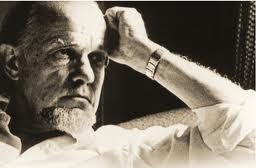


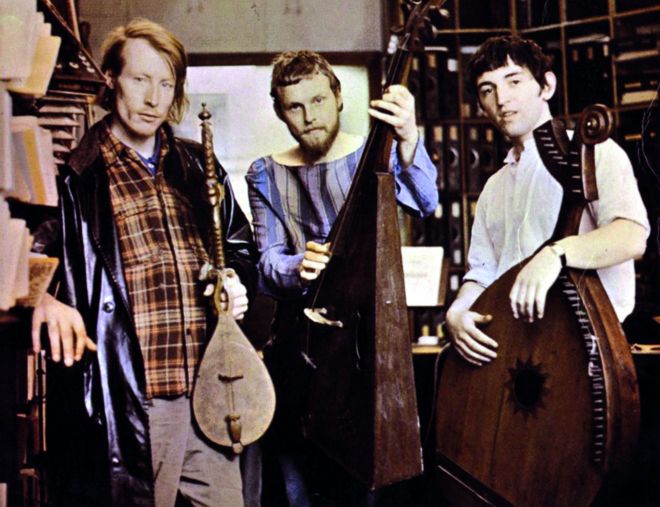
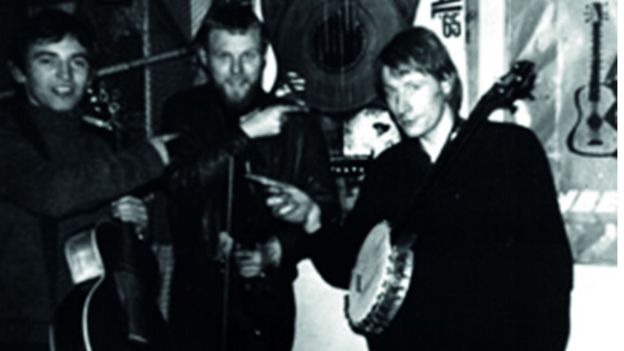
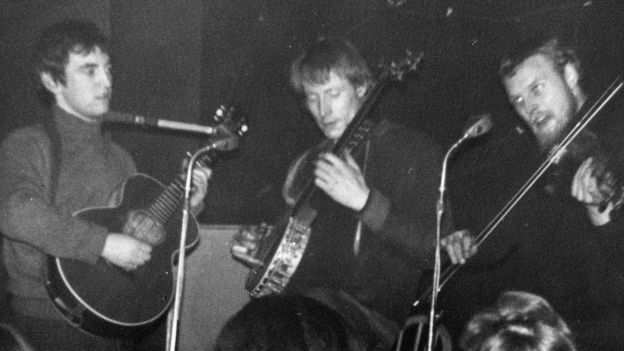
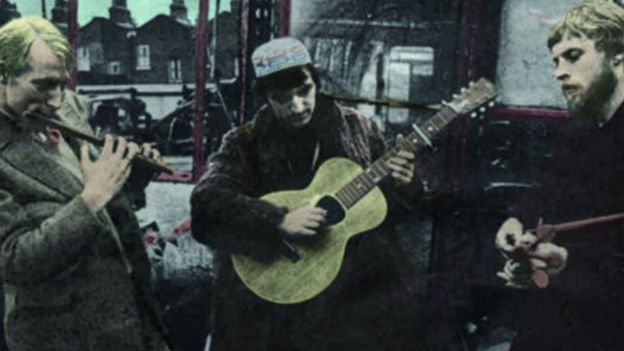
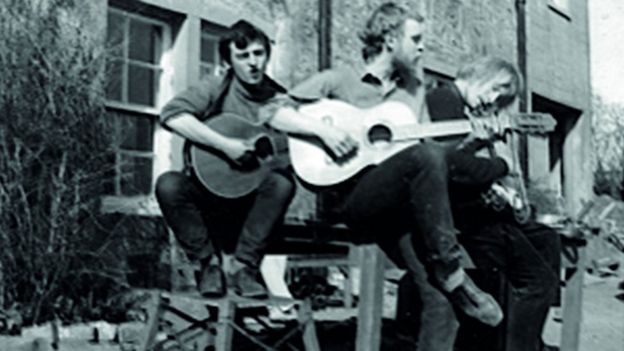
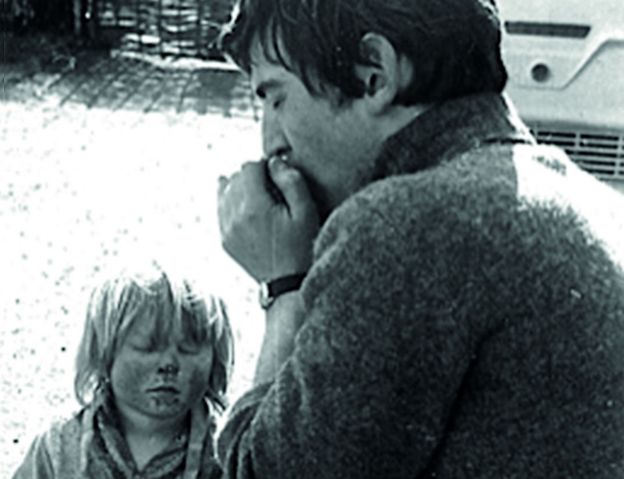
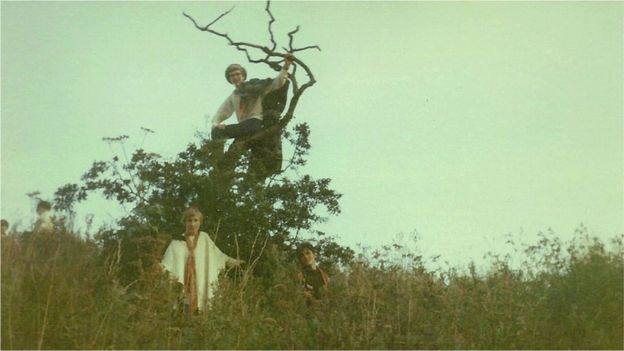
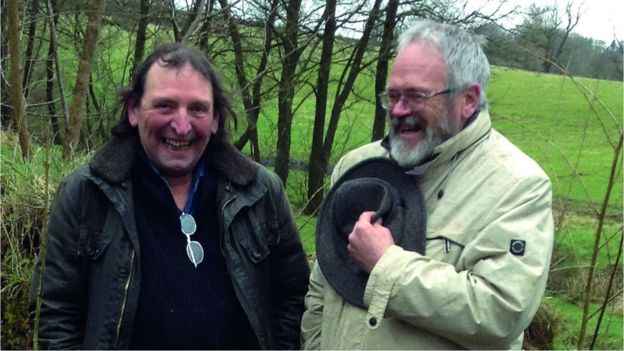


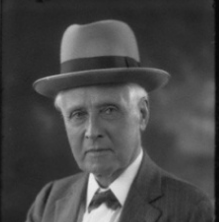 I see that there are several active posts attempting to question the historical veracity of the Bible. Clearly the attackers have not run across Sir William Ramsay: “First Professor of Classical Archaeology” and “Lincoln and Merton Professorship of Classical Archaeology and Art” at Oxford, and “Regius Professor of Humanity” at the University of Aberdeen, if you are into academic titles.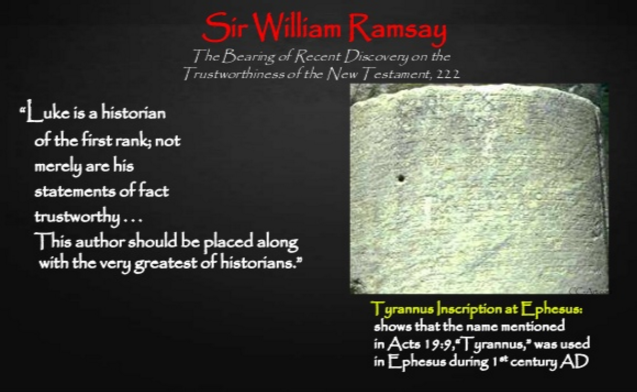

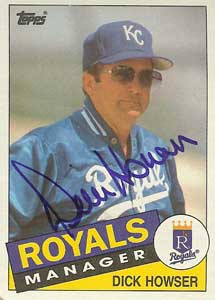


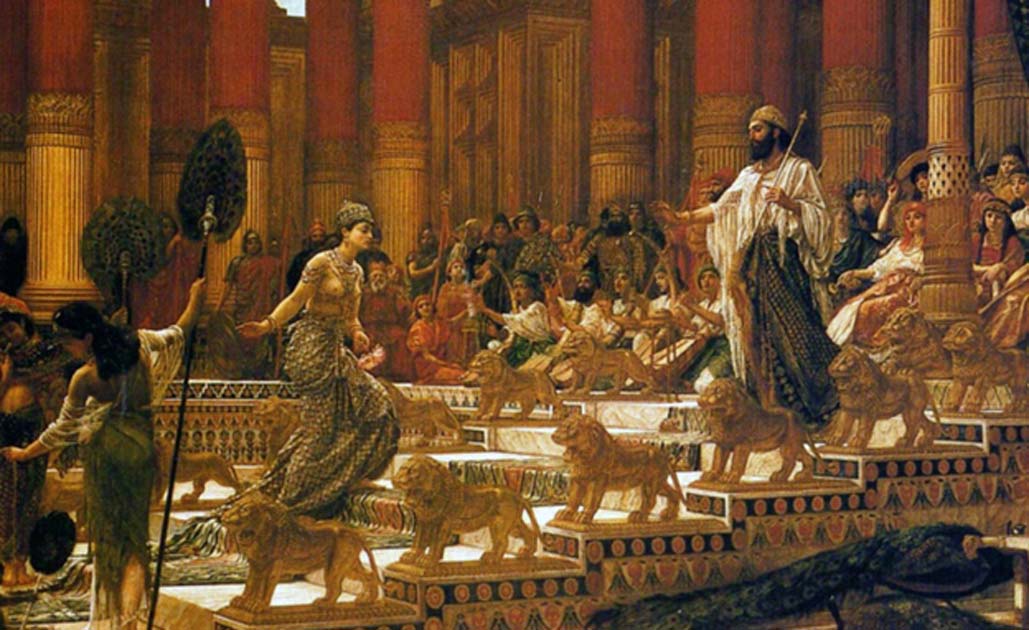

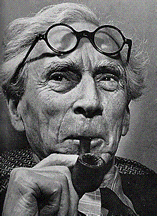

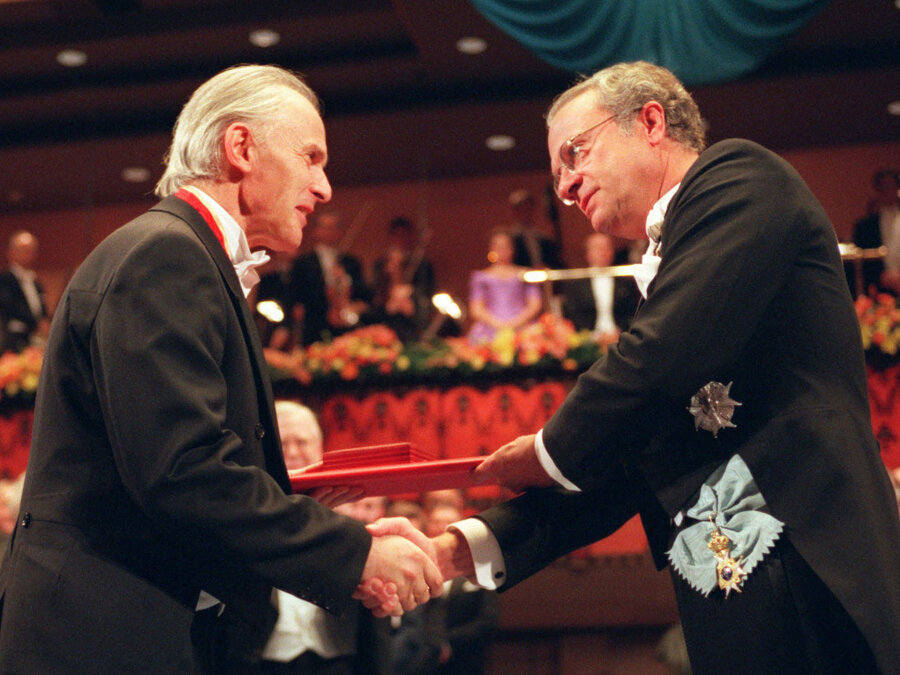
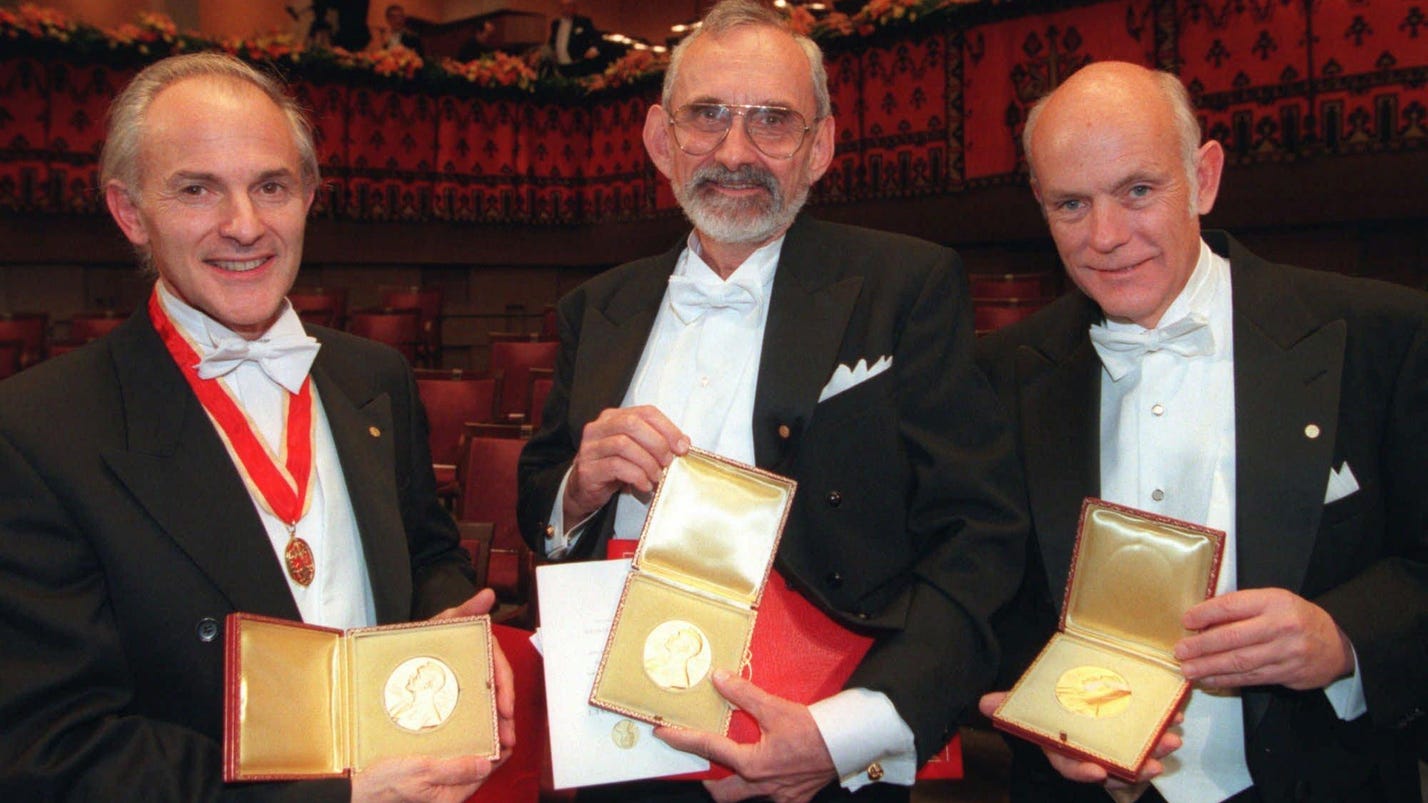







:max_bytes(150000):strip_icc()/King-Solomon-GettyImages-537859698-57cd84f13df78c71b62edb3b.jpg)




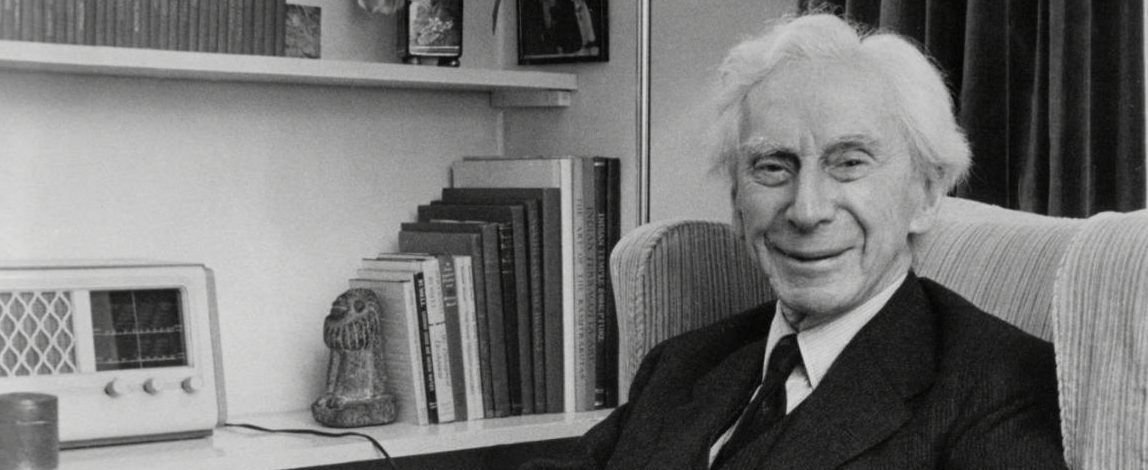
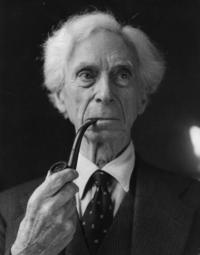



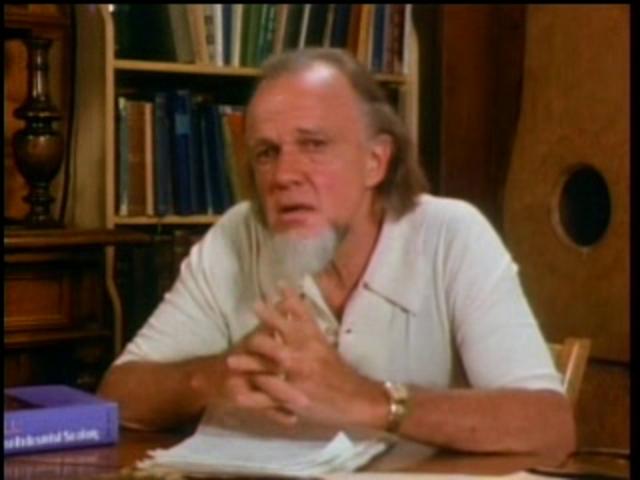

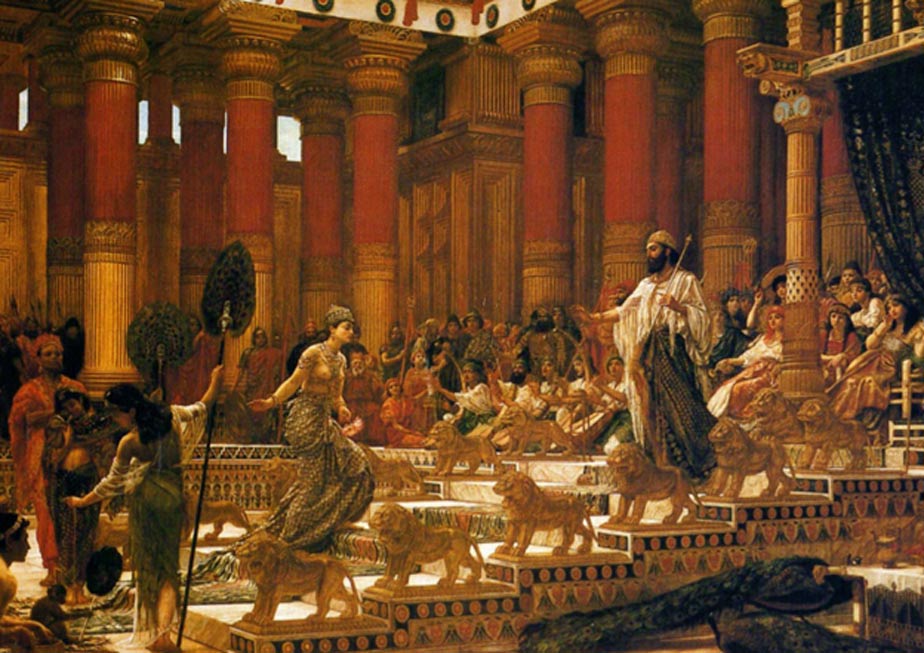



 The Daily Hatch