I read an interesting passage in Arnobius (church father, ca. 300 AD) today. Why, he is asking the Heathen, do they bear such hatred for Christ that they feel a necessity to harry, torture, and kill his People? What injury did Christ ever do to them? “Did He ever, in claiming for himself power as a king, fill the whole world with bands of the fiercest soldiers, and of nations at peace, did He destroy and put an end to some and compel others to submit to His yoke and serve Him? Did He ever, excited by grasping avarice, claim as His own by right all that wealth to have abundance of which men strive eagerly? Did He ever, transported with lustful passions, break down by force the barriers of purity, or stealthily lie in wait for other men’s wives?”
Well, there is a sobering passage! For no Christian apologist would dare to write it today for fear that the response would be, “Yes, that is exactly what He has done—in His name-bearers and representatives–and we hold Him accountable for their actions, by God!!!” The early church had its problems, some serious ones; but by 300-ish AD it had not yet become publicly notorious for things like the crusades, the religious wars of the 17th century, or (to hasten forward to our own time) the Health and Wealth Gospel by which Televangelists get rich at the expense of their gullible followers, or the Roman Catholic priestly sexual abuse scandal. Can we even imagine a day when a Christian apologist could afford to advance an argument like this with any confidence? Now, there’s some nose-rubbing in reality for you! It does indeed help to explain why we face such an uphill battle today.
What lesson can we take away from this? Speaking the truth in love is not optional; but we already knew that. Well, the “love” part has to be over-emphasized now (if that is possible) because we do not start from a neutral position. We start with a world already angry for what it sees as the sins of Christians. We start with a world that has been told by the “New Atheists” that those sins are not an aberration, but flow from the very nature of Christian faith. We start with a world prone to believe such lies.
We have to overcome such perceptions before we even have a chance of being heard. We have to take more seriously than ever before Francis Schaeffer’s emphasis on True Spirituality and The Mark of The Christian (two books it would be well to read again–or for the first time). We have to remember that what he called “the final apologetic”–demonstrable love for each other and for those we are sent to reach–is not final in the sense that it comes at the end, but rather in the sense that it is the ultimate piece, without which anything else we do will do more harm than good. I don’t think we remain silent until all that is perfectly in place, for then we would never speak at all. But the “final apologetic” must become the unmistakable context for everything we do and say. We should have been doing this all along, because Scripture commands it. But our failure today will have even worse consequences than it did before.
Maybe, if we are faithful, our grandchildren may be able to use Arnobius’ argument once again. No, I don’t have that much faith. But we should be faithful anyway, because it’s the right thing to do.
I have gone back and forth and back and forth with many liberals on the Arkansas Times Blog on many issues such as abortion, human rights, welfare, poverty, gun control and issues dealing with popular culture. Here is another exchange I had with them a while back. My username at the Ark Times Blog is Saline […]
It is not possible to know where the pro-life evangelicals are coming from unless you look at the work of the person who inspired them the most. That person was Francis Schaeffer. I do care about economic issues but the pro-life issue is the most important to me. Several years ago Adrian Rogers (past president of […]
I got this off a Christian blog spot. This person makes some good points and quotes my favorite Christian philosopher Francis Schaeffer too. Prostitution, Chaos, and Christian Art The newest theatrical release of Victor Hugo’s 1862 novel “Les Miserables” was released on Christmas, but many Christians are refusing to see the movie. The reason simple — […]
Francis Schaeffer was truly a great man and I enjoyed reading his books. A theologian #2: Rev. Francis Schaeffer Duriez, Colin. Francis Schaeffer: An Authentic Life. Wheaton, IL: Crossway Books, 2008. Pp. 240. Francis Schaeffer is one of the great evangelical theologians of our modern day. I was already familiar with some of his books and his […]
Francis Schaeffer: “Whatever Happened to the Human Race?” (Episode 2) SLAUGHTER OF THE INNOCENTS Published on Oct 6, 2012 by AdamMetropolis ___________ The 45 minute video above is from the film series created from Francis Schaeffer’s book “Whatever Happened to the Human Race?” with Dr. C. Everett Koop. This book really helped develop my political views […]
The Francis and Edith Schaeffer Story Pt.1 – Today’s Christian Videos The Francis and Edith Schaeffer Story – Part 3 of 3 Francis Schaeffer: “Whatever Happened to the Human Race” (Episode 1) ABORTION OF THE HUMAN RACE Published on Oct 6, 2012 by AdamMetropolis ________________ Picture of Francis Schaeffer and his wife Edith from the […]
THE MARK OF A CHRISTIAN – CLASS 1 – Introduction Published on Mar 7, 2012 This is the introductory class on “The Mark Of A Christian” by Francis Schaeffer. The class was originally taught at Redeemer Presbyterian Church in Overland Park, KS by Dan Guinn from FrancisSchaefferStudies.org as part of the adult Sunday School hour […]
Francis Schaeffer: “Whatever Happened to the Human Race?” (Episode 2) SLAUGHTER OF THE INNOCENTS Published on Oct 6, 2012 by AdamMetropolis The 45 minute video above is from the film series created from Francis Schaeffer’s book “Whatever Happened to the Human Race?” with Dr. C. Everett Koop. This book really helped develop my political views concerning […]
Francis Schaeffer: “Whatever Happened to the Human Race” (Episode 1) ABORTION OF THE HUMAN RACE Published on Oct 6, 2012 by AdamMetropolis The 45 minute video above is from the film series created from Francis Schaeffer’s book “Whatever Happened to the Human Race?” with Dr. C. Everett Koop. This book really helped develop my political views […]
I have gone back and forth and back and forth with many liberals on the Arkansas Times Blog on many issues such as abortion, human rights, welfare, poverty, gun control and issues dealing with popular culture. Here is another exchange I had with them a while back. My username at the Ark Times Blog is Saline […]
Francis Schaeffer: “Whatever Happened to the Human Race” (Episode 5) TRUTH AND HISTORY Published on Oct 7, 2012 by AdamMetropolis The 45 minute video above is from the film series created from Francis Schaeffer’s book “Whatever Happened to the Human Race?” with Dr. C. Everett Koop. This book really helped develop my political views concerning abortion, […]
President Obama c/o The White House 1600 Pennsylvania Avenue NW Washington, DC 20500
Dear Mr. President,
I know that you receive 20,000 letters a day and that you actually read 10 of them every day. I really do respect you for trying to get a pulse on what is going on out here. I know that you don’t agree with my pro-life views but I wanted to challenge you as a fellow Christian to re-examine your pro-choice view.
___________________
Many in the world today are taking a long look at the abortion industry because of the May 14, 2013 guilty verdict and life term penalty handed down by a jury (which included 9 out of 12 pro-choice jurors) to Dr. Kermit Gosnell. During this time of reflection I wanted to put forth some of the pro-life’s best arguments.
I truly believe that many of the problems we have today in the USA are due to the advancement of humanism in the last few decades in our society. Ronald Reagan appointed the evangelical Dr. C. Everett Koop to the position of Surgeon General in his administration. He partnered with Dr. Francis Schaeffer in making the video below. It is very valuable information for Christians to have. Actually I have included a video below that includes comments from him on this subject.
Francis Schaeffer Whatever Happened to the Human Race (Episode 1) ABORTION
_____________________________________
Francis Schaeffer “BASIS FOR HUMAN DIGNITY” Whatever…HTTHR
Dr. Francis schaeffer – The flow of Materialism(from Part 4 of Whatever happened to human race?)
Dr. Francis Schaeffer – The Biblical flow of Truth & History (intro)
Francis Schaeffer – The Biblical Flow of History & Truth (1)
Dr. Francis Schaeffer – The Biblical Flow of Truth & History (part 2)
Here are five brief thoughts on the conviction and sentencing of Dr. Kermit Gosnell, the Philadelphia abortion provider. Recently, Dr. Gosnell was sentenced to life in prison for performing “abortions” on multiple children born after 24-weeks, including children born alive.1. Gosnell exposed the true horrors of abortion.
This case exposed to a wide audience the horrible practices of abortion. Dr. Gosnell committed these crimes by an unspeakable practice he called “snipping,” i.e. the cutting of children’s spinal cords with scissors. That this practice (or a similar technique) could ever be performed on any infant–much less those born alive–is beyond comprehension. This trial brought the bloody mess that is the practice of abortion to our collective conscience, and forced us to reckon with its sheer monstrosity. 2. The power of conservative social media.
Although the mainstream news media was slow to cover this trial, Gosnell eventually began to receive the coverage it deserved to have from the start. Whether it was shunned because of the terrors of the details of the trial, or because the liberal-leaning media knew that it was damaging to an “abortion on demand” ideology, we may never know. What we do know is that it was conservative bloggers, including users of micro-blogs like Twitter with its #Gosnell campaign, who brought this case to the attention of the world.In case you were wondering, FOX News and CNN covered the sentencing of Dr. Gosnell on live TV. When I flipped over to MSNBC, they were eagerly promoting a new movie about Wikileaks: disgusting.3. Our existing laws are in serious need of revision.
Roe vs. Wade made the rubric of dividing pregnancy into trimesters the universal language of our medical system. Unfortunately, most states’ abortion laws are governed by medical science and knowledge that is decades old. Today, premature children are able to live outside the womb weeks–or even months–earlier than they were in the 1970’s. A child that was considered “viable” then, may be viable much earlier today.
Although I consider life to begin at the moment of conception, (as do most serious Bible-believing Christians), even those who do not share our conviction must now reckon with the fact that a baby is clearly alive–by any medical, philosophical, or theological standard–long before 39-weeks.
That this is the case cannot seriously be disputed by any rational thinker. Today’s 3D ultrasound technology is a major player in convincing our society of the true miracle of life in the womb.
4. These horrible acts are likely to be much more widespread than we are ready to admit.
Already–just a week later–there are allegations of another case in Texas that may be even worse than the Gosnell case. The practice of “snipping” live-born children was apparently not restricted to an obscure location in inner-city Philly, as many would have us believe. The reports of one Dr. Douglas Karpen are rumored to be more despicable than Gosnell, if that is even possible. This case, if reports by observers and witnesses are to be believed, also includes the decapitation of infant children.
5. The failure of federal and state governments to regulate the entire industry of abortion providers is a disgrace.
Gosnell got away with his murderous rampage for years, decades even. No regulator would touch his so called “medical” practice. Sadly, he was never brought down by the incidents and reports related to infanticide; it was drug charges that eventually brought investigators looking. Our societal reluctance to regulate abortion providers because it seems to violate a “right” to abortion-on-demand is heinous indeed.
Matthew Everhard is the Senior Pastor of Faith Evangelical Presbyterian Church in Brooksville, Florida.
_____________
Tony Perkins: Gosnell Trial – FOX News
Published on May 13, 2013
Tony Perkins: Gosnell Trial – FOX News
______________________
Thank you so much for your time. I know how valuable it is. I also appreciate the fine family that you have and your commitment as a father and a husband. I also respect you for putting your faith in Christ for your eternal life. I am pleading to you on the basis of the Bible to please review your religious views concerning abortion. It was the Bible that caused the abolition movement of the 1800’s and it also was the basis for Martin Luther King’s movement for civil rights and it also is the basis for recognizing the unborn children.
Sincerely,
Everette Hatcher III, 13900 Cottontail Lane, Alexander, AR 72002, ph 501-920-5733, lowcostsqueegees@yahoo.com
Francis Schaeffer: “Whatever Happened to the Human Race” (Episode 1) ABORTION OF THE HUMAN RACE Published on Oct 6, 2012 by AdamMetropolis ________________ Picture of Francis Schaeffer and his wife Edith from the 1930′s above. I was sad to read about Edith passing away on Easter weekend in 2013. I wanted to pass along this fine […]
I have gone back and forth and back and forth with many liberals on the Arkansas Times Blog on many issues such as abortion, human rights, welfare, poverty, gun control and issues dealing with popular culture. Here is another exchange I had with them a while back. My username at the Ark Times Blog is Saline […]
I have gone back and forth and back and forth with many liberals on the Arkansas Times Blog on many issues such as abortion, human rights, welfare, poverty, gun control and issues dealing with popular culture. Here is another exchange I had with them a while back. My username at the Ark Times Blog is Saline […]
It is truly sad to me that liberals will lie in order to attack good Christian people like state senator Jason Rapert of Conway, Arkansas because he headed a group of pro-life senators that got a pro-life bill through the Arkansas State Senate the last week of January in 2013. I have gone back and […]
I have gone back and forth and back and forth with many liberals on the Arkansas Times Blog on many issues such as abortion, human rights, welfare, poverty, gun control and issues dealing with popular culture. Here is another exchange I had with them a while back. My username at the Ark Times Blog is Saline […]
I have gone back and forth and back and forth with many liberals on the Arkansas Times Blog on many issues such as abortion, human rights, welfare, poverty, gun control and issues dealing with popular culture. Here is another exchange I had with them a while back. My username at the Ark Times Blog is Saline […]
I have gone back and forth and back and forth with many liberals on the Arkansas Times Blog on many issues such as abortion, human rights, welfare, poverty, gun control and issues dealing with popular culture. Here is another exchange I had with them a while back. My username at the Ark Times Blog is Saline […]
Sometimes you can see evidences in someone’s life of how content they really are. I saw something like that on 2-8-13 when I confronted a blogger that goes by the name “AngryOldWoman” on the Arkansas Times Blog. See below. Leadership Crisis in America Published on Jul 11, 2012 Picture of Adrian Rogers above from 1970′s […]
In the film series “WHATEVER HAPPENED TO THE HUMAN RACE?” the arguments are presented against abortion (Episode 1), infanticide (Episode 2), euthenasia (Episode 3), and then there is a discussion of the Christian versus Humanist worldview concerning the issue of “the basis for human dignity” in Episode 4 and then in the last episode a close […]
I have gone back and forth and back and forth with many liberals on the Arkansas Times Blog on many issues such as abortion, human rights, welfare, poverty, gun control and issues dealing with popular culture. Here is another exchange I had with them a while back. My username at the Ark Times Blog is Saline […]
I have gone back and forth and back and forth with many liberals on the Arkansas Times Blog on many issues such as abortion, human rights, welfare, poverty, gun control and issues dealing with popular culture. Here is another exchange I had with them a while back. My username at the Ark Times Blog is Saline […]
I have gone back and forth and back and forth with many liberals on the Arkansas Times Blog on many issues such as abortion, human rights, welfare, poverty, gun control and issues dealing with popular culture. Here is another exchange I had with them a while back. My username at the Ark Times Blog is Saline […]
E P I S O D E 1 0 Dr. Francis Schaeffer – Episode X – Final Choices 27 min FINAL CHOICES I. Authoritarianism the Only Humanistic Social Option One man or an elite giving authoritative arbitrary absolutes. A. Society is sole absolute in absence of other absolutes. B. But society has to be […]
E P I S O D E 9 Dr. Francis Schaeffer – Episode IX – The Age of Personal Peace and Affluence 27 min T h e Age of Personal Peace and Afflunce I. By the Early 1960s People Were Bombarded From Every Side by Modern Man’s Humanistic Thought II. Modern Form of Humanistic Thought Leads […]
E P I S O D E 8 Dr. Francis Schaeffer – Episode VIII – The Age of Fragmentation 27 min I saw this film series in 1979 and it had a major impact on me. T h e Age of FRAGMENTATION I. Art As a Vehicle Of Modern Thought A. Impressionism (Monet, Renoir, Pissarro, Sisley, […]
E P I S O D E 7 Dr. Francis Schaeffer – Episode VII – The Age of Non Reason I am thrilled to get this film series with you. I saw it first in 1979 and it had such a big impact on me. Today’s episode is where we see modern humanist man act […]
E P I S O D E 6 How Should We Then Live 6#1 Uploaded by NoMirrorHDDHrorriMoN on Oct 3, 2011 How Should We Then Live? Episode 6 of 12 ________ I am sharing with you a film series that I saw in 1979. In this film Francis Schaeffer asserted that was a shift in […]
E P I S O D E 5 How Should We Then Live? Episode 5: The Revolutionary Age I was impacted by this film series by Francis Schaeffer back in the 1970′s and I wanted to share it with you. Francis Schaeffer noted, “Reformation Did Not Bring Perfection. But gradually on basis of biblical teaching there […]
Dr. Francis Schaeffer – Episode IV – The Reformation 27 min I was impacted by this film series by Francis Schaeffer back in the 1970′s and I wanted to share it with you. Schaeffer makes three key points concerning the Reformation: “1. Erasmian Christian humanism rejected by Farel. 2. Bible gives needed answers not only as to […]
Francis Schaeffer’s “How should we then live?” Video and outline of episode 3 “The Renaissance” Francis Schaeffer: “How Should We Then Live?” (Episode 3) THE RENAISSANCE I was impacted by this film series by Francis Schaeffer back in the 1970′s and I wanted to share it with you. Schaeffer really shows why we have so […]
Francis Schaeffer: “How Should We Then Live?” (Episode 2) THE MIDDLE AGES I was impacted by this film series by Francis Schaeffer back in the 1970′s and I wanted to share it with you. Schaeffer points out that during this time period unfortunately we have the “Church’s deviation from early church’s teaching in regard […]
Francis Schaeffer: “How Should We Then Live?” (Episode 1) THE ROMAN AGE Today I am starting a series that really had a big impact on my life back in the 1970′s when I first saw it. There are ten parts and today is the first. Francis Schaeffer takes a look at Rome and why […]
The Mark of the Christian by Francis Schaeffer Part 2
THE MARK OF A CHRISTIAN – CLASS 2 – Men & Brothers/A Delicate Balance
Published on Mar 15, 2012
The class was originally taught at Redeemer Presbyterian Church in Overland Park, KS by Dan Guinn from FrancisSchaefferStudies.org as part of the adult Sunday School hour on Mar. 11th, 2012.
This class covers (section headings by Schaeffer) Section 2 – “Men & Brothers” Section 3 – “A Delicate Balance”
Christians should present the truth in love and that is what Francis Schaeffer’s book “The Mark of the Christian” is about. I have a portion of that book below:
Christians have not always presented a pretty picture to the world.
Loving our brothers and sisters
If Jesus had commanded so strongly that we love all people as our neighbors, then how important it is especially to love our fellow Christians.
If we are told to love all people as our neighbors then surely we can understand how overwhelmingly important it is that all men and women be able to see an observable love for those with whom we have these special ties.
The apostle Paul makes the double obligation clear in Galatians 6:10:
Therefore, as we have opportunity, let us do good to all people, especially to those who belong to the family of believers.
He does not negate the command to do good to all people. But it is still not meaningless to add, especially to those who belong to the family of believers.
This dual goal should be our Christian mentality, the set of our minds; we should be consciously thinking about it and what it means in our one-moment-at-a-time lives. It should be the attitude that governs our outward observable actions.
A delicate balance Very often the true Bible-believing Christian, in emphasizing two humanities –
one lost, one saved, one still standing in rebellion against God, the other having returned to God through Christ –
has given a picture of exclusiveness which is ugly.
There are two humanities. That is true.
Some men and women made in the image of God still stand in rebellion against him;
some, by the grace of God, have cast themselves upon God’s solution.
Nonetheless, there is in another very important sense only one humanity.
All men and women derive from one origin. By creation, all bear the image of God. In this sense, all people are of one flesh, one blood.
Hence, the exclusiveness of the two humanities is undergirded by the unity of all men and women. And Christians are not to love their believing brothers and sisters to the exclusion of their non-believing fellows. That is ugly. We are to have the example of the good Samaritan consciously in mind at all times.
The first commandment is to love the Lord our God with all our heart, soul, and mind. The second commandment bears the universal command to love people. Notice that the second commandment is not just to love Christians. It is far wider than this. We are to love our neighbor as ourselves.
First Thessalonians 3:12 carries the same double emphasis:
May the Lord make your love increase and overflow for each other and for everyone else, just as ours does for you.
Here the order is reversed. First of all, we are to have love one toward another and then toward everyone else, but that does not change the double emphasis. Rather, it points up the delicate balance – a balance that is not in practice automatically maintained.
For true christians only If we look again at the command in John 13, we will notice some important things.
First of all, this is a command to have a special love to all true Christians, all born-again Christians.
From the scriptural viewpoint, not all who call themselves Christians are Christians, and that is especially true in our generation.
The meaning of the word Christian has been reduced to practically nothing. Surely, there is no word that has been so devalued unless it is the Word of God itself. Central to semantics is the idea that a word as a symbol has no meaning until content is put into it. This is quite correct. Because the word Christian as a symbol has been made to mean so little, it has come to mean everything and nothing.
Jesus, however, is talking about loving all true Christians. And this is a command that has two cutting edges, for it means that we must both distinguish true Christians from all pretenders and be sure that we leave no true Christians outside of our consideration.
But we must be careful of the opposite error.
We must include everyone who stands in the historic-biblical faith whether or not he or she is a member of our own party or our own group.
But even if a person is not among the true Christians, we still have the responsibility to love that one as our neighbor. So we cannot say,
“Now here’s somebody that, as far as I can tell, does not stand among the group of true Christians, and therefore I don’t have to think of him any more; I can just slough him off.”
Not at all. That one is covered by the second commandment.
The quality of our love
The second thing to notice in these verses in John 13 is the quality of the love that is to be our standard. We are to love all Christians
As I have loved you. [Jesus says]
The love he exhibited is to be our standard. We are to love all true Christians as Christ has loved us.
When we consider this, either of two things can happen:
We can just say, “I see! I see!” and we can make a little banner and write on it, “We Love All Christians!” and show it off when anyone looks at us.
How ugly.
Or we can find something exceedingly more profound – something that will take a great deal of time to cultivate; a great deal of thinking and praying about it.
The church is to be a loving church in a dying culture. How, then, is the dying culture going to consider us? Jesus says
by this shall all people know that you are my disciples, if you have love one to another.
In the midst of the world, in the midst of our present culture, Jesus is giving a right to the world. Upon his authority he gives the world the right to judge whether you and I are born-again Christians, on the basis of our observable love toward all Christians.
That’s pretty frightening. Jesus turns to the world and says, “I’ve something to say to you. On the basis of my authority, I give you a right: you may judge whether or not an individual is a Christian on the basis of the love they show to all true Christians.”
In other words, if people come up to us and cast in our teeth the judgment that we are not Christians because we have not shown love toward other Christians, we must understand that they are only exercising a prerogative which Jesus gave them.
And must must not get angry.
If people say, “You don’t love other Christians,” we must go home, get down on our knees, and ask God whether or not what they say is true. And if it is, then they have a right to have said it.
Dealing with failure in love We must be very careful at this point, however.
We may be true Christians, really born-again Christians, and yet fail in our love toward other Christians. As a matter of fact, to be completely realistic, it is stronger than this.
There will be times (and let us say it with tears), when we will fail in our love toward each other as Christians.
In a fallen world, where there is no such thing as perfection ( until Jesus comes), we know this will be the case.
And, of course, when we fail, we must ask God’s forgiveness.
But, Jesus is not here saying that our failure to love all Christians proves that we are not Christians. What Jesus is saying, however, is that, if I do not have the love I should have toward all other Christians, the world has the right to make the judgment that I am not a Christian.
This distinction is a vital one. If we fail in our love toward all Christians, we must not tear our heart out as though it were proof that we are lost. No one except Christ Himself has ever lived and not failed. If success in love toward our brothers in Christ were to be the standard of whether or not a man is a Christian, then there would be no Christians, because all men have failed. But Jesus gives the world a piece of litmus paper, a reasonable thermometer.
There is a mark which, if the world does not see, allows them to conclude, “This person is not a Christian.”
Of course, the world may be making a wrong judgment because if the man is truly a Christian, as far as the reality goes, they made a mistake.
The final apologetic
But there is something even more sober. And to understand it we must look at John 17:21, a verse out of the midst of Christ’s high priestly prayer. Jesus prays,
That all of them may be one, Father, just as you are in me and I am in you. May they also be in us so that the world may believe that you have sent me.
In this, his high priestly prayer, Jesus is praying for the oneness of the church, the oneness that should be found specifically among true Christians. Jesus is not praying for a humanistic, romantic oneness among people in general. Verse 9 makes this clear:
I pray for them. I am not praying for the world, but for those you have given me, for they are yours.
Jesus here makes a very careful distinction between those who have cast themselves upon him in faith and those who still stand in rebellion. Hence, in the twenty-first verse, when he prays for oneness, the “they” he is referring to are the true Christians.
Notice, however, that verse 21 says, That all of them may be one… The emphasis, interestingly enough, is exactly the same as in John 13
not for a part of true Christians, but for all Christians
not that those in certain parties in the church should be one, but that all born-again Christians should be one.
Now comes the sobering part:
Jesus goes on in this twenty-first verse to say something that always causes me to cringe. If, as Christians, we do not cringe, it seems to me we are not very sensitive or very honest, because Jesus here gives us the final apologetic.
What is the final apologetic?
That all of them may be one, Father, just as you are in me and I am in you. May they also be in us so that the world may believe that you have sent me.
This is the final apologetic. [our ultimate defense]
In John 13 the point was that, if an individual Christian does not show love toward other true Christians, the world has a right to judge that he or she is not a Christian. Here Jesus is stating something else that is much more cutting, much more profound:
I truly believe that many of the problems we have today in the USA are due to the advancement of humanism in the last few decades in our society. Ronald Reagan appointed the evangelical Dr. C. Everett Koop to the position of Surgeon General in his administration. He partnered with Dr. Francis Schaeffer in making the video below. It is very valuable information for Christians to have. Actually I have included a video below that includes comments from him on this subject.
Francis Schaeffer: “Whatever Happened to the Human Race” (Episode 1) ABORTION OF THE HUMAN RACE Published on Oct 6, 2012 by AdamMetropolis The 45 minute video above is from the film series created from Francis Schaeffer’s book “Whatever Happened to the Human Race?” with Dr. C. Everett Koop. This book really helped develop my political views […]
E P I S O D E 1 0 Dr. Francis Schaeffer – Episode X – Final Choices 27 min FINAL CHOICES I. Authoritarianism the Only Humanistic Social Option One man or an elite giving authoritative arbitrary absolutes. A. Society is sole absolute in absence of other absolutes. B. But society has to be […]
E P I S O D E 9 Dr. Francis Schaeffer – Episode IX – The Age of Personal Peace and Affluence 27 min T h e Age of Personal Peace and Afflunce I. By the Early 1960s People Were Bombarded From Every Side by Modern Man’s Humanistic Thought II. Modern Form of Humanistic Thought Leads […]
E P I S O D E 8 Dr. Francis Schaeffer – Episode VIII – The Age of Fragmentation 27 min I saw this film series in 1979 and it had a major impact on me. T h e Age of FRAGMENTATION I. Art As a Vehicle Of Modern Thought A. Impressionism (Monet, Renoir, Pissarro, Sisley, […]
E P I S O D E 7 Dr. Francis Schaeffer – Episode VII – The Age of Non Reason I am thrilled to get this film series with you. I saw it first in 1979 and it had such a big impact on me. Today’s episode is where we see modern humanist man act […]
E P I S O D E 6 How Should We Then Live 6#1 Uploaded by NoMirrorHDDHrorriMoN on Oct 3, 2011 How Should We Then Live? Episode 6 of 12 ________ I am sharing with you a film series that I saw in 1979. In this film Francis Schaeffer asserted that was a shift in […]
E P I S O D E 5 How Should We Then Live? Episode 5: The Revolutionary Age I was impacted by this film series by Francis Schaeffer back in the 1970′s and I wanted to share it with you. Francis Schaeffer noted, “Reformation Did Not Bring Perfection. But gradually on basis of biblical teaching there […]
Dr. Francis Schaeffer – Episode IV – The Reformation 27 min I was impacted by this film series by Francis Schaeffer back in the 1970′s and I wanted to share it with you. Schaeffer makes three key points concerning the Reformation: “1. Erasmian Christian humanism rejected by Farel. 2. Bible gives needed answers not only as to […]
Francis Schaeffer’s “How should we then live?” Video and outline of episode 3 “The Renaissance” Francis Schaeffer: “How Should We Then Live?” (Episode 3) THE RENAISSANCE I was impacted by this film series by Francis Schaeffer back in the 1970′s and I wanted to share it with you. Schaeffer really shows why we have so […]
Francis Schaeffer: “How Should We Then Live?” (Episode 2) THE MIDDLE AGES I was impacted by this film series by Francis Schaeffer back in the 1970′s and I wanted to share it with you. Schaeffer points out that during this time period unfortunately we have the “Church’s deviation from early church’s teaching in regard […]
Francis Schaeffer: “How Should We Then Live?” (Episode 1) THE ROMAN AGE Today I am starting a series that really had a big impact on my life back in the 1970′s when I first saw it. There are ten parts and today is the first. Francis Schaeffer takes a look at Rome and why […]
Francis Schaeffer: “Whatever Happened to the Human Race” (Episode 5) TRUTH AND HISTORY Published on Oct 7, 2012 by AdamMetropolis This crucial series is narrated by the late Dr. Francis Schaeffer and former Surgeon General Dr. C. Everett Koop. Today, choices are being made that undermine human rights at their most basic level. Practices once […]
The opening song at the beginning of this episode is very insightful. Francis Schaeffer: “Whatever Happened to the Human Race” (Episode 4) THE BASIS FOR HUMAN DIGNITY Published on Oct 7, 2012 by AdamMetropolis This crucial series is narrated by the late Dr. Francis Schaeffer and former Surgeon General Dr. C. Everett Koop. Today, choices […]
Francis Schaeffer: “Whatever Happened to the Human Race” (Episode 3) DEATH BY SOMEONE’S CHOICE Published on Oct 6, 2012 by AdamMetropolis This crucial series is narrated by the late Dr. Francis Schaeffer and former Surgeon General Dr. C. Everett Koop. Today, choices are being made that undermine human rights at their most basic level. Practices […]
Francis Schaeffer: “Whatever Happened to the Human Race?” (Episode 2) SLAUGHTER OF THE INNOCENTS Published on Oct 6, 2012 by AdamMetropolis This crucial series is narrated by the late Dr. Francis Schaeffer and former Surgeon General Dr. C. Everett Koop. Today, choices are being made that undermine human rights at their most basic level. Practices […]
It is not possible to know where the pro-life evangelicals are coming from unless you look at the work of the person who inspired them the most. That person was Francis Schaeffer. I do care about economic issues but the pro-life issue is the most important to me. Several years ago Adrian Rogers (past president of […]
This essay below is worth the read. Schaeffer, Francis – “Francis Schaeffer and the Pro-Life Movement” [How Should We Then Live?, Whatever Happened to the Human Race?, A Christian Manifesto] Editor note: <p> </p> [The following essay explores the role that Francis Schaeffer played in the rise of the pro-life movement. It examines the place of […]
Great article on Schaeffer. Who was Dr. Francis A. Schaeffer? By Francis Schaeffer The unique contribution of Dr. Francis Schaeffer on a whole generation was the ability to communicate the truth of historic Biblical Christianity in a way that combined intellectual integrity with practical, loving care. This grew out of his extensive understanding of the Bible […]
Nat Hentoff is an atheist, but he became a pro-life activist because of the scientific evidence that shows that the unborn child is a distinct and separate human being and even has a separate DNA. His perspective is a very intriguing one that I thought you would be interested in. I have shared before many cases (Bernard Nathanson, Donald Trump, Paul Greenberg, Kathy Ireland) when other high profile pro-choice leaders have changed their views and this is just another case like those. I have contacted the White House over and over concerning this issue and have even received responses. I am hopeful that people will stop and look even in a secular way (if they are not believers) at this abortion debate and see that the unborn child is deserving of our protection.That is why the writings of Nat Hentoff of the Cato Institute are so crucial.
by Nat Hentoff
The Washington Post, October 29, 1994
For years, women who identify themselves as pro-choice have told me with absolute assurance that it is impossible for a woman to be both pro-life and a feminist. Yet, in various parts of the country, I keep meeting women who indeed are both.
Some of them like to quote a heroine of the women’s liberation movement, Elizabeth Cady Stanton, who organized the first women’s rights meeting in 1848. “When we consider that women are treated as property,” Stanton said, “it is degrading to women that we should treat our children as property to be disposed of as we see fit.”
Pro-life feminism has finally achieved mainstream attention in Glamour magazine. Glamour had asked to hear from readers who are pro-life. Three thousand women answered, and as indicated in the February 1994 issue, many of them are feminists who resent the stereotypes of pro-lifers by journalists. Said one of them: “We are painted as fanatical zealots, usually male, and often hung up about sexual matters.”
Also often part of that stereotype is that they are poorly educated. Answering Glamour’s invitation were pro-life women university professors, legal analysts and an organizer of Science Students for Life.
One, a middle-school counselor is “a non-practicing Catholic … who disagrees with her church’s stand against birth control, premarital sex, homosexuality and women as clergy.” She contributes to Amnesty International.
Another voted a straight Democratic ticket until Bill Clinton appeared on the presidential line. (So did a good many pro-choice people I know.) The former Democrat emphasizes that ” abortion denies civil rights to unborn children.”
A woman who became pregnant after being raped at knife point brought the pregnancy to term and then gave the child up for adoption. “It is not a sin to be raped,” she told the magazine, “but it is a sin to kill your child. Killing your child doesn’t help you get over the rape.”
This disdain for self-deception in matters of life and death became familiar to me years ago as I got to know the liveliest group of pro-life feminists in the country — Feminists for Life of America, now headquartered in Washington. Most of those I met in the 1980s were veterans of the civil rights and antiwar movements. One had been arrested 11 times — demonstrating at missile bases and in front of abortion clinics.
With chapters throughout the United States and Canada, Feminists for Life belong to — among other antiviolence organizations — the National Coalition to Abolish the Death Penalty. A few years ago, the Minnesota chapter blocked a death penalty measure in that state’s legislature. (And polls have indicated that a majority of pro-lifers at large are against the death penalty.) The credo of Feminists for Life — which hardly fits the media’s coverage of pro-lifers — is: “We oppose all forms of violence, including abortion, euthanasia and capital punishment, as they are inconsistent with the core feminist principles of justice, non-violence and non-discrimination.”
In their characteristically pungent magazine, the American Feminist, they further define themselves: “We believe in a woman’s right to control her body, and she deserves this right no matter where she lives, even if she’s still living inside her mother’s womb.”
Earlier this year, Feminists for Life joined in an unprecedented coalition with such long-established pro-choice groups as Planned Parenthood, the National Organization for Women, the National Abortion and Reproductive Rights Action League and the ACLU to fight the “child exclusion provision” in the Clinton welfare plan. The provision allows states to cut off any additional benefits to women who have more children while receiving welfare.
NARAL points out that “putting women into circumstances where they are forced to choose abortion is every bit as wrong as denying women access to abortion services.” Speaking from the pro-life position, Serrin Foster, executive director of Feminists for Life, says that the Clinton welfare plan “would force mothers to chose between aborting pregnancies and accepting further impoverishment for their children.”
While this coalition may form again on matters of urgent common ground, the fundamental differences will remain. In a recent issue of the American Feminist, Barbara Newman makes that division clear: “If it is wrong to kill with guns, bombs, or poison, with the electric chair or the noose, it is most tragically wrong to kill with the physician’s tools.”
But is abortion killing? Newman answers: “Euphemism kills.”
I truly believe that many of the problems we have today in the USA are due to the advancement of humanism in the last few decades in our society. Ronald Reagan appointed the evangelical Dr. C. Everett Koop to the position of Surgeon General in his administration. He partnered with Dr. Francis Schaeffer in making the video below. It is very valuable information for Christians to have. Actually I have included a video below that includes comments from him on this subject.
Francis Schaeffer Whatever Happened to the Human Race (Episode 1) ABORTION
_____________________________________
Francis Schaeffer “BASIS FOR HUMAN DIGNITY” Whatever…HTTHR
Dr. Francis schaeffer – The flow of Materialism(from Part 4 of Whatever happened to human race?)
Dr. Francis Schaeffer – The Biblical flow of Truth & History (intro)
Francis Schaeffer – The Biblical Flow of History & Truth (1)
Dr. Francis Schaeffer – The Biblical Flow of Truth & History (part 2)
Francis Schaeffer: “Whatever Happened to the Human Race” (Episode 1) ABORTION OF THE HUMAN RACE Published on Oct 6, 2012 by AdamMetropolis ________________ Picture of Francis Schaeffer and his wife Edith from the 1930′s above. I was sad to read about Edith passing away on Easter weekend in 2013. I wanted to pass along this fine […]
ABORTION – THE SILENT SCREAM 1 / Extended, High-Resolution Version (with permission from APF). Republished with Permission from Roy Tidwell of American Portrait Films as long as the following credits are shown: VHS/DVDs Available American Portrait Films Call 1-800-736-4567 http://www.amport.com The Hand of God-Selected Quotes from Bernard N. Nathanson, M.D., Unjust laws exist. Shall we […]
I have been writing President Obama letters and have not received a personal response yet. (He reads 10 letters a day personally and responds to each of them.) However, I did receive a form letter in the form of an email on April 16, 2011. First you will see my letter to him which was mailed around April 9th(although […]
ABORTION – THE SILENT SCREAM 1 / Extended, High-Resolution Version (with permission from APF). Republished with Permission from Roy Tidwell of American Portrait Films as long as the following credits are shown: VHS/DVDs Available American Portrait Films Call 1-800-736-4567 http://www.amport.com The Hand of God-Selected Quotes from Bernard N. Nathanson, M.D., Unjust laws exist. Shall we […]
When I think of the things that make me sad concerning this country, the first thing that pops into my mind is our treatment of unborn children. Donald Trump is probably going to run for president of the United States. Tony Perkins of the Family Research Council recently had a conversation with him concerning the […]
I have gone back and forth and back and forth with many liberals on the Arkansas Times Blog on many issues such as abortion, human rights, welfare, poverty, gun control and issues dealing with popular culture. Here is another exchange I had with them a while back. My username at the Ark Times Blog is Saline […]
I have gone back and forth and back and forth with many liberals on the Arkansas Times Blog on many issues such as abortion, human rights, welfare, poverty, gun control and issues dealing with popular culture. Here is another exchange I had with them a while back. My username at the Ark Times Blog is Saline […]
It is truly sad to me that liberals will lie in order to attack good Christian people like state senator Jason Rapert of Conway, Arkansas because he headed a group of pro-life senators that got a pro-life bill through the Arkansas State Senate the last week of January in 2013. I have gone back and […]
I have gone back and forth and back and forth with many liberals on the Arkansas Times Blog on many issues such as abortion, human rights, welfare, poverty, gun control and issues dealing with popular culture. Here is another exchange I had with them a while back. My username at the Ark Times Blog is Saline […]
I have gone back and forth and back and forth with many liberals on the Arkansas Times Blog on many issues such as abortion, human rights, welfare, poverty, gun control and issues dealing with popular culture. Here is another exchange I had with them a while back. My username at the Ark Times Blog is Saline […]
I have gone back and forth and back and forth with many liberals on the Arkansas Times Blog on many issues such as abortion, human rights, welfare, poverty, gun control and issues dealing with popular culture. Here is another exchange I had with them a while back. My username at the Ark Times Blog is Saline […]
Sometimes you can see evidences in someone’s life of how content they really are. I saw something like that on 2-8-13 when I confronted a blogger that goes by the name “AngryOldWoman” on the Arkansas Times Blog. See below. Leadership Crisis in America Published on Jul 11, 2012 Picture of Adrian Rogers above from 1970′s […]
In the film series “WHATEVER HAPPENED TO THE HUMAN RACE?” the arguments are presented against abortion (Episode 1), infanticide (Episode 2), euthenasia (Episode 3), and then there is a discussion of the Christian versus Humanist worldview concerning the issue of “the basis for human dignity” in Episode 4 and then in the last episode a close […]
I have gone back and forth and back and forth with many liberals on the Arkansas Times Blog on many issues such as abortion, human rights, welfare, poverty, gun control and issues dealing with popular culture. Here is another exchange I had with them a while back. My username at the Ark Times Blog is Saline […]
I have gone back and forth and back and forth with many liberals on the Arkansas Times Blog on many issues such as abortion, human rights, welfare, poverty, gun control and issues dealing with popular culture. Here is another exchange I had with them a while back. My username at the Ark Times Blog is Saline […]
I have gone back and forth and back and forth with many liberals on the Arkansas Times Blog on many issues such as abortion, human rights, welfare, poverty, gun control and issues dealing with popular culture. Here is another exchange I had with them a while back. My username at the Ark Times Blog is Saline […]
E P I S O D E 1 0 Dr. Francis Schaeffer – Episode X – Final Choices 27 min FINAL CHOICES I. Authoritarianism the Only Humanistic Social Option One man or an elite giving authoritative arbitrary absolutes. A. Society is sole absolute in absence of other absolutes. B. But society has to be […]
E P I S O D E 9 Dr. Francis Schaeffer – Episode IX – The Age of Personal Peace and Affluence 27 min T h e Age of Personal Peace and Afflunce I. By the Early 1960s People Were Bombarded From Every Side by Modern Man’s Humanistic Thought II. Modern Form of Humanistic Thought Leads […]
E P I S O D E 8 Dr. Francis Schaeffer – Episode VIII – The Age of Fragmentation 27 min I saw this film series in 1979 and it had a major impact on me. T h e Age of FRAGMENTATION I. Art As a Vehicle Of Modern Thought A. Impressionism (Monet, Renoir, Pissarro, Sisley, […]
E P I S O D E 7 Dr. Francis Schaeffer – Episode VII – The Age of Non Reason I am thrilled to get this film series with you. I saw it first in 1979 and it had such a big impact on me. Today’s episode is where we see modern humanist man act […]
E P I S O D E 6 How Should We Then Live 6#1 Uploaded by NoMirrorHDDHrorriMoN on Oct 3, 2011 How Should We Then Live? Episode 6 of 12 ________ I am sharing with you a film series that I saw in 1979. In this film Francis Schaeffer asserted that was a shift in […]
E P I S O D E 5 How Should We Then Live? Episode 5: The Revolutionary Age I was impacted by this film series by Francis Schaeffer back in the 1970′s and I wanted to share it with you. Francis Schaeffer noted, “Reformation Did Not Bring Perfection. But gradually on basis of biblical teaching there […]
Dr. Francis Schaeffer – Episode IV – The Reformation 27 min I was impacted by this film series by Francis Schaeffer back in the 1970′s and I wanted to share it with you. Schaeffer makes three key points concerning the Reformation: “1. Erasmian Christian humanism rejected by Farel. 2. Bible gives needed answers not only as to […]
Francis Schaeffer’s “How should we then live?” Video and outline of episode 3 “The Renaissance” Francis Schaeffer: “How Should We Then Live?” (Episode 3) THE RENAISSANCE I was impacted by this film series by Francis Schaeffer back in the 1970′s and I wanted to share it with you. Schaeffer really shows why we have so […]
Francis Schaeffer: “How Should We Then Live?” (Episode 2) THE MIDDLE AGES I was impacted by this film series by Francis Schaeffer back in the 1970′s and I wanted to share it with you. Schaeffer points out that during this time period unfortunately we have the “Church’s deviation from early church’s teaching in regard […]
Francis Schaeffer: “How Should We Then Live?” (Episode 1) THE ROMAN AGE Today I am starting a series that really had a big impact on my life back in the 1970′s when I first saw it. There are ten parts and today is the first. Francis Schaeffer takes a look at Rome and why […]
President Obama c/o The White House 1600 Pennsylvania Avenue NW Washington, DC 20500
Dear Mr. President,
I know that you receive 20,000 letters a day and that you actually read 10 of them every day. I really do respect you for trying to get a pulse on what is going on out here. I know that you don’t agree with my pro-life views but I wanted to challenge you as a fellow Christian to re-examine your pro-choice view. Although we are both Christians and have the Bible as the basis for our moral views, I did want you to take a close look at the views of the pro-life atheist Nat Hentoff too. Hentoff became convinced of the pro-life view because of secular evidence that shows that the unborn child is human. I would ask you to consider his evidence and then of course reverse your views on abortion.
___________________
Nat Hentoff is an atheist, but he became a pro-life activist because of the scientific evidence that shows that the unborn child is a distinct and separate human being and even has a separate DNA. His perspective is a very intriguing one that I thought you would be interested in. I have shared before many cases (Bernard Nathanson, Donald Trump, Paul Greenberg, Kathy Ireland) when other high profile pro-choice leaders have changed their views and this is just another case like those. I have contacted the White House over and over concerning this issue and have even received responses. I am hopeful that people will stop and look even in a secular way (if they are not believers) at this abortion debate and see that the unborn child is deserving of our protection.That is why the writings of Nat Hentoff of the Cato Institute are so crucial.
The Maryland abortion bill that was passed and signed into law in February was generally described as a “moderate” measure ensuring the women of the state the same rights as Roe v. Wade should that decision be overturned by the Supreme Court.
Another provision of the measure was parental notification before minors can get an abortion. This was a scam, however. The person deciding whether the notification is to be given will be the doctor about to perform the abortion.
There is something quite startling in the law that will gladden the hearts of eugenicists, who are considerable in number — though many are still in the closet. The section on Abortion [Restrictions] Procedures declares that the state is not permitted to interfere — at any stage — in a woman’s decision to terminate a pregnancy if “the fetus is affected by genetic defect or serious deformity or abnormality.”
This means that a viable fetus can be destroyed if he or she has any genetic defect. Although the qualifier, “serious,” precedes “deformity or abnormality,” there is no such restriction on performing an abortion because of “genetic defect.”
Last July, much to the celebration of many disabled people, the president signed the Americans with Disabilities Act. Although it is now unlawful to discriminate against the disabled in many areas of life, the Maryland statute permits the ultimate discrimination against them before they are born.
As the Human Genome Project finds out more and more about how to detect genetic defects, the reasons for this kind of abortion on viable fetuses will accumulate. Even now, with increasingly sophisticated prenatal tests, it is possible to discern a considerable number of genetic defects in a fetus.
As law professor Robert Destro points out, by the letter of the Maryland law, a mother could put to death a fetus diagnosed as having myopia. (There are parents who do want perfect children.) And others might well return a fetus marked with cystic fibrosis or sickle cell anemia.
I expected some strong protests from disability rights groups about this enshrinement of eugenics — particularly since I have heard fears of the brave new world of the genome at disability rights meetings. But so far as I know, there has been silence among these usually forthright activists.
One reason may be that disability rights groups are ambivalent about abortion. Some of the members are pro-choice; others have no firm opinion but do not want to be identified with so controversial a movement and one that often gets a bad press. They figure they have enough problems of their own.
Some of the key disability groups, however, have been willing to oppose euthanasia (as in the Cruzan case) and to support the rights of Baby Does — severely handicapped infants whose parents want to let them slide into eternity. The disabled know that as it becomes easier for society to get rid of expensively imperfect people, they themselves may eventually not be safe from lethal mercy.
One disability rights activist — the feminist writer Anne Finger, herself disabled — is aware of the return of eugenics and the dangers it brings. In an article in the Disability Rag, she tells of having joined an abortion rights group and of offering to speak at a meeting about disability and reproductive rights.
“When I started talking about how the reproductive rights movement was sometimes guilty of exploiting fears about disability when it argued for abortion because of fetal defect, things got really strained. I expected lip service, condescension, liberalism — but certainly not hostility.”
Also at that meeting was a Harvard biology professor, Ruth Hubbard, who has since retired. She was not hostile: “My problems with prenatal screening stem mostly from my concern about how it’s creating eugenic thinking. We act as if we can look at a gene and say, ‘Ah-ha, this gene causes this … disability,’ when in fact the interactions between the gene and the environment are enormously complex. It moves our focus from the environmental causes of disabilities — which are terrifying and increasing daily — to individual genetic ones.”
The pro-choice forces, however, are so intent on removing all obstacles to abortion that eugenics is no specter to them.
Anne Finger remembers the initial, stunning triumph of eugenics in the hospitals and mental institutions of Germany, where so many “defectives” were killed before the beginning of the concentration camps. She is still pro-choice, but she also knows what certain choices can lead to.
I truly believe that many of the problems we have today in the USA are due to the advancement of humanism in the last few decades in our society. Ronald Reagan appointed the evangelical Dr. C. Everett Koop to the position of Surgeon General in his administration. He partnered with Dr. Francis Schaeffer in making the video below. It is very valuable information for Christians to have. Actually I have included a video below that includes comments from him on this subject.
Francis Schaeffer Whatever Happened to the Human Race (Episode 1) ABORTION
_____________________________________
Francis Schaeffer “BASIS FOR HUMAN DIGNITY” Whatever…HTTHR
Dr. Francis schaeffer – The flow of Materialism(from Part 4 of Whatever happened to human race?)
Dr. Francis Schaeffer – The Biblical flow of Truth & History (intro)
Francis Schaeffer – The Biblical Flow of History & Truth (1)
Dr. Francis Schaeffer – The Biblical Flow of Truth & History (part 2)
______________________________________
Thank you so much for your time. I know how valuable it is. I also appreciate the fine family that you have and your commitment as a father and a husband. Now after presenting the secular approach of Nat Hentoff I wanted to make some comments concerning our shared Christian faith. I respect you for putting your faith in Christ for your eternal life. I am pleading to you on the basis of the Bible to please review your religious views concerning abortion. It was the Bible that caused the abolition movement of the 1800’s and it also was the basis for Martin Luther King’s movement for civil rights and it also is the basis for recognizing the unborn children.
Sincerely,
Everette Hatcher III, 13900 Cottontail Lane, Alexander, AR 72002, ph 501-920-5733, lowcostsqueegees@yahoo.com
Francis Schaeffer: “Whatever Happened to the Human Race” (Episode 1) ABORTION OF THE HUMAN RACE Published on Oct 6, 2012 by AdamMetropolis ________________ Picture of Francis Schaeffer and his wife Edith from the 1930′s above. I was sad to read about Edith passing away on Easter weekend in 2013. I wanted to pass along this fine […]
ABORTION – THE SILENT SCREAM 1 / Extended, High-Resolution Version (with permission from APF). Republished with Permission from Roy Tidwell of American Portrait Films as long as the following credits are shown: VHS/DVDs Available American Portrait Films Call 1-800-736-4567 http://www.amport.com The Hand of God-Selected Quotes from Bernard N. Nathanson, M.D., Unjust laws exist. Shall we […]
I have been writing President Obama letters and have not received a personal response yet. (He reads 10 letters a day personally and responds to each of them.) However, I did receive a form letter in the form of an email on April 16, 2011. First you will see my letter to him which was mailed around April 9th(although […]
ABORTION – THE SILENT SCREAM 1 / Extended, High-Resolution Version (with permission from APF). Republished with Permission from Roy Tidwell of American Portrait Films as long as the following credits are shown: VHS/DVDs Available American Portrait Films Call 1-800-736-4567 http://www.amport.com The Hand of God-Selected Quotes from Bernard N. Nathanson, M.D., Unjust laws exist. Shall we […]
When I think of the things that make me sad concerning this country, the first thing that pops into my mind is our treatment of unborn children. Donald Trump is probably going to run for president of the United States. Tony Perkins of the Family Research Council recently had a conversation with him concerning the […]
I have gone back and forth and back and forth with many liberals on the Arkansas Times Blog on many issues such as abortion, human rights, welfare, poverty, gun control and issues dealing with popular culture. Here is another exchange I had with them a while back. My username at the Ark Times Blog is Saline […]
I have gone back and forth and back and forth with many liberals on the Arkansas Times Blog on many issues such as abortion, human rights, welfare, poverty, gun control and issues dealing with popular culture. Here is another exchange I had with them a while back. My username at the Ark Times Blog is Saline […]
It is truly sad to me that liberals will lie in order to attack good Christian people like state senator Jason Rapert of Conway, Arkansas because he headed a group of pro-life senators that got a pro-life bill through the Arkansas State Senate the last week of January in 2013. I have gone back and […]
I have gone back and forth and back and forth with many liberals on the Arkansas Times Blog on many issues such as abortion, human rights, welfare, poverty, gun control and issues dealing with popular culture. Here is another exchange I had with them a while back. My username at the Ark Times Blog is Saline […]
I have gone back and forth and back and forth with many liberals on the Arkansas Times Blog on many issues such as abortion, human rights, welfare, poverty, gun control and issues dealing with popular culture. Here is another exchange I had with them a while back. My username at the Ark Times Blog is Saline […]
I have gone back and forth and back and forth with many liberals on the Arkansas Times Blog on many issues such as abortion, human rights, welfare, poverty, gun control and issues dealing with popular culture. Here is another exchange I had with them a while back. My username at the Ark Times Blog is Saline […]
Sometimes you can see evidences in someone’s life of how content they really are. I saw something like that on 2-8-13 when I confronted a blogger that goes by the name “AngryOldWoman” on the Arkansas Times Blog. See below. Leadership Crisis in America Published on Jul 11, 2012 Picture of Adrian Rogers above from 1970′s […]
In the film series “WHATEVER HAPPENED TO THE HUMAN RACE?” the arguments are presented against abortion (Episode 1), infanticide (Episode 2), euthenasia (Episode 3), and then there is a discussion of the Christian versus Humanist worldview concerning the issue of “the basis for human dignity” in Episode 4 and then in the last episode a close […]
I have gone back and forth and back and forth with many liberals on the Arkansas Times Blog on many issues such as abortion, human rights, welfare, poverty, gun control and issues dealing with popular culture. Here is another exchange I had with them a while back. My username at the Ark Times Blog is Saline […]
I have gone back and forth and back and forth with many liberals on the Arkansas Times Blog on many issues such as abortion, human rights, welfare, poverty, gun control and issues dealing with popular culture. Here is another exchange I had with them a while back. My username at the Ark Times Blog is Saline […]
I have gone back and forth and back and forth with many liberals on the Arkansas Times Blog on many issues such as abortion, human rights, welfare, poverty, gun control and issues dealing with popular culture. Here is another exchange I had with them a while back. My username at the Ark Times Blog is Saline […]
E P I S O D E 1 0 Dr. Francis Schaeffer – Episode X – Final Choices 27 min FINAL CHOICES I. Authoritarianism the Only Humanistic Social Option One man or an elite giving authoritative arbitrary absolutes. A. Society is sole absolute in absence of other absolutes. B. But society has to be […]
E P I S O D E 9 Dr. Francis Schaeffer – Episode IX – The Age of Personal Peace and Affluence 27 min T h e Age of Personal Peace and Afflunce I. By the Early 1960s People Were Bombarded From Every Side by Modern Man’s Humanistic Thought II. Modern Form of Humanistic Thought Leads […]
E P I S O D E 8 Dr. Francis Schaeffer – Episode VIII – The Age of Fragmentation 27 min I saw this film series in 1979 and it had a major impact on me. T h e Age of FRAGMENTATION I. Art As a Vehicle Of Modern Thought A. Impressionism (Monet, Renoir, Pissarro, Sisley, […]
E P I S O D E 7 Dr. Francis Schaeffer – Episode VII – The Age of Non Reason I am thrilled to get this film series with you. I saw it first in 1979 and it had such a big impact on me. Today’s episode is where we see modern humanist man act […]
E P I S O D E 6 How Should We Then Live 6#1 Uploaded by NoMirrorHDDHrorriMoN on Oct 3, 2011 How Should We Then Live? Episode 6 of 12 ________ I am sharing with you a film series that I saw in 1979. In this film Francis Schaeffer asserted that was a shift in […]
E P I S O D E 5 How Should We Then Live? Episode 5: The Revolutionary Age I was impacted by this film series by Francis Schaeffer back in the 1970′s and I wanted to share it with you. Francis Schaeffer noted, “Reformation Did Not Bring Perfection. But gradually on basis of biblical teaching there […]
Dr. Francis Schaeffer – Episode IV – The Reformation 27 min I was impacted by this film series by Francis Schaeffer back in the 1970′s and I wanted to share it with you. Schaeffer makes three key points concerning the Reformation: “1. Erasmian Christian humanism rejected by Farel. 2. Bible gives needed answers not only as to […]
Francis Schaeffer’s “How should we then live?” Video and outline of episode 3 “The Renaissance” Francis Schaeffer: “How Should We Then Live?” (Episode 3) THE RENAISSANCE I was impacted by this film series by Francis Schaeffer back in the 1970′s and I wanted to share it with you. Schaeffer really shows why we have so […]
Francis Schaeffer: “How Should We Then Live?” (Episode 2) THE MIDDLE AGES I was impacted by this film series by Francis Schaeffer back in the 1970′s and I wanted to share it with you. Schaeffer points out that during this time period unfortunately we have the “Church’s deviation from early church’s teaching in regard […]
Francis Schaeffer: “How Should We Then Live?” (Episode 1) THE ROMAN AGE Today I am starting a series that really had a big impact on my life back in the 1970′s when I first saw it. There are ten parts and today is the first. Francis Schaeffer takes a look at Rome and why […]
Liberals say that the government must step in to help the workers and that the unions must but truly the best opportunity for the worker is increased competition from employers trying to hire him or her. Many times when the government gets involved the most unskilled worker is hurt the most.
In the final analysis, the best protection for the worker is neither unions nor government. Rather, it is the existence of other employers willing to compete for services of skilled individuals.
“ In the United States the American Medical Association has for decades been one of the strongest labor unions in the country, keeping down the number of physicians, keeping up the costs of medical care, preventing competition by people from outside the profession with those in it. All, of course, in the name of helping the patient.”
Volume 8 – Who Protects the Worker?
Transcript:
Friedman: People who earn their living in a modern heavy industry seldom engage in the kind of back-breaking toil that was the everyday lot of most workers a century ago. And yet they earn far more. What has produced these improvements? The offhand reaction of most people is likely to be that labor unions are largely responsible for the enormous progress workers have made in the past two centuries. But clearly, at least for the U.S. that cannot be true. After all, in the 19th Century when workers did very well, there were hardly any labor unions at all. And even today, no more than one out of four or five workers is a member of a trade union. And the remainder do very well indeed in achieving the highest level of living in the world. Labor unions do, of course, benefit their members but far from being a key to the development of the modern society. They are a throwback to an earlier pre-industrial era to the agreements among craftsman in the middle ages or to go back even earlier, more than 2000 years ago to the agreement among medical men in Greece.
From the tiny Greece island of Kash, the coast of Asia Minor is four miles away in the mist. Twenty five hundred years ago a hospital and medical school flourished on Kash. The great Hippocrates, the founder of modern medicine, work there. Legend has it that Hippocrates taught his students in the shade of this plain tree. He welcomed anyone who wanted to learn, so long as they paid his fee. There is another legend that St. Paul stood here and preached the Gospel of Christianity. What isn’t legend is that Hippocrates and his followers started medicine on the road forward to becoming a science. When Hippocrates died at the age of 104, or so legend has it, this island was full of medial people, his students and disciples. Competition for custom was fierce. Some 20 years after he died they got together and constructed a code of conduct. They named it the Hippocratic Oath, after their old teacher and master. Every new physician, before he could start practice, came to this spot back here in front of those columns and took the Oath. The oath was full of fine ideals for protecting the patient. But it also had a couple of other things in it. Listen to this one, “I will impart a knowledge of the art to my own self and those of my teachers and to disciples bound by a stipulation and oath according to the law of medicine, but to none others.” Today we’d call that a closed shop. Or listen to this one referring to patients suffering from the agonizing disease of kidney or bladder stones, “I will not cut persons laboring under the stone but will leave this to be done by men who are practitioners of this work.” A nice market sharing agreement between physicians and surgeons. Hippocrates must turn in his grave when a new class of medical men takes that oath. After all, he taught anyone provided only they pay his tuition. He would strongly have objected to the kind of restrictive practices that physicians all over the world have adopted to protect their custom. In the United States the American Medical Association has for decades been one of the strongest labor unions in the country, keeping down the number of physicians, keeping up the costs of medical care, preventing competition by people from outside the profession with those in it. All, of course, in the name of helping the patient.
Without warning, anyone of us may suddenly need medical care. If we do, we want the very best care we can get. But who can give us that care?
It is always a graduate of an expensive medical school who has a union card called a medical license? Or might it be someone like this a trained paramedic working for a private enterprise organization rendering emergency care?
Paramedic: And hopefully we’ll get a very good contract out of that.
Friedman: Many such businesses provide primary care for emergency cases in the United States. This particular paramedic team is attached to a fire department in southern California. They’re good at their job. But it’s not unusual to find local physicians objecting.
Joe Dolphin: They take the Hippocratic Oath here in the United States and they believe that they should be the one that is treating their patient. They should be the one that saves that patient’s life. And if someone else does it, it just kind of interferes with everything that they have been taught.
Friedman: But why should medical care be a monopoly of licensed physicians? Shouldn’t anyone who is capable of providing effective help be free to do so.
Paramedic: I’m going to take your blood pressure here. Okay, any one see him go down?
Friedman: You can be sure that no one would be able to stay in this business very long unless he can demonstrate by performance that he’s doing a good job. Joe Dolphin knows that very well.
Joe Dolphin: We’ve taken some statistical samples of the kind of effectiveness paramedics have in California. Giving an example of that, in one district of California that we serve which is a county which is populated to the extent of 580,000 people. Before the introduction of paramedics, less than 1% of the patients that suffered a cardiac arrest or their heart stopped, lived through their hospital stay and were released from the hospital. But with the introduction of paramedics, just in the first six months of operation, 23% of the people who’s heart stops, are successfully resuscitated and are released from the hospital and go back to productive working society. We think that’s pretty amazing. We think the facts speak for themselves. However, relating that to the medical community is sometimes very difficult. They have ideas of their own.
Paramedics: Respirations 12 and regular by… Looks good to me Dave. How are you reading this down there? Are you guys ready to go? Yeah. It says Code Two. Code Two?
Friedman: Disputes between union and non-union workers are not always as high-minded as between organized medicine and Joe Dolphin.
I would to hear your reaction to this short clip and transcript below:
Milton Friedman The Power of the Market 1-5 How can we have personal freedom without economic freedom? That is why I don’t understand why socialists who value individual freedoms want to take away our economic freedoms. I wanted to share this info below with you from Milton Friedman who has influenced me greatly over the […]
Milton Friedman: Free To Choose – The Failure Of Socialism With Ronald Reagan (Full) Published on Mar 19, 2012 by NoNationalityNeeded Milton Friedman’s writings affected me greatly when I first discovered them and I wanted to share with you. We must not head down the path of socialism like Greece has done. Abstract: Ronald Reagan […]
Worse still, America’s depression was to become worldwide because of what lies behind these doors. This is the vault of the Federal Reserve Bank of New York. Inside is the largest horde of gold in the world. Because the world was on a gold standard in 1929, these vaults, where the U.S. gold was stored, […]
George Eccles: Well, then we called all our employees together. And we told them to be at the bank at their place at 8:00 a.m. and just act as if nothing was happening, just have a smile on their face, if they could, and me too. And we have four savings windows and we […]
Milton Friedman’s Free to Choose (1980), episode 3 – Anatomy of a Crisis. part 1 FREE TO CHOOSE: Anatomy of Crisis Friedman Delancy Street in New York’s lower east side, hardly one of the city’s best known sites, yet what happened in this street nearly 50 years ago continues to effect all of us today. […]
Friedman Friday” Free to Choose by Milton Friedman: Episode “What is wrong with our schools?” (Part 3 of transcript and video) Here is the video clip and transcript of the film series FREE TO CHOOSE episode “What is wrong with our schools?” Part 3 of 6. Volume 6 – What’s Wrong with our Schools Transcript: If it […]
Here is the video clip and transcript of the film series FREE TO CHOOSE episode “What is wrong with our schools?” Part 2 of 6. Volume 6 – What’s Wrong with our Schools Transcript: Groups of concerned parents and teachers decided to do something about it. They used private funds to take over empty stores and they […]
Here is the video clip and transcript of the film series FREE TO CHOOSE episode “What is wrong with our schools?” Part 1 of 6. Volume 6 – What’s Wrong with our Schools Transcript: Friedman: These youngsters are beginning another day at one of America’s public schools, Hyde Park High School in Boston. What happens when […]
Friedman Friday” Free to Choose by Milton Friedman: Episode “Created Equal” (Part 3 of transcript and video) Liberals like President Obama want to shoot for an equality of outcome. That system does not work. In fact, our free society allows for the closest gap between the wealthy and the poor. Unlike other countries where free enterprise and other […]
Free to Choose by Milton Friedman: Episode “Created Equal” (Part 2 of transcript and video) Liberals like President Obama want to shoot for an equality of outcome. That system does not work. In fact, our free society allows for the closest gap between the wealthy and the poor. Unlike other countries where free enterprise and other freedoms are […]
Milton Friedman and Ronald Reagan Liberals like President Obama (and John Brummett) want to shoot for an equality of outcome. That system does not work. In fact, our free society allows for the closest gap between the wealthy and the poor. Unlike other countries where free enterprise and other freedoms are not present. This is a seven part series. […]
I am currently going through his film series “Free to Choose” which is one the most powerful film series I have ever seen. PART 3 OF 7 Worse still, America’s depression was to become worldwide because of what lies behind these doors. This is the vault of the Federal Reserve Bank of New York. Inside […]
I am currently going through his film series “Free to Choose” which is one the most powerful film series I have ever seen. For the past 7 years Maureen Ramsey has had to buy food and clothes for her family out of a government handout. For the whole of that time, her husband, Steve, hasn’t […]
Friedman Friday:(“Free to Choose” episode 4 – From Cradle to Grave, Part 1 of 7) Volume 4 – From Cradle to Grave Abstract: Since the Depression years of the 1930s, there has been almost continuous expansion of governmental efforts to provide for people’s welfare. First, there was a tremendous expansion of public works. The Social Security Act […]
_________________________ Pt3 Nowadays there’s a considerable amount of traffic at this border. People cross a little more freely than they use to. Many people from Hong Kong trade in China and the market has helped bring the two countries closer together, but the barriers between them are still very real. On this side […]
Aside from its harbor, the only other important resource of Hong Kong is people __ over 4_ million of them. Like America a century ago, Hong Kong in the past few decades has been a haven for people who sought the freedom to make the most of their own abilities. Many of them are […]
“FREE TO CHOOSE” 1: The Power of the Market (Milton Friedman) Free to Choose ^ | 1980 | Milton Friedman Posted on Monday, July 17, 2006 4:20:46 PM by Choose Ye This Day FREE TO CHOOSE: The Power of the Market Friedman: Once all of this was a swamp, covered with forest. The Canarce Indians […]
Milton Friedman: Free To Choose – The Failure Of Socialism With Ronald Reagan (Full) Published on Mar 19, 2012 by NoNationalityNeeded Milton Friedman’s writings affected me greatly when I first discovered them and I wanted to share with you. We must not head down the path of socialism like Greece has done. Abstract: Ronald Reagan […]
Milton Friedman: Free To Choose – The Failure Of Socialism With Ronald Reagan (Full) Published on Mar 19, 2012 by NoNationalityNeeded Milton Friedman’s writings affected me greatly when I first discovered them and I wanted to share with you. We must not head down the path of socialism like Greece has done. Abstract: Ronald Reagan […]
President Obama c/o The White House 1600 Pennsylvania Avenue NW Washington, DC 20500
Dear Mr. President,
I know that you receive 20,000 letters a day and that you actually read 10 of them every day. I really do respect you for trying to get a pulse on what is going on out here. I know that you don’t agree with my pro-life views but I wanted to challenge you as a fellow Christian to re-examine your pro-choice view.
___________________
Many in the world today are taking a long look at the abortion industry because of the May 14, 2013 guilty verdict and life term penalty handed down by a jury (which included 9 out of 12 pro-choice jurors) to Dr. Kermit Gosnell. During this time of reflection I wanted to put forth some of the pro-life’s best arguments.
I truly believe that many of the problems we have today in the USA are due to the advancement of humanism in the last few decades in our society. Ronald Reagan appointed the evangelical Dr. C. Everett Koop to the position of Surgeon General in his administration. He partnered with Dr. Francis Schaeffer in making the video below. It is very valuable information for Christians to have. Actually I have included a video below that includes comments from him on this subject.
Francis Schaeffer Whatever Happened to the Human Race (Episode 1) ABORTION
_____________________________________
Dr. Francis schaeffer – The flow of Materialism(from Part 4 of Whatever happened to human race?)
Dr. Francis Schaeffer – The Biblical flow of Truth & History (intro)
Francis Schaeffer – The Biblical Flow of History & Truth (1)
Dr. Francis Schaeffer – The Biblical Flow of Truth & History (part 2)
The Kermit Gosnell Verdict: Implications for Pro-Life Lutheran Christians
A statement by LCMS Life Ministries
May 13, 2013
After a nine-week trial, which included weeks of graphic testimony, a Pennsylvania jury found Dr. Kermit Gosnell guilty of three of four counts of first-degree murder in the deaths of babies who were born alive, but who died after their spinal cords were severed in procedures Gosnell called “abortions.” He was acquitted on the fourth murder charge. Gosnell also was convicted of involuntary manslaughter in the botched abortion death of one mother. He faced 258 counts total, including 24 counts of performing abortions after 24 weeks gestation, which is illegal in Pennsylvania, and hundreds of charges of violating Pennsylvania’s informed consent and 24-hour waiting period laws. The jury is now in the penalty phase.
Gosnell’s murder trial became the subject of much debate nationally after pro-life activists and others criticized the mainstream media for ignoring the trial early on.
As pro-life Christians devoted to the biblical understanding of the sanctity of human life, we grieve over the tragic loss of these lives and the thousands of other children and mothers who die daily as a result of abortion. Today’s conviction of Gosnell brings justice for the many victims of this horrific abortion facility and demonstrates that abortion is clearly a slippery slope that seeks to deprive the most helpless of their basic human right: life.
The LCMS develops and promotes resources and support for pregnant women so they can avoid seeking abortions. Abortion doesn’t solve — but only masks — problems many women face and leaves many of them grieving the death of a child.
The Gosnell case generated a larger debate and rightly caused people to consider the philosophical issue of why an abortion procedure performed in utero is legal, but also how a similar act a few minutes later, outside the womb, is considered homicide.
Clearly, the case was about the death of five persons and no one can argue against the personhood of these four smaller humans. This case has exposed the ugly underbelly of the pro-abortion movement and it has brought the humanity of unborn children before the public conscience.
We call upon legislators and citizens to examine the brutality of abortion, which takes the lives of 1.2 million children every year, and the mothers who die as well. (The Center for Disease Control reports that about 400 women have died as a result of legal abortions since 1973, and 12 died in 2008, the last time such research was gathered.)
Our church aims to be a place of forgiveness, mercy and healing for all people as we continue to proclaim Christ’s comfort and truth in love. As we move forward following this ruling, we offer up our prayers for women and children in need, for families, that those still participating in the abortion industry would stop, and for our nation.
Thank you so much for your time. I know how valuable it is. I also appreciate the fine family that you have and your commitment as a father and a husband. I also respect you for putting your faith in Christ for your eternal life. I am pleading to you on the basis of the Bible to please review your religious views concerning abortion. It was the Bible that caused the abolition movement of the 1800’s and it also was the basis for Martin Luther King’s movement for civil rights and it also is the basis for recognizing the unborn children.
Sincerely,
Everette Hatcher III, 13900 Cottontail Lane, Alexander, AR 72002, ph 501-920-5733, lowcostsqueegees@yahoo.com
Francis Schaeffer: “Whatever Happened to the Human Race” (Episode 1) ABORTION OF THE HUMAN RACE Published on Oct 6, 2012 by AdamMetropolis ________________ Picture of Francis Schaeffer and his wife Edith from the 1930′s above. I was sad to read about Edith passing away on Easter weekend in 2013. I wanted to pass along this fine […]
I have gone back and forth and back and forth with many liberals on the Arkansas Times Blog on many issues such as abortion, human rights, welfare, poverty, gun control and issues dealing with popular culture. Here is another exchange I had with them a while back. My username at the Ark Times Blog is Saline […]
I have gone back and forth and back and forth with many liberals on the Arkansas Times Blog on many issues such as abortion, human rights, welfare, poverty, gun control and issues dealing with popular culture. Here is another exchange I had with them a while back. My username at the Ark Times Blog is Saline […]
It is truly sad to me that liberals will lie in order to attack good Christian people like state senator Jason Rapert of Conway, Arkansas because he headed a group of pro-life senators that got a pro-life bill through the Arkansas State Senate the last week of January in 2013. I have gone back and […]
I have gone back and forth and back and forth with many liberals on the Arkansas Times Blog on many issues such as abortion, human rights, welfare, poverty, gun control and issues dealing with popular culture. Here is another exchange I had with them a while back. My username at the Ark Times Blog is Saline […]
I have gone back and forth and back and forth with many liberals on the Arkansas Times Blog on many issues such as abortion, human rights, welfare, poverty, gun control and issues dealing with popular culture. Here is another exchange I had with them a while back. My username at the Ark Times Blog is Saline […]
I have gone back and forth and back and forth with many liberals on the Arkansas Times Blog on many issues such as abortion, human rights, welfare, poverty, gun control and issues dealing with popular culture. Here is another exchange I had with them a while back. My username at the Ark Times Blog is Saline […]
Sometimes you can see evidences in someone’s life of how content they really are. I saw something like that on 2-8-13 when I confronted a blogger that goes by the name “AngryOldWoman” on the Arkansas Times Blog. See below. Leadership Crisis in America Published on Jul 11, 2012 Picture of Adrian Rogers above from 1970′s […]
In the film series “WHATEVER HAPPENED TO THE HUMAN RACE?” the arguments are presented against abortion (Episode 1), infanticide (Episode 2), euthenasia (Episode 3), and then there is a discussion of the Christian versus Humanist worldview concerning the issue of “the basis for human dignity” in Episode 4 and then in the last episode a close […]
I have gone back and forth and back and forth with many liberals on the Arkansas Times Blog on many issues such as abortion, human rights, welfare, poverty, gun control and issues dealing with popular culture. Here is another exchange I had with them a while back. My username at the Ark Times Blog is Saline […]
I have gone back and forth and back and forth with many liberals on the Arkansas Times Blog on many issues such as abortion, human rights, welfare, poverty, gun control and issues dealing with popular culture. Here is another exchange I had with them a while back. My username at the Ark Times Blog is Saline […]
I have gone back and forth and back and forth with many liberals on the Arkansas Times Blog on many issues such as abortion, human rights, welfare, poverty, gun control and issues dealing with popular culture. Here is another exchange I had with them a while back. My username at the Ark Times Blog is Saline […]
E P I S O D E 1 0 Dr. Francis Schaeffer – Episode X – Final Choices 27 min FINAL CHOICES I. Authoritarianism the Only Humanistic Social Option One man or an elite giving authoritative arbitrary absolutes. A. Society is sole absolute in absence of other absolutes. B. But society has to be […]
E P I S O D E 9 Dr. Francis Schaeffer – Episode IX – The Age of Personal Peace and Affluence 27 min T h e Age of Personal Peace and Afflunce I. By the Early 1960s People Were Bombarded From Every Side by Modern Man’s Humanistic Thought II. Modern Form of Humanistic Thought Leads […]
E P I S O D E 8 Dr. Francis Schaeffer – Episode VIII – The Age of Fragmentation 27 min I saw this film series in 1979 and it had a major impact on me. T h e Age of FRAGMENTATION I. Art As a Vehicle Of Modern Thought A. Impressionism (Monet, Renoir, Pissarro, Sisley, […]
E P I S O D E 7 Dr. Francis Schaeffer – Episode VII – The Age of Non Reason I am thrilled to get this film series with you. I saw it first in 1979 and it had such a big impact on me. Today’s episode is where we see modern humanist man act […]
E P I S O D E 6 How Should We Then Live 6#1 Uploaded by NoMirrorHDDHrorriMoN on Oct 3, 2011 How Should We Then Live? Episode 6 of 12 ________ I am sharing with you a film series that I saw in 1979. In this film Francis Schaeffer asserted that was a shift in […]
E P I S O D E 5 How Should We Then Live? Episode 5: The Revolutionary Age I was impacted by this film series by Francis Schaeffer back in the 1970′s and I wanted to share it with you. Francis Schaeffer noted, “Reformation Did Not Bring Perfection. But gradually on basis of biblical teaching there […]
Dr. Francis Schaeffer – Episode IV – The Reformation 27 min I was impacted by this film series by Francis Schaeffer back in the 1970′s and I wanted to share it with you. Schaeffer makes three key points concerning the Reformation: “1. Erasmian Christian humanism rejected by Farel. 2. Bible gives needed answers not only as to […]
Francis Schaeffer’s “How should we then live?” Video and outline of episode 3 “The Renaissance” Francis Schaeffer: “How Should We Then Live?” (Episode 3) THE RENAISSANCE I was impacted by this film series by Francis Schaeffer back in the 1970′s and I wanted to share it with you. Schaeffer really shows why we have so […]
Francis Schaeffer: “How Should We Then Live?” (Episode 2) THE MIDDLE AGES I was impacted by this film series by Francis Schaeffer back in the 1970′s and I wanted to share it with you. Schaeffer points out that during this time period unfortunately we have the “Church’s deviation from early church’s teaching in regard […]
Francis Schaeffer: “How Should We Then Live?” (Episode 1) THE ROMAN AGE Today I am starting a series that really had a big impact on my life back in the 1970′s when I first saw it. There are ten parts and today is the first. Francis Schaeffer takes a look at Rome and why […]
Although the author is in agreement with the doctrinal statement of IBRI, it does not follow that all of the viewpoints espoused in this paper represent official positions of IBRI. Since one of the purposes of the IBRI report series is to serve as a preprint forum, it is possible that the author has revised some aspects of this work since it was first written.
ISBN 0-944788-07-6
INTRODUCTION
In the past eight years the name Francis Schaeffer has become a household word among a great many evangelicals. Even within professional academia he has attracted considerable attention as he has spoken to large — often overflowing — university and seminary audiences across the country. That Schaeffer has had an impact upon a wide spectrnm of Americans there can be no doubt, but why such an enthusiastic reception? It surely cannot be the mere fact that he has added several new volumes to an already inflated apologetic literature. Prior to the appearance of his first two books in 1968,1 there were plenty of works in Christian apologetics — these latter marking off two rather entrenched apologetic traditions.2 It seems to me that there are basically two reasons for the response Schaeffer has gotten. First, in the words of Richard Russell, “Francis Schaeffer is a pastor with a rare and deep sensitivity to the spiritual plight of the present generation…”3 In Schaeffer, this sensitivity is coupled with a charisma that both engages and excites the minds of his audiences and readers. But there is this and more. Schaeffer genuinely loves those he confronts. This is admittedly a personal and subjective judgment, but I believe it is true. I have on several occasions witnessed Schaeffer, tired and spent after an hour’s lecture — perhaps the third such lecture in a single day, taking an additional hour or two talking and witnessing to a cluster of young people gathered around him. This is the Schaeffer that best accounts for the L’Abri phenomenon. Secondly, there is Schaeffer’s apologetic approach. In the following section I will mention a positive and a negative aspect to this approach, but suffice it to say here that Schaeffer does not have a “textbook” style. As he often has said, he is interested in giving honest answers to honest questions. Moreover, he restricts questions and answers to the truth-claims and intellectual defensibility of the Christian faith — the question or comment that exploits the situation by feeding, in its effect, apologetic infighting is characteristically put off. And, whether in a popular lecture or any of his books, his style is a rustic, almost thinking-out-loud affair; yet it is just this quality at the personal level that proves to be so winsome.4 There is, of course, a great deal more to Schaeffer’s approach than what can be judged on the personal level — but it is very likely true that many young people come under his spell for little more than this! In what follows we will be trying to assess the merit or lack of merit in Schaeffer’s apologetic as such. We will not be concerned with Schaeffer the theologian or Schaeffer the preacher — except as it bears on the apologetic issue. Some additional remarks before proceeding: in the section to follow, our main objective will be to appreciate what is distinctive about Schaeffer’s approach to apologetics. We will be concerned, so to speak, to get the big picture. After a brief flyover, I want to turn to some preliminary definitions and distinctions that will serve us in a selective but critical assessment on foot. Then will follow a response to Schaeffer’s critics, with discussion limited to Richard Russell’s charge of rationalism and Cornelius Van Til’s recent syllabus. The last section will give several criticisms of my own. SCHAEFFER’S APOLOGETIC APPROACH
In considering Schaeffer’s apologetics it seems best to speak of an “approach” rather than a “system,” because for all that Schaeffer has written he claims not to have a technical “philosophical apologetic.” That is to say, he does not have an apologetic system, although in He Is There and He Is Not Silent (1972) he seems, at least, to have attempted one. In any case, on page four of that work, Schaeffer distinguishes two senses of the term “philosophy”: in the first sense philosophy is a technical academic discipline, whereas in the second sense philosophy is dubbed the common man’s “world view.” I think there is a subtle (but not very serious) mistake here, but it will repay us to get clear on what it is. Schaeffer wants to say that “all men are philosophers” in the sense that all men at least have a world view. But it does not at all follow that one is a philosopher, whoever he may be, merely by having a world view. Perhaps we can make this clearer by substituting the German Weltanschauung for world view. Accordingly, we agree with Schaeffer that, with the possible exception of idiots, infants and deranged persons, everyone has a Weltanschauung — which is to say that everyone has a conceptual grid that is historically and culturally conditioned through which he makes sense of the world in which he lives. But a Weltanschauung, or world view, is characteristically the sort of thing a person is — if at all — only dimly aware of. Ask the “man-on-the-street” what his world view is — what its doctrines are — and you are likely to get a blank (if not suspicious) stare, unless, of course, you have chanced upon a philosopher in our first sense (or at least a reasonably well-educated and reflective individual). Press him further — say, for a rational defense of his world view — and he may take you for a Jehovah’s Witness and hurry on. The point I want to press is that to the extent that one is able to take up the topic of his world view, he is a philosopher in sense one; and to the extent that one cannot say anything intelligible about the Weltanschauung that he assuredly has, he is not a philosopher at all. A world view is simply not the sort of thing that persons, although having them, normally adopt. We all have one because we are inevitably members of a cultural millieu. So it is false that every man is a philosopher. It is true, however, that Weltanschauungen can be philosophically analyzed or diagnosed profitably for one’s apologetic endeavor. To return from our digression, it is important at the outset to understand why Schaeffer eschews apologetic system-building. While I do not find any explicit reasons in his writings, it would probably be safe to list the following three: (1) Schaeffer is not a professionally-trained philosopher and is therefore simply acknowledging his limitations in that field. (2) The very notion of a rough-and-ready system that can easily (once one gets the hang of it) generate answers to any and all objections to Christianity smacks too much of pretense — in fact, saying of apologetics that it is a system belies the very character of apologetics. If I am correct in ascribing this reasoning to Schaeffer, there is a cleansing insight couched in it for contemporary apologetics — namely, apologetics is more properly a task requiring certain diagnostic and logical skills than a seminary outline to be memorized. This is not intended at all to slight the use of outlines and other materials in seminary courses; it is just to say that such learning as may result in this way ought to be geared to the development of the requisite skills. Moreover, apologetics taken naively to be a system invites the false confidence that one is always sure to have an answer in advance of any question whatever. Often, it has seemed to me, system-bound apologists lapse into a somewhat abstract, heady soliloquy that nearly always fails to hit the problem nail on the head. Specific questions require specific answers. One who wields a system that is abstract enough to cover every contingency that can arise within apologetic discourse has a “tool” that is far too blunt to be effective. It seems strange indeed to say, in effect, “Never mind what is specifically bothering you; just attend to my system and the trouble will disappear!” And (3), probably foremost in Schaeffer’s mind, is that historically, when apologetics has been taught as some thinker’s system, the risk is run that the “system” and its author will encourage a binding discipleship. The danger, then, is that the disciples will treat their “system” as a kind of privileged knowledge, a veritable Apologetic Gnosis! My own seminary experience was torn — or perhaps a better word is excited — in three different directions in apologetics (but through no fault of my instructor). In retrospect two of those three now seem to me to have been of the “Gnosis” variety, while the third has proven to have been a good beginning for subsequent work. The point to be stressed is that whenever students become captivated by a “sure-fire” all-encompassing method (or “argument”!) the result is very frequently apologetic infighting and precious little confrontation with those in need and those who oppose the faith. Negatively, then, Schaeffer is not out to build a system in the narrow sense — indeed, as was indicated earlier, it is a category mistake to think that Biblical apologetics can be a system! But it would be a mistake also to think that Schaeffer approaches problems helter-skelter. He fully intends that his material and lectures be systematic — which is to say, logical. In defending the faith one will have constant recourse to his understanding of the system of doctrine taught in Scripture as well as whatever Christian philosophy he possesses, but the essence of apologetics is Biblically sound and culturally relevant argument. And it is here that Schaeffer has made a truly significant contribution. The positive aspect of Schaeffer’s approach is that he revived a practicing and diagnostic apologetics. The God Who Is There was explosive for a good many seminarians back in 1968. It is tempting to say that we all became instant Schaefferians! Perhaps we were for the moment — but that has not been the long-term effect. Properly understood, Schaeffer’s work simply does not lend itself to that sort of thing. Rather, Schaeffer showed us dramatically what it means to engage in apologetics. It was Schaeffer’s contention that Christianity — its Gospel — must become culturally deep if it is to be a formative power for our times. Thus for a great many students a dry-as-dust scholastic apologetics gave way to a culturally aware, diagnostic apologetics. And whatever shortcomings we will see in Schaeffer’s books, his approach filled a long-standing vacuum. Schaeffer sums it up best in the foreword to Escape from Reason: Every generation of Christians has this problem of learning how to speak meaningfully to its own age. It cannot be solved without an understanding of the changing existential situation which it faces. If we are to communicate the Christian faith effectively, therefore, we must know and understand the thought-forms of our own generation. (p. 7) APOLOGIA: METHODOLOGY, ARGUMENT, AND PROOF
We now turn our attention to the bare rudiments of any viable apologetic.5 The question is, what sort of minimal constraints are there for an apologetic argument to succeed? We have already noted that “the essence of apologetics is Biblically sound and culturally revelant argument.” This statement must now be further unpacked for some implications that may not be obvious at the surface. Bernard Ramm, for example, seems to labor within a confusion when he discusses “The Concept of System In Apologetics” in his very fine book, Varieties of Christian Apologetics (1961). After stating that “Christian apologetics is the strategy of setting forth the truthfulness of the Christian faith and its right to the claim of the knowledge of God”6 (emphasis mine), he goes on to stress that apologetics, of whatever variety, is a system — i.e., that apologetics is the sort of thing that can be called a system. He then gives two senses of the term “system,” the first of which is “a very tightly organized set of propositions which are carefully interrelated.”7 But it is his second sense of “system” that Ramm feels is appropriately applied to apologetics: A system may mean an interpretation of some subject matter which is guided by certain fundamental assumptions with no attempt made rigorously to coordinate everything that is said. Rather it means a cluster of axioms and assumptions which function as guides and directives for the discussions and thus serve to unify and integrate the discussions.8 Although there may be an attenuated sense in which Ramm is correct, it can be very misleading to think of apologetics as a system.9 What is critical for apologetics, and what alone is critical, is sound argument for whatever conclusion is at stake. Apologetics itself has to do with arguing for a system, but is not itself a system. Moreover, for any putative truth-claim that comes up for apologetic scrutiny, there may be any number of valid and sound arguments to provide support for it. What is crucial for any “variety” of apologetics, therefore, is whether or not that apologetic employs a sound logical structure. Returning to Ramm, it can be conceded that there are varying ways that Christianity’s truth-claims (system) have been argued, both conceptually and empirically, but methodologically (or logically) no argument, no matter what label it goes by, is worth its salt if it is incoherent. What counts in apologetics is sound argumentation — period! And this is easily seen in the fact that it is solely in virtue of an argument’s (apologia’s) logical structure that its conclusion can be forced in any way. The interesting consequence of this is that I might seem to a friend to be an “evidentialist” today, a “presuppositionalist” tomorrow, and even a “fideist” the day following. Yet in no way has my logic changed — I have let my opponent’s background (whether, say, science or the arts) and his particular interests and intellect determine how the discussion will go. In this regard, it would be foolish to fault Schaeffer for not saying enough about evidences. If there is something amiss about the bare bones of Schaeffer’s method, it is not his historico-philosophical approach. Schaeffer’s writings have come out of years of confronting, and witnessing to, a generation of young people who have sought him out on that level. The relevant questions are, does Schaeffer speak the truth, and is his argumentation sound and cogent? We proceed now to address this issue more directly. We have dwelt at length on what I have termed Schaeffer’s approach; we come now to method. The term “approach” has so far forth been the more generic term; for our purposes “method” will have the narrower sense of logical structure — “logical structure” is at least subsumed under the notion of method. So to borrow the language of Ramm’s book (though perhaps in a way he would disapprove) there are a variety of apologetic approaches, but each is viable or laudable only insofar as it can logically yield the desired conclusion. Apologetic approaches, no matter how many (Ramm puts the number at ten or twelve), are, after all, types of argument. What matters, then, is that an argument both square with Scripture and that it be valid, sound and cogent. If this is so, and it hardly seems it could be otherwise, the traditional schools “evidentialism” and “presuppositionalism” ought to bury the hatchet because they both get whatever clout they have in virtue of their logical viability. So for the presuppositionalist to say there can be no good inductive argument is just a presuppositionalist sulk. Moreover, for the evidentialist to disdain a presuppositional (reductio ad absurdum) argument is likewise a sulk. I speak rather abstractly here, however, for it will be seen later that Van Til is not a presuppositionalist in the foregoing sense — his system collapses of its own weight; but more on this in the proper section. What is by now becoming apparent, the Achilles Heel of apologetics is its logical structure — its method, not its label, nor even whether it finds an exact precedent in Scripture. There are, of course, texts in Scripture that certainly do serve as argument paradigms (Isa 41:21-29; Lk 1:1-4; Jn 20:31; Acts 1:3; and 1 Cor 15:1-8, to name a few), but such paradigms, so far as I can see, serve the contemporary apologist more in indicating a much wider range of ways to shore support for Biblical authenticity. Negatively, they count decisively against fellow apologists who insist that one cannot argue by testing a model in terms of data — for example, that archeological and empirical evidence in general can be used. Certainly there can be no question about the legitimacy of appealing to fulfilled prophecy as counting in favor of theistic authenticity for the Bible. But it would be a mistake to suppose that Scripture functions as a sort of logic text, exhausting the number of ways one can advance arguments for its status as the infallible Word of God. There is indeed a Biblical “mode” of defending Biblical truth-claims, but that mode is, to put it crudely, just a lot of “horse-sense” within God-ordained logical limits. Let us now attempt a rough and brief characterization of the logical structure of Schaeffer’s apologetic. Again, it is very important to be clear on precisely the sort of question this is — it is not to ask what approach he takes. That has been established. It is to ask how his basic argumentation goes. What Schaeffer appears to be doing — especially in He Is There and He Is Not Silent — is to begin implicitly with Christianity as a model (or hypothesis), a conceptual structure that best accounts for, and explains the greatest range of data within, one’s world of experience. For example, that there exists something rather than nothing at all, that there is and always has been a moral dimension to Human life, and that one can know things, are all explained, and explained well, by the Biblical revelation. In fact, Schaeffer contends that one would have total mystery in these areas were it not for the Biblical “model.”
In a nutshell, that, I think, is the Schaefferian strategy and I have no real quarrel with it. However, as will be seen, these major contentions of Schaeffer are at best poorly argued, and at worst, not argued at all. He seems, in fact, time and again to give the illusion of argument by the mere (hoped-for) connotations of words and coinages — banking, in effect, upon his reader’s intuitions, say, about what a person is. But another difficulty pervades Schaeffer’s works. While I do not put Schaeffer in the same rather leaky epistemological boat with Cornelius Van Til, Schaeffer speaks as though he has shown that the Biblical answer is the “only” answer, not merely the best answer, but an answer enjoying the logical status of necessity. For instance, he says, “Let us notice again that this is not simply the best answer — it is the only answer;”10 and again, “… as in the area of metaphysics, we must understand that this is not simply the best answer — it is the only answer in morals for man in his dilemma.”11 But flipping back a few pages disclosed no argument for these stupendous claims. Schaeffer, (as I fear is the case with Van Til) is merely recording a determination that the logical necessity of his conclusions is bona fide — he has certainly not argued it. But I will deal more fully with arguing the logically necessary status of existential truth-claims in the next section.
Upon reflection, what I find here in Schaeffer, as with Van Til, is the desire to demonstrate (by discursive argument) that one’s conclusion is necessarily true — not true as a matter of fact — but true in the sense that one could deny the conclusion only upon pain of self-contradiction. This is the status claimed for the conclusion of the Ontological Argument: the fool cannot deny that God exists without contradiction. Now Schaeffer’s and Van Til’s motivation is understandable enough. It would be ever so nice to “prove” one’s claims — so let us for a moment worry over this notion of proof, what it is and what it isn’t. What is a proof? This is an extremely important question for apologetics — especially so because at least one prominent apologist has exclaimed there is absolutely certain proof for the existence of God and the truth of Christian theism.”12 But what might this proof be? It surely cannot be a proof in the strict deductive sense of a string of dummy letters (premisses) entailing some conclusion C. Nor can it be, it seems to me, a version of the Ontological Argument (although Alvin Plantinga has recently given what he considers to be a sound version of that argument!).13 The notion of proof is a formal one (and, so to say, sacred to contemporary logic!). What is involved is a set of statements (the premisses) that bears a relation to another statement (the conclusion) such that if the premisses are true, the conclusion would have to be true as well. This is a truism of deductive logic. But can there be a set of statements that are all true (actually, it isn’t necessary that they all be true) and that severally entail that God exists? Yes and no. George I. Mavrodes in his little work Belief in God has given a very nice treatment to the problem of what it means to prove that God exists.14 In deductive logic, the matter is rather simple: e.g., “if A, then B” and it is the case that A, then B is sure to be the case as well. But when we substitute empirically-laden premisses for the dummy letters, quite another matter arises.
This is seen in that one can advance a logically legitimate question about any empirical or existential proposition — even if perniciously. What the apologist must do, therefore, is to proffer the least objectionable premisses that will get him where he wants to go. Suppose, for example, that the following “dummy” argument contains all real existential and empirical propositions:
P1
P2
P3
.
.
.
Pn ____
C
Now suppose, so far as you are concerned, all the premisses (all the P’s) in the argument are true. Your listener, however, sincerely finds that he can neither accept P2 nor Pn, both of which are critical for the argument to go through. He isn’t being pernicious; it just is not clear to him that the propositions in question are true. What then? Well, your listener will not feel constrained by dint of the force of your argument to accept its conclusion. The next move must be yours, so you say, “Okay, let us substitute for P2 and Pn the propositions P’2 and P’n. Both are hospitable to your conclusion and your listener finds them at least plausible. Of course these substitute premisses might also prove objectionable, in which case you would have to substitute P”2 and P”n and so on. We also notice that the argument has certain formal properties of a deductive argument but is itself a purely inductive argument.
The question therefore becomes, is there such a thing as inductive proof? The answer, officially at any rate, is no. Such argumentation may be correct, plausible, or probable as concerns the conclusion, but so long as the conclusion is logically corrigible, the argument can only be persuasive. But I do think there is sense in the question, when does an argument become a proof? For we frequently speak as though an inductive set of premisses “proved” something to us. For example, the testimony for the prosecution proved beyond a reasonable doubt that the accused was guilty. So, if our colloquial and inductive notion of proof is approved, an argument becomes a proof when our listener sees the conclusion to follow from the premisses and is convinced of this. In our second sense of proof, therefore, proof is always “person-variable.”15 That is to say, in most of those instances where we are attempting to “prove” a thing to someone, such a proof will invariably have the status of being a proof for that someone. It may not suffice as a proof for a different individual simply because that individual may not be acquainted with those premisses that the former person was. And indeed, “proofs” do seem to be interesting only to the extent that they stand to increase our knowledge. But let us not lose sight of why the discussion of proof came up: Schaeffer, at least on some occasions, seems to imply that he (like Van Til) has accomplished a proof in the incorrigible sense — but not only are the arguments absent, such an argument is an impossibility. It seems to me, however, that when Schaeffer lapses into the sort of statements that were quoted, they are more homiletic and hortatory than an incorrigible finish to an argument. SCHAEFFER AND HIS CRITICS: RICHARD RUSSELL AND CORNELIUS VAN TIL
Richard Russell
In a review article for the International Reformed Bulletin (1970), Richard Russell, instructor in philosophy at Trinity Christian College (Palos Heights, IL) , charges Schaeffer with rationalism and individualism. My concern will be with just the former. At the outset it should be stressed that Schaeffer is primarily concerned with the intellectual defensibility of the Christian faith and its truth. This in itself is unobjectionable. Russell, however, faults Schaeffer for his overall interpretation of what has happened in the history of philosophy. He quotes Schaeffer in Escape from Reason (p. 92) a saying “… the Jewish and Biblical concept of truth is much closer to the Greek than the modern.” Now I am as dubious of this remark as Russell is, but I think Russell has not attended to what Schaeffer means in remarks like these. I am convinced that for a significant number of Schaeffer’s statements, what Schaeffer says is not always what Schaeffer means. It is true that Schaeffer thinks of “modern modern man” as post-Hegelian, but to conclude from this that Schaeffer wants to champion pre-Hegelian rationalism, as Russell contends, is entirely unwarranted. Schaeffer is concerned for an intuitively sound logic wherein A is not non-A. Schaeffer is concerned for the law of identity (A is A) , the law of contradiction (A is not non-A) , and the law of excluded middle (either A, or non-A). Without these logical laws there could be no intelligible discourse.
However, it is not really certain that these laws suffered at the hands of Hegel. Hegel is ambiguous at this point, and at any rate, his subsequent influence had least to do with his logic! Rather it was Hegel’s notion of nature and the vicissitudes of human endeavor and thought as one organic and ever-developing whole that played upon the minds of Bradley, the pragmatists, and Whitehead. So far from being post-Hegelian in logic, Schaeffer’s modern modern man within the Anglo-American culture has the legacy and continuing development of nearly a century of logic. Philosophically, this has been the century of logic from Frege’s early work through Russell, Whitehead, and Wittgenstein! What Schaeffer must attend to is just what aspects of contemporary thought can be attributed to Hegel’s influence. Further, it seems to me, from typical Schaeffer examples (which often have the distressing feature of little more than name-dropping) , he reads the Anglo-Canadian~American tradition through a heavy existential and phenomenological mist. The Anglo-American tradition has majored in logic, the philosophy of language, and the philosophy of science. In all these, the “Law of Excluded Middle” is alive and well. But perhaps Russell’s point may be taken against Schaeffer in yet another way. In Escape from Reason we are given diagrams which sum up Schaeffer’s diagnosis of modern man. I think there may not merely be a minor flaw in the argument of the book, but a decisive one. Tracing western man’s philosophical roots to the present day, Schaeffer finds much to criticize in Aquinas, Kant and Kierkegaard. Each of these thinkers built, as it were, a two-storeyed house but with no logical staircase to connect the upper with the lower storey. It is instructive to see what, in each “house,” characterizes the storeys. For Aquinas it was nature/grace; Aquinas did much to set human reason off on its autonomously merry way. Next is Kant, who gave up on grace altogether, and with his religion of moral freedom, built a house of nature/freedom. And last, apparently, is that house that Hegel and Kierkegaard built — faith/rationality. Now in each house notice that the lower storey is the realm of what may be ascertained by autonomous reason. The lower storey is the domain of the particulars of nature as discriminated and assessed by man and his logic: GRACE FREEDOM FAITH ________ __________ _____________
NATURE NATURE RATIONALITY
In the upper storey is the element of freedom and that which provides meaning and significance to the downstairs of particulars. But in none of these houses is there a logical (or coherent) connection from one floor to the other; there is no staircase. Thus, regarding these philosophers’ “houses” as symbols of their systematically worked-out woridviews, Schaeffer’s point is that in none of them can universality (meaning) logically relate to particularity (items in one’s world of experience). In this I believe Schaeffer’s analyses are basically sound.
Over against the despair of these faulty worldviews Schaeffer holds out the Christian position, the Christian “house.” Scripture, Schaeffer tells us, speaks of both the “upstairs and the downstairs.”16 This addressing of both universals and particulars in the Bible assures us of the unity that was lacking in the other views. But of course Kant “spoke” of upstairs and downstairs too, to use Schaeffer’s metaphor. So did Aquinas. How is it that mere biblical reference to both universality and particularity secures a coherence unobtainable in the other views? To see whether Schaeffer faces a difficulty here we must attempt to make Schaeffer’s “upstairs” and “downstairs” explicit. It seems to me that the only candidates for these two “floors” within Schaeffer’s biblical commitments are (1) God and His decrees — the source of all created meaning , and (2) the particulars of created reality — including man and his moral responsibility. On the one hand, Schaeffer, subscribing as he does to the Westminster Confession of Faith, would have to put in the upstairs of the Christian house “God and His decrees.” Quoting from the Catechism, question number seven, “The decrees of God are, his eternal purpose, according to the counsel of his will, whereby, for his own glory, he hath foreordained whatsoever comes to pass” (emphasis mine). Note that this is a commitment to complete determinism — theistic and teleological in character, but a thoroughgoing determinism just the same. On the other hand, the particulars of Schaeffer’s downstairs include man as significantly free, significantly responsible, not an automaton. So we are bidden to take up residence in an apparently split-level house wherein upstairs is a radical determination of all things and the downstairs is area of “unprogrammed man,” to use Schaeffer’s expression. We have then:
God and His Decrees _________________
Created Particularity
But what does this construction invite Schaeffer’s opponent to say? I do not doubt what the Catechism says in the least, but for all that, doesn’t this situation pose for Schaeffer an equally formidable logical problem to that which destroyed the other “houses”? It certainly seems that if each “house” is assessed according to its logically apparent features, Schaeffer’s “house” doesn’t get a staircase either. That is to say, there can surely be no staircase in the requisite sense if there is no current human understanding of the logical steps between, say, divine foreordination of all things and human responsibility. Indeed, God has addressed both areas in His Word, but their logical unity (or integration) is nowhere rationally exhibited. Thus while we should like to appreciate real value in Schaeffer’s point that God reveals to us in His Word that His plan is ultimately coherent, we must hasten to add that not only doesn’t Scripture logically harmonize certain of its clear teachings (concerning, e.g., the Trinity, the Incarnation, and God’s absolute sovereignty vis-a-vis man’s responsibility), man may be quite incapable of construing such material as free from logical difficulty (cf. Isa 55:8-9; Deut 29:29).
But if this is right, and if Schaeffer invites a rationalistic assessment of Christianity’s most fundamental claims, then the blow to Schaeffer’s central thesis in Escape From Reason is devastating! He has left mystery and finitude of perspective out of account at a very sensitive point. In fact, any quickwitted antagonist could, with Schaeffer’s own logic, dismiss Schaeffer’s entire effort. One may simply not fault Kant, let us say, for failing to harmonize universality and particularity within his system when no Christian thinker has ever logically penetrated the problematics of God’s decrees and man’s responsibility — unless, that is, it can be shown that the latter problematics arise for quite different reasons than in the Kantian system. (Alvin Plantinga has recently advanced an ingenious way out, but he seems to have come precariously close to Arminianism.)17 I conclude, then, that Russell’s point is well taken if he has this sort of thought in mind. If I am right, Schaeffer’s whole program in both Escape From Reason and The God Who Is There is left in the lurch. While we should not want to “escape reason,” it is equally clear that we should not allow the case for Christianity to rest upon the human ability to exhibit Christianity as a perspicuously logically-harmonized system. Cornelius Van Til
Recently Professor Emeritus Cornelius Van Til has allowed a rather lengthy critique of Schaeffer to be printed and sold at the Westminster Seminary Bookstore. Although there are several well-taken criticisms of Schaeffer’s approach, Van Til’s central concern is that Schaeffer has taken up the cudgels of a basically Butler-Paley apologetic and that, despite certain superficial similarities of language, Schaeffer is not a presuppositionalist but a veritable Arminian in apologetics! I shall maintain that, insofar as Schaeffer has been charged with holding an apologetic method that fails because it is not true to Van Til’s apologetic, Schaeffer need have no qualms. Schaeffer is being judged in terms of an incoherent apologetic framework! The charge I make is quite serious, but, I think, demonstrably true. Let me preface my remarks by acknowledging a real debt of gratitude to Professor Van Til, both through a reading of his books (many of them given me by him) and through personal acquaintance with him, for the stimulus he has been to my own development. I will now respond to what strikes me as fallacious about the very heart of Van Til’s presuppositionalism. If his apologetic fails, as I think it does, it can hardly be used to critique someone else’s thought. I will contend that Van Til’s method does not give way because of any empiricistic critique, but because its own logical strategy, as specified by Van Til, simply cannot yield the only type of conclusion Van Til will accept. It must be one hundred per-cent or nothing. But as we shall see, Van Til, in effect, logically short-circuits his own line of argument.
Van Til calls his method “presuppositional.” Its chief feature is presupposing the truth of Christianity as the system that integrates all factuality and that accounts for life as it is actually lived. The objective is to show or demonstrate to one’s opponent that Christian theism (1) truly does this, and (the much more ambitious claim) (2) that Christianity alone can do this. The question is, can presuppositional argumentation accomplish these objectives? Let us first review why it is that Van Til insists that his presuppositionalism is the only approach that does not ultimately sacrifice the truth of Christianity. To begin with, all facts (presumably statable states of affairs) in the universe are such by virtue of creation and so are God-interpreted (i.e., ultimately rational) facts. Particularly important for Van Til is that there are no “brute” facts (that is, uninterpreted and therefore non-integrated and non-rational facts). Therefore, in principle, according to Van Til, one cannot know any particular fact without exhausting its integral relation with every other fact in the universe. Without the principle that the universe is a rational whole, he seems to argue, one is epistemologically cut adrift upon a sea of pure contingency. Although man, with only a finite intellect, cannot fathom the universal context for each particular fact, God can. This being the case, the way is open for man — particularly, if not solely, the Christian man — to “think God’s thoughts after God” and thus “reinterpret” what has already been interpreted by God. But whereas God knows exhaustively and therefore incorrigibly, man knows analogically (i.e., in some such fashion as God knows). And insofar as man’s ‘kiowledge” might be aptly described a reinterpretation, Van Til would say his knowledge is “knowing truly.”
But this is all very obscure. First, how does one know when he has “reinterpreted” a part of God’s knowledge — say, about some aspect of created reality? Van Til, at this point, would doubtless introduce an array of postulates that are formulable from biblical texts. If the statement purporting to be factual is consistent and/or deducible from any of these postulates (presuppositions) , one has rightly reinterpreted and can be said to know “truly.”
But it is not at all the same whether a putative assertion sustains a consistency or a deductive relationship to another statement. If consistency is the desideratum, one is faced with the paradox that several empirical (hypothetical) statements might be consistent with the same postulate, but only one of which could be true! Moreover, each consistent statement would count, pace Van Til, as a “reinterpretation.”
If deducibility is the desideratum, one ends in total rationalism, and it seems clear that this is not what Van Til wants. I think here we have an inescapable dilemma given Van Til’s notion of what may be called the “integrality principle.” All facts are so related such that partial knowledge entails, in principle at least, exhaustive knowledge. Clearly, one needs some omniscience principle to vouchsafe any human knowledge whatever. For Van Til, this principle is embodied and confirmed (in part) by God’s revelation, the Bible. But here is a problem: Revelation for Van Til is just that; in the case of the Old and New Testaments it is God Himself who reveals Himself. It is the inscripturated “Word of God” and God is speaking. Moreover, as we find in Psalm 19:1, the heavens do not declare that God “probably” exists, nor do the Scriptures evidence the least bit of doubt as to the verities they assert. How then can a believing apologist argue to a dubitable and corrigible conclusion? Is this not tantamount to telling God His revelation is muddled? Van Til would insist that this is just what “evidential” apologists invariably do. Van Til’s response is that the inscripturated “Word of God” is God speaking, and since it is God who speaks, the content of the revelation is authoritative — in fact, absolutely authoritative. If so, one does not apply external criteria of testing to such an authority; one can only obey or disobey. For Van Til, any external checking principle — e.g., logical coherence or even the corroboration of Scripture by such disciplines as archeology, paleontology, or astronomy — must tacitly deny the ultimacy of God’s authority by assuming a more ultimate verificatory authority (human reason), in terms of which the very worth and credibility of God’s Word is judged! But there are at least two problems that Van Til has ignored: (1) authority — as pertaining to a document — presupposes authenticity, and authenticity is straightforwardly a pressing epistemological issue. If some alleged “canonical” literature X or Y is offered to us as the infallible Word of God (say, the Book of Mormon, or the Koran), it is certainly not impertinent but highly necessary to inquire into its theistic authenticity before accepting it as binding. And this leads to: (2) there do happen to be several ‘canonical” literatures competing for allegiance. Does one fideistically (no questions asked) just imbibe one of these, or is there some adequate process of rational discrimination that can help to weed out those that are bogus? Let us now briefly go to the root problem of Van Til’s presuppositionalism — why in principle it is not a viable apologetic method. In his Defense of the Faith (p. 100) , Van Til states, “The Reformed apologist will frankly admit that his own methodology presupposes the truth of Christian theism” (emphasis mine) Van Til is embarking upon what he feels is the only uncompromising apologetic, and it is well to notice the wording here; we shall revert back to it later. What is important is the strategy, the logical structure, that Van Til sets up. In Defense of the Faith, as elsewhere, the strategy outlined in the various passages on method stresses that the believer will put himself on the assumptions (or presuppositions) of the unbeliever for the sake of argument, and demonstrate that on those assumptions “the facts are not facts and the laws are not laws.” In effect, the believer performs a Socratic elenchus upon the unbeliever’s major assumptions — that is to say, he refutes the unbeliever’s position by showing it to be either incoherent or inadequate or both (cf. Phaedo 101d, and both Kenneth H. Sayre’s Plato’s Analytic Method, pp. 3-56 and Richard Robinson’s Essays in Greek Philosophy, pp. 1-15). What is of special interest is that there is a critical symmetry outlined in Van Til’s method with respect to analyzing first the non-Christian’s position and then the Christian position. If the symmetry is maintained, Van Til’s conclusion about the necessary truth of the Christian position cannot possibly follow. When you, the believer, assume the non-Christian’s presuppositions for the sake of argument, you are assuming them as provisionally true to see what would happen, for according to Van Til: We can begin reasoning with our opponent at any point in heaven or earth and may for argument’s sake present Christian theism as one hypothesis among many [!], and may for argument’s sake place ourselves upon the ground of our opponent in order to see what will happen.18 The symmetry, then, is this: in both cases, your opponent’s case and your own, the provisional or hypothetical character of the opposing (both) sets of pre-suppositions is the same. Neither has the status in the argument of being true, only of being provisionally true for the sake of analysis. Now let us revert back to Van Til’s earlier statement about presupposing “the truth of Christian theism.” Although there is a clear sense in which it would be okay to use this wording, the fuller context of Van Til’s methodology passages shows that he has shifted the logical ground on the opposition. He is not presupposing his own presuppositions as being true — the word “as” being elliptical for “as though” — he is rather changing the rules of the inquiry when it comes his turn to be examined — in effect, fudging on the logical symmetry that originally determined the ground rules for discussion. The wording in Defense of the Faith must be taken quite literally — even letterally — if we are to see what has taken place! An assymetry is introduced, as we can now see in retrospect, that is designed to mysteriously endow the Christian’s presuppositions with the remarkable logical status of self-evident truth! If indeed one sets up the process of analysis on the basis that systems X and Y are both hypothetically true, or what is the same thing, provisionally true for argument’s sake, one must, upon pain of incoherence, strictly adhere to those ruiles. Van Til does not do this. This is extremely serious because at stake in apologetics is sound argumentation — one either has or does not have an argument. If Y is the conclusion of an argument, it is essential to see how that argument goes. But, assuming Van Til has been successful in rebutting X via a reductio ad absurdum, the up-till-now equally hypothetical Y (Christianity) , is suddenly regarded as factually necessary, not hypothetically or provisionally true as in the case of the hapless system X!
Lest this critique should seem cavalier, perhaps unfair, in suggesting that Van Til has only pretended the initial strategy so clearly marked off in the above quotation, consider a rather amazing statement that Van Til makes against Buswell: The argument for the existence of God and for the truth of Christianity is objectively valid. We should not tone down the validity of this argument to the probability level. The argument may be poorly stated, and may never be adequately stated. But in itself the argument is perfectly sound.19 This is a remarkably confused statement — a conflation of the categories of logic and metaphysics. Van Til, the metaphysical banker, is guaranteeing his disciples that they have plenty of epistemological credit — in fact, they can hardly overdraw their account! Because one is assured (fideistically) of what metaphysically must be the case, it does not matter much how one argues for it. This is an unfortunate position to hold since it is so vulnerable. One hardly needs reminding that one can have a perfectly valid argument whose conclusion is factually false. Moreover, it is just the adequacy of an argument’s formulation that constitutes its soundness. What Van Til really means to say is that God really does exist and that testimony to this fact, no matter how feeble, will never lack a corresponding reality. There seems to be no attempt to distinguish “kerygma” from “apologia” (they are distinguished in Scripture, e.g., 1 Pet 3:15), and so the question remains, is there anything to Van Til’s kerygma? Answer: only if God exists. Although a more rigorous logical critique of Van Til’s method could be given, I think the above line of criticism is both fair and decisive. It will hardly do, therefore, as a platform to criticize Schaeffer. AREAS OF WEAKNESS IN SCHAEFFER’S APOLOGETIC
Again I shall preface my remarks with an expression of thankfulness and deep admiration for Dr. Schaeffer. He has been mightily used by God as a missionary to thousands of young people — beginning with the L’Abri work and now continuing through his books and lectures. The following criticisms have no other intent than to suggest wherein Schaeffer might be more effective. My examples will hopefully appear as constructive efforts to indicate general tendencies, not a harassment. Also, it is only the apologetic aspect of Schaeffer’s work that will be the focus. Schaeffer’s Diagnosis of the Historical Roots of Modern Thought
Perhaps due to a lack of specific footnoting, a reader canvassing Schaeffer’s books may become uneasy when generalizations are made about Plato, Aquinas, Kant and contemporary thinkers. Two examples may serve to illustrate this: Schaeffer speaks of Plato’s “gods” being too small to account for unity in diversity.20 However, it is at least dubious that Plato was a polytheist and far more probable that he was an atheist. While it is true that in the Timaeus a “Demiurge” is depicted as forming the world according to the Ideal or Exemplary Pattern, most commentators take this language to be a pedagogical device on Plato’s part. It is quite certain, at any rate, that Plato felt no compunction to reckon with any “gods.” When speaking through Socrates in the Euthyphro, Plato seems to mock the very notion of a quarreling semi-corporeal nest of gods on Olympus.
But with Kant, Schaeffer’s facility or lack of facility with the history of philosophy is far more critical for his major concerns. Schaeffer states that: Kant’s system broke upon the rock of trying to find a way to bring the phenomenal world of nature into relationship with the noumenal world of universals.21 The fact is, however, Kant had no proof, within his system, that there even was a “noumenal” world of things-in-themselves. He merely argued its bare possibility, and in any case, such a world would not have served in Kant’s system as the supplier of universals. Knowledge for Kant was restricted to what the human mind could rationalize through its pure forms of intuition and its several categories. One can know only phenomena; the thing-in-itself may or may not have the good fortune to exist. The mind conceptually brings to the raw appearances (sensations) its categories and thus particularity is unified within a conceptualism. It is just false that the “noumenal” was even hoped to supply universals because none of the rational categories could even apply in a realm beyond the phenomenal. Man has rationality to do the work of universalizing and that is all. Finally, Schaeffer seems to be unfamiliar with the philosophic roots of the Anglo-Canadian-American tradition. The philosopher William Barrett (Irrational Man) has stated that philosophers cannot respond to what their own cultural milieu has yet to live through. Europe was traumatized by two world wars in a way that America was not. Correspondingly, Europe’s art and philosophy was also shaken and does indeed reflect a monumental change in values. It would be a great mistake and overly simplistic, however, to say that the same holds true for America. Moreover, it is not a post-Hegelian-Kierkegaardian despair that afflicts the American Weltanschauung. True enough, America’s youth have developed a sort of crackerbarrel existentialism — but mostly a much diluted version developed during the ’60s. What, it seems to me, Schaeffer has not attended to is what is distinctively American about the present outlook in the U.S. It has not been, nor is it now, an existentialism — incipient or otherwise — that accounts for our present tradition. Rather, it is the outcome of a distinctively American philosophical movement, not European. It was the pragmatist philosophy and its subsequent influence upon the philosophy of science and logic that best accounts for the present state of mind. What pragmatism and the subsequent movement in analytic-logic oriented philosophy bequeathed to our American thought-milieu was an epistemology of fallibilism — in fact, an unrestricted fallibilism (there is no such thing as incorrigible knowledge because the-data-is-never-all-in, or it is always conceivable that the present data have been misconstrued) . This was not true of the older positivism. It has been fallibilism, as it has utterly permeated the university systems in Canada, Britain and America, that best accounts for the loss of confidence in absolutes of any kind. Perhaps, though, it is safe to say that confidence in logic itself has been persistent (although there are a variety of ‘other logics” being studied). Schaeffer’s Logic This heading is perhaps misleading, since it is Schaeffer’s tendency to commit non-sequiturs that I want to discuss. Many readers of Schaeffer have shared their own frustrations with me on this count: Schaeffer makes one statement and then says another statement follows from it when there is no apparent logical relationship there at all. In fact, this is the primary difficulty in loaning Schaeffer’s books out to unsaved friends.
A particularly flagrant example is found in He Is There and He Is Not Silent. While agreeing heartily with all that the title stands for, the book as a whole is very poorly argued. A case in point is found on page eight:
The great problem with beginning with the impersonal is to find any meaning for the particulars…. If we begin with the impersonal, then how do any of the particulars that now exist — including man — have any meaning? Nobody has given us an answer to that. In all the history of philosophical thought, whether from the East or West, no one has given us an answer.22 Perhaps this is an elliptical argument or enthymeme, but as it stands, it just does not make sense. What I suspect is going on is that Schaeffer has a gut-feeling that complexity and particularity logically require a personal creator. If the reader’s intuitions match Schaeffer’s, perhaps the passage will have some force; but logically speaking, it is extremely puzzling to see any necessary connection between bare particularity and personality. But most importantly, there is just no logical entailment involved as Schaeffer seems to suppose. I can very easily imagine a world in which there are particulars without persons. Although it is empirically unlikely that the universe of matter-energy is eternal, there is no logical necessity — that is to say, conceptual necessity — that (a) the universe should not be eternal, nor (b) that the universe consist in as many particulars as you please, including man — all that without a “personal beginning.” Less stringently, it is surely conceivable that the universe exist but have no persons. The problem of rationalism and the “Christian two-storeyed house” has already been taken up, so we pass on to our final consideration. Schaeffer and Personhood: the “Mannishness” of Man
Perhaps the most frustrating thing about Schaeffer’s writings in general is the freedom he takes in coining new terms. I do not doubt for a moment that he does so for emphasis and clarity. But time and time again it would be in the interest of both precision and clarity if the strange terms did not arise. Such animals as “true Truth,” “modern modern man,” “nothing nothing,” and “moral motions” clutter and confuse rather than clarify — and perhaps the greatest difficulty is this notion of “the mannishness of man.” What is clear, virtually after a reading of any of Schaeffer’s material, is that man, and more particularly, the bare notion of a person, is absolutely critical to the logical development of his primary thesis: the significance of, and salvation for, man.
But, more often than not, it appears that Schaeffer depends upon the intuitions of his listeners or readers, for nowhere does he offer a concise characterization of what it means to be a person. Rather, he characteristically throws up coinages and then says some extraordinary things about a hoped-for connotativeness of each. This practice seems to me quite analogous to the “God-words” he faults modern liberalism for. If there is content for the word “person,” or “man,” then let us have a full discussion of it.
This is an extremely important request to make of Schaeffer, because secular materials within the philosophy of mind, psychology, neurophysiology, and even experimental parapsychology all are zeroing in on the nature of man. Within an atmosphere of such an abundance of secular works on the subject,23 Schaeffer may not safely throw about “person-words.” To do so is just to beg the most fundamental questions that are being heavily scrutinized today. Consider “the mannishness of man.” What is that? The closest Schaeffer comes to unpacking this expression is when he characterizes man as both “noble” and “cruel,” as capable of love — even at first sight! The trouble is, each of these predicates can equally characterize animals. Indeed, is there such a thing as Schaeffer credits Dante for: loving at first sight?24 And what a lot of metaphysical problems could be solved merely by appending “ishness” to each worrisome entity! Imagine — the essence of books would be their “bookishness”; that of lumps, their “lumpishness”; and perhaps most informative of all, that of slugs their “slugishness.” What seems clear is that without an account of persons other than connotation words, there is just no significant defense being brought against the philosopher of mind’s program (in cooperation with allied disciplines) to reduce the human being to just an extraordinarily adaptive biochemical organism. As one prominent philosopher, soon to publish a book Persons and Minds,25 put it, “persons” are just “culturally emergent entities,” nothing more, and certainly not natural entities (beings with essences in their own right). So “ishness” may be good fare for young and naive audiences, but at the frontier of philosophy of mind and neurophysiology it just begs the question. It is desperately important that we draw the intellectual scrimmage line at the right place in apologetics — we dare not be oblivious to Satan’s contemporary strategy! POSTSCRIPT
Schaeffer, for all that we have considered, has provoked us to think. Even if his diagnoses miss their targets by a degree or two, he has still brought us face-to-face with the monumental task of working for a culturally-deep Christianity. We all, I think, have much more yet to learn from his example. And as long as he writes, he will stimulate and provoke widespread response. May God firmly establish the L’Abri work and many others like it! Schaeffer has shown us — myself at any rate — that orthodoxy is far from being dull, and that — in the words of his former associate Os Guiness — the Christian need not be the odd man out. How exciting to “occupy till He comes”!
SCHAEFFER’S BOOKS THROUGH 1979 Escape from Reason (1968)
The God Who is There (1968)
Death in the City (1969)
Pollution & the Death of Man (1970)
The Church at the End of the 20th Century (1970)
The Mark of the Christian (1970)
The Church Before the Watching World (1971)
True Spirituality (1972)
He is There and He is Not Silent (1972)
Basic Bible Studies (1972)
The New Super-Spirituality (1972)
Back to Freedom and Dignity (1972)
Genesis in Space and Time (1972)
Art and the Bible (1973)
No Little People (1974)
Two Contents, Two Realities (1974)
Joshua & the Flow of Biblical History (1975)
No Final Conflict (1975)
Everybody Can Know (1975; with Edith Schaeffer)
How Should We Then Live? (1976)
Whatever Happened to the Human Race? (1979; with C. Everett Koop)
REFERENCES
1. The God Who Is There and Escape from Reason.
2. For want of better labels, “Evidentialism” and “Presuppositionalism.” Later in this paper I hope to show that neither label conveys much useful information.
3. Richard Russell, “Escape from Reason,” International Reformed Bulletin 43 (Fall 1970) , 23.
4. It is also Schaeffer’s style that occasionally proves to be a liability. There are points where clarity and precision are sacrificed by solecistic, vague and ambiguous terminology. On some critical issues the reader is frustrated by “living room” parlance, even leaving him to wonder whether there is any theoretical depth behind the talk. More footnoting and references would help remedy this.
5. As I am using the terms, an “apologetic” will denote a specific argumentive approach, while “apologetics” has more the connotation of the academic discipline by that name.
6. Bernard Ramm, Varieties of Christian Apologetics (Grand Rapids: Baker, 1961), p. 13.
7. Ibid., p. 14.
8. Ibid.
9. I think one could own a system in Ramm’s sense only in philosophically assessing another’s apologetic approach. This would be a sort of meta-apologetics, a second-order discourse about apologetics that hinges upon one’s theology and Christian philosophy. But apologetics proper is, as Ramm states, “the strategy of setting forth the truthfulness of the Christian faith.” A strategy per se must be systematic, but it seems solecistic to say it is also a system.
10. Francis A. Schaeffer, He Is There and He Is Not Silent (Wheaton, IL: Tyndale House, 1972), p. 16.
11. Ibid., p. 33.
12. Cornelius Van Til, The Defense of the Faith (Philadelphia: Presbyterian and Reformed, 1953), p. 103.
13. Alvin Plantinga, The Nature of Necessity (New York: Oxford, 1974), pp. 196-221.
14. George I. Mavrodes, Belief in God: A Study in the Epistemology of Religion (New York: Random House, 1970).
15. Ibid., pp. 40-41.
16. Francis A. Schaeffer, Escape >From Reason (Chicago: InterVarsity, 1968) p. 23.
17. Plantinga, Nature of Necessity, passim.
18. Cornelius Van Til, Survey of Christian Epistemology (Philadelphia: den Dulk Christian Foundation, 1960), p. xi.
19. Cornelius Van Til, A Christian Theory of Knowledge (Grand Rapids: Baker, 1969) , p. 291.
20. Schaeffer, He Is There…, p. 13.
21. Schaeffer, Escape From Reason, p. 33.
22. Schaeffer, He Is There…, pp. 8-9.
23. E.g., D.C. Dennett, Content and Consciousness and Roland Puccetti, Persons.
I have gone back and forth and back and forth with many liberals on the Arkansas Times Blog on many issues such as abortion, human rights, welfare, poverty, gun control and issues dealing with popular culture. Here is another exchange I had with them a while back. My username at the Ark Times Blog is Saline […]
It is not possible to know where the pro-life evangelicals are coming from unless you look at the work of the person who inspired them the most. That person was Francis Schaeffer. I do care about economic issues but the pro-life issue is the most important to me. Several years ago Adrian Rogers (past president of […]
I got this off a Christian blog spot. This person makes some good points and quotes my favorite Christian philosopher Francis Schaeffer too. Prostitution, Chaos, and Christian Art The newest theatrical release of Victor Hugo’s 1862 novel “Les Miserables” was released on Christmas, but many Christians are refusing to see the movie. The reason simple — […]
Francis Schaeffer was truly a great man and I enjoyed reading his books. A theologian #2: Rev. Francis Schaeffer Duriez, Colin. Francis Schaeffer: An Authentic Life. Wheaton, IL: Crossway Books, 2008. Pp. 240. Francis Schaeffer is one of the great evangelical theologians of our modern day. I was already familiar with some of his books and his […]
Francis Schaeffer: “Whatever Happened to the Human Race?” (Episode 2) SLAUGHTER OF THE INNOCENTS Published on Oct 6, 2012 by AdamMetropolis ___________ The 45 minute video above is from the film series created from Francis Schaeffer’s book “Whatever Happened to the Human Race?” with Dr. C. Everett Koop. This book really helped develop my political views […]
The Francis and Edith Schaeffer Story Pt.1 – Today’s Christian Videos The Francis and Edith Schaeffer Story – Part 3 of 3 Francis Schaeffer: “Whatever Happened to the Human Race” (Episode 1) ABORTION OF THE HUMAN RACE Published on Oct 6, 2012 by AdamMetropolis ________________ Picture of Francis Schaeffer and his wife Edith from the […]
THE MARK OF A CHRISTIAN – CLASS 1 – Introduction Published on Mar 7, 2012 This is the introductory class on “The Mark Of A Christian” by Francis Schaeffer. The class was originally taught at Redeemer Presbyterian Church in Overland Park, KS by Dan Guinn from FrancisSchaefferStudies.org as part of the adult Sunday School hour […]
Francis Schaeffer: “Whatever Happened to the Human Race?” (Episode 2) SLAUGHTER OF THE INNOCENTS Published on Oct 6, 2012 by AdamMetropolis The 45 minute video above is from the film series created from Francis Schaeffer’s book “Whatever Happened to the Human Race?” with Dr. C. Everett Koop. This book really helped develop my political views concerning […]
Francis Schaeffer: “Whatever Happened to the Human Race” (Episode 1) ABORTION OF THE HUMAN RACE Published on Oct 6, 2012 by AdamMetropolis The 45 minute video above is from the film series created from Francis Schaeffer’s book “Whatever Happened to the Human Race?” with Dr. C. Everett Koop. This book really helped develop my political views […]
I have gone back and forth and back and forth with many liberals on the Arkansas Times Blog on many issues such as abortion, human rights, welfare, poverty, gun control and issues dealing with popular culture. Here is another exchange I had with them a while back. My username at the Ark Times Blog is Saline […]
Francis Schaeffer: “Whatever Happened to the Human Race” (Episode 5) TRUTH AND HISTORY Published on Oct 7, 2012 by AdamMetropolis The 45 minute video above is from the film series created from Francis Schaeffer’s book “Whatever Happened to the Human Race?” with Dr. C. Everett Koop. This book really helped develop my political views concerning abortion, […]
Few, if any, constitutional scholars think Justice Harry Blackmun’s majority opinion in Roe v. Wade (1973) was flawless. When Jack Balkin invited eleven leading scholars to rewrite the decision for his 2007 book What Roe v. Wade Should Have Said, each of the contributors departed in some way from the Court’s original approach. The one thing scholars across the ideological spectrum can agree on is that the Court should have said something else.
What the Court did say in Roe is that the anti-abortion laws on the books in Texas violated the Due Process Clause of the Fourteenth Amendment. In dicta, the Court then offered a précis of abortion history and outlined a trimester-based regulatory framework for state legislatures in a stated attempt to balance “the respective interests involved” in abortion in light of “the profound problems of the present day.” When read together with its companion case Doe v. Bolton (1973)—which stipulated a broad “health” exception to any legislative proscription of even late-term abortion—Roe created a legal regime that Time magazine soon dubbed “abortion on demand.” Forty-one years later, the United States is one of four countries—along with Canada, North Korea, and China—that allow abortion for virtually any reason at any time during pregnancy.
Many people have criticized the decision. Clarke Forsythe, Senior Counsel at Americans United for Life, takes on a more difficult task in Abuse of Discretion: The Inside Story of Roe v. Wade. Instead of asking what Roe should have said, Forsythe asks why Roe said what it did. Forsythe’s nuanced answer comes in a 350-page inquiry into American history, law, and politics. In addition to covering familiar ground, Abuse of Discretion reveals little-known details from the published papers of Supreme Court justices, and the book includes an additional 100 pages of endnotes. Although Forsythe takes a measured tone throughout, he is a professional pro-life advocate, and his book critically recounts the Court’s many missteps, errors, and fabrications.
The first mistake, according to Forsythe, was the Supreme Court’s decision to even hear the Roe and Doe cases. Under the assumption that they involved only technical questions about federal intervention in state court proceedings, the Court initially agreed to review them. As Bob Woodward and Scott Armstrong explained in their 1979 book The Brethren, the “two abortion cases were not to be argued primarily about abortion rights, but about jurisdiction.” Since the cases were jurisdictional, the justices were unconcerned with the lack of a factual record in both Roe and Doe. Yet after deciding that the Court did have jurisdiction to hear the cases, the Court proceeded to consider whether abortion was a constitutional right without a concrete factual and medical record to review in either case.
The lack of a factual record brought up additional questions about standing and whether there was an actual case or controversy. At no point in the lower court hearings did the parties present evidence. There was no criminal trial, no one presented medical testimony, and no one cross-examined a witness. As the attorney representing the state of Georgia, Dorothy Beasley, acknowledged, the state cases had proceeded as if “the facts don’t matter.” These initial red flags, Forsythe maintains, “suggest that the Court should have reached no decision, or sent the case back for trial, or taken other cases with a trial record, or at least reached a narrow decision.”
Instead, the Court considered abortion entirely in the abstract and spun off a decision that treated legal precedent and history with as little concern as the facts of the actual cases. The most relevant line of precedents for the issue of abortion stemmed from Griswold v. Connecticut (1965), a case that invalidated a state anti-contraception statute under a constitutional right to privacy in marriage. Yet during oral arguments in Griswold, the justices considered and rejected the idea that the legal principle involved in Griswold would extend to abortion. “I take it abortion involves killing a life in being, doesn’t it?” Justice Brennan asked during oral arguments. “Isn’t that a rather different problem from conception?” With this Griswold’s attorney, Thomas Emerson, agreed.
Either Brennan was bluffing in 1965 or his views had changed dramatically by the early 1970s. About the same time oral arguments were getting underway in Roe and Doe, Brennan wrote the decision for the Court in Eisenstadt v. Baird (1972), an Equal Protection case that invalidated a state ban on the sale of contraception to single people. In his opinion Brennan insisted that if “the right of privacy” championed in Griswold “means anything, it is the right of the individual, married or single, to be free from unwarranted governmental intrusion into matters so fundamentally affecting a person as the decision whether to bear or beget a child.” As a former clerk to Justice Blackmun, Edward Lazarus, later recalled,
Eisenstadt provided the ideal opportunity to build a rhetorical bridge between the right to use contraception and the abortion issue pending in Roe. And taking full advantage, Brennan slipped into Eisenstadt the tendentious statement explicitly linking privacy to the decision whether to have an abortion. As one clerk from that term recalled, ‘We all saw that sentence, and we smiled about it. Everyone understood what that sentence was doing.’ It was papering over holes in the doctrine.
Brennan’s rhetoric in Eisenstadt connected the right to marital privacy in Griswold with the right to abortion in Roe. (And, indeed, Blackmun quoted the “bear or beget” line from Eisenstadt in his Roe opinion.)
Eisenstadt may have papered over some holes in the doctrine, but others remained. The Supreme Court’s post-New Deal civil liberties jurisprudence had increasingly emphasized history as an objective guide to interpreting constitutional provisions. In order to interpret the Constitution “free of emotion and predilection,” Blackmun insisted, the Roe Court accordingly “placed some emphasis” on “medical and medical-legal history.” Forsythe relies heavily on the work of Villanova law professor Joseph Dellapenna to demonstrate that the history the Court relied on was (a) false and (b) the people who wrote the history knew it was false. In the 1960s, activist legal scholars crafted a new historical narrative for the explicit purpose of legal advocacy.
Blackmun cited one such scholar, Cyril Means, seven times in his Roe opinion. Means, a New York Law School Professor and general counsel for the National Association for the Repeal of Abortion Laws (NARAL), made two novel claims in law review articles published in the late 1960s and early 1970s. First, he argued that abortion was a common-law liberty at the time of the American founding. Second, he argued that protecting unborn children was not the purpose of anti-abortion statutes passed in the middle of the nineteenth century. Instead, Means asserted, the sole purpose of the anti-abortion laws was the protection of women from dangerous abortion procedures. Neither of these claims is true, but truth was never the point of Means’ scholarly project. The point was to offer a way for the Court to strike down these century-old statutes while ostensibly maintaining continuity with American history. “Where the important thing is to win the case no matter how,” Yale law student and legal intern David Tundermann wrote in a revealing memo to one of Jane Roe’s lawyers, Roy Lucas,
I suppose I agree with Means’s technique: begin with a scholarly attempt at historical research; if it doesn’t work, fudge it as necessary; write a piece so long that others will read only your introduction and conclusion; then keep citing it until courts begin picking it up. This preserves the guise of impartial scholarship while advancing the proper ideological goals.
The truth is nearly the opposite of what Means had claimed. As Dellapenna and others have meticulously documented, abortion was always treated as a serious criminal offense at common law. Although evidentiary rules made abortion prior to quickening largely unindictable, abortion was never considered to be anything akin to a constitutional right. Additionally, the historical record clearly demonstrates that the primary stated purpose of the nineteenth century anti-abortion statutes was the protection of unborn children.
Another spurious historical claim trumpeted by advocates of abortion reform in the 1960s and 1970s was that thousands upon thousands of women died annually from illegal “back alley” abortions. In a 1968 law review article, Roy Lucas claimed illegal abortion took the lives of “ten thousand American women each year.” Others, such as the founder of NARAL, Dr. Bernard Nathanson, put the figure at “5,000 to 10,000 deaths a year.” Nathanson later confessed, “I knew the figures were totally false, and I suppose the others did too if they stopped to think about it.” The figures were, indeed, absurd. According to the National Center for Health Statistics (NCHS) available at the time, total maternal deaths from all causes had steadily declined from 7,267 in 1942 to 780 in 1972. In 1972, the NCHS listed total “abortion deaths”–which included both spontaneous miscarriage and illegal abortion–at 140.
Many activists repeated such dubious historical claims because they thought the end of abortion reform justified deceptive means. In “the ‘morality’ of our revolution,” Nathanson later wrote of the common but outrageous maternal deaths estimate, “it was a useful figure, widely accepted, so why go out of our way to correct it with honest statistics?” Although the success of the reform movement made use of these statistical and historical falsehoods, Forsythe chronicles many other cultural, social, and legal factors that contributed to the movement against the states’ longstanding abortion restrictions.
These include the campaign against population growth, increased marketing of the contraceptive pill in the 1960s, funding and support from wealthy benefactors such as John Rockefeller and Warren Buffet, and the American Medical Association’s eventual endorsement of abortion reform. The political and cultural movements were well underway in 1973 when the Supreme Court tried to fashion a national solution to the abortion issue.
Forsythe suggests that had the Supreme Court not stepped in when it did, we likely would have ended with a politically untidy resolution “in which most States, perhaps, retained their criminal prohibitions but some experimented with broad exceptions.” This is what will happen if the Supreme Court overturns Roe v. Wade tomorrow.
Getting rid of Roe will not automatically criminalize abortion. Instead, state legislatures will be forced to craft abortion policy that more accurately reflects public opinion in their state. “For example,” Forsythe speculates, “ten to twelve states might maintain abortion on demand as under Roe, ten states might prohibit abortion except to save the life of the mother, and thirty states might move toward a more restrictive policy than that allowed under Roe.” The political solution is not great, and it will not satisfy activists on either side of the debate. But it is plausible, and it is better than what the Supreme Court bequeathed in Roe.
Forsythe, a man who has spent his life for pro-life causes, makes a strong case for returning the issue back to American legislatures and renewing the public debate about the “foundation for equal dignity and human flourishing in our democratic republic.” As Forsythe shows in Abuse of Discretion, that debate has been stunted and skewed by a badly reasoned decision imprudently rendered by an inept Court with disastrous political consequences that continue to haunt us today.
Justin Buckley Dyer is an assistant professor in the department of political science at the University of Missouri-Columbia. He is the author of Slavery, Abortion, and the Politics of Constitutional Meaning (Cambridge University Press, 2013), Natural Law and the Antislavery Constitutional Tradition (Cambridge University Press, 2012), and the editor of American Soul: The Contested Legacy of the Declaration of Independence (2012).
Open letter to President Obama (Part 641) (Emailed to White House on 6-12-13.) President Obama c/o The White House 1600 Pennsylvania Avenue NW Washington, DC 20500 Dear Mr. President, I know that you receive 20,000 letters a day and that you actually read 10 of them every day. I really do respect you for trying to get […]
I have debated with Ark Times Bloggers many times in the past on many different subjects. Abortion is probably the most often debated subject and I have noticed that many pro-life individuals are now surfacing on the Arkansas Times Blog. Here are some examples. Arhogfan501 asserted: This is the beginning of the end for recreational abortion […]
Pro-life Pamphlet “ABORTION: AVENUES FOR ACTION ” was influenced by Koop and Schaeffer Francis Schaeffer Whatever Happened to the Human Race (Episode 1) ABORTION Francis Schaeffer “BASIS FOR HUMAN DIGNITY” Whatever…HTTHR I read lots of Francis Schaeffer and Dr. C. Everett Koop’s books and watched their films in the late 1970’s and early 1980’s as did […]
Pro-life Pamphlet “The Crime of Being Alive: Abortion, Euthanasia, & Infanticide” was influenced by Koop and Schaeffer Francis Schaeffer Whatever Happened to the Human Race (Episode 1) ABORTION Francis Schaeffer “BASIS FOR HUMAN DIGNITY” Whatever…HTTHR I read lots of Francis Schaeffer and Dr. C. Everett Koop’s books and watched their films in the late […]
I have debated with Ark Times Bloggers many times in the past on many different subjects. Abortion is probably the most often debated subject and I have noticed that many pro-life individuals are now surfacing on the Arkansas Times Blog. Here are some examples. Arhogfan501 asserted: This is the beginning of the end for recreational abortion […]
The pro-life atheist Nat Hentoff wrote a fine article below I wanted to share with you. Nat Hentoff is an atheist, but he became a pro-life activist because of the scientific evidence that shows that the unborn child is a distinct and separate human being and even has a separate DNA. His perspective is a […]
Open letter to President Obama (Part 633) (Emailed to White House on 6-12-13.) President Obama c/o The White House 1600 Pennsylvania Avenue NW Washington, DC 20500 Dear Mr. President, I know that you receive 20,000 letters a day and that you actually read 10 of them every day. I really do respect you for trying to get […]
I have debated with Ark Times Bloggers many times in the past on many different subjects. Abortion is probably the most often debated subject and I have noticed that many pro-life individuals are now surfacing on the Arkansas Times Blog. Here are some examples. Arhogfan501 asserted: This is the beginning of the end for recreational abortion […]
I have debated with Ark Times Bloggers many times in the past on many different subjects. Abortion is probably the most often debated subject and I have noticed that many pro-life individuals are now surfacing on the Arkansas Times Blog. Here are some examples. Arhogfan501 asserted: This is the beginning of the end for recreational abortion […]
Open letter to President Obama (Part 621) (Emailed to White House on 6-12-13.) President Obama c/o The White House 1600 Pennsylvania Avenue NW Washington, DC 20500 Dear Mr. President, I know that you receive 20,000 letters a day and that you actually read 10 of them every day. I really do respect you for trying to get […]
1-26-13 SATURDAYS WITH SCHAEFFER The School of Athens by Raphael, The biblical position says that neither the Platonic view nor the humanist view will do. First, God made the whole man and He is interested in the whole man. Second, when the historic space-time Fall took place, it affected the whole man. Third, there is redemption for the whole man
Last week was the final post on Schaeffer’s popular book The God Who is There. The next book in the first volume of Schaeffer’s works is Escape from Reason. Here, Schaeffer seeks to trace the roots of the development of thought of the modern man. It is only after having done this that Schaeffer feels one can be able to speaking meaningfully into ones own age.
In the first chapter Schaeffer opens with a discussion on the grace/nature distinction. Grace deals God as creator, heaven, unseen realities and man’s soul.Nature addresses the creation, visible realities and man’s body. Prior to Thomas Aquinas there was a proper emphasis on grace and the heavenly things as above nature. One of Aquinas contributions to apologetics was his five fold natural proofs for the existence of God: unmoved mover, first cause, argument from contingency, argument from degree and the teleological argument. While there is some debate as to why Aquinas developed these arguments for God’s existence, there is no question as to the unintended impact they had on the grace/nature distinction.
Schaeffer roots the modern development of natural philosophy within Aquinas’ five proofs. What grew out of these proofs was the belief that man was and could be an autonomous self. Thus, while previously the grace/nature distinction was still held together (nature being dependent upon grace), now, nature had split apart from grace and it began to “eat it up” (p. 212). Further, philosophy had broken free from revelation. Along with many other things, this has worked its way into our educational system:
Today we have a weakness in our educational profess failing to understand the natural associations between the disciplines. We tend to study all our disciplines in unrelated parallel lines. This tends to be true in both Christian and secular education. This is one of the reasons why evangelical Christians have been taken by surprise at the tremendous shift that has come in our generation. We have studied our exegesis as exegesis, our theology as theology, our philosophy as philosophy; we study something about art as art; we study music as music, without understanding that these are things of man, and the things of man are never unrelated parallel lines. (p. 211)
One of the ways in which this split shows itself most manifestly is the famous painting The School of Athens by Raphael. The the painting Raphael portrays the difference between the Aristotelian and Platonic schools of thought. In the picture Aristotle is pointing downwards towards the particulars while Plato is pointing upwards to the universals. Schaeffer points out that what this painting so clearly shows is the loosening of the particulars from the universals. The grace/nature distinction has now become a separation that was never intended.
Moving to chapter two Schaeffer lays out the response to the disunity between grace and nature as found in the Reformation. With the advent of natural philosophy and the belief in the autonomous self came the needed idea that man was not completely fallen. The Reformation “rejected the concept of an incomplete Fall resulting in man’s autonomous intellect and the possibility of a natural theology which could be pursued independently from the Scriptures.” (p. 217)
One of the implications of sola scriptura in relation to natural theology was that it rejected the notion that man, through reasoning with natural revelation, could become the authority for determining the reality of God and the universals. Second, sola scriptura implied that salvation was found only in Christ as revealed in Scripture and not nature. (p. 218) Schaeffer notes:
The Reformation said “Scripture alone” and not “the revelation of God in Christ alone.” If you do not have the view of the Scriptures that the reformers had, you really have no content to the word Christ – and this is the drift in modern theology. Modern theology uses the word without content because Christ is cut away from the Scriptures. The Reformation followed the teaching of Christ Himself in linking the revelation Christ gave God to the revelation of the written Scriptures. (p. 218)
It is this return to Scripture alone that is the key to bringing the disunity between grace and nature back together. Scripture is the unifying factor between the universals and the particulars. One of the other positive results of the unifying effect of Scripture to grace and nature is that man can know who he is. By recognizing the God who is there man can know who he is. This is a constant theme throughout Schaeffer’s works thus far and I suspect it will continue.
It is in Scripture that man can know who he is. He can know that he is created in the image of God and that he has fallen from God. Schaeffer felt that the modern idea of determinism created in man a sense of meaninglessness and nothingness. He had no sense of dignity. However, what God communicates to man in Scripture is a sense of dignity because he was created in Gods image despite the fact that he is fallen. Further, man has true moral guilt in his rebellion against God because he is not programmed as determinism would have had man believe (p. 221). Schaeffer states about the Reformers in this regard,
They had a biblical understanding of what Christ did. They understood that Jesus died on the cross in substitution and as a propitiation in order to save men from true guilt…Christ dies for man who has true moral guilt because man had made a real and true choice. (p. 221)
Coupled with this biblical truth is that while man is a creature like everything else God created, therefore, distinct from the creator, he is, unlike the rest of creation, in relationship with God. Man has personality. Schaeffer concludes with this:
The biblical position, stressed at the Reformation, says that neither the Platonic view nor the humanist view will do. First, God made the whole man and He is interested in the whole man. Second, when the historic space-time Fall took place, it affected the whole man. Third, on the basis of Christ’s work as Savior, and having the knowledge that we possess in the revelation of the Scriptures, there is redemption for the whole man. In the future, the whole man will be raised from the dead and will be redeemed perfectly. (p. 224)
_____________
How Should We then Live Episode 7 small (Age of Nonreason)
#02 How Should We Then Live? (Promo Clip) Dr. Francis Schaeffer
The clip above is from episode 9 THE AGE OF PERSONAL PEACE AND AFFLUENCE
10 Worldview and Truth
In above clip Schaeffer quotes Paul’s speech in Greece from Romans 1 (from Episode FINAL CHOICES)
Two Minute Warning: How Then Should We Live?: Francis Schaeffer at 100
A Christian Manifesto Francis Schaeffer
Published on Dec 18, 2012
A video important to today. The man was very wise in the ways of God. And of government. Hope you enjoy a good solis teaching from the past. The truth never gets old.
Francis Schaeffer “BASIS FOR HUMAN DIGNITY” Whatever…HTTHR
J.I.PACKER WROTE OF SCHAEFFER, “His communicative style was not that of a cautious academic who labors for exhaustive coverage and dispassionate objectivity. It was rather that of an impassioned thinker who paints his vision of eternal truth in bold strokes and stark contrasts.Yet it is a fact that MANY YOUNG THINKERS AND ARTISTS…HAVE FOUND SCHAEFFER’S ANALYSES A LIFELINE TO SANITY WITHOUT WHICH THEY COULD NOT HAVE GONE ON LIVING.”
Francis Schaeffer in Art and the Bible noted, “Many modern artists, it seems to me, have forgotten the value that art has in itself. Much modern art is far too intellectual to be great art. Many modern artists seem not to see the distinction between man and non-man, and it is a part of the lostness of modern man that they no longer see value in the work of art as a work of art.”
Many modern artists are left in this point of desperation that Schaeffer points out and it reminds me of the despair that Solomon speaks of in Ecclesiastes. Christian scholar Ravi Zacharias has noted, “The key to understanding the Book of Ecclesiastes is the term ‘under the sun.’ What that literally means is you lock God out of a closed system, and you are left with only this world of time plus chance plus matter.” THIS IS EXACT POINT SCHAEFFER SAYS SECULAR ARTISTS ARE PAINTING FROM TODAY BECAUSE THEY BELIEVED ARE A RESULT OF MINDLESS CHANCE.
I was impacted by this film series by Francis Schaeffer back in the 1970’s and I wanted to share it with you. Schaeffer makes three key points concerning the Reformation: “1. Erasmian Christian humanism rejected by Farel. 2. Bible gives needed answers not only as to how to be right with God, but concerning the meaning of life and what is right and what is wrong, and concerning mankind and nature. 3. The people of the Reformation did not have humanism’s problem, because the Bible gives a unity between God
Sally Mann was born in 1951 in Lexington, Virginia, where she continues to live and work. She received a BA from Hollins College in 1974, and an MA in writing from the same school in 1975. Her early series of photographs of her three children and husband resulted in a series called “Immediate Family.” In her recent series of landscapes of Alabama, Mississippi, Virginia, and Georgia, Mann has stated that she “wanted to go right into the heart of the deep, dark South.” Shot with damaged lenses and a camera that requires the artist to use her hand as a shutter, these photographs are marked by the scratches, light leaks, and shifts in focus that were part of the photographic process as it developed during the nineteenth century. Mann has won numerous awards, including Guggenheim and National Endowment for the Arts fellowships. Her books of photographs include “Immediate Family, At Twelve: Portraits of Young Women,” and “Mother Land: Recent Landscapes of Georgia and Virginia.” Her photographs are in the permanent collections of many museums, including the Museum of Modern Art and Whitney Museum of American Art in New York, and Smithsonian American Art Museum in Washington, DC.
Sally Mann | Art21 | Preview from Season 1 of “Art in the Twenty-First Century” (2001)
_______ Dr Provine is a very honest believer in Darwinism. He rightly draws the right conclusions about the implications of Darwinism. I have attacked optimistic humanism many times in the past and it seems that he has confirmed all I have said about it. Notice the film clip below and the quote that Francis Schaeffer […]
___________________________________________________________________________ Francis Schaeffer “BASIS FOR HUMAN DIGNITY” Whatever…HTTHR ___________________ Woody Allen on Ingmar Bergman and the death. Woody Allen et Marshall McLuhan : « If life were only like this! » What Makes Life Worth Living? – Answered by Woody Allen. ______________ Diane Keaton et Woody Allen What Makes Life Worth Living? _____________________________________________________________________________________________________________________________________ Dr. Francis Schaeffer – […]
___________ Francis Schaeffer pictured below: ____ Dr. Francis Schaeffer – Episode 8 – The Age of Fragmentation NoMirrorHDDHrorriMoN In the book HOW SHOULD WE THEN LIVE? Schaeffer notes: Especially in the sixties the major philosophic statements which received a wide hearing were made through films. These philosophic movies reached many more people than philosophic writings […]
In this post we are going to see that through the years humanist thought has encouraged artists like Michelangelo to think that the future was extremely bright versus the place today where many artist who hold the humanist and secular worldview are very pessimistic. In contrast to Michelangelo’s DAVID when humanist man thought he […]
________________ Dr. Francis Schaeffer – Episode VII – The Age of Non Reason Francis Schaeffer- How Should We Then Live? -8- The Age of Fragmentation Joseph Rozak· https://www.youtube.com/watch?v=LEmwy_dI2j0 ___________________________ ___________________________ ___________________ Miles Davis and Andy below: ______________________ Dali and Warhol below: ________- __________________ Francis Schaeffer with his son Franky pictured below. Francis and Edith (who passed away in 2013) opened L’ Abri in 1955 in Switzerland. How Should […]
_________ John, Yoko and Warhol pictured below: ________________________ The Clash meets Warhol: ______________________ ________________ ________ Andy Warhol and members of The Factory: Gerard Malanga, poet; Viva, actress; Paul Morrissey, director; Taylor Mead, actor; Brigid Polk, actress; Joe Dallesandro, actor; Andy Warhol, artist, New York, October 9, 1969 (picture below) _____________________ Francis Schaeffer “BASIS FOR […]
Recently I got to see this piece of art by Andy Warhol of Dolly Parton at Crystal Bridges Museum in Bentonville, Arkansas: Andy Warhol, Dolly Parton (1985) Synthetic polymer paint and silkscreen ink on canvas 42 x 42 in. (106.7 x 106.7 cm) ___________ Susan Anton, Sylvester Stallone and Andy Warhol pictured […]
How Should We Then Live The Age of Non Reason Scott87508 ____________________________________________________________________________________________________ Dr. Francis Schaeffer – Episode 8 – The Age of Fragmentation NoMirrorHDDHrorriMoN Francis Schaeffer pictured below: ___________ Francis Schaeffer has written extensively on art and culture spanning the last 2000 years and here are some posts I have done on this subject before : Francis Schaeffer’s “How should we then live?” Video and outline of episode 10 “Final Choices” , episode 9 […]
________ Today I am looking at Jacob Bronowski and his contribution to spreading the thought of Charles Darwin to a modern generation. The artist Ellen Gallagher is one of those in today’s modern generation that talks about how evolution is pictured in his art works. What are some of the observations that Francis Schaeffer […]
Dr. Francis schaeffer – The flow of Materialism(from Part 4 of Whatever happened to human race?) Dr. Francis Schaeffer – The Biblical flow of Truth & History (intro) Francis Schaeffer – The Biblical Flow of History & Truth (1) Dr. Francis Schaeffer – The Biblical Flow of Truth […]
___________________________________________________________________________________________________________________________ Dr. Francis Schaeffer – Episode 8 – The Age of Fragmentation NoMirrorHDDHrorriMoN Francis Schaeffer has written extensively on art and culture spanning the last 2000 years and here are some posts I have done on this subject before : Francis Schaeffer’s “How should we then live?” Video and outline of episode 10 “Final Choices” , episode 9 “The Age of Personal Peace and Affluence”, episode 8 “The Age of Fragmentation”, episode 7 “The Age of […]
____________________________________ Dr. Francis Schaeffer – Episode 8 – The Age of Fragmentation NoMirrorHDDHrorriMoN ___________________ In ART AND THE BIBLE Francis Schaeffer observed, “Modern art often flattens man out and speaks in great abstractions; But as Christians, we see things otherwise. Because God has created individual man in His own image and because God knows […]
__________________ Francis Schaeffer- How Should We Then Live? -8- The Age of Fragmentation Joseph Rozak· https://www.youtube.com/watch?v=LEmwy_dI2j0Alain Resnais Interview 1 ______________ Last Year in Marienbad (1961) Trailer ________________________ My Favorite Films: Last Year at Marienbad Movie Review – WillMLFilm Review ________________________ INTERVIEW: Lambert Wilson on working with Alain Resnais a… Published on Jan 5, 2014 […]
__________________ Today we are going to look at the philosopher Jean Paul Sartre and will feature the work of the artist David Hooker. Francis Schaeffer pictured below: _________________________________ Sunday, November 24, 2013 A Star to Steer By – Revised! The beautiful Portland Head Lighthouse on the Maine coast. It was the flash from this lighthouse I […]
________________ Dr. Francis Schaeffer – Episode 3 – The Renaissance NoMirrorHDDHrorriMoN How Should We Then Live (Dr. Francis Schaeffer) Excerpt from Part 3 Eric Holmberg https://www.youtube.com/watch?v=qTa9BE2LNZM _________________________ Christians used to be the ones who were responsible for the best art in the culture. Will there ever be a day that happens again? […]
_________________ Francis Schaeffer has written extensively on art and culture spanning the last 2000 years and here are some posts I have done on this subject before : Francis Schaeffer’s “How should we then live?” Video and outline of episode 10 “Final Choices” , episode 9 “The Age of Personal Peace and Affluence”, episode 8 “The Age of Fragmentation”, episode 7 “The Age of Non-Reason” , episode 6 “The Scientific Age” , episode 5 “The Revolutionary Age” , episode 4 “The Reformation”, episode 3 […]
FRANCIS SCHAEFFER ANALYZES ART AND CULTURE Part 4 ( Schaeffer and H.R. Rookmaaker worked together well!!! (Feature on artist Mike Kelley Part B ) Dr. Francis Schaeffer – Episode 3 – The Renaissance NoMirrorHDDHrorriMoN __________ Episode III – The Renaissance JasonUellCrank How Should We Then Live (Dr. Francis Schaeffer) Excerpt from Part 3 Eric […]
___________________ ____________________________________________________________________________________________________ Dr. Francis Schaeffer – Episode 8 – The Age of Fragmentation NoMirrorHDDHrorriMoN Dr. Francis Schaeffer – Episode VII – The Age of Non Reason Dr. Francis Schaeffer examines the Age of Non-Reason and he mentions the work of Paul Gauguin. Paul Gauguin October 12, 2012 by theempireoffilms Paul Gauguin was born in Paris, France, on June […]
__________________________ Dr. Francis Schaeffer – Episode 8 – The Age of Fragmentation NoMirrorHDDHrorriMoN Today I am posting my second post in this series that includes over 50 modern artists that have made a splash. Last time it was Tracey Emin of England and today it is Peter Howson of Scotland. Howson has overcome alcoholism in […]
I want to make two points today. First, Greg Koukl has rightly noted that the nudity of a ten year old girl in the art of Robert Mapplethorpe is not defensible, and it demonstrates where our culture is morally. It the same place morally where Rome was 2000 years ago as Francis Schaeffer has demonstrated […]
E P I S O D E 1 0 Dr. Francis Schaeffer – Episode X – Final Choices 27 min FINAL CHOICES I. Authoritarianism the Only Humanistic Social Option One man or an elite giving authoritative arbitrary absolutes. A. Society is sole absolute in absence of other absolutes. B. But society has to be […]
E P I S O D E 9 Dr. Francis Schaeffer – Episode IX – The Age of Personal Peace and Affluence 27 min T h e Age of Personal Peace and Afflunce I. By the Early 1960s People Were Bombarded From Every Side by Modern Man’s Humanistic Thought II. Modern Form of Humanistic Thought Leads […]
E P I S O D E 8 Dr. Francis Schaeffer – Episode VIII – The Age of Fragmentation 27 min I saw this film series in 1979 and it had a major impact on me. T h e Age of FRAGMENTATION I. Art As a Vehicle Of Modern Thought A. Impressionism (Monet, Renoir, Pissarro, Sisley, […]
E P I S O D E 7 Dr. Francis Schaeffer – Episode VII – The Age of Non Reason I am thrilled to get this film series with you. I saw it first in 1979 and it had such a big impact on me. Today’s episode is where we see modern humanist man act […]
E P I S O D E 6 How Should We Then Live 6#1 Uploaded by NoMirrorHDDHrorriMoN on Oct 3, 2011 How Should We Then Live? Episode 6 of 12 ________ I am sharing with you a film series that I saw in 1979. In this film Francis Schaeffer asserted that was a shift in […]
E P I S O D E 5 How Should We Then Live? Episode 5: The Revolutionary Age I was impacted by this film series by Francis Schaeffer back in the 1970′s and I wanted to share it with you. Francis Schaeffer noted, “Reformation Did Not Bring Perfection. But gradually on basis of biblical teaching there […]
Dr. Francis Schaeffer – Episode IV – The Reformation 27 min I was impacted by this film series by Francis Schaeffer back in the 1970′s and I wanted to share it with you. Schaeffer makes three key points concerning the Reformation: “1. Erasmian Christian humanism rejected by Farel. 2. Bible gives needed answers not only as to […]
Francis Schaeffer’s “How should we then live?” Video and outline of episode 3 “The Renaissance” Francis Schaeffer: “How Should We Then Live?” (Episode 3) THE RENAISSANCE I was impacted by this film series by Francis Schaeffer back in the 1970′s and I wanted to share it with you. Schaeffer really shows why we have so […]
Francis Schaeffer: “How Should We Then Live?” (Episode 2) THE MIDDLE AGES I was impacted by this film series by Francis Schaeffer back in the 1970′s and I wanted to share it with you. Schaeffer points out that during this time period unfortunately we have the “Church’s deviation from early church’s teaching in regard […]
Francis Schaeffer: “How Should We Then Live?” (Episode 1) THE ROMAN AGE Today I am starting a series that really had a big impact on my life back in the 1970′s when I first saw it. There are ten parts and today is the first. Francis Schaeffer takes a look at Rome and why […]


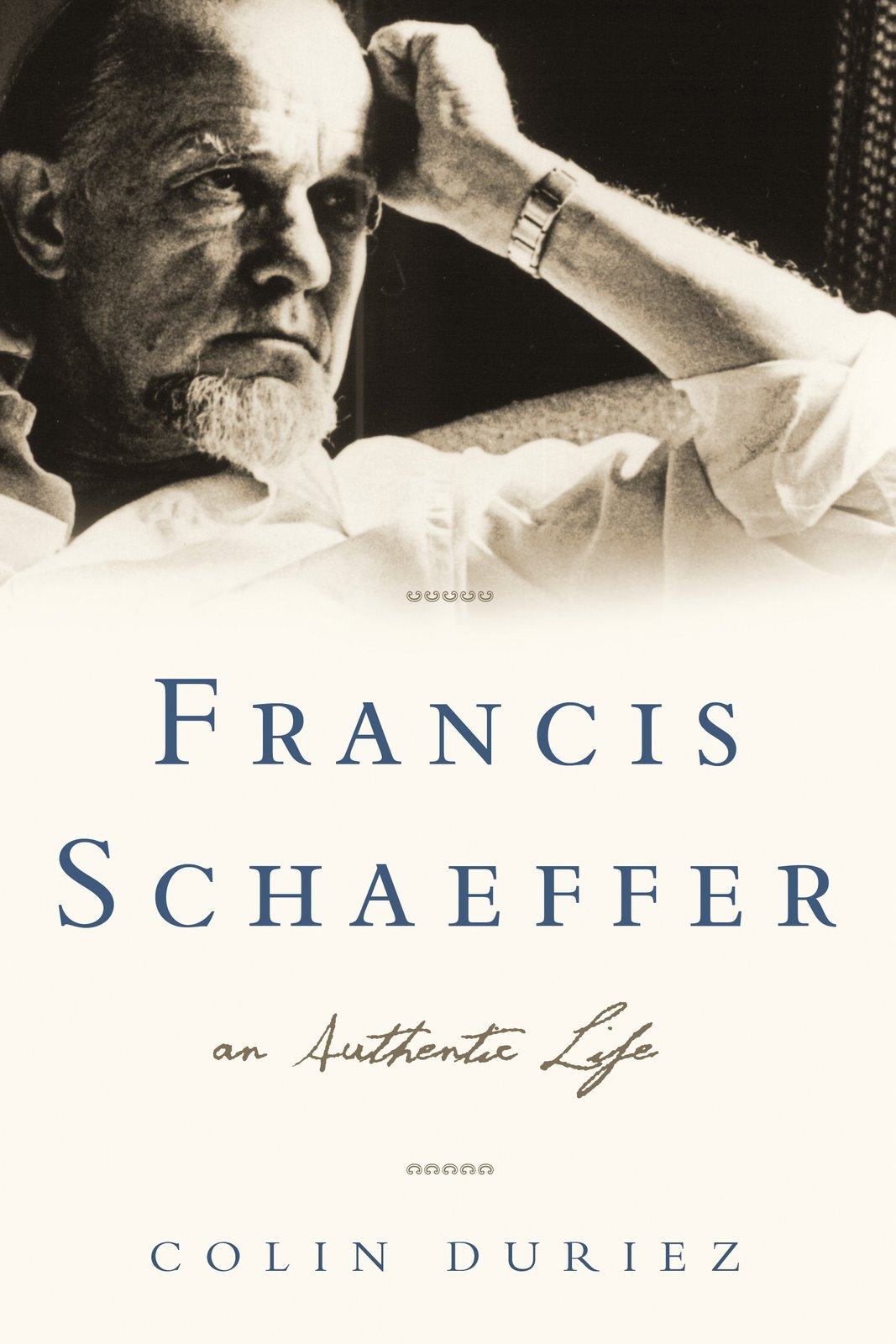


 Many people have criticized the decision. Clarke Forsythe, Senior Counsel at Americans United for Life, takes on a more difficult task in



 The Daily Hatch