Category Archives: Francis Schaeffer

The Atheist can only come to the conclusion of despair according to Ecclesiastes,but humans always try to go to the area of non-reason for meaning in their lives instead of turning to God!

____

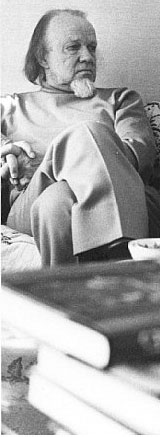
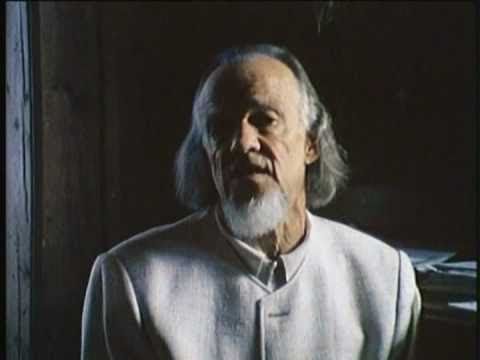
Francis Schaeffer pictured below:

_________________

How Should We then Live Episode 7 small (Age of Nonreason)

#02 How Should We Then Live? (Promo Clip) Dr. Francis Schaeffer

The clip above is from episode 9 THE AGE OF PERSONAL PEACE AND AFFLUENCE

10 Worldview and Truth

In above clip Schaeffer quotes Paul’s speech in Greece from Romans 1 (from Episode FINAL CHOICES)

Two Minute Warning: How Then Should We Live?: Francis Schaeffer at 100

A Christian Manifesto Francis Schaeffer

Francis Schaeffer “BASIS FOR HUMAN DIGNITY” Whatever…HTTHR

Dr. Francis schaeffer – The flow of Materialism(from Part 4 of Whatever happened to human race?)

Dr. Francis Schaeffer – The Biblical flow of Truth & History (intro)

Francis Schaeffer – The Biblical Flow of History & Truth (1)

Dr. Francis Schaeffer – The Biblical Flow of Truth & History (part 2)

The Atheist can only come to the conclusion of despair according to Ecclesiastes,but humans always try to go to the area of non-reason for meaning in their lives instead of turning to God!

In the following post Dustin Shramek notes:

Francis Schaeffer illustrates this problem well. He says that we live in a two story universe. On the first story the world is finite without God. This is what Sartre, Russell, and Nietzsche describe. Life here is absurd, with no meaning or purpose. On the second story life has meaning, value, and purpose. This is the story with God. Modern man resides on the first floor because he believes there is no God. But as we have shown, he cannot live there happily, so he makes a leap of faith to the second story where there is meaning and purpose. The problem is that this leap is unjustified because of his disbelief in God. Man cannot live consistently and happily knowing life is meaningless.

Atheism and Death: Why the atheist must face death with despair


By Dustin Shramek


The title of this paper may catch some off guard. You or someone you know might be an atheist and you feel as though you have no despair when contemplating your death. I don’t doubt that there are many atheist that, in fact, have no despair over death. But, for the atheist to live without despair, they must do so inconsistently. In my paper, I will show why it is logically inconsistent for an atheist to live and face death with happiness.

To do this I want to present two major arguments. The first is from the theist point of view that life is meaningless without God and thus death is hopeless. This is derived from two of the world’s top philosophers, William Lane Craig and Ravi Zacharias (both are theists). It should be noted that this argument will be supplemented with the thoughts of several respected atheistic philosophers so one does not think they are being biased.

The second part of the paper will show why death is a necessary evil within the atheistic world view. To demonstrate this I will be drawing from the works of a major contemporary, atheist philosopher, Thomas Nagel. Both arguments are convincing by themselves, but I hope to show that with the two of them together, it is even more compelling to believe that the atheist must face death with despair. I don’t doubt that many atheist have been able to boldly face death without fear, but I do believe that they were being inconsistent in their world view.

Albert Camus said that death is philosophy’s only problem. That is quite the statement. Not only is death a problem, but a it is a large one. Why is death such a problem for someone like Camus? He was an atheist and I will attempt to show that death is a problem for all atheists.

Atheism cannot offer any comfort in the face of death. You see, everything we do includes some kind of hope. However, what kind of hope can the atheist give in the face of death? One may say that death is the final freeing of all desires and thus is good. Or that one can have hope in death if they are suffering. These really are just false hopes that I hopefully will clearly show.

After the death of his friend, Arthur Hallam, Alfred, Lord Tennyson composed his poem, “In Memorium”. This poem show the struggle he had as he wrestled with grief and the question of what ultimate power manages the fate of man. It shows the struggle he had between his realization of the consequences of his choice between atheism and God. I will quote a lengthy excerpt to feel the full impact.

Thine are these orbs of light and shade
Thou madest Life in man and brute;
Thou madest death; and Lo, thy foot
Is on the skull which thou hast made.

Are God and Nature then at strife
That Nature lends such evil dreams?
So careful of the type she seems
So careless of the single life,…

“So careful of the type?” but no.
From scarped cliff and quarried stone
She cries a thousand types are gone;
I care for nothing, all shall go.

“Thou makest thine appeal to me
I bring to life, I bring to death;
The spirit does but mean the breath:
I know no more.” And he, shall he,

Man her last work who seem’d so fair
Such splendid purpose in his eyes,
Who rolI’d the psalm to wintry skies,
Who built him fanes of fruitless prayers,

Who trusted God was love indeed
And love creation’s final law–
Tho’ Nature, red in tooth and claw
With ravine, shrieked against his creed-

Who loved, who suffer’d countless ills
Who battled for the True, the Just,
Be blown about the desert dust,
Or seal’d within the iron hills?

No more? A monster then, a dream.
A discord. Dragons of the prime
That tear each other in their slime,
Were mellow music match’d with him.

O life as futile, then, as frail!
O for thy voice to soothe and bless
What hope of answer, or redress?
Behind the veil, behind the veil.[1]

Atheism has parented this offspring, and it is her legitimate child–with no mind to look back to for his origin, no law to turn to for guidance, no meaning to cling to for life, and no hope for the future. This is the shattered visage of atheism. It has the stare of death, looking into the barren desert of emptiness and hopelessness. Thus, the Nietzschean dogma, which dawned with the lantern being smashed to the ground, now ends in the darkness of the grave.[2]

Is this true? Is there no hope in atheism? Is there no meaning in a world without God? William Lane Craig offers a resounding yes.

Craig argues that if God doesn’t exist, then man and the universe are doomed to die. There is no hope of immortality. Our lives are but an infinitesimally small point that appears and then vanishes forever.

Jean-Paul Sartre affirmed that death is not-threatening provided we view it in the third person. It isn’t until we face the first person, “I am going to die,my death,” that death becomes threatening. Most, though, never assume first person attitudes during their life. So the question arises, “Why is my death so threatening?”

This is because within an atheistic world view there can be no meaning or purpose. I’m sure that many will be quick to disagree with me because they are an atheist or know an atheist who does ascribe meaning and purpose to their lives. But is this consistent within the atheistic world view? I don’t think so.

If everything is doomed to go out of existence, can there be any ultimate significance? If we are inevitably faced with nonexistence can our lives have any ultimate significance?

Influencing others or influencing history doesn’t give your life ultimate significance. It only gives it relative significance. Your life is important relative to certain events, but there is no ultimate significance to those events if all will die. Ultimately, your life makes no difference.

Even the universe is doomed to die (due to the Second Law of Thermodynamics). So what ultimate difference would it make if the universe never came to exist at all if it is doomed to become dead?

Mankind is thus no more significant than a swarm of mosquitoes or a barnyard of pigs, for their end is all the same. The same blind cosmic process that coughed them up in the first place will eventually swallow them all again.[3]

If one’s destiny is the grave, what ultimate purpose is their for life? The same is true of the universe. If it is doomed to become a forever expanding pile of useless debris, what purpose is there for the universe? To what end is the world or man in existence? There can be no hope, no purpose.

What is true of mankind is true of individuals as well. So there can be no purpose in any individual’s life. My life wouldn’t be qualitatively different than the life of a dog. This thought is expressed by the writer of Ecclesiastes, “The fate of the sons of men and the fate of beasts is the same. As one dies so dies the other; indeed, they all have the same breath and there is no advantage for man over beast, for all is vanity. All go to the same place. All come from the dust and all return to the dust” (Ecc 3:19-20).

The universe and man are cosmic accidents. There is no reason for our existence. Man is a cosmic orphan.

Without God the universe is the result of a cosmic accident, a chance explosion. There is no reason for which it exist. As for man, he is a freak of nature–a blind product of matter plus time plus chance. Man is just a lump of slime that evolved into rationality. There is no more purpose in life for the human race than for a species of insect; for both are the result of the blind interaction of chance and necessity.[4]

If we are only cosmic accidents, how can there be any meaning in our lives? If this is true, which it is in an atheistic world view, our lives are for nothing. It would not matter in the slightest bit if I ever existed. This is why the atheist, if honest and consistent, must face death with despair. Their life is for nothing. Once they are gone, they are gone forever.

Friedrich Nietzsche admitted that with the end of Christianity comes nihilism, which is the “denial of the existence of any basis for knowledge or truth; the general rejection of customary beliefs in morality, religion, etc.; the belief that there is no meaning or purpose in existence.” In “The Will to Power”, Nietzsche says this,

What I relate is the history of the next two centuries. I describe what is coming, what can no longer come differently: the advent of nihilism.. ..Our whole European culture is moving for some time now, with a tortured tension that is growing form decade to decade, as toward a catastrophe: restlessly, violently, headlong, like a river that wants to reach the end, that no longer reflects, that is afraid to reflect.[5]

Bertrand Russell, a famous atheistic philosopher, even admits that life is purposeless. I quote him at length,

That Man is the product of causes which had no prevision of the end they were achieving; that his origin, his growth, his hopes and fears, his loves and his beliefs, are but the outcome of accidental collocations of atoms; that no fire, no heroism, no intensity of thought and feeling, can preserve an individual life beyond the grave; that all the labours of the ages, all the devotion, all the inspiration, all the noonday brightness of human genius, are destined to extinction in the vast death of the solar system, and that the whole temple of Man’s achievement must inevitably be buried beneath the debris of a universe in ruins–all these things, if not quite beyound dispute, are yet so nearly certain, that no philosophy which rejects them can hope to stand. Only within the scaffolding of these truths, only on the firm foundation of unyielding despair, can the soul’s habitation henceforth be safely built.[6]

“Only on the firm foundation of unyielding despair,”? What can be placed on such a foundation?

Even Jean-Paul Sartre affirms the absurdity of life when he says, “Being is without reason, without cause, and without necessity. The very definition of being release its original contingency to us.”[7]

Three of the most important atheistic philosophers, Nietzsche, Russell, and Sartre, all admitted that apart from God life is meaningless and absurd. So how do people live happily with this world view? They live inconsistently. For if one lives consistently, he is unable to live happily

Francis Schaeffer illustrates this problem well. He says that we live in a two story universe. On the first story the world is finite without God. This is what Sartre, Russell, and Nietzsche describe. Life here is absurd, with no meaning or purpose. On the second story life has meaning, value, and purpose. This is the story with God. Modern man resides on the first floor because he believes there is no God. But as we have shown, he cannot live there happily, so he makes a leap of faith to the second story where there is meaning and purpose. The problem is that this leap is unjustified because of his disbelief in God. Man cannot live consistently and happily knowing life is meaningless.

Of course, atheists don’t want to live in this kind of a predicament so they attempt to ascribe meaning to life and value to death. Walter Kaufmann does this in his book, Existentialism. Religion. and Death. The last chapter is entitled, “Death Without Dread”. He quotes several poems from a span of 150 years by poets from many different countries. He shows that death is commonly viewed without fear and he hypothesizes that death is only feared as a result of the impact of Christianity on culture. One of the poems quoted is by Matthias Claudius (1740-1815), it is entitled “Death and the Maiden,” and was eventually set to music by Franz Schubert.

Death and the Maiden

The maiden:
Oh, go away, please go,
Wild monster, made of bone!
I am still young; Oh, no!
Oh, please leave me alone!

Death:
Give me your hand, my fair and lovely child!
A friend I am and bring no harm.
Be of good cheer, I am not wild,
You shalt sleep gently in my arm.[8]

He goes on to quote Nietzsche from Twilight of the Idols, “To die proudly when it is no longer possible to live proudly. Death freely chosen, death at the right time, brightly and cheerfully accomplished amid children and witnesses.”[9]

Nietzsche saw death as the ultimate liberation. He even emphasises the desire he has to freely choose when he dies. Kaufmann affirms this when he says, “We should also give up the unseemly Christian teachings about suicide and accept it as a dignified and decent way of ending our lives.”[10]

When Sartre, who agreed with Nietzsche, was asked why he didn’t commit suicide, he replied by saying that he didn’t want to use his freedom to take away his freedom. This is an absurd solution though, because they say that freedom is the problem with its aimlessness, pain, and despair.

Kaufmann argues that if we live life richly and not expect to live long lives then when we die we can combat the hopelessness of death because we won’t feel cheated or won’t feel as though we need more time. The problem lies in the fact thay kaufmann makes the jump to the second story. He wants to ascribe meaning to a richly lived life, which I’ve shown can’t be done in a God-less universe. When he says that one won’t feel as though they’ve been deprived of time when they die is wishful thinking. One of his contemporaries, Thomas Nagel (an atheist) shows the falsity in this thinking.

Nagel begins his discussion of death with this statement, “If death is the unequivocal and permanent end of our existence, the question arises whether it is a bad thing to die.”[11]

He argues that if life is all we have, then its loss is the greatest loss we can encounter. Nagel’s goal is to see whether death is in itself an evil, how great of an evil it is, and what kind of evil it is.

If death is an evil, it is because of the loss of life and not the state of being dead, or nonexistant. Some say that dying is the the real evil. But Nagel points out that he wouldn’t really object to dying if it wasn’t followed by death. He says,

If we are to make sense of the view that to die is bad, it must be on the ground that life is a good and death is the corresponding deprivation or loss, bad not because of any positive features but because of the desirability of what it removes.[12]

There are three objections that many have raised about the proposition that death is an evil. 1) One may doubt that there are any evils which solely consist in the deprivation or absence of possible good, particularly when one doesn’t mind the deprivation (because they don’t exist). What you don’t know, can’t hurt you. 2) How is the supposed misfortune assigned to the subject? So long as one exists, he isn’t dead, and once he dies he no longer exist. So there can be no time when death, if it is a misfortune, can be ascribed to the subject. 3) Finally, the asymmetry of our attitudes towards our posthumous and prenatel nonexistence. Why can we view the eternity after our death as bad, but not the eternity before our birth?

He illustrates the errors of the first two objections with a simple illustration that is analogous to death. Imagine an intelligent man being reduced to the mental condition of a content infant. Even though he is content, we pity him. Yet, he doesn’t realize this tragedy, for he is a content infant. Does the phrase, “What we don’t know doesn’t hurt us,” apply to him? If so why do we pity him? Second, it isn’t the content infant who is unfortunate, rather, it is the intelligent adult who has been reduced to this condition.

We shouldn’t and don’t focus on the content infant, instead we consider the person he was and the person he could be now. So his reduction to this state and the premature ending of his adult development is a catastrophe. Just as death is a catastrophe.

What about the problem of our asymmetrical attitudes towards our posthumous and prenatel nonexisetence?

Lucretius was the one who first pointed this out. He recognized that no one finds it disturbing to contemplate the eternity before their birth, which really is the same as the eternity after their death. Thus, it is irrational to fear death.

Nagel disagrees, he argues that the time after death is the time in which nonexistence deprives a person. “Any death entails the loss of some life.”[14] So the eternity after death isn’t the same as the eternity before birth, because one is deprived of life. Some may argue then, that one is deprived of life before birth as well because they could have been born earlier. But Nagel shows the fallacy of this thinking by pointing out that if one is born any earlier (except a few weeks premature), they would not be the same person. So it doesn’t entail the loss of any life. Lucretius, and any one who agrees with him, is wrong in thinking that it is irrational to fear death on the basis that we aren’t bothered by our prenatel eternity.

Life makes known to us the goods of which death deprives us. Death, no matter when it happens deprives us of some continuation of life. While it is tragic for a 17 year old to die, it is just as tragic for a 90 year old to die because both are deprived of life and the good that comes with it.

Viewed in this way, death, no matter how inevitable, is an abrupt cancellation of indefinitely extensive possible goods. Normality seems to have nothing to do with it, for the fact that we will all inevitably die in a few score years cannot by itself imply that it would not be good to live longer. Suppose that we were all inevitably going to die in agony — physical agony lasting six months. Would inevitability make that prospect any less unpleasant? And why should it be different for a deprivation?[14]

Not many atheists are as consistent as Thomas Nagal when they speak on death. Kaufmann says he can face death without hopelessness because he lives richly and that gives meaning to his life. But what kind of meaning is it? If Kaufmann never existed, what ultimate difference would it make? None. If the atheists faces this honestly, how can he view death with anything but despair?

As shown in these two extended arguments, death apart from God cannot be faced with anything but fear and despair if one is to live consistently within their atheistic world view. The only way an atheist can face death without despair is by ascribing ultimate meaning to their life, which is a jump to the second story and is completely inconsistent with atheism.

Certainly it doesn’t follow, then, that theism is true simply because the atheist must face death with despair. If the atheist is right we must follow the instructions of Bertrand Russell and build our lives on the “firm foundation of unyielding despair.” We must look for the truth and then logically structure our lives accordingly. Obtaining hope from religion for the sake of hope, when that religion is not true, is simply obtaining false hope. False hope is no hope at all.

That is why it is crucial to examine our world views to see if they are logically consistent and correspond to reality. It does one no good to put faith and hope into a god who doesn’t exist. However, if a god does exist, we must put our faith and hope into the right one.

We’ve seen that within the atheistic world view there can be no meaning or purpose and this leads to hopelessness. The atheist must choose whether he wants to live consistently or happily. For as long as he is an atheist, he can’t do both.

Notes1. Alfred, Lord Tennyson, In Memorium, (The Macmillan Company: New York, NY, 1906), pp.83-85, 55: 4-5; 56: 1-7.
2. Ravi Zacharias, A Shattered Visage: The Real Face of Atheism. (Baker Books: Grand Rapids, Ml, 1990), p. 105.
3. William Lane Craig, Reasonable Faith: Christian Truth and Apologetics, (Crossway Books: Wheaton, IL, 1984), p. 59.
4. Craig, p.63.
5. Friedrich Nietzsche, “The Will to Power,” trans. W. kaufmann, in <i?existentialism from=”” dostoyevsky=”” to=”” sartre<=”” i=””>, (The World Publishing Company: Cleveland, OH, 1956), pp. 109-110.
6. Bertrand Russell, Mysticism and Logic. (W.W. Norton and Company, Inc.: New York, NY, 1929), pp. 47-49.
7. Jean-Paul Sartre, Being and Nothingness, (Philosophical Library: New York, NY, 1956), p.537.
8. Matthias Claudius, Death and the Maiden. Quoted in Walter kaufmann, Existentialism, Religion and Death (New American Library: New York, NY, 1976), p.228.
9. Friedrich Nietzsche, Twilight of the Idols. Quoted in Walter Kaufmann, Existentialism, Religion, and Death. (New American Library: New York, NY, 1976), p.237.
10. Walter kaufmann, Existentialism, Religion, and Death. (New American Library: New York, NY, 1976), p. 248.
11. Thomas Nagel, Mortal Questions. (Cambridge University Press: Cambridge, 1979), p.1.
12. Nagel, p.4.
13. Nagel, p.7.
14. Nagel, p.10.

Related posts:

FRANCIS SCHAEFFER ANALYZES ART AND CULTURE Part 27 Jurgen Habermas (Featured artist is Hiroshi Sugimoto)

_____________ Jürgen Habermas Interview Uploaded on Feb 1, 2007 Rare video footage of Jurgen Habermas discussing some of his theories.http://soundcloud.com/st-hanshaugen Francis Schaeffer pictured below: ______________ Francis Schaeffer notes: At Berkeley the Free Speech Movement arose simultaneously with the hippie world of drugs. At first it was politically neither left nor right, but rather a […]

FRANCIS SCHAEFFER ANALYZES ART AND CULTURE Part 26 Bettina Aptheker (Featured artist is Krzysztof Wodiczko)

Bettina Aptheker pictured below: Moral Support: “One Dimensional Man” author Herbert Marcuse accompanies Bettina Aptheker, center, and Angela Davis’ mother, Sallye Davis, to Angela Davis’ 1972 trial in San Jose. Associated Press ___________________________________________________________________________ Francis Schaeffer has written extensively on art and culture spanning the last 2000years and here are some posts I have done on […]

FRANCIS SCHAEFFER ANALYZES ART AND CULTURE Part 25 BOB DYLAN (Part C) Francis Schaeffer comments on Bob Dylan’s song “Ballad of a Thin Man” and the disconnect between the young generation of the 60’s and their parents’ generation (Feature on artist Fred Wilson)

_____________________ Francis Schaeffer pictured below: ____ Elston Gunn- Ballad of A Thin Man, Live Sheffield 1966 Francis Schaeffer has written extensively on art and culture spanning the last 2000 years and here are some posts I have done on this subject before : Francis Schaeffer’s “How should we then live?” Video and outline of episode 10 […]

FRANCIS SCHAEFFER ANALYZES ART AND CULTURE Part 24 BOB DYLAN (Part B) Francis Schaeffer comments on Bob Dylan’s words from HIGHWAY 61 REVISITED!! (Feature on artist Susan Rothenberg)

______________ Just like tom thumb´s blues (no direction home) Francis Schaeffer has written extensively on art and culture spanning the last 2000 years and here are some posts I have done on this subject before : Francis Schaeffer’s “How should we then live?” Video and outline of episode 10 “Final Choices” , episode 9 “The Age of Personal […]

FRANCIS SCHAEFFER ANALYZES ART AND CULTURE Part 23 BOB DYLAN (Part A) (Feature on artist Josiah McElheny)Francis Schaeffer on the proper place of rebellion with comments by Bob Dylan and Samuel Rutherford

Bob Dylan – When You Gonna Wake Up Sermon – Tempe 1979 Published on Apr 28, 2012 Probably the most contentious show in Dylan’s long history of live performance. The between-song “raps” were a fixture of Dylan’s performances during his “Christian” period, but early during the Slow Train Coming tour, Dylan and his band encountered […]

FRANCIS SCHAEFFER ANALYZES ART AND CULTURE Part 22 “The School of Athens by Raphael” (Feature on the artist Sally Mann)

How Should We Then Live? Episode 2 Part 2/2 RebelShutze· __________ Episode III – The Renaissance JasonUellCrank How Should We Then Live? Episode 3 Part 1/2 RebelShutze Published on Jun 4, 2012 The third part of Dr. Francis Schaeffer’s ten-part series based off of his book “How Should We Then Live?” This is Episode 3, […]

FRANCIS SCHAEFFER ANALYZES ART AND CULTURE Part 21 William B. Provine (Feature on artist Andrea Zittel)

_______ Dr Provine is a very honest believer in Darwinism. He rightly draws the right conclusions about the implications of Darwinism. I have attacked optimistic humanism many times in the past and it seems that he has confirmed all I have said about it. Notice the film clip below and the quote that Francis Schaeffer […]

FRANCIS SCHAEFFER ANALYZES ART AND CULTURE Part 20 Woody Allen and Materialistic Humanism: The World-View of Our Era (Feature on artist Ida Applebroog)

___________________________________________________________________________ Francis Schaeffer “BASIS FOR HUMAN DIGNITY” Whatever…HTTHR ___________________ Woody Allen on Ingmar Bergman and the death. Woody Allen et Marshall McLuhan : « If life were only like this! » What Makes Life Worth Living? – Answered by Woody Allen. ______________ Diane Keaton et Woody Allen What Makes Life Worth Living? _____________________________________________________________________________________________________________________________________ Dr. Francis Schaeffer – […]

FRANCIS SCHAEFFER ANALYZES ART AND CULTURE Part 19 Movie Director Luis Bunuel (Feature on artist Oliver Herring)

___________ Francis Schaeffer pictured below: ____ Dr. Francis Schaeffer – Episode 8 – The Age of Fragmentation NoMirrorHDDHrorriMoN In the book HOW SHOULD WE THEN LIVE? Schaeffer notes: Especially in the sixties the major philosophic statements which received a wide hearing were made through films. These philosophic movies reached many more people than philosophic writings […]

FRANCIS SCHAEFFER ANALYZES ART AND CULTURE Part 18 “Michelangelo’s DAVID is the statement of what humanistic man saw himself as being tomorrow” (Feature on artist Paul McCarthy)

In this post we are going to see that through the years  humanist thought has encouraged artists like Michelangelo to think that the future was extremely bright versus the place today where many artist who hold the humanist and secular worldview are very pessimistic.   In contrast to Michelangelo’s DAVID when humanist man thought he […]

How Francis Schaeffer Influenced Me by Daniel R. Heimbach

How Francis Schaeffer Influenced Me

by Daniel R. Heimbach

I can honestly say that, besides my parents and Jesus Christ, no individual has influenced me more than Francis A. Schaeffer, a pastor-theologian most consider to have been among the greatest evangelical voices, and perhaps even the most influential, of the twentieth century. But Francis Schaeffer and his wife, Edith, were also close friends of my missionary grandparents. For me the Francis and Edith Schaeffer who inspired a generation of evangelicals, myself included, with the importance of engaging the culture for Christ, were also the family friends who nursed my grandparents to health after returning to the United States emaciated following release from a Japanese prison in a Prisoner of War exchange during World War II.

That is the reason my grandmother, Bertha Byram, was one of the earliest and most faithful prayer partners of the work called “L’Abri” founded in Europe by the Schaeffers after the war. That is why my grandmother is twice mentioned in The Tapestry. And that is why the communion table in the chapel the Schaeffer’s built in Huemoz, Switzerland, is dedicated to my grandmother. But I did not know this connection until after I was drawn to Schaeffer’s books for my own reasons.

schaefferheimbach001

I first became aware of Schaeffer while a student in high school struggling with matters of faith and culture, and on reading his first book, Escape from Reason, I found him so keenly in tune with my questions I devoured nearly all he wrote as it was published. That was in the late 1960s and early 1970s when Western culture, and especially American culture, was in turmoil from so many others of my age rebelling against all authority and tradition. Then, like many others on discovering Schaeffer, I also traveled to the mountains of Switzerland to meet him, and ended staying several months trying to understand what was taking place and what it meant to be authentically Christian in a world fast becoming radically post-Christian.

I learned much from Schaeffer that has affected me ever since, but as much from his life as from his thought, as much from his demonstrating Christian love as from his defending biblical truth, as much from how he respected the value and dignity of everyone he met however small or great as from what I learned from his writing. Schaeffer is the one who taught me that truth is a reality we must live and not just believe, and that if Christians do not live God’s truth the world has every right to reject what we claim is right and true. And Schaeffer is the one who taught me, more by example than words, how Christians can and must stand for purity and holiness without ugliness or harshness and should weep for those pursuing what we abhor.

Schaeffer’s many books, especially The Mark of the Christian, Pollution and the Death of Man, How Should We Then Live?, Whatever Happened to the Human Race?, and A Christian Manifesto, were instrumental in forming what has become for me a strong sense of calling or mission in the world, which is to promote God’s truth in a culture that is rejecting it, and doing so especially as it concerns resisting moral anarchy and political tyranny.

Francis Schaeffer influenced my decision to become a culturally astute moral influence in Washington, D.C., an effort that resulted in affecting a wide range of issues in public policy. Schaeffer influenced my role in leading the fight against normalizing treatment of homosexual behavior in the military services. Schaeffer influenced my running for Congress in 2000. Schaeffer influenced my vision to develop what is now the strongest program in the world for training evangelicals in biblically uncompromising yet culturally engaged Christian ethics. And Schaeffer has influenced the sort of books I write, all of which have been written to resource evangelical witness on moral issues contested in the culture.

But while Schaeffer had a deep and lasting impact on evangelicals of my generation, shaping the those who led the Jesus Movement, the Moral Majority, the drafting of the Chicago Statement on Biblical Inerrancy, the first Lausanne Congress on World Evangelization, the rediscovery of classical Christian education, the formation of Crisis Pregnancy Centers, the Southern Baptist conservative resurgence, and the movement of evangelicals into politics now labeled the Christian Right—and while Schaffer played the major role in launching evangelical efforts to engage the culture on issues ranging from legalized abortion, euthanasia, sexual immorality, environmental stewardship, denying gender roles, reclaiming the arts, and education reform—and while Schaeffer was a major influence on many who rose to positions of significant leadership including theologians Harold O. J. Brown, David Wells, Os Guinness, Timothy George, John Warwick Montgomery, John Piper, Norm Geisler, Wayne Grudem and L. Russ Bush, founders of ministries including James Dobson, D. James Kennedy, Jerry Falwell, R. C. Sproul, Chuck Colson and Tim and Beverley LaHaye, denomination leaders including Paige Patterson, Richard Land and James Montgomery Boice, publishers including Lane Dennis ofCrossway Books and Terry Eastland of The Weekly Standard, writers including Cal Thomas and Frank Peretti, and political leaders including Ronald Reagan, James and Susan Baker, C. Everett Koop, Jack Kemp and Gary Bauer—the legacy of Francis A. Schaeffer is now in danger of being forgotten by a new generation that hardly knows his name much less understands how much they owe to the extraordinary influence of this passionate yet humble prophet used of God to transform and reenergize so much of what they inherit.

Of course, the ways in which any culture challenges authentically Christian witness change over time, but what Schaeffer taught evangelicals about the lordship of Christ over all areas of life, the timeless relevance of objectively reliable truth, the inerrancy of God’s Word, the marred nobility of human nature, the beauty of creation, and the meaninglessness of pretending to live in a self-centered mechanistic universe will never change and are as vitally important for evangelicals today as they were when Schaeffer held forth among us.

It is therefore strategic and absolutely critical that evangelicals revisit, reaffirm, and if necessary rediscover the legacy of Francis A. Schaeffer, lest we forget what we had and lose the art of engaging the culture without accommodating ourselves to the culture, of defending truth without being ugly, of loving those we engage without compromising purity, and of fitting our message to changing circumstances without compromising its content for fear of rejection or desire merely to be accepted by others.

The entrusting of the personal books, letters and papers of Frances A. Schaeffer, by the Francis A. Schaeffer Foundation, to the L. Russ Bush Center for Faith and Culture at Southeastern Baptist Theological Seminary could not be more timely or important. I am most grateful to my colleague, Bruce Little, and to the Schaeffer family for their vision and generosity, and I am certain this one very significant action will play a key role in revitalizing evangelical witness in contemporary culture. I pray it will also serve to inspire, benefit and aid in equipping of a new generation eager to make a biblically grounded, authentically Christian difference in the world of today.

Daniel R. Heimbach is Senior Professor of Christian Ethics at Southeastern Baptist Theological Seminary.

Related posts:

FRANCIS SCHAEFFER ANALYZES ART AND CULTURE Part 27 Jurgen Habermas (Featured artist is Hiroshi Sugimoto)

_____________ Jürgen Habermas Interview Uploaded on Feb 1, 2007 Rare video footage of Jurgen Habermas discussing some of his theories.http://soundcloud.com/st-hanshaugen Francis Schaeffer pictured below: ______________ Francis Schaeffer notes: At Berkeley the Free Speech Movement arose simultaneously with the hippie world of drugs. At first it was politically neither left nor right, but rather a […]

FRANCIS SCHAEFFER ANALYZES ART AND CULTURE Part 26 Bettina Aptheker (Featured artist is Krzysztof Wodiczko)

Bettina Aptheker pictured below: Moral Support: “One Dimensional Man” author Herbert Marcuse accompanies Bettina Aptheker, center, and Angela Davis’ mother, Sallye Davis, to Angela Davis’ 1972 trial in San Jose. Associated Press ___________________________________________________________________________ Francis Schaeffer has written extensively on art and culture spanning the last 2000years and here are some posts I have done on […]

FRANCIS SCHAEFFER ANALYZES ART AND CULTURE Part 25 BOB DYLAN (Part C) Francis Schaeffer comments on Bob Dylan’s song “Ballad of a Thin Man” and the disconnect between the young generation of the 60’s and their parents’ generation (Feature on artist Fred Wilson)

_____________________ Francis Schaeffer pictured below: ____ Elston Gunn- Ballad of A Thin Man, Live Sheffield 1966 Francis Schaeffer has written extensively on art and culture spanning the last 2000 years and here are some posts I have done on this subject before : Francis Schaeffer’s “How should we then live?” Video and outline of episode 10 […]

FRANCIS SCHAEFFER ANALYZES ART AND CULTURE Part 24 BOB DYLAN (Part B) Francis Schaeffer comments on Bob Dylan’s words from HIGHWAY 61 REVISITED!! (Feature on artist Susan Rothenberg)

______________ Just like tom thumb´s blues (no direction home) Francis Schaeffer has written extensively on art and culture spanning the last 2000 years and here are some posts I have done on this subject before : Francis Schaeffer’s “How should we then live?” Video and outline of episode 10 “Final Choices” , episode 9 “The Age of Personal […]

FRANCIS SCHAEFFER ANALYZES ART AND CULTURE Part 23 BOB DYLAN (Part A) (Feature on artist Josiah McElheny)Francis Schaeffer on the proper place of rebellion with comments by Bob Dylan and Samuel Rutherford

Bob Dylan – When You Gonna Wake Up Sermon – Tempe 1979 Published on Apr 28, 2012 Probably the most contentious show in Dylan’s long history of live performance. The between-song “raps” were a fixture of Dylan’s performances during his “Christian” period, but early during the Slow Train Coming tour, Dylan and his band encountered […]

FRANCIS SCHAEFFER ANALYZES ART AND CULTURE Part 22 “The School of Athens by Raphael” (Feature on the artist Sally Mann)

How Should We Then Live? Episode 2 Part 2/2 RebelShutze· __________ Episode III – The Renaissance JasonUellCrank How Should We Then Live? Episode 3 Part 1/2 RebelShutze Published on Jun 4, 2012 The third part of Dr. Francis Schaeffer’s ten-part series based off of his book “How Should We Then Live?” This is Episode 3, […]

FRANCIS SCHAEFFER ANALYZES ART AND CULTURE Part 21 William B. Provine (Feature on artist Andrea Zittel)

_______ Dr Provine is a very honest believer in Darwinism. He rightly draws the right conclusions about the implications of Darwinism. I have attacked optimistic humanism many times in the past and it seems that he has confirmed all I have said about it. Notice the film clip below and the quote that Francis Schaeffer […]

FRANCIS SCHAEFFER ANALYZES ART AND CULTURE Part 20 Woody Allen and Materialistic Humanism: The World-View of Our Era (Feature on artist Ida Applebroog)

___________________________________________________________________________ Francis Schaeffer “BASIS FOR HUMAN DIGNITY” Whatever…HTTHR ___________________ Woody Allen on Ingmar Bergman and the death. Woody Allen et Marshall McLuhan : « If life were only like this! » What Makes Life Worth Living? – Answered by Woody Allen. ______________ Diane Keaton et Woody Allen What Makes Life Worth Living? _____________________________________________________________________________________________________________________________________ Dr. Francis Schaeffer – […]

FRANCIS SCHAEFFER ANALYZES ART AND CULTURE Part 19 Movie Director Luis Bunuel (Feature on artist Oliver Herring)

___________ Francis Schaeffer pictured below: ____ Dr. Francis Schaeffer – Episode 8 – The Age of Fragmentation NoMirrorHDDHrorriMoN In the book HOW SHOULD WE THEN LIVE? Schaeffer notes: Especially in the sixties the major philosophic statements which received a wide hearing were made through films. These philosophic movies reached many more people than philosophic writings […]

FRANCIS SCHAEFFER ANALYZES ART AND CULTURE Part 18 “Michelangelo’s DAVID is the statement of what humanistic man saw himself as being tomorrow” (Feature on artist Paul McCarthy)

In this post we are going to see that through the years  humanist thought has encouraged artists like Michelangelo to think that the future was extremely bright versus the place today where many artist who hold the humanist and secular worldview are very pessimistic.   In contrast to Michelangelo’s DAVID when humanist man thought he […]

Truth Tuesday:Escape to Switzerland L’Abri by Julie Rodgers

Escape to Switzerland L’Abri by Julie Rodgers

The Scientific Age

Uploaded by  on Oct 3, 2011

_______________

Episode VII – The Age of Non Reason

___________________________________________

I love the works of Francis Schaeffer and I have been on the internet reading several blogs that talk about Schaeffer’s work and the work below by Julie Rodgers was really helpful. Schaeffer’s film series “How should we then live?  Wikipedia notes, “According to Schaeffer, How Should We Then Live traces Western history from Ancient Rome until the time of writing (1976) along three lines: the philosophic, scientific, and religious.[3] He also makes extensive references to art and architecture as a means of showing how these movements reflected changing patterns of thought through time. Schaeffer’s central premise is: when we base society on the Bible, on the infinite-personal God who is there and has spoken,[4] this provides an absolute by which we can conduct our lives and by which we can judge society.  Here are some posts I have done on this series: Francis Schaeffer’s “How should we then live?” Video and outline of episode 10 “Final Choices” episode 9 “The Age of Personal Peace and Affluence”episode 8 “The Age of Fragmentation”episode 7 “The Age of Non-Reason” episode 6 “The Scientific Age”  episode 5 “The Revolutionary Age” episode 4 “The Reformation” episode 3 “The Renaissance”episode 2 “The Middle Ages,”, and  episode 1 “The Roman Age,” .

In the film series “WHATEVER HAPPENED TO THE HUMAN RACE?” the arguments are presented  against abortion (Episode 1),  infanticide (Episode 2),   euthanasia (Episode 3), and then there is a discussion of the Christian versus Humanist worldview concerning the issue of “the basis for human dignity” in Episode 4 and then in the last episode a close look at the truth claims of the Bible.

Escape to Switzerland

swissfront

I had a full blown existential crisis my junior year in college. Questions were strangling me, and the conservative university I attended only agitated my angst. My friends and I tried to maintain some sort of relationship with God, but we had to wear ear plugs in chapel just to stay sane enough to engage with Him on any meaningful level. And of course I was failing my courses because 11am was just too early to make it out of bed for class.

In a desperate attempt for something real, I boarded a plane bound for a small village in Switzerland called Huemoz. Hidden on the side of a mountain in the snow-capped Swiss Alps was L’Abri, a work study center founded by Francis Schaeffer back in the day. L’Abri was a place for people from all over the world to bring their stories, struggles, messes, and questions—a place to wrestle toward something real. About 30 of the most eccentric people you can imagine from all over the world lived in one large chalet together, called Bellevue, and we wrestled. We wrestled with God, each other, our questions, ourselves. We laughed. We cried, we argued, we read, baked fresh bread, played ping-pong, hiked, knit, gardened, hid bottles of rum and whiskey behind bushes.

377_597261166749_6518_n

L’Abri was the kind of place where almost anything was fair game. There were a few rules: 1.) We had to attend every scheduled event (which included independent study time in the library, work around the house, meals, lectures, and sessions with our tutors). And 2.) We couldn’t consume alcohol in Bellevue in order to keep it a safe place for those who were recovering. Outside of those rules, we were free to simply be. There were Americans, Koreans, Australians, Christians, agnostics, atheists, and those who homeschooled K-12th grade. Regardless of what we were expected to be throughout our entire lives, at L’Abri we were finally free to simply be where we were, and we were loved.

What did “being where we were” entail? My friend Josh modeled this well after a formal lunch where we argued about God’s intention for creation displayed in the Garden of Eden (or something like that). We were all on the balcony laughing and smoking cigarettes later that afternoon when Josh suddenly walked out buck naked with a cigarette in his hand and said: “F— all this theoretical bulls–t; let’s get back to the garden.” Then he sat down in the nude and enjoyed his cigarette. (Since many of you are probably offended by that, I’ll refrain from posting pictures to illustrate the story.)

While I loved the community and pace of life and Swiss Alps and the stimulating conversations, those aren’t what I cherished most about L’Abri. What shattered my life was this: The men and women at L’Abri abandoned a fear-based version of Christianity. They truly believed that if God was big enough to speak the galaxies into existence and small enough to be present with the prayers of little children, then He would be faithful to meet us where we were. We didn’t need guidelines to glide us toward God; we needed an honest encounter with Him on a personal level. That can’t be manufactured.

Most of us had grown up listening to rhetorically polished sermons, seeing Bible stories on felt boards, hearing God loved good little boys and girls. But so much of it seemed ludicrous to us. We didn’t understand why no one seemed troubled by a God who told Abraham to slay His son on an alter. We didn’t see the beauty in the handful of people ushered into an arc by Providence when thousands were brutally bashed against rocks and left for dead. We couldn’t comprehend why all the characters on the felt boards were white right after we sang “Red and yellow, black and white, they are precious in his sight.” And we really didn’t understand why more Christians weren’t bothered by this. Or worse! Why they chastised us for our questions.

I can’t possibly convey the beauty of being let loose in a Christian environment that trusted God loved us enough to meet us in our messes. While many people have encountered God during their bedside prayers, some of us have met him at the bottom of a bottle of rum. Is the honest, messy process what parents wish for their children? Probably not. Is it without tears and scars? Absolutely not. But it was where we were and God meets the real us in real time, not when we’ve finally gotten it right and put our best foot forward. It was beautiful to be in the care of leaders who trusted our gracious God enough to believe He was holding us in His big giant hand no matter what. It was glorious to finally hear we couldn’t create an encounter with Him by behaving or prevent Him from revealing Himself by our debauchery.

I met Jesus that summer. I came back with more questions than answers, but with a genuine faith that He was holding all the broken pieces of my life together—and that He actually loved me. He didn’t love the version of me that I wished I was or the me I thought I was “supposed” to be; He loved me. It’s not until we get outside of a fear-based faith that says we’ve got to control our paths to God that we’re often released to see the mystery that He’s a lot bigger than the little systems we’ve created. And He’s infinitely more frightening and beautiful than the long-haired bearded man on our felt boards.

Francis Schaeffer

__________________________

Related posts:

Taking on Ark Times Bloggers on various issues Part A “The Pro-life Issue” (Francis Schaeffer Quotes Part 1 includes the film SLAUGHTER OF THE INNOCENTS) (editorial cartoon)

I have gone back and forth and back and forth with many liberals on the Arkansas Times Blog on many issues such as abortion, human rights, welfare, poverty, gun control  and issues dealing with popular culture. Here is another exchange I had with them a while back. My username at the Ark Times Blog is Saline […]

“Schaeffer Sunday” Francis Schaeffer: “Whatever Happened to the Human Race” (Episode 1) ABORTION OF THE HUMAN RACE

It is not possible to know where the pro-life evangelicals are coming from unless you look at the work of the person who inspired them the most. That person was Francis Schaeffer.  I do care about economic issues but the pro-life issue is the most important to me. Several years ago Adrian Rogers (past president of […]

The movie “Les Miserables” and Francis Schaeffer

I got this off a Christian blog spot. This person makes some good points and quotes my favorite Christian philosopher Francis Schaeffer too. Prostitution, Chaos, and Christian Art The newest theatrical release of Victor Hugo’s 1862 novel “Les Miserables” was released on Christmas, but many Christians are refusing to see the movie. The reason simple — […]

“Schaeffer Sunday” Francis Schaeffer is one of the great evangelical theologians of our modern day

Francis Schaeffer was truly a great man and I enjoyed reading his books. A theologian #2: Rev. Francis Schaeffer Duriez, Colin. Francis Schaeffer: An Authentic Life. Wheaton, IL: Crossway Books, 2008. Pp. 240. Francis Schaeffer is one of the great evangelical theologians of our modern day. I was already familiar with some of his books and his […]

“Schaeffer Sundays” Francis Schaeffer’s own words concerning infanticide and youth enthansia

Francis Schaeffer: “Whatever Happened to the Human Race?” (Episode 2) SLAUGHTER OF THE INNOCENTS Published on Oct 6, 2012 by AdamMetropolis ___________ The 45 minute video above is from the film series created from Francis Schaeffer’s book “Whatever Happened to the Human Race?” with Dr. C. Everett Koop. This book  really helped develop my political views […]

Francis Schaeffer’s wife Edith passes away on Easter weekend 2013 Part 7 (includes pro-life editorial cartoon)

The Francis and Edith Schaeffer Story Pt.1 – Today’s Christian Videos The Francis and Edith Schaeffer Story – Part 3 of 3 Francis Schaeffer: “Whatever Happened to the Human Race” (Episode 1) ABORTION OF THE HUMAN RACE Published on Oct 6, 2012 by AdamMetropolis ________________ Picture of Francis Schaeffer and his wife Edith from the […]

The Mark of the Christian by Francis Schaeffer Part 1

  THE MARK OF A CHRISTIAN – CLASS 1 – Introduction Published on Mar 7, 2012 This is the introductory class on “The Mark Of A Christian” by Francis Schaeffer. The class was originally taught at Redeemer Presbyterian Church in Overland Park, KS by Dan Guinn from FrancisSchaefferStudies.org as part of the adult Sunday School hour […]

“Schaeffer Sundays” Francis Schaeffer’s own words concerning humanist dominated public schools in USA even though country was founded on a Christian base

Francis Schaeffer: “Whatever Happened to the Human Race?” (Episode 2) SLAUGHTER OF THE INNOCENTS Published on Oct 6, 2012 by AdamMetropolis The 45 minute video above is from the film series created from Francis Schaeffer’s book “Whatever Happened to the Human Race?” with Dr. C. Everett Koop. This book  really helped develop my political views concerning […]

“Schaeffer Sundays” Francis Schaeffer’s own words concerning where the Bible-believing Christians been the last few decades

Francis Schaeffer: “Whatever Happened to the Human Race” (Episode 1) ABORTION OF THE HUMAN RACE Published on Oct 6, 2012 by AdamMetropolis The 45 minute video above is from the film series created from Francis Schaeffer’s book “Whatever Happened to the Human Race?” with Dr. C. Everett Koop. This book  really helped develop my political views […]

Taking on Ark Times Bloggers on various issues Part E “Moral absolutes and abortion” Francis Schaeffer Quotes part 5(includes the film SLAUGHTER OF THE INNOCENTS) (editorial cartoon)

I have gone back and forth and back and forth with many liberals on the Arkansas Times Blog on many issues such as abortion, human rights, welfare, poverty, gun control  and issues dealing with popular culture. Here is another exchange I had with them a while back. My username at the Ark Times Blog is Saline […]

“Schaeffer Sundays” Francis Schaeffer’s own words concerning religious liberals and humanists

Francis Schaeffer: “Whatever Happened to the Human Race” (Episode 5) TRUTH AND HISTORY Published on Oct 7, 2012 by AdamMetropolis The 45 minute video above is from the film series created from Francis Schaeffer’s book “Whatever Happened to the Human Race?” with Dr. C. Everett Koop. This book  really helped develop my political views concerning abortion, […]

By Everette Hatcher III | Posted in Francis Schaeffer | Edit | Comments (0)

“Schaeffer Sunday” Taking on Ark Times Bloggers on the “Absurdity of Life without God!!” Part 4 (According to the Christian worldview, God does exist, and man’s life does not end at the grave)

The Bible and Science (Part 04)

Eastwooding Richard Dawkins’ Moral Argument Objections

Published on Oct 20, 2012

For more information and resources visit: http://www.reasonablefaith.org

On September 29th, 2012, William Lane Craig participated in the Contending with Christianity’s Critics Conference held at Watermark Community Church in Dallas, TX. In this short clip, Dr. Craig uses the technique of Eastwooding to deal with Richard Dawkins’ attempted refutations of the moral argument for God’s existence.

To view the entire video: http://youtu.be/_XZb8m7p8ng

The statements ascribed to Richard Dawkins in this presentation are statements actually made by Prof. Dawkins. The following is a list of the sources of such statements:

Dawkins, Richard. “Afterword.” In Lawrence Krauss, A Universe from Nothing. New York: Free Press, 2012.

_____. “Comment.” http://old.richarddawkins.net/comment….

_____. The God Delusion. New York: Houghton-Mifflin, 2006.

_____. River out of Eden: a Darwinian View of Life. New York: Basic Books, 1996.

_____. “The Ultraviolet Garden,” Lecture 4 of 7 Royal Institution Christmas Lectures (1992), http://physicshead.blogspot.com/2007/….

_____. “Why I Refuse to Debate William Lane Craig.” The Guardian 20 October 2011 http://old.richarddawkins.net/comment…

Citations of these statements with references may be found in:

“Richard Dawkins on Arguments for God.” In God Is Great, God Is Good, pp. 13-31. Ed. Wm. L Craig and Chad Meister. Downers Grove, Ill.: Inter-Varsity, 2009.

Citations in lecture format may be found at:

http://youtu.be/9HLmow850iE

We welcome your comments in the Reasonable Faith forums:
http://www.reasonablefaith.org/forums/

Be sure to also visit Reasonable Faith’s other channel: http://www.youtube.com/drcraigvideos

Follow Reasonable Faith On Twitter: http://twitter.com/rfupdates

Add Reasonable Faith On Facebook: http://www.facebook.com/reasonablefaith

Francis Schaeffer and  Gospel of Christ in the pages of the Bible

(The Bible is the key in understanding the universe in its form)

Francis and Edith Schaeffer pictured below:

_________________

Life without God in the picture is absurdity!!!. That was the view of King Solomon when he wrote the Book of Ecclesiastes 3000 years ago and it is the view of many of the modern philosophers today. Modern man has tried to come up with a lasting meaning for life without God in the picture (life under the sun), but it is not possible. Without the infinite-personal God of the Bible to reveal moral absolutes then man is left to embrace moral relativism. In a time plus chance universe man is reduced to a machine and can not find a place for values such as love. Both of Francis Schaeffer’s film series have tackled these subjects and he shows how this is reflected in the arts.

Here are some posts I have done on the series “HOW SHOULD WE THEN LIVE? : Francis Schaeffer’s “How should we then live?” Video and outline of episode 10 “Final Choices” episode 9 “The Age of Personal Peace and Affluence”episode 8 “The Age of Fragmentation”episode 7 “The Age of Non-Reason” episode 6 “The Scientific Age”  episode 5 “The Revolutionary Age” episode 4 “The Reformation” episode 3 “The Renaissance”episode 2 “The Middle Ages,”, and  episode 1 “The Roman Age,” .

In the film series “WHATEVER HAPPENED TO THE HUMAN RACE?” the arguments are presented  against abortion (Episode 1),  infanticide (Episode 2),   euthenasia (Episode 3), and then there is a discussion of the Christian versus Humanist worldview concerning the issue of “the basis for human dignity” in Episode 4 and then in the last episode a close look at the truth claims of the Bible.

I have discussed many subjects with my liberal friends over at the Ark Times Blog in the past and I have taken them on now on the subject of the absurdity of life without God in the picture. Most of my responses included quotes from William Lane Craig’s book THE ABSURDITY OF LIFE WITHOUT GOD.  Here is the result of one of those encounters from June of 2013:

Hackett wrote, “I’m quite content with the reality of life as it is and have no need of faith and belief in any invisible being. This despair you feel must also require faith & belief.”

_______________
I DO NOT FEEL ANY DESPAIR ABOUT MY FUTURE BECAUSE I KNOW WHERE I AM GOING. ATHEISM FAILS IN THIS REGARD THOUGH.

William Lane Craig wrote:

According to the Christian worldview, God does exist, and man’s life does not end at the grave. In the resurrection body man may enjoy eternal life and fellowship with God. Biblical Christianity therefore provides the two conditions necessary for a meaningful, valuable, and purposeful life for man: God and immortality. Because of this, we can live consistently and happily. Thus, biblical Christianity succeeds precisely where atheism breaks down.

Now I want to make it clear that I have not yet shown biblical Christianity to be true. But what I have done is clearly spell out the alternatives. If God does not exist, then life is futile. If the God of the Bible does exist, then life is meaningful. Only the second of these two alternatives enables us to live happily and consistently. Therefore, it seems to me that even if the evidence for these two options were absolutely equal, a rational person ought to choose biblical Christianity. It seems to me positively irrational to prefer death, futility, and destruction to life, meaningfulness, and happiness. As Pascal said, we have nothing to lose and infinity to gain.

Related posts:

Francis Schaeffer’s “How should we then live?” Video and outline of episode 10 “Final Choices” (Schaeffer Sundays)

E P I S O D E 1 0   Dr. Francis Schaeffer – Episode X – Final Choices 27 min FINAL CHOICES I. Authoritarianism the Only Humanistic Social Option One man or an elite giving authoritative arbitrary absolutes. A. Society is sole absolute in absence of other absolutes. B. But society has to be […]

Francis Schaeffer’s “How should we then live?” Video and outline of episode 9 “The Age of Personal Peace and Affluence” (Schaeffer Sundays)

E P I S O D E 9 Dr. Francis Schaeffer – Episode IX – The Age of Personal Peace and Affluence 27 min T h e Age of Personal Peace and Afflunce I. By the Early 1960s People Were Bombarded From Every Side by Modern Man’s Humanistic Thought II. Modern Form of Humanistic Thought Leads […]

Francis Schaeffer’s “How should we then live?” Video and outline of episode 8 “The Age of Fragmentation” (Schaeffer Sundays)

E P I S O D E 8 Dr. Francis Schaeffer – Episode VIII – The Age of Fragmentation 27 min I saw this film series in 1979 and it had a major impact on me. T h e Age of FRAGMENTATION I. Art As a Vehicle Of Modern Thought A. Impressionism (Monet, Renoir, Pissarro, Sisley, […]

Francis Schaeffer’s “How should we then live?” Video and outline of episode 7 “The Age of Non-Reason” (Schaeffer Sundays)

E P I S O D E 7 Dr. Francis Schaeffer – Episode VII – The Age of Non Reason I am thrilled to get this film series with you. I saw it first in 1979 and it had such a big impact on me. Today’s episode is where we see modern humanist man act […]

Francis Schaeffer’s “How should we then live?” Video and outline of episode 6 “The Scientific Age” (Schaeffer Sundays)

E P I S O D E 6 How Should We Then Live 6#1 Uploaded by NoMirrorHDDHrorriMoN on Oct 3, 2011 How Should We Then Live? Episode 6 of 12 ________ I am sharing with you a film series that I saw in 1979. In this film Francis Schaeffer asserted that was a shift in […]

Francis Schaeffer’s “How should we then live?” Video and outline of episode 5 “The Revolutionary Age” (Schaeffer Sundays)

E P I S O D E 5 How Should We Then Live? Episode 5: The Revolutionary Age I was impacted by this film series by Francis Schaeffer back in the 1970′s and I wanted to share it with you. Francis Schaeffer noted, “Reformation Did Not Bring Perfection. But gradually on basis of biblical teaching there […]

Francis Schaeffer’s “How should we then live?” Video and outline of episode 4 “The Reformation” (Schaeffer Sundays)

Dr. Francis Schaeffer – Episode IV – The Reformation 27 min I was impacted by this film series by Francis Schaeffer back in the 1970′s and I wanted to share it with you. Schaeffer makes three key points concerning the Reformation: “1. Erasmian Christian humanism rejected by Farel. 2. Bible gives needed answers not only as to […]

“Schaeffer Sundays” Francis Schaeffer’s “How should we then live?” Video and outline of episode 3 “The Renaissance”

Francis Schaeffer’s “How should we then live?” Video and outline of episode 3 “The Renaissance” Francis Schaeffer: “How Should We Then Live?” (Episode 3) THE RENAISSANCE I was impacted by this film series by Francis Schaeffer back in the 1970′s and I wanted to share it with you. Schaeffer really shows why we have so […]

Francis Schaeffer’s “How should we then live?” Video and outline of episode 2 “The Middle Ages” (Schaeffer Sundays)

  Francis Schaeffer: “How Should We Then Live?” (Episode 2) THE MIDDLE AGES I was impacted by this film series by Francis Schaeffer back in the 1970′s and I wanted to share it with you. Schaeffer points out that during this time period unfortunately we have the “Church’s deviation from early church’s teaching in regard […]

Francis Schaeffer’s “How should we then live?” Video and outline of episode 1 “The Roman Age” (Schaeffer Sundays)

Francis Schaeffer: “How Should We Then Live?” (Episode 1) THE ROMAN AGE   Today I am starting a series that really had a big impact on my life back in the 1970′s when I first saw it. There are ten parts and today is the first. Francis Schaeffer takes a look at Rome and why […]

Francis Schaeffer: “Whatever Happened to the Human Race” (Episode 5) TRUTH AND HISTORY

Francis Schaeffer: “Whatever Happened to the Human Race” (Episode 5) TRUTH AND HISTORY Published on Oct 7, 2012 by AdamMetropolis This crucial series is narrated by the late Dr. Francis Schaeffer and former Surgeon General Dr. C. Everett Koop. Today, choices are being made that undermine human rights at their most basic level. Practices once […]

Francis Schaeffer: “Whatever Happened to the Human Race” (Episode 4) THE BASIS FOR HUMAN DIGNITY

The opening song at the beginning of this episode is very insightful. Francis Schaeffer: “Whatever Happened to the Human Race” (Episode 4) THE BASIS FOR HUMAN DIGNITY Published on Oct 7, 2012 by AdamMetropolis This crucial series is narrated by the late Dr. Francis Schaeffer and former Surgeon General Dr. C. Everett Koop. Today, choices […]

Francis Schaeffer: “Whatever Happened to the Human Race” (Episode 3) DEATH BY SOMEONE’S CHOICE

Francis Schaeffer: “Whatever Happened to the Human Race” (Episode 3) DEATH BY SOMEONE’S CHOICE Published on Oct 6, 2012 by AdamMetropolis This crucial series is narrated by the late Dr. Francis Schaeffer and former Surgeon General Dr. C. Everett Koop. Today, choices are being made that undermine human rights at their most basic level. Practices […]

Francis Schaeffer: “Whatever Happened to the Human Race?” (Episode 2) SLAUGHTER OF THE INNOCENTS

Francis Schaeffer: “Whatever Happened to the Human Race?” (Episode 2) SLAUGHTER OF THE INNOCENTS Published on Oct 6, 2012 by AdamMetropolis This crucial series is narrated by the late Dr. Francis Schaeffer and former Surgeon General Dr. C. Everett Koop. Today, choices are being made that undermine human rights at their most basic level. Practices […]

Francis Schaeffer: “Whatever Happened to the Human Race” (Episode 1) ABORTION OF THE HUMAN RACE

It is not possible to know where the pro-life evangelicals are coming from unless you look at the work of the person who inspired them the most. That person was Francis Schaeffer.  I do care about economic issues but the pro-life issue is the most important to me. Several years ago Adrian Rogers (past president of […]

Ecclesiastes, Purpose, Meaning, and the Necessity of God by Suiwen Liang (Quotes Will Durant, Madalyn Murray O’Hair, Stephen Jay Gould,Richard Dawkins, Jean-Paul Sartre,Bertrand Russell, Leo Tolstoy, Loren Eiseley,Aldous Huxley, G.K. Chesterton, Ravi Zacharias, and C.S. Lewis.)

Ecclesiastes 2-3 Published on Sep 19, 2012 Calvary Chapel Spring Valley | Sunday Evening | September 16, 2012 | Derek Neider _____________________________ I have written on the Book of Ecclesiastes and the subject of the meaning of our lives on several occasions on this blog. In this series on Ecclesiastes I hope to show how secular […]

Robert Leroe on Ecclesiastes (Mentions Thomas Aquinas, Princess Diana, Mother Teresa, King Solomon, King Rehoboam, Eugene Peterson, Chuck Swindoll, and John Newton.)

Ecclesiastes 1 Published on Sep 4, 2012 Calvary Chapel Spring Valley | Sunday Evening | September 2, 2012 | Pastor Derek Neider _____________________ I have written on the Book of Ecclesiastes and the subject of the meaning of our lives on several occasions on this blog. In this series on Ecclesiastes I hope to show how […]

Super Bowl, Black Eyed Peas, and the Meaning of Life and Ecclesiastes

Ecclesiastes 8-10 | Still Searching After All These Years Published on Oct 9, 2012 Calvary Chapel Spring Valley | Sunday Evening | October 7, 2012 | Pastor Derek Neider _______________________ Ecclesiastes 11-12 | Solomon Finds His Way Published on Oct 30, 2012 Calvary Chapel Spring Valley | Sunday Evening | October 28, 2012 | Pastor Derek Neider […]

Brian LePort on Ecclesiastes

Ecclesiastes 6-8 | Solomon Turns Over a New Leaf Published on Oct 2, 2012 Calvary Chapel Spring Valley | Sunday Evening | September 30, 2012 | Pastor Derek Neider _____________________ I have written on the Book of Ecclesiastes and the subject of the meaning of our lives on several occasions on this blog. In this series […]

J.W. Wartick on Ecclesiastes

Ecclesiastes 4-6 | Solomon’s Dissatisfaction Published on Sep 24, 2012 Calvary Chapel Spring Valley | Sunday Evening | September 23, 2012 | Pastor Derek Neider ___________________ I have written on the Book of Ecclesiastes and the subject of the meaning of our lives on several occasions on this blog. In this series on Ecclesiastes I hope […]

Overview of the Book of Ecclesiastes

Overview of the Book of Ecclesiastes Overview of the Book of EcclesiastesAuthor: Solomon or an unknown sage in the royal courtPurpose: To demonstrate that life viewed merely from a realistic human perspective must result in pessimism, and to offer hope through humble obedience and faithfulness to God until the final judgment.Date: 930-586 B.C. Ecclesiastes 2-3 Published on Sep 19, […]

Doy Moyer on the Book of Ecclesiastes and Apologetics

Ecclesiastes 1 Published on Sep 4, 2012 Calvary Chapel Spring Valley | Sunday Evening | September 2, 2012 | Pastor Derek Neider _____________________ I have written on the Book of Ecclesiastes and the subject of the meaning of our lives on several occasions on this blog. In this series on Ecclesiastes I hope to show how […]

Solomon was the author of Ecclesiastes

Ecclesiastes 8-10 | Still Searching After All These Years Published on Oct 9, 2012 Calvary Chapel Spring Valley | Sunday Evening | October 7, 2012 | Pastor Derek Neider _______________________ Ecclesiastes 11-12 | Solomon Finds His Way Published on Oct 30, 2012 Calvary Chapel Spring Valley | Sunday Evening | October 28, 2012 | Pastor Derek Neider […]

By Everette Hatcher III | Posted in Current Events | Edit | Comments (0)

“Sanctity of Life Saturday” The full interview with Alicia from the pro-life “180 Movie”

“180” The full Interview with Alicia

__________

Francis Schaeffer pictured above and a young Dr. C. Everett Koop is pictured below:

I have posted many times in the past concerning the pro-life issue in the past and many of the posts have included the works of Francis Schaeffer and Dr. C. Everett Koop. I have even had many discussions on this subject on the Ark Times Blog. Recently I ran across some very good discussion videos on the issue of abortion and here is one below from Ray Comfort’s ministry.

“180” The full Interview with Alicia

Related posts:

Pro-life Atheist Nat Hentoff’s conversation with Ken Burns about the censoring of pro-life history!!!!!

Nat Hentoff is an atheist, but he became a pro-life activist because of the scientific evidence that shows that the unborn child is a distinct and separate human being and even has a separate DNA. His perspective is a very intriguing one that I thought you would be interested in. I have shared before many   […]

“Sanctity of Life Saturday”Taking on Ark Times Bloggers on various issues Part A “The Pro-life Issue” (Francis Schaeffer Quotes Part 1 includes the film SLAUGHTER OF THE INNOCENTS) (editorial cartoon)

I have gone back and forth and back and forth with many liberals on the Arkansas Times Blog on many issues such as abortion, human rights, welfare, poverty, gun control  and issues dealing with popular culture. Here is another exchange I had with them a while back. My username at the Ark Times Blog is Saline […]

Taking on Ark Times Bloggers on various issues Part A “The Pro-life Issue” (Francis Schaeffer Quotes Part 1 includes the film SLAUGHTER OF THE INNOCENTS) (editorial cartoon)

I have gone back and forth and back and forth with many liberals on the Arkansas Times Blog on many issues such as abortion, human rights, welfare, poverty, gun control  and issues dealing with popular culture. Here is another exchange I had with them a while back. My username at the Ark Times Blog is Saline […]

Remembering Dr. C. Everett Koop with pictures and quotes Part 14 (includes cartoon and pro-life poster)

Memorial Tribute Former Surgeon General C.Everett Koop © A Genuine G-Shot.wmv Dr. Koop On 2-25-13 we lost a great man when we lost Dr. C. Everett Koop. I have written over and over the last few years quoting Dr. C. Everett Koop and his good friend Francis Schaeffer. They both came together for the first […]

More and more people are seeing things from the pro-life point of view

I have gone back and forth and back and forth with many liberals on the Arkansas Times Blog on many issues such as abortion, human rights, welfare, poverty, gun control  and issues dealing with popular culture. Here is another exchange I had with them a while back, but what I did not expect was the number […]

“Sanctity of Life Saturday” Francis Schaeffer and Dr. C. Everett Koop asked Reagan to issue pro-life proclamation in 1983 (includes video ABORTION OF THE HUMAN RACE)

In the film series “WHATEVER HAPPENED TO THE HUMAN RACE?” the arguments are presented  against abortion (Episode 1),  infanticide (Episode 2),   euthenasia (Episode 3), and then there is a discussion of the Christian versus Humanist worldview concerning the issue of “the basis for human dignity” in Episode 4 and then in the last episode a close […]

Taking on Ark Times bloggers about abortion on the 40th anniversary date of Roe v. Wade (Part 4) “How do pro-lifers react to the movie THE CIDER HOUSE RULES?”

Francis Schaeffer pictured above._________ The best pro-life film I have ever seen below by Francis Schaeffer and Dr. C. Everett Koop “Whatever happened to the human race?” Over the years I have taken on the Ark Times liberal bloggers over and over and over concerning the issue of abortion. I asked over and over again […]

Paul Greenberg became pro-life because we are all “endowed with certain unalienable rights”

On January 20, 2013 I heard Paul Greenberg talk about the words of Thomas Jefferson that we are all “endowed with certain unalienable rights” and the most important one is the right to life. He mentioned this also in this speech below from 2011: Paul Greenberg Dinner Speech 2011 Fall 2011 Issue Some of you […]

How Pulitzer Prize-winning Paul Greenberg, one of the most respected and honored commentators in America, changed his mind about abortion and endorses now the pro-life view

It is not possible to know where the pro-life evangelicals are coming from unless you look at the work of the person who inspired them the most. That person was Francis Schaeffer.  I do care about economic issues but the pro-life issue is the most important to me. Several years ago Adrian Rogers (past president of […]

KARK Channel 4 in Little Rock distorts size of Little Rock pro-life march

I attended the March for Life at the Capitol in Little Rock on January 20, 2013 and I noticed that there were several thousand people gathered at the pro-life event. My son Wilson even got his picture taken with some of the Duggar sisters.  (Paul Greenberg’s speech was great.) The day before it was reported […]

Mike Huckabee influenced Paul Greenberg 30 years ago to become pro-life

January 20, 2013 I attended the March for Life in Little Rock and heard Paul Greenberg tell how he became pro-life and he gives a lot of the credit to a young Baptist preacher in Pine Bluff named Mike Huckabee. Here is an earlier article written by Greenberg that tells the story. WITNESS by Paul […]

March for Life in Little Rock on Jan 20, 2013!!!Pro-life posts can be seen on the www.thedailyhatch.org

I was thinking about the March for Life that is coming up on Jan 20, 2013 in Little Rock and that is why I posted this today. Uploaded by ProLifeOnCampus on Jan 29, 2011 The Miracle of Life by Valley Baptist Church of Bakersfield, California. _________ If you want to see some more great pro-life […]

Ronald Reagan’s pro-life tract

1/30/84 Part 1 of a speech to the National Religious Broadcasters. June 10, 2004, 10:30 a.m. Abortion and the Conscience of the Nation Ronald Reagan’s pro-life tract. EDITOR’S NOTE: While president, Ronald Reagan penned this article for The Human Life Review, unsolicited. It ran in the Review‘s Spring 1983, issue and is reprinted here with permission. The case […]

Should Michele Bachmann be punished for taking pro-life views from Schaeffer and Koop? (March for Life January 20, 2013)

  Dr. C. Everett Koop I was thinking about the March for Life that is coming up on Jan 20, 2013  and that is why I posted this today Secular leaps of faith 39 Comments Written by Janie B. Cheaney August 15, 2011, 2:17 PM I’m willing to cut Ryan Lizza some slack. His profile […]

The film “Whatever Happened to the Human Race?” and the pro-life movement!!! (March for Life in Little Rock Jan 20, 2013)

I was thinking about the March for Life that is coming up on Jan 20, 2013 in Little Rock and that is why I posted this today. This film really did fire up the pro-life movement worldwide. Whatever Happened to the Human Race? By Francis A. Schaeffer and C. Everett Koop, M.D. (Fleming H. Revell […]

By Everette Hatcher III | Posted in Francis Schaeffer, Prolife | Edit | Comments (0)

Examples of Adrian Rogers and Francis Schaeffer Confronting Modern Culture With The Bible! Part 1 (Atheists Abandon Atheism)

__________


In the 1970’s and 1980’s I was a member of Bellevue Baptist in Memphis where Adrian Rogers was pastor and was a student at ECS from the 5th grade to the 12th grade where I was introduced to the books and films of Francis Schaeffer. During this time I was amazed at how many prominent figures in the world found their way into the works of both Adrian Rogers and Francis Schaeffer and I wondered what it would be like if these individuals were exposed to the Bible and the gospel. Therefore, over 20 years ago I began sending the messages of Adrian Rogers and portions of the works of Francis Schaeffer to many of the secular figures that they mentioned in their works. Let me give you some examples and tell you about some lessons that I have learned.

_______________

I have learned several things about atheists in the last 20 years while I have been corresponding with them. First, they know in their hearts that God exists and they can’t live as if God doesn’t exist, but they will still search in some way in their life for a greater meaning. Second, many atheists will take time out of their busy lives to examine the evidence that I present to them. Third, there is hope that they will change their views.

Let’s go over again a few points I made at the first of this post.  My first point is backed up by  Romans 1:18-19 (Amplified Bible) ” For God’s wrath and indignation are revealed from heaven against all ungodliness and unrighteousness of men, who in their wickedness REPRESS and HINDER the truth and make it inoperative. For that which is KNOWN about God is EVIDENT to them and MADE PLAIN IN THEIR INNER CONSCIOUSNESS, because God  has SHOWN IT TO THEM,”(emphasis mine). I have discussed this many times on my blog and even have interacted with many atheists from CSICOP in the past. (I first heard this from my pastor Adrian Rogers back in the 1980’s.)

My second point is that many atheists will take the time to consider the evidence that I have presented to them and will respond. The late Adrian Rogers was my pastor at Bellevue Baptist when I grew up and I sent his sermon on evolution and another on the accuracy of the Bible to many atheists to listen to and many of them did. I also sent many of the arguments from Francis Schaeffer also.

______
Adrian Rogers and his wife Joyce pictured above with former President George Bush at Union University in Tennessee.
_______________

Francis Schaeffer pictured below:

______________

Many of these scholars have taken the time to respond back to me in the last 20 years and some of the names  included are  Ernest Mayr (1904-2005), George Wald (1906-1997), Carl Sagan (1934-1996),  Robert Shapiro (1935-2011), Nicolaas Bloembergen (1920-),  Brian Charlesworth (1945-),  Francisco J. Ayala (1934-) Elliott Sober (1948-), Kevin Padian (1951-), Matt Cartmill (1943-) , Milton Fingerman (1928-), John J. Shea (1969-), , Michael A. Crawford (1938-), (Paul Kurtz (1925-2012), Sol Gordon (1923-2008), Albert Ellis (1913-2007), Barbara Marie Tabler (1915-1996), Renate Vambery (1916-2005), Archie J. Bahm (1907-1996), Aron S “Gil” Martin ( 1910-1997), Matthew I. Spetter (1921-2012), H. J. Eysenck (1916-1997), Robert L. Erdmann (1929-2006), Mary Morain (1911-1999), Lloyd Morain (1917-2010),  Warren Allen Smith (1921-), Bette Chambers (1930-),  Gordon Stein (1941-1996) , Milton Friedman (1912-2006), John Hospers (1918-2011), and Michael Martin (1932-).
Third, there is hope that an atheist will reconsider his or her position after examining more evidence. Twenty years I had the opportunity to correspond with two individuals that were regarded as two of the most famous atheists of the 20th Century, Antony Flew and Carl Sagan.  I had read the books and seen the films of the Christian philosopher Francis Schaeffer and he had discussed the works of both of these men. I sent both of these gentlemen philosophical arguments from Schaeffer in these letters and in the first letter I sent a cassette tape of my pastor’s sermon IS THE BIBLE TRUE? You may have noticed in the news a few years that Antony Flew actually became a theist in 2004 and remained one until his death in 2010. Carl Sagan remained a skeptic until his dying day in 1996.Antony Flew wrote me back several times and in the  June 1, 1994 letter he  commented, “Thank you for sending me the IS THE BIBLE TRUE? tape to which I have just listened with great interest and, I trust, profit.” I later sent him Adrian Rogers’ sermon on evolution too. 

 The ironic thing is back in 2008 I visited the Bellevue Baptist Book Store and bought the book There Is A God – How the World’s Most Notorious Atheist Changed His Mind, by Antony Flew, and it is in this same store that I bought the message by Adrian Rogers in 1994 that I sent to Antony Flew. Although Antony Flew did not make a public profession of faith he did admit that the evidence for God’s existence was overwhelming to him in the last decade of his life. His experience has been used in a powerful way to tell  others about Christ. Let me point out that while on airplane when I was reading this book a gentleman asked me about the book. I was glad to tell him the whole story about Adrian Rogers’ two messages that I sent to Dr. Flew and I gave him CD’s of the messages which I carry with me always. Then at McDonald’s at the Airport, a worker at McDonald’s asked me about the book and I gave him the same two messages from Adrian Rogers too.

______________________

Antony Flew – World’s Most Famous Atheist Accepts Existence of God

Uploaded on Nov 28, 2008

Has Science Discovered God?

A half-century ago, in 1955, Professor Antony Flew set the agenda for modern atheism with his Theology and Falsification, a paper presented in a debate with C.S. Lewis. This work became the most widely reprinted philosophical publication of the last 50 years. Over the decades, he published more than 30 books attacking belief in God and debated a wide range of religious believers.

Then, in a 2004 Summit at New York University, Professor Flew announced that the discoveries of modern science have led him to the conclusion that the universe is indeed the creation of infinite Intelligence.

For More Info Visit:
http://ScienceFindsGod.com

__________________

Here is a very powerful blog post about who Adrian Rogers who below:

Who Was Adrian Rogers?

Anyone who is the slightest bit familiar with my own ministry will know how profoundly I have been influenced by Adrian Rogers. He was in many ways a father in ministry to me, and it grieves me that many younger evangelicals may not know much about this giant from the previous generation. To me this is a tragedy, especially for those who, like me, identify as Southern Baptists. No one was more responsible for the Southern Baptist Conservative Resurgence than Dr. Rogers (along with Drs. Patterson, Vines, and Judge Paul Pressler).

So I’d like to do a few brief posts that will hopefully introduce or reintroduce you to this great man. First, I’ll briefly outline who Adrian Rogers was. Second, I’d like to share more personally about what Adrian Rogers has meant to me. Then I will point out some the lessons you and I can learn from him as we love and serve the Lord Jesus. Finally, I’ll share some of my favorite quotes and clips that will further expose you to his life and ministry.

Certainly this is not intended to be hero-worship nor hagiography. Instead, I hope this series accomplishes two things: (1) I hope it leads you to be thankful to God for raising up choice servants at pivotal points in history. (2) I trust this will give you a clearer glimpse into my own ministry, since Dr. Rogers has had such a profound impact on me over the years. (I would note that Tony Merida, David Platt, and I dedicated the Christ-Centered Exposition series to both John Piper and Adrian Rogers.)


So who was Adrian Rogers? Dr. Rogers is best known for serving as the long-time pastor of Bellevue Baptist Church just outside of Memphis, TN. He started at Bellevue in 1972 and served there until he retired in 2005, which is the year he died (November 15). Bellevue was already a large church at the time of his installation, having been led previously by the influential R. G. Lee. Under Rogers’ leadership, however, Bellevue’s membership exploded to upwards of 29,000.

In an age before podcasts, Adrian Rogers was known around the world through his radio and television ministry, Love Worth Finding. It was here that millions were exposed to his simple yet powerful practice of preaching expository sermons week in and week out at Bellevue.

Though Rogers’ ministry was primarily in the local church, he will most likely (and deservedly so!) be remembered for his role in the Conservative Resurgence in the Southern Baptist Convention. Prior to this denominational transformation in the 80’s and 90’s, conservative pastors in the SBC had noticed a leftward drift in the denominational entities, most notably the seminaries. A grassroots effort to reform these entities and bring the convention back to conservative positions on biblical inerrancy and authority ensued, with the goal being to get conservative leaders elected to the office of SBC President. Over time, successive presidents would be able to influence the institutions of the SBC through conservative appointments to committees and trustee boards.

In 1979, Adrian Rogers was the very first of a still unbroken line of conservative SBC Presidents. This string of elections has allowed for the steady retrieval of denominational entities to theological conservatism, including all six SBC seminaries. With this in mind, it’s hard to overstate the importance of Dr. Rogers as the first of these presidents. God raised him us as the right man at the right time to gain enough support to stem the time of liberalism and guard the SBC from potentially losing the gospel itself. Such liberal trends would almost certainly have led to a dying denomination and many dying churches.

This is an incomplete picture of who Dr. Rogers was. He was a man of God, a leader, a humble servant, and an example to an entire generation of pastors and church leaders. Without going into many more details of his life, I’ll take the next post in this series to share what it has meant to me personally to be able to know and learn from this great man.

Evolution: Fact of Fiction? By Adrian Rogers

___________

Related posts:

My correspondence with George Wald and Antony Flew!!!

During the 1990′s I actually made it a practice to write famous atheists and scientists that were mentioned by Adrian Rogers and Francis Schaeffer and challenge them with the evidence for the Bible’s historicity and the claims of the gospel. Usually I would send them a cassette tape of Adrian Rogers’ messages “6 reasons I know […]

Antony Flew in his book THERE IS A GOD talks about his “notoriety” as an atheist! ( also 7 News : Web Extra: Ricky Gervais on God)

  7News : Web Extra: Ricky Gervais on God Published on Mar 23, 2014 He’s not shy about sharing his opinion with 5 million social media followers so Ricky Gervais was happy to clear a few things up for us too. __________________________________ Discussion (2 of 3): Antony Flew, N.T. Wright, and Gary Habermas ___________ The Bible and Science […]

Antony Flew tells what the book THERE IS A GOD is all about (Ricky Gervais talks about atheim on Piers Morgan Tonight)

Piers Morgan Tonight : CNN Official Interview: Ricky Gervais says atheism shouldn’t offend Uploaded on Jan 20, 2011 Ricky Gervais tells CNN’s Piers Morgan why he’s an atheist, and why his jokes about God shouldn’t offend believers. The Bible and Science (Part 01) __________________________________ Antony Flew tells what the book THERE IS A GOD: “How the world’s most […]

FRANCIS SCHAEFFER ANALYZES ART AND CULTURE Part 29 W.H. Thorpe and “The Search for an Adequate World-View: A Question of Method” (Feature on artist Jeff Koons)

_____________________________


Francis Schaeffer “BASIS FOR HUMAN DIGNITY” Whatever…HTTHR

Francis Schaeffer pictured below:

________

Francis Schaeffer has written extensively on art and culture spanning the last 2000years and here are some posts I have done on this subject before : Francis Schaeffer’s “How should we then live?” Video and outline of episode 10 “Final Choices” episode 9 “The Age of Personal Peace and Affluence”episode 8 “The Age of Fragmentation”episode 7 “The Age of Non-Reason” episode 6 “The Scientific Age” , episode 5 “The Revolutionary Age” episode 4 “The Reformation” episode 3 “The Renaissance”episode 2 “The Middle Ages,”, and  episode 1 “The Roman Age,” . My favorite episodes are number 7 and 8 since they deal with modern art and culture primarily.(Joe Carter rightly noted,Schaefferwho always claimed to be an evangelist and not aphilosopher—was often criticized for the way his work oversimplifiedintellectual history and philosophy.” To those critics I say take a chill pillbecause Schaeffer was introducing millions into the fields of art andculture!!!! !!! More people need to read his works and blog about thembecause they show how people’s worldviews affect their lives!

J.I.PACKER WROTE OF SCHAEFFER, “His communicative style was not that of acautious academic who labors for exhaustive coverage and dispassionate objectivity. It was rather that of an impassioned thinker who paints his vision of eternal truth in bold strokes and stark contrasts.Yet it is a fact that MANY YOUNG THINKERS AND ARTISTS…HAVE FOUND SCHAEFFER’S ANALYSES A LIFELINE TO SANITY WITHOUT WHICH THEY COULD NOT HAVE GONE ON LIVING.”

Francis Schaeffer’s works  are the basis for a large portion of my blog posts andthey have stood the test of time. In fact, many people would say that many of the things he wrote in the 1960’s  were right on  in the sense he saw where ourwestern society was heading and he knew that abortion, infanticide and youthenthansia were  moral boundaries we would be crossing  in the coming decadesbecause of humanism and these are the discussions we are having now!)

There is evidence that points to the fact that the Bible is historically true asSchaeffer pointed out in episode 5 of WHATEVER HAPPENED TO THE HUMAN RACE? There is a basis then for faith in Christ alone for our eternal hope. This linkshows how to do that.

Francis Schaeffer in Art and the Bible noted, “Many modern artists, it seems to me, have forgotten the value that art has in itself. Much modern art is far too intellectual to be great art. Many modern artists seem not to see the distinction between man and non-man, and it is a part of the lostness of modern man that they no longer see value in the work of art as a work of art.” 

Many modern artists are left in this point of desperation that Schaeffer points out and it reminds me of the despair that Solomon speaks of in Ecclesiastes.  Christian scholar Ravi Zacharias has noted, “The key to understanding the Book of Ecclesiastes is the term ‘under the sun.’ What that literally means is you lock God out of a closed system, and you are left with only this world of time plus chanceplus matter.” THIS IS EXACT POINT SCHAEFFER SAYS SECULAR ARTISTSARE PAINTING FROM TODAY BECAUSE THEY BELIEVED ARE A RESULTOF MINDLESS CHANCE.

___________

Francis Schaeffer noted:

The Search for an Adequate World-View: A Question of Method

Christians try to answer prejudices like these by pointing out that the biblical system does not have to be accepted blindly, any more than the scientific hypotheses have to be accepted blindly. What a scientist does is to examine certain phenomena in the world. He then casts about for an explanation that will make sense of these phenomena. That is the hypothesis. But the hypothesis has to be checked. So a careful checking operation is set up, designed to see if there is, in fact, a correspondence between what has been observed and what has been hypothesized. If it does correspond, a scientist accepts the explanation as correct; if it does not, he rejects it as false and looks for an alternative explanation. Depending on how substantially the statement has been “verified,” it becomes accepted as a “law” within science, such as the law of gravity or the second law of thermodynamics.

What we should notice is the method. It is rather like trying to find the right key to fit a particular lock. We try the first key and then the next and the next until finally, if we are fortunate, one of them fits. The same principle applies, so Christians maintain, when we consider the big questions. Here are the phenomena. What key unlocks their meaning? What explanation is correct?
We may consider the materialistic humanist alternative, the Eastern religious alternative, and so on. But each of these leaves at least a part of these most basic questions unanswered. So we turn to examine the Christian alternative.
Obviously, Christians do not look on the Bible as simply an alternative. As Christians we consider it to be objectively true, because we have found that it does give the answers both in knowledge and in life. For the purposes of discussion, however, we invite non-Christians to consider it as an alternative – not to be accepted blindly, but for good and sufficient reasons.

____________________________________________
But note this – the physical scientist does something very easy, compared to those who tackle the really important and central questions for mankind. He examines a tiny portion of the real world – a leaf, a cell, an atom, a particle – and, because these things are not personal and obey very precise laws, he is able to arrive at explanations with relative ease. C. F. A. Pantin, who was professor of zoology at Cambridge University, once said: “Very clever men are answering the relatively easy questions of the natural examination paper.” This is not to disparage physical science. It works consistently with its own principles of investigation, looking further and further into the material of the world around us. But it only looks at part of the world. As Professor W. H. Thorpe of Cambridge University says, it is “a deliberate restriction to certain areas of our total experience – a technique for understanding certain parts of that experience and achieving mastery over nature.”

We are not then moving from definite things to indefinite things, when we look at those aspects of our experience which are more central than the study of an individual physical thing such as a leaf, a cell, an atom, or a particle. Rather, we are turning from a small part of reality to a larger part of reality. Picture a scientist for a moment: he is looking at a particular detail and carrying out his scientific investigation according to the recognized procedures. We have already discussed the method he uses to find the answers. Now we need to draw back and consider the whole phenomenon we are looking at, that is, the scientist carrying out his experiment. When the scientist is seated at his desk, he is able to find answers to his questions only because he has made two colossal assumptions about his situation, in fact about the entire world. He is assuming first of all that the things he is looking at do fit together somehow, even if some areas – such as particle physics – cannot at this time be fitted into a simple explanation. If the scientist did not assume that the things he is studying somehow fit together, he would not be trying to find an answer. Second, he is assuming that he as a person is able to find answers.
In other words, the big questions constitute the very framework within which the scientist is operating. To quote Thorpe again, “I recently heard one of the most distinguished theoretical scientists state that his own scientific drive was based on two fundamental attitudes: a conviction of his own responsibility and an awe at the beauty and harmony of nature.” So we have to resist any suggestion that to be involved in answering the big questions is somehow to be getting further and further away from “the real world.”

____________________________________
The opposite is the case. It is as we come to these big questions that we approach the real world that every one of us is living in twenty-four hours a day – the world of real persons who can think and so work out problems such as how to get to the other side of town, persons who can love, persons who can make moral decisions. These are, in other words, the phenomena which cry out for an adequate explanation. These are the things we know best about ourselves and the world around us. What world-view can encompass them?
C. S. Lewis pointed out that there are only two alternatives to the Christian answer – the humanist philosophy of the West and the pantheist philosophy of the East. We would agree. We agree, too, with his observation that Eastern philosophy is an “opposite” to the Christian system, but we shall look at that later. For the present our attention is directed toward the materialistic world-view of the West.
From time to time we read in the press or hear on the radio that an oil tanker has run aground on rocks and that the crude oil is being driven by the wind and currents onto an otherwise beautiful coast. We can picture the problem of humanism in that way. There is a rock on which all humanist philosophy must run aground. It is the problem of relative knowledge and relative morality or, to put it another way, the problem of finiteness or limitation. Even if mankind now had perfect moral integrity regarding the world, people would still be finite. People are limited. This fact, coupled with the rejection of the possibility of having answers from God, leads humanists into the problem of relative knowledge. There has been no alternative to this relativity for the past 200 years, and there can be no alternative within the humanist world-view. That is what we want to show now.

How Should We then Live Episode 7 small (Age of Nonreason)

#02 How Should We Then Live? (Promo Clip) Dr. Francis Schaeffer

The clip above is from episode 9 THE AGE OF PERSONAL PEACE AND AFFLUENCE

10 Worldview and Truth

In above clip Schaeffer quotes Paul’s speech in Greece from Romans 1 (from Episode FINAL CHOICES)

Two Minute Warning: How Then Should We Live?: Francis Schaeffer at 100

A Christian Manifesto Francis Schaeffer

Published on Dec 18, 2012

A video important to today. The man was very wise in the ways of God. And of government. Hope you enjoy a good solis teaching from the past. The truth never gets old.

Francis Schaeffer “BASIS FOR HUMAN DIGNITY” Whatever…HTTHR

Dr. Francis schaeffer – The flow of Materialism(from Part 4 of Whatever happened to human race?)

Dr. Francis Schaeffer – The Biblical flow of Truth & History (intro)

Francis Schaeffer – The Biblical Flow of History & Truth (1)

Dr. Francis Schaeffer – The Biblical Flow of Truth & History (part 2)

___________________________________________

This link has a full bio of Dr. Thorpe._____

William Homan Thorpe

1902 – 1986

Professor Emeritus of Animal Ethology, Cambridge University

Lectures

Biography

William Homan Thorpe was born 1 April 1902 in Hastings. His father was an accountant actively involved in a local nonconformist church. Thorpe went to university late, entering Jesus College Cambridge in 1921. He graduated in agriculture, and then took a PhD in entomology (awarded in 1929). After a few years working on parasites at a laboratory in Surrey, he returned to teach in Cambridge, again at Jesus College, and remained there for the rest of his career. He was awarded a personal chair in 1966 and elected Fellow of the Royal Society in 1951. He also variously served as president of the Association for the Study of Animal Behaviour and the British Entomological Society. In Cambridge, he founded the sub-department of animal behaviour and an ornithological field station. With Oliver Zangwill, Thorpe pioneered interdisciplinary approaches to questions of behaviour (the Thorpe-Zangwill club met in Thorpe’s rooms for about a decade from the time of Zangwill’s appointment in 1952, bringing together psychologists, anatomists, physiologists and zoologists).
He is remembered for two major academic contributions: together with Nikolaas Tinbergen in Oxford, he championed and established the place of ethology (i.e., the study of animal behaviour in their natural habitats) in the British academy; and he offered a series of classic studies that greatly advanced our understanding of the nature and role of birdsong. Most of his convictions and intuitions about ethology, and to some extent the subject itself, have more recently been found wanting, replaced by new approaches such as neuroscience or sociobiology.
Thorpe chose at various points to be public about his religious and moral struggles and convictions. He registered as a conscientious objector during the Second World War, and joined the pacifist Society of Friends (the ‘Quakers’) as the war came to an end. His interest in ethology was motivated in part by a rejection of mechanistic and reductionistic accounts of science. Animal behaviour, he suggested, shaped evolution even as it was shaped by it. His writing increasingly turned to such questions from Science, Men and Morals (1965) on. His Gifford Lectures belong in this trajectory.
Thorpe died 7 April 1986 in Cambridgeshire.

Debate: Atheist vs Christian (David Silverman vs Frank Turek)

______________

Featured artist today is Jeff Koons

I personally went to the museum in Bentonville, Arkansas and saw this next work by Koons:

_________

[ARTS 315] Art in an Age of Mass-Media: Andy Warhol – Jon Anderson

Published on Apr 5, 2012

Contemporary Art Trends [ARTS 315], Jon Anderson

Art in an Age of Mass-Media: Andy Warhol

September 23, 2011

_____________________

Tom Wolfe on Modern Art in Sept of 2011

Uploaded on Oct 11, 2011

Washington and Lee University alumnus Tom Wolfe presented a lecture on Modern Art during the 60th reunion of his class, the Class of 1951, held on the campus in September 2011

__________________

TIME 10 Questions, Sea… : 10 Questions for Jeff Koons

Published on Nov 29, 2012

The contoversial American artist Jeff Koons talks about his medal from the U.S. Department of State’s Art in Embassies program and more

__________

Jeff Koons

About Jeff Koons

Jeff Koons was born in 1955 in York, Pennsylvania. He studied at the Art Institute of Chicago, and received a BFA from the Maryland Institute College of Art, Baltimore (1976), and honorary doctorates from the School of the Art Institute of Chicago (2008) and Corcoran College of Art and Design, Washington, DC (2002). Koons plucks images and objects from popular culture, framing questions about taste and pleasure. His contextual sleight-of-hand, which transforms banal items into sumptuous icons, takes on a psychological dimension through dramatic shifts in scale, spectacularly engineered surfaces, and subliminal allegories of animals, humans, and anthropomorphized objects. The subject of art history is a constant undercurrent in his work, whether Koons elevates kitsch to the level of classical art, produces photos in the manner of Baroque paintings, or develops public works that borrow techniques and elements of seventeenth-century French garden design. Organizing his own studio production in a manner that rivals a Renaissance workshop, Koons makes computer-assisted, handcrafted works that communicate through their meticulous attention to detail. Among the awards he has received are Officer of the French Legion of Honor (2007); the Artistic Achievement Award from Americans for the Arts (2006); and the Skowhegan Medal for Sculpture (2002). Recent major exhibitions have appeared at Château de Versailles, France (2008); the Metropolitan Museum of Art, New York (2008); Museum of Contemporary Art, Chicago (2008); Neue Nationalgalerie, Berlin (2008); Victoria and Albert Museum, London (2006); Solomon R. Guggenheim Museum, New York (2002); and other institutions. Koons has participated in the Bienal de São Paulo (2002); Venice Biennale (1990, 1997); Sydney Biennale (1990); and the Whitney Biennial (1987, 1989). He was elected as a Fellow to the American Academy for Arts and Sciences in 2005. Jeff Koons lives and works in New York.

Links
Jeff Koons’s website
Gagosian Gallery
Jeff Koons on the Art21 Blog

_____________

Jeff Koons: Potential | Art21 “Exclusive”

Uploaded on Jun 4, 2010

Episode #109: Jeff Koons tells a story from his childhood about finding a sense of self through making art, asserting that art has the potential to inspire similar transformations within each viewer.

Jeff Koons plucks images and objects from popular culture, framing questions about taste and pleasure. His contextual sleight-of-hand, which transforms banal items into sumptuous icons, takes on a psychological dimension through dramatic shifts in scale, spectacularly engineered surfaces, and subliminal allegories of animals, humans, and anthropomorphized objects. The subject of art history is a constant undercurrent, whether Koons elevates kitsch to the level of Classical art, produces photos in the manner of Baroque paintings, or develops public works that borrow techniques and elements of seventeenth-century French garden design. Organizing his own studio production in a manner that rivals a Renaissance workshop, Koons makes computer-assisted, handcrafted works that communicate through their meticulous attention to detail.

Learn more about Jeff Koons: http://www.art21.org/artists/jeff-koons

VIDEO | Producer: Wesley Miller & Nick Ravich. Interview: Susan Sollins. Camera: Kurt Branstetter & Joel Shapiro. Sound: Mark Mandler. Editor: Paulo Padilha & Mark Sutton. Artwork Courtesy: Jeff Koons. Special Thanks: Museum of Contemporary Art, Chicago.

_______________________________

Jeff Koons

From Wikipedia, the free encyclopedia
Jump to: navigation, search
Jeff Koons
Jeff Koons Portrait.jpg

Jeff Koons in New York Photo: Chris Fanning
Birth name Jeffrey Koons
Born January 21, 1955 (age 58)
York, Pennsylvania, U.S.
Nationality American
Field Artist
Training School of the Art Institute of Chicago
Maryland Institute College of Art, Baltimore
Works Puppy (1992)
Balloon Dog (1994-2000)

Jeffrey “Jeff” Koons (born January 21, 1955) is an American artist known for his reproductions of banal objects—such as balloon animals produced in stainless steel with mirror finish surfaces. He lives and works in both New York City and his hometown of York, Pennsylvania.

His works have sold for substantial sums of money, including at least one world record auction price for a work by a living artist. On November 12, 2013, Koons’s Balloon Dog (Orange) sold at Christie’s Post-War and Contemporary Art Evening Sale in New York for $58.4 million, above its high $55 million estimate, becoming the most expensive work by a living artist sold at auction.[1] The price topped Koons’s previous record of $33.7 million[2] and the record for the most expensive living artist, held by Gerhard Richter, whose 1968 painting, Domplatz, Mailand, sold for $37.1 million at Sotheby’s in May.[3] Balloon Dog (Orange) was one of the first of the Balloon Dogs to be fabricated, and had been acquired by Greenwich collector Peter Brant in the late 1990s.[4]

Critics are sharply divided in their views of Koons. Some view his work as pioneering and of major art-historical importance. Others dismiss his work as kitsch: crass and based on cynical self-merchandising. Koons has stated that there are no hidden meanings in his works,[5] nor any critiques.[6]

Early life and education

Koons was born in York, Pennsylvania to Henry and Gloria Koons. His father[7] was a furniture dealer and interior decorator; his mother was a seamstress.[8] As a child he went door to door after school selling gift-wrapping paper and candy to earn pocket-money.[9] As a teenager he revered Salvador Dalí, to the extent that he visited him at the St. Regis Hotel in New York City. Koons studied painting at the School of the Art Institute of Chicago and the Maryland Institute College of Art. While a visiting student at the Art Institute, Koons met the artist Ed Paschke, who became a major influence and for whom he worked as a studio assistant in the late 1970s.[10] After college, he moved to New York in 1977[11] and worked at the membership desk of the Museum of Modern Art[12] while establishing himself as an artist. During this time, he dyed his hair red and would often cultivate a pencil mustache, after Dalí.[11] In 1980, he got licensed to sell mutual funds and stocks and began working as a Wall Street commodities broker at First Investors Corporation. After a summer with his parents in Sarasota, Florida (Koons took on a brief job there as a political canvasser), he returned to New York and found a new career as a commodities broker, first at Clayton Brokerage Company and then at Smith Barney.[11]

Personal life

While a student at the Maryland College of Art, Koons fathered a daughter, Shannon Rodgers. Though he offered to marry the girl’s mother, she felt that they were too young for the commitment, and the couple reluctantly put the child up for adoption. Shannon Rodgers reconnected with Koons in 1995.[13]

In 1991, he married Hungarian-born naturalized-Italian pornography star Cicciolina (Ilona Staller) who for five years (1987–92) pursued an alternate career as a member of the Italian parliament. After seeing her picture in two European magazines, he had flown to Rome, watched her perform, and gone backstage to suggest that they collaborate on what he then thought would be a movie. She agreed. A series of strenuous photographic sessions became the basis for the “Made in Heaven” paintings and sculptures, in various media. The movie never got made, but Koons and Staller fell in love. He courted her through an interpreter–she spoke very little English, and Koons, who spoke about four words of Italian, kept trying to communicate directly by speaking English with an Italian accent. The interpreter had to be let go, because she fell in love with Koons. He proposed to Staller in Venice that spring, and they were married a year later. While maintaining a home in Manhattan, Koons and Staller lived in Munich.[14] In 1992, they had a son, Ludwig. The marriage ended soon afterward amid allegations that Koons had subjected Staller to physical and emotional abuse.[15] Jeffrey Deitch, a close friend who became Koons’s dealer after Sonnabend, couldn’t understand the marriage to Staller. Koons himself says that Ileana Sonnabend and his father had warned him against it, fearing the worst. “Jeff had confused fantasy with reality,” Deitch said. “It was as though he felt the ‘Made in Heaven’ work wouldn’t be authentic unless they were married. It was a moral issue for him.” The marriage began to fall apart even before their child, Ludwig, was born. Staller wanted to keep on performing. (She also offered, publicly, to have sex with Saddam Hussein in exchange for his releasing foreigners held in Iraq.) And then, after divorce proceedings had begun in New York, Staller spirited baby Ludwig out of the New York town house that Koons had rented for them and took him to Rome. Koons spent more than a decade and millions of dollars in legal battles over custody. The battle ensued with the award of sole custody to Koons by the U.S. court in 1998, which had also dissolved the marriage. However, he lost custody when the case went to Italy’s Supreme Court.[16] In 2008, Staller filed suit against Koons for failure to pay child support.[17]

Koons is now married to Justine Wheeler, an artist and former employee who began working for Koons’ studio in 1995. The couple have six children.[18]

Work

Jeff Koons rose to prominence in the mid-1980s as part of a generation of artists who explored the meaning of art in a media-saturated era.[19] He gained recognition in the 1980s and subsequently set up a factory-like studio in a SoHo loft on the corner of Houston Street and Broadway in New York. It was staffed with over 30 assistants, each assigned to a different aspect of producing his work—in a similar mode as Andy Warhol‘s Factory (notable because all of his work is produced using a method known as Art fabrication).[20] Today, he has a 1,500 m2 (16,000 sq ft) factory near the old Hudson rail yards[21] in Chelsea, working with 90 to 120[21] regular assistants.[8] Koons developed a color-by-numbers system, so that each of his assistants[22] could execute his canvases and sculptures as if they had been done “by a single hand”.[7] “I think art takes you outside yourself, takes you past yourself. I believe that my journey has really been to remove my own anxiety. That’s the key. The more anxiety you can remove, the more free you are to make that gesture, whatever the gesture is. The dialogue is first with the artist, but then it goes outward, and is shared with other people. And if the anxiety is removed everything is so close, everything is available, and it’s just this little bit of confidence, or trust, that people have to delve into.”[23]

The Pre-New, The New, and Equilibrium series

Since 1979 Koons has produced work within series.[24] His early work was in the form of conceptual sculpture, an example of which is The Pre-New, a series of domestic objects attached to light fixtures, resulting in strange new configurations. Another example is The New, a series of vacuum-cleaners, often selected for brand names that appealed to the artist, which he had mounted in illuminated Perspex boxes. Koons first exhibited these pieces in the window of the New Museum in New York in 1980. He chose a limited combination of vacuum cleaners and arranged them in cabinets accordingly, juxtaposing the verticality of the upright cleaners with the squat cylinders of the “Shelton Wet/Dry drum” cleaners. At the museum, the machines were displayed as if in a showroom, and oriented around a central red fluorescent lightbox with just the words “The New” written on it as if it were announcing some new concept or marketing brand.[25] Another example for Koon’s early work is The Equilibrium Series (1985), consisting of one to three basketballs floating in distilled water, a project the artist had researched with the help of Nobel Prize-winning physicist Richard Feynman.[7] The Total Equilibrium Tanks are completely filled with distilled water and a small amount of ordinary salt, to assist the hollow balls in remaining suspended in the centre of the liquid. In a second version, the 50/50 Tanks, only half the tank is filled with distilled water, with the result that the balls float half in and half out of the water.[26] In addition, Koons conceived and fabricated five unique works for the Encased series (1983-1993/98), sculptures consisting of stacked sporting balls with their original cardboard packaging in glass display case.[27]

Statuary series

Koons started creating sculptures using inflatable toys in the 1970s. Taking a readymade inflatable rabbit Koons cast the object in highly polished stainless steel, resulting in Rabbit (1986), one of his most famous artworks. Originally part of the private collection of Ileana Sonnabend, Rabbit is today owned by the Museum of Contemporary Art, Chicago. A proof of the sculpture is owned by Eli Broad.

The Rabbit has since returned to its original soft form, and, many times larger at more than 50 feet high, taken to the air. On October 13, 2009, the giant metallic monochrome color rabbit used during the 2007 Macy’s Thanksgiving day parade[28] was put on display for Nuit Blanche in the Eaton Centre in Toronto.

Luxury and Degradation series

First shown in Koons’ eponymous exhibitions at the short-lived International With Monument Gallery, New York, and at Daniel Weinberg Gallery, Los Angeles, in 1986, the Luxury and Degradation series is a group of works thematically centered on alcohol. This group included a stainless steel travel cocktail cabinet, a Baccarat crystal decanter and other hand-made renderings of alcohol-related paraphernalia, as well as reprinted and framed ads for drinks such as Gordon’s Gin (“I Could Go for Something Gordon’s”), Hennessy (“Hennessy, The Civilized Way to Lay Down the Law”), Martell (“I Assume You Drink Martell”) and Frangelico (“Stay in Tonight” and “Find a Quiet Table”)[29] in seductively intensified colors on canvas[8] Another work, Jim Beam – J.B. Turner Engine (1986) is based on a commemorative, collectible in bottle in the form of a locomotive that was created by Jim Beam; however, Koons appropriated this model and had it cast in gleaming stainless-steel.[30] The train model cast in steel titled Jim Beam – Baggage Car (1986) even contains Jim Beam bourbon.

Banality series

Koons then moved on to the Banality series. For this project he engaged workshops in Germany and Italy that had a long tradition of working in ceramic, porcelain, and wood.[11] The series culminated in 1988 with Michael Jackson and Bubbles, a series of three life-size gold-leaf plated porcelain statues of the sitting singer cuddling Bubbles, his pet chimpanzee. Three years later, one of these sold at Sotheby’s New York for $5.6 million. Two of these sculptures are now at the San Francisco Museum of Modern Art and the Broad Contemporary Art Museum (BCAM) at the Los Angeles County Museum of Art. The statue was included in a 2004 retrospective at the Astrup Fearnley Museum of Modern Art in Oslo which traveled a year later to the Helsinki City Art Museum. It also featured in his second retrospective at the Museum of Contemporary Art, Chicago, in 2008. The statue is currently back at the newly opened Astrup Fearnley Museum of Modern Art at Tjuvholmen in Oslo.

Anticipating a less than generous critical response to his 1988 Banality series exhibition, with all of his new objects made in an edition of three,[31] allowing for simultaneous, identical shows at galleries in New York, Cologne, and Chicago, Koons devised the Art Magazine Ads series (1988–89).[32] Placed in Artforum, Art in America, Flash Art, and Art News, the ads were designed as promotions for his own gallery exhibitions.[33] Koons also issued Signature Plate, an edition for Parkett magazine, with a photographic decal in colors on a porcelain plate with gold-plated rim.[34] Arts journalist Arifa Akbar reported for The Independent that in “an era when artists were not regarded as ‘stars’, Koons went to great lengths to cultivate his public persona by employing an image consultant.” Featuring photographs by Matt Chedgey, Koons placed “advertisements in international art magazines of himself surrounded by the trappings of success” and gave interviews “referring to himself in the third person.”[20]

Made in Heaven series

In 1989 the Whitney Museum asked Koons to make an artwork about the media on a billboard[7] for the show “Image World: Art and Media Culture”. Koons employed Ilona Staller as a model in the shoot that formed the basis of the resulting work for the Whitney, Made in Heaven (1990–91).[35] The series of paintings, photographs, and sculptures portrayed Koons and Staller in explicit sexual positions and created considerable controversy. It was first shown at the 1990 Venice Biennale.[36] Koons reportedly destroyed much of the work when Staller took their son Ludwig with her to Italy.[37] In celebration of Made in Heaven’s 20th anniversary, Luxembourg & Dayan chose to present a redux edition of the series.[38][39]

Puppy

Puppy in Bilbao

Tulips in Bilbao

Koons was not among the 44 American artists selected to exhibit his work in Documenta 9 in 1992,[40] but was commissioned by three art dealers to create a piece for nearby Arolsen Castle in Bad Arolsen, Germany. The result was Puppy, a 43 ft (13 m) tall topiary sculpture of a West Highland White Terrier puppy, executed in a variety of flowers (including Marigolds, Begonias, Impatiens, Petunias, and Lobelias)[41] on a transparent colour-coated chrome stainless steel substructure. In 1995, the sculpture was dismantled and re-erected at the Museum of Contemporary Art on Sydney Harbour on a new, more permanent, stainless steel armature with an internal irrigation system. While the Arolsen Puppy had 20 000 plants, the Sydney version held around 60 000.[42]

The piece was purchased in 1997 by the Solomon R. Guggenheim Foundation and installed on the terrace outside the Guggenheim Museum Bilbao.[43] Before the dedication at the museum, an Euskadi Ta Askatasuna (ETA) trio disguised as gardeners attempted to plant explosive-filled flowerpots near the sculpture,[44] but was foiled by Basque police officer Jose María Aguirre, who then was shot dead by ETA members.[45][46] Currently the square in which the statue is placed bears the name of Aguirre. In the summer of 2000, the statue traveled to New York City for a temporary exhibition at Rockefeller Center.[41]

Media mogul Peter Brant and his wife, model Stephanie Seymour, commissioned Koons to create a duplicate of the Bilbao statue Puppy (1993) for their Connecticut estate, the Brant Foundation Art Study Center.[47] In 1998, a miniature version of Puppy was released as a white glazed porcelain vase, in an edition of 3000.[48]

Celebration series

Koons entitled Celebration, to honor the ardently hoped-for return of Ludwig from Rome. Consists of a series of large-scale sculptures and paintings of, among others balloon dogs, Valentine hearts, diamonds, and Easter eggs, was conceived in 1994. Some of the pieces are still being fabricated. Each of the 20 different sculptures in the series comes in five differently colored “unique versions”,[49] including the artist’s cracked Egg (Blue) won the 2008 Charles Wollaston Award for the most distinguished work in the Royal Academy’s Summer Exhibition.[50] The Diamond pieces were created between 1994 and 2005, made of shiny stainless steel seven-feet wide.[51] Created in an edition of five versions, his later work Tulips (1995–2004) consists of a bouquet of multicolor balloon flowers blown up to gargantuan proportions (more than 2 m (6.6 ft) tall and 5 m (16 ft) across).[52] Koons finally started to work on Balloon Flower in 1995.[53]

Koons was pushing to finish the series in time for a 1996 exhibition at the Solomon R. Guggenheim Museum in New York, but the show was ultimately canceled because of production delays and cost overruns.[54] When “Celebration” funding ran out, the staff was laid off, leaving a skeleton crew of two: Gary McCraw, Koons’s studio manager, who had been with him since 1990, and Justine Wheeler, an artist from South Africa, who had arrived in 1995 and eventually took charge of the sculpture operation. The artist convinced his primary collectors Dakis Joannou, Peter Brant, and Eli Broad, along with dealers Jeffrey Deitch, Anthony d’Offay, and Max Hetzler, to invest heavily in the costly fabrication of the Celebration series at Arnold, a Frankfurt-based company. The dealers funded the project in part by selling works to collectors before they were fabricated.[55] In 1999, his 1988 “Pink Panther” sculpture sold at auction for $1.8 million, and he returned to the Sonnabend gallery. Well aware of Koons’s bottomless needs and demands, Ileana Sonnabend and Antonio Homem, her gallery director and adopted son, nevertheless welcomed him back; in all likelihood they sensed (correctly, it turned out) that he was poised for a glorious second act–something that only he, among his generation of overpublicized artists, has so far managed to pull off. Koons, however, no longer confines himself to a single gallery. Larry Gagosian, the colossus of New York dealers, agreed to finance the completion of all the unfinished “Celebration” work, in exchange for exclusive rights to sell it.

In 2006, Koons presented Hanging Heart, a 9 feet tall highly polished, steel heart, one of a series of five differently colored examples, part of his Celebration series.[56] Large sculptures from that series were exhibited at the Metropolitan Museum of Art in New York in 2008. Later additions to the series include Balloon Swan (2004–2011), an 11.5-foot (3.5-metre), stainless-steel bird,[57] Balloon Rabbit (2005–2010), and Balloon Monkey, all for which children’s party favors are reconceived as mesmerizing monumental forms.[58]

The series also includes, in addition to sculptures, sixteen[59] oil paintings.[60]

Popeye and Hulk Elvis series

Paintings and sculptures from the Popeye series, which Koons began in 2002, feature the cartoon figures of Popeye and Olive Oyl.[61] The works Hulk (Friends) and Hulks (Bell) (both 2004-2012) feature apparently inflatable Incredible Hulks that actually weigh almost a ton each and are made of bronze and wood.[62]

Antiquity series

Referring to the ancient Roman marble statue Callipygian Venus, Metallic Venus (2010–2012) was made of high chromium stainless steel with transparent color coating and live flowering plants.[62]

At the center of each scene in the Antiquity paintings (2009–13) is a famous ancient or classical sculpture, meticulously rendered in oil paint and scaled to the same size as the sculptures. The equally detailed backdrops include an Arcadian vision.[63]

Recent work

Commissioned by the Deutsche Guggenheim in 1999, Koons began a new series, Easyfun, comprising paintings and wall-mounted sculptures. One year later, he designed Split-Rocker, his second floral sculpture made of stainless steel, soil, geotextile fabric, and an internal irrigation system, which was first shown at the Palais des Papes in Avignon. In 2001, Koons undertook a series of paintings, Easyfun-Ethereal, using a collage approach that combined bikinis, food, and landscapes painted under his supervision by assistants.[64] For the season 2007/2008 in the Vienna State Opera Jeff Koons designed the large scale picture (176 sqm) Geisha as part of the exhibition series “Safety Curtain”, conceived by museum in progress.[65] Koons is currently working with American pop performer Lady Gaga on her 2013 studio album Artpop, including the creation of its cover artwork featuring a sculpture he made of Lady Gaga.[66]

Other

In 1999, Koons commissioned a song about himself on Momus‘s album Stars Forever.

In 2006, he appeared on Artstar, an unscripted television series set in the New York art world and from February 15 to March 6, 2008, he donated a private tour of his studio to the Hereditary Disease Foundation for auction on Charitybuzz.

A drawing similar to his Tulip Balloons was placed on the front page of the Internet search engine Google. The drawing greeted all who visited Google’s main page on April 30, 2008 and May 1, 2008.[67]

Koons had a minor role in the 2008 film Milk playing state assemblyman Art Agnos.[68]

From his 2010 Tulip designs for Kiehls Crème de Corps, a portion of the proceeds go to the Koons Family Institute.[21]

In September 2012, New York Governor Andrew Cuomo gave Koons the task of helping to review the designs for a new Tappan Zee Bridge.[69]

Curating

Koons acted as curator of an Ed Paschke exhibition at Gagosian Gallery, New York, in 2009.[70] In 2010 he curated an exhibition of works from the private collection of Greek billionaire Dakis Joannou at the New Museum in New York City. The exhibition, Skin Fruit: Selections from the Dakis Joannou Collection, generated debate concerning cronyism within the art world as Koons is heavily collected by Joannou and had previously designed the exterior of Joannou’s yacht Guilty.[71]

BMW Art Car

The Koons-designed car — driven by Dirk Müller, Andy Priaulx and Dirk Werner — was retired after 53 laps of the race.

Jeff Koons was the artist named to design the seventeenth in the series of BMW “Art Cars”. His artwork was applied to a race-spec E92 BMW M3, and revealed to the public at The Pompidou Centre in Paris on 2 June 2010.[72] Backed by BMW Motorsport, the car then competed at the 2010 24 Hours of Le Mans in France.[73]

Lady Gaga’s ARTPOP

He collaborated with American recording artist Lady Gaga for her third studio album, ARTPOP.[74] The album cover depicts a nude sculpture of Gaga made by Jeff Koons in front of a blue ball sculpture, and pieces of other art works in the background such as “Birth of Venus” painted by Sandro Botticelli, which inspired Gaga’s image through the new era, including in her music video for “Applause” and the VMA performance of the song.[75] The image of the cover was revealed piece-by-piece in a social marketing campaign where her fans had to tweet the Twitter hashtag “#iHeartARTPOP” to unlock it.[76]

Wine

Koons has also produced some fine wine-related commissions. In December 2012, Chateau Mouton Rothschild announced that Koons was the artist for their 2010 vintage label – a tradition that was started in 1946. Other artists to design labels include Pablo Picasso, Francis Bacon, Salvador Dalí & Joan Miró, amongst others.[77] In August 2013, Dom Perignon released their 2003 vintage, with a special edition done by Koons, as well as a made-to-order case called the ‘Balloon Venus’. This has an recommended retail price of e15,000.

Exhibitions

Since a 1980 window installation at the New Museum of Contemporary Art in New York, Koons’ work has been widely exhibited internationally in solo and group exhibitions. In 1986, he appeared in a group show with Peter Halley, Ashley Bickerton, and Meyer Vaisman at Sonnabend Gallery in New York. In 1997, the Galerie Jerome de Noirmont organised his first solo show in Europe. His Made in Heaven series was first shown at the Venice Biennale in 1990.[36]

His museum solo shows include the Museum of Contemporary Art in Chicago (1988), Walker Art Center in Minneapolis (1993), Deutsche Guggenheim in Berlin (2000), Kunsthaus Bregenz (2001), the Museo archeologico nazionale di Napoli (2003), and a retrospective survey at the Astrup Fearnley Museum of Modern Art, Oslo (2004), which traveled to the Helsinki City Art Museum (2005). In 2008, the Celebration series was shown at the Neue Nationalgalerie, Berlin, and on the roof of the Metropolitan Museum of Art.[78]

Considered as his first retrospective in France, the 2008 exhibition of 17 Koons sculptures at the Chateau de Versailles also marked the first ambitious display of a contemporary American artist organized by the chateau. The New York Times reported that “several dozen people demonstrated outside the palace gates” in a protest arranged by a little-known, right-wing group dedicated to French artistic purity. It was also criticised that ninety percent of the $2.8 million in financing for the exhibition came from private patrons, mainly François Pinault.[79]

The May 31 – September 21, 2008 Koons retrospective at the Museum of Contemporary Art, Chicago,[8][80][81] which was widely publicized in the press, broke the museum’s attendance record with 86,584 visitors.[82][83] The exhibition included numerous works from the MCA collection, along with recent paintings and sculptures by the artist. The retrospective exhibition reflects the MCA’s commitment to Koons’s work as it presented the artist’s first American survey in 1988.[84] For the final exhibition in its Marcel Breuer building, the Whitney Museum is planning to present a Koons retrospective in collaboration with the Museum of Contemporary Art, Los Angeles and the Centre Pompidou, Paris.[85]

In July 2009, Koons had his first major solo show in London, at the Serpentine Gallery. Entitled Jeff Koons: Popeye Series, the exhibit included cast aluminum models of children’s pool toys and “dense, realist paintings of Popeye holding his can of spinach or smoking his pipe, a red lobster looming over his head.” [86]

In May 2012, Koons had his first major solo show in Switzerland, at the Beyeler Museum in Basel, entitled Jeff Koons. Shown are works from three series: The New,Banality and Celebration as well as the flowered sculpture Split-Rocker.[87]

Also in 2012, Jeff Koons. The Painter at Schirn Kunsthalle Frankfurt focussed primarily on the artist’s development as a painter, while in the show Jeff Koons. The Sculptor at the Liebieghaus in Frankfurt, the sculptures by Jeff Koons entered enter into dialogues with the historical building and a sculpture collection spanning five millennia. [88] Together, both shows form the largest showing of Koons’s work to date.[89]

___________________

[ARTS 315] Contemporary Laments: An Update on the Human Condition – Jon Anderson

Published on Apr 5, 2012

Contemporary Art Trends [ARTS 315], Jon Anderson

Contemporary Laments: An Update on the Human Condition

November 11, 2011

_________________

The 10 Most Important Artists of Today

Filed: 6/5/11 at 10:00 AM  | Updated: 6/13/11 at 7:55 PM
top-ten-artists-FE05-intro-wide
‘The Dream’ (Rune Hellestad / Corbis)

We live in an excellent moment for art. Yes, I’m surprised too. Given the sheer quantity of junk to be seen, such a declaration seems absurdly Pollyannaish. But after a friend asked me to tell him which artists to watch, I was shocked to find my list verging on 50 names. At the top were a solid 10 artists—some already famous, some little known—who seemed not just good, but so good they might enter the history books. (I was counting only artists who belong to our moment. Other living geniuses, like Jasper Johns and Richard Serra, proved themselves in earlier eras.)

Think back to the great years and places in art: 1515 in Rome, or 1912 in Paris. How many of us can cite 50 Renaissance talents, or that many cubists, whose work still shines? Finding so many artists worth getting behind in 2011 must say something about the moment we’re in.

Here, then, are the top 10 artists of our time—at least as I judge them. A handful are showing work right now at the Venice Biennale, the world’s most important roundup of contemporary art. Many others will have work for sale at Art Basel, the huge commercial fair that opens in Switzerland on June 15. I’m not certain all the artists on my list are flawless, or that I won’t change my mind about some of them. But I can say this to anyone who cites today’s junk as supposed proof of art’s current failure: it’s just the dross on which quality work always floats.

top-ten-artists-FE05-wearing-vl Gillian Wearing has redefined portraiture by photographing herself in rubber masks she’s cast from other people’s faces. In this specially created piece, titled Me in ‘My Mask’, she dons a mask of her own face now. (Courtesy the artist; Tanya Bonakdar Gallery, New York; Maureen Paley, London)

A portrait of the artist, unmasked.

She may be better known than any other artist today. Or rather, the look of Gillian Wearing’s art must be known by more people. It’s at the root of all those ads in which “average people” are photographed holding hand-scrawled signs revealing what they really want from a bank or a car.

But in Wearing’s artworks, which launched her to stardom in 1993, the words have truly been scrawled by the subjects, and are often poignant. A cheery young banker type in suit and tie has made a sign reading “I’m desperate.” “In Britain, we’re a bit scared of showing our emotions in public,” says Wearing, 47, who believes her art is about “people opening up, and saying things they’ve never said before.” Instead of buying the old cliché that portraits peer into souls, Wearing lets her sitters decide what to reveal.

For 2 Into 1, Wearing asked a middle-class mother to talk about the virtues and vices of her two 10-year-old sons and also got the boys to dish about Mum. Then she videotaped the boys lip-syncing to their mother’s taped words, and the mother doing the same to her sons’. All three protagonists are thus conveying someone else’s opinions of them—often cruel ones.

One of her most striking, most disturbing projects is a series of photos in which she has cast masks of other people’s faces, then photographed herself wearing them, leaving a seam where her eyes peer through the rubber. She’s donned the face of her adult brother, and of herself at 17. And, in a new image made specially for NEWSWEEK, she’s created a mask of what she looks like today, then put that on as an assumed persona. “At the heart of my work is portraiture,” Wearing says. But her art is as much about resisting that genre as embracing it.

top-ten-artists-FE05-marclay-wide.jpg

The Picasso of the moving image, the Leonardo of sound.

In January, something unheard of happened in New York. A show of substantial contemporary art—of video art, no less—became a popular sensation. People lined up for hours in the bitter cold to take in a new work called The Clock, by the Swiss-American artist Christian Marclay.

The piece was nothing more than a 24-hour montage of film clips about time and its keeping, but it delved deep into how culture—the culture of movies, in this case—helps track the unfolding of things. “You always think that artists are above pop culture, but no, that’s where we live,” says Marclay, 56, who moved from New York to London a few years back. “Entertainment is a dirty word in the art world.” But by pulling Hollywood apart at the seams—he was one of the first artists to make work by sampling old movies—Marclay is revealing the artful way it has always been knit together.

I balked at first at how The Clock had such immediate appeal, because what’s instant sometimes lacks depth. But Marclay’s likable piece seems profound, thanks to its fiendish complexity. After years of work, Marclay got his thousands of clock shots to synchronize with the actual time in the place where they’re being seen. The work’s soundtrack is in such contrapuntal play with its visuals that Bach would have been proud.

Yet there are also Marclays that are absolutely simple. For a video called Guitar Drag, he mounted amplifiers and speakers in the back of a pickup, plugged in a Fender Stratocaster, then dragged the poor instrument along country roads. As the video progresses, what begin as power chords become a barely audible rumble, released by a guitar that’s now kindling. The piece was taped in Texas, where two years earlier three white men had similarly dragged a black man, James Byrd Jr., to his death.

Marclay, who is tall and thin with close-cropped hair that’s beginning to gray, is a legend in the DJ world. He’s credited as one of the inventors of “turntablism,” the art of using spinning records as noise—and rhythm machines. And he is the artist who, more than anyone, brought sound into the hallowed halls of fine art. Last summer, when the Whitney Museum hosted a Marclay retrospective, you never knew whether you’d encounter a singer improvising from a Marclay “score” (nothing more than a compendium of sound effects transcribed from comic books) or a musician playing Marclay’s Wind Up Guitar, a hybrid of plucked strings and music boxes.

Marclay’s career began in the late 1970s when, as an art student newly arrived from Switzerland, he hung around New York’s alternative scene. He says the groundbreaking bands he saw prompted a question: “Why wasn’t music considered art?” Marclay, a visual artist who can’t read or play a note, set about making sure it would be.

top-ten-artists-FE05-potrc-wide.jpg

She builds better worlds.

Marjetica Potrc has made some important art: she’s built dry toilets for Latin American slums and promoted a water jug for Africa that can also absorb the force of land mines. She’s taken the idea that art can change the world and made it come true. Sure, her art-world actions don’t do that much actual good. Instead, they do what art does best: they talk about how the world might be better.

“I believe in art. People need art to negotiate their world,” Potrc says. And the depth of that belief may be this artist’s true contribution.

Potrc (pronounced “PO-turtch,” with Marjetica sounding close to “Mari-EH-tee-tza”) was born in 1953 in Ljubljana, Slovenia, where she still lives. She got her start in architecture, but began making building-themed art about 15 years ago.

A typical Potrc begins with a structure or situation she finds in a distant place—say, Venezuela or Rajasthan, India—then tweaks to make more livable. “We should respect people in favelas, and learn from them, and their living conditions.” Other work comes closer to sculpture, as she mashes up constructions: in a big installation at MIT called Hybrid House, Potrc set down a wild building that hybridized features of buildings from Caracas, the West Bank, and West Palm Beach. By colliding three such different visions, Potrc achieves a surrealist edge that also embraces the real.

Painful videos reveal life’s brutal truths.

A deaf choir grunting out a Bach cantata.

A naked amputee clutching a nude person with limbs, so that together the pair looks like one complete body.

A young woman dying from decaying bones, interviewed in bed about the pain she is in.

Artur Żmijewski himself uses the word “brutal” to describe his work, and his videos are indeed as hard to watch as any art I’ve seen. They are also profound and important and even humane, in the same way Goya’s brutalities are. Why not help deaf people sing Bach, regardless of the ugly results? Why flinch at pain seen up close?

“I’m not a good guy who wants to change the world for the better,” says Żmijewski (pronounced “Jmi-YEV-skee”). But he’s happy to reveal that it might need some changing.

The 45-year-old Polish artist describes living through the fall of the Soviets and then the advent of a rapacious capitalism he saw as “a kind of virus that infects each mind—people didn’t expect the dark side to this freedom.” He headed to art school on a quest for a way out of the morass: “I was looking for a kind of language, and I realized that art could be that language—that art could help me understand the world.” He discovered that video was his best bet for simply getting at that world and explaining it.

A piece recently screened at the Museum of Modern Art in New York presents footage of a group of Polish sculptors, of no particular note, whom Żmijewski paired with factory workers to make public art about the virtues of labor. The sculptures that get made are as lame as you’d expect, but there’s something poignant about the sincerity that went into their making, showing lefty ideals still at work. The piece is almost sweet. “Maybe I was tired, a little bit, with the brutality,” Żmijewski says.

top-ten-artists-FE05-dean-wide.jpg

An antidote to the pictures Hollywood is making.

Tacita Dean doesn’t go much to movies. “Hollywood bores me,” she says. That comes as a surprise, since Dean has used old-fashioned film stock and projectors to make some of our era’s best art. (Her first American retrospective is currently in planning at the Smithsonian’s Hirshhorn Museum.)

Film may be Dean’s medium, but she uses it more to paint pictures than to tell stories. She makes landscapes with it. Banewl, from 1999, is an amazing 63-minute contemplation of a solar eclipse, as watched among cows in Cornwall, England. Fernsehturm (German for “TV Tower”) reveals the passing scene at a revolving restaurant above Berlin, where Dean lives, and yields insights into the fall of the wall and the urban sublime.

Dean has also done interiors. A recent piece surveys a gallery of sculptures by Joseph Beuys by showing only the empty walls of the rooms they’re displayed in. That’s typical of Dean’s crabwise approach—her films examine a subject without simply revealing it. “They’re not that informative; they’re more observational, about depiction,” she says. Dean achieves what I call the Cézanne Effect: the ability to take a seemingly straightforward look at the world and make it have unending depth.

Dean was born in 1965, into the middle class in the tidy British county of Kent. “Art was an escape from how I was raised,” she says, explaining how she fled to art school in Cornwall “to be very far away from Kent.”

One fact of Dean’s biography may be a red herring in explaining her art: her grandfather was one of the founders of Ealing film studios, though Dean says that was barely relevant to her upbringing.

Another detail may be significant, but more delicate—Dean has long suffered from almost disabling arthritis. She doesn’t want to be known as an artist of illness (“It’s like Roosevelt and his wheelchair”), but acknowledges that the stately tone of her work could be linked to her health. “I plod through the world slightly slower than everyone else.”

top-ten-artists-FE05-calle-wide.jpg

See her artistic response to a ‘Dear Jane’ letter …

A male art critic can be forgiven some nerves before an interview with the Parisian artist Sophie Calle. Calle isn’t always kind to our sex. An ex of hers who dumped her by email got his comeuppance in Calle’s exhibition at the last Venice Biennale: she documented 107 women “responding” to his letter, including a sharpshooter blowing holes through it and a female parrot tearing it to shreds. In an earlier piece, Calle came across a stranger’s address book, interviewed his contacts about him, then published the resulting “profile” in a series of newspaper pieces.

With all this in mind, I was caught off-guard when I met the surprisingly pleasant 57-year-old at a Tribeca café one morning. There was not a shred of art-star glower.

Maybe that’s because she came to her artistic vocation by accident.

Calle explains that she began by just doing peculiar things, such as photo-graphing strangers she followed, or documenting 23 people she’d invited to sleep in her bed. It was others, she says, who first described those actions as art and her as an artist.

It is the unartiness of Calle’s work—its refusal to fit any of the standard pigeonholes, or over anyone’s sofa—that makes it deserve space in museums.

A common misperception is that Calle’s art is all about her. “My work isn’t a diary. If it was only therapeutic, i’d rather buy myself a dress.”

top-ten-artists-FE05-alys-wide.jpg

His interactive works are a commentary on existence.

He’s one of our best artists, but luckily Francis Alÿs came late to his calling. When he first labored to make art, with scant background in the field, he made art that was all about labor. For all the years since, his art has talked about the exertions we all make to survive.

In one video we see the artist pushing a huge block of ice through the streets of Mexico City, where he lives, until his giant load is no more than an ice cube to be kicked. Watching him complete an absurd, self-imposed task reminds us of ourselves most of the time.

For his piece When Faith Moves Mountains, Alÿs got 500 shovel-wielding volunteers to line up at the edge of a huge dune and, as per the work’s title, push the first few inches of sand up over the top and down to the bottom of the other side. Had they continued for years, their “mountain” might have moved to Brazil.

And then there’s Tornado, a wild new video in which Alÿs hand-carries his camera into the raging center of oak-sized Mexican dust devils. He’s yet another artist “at the eye of the storm,” but this time not metaphorically.

Alÿs, now 51, was a Belgian architect working in Mexico City when visa problems stranded him there in 1989. He took advantage of the break to try making art. As a latecomer to the business, it seems as though he could only distill it to its strange essentials, as a pointless effort to reach vague goals that aren’t clearly worth reaching even once you’re there.

In another video, called Rehearsal I, Alÿs himself attempts to surmount a steep hill in a crummy Volkswagen Bug. An Alÿsian catch makes the task more complex: he syncs his driving with a recording of a Mexican brass band rehearsing a tune. As long as the band plays correctly, he steps on the gas; when it stops for a flubbed note, he lets his car roll back. The musicians need more rehearsal; Alÿs never reaches the top.

This may seem to be art about how strange and hard it is to make art. But it also comes to standas all art does, deep down—for being alive and striving to do anything in a universe that grinds all efforts to dust.

top-ten-artists-FE05-wall-wide.jpg

Photographic compositions like old-master tableaux.

He made his first important works while today’s other leading artists were still in art school—or grade school. That makes it all the more impressive that Jeff Wall‘s art feels so current.

If I came cold to Destroyed Room, the huge, lightbox-mounted color photo that launched Wall’s career in 1979, I would hardly know it was three decades old. Its vision of a domestic interior torn apart by unseen forces achieves a perfectly contemporary blend of pure documentation, Hollywood staginess, and the impact of old-master tableaux. More than anyone, Wall took the traditional art of still photography and used it to launch a new genre called “photo-based art.” His pictures have stronger links to classic paintings, and to the 1960s avant-garde, than to Alfred Stieglitz and Ansel Adams.

Speaking from Vancouver (despite worldwide acclaim, the 64-year-old has never abandoned his native city), Wall recalls a moment in the 1970s when the most advanced artists, inspired by Marcel Duchamp’s “anti-art” stance, had become “iconophobes,” giving up on making pictures altogether. That, he says, made him extra keen to “recover the sense of being a picture-making artist … to move forward in time with the old pictorial art, that never gets old.”

Wall has made photographs that seem explicitly political: a pseudo-documentary street scene that depicts a racist encounter, or a surreal ghost scene set in Soviet Afghanistan, where dead Russian troops resurrect. He’s also made the straightest of documents, showing street corners in Vancouver and basement still lifes. And he’s made pictures that are simply strange: a naked giantess, maybe 70 years old and two stories tall, visiting a library; a lone black man in a basement lit with 1,369 bulbs, just as described in Invisible Man, Ralph Ellison’s novel about race.

For a long time, Wall’s photos were read almost as stand-ins for theoretical texts about the nature of society and the meaning of images. But recently he’s been allowing his art to float free. “If [viewers] just saw what I said I did, it would be lifeless,” he says. “The more people see it differently from me, the happier I am.”

For three decades, Wall has been testing the full range of what pictures can still do and mean, after anti-art had “proved” them dead.

top-ten-artists-FE05-koons-vl ‘Bourgeois Bust—Jeff and Ilona’ ((c) Jeff Koons / National Galleries of Scotland)

He collapses the high and the low.

We’ve heard of the man who mistook his wife for a hat, who could describe different objects but couldn’t recognize what they were. He had a neurological condition called associative agnosia. I believe that Jeff Koons, perhaps today’s most famous artist, has an artistic condition you might call aesthetic agnosia. Koons can see the difference between classic paintings and pornographic photos—he collects the paintings and has riffed on the porn—but refuses to admit they mean different things.

Even after 30 years, Koons’s mashups of high and low—a dog knotted from balloons, then enlarged into a public monument; a life-size bust of Michael Jackson and his chimp in gold-and-white porcelain—still feel significant. “The hierarchy of things is a kind of defense mechanism that just alienates,” says Koons, 56. “Whatever you respond to is absolutely fine.”

Sitting in his lab-clean studio in Manhattan, he expounds on the full meaning of a new piece: a facsimile of the Venus of Willendorf, one of humanity’s first sculptures, that he’s twisted from balloons and is enlarging as a towering marble. For Koons, the aesthetic agnosiac, the piece isn’t a wacky sendup or a dada collision of opposites. It’s a real inquiry into the sexual content of our earliest art. “It’s really about expansion, trying to create a vaster world, a more interesting world,” he says. That, for sure, he’s achieved.

top-ten-artists-FE05-hirst-vl ‘The Dream’ (Rune Hellestad / Corbis)

Selling diamond-studded skulls and unicorns in formaldehyde.

Damien Hirst was the only artist who wouldn’t be interviewed for this project. That’s just as well. I couldn’t imagine asking the necessary questions: “How is it that your work has managed to encapsulate the essence of what it is for art to sell out? How did your whole career become a metaphor for how consumption has become our guiding force?” That is precisely what Hirst has achieved. Achieving it has made him a great artist.

Warhol once said, “Good business is the best art.” His studio was called the Factory, and it turned out art the way you’d make widgets. Hirst has surpassed him: he’s shown how the business of art, with its bubbles, may be the best business for today’s artists to explore.

Take Hirst’s diamond-studded platinum skull. Its bling matters less than the $100 million tag the artist decided to attach to it, more a symbol than a statement of price. When the skull did sell, it became clear that Hirst was part of the consortium that bought it, giving the piece a performance-art angle.

Yet the work doesn’t celebrate selling out. It’s a skull, and has the same grim edge as Hirst’s other art supplies: cut-up animals, dead flies, and drugs. Hirst may be laughing all the way to the bank, but his art leaves the rest of us sobered.

_____________

Related posts:

Francis Schaeffer’s “How should we then live?” Video and outline of episode 10 “Final Choices” (Schaeffer Sundays)

E P I S O D E 1 0   Dr. Francis Schaeffer – Episode X – Final Choices 27 min FINAL CHOICES I. Authoritarianism the Only Humanistic Social Option One man or an elite giving authoritative arbitrary absolutes. A. Society is sole absolute in absence of other absolutes. B. But society has to be […]

Francis Schaeffer’s “How should we then live?” Video and outline of episode 9 “The Age of Personal Peace and Affluence” (Schaeffer Sundays)

E P I S O D E 9 Dr. Francis Schaeffer – Episode IX – The Age of Personal Peace and Affluence 27 min T h e Age of Personal Peace and Afflunce I. By the Early 1960s People Were Bombarded From Every Side by Modern Man’s Humanistic Thought II. Modern Form of Humanistic Thought Leads […]

Francis Schaeffer’s “How should we then live?” Video and outline of episode 8 “The Age of Fragmentation” (Schaeffer Sundays)

E P I S O D E 8 Dr. Francis Schaeffer – Episode VIII – The Age of Fragmentation 27 min I saw this film series in 1979 and it had a major impact on me. T h e Age of FRAGMENTATION I. Art As a Vehicle Of Modern Thought A. Impressionism (Monet, Renoir, Pissarro, Sisley, […]

Francis Schaeffer’s “How should we then live?” Video and outline of episode 7 “The Age of Non-Reason” (Schaeffer Sundays)

E P I S O D E 7 Dr. Francis Schaeffer – Episode VII – The Age of Non Reason I am thrilled to get this film series with you. I saw it first in 1979 and it had such a big impact on me. Today’s episode is where we see modern humanist man act […]

Francis Schaeffer’s “How should we then live?” Video and outline of episode 6 “The Scientific Age” (Schaeffer Sundays)

E P I S O D E 6 How Should We Then Live 6#1 Uploaded by NoMirrorHDDHrorriMoN on Oct 3, 2011 How Should We Then Live? Episode 6 of 12 ________ I am sharing with you a film series that I saw in 1979. In this film Francis Schaeffer asserted that was a shift in […]

Francis Schaeffer’s “How should we then live?” Video and outline of episode 5 “The Revolutionary Age” (Schaeffer Sundays)

E P I S O D E 5 How Should We Then Live? Episode 5: The Revolutionary Age I was impacted by this film series by Francis Schaeffer back in the 1970′s and I wanted to share it with you. Francis Schaeffer noted, “Reformation Did Not Bring Perfection. But gradually on basis of biblical teaching there […]

Francis Schaeffer’s “How should we then live?” Video and outline of episode 4 “The Reformation” (Schaeffer Sundays)

Dr. Francis Schaeffer – Episode IV – The Reformation 27 min I was impacted by this film series by Francis Schaeffer back in the 1970′s and I wanted to share it with you. Schaeffer makes three key points concerning the Reformation: “1. Erasmian Christian humanism rejected by Farel. 2. Bible gives needed answers not only as to […]

“Schaeffer Sundays” Francis Schaeffer’s “How should we then live?” Video and outline of episode 3 “The Renaissance”

Francis Schaeffer’s “How should we then live?” Video and outline of episode 3 “The Renaissance” Francis Schaeffer: “How Should We Then Live?” (Episode 3) THE RENAISSANCE I was impacted by this film series by Francis Schaeffer back in the 1970′s and I wanted to share it with you. Schaeffer really shows why we have so […]

Francis Schaeffer’s “How should we then live?” Video and outline of episode 2 “The Middle Ages” (Schaeffer Sundays)

  Francis Schaeffer: “How Should We Then Live?” (Episode 2) THE MIDDLE AGES I was impacted by this film series by Francis Schaeffer back in the 1970′s and I wanted to share it with you. Schaeffer points out that during this time period unfortunately we have the “Church’s deviation from early church’s teaching in regard […]

Francis Schaeffer’s “How should we then live?” Video and outline of episode 1 “The Roman Age” (Schaeffer Sundays)

Francis Schaeffer: “How Should We Then Live?” (Episode 1) THE ROMAN AGE   Today I am starting a series that really had a big impact on my life back in the 1970′s when I first saw it. There are ten parts and today is the first. Francis Schaeffer takes a look at Rome and why […]

By Everette Hatcher III | Posted in Francis Schaeffer | Edit | Comments (0)

C. S. Lewis, Francis Schaeffer . . . and Larry Norman February 26, 2008

____________

Christian Rock Pioneer Larry Norman’s Songs Part 1

I posted a lot in the past about my favorite Christian musicians such as Keith Green (I enjoyed reading Green’s monthly publications too), and 2nd Chapter of Acts and others. Today I wanted to talk about one of Larry Norman’s songs. David Rogers introduced me to Larry Norman’s music in the 1970’s and his album IN ANOTHER LAND came out in 1976 and sold an enormous amount of copies for a Christian record back then.


Larry Norman – The Great American Novel ~ [Lyrics]

Larry Norman – 1 – The Rock That Doesn’t Roll – In Another Land (1976)

Larry Norman – 2 – I Love You – In Another Land (1976)

Larry Norman and Michael Norman


Francis Schaeffer “BASIS FOR HUMAN DIGNITY” Whatever…HTTHR

Dr. Francis schaeffer – The flow of Materialism(from Part 4 of Whatever happened to human race?)

Dr. Francis Schaeffer – The Biblical flow of Truth & History (intro)

Francis Schaeffer – The Biblical Flow of History & Truth (1)

Dr. Francis Schaeffer – The Biblical Flow of Truth & History (part 2)

Francis Schaeffer pictured below:


_________

_______________

C. S. Lewis, Francis Schaeffer . . . and Larry Norman

February 26, 2008

Larry Norman, “father of Christian rock,” has gone home. After suffering a severe heart attack and other ailments, he slipped away at 61.

Larry Norman was the writer of a number of popular Christian songs, including “I Wish We’d All Been Ready,” many people’s first encounter with the chilling eschatology of the Rapture. He popularized, and perhaps even invented, the “One Way” gesture of the index finger pointing straight up. He helped launch the careers of many talented artists, including Randy Stonehill (my personal favourite, from whom Norman later became estranged), the Daniel Amos band, and many others on his “Street Level” and then “Solid Rock” labels.

For me, however, Larry Norman in particular was a larger-than-life figure who, with authors C. S. Lewis and Francis Schaeffer, helped this Plymouth Brethren teenager, in the backwoods (literally) of northern Ontario, look out onto a larger world of Christian possibilities. Indeed, he helped me to look out onto the larger world itself and feel that perhaps I could actually live there, rather than just briefly venture out into it to evangelize a soul or two and then hurriedly withdraw to the sanctuary of my sect.

I saw Norman in concert only once, but it was while I was attending a Brethren Bible school in Edmonton, Alberta. And the contrast between his “cool,” his sarcasm (God bless him), and his driving rock’n’roll over against the staid and square culture of my denomination and Bible school experience was paradigm-shattering.

He was electric and we were acoustic. He was backbeat and we were 6/8. (Take that, Bob Larson.) He was wild and we were repressed. He was “out there” and we were definitely “in here.”

He gave us permission to like stacks of Marshalls and fuzz boxes and wah-wah pedals and countertenor wailings (let the reader understand). He sanctified the idea of being a smarty-pants for Jesus–while also producing art of accessibility, wit, beauty, and fun.

“Why Should the Devil Have All the Good Music?” Larry asked, echoing William Booth of the Salvation Army a century before. It was a good question then, and it’s a good question now–in this era of unrelentingly derivative “CCM” (Christian Contemporary Music).

But the bigger question was simply, “Why should we yield the world to the devil–the world of rock music, the world of clever joking, the world of funky fashion, the world of authentic protest?” As Lewis and Schaeffer helped my generation engage the most intimidating of philosophers, Norman helped us engage the music our parents feared—and loathed.

The rest of my youth group was into “The Imperials” (a pop-country Nashville quartet–whom I liked, too) and the really edgy ones listened to Andrae Crouch, a good black gospel singer. For this one and only time in my life I was actually cool, because I listened to the “Jesus Rock” of Norman, Stonehill & Co.—much too racy for my peers. (Thanks, Larry.)

But ‘way beyond “cool” was Larry Norman’s prickly integrity. Norman was a rocker and used that language to express good things about Jesus and the world. And if rock’n’roll could be claimed and used for Christ–well, what couldn’t be?

Rest in peace, Uncle Larry. I look forward to turning up the amps with you in the Great Jam Session to Come.


______________

Related posts:

Series “FRANCIS SCHAEFFER ANALYZES ART AND CULTURE” traces Schaeffer’s comments on modern culture and can be found weekly on www.thedailyhatch.org !!!!!Andy Warhol, “I haven’t thought about my films. They just keep me busy!”

_________   This series of posts entitled  “FRANCIS SCHAEFFER ANALYZES ART AND CULTURE” touches things that affect our culture today. The first post took a look at the foundations of our modern society today that were set by the Roman Democracy 2000 years ago and then it related it to the art we see today. […]

“FRANCIS SCHAEFFER ANALYZES ART AND CULTURE” can be found weekly on www.thedailyhatch.org !   Secular man is left according to Woody Allen with “alienation, loneliness [and] emptiness verging on madness!”

  This series of posts entitled  “FRANCIS SCHAEFFER ANALYZES ART AND CULTURE” touches things that affect our culture today. The first post took a look at the foundations of our modern society today that were set by the Roman Democracy 2000 years ago and then it related it to the art we see today. The […]

Series “FRANCIS SCHAEFFER ANALYZES ART AND CULTURE” traces Schaeffer’s comments on modern culture and can be found weekly on www.thedailyhatch.org !!!!! Bob Dylan asked the right questions but did he have the right answers?

_________   This series of posts entitled  “FRANCIS SCHAEFFER ANALYZES ART AND CULTURE” touches things that affect our culture today. The first post took a look at the foundations of our modern society today that were set by the Roman Democracy 2000 years ago and then it related it to the art we see today. […]

Series “FRANCIS SCHAEFFER ANALYZES ART AND CULTURE” traces Schaeffer’s comments on modern culture and can be found weekly on www.thedailyhatch.org !!!!! Impressionism down to Modern Art examined!!

__________   Francis Schaeffer pictured below: ______________ Francis Schaeffer pictured below: _____________ This series of posts entitled  “FRANCIS SCHAEFFER ANALYZES ART AND CULTURE” touches things that affect our culture today. The first post took a look at the foundations of our modern society today that were set by the Roman Democracy 2000 years ago and […]

 “FRANCIS SCHAEFFER ANALYZES ART AND CULTURE” can be found weekly on www.thedailyhatch.org !  John Cage noted,  “I became aware that if I approached mushrooms in the spirit of my chance operations, I would die shortly!” 

__________   This series of posts entitled  “FRANCIS SCHAEFFER ANALYZES ART AND CULTURE” touches things that affect our culture today. The first post took a look at the foundations of our modern society today that were set by the Roman Democracy 2000 years ago and then it related it to the art we see today. […]

Series “FRANCIS SCHAEFFER ANALYZES ART AND CULTURE” traces Schaeffer’s comments on modern culture and can be found weekly on www.thedailyhatch.org !!!!! Paul Gauguin and his life questions!

___________ Francis Schaeffer pictured below: _____________ Series “FRANCIS SCHAEFFER ANALYZES ART AND CULTURE” traces Schaeffer’s comments on modern culture and can be found weekly onhttp://www.thedailyhatch.org !!!!! Paul Gauguin and his life questions! This series of posts entitled  “FRANCIS SCHAEFFER ANALYZES ART AND CULTURE” touches things that affect our culture today. The first post took […]

“FRANCIS SCHAEFFER ANALYZES ART AND CULTURE” can be found weekly on  www.thedailyhatch.org ! Filmmakers such as  Resnais, Bergman, Fellini, Antonioni, Bunuel,and  Bergman all attempted to show what it is like to live in the area of nonreason!!!

  This series of posts entitled  “FRANCIS SCHAEFFER ANALYZES ART AND CULTURE” touches things that affect our culture today. The first post took a look at the foundations of our modern society today that were set by the Roman Democracy 2000 years ago and then it related it to the art we see today. The […]

“FRANCIS SCHAEFFER ANALYZES ART AND CULTURE” can be found weekly on www.thedailyhatch.org ! Why Communism catches the attention of young people but never comes through!!!

____________________________________________  “FRANCIS SCHAEFFER ANALYZES ART AND CULTURE” can be found weekly onhttp://www.thedailyhatch.org !  Why Communism catches the attention of young people but never comes through!!! Dr. Francis Schaeffer – Episode 9 – The Age of Personal Peace and Affluence NoMirrorHDDHrorriMoN   This series of posts entitled  “FRANCIS SCHAEFFER ANALYZES ART AND CULTURE” touches things […]

Francis Schaeffer was not afraid to criticize his own evangelical community concerning their concern for the environment!!!

Francis Schaeffer was not afraid to criticize his own evangelical community concerning their concern for the environment!!!

“I looked at the Christian community and saw ugliness”

A story from Pollution and the Death of Man, by Francis Schaeffer:

Some years ago I was lecturing in a certain Christian school. Just across a ravine from the school there was what they called a “hippie community.” On the far side of the ravine one saw trees and some farms. Here, I was told, they had pagan grape stomps. Being interested, I made my way across the ravine and met one of the leading men in this “Bohemian” community.

We got on very well as we talked of ecology, and I was able to speak of the Christian answer to life and ecology. He paid me the compliment (and I accepted it as such) of telling me that I was the first person from “across the ravine” who had ever been shown the place where they did, indeed, have grape stomps and to see the pagan image they had there. This image was the center of these rites. The whole thing was set against the classical background of Greece and Rome.

Having shown me all this, he looked across to the Christian school and said to me, “Look at that; isn’t that ugly?” And it was! I could not deny it. It was an ugly building, without even trees around it.

It was then that I realized what a poor situation this was. When I stood on Christian ground and looked at the Bohemian people’s place, it was beautiful. They had even gone to the trouble of running their electric cables under the level of the trees so that they couldn’t be seen. Then I stood on pagan ground and looked at the Christian community and saw ugliness. Here you have a Christianity that is failing to take into account man’s responsibility and proper relationship to nature.

(quote from chapter 3 — Other Inadequate Answers)

What do “pagans” see when they look at us? Do they see people who place value on the creation and its creatures because God places value on them? Do they see people who use the Earth’s resources wisely because God has called them to be good stewards? Do they see people who create or people who destroy? Do they see people who live in contentment or people who are caught up in the destructive consumerism of our society?

Another way to ask the question: Do they see beauty or do they see ugliness?

Schaeffer stated that Christianity has failed to take into account two things in regards to ecology: What is our responsibility toward the creation? and What is our proper relationship to the creation?

How should we then live?

Grace and Peace

_____________

Related posts:

Open letter to President Obama (Part 455) ( Pollution and the Death of Man by Francis Schaeffer)

Open letter to President Obama (Part 455) (Emailed to White House on 5-3-13.) President Obama c/o The White House 1600 Pennsylvania Avenue NW Washington, DC 20500 Dear Mr. President, I know that you receive 20,000 letters a day and that you actually read 10 of them every day. I really do respect you for trying to get […]

Truth Tuesday:Francis Schaeffer — Review of “Polution and the Death of Man”

Francis Schaeffer — Review of “Polution and the Death of Man” Episode VII – The Age of Non Reason   Dr. Schaeffer’s sweeping epic on the rise and decline of Western thought and Culture _______________________ I love the works of Francis Schaeffer and I have been on the internet reading several blogs that talk about […]

Christian Rock Pioneer Larry Norman’s Songs Part 8 Album “Only Visiting This Planet”

Christian Rock Pioneer Larry Norman’s Songs Part 8 Album “Only Visiting This Planet” I posted a lot in the past about my favorite Christian musicians such as Keith Green (I enjoyed reading Green’s monthly publications too), and 2nd Chapter of Acts and others. Today I wanted to talk about one of Larry Norman’s songs. David […]

“Schaeffer Sunday” Abortion debating with Ark Times Bloggers Part 9 “Remembering Francis Schaeffer: On The Occasion of His 100th Birthday of Jan 30, 2012 by Don Sweeting” (includes video THE BASIS FOR HUMAN DIGNITY and editorial cartoon)

I have debated with Ark Times Bloggers many times in the past on many different subjects. Abortion is probably the most often debated subject and I have noticed that many pro-life individuals are now surfacing on the Arkansas Times Blog.  Here are some examples. Arhogfan501 asserted: This is the beginning of the end for recreational abortion […]

SANCTITY OF LIFE SATURDAY Congressman Jack Kemp introduced Francis Schaeffer to Washington insiders!!!!

Congressman Jack Kemp introduced Francis Schaeffer to Washington insiders!!!! This article below pointed this out and this video below shows Jack Kemp tracing the roots of the Conservative movement in the USA to the Bible. Jack Kemp: An American Conservative Statesman Published on Jul 30, 2013   Had there never been a Reagan Revolution, there […]

Truth Tuesday:Francis Schaeffer: Nature Theologian by Dean Ohlman

_____________ Francis Schaeffer: Nature Theologian by Dean Ohlman The Scientific Age Uploaded by NoMirrorHDDHrorriMoN on Oct 3, 2011   _____________________________________________________________________________ Dr. Francis Schaeffer – Episode 8 – The Age of Fragmentation NoMirrorHDDHrorriMoN   Francis Schaeffer- How Should We Then Live? -8- The Age of Fragmentation Joseph Rozak· https://www.youtube.com/watch?v=LEmwy_dI2j0   _________________________________ _______________________ I love the works of Francis […]

Francis Schaeffer — Review of “Polution and the Death of Man”

Francis Schaeffer — Review of “Polution and the Death of Man” How Should We Then Live? Episode 5: The Revolutionary Age Episode VII – The Age of Non Reason Dr. Schaeffer’s sweeping epic on the rise and decline of Western thought and Culture _______________________ I love the works of Francis Schaeffer and I have been […]

RECALLING FRANCIS SCHAEFFER’S CHRISTIAN ENVIRONMENTALISM by John Murdock2 . 22 . 13

__________ RECALLING FRANCIS SCHAEFFER’S CHRISTIAN ENVIRONMENTALISM by John Murdock2 . 22 . 13 A crowd of about 35,000 had gathered near the Washington Monument during a cold blustery Presidents Day weekend in the midst of an unusually mild winter to prod the Obama administration to take actions against climate change. The largest climate action rally […]

ESCAPE FROM REASON, FRANCIS A. SCHAEFFER Review by Young Calvinist Blog

_____

____________

_

_

__

#02 How Should We Then Live? (Promo Clip) Dr. Francis Schaeffer

10 Worldview and Truth

Two Minute Warning: How Then Should We Live?: Francis Schaeffer at 100

Francis Schaeffer Whatever Happened to the Human Race (Episode 1) ABORTION

Francis Schaeffer “BASIS FOR HUMAN DIGNITY” Whatever…HTTHR

Francis Schaeffer pictured below:

_________

_______________

ESCAPE FROM REASON, FRANCIS A. SCHAEFFER Review by Young Calvinist Blog

Escape from Reason, Francis A. Schaeffer, Inter-Varsity Press (1968), 94 pages, $8.00.

What is man, and what is the meaning of life? As Protestant Reformed Christians we believe that these questions are answered in the Bible and articulated in the Three Forms of Unity. We accept the Bible as true. We believe that in the Bible God has revealed himself to us, and therefore we may know him personally. Furthermore, we believe that God has revealed to us in the Bible that he is the creator of the universe, that he is our creator; that we sinned and are in need of redemption through Jesus Christ. This truth that God gave us was developed and articulated in the great movement we call the Reformation. However, another great movement occurred around the same time, the Renaissance. The Renaissance parallels the Reformation in many respects, except that rather than developing the truth of God found in the Bible, men began to seek truth elsewhere.Image

In his book, Escape from Reason, the Christian philosopher, Francis A. Schaeffer attempts to trace the thought of man from Thomas Aquinas (a philosopher/theologian of the late middle ages), who was a primary developer of the idea of natural theology (that man may know God, prove his existence, and such, through the use of reason and nature alone, i.e. without revelation from God) through his then present 1960s (I realize the book is a bit dated, but not much has changed in secular ‘intellectual’ thought from the 60s to today – then they had ‘hippies,’ today we have ‘hipsters’). Schaeffer shows that when man attempts to know God apart from scripture he ends up where he is today, a naturalist, which is the ground of evolutionism. Naturalism is the idea that space, matter, time…the stuff that we can see and observe, is all that exists. There is no such thing as God or any other supernatural entity. Naturally, if there is no God, if there is nothing spiritual, no soul of man…then man is nothing more than an animal. As Schaeffer puts it, “…on the basis of all reason, man as man is dead. You have simply mathematics, particulars, mechanics. Man has no meaning, no purpose, no significance. There is only pessimism concerning man as man” (46-47). The result of this conclusion of modern man is all of the crazy stuff that exists in modern popular culture and the arts. One example Schaeffer gives is the paintings of Picasso but there are plenty more examples of this sort of thing in modern art.

Many of you reading this are in college or will be in college soon. Escape from Reason is a good book to read if you want a sense of the origins and development of the modern secular worldview. Those who have some introduction to philosophy, particularly with regard to the Modern era, will have a greater appreciation for the book, but Schaeffer’s style is clear and the book is generally quite understandable for any reader. Make no mistake, though the author may be considered a generally more conservative Christian, he is not Protestant Reformed, which means you must read critically. Nevertheless, an understanding of the current thinking in the world is important with regard to understanding the signs of the times, especially with regard to the forces that Satan is using to bring about his kingdom of anti-Christ.

For there shall arise false Christs, and false prophets, and shall shew great signs and wonders; insomuch that, if it were possible, they shall deceive the very elect. Behold, I have told you before. Wherefore if they shall say unto you, Behold, he is in the desert; go not forth: behold, he is in the secret chambers; believe it not. For as the lightning cometh out of the east, and shineth even unto the west; so shall also the coming of the Son of man be. Matthew 24:24-27

JH

____________

Related posts:

Series “FRANCIS SCHAEFFER ANALYZES ART AND CULTURE” traces Schaeffer’s comments on modern culture and can be found weekly on www.thedailyhatch.org !!!!!Andy Warhol, “I haven’t thought about my films. They just keep me busy!”

_________   This series of posts entitled  “FRANCIS SCHAEFFER ANALYZES ART AND CULTURE” touches things that affect our culture today. The first post took a look at the foundations of our modern society today that were set by the Roman Democracy 2000 years ago and then it related it to the art we see today. […]

“FRANCIS SCHAEFFER ANALYZES ART AND CULTURE” can be found weekly on www.thedailyhatch.org !   Secular man is left according to Woody Allen with “alienation, loneliness [and] emptiness verging on madness!”

  This series of posts entitled  “FRANCIS SCHAEFFER ANALYZES ART AND CULTURE” touches things that affect our culture today. The first post took a look at the foundations of our modern society today that were set by the Roman Democracy 2000 years ago and then it related it to the art we see today. The […]

Series “FRANCIS SCHAEFFER ANALYZES ART AND CULTURE” traces Schaeffer’s comments on modern culture and can be found weekly on www.thedailyhatch.org !!!!! Bob Dylan asked the right questions but did he have the right answers?

_________   This series of posts entitled  “FRANCIS SCHAEFFER ANALYZES ART AND CULTURE” touches things that affect our culture today. The first post took a look at the foundations of our modern society today that were set by the Roman Democracy 2000 years ago and then it related it to the art we see today. […]

Series “FRANCIS SCHAEFFER ANALYZES ART AND CULTURE” traces Schaeffer’s comments on modern culture and can be found weekly on www.thedailyhatch.org !!!!! Impressionism down to Modern Art examined!!

__________   Francis Schaeffer pictured below: ______________ Francis Schaeffer pictured below: _____________ This series of posts entitled  “FRANCIS SCHAEFFER ANALYZES ART AND CULTURE” touches things that affect our culture today. The first post took a look at the foundations of our modern society today that were set by the Roman Democracy 2000 years ago and […]

 “FRANCIS SCHAEFFER ANALYZES ART AND CULTURE” can be found weekly on www.thedailyhatch.org !  John Cage noted,  “I became aware that if I approached mushrooms in the spirit of my chance operations, I would die shortly!” 

__________   This series of posts entitled  “FRANCIS SCHAEFFER ANALYZES ART AND CULTURE” touches things that affect our culture today. The first post took a look at the foundations of our modern society today that were set by the Roman Democracy 2000 years ago and then it related it to the art we see today. […]

Series “FRANCIS SCHAEFFER ANALYZES ART AND CULTURE” traces Schaeffer’s comments on modern culture and can be found weekly on www.thedailyhatch.org !!!!! Paul Gauguin and his life questions!

___________ Francis Schaeffer pictured below: _____________ Series “FRANCIS SCHAEFFER ANALYZES ART AND CULTURE” traces Schaeffer’s comments on modern culture and can be found weekly onhttp://www.thedailyhatch.org !!!!! Paul Gauguin and his life questions! This series of posts entitled  “FRANCIS SCHAEFFER ANALYZES ART AND CULTURE” touches things that affect our culture today. The first post took […]

“FRANCIS SCHAEFFER ANALYZES ART AND CULTURE” can be found weekly on  www.thedailyhatch.org ! Filmmakers such as  Resnais, Bergman, Fellini, Antonioni, Bunuel,and  Bergman all attempted to show what it is like to live in the area of nonreason!!!

  This series of posts entitled  “FRANCIS SCHAEFFER ANALYZES ART AND CULTURE” touches things that affect our culture today. The first post took a look at the foundations of our modern society today that were set by the Roman Democracy 2000 years ago and then it related it to the art we see today. The […]

“FRANCIS SCHAEFFER ANALYZES ART AND CULTURE” can be found weekly on www.thedailyhatch.org ! Why Communism catches the attention of young people but never comes through!!!

____________________________________________  “FRANCIS SCHAEFFER ANALYZES ART AND CULTURE” can be found weekly onhttp://www.thedailyhatch.org !  Why Communism catches the attention of young people but never comes through!!! Dr. Francis Schaeffer – Episode 9 – The Age of Personal Peace and Affluence NoMirrorHDDHrorriMoN   This series of posts entitled  “FRANCIS SCHAEFFER ANALYZES ART AND CULTURE” touches things […]