Category Archives: Current Events

RESPONDING TO HARRY KROTO’S BRILLIANT RENOWNED ACADEMICS!! Peter Singer, Professor of Bioethics at Princeton University, THE PROBLEM OF EVIL

On November 21, 2014 I received a letter from Nobel Laureate Harry Kroto and it said:

…Please click on this URL http://vimeo.com/26991975

and you will hear what far smarter people than I have to say on this matter. I agree with them.

Harry Kroto

_________________

Below you have picture of 1996 Chemistry Nobel Prize Winner Dr. Harry Kroto (on right and  Reg Colin on left):

______________________
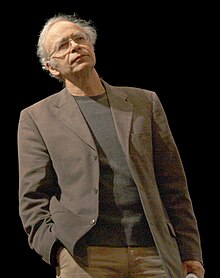
Singer1.jpg

Wikipedia notes:

Peter Albert David Singer, AC (born 6 July 1946) is an Australian moral philosopher. He is currently the Ira W. DeCamp Professor of Bioethics at Princeton University, and a Laureate Professor at the Centre for Applied Philosophy and Public Ethics at the University of Melbourne. He specializes in applied ethics and approaches ethical issues from a secular, utilitarianperspective. He is known in particular for his book, Animal Liberation (1975), a canonical text in animal rights/liberation theory. For most of his career, he supported preference utilitarianism, but in his later years became a classical or hedonistic utilitarian, when co-authoring The Point of View of the Universe with Katarzyna de Lazari-Radek.

On two occasions, Singer served as chair of the philosophy department at Monash University, where he founded its Centre for Human Bioethics. In 1996 he stood unsuccessfully as a Greenscandidate for the Australian Senate. In 2004 he was recognised as the Australian Humanist of the Year by the Council of Australian Humanist Societies, and in June 2012 was named a Companion of the Order of Australia for his services to philosophy and bioethics.[2] He serves on the Advisory Board of Incentives for Global Health, the NGO formed to develop the Health Impact Fund proposal. He was voted one of Australia’s ten most influential public intellectuals in 2006.[3] Singer currently serves on the advisory board of Academics Stand Against Poverty(ASAP).

_____________________________

In  the first video below in the 46th clip in this series are his words and  my response is below them. 

50 Renowned Academics Speaking About God (Part 1)

Another 50 Renowned Academics Speaking About God (Part 2)

A Further 50 Renowned Academics Speaking About God (Part 3)

I grew up at Bellevue Baptist Church under the leadership of our pastor Adrian Rogers and I read many books by the Evangelical Philosopher Francis Schaeffer and have had the opportunity to contact many of the evolutionists or humanistic academics that they have mentioned in their works. Many of these scholars have taken the time to respond back to me in the last 20 years and some of the names  included are  Ernest Mayr (1904-2005), George Wald (1906-1997), Carl Sagan (1934-1996),  Robert Shapiro (1935-2011), Nicolaas Bloembergen (1920-),  Brian Charlesworth (1945-),  Francisco J. Ayala (1934-) Elliott Sober (1948-), Kevin Padian (1951-), Matt Cartmill (1943-) , Milton Fingerman (1928-), John J. Shea (1969-), , Michael A. Crawford (1938-), Paul Kurtz (1925-2012), Sol Gordon (1923-2008), Albert Ellis (1913-2007), Barbara Marie Tabler (1915-1996), Renate Vambery (1916-2005), Archie J. Bahm (1907-1996), Aron S “Gil” Martin ( 1910-1997), Matthew I. Spetter (1921-2012), H. J. Eysenck (1916-1997), Robert L. Erdmann (1929-2006), Mary Morain (1911-1999), Lloyd Morain (1917-2010),  Warren Allen Smith (1921-), Bette Chambers (1930-),  Gordon Stein (1941-1996) , Milton Friedman (1912-2006), John Hospers (1918-2011), Michael Martin (1932-), John R. Cole  (1942-),   Wolf Roder,  Susan Blackmore (1951-),  Christopher C. French (1956-)  Walter R. Rowe Thomas Gilovich (1954-), Paul QuinceyHarry Kroto (1939-), Marty E. Martin (1928-), Richard Rubenstein (1924-), James Terry McCollum (1936-), Edward O. WIlson (1929-), Lewis Wolpert (1929), Gerald Holton (1922-), Martin Rees (1942-), Alan Macfarlane (1941-),  Roald Hoffmann (1937-), Herbert Kroemer (1928-), Thomas H. Jukes (1906-1999), Glenn BranchGeoff Harcourt (1931-), and  Ray T. Cragun (1976-).

QUOTE Peter Singer thinks

it is  “monstrous” to believe that “God would create a world where, let’s say, a two-year-old child would die a slow and lingering death from hunger and thirst…” because of Adam and Eve’s sin committed thousands of years before. Even if one thinks that baby’s suffering is “deserved,” “what about the suffering on non-human animals?”

Josh Wilson – Before The Morning (Official Music Video)

One of my favorite songs  is called “Before the Morning” and it is by  the Christian singer Josh Wilson. The lyrics start out: “Why do you have to feel the things that hurt you? If there’s a God who loves you where is He now?” Over the years I have corresponded with several atheists and many times they confront me on this  very issue such as this letter did from Dr. Brian Charlesworth, Dept of Ecology and Evolution, University of Chicago in letter dated May 10, 1994:

Thank you for your various communications. I am afraid that I formed the view many years ago that there is no foundation for any belief in a benevolent creator of the world. For me, there is too much suffering in the world to be compatible with the existence of such a being. 

Let me make three points concerning the problem of evil and suffering. First, the problem of evil and suffering hit this world in a big way because of Adam and what happened in Genesis Chapter 3. Second, if there is no God then there is no way to distinguish good from evil and there will be no ultimate punishment for Hitler and Josef Mengele. Third. Christ came and suffered and will destroy all evil from this world eventually forever.

Recently I went to see the movie GOD’S NOT DEAD in a local theater and that prompted me to read the book of the same name by Rice Broocks. In the movie the problem of evil and suffering is discussed just like it is in the book  and would love to interact further with anyone who would like to see the film is a big hit in theaters this year. On page 5 on the book you will find these words:
Atheists claim that the universe isn’t what you would expect
if a supernatural God existed. All this death and suffering, they say,
are plain evidence that a loving, intelligent God could not be behind
it all. The truth is that God has created a world where free moral
agents are able to have real choices to do good or evil. If God had
created a world without that fundamental choice and option to do
evil, then we wouldn’t be having this discussion. God made a world
where choices are real and humanity is affected by the choices of
other humans. Drunk drivers kill innocent people. Some murder
and steal from their fellow men. Though God gave clear com-
mandments to humanity, we have for the most part ignored these
directives. The mess that results is not God’s fault. It’s ours.
We are called to follow God and love Him with all our hearts
and minds. This means we have to think and investigate. Truth
is another word for reality. When something is true it’s true
everywhere. The multiplication tables are just as true in China
as they are in America. Gravity works in Africa the way it does
in Asia. The fact that there are moral truths that are true every-
where points to a transcendent morality that we did not invent
and from which we cannot escape (C.S.Lewis, MERE CHRISTIANITY,[1952:
New York: Harper Collins, 2001], p. 35).
As Creator, God has placed not only natural laws in the earth
but also spiritual laws. For instance, lying is wrong everywhere.
So is stealing. Cruelty to children is wrong regardless of what
culture you’re in or country you’re from. When these laws are
broken, people are broken. Not only does violating these spiritual
laws separate us from God, but it causes pain in our lives and
in the lives of those around us. The big question becomes, what
can be done about our condition? When we break these spiritual
laws, whom can we call for help? How can we be reconciled to
God as well as break free from this cycle of pain and dysfunction?

Francis Schaeffer in his fine book about modern man ESCAPE FROM REASON  states,

“the True Christian position is that, in space and time and history, there was an unprogrammed man who made a choice, and actually rebelled against God…without Christianity’s answer that God made a significant man in a significant history with evil being the result of Satan’s and then man’s historic space-time revolt, there is no answer but to accept Baudelaire’s answer [‘If there is a God, He is the devil’] with tears. Once the historic Christian answer is put away, all we can do is to leap upstairs and say that against all reason God is good.”(pg. 81)

Someone I knew in 1985 grew up in Germany and was part of the Hitler Youth Program, Was he wrong in his beliefs? 

On what basis does the atheist have to say “Hitler was wrong!!!”

Early in his career Hitler was popular and many of the German people bought into his anti-semetic views. Does the atheist have an intellectual basis to condemn Hitler’s actions?

____________________________________

My friend who grew up in Germany  believed until his dying day that Hitler was right. I had a basis for knowing that Hitler was wrong and here it is below.
It is my view that according the Bible all men are created by God and are valuable.  However, the atheist has no basis for coming to this same conclusion. Francis Schaeffer put it this way:
We cannot deal with people like human beings, we cannot deal with them on the high level of true humanity, unless we really know their origin—who they are. God tells man who he is. God tells us that He created man in His image. So man is some- thing wonderful.
In 1972 Schaeffer wrote the book “He is There and He is Not Silent.” Here is the statement that sums up that book:

One of philosophy’s biggest problems is that anything exists at all and has the form that it does. Another is that man exists as a personal being and makes true choices and has moral responsibility. The Bible gives sufficient answers to these problems. In fact, the only sufficient answer is that the infinite-personal triune God is there and He is not silent. He has spoken to man in the Bible.

In the movie CRIMES AND MISDEMEANORS the basic question Woody Allen is presenting to his own agnostic humanistic worldview is: If you really believe there is no God there to punish you in an afterlife, then why not murder if you can get away with it?   The secular humanist worldview that modern man has adopted does not work in the real world that God has created. God “has planted eternity in the human heart…” (Ecclesiastes 3:11). This is a direct result of our God-given conscience. The apostle Paul said it best in Romans 1:19, “For that which is known about God is evident to them and made plain in their inner consciousness, because God  has shown it to them” (Amplified Version).

It’s no wonder, then, that one of Allen’s fellow humanists would comment, “Certain moral truths — such as do not kill, do not steal, and do not lie — do have a special status of being not just ‘mere opinion’ but bulwarks of humanitarian action. I have no intention of saying, ‘I think Hitler was wrong.’ Hitler WAS wrong.” (Gloria Leitner, “A Perspective on Belief,” The Humanist, May/June 1997, pp.38-39). Here Leitner is reasoning from her God-given conscience and not from humanist philosophy. It wasn’t long before she received criticism.

Humanist Abigail Ann Martin responded, “Neither am I an advocate of Hitler; however, by whose criteria is he evil?” (The Humanist, September/October 1997, p. 2.). Humanists don’t really have an intellectual basis for saying that Hitler was wrong, but their God-given conscience tells them that they are wrong on this issue.

Here is fine film by Francis Schaeffer and Dr. C. Everett Koop that makes the case for human dignity.

Francis Schaeffer “BASIS FOR HUMAN DIGNITY” Whatever…HTTHR

Also here is the link for  another fine article on this same issue by Chuck Colson.

Crimes? What Crimes?

The Grand ‘Sez Who’

Let us take a close look at how you are going to come up with morality as an atheist. When you think about it there is no way around the final conclusion that it is just your opinion against mine concerning morality. There is no final answers. However, if God does exist and he has imparted final answers to us then everything changes.

Take a look at a portion of this paper by Greg Koukl. In this article he points out that atheists don’t even have a basis for saying that Hitler was wrong:

What doesn’t make sense is to look at the existence of evil and question the existence of God. The reason is that atheism turns out being a self-defeating philosophic solution to this problem of evil. Think of what evil is for a minute when we make this kind of objection. Evil is a value judgment that must be measured against a morally perfect standard in order to be meaningful. In other words, something is evil in that it departs from a perfect standard of good. C.S. Lewis made the point, “My argument against God was that the universe seemed so cruel and unjust. But how had I got this idea of just and unjust? A man does not call something crooked unless he has some idea of a straight line.”] He also goes on to point out that a portrait is a good or a bad likeness depending on how it compares with the “perfect” original. So to talk about evil, which is a departure from good, actually presumes something that exists that is absolutely good. If there is no God there’s no perfect standard, no absolute right or wrong, and therefore no departure from that standard. So if there is no God, there can’t be any evil, only personal likes and dislikes–what I prefer morally and what I don’t prefer morally.

This is the big problem with moral relativism as a moral point of view when talking about the problem of evil. If morality is ultimately a matter of personal taste–that’s what most people hold nowadays–then it’s just your opinion what’s good or bad, but it might not be my opinion. Everybody has their own view of morality and if it’s just a matter of personal taste–like preferring steak over broccoli or Brussels sprouts–the objection against the existence of God based on evil actually vanishes because the objection depends on the fact that some things are intrinsically evil–that evil isn’t just a matter of my personal taste, my personal definition. But that evil has absolute existence and the problem for most people today is that there is no thing that is absolutely wrong. Premarital sex? If it’s right for you. Abortion? It’s an individual choice. Killing? It depends on the circumstances. Stealing? Not if it’s from a corporation.

The fact is that most people are drowning in a sea of moral relativism. If everything is allowed then nothing is disallowed. Then nothing is wrong. Then nothing is ultimately evil. What I’m saying is that if moral relativism is true, which it seems like most people seem to believe–even those that object against evil in the world, then the talk of objective evil as a philosophical problem is nonsense. To put it another way, if there is no God, then morals are all relative. And if moral relativism is true, then something like true moral evil can’t exist because evil becomes a relative thing.

An excellent illustration of this point comes from the movie The Quarrel . In this movie, a rabbi and a Jewish secularist meet again after the Second World War after they had been separated. They had gotten into a quarrel as young men, separated on bad terms, and then had their village and their family and everything destroyed through the Second World War, both thinking the other was dead. They meet serendipitously in Toronto, Canada in a park and renew their friendship and renew their old quarrel.divider

Rabbi Hersch says to the secularist Jew Chiam, “If a person does not have the Almighty to turn to, if there’s nothing in the universe that’s higher than human beings, then what’s morality? Well, it’s a matter of opinion. I like milk; you like meat. Hitler likes to kill people; I like to save them. Who’s to say which is better? Do you begin to see the horror of this? If there is no Master of the universe then who’s to say that Hitler did anything wrong? If there is no God then the people that murdered your wife and kids did nothing wrong.”

That is a very, very compelling point coming from the rabbi. In other words, to argue against the existence of God based on the existence of evil forces us into saying something like this: Evil exists, therefore there is no God. If there is no God then good and evil are relative and not absolute, so true evil doesn’t exist, contradicting the first point. Simply put, there cannot be a world in which it makes any sense to say that evil is real and at the same time say that God doesn’t exist. If there is no God then nothing is ultimately bad, deplorable, tragic or worthy of blame. The converse, by the way, is also true. This is the other hard part about this, it cuts both ways. Nothing is ultimately good, honorable, noble or worthy of praise. Everything is ultimately lost in a twilight zone of moral nothingness. To paraphrase the late Dr. Francis Schaeffer, the person who argues against the existence of God based on the existence of evil in the world has both feet firmly planted in mid-air.

_____________

Ricky Gervais in a You Tube clip from the show Piers Morgan Tonight on  1-20-2011 said that he embraced the golden rule because it made sense to him to be good to others so they would be good to you. However, how would that work if there is no ultimate lawmaker that also is our final judge? Rabbi Hersch’s argument to the secularist Jew Chiam seems to point out that without God in the picture it really does come to : “If a person does not have the Almighty to turn to, if there’s nothing in the universe that’s higher than human beings, then what’s morality? Well, it’s a matter of opinion. I like milk; you like meat. Hitler likes to kill people; I like to save them. Who’s to say which is better?”

Francis Schaeffer

Francis Schaeffer pictured above.

_______

Many crime victims feel forsaken by God. So do many divorced people, war prisoners, and starving refugees. But this young man’s cry of desperation carried added significance because of its historical allusion.
The words had appeared about a thousand years earlier in a song written by a king. The details of the song are remarkably similar to the suffering the young man endured. It said, “All who see me mock me; they hurl insults, shaking their heads …. They have pierced my hands and my feet…. They divide my garments among them and cast lots for my clothing.”{2}
Historians record precisely this behavior during the young man’s execution.{3} It was as if a divine drama were unfolding as the man slipped into death.
Researchers have uncovered more than 300 predictions or prophesies literally fulfilled in the life and death of this unique individual. Many of these statements written hundreds of years before his birth-were beyond his human control. One correctly foretold the place of his birth. {4} Another said he would be born of a virgin. {5} He would be preceded by a messenger who would prepare the way for his work, {6} He would enter the capital city as a king but riding on a donkeys back {7} He would be betrayed for thirty pieces of Silver, {8} pierced, {9} executed among thieves, {10} and yet, though wounded, {11} he would suffer no broken bones.{12}
Peter Stoner, a California mathematics professor, calculated the chance probability of just eight of these 300 prophecies coming true in one person. Using conservative estimates, Stoner concluded that the probability is 1 in 10 to the 17th power that those eight could be fulfilled by a fluke.
He says 1017silver dollars would cover the state of Texas two feet deep. Mark one coin with red fingernail polish. Stir the whole batch thoroughly. What chance would a blindfolded person have of picking the marked coin on the first try? One in 1017, the same chance that just eight of the 300 prophecies “just happened” to come true in this man, Jesus. {13}
In his dying cry from the cross Jesus reminded His hearers that His life and death precisely fulfilled God’s previously stated plan. According to the biblical perspective, at the moment of death Jesus experienced the equivalent of eternal separation from God in our place so that we might be forgiven and find new life.
He took the penalty due for all the crime, injustice, evil, sin, and shortcomings of the world-including yours and mine.
Though sinless Himself, He likely felt guilty and abandoned. Then-again in fulfillment of prophecy{14} and contrary to natural law-He came back to life. As somewhat of a skeptic I investigated the evidence for Christ’s resurrection and found it to be one of the best-attested facts in history. {15} To the seeker Jesus Christ offers true inner peace, forgiveness, purpose, and strength for contented living.

SO WHAT?

“OK, great,” you might say, “but what hope does this give the crime or divorce victim, the hungry and bleeding refugee, the citizen paralyzed by a world gone bad?” Will Jesus prevent every crime, reconcile every troubled marriage, restore every refugee, stop every war? No. God has given us free will. Suffering–even unjust suffering–is a necessary consequence of sin.
Sometimes God does intervene to change circumstances. (I’m glad my assailant became nervous and left.) Other times God gives those who believe in Him strength to endure and confidence that He will see them through. In the process, believers mature.
Most significantly we can hope in what He has told us about the future. Seeing how God has fulfilled prophecies in the past gives us confidence to believe those not yet fulfilled. Jesus promises eternal life to all who trust Him for it: “Whoever hears my word and believes him who sent me has eternal life and will not be condemned; he has crossed over from death to life.”{16}
He promised He would return to rescue people from this dying planet.{17}
He will judge all evil.{18}
Finally justice will prevail. Those who have chosen to place their faith in Him will know true joy: “He shall wipe away every tear from their eyes; and there shall no longer be any death; there shall no longer be any mourning, or crying, or pain.”{19}
Does God intend that we ignore temporal evil and mentally float off into unrealistic ethereal bliss? Nor at all. God is in the business of working through people to turn hearts to Him, resolve conflicts, make peace. After my assailant went to prison, I felt motivated to tell him that I forgave him because of Christ. He apologized, saying he, too, has now come to believe in Jesus.
But through every trial, every injustice you suffer, you can know that God is your friend and that one day He will set things right. You can know that He is still on the throne of the universe and that He cares for you. You can know this because His Son was born (Christmas is, of course, a celebration of His birth), lived, died, and came back to life in fulfillment of prophecy. Because of Jesus, if you personally receive His free gift of forgiveness, you can have hope!
Will you trust Him?
Notes
1. Matthew 27:46.
2. Psalm 22.
3. Matthew 27:35-44; John 20:25.
4. Micah 5:2; Matthew 2:1.
5. Isaiah 7:14; Matthew 1:18, 24-25; Luke 1:26-35.
6. Malachi 3:1; Isaiah 40:3; Matthew 3:1-2.
7. Zechariah 9:9; John 12:15; Matthew 21: 1-9.
8. Zechariah 11:12; Matthew 26:15.
9. Zechariah 12:10; John 19:34, 37.
10. Isaiah 53:12.
11. Matthew 27:38; Isaiah 53:5; Zechariah 13:6; Matthew 27:26.
12. Psalm 34:20; John 19:33, 36.
13. Peter Stoner, Science Speaks, pp. 99-112.
14. Psalm 6:10; Acts 2:31-32.
15. Josh McDowell, Evidence That Demands a Verdict, pp. 185-273.
16. John 5:24.
17. 1 Thessalonians 4:13-18.
18. Revelation 20:10-15.
19. Revelation 21:4 NAS.
©1994 Rusty Wright. Used by permission. All rights reserved.
Reprinted with permission from Pursuit magazine (© 1994, Vol. III, No. 3)

About the Author
Rusty Wright, former associate speaker and writer with Probe Ministries, is an international lecturer, award-winning author, and journalist who has spoken on six continents. He holds Bachelor of Science (psychology) and Master of Theology degrees from Duke and Oxford universities, respectively. http://www.rustywright.com/

Dan Guinn posted on his blog at http://www.francisschaefferstudies.org concerning the Nazis and evolution: As Schaeffer points out, “…these ideas helped produce an even more far-reaching yet logical conclusion: the Nazi movement in Germany. Heinrich Himmler (1900-1945), leader of the Gestapo, stated that the law of nature must take its course in the survival of the fittest. The result was the gas chambers. Hitler stated numerous times that Christianity and its notion of charity should be “replaced by the ethic of strength over weakness.” Surely many factors were involved in the rise of National Socialism in Germany. For example, the Christian consensus had largely been lost by the undermining from a rationalistic philosophy and a romantic pantheism on the secular side, and a liberal theology (which was an adoption of rationalism in theological terminology) in the universities and many of the churches. Thus biblical Christianity was no longer giving the consensus for German society. After World War I came political and economic chaos and a flood of moral permissiveness in Germany. Thus, many factors created the situation. But in that setting the theory of the survival of the fittest sanctioned what occurred. ” 

Francis Schaeffer notes that this idea ties into today when we are actually talking about making infanticide legal in some academic settings. Look at what these three humanist scholars have written:

  • Peter Singer, who recently was seated in an endowed chair at Princeton’s Center for Human Values, said, “Killing a disabled infant is not morally equivalent to killing a person. Very often it is not wrong at all.”
  • In May 1973, James D. Watson, the Nobel Prize laureate who discovered the double helix of DNA, granted an interview to Prism magazine, then a publication of the American Medical Association. Time later reported the interview to the general public, quoting Watson as having said, “If a child were not declared alive until three days after birth, then all parents could be allowed the choice only a few are given under the present system. The doctor could allow the child to die if the parents so choose and save a lot of misery and suffering. I believe this view is the only rational, compassionate attitude to have.”
  • In January 1978, Francis Crick, also a Nobel laureate, was quoted in the Pacific News Service as saying “… no newborn infant should be declared human until it has passed certain tests regarding its genetic endowment and that if it fails these tests it forfeits the right to live.”

God Is A Luxury I Can’t Afford – From Crimes And Misdemeanors

___________

Is the Bible historically accurate? Here are some of the posts I have done in the past on the subject: 1. The Babylonian Chronicleof Nebuchadnezzars Siege of Jerusalem2. Hezekiah’s Siloam Tunnel Inscription. 3. Taylor Prism (Sennacherib Hexagonal Prism)4. Biblical Cities Attested Archaeologically. 5. The Discovery of the Hittites6.Shishak Smiting His Captives7. Moabite Stone8Black Obelisk of Shalmaneser III9A Verification of places in Gospel of John and Book of Acts., 9B Discovery of Ebla Tablets10. Cyrus Cylinder11. Puru “The lot of Yahali” 9th Century B.C.E.12. The Uzziah Tablet Inscription13. The Pilate Inscription14. Caiaphas Ossuary14 B Pontius Pilate Part 214c. Three greatest American Archaeologists moved to accept Bible’s accuracy through archaeology.

The Bible and Archaeology – Is the Bible from God? (Kyle Butt 42 min)

Related posts:

FRANCIS SCHAEFFER ANALYZES ART AND CULTURE Part 53 THE BEATLES (Part E, Stg. Pepper’s and John Lennon’s search in 1967 for truth was through drugs, money, laughter, etc & similar to King Solomon’s, LOTS OF PICTURES OF JOHN AND CYNTHIA) (Feature on artist Yoko Ono)

The John Lennon and the Beatles really were on a long search for meaning and fulfillment in their lives  just like King Solomon did in the Book of Ecclesiastes. Solomon looked into learning (1:12-18, 2:12-17), laughter, ladies, luxuries, and liquor (2:1-2, 8, 10, 11), and labor (2:4-6, 18-20). He fount that without God in the picture all […]

FRANCIS SCHAEFFER ANALYZES ART AND CULTURE Part 52 THE BEATLES (Part D, There is evidence that the Beatles may have been exposed to Francis Schaeffer!!!) (Feature on artist Anna Margaret Rose Freeman )

______________   George Harrison Swears & Insults Paul and Yoko Lucy in the Sky with Diamonds- The Beatles The Beatles:   I have dedicated several posts to this series on the Beatles and I don’t know when this series will end because Francis Schaeffer spent a lot of time listening to the Beatles and talking […]

FRANCIS SCHAEFFER ANALYZES ART AND CULTURE Part 51 THE BEATLES (Part C, List of those on cover of Stg.Pepper’s ) (Feature on artist Raqib Shaw )

  The Beatles in a press conference after their Return from the USA Uploaded on Nov 29, 2010 The Beatles in a press conference after their Return from the USA. The Beatles:   I have dedicated several posts to this series on the Beatles and I don’t know when this series will end because Francis […]

FRANCIS SCHAEFFER ANALYZES ART AND CULTURE Part 50 THE BEATLES (Part B, The Psychedelic Music of the Beatles) (Feature on artist Peter Blake )

__________________   Beatles 1966 Last interview I have dedicated several posts to this series on the Beatles and I don’t know when this series will end because Francis Schaeffer spent a lot of time listening to the Beatles and talking and writing about them and their impact on the culture of the 1960’s. In this […]

FRANCIS SCHAEFFER ANALYZES ART AND CULTURE Part 49 THE BEATLES (Part A, The Meaning of Stg. Pepper’s Cover) (Feature on artist Mika Tajima)

_______________ The Beatles documentary || A Long and Winding Road || Episode 5 (This video discusses Stg. Pepper’s creation I have dedicated several posts to this series on the Beatles and I don’t know when this series will end because Francis Schaeffer spent a lot of time listening to the Beatles and talking and writing about […]

FRANCIS SCHAEFFER ANALYZES ART AND CULTURE PART 48 “BLOW UP” by Michelangelo Antonioni makes Philosophic Statement (Feature on artist Nancy Holt)

_______________ Francis Schaeffer pictured below: _____________________ I have included the 27 minute  episode THE AGE OF NONREASON by Francis Schaeffer. In that video Schaeffer noted,  ” Sergeant Pepper’s Lonely Hearts Club Band…for a time it became the rallying cry for young people throughout the world. It expressed the essence of their lives, thoughts and their feelings.” How Should […]

FRANCIS SCHAEFFER ANALYZES ART AND CULTURE Part 47 Woody Allen and Professor Levy and the death of “Optimistic Humanism” from the movie CRIMES AND MISDEMEANORS Plus Charles Darwin’s comments too!!! (Feature on artist Rodney Graham)

Crimes and Misdemeanors: A Discussion: Part 1 ___________________________________ Today I will answer the simple question: IS IT POSSIBLE TO BE AN OPTIMISTIC SECULAR HUMANIST THAT DOES NOT BELIEVE IN GOD OR AN AFTERLIFE? This question has been around for a long time and you can go back to the 19th century and read this same […]

FRANCIS SCHAEFFER ANALYZES ART AND CULTURE PART 46 Friedrich Nietzsche (Featured artist is Thomas Schütte)

____________________________________ Francis Schaeffer pictured below: __________ Francis Schaeffer has written extensively on art and culture spanning the last 2000years and here are some posts I have done on this subject before : Francis Schaeffer’s “How should we then live?” Video and outline of episode 10 “Final Choices” , episode 9 “The Age of Personal Peace and Affluence”, episode 8 […]

FRANCIS SCHAEFFER ANALYZES ART AND CULTURE Part 45 Woody Allen “Reason is Dead” (Feature on artists Allora & Calzadilla )

Love and Death [Woody Allen] – What if there is no God? [PL] ___________ _______________ How Should We then Live Episode 7 small (Age of Nonreason) #02 How Should We Then Live? (Promo Clip) Dr. Francis Schaeffer 10 Worldview and Truth Two Minute Warning: How Then Should We Live?: Francis Schaeffer at 100 Francis Schaeffer […]

FRANCIS SCHAEFFER ANALYZES ART AND CULTURE Part 44 The Book of Genesis (Featured artist is Trey McCarley )

___________________________________ Francis Schaeffer pictured below: ____________________________ Francis Schaeffer “BASIS FOR HUMAN DIGNITY” Whatever…HTTHR Dr. Francis schaeffer – The flow of Materialism(from Part 4 of Whatever happened to human race?) Dr. Francis Schaeffer – The Biblical flow of Truth & History (intro) Francis Schaeffer – The Biblical Flow of History & Truth (1) Dr. Francis Schaeffer […]

MUSIC MONDAY Paul McCartney’s song “Uncle Albert/Admiral Halsey”

______


Paul McCartney Uncle Albert Rare Studio Demo

Paul McCartney; Uncle AlbertAdmiral Halsey. (RAM 1971)

Uncle Albert/Admiral Halsey

From Wikipedia, the free encyclopedia
“Uncle Albert/Admiral Halsey”
Single by Paul and Linda McCartney
from the album Ram
B-side Too Many People
Released 2 August 1971 (US only)
Format 7″
Recorded 6 November 1970
Genre
Length 4:49
Label Apple
Writer(s) Paul and Linda McCartney
Producer(s) Paul and Linda McCartney
Paul and Linda McCartney singles chronology
Another Day
(1971)
Uncle Albert/Admiral Halsey
(1971)
The Back Seat of My Car
(1971)
Ram track listing

Uncle Albert/Admiral Halsey” is a song by Paul and Linda McCartney from the album Ram. Released in the United States as a single on 2 August 1971,[1] but premiering on WLS the previous week (as a “Hit Parade Bound” (HPB)),[2] it reached number one on the Billboard Hot 100 on 4 September 1971,[3][4] making it the first of a string of post-Beatles, McCartney-penned singles to top the US pop chart during the 1970s and 1980s. Billboard ranked it number 22 on its Top Pop Singles of 1971 year-end chart.[5]

Elements and interpretation[edit]

“Uncle Albert/Admiral Halsey” is composed of several unfinished song fragments that McCartney stitched together similar to the medleys from the Beatles‘ album Abbey Road.[6] The song is noted for its sound effects, including the sounds of a thunderstorm, with rain, heard between the first and second stanza, the sound of a telephone ringing, and a message machine, heard after the second stanza, and a sound of chirping sea birds and wind by the seashore. Linda’s voice is heard in the harmonies as well as the bridge section of the “Admiral Halsey” portion of the song.

McCartney said “Uncle Albert” was based on his uncle. “He’s someone I recall fondly, and when the song was coming it was like a nostalgia thing.”[7] McCartney also said, “As for Admiral Halsey, he’s one of yours, an American admiral”, referring to Fleet Admiral William “Bull” Halsey (1882–1959).[7] McCartney has described the “Uncle Albert” section of the song as an apology from his generation to the older generation, and Admiral Halsey as an authoritarian figure who ought to be ignored.[8]

Despite the disparate elements that make up the song, author Andrew Grant Jackson discerns a coherent narrative to the lyrics, related to McCartney’s emotions in the aftermath of the Beatles’ breakup.[9] In this interpretation, the song begins with McCartney apologizing to his uncle for getting nothing done, and being easily distracted and perhaps depressed in the lethargic “Uncle Albert” section.[9] Then, after some sound effects reminiscent of “Yellow Submarine,” Admiral Halsey appears to him calling him to action, although McCartney remains more interested in “tea and butter pie.” McCartney stated that he put the butter in the pie so that it would not melt at all.[9] Jackson sees a possible sinister allusion in the use of Admiral Halsey as a character in the song, since Halsey was famous for fighting the Japanese in World War II and claiming that “after the war, the Japanese language will be spoken only in hell,” and McCartney’s ex-Beatle partner John Lennon had recently married a Japanese woman, Yoko Ono.[9] The “hands across the water” section which follows could be taken as evocative of the command “All hands on deck!”, rousing McCartney to action, perhaps to compete with Lennon.[9] The song then ends with the “gypsy” section, in which McCartney resolves to get back on the road and perform his music, now that he was on his own without his former bandmates who no longer wanted to tour.[9]

Reception[edit]

Paul McCartney won the Grammy Award for Best Arrangement Accompanying Vocalists in 1971 for the song.[10][11] The single was certified Gold by the Recording Industry Association of America for sales of over one million copies.[12]

According to Allmusic critic Stewart Mason, fans of Paul McCartney’s music are divided in their opinions of this song.[13] Although some fans praise it as “one of his most playful and inventive songs” others criticize it for being “exactly the kind of cute self-indulgence that they find so annoying about his post-Beatles career.”[13] Mason himself considers it “churlish” to be annoyed by the song, given that song isn’t intended to be completely serious, and praises the “Hands across the water” section as being “lovably giddy.”[13]

On the US charts, the song set a songwriting milestone as the all-time songwriting record (at the time) for the most consecutive calendar years to write a #1 song. This gave McCartney eight consecutive years (starting with “I Want to Hold Your Hand“), leaving behind Lennon with only seven years.

Later release[edit]

“Uncle Albert/Admiral Halsey” also appears on Wings Greatest from 1978, even though Ram was not a Wings album, and again on the US version of McCartney’s 1987 compilation, All the Best!, as well as the 2001 compilation Wingspan: Hits and History.

Personnel[edit]

Song uses[edit]

Charts[edit]

Peak positions[edit]

Chart (1971) Position
Australian Kent Music Report[14] 5
Canadian RPM Top 100 Singles[15] 1
Mexican Singles Chart[16] 3
U.S. Billboard Hot 100[4] 1
West German Media Control Singles Chart[17] 30

Year-end charts[edit]

Chart (1971) Position
Canadian RPM Singles Chart[18] 14
U.S. Billboard Top Pop Singles[16] 22

Certifications[edit]

Region Certification
United States (RIAA)[19] Gold

Notes[edit]

  1. Jump up^ McGee 2003, p. 195.
  2. Jump up^ “89WLS Hit Parade”. 1971-08-02. Retrieved 2013-12-21.
  3. Jump up^ Billboard.
  4. ^ Jump up to:a b “Allmusic: Paul McCartney: Charts & Awards”. allmusic.com. Retrieved 2 May 2013.
  5. Jump up^ “Top Pop 100 Singles” Billboard December 25, 1971: TA-36
  6. Jump up^ Blaney, J. (2007). Lennon and McCartney: together alone: a critical discography of their solo work. Jawbone Press. pp. 46, 50. ISBN 978-1-906002-02-2.
  7. ^ Jump up to:a b McGee 2003, p. 196.
  8. Jump up^ Benitez, V.P. (2010). The Words and Music of Paul McCartney: The Solo Years. Praeger. pp. 30–31. ISBN 978-0-313-34969-0.
  9. ^ Jump up to:a b c d e f Jackson, A.G. (2012). Still the Greatest: The Essential Songs of The Beatles’ Solo Careers. Scarecrow Press. ISBN 978-0810882225.
  10. Jump up^ “Past Winners Search”. National Academy of Recording Arts and Sciences. Retrieved 2 May 2014.
  11. Jump up^ “1971 Grammy Awards”.
  12. Jump up^ riaa.com
  13. ^ Jump up to:a b c Mason, S. “Uncle Albert/Admiral Halsey”. Allmusic. Retrieved 2013-12-25.
  14. Jump up^ Kent, David (1993). Australian Chart Book 1970–1992. St Ives, NSW: Australian Chart Book. ISBN 0-646-11917-6.
  15. Jump up^ “Top Singles – Volume 16, No. 5”. RPM. 18 September 1971. Retrieved 5 May 2013.
  16. ^ Jump up to:a b Nielsen Business Media, Inc (25 December 1971). Billboard – Talent in Action 1971. Retrieved 1 May 2014.
  17. Jump up^ “Single Search: Paul and Linda McCartney – “Uncle Albert/Admiral Halsey”” (in German). Media Control. Retrieved 20 February 2013.
  18. Jump up^ “RPM 100 Top Singles of 1971”. RPM. 8 January 1972. Retrieved 11 March 2014.
  19. Jump up^ “American single certifications – Paul Mc Cartney – Uncle Albert”. Recording Industry Association of America. If necessary, click Advanced, then click Format, then select Single, then click SEARCH

References[edit]

Preceded by
How Can You Mend a Broken Heart” by Bee Gees
Billboard Hot 100 number-one single
4 September 1971 (one week)
Succeeded by
Go Away Little Girl” by Donny Osmond
Preceded by
Sweet Hitch-Hiker” by Creedence Clearwater Revival
Canadian “RPM” Singles Chart number-one single
18 September 1971 – 2 October 1971 (three weeks)
Succeeded by
Maggie May” by Rod Stewart

Related posts:

MUSIC MONDAY I’m Waiting for the Man sung by Nico in 1982 (about waiting for drug fix)

I’m Waiting for the Man sung by Nico in 1982 (about waiting for drug fix) __________ Nico Icon documentary part 3 Nico Icon documentary part 4 NICO – I’m Waiting For The Man – (1982, Warehouse, Preston, UK) One of the top 10 songs from The Velvet Underground and Nico is the song “I’m Waiting […]

MUSIC MONDAY Nico’s sad story of drugs and her interaction with Jim Morrison

Nico’s sad story of drugs and her interaction with Jim Morrison Nico – These Days The Doors (1991) – Movie Trailer / Best Parts The Doors Movie – Back Door Man/When The Music’s Over/Arrest of Jim Morrison Uploaded on Jul 30, 2009 A clip from “The Doors” movie with “Back Door Man”, “When The Music’s […]

MUSIC MONDAY Christian Singer’s Controversial Journey Revealed in New Documentary: ‘I Placed Homosexuality on Jesus’ Shoulders’ Oct. 2, 2014 2:23pm Billy Hallowell

Dennis Jernigan – You Are My All In All Uploaded on Oct 18, 2009 Dennis Jernigan – You Are My All In All __________________________________________ Christian Singer’s Controversial Journey Revealed in New Documentary: ‘I Placed Homosexuality on Jesus’ Shoulders’ Oct. 2, 2014 2:23pm Billy Hallowell Singer-songwriter Dennis Jernigan has been making Christian music for decades, recording […]

MUSIC MONDAY Cole Porter’s songs “De-Lovely” and “Let’s misbehave”

Cole Porter’s songs “De-Lovely” and “Let’s misbehave”   ‘At Long Last Love’: Let’s Misbehave/De-Lovely Uploaded on Apr 1, 2009 Burt Reynolds and Cybil Shepherd give an extraordinarily charming performance of Cole Porter’s songs in Peter Bogdanovich’s absolutely wonderful tribute to the golden age of film musicals, ‘At Long Last Love’. _____________________ De-Lovely   From Wikipedia, […]

MUSIC MONDAY Cole Porter’s song’s “My Heart Belongs to Daddy”

________ _______ Cole Porter’s song’s “My Heart Belongs to Daddy” My Heart Belongs To Daddy Uploaded on Jun 20, 2010 Mary Martin became popular on Broadway and received attention in the national media singing “My Heart Belongs to Daddy”. “Mary stopped the show with “My Heart Belongs to Daddy”. With that one song in the […]

MUSIC MONDAY Cole Porter’s song “Love for Sale”

______________ Love For Sale (De-Lovely) Love for Sale (song) From Wikipedia, the free encyclopedia Jump to: navigation, search This article needs additional citations for verification. Please help improve this article by adding citations to reliable sources. Unsourced material may be challenged and removed. (September 2008) “Love for Sale“ Written by Cole Porter Published 1930 Form […]

MUSIC MONDAY Cole Porter’s song “Ev’ry Time We Say Goodbye”

Cole Porter’s song “Ev’ry Time We Say Goodbye” _________________ Natalie Cole – Ev’ry Time We Say Goodbye Ev’ry Time We Say Goodbye   From Wikipedia, the free encyclopedia   Jump to: navigation, search   This article needs additional citations for verification. Please help improve this article by adding citations to reliable sources. Unsourced material may be […]

MUSIC MONDAY Cole Porter’s song “So in Love”

Cole Porter’s song “So in Love” __________________ So in love – De-lovely So in Love From Wikipedia, the free encyclopedia Jump to: navigation, search For the song by Orchestral Manoeuvres in the Dark, see So in Love (OMD song). For the song by Jill Scott, see So in Love (Jill Scott song). Not to be […]

MUSIC MONDAY Cole Porter’s song “Night and Day”

____________________ Cole Porter’s song “Night and Day” Cole Porter´s Day and Night by Fred Astaire & Ginger Rogers Night and Day (song) From Wikipedia, the free encyclopedia Jump to: navigation, search This article includes a list of references, but its sources remain unclear because it has insufficient inline citations. Please help to improve this article […]

MUSIC MONDAY John Lennon and Bob Dylan Conversation mention Johnny Cash and his song “Big River”

Johnny Cash – Big River Uploaded on Jan 16, 2008 Grand Ole Opry, 1962 _______________________________ John Lennon and Bob Dylan Conversation mention Johnny Cash and his song “Big River” _______________________ Big River (Johnny Cash song) From Wikipedia, the free encyclopedia Jump to: navigation, search This article may require cleanup to meet Wikipedia’s quality standards. No […]

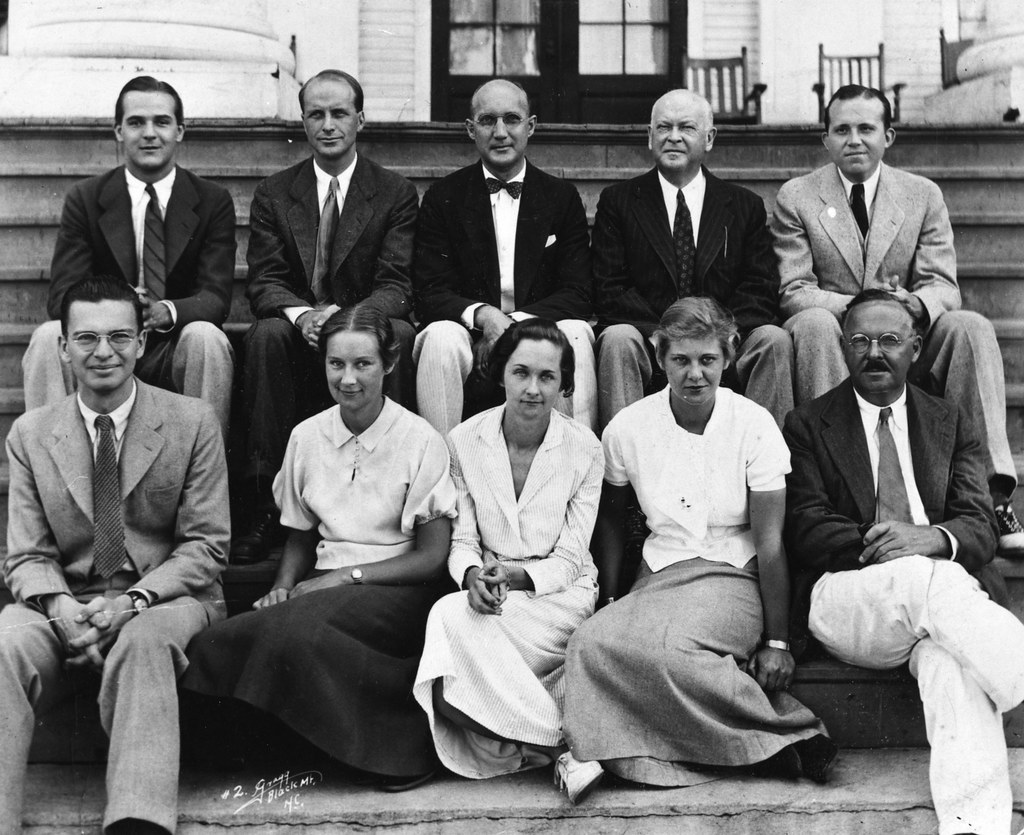
THE ARTISTS, POETS and PROFESSORS of BLACK MOUNTAIN COLLEGE (the college featured in the film THE LONGEST RIDE) Part 18 Robert Duncan

______________________

USA: Poetry: Robert Duncan and John Wieners (1965) by Richard O. Moore

Legend of Black Mountain

ROBERT DUNCAN AT BLACK MOUNTAIN COLLEGE

Robert Duncan 1959, photo © Patricia Jordan

The poet Robert Duncan came to teach at Black Mountain in 1956, very near the end of the extraordinary experiment in art and learning founded back in 1933. But he actually spent a very brief moment at BMC as a student in 1938. He later recalled,

I had not been there since sometime in 1938 when, having written from Berkeley I received an acceptance as a student and, as I remember, a part scholarship, and, precariously, set out, arriving there late one night, only to be turned away after the following day, firmly, with the notification by the instructor who had welcomed me that I was found to be emotionally unfit. Was it after the heated argument I got into the morning of that day concerning the Spanish Civil War? In my anarchist convictions, the Madrid government seemd to me much the enemy as Franco was. (1)

When Duncan returned in 1956, Charles Olson was rector of the college. Olson was also deeply engaged in letter correspondence with Duncan, who viewed Olson as a groundbreaking influence. He vowed to follow Olson into new activities of poetry, signaled by Olson’s famous essay on “projective verse,” first published in 1950. In Duncan’s “The H.D. Book” – a legendary collection of writings started in 1959, yet only properly published in book form in 2011 by University of California Press – he draws on transformative experiences under the stars, naming constellations, to summon the impact of Olson and Black Mountain:

The figure of the giant hunter in the sky brings with it, as often, the creative genius of Charles Olson for me. Since the appearance of Origin I a decade ago, my vision of what the poem is to do has been transformed, reorganized around a constellation of new poets – Olson, Denise Levertov, Robert Creeley – in which Olson’s work takes the lead for me. This man, himself a “giant’ – six foot seven or so – has been an outrider, my own Orion.
It was the same time of year, with Orion overhead, in 1955 (2), when Olson read aloud to Jess and me the beginnings of a new sequence of poems, O’Ryan. The scene in the bare room at Black Mountain with its cold and the blazing winter sky at the window springs up as I write. The fugitive hero of that sequence was drawn from Robert Creeley [.] (3)

At Black Mountain, Duncan taught poetry and theatre. In fact, as part of Olson’s plan to create a ‘college on wheels’ after the closure of the North Carolina campus, Duncan undertook establishing a Black Mountain theatre company in San Francisco. Truly, it was in Northern California that Duncan began to develope his unique, prophetic voice as a poet in the 1940s. He was an integral part of the ‘Berkeley Rennaissance’ and the Bay Area arts scene, along with his partner, the artist Jess Collins. But his activities at Black Mountain brought him into contact with ideas and pedagogical practices he could not have picked up anywhere else. For instance, Josef Albers’s teaching gave Duncan a clear example:

I just had what would be anybody’s idea of what Albers must have been doing. You knew that [Albers’s students] had color theory, and that they did a workshop sort of approach, and that they didn’t aim at a finished painting … I thought “Well, that’s absolutely right”… I think we had five weeks of vowels …and syllables … Numbers enter into poetry as they do in all time things, measurements. But … [with] Albers … it’s not only the color, but it’s the interrelationships of space and numbers. (4)

It was also at Black Mountain that Duncan completed many of the poems later collected in what is perhaps his most important book, “The Opening of the Field” (1960). The title refers clearly to Olson’s idea of ‘composition by field,’ and a poetics based on the breath rather than conventional verse forms. With the additional influence of Jess’s collage works, Duncan pushed Olson’s ideas even further, envisioning the poem as a ‘grand collage’ in which any and all activities of the poet – aesthetic, intellectual, visual, emotional, sexual, pedagogical, etc. – would interact. In what is probably Duncan’s most widely read poem from “The Opening of the Field”, he offers a stirring vision of this new space open for the poet and poetry:

‘Often I am permitted to Return to a Meadow’

as if it were a scene made-up by the mind,
that is not mine, but is a made place,

that is mine, it is so near to the heart,
an eternal pasture folded in all thought
so that there is a hall therein

that is a made place, created by light
wherefrom the shadows that are forms fall.

Jonathan Creasy
Trinity College Dublin / New Dublin Press

(1) Duncan, Robert. ‘Black Mountain College,’ March 1955. Robert Duncan Papers. Quoted in Robert Duncan and Denise Levertov: The Poetry of Politics, The Politics of Poetry. ed. Albert Gelpi and Robert J. Bertholf. Stanford University Press, 2006. p. 7
(2) Duncan and Jess visited Olson at BMC for one evening in 1955, before Duncan returned to teach in 1956.
(3) Duncan, Robert. The H.D. Book. University of California Press, 2011. p. 204
(4) Jarnot, Lisa. Robert Duncan, The Ambassador from Venus. University of California Press, 2012. p. 154

______________________

My first post in this series was on the composer John Cage and my second post was on Susan Weil and Robert Rauschenberg who were good friend of CageThe third post in this series was on Jorge Fick. Earlier we noted that  Fick was a student at Black Mountain College and an artist that lived in New York and he lent a suit to the famous poet Dylan Thomas and Thomas died in that suit.

The fourth post in this series is on the artist  Xanti Schawinsky and he had a great influence on John Cage who  later taught at Black Mountain College. Schawinsky taught at Black Mountain College from 1936-1938 and Cage right after World War II. In the fifth post I discuss David Weinrib and his wife Karen Karnes who were good friends with John Cage and they all lived in the same community. In the 6th post I focus on Vera B. William and she attended Black Mountain College where she met her first husband Paul and they later  co-founded the Gate Hill Cooperative Community and Vera served as a teacher for the community from 1953-70. John Cage and several others from Black Mountain College also lived in the Community with them during the 1950’s. In the 7th post I look at the life and work of M.C.Richards who also was part of the Gate Hill Cooperative Community and Black Mountain College.

In the 8th post I look at book the life of   Anni Albers who is  perhaps the best known textile artist of the 20th century and at Paul Klee who was one  of her teachers at Bauhaus. In the 9th post the experience of Bill Treichler in the years of 1947-1949  is examined at Black Mountain College. In 1988, Martha and Bill started The Crooked Lake Review, a local history journal and Bill passed away in 2008 at age 84.

In the 10th post I look at the art of Irwin Kremen who studied at Black Mountain College in 1946-47 and there Kremen spent his time focused on writing and the literature classes given by the poet M. C. Richards. In the 11th post I discuss the fact that Josef Albers led the procession of dozens of Bauhaus faculty and students to Black Mountain.

In the 12th post I feature Wassily Kandinsky (1866-1944) who was featured in the film THE LONGEST RIDE and the film showed Kandinsky teaching at BLACK MOUNTAIN COLLEGE which was not true according to my research. Evidently he was invited but he had to decline because of his busy schedule but many of his associates at BRAUHAUS did teach there. In the 13th post I look at the writings of the communist Charles Perrow. 

Willem de Kooning was such a major figure in the art world and because of that I have dedicated the 14th15th and 16th posts in this series on him. Paul McCartney got interested in art through his friendship with Willem because Linda’s father had him as a client. Willem was a  part of New York School of Abstract expressionism or Action painting, others included Jackson Pollock, Elaine de Kooning, Lee Krasner, Franz Kline, Arshile Gorky, Mark Rothko, Hans Hofmann, Adolph Gottlieb, Anne Ryan, Robert Motherwell, Philip Guston, Clyfford Still, and Richard Pousette-Dart.

In the 17th post I look at the founder Ted Dreier and his strength as a fundraiser that make the dream of Black Mountain College possible. In the 18th post I look at the life of the famous San Francisco poet Robert Duncan who was both a student at Black Mountain College in 1933 and a professor in 1956.

____________

Fully Awake – PREVIEW

Tucked in the mountains of Western North Carolina, Black Mountain College (1933-1957) was an influential experiment in education that inspired and shaped 20th century modern art. Through narration, archive photography and interviews with students, teachers and historians, Fully Awake explores the development of this very special place – and how its collaborative curriculum inspired innovations that changed the very definition of “art”.

_____________________________________

1919–1988

Robert DuncanHarry Redl

Described by Kenneth Rexroth as “one of the most accomplished, one of the most influential” of the postwar American poets, Robert Duncan was an important part of both the Black Mountain school of poetry, led by Charles Olson, and the San Francisco Renaissance, whose other members included poetsJack Spicer and Robin Blaser. A distinctive voice in American poetry, Duncan’s idiosyncratic poetics drew on myth, occultism, religion—including the theosophical tradition in which he was raised—and innovative writing practices such as projective verse and composition by field. During his lifetime, critics such as M.L. Rosenthal heralded him as “the most intellectual of our poets from the point of view of the effect upon him of a wide, critically intelligent reading.” Duncan’s work drew on a wide range of references, including Homer, Dante, and the work of modernist poets such as H.D. His many books of poetry include Heavenly City Earthly City (1947), The Opening of the Field(1960), Roots and Branches (1964), A Book of Resemblances (1966), Bending the Bow(1968), and, after a 15-year publishing hiatus, the influential volumes Ground Work I: Before the War (1984) and Ground Work II: In the Dark (1987). His Selected Poems(1993) was published posthumously, as was his volume of collected writings, and personal tribute to the work of H.D., The H.D. Book (2011). A decades-long project that distills much of Duncan’s thinking on poetry, modernism, and the role of the occult in the imagination, The Nation’s critic Ange Mlinko described The H.D. Book as a “palimpsest.” Mlinko noted the importance of book for being “not only revisited and restarted many times over the years, but incorporating different sources from different points in time… Duncan’s roving eye for patterns consistently saw relationships between the new science of his day and the ancient wisdom of the poets.”

Duncan was a syncretist possessing “a bridge-building, time-binding, and space-binding imagination” wrote Stephen Stepanchev in American Poetry since 1945. A typical Duncan poem, accordingly, is like a collage, “a compositional field where anything might enter: a prose quotation, a catalogue, a recipe, a dramatic monologue, a diatribe,” Davidson explained. The poems draw sources and materials together into one dense fabric. Writing in the New York Times Book Review, Jim Harrison called the structure of a typical Duncan poem multi-layered and four-dimensional (“moving through time with the poet”), and compared it to “a block of weaving… Bending the Bow is for the strenuous, the hyperactive reader of poetry; to read Duncan with any immediate grace would require Norman O. Brown’s knowledge of the arcane mixed with Ezra Pound‘s grasp of poetics… [Duncan] is personal rather than confessional and writes within a continuity of tradition.”

Duncan was born in 1919 in Oakland, California. His childhood experiences shape and inform his later poetics. Adopted at an early age by a couple who selected him on the basis of his astrological configuration, his adopted parents’ chosen religion, theosophy, and reverence for the occult was a lasting influence on his poetic vision. Encouraged by a high school English teacher who saw poetry as an essential means of sustaining spiritual vigor, Duncan chose his vocation while still in his teens. He studied at the University of California-Berkeley for two years before leaving California to briefly attend Black Mountain College. Duncan also lived in New York for a period, and made the acquaintance of literary figures like Arthur Miller and Anaïs Nin. Duncan was drafted in 1941, but discharged after coming out as gay. One of the first literary figures to openly acknowledge his sexuality, Duncan’s article “The Homosexual in Society” appeared in the influential journal Politics in 1944. Duncan returned to San Francisco in 1945, where he met Rexroth, Spicer, Blaser and others. He studied Medieval and Renaissance literature at Berkeley. During the 1950s and ‘60s, Duncan was, according to Paul Christensen “at the center of the San Francisco renaissance; his connections to Olson and Black Mountain College, where he taught in 1956, put him at the center of the Black Mountain movement as well.” In 1951 Duncan met Jess Collins, a painter and collagist. The two remained lovers for the rest of Duncan’s life.

Many of Duncan’s best-known poems were shaped by ideas associated with Olson and the Black Mountain School of poetry. Both “projective verse,” poetry shaped by the rhythms of the poet’s breath, and “composition by field,” in which the page becomes a field of language activity beyond its traditional use of margins and spacing, influenced Duncan’s poetry from The Opening of the Field (1960) onward. Generally, Duncan advocated a poetry of process, not conclusion. In some pages from a notebook published in Donald Allen’s The New American Poetry: 1945-1960, Duncan stated: “A longing grows to return to the open composition in which the accidents and imperfections of speech might awake intimations of human being… There is a natural mystery in poetry. We do not understand all that we render up to understanding… I study what I write as I study out any mystery. A poem, mine or another’s, is an occult document, a body awaiting vivisection, analysis, X-rays.” The poet, he explained, is an explorer more than a creator. “I work at language as a spring of water works at the rock, to find a course, and so, blindly. In this I am not a maker of things, but, if maker, a maker of a way. For the way is itself.” As in the art of marquetry (the making of patterns by enhancing natural wood grains), the poet is aware of the possible meanings of words and merely brings them out. “I’m not putting a grain into the wood,” he told Jack R. Cohn and Thomas J. O’Donnell in a Contemporary Literatureinterview. Later, he added, “I acquire language lore. What I am supplying is something like… grammar of design, or of the possibilities of design.” The goal of composition, he wrote in a Caterpillar essay, was “not to reach conclusion but to keep our exposure to what we do not know.”

Known for his anarchic political views, Duncan’s work frequently took on political dimensions as well. Books like Bending the Bow and Groundwork I: After the Warattempt to trace the difference between organic and imposed order, and the necessity and scope of an individual’s political commitment. In his introduction to Ground Work (2006), the combined edition of After the War and In the Dark, poet Michael Palmer noted of the connections between Duncan’s politics and his poetics: “War will follow war, within and without. Any opposition to the immediate war must acknowledge its various meanings, the forms of contention that for Duncan are also the source of poesis, poetic making and meaning. The poet is everywhere implicated in such human and metaphysical circumstances. He or she cannot stand apart or above. The poem itself cannot preach without betraying its nature; it must enact.” Duncan’s political views on the Vietnam War cost him his friendship with the poet Denise Levertov. Their correspondence is collected in The Letters of Robert Duncan and Denise Levertov (2003).

Robert Duncan died in San Francisco in 1988 after a long battle with kidney disease. His papers are housed at the State University of New York-Buffalo. Even after his death, Duncan has continued to exert a powerful and profound influence on the shape of American poetry. The publication of The H.D. Book in particular was heralded as a milestone in both Duncan scholarship and the history of modernism. As Christensen noted, “His work embodies the restless spirit of midcentury, with its exploration of sexuality and religion and its need to investigate the hidden corners of the psyche.”


CAREER

Poet. Worked at various times as a dishwasher and typist. Organizer of poetry readings and workshops in San Francisco Bay area; Experimental Review, co-editor with Sanders Russell, publishing works of Henry Miller, Anais Nin, Lawrence Durrell, Kenneth Patchen, William Everson, Aurora Bligh (Mary Fabilli), Thomas Merton, Robert Horan, and Jack Johnson, 1940-41; Berkeley Miscellany, editor, 1948-49; lived in Banyalbufar, Majorca, 1955-56; taught at Black Mountain College, Black Mountain, NC, spring and summer, 1956; assistant director of Poetry Center, San Francisco State College, under a Ford grant, 1956-57; associated with the Creative Writing Workshop, University of British Columbia, 1963; lecturer in Advanced Poetry Workshop, San Francisco State College, spring, 1965; core professor in the Poetics Program at New College of California, 1980-1986.

BIBLIOGRAPHY

POETRY

  • Heavenly City, Earthly City, drawings by Mary Fabilli, Bern Porter, 1947.
  • Medieval Scenes (1947), Centaur Press (San Francisco), 1950, reprinted with preface by Duncan and afterword by Robert Bertholf, Kent State University Libraries, 1978.
  • Poems, 1948-49 (actually written between November, 1947 and October, 1948), Berkeley Miscellany, 1950.
  • The Song of the Border-Guard, Black Mountain Graphics Workshop, 1951.
  • The Artist’s View, [San Francisco], 1952.
  • Fragments of a Disordered Devotion, privately printed, 1952, reprinted, Gnomon Press, 1966.
  • Caesar’s Gate: Poems, 1949-55, Divers Press (Majorca), 1956, 2nd edition, Sand Dollar, 1972.
  • 1953-56 Letters, drawings by Duncan, J. Williams (Highlands, NC), 1958.
  • Selected Poems (1942-50), City Lights Books, 1959.
  • 1956-59 The Opening of the Field, Grove, 1960, revised edition, New Directions, 1973.
  • 1959-63 Roots and Branches, Scribner, 1964.
  • Wine, Auerhahn Press for Oyez Broadsheet Series (Berkeley), 1964.
  • Uprising, Oyez, 1965.
  • Of the War: Passages 22-27, Oyez, 1966.
  • A Book of Resemblances: Poems, 1950-53, drawings by Jess, Henry Wenning, 1966.The Years as Catches: First Poems, 1939-46, Oyez, 1966.
  • Boob, privately printed, 1966.
  • Christmas Present, Christmas Presence!, Black Sparrow Press, 1967.
  • Epilogos, Black Sparrow Press, 1967.
  • My Mother Would Be a Falconress, Oyez, 1968.
  • 1952-53 Names of People, illustrations by Jess, Black Sparrow Press, 1968.Bending the Bow, New Directions, 1968.
  • The First Decade: Selected Poems, 1940-50, Fulcrum Press (London), 1968.
  • Derivations: Selected Poems, 1950-1956, Fulcrum Press, 1968.
  • Achilles Song, Phoenix, 1969.
  • Playtime, Pseudo Stein; 1942, A Story [and] A Fairy Play: From the Laboratory Records Notebook of 1953, A Tribute to Mother Carey’s Chickens, Poet’s Press, c.1969.
  • Notes on Grossinger’s “Solar Journal: Oecological Sections,” Black Sparrow Press, 1970.
  • A Selection of Sixty-Five Drawings from One Drawing Book, 1952-1956, Black Sparrow Press, 1970.
  • Tribunals: Passages 31-35, Black Sparrow Press, 1970.
  • Poetic Disturbances, Maya (San Francisco), 1970.
  • Bring It up from the Dark, Cody’s Books, 1970.
  • A Prospectus for the Prepublication of Ground Work to Certain Friends of the Poet, privately printed, 1971.
  • An Interview with George Bowering and Robert Hogg, April 19, 1969, Coach House Press, 1971.
  • Structure of Rime XXVIII; In Memoriam Wallace Stevens, University of Connecticut, 1972.
  • Poems from the Margins of Thom Gunn’s Moly, privately printed, 1972.
  • A Seventeenth-Century Suite, privately printed, 1973.
  • Dante, Institute of Further Studies (New York City), 1974.
  • (With Jack Spicer) An Ode and Arcadia, Ark Press, 1974.
  • The Venice Poem, Poet’s Mimeo (Burlington, VT), 1978.
  • Veil, Turbine, Cord & Bird: Sets of Syllables, Sets of Words, Sets of Lines, Sets of Poems, Addressing… , J. Davies, c. 1979.The Five Songs, Friends of the University of California, San Diego Library, 1981.
  • Towards an Open Universe, Aquila Publishing, 1982.
  • Ground Work: Before the War, New Directions, 1984.
  • A Paris Visit, Grenfell Press, 1985.
  • The Regulators, Station Hill Press, 1985.
  • Ground Work II: In the Dark, New Directions, 1987.
  • Selected Poems, edited by Robert J. Bertholf, New Directions, 1993.
  • Ground Work, combined edition of Before the War and In the Dark, introduced by Michael Palmer, New Directions, 2006.

PROSE

  • Writing Writing: A Composition Book of Madison 1953, Stein Imitations (poems and essays, 1953), Sumbooks, 1964.
  • As Testimony: The Poem and the Scene (essay, 1958), White Rabbit Press, 1964.
  • Six Prose Pieces, Perishable Press (Rochester, MI), 1966.
  • The Truth and Life of Myth: An Essay in Essential Autobiography, House of Books (New York City), 1968.
  • Fictive Certainties: Five Essays in Essential Autobiography, New Directions, 1979.
  • Selected Prose, New Directions, 1995.
  • The H.D. Book (The Collected Writings of Robert Duncan), edited by Michael Boughn and Victor Coleman, University of California Press, 2011.

PLAYS

  • 1959-60 Faust Foutu: Act One of Four Acts, A Comic Mask, 1952-1954 (an entertainment in four parts; first produced in San Francisco, CA, 1955; produced in New York), decorations by Duncan, Part I, White Rabbit Press (San Francisco), 1958, reprinted, Station Hill Press, 1985, entire play published as Faust Foutu, Enkidu sur Rogate (Stinson Beach, CA), 1959.
  • Medea at Kolchis; [or] The Maiden Head (play; first produced at Black Mountain College, 1956), Oyez, 1965.
  • Adam’s Way: A Play on Theosophical Themes, [San Francisco], 1966.

OTHER

  • The Cat and the Blackbird (children’s storybook), illustrations by Jess, White Rabbit Press, 1967.
  • The Letters of Robert Duncan and Denise Levertov, edited by Robert Bertholf and Albert Gelpi, Stanford University Press, 2003.

Represented in anthologies, including Faber Book of Modern American Verse, edited by W. H. Auden, 1956, The New American Poetry: 1945-1960, edited by Donald M. Allen, 1960, and many others. Contributor of poems, under the name Robert Symmes, to Phoenix and Ritual. Contributor to Atlantic, Poetry, Nation, Quarterly Review of Literature, and other periodicals.

FURTHER READING

BOOKS

  • Allen, Donald M., The New American Poetry, 1945-1960, Grove, 1960.
  • Allen, The Poetics of the New American Poetry, Grove, 1973.
  • Bertholf, Robert J. and Ian W. Reid, editors, Robert Duncan: Scales of the Marvelous, New Directions, 1979.
  • Charters, Samuel, Some Poems/ Poets: Studies in American Underground Poetry since 1945, Oyez, 1971.
  • Contemporary Literary Criticism, Gale, Volume 1, 1973, Volume 2, 1974, Volume 4, 1975, Volume 7, 1977, Volume 15, 1980, Volume 41, 1987, Volume 55, 1989.
  • Dickey, James, Babel to Byzantium, Farrar, Straus, 1968.
  • Dictionary of Literary Biography, Gale, Volume 5: American Poets since World War II, 1980, Volume 16: The Beats: Literary Bohemians in Postwar America, 1983.
  • Faas, Ekbert, editor, Towards a New American Poetics: Essays and Interviews, Black Sparrow Press, 1978.
  • Fass, Ekbert, Young Robert Duncan: Portrait of the Homosexual in Society, Black Sparrow Press, 1983.
  • Fauchereau, Serge, Lecture de la poesie americaine, Editions de Minuit, 1969.
  • Foster, Edward Halsey, Understanding the Black Mountain Poets, University of South Carolina Press (Columbia), 1995.
  • Mersmann, James F., Out of the Viet Nam Vortex: A Study of Poets and Poetry against the War, University Press of Kansas, 1974.
  • Parkinson, Thomas, Poets, Poems, Movements, University of Michigan Research Press, 1987.
  • Pearce, Roy Harvey, Historicism Once More: Problems and Occasions for the American Scholar, Princeton University Press, 1969.
  • Rexroth, Kenneth, Assays, New Directions, 1961.
  • Rexroth, American Poetry in the Twentieth Century, Herder and Herder, 1971.
  • Rosenthal, M. L., The New Poets: American and British Poetry since World War II, Oxford University Press, 1967.
  • Stepanchev, Stephen, American Poetry since 1945, Harper, 1965.
  • Tallman, Warren, Godawful Streets of Man, Coach House Press, 1976.
  • Weatherhead, Kingsley, Edge of the Image: Marianne Moore, William Carlos Williams, and Some Other Poets,University of Washington Press, 1967.

PERIODICALS

  • Agenda, autumn/winter, 1970; autumn, 1994, p. 308.
  • American Book Review, May, 1989, p. 12.
  • Audit/Poetry (special Duncan issue), Number 3, 1967.
  • Boundary 2, winter, 1980.
  • Caterpillar, number 8/9, 1969.
  • Centennial Review, fall, 1975; fall, 1985.
  • Concerning Poetry, spring, 1978.
  • Contemporary Literature, spring, 1975.
  • History Today, January, 1994, p. 56.
  • Hudson Review, summer, 1968.
  • Library Journal, March 1, 1993, p. 81, August, 1994, p. 132.
  • London Review of Books, March 10, 1994, p. 20.
  • Maps (special Duncan issue), 1974.
  • Minnesota Review, fall, 1972.
  • New York Review of Books, June 3, 1965; May 7, 1970.
  • New York Times Book Review, December 20, 1964; September 29, 1968; August 4, 1985.
  • Poetry, March, 1968; April, 1969; May, 1970.
  • Publishers Weekly, February 15, 1993, p. 232; May 16, 1994, p. 63.
  • Sagetrieb, winter, 1983; (special Duncan issue) fall/winter, 1985.
  • Saturday Review, February 13, 1965; August 24, 1968.
  • School Library Journal, August, 1994, p. 132.
  • Southern Review, spring, 1969; winter, 1985.
  • Sulfur 12, Volume 4, number 2, 1985.
  • Times Literary Supplement, May 1, 1969; July 23, 1971; November 25, 1988, p. 1294.
  • Unmuzzled Ox, February, 1977.
  • Voice Literary Supplement, November, 1984.
  • World Literature Today, autumn, 1988, p. 659; spring, 1994, p. 373.

PERIODICALS

  • Los Angeles Times, February 4, 1988.
  • New York Times, February 2, 1988.
  • Times (London), February 11, 1988.

Report a problem with this biography

The Longest Ride

NEW YORK — Though it’s likely to prove a crowd pleaser, the romantic drama “The Longest Ride” (Fox) amounts to little more than a sentimental soap opera.

Reliant on contrived methods of dramatization, director George Tillman Jr.’s adaptation of Catholic author Nicholas Sparks’ novel also includes late plot developments that send an ambiguous signal about marital fidelity.

Britt Robertson and Scott Eastwood star in a scene from the movie "The Longest Ride." The Catholic News Service classification is A-III -- adults. The Motion Picture Association of America rating is PG-13 -- parents strongly cautioned. Some material may be inappropriate for children under 13. (CNS photo/Fox)

Amid lush rural scenery and a glorification of contemporary cowboy culture such as might be featured in a pickup truck commercial, Wake Forest University senior Sophia (Britt Robertson) falls for professional bull rider Luke (Scott Eastwood). Shy Sophia has only to witness Luke’s cattle-subduing stamina during what is literally her first time at the rodeo for love to start bucking her world.

The ride home from Sophia and Luke’s initial get-together takes an unusual turn when they stop to rescue 90-year-old Ira (Alan Alda) from the roadside wreckage of his car, thereby saving his life. At Ira’s feebly voiced behest, Sophia also retrieves a wicker box that turns out to contain a series of letters young Ira (Jack Huston) wrote to the girl of his dreams, Ruth (Oona Chaplin).

What better way to pass Ira’s stint in the hospital than for Sophia to read these epistles aloud to him? Screenwriter Craig Bolotin can certainly think of none, so we get Ira’s back story.

Ruth was a vibrant Jewish refugee from Nazi-occupied Vienna whose exile in Greensboro, North Carolina, was softened by her budding relationship with Ira. But Ira’s battlefield heroism during World War II shortly after the two became engaged led to a problem that threatened their impending marriage.

When she’s not providing Ira with the opportunity to narrate his saga, Sophia agonizes over the barriers that seem to obstruct her own path to happiness. These include the fact that she’s soon to depart the Tar Heel State for far-off New York City where she’s landed a prestigious internship at an art gallery — but whither her beau, alas, will not be following.

Worse yet, homespun Luke, it seems, don’t cotton to Kandinsky and such.

The device of using Ira’s letters to Ruth to tell their story has a fatal flaw: Unlike the audience, after all, Ruth would presumably not have needed Ira’s elaborate written explanations to understand events she herself had just experienced. On the other hand, touches of humor do keep things moving along.

Circumstances between Ira and Ruth take a turn that can be read either as undercutting or supporting nuptial faithfulness. Though the outcome is a morally positive one, steps along the way to it suggest that wedding vows can legitimately be set aside if they seriously impede a spouse’s self-fulfillment.

The film contains brief combat violence with mild gore, a few scenes of semi-graphic premarital sexual activity, partial nudity, a couple of instances of profanity and a smattering of crude language. The Catholic News Service classification is A-III — adults. The Motion Picture Association of America rating is PG-13 — parents strongly cautioned. Some material may be inappropriate for children under 13.

______

The Longest Ride Official Trailer #1 (2015) – Britt Robertson Movie HD

Related posts:

FRANCIS SCHAEFFER ANALYZES ART AND CULTURE Part 55 THE BEATLES (Part G, The Beatles and Rebellion) (Feature on artist Wallace Berman )

FRANCIS SCHAEFFER ANALYZES ART AND CULTURE Part 54 THE BEATLES (Part F, Sgt Pepper’s & Eastern Religion) (Feature on artist Richard Lindner )

FRANCIS SCHAEFFER ANALYZES ART AND CULTURE Part 53 THE BEATLES (Part E, Stg. Pepper’s and John Lennon’s search in 1967 for truth was through drugs, money, laughter, etc & similar to King Solomon’s, LOTS OF PICTURES OF JOHN AND CYNTHIA) (Feature on artist Yoko Ono)

FRANCIS SCHAEFFER ANALYZES ART AND CULTURE Part 52 THE BEATLES (Part D, There is evidence that the Beatles may have been exposed to Francis Schaeffer!!!) (Feature on artist Anna Margaret Rose Freeman )

FRANCIS SCHAEFFER ANALYZES ART AND CULTURE Part 51 THE BEATLES (Part C, List of those on cover of Stg.Pepper’s ) (Feature on artist Raqib Shaw )

FRANCIS SCHAEFFER ANALYZES ART AND CULTURE Part 50 THE BEATLES (Part B, The Psychedelic Music of the Beatles) (Feature on artist Peter Blake )

FRANCIS SCHAEFFER ANALYZES ART AND CULTURE Part 49 THE BEATLES (Part A, The Meaning of Stg. Pepper’s Cover) (Feature on artist Mika Tajima)

FRANCIS SCHAEFFER ANALYZES ART AND CULTURE PART 48 “BLOW UP” by Michelangelo Antonioni makes Philosophic Statement (Feature on artist Nancy Holt)

FRANCIS SCHAEFFER ANALYZES ART AND CULTURE Part 47 Woody Allen and Professor Levy and the death of “Optimistic Humanism” from the movie CRIMES AND MISDEMEANORS Plus Charles Darwin’s comments too!!! (Feature on artist Rodney Graham)

FRANCIS SCHAEFFER ANALYZES ART AND CULTURE PART 46 Friedrich Nietzsche (Featured artist is Thomas Schütte)

RESPONDING TO HARRY KROTO’S BRILLIANT RENOWNED ACADEMICS!! Part 21 (Dr. Lawrence Krauss, theoretical physicist and cosmologist at Arizona State, “…most scientists don’t think enough about God…There’s no evidence that we need any supernatural hand of God”)

________________

__________________

THE ARTISTS, POETS and PROFESSORS of BLACK MOUNTAIN COLLEGE (the college featured in the film THE LONGEST RIDE) Part 17 Ted Dreier, Black Mountain College Co-founder

____________

Nicholas Sparks Talks Adapting ‘The Longest Ride’ to the Screen

The Longest Ride Official Trailer #1 (2015) – Britt Robertson Movie HD

Fully Awake – PREVIEW

Tucked in the mountains of Western North Carolina, Black Mountain College (1933-1957) was an influential experiment in education that inspired and shaped 20th century modern art. Through narration, archive photography and interviews with students, teachers and historians, Fully Awake explores the development of this very special place – and how its collaborative curriculum inspired innovations that changed the very definition of “art”.

Original Black Mountain College faculty, September 1933

Front row: Joseph Martin, Helen Boyden Lamb Lamont, Margaret Loram Bailey, Elizabeth Vogler, and John Andrew Rice.


Back row: John Evarts, Ted Dreier, Frederick Georgia, Ralph Lounsbury, and William Hinckley.


Black Mountain College Collection, Western Regional Archives, Asheville, North Carolina

______________________

My first post in this series was on the composer John Cage and my second post was on Susan Weil and Robert Rauschenberg who were good friend of CageThe third post in this series was on Jorge Fick. Earlier we noted that  Fick was a student at Black Mountain College and an artist that lived in New York and he lent a suit to the famous poet Dylan Thomas and Thomas died in that suit.

The fourth post in this series is on the artist  Xanti Schawinsky and he had a great influence on John Cage who  later taught at Black Mountain College. Schawinsky taught at Black Mountain College from 1936-1938 and Cage right after World War II. In the fifth post I discuss David Weinrib and his wife Karen Karnes who were good friends with John Cage and they all lived in the same community. In the 6th post I focus on Vera B. William and she attended Black Mountain College where she met her first husband Paul and they later  co-founded the Gate Hill Cooperative Community and Vera served as a teacher for the community from 1953-70. John Cage and several others from Black Mountain College also lived in the Community with them during the 1950’s. In the 7th post I look at the life and work of M.C.Richards who also was part of the Gate Hill Cooperative Community and Black Mountain College.

In the 8th post I look at book the life of   Anni Albers who is  perhaps the best known textile artist of the 20th century and at Paul Klee who was one  of her teachers at Bauhaus. In the 9th post the experience of Bill Treichler in the years of 1947-1949  is examined at Black Mountain College. In 1988, Martha and Bill started The Crooked Lake Review, a local history journal and Bill passed away in 2008 at age 84.

In the 10th post I look at the art of Irwin Kremen who studied at Black Mountain College in 1946-47 and there Kremen spent his time focused on writing and the literature classes given by the poet M. C. Richards. In the 11th post I discuss the fact that Josef Albers led the procession of dozens of Bauhaus faculty and students to Black Mountain.

In the 12th post I feature Wassily Kandinsky (1866-1944) who was featured in the film THE LONGEST RIDE and the film showed Kandinsky teaching at BLACK MOUNTAIN COLLEGE which was not true according to my research. Evidently he was invited but he had to decline because of his busy schedule but many of his associates at BRAUHAUS did teach there. In the 13th post I look at the writings of the communist Charles Perrow. 

Willem de Kooning was such a major figure in the art world and because of that I have dedicated the 14th15th and 16th posts in this series on him. Paul McCartney got interested in art through his friendship with Willem because Linda’s father had him as a client. Willem was a  part of New York School of Abstract expressionism or Action painting, others included Jackson Pollock, Elaine de Kooning, Lee Krasner, Franz Kline, Arshile Gorky, Mark Rothko, Hans Hofmann, Adolph Gottlieb, Anne Ryan, Robert Motherwell, Philip Guston, Clyfford Still, and Richard Pousette-Dart.

In the 17th post I look at the founder Ted Dreier and his strength as a fundraiser that make the dream of Black Mountain College possible.

Theodore Dreier. Photo courtesy North Carolina State Archives, Black Mountain College Papers.

Others

Gisela Kronenberg Herwitz:
: If challenging a student to explore and analyze concepts as well as the evidence on which they are based and make such an exercise stimulating and enjoyable, then Jack French was my best teacher. He encouraged his students to think for themselves, often playing the “devil’s advocate.” He encouraged me to pursue independent study of perception and let me teach what I had learned to one of his classes.Claude Stoller: Calculus with Ted Dreier. Mathematics had been my bugaboo, but Ted held a weekly seminar along with the regular classes in which we read excerpts from Russell, Hogben, White, Newton and others. I became aware of Calculus as a precise description of observed beauties such as the curve of a waterfall’s descent or that of a ball thrown in the air, etc. (It was an adjunct of Albers’s admonition about learning to see).Claude Stoller: Architectural Design with Larry Kocher…. Larry’s teaching was largely “hands on.” We generally built what we designed. Larry was a highly experienced and dedicated architect who nonetheless made us feel that he accepted us as colleagues. We worked hard and all played major roles in the construction portion of the Work Program.

Robert Sunley: I took a math course with Ted Dreier; quite a few considered him a poor teacher. Yet he earnestly sought to find the dynamics underlying math, and to help me and others work out the formulation of concepts into figures and graphs. But in my class of four I was the only one remaining at the end of the term.

Emil Willimetz: It was a course on Form in Literature and was given to me by two of the top professors, Fred Mangold and John Rice. During the year I studied the literary form of ten writers—how words were put together to reach an effect. Thomas Browne, Dickens, Hardy, Hemingway, Proust, Gertrude Stein and others. I then wrote a short story which I had to rewrite in the style of each of the ten authors. It was, without a doubt, the most exciting and fulfilling course I’ve ever taken.

Robert Sunley: John Evarts’s classes in music I found particularly valuable. Rather than the usual “music appreciation” course he combined intense attention to listening and understanding a few pieces; and going along with that (which he did with his playing at the piano as well as records) we learned the elements of harmony, counterpoint, beginning composition, training of the ear, and so on. By trying my hand at a simple canon or fugue, or later a simple atonal piano piece, I gained first hand a feel for and love of music….

Lucian Marquis: Heinrich Jalowetz, who taught us both to listen to the music but also understand the social context of that music, taught us through Brahms’s German Requiem to listen and to understand in a wider sense.

Theodore Dreier. Photo courtesy North Carolina State Archives, Black Mountain College Papers.

Allegra Fuller Snyder – Black Mountain: The Start of a Critical Path

Published on Oct 12, 2012

Reviewing 4 Black Mountain College Museum International Conference
Allegra Fuller Snyder (Conference Keynote Speaker)
Black Mountain: The Start of a Critical Path

Allegra Fuller Snyder is Buckmister Fuller’s only living child and is the Founder, first President, and now Board member emeritus of the Buckminster Fuller Institute. She is also Professor Emerita of Dance and Dance Ethnology, UCLA; 1992 American Dance Guild Honoree of the Year; former Chair of the Department of Dance; and founding Coordinator of the World Arts and Cultures Program. She has been on the Dance Faculty at Cal Arts as well as Professor of Performance Studies at New York University, and Honorary Visiting Professor at the University of Surrey, Guildford, England. She began her career as a performer and choreographer and has been concerned with the relation of dance to film since the late 1940s. She has made several prize winning documentary films on dance. She has done dance research around the world, was the recipient of several Fulbright Scholarships. Among many special projects Snyder was a Core Consultant on the PBS series DANCING for WNET/Channel 13. Recently returning to performance, Jennifer Fisher of the LA times said of her in “Spirit Dances 6: Inspired by Isadora,” “She was a haiku and an epic.”

Sponsored by the Green Restaurants of AIR (Asheville Independent Restaurants)

Videography and Post by Michael Folliett
at Image Preservations.com

GIVING UP THE HORSE – TED DREIER AND WALTER GROPIUS

Theodore (‘Ted’) Dreier was – in many ways – the unsung hero of Black Mountain College. John Andrew Rice receives much of the credit for the College’s founding, though Dreier was at his side following the famous ‘Rollins fracas’ (1) and remained a central member of the College community for the first sixteen years of its existence. Dreier was never the outspoken and confrontational pedagogue that Rice was, nor was he a ground breaking artist like Josef or Anni Albers, the other longest-serving members of the BMC faculty. However, Dreier’s contributions to the College were just as – if not more – crucial to its survival than anyone else’s. Through his dogged commitment, patient accounting, and relentless fundraising, Black Mountain College continued operation through immense difficulty. Dreier gave much of his life to the College, which could never have survived without him.

Summer Arts Institute Faculty, Black Mountain College, 1946. Left to right: Leo Amino, Jacob Lawrence, Leo Lionni, Ted Dreier, Nora Lionni, Beaumont Newhall, Gwendolyn Lawrence, Ise Gropius, Jean Varda (in tree), Nancy Newhall (sitting), Walter Gropius, Mary "Molly" Gregory, Josef Albers, Anni Albers. Courtesy of Western Regional Archives.

An engineer with a degree from Harvard, Dreier always wished he could spend more time teaching at Black Mountain. He was listed in various Black Mountain Bulletins as the instructor in mathematics and physics. Later, he spent a great deal of time preparing a course on the ‘Philosophy of Science.’ Yet most of the time, he found himself in charge (first as treasurer, later as rector) of the College’s finances and its physical plant. Many of his wealthy contacts were called upon time and time again to rescue Black Mountain from collapse. Dreier had an unshakable belief in the College’s mission, so eloquently put forward by Rice from the beginning, but he matched that ideological commitment with a practical ability to raise funds and win supporters – the much-needed ‘Friends of the College.’ His family lived at Black Mountain, and his son – Ted Jr. – grew up and studied there. The distressing chapter of Dreier’s Black Mountain story came years after Rice’s departure, when – after the Second World War – the College went through its most difficult and trying period.

An American of German descent, Dreier had very close relationships with Josef and Anni Albers, and also – on even more personal terms – with Walter and Ise Gropius, and their daughter Ati, who graduated from Black Mountain College in 1946 and who was the godmother of the Dreiers’ daughter. Founder of the legendary German design school, the Bauhaus, Gropius exercised enormous influence over Black Mountain. Though he never served there permanently, he was a member of the Board of Advisors, taught at the famous summer art institutes, and acted in generous friendship toward Black Mountain and the Dreier family.

In the Bauhaus Archive, Berlin, a large portion of Gropius’ collected correspondence illustrates the close relationship his family had with the Dreiers. It also – quite painfully for one invested in the history of the College – tells the story of Dreier’s disillusionment and, finally, his departure from the radical institution he played such a large part in creating. One letter to Dreier shows the sacrifices Gropius was willing to make in order to allow his daughter Ati’s continued education at Black Mountain:

I had meant to write to you regarding Ati when your letter arrived. Meanwhile I have carefully checked up on my financial status regarding a second college year for Ati. I have given up my horse, our second car and we put up a roomer in Ati’s room. After this the utmost my shrunken budget allows me to spend for Ati’s next College year is 1000$. I should like to leave it to you to decide which may be the better way for Ati to make good on the difference either in your summer camp or here in war work.(2)

In response, Dreier assured Gropius that Ati might find work as part of the summer music institute – work that would not be so demanding as in a war factory or on the College farm, and which would allow her time and energy to pursue her studies in art. On April 26, Dreier wrote, ‘Ati was quite jealous of my having heard from you before she did but she was really extremely happy to think that there was a good chance now of her coming back next year […] I have a feeling myself that it would be a good thing and I believe that the Albers agree with me.’

Many other letters between Dreier and Gropius sketch a close, familial relationship. They invite one another and their families for visits to Cambridge, Mass., Black Mountain, and New York; they recount holidays together and hopes for putting the College’s affairs in order. Dreier even wrote to Ise Gropius about the possibility of moving to post-war Germany:

The other day we had a faculty candidate for history who had been in Military Government in Germany for a year speak. He had been Educational and Fine Arts Officer […] Most people liked his talk which was certainly very interesting, but there is something that bothers me terribly about the kind of aloof objectivity with which such a man can talk about Germany and the people and the problems of education and denazification. Although I am naturally not considering any such thing seriously because I still hope things may work out here at Black Mountain (and please consider my mentioning it confidential), the idea had crossed my mind that if I left maybe a place that I could be of as much use as any would be in Germany […] But the very thought of living comfortably in a country while everyone else was half-starving and discouraged is something that would be almost impossible to do if one has any feelings for the people at all. (3)

With the closeness of their relationship, it is no wonder that Dreier included Gropius in the mailing of his resignation from Black Mountain. On August 31, 1948, Dreier wrote to Walter and Ise, ‘This is just a line to say that the die is finally cast. A few days ago I came to the conclusion that I simply could not undertake another reorganization of the college […] I said I wanted to leave.’ (4) In fact, Dreier stayed on just a bit longer in order to help transition to the leadership of Josef Albers as College rector.

Beside personal correspondence, one of the most fascinating pieces in the Gropius collection is Ted Dreier’s ‘Summary Report – Black Mountain College: the First 15 ½ Years,’ written as part of his resignation. The ten-page document was written at a point when Dreier was understandably frustrated and bitter, yet the clarity (and even charity) of his writing still comes through when addressing the core principles of the Black Mountain experiment. He writes, ‘For 15 ½ years Black Mountain has stood for a non-political radicalism in higher education which, like all true radicalism, sought to find modern means for getting back to fundamentals.’ (5) This, he concedes, was largely achieved in the early years, and the character of the College under Albers exemplified these ideals. Dreier saw the reconstitution of the College after the War as the period in which things changed. Infighting was rampant. Younger members of staff who – Dreier points out – had no connection to the foundation of the College advocated divergent pedagogies. ‘There has to be agreement,’ Dreier wrote, ‘about method as well as about aim, and readiness to follow the method.’ (6)

Yet Dreier had not entirely given up hope for Black Mountain, even as he knew his time there was finished: ‘If the effort is made to continue the College it will have to be made by others who may or may not stand for what Black Mountain has stood for in the past.’ Even in despair, Dreier anticipated a rebirth of the College. This is exactly what would happen, very much in the way Dreier describes. When Charles Olson became the dominant force at Black Mountain in the early 1950s, he looked back to the founding principles laid out by Rice and Dreier, while also looking toward a future that would be, in many ways, quite different. Olson’s Black Mountain – and especially his style of leadership – would probably not have been met with Dreier’s enthusiasm. (We must recognize, Olson’s leadership finally failed; he was not the organizer and fundraiser that Dreier had been.) In the end, it was Olson – not Dreier – who had to spend years liquidating the College’s assets and setting its affairs in order. But, after Dreier’s departure, the College did gain new life. Many people today know of Black Mountain through the Olson phase, which included writers Robert Creeley and Robert Duncan, and the creation of the “Black Mountain Review”. However, Dreier must be given his due. If it were not for his strenuous efforts on behalf of the institution, there would have been no place at Lake Eden for those who followed.

by Jonathan Creasy
Trinity College Dublin/ New Dublin Press


(1) Rice was terminated from his tenured position as professor at Rollins College in Florida when the College’s President, Hamilton Holt, objected to Rice’s teaching practices and general demeanor. A famous hearing occurred, held by the American Association of University Professors (AAUP), in which Rice was vindicated, but he left Rollins anyway. This is the fabled beginning of the move toward Black Mountain. Most of the initial faculty and students at BMC followed Rice from Rollins. Dreier was a key member of this group. (For more detail, see Martin Duberman’s Black Mountain: An Exploration in Community, Dutton: 1972.)
(2) Letter from Walter Gropius to Theodore Dreier, April 16, 1944. The Bauhaus Archive, Berlin.
(3) Letter from Theodore Dreier to Ise Gropius, August 22, 1947. The Bauhaus Archive, Berlin.
(4) Letter from Theodore Dreier to Walter and Ise Gropius, August 31, 1948. The Bauhaus Archive.
(5) Dreier, Theodore. ‘Summary Report – Black Mountain College: The First 15 ½ Years.’ Walter Gropius Collection, The Bauhaus Archive, Berlin.
(6) Ibid.

Book Review: “The Longest Ride” by Nicholas Sparks

Ok, so I may be a bit biased with my first official book review because #1: I’m a hopeless romantic and #2: I’m a die hard Nicholas Sparks fan.  But I’m still going to review the heck out of this book

“The Longest Ride” Book Review

“The Longest Ride” tells the story of two couples in North Carolina.  The first is about Ira Levinson, an old widow who became stranded after crashing his truck down an embankment.  While struggling to stay alive he relives the memories of his late wife Ruth and we get to experience the love they had and how they came to spend their lives together.

The second follows the story of a young couple Sophia Danko, a college senior at Wake Forest University,  and Luke Collins, a cowboy and Champion bull rider.  After meeting during a rodeo after-party, they begin to fall in love, but both have different paths and their love is tested.  They have life decisions to make and put them aside until they finally have to face them.

This book shows you the beginning and end of life with another person.  It’s like the “I Do” and “Till Death Do Us Part” combined into one book.  It’s about making memories and looking back on them for comfort and joy.  It’s about sacrifices a person makes in order to make a relationship work.

***

While the book seemed to be primarily about Sophia and Luke, I really enjoyed Ira’s story.  It’s sad how he’s remembering his wife while trying to stay alive long enough for someone to find him, but the stories told about their life together makes me feel that true love really does last forever.

At ninety-one, the crash left him with injuries that made him immobile and struggling to stay awake.  This is when his subconscious brings his beloved wife, Ruth, back to him.  Ruth asks him to tell her about significant moments in their lives like when they met, when Ira went to war, his proposal, and their honeymoon.  All in an effort for him to hold on just a bit longer because he still had unfinished business to do.

*Spoilers Ahead

The more I read about Ira, the more I realized that it’s the simple things in life that are important.  I think this is one reason Ira was one of my favorite characters.  The relationship he had with Ruth seemed real, not some fairytale romance.  There were ups and downs, but Ira and Ruth worked through even the toughest of times.  This is something that many marriages fail to do these days…fight to keep love alive.

There were two significant times during Ira and Ruth’s relationship that truly tested them.  The first is when Ira returned home from serving in WWII.  Before going off to war he had proposed to Ruth and it was completely lacking romance.  Not in the sense that Nicholas Sparks didn’t add enough romance to the proposal, but Sparks created Ira as a man who has a tough time being romantic, which is how many men are.  However, even seemingly unromantic men can surprise you.  Keep that in mind when you read this book.

Ira had returned home as a wounded solider.  He was in the hospital for a few weeks recovery from gun shot wounds during an air raid.  Doctors thought he wouldn’t survive especially since he developed peritonitis and had a severe fever for thirteen days.  When he returned, he broke off the engagement to Ruth.  Of course Ruth was heartbroken…what woman wouldn’t be?  She didn’t understand why he had made this decision, but months later he finally told her.

Due to the peritonitis it was likely he couldn’t have children.  Ira knew that having a child was something Ruth really wanted in the future and he didn’t want to deprive her of that.  He thought the right thing to do was to let her move on with someone that could give her exactly what she wanted.  This is when Ruth had to make the decision to stay or go…she stayed.

Ira should have told Ruth right from the beginning the reason they shouldn’t get married.  It’s worse to leave a woman in the dark because she wonders, what did I do wrong?  But I also see Ira’s side of the story.  It’s a painful feeling knowing you can’t give someone you love exactly what they want.  But I was glad that he finally had the courage to tell her, considering how much he loved her.

The second most trying moment for Ira and Ruth was many many years later.  They still had no children and Ruth was a school teacher where children came from very poor families.  That’s where she met Daniel who became the son she never had.  They were contemplating adopting Daniel, but after coming home from their yearly anniversary trip Daniel was gone and she never found out where he had been taken.  It’s not until much later in the book that you find out.  Ruth took this terribly and their marriage was in turmoil.  Ira thought that it was ending between them.

But they made it…

What you don’t know yet, about Ira and Ruth, is they had started collecting art pieces during their first honeymoon.  They would take a yearly trip to Black Mountain College or exhibits in various places, where they would buy artwork from young upcoming artists.  By the time Ira was stranded in his truck he was worth millions and millions of dollars based on their art collection.  This is an important part of the ending because Ira and Ruth never sold one painting….they kept them.  That meant Ira had to decide where they would go once he was gone.

Now, I want to turn the attention over to Sophia and Luke.  I believe they embody what being a young couple is about.  Everyone has been in the phase when you try to spend as much time as possible together because it’s so new and exciting.  That’s what was going on with Sophia and Luke.  But they both had things that troubled them.  Sophia was worried about school and what would happen after she graduated.

From personal experience, when you’re in college things are really put into perspective about where you want your life to be going.  Sophia was no different.  She was starting her senior year as an art history major and wanted to end up working in a museum.  Sophia’s struggles are like many college students preparing to graduate.  Studying for finals, applying for jobs or internships, and essentially dealing with the fear of the unknown because nobody ever really knows what will happen after graduation.

Luke is on the complete opposite spectrum of Sophia..but there’s a phrase “opposites attract”.  He never went to college and had no plans to go in the future.  All he knew was farming and bull riding because that’s how he grew up.  Tending to cattle, growing and harvesting pumpkins, and bailing hay were just some of the daily chores Luke grew up doing.  He was also a very good bull rider.  He was well known in the sport, but a little over a year before he met Sophia, Luke had a terrible accident.  When Luke finally told Sophia just how serious this accident was she gave him an ultimatum.  He had to choose between Sophia and riding.

I did understand the internal struggle Luke had with this because he wasn’t riding again for the glory.  He was riding so that his mother wouldn’t lose the farm.  The money he won helped pay bills that were overdue and mortgage payments that would eventually double.  It was like he had to choose between Sophia and his mother.  Sophia did have a good reason to give Luke an ultimatum.  Riding would most certainly kill him.  Bull riding is dangerous to begin with, but the injuries he sustained a year before increased his chances of death substantially.  This is why I believe Sophia made the right decision.

Thankfully, right before an important ride, Luke makes the decision…he chooses Sophia.

I know you’re probably wondering if Ira makes it, which was what I was thinking through most of the book.  A good thing because it kept me on my toes and wanting to read more.  I’m going to tell you that yes, Ira does make it and guess who found him….Sophia and Luke.

Ira didn’t last too much longer…but he asked Sophia to do one thing for him.  He asked her to read a letter that he had written to his wife.  This is when I was tearing up.

Now, I don’t want to give away the ending, but I will say that you may or may not know what’s coming.  I certainly figured out what was coming, but that didn’t take away from how sweet it was.  I will say that you shouldn’t forget about the large estate of paintings Ira had left.

In the end, everyone got what they needed and things turned out right.  While Ira did pass on, he was able to join Ruth again…something he truly wanted.  Luke got more than he ever dreamed of, which would change his life and that of Sophia’s forever.

All four main characters, Ira, Ruth, Luke, and Sophia were giving up something in order to have something worth so much more….the chance to have a life filled with love and happiness.  I believe this is what the book was striving for.

Favorite Quotes:

“If we’d never met, I think I would have known my life wasn’t complete. And I would have wandered the world in search of you, even if I didn’t know who I was looking for.”

“After all, if there is a heaven, we will find each other again, for there is no heaven without you.”

“His voice, even now, follows me everywhere on this longest of rides, this thing called life.”

“Remember me with joy, for this is how I always thought of you. That is what I want, more than anything. I want you to smile when you think of me. And in your smile, I will live forever.”

“Sophia, after all, was the real treasure he’d found this year, worth more to him than all the art in the world.”

Overall Rating

From a scale of 1-10 I give “The Longest Ride” a 9.  This book didn’t have as much of an emotional impact on me as others he has written, like “The Last Song”.  I literally was bawling reading that book, but this one is still very good.  I would recommend this book to those who enjoy love stories and are hopeless romantics like myself.

Let me know what you think or if you have any book recommendations by leaving a comment.

The Longest Ride Movie CLIP – Bull Riding Lesson (2015) – Britt Robertson, Scott Eastwood Movie HD

_________________


XXXXXXXXXXXXXXXXX

Related posts:

FRANCIS SCHAEFFER ANALYZES ART AND CULTURE Part 55 THE BEATLES (Part G, The Beatles and Rebellion) (Feature on artist Wallace Berman )

FRANCIS SCHAEFFER ANALYZES ART AND CULTURE Part 54 THE BEATLES (Part F, Sgt Pepper’s & Eastern Religion) (Feature on artist Richard Lindner )

FRANCIS SCHAEFFER ANALYZES ART AND CULTURE Part 53 THE BEATLES (Part E, Stg. Pepper’s and John Lennon’s search in 1967 for truth was through drugs, money, laughter, etc & similar to King Solomon’s, LOTS OF PICTURES OF JOHN AND CYNTHIA) (Feature on artist Yoko Ono)

FRANCIS SCHAEFFER ANALYZES ART AND CULTURE Part 52 THE BEATLES (Part D, There is evidence that the Beatles may have been exposed to Francis Schaeffer!!!) (Feature on artist Anna Margaret Rose Freeman )

FRANCIS SCHAEFFER ANALYZES ART AND CULTURE Part 51 THE BEATLES (Part C, List of those on cover of Stg.Pepper’s ) (Feature on artist Raqib Shaw )

FRANCIS SCHAEFFER ANALYZES ART AND CULTURE Part 50 THE BEATLES (Part B, The Psychedelic Music of the Beatles) (Feature on artist Peter Blake )

FRANCIS SCHAEFFER ANALYZES ART AND CULTURE Part 49 THE BEATLES (Part A, The Meaning of Stg. Pepper’s Cover) (Feature on artist Mika Tajima)

FRANCIS SCHAEFFER ANALYZES ART AND CULTURE PART 48 “BLOW UP” by Michelangelo Antonioni makes Philosophic Statement (Feature on artist Nancy Holt)

FRANCIS SCHAEFFER ANALYZES ART AND CULTURE Part 47 Woody Allen and Professor Levy and the death of “Optimistic Humanism” from the movie CRIMES AND MISDEMEANORS Plus Charles Darwin’s comments too!!! (Feature on artist Rodney Graham)

FRANCIS SCHAEFFER ANALYZES ART AND CULTURE PART 46 Friedrich Nietzsche (Featured artist is Thomas Schütte)

RESPONDING TO HARRY KROTO’S BRILLIANT RENOWNED ACADEMICS!! Part 21 (Dr. Lawrence Krauss, theoretical physicist and cosmologist at Arizona State, “…most scientists don’t think enough about God…There’s no evidence that we need any supernatural hand of God”)

_____________

MUSIC MONDAY Paul McCartney’s song COMING UP

Paul McCartney – Coming Up-HQ

Making of the Coming Up Music Video (Paul McCartney)

Coming Up (song)

From Wikipedia, the free encyclopedia
“Coming Up”
Single by Paul McCartney
from the album McCartney II
B-side “Coming Up” (Live at Glasgow)
“Lunch Box/Odd Sox”
Released 11 April 1980
Format 7″
Recorded July–August 1979
Genre Rock
Length 3:49
Label Parlophone (UK)
Columbia (US)
Writer(s) Paul McCartney
Producer(s) Paul McCartney
Certification RIAA (US) Gold 21 July 1980)[1]
Paul McCartney singles chronology
Wonderful Christmastime
(1979)
Coming Up
(1980)
Waterfalls
(1980)
Wings singles chronology
Rockestra Theme
(1979)
Coming Up
(1980)
My Carnival
(1985)
Back cover

Reverse side of the picture sleeve
McCartney II track listing

Coming Up” is a song written and performed by Paul McCartney. It is the opening track on his second solo album McCartney II, which was released in 1980. Like the rest of the album, the song has a minimalist synthesised feel to it. It featured vocals sped up by using a vari-speed tape machine. McCartney played all the instruments and shared harmonies with wife Linda McCartney.

“Coming Up” was a major chart hit in Britain, peaking at number 2 on the charts. In America and Canada, the live version of the song performed by Paul McCartney and Wings (released as the B-side to the single) saw much greater success.

Background[edit]

In a Rolling Stone interview, McCartney explained how the song came about:[2]

I originally cut it on my farm in Scotland. I went into the studio each day and just started with a drum track. Then I built it up bit by bit without any idea of how the song was going to turn out. After laying down the drum track, I added guitars and bass, building up the backing track. I did a little version with just me as the nutty professor, doing everything and getting into my own world like a laboratory. The absent-minded professor is what I go like when I’m doing those; you get so into yourself it’s weird, crazy. But I liked it.

Then I thought, ‘Well, OK, what am I going to do for the voice?’ I was working with a vari-speed machine with which you can speed up your voice, or take it down a little bit. That’s how the voice sound came about. It’s been speeded up slightly and put through an echo machine I was playing around with. I got into all sorts of tricks, and I can’t remember how I did half of them, because I was just throwing them all in and anything that sounded good, I kept. And anything I didn’t like I just wiped.

—Paul McCartney[2]

Former band-mate John Lennon liked the song and credited it for driving him out of retirement to resume recording.

Somebody asked me what I thought of Paul’s last album and I made some remark like I thought he was depressed and sad. But then I realized I hadn’t listened to the whole damn thing. I heard one track – the hit, ‘Coming Up,’ which I thought was a good piece of work. Then I heard something else that sounded like he was depressed.

—John Lennon, All We Are Saying, 1980[3]

I heard a story from a guy who recorded with John in New York, and he said that John would sometimes get lazy. But then he’d hear a song of mine where he thought, ‘Oh, shit, Paul’s putting it in, Paul’s working!’ Apparently ‘Coming Up’ was the one song that got John recording again. I think John just thought, ‘Uh oh, I had better get working, too.’ I thought that was a nice story.

—Paul McCartney

Live version[edit]

A live version of the song was recorded in Glasgow, Scotland, on 17 December 1979 by Wings during their tour of the UK. This version had a much fuller sound and was included as one of the two songs on the B-side of the single; the other B-side was also a Wings song, “Lunchbox/Odd Sox”, that dated back to the Venus and Mars sessions. Both B-sides were credited to Paul McCartney & Wings.

Columbia Records wanted to put the live version on McCartney II but McCartney resisted the change, wanting to keep it a solo album. Instead, a one-sided 7″ white-label promotional copy of the Wings version was included with the album in North America.

“Coming Up (Live at Glasgow)” has since appeared on the US versions of All the Best! and Wingspan, while the solo studio version is included on the UK releases.

A different live Wings recording of “Coming Up” appears on the album Concerts for the People of Kampuchea, with an additional verse that was edited out of the Glasgow version.

Chart performance[edit]

In the UK, the single was an immediate hit, reaching number two in its third week on the chart.[4]

In the US, Columbia Records promoted the live version which subsequently received more airplay than the studio version. McCartney was unaware of Columbia’s move, otherwise he might have pushed for the A-side, which he thought was the stronger version. An executive from Columbia Records explained the switch by stating “Americans like the sound of Paul McCartney’s real voice.”[2] This single became Wings’ sixth and final number one single.

I always thought the single was going to be the solo version. We did the song on tour because we wanted to do something the audience hadn’t heard before. The live version on the B-side of the single was recorded on the last night of the tour in Glasgow. In America, a lot of the disc jockeys on the top 40 stations picked up on this side and so it became the A-side in the States. It’s the B-side in the rest of the world.

—Paul McCartney

In the US, “Coming Up” reached number one on the Billboard Hot 100 and was certified Gold by the Recording Industry Association of America for sales of over one million copies.[5] Although the live version received more airplay, Billboard listed the A-side on the Hot 100 for the first 12 weeks on the chart, including three weeks at number one, before switching to the more popular B-side for the remaining nine weeks on the chart.[6]

Music video[edit]

“Coming Up” is also well known for its music video, with Paul McCartney playing ten roles and Linda McCartney playing two. The “band” (identified as “The Plastic Macs” on the drum kit—an homage to Lennon’s conceptual Plastic Ono Band)[7]features Paul and Linda’s imitations of various rock musician stereotypes, as well as a few identifiable musicians. In his audio commentary on the 2007 video collection The McCartney Years, McCartney identified characters that were impersonations of specific artists: Hank Marvin (guitarist from the Shadows), Ron Mael of Sparks (keyboards), and a ‘Beatlemania-era’ version of himself. While others such as author Fred Bronson have suggested that there are other identifiable impersonations in the video, such as Andy MacKay, Frank Zappa, Mick Fleetwood and Neil Young,[8] McCartney said the other roles were simply comic relief.[9]

The video premiered in the US on Saturday Night Live on 17 May 1980,[10] although it had already been shown on British television, on the BBC music programme Top of the Pops on 24 April 1980.[11]

Chart performance[edit]

Weekly singles charts[edit]

Chart (1980) Peak
position
UK Singles Chart 2
US Billboard Hot 100 1
Canada RPM 100 Singles 1

Year-end charts[edit]

Chart (1980) Position
Canada RPM 100 Singles 11
UK Singles Chart [12] 48
US Billboard Hot 100 7

Track listing[edit]

7″ single (R 6035)
  1. “Coming Up” – 3:49
  2. “Coming Up” (Live at Glasgow) – 3:51
    • Performed by Paul McCartney & Wings
  3. “Lunch Box/Odd Sox” – 3:54
    • Performed by Paul McCartney & Wings

Personnel[edit]

References[edit]

  1. Jump up^ “RIAA Gold and Platinum”. RIAA. Retrieved 12 October 2012.
  2. ^ Jump up to:a b c Gambaccini, Paul (26 June 1980). “Paul McCartney’s one man band”. Rolling Stone. pp. 11, 20.
  3. Jump up^ Sheff, David. All We Are Saying.
  4. Jump up^ “Official Charts: Paul McCartney”. The Official UK Charts Company. Retrieved 13 October 2011.
  5. Jump up^ “Gold & Platinum Searchable Database”. Recording Industry Association of America. Retrieved 15 August 2011.
  6. Jump up^ Billboard Hot 100 Billboard 12 July 1980: 60
  7. Jump up^ The McCartney Years DVD, Warner Music, Rhino Entertainment, 2007, MPL
  8. Jump up^ Bronson, Fred. The Billboard Book of Number 1 Hits, Billboard Books, 2003, p. 526.
  9. Jump up^ Saturday Night Live transcript, 17 May 1980 interview by “Father Guido Sarducci” with Paul & Linda McCartney. Retrieved 9 April 2008.
  10. Jump up^ “Saturday Night Live: Steve Martin/Paul and Linda McCartney Episode Summary”. TV.com. Retrieved 13 August 2011.
  11. Jump up^ “Top of the Pops 24/04/1980”. BBC. Retrieved 2015-05-08.
  12. Jump up^ http://www.uk-charts.top-source.info/top-100-1980.shtml

External links[edit]

Preceded by
Funkytown” by Lipps Inc
Billboard Hot 100 number one single
28 June 1980 – 12 July 1980
Succeeded by
It’s Still Rock and Roll to Me” by Billy Joel
Preceded by
Cars” by Gary Numan
Canadian RPM Singles Chart number-one single
5 July 1980
Succeeded by
Funkytown” by Lipps Inc

Related posts:

MUSIC MONDAY I’m Waiting for the Man sung by Nico in 1982 (about waiting for drug fix)

I’m Waiting for the Man sung by Nico in 1982 (about waiting for drug fix) __________ Nico Icon documentary part 3 Nico Icon documentary part 4 NICO – I’m Waiting For The Man – (1982, Warehouse, Preston, UK) One of the top 10 songs from The Velvet Underground and Nico is the song “I’m Waiting […]

MUSIC MONDAY Nico’s sad story of drugs and her interaction with Jim Morrison

Nico’s sad story of drugs and her interaction with Jim Morrison Nico – These Days The Doors (1991) – Movie Trailer / Best Parts The Doors Movie – Back Door Man/When The Music’s Over/Arrest of Jim Morrison Uploaded on Jul 30, 2009 A clip from “The Doors” movie with “Back Door Man”, “When The Music’s […]

MUSIC MONDAY Christian Singer’s Controversial Journey Revealed in New Documentary: ‘I Placed Homosexuality on Jesus’ Shoulders’ Oct. 2, 2014 2:23pm Billy Hallowell

Dennis Jernigan – You Are My All In All Uploaded on Oct 18, 2009 Dennis Jernigan – You Are My All In All __________________________________________ Christian Singer’s Controversial Journey Revealed in New Documentary: ‘I Placed Homosexuality on Jesus’ Shoulders’ Oct. 2, 2014 2:23pm Billy Hallowell Singer-songwriter Dennis Jernigan has been making Christian music for decades, recording […]

MUSIC MONDAY Cole Porter’s songs “De-Lovely” and “Let’s misbehave”

Cole Porter’s songs “De-Lovely” and “Let’s misbehave”   ‘At Long Last Love’: Let’s Misbehave/De-Lovely Uploaded on Apr 1, 2009 Burt Reynolds and Cybil Shepherd give an extraordinarily charming performance of Cole Porter’s songs in Peter Bogdanovich’s absolutely wonderful tribute to the golden age of film musicals, ‘At Long Last Love’. _____________________ De-Lovely   From Wikipedia, […]

MUSIC MONDAY Cole Porter’s song’s “My Heart Belongs to Daddy”

________ _______ Cole Porter’s song’s “My Heart Belongs to Daddy” My Heart Belongs To Daddy Uploaded on Jun 20, 2010 Mary Martin became popular on Broadway and received attention in the national media singing “My Heart Belongs to Daddy”. “Mary stopped the show with “My Heart Belongs to Daddy”. With that one song in the […]

MUSIC MONDAY Cole Porter’s song “Love for Sale”

______________ Love For Sale (De-Lovely) Love for Sale (song) From Wikipedia, the free encyclopedia Jump to: navigation, search This article needs additional citations for verification. Please help improve this article by adding citations to reliable sources. Unsourced material may be challenged and removed. (September 2008) “Love for Sale“ Written by Cole Porter Published 1930 Form […]

MUSIC MONDAY Cole Porter’s song “Ev’ry Time We Say Goodbye”

Cole Porter’s song “Ev’ry Time We Say Goodbye” _________________ Natalie Cole – Ev’ry Time We Say Goodbye Ev’ry Time We Say Goodbye   From Wikipedia, the free encyclopedia   Jump to: navigation, search   This article needs additional citations for verification. Please help improve this article by adding citations to reliable sources. Unsourced material may be […]

MUSIC MONDAY Cole Porter’s song “So in Love”

Cole Porter’s song “So in Love” __________________ So in love – De-lovely So in Love From Wikipedia, the free encyclopedia Jump to: navigation, search For the song by Orchestral Manoeuvres in the Dark, see So in Love (OMD song). For the song by Jill Scott, see So in Love (Jill Scott song). Not to be […]

MUSIC MONDAY Cole Porter’s song “Night and Day”

____________________ Cole Porter’s song “Night and Day” Cole Porter´s Day and Night by Fred Astaire & Ginger Rogers Night and Day (song) From Wikipedia, the free encyclopedia Jump to: navigation, search This article includes a list of references, but its sources remain unclear because it has insufficient inline citations. Please help to improve this article […]

MUSIC MONDAY John Lennon and Bob Dylan Conversation mention Johnny Cash and his song “Big River”

Johnny Cash – Big River Uploaded on Jan 16, 2008 Grand Ole Opry, 1962 _______________________________ John Lennon and Bob Dylan Conversation mention Johnny Cash and his song “Big River” _______________________ Big River (Johnny Cash song) From Wikipedia, the free encyclopedia Jump to: navigation, search This article may require cleanup to meet Wikipedia’s quality standards. No […]

A letter to an atheist from Sherwood Haisty Jr:

______________

A letter to an atheist from Sherwood Haisty Jr:

Dear S________,

Thank you for your reply again. You seem to be a nice and thoughtful, and intelligent, person. One who has thought out your own views. I can respect that and hope that you find my words demonstrating respect to you on all occasions even if something I might say may be direct or challenging.

Do you have too much to give up? What will it cost you to follow Jesus Christ? Are you willing to forsake all to follow Him? Is there anything you are unwilling to give up? If you have to much to give up, you have too much. Learn from the Bible about a man who was intrested in going to Heaven but had too much to give up. To listen to the message, look for this icon in the "Sermon Media Vault" at... http://www.TruthandLight.TV

Do you have too much to give up? What will it cost you to follow Jesus Christ? Are you willing to forsake all to follow Him? Is there anything you are unwilling to give up? If you have to much to give up, you have too much. Learn from the Bible about a man who was interested in going to Heaven but had too much to give up. To listen to the message, look for this icon in the “Sermon Media Vault” at… http://www.TruthandLight.TV

First it would seem that (from most exchanges between Christians and atheist) that I would now begin to try to prove to you that there is a God and that you would likely attempt to counter my attempts to prove that there is a God. We would go back and forth until one of us grew tired of the exchange and said, “Well I guess that is it and there is no point going back and forth anymore.”

That is not the approach I wish to take in our discussion. This may be surprising to you, but I have no desire to try to attempt to persuade you that there is a God. Are you surprised? Do you think I am being honest now? I am. Here is why I said that I don’t desire to attempt to persuade you that there is a God. It is because the Bible says that you deep down know already there is a God. I mean you no disrespect here for I know you honestly claim to be an atheist. Yet I do not honestly believe that I need to persuade you that there is a God. I don’t need to argue the point or debate you on the matter. Let me explain with the Bible itself and let you see for yourself what the Bible says about you.

First let me turn to a very important passage in the Bible on this subject. Afterward I will draw out some points from these verses.


Romans 1:18-32
(18) For God’s wrath is revealed from heaven against all godlessness and unrighteousness of people who by their unrighteousness suppress the truth,
(19) since what can be known about God is evident among them, because God has shown it to them.
(20) From the creation of the world His invisible attributes, that is, His eternal power and divine nature, have been clearly seen, being understood through what He has made. As a result, people are without excuse.
(21) For though they knew God, they did not glorify Him as God or show gratitude. Instead, their thinking became nonsense, and their senseless minds were darkened.
(22) Claiming to be wise, they became fools
(23) and exchanged the glory of the immortal God for images resembling mortal man, birds, four-footed animals, and reptiles.
(24) Therefore God delivered them over in the cravings of their hearts to sexual impurity, so that their bodies were degraded among themselves.
(25) They exchanged the truth of God for a lie, and worshiped and served something created instead of the Creator, who is blessed forever. Amen.
(26) This is why God delivered them over to degrading passions. For even their females exchanged natural sexual intercourse for what is unnatural.
(27) The males in the same way also left natural sexual intercourse with females and were inflamed in their lust for one another. Males committed shameless acts with males and received in their own persons the appropriate penalty for their perversion.
(28) And because they did not think it worthwhile to have God in their knowledge, God delivered them over to a worthless mind to do what is morally wrong.
(29) They are filled with all unrighteousness, evil, greed, and wickedness. They are full of envy, murder, disputes, deceit, and malice. They are gossips,
(30) slanderers, God-haters, arrogant, proud, boastful, inventors of evil, disobedient to parents,
(31) undiscerning, untrustworthy, unloving, and unmerciful.
(32) Although they know full well God’s just sentence–that those who practice such things deserve to die–they not only do them, but even applaud others who practice them.

I want to now point out a few things from these verses that are very important.

First notice that the Bible speaks of…
“The Reality of People Who Suppress the Truth.”

Romans 1:18-32
(18) For God’s wrath is revealed from heaven against all godlessness and unrighteousness of people who by their unrighteousness suppress the truth,

So people actually suppress the truth. The word here means to literally hold back or hold down the truth in one’s own hearts. The truth is actually already revealed to them, but they are said to push it down on purpose out of the way. Let me show you that the Bible says that people already have be shown a basic knowledge that there is a God. Look at the next verse.

(19) since what can be known about God is evident among them, because God has shown it to them.

The above passage says that there are things that are known about God that are already shown to all people. What has been shown to all people about God? How has it been shown to all people? The answer is in the next verse.

(20) From the creation of the world His [God’s] invisible attributes, that is, His [God’s] eternal power and divine nature, have been clearly seen, being understood through what He has made. As a result, people are without excuse.

Many today deny the truth about Hell. Some think Hell is "Here" on earth. Some say it is a "Hallucination" and just a in a person's mind or a dream. Others say that Hell is a "Hoax" that religious leaders perpetrate on others to control them for wealth and power. The question is this. Is it Horrible? Is Hell Hot? The answer is YES! It is what all sinners deserve from the wrath of our holy God. To listen to the message, look for this icon in the "Sermon Media Vault" at... http://www.TruthandLight.TV

Many today deny the truth about Hell. Some think Hell is “Here” on earth. Some say it is a “Hallucination” and just a in a person’s mind or a dream. Others say that Hell is a “Hoax” that religious leaders perpetrate on others to control them for wealth and power. The question is this. Is it Horrible? Is Hell Hot? The answer is YES! It is what all sinners deserve from the wrath of our holy God. To listen to the message, look for this icon in the “Sermon Media Vault” at… http://www.TruthandLight.TV

The above verse here says that from the creation onward mankind has been given a basic knowledge about God. It says that certain of God’s invisible attributes are revealed to man. The two that are revealed to mankind are (1) God’s eternal power, and (2) God’s divine nature. It says that these things about God are clearly seen. They are revealed to mankind already because they are seen by the very creation that God made. The passage is saying that all people everywhere have been initially given the basic knowledge that there is a God with eternal power and that He is a divine being. This basic knowledge is granted to all men based upon the very witness to God that is His created world. Finally the verse says that all men therefore are without excuse because they already have had at one time this basic knowledge.

But this knowledge is sometimes suppressed as verse 18 stated.

Romans 1:18 … of people who by their unrighteousness suppress the truth,

The Bible picks up this same point again in the verse 21 also. After it says that all people are “without excuse” in verse 20, it then states…

(21) For though they knew God, they did not glorify Him as God or show gratitude. Instead, their thinking became nonsense, and their senseless minds were darkened.
(22) Claiming to be wise, they became fools

The passage above in verse 21 says that already “they knew God”. This is known truth but it is suppressed in the heart. It says also that rather than glorify God as God or be thankful to Him, that rather instead their “thinking became nonsense, and their senseless minds were darkened. (22) Claiming to be wise, they became fools.” This is because of self deception from willful rejection or suppression of the truth about God.

The Bible says that…

(25) They exchanged the truth of God for a lie…

Later a similar point is made in verse 28.

(28) And because they did not think it worthwhile to have God in their knowledge, God delivered them over to a worthless mind to do what is morally wrong.

Again, here is a willful suppression of the truth about the knowledge about God. The Bible teaches that those who deny God once had a very small basic knowledge about Him but have intentionally rejected that knowledge by suppressing it.

Second notice that the Bible speaks of…
“The Reason for People Who Suppress the Truth.”

Why would anyone suppress the truth about the knowledge of God? The Bible says that this suppression of the truth is because of a person’s love for his or her sin.

Romans 1:18 For God’s wrath is revealed from heaven against all godlessness and unrighteousness of people who by their unrighteousness suppress the truth,

Note that is “by their unrighteousness,” that the truth is suppressed. Unrighteousness is sin. Notice also these verses bellow again.

(22) Claiming to be wise, they became fools
(23) and exchanged the glory of the immortal God for images resembling mortal man, birds, four-footed animals, and reptiles.
(24) Therefore God delivered them over in the cravings of their hearts to sexual impurity, so that their bodies were degraded among themselves.

God gives these over to their own “cravings of their hearts.” The reason for the unbelief in God is because of sin. That is always what the Bible teaches. Please consider the words of the following verses.

Hebrews 3:12 Take heed, brethren, lest there be in any of you an evil heart of unbelief, in departing from the living God.

John 3:19-20
(19) “This, then, is the judgment: the light has come into the world, and people loved darkness rather than the light because their deeds were evil.
(20) For everyone who practices wicked things hates the light and avoids it, so that his deeds may not be exposed.

2 Thessalonians 2:10-12
(10) and with every unrighteous deception among those who are perishing. They perish because they did not accept the love of the truth in order to be saved.
(11) For this reason God sends them a strong delusion so that they will believe what is false,
(12) so that all will be condemned–those who did not believe the truth but enjoyed unrighteousness.

The opposite of belief is not merely unbelief, it is sin. The Bible says that unbelief is a result of a love for sin. The above verses teach that they depart from the living God because of a evil heart. People love darkness rather than light because of their sin. People do not believe the truth but rather enjoyed their sin.

Now not all who love their sin are atheist, but all atheists love their sin and suppress the truth about God. That is a strong statement but it is what the Bible teaches.

Third notice that the Bible speaks of…
“The Results for People Who Suppress the Truth.”


.

The Bible warns…

Isaiah 5:20 Woe to those who call evil good and good evil, who substitute darkness for light and light for darkness, who substitute bitter for sweet and sweet for bitter.

S________, this is one of the results of rejecting the knowledge of God. The other main result is also here and can be dealt with shorter treatment. Back to the first verse that we even looked at…

Romans 1:18 For God’s wrath is revealed from heaven against all godlessness and unrighteousness of people who by their unrighteousness suppress the truth,

It is the wrath of God. This is part of what we saw already that God actually gives people over to their sin. That is a part of His wrath even now. The other part of His wrath is that God sends the wicked to Hell. This is the eternal torment promised in the Bible. It was Jesus Himself who said…

Matthew 25:41 Then shall he say also unto them on the left hand, Depart from me, ye cursed, into everlasting fire, prepared for the devil and his angels:

S________, I hope you read with care all of the words above. I don’t actually believe you to be an atheist. I believe you think you are an atheist and you honestly claim to be. However, I do not believe that I need to persuade to you that there is a God. Such an attempt is a vain exercise for me.

For one, you already know deep down that there is a God though you have now suppressed that.

A famous preacher once said something like this, "No man can come to Christ except God draws him." That is a shocking statement. Do you believe it? Be careful. That preacher was Jesus. He actually said, "No man can come to me except the Father which sent me draw him, and I will raise him up in the last day. (John 6:44) There is a lot of confusion about "free will". The truth is a lost sinner is free to do as he chooses, but he will never choose to come to Christ apart from sovereign grace. His will is free to do as he chooses, but his will is bound to his nature and his nature is corrupt to the core. He will choose sin over Jesus every time because that is his nature. He cannot come to Christ because he will not come. Lost sinners will not come because they are at enmity against God and love their sin. They do not receive the things of the Spirit of God nor can they. Lost sinners are spiritually dead, not just sick. Those who have come to Christ were drawn by the Father. That is what Scripture teaches. That is the only way. All other presentations of the Gospel make lost sinners out to be in better shape than they really are. They are guilty of robbing Christ of all the glory he rightly deserves. Learn why in this series.</p><br /><br /> <p>To listen to the sermons, go to...<br /><br /><br /> http://www.TruthandLight.TV<br /><br /><br /> from the home page select the "Sermon Media Vault" and then click the icon with this picture

A famous preacher once said something like this, “No man can come to Christ except God draws him.” That is a shocking statement. Do you believe it? Be careful. That preacher was Jesus. He actually said, “No man can come to me except the Father which sent me draw him, and I will raise him up in the last day. (John 6:44) There is a lot of confusion about “free will”. The truth is a lost sinner is free to do as he chooses, but he will never choose to come to Christ apart from sovereign grace. His will is free to do as he chooses, but his will is bound to his nature and his nature is corrupt to the core. He will choose sin over Jesus every time because that is his nature. He cannot come to Christ because he will not come. Lost sinners will not come because they are at enmity against God and love their sin. They do not receive the things of the Spirit of God nor can they. Lost sinners are spiritually dead, not just sick. Those who have come to Christ were drawn by the Father. That is what Scripture teaches. That is the only way. All other presentations of the Gospel make lost sinners out to be in better shape than they really are. They are guilty of robbing Christ of all the glory he rightly deserves. Learn why in this series. To listen to the sermons, go to… http://www.TruthandLight.TV from the home page select the “Sermon Media Vault” and then click the icon with this picture

Secondly, it is impossible for you on your own to actually come to saving faith and believe (not merely in the fact of a god, you might could do that still I don’t know), but it is impossible for you to come to saving faith on your own, in the one true God and in His Son Jesus Christ. Again I say that it is impossible for you by your own mind and your own reason to come to real faith in Jesus Christ as the Son of God and as the Lord. I don’t tell you that because I am glad about that. Nor is this some funny reverse psychology, but it is also what the Bible says.

I am sorry but the Bible says that your heart has become darkened. In fact, this is the common condition of all people in general. However for some, they are given over to their sin and the heart is darkened at a deeper level. I don’t know where you are on this scale but I know that the Bible says that you are at least at a stage where you cannot believe without divine intervention by mercy from God.

In fact in your natural state, you are at least where I was and where the Bible says that all lost unsaved people are at one time. Let me give you just a few more verses.

1 Corinthians 2:14 But the natural man receiveth not the things of the Spirit of God: for they are foolishness unto him: neither can he know them, because they are spiritually discerned.

I know that all that I have said and these verses if you have even read them are complete foolishness unto you and that you cannot even receive this as truth unless God does a work in your heart. Look at the next verse and hear what Jesus said…

John 6:44 No man can come to me, except the Father which hath sent me draw him: and I will raise him up at the last day.

So no one can even come to Jesus Christ apart from a special work of God the Father. I think that you had said in a previous letter that you were not seeking to find the information that my ministry teaches. I believe you to be honest and truthful and that you are not. Nor does anyone have the desire to seek the Lord Himself either.

Romans 3:11 (11) There is none that understandeth, there is none that seeketh after God.

No one understands nor seeks after God. Many seek favors from God. They seek what God can give but the Bible says NO ONE seeks God Himself. This is because we are all sinners and we all love our sin. The next verse explains more.

Romans 8:7 For the mind-set of the flesh is hostile to God because it does not submit itself to God’s law, for it is unable to do so.

Any lost and unsaved person actually is said to have a mind-set (whether they seem to be religious or not) they have a mind-set that is actually hostile to the true God of the Bible and is unable to obey Him.

Finally everyone when in a lost condition was or is still blind. A person cannot truly believe unto salvation because his or her mind is blinded. However, there is good news, verse 6 gives some hope for those who God opens their mind.

2 Corinthians 4:3-6
(3) But if our gospel be hid, it is hid to them that are lost:
(4) In whom the god of this world hath blinded the minds of them which believe not, lest the light of the glorious gospel of Christ, who is the image of God, should shine unto them.
(5) For we preach not ourselves, but Christ Jesus the Lord; and ourselves your servants for Jesus’ sake.
(6) For God, who commanded the light to shine out of darkness, hath shined in our hearts, to give the light of the knowledge of the glory of God in the face of Jesus Christ.

Also these verses teach that a lost person who is now saved was spiritually dead and in slave to sin. But God has the power to awaken a dead heart to cause it to respond to Him.

Ephesians 2:1-5
(1) And you were dead in the trespasses and sins
(2) in which you once walked, following the course of this world, following the prince of the power of the air, the spirit that is now at work in the sons of disobedience–
(3) among whom we all once lived in the passions of our flesh, carrying out the desires of the body and the mind, and were by nature children of wrath, like the rest of mankind.
(4) But God, being rich in mercy, because of the great love with which he loved us,
(5) even when we were dead in our trespasses, made us alive together with Christ–by grace you have been saved–

I give you all of these verses to say that I know that you cannot believe on the Lord Jesus Christ. I know that you cannot. I cannot argue into it. I can’t argue into even believing in God. You may already be given over to such a hard blind heart that you are already judged by God and are given over to your own sinful desires. I have no idea about what God has done or is doing in your life.

John 3:16 For God so loved the world, that he gave his only begotten Son, that whosoever believeth in him should not perish, but have everlasting life.</p><br /><br /> <p>Discover salvation through the only begotten Son of God. To listen to the message, look for this icon in the "Sermon Media Vault" at... http://www.TruthandLight.TV

John 3:16 For God so loved the world, that he gave his only begotten Son, that whosoever believeth in him should not perish, but have everlasting life. Discover salvation through the only begotten Son of God. To listen to the message, look for this icon in the “Sermon Media Vault” at… http://www.TruthandLight.TV

However, I also know that God is a merciful God and also pardons and forgives and shows mercy to those who it seems He has given over to their unbelief and sin. S________, (know this much as a intellectual fact of what the Bible teaches even if you cannot accept it as truth anymore in your mind), know this… If you are ever to believe in God and actually believe and trust Jesus Christ as the Son of God as your Lord and Savior, it MUST take a special divine act from God Himself to open your eyes, reveal the truth to your mind, and open your heart to receive it and Him. If this ever happens, it will be all by God’s grace despite your own sinful hard heart.

I am praying that God will open your heart and be merciful to you. This is what God did for a woman named Lydia so that she would receive the truth taught by the Apostle Paul.

Acts 16:14 And a certain woman named Lydia, a seller of purple, of the city of Thyatira, which worshipped God, heard us: whose heart the Lord opened, that she attended [gave attention] unto the things which were spoken of Paul.

S________, I have no need to argue with you nor do I intend to. If you ever believe it will take God to do it and open your heart. If He does, you will not be able to stop Him either. You will believe and be glad you did and you will get no credit for believing and you will be so changed that you won’t be the same and you couldn’t imagine what will have happened to you. God is a big God who still chooses some for His purposes and His glory. The rest are left to their sin and they will not believe. Again, I do not know about your future only God does.

In the mean time, I imagine this all may be either (1) something that you cannot receive at all, or (2) it may be a seed that God uses to begin to open your heart to Him. I do not know what will be for you. I have done my part in sharing with you the truth. It has been my privilege. If God ever begins to open your heart, I will be glad to tell you what to do next should that time come. There are others who can do so also. Reading the Bible and the book of John in the Bible is a great first step. In the mean time I can pray on your behalf.

May God choose to be merciful to you and open your heart and turn you to Him,

http://www.TruthandLight.TV

With tender compassion and Christian love,
A slave of the Lord Jesus Christ,
Pastor Sherwood
http://www.TruthandLight.TV

Feel free to reply or send me a message if you like. I would love to hear back from you no matter what you have to say. 🙂

___________________________

George Bush with Adrian and Joyce Rogers at Union University

Related posts:

Evolution debating with Ark Times Bloggers Part 6 “Dr. George Wald on the origin of life”

The Long War against God-Henry Morris, part 6 of 6 _______________ I have debated with Ark Times Bloggers many times in the past on many different subjects. Here are some of the subjects: communism, morality, origin of evil, and the Tea Party. I have always loved to post about evolution and I have had a chance […]

Evolution debating with Ark Times Bloggers Part 5 “SCIENTIFIC DISCIPLINES ESTABLISHED BY CREATIONIST SCIENTISTS”

The Long War against God-Henry Morris, part 5 of 6 _______________ I have debated with Ark Times Bloggers many times in the past on many different subjects. Here are some of the subjects: communism, morality, origin of evil, and the Tea Party. I have always loved to post about evolution and I have had a chance […]

Evolution debating with Ark Times Bloggers Part 4 “Neaderthal, Australopithicus and Piltdown man”

The Long War against God-Henry Morris, part 4 of 6 _______________ I have debated with Ark Times Bloggers many times in the past on many different subjects. Here are some of the subjects: communism, morality, origin of evil, and the Tea Party. I have always loved to post about evolution and I have had a chance […]

Evolution debating with Ark Times Bloggers Part 3 “Evolution and spontaneous generation”

The Long War against God-Henry Morris, part 3 of 6 Uploaded by FLIPWORLDUPSIDEDOWN3 on Aug 30, 2010 http://www.icr.org/http://store.icr.org/prodinfo.asp?number=BLOWA2 http://store.icr.org/prodinfo.asp?number=BLOWASG http://www.fliptheworldupsidedown.com/blog_______________ I have debated with Ark Times Bloggers many times in the past on many different subjects. Here are some of the subjects: communism, morality, origin of evil, and the Tea Party. I have […]

Evolution debating with Ark Times Bloggers Part 2 “Gouldians versus Dawkinsians”

The Long War against God-Henry Morris, part 2 of 6 Uploaded by FLIPWORLDUPSIDEDOWN3 on Aug 30, 2010 http://www.icr.org/http://store.icr.org/prodinfo.asp?number=BLOWA2 http://store.icr.org/prodinfo.asp?number=BLOWASG http://www.fliptheworldupsidedown.com/blog _________ I have debated with Ark Times Bloggers many times in the past on many different subjects. Here are some of the subjects: communism, morality, origin of evil, and the Tea Party. I have […]

Evolution debating with Ark Times Bloggers Part 1 “Steven Jay Gould and the fossil record”

The Long War against God-Henry Morris, part 1 of 6 Uploaded by FLIPWORLDUPSIDEDOWN3 on Aug 30, 2010 _________ I have debated with Ark Times Bloggers many times in the past on many different subjects. Here are some of the subjects: communism, morality, origin of evil, and the Tea Party. I have always loved to post about evolution […]

The Humanist takes on Solomon and the Book of Ecclesiastes

2015 LITTLE ROCK TOUCHDOWN CLUB SPEAKERS INCLUDE Bret Bielema, Peyton Hillis, Felix Jones,Charlie Weis, Tim Brown, Jeff Long, Heath Shuler, Jay Barker, Stephen Jones, Mack Brown, Blake Anderson, Tony Bua, and George Schroeder!

_______________________

Bret Bielema is first speaker in 2015

George Schroeder — USA Today is the last speaker of the year

In an earlier post I praised David Bazzel for the job he did putting together another great lineup of speakers for the Little Rock Touchdown Club in 2015 and today I want to take a look at what Wally Hall thinks about it.

Touchdown Club offers another hefty lineup

By Wally Hall

This article was published today at 2:49 a.m.

Several banks expressed serious interest in being the title sponsor for the Little Rock Touchdown Club after Metropolitan Bank sold to Simmons Bank.

Including Simmons, which wanted to be more than nearby and neighborly. It wanted more than just the great location for its logo every Monday at the luncheons.

It wanted to make the meetings bigger and better, so it offered two things: Money to be the title sponsor, and to help bring in national speakers.

When hundreds met Tuesday in the Simmons Bank lobby on Capitol and Broadway for David Bazzel’s announcement regarding this year’s speakers — one of the best-kept secrets in the country — excitement was everywhere.

Once again Arkansas Coach Bret Bielema will kick off the season. He will speak Monday, Aug. 24, and while many things have been learned about the Arkansas football coach, one of the most obvious is that he intends to win every news conference.

He is enthusiastic, energetic and passionate. He also has a keen wit. The lunch with him will be at the Marriott Hotel ballroom. All other meetings will be at Embassy Suites.

The second meeting will be two former Razorback football greats, former teammates Peyton Hillis and Felix Jones, on Monday, Aug. 31. Both played in the NFL.

The third meeting will be Tuesday, Sept. 8, and will feature Charlie Weis, the former head coach at Notre Dame and Kansas after serving as offensive coordinator for the New England Patriots. He helped them win three Super Bowls.

Bazzel keeps a close eye on big-name coaches who are currently between jobs.

The remainder of the regular meetings will be on Monday, and the season-ending finale, the LRTDC Awards Banquet, will be Thursday, Feb. 11. The speaker for that event will be announced Thursday.

NFL Hall of Famer and Heisman Trophy winner Tim Brown (Sept. 14) will be the fourth speaker. (Bazzel also likes to schedule speakers who won the Heisman).

UA Athletic Director Jeff Long is next, on Sept. 21, and he always brings insight into the entire Razorbacks athletic program and perhaps the college football playoffs.

The former Tennessee quarterback who could throw a football through a brick wall, Heath Shuler, comes in for the seventh week (Sept. 28). Shuler is a businessman these days, but after playing for Tennessee and in the NFL he was a U.S. representative for six years in North Carolina.

Jay Barker, who led Alabama to the 1992 national championship, will speak Oct. 5. Barker also played in the NFL and in Canada, but now he serves as a radio personality in Birmingham, Ala., and is married to country singer Sara Evans.

Stephen Jones, chief operating officer for the Dallas Cowboys, comes to town Oct. 12, and this former Razorback football player and member of the Arkansas Sports Hall of Fame can offer a great perspective on the Cowboys, the NFL and the Razorbacks.

Next up will be former Texas Longhorns coach Mack Brown (Oct. 19). He led the Longhorns to the national championship in 2005. He was asked by several former Longhorns to make this appearance for the James Street Award.

Two highly motivated and interesting coaches come next, starting with Arkansas State’s Blake Anderson (Oct. 26) and then Central Arkansas’ Steve Campbell (Nov. 2).

The next Monday, Nov. 9, will feature the next class to be inducted into the Southwest Conference Hall of Fame. Tickets will go fast.

All-time leading Razorbacks tackler Tony Bua will be on hand Nov. 16.

The season will wrap up with a personal favorite, George Schroeder, a national college writer forUSA Today. Schroeder is a native of Little Rock, and his first job was at the Arkansas Democrat-Gazette.

Membership is open, and dues are just $60. More information is available online at LRTouchdown.com.

Sports on 08/12/2015

Print Headline: Touchdown Club offers another hefty lineup

Rex Nelson impersonates Houston Nutt at LRTC 08 27 12

Published on Oct 2, 2012

Little Rock Touchdown Club has Rex Nelson do the stats for the games played that week. Rex does a lot of impersonations of different people but I like his Houston Nutt the best. Video by Popeye Video – Mrpopeyevideo

______________

Tom Osborne below:

_____________

Little Rock Touchdown Club founder David Bazzel announced the club’s new awards and 2013 speakers Tuesday

Frank Broyles below:

__________

Frank Broyles, Barry Switzer, and Bobby Burnett (L-R) (1965 Cotton Bowl)

Related posts:

Shawn Andrews at Little Rock Touchdown Club

Andrews supports athletes Share on facebook Share on twitter More Sharing Services0 By Jeff Halpern This article was published November 25, 2014 at 2:37 a.m. PHOTO BY JEFF HALPERN Former Arkansas offensive lineman Shawn Andrews was the guest at the Little Rock Touchdown Club on Nov. 24, 2014. Comments aAFont Size It’s been 11 years […]

Rocket Ismail does a great job at Little Rock Touchdown Club (with Video of full event)

_______ Little Rock Touchdown Club – November 3, 2014 I really enjoyed the stories that Rocket told about Lou Holtz. I noticed another big crowd today at the lunch when I looked around at the audience. Lou told Rocket to make the play Share on facebookShare on twitterMore Sharing Services0 By Jeremy Muck This article […]

SEC Network Analyst Dari Nowkah said at the Little Rock Touchdown Club that those outside the SEC say the conference is overrated but that obviously is not true!

________ SEC Network Analyst Dari Nowkah said at the Little Rock Touchdown Club that those outside the SEC say the conference is overrated but that obviously is not true!!!! With SEC teams winning seven consecutive national championships in 2006-2012 and having at least one team in each of the past eight BCS Championship Games, Nowkah […]

Lee Roy Jordan does a great job at Little Rock Touchdown Club!!!

___________ Little Rock Touchdown Club – October 6 2014 This is what the Arkansas Democrat-Gazette had to say about Lee Roy: After last season, Alabama lost a three-year starter at quarterback, AJ McCarron, who led the Crimson Tide to national championships after the 2011 and 2012 seasons, and was a fifth-round draft pick of the […]

Little Rock Touchdown Club Ed Orgeron Part 4

Little Rock Touchdown Club Ed Orgeron Published on Sep 29, 2014 Ed Orgeron speaks to the Little Rock Touchdown Club. ____________________________________ Coach O did a great job speaking at our luncheon on Monday. Former USC, Ole Miss coach Ed Orgeron enjoys being with family after years on the road Ed Orgeron, center, is happy to […]

Little Rock Touchdown Club Ed Orgeron Part 3

Little Rock Touchdown Club Ed Orgeron Published on Sep 29, 2014 Ed Orgeron speaks to the Little Rock Touchdown Club. ____________________________________ I enjoyed hearing Coach Orgeron at luncheon this week. Ed Orgeron covets Kansas job  9h ago Charlie Weis had barely been gone as head coach of the Kansas Jayhawks for 24 hours when former […]

Little Rock Touchdown Club Ed Orgeron Part 2

Little Rock Touchdown Club Ed Orgeron Published on Sep 29, 2014 Ed Orgeron speaks to the Little Rock Touchdown Club. ____________________________________ I always enjoy going to the Little Rock Touchdown Club and hearing Rex Nelson go through the SEC Roundup of the previous week is usually one of the highlights. He started off by saying: […]

Little Rock Touchdown Club Ed Orgeron Part 1

Little Rock Touchdown Club Ed Orgeron Published on Sep 29, 2014 Ed Orgeron speaks to the Little Rock Touchdown Club. ____________________________________ I really enjoyed hearing Ed Orgeron speak at the Little Rock Touchdown Club yesterday and Little Rock native George Schroeder got to interview him afterwards and his is the result below. Ed Orgeron, college […]

Charlotte Jones Anderson did a great job at Little Rock Touchdown Club!!!

________________ I really enjoyed hearing Jerry Jones’ daughter speak at the Little Rock Touchdown Club this week. Like it is Savvy Anderson graces Jerry’s Cowboys Share on facebookShare on twitterMore Sharing Services1 By Wally Hall This article was published September 23, 2014 at 2:31 a.m. Comments aAFont Size Looks like Jane, plays like Tarzan. Charlotte […]

Evangelical Mike Singletary to speak at Little Rock Touchdown Club Today!!!!

___________ Today downtown at the Little Rock Touchdown Club Mike Singletary is speaking.  Mike Singletary: Christ Means Everything – CBN.com SPORTS Mike Singletary: ‘Christ Means Everything’ By Shawn BrownThe 700 Club CBN.com – Mike Singletary spent 12 seasons as a key member of the celebrated Chicago Bears defense of the 1980s. This NFL Hall of […]

____________________

DAVID BAZZEL COMES UP WITH ANOTHER GREAT LINEUP OF SPEAKERS FOR 2015 at LITTLE ROCK TOUCHDOWN CLUB!!!!!

________________

David Bazzel pictured below:

I have written about my past visits to the Little Rock Touchdown Club many times and I have been amazed at the quality of the speakers. One of my favorite was  Phillip Fulmer, but Frank Broyles was probably my favorite, and  Paul Finebaum, Mike Slive, Willie Roaf,Randy White, Howard Schnellenberger, John Robinson, Mark May, Gene Stallings, Bobby Bowden, Lloyd Carr, Johnny Majors, Pat Summerall, Pat Dye, Vince Dooley , Eric Mangino, and many more were very good too.

If pressed then right behind Frank was  Phillip Fulmer, Howard Schnellenberger, John Robinson, Gene Stallings, Bobby Bowden, Lloyd Carr, Johnny Majors, Pat Summerall, Pat Dye, and Vince Dooley .

The Little Rock Touchdown Club website noted today:

You won’t want to miss a single meeting in 2015! We have another terrific lineup but we can’t be successful without your participation and support.

Our first full meeting will be Monday, August 24th, 2015 at the Little Rock Marriott and will feature Arkansas Razorback Head Football Coach Bret Bielema. Membership in the Little Rock Touchdown Club includes lunch at a reduced rate at all weekly meetings.

(Rex Nelson pictured below)

2015 Speaker Lineup

2015-tdclub-tb


Rex Nelson impersonates Houston Nutt at LRTC 08 27 12

Published on Oct 2, 2012

Little Rock Touchdown Club has Rex Nelson do the stats for the games played that week. Rex does a lot of impersonations of different people but I like his Houston Nutt the best. Video by Popeye Video – Mrpopeyevideo

______________

Tom Osborne below:

_____________

Little Rock Touchdown Club founder David Bazzel announced the club’s new awards and 2013 speakers Tuesday

Frank Broyles below:

__________

Frank Broyles, Barry Switzer, and Bobby Burnett (L-R) (1965 Cotton Bowl)

Bazzel a deserving, easy target for Toast & Roast

David Bazzel is the honoree of Big Brothers Big Sisters of Central Arkansas' 41st annual Toast & Roast banquet Aug. 13 at the Embassy Suites in Little Rock.

David Bazzel is the honoree of Big Brothers Big Sisters of Central Arkansas’ 41st annual Toast & Roast banquet Aug. 13 at the Embassy Suites in Little Rock.
AUG11
0
Comments

Going Deep: A sports column by Nate Olson

When I interviewed David Bazzel back in late January, I finally got to ask the question I had wanted to ask him for a long time: “Do you ever sleep?”

Bazzel, a former Arkansas linebacker, told me that the answer — which is especially true during football season — is: “Very little.” Bazzel’s day job is co-host of the morning-drive radio program The Show With No Name on KABZ-FM, 103.7 The Buzz. The show airs weekdays from 6-10 a.m. He says he regularly stays up until midnight working on his other projects that include the Little Rock Touchdown Club, which is now in its 12th year, and the Broyles Award, which honors the nation’s top college assistant football coaches. He admitted during the interview that he doesn’t profit financially from either endeavor, even though he pours hundred of hours into the events each year. He does those things, as well as originated the The Golden Boot, the trophy awarded to the winner of the Arkansas-LSU game, because he genuinely loves football and promoting the game, Little Rock and the state of Arkansas.

Add to that, attending every University of Arkansas football game as an analyst for The Buzz and KATV, Channel 7 and the numerous speaking engagements, commercials and other business ventures Bazzel somehow manages to do all of those things at a high level. Something I have long admired.

He also squeezes in time to volunteer. While his work ethic is to be admired, it is his humble, genuine personality that shines through. Always friendly, always smiling (his teeth are the whitest I’ve seen) and very approachable. He gets ribbed from time to time because of his attention to his finely coiffed hair, his teeth, muscular physique and flair for fashion (he must own 200 suits and matching pocket squares), but he is well liked by many because, at the core, he is a good, caring person. He is also a devout Christian and shared his testimony with the congregation of Chenal Valley Baptist Church last winter.

Because of those qualities, Big Brothers Big Sisters of Central Arkansas tabbed Bazzel as its 41st annual Toast & Roast honoree. The banquet begins Thursday at the Embassy Suites in Little Rock with a reception at 6 p.m., and the program begins at 7 p.m. Tickets can be purchased for $150. The cause is terrific (it is the biggest fundraiser of the year for the organization), and the entertainment will be outstanding. Check out this lineup of roasters: Arkansas Gov. Asa Hutchinson; former NFL tight end and play-by-play voice for Arkansas football Keith Jackson; former Hog and NBA center Joe Kleine; former Hog, NFL receiver and co-host of Overtime on The Buzz Matt Jones; former Hog guard and The Buzz’s The Zone co-host Pat Bradley; Arkansas Democrat-Gazette sports editor Wally Hall; KATV sports director Steve Sullivan; KATV co-anchor Beth Hunt; car dealer Frank Fletcher; longtime journalist, broadcaster and Simmons First National Corp Director of Corporate Communications Rex Nelson; Tommy Smith, Bazzel’s co-host on The Show With No Name; Roger Scott, another co-host on The Show With No Name; and Bill Vickery, political consultant and host of The Sunday Buzz on The Buzz.

KATV morning show anchor Chris Kane gets the unenviable task of emceeing this free for all. It could get a tad uncomfortable for ol’ No. 53. No doubt, it will be funny with the cast of characters that have been assembled. Scott and his many impressions could fill the the entire time slot by himself. Most all of the roasters love to hear their own voices, so the biggest challenge of the evening might be wrapping it up by 9 p.m., as I am told is the goal. Good luck with that.

I attended my first Toast & Roast last year with former Arkansas basketball coach Nolan Richardson as the honoree. Bradley, current UA basketball coach Mike Anderson, and former Hogs and NBA standout Todd Day raised a high bar for this year. With some of the stories told and jokes delivered by last year’s emcee — KTHV-TV, Channel 11’s Craig O’Neill — I didn’t quit laughing.

Congratulations to Bazzel. The honor is well deserved, and his presence and the all-star roaster roster should make for a huge crowd and a memorable night for all.

For more information on purchasing tickets, go to bbsca.org. Read Nate’s sports blog atgoingdeep.syncweekly.com.

____

David Bazzel, Muskie Harris, Ron Calcagni, Lou Holtz of Orlando, Fla., Bert Zinamon, Kelly Lasseigne, and Nancy Monroe at the Little Rock Touchdown Club

Related posts:

Shawn Andrews at Little Rock Touchdown Club

Andrews supports athletes Share on facebook Share on twitter More Sharing Services0 By Jeff Halpern This article was published November 25, 2014 at 2:37 a.m. PHOTO BY JEFF HALPERN Former Arkansas offensive lineman Shawn Andrews was the guest at the Little Rock Touchdown Club on Nov. 24, 2014. Comments aAFont Size It’s been 11 years […]

Rocket Ismail does a great job at Little Rock Touchdown Club (with Video of full event)

_______ Little Rock Touchdown Club – November 3, 2014 I really enjoyed the stories that Rocket told about Lou Holtz. I noticed another big crowd today at the lunch when I looked around at the audience. Lou told Rocket to make the play Share on facebookShare on twitterMore Sharing Services0 By Jeremy Muck This article […]

SEC Network Analyst Dari Nowkah said at the Little Rock Touchdown Club that those outside the SEC say the conference is overrated but that obviously is not true!

________ SEC Network Analyst Dari Nowkah said at the Little Rock Touchdown Club that those outside the SEC say the conference is overrated but that obviously is not true!!!! With SEC teams winning seven consecutive national championships in 2006-2012 and having at least one team in each of the past eight BCS Championship Games, Nowkah […]

Lee Roy Jordan does a great job at Little Rock Touchdown Club!!!

___________ Little Rock Touchdown Club – October 6 2014 This is what the Arkansas Democrat-Gazette had to say about Lee Roy: After last season, Alabama lost a three-year starter at quarterback, AJ McCarron, who led the Crimson Tide to national championships after the 2011 and 2012 seasons, and was a fifth-round draft pick of the […]

Little Rock Touchdown Club Ed Orgeron Part 4

Little Rock Touchdown Club Ed Orgeron Published on Sep 29, 2014 Ed Orgeron speaks to the Little Rock Touchdown Club. ____________________________________ Coach O did a great job speaking at our luncheon on Monday. Former USC, Ole Miss coach Ed Orgeron enjoys being with family after years on the road Ed Orgeron, center, is happy to […]

Little Rock Touchdown Club Ed Orgeron Part 3

Little Rock Touchdown Club Ed Orgeron Published on Sep 29, 2014 Ed Orgeron speaks to the Little Rock Touchdown Club. ____________________________________ I enjoyed hearing Coach Orgeron at luncheon this week. Ed Orgeron covets Kansas job  9h ago Charlie Weis had barely been gone as head coach of the Kansas Jayhawks for 24 hours when former […]

Little Rock Touchdown Club Ed Orgeron Part 2

Little Rock Touchdown Club Ed Orgeron Published on Sep 29, 2014 Ed Orgeron speaks to the Little Rock Touchdown Club. ____________________________________ I always enjoy going to the Little Rock Touchdown Club and hearing Rex Nelson go through the SEC Roundup of the previous week is usually one of the highlights. He started off by saying: […]

Little Rock Touchdown Club Ed Orgeron Part 1

Little Rock Touchdown Club Ed Orgeron Published on Sep 29, 2014 Ed Orgeron speaks to the Little Rock Touchdown Club. ____________________________________ I really enjoyed hearing Ed Orgeron speak at the Little Rock Touchdown Club yesterday and Little Rock native George Schroeder got to interview him afterwards and his is the result below. Ed Orgeron, college […]

Charlotte Jones Anderson did a great job at Little Rock Touchdown Club!!!

________________ I really enjoyed hearing Jerry Jones’ daughter speak at the Little Rock Touchdown Club this week. Like it is Savvy Anderson graces Jerry’s Cowboys Share on facebookShare on twitterMore Sharing Services1 By Wally Hall This article was published September 23, 2014 at 2:31 a.m. Comments aAFont Size Looks like Jane, plays like Tarzan. Charlotte […]

Evangelical Mike Singletary to speak at Little Rock Touchdown Club Today!!!!

___________ Today downtown at the Little Rock Touchdown Club Mike Singletary is speaking.  Mike Singletary: Christ Means Everything – CBN.com SPORTS Mike Singletary: ‘Christ Means Everything’ By Shawn BrownThe 700 Club CBN.com – Mike Singletary spent 12 seasons as a key member of the celebrated Chicago Bears defense of the 1980s. This NFL Hall of […]


______________

THE ARTISTS, POETS and PROFESSORS of BLACK MOUNTAIN COLLEGE (the college featured in the film THE LONGEST RIDE) Part 16 Willem de Kooning (Part C)

_______________

Black Mountain College: A Thumbnail Sketch

Published on Aug 14, 2014

A 13 minute documentary about the legendary arts school in the mountains of North Carolina

Legend of Black Mountain

Uploaded on Apr 20, 2008

Black Mountain College was a phenomenal circumstance. The fact that so many artists of that level in their respective fields could organize and develop such an institution is unparalleled. Who would’ve thought that a small mountain town of western North Carolina would be their home, albeit for a short while.

It has been my practice on this blog to cover some of the top artists of the past and today and that is why I am doing  this current series on Black Mountain College (1933-1955). Here are some links to some to some of the past posts I have done on other artists: Marina AbramovicIda Applebroog,  Matthew Barney, Aubrey Beardsley, Larry BellWallace BermanPeter Blake,  Allora & Calzadilla,   Christo and Jeanne-Claude, Heinz Edelmann Olafur EliassonTracey EminJan Fabre, Makoto Fujimura, Hamish Fulton, Ellen GallaugherRyan Gander, John Giorno, Rodney Graham,  Cai Guo-Qiang, Jann HaworthArturo HerreraOliver HerringDavid Hockney, David Hooker,  Nancy HoltRoni HornPeter HowsonRobert Indiana, Jasper Johns, Martin KarplusMargaret KeaneMike KelleyJeff Koons, Richard LinderSally MannKerry James MarshallTrey McCarley,   Paul McCarthyJosiah McElhenyBarry McGee, Richard MerkinYoko OnoTony Oursler, George PettyWilliam Pope L.Gerhard Richter, Anna Margaret Rose,  James RosenquistSusan RothenbergGeorges Rouault, Richard SerraShahzia Sikander, Raqub ShawThomas ShutteHiroshi Sugimoto, Mika Tajima,Richard TuttleLuc Tuymans, Alberto Vargas,  Banks Violett, H.C. Westermann,  Fred WilsonKrzysztof WodiczkoAndrea Zittel,

The amazing setting and backstory of The #LongestRide Movie

20th Century Fox invited our writer, Jennifer Donovan, on an expenses-paid set visit to North Carolina for Nicholas Sparks’ new movie, The Longest Ride, in theaters April 10.

Earlier this week, I wrote about my visit to the set of The Longest Ride movie, focusing on the casting and the characters. In this post, I’m going to look at some of the interesting elements of the plot, which made for a great book, but will also look great on screen.

TLR-bull riding

Nicholas Sparks on the Bull-riding Element

One of the great things about this film, but the partnership that Fox had with the PBR to develop this film was like nothing you’ve ever seen. And it was necessary because people who make movies are good at making movies. And every time you see an animal in a movie, that animal is tame or trained, so they go to their spot, and so you know where to put the camera.

You don’t know where that bull is going, so how do you get Scott on the bull? How do you get the angle right? Well, guess who knows How to do that? The PBR, among other things.  So, then Fox can do things that the PBR can’t with the level of quality of the camera. It’s the most realistic stuff. These are real cowboys. They’re from the PBR.

These are the real bulls from the PBR. I mean, you can look up the bull in the PBR. The thing is ranked number three in the world right now. It’s unbelievable.

TLR-Image6

Art in post-war North Carolina

In my post at 5 Minutes for Books, On Reading Nicholas Sparks for the First Time, I wrote about talking with one of the other bloggers for whom this was her first experience with a Nicholas Sparks novel. One of the things she noted, and that I liked about this novel as well, was the rich backstory and characterization of Ira and Ruth Levinson. The backdrop of art was interesting to me, not only because my daughter is an artist, but because I always love learning about a different culture or hobby or occupation while I’m reading fiction. Between bull riding and art collecting in post-war North Carolina, I learned a lot while reading The Longest Ride.

So, I have this idea for this story, and Ira and Ruth, and I have in my mind that they’re going to collect art. And I’m sitting there thinking, “How am I going to pull this off? I live in North Carolina, right. There’s a nice Jewish couple in North Carolina. If they’re in New York, maybe you could see it happening, right.”
So, I said to myself, “How can I make this seem believable?” So, my first notion was that they were just going to meet an artist who happened to be vacationing in North Carolina, befriend this person, man or woman, go with him to wherever the art scene was, and that’s how they got started.
So, that was my plan. So, I said, “Okay. So, let’s find a North Carolina artist who might have been around in the ’40s, ’50s. So, I Google like literally “North Carolina artists in the 1940s,” or something.
And boom, up pops Black Mountain College. And it turns out that Black Mountain College was this experimental college, ran for about 24 years in the 1930s to, I think, 1956 or 1957.
And it was the center of the modern art movement for American painters. Everyone from Willem de Kooning was there, to Rauschenberg, to Franz Kline, to Pat Passlof.
I mean, De Kooning’s paintings, they go for $350 million. He’s over here teaching at Black Mountain College. Buckminster Fuller was there. Robert DeNiro’s father, who was a very famous artist, he was a graduate of Black Mountain College.
Came in, they did painting and sculpture, whatever they did. And it was there, and it was a couple of hours away.
So, there I’m writing, I’m looking for an artist, and I find out that this key element that I need to make the art collecting believable, that center was like two hours from where I placed them originally.
I was like, “Wow.” So, I called my agent and I said, “You are not going to believe this. You are not going to believe what I just found.” And so, of course, then I learned all I could about Black Mountain College.

The Longest Ride is in theaters April 10.

Based on the bestselling novel by master storyteller Nicholas Sparks, THE LONGEST RIDE centers on the star-crossed love affair between Luke, a former champion bull rider looking to make a comeback, and Sophia, a college student who is about to embark upon her dream job in New York City’s art world. As conflicting paths and ideals test their relationship, Sophia and Luke make an unexpected connection with Ira, whose memories of his own decades-long romance with his beloved wife deeply inspire the young couple. Spanning generations and two intertwining love stories, THE LONGEST RIDE explores the challenges and infinite rewards of enduring love.

Starring: Britt Robertson, Scott Eastwood, Jack Huston, Oona Chaplin, and Alan Alda

Directed by: George Tillman, Jr.

My first post in this series was on the composer John Cage and my second post was on Susan Weil and Robert Rauschenberg who were good friend of CageThe third post in this series was on Jorge Fick. Earlier we noted that  Fick was a student at Black Mountain College and an artist that lived in New York and he lent a suit to the famous poet Dylan Thomas and Thomas died in that suit.

The fourth post in this series is on the artist  Xanti Schawinsky and he had a great influence on John Cage who  later taught at Black Mountain College. Schawinsky taught at Black Mountain College from 1936-1938 and Cage right after World War II. In the fifth post I discuss David Weinrib and his wife Karen Karnes who were good friends with John Cage and they all lived in the same community. In the 6th post I focus on Vera B. William and she attended Black Mountain College where she met her first husband Paul and they later  co-founded the Gate Hill Cooperative Community and Vera served as a teacher for the community from 1953-70. John Cage and several others from Black Mountain College also lived in the Community with them during the 1950’s. In the 7th post I look at the life and work of M.C.Richards who also was part of the Gate Hill Cooperative Community and Black Mountain College.

In the 8th post I look at book the life of   Anni Albers who is  perhaps the best known textile artist of the 20th century and at Paul Klee who was one  of her teachers at Bauhaus. In the 9th post the experience of Bill Treichler in the years of 1947-1949  is examined at Black Mountain College. In 1988, Martha and Bill started The Crooked Lake Review, a local history journal and Bill passed away in 2008 at age 84.

In the 10th post I look at the art of Irwin Kremen who studied at Black Mountain College in 1946-47 and there Kremen spent his time focused on writing and the literature classes given by the poet M. C. Richards. In the 11th post I discuss the fact that Josef Albers led the procession of dozens of Bauhaus faculty and students to Black Mountain.

In the 12th post I feature Wassily Kandinsky (1866-1944) who was featured in the film THE LONGEST RIDE and the film showed Kandinsky teaching at BLACK MOUNTAIN COLLEGE which was not true according to my research. Evidently he was invited but he had to decline because of his busy schedule but many of his associates at BRAUHAUS did teach there. In the 13th post I look at the writings of the communist Charles Perrow. 

Willem de Kooning was such a major figure in the art world and because of that I have dedicated the 14th15th and 16th posts in this series on him. Paul McCartney got interested in art through his friendship with Willem because Linda’s father had him as a client. Willem was a  part of New York School of Abstract expressionism or Action painting, others included Jackson Pollock, Elaine de Kooning, Lee Krasner, Franz Kline, Arshile Gorky, Mark Rothko, Hans Hofmann, Adolph Gottlieb, Anne Ryan, Robert Motherwell, Philip Guston, Clyfford Still, and Richard Pousette-Dart.

Black Mountain College: An Introduction

bmc logo by j.albersThe story of Black Mountain College begins in 1933 and comprises a fascinating chapter in the history of education and the arts. Conceived by John A. Rice, a brilliant and mercurial scholar who left Rollins College in a storm of controversy, Black Mountain College was born out of a desire to create a new type of college based on John Dewey’s principles of progressive education. The events that precipitated the College’s founding occurred simultaneously with the rise of Adolf Hitler, the closing of the Bauhaus by the Nazis, and the beginning of the persecution of artists and intellectuals on the European continent. Some of these people found their way to Black Mountain, either as students or faculty. Meanwhile, the United States was mired in the Great Depression, and Franklin Roosevelt, committed to putting people back to work, established the Public Works Arts Project (a precursor of the WPA).

The founders of the College believed that the study and practice of art were indispensable aspects of a student’s general liberal arts education, and they hired Josef Albers to be the first art teacher. Speaking not a word of English, he and his wife Anni left the turmoil in Hitler’s Germany and crossed the Atlantic Ocean by boat to teach art at this small, rebellious college in the mountains of North Carolina.

Black Mountain College was fundamentally different from other colleges and universities of the time. It was owned and operated by the faculty and was committed to democratic governance and to the idea that the arts are central to the experience of learning. All members of the College community participated in its operation, including farm work, construction projects and kitchen duty. Located in the midst of the beautiful North Carolina mountains near Asheville, the secluded environment fostered a strong sense of individuality and creative intensity within the small College community.

Legendary even in its own time, Black Mountain College attracted and created maverick spirits, some of whom went on to become well-known and extremely influential individuals in the latter half of the 20th century. A partial list includes people such as Willem and Elaine de Kooning, Robert Rauschenberg, Josef and Anni Albers, Jacob Lawrence, Merce Cunningham, John Cage, Cy Twombly, Kenneth Noland, Ben Shahn, Franz Kline, Arthur Penn, Buckminster Fuller, M.C. Richards, Francine du Plessix Gray, Charles Olson, Robert Creeley, Dorothea Rockburne and many others, famous and not-so-famous, who have impacted the world in a significant way. Even now, decades after its closing in 1957, the powerful influence of Black Mountain College continues to reverberate.

For more information:

Willem de Kooning

From Wikipedia, the free encyclopedia
Willem de Kooning
Willem de Kooning in his studio.jpg

De Kooning in his studio in 1961
Born April 24, 1904
Rotterdam, Netherlands
Died March 19, 1997 (aged 92)
East Hampton, New York, United States[1]
Nationality Dutch, American
Known for Abstract expressionism
Notable work Woman I, Easter Monday,Attic, Excavation
Awards Praemium Imperiale
National Medal of Arts (1986)

Willem de Kooning (/ˈwɪləm də ˈknɪŋ/;[2] Dutch: [ˈʋɪləm də ˈkoːnɪŋ]; April 24, 1904 – March 19, 1997) was a Dutch American abstract expressionist artist who was born in Rotterdam, the Netherlands.[3]

In the post-World War II era, de Kooning painted in a style that came to be referred to as Abstract expressionism or Action painting, and was part of a group of artists that came to be known as the New York School. Other painters in this group included Jackson Pollock, Elaine de Kooning, Lee Krasner, Franz Kline, Arshile Gorky, Mark Rothko, Hans Hofmann, Adolph Gottlieb, Anne Ryan, Robert Motherwell, Philip Guston, Clyfford Still, and Richard Pousette-Dart.

Early life[edit]

Willem de Kooning, Woman V(1952–53), National Gallery of Australia

Woman III, (1953), private collection

Willem de Kooning (1968)

De Kooning as sculptor: Seated Woman on a Bench, bronze of 1972 (cast 1976), in the Hirshhorn Museum and Sculpture Garden

Willem de Kooning was born in Rotterdam, in South Holland in the Netherlands, on April 24, 1904. His parents, Leendert de Kooning and Cornelia Nobel, were divorced in 1907, and de Kooning lived first with his father and then with his mother. He left school in 1916 and became an apprentice in a firm of commercial artists. Until 1924 he attended evening classes at the Academie van Beeldende Kunsten en Technische Wetenschappen, the academy of fine arts and applied sciences of Rotterdam, now the Willem de Kooning Academie.[3]

In 1926 de Kooning travelled to the United States as a stowaway on the Shelley, a British freighter bound for Argentina, and on August 15 landed at Newport News, Virginia. He stayed at the Dutch Seamen’s Home inHoboken and found work as a house-painter. In 1927 he moved to Manhattan, where he had a studio on West Forty-fourth Street. He supported himself with jobs in carpentry, house-painting and commercial art.[3]

De Kooning began painting in his free time; in 1928 he joined the art colony at Woodstock, New York. He also began to meet some of the Modernist artists active in Manhattan. Among them were Stuart Davis, the Armenian Arshile Gorky and the Russian John Graham, who together de Kooning called the “Three Musketeers”.[4]:98 Gorky, who de Kooning first met at the home of Misha Reznikoff, became a close friend and, for at least ten years, an important influence.[4]:100 Balcomb Greene said that “de Kooning virtually worshipped Gorky”; according to Aristodimos Kaldis, “Gorky was de Kooning’s master”.[4]:184 De Kooning’s drawing Self-portrait with Imaginary Brother, from about 1938, may show him with Gorky; the pose of the figures is that of a photograph of Gorky with Peter Busa in about 1936.[4]:184

De Kooning joined the Artists Union in 1934, and in 1935 was employed in the Federal Art Project of the Works Progress Administration, for which he designed a number of murals including some for the Williamsburg Federal Housing Project in Brooklyn. None of them were executed,[1] but a sketch for one was included in New Horizons in American Art at the Museum of Modern Art, his first group show. From 1936, when De Kooning had to leave the Federal Art Project because he did not have American citizenship, he began to work full-time as an artist, earning income from commissions and by giving lessons.[3]

Work[edit]

Early work[edit]

De Kooning’s paintings of the 1930s and early 1940s are abstract still-lifes characterised by geometric or biomorphic shapes and strong colours. They show the influence of his friends Davis, Gorky and Graham, but also of Arp, Joan Miró, Mondrian and Picasso.[1] In the same years de Kooning also painted a series of solitary male figures, either standing or seated, against undefined backgrounds; many of these are unfinished.[1][3]

Black and white abstractions[edit]

By 1946 de Kooning had begun a series of black and white paintings, which he would continue into 1949. During this period he had his first one-man show at the Charles Egan Gallery; it consisted largely of black and white works, although a few has passages of bright color. De Kooning’s black paintings are important to the history of Abstract Expressionism of their densely impacted forms, their mixed media, and their technique.[5]:25

The women[edit]

De Kooning’s well-known Woman series, begun in 1950 the time after meeting his future wife and culminating in Woman VI, owes much to Picasso, not least in the aggressive, penetrative breaking apart of the figure, and the spaces around it. Picasso’s late works show signs that he, in turn, saw images of works by Pollock and de Kooning.[6]:17 De Kooning led the 1950s’ art world to a new level known as the American Abstract Expressionism. “From 1940 to the present, Woman has manifested herself in de Kooning’s paintings and drawings as at once the focus of desire, frustration, inner conflict, pleasure, … and as posing problems of conception and handling as demanding as those of an engineer.”[7] The female figure is an important symbol for de Kooning’s art career and his own life. This painting is considered as a significant work of art for the museum through its historical context about the post World War II history and American feminist movement. Additionally, the medium of this painting makes it different form others of de Kooning’s time.

Individual works[edit]

Solo exhibitions[edit]

1948

Willem de Kooning, Egan Gallery, New York, April 12-May 12.[5]:126

1951

Willem de Kooning, Egan Gallery, New York, April 1-30, and tour to Arts Club of Chicago[5]:126

1953

Willem de Kooning: Painting on the theme of the Women, Sidney Janis Gallery, New York, March 16- April 11.

De Kooning 1953-1953, Museum School, Museum of Fine Arts, Boston, April 21-May 8, and tour to Workshop Center, Washington, D.C [5]:126

1955

Recent Oils by Willem de Kooning, Martha Jackson Gallery, New York, November 9- December 3.[5]:126

1956

De Kooning, Sidney Janis Gallery, April 2-28[5]:126

1959

de Kooning, Sidney Janis Gallery, May 5-30[5]:126

1961

Willem de Kooning, Paul Kantor Gallery, Beverly Hills, California, April 3-29[5]:126

1962

Recent painting by Willem de Kooning, Sidney Janis Gallery, May 5-31 [5]:126

1964

“Women” Drawing by Willem de Kooning, Hames Goodman Gallery, Buffalo, January 10-25.

Willem de Kooning: Retrospective Drawings 1936-1963, Allan Stone Gallery, New York, February[5]:126

1956

Willem de Kooning, Paul Kantor Gallery, March 22- April 30, and tour to Aspen Institute, Colorado

Willem de Kooning: A retrospective Exhibition from public and private collections, Smith College Museum of Art, Northampton, Massachusetts, April 8- May 2, and tour to Hayden Gallery, Massachusetts Institute of technology Cambridge.[5]:126

1966

De Kooning’s Women, Allan Stone Gallery, March 14- April 2.[5]:126

See also[edit]

Further reading[edit]

External links[edit]

______

______________

Paul and de Kooning

Small details from three paintings

From left to right: Robot and star, 1995, Brains on fire, 1994, Black scratch I, 1994

“You have to paint abstract after you’ve been seeing Bill de Kooning” – Sir Paul McCartney

Paul credits the artist Willem de Kooning with being one of his greatest influences, as well as being a family friend. They met at the end of the seventies when de Kooning was a client of Linda’s father’s law firm.

Linda and Paul frequently visited the artist in his studio and Paul often became so fired up by the visits that he would go to the paint shop on the way home and buy all the same paints and canvases as de Kooning, or ‘Bill’ as he affectionately refers to him.

Abstract painting

Paul remembers De Kooning’s attitude to his painting as a particular source of inspiration. One day he asked the artist what his painting was meant to be, to which de Kooning replied, “I don’t know, it looks like a couch, huh?” Paul found the remark profoundly liberating. In his own words, ‘he never looked back’.

Art Criticism journal, volume 20, number 1.
[Images, not originally in Art Criticism, have been added here]Martin Ries                        DE KOONING’S ASHEVILLE  
AND ZELDA’S IMMOLATION
“Perhaps I am more of a novelist than a poet.”
-Willem de Kooning
“What was to go on the canvas was not a picture but an event.”
-Harold Rosenberg

One of the important experiments in American art education began in Asheville , North Carolina , in 1933. Black Mountain College was conceived at a critical moment in history; its founding occurred concurrent with ominous events abroad: Hitler became Chancellor of Germany, and the Nazi terror of book-burnings, street beatings, political arrests of Jews, communists, homosexuals and others, and incinerations in concentration camps. The Nazis closed the famous Bauhaus, the innovative school of art, architecture, and design. Josef Albers came to Black MountainCollege as director, bringing his Bauhaus experience to encourage artistic cross-fertilization. By the time the College closed in 1957 it had attracted a venerable Who’s Who of the avant-garde, including Robert Rauschenberg, John Cage, Merce Cunningham, Buckminster Fuller, Eric Bentley, Robert Motherwell, Paul Taylor, Alfred Kazin, and many others. Willem de Kooning taught there in 1948.[1]

In the late 1930s and early 1940s Abstract and Cubist art were formalist structures that did not necessarily embody transcendent, universal themes. Inspired by the Freudian method of free association, the Surrealists put great emphasis on the instinctual and invented “psychic automatism” to breed buried images unavailable to the conscious mind. The goal of forward-looking American artists (fellow artist Jacob Kainen called them “the alert artists”) was to synthesize the modern movements into an entirely new pictorial style; what interested them about Surrealism was its processes, its attitudes toward creativity and the unconscious, and its emphasis on content as opposed to form. A few of the Surrealist artists “painted responses to the political and historical events of the period … Picasso’s Guernica more successfully captured the Americans’ imagination as a direct response to disaster…” [2]

The Europeans had shown the way; yet the avant-garde American artists had to work desperately to break away from the influence of the School of Paris and especially from that Olympian, Pablo Picasso. Like the Collective Unconscious or the dreams of childhood, Picasso’s images and icons kept creeping in while the Abstract Expressionists used both Surrealism and Abstraction to break the Spaniard’s stranglehold. Discussing art in the 1930s and 1940s, Jackson Pollock complained, “Damn that Picasso, just when I think I’ve gotten somewhere I discover that bastard got there first;” Arshile Gorky mourned that they were “defeated” by Picasso; while de Kooning said, “Picasso is the man to beat.”

De Kooning drew on the School of Paris (Pollock called him a “French” painter); his “apparent aim is a synthesis of tradition and modernism that would grant him more flexibility within the confines of the Late Cubist canon of design,” stated Clement Greenberg; “… there is perhaps even more Luciferian pride behind de Kooning’s ambition than there is behind Picasso’s.” [3]Thomas B. Hess wrote, “He will do drawings on transparent paper, scatter them one on top of the other, study the composition drawing that appears on top, make a drawing from this, reverse it, tear it in half, and put it on top of still another drawing. Often the search is for a shape to start off a painting…” [4]Harold Rosenberg, who upheld the idea of “high art” in defiance of mass culture, applied existential relationships between artists and the world: “The vision of transcending the arts … rests upon one crucial question: What makes one an artist?” [5]He did not see abstraction as a projection of individual emotions so much as a reflection of overall psychic need. Abstract art in its final analysis, he asserted, was transcendental.

            De Kooning admired Cubism for its emphasis on structure; [6]  yet Asheville, (1948, Phillips Collection, Washington, D.C.) its surface sensuality dominating compositional logic, is both linear and
Willem de Kooning, Asheville, 1948, oil and enamel / cardboard,
64.9×81 cm (25½x31-7/8), The Phillips Collection, Washington, D.C.
painterly as well as structural. The need for the ordered geometric background structure of Cubism did not begin to disappear from de Kooning’s work until he increased his gestural activity, probably under Jackson Pollock’s influence, by loosening shapes and allowing the paint to run in such paintings as Light in August.
Willem de Kooning, Light in August, 1947,
55×41½, Museum of Contemporary Art, Teheran
               The use of the sign painter’s liner brush [7] allowed him to get the precipitate look of a quick expressionist sketch; each stroke is integrated with every other stroke that shift ceaselessly as forms merge with background as well as with other forms to mold a single consolidated surface. Art dealer and friend of the artist, Allan Stone, described the forms as opening up and flowing into the background, “creating fluidity and movement which can be termed ‘liquification of cubism.'”  [8]

The push toward a new expression in Asheville is beyond literal legibility. [9] Nevertheless Charles F. Stuckey says the sulfuric color scheme of ocher, red, black and white “evoke flames, smoke and ashes”; [10] he reads a large dark “eye” to the right as looking like a “cigarette burn in cloth;” he also sees “torn and displaced legs, elbows, and torso”, body parts [11] scattered like martyr’s attributes, as well as “lips cracked to expose teeth”, and finds a “darkened left side of a mouth that

Diagram of Ashville

seems to curl forward to suggest the way paper curls when it burns” (there is a plethora of gnashing teeth in Picasso’s Weeping Women [“postscripts” to Guernica, summer,1937]).

Pablo Picasso, Weeping Women 1937

However, Stuckey also finds these conflagration similes in the frantic brushstroke of de Kooning’sLight in August as they refer to the fire episode in William Faulkner’s Light in August, a novel the painter especially liked. The titles of several of de Kooning’s black and white paintings at this time:Dark Pond, Night Square, together with Black Friday (the darker name for “Good Friday,” the day of the Crucifixion) and Light in August, are “drawn from the Bible, Aeschylus, and William Faulkner.” [12]

The title of Light in August is derived from the novel of the same name by Faulkner. Heir of the Symbolists, he was little appreciated until Malcolm Cowley’s Portable Faulkner was published in 1946. F. Scott Fitzgerald suffered a similar fate: when he died in 1940 none of his books was in print, “The revival – or, better, the apotheosis – of [The Great] Gatsby began after the author’s death ….  That was in 1941. It took another five years for a new generation to rediscover it.”[13] De Kooning, a “fervent reader,” [14] may have been part of that generation and read about “the macabre valley of ashes presided over by the eyes on a billboard” in Gatsby.

  1. Scott Fitzgerald and Zelda embodied the “flaming youth” [15] in the 1920s before she suffered a mental breakdown. Zelda was confined to mental institutions throughout the 1930s and 1940s until her tragic death in March of 1948 when fire destroyed the Highland Hospital inAsheville, North Carolina, where she was a patient. De Kooning may have read about Zelda’s death in the New York Times of March 12, 1948 : “Flames quickly engulfed the four-story central building of the Highland Hospital for Nervous Diseases. … Mrs. F. Scott Fitzgerald, widow of the author and a victim of the hospital fire, had been ill for some years and went to the Highland Hospital three months ago…”

Assuming de Kooning read of the tragic fire at Highland Hospital, he probably would have recalled the devastating fire in Gorky’s studio, Gorky’s Charred Beloved of 1946 and Agony of 1947 (Gorky committed suicide while de Kooning was working on Asheville), as well as the flames in Picasso’s Guernica (fig. 2) and related studies. Stalin’s scorched earth policy, the fire-storms ofEngland, Germany, and Japan during the war, as well as the frequent blazes in New York City , may have also occurred to him.

De Kooning’s penchant for the soot and detritus of the city is the reverse of Marcel Proust’s “golden morning brightness of a Parisian sidewalk” and more like Baudelaire’s “botanist of the sidewalk.” Edwin Denby, poet and friend in the 1930s and 1940s, recalled the artist’s attraction to minute details encountered in his environment:  “I remember walking at night in Chelsea with Bill … and his pointing out to me on the pavement the dispersed compositions – spots and cracks and bits of wrappers and reflection of neon-light…” [16] Indeed, Rosalind Krauss similarly has commented on Picasso’s turning the dross of collage into art [17] as he shaped “these bits and pieces into an organized montage.” [18] In Apollinaire’s Zone, written just as Picasso was embarking on collage, the poet praised what the artist saw in the streets: “The inscription on the sign boards and the walls … You read the handbills, catalogs, posters that sing out loud and clear  …” [19]

Willem de Kooning, Abstraction, 1949/50,
Thyssen-Bornamisza collection, Madrid.

De Kooning often began several pictures with related images; Asheville [20] andAbstraction (1949/50, Thyssen-Bornemisza collection, Madrid) have much in common. The floor line in the ashen-hued Abstraction, leading in from the bottom right corner, creates a “nook” on the right side (and a resting place for a dark skull – an unusually non-abstract and specific image for the artist at that time) which “houses” a ladder, window, and door, as well as the torso, leg, and rectangular structure at bottom left. The vibrant yellows, blues, and fuchsias are dispersed by black strokes within modified white areas. There is a Picassoid hoof-form in the upper left corner, a house structure in the upper right (the same double-bar as in Asheville, a visual abutment which undoubtedly corresponds to the window edge in Guernica and related sketches), as well as several rectangular window and door shapes and a ladder from Minotauromachia.

Pablo Picasso, Guernica , 1937,
oil / canvas, 349x777cm (137-3/8×305-7/8),
Museo Nacional de Arte Reina Sofia, Madrid.
Pablo Picasso, Minotauramachia, 1935,
etching, 49.5×69.2 cm (19½x27¼).

Is the ladder a metaphor for escape? A fireman’s attempt at rescue? A passage from one plane to another? The ladder of life and the time-honored symbol of ascension, the primal idea that one climbs the ladder of one’s forebears (however Olympian) as with Jacob’s Ladder?

In Asheville de Kooning depicts a book of charred matches (left) which he seems to have used from his earlier Still Life with Matches (c.1942, collection Mr. & Mrs. Stephen D. Paine),

Willem de Kooning, Still Life with Matches, c.1942,
13.9×19 cm (5½x7½), Mr & Mrs Stephen D. Paine collection.

very much as Thomas Hess described his working methods. This detail is topped by a blackened circle that probably was originally a thumbtack (top left) to keep fragments of drawings in position as the artist worked. A second folded matchbook is at the top just below the “thumbtack.” Are the shapes references to squares, rectangles, openings, windows, doors, and other apertures? Are they meant to appear burnt and damaged? Geometric shapes, imbued with implied order, are usually inserted in an effort to stabilize the picture, but they keep getting lost in de Kooning’s shuffle of shapes. Certainly the series of rectangles on the left of Asheville includes a “spent book of matches” (Stuckey); they are also similar to the ladder in the Thyssen-Bornemisza Abstraction, both of which may have been prompted by the ladder in Picasso’s Minotauromachia, and/or the many ladders in Joan Miró’s and Paul Klee’s and other Surrealists’ works where the Jacob-like ladder leads upwards to a fusion of tangible and intangible, a transcending union of heaven and earth, to “higher realities.”

            Indeed, below the spent safety matches is a form very much like the leg of the dying horse inComposition Study for Guernica comparable to the form in the lower left of Asheville, both in similar
Pablo Picasso, Detail, Composition Study for Guernica, (II), 1 May 1937,
pencil on blue paper, 21x27cm (8-1/4×10-5/8), Museo Nacional de Arte Reina Sofia, Madrid.
areas of both paintings, not to mention two very Picassoid horse’s hoofs, bottom center (also bottom center in Guernica). The foot of the Rushing Woman in Guernica is comparable to the shape in the lower right corner of Asheville (similar areas of both paintings); the rectangles in the upper right corner of Asheville are like the right-angled edges of the window of the burning house in Guernica(similar areas of both paintings).

Picasso’s Guernica and Minotaur images, often reproduced in Cahiers d’Art and Minotauremagazines, could have been seen in the late ’30s and early ’40s by American artists. The mural itself was exhibited in New York at the Valentin Gallery in 1939, and an extensive Picasso exhibition was held at the Museum of Modern Art in the same year. De Kooning was undoubtedly familiar with the first important book on Guernica [21] with its related studies and photographs of the mural in progress.

If Asheville is turned upside-down, the matchbooks relate to the more recognizable rectangles, apertures, and ladder in the Thyssen-Bornemisza Abstraction, as well as to Picasso’s many ladders.
Other paintings at that time indicate fragments of drawings are shuffled and scattered in the search for new paintings. Specific forms in such as those in the upper right are identical to the forms in.

Willem de Kooning, Painting, c.1950,
76.5×101.6 cm (30-1/8×40), David Geffen collection, Los Angeles

Willem de Kooning, Little Attic, c.1949, oil / paper / press board,
77.4×10.1 cm (30½x40), Dr. Israel Rosen collection.

The imagery in these two works, both the same size, presumably derived from a single drawing and then migrated from one painting to another. [22] These “specific forms” are similar to the progression of rectangular forms on the left side of Asheville. Other forms in Geffen’s Painting, such as ladders and gaping mouths, are repeated throughout the compositions of this period (the heart shape on the right in Little Attic is reminiscent of the shape of testicles in much of Picasso’s depictions of bulls. Both organs relate to man’s emotional life, they bind male psyche and male soma).

The Olympian Picasso continued to possess his progeny.

De Kooning often used window-like rectangles (usually delineated with black paint) in his early work to organize the background and relate the composition to the edges of his canvas. With no directional trajectories, the tension of the window shapes make enclosure dynamic rather than ambiguous. An aperture for penetration into space, a window often symbolizes the eye* of the artist opened for revelation; one can look in as well as out [23] into larger vistas, or greater consciousness.

————————–

*  
After death, the eyes of the deceased are closed; this gesture symbolically shuts the “window of the soul.”

————————–

De Kooning was probably familiar with Wassily Kandinsky’s Concerning the Spiritual in Art, (N.Y., 1947) where he attributes to colors certain universal meanings: “Black is something burnt out, the ashes of a funeral pyre … The silence of black is the silence of death …” Completed shortly after the artist’s black and white period, Asheville combines color as well as black and white, but none dominates. Generally, color isn’t abstract in the sense that it involves nuances of mood, while black and white is more abstract because it relates less to nature.  However, we’re often disconcerted by color schemes with values of equal importance when there is no dominant hue.

Space is a pre-condition of all that exists, its appearance is emptiness, and therefore can contain everything; or as de Kooning explained, space contains “billions and billions of hunks of matter … floating around in darkness according to a great design of nothingness.” [24] De Kooning’s picture plane, to which any shape or image could be attached, is not dissimilar to the relativistic unified field theory that tries to integrate into one comprehensive idea the many clashing bits of data and complex uncertainty of randomness that is modern physics.

In the manner of Levi-Strauss’s bricoleur, the handyman, tinkerer, or inventor of myths, memory accumulates appealing images and materials that can then be reshaped and used over and over again. Many of the abstract shapes in Asheville look like fragments from previous works, a kind of visual promiscuity, or what another critic called “willful pentimenti.” [25] Although there are many unrecognized and suggestive abstract forms in the painting, they pass before us almost without our recognizing them, like fleeting images in a dream. Yet Asheville , with its loopy liner brush lines and sooty colors, is certainly one of de Kooning’s most regal works.  As Rudolf Arnheim explained, in reference to Picasso: “The creative process has systolic and diastolic stages. The artist condenses his material, eliminating unessentials, or paints an abundance of shapes and ideas, recklessly crowding the concept. Rather than grow consistently like a plant, the work often fluctuates between antagonistic operations.” [26]

Or, as Harold Rosenberg said, abstract art in its final analysis is transcendental.

– E N D –

NOTES:

[ 1 ] Martin B Duberman, Black Mountain : An Exploration in Community, Peter Smith, Gloucester ,Massachusetts , 1988. p.283: The artist and Buckminster Fuller became “great friends, really extraordinary friends,” said Fuller. “I used to have to go to Asheville to get things for my structures, for my classes…and Bill de Kooning used to like to ride along with me and talk philosophy. Bill is a very, very wonderful thinker.”
S. Naifeh and G.W. Smith, Jackson Pollock: American Saga, Clarkson Potter, N.Y., 1989, p.710: de Kooning and Rosenberg shared a thoughtful if not deep philosophical streak; when asked if he would rather be a “half-assed philosopher or a great painter, de Kooning replied, “Let me think about that.”

[2] Stephen Polcari, Abstract Expressionism and the Modern Experience, Cambridge University Press, New York, Port Chester, Melbourne, Sydney, 1991, p.28.

[3] Clement Greenberg, Art and Culture: Critical Essays, Beacon Press, Boston, 1961, p.213.

[4] Thomas B. Hess, Willem de Kooning, Museum of Modern Art , N.Y., 1968, p.47.

[5] Harold Rosenberg, The De-definition of Art, Horizon Press, N.Y., 1972, p.13.

[6] Willem de Kooning, “What Abstract Art Means to Me,” Museum of Modern Art Bulletin 18,Spring 1951, p.7; reprinted in Hess, p. 146. De Kooning also described Cubism as “a poetic frame … where an artist could practise  his intuition;” in Hess, p. 146.

[7] Willem de Kooning: Tracing the Figure, essays by Cornelia H. Butler, Paul Schimmel, RichardShiff and Anne M. Wagner, The Museum of Contemporary Art, Los Angeles , Princeton UniversityPress, Princeton and Oxford , 2002. Elaine de Kooning’s brother, Conrad Fried, remembered that deKooning made his own brushes with extra-long floppy hairs designed to make “fast,” whiplash lines.Shiff, p.158.

[8] Allan Stone, Willem de Kooning: Liquefying Cubism, Allan Stone Gallery catalog, New York, 1994, p. iii.

[9] Willem de Kooning: “I feel certain parts you ought to leave up to the world” in “The Renaissance and Order”, trans/formation 1, 1951; quoted in Thomas B. Hess, Willem de Kooning, Museum of Modern Art , N.Y., 1968, p.141; and in Robert Goodnough, ed., Artists’ Sessions at Studio 35, N.Y.,1950, p.16.

[10] Charles F. Stuckey, “Bill de Kooning and Joe Christmas,” Art in America, vol.68, no.3, March1980, p.78.

[11] Willem de Kooning: Tracing the Figure, essays by Cornelia H. Butler, Paul Schimmel, RichardShiff and Anne M. Wagner, The Museum of Contemporary Art, Los Angeles, Princeton UniversityPress, Princeton and Oxford , 2002. Shiff, p. 164, n. 1: “I nevertheless believe that nearly all of deKooning’s “abstractions” either began with a reference to the human figure or incorporated figuralelements along the way.”

[12] Sally Yard, “The Angel and the demoiselle – Willem de Kooning’s Black Friday,” Record of the Art Museum, Princeton University, vol. 50, no. 2, 1991, p.15.

[13] The Great Gatsby, by F. Scott Fitzgerald, introduction by Charles Scribner III , N.Y. , 1992, p.xviii]: The Great Gatsby “led the Fitzgerald rediscovery and restoration of 1945-50…” Fitzgerald wrote of “…the old island here that flowered once for Dutch sailors’ eyes … commensurate with their capacity to wonder.” as well as the “…sporting life at Asheville …” [The Great Gatsby, preface and notes by Matthew J. Bruccoli, N.Y., 1992, p.23].

[14] Numerous friends, associates and critics have cited de Kooning’s wide reading, from Kierkegaard, Melville and Proust to Dostoevsky, Joyce and Whitman.

[15] John Tytell, Passionate Lives, Birch Lane Press , New York , 1991, .p.77. Fitzgerald said Zelda had “a more intense flame at its highest than ever I had.”

[16] Elaine de Kooning, “Edwin Denby Remembered – Part 1,” Ballet Review 12, spring 1984, p. 30; also, Edwin Denby, Willem de Kooning, N.Y., Hanuman Books, 1988, p.46.

[17] Rosalind E. Krauss, The Picasso Papers, N.Y., Farrar, Straus and Giroux, 1998, p. 72, quoting David Cottongton’s “turning the dross of the vernacular into the gold of art” in Picasso & Braque: A Symposium,  (ed., Lynn Zelevansky) N.Y. Museum of Modern Art, 1992, p. 69.

[18] Krauss, p. 42.

[19] Krauss, p. 72-73.

[20] The painting is inscribed as Ashville [sic] on the back of the panel, with the emphasis on “Ash.” Charles Moore Brock, unpublished Master’s Thesis, “Describing Chaos: Willem de Kooning’s Collage Painting Asheville and its Relationship to Traditions of Description and Illusionism in Western Art,” 1993, University of Maryland , p.8.

[21] Juan Larrea, Guernica: Pablo Picasso, introduction by Alfred H Barr, published by the art dealer, Curt Valentin, N.Y., 1947.

[22] Hess, p. 47-51.

[23] Carla Gottlieb, The Window in Art: a Study of Window Symbolism in Western Painting, Abaris Books, Pleasantville , N.Y. , 1981.

[24] De Kooning, p. 7; reprinted in Hess, p. 146.

[25] Sally Yard, Willem de Kooning: The First Twenty-Six Years in New York – 1927-1952 ( New York : Garland , 1986, p. 57.

[26] Rudolf Arnheim, Picasso’s Guernica: The Genesis of a Painting, University of California Press,Berkeley & Los Angeles , 1962, p.56.

This paper was written with the help of a Release-Time Research Grant from Long Island Universityat Brooklyn . I wish to thank John Ott, educator, computer scientist, and mathematician, for his suggestions in preparing this study.

Copyright  © 2005  Martin Ries

______

The Longest Ride Official Trailer #1 (2015) – Britt Robertson Movie HD

Related posts:

FRANCIS SCHAEFFER ANALYZES ART AND CULTURE Part 55 THE BEATLES (Part G, The Beatles and Rebellion) (Feature on artist Wallace Berman )

FRANCIS SCHAEFFER ANALYZES ART AND CULTURE Part 54 THE BEATLES (Part F, Sgt Pepper’s & Eastern Religion) (Feature on artist Richard Lindner )

FRANCIS SCHAEFFER ANALYZES ART AND CULTURE Part 53 THE BEATLES (Part E, Stg. Pepper’s and John Lennon’s search in 1967 for truth was through drugs, money, laughter, etc & similar to King Solomon’s, LOTS OF PICTURES OF JOHN AND CYNTHIA) (Feature on artist Yoko Ono)

FRANCIS SCHAEFFER ANALYZES ART AND CULTURE Part 52 THE BEATLES (Part D, There is evidence that the Beatles may have been exposed to Francis Schaeffer!!!) (Feature on artist Anna Margaret Rose Freeman )

FRANCIS SCHAEFFER ANALYZES ART AND CULTURE Part 51 THE BEATLES (Part C, List of those on cover of Stg.Pepper’s ) (Feature on artist Raqib Shaw )

FRANCIS SCHAEFFER ANALYZES ART AND CULTURE Part 50 THE BEATLES (Part B, The Psychedelic Music of the Beatles) (Feature on artist Peter Blake )

FRANCIS SCHAEFFER ANALYZES ART AND CULTURE Part 49 THE BEATLES (Part A, The Meaning of Stg. Pepper’s Cover) (Feature on artist Mika Tajima)

FRANCIS SCHAEFFER ANALYZES ART AND CULTURE PART 48 “BLOW UP” by Michelangelo Antonioni makes Philosophic Statement (Feature on artist Nancy Holt)

FRANCIS SCHAEFFER ANALYZES ART AND CULTURE Part 47 Woody Allen and Professor Levy and the death of “Optimistic Humanism” from the movie CRIMES AND MISDEMEANORS Plus Charles Darwin’s comments too!!! (Feature on artist Rodney Graham)

FRANCIS SCHAEFFER ANALYZES ART AND CULTURE PART 46 Friedrich Nietzsche (Featured artist is Thomas Schütte)

RESPONDING TO HARRY KROTO’S BRILLIANT RENOWNED ACADEMICS!! Part 21 (Dr. Lawrence Krauss, theoretical physicist and cosmologist at Arizona State, “…most scientists don’t think enough about God…There’s no evidence that we need any supernatural hand of God”)

________________

MUSIC MONDAY Best song on the album PIPES OF PEACE by Paul McCartney is SO BAD!!!!

_____


Paul McCartney – So Bad [High Quality]

Paul McCartney – So Bad (Live – 1984)

Pipes of Peace

From Wikipedia, the free encyclopedia
This article is about the album. For the song, see Pipes of Peace (song).
“The Man (song)” redirects here. For the song by Aloe Blacc, see The Man (Aloe Blacc song). For the song by Ed Sheeran, see The Man (Ed Sheeran song).
Pipes of Peace
PaulMcCartneyalbum - Pipesofpeace.jpg
Studio album by Paul McCartney
Released 31 October 1983
Recorded October/December 1980, February–March 1981, summer 1981, September–October 1982, February/July 1983
Genre Rock, pop rock
Length 38:58
Label Parlophone (UK)
Columbia (US)
Producer George Martin
Paul McCartney chronology
Tug of War
(1982)
Pipes of Peace
(1983)
Give My Regards to Broad Street
(1984)
Singles from Pipes of Peace
  1. Say Say Say
    Released: 3 October 1983
  2. Pipes of Peace
    Released: 5 December 1983

Pipes of Peace is the fourth studio album by English singer-songwriter Paul McCartney, released in 1983. As the follow-up to the popular Tug of War, the album came close to matching the commercial success of its predecessor in Britain but peaked only at number 15 on America’s Billboard 200 albums chart. While Pipes of Peace was the source of international hit singles such as “Say Say Say” (recorded with Michael Jackson) and the title track, the critical response to the album was less favourable than that afforded to Tug of War.

Background and structure[edit]

Upon its release, many were quick to notice that Pipes of Peace mirrored its predecessor in many ways. It was produced by George Martin, it featured two collaborations with the same artist (this time with Michael Jackson; the Tug of War collaborations being with Stevie Wonder), and continued McCartney’s alliance in the studio with Ringo Starr, former 10cc guitarist Eric Stewart and his last session work with Wings guitarist Denny Laine. The reason for all of this is that many of the songs released on Pipes of Peace were recorded during the 1981 sessions for Tug of War, with “Pipes of Peace“, “The Other Me”, “So Bad”, “Tug of Peace” and “Through Our Love” being recorded afterwards, in September–October 1982. By November, McCartney would start shooting his self-written motion picture Give My Regards to Broad Street, co-starring wife Linda, Ringo Starr and Tracey Ullman, which would take up most of his time throughout 1983. Due to the filming commitments (and to allow a reasonable lapse of time between his new album and Tug of War), Pipes of Peace was delayed until October for release.

With momentum building for his film project – and the accompanying soundtrack album – McCartney would spend much of his energies finishing and preparing Give My Regards to Broad Street for its release in the autumn of 1984.

In 1983 Pipes of Peace made its debut on CD on Columbia Records. In 1993, the album was remastered and reissued on CD as part of “The Paul McCartney Collection” series, with the previously unreleased “Twice in a Lifetime” (the title song for a 1985 film); his 1984 hit from the Rupert Bear project, “We All Stand Together”; and “Simple as That”, released in 1986 on the charity album The Anti-Heroin Project – It’s A Live-In World – all as bonus tracks. “Ode to a Koala Bear” (the B-side to “Say Say Say”) was overlooked for inclusion. The album is due to be reissued in remastered form during 2015, as part of the on-going ‘Paul McCartney Archive Collection’ series of releases.

Critical reception[edit]

Professional ratings
Review scores
Source Rating
AllMusic 2.5/5 stars[1]
Robert Christgau B–[2]
Encyclopedia of Popular Music 2/5 stars[3]
The Essential Rock Discography 4/10[4]
MusicHound 2/5 stars[5]
NME (unfavourable)[6]
Q 3/5 stars[7]
Rolling Stone 2/5 stars[8]
The Rolling Stone Album Guide 2/5 stars[9]

Critical reaction was less than that which had greeted Tug of War, many feeling that Pipes of Peace was a weaker execution of its predecessor’s formula. In addition, author Howard Sounes writes, the album’s commercial reception was “slightly disappointing, considering the quality of the work”. Sounes views Pipes of Peace and its predecessor as “abounding with well-crafted tunes” that almost match the standard of McCartney’s work with the Beatles; yet, he adds, the two albums “must be marked down for a surfeit of love ballads with lamentable lyrics”.[10]

Reviewing the album for the NME, Penny Reel described Pipes of Peace as “A dull, tired and empty collection of quasi-funk and gooey rock arrangements … with McCartney cooing platitudinous sentiments on a set of lyrics seemingly made up on the spur of the moment.” Reel opined that the “one decent moment” was the title track, which he found to be “a Beatlish soiree surely destined as a Christmas single”, before concluding: “Even here, however, a note of insincerity in the vocal finally defeats the lyric’s objective.”[6]

The album featured the duet between McCartney and Jackson, “Say Say Say“, which reached number 2 in the UK and number 1 in the US, where it remained for six weeks through to early in 1984.

Following “Say Say Say”, the album’s title track became a UK number 1, while in the US, “So Bad” was a top 30 hit. Pipes of Peace peaked at number 4 in the UK and number 15 in the US.

Track listing[edit]

All songs written by Paul McCartney, except “Say Say Say” and “The Man” co-written by Michael Jackson, “Hey Hey” co-written by Stanley Clarke.

Side one
  1. Pipes of Peace” – 3:56
  2. Say Say Say” – 3:55
    • Duet with Michael Jackson
  3. “The Other Me” – 3:58
  4. “Keep Under Cover” – 3:05
  5. “So Bad” – 3:20
Side two
  1. “The Man” – 3:55
    • Duet with Michael Jackson
  2. “Sweetest Little Show” – 2:54
  3. “Average Person” – 4:33
  4. “Hey Hey” – 2:54
  5. “Tug of Peace” – 2:54
  6. “Through Our Love” – 3:28
Bonus tracks

Other songs[edit]

Title Length Notes
“Ode to a Koala Bear (McCartney)” Available on “Say Say Say” single

Personnel[edit]

Charts[edit]

Chart positions[edit]

Chart (1983–84) Position
Australian Kent Music Report[11] 9
Austrian Albums Chart[12] 15
Canadian RPM Albums Chart[13] 10
Dutch Mega Albums Chart[14] 11
French SNEP Albums Chart[15] 13
Italian Albums Chart[16] 8
Japanese Oricon LPs Chart[17] 5
New Zealand Albums Chart[18] 38
Norwegian VG-lista Albums Chart[19] 1
Spanish Albums Chart[20] 3
Swedish Albums Chart[21] 4
Swiss Albums Chart[22] 12
UK Albums Chart[23] 4
US Billboard 200[24] 15
West German Media Control Albums Chart[25] 20

Year-end charts[edit]

Chart (1983) Position
Australian Albums Chart[11] 89
French Albums Chart[26] 43
Italian Albums Chart[16] 33
UK Albums Chart[27] 33
Chart (1984) Position
Australian Albums Chart[11] 94
Canadian Albums Chart[28] 87
Japanese Albums Chart[29] 45
Spanish Albums Chart[20] 9
UK Albums Chart[30] 67
US Billboard Pop Albums[31] 98

Certifications[edit]

Region Certification Sales/shipments
Canada (Music Canada)[32] Platinum 100,000^
Japan (Oricon Charts) 201,000[17][29]
United Kingdom (BPI)[33] Platinum 300,000^
United States (RIAA)[34] Platinum 1,000,000^
^shipments figures based on certification alone

References[edit]

  1. Jump up^ Erlewine, Stephen Thomas. Pipes of Peace at AllMusic. Retrieved 29 June 2011.
  2. Jump up^ Christgau, Robert. Pipes of Peace. Retrieved 29 June 2011.
  3. Jump up^ Larkin, Colin (2006). The Encyclopedia of Popular Music(4th edn). New York, NY: Oxford University Press. p. 1257.ISBN 0-19-531373-9.
  4. Jump up^ Strong, Martin C. (2006). The Essential Rock Discography. Edinburgh, UK: Canongate. p. 696.ISBN 978-184195-827-9.
  5. Jump up^ Graff, Gary; Durchholz, Daniel (eds) (1999). MusicHound Rock: The Essential Album Guide. Farmington Hills, MI: Visible Ink Press. p. 730. ISBN 1-57859-061-2.
  6. ^ Jump up to:a b Reel, Penny (5 November 1983). “Paul McCartney:Pipes Of Peace (Parlophone)”. NME. Available at Rock’s Backpages (subscription required).
  7. Jump up^ Nicol, Jimmy (October 1993). “Re-releases: Paul McCartney The Paul McCartney Collection“. Q. p. 119.
  8. Jump up^ Rolling Stone 19 January 1984
  9. Jump up^ Randall, Mac; Brackett, Nathan; Hoard, Christian (eds) (2004). The New Rolling Stone Album Guide (4th edn). New York, NY: Simon & Schuster. p. 526. ISBN 0-7432-0169-8.
  10. Jump up^ Sounes, Howard (2010). Fab: An Intimate Life of Paul McCartney. London: HarperCollins. p. 390. ISBN 978-0-00-723705-0.
  11. ^ Jump up to:a b c Kent, David (1993). Australian Chart Book 1970–1992. St Ives, N.S.W.: Australian Chart Book. ISBN 0-646-11917-6.
  12. Jump up^ “Paul McCartney – Pipes of Peace – austriancharts.at”(ASP) (in German). Retrieved 7 February 2012.
  13. Jump up^ “Top Albums/CDs – Volume 39, No. 15” (PHP). RPM. 10 December 1983. Retrieved 3 May 2012.
  14. Jump up^ “dutchcharts.nl Paul McCartney – Pipes of Peace”(ASP). dutchcharts.nl. MegaCharts. Retrieved 7 February2012.
  15. Jump up^ “InfoDisc : Tous les Albums classés par Artiste > Choisir Un Artiste Dans la Liste” (PHP) (in French). infodisc.fr. Retrieved 7 February 2012.
  16. ^ Jump up to:a b “Hit Parade Italia – Gli album più venduti del 1983”(in Italian). hitparadeitalia.it. Retrieved 7 February 2012.
  17. ^ Jump up to:a b Oricon Album Chart Book: Complete Edition 1970-2005. Roppongi, Tokyo: Oricon Entertainment. 2006.ISBN 4-87131-077-9.
  18. Jump up^ “charts.org.nz Paul McCartney – Pipes of Peace” (ASP).Recording Industry Association of New Zealand. Retrieved7 February 2012.
  19. Jump up^ “norwegiancharts.com Paul McCartney – Pipes of Peace” (ASP). VG-lista. Retrieved 7 February 2012.
  20. ^ Jump up to:a b Salaverri, Fernando (September 2005). Sólo éxitos: año a año, 1959–2002 (1st ed.). Spain: Fundación Autor-SGAE. ISBN 84-8048-639-2.
  21. Jump up^ “swedishcharts.com Paul McCartney – Pipes of Peace”(ASP). Retrieved 7 February 2012.
  22. Jump up^ “Paul McCartney – Pipes of Peace – hitparade.ch”(ASP) (in German). Retrieved 7 February 2012.
  23. Jump up^ “Chart Stats Paul McCartney – Pipes of Peace”. The Official Charts Company. Archived from the original (PHP)on 29 December 2012. Retrieved 7 February 2012.
  24. Jump up^ “Allmusic: Pipes of Peace: Charts & Awards: Billboard Albums”. allmusic.com. Retrieved 7 February 2012.
  25. Jump up^ “Album Search: Paul McCartney – Pipes of Peace” (in German). Media Control. Retrieved 7 February 2012.
  26. Jump up^ “Les Albums (CD) de 1983 par InfoDisc” (PHP) (in French). infodisc.fr. Retrieved 29 January 2012.
  27. Jump up^ “UK best albums 1983”. Retrieved 27 November 2010.
  28. Jump up^ “RPM Top 100 Albums of 1984”. RPM. Retrieved29 January 2012.
  29. ^ Jump up to:a b 1984年アルバム年間ヒットチャート “Japanese Year-End Albums Chart 1984” (in Japanese). Oricon. Retrieved27 November 2010.
  30. Jump up^ “UK best albums 1984”. Retrieved 27 November 2010.
  31. Jump up^ Nielsen Business Media, Inc. “1984 Billboard Year-End”. Billboard. Retrieved 27 May 2013.
  32. Jump up^ “Canadian album certifications – Paul McCartney – Pipes of Peace”. Music Canada. Retrieved 7 February 2012.
  33. Jump up^ “British album certifications – Paul McCartney – Pipes of Peace”. British Phonographic Industry. Retrieved7 February 2012. Enter Pipes of Peace in the fieldKeywords. Select Title in the field Search by. Select albumin the field By Format. Select Platinum in the field By Award. Click Search
  34. Jump up^ “American album certifications – Paul McCartney – Pipes of Peace”. Recording Industry Association of America. Retrieved 7 February 2012. If necessary, click Advanced, then click Format, then select Album, then click SEARCH

External links[edit]

Preceded by
Infidels by Bob Dylan
Norwegian VG-lista Chart number-one album
(6 weeks)
Succeeded by
Cheek to Cheek by Jahn Teigen and Anita Skorgan

Related posts:

MUSIC MONDAY I’m Waiting for the Man sung by Nico in 1982 (about waiting for drug fix)

I’m Waiting for the Man sung by Nico in 1982 (about waiting for drug fix) __________ Nico Icon documentary part 3 Nico Icon documentary part 4 NICO – I’m Waiting For The Man – (1982, Warehouse, Preston, UK) One of the top 10 songs from The Velvet Underground and Nico is the song “I’m Waiting […]

MUSIC MONDAY Nico’s sad story of drugs and her interaction with Jim Morrison

Nico’s sad story of drugs and her interaction with Jim Morrison Nico – These Days The Doors (1991) – Movie Trailer / Best Parts The Doors Movie – Back Door Man/When The Music’s Over/Arrest of Jim Morrison Uploaded on Jul 30, 2009 A clip from “The Doors” movie with “Back Door Man”, “When The Music’s […]

MUSIC MONDAY Christian Singer’s Controversial Journey Revealed in New Documentary: ‘I Placed Homosexuality on Jesus’ Shoulders’ Oct. 2, 2014 2:23pm Billy Hallowell

Dennis Jernigan – You Are My All In All Uploaded on Oct 18, 2009 Dennis Jernigan – You Are My All In All __________________________________________ Christian Singer’s Controversial Journey Revealed in New Documentary: ‘I Placed Homosexuality on Jesus’ Shoulders’ Oct. 2, 2014 2:23pm Billy Hallowell Singer-songwriter Dennis Jernigan has been making Christian music for decades, recording […]

MUSIC MONDAY Cole Porter’s songs “De-Lovely” and “Let’s misbehave”

Cole Porter’s songs “De-Lovely” and “Let’s misbehave”   ‘At Long Last Love’: Let’s Misbehave/De-Lovely Uploaded on Apr 1, 2009 Burt Reynolds and Cybil Shepherd give an extraordinarily charming performance of Cole Porter’s songs in Peter Bogdanovich’s absolutely wonderful tribute to the golden age of film musicals, ‘At Long Last Love’. _____________________ De-Lovely   From Wikipedia, […]

MUSIC MONDAY Cole Porter’s song’s “My Heart Belongs to Daddy”

________ _______ Cole Porter’s song’s “My Heart Belongs to Daddy” My Heart Belongs To Daddy Uploaded on Jun 20, 2010 Mary Martin became popular on Broadway and received attention in the national media singing “My Heart Belongs to Daddy”. “Mary stopped the show with “My Heart Belongs to Daddy”. With that one song in the […]

MUSIC MONDAY Cole Porter’s song “Love for Sale”

______________ Love For Sale (De-Lovely) Love for Sale (song) From Wikipedia, the free encyclopedia Jump to: navigation, search This article needs additional citations for verification. Please help improve this article by adding citations to reliable sources. Unsourced material may be challenged and removed. (September 2008) “Love for Sale“ Written by Cole Porter Published 1930 Form […]

MUSIC MONDAY Cole Porter’s song “Ev’ry Time We Say Goodbye”

Cole Porter’s song “Ev’ry Time We Say Goodbye” _________________ Natalie Cole – Ev’ry Time We Say Goodbye Ev’ry Time We Say Goodbye   From Wikipedia, the free encyclopedia   Jump to: navigation, search   This article needs additional citations for verification. Please help improve this article by adding citations to reliable sources. Unsourced material may be […]

MUSIC MONDAY Cole Porter’s song “So in Love”

Cole Porter’s song “So in Love” __________________ So in love – De-lovely So in Love From Wikipedia, the free encyclopedia Jump to: navigation, search For the song by Orchestral Manoeuvres in the Dark, see So in Love (OMD song). For the song by Jill Scott, see So in Love (Jill Scott song). Not to be […]

MUSIC MONDAY Cole Porter’s song “Night and Day”

____________________ Cole Porter’s song “Night and Day” Cole Porter´s Day and Night by Fred Astaire & Ginger Rogers Night and Day (song) From Wikipedia, the free encyclopedia Jump to: navigation, search This article includes a list of references, but its sources remain unclear because it has insufficient inline citations. Please help to improve this article […]

MUSIC MONDAY John Lennon and Bob Dylan Conversation mention Johnny Cash and his song “Big River”

Johnny Cash – Big River Uploaded on Jan 16, 2008 Grand Ole Opry, 1962 _______________________________ John Lennon and Bob Dylan Conversation mention Johnny Cash and his song “Big River” _______________________ Big River (Johnny Cash song) From Wikipedia, the free encyclopedia Jump to: navigation, search This article may require cleanup to meet Wikipedia’s quality standards. No […]