“I am glad you were at the Messiah, it is the one thing that I should like to hear again, but I dare say I should find my soul too dried up to appreciate it as in old days; and then I should feel very flat, for it is a horrid bore to feel as I constantly do, that I am a withered leaf for every subject except Science. It sometimes makes me hate Science, though God knows I ought to be thankful for such a perennial interest, which makes me forget for some hours every day my accursed stomach.’
Francis Schaeffer summarized Darwin’s statement:
So he is glad for science because his stomach bothers him, but on the other hand when I think of what it costs me I almost hate science. You can almost hear young Jean-Jacques Rousseau speaking here, he sees what the machine is going to do and he hates the machine and Darwin is constructing the machine and it leads as we have seen to his own loss of human values in the area of aesthetics, the area of art and also in the area of nature. This is what it has cost him. His theory has led him to this place. When you come to this then it seems to me that you understand man’s dilemma very, very well, to think of the origin of the theory of mechanical evolution bringing Darwin himself to the place of this titanic tension.
Let me challenge you to attend the Messiah performance or at least listen to the words on You Tube of a performance.
Handel came across a libretto composed by Charles Jennens. Composed entirely of Scripture portions, mainly from the OT, Handel was deeply affected when he read this libretto. It was divided into three parts: 1) prophecies about the coming messiah (largely drawing on Isaiah); 2) the birth, life, ministry, death, resurrection of Christ; 3) the End times with Christ’s final victory over sin and death, largely based in the book of Revelation. Inspired, Handel decided he must compose an oratorio based on this libretto.
The Old Testament prophecies that the Messiah refers to were fulfilled in the life, death and resurrection of Christ. If you just look at the verses in Psalm 22 that refer to the piercing of Christ hands and feet then you must admit that when these prophecies were made hundreds of years before the events that they describe that Psalm 22 must have been divinely inspired. In 1000 B. C. the common Jewish way of killing people was stoning and it was the Romans who brought in crucifixion.
Here is Psalm 22:1,7,8,16,17,18:
1 My God, my God, why have you forsaken me? Why are you so far from saving me, so far from the words of my groaning?
7 All who see me mock me; they hurl insults, shaking their heads:
8 “He trusts in the LORD ; let the LORD rescue him. Let him deliver him, since he delights in him.”
16 Dogs have surrounded me; a band of evil men has encircled me, they have pierced my hands and my feet.
17 I can count all my bones; people stare and gloat over me.
18 They divide my garments among them and cast lots for my clothing.
How Should We Then Live (1977) | Full Movie | Francis Schaeffer | Edith …
Steven Weinberg Discussion (2/8) – Richard Dawkins
RESPONDING TO HARRY KROTO’S BRILLIANT RENOWNED ACADEMICS!!
Steven Weinberg – Dreams of a Final Theory
—
Steven Weinberg Discussion (3/8) – Richard Dawkins
—
Steven Weinberg, Author
How Should We Then Live | Season 1 | Episode 6 | The Scientific Age
—-
Steven Weinberg Discussion (4/8) – Richard Dawkins
I am grieved to hear of the death of Dr. Steven Weinberg who I have been familiar with since reading about him in 1979 in WHATEVER HAPPENED TO THE HUMAN RACE? by Dr. C. Everett Koop and Francis Schaeffer. I have really enjoyed reading his books and DREAMS OF A FINAL REALITY and TO EXPLAIN THE WORLD were two of my favorite!
C. Everett Koop
—-
Steven Weinberg Discussion (5/8) – Richard Dawkins
—
Francis Schaeffer : Reclaiming the World part 1, 2
The Atheism Tapes – Steven Weinberg [2/6]
—
The Story of Francis and Edith Schaeffer
—
Steven Weinberg – What Makes the Universe Fascinating?
and you will hear what far smarter people than I have to say on this matter. I agree with them.
Harry Kroto
_________________
Below you have picture of Dr. Harry Kroto:
______________
I have attempted to respond to all of Dr. Kroto’s friends arguments and I have posted my responses one per week for over a year now. Here are some of my earlier posts:
In the 1st video below in the 50th clip in this series are his words.
50 Renowned Academics Speaking About God (Part 1)
Another 50 Renowned Academics Speaking About God (Part 2)
A Further 50 Renowned Academics Speaking About God (Part 3)
_________________________________
Steven Weinberg: To Explain the World
I have a friend — or had a friend, now dead — Abdus Salam, a very devout Muslim, who was trying to bring science into the universities in the Gulf states and he told me that he had a terrible time because, although they were very receptive to technology, they felt that science would be a corrosive to religious belief, and they were worried about it… and damn it, I think they were right. It is corrosive of religious belief, and it’s a good thing too.
The John Lennon and the Beatles really were on a long search for meaning and fulfillment in their lives just like King Solomon did in the Book of Ecclesiastes. Solomon looked into learning (1:12-18, 2:12-17), laughter, ladies, luxuries, and liquor (2:1-2, 8, 10, 11), and labor (2:4-6, 18-20). He fount that without God in the picture all […]
______________ George Harrison Swears & Insults Paul and Yoko Lucy in the Sky with Diamonds- The Beatles The Beatles: I have dedicated several posts to this series on the Beatles and I don’t know when this series will end because Francis Schaeffer spent a lot of time listening to the Beatles and talking […]
The Beatles in a press conference after their Return from the USA Uploaded on Nov 29, 2010 The Beatles in a press conference after their Return from the USA. The Beatles: I have dedicated several posts to this series on the Beatles and I don’t know when this series will end because Francis […]
__________________ Beatles 1966 Last interview I have dedicated several posts to this series on the Beatles and I don’t know when this series will end because Francis Schaeffer spent a lot of time listening to the Beatles and talking and writing about them and their impact on the culture of the 1960’s. In this […]
_______________ The Beatles documentary || A Long and Winding Road || Episode 5 (This video discusses Stg. Pepper’s creation I have dedicated several posts to this series on the Beatles and I don’t know when this series will end because Francis Schaeffer spent a lot of time listening to the Beatles and talking and writing about […]
_______________ Francis Schaeffer pictured below: _____________________ I have included the 27 minute episode THE AGE OF NONREASON by Francis Schaeffer. In that video Schaeffer noted, ” Sergeant Pepper’s Lonely Hearts Club Band…for a time it became the rallying cry for young people throughout the world. It expressed the essence of their lives, thoughts and their feelings.” How Should […]
Crimes and Misdemeanors: A Discussion: Part 1 ___________________________________ Today I will answer the simple question: IS IT POSSIBLE TO BE AN OPTIMISTIC SECULAR HUMANIST THAT DOES NOT BELIEVE IN GOD OR AN AFTERLIFE? This question has been around for a long time and you can go back to the 19th century and read this same […]
____________________________________ Francis Schaeffer pictured below: __________ Francis Schaeffer has written extensively on art and culture spanning the last 2000years and here are some posts I have done on this subject before : Francis Schaeffer’s “How should we then live?” Video and outline of episode 10 “Final Choices” , episode 9 “The Age of Personal Peace and Affluence”, episode 8 […]
Love and Death [Woody Allen] – What if there is no God? [PL] ___________ _______________ How Should We then Live Episode 7 small (Age of Nonreason) #02 How Should We Then Live? (Promo Clip) Dr. Francis Schaeffer 10 Worldview and Truth Two Minute Warning: How Then Should We Live?: Francis Schaeffer at 100 Francis Schaeffer […]
___________________________________ Francis Schaeffer pictured below: ____________________________ Francis Schaeffer “BASIS FOR HUMAN DIGNITY” Whatever…HTTHR Dr. Francis schaeffer – The flow of Materialism(from Part 4 of Whatever happened to human race?) Dr. Francis Schaeffer – The Biblical flow of Truth & History (intro) Francis Schaeffer – The Biblical Flow of History & Truth (1) Dr. Francis Schaeffer […]
As a humanist Dr. Blakemore did not see humans as specially created by God and unique from animals. Take a look at this response below: Colin Blakemore – How are Humans Unique?
Humanists UK patron Professor Richard Dawkins remembered Colin by saying:
‘I’m not in the same field of biology as Colin Blakemore but any biologist couldn’t help respecting him as a neuroscientist of immense distinction. He arrived in Oxford as something of a golden boy, Waynflete Professor in the footsteps of Sherrington at the remarkably young age of 35. At Oxford I knew him socially as a connoisseur of the arts, and as a generous host, together with his wife Andrée, who tragically died recently. He was my goto authority on visual physiology, always ready with friendly answers to my naïve questions. When he saw me after I suffered a mild stroke in 2016 he startled me by asking, without preamble but with a disarming smile and a forthright directness that I found endearing, ”How’s your brain?”
‘Helped by a sharp wit, and a boyish charm which never left him, he was a brilliant communicator of science, highly articulate but never intimidating as some fluent speakers can be. He was a man of strong principle, as was shown by his brave public support of Sir Tim Hunt when that Nobel laureate was traduced. It was in the same spirit of loyalty to decency and truth that Colin was a lifelong humanist and staunch supporter of Humanists UK.’
and you will hear what far smarter people than I have to say on this matter. I agree with them.
Harry Kroto
I have attempted to respond to all of Dr. Kroto’s friends arguments and I have posted my responses one per week for over a year now. Here are some of my earlier posts:
I am grieved to hear of the death of Colin Blakemore (1 June 1944 – 27 June 2022) who was a British neurobiologist, specialising in vision and the development of the brain, who is Professor of Neuroscience and Philosophy in theSchool of Advanced Study, University of London and Emeritus Professor of Neuroscience at the University of Oxford. I knew him primarily as a spokesman for humanist ideas.
Sir Colin Blakemore, FRS, FMedSci, HonFRCP, HonFRSM, FRSB, FBPhS (1 June 1944 – 27 June 2022) was a British neurobiologist, specialising in vision and the development of the brain. He was Yeung Kin Man Professor of Neuroscience and Senior Fellow of the Hong Kong Institute for Advanced Study, City University of Hong Kong. He was a Distinguished Senior Fellow in the Institute of Philosophy, School of Advanced Study, University of London and Emeritus Professor of Neuroscience at the University of Oxford and a past Chief Executive of the British Medical Research Council (MRC).[4][5][6] He was best known to the public as a communicator of science but also as the target of a long-running animal rights campaign. According to The Observer, he was both “one of the most powerful scientists in the UK” and “a hate figure for the animal rights movement”.[7]
In the first video below in the 5th clip in this series are his words and my response is below them.
50 Renowned Academics Speaking About God (Part 1)
Another 50 Renowned Academics Speaking About God (Part 2)
A Further 50 Renowned Academics Speaking About God (Part 3)
________
Below is my response to Dr. Blakemore’s quote:
April 13, 2016
Professor Colin Blakemore, Institute of Philosophy, University of London,
Dear Professor Blakemore,
In the You Tube video “A Further 50 Renowned Academics Speaking About God (Part 1),” you asserted::
“I believe that I am the sum total of all the causal influences on me at the moment and that is not a trivial issue. If it [weren’t] true we would have to abandon everything that we believe about the causal universe, about one event causing another, by all events having antecedent causes. And say that human beings are set aside from the rest of the physical world and yet we know we’re made up of the bits and stuff that the rest of the world is made up of. All the molecules in you were once upon a time were in a star somewhere and they’ve ended up in you by chance. So why not believe that we could also give an account of how those molecules working inside them produce their actions and produce this curious impression that we have of the sense of self and choice as if there’s this kind of helmsmen inside there really deciding absolutely what they’re going to do irrespective of what the world tells them.”
You are a humanist and a proponent of determinism. First, does your view of secular humanism and science have a way to come up with optimism and values while embracing the materialistic naturalistic view? Second, you are a defender of DETERMINISM in your statement above.
Let me start with your views on humanism. I know that you are active in the BRITISH HUMANIST ASSOCIATION. H. J. Blackham was the founder of the BRITISH HUMANIST ASSOCIATION and he asserted:
“On humanist assumptions, life leads to nothing, and every pretense that it does not is a deceit. If there is a bridge over a gorge which spans only half the distance and ends in mid-air, and if the bridge is crowded with human beings pressing on, one after the other they fall into the abyss. The bridge leads nowhere, and those who are pressing forward to cross it are going nowhere….It does not matter where they think they are going, what preparations for the journey they may have made, how much they may be enjoying it all. The objection merely points out objectively that such a situation is a model of futility“( H. J. Blackham, et al., Objections to Humanism (Riverside, Connecticut: Greenwood Press, 1967).
On John Ankerberg’s show in 1986 there was a debate between Dr. Paul Kurtz, and Dr. Norman Geisler and when part of the above quote was read, Dr. Kurtz responded:
I think you may be quoting Blackham out of context because I’ve heard Blackham speak, and read much of what he said, but Blackham has argued continuously that life is full of meaning;
XXXXXXXXXXXXXXXXX
Harold J. Blackham (1903-2009)
Francis Schaeffer (1912-1984)
With that in mind I wanted to ask you what does the BRITISH HUMANIST ASSOCIATION have to offer in the area of meaning and values? Francis Schaeffer two months before he died said if he was talking to a gentleman he was sitting next to on an airplane about Christ he wouldn’t start off quoting Bible verses. Schaeffer asserted:
I would go back rather to their dilemma if they hold the modern worldview of the final reality only being energy, etc., I would start with that. I would begin as I stress in the book THE GOD WHO IS THERE about their own [humanist] prophets who really show where their view goes. For instance, Jacques Monod, Nobel Prize winner from France, in his book NECESSITY AND CHANCE said there is no way to tell the OUGHT from the IS. In other words, you live in a totally silent universe.
The men like Monod and Sartre or whoever the man might know that is his [humanist] prophet and they point out quite properly and conclusively what life is like, not just that there is no meaningfulness in life but everyone according to modern man is just living out some kind of game plan. It may be knocking 1/10th of a second off a downhill ski run or making one more million dollars. But all you are doing is making a game plan within the mix of a meaningless situation. WOODY ALLEN exploits this very strongly in his films. He really lives it. I feel for that man, and he has expressed it so thoroughly in ANNIE HALL and MANHATTAN and so on.
According to the Humanist worldview Jacques Monod the universe is silent about values and therefore his good friendWoody Allendemonstrated this very fact so well in his 1989 movieCRIMES AND MISDEMEANORS. In other words, if we can’t get our values from the Bible then the answer is MIGHT MAKES RIGHT!!!!
I CHALLENGE YOU TO TAKE 90 MINUTES AND WATCH THE MOVIE “CRIMES AND MISDEMEANORS” AND THEN ANSWER THE QUESTION: “What reason is there that Judah should not have his mistress eliminated if there is no God and afterlife of judgment and rewards?”
King Solomon closed the Book of Ecclesiastes (Richard Dawkins’ favorite Book of the Bible) with these words, “The end of the matter; all has been heard. Fear God and keep his commandments, for this is the whole duty of man.For God will bring every deed into judgment, with[d] every secret thing, whether good or evil.” With that in mind I have enclosed a short booklet called THIS WAS YOUR LIFE!
Now to the second point concerning DETERMINISM. I just finished reading the online addition of the book Darwin, Francis ed. 1892. Charles Darwin: his life told in an autobiographical chapter, and in a selected series of his published letters [abridged edition]. London: John Murray. There are several points that Charles Darwin makes in this book that were very wise, honest, logical, shocking and some that were not so wise. The Christian Philosopher Francis Schaeffer once said of Darwin’s writings, “Darwin in his autobiography and in his letters showed that all through his life he never really came to a quietness concerning the possibility that chance really explained the situation of the biological world. You will find there is much material on this [from Darwin] extended over many many years that constantly he was wrestling with this problem.”
This quote at the beginning of this letter from you made me think of you when I read the book Charles Darwin: his life told in an autobiographical chapter, and in a selected series of his published lettersbecause of what Darwin said the phrase MAN MUST DO HIS DUTY.I am going to quote some of Charles Darwin’s own words and then include the comments of Francis Schaeffer on those words. I have also enclosed a CD with two messages from Adrian Rogers and Bill Elliff concerning Darwinism.
I am sure you will excuse my writing at length, when I tell you that I have long been much out of health, and am now staying away from my home for rest.It is impossible to answer your question briefly; and I am not sure that I could do so, even if I wrote at some length. But I may say that the impossibility of conceiving that this grand and wondrous universe, with our conscious selves, arose through chance, seems to me the chief argument for the existence of God; but whether this is an argument of real value, I have never been able to decide…….Nor can I overlook the difficulty from the immense amount of suffering through the world. I am, also, induced to defer to a certain extent to the judgment of the many able men who have fully believed in God; but here again I see how poor an argument this is. The safest conclusion seems to me that the whole subject is beyond the scope of man’s intellect;but man can do his duty.”
Francis Schaeffer commented:
What he is saying is that at this point I have no answer. You find Darwin already in a modern hell. On his own position ruling out an answer but yet not being able to live without an answer. What he (Darwin) is saying is that at this point I have no answer, but the interesting thing is he puts a semicolon after that and then says, “but man can do his duty.” Darwin understands, he is a brilliant man, what he has said undercuts all duty and all morals. So he adds as a faith sentence, “but man can do his duty.” It doesn’t fit really, but he adds it because he sees that he must say this because otherwise what happens to man? You can switch on further down the road and Darwin would be appalled to see where his own position has been taken, through Freud and Deterministic psychology. Modern Man has a dilemma because the word “duty” doesn’t have a meaning anymore. (Determinism: The doctrine that human action is not free, but results from such causes as psychological and chemical makeup which render free-will an illusion.)
You will remember the thing I have quoted to you about Richard Speck and the psychologists who would stand in the evolutionary stream of Freud. Let me read to you from Newsweek September 25, 1967, a review of the book by Marvin Ziporyn BORN TO RAISE HELL interestingly enough printed by Groth Press, which is this psychologist’s analysis of Richard Speck in Chicago who killed these nurses in Chicago. It runs like this:
Ziporyn who lost his post at Chicago for publishing his work with Speck, diagnosed his patient as a man unable to control himself as a result of his own medical and emotional past. You weren’t any more responsible for what you did than a man is responsible for sneezing. he said to Speck at one point. That is Zoporyn’s biggest problem which is convincing Speck there is no difference in a sneeze and eight murders. Ziporyn admits he is a strict determinist and he is an adherent to Freud’s dictum that biology is destiny. He advocates rehabilitation. Determinists strive to change or regulate conditions rather than men but to avoid such tragedies as Richard Speck the scope of change it requires staggers the imagination.
The bigger dilemma is that man disappears. Who is hurt? The eight nurses are hurt, including their pain, terror and their sexual violation and it becomes nothing, zero in this type of analysis. Society has a terrible problem because there is no right and wrong in society, and that will deal with Darwin’s words “but man can do his duty” because those who take Darwin’s theory and extend it have eradicated the possibility of the word “duty.” …Darwin I think senses this but he doesn’t know how to handle it.
In Chapter 7, “THE MAN WITHOUT THE BIBLE,” of the book DEATH IN THE CITY, Schaeffer writes concerning Richard Speck and “Determinism”:
This view raises three serious questions. First of all, what about the nurses who were killed, some of them in a very violent fashion? These must then be written off. With this kind of explanation they become zero. Second, what about society? Society and the problems of ordering it also are written off. In such a situation, order in society is merely like a big machine dealing on a machine level with little machines. Third, what about Speck himself? The psychologist’s explanation does the most harm to him, for as a man he disappears. He simply becomes a flow of consciousness. He, too, becomes a zero.
In our generation there is a constant tendency to explain sin lightly and think that such an explanation is more humanitarian. But it is not. It decreases the importance and significance of man. Consequently, we can be glad for the sake of man that the Bible’s explanation is so emphatic. Paul repeats it in verse 25: “They exchanged the truth about God for a lie and worshipped and served the creature [that which has been created] rather than the Creator.” This is the second of the three repetitions.
Paul was thinking of the gods of silver and stone and also the worship of the universe or any part of it. He says men have made such gods rather than worshipping the living God. Even on the basis of what they know themselves to be, they should have known better. Isaiah said 700 years before, ‘Aren’t you silly to make gods that are less than yourself. You must carry them; they don’t carry you. Now isn’t it silly to make an integration point that is less than you yourself are.’ Paul used precisely the same argument on Mars Hill. Men who refuse to bow before God take the facts concerning the universe and man, push these facts through their own presuppositional grid, fail to carry their thinking to a reasonable conclusion, and so are faced with an overwhelming lie. Idols of stone are obvious lies because they are less than man, but so are non-Christian presuppositions such as the idea of the total uniformity of natural cause and effect in a closed system, the final explanation of the impersonal plus time plus chance, which ultimately makes man only a machine.
__________________
Below is the larger biblical passage of scripture that Schaeffer was referring to in Chapter 7, “THE MAN WITHOUT THE BIBLE,” of the book DEATH IN THE CITY:
Romans 1:18-32New American Standard Bible (NASB)
Unbelief and Its Consequences
18 For the wrath of God is revealed from heaven against all ungodliness and unrighteousness of men who suppress the truth in unrighteousness,19 becausethat which is known about God is evident within them; for God made it evident to them.20 For since the creation of the world His invisible attributes, His eternal power and divine nature, have been clearly seen, being understood through what has been made, so that they are without excuse.21 For even though they knew God, they did not honor Him as God or give thanks, but they became futile in their speculations, and their foolish heart was darkened.22 Professing to be wise, they became fools,23 and exchanged the glory of the incorruptible God for an image in the form of corruptible man and of birds and four-footed animals and crawling creatures.
24 Therefore God gave them over in the lusts of their hearts to impurity, so that their bodies would be dishonored among them.25 For they exchanged the truth of God for a lie, and worshiped and served the creature rather than the Creator, who is blessed forever. Amen.
26 For this reason God gave them over to degrading passions; for their women exchanged the natural function for that which is unnatural,27 and in the same way also the men abandoned the natural function of the woman and burned in their desire toward one another, men with men committing indecent acts and receiving in their own persons the due penalty of their error.
28 And just as they did not see fit to acknowledge God any longer, God gave them over to a depraved mind, to do those things which are not proper,29 being filled with all unrighteousness, wickedness, greed, evil; full of envy, murder, strife, deceit, malice; they are gossips,30 slanderers, haters of God, insolent, arrogant, boastful, inventors of evil, disobedient to parents,31 without understanding, untrustworthy, unloving, unmerciful;32 and although they know the ordinance of God, that those who practice such things are worthy of death, they not only do the same, but also give hearty approval to those who practice them.
Modern determinists have not presented only abstract theories. Rather, there have been two practical results. First, and most important, as their ideas about what people are have been increasingly accepted, people consciously or unconsciously have opened themselves to being treated as machines and treating other people as machines. Second, each theory of determinism has carried with it a method of manipulation. So even though many — even most — people may reject the concept that man is totally a product of psychological, sociological, or chemical conditioning, manipulation by these methods is still very much a live possibility. In fact, these techniques are all at the disposal of of authoritation states, and they are in some degree already being used.
Naturalism takes for granted the following tenets:
Nature is all there is.
All reality is comprised of or rooted in matter.
There is no supernatural—no Creator, no miracles, no souls,
no angels, no life after death.
Science becomes the only (or best) means of knowledge.
__________________
What is the answer to the problem of DETERMINISM? It is found in the Biblical view that the Bible is true and there was a place named THE GARDEN OF EDEN and the fact that God did create this world and it was not created by impersonal chance plus time.
The historic Christian position is that man’s dilemma has a moral cause. God, being nondetermined, created man as a nondetermined person. This is a difficult idea for anyone thinking in twentieth-century terms because most twentieth-century thinking sees man as determined. He is determined either by chemical factors, as the Marquis de Sade held and Francis Crick is trying to prove, or by psychological factors, as Freud and others have suggested, or by sociological factors, such as B.F. Skinner holds. In these cases, or as a result of a fusion of them, man is considered to be programmed. If this is the case, then man is not the tremendous thing the Bible says he is, made in the image of God as a personality who can make a free first choice. Because God created a true universe outside of himself (or as an extension of his essence), there is a true history which exists, man as created in God’s image is therefore a significant man in a significant history, who can choose to obey the commandments of God and love him, or revolt against him.
THE CRUX OF THE ISSUE IS DID MAN HAVE A CHOICE AND IS MAN RESPONSIBLE FOR HIS CHOICES?
REMEMBER THAT GREAT PASSAGE FROM ROMANS CHAPTER ONE THAT I QUOTED EARLIER IN THIS LETTER AND DARWIN’S WORDS IN THE APRIL 2, 1873 LETTER TO Doedes, N. D.?
Darwin noted, “It is impossible to answer your question briefly; and I am not sure that I could do so, even if I wrote at some length. But I may say that the impossibility of conceiving that this grand and wondrous universe, with our conscious selves, arose through chance, seems to me the chief argument for the existence of God; but whether this is an argument of real value, I have never been able to decide……”
Franicis Schaeffer observed:
So he sees here exactly the same that I would labor and what Paul gives in Romans chapter one, and that is first this tremendous universe [and it’s form] and the second thing, the mannishness of man and the concept of this arising from chance is very difficult for him to come to accept… You will notice that he divides it into the same exact two points that Paul does in Romans chapter one into and that Carl Gustav Jung (1875-1961) will in the problem of existence, the external universe, and man and his consciousness. Paul points out there are these two steps that man is confronted with, what I would call two things in the real world. The universe and it’s form and I usually quote Jean Paul Sartre here, and Sartre says the basic philosophic problem is that something is there rather than nothing is there and I then I add at the point the very thing that Darwin feels and that is it isn’t a bare universe that is out there, it is an universe in a specific form. I always bring in Einstein and the uniformity of the form of the universe and that it is constructed as a well formulated word puzzle or you have Carl Gustav Jung who says two things cut across a man’s will that he can not truly be autonomous, the external world and what Carl Gustav Jung would call his “collected unconsciousness.” It is the thing that churns up out of man, the mannishness of man. Darwin understood way back here this is a real problem. So he says “the impossibility of conceiving that this grand and wondrous universe,” part one, the real world, the external universe, and part two “with our conscious selves arose through chance” and then he goes on and says this is not “an argument of real value.”
Francis Schaeffer noted that in Darwin’s 1876 Autobiography that Darwin he is going to set forth two arguments for God in this and again you will find when he comes to the end of this that he is in tremendous tension. Darwin wrote,
At the present day the most usual argument for the existence of an intelligent God is drawn from the deep inward conviction and feelings which are experienced by most persons.Formerly I was led by feelings such as those just referred to (although I do not think that the religious sentiment was ever strongly developed in me), to the firm conviction of the existence of God and of the immortality of the soul. In my Journal I wrote that whilst standing in the midst of the grandeur of a Brazilian forest, ‘it is not possible to give an adequate idea of the higher feelings of wonder, admiration, and devotion which fill and elevate the mind.’ I well remember my conviction that there is more in man than the mere breath of his body; but now the grandest scenes would not cause any such convictions and feelings to rise in my mind. It may be truly said that I am like a man who has become colour-blind.
Francis Schaeffer remarked:
Now Darwin says when I look back and when I look at nature I came to the conclusion that man can not be just a fly! But now Darwin has moved from being a younger man to an older man and he has allowed his presuppositions to enter in to block his logic. These things at the end of his life he had no intellectual answer for. To block them out in favor of his theory. Remember the letter of his that said he had lost all aesthetic senses when he had got older and he had become a clod himself. Now interesting he says just the same thing, but not in relation to the arts, namely music, pictures, etc, but to nature itself. Darwin said, “But now the grandest scenes would not cause any such convictions and feelings to rise in my mind. It may be truly said that I am like a man who has become colour-blind…” So now you see that Darwin’s presuppositions have not only robbed him of the beauty of man’s creation in art, but now the universe. He can’t look at it now and see the beauty. The reason he can’t see the beauty is for a very, very , very simple reason: THE BEAUTY DRIVES HIM TO DISTRACTION. THIS IS WHERE MODERN MAN IS AND IT IS HELL. The art is hell because it reminds him of man and how great man is, and where does it fit in his system? It doesn’t. When he looks at nature and it’s beauty he is driven to the same distraction and so consequently you find what has built up inside him is a real death, not only the beauty of the artistic but the beauty of nature. He has no answer in his logic and he is left in tension. He dies and has become less than human because these two great things (such as any kind of art and the beauty of nature) that would make him human stand against his theory.
________________________
Can you still look at God’s beautiful creation and say that it just appears to be the work of an intellect? If so then you like Darwin can say, “I am like a man who has become colour-blind.”
_______________________________________
IF WE ARE LEFT WITH JUST THE MACHINE THEN WHAT IS THE FINAL CONCLUSION IF THERE WAS NO PERSONAL GOD THAT CREATED US? I sent you a CD that starts off with the song DUST IN THE WIND by Kerry Livgren of the group KANSAS which was a hit song in 1978 when it rose to #6 on the charts because so many people connected with the message of the song. It included these words, “All we do, crumbles to the ground though we refuse to see, Dust in the Wind, All we are is dust in the wind, Don’t hang on, Nothing lasts forever but the Earth and Sky, It slips away, And all your money won’t another minute buy.”
Kerry Livgren himself said that he wrote the song because he saw where man was without a personal God in the picture. Solomon pointed out in the Book of Ecclesiastes that those who believe that God doesn’t exist must accept three things. FIRST, death is the end and SECOND, chance and time are the only guiding forces in this life. FINALLY, power reigns in this life and the scales are never balanced. The Christian can face death and also confront the world knowing that it is not determined by chance and time alone and finally there is a judge who will balance the scales.
Both Kerry Livgren and the bass player Dave Hope of Kansas became Christians eventually. Kerry Livgren first tried Eastern Religions and Dave Hope had to come out of a heavy drug addiction. I was shocked and elated to see their personal testimony on The 700 Club in 1981 and that same interview can be seen on You Tube today. Livgren lives in Topeka, Kansas today where he teaches “Diggers,” a Sunday school class at Topeka Bible Church. DAVE HOPE is the head of Worship, Evangelism and Outreach at Immanuel Anglican Church in Destin, Florida.
About the film:
In 1973, six guys in a local band from America’s heartland began a journey that surpassed even their own wildest expectations, by achieving worldwide superstardom… watch the story unfold as the incredible story of the band KANSAS is told for the first time in the DVD Miracles Out of Nowhere.
The John Lennon and the Beatles really were on a long search for meaning and fulfillment in their lives just like King Solomon did in the Book of Ecclesiastes. Solomon looked into learning (1:12-18, 2:12-17), laughter, ladies, luxuries, and liquor (2:1-2, 8, 10, 11), and labor (2:4-6, 18-20). He fount that without God in the picture all […]
______________ George Harrison Swears & Insults Paul and Yoko Lucy in the Sky with Diamonds- The Beatles The Beatles: I have dedicated several posts to this series on the Beatles and I don’t know when this series will end because Francis Schaeffer spent a lot of time listening to the Beatles and talking […]
The Beatles in a press conference after their Return from the USA Uploaded on Nov 29, 2010 The Beatles in a press conference after their Return from the USA. The Beatles: I have dedicated several posts to this series on the Beatles and I don’t know when this series will end because Francis […]
__________________ Beatles 1966 Last interview I have dedicated several posts to this series on the Beatles and I don’t know when this series will end because Francis Schaeffer spent a lot of time listening to the Beatles and talking and writing about them and their impact on the culture of the 1960’s. In this […]
_______________ The Beatles documentary || A Long and Winding Road || Episode 5 (This video discusses Stg. Pepper’s creation I have dedicated several posts to this series on the Beatles and I don’t know when this series will end because Francis Schaeffer spent a lot of time listening to the Beatles and talking and writing about […]
_______________ Francis Schaeffer pictured below: _____________________ I have included the 27 minute episode THE AGE OF NONREASON by Francis Schaeffer. In that video Schaeffer noted, ” Sergeant Pepper’s Lonely Hearts Club Band…for a time it became the rallying cry for young people throughout the world. It expressed the essence of their lives, thoughts and their feelings.” How Should […]
Crimes and Misdemeanors: A Discussion: Part 1 ___________________________________ Today I will answer the simple question: IS IT POSSIBLE TO BE AN OPTIMISTIC SECULAR HUMANIST THAT DOES NOT BELIEVE IN GOD OR AN AFTERLIFE? This question has been around for a long time and you can go back to the 19th century and read this same […]
____________________________________ Francis Schaeffer pictured below: __________ Francis Schaeffer has written extensively on art and culture spanning the last 2000years and here are some posts I have done on this subject before : Francis Schaeffer’s “How should we then live?” Video and outline of episode 10 “Final Choices” , episode 9 “The Age of Personal Peace and Affluence”, episode 8 […]
Love and Death [Woody Allen] – What if there is no God? [PL] ___________ _______________ How Should We then Live Episode 7 small (Age of Nonreason) #02 How Should We Then Live? (Promo Clip) Dr. Francis Schaeffer 10 Worldview and Truth Two Minute Warning: How Then Should We Live?: Francis Schaeffer at 100 Francis Schaeffer […]
___________________________________ Francis Schaeffer pictured below: ____________________________ Francis Schaeffer “BASIS FOR HUMAN DIGNITY” Whatever…HTTHR Dr. Francis schaeffer – The flow of Materialism(from Part 4 of Whatever happened to human race?) Dr. Francis Schaeffer – The Biblical flow of Truth & History (intro) Francis Schaeffer – The Biblical Flow of History & Truth (1) Dr. Francis Schaeffer […]
The Incredible Steven Weinberg (1933-2021) – Sixty Symbols
—
On the Shoulders of Giants: Steven Weinberg and the Quest to Explain the…
—
XXXXXXXXXXXXXXXXXX
John MacArthur
My Letter to Dr. Weinberg on 6-30-18 where I shared quotes from John MacArthur and Adrian Rogers on scientific accuracy of Bible!
June 30, 2018
Steven Weinberg
The University of Texas at Austin
Department of Physics
2515 Speedway Stop C1600
Austin, TX 78712-1192
Dear Dr. Weinberg,
I really enjoyed your book To Explain the World more than any other book of yours that I have read. It showed to me that you really understand where evangelicals like myself really stand. You may not agree with us, but you understand the consistency of our positions. You also give Christians credit where credit is due:
Whatever individual clergymen may have thought about a heliocentric theory, there was no general Protestant effort to suppress the works of Copernicus.
Nor did Catholic opposition to Copernicus become organized until the 1600s. The famous execution of Giordano Bruno by the Roman Inquisition in 1600 was not for his defense of Copernicus, but for heresy, of which (by the standards of the time) he was surely guilty. But as we will see, the Catholic church did in the seventeenth century put in place a very serious suppression of Copernican ideas.
Dr. Weinberg, you understand how important it is to evangelicals for the Bible to be both historically and scientifically accurate:
A few years after the publication of De Revolutionibus, Luther’s colleague Philipp Melanchthon (1497– 1560) joined the attack on Copernicus, now citing Ecclesiastes 1:5—“The Sun also rises, and the Sun goes down, and hastens to his place where he rose.” Conflicts with the literal text of the Bible would naturally raise problems for Protestantism, which had replaced the authority of the pope with that of Scripture.
I noticed that you used Ecclesiastes 1 in the previous quote in your book. Did you know that particular chapter has some highly advanced scientific knowledge in it concerning hydrology? Take a look at a quote from John MacArthur’s sermon that can be seen on You Tube under the following title, “Biblical Inspiration Validated By Science, Part 2 (Selected Scriptures):”
QUOTE FROM JOHN MACARTHUR:
Christians believe that God is there and as Francis Schaeffer says…and He is not silent. He has spoken throughout His creation…Let us take some simple categories and look at them. First of all, hydrology…hydrology. This deals with the subject of water…of water, the waters of the earth. You can get all the way in to the seventeenth century, the sixteen hundreds, and you will find scientists puzzled about the source of water, talking about subterranean reservoirs where water is held down in the belly of the earth and comes up from there. But in the seventeenth century, scientists such as Edmé Mariotte, Pierre Perrault, and Edmond Halley, all three in the seventeenth century, opened up the modern understanding of hydrological motion, or the hydrological cycle, how there is only an original mass of water. It is always the same, it always has been the same, it always will be the same. This is the first law of thermodynamics. This same mass of water, this same cycle of the combination of H2O moves continually through a process of evaporation, transportation, precipitation and irrigation, and then run off back to start the process all over again. The Bible is absolutely accurate in the way it presents the hydrological cycle. Listen to the language of Isaiah 55 and verse 10. “For as the rain and snow come down from heaven and do not return there without watering the earth and making it bear and sprout and furnish seed to the sower and bread to the eater, so shall My Word be which goes forth from My mouth. It shall not return to Me empty without accomplishing what I desire and without succeeding in the matter for which I said it.” Now the point of that statement by the prophet is to show that the Word of God always accomplishes its purposes as God sends it forth. But the analogy, and the Bible isn’t a book trying to teach you science, but when it uses a scientific analogy it is an accurate one. It’s as the rain comes down from heaven and returns there but only after its watered the earth that you see the hydrological cycle.
If you turn with me for a moment to Ecclesiastes chapter 1, you find again a reference to this. In verse 6 it talks about how the sun rises, the sun sets, hastening to its place. It rises there again, blowing toward the south and turning toward the north. The wind continues swirling along. Talks about wind currents as well. And on its circular courses the wind returns, the wind runs in circles. This is before they knew the earth was a circle. But the wind is running the circle of the earth. You have in verse 7 hydrology, all the rivers flow into the sea yet the sea is not full, or the sea does not overflow. Why? Because when all the water flows into the sea, it evaporates back out of the sea up to the heavens where it is retained in the clouds and then deposited again on the earth and runs the same cycle again and again.
In Job, perhaps the first book ever written, talking about the same time as the Pentateuch would be written, you have this in Job 36 verses 27 and 28, “For He draws up the drops of water, He draws them up, they distill rain from the midst which the clouds pour down. They drip upon man abundantly.” Now it’s starting to put together the rain and the snow come out of the sky, they come down, they irrigate the earth, they go into the rivers and the streams, they flow into the sea, the sea never overflows because the water is drawn up and distilled in the clouds. The clouds move over the land and they drip upon man abundantly and the cycle goes on. Psalm 135:7, “He causes the vapors to ascend to the ends of the earth. He makes lightnings for the rain.” There you have all of those elements of evaporation, transportation, precipitation, irrigation and run off and the cycle goes on again.
And Scripture speaks about this not infrequently, but quite frequently. Just a couple of other passages that show this. The twenty-sixth chapter of Job verse 8, “He wraps up the waters in His clouds and the cloud does not burst under them.” God collects the evaporated water in the clouds and the clouds as…as thin as they are, as seemingly weak as they are…hold the water. They hold massive, massive amounts of water as we well know who have lived through severe storms when those clouds bring that water, collecting it off the sea as they go and bursting upon the land even to the degree of hurricanes and their horrific deluges.
There is in Psalm 33:7, and I don’t want to go to every passage, I’ll skip a few. Psalm 33:7, “He gathers the waters of the sea together as a heap.” This pictures the great ocean reservoir. “He lays up the deeps in storehouses.” God’s storehouse for the water is the deep, is the ocean. In Job 38:22 it says, “Have you entered the storehouses of the snow? Or have you seen the storehouses of the hail?” That is to say, have you ever ascended into heaven and gone into a cloud?
Water is an amazing thing. I was reading this week about a mole…m-o-l-e…. It is a collection of molecules and in one mole of water which is 18 grams of water, you have six-hundred-billion-trillion molecules. It is a staggering amount of material in one mole of water. And this massive amount of water moves in this continual cycle that God has designed and simply explained in Scripture not as a scientific explanation but almost in each case either to show the ignorance of man and the inability of man to ascend into the place where God dwells, or to use as an illustration of some spiritual truth.
You can see that we evangelicals do actually have evidence to back up the claim that the Bible is both historically and scientifically accurate. Let me quote from Adrian Rogers who was my pastor when I was growing up at Bellevue Baptist Church in Memphis, Tennessee in the 1970’s and you can hear the whole message on You Tube under the title, “Adrian Rogers: How You Can Be Certain the Bible Is the Word of God [#1725] (Audio).”
QUOTE FROM ADRIAN ROGERS:
Skeptics seem to think that the Bible is full of scientific errors. However, before an individual can make that assertion, they had better make sure they know both science and Scripture. You see, I have heard unbelievers state that the Bible is not a book of science, but a book of religion, which is basically true. It is not written to teach us about science, but to teach us about God. But the God of salvation and the God of creation are the same. Science doesn’t take God by surprise. A close look at Scripture reveals that it is scientifically accurate.
Every now and then science may disagree with the Bible, but usually science just needs time to catch up. For example, in 1861 a French scientific academy printed a brochure offering 51 incontrovertible facts that proved the Bible in error. Today there is not a single reputable scientist who would support those supposed “facts,” because modern science has disproved them all!
The ancients believed the earth was held up by Atlas, or resting on pillars, or even seated on the backs of elephants. But today we know the earth is suspended in space, a fact the Word of God records in Job 26:7: “He . . . hangeth the earth upon nothing.” God revealed the facts of cosmology long before man had any idea of the truth.
For centuries man believed the earth was flat, but now we know the earth is a globe. The prophet Isaiah, writing 750 years before the birth of Christ, revealed that “God sitteth upon the circle of the earth” (Isaiah 40:22). The word translated here as “circle” was more commonly translated “sphere.” In other words, Isaiah explained that the earth was a globe centuries before science discovered it.
When Ptolemy charted the heavens, he counted 1026 stars in the sky. But with the invention of the telescope man discovered millions and millions of stars, something that Jeremiah 33:22 revealed nearly three thousand years ago: “The host of heaven cannot be numbered.” How did these men of God know the truth of science long before the rest of the world discovered it? They were moved by the Holy Spirit to write the truth. God’s Word is not filled with errors. It is filled with facts, even scientific facts.
When the black plague was killing one quarter of Europe’s population in the fourteenth century, it was the church, not science, that helped overcome the dread disease. The leaders in the church noticed the instructions given by the Lord to Moses in Leviticus 13:46: “All the days wherein the plague shall be in him he shall be defiled; he is unclean: he shall dwell alone; without the camp shall his habitation be.” These early believers did not know microbiology or understand what germs were, but they could understand a clear teaching to quarantine someone who was sick. So they followed the Biblical dictum, quarantined those sick with the plague, and stopped it from spreading. The Bible had its science correct even before man discovered the truth! Don’t accept the charge that the Bible is filled with scientific errors. Modern science seems determined to explain God away, and refuses to acknowledge any evidence of the supernatural. But the science of Scripture is one reason to accept the Bible as God’s word.
Sincerely,
Everette Hatcher, everettehatcher@gmail.com, cell ph 501-920-5733, P.O. Box 23416, Little Rock, AR 72221
Steven Weinberg Discussion (1/8) – Richard Dawkins
—-
Whatever Happened To The Human Race? (2010) | Full Movie | Michael Hordern
——
The Bill Moyers Interview – Steven Weinberg
How Should We Then Live (1977) | Full Movie | Francis Schaeffer | Edith …
Steven Weinberg Discussion (2/8) – Richard Dawkins
RESPONDING TO HARRY KROTO’S BRILLIANT RENOWNED ACADEMICS!!
Steven Weinberg – Dreams of a Final Theory
—
Steven Weinberg Discussion (3/8) – Richard Dawkins
—
Steven Weinberg, Author
How Should We Then Live | Season 1 | Episode 6 | The Scientific Age
—-
Steven Weinberg Discussion (4/8) – Richard Dawkins
I am grieved to hear of the death of Dr. Steven Weinberg who I have been familiar with since reading about him in 1979 in WHATEVER HAPPENED TO THE HUMAN RACE? by Dr. C. Everett Koop and Francis Schaeffer. I have really enjoyed reading his books and DREAMS OF A FINAL REALITY and TO EXPLAIN THE WORLD were two of my favorite!
C. Everett Koop
—-
Steven Weinberg Discussion (5/8) – Richard Dawkins
—
Francis Schaeffer : Reclaiming the World part 1, 2
The Atheism Tapes – Steven Weinberg [2/6]
—
The Story of Francis and Edith Schaeffer
—
Steven Weinberg – What Makes the Universe Fascinating?
and you will hear what far smarter people than I have to say on this matter. I agree with them.
Harry Kroto
_________________
Below you have picture of Dr. Harry Kroto:
______________
I have attempted to respond to all of Dr. Kroto’s friends arguments and I have posted my responses one per week for over a year now. Here are some of my earlier posts:
In the 1st video below in the 50th clip in this series are his words.
50 Renowned Academics Speaking About God (Part 1)
Another 50 Renowned Academics Speaking About God (Part 2)
A Further 50 Renowned Academics Speaking About God (Part 3)
_________________________________
Steven Weinberg: To Explain the World
I have a friend — or had a friend, now dead — Abdus Salam, a very devout Muslim, who was trying to bring science into the universities in the Gulf states and he told me that he had a terrible time because, although they were very receptive to technology, they felt that science would be a corrosive to religious belief, and they were worried about it… and damn it, I think they were right. It is corrosive of religious belief, and it’s a good thing too.
The John Lennon and the Beatles really were on a long search for meaning and fulfillment in their lives just like King Solomon did in the Book of Ecclesiastes. Solomon looked into learning (1:12-18, 2:12-17), laughter, ladies, luxuries, and liquor (2:1-2, 8, 10, 11), and labor (2:4-6, 18-20). He fount that without God in the picture all […]
______________ George Harrison Swears & Insults Paul and Yoko Lucy in the Sky with Diamonds- The Beatles The Beatles: I have dedicated several posts to this series on the Beatles and I don’t know when this series will end because Francis Schaeffer spent a lot of time listening to the Beatles and talking […]
The Beatles in a press conference after their Return from the USA Uploaded on Nov 29, 2010 The Beatles in a press conference after their Return from the USA. The Beatles: I have dedicated several posts to this series on the Beatles and I don’t know when this series will end because Francis […]
__________________ Beatles 1966 Last interview I have dedicated several posts to this series on the Beatles and I don’t know when this series will end because Francis Schaeffer spent a lot of time listening to the Beatles and talking and writing about them and their impact on the culture of the 1960’s. In this […]
_______________ The Beatles documentary || A Long and Winding Road || Episode 5 (This video discusses Stg. Pepper’s creation I have dedicated several posts to this series on the Beatles and I don’t know when this series will end because Francis Schaeffer spent a lot of time listening to the Beatles and talking and writing about […]
_______________ Francis Schaeffer pictured below: _____________________ I have included the 27 minute episode THE AGE OF NONREASON by Francis Schaeffer. In that video Schaeffer noted, ” Sergeant Pepper’s Lonely Hearts Club Band…for a time it became the rallying cry for young people throughout the world. It expressed the essence of their lives, thoughts and their feelings.” How Should […]
Crimes and Misdemeanors: A Discussion: Part 1 ___________________________________ Today I will answer the simple question: IS IT POSSIBLE TO BE AN OPTIMISTIC SECULAR HUMANIST THAT DOES NOT BELIEVE IN GOD OR AN AFTERLIFE? This question has been around for a long time and you can go back to the 19th century and read this same […]
____________________________________ Francis Schaeffer pictured below: __________ Francis Schaeffer has written extensively on art and culture spanning the last 2000years and here are some posts I have done on this subject before : Francis Schaeffer’s “How should we then live?” Video and outline of episode 10 “Final Choices” , episode 9 “The Age of Personal Peace and Affluence”, episode 8 […]
Love and Death [Woody Allen] – What if there is no God? [PL] ___________ _______________ How Should We then Live Episode 7 small (Age of Nonreason) #02 How Should We Then Live? (Promo Clip) Dr. Francis Schaeffer 10 Worldview and Truth Two Minute Warning: How Then Should We Live?: Francis Schaeffer at 100 Francis Schaeffer […]
___________________________________ Francis Schaeffer pictured below: ____________________________ Francis Schaeffer “BASIS FOR HUMAN DIGNITY” Whatever…HTTHR Dr. Francis schaeffer – The flow of Materialism(from Part 4 of Whatever happened to human race?) Dr. Francis Schaeffer – The Biblical flow of Truth & History (intro) Francis Schaeffer – The Biblical Flow of History & Truth (1) Dr. Francis Schaeffer […]
23 1-3 When dining with a rich man,[a] be on your guard and don’t stuff yourself, though it all tastes so good; for he is trying to bribe you, and no good is going to come of his invitation.
4-5 Don’t weary yourself trying to get rich. Why waste your time? For riches can disappear as though they had the wings of a bird!
6-8 Don’t associate with evil men; don’t long for their favors and gifts. Their kindness is a trick; they want to use you as their pawn. The delicious food they serve will turn sour in your stomach, and you will vomit it and have to take back your words of appreciation for their “kindness.”
9 Don’t waste your breath on a rebel. He will despise the wisest advice.
10-11 Don’t steal the land of defenseless orphans by moving their ancient boundary marks, for their Redeemer is strong; he himself will accuse you.
12 Don’t refuse to accept criticism; get all the help[b] you can.
13-14 Don’t fail to correct your children; discipline won’t hurt them! They won’t die if you use a stick on them! Punishment will keep them out of hell.
15-16 My son, how I will rejoice if you become a man of common sense. Yes, my heart will thrill to your thoughtful, wise words.
17-18 Don’t envy evil men but continue to reverence the Lord all the time, for surely you have a wonderful future ahead of you. There is hope for you yet!
19-21 O my son, be wise and stay in God’s paths; don’t carouse with drunkards and gluttons, for they are on their way to poverty. And remember that too much sleep clothes a man with rags. 22 Listen to your father’s advice and don’t despise an old mother’s experience. 23 Get the facts at any price, and hold on tightly to all the good sense you can get. 24-25 The father of a godly man has cause for joy—what pleasure a wise son is! So give your parents joy!
26-28 O my son, trust my advice—stay away from prostitutes. For a prostitute is a deep and narrow grave. Like a robber, she waits for her victims as one after another become unfaithful to their wives.
29-30 Whose heart is filled with anguish and sorrow? Who is always fighting and quarreling? Who is the man with bloodshot eyes and many wounds? It is the one who spends long hours in the taverns, trying out new mixtures. 31 Don’t let the sparkle and the smooth taste of strong wine deceive you. 32 For in the end it bites like a poisonous serpent; it stings like an adder. 33 You will see hallucinations and have delirium tremens, and you will say foolish, silly things that would embarrass you no end when sober. 34 You will stagger like a sailor tossed at sea, clinging to a swaying mast. 35 And afterwards you will say, “I didn’t even know it when they beat me up. . . . Let’s go and have another drink!”
—
I started this serieson my letters andpostcards toHugh Hefner backin September when I read of thepassing of Mr. Hefner. There are manymore to come. It is my view that he may have taken time to look at glance at one or two of them since these postcards were short and from one of Hef’s favorite cities!!!!
Today is February 23 and I’m reading Proverbs chapter 23:
-28
A whore is a bottomless pit; a loose woman can get you in deep trouble fast. She’ll take you for all you’ve got; she’s worse than a pack of thieves.
__
29-35 Who are the people who are always crying the blues? Who do you know who reeks of self-pity? Who keeps getting beat up for no reason at all? Whose eyes are bleary and bloodshot? It’s those who spend the night with a bottle, for whom drinking is serious business. Don’t judge wine by its label, or its bouquet, or its full-bodied flavor. Judge it rather by the hangover it leaves you with— the splitting headache, the queasy stomach. Do you really prefer seeing double, with your speech all slurred, Reeling and seasick, drunk as a sailor? “They hit me,” you’ll say, “but it didn’t hurt; they beat on me, but I didn’t feel a thing. When I’m sober enough to manage it, bring me another drink!”
King Solomon in the Book of Proverbs takes a long look at the 6 L words and LIQUOR and LADIES are two of those words he looked into in the Book of Ecclesiastes!!!!
He looked into learning (1:16-18), laughter, ladies, luxuries, and liquor (2:1-3, 8, 10, 11), and labor (2:4-6, 18-20).
v. 1 I said in my heart, “Come now, I will test you with pleasure; enjoy yourself.” But behold, this also was vanity.[i]2 I said of laughter, “It is mad,” and of pleasure, “What use is it?”3 I searched with my heart how to cheer my body with wine—my heart still guiding me with wisdom—and how to lay hold on folly, till I might see what was good for the children of man to do under heaven during the few days of their life.
v. 8 I also gathered for myself silver and gold and the treasure of kings and provinces. I got singers, both men and women, and many concubines,[j] the delight of the sons of man. v 10-11 And whatever my eyes desired I did not keep from them. I kept my heart from no pleasure, for my heart found pleasure in all my toil, and this was my reward for all my toil.11 Then I considered all that my hands had done and the toil I had expended in doing it, and behold, all was vanity and a striving after wind, and there was nothing to be gained under the sun.
Solomon’s experiment was a search for meaning to life “under the sun.” Then in last few words in the Book of Ecclesiastes he looks above the sun and brings God back into the picture: “The conclusion, when all has been heard, is: Fear God and keep His commandments, because this applies to every person. For God will bring every act to judgment, everything which is hidden, whether it is good or evil.”
I wrote to Hefner in an earlier letter these words:
Francis Schaeffer observed concerning Solomon, “You can not know woman by knowing 1000 women.”
_______
THIS ARTICLE BELOW MAKES A GREAT POINT ABOUT MILLIE’S BETRAYAL AND HOW IT AFFECTED HEF, BUT SHOULD THAT CAUSE HEF TO ENCOURAGE MORE BETRAYALS OF TRUST?, I READ HEF’S BIOGRAPHY AND I SAW HOW HE LED HIS LIFE AND IT WAS FILLED WITH BETRAYAL OF TRUST!!!
So let’s put together the pieces of the Hugh Hefner puzzle that was at the heart of this week’s “Crossroads” podcast (click here to tune that in), which grew out of my earlier GetReligion post, “The crucial ‘M’ word — Methodist – that needed to be in every Hugh Hefner obituary.”
This is a journalism puzzle, but one rooted in theology.
Start with Hugh Hefner’s frequent references to his Puritan heritage (with a large “P” and a small “p”). Then you add the details of Methodist faith in which he was raised, in the conservative Midwest of the late 1940s and ’50s. We need more than the word “strict.”
Then you add the remarkable detail that Hefner was a virgin on his wedding day (with the help, he stressed, of lots of foreplay). In other words, young Hefner thought that true love waits. Ponder that.
Only he learned, as a married man, that his fiance had not waited. She had been unfaithful while he was away in the Army. In its lengthy Hefner obituary, The New York Times noted:
A virgin until he was 22, he married his longtime girlfriend. Her confession to an earlier affair, Mr. Hefner told an interviewer almost 50 years later, was “the single most devastating experience of my life.”
The Los Angeles Times added, literally, the doctrinal fallout from this event, in terms of the moral theology written into the Playboy philosophy.
Years later he said the experience set him up for a lifetime of promiscuity because “if you don’t commit,” he told The Times in 1994, “you don’t get hurt.” He said it also showed him what was wrong with traditional attitudes towards sex: “Thinking sex is sacred is the first step toward really turning it into something very ugly,” he said on another occasion.
Put all that together and you have what? Is this a “secular” story, as in a story devoid of faith content and issues? You can make a case that the old Hefner, after this crushing blow during his first marriage, died and then he sought escape from his past, seeking to rise again as a new and changed man – the ultimate playboy.
One more thing: Is it a “secular” story that Hefner openly stated that his goal in life was to knock down centuries of Judeo-Christian teachings on sexuality?
What’s my point? There are all kinds of newsworthy subjects linked to Hefner’s gospel of sex and trendy consumerism.
One of the biggest subjects – for modern religious groups – is the omnipresent role that porn plays in the lives of legions of men, including those in pews and pulpits. The statistics are stunning. Check out this Christianity Today feature – “Porn and the new normal” – on this side of Hefner’s legacy. At the same time, divorce culture looms over the lives of millions of children and, often, the church is afraid to address this reality.
However, I remain fascinated (“haunted” might be a better word) with that stunning, soul-shattering twist that took place when the young Hefner learned his wife had been unfaithful during their engagement.
So far, I have found only one newspaper story focusing on that angle – The Sun over in the U.K. Frankly, I’d kind of like to see the subject addressed in a non-tabloid (think Page 3 girls) format. Still the facts are strong, even presented in this format:
It was the betrayal a young Hefner suffered at the hands of his first wife that marked his formative years and one that he went on to describe as “the most devastating moment” of his life.
He married Mildred Williams in 1949 in the belief the pair had ‘saved themselves’ for one another. The couple had met at college in the mid 40s.
Little did Chicago-born Hefner know that his beloved Milly had slept with another man while her beau served in the US military during the Second World War.
Explaining his heartbreak, he said: “I think the relationship was probably held together by two years of foreplay.
“That wasn’t unusual for our time. In fact, most of my immediate friends didn’t have sex until they married. Milly and I had it just before. I had literally saved myself for my wife, but after we had sex she told me that she’d had an affair. That was the most devastating moment in my life.
“My wife was more sexually experienced than I was. After that, I always felt in a sense that the other guy was in bed with us, too.”
Hefner was determined to change the rules after that, through the birth of Playboy magazine. Meanwhile, the Hefners divorced in 1959, with two children – Christie and David.
There was no looking back after that, at least not that Hefner talked about. The old faith was gone and he dedicated his life to a new one.
Is that a secular story?
GETTY
COURTESY PLAYBOY ENTERPRISES
PAUL ARCHULETA/FILMMAGIC
RICH SCHMITT/AFP/GETTY
These comments below are from Francis Schaeffer’ study on Ecclesiastes and they reminded me of Hugh Hefner who was the closest person to a modern day King Solomon:
In Ecclesiastes 1:8 he drives this home when he states, “All things are wearisome; Man is not able to tell it. The eye is not satisfied with seeing, Nor is the ear filled with hearing.” Solomon is stating here the fact that there is no final satisfaction because you don’t get to the end of the thing. THERE IS NO FINAL SATISFACTION. This is related to Leonardo da Vinci’s similar search for universals and then meaning in life.
In Ecclesiastes 5:11 Solomon again pursues this theme, “When good things increase, those who consume them increase. So what is the advantage to their owners except to look on?” Doesn’t that sound modern? It is as modern as this evening. Solomon here is stating the fact there is no reaching completion in anything and this is the reason there is no final satisfaction. There is simply no place to stop. It is impossible when laying up wealth for oneself when to stop. It is impossible to have the satisfaction of completion.
_____
Hefner experienced great success with his PLAYBOY MAGAZINE, but the fame, fortune, and ladies that came with it did not give Hefner ultimate satisfaction.
He was the ultimate ladies’ man but sadly never found The One
Hugh Hefner was, without a doubt, the ULTIMATE ladies’ man.
But after years of looking for love in all the wrong places, the Playboy founder admitted that he never found his soulmate.
Despite three marriages and forever being surrounded by a bevy of bikini-clad Playboy bunnies, poor Hef never really knew true love.
The publishing magnate died of natural causes on Wednesday at the age of 91, surrounded by his loved ones at the Playboy mansion.
But back in 1992, he told the New York Times: “I’ve spent so much of my life looking for love in all the wrong places.”
And then at age 85, he said: “I never really found my soulmate.”
Hef married three times: his college sweetheart Mildred Williams in 1949, Playmate Kimberley Conrad in 1989, and Crystal Harris – 61 years his junior – in 2012.
And aside from that, he’s bragged about bedding more than 1,000 women.
It’s even been claimed that he had his pick of the bunnies living at his mansion every night, and he was known to regularly have multiple girlfriends at the same time.
________
Hefner was married with kids twice and both times he left the marriages and embraced the playboy lifestyle.
Ecclesiastes 2-3 Published on Sep 19, 2012 Calvary Chapel Spring Valley | Sunday Evening | September 16, 2012 | Derek Neider _____________________________ I have written on the Book of Ecclesiastes and the subject of the meaning of our lives on several occasions on this blog. In this series on Ecclesiastes I hope to show how secular […]
Is Love All You Need? Jesus v. Lennon Posted on January 19, 2011 by Jovan Payes 0 On June 25, 1967, the Beatles participated in the first worldwide TV special called “Our World”. During this special, the Beatles introduced “All You Need is Love”; one of their most famous and recognizable songs. In it, John Lennon […]
___________________ Something happened to the Beatles in their journey through the 1960’s and although they started off wanting only to hold their girlfriend’s hand it later evolved into wanting to smash all previous sexual standards. The Beatles: Why Don’t We Do It in the Road? _______ Beatle Ringo Starr, and his girlfriend, later his wife, […]
__________ Marvin Minsky __ I was sorry recently to learn of the passing of one of the great scholars of our generation. I have written about Marvin Minsky several times before in this series and today I again look at a letter I wrote to him in the last couple of years. It is my […]
Why was Tony Curtis on the cover of SGT PEPPERS? I have no idea but if I had to hazard a guess I would say that probably it was because he was in the smash hit SOME LIKE IT HOT. Above from the movie SOME LIKE IT HOT __ __ Jojo was a man who […]
__ Francis Schaeffer did not shy away from appreciating the Beatles. In fact, SERGEANT PEPPER’S LONELY HEARTS CLUB BAND album was his favorite and he listened to it over and over. I am a big fan of Francis Schaeffer but there are detractors that attack him because he did not have all the degrees that they […]
On 11-15-05 Adrian Rogers passed over to glory and since it is the 10th anniversary of that day I wanted to celebrate his life in two ways. First, I wanted to pass on some of the material from Adrian Rogers’ sermons I have sent to prominent atheists over the last 20 years. Second, I wanted […]
Looking back on his life as a Beatle Paul said at a certain age you start to think “Wow, I have to get serious. I can’t just be a playboy all of my life.” It is true that the Beatles wrote a lot about girls!!!!!! The Beatles – I Want To Hold your Hand [HD] Although […]
I have really enjoyed reading through your books in the last few years. “The First Three Minutes” was the first book I read of yours, but I like several books you did after that even more!!! I can’t wait until your next book comes out.
In your book DREAMS OF A FINAL THEORY you asserted:
And coming to that point which I think we will come to, some would say, well, then the explanation is God made it so. And I suppose that’s a natural reaction to this dilemma. Unfortunately to me it seems quite unsatisfactory. Either by God you mean something definite or you don’t mean something definite. If by God you mean a personality who is concerned about human beings, who did all this out of love for human beings, who watches us and who intervenes, then I would have to say in the first place how do you know, what makes you think so?And in the second place, is that really an explanation? If that’s true, what explains that? Why is there such a God? It isn’t the end of the chain of whys, it just is another step, and you have to take the step beyond that.I think much more often, however, when a physicist says, “Well, then the explanation is God,” they don’t mean anything particular by it. That’s just the word they apply. Einstein said that he didn’t believe in a God who was concerned with human affairs, who intervenes in human life, but a God who was simply an abstract principle of harmony and order.
And so then I rather grieve that they use the word “God,” because I do think one should have some loyalty to the way words are used historically, and that’s not what people have historically meant by “God” – not an abstract principle of harmony and order. If that’s all you mean by it, if God is practically synonymous with the laws of nature, then we don’t need the word. Why not just say the laws of nature? It isn’t that it’s wrong, because after all G-O-D is just a set of letters of the alphabet, and you can let it mean anything you like. But if language is to be of any use to us, we ought to try to preserve the meanings of words, and “God” historically has not meant the laws of nature. It has meant an interested personality. And that’s not something we’re finding scientifically. It’s not something for which I see any evidence.
I totally agree with you that these scientists have twisted the word GOD unfairly. It reminds of what Charles Darwin had to say about this issue.
“Mr. Darwin begs me to say that he receives so many letters, that he cannot answer them all.
“He considers that the theory of Evolution is quite compatible with the belief in a God; but that you must remember that different persons have different definitions of what they mean by God.”
Francis Schaeffer commented on Darwin’s autobiography:
You find a great confusion in his writings although there is a general structure in them. Here he says the word “God” is alright but you find later what he doesn’t take is a personal God. Of course, what you open is the whole modern linguistics concerning the word “God.” is God a pantheistic God? What kind of God is God? Darwin says there is nothing incompatible with the word “God.”
This, however, did not satisfy the German youth, who again wrote to my father, and received from him the following reply:—
Charles Darwin words:
“I am much engaged, an old man, and out of health, and I cannot spare time to answer your questions fully,—nor indeed can they be answered. Science has nothing to do with Christ, except in so far as the habit of scientific research makes a man cautious in admitting evidence. For myself, I do not believe that there ever has been any revelation.As for a future life, every man must judge for himself between conflicting vague probabilities.”
Schaeffer:
So he has come to the place as an old man that he doesn’t believe there has been any revelation. In his younger years he held a different position. He lost his position not on the basis of reason but simply that it disagreed with his theory and his presuppositions and he was forced to give it up.
“During these two years* (ft note *October 1836 to January 1839.) I was led to think much about religion. Whilst on board the Beagle I was quite orthodox, and I remember being heartily laughed at by several of the officers (though themselves orthodox) for quoting the Bible as an unanswerable authority on some point of morality.
Schaeffer on Darwin:
So you find that as a younger man he did accept the Bible. As an older man he has given up revelation but he is not satisfied with his own answers. He is caught in the tension that modern man is caught in. He is a prefiguration of the modern man and he himself contributed to. Then Darwin goes on and tells us why he gave up the Bible.
DARWIN GAVE UP ON HISTORICITY of OLD TESTAMENT
I suppose it was the novelty of the argument that amused them. But I had gradually come by this time, i.e. 1836 to 1836, to see that the Old Testament was no more to be trusted than the sacred books of the Hindoos. The question then continually rose before my mind and would not be banished,—is it credible that if God were now to make a revelation to the Hindoos, he would permit it to be connected with the belief in Vishnu, Siva, &c., as Christianity is connected with the Old Testament? This appeared to me utterly incredible.
Francis Schaeffer notes:
Darwin is saying that he gave up the New Testament because it was connected to the Old Testament. He gave up the Old Testament because it conflicted with his own theory. Did he have a real answer himself and the answer is no. At the end of his life we see that he is dehumanized by his position and on the other side we see that he never comes to the place of intellectual satisfaction for himself that his answers were sufficient.
“But I was very unwilling to give up my belief; I feel sure of this, for I can well remember often and often inventing day-dreams of old letters between distinguished Romans, and manuscripts being discovered at Pompeii or elsewhere, which confirmed in the most striking manner all that was written in the Gospels.”
This is very sad. He lies on his bunk and the Beagle tosses and turns and he makes daydreams, and his dreams and hopes are that someone would find in Pompeii or some place like this, an old manuscript by a distinguished Roman that would put his stamp of authority on it, which would be able to show that Christ existed. This is undoubtedly what he is talking about. Darwin gave up this hope with great difficulty.
Here is one of your advantages over Charles Darwin 150 years ago!!! With this in mind shouldn’t you investigate evidence that has turned up since Charles Darwin was living?
Here is a simple suggestion. Google the words “53 PEOPLE CONFIRMED.” That should bring you to this article, 53 People in the Bible Confirmed Archaeologically A web-exclusive supplement to Lawrence Mykytiuk’s BAR articles identifying real Hebrew Bible people Lawrence Mykytiuk • 04/12/2017.
I wonder how Charles Darwin would have reacted to this article if he was here with us today and could examine the evidence he was wishing for back in the 19th century. I would love to get your reaction to that.
A web-exclusive supplement to Lawrence Mykytiuk’s BAR articles identifying real Hebrew Bible people
Lawrence Mykytiuk • 04/12/2017
This Bible History Daily feature was originally published in 2014. It has been updated.—Ed.
In “Archaeology Confirms 50 Real People in the Bible” in the March/April 2014 issue of Biblical Archaeology Review, Purdue University scholar Lawrence Mykytiuk lists 50 figures from the Hebrew Bible who have been confirmed archaeologically. His follow-up article, “Archaeology Confirms 3 More Bible People,” published in the May/June 2017 issue of BAR, adds another three people to the list. The identified persons include Israelite kings and Mesopotamian monarchs as well as lesser-known figures.
Mykytiuk writes that these figures “mentioned in the Bible have been identified in the archaeological record. Their names appear in inscriptions written during the period described by the Bible and in most instances during or quite close to the lifetime of the person identified.” The extensive Biblical and archaeological documentation supporting the BAR study is published here in a web-exclusive collection of endnotes detailing the Biblical references and inscriptions referring to each of the figures.
Steven Weinberg Discussion (1/8) – Richard Dawkins
—-
Whatever Happened To The Human Race? (2010) | Full Movie | Michael Hordern
——
The Bill Moyers Interview – Steven Weinberg
How Should We Then Live (1977) | Full Movie | Francis Schaeffer | Edith …
Steven Weinberg Discussion (2/8) – Richard Dawkins
RESPONDING TO HARRY KROTO’S BRILLIANT RENOWNED ACADEMICS!!
Steven Weinberg – Dreams of a Final Theory
—
Steven Weinberg Discussion (3/8) – Richard Dawkins
—
Steven Weinberg, Author
How Should We Then Live | Season 1 | Episode 6 | The Scientific Age
—-
Steven Weinberg Discussion (4/8) – Richard Dawkins
I am grieved to hear of the death of Dr. Steven Weinberg who I have been familiar with since reading about him in 1979 in WHATEVER HAPPENED TO THE HUMAN RACE? by Dr. C. Everett Koop and Francis Schaeffer. I have really enjoyed reading his books and DREAMS OF A FINAL REALITY and TO EXPLAIN THE WORLD were two of my favorite!
C. Everett Koop
—-
Steven Weinberg Discussion (5/8) – Richard Dawkins
—
Francis Schaeffer : Reclaiming the World part 1, 2
The Atheism Tapes – Steven Weinberg [2/6]
—
The Story of Francis and Edith Schaeffer
—
Steven Weinberg – What Makes the Universe Fascinating?
and you will hear what far smarter people than I have to say on this matter. I agree with them.
Harry Kroto
_________________
Below you have picture of Dr. Harry Kroto:
______________
I have attempted to respond to all of Dr. Kroto’s friends arguments and I have posted my responses one per week for over a year now. Here are some of my earlier posts:
In the 1st video below in the 50th clip in this series are his words.
50 Renowned Academics Speaking About God (Part 1)
Another 50 Renowned Academics Speaking About God (Part 2)
A Further 50 Renowned Academics Speaking About God (Part 3)
_________________________________
Steven Weinberg: To Explain the World
I have a friend — or had a friend, now dead — Abdus Salam, a very devout Muslim, who was trying to bring science into the universities in the Gulf states and he told me that he had a terrible time because, although they were very receptive to technology, they felt that science would be a corrosive to religious belief, and they were worried about it… and damn it, I think they were right. It is corrosive of religious belief, and it’s a good thing too.
The John Lennon and the Beatles really were on a long search for meaning and fulfillment in their lives just like King Solomon did in the Book of Ecclesiastes. Solomon looked into learning (1:12-18, 2:12-17), laughter, ladies, luxuries, and liquor (2:1-2, 8, 10, 11), and labor (2:4-6, 18-20). He fount that without God in the picture all […]
______________ George Harrison Swears & Insults Paul and Yoko Lucy in the Sky with Diamonds- The Beatles The Beatles: I have dedicated several posts to this series on the Beatles and I don’t know when this series will end because Francis Schaeffer spent a lot of time listening to the Beatles and talking […]
The Beatles in a press conference after their Return from the USA Uploaded on Nov 29, 2010 The Beatles in a press conference after their Return from the USA. The Beatles: I have dedicated several posts to this series on the Beatles and I don’t know when this series will end because Francis […]
__________________ Beatles 1966 Last interview I have dedicated several posts to this series on the Beatles and I don’t know when this series will end because Francis Schaeffer spent a lot of time listening to the Beatles and talking and writing about them and their impact on the culture of the 1960’s. In this […]
_______________ The Beatles documentary || A Long and Winding Road || Episode 5 (This video discusses Stg. Pepper’s creation I have dedicated several posts to this series on the Beatles and I don’t know when this series will end because Francis Schaeffer spent a lot of time listening to the Beatles and talking and writing about […]
_______________ Francis Schaeffer pictured below: _____________________ I have included the 27 minute episode THE AGE OF NONREASON by Francis Schaeffer. In that video Schaeffer noted, ” Sergeant Pepper’s Lonely Hearts Club Band…for a time it became the rallying cry for young people throughout the world. It expressed the essence of their lives, thoughts and their feelings.” How Should […]
Crimes and Misdemeanors: A Discussion: Part 1 ___________________________________ Today I will answer the simple question: IS IT POSSIBLE TO BE AN OPTIMISTIC SECULAR HUMANIST THAT DOES NOT BELIEVE IN GOD OR AN AFTERLIFE? This question has been around for a long time and you can go back to the 19th century and read this same […]
____________________________________ Francis Schaeffer pictured below: __________ Francis Schaeffer has written extensively on art and culture spanning the last 2000years and here are some posts I have done on this subject before : Francis Schaeffer’s “How should we then live?” Video and outline of episode 10 “Final Choices” , episode 9 “The Age of Personal Peace and Affluence”, episode 8 […]
Love and Death [Woody Allen] – What if there is no God? [PL] ___________ _______________ How Should We then Live Episode 7 small (Age of Nonreason) #02 How Should We Then Live? (Promo Clip) Dr. Francis Schaeffer 10 Worldview and Truth Two Minute Warning: How Then Should We Live?: Francis Schaeffer at 100 Francis Schaeffer […]
___________________________________ Francis Schaeffer pictured below: ____________________________ Francis Schaeffer “BASIS FOR HUMAN DIGNITY” Whatever…HTTHR Dr. Francis schaeffer – The flow of Materialism(from Part 4 of Whatever happened to human race?) Dr. Francis Schaeffer – The Biblical flow of Truth & History (intro) Francis Schaeffer – The Biblical Flow of History & Truth (1) Dr. Francis Schaeffer […]
The Incredible Steven Weinberg (1933-2021) – Sixty Symbols
—
Letter 8-30-18 Darwin Forest, suffering (mailed October 1 with picture of family)
Charles Darwin pictured above and Francis Schaeffer below
_
D. James Kennedy
_
August 30, 2018
Steven Weinberg
The University of Texas at Austin
Department of Physics
2515 Speedway Stop C1600
Austin, TX 78712-1192
Dear Dr. Weinberg,
In your book DREAMS OF A FINAL THEORY you asserted concerning the beauty of the world and the problem of evil on page 250:
I have to admit that sometimes nature seems more beautiful than strictly necessary. Outside the window of my home office, there is a hackberry tree, visited frequently by a convocation of politic birds: blue jays, yellow-throated vireos, and loveliest of all, an occasional red cardinal. Although I understand pretty well how brightly coloured feathers evolved out of a competition for mates, it is almost irresistible to imagine that all this beauty was somehow laid on for our benefit.”
But the God of birds and trees would have to be also the God of birth defects and cancer… Religious people have grappled for millennia with the theodicy, the problem posed by the existence of suffering in a world that is supposed to be ruled by a good God. They have found ingenious solutions in terms of various supposed divine plans. I will not try to argue with these solutions, much less to add one of my own. Remembrance of the Holocaust leaves me unsympathetic to attempts to justify the ways of God to man. If there is a God that has special plans for humans, then He has taken very great pains to hide His concern for us. To me it would seem impolite if not impious to bother such a God with our prayers. Premature as the question may be, it is hardly possible not to wonder whether we will find any answer to our deepest questions, any signs of the workings of an interested God, in a final theory. I think that we will not.
Charles Darwin also wrestled with these same two issues (beauty of the world and the problem of suffering)
Francis Schaeffer noted that in Darwin’s 1876 Autobiography that Darwin he is going to set forth two arguments for God in this and again you will find when he comes to the end of this that he is in tremendous tension. Darwin wrote,
At the present day the most usual argument for the existence of an intelligent God is drawn from the deep inward conviction and feelings which are experienced by most persons.Formerly I was led by feelings such as those just referred to (although I do not think that the religious sentiment was ever strongly developed in me), to the firm conviction of the existence of God and of the immortality of the soul. In my Journal I wrote that whilst standing in the midst of the grandeur of a Brazilian forest, ‘it is not possible to give an adequate idea of the higher feelings of wonder, admiration, and devotion which fill and elevate the mind.‘ I well remember my conviction that there is more in man than the mere breath of his body; but now the grandest scenes would not cause any such convictions and feelings to rise in my mind. It may be truly said that I am like a man who has become colour-blind.
Francis Schaeffer remarked:
Now Darwin says when I look back and when I look at nature I came to the conclusion that man can not be just a fly! But now Darwin has moved from being a younger man to an older man and he has allowed his presuppositions to enter in to block his logic. These things at the end of his life he had no intellectual answer for. To block them out in favor of his theory. Remember the letter of his that said he had lost all aesthetic senses when he had got older and he had become a clod himself. Now interesting he says just the same thing, but not in relation to the arts, namely music, pictures, etc, but to nature itself. Darwin said, “But now the grandest scenes would not cause any such convictions and feelings to rise in my mind. It may be truly said that I am like a man who has become colour-blind…” So now you see that Darwin’s presuppositions have not only robbed him of the beauty of man’s creation in art, but now the universe. He can’t look at it now and see the beauty. The reason he can’t see the beauty is for a very, very , very simple reason: THE BEAUTY DRIVES HIM TO DISTRACTION. THIS IS WHERE MODERN MAN IS AND IT IS HELL. The art is hell because it reminds him of man and how great man is, and where does it fit in his system? It doesn’t. When he looks at nature and it’s beauty he is driven to the same distraction and so consequently you find what has built up inside him is a real death, not only the beauty of the artistic but the beauty of nature. He has no answer in his logic and he is left in tension. He dies and has become less than human because these two great things (such as any kind of art and the beauty of nature) that would make him human stand against his theory.
“But I may say that the impossibility of conceiving that this grand and wondrous universe, with our conscious selves, arose through chance, seems to me the chief argument for the existence of God; but whether this is an argument of real value, I have never been able to decide.”
Francis Schaeffer observed:
So he sees here exactly the same that I would labor and what Paul gives in Romans chapter one, and that is first this tremendous universe [and it’s form] and the second thing, the mannishness of man and the concept of this arising from chance is very difficult for him to come to accept and he is forced to leap into this, his own kind of Kierkegaardian leap, but he is forced to leap into this because of his presuppositions but when in reality the real world troubles him. He sees there is no third alternative. If you do not have the existence of God then you only have chance.
___________
Here below is the Romans passage that Schaeffer is referring to and verse 19 refers to what Schaeffer calls “the mannishness of man” and verse 20 refers to Schaeffer’s other point which is “the universe and it’s form.”Romans 1:18-22 Amplified Bible (AMP)
18 For God’s [holy] wrath and indignation are revealed from heaven against all ungodliness and unrighteousness of men, who in their wickedness repress and hinder the truth and make it inoperative. 19 For that which is known about God is evident to them and made plain in their inner consciousness, because God [Himself] has shown it to them. 20 For ever since the creation of the world His invisible nature and attributes, that is, His eternal power and divinity, have been made intelligible and clearly discernible in and through the things that have been made (His handiworks). So [men] are without excuse [altogether without any defense or justification], 21 Because when they knew and recognized Him as God, they did not honor andglorify Him as God or give Him thanks. But instead they became futile and godless in their thinking [with vain imaginings, foolish reasoning, and stupid speculations] and their senseless minds were darkened. 22 Claiming to be wise, they became fools [professing to be smart, they made simpletons of themselves].
“I am sure you will excuse my writing at length, when I tell you that I have long been much out of health, and am now staying away from my home for rest.
“It is impossible to answer your question briefly; and I am not sure that I could do so, even if I wrote at some length. But I may say that the impossibility of conceiving that this grand and wondrous universe, with our conscious selves, arose through chance, seems to me the chief argument for the existence of God; but whether this is an argument of real value, I have never been able to decide…..Nor can I overlook the difficulty from the immense amount of suffering through the world.”
Francis Schaeffer observed:
This of course is a valid problem. The only answer to the problem of evil is the biblical answer of the fall. Darwin has a problem because he never had a high view of revelation, so he doesn’t have the answer any more than the liberal theologian has the answer. If you don’t have a space-time fall then you don’t have an answer to suffering. If you have a very, very significant man at the beginning, Darwin did not have that, but if you had a very significant, wonderful man at the beginning and can change history then the fall is the possible answer that can be given to Darwin’s 2nd argument.
I really enjoyed reading V. S. RAMACHANDRAN’s book entitled “The tell-tale brain.”
The book ends with these words:
Charles Darwin himself was at times ambivalent about these issues.
“I feel most deeply that this whole question of Creation is too profound for human intellect. A dog might as well speculate on the mind of Newton! Let each man hope and believe what he can. I own that I cannot see as plainly as others do, and as I should wish to do, evidence of design and beneficence on all sides of us. There seems to me TOO MUCH MISERY in the world. I cannot persuade myself that a beneficent and omnipotent God would have designedly created the Ichneumonidae [a family of parasitic wasps] with the express intention of their feeding within the living bodies of caterpillars or that a cat should play with mice…On the other hand, I cannot anyhow be contented to view this wonderful UNIVERSE, and especially the NATURE of man, and to conclude that everything is the result of brute force.”
These statements are pointedly directed against creationists, but Darwin‘s qualifying remarks are hardly the kind you would expect from the hard-core atheist he is often portrayed to be. As a scientist, I am one with Darwin, Gould, Pinker, and Dawkins. I have no patience with those who champion intelligent design, at least not in the sense that most people would use that phrase. No one who has watched a woman in labor or a dying child in a leukemia ward could possibly believe that the world was CUSTOM CRAFTED for our benefit. Yet as human beings we have to accept—with humility—that the question of ultimate origins will always remain with us, no matter how deeply we understand the brain and the cosmos that it creates.
You can see above that Francis Schaeffer makes much of Romans chapter one and the universe and its form and the mannishness of man which Darwin himself recognizes above, but let me briefly discuss the problem Darwin brings up concerning suffering and the existence of evil.
The late D. JAMES KENNEDY who I had the privilege of corresponding with, agreed with Schaeffer that the key to this issue is going back to a literal perfect Garden of Eden in Genesis chapter 3 when it was man’s choice to enter into a fallen state. It is there that God CUSTOM CRAFTED this world for us BUT the world we live in now is a result of the space time fall which occurred in Genesis chapter 3. As a result everything is out of order and not in the state it was originally CUSTOM CRAFTED to be.
a. Origin of evil— man’s choice- God created a perfect world…
b. Nature of God—He forgives, I John 1:9—He uses tragedy to bring us to Himself, C.S. Lewis, “God whispers to us in our pleasures, speaks in our conscience, but shouts in our pains: it is His megaphone to arouse a deaf world.”
c. End of it all—Bible teaches that God will one day put an end to all evil, and pain and death. “God will wipe away every tear from their eyes; there shall be no more death, nor sorrow, nor crying. There shall be no more pain, for the former things have passed away” (Rev. 21:4).As Christians we have this hope of Heaven and eternity.
If you like another explanation then google “Greg Koukl Bosnia Suffering.”
The answer to find meaning in life is found in putting your faith and trust in Jesus Christ. The Bible is true from cover to cover and can be trusted. Over and over during the last few months I have provided several examples of fulfilled Old Testament prophecy in history and also the historical confirmation of details in the Bible by archaeology. Let me encourage you to go back to that evidence in the previous letters if you truly believe in the importance of forever searching it (truth) out.
PS: I have enclosed a picture of my family. I am on the left next to my daughter Murphey and standing behind my wife Jill. Our 3 grandkids are next to Jill
On the Shoulders of Giants: Steven Weinberg and the Quest to Explain the…
It is with the deepest sorrow to announce Mr. Weinberg’s death. The heartfelt news was revealed via tweeter. Steven Weinberg’s cause of death will be discussed.
For those who don’t know, he used to be a theoretical physicist and, as it was mentioned, a Nobel laureate in Physics. He won the Nobel prize due to the contributions he had with Abdus Salam and Sheldon Glashow.
The contribution was about the unification of the electromagnetic interaction between elementary particles and weak forces. He had worked at Columbia University and the University of California, Berkeley as a postdoctoral researcher.
Image Source: CERN Courier
Mr. Weinberg once said: “With or without religion, good people can behave well, and bad people can do evil; but for good people to do evil – that takes religion.”
What Was Steven Weinberg’s Cause of Death?
Not a lot has been shared due to Steven Weinberg’s cause of death, but the US Day News will share more valuable details with you as soon as possible.
Some have said that he died in the ICU of a local hospital last night. This has yet not been refused nor confirmed by trustworthy sources.
The tragic news came out as Sean Carroll replied a tweet and shared: “Oh no. One of the best physicists we had; one of the best thinkers of any variety. Steven Weinberg exhibited extraordinary verve and clarity of thought through the whole stretch of a long and productive life.”
Image Source: Twitter
We will be thankful if you share any more details due to Steven Weinberg’s cause of death or any other related to his career. Would you please acknowledge us in case of having more reliable, trustworthy information?
Also, make sure to sign up for the US day News daily newsletter to stay up-to-date on the best of what we have to offer, from juicy celebrity news to compelling human interest stories.
Reactions to Mr. Weinberg’s Death
Image Source: Twitter
One shared a quote from him: “The effort to understand the universe is one of the very few things that lifts human life a little above the level of farce, and gives it some of the grace of tragedy.” – Steven Weinberg, from ‘The First Three Minutes.”
A user also shared: “One of the greatest theoretical physicists of the 20th century, a profound teacher and 1979 Physics Nobel Laureate, Steven Weinberg, has passed away today. He had the ability to write and communicate physics with utmost clarity and elegance. He will be greatly missed.”
Seamus Blackley tweeted: “The world is slightly less interesting today,” and one replied after: “RIP Steven Weinberg.”
One shared kindly: “I met Steven Weinberg in 2013 in Berkeley at the celebration of the 90th birthday of Bruno Zumino. He is a giant, and his ideas will live forever. So long.”
Sanjay Kumar also tweeted: “#StevenWeinberg is no more. one who taught physics to many went away on Guru Purnima day. shared the 1979 Nobel prize with salam and Glashow for the electroweak theory, which forms a major part of what has come to be known as the standard model of elementary-particle physics.”
One wrote: “A true renaissance person in that Steven Weinberg had many interests, not just in physics, and the skill to write well about them. R.I.P.”
Please remember that our condolences will be the only thing to get his beloveds through such difficult times. Kindly leave yours in the comment box below.
Steven Weinberg Books & Quotes; All you Need to Know
The beloved Nobel prize-winning physicist was able to write the universal textbook, using his voice to explain all the laws of nature for us in a few basic principles. He had written several remarkable books.
To name a few of his books, we can mention:
The First Three Minutes: A Modern View of the Origin of the Universe(1977)
Dreams of a Final Theory(1992)
The Quantum Theory of Fields(1995)
To Explain the World: The Discovery of Modern Science(2015)
Third Thoughts(2018)
Lectures on Astrophysics(2019)
It is said that Mr. Weinberg’s father mostly preferred him to follow a career in medicine; however, he, who was inspired by the popular science books of George Gamow and Sir James Jeans, decided to study theoretical physics.
“The more the universe seems comprehensible, the more it also seems pointless”
Steven Weinberg
Mr. Weinberg had talked and written about his concerns: “Another of my concerns is the problem of infinities. When you do calculations using quantum mechanics, even when you are calculating something perfectly sensible like the energy of an atomic state, you get an answer that is infinite.”
He added: “This means you are wrong – but how do you deal with that? Is there something wrong with the theory or something wrong with the way you are doing the calculation? A lot of my work has been triggered by a concern with infinities.”
He wrote that: “Symmetry principles are principles governing the laws of nature that say those laws look the same if you change your point of view in certain ways.”
Adding that: “The classic example is Einstein’s special theory of relativity, which was based on a principle of symmetry that says the laws of nature look the same no matter how you are moving, as long as you move at constant velocity… The kind of symmetry principle I’ve been involved in is the way the observer identifies the nature of different particles.”
“Whatever the final laws of nature may be, there is no reason to suppose that they are designed to make physicists happy.”
He stated: “One summer I sat down and said: ‘This is the summer when I’m not going to do anything but solve that problem.’ This was 40 years ago and I haven’t solved it. No one has.”
He continued: “I thought it would be a simple matter of extending the kind of symmetry principles I used in the electroweak theory to have some kind of symmetry that involved electrons turning into muons and I could never make it work. That’s been a frustration now for 40 years.”
Steven Weinberg Religion, his Thoughts as an Atheist
As most of you may know, Mr. Weinberg was an atheist. He stated his perspectives on religion back in 1999. He lectured: “Frederick Douglass told in his Narrative how his condition as a slave became worse when his master underwent a religious conversion that allowed him to justify slavery as the punishment of the children of Ham.
He added: ” Mark Twain described his mother as a genuinely good person, whose soft heart pitied even Satan, but who did not doubt the legitimacy of slavery, because in years of living in antebellum Missouri she had never heard any sermon opposing slavery, but only countless sermons preaching that slavery was God’s will. With or without religion, good people can behave well and bad people can do evil; but for good people to do evil; that takes religion.”
He once said: “I’m offended by the kind of smarmy religiosity that’s all around us, perhaps more in America than in Europe, and not really that harmful because it’s not really that intense or even that serious, but just… you know after a while you get tired of hearing clergymen giving the invocation at various public celebrations and you feel, haven’t we outgrown all this? Do we have to listen to this?”
Image Source: Wikipedia
Giving his point of view on the subject, he shared: “Maybe at the very bottom of it… I really don’t like God. You know, it’s silly to say I don’t like God because I don’t believe in God, but in the same sense that I don’t like Iago, or the Reverend Slope or any of the other villains of literature, the god of traditional Judaism and Christianity and Islam seems to me a terrible character.”
He added: “He’s a god who will… who obsessed the degree to which people worship him and anxious to punish with the most awful torments those who don’t worship him in the right way. Now I realize that many people don’t believe in that anymore who call themselves Muslims or Jews or Christians, but that is the traditional God and he’s a terrible character. I don’t like him.”
Have you read any of his books? Have you learned anything from him and lectures? Do you refuse to accept his perspectives? If so, let us know via the comment box below. Your thoughts on the subject will be appreciated.
Steven Weinberg Discussion (1/8) – Richard Dawkins
—-
Whatever Happened To The Human Race? (2010) | Full Movie | Michael Hordern
——
The Bill Moyers Interview – Steven Weinberg
How Should We Then Live (1977) | Full Movie | Francis Schaeffer | Edith …
Steven Weinberg Discussion (2/8) – Richard Dawkins
RESPONDING TO HARRY KROTO’S BRILLIANT RENOWNED ACADEMICS!!
Steven Weinberg – Dreams of a Final Theory
—
Steven Weinberg Discussion (3/8) – Richard Dawkins
—
Steven Weinberg, Author
How Should We Then Live | Season 1 | Episode 6 | The Scientific Age
—-
Steven Weinberg Discussion (4/8) – Richard Dawkins
I am grieved to hear of the death of Dr. Steven Weinberg who I have been familiar with since reading about him in 1979 in WHATEVER HAPPENED TO THE HUMAN RACE? by Dr. C. Everett Koop and Francis Schaeffer. I have really enjoyed reading his books and DREAMS OF A FINAL REALITY and TO EXPLAIN THE WORLD were two of my favorite!
C. Everett Koop
—-
Steven Weinberg Discussion (5/8) – Richard Dawkins
—
Francis Schaeffer : Reclaiming the World part 1, 2
The Atheism Tapes – Steven Weinberg [2/6]
—
The Story of Francis and Edith Schaeffer
—
Steven Weinberg – What Makes the Universe Fascinating?
and you will hear what far smarter people than I have to say on this matter. I agree with them.
Harry Kroto
_________________
Below you have picture of Dr. Harry Kroto:
______________
I have attempted to respond to all of Dr. Kroto’s friends arguments and I have posted my responses one per week for over a year now. Here are some of my earlier posts:
In the 1st video below in the 50th clip in this series are his words.
50 Renowned Academics Speaking About God (Part 1)
Another 50 Renowned Academics Speaking About God (Part 2)
A Further 50 Renowned Academics Speaking About God (Part 3)
_________________________________
Steven Weinberg: To Explain the World
I have a friend — or had a friend, now dead — Abdus Salam, a very devout Muslim, who was trying to bring science into the universities in the Gulf states and he told me that he had a terrible time because, although they were very receptive to technology, they felt that science would be a corrosive to religious belief, and they were worried about it… and damn it, I think they were right. It is corrosive of religious belief, and it’s a good thing too.
The John Lennon and the Beatles really were on a long search for meaning and fulfillment in their lives just like King Solomon did in the Book of Ecclesiastes. Solomon looked into learning (1:12-18, 2:12-17), laughter, ladies, luxuries, and liquor (2:1-2, 8, 10, 11), and labor (2:4-6, 18-20). He fount that without God in the picture all […]
______________ George Harrison Swears & Insults Paul and Yoko Lucy in the Sky with Diamonds- The Beatles The Beatles: I have dedicated several posts to this series on the Beatles and I don’t know when this series will end because Francis Schaeffer spent a lot of time listening to the Beatles and talking […]
The Beatles in a press conference after their Return from the USA Uploaded on Nov 29, 2010 The Beatles in a press conference after their Return from the USA. The Beatles: I have dedicated several posts to this series on the Beatles and I don’t know when this series will end because Francis […]
__________________ Beatles 1966 Last interview I have dedicated several posts to this series on the Beatles and I don’t know when this series will end because Francis Schaeffer spent a lot of time listening to the Beatles and talking and writing about them and their impact on the culture of the 1960’s. In this […]
_______________ The Beatles documentary || A Long and Winding Road || Episode 5 (This video discusses Stg. Pepper’s creation I have dedicated several posts to this series on the Beatles and I don’t know when this series will end because Francis Schaeffer spent a lot of time listening to the Beatles and talking and writing about […]
_______________ Francis Schaeffer pictured below: _____________________ I have included the 27 minute episode THE AGE OF NONREASON by Francis Schaeffer. In that video Schaeffer noted, ” Sergeant Pepper’s Lonely Hearts Club Band…for a time it became the rallying cry for young people throughout the world. It expressed the essence of their lives, thoughts and their feelings.” How Should […]
Crimes and Misdemeanors: A Discussion: Part 1 ___________________________________ Today I will answer the simple question: IS IT POSSIBLE TO BE AN OPTIMISTIC SECULAR HUMANIST THAT DOES NOT BELIEVE IN GOD OR AN AFTERLIFE? This question has been around for a long time and you can go back to the 19th century and read this same […]
____________________________________ Francis Schaeffer pictured below: __________ Francis Schaeffer has written extensively on art and culture spanning the last 2000years and here are some posts I have done on this subject before : Francis Schaeffer’s “How should we then live?” Video and outline of episode 10 “Final Choices” , episode 9 “The Age of Personal Peace and Affluence”, episode 8 […]
Love and Death [Woody Allen] – What if there is no God? [PL] ___________ _______________ How Should We then Live Episode 7 small (Age of Nonreason) #02 How Should We Then Live? (Promo Clip) Dr. Francis Schaeffer 10 Worldview and Truth Two Minute Warning: How Then Should We Live?: Francis Schaeffer at 100 Francis Schaeffer […]
___________________________________ Francis Schaeffer pictured below: ____________________________ Francis Schaeffer “BASIS FOR HUMAN DIGNITY” Whatever…HTTHR Dr. Francis schaeffer – The flow of Materialism(from Part 4 of Whatever happened to human race?) Dr. Francis Schaeffer – The Biblical flow of Truth & History (intro) Francis Schaeffer – The Biblical Flow of History & Truth (1) Dr. Francis Schaeffer […]
A new museum dedicated to the victims of communism worldwide was dedicated on Wednesday in Washington. Pictured: A Cambodian woman on Aug. 6, 2014, examines some of the thousands of skulls on display in Phnom Penh, Cambodia, of those killed during the 1970s “Killing Fields”-era by Pol Pot’s communist regime. (Photo: Omar Havana/Getty Images)
Remember these two numbers: 100 million and 1.5 billion.
Those were the two numbers emphasized at the dedication on Wednesday of the new Victims of Communism Museum in Washington, D.C., which I was privileged to attend along with my family.
An estimated 100 million is the number of human beings slaughtered, massacred, and killed by Marxist, communist regimes in the past 100 years, from the Soviet Union to Red China to Castro’s Cuba. And 1.5 billion is the number of people still suffering under oppressive, tyrannical communist regimes today.
The museum has been more than 30 years in the making, starting with an idea from Anne Edwards, the wife of Lee Edwards, the prolific author, historian, biographer, and scholar at The Heritage Foundation who was the driving force behind the creation of the museum.
Andrew Bremberg, president of the Victims of Communism Museum, speaks at its dedication on Wednesday. (Photo: Hans von Spakovsky/The Heritage Foundation)
Lee Edwards, the chairman emeritus of the Victims of Communism Memorial Foundation, received the foundation’s annual Truman-Reagan Medal of Freedom at the grand opening for all of the work he has done, not only to bring the museum to fruition, but to help the victims of communism all over the world. The man at the podium is Ambassador Andrew Bremberg, president of the Victims of Communism Museum.
The attendees at the dedication were not the usual Washington crowd. The museum was full of individuals and families who not only fought against those murderous regimes, but helped lead the opposition. It included Wang Dan and Jianli Yang, who were student leaders in Tiananmen Square in 1989, when the Chinese army brutally killed more than 2,000 peaceful protesters who wanted democracy and freedom in China.
A lone demonstrator stares down a column of tanks June 5, 1989, at the entrance to Tiananmen Square in Beijing on the day after Chinese troops fired on pro-democracy students who had been protesting there since April 15. (Photo: CNN/Getty Images)
There are artifacts from that protest in the museum, including some of the handmade freedom flags of the students.
There were also families of the freedom fighters who staged the first revolt against the Soviet Union in 1956 in Hungary, when NATO and the Allies simply stood by, ignoring their pleas for help as Russian tanks crushed the rebellion and ruthlessly arrested and killed everyone involved.
As I watched a video of the fighting in the streets of Budapest that’s in the museum, all I could think about was what a difference it would have made if those Hungarian patriots had been equipped with Javelin missiles and had destroyed the Soviet tank armadas the way the Ukrainians are doing today.
My own father was a White Russian officer who fought the Bolsheviks in the Russian civil war.
In addition to remarks by Bremberg and Elizabeth Spalding, the president and a director, respectively, of the new museum, there were also speeches by Szabolcs Takacs, the Hungarian ambassador to the U.S., and professor Piotr Glinski, the deputy prime minister of Poland.
The presentations by the ambassador and the deputy prime minister were especially poignant, because they spoke from experience and know vividly and personally the evils of that vicious, deadly ideology. And that is exactly what communism is—an evil—as Glinski said repeatedly, contrary to the ignorant beliefs of the Marxist fools who inhabit too many of our academic institutions today.
Some of the most moving artifacts in the museum are a series of paintings that I first wrote aboutmore than a decade ago, and which finally have a home where they can be permanently displayed.
The Victims of Communism Museum is dedicated to the estimated 100 million people killed by the murderous ideology in the past century, as well as to the 1.5 billion others still living under its jackboot. (Photo: Hans von Spakovsky/The Heritage Foundation)
In 1953, a Ukrainian painter, Nikolai Getman, was released from the Soviet gulag, where he had spent eight years for being present at a meeting where someone had drawn a caricature of Josef Stalin.
The paintings were smuggled out of Russia in 1997 because Getman was afraid the post-Soviet Russian government would destroy them to hide a past it pretends never existed.
The paintings are haunting. They are the only visual counterpart to Aleksandr Solzhenitsyn’s writings, which exposed this terrible system of mass imprisonment that Robert Conquest has rightly called “unexampled coldblooded inhumanity.”
The only difference between the Holocaust and the gulag is that the Soviet communists never got around to using gas to kill their prisoners—just old-fashioned bullets, beatings, starvation, and literally working them to death.
Getman’s stark paintings cover everything from the transportation of prisoners to the camps in unheated trucks and ships to the horrible and almost unspeakable living conditions in the gulag.
We see the routine brutality with which prisoners were treated. The fragile existence they led is captured in Getman’s paintings, which represent an enormous accomplishment, considering that all of the scenes were painted from memory.
One painting shows the despairing faces of a group of men taken from their barracks in the middle of the night and executed by the NKVD (the forerunner of the KGB), the secret police organization that ran the entire gulag system.
These kinds of executions occurred constantly and for no apparent reason. All of the prisoners knew that if you were taken out of your barracks in the middle of the night, you never came back.
And that’s happening today in places such as China, where the communist government has set up a gulag-type concentration camp system for the Uyghurs. There are millions of current victims being repressed, tortured, and killed in a country that big American companies, such as Nike and Apple, routinely do business in with no concern.
Raising money for the museum has been a long, hard task. Yet countries like Poland, Hungary, Estonia, Lithuania, and Latvia all contributed money to help establish this very important museum. And as I noted, there were speakers at the dedication ceremony from some of those countries.
Who was absent, and who hasn’t contributed a single cent? The U.S. government and the current administration. Representatives of the country that has been the leader of the free world, which led the fight against communist dictatorships starting with the hot war in Korea and during the 40 years of the Cold War, were nowhere to be seen on Wednesday.
The Victims of Communism Museum has long been needed. And every student in every college and university who thinks Marxism, communism, and socialism (which is just communism under another name) is a wonderful idea should pay a visit to this museum to understand what that evil ideology has imposed on the world.
So, remember: 100 million and 1.5 billion. We not only have a lot to remember; we still have a lot to do to bring the flame of liberty to the enslaved people of the world.
Have an opinion about this article? To sound off, please email letters@DailySignal.com and we’ll consider publishing your edited remarks in our regular “We Hear You” feature. Remember to include the url or headline of the article plus your name and town and/or state.
and you will hear what far smarter people than I have to say on this matter. I agree with them.
Harry Kroto
I have attempted to respond to all of Dr. Kroto’s friends arguments and I have posted my responses one per week for over a year now. Here are some of my earlier posts:
In the first video below in the 14th clip in this series are his words and I will be responding to them in the next few weeks since Sir Bertrand Russell is probably the most quoted skeptic of our time, unless it was someone like Carl Sagan or Antony Flew.
50 Renowned Academics Speaking About God (Part 1)
Another 50 Renowned Academics Speaking About God (Part 2)
A Further 50 Renowned Academics Speaking About God (Part 3)
__
Quote from Bertrand Russell:
Q: Why are you not a Christian?
Russell: Because I see no evidence whatever for any of the Christian dogmas. I’ve examined all the stock arguments in favor of the existence of God, and none of them seem to me to be logically valid.
Q: Do you think there’s a practical reason for having a religious belief, for many people?
Russell: Well, there can’t be a practical reason for believing what isn’t true. That’s quite… at least, I rule it out as impossible. Either the thing is true, or it isn’t. If it is true, you should believe it, and if it isn’t, you shouldn’t. And if you can’t find out whether it’s true or whether it isn’t, you should suspend judgment. But you can’t… it seems to me a fundamental dishonesty and a fundamental treachery to intellectual integrity to hold a belief because you think it’s useful, and not because you think it’s true.
__
Today I am not going to attack this quote above from Russell. I have done that enough in the past. Today I am going to look at Russell’s notes on communism and also examine his personal meeting with Lenin. Lenin just laughed when Lenin said that it was the plan for the poor peasants to hang the peasants that were a little better well off. This comment caught Russell off guard. Russell had already noted that Lenin was a “great man.” However, this embracing of violence caught Russell by surprise.
Then I will look at an examination of communism by Francis Schaeffer who will tell us why Communism ALWAYS fails to give the freedoms that it says it will and why so many young people are caught up in its idealistic promises.
“I am completely at a loss to understand how it came about that some people who are both humane and intelligent could find something to admire in the vast slave camp produced by Stalin.”
In relation to any political doctrine there are two questions to be asked: (1) Are its theoretical tenets true? (2) Is its practical policy likely to increase human happiness? For my part, I think the theoretical tenets of Communism are false, and I think its practical maxims are such as to produce an immeasurable increase of human misery.
The theoretical doctrines of Communism are for the most part derived from Marx. My objections to Marx are of two sorts: one, that he was muddle-headed; and the other, that his thinking was almost entirely inspired by hatred. The doctrine of surplus value, which is supposed to demonstrate the exploitation of wage-earners under capitalism, is arrived at: (a) by surreptitiously accepting Malthus’s doctrine of population, which Marx and all his disciples explicitly repudiate; (b) by applying Ricardo’s theory of value to wages, but not to the prices of manufactured articles. He is entirely satisfied with the result, not because it is in accordance with the facts or because it is logically coherent, but because it is calculated to rouse fury in wage-earners. Marx’s doctrine that all historical events have been motivated by class conflicts is a rash and untrue extension to world history of certain features prominent in England and France a hundred years ago. His belief that there is a cosmic force called Dialectical Materialism which governs human history independently of human volitions, is mere mythology. His theoretical errors, however, would not have mattered so much but for the fact that, like Tertullian and Carlyle, his chief desire was to see his enemies punished, and he cared little what happened to his friends in the process.
Marx’s doctrine was bad enough, but the developments which it underwent under Lenin and Stalin made it much worse. Marx had taught that there would be a revolutionary transitional period following the victory of the proletariat in a civil war and that during this period the proletariat, in accordance with the usual practice after a civil war, would deprive its vanquished enemies of political power. This period was to be that of the dictatorship of the proletariat. It should not be forgotten that in Marx’s prophetic vision the victory of the proletariat was to come after it had grown to be the vast majority of the population. The dictatorship of the proletariat therefore as conceived by Marx was not essentially anti-democratic. In the Russia of 1917, however, the proletariat was a small percentage of the population, the great majority being peasants. it was decreed that the Bolshevik party was the class-conscious part of the proletariat, and that a small committee of its leaders was the class-conscious part of the Bolshevik party. The dictatorship of the proletariat thus came to be the dictatorship of a small committee, and ultimately of one man – Stalin. As the sole class-conscious proletarian, Stalin condemned millions of peasants to death by starvation and millions of others to forced labour in concentration camps. He even went so far as to decree that the laws of heredity are henceforth to be different from what they used to be, and that the germ-plasm is to obey Soviet decrees but that that reactionary priest Mendel. I am completely at a loss to understand how it came about that some people who are both humane and intelligent could find something to admire in the vast slave camp produced by Stalin.
I have always disagreed with Marx. My first hostile criticism of him was published in 1896. But my objections to modern Communism go deeper than my objections to Marx. It is the abandonment of democracy that I find particularly disastrous. A minority resting its powers upon the activities of secret police is bound to be cruel, oppressive and obscuarantist. The dangers of the irresponsible power cane to be generally recognized during the eighteenth and nineteenth centuries, but those who have forgotten all that was painfully learnt during the days of absolute monarchy, and have gone back to what was worst in the middle ages under the curious delusion that they were in the vanguard of progress.
There are signs that in course of time the Russian régime will become more liberal. But, although this is possible, it is very far from certain. In the meantime, all those who value not only art and science but a sufficiency of bread and freedom from the fear that a careless word by their children to a schoolteacher may condemn them to forced labour in a Siberian wilderness, must do what lies in their power to preserve in their own countries a less servile and more prosperous manner of life.
There are those who, oppressed by the evils of Communism, are led to the conclusion that the only effective way to combat these evils is by means of a world war. I think this a mistake. At one time such a policy might have been possible, but now war has become so terrible and Communism has become so powerful that no one can tell what would be left after a world war, and whatever might be left would probably be at least as bad as present -day Communism. This forecast does not depend upon the inevitable effects of mass destruction by means of hydrogen and cobalt bombs and perhaps of ingeniously propagated plagues. The way to combat Communism is not war. What is needed in addition to such armaments as will deter Communists from attacking the West, is a diminution of the grounds for discontent in the less prosperous parts of the non-communist world. In most of the countries of Asia, there is abject poverty which the West ought to alleviate as far as it lies in its power to do so. There is also a great bitterness which was caused by the centuries of European insolent domination in Asia. This ought to be dealt with by a combination of patient tact with dramatic announcements renouncing such relics of white domination as survive in Asia. Communism is a doctrine bred of poverty, hatred and strife. Its spread can only be arrested by diminishing the area of poverty and hatred.
itself an excerpt from
“The Practice and Theory of Bolshevism” By Bertrand Russell.
Webmaster’s note
The last paragraph (especially) shows that Russell’s atheism has nothing in common with Marxist-Leninism. It refutes the idea that the USSR is a lesson against the rejection of religion, because it had exactly the faults that mar any dogmatic belief.
Soon after my arrival in Moscow I had an hour’s conversation with Lenin in English, which he speaks fairly well. An interpreter was present, but his services were scarcely required. Lenin’s room is very bare; it contains a big desk, some maps on the walls, two book-cases, and one comfortable chair for visitors in addition to two or three hard chairs. It is obvious that he has no love of luxury or even comfort. He is very friendly, and apparently simple, entirely without a trace of hauteur.
If one met him without knowing who he was, one would not guess that he is possessed of great power or even that he is in any way eminent. I have never met a personage so destitute of self-importance. He looks at his visitors very closely, and screws up one eye, which seems to increase alarmingly the penetrating power of the other. He laughs a great deal; at first his laugh seems merely friendly and jolly, but gradually I came to feel it rather grim. He is dictatorial, calm, incapable of fear, extraordinarily devoid of self-seeking, an embodied theory.
The MATERIALIST conception of history, one feels, is his life-blood. He resembles a professor in his desire to have the theory understood and in his fury with those who misunderstand or disagree, as also in his love of expounding, I got the impression that he despises a great many people and is an intellectual aristocrat.
When I suggested that whatever is possible in England can be achieved without bloodshed, he waved aside the suggestion as fantastic. I got little impression of knowledge or psychological imagination as regards Great Britain. Indeed the whole tendency of Marxianism is against psychological imagination, since it attributes everything in politics to purely MATERIAL causes.
I asked him next whether he thought it possible to establish Communism firmly and fully in a country containing such a large majority of peasants. He admitted that it was difficult, and laughed over the exchange the peasant is compelled to make, of food for paper; the worthlessness of Russian paper struck him as comic. But he said—what is no doubt true—that things will right themselves when there are goods to offer to the peasant. For this he looks partly to electrification in industry, which, he says, is a technical necessity in Russia, but will take ten years to complete. He spoke with enthusiasm, as they all do, of the great scheme for generating electrical power by means of peat. Of course he looks to the raising of the blockade as the only radical cure; but he was not very hopeful of this being achieved thoroughly or permanently except through revolutions in other countries. Peace between Bolshevik Russia and capitalist countries, he said, must always be insecure; the Entente might be led by weariness and mutual dissensions to conclude peace, but he felt convinced that the peace would be of brief duration. I found in him, as in almost all leading Communists, much less eagerness than existed in our delegation for peace and the raising of the blockade. He believes that nothing of real value can be achieved except through world revolution and the abolition of capitalism; I felt that he regarded the resumption of trade with capitalist countries as a mere palliative of doubtful value.
He described the division between rich and poor peasants, and the Government propaganda among the latter against the former, leading to acts of violence which he seemed to find amusing. He spoke as though the dictatorship over the peasant would have to continue a long time, because of the peasant’s desire for free trade. He said he knew from statistics (what I can well believe) that the peasants have had more to eat these last two years than they ever had before, “and yet they are against us,” he added a little wistfully. I asked him what to reply to critics who say that in the country he has merely created peasant proprietorship, not Communism; he replied that that is not quite the truth, but he did not say what the truth is.
The last question I asked him was whether resumption of trade with capitalist countries, if it took place, would not create centres of capitalist influence, and make the preservation of Communism more difficult? It had seemed to me that the more ardent Communists might well dread commercial intercourse with the outer world, as leading to an infiltration of heresy, and making the rigidity of the present system almost impossible. I wished to know whether he had such a feeling. He admitted that trade would create difficulties, but said they would be less than those of the war. He said that two years ago neither he nor his colleagues thought they could survive against the hostility of the world. He attributes their survival to the jealousies and divergent interests of the different capitalist nations; also to the power of Bolshevik propaganda. He said the Germans had laughed when the Bolsheviks proposed to combat guns with leaflets, but that the event had proved the leaflets quite as powerful. I do not think he recognizes that the Labour and Socialist parties have had any part in the matter. He does not seem to know that the attitude of British Labour has done a great deal to make a first-class war against Russia impossible, since it has confined the Government to what could be done in a hole-and-corner way, and denied without a too blatant mendacity.
I think if I had met him without knowing who he was, I should not have guessed that he was a great man; he struck me as too opinionated and narrowly orthodox. His strength comes, I imagine, from his honesty, courage, and unwavering faith—religious faith in the Marxian gospel, which takes the place of the Christian martyr’s hopes of Paradise, except that it is less egotistical. He has as little love of liberty as the Christians who suffered under Diocletian, and retaliated when they acquired power. Perhaps love of liberty is incompatible with whole-hearted belief in a panacea for all human ills. If so, I cannot but rejoice in the sceptical temper of the Western world.
I went to Russia a Communist; but contact with those who have no doubts has intensified a thousandfold my own doubts, not as to Communism in itself, but as to the wisdom of holding a creed so firmly that for its sake men are willing to inflict widespread misery.
“When I met Lenin, I had much less impression of a great man than I had expected; my most vivid impressions were of Mongolian cruelty and bigotry. When I put a question to him about socialism in agriculture, he explained with glee how he had incited the poorer peasants against the richer ones, ‘and they soon hanged them from the nearest tree—ha! ha! ha!’ His guffaw at the thought of those massacred made my blood run cold.”
Bertrand Russell, “Eminent Men I Have Known” (courtesy of Richard Brookhiser)
_
_
Communism catches the attention of the young at heart but it has always brought repression wherever it is tried. “True Communism has never been tried” is something I was told just a few months ago by a well meaning young person who was impressed with the ideas of Karl Marx. I responded that there are only 5 communist countries in the world today and they lack political, economic and religious freedom.
Hope in Marxism-Leninism is a leap in the area of nonreason. From the Russian Revolution until 1959 a total of 66 million prisoners died. This was deemed acceptable to the leaders because internal security was to be gained at any cost. The ends justified the means. The materialism of Marxism gives no basis for human dignity or rights. These hold to their philosophy against all reason and close their eyes to the oppression of the system.
#02 How Should We Then Live? (Promo Clip) Dr. Francis Schaeffer
WHY DOES COMMUNISM FAIL?
Communism has always failed because of its materialist base. Francis Schaeffer does a great job of showing that in this clip below. Also Schaeffer shows that there were lots of similar things about the basis for both the French and Russia revolutions and he exposes the materialist and humanist basis of both revolutions.
Schaeffer compares communism with French Revolution and Napoleon.
1. Lenin took charge in Russia much as Napoleon took charge in France – when people get desperate enough, they’ll take a dictator.
Other examples: Hitler, Julius Caesar. It could happen again.
2. Communism is very repressive, stifling political and artistic freedom. Even allies have to be coerced. (Poland).
Communists say repression is temporary until utopia can be reached – yet there is no evidence of progress in that direction. Dictatorship appears to be permanent.
3. No ultimate basis for morality (right and wrong) – materialist base of communism is just as humanistic as French. Only have “arbitrary absolutes” no final basis for right and wrong.
How is Christianity different from both French Revolution and Communism?
Contrast N.T. Christianity – very positive government reform and great strides against injustice. (especially under Wesleyan revival).
Bible gives absolutes – standards of right and wrong. It shows the problems and why they exist (man’s fall and rebellion against God).
WHY DOES THE IDEA OF COMMUNISM CATCH THE ATTENTION OF SO MANY IDEALISTIC YOUNG PEOPLE? The reason is very simple.
In HOW SHOULD WE THEN LIVE? The Rise and Decline of Western Thought and Culture, the late Francis A. Schaeffer wrote:
Materialism, the philosophic base for Marxist-Leninism, gives no basis for the dignity or rights of man. Where Marxist-Leninism is not in power it attracts and converts by talking much of dignity and rights, but its materialistic base gives no basis for the dignity or rights of man. Yet is attracts by its constant talk of idealism.
To understand this phenomenon we must understand that Marx reached over to that for which Christianity does give a base–the dignity of man–and took the words as words of his own. The only understanding of idealistic sounding Marxist-Leninism is that it is (in this sense) a Christian heresy. Not having the Christian base, until it comes to power it uses the words for which Christianity does give a base. But wherever Marxist-Leninism has had power, it has at no place in history shown where it has not brought forth oppression. As soon as they have had the power, the desire of the majority has become a concept without meaning.
Is Christianity at all like Communism?
Sometimes Communism sounds very “Christian” – desirable goals of equality, justice, etc but these terms are just borrowed from the New Testament. Schaeffer elsewhere explains by saying Marxism is a Christian heresy.
Below is a great article. Free-lance columnist Bradley R. Gitz, who lives and teaches in Batesville, received his Ph.D. in political science from the University of Illinois.
This article was published January 30, 2011 at 2:28 a.m. Here is a portion of that article below:
A final advantage is the mutation of socialism into so many variants over the past century or so. Precisely because Karl Marx was unclear as to how it would work in practice, socialism has always been something of an empty vessel into which would be revolutionaries seeking personal meaning and utopian causes to support can pour pretty much anything.
A desire to increase state power, soak the rich and expand the welfare state is about all that is left of the original vision. Socialism for young lefties these days means “social justice” and compassion for the poor, not the gulag and the NKVD.
In the end, the one argument that will never wash is that communismcan’t be said to have failed because it was never actually tried. This is a transparent intellectual dodge that ignores the fact that “people’s democracies” were established all over the place in the first three decades after World War II.
Such sophistry is resorted to only because communism in all of those places produced hell on earth rather than heaven.
That the attempts to build communism in a remarkable variety of different geographical regions led to only tyranny and mass bloodshed tells us only that it was never feasible in the first place, and that societies built on the socialist principle ironically suffer from the kind of “inner contradictions” that Marx mistakenly predicted would destroy capitalism.
Yes, all economies are mixed in nature, and one could plausibly argue that the socialist impulse took the rough edges off of capitalism by sponsoring the creation of welfare-state programs that command considerable public support.
But the fact remains that no society in history has been able to achieve sustained prosperity without respect for private property and market forces of supply and demand. Nations, therefore, retain their economic dynamism only to the extent that they resist the temptation to travel too far down the socialist road.
#02 How Should We Then Live? (Promo Clip) Dr. Francis Schaeffer
Francis Schaeffer notes:
At Berkeley the Free Speech Movement arose simultaneously with the hippie world of drugs. At first it was politically neither left nor right, but rather a call for the freedom to express any political views on Sproul Plaza. Then soon the Free Speech Movement became the Dirty Speech Movement, in which freedom was seen as shouting four-letter words into a mike. Soon after, it became the platform for the political New Left which followed the teaching of Herbert Marcuse. Marcuse was a German professor of philosophy related to the neo-Marxist teaching of the “Frankfurt School,” along with...Jurgen Habermas (1929-).
Herbert Marcuse, “Liberation from the Affluent Society” (1967)
Brannon Howse talks some about the Frankfurt School in some of his publications too.
During the 1960’s many young people were turning to the New Left fueled by Marcuse and Habermas but something happened to slow many young people’s enthusiasm for that movement.
1970 bombing took away righteous standing of Anti-War movement
Francis Schaeffer mentioned the 1970 bombing in his film series “How should we then live?” and I wanted to give some more history on it. Schaeffer asserted:
In the United States the New Left also slowly ground down,losing favor because of the excesses of the bombings, especially in the bombing of the University of Wisconsin lab in 1970, where a graduate student was killed. This was not the last bomb that was or will be planted in the United States. Hard-core groups of radicals still remain and are active, and could become more active, but the violence which the New Left produced as its natural heritage (as it also had in Europe) caused the majority of young people in the United States no longer to see it as a hope. So some young people began in 1964 to challenge the false values of personal peace and affluence, and we must admire them for this. Humanism, man beginning only from himself, had destroyed the old basis of values, and could find no way to generate with certainty any new values. In the resulting vacuum the impoverished values of personal peace and affluence had comes to stand supreme. And now, for the majority of the young people, after the passing of the false hopes of drugs as an ideology and the fading of the New Left, what remained? Only apathy was left. In the United States by the beginning of the seventies, apathy was almost complete. In contrast to the political activists of the sixties, not many of the young even went to the polls to vote, even though the national voting age was lowered to eighteen. Hope was gone.
After the turmoil of the sixties, many people thought that it was so much the better when the universities quieted down in the early seventies. I could have wept. The young people had been right in their analysis, though wrong in their solutions. How much worse when many gave up hope and simply accepted the same values as their parents–personal peace and affluence. (How Should We Then Live, pp. 209-210
Aug. 24 marked the 41st anniversary of the Sterling Hall bombing on the University of Wisconsin-Madison campus.
Four men planned the bomb at the height of the student protests over the Vietnam War. Back then, current Madison Mayor Paul Soglin was one of the leaders of those student protests in the capitol city. This weekend, Soglin recalled the unrest felt by UW-Madison students.
“The anti-war movement adopted a lot of its tactics and strategies from the civil rights movement which was about ten years older,” said Soglin. “It was one of picketing, demonstration, and passive resistance.”
The four men who planned the bombing focused on the Army Mathematics Research Center housed in Sterling Hall because it was funded by the U.S. Department of Defense and therefore, worked on weapons technology. Karl Armstrong was one of the four men and he recently spoke with CBS News in his first television interview detailing the moments right before the bomb was set off.
“He asked me, he says, ‘Should we go ahead? Are we gonna do this?’ I think I made a comment to him about something like, ‘Now, I know what war is about,'” remembered Armstrong. “And I told him to light it.”
The bomb killed one researcher and father of three, 33-year-old Robert Fassnacht, although Armstrong maintains they planned the attack thinking no one would get hurt. The four men heard about the death as they were in their getaway car after the bomb went off.
“I felt good about doing the bombing, the bombing per se, but not taking someone’s life,” recalled Armstrong.
The researcher’s wife told CBS News that she harbors no ill will toward Armstrong and the other bombers. Three of the four men were captured and served time in prison. Armstrong served eight years of a 23-year sentence.
The fourth man, Leo Burt, was last seen in the fall of 1970 in Ontario and is to this day, still wanted by the FBI, with a $150,000 reward for his capture.
Today we look at the 3rd letter in the Kroto correspondence and his admiration of Bertrand Russell. (Below The Nobel chemistry laureates Harold Kroto, Robert Curl and Richard Smalley) It is with sadness that I write this post having learned of the death of Sir Harold Kroto on April 30, 2016 at the age of […]
On November 21, 2014 I received a letter from Nobel Laureate Harry Kroto and it said: …Please click on this URL http://vimeo.com/26991975 and you will hear what far smarter people than I have to say on this matter. I agree with them. Harry Kroto _________________ Below you have picture of Dr. Harry Kroto: Gareth Stedman […]
Top 10 Woody Allen Movies __________ John Piippo makes the case that Bertrand Russell would have loved Woody Allen because they both were atheists who don’t deny the ramifications of atheism!!! Monday, August 06, 2012 (More On) Woody Allen’s Atheism As I wrote in a previous post, I like Woody Allen. I have long admired his […]
______ Top 10 Woody Allen Movies PBS American Masters – Woody Allen A Documentary 01 PBS American Masters – Woody Allen A Documentary 02 __________ John Piippo makes the case that Bertrand Russell would have loved Woody Allen because they both were two atheists who don’t deny the ramifications of atheism!!! Monday, August 06, 2012 […]
THE MORAL ARGUMENT BERTRAND RUSSELL But aren’t you now saying in effect, I mean by God whatever is good or the sum total of what is good — the system of what is good, and, therefore, when a young man loves anything that is good he is loving God. Is that what you’re […]
Great debate Fr. Frederick C. Copleston vs Bertrand Russell – Part 1 Uploaded by riversonthemoon on Jul 15, 2009 BBC Radio Third Programme Recording January 28, 1948. BBC Recording number T7324W. This is an excerpt from the full broadcast from cassette tape A303/5 Open University Course, Problems of Philosophy Units 7-8. Older than 50 years, […]
Uploaded by riversonthemoon on Jul 15, 2009 BBC Radio Third Programme Recording January 28, 1948. BBC Recording number T7324W. This is an excerpt from the full broadcast from cassette tape A303/5 Open University Course, Problems of Philosophy Units 7-8. Older than 50 years, out of UK/BBC copyright. Pardon the hissy audio. It was recorded 51 […]
Fr. Frederick C. Copleston vs Bertrand Russell – Part 1 Uploaded by riversonthemoon on Jul 15, 2009 BBC Radio Third Programme Recording January 28, 1948. BBC Recording number T7324W. This is an excerpt from the full broadcast from cassette tape A303/5 Open University Course, Problems of Philosophy Units 7-8. Older than 50 years, out of […]
THE MORAL ARGUMENT BERTRAND RUSSELL But aren’t you now saying in effect, I mean by God whatever is good or the sum total of what is good — the system of what is good, and, therefore, when a young man loves anything that is good he is loving God. Is that what you’re […]
Fr. Frederick C. Copleston vs Bertrand Russell – Part 1 Uploaded by riversonthemoon on Jul 15, 2009 BBC Radio Third Programme Recording January 28, 1948. BBC Recording number T7324W. This is an excerpt from the full broadcast from cassette tape A303/5 Open University Course, Problems of Philosophy Units 7-8. Older than 50 years, out of […]
A wise child[a] brings joy to a father;
a foolish child brings grief to a mother.
2 Tainted wealth has no lasting value,
but right living can save your life.
3 The Lord will not let the godly go hungry,
but he refuses to satisfy the craving of the wicked.
4 Lazy people are soon poor;
hard workers get rich.
5 A wise youth harvests in the summer,
but one who sleeps during harvest is a disgrace.
6 The godly are showered with blessings;
the words of the wicked conceal violent intentions.
7 We have happy memories of the godly,
but the name of a wicked person rots away.
8 The wise are glad to be instructed,
but babbling fools fall flat on their faces.
9 People with integrity walk safely,
but those who follow crooked paths will be exposed.
10 People who wink at wrong cause trouble,
but a bold reproof promotes peace.[b]
11 The words of the godly are a life-giving fountain;
the words of the wicked conceal violent intentions.
12 Hatred stirs up quarrels,
but love makes up for all offenses.
13 Wise words come from the lips of people with understanding,
but those lacking sense will be beaten with a rod.
14 Wise people treasure knowledge,
but the babbling of a fool invites disaster.
15 The wealth of the rich is their fortress;
the poverty of the poor is their destruction.
16 The earnings of the godly enhance their lives,
but evil people squander their money on sin.
17 People who accept discipline are on the pathway to life,
but those who ignore correction will go astray.
18 Hiding hatred makes you a liar;
slandering others makes you a fool.
19 Too much talk leads to sin.
Be sensible and keep your mouth shut.
20 The words of the godly are like sterling silver;
the heart of a fool is worthless.
21 The words of the godly encourage many,
but fools are destroyed by their lack of common sense.
22 The blessing of the Lord makes a person rich,
and he adds no sorrow with it.
23 Doing wrong is fun for a fool,
but living wisely brings pleasure to the sensible.
24 The fears of the wicked will be fulfilled;
the hopes of the godly will be granted.
25 When the storms of life come, the wicked are whirled away,
but the godly have a lasting foundation.
26 Lazy people irritate their employers,
like vinegar to the teeth or smoke in the eyes.
27 Fear of the Lord lengthens one’s life,
but the years of the wicked are cut short.
28 The hopes of the godly result in happiness,
but the expectations of the wicked come to nothing.
29 The way of the Lord is a stronghold to those with integrity,
but it destroys the wicked.
30 The godly will never be disturbed,
but the wicked will be removed from the land.
31 The mouth of the godly person gives wise advice,
but the tongue that deceives will be cut off.
32 The lips of the godly speak helpful words,
but the mouth of the wicked speaks perverse words.
My favorite verse is verse 23: Doing wrong is fun for a fool,
but living wisely brings pleasure to the sensible.
Andy Stanley in his book THE NEW RULES FOR LOVE, SEX AND DATING wrote: When we ignore God’s relational purpose for sex…when we rip sex out of its divinely designed relational context…we hurt ourselves.
I started this series on my letters and postcards to Hugh Hefner back in September when I read of the passing of Mr. Hefner. There are many more to come. It is my view that he may have taken time to look at glance at one or two of them since these postcards were short and from one of Hef’s favorite cities!!!!
Playboy founder Hugh Hefner, his son Marston Hefner, and his girlfriend, October 2010 Playboy Playmate of the Month Claire Sinclair, pose with a group of Playboy Playmates as they celebrate Hugh Hefner‘s 85th birthday and Marston Hefner’s 21st birthday at the Palms Casino Resort April 9, 2011 in Las Vegas, Nevada.
__
__
Below is the postcard I sent:
_
___
8-28-16
Dear Hugh,
While in Las Vegas I always try to go to church and my favorite church is HOPE COMMUNITY CHURCH where I heard the message THE TALK:AN HONEST CONVERSATION ABOUT GOD’S DESIGN FOR SEX just last September. The pastor Vance Pittman is from Memphis where I grew up. You can google this message and listen to it yourself. I thought of you when Vance said:
How has the GREAT SEXUAL REVOLUTION OF THE 1960’s brought great transformation to our society? Why do so many even in our secular society look back to the 1950’s as the GOOD OLE DAYS! It is because of all the HURT, PAIN and SCARS since then. Proverbs 5:18-19 says:
18 Let your fountain be blessed, and rejoice in the wife of your youth, 19 a lovely deer, a graceful doe. Let her breasts fill you at all times with delight; be intoxicated[a] always in her love.
Andy Stanley in his book THE NEW RULES FOR LOVE, SEX AND DATING wrote: When we ignore God’s relational purpose for sex…when we rip sex out of its divinely designed relational context…we hurt ourselves.
From Everette Hatcher, P.O.Box 23416, Little Rock, AR 72221, PS: Jesus loves you Hugh and I do too! If your mother GRACE was here she would be telling the same thing too!!!!!
__________________
I wrote to Hefner in an earlier letter these words:
Don’t you see that Solomon was right when he observed life UNDER THE SUN without God in the picture and he then concluded in Ecclesiastes 2:11:
“All was vanity and a striving after wind, and there was nothing to be gained UNDER THE SUN.”
Notice this phrase UNDER THE SUN since it appears about 30 times in Ecclesiastes. Francis Schaeffer noted that Solomon took a look at the meaning of life on the basis of human life standing alone between birth and death “under the sun.” This phrase UNDER THE SUN appears over and over in Ecclesiastes. The Christian Scholar Ravi Zacharias noted, “The key to understanding the Book of Ecclesiastes is the term UNDER THE SUN — What that literally means is you lock God out of a closed system and you are left with only this world of Time plus Chance plus matter.”
Sinful Solomon: “……..Let us hear the conclusion of the whole matter: Fear God, and keep his commandments: for this is the whole duty of man.” [Ecclesiastes 12:13]
“…….Rejoice, O young man, in thy youth; and let thy heart cheer thee in the days of thy youth, and walk in the ways of thine heart, and in the sight of thine eyes: but know thou, that for all these things God will bring thee into judgment……” [Ecclesiastes 9:11]
The God / Man Holy Christ:“………For whosoever will save his life shall lose it; but whosoever shall lose his life for my sake and the gospel’s, the same shall save it.
For what shall it profit a man, if he shall gain the whole world, and lose his own soul?
As I began to delve once again into God’s Word, I recognized three steps I should have taken when faced with the temptation.
by Judy Starr
In her book, The Enticement of the Forbidden, Judy Starr tells about the intense attraction she felt toward another man during a mission trip in the Caribbean. She and her husband, Stottler, had begun the mission trip together, and she stayed on after he left because of other responsibilities. Her story here begins at the point when she returned home from the project.
My decision before God to remain faithful and return home came solely from my will, because my heart ached to stay with Eric. As I moved through the motions of boarding the plane home, numbness overtook my senses. Nothing seemed real.
The plane finally touched down in California. The grace of God, along with the counsel and prayers of others, had brought me home. It was one of the hardest things I’d ever done. As if moving through a haze, I staggered down the ramp to meet my husband. The weight of despondency dragged at every step. I had phoned Stottler, revealing part of the story, and I told him I was coming home. Now it was time to face him. By God’s grace there had been nothing physical between Eric and me, but emotional infidelity seemed equally as painful.
When we arrived at our house, Stottler and I sat tensely on the couch, my legs shaking with fear, anticipation, and exhaustion. Weary of the battle against God, I yearned for His fellowship again. I missed having a tender heart that could sense His leading. I also hurt over the anguish I had caused my sweet husband. But the healing of my relationships with God and Stottler was only possible if I began making right choices.
When we choose to sin, problems and sufferings will drag behind us like a ball and chain. The only way to break the chain is to deal with the root cause—confess the sin. So I told Stottler how I felt about Eric. I told him that I had seriously considered staying in the Caribbean. Then I asked for his forgiveness.
I am enormously blessed to have a godly husband. We cried together many times, and we began the process of rebuilding what I had so quickly torn down. Yet for a time, my emotions continued to bleed.
Addiction and withdrawal
Much like a drug addict in isolation, I experienced withdrawal symptoms from Eric. In many ways, an affair is similar to an alcohol or drug addiction. The process of breaking free brings intense feelings of pain, anxiety, and depression. For several months I longed to be with Eric, and a continual dull throb lodged in my heart. Life often seemed bleak, and the future uninviting.
Although I don’t remember having thoughts of suicide, they are not uncommon for people mired in affairs. A woman can’t imagine life without her lover, yet she also recognizes the grief she is causing her family. Suicide may seem the only way out. But time does heal wounds. As the days wore into months, my internal hemorrhaging slowed to a drip, then finally began to close.
It was a slow process back. I had constructed a brick wall between God, Stottler, and myself through one bad choice at a time. Now I needed to make good choices one at a time to tear down that wall. Although the process was painful, each day became a little easier—as long as I stayed away from Eric.
What I should have done
As I began to delve once again into God’s Word, the Lord clearly showed me three steps I should have taken when faced with the temptation toward Eric. These steps also apply to any woman who chooses to rebuild her marriage after making poor choices.
Step 1: Be honest with yourself. Looking back on my entire scenario in the Caribbean, I wondered if the romance with Eric was unavoidable. I alone was responsible for the preparations and daily operations of the boat project. Therefore, each day I had to work closely with a charming captain while being surrounded by an enticing, seductive setting. Was all the heartache avoidable? The answer: absolutely! I could have stopped myself before the infatuation ever began.
Through my disastrous choices, I learned a very important truth: Never underestimate the power of attraction! When attracted to a man, it’s easy to convince ourselves that the feelings could never really grow, so we try to rationalize them away.
Yet we can so quickly begin daydreaming about this attraction: I wonder where he is right now. I really enjoyed our conversation yesterday. When can we talk again? Of course, this friendship is harmless. I would never want anything to happen—I just enjoy his company.
I had those thoughts. They are an open door to a roomful of deadly cobras. The enemy wants you to believe those little lies so that he can slowly ease you into the room. And once you’re in, you will be bitten. Playing with poison will ruin your life.
As we begin toying with an attraction, by necessity we hide our feelings and actions from our husband. The Lord says, “Deceit is in the heart of those who devise evil” (Proverbs 12:20). Deceit always leads to further deceit as sin takes us further and further into danger. It’s so much easier to close the door and never step into the snake pit in the first place!
Step 2: Be honest with God. I believe that what made me the most vulnerable for my involvement with Eric was my lack of daily time in God’s presence. Nothing in my life has had the consistent power to transform me more than my daily times of reading the Bible and praying.
For several months previous to the Caribbean project, I had been ignoring God’s daily call to come away with Him for a time of refreshment and renewal. By the time I arrived on the boat and met the captain, I had a wall of poor choices blocking my sensitivity to the Lord. Because I had allowed my heart to become spiritually insensitive, I refused to bring my feelings toward Eric to the Lord. I refused to acknowledge His conviction, seek His perspective, and rely on His strength to resist my wandering emotions. It was a recipe for disaster.
I am convinced that the most critical element in protecting your marriage is your personal time alone with God. It is irreplaceable. There are no substitutes—not listening to Christian music or Christian radio, not going to church or attending Bible studies. Only as we spend regular one-on-one time in prayer with the Father and time reading His Word will we keep our heart sensitive to obeying His voice in the face of temptation.
Step 3: Be honest with your husband.Once Stottler and I were aboard the boat, it was only a matter of days before I knew a strong attraction existed between Eric and me. But I failed to use the protection that God had provided to help me lock the door on temptation—honesty with my husband.
As soon as I felt that excitement of attraction toward Eric, I should have told Stottler. Telling your husband is a marvelous way to dispel the mystery of a secret intrigue. As long as no one knows, you nurture that attraction, create romantic scenarios in your mind, and dream the fantasy. But as soon as you invite your husband into the fantasy bubble, it bursts. Its ugliness is exposed. And though revealing the temptation to your husband may feel uncomfortable at the time, doing so will save you both from incredible long-term heartache.
God gives our husbands to us as an umbrella of protection. Their prayers for us are God-ordained coverings of shelter. If I had told Stottler immediately upon sensing my attraction to Eric, my thoughts would have been exposed and Stottler could have prayed for me. His prayers and wisdom could have strengthened me to remain sensitive to God’s leading throughout my dealings with Eric. My accountability friends should have been told as well. Giving an account to others is a wonderful deterrent to disobedience.
I also should have determined never to be alone with Eric and sought Stottler’s accountability on this as well. When the need arose to work with Eric, my husband or one of the team members should have been included.
No secrets
Upon returning home to California, I developed a “No Secrets Policy” toward Stottler. What a relief it was to have the closet door opened and all the darkness exposed! My No Secrets Policy relates to any area of my marriage or my walk with God that will affect my relationship with Stottler. For example, feelings of attraction to another man, past moral indiscretions, impure fantasies, and a stagnant fellowship with the Lord can all create a wedge in a marriage if not dealt with immediately.
Honesty, however, is not an excuse for a lack of restraint in our words. The No Secrets Policy does not give me the right to say anything to my husband that pops into my head, especially on those days when I feel like spitting nails. Spewing every negative thought I may have toward Stottler in a moment of anger or physical depression is a sure way to drive a wedge into our relationship. Those moments require self-control.
Honesty protects both our husbands and us. It helps our husbands know our predisposition toward certain temptations so that they can help us face those challenges. By revealing to Stottler any current temptation I may be facing, he can help me to avoid further disasters. And if I continue pursuing the temptation, I will have to tell him. What a wonderful deterrent that is! It’s easier to just resist the temptation in the first place than to reveal my failure to my husband after the fact.
If establishing honesty in your marriage means exposing an affair from your past, proceed carefully. Make sure you have confessed your sin to the Lord and that your heart is broken over your wrongdoing. Then think through how to reveal this news, knowing that it will most likely elicit strong emotions.
When you reveal a previous or current indiscretion, your husband will very likely be upset. Therefore, you may want to talk with a pastor or a Christian counselor first to receive his wisdom on how to share a dark secret. If your husband has been known to be abusive, ask someone to accompany you. Although building a foundation of honesty may be frightening, keep in mind the words of Dr. Willard Harley: “As painful as it is to discover an affair, very few ever divorce because of it. In most cases, both spouses make adjustments that help avoid a repeat. But without the truth, there is little assurance that it will not happen again.”
Ecclesiastes 2-3 Published on Sep 19, 2012 Calvary Chapel Spring Valley | Sunday Evening | September 16, 2012 | Derek Neider _____________________________ I have written on the Book of Ecclesiastes and the subject of the meaning of our lives on several occasions on this blog. In this series on Ecclesiastes I hope to show how secular […]
Is Love All You Need? Jesus v. Lennon Posted on January 19, 2011 by Jovan Payes 0 On June 25, 1967, the Beatles participated in the first worldwide TV special called “Our World”. During this special, the Beatles introduced “All You Need is Love”; one of their most famous and recognizable songs. In it, John Lennon […]
___________________ Something happened to the Beatles in their journey through the 1960’s and although they started off wanting only to hold their girlfriend’s hand it later evolved into wanting to smash all previous sexual standards. The Beatles: Why Don’t We Do It in the Road? _______ Beatle Ringo Starr, and his girlfriend, later his wife, […]
__________ Marvin Minsky __ I was sorry recently to learn of the passing of one of the great scholars of our generation. I have written about Marvin Minsky several times before in this series and today I again look at a letter I wrote to him in the last couple of years. It is my […]
Why was Tony Curtis on the cover of SGT PEPPERS? I have no idea but if I had to hazard a guess I would say that probably it was because he was in the smash hit SOME LIKE IT HOT. Above from the movie SOME LIKE IT HOT __ __ Jojo was a man who […]
__ Francis Schaeffer did not shy away from appreciating the Beatles. In fact, SERGEANT PEPPER’S LONELY HEARTS CLUB BAND album was his favorite and he listened to it over and over. I am a big fan of Francis Schaeffer but there are detractors that attack him because he did not have all the degrees that they […]
On 11-15-05 Adrian Rogers passed over to glory and since it is the 10th anniversary of that day I wanted to celebrate his life in two ways. First, I wanted to pass on some of the material from Adrian Rogers’ sermons I have sent to prominent atheists over the last 20 years. Second, I wanted […]
Looking back on his life as a Beatle Paul said at a certain age you start to think “Wow, I have to get serious. I can’t just be a playboy all of my life.” It is true that the Beatles wrote a lot about girls!!!!!! The Beatles – I Want To Hold your Hand [HD] Although […]
The Incredible Steven Weinberg (1933-2021) – Sixty Symbols
—
Letter 9-30-18 Daniel 5 Machen
Francis Schaeffer
H. L. Mencken below
J.Gresham Machen below
Bertrand Russell
Belshazzar’s Feast is a painting by Rembrandt housed in the National Gallery, London.[1]The painting is Rembrandt’s attempt to establish himself as a painter of large, baroque history paintings.[2][3] The date of the painting is unknown, but most sources give a date between 1635 and 1638.[4][1]
823 × 408Images may be subject to copyright. Learn More
512 × 288Images may be subject to copyright. Learn More
September 30, 2018
Steven Weinberg
The University of Texas at Austin
Department of Physics
2515 Speedway Stop C1600
Austin, TX 78712-1192
Dear Dr. Weinberg,
In this letter I just want to do two things.
First, I agree with you that scientists are closer to conservative Christians in comparison to liberals because the liberals actually believe that something can be “true for you.” Christians like me believe that if the Bible said that Moses received the 10 commandments and did all those miracles that it historically happened. It reminds of a story that Francis Schaeffer once told:
H.L. Mencken died when I was a young man and I read some of the stuff he wrote and he came at just the point of the total collapse of the American consensus back in the 1930’s or a little before. H.L.Mencken was very destructive to the American consensus and he was way out. It is he who said the famous thing about Dr. J. Gresham Machen. Dr. Machen was the man who was fighting the battle for historic Christianity against the liberals in the big denominations and expressly the Presbyterian denomination and the liberals were trying to laugh Machen out of court. But H.L. Mencken said a remarkable thing, “Well, if you really want to be a Christian there is only one kind of Christian to be and that is the Machen kind.” This is wonderful. This is exactly where the battlefield is. When you take Christianity and chip away at it like the liberals wanted to do then you don’t have anything left. This is no halfway war. If you are going to be a Christian you have to be a biblical Christian. Machen and Mencken understood this and this is my position too.
Second, I wanted to give you an amazing piece of evidence that confirms some accuracy concerning the story of the “handwriting on the wall.” I know you like me have used that phrase many times in the past. It comes from Daniel chapter 5!
The following is from chapter 11, titled “What About God?”. In the middle of that chapter, Weinberg refers to the problem of religious “liberals”, as follows:
“Religious liberals are in one sense even farther in spirit from scientists than are fundamentalists and other religious conservatives.
“At least the conservatives, like the scientists, tell you that they believe in what they believe because it is true, rather than because it makes them good or happy.
“Many religious liberals today seem to think that different people can believe in different mutually exclusive things without any of them being wrong, as long as their beliefs ‘work for them’.
“This one believes in reincarnation, that one in heaven and hell; a third believes in the extinction of the soul at death, but no one can be said to be wrong as long as everyone gets a satisfying spiritual rush from what they believe.
“To borrow a phrase from Susan Sontag, we are surrounded by ‘piety without content’.
“It all reminds me of a story that is told about an experience of Bertrand Russell, when in 1918 he was committed to prison for his opposition to the war. Following prison routine, a jailer asked Russell his religion, and Russell said that he was an agnostic. The jailer looked puzzled for a moment, and then brightened, with the observation that ‘I guess it’s all right. We worship the same God, don’t we?’
Returning to the role of the religious conservatives, Weinberg later continues:
“Many of the great world religions teach that God demands a particular faith and form of worship. It should not be surprising that some of the people who take these teachings seriously should sincerely regard these divine commands as incomparably more important than any merely secular virtues like tolerance or compassion or reason.”
In the middle of Weinberg’s BBC interview we have the remarks by Weinberg:
“…I once wrote something [apparently referring to the above quote from his Dreams of a Final Theory] rather disparaging about ultra-liberal Christianity and that I found myself more … in some ways more akin to a fundamentalist because at least they haven’t forgotten what it [is] to believe something. And I got a copy of a fundamentalist newspaper from, I think from New Mexico that praised me! Because what they really … I think what their real concern was, was not odd atheist physicists, that wasn’t what they were worried about, what they were worried about was the liberal Christians. … I think they [the fundamentalists] just found a surprising ally in the battle that they really cared about – their battle with the liberal wing of Christianity.
——
It really comes down to the fact that the Bible is a book filled with historical facts (many that can investigated), and also it is filled with many prophecies (many in the Old Testament that have already been fulfilled). Let me give a you an amazing historical fact that has been verified. A couple of years ago I sent you the CD “Dust, Darwin and Disbelief,” by Adrian Rogers and Bill Elliff. On that CD you will find this story below:
The Bible is affirmed through historical accuracy. Do you remember the story about the handwriting on the wall that is found in the fifth chapter of Daniel? Belshazzar hosted a feast with a thousand of his lords and ladies. Suddenly, a gruesome hand appeared out of nowhere and began to write on a wall. The king was disturbed and asked for someone to interpret the writing. Daniel was found and gave the interpretation. After the interpretation, “Then commanded Belshazzar, and they clothed Daniel with scarlet, and put a chain of gold about his neck, and made a proclamation concerning him, that he should be the third ruler in the kingdom.” (Daniel 5:29). Basing their opinion on Babylonian records, the historians claim this never happened. According to the records, the last king of Babylon was not Belshazzar, but a man named Nabonidas. And so, they said, the Bible is in error. There wasn’t a record of a king named Belshazzar. Well, the spades of archeologists continued to do their work. In 1853, an inscription was found on a cornerstone of a temple built by Nabonidas, to the god Ur, which read: “May I, Nabonidas, king of Babylon, not sin against thee. And may reverence for thee dwell in the heart of Belshazzar, my first-born favorite son.” From other inscriptions, it was learned that Belshazzar and Nabonidas were co-regents. Nabonidas traveled while Belshazzar stayed home to run the kingdom. Now that we know that Belshazzar and Nabonidas were co-regents, it makes sense that Belshazzar would say that Daniel would be the third ruler. What a marvelous nugget of truth tucked away in the Word of God!
Francis Schaeffer rightly noted:
From the Bible’s viewpoint, all truth finally rests upon the fact that the infinite-personal God exists in contrast to His not existing. This means that God exists objectively. He exists whether or not people say He does. The Bible also teaches that God is personal.
Much of the Bible is in the sphere of normal existence and is observable. God communicated himself in language. This is not surprising for He was the creator of people who use language in communicating with other people.
In the Hebrew (and biblical) view, truth is grounded ultimately in the existence and character of God and what has been given us by God in creation and revelation. Because people are finite, reality cannot be exhausted by human reason.
It is within this Judeo-Christian view of truth that, by its own insistence, we must understand the Bible. Moses could appeal to real historical events as the basis for Israel’s confidence and obedience into the future. He could even pass down to subsequent generations physical reminders of what God had done, so that the people could see them and remember.
Thank you again for taking time to read this letter. It was been a thrill to get the chance to correspond with you!
On the Shoulders of Giants: Steven Weinberg and the Quest to Explain the…
—
Steven Weinberg Discussion (1/8) – Richard Dawkins
—-
Whatever Happened To The Human Race? (2010) | Full Movie | Michael Hordern
——
The Bill Moyers Interview – Steven Weinberg
How Should We Then Live (1977) | Full Movie | Francis Schaeffer | Edith …
Steven Weinberg Discussion (2/8) – Richard Dawkins
RESPONDING TO HARRY KROTO’S BRILLIANT RENOWNED ACADEMICS!!
Steven Weinberg – Dreams of a Final Theory
—
Steven Weinberg Discussion (3/8) – Richard Dawkins
—
Steven Weinberg, Author
How Should We Then Live | Season 1 | Episode 6 | The Scientific Age
—-
Steven Weinberg Discussion (4/8) – Richard Dawkins
I am grieved to hear of the death of Dr. Steven Weinberg who I have been familiar with since reading about him in 1979 in WHATEVER HAPPENED TO THE HUMAN RACE? by Dr. C. Everett Koop and Francis Schaeffer. I have really enjoyed reading his books and DREAMS OF A FINAL REALITY and TO EXPLAIN THE WORLD were two of my favorite!
C. Everett Koop
—-
Steven Weinberg Discussion (5/8) – Richard Dawkins
I heard this morning the news that Steven Weinberg passed away yesterday at the age of 88. He was arguably the dominant figure in theoretical particle physics during its period of great success from the late sixties to the early eighties. In particular, his 1967 work on unification of the weak and electromagnetic interactions was a huge breakthrough, and remains to this day at the center of the Standard Model, our best understanding of fundamental physics.
During the years 1975-79 when I was a student at Harvard, I believe the hallway where Weinberg, Glashow and Coleman had offices close together was the greatest concentration of the world’s major figures driving the field of particle theory, with Weinberg seen as the most prominent of the three. From what I recall, in a meeting one of the graduate students (Eddie Farhi?) referred to “Shelly, Sidney and Weinberg”, indicating the way Weinberg was a special case even in that group. I had the great fortune to attend not only Coleman’s QFT course, but also a course by Weinberg on the quantization of gauge theory.
Weinberg was the author of an influential text on general relativity, as well as a masterful three-volume set of textbooks on QFT. The second volume roughly corresponds to the course I took from him, and the third is about supersymmetry. While most QFT books cover the basics in much the same way, Weinberg’s first volume is a quite different, original and highly influential take on the subject. It’s not easy going, but the details are all there and his point of view is an important one. When you hear Nima Arkani-Hamed preaching about the right way to understand how QFT comes out uniquely as the only sensible way to combine special relativity and quantum mechanics, he’s often referring specifically to what you’ll find in that first volume.
Besides his technical work, Weinberg also did a huge amount of writing of the highest quality about physics and science in general for wider audiences. An early example is his 1977 The Search for Unity: Notes for a History of Quantum Field Theory (a copy is here). His 1992 Dreams of a Final Theory is perhaps the best statement anywhere of the goal of fundamental physical theory during the 20th century. His large collection of pieces written for the The New York Review of Books covers a wide variety of topics and all are well worth reading.
At the time of the 1984 “First Superstring Revolution”, Weinberg joined in and worked on string theory for a while, but after a few years turned to cosmology. In early 2002 he was one of several people I wrote to about the current state of string theory, and here’s what I heard back from him:
I share your disappointment about the lack of contact so far of string theory with nature, but I can’t see that anyone else (including those studying topological nontrivialities in gauge theories) is doing much better. I thinks that some theorists should go on pushing as hard as they can on string theory, and others should do something else, but it is not easy to see what. I have myself voted with my feet (if that is the appropriate organ here) and switched entirely to work in cosmology, which is as exciting now as particle physics was in the 1960s and 1970s. I wouldn’t criticize anyone for their choices: it’s a tough time for fundamental physics.
A couple years after that time, Weinberg’s 1987 “prediction” of the cosmological constant became the main argument for the string theory multiverse. This “prediction” was essentially the observation that if you have a theory in which all values of the cosmological constant are equally likely, and put this together with the “anthropic” constraint that only for some range will galaxy formation give what seem to be the conditions for life, then you expect a non-zero CC of very roughly the size later found. I’ve argued ad nauseam here that this can’t be used as a significant argument for string theory in its landscape incarnation. One way to see the problem is to notice that my own theory of the CC (which is that I have no idea what determines it, so any value is as likely as any other) is exactly equivalent to the string landscape theory of the CC (in which you don’t know either the measure on the space of possible vacua, or even what this space is, so you assume all CC equally likely). One place where Weinberg wrote about this issue is his essay Living in the Multiverse, which I wrote about here (the sad story of misinterpretation of a comment of mine there is told here).
Weinberg’s death yesterday, taking away from us the dominant figure of the period of particle theory’s greatest success is both a significant loss and marks the end of an era. His 2002 remark that “it’s a tough time” is even more true today.
Update: Scott Aaronson writes about Weinberg here, especially about getting to know him during the last part of his life.
Weinberg was the last of the physics giants who produced fundamental theories validated by experiments. After half a century his Standard Model still holds, so maybe now is the fist time in physics history without scientific giants.
His last book “Foundations of Modern Physics came out a few months ago. From the preface:
“This book treats such a broad range of topics that it is impossible to go very far into any of them. Certainly its treatment of quantum mechanics, statistical mechanics, transport theory, nuclear physics, and quantum field theory is no substitute for graduate-level courses on these topics, any one of which would occupy at least a whole year. This book presents what I think, in an ideal world, the ambitious physics student would already know when he or she enters graduate school. At least, it is what I wish that I had known when I entered graduate school.”
Does anybody have an opinion about how well he succeeded?
It is sad news that Weinberg is not with us anymore but I cannot agree with Alessandro Strumia that “Weinberg was the last of the physics giants who produced fundamental theories validated by experiments…so maybe now is the fi(r)st time in physics history without scientific giants.” Please be reminded that C. N. Yang and T. D. Lee still are healthily living.
@Ricardo: I wrote the following review on one of my piazza sites a few weeks ago. I am currently half way through the book, and I am enjoying the book, although I am familiar with most of the content already. As I indicated below it is more of a review book, than a teaching book.
Steven Weinberg had come out with a new book: Foundations of Modern Physics. I have read the first 2 chapters, and scanned the rest of the book – the book is a short 300 pages and the hardcover is about $40. The level of the book is intermediate to advanced undergraduate.
I often encounter online students who have taken several of the MIT physics MOOC’s but often feel that they either lack some background, or don’t see what they have learned (especially in the QM sequence) and how it will be applied. To many of these students my advice is usually to read the Feynman Lectures on physics, to get the big picture and for more background in QM prerequisite physics, and/or find a good textbook on modern physics.
When I was in college almost half a century ago, I remember using Leighton’s classic book Principles of Modern Physics 1959 (about 700 pages in length), and suggest students try and find a more recent book covering roughly the same material – I haven’t seen one, so let me know if you have. There seem to be many freshman/sophomore level books covering modern physics, but I don’t think these are sufficient.
Weinberg’s book is less of a textbook (while there are 25 problems at the end of the book, there are no exercises at the end of chapters, and no worked out examples). It is written in Weinberg style, few pictures or diagrams, unusual symbols ( for the atomic mass unit, usual notation is u), nice but sometimes terse arguments, and excellent content with interesting historical asides. The math level is low at the beginning (algebra – elementary calculus), and rises a little with the level of the material, but not nearly as difficult as his graduate level books.
There are seven chapters in the book:
Early Atomic Theory
Thermodynamics and Kinetic Theory
Early Quantum Theory
Relativity
Quantum Mechanics
Nuclear Physics
Quantum Field Theory
So the coverage is exactly what a student should be looking for in a modern physics book (perhaps astrophysics and cosmology are left out, because Weinberg just published a set of lectures on astrophysics, and has a whole book on Cosmology). The book seems more of a review or plug holes in background, and less of a teaching masterpiece.
I recommend that students looking for a book on this type of material take a look at the book and see if it is for them. I think students who are taking or have finished the MITx 8.04-8.06 sequence might find the book worthwhile as a review and also as filling out some material, and get a preview of quantum field theory as well.
Steven Weinberg – a great, highly creative physicist and wonderfully involved teacher of fundamental physics who shaped my own education in quantum field theory and cosmology during essential steps. I’ll miss him and his sober views very much.
Dear Wei, thank you, let me try to explain better. Historians like to choose a somehow arbitrary moment to symbolise a gradual change. If the change I mentioned will really happen, I expect they will choose this moment.
Alessandro, Glashow is still around, isn’t he? So not quite the last. As a sophomore, I attended a talk by GSW when they were here in Stockholm to collect their Nobel prize, and I understood absolutely nothing.
Btw. I learned from Lubos that Miguel Virasoro has passed away as well.
I was working at Cambridge University Press in 1995 when the first volume of his “Quantum Theory of Fields” was released. I recall speaking briefly with him on the phone about something trivial like distributing review copies, and picking up a copy of the book that had been delivered to our office. I read the first page and then put it back down—it was just a *bit* over my head…
My PhD thesis was a measurement of the Weinberg angle (sin^2\theta_W) using polarized electrons at the SLAC linear collider. Some people insisted the W stood for Weak but I always held it is W for Weinberg. I read and reread his paper A Model of Leptons many times until I could reproduce it at my defense. I wish all theory papers were as clear and understandable.
Shantanu, that is funny because I was told to call it Weak Mixing Angle (and not Weinberg angle) after I gave this talk at Harvard. Glashow was in the room but he was not the one who made that comment. I made the correction with a marker on my transparencies right there. This was a while ago, but I also vaguely remember some chatter about “well if this is right it means the higgs is light”. We were, and it was.
Dreams of a Final Theory is available on Audible. It’s read by Weinberg himself. It’s written for a general audience, so even untutored but interested readers like me can understand it.
That is sad news, but it was a long life well-lived. He was an authentic giant. His book on GR is still my favorite (tied with that of Fock) and I was lucky to learn the subject in detail mostly from that. Agree also about QTF II. I wish we had made more progress in his last years for him to enjoy and contribute to. RIP.
Francis Schaeffer : Reclaiming the World part 1, 2
The Atheism Tapes – Steven Weinberg [2/6]
—
The Story of Francis and Edith Schaeffer
—
Steven Weinberg – What Makes the Universe Fascinating?
and you will hear what far smarter people than I have to say on this matter. I agree with them.
Harry Kroto
_________________
Below you have picture of Dr. Harry Kroto:
______________
I have attempted to respond to all of Dr. Kroto’s friends arguments and I have posted my responses one per week for over a year now. Here are some of my earlier posts:
In the 1st video below in the 50th clip in this series are his words.
50 Renowned Academics Speaking About God (Part 1)
Another 50 Renowned Academics Speaking About God (Part 2)
A Further 50 Renowned Academics Speaking About God (Part 3)
_________________________________
Steven Weinberg: To Explain the World
I have a friend — or had a friend, now dead — Abdus Salam, a very devout Muslim, who was trying to bring science into the universities in the Gulf states and he told me that he had a terrible time because, although they were very receptive to technology, they felt that science would be a corrosive to religious belief, and they were worried about it… and damn it, I think they were right. It is corrosive of religious belief, and it’s a good thing too.
The John Lennon and the Beatles really were on a long search for meaning and fulfillment in their lives just like King Solomon did in the Book of Ecclesiastes. Solomon looked into learning (1:12-18, 2:12-17), laughter, ladies, luxuries, and liquor (2:1-2, 8, 10, 11), and labor (2:4-6, 18-20). He fount that without God in the picture all […]
______________ George Harrison Swears & Insults Paul and Yoko Lucy in the Sky with Diamonds- The Beatles The Beatles: I have dedicated several posts to this series on the Beatles and I don’t know when this series will end because Francis Schaeffer spent a lot of time listening to the Beatles and talking […]
The Beatles in a press conference after their Return from the USA Uploaded on Nov 29, 2010 The Beatles in a press conference after their Return from the USA. The Beatles: I have dedicated several posts to this series on the Beatles and I don’t know when this series will end because Francis […]
__________________ Beatles 1966 Last interview I have dedicated several posts to this series on the Beatles and I don’t know when this series will end because Francis Schaeffer spent a lot of time listening to the Beatles and talking and writing about them and their impact on the culture of the 1960’s. In this […]
_______________ The Beatles documentary || A Long and Winding Road || Episode 5 (This video discusses Stg. Pepper’s creation I have dedicated several posts to this series on the Beatles and I don’t know when this series will end because Francis Schaeffer spent a lot of time listening to the Beatles and talking and writing about […]
_______________ Francis Schaeffer pictured below: _____________________ I have included the 27 minute episode THE AGE OF NONREASON by Francis Schaeffer. In that video Schaeffer noted, ” Sergeant Pepper’s Lonely Hearts Club Band…for a time it became the rallying cry for young people throughout the world. It expressed the essence of their lives, thoughts and their feelings.” How Should […]
Crimes and Misdemeanors: A Discussion: Part 1 ___________________________________ Today I will answer the simple question: IS IT POSSIBLE TO BE AN OPTIMISTIC SECULAR HUMANIST THAT DOES NOT BELIEVE IN GOD OR AN AFTERLIFE? This question has been around for a long time and you can go back to the 19th century and read this same […]
____________________________________ Francis Schaeffer pictured below: __________ Francis Schaeffer has written extensively on art and culture spanning the last 2000years and here are some posts I have done on this subject before : Francis Schaeffer’s “How should we then live?” Video and outline of episode 10 “Final Choices” , episode 9 “The Age of Personal Peace and Affluence”, episode 8 […]
Love and Death [Woody Allen] – What if there is no God? [PL] ___________ _______________ How Should We then Live Episode 7 small (Age of Nonreason) #02 How Should We Then Live? (Promo Clip) Dr. Francis Schaeffer 10 Worldview and Truth Two Minute Warning: How Then Should We Live?: Francis Schaeffer at 100 Francis Schaeffer […]
___________________________________ Francis Schaeffer pictured below: ____________________________ Francis Schaeffer “BASIS FOR HUMAN DIGNITY” Whatever…HTTHR Dr. Francis schaeffer – The flow of Materialism(from Part 4 of Whatever happened to human race?) Dr. Francis Schaeffer – The Biblical flow of Truth & History (intro) Francis Schaeffer – The Biblical Flow of History & Truth (1) Dr. Francis Schaeffer […]

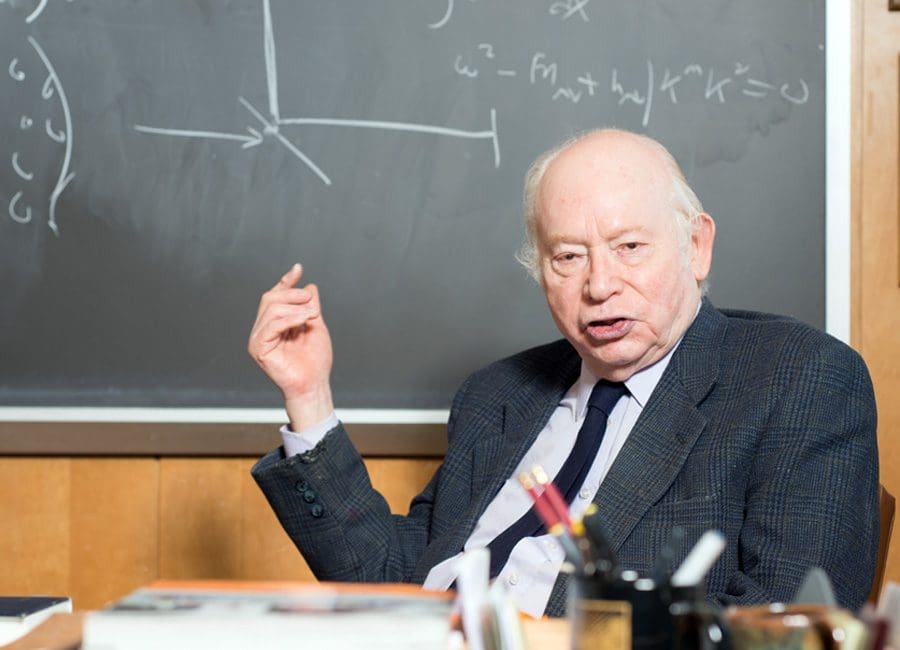


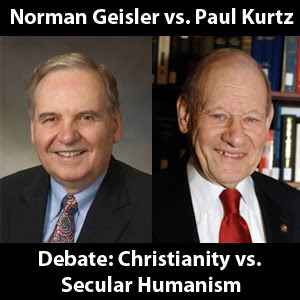


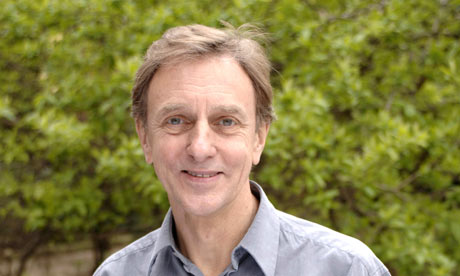
 :
:




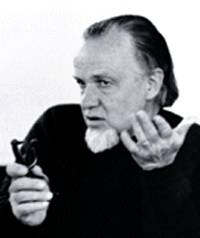


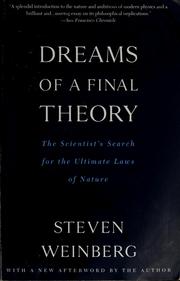
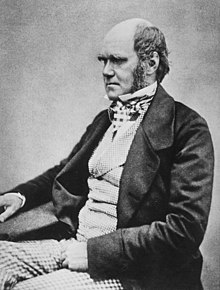


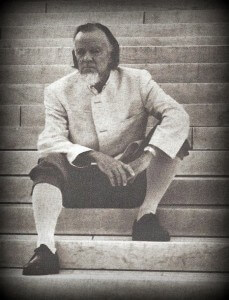
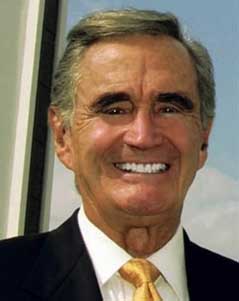
 Image Source: CERN Courier
 Image Source: Twitter
 Image Source: Twitter
 Image Source: Wikipedia










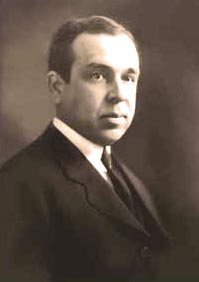
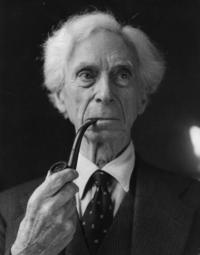

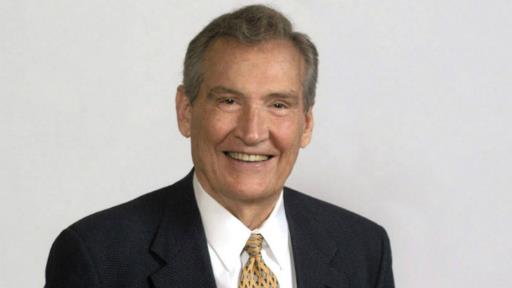


 The Daily Hatch
Weinberg was the last of the physics giants who produced fundamental theories validated by experiments. After half a century his Standard Model still holds, so maybe now is the fist time in physics history without scientific giants.
A tribute to him from one Astrophysics colleague who had recently joined UT Austin
https://twitter.com/MBKplus/status/1418972769509855236
His last book “Foundations of Modern Physics came out a few months ago. From the preface:
“This book treats such a broad range of topics that it is impossible to go very far into any of them. Certainly its treatment of quantum mechanics, statistical mechanics, transport theory, nuclear physics, and quantum field theory is no substitute for graduate-level courses on these topics, any one of which would occupy at least a whole year. This book presents what I think, in an ideal world, the ambitious physics student would already know when he or she enters graduate school. At least, it is what I wish that I had known when I entered graduate school.”
Does anybody have an opinion about how well he succeeded?
It is sad news that Weinberg is not with us anymore but I cannot agree with Alessandro Strumia that “Weinberg was the last of the physics giants who produced fundamental theories validated by experiments…so maybe now is the fi(r)st time in physics history without scientific giants.” Please be reminded that C. N. Yang and T. D. Lee still are healthily living.
@Ricardo: I wrote the following review on one of my piazza sites a few weeks ago. I am currently half way through the book, and I am enjoying the book, although I am familiar with most of the content already. As I indicated below it is more of a review book, than a teaching book.
Steven Weinberg had come out with a new book: Foundations of Modern Physics. I have read the first 2 chapters, and scanned the rest of the book – the book is a short 300 pages and the hardcover is about $40. The level of the book is intermediate to advanced undergraduate.
I often encounter online students who have taken several of the MIT physics MOOC’s but often feel that they either lack some background, or don’t see what they have learned (especially in the QM sequence) and how it will be applied. To many of these students my advice is usually to read the Feynman Lectures on physics, to get the big picture and for more background in QM prerequisite physics, and/or find a good textbook on modern physics.
When I was in college almost half a century ago, I remember using Leighton’s classic book Principles of Modern Physics 1959 (about 700 pages in length), and suggest students try and find a more recent book covering roughly the same material – I haven’t seen one, so let me know if you have. There seem to be many freshman/sophomore level books covering modern physics, but I don’t think these are sufficient.
Weinberg’s book is less of a textbook (while there are 25 problems at the end of the book, there are no exercises at the end of chapters, and no worked out examples). It is written in Weinberg style, few pictures or diagrams, unusual symbols ( for the atomic mass unit, usual notation is u), nice but sometimes terse arguments, and excellent content with interesting historical asides. The math level is low at the beginning (algebra – elementary calculus), and rises a little with the level of the material, but not nearly as difficult as his graduate level books.
There are seven chapters in the book:
Early Atomic Theory
Thermodynamics and Kinetic Theory
Early Quantum Theory
Relativity
Quantum Mechanics
Nuclear Physics
Quantum Field Theory
So the coverage is exactly what a student should be looking for in a modern physics book (perhaps astrophysics and cosmology are left out, because Weinberg just published a set of lectures on astrophysics, and has a whole book on Cosmology). The book seems more of a review or plug holes in background, and less of a teaching masterpiece.
I recommend that students looking for a book on this type of material take a look at the book and see if it is for them. I think students who are taking or have finished the MITx 8.04-8.06 sequence might find the book worthwhile as a review and also as filling out some material, and get a preview of quantum field theory as well.
Steven Weinberg – a great, highly creative physicist and wonderfully involved teacher of fundamental physics who shaped my own education in quantum field theory and cosmology during essential steps. I’ll miss him and his sober views very much.
Dear Wei, thank you, let me try to explain better. Historians like to choose a somehow arbitrary moment to symbolise a gradual change. If the change I mentioned will really happen, I expect they will choose this moment.
Alessandro, Glashow is still around, isn’t he? So not quite the last. As a sophomore, I attended a talk by GSW when they were here in Stockholm to collect their Nobel prize, and I understood absolutely nothing.
Btw. I learned from Lubos that Miguel Virasoro has passed away as well.
I was working at Cambridge University Press in 1995 when the first volume of his “Quantum Theory of Fields” was released. I recall speaking briefly with him on the phone about something trivial like distributing review copies, and picking up a copy of the book that had been delivered to our office. I read the first page and then put it back down—it was just a *bit* over my head…
My PhD thesis was a measurement of the Weinberg angle (sin^2\theta_W) using polarized electrons at the SLAC linear collider. Some people insisted the W stood for Weak but I always held it is W for Weinberg. I read and reread his paper A Model of Leptons many times until I could reproduce it at my defense. I wish all theory papers were as clear and understandable.
Miguel Virasoro died the same day
Amitabha: From what I understand the “Weinberg” angle was first introduced by Glashow.
Shantanu, that is funny because I was told to call it Weak Mixing Angle (and not Weinberg angle) after I gave this talk at Harvard. Glashow was in the room but he was not the one who made that comment. I made the correction with a marker on my transparencies right there. This was a while ago, but I also vaguely remember some chatter about “well if this is right it means the higgs is light”. We were, and it was.
Amitabha: This is also mentioned on Peter’s blog https://www.math.columbia.edu/~woit/wordpress/?p=17
I have also heard this mentioned in many HEP seminars I attended as a grad student.
Dreams of a Final Theory is available on Audible. It’s read by Weinberg himself. It’s written for a general audience, so even untutored but interested readers like me can understand it.
That is sad news, but it was a long life well-lived. He was an authentic giant. His book on GR is still my favorite (tied with that of Fock) and I was lucky to learn the subject in detail mostly from that. Agree also about QTF II. I wish we had made more progress in his last years for him to enjoy and contribute to. RIP.