My name is Everette Hatcher III. I am a businessman in Little Rock and have been living in Bryant since 1993. My wife Jill and I have four kids (Rett 24, Hunter 22, Murphey 16, and Wilson 14).
4 My children,[a] listen when your father corrects you. Pay attention and learn good judgment, 2 for I am giving you good guidance. Don’t turn away from my instructions. 3 For I, too, was once my father’s son, tenderly loved as my mother’s only child.
4 My father taught me, “Take my words to heart. Follow my commands, and you will live. 5 Get wisdom; develop good judgment. Don’t forget my words or turn away from them. 6 Don’t turn your back on wisdom, for she will protect you. Love her, and she will guard you. 7 Getting wisdom is the wisest thing you can do! And whatever else you do, develop good judgment. 8 If you prize wisdom, she will make you great. Embrace her, and she will honor you. 9 She will place a lovely wreath on your head; she will present you with a beautiful crown.”
10 My child,[b] listen to me and do as I say, and you will have a long, good life. 11 I will teach you wisdom’s ways and lead you in straight paths. 12 When you walk, you won’t be held back; when you run, you won’t stumble. 13 Take hold of my instructions; don’t let them go. Guard them, for they are the key to life.
14 Don’t do as the wicked do, and don’t follow the path of evildoers. 15 Don’t even think about it; don’t go that way. Turn away and keep moving. 16 For evil people can’t sleep until they’ve done their evil deed for the day. They can’t rest until they’ve caused someone to stumble. 17 They eat the food of wickedness and drink the wine of violence!
18 The way of the righteous is like the first gleam of dawn, which shines ever brighter until the full light of day. 19 But the way of the wicked is like total darkness. They have no idea what they are stumbling over.
20 My child, pay attention to what I say. Listen carefully to my words. 21 Don’t lose sight of them. Let them penetrate deep into your heart, 22 for they bring life to those who find them, and healing to their whole body.
23 Guard your heart above all else, for it determines the course of your life.
24 Avoid all perverse talk; stay away from corrupt speech.
25 Look straight ahead, and fix your eyes on what lies before you. 26 Mark out a straight path for your feet; stay on the safe path. 27 Don’t get sidetracked; keep your feet from following evil.
Over and over in Proverbs you hear the words “fear the Lord.” In fact, some of he references are Proverbs 1:7, 29; 2:5; 8:13; 9:10;14:26,27; 15:16 and many more. Below is a sermon by John MacArthur from the Book of Luke on 3 reasons we should fear the Lord.
—
It is tough to guard your mind with all the distractions in the world today. Think about how much the world has changed in the last few years. I remember sitting on the couch in my grandparents house in 1980 talking to my grandfather Hatcher about the changes that had occurred in his lifetime. (The same could be said about my Grandfather Murphey too.) My Grandfather Hather was born in 1903 and he remembers riding on horses and his father was a postal delivery man and he had a route he did with his horse and buggy near Franklin, Tennessee. (My grandfather actually remembered seeing Halley’s Comet coming in 1911.)
Then in 1980 we had computers coming on strong and not to mention that we had been to the moon in 1969 and it seemed that many families in the USA had several cars. What a dramatic change from 1903. However, there is another big change now with FaceBook, cell phones, and other social media. Guarding your mind can be very difficult these days.
John MacArthur
I remember hearing Dr. Adrian Rogers say that if he had to do it over again he would read from Proverbs every day to his kids. They turned out to be great kids and they were raised right. Nevertheless, if he had to do it over again he thought a more emphasis on Proverbs is the way to go. That is why I am spending so much time in Proverbs with my kids today.
John MacArthur does a great job on Proverbs and here is a portion of his sermon on Proverbs.
Lesson number two. Son, not only fear your God but guard your mind…guard your mind. Chapter 3 verse 3, among many, introduces the heart here. And the writer mentions kindness, chesed(?), that beautiful word that means love, loyalty, faithfulness, fidelity, kindness. And then the word met(?) which means truth or accuracy, reliability or dependability. Take that, those two marvelous things, loyalty, faithfulness, fidelity and all of that, along with reliable, dependable, accurate truth and bind them around your neck and write them on the tablet of your heart, chisel, as it would be in the stone of your mind. Heart has reference to mind, the seat of thought and emotion and will.
In other words, teach your son to guard his mind. You are responsible as a father for the mind of your child. Boy, what a tremendous responsibility today. When the assault on the human mind is at such a level as it is today through the media, the job of guarding the mind of your young person and teaching him how to guard it is indeed a formidable task. Chapter 4, would you notice verse 23? “Watch over your heart with all diligence,” the father says to his son, “for from it flow the springs of life.” Guard your mind diligently because everything in life comes out of it. Out of it comes your conduct. It’s not what goes into a man, Jesus said in Matthew, it’s what comes out of a man that defiles him. And so what goes in is not the issue. What starts in and comes out is. And so the heart must be right. The father then has the task of assuring the son’s mind is programmed with truth with virtue, with faithfulness, with honesty, with integrity, with loyalty, with love, with all that those two words in chapter 3 can sum up. Father, you have a responsibility to teach your son to guard his mind.
All the way through this passage and I wish we had time to just kind of wander through the ten chapters, you see this. Back in verse 9 of chapter 1 he talks about the fact that good instruction is a graceful wreath to your head, and ornaments around your neck. They…when a son wears the truth in his heart, it graces him. In chapter 2 and verse 10 He wants wisdom to enter your heart and knowledge be pleasant to your soul so that discretion will guard you and understanding will watch over you to deliver you from the way of evil. In chapter 3 verse 1, “Let your heart keep My commandments.” Chapter 4 verse 4, “Let your heart hold fast My words, keep My commandments and live.” And that is the issue that the mind, or the heart as it’s called, be guarded carefully. Father, you are the guardian of your child’s mind. You must keep the right stuff going in and the wrong stuff out, that is your duty before God to guard your son’s mind, your children as well. What a tremendous responsibility we have. That means we have to protect our children from what they are exposed to. That’s the negative. The positive, we must make sure that they exposed to what we want to fill their mind, therein lies the benefit of a godly education, of Christian training, of exposure to the teaching of the Word of God. That is the duty of the father. Teach your son…fear your God, son, and guard your mind for out of it comes your conduct.
Third great lesson, a father must teach his son…obey your parents…obey your parents. All through this entire section these statements about “hear, my son, your father’s instruction,” are repeated…chapter 1 verse 8, chapter 2 verse 1, 3 verse 1, 4 verse 1 and then again in chapter 4 it’s repeated again and again. Look at verse 10, “Hear, my son, accept my sayings.” Verse 11, “I have directed you in the way of wisdom, I have led you in upright paths.” Do what I say, is what he’s saying. Verse 20, “My son, give attention to my words, incline your ear to my sayings, do not let them depart from your sight, keep them in the midst of your heart, or your mind.” We’re reinforcing here the first commandment with promise which is, “Children, obey your parents in the Lord.” That’s the first commandment with promise. Teach your sons to obey what you say.
Now that means discipline. Go back to chapter 3 verse 11. “My son, do not reject the discipline of the Lord, nor loathe His reproof, for whom the Lord loves He reproves, even as a father the son in whom he delights.” If you love your son you discipline him, you reprove him, you rebuke him. Here is discipline. And if we are to have dutiful faithful sons who carry on a righteous pattern, they must learn to obey their parents and discipline is part of that. Chapter 10 verse 13, “A rod is for the back of him who lacks understanding.” When your son doesn’t do what you want him to do, you use a rod. Later on in Proverbs it says he has rebellion in his heart, drive it far from him with a rod. This is discipline not done in anger but done in love. Whom the Father loves He disciplines. And this discipline is done for the purpose of conforming your son to wisdom, for the purpose of breaking self‑will, for the purpose of removing foolishness, for the purpose of delivering the child from spiritual death and for the purpose of making him a delight to his parents. All of those things are taught in Proverbs. Teach your children to obey and use a rod to reinforce because God says physical punishment done in love is a strong corrective. That way your children learn to obey their parents. And if they learn to obey their parents and their parents are advocating the law of God, they will learn to obey the law of God. And if they learn to obey their parents, they will learn to submit to the parents’ authority and later on when they’re living in society they will learn to submit to societal authority in any form. A disobedient child, you see, makes not only a spiritual disaster but an anti‑social personality and very often a criminal adult.
You have a task, father, to say to your son you must learn to fear your God, guard your mind and obey your parents. You must learn how to submit to authority and since we represent the authority of God and are teaching you the wisdom of God, you must obey…you must obey. I do not believe there’s any excuse for a rebellious child. I believe that children can be under control if they’re properly taught by their fathers to obey.
_____________
FINAL QUESTION: WHAT DOES PROVERBS 4:23-27 MEAN?
Keep vigilant watch over your heart; that’s where life starts.
Don’t talk out of both sides of your mouth;
avoid careless banter, white lies, and gossip.
Keep your eyes straight ahead;
ignore all sideshow distractions.
Watch your step,
and the road will stretch out smooth before you.
Look neither right nor left;
leave evil in the dust.
There are certain topics that seem to be slam-dunk wins for those who favor free markets and limited government, and one reason I make this assertion is that folks on the left don’t even bother to make counter-arguments.
Here are just a few examples:
Nobody on the left ever tries to produce an alternative explanation for the IRS data showing that rich people paid a lot more taxafter Ronald Reagan lowered the top income tax rate from 70 percent to 28 percent.
Nobody on the left ever tries to produce an alternative explanation for the success of Switzerland’s spending cap.
Prior to today, I also would have included this example:
Nobody on the left ever tries to produce an alternative explanation for Chile’s amazing jump from poverty to prosperity after the country shifted to pro-market policies such as private social security.
But now I can no longer include Chile’s economic renaissance because I finally found someone who concocted an alternative explanation.
As part of a column in today’s Washington Post about Chile’s upcoming presidential election, Anthony Faiola made this claim about that nation’s economic performance.
After Pinochet’s ruthless rule came to an end in 1990, the newly democratic nation witnessed a historic period of economic growth.Gross domestic product growth between 1990 and 2018 averaged 4.7 percent annually, well above the Latin American average. Over that same period, democratic governments increased social spending. Extreme poverty (below $1.5 per day) was virtually wiped out.
But now let’s consider whether this alternative explanation is accurate.
Mr. Faiola wants readers to believe that the positive developments in Chile (“historic period of growth” and “extreme poverty…was virtually wiped out”) occurred after 1990.
As shown by these two charts, it’s far more likely that the dramatic rise in per-capita economic performance around 1980 is the result of a big increase in economic liberty (as measured by Economic Freedom of the World) that also was occurring around that time.
One should always be careful about interpreting numbers. For instance, national economic data at a given moment in time will be affected when there are periods of global recession, such as the early 1980s and 2008.
Which is why it is important to look at longer periods of time. And when looking at decades of data for Chile, the big jump in prosperity clearly began after the economy was liberalized, not after Pinochet ceded power in 1990.
We’ll close with some bad news and good news.
The bad news, as captured by the bottom-half of the stacked charts abvoe, is that there hasn’t been much pro-market reform in recent decades.
But the good news is that Chile hasn’t deteriorated. The nation has endured some left-leaning governments, but economic freedom has remained high by world standards. Which means the economy continues to grow.
P.S. I’ll add some worrisome news. The left in Chile wants a new constitution that would give politicians more power over the economy. If that effort is successful, I fear the country will suffer Argentinian–styledecline.
P.P.S. I suppose Mr. Faiola deserves some credit for cleverness. Some leftists have tried to argue Chile is a failed “neoliberal experiment.” Given the nation’s superior performance, that’s obviously an absurd strategy. So Faiola came up with a new hypothesis that acknowledges the growth, but tries to convince readers that it’s all the result of things that happened after 1990. He’s wildly wrong, but at least he tried.
P.P.P.S. I have a three-part series (here, here, and here) on how low-income people have been big winners as a result of Chile’s shift to free enterprise.
P.P.P.P.S. Here’s a column on Milton Friedman’s indirect contribution to Chilean prosperity.
The shift toward free markets, which began in the mid-1970s, was especially beneficial for the less fortunate (see here, here, and here).
But it’s quite common for critics to assert that Chile is a bad example because many of the reforms were enacted by General Augusto Pinochet, a dictator who seized power in 1973. And some of those critics also attack Milton Friedman for urging Pinochet to liberalize the economy and reduce the burden of government.
Are these critics right?
To answer that question, I very much recommend the following cartoon strip by Peter Bagge. Published by Reason, it accurately depicts the efforts of reformers to get good reforms from a bad government.
It starts in 1973, with a group of Chilean economists, known as the “Chicago Boys,” who wanted free markets.
In 1975, they invited Milton Friedman to help make the case for economic reform.
This 1982 strip shows some of the controversies that materialized.
But by the time we got to the 21st century, everything Friedman said turned out to be true.
First, I’ll be able to share it with people who want to delegitimize Chile’s transition to a market-oriented democracy (ranked #14 according to the most-recent edition of Economic Freedom of the World). Simply stated, it was bad that Chile had a dictatorship, but it was good that the dictatorship allowed pro-market reforms (particularly when compared to the alternative of a dictatorship with no reforms). And it was great that Chile became a democracy (a process presumably aided by mass prosperity).
Second, we should encourage engagement with distasteful governments. I certainly don’t endorse China’s government or Russia’s government, but I’ve advised government officials from both nations. Heck, I would even give advice to Cuba’s government or North Korea’s government (not that I’m expecting to be asked). My goal is to promote more liberty and it would make me very happy if I could have just a tiny fraction of Friedman’s influence in pursuing that goal.
P.S. Here’s Milton Friedman discussing his role in Chile.
P.P.S. While I disagree, it’s easy to understand why some people try to delegitimize Chile’s reforms by linking them to Pinochet. What baffles me are the folks who try to argue that the reforms were a failure. See, for instance, Prof. Dani Rodrik and the New York Times.
José Niño is a graduate student based in Santiago, Chile. A citizen of the world, he has lived in Venezuela, Colombia, and the United States. He is currently an international research analyst with the Acton Circle of Chile. Follow@JoseAlNino.
EspañolThe power of ideas to help shape political movements has been grossly underestimated over the years. In truth, some of the largest political transformations in human history have come from ideas that were developed in the secluded confines of an intellectual’s home or in obscure academic institutes. Regardless of the origins, ideas can snowball into powerful vehicles of social change.+
As Friedrich Hayek noted in one of his most powerful works, Intellectuals and Socialism,the triumph of socialist ideas can largely be attributed to the ideas first put forward by various intellectuals. They began with relatively well-off intellectuals and then made their way to “second-hand dealers” — journalists, scientists, doctors, teachers, ministers, lecturers, radio commentators, fiction writers, cartoonists, and artists — who then spread those ideas to the masses.+
Intellectuals like Milton Friedman took it upon themselves to reverse this trend and create an environment that was more favorable to free markets. Steadfast in his beliefs in the power of ideas, Friedman knew that big changes usually start out in small venues.+
It was in Chile where Friedman’s vision was first implemented on a large scale. The results were nothing short of spectacular, as Chile was able to escape a veritable economic collapse and experience an unprecedented boom.+
Chile’s economic success was no mere coincidence; it was the product of ideas that Milton Friedman put forward in the 1950s. To understand how such a radical change was brought about, one must first look at the origins of the Chicago Boys, the group of Chilean economists that played a pivotal role in the transformation of Chile’s economy during the 1970s and 1980s.+
The Chicago Boys
Under the tutelage of the United States Agency for International Development (USAID), the University of Chicago signed a modest agreement with the Pontifical Catholic University of Chile in the 1950s to provide a group of Chilean students training in economics.+
In exchange, the University of Chicago would send four faculty members to help the Catholic University build up their economics department. Of these four faculty members, Arnold Harberger would serve as the Chicago Boys’ principal mentor.+
What at first looked liked just another exchange program between universities would play a substantial role in Chile’s economic rise.+
A Country Mired By Statism
At the start of this program, Chile’s economy was in the doldrums. Another victim of Raúl Prebisch’s Import Substitution Industrialization (ISI) policy, Chile had a very loose central banking policy, featured 15 different exchange rates, heavy tariffs, and a number of import and export controls. Subsequent governments maintained the same neo-mercantilist structure up until the 1970s.+
During this era of economic malaise, the Chicago Boys constructed El Ladrillo(The Brick), a text primarily shaped by economist Sergio de Castro which advocated for economic liberalization in all sectors of the Chilean economy. Sadly, this text was largely ignored at that time.+
It wasn’t until the presidency of Salvador Allende that the Chicago Boys’ talents would be desperately needed.+
On the Road to Cuba 2.0
Though democratically elected by a narrow margin in 1970, Salvador Allende was determined to turn Chile into the next Cuba by undermining all of its democratic institutions. Through price controls, arbitrary expropriations, and lax monetary policy, Allende put the Chilean economy on the verge of collapse. By 1973, inflation reached 606 percent and per capita GDP dropped 7.14 percent.+
Under the command of General Augusto Pinochet, the military deposed Allende’s government. Despite this tumultuous change, the military ruler did not have a clear economic vision for Chile.+
Enter Milton Friedman
Milton Friedman’s visit to Chile in March 1975 proved to be quite fateful. Friedman was on a week-long lecture tour for various think thanks. Eventually, Friedman sat down with the general himself for 45 minutes. Right off the bat, Friedman recognized that Pinochet had very little knowledge of economics. After their meeting, Friedman sent Pinochet a letter with a list of policy recommendations.+
Friedman was blunt is his diagnosis of Chile’s economy: for the country to recover, it had to truly embrace free-market measures.+
Ideas Put in Action
Cooler heads prevailed and Pinochet let the Chicago School disciples occupy various posts in the military government. In April 1975, El Plan de Recuperación Económica (The Economic Recovery Plan) was implemented. Soon Chile curbed its inflation, opened up its markets, privatized state-owned industries, and cut government spending. By the 1990s, Chile was experiencing the largest economic boom in its history.+
A principled libertarian, Friedman criticized Pinochet’s repressive political measures. Friedman understood that economic and political freedoms are not mutually exclusive. The principles laid in Friedman’s book Capitalism and Freedom inspired José Piñera, a notable Chilean reformer, to become a part of Chile’s classical liberal revolution.+
Like Friedman, Piñera understood the link between economic and political freedom. This motivated him to help ratify the Chilean Constitution of 1980. The most classically liberal constitution in Latin America’s history, it established the transition towards free elections and Chile’s return to democracy.+
Additionally, Piñera was the architect of Chile’s private social security system that empowered millions of workers and has fostered the growth of an ownership society. This model has been exported to dozens of countries abroad and has served as a market-based alternative to government-run pension systems.+
The “Chilean Miracle” represented the first major triumph against communism during the Cold War. Chile’s classical-liberal revolution subsequently inspired the Thatcher Revolution of 1979 and the Reagan Revolution of 1980. These ideas had resounding effects all over the globe and marked the beginning of the end for Soviet-style models of economic organization.+
There is still much work to do, as the illegitimate children of Marxist and Keynesian thought still run loose these days throughout Latin America. But one thing is absolutely certain: an idea whose time has come is unstoppable.+
RIP Milton Friedman
Milton Friedman is the short one!!!
Milton Friedman’s Free to Choose (1980), episode 3 – Anatomy of a Crisis. part 1
Milton Friedman The Power of the Market 5-5 How can we have personal freedom without economic freedom? That is why I don’t understand why socialists who value individual freedoms want to take away our economic freedoms. I wanted to share this info below with you from Milton Friedman who has influenced me greatly over the […]
Displaying photos of Cuban missile sites, then-President Ronald Reagan called Russia “the evil empire” at a March 23, 1983, press conference. (Photo: Penelope Breese/Liaison/Hulton Archive/Getty Images)
Regardless of what any American feels about what steps we should take in response to Russian President Vladimir Putin’s aggressive incursion into Ukraine, for sure most are appalled by what he has done.
As Putin moves to regain Russian control over nations that once were part of the Soviet sphere, we ought to think about the circumstances under which the Soviet Union collapsed to consider how it all might be reversed.
In March 1983, President Ronald Reagan spoke to the National Association of Evangelicals in Orlando, Florida, and delivered what would famously become known as the speech in which he called the Soviet Union the “evil empire.”
Discussing America’s efforts to confront the Soviet Union’s nuclear arsenal, he said: “I urge you to beware the temptation of pride … declaring yourselves above it all and label both sides equally at fault, to ignore the facts of history and the aggressive impulses of an evil empire … and thereby remove yourself from the struggle between right and wrong and good and evil.”
Reagan spoke more than powerful words of truth that day. He spoke almost as a prophet.
He noted further: “While America’s military strength is important, let me add here that I’ve always maintained that the struggle now going on for the world will never be decided by bombs or rockets, by armies or military might. The real crisis we face today is a spiritual one; at root, it is a test of moral will and faith.”
Some eight years later, the Soviet Union, which for years during the Cold War was thought to be the superpower rival to the United States, collapsed.
There was no war. There was just resolve and Reagan’s unwavering commitment to the principles he articulated that day in 1983. And eight years after that speech, in 1991, Ukraine, now under siege by Putin, was freed from subjugation under the Soviet regime and declared its freedom, independence, and sovereignty.
As Putin tries to reverse history, it is incumbent upon us to not forget that Reagan declared the global struggle as first and foremost a spiritual struggle, a struggle of good against evil.
As Americans watch events unfold in Ukraine, we must refocus on what is going on in our own country. If we lose a sense of the importance and relevance of Reagan’s words as they apply at home, we surely will not know how to relate to events as they transpire in the rest of the world.
And there is plenty of reason to believe we are losing that perspective at home. We see a direct correlation within our own borders, in our own country, of the decline in faith in the eternal principles that keep us free, and with this decline, Americans are gradually but decisively choosing to abandon their freedom.
In a survey published at the end of last year, Gallup reported that 69% of Americans self-identified as Christians in 2021, compared with 90% who self-identified as Christians in 1971. Twenty-one percent said they have “no religion” in 2021, compared to 4% in 1971. In 1965, 70% of Americans said religion is “very important” to them. By 2021, this was down to 49%.
Coincident with the decline of the importance that Americans give to religion, Americans have turned their lives increasingly over to government control. In 1950, government at federal, state, and local levels took almost 23% of the American economy. In 2020, this reached almost 45%.
Turning back again to Reagan’s words, “But we must never forget that no government schemes are going to perfect man.” Our struggle, said Reagan, is about good and evil.
It’s no accident that as America retreats in this struggle, as Americans increasingly believe that government can perfect man, and as we relinquish our freedom, despots like Putin will step forward and try to move the world back to a darker time.
COPYRIGHT 2022 CREATORS.COM
The Daily Signal publishes a variety of perspectives. Nothing written here is to be construed as representing the views of The Heritage Foundation.
Have an opinion about this article? To sound off, please email letters@DailySignal.com and we’ll consider publishing your edited remarks in our regular “We Hear You” feature. Remember to include the url or headline of the article plus your name and town and/or state.
Ross Kaminsky of KHOW and I discussed how this is already happening.
I hate being right, but it’s always safe to predict that politicians and bureaucrats will embrace policies that give more power to government.
Especially when they are very anxious to stifle tax competition.
For decades, people in government have been upset that the tax cuts implemented by Ronald Reagan and Margaret Thatchertriggered a four-decade trend of lower tax rates and pro-growth tax reform.
That’s the reason Biden and his Treasury Secretary proposed a 15 percent minimum tax rate for businesses.
And it’s the reason they now want the rate to be even higher.
Though even I’m surprised that they’re already pushing for that outcome when the original pact hasn’t even been approved or implemented.
Treasury Secretary Janet Yellen will press G20 counterparts this week for a global minimum corporate tax rate above the 15% floor agreed by 130 countries last week…the global minimum tax rate…is tied to the outcome of legislation to raise the U.S. minimum tax rate, a Treasury official said.The Biden administration has proposed doubling the U.S. minimum tax on corporations overseas intangible income to 21% along with a new companion “enforcement” tax that would deny deductions to companies for tax payments to countries that fail to adopt the new global minimum rate. The officials said several countries were pushing for a rate above 15%, along with the United States.
Other kleptocratic governments naturally want the same thing.
A G7 proposal for a global minimum tax rate of 15% is too low and a rate of at least 21% is needed, Argentina’s finance minister said on Monday, leading a push by some developing countries… “The 15% rate is way too low,” Argentine Finance Minister Martin Guzman told an online panel hosted by the Independent Commission for the Reform of International Corporate Taxation. …”The minimum rate being proposed would not do much to countries in Africa…,” Mathew Gbonjubola, Nigeria’s tax policy director, told the same conference.
Needless to say, I’m not surprised that Argentina is on the wrong side.
And supporters of class warfare also are agitating for a higher minimum rate. Here are some excerpts from a column in the New York Times by Gabriel Zucman and Gus Wezerek.
In the decades after World War II, close to 50 percent of American companies’ earnings went to state and federal taxes. …it was a golden period. …President Biden should be applauded for trying to end the race to the bottom on corporate tax rates. But even if Congress approves the 15 percent global minimum corporate tax, it won’t be enough. …the Biden administration to give working families a real leg up, it should push Congress to enact a 25 percent minimum tax, which would bring in about $200 billion in additional revenue each year. …With a 25 percent minimum corporate tax, the Biden administration would begin to reverse decades of growing inequality. And it would encourage other countries to do the same, replacing a race to the bottom with a sprint to the top.
I can’t resist making two observations about this ideological screed.
Even the IMF and OECD agree that the so-called race to the bottom has not led to a decline in corporate tax revenues, even when measured as a share of economic output.
Since companies legally avoid rather than illegally evade taxes, the headline of the column is utterly dishonest – but it’s what we’ve learned to expect from the New York Times.
The only good thing about the Zucman-Wezerek column is that it includes this chart showing how corporate tax rates have dramatically declined since 1980.
P.S. For those interested, the horizontal line at the bottom is for Bermuda, though other jurisdictions (such as Monaco and the Cayman Islands) also deserve credit for having no corporate income taxes.
P.P.S. If you want to know why high corporate tax rates are misguided, click here. And if you want to know why Biden’s plan to raise the U.S. corporate tax rate is misguided, click here. Or here. Or here.
P.P.P.S. And if you want more information about why Biden’s global tax cartel is bad, click here, here, and here.
I enjoyed this article below because it demonstrates that the Laffer Curve has been working for almost 100 years now when it is put to the test in the USA. I actually got to hear Arthur Laffer speak in person in 1981 and he told us in advance what was going to happen the 1980’s and it all came about as he said it would when Ronald Reagan’s tax cuts took place. I wish we would lower taxes now instead of looking for more revenue through raised taxes. We have to grow the economy:
Mitt Romney repeatedly said last night that he would not allow tax cuts to add to the deficit. He repeatedly said it because over and over again Obama blathered the liberal talking point that cutting taxes necessarily increased deficits.
Romney’s exact words: “I want to underline that — no tax cut that adds to the deficit.”
The fact of the matter is that we can go back to Calvin Coolidge who said very nearly THE EXACT SAME THING to his treasury secretary: he too would not allow any tax cuts that added to the debt. Andrew Mellon – quite possibly the most brilliant economic mind of his day – did a great deal of research and determined what he believed was the best tax rate. And the Coolidge administration DID cut income taxes and MASSIVELY increased revenues. Coolidge and Mellon cut the income tax rate 67.12 percent (from 73 to 24 percent); and revenues not only did not go down, but they went UP by at least 42.86 percent (from $700 billion to over $1 billion).
That’s something called a documented fact. But that wasn’t all that happened: another incredible thing was that the taxes and percentage of taxes paid actually went UP for the rich. Because as they were allowed to keep more of the profits that they earned by investing in successful business, they significantly increased their investments and therefore paid more in taxes than they otherwise would have had they continued sheltering their money to protect themselves from the higher tax rates. Liberals ignore reality, but it is simply true. It is a fact. It happened.
Then FDR came along and raised the tax rates again and the opposite happened: we collected less and less revenue while the burden of taxation fell increasingly on the poor and middle class again. Which is exactly what Obama wants to do.
People don’t realize that John F. Kennedy, one of the greatest Democrat presidents, was a TAX CUTTERwho believed the conservative economic philosophy that cutting tax rates would in fact increase tax revenues. He too cut taxes, and he too increased tax revenues.
So we get to Ronald Reagan, who famously cut taxes. And again, we find that Reagan cut that godawful liberal tax rate during an incredibly godawful liberal-caused economic recession, and he increased tax revenue by 20.71 percent (with revenues increasing from $956 billion to $1.154 trillion). And again, the taxes were paid primarily by the rich:
“The share of the income tax burden borne by the top 10 percent of taxpayers increased from 48.0 percent in 1981 to 57.2 percent in 1988. Meanwhile, the share of income taxes paid by the bottom 50 percent of taxpayers dropped from 7.5 percent in 1981 to 5.7 percent in 1988.”
So we get to George Bush and the Bush tax cuts that liberals and in particular Obama have just demonized up one side and demagogued down the other. And I can simply quote the New York Times AT the time:
WASHINGTON, July 12 – For the first time since President Bush took office, an unexpected leap in tax revenue is about to shrink the federal budget deficit this year, by nearly $100 billion.
A Jump in Corporate Payments On Wednesday, White House officials plan to announce that the deficit for the 2005 fiscal year, which ends in September, will be far smaller than the $427 billion they estimated in February.
Mr. Bush plans to hail the improvement at a cabinet meeting and to cite it as validation of his argument that tax cuts would stimulate the economy and ultimately help pay for themselves.
Based on revenue and spending data through June, the budget deficit for the first nine months of the fiscal year was $251 billion, $76 billion lower than the $327 billion gap recorded at the corresponding point a year earlier.
The Congressional Budget Office estimated last week that the deficit for the full fiscal year, which reached $412 billion in 2004, could be “significantly less than $350 billion, perhaps below $325 billion.”
The big surprise has been in tax revenue, which is running nearly 15 percent higher than in 2004. Corporate tax revenue has soared about 40 percent, after languishing for four years, and individual tax revenue is up as well.
And of course the New York Times, as reliable liberals, use the adjective whenever something good happens under conservative policies and whenever something bad happens under liberal policies: ”unexpected.” But it WASN’T ”unexpected.” It was EXACTLY what Republicans had said would happen and in fact it was exactly what HAD IN FACT HAPPENED every single time we’ve EVER cut income tax rates.
The truth is that conservative tax policy has a perfect track record: every single time it has ever been tried, we have INCREASED tax revenues while not only exploding economic activity and creating more jobs, but encouraging the wealthy to pay more in taxes as well. And liberals simply dishonestly refuse to acknowledge documented history.
Now let’s take a look at the utterly fallacious view that tax cuts in general create higher deficits.
Let’s take a trip back in time, starting with the 1920s. From Burton Folsom’s book, New Deal or Raw Deal?:
In 1921, President Harding asked the sixty-five-year-old [Andrew] Mellon to be secretary of the treasury; the national debt [resulting from WWI] had surpassed $20 billion and unemployment had reached 11.7 percent, one of the highest rates in U.S. history. Harding invited Mellon to tinker with tax rates to encourage investment without incurring more debt. Mellon studied the problem carefully; his solution was what is today called “supply side economics,” the idea of cutting taxes to stimulate investment. High income tax rates, Mellon argued, “inevitably put pressure upon the taxpayer to withdraw this capital from productive business and invest it in tax-exempt securities. . . . The result is that the sources of taxation are drying up, wealth is failing to carry its share of the tax burden; and capital is being diverted into channels which yield neither revenue to the Government nor profit to the people” (page 128).
Mellon wrote, “It seems difficult for some to understand that high rates of taxation do not necessarily mean large revenue to the Government, and that more revenue may often be obtained by lower taxes.” And he compared the government setting tax rates on incomes to a businessman setting prices on products: “If a price is fixed too high, sales drop off and with them profits.”
And what happened?
“As secretary of the treasury, Mellon promoted, and Harding and Coolidge backed, a plan that eventually cut taxes on large incomes from 73 to 24 percent and on smaller incomes from 4 to 1/2 of 1 percent. These tax cuts helped produce an outpouring of economic development – from air conditioning to refrigerators to zippers, Scotch tape to radios and talking movies. Investors took more risks when they were allowed to keep more of their gains. President Coolidge, during his six years in office, averaged only 3.3 percent unemployment and 1 percent inflation – the lowest misery index of any president in the twentieth century.
Furthermore, Mellon was also vindicated in his astonishing predictions that cutting taxes across the board would generate more revenue. In the early 1920s, when the highest tax rate was 73 percent, the total income tax revenue to the U.S. government was a little over $700 million. In 1928 and 1929, when the top tax rate was slashed to 25 and 24 percent, the total revenue topped the $1 billion mark. Also remarkable, as Table 3 indicates, is that the burden of paying these taxes fell increasingly upon the wealthy” (page 129-130).
Now, that is incredible upon its face, but it becomes even more incredible when contrasted with FDR’s antibusiness and confiscatory tax policies, which both dramatically shrunk in terms of actual income tax revenues (from $1.096 billion in 1929 to $527 million in 1935), and dramatically shifted the tax burden to the backs of the poor by imposing huge new excise taxes (from $540 million in 1929 to $1.364 billion in 1935). See Table 1 on page 125 of New Deal or Raw Deal for that information.
FDR both collected far less taxes from the rich, while imposing a far more onerous tax burden upon the poor.
It is simply a matter of empirical fact that tax cuts create increased revenue, and that those [Democrats] who have refused to pay attention to that fact have ended up reducing government revenues even as they increased the burdens on the poorest whom they falsely claim to help.
Let’s move on to John F. Kennedy, one of the most popular Democrat presidents ever. Few realize that he was also a supply-side tax cutter.
“It is a paradoxical truth that tax rates are too high and tax revenues are too low and the soundest way to raise the revenues in the long run is to cut the rates now … Cutting taxes now is not to incur a budget deficit, but to achieve the more prosperous, expanding economy which can bring a budget surplus.”
– John F. Kennedy, Nov. 20, 1962, president’s news conference
“Lower rates of taxation will stimulate economic activity and so raise the levels of personal and corporate income as to yield within a few years an increased – not a reduced – flow of revenues to the federal government.”
– John F. Kennedy, Jan. 17, 1963, annual budget message to the Congress, fiscal year 1964
“In today’s economy, fiscal prudence and responsibility call for tax reduction even if it temporarily enlarges the federal deficit – why reducing taxes is the best way open to us to increase revenues.”
– John F. Kennedy, Jan. 21, 1963, annual message to the Congress: “The Economic Report Of The President”
“It is no contradiction – the most important single thing we can do to stimulate investment in today’s economy is to raise consumption by major reduction of individual income tax rates.”
– John F. Kennedy, Jan. 21, 1963, annual message to the Congress: “The Economic Report Of The President”
“Our tax system still siphons out of the private economy too large a share of personal and business purchasing power and reduces the incentive for risk, investment and effort – thereby aborting our recoveries and stifling our national growth rate.”
– John F. Kennedy, Jan. 24, 1963, message to Congress on tax reduction and reform, House Doc. 43, 88th Congress, 1st Session.
“A tax cut means higher family income and higher business profits and a balanced federal budget. Every taxpayer and his family will have more money left over after taxes for a new car, a new home, new conveniences, education and investment. Every businessman can keep a higher percentage of his profits in his cash register or put it to work expanding or improving his business, and as the national income grows, the federal government will ultimately end up with more revenues.”
– John F. Kennedy, Sept. 18, 1963, radio and television address to the nation on tax-reduction bill
Which is to say that modern Democrats are essentially calling one of their greatest presidents a liar when they demonize tax cuts as a means of increasing government revenues.
So let’s move on to Ronald Reagan. Reagan had two major tax cutting policies implemented: the Economic Recovery Tax Act (ERTA) of 1981, which was retroactive to 1981, and the Tax Reform Act of 1986.
Did Reagan’s tax cuts decrease federal revenues? Hardly:
We find that 8 of the following 10 years there was a surplus of revenue from 1980, prior to the Reagan tax cuts. And, following the Tax Reform Act of 1986, there was a MASSIVE INCREASEof revenue.
So Reagan’s tax cuts increased revenue. But who paid the increased tax revenue? The poor? Opponents of the Reagan tax cuts argued that his policy was a giveaway to the rich (ever heard that one before?) because their tax payments would fall. But that was exactly wrong. In reality:
“The share of the income tax burden borne by the top 10 percent of taxpayers increased from 48.0 percent in 1981 to 57.2 percent in 1988. Meanwhile, the share of income taxes paid by the bottom 50 percent of taxpayers dropped from 7.5 percent in 1981 to 5.7 percent in 1988.”
So Ronald Reagan a) collected more total revenue, b) collected more revenue from the rich, while c) reducing revenue collected by the bottom half of taxpayers, and d) generated an economic powerhouse that lasted – with only minor hiccups – for nearly three decades. Pretty good achievement considering that his predecessor was forced to describe his own economy as a “malaise,” suffering due to a “crisis of confidence.” Pretty good considering that President Jimmy Carter responded to a reporter’s question as to what he would do about the problem of inflation by answering,“It would be misleading for me to tell any of you that there is a solution to it.”
Reagan whipped inflation. Just as he whipped that malaise and that crisis of confidence.
He’s bad on the issues where Trump wasbad (spending and trade).
He’s bad on the issues where Trump was good (most notably, taxes).
And he’s bad on the issues where Trump had a mixedrecord (regulation).
Based on his track record as a long-time Senator, none of this is a surprise. According to vote ratings from the Club for Growth and National Taxpayers Union, Biden was to the left of even Crazy Bernie.
Unfortunately, a bad president (anyone remember Nixon?) can do a lot more damage than a bad senator.
Today is Part I of a series of columns analyzing Biden’s failure.
We’ll start with his so-called Build Back Better plan. Joe Biden didn’t explicitly mention “BBB” is his State of the Union address, but he did promote almost all of the specific policies that are in that plan.
And he even made the preposterous argument that some of those policies would help bring inflation under control.
I’ve repeatedlyexplained why the president’s plan for a bigger welfare state is bad news, but this tweet from Americans for Prosperity’s Akash Chougule does a great job of debunking Biden’s argument in a very succinct fashion.
In areas where the free market operates, by contrast, prices actually tend to decline.
I’ll close with the observation that Biden’s Build Back Better is a clunky amalgamation of new and expanded entitlements. His per-child handout is the most expensive, and it’s especially pernicious because it would undo the success of Bill Clinton (and Newt Gingrich’s) welfare reform.
But if there was a prize for the most economic damage per dollar spent, Biden’s scheme for government-dictated childcare would be the worst of the worst since he subsidizes demand while also restricting supply. If it gets approved, the chart may need a new vertical axis because Biden will screw up the market for childcare even more than the government has screwed up the markets for health care and higher education.
The Honorable Representative Adam Kinzinger of Illinois, Washington D.C.
Dear Representative Adam Kinzinger,
I noticed that you are a pro-life representative that has a long record of standing up for unborn babies! It was in the 1970’s when I was first introduced to the works of Francis Schaeffer and Dr. C. Everett Koop and I wanted to commend their writings and films to you.
Washington, DC – Today, Congressman Adam Kinzinger (IL-16) joined his House Republican colleagues in a press conference urging Democratic leadership to allow a vote on the Born Alive protections. The proposal would protect babies who survive abortion and provide them with the same medical care that any other premature baby would receive. Yesterday, the Democrats blocked the proposed legislation—for the 17th time—from coming before the House for a vote.
Joining the Congressman and House Republican leaders at the press conference this morning was Jill Stanek, an Illinois nurse and pro-life advocate who has witnessed the devastating realities of these pro-abortion laws. The Illinois legislature is currently debating two abortion bills, similar to the extreme pro-abortion agendas in New York and Virginia.
It seems you have a grudge against President Trump while our freedoms under President Biden are being taken away. I recommend to you the article below:
Roger Kimball Editor and Publisher, The New Criterion
Mr. Kimball concludes his article with these words:
That’s one melancholy lesson of the January 6 insurrection hoax: that America is fast mutating from a republic, in which individual liberty is paramount, into an oligarchy, in which conformity is increasingly demanded and enforced.
Another lesson was perfectly expressed by Donald Trump when he reflected on the unremitting tsunami of hostility that he faced as President. “They’re after you,” he more than once told his supporters. “I’m just in the way.”
There were a few Republicans Thursday who surprised observers when they voted in support of holding former Trump adviser Steve Bannon in contempt of Congress and referring him to the Justice Department for criminal prosecution.
Prior to the vote, four Republicans were considered a lock to approve the criminal referral, according to Capitol Hill sources: Reps. Liz Cheney of Wyoming, Adam Kinzinger of Illinois, Fred Upton of Michigan and Anthony Gonzalez of Ohio.
Cheney and Kinzinger are on the House select committee investigating the Jan. 6 insurrection at the U.S. Capitol, and have for months stood alone as the only two House Republicans willing to speak out against former President Donald Trump’s continued lies about the 2020 election. They were the only two House Republicans to vote for the formation of the select committee on June 30.
House Speaker Nancy Pelosi formed the select committee after Republicans rejected a bipartisan commission that would have been evenly split between five Democrats and five Republicans. Only 35 Republicans voted for that measure when itpassed the House of Representatives, and it was defeated by a GOP filibuster in the Senate.
From left: Reps. Jamie Raskin of Maryland, a Democrat, and Liz Cheney of Wyoming and Adam Kinzinger of Illinois arrive for the House Select Committee hearing investigating the Jan. 6 attack on the U.S. Capitol. (Drew Angerer/Getty Images)
More
Upton has served in the House for more than three decades, since 1987, and will face a primary challenge next year because of his willingness to stand up to Trump.
Gonzalez is retiring from Congress next year, after only four years in the House. “While my desire to build a fuller family life is at the heart of my decision, it is also true that the current state of our politics, especially many of the toxic dynamics inside our own party, is a significant factor in my decision,” Gonzalez said in September when heannounced he would not seek another term.
The remaining five Republicans included three who voted for impeachment — Peter Meijer of Michigan, John Katko of New York and Jaime Herrera Beutler of Washington — and two House Republicans who did not vote to impeach Trump: Nancy Mace of South Carolina and Brian Fitzpatrick of Pennsylvania.
Trump seems never to have discerned what a viper’s nest our politics has become for anyone who is not a paid-up member of The Club.
Maybe Trump understands this now. I have no insight into that question. I am pretty confident, though, that the 74 plus million people who voted for him understand it deeply. It’s another reason that The Club should be wary of celebrating its victory too expansively.
Friedrich Hayek took one of the two epigraphs for his book, The Road to Serfdom, from the philosopher David Hume. “It is seldom,” Hume wrote, “that liberty of any kind is lost all at once.” Much as I admire Hume, I wonder whether he got this quite right. Sometimes, I would argue, liberty is erased almost instantaneously.
I’d be willing to wager that Joseph Hackett, confronted with Hume’s observation, would express similar doubts. I would be happy to ask Mr. Hackett myself, but he is inaccessible. If the ironically titled “Department of Justice” has its way, he will be inaccessible for a long, long time—perhaps as long as 20 years.
Joseph Hackett, you see, is a 51-year-old Trump supporter and member of an organization called the Oath Keepers, a group whose members have pledged to “defend the Constitution against all enemies foreign and domestic.” The FBI does not like the Oath Keepers—agents arrested its leader in January and have picked up many other members in the months since. Hackett traveled to Washington from his home in Florida to join the January 6 rally. According to court documents, he entered the Capitol at 2:45 that afternoon and left some nine minutes later, at 2:54. The next day, he went home. On May 28, he was apprehended by the FBI and indicted on a long list of charges, including conspiracy, obstruction of an official proceeding, destruction of government property, and illegally entering a restricted building.
As far as I have been able to determine, no evidence of Hackett destroying property has come to light. According to his wife, it is not even clear that he entered the Capitol. But he certainly was in the environs. He was a member of the Oath Keepers. He was a supporter of Donald Trump. Therefore, he must be neutralized.
Joseph Hackett is only one of hundreds of citizens who have beenbranded as “domestic terrorists” trying to “overthrow the government” and who are now languishing, in appalling conditions, jailed as political prisoners of an angry state apparat.
Let me recommend that you read this letter below from Senator Ron Johnson and his colleagues:
WASHINGTON — U.S. Sen. Ron Johnson (R-Wis.), along with senators Tommy Tuberville (R-Ala.), Mike Lee (R-Utah), Rick Scott (R-Fla.), and Ted Cruz (R-Texas), sent a letter on Monday to Attorney General Merrick Garland requesting information on the unequal application of justice between the individuals who breached the Capitol on Jan. 6, and those involved in the unrest during the spring and summer of 2020. The senators sent 18 questions to the attorney general on what steps the DOJ has taken to prosecute individuals who committed crimes during both events, and requested a response by June 21.
“Americans have the constitutional right to peaceably assemble and petition the government for a redress of grievances,” the senators wrote. “This constitutional right should be cherished and protected. Violence, property damage, and vandalism of any kind should not be tolerated and individuals that break the law should be prosecuted. However, the potential unequal administration of justice with respect to certain protestors is particularly concerning.”
The full text of the letter can be found here and below.
June 7, 2021
The Honorable Merrick B. Garland
Attorney General
U.S. Department of Justice
950 Pennsylvania Avenue, NW
Washington, DC 20530
Dear Attorney General Garland:
The U.S. Department of Justice (DOJ) is currently dedicating enormous resources and manpower to investigating and prosecuting the criminals who breached the U.S. Capitol on January 6, 2021. We fully support and appreciate the efforts by the DOJ and its federal, state and local law enforcement partners to hold those responsible fully accountable.
We join all Americans in the expectation that the DOJ’s response to the events of January 6 will result in rightful criminal prosecutions and accountability. As you are aware, the mission of the DOJ is, among other things, to ensure fair and impartial administration of justice for all Americans. Today, we write to request information about our concerns regarding potential unequal justice administered in response to other recent instances of mass unrest, destruction, and loss of life throughout the United States.
During the spring and summer of 2020, individuals used peaceful protests across the country to engage in rioting and other crimes that resulted in loss of life, injuries to law enforcement officers, and significant property damage.[1] A federal court house in Portland, Oregon, has been effectively under siege for months.[2] Property destruction stemming from the 2020 social justice protests throughout the country will reportedly result in at least $1 billion to $2 billion in paid insurance claims.[3]
In June 2020, the DOJ reportedly compiled the following information regarding last year’s unrest:
“One federal officer [was] killed, 147 federal officers [were] injured and 600 local officers [were] injured around the country during the protests, frequently from projectiles.”[4]
According to the Bureau of Alcohol, Tobacco, Firearms and Explosives (ATF), “since the start of the unrest there has been 81 Federal Firearms License burglaries of an estimated loss of 1,116 firearms; 876 reported arsons; 76 explosive incidents; and 46 ATF arrests[.]”[5]
Despite these numerous examples of violence occurring during these protests, it appears that individuals charged with committing crimes at these events may benefit from infrequent prosecutions and minimal, if any, penalties. According to a recent article, “prosecutors have approved deals in at least half a dozen federal felony cases arising from clashes between protesters and law enforcement in Oregon last summer. The arrangements — known as deferred resolution agreements — will leave the defendants with a clean criminal record if they stay out of trouble for a period of time and complete a modest amount of community service, according to defense attorneys and court records.”[6]
DOJ’s apparent unwillingness to punish these individuals who allegedly committed crimes during the spring and summer 2020 protests stands in stark contrast to the harsher treatment of the individuals charged in connection with the January 6, 2021 breach of the U.S. Capitol Building in Washington, D.C. To date, DOJ has charged 510 individuals stemming from Capitol breach.[7] DOJ maintains and updates a webpage that lists the defendants charged with crimes committed at the Capitol. This database includes information such as the defendant’s name, charge(s), case number, case documents, location of arrest, case status, and informs readers when the entry was last updated.[8] No such database exists for alleged perpetrators of crimes associated with the spring and summer 2020 protests. It is unclear whether any defendants charged with crimes in connection with the Capitol breach have received deferred resolution agreements.
Americans have the constitutional right to peaceably assemble and petition the government for a redress of grievances. This constitutional right should be cherished and protected. Violence, property damage, and vandalism of any kind should not be tolerated and individuals that break the law should be prosecuted. However, the potential unequal administration of justice with respect to certain protestors is particularly concerning. In order to assist Congress in conducting its oversight work, we respectfully request answers to the following questions by June 21, 2021:
Spring and Summer 2020 Unrest:
Did federal law enforcement utilize geolocation data from defendants’ cell phones to track protestors associated with the unrest in the spring and summer of 2020? If so, how many times and for which locations/riots?
How many individuals who may have committed crimes associated with protests in the spring and summer of 2020 were arrested by law enforcement using pre-dawn raids and SWAT teams?
How many individuals were incarcerated for allegedly committing crimes associated with protests in the spring and summer of 2020?
How many of these individuals are or were placed in solitary confinement? What was the average amount of consecutive days such individuals were in solitary confinement?
How many of these individuals have been released on bail?
How many of these individuals were released on their own recognizance or without being required to post bond?
How many of these individuals were offered deferred resolution agreements?[9]
How many DOJ prosecutors were assigned to work on cases involving defendants who allegedly committed crimes associated with protests in the spring and summer of 2020?
How many FBI personnel were assigned to work on cases involving defendants who allegedly committed crimes associated with protests in the spring and summer of 2020?
January 6, 2021 U.S. Capitol Breach:
Did federal law enforcement utilize geolocation data from defendants’ cell phones to track protestors associated with the January 6, 2021 protests and Capitol breach? If so, how many times and how many additional arrests resulted from law enforcement utilizing geolocation information?
How many individuals who may have committed crimes associated with the Capitol breach were arrested by law enforcement using pre-dawn raids and SWAT teams?
How many individuals are incarcerated for allegedly committing crimes associated with the Capitol breach?
How many of these individuals are or were placed in solitary confinement? What was the average amount of consecutive days such individuals were in solitary confinement?
How many of these individuals have been released on bail?
How many of these individuals have been released on their own recognizance or without being required to post bond?
How many of these individuals were offered deferred resolution agreements?
How many DOJ prosecutors have been assigned to work on cases involving defendants who allegedly committed crimes associated with the Capitol breach?
How many FBI personnel were assigned to work on cases involving defendants who allegedly committed crimes associated with the Capitol breach?
I want to recommend to you a video on YOU TUBE that runs 28 minutes and 39 seconds by Francis Schaeffer entitled because it discusses the founding of our nation and what the FOUNDERS believed:
Edith Schaeffer with her husband, Francis Schaeffer, in 1970 in Switzerland, where they founded L’Abri, a Christian commune.
________________
______________________
March 23, 2021
President Biden c/o The White House 1600 Pennsylvania Avenue NW Washington, DC 20500
Dear Mr. President,
I really do respect you for trying to get a pulse on what is going on out here. I know that you don’t agree with my pro-life views but I wanted to challenge you as a fellow Christian to re-examine your pro-choice view. Although we are both Christians and have the Bible as the basis for our moral views, I did want you to take a close look at the views of the pro-life atheist Nat Hentoff too. Hentoff became convinced of the pro-life view because of secular evidence that shows that the unborn child is human. I would ask you to consider his evidence and then of course reverse your views on abortion.
___________________
The pro-life atheist Nat Hentoff wrote a fine article below I wanted to share with you.
Nat Hentoff is an atheist, but he became a pro-life activist because of the scientific evidence that shows that the unborn child is a distinct and separate human being and even has a separate DNA. His perspective is a very intriguing one that I thought you would be interested in. I have shared before many cases (Bernard Nathanson, Donald Trump, Paul Greenberg, Kathy Ireland) when other high profile pro-choice leaders have changed their views and this is just another case like those. I have contacted the White House over and over concerning this issue and have even received responses. I am hopeful that people will stop and look even in a secular way (if they are not believers) at this abortion debate and see that the unborn child is deserving of our protection.That is why the writings of Nat Hentoff of the Cato Institute are so crucial.
I truly believe that many of the problems we have today in the USA are due to the advancement of humanism in the last few decades in our society. Ronald Reagan appointed the evangelical Dr. C. Everett Koop to the position of Surgeon General in his administration. He partnered with Dr. Francis Schaeffer in making the video below. It is very valuable information for Christians to have. Actually I have included a video below that includes comments from him on this subject.
Francis Schaeffer Whatever Happened to the Human Race (Episode 1) ABORTION
_____________________________________
Dr. Francis schaeffer – from Part 5 of Whatever happened to human race?) Whatever Happened To The Human Race? | Episode 5 | Truth and History
Dr. Francis Schaeffer – A Christian Manifesto – Dr. Francis Schaeffer Lecture
Francis Schaeffer – A 700 Club Special! ~ Francis Schaeffer 1982
Dr. Francis Schaeffer – 1984 SOUNDWORD LABRI CONFERENCE VIDEO – Q&A With Francis & Edith Schaeffer
http://www.NewsandOpinion.com | A longtime friend of mine is married to a doctor who also performs abortions. At the dinner table one recent evening, their 9-year-old son — having heard a word whose meaning he didn’t know — asked, “What is an abortion?” His mother, choosing her words carefully, described the procedure in simple terms.
“But,” said her son, “that means killing the baby.” The mother then explained that there are certain months during which an abortion cannot be performed, with very few exceptions. The 9-year-old shook his head. “But,” he said, “it doesn’t matter what month. It still means killing the babies.”
Hearing the story, I wished it could be repeated to the justices of the Supreme Court, in the hope that at least five of them might act on this 9-year-old’s clarity of thought and vision.
The boy’s spontaneous insistence on the primacy of life also reminded me of a powerful pro-life speaker and writer who, many years ago, helped me become a pro-lifer. He was a preacher, a black preacher. He said: “There are those who argue that the right to privacy is of a higher order than the right to life.
“That,” he continued, “was the premise of slavery. You could not protest the existence or treatment of slaves on the plantation because that was private and therefore out of your right to be concerned.”
This passionate reverend used to warn: “Don’t let the pro-choicers convince you that a fetus isn’t a human being. That’s how the whites dehumanized us … The first step was to distort the image of us as human beings in order to justify what they wanted to do — and not even feel they’d done anything wrong.”
That preacher was Jesse Jackson. Later, he decided to run for the presidency — and it was a credible campaign that many found inspiring in its focus on what still had to be done on civil rights. But Jackson had by now become “pro-choice” — much to the appreciation of most of those in the liberal base.
The last time I saw Jackson was years later, on a train from Washington to New York. I told him of a man nominated, but not yet confirmed, to a seat on a federal circuit court of appeals. This candidate was a strong supporter of capital punishment — which both the Rev. Jackson and I oppose, since it involves the irreversible taking of a human life by the state.
I asked Jackson if he would hold a press conference in Washington, criticizing the nomination, and he said he would. The reverend was true to his word; the press conference took place; but that nominee was confirmed to the federal circuit court. However, I appreciated Jackson’s effort.
On that train, I also told Jackson that I’d been quoting — in articles, and in talks with various groups — from his compelling pro-life statements. I asked him if he’d had any second thoughts on his reversal of those views.
Usually quick to respond to any challenge that he is not consistent in his positions, Jackson paused, and seemed somewhat disquieted at my question. Then he said to me, “I’ll get back to you on that.” I still patiently await what he has to say.
As time goes on, my deepening concern with the consequences of abortion is that its validation by the Supreme Court, as a constitutional practice, helps support the convictions of those who, in other controversies — euthanasia, assisted suicide and the “futility doctrine” by certain hospital ethics committees — believe that there are lives not worth continuing.
Around the time of my conversation with Jackson on the train, I attended a conference on euthanasia at Clark College in Worcester, Mass. There, I met Derek Humphry, the founder of the Hemlock Society, and already known internationally as a key proponent of the “death with dignity” movement.
He told me that for some years in this country, he had considerable difficulty getting his views about assisted suicide and, as he sees it, compassionate euthanasia into the American press.
“But then,” Humphry told me, “a wonderful thing happened. It opened all the doors for me.”
“What was that wonderful thing?” I asked.
“Roe v. Wade,” he answered.
The devaluing of human life — as the 9-year-old at the dinner table put it more vividly — did not end with making abortion legal, and therefore, to some people, moral. The word “baby” does not appear in Roe v. Wade — let alone the word “killing.”
And so, the termination of “lives not worth living” goes on.
______________________
Thank you so much for your time. I know how valuable it is. I also appreciate the fine family that you have and your commitment as a father and a husband. Now after presenting the secular approach of Nat Hentoff I wanted to make some comments concerning our shared Christian faith. I respect you for putting your faith in Christ for your eternal life. I am pleading to you on the basis of the Bible to please review your religious views concerning abortion. It was the Bible that caused the abolition movement of the 1800’s and it also was the basis for Martin Luther King’s movement for civil rights and it also is the basis for recognizing the unborn children.
Sincerely,
Everette Hatcher III, 13900 Cottontail Lane, Alexander, AR 72002, ph 501-920-5733,
Francis Schaeffer: “Whatever Happened to the Human Race” (Episode 1) ABORTION OF THE HUMAN RACE Published on Oct 6, 2012 by AdamMetropolis ________________ Picture of Francis Schaeffer and his wife Edith from the 1930′s above. I was sad to read about Edith passing away on Easter weekend in 2013. I wanted to pass along this fine […]
I have gone back and forth and back and forth with many liberals on the Arkansas Times Blog on many issues such as abortion, human rights, welfare, poverty, gun control and issues dealing with popular culture. Here is another exchange I had with them a while back. My username at the Ark Times Blog is Saline […]
I have gone back and forth and back and forth with many liberals on the Arkansas Times Blog on many issues such as abortion, human rights, welfare, poverty, gun control and issues dealing with popular culture. Here is another exchange I had with them a while back. My username at the Ark Times Blog is Saline […]
It is truly sad to me that liberals will lie in order to attack good Christian people like state senator Jason Rapert of Conway, Arkansas because he headed a group of pro-life senators that got a pro-life bill through the Arkansas State Senate the last week of January in 2013. I have gone back and […]
I have gone back and forth and back and forth with many liberals on the Arkansas Times Blog on many issues such as abortion, human rights, welfare, poverty, gun control and issues dealing with popular culture. Here is another exchange I had with them a while back. My username at the Ark Times Blog is Saline […]
I have gone back and forth and back and forth with many liberals on the Arkansas Times Blog on many issues such as abortion, human rights, welfare, poverty, gun control and issues dealing with popular culture. Here is another exchange I had with them a while back. My username at the Ark Times Blog is Saline […]
I have gone back and forth and back and forth with many liberals on the Arkansas Times Blog on many issues such as abortion, human rights, welfare, poverty, gun control and issues dealing with popular culture. Here is another exchange I had with them a while back. My username at the Ark Times Blog is Saline […]
Sometimes you can see evidences in someone’s life of how content they really are. I saw something like that on 2-8-13 when I confronted a blogger that goes by the name “AngryOldWoman” on the Arkansas Times Blog. See below. Leadership Crisis in America Published on Jul 11, 2012 Picture of Adrian Rogers above from 1970′s […]
In the film series “WHATEVER HAPPENED TO THE HUMAN RACE?” the arguments are presented against abortion (Episode 1), infanticide (Episode 2), euthenasia (Episode 3), and then there is a discussion of the Christian versus Humanist worldview concerning the issue of “the basis for human dignity” in Episode 4 and then in the last episode a close […]
I have gone back and forth and back and forth with many liberals on the Arkansas Times Blog on many issues such as abortion, human rights, welfare, poverty, gun control and issues dealing with popular culture. Here is another exchange I had with them a while back. My username at the Ark Times Blog is Saline […]
I have gone back and forth and back and forth with many liberals on the Arkansas Times Blog on many issues such as abortion, human rights, welfare, poverty, gun control and issues dealing with popular culture. Here is another exchange I had with them a while back. My username at the Ark Times Blog is Saline […]
I have gone back and forth and back and forth with many liberals on the Arkansas Times Blog on many issues such as abortion, human rights, welfare, poverty, gun control and issues dealing with popular culture. Here is another exchange I had with them a while back. My username at the Ark Times Blog is Saline […]
E P I S O D E 1 0 Dr. Francis Schaeffer – Episode X – Final Choices 27 min FINAL CHOICES I. Authoritarianism the Only Humanistic Social Option One man or an elite giving authoritative arbitrary absolutes. A. Society is sole absolute in absence of other absolutes. B. But society has to be […]
E P I S O D E 9 Dr. Francis Schaeffer – Episode IX – The Age of Personal Peace and Affluence 27 min T h e Age of Personal Peace and Afflunce I. By the Early 1960s People Were Bombarded From Every Side by Modern Man’s Humanistic Thought II. Modern Form of Humanistic Thought Leads […]
E P I S O D E 8 Dr. Francis Schaeffer – Episode VIII – The Age of Fragmentation 27 min I saw this film series in 1979 and it had a major impact on me. T h e Age of FRAGMENTATION I. Art As a Vehicle Of Modern Thought A. Impressionism (Monet, Renoir, Pissarro, Sisley, […]
E P I S O D E 7 Dr. Francis Schaeffer – Episode VII – The Age of Non Reason I am thrilled to get this film series with you. I saw it first in 1979 and it had such a big impact on me. Today’s episode is where we see modern humanist man act […]
E P I S O D E 6 How Should We Then Live 6#1 Uploaded by NoMirrorHDDHrorriMoN on Oct 3, 2011 How Should We Then Live? Episode 6 of 12 ________ I am sharing with you a film series that I saw in 1979. In this film Francis Schaeffer asserted that was a shift in […]
E P I S O D E 5 How Should We Then Live? Episode 5: The Revolutionary Age I was impacted by this film series by Francis Schaeffer back in the 1970′s and I wanted to share it with you. Francis Schaeffer noted, “Reformation Did Not Bring Perfection. But gradually on basis of biblical teaching there […]
Dr. Francis Schaeffer – Episode IV – The Reformation 27 min I was impacted by this film series by Francis Schaeffer back in the 1970′s and I wanted to share it with you. Schaeffer makes three key points concerning the Reformation: “1. Erasmian Christian humanism rejected by Farel. 2. Bible gives needed answers not only as to […]
Francis Schaeffer’s “How should we then live?” Video and outline of episode 3 “The Renaissance” Francis Schaeffer: “How Should We Then Live?” (Episode 3) THE RENAISSANCE I was impacted by this film series by Francis Schaeffer back in the 1970′s and I wanted to share it with you. Schaeffer really shows why we have so […]
Francis Schaeffer: “How Should We Then Live?” (Episode 2) THE MIDDLE AGES I was impacted by this film series by Francis Schaeffer back in the 1970′s and I wanted to share it with you. Schaeffer points out that during this time period unfortunately we have the “Church’s deviation from early church’s teaching in regard […]
Francis Schaeffer: “How Should We Then Live?” (Episode 1) THE ROMAN AGE Today I am starting a series that really had a big impact on my life back in the 1970′s when I first saw it. There are ten parts and today is the first. Francis Schaeffer takes a look at Rome and why […]
3 My child,[a] never forget the things I have taught you. Store my commands in your heart. 2 If you do this, you will live many years, and your life will be satisfying. 3 Never let loyalty and kindness leave you! Tie them around your neck as a reminder. Write them deep within your heart. 4 Then you will find favor with both God and people, and you will earn a good reputation.
5 Trust in the Lord with all your heart; do not depend on your own understanding. 6 Seek his will in all you do, and he will show you which path to take.
7 Don’t be impressed with your own wisdom. Instead, fear the Lord and turn away from evil. 8 Then you will have healing for your body and strength for your bones.
9 Honor the Lord with your wealth and with the best part of everything you produce. 10 Then he will fill your barns with grain, and your vats will overflow with good wine.
11 My child, don’t reject the Lord’s discipline, and don’t be upset when he corrects you. 12 For the Lord corrects those he loves, just as a father corrects a child in whom he delights.[b]
13 Joyful is the person who finds wisdom, the one who gains understanding. 14 For wisdom is more profitable than silver, and her wages are better than gold. 15 Wisdom is more precious than rubies; nothing you desire can compare with her. 16 She offers you long life in her right hand, and riches and honor in her left. 17 She will guide you down delightful paths; all her ways are satisfying. 18 Wisdom is a tree of life to those who embrace her; happy are those who hold her tightly.
19 By wisdom the Lord founded the earth; by understanding he created the heavens. 20 By his knowledge the deep fountains of the earth burst forth, and the dew settles beneath the night sky.
21 My child, don’t lose sight of common sense and discernment. Hang on to them, 22 for they will refresh your soul. They are like jewels on a necklace. 23 They keep you safe on your way, and your feet will not stumble. 24 You can go to bed without fear; you will lie down and sleep soundly. 25 You need not be afraid of sudden disaster or the destruction that comes upon the wicked, 26 for the Lord is your security. He will keep your foot from being caught in a trap.
27 Do not withhold good from those who deserve it when it’s in your power to help them. 28 If you can help your neighbor now, don’t say, “Come back tomorrow, and then I’ll help you.”
29 Don’t plot harm against your neighbor, for those who live nearby trust you. 30 Don’t pick a fight without reason, when no one has done you harm.
31 Don’t envy violent people or copy their ways. 32 Such wicked people are detestable to the Lord, but he offers his friendship to the godly.
33 The Lord curses the house of the wicked, but he blesses the home of the upright.
34 The Lord mocks the mockers but is gracious to the humble.[c]
35 The wise inherit honor, but fools are put to shame!
Proverbs 3:9 says, “Honor the Lord from your wealth and from the first of all your produce so your barns will be filled with plenty…” This principle can be found throughout the Bible. We have to give to the Lord first and then take care of our needs second. Live by this principle and you will be blessed.
I remember when my father spoke at a worship service at Bellevue Baptist back in 1979 and he gave a testimony about his belief that we should tithe to the church. This belief he said was taught to him by his mother when he was a small child at Highland Heights Church back in the 1940’s. The Lord has blessed him through the years and he has brought his check to the church the first week of the month when he got paid.
John MacArthur
I remember hearing Dr. Adrian Rogers say that if he had to do it over again he would read from Proverbs every day to his kids. They turned out to be great kids and they were raised right. Nevertheless, if he had to do it over again he thought a more emphasis on Proverbs is the way to go. That is why I am spending so much time in Proverbs with my kids today.
John MacArthur does a great job on Proverbs and here is a portion of his sermon on Proverbs.
Now, now that he’s working there’s a ninth lesson he needs to learn. Here’s another one…Son, manage your money…manage your money. Go back to chapter 3 for a moment and among these repeated lessons is this one…and there are some basic principles that I would draw to your attention. Verse 9, here’s principle number one with money. “Honor the Lord from your wealth and from the first of all your produce so your barns will be filled with plenty and your vats will overflow with new wine.” In other words, if you are generous with God, He will be generous with you. So honor the Lord with your money. Teach him how to manage his money. Lesson number one is to give from the top from the firstfruits to the Lord, all of the money is to honor the Lord, he’s to use all his money to honor the Lord…all of it. Teach him how to give. If you’re a mediocre giver, if you’re a come see, come saw part‑time giver, that’s what he’ll be. And as you have forfeited the promised blessing of God, so will he and so you sentence your son to a life time of the kind of thing that you’ve hand. If you want your son to know the fullness of the blessing of God, and all of it poured out on him, then teach your son how to give God generously.
You see, what we do as fathers is simply produce the next generation. And it either moves up or it moves down. The positive thing…teach him to honor the Lord with all his money, that whatever he does with it it is to honor the Lord. Now let me flip that over, there’s a negative thing, too, chapter 6 verse 1, and this is a very good lesson and there’s much more here than initially meets the eye. Verse 1 says of chapter 6, “If you have become surety for your neighbor, have given a pledge for a stranger.” Now listen, if you’ve co‑signed…now the Bible says you should never do that for a stranger. Don’t co‑sign for a stranger. You say…why would anybody in their right mind co‑ sign with a stranger? I’ll tell you, you know what it means? It means that some stranger came along and told you if you gave him this money or if you signed on for this debt, in the end you would become…what?…rich. That’s the whole bottom line. In other words, if you’ll just put your resources behind my project, in the end you’re going to get rich. I mean, how many times have you heard that story? And how much money have you lost believing it? When a stranger comes and says…you know, just put your money behind this…what you have done now is you have yielded up the stewardship of your own money to a person for whom you cannot be accountable. So you have literally released your God‑given stewardship. Teach your son not to do that. Teach your son that God has given him his resources for him to use wisely as a steward of God, not to become liable for another person whose behavior he cannot control. In other words, make very wise investments and make sure you control. Don’t co‑sign for a stranger so that on his default you become liable. That’s the point. Why? Because you are given money as a steward of God and you must use it at your discretion as the Lord leads, not have it snatched out of your hand by the discretion of someone else. Do you understand? Control your money to honor the Lord and don’t get involved in get‑rich‑quick schemes that are going to put you in a position of liability.
And if you get caught…look how he says to deal with it, verse 2…if you’ve been trapped because you made some promise with your mouth, then do this, my son, deliver yourself, get out of it. Don’t let it linger, you get out of it. Since you’ve come in to the hand of your neighbor, go humble yourself and importune your neighbor. You know what you do? You get down on your face and your knees, you humble yourself and you beg and you negotiate a settlement. You do it immediately, you get that thing off your back so that it doesn’t go on and on and on. Settle it, get it done with, humble yourself, don’t even give sleep to your eyes, don’t give slumber to your eyelids until you get yourself out until like a gazelle from a hunter’s hand, or a bird from the hand of a fowl, or get out of that mess, get it settled, humble yourself, plead for mercy and do whatever you can to get out of it so you are not continually under the bondage of being liable for someone else’s conduct. Teach your sons that.
_________________
ONE FINAL QUESTION: WHAT DOES PROVERBS 3:9 MEAN?
Honor God with everything you own;
give him the first and the best.
Your barns will burst, (in other words you will be blessed with lots of food)
“PEOPLE OFTEN ASK ME, ‘HAVE YOU FOUND GOD?’ FIND GOD? I CAN’T EVEN FIND A PLUMMER ON THE WEEKEND.”
– WOODY ALLEN
We should understand first of all that the three basic areas of philosophic thought are what they have always been. The first of them is in the area of metaphysics, of “being.” This is the area of what is – the problem of existence. This includes the existence of man, but we must realize that the existence of man is no greater problem as such than is the fact that anything exists at all. No one has said this better than Jean Paul Sartre, who has said that the basic philosophic question is that something is there rather than that nothing is there. Nothing that is worth calling a philosophy can sidestep the question of the fact that things do exist and that they exist in their present form and complexity. This is what we define, then, as the problem of metaphysics, the existence of being.
There are two classes of answers given to these questions. The first class of answer is that there is no logical, rational answer. This is rather a phenomenon of the last half of the 20th Century and into the 21st Century. The question has come under “the line of despair.” The solution commonly proposed is that there is no logical, rational answer – all is finally chaotic, irrational, and absurd. This view is expressed with great finesse in the existential world of thinking, and in the theater of the absurd. This is the philosophy, or worldview, of many people today. It is a part of the warp and woof of the thinking of our day, that there are no answers, that everything is irrational and absurd.
“THE INFINITE-PERSONAL GOD IS THERE, BUT ALSO HE IS NOT SILENT; THAT CHANGES THE WHOLE WORLD. WITTGENSTEIN, IN HIS TRACTATUS, CAN FIND ONLY SILENCE IN THE AREA OF VALUES AND MEANING. BERGMAN MADE THE SAME POINT IN HIS FILM SILENCE. I WOULD CHALLENGE THIS PESSIMISM. HE IS THERE. HE IS NOT SILENT.”
– FRANCIS SCHAEFFER
If a man held that everything is meaningless, nothing has answers and there is no cause-and-effect relationship, and if he really held this position with any consistency, it would be very hard to refute. But in fact, no one can hold consistently that everything is chaotic and irrational and that there are no basic answers. It can be held theoretically, but it cannot be held in practice that everything is absolute chaos.
The first reason the irrational position cannot be held consistently in practice is the fact that the external world is there and it has form and order. It is not a chaotic world. If it were true that all is chaotic, unrelated, and absurd, science as well as general life would come to any end. To live at all is not possible except in the understanding that the universe that is there – the external universe – has a certain form, a certain order, and that man conforms to that order and so he can live within it.
Theoretically the position of irrationalism can be held, but no one lives with it in regard either to the external world or the categories of his thought world and discussion. As a matter of fact, if this position were argued properly, all discussion would come to an end. Communication would end. We would have only a series of meaningless sounds – blah, blah, blah. The theater of the absurd has said this, but it fails, because if you read and listen carefully to the theater of the absurd, it is always trying to communicate its view that one cannot communicate. There is always a communication about the statement that there is no communication. It is always selective, with pockets of order brought in somewhere along the line. Thus we see that this class of answer – that all things are irrational – is not an answer.
The second class of answer is that there is an answer which can be rationally and logically considered, which can be communicated to oneself in one’s thought world, and communicated with others externally. In this class there are only three possible answers to the existence of the universe.
The first basic answer is that everything that exists has come out of absolutely nothing. Now to hold this view, it must be absolutely nothing. If one is going to accept this answer, it must be nothing nothing, which means there must be no energy, no mass, and no personality. Many people say they are beginning with nothing and then begin with something: energy, mass, motion, or personality. But that would be something, and something is not nothing. In point of fact, this argument is never sustained, for it is unthinkable that all that now is has come out of utter nothing.
The second basic possible answer is that all that now is had an impersonal beginning (this may be mass, energy, or motion . . . but all are impersonal, and all are equally impersonal). Many modern men have implied that because they are beginning with energy particles rather than old-fashioned mass, they have a better answer. Salvador Dali did this as he moved from his surrealistic period into his new mysticism. But such men do not have a better answer. It is still impersonal. Energy is just as impersonal as mass or motion. As soon as you accept the impersonal beginning of all things, you are faced with some form of reductionism. Reductionism argues that everything there is now, from the stars, to man himself, is finally to be understood by reducing it to the original, impersonal factor or factors.
The great problem with beginning with the impersonal is to find any meaning for the particulars. A particular is any individual factor, any individual thing – the separate parts of the whole. A drop of water is a particular, and so is a man. If we begin with the impersonal, then how do any of the particulars that now exist – including man – have any meaning, any significance? Nobody has given us an answer to that. In all the history of philosophical thought, whether from the East or the West, no one has given us an answer.
Beginning with the impersonal, everything, including man, must be explained in terms of the impersonal plus time plus chance. There are no other factors in the formula, because there are no other factors that exist. But no one has ever demonstrated how time plus chance, beginning with an impersonal, can produce the needed complexity of the universe, let alone the personality of man. No one has given us a clue to this.
The third possible answer is to begin with a personal beginning. That is, the very opposite of beginning with the impersonal. In this case man, being personal, does have meaning. With this we have exhausted the possible basic answers in regard to existence.
The dilemma of modern man is simple: he does not know why man has any meaning. He is lost. Man remains a zero. This is the damnation of modern man. But if we begin with a personal beginning, and this is the origin of all else, then the personal does have meaning and man and his aspirations are not meaningless. Man’s aspirations of the reality of personality are in line with what was originally there and what has always intrinsically been.
(These selections are from the book, He is there and he is not silent, Chapter 1, “The Metaphysical Necessity” where this is further discussed.)
Wadsworth Aikens Jarrell is an African-Americanpainter, sculptor and printmaker. Born in Albany, Georgia, he moved to Chicago, Illinois, where he attended the Art Institute of Chicago. After graduation, he became heavily involved in the local art scene and through his early work he explored the working life of blacks in Chicago and found influence in the sights and sounds of jazz music. In the late 1960s he opened WJ Studio and Gallery, where he, along with his wife, Jae, hosted regional artists and musicians.
Art This Week-At The Blanton-Witness: Art and Civil Rights in the Sixties
I have gone back and forth and back and forth with many liberals on the Arkansas Times Blog on many issues such as abortion, human rights, welfare, poverty, gun control and issues dealing with popular culture. Here is another exchange I had with them a while back. My username at the Ark Times Blog is Saline […]
I have posted many of the sermons by John MacArthur. He is a great bible teacher and this sermon below is another great message. His series on the Book of Proverbs was outstanding too. I also have posted several of the visits MacArthur made to Larry King’s Show. One of two most popular posts I […]
I have posted many of the sermons by John MacArthur. He is a great bible teacher and this sermon below is another great message. His series on the Book of Proverbs was outstanding too. I also have posted several of the visits MacArthur made to Larry King’s Show. One of two most popular posts I […]
Prophecy–The Biblical Prophesy About Tyre.mp4 Uploaded by TruthIsLife7 on Dec 5, 2010 A short summary of the prophecy about Tyre and it’s precise fulfillment. Go to this link and watch the whole series for the amazing fulfillment from secular sources. http://www.youtube.com/watch?v=qvt4mDZUefo ________________ John MacArthur on the amazing fulfilled prophecy on Tyre and how it was fulfilled […]
John MacArthur on the Bible and Science (Part 2) I have posted many of the sermons by John MacArthur. He is a great bible teacher and this sermon below is another great message. His series on the Book of Proverbs was outstanding too. I also have posted several of the visits MacArthur made to Larry […]
John MacArthur on the Bible and Science (Part 1) I have posted many of the sermons by John MacArthur. He is a great bible teacher and this sermon below is another great message. His series on the Book of Proverbs was outstanding too. I also have posted several of the visits MacArthur made to Larry […]
Adrian Rogers – How you can be certain the Bible is the word of God Great article by Adrian Rogers. What evidence is there that the Bible is in fact God’s Word? I want to give you five reasons to affirm the Bible is the Word of God. First, I believe the Bible is the […]
Is there any evidence the Bible is true? Articles By PleaseConvinceMe Apologetics Radio The Old Testament is Filled with Fulfilled Prophecy Jim Wallace A Simple Litmus Test There are many ways to verify the reliability of scripture from both internal evidences of transmission and agreement, to external confirmation through archeology and science. But perhaps the […]
I have gone back and forth and back and forth with many liberals on the Arkansas Times Blog on many issues such as abortion, human rights, welfare, poverty, gun control and issues dealing with popular culture. Here is another exchange I had with them a while back. My username at the Ark Times Blog is […]
Here is some very convincing evidence that points to the view that the Bible is historically accurate. Archaeological and External Evidence for the Bible Archeology consistently confirms the Bible! Archaeology and the Old Testament Ebla tablets—discovered in 1970s in Northern Syria. Documents written on clay tablets from around 2300 B.C. demonstrate that personal and place […]
The John Lennon and the Beatles really were on a long search for meaning and fulfillment in their lives just like King Solomon did in the Book of Ecclesiastes. Solomon looked into learning (1:12-18, 2:12-17), laughter, ladies, luxuries, and liquor (2:1-2, 8, 10, 11), and labor (2:4-6, 18-20). He fount that without God in the picture all […]
______________ George Harrison Swears & Insults Paul and Yoko Lucy in the Sky with Diamonds- The Beatles The Beatles: I have dedicated several posts to this series on the Beatles and I don’t know when this series will end because Francis Schaeffer spent a lot of time listening to the Beatles and talking […]
The Beatles in a press conference after their Return from the USA Uploaded on Nov 29, 2010 The Beatles in a press conference after their Return from the USA. The Beatles: I have dedicated several posts to this series on the Beatles and I don’t know when this series will end because Francis […]
__________________ Beatles 1966 Last interview I have dedicated several posts to this series on the Beatles and I don’t know when this series will end because Francis Schaeffer spent a lot of time listening to the Beatles and talking and writing about them and their impact on the culture of the 1960’s. In this […]
_______________ The Beatles documentary || A Long and Winding Road || Episode 5 (This video discusses Stg. Pepper’s creation I have dedicated several posts to this series on the Beatles and I don’t know when this series will end because Francis Schaeffer spent a lot of time listening to the Beatles and talking and writing about […]
_______________ Francis Schaeffer pictured below: _____________________ I have included the 27 minute episode THE AGE OF NONREASON by Francis Schaeffer. In that video Schaeffer noted, ” Sergeant Pepper’s Lonely Hearts Club Band…for a time it became the rallying cry for young people throughout the world. It expressed the essence of their lives, thoughts and their feelings.” How Should […]
Crimes and Misdemeanors: A Discussion: Part 1 ___________________________________ Today I will answer the simple question: IS IT POSSIBLE TO BE AN OPTIMISTIC SECULAR HUMANIST THAT DOES NOT BELIEVE IN GOD OR AN AFTERLIFE? This question has been around for a long time and you can go back to the 19th century and read this same […]
____________________________________ Francis Schaeffer pictured below: __________ Francis Schaeffer has written extensively on art and culture spanning the last 2000years and here are some posts I have done on this subject before : Francis Schaeffer’s “How should we then live?” Video and outline of episode 10 “Final Choices” , episode 9 “The Age of Personal Peace and Affluence”, episode 8 […]
Below is an email (or letter if I did not have email address) that I sent out to over 100 atheists on July 22, 2020:
July 22, 2020
Dear …,
Back on February 20, 2020, I emailed and wrote about 200 skeptics that I have been corresponding with for up to almost 30 years in some cases. I wrote the following words:
I have been blessed not have any health concerns for my first 58 years of life. However, on February 19, 2020, I was told by a cardiologist that a few months back my heart was attacked by a virus and now I have Congestive Heart Failure and my heart is operating at 40% of what it was earlier.
If the Lord blesses me with some type of recovery, I hope to continue to read the works of skeptics and correspond with them in the future.
Unfortunately, my recovery has been anything but easy and I have suffered 3 heart attacks. Today on July 22nd I am undergoing quadruple heart bypass surgery and I wanted to get this off to you before the operation this morning.
I have been blessed the last few months to interact with Ricky Gervais the famous British comedian who recently wrote and acted in the excellent NetFlix series AFTER LIFE which I highly recommend and I have even done many blog posts discussing the episodes. In fact, Rickylikedtwo of my blog posts about AFTER LIFE that were put on twitter and they got over 17,000 views each. AFTER LIFE is about Tony Johnson (played by Ricky) whose wife Lisa has died six months earlier. Ricky have decided to live life the way he wants to even if it means being rude when he feels like it and his so-called “super power” is that if he doesn’t get over his depression then he can go back to the original plan of killing himself.
Since Tony has rejected all religious and moral principles he says things like this below indicating that he thinks life is meaningless:
Here’s what’s what, humanity is a plague. We’re a disgusting, narcissistic, selfish parasite, and the world would be a better place without us. It should be everyone’s moral duty to kill themselves. I could do it now. Quite happily just go upstairs, jump off the roof, and make sure I landed on some c**t from accounts
Season one of AFTER LIFE reminded me a lot of Solomon searching for the elusive meaning to life UNDER THE SUN in ECCLESIASTES. Therefore, on Saturday April 18, 2020 at 6pm in London and noon in Arkansas, I had achance to ask Ricky Gervais a question on his Twitter Live broadcast which was “Is Tony a Nihilist?” At the 20:51 mark Ricky answers my question. Below is the video at this link: https://youtu.be/Zxg6dnhbsjU
Atheists like Ricky and his good friend Richard Dawkins need evidence and in this series of posts on AFTER LIFE have examined many of the historical claims of the Bible and also the accuracyof Old Testamentprophecies. Did you know that Isaac Newton spent about a third of his time in his favorite book of the Bible which was Daniel and he was particularly interested in chapter 9.
Thank you for you time! Hope all is well with you and yours.
At 59 years of age I was not very excited to learn that my heart was giving out on me. A little over a year ago I was told by my heart doctor that I would have to go into the hospital and get a heart stent put in because my heart was too weak to have open heart surgery. . Next I knew it was 6 am on the morning of July 15, 2020, and I was lying on the operating table and the doctor was telling me that the anesthesia would start to work and that I would be falling to sleep soon and then he would start working on putting in my heart stent. Then mid-sentence (it seemed) the doctor announced that the operation was over and the operation to put in my stent did not work. It had appeared to me that I had several hours of me being asleep disappear from my life. Actually several hours had passed by with me not realizing it.
Then the doctor told me that I would stay in the hospital (at Baptist Hospital in Little Rock pictured above) for a week till my open heart surgery would take place. (The danger of getting exposed to COVID-19 was too great to send me home.) That gave me a lot of time to think about my life and on July 22, 2020 (exactly one year from today) I went to the operating table. My thoughts leading up to this moment concentrated on my faith in Christ alone for my salvation and on the reliability of the Word of God.
The constant thought I had that week was that the moment I laid on the operating table and went under the influence of anesthesia I would it seem wake up instantly and the operation would be over and I would either be in the recovery room or if the operation went poorly then I would be in my eternal home!
Sure enough I fell asleep on the operating table at 6am and woke up immediately (it seemed) to find myself thrilled to be alive!!! I stayed awake for 35 hours in a row and finally got some rest after I was given some morphine. The happiest moment was when I saw my wife Jill come see me in the hospital. Seeing Jill inspired me to take my first walk and start my rehabilitation. 5 days later I was out of the hospital and soon after I would be walking 4 miles a day after a 5-bypass heart operation.
We all are going to face a similar day in the future and it is best to think long and hard about our eternal destiny. Are you relying on your faith alone in Christ for your salvation? The Bible is true and can be trusted.
Romans 6:23, “For the wages of sin is death; but the GIFT OF GOD IS ETERNAL LIFE THROUGH JESUS CHRIST OUR LORD.” The first part of this verse is about the judgment sinners must face if not pardoned, but the second part is about Christ who paid our sin debt!!! Did you know that Romans 6:23 is part of what we call the Roman Road to Christ. Here is how it goes:
Because of our sin, we are separated from God. For all have sinned and fall short of the glory of God. (Romans 3:23)
The Penalty for our sin is death. For the wages of sin is death, but the gift of God is eternal life in Jesus Christ our Lord.(Romans 6:23)
The penalty for our sin was paid by Jesus Christ! But God demonstrates His own love toward us, in that while we were yet sinners, Christ died for us. (Romans 5:8)
If we repent of our sin, then confess and trust Jesus Christ as our Lord and Savior, we will be saved from our sins! For whoever calls on the name of the Lord shall be saved. (Romans 10:13) …if you confess with your mouth the Lord Jesus and believe in your heart that God has raised Him from the dead, you will be saved. For with the heart one believes unto righteousness, and with the mouth confession is made unto salvation. (Romans 10:9,10)
I have gone back and forth and back and forth with many liberals on the Arkansas Times Blog on many issues such as abortion, human rights, welfare, poverty, gun control and issues dealing with popular culture. Here is another exchange I had with them a while back. My username at the Ark Times Blog is Saline […]
I have posted many of the sermons by John MacArthur. He is a great bible teacher and this sermon below is another great message. His series on the Book of Proverbs was outstanding too. I also have posted several of the visits MacArthur made to Larry King’s Show. One of two most popular posts I […]
I have posted many of the sermons by John MacArthur. He is a great bible teacher and this sermon below is another great message. His series on the Book of Proverbs was outstanding too. I also have posted several of the visits MacArthur made to Larry King’s Show. One of two most popular posts I […]
Prophecy–The Biblical Prophesy About Tyre.mp4 Uploaded by TruthIsLife7 on Dec 5, 2010 A short summary of the prophecy about Tyre and it’s precise fulfillment. Go to this link and watch the whole series for the amazing fulfillment from secular sources. http://www.youtube.com/watch?v=qvt4mDZUefo________________ John MacArthur on the amazing fulfilled prophecy on Tyre and how it was fulfilled […]
John MacArthur on the Bible and Science (Part 2) I have posted many of the sermons by John MacArthur. He is a great bible teacher and this sermon below is another great message. His series on the Book of Proverbs was outstanding too. I also have posted several of the visits MacArthur made to Larry […]
John MacArthur on the Bible and Science (Part 1) I have posted many of the sermons by John MacArthur. He is a great bible teacher and this sermon below is another great message. His series on the Book of Proverbs was outstanding too. I also have posted several of the visits MacArthur made to Larry […]
Adrian Rogers – How you can be certain the Bible is the word of God Great article by Adrian Rogers. What evidence is there that the Bible is in fact God’s Word? I want to give you five reasons to affirm the Bible is the Word of God. First, I believe the Bible is the […]
Is there any evidence the Bible is true? Articles By PleaseConvinceMe Apologetics Radio The Old Testament is Filled with Fulfilled Prophecy Jim Wallace A Simple Litmus Test There are many ways to verify the reliability of scripture from both internal evidences of transmission and agreement, to external confirmation through archeology and science. But perhaps the […]
I have gone back and forth and back and forth with many liberals on the Arkansas Times Blog on many issues such as abortion, human rights, welfare, poverty, gun control and issues dealing with popular culture. Here is another exchange I had with them a while back. My username at the Ark Times Blog is […]
Here is some very convincing evidence that points to the view that the Bible is historically accurate. Archaeological and External Evidence for the Bible Archeology consistently confirms the Bible! Archaeology and the Old Testament Ebla tablets—discovered in 1970s in Northern Syria. Documents written on clay tablets from around 2300 B.C. demonstrate that personal and place […]
The John Lennon and the Beatles really were on a long search for meaning and fulfillment in their lives just like King Solomon did in the Book of Ecclesiastes. Solomon looked into learning (1:12-18, 2:12-17), laughter, ladies, luxuries, and liquor (2:1-2, 8, 10, 11), and labor (2:4-6, 18-20). He fount that without God in the picture all […]
Penelope Wilton: Life After working with Ricky Gervais… I’d do it all again
DAME PENELOPE Wilton is in awe of the writing, acting and directing skills of Ricky Gervais, who she worked with for the first time in the role of wise widow Anne in his hit show After Life. And astonishingly, the veteran actress says she “learnt a great deal” about tolerance from Gervais, known for his outspoken views and shocking Hollywood with tasteless jokes while hosting the Golden Globes.
11:41, Wed, Feb 9, 2022 | UPDATED: 08:21, Fri, Feb 11, 2022
In fact, Gervais who plays Tony in the award-winning After Life – which is back for a third series – has been a lifelong fan of Wilton, having watched her in 1980s sitcom Ever Decreasing Circles.
He used the name of her character in that show, Anne, in After Life and even cast her former co-star Peter Egan as Tony’s boss and her love interest.
Wilton, 75, plays a real-life angel toTony in the Netflix comedy-drama about a suicidal local newspaper writer struggling to come to terms with his wife’s death because she takes the time to listen – something she says we should all do more often.
Netflix donated a number of benches to councils across Britain to mark the release of the third series last month, with plaques displaying QR codes that link to online resources from the Campaign Against Living Miserably.
Wilton said she had not expected a TV show about grief and death to be so popular.
“I don’t think Ricky did either,” she says.
“I did a ‘question and answer’ with him recently and he said that the show wasn’t going to be entirely about grief. That was the starting point.
“But he got so much feedback from the public about the first series and dealing with this very difficult subject that he continued. He felt the onus was on him to continue with those themes.
“I was in the park the other day and a young woman in her late 30s came up to me and said, ‘I’ve lost my mother and this has been a great help.’ It touches people.
“Men are very bad at anything that means they have to show their vulnerable side, like going to the doctors.
“But to see Ricky in extremis in After Life, when he is watching old videos of his late wife, it is very helpful to other men I think. It’s like when footballers come out as gay – it is jolly brave and helpful to others. This macho business only seems to start wars.”
The veteran actress had never met Gervais before he approached her to take the role of his confidante, but was instantly attracted to his script.
“I can only go by the word. That’s all I have. I thought those scenes seemed very authentic. I didn’t know Ricky, I’d never met him, but I was a great admirer of The Office and I’d seen a couple of his one-man shows on the television.
“I thought he was a very clever writer and I thought the whole series had something to say but was extremely funny too – and outrageous to say the least.” It turned out that Gervais was an admirer of Wilton, purposely naming her character Anne, after the one she played opposite Richard Briers in Ever Decreasing Circles.The link between the two shows was extended to Egan’s character Paul – publisher of the paper Tony writes for.
Wilton explains: “Ricky was a great fan of that series and I think the reason he cast me was his homage to it. He has called me Anne and Peter Egan’s character has been called Paul, like in the show.
“I think secretly he hoped Anne and Paul would dash off together and leave Richard’s character Martin by himself, putting the telephone receiver round the right way and organising all those different societies he was keen on.”
The scenes between Wilton and Gervais are incredibly moving as she tries to help Tony overcome his paralysing grief.
“When something is well written, it’s not always about the dialogue, it’s often about the silences between the speech, because that is how we are in real life. I think he has portrayed grief very well. He is a very empathetic person.
th ti “In the scenes in After Life where you can see him with his wife in old videos, you can see what he’s lost. It’s such a wonderful relationship that they have.
“They were two people who found each other. To lose your partner like that, it’s awful. But this is the same for many, many people – and it is difficult to cope with loss like that.”
Wilton – whose most famous roles include Homily in The Borrowers, Ruth in Calendar Girls and Isobel Crawley in Downton Abbey – has become a patron of bereavement charity The Good Grief Trust as a result of her After Life role.
“It’s a very worthwhile charity, especially in these times. But it’s not just now, it’s forever. People will always need help with grief, but not everyone knows where to find it.
“We’re not very good at talking about grief in this country and it’s a great pity.That’s why it is important to be in touch with people you can talk to about it, like Anne and Tony.
That shared experience. But I can’t emphasise enough that everybody’s grief is unique to them. There’s no generalisation, everyone requires different help.
“The good thing about Good Grief is it is an umbrella for all these groups and people, to find what suits them at different times.”
Twice divorced, Wilton, who was born in Scarborough, now lives alone in London, close to her theatre producer daughter Alice Massey, and two grandchildren.
She has experienced grief first-hand, having had a stillborn son before Alice, who was never named.
Last September, her older sister Rosemary died of a Covid-related illness, leaving the star “heartbroken”.
“Luckily we were out of that period of restrictions and able to have a proper funeral,” she says. “But I know some people who went through that awful situation. A great friend of mine, the actor Geoffrey Palmer, died in November 2020 and still hasn’t had a memorial.
“He was older than me so consequently all of his contemporaries are older too, meaning his wife has had to wait. These delays area terrible, terrible thing and there is no end. There is no way grieving families can feel they have done their loved ones justice. The isolation of grieving during the lockdowns must have been unbearable.
TV ROYALTY: Dame Penelope with Dame Maggie Smith in Downton Abbey (Image: ITV)
“To not be with someone when they are dying and then not to talk about it afterwards or to go to someone’s cremation and be told your son can’t sit with you, it was a terrible time.
“One can’t underestimate the emotional turmoil people went through.The poignancy of that image of the Queen sat alone at her husband’s funeral – it was terrible.
“The British are the British. I think we have certain rituals that help us with grief and if those are taken away, as they were over the last two years, it makes life very difficult.
“We used to have periods where people did mourn people.When I was a very young child, men used to wear a black band on their arm to say they had lost somebody.
“Funerals are very important, wakes are important, memorials are very important, just as weddings and christenings are.
“They are there to mark certain key times in our lives. If one cuts short those things, it makes it very difficult.”
Theatre is Wilton’s first love, having started her career at the Nottingham Playhouse in 1969 and winning an Olivier Award in 2015 after six nominations for best actress.
What is happening where you live? Find out by adding your postcode or visit InYourArea
Her mum Alice Travers was an acress and a tap dancer, as were her uncles Bill and Linden Travers, while her maternal grandparents owned theatres.
The impact of the pandemic on the industry she adores concerns her greatly.
“It has suffered enormously. It has been a terrible time, not just for the actors but the theatre staff – stagehands, costume designers, scenery designers. All those jobs were redundant for a time.
“We bring a lot of money into the country and that has been knocked on the head. The West End has been dead.
“There have been wonderful people like Andrew Lloyd Webber fighting for the theatre and luckily now it has been coming back.
“But there have been young people coming out of drama school with nowhere to go. It has been devastated – it can’t be underestimated.
“Hopefully I will be doing a play at the end of the year, but we don’t know what the situation will be. I’m keeping my fingers crossed.”
Luckily Wilton has been kept busy reprising one of her most adored roles as Isobel Crawley in Downton Abbey. Her character is a firm frenemy of Dame Maggie Smith’s Dowager Countess,Violet Crawley.
As an original character from 2010, having starred in all six series and both films, she said reuniting with her old friend and the rest of the cast to make the Downton
Abbey: A New Era movie last summer was very special. “We had to stay together in a hotel because of Covid, in one wing of a hotel and saw a lot of each other and we couldn’t go home on a day off.
“We had some very nice people join us this time, like Dominic West.
“The younger actors have such a work ethic and have gained such success from the show.
“I don’t think any of us anticipated what a hit it would be, not even Julian Fellowes, the creator. I thought we had signed up for three series and that would be it.
“We had no idea it would be so successful around the world.”
The film comes out in April and Wilton will also be on the big screen the same month in the war drama Operation Mincemeat, directed by John Madden, which wrapped filming in early 2020.
And she says she would jump at the chance to work with Gervais again.
He is a charming man to work for, I really enjoyed it. I’m sorry it has come to an end.
“He has an old-fashioned courtesy as a director and he has a difficult job because he is everything – writer, director, actor.
“He is an extremely clever man. I’m very lucky to have met him. I hope to work with him again. I’m not sure we’ll be doing any more After Life but there might be something else he finds for me.”
Aaron Espe – Back to the Beginning
10cc – The Things We Do For Love (W/Lyrics)
10cc – The Things We Do For Love
Death Cab For Cutie – I Will Follow You Into The Dark +Lyrics
Death Cab for Cutie – I Will Follow You into the Dark (Official Music Vi…
BBC Radio 2 My Life In A Mixtape – Ricky Gervais – Opening
After Life Season 3 Soundtrack | Back to the Beginning – AARON ESPE |
—
—-
—-
—-
—
World Exclusive: After Life Season 3: The First few Minutes
After Life | Season 3 Official Trailer | Netflix
—
episodes will be released on January 14th.
Just Three Things. Written for #Afterlife by Ricky Gervais and Andy Burrows
The third season of After Life launches on Netflixtoday, bringing the latest comedy project from Ricky Gervais to an emotional conclusion.
The so-called ‘sadcom’ has tackled some heavy themes during its rollercoaster run, which has seen widow Tony Johnson (Gervais) give into self-destructive tendencies as he struggles to come to terms with his wife’s tragic death.
Adding some extra heft to the most dramatic scenes are the music choices, which are usually directly relatable to the difficult situation that Tony finds himself in.
After Life season 3 features a wide range of musical acts, including legendary songwriters Bob Dylan and Cat Stevens, as well as rock bands Radiohead and Death Cab for Cutie.
For any viewers who hear something they like in the last six episodes, we’ve compiled a full list of the licensed songs in After Life season 3, of which the finale has the largest jukebox.
Read on for the full tracklist, while we also have details on the After Life cast and locations for you to peruse at your leisure.
Episode 1
The Things We Do for Love by 10cc
Back to the Beginning by Aaron Espe
Episode 2
Not Dark Yet by Bob Dylan
Who Will Sing Me Lullabies by Kate Rusby
Episode 3
Let Down by Radiohead
Episode 4
The Wind by Cat Stevens
Episode 5
Hammer and Felt by Beneath the Mountain
Episode 6
I Will Follow You Into the Dark – Death Cab for Cutie
Love Is the Answer (Single Version) by England Dan & John Ford Coley
Introspective Inquiries by Margaret Dahlberg
Mandolin Wind by Rod Stewart
Both Sides Now by Joni Mitchell
—
Song Title
Back to the Beginning.
Singer
Aaron Espe
Songwriter
Aaron Espe
START
Can I Go Back There Back To The Beginning Again Lyrics
Snow lightly falling on the collar of my coat Silence lies heavy on the pines Following our footsteps back before it gets too cold Reaching out, I warm your hand in mine
Can I go back there, back to the beginning again? Can I go back there, back to the beginning? Can I go back there, back to the beginning again? Some place back where we were just beginning? We were just beginning
I’m sorry, son, I never told you which way you should go I was taught you gotta learn that on your own But now here in this moment listening to you on the phone It occurs to me you must have felt alone
Can I go back there, back to the beginning again? Can I go back there, back to the beginning? Can I go back there, back to the beginning again? Some place back where we were just beginning? When were just beginning
Mmmm Mmmm Mmmm Mmmm
Let me go back there, back to the beginning again (Mmmm,mmmm) Let me go back there, back to the beginning (Mmmm,mmmm) Let me go back there, back to the beginning again (Mmmm,mmmm) Let me go back there, back to the beginning (Mmmm,mmmm) Back to the beginning (Mmmm)
Mmmm
—
Let me make two comments on these lyrics below:
I’m sorry, son, I never told you which way you should go I was taught you gotta learn that on your own But now here in this moment listening to you on the phone It occurs to me you must have felt alone…Can I go back there, back to the beginning again?
There is the obvious application to Tony missing his wife Lisa and wanting to go back to the beginning and experiencing that love relationship again. Let me point out that Ricky you believe in a secular materialist point of view that we basically are machines and you say that evolution explains our beginnings. Tony has stated this in AFTER LIFE too. Here is a response from former atheist Lee Strobel:
EVOLUTION EXPLAINS LIFE, SO GOD ISN’T NEEDED Charles Darwin didn’t want to murder God, as he once put it. But he did. Time magazine 1 [Evolutionary theory] is still, as it was in Darwin’s time, a highly speculative hypothesis entirely without direct factual support and very far from that self-evident axiom some of its more aggressive advocates would have us believe.
DARWIN’S ACCOMPLISHMENT Although there was much that led up to it, I guess you could say I lost the last remnants of my faith in God during biology class in high school. So profound was the experience that I could take you back to the very seat where I was sitting when I first was taught that evolution explained the origin and development of life. The implications were clear: Charles Darwin’s theory eliminated the need for a supernatural Creator by demonstrating how naturalistic processes could account for the increasing complexity and diversity of living things. My experience was not uncommon. Scholar Patrick Glynn has described how he took a similar path that ended up in atheism: I embraced skepticism at an early age, when I first learned of Darwin’s theory of evolution in, of all places, Catholic grade school. It immediately occurred to me that either Darwin’s theory was true or the creation story in the Book of Genesis was true. They could not both be true, and I stood up in class and told the poor nun as much. Thus began a
long odyssey away from the devout religious belief and practice that had marked my childhood toward an increasingly secular and rationalistic outlook.6 In the popular culture, the case for evolution is generally considered shut. “Darwinism remains one of the most successful scientific theories ever promulgated,” Time magazine said in its recap of the second millennium.7 To Charles Templeton, it’s simply beyond dispute that “all life is the result of timeless evolutionary forces.”8 Biologist Francisco Ayala said Darwin’s “greatest accomplishment” was to show how the development of life is “the result of a natural process, natural selection, without any need to resort to a Creator.”9 Michael Denton, the Australian molecular biologist and physician, agreed that Darwinism “broke man’s link with God” and consequently “set him adrift in the cosmos without purpose.”10 He added: As far as Christianity was concerned, the advent of the theory of evolution … was catastrophic…. The decline in religious belief can probably be attributed more to the propagation and advocacy by the intellectual and scientific community of the Darwinian version of evolution than to any other single factor.11 As the textbook Evolutionary Biology declares: “By coupling undirected, purposeless variation to the blind, uncaring process of natural selection, Darwin made theological or spiritual explanations of the life processes superfluous.”12 British biologist Richard Dawkins was speaking for many when he said that Darwin “made it possible to be an intellectually fulfilled atheist.”13 In fact, prominent evolutionist William Provine of Cornell University candidly conceded that if Darwinism is true, then there are five inescapable implications: there’s no evidence for God; there’s no life after death; there’s no absolute foundation for right and wrong; there’s no ultimate meaning for life; and people don’t really have free will.14 But is Darwinism true? I walked away from my formal education convinced it was. As my spiritual journey began taking me into the realm of science, however, I started to have an increasingly uneasy feeling. Like the hair-comparison evidence in the Williamson case, did the evidence for evolution purport to prove more than it actually does? The more I investigated the issue, the more I saw how I had glossed over significant nuances in a rush to judgment, reminiscent of the Oklahoma murder trial. When I examined the matter thoroughly, I began to question whether the sweeping conclusions of Darwinisms are really justified by the hard scientific facts. (A similar journey, incidentally, helped lead Glynn back to faith in God.) This is not, I soon discovered, a case of religion versus science; rather, this is an issue of science versus science. More and more biologists, biochemists, and other researchers-not just Christians-have raised serious objections to evolutionary theory in recent years, claiming that its broad inferences are sometimes based on flimsy, incomplete, or flawed data. In other words, what looks at first blush like an airtight scientific case for evolution begins to unravel upon closer examination. New discoveries during the past thirty years have prompted an increasing number of scientists to contradict Darwin by concluding that there was an Intelligent Designer behind the creation and development of life. “The result of these cumulative efforts to investigate the cell-to investigate life at the molecular level-is a loud, clear, piercing cry of `design!”‘ biochemist Michael Belie of Lehigh University said in his groundbreaking critique of Darwinism. 15 He went on to say:
The conclusion of intelligent design flows naturally from the data itself-not from sacred books or sectarian beliefs…. The reluctance of science to embrace the conclusion of intelligent design . . . has no justifiable foundation…. Many people, including many important and well-respected scientists, just don’t want there to be anything beyond nature.” That last sentence described me. I was more than happy to latch onto Darwinism as an excuse to jettison the idea of God so I could unabashedly pursue my own agenda in life without moral constraints. Yet someone who knows me well once described me as being “a sucker for the truth.”17 My training in journalism and law compels me to dig beneath opinion, speculation, and theories, all the way down until I hit the bedrock of solid facts. And try as I might, I couldn’t turn my back on nagging inconsistencies that were undermining the foundation of Darwin’s theory.
I have gone back and forth and back and forth with many liberals on the Arkansas Times Blog on many issues such as abortion, human rights, welfare, poverty, gun control and issues dealing with popular culture. Here is another exchange I had with them a while back. My username at the Ark Times Blog is Saline […]By Everette Hatcher III | Posted in Biblical Archaeology, Francis Schaeffer, Prolife | Edit|Comments (0)
I have posted many of the sermons by John MacArthur. He is a great bible teacher and this sermon below is another great message. His series on the Book of Proverbs was outstanding too. I also have posted several of the visits MacArthur made to Larry King’s Show. One of two most popular posts I […]By Everette Hatcher III | Posted in Adrian Rogers, Current Events | Edit|Comments (0)
I have posted many of the sermons by John MacArthur. He is a great bible teacher and this sermon below is another great message. His series on the Book of Proverbs was outstanding too. I also have posted several of the visits MacArthur made to Larry King’s Show. One of two most popular posts I […]By Everette Hatcher III | Posted in Adrian Rogers, Current Events |Tagged Bible Prophecy, john macarthur | Edit|Comments (0)
Prophecy–The Biblical Prophesy About Tyre.mp4 Uploaded by TruthIsLife7 on Dec 5, 2010 A short summary of the prophecy about Tyre and it’s precise fulfillment. Go to this link and watch the whole series for the amazing fulfillment from secular sources. http://www.youtube.com/watch?v=qvt4mDZUefo________________ John MacArthur on the amazing fulfilled prophecy on Tyre and how it was fulfilled […]By Everette Hatcher III | Posted in Biblical Archaeology | Edit|Comments (1)
John MacArthur on the Bible and Science (Part 2) I have posted many of the sermons by John MacArthur. He is a great bible teacher and this sermon below is another great message. His series on the Book of Proverbs was outstanding too. I also have posted several of the visits MacArthur made to Larry […]By Everette Hatcher III | Posted in Current Events | Edit|Comments (0)
John MacArthur on the Bible and Science (Part 1) I have posted many of the sermons by John MacArthur. He is a great bible teacher and this sermon below is another great message. His series on the Book of Proverbs was outstanding too. I also have posted several of the visits MacArthur made to Larry […]By Everette Hatcher III | Posted in Current Events | Edit|Comments (0)
Adrian Rogers – How you can be certain the Bible is the word of God Great article by Adrian Rogers. What evidence is there that the Bible is in fact God’s Word? I want to give you five reasons to affirm the Bible is the Word of God. First, I believe the Bible is the […]By Everette Hatcher III | Posted in Adrian Rogers, Biblical Archaeology | Edit|Comments (0)
Is there any evidence the Bible is true? Articles By PleaseConvinceMe Apologetics Radio The Old Testament is Filled with Fulfilled Prophecy Jim Wallace A Simple Litmus Test There are many ways to verify the reliability of scripture from both internal evidences of transmission and agreement, to external confirmation through archeology and science. But perhaps the […]By Everette Hatcher III | Posted in Biblical Archaeology, Current Events | Edit|Comments (0)
I have gone back and forth and back and forth with many liberals on the Arkansas Times Blog on many issues such as abortion, human rights, welfare, poverty, gun control and issues dealing with popular culture. Here is another exchange I had with them a while back. My username at the Ark Times Blog is […]By Everette Hatcher III | Posted in Francis Schaeffer, Prolife | Edit|Comments (0)
Here is some very convincing evidence that points to the view that the Bible is historically accurate. Archaeological and External Evidence for the Bible Archeology consistently confirms the Bible! Archaeology and the Old Testament Ebla tablets—discovered in 1970s in Northern Syria. Documents written on clay tablets from around 2300 B.C. demonstrate that personal and place […]By Everette Hatcher III | Posted in Biblical Archaeology | E
On Saturday April 18, 2020 at 6pm in London and noon in Arkansas, I had a chance to ask Ricky Gervais a question on his Twitter Live broadcast which was “Is Tony a Nihilist?” At the 20:51 mark Ricky answers my question. Below is the video:
—
—
Ricky Gervais 25/07/2021 Facebook Live at 28:29 mark Ricky answers my question about Sam Harris
2 My child,[a] listen to what I say, and treasure my commands. 2 Tune your ears to wisdom, and concentrate on understanding. 3 Cry out for insight, and ask for understanding. 4 Search for them as you would for silver; seek them like hidden treasures. 5 Then you will understand what it means to fear the Lord, and you will gain knowledge of God. 6 For the Lord grants wisdom! From his mouth come knowledge and understanding. 7 He grants a treasure of common sense to the honest. He is a shield to those who walk with integrity. 8 He guards the paths of the just and protects those who are faithful to him.
9 Then you will understand what is right, just, and fair, and you will find the right way to go. 10 For wisdom will enter your heart, and knowledge will fill you with joy. 11 Wise choices will watch over you. Understanding will keep you safe.
12 Wisdom will save you from evil people, from those whose words are twisted. 13 These men turn from the right way to walk down dark paths. 14 They take pleasure in doing wrong, and they enjoy the twisted ways of evil. 15 Their actions are crooked, and their ways are wrong.
16 Wisdom will save you from the immoral woman, from the seductive words of the promiscuous woman. 17 She has abandoned her husband and ignores the covenant she made before God. 18 Entering her house leads to death; it is the road to the grave.[b] 19 The man who visits her is doomed. He will never reach the paths of life.
20 So follow the steps of the good, and stay on the paths of the righteous. 21 For only the godly will live in the land, and those with integrity will remain in it. 22 But the wicked will be removed from the land, and the treacherous will be uprooted.
Over and over in Proverbs you hear the words “fear the Lord.” In fact, some of he references are Proverbs 1:7, 29; 2:5; 8:13; 9:10;14:26,27; 15:16 and many more. Below is a sermon by John MacArthur from the Book of Luke on 3 reasons we should fear the Lord.
—
What does it mean to fear the Lord? That is what John MacArthur looks at today. I really believe if I feared the Lord more then I would sin less. I am convicted about this and I hope to live a life in the future that will indicate to those around me that I am fearing the Lord.
John MacArthur
I remember hearing Dr. Adrian Rogers say that if he had to do it over again he would read from Proverbs every day to his kids. They turned out to be great kids and they were raised right. Nevertheless, if he had to do it over again he thought a more emphasis on Proverbs is the way to go. That is why I am spending so much time in Proverbs with my kids today.
John MacArthur does a great job on Proverbs and here is a portion of his sermon on Proverbs.
Now in this process of teaching there is one compelling over‑arching consummate summary lesson and that is that we are to teach them wisdom. The word which dominates the Proverbs is the word “wisdom.” Sometimes the word instruction appears, sometimes the word understanding appears, sometimes the word discretion appears. But all of those words are simply elements of wisdom…to know, to understand, to be instructed, to have discretion means to act in wisdom. Wisdom means not simply thought but conduct. It means to live righteously. We are to teach our sons spiritual wisdom is the noblest and greatest and purest pursuit of their life.
In chapter 1 verse 20 wisdom is shouting in the streets, wisdom is personified here. Wisdom is lifting up her voice in the square. She is crying out in verse 22 for people to turn away from being naive, scoffers who are fools and to turn to wisdom.
The call of the whole book of Proverbs is that call, a call to wisdom. In fact, in chapter 2, would you please notice, the call by wisdom comes at the end of chapter 1 as wisdom personified cries out and cries out for men to come to her. In chapter 2 then we find the father encouraging his son to seek wisdom. Verse 4, “If you seek her as silver and search for her as for hidden treasure, then you will discern the fear of the Lord and discover the knowledge of God, for the Lord gives wisdom, from His mouth come knowledge and understanding.” The father is saying pursue wisdom…pursue wisdom…pursue wisdom.
In chapter 8 the whole chapter is about pursuing wisdom, going after wisdom. Verse 11 says wisdom is better than jewels and all desirable things cannot compare with her. Again the pursuit of wisdom. And so, the overarching lesson that a father teaches his son is to pursue wisdom. And chapter 10 verse 1 says a wise son will make a father glad…a foolish son will be a grief to his mother.
We are then, fathers, responsible on this Father’s Day to rethink this priority of teaching our sons wisdom. And I would like us to look at these first ten chapters and just pick and choose the elements that are here that I think make up ten crucial lessons a faithful father must teach his sons. And I want to tell you from my own life that these are the things that I have endeavored as a father to teach my two sons. If a son learns these ten things, he will be a blessing to you and he will be blessed by God. If you want your son to be a blessing to you, to be blessed by God, to bless the culture in which he lives, these are the ten lessons that you must teach your son. The sum of them is spiritual wisdom. This is a listing of the component parts of spiritual wisdom.
Lesson number one, teach your son to fear your God…fear your God. In chapter 1 and verse 7, “The fear of the Lord is the beginning of knowledge,” and chapter 9 verse 10 says, “The fear of the Lord is the beginning of wisdom.” But everything starts with fearing God. Teach your son…”Son, fear your God.”
What do you mean fear? Well it has on the one hand a positive aspect, a reverential respect, a reverential awe. That means that I have to teach my son about God. I have to teach my son what God is like. I have to teach my son the attributes of God. I have to teach my son that God is powerful, that God is holy, that God is omniscient, omnipresent. I have to teach my son that God is immutable, his nature does not change, that He is just, that He is merciful, that He is kind, that He is loving, that He is gracious, that He is merciful, that He orders providentially all the circumstance of human history and the universe for His good, that He is a sovereign, in a word. I must teach my son to reverence the greatness of God.
And then the other side of it is I must teach my son to fear God’s displeasure…to fear God’s right to punish, God’s right to chasten, God’s right to judge. And in that awe of reverencing God’s holy character there is a healthy sense of apprehension because I know as a holy God He has a right to punish sin, including mine. If you want to do your son the greatest favor any father could ever do, teach him the character of God. Teach him what God is like. On the positive side, all of His attributes.
I remember when our children were little we took them through a book, Leading Little Ones To God which taught the attributes of God. We’ve always emphasized the attributes of God. They must know who their God is and they must learn to worship their God…that’s part of fearing Him. Teach your sons to worship. And you teach not only by what you say but by what you do. Do you worship faithfully on the Lord’s day? Are you consistent and faithful in worshiping the Lord? Are you here at the opening of the day in the morning and the closing in the evening service? Are you faithful to worship God in the Word yourself personally? Does your son look at you and see a true worshiper? Because whatever patterns of worship you have established for yourself, you have established for your son and he will likely establish for his son. What kind of legacy are you leaving?
And what about living in a healthy fear of God’s holy right to punish sin? Do you have that healthy fear? Do you understand that God has the right to punish you? Do you so live to avoid that?
Notice chapter 3 of Proverbs verse 5, this is really a description of a worshiping heart. “Trust in the Lord with all your heart and do not lean on your own understanding; in all your ways acknowledge Him and He will make your paths straight.” The point being that if I am completely focused on God, He’s going to guard my life, He’s going to straighten my path. I want to teach my son how to trust the Lord with all his heart. The word trust in the Hebrew originally meant to lie helplessly face down. And there’s a sense of humility there, but there’s also a sense of submission there to the total sovereign control of God in which the worshiper says I not only am humbled in Your presence but I bow in Your presence submissively to anything that You would choose to do, that’s how much I trust You. Teach your son to trust that way. Teach him not to lean on his own understanding. The Hebrew word does not mean to incline, it means to support yourself. Teach him not to support himself by his own wisdom but to support himself by God’s wisdom. In all your ways acknowledge Him. The word there means to be aware of, to know, to have fellowship with.In everything in life teach him to do it in union communion with the living God. Teach him how to trust God for everything. How to lean on God for support totally and how to be aware of God’s consistent presence in his life. And if he so lives with that kind of trust and that kind of leaning and that kind of acknowledging, God’s going to direct his path. Teach him to fear his God.
And I believe that when God is feared, so is sin…so is sin. Proverbs says fearing the Lord prolongs life. You want to give your son that kind of rich full life? Proverbs says fearing the Lord is more profitable than wealth, it brings about life. It keeps one from evil. It results in riches and honor and it breeds humility. Proverbs says that those who fear God sleep satisfied and are untouched by evil. They have confidence, they will be praised and they have their prayers answered. Would you like that for your son? Would you like to know that your son will have his life prolonged to its fullness? Would you like to know that he will be kept from evil, that he will be brought honor and riches? That he would be humble, untouched by evil? Satisfied, confident, praised and have his prayers answered? Then teach him to fear God. This is the most crucial lesson a father could ever teach a son.
_____________
FINAL QUESTION: WHAT DOES PROVERBS 3:5 MEAN?
“Trust in the Lord with all your heart and do not lean on your own understanding; in all your ways acknowledge Him and He will make your paths straight.”
CRIMES AND MISDEMEANORS was written and directed by Woody Allen
Judah has his mistress eliminated through his brother’s underworld connections
Anjelica Huston
__
__
.
__________
_______________
Rifkin’s Festival scene | Chess with the Death
March 2, 2022
Woody Allen c/o Grove Atlantic, Inc.
154 West 14th Street, 12th Floor
New York, NY 10011
Dear Mr. Woody Allen,
Woody Allen wrote in his autobiography on page 57, “I’ll get back to the main theme of the book: man’s search for god in a pointless, violent universe.”
Francis Schaeffer comments on the Book of ECCLESIASTES and also on two universal men (Leonardo da Vinci, and King Solomon of Israel):
Solomon is the author of Ecclesiastes and he is truly an universal man like Leonardo da Vinci.
Two men of the Renaissance stand above all others –Michelangeloand Leonardo da Vinci and it is in them that one can perhaps grasp a view of the ultimate conclusion of humanism for man. Michelangelo was unequaled as a sculptor in the Renaissance and arguably no one has ever matched his talents.
The other giant of the Renaissance period was Leonardo da Vinci – the perfect Renaissance Man, the man who could do almost anything and does it better than most anyone else. As an inventor, an engineer, an anatomist, an architect, an artist, a chemist, a mathematician, he was almost without equal. It was perhaps his mathematics that lead da Vinci to come to his understanding of the ultimate meaning of Humanism. Leonardo is generally accepted as the first modern mathematician. He not only knew mathematics abstractly but applied it in his Notebooks to all manner of engineering problems. He was one of the unique geniuses of history, and in his brilliance he perceived that beginning humanistically with mathematics one only had particulars. He understood that man beginning from himself would never be able to come to meaning on the basis of mathematics. And he knew that having only individual things, particulars, one never could come to universals or meaningand thus one only ends with mechanics. In this he saw ahead to where our generation has come: everything, including man, is the machine.
Leonardo da Vinci compares well to Solomon and they both were universal men searching for the meaning in life. Solomon was searching for a meaning in the midst of the details of life.His struggle was to find the meaning of life. Not just plans in life.Anybody can find plans in life. A child can fill up his time with plans of building tomorrow’s sand castle when today’s has been washed away. There is a difference between finding plans in life and purpose in life. Humanism since the Renaissance and onward has never found it and it has never found it since. Modern man has not found it and it has always got worse and darker in a very real way
The classic work Leonardo da Vinci, published in Italy and translated in English in 1963, contained a section by Giovanni Gentile (1875-1944) on Leonardo’s thought-forms. He spells out the fact that Leonardo really grasped the problem of modern man. Leonardo anticipated where humanism would end:
From Galileo’s day on rigorous scientific method has limited itself consciously to what are called appearances or phenomenon as they later were to be termed of nature that is to the surface but Leonardo while looking to such an ideal of scientific knowledge can not be satisfied with the surface his keen unsleeping eye penetrates deeper and on observation the experience that is so greatly praised and exalted no longer serves him he intuits or invokes the inner life the secret soul setting in motion the great machine that he has taken apart and studied piece by piece, watching, and spying and scrutinizing by means of mathematics, mechanics, anatomy and every instrument that might enable him to follow the operations of nature step by step.
Hence the anguish and the innermost tragedy of this universal man divided between two irreconcilable worlds, hence the desperate life long labor of this implacable self torture whose marvelous work of gleaming of art spread from full hands day by day on paper, on canvas and on storied walls and of precise concepts and inspired researches which in many fields of scientific knowledge are pretentious anticipations of the future leaves in mind an infinite longing made up as it were of regret and sadness. It is the longing for a different Leonardo from the Leonardo that he was, one that could gathered himself up at each phase and remained closed himself off either altogether in his fantasy or altogether in his intelligence in order to taste the pure joy of divine creation (that’s not God’s creation but his own). It is anguished longing such as always welled up in Leonardo’s heart each time he put down his brush, his charcoal or his rod where he had to break off setting down his secret thoughts.
What Gentille is putting forth here is that Leonardo was not satisfied with living in two worlds at once. He was not satisfied with being the modern man who would put his aspirations and his longing for unity and meaning in one compartment to be taken out and looked at when he can’t stand the pressure of the details. And Leonardo realized that these two things based on the beginning of man from himself would absolutely lead in this direction…Leonardo was looking for a meaning amidst the details of life.
We have here the declaration of Solomon’s universality:
1 Kings 4:30-34
English Standard Version (ESV)
30 so that Solomon’s wisdom surpassed the wisdom of all the people of the east and all the wisdom of Egypt. 31 For he was wiser than all other men, wiser than Ethan the Ezrahite, and Heman, Calcol, and Darda, the sons of Mahol, and his fame was in all the surrounding nations. 32 He also spoke 3,000 proverbs, and his songs were 1,005. 33 He spoke of trees, from the cedar that is in Lebanon to the hyssop that grows out of the wall. He spoke also of beasts, and of birds, and of reptiles, and of fish.34 And people of all nations came to hear the wisdom of Solomon, and from all the kings of the earth, who had heard of his wisdom.
_________________________
Here is the universal man and his genius. Solomon is the universal man with a empire at his disposal. Solomon had it all.
Ecclesiastes 1:3
English Standard Version (ESV)
3 What does man gain by all the toil at which he toils under the sun?
Schaeffer noted that Solomon took a look at the meaning of life on the basis of human life standing alone between birth and death “under the sun.” This phrase UNDER THE SUN appears over and over in Ecclesiastes.
(Added by me:The Christian Scholar Ravi Zacharias noted, “The key to understanding the Book of Ecclesiastes is the term UNDER THE SUN — What that literally means is you lock God out of a closed system and you are left with only this world of Time plus Chance plus matter.” )
—-
Again Francis Schaeffer noted:
Humanism since the Renaissance and onward has never found it and it has never found it since. Modern man has not found it and it has always got worse and darker in a very real way.
The history of the nonchristian Philosophers up until the 18th century went like this:Here is a circle which stands for what the unified and true knowledge of the universe is. The next man would say “No,” and cross out the circle. He then would say “Here is the circle.” Then the next man would say “No,”and cross out that circle. Then he would make his circle and the next man would cross it out and make his circle. This continued through the centuries. They never found the circle, but they optimistically thought someone would beginning with man himself and on the basis of man’s reasoning alone.Then the endless rows of circles through the and the crossing out were broken and a drastic shift came because the humanist ideal had failed. Humanist man gave up his optimism for pessimism. He gave up the hope of an unified answer and this makes modern man who he is.
In 1978 I heard the song “Dust in the Wind” by Kansas when it rose to #6 on the charts. That song told me thatKerry Livgren the writer of that song and a member of Kansas had come to the same conclusion that Solomon had. I remember mentioning to my friends at church that we may soon see some members of Kansas become Christians because their search for the meaning of life had obviously come up empty even though they had risen from being an unknown band to the top of the music business and had all the wealth and fame that came with that. Furthermore, like Solomon and Coldplay, they realized death comes to everyone and “there must be something more.”
Livgren wrote:
“All we do, crumbles to the ground though we refuse to see, Dust in the Wind, All we are is dust in the wind, Don’t hang on, Nothing lasts forever but the Earth and Sky, It slips away, And all your money won’t another minute buy.”
Both Kerry Livgren and Dave Hope of Kansas became Christians eventually. Kerry Livgren first tried Eastern Religions and Dave Hope had to come out of a heavy drug addiction. I was shocked and elated to see their personal testimony on The 700 Club in 1981 and that same interview can be seen on youtube today. Livgren lives in Topeka, Kansas today where he teaches “Diggers,” a Sunday school class at Topeka Bible Church. Hope is the head of Worship, Evangelism and Outreach at Immanuel Anglican Church in Destin, Florida.
The movie maker Woody Allen has embraced the nihilistic message of the song “Dust in the Wind” by Kansas. David Segal in his article, “Things are Looking Up for the Director Woody Allen. No?” (Washington Post, July 26, 2006), wrote, “Allen is evangelically passionate about a few subjects. None more so than the chilling emptiness of life…The 70-year-old writer and director has been musing about life, sex, work, death and his generally futile search for hope…the world according to Woody is so bereft of meaning, so godless and absurd, that the only proper response is to curl up on a sofa and howl for your mommy.”
The song “Dust in the Wind” recommends, “Don’t hang on.” Allen himself says, “It’s just an awful thing and in that context you’ve got to find an answer to the question: ‘Why go on?’ ” It is ironic that Chris Martin the leader of Coldplay regards Woody Allen as his favorite director.
Lets sum up the final conclusions of these gentlemen: Coldplay is still searching for that “something more.” Woody Allen has concluded the search is futile. Livgren and Hope of Kansas have become Christians and are involved in fulltime ministry. Solomon’s experiment was a search for meaning to life “under the sun.” Then in last few words in the Book of Ecclesiastes he looks above the sun and brings God back into the picture: “The conclusion, when all has been heard, is: Fear God and keep His commandments, because this applies to every person. For God will bring every act to judgment, everything which is hidden, whether it is good or evil.”
You can hear Kerry Livgren’s story from this youtube link:
The mass media turned Picasso into a celebrity, and the public deprived him of privacy and wanted to know his every step, but his later art was given very little attention and was regarded as no more than the hobby of an aging genius who could do nothing but talk about himself in his pictures. Picasso’s late works are an expression of his final refusal to fit into categories. He did whatever he wanted in art and did not arouse a word of criticism.
With his adaptation of “Las Meninas” by Velászquez and his experiments with Manet’s Luncheon on the Grass, was Picasso still trying to discover something new, or was he just laughing at the public, its stupidity and its inability to see the obvious.
A number of elements had become characteristic in his art of this period: Picasso’s use of simplified imagery, the way he let the unpainted canvas shine through, his emphatic use of lines, and the vagueness of the subject. In 1956, the artist would comment, referring to some schoolchildren: “When I was as old as these children, I could draw like Raphael, but it took me a lifetime to learn to draw like them.”
In the last years of his life, painting became an obsession with Picasso, and he would date each picture with absolute precision, thus creating a vast amount of similar paintings — as if attempting to crystallize individual moments of time, but knowing that, in the end, everything would be in vain.
The movie MIDNIGHT IN PARISoffers many of the same themes we see in Ecclesiastes. The second postlooked at the question: WAS THERE EVER A GOLDEN AGE AND DID THE MOST TALENTED UNIVERSAL MEN OF THAT TIME FIND TRUE SATISFACTION DURING IT?
In the third post in this series we discover in Ecclesiastes that man UNDER THE SUN finds himself caught in the never ending cycle of birth and death. The SURREALISTS make a leap into the area of nonreason in order to get out of this cycle and that is why the scene in MIDNIGHT IN PARIS with Salvador Dali, Man Ray, and Luis Bunuel works so well!!!! These surrealists look to the area of their dreams to find a meaning for their lives and their break with reality is only because they know that they can’t find a rational meaning in life without God in the picture.
The fourth post looks at the solution of WINE, WOMEN AND SONG and the fifthandsixth posts look at the solution T.S.Eliotfound in the Christian Faith and how he left his fragmented message of pessimism behind. In theseventh post the SURREALISTS say that time and chance is all we have but how can that explain love or art and the hunger for God? The eighth post looks at the subject of DEATH both in Ecclesiastes and MIDNIGHT IN PARIS. In the ninth post we look at the nihilistic worldview of Woody Allen and why he keeps putting suicides into his films.
In the tenth post I show how Woody Allen pokes fun at the brilliant thinkers of this world and how King Solomon did the same thing 3000 years ago. In theeleventh postI point out how many of Woody Allen’s liberal political views come a lack of understanding of the sinful nature of man and where it originated. In thetwelfth post I look at the mannishness of man and vacuum in his heart that can only be satisfied by a relationship with God.
In the thirteenth postwe look at the life of Ernest Hemingway as pictured in MIDNIGHT AND PARIS and relate it to the change of outlook he had on life as the years passed. In the fourteenth post we look at Hemingway’s idea of Paris being a movable feast. The fifteenth andsixteenth posts both compare Hemingway’s statement, “Happiness in intelligent people is the rarest thing I know…” with Ecclesiastes 2:18 “For in much wisdom is much vexation, and he who increases knowledge increases sorrow.” The seventeenth post looks at these words Woody Allen put into Hemingway’s mouth, “We fear death because we feel that we haven’t loved well enough or loved at all.”
In MIDNIGHT IN PARIS Hemingway and Gil Pender talk about their literary idol Mark Twain and the eighteenth post is summed up nicely by Kris Hemphill‘swords, “Both Twain and [King Solomon in the Book of Ecclesiastes] voice questions our souls long to have answered: Where does one find enduring meaning, life purpose, and sustainable joy, and why do so few seem to find it? The nineteenth postlooks at the tension felt both in the life of Gil Pender (written by Woody Allen) in the movie MIDNIGHT IN PARIS and in Mark Twain’s life and that is when an atheist says he wants to scoff at the idea THAT WE WERE PUT HERE FOR A PURPOSE but he must stay face the reality of Ecclesiastes 3:11 that says “God has planted eternity in the heart of men…” and THAT CHANGES EVERYTHING! Therefore, the secular view that there is no such thing as love or purpose looks implausible. The twentieth post examines how Mark Twain discovered just like King Solomon in the Book of Ecclesiastes that there is no explanation for the suffering and injustice that occurs in life UNDER THE SUN. Solomon actually brought God back into the picture in the last chapter and he looked ABOVE THE SUN for the books to be balanced and for the tears to be wiped away.
The twenty-first post looks at the words of King Solomon, Woody Allen and Mark Twain that without God in the picture our lives UNDER THE SUN will accomplish nothing that lasts. Thetwenty-second postlooks at King Solomon’s experiment 3000 years that proved that luxuries can’t bring satisfaction to one’s life but we have seen this proven over and over through the ages. Mark Twain lampooned the rich in his book “The Gilded Age” and he discussed get rich quick fever, but Sam Clemens loved money and the comfort and luxuries it could buy. Likewise Scott Fitzgerald was very successful in the 1920’s after his publication of THE GREAT GATSBY and lived a lavish lifestyle until his death in 1940 as a result of alcoholism.
In the twenty-third postwe look at Mark Twain’s statement that people should either commit suicide or stay drunk if they are “demonstrably wise” and want to “keep their reasoning faculties.” We actually see this play out in the film MIDNIGHT IN PARIS with the character Zelda Fitzgerald. In the twenty-fourth, twenty-fifth and twenty-sixth posts I look at Mark Twain and the issue of racism. In MIDNIGHT IN PARIS we see the difference between the attitudes concerning race in 1925 Paris and the rest of the world.
The twenty-seventh and twenty-eighth posts are summing up Mark Twain. In the 29th post we ask did MIDNIGHT IN PARIS accurately portray Hemingway’s personality and outlook on life? and in the 30th postthe life and views of Hemingway are summed up.
In the 31st post we will observe that just like Solomon Picasso slept with many women. Solomon actually slept with over 1000 women ( Eccl 2:8, I Kings 11:3), and both men ended their lives bitter against all women and in the 32nd post we look at what happened to these former lovers of Picasso. In the 33rd post we see that Picasso deliberately painted his secular worldview of fragmentation on his canvas but he could not live with the loss of humanness and he reverted back at crucial points and painted those he loved with all his genius and with all their humanness!!! In the 34th post we notice that both Solomon in Ecclesiastes and Picasso in his painting had an obsession with the issue of their impending death!!!
Woody Allen believes that we live in a cold, violent and meaningless universe and it seems that his main character (Gil Pender, played by Owen Wilson) in the movie MIDNIGHT IN PARIS shares that view. Pender’s meeting with the Surrealists is by far the best scene in the movie because they are ones who can […]
In the last post I pointed out how King Solomon in Ecclesiastes painted a dismal situation for modern man in life UNDER THE SUN and that Bertrand Russell, and T.S. Eliot and other modern writers had agreed with Solomon’s view. However, T.S. Eliot had found a solution to this problem and put his faith in […]
In MIDNIGHT IN PARIS Gil Pender ponders the advice he gets from his literary heroes from the 1920’s. King Solomon in Ecclesiastes painted a dismal situation for modern man in life UNDER THE SUN and many modern artists, poets, and philosophers have agreed. In the 1920’s T.S.Eliot and his house guest Bertrand Russell were two of […]



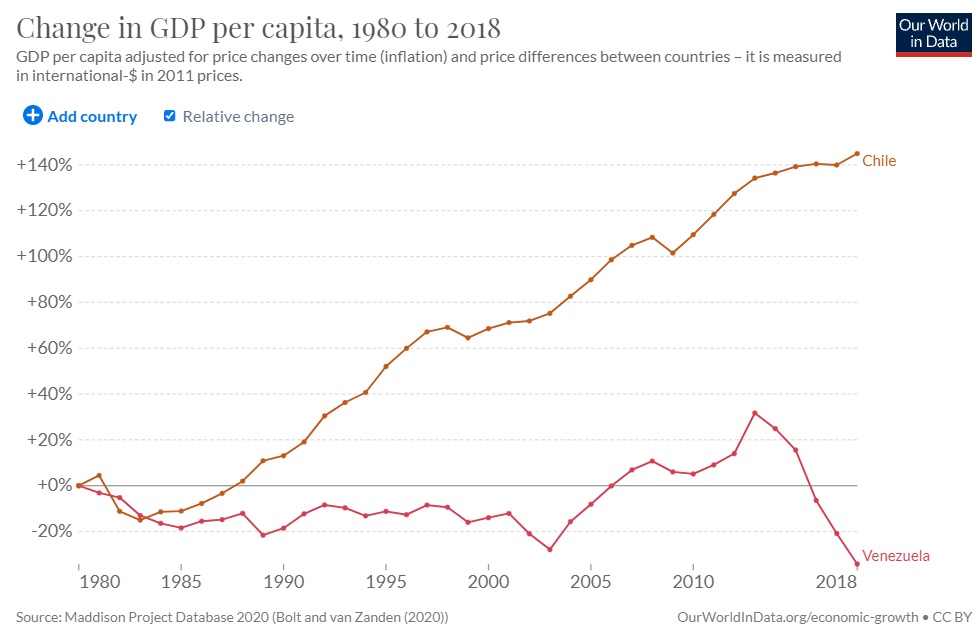
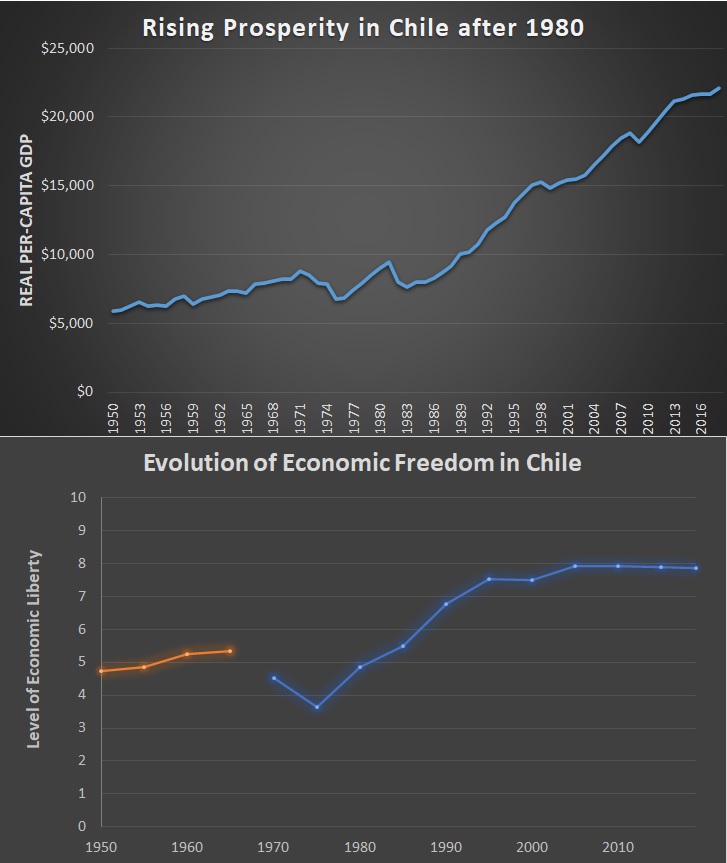

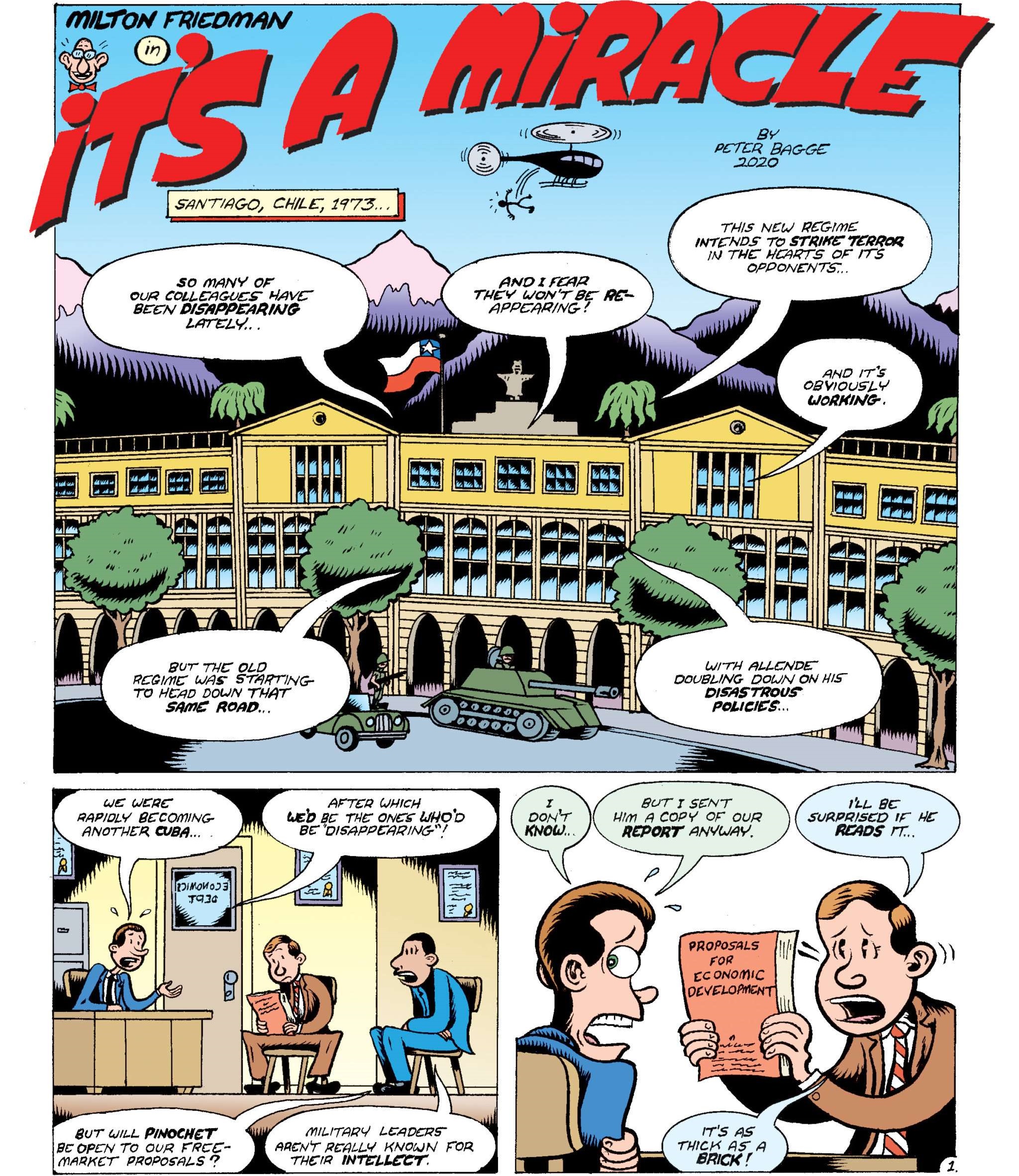
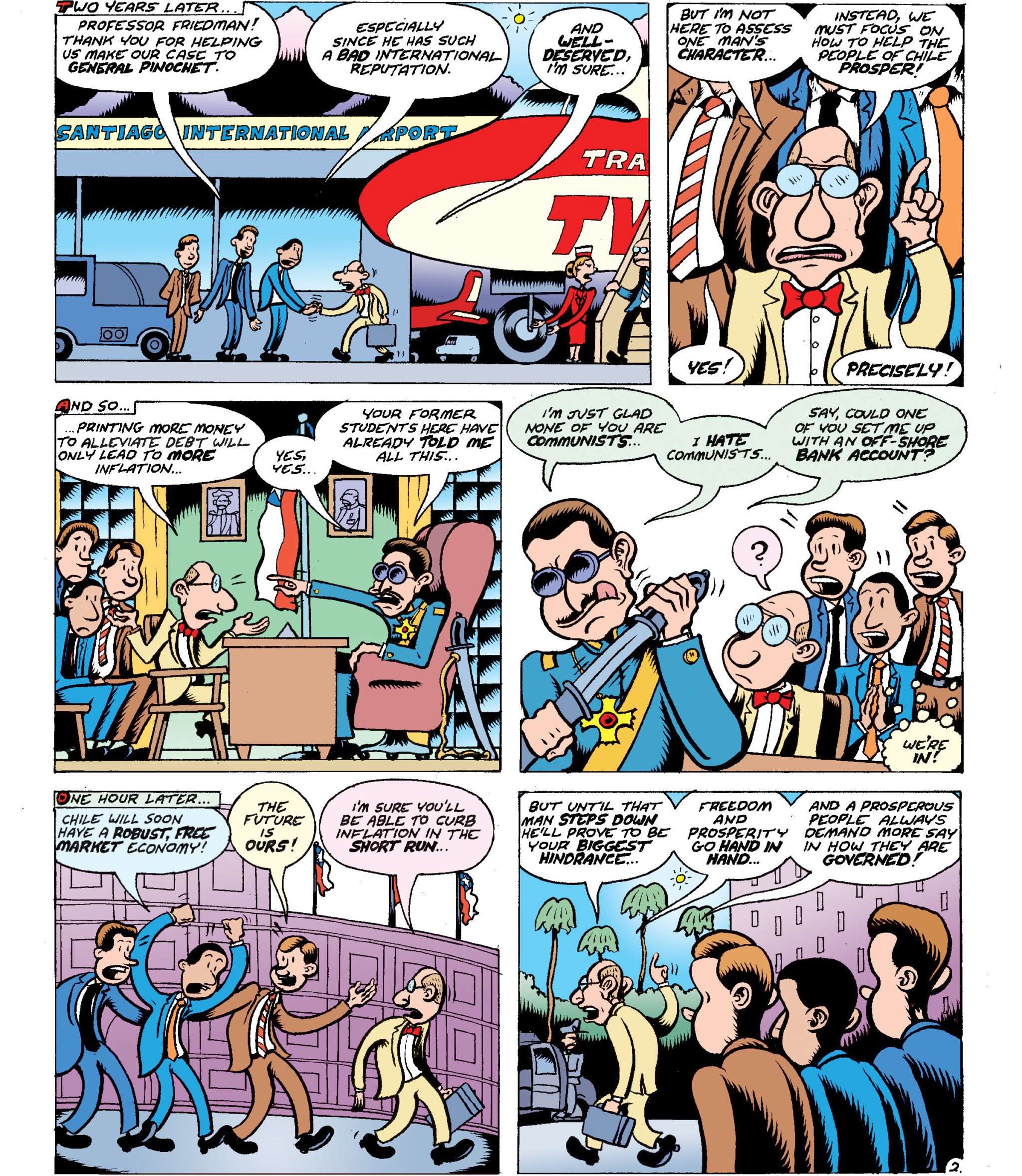
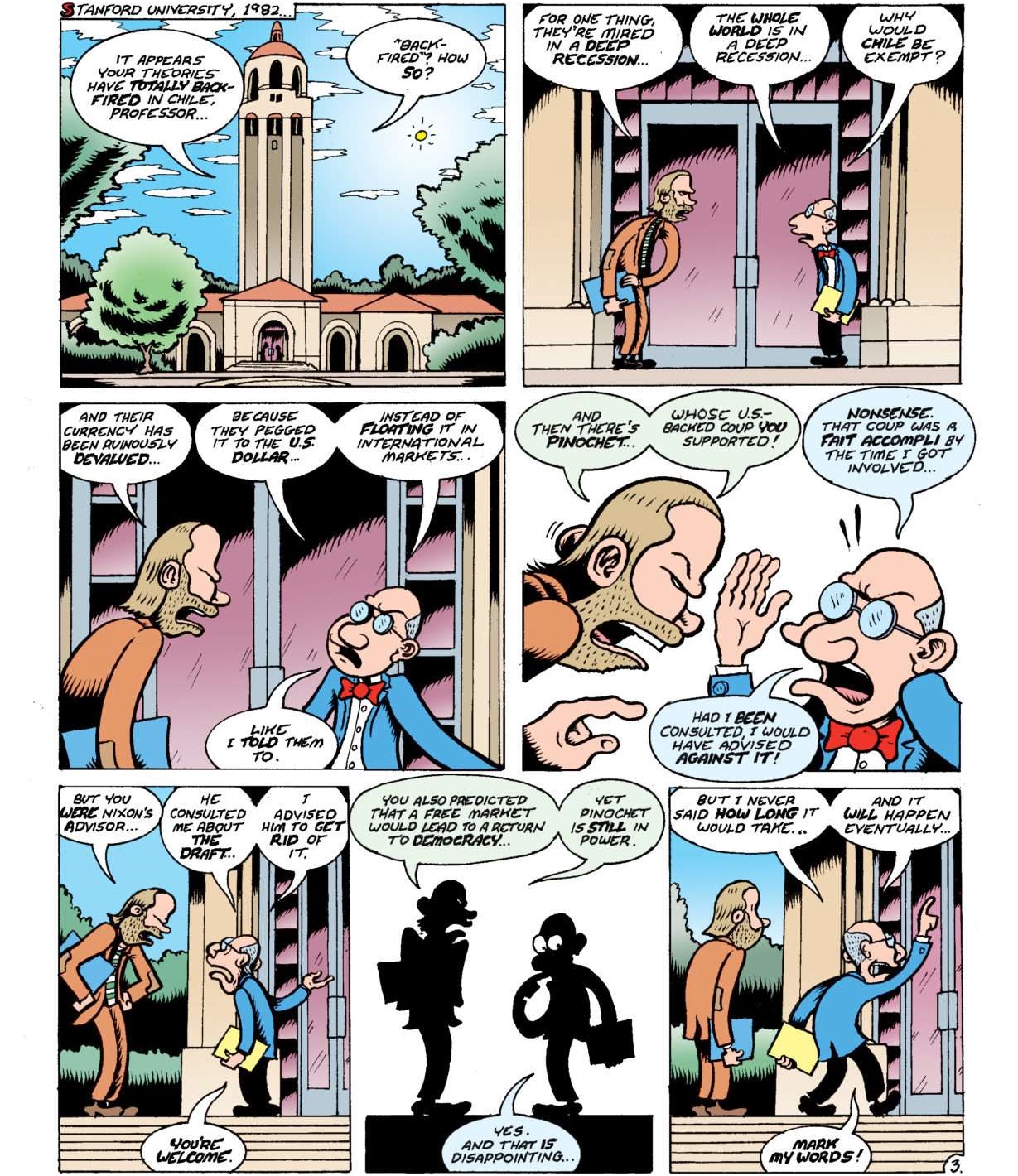
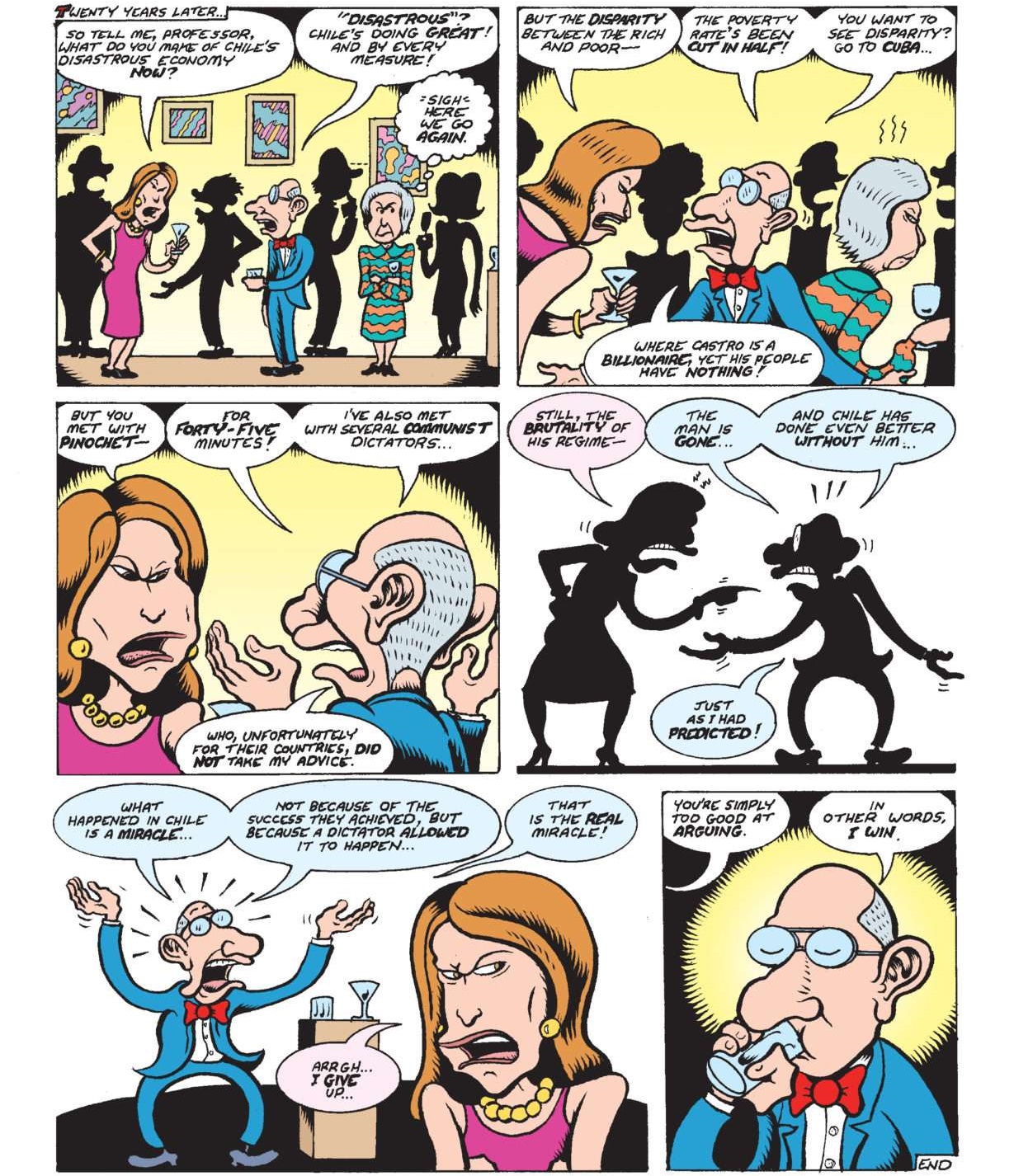





















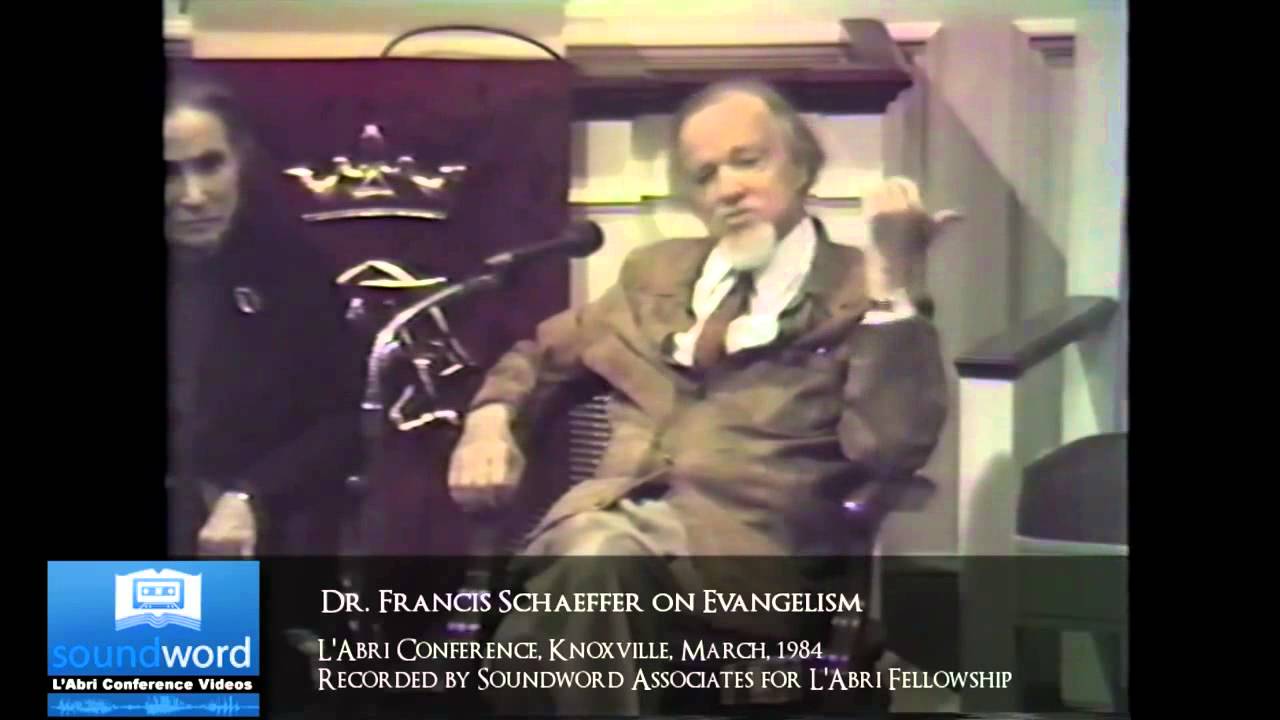


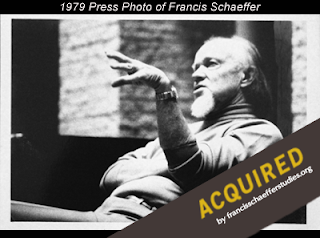


 The Daily Hatch