Monthly Archives: February 2024

RESPONDING TO HARRY KROTO’S BRILLIANT RENOWNED ACADEMICS!! ( PAUSING TO LOOK AT THE LIFE OF LEWIS WOLPERT WHO I HAD THE PRIVILEGE TO CORRESPOND) Part 174 second letter written June 6, 2014 (70 years after D Day)

On November 21, 2014 I received a letter from Nobel Laureate Harry Kroto and it said:

…Please click on this URL http://vimeo.com/26991975

and you will hear what far smarter people than I have to say on this matter. I agree with them.

Harry Kroto

Nick Gathergood, David-Birkett, Harry-Kroto

I have attempted to respond to all of Dr. Kroto’s friends arguments and I have posted my responses one per week for over a year now. Here are some of my earlier posts:

Arif Ahmed, Sir David AttenboroughMark Balaguer, Horace Barlow, Michael BatePatricia ChurchlandAaron CiechanoverNoam Chomsky,Alan DershowitzHubert Dreyfus, Bart Ehrman, Stephan FeuchtwangDavid Friend,  Riccardo GiacconiIvar Giaever , Roy GlauberRebecca GoldsteinDavid J. Gross,  Brian Greene, Susan GreenfieldStephen F Gudeman,  Alan Guth, Jonathan HaidtTheodor W. Hänsch, Brian Harrison,  Hermann HauserRoald Hoffmann,  Bruce HoodHerbert Huppert,  Gareth Stedman Jones, Steve JonesShelly KaganMichio Kaku,  Stuart Kauffman,  Lawrence KraussHarry Kroto, George LakoffElizabeth Loftus,  Alan MacfarlanePeter MillicanMarvin MinskyLeonard Mlodinow,  Yujin NagasawaAlva NoeDouglas Osheroff,  Jonathan Parry,  Saul PerlmutterHerman Philipse,  Carolyn PorcoRobert M. PriceLisa RandallLord Martin Rees,  Oliver Sacks, John SearleMarcus du SautoySimon SchafferJ. L. Schellenberg,   Lee Silver Peter Singer,  Walter Sinnott-ArmstrongRonald de Sousa, Victor StengerBarry Supple,   Leonard Susskind, Raymond TallisNeil deGrasse Tyson,  .Alexander Vilenkin, Sir John WalkerFrank WilczekSteven Weinberg, and  Lewis Wolpert,

In  the second video below in the 64th clip in this series are his words and  my response is below them. 

50 Renowned Academics Speaking About God (Part 1)

Another 50 Renowned Academics Speaking About God (Part 2)

A Further 50 Renowned Academics Speaking About God (Part 3)

_________________________________

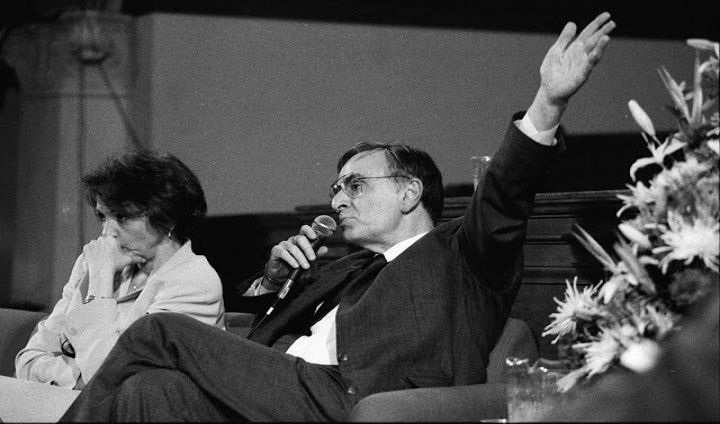
Lewis Wolpert Quote:

I am not against people being religious. I think it helps you a great deal. I am against religion when it interferes in the lives of other people…If you believe for example that the fertilized egg is really a human being which some people in your religious organizations believe then I am very hostile to you because it is nonsense and this is one of my subjects developmental biology or if you are against contraception for religious reason  then therefore AIDS can become more common. So I am not against people having a belief in God. I do believe that believe is false. Whatever arguments I  give you I have no delusion that I will persuade you to change your minds.

Dr. Lewis Wolpert, Emeritus Professor in Cell and Developmental Biology.University College London, Gower Street
London WC1E 6BT, United Kingdom

June 6, 2014 (70 years after D Day)

Dear Dr. Wolpert,

You will notice later down in the body of this letter that I quote H. J. Blackham. Did you know him by any chance? His statement on nihilism and the humanist dilemma really indicates that life is hopeless on humanist assumptions.

A couple of months ago I mailed you a letter that contained correspondence I had with Antony Flew and Carl Sagan and I also included some of the material I had sent them from Adrian Rogers and Francis Schaeffer. Did you have a chance to listen to the IS THE BIBLE TRUE? CD yet? I also wanted to let know some more about about Francis Schaeffer. Ronald Reagan said of Francis Schaeffer, “He will long be remembered as one of the great Christian thinkers of our century, with a childlike faith and a profound compassion toward others. It can rarely be said of an individual that his life touched many others and affected them for the better; it will be said of Francis Schaeffer that his life touched millions of souls and brought them to the truth of their creator.”

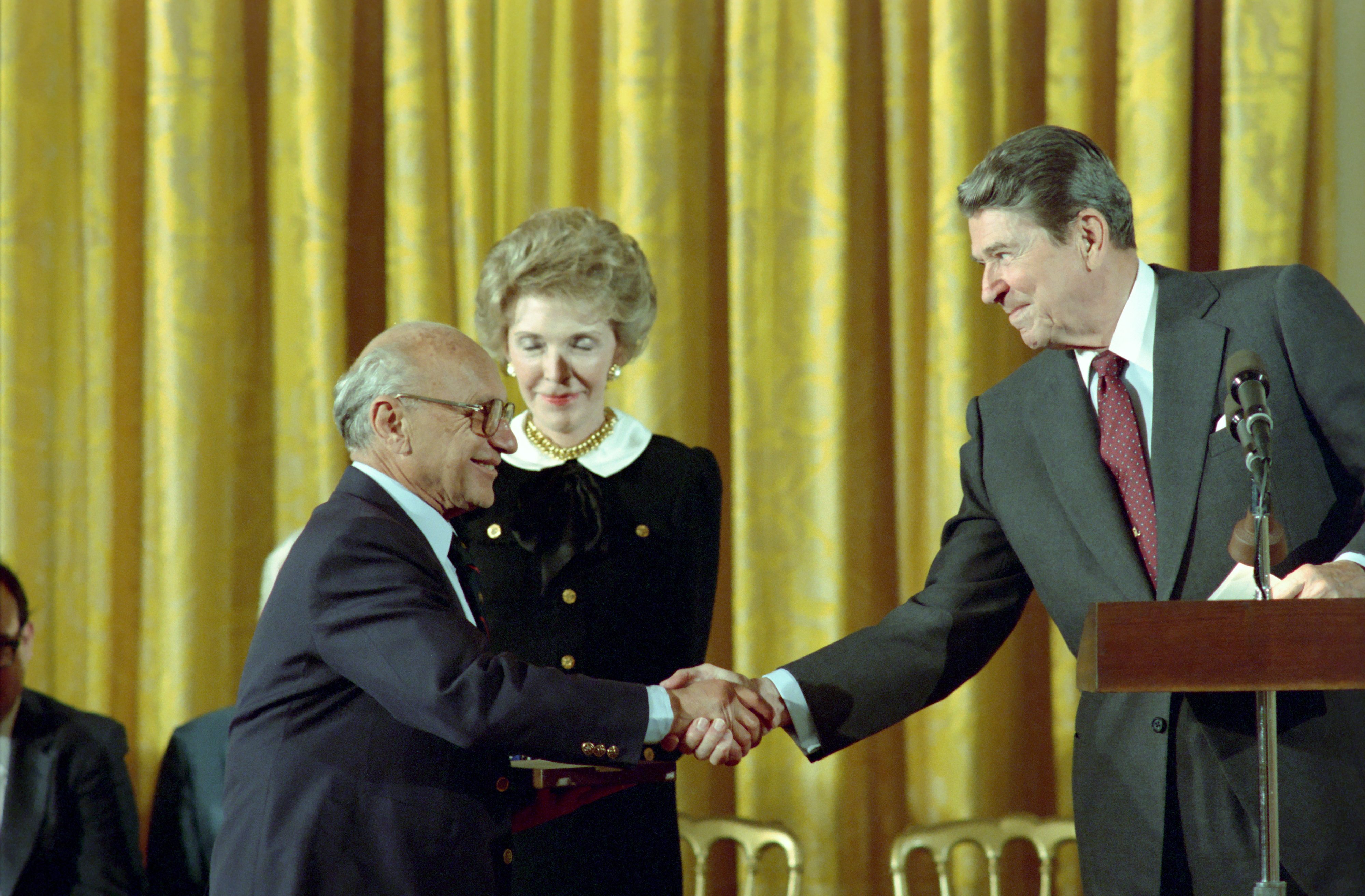
Thirty years ago the christian philosopher and author Francis Schaeffer (1912-1984) died and on the 10th anniversary of his passing in 1994 I wrote a number of the top evolutionists, humanists and atheistic scholars in the world and sent them a story about Francis Schaeffer in 1930 when he left agnosticism and embraced Christianity. I also sent them  a cassette tape with the title “Four intellectual bridges evolutionists can’t cross” by Adrian Rogers (1931-2005) and some of the top  scholars who corresponded with me since that time include Ernest Mayr (1904-2005), George Wald (1906-1997), Carl Sagan (1934-1996),  Robert Shapiro (1935-2011), Nicolaas Bloembergen (1920-),  Brian Charlesworth (1945-),  Francisco J. Ayala (1934-) Elliott Sober (1948-), Kevin Padian (1951-), Matt Cartmill (1943-) , Milton Fingerman (1928-), John J. Shea (1969-), , Michael A. Crawford (1938-), (Paul Kurtz (1925-2012), Sol Gordon (1923-2008), Albert Ellis (1913-2007), Barbara Marie Tabler (1915-1996), Renate Vambery (1916-2005), Archie J. Bahm (1907-1996), Aron S “Gil” Martin ( 1910-1997), Matthew I. Spetter (1921-2012), H. J. Eysenck (1916-1997), Robert L. Erdmann (1929-2006), Mary Morain (1911-1999), Lloyd Morain (1917-2010),  Warren Allen Smith (1921-), Bette Chambers (1930-),  Gordon Stein (1941-1996) , Milton Friedman (1912-2006), John Hospers (1918-2011), and Michael Martin (1932-).

The truth is that I am an evangelical Christian and I have enjoyed developing relationships with skeptics and humanists over the years. Back in 1996 I took my two sons who were 8  and 10 yrs old back then to New York, Washington, Philadelphia, Delaware, and New Jersey and we had dinner one night with Herbert A. Tonne, who was one of the signers of the Humanist Manifesto II. The Late Professor John George who has written books for Prometheus Press was my good friend during the last 10 years of his life. (I still miss him today.) We often ate together and were constantly talking on the phone and writing letters to one another.

It is a funny story how I met Dr. George. As an evangelical Christian and a member of the Christian Coalition, I felt obliged to expose a misquote of John Adams’ I found in an article entitled “America’s Unchristian Beginnings” by the self-avowed atheist Dr. Steven Morris. However, what happened next changed my focus to the use of misquotes, unconfirmed quotes, and misleading attributions by the religious right.

In the process of attempting to correct Morris, I was guilty of using several misquotes myself. Professor John George of the University of Central Oklahoma political science department and coauthor (with Paul Boller Jr.) of the book THEY NEVER SAID IT! set me straight. George pointed out that George Washington never said, “It is impossible to rightly govern the world without God and the Bible. I had cited page 18 of the 1927 edition of HALLEY’S BIBLE HANDBOOK. This quote was probably generated by a similar statement that appears in A LIFE OF WASHINGTON by James Paulding. Sadly, no one has been able to verify any of the quotes in Paulding’s book since no footnotes were offered.

After reading THEY NEVER SAID IT! I had a better understanding of how widespread the problem of misquotes is. Furthermore, I discovered that many of these had been used by the leaders of the religious right. I decided to confront some individuals concerning their misquotes. WallBuilders, the publisher of David Barton’s THE MYTH OF SEPARATION, responded by providing me with their “unconfirmed  quote” list which contained a dozen quotes widely used by the religious right.

Sadly some of the top leaders of my own religious right have failed to take my encouragement to stop using these quotes and they have either claimed that their critics were biased skeptics who find the truth offensive or they defended their own method of research and claimed the secondary sources were adequate.

I have enclosed that same CD by Adrian Rogers that I sent 20 years ago although the second half does include a story about  Charles Darwin‘s journey from  the position of theistic evolution to agnosticism. Here are the four bridges that Adrian Rogers says evolutionists can’t cross in the CD  “Four Bridges that the Evolutionist Cannot Cross.” 1. The Origin of Life and the law of biogenesis. 2. The Fixity of the Species. 3.The Second Law of Thermodynamics. 4. The Non-Physical Properties Found in Creation.  

In the first 3 minutes of the CD is the hit song “Dust in the Wind.” In the letter 20 years ago I gave some of the key points Francis Schaeffer makes about the experiment that Solomon undertakes in the book of Ecclesiastes to find satisfaction by  looking into  learning (1:16-18), laughter, ladies, luxuries,  and liquor (2:1-3, 8, 10, 11), and labor (2:4-6, 18-20).

I later learned this book of Ecclesiastes was Richard Dawkins’ favorite book in the Bible. Schaeffer noted that Solomon took a look at the meaning of life on the basis of human life standing alone between birth and death “under the sun.” This phrase UNDER THE SUN appears over and over in Ecclesiastes. The Christian Scholar Ravi Zacharias noted, “The key to understanding the Book of Ecclesiastes is the term UNDER THE SUN — What that literally means is you lock God out of a closed system and you are left with only this world of Time plus Chance plus matter.” No wonder Ecclesiastes is Richard Dawkins’ favorite book of the Bible! 

Here the first 7 verses of Ecclesiastes followed by Schaeffer’s commentary on it:

The words of the Preacher, the son of David, king in Jerusalem. Vanity of vanities, says the Preacher, vanity of vanities! All is vanity. What does man gain by all the toil at which he toils under the sun? A generation goes, and a generation comes, but the earth remains forever. The sun rises, and the sun goes down, and hastens to the place where it rises. The wind blows to the south and goes around to the north; around and around goes the wind, and on its circuits the wind returns. All streams run to the sea, but the sea is not full; to the place where the streams flow, there they flow again.  

Solomon is showing a high degree of comprehension of evaporation and the results of it. (E.O.Wilson has marveled at Solomon’s scientific knowledge of ants that was only discovered in the 1800’s.) Seeing also in reality nothing changes. There is change but always in a set framework and that is cycle. You can relate this to the concepts of modern man. Ecclesiastes is the only pessimistic book in the Bible and that is because of the place where Solomon limits himself. He limits himself to the question of human life, life under the sun between birth and death and the answers this would give.

Solomon doesn’t place man outside of the cycle. Man doesn’t escape the cycle. Man is in the cycle. Birth and death and youth and old age.

There is no doubt in my mind that Solomon had the same experience in his life that I had as a younger man (at the age of 18 in 1930). I remember standing by the sea and the moon arose and it was copper and beauty. Then the moon did not look like a flat dish but a globe or a sphere since it was close to the horizon. One could feel the global shape of the earth too. Then it occurred to me that I could contemplate the interplay of the spheres and I was exalted because I thought I can look upon them with all their power, might, and size, but they could contempt nothing. Then came upon me a horror of great darkness because it suddenly occurred to me that although I could contemplate them and they could contemplate nothing yet they would continue to turn in ongoing cycles when I saw no more forever and I was crushed.

_______________

You are an atheist and you have a naturalistic materialistic worldview, and this short book of Ecclesiastes should interest you because the wisest man who ever lived in the position of King of Israel came to THREE CONCLUSIONS that will affect you.

FIRST, chance and time have determined the past, and they will determine the future.  (Ecclesiastes 9:11-13)

These two verses below  take the 3 elements mentioned in a naturalistic materialistic worldview (time, chance and matter) and so that is all the unbeliever can find “under the sun” without God in the picture. You will notice that these are the three elements that evolutionists point to also.

Ecclesiastes 9:11-12 is following: I have seen something else under the sun: The race is not to the swift or the battle to the strong, nor does food come to the wise or wealth to the brilliant or favor to the learned; but time and chance happen to them all. Moreover, no one knows when their hour will come: As fish are caught in a cruel net, or birds are taken in a snare, so people are trapped by evil times that fall unexpectedly upon them.

SECOND, Death is the great equalizer (Eccl 3:20, “All go to the same place; all come from dust, and to dust all return.”)

THIRD, Power reigns in this life, and the scales are not balanced(Eccl 4:1, 8:15)

Ecclesiastes 4:1-2: “Next I turned my attention to all the outrageous violence that takes place on this planet—the tears of the victims, no one to comfort them; the iron grip of oppressors, no one to rescue the victims from them.” Ecclesiastes 8:14; “ Here’s something that happens all the time and makes no sense at all: Good people get what’s coming to the wicked, and bad people get what’s coming to the good. I tell you, this makes no sense. It’s smoke.”

Solomon had all the resources in the world and he found himself searching for meaning in life and trying to come up with answers concerning the afterlife. However, it seems every door he tries to open is locked. Today men try to find satisfaction in learning, liquor, ladies, luxuries, laughter, and labor and that is exactly what Solomon tried to do too.  None of those were able to “fill the God-sized vacuum in his heart” (quote from famous mathematician and philosopher Blaise Pascal). You have to wait to the last chapter in Ecclesiastes to find what Solomon’s final conclusion is.

In 1978 I heard the song “Dust in the Wind” by Kansas when it rose to #6 on the charts. That song told me that Kerry Livgren the writer of that song and a member of Kansas had come to the same conclusion that Solomon had. I remember mentioning to my friends at church that we may soon see some members of Kansas become Christians because their search for the meaning of life had obviously come up empty even though they had risen from being an unknown band to the top of the music business and had all the wealth and fame that came with that. Furthermore, Solomon realized death comes to everyone and there must be something more.

Livgren wrote:

All we do, crumbles to the ground though we refuse to see, Dust in the Wind, All we are is dust in the wind, Don’t hang on, Nothing lasts forever but the Earth and Sky, It slips away, And all your money won’t another minute buy.”

Take a minute and compare Kerry Livgren‘s words to that of the late British humanist H.J. Blackham:

On humanist assumptions, life leads to nothing, and every pretense that it does not is a deceit. If there is a bridge over a gorge which spans only half the distance and ends in mid-air, and if the bridge is crowded with human beings pressing on, one after the other they fall into the abyss. The bridge leads nowhere, and those who are pressing forward to cross it are going nowhere….It does not matter where they think they are going, what preparations for the journey they may have made, how much they may be enjoying it all. The objection merely points out objectively that such a situation is a model of futility“( H. J. Blackham, et al., Objections to Humanism (Riverside, Connecticut: Greenwood Press, 1967).

_____________________________________

Both Kerry Livgren and the bass player DAVE HOPE of Kansas became Christians eventually. Kerry Livgren first tried Eastern Religions and DAVE HOPE had to come out of a heavy drug addiction. I was shocked and elated to see their personal testimony on The 700 Club in 1981 and that same  interview can be seen on youtube today. Livgren lives in Topeka, Kansas today where he teaches “Diggers,” a Sunday school class at Topeka Bible ChurchDAVE HOPE is the head of Worship, Evangelism and Outreach at Immanuel Anglican Church in Destin, Florida.

Solomon’s experiment was a search for meaning to life “under the sun.” Then in last few words in the Book of Ecclesiastes he looks above the sun and brings God back into the picture: “The conclusion, when all has been heard, is: Fear God and keep His commandments, because this applies to every person. For God will bring every act to judgment, everything which is hidden, whether it is good or evil.”

The answer to find meaning in life is found in putting your faith and trust in Jesus Christ. The Bible is true from cover to cover and can be trusted.

have done a lot of blog posts in the past about War heroes from Arkansas. Now there seems to be an opportunity to write again on this subject. Last night on the news I saw a story about one of those who fought on D Day 70 years on June 6, 1944 and it was 92-year-old Denman Wolfe who is a Fayetteville, Arkansas resident who landed on Omaha beach as an army ranger. Wolfe says he jumped from the boat into rough water that was over his head. Wolfe said,”Cross the beach as best as you could, you couldn’t stop to think about nothing, you had to move on through…The Germans were up on the hill, mowing us down with machine guns and their 88 artillery. So, people just falling all around you.”

“I’m proud to have been a ranger, yes I really am,” expressed Wolfe. He says the real heroes are the soldiers that lost their lives on D-day.

Albert Camus asserted,”A man without ethics is a wild beast loosed upon the world.” Sounds like a good description of Hitler. Denman Wolfe and his friends were sent to bring Hitler and his friends to justice, and about a year later the Nuremberg Trials were held. Both Hitler and Himmler noted that Christianity’s notion of charity should be “replaced by the ethic of strength over weakness.” If God doesn’t exist then on what basis could we say that Hitler was wrong and why did Wolfe risk his life for others when there was no afterlife to reward good and punish evil? Agnostic Professor Arthur Allen Leff (1935–1981) of Yale Law School put it this way, “As things stand now, everything is up for grabs. Nevertheless, Napalming babies is bad, and starving the poor is wicked. Buying and selling each other is depraved and there is in the world such a thing as evil. [All together now:] Sez who? God help us.” Likewise,  Fyodor Dostoyevsky (1821–1881) observed in his novel THE BROTHERS KARAMAZOV, “if there is no God, all things are permissible.”

Judge Roy Moore noted:

Both the British and American prosecutors were expressing something well understood in the law at that time – the law of man and nations is subject to the laws of God and the laws of nature. Sir William Blackstone in his “Commentaries on the Laws of England” in 1765 explained the law of nature in this way, “This law of nature, being co-eval [co-existent] with mankind and dictated by God himself, is of course superior in obligation to any other. It is binding over all the globe, in all countries, and at all times: no human laws are of any validity, if contrary to this. …”

Norman Geisler in a debate with Paul Kurtz in 1986 on the JOHN ANKERBERG SHOW asserted:

This great country began with these great words: “We hold these truths to be self-evident, that all men are created equal. They are endowed by their Creator with certain inalienable rights,… among these are life, liberty and the pursuit of happiness.” There are at least three great principles in there: a Creator, man was created, and certain moral absolutes.

I wanted to write you today for one reason and that is that I wanted to demonstrate to you how weak a philosophy humanism is through an illustration given in a Woody Allen movie.

Carl Sagan said that he missed his parents terribly and he wished he could believe in the afterlife but he was not convinced because of the lack of proof. I had the opportunity to correspond back and forth with Carl Sagan.  I presented him evidence that the Bible was true and there was an afterlife,  but he would not accept the evidence.

Today I want to take another approach to the issue of the afterlife and that is the pure and simple fact that without an enforcement factor people can do what they want in this life and get away with it. This is a big glaring weakness in the Humanist Manifestos that have been published so far. All three of them do not recognize the existence of God who is our final judge. (I am not claiming that this is evidence that points to an afterlife, but this post will demonstrate that atheists many times have not thought through the full ramifications of their philosophy of life.)

I had the unique opportunity to discuss this very issue with Robert Lester Mondale and his wife Rosemary  on April 14, 1996 at his cabin in Fredricktown, Missouri , and my visit was very enjoyable and informative. Mr. Mondale had the distinction of being the only person to sign all three of the Humanist Manifestos in 1933, 1973 and 2003. I asked him which signers of Humanist Manifesto Number One did he know well and he said that Raymond B. Bragg, and Edwin H. Wilson  and him were known as “the three young radicals of the group.”  Harold P. Marley used to have a cabin near his and they used to take long walks together, but Marley’s wife got a job in Hot Springs, Arkansas and they moved down there.

Roy Wood Sellars was a popular professor of philosophy that he knew. I asked if he knew John Dewey and he said he did not, but Dewey did contact him one time to ask him some questions about an article he had written, but Mondale could not recall anything else about that.

Mondale told me some stories about his neighbors and we got to talking about some of his church members when he was an Unitarian pastor. Once during the 1930’s he was told by one of his wealthier Jewish members that he shouldn’t continue to be critical of the Nazis. This member had just come back from Germany and according to him Hitler had done a great job of getting the economy moving and things were good.

Of course, just a few years later after World War II was over Mondale discovered on a second hand basis what exactly had happened over there when he visited with a Lutheran pastor friend who had just returned from Germany. This Lutheran preacher was one of the first to be allowed in after the liberation of the concentration camps in 1945, and he told Mondale what level of devastation and destruction of  innocent lives went on inside these camps. As Mondale listened to his friend he could feel his own face turning pale.

I asked, “If those Nazis escaped to Brazil or Argentina and lived out their lives in peace would they face judgment after they died?”

Mondale responded, “I don’t think there is anything after death.”

I told Mr. Mondale that there is sense in me that says  justice will be given eventually and God will judge those Nazis even if they evade punishment here on earth. I did point out that in Ecclesiastes 4:1 Solomon did note that without God in the picture  the scales may not be balanced in this life and power could reign, but at the same time the Bible teaches that all  must face the ultimate Judge.

Then I asked him if he got to watch the O.J. Simpson trial and he said that he did and he thought that the prosecution had plenty of evidence too. Again I asked Mr. Mondale the same question concerning O.J. and he responded, “I don’t think there is a God that will intervene and I don’t believe in the afterlife.”

Dan Guinn posted on his blog at http://www.francisschaefferstudies.org concerning the Nazis and evolution: As Schaeffer points out, “…these ideas helped produce an even more far-reaching yet logical conclusion: the Nazi movement in Germany. Heinrich Himmler (1900-1945), leader of the Gestapo, stated that the law of nature must take its course in the survival of the fittest. The result was the gas chambers. Hitler stated numerous times that Christianity and its notion of charity should be “replaced by the ethic of strength over weakness.” Surely many factors were involved in the rise of National Socialism in Germany. For example, the Christian consensus had largely been lost by the undermining from a rationalistic philosophy and a romantic pantheism on the secular side, and a liberal theology (which was an adoption of rationalism in theological terminology) in the universities and many of the churches. Thus biblical Christianity was no longer giving the consensus for German society. After World War I came political and economic chaos and a flood of moral permissiveness in Germany. Thus, many factors created the situation. But in that setting the theory of the survival of the fittest sanctioned what occurred. ”

Francis Schaeffer notes that this idea ties into today when we are actually talking about making infanticide legal in some academic settings. Look at what these three humanist scholars have written:

  • Peter Singer, who recently was seated in an endowed chair at Princeton’s Center for Human Values, said, “Killing a disabled infant is not morally equivalent to killing a person. Very often it is not wrong at all.”
  • In May 1973, James D. Watson, the Nobel Prize laureate who discovered the double helix of DNA, granted an interview to Prism magazine, then a publication of the American Medical Association. Time later reported the interview to the general public, quoting Watson as having said, “If a child were not declared alive until three days after birth, then all parents could be allowed the choice only a few are given under the present system. The doctor could allow the child to die if the parents so choose and save a lot of misery and suffering. I believe this view is the only rational, compassionate attitude to have.”
  • In January 1978, Francis Crick, also a Nobel laureate, was quoted in the Pacific News Service as saying “… no newborn infant should be declared human until it has passed certain tests regarding its genetic endowment and that if it fails these tests it forfeits the right to live.”

Woody Allen’s 1989 movie, CRIMES AND MISDEMEANORS , was on this very subject of the Nazis that Lester Mondale and I discussed on that day in 1996 at Mondale’s cabin in Missouri.  In this film, Allen attacks his own atheistic view of morality. Martin Landau plays a Jewish eye doctor named Judah Rosenthal raised by a religious father who always told him, “The eyes of God are always upon you.” However, Judah later concludes that God doesn’t exist. He has his mistress (played in the film by Anjelica Huston) murdered because she continually threatened to blow the whistle on his past questionable, probably illegal, business activities. She also attempted to break up Judah’s respectable marriage by going public with their two-year affair. Judah struggles with his conscience throughout the remainder of the movie and continues to be haunted by his father’s words: “The eyes of God are always upon you.” This is a very scary phrase to a young boy, Judah observes. He often wondered how penetrating God’s eyes are.

Later in the film, Judah reflects on the conversation his religious father had with Judah ‘s unbelieving Aunt May at the dinner table many years ago:

“Come on Sol, open your eyes. Six million Jews burned to death by the Nazis, and they got away with it because might makes right,” says aunt May

Sol replies, “May, how did they get away with it?”

Judah asks, “If a man kills, then what?”

Sol responds to his son, “Then in one way or another he will be punished.”

Aunt May comments, “I say if he can do it and get away with it and he chooses not to be bothered by the ethics, then he is home free.”

Judah ‘s final conclusion was that might did make right. He observed that one day, because of this conclusion, he woke up and the cloud of guilt was gone. He was, as his aunt said, “home free.”

Woody Allen has exposed a weakness in his own humanistic view that God is not necessary as a basis for good ethics. There must be an enforcement factor in order to convince Judah not to resort to murder. Otherwise, it is fully to Judah ‘s advantage to remove this troublesome woman from his life. CAN A MATERIALIST OR A HUMANIST THAT DOES NOT BELIEVE IN AN AFTERLIFE GIVE JUDAH ONE REASON WHY HE SHOULDN’T HAVE HIS MISTRESS KILLED?

The Bible tells us, “{God} has also set eternity in the hearts of men…” (Ecclesiastes 3:11 NIV). The secularist calls this an illusion, but the Bible tells us that the idea that we will survive the grave was planted in everyone’s heart by God Himself. Romans 1:19-21 tells us that God has instilled a conscience in everyone that points each of them to Him and tells them what is right and wrong (also Romans 2:14 -15).

It’s no wonder, then, that one of Allen’s fellow humanists would comment, “Certain moral truths — such as do not kill, do not steal, and do not lie — do have a special status of being not just ‘mere opinion’ but bulwarks of humanitarian action. I have no intention of saying, ‘I think Hitler was wrong.’ Hitler WAS wrong.” (Gloria Leitner, “A Perspective on Belief,” THE HUMANIST, May/June 1997, pp. 38-39)

Here Leitner is reasoning from her God-given conscience and not from humanist philosophy. It wasn’t long before she received criticism. Humanist Abigail Ann Martin responded, “Neither am I an advocate of Hitler; however, by whose criteria is he evil?” (THE HUMANIST, September/October 1997, p. 2)

On the April 13, 2014 episode of THE GOOD WIFE called “The Materialist,” Alicia in a custody case asks the father Professor Mercer some questions about his own academic publications. She reads from his book that he is a “materialist and he believes that “free-will is just an illusion,” and we are all just products of the physical world and that includes our thoughts and emotions and there is no basis for calling anything right or wrong. Sounds like to me the good professor would agree wholeheartedly with the humanist Abigail Ann Martin’s assertion concerning Hitler’s morality too! Jean-Paul Sartre noted, “No finite point has meaning without an infinite reference point.”

Christians agree with Judah ‘s father that “The eyes of God are always upon us.” Proverbs 5:21 asserts, “For the ways of man are before the eyes of the Lord, and He ponders all his paths.” Revelation 20:12 states, “…And the dead were judged (sentenced) by what they had done (their whole way of feeling and acting, their aims and endeavors) in accordance with what was recorded in the books” (Amplified Version). The Bible is revealed truth from God. It is the basis for our morality. Judah inherited the Jewish ethical values of the Ten Commandments from his father, but, through years of life as a skeptic, his standards had been lowered. Finally, we discover that Judah ‘s secular version of morality does not resemble his father’s biblically-based morality.

Woody Allen’s CRIMES AND MISDEMEANORS forces unbelievers to grapple with the logical conclusions of a purely secular morality, and  the secularist has no basis for asserting that Judah is wrong.

Larry King actually mentioned on his show, LARRY KING LIVE, that Chuck Colson had discussed the movie CRIMES AND MISDEMEANORS with him. Colson asked King if life was just a Darwinian struggle where the ruthless come out on top. Colson continued, “When we do wrong, is that our only choice? Either live tormented by guilt, or else kill our conscience and live like beasts?” (BREAKPOINT COMMENTARY, “Finding Common Ground,” September 14, 1993)

Josef Mengele tortured and murdered many Jews and then lived the rest of his long life out in South America in peace. Will he ever face judgment for his actions?

The ironic thing is that at the end of our visit I that pointed out to Mr. Mondale that Paul Kurtz had said  in light of the horrible events in World War II that Kurtz witnessed himself in the death camps (Kurtz entered a death camp as an U.S. Soldier to liberate it) that it was obvious that Humanist Manifesto I was way too optimistic and it was necessary to come up with another one.  I thought that might encourage  Mr. Mondale to comment further on our earlier conversion concerning evil deeds, but he just said, “That doesn’t surprise me that Kurtz would say something like that.”

I noticed in Wikipedia:

The second Humanist Manifesto was written in 1973 by Paul Kurtz and Edwin H. Wilson, and was intended to update the previous one. It begins with a statement that the excesses of Nazism and world war had made the first seem “far too optimistic”, and indicated a more hardheaded and realistic approach in its seventeen-point statement, which was much longer and more elaborate than the previous version. Nevertheless, much of the unbridled optimism of the first remained, with hopes stated that war would become obsolete and poverty would be eliminated.

_________________

This is Lester Mondale’s obituary from the American Humanist Association:

R. Lester Mondale of Fredricktown, Missouri died on August 19, 2003, he was ninety-nine years old. Mondale was the last living signer of Humanist Manifesto I (he was the youngest to sign in 1933). He was also the only person to sign all three manifestos.

An AHA member perhaps since the organization’s founding, he received the AHA’s Humanist Pioneer award in 1973 and the Humanist Founder award in 2001. Mondale became a Unitarian minister after being raised a Methodist.

He was very active with the American Humanist Association, the American Ethical Union and served as president of the Fellowship of Religious Humanists in the 60’s and 70’s. Humanists Vice President Sarah Oelberg says that Mondale’s death marks “truly the end of an era” and AHA Director of Planned Giving Bette Chambers calls him “a great man, a great Humanist.”

Lester is survived by his wife, Rosemary, and four daughters: Karen Mondale of St. Louis, Missouri; Julia Jensen of St. Cloud, Minnesota; Tarrie Swenstad of Odin, Minnesota; and Ellen Mondale of Bethesda, Maryland. Also surviving him are his three brothers: Walter Mondale, former vice president of the United States, Pete Mondale, and Morton Mondale. Lester Mondale was also a proud grandparent of seven and a great-grandparent.

___

Thank you again for your time and I know how busy you are.

Everette Hatcher, everettehatcher@gmail.com, http://www.thedailyhatch.org, cell ph 501-920-5733, Box 23416, LittleRock, AR 72221

________

Related posts:

FRANCIS SCHAEFFER ANALYZES ART AND CULTURE Part 53 THE BEATLES (Part E, Stg. Pepper’s and John Lennon’s search in 1967 for truth was through drugs, money, laughter, etc & similar to King Solomon’s, LOTS OF PICTURES OF JOHN AND CYNTHIA) (Feature on artist Yoko Ono)

The John Lennon and the Beatles really were on a long search for meaning and fulfillment in their lives  just like King Solomon did in the Book of Ecclesiastes. Solomon looked into learning (1:12-18, 2:12-17), laughter, ladies, luxuries, and liquor (2:1-2, 8, 10, 11), and labor (2:4-6, 18-20). He fount that without God in the picture all […]

FRANCIS SCHAEFFER ANALYZES ART AND CULTURE Part 52 THE BEATLES (Part D, There is evidence that the Beatles may have been exposed to Francis Schaeffer!!!) (Feature on artist Anna Margaret Rose Freeman )

______________   George Harrison Swears & Insults Paul and Yoko Lucy in the Sky with Diamonds- The Beatles The Beatles:   I have dedicated several posts to this series on the Beatles and I don’t know when this series will end because Francis Schaeffer spent a lot of time listening to the Beatles and talking […]

FRANCIS SCHAEFFER ANALYZES ART AND CULTURE Part 51 THE BEATLES (Part C, List of those on cover of Stg.Pepper’s ) (Feature on artist Raqib Shaw )

  The Beatles in a press conference after their Return from the USA Uploaded on Nov 29, 2010 The Beatles in a press conference after their Return from the USA. The Beatles:   I have dedicated several posts to this series on the Beatles and I don’t know when this series will end because Francis […]

FRANCIS SCHAEFFER ANALYZES ART AND CULTURE Part 50 THE BEATLES (Part B, The Psychedelic Music of the Beatles) (Feature on artist Peter Blake )

__________________   Beatles 1966 Last interview I have dedicated several posts to this series on the Beatles and I don’t know when this series will end because Francis Schaeffer spent a lot of time listening to the Beatles and talking and writing about them and their impact on the culture of the 1960’s. In this […]

FRANCIS SCHAEFFER ANALYZES ART AND CULTURE Part 49 THE BEATLES (Part A, The Meaning of Stg. Pepper’s Cover) (Feature on artist Mika Tajima)

_______________ The Beatles documentary || A Long and Winding Road || Episode 5 (This video discusses Stg. Pepper’s creation I have dedicated several posts to this series on the Beatles and I don’t know when this series will end because Francis Schaeffer spent a lot of time listening to the Beatles and talking and writing about […]

FRANCIS SCHAEFFER ANALYZES ART AND CULTURE PART 48 “BLOW UP” by Michelangelo Antonioni makes Philosophic Statement (Feature on artist Nancy Holt)

_______________ Francis Schaeffer pictured below: _____________________ I have included the 27 minute  episode THE AGE OF NONREASON by Francis Schaeffer. In that video Schaeffer noted,  ” Sergeant Pepper’s Lonely Hearts Club Band…for a time it became the rallying cry for young people throughout the world. It expressed the essence of their lives, thoughts and their feelings.” How Should […]

FRANCIS SCHAEFFER ANALYZES ART AND CULTURE Part 47 Woody Allen and Professor Levy and the death of “Optimistic Humanism” from the movie CRIMES AND MISDEMEANORS Plus Charles Darwin’s comments too!!! (Feature on artist Rodney Graham)

Crimes and Misdemeanors: A Discussion: Part 1 ___________________________________ Today I will answer the simple question: IS IT POSSIBLE TO BE AN OPTIMISTIC SECULAR HUMANIST THAT DOES NOT BELIEVE IN GOD OR AN AFTERLIFE? This question has been around for a long time and you can go back to the 19th century and read this same […]

FRANCIS SCHAEFFER ANALYZES ART AND CULTURE PART 46 Friedrich Nietzsche (Featured artist is Thomas Schütte)

____________________________________ Francis Schaeffer pictured below: __________ Francis Schaeffer has written extensively on art and culture spanning the last 2000years and here are some posts I have done on this subject before : Francis Schaeffer’s “How should we then live?” Video and outline of episode 10 “Final Choices” , episode 9 “The Age of Personal Peace and Affluence”, episode 8 […]

FRANCIS SCHAEFFER ANALYZES ART AND CULTURE Part 45 Woody Allen “Reason is Dead” (Feature on artists Allora & Calzadilla )

Love and Death [Woody Allen] – What if there is no God? [PL] ___________ _______________ How Should We then Live Episode 7 small (Age of Nonreason) #02 How Should We Then Live? (Promo Clip) Dr. Francis Schaeffer 10 Worldview and Truth Two Minute Warning: How Then Should We Live?: Francis Schaeffer at 100 Francis Schaeffer […]

FRANCIS SCHAEFFER ANALYZES ART AND CULTURE Part 44 The Book of Genesis (Featured artist is Trey McCarley )

___________________________________ Francis Schaeffer pictured below: ____________________________ Francis Schaeffer “BASIS FOR HUMAN DIGNITY” Whatever…HTTHR Dr. Francis schaeffer – The flow of Materialism(from Part 4 of Whatever happened to human race?) Dr. Francis Schaeffer – The Biblical flow of Truth & History (intro) Francis Schaeffer – The Biblical Flow of History & Truth (1) Dr. Francis Schaeffer […]

__

Full interview: Israeli Prime Minister Benjamin Netanyahu on “Face the Nation” on 2/25/24

______

tuti netanyahu

—————

Clinton to Netanyahu: I’ll oppose any outside solution to conflict

Prime Minister Benjamin Netanyahu meets with Democratic nominee Hillary Clinton in New York, September 25, 2016 (Kobi Gideon/GPO)

———

bill_clinton_benjamin_netanyahu_getty.jpg

In this handout photo provided by the Israeli Government Press Office, Israeli prime minister Benjamin Netanyahu meets former U.S. President Bill Clinton, on November 8, 2010 in New York City. | Getty

BIBI AND OBAMA DISAGREED ON PALESTINIAN QUESTION!!!

We had a policy clash. Though our personalities were decidedly different in many respects, it was noted by some commentators that in one sense they were oddly similar. We both tended to the cerebral, and we came to politics to realize ideological convictions, viewing political power as a means to achieving our ends. But given our ideological divide, we differed sharply on what those ends should be. We clearly differed on the Palestinian issue, which Obama viewed through the distorted prism of the Palestinian narrative. He truly believed the Jews of Israel were neocolonials usurping the land from native Arab inhabitants, when the facts not only of ancient history but of modern times showed that things were the other way around. The Palestinian Arabs joined five Arab armies in their attempt in 1948 to uproot the Jews from their ancestral homeland and since then opposed any arrangement that would leave the Jewish state in place. In the extreme, Obama’s espousal of the Palestinian narrative manifested itself not only in flawed policy but also in personal attacks. He disregarded our history and disrespected Israel’s elected leader, who dared to disagree with him. I doubt that he applied the language and tactics he used against me to many, if any, other world leaders. In this I differed from him. No matter how deep the disagreement, I tried as best I could to avoid showing personal disrespect to democratically elected leaders.

________

GOP Senators Demand Biden Refreeze $6B for Iran

GOP Senators Demand Biden Refreeze $6B for Iran

Nine Senate Republicans, led by Sen. Marsha Blackburn, R-Tenn., demand that the Biden administration refreeze $6 billion intended for Iran, following Hamas’ terrorist attack on Israel. Pictured: Blackburn listens at a July 19 press conference at the Capitol. (Photo: Anna Moneymaker/Getty Images)

Senate Republicans called Tuesday for the Biden administration to refreeze $6 billion in Iranian funds amid the Israel-Hamas war, citing indications that Iran helped Hamas plan its Oct. 7 terrorist attack on the Jewish state.

“You can’t be pro-Israel and pro-Iran,” Sen. Roger Marshall, R-Kan., said.

“Joe Biden is the most pro-Iranian president we’ve ever had,” Marshall said. “Think about it. It goes way beyond the $6 billion we are talking about. Under this administration, the Iranian oil reserves went from $6 billion to $60 billion. How come? Since the moment [President] Joe Biden got into office, he turned his head to the [economic] sanctions we’ve had.”

Marshall was among nine GOP senators, led by Sen. Marsha Blackburn of Tennessee, who gathered Tuesday on Capitol Hill to demand that the Biden administration refreeze the $6 billion used as ransom for five American hostages held by Iran. That amount was to be released after being frozen under U.S. sanctions; the deal also included U.S. release of Iranian prisoners.

Blackburn and the other Senate Republicans spoke at a press conference called one day before Biden is set to arrive in Israel to meet with Israeli Prime Minister Benjamin Netanyahu.

Also Wednesday, the Senate Foreign Relations Committee is set to hold a confirmation hearing for Jacob Lew, a former treasury secretary in the Obama administration who Biden nominated to be ambassador to Israel.

For his part, Biden denounced Hamas’ surprise attack on Israel and compared the terrorist group to the Islamic State, a terrorist army also known as ISIS. Biden administration officials have insisted that Iranians have yet to get any of the $6 billion.

However, Marshall said the anticipated access to the $6 billion was likely enough for the world’s leading sponsor of terrorism.

“I have a hunch the moment the Biden administration unfroze the $6 billion was the signal moment when the Iranian Islamic Revolutionary Guard told Hamas, ‘Let’s go forward with this plan we’ve had going,’” Marshall said.

Blackburn said senators learned Biden’s trip to Israel was intentionally not announced until Secretary of State Antony Blinken received assurances from Netanyahu on a humanitarian aid package for Palestinians displaced by the war as the Israel Defense Force prepares to move into the Gaza Strip.

“The U.S. should not be placing conditions on our support for Israel because of demands made by the Squad,” Blackburn said, referring to a far-left group of pro-Palestinian House members that includes Reps. Illhan Omar, D-Minn., and Rashida Tlaib, D-Mich.

The Tennessee Republican said the United States also learned that Hamas accessed United Nations funding for Palestinian humanitarian relief, aid backed by U.S. tax dollars.

Blackburn warned about the dangers to the United States.

“As long as Biden allows our border to be open, an attack on our own soil isn’t a matter of if. It’s a matter of when,” Blackburn said. “Protecting our homeland and preventing Hamas sympathizers from entering our country is paramount, and the egregious actions of Hamas must not go unpunished.”

Sen. Lindsey Graham, R-S.C., suggested U.S. intervention in the Hamas-Israel conflict.

“Not only should we cut off the money, we should put on the table that if there is a second front opened against Israel by Hezbollah, [which] has 100,000 precision-guided rockets pointed at Israel, if that happens, there will not be a two-front war, there will be a three-front war,” Graham said.

“There is either going to be one front or three fronts. I’m begging the Biden administration to be clear. Just don’t say ‘Don’t,’” the South Carolina Reopublican said, referring to President Joe Biden’s recent warning to Hezbollah and other potential combatants not to join the conflict.

“Spell out what happens if Hezbollah is used to try to expand this war and destroy Israel,” Graham told reporters. “I believe the people behind me would rise to the occasion and I hope the people on the other side would rise to the occasion if this war escalates.”

Have an opinion about this article? To sound off, please email letters@DailySignal.com, and we’ll consider publishing your edited remarks in our regular “We Hear You” feature. Remember to include the URL or headline of the article plus your name and town and/or state.

The Bible and Archaeology – Is the Bible from God? (Kyle Butt 42 min)

You Can Trust the Bible

John MacArthur

You Can Trust the BibleWe live in a world that, for the most part, has no absolute standard for life and behavior. We are under a system of morality by majority vote—in other words, whatever feels right sets the standard for behavior.
That philosophy, however, runs contrary to everything we know about our world. For example, in science there are absolutes. Our entire universe is built on fixed laws. We can send satellites and other spacecraft into space and accurately predict their behavior. Science—whether biology, botany, physiology, astronomy, mathematics, or engineering—is controlled by unalterable and inviolable laws.
Yet in the moral world many people want to live without laws or absolutes. They try to determine their points of reference from their own minds. However, that is impossible. When we move from the physical to the spiritual realm, fixed laws still exist. We cannot exist without laws in the moral and spiritual dimensions of life any more than we can do so in the physical dimension. Our Creator built morality into life. Just as there are physical laws, so there are spiritual laws. Let me give you an example.

People have asked me whether I believe that AIDS is the judgment of God. My response is that AIDS is the judgment of God in the same sense that cirrhosis of the liver is the judgment of God or that emphysema is the judgment of God. If you drink alcohol, you’re liable to get cirrhosis of the liver. If you smoke, you’re liable to get emphysema or heart disease. And if you choose to violate God’s standards for morality, you’re likely to contract venereal disease—even AIDS. It is a law that the Bible describes in terms of sowing and reaping.

We can explain this principle in another illustration. Gravity is a fixed law. You may choose not to believe in gravity, but regardless of what you choose to believe, if you jump off a building you’ll fall to the ground. You don’t have an option. It’s not a question of what you believe; it’s a question of law. The law will go into effect when you put it to the test. That is true in any other area of physical law.

The same thing is true in the moral and spiritual dimension. To segment life into a physical dimension in which fixed laws cannot be violated and a moral or spiritual dimension in which laws can be violated is an impossible dichotomization. The same God who controls the physical world by fixed laws controls the moral and spiritual world.

Where, then, do you find the laws of morality? How do you determine what is right and what is wrong? Has our Creator revealed such standards to mankind in a way we can understand?

The Bible claims to be the revelation of God to man. Although I have spent many years of my life studying the Bible, I wasn’t always committed to it. That commitment developed after my freshman year in col lege, when I came to grips with my life and future and wanted to know the source of truth. I discovered several compelling reasons for believing that the Bible is God’s Word. Five basic areas, which go from the lesser to the greater, help prove its authenticity.

The Authenticity of the Bible

Experience

First, the Bible is true because it gives us the experience it claims it will. For example, the Bible says God will forgive our sin (1 John 1:9). I believe that, and I can truly say that I have a sense of freedom from guilt. The Bible also says that “if any man is in Christ, he is a new creature; the old things passed away; behold, new things have come” (2 Corinthians 5:17 ). That’s what happened to me when I came to Jesus Christ. The Bible changes lives. Someone has said that a Bible that’s falling apart usually belongs to someone who isn’t. That’s true because the Bible can put lives together. Millions of people all over the world are living proof that that is true. Maybe you know one or two of them. They’ve experienced the Bible’s power.

That’s an acceptable argument in one sense, but it’s weak in another. If you base everything you believe on experience, you’re going to run into trouble. Followers of Muhammad, Buddha, and Hare Krishna can point to various experiences as the basis for their beliefs, but that doesn’t necessarily mean that their beliefs are correct. So although experience can help validate the power and authority of the Bible, we will need more evidence.

Science

The Bible also presents a most plausible, objective understanding of the universe and the existence of life. It presents a God who creates. That makes more sense than believing that everything came out of nothing, which is essentially what the theory of evolution says. I have an easier time assuming that someone produced everything. And the Bible tells me who that someone is: God.

The study of creation helps explain how the earth’s geology became the way it is. The Bible tells of a supernatural creation that took place in six days and of a catastrophic worldwide flood. These two events help explain many geological and other scientific questions, some of which we will soon explore.

You will find that the Bible is accurate when it intersects with modern scientific concepts. For example, Isaiah 40:26 says it is God who creates the universe. He holds the stars together by His power and not one of them is ever missing. In this way the Bible suggests the first law of thermodynamics—that ultimately nothing is ever destroyed.

We read in Ecclesiastes 1:10: “Is there anything of which one might say, ‘See this, it is new’?” The answer immediately follows: “Already it has existed for ages which were before us.” Ancient writers of the Bible, thousands of years before the laws of thermodynamics had been categorically stated, were affirming the conservation of mass and energy.

The second law of thermodynamics states that although mass and energy are always conserved, they nevertheless are breaking down and going from order to disorder, from cosmos to chaos, from system to non-system. The Bible, contrary to the theory of evolution, affirms that. As matter breaks down and energy dissipates, ultimately the world and universe as we know it will become dead. It will be unable to reproduce itself. Romans 8 says that all creation groans because of its curse, which is described at the beginning of the Bible (Genesis 3). That curse—and God’s plan to reverse the curse—is reflected throughout biblical teaching.

The science of hydrology studies the cycle of water, which consists of three major phases: evaporation, condensation, and precipitation. Clouds move over the land and drop water through precipitation. The rain runs into creeks, the creeks run into streams, the streams run into the sea, and the evaporation process takes place all the way along the path. That same process is described in Scripture. Ecclesiastes 1 and Isaiah 55 present the entire water cycle: “All the rivers flow into the sea, yet the sea is not full. To the place where the rivers flow, there they flow again” (Ecclesiastes 1:7). “For . . . the rain and the snow come down from heaven, and do not return there without watering the earth” (Isaiah 55:10). Also, Job 36:27-28 speaks of evaporation and condensation—centuries prior to any scientific discovery of the process: “He [God] draws up the drops of water, they distill rain from the mist, which the clouds pour down, they drip upon man abundantly.”

In the 1500s, when Copernicus first presented the idea that the earth was in motion, people were astounded. They previously believed that the earth was a flat disc and that if you went through the Pillars of Hercules at the Rock of Gibraltar you’d fall off the edge. In the seventeenth century, men like Kepler and Galileo gave birth to modern astronomy. Prior to that, the universe was generally thought to contain only about one thousand stars, which was the number that had been counted.

However, in Genesis, the first book of the Bible, the number of the stars of heaven is equated with the number of grains of sand on the seashore. God told Abraham, “I will greatly multiply your seed as the stars of the heavens, and as the sand which is on the seashore” ( 22:17 ). Jeremiah 33:22says that the stars can’t be counted. Again God is speaking: “As the host of heaven cannot be counted, and the sand of the sea cannot be measured, so I will multiply the descendants of David.” Today several million stars have been cataloged, though hundreds of millions remain unlisted.

The oldest book in the Bible, the Book of Job, pre-dates Christ by about two thousand years. YetJob 26:7 says, “He hangs the earth on nothing.” In the sacred books of other religions you may read that the earth is on the backs of elephants that produce earthquakes when they shake. The cosmogony of Greek mythology is at about the same level of sophistication. But the Bible is in a completely different class. It says, “He . . . hangs the earth on nothing” (emphasis added).

Job also says that the earth is “turned like the clay to the seal” (38:14, KJV*). In those days, soft clay was used for writing and a seal was used for applying one’s signature. One kind of seal was a hollow cylinder of hardened clay with a signature raised on it. A stick went through it so that it could be rolled like a rolling pin. The writer could, therefore, roll his signature across the soft clay and in that way sign his name. In saying the earth is turned like the clay to the seal, Job may have implied that it rotates on its axis. The Hebrew word translated “earth” (hug) refers to a sphere.

It’s also interesting to note that the earth maintains a perfect balance. If you’ve ever seen a basketball that’s out of balance, you know that it rotates unevenly. You can imagine what would happen if the earth were like that. The earth is a perfect sphere, and it is perfectly balanced. The depths of the sea have to be balanced with the height of the mountains. The branch of science that studies that balance is called isostasy. In Isaiah 40:12, centuries before science even conceived of this phenomenon, Isaiah said that God “has measured the waters in the hollow of His hand, and marked off the heavens by the span, and calculated the dust of the earth by the measure, and weighed the mountains in a balance, and the hills in a pair of scales.”

English philosopher Herbert Spencer, who died in 1903, was famous for applying scientific discoveries to philosophy. He listed five knowable categories in the natural sciences: time, force, motion, space, and matter. However, Genesis 1:1, the first verse in the Bible, says, “In the beginning [time] God [force] created [motion] the heavens [space] and the earth [matter].” God laid it all out in the very first verse of Scripture.

The Bible truly is the revelation of God to mankind. He wants us to know about Him and the world He created. Although the Bible does not contain scientific terminology, it is amazingly accurate whenever it happens to refer to scientific truth. But someone might say, “Wait a minute. The Old Testament says that the sun once stood still, and if that happened, the sun didn’t really stand still; the earth stopped revolving.” Yes, but that statement is based on the perception of someone on earth. When you got up this morning, you didn’t look east and say, “What a lovely earth rotation!” From your perspective, you saw a sunrise. And because you permit yourself to do that, you must permit Scripture to do that as well.

Miracles

A third evidence for the authenticity of the Bible is its miracles. We would expect to read of those in a revelation from God Himself, who by definition is supernatural. Miracles are a supernatural alteration of the natural world—a great way to get man’s attention.

The Bible includes supportive information to establish the credibility of the miracles it records. For example, Scripture says that after Jesus had risen from the dead more than five hundred people saw Him alive (1 Corinthians 15:6). That would be enough witnesses to convince any jury. The miraculous nature of the Bible demonstrates the involvement of God. But to believe the miracles, we must take the Bible at its word. So to further validate its authenticity we must take another step and consider its incredible ability to predict the future.

Prophecy

There is no way to explain the Bible’s ability to predict the future unless we see God as its Author. For example, the Old Testament contains more than three hundred references to the Messiah of Israel that were preciselyfulfilled by JesusChrist (Christ isthe Greek translation of the Hebrew word Messiah).

Peter Stoner, a scientist in the area of mathematical probabilities, said in his book Science Speaks that if we take just eight of the Old Testament prophecies Christ fulfilled, we find that the probability of their coming to pass is one in 1017. He illustrates that staggering amount this way:

We take 1017 silver dollars and lay them on the face of Texas . They will cover all of the state two feet deep. Now mark one of these silver dollars and stir the whole mass thoroughly. . . . Blindfold a man and tell him he must pick up one silver dollar. . . . What chance would he have of getting the right one? Just the same chance that the prophets would have had of writing these eight prophecies and having them come true in any one man. ([ Chicago : Moody, 1963], 100-107)

And Jesus fulfilled hundreds more than just eight prophecies!

The Bible includes many other prophecies as well. For example, the Bible predicted that a man named Cyrus would be born, would rise to power in the Middle East, and would release the Jewish people from captivity (Isaiah 44:28—45:7). Approximately 150 years later, Cyrus the Great became king of Persia and released the Jews. No man could have known that would happen; only God could.

In Ezekiel 26 God says through the prophet that the Phoenician city of Tyre would be destroyed, specifying that a conqueror would come in and wipe out the city. He said that the city would be scraped clean and that the rubble left on the city’s surface would be thrown into the ocean. The prophecy ended by saying that men would dry their fishnets there and that the city would never be rebuilt.

Nebuchadnezzar of Babylon laid siege to Tyre three years after the prophecy was given. When he broke down the gates, he found the city almost empty. The Phoenicians were navigators and colonizers of the ancient world; they had taken their boats and sailed to an island a half mile offshore. They had reestablished their city on the island during the years of siege. Nebuchadnezzar destroyed the city on the mainland, but since he didn’t have a navy, he was unable to do anything about the island city of Tyre . This left the prophecy partially unfulfilled.

About 250 years later Alexander the Great came into the area of Tyre needing supplies for his eastern campaign. He sent word to the residents of the island city, but they refused his request. They believed they were safe from attack on the island. Alexander was so infuriated at their response that he and his army picked up the rubble that was left from Nebuchadnezzar’s devastation of the mainland city and threw it into the sea. They used it to build a causeway, which allowed them to march to the island and destroy the city. That exactly fulfilled what Ezekiel had predicted hundreds of years previously.

If you travel to the site of Tyre today, you’ll see fishermen there drying their nets. The city was never rebuilt. Peter Stoner said that the probability of all the details of that prophecy happening by chance is one in 75million.

The Assyrian city of Nineveh is another example. It was one of the most formidable ancient cities, which reached its apex during the seventh century b.c. Yet the prophet Nahum predicted that it would soon be wiped out. He said an overflowing river would crush the gates and that the city would be destroyed (Nahum 1:8; 2:6).

In those days when people walled in their cities, they tended to build gates down into the rivers nearby. The water could flow through the bars of the gates and keep out intruders. In the case of Nineveh , a great storm came and flooded the river, carrying away a vital part of the city walls. That permitted besieging Medes and Babylonians to enter the city and destroy it, just as the prophet predicted.

The Life of Christ

Additional evidence for the authenticity of the Bible is Christ Himself. As we have already seen, He fulfilled many detailed prophecies and did many miracles. It is important to note that He also believed in the authority of the Bible. In Matthew 5:18 He says, “Until heaven and earth pass away, not the smallest letter or stroke shall pass away from the Law, until all is accomplished.”

If you would like to read more about the life of Christ and other evidences for the Bible’s reliability, try Evidence That Demands a Verdict, by Josh McDowell (Here’s Life Publishers).

The Power of the Bible

The Bible is an amazing book. It’s amazing in that it stands up to many tests of authenticity. But beyond that, it’s particularly amazing when looked at from a spiritual and moral perspective.

The Bible claims to be alive and powerful. That’s a tremendous statement. I have never read any other living book. There are some books that change your thinking, but this is the only book that can change your nature. This is the only book that can totally transform you from the inside out.

There’s a section in Psalm 19 that is Scripture’s own testimony to itself. This is what it says:

  • The law of the Lord is perfect, restoring the soul;
  • The testimony of the Lord is sure, making wise the simple.
  • The precepts of the Lord are right, rejoicing the heart;
  • The commandment of the Lord is pure, enlightening the eyes.
  • The fear of the Lord is clean, enduring forever;
  • The judgments of the Lord are true; they are righteous altogether. (vv. 7-9)

Let’s look at each aspect separately.

The Bible Is “Perfect”

First, “the law of the Lord” is a Hebrew term used to define Scripture. Psalm 19 specifies that it is “perfect”—a comprehensive treatment of truth that is able to transform the soul. The Hebrew word translated “soul”(nepesh) refers to the total person. It meansthe real you—not your body but what is inside. So the truths in Scripture can totally transform a person.

You may say, “I’m not interested in being transformed.” Then you probably aren’t interested in the Bible. The Bible is for people who have some sense of desperation about where they are. It is for people who don’t have the purpose in their lives they wish they had. They’re not sure where they are, where they came from, or where they’re going. There are things in their lives they wish they could change. They wish they weren’t driven by passions they can’t control; that they weren’t victims of circumstance; that they didn’t have so much pain in life; that their relationships were all they ought to be; that they could think more clearly about things that matter in their lives. That’s who this book is for: people who don’t have all the answers and who want something better.

The Bible says that the key to this transformation is the Lord Jesus Christ. God came into the world in the form of Christ. He died on a cross to pay the penalty for your sins and mine, and rose again to conquer death. He now lives and comes into the lives of those who acknowledge Him as their Lord and Savior, transforming them into the people God means for them to be. If you’re content with the way you are, you’re not going to look to the Word of God for a way to change. But if you’re aware of your guilt, if you want to get rid of your anxiety and the patterns of life that desperately need to be changed, if you have some emptiness in your heart, if there’s some longing that has never been satisfied, and if there are some answers you just can’t seem to find, then you’re just the person who needs to look into the Word of God to determine if it can do what it says it can. It can transform you completely through the power of Christ, the One who died and rose again for you.

The Bible Is “Sure”

Second, Psalm 19 says that the Scripture is “sure”—absolute, trustworthy, reliable—”making wise the simple.” The Hebrew word translated “simple” comes from a root that speaks of an open door. Ancient Jewish people described a person with a simple mind as someone with a head like an open door: everything comes in; everything goes out. He doesn’t know what to keep out and what to keep in. He’s indiscriminate, totally naive, and unable to evaluate truth. He doesn’t have any standards by which to make a judgment.

The Bible says it is able to make such a person wise. Wisdom to the Jew was the skill of daily living. To the Greek it was sheer sophistry—an abstraction. So when the Hebrew text says it can make a simple person wise, it means it can take the uninitiated, naive, uninstructed, undiscerning person and make him skilled in every aspect of daily living.

The Bible touches every area of life, including relationships, marriage, the work ethic, and factors of the human mind and motivation. It tells you about attitudes, reactions, responses, how to treat people, how you’re to be treated by people, how to cultivate virtue in your life—every aspect of living is covered in the pages of the Bible.

How does the Bible transform one’s life? It does so when you read it and Commit your life to Jesus Christ, the Teacher and the Author of Scripture. He comes to live in you and applies the truth of the Word to your life.

The Bible Is “Right”

Third, the Word of God—called “the precepts of the Lord—is right. In Hebrew, that means it sets out a right path or lays out a right track. And the result is joy to the heart.

I look back at times in my own life when I didn’t know what direction to go, what my future was, or what my career ought to be. Then I began to study God’s Word and submit myself to His Spirit. Then God laid out the path for me. As I’ve walked in that path, I’ve experienced joy, happiness, and blessing. In fact, I find so much satisfaction in life that people sometimes believe something’s wrong with me. Even difficulty brings satisfaction, because it creates a way in which God can show Himself faithful. Even unhappiness is a source of happiness. In John 16, Jesus compares the disciples’ sorrow at His leaving to the pain of a woman having a baby. There’s joy through any circumstance. I know you want a happy life. I know you want peace, joy, meaning, and purpose. I know you want the fullness of life that everybody seeks. The Bible says, “[Happy] are those who hear the word of God and observe it” (Luke 11:28). Why? Because God blesses their faithfulness and obedience. You can have a happy life without sin, without sex outside of marriage, without drugs, and without alcohol. God is not a cosmic killjoy. He made you. He knows how you operate best. And He knows what makes you happy. The happiness He gives doesn’t stop when the party’s over. It lasts because it comes from deep within.

The Bible Is “Pure”

Fourth, the psalmist says the Word of God is pure, enlightening the eyes. The simplest Christian knows a lot of things that many scholarly people don’t know. Because I know the Bible, some things are clear to me that aren’t clear to others.

The autobiography of English philosopher Bertrand Russell, written near the end of his life, implies that philosophy was something of a washout to him. That’s shocking. He spent his life musing on reality, but was not able to define it. I don’t believe I’m Russell’s equal intellectually, but I do know the Word of God. Scripture enlightens the eyes, particularly concerning the dark things of life, such as death, disease, tragic events, and the devastation of the world. Scripture deals with the tough issues of life.

I can go to a Christian who is facing death and see joy in his heart. My grandmother died when she was ninety-three years old. She was lying in bed, and the nurse told her it was time to get up. My grandmother said, “No, I’m not getting up today.” When the nurse asked why, my grandmother said, “I love Jesus, and I’m going to heaven today, so don’t bother me.” Then she smiled and went to heaven.

Do you have that kind of hope?

When I was a boy I used to go to Christ Church in Philadelphia and read epitaphs written about Americans who have had a great impact on our country. Benjamin Franklin wrote his own epitaph:

The body of
Benjamin Franklin, printer,
(Like the cover of an old book,
Its contents worn out
And stript of its lettering and gilding)
Lies here, food for worms!
Yet the work itself shall not be lost,
For it will, as he believed, appear once more
In a new
And more beautiful edition,
Corrected and amended
By its Author!

Can you look death in the eye and say, “This is not the end; it is but the beginning for me”? What can you say to someone who loses a child? What can you say to someone who loses a spouse to cancer or heart disease? Are you roaming around in the confusion in which many people find themselves? Where do you go for the dark things to be made clear? I go to the Word of God, and I find clarity there.

The Bible Is “Clean”

Further, Psalm 19:1 says that the Word of God is “clean, enduring forever.” The only things that last forever are things untouched by the devastation of evil—another word for sin. The word of God is clean. It describes and uncovers sin, but it is untouched by evil. And even though it is an ancient document, every person in every situation in every society can find timeless truth in this book. Here’s a book that never needs another edition because it’s never out of date or obsolete. It speaks to us as pointedly and directly as it ever has to anyone in history. It’s so pure that it lasts forever.

When I was in college I studied philosophy. Almost every philosophy I studied was long dead. I also studied psychology. Almost every form of psychotherapy I read about is now obsolete or has been replaced by more progressive thinking.

But there’s one thing that never changes, and that is the eternal Word of God. It is always relevant.

The Bible Is “True”

Finally, and most pointedly, Psalm 19:9 says that the Word of God is true. Today it seems there’s no longer a premium on truth. But that was true even in Jesus’ day. Pilate, when he sent Jesus to the cross, said, “What is truth?” (John 18:38). The context makes clear that he was being cynical.

I remember meeting a young man on drugs who was living in an overturned refrigerator box by a stream in the mountains of northern California . I was hiking through the area and asked if I could introduce myself. We talked a little while. It turned out he was a graduate of Boston University . He said, “I’ve escaped.” I asked, “Have you found the answers?” “No,” he said, “but at least I’ve gotten myself into a situation where I don’t ask the questions.” That’s the despair of not knowing the truth.

Scripture describes some people as “always learning and never able to come to the knowledge of the truth” (2 Timothy 3:7). That’s not referring to intellectual truth; it’s referring to the truth of life, death, God, man, sin, right, wrong, heaven, hell, hope, joy, and peace. People can’t find it on their own.


What Is Truth?

To look at things philosophically, we live in a time-space box we can’t get out of. We cannot go into a phone booth and come out Superman—we cannot transcend the natural world. We are locked into a time-space continuum.

And we bounce around in our little box trying to figure out God. We invent religions, but they’re self-contained. The only way we’ll ever know what is beyond us is if what is on the outside comes in. And that’s exactly what the Bible claims. It’s a supernatural revelation from God, who has invaded our box. And He invaded it not only through the written word, but also in the Person of Jesus Christ.

Jean-Paul Sartre’s novel Nausea lays out an existential view of life. Its main character, Antoine Roquentin, is horrified by his own existence. He tries to find meaning in life through sex, humanitarianism, and other avenues but is left with a nauseating feeling of meaninglessness, never really finding genuine answers.

Where do you find truth that eluded Roquentin? I believe it is in the Word of God, the Bible. Consider its attributes.

The Attributes of the Bible

The Bible Is Infallible and Inerrant

The Bible, in its entirety, has no mistakes. It is flawless because God wrote it—and He is flawless. It is not only infallible in total, but also inerrant in its parts. Proverbs 30:5-6 says, “Every word of God is tested. . . . Do not add to His words or He will reprove you, and you will be proved a liar.” Every word of God is pure and true. The Bible is the only book that never makes a mistake—everything it says is the truth.

The Bible Is Complete

Nothing needs to be added to the Bible. It is complete. Some today say the Bible is incomplete and simply a product of its time—a comment on man’s spiritual experience in history—and that we now need something else. Some believe that preachers who say, “The Lord told me this or that,” are equally inspired, like Isaiah, Jeremiah, or any of the other prophets. That is essentially to say that the Bible is not complete. However, the last book of the Bible, Revelation, warns, “If anyone adds to [the words of this book], God shall add to him the plagues which are written in this book; and if anyone takes away from the words of the book of this prophecy, God will take away his part from the tree of life and from the holy city, which are written in this book” (22: 18-19).

The Bible Is Authoritative

Since the Bible is perfect and complete, it is the last Word—the final authority. Isaiah 1:2 says, “Listen, Oh heavens, and hear, Oh earth; for the Lord speaks.” When God speaks, we should listen, because He is the final authority. The Bible demands obedience.

John 8:30-31 reports that many of the people Jesus preached to came to believe in Him. Jesus said to them, “If you continue in My word, then are you are truly disciples of Mine.” In other words, He demanded a response to His word. It is authoritative. Galatians 3:10 says, “Cursed is everyone who does not abide by all things written in the book of the law, to perform them.” That’s a tremendous claim to absolute authority. In James 2:10 we read, “Whoever keeps the whole law and yet stumbles in one point, he has become guilty of all.” To violate the Bible at one point is to break God’s entire law. That’s because the Bible is authoritative in every part.

The Bible Is Sufficient

The Bible is sufficient for a number of essentials:

Salvation . Jesus said, “What will it profit a man if he gains the whole world, and forfeits his soul?” (Matthew 16:26). Salvation is the greatest reality in the universe—and the Bible reveals the source of that salvation. Acts 4:12 says regarding Jesus, “There is salvation in no one else; for there is no other name under heaven that has been given among men by which we must be saved.”

Instruction . Second Timothy 3:16 says, “All Scripture is inspired by God and profitable for teaching, for reproof, for correction, for training in righteousness.” The Bible can take those who don’t know God and introduce them to Him. Then it will teach them, reprove them when they do wrong, point them to what is right, and show them how to walk in that right path.

Hope . Romans 15:4 says “Whatever was written in earlier times [a reference to the Old Testament] was written for our instruction, so that through perseverance and the encouragement of the Scriptures we might have hope.” The Bible is a source of encouragement, giving us hope now and forever.

Happiness . James 1:25 reveals the key to happiness: “One who looks intently at [Scripture], and abides by it . . . this man will be [happy] in what he does.” Psalm 119, the longest psalm in the Bible, devotes all 176 verses to describing the Word of God. It begins, “How [happy] are those who walk in the law of the Lord.”

How Will You Respond?

Your response to the Bible determines the course of your life and your eternal destiny. First Corinthians 2:9 says, “No eye has seen, no ear has heard, no mind has conceived what God has prepared for those who love him” (NIV). Man could never conceive of all that God has to offer on his own!

Every time we pick up the Bible, we pick up the truth. Jesus said, “If you continue in My word . . . you will know the truth, and the truth will make you free” (John 8:31-32). What did He mean by that? Think of the person who is working diligently on a math problem. As soon as he finds the answer—he’s free. Or consider the scientist in the lab pouring different solutions into test tubes. He stays with it until he says, “Eureka, I found it!”—then he’s free. Man will search and struggle and grapple and grope for the truth until he finds it. Only then is he free. The Bible is our source of truth—about God, man, life, death, men, women, children, husbands, wives, fathers, mothers, friends, and enemies. It shows us how to live. The Bible is the source of everything you need to know about life on earth and the life to come. You can trust the Bible. It is God’s living Word.


Copyright 1988 by John MacArthur. All rights reserved. All Scripture quotations, unless noted otherwise, are from the New American Standard Bible, © 1960, 1962, 1963, 1968, 1971, 1972, 1973, 1975, and 1977 by The Lockman Foundation, and are used by permission. Adapted from How to Study the Bible, by John MacArthur (Moody Press, 1982).

Related posts:

FRANCIS SCHAEFFER ANALYZES ART AND CULTURE Part 53 THE BEATLES (Part E, Stg. Pepper’s and John Lennon’s search in 1967 for truth was through drugs, money, laughter, etc & similar to King Solomon’s, LOTS OF PICTURES OF JOHN AND CYNTHIA) (Feature on artist Yoko Ono)

The John Lennon and the Beatles really were on a long search for meaning and fulfillment in their lives  just like King Solomon did in the Book of Ecclesiastes. Solomon looked into learning (1:12-18, 2:12-17), laughter, ladies, luxuries, and liquor (2:1-2, 8, 10, 11), and labor (2:4-6, 18-20). He fount that without God in the picture all […]

FRANCIS SCHAEFFER ANALYZES ART AND CULTURE Part 52 THE BEATLES (Part D, There is evidence that the Beatles may have been exposed to Francis Schaeffer!!!) (Feature on artist Anna Margaret Rose Freeman )

______________   George Harrison Swears & Insults Paul and Yoko Lucy in the Sky with Diamonds- The Beatles The Beatles:   I have dedicated several posts to this series on the Beatles and I don’t know when this series will end because Francis Schaeffer spent a lot of time listening to the Beatles and talking […]

FRANCIS SCHAEFFER ANALYZES ART AND CULTURE Part 51 THE BEATLES (Part C, List of those on cover of Stg.Pepper’s ) (Feature on artist Raqib Shaw )

  The Beatles in a press conference after their Return from the USA Uploaded on Nov 29, 2010 The Beatles in a press conference after their Return from the USA. The Beatles:   I have dedicated several posts to this series on the Beatles and I don’t know when this series will end because Francis […]

FRANCIS SCHAEFFER ANALYZES ART AND CULTURE Part 50 THE BEATLES (Part B, The Psychedelic Music of the Beatles) (Feature on artist Peter Blake )

__________________   Beatles 1966 Last interview I have dedicated several posts to this series on the Beatles and I don’t know when this series will end because Francis Schaeffer spent a lot of time listening to the Beatles and talking and writing about them and their impact on the culture of the 1960’s. In this […]

FRANCIS SCHAEFFER ANALYZES ART AND CULTURE Part 49 THE BEATLES (Part A, The Meaning of Stg. Pepper’s Cover) (Feature on artist Mika Tajima)

_______________ The Beatles documentary || A Long and Winding Road || Episode 5 (This video discusses Stg. Pepper’s creation I have dedicated several posts to this series on the Beatles and I don’t know when this series will end because Francis Schaeffer spent a lot of time listening to the Beatles and talking and writing about […]

FRANCIS SCHAEFFER ANALYZES ART AND CULTURE PART 48 “BLOW UP” by Michelangelo Antonioni makes Philosophic Statement (Feature on artist Nancy Holt)

_______________ Francis Schaeffer pictured below: _____________________ I have included the 27 minute  episode THE AGE OF NONREASON by Francis Schaeffer. In that video Schaeffer noted,  ” Sergeant Pepper’s Lonely Hearts Club Band…for a time it became the rallying cry for young people throughout the world. It expressed the essence of their lives, thoughts and their feelings.” How Should […]

FRANCIS SCHAEFFER ANALYZES ART AND CULTURE Part 47 Woody Allen and Professor Levy and the death of “Optimistic Humanism” from the movie CRIMES AND MISDEMEANORS Plus Charles Darwin’s comments too!!! (Feature on artist Rodney Graham)

Crimes and Misdemeanors: A Discussion: Part 1 ___________________________________ Today I will answer the simple question: IS IT POSSIBLE TO BE AN OPTIMISTIC SECULAR HUMANIST THAT DOES NOT BELIEVE IN GOD OR AN AFTERLIFE? This question has been around for a long time and you can go back to the 19th century and read this same […]

FRANCIS SCHAEFFER ANALYZES ART AND CULTURE PART 46 Friedrich Nietzsche (Featured artist is Thomas Schütte)

____________________________________ Francis Schaeffer pictured below: __________ Francis Schaeffer has written extensively on art and culture spanning the last 2000years and here are some posts I have done on this subject before : Francis Schaeffer’s “How should we then live?” Video and outline of episode 10 “Final Choices” , episode 9 “The Age of Personal Peace and Affluence”, episode 8 […]

___________

Dan Mitchell article: Everything You Need to Know about the Difference Between Free Enterprise and Socialism

_____

Everything You Need to Know about the Difference Between Free Enterprise and Socialism

I’ve written critical columns about the failure of Venezuelan socialism and I’ve written laudatory columns about the success of Chile’s free markets reforms.

Today, let’s compare and contrast what has happened to these two countries.

Here are two maps of South America showing per-capita economic output. Amazingly, Venezuela was more than twice as rich as Chile in 1980 but now Chile is more than three times as rich as Venezuela.

At this point, I normally would pontificate about the meaning of these two maps.

But there’s no need for me to write anything because the person who shared them on Twitter (X) nailed the obvious takeaway.

Game, set, and match. Economic liberty trounces statism.

The same message that you see in this chart.

P.S. If you want to learn about Milton Friedman and Chile, click here.

__

Free Markets and the Chilean Miracle

There are certain topics that seem to be slam-dunk wins for those who favor free markets and limited government, and one reason I make this assertion is that folks on the left don’t even bother to make counter-arguments.

Here are just a few examples:

Prior to today, I also would have included this example:

But now I can no longer include Chile’s economic renaissance because I finally found someone who concocted an alternative explanation.

As part of a column in today’s Washington Post about Chile’s upcoming presidential election, Anthony Faiola made this claim about that nation’s economic performance.

After Pinochet’s ruthless rule came to an end in 1990, the newly democratic nation witnessed a historic period of economic growth.Gross domestic product growth between 1990 and 2018 averaged 4.7 percent annually, well above the Latin American average. Over that same period, democratic governments increased social spending. Extreme poverty (below $1.5 per day) was virtually wiped out.

But now let’s consider whether this alternative explanation is accurate.

Mr. Faiola wants readers to believe that the positive developments in Chile (“historic period of growth” and “extreme poverty…was virtually wiped out”) occurred after 1990.

But if that’s the case, why did per-capita living standards begin to climb much earlier?

As shown by these two charts, it’s far more likely that the dramatic rise in per-capita economic performance around 1980 is the result of a big increase in economic liberty (as measured by Economic Freedom of the World) that also was occurring around that time.

(There is a separate measure of economic freedom for the years before 1970, so the orange and blue lines are discontinuous.)

One should always be careful about interpreting numbers. For instance, national economic data at a given moment in time will be affected when there are periods of global recession, such as the early 1980s and 2008.

Which is why it is important to look at longer periods of time. And when looking at decades of data for Chile, the big jump in prosperity clearly began after the economy was liberalized, not after Pinochet ceded power in 1990.

We’ll close with some bad news and good news.

The bad news, as captured by the bottom-half of the stacked charts abvoe, is that there hasn’t been much pro-market reform in recent decades.

But the good news is that Chile hasn’t deteriorated. The nation has endured some left-leaning governments, but economic freedom has remained high by world standards. Which means the economy continues to grow.

P.S. I’ll add some worrisome news. The left in Chile wants a new constitution that would give politicians more power over the economy. If that effort is successful, I fear the country will suffer Argentinianstyle decline.

P.P.S. I suppose Mr. Faiola deserves some credit for cleverness. Some leftists have tried to argue Chile is a failed “neoliberal experiment.” Given the nation’s superior performance, that’s obviously an absurd strategy. So Faiola came up with a new hypothesis that acknowledges the growth, but tries to convince readers that it’s all the result of things that happened after 1990. He’s wildly wrong, but at least he tried.

P.P.P.S. I have a three-part series (here, here, and here) on how low-income people have been big winners as a result of Chile’s shift to free enterprise.

P.P.P.P.S. Here’s a column on Milton Friedman’s indirect contribution to Chilean prosperity.

Improving Bad Government: The Case of Chile and Milton Friedman

I’ve written many times about the spectacularly positive impactof pro-market reforms in Chile.

The shift toward free markets, which began in the mid-1970s, was especially beneficial for the less fortunate (see here, here, and here).

But it’s quite common for critics to assert that Chile is a bad example because many of the reforms were enacted by General Augusto Pinochet, a dictator who seized power in 1973. And some of those critics also attack Milton Friedman for urging Pinochet to liberalize the economy and reduce the burden of government.

Are these critics right?

To answer that question, I very much recommend the following cartoon strip by Peter Bagge. Published by Reason, it accurately depicts the efforts of reformers to get good reforms from a bad government.

It starts in 1973, with a group of Chilean economists, known as the “Chicago Boys,” who wanted free markets.

In 1975, they invited Milton Friedman to help make the case for economic reform.

This 1982 strip shows some of the controversies that materialized.

But by the time we got to the 21st century, everything Friedman said turned out to be true.

Chile had become an “improbable success.”

This cartoon strip is great for two reasons.

  • First, I’ll be able to share it with people who want to delegitimize Chile’s transition to a market-oriented democracy (ranked #14 according to the most-recent edition of Economic Freedom of the World). Simply stated, it was bad that Chile had a dictatorship, but it was good that the dictatorship allowed pro-market reforms (particularly when compared to the alternative of a dictatorship with no reforms). And it was great that Chile became a democracy (a process presumably aided by mass prosperity).
  • Second, we should encourage engagement with distasteful governments. I certainly don’t endorse China’s government or Russia’s government, but I’ve advised government officials from both nations. Heck, I would even give advice to Cuba’s government or North Korea’s government (not that I’m expecting to be asked). My goal is to promote more liberty and it would make me very happy if I could have just a tiny fraction of Friedman’s influence in pursuing that goal.

P.S. Here’s Milton Friedman discussing his role in Chile.

P.P.S. While I disagree, it’s easy to understand why some people try to delegitimize Chile’s reforms by linking them to Pinochet. What baffles me are the folks who try to argue that the reforms were a failure. See, for instance, Prof. Dani Rodrik and the New York Times.

P.P.P.S. Critics also tried to smear Prof. James Buchanan for supporting economic liberalization in Chile.

—-

José Niño

José Niño is a graduate student based in Santiago, Chile. A citizen of the world, he has lived in Venezuela, Colombia, and the United States. He is currently an international research analyst with the Acton Circle of Chile. Follow@JoseAlNino.

40 Years Later: Milton Friedman’s Legacy in Chile

“Chilean Miracle” Struck a Blow against Communism When Needed Most

Economics Nobel Laureate Milton Friedman was one of the most persuasive advocates of free markets and free minds. (Friedman Foundation)

EspañolThe power of ideas to help shape political movements has been grossly underestimated over the years. In truth, some of the largest political transformations in human history have come from ideas that were developed in the secluded confines of an intellectual’s home or in obscure academic institutes. Regardless of the origins, ideas can snowball into powerful vehicles of social change.+

As Friedrich Hayek noted in one of his most powerful works, Intellectuals and Socialism, the triumph of socialist ideas can largely be attributed to the ideas first put forward by various intellectuals. They began with relatively well-off intellectuals and then made their way to “second-hand dealers” — journalists, scientists, doctors, teachers, ministers, lecturers, radio commentators, fiction writers, cartoonists, and artists — who then spread those ideas to the masses.+

Intellectuals like Milton Friedman took it upon themselves to reverse this trend and create an environment that was more favorable to free markets. Steadfast in his beliefs in the power of ideas, Friedman knew that big changes usually start out in small venues.+

It was in Chile where Friedman’s vision was first implemented on a large scale. The results were nothing short of spectacular, as Chile was able to escape a veritable economic collapse and experience an unprecedented boom.+

Chile’s economic success was no mere coincidence; it was the product of ideas that Milton Friedman put forward in the 1950s. To understand how such a radical change was brought about, one must first look at the origins of the Chicago Boys, the group of Chilean economists that played a pivotal role in the transformation of Chile’s economy during the 1970s and 1980s.+

The Chicago Boys

Under the tutelage of the United States Agency for International Development (USAID), the University of Chicago signed a modest agreement with the Pontifical Catholic University of Chile in the 1950s to provide a group of Chilean students training in economics.+

In exchange, the University of Chicago would send four faculty members to help the Catholic University build up their economics department. Of these four faculty members, Arnold Harberger would serve as the Chicago Boys’ principal mentor.+

What at first looked liked just another exchange program between universities would play a substantial role in Chile’s economic rise.+

A Country Mired By Statism

At the start of this program, Chile’s economy was in the doldrums. Another victim of Raúl Prebisch’s Import Substitution Industrialization (ISI) policy, Chile had a very loose central banking policy, featured 15 different exchange rates, heavy tariffs, and a number of import and export controls. Subsequent governments maintained the same neo-mercantilist structure up until the 1970s.+

During this era of economic malaise, the Chicago Boys constructed El Ladrillo (The Brick), a text primarily shaped by economist Sergio de Castro which advocated for economic liberalization in all sectors of the Chilean economy. Sadly, this text was largely ignored at that time.+

It wasn’t until the presidency of Salvador Allende that the Chicago Boys’ talents would be desperately needed.+

On the Road to Cuba 2.0

Though democratically elected by a narrow margin in 1970, Salvador Allende was determined to turn Chile into the next Cuba by undermining all of its democratic institutions. Through price controls, arbitrary expropriations, and lax monetary policy, Allende put the Chilean economy on the verge of collapse. By 1973, inflation reached 606 percent and per capita GDP dropped 7.14 percent.+

Under the command of General Augusto Pinochet, the military deposed Allende’s government. Despite this tumultuous change, the military ruler did not have a clear economic vision for Chile.+

Enter Milton Friedman

Milton Friedman’s visit to Chile in March 1975 proved to be quite fateful. Friedman was on a week-long lecture tour for various think thanks. Eventually, Friedman sat down with the general himself for 45 minutes. Right off the bat, Friedman recognized that Pinochet had very little knowledge of economics. After their meeting, Friedman sent Pinochet a letter with a list of policy recommendations.+

Friedman was blunt is his diagnosis of Chile’s economy: for the country to recover, it had to truly embrace free-market measures.+

Ideas Put in Action

Cooler heads prevailed and Pinochet let the Chicago School disciples occupy various posts in the military government. In April 1975, El Plan de Recuperación Económica (The Economic Recovery Plan) was implemented. Soon Chile curbed its inflation, opened up its markets, privatized state-owned industries, and cut government spending. By the 1990s, Chile was experiencing the largest economic boom in its history.+

The numbers don’t lie:+

Chile's economic takeoff is nothing short of miraculous. (JosePinera.com)

A Freedom Fighter

A principled libertarian, Friedman criticized Pinochet’s repressive political measures. Friedman understood that economic and political freedoms are not mutually exclusive. The principles laid in Friedman’s book Capitalism and Freedom inspired José Piñera, a notable Chilean reformer, to become a part of Chile’s classical liberal revolution.+

Like Friedman, Piñera understood the link between economic and political freedom. This motivated him to help ratify the Chilean Constitution of 1980. The most classically liberal constitution in Latin America’s history, it established the transition towards free elections and Chile’s return to democracy.+

Additionally, Piñera was the architect of Chile’s private social security system that empowered millions of workers and has fostered the growth of an ownership society. This model has been exported to dozens of countries abroad and has served as a market-based alternative to government-run pension systems.+

The “Chilean Miracle” represented the first major triumph against communism during the Cold War. Chile’s classical-liberal revolution subsequently inspired the Thatcher Revolution of 1979 and the Reagan Revolution of 1980. These ideas had resounding effects all over the globe and marked the beginning of the end for Soviet-style models of economic organization.+

There is still much work to do, as the illegitimate children of Marxist and Keynesian thought still run loose these days throughout Latin America. But one thing is absolutely certain: an idea whose time has come is unstoppable.+

RIP Milton Friedman

Milton Friedman is the short one!!!

Milton Friedman’s Free to Choose (1980), episode 3 – Anatomy of a Crisis. part 1

“The Power of the Market” episode of Free to Choose in 1990 by Milton Friedman (Part 5)

Milton Friedman The Power of the Market 5-5 How can we have personal freedom without economic freedom? That is why I don’t understand why socialists who value individual freedoms want to take away our economic freedoms.  I wanted to share this info below with you from Milton Friedman who has influenced me greatly over the […]

“The Power of the Market” episode of Free to Choose in 1990 by Milton Friedman (Part 4)

___________________

Dan Mitchell article: Spending Restraint Is the Simple Answer to America’s Fiscal Woes (Plus MILTON FRIEDMAN’s “Free to Choose!”)

——

I had the opportunity to correspond with Milton Friedman who was my favorite economist

Spending Restraint Is the Simple Answer to America’s Fiscal Woes

Way back in 2010, and then over and over again in subsequent years, I have showed that it is very simple to balance the budget.

All that is necessary is some reasonable spending restraint, sort of like what happened during the Tea Party era in the early part of last decade.

Today, let’s see if that’s still true. The Congressional Budget Office just released its Economic and Budget Outlook, which includes a 10-year forecast of what will happen if spending and revenue are left on autopilot.

As I almost always do when that happens, I calculate what amount of spending restraint would be necessary to balance the budget over 10 years.

As you can see in the chart, limited spending so it grows by 1.4 percent yearly is all that is needed to balance the budget.

The budget can be balanced much quicker with a spending freeze. And the deficit can be largely eliminated if spending grows by 2 percent annually.

By the way, CBO projects that inflation will average close to 2 percent over the next decade.

So the main takeaway is that we can basically eliminate red ink if the federal budget grows slightly less than the rate of inflation.

There are two points worth mentioning.

  • There is no need for any tax increases. Revenues already are projected to grow by 4.2 percent yearly, nearly twice the estimated rate of inflation. Plus, tax increases would surely give politicians an excuse to increase spending.
  • Spending restraint is a simple concept, but it would not be politically easy. Interest groups want to leave spending on autopilot, or have it grow even faster. Plus, some entitlement reform almost surely would be necessary.

One further point is that the CBO baseline assumes that the Trump tax cuts expire at the end of 2025. Extending those tax cuts would lower the revenue baseline, thus requiring additional spending restraint to achieve a balanced budget over the 10-year window.

P.S. Balancing the budget is a good idea, but spending restraint should be the main goal of fiscal policy. Fortunately, the evidence shows that spending restraint is the only effective way of achieving fiscal balance (whereas tax increases have a track record of failure).

P.P.S. The ideal long-run policy is a spending cap.

and this video below by John Stossel reminds me of the film serIes FREE TO CHOOSE!!!

Fraudulent Emergency Spending

For decades (literally), I’ve maintained that make-believe budget cuts are the biggest form of budgetary dishonesty in Washington. But this John Stossel video discusses another scam politicians use to squander more money.

————

So-called emergency spending is not a trivial problem.

Here’s a chart from Romina Boccia and Dominik Lett, which documents $12 trillion of supposed emergency spending over the past three decades.

At the risk of understatement, that huge amount of money is a big reason Washington is a fiscal disaster.

Veronique de Rugy of the Mercatus Center wrote about the emergency scam in a column for the New York Sun. Here are some excerpts.

Remember…the debt-ceiling deal… Well, it took less than two months for politicians to start evading the caps with an old trick: emergency spending. …politicians shamelessly abuse the emergency label to push through non-emergency spending that would otherwise violate budget constraints. …If legislators believe more is needed, they should debate and allocate that money through the regular budget process. …putting the “emergency” label on anything important — or not-so important — but not unforeseen makes a mockery of budget rules and the debt-ceiling caps and, indeed, of the very concept of emergency spending. …There is always an excuse. …It’s time to fix the current process and stop an abuse that only further weakens the government’s fiscal condition. The best option would be to stop exempting emergency spending from budget rules. That would mean that supplemental spending, emergency or otherwise, must be offset with spending cuts on other programs.

Let’s look at a very recent example of the emergency-spending scam.

Kimberley Strassel of the Wall Street Journal opinedtwo months ago about Biden playing this fraudulent game.

Congress is trickling back from summer recess, and Senate Majority Leader Chuck Schumer intends to move swiftly to pass a giant “supplemental aid” package that funds Ukraine assistance, disaster relief and border security (for starters). The goal is to jam House Speaker Kevin McCarthy, forcing him to forgo whatever spending restraint was negotiated in the June debt-ceiling agreement…The White House bait—or cudgel—is “crisis” disaster-relief funding. The Federal Emergency Management Agency warned in April that its disaster fund could be out of money by July. Yet somehow the administration didn’t make a priority of this “critical” FEMA funding during the May debt ceiling talks, unwilling as it was then to cede any of its other domestic pork, such as green subsidies and its $80 billion IRS blowout. Only after next year’s spending levels were set did it cry poverty, asking for an “emergency” $16 billion for FEMA.

The bottom line is that the misuse of emergency spending is a serious problem. Politicians routinely slap an emergency label on things that are not emergencies. And, when there is an actual emergency, they use that as an excuse to include lots of non-emergency spending (as we saw during the TrumpBiden COVID spending spree).

But is there a solution? There are sometimes real emergencies, so banning supplemental spending bills presumably is not the answer.

The best answer is to adopt an American version of Switzerland’s spending cap.

Having a spending cap is good overall fiscal policy, of course, but a very relevant feature of the Swiss spending cap is that there is a provision for emergency spending, but any extra spending has to be offset by additional spending restraint in the future.

Which helps to explain why American politicians were nearly four times as profligate as Swiss politicians during the pandemic.

———-

Spontaneous Order or Government Planning?

Bad policies (industrial policy, protectionism, rent control, minimum wage laws, etc) have a common feature, which is that politicians are trying to replace the “spontaneous order” of markets with intervention and planning.

In this new video, John Stossel explains why government that governs least governs best.

Price controls are a very obvious example of harmful intervention.

As explained in my three-part series (here, here, and here), market-determined prices give us the best quality at the best prices.

Just as John explains in the video when talking about bananas.

When politicians interfere by mandating prices too low or too high, however, we get shortages or surpluses (America’s idiotic farm programs being a painful example).

I’ll close with a few comments relating to John’s discussion of how Central Park was a mess before it was quasi-privatized.

Yes, the profit motive is key to a well-functioning private sector, but even private non-profit groups do a much better job than government.

After all, private non-profits generally are created to solve or reduce a problem (such as poverty), whereas government programs are created to maximize votes.

30 Years in Making, Museum Dedicated to Victims of Communism Opens in Washington

A new museum dedicated to the victims of communism worldwide was dedicated on Wednesday in Washington. Pictured: A Cambodian woman on Aug. 6, 2014, examines some of the thousands of skulls on display in Phnom Penh, Cambodia, of those killed during the 1970s “Killing Fields”-era by Pol Pot’s communist regime. (Photo: Omar Havana/Getty Images)

Remember these two numbers: 100 million and 1.5 billion.

Those were the two numbers emphasized at the dedication on Wednesday of the new Victims of Communism Museum in Washington, D.C., which I was privileged to attend along with my family.

An estimated 100 million is the number of human beings slaughtered, massacred, and killed by Marxist, communist regimes in the past 100 years, from the Soviet Union to Red China to Castro’s Cuba. And 1.5 billion is the number of people still suffering under oppressive, tyrannical communist regimes today.

The museum has been more than 30 years in the making, starting with an idea from Anne Edwards, the wife of Lee Edwards, the prolific author, historian, biographer, and scholar at The Heritage Foundation who was the driving force behind the creation of the museum.

Andrew Bremberg, president of the Victims of Communism Museum, speaks at its dedication on Wednesday. (Photo: Hans von Spakovsky/The Heritage Foundation)

Lee Edwards, the chairman emeritus of the Victims of Communism Memorial Foundation, received the foundation’s annual Truman-Reagan Medal of Freedom at the grand opening for all of the work he has done, not only to bring the museum to fruition, but to help the victims of communism all over the world. The man at the podium is Ambassador Andrew Bremberg, president of the Victims of Communism Museum.

The attendees at the dedication were not the usual Washington crowd.  The museum was full of individuals and families who not only fought against those murderous regimes, but helped lead the opposition. It included Wang Dan and Jianli Yang, who were student leaders in Tiananmen Square in 1989, when the Chinese army brutally killed more than 2,000 peaceful protesters who wanted democracy and freedom in China.

A lone demonstrator stares down a column of tanks June 5, 1989, at the entrance to Tiananmen Square in Beijing on the day after Chinese troops fired on pro-democracy students who had been protesting there since April 15. (Photo: CNN/Getty Images)

There are artifacts from that protest in the museum, including some of the handmade freedom flags of the students.

There were also families of the freedom fighters who staged the first revolt against the Soviet Union in 1956 in Hungary, when NATO and the Allies simply stood by, ignoring their pleas for help as Russian tanks crushed the rebellion and ruthlessly arrested and killed everyone involved.

As I watched a video of the fighting in the streets of Budapest that’s in the museum, all I could think about was what a difference it would have made if those Hungarian patriots had been equipped with Javelin missiles and had destroyed the Soviet tank armadas the way the Ukrainians are doing today.

My own father was a White Russian officer who fought the Bolsheviks in the Russian civil war.

In addition to remarks by Bremberg and Elizabeth Spalding, the president and a director, respectively, of the new museum, there were also speeches by Szabolcs Takacs, the Hungarian ambassador to the U.S., and professor Piotr Glinski, the deputy prime minister of Poland.

The presentations by the ambassador and the deputy prime minister were especially poignant, because they spoke from experience and know vividly and personally the evils of that vicious, deadly ideology. And that is exactly what communism is—an evil—as Glinski said repeatedly, contrary to the ignorant beliefs of the Marxist fools who inhabit too many of our academic institutions today.

Some of the most moving artifacts in the museum are a series of paintings that I first wrote aboutmore than a decade ago, and which finally have a home where they can be permanently displayed.

The Victims of Communism Museum is dedicated to the estimated 100 million people killed by the murderous ideology in the past century, as well as to the 1.5 billion others still living under its jackboot. (Photo: Hans von Spakovsky/The Heritage Foundation)

In 1953, a Ukrainian painter, Nikolai Getman, was released from the Soviet gulag, where he had spent eight years for being present at a meeting where someone had drawn a caricature of Josef Stalin.

The paintings were smuggled out of Russia in 1997 because Getman was afraid the post-Soviet Russian government would destroy them to hide a past it pretends never existed.

The paintings are haunting. They are the only visual counterpart to Aleksandr Solzhenitsyn’s writings, which exposed this terrible system of mass imprisonment that Robert Conquest has rightly called “unexampled coldblooded inhumanity.”

The only difference between the Holocaust and the gulag is that the Soviet communists never got around to using gas to kill their prisoners—just old-fashioned bullets, beatings, starvation, and literally working them to death.

Getman’s stark paintings cover everything from the transportation of prisoners to the camps in unheated trucks and ships to the horrible and almost unspeakable living conditions in the gulag.

We see the routine brutality with which prisoners were treated. The fragile existence they led is captured in Getman’s paintings, which represent an enormous accomplishment, considering that all of the scenes were painted from memory.

One painting shows the despairing faces of a group of men taken from their barracks in the middle of the night and executed by the NKVD (the forerunner of the KGB), the secret police organization that ran the entire gulag system.

These kinds of executions occurred constantly and for no apparent reason. All of the prisoners knew that if you were taken out of your barracks in the middle of the night, you never came back.

And that’s happening today in places such as China, where the communist government has set up a gulag-type concentration camp system for the Uyghurs. There are millions of current victims being repressed, tortured, and killed in a country that big American companies, such as Nike and Apple, routinely do business in with no concern.

Raising money for the museum has been a long, hard task.  Yet countries like Poland, Hungary, Estonia, Lithuania, and Latvia all contributed money to help establish this very important museum. And as I noted, there were speakers at the dedication ceremony from some of those countries.

Who was absent, and who hasn’t contributed a single cent? The U.S. government and the current administration. Representatives of the country that has been the leader of the free world, which led the fight against communist dictatorships starting with the hot war in Korea and during the 40 years of the Cold War, were nowhere to be seen on Wednesday.

The Victims of Communism Museum has long been needed. And every student in every college and university who thinks Marxism, communism, and socialism (which is just communism under another name) is a wonderful idea should pay a visit to this museum to understand what that evil ideology has imposed on the world.

So, remember: 100 million and 1.5 billion. We not only have a lot to remember; we still have a lot to do to bring the flame of liberty to the enslaved people of the world.

Have an opinion about this article? To sound off, please email letters@DailySignal.com and we’ll consider publishing your edited remarks in our regular “We Hear You” feature. Remember to include the url or headline of the article plus your name and town and/or state.

Image result for bertrand russell

On November 21, 2014 I received a letter from Nobel Laureate Harry Kroto and it said:

…Please click on this URL http://vimeo.com/26991975

and you will hear what far smarter people than I have to say on this matter. I agree with them.

Harry Kroto

Image result for harry kroto

I have attempted to respond to all of Dr. Kroto’s friends arguments and I have posted my responses one per week for over a year now. Here are some of my earlier posts:

Arif Ahmed, Sir David AttenboroughMark Balaguer, Horace Barlow, Michael BatePatricia ChurchlandAaron CiechanoverNoam Chomsky,Alan DershowitzHubert Dreyfus, Bart Ehrman, Stephan FeuchtwangDavid Friend,  Riccardo GiacconiIvar Giaever , Roy GlauberRebecca GoldsteinDavid J. Gross,  Brian Greene, Susan GreenfieldStephen F Gudeman,  Alan Guth, Jonathan HaidtTheodor W. Hänsch, Brian Harrison,  Hermann HauserRoald Hoffmann,  Bruce HoodHerbert Huppert,  Gareth Stedman Jones, Steve JonesShelly KaganMichio Kaku,  Stuart Kauffman,  Lawrence KraussHarry Kroto, George LakoffElizabeth Loftus,  Alan MacfarlanePeter MillicanMarvin MinskyLeonard Mlodinow,  Yujin NagasawaAlva NoeDouglas Osheroff,  Jonathan Parry,  Saul PerlmutterHerman Philipse,  Carolyn PorcoRobert M. PriceLisa RandallLord Martin Rees,  Oliver Sacks, John SearleMarcus du SautoySimon SchafferJ. L. Schellenberg,   Lee Silver Peter Singer,  Walter Sinnott-ArmstrongRonald de Sousa, Victor StengerBarry Supple,   Leonard Susskind, Raymond TallisNeil deGrasse Tyson,  .Alexander Vilenkin, Sir John WalkerFrank WilczekSteven Weinberg, and  Lewis Wolpert,

In  the first video below in the 14th clip in this series are his words and I will be responding to them in the next few weeks since Sir Bertrand Russell is probably the most quoted skeptic of our time, unless it was someone like Carl Sagan or Antony Flew.  

50 Renowned Academics Speaking About God (Part 1)

Another 50 Renowned Academics Speaking About God (Part 2)

A Further 50 Renowned Academics Speaking About God (Part 3)

__

Quote from Bertrand Russell:

Q: Why are you not a Christian?

Russell: Because I see no evidence whatever for any of the Christian dogmas. I’ve examined all the stock arguments in favor of the existence of God, and none of them seem to me to be logically valid.

Q: Do you think there’s a practical reason for having a religious belief, for many people?

Russell: Well, there can’t be a practical reason for believing what isn’t true. That’s quite… at least, I rule it out as impossible. Either the thing is true, or it isn’t. If it is true, you should believe it, and if it isn’t, you shouldn’t. And if you can’t find out whether it’s true or whether it isn’t, you should suspend judgment. But you can’t… it seems to me a fundamental dishonesty and a fundamental treachery to intellectual integrity to hold a belief because you think it’s useful, and not because you think it’s true.

__

Today I am not going to attack this quote above from Russell. I have done that enough in the past. Today I am going to look at Russell’s notes on communism and also examine his personal meeting with Lenin. Lenin just laughed when Lenin said that it was the plan for the poor peasants to hang the peasants that were a little better well off. This comment caught Russell off guard. Russell had already noted that Lenin was a “great man.” However, this embracing of violence caught Russell by surprise.

Then I will look at an examination of communism by Francis Schaeffer who will tell us why Communism ALWAYS fails to give the freedoms that it says it will and why so many young people are caught up in its idealistic promises.

“Why I am Not a Communist”
by Betrand Russell

“I am completely at a loss to understand how it came about that some people who are both humane and intelligent could find something to admire in the vast slave camp produced by Stalin.”

      I n relation to any political doctrine there are two questions to be asked: (1) Are its theoretical tenets true? (2) Is its practical policy likely to increase human happiness? For my part, I think the theoretical tenets of Communism are false, and I think its practical maxims are such as to produce an immeasurable increase of human misery.

      The theoretical doctrines of Communism are for the most part derived from Marx. My objections to Marx are of two sorts: one, that he was muddle-headed; and the other, that his thinking was almost entirely inspired by hatred. The doctrine of surplus value, which is supposed to demonstrate the exploitation of wage-earners under capitalism, is arrived at: (a) by surreptitiously accepting Malthus’s doctrine of population, which Marx and all his disciples explicitly repudiate; (b) by applying Ricardo’s theory of value to wages, but not to the prices of manufactured articles. He is entirely satisfied with the result, not because it is in accordance with the facts or because it is logically coherent, but because it is calculated to rouse fury in wage-earners. Marx’s doctrine that all historical events have been motivated by class conflicts is a rash and untrue extension to world history of certain features prominent in England and France a hundred years ago. His belief that there is a cosmic force called Dialectical Materialism which governs human history independently of human volitions, is mere mythology. His theoretical errors, however, would not have mattered so much but for the fact that, like Tertullian and Carlyle, his chief desire was to see his enemies punished, and he cared little what happened to his friends in the process.

      Marx’s doctrine was bad enough, but the developments which it underwent under Lenin and Stalin made it much worse. Marx had taught that there would be a revolutionary transitional period following the victory of the proletariat in a civil war and that during this period the proletariat, in accordance with the usual practice after a civil war, would deprive its vanquished enemies of political power. This period was to be that of the dictatorship of the proletariat. It should not be forgotten that in Marx’s prophetic vision the victory of the proletariat was to come after it had grown to be the vast majority of the population. The dictatorship of the proletariat therefore as conceived by Marx was not essentially anti-democratic. In the Russia of 1917, however, the proletariat was a small percentage of the population, the great majority being peasants. it was decreed that the Bolshevik party was the class-conscious part of the proletariat, and that a small committee of its leaders was the class-conscious part of the Bolshevik party. The dictatorship of the proletariat thus came to be the dictatorship of a small committee, and ultimately of one man – Stalin. As the sole class-conscious proletarian, Stalin condemned millions of peasants to death by starvation and millions of others to forced labour in concentration camps. He even went so far as to decree that the laws of heredity are henceforth to be different from what they used to be, and that the germ-plasm is to obey Soviet decrees but that that reactionary priest Mendel. I am completely at a loss to understand how it came about that some people who are both humane and intelligent could find something to admire in the vast slave camp produced by Stalin.

      I have always disagreed with Marx. My first hostile criticism of him was published in 1896. But my objections to modern Communism go deeper than my objections to Marx. It is the abandonment of democracy that I find particularly disastrous. A minority resting its powers upon the activities of secret police is bound to be cruel, oppressive and obscuarantist. The dangers of the irresponsible power cane to be generally recognized during the eighteenth and nineteenth centuries, but those who have forgotten all that was painfully learnt during the days of absolute monarchy, and have gone back to what was worst in the middle ages under the curious delusion that they were in the vanguard of progress.

      There are signs that in course of time the Russian régime will become more liberal. But, although this is possible, it is very far from certain. In the meantime, all those who value not only art and science but a sufficiency of bread and freedom from the fear that a careless word by their children to a schoolteacher may condemn them to forced labour in a Siberian wilderness, must do what lies in their power to preserve in their own countries a less servile and more prosperous manner of life.

      There are those who, oppressed by the evils of Communism, are led to the conclusion that the only effective way to combat these evils is by means of a world war. I think this a mistake. At one time such a policy might have been possible, but now war has become so terrible and Communism has become so powerful that no one can tell what would be left after a world war, and whatever might be left would probably be at least as bad as present -day Communism. This forecast does not depend upon the inevitable effects of mass destruction by means of hydrogen and cobalt bombs and perhaps of ingeniously propagated plagues. The way to combat Communism is not war. What is needed in addition to such armaments as will deter Communists from attacking the West, is a diminution of the grounds for discontent in the less prosperous parts of the non-communist world. In most of the countries of Asia, there is abject poverty which the West ought to alleviate as far as it lies in its power to do so. There is also a great bitterness which was caused by the centuries of European insolent domination in Asia. This ought to be dealt with by a combination of patient tact with dramatic announcements renouncing such relics of white domination as survive in Asia. Communism is a doctrine bred of poverty, hatred and strife. Its spread can only be arrested by diminishing the area of poverty and hatred.

from Portraits from Memory published in 1956

http://skepticva.org/excerpt-Lenin.html

Bertrand Russell on Lenin

excerpted from
LENIN, TROTSKY AND GORKY

itself an excerpt from
“The Practice and Theory of Bolshevism” By Bertrand Russell.

Webmaster’s note

The last paragraph (especially) shows that Russell’s atheism has nothing in common with Marxist-Leninism. It refutes the idea that the USSR is a lesson against the rejection of religion, because it had exactly the faults that mar any dogmatic belief.

Soon after my arrival in Moscow I had an hour’s conversation with Lenin in English, which he speaks fairly well. An interpreter was present, but his services were scarcely required. Lenin’s room is very bare; it contains a big desk, some maps on the walls, two book-cases, and one comfortable chair for visitors in addition to two or three hard chairs. It is obvious that he has no love of luxury or even comfort. He is very friendly, and apparently simple, entirely without a trace of hauteur.

If one met him without knowing who he was, one would not guess that he is possessed of great power or even that he is in any way eminent. I have never met a personage so destitute of self-importance. He looks at his visitors very closely, and screws up one eye, which seems to increase alarmingly the penetrating power of the other. He laughs a great deal; at first his laugh seems merely friendly and jolly, but gradually I came to feel it rather grim. He is dictatorial, calm, incapable of fear, extraordinarily devoid of self-seeking, an embodied theory.

The MATERIALIST conception of history, one feels, is his life-blood. He resembles a professor in his desire to have the theory understood and in his fury with those who misunderstand or disagree, as also in his love of expounding, I got the impression that he despises a great many people and is an intellectual aristocrat.

When I suggested that whatever is possible in England can be achieved without bloodshed, he waved aside the suggestion as fantastic. I got little impression of knowledge or psychological imagination as regards Great Britain. Indeed the whole tendency of Marxianism is against psychological imagination, since it attributes everything in politics to purely  MATERIAL causes.

I asked him next whether he thought it possible to establish Communism firmly and fully in a country containing such a large majority of peasants. He admitted that it was difficult, and laughed over the exchange the peasant is compelled to make, of food for paper; the worthlessness of Russian paper struck him as comic. But he said—what is no doubt true—that things will right themselves when there are goods to offer to the peasant. For this he looks partly to electrification in industry, which, he says, is a technical necessity in Russia, but will take ten years to complete. He spoke with enthusiasm, as they all do, of the great scheme for generating electrical power by means of peat. Of course he looks to the raising of the blockade as the only radical cure; but he was not very hopeful of this being achieved thoroughly or permanently except through revolutions in other countries. Peace between Bolshevik Russia and capitalist countries, he said, must always be insecure; the Entente might be led by weariness and mutual dissensions to conclude peace, but he felt convinced that the peace would be of brief duration. I found in him, as in almost all leading Communists, much less eagerness than existed in our delegation for peace and the raising of the blockade. He believes that nothing of real value can be achieved except through world revolution and the abolition of capitalism; I felt that he regarded the resumption of trade with capitalist countries as a mere palliative of doubtful value.

He described the division between rich and poor peasants, and the Government propaganda among the latter against the former, leading to acts of violence which he seemed to find amusing. He spoke as though the dictatorship over the peasant would have to continue a long time, because of the peasant’s desire for free trade. He said he knew from statistics (what I can well believe) that the peasants have had more to eat these last two years than they ever had before, “and yet they are against us,” he added a little wistfully. I asked him what to reply to critics who say that in the country he has merely created peasant proprietorship, not Communism; he replied that that is not quite the truth, but he did not say what the truth is.

The last question I asked him was whether resumption of trade with capitalist countries, if it took place, would not create centres of capitalist influence, and make the preservation of Communism more difficult? It had seemed to me that the more ardent Communists might well dread commercial intercourse with the outer world, as leading to an infiltration of heresy, and making the rigidity of the present system almost impossible. I wished to know whether he had such a feeling. He admitted that trade would create difficulties, but said they would be less than those of the war. He said that two years ago neither he nor his colleagues thought they could survive against the hostility of the world. He attributes their survival to the jealousies and divergent interests of the different capitalist nations; also to the power of Bolshevik propaganda. He said the Germans had laughed when the Bolsheviks proposed to combat guns with leaflets, but that the event had proved the leaflets quite as powerful. I do not think he recognizes that the Labour and Socialist parties have had any part in the matter. He does not seem to know that the attitude of British Labour has done a great deal to make a first-class war against Russia impossible, since it has confined the Government to what could be done in a hole-and-corner way, and denied without a too blatant mendacity.

I think if I had met him without knowing who he was, I should not have guessed that he was a great man; he struck me as too opinionated and narrowly orthodox. His strength comes, I imagine, from his honesty, courage, and unwavering faith—religious faith in the Marxian gospel, which takes the place of the Christian martyr’s hopes of Paradise, except that it is less egotistical. He has as little love of liberty as the Christians who suffered under Diocletian, and retaliated when they acquired power. Perhaps love of liberty is incompatible with whole-hearted belief in a panacea for all human ills. If so, I cannot but rejoice in the sceptical temper of the Western world.

I went to Russia a Communist; but contact with those who have no doubts has intensified a thousandfold my own doubts, not as to Communism in itself, but as to the wisdom of holding a creed so firmly that for its sake men are willing to inflict widespread misery.

Almanac: Bertrand Russell on Lenin’s sense of humor

INK BOTTLE“When I met Lenin, I had much less impression of a great man than I had expected; my most vivid impressions were of Mongolian cruelty and bigotry. When I put a question to him about socialism in agriculture, he explained with glee how he had incited the poorer peasants against the richer ones, ‘and they soon hanged them from the nearest tree—ha! ha! ha!’ His guffaw at the thought of those massacred made my blood run cold.”

Bertrand Russell, “Eminent Men I Have Known” (courtesy of Richard Brookhiser)

_

_

Communism catches the attention of the young at heart but it has always brought repression wherever it is tried. “True Communism has never been tried” is something I was told just a few months ago by a well meaning young person who was impressed with the ideas of Karl Marx. I responded that there are only 5 communist countries in the world today and they lack political, economic and religious freedom.
Tony Bartolucci noted that Schaeffer has correctly pointed out:
Hope in Marxism-Leninism is a leap in the area of nonreason. From the Russian Revolution until 1959 a total of 66 million prisoners died. This was deemed acceptable to the leaders because internal security was to be gained at any cost. The ends justified the means. The materialism of Marxism gives no basis for human dignity or rights. These hold to their philosophy against all reason and close their eyes to the oppression of the system.

#02 How Should We Then Live? (Promo Clip) Dr. Francis Schaeffer

WHY DOES COMMUNISM FAIL?
Communism has always failed because of its materialist base.  Francis Schaeffer does a great job of showing that in this clip below. Also Schaeffer shows that there were lots of similar things about the basis for both the French and Russia revolutions and he exposes the materialist and humanist basis of both revolutions.

Schaeffer compares communism with French Revolution and Napoleon.

1. Lenin took charge in Russia much as Napoleon took charge in France – when people get desperate enough, they’ll take a dictator.

Other examples: Hitler, Julius Caesar. It could happen again.

2. Communism is very repressive, stifling political and artistic freedom. Even allies have to be coerced. (Poland).

Communists say repression is temporary until utopia can be reached – yet there is no evidence of progress in that direction. Dictatorship appears to be permanent.

3. No ultimate basis for morality (right and wrong) – materialist base of communism is just as humanistic as French. Only have “arbitrary absolutes” no final basis for right and wrong.

How is Christianity different from both French Revolution and Communism?

Contrast N.T. Christianity – very positive government reform and great strides against injustice. (especially under Wesleyan revival).

Bible gives absolutes – standards of right and wrong. It shows the problems and why they exist (man’s fall and rebellion against God).

WHY DOES THE IDEA OF COMMUNISM CATCH THE ATTENTION OF SO MANY IDEALISTIC YOUNG PEOPLE? The reason is very simple. 

In HOW SHOULD WE THEN LIVE? The Rise and Decline of Western Thought and Culture, the late Francis A. Schaeffer wrote:

Materialism, the philosophic base for Marxist-Leninism, gives no basis for the dignity or rights of man.  Where Marxist-Leninism is not in power it attracts and converts by talking much of dignity and rights, but its materialistic base gives no basis for the dignity or rights of man.  Yet is attracts by its constant talk of idealism.

To understand this phenomenon we must understand that Marx reached over to that for which Christianity does give a base–the dignity of man–and took the words as words of his own.  The only understanding of idealistic sounding Marxist-Leninism is that it is (in this sense) a Christian heresy.  Not having the Christian base, until it comes to power it uses the words for which Christianity does give a base.  But wherever Marxist-Leninism has had power, it has at no place in history shown where it has not brought forth oppression.  As soon as they have had the power, the desire of the majority has become a concept without meaning.

Is Christianity at all like Communism?

Sometimes Communism sounds very “Christian” – desirable goals of equality, justice, etc but these terms are just borrowed from the New Testament. Schaeffer elsewhere explains by saying Marxism is a Christian heresy.

Below is a great article. Free-lance columnist Bradley R. Gitz, who lives and teaches in Batesville, received his Ph.D. in political science from the University of Illinois.

This article was published January 30, 2011 at 2:28 a.m. Here is a portion of that article below:
A final advantage is the mutation of socialism into so many variants over the past century or so. Precisely because Karl Marx was unclear as to how it would work in practice, socialism has always been something of an empty vessel into which would be revolutionaries seeking personal meaning and utopian causes to support can pour pretty much anything.
A desire to increase state power, soak the rich and expand the welfare state is about all that is left of the original vision. Socialism for young lefties these days means “social justice” and compassion for the poor, not the gulag and the NKVD.
In the end, the one argument that will never wash is that communismcan’t be said to have failed because it was never actually tried. This is a transparent intellectual dodge that ignores the fact that “people’s democracies” were established all over the place in the first three decades after World War II.
Such sophistry is resorted to only because communism in all of those places produced hell on earth rather than heaven.
That the attempts to build communism in a remarkable variety of different geographical regions led to only tyranny and mass bloodshed tells us only that it was never feasible in the first place, and that societies built on the socialist principle ironically suffer from the kind of “inner contradictions” that Marx mistakenly predicted would destroy capitalism.
Yes, all economies are mixed in nature, and one could plausibly argue that the socialist impulse took the rough edges off of capitalism by sponsoring the creation of welfare-state programs that command considerable public support.
But the fact remains that no society in history has been able to achieve sustained prosperity without respect for private property and market forces of supply and demand. Nations, therefore, retain their economic dynamism only to the extent that they resist the temptation to travel too far down the socialist road.

#02 How Should We Then Live? (Promo Clip) Dr. Francis Schaeffer

Francis Schaeffer notes:

At Berkeley the Free Speech Movement arose simultaneously with the hippie world of drugs. At first it was politically neither left nor right, but rather a call for the freedom to express any political views on Sproul Plaza. Then soon the Free Speech Movement became the Dirty Speech Movement, in which freedom was seen as shouting four-letter words into a mike.  Soon after, it became the platform for the political New Left which followed the teaching of Herbert Marcuse. Marcuse was a German professor of philosophy related to the neo-Marxist teaching of the “Frankfurt School,” along with...Jurgen Habermas (1929-). 

Herbert Marcuse, “Liberation from the Affluent Society” (1967)

Brannon Howse talks some about the Frankfurt School in some of his publications too. 

During the 1960’s many young people were turning to the New Left fueled by Marcuse and Habermas but something happened to slow many young people’s enthusiasm for that movement.

1970 bombing took away righteous standing of Anti-War movement

Francis Schaeffer mentioned the 1970 bombing in his film series “How should we then live?” and I wanted to give some more history on it. Schaeffer asserted:

In the United States the New Left also slowly ground down,losing favor because of the excesses of the bombings, especially in the bombing of the University of Wisconsin lab in 1970, where a graduate student was killed. This was not the last bomb that was or will be planted in the United States. Hard-core groups of radicals still remain and are active, and could become more active, but the violence which the New Left produced as its natural heritage (as it also had in Europe) caused the majority of young people in the United States no longer to see it as a hope. So some young people began in 1964 to challenge the false values of personal peace and affluence, and we must admire them for this. Humanism, man beginning only from himself, had destroyed the old basis of values, and could find no way to generate with certainty any new values.  In the resulting vacuum the impoverished values of personal peace and affluence had comes to stand supreme. And now, for the majority of the young people, after the passing of the false hopes of drugs as an ideology and the fading of the New Left, what remained? Only apathy was left. In the United States by the beginning of the seventies, apathy was almost complete. In contrast to the political activists of the sixties, not many of the young even went to the polls to vote, even though the national voting age was lowered to eighteen. Hope was gone.

After the turmoil of the sixties, many people thought that it was so much the better when the universities quieted down in the early seventies. I could have wept. The young people had been right in their analysis, though wrong in their solutions. How much worse when many gave up hope and simply accepted the same values as their parents–personal peace and affluence. (How Should We Then Live, pp. 209-210

______________________

Sunday, August 28th, 2011, 11:11pm

Aug. 24 marked the 41st anniversary of the Sterling Hall bombing on the University of Wisconsin-Madison campus.

Four men planned the bomb at the height of the student protests over the Vietnam War. Back then, current Madison Mayor Paul Soglin was one of the leaders of those student protests in the capitol city. This weekend, Soglin recalled the unrest felt by UW-Madison students.

“The anti-war movement adopted a lot of its tactics and strategies from the civil rights movement which was about ten years older,” said Soglin. “It was one of picketing, demonstration, and passive resistance.”

The four men who planned the bombing focused on the Army Mathematics Research Center housed in Sterling Hall because it was funded by the U.S. Department of Defense and therefore, worked on weapons technology. Karl Armstrong was one of the four men and he recently spoke with CBS News in his first television interview detailing the moments right before the bomb was set off.

“He asked me, he says, ‘Should we go ahead? Are we gonna do this?’ I think I made a comment to him about something like, ‘Now, I know what war is about,'” remembered Armstrong. “And I told him to light it.”

The bomb killed one researcher and father of three, 33-year-old Robert Fassnacht, although Armstrong maintains they planned the attack thinking no one would get hurt. The four men heard about the death as they were in their getaway car after the bomb went off.

“I felt good about doing the bombing, the bombing per se, but not taking someone’s life,” recalled Armstrong.

The researcher’s wife told CBS News that she harbors no ill will toward Armstrong and the other bombers. Three of the four men were captured and served time in prison. Armstrong served eight years of a 23-year sentence.

The fourth man, Leo Burt, was last seen in the fall of 1970 in Ontario and is to this day, still wanted by the FBI, with a $150,000 reward for his capture.

Related posts:

RESPONDING TO HARRY KROTO’S BRILLIANT RENOWNED ACADEMICS!! Pausing to take a look at the life of HARRY KROTO Part C (Kroto’s admiration of Bertrand Russell examined)

Today we look at the 3rd letter in the Kroto correspondence and his admiration of Bertrand Russell. (Below The Nobel chemistry laureates Harold Kroto, Robert Curl and Richard Smalley) It is with sadness that I write this post having learned of the death of Sir Harold Kroto on April 30, 2016 at the age of […]

RESPONDING TO HARRY KROTO’S BRILLIANT RENOWNED ACADEMICS!! Part 52 The views of Hegel and Bertrand Russell influenced Gareth Stedman Jones of Cambridge!!

On November 21, 2014 I received a letter from Nobel Laureate Harry Kroto and it said: …Please click on this URL http://vimeo.com/26991975 and you will hear what far smarter people than I have to say on this matter. I agree with them. Harry Kroto _________________ Below you have picture of Dr. Harry Kroto:   Gareth Stedman […]

WOODY WEDNESDAY John Piippo makes the case that Bertrand Russell would have loved Woody Allen because they both were atheists who don’t deny the ramifications of atheism!!!

Top 10 Woody Allen Movies __________ John Piippo makes the case that Bertrand Russell would have loved Woody Allen because they both were  atheists who don’t deny the ramifications of atheism!!! Monday, August 06, 2012 (More On) Woody Allen’s Atheism As I wrote in a previous post, I like Woody Allen. I have long admired his […]

John Piippo makes the case that Bertrand Russell would have loved Woody Allen because they both were two atheists who don’t deny the ramifications of atheism!!!

______ Top 10 Woody Allen Movies PBS American Masters – Woody Allen A Documentary 01 PBS American Masters – Woody Allen A Documentary 02 __________ John Piippo makes the case that Bertrand Russell would have loved Woody Allen because they both were two atheists who don’t deny the ramifications of atheism!!! Monday, August 06, 2012 […]

Bertrand Russell v. Frederick Copleston debate transcript (Part 4)

THE MORAL ARGUMENT     BERTRAND RUSSELL But aren’t you now saying in effect, I mean by God whatever is good or the sum total of what is good — the system of what is good, and, therefore, when a young man loves anything that is good he is loving God. Is that what you’re […]

Bertrand Russell v. Frederick Copleston debate transcript (Part 3)

Great debate Fr. Frederick C. Copleston vs Bertrand Russell – Part 1 Uploaded by riversonthemoon on Jul 15, 2009 BBC Radio Third Programme Recording January 28, 1948. BBC Recording number T7324W. This is an excerpt from the full broadcast from cassette tape A303/5 Open University Course, Problems of Philosophy Units 7-8. Older than 50 years, […]

Bertrand Russell v. Frederick Copleston debate transcript and audio (Part 2)

Uploaded by riversonthemoon on Jul 15, 2009 BBC Radio Third Programme Recording January 28, 1948. BBC Recording number T7324W. This is an excerpt from the full broadcast from cassette tape A303/5 Open University Course, Problems of Philosophy Units 7-8. Older than 50 years, out of UK/BBC copyright. Pardon the hissy audio. It was recorded 51 […]

Bertrand Russell v. Frederick Copleston debate transcript and audio (Part 1)

Fr. Frederick C. Copleston vs Bertrand Russell – Part 1 Uploaded by riversonthemoon on Jul 15, 2009 BBC Radio Third Programme Recording January 28, 1948. BBC Recording number T7324W. This is an excerpt from the full broadcast from cassette tape A303/5 Open University Course, Problems of Philosophy Units 7-8. Older than 50 years, out of […]

Bertrand Russell v. Frederick Copleston debate transcript (Part 4)

THE MORAL ARGUMENT     BERTRAND RUSSELL But aren’t you now saying in effect, I mean by God whatever is good or the sum total of what is good — the system of what is good, and, therefore, when a young man loves anything that is good he is loving God. Is that what you’re […]

Bertrand Russell v. Frederick Copleston debate transcript (Part 3)

Fr. Frederick C. Copleston vs Bertrand Russell – Part 1 Uploaded by riversonthemoon on Jul 15, 2009 BBC Radio Third Programme Recording January 28, 1948. BBC Recording number T7324W. This is an excerpt from the full broadcast from cassette tape A303/5 Open University Course, Problems of Philosophy Units 7-8. Older than 50 years, out of […]

Dan Mitchell: Washington’s Spending Problem

Washington’s Spending Problem

Three days ago, I explained that modest spending restraint could solve America’s fiscal problems.

In today’s column, let’s expand on that topic. We’ll start with this clip from a recent interview.

If you don’t want to spend a couple of minutes watching the interview, I made six points.

  1. We have a long-run fiscal problem.
  2. Spending is the problem, not red ink.
  3. A spending cap is the solution.
  4. Entitlement reform is needed.
  5. The alternative is massive tax hikes.
  6. Ordinary Americans will be pillaged,

For purposes of today’s column, I want to build on the second point.

Here are two charts based on data from the Congressional Budget Office.

The first chart shows what has happened to federal spending over the past six decades. It shows a steadily increasing burden, punctuated with one-time spending sprees for the financial crisis (2008-2009) and the pandemic (2020-2021).

The second chart adds CBO’s projections for spending over the next 10 years, assuming the budget is left on autopilot.

As you can see, a bad situation will get much worse.

These are sobering charts.

But not necessarily frightening charts. If you adjust the numbers for inflation, the spending increase doesn’t look quite as bad.

And if you measure spending relative to the economy (share of GDP), the upward trend is further muted.

So the budget numbers are grim, but we have not passed a point of no return.

Heck, I wrote back in 2015 that Greece’s problems were solvable. And it that’s the case, then the same must be true in the United States.

We just need to spendaholics in Washington to comply with the Golden Rule.

But that rosy scenario assumes politicians will try to solve the problem with spending restrain rather than making it worse with new spending burdens.

Sometimes I feel optimistic about achieving the former. But then I look at who is running for president (the Tweedledum and Tweedledee of big government) and it is much more realistic to expect the latter.

Lessons from Reaganomics for the 21st Century, Part V

Based on a study I authored for the Club for Growth Foundation, I’ve dedicated this week to a series about Reaganomics.

  • Part I was about Reagan’s track record on spending and lessons for today.
  • Part II was about Reagan’s track record on taxes and lessons for today.
  • Part III was about Reagan’s track record on red tape and lessons for today.
  • Part IV was about Reagan’s track record on inflation and lessons for today.

The main takeaway from those columns is that Reagan’s policies were very successful.

Which probably helps to explain why polling datashows that Reagan is still very popular with voters(you can see my favorite poll result here).

In a bizarre twist, however, there are some Republicans who think Reagan’s free-market principles are outdated.

These people call themselves national conservatives, though I think of them as reincarnated Rockefeller Republicans (what else would you call people who favor awful policies such as industrial policy and tax increases?).

Today’s column explains why they are wrong.

…many of Reagan’s reforms have been eroded over the past 30-plus years, and the United States is once again facing major economic challenges. Is it time for Reaganomics 2.0? Some argue that America faces different problems that require different solutions. They assert that pushing for the same policies is “Zombie Reaganism.”Many of those critics are avowed leftists, so their antipathy is not surprising. But there are also some self-described conservatives who use the same term to express hostility. …To assess the merits of modern-day small-government conservatism, this paper will briefly explain the problems Reagan faced and the solutions he pursued, followed by an examination of today’s problems and the degree to which similar policies could and should apply. In short, America faces remarkably similar challenges to those that confronted President Reagan. …Policymakers who wish to boost middle-class incomes would be wise to emulate President Reagan.

For what it’s worth, I think some of the national conservatives are not statists. Instead, they merely think they should reject Reaganism for non-economic reasons.

So I included a section about being in favor of limited government regardless of views on other topics.

They assume support for Reagan-style small government conservatism:

  • implies support for other policies adopted during the Reagan years, such as immigration amnesty.
  • comes at the expense of conservative social policy.
  • means no concern for the value of a defense industrial base.
  • means being in favor of a “neoconservative” nation-building agenda.
  • is somehow inconsistent with communitarian values.

This paper does not address those issues, other than to state that the desirability of Reagan’s four-pillar agenda does not depend on those other topics.

The bottom line is that everyone should be united by a desire for greater prosperity. And that explicitly implies being in favor of free markets and limited government.

P.S. The only hyphenated conservatism I like is small-government conservatism. In previous columns, I’ve pointed out the shortcomings of compassionate conservatismkinder-and-gentler conservatismcommon-good capitalism, and reform conservatism.

P.P.S. At the risk of understatement, Reagan was a not a small-government conservative in his younger days. Like a fine wine, however, he improved with age, migrating to the top-right of my Venn diagram.

Sloppy or Dishonest Fiscal Analysis from the Washington Post

Good fiscal policy means low tax rates and spending restraint.

And that’s a big reason why I’m a fan of Reaganomics.

Unlike other modern presidents (including other Republicans), Reagan successfully reduced the tax burden while also limiting the burden of government spending.

President Biden wants to take the opposite approach.

A few days ago, Dan Balz of the Washington Post provided some “news analysis” about Biden’s fiscal agenda. Some of what he wrote was accurate, noting that the president wants to increase spending by an additional $6 trillion over the next 10 years.

…the scope and implications of his domestic agenda have come sharply into focus. Together they represent the most dramatic shift in federal economic and social welfare policy since Ronald Reagan was elected 40 years ago.…The politics of redistribution, which are at the heart of what Biden is proposing, could test decades of assumptions that Democrats should be afraid of being tagged as the party of big government. …Together, the already approved coronavirus relief plan, the infrastructure proposal that was unveiled a few weeks ago and the newly proposed plan to invest in social welfare programs would total roughly $6 trillion.

But Mr. Balz then decided to be either sloppy or dishonest, writing that we’ve had decades of Reagan-style policies that have squeezed domestic spending and disproportionately lowered tax burden for rich people.

Reagan’s small-government philosophy resulted in a decades-long squeeze on the federal government, especially domestic spending, and on tax policies that mainly benefited the wealthiest Americans. …Government spending on social safety-net programs has been reduced compared with previous years.

Balz is wrong, wildly wrong.

You don’t have to take my word for it. Here’s a chart, taken from an October 2020 report by the Congressional Budget Office. As you can see, people in the lowest income quintile have been the biggest winners,, with their average tax rate dropping from about 10 percent to about 2 percent..

Here’s a chart showing marginal tax rates from a January 2019 CBO report. As you can see, Reagan lowered marginal tax rates for everyone, but Balz’s assertion that the rich got the lion’s share of the benefits is hard to justify considering that people in the bottom quintile now have negative marginal tax rates.

Balz’s mistakes on tax policy are significant.

But his biggest error (or worst dishonesty) occurred when he wrote about a “decades-long squeeze” on domestic spending and asserted that “spending on social safety-net programs has been reduced.”

A quick visit to the Office of Management and Budget’s Historical Tables is all that’s needed to debunk this nonsense. Here’s a chart, based on Table 8.2, showing the inflation-adjusted growth of entitlements and domestic discretionary programs.

Call me crazy, but I’m seeing a rapid increase in domestic spending after Reagan left office.

P.S. There’s a pattern of lazy/dishonest fiscal reporting at the Washington Post.

P.P.S. I also can’t resist noting that Balz wrote how Biden wants to “invest” in social welfare programs, as if there’s some sort of positive return from creating more dependency. Reminds me of this Chuck Asay cartoon from the Obama years.

March 3, 2021

President Biden c/o The White House
1600 Pennsylvania Avenue NW
Washington, DC 20500

Dear Mr. President,

______________________________

Dan Mitchell shows how ignoring the Laffer Curve is like running a stop sign!!!!

I’m thinking of inventing a game, sort of a fiscal version of Pin the Tail on the Donkey.

Only the way it will work is that there will be a map of the world and the winner will be the blindfolded person who puts their pin closest to a nation such asAustralia or Switzerland that has a relatively low risk of long-run fiscal collapse.

That won’t be an easy game to win since we have data from the BISOECD, and IMF showing that government is growing far too fast in the vast majority of nations.

We also know that many states and cities suffer from the same problems.

A handful of local governments already have hit the fiscal brick wall, with many of them (gee, what a surprise) from California.

The most spectacular mess, though, is about to happen in Michigan.

The Washington Post reports that Detroit is on the verge of fiscal collapse.

After decades of sad and spectacular decline, it has come to this for Detroit: The city is $19 billion in debt and on the edge of becoming the nation’s largest municipal bankruptcy. An emergency manager says the city can make good on only a sliver of what it owes — in many cases just pennies on the dollar.

This is a dog-bites-man story. Detroit’s problems are the completely predictable result of excessive government. Just as statism explains the problems of Greece. And the problems of California. And the problems of Cyprus. And theproblems of Illinois.

I could continue with a long list of profligate governments, but you get the idea. Some of these governments are collapsing at a quicker pace and some at a slower pace. But all of them are in deep trouble because they don’t follow my Golden Rule about restraining the burden of government spending so that it grows slower than the private sector.

Detroit obviously is an example of a government that is collapsing sooner rather than later.

Why? Simply stated, as the size and scope of the public sector increased, that created very destructive economic and political dynamics.

More and more people got lured into the wagon of government dependency, which puts an ever-increasing burden on a shrinking pool of producers.

Meanwhile, organized interest groups such as government bureaucrats used their political muscle to extract absurdly excessive compensation packages, putting an even larger burden of the dwindling supply of taxpayers.

But that’s not the main focus of this post. Instead, I want to highlight a particular excerpt from the article and make a point about how too many people are blindly – perhaps willfully – ignorant of the Laffer Curve.

Check out this sentence.

Property tax collections are down 20 percent and income tax collections are down by more than a third in just the past five years — despite some of the highest tax rates in the state.

This is a classic “Fox Butterfield mistake,” which occurs when someone fails to recognize a cause-effect relationship. In this case, the reporter should have recognized that tax collections are down because Detroit has very high tax rates.

The city has a lot more problems than just high tax rates, of course, but can there be any doubt that productive people have very little incentive to earn and report taxable income in Detroit?

And that’s the essential insight of the Laffer Curve. Politicians can’t – or at least shouldn’t – assume that a 20 percent increase in tax rates will lead to a 20 percent increase in tax revenue. They also have to consider the degree to which a higher tax rate will cause a change in taxable income.

In some cases, higher tax rates will discourage people from earning more taxable income.

In some cases, higher tax rates will discourage people from reporting all the income they earn.

In some cases, higher tax rates will encourage people to utilize tax loopholes to shrink their taxable income.

In some cases, higher tax rates will encourage migration, thus causing taxable income to disappear.

Here’s my three-part video series on the Laffer Curve. Much of this is common sense, though it needs to be mandatory viewing for elected officials (as well as the bureaucrats at the Joint Committee on Taxation).

The Laffer Curve, Part I: Understanding the Theory

Uploaded by  on Jan 28, 2008

The Laffer Curve charts a relationship between tax rates and tax revenue. While the theory behind the Laffer Curve is widely accepted, the concept has become very controversial because politicians on both sides of the debate exaggerate. This video shows the middle ground between those who claim “all tax cuts pay for themselves” and those who claim tax policy has no impact on economic performance. This video, focusing on the theory of the Laffer Curve, is Part I of a three-part series. Part II reviews evidence of Laffer-Curve responses. Part III discusses how the revenue-estimating process in Washington can be improved. For more information please visit the Center for Freedom and Prosperity’s web site: http://www.freedomandprosperity.org

Part 2

Part 3

P.S. Just in case it’s not clear from the videos, we don’t want to be at the revenue-maximizing point on the Laffer Curve.

P.P.S. Amazingly, even the bureaucrats at the IMF recognize that there’s a point when taxes are so onerous that further increases don’t generate revenue.

P.P.P.S. At least CPAs understand the Laffer Curve, probably because they help their clients reduce their tax exposure to greedy governments.

P.P.P.P.S. I offered a Laffer Curve lesson to President Obama, but I doubt it had any impact.

___________________________

Thank you so much for your time. I know how valuable it is. I also appreciate the fine family that you have and your commitment as a father and a husband.

Sincerely,

Everette Hatcher III, 13900 Cottontail Lane, Alexander, AR 72002, ph 501-920-5733,

Williams with Sowell – Minimum Wage

Thomas Sowell

Thomas Sowell – Reducing Black Unemployment

By WALTER WILLIAMS

—-

Ronald Reagan with Milton Friedman
Milton Friedman The Power of the Market 2-5

Related posts:

Dan Mitchell: Question of the Week: Has the European Fiscal Crisis Ended?

We got to cut spending or we will be in a fiscal crisis like Greece!!! Question of the Week: Has the European Fiscal Crisis Ended? January 12, 2013 by Dan Mitchell I’ve frequently commented on Europe’s fiscal mess and argued that excessive government spending is responsible for both the sovereign debt crisis and the economic stagnation […]

Taxes made simple by Dan Mitchell of the Cato Institute

The Flat Tax: How it Works and Why it is Good for America Uploaded by afq2007 on Mar 29, 2010 This Center for Freedom and Prosperity Foundation video shows how the flat tax would benefit families and businesses, and also explains how this simple and fair system would boost economic growth and eliminate the special-interest […]

Cartoons from Dan Mitchell’s blog that demonstrate what Obama is doing to our economy (Obama’s out of control spending not helped by raising taxes on rich)

I have put up lots of cartoons from Dan Mitchell’s blog before and they have got lots of hits before. Many of them have dealt with the economy, eternal unemployment benefits, socialism,  Greece,  welfare state or on gun control. President Obama really does think that all his answers lie in raising taxes on the rich when the […]

Dan Mitchell of the Cato Institute gives overview of economic policy and he praises Clinton and Reagan

__________ President Reagan, Nancy Reagan, Tom Selleck, Dudley Moore, Lucille Ball at a Tribute to Bob Hope’s 80th birthday at the Kennedy Center. 5/20/83. __________________________ Dan Mitchell is very good at giving speeches and making it very simple to understand economic policy and how it affects a nation. Mitchell also talks about slowing the growth […]

Cartoons from Dan Mitchell’s blog that demonstrate what Obama is doing to our economy (cartoon on entitlements)

The Laffer Curve – Explained Uploaded by Eddie Stannard on Nov 14, 2011 This video explains the relationship between tax rates, taxable income, and tax revenue. The key lesson is that the Laffer Curve is not an all-or-nothing proposition, where we have to choose between the exaggerated claim that “all tax cuts pay for themselves” […]

Open letter to President Obama (Part 296) (Laffer curve strikes again!!)

President Obama c/o The White House 1600 Pennsylvania Avenue NW Washington, DC 20500 Dear Mr. President, I know that you receive 20,000 letters a day and that you actually read 10 of them every day. I really do respect you for trying to get a pulse on what is going on out here. The way […]

Open letter to President Obama (Part 282, How the Laffer Curve worked in the 20th century over and over again!!!)

Dan Mitchell does a great job explaining the Laffer Curve President Obama c/o The White House 1600 Pennsylvania Avenue NW Washington, DC 20500 Dear Mr. President, I know that you receive 20,000 letters a day and that you actually read 10 of them every day. I really do respect you for trying to get a […]

Laffer curve hits tax hikers pretty hard (includes cartoon)

I have put up lots of cartoons from Dan Mitchell’s blog before and they have got lots of hits before. Many of them have dealt with the economy, eternal unemployment benefits, socialism,  Greece,  welfare state or on gun control. Today’s cartoon deals with the Laffer curve. Revenge of the Laffer Curve…Again and Again and Again March 27, 2013 […]

Editorial cartoon from Dan Mitchell’s blog on California’s sorry state of affairs

I have put up lots of cartoons from Dan Mitchell’s blog before and they have got lots of hits before. Many of them have dealt with the sequester, economy, eternal unemployment benefits, socialism,  minimum wage laws, tax increases, social security, high taxes in California, Obamacare,  Greece,  welfare state or on gun control. President Obama’s favorite state must be California because […]

Portugal and the Laffer Curve

Class Warfare just don’t pay it seems. Why can’t we learn from other countries’ mistakes? Class Warfare Tax Policy Causes Portugal to Crash on the Laffer Curve, but Will Obama Learn from this Mistake? December 31, 2012 by Dan Mitchell Back in mid-2010, I wrote that Portugal was going to exacerbate its fiscal problems by raising […]

Political arguments against higher taxes from Dan Mitchell

Republicans would be stupid to raise taxes. Don’t Get Bamboozled by the Fiscal Cliff: Five Policy Reasons and Five Political Reasons Why Republicans Should Keep their No-Tax-Hike Promises December 6, 2012 by Dan Mitchell The politicians claim that they are negotiating about how best to reduce the deficit. That irks me because our fiscal problem is […]

President Obama ignores warnings about Laffer Curve

The Laffer Curve – Explained Uploaded by Eddie Stannard on Nov 14, 2011 This video explains the relationship between tax rates, taxable income, and tax revenue. The key lesson is that the Laffer Curve is not an all-or-nothing proposition, where we have to choose between the exaggerated claim that “all tax cuts pay for themselves” […]

Dan Mitchell looks at Obama’s tax record

Dan Mitchell’s article and the video from his organization takes a hard look at President Obama’s tax record. Dissecting Obama’s Record on Tax Policy October 30, 2012 by Dan Mitchell The folks at the Center for Freedom and Prosperity have been on a roll in the past few months, putting out an excellent series of videos […]

Dan Mitchell: “Romney is Right that You Can Lower Tax Rates and Reduce Tax Preferences without Hurting the Middle Class”

The Laffer Curve, Part I: Understanding the Theory Uploaded by afq2007 on Jan 28, 2008 The Laffer Curve charts a relationship between tax rates and tax revenue. While the theory behind the Laffer Curve is widely accepted, the concept has become very controversial because politicians on both sides of the debate exaggerate. This video shows […]

The Laffer Curve Wreaks Havoc in the United Kingdom

I got to hear Arthur Laffer speak back in 1981 and he predicted what would happen in the next few years with the Reagan tax cuts and he was right with every prediction. The Laffer Curve Wreaks Havoc in the United Kingdom July 1, 2012 by Dan Mitchell Back in 2010, I excoriated the new […]

By Everette Hatcher III | Posted in Cato Institute | Tagged  | Edit | Comments (0)

Dan Mitchell: Maryland to Texas, but Not Okay to Move from the United States to Singapore?

You can’t blame someone for leaving one state for another if they have a better an opportunity to make money. Maryland to Texas, but Not Okay to Move from the United States to Singapore? July 12, 2012 by Dan Mitchell I’ve commented before about entrepreneurs, investors, and small business owners migrating from high tax states such […]

Liberals act like the Laffer Curve does not exist.

Raising taxes will not work. Liberals act like the Laffer Curve does not exist. The Laffer Curve Shows that Tax Increases Are a Very Bad Idea – even if They Generate More Tax Revenue April 10, 2012 by Dan Mitchell The Laffer Curve is a graphical representation of the relationship between tax rates, tax revenue, and […]

Dan Mitchell shows why soak-the-rich tax policy does not work

Dan Mitchell of the Cato Institute shows why Obama’s plan to tax the rich will not solve our deficit problem.   Explaining in the New York Post Why Obama’s Soak-the-Rich Tax Policy Is Doomed to Failure April 17, 2012 by Dan Mitchell I think high tax rates on certain classes of citizens are immoral and discriminatory. If the […]

Dan Mitchell of the Cato Institute takes on liberals on PBS

You want the rich to pay more? Dan Mitchell observed:I explained that “rich” taxpayers declared much more income and paid much higher taxes after Reagan reduced the top tax rate from 70 percent to 28 percent. Liberals don’t understand good tax policies. Against 3-1 Odds, Promoting Good Tax Policy on Government TV April 12, 2012 by […]

Dan Mitchell of the Cato Institute takes on the Buffett Rule

Class warfare again from President Obama.  Rejecting the Buffett Rule and Fighting Obama’s Class Warfare on CNBC April 10, 2012 by Dan Mitchell I’ve already explained why Warren Buffett is either dishonest or clueless about tax policy. Today, on CNBC, I got to debate the tax scheme that President Obama has named after the Omaha investor. […]

By Everette Hatcher III | Posted in Cato InstituteTaxes | Edit | Comments (0)

Dan Mitchell article: Government’s War on Dishwashers

Government’s War on Dishwashers

Bureaucrats must have a knee-jerk desire to make citizens miserable. That’s the most logical explanation for their various initiatives to lower our quality of life.

Let’s focus on one of those examples today.

George Will has a new column in the Washington Postabout the bureaucracy’s war against dishwashers that…well…actually clean dishes.

The Energy Department’s busy beavers, with their unsleeping search for reasons to boss us around for our own good, decided that dishwashers use too much water and energy… Responding to the Biden administration…, a slew of states sued the Energy Department… This dispute reached the U.S. Court of Appeals for the 5th Circuit, which, in its Jan. 8 ruling,swatted away what it tartly called the department’s “government-always-wins” argument…the court said, not only has the Energy Department acted in excess of statutory authority, but the record also contains “ample evidence” that the department’s new rules reduced efficiency in both energy and water use because “purportedly ‘energy efficient’ appliances do not work.” People “may use more energy and more water to preclean, reclean, or handwash their stuff before, after, or in lieu of using DOE-regulated appliances.” …DOE itself estimated in 2011 that handwashing consumes 350% more water and 140% more energy than machine washing.

The case involves the Biden Administration basically reversing some deregulation that took place during the Trump Administration.

The Wall Street Journal editorialized about this issue last year.

…the Energy Department dropped a sweeping proposal for “efficiency” mandates on dishwashers. Did you enjoy last night’s spaghetti, still crusted on the plate? Now you can taste it twice. …Americans have learned the hard way that stricter efficiency rules on already efficient appliances translate into higher costs, inconvenience, and ultimately waste.The Obama Administration’s dishwasher regulations raised the average price of a machine nearly $100, while producing a new norm of dirty forks and smelly glasses. …Machines can only meet much higher efficiency standards by recirculating water in longer cycles, meaning run times of two or three hours. Yet if the dishes aren’t clean, owners run them again, undermining the argument about conservation. The U.S. Energy Information Administration says that in 2020 nearly 20% of American households that owned a dishwasher never used it. That means they hand washed, which is as inefficient as it comes. The Biden …Energy Department plan gives manufacturers only until 2027 to produce the miracle of costlier washers that do a worse job.

This issue is ridiculous. I’m not sure what’s worse, the fact that bureaucrats are making our lives less pleasant, or that they’re making our lives less pleasant in a way that doesn’t actually save water or energy.

I’ll close on a related note. I was in Mexico City last week and was happily surprised at the quality of the hotel’s shower.

But then I realized that I was enjoying strong water pressure because Mexico presumably does not impose (or does not enforce) the stupid water-flow regulations we have in the United States.

This type of red tape is supposed to save water, but I wonder if that happens since you have to spend twice as long in the shower?

P.S. To its credit, the Trump Administration also tried to deregulation shower head regulations.

Lessons from Reaganomics for the 21st Century, Part IV

When Reagan campaigned for the White House, his economic plan was based on four pillars. I wrote a study about those policies for the Club for Growth Foundation and I wanted to answer two questions.

First, was Reaganomics successful? Second, should similar policies be pursued today?

Today’s column is Part IV of a five-part series.

  • In Part I, we reviewed Reagan’s successful record of spending restraint and explained why the same approach is needed today, particularly to control entitlements.
  • In Part II, we examined Reagan’s much-needed supply-side tax reforms and said the same insights are needed today to address the problem of double taxation.
  • In Part III, we looked at Reagan’s track record on red tape, noting that he arrested the growth of regulatory restrictions and regulatory budgets and urged the same policies today.

For Part IV, let’s look at Reagan’s approach to inflation.

We’ll start with Figure 14 from the study, which shows how inflation dramatically increased during the 1970s.

That was the problem Reagan faced when he took office.

Here’s some of what I wrote in the study.

The United States was plagued by double-digit inflation when Reagan was elected. Rising prices were a problem throughout the 1970s, and the problem became particularly acute during the Carter Administration (see Figure 14), with prices climbing by nearly 50 percent in just four years.…The Federal Reserve deserved the blame for the surge in prices. The central bank created too much liquidity, motivated in part by a belief in Keynesian monetary policy and in part by a desire to appease politicians who like the sugar high of easy money. To make a bad situation worse, prices were increasing faster than income, which meant that the average household was falling behind. According to the Census Bureau, when Reagan took office in 1981, both median and mean household income was several hundred dollars lower than when Carter took office in 1977.

Here’s what Reagan achieved.

Unlike other presidents, who favored the sugar high of easy money, Reagan understood that the Federal Reserve needed a restrictive policy to bring inflation under control. He supported Chair Paul Volcker’s efforts to slow monetary growth even when it became politically unpopular. He courageously did what was best for the nation, even though it hurt his party in the 1982 mid-term elections. …Reagan’s courage paid dividends. The inflation rate came down very quickly. As shown Figure 15 below, inflation was down to about 4 percent in 1988:

Here’s the chart showing what Reagan achieved.

As I did with Part I, Part II, and Part III, let’s now consider whether Reagan’s policies are still relevant today.

In the case of monetary policy, the answer clearly is yes. The Federal Reserve (and other central banks) recklessly expanded their balance sheets during the pandemic. In effect, they repeated the mistakes of the 1970s, albeit for a different reason.

Regardless of the reason for bad policy, the solution is the same. Replicate Reagan’s courage and bring inflation under control.

The bottom line is that Reaganism was the right approach in the 1980s and it is the right approach today

Tax Cartels Mean Ever-Higher Tax Rates

When President Biden proposed a “global minimum tax” for businesses, I immediately warned that would lead to ever-increasing tax rates.

Ross Kaminsky of KHOW and I discussed how this is already happening.

I hate being right, but it’s always safe to predict that politicians and bureaucrats will embrace policies that give more power to government.

Especially when they are very anxious to stifle tax competition.

For decades, people in government have been upset that the tax cuts implemented by Ronald Reagan and Margaret Thatchertriggered a four-decade trend of lower tax rates and pro-growth tax reform.

That’s the reason Biden and his Treasury Secretary proposed a 15 percent minimum tax rate for businesses.

And it’s the reason they now want the rate to be even higher.

Though even I’m surprised that they’re already pushing for that outcome when the original pact hasn’t even been approved or implemented.

Here are some passages from a report by Reuters.

Treasury Secretary Janet Yellen will press G20 counterparts this week for a global minimum corporate tax rate above the 15% floor agreed by 130 countries last week…the global minimum tax rate…is tied to the outcome of legislation to raise the U.S. minimum tax rate, a Treasury official said.The Biden administration has proposed doubling the U.S. minimum tax on corporations overseas intangible income to 21% along with a new companion “enforcement” tax that would deny deductions to companies for tax payments to countries that fail to adopt the new global minimum rate. The officials said several countries were pushing for a rate above 15%, along with the United States.

Other kleptocratic governments naturally want the same thing.

A G7 proposal for a global minimum tax rate of 15% is too low and a rate of at least 21% is needed, Argentina’s finance minister said on Monday, leading a push by some developing countries… “The 15% rate is way too low,” Argentine Finance Minister Martin Guzman told an online panel hosted by the Independent Commission for the Reform of International Corporate Taxation. …”The minimum rate being proposed would not do much to countries in Africa…,” Mathew Gbonjubola, Nigeria’s tax policy director, told the same conference.

Needless to say, I’m not surprised that Argentina is on the wrong side.

And supporters of class warfare also are agitating for a higher minimum rate. Here are some excerpts from a column in the New York Times by Gabriel Zucman and Gus Wezerek.

In the decades after World War II, close to 50 percent of American companies’ earnings went to state and federal taxes. …it was a golden period. …President Biden should be applauded for trying to end the race to the bottom on corporate tax rates. But even if Congress approves the 15 percent global minimum corporate tax, it won’t be enough. …the Biden administration to give working families a real leg up, it should push Congress to enact a 25 percent minimum tax, which would bring in about $200 billion in additional revenue each year. …With a 25 percent minimum corporate tax, the Biden administration would begin to reverse decades of growing inequality. And it would encourage other countries to do the same, replacing a race to the bottom with a sprint to the top.

I can’t resist making two observations about this ideological screed.

  1. Even the IMF and OECD agree that the so-called race to the bottom has not led to a decline in corporate tax revenues, even when measured as a share of economic output.
  2. Since companies legally avoid rather than illegally evade taxes, the headline of the column is utterly dishonest – but it’s what we’ve learned to expect from the New York Times.

The only good thing about the Zucman-Wezerek column is that it includes this chart showing how corporate tax rates have dramatically declined since 1980.

P.S. For those interested, the horizontal line at the bottom is for Bermuda, though other jurisdictions (such as Monaco and the Cayman Islands) also deserve credit for having no corporate income taxes.

P.P.S. If you want to know why high corporate tax rates are misguided, click here. And if you want to know why Biden’s plan to raise the U.S. corporate tax rate is misguided, click here. Or here. Or here.

P.P.P.S. And if you want more information about why Biden’s global tax cartel is bad, click here, here, and here.

I enjoyed this article below because it demonstrates that the Laffer Curve has been working for almost 100 years now when it is put to the test in the USA. I actually got to hear Arthur Laffer speak in person in 1981 and he told us in advance what was going to happen the 1980’s and it all came about as he said it would when Ronald Reagan’s tax cuts took place. I wish we would lower taxes now instead of looking for more revenue through raised taxes. We have to grow the economy:

What Mitt Romney Said Last Night About Tax Cuts And The Deficit Was Absolutely Right. And What Obama Said Was Absolutely Wrong.

Mitt Romney repeatedly said last night that he would not allow tax cuts to add to the deficit.  He repeatedly said it because over and over again Obama blathered the liberal talking point that cutting taxes necessarily increased deficits.

Romney’s exact words: “I want to underline that — no tax cut that adds to the deficit.”

Meanwhile, Obama has promised to cut the deficit in half during his first four years – but instead gave America the highest deficits in the history of the entire human race.

I’ve written about this before.  Let’s replay what has happened every single time we’ve ever cut the income tax rate.

The fact of the matter is that we can go back to Calvin Coolidge who said very nearly THE EXACT SAME THING to his treasury secretary: he too would not allow any tax cuts that added to the debt.  Andrew Mellon – quite possibly the most brilliant economic mind of his day – did a great deal of research and determined what he believed was the best tax rate.  And the Coolidge administration DID cut income taxes and MASSIVELY increased revenues.  Coolidge and Mellon cut the income tax rate 67.12 percent (from 73 to 24 percent); and revenues not only did not go down, but they went UP by at least 42.86 percent (from $700 billion to over $1 billion).

That’s something called a documented fact.  But that wasn’t all that happened: another incredible thing was that the taxes and percentage of taxes paid actually went UP for the rich.  Because as they were allowed to keep more of the profits that they earned by investing in successful business, they significantly increased their investments and therefore paid more in taxes than they otherwise would have had they continued sheltering their money to protect themselves from the higher tax rates.  Liberals ignore reality, but it is simply true.  It is a fact.  It happened.

Then FDR came along and raised the tax rates again and the opposite happened: we collected less and less revenue while the burden of taxation fell increasingly on the poor and middle class again.  Which is exactly what Obama wants to do.

People don’t realize that John F. Kennedy, one of the greatest Democrat presidents, was a TAX CUTTER who believed the conservative economic philosophy that cutting tax rates would in fact increase tax revenues.  He too cut taxes, and he too increased tax revenues.

So we get to Ronald Reagan, who famously cut taxes.  And again, we find that Reagan cut that godawful liberal tax rate during an incredibly godawful liberal-caused economic recession, and he increased tax revenue by 20.71 percent (with revenues increasing from $956 billion to $1.154 trillion).  And again, the taxes were paid primarily by the rich:

“The share of the income tax burden borne by the top 10 percent of taxpayers increased from 48.0 percent in 1981 to 57.2 percent in 1988. Meanwhile, the share of income taxes paid by the bottom 50 percent of taxpayers dropped from 7.5 percent in 1981 to 5.7 percent in 1988.”

So we get to George Bush and the Bush tax cuts that liberals and in particular Obama have just demonized up one side and demagogued down the other.  And I can simply quote the New York Times AT the time:

Sharp Rise in Tax Revenue to Pare U.S. Deficit By EDMUND L. ANDREWS Published: July 13, 2005

WASHINGTON, July 12 – For the first time since President Bush took office, an unexpected leap in tax revenue is about to shrink the federal budget deficit this year, by nearly $100 billion.

A Jump in Corporate Payments On Wednesday, White House officials plan to announce that the deficit for the 2005 fiscal year, which ends in September, will be far smaller than the $427 billion they estimated in February.

Mr. Bush plans to hail the improvement at a cabinet meeting and to cite it as validation of his argument that tax cuts would stimulate the economy and ultimately help pay for themselves.

Based on revenue and spending data through June, the budget deficit for the first nine months of the fiscal year was $251 billion, $76 billion lower than the $327 billion gap recorded at the corresponding point a year earlier.

The Congressional Budget Office estimated last week that the deficit for the full fiscal year, which reached $412 billion in 2004, could be “significantly less than $350 billion, perhaps below $325 billion.”

The big surprise has been in tax revenue, which is running nearly 15 percent higher than in 2004. Corporate tax revenue has soared about 40 percent, after languishing for four years, and individual tax revenue is up as well
.

And of course the New York Times, as reliable liberals, use the adjective whenever something good happens under conservative policies and whenever something bad happens under liberal policies: ”unexpected.”   But it WASN’T ”unexpected.”  It was EXACTLY what Republicans had said would happen and in fact it was exactly what HAD IN FACT HAPPENED every single time we’ve EVER cut income tax rates.

The truth is that conservative tax policy has a perfect track record: every single time it has ever been tried, we have INCREASED tax revenues while not only exploding economic activity and creating more jobs, but encouraging the wealthy to pay more in taxes as well.  And liberals simply dishonestly refuse to acknowledge documented history.

Meanwhile, liberals also have a perfect record … of FAILUREThey keep raising taxes and keep not understanding why they don’t get the revenues they predicted.

The following is a section from my article, “Tax Cuts INCREASE Revenues; They Have ALWAYS Increased Revenues“, where I document every single thing I said above:

The Falsehood That Tax Cuts Increase The Deficit

Now let’s take a look at the utterly fallacious view that tax cuts in general create higher deficits.

Let’s take a trip back in time, starting with the 1920s.  From Burton Folsom’s book, New Deal or Raw Deal?:

In 1921, President Harding asked the sixty-five-year-old [Andrew] Mellon to be secretary of the treasury; the national debt [resulting from WWI] had surpassed $20 billion and unemployment had reached 11.7 percent, one of the highest rates in U.S. history.  Harding invited Mellon to tinker with tax rates to encourage investment without incurring more debt. Mellon studied the problem carefully; his solution was what is today called “supply side economics,” the idea of cutting taxes to stimulate investment.  High income tax rates, Mellon argued, “inevitably put pressure upon the taxpayer to withdraw this capital from productive business and invest it in tax-exempt securities. . . . The result is that the sources of taxation are drying up, wealth is failing to carry its share of the tax burden; and capital is being diverted into channels which yield neither revenue to the Government nor profit to the people” (page 128).

Mellon wrote, “It seems difficult for some to understand that high rates of taxation do not necessarily mean large revenue to the Government, and that more revenue may often be obtained by lower taxes.”  And he compared the government setting tax rates on incomes to a businessman setting prices on products: “If a price is fixed too high, sales drop off and with them profits.”

And what happened?

“As secretary of the treasury, Mellon promoted, and Harding and Coolidge backed, a plan that eventually cut taxes on large incomes from 73 to 24 percent and on smaller incomes from 4 to 1/2 of 1 percent.  These tax cuts helped produce an outpouring of economic development – from air conditioning to refrigerators to zippers, Scotch tape to radios and talking movies.  Investors took more risks when they were allowed to keep more of their gains.  President Coolidge, during his six years in office, averaged only 3.3 percent unemployment and 1 percent inflation – the lowest misery index of any president in the twentieth century.

Furthermore, Mellon was also vindicated in his astonishing predictions that cutting taxes across the board would generate more revenue.  In the early 1920s, when the highest tax rate was 73 percent, the total income tax revenue to the U.S. government was a little over $700 million.  In 1928 and 1929, when the top tax rate was slashed to 25 and 24 percent, the total revenue topped the $1 billion mark.  Also remarkable, as Table 3 indicates, is that the burden of paying these taxes fell increasingly upon the wealthy” (page 129-130).

Now, that is incredible upon its face, but it becomes even more incredible when contrasted with FDR’s antibusiness and confiscatory tax policies, which both dramatically shrunk in terms of actual income tax revenues (from $1.096 billion in 1929 to $527 million in 1935), and dramatically shifted the tax burden to the backs of the poor by imposing huge new excise taxes (from $540 million in 1929 to $1.364 billion in 1935).  See Table 1 on page 125 of New Deal or Raw Deal for that information.

FDR both collected far less taxes from the rich, while imposing a far more onerous tax burden upon the poor.

It is simply a matter of empirical fact that tax cuts create increased revenue, and that those [Democrats] who have refused to pay attention to that fact have ended up reducing government revenues even as they increased the burdens on the poorest whom they falsely claim to help.

Let’s move on to John F. Kennedy, one of the most popular Democrat presidents ever.  Few realize that he was also a supply-side tax cutter.

Kennedy said:

“It is a paradoxical truth that tax rates are too high and tax revenues are too low and the soundest way to raise the revenues in the long run is to cut the rates now … Cutting taxes now is not to incur a budget deficit, but to achieve the more prosperous, expanding economy which can bring a budget surplus.”

– John F. Kennedy, Nov. 20, 1962, president’s news conference


“Lower rates of taxation will stimulate economic activity and so raise the levels of personal and corporate income as to yield within a few years an increased – not a reduced – flow of revenues to the federal government.”

– John F. Kennedy, Jan. 17, 1963, annual budget message to the Congress, fiscal year 1964

“In today’s economy, fiscal prudence and responsibility call for tax reduction even if it temporarily enlarges the federal deficit – why reducing taxes is the best way open to us to increase revenues.”

– John F. Kennedy, Jan. 21, 1963, annual message to the Congress: “The Economic Report Of The President”


“It is no contradiction – the most important single thing we can do to stimulate investment in today’s economy is to raise consumption by major reduction of individual income tax rates.”

– John F. Kennedy, Jan. 21, 1963, annual message to the Congress: “The Economic Report Of The President”


“Our tax system still siphons out of the private economy too large a share of personal and business purchasing power and reduces the incentive for risk, investment and effort – thereby aborting our recoveries and stifling our national growth rate.”

– John F. Kennedy, Jan. 24, 1963, message to Congress on tax reduction and reform, House Doc. 43, 88th Congress, 1st Session.


“A tax cut means higher family income and higher business profits and a balanced federal budget. Every taxpayer and his family will have more money left over after taxes for a new car, a new home, new conveniences, education and investment. Every businessman can keep a higher percentage of his profits in his cash register or put it to work expanding or improving his business, and as the national income grows, the federal government will ultimately end up with more revenues.”

– John F. Kennedy, Sept. 18, 1963, radio and television address to the nation on tax-reduction bill

Which is to say that modern Democrats are essentially calling one of their greatest presidents a liar when they demonize tax cuts as a means of increasing government revenues.

So let’s move on to Ronald Reagan.  Reagan had two major tax cutting policies implemented: the Economic Recovery Tax Act (ERTA) of 1981, which was retroactive to 1981, and the Tax Reform Act of 1986.

Did Reagan’s tax cuts decrease federal revenues?  Hardly:

We find that 8 of the following 10 years there was a surplus of revenue from 1980, prior to the Reagan tax cuts.  And, following the Tax Reform Act of 1986, there was a MASSIVE INCREASEof revenue.

So Reagan’s tax cuts increased revenue.  But who paid the increased tax revenue?  The poor?  Opponents of the Reagan tax cuts argued that his policy was a giveaway to the rich (ever heard that one before?) because their tax payments would fall.  But that was exactly wrong.  In reality:

“The share of the income tax burden borne by the top 10 percent of taxpayers increased from 48.0 percent in 1981 to 57.2 percent in 1988. Meanwhile, the share of income taxes paid by the bottom 50 percent of taxpayers dropped from 7.5 percent in 1981 to 5.7 percent in 1988.”

So Ronald Reagan a) collected more total revenue, b) collected more revenue from the rich, while c) reducing revenue collected by the bottom half of taxpayers, and d) generated an economic powerhouse that lasted – with only minor hiccups – for nearly three decades.  Pretty good achievement considering that his predecessor was forced to describe his own economy as a “malaise,” suffering due to a “crisis of confidence.” Pretty good considering that President Jimmy Carter responded to a reporter’s question as to what he would do about the problem of inflation by answering, “It would be misleading for me to tell any of you that there is a solution to it.”

Reagan whipped inflation.  Just as he whipped that malaise and that crisis of confidence.

________

The Laffer Curve, Part III: Dynamic Scoring

Dan Mitchell: Biden’s Income Challenge

Biden’s Income Challenge

In various ways (hourly wages, total compensation, household income, earnings growth), I’ve pointed out that falling living standards have been the biggest downside of Biden’s economic policies.

Simply stated, inflation has been rising faster than people’s income.

Some of Biden’s supporters have been sidestepping that issue. They want to focus on the unemployment rate (while deliberately avoiding any discussion of grim data on labor-force participation).

Today, let’s look at an example. Here are some excerpts from David Brooks’ most-recent New York Times column.

…in 2020…Joe Biden won the White House and immediately pursued an ambitious agenda to support the working class. The economic results have been fantastic. During Biden’s term the U.S. economy has created 10.8 million production and nonsupervisory jobs, including nearly 800,000 manufacturing jobs and 774,000 construction jobs.Wages are rising faster for people at the lower ends of the wage scale than for people at the higher ends. …But what have been the political effects? …Biden’s economic policies have done little to help the Democratic Party politically. In fact, the party continues to lose working-class support. …Some of the loss of support is happening among some the party’s historically most loyal constituencies. …the Democrats’ lead among Black Americans has shrunk by 19 points. Among Hispanics, the Democratic lead shrunk by 15 points. …Franklin Roosevelt built the New Deal majorities by using government to support workers. Biden tried to do the same. While his policies have worked economically, they have not worked politically. What’s going on?

Brooks is basically saying that Biden is doing a great job and that he is befuddled that workers somehow don’t appreciate the good news.

As he wrote, “What’s going on?”

I’ll answer that question for him. Here’s the latest datafrom the Labor Department on total compensation. As you can see, the Biden years have not been good for workers.

To be fair, workers in 2023 actually gained a bit of ground after the terrible numbers from 2021 and 2023.

But, to paraphrase one of Reagan’s campaign lines from 1980, “are they better off than they were four years ago?”

Doesn’t look that way to me.

The purpose of this column is not to argue that people should vote for Biden or against Biden. Rather, I want people to understand that Biden’s tax-and-spendpolicies have not been good for ordinary workers.

In other words, good policy is good politics. And, in Biden’s case, the reverse is true.

Lessons from Reaganomics for the 21st Century, Part III

This week is focusing on Reaganomics, both to learn what happened in the 1980s and to determine whether similar policies are needed today.

I’m citing a paper I wrote for the Club for Growth Foundation.

  • In Part I, we reviewed Reagan’s successful record of spending restraint and explained why the same approach is needed today, particularly to control entitlements.
  • In Part II, we examined Reagan’s much-needed supply-side tax reforms and said the same insights are needed today to address the problem of double taxation.

Today, in Part III, let’s look at Reagan’s record with regards to red tape.

This chart from the study summarizes Reagan’s biggest achievement. He was able to arrest the growth of both regulatory restrictions and regulatory spending during his eight years in office.

Here’s some of what I wrote in the study, including some recognition of some good policies enacted at the end of the Carter years.

The chart…captures the broader impact of Reagan’s presidency. You can see that both regulatory budgets and regulatory restrictions were rising before Reagan took office, were basically flat when he was in office, and then resumed rising after he left office…Incidentally, it should be noted that Reagan’s predecessor got the ball rolling on deregulation. Airlines, trucking, and rail were partially or fully deregulated during the Carter Administration. Those policies were very successful in lowering prices and increasing efficiency in the respective industries. Reagan’s appointees helped implement those good reforms.

That’s the good news.

The bad news is that subsequent presidents have not shared Reagan’s belief in competitive markets.

…there has been a regulatory tsunami since Reagan left office. There are now almost twice as many pages in the federal register as there were in the late 1980s. Meanwhile, regulatory budgets have tripled and regulatory restrictions have doubled since the end of the Reagan years.

Since regulatory policy covers so many areas, dealing with excessive red tape requires several reforms.

In the study, I listed some changes that would help.

  • Require the elimination of a certain number of existing regulations before a bureaucracy can impose a new regulation.
  • Insist that all regulations pass a cost-benefit test overseen by independent economists at the Office of Information and Regulatory Affairs.
  • Enact a regulatory budget to limit the overall cost of red tape.
  • Implement a competitiveness requirement so that regulation is never stricter than our foreign competitors with regards to so-called agreements like the Paris Climate Accord.
  • Require stand-alone approval by both the House and Senate before any major regulation (costing $100 million and above) can be finalized.
  • Adopt “mutual recognition” agreements with advanced allied nations so that Americans can access everything from baby formula to prescription drugs without waiting for bureaucratic approval in the U.S.
  • Create a Regulatory Bill of Rights to give anyone investigated by a regulatory agency the same legal rights as accused criminals, as well as the right to recover damages if bureaucrats engage in abusive behavior.

I’ll close by sharing another chart from the study.

Here is the Competitive Enterprise Institute’s estimate of how much regulation is costing the U.S. economy.

So yes, there is a need for a renewed commitment to control red tape.

I’ll close with two observation.

First, regulation is akin to creating an obstacle coursefor workers and entrepreneurs. Second, Americans are more likely to recognize that there is a problem than people in other nations.

Corporate Taxes and the Laffer Curve

During the debate about the Trump tax plan, proponents made three main arguments in favor of reducing the federal corporate tax rate from 35 percent to 21 percent.

  1. A lower rate would be good for workers, consumers, and shareholders.
  2. A lower rate would boost American competitiveness.
  3. A lower rate would produce some revenue feedback for the IRS.

The last item involves the “Laffer Curve,” which is a graphical representation of the non-linear relationship between tax rates and tax revenue.

Put in simple terms, entrepreneurs, investors, and business owners have more incentive to earn moneywhen tax rates are modest.

High tax rates, by contrast, discourage productive behavior while also giving people a bigger incentive to find loopholes and other ways of avoiding tax.

This does not mean that lower tax rates produce more revenue, though that sometimes happens.

The main takeaway is the most modest observation that lower tax rates will lead to more taxable income, which means some revenue feedback.

In other words, tax cuts don’t lose as much revenue as predicted by simplistic models (and tax increases don’t generate as much revenue as predicted).

I’ve shared many, many realworld examples of this phenomenon.

And here’s another. Look at how corporate tax revenues in the United States are increasing at a faster rate than projected.

The chart comes from Chris Edwards, and he helpfully explains what has happened.

The revenue surge came as a surprise to government economists. The chart…compares the new Office of Management and Budget March 2022 baseline projections to prior baseline projections from the OMB in May 2021 and the Congressional Budget Office in July 2021.…congressional estimators figured that the government would lose an average $76 billion a year the first four years… Corporate tax revenues were down from 2018 to 2020, but then soared in 2021. Revenues in 2021 of $372 billion (with a 21 percent tax rate) are 25 percent higher than revenues in 2017 of $297 billion (with a 35 percent tax rate). …we’re learning that a lower corporate tax rate is consistent with strong corporate tax revenues. …lower rates…broaden bases automatically through reduced tax avoidance and higher economic activity. Other nations have learned the same lesson. Keeping the corporate tax rate low is a winner for businesses and workers, but it can also be a winner for government budgets.

The Wall Street Journal has a new editorial on this topic. Here are some relevant excerpts.

…the 2017 tax reform that cut corporate tax rates…has been a winner for the economy and federal tax coffers. …Corporate revenue was supposed to fall to historic lowsas a share of the economy. Big business supposedly got a windfall and government was robbed. It hasn’t turned out that way. …the big news now is that more corporate tax revenue is flowing into the Treasury at record levels even with the lower rate. …In June 2017, before tax reform passed, CBO predicted corporate tax revenue of $383 billion in fiscal 2021. But in April 2018, after reform passed, CBO lowered its estimate to $327 billion.

So what happened in the real world?

Actual corporate income tax revenue in 2021 was $372 billion—nearly as much at a 21% rate as CBO expected at the 35% rate that was among the highest in the world.Fiscal 2022 is turning out to be even better for the Treasury. Corporate tax revenue for the first six months was up 22% from a year earlier to $127 billion. …What accounts for this windfall for Uncle Sam…? …the Occam’s razor policy answer is that corporate tax reform worked as its sponsors predicted: Lowering the rates while broadening the base by eliminating loopholes created incentives for more efficient investment decisions that paid off for shareholders, workers and the government.

Notice, by the way, that corporate tax revenues have increased faster than projected in both the 2017 forecast and the 2021 forecast.

All of which shows that I may have been insufficiently optimistic when I wrote about this issuelast year.

P.S. The goal of tax policy (either in general or when looking at business taxation) is not to maximize revenue for politicians, but rather to maximize prosperity for people. Indeed, if better tax policy leads to a lot of revenue feedback, that’s an argument for further reductions in tax rates.

P.P.S. Both the IMF and OECD have research showing that lower corporate tax rates do not necessarily lead to lower corporate tax revenues.

March 3, 2021

President Biden c/o The White House
1600 Pennsylvania Avenue NW
Washington, DC 20500

Dear Mr. President,

______________________________

Dan Mitchell shows how ignoring the Laffer Curve is like running a stop sign!!!!

I’m thinking of inventing a game, sort of a fiscal version of Pin the Tail on the Donkey.

Only the way it will work is that there will be a map of the world and the winner will be the blindfolded person who puts their pin closest to a nation such asAustralia or Switzerland that has a relatively low risk of long-run fiscal collapse.

That won’t be an easy game to win since we have data from the BISOECD, and IMF showing that government is growing far too fast in the vast majority of nations.

We also know that many states and cities suffer from the same problems.

A handful of local governments already have hit the fiscal brick wall, with many of them (gee, what a surprise) from California.

The most spectacular mess, though, is about to happen in Michigan.

The Washington Post reports that Detroit is on the verge of fiscal collapse.

After decades of sad and spectacular decline, it has come to this for Detroit: The city is $19 billion in debt and on the edge of becoming the nation’s largest municipal bankruptcy. An emergency manager says the city can make good on only a sliver of what it owes — in many cases just pennies on the dollar.

This is a dog-bites-man story. Detroit’s problems are the completely predictable result of excessive government. Just as statism explains the problems of Greece. And the problems of California. And the problems of Cyprus. And theproblems of Illinois.

I could continue with a long list of profligate governments, but you get the idea. Some of these governments are collapsing at a quicker pace and some at a slower pace. But all of them are in deep trouble because they don’t follow my Golden Rule about restraining the burden of government spending so that it grows slower than the private sector.
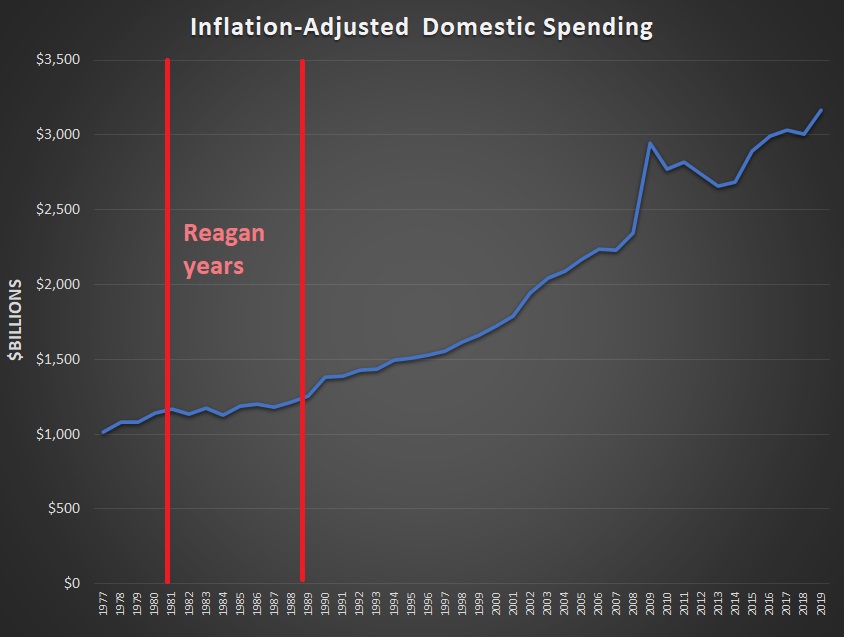
Detroit obviously is an example of a government that is collapsing sooner rather than later.
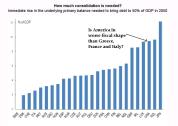
Why? Simply stated, as the size and scope of the public sector increased, that created very destructive economic and political dynamics.
More and more people got lured into the wagon of government dependency, which puts an ever-increasing burden on a shrinking pool of producers.

Meanwhile, organized interest groups such as government bureaucrats used their political muscle to extract absurdly excessive compensation packages, putting an even larger burden of the dwindling supply of taxpayers.

But that’s not the main focus of this post. Instead, I want to highlight a particular excerpt from the article and make a point about how too many people are blindly – perhaps willfully – ignorant of the Laffer Curve.

Check out this sentence.

Property tax collections are down 20 percent and income tax collections are down by more than a third in just the past five years — despite some of the highest tax rates in the state.

This is a classic “Fox Butterfield mistake,” which occurs when someone fails to recognize a cause-effect relationship. In this case, the reporter should have recognized that tax collections are down because Detroit has very high tax rates.

The city has a lot more problems than just high tax rates, of course, but can there be any doubt that productive people have very little incentive to earn and report taxable income in Detroit?

And that’s the essential insight of the Laffer Curve. Politicians can’t – or at least shouldn’t – assume that a 20 percent increase in tax rates will lead to a 20 percent increase in tax revenue. They also have to consider the degree to which a higher tax rate will cause a change in taxable income.

In some cases, higher tax rates will discourage people from earning more taxable income.

In some cases, higher tax rates will discourage people from reporting all the income they earn.

In some cases, higher tax rates will encourage people to utilize tax loopholes to shrink their taxable income.

In some cases, higher tax rates will encourage migration, thus causing taxable income to disappear.

Here’s my three-part video series on the Laffer Curve. Much of this is common sense, though it needs to be mandatory viewing for elected officials (as well as the bureaucrats at the Joint Committee on Taxation).

The Laffer Curve, Part I: Understanding the Theory

Uploaded by  on Jan 28, 2008

The Laffer Curve charts a relationship between tax rates and tax revenue. While the theory behind the Laffer Curve is widely accepted, the concept has become very controversial because politicians on both sides of the debate exaggerate. This video shows the middle ground between those who claim “all tax cuts pay for themselves” and those who claim tax policy has no impact on economic performance. This video, focusing on the theory of the Laffer Curve, is Part I of a three-part series. Part II reviews evidence of Laffer-Curve responses. Part III discusses how the revenue-estimating process in Washington can be improved. For more information please visit the Center for Freedom and Prosperity’s web site: http://www.freedomandprosperity.org

Part 2

Part 3

P.S. Just in case it’s not clear from the videos, we don’t want to be at the revenue-maximizing point on the Laffer Curve.

P.P.S. Amazingly, even the bureaucrats at the IMF recognize that there’s a point when taxes are so onerous that further increases don’t generate revenue.

P.P.P.S. At least CPAs understand the Laffer Curve, probably because they help their clients reduce their tax exposure to greedy governments.

P.P.P.P.S. I offered a Laffer Curve lesson to President Obama, but I doubt it had any impact.

___________________________

Thank you so much for your time. I know how valuable it is. I also appreciate the fine family that you have and your commitment as a father and a husband.

Sincerely,

Everette Hatcher III, 13900 Cottontail Lane, Alexander, AR 72002, ph 501-920-5733,

Williams with Sowell – Minimum Wage

Thomas Sowell

Thomas Sowell – Reducing Black Unemployment

By WALTER WILLIAMS

—-

Ronald Reagan with Milton Friedman
Milton Friedman The Power of the Market 2-5

Related posts:

Dan Mitchell: Question of the Week: Has the European Fiscal Crisis Ended?

We got to cut spending or we will be in a fiscal crisis like Greece!!! Question of the Week: Has the European Fiscal Crisis Ended? January 12, 2013 by Dan Mitchell I’ve frequently commented on Europe’s fiscal mess and argued that excessive government spending is responsible for both the sovereign debt crisis and the economic stagnation […]

Taxes made simple by Dan Mitchell of the Cato Institute

The Flat Tax: How it Works and Why it is Good for America Uploaded by afq2007 on Mar 29, 2010 This Center for Freedom and Prosperity Foundation video shows how the flat tax would benefit families and businesses, and also explains how this simple and fair system would boost economic growth and eliminate the special-interest […]

Cartoons from Dan Mitchell’s blog that demonstrate what Obama is doing to our economy (Obama’s out of control spending not helped by raising taxes on rich)

I have put up lots of cartoons from Dan Mitchell’s blog before and they have got lots of hits before. Many of them have dealt with the economy, eternal unemployment benefits, socialism,  Greece,  welfare state or on gun control. President Obama really does think that all his answers lie in raising taxes on the rich when the […]

Dan Mitchell of the Cato Institute gives overview of economic policy and he praises Clinton and Reagan

__________ President Reagan, Nancy Reagan, Tom Selleck, Dudley Moore, Lucille Ball at a Tribute to Bob Hope’s 80th birthday at the Kennedy Center. 5/20/83. __________________________ Dan Mitchell is very good at giving speeches and making it very simple to understand economic policy and how it affects a nation. Mitchell also talks about slowing the growth […]

Cartoons from Dan Mitchell’s blog that demonstrate what Obama is doing to our economy (cartoon on entitlements)

The Laffer Curve – Explained Uploaded by Eddie Stannard on Nov 14, 2011 This video explains the relationship between tax rates, taxable income, and tax revenue. The key lesson is that the Laffer Curve is not an all-or-nothing proposition, where we have to choose between the exaggerated claim that “all tax cuts pay for themselves” […]

Open letter to President Obama (Part 296) (Laffer curve strikes again!!)

President Obama c/o The White House 1600 Pennsylvania Avenue NW Washington, DC 20500 Dear Mr. President, I know that you receive 20,000 letters a day and that you actually read 10 of them every day. I really do respect you for trying to get a pulse on what is going on out here. The way […]

Open letter to President Obama (Part 282, How the Laffer Curve worked in the 20th century over and over again!!!)

Dan Mitchell does a great job explaining the Laffer Curve President Obama c/o The White House 1600 Pennsylvania Avenue NW Washington, DC 20500 Dear Mr. President, I know that you receive 20,000 letters a day and that you actually read 10 of them every day. I really do respect you for trying to get a […]

Laffer curve hits tax hikers pretty hard (includes cartoon)

I have put up lots of cartoons from Dan Mitchell’s blog before and they have got lots of hits before. Many of them have dealt with the economy, eternal unemployment benefits, socialism,  Greece,  welfare state or on gun control. Today’s cartoon deals with the Laffer curve. Revenge of the Laffer Curve…Again and Again and Again March 27, 2013 […]

Editorial cartoon from Dan Mitchell’s blog on California’s sorry state of affairs

I have put up lots of cartoons from Dan Mitchell’s blog before and they have got lots of hits before. Many of them have dealt with the sequester, economy, eternal unemployment benefits, socialism,  minimum wage laws, tax increases, social security, high taxes in California, Obamacare,  Greece,  welfare state or on gun control. President Obama’s favorite state must be California because […]

Portugal and the Laffer Curve

Class Warfare just don’t pay it seems. Why can’t we learn from other countries’ mistakes? Class Warfare Tax Policy Causes Portugal to Crash on the Laffer Curve, but Will Obama Learn from this Mistake? December 31, 2012 by Dan Mitchell Back in mid-2010, I wrote that Portugal was going to exacerbate its fiscal problems by raising […]

Political arguments against higher taxes from Dan Mitchell

Republicans would be stupid to raise taxes. Don’t Get Bamboozled by the Fiscal Cliff: Five Policy Reasons and Five Political Reasons Why Republicans Should Keep their No-Tax-Hike Promises December 6, 2012 by Dan Mitchell The politicians claim that they are negotiating about how best to reduce the deficit. That irks me because our fiscal problem is […]

President Obama ignores warnings about Laffer Curve

The Laffer Curve – Explained Uploaded by Eddie Stannard on Nov 14, 2011 This video explains the relationship between tax rates, taxable income, and tax revenue. The key lesson is that the Laffer Curve is not an all-or-nothing proposition, where we have to choose between the exaggerated claim that “all tax cuts pay for themselves” […]

Dan Mitchell looks at Obama’s tax record

Dan Mitchell’s article and the video from his organization takes a hard look at President Obama’s tax record. Dissecting Obama’s Record on Tax Policy October 30, 2012 by Dan Mitchell The folks at the Center for Freedom and Prosperity have been on a roll in the past few months, putting out an excellent series of videos […]

Dan Mitchell: “Romney is Right that You Can Lower Tax Rates and Reduce Tax Preferences without Hurting the Middle Class”

The Laffer Curve, Part I: Understanding the Theory Uploaded by afq2007 on Jan 28, 2008 The Laffer Curve charts a relationship between tax rates and tax revenue. While the theory behind the Laffer Curve is widely accepted, the concept has become very controversial because politicians on both sides of the debate exaggerate. This video shows […]

The Laffer Curve Wreaks Havoc in the United Kingdom

I got to hear Arthur Laffer speak back in 1981 and he predicted what would happen in the next few years with the Reagan tax cuts and he was right with every prediction. The Laffer Curve Wreaks Havoc in the United Kingdom July 1, 2012 by Dan Mitchell Back in 2010, I excoriated the new […]

By Everette Hatcher III | Posted in Cato Institute | Tagged  | Edit | Comments (0)

Dan Mitchell: Maryland to Texas, but Not Okay to Move from the United States to Singapore?

You can’t blame someone for leaving one state for another if they have a better an opportunity to make money. Maryland to Texas, but Not Okay to Move from the United States to Singapore? July 12, 2012 by Dan Mitchell I’ve commented before about entrepreneurs, investors, and small business owners migrating from high tax states such […]

Liberals act like the Laffer Curve does not exist.

Raising taxes will not work. Liberals act like the Laffer Curve does not exist. The Laffer Curve Shows that Tax Increases Are a Very Bad Idea – even if They Generate More Tax Revenue April 10, 2012 by Dan Mitchell The Laffer Curve is a graphical representation of the relationship between tax rates, tax revenue, and […]

Dan Mitchell shows why soak-the-rich tax policy does not work

Dan Mitchell of the Cato Institute shows why Obama’s plan to tax the rich will not solve our deficit problem.   Explaining in the New York Post Why Obama’s Soak-the-Rich Tax Policy Is Doomed to Failure April 17, 2012 by Dan Mitchell I think high tax rates on certain classes of citizens are immoral and discriminatory. If the […]

Dan Mitchell of the Cato Institute takes on liberals on PBS

You want the rich to pay more? Dan Mitchell observed:I explained that “rich” taxpayers declared much more income and paid much higher taxes after Reagan reduced the top tax rate from 70 percent to 28 percent. Liberals don’t understand good tax policies. Against 3-1 Odds, Promoting Good Tax Policy on Government TV April 12, 2012 by […]

Dan Mitchell of the Cato Institute takes on the Buffett Rule

Class warfare again from President Obama.  Rejecting the Buffett Rule and Fighting Obama’s Class Warfare on CNBC April 10, 2012 by Dan Mitchell I’ve already explained why Warren Buffett is either dishonest or clueless about tax policy. Today, on CNBC, I got to debate the tax scheme that President Obama has named after the Omaha investor. […]

By Everette Hatcher III | Posted in Cato InstituteTaxes | Edit | Comments (0)

Dan Mitchell article: The Laffer Curve’s Latest Victim: California

——

The Laffer Curve’s Latest Victim: California

The Laffer Curve is the common-sense notion that people respond to incentives.

And even Paul Krugman admits this has implications for tax revenue.

For instance, if tax rates increase, people may decide to earn and/or report less taxable income. When that happens, revenue won’t increase by as much as politicians hope.

And the reverse is true (in some cases, dramatically true) if tax rates decrease.

For today’s column, let’s look at a real-world example of the Laffer Curve.

Joshua Rauh of Stanford and Ryan Shyu of Amazon have new research that looks at what happened after California voters approved a big class-warfare tax increase in 2012.

Here are some excerpts from their study.

In this paper we study the question of the elasticity of the tax base with respect to taxation…on the universe of California taxpayers around the implementation of major 2012 ballot initiative, Proposition 30. …The Proposition 30 ballot initiative increased marginal income tax rates…by 3 percentage points for singles with over $500,000 in taxable income (married couples with over $1 million)…, the highest state-level marginal tax rate in the nation.…We…document a substantial onetime outflow of high-earning taxpayers from California in response to Proposition 30. …For those earning over $5 million, the rate of departures spiked from 1.5% after the 2011 tax year to 2.125% after the 2012 tax year, with a similar effect among taxpayers earning $2-5 million in 2012. …California top-earners on average report $522,000 less in taxable income in 2012, $357,000 less in 2013, and $599,000 less in 2014; this is relative to a baseline mean income of $4.15 million amongst our defined group of California top-earners in 2011. Compared to counterfactuals in similarly high-tax states, California top-earners on average report $352,000 less in taxable income in 2012, $373,000 less in 2013, and $481,000 less in 2014.

So some upper-income taxpayers moved and others (unsurprisingly) earned/reported less taxable income.

Did that have an impact on tax revenue?

The answer is yes.

…we assess the implications of our estimates for tax revenue in the context of California Proposition 30. A back of the envelope calculation based on our econometric estimates finds that the intensive and extensive margin responses to taxation combined to undo 45.2% of the revenue gains from taxation that otherwise would have accrued to California in the absence of behavioral responses within the first year and 60.9% within the first two years.

Wow, more than 60 percent of projected revenue evaporated within two years.

By the way, these estimates are based on data only through the middle of last decade. And something significant happened after that: The state and local tax deduction was curtailed as part of the Trump tax package.

The authors speculate that this will have very important implications.

…the “Tax Cuts and Jobs Act” (TCJA). Under this law, the top rate is 37% for single and head-of-household filers earning over $500,000, and for married filers earning over $600,000. Despite this nominal cut to top rates, the legislation on net increased rates on top earners because it capped state and local deductions at $10,000 total. … we use our top line intensive margin elasticity estimate to provide a ballpark quantification of the federal tax revenue implications of TCJA for the particular set of California high earners in our treatment group. …Consider a married California taxpayer earning $4.15 million of wage income. In 2017, this taxpayer pays a federal tax bill of $1,431,305. In 2018, incorporating the 8.6% income decrease, this taxpayer pays a federal tax bill of $1,333,946. This amounts to a 6.8% decrease in tax revenue, putting the TCJA on the wrong side of the Laffer Curve for high-earning individuals in California. … the TCJA increased incentives (in terms of the level of the average tax rate gap) to leave California for zero-tax states by 2.15 times the amount of Proposition 30 for those earning over $5 million, and by a factor of 2.43 for those earning from $2-5 million. Based on these scaling factors, we would predict an out-migration effect of 1.46% of those earning $2-5 million, and 1.51% of those earning $5 million.

None of this should be a surprise.

Indeed, I wrote back in 2012 that bad things would happen when Proposition 30 was approved.

I feel safe in stating that this measure is going to accelerate California’s economic decline. Some successful taxpayers are going to tunnel under the proverbial Berlin Wall and escape to states with better (or less worse) fiscal policy. …It goes without saying, of course, that California’s politicians…will act surprised when revenues fall short of projections because of the Laffer Curve.

To be fair, I don’t know if California politicians are genuinely surprised. I suspect many of them privately understand the adverse consequences of class-warfare tax policy. But they nonetheless support bad policy because they are motivated by a selfish desire to maximize votes.

Lessons from Reaganomics for the 21st Century, Part II

In Part I of this series, I looked at Ronald Reagan’s reasonably successful track record on government spending (which could be characterized as fantastically successful when compared to other Republican presidents) and explained why we need Reaganomics 2.0 to deal with today’s federal leviathan that is far too big and projected to get even bigger.

In Part II, let’s look at Reagan’s track record on tax policy and ask whether we need another dose of “supply-side economics.”

When he took office, one of Reagan’s main goals was to lower marginal tax rates on American households. This was necessary for two reasons.

  • First, tax rates were too high, including a staggering 70-percent top rate for the personal income tax.
  • Second, more and more Americans were being hit by punitive tax rates because of “bracket creep.”

Since I’ve already written a lot about the problem of high tax rates, let’s address the second point.

During the 1970s, when inflation was high, there was understandable pressure to increase wages and salaries so that workers did not fall behind.

But when employees got pay raises to keep pace with inflation, that often meant they had to pay higher tax rates even though their inflation-adjusted incomes stayed constant.

This was not a trivial problem. Here’s a table from the study I recently wrote for the Club for Growth Foundation. As you can see, middle class households wound up paying much higher marginal tax rates as the 1970s came to a close.

President Reagan recognized this problem and he did two things to help American families.

  • First, he lowered tax rates across board as part of his 1981 tax cut and his 1986 tax reform, with the top tax rate dropping from 70 percent in 1980 to 28 percent in 1988.
  • Second, he “indexed” the personal income tax for inflation, meaning households no longer would be pushed into higher tax brackets because of bad monetary policy.

These reforms helped produce an economic boom.

Here’s some of what I wrote in the study.

In 1981, Reagan convinced Congress to enact the Economic Recovery Tax Act, which phased in lower income tax rates for all taxpayers. …Equally important, Reagan got Congress to adopt “indexing,” which meant that tax brackets were automatically adjusted for inflation. That reform ensured that government no longer profited from inflation. During his second term, Reagan then worked with Congress to approve the Tax Reform Act of 1986. That legislation further lowered tax rates for all taxpayers. …the Reagan tax cuts helped trigger an economic boom. The United States experienced a record economic expansion, with millions of jobs being created and family incomes rising to record levels after the malaise and stagnation of the Carter years. Households earned more money, and they got to keep a greater share of their earnings. Net worth also increased substantially, putting America’s middle class in a very strong position.

By the way, even though my left-leaning friends are viscerally opposed to lower tax rates for upper-income taxpayers, it’s worth noting that the IRS wound up collecting more money from the rich after Reagan slashed tax rates. A lot more money.

All things considered, the Reagan tax cuts were a smashing success (notwithstanding Paul Krugman’s protestations).

But is Reagan’s supply-side tax policy still relevant today?

Some people think tax policy is no longer a problem because individual income tax rates are lower than they were when Reagan took office and indexing is still protecting people from inflation (which has recently been a problem).

For what it’s worth, I think personal income tax rates are still far too high.

But the main reason that we need Reaganomics 2.0 is that the United States faces a major problem with double taxation. To be more specific, the IRS imposes very harsh tax rates on income that is saved and invested.

Here’s Figure 9 from the paper. You can see on the left that America’s personal income tax rate is only slightly higher than the average of other rich nations and the corporate tax rate is only somewhat higher.

But you can see on the right where America really lags, with significantly higher tax burdens on capital gainsand dividend income.

Incidentally, the chart also shows that the United States would be wildly uncompetitive if Biden’s tax proposals were enacted.

So the obvious takeaway is that Biden’s class-warfare plan should never be resuscitated and that lawmakers instead should lower (or ideally eliminate) the capital gains tax and to reduce (or hopefully eliminate) the double tax on dividends.

P.S. The capital gains tax is not indexed for inflation, so people often are hit by that tax even when they lose money on an investment. That’s obviously another area where we need Reaganomics 2.0.

———-

File:President Ronald Reagan and Nancy Reagan in The East Room Congratulating Milton Friedman Receiving The Presidential Medal of Freedom.jpg

This past article below from Dan Mitchell tells the story of Ronald Reagan’s successful strategy against inflation. I had a front row seat since I got to read the book and see the film FREE TO CHOOSE by Milton Friedman in 1980 who Reagan agreed with on this issue and I have included below the episode on inflation!

Ronald Reagan’s Most Under-Appreciated Triumph

It’s no secret that I’m a huge fan of Ronald Reagan.

He’s definitely the greatest president of my lifetime and, with one possible rival, he was the greatest President of the 20th century.

If his only accomplishment was ending malaise and restoring American prosperity thanks to lower tax rates and other pro-market reforms, he would be a great President.

He also restored America’s national defenses and reoriented foreign policy, both of which led to the collapse of the Soviet Empire, a stupendous achievement that makes Reagan worthy of Mount Rushmore.

But he also has another great achievement, one that doesn’t receive nearly the level of appreciation that it deserves. President Reagan demolished the economic cancer of inflation.

Even Paul Krugman has acknowledged that reining in double-digit inflation was a major positive achievement. Because of his anti-Reagan bias, though, he wants to deny the Gipper any credit.

Robert Samuelson, in a column for the Washington Post, corrects the historical record.

Krugman recently wrote a column arguing that the decline of double-digit inflation in the 1980s was the decade’s big economic event, not the cuts in tax rates usually touted by conservatives. Actually, I agree with Krugman on this. But then he asserted that Ronald Reagan had almost nothing to do with it. That’s historically incorrect. Reagan was crucial. …Krugman’s error is so glaring.

Samuelson first provides the historical context.

For those too young to remember, here’s background. From 1960 to 1980, inflation — the general rise of retail prices — marched relentlessly upward. It went from 1.4 percent in 1960 to 5.9 percent in 1969 to 13.3 percent in 1979. The higher it rose, the more unpopular it became. …Worse, government seemed powerless to defeat it. Presidents deployed complex wage and price controls and guidelines. They didn’t work. The Federal Reserve — custodian of credit policies — veered between easy money and tight money, striving both to subdue inflation and to maintain “full employment” (taken as a 4 percent to 5 percent unemployment rate). It achieved neither. From the late 1960s to the early 1980s, there were four recessions. Inflation became a monster, destabilizing the economy.

The column then explains that there was a dramatic turnaround in the early 1980s, as Fed Chairman Paul Volcker adopted a tight-money policy and inflation was squeezed out of the system much faster than almost anybody thought was possible.

But Krugman wants his readers to think that Reagan played no role in this dramatic and positive development.

Samuelson says this is nonsense. Vanquishing inflation would have been impossible without Reagan’s involvement.

What Reagan provided was political protection. The Fed’s previous failures to stifle inflation reflected its unwillingness to maintain tight-money policies long enough… Successive presidents preferred a different approach: the wage-price policies built on the pleasing (but unrealistic) premise that these could quell inflation without jeopardizing full employment. Reagan rejected this futile path. As the gruesome social costs of Volcker’s policies mounted — the monthly unemployment rate would ultimately rise to a post-World War II high of 10.8 percent — Reagan’s approval ratings plunged. In May 1981, they were at 68 percent; by January 1983, 35 percent. Still, he supported the Fed. …It’s doubtful that any other plausible presidential candidate, Republican or Democrat, would have been so forbearing.

What’s the bottom line?

What Volcker and Reagan accomplished was an economic and political triumph. Economically, ending double-digit inflation set the stage for a quarter-century of near-automatic expansion… Politically, Reagan and Volcker showed that leaders can take actions that, though initially painful and unpopular, served the country’s long-term interests. …There was no explicit bargain between them. They had what I’ve called a “compact of conviction.”

By the way, Krugman then put forth a rather lame response to Samuelson, including the rather amazing claim that “[t]he 1980s were a triumph of Keynesian economics.”

Here’s what Samuelson wrote in a follow-up columndebunking Krugman.

As preached and practiced since the 1960s, Keynesian economics promised to stabilize the economy at levels of low inflation and high employment. By the early 1980s, this vision was in tatters, and many economists were fatalistic about controlling high inflation. Maybe it could be contained. It couldn’t be eliminated, because the social costs (high unemployment, lost output) would be too great. …This was a clever rationale for tolerating high inflation, and the Volcker-Reagan monetary onslaught demolished it. High inflation was not an intrinsic condition of wealthy democracies. It was the product of bad economic policies. This was the 1980s’ true lesson, not the contrived triumph of Keynesianism.

If anything, Samuelson is being too kind.

One of the key tenets of Keynesian economics is that there’s a tradeoff between inflation and unemployment (the so-called Phillips Curve).

Yet in the 1970s we had rising inflation and rising unemployment.

While in the 1980s, we had falling inflation and falling unemployment.

But if you’re Paul Krugman and you already have a very long list of mistakes (see here, here, here, here, here, here, here, here, and here for a few examples), then why not go for the gold and try to give Keynes credit for the supply-side boom of the 1980s

P.S. Since today’s topic is Reagan, it’s a good opportunity to share my favorite poll of the past five years.

P.P.S. Here are some great videos of Reagan in action. And here’s one more if you need another Reagan fix.


Milton Friedman’s FREE TO CHOOSE “How to cure inflation” Transcript and Video (60 Minutes)

Image result for milton friedman free to choose

In 1980 I read the book FREE TO CHOOSE by Milton Friedman and it really enlightened me a tremendous amount.  I suggest checking out these episodes and transcripts of Milton Friedman’s film series FREE TO CHOOSE: “The Failure of Socialism” and “What is wrong with our schools?”  and “Created Equal”  and  From Cradle to Grave, and – Power of the Market.“If we could just stop the printing presses, we would stop inflation,” Milton Friedman says in “How to Cure Inflation” from the Free To Choose series. Now as then, there is only one cause of inflation, and that is when governments print too much money. Milton explains why it is that politicians like inflation, and why wage and price controls are not solutions to the problem.

http://www.freetochoosemedia.org/freetochoose/detail_ftc1980_transcript.php?page=9While many people have a fairly good grasp of what inflation is, few really understand its fundamental cause. There are many popular scapegoats: labor unions, big business, spendthrift consumers, greed, and international forces. Dr. Friedman explains that the actual cause is a government that has exclusive control of the money supply. Friedman says that the solution to inflation is well known among those who have the power to stop it: simply slow down the rate at which new money is printed. But government is one of the primary beneficiaries of inflation. By inflating the currency, tax revenues rise as families are pushed into higher income tax brackets. Thus, inflation transfers wealth and resources from the private to the public sector. In short, inflation is attractive to government because it is a way of increasing taxes without having to pass new legislation to raise tax rates. Inflation is in fact taxation without representation. Wage and price controls are not the cure for inflation because they treat only the symptom (rising prices) and not the disease (monetary expansion). History records that such controls do not work; instead, they have perverse effects on both prices and economic growth and undermine the fundamental productivity of the economy. There is only one cure for inflation: slow the printing presses. But the cure produces the painful side effects of a temporary increase in unemployment and reduced economic growth. It takes considerable political courage to undergo the cure. Friedman cites the example of Japan, which successfully underwent the cure in the mid-seventies but took five years to squeeze inflation out of the system. Inflation is a social disease that has the potential for destroying a free society if it is unchecked. Prolonged inflation undermines belief in the basic equity of the free market system because it tends to destroy the link between effort and reward. And it tears the social fabric because it divides society into winners and losers and sets group against group.(Taxation without representation: Getting knocked up to higher tax brackets because of inflation pt 1)http://www.youtube.com/watch?v=b1dTWDNKH3c

Volume 9 – How to Cure Inflation

Transcript:
Friedman: The Sierra Nevada’s in California 10,000 feet above sea level, in the winter temperatures drop to 40 below zero, in the summer the place bakes in the thin mountain air. In this unlikely spot the town of Body sprang up. In its day Body was filled with prostitutes, drunkards and gamblers part of a colorful history of the American West.
A century ago, this was a town of 10,000 people. What brought them here? Gold. If this were real gold, people would be scrambling for it. The series of gold strikes throughout the West brought people from all over the world, all kinds of people. They came here for one purpose and one purpose only, to strike it rich, quick. But in the process, they built towns, cities, in places where nobody would otherwise have dreamed of building a city. Gold built these cities and when the gold was exhausted, the cities collapsed and became ghost towns. Many of the people who came here ended up the way they began, broke and unhappy. But a few struck it rich. For them, gold was real wealth. But was it for the world as a whole. People couldn’t eat the gold, they couldn’t wear the gold, they couldn’t live in houses made of gold. Because there was more gold, they had to pay a little more gold to buy goods and services. The prices of things in terms of gold went up.
At tremendous cost, at sacrifice of lives, people dug gold out of the bowels of the earth. What happened to that gold? Eventually, at long last, it was transported to distant places only to be buried again under the ground. This time in the vaults of banks throughout the world. There is hardly anything that hasn’t been used for money; rock salt in Ethiopia, brass rings in West Africa, Calgary shells in Uganda, even a toy cannon. Anything can be used as money. Crocodile money in Malaysia, absurd isn’t it?
That beleaguered minority of the population that still smokes may recognize this stuff as the raw material from which their cigarettes are made. But in the early days of the colonies, long before the U.S. was established, this was money. It was the common money of Virginia, Maryland and the Carolinas. It was used for all sorts of things. The legislature voted that it could be used legally to pay taxes. It was used to buy food, clothing and housing. Indeed, one of the most interesting sites was to see the husky young fellows at that time, lug 100 pounds of it down to the docks to pay the costs of the passage of the beauteous young ladies who had come over from England to be their brides.
Now you know how money is. There’s a tendency for it to grow, for more and more of it to be produced and that’s what happened with this tobacco. As more tobacco was produced, there was more money. And as always when there’s more money, prices went up. Inflation. Indeed, at the very end of the process, prices were 40 times as high in terms of tobacco as they had been at the beginning of the process. And as always when inflation occurs, people complained. And as always, the legislature tried to do something. And as always, to very little avail. They prohibited certain classes of people from growing tobacco. They tried to reduce the total amount of tobacco grown, they required people to destroy part of their tobacco. But it did no good. Finally, many people took it into their own hands and they went around destroying other people’s tobacco fields. That was too much. Then they passed a law making it a capital offense, punishable by death, to destroy somebody else’s tobacco. Grecian’s Law, one of the oldest laws in economics, was well illustrated. That law says that cheap money drives out dear money and so it was with tobacco. Anybody who had a debt to pay, of course, tried to pay it in the worst quality of tobacco he had. He saved the good tobacco to sell overseas for hard money. The result was that bad money drove out good money.
Finally, almost a century after they had started using tobacco as money, they established warehouses in which tobacco was deposited in barrels, certified by an inspector according to his views as to it’s quality and quantity. And they issued warehouse certificates which people gave from one to another to pay for the bills that they accumulated.
These pieces of green printed paper are today’s counterparts of those tobacco certificates. Except that they bear no relation to any commodity. In this program I want to take you to Britain to see how inflation weakens the social fabric of society. Then to Tokyo, where the Japanese have the courage to cure inflation. To Berlin, where there is a lesson to be learned from the West Germans and how so called cures are often worse than the disease. And to Washington where our government keeps these machines working overtime. And I am going to show you how inflation can be cured.
The fact is that most people enjoy the early stages of the inflationary process. Britain, in the swinging 60’s, there was plenty of money around, business was brisk, jobs were plentiful and prices had not yet taken off. Everybody seemed happy at first. But by the early 70’s, as the good times rolled along, prices started to rise more and more rapidly. Soon, some of these people are going to lose their jobs. The party was coming to an end.
The story is much the same in the U.S. Only the process started a little later. We’ve had one inflationary party after another. Yet we still can’t seem to avoid them. How come?
Before every election our representatives would like to make us think we are getting a tax break. When they are able to do it, while at the same time actually raising our taxes because of a bit of magic they have in their kit bag. That magic is inflation. They reduced the tax rates but the taxes we have to pay go up because we are automatically shoved into higher brackets by the effective inflation. A neat trick. Taxation without representation.
_________________________________________
Pt 2 Many a political leader has been tempted to turn to wage and price controls despite their repeated failure in practice. On this subject they never seem to learn. But some lessons may be learned. That happened to British P
Bob Crawford: The more I work, it seems like the more they take off me. I know if I work an extra day or two extra days, what they take in federal income tax alone is almost doubled because apparently it puts you in a higher income tax bracket and it takes more off you.
Friedman: Bob Crawford lives with his wife and three children in a suburb of Pittsburgh. They’re a fairly average American family.
Mrs. Crawford: Don’t slam the door Daphne. Okay. Alright. What are you doing? Making your favorite dish.
Friedman: We went to the Crawford’s home after he had spent a couple of days working out his federal and state income taxes for the year. For our benefit, he tried to estimate all the other taxes he had paid as well. In the end, though, he didn’t discover much that would surprise anybody.
Bob Crawford: Inflation is going up, everything is getting more expensive. No matter what you do, as soon as you walk out of the house, everything went up. Your gas bills keep going up, electric bills, your gasoline, you can name a thousand things that are going up. Everything is going sky high. Your food. My wife goes to the grocery store. We used to live on say, $60 or $50 every two weeks just for our basic food. Now it’s $80 or $90 every two weeks. Things are just going out of sight as far as expense to live on. Like I say it’s getting tough. It seems like every month it gets worse and worse. And I don’t know where it’s going to end. At the end of the day that I spend nearly $6,000 of my earnings on taxes. That leaves me with a total of $12,000 to live on. It might seem like a lot of money, but five, six years ago I was earning $12,000.
Friedman: How does taxation without representation really effect how much the Crawford family has left to spend after it’s paid its income taxes. Well in 1972 Bob Crawford earned $12,000. Some of that income was not subject to income tax. After paying income tax on the rest he had this much left to spend. Six years later he was earning $18,000 a year. By 1978 the amount free from tax was larger. But he was now in a higher tax bracket so his taxes went up by a larger percentage than his income. However, those dollars weren’t worth anything like as much. Even his wages, let alone his income after taxes, hadn’t kept up with inflation. His buying power was lower than before. That is taxation without representation in practice.
Unnamed Individual: We have with us today you brothers that are sitting here today that were with us on that committee and I’d like to tell you….
Friedman: There are many traditional scapegoats blamed for inflation. How often have you heard inflation blamed on labor unions for pushing up wages. Workers, of course, don’t agree.
Unnamed Individual: But fellows this is not true. This is subterfuge. This is a myth. Your wage rates are not creating inflation.
Friedman: And he’s right. Higher wages are mostly a result of inflation rather than a cause of it. Indeed, the impression that unions cause inflation arises partly because union wages are slow to react to inflation and then there is pressure to catch up.
Worker: On a day to day basis, try to represent our own numbers. But that in fact is not the case. Not only can we not play catch up, we can’t even maintain a wage rate commensurate with the cost of living that’s gone up in this country.
Friedman: Another scapegoat for inflation is the cost of goods coming from abroad. Inflation, we’re told, is imported. Higher prices abroad driving up prices at home. It’s another way government can blame someone else for inflation. But this argument, too, is wrong. The prices of imports and the countries from which they come are not in terms of dollars, they are in terms of lira or yen or other foreign currencies. What happens to their prices in dollars depends on exchange rates which in turn reflect inflation in the United States.
Since 1973 some governments have had a field day blaming the Arabs for inflation. But if high oil prices were the cause of inflation, how is it that inflation has been less here in Germany, a country that must import every drop of oil and gas that it uses on the roads and in industry, then for example it is in the U.S. which produces half of its own oil. Japan has no oil of its own at all. Yet at the very time the Arabs were quadrupling oil prices, the Japanese people were bringing inflation down from 30 to less than 5% a year. The fallacy is to confuse particular prices like the price of oil, with prices in general. Back at home, President Nixon understood this.
Nixon: “Now here’s what I will not do. I will not take this nation down the road of wage and price controls however politically expedient that may seem. The pros of rationing may seem like an easy way out, but they are really an easy way in for more trouble. To the explosion that follows when you try to clamp a lid on a rising head of steam without turning down the fire under the pot, wage and price controls only postpone the day of reckoning. And in so doing, they rob every American of a very important part of his freedom.
Friedman: Now listen to this:
Nixon: “The time has come for decisive action. Action that will break the vicious circle of spiraling prices and costs. I am today ordering a freeze on all prices and wages throughout the United States for a period of 90 days. In addition, I call upon corporations to extend the wage price freeze to all dividends.”
Friedman: Many a political leader has been tempted to turn to wage and price controls despite their repeated failure in practice. On this subject they never seem to learn. But some lessons may be learned. That happened to British Prime Minister James Callahan who finally discovered that a very different economic myth was wrong. He told the Labor Party Conference about it in 1976.
James Callahan: “We used to think that you could use, spend your way out of a recession and increase employment by cutting taxes and boosting government spending. I tell you in all candor that option no longer exists. It only works on each occasion since the war by injecting a bigger dose of inflation into the economy followed by a higher level of unemployment as the next step. That’s the history of the last 20 years.”
Friedman: Well, it’s one thing to say it. One reason why inflation does so much harm is because it effects different groups differently. Some benefit and of course they attribute that to their own cleverness. Some are hurt, but of course they attribute that to the evil actions of other people. And the whole problem is made far worse by the false cures which government adopts, particularly wage and price control.
The garbage collectors in London felt justifiably aggrieved because their wages had not been permitted to keep pace with the cost of living. They struck, hurting not the people who impose the controls, but their friends and neighbors who had to live with mounting piles of rat infested garbage. Hospital attendants felt justifiably aggrieved because their wages had not been permitted to keep up with the cost of living. They struck, hurting not the people who impose the controls, but cancer patients who were turned out of hospital beds. The attendants behaved as a group in a way they never would have behaved as individuals. One group is set against another group. The social fabric of society is torn apart inflicting scars that it will take decades to heal and all to no avail because wage and price controls, far from being a cure for inflation, only make inflation worse.
Within the memory of most of our political leaders, there’s one vivid example of how economic ruin can be magnified by controls. And the classic demonstration of what to do when it happens.
_______________________________________________

(Wage and Price Controls don’t work)

Inflation is just like alcoholism. In both cases when you start drinking or when you start printing too much money, the good effects come first. The bad effects only come later.
That’s why in both cases there is a strong temptation to overdo it. To drink too much and to print too much money. When it comes to the cure, it’s the other way around. When you stop drinking or when you stop printing money, the bad effects come first and the good effects only come later.
Pt 3
Germany, 1945, a devastated country. A nation defeated in war. The new governing body was the Allied Control Commission, representing the United States, Britain, France and the Soviet Union. They imposed strict controls on practically every aspect of life including wages and prices. Along with the effects of war, the results were tragic. The basic economic order of the country began to collapse. Money lost its value. People reverted to primitive barter where they used cameras, fountain pens, cigarettes, whiskey as money. That was less than 40 years ago.
This is Germany as we know it today. Transformed into a place a lot of people would like to live in. How did they achieve their miraculous recovery? What did they know that we don’t know?
Early one Sunday morning, it was June 20, 1948, the German Minister of Economics, Ludwig Earhardt, a professional economist, simultaneously introduced a new currency, today’s Deutsche Mark, and in one fell swoop, abolished almost all controls on prices and wages. Why did he do it on a Sunday morning? It wasn’t as you might suppose because the Stock Markets were closed on that day, it was, as he loved to confess, because the offices of the American, the British, and the French occupation authorities were closed that day. He was sure that if he had done it when they open they would have countermanded the order. It worked like a charm. Within days, the shops were full of goods. Within months, the German economy was humming along at full steam. Economists weren’t surprised at the results, after all, that’s what a price system is for. But to the rest of the world it seemed an economic miracle that a defeated and devastated country could in little more than a decade become the strongest economy on the continent of Europe.
In a sense this city, West Berlin, is something of a unique economic test tube. Set as it is deep in Communist East Germany. Two fundamentally different economic systems collide here in Europe. Ours and theirs, separated by political philosophies, definitions of freedom and a steel and concrete wall.
To digress from inflation, economic freedom does not stand alone. It is part of a wider order. I wanted to show you how much difference it makes by letting you see how the people live on the other side of that Berlin Wall. But the East German authorities wouldn’t let us. The people over there speak the same language as the people over here. They have the same culture. They have the same for bearers. They are the same people. Yet you don’t need me to tell you how differently they live. There is one simple explanation. The political system over there cannot tolerate economic freedom. The political system over here could not exist without it.
But political freedom cannot be preserved unless inflation is kept in bounds. That’s the responsibility of government which has a monopoly over places like this. The reason we have inflation in the United States or for that matter anywhere in the world is because these pieces of paper and the accompanying book entry or their counterparts in other nations are growing more rapidly than the quantity of goods and services produced. The truth is inflation is made in one place and in one place only. Here in Washington. This is the only place were there are presses like this that turn out these pieces of paper we call money. This is the place where the power resides to determine how rapidly the amount of money shall increase.
What happened to all that noise? That’s what would happen to inflation if we stop letting the amount of money grow so rapidly. This is not a new idea. It’s not a new cure. It’s not a new problem. It’s happened over and over again in history. Sometimes inflation has been cured this way on purpose. Sometimes it’s happened by accident. During the Civil War the North, late in the Civil War, overran the place in the South where the printing presses were sitting up, where the pieces of paper were being turned out. Prior to that point, the South had a very rapid inflation. If my memory serves me right, something like 4% a month. It took the Confederacy something over two weeks to find a new place where they could set up their printing presses and start them going again. During that two week period, inflation came to a halt. After the two week period, when the presses started running again, inflation started up again. It’s that clear, that straightforward. More recently, there’s another dramatic example of the only effective way to deal with rampant inflation.
In 1973, Japanese housewives going to market were faced with an unpleasant fact. The cash in their purses seemed to be losing its value. Prices were starting to sore as the awful story of inflation began to unfold once again. The Japanese government knew what to do. What’s more, they were prepared to do it. When it was all over, economists were able to record precisely what had happened. In 1971 the quantity of money started to grow more rapidly. As always happens, inflation wasn’t affected for a time. But by late 1972 it started to respond. In early 73 the government reacted. It started to cut monetary growth. But inflation continued to soar for a time. The delayed reaction made 1973 a very tough year of recession. Inflation tumbled only when the government demonstrated its determination to keep monetary growth in check. It took five years to squeeze inflation out of the system. Japan attained relative stability. Unfortunately, there’s no way to avoid the difficult road the Japanese had to follow before they could have both low inflation and a healthy economy. First they had to live through a recession until slow monetary growth had its delayed effect on inflation.
Inflation is just like alcoholism. In both cases when you start drinking or when you start printing too much money, the good effects come first. The bad effects only come later.
That’s why in both cases there is a strong temptation to overdo it. To drink too much and to print too much money. When it comes to the cure, it’s the other way around. When you stop drinking or when you stop printing money, the bad effects come first and the good effects only come later. That’s why it’s so hard to persist with the cure. In the United States, four times in the 20 years after 1957, we undertook the cure. But each time we lacked the will to continue. As a result, we had all the bad effects and none of the good effects. Japan on the other hand, by sticking to a policy of slowing down the printing presses for five years, was by 1978 able to reap all the benefits, low inflation and a recovering economy. But there is nothing special about Japan. Every country that has had the courage to persist in a policy of slow monetary growth has been able to cure inflation and at the same time achieve a healthy economy.
___________________________________
Pt 4
The job of the Federal Reserve is not to run government spending; it’s not to run government taxation. The job of the Federal Reserve is to control the money supply and I believe, frankly, I have always believed as you know, that these are excuses and not reasons for the performance.
DISCUSSION
Participants: Robert McKenzie, Moderator; Milton Friedman; Congressman Clarence J. Brown; William M. Martin, Chairman of Federal Reserve 1951_1970; Beryl W. Sprinkel, Executive Vice President, Harris Bank, Chicago; Otmar Emminger, President, Ieutsche Bundesbank, Frankfurt West Germany
MCKENZIE: And here at the Harper Library of the University of Chicago, our distinguished guests have their own ideas, too. So, lets join them now.
BROWN: If you could control the money supply, you can certainly cut back or control the rate of inflation. I’d have to say that that prescription is a little bit easier to write than it is to fill. I think there are some other ways to do it and I would relate the money supply __ I think inflation is a measure of the relationship between money and the goods and services that money is meant to cover. And so if you can stimulate the goods, the production of goods and services, it’s helpful. It’s a little tougher to control the money supply, although I think it can be done, than just saying that you should control it, because we’ve got the growth of credit cards, which is a form of money; created, in effect, by the free enterprise system. It isn’t all just printed in Washington, but that may sound too defensive. I think he was right in saying that the inflation is Washington based.
MCKENZIE: Mr. Martin, nobody has been in the firing line longer than you, 17 years head of the Fed. Could you briefly comment on that and we’ll go around the group.
MARTIN: I want to say 19 years.
(Laughter)
MARTIN: I wouldn’t be out here if it weren’t for Milton Friedman, today. He came down and gave us advice from time to time.
FRIEDMAN: You’ve never taken it.
(Laughter)
MCKENZIE: He’s going to do some interviewing later, I warn you.
MARTIN: And I’m rather glad we didn’t take it __
(Laughter)
MARTIN: __ all the time.
SPRINKEL: In your 19 years as Chairman of the Federal Reserve, Bill, the average growth in the money supply was 3.1 percent per year. The inflation rate was 2.2 percent. Since you left, the money supply has exactly doubled. The inflation rate is average over 7 percent, and, of course, in recent times the money supply has been growing in double-digit territory as has our inflation rate.
EMMINGER: May I, first of all, confirm two facts which have been so vividly brought out in the film of Professor Friedman; namely, that at the basis of the relatively good performance of Western Germany were really two events. One, the establishment of a new sound money which we try to preserve sound afterwards. And, secondly, the jump overnight into a free market economy without any controls over prices and wages. These are the two fundamental facts. We have tried to preserve monetary stability by just trying to follow this prescription of Professor Friedman; namely, monetary discipline. Keeping monetary growth relatively moderate. I must, however, warn you it’s not so easy as it looks. If you just say, governments have to have the courage to persist in that course.
FRIEDMAN: Nobody does disagree with the proposition that excessive growth in money supply is an essential element in the inflationary process and that the real problem is not what to do, but how to have the courage and the will to do it. And I want to go and start, if I may, on that subject; because I think that’s what we ought to explore. Why is it we haven’t had the courage and don’t, and under what circumstances will we? And I want to start with Bill Martin because his experience is a very interesting experience. His 19 years was divided into different periods. In the first period, that average that Beryl Sprinkel spoke about, averaged two very different periods. An early period of very slow growth and slow inflation; a later period of what at the time was regarded as creeping inflation __ now we’d be delighted to get back to it. People don’t remember that at the time that Mr. Nixon introduced price and wage controls in 1971 to control an outrageous inflation, the rate of inflation was four-and-a-half percent per year. Today we’d regard that as a major achievement; but the part of the period when you were Chairman, was a period when the inflation rate was starting to creep up and money growth rate was also creeping up. Now if I go from your period, you were eloquent in your statements to the public, to the press, to everyone, about the evils of inflation, and about the determination on the Federal Reserve not to be the architect of inflation. Your successor, Arthur Burns, was just as eloquent. Made exactly the same kinds of statements as effectively, and again over and over again said the Federal Reserve will not be the architect of inflation. His successor, Mr. G. William Miller, made the same speeches, and the same statements, and the same protestations. His successor, Paul Volcker, he is making the same statements. Now my question to you is: Why is it that there has been such a striking difference between the excellent pronouncements of all Chairmen of the Fed, therefore it’s not personal on you. You have a lot of company, unfortunately for the country. Why is it that there has been such a wide diversion between the excellent pronouncements on the one hand and what I regard as a very poor performance on the other?
MARTIN: Because monetary policy is not the only element. Fiscal policy is equally important.
FRIEDMAN: You’re shifting the buck to the Treasury.
MARTIN: Yes.
FRIEDMAN: To the Congress. We’ll get to Mr. Brown, don’t worry.
MARTIN: Yeah, that’s right.
(Laughter)
MARTIN: The relationship of fiscal policy to monetary policy is one of the important things.
MCKENZIE: Would you remind us, the general audience, when you say “fiscal policy”, what you mean in distinction to “monetary policy”?
MARTIN: Well, taxation.
MCKENZIE: Yeah.
MARTIN: The raising revenue.
FRIEDMAN: And spending.
MARTIN: And spending.
FRIEDMAN: And deficits.
MARTIN: And deficits, yes, exactly. And I think that you have to realize that when I’ve talked for a long time about the independence of the Federal Reserve. That’s independence within the government, not independence of the government. And I’ve worked consistently with the Treasury to try to see that the government is financed. Now this gets back to spending. The government says they’re gonna spend a certain amount, and then it turns out they don’t spend that amount. It doubles.
FRIEDMAN: The job of the Federal Reserve is not to run government spending; it’s not to run government taxation. The job of the Federal Reserve is to control the money supply and I believe, frankly, I have always believed as you know, that these are excuses and not reasons for the performance.
MARTIN: Well that’s where you and I differ, because I think we would be irresponsible if we didn’t take into account the needs and what the government is saying and doing. I think if we just went on our own, irresponsibly, I say it on this, because I was in the Treasury before I came to this __
FRIEDMAN: I know. I know.
MARTIN: __ go to the Fed; and I know the other side of the picture. I think we’d be rightly condemned by the American people and by the electorate.
FRIEDMAN: Every central bank in this world, including the German Central Bank, including the Federal Reserve System, has the technical capacity to make the money supply do over a period of two or three or four months, not daily, but over a period, has the technical capacity to control it.
(Several people talking at once.)
FRIEDMAN: I cannot explain the kind of excessive money creation that has occurred, in terms of the technical incapacity of the Federal Reserve System or of the German Central Bank, or of the Bank of England, or any other central bank in the world.
EMMINGER: I wouldn’t say technically we are incapable of doing that, although we have never succeeded in controlling the money supply month that way. But I would say we can, technically, control it half yearly, from one half-year period to the next and that would be sufficient __
FRIEDMAN: That would be sufficient.
EMMINGER: __ for controlling inflation. But however I __
VOICE OFF SCREEN: It doesn’t move.
FRIEDMAN: I’m an economic scientist, and I’m trying to observe phenomena, and I observe that every Federal Reserve Chairman says one thing and does another. I don’t mean he does, the system does.
MCKENZIE: Yeah. How different is your setup in Germany? You’ve heard this problem of governments getting committed to spending and the Fed having, one way or the other, to accommodate itself to it. Now what’s your position on this very interesting problem?
EMMINGER: We are very independent of the government, from the government, but, on the other hand, we are an advisor of the government. Also on the budget deficits and they would not easily go before Parliament with a deficit which much of it is openly criticized and disapproved by the same bank. Why because we have a tradition in our country that we can also publicly criticize the government on his account. And second, as if happened in our case too, the government goes beyond what is tolerable for the sake of moral equilibrium. We have let it come through in the capital markets. That is to say they have enough interest rates that has drawn public criticism and that has had some effect on their attitude.
_________________________________________
Pt 5
 I think that is a very important point that Dr. Emminger just made because there is not a one-to-one relationship between government deficits and what happens to the money supply at all. The pressure on the Federal Reserve comes indirectly. It comes because large government deficits, if they are financed in the general capital market, will drive up interest rates and then we have the right patents in Congress and their successors pressuring the Federal Reserve to enter in and finance the deficit by printing money as a way of supposedly holding down interest rates. Now before I turn to Mr. Brown and ask him that, I just want to make one point which is very important. The Federal Reserve’s activities in trying to hold down interest rates have put us in a position where we have the highest interest rates in history. It’s another example of how, of the difference between the announced intentions of a policy, and the actual results. But now I want to come to Clarence Brown and ask him, shift the buck to him, and put him on the hot seat for a bit. The government spending has been going up rapidly, Republican administration or Democratic administration. This is a nonpartisan issue, it doesn’t matter. Government deficits have been going up rapidly. Republican administration or Democratic administration. Why is it that here again you have the difference between pronouncements and performance? There is no Congressman, no Senator, who will come out and say, “I am in favor of inflation.” There is not a single one who will say, “I am in favor of big deficits.” They’ll all say we want to balance the budget, we want to hold down spending, we want an economical government. How do you explain the difference between performance and talk on the side of Congress?
BROWN:
FRIEDMAN: I think that is a very important point that Dr. Emminger just made because there is not a one-to-one relationship between government deficits and what happens to the money supply at all. The pressure on the Federal Reserve comes indirectly. It comes because large government deficits, if they are financed in the general capital market, will drive up interest rates and then we have the right patents in Congress and their successors pressuring the Federal Reserve to enter in and finance the deficit by printing money as a way of supposedly holding down interest rates. Now before I turn to Mr. Brown and ask him that, I just want to make one point which is very important. The Federal Reserve’s activities in trying to hold down interest rates have put us in a position where we have the highest interest rates in history. It’s another example of how, of the difference between the announced intentions of a policy, and the actual results. But now I want to come to Clarence Brown and ask him, shift the buck to him, and put him on the hot seat for a bit. The government spending has been going up rapidly, Republican administration or Democratic administration. This is a nonpartisan issue, it doesn’t matter. Government deficits have been going up rapidly. Republican administration or Democratic administration. Why is it that here again you have the difference between pronouncements and performance? There is no Congressman, no Senator, who will come out and say, “I am in favor of inflation.” There is not a single one who will say, “I am in favor of big deficits.” They’ll all say we want to balance the budget, we want to hold down spending, we want an economical government. How do you explain the difference between performance and talk on the side of Congress?
BROWN: Well, first I think we have to make one point. I’m not so much with the government as I am against it.
FRIEDMAN: I understand.
BROWN: As you know, I’m a minority member of Congress.
FRIEDMAN: Again, I’m not __ I’m not directing this at you personally.
BROWN: I understand, of course; and while the administrations, as you’ve mentioned, Republican and Democratic administrations, have both been responsible for increases in spending, at least in terms of their recommendations. It is the Congress and only the Congress that appropriates the funds and determines what the taxes are. The President has no authority to do that and so one must lay it at the feet of the U.S. Congress. Now, I guess we’d have to concede that it’s a little bit more fun to give away things than it is to withhold them. And this is the reason that the Congress responds to a general public that says, “I want you to cut everybody else’s program but the one in which I am most particularly interested. Save money, but incidentally, my wife is taking care of the orphanages and so lets try to help the orphanages,” or whatever it is. Let me try to make a point, if I can, however, on what I think is a new spirit moving within the Congress and that is that inflation, as a national affliction, is beginning to have an impact on the political psychology of many Americans. Now the Germans, the Japanese and others have had this terrific postwar inflation. The Germans have been through it twice, after World War I and World War II, and it’s a part of their national psyche. But we are affected in this country by the depression. Our whole tax structure is built on the depression. The idea of the tax structure in the past has been to get the money out of the mattress where it went after the banks failed in this country and jobs were lost, and out of the woodshed or the tin box in the back yard, get it out of there and put it into circulation. Get it moving, get things going. And one of the ways to do that was to encourage inflation. Because if you held on to it, the money would depreciate; and the other way was to tax it away from people and let the government spend it. Now there’s a reaction to that and people are beginning to say, “Wait just a minute. We’re not afflicted as much as we were by depression. We’re now afflicted by inflation, and we’d like for you to get it under control.” Now you can do that in another way and that without reducing the money supply radically. I think the Joint Economic Committee has recommended that we do it gradually. But the way that you can do it is to reduce taxes and the impact of government, that is the weight of government and increase private savings so that the private savings can finance some of the debt that you have.
FRIEDMAN: There is no way you can do it without reducing, in my opinion, the rate of monetary growth. And I, recognizing the facts, even though they ought not to be that way, I wonder whether you can reduce the rate of monetary growth unless Congress actually does reduce government spending as well as government taxes.
BROWN: The problem is that every time we use demand management, we get into a kind of an iron maiden kind of situation. We twist this way and one of the spikes grabs us here, so we twist that way and a spike over here gets us. And every recession has had higher basic unemployment rates than the previous recession in the last several years and every inflation has had higher inflation. We’ve got to get that tilt out of the society.
MCKENZIE: Wouldn’t it be fair to say, though, that a fundamental difference is the Germans are more deeply fearful of a return to inflation, having had the horrifying experience between the wars, especially. We tend to be more afraid of recession turning into depression.
EMMINGER: I think there is something in it and in particular in Germany the government would have to fear very much in their electoral prospects if they went into such an election period with a high inflation rate. But there is another important difference.
MARTIN: We fear unemployment more than inflation it seems.
EMMINGER: You fear unemployment, but unemployment is feared with us, too, but inflation is just as much feared. But there is another difference; namely, once you have got into that escalating inflation, every time the base, the plateau is higher, it’s extremely difficult to get out of it. You must avoid getting into that, now that’s very cheap advice from me because you are now.
(Laughing)
EMMINGER: But we had, for the last fifteen, twenty years, always studied foreign experiences, and told ourselves we never must get into this vicious circle. Once you are in, it takes a long time to get out of it. That is what I am preaching now, that we should avoid at all costs to get again into this vicious circle as we had it already in ’73_’74. It took us, also, four years to get out of it, although we were only at eight percent inflation. Four years to get down to three percent. So you __
MCKENZIE: Those were __ yes.
EMMINGER: You have, I think, the question of whether you can do if in a gradualist way over many, many years, or whether you don’t need a sort of shock treatment.
____________________________________
her we go into a period of still higher unemployment later on and have it to do all over again. That’s the only choice we face. And when the public at large recognizes that, they will then elect people to Congress, and a President to office who is committed to less government spending and to less government printing of money and until that happens we will not cure inflation
Pt 6
SPRINKEL: The film said it took the Japanese _ what _ four years?
FRIEDMAN: Five years.
SPRINKEL: Five years. But one of my greatest concerns is that we haven’t suffered enough yet. Most of the nations that have finally got their inflations __
BROWN: Bad election speech.
SPRINKEL: __ well, I’m not running for office, Clarence.
(Laughter)
SPRINKEL: Most countries that finally got their inflation under control had 20, 30 percent or worse inflation. Germany had much worse and the public supports them. We live in a Democracy, and we’re getting constituencies that gain from inflation. You look at people that own real estate, they’ve done very well.
MCKENZIE: Yes.
SPRINKEL: And how can we get there without going through even more pain, and I doubt that we will.
FRIEDMAN: If you ask who are the constituencies that have benefited most from inflation there are no doubt, it is the homeowners.
SPRINKEL: Yes.
FRIEDMAN: But it’s also the __ it’s also the Congressmen who have been able to vote higher spending without having to vote higher taxes. They have in fact __
BROWN: That’s right.
FRIEDMAN: __ Congress has in fact voted for inflation. But you have never had a Congressman on record to that effect. It’s the government civil servants who have their own salaries are indexed and tied to inflation. They have a retirement benefit, a retirement pension that’s tied to inflation. They qualify, a large fraction of them, for Social Security as well, which is tied to inflation. So that the beneficial __
BROWN: Labor contracts that are indexed and many pricing things that are tied to it.
FRIEDMAN: But the one thing that isn’t tied to inflation and here I want to come back and ask why Congress has been so __ so bad in this area, is our taxes. It has been impossible to get Congress to index the tax system so that you don’t have the present effect where every one percent increase in inflation pushes people up into higher brackets and forces them to pay higher taxes.
BROWN: Well, as you know, I’m an advocate of that.
FRIEDMAN: I know you are.
MCKENZIE: Some countries do that, of course.
FRIEDMAN: Oh, of course.
MCKENZIE: Canada does that. Indexes the __
BROWN: And I went up to Canada on a little weekend seminar program on indexing and came back an advocate of indexing because I found out that the people who are delighted with indexing are the taxpayers.
FRIEDMAN: Absolutely.
BROWN: Because as the inflation rate goes up their tax level either maintains at the same level or goes down. The people who are least __ well, the people who are very unhappy with it are the people who have to plan government spending because it is reducing the amount of money that the government has rather than watching it go up by ten or twelve billion. You get a little dividend to spend in this country, the bureaucrats do every year, but the politicians are unhappy with it too, as Dr. Friedman points out because, you see, politicians don’t get to vote a tax reduction, it happens automatically.
MCKENZIE: Yeah.
BROWN: And so you can’t go back and in a praiseworthy way tell your constituents that I am for you, I voted a tax reduction. And I think we ought to be able to index the tax system so that tax reduction is automatic, rather than have what we’ve had in the past, and that is an automatic increase in the taxes. And the politicians say, “Well, we’re sorry about inflation, but __”.
FRIEDMAN: You’re right and I want to __ I want to go and make a very different point. I sit here and berate you and you as government officials, and so on, but I understand very well that the real culprits are not the politicians, are not the central bankers, but it’s I and my fellow citizens. I always say to people when I talk about this, “If you want to know who’s responsible for inflation, look in the mirror.” It’s not because of the way you spend you money. Inflation doesn’t arise because you got consumers who are spendthrifts; they’ve always been spendthrifts. It doesn’t arise because you’ve got businessmen who are greedy. They’ve always been greedy. Inflation arises because we as citizens have been asking you as politicians to perform an impossible task. We’ve been asking you to spend somebody else’s money on us, but not to spend our money on anybody else.
BROWN: You don’t want us to cut back those dollars for education, right?
FRIEDMAN: Right. And, therefore, __ well, no, I do.
MCKENZIE: We’ve already had a program on that.
FRIEDMAN: We’ve already had a program on that and there’s no viewer of these programs who will be in any doubt about my position on that. But the public at large has not and this is where we come to the political will that Dr. Emminger quite properly talked about. It is __ everybody talks against inflation, but what he means is that he wants the prices of the things he sells to go up and the prices of the things he buys to go down. But, sooner or later, we come to the point where it will be politically profitable to end inflation. This is the point that __
SPRINKEL: Yes.
FRIEDMAN: __ I think you were making.
SPRINKEL: The suffering idea.
FRIEDMAN: Where do you think the __ you know, what do you think the rate of inflation has to be and judged by the experience of other countries before we will be in that position and when do you think that will happen?
SPRINKEL: Well, the evidence says it’s got to be over 20 percent. Now you would think we could learn from others rather than have to repeat mistakes.
FRIEDMAN: Apparently nobody can learn from history.
SPRINKEL: But at the present time we’re going toward higher and not lower inflation.
MCKENZIE: You said earlier, if you want to see who causes inflation look in the mirror.
FRIEDMAN: Right.
MCKENZIE: Now, for everybody watching and taking part in this, there must be some moral to that. What does need __ what has to be the change of attitude of the man in the mirror you’re looking at before we can effectively implement what you call a tough policy that takes courage?
FRIEDMAN: I think that the man in the mirror has to come to recognize that inflation is the most destructive disease known to modern society. There is nothing which will destroy a society so thoroughly and so fully as letting inflation run riot. He must come to recognize that he doesn’t have any good choices. That there are no easy answers. That once you get in this situation where the economy is sick of this insidious disease, there’s gonna be no miracle drug which will enable them to be well tomorrow. That the only choices he has, do I go through a tough period for four or five years of relatively high unemployment, relatively low growth or do I try to push it off by taking some more of the hair of the dog that bit me and get around it now at the cost of still higher unemployment, as Clarence Brown said, later on. The only choice this country faces, is whether we have temporary unemployment for a short period, as a side effect of curling inflation or whether we go into a period of still higher unemployment later on and have it to do all over again. That’s the only choice we face. And when the public at large recognizes that, they will then elect people to Congress, and a President to office who is committed to less government spending and to less government printing of money and until that happens we will not cure inflation.
____________________________________
FRIEDMAN: And therefore the crucial thing is to cut down total government spending from the point of view of inflation. From the point of view of productivity, some of the other measures you were talking about are far more important.
BROWN
Pt 7
BROWN: But, Dr. Friedman, let me __
(Applause)
BROWN: Let me differ with you to this extent. I think it is important that at the time you are trying to get inflation out of the economy that you also give the man in the street, the common man, the opportunity to have a little bit more of his own resources to spend. And if you can reduce his taxes at that time and then reduce government in that process, you give him his money to spend rather than having to yield up all that money to government. If you cut his taxes in a way to encourage it, to putting that money into savings, you can encourage the additional savings in a private sense to finance the debt that you have to carry, and you can also encourage the stimulation of growth in the society, that is the investment into the capital improvements of modernization of plant, make the U.S. more competitive with other countries. And we can try to do it without as much painful unemployment as we can get by with. Don’t you think that has some merit?
FRIEDMAN: The only way __ I am all in favor, as you know, of cutting government spending. I am all in favor of getting rid of the counterproductive government regulation that reduces productivity and disrupts investment. But __
BROWN: And we do that, we can cut taxes some, can we not?
FRIEDMAN: We should __ taxes __ but you are introducing a confusion that has confused the American people. And that is the confusion between spending and taxes. The real tax on the American people is not what you label taxes. It’s total spending. If Congress spends fifty billion dollars more than it takes in, if government spends fifty billion dollars, who do you suppose pays that fifty billion dollars?
BROWN: Of course, of course.
FRIEDMAN: The Arab Sheiks aren’t paying it. Santa Claus isn’t paying it. The Tooth Fairy isn’t paying it. You and I as taxpayers are paying it indirectly through hidden taxation.
MCKENZIE: Your view __
FRIEDMAN: And therefore the crucial thing is to cut down total government spending from the point of view of inflation. From the point of view of productivity, some of the other measures you were talking about are far more important.
BROWN: But if you concede that inflation and taxes are both part and parcel of the same thing, and if you cut spending __
FRIEDMAN: They’re not part and parcel of the same thing.
BROWN: If you cut spending you __ well, but, you take the money from them in one way or another. The average citizen.
FRIEDMAN: Absolutely.
BROWN: To finance the growth of government.
FRIEDMAN: That’s right.
BROWN: So if you cut back the size of government, you can cut both their inflation and their taxes.
FRIEDMAN: That’s right.
BROWN: If you __
FRIEDMAN: I am all in favor of that.
BROWN: All right.
FRIEDMAN: All I am saying is don’t kid yourself into thinking that there is some painless way to do it. There just is not.
BROWN: One other way is productivity. If you can __ if you can increase production, then the impact of inflation is less because you have more goods chasing __
FRIEDMAN: Absolutely, but you have to have a sense of proportion. From the point of view of the real income of the American people, nothing is more important than increasing productivity. But from the point of view of inflation, it’s a bit actor. It would be a miracle if we could raise our productivity from three to five percent a year, that would reduce inflation by two percent.
BROWN: No question, it won’t happen overnight, but it’s part of the __ it’s part of a long range squeezing out of inflation.
FRIEDMAN: There is only one way to ease the __ in my opinion there is only one way to ease the pains of curing inflation and that way is not available. That way is to make it credible to the American people that you are really going to follow the policy you say you’re going to follow. Unfortunately I don’t see any way we can do that.
(Several people talking at once.)
EMMINGER: Professor Friedman, that’s exactly the point which I wanted to illustrate by our own experience. We also had to squeeze out inflation and there was a painful time of one-and-a-half years, but after that we had a continuous lowering of the inflation rate with a slow upward movement in the economy since 1975. Year by year inflation went down and we had a moderate growth rate which has led us now to full employment.
FRIEDMAN: That’s what __
EMMINGER: So you can shorten this period by just this credibility and by a consensus you must have, also with the trade unions, with the whole population that they acknowledge that policy and also play their part in it. Then the pains will be much less.
SPRINKEL: You see in our case, expectations are that inflation’s going to get worse because it always has. This means we must disappoint in a very painful way those expectations and it’s likely to take longer, at least the first time around. Now our real problem has not been that we haven’t tried. We have tried and brought inflation down. Our real problem was, we didn’t stick to it. And then you have it all to do over.
BROWN: Well I would __ I would concede that psychology plays a great, perhaps even the major part, but I do believe that if you have private savings stimulated by your tax system, rather than discouraged by your tax system, you can finance some of that public debt by private savings rather than by inflation and the result will be to ease to some degree the paint of that heavy unemployment that you seem to suggest is the only way to deal with the problem.
FRIEDMAN: The talk is fine, but the problem is that it’s used to evade the key issue: How do you make it credible to the public that you are really going to stick to a policy? Four times we’ve tried it and four times we’ve stopped before we’ve run the course.
(Several people talking at once.)
MCKENZIE: There we leave the matter for tonight, and next week’s concluding program in this series is not to be missed.
(Applause)
From Harper Library, goodbye.

Related posts:

“The Power of the Market” episode of Free to Choose in 1990 by Milton Friedman (Part 1)

Milton Friedman The Power of the Market 1-5 How can we have personal freedom without economic freedom? That is why I don’t understand why socialists who value individual freedoms want to take away our economic freedoms.  I wanted to share this info below with you from Milton Friedman who has influenced me greatly over the […]

“Friedman Friday,” EPISODE “The Failure of Socialism” of Free to Choose in 1990 by Milton Friedman (Part 1)

Milton Friedman: Free To Choose – The Failure Of Socialism With Ronald Reagan (Full) Published on Mar 19, 2012 by NoNationalityNeeded Milton Friedman’s writings affected me greatly when I first discovered them and I wanted to share with you. We must not head down the path of socialism like Greece has done. Abstract: Ronald Reagan […]

________________

“Friedman Friday” (“Free to Choose” episode 3 – Anatomy of a Crisis. part 3 of 7)

Worse still, America’s depression was to become worldwide because of what lies behind these doors. This is the vault of the Federal Reserve Bank of New York. Inside is the largest horde of gold in the world. Because the world was on a gold standard in 1929, these vaults, where the U.S. gold was stored, […]

By Everette Hatcher III | Also posted in Current Events | Edit | Comments (0)

“Friedman Friday” (Part 16) (“Free to Choose” episode 3 – Anatomy of a Crisis. part 2 of 7)

  George Eccles: Well, then we called all our employees together. And we told them to be at the bank at their place at 8:00 a.m. and just act as if nothing was happening, just have a smile on their face, if they could, and me too. And we have four savings windows and we […]

By Everette Hatcher III | Also posted in Current Events | Edit | Comments (0)

“Friedman Friday” (“Free to Choose” episode 3 – Anatomy of a Crisis. part 1of 7)

Milton Friedman’s Free to Choose (1980), episode 3 – Anatomy of a Crisis. part 1 FREE TO CHOOSE: Anatomy of Crisis Friedman Delancy Street in New York’s lower east side, hardly one of the city’s best known sites, yet what happened in this street nearly 50 years ago continues to effect all of us today. […]

By Everette Hatcher III | Also posted in Current Events | Edit | Comments (0)

____________________________

_____________


________________________________________________

_____________________________________________

Friedman Friday” Free to Choose by Milton Friedman: Episode “What is wrong with our schools?” (Part 3 of transcript and video)

Friedman Friday” Free to Choose by Milton Friedman: Episode “What is wrong with our schools?” (Part 3 of transcript and video) Here is the video clip and transcript of the film series FREE TO CHOOSE episode “What is wrong with our schools?” Part 3 of 6.   Volume 6 – What’s Wrong with our Schools Transcript: If it […]

Friedman Friday” Free to Choose by Milton Friedman: Episode “What is wrong with our schools?” (Part 2 of transcript and video)

Here is the video clip and transcript of the film series FREE TO CHOOSE episode “What is wrong with our schools?” Part 2 of 6.   Volume 6 – What’s Wrong with our Schools Transcript: Groups of concerned parents and teachers decided to do something about it. They used private funds to take over empty stores and they […]

By Everette Hatcher III | Also posted in Vouchers | Edit | Comments (1)

Friedman Friday” Free to Choose by Milton Friedman: Episode “What is wrong with our schools?” (Part 1 of transcript and video)

Here is the video clip and transcript of the film series FREE TO CHOOSE episode “What is wrong with our schools?” Part 1 of 6.   Volume 6 – What’s Wrong with our Schools Transcript: Friedman: These youngsters are beginning another day at one of America’s public schools, Hyde Park High School in Boston. What happens when […]

By Everette Hatcher III | Also posted in Vouchers | Tagged  | Edit | Comments (0)

Friedman Friday” Free to Choose by Milton Friedman: Episode “Created Equal” (Part 3 of transcript and video)

Friedman Friday” Free to Choose by Milton Friedman: Episode “Created Equal” (Part 3 of transcript and video) Liberals like President Obama want to shoot for an equality of outcome. That system does not work. In fact, our free society allows for the closest gap between the wealthy and the poor. Unlike other countries where free enterprise and other […]

Free to Choose by Milton Friedman: Episode “Created Equal” (Part 2 of transcript and video)

Free to Choose by Milton Friedman: Episode “Created Equal” (Part 2 of transcript and video) Liberals like President Obama want to shoot for an equality of outcome. That system does not work. In fact, our free society allows for the closest gap between the wealthy and the poor. Unlike other countries where free enterprise and other freedoms are […]

Free to Choose by Milton Friedman: Episode “Created Equal” (Part 1 of transcript and video)

 Milton Friedman and Ronald Reagan Liberals like President Obama (and John Brummett) want to shoot for an equality of outcome. That system does not work. In fact, our free society allows for the closest gap between the wealthy and the poor. Unlike other countries where free enterprise and other freedoms are not present.  This is a seven part series. […]

Milton Friedman Friday: (“Free to Choose” episode 4 – From Cradle to Grave, Part 3 of 7)

 I am currently going through his film series “Free to Choose” which is one the most powerful film series I have ever seen. PART 3 OF 7 Worse still, America’s depression was to become worldwide because of what lies behind these doors. This is the vault of the Federal Reserve Bank of New York. Inside […]

By Everette Hatcher III | Edit | Comments (0)

Milton Friedman Friday:(“Free to Choose” episode 4 – From Cradle to Grave, Part 2 of 7)

 I am currently going through his film series “Free to Choose” which is one the most powerful film series I have ever seen. For the past 7 years Maureen Ramsey has had to buy food and clothes for her family out of a government handout. For the whole of that time, her husband, Steve, hasn’t […]

Friedman Friday:(“Free to Choose” episode 4 – From Cradle to Grave, Part 1 of 7)

Friedman Friday:(“Free to Choose” episode 4 – From Cradle to Grave, Part 1 of 7) Volume 4 – From Cradle to Grave Abstract: Since the Depression years of the 1930s, there has been almost continuous expansion of governmental efforts to provide for people’s welfare. First, there was a tremendous expansion of public works. The Social Security Act […]

By Everette Hatcher III | Edit | Comments (0)

“Friedman Friday” (“Free to Choose” episode 1 – Power of the Market. part 3 of 7)

  _________________________   Pt3  Nowadays there’s a considerable amount of traffic at this border. People cross a little more freely than they use to. Many people from Hong Kong trade in China and the market has helped bring the two countries closer together, but the barriers between them are still very real. On this side […]

“Friedman Friday” (“Free to Choose” episode 1 – Power of the Market. part 2 of 7)

  Aside from its harbor, the only other important resource of Hong Kong is people __ over 4_ million of them. Like America a century ago, Hong Kong in the past few decades has been a haven for people who sought the freedom to make the most of their own abilities. Many of them are […]

“Friedman Friday” (“Free to Choose” episode 1 – Power of the Market. part 1of 7)

“FREE TO CHOOSE” 1: The Power of the Market (Milton Friedman) Free to Choose ^ | 1980 | Milton Friedman Posted on Monday, July 17, 2006 4:20:46 PM by Choose Ye This Day FREE TO CHOOSE: The Power of the Market Friedman: Once all of this was a swamp, covered with forest. The Canarce Indians […]

By Everette Hatcher III | Posted in Current EventsMilton Friedman | Edit | Comments (0)

“Friedman Friday,” EPISODE “The Failure of Socialism” of Free to Choose in 1990 by Milton Friedman (Part 1)

Milton Friedman: Free To Choose – The Failure Of Socialism With Ronald Reagan (Full) Published on Mar 19, 2012 by NoNationalityNeeded Milton Friedman’s writings affected me greatly when I first discovered them and I wanted to share with you. We must not head down the path of socialism like Greece has done. Abstract: Ronald Reagan […]

By Everette Hatcher III | Posted in Milton FriedmanPresident Obama | Edit | Comments (1)

Dan Mitchell: Florida’s One-Man Laffer Curve

Florida’s One-Man Laffer Curve

Inflation is having an effect on everything, even policy analysis.

Back in 2013, I wrote that Phil Mickelson was “California’s One-Man Laffer Curvebecause he wanted to escape the Golden State to save about $1.2 million per year in taxes.

But now, when a goose that lays golden eggs wants to escape, the numbers are much bigger.

How much bigger?

According to this story by CNBC, Jeff Bezos saved more than $600 million by moving from Seattle to Miami. That’s the steroid-fueled version of a one-man Laffer Curve.

Here are some excerpts from the report, which was authored by Robert Frank.

Jeff Bezos’ $2 billion stock sale last week came with an added perk: no state taxes. Last year, Bezosannounced on Instagram that he was leaving Seattle after nearly 30 years to move to Miami. He said the move was to be closer to his parents and his rocket launches at Blue Origin. The timing also suggested another reason: taxes. In 2022 Washington state imposed a new, 7% capital gains tax on sales of stocks or bonds of more than $250,000.Washington state doesn’t have a personal income tax, so the new levy marked the first time Bezos would face state taxes on his stock sales. …In 2022, when the tax took effect, Bezos stopped selling. He didn’t sell any Amazon stock in 2022 or 2023… After his move to Miami, Bezos made up for lost time. Last week, a filing with the SEC revealed that Bezos launched a pre-scheduled stock-selling plan to unload 50 million shares before Jan. 31, 2025. At today’s price, that would total more than $8.7 billion. Florida has no state income tax or a tax on capital gains. So on the $2 billion sale last week, he saved $140 million that he would have paid to Washington state. On the entire sale of 50 million shares over the next year, he will save at least $610 million. …he’s more than paid for his 417-foot yacht, Koru, with just his Florida tax savings.

I have two reactions to this report, one analytical and one visceral.

P.S. I wonder about the revenue implications of the state capital gains tax in Washington. Notwithstanding Bezos moving out, I’m sure there will be some revenue collected from this misguided levy. But that doesn’t mean the tax will be a net plus for politicians. You also need to consider that the exodus of successful taxpayers will lead to less revenue from sales taxes, property taxes, and other levies.


Lessons from Reaganomics for the 21st Century, Part I

As a long-time admirer of President Reagan and his economic policies, I was very pleased to author a new study for the Club for Growth Foundation entitled Reaganomics for the 21st Century.

In the report, I ask “Is it time for Reaganomics 2.0?”

This week, I’m going to look at key economic issues and see whether Reagan’s policies worked and whether similar policies are needed again today.

We’ll start with fiscal policy. Here’s Figure 2 from the study, showing that the burden of federal spending, measured as a share of economic output, increased significantly during the 1970s.

Most troubling, almost all of the increase was because of additional domestic spending.

What happened during the Reagan years? Did policy improve?

As you can see from this next chart, Figure 3, Reagan reversed that worrisome trend. The burden of government spending fell during his years in office (Reagan’s budgets covered 1981-1989, but I also included 1980 and 1988 for people who focus on election years).

Most impressively, Reagan reduced the burden of domestic spending (both entitlements and discretionary) by 2.5 percentage points of GDP.

For those who want more information on Reagan’s successful spending restraint, I recommend this 2011 video.

The purpose of today’s column, though, is to focus on the future. Specifically, what are the challenges we face today and would a Reagan-style approach be appropriate?

The first part of that question is easy to answer. The federal government is far too big and America’s fiscal burden is projected to become an even bigger problem in the near future.

In the study, I included this chart from the Congressional Budget Office, which shows that the burden of federal spending is on a very bad upward trajectory over the next three decades.

The second part of the question also is easy to answer.

Reagan’s approach was to restrain spending and that same approach is needed today. Here’s some of what I wrote.

America’s spending problem today is worse than it was when Reagan was elected and inaugurated. The overall burden of spending has reached more than 24 percent of economic output and domestic spending by itself consumes more than 19 percent of GDP. …All this spending…undermines growth by diverting resources from the productive sector of the economy. …Domestic discretionary spending is a very ripe target for budget savings. …Entitlements are the major budget challenge. More than 70 percent of the federal budget is allocated to these programs, and that share will increase since entitlement spending is projected to become an even bigger burden in the future. …some sort of spending restraint would be desirable. One option is a…spending cap. The best model in the United States is Colorado’s Taxpayer Bill of Rights. The TABOR provision in Colorado’s constitution effectively limits spending so that it cannot grow faster than the combination of inflation plus population. …Globally, the best model is Switzerland’s spending cap.

In the study, I explain that domestic discretionary spending should be significantly reduced, including elimination of various departments and agencies.

And I also make the case for entitlement reform, including Medicare, Medicaid, and Social Security.

To conclude this column, let’s look at the big picture.

I wrote that some sort of spending cap is needed. To help make the case, I showed what would have happened to federal spending if Washington was subjected to a TABOR-style spending cap at the start of the Trump years.

As you can see in Figure 5. the savings would be enormous. Limiting spending increases to population plus inflation would have resulted in a federal budget of about $5 trillion for 2023, which is more than $1 trillion less than politicians actually spent.

The bottom line is that TABOR has produced big savings for Colorado taxpayers, but those numbers would be dwarfed by nationwide savings is Washington was constrained by a spending cap.

P.S. Politicians who oppose spending restraint implicitly support massive tax increases on lower-income and middle-class households.

Defending the (Prudent Understanding of the) Laffer Curve

I’ve written dozens of articles about the Laffer Curveand most of that verbiage can be summarized in these five points.

  • The Laffer Curve helps to illustrate that excessive tax rates result in less taxable activity.
  • All public finance economists – even those on the left – agree there is a Laffer Curve.
  • The Laffer Curve does not mean tax cuts are self-financing or that tax increases lose revenue.
  • Different types of taxes produce different responses, so there is more than one Laffer Curve.
  • There is a real debate about the shape of the Laffer Curve and the ideal point on the curve.

The fifth point recognizes that well-meaning and knowledgeable people can vigorously disagree.

Do changes in tax policy have big effects or small effects on the economy? How much revenue feedback will occur if there is a change in tax rates?

Just a couple of examples of questions that I have endlessly debated with reasonable folks on the left.

But let’s focus today on the unreasonable left. Or, to be more specific, let’s look at an editorial from the St. Louis Post-Dispatch.

Here are some portions of that newspaper’s simplistic screed.

…the deficit explosion…effectively disproved his theory that cutting taxes on the rich would increase government tax revenue. …Laffer continues to be unchastened…, even as Britain reels from a leadership shuffle caused by the catastrophic application of his very theories. Hand it to Laffer: Seldom does someone who is so often proven wrong have the gumption to maintain he’s right…His famous “Laffer curve” presumes to prove that tax cuts for the rich will spur economic investment, causing such strong economic growth that the government’s tax revenue would actually rise instead of falling. …Yes, the economy was robust in the 1980s after Reagan’s historic tax cuts. But that’s also when the era of big budget deficits began. …congressional Republicans and President Donald Trump in 2017 slashed corporate taxes in what they claimed was a necessary economy-booster… Then-Treasury Secretary Stephen Mnuchin’s famous vow that the tax-cut plan would “pay for itself” in growth — the very definition of Laffer’s theory — has since been exposed as the voodoo it always was.

Almost every sentence in the above excerpt cries out for correction.

For instance, Reagan and his team never claimed that the 1981 tax cuts would be self-financing (though IRS data shows that lower tax rates on the rich did produce more revenue).

There were big deficits because of the 1980-1982 double-dip recession, and that spike in red ink mostly took place before Reagan’s tax cuts went into effect.

And it’s absurd to blame the United Kingdom’s political instability on tax cuts that never occurred.

If Secretary Mnunchin claimed the entire tax cut would pay for itself, he clearly deserves to be mocked, but it’s worth noting that the lower corporate tax rate from the 2017 reform is very close to being self-financing.

Not that we should be surprised. Both the IMF and OECD have research showing that lower corporate tax rates do not necessarily lead to lower corporate tax revenues.

The bottom line is that the editorial board of the St. Louis Post-Dispatch obviously puts ideology above accuracy.

P.S. I can’t resist sharing one other excerpt from the editorial.

“The Kansas Experiment,” was a debacle. The state’s economy didn’t skyrocket, but the deficit did, forcing deep cuts to education before the legislature finally acknowledged defeat and reversed the tax cuts.

Once again, the editors are showing that ideology trumps accuracy. Here’s what really happened in Kansas. I hope we can have more defeats like that! Though I’ll be the first to admit that North Carolina is a much better role model.

Corporate Tax Rates and Taxable Income

In the case of business taxation, the most visually powerful evidence for the Laffer Curve is what happened to corporate tax revenue in Ireland after the corporate tax rate was slashed from 50 percent to 12.5 percent.

Tax revenue increased dramatically. Not just in nominal terms. Not just in inflation-adjusted terms.

Corporate receipts actually climbed as a share of GDP.

And this was during the decades when economic output was rapidly expanding.

In other words, the Irish government got a much bigger slice of a much bigger pie after tax rates were dramatically lowered.

Now let’s look at some evidence from a new study. Three professors from the University of Utah (Jeffrey Coles, Elena Patel, and Nather Seegert), and a Treasury Department economist (Matthew Smith) estimated what happens to taxable income for U.S. companies when there is a change in the corporate tax rate.

In response to a 10% increase in the expected marginal tax rate, private U.S. firms decrease taxable income by 9.1%, which indicates a discernibly more elastic response than prevailing estimates. This response reflects a decrease in taxable income of 3.0%arising from real economic responses to a firm’s scale of operations and 6.1% arising from accounting transactions via (for example) revenue and expense timing. Responsiveness to the corporate tax rate is more elastic if a firm uses cash (9.9%) rather than accrual accounting (7.4%), if the firm is small (9.9%) rather than large (8.6%), and if the firm discounts future cash flows at a lower rate.

The paper is filled with equation, graphs, and jargon, but the above excerpt tells us everything we need to know.

When tax rates go up, taxable income goes down (both because there is less economic activity and because companies have more incentive to manipulate the tax code).

Thus confirming what I wrote back in 2016 about taxable income being the key variable.

By the way, this does not mean that lower tax rates lead to more revenue. Or that higher tax rate produce less revenue.

Such big swings only happen in rare circumstances.

But it does mean that politicians will not grab as much money as they hope when they increase tax rates. And that they won’t lose as much revenue as they fear when they lower tax rates (and we saw that most recently with the 2017 tax reform).

I’ll close by noting that this is additional evidence for why we should be thankful that Biden’s proposal for higher corporate tax rates was not enacted.

P.S. The chart at the beginning of this column may be the most visually powerful evidence for the corporate Laffer Curve. The most empirically powerful evidence, however, comes from very unlikely sources – the pro-tax IMF and the pro-tax OECD.

March 3, 2021

President Biden c/o The White House
1600 Pennsylvania Avenue NW
Washington, DC 20500

Dear Mr. President,

______________________________

Dan Mitchell shows how ignoring the Laffer Curve is like running a stop sign!!!!

I’m thinking of inventing a game, sort of a fiscal version of Pin the Tail on the Donkey.

Only the way it will work is that there will be a map of the world and the winner will be the blindfolded person who puts their pin closest to a nation such asAustralia or Switzerland that has a relatively low risk of long-run fiscal collapse.

That won’t be an easy game to win since we have data from the BISOECD, and IMF showing that government is growing far too fast in the vast majority of nations.

We also know that many states and cities suffer from the same problems.

A handful of local governments already have hit the fiscal brick wall, with many of them (gee, what a surprise) from California.

The most spectacular mess, though, is about to happen in Michigan.

The Washington Post reports that Detroit is on the verge of fiscal collapse.

After decades of sad and spectacular decline, it has come to this for Detroit: The city is $19 billion in debt and on the edge of becoming the nation’s largest municipal bankruptcy. An emergency manager says the city can make good on only a sliver of what it owes — in many cases just pennies on the dollar.

This is a dog-bites-man story. Detroit’s problems are the completely predictable result of excessive government. Just as statism explains the problems of Greece. And the problems of California. And the problems of Cyprus. And theproblems of Illinois.

I could continue with a long list of profligate governments, but you get the idea. Some of these governments are collapsing at a quicker pace and some at a slower pace. But all of them are in deep trouble because they don’t follow my Golden Rule about restraining the burden of government spending so that it grows slower than the private sector.

Detroit obviously is an example of a government that is collapsing sooner rather than later.

Why? Simply stated, as the size and scope of the public sector increased, that created very destructive economic and political dynamics.

More and more people got lured into the wagon of government dependency, which puts an ever-increasing burden on a shrinking pool of producers.

Meanwhile, organized interest groups such as government bureaucrats used their political muscle to extract absurdly excessive compensation packages, putting an even larger burden of the dwindling supply of taxpayers.

But that’s not the main focus of this post. Instead, I want to highlight a particular excerpt from the article and make a point about how too many people are blindly – perhaps willfully – ignorant of the Laffer Curve.

Check out this sentence.

Property tax collections are down 20 percent and income tax collections are down by more than a third in just the past five years — despite some of the highest tax rates in the state.

This is a classic “Fox Butterfield mistake,” which occurs when someone fails to recognize a cause-effect relationship. In this case, the reporter should have recognized that tax collections are down because Detroit has very high tax rates.

The city has a lot more problems than just high tax rates, of course, but can there be any doubt that productive people have very little incentive to earn and report taxable income in Detroit?

And that’s the essential insight of the Laffer Curve. Politicians can’t – or at least shouldn’t – assume that a 20 percent increase in tax rates will lead to a 20 percent increase in tax revenue. They also have to consider the degree to which a higher tax rate will cause a change in taxable income.

In some cases, higher tax rates will discourage people from earning more taxable income.

In some cases, higher tax rates will discourage people from reporting all the income they earn.

In some cases, higher tax rates will encourage people to utilize tax loopholes to shrink their taxable income.

In some cases, higher tax rates will encourage migration, thus causing taxable income to disappear.

Here’s my three-part video series on the Laffer Curve. Much of this is common sense, though it needs to be mandatory viewing for elected officials (as well as the bureaucrats at the Joint Committee on Taxation).

The Laffer Curve, Part I: Understanding the Theory

Uploaded by  on Jan 28, 2008

The Laffer Curve charts a relationship between tax rates and tax revenue. While the theory behind the Laffer Curve is widely accepted, the concept has become very controversial because politicians on both sides of the debate exaggerate. This video shows the middle ground between those who claim “all tax cuts pay for themselves” and those who claim tax policy has no impact on economic performance. This video, focusing on the theory of the Laffer Curve, is Part I of a three-part series. Part II reviews evidence of Laffer-Curve responses. Part III discusses how the revenue-estimating process in Washington can be improved. For more information please visit the Center for Freedom and Prosperity’s web site: http://www.freedomandprosperity.org

Part 2

Part 3

P.S. Just in case it’s not clear from the videos, we don’t want to be at the revenue-maximizing point on the Laffer Curve.

P.P.S. Amazingly, even the bureaucrats at the IMF recognize that there’s a point when taxes are so onerous that further increases don’t generate revenue.

P.P.P.S. At least CPAs understand the Laffer Curve, probably because they help their clients reduce their tax exposure to greedy governments.

P.P.P.P.S. I offered a Laffer Curve lesson to President Obama, but I doubt it had any impact.

___________________________

Thank you so much for your time. I know how valuable it is. I also appreciate the fine family that you have and your commitment as a father and a husband.

Sincerely,

Everette Hatcher III, 13900 Cottontail Lane, Alexander, AR 72002, ph 501-920-5733,

Williams with Sowell – Minimum Wage

Thomas Sowell

Thomas Sowell – Reducing Black Unemployment

By WALTER WILLIAMS

—-

Ronald Reagan with Milton Friedman
Milton Friedman The Power of the Market 2-5

Related posts:

Dan Mitchell: Question of the Week: Has the European Fiscal Crisis Ended?

We got to cut spending or we will be in a fiscal crisis like Greece!!! Question of the Week: Has the European Fiscal Crisis Ended? January 12, 2013 by Dan Mitchell I’ve frequently commented on Europe’s fiscal mess and argued that excessive government spending is responsible for both the sovereign debt crisis and the economic stagnation […]

Taxes made simple by Dan Mitchell of the Cato Institute

The Flat Tax: How it Works and Why it is Good for America Uploaded by afq2007 on Mar 29, 2010 This Center for Freedom and Prosperity Foundation video shows how the flat tax would benefit families and businesses, and also explains how this simple and fair system would boost economic growth and eliminate the special-interest […]

Cartoons from Dan Mitchell’s blog that demonstrate what Obama is doing to our economy (Obama’s out of control spending not helped by raising taxes on rich)

I have put up lots of cartoons from Dan Mitchell’s blog before and they have got lots of hits before. Many of them have dealt with the economy, eternal unemployment benefits, socialism,  Greece,  welfare state or on gun control. President Obama really does think that all his answers lie in raising taxes on the rich when the […]

Dan Mitchell of the Cato Institute gives overview of economic policy and he praises Clinton and Reagan

__________ President Reagan, Nancy Reagan, Tom Selleck, Dudley Moore, Lucille Ball at a Tribute to Bob Hope’s 80th birthday at the Kennedy Center. 5/20/83. __________________________ Dan Mitchell is very good at giving speeches and making it very simple to understand economic policy and how it affects a nation. Mitchell also talks about slowing the growth […]

Cartoons from Dan Mitchell’s blog that demonstrate what Obama is doing to our economy (cartoon on entitlements)

The Laffer Curve – Explained Uploaded by Eddie Stannard on Nov 14, 2011 This video explains the relationship between tax rates, taxable income, and tax revenue. The key lesson is that the Laffer Curve is not an all-or-nothing proposition, where we have to choose between the exaggerated claim that “all tax cuts pay for themselves” […]

Open letter to President Obama (Part 296) (Laffer curve strikes again!!)

President Obama c/o The White House 1600 Pennsylvania Avenue NW Washington, DC 20500 Dear Mr. President, I know that you receive 20,000 letters a day and that you actually read 10 of them every day. I really do respect you for trying to get a pulse on what is going on out here. The way […]

Open letter to President Obama (Part 282, How the Laffer Curve worked in the 20th century over and over again!!!)

Dan Mitchell does a great job explaining the Laffer Curve President Obama c/o The White House 1600 Pennsylvania Avenue NW Washington, DC 20500 Dear Mr. President, I know that you receive 20,000 letters a day and that you actually read 10 of them every day. I really do respect you for trying to get a […]

Laffer curve hits tax hikers pretty hard (includes cartoon)

I have put up lots of cartoons from Dan Mitchell’s blog before and they have got lots of hits before. Many of them have dealt with the economy, eternal unemployment benefits, socialism,  Greece,  welfare state or on gun control. Today’s cartoon deals with the Laffer curve. Revenge of the Laffer Curve…Again and Again and Again March 27, 2013 […]

Editorial cartoon from Dan Mitchell’s blog on California’s sorry state of affairs

I have put up lots of cartoons from Dan Mitchell’s blog before and they have got lots of hits before. Many of them have dealt with the sequester, economy, eternal unemployment benefits, socialism,  minimum wage laws, tax increases, social security, high taxes in California, Obamacare,  Greece,  welfare state or on gun control. President Obama’s favorite state must be California because […]

Portugal and the Laffer Curve

Class Warfare just don’t pay it seems. Why can’t we learn from other countries’ mistakes? Class Warfare Tax Policy Causes Portugal to Crash on the Laffer Curve, but Will Obama Learn from this Mistake? December 31, 2012 by Dan Mitchell Back in mid-2010, I wrote that Portugal was going to exacerbate its fiscal problems by raising […]

Political arguments against higher taxes from Dan Mitchell

Republicans would be stupid to raise taxes. Don’t Get Bamboozled by the Fiscal Cliff: Five Policy Reasons and Five Political Reasons Why Republicans Should Keep their No-Tax-Hike Promises December 6, 2012 by Dan Mitchell The politicians claim that they are negotiating about how best to reduce the deficit. That irks me because our fiscal problem is […]

President Obama ignores warnings about Laffer Curve

The Laffer Curve – Explained Uploaded by Eddie Stannard on Nov 14, 2011 This video explains the relationship between tax rates, taxable income, and tax revenue. The key lesson is that the Laffer Curve is not an all-or-nothing proposition, where we have to choose between the exaggerated claim that “all tax cuts pay for themselves” […]

Dan Mitchell looks at Obama’s tax record

Dan Mitchell’s article and the video from his organization takes a hard look at President Obama’s tax record. Dissecting Obama’s Record on Tax Policy October 30, 2012 by Dan Mitchell The folks at the Center for Freedom and Prosperity have been on a roll in the past few months, putting out an excellent series of videos […]

Dan Mitchell: “Romney is Right that You Can Lower Tax Rates and Reduce Tax Preferences without Hurting the Middle Class”

The Laffer Curve, Part I: Understanding the Theory Uploaded by afq2007 on Jan 28, 2008 The Laffer Curve charts a relationship between tax rates and tax revenue. While the theory behind the Laffer Curve is widely accepted, the concept has become very controversial because politicians on both sides of the debate exaggerate. This video shows […]

The Laffer Curve Wreaks Havoc in the United Kingdom

I got to hear Arthur Laffer speak back in 1981 and he predicted what would happen in the next few years with the Reagan tax cuts and he was right with every prediction. The Laffer Curve Wreaks Havoc in the United Kingdom July 1, 2012 by Dan Mitchell Back in 2010, I excoriated the new […]

By Everette Hatcher III | Posted in Cato Institute | Tagged  | Edit | Comments (0)

Dan Mitchell: Maryland to Texas, but Not Okay to Move from the United States to Singapore?

You can’t blame someone for leaving one state for another if they have a better an opportunity to make money. Maryland to Texas, but Not Okay to Move from the United States to Singapore? July 12, 2012 by Dan Mitchell I’ve commented before about entrepreneurs, investors, and small business owners migrating from high tax states such […]

Liberals act like the Laffer Curve does not exist.

Raising taxes will not work. Liberals act like the Laffer Curve does not exist. The Laffer Curve Shows that Tax Increases Are a Very Bad Idea – even if They Generate More Tax Revenue April 10, 2012 by Dan Mitchell The Laffer Curve is a graphical representation of the relationship between tax rates, tax revenue, and […]

Dan Mitchell shows why soak-the-rich tax policy does not work

Dan Mitchell of the Cato Institute shows why Obama’s plan to tax the rich will not solve our deficit problem.   Explaining in the New York Post Why Obama’s Soak-the-Rich Tax Policy Is Doomed to Failure April 17, 2012 by Dan Mitchell I think high tax rates on certain classes of citizens are immoral and discriminatory. If the […]

Dan Mitchell of the Cato Institute takes on liberals on PBS

You want the rich to pay more? Dan Mitchell observed:I explained that “rich” taxpayers declared much more income and paid much higher taxes after Reagan reduced the top tax rate from 70 percent to 28 percent. Liberals don’t understand good tax policies. Against 3-1 Odds, Promoting Good Tax Policy on Government TV April 12, 2012 by […]

Dan Mitchell of the Cato Institute takes on the Buffett Rule

Class warfare again from President Obama.  Rejecting the Buffett Rule and Fighting Obama’s Class Warfare on CNBC April 10, 2012 by Dan Mitchell I’ve already explained why Warren Buffett is either dishonest or clueless about tax policy. Today, on CNBC, I got to debate the tax scheme that President Obama has named after the Omaha investor. […]

By Everette Hatcher III | Posted in Cato InstituteTaxes | Edit | Comments (0)

FRANCIS SCHAEFFER ANALYZES ART AND CULTURE Part 516 My January 10, 1996 response letter to Carl Sagan  (1st part of 3) Are we so different from Animals? Or are we? FEATURED ARTIST IS Jean-Michel Basquiat

Carl Sagan Planetary Society cropped.png

Sagan in 1980

Recently I have been revisiting my correspondence in 1995 with the famous astronomer Carl Sagan who I had the privilege to correspond with in 1994, 1995 and 1996. In 1996 I had a chance to respond to his December 5, 1995letter on January 10, 1996 and I never heard back from him again since his cancer returned and he passed away later in 1996. Below is what Carl Sagan wrote to me in his December 5, 1995 letter:

Thanks for your recent letter about evolution and abortion. The correlation is hardly one to one; there are evolutionists who are anti-abortion and anti-evolutionists who are pro-abortion.You argue that God exists because otherwise we could not understand the world in our consciousness. But if you think God is necessary to understand the world, then why do you not ask the next question of where God came from? And if you say “God was always here,” why not say that the universe was always here? On abortion, my views are contained in the enclosed article (Sagan, Carl and Ann Druyan {1990}, “The Question of Abortion,” Parade Magazine, April 22.)

I was introduced to when reading a book by Francis Schaeffer called HE IS THERE AND HE IS NOT SILENT written in 1968. 

Here is the letter I wrote to Dr. Sagan in response to the letter he wrote to me:

Dr. Carl Sagan, Cornell University, Center for Radiophysics and Space Research, Space Sciences Building, Ithaca, New York, 14853-6801

January 10, 1996

Dear Mr. Sagan,

Thank you for taking time out of your busy schedule to write me back on 12-5-95. My response comes in five parts. I imagine you will find part four the most intriguing. 

Are we so different from Animals? Or are we?

In my 8-30-95 letter I used Douglas Futuyma’s quote: “Whether people are explicitly religious or not they tend to imagine that humans are in some sense the center of the universe. And what evolution does is to remove humans from the center of the universe. We are just one product of a very long historical process that has given rise to an enormous amount of organisms, and we are just one of them. So in some sense there is nothing special about us.” This seems to dovetail nicely with your quote from SHADOWS OF FORGOTTEN ANCESTORS : “Why are we so different from animals? Or are we? Most of the philosophers conventionally judged great thought that humans are fundamentally different from other animals because of an immaterial ‘something’ for which no scientific evidence has been produced, that resides somewhere in the body of humans and in no one else on earth. Only a few argue, as Charles Darwin did, that the differences between our species and others are only differences of degree.”

(Charles Darwin)

Earlier in Darwin’s life he did not argue against the existence of an immortal soul. In fact, he held the Biblical view, but later he became an agnostic because he rejected 2 pieces of evidence I will talk about later. What is the Biblical view? Moreover, if science never comes up with evidence to back up the existence of the soul we can not rule out the possibility it exists. ††

(Carl Sagan and Anne Druyan pictured)

Image result for carl sagan ann druyan
Image result for carl sagan humanist of the year

Are you proclaiming too much prematurely?

On April 18, 1981 in your speech to the AHA you made it clear that you rejected the atheistic position. You thought it was unwise to proclaim too much before enough data are in. You mentioned as cases in point “those committed atheists who believe there is compelling evidence that no god exists” (July/August 1981 issue of The Humanist, page 6).

That same point could be made concerning the existence of the soul. Do you have compelling evidence that the soul does not exist?

Will Scientism work with metaphysical questions?

I reject the view that only that which can be proved by science is true. God can not be proven by science. Is that why you are an agnostic? In your 12-5-95 letter you commented, “if you say ‘God was always here,’ why not say that the universe was always here?”

I am under the impression that the second Law of Thermodynamics pushes us to the conclusion that our universe had a beginning. But I did not want to spend time on that point. Instead, it should be emphasized that “God is a Spirit (a spiritual Being) and those who worship Him must worship Him in spirit and in truth (reality)” (John 4:24, Amplified Bible). In other words, scientism will not work when it comes to metaphysical questions. 

What two pieces of evidence did Darwin wrestle with?

(Charles Darwin)

If you want evidence then you will only be given the same evidence that Charles Darwin had. I am going to quote 2 passages, and they both have a common message. That message has 3 points: 1) The conscience tells us of God’s existence. 2) Creatioon tells us the same. 3) If we reject both of those then God will eventually remove conviction from our hearts. 

Don’t hold this against me, but I got this first passage out of the current issue of CREATION MAGAZINE:

At the present day the most usual argument for the existence of an intelligent God is drawn from the deep [#1] inward conviction and feelings which are experienced by most persons...Formerly I was led by feelings such as those…to the firm conviction of the existence of God, and of the immortality of the soul. In my Journal I wrote that [#2] whilst standing in the midst of the grandeur of a Brazilian forest, ‘it is not possible to give an adequate idea of the higher feelings of wonder, admiration, and devotion which fill and elevate the mind.’ I well remember my conviction that there is more in man than the mere breath of his body. [#3] But now the grandest scenes would not cause any such convictions and feelings to rise in my mind. It may be truly said that I am like a man who has become colour-blind…(Life and Letters of Charles Darwin, D. Appleton and Co., New York, 1911, Vol. a, page 29).

Romans 1:18-21 Amplified Bible:

18 For [God does not overlook sin and] the wrath of God is revealed from heaven against all ungodliness and unrighteousness of men who in their wickedness suppress and stifle the truth, 19 because that which is known about God is [#1] evident within them [in their inner consciousness], for God made it evident to them. 20 For ever since the creation of the world His invisible attributes, His eternal power and divine nature, have been clearly seen, [#2] being understood through His workmanship [all His creation, the wonderful things that He has made], so that they [who fail to believe and trust in Him] are without excuse and without defense. 21 For even though [a]they knew God [as the Creator], they did not [b]honor Him as God or give thanks [for His wondrous creation]. On the contrary, they became worthless in their thinking [godless, with pointless reasonings, and silly speculations], and their [#3] foolish heart was darkened.

Charles Darwin became an agnostic because he chose to reject the two pieces of evidence God gave him. Take a minute and read the enclosed letter to the editor of THE HUMANIST MAGAZINE. Where did our conscience come from if not from God? In your book SHADOWS OF FORGOTTEN ANCESTORS you quote Darwin’s wife warning him of the dangers of scientism on page 47. Wouldn’t it be wise to heed her advice????

Since Scientism will not work with metaphysics then what alternative does the skeptic have?

You have chosen to be known as a skeptic. Did you know that the word “skepticism” is derived from the Latin “scepticus (inquiring, reflective, doubting). A skeptic has an inquiring mind. It intrigues me that Christ spoke of those who were honest inquirers. Some can’t find God for the same reason a thief can’t find a policeman. They are unwilling to surrender their will to God. In fact, I read some amazing comments by some unbelievers to the effect that they would not be willing to serve God because they would not want to give up their independence. They would rather reign in hell. In John 7:16-17 Christ spoke to the doubters of His day: “My teaching is not My own, but His Who sent Me. If any man desires to do His will (God’s pleasure), he will know–have the needed illumination to recognize, can tell for himself–whether the teaching is from God, or whether I am speaking from Myself and of My own accord and on My own authority,” ((Amplified Bible). Adrian Rogers comments on this verse: “In plain English, this says that if a mansurrenders his will completely, God will reveal Himself to that man.” This is a recipe to get a revelation: #1 ingredient — an open Bible (best to read a chapter a day in the Gospel of John). #2 ingredient — an open heart (take 2 minutes before reading every day and pray “God, I don’t know whether You exist or not, but I want to know. And because I want to know, I will make an honest investigation, I will follow the results of that investigation wherever they lead me, regardless of the cost.” 

Professor Peter Kreeft of the philosophy Department at Boston College wrote on page 291 in the book DOES GOD EXIST? published by Prometheus Books the following comments concerning the “prayer of the skeptic”: “Who could quarrel with that experiment? It’s like fairly testing the hypothesis that someone is in the closet, tied up, by knocking on the door. If the hypothesis is true, you may hear a reply. Why hesitate to knock?

The analogy is not perfect because I’m the case of the closet you can open the door and look with your eyes, while in the case of the invisible God you cannot. But you can still speak and listen with your mind and heart, and this constitutes a fair test, because the hypothesis maintains not only that God wants to reveal Himself to you, to set up a relationship of love and faith for a lifetime and beyond. 

The hypothesis claims that ‘all who seek, find.’ So test it. Seek. I can only think of two reasons for hesitating: the fear that you will find nothing, and the fear that you will find something. Honestly, like love, casts out fear.” 

Maybe you are at the point in your life where you are willing to try this. What do you have to lose? In 100 years everything we have now will be gone anyway. 

It has been an honor to correspond with you. I know somewhat about the physical and spiritual challenges you face, and I will continue to pray for you. Best wishes. 

Everette Hatcher III

13900 Cottontail Lane, Alexander, AR 72002

Carl Sagan on the Existence of God

RC Sproul confronts Carl Sagan.

Sagan in Rahway High School‘s 1951 yearbook

Sagan discusses FAITH when there is no evodence

Carl Sagan on Religion

The Bible and Archaeology – Is the Bible from God? (Kyle Butt)


Biblical Archaeology is Silencing the critics
! Significantly, even liberal theologians, secular academics, and critics generally cannot deny that archaeology has confirmed thebiblical record at many points. Rationalistic detractors of the Bible can attack it all day long, but they cannot dispute archaeological facts.


Carl Sagan

Carl Sagan

Richard Dawkins on Carl Sagan, Einstein and Religion | A How To Academy …

Francis Schaeffer.jpg

Francis Schaeffer the Founder of the L’Abri community

The Cosmos Is All That Is

Francis Schaeffer wrote in 1981 in CHRISTIAN MANIFESTO chapter 3 The Destruction of Faith and Freedom:

Then there was a shift into materialistic science based on a philosophic change to the materialistic concept of final reality. This shift was based on no addition to the facts known. It was a choice, in faith, to see things that way. No clearer expression of this could be given than Carl Sagan’s arrogant statement on public television–made without any scientific proof for the statement–to 140 million viewers: “The cosmos is all that is or ever was or ever was or ever will be.” He opened the series, COSMOS, with this essentially creedal declaration and went on to build every subsequent conclusion upon it. 

How Should We Then Live | Season 1 | Episode 6 | The Scientific Age


FEATURED ARTIST IS Jean-Michel Basquiat

I don’t listen to what art critics say. I don’t know anybody who needs a critic to find out what art is.

Jean-Michel Basquiat
self portrait basquiat 1982 1

For some obscure reason, the world of art and culture seems to have always had a macabre fascination with artists who died at a very young age, following the sinister maxim “die young and leave a pretty corpse“. This dark attraction finds a high point in the so-called “27 Club“, the name given to an unusually large group of artists, musicians and actors who died at the age of 27. Within the world of music the cases of Jim Morrison, Jimmy Hendrix, Janis Joplin or Kurt Cobain are well known, but the world of visual arts has also contributed to this tragic group, the most notable case being that of Jean-Michel Basquiat (1960-1988).

Image: “Self-portrait II” by Jean-Michel Basquiat. 1982. Private Collection. ©Estate of Jean-Michel Basquiat / ARS New York

The figure of Basquiat, that of a poor artist from the black community who, at barely twenty years of age, managed to triumph in the normally perceived as elitist and snobbish contemporary art world, proved fascinating during his short life, and the attraction to it has grown dramatically in the midst of the 21st century, driven by social movements and the increasing appreciation of the work of African-American artists. As early as 1982, gallerist Jeffrey Deitch wrote of the artist, “Basquiat is likened to the wild boy raised by wolves (…) A child of the streets gawked at by the intelligentsia (…) But Basquiat is hardly a primitive. He’s more like a rock star”. Basquiat himself never hid his ambition. In explaining his reasons for leaving Annina Nosei’s gallery, he was brief, blunt and decisive: “I did not want to be a gallery mascot. I wanted to be a star”.

Born on December 22, 1960 in Brooklyn, New York, Jean-Michel Basquiat grew up on the streets of that neighborhood, where he began creating fierce graffiti in the subway stations of Lower Manhattan, signing them with the anagram SAMO©, which stands for “SAMe Old shit”. In 1980, when he was only 19 years old, Basquiat took part in the Times Square Show, attracting the attention of the critics and specialized press. The following year, he exhibited at P.S.1, where his success was considerable, and where he began his friendship with one of the most famous and controversial personalities of the time, Andy Warhol.

In 1981, the Galleria d’Arte Emilio Mazzoli in Modena presented the first solo exhibition of the artist, who was then only twenty years old. The following year, Bruno Bischofberger organized an ambitious Basquiat exhibition in Zurich. The success was resounding, and all the exhibited works are sold. 1982 was Basquiat’s “magic year”, in which, according to the artist himself, he created his best (and today best known) works, such as “Profit I” or “Boy and dog in a johnnypump“.

Basquiat - Boy-and-Dog-in-a-Johnnypump - 1982 - Oil on canvas - Peter Brant Foundation - Greenwich
Jean-Michel Basquiat - Untitled - 1985

Jean-Michel Basquiat: “Boy and dog in a johnnypump”, 1982. Private Collection. ©Estate of Jean-Michel Basquiat / ARS New York ·· Jean-Michel Basquiat: “Untitled”, 1985. Private Collection. ©Estate of Jean-Michel Basquiat / ARS New York

Basquiat suddenly found himself, at just over twenty years of age, at the top of the art world. He moved to Los Angeles, where he worked in a large studio provided by the gallery owner Larry Gagosian, and where he was often visited by his girlfriend, the singer Madonna. But this success also had its negative side: Basquiat began to abuse drugs, which often led him to a terrible state of paranoia. He returned to New York, where his addiction worsened. In a moment of despair, Basquiat “confided in Warhol that he was depressed and wanted to kill himself. But Warhol just laughed and told him to get some sleep” (Eric Fretz, “Jean-Michel Basquiat: A Biography”, 2010). On August 12, 1988, Basquiat was found dead of an overdose in his apartment. He was only 27 years old.

As discussed above, the fame and appreciation of Basquiat’s work has only grown. As expected, this has carried over to the art market, and in 2017, his work “Untitled (skull)” (1982) was sold at Sotheby’s for $110 million, one of the highest prices ever paid for a work of contemporary art.

Basquiat is undoubtedly the most important and best known of the graffiti movement that swept the New York scene in the early 1980s, but at least two other artists deserve recognition here: Kenny Scharf (born 1958) worked in Soho, where he exhibited at the Fun galleries (a name given by Scharf himself) Keith Haring (1958-1990) also worked in Soho and the East Village, but his style was even more fierce and self-destructive than Scharf’s. Haring, possibly the most important graffiti artist after Basquiat, was also a well-known personality outside the art world, participating in numerous campaigns against the AIDS epidemic. Other important figures of this movement were Mike Bildo, Tom Otterness or Rhonda Zwillinger.

Related posts:

Taking on Ark Times Bloggers on various issues Part F “Carl Sagan’s views on how God should try and contact us” includes film “The Basis for Human Dignity”

April 8, 2013 – 7:07 am

I have gone back and forth and back and forth with many liberals on the Arkansas Times Blog on many issues such as abortion, human rights, welfare, poverty, gun control  and issues dealing with popular culture. Here is another exchange I had with them a while back. My username at the Ark Times Blog is Saline […]

By Everette Hatcher III|Posted in Francis SchaefferProlife|Edit|Comments (0)

Carl Sagan v. Nancy Pearcey

March 18, 2013 – 9:11 am

On March 17, 2013 at our worship service at Fellowship Bible Church, Ben Parkinson who is one of our teaching pastors spoke on Genesis 1. He spoke about an issue that I was very interested in. Ben started the sermon by reading the following scripture: Genesis 1-2:3 English Standard Version (ESV) The Creation of the […]

By Everette Hatcher III|Posted in Adrian RogersAtheists ConfrontedCurrent Events|TaggedBen ParkinsonCarl Sagan|Edit|Comments (0)

Review of Carl Sagan book (Part 4 of series on Evolution)

May 24, 2012 – 1:47 am

Review of Carl Sagan book (Part 4 of series on Evolution) The Long War against God-Henry Morris, part 5 of 6 Uploaded by FLIPWORLDUPSIDEDOWN3 on Aug 30, 2010 http://www.icr.org/ http://store.icr.org/prodinfo.asp?number=BLOWA2http://store.icr.org/prodinfo.asp?number=BLOWASGhttp://www.fliptheworldupsidedown.com/blog _______________________ I got this from a blogger in April of 2008 concerning candidate Obama’s view on evolution: Q: York County was recently in the news […]

By Everette Hatcher III|Posted in Atheists ConfrontedCurrent EventsPresident Obama|Edit|Comments (0)

Review of Carl Sagan book (Part 3 of series on Evolution)

May 23, 2012 – 1:43 am

Review of Carl Sagan book (Part 3 of series on Evolution) The Long War against God-Henry Morris, part 4 of 6 Uploaded by FLIPWORLDUPSIDEDOWN3 on Aug 30, 2010 http://www.icr.org/ http://store.icr.org/prodinfo.asp?number=BLOWA2http://store.icr.org/prodinfo.asp?number=BLOWASGhttp://www.fliptheworldupsidedown.com/blog______________________________________ I got this from a blogger in April of 2008 concerning candidate Obama’s view on evolution: Q: York County was recently in the news […]

By Everette Hatcher III|Posted in Atheists ConfrontedCurrent EventsPresident Obama|Edit|Comments (0)

Carl Sagan versus RC Sproul

January 9, 2012 – 2:44 pm

At the end of this post is a message by RC Sproul in which he discusses Sagan. Over the years I have confronted many atheists. Here is one story below: I really believe Hebrews 4:12 when it asserts: For the word of God is living and active and sharper than any two-edged sword, and piercing as far as the […]

By Everette Hatcher III|Posted in Adrian RogersAtheists ConfrontedCurrent EventsFrancis Schaeffer|Tagged Bill ElliffCarl SaganJodie FosterRC Sproul|Edit|Comments (0)

Review of Carl Sagan book (Part 4 of series on Evolution)jh68

November 8, 2011 – 12:01 am

Review of Carl Sagan book (Part 4 of series on Evolution) The Long War against God-Henry Morris, part 5 of 6 Uploaded by FLIPWORLDUPSIDEDOWN3 on Aug 30, 2010 http://www.icr.org/ http://store.icr.org/prodinfo.asp?number=BLOWA2http://store.icr.org/prodinfo.asp?number=BLOWASGhttp://www.fliptheworldupsidedown.com/blog _______________________ This is a review I did a few years ago. THE DEMON-HAUNTED WORLD: Science as a Candle in the Dark by Carl […]

By Everette Hatcher III|Posted in Atheists ConfrontedCurrent Events|Edit|Comments (0)

Review of Carl Sagan book (Part 3 of series on Evolution)

November 4, 2011 – 12:57 am

Review of Carl Sagan book (Part 3 of series on Evolution) The Long War against God-Henry Morris, part 4 of 6 Uploaded by FLIPWORLDUPSIDEDOWN3 on Aug 30, 2010 http://www.icr.org/ http://store.icr.org/prodinfo.asp?number=BLOWA2http://store.icr.org/prodinfo.asp?number=BLOWASGhttp://www.fliptheworldupsidedown.com/blog______________________________________ I was really enjoyed this review of Carl Sagan’s book “Pale Blue Dot.” Carl Sagan’s Pale Blue Dot by Larry Vardiman, Ph.D. […]

By Everette Hatcher III|Posted in Atheists ConfrontedCurrent Events|Edit|Comments (0)

Atheists confronted: How I confronted Carl Sagan the year before he died jh47

May 19, 2011 – 10:30 am

In today’s news you will read about Kirk Cameron taking on the atheist Stephen Hawking over some recent assertions he made concerning the existence of heaven. Back in December of 1995 I had the opportunity to correspond with Carl Sagan about a year before his untimely death. Sarah Anne Hughes in her article,”Kirk Cameron criticizes […]

By Everette Hatcher III|Posted in Atheists Confronted|Edit|Comments (2)

FRANCIS SCHAEFFER ANALYZES ART AND CULTURE Part 18 “Michelangelo’s DAVID is the statement of what humanistic man saw himself as being tomorrow” (Feature on artist Paul McCarthy)

April 25, 2014 – 8:26 am

In this post we are going to see that through the years  humanist thought has encouraged artists like Michelangelo to think that the future was extremely bright versus the place today where many artist who hold the humanist and secular worldview are very pessimistic.   In contrast to Michelangelo’s DAVID when humanist man thought he […]

By Everette Hatcher III|Posted in Francis Schaeffer|Tagged David LeedsJ.I.PACKERJoe CarterMassimiliano GioniMichelangeloMichelangelo’s DAVIDMichelangelo’s Florence PietàPaul McCarthyRenaissanceRick PearceyRush LimbaughTony Bartolucci|Edit|Comments (0)

Was Antony Flew the most prominent atheist of the 20th century?

April 25, 2014 – 1:59 am

_________ Antony Flew on God and Atheism Published on Feb 11, 2013 Lee Strobel interviews philosopher and scholar Antony Flew on his conversion from atheism to deism. Much of it has to do with intelligent design. Flew was considered one of the most influential and important thinker for atheism during his time before his death […]

By Everette Hatcher III|Posted in Current Events|Edit|Comments (0)