Another 50 Renowned Academics Speaking About God (Part 2)
A Further 50 Renowned Academics Speaking About God (Part 3)
__
Quote from Bertrand Russell:
Q: Why are you not a Christian?Russell: Because I see no evidence whatever for any of the Christian dogmas. I’ve examined all the stock arguments in favor of the existence of God, and none of them seem to me to be logically valid.Q: Do you think there’s a practical reason for having a religious belief, for many people?Russell: Well, there can’t be a practical reason for believing what isn’t true. That’s quite… at least, I rule it out as impossible. Either the thing is true, or it isn’t. If it is true, you should believe it, and if it isn’t, you shouldn’t. And if you can’t find out whether it’s true or whether it isn’t, you should suspend judgment. But you can’t… it seems to me a fundamental dishonesty and a fundamental treachery to intellectual integrity to hold a belief because you think it’s useful, and not because you think it’s true._Francis Schaeffer noted concerning the IMPLICIT FAITH of Bertrand Russell:I was lecturing at the University of St. Andrews one night and someone put forth the question, “If Christianity is so clear and reasonable then why doesn’t Bertrand Russell then become a Christian? Is it because he hasn’t discovered theology?”It wasn’t a matter of studying theology that was involved but rather that he had too much faith. I was surrounded by humanists and you could hear the gasps. Bertrand Russell and faith; Isn’t this the man of reason? I pointed out that this is a man of high orthodoxy who will hold his IMPLICIT FAITH on the basis of his presuppositions no matter how many times he has to zig and zag because it doesn’t conform to the facts.You must understand what the term IMPLICIT FAITH means. In the old Roman Catholic Church when someone who became a Roman Catholic they had to promise implicit faith. That meant that you not only had to believe everything that Roman Catholic Church taught then but also everything it would teach in the future. It seems to me this is the kind of faith that these people have in the uniformity of natural causes in a closed system and they have accepted it no matter what it leads them into. I think that these men are men of a high level of IMPLICIT FAITH in their own set of presuppositions. Paul said (in Romans Chapter One) they won’t carry it to it’s logical conclusion even though they hold a great deal of the truth and they have revolted and they have set up a series of universals in themselves which they won’t transgress no matter if they conform to the facts or not.Here below is the Romans passage that Schaeffer is referring to and verse 19 refers to what Schaeffer calls “the mannishness of man” and verse 20 refers to Schaeffer’s other point which is “the universe and it’s form.”Romans 1:18-20 Amplified Bible :18 For God’s [holy] wrath and indignation are revealed from heaven against all ungodliness and unrighteousness of men, who in their wickedness repress and hinder the truth and make it inoperative. 19 For that which is known about God is evident to them and made plain in their inner consciousness, because God [Himself] has shown it to them. 20 For ever since the creation of the world His invisible nature and attributes, that is, His eternal power and divinity, have been made intelligible and clearly discernible in and through the things that have been made (His handiworks). So [men] are without excuse [altogether without any defense or justification].We can actually see the two points makes playing themselves out in Bertrand Russell’s own life.[From a letter dated August 11, 1918 to Miss Rinder when Russell was 46]It is quite true what you say, that you have never expressed yourself—but who has, that has anything to express? The things one says are all unsuccessful attempts to say something else—something that perhaps by its very nature cannot be said. I know that I have struggled all my life to say something that I never shall learn how to say. And it is the same with you. It is so with all who spend their lives in the quest of something elusive, and yet omnipresent, and at once subtle and infinite. One seeks it in music, and the sea, and sunsets; at times I have seemed very near it in crowds when I have been feeling strongly what they were feeling; one seeks it in love above all. But if one lets oneself imagine one has found it, some cruel irony is sure to come and show one that it is not really found. The outcome is that one is a ghost, floating through the world without any real contact. Even when one feels nearest to other people, something in one seems obstinately to belong to God and to refuse to enter into any earthly communion—at least that is how I should express it if I thought there was a God. It is odd isn’t it? I care passionately for this world, and many things and people in it, and yet…what is it all? There must be something more important, one feels, though I don’t believe there is. I am haunted—some ghost, from some extra-mundane region, seems always trying to tell me something that I am to repeat to the world, but I cannot understand the message. But it is from listening to the ghost that one comes to feel oneself a ghost. I feel I shall find the truth on my deathbed and be surrounded by people too stupid to understand—fussing about medicines instead of searching for wisdom. Love and imagination mingled; that seems the main thing so far.During Bertrand Russell’s lifetime (1872-1970) there lived another scholar who also doubted that the Bible was true and his name was Sir William Mitchell Ramsay (1851-1939. Ramsay taught from 1885 to until his retirement in 1911 but he continued writing books.Wikipedia notes:In 1880 Ramsay received an Oxford studentship for travel and research in Greece. At Smyrna, he met Sir C. W. Wilson, then British consul-general in Anatolia, who advised him on inland areas suitable for exploration. Ramsay and Wilson made two long journeys during 1881-1882.He traveled widely in Asia Minor and rapidly became the recognized authority on all matters relating to the districts associated with St Paul’s missionary journeys and on Christianity in the early Roman Empire. Greece and Turkey remained the focus of Ramsay’s research for the remainder of his academic career. In 1883, he discovered the world’s oldest complete piece of music, the Seikilos epitaph. He was known for his expertise in the historic geographyand topography of Asia Minor and of its political, social, cultural, and religious history. He was Fellow of Exeter College, Oxford, in 1882.From 1885 to 1886 Ramsay held the newly created Lincoln and Merton professorship of classical archaeology and art at Oxford and became a fellow of Lincoln College (honorary fellow 1898). In 1886 Ramsay was appointed Regius Professor of Humanity at the University of Aberdeen. He remained affiliated with Aberdeen until his retirement in 1911. What information did William Ramsay find out about the accuracy of the Bible? Francis Schaeffer discusses Ramsay’s life below:
TRUTH AND HISTORY (chapter 5 of WHATEVER HAPPENED TO THE HUMAN RACE?, under footnotes #97 and #98)
A common assumption among liberal scholars is that because the Gospels are theologically motivated writings–which they are–they cannot also be historically accurate. In other words, because Luke, say (when he wrote the Book of Luke and the Book of Acts), was convinced of the deity of Christ, this influenced his work to the point where it ceased to be reliable as a historical account. The assumption that a writing cannot be both historical and theological is false.The experience of the famous classical archaeologist Sir William Ramsay illustrates this well. When he began his pioneer work of exploration in Asia Minor, he accepted the view then current among the Tubingen scholars of his day that the Book of Acts was written long after the events in Paul’s life and was therefore historically inaccurate. However, his travels and discoveries increasingly forced upon his mind a totally different picture, and he became convinced that Acts was minutely accurate in many details which could be checked.What is even more interesting is the way “liberal” modern scholars today deal with Ramsay’s discoveries and others like them. In the NEW TESTAMENT : THE HISTORY OF THE INVESTIGATION OF ITS PROBLEMS, the German scholar Werner G. Kummel made no reference at all to Ramsay. This provoked a protest from British and American scholars, whereupon in a subsequent edition Kummel responded. His response was revealing. He made it clear that it was his deliberate intention to leave Ramsay out of his work, since “Ramsay’s apologetic analysis of archaeology [in other words, relating it to the New Testament in a positive way] signified no methodologically essential advance for New Testament research.” This is a quite amazing assertion. Statements like these reveal the philosophic assumptions involved in much liberal scholarship.A modern classical scholar, A.N.Sherwin-White, says about the Book of Acts: “For Acts the confirmation of historicity is overwhelming…Any attempt to reject its basic historicity, even in matters of detail, must not appear absurd. Roman historians have long taken this for granted.”When we consider the pages of the New Testament, therefore, we must remember what it is we are looking at. The New Testament writers themselves make abundantly clear that they are giving an account of objectively true events.(Under footnote #98)Acts is a fairly full account of Paul’s journeys, starting in Pisidian Antioch and ending in Rome itself. The record is quite evidently that of an eyewitness of the events, in part at least. Throughout, however, it is the report of a meticulous historian. The narrative in the Book of Acts takes us back behind the missionary journeys to Paul’s famous conversion on the Damascus Road, and back further through the Day of Pentecost to the time when Jesus finally left His disciples and ascended to be with the Father.But we must understand that the story begins earlier still, for Acts is quite explicitly the second part of a continuous narrative by the same author, Luke, which reaches back to the birth of Jesus.Luke 2:1-7 New American Standard Bible (NASB)2 Now in those days a decree went out from Caesar Augustus, that a census be taken of all [a]the inhabited earth.2 [b]This was the first census taken while[c]Quirinius was governor of Syria.3 And everyone was on his way to register for the census, each to his own city.4 Joseph also went up from Galilee, from the city of Nazareth, to Judea, to the city of David which is called Bethlehem, because he was of the house and family of David,5 in order to register along with Mary, who was engaged to him, and was with child.6 While they were there, the days were completed for her to give birth.7 And she gave birth to her firstborn son; and she wrapped Him in cloths, and laid Him in a [d]manger, because there was no room for them in the inn.In the opening sentences of his Gospel, Luke states his reason for writing:Luke 1:1-4 New American Standard Bible (NASB)1 Inasmuch as many have undertaken to compile an account of the things[a]accomplished among us,2 just as they were handed down to us by those whofrom the beginning [b]were eyewitnesses and [c]servants of the [d]word,3 it seemed fitting for me as well, having [e]investigated everything carefully from the beginning, to write it out for you in consecutive order, most excellentTheophilus;4 so that you may know the exact truth about the things you have been[f]taught.In Luke and Acts, therefore, we have something which purports to be an adequate history, something which Theophilus (or anyone) can rely on as its pages are read. This is not the language of “myths and fables,” and archaeological discoveries serve only to confirm this.For example, it is now known that Luke’s references to the titles of officials encountered along the way are uniformly accurate. This was no mean achievement in those days, for they varied from place to place and from time to time in the same place. They were proconsuls in Corinth and Cyprus, asiarchs at Ephesus, politarchesat Thessalonica, and protosor “first man” in Malta. Back in Palestine, Luke was careful to give Herod Antipas the correct title of tetrarch of Galilee. And so one. The details are precise.The mention of Pontius Pilate as Roman governor of Judea has been confirmed recently by an inscription discovered at Caesarea, which was the Roman capital of that part of the Roman Empire. Although Pilate’s existence has been well known for the past 2000 years by those who have read the Bible, now his governorship has been clearly attested outside the Bible.
Kenneth S. Wuest
Luke, The Greek Historian“LUKE WAS a Greek, educated in the Greek schools, prepared for the medical practice which was held in high regard as a profession, and among the Greeks had attained to a place of eminence among the nations of the world. Greek doctors of medicine were in attendance upon many of the royal families of other nations. The Greeks were by nature and training, a race of creative thinkers who pursued their studies in a scientific manner. Their sense of what really constituted scientific accuracy and method in the recording of history was well developed.The writings of Luke, both his Gospel and The Acts, demonstrates Luke’s training as an historian. He writes his Gospel to a Gentile friend, Theophilus. The name means “a god-lover,” or “god-beloved,” and may have been given him when he became a Christian. The words “most excellent” according to Ramsay, were a title like “Your Excellency,” and show that he held office…Luke wrote the Gospel for Theophilus to use as a standard whereby to judge the accuracy of the many inspired accounts of our Lord’s life which were written in the first century.The facts he records were most surely believed by the first century church. Luke arranges the facts of our Lord’s life in historical order as they occurred. The other Gospels do not claim to do that. The arrangement of events was dictated by the purpose which each author had in writing his account. The sources of Luke’s information were oral and written, from eye-witnesses of the events recorded.He as a trained historian would carefully check over these accounts, investigating and verifying every fact. And this is what he has reference to when he uses the words “having had perfect understanding of all things from the very first.” The words “having had perfect understanding” are literally, “having closely traced.” The verb means “to follow along a thing in the mind.” The word was used for the investigation of symptoms. Thus it speaks of a careful investigation of all sources, oral and written, which purport to be accounts of our Lord’s life.Luke had the historian’s mind, a thing native to the educated Greek. Herodotus, the father of Greek history, exhibited the Greek determination to get at the truth no matter how much work it required, when he travelled to central Africa to verify the account of the annual rise and fall of the Nile River. In those days this was a long and difficult journey. Sir William Ramsey said, “I regard Luke as the greatest historian who has ever lived, save only Thucydides.” Thus we have no doubt but that Luke made a personal investigation of all the facts he had recorded. He interviewed every witness, visited every locality. If Mary was still alive, he, a doctor of medicine investigated the story of the virgin birth by hearing it from Mary’s own lips. And as Professor John A. Scott, a great Greek scholar has said, “You could not fool Doctor Luke.”But Luke was not dependent alone upon his personal investigations for the accuracy of his record. He says that he closely traced all things from above. The words “from above” are from a Greek word translated “from the very first,” in the Authorized Version. The word occurs in John 3:31; 19:11; James 1:17; 3:15, 17, and is in every instance translated “from above.” It is used often in contrast to a word which means “from beneath.” Paul had doubtless heard the account of the institution of the Lord’s Supper from the eleven, but he also had it by revelation from the Lord (I Cor. 11:23). He had received his gospel by direct revelation in Arabia, and this was his check upon the gospel he heard at Jerusalem from the apostles.So Luke claims to have closely investigated the facts he had received, and to have done so through the inspiration of the Holy Spirit, which fact guarantees the absolute accuracy of the record (Luke 1:1-4).”
Kenneth S. Wuest, “Word Studies In The Greek New Testament” (Grand Rapids, MI: Eerdmans 1979) pp. 52-54
Today we look at the 3rd letter in the Kroto correspondence and his admiration of Bertrand Russell. (Below The Nobel chemistry laureates Harold Kroto, Robert Curl and Richard Smalley) It is with sadness that I write this post having learned of the death of Sir Harold Kroto on April 30, 2016 at the age of […]
On November 21, 2014 I received a letter from Nobel Laureate Harry Kroto and it said: …Please click on this URL http://vimeo.com/26991975 and you will hear what far smarter people than I have to say on this matter. I agree with them. Harry Kroto _________________ Below you have picture of Dr. Harry Kroto: Gareth Stedman […]
Top 10 Woody Allen Movies __________ John Piippo makes the case that Bertrand Russell would have loved Woody Allen because they both were atheists who don’t deny the ramifications of atheism!!! Monday, August 06, 2012 (More On) Woody Allen’s Atheism As I wrote in a previous post, I like Woody Allen. I have long admired his […]
______ Top 10 Woody Allen Movies PBS American Masters – Woody Allen A Documentary 01 PBS American Masters – Woody Allen A Documentary 02 __________ John Piippo makes the case that Bertrand Russell would have loved Woody Allen because they both were two atheists who don’t deny the ramifications of atheism!!! Monday, August 06, 2012 […]
THE MORAL ARGUMENT BERTRAND RUSSELL But aren’t you now saying in effect, I mean by God whatever is good or the sum total of what is good — the system of what is good, and, therefore, when a young man loves anything that is good he is loving God. Is that what you’re […]
Great debate Fr. Frederick C. Copleston vs Bertrand Russell – Part 1 Uploaded by riversonthemoon on Jul 15, 2009 BBC Radio Third Programme Recording January 28, 1948. BBC Recording number T7324W. This is an excerpt from the full broadcast from cassette tape A303/5 Open University Course, Problems of Philosophy Units 7-8. Older than 50 years, […]
Uploaded by riversonthemoon on Jul 15, 2009 BBC Radio Third Programme Recording January 28, 1948. BBC Recording number T7324W. This is an excerpt from the full broadcast from cassette tape A303/5 Open University Course, Problems of Philosophy Units 7-8. Older than 50 years, out of UK/BBC copyright. Pardon the hissy audio. It was recorded 51 […]
Fr. Frederick C. Copleston vs Bertrand Russell – Part 1 Uploaded by riversonthemoon on Jul 15, 2009 BBC Radio Third Programme Recording January 28, 1948. BBC Recording number T7324W. This is an excerpt from the full broadcast from cassette tape A303/5 Open University Course, Problems of Philosophy Units 7-8. Older than 50 years, out of […]
THE MORAL ARGUMENT BERTRAND RUSSELL But aren’t you now saying in effect, I mean by God whatever is good or the sum total of what is good — the system of what is good, and, therefore, when a young man loves anything that is good he is loving God. Is that what you’re […]
Fr. Frederick C. Copleston vs Bertrand Russell – Part 1 Uploaded by riversonthemoon on Jul 15, 2009 BBC Radio Third Programme Recording January 28, 1948. BBC Recording number T7324W. This is an excerpt from the full broadcast from cassette tape A303/5 Open University Course, Problems of Philosophy Units 7-8. Older than 50 years, out of […]
Paul is a smart, deep-thinking teen boy who was born into a family of nobility and who is trying to find his place in the world.
The year is 10191, and Paul and his parents are living on the nearly uninhabitable planet of Arrakis, which is the political center of the universe despite being covered with sand.
Arrakis is the only planet where melange – a high-priced natural resource – can be harvested. And melange, or “spice” as it is called, is necessary for space travel.
Paul’s father, Duke Leto Atreide, was assigned to Arrakis by the emperor to oversee the spice-harvesting operation.
Leto, though, believes the assignment was a trap in order to have his family killed.
Paul, too, believes danger is lurking around the corner. In fact, he has been having a series of dreams he believes could be prophetic – dreams about the future of him and his people.
Not everyone, though, accepts Paul’s dreams as prescient.
“Dreams make for good stories, but everything important happens when we’re awake,” he is told.
Will anyone listen to Paul?
It’s all part of the new science fiction movie Dune (PG-13), which is based on the classic story and stars an all-star cast, including Timothée Chalamet, Zendaya, Rebecca Ferguson, Oscar Isaac, Jason Momoa and Dave Bautista.
Here are four things you should know about the film:
1. It’s Based on an Award-Winning Novel
This isn’t the first Dune film, nor will it be the last. (It’s called “Dune: Part One” on the screen.)
A 1984 movie of the same name was a major flop, grossing only $30 million on a $40 million budget. It was directed by David Lynch.
All are based on the 1965 book by Frank Herbert that won a Nebula Award and a Hugo Award for best sci-fi novel. The Nebular Awards website calls it “undoubtedly the grandest epic in science fiction” and a “stunning blend of adventure and mysticism, environmentalism and politics.”
The plot of the 1984 movie was criticized for straying too far from the book.
Denis Villeneuve, who directed the 2021 version, is among those who didn’t think the 1984 film was close enough to the book. He also helmed Arrival and Blade Runner 2049.
“When I read the book as a teen … I was mesmerized, and I saw the full potential of it. And I remember being very excited when David Lynch’s Dune came out in the theater,” he toldthe YouTube channel HMV.
Lynch’s movie “had a lot of strength and a lot of beauty in it, but also things that deviated from the novel,” Villeneuve said.
Dune 2021 is “closer to the spirit of the book,” Villeneuve said.
He calls it his “dream project.”
2. It’s not ‘Star Wars’… but Still Fun
Advertisements for Dune have used a quotefrom a Collider reviewer calling it “the next Star Wars, the next Lord of the Rings.” I wouldn’t go that far. The plot in Dune moves slower than every movie in those groundbreaking series. It’s more cerebral. There’s less action. Additionally – in case you know nothing about the film – there are no space battles (although there are battles on land).
Still, it’s entertaining. (When the credits rolled, my 13-year-old son was ready to watch Part Two.) Factions battle over “melange,” a so-called spice that is harvested from Arrakis’ sand and that is necessary to travel the galaxy. That same spice, though, is considered by the native Fremen to be a “sacred hallucinogen, which preserves life and brings enormous health benefits,” we are told. The spice is harvested by giant machines that must avoid sandworms – giant worms that are hundreds of feet long and eat anything in their path. The preferred mode of human flight in Dune is the wing-flapping dragonfly ornithopter, which looks like a cross between an insect and the body of a helicopter.
Star Wars creator George Lucas has said Herbert’s novel influenced his own story, and it doesn’t take much effort to see the parallels: a boy grows up on a sand-covered planet to rescue his people. He learns the way of a mysterious religion. (See below.) His nemesis is the emperor. That sounds like Luke Skywalker, but it’s actually Paul Atreides.
No doubt, many children this Christmas will be playing with ornithopters and Paul Atreides figurines.
3. It’s a Religious ‘Melting Pot’
Brian Herbert, Frank Herbert’s son, once called the Dune universe a “spiritual melting pot” in which “religious beliefs have combined.” The religion in the novel, Brain Herbert wrote, includes elements from Buddhism, Sufi mysticism, Islam, Hinduism, Judaism, Catholicism and Protestantism.
“Dad drew on a variety of religious influences, without adhering to any one of them,” Brian Herbert wrote.
The movie mirrors that syncretism. Some believe Paul is the “messiah” or “the one” – the boy who will save his people. Characters discuss a belief in “the way.” In one scene, we see a group of people – their faces partially covered – reading small books of a sacred text and holding beads. We hear the phrases “God willing” and “God in heaven.”
Paul’s mother tells him her people have been crossing bloodlines to create a “mind powerful enough to bridge space and time, past and future.” That person is Paul.
Dune is a science fiction movie, but it also is a religious film.
Of course, Star Wars, too, had religious themes. It even had a “chosen one.”
Stories like these are a reminder that all persons, theists and atheists alike, are chasing meaning beyond this natural world. Too often, though, we’re on a dead-end road. As Pascal once wrote, we have a void in our soul – an “infinite abyss” – that can only be filled by “an infinite and immutable object.” That “object” is our Creator: God Himself.
That’s fodder for discussion with your science fiction friends.
4. It Earns Its PG-13 Rating
If language, sex and violence are your only concerns – and they shouldn’t be – then you may find Dune to be a “leaner” movie than many superhero films. The movie contains no sexuality and minimal coarse language (details below). The battle scenes are typical for a superhero and science fiction film, with plenty of bloodless explosions and deaths. (Although, in several scenes, we do see a person’s hand coated with blood.)
Still, Dune has a few scenes that may trouble young viewers (and trouble parents, too). The emperor – a large grotesque man – floats through the air like a witch. A group of soldiers stands in procession as it listens to a low-voiced man chant, similar to what is done in Buddhism. The giant worm eats people. And there are a few off-screen, implied beheadings.
But for older viewers, it can be entertaining.
Villeneuve, the director, said his goal was to make the movie enjoyable to those who had never read the book. For the most part, he succeeds.
Rated PG-13 for sequences of strong violence, some disturbing images and suggestive material. Language details: A– (1), h-ll (2), d–n (2), s–t (1).
Michael Foust has covered the intersection of faith and news for 20 years. His stories have appeared in Baptist Press, Christianity Today, The Christian Post, theLeaf-Chronicle, the Toronto Star andthe Knoxville News-Sentinel
Hinduism tells us good and evil come from the same impersonal force and that is exactly the lesson from STAR WARS:THE FORCE AWAKENS. There is a lot of talk of a “balance needed in the force” but should there be a balance between light and darkness or good and evil?
________
Star Wars: The Force Awakens Official Teaser Trailer #1 (2015) – J.J. Abrams Movie HD
Starring: Harrison Ford, Carrie Fisher,
Mark Hamill, Daisy Ridley,
John Boyega, Adam Driver,
Oscar Isaac, Anthony Daniels,
Peter Mayhew, Andy Serkis,
Domnhall Gleeson, Lupita
Nyong’o, Gwendolyn Christie
Writer: Lawrence Kasdan, J.J. Abrams,
Michael Arndt
Address Comments To:
Robert Iger, President/CEO, The Walt Disney Company (Walt Disney Pictures, Pixar, Marvel Studios, Lucasfilm, Touchstone Pictures)
Alan Horn, Chairman, Walt Disney Studios
500 South Buena Vista Street
Burbank, CA 91521
Phone: (818) 560-1000; Website: http://www.disney.com
Content:
(PaPaPa, FRFR, O, Ro, BB, C, ACAC, L, VV, A, M) Strong pagan, somewhat mixed, worldview with New Age monism regarding the impersonal and all-encompassing Force, (including confusing talk about restoring “balance” to the Force although it’s clear that the “good side” of the Force must overcome and perhaps even destroy the “dark side” of the Force), characters use the occult power of the Force to control minds and move objects and people without physically touching them, some pagan mysticism includes mystical visions, but mitigated by strong moral elements and some redemptive elements including strong anti-totalitarian message, villains try to control people and make them conform, but one character resists, doing the right thing is explicitly extolled, strong pro-family sentiments expressed, and sacrifice and repentance promoted; two “h” obscenities; strong, exciting action violence includes explosions, laser gunfights, lightsaber battles, people killed, spaceships flying about and chasing one another, fighting, character thrown against tree, characters wounded, large monsters attack people, brief images of blood, and character apparently has been beaten up, and villain tries to torture characters to talk; no sexual content, but some implied romance and hugs; no nudity; implied alcohol use; no smoking or drugs; and, brief lying but exposed and lead villain gets uncontrollably angry when things don’t go his way.
Summary:
STAR WARS: THE FORCE AWAKENS combines some old familiar faces with some new ones in a story about a hunt for Luke Skywalker, who has disappeared but is desperately needed to train some new Jedi warriors to fight a new threat to the peace of the galaxy. STAR WARS: THE FORCE AWAKENS provides nearly constant, inspiring fun in a new battle of good versus evil, but it’s marred by a little too much New Age paganism and unbiblical monism. Parents please teach your children to be media wise.
Review:
First, the good news. STAR WARS: THE FORCE AWAKENS is the best, most exciting, and best written, directed and acted STAR WARS movie since the first trilogy, probably since THE EMPIRE STRIKES BACK. It also has some strong moral content, redemptive moments and pro-family sentiments. However, although it only lags a couple brief moments during its 132 minutes, the movie sometimes could use a little bit better dialogue (especially during the second half) and a stronger, slightly more satisfying redemptive climax, which is always the key to making a really great movie.
Above all, though, the movie’s biggest problem has nothing to do with bad storytelling or bad filmmaking, or even a better climax. Far from it! The biggest problem is that the movie has a very strong New Age pagan worldview promoting impersonal Eastern monism, a worldview that, ultimately, is irrational and warrants strong caution.
The setup for the story is that a new threat to the new republic has arisen. A group of really bad guys calling themselves the First Order (and still using the old empire’s cloned storm troopers) is trying to destroy the republic. Meanwhile, General Leia Organa has sent her best pilot, Poe Dameron, to find her brother, Luke Skywalker, who disappeared years ago. Poe is headed to see a man who might have a map to Luke’s whereabouts. If the republic’s resistance fighters can find Luke, perhaps he can raise up a new Jedi order to defeat the First Order.
Eventually, everything depends on a repentant storm trooper whom Poe names Finn and a feisty female scavenger named Rey. Will the ambivalent Force be with them?
STAR WARS: THE FORCE AWAKENS is, in many ways, the STAR WARS movie that fans and moviegoers have been longing to see. With STAR WARS screenwriting veteran Lawrence Kasdan (SILVERADO) and Director J.J. Abrams (STAR TREK) on board, THE FORCE AWAKENS has a tight script with lots of exciting action and great characterizations. The movie makes excellent use of veteran STAR WARS performers Harrison Ford, Carrie Fisher and Mark Hamill. After all, the story’s premise involves the hunt for the missing Luke Skywalker, Hamill’s iconic hero. That said, the movie relies the most on Harrison Ford’s lovable rogue, Han Solo, and his trusty companion, Chewbacca (Peter Mayhew). Their appearance early in the movie will get a big cheer not only from STAR WARS fans but also from movie lovers everywhere.
Also holding the film together are newcomers Daisy Ridley and John Boyega, who play Rey and Finn. Daisy Ridley in particular is a real find. Her appearance is one of the most striking first appearances in a major movie role since . . . well, since Harrison Ford first donned the persona of Han Solo in the original STAR WARS in 1977. As for Boyega, he easily fits in well with whoever is onscreen, whether it’s Daisy Ridley, Harrison Ford, Oscar Isaac as Poe, or even Chewbacca. To top it all, Adam Driver makes an imposing antagonist as the lead villain, even when he takes off his mask.
Director J.J. Abrams is one of the best action directors around. THE FORCE AWAKENS is his best movie since MISSION: IMPOSSIBLE III. He also does very well with all the actors. A few lines of expository dialogue occasionally let him down, John Williams’ newer music is sometimes a little repetitive, and the script should have developed Oscar Isaac’s character a bit better. Still, THE FORCE AWAKENS has plenty of nifty twists, exhilarating action, nostalgic moments, clever one-liners, and emotional scenes to help Abrams keep things moving and keep viewers engaged.
All in all, therefore, STAR WARS: THE FORCE AWAKENS is clearly one of the better popcorn movies of the year. However, despite its strong moral elements and lightly conservative, but strong, opposition to totalitarian bullies, THE FORCE AWAKENS has a strong New Age pagan worldview overall.
For instance, the movie has a couple mystical moments where characters establish an emotional connection to the Force or through it. In regard to the infamous Force, the movie also promotes modern monism, a New Age theology claiming that there’s a universal, but impersonal, energy or “Force” that is part of everything and surrounds everyone. This is typical STAR WARS mythology. However, in THE FORCE AWAKENS, it’s suggested a couple times that there must be a “balance” not only in the Force but also between the “good side” and the “dark side” of the Force. This is Non-Christian Eastern monism and moral dualism.
In this light, it’s interesting to note that these lines in the movie logically contradict the rest of the story, which clearly and strongly says the good must defeat and overcome, if not destroy, the dark side.The movie also suggests, in a redemptive way, that characters who succumb to the dark side can actually redeem themselves by rejecting the dark side and coming into the light.That’s not really “balance.” It also reflects an ethical monotheistic theology, not a monistic, pantheistic one where morality is “maya,” or an illusion.
Thus, Christians, and especially Christian parents and grandparents, should teach their children and other people about the logical contradictions and irrational mysticism of the STAR WARS movies, including THE FORCE AWAKENS. They should also note how such New Age thinking differs from the ethical monotheism and redemption of the Gospel of Jesus Christ and the enlightenment and divine fellowship or communion that comes from a personal relationship with Jesus and from the power of the Holy Spirit.
MOVIEGUIDE® recommends people focus on the positive moral and redemptive content or messages in STAR WARS: THE FORCE AWAKENS. Strong or extreme caution is warranted when it comes to the movie’s confused, impersonal, pagan monism. Christians have a better, more personal “Force” – our Lord and Savior, Jesus Christ, who created everything and redeems us and comes to us through the personal, divine power of the Holy Spirit.
Parents please teach your children to be media wise. A great way to learn how to teach them to keep the faith and be media-wise is by reading THE CULTURE-WISE FAMILY®.
Star Wars: The Force Awakens Trailer (Official)
In Brief:
STAR WARS: THE FORCE AWAKENS combines old familiar faces with new ones. A new group of bad guys called the First Order is threatening the new republic. General Leia Organa has sent her best pilot to obtain a map revealing the whereabouts of her brother, Luke Skywalker, who disappeared years ago. The republic needs Luke to train new Jedi knights to save the galaxy. Han Solo and Chewbacca team up with a repentant storm trooper and a female scavenger to get the map to Leia and her resistance fighters.
STAR WARS: THE FORCE AWAKENS is the STAR WARS movie that fans and moviegoers have been longing to see. It’s exciting, emotional and well made, with standout performances by Harrison Ford and newcomer Daisy Ridley. It also has some strong moral content, redemptive moments and pro-family sentiments. However, the movie’s pagan, somewhat mixed worldview contains some New Age mysticism and a renewed, rather contradictory, monistic take on the Force and the morality behind it. So, MOVIEGUIDE® advises strong or extreme caution for THE FORCE AWAKENS. Parents please teach your children to be media wise.
Obi-Wan: Let… her… go.[Vader releases Padmé; she collapses into unconsciousness]
Vader: You turned her against me!
Obi-Wan: You have done that yourself!
Vader: YOU WILL NOT TAKE HER FROM ME!!
Obi-Wan: Your anger and your lust for power have already done that. You have allowed this Dark Lord to twist your mind, until now…until now you have become the very thing you swore to destroy.
Vader: Don’t lecture me, Obi-Wan! I see through the lies of the Jedi! I do not fear the Dark Side as you do! I have brought peace, freedom, justice, and security to my new Empire!
Obi-Wan: [incredulously] Your new Empire?
Vader: Don’t make me kill you.
Obi-Wan: Anakin, my allegiance is to the Republic! To democracy!!
Vader: If you’re not with me, then you’re my enemy!
Obi-Wan: Only a Sith deals in absolutes. I will do what I must.
Vader: You will try.[They duel]
LET ME GIVE THE SHORT ANSWER TO THIS FIRST:
Philosopher and Theologian, Francis A. Schaeffer has argued, “If there are no absolutes by which to judge society, then society is absolute.” Francis Schaeffer, How Shall We Then Live? (Old Tappan NJ: Fleming H Revell Company, 1976), p. 224.
While tweaking the original Star Wars movie for re-release, director George Lucas decided that he needed to clarify the status of pilot Han Solo’s soul.
In the old version, Solo shot first in his cantina showdown with a bounty hunter. But in the new one, Lucas addressed this moral dilemma with a slick edit that showed Greedo firing first. Thus, Solo was not a murderer, but a mere scoundrel on the way to redemption.
“Lucas wanted to make sure that people knew that Han didn’t shoot someone in cold blood,” said broadcaster Dick Staub. “That would raise serious questions about his character, because we all know that murder if absolutely wrong.”
The Star Wars films do, at times, have a strong sense of good and evil.
Yet in the climactic scene of the new “Revenge of the Sith,” the evil Darth Vader warns his former master: “If you’re not with me, you’re my enemy.” Obi-Wan Kenobi replies, “Only a Sith deals in absolutes.”
Say what? If that is true, how did Lucas decide it was wrong for Solo to gun down a bounty hunter? Isn’t that a moral absolute? If so, why are absolutes absolutely wrong in the saga’s latest film? Good questions, according to Staub.
While we’re at it, the Jedi knights keep saying they must resist the “dark side” of the mysterious, deistic Force. But they also yearn for a “chosen one” who will “bring balance” to the Force, a balance between good and evil.
“There is this amazing internal inconsistency in Lucas that shows how much conflict there is between the Eastern religious beliefs that he wants to embrace and all those Judeo-Christian beliefs that he grew up with,” said Staub, author of a book for young people entitled “Christian Wisdom of the Jedi Masters.”
“I mean, you’re supposed balance the light and the dark? How does that work?”
The key is that Lucas — who calls himself a “Buddhist Methodist” — believes all kinds of things, even when the beliefs clash. This approach allows the digital visionary to take chunks of the world’s major religions and swirl them in the blender of his imagination. Thus, the Force contains elements of Judaism, Christianity, Animism, Hinduism, Buddhism, Taoism and even Islam.
OK, it’s finally over. My childhood movie fascination is now complete—I’ve seen “Episode Three.” I have in many ways “grown-up” with Star Wars. I was six when the first (I mean the fourth) movie came out, and I saw all of the original three (Episodes 4, 5, and 6) in the theater when they first came out. I had all the Star Wars figures, the Death Star, the Millennium Falcon, the Land Speeder—you name it, I had it. All of my friends had them too…we were the Star Wars generation.
Incredibly though, the new trilogy of movies (Episodes 1, 2, and 3) has captured the imagination of a whole new generation. My son was more excited to see the movie than I was. He wore his Darth Vader tee shirt and sat in patient anticipation through the obligatory “coming attractions.” And it was interesting to observe the reactions of people as they were walking out of the theater two and a half hours later. For the fathers and mothers, it was sort of like a sigh of relief, a moment of closure. They weren’t so much energized by the movie as they were contemplating it. You could see wheels turning and brains buzzing putting all of the Star Wars pieces together. The kids on the other hand were all ablaze with what they just witnessed, they were talking about their favorite parts and “Anakin this” and “Yoda that.” One movie—two very different reactions.
Being a parent and well on the “contemplative” side of the age gap, I found myself mulling over what I had just seen as we walked to the car. With my son talking a mile a minute about his favorite parts, I kept replaying a certain scene in my mind. If you’ve seen the movie you’ll remember the scene, if not, let me try to paint the picture. Anakin (Darth Vader) and Obi-Wan are fighting. They stop fighting to discuss why they’re fighting (in typical Hollywood style). After voicing his displeasure with the Jedi (the “good” side), Anakin turns his back to the audience and tells Obi-Wan, “Whoever is not with me is my enemy.” Obi-Wan looks at Anakin unbelievingly and states emphatically, “Only the Sith deal in absolutes.” The Sith are the Dark Side’s equivalent of the Jedi. Obi-Wan is saying that Anakin is now a full-fledged “bad guy.” This scene took the magic of the whole Star Wars series that has been building ever since I was six and instantly deflated it. The whole “good vs. evil” story that had been the staple of all of the Star Wars episodes was a sham. I had been had.
I realized at this point in the movie that Darth Vader wasn’t the “bad guy” because he was on the bad side of the force, it was because he was so sure he was right. Obi-Wan and Yoda constantly lament Anakin’s association with the Chancellor of the Senate, Palpatine (who becomes the Emperor). They begin to fear that Palpatine is a Sith. About this they are right, Palpatine is a Sith and he is slowly turning Anakin against his former mentors. The turning point for Anakin comes when a member of the Jedi council, Mace Windu, is ready to kill Palpatine because he is “too dangerous” to leave alive. Anakin tells Windu that this is not the Jedi way (which it’s not), but situational ethics are the name of the game for Windu. Anakin sees the hypocrisy in this and his view of the Jedi instantly changes, and he does nothing as Palpatine (now the Emperor) proceeds to kill Windu. Anakin becomes Palpatine’s disciple—and consequently, Darth Vader—on the spot.
The troubling part about all of this for me was the post-modern double standard that we are faced with in our own day and galaxy. You see, Anakin is constantly counseled in all of the first three episodes that the Dark Side of the force is bad and the Jedi are good. But we get to the real deal in Episode Three when Obi-Wan makes this revealing statement about only the Sith dealing in absolutes. What does the Jedi deal in then? Feelings, emotions, hopes? On what basis does Obi-Wan make his assessment that the Dark Side and the Emperor are “evil?” This is exactly the same dilemma that the court at the Nuremberg Trial found itself in. The Nazis argued that they acted in accord with the laws of Germany and were simply following orders, yet were on trial for crimes against humanity. The “sovereign nation” ideal had its limits. Obi-Wan wants the same thing here. It’s easy enough to proclaim that the Dark Side is evil, but it’s really another thing to prove it when the Jedi are also out trying to eliminate those that they deem “dangerous.” It all becomes relative; the only true “bad guy” is one who “deals in absolutes.”
What would Obi-Wan have said to Jesus, who said much the same thing as Anakin in Matthew 12:30, “He who is not with Me is against Me; and he who does not gather with Me scatters.” Jesus makes an emphatic statement here. He is declaring for all who read and hear that there is no middle-ground, there is no neutrality. As much as our post-modern world would like to have each viewpoint as valid as the next, they can’t live this way. Obi-Wan couldn’t live this way either. If Anakin’s absolutist worldview was just another valid viewpoint (presumably Obi-Wan doesn’t deal in absolutes), then why bother fighting him. Why not shake hands and wish him well in his future galaxy-conquesting endeavors? Why not? Because Obi-Wan is an absolutist too, he just doesn’t want to admit it.
As I said, this scene revealed the whole Star Wars series for what it really was. George Lucas showed his true colors here. He was not making a grand good vs. evil epic. He was making a modern commentary, complete with double-standards and non-sequiturs. Lucas was simply toeing the line of modern politics. The only real enemy in today’s world is the one who thinks in terms of black and white—the fundamentalist. Whether they are Christian, Muslim, Democrat or Republican, the only one who is wrong, is the one who thinks he’s right. But we, as Christians, must remember Jesus’ (and Anakin’s) words. There is a war of ideas going on, and you must fall on one side or the other. Neutrality is not an option…as much as we would like it to be.
In the second produced film, The Empire Strikes Back, Yoda, the little green 900-year-old Jedi master, describes the Force to a troubled, weak-in-faith Luke Skywalker. He explains, “For my ally is the Force. And a powerful ally it is. Life creates it and makes it grow. Its energy surrounds us and binds us. Luminous beings are we, not this crude matter. You must feel the Force around you. You—between you and me—the tree—the rock—everywhere. Yes, even between the land and the ship.” If the Force represents God, then the Star Wars God is very impersonal!
Let’s be honest. The Force represents evolution and nature worship far better than the worship of a personal God. Did you realize that people who practice witchcraft love the concept of the Force? Why? They believe it represents nature worship!
Published 3:00 pm EST, December 17, 2015 Updated 11:58 pm EST, December 17, 2015 1 CommentBy Lauren Weigle
77.8k
This entire post is one big spoiler, so if you don’t want to hear about a major moment in Star Wars history, stop reading. Star Wars: The Force Awakens brings about the end of an era with the sad, yet heroic death of Han Solo. Harrison Ford returns to the franchise, reprising his role as Han Solo, and we are introduced to his son Kylo Ren (aka Ben Solo), played by actor Adam Driver. Han Solo’s son Kylo is actually the one who kills him, as Kylo needs to cut off his last emotional tie in order to fully join the Dark Side. This may sound familiar as it is the same kind of idea that Luke Skywalker and Darth Vader battled with years ago.
The death scene occurs in the third act of the movie with Kylo stabbing Han Solo with his lightsaber before Solo falls off of a bridge. Here is a Twit pic of the scene below.
(Twitter)
Solo confronts his son and tries to convince him that Snoke is just using him for his power, but Kylo stands firm. Solo tells Kylo that when Snoke gets what he wants, he’ll crush him. Both men’s eyes well up with tears as Solo pleads with his son to return home. Kylo tells him that it’s too late and that he wants to be “free of this pain.” Kylo says he knows what he has to do but he doesn’t know if he has the strength to do it. He then asks his father to help him and Solo says he’ll do anything for him. Kylo pulls out the lightsaber and the two share a long last look at each other. Kylo suddenly stabs his father with tears in his eyes and tells him, “Thank you.” Solo then reaches out to lovingly touch his son’s face before he falls limply off the bridge. As Solo is stabbed to death, Chewbacca and main character Rey cry out in upset. It is a truly heartbreaking scene.
Top 15 Star Wars The Force Awakens Facts You Should Know
Take a look at this excellent article by Steven J. Rosen on Hinduism and Star Wars:
The Bhagavad-Gita may well have been Yoda’s manual for teaching Luke Skywalker the way of the Jedi.
BY: Steven J. Rosen
At first glance, it might seem that “Star Wars” and Hinduism have little in common. The “Star Wars” films are modern science-fiction classics, created as entertainment. They make use of futuristic spaceships and imaginative weapons that the real world has not yet seen. Hinduism, for its part, is an ancient religious tradition-or, more explicitly, a family of religious traditions, such as Vaishnavism, Shaivism, and Shaktism–meant for spiritual enhancement and personal fulfillment. What, if anything, do the films have to do with the religion?
My thesis is simple. Lucas, the creator of “Star Wars,” was heavily influenced by Joseph Campbell, the famed mythologist. Campbell’s preferred stock of philosophical stories comes from India. This is well known. Campbell explained the Mahabharata and the Ramayana, the principal epics of contemporary Hinduism, to Lucas, who digested their many stories and gave them back to us as “Star Wars.” Lucas himself says that he was “influenced by Eastern myths.” Here’s one example I use in my forthcoming book, drawing on the first film of the series, which was released in 1977:
A beautiful princess is kidnapped by a powerful but evil warlord. With determined urgency, a mysterious non-human entity delivers a distress call to a budding young hero. The youthful hero, a prince, comes to the princess’s rescue, aided by a noble creature that is half-man and half-animal. In the end, after a war that epitomizes the perennial battle between good and evil, the beautiful maiden returns home. The valiant efforts of the prince and his comrade, who were assisted by an army of anthropomorphic bears in the fight to return the princess to safety, are duly rewarded, and peace and righteousness once again engulf the kingdom.
In the Eastern part of the world, the story evokes memories of the Ramayana, an ancient epic from which many of India’s myths and religious traditions originate: The princess is Sita, kidnapped by the power-mad Ravana. Her loving husband Rama, the archetypal hero who, as the story goes, is Vishnu (God) in human form, soon becomes aware of her plight and anxiously pursues her.
How did he learn of Ravana’s nefarious deed? The good-hearted Jatayu, a talking vulture-like creature, sworn to protect the princess, sees the demon-king abduct Sita. He attempts to rescue her on his own, but Ravana mercilessly cuts him down. Luckily, Rama happens upon the dying Jatayu, who manages to recount all that has taken place before he expires.
After a period of intense grieving, Rama engages his devoted half-human/half monkey companion, Hanuman, in a lengthy search for the princess and, after a complex series of events, they wage war to get Sita back. Aided by an army of Vanaras (bears and monkeys who have anthropomorphic characteristics), Rama rescues Sita from Ravana. The forces of the underworld defeated, Rama-raja (the kingdom of truth and righteousness) reigns supreme.
In Western countries, the story would remind most readers of the first “Star Wars” movie. Here, too, the princess–this time, Princess Leia–is kidnapped. In the “Star Wars” universe, evil incarnates as Darth Vader, who holds Leia against her will. Artoo-Deetoo (R2-D2), an android, carries a desperate cry for help. The princess, just before being captured, managed to conceal a holographic message in the droid’s memory banks. Thus, through this futuristic robot, she asks for the assistance of Obi-Wan Kenobi, a master among the mystical Jedi knights, hoping he would come to her aid.
Luke Skywalker, a farm boy from the planet Tatooine, is the one who first receives this message, however, and it is he who turns to the retired Obi-Wan to alert him to the princess’s plight. Luke himself is reluctant to travel into unknown territory, into a world of action and intrigue. But Obi-Wan convinces him to go, telling him that “the Force” will protect him.
The two team up with Han Solo, a renegade space cowboy, and Chewbacca, a “half-man/ half-monkey” creature who devotedly assists them. By the end of the original “Star Wars” trilogy, in the company of legions of bear soldiers, they wage a war to end all wars–Darth Vader and his evil empire are defeated and the princess is returned to safety.
Is it a stretch to say that Lucas was directly and/ or indirectly influenced by the Ramayana? This author, obviously, thinks not. And there are many other parallels between Star Wars and Hindu tradition as well. Consider the example of the relationship between Yoda and Luke–a dead-ringer for the traditional Guru/ disciple relationship, especially as depicted in the ancient Hindu text, the Bhagavad-gita.
Yoda teaches Luke self-control, the importance of restraining the senses. Every Jedi, he says, must overcome desire and anger. The Gita must have been Yoda’s sourcebook: “A faithful man who is dedicated to the pursuit of knowledge–and who subdues his senses–is eligible to achieve such knowledge, and having achieved it he quickly attains the supreme spiritual peace.” (4.39) Again, “By the time death arrives, one must be able to tolerate the urges of the material senses and overcome the force of desire and anger. If one does so, he will be well situated and able to leave his body without regret.” (5.23)
It is interesting, too, that Yoda locates the source of the Jedis’ strength as flowing from “the Force,” which he essentially defines as the ground of all being. Indeed, Yoda tells Luke that all ability comes from the Force, but that this is especially true of the Jedis’ supernatural powers. The Gita also says that all power flows from the “Force,” i.e., the metaphysical source of all that is: “Of all that is material and all that is spiritual, know for certain that I am both the origin and dissolution. . . .Everything rests upon Me, as pearls are strung on a thread. . . . I am the ability in man.” (7.6-8)
Yoda’s name is closely linked to the Sanskrit “yuddha,” which means “war.” Accordingly, he teaches a chivalrous form of warfare, imbued with ethics and spirituality, to the Jedi knights. The non-aggressive but valiant ways of these knights are exactly like those of Kshatriyas, ancient Indian warriors who emphasized yogic codes and the art of protective combat. In this, Yoda resembles Dronacharya from the Mahabharata, who, in the forest (again like Yoda), trains the Pandava heroes to be righteous protectors of the innocent.
In the Ramayana, Vishvamitra Muni, as Rama’s spiritual master, teaches the great avatar (incarnation of God) to be adept in the art of war, but he also teaches him that fighting must always be based on yogic principles–he teaches Rama while they are living in the forest as well. Both Dronacharya and Vishvamitra seem like earlier incarnations of Yoda.
In this sense, and in many others, the Hindu scriptures may be the ultimate guidebooks for aspiring Jedis: Consider the Bhagavad-gita yet again: Lust, anger, and greed, the Gita tells us, are deeply embedded in our consciousness. Just ask Anakin. And deep-rooted habits are not always easy to overcome. Nonetheless, in the Gita, Krishna helps us through the darkest of battles by explaining the source of our dilemma, the gradual steps by which we delude ourselves, and by putting us in touch with the spiritual element lying dormant within our hearts. He tells us that those who are enamored by materialistic life begin simply by contemplating the objects of the senses.
Again, just ask Anakin. Such contemplation naturally leads to self-interested action and, finally, attachment. This, in turn, gives rise to anger. Why anger? Because everything in the world is temporary, and so we eventually lose the objects of our attachment. Anger, Krishna says, leads to bewilderment, and bewilderment to loss of memory. At this point, intelligence is lost. We can watch this happening to Anakin in “Attack of the Clones” and, further, in the latest film, “Revenge of the Sith.”
Other connections to Hinduism are also apparent in the prequels. For example, the idea of midi-chlorians, or living cells found in high concentration in Jedi blood, resonates with the idea of Paramatma, or the Lord in the Heart. Vaishnava Hinduism uses this concept to explain how God (the Force?) exists inside our bodies as a symbiont, as it were, allowing living entities to commune with Him. Also, young Anakin Skywalker, a Jedi priest, wears a shikha, or a tuft of hair, on the back of his head. While this religious symbolism is found in several ancient monastic traditions, it is nowhere as pronounced as in the Vaishnava Hindu tradition. In the Bhagavad-Gita, Krishna teaches that intelligence means good memory and fine discretion–both of which fall away when we adopt a materialistic and self-centered approach to life. This vicious cycle puts us in a non-spiritual frame of mind, in which we forget who we are and what life is really all about. Krishna refers to this as “a material whirlpool” that drags people ever lower; it is a complex downward spiral that begins, as He says in the Gita, simply by one’s contemplating the objects of the senses. (2.61-64) Krishna thus tells Arjuna not to be fooled by sensual stimulation and, instead, to control his senses for a higher purpose. This, indeed, is the teaching of the Jedi and a lesson that is valuable to each and every one of us.
Can people learn this Hindu wisdom from watching “Star Wars”? Most likely not. They’ll have to go to established religious texts and the paths traversed by the sages. But something is definitely afoot here. More than 70,000 people in Australia, in a census poll, declared that they are followers of the Jedi faith, the “religion” engendered by the “Star Wars” films. Despite the extremism and absurdity of this statistic-of people adhering to a faith concocted in a fictional film series-experts see in it a manifestation of the movies’ spiritual dimension.
In light of this enthusiasm, it’s not surprising that the “Star Wars” universe continues to grow. Lucas is now re-mastering the entire series into special 3-D versions, updated for modern times. New TV shows based on “Star Wars” are planned for upcoming seasons. And you now learn of parallels between this consequential film epic and one of the earliest religious traditions known to humankind. What’s next?! Only the Force is likely to know!
Francis Schaeffer “BASIS FOR HUMAN DIGNITY” Whatever…HTTHR
At the 20:15 mark in the above video Francis Schaeffer discusses how Eastern Religions unsuccessfully attempt to relieve the tension.
Relieving the Tension in the East
Within Eastern thinking, attempts to relieve the tension have been made by introducing “personal gods.” To the uninitiated these gods seem to be real persons; they are said to appear to human beings and even have sexual intercourse with them. But they are not really personal. Behind them their source is the “impersonal everything” of which they are simply emanations. We find a multitude of gods and goddesses with their attendant mythologies, like the Ramayana, which then give the simple person a “feeling” of personality in the universe. People need this, because it is hard to live as if there is nothing out there in or beyond the universe to which they can relate personally. The initiated, however, understand. They know that ultimate reality is impersonal. So they submit themselves to the various techniques of the Eastern religions to eliminate their “personness.” Their goal is to achieve a state of consciousness not bounded by the body and the senses or even by such ideals as “love” or “good.”
Probably the most sophisticated Eastern attempt to deal with the tension we are considering is the Bhagavad-Gita. This is a religious writing probably produced around 200 B.C. in India. It has been the inspiration for multitudes of Hindus through the centuries and most notably for Indian spiritual and political leader Mahatma Gandhi. In it the individual is urged to participate in acts of charity. At the same time, however, the individual is urged to enter into these acts in “a spirit of detachment.” Why? Because the proper attitude is to understand that none of these experiences really matter. It is the state of consciousness that rises above personality which is important, for personality is, after all, an abnormality within the impersonal universe.
Alternatively, the East proposes a system of “endless cycles” to try to give some explanation for things which exist about us. This has sometimes been likened to the ocean. The ocean casts up waves for a time, but the waves are still a part of the ocean, and then the waves pull back into the ocean and disappear. Interestingly enough, the Western materialist also tries to explain the form of the universe by a theory of endless cycles. He says that impersonal material or energy always exists, but that this goes through endless cycles, taking different forms – the latest of which began with the “big bang” which spawned the present expanding universe. Previously, billions and billions of years ago, this eternal material or energy had a different form and had contracted into the heavy mass from which came the present cycle of our universe. Both the Eastern thought and the Western put forth this unproven idea of endless cycles because their answers finally answer nothing.
We have emphasized the problems involved in these two alternatives because they are real. It is helpful to see that the only serious intellectual alternatives to the Christian position have such endless difficulties that they actually are non-answers. We do it, too, because we find people in the West who imagine that Christianity has nothing to say on these big issues and who discard the Bible without ever considering it. This superior attitude, as we said earlier, is quite unfounded. The real situation is very different. The humanists of the Enlightenment acted as if they would conquer all before them, but two centuries have changed that.
One would have imagined at this point that Western man would have been glad for a solution to the various dilemmas facing him and would have welcomed answers to the big questions. But people are not as eager to find the truth as is sometimes made out. The history of Western thought during the past century confirms this.
One would think that the young people of the 1960’s thought little of death but is that true? The most successful song on the SGT PEPPER’S album was about the sudden death of a close friend and the album cover was pictured in front of a burial scene. Francis Schaeffer’s favorite album was SGT. […]
_________ I think it is revolutionary for a 18 year old Paul McCartney to write a song about an old person nearing death. This demonstrates that the Beatles did really think about the process of life and its challenges from birth to day in a complete way and the possible answer. Solomon does that too […]
_____________ Karlheinz Stockhausen was friends with both Lennon and McCartney and he influenced some of their music. Today we will take a close look at his music and his views and at some of the songs of the Beatles that he influenced. Dr. Francis Schaeffer: How Should We Then Live? Episode 9 (Promo Clip) […]
Mia and Prudence Farrow both joined the Beatles in their trip to India to check out Eastern Religions. Francis Schaeffer noted, ” The younger people and the older ones tried drug taking but then turned to the eastern religions. Both drugs and the eastern religions seek truth inside one’s own head, a negation of reason. […]
Dylan Thomas was included on SGT PEPPER’S cover because of words like this, “Too proud to cry, too frail to check the tears, And caught between two nights, blindness and death.” Francis Schaeffer noted: This is sensitivity crying out in darkness. But it is not mere emotion; the problem is not on this […]
John Lennon was writing about a drug trip when he wrote the song LUCY IN THE SKY WITH DIAMONDS and Paul later confirmed that many years later. Francis Schaeffer correctly noted that the Beatles’ album Sgt. Pepper’s brought the message of drugs and Eastern Religion to the masses like no other means of communication could. Today […]
______________ Why was William S. Burroughs put on the cover of Sgt. Pepper’s Lonely Hearts Club Band? Burroughs was challenging the norms of the 1960’s but at the same time he was like the Beatles in that he was also searching for values and he never found the solution. (In the last post in this […]
The Beatles were “inspired by the musique concrète of German composer and early electronic music pioneer Karlheinz Stockhausen…” as SCOTT THILL has asserted. Francis Schaeffer noted that ideas of “Non-resolution” and “Fragmentation” came down German and French streams with the influence of Beethoven’s last Quartets and then the influence of Debussy and later Schoenberg’s non-resolution which is in total contrast […]
It was the famous atheist Bertrand Russell who pointed out to Paul McCartney early on that the Beatles needed to bring more attention to the Vietnam war protests and Paul promptly went back to the group and reported Russell’s advice. We will take a closer look at some of Russell’s views and break them down […]
Francis Schaeffer correctly noted: In this flow there was also the period of psychedelic rock, an attempt to find this experience without drugs, by the use of a certain type of music. This was the period of the Beatles’ Revolver (1966) and Strawberry Fields Forever (1967). In the same period and in the same direction […]
Simply stated, it’s much easier to block new handouts than it is to take away goodies once people have been conditioned to think they can and should rely on government.
In some sense, this is not just about economics. It’s also about preserving societal capital.
All of which helps to explain why it is so important to resist some of Biden’s proposed giveaways, such as parental leave and per-child handouts.
And if you want some extra evidence, look at places where people have become accustomed to living off others.
In her column for the Wall Street Journal, Mary Anastasia O’Grady writes about the basket case of Argentina.
Socialist ideologues know that the welfare state is addictive. New entitlements create dependencies that, once born, demand to be fed and to grow no matter the party in power. Argentina proves the rule. The Argentine electorate may be about to throw out the hard-left Peronists… The bad news is that even if peronismo loses its unchecked power in Argentina’s National Congress, it’s probably too late to avoid another fiscal and monetary crisis. …Both legislative chambers are likely to remain heavily populated by advocates of European socialism.
She shares some history about Argentina’s descent from prosperity to dependency, and points out how the entitlement mindset makes much-needed reforms very difficult.
One hundred years ago Argentina was one of the world’s most prosperous nations. But as the roaring ’20s wound down, continental fascism gained cachet. …Gen. Juan Perón, who ruled from 1946 through 1955 and again briefly in 1973-74, was especially fond of Benito Mussolini’s Italy. …statism sticks once it’s in place. …fiscal profligacy endured and support for rigid labor laws remained intransigent. …even with Argentine inflation above 50%, widespread price controls and the economy sputtering for a decade, a viable alternative to populism hasn’t emerged.
For more information about the economic tragedy of Argentina, you can click here, here, and here.
To be frank, however, I’m not overly concerned about that country. Like Greece, I view it as a lost cause.
P.S. Argentina probably wouldn’t be such a basket case if the IMF didn’t provide endless bailouts.
P.P.S. It wasn’t too long ago that Biden seemed to understandthe importance of societal capital.
When I think of our welfare state society it makes me think of words of Milton Friedman: society that puts equality before freedom will get neither. A society that puts freedom before equality will get a high degree of both.
I can only imagine the nursery rhymes he’ll hear in that setting.
She then enrolls him in a “free” pre-K program, presumably unaware that such programs have no evidence of success (but at least Biden will be happy that this program creates more unionized teachers to fight against quality education).
After college, he gets a job, which is nominally in the private sector, but which largely exists because of government distortions (all jobs are not created equal).
Last but not least, Linda gets to rely on taxpayers in her old age, thanks to other programs that are designed to produce additional overpaid government employees.
Let’s close this depressing celebration of dependency by shifting to humor.
Here’s a tweet about Biden’s people plagiarizing Obama’s people.
The good news, as I wrote earlier this year, is that he probably isn’t serious about some of his worst ideas.
Biden is a statist, but not overly ideological. His support for bigger government is largely a strategy of catering to the various interest groups that dominate the Democratic Party. The good news is that he’s an incrementalist and won’t aggressively push for a horrifying FDR-style agenda if he gets to the White House.
But what if Joe Biden’s health deteriorates and Kamala Harris – sooner or later – winds up in charge?
And it doesn’t appear that being Biden’s choice for Vice President has led her to moderate her views. Consider this campaign ad, where she openly asserted that “equitable treatment means we all end up at the same place.”
The notion that we should strive for equality of outcomes rather than equality of opportunity is horrifying.
For all intents and purposes,Harris has embraced a harsh version of redistributionism where everyone above average is punished and everyone below average is rewarded.
This goes way beyond a safety net and it’s definitely a recipe for economic misery since people on both sides of the equationhave less incentive to be productive.
I’m not the only one to be taken aback by Harris’ dogmatic leftism.
Robby Soave, writing for Reason, is very critical of her radical outlook.
Harris gives voice to a leftist-progressive narrative about the importance of equity—equal outcomes—rather than mere equality before the law. …Harris contrasted equal treatment—all people getting the same thing—with equitable treatment,which means “we all end up at the same place.” …This may seem like a trivial difference, but when it comes to public policy, the difference matters. A government shouldbe obligated to treat all citizens equally, giving them the same access to civil rights and liberties like voting, marriage, religious freedom, and gun ownership. …A mandate to foster equity, though, would give the government power to violate these rights in order to achieve identical social results for all people.
And, in a column for National Review, Brad Polumbo expresses similar reservations about her views.
Whether she embraces the label “socialist” or not, Harris’s stated agenda and Senate record both reveal her to be positioned a long way to the left on matters of economic policy. From health care to the environment to housing, Harris thinks the answer to almost every problem we face is simply more government and more taxpayer money — raising taxes and further indebting future generations in the process.…Harris…supports an astounding $40 trillion in new spending over the next decade. In a sign of just how far left the Democratic Party has shifted on economics, Harris backs more than 20 times as much spending as Hillary Clinton proposed in 2016. …And this is not just a matter of spending. During her failed presidential campaign, Harris supported a federal-government takeover of health care… The senator jumped on the “Green New Deal” bandwagon as well. She co-sponsored the Green New Deal resolution in the Senate that called for a “new national, social, industrial, and economic mobilization on a scale not seen since World War II and the New Deal era.” …she supports enacting price controls on housing across the country. …The left-wing group Progressive Punch analyzed Harris’s voting record and found that she is the fourth-most liberal senator, more liberal even than Massachusetts senator Elizabeth Warren. Similarly, the nonpartisan organization GovTrack.us deemed Harris the furthest-left member of the Senate for the 2019 legislative year. (Spoiler alert: If your voting record is to the left of Bernie Sanders, you might be a socialist.)
To be fair, Harris is simply a politician, so we have no idea what she really believes. Her hard-left agenda might simply be her way of appealing to Democratic voters, much as Republicans who run for president suddenly decide they support big tax cuts and sweeping tax reform.
But whether she’s sincere or insincere, it’s troubling that she actually says it’s the role of government to make sure we all “end up at the same place.”
Let’s close with a video clip from Milton Friedman. At the risk of understatement, he has a different perspective than Ms. Harris.
Since we highlighted Harris’ key quote, let’s also highlight the key quote from Friedman.
Amen.
P.S. It appears Republicans will hold the Senate, which presumably (hopefully?) means that any radical proposals would be dead on arrival, regardless of whether they’re proposed by Biden or Harris.
After Barack Obama took office (and especially after he was reelected), there was a big uptick in the number of rich people who chose to emigrate from the United States.
There are many reasons wealthy people choose to move from one nation to another, but Obama’s embrace of class-warfare tax policy (including FATCA) was seen as a big factor.
Joe Biden’s tax agenda is significantly more punitive than Obama’s, so we may see something similar happen if he wins the 2020 election.
Given the economic importance of innovators, entrepreneurs, and inventors, this would be not be good news for the American economy.
The New York Timesreported late last year that the United States could be shooting itself in the foot by discouraging wealthy residents.
…a different group of Americans say they are considering leaving — people of both parties who would be hit by the wealth tax… Wealthy Americans often leave high-tax states like New York and California for lower-tax ones like Florida and Texas. But renouncing citizenship is a far more permanent, costly and complicated proposition. …“America’s the most attractive destination for capital, entrepreneurs and people wanting to get a great education,” said Reaz H. Jafri, a partner and head of the immigration practice at Withers, an international law firm. “But in today’s world, when you have other economic centers of excellence — like Singapore, Switzerland and London — people don’t view the U.S. as the only place to be.” …now, the price may be right to leave. While the cost of expatriating varies depending on a person’s assets, the wealthiest are betting that if a Democrat wins…, leaving now means a lower exit tax. …The wealthy who are considering renouncing their citizenship fear a wealth tax less than the possibility that the tax on capital gains could be raised to the ordinary income tax rate, effectively doubling what a wealthy person would pay… When Eduardo Saverin, a founder of Facebook…renounced his United States citizenship shortly before the social network went public, …several estimates said that renouncing his citizenship…saved him $700 million in taxes.
Here are some excerpts from a 2017 Bloomberg story.
Australia is luring increasing numbers of global millionaires, helping make it one of the fastest growing wealthy nations in the world… Over the past decade, total wealth held in Australia has risen by 85 percent compared to 30 percent in the U.S. and 28 percent in the U.K… As a result, the average Australian is now significantly wealthier than the average American or Briton. …Given its relatively small population, Australia also makes an appearance on a list of average wealth per person. This one is, however, dominated by small tax havens.
Here’s one of the charts from the story.
As you can see, Australia is doing very well, though the small tax havens like Monaco are world leaders.
I’m mystified, however, that the Cayman Islands isn’t listed.
But I’m digressing.
Let’s get back to our main topic. It’s worth noting that even Greece is seeking to attract rich foreigners.
The new tax law is aimed at attracting fresh revenues into the country’s state coffers – mainly from foreigners as well as Greeks who are taxed abroad – by relocating their tax domicile to Greece, as it tries to woo “high-net-worth individuals” to the Greek tax register.The non-dom model provides for revenues obtained abroad to be taxed at a flat amount… Having these foreigners stay in Greece for at least 183 days a year, as the law requires, will also entail expenditure on accommodation and everyday costs that will be added to the Greek economy. …most eligible foreigners will be able to considerably lighten their tax burden if they relocate to Greece…nevertheless, the amount of 500,000 euros’ worth of investment in Greece required of foreigners and the annual flat tax of 100,000 euros demanded (plus 20,000 euros per family member) may keep many of them away.
The system is too restrictive, but it will make the beleaguered nation an attractive destination for some rich people. After all, they don’t even have to pay a flat tax, just a flat fee.
Italy has enjoyed some success with a similar regime to entice millionaires.
Last but not least, an article published last year has some fascinating details on the where rich people move and why they move.
The world’s wealthiest people are also the most mobile. High net worth individuals (HNWIs) – persons with wealth over US$1 million – may decide to pick up and move for a number of reasons. In some cases they are attracted by jurisdictions with more favorable tax laws… Unlike the middle class, wealthy citizens have the means to pick up and leave when things start to sideways in their home country. An uptick in HNWI migration from a country can often be a signal of negative economic or societal factors influencing a country. …Time-honored locations – such as Switzerland and the Cayman Islands – continue to attract the world’s wealthy, but no country is experiencing HNWI inflows quite like Australia. …The country has a robust economy, and is perceived as being a safe place to raise a family. Even better, Australia has no inheritance tax
Here’s a map from the article.
The good news is that the United States is attracting more millionaires than it’s losing (perhaps because of the EB-5 program).
The bad news is that this ratio could flip after the election. Indeed, it may already be happening even though recent data on expatriation paints a rosy picture.
The bottom line is that the United States should be competing to attract millionaires, not repel them. Assuming, of course, politicians care about jobs and prosperity for the rest of the population.
P.S. American politicians, copying laws normally imposed by the world’s most loathsome regimes, have imposed an “exit tax” so they can grab extra cash from rich people who choose to become citizens elsewhere.
P.P.S. I’ve argued that Australia is a good place to emigrate even for those of us who aren’t rich.
While acknowledging that Social Security and Medicare also are in desperate need of modernization, I wrote that Medicaid reformshould be the first priority.
But I’d be happy if we made progress on any type of entitlement reform, so I don’t think there are right or wrong answers to this kind of question.
We have the same type of question this week. A reader sent an email to ask “Which federal department should be abolished first?”
I guess this is what is meant when people talk about a target-rich environment. We have an abundance of candidates:
Simply stated, there is no legitimate argument for HUD. And I think there would be the least political resistance.
As with the answer to the question about entitlements, this is a judgment call. I’d be happy to be proven wrong if it meant that politicians were aggressively going after another department. Anything that reduces the burden of government spending is a step in the right direction
I identified four heroes from the “Battle of Ideas” video I shared in late August – Friedrich Hayek, Milton Friedman, Ronald Reagan, and Margaret Thatcher. Here’s one of those heroes, Milton Friedman, explaining what’s needed to control big government.
Libertarians and others are often torn about school choice. They may wish to see the government schooling monopoly weakened, but they may resist supporting choice mechanisms, like vouchers and education savings accounts, because they don’t go far enough. Indeed, most current choice programs continue to rely on taxpayer funding of education and don’t address the underlying compulsory nature of elementary and secondary schooling.
Skeptics may also have legitimate fears that taxpayer-funded education choice programs will lead to over-regulation of previously independent and parochial schooling options, making all schooling mirror compulsory mass schooling, with no substantive variation.
Friedman Challenged Compulsory Schooling Laws
Milton Friedman had these same concerns. The Nobel prize-winning economist is widely considered to be the one to popularize the idea of vouchers and school choice beginning with his 1955 paper, “The Role of Government in Education.” His vision continues to be realized through the important work of EdChoice, formerly the Friedman Foundation for Education Choice, that Friedman and his economist wife, Rose, founded in 1996.
July 31 is Milton Friedman’s birthday. He died in 2006 at the age of 94, but his ideas continue to have an impact, particularly in education policy.
Friedman saw vouchers and other choice programs as half-measures. He recognized the larger problems of taxpayer funding and compulsion, but saw vouchers as an important starting point in allowing parents to regain control of their children’s education. In their popular book, Free To Choose, first published in 1980, the Friedmans wrote:
We regard the voucher plan as a partial solution because it affects neither the financing of schooling nor the compulsory attendance laws. We favor going much farther. (p.161)
They continued:
The compulsory attendance laws are the justification for government control over the standards of private schools. But it is far from clear that there is any justification for the compulsory attendance laws themselves. (p. 162)
The Friedmans admitted that their “own views on this have changed over time,” as they realized that “compulsory attendance at schools is not necessary to achieve that minimum standard of literacy and knowledge,” and that “schooling was well-nigh universal in the United States before either compulsory attendance or government financing of schooling existed. Like most laws, compulsory attendance laws have costs as well as benefits. We no longer believe the benefits justify the costs.” (pp. 162-3)
Still, they felt that vouchers would be the essential starting point toward chipping away at monopoly mass schooling by putting parents back in charge. School choice, in other words, would be a necessary but not sufficient policy approach toward addressing the underlying issue of government control of education.
Vouchers as a First Step
In their book, the Friedmans presented the potential outcomes of their proposed voucher plan, which would give parents access to some or all of the average per-pupil expenditures of a child enrolled in public school. They believed that vouchers would help create a more competitive education market, encouraging education entrepreneurship. They felt that parents would be more empowered with greater control over their children’s education and have a stronger desire to contribute some of their own money toward education. They asserted that in many places “the public school has fostered residential stratification, by tying the kind and cost of schooling to residential location” and suggested that voucher programs would lead to increased integration and heterogeneity. (pp. 166-7)
To the critics who said, and still say, that school choice programs would destroy the public schools, the Friedmans replied that these critics fail to
explain why, if the public school system is doing such a splendid job, it needs to fear competition from nongovernmental, competitive schools or, if it isn’t, why anyone should object to its “destruction.” (p. 170)
What I appreciate most about the Friedmans discussion of vouchers and the promise of school choice is their unrelenting support of parents. They believed that parents, not government bureaucrats and intellectuals, know what is best for their children’s education and well-being and are fully capable of choosing wisely for their children—when they have the opportunity to do so.
They wrote:
Parents generally have both greater interest in their children’s schooling and more intimate knowledge of their capacities and needs than anyone else. Social reformers, and educational reformers in particular, often self-righteously take for granted that parents, especially those who are poor and have little education themselves, have little interest in their children’s education and no competence to choose for them. That is a gratuitous insult. Such parents have frequently had limited opportunity to choose. However, U.S. history has demonstrated that, given the opportunity, they have often been willing to sacrifice a great deal, and have done so wisely, for their children’s welfare. (p. 160).
Today, school voucher programs exist in 15 states plus the District of Columbia. These programs have consistently shown that when parents are given the choice to opt-out of an assigned district school, many will take advantage of the opportunity. In Washington, D.C., low-income parents who win a voucher lottery send their children to private schools.
The most recent three-year federal evaluationof voucher program participants found that while student academic achievement was comparable to achievement for non-voucher students remaining in public schools, there were statistically significant improvements in other important areas. For instance, voucher participants had lower rates of chronic absenteeism than the control groups, as well as higher student satisfaction scores. There were also tremendous cost-savings.
In Wisconsin, the Milwaukee Parental Choice Program has served over 28,000 low-income students attending 129 participating private schools.
According to Corey DeAngelis, Director of School Choice at the Reason Foundation and a prolific researcher on the topic, the recent analysis of the D.C. voucher program “reveals that private schools produce the same academic outcomes for only a third of the cost of the public schools. In other words, school choice is a great investment.”
In Wisconsin, the Milwaukee Parental Choice Program was created in 1990 and is the nation’s oldest voucher program. It currently serves over 28,000 low-income students attending 129 participating private schools. Like the D.C. voucher program, data on test scores of Milwaukee voucher students show similar results to public school students, but non-academic results are promising.
Increased Access and Decreased Crime
Recent research found voucher recipients had lower crime rates and lower incidences of unplanned pregnancies in young adulthood. On his birthday, let’s celebrate Milton Friedman’s vision of enabling parents, not government, to be in control of a child’s education.
According to Howard Fuller, an education professor at Marquette University, founder of the Black Alliance for Educational Options, and one of the developers of the Milwaukee voucher program, the key is parent empowerment—particularly for low-income minority families.
In an interview with NPR, Fuller said: “What I’m saying to you is that there are thousands of black children whose lives are much better today because of the Milwaukee parental choice program,” he says. “They were able to access better schools than they would have without a voucher.”
Putting parents back in charge of their child’s education through school choice measures was Milton Friedman’s goal. It was not his ultimate goal, as it would not fully address the funding and compulsion components of government schooling; but it was, and remains, an important first step. As the Friedmans wrote in Free To Choose:
The strong American tradition of voluntary action has provided many excellent examples that demonstrate what can be done when parents have greater choice. (p. 159).
On his birthday, let’s celebrate Milton Friedman’s vision of enabling parents, not government, to be in control of a child’s education.
Michael Harrington: If you don’t have the expertise, the knowledge technology today, you’re out of the debate. And I think that we have to democratize information and government as well as the economy and society. FRIEDMAN: I am sorry to say Michael Harrington’s solution is not a solution to it. He wants minority rule, I […]
By Everette Hatcher III | Posted in Current Events, Milton Friedman | Edit | Comments (0)
PETERSON: Well, let me ask you how you would cope with this problem, Dr. Friedman. The people decided that they wanted cool air, and there was tremendous need, and so we built a huge industry, the air conditioning industry, hundreds of thousands of jobs, tremendous earnings opportunities and nearly all of us now have air […]
By Everette Hatcher III | Posted in Current Events, Milton Friedman | Edit | Comments (0)
Part 5 Milton Friedman: I do not believe it’s proper to put the situation in terms of industrialist versus government. On the contrary, one of the reasons why I am in favor of less government is because when you have more government industrialists take it over, and the two together form a coalition against the ordinary […]
By Everette Hatcher III | Posted in Current Events, Milton Friedman | Edit | Comments (0)
The fundamental principal of the free society is voluntary cooperation. The economic market, buying and selling, is one example. But it’s only one example. Voluntary cooperation is far broader than that. To take an example that at first sight seems about as far away as you can get __ the language we speak; the words […]
By Everette Hatcher III | Posted in Current Events, Milton Friedman | Edit | Comments (0)
_________________________ Pt3 Nowadays there’s a considerable amount of traffic at this border. People cross a little more freely than they use to. Many people from Hong Kong trade in China and the market has helped bring the two countries closer together, but the barriers between them are still very real. On this side […]
By Everette Hatcher III | Posted in Current Events, Milton Friedman | Edit | Comments (0)
Aside from its harbor, the only other important resource of Hong Kong is people __ over 4_ million of them. Like America a century ago, Hong Kong in the past few decades has been a haven for people who sought the freedom to make the most of their own abilities. Many of them are […]
By Everette Hatcher III | Posted in Current Events, Milton Friedman | Edit | Comments (0)
“FREE TO CHOOSE” 1: The Power of the Market (Milton Friedman) Free to Choose ^ | 1980 | Milton Friedman Posted on Monday, July 17, 2006 4:20:46 PM by Choose Ye This Day FREE TO CHOOSE: The Power of the Market Friedman: Once all of this was a swamp, covered with forest. The Canarce Indians […]
If you would like to see the first three episodes on inflation in Milton Friedman’s film series “Free to Choose” then go to a previous post I did. Ep. 9 – How to Cure Inflation [4/7]. Milton Friedman’s Free to Choose (1980) Uploaded by investbligurucom on Jun 16, 2010 While many people have a fairly […]
Charlie Rose interview of Milton Friedman My favorite economist: Milton Friedman : A Great Champion of Liberty by V. Sundaram Milton Friedman, the Nobel Prize-winning economist who advocated an unfettered free market and had the ear of three US Presidents – Nixon, Ford and Reagan – died last Thursday (16 November, 2006 ) in San Francisco […]
By Everette Hatcher III | Posted in Milton Friedman | Edit | Comments (0)
Stearns Speaks on House Floor in Support of Balanced Budget Amendment Uploaded by RepCliffStearns on Nov 18, 2011 Speaking on House floor in support of Balanced Budget Resolution, 11/18/2011 ___________ Below are some of the main proposals of Milton Friedman. I highly respected his work. David J. Theroux said this about Milton Friedman’s view concerning […]
By Everette Hatcher III | Posted in Milton Friedman | Edit | Comments (0)
Milton Friedman: Free To Choose – The Failure Of Socialism With Ronald Reagan (Full) Published on Mar 19, 2012 by NoNationalityNeeded Milton Friedman’s writings affected me greatly when I first discovered them and I wanted to share with you. We must not head down the path of socialism like Greece has done. Abstract: Ronald Reagan […]
By Everette Hatcher III | Posted in Milton Friedman, President Obama | Edit | Comments (1)
What a great defense of Milton Friedman!!!! Defaming Milton Friedman by Johan Norberg This article appeared in Reason Online on September 26, 2008 PRINT PAGE CITE THIS Sans Serif Serif Share with your friends: ShareThis In the future, if you tell a student or a journalist that you favor free markets and limited government, there is […]
The Honorable Representative Jared Huffman of California
Washington D.C.
Dear Representative Huffman,
I saw that you won THE HUMANIST OF THE YEAR AWARD. I want to ask you about that more at the end of this letter, but first I want to ask you to read the reaction to the Republican sweep of the Elections in Virginia by Senator Joe Manchin and then I would like to ask you for your reaction.
Centrist Sen. Joe Manchin (D-W.Va.), who has slowed down negotiations on a massive $1.75 trillion reconciliation package, says the “unbelievable” Republican victories in Virginia’s statewide races Tuesday validate his concerns about inflation and moving the Build Back Better Act too quickly through Congress.
Manchin said that GOP gubernatorial candidate Glenn Youngkin’s victory in a state that President Biden won by 10 points in 2020 also underscores the need for the House to pass the $1 trillion bipartisan infrastructure bill, which progressives are holding up.
“It’s unbelievable to see what went on in Virginia and not just from the governor’s race but all the way down that ticket a good bit of change has happened,” Manchin said, expressing astonishment over Republican victories in the races for governor, lieutenant governor and attorney general.
He cautioned that his Democratic colleagues need to take Tuesday’s election results as a warning and proceed more carefully with the reconciliation package that Senate Majority Leader Charles Schumer (D-N.Y.) and Speaker Pelosi (D-Calif.) are racing to pass as soon as possible
“You can read so much into all of that last night. I think it should be a call to all of us have to be more attentive to the people back home,” said Manchin, who also noted the governor’s race in New Jersey, a solidly Democratic state, was still too close to call as of early Wednesday.
“I’ve been saying this for many, many months, people have concerns, people are concerned,” he said, repeating his concerns about federal spending boosting inflation and hurting constituents back home in West Virginia and other rural areas.
“And for us to go down a path that we’ve been going and trying to accelerate it and it has been slowed down – I think we need to take our time and do it right,” he added.
Schumer, Pelosi and other Democrats are scrambling to get the reconciliation bill, which includes an array of social spending priorities such as federal assistance for child care and expanded prekindergarten, finished by Thanksgiving.
Democratic leaders plan to pass it without any Republican support under special budget reconciliation rules that allow them to circumvent a Senate filibuster.
But Manchin said the Republican wins in Virginia and the close race in New Jersey are calling that strategy into question.
We have a divided country that needs to be united and you can’t unite it by just doing it by one-party system,” he warned.
Asked if the White House is listening to that message, Manchin replied: “I hope so.”
Some Democrats, such as Sens. Tim Kaine (Va.) and Martin Heinrich (N.M.), are saying that the slow pace of progress on the Build Back Better Act, which has in turn delayed passage of the bipartisan infrastructure bill, hurt Democrats in Virginia.
But Manchin says he doesn’t support speeding up the negotiations on the broader reconciliation package just because of the political setbacks. He says it’s a message to slow things down.
“I understand that,” he said when asked about colleagues who argue that Democrats need to pick up the pace in the wake of the Virginia race. “We just have a difference of agreement on that.”
Manchin warned that voters are especially worried about the prospects of major tax increases being included in the reconciliation bill, even though Biden and the authors of the bill are adamant that the tax hikes won’t affect people earning less than $400,000 a year.
Manchin said people outside of Washington are nervous because the negotiation on the tax portion of the bill has taken place mostly in secret.
“We’re talking about revamping the whole entire tax code. That’s mammoth. We’ve had no hearings, no open hearings,” he said. “They’re scared to death.”
He argued that House Democrats need to immediately pass the bipartisan infrastructure bill, which he helped negotiate and the Senate passed this summer.
“The House needs to really truly pass the infrastructure bill. That’s something that’s proven,” he said, adding the legislation has broad bipartisan support and would bring an estimated $6 billion in federal assistance to West Virginia.
He said that Democratic leaders can’t ignore people’s concerns about overspending and inflation and try to make up for it by plowing federal money into new social programs.
“We need to be cognizant of that. We just can’t just say look we can do this, this and this and it will take care of it. We’ve got to be very careful,” he said.
—-
Our country is running up a large national debt which will start an inflationary cycle. Don’t you agree that would be harmful?
—
NOW BACK TO YOUR EMBRACE OF HUMANISM. I understand that Charles Darwin was a hero of yours and I assume that Richard Dawkins is too. I have read many of the works and letters of both men. In fact, I have just wrapped up a lengthy correspondence with Horace Harlow who was the grandson of Horace Darwin.
Sadly Horace Barlow has passed away. I had the privilege of corresponding with him from February 11, 2015 to April 18, 2020. He passed away on July 5, 2020 just five months shy of his 99th birthday. He was named after his grandfather Horace Darwin who died in 1928. Basically Dr. Barlow and I discussed the points made by Francis Schaeffer’s 1968 message on Charles Darwin’s autobiography, and Wikipedia points out concerning Barlow’s mother Nora:
The text was published in 1887 (five years after Darwin’s death) by John Murray as part of The Life and Letters of Charles Darwin, including an autobiographical chapter. The text printed in Life and Letters was edited by Darwin’s son Francis Darwin, who removed several passages about Darwin’s critical views of God and Christianity.[1]
The omitted passages were later restored by Darwin’s granddaughter Nora Barlow in a 1958 edition to commemorate the 100th anniversary of the publication of The Origin of Species.[2]
Franicis Schaeffer
If you wish to hear Francis Schaeffer’s 1968 talk on Darwin’s autobiography then you can access part 1 at this link and part 2 at this link.
Three of the issues that Darwin discusses and Barlow commented on was first the choice of chance versus God directing creation. Second, can we find a secular basis for morals? Third, Barlow admitted that Darwin lost his aesthetic tastes for paintings, poems, music and for fine scenery and Darwin himself blamed his study of evolution for the loss of his “happiness.”
Tribute to Horace Barlow
Manuel Spitschan @mspitschan
Had the honour and pleasure of speaking at the Craik Club today at @CambPsych, where I got to meet Horace Barlow and John Mollon.
——
BELOW IS MY LAST LETTER TO HORACE BARLOW ON APRIL 18, 2020:
April 18, 2020
Dr. Horace Barlow, Cambridge CB3 9AX, England
Dear Dr. Barlow,
As you know I have been writing you since 2015 and I was so thrilled to get a detailed letter back from you in November of 2017 that answered several of the questions that I have asked you about Charles Darwin’s views. In many of the letters I have written to you have referred also to Solomon and his words in the last book he wrote which was ECCLESIASTES. Well, Ricky Gervais has written and starred in a film series on Netflix called AFTER LIFE that reminds me of a modern day Solomon looking in vain for the meaning in life UNDER THE SUN in the fictional town Tambury which is really filmed in London.
Today I got to ask a question to Ricky and he took time to answer me and I thought you would enjoy some of my open letter to Ricky which I published today: To RICKY GERVAIS:
I have been a big fan of yours for 20 years now and I have taken an interest especially in your philosophical views concerning atheism and your attacks on Christianity, and since 2016 I have written you 9 letters basically concerning the Book of Ecclesiastes and the subject of nihilism. Then I ran across your series AFTER LIFE and Tony reminded me so much of Solomon in the Book of Ecclesiastes and the nihilism that Solomon embraced.
Today, Saturday April 18, 2020 at 6pm in London and noon in Arkansas, I had a chance to ask you on your Twitter Live broadcast “Is Tony a Nihilist?” At the 20:51 mark you answer my question with the following comments:
Not, I mean he [Tony] dabbles with it [nihilism] but a lot of this stuff is like he is being provocative and he is trying to sort of hurt people. No, It is difficult to say. I don’t. The one thing he wants he can’t have so he is angry. He has to compromise. He had the perfect marriage and he doesn’t know how to act or feel anymore. He is confused. He is in pain. He is ill. He is probably ill you know. If you are not right in your [mind] then you are ill, and you can’t just step out of it. You know. You even know you are not normal or well, but what can you do? You don’t feel good. That will do. Did we get serious then? That won’t happen again!
It seems to me that you would classify Tony as angry and confused but not a nihilist. You are the writer so you should know, but let me ask you if you can philosophically back up the view that Tony is not living the life of a nihilist (one who does think there are no rules for his life and no purpose for his life and no basis for morality).
As a member of the British Humanist Association you are familiar with the view of optimistic humanism. Let me share some views on that:
Paul Kurtz – (writer of Humanist Manifesto 2 in 1973 and Dr. Kurtz was a very kind gentleman who took time to correspond with me.)
“The universe is neutral, indifferent to man’s existential yearnings. But we instinctively discover life, experience its throb, its excitement, its attraction. Life is here to be lived, enjoyed, suffered, and endured…Again–one cannot ‘prove’ this normative principle to everyone’s satisfaction. Living beings tend instinctively to maintain themselves and to reproduce beyond ultimate justification. It is a brute fact of our contingent natures; It is an instinctive desire to live.”
220 × 330Images may be subject to copyright. Learn More
J.P. Moreland – “2 Objections to optimistic humanism: #1 There is no rational justification for choosing it over nihilism. As far as rationality is concerned, it has nothing to offer over nihilism. Therefore, optimistic humanism suffers from some of the same objections we raised against nihilism. Kurtz himself admits that the ultimate values of humanism are incapable of rational justification!!!!!! #2 Optimistic Humanism really answers the question of the meaning of life in the negative, just as nihilism does. For the optimistic humanist life has no objective value or purpose; It offers only subjective satisfaction, one should think long and hard before embracing such a horrible view. If there is a decent case that life has objective value and purpose, then such a case should be given as good a hearing as possible.
R.C. Sproul:Nihilism has two traditional enemies–Theism and Naive Humanism. The theist contradicts the nihilist because the existence of God guarantees that ultimate meaning and significance of personal life and history. Naive Humanism is considered naive by the nihilist because it rhapsodizes–with no rational foundation–the dignity and significance of human life. The humanist declares that man is a cosmic accident whose origin was fortuitous and entrenched in meaningless insignificance. Yet in between the humanist mindlessly crusades for, defends, and celebrates the chimera of human dignity…Herein is the dilemma: Nihilism declares that nothing really matters ultimately…In my judgment, no philosophical treatise has ever surpassed or equaled the penetrating analysis of the ultimate question of meaning versus vanity that is found in the Book of Ecclesiastes
The humanist H. J. Blackham was the founder of the British Humanist Association and he asserted: “On humanist assumptions, life leads to nothing, and every pretense that it does not is a deceit. If there is a bridge over a gorge which spans only half the distance and ends in mid-air, and if the bridge is crowded with human beings pressing on, one after the other they fall into the abyss. The bridge leads nowhere, and those who are pressing forward to cross it are going nowhere….It does not matter where they think they are going, what preparations for the journey they may have made, how much they may be enjoying it all. The objection merely points out objectively that such a situation is a model of futility“( H. J. Blackham, et al., Objections to Humanism (Riverside, Connecticut: Greenwood Press, 1967). Francis Schaeffer comments concerning Blackham’s assertion, “One does not have to be highly educated to understand this. It follows directly from the starting point of the humanists’ position, namely, that everything is just matter. That is, that which has exited forever and in ever is only some form of matter or energy, and everything in our world now is this and only this in a more or less complex form.”
The 5 Conclusions of Humanism according to King Solomon of Israel in the Book of Ecclesiastes!!!!!
The Humanistic world view tells us there is no afterlife and all we have is this life “under the sun.”
Francis Schaeffer (Christian Philosopher) notes Solomon limits himself to “under the sun” – In other words the meaning of life on the basis of human life standing alone between birth and death. It is indeed the book of modern man. Solomon is the universal man with unlimited resources who says let us see where I go. Ravi Zacharias –
“The key to understanding the Book of Ecclesiastes is the term ‘under the sun.’ What that literally means is you lock God out of a closed system and you are left with only this world of time plus chance plus us (Matter)”
1st Conclusion: Nothing in life truly satisfies and that includes wisdom, great works and pleasure. A) Will wisdom satisfy someone under the sun? We know it is good in its proper place. T
But what did Solomon find out about wisdom “under the sun”? Ecclesiastes 1:16-18 (Living Bible): I said to myself, ‘Look, I am better educated than any of the kings before me in Jerusalem. I have greater wisdom and knowledge.’So I worked hard to be wise instead of foolish[c]—but now I realize that even this was like chasing the wind. For the more my wisdom, the more my grief; to increase knowledge only increases distress.” (That is NIHILISM!!!!)
—
KJV and Living Bible Ecclesiastes 2:1-3, 8, 10, 11: I said in mine heart, Go to now, I will prove thee with mirth, therefore enjoy pleasure: and, behold, this also is vanity.2 I said of laughter, It is mad: and of mirth, What doeth it? 3 I sought in mine heart to give myself unto wine, yet acquainting mine heart with wisdom; and to lay hold on folly,And then there were my many beautiful concubines.10 Anything I wanted I took and did not restrain myself from any joy…11 But as I looked at everything I had tried, it was all so useless, a chasing of the wind, and there was nothing really worthwhile anywhere…
2nd Conclusion: Power reigns in this life and the scales are not balanced!!!!!Ecclesiastes 4:1 (King James Version): So I returned, and considered all the oppressions that are done under the sun: and behold the tears of such as were oppressed, and they had no comforter; and on the side of their oppressors there was power; but they had no comforter. Ecclesiastes 7:15 (King James Version) All things have I seen in the days of my vanity: there is a just man that perisheth in his righteousness, and there is a wicked man that prolongeth his life in his wickedness.If you are a humanist you must admit that men like Hitler will not be punished in the afterlife because you deny there is an afterlife? Right?
3rd Conclusion – Death is the great equalizer. Just as the beasts will not be remembered so ultimately brilliant men will not be remembered. Ecclesiastes 3:20 “All go unto one place; All are of the dust, and all turn to dust again.” Here Solomon comes to the same point that Kerry Livgren came to in January of 1978 when he wrote the hit song DUST IN THE WIND. Can you refute the nihilistic claims of this song within the humanistic world view? Solomon couldn’t but maybe you can.
4th Conclusion – Chance and time plus matter (us) has determined the past and it will determine the future.By the way, what are the ingredients that make evolution work? George Wald – “Time is the Hero.”
Jacques Monod – “Pure chance, absolutely free but blind, is at the root of the stupendous edifice of evolution.”
496 × 744Images may be subject to copyright. Learn More
I can not think of a better illustration of this in action than the movie ON THE BEACH by Nevil Shute. On May 4, 1994 I watched the movie for the first time and again I thought of the humanist who believes that history is not heading somewhere with a purpose but is guided by pure chance, absolutely free but blind. I thought of the passage Ecclesiastes 9:10-12 Whatsoever thy hand findeth to do, do it with thy might; for there is no work, nor device, nor knowledge, nor wisdom, in the grave, whither thou goest.11 I returned, and saw under the sun, that the race is not to the swift, nor the battle to the strong, neither yet bread to the wise, nor yet riches to men of understanding, nor yet favour to men of skill; but time and chance happeneth to them all.12 For man also knoweth not his time: as the fishes that are taken in an evil net, and as the birds that are caught in the snare; so are the sons of men snared in an evil time, when it falleth suddenly upon them.
5th Conclusion – Life is just a series ofcontinual and unending cycles and man is stuck in the middle of the cycle. Youth, old age, Death. Does Solomon at this point embrace nihilism? Yes!!! He exclaims that the hates life (Ecclesiastes 2:17), he longs for death (4:2-3) Yet he stills has a fear of death (2:14-16).
I first started studying Ecclesiastes in 1976 when I heard Adrian Rogers give a sermon on the nihilism of King Solomon. These facts in Ecclesiastes inspired the author of the song DUST IN THE WIND. Kerry Livgren of KANSAS, who wrote the song noted, “I happened to be reading a book of American Indian poetry and somewhere in it I came across the line, ‘We’re just dust in the wind.’ I remembered in the BOOK of ECCLESIASTES where it said, ‘All is vanity,’ ” Livgren said of the passage that it reminds man he came from dust and will return to dust.
I remember a visit in 1976 that Adrian Rogers made to our Junior High Chapel service at EVANGELICAL CHRISTIAN SCHOOL, and it was that day that I personally began a lifelong interest in King Solomon’s life, and his search for satisfaction as pictured in the Book of Ecclesiastes.
(Kerry Livgren, Dave Hope in back)
Solomon was searching for meaning and satisfaction in life in what Rogers called the 6 big L words in the Book of Ecclesiastes. He looked into Learning (1:16-18), Laughter, Ladies, Luxuries, and Liquor (2:1-3, 8, 10, 11), and Labor (2:4-6, 18-20).
Ecclesiastes 2:8-10The Message (MSG)
I piled up silver and gold, loot from kings and kingdoms. I gathered a chorus of singers to entertain me with song, and—most exquisite of all pleasures— voluptuous maidens for my bed.
9-10 Oh, how I prospered! I left all my predecessors in Jerusalem far behind, left them behind in the dust. What’s more, I kept a clear head through it all. Everything I wanted I took—I never said no to myself. I gave in to every impulse, held back nothing. I sucked the marrow of pleasure out of every task—my reward to myself for a hard day’s work!
(Edward John Poynter Painting below of Solomon)
Francis Schaeffer observed concerning Solomon, “You can not know woman by knowing 1000 women.”
King Solomon in Ecclesiastes 2:11 sums up his search for meaning with these words, “…behold, all was vanity and a striving after wind, and there was nothing to be gained under the sun.”
After hearing the sermon by Adrian Rogers in 1976, I took a special interest in the Book of Ecclesiastes and then the next year I bought the album POINT OF KNOW RETURN by the group rock group KANSAS. On that album was the song “Dust in the Wind” and it rose to #6 on the charts in 1978. That song told me that Kerry Livgren the writer of that song had come to the same conclusion that Solomon had. I remember mentioning to my friends at church that we may soon see some members of KANSAS become Christians because their search for the meaning of life had obviously come up empty even though they had risen from being an unknown band to the top of the music business and had all the wealth and fame that came with that.
(That is the same reason I am excited about Ricky’s series AFTER LIFE!!!)
_____________________
–
Furthermore, Solomon realized death comes to everyone and there must be something more. I was hoping the members of KANSAS would keep looking for something more than just material pursuits UNDER THE SUN.
Livgren wrote:
“All we do, crumbles to the ground though we refuse to see, Dust in the Wind, All we are is dust in the wind, Don’t hang on, Nothing lasts forever but the Earth and Sky, It slips away, And all your money won’t another minute buy.”
Both Kerry Livgren and the bass player DAVE HOPE of KANSAS became Christians eventually. Kerry Livgren first tried Eastern Religions and DAVE HOPE had to come out of a heavy drug addiction. I was elated to see their personal testimony on The 700 Club in 1981 and that same interview can be seen on youtube today. Livgren lives in Topeka, Kansas today where he teaches “Diggers,” a Sunday school class at Topeka Bible Church. DAVE HOPE is the head of Worship, Evangelism and Outreach at Immanuel Anglican Church in Destin, Florida.
By the way, the final chapter of Ecclesiastes finishes with Solomon emphasizing that serving God is the only proper response of man. Solomon looks above the sun and brings God back into the picture. 13 Now all has been heard; here is the conclusion of the matter: Fear God and keep his commandments, for this is the whole duty of man.
14 For God will bring every deed into judgment, including every hidden thing, whether it is good or evil
END OF LETTER APRIL 18 LETTER TO RICKY GERVIAS AND DR BARLOW!
PS: I found Dr. Barlow to be a true gentleman and he was very kind to take the time to answer the questions that I submitted to him.
Thank you for your time, and taking the time to read my letter. Just like you I am a public servant. Presently serving my 4th term as Justice of the Peace in Saline County which is the 6th largest county in the state of Arkansas.
The Honorable Representative Anthony Gonzalez of Ohio, Washington D.C.
Dear Representative Anthony Gonzalez,
I noticed that you are a pro-life representative that has a long record of standing up for unborn babies! It was in the 1970’s when I was first introduced to the works of Francis Schaeffer and Dr. C. Everett Koop and I wanted to commend their writings and films to you.
Life begins at conception; endorsed by Ohio Right to Life
As the only candidate in this race that has been endorsed by Ohio Right to Life, I believe that life begins at conception and that all efforts must be made to protect the lives of the unborn. God’s greatest gift to this world is the life of a child, and I will work alongside anyone who is committed to the cause of life.
Source: 2018 OH-16 House campaign website AnthonyGonzalez.com , May 12, 2020
Gonzalez opposes the PVS survey question on abortion rights
Project Vote Smart inferred whether candidates agree or disagree with the statement, ‘Abortion: Do you generally support pro-choice or pro-life legislation?’ PVS self-description: “The Political Courage Test provides voters with positions on key issues. Historically, candidates have failed to complete our test due to the advice they receive from their advisors and out of fear of negative attack ads.”
S.311/H.R.962: Born-Alive Abortion Survivors Protection Act: Congress finds the following:
If an abortion results in the live birth of an infant, the infant is a legal person for all purposes under the laws of the United States, and entitled to all the protections of such laws.
(2) Any infant born alive after an abortion or within a hospital, clinic, or other facility has the same claim to the protection of the law that would arise for any newborn, or for any person who comes to a hospital, clinic, or other facility for screening and treatment or otherwise becomes a patient within its care.
In the case of an attempted abortion that results in a child born alive, any health care practitioner present at the time the child is born alive shall exercise the same degree of professional skill, care, and diligence to preserve the life and health of the child as a reasonably diligent and conscientious health care practitioner would render to any other child born alive at the same gestational age.
It seems you have a grudge against President Trump while our freedoms under President Biden are being taken away. I recommend to you the article below:
Roger Kimball Editor and Publisher, The New Criterion
Mr. Kimball concludes his article with these words:
That’s one melancholy lesson of the January 6 insurrection hoax: that America is fast mutating from a republic, in which individual liberty is paramount, into an oligarchy, in which conformity is increasingly demanded and enforced.
Another lesson was perfectly expressed by Donald Trump when he reflected on the unremitting tsunami of hostility that he faced as President. “They’re after you,” he more than once told his supporters. “I’m just in the way.”
Bingo.
Let me recommend that you read this letter below from Senator Ron Johnson and his colleagues:
WASHINGTON — U.S. Sen. Ron Johnson (R-Wis.), along with senators Tommy Tuberville (R-Ala.), Mike Lee (R-Utah), Rick Scott (R-Fla.), and Ted Cruz (R-Texas), sent a letter on Monday to Attorney General Merrick Garland requesting information on the unequal application of justice between the individuals who breached the Capitol on Jan. 6, and those involved in the unrest during the spring and summer of 2020. The senators sent 18 questions to the attorney general on what steps the DOJ has taken to prosecute individuals who committed crimes during both events, and requested a response by June 21.
“Americans have the constitutional right to peaceably assemble and petition the government for a redress of grievances,” the senators wrote. “This constitutional right should be cherished and protected. Violence, property damage, and vandalism of any kind should not be tolerated and individuals that break the law should be prosecuted. However, the potential unequal administration of justice with respect to certain protestors is particularly concerning.”
The full text of the letter can be found here and below.
June 7, 2021
The Honorable Merrick B. Garland
Attorney General
U.S. Department of Justice
950 Pennsylvania Avenue, NW
Washington, DC 20530
Dear Attorney General Garland:
The U.S. Department of Justice (DOJ) is currently dedicating enormous resources and manpower to investigating and prosecuting the criminals who breached the U.S. Capitol on January 6, 2021. We fully support and appreciate the efforts by the DOJ and its federal, state and local law enforcement partners to hold those responsible fully accountable.
We join all Americans in the expectation that the DOJ’s response to the events of January 6 will result in rightful criminal prosecutions and accountability. As you are aware, the mission of the DOJ is, among other things, to ensure fair and impartial administration of justice for all Americans. Today, we write to request information about our concerns regarding potential unequal justice administered in response to other recent instances of mass unrest, destruction, and loss of life throughout the United States.
During the spring and summer of 2020, individuals used peaceful protests across the country to engage in rioting and other crimes that resulted in loss of life, injuries to law enforcement officers, and significant property damage.[1] A federal court house in Portland, Oregon, has been effectively under siege for months.[2] Property destruction stemming from the 2020 social justice protests throughout the country will reportedly result in at least $1 billion to $2 billion in paid insurance claims.[3]
In June 2020, the DOJ reportedly compiled the following information regarding last year’s unrest:
“One federal officer [was] killed, 147 federal officers [were] injured and 600 local officers [were] injured around the country during the protests, frequently from projectiles.”[4]
According to the Bureau of Alcohol, Tobacco, Firearms and Explosives (ATF), “since the start of the unrest there has been 81 Federal Firearms License burglaries of an estimated loss of 1,116 firearms; 876 reported arsons; 76 explosive incidents; and 46 ATF arrests[.]”[5]
Despite these numerous examples of violence occurring during these protests, it appears that individuals charged with committing crimes at these events may benefit from infrequent prosecutions and minimal, if any, penalties. According to a recent article, “prosecutors have approved deals in at least half a dozen federal felony cases arising from clashes between protesters and law enforcement in Oregon last summer. The arrangements — known as deferred resolution agreements — will leave the defendants with a clean criminal record if they stay out of trouble for a period of time and complete a modest amount of community service, according to defense attorneys and court records.”[6]
DOJ’s apparent unwillingness to punish these individuals who allegedly committed crimes during the spring and summer 2020 protests stands in stark contrast to the harsher treatment of the individuals charged in connection with the January 6, 2021 breach of the U.S. Capitol Building in Washington, D.C. To date, DOJ has charged 510 individuals stemming from Capitol breach.[7] DOJ maintains and updates a webpage that lists the defendants charged with crimes committed at the Capitol. This database includes information such as the defendant’s name, charge(s), case number, case documents, location of arrest, case status, and informs readers when the entry was last updated.[8] No such database exists for alleged perpetrators of crimes associated with the spring and summer 2020 protests. It is unclear whether any defendants charged with crimes in connection with the Capitol breach have received deferred resolution agreements.
Americans have the constitutional right to peaceably assemble and petition the government for a redress of grievances. This constitutional right should be cherished and protected. Violence, property damage, and vandalism of any kind should not be tolerated and individuals that break the law should be prosecuted. However, the potential unequal administration of justice with respect to certain protestors is particularly concerning. In order to assist Congress in conducting its oversight work, we respectfully request answers to the following questions by June 21, 2021:
Spring and Summer 2020 Unrest:
Did federal law enforcement utilize geolocation data from defendants’ cell phones to track protestors associated with the unrest in the spring and summer of 2020? If so, how many times and for which locations/riots?
How many individuals who may have committed crimes associated with protests in the spring and summer of 2020 were arrested by law enforcement using pre-dawn raids and SWAT teams?
How many individuals were incarcerated for allegedly committing crimes associated with protests in the spring and summer of 2020?
How many of these individuals are or were placed in solitary confinement? What was the average amount of consecutive days such individuals were in solitary confinement?
How many of these individuals have been released on bail?
How many of these individuals were released on their own recognizance or without being required to post bond?
How many of these individuals were offered deferred resolution agreements?[9]
How many DOJ prosecutors were assigned to work on cases involving defendants who allegedly committed crimes associated with protests in the spring and summer of 2020?
How many FBI personnel were assigned to work on cases involving defendants who allegedly committed crimes associated with protests in the spring and summer of 2020?
January 6, 2021 U.S. Capitol Breach:
Did federal law enforcement utilize geolocation data from defendants’ cell phones to track protestors associated with the January 6, 2021 protests and Capitol breach? If so, how many times and how many additional arrests resulted from law enforcement utilizing geolocation information?
How many individuals who may have committed crimes associated with the Capitol breach were arrested by law enforcement using pre-dawn raids and SWAT teams?
How many individuals are incarcerated for allegedly committing crimes associated with the Capitol breach?
How many of these individuals are or were placed in solitary confinement? What was the average amount of consecutive days such individuals were in solitary confinement?
How many of these individuals have been released on bail?
How many of these individuals have been released on their own recognizance or without being required to post bond?
How many of these individuals were offered deferred resolution agreements?
How many DOJ prosecutors have been assigned to work on cases involving defendants who allegedly committed crimes associated with the Capitol breach?
How many FBI personnel were assigned to work on cases involving defendants who allegedly committed crimes associated with the Capitol breach?
There were a few Republicans Thursday who surprised observers when they voted in support of holding former Trump adviser Steve Bannon in contempt of Congress and referring him to the Justice Department for criminal prosecution.
Prior to the vote, four Republicans were considered a lock to approve the criminal referral, according to Capitol Hill sources: Reps. Liz Cheney of Wyoming, Adam Kinzinger of Illinois, Fred Upton of Michigan and Anthony Gonzalez of Ohio.
Cheney and Kinzinger are on the House select committee investigating the Jan. 6 insurrection at the U.S. Capitol, and have for months stood alone as the only two House Republicans willing to speak out against former President Donald Trump’s continued lies about the 2020 election. They were the only two House Republicans to vote for the formation of the select committee on June 30.
House Speaker Nancy Pelosi formed the select committee after Republicans rejected a bipartisan commission that would have been evenly split between five Democrats and five Republicans. Only 35 Republicans voted for that measure when itpassed the House of Representatives, and it was defeated by a GOP filibuster in the Senate.
From left: Reps. Jamie Raskin of Maryland, a Democrat, and Liz Cheney of Wyoming and Adam Kinzinger of Illinois arrive for the House Select Committee hearing investigating the Jan. 6 attack on the U.S. Capitol. (Drew Angerer/Getty Images)
More
Upton has served in the House for more than three decades, since 1987, and will face a primary challenge next year because of his willingness to stand up to Trump.
Gonzalez is retiring from Congress next year, after only four years in the House. “While my desire to build a fuller family life is at the heart of my decision, it is also true that the current state of our politics, especially many of the toxic dynamics inside our own party, is a significant factor in my decision,” Gonzalez said in September when heannounced he would not seek another term.
The remaining five Republicans included three who voted for impeachment — Peter Meijer of Michigan, John Katko of New York and Jaime Herrera Beutler of Washington — and two House Republicans who did not vote to impeach Trump: Nancy Mace of South Carolina and Brian Fitzpatrick of Pennsylvania.
Trump seems never to have discerned what a viper’s nest our politics has become for anyone who is not a paid-up member of The Club.
Maybe Trump understands this now. I have no insight into that question. I am pretty confident, though, that the 74 plus million people who voted for him understand it deeply. It’s another reason that The Club should be wary of celebrating its victory too expansively.
Friedrich Hayek took one of the two epigraphs for his book, The Road to Serfdom, from the philosopher David Hume. “It is seldom,” Hume wrote, “that liberty of any kind is lost all at once.” Much as I admire Hume, I wonder whether he got this quite right. Sometimes, I would argue, liberty is erased almost instantaneously.
I’d be willing to wager that Joseph Hackett, confronted with Hume’s observation, would express similar doubts. I would be happy to ask Mr. Hackett myself, but he is inaccessible. If the ironically titled “Department of Justice” has its way, he will be inaccessible for a long, long time—perhaps as long as 20 years.
Joseph Hackett, you see, is a 51-year-old Trump supporter and member of an organization called the Oath Keepers, a group whose members have pledged to “defend the Constitution against all enemies foreign and domestic.” The FBI does not like the Oath Keepers—agents arrested its leader in January and have picked up many other members in the months since. Hackett traveled to Washington from his home in Florida to join the January 6 rally. According to court documents, he entered the Capitol at 2:45 that afternoon and left some nine minutes later, at 2:54. The next day, he went home. On May 28, he was apprehended by the FBI and indicted on a long list of charges, including conspiracy, obstruction of an official proceeding, destruction of government property, and illegally entering a restricted building.
As far as I have been able to determine, no evidence of Hackett destroying property has come to light. According to his wife, it is not even clear that he entered the Capitol. But he certainly was in the environs. He was a member of the Oath Keepers. He was a supporter of Donald Trump. Therefore, he must be neutralized.
Joseph Hackett is only one of hundreds of citizens who have beenbranded as “domestic terrorists” trying to “overthrow the government” and who are now languishing, in appalling conditions, jailed as political prisoners of an angry state apparat.
—-
I want to recommend to you a video on YOU TUBE that runs 28 minutes and 39 seconds by Francis Schaeffer entitled because it discusses the founding of our nation and what the FOUNDERS believed:
Edith Schaeffer with her husband, Francis Schaeffer, in 1970 in Switzerland, where they founded L’Abri, a Christian commune.
________________
______________________
March 23, 2021
President Biden c/o The White House 1600 Pennsylvania Avenue NW Washington, DC 20500
Dear Mr. President,
I really do respect you for trying to get a pulse on what is going on out here. I know that you don’t agree with my pro-life views but I wanted to challenge you as a fellow Christian to re-examine your pro-choice view. Although we are both Christians and have the Bible as the basis for our moral views, I did want you to take a close look at the views of the pro-life atheist Nat Hentoff too. Hentoff became convinced of the pro-life view because of secular evidence that shows that the unborn child is human. I would ask you to consider his evidence and then of course reverse your views on abortion.
___________________
The pro-life atheist Nat Hentoff wrote a fine article below I wanted to share with you.
Nat Hentoff is an atheist, but he became a pro-life activist because of the scientific evidence that shows that the unborn child is a distinct and separate human being and even has a separate DNA. His perspective is a very intriguing one that I thought you would be interested in. I have shared before many cases (Bernard Nathanson, Donald Trump, Paul Greenberg, Kathy Ireland) when other high profile pro-choice leaders have changed their views and this is just another case like those. I have contacted the White House over and over concerning this issue and have even received responses. I am hopeful that people will stop and look even in a secular way (if they are not believers) at this abortion debate and see that the unborn child is deserving of our protection.That is why the writings of Nat Hentoff of the Cato Institute are so crucial.
I truly believe that many of the problems we have today in the USA are due to the advancement of humanism in the last few decades in our society. Ronald Reagan appointed the evangelical Dr. C. Everett Koop to the position of Surgeon General in his administration. He partnered with Dr. Francis Schaeffer in making the video below. It is very valuable information for Christians to have. Actually I have included a video below that includes comments from him on this subject.
Francis Schaeffer Whatever Happened to the Human Race (Episode 1) ABORTION
_____________________________________
Dr. Francis schaeffer – from Part 5 of Whatever happened to human race?) Whatever Happened To The Human Race? | Episode 5 | Truth and History
Dr. Francis Schaeffer – A Christian Manifesto – Dr. Francis Schaeffer Lecture
Francis Schaeffer – A 700 Club Special! ~ Francis Schaeffer 1982
Dr. Francis Schaeffer – 1984 SOUNDWORD LABRI CONFERENCE VIDEO – Q&A With Francis & Edith Schaeffer
http://www.NewsandOpinion.com | A longtime friend of mine is married to a doctor who also performs abortions. At the dinner table one recent evening, their 9-year-old son — having heard a word whose meaning he didn’t know — asked, “What is an abortion?” His mother, choosing her words carefully, described the procedure in simple terms.
“But,” said her son, “that means killing the baby.” The mother then explained that there are certain months during which an abortion cannot be performed, with very few exceptions. The 9-year-old shook his head. “But,” he said, “it doesn’t matter what month. It still means killing the babies.”
Hearing the story, I wished it could be repeated to the justices of the Supreme Court, in the hope that at least five of them might act on this 9-year-old’s clarity of thought and vision.
The boy’s spontaneous insistence on the primacy of life also reminded me of a powerful pro-life speaker and writer who, many years ago, helped me become a pro-lifer. He was a preacher, a black preacher. He said: “There are those who argue that the right to privacy is of a higher order than the right to life.
“That,” he continued, “was the premise of slavery. You could not protest the existence or treatment of slaves on the plantation because that was private and therefore out of your right to be concerned.”
This passionate reverend used to warn: “Don’t let the pro-choicers convince you that a fetus isn’t a human being. That’s how the whites dehumanized us … The first step was to distort the image of us as human beings in order to justify what they wanted to do — and not even feel they’d done anything wrong.”
That preacher was Jesse Jackson. Later, he decided to run for the presidency — and it was a credible campaign that many found inspiring in its focus on what still had to be done on civil rights. But Jackson had by now become “pro-choice” — much to the appreciation of most of those in the liberal base.
The last time I saw Jackson was years later, on a train from Washington to New York. I told him of a man nominated, but not yet confirmed, to a seat on a federal circuit court of appeals. This candidate was a strong supporter of capital punishment — which both the Rev. Jackson and I oppose, since it involves the irreversible taking of a human life by the state.
I asked Jackson if he would hold a press conference in Washington, criticizing the nomination, and he said he would. The reverend was true to his word; the press conference took place; but that nominee was confirmed to the federal circuit court. However, I appreciated Jackson’s effort.
On that train, I also told Jackson that I’d been quoting — in articles, and in talks with various groups — from his compelling pro-life statements. I asked him if he’d had any second thoughts on his reversal of those views.
Usually quick to respond to any challenge that he is not consistent in his positions, Jackson paused, and seemed somewhat disquieted at my question. Then he said to me, “I’ll get back to you on that.” I still patiently await what he has to say.
As time goes on, my deepening concern with the consequences of abortion is that its validation by the Supreme Court, as a constitutional practice, helps support the convictions of those who, in other controversies — euthanasia, assisted suicide and the “futility doctrine” by certain hospital ethics committees — believe that there are lives not worth continuing.
Around the time of my conversation with Jackson on the train, I attended a conference on euthanasia at Clark College in Worcester, Mass. There, I met Derek Humphry, the founder of the Hemlock Society, and already known internationally as a key proponent of the “death with dignity” movement.
He told me that for some years in this country, he had considerable difficulty getting his views about assisted suicide and, as he sees it, compassionate euthanasia into the American press.
“But then,” Humphry told me, “a wonderful thing happened. It opened all the doors for me.”
“What was that wonderful thing?” I asked.
“Roe v. Wade,” he answered.
The devaluing of human life — as the 9-year-old at the dinner table put it more vividly — did not end with making abortion legal, and therefore, to some people, moral. The word “baby” does not appear in Roe v. Wade — let alone the word “killing.”
And so, the termination of “lives not worth living” goes on.
______________________
Thank you so much for your time. I know how valuable it is. I also appreciate the fine family that you have and your commitment as a father and a husband. Now after presenting the secular approach of Nat Hentoff I wanted to make some comments concerning our shared Christian faith. I respect you for putting your faith in Christ for your eternal life. I am pleading to you on the basis of the Bible to please review your religious views concerning abortion. It was the Bible that caused the abolition movement of the 1800’s and it also was the basis for Martin Luther King’s movement for civil rights and it also is the basis for recognizing the unborn children.
Sincerely,
Everette Hatcher III, 13900 Cottontail Lane, Alexander, AR 72002, ph 501-920-5733,
Francis Schaeffer: “Whatever Happened to the Human Race” (Episode 1) ABORTION OF THE HUMAN RACE Published on Oct 6, 2012 by AdamMetropolis ________________ Picture of Francis Schaeffer and his wife Edith from the 1930′s above. I was sad to read about Edith passing away on Easter weekend in 2013. I wanted to pass along this fine […]
I have gone back and forth and back and forth with many liberals on the Arkansas Times Blog on many issues such as abortion, human rights, welfare, poverty, gun control and issues dealing with popular culture. Here is another exchange I had with them a while back. My username at the Ark Times Blog is Saline […]
I have gone back and forth and back and forth with many liberals on the Arkansas Times Blog on many issues such as abortion, human rights, welfare, poverty, gun control and issues dealing with popular culture. Here is another exchange I had with them a while back. My username at the Ark Times Blog is Saline […]
It is truly sad to me that liberals will lie in order to attack good Christian people like state senator Jason Rapert of Conway, Arkansas because he headed a group of pro-life senators that got a pro-life bill through the Arkansas State Senate the last week of January in 2013. I have gone back and […]
I have gone back and forth and back and forth with many liberals on the Arkansas Times Blog on many issues such as abortion, human rights, welfare, poverty, gun control and issues dealing with popular culture. Here is another exchange I had with them a while back. My username at the Ark Times Blog is Saline […]
I have gone back and forth and back and forth with many liberals on the Arkansas Times Blog on many issues such as abortion, human rights, welfare, poverty, gun control and issues dealing with popular culture. Here is another exchange I had with them a while back. My username at the Ark Times Blog is Saline […]
I have gone back and forth and back and forth with many liberals on the Arkansas Times Blog on many issues such as abortion, human rights, welfare, poverty, gun control and issues dealing with popular culture. Here is another exchange I had with them a while back. My username at the Ark Times Blog is Saline […]
Sometimes you can see evidences in someone’s life of how content they really are. I saw something like that on 2-8-13 when I confronted a blogger that goes by the name “AngryOldWoman” on the Arkansas Times Blog. See below. Leadership Crisis in America Published on Jul 11, 2012 Picture of Adrian Rogers above from 1970′s […]
In the film series “WHATEVER HAPPENED TO THE HUMAN RACE?” the arguments are presented against abortion (Episode 1), infanticide (Episode 2), euthenasia (Episode 3), and then there is a discussion of the Christian versus Humanist worldview concerning the issue of “the basis for human dignity” in Episode 4 and then in the last episode a close […]
I have gone back and forth and back and forth with many liberals on the Arkansas Times Blog on many issues such as abortion, human rights, welfare, poverty, gun control and issues dealing with popular culture. Here is another exchange I had with them a while back. My username at the Ark Times Blog is Saline […]
I have gone back and forth and back and forth with many liberals on the Arkansas Times Blog on many issues such as abortion, human rights, welfare, poverty, gun control and issues dealing with popular culture. Here is another exchange I had with them a while back. My username at the Ark Times Blog is Saline […]
I have gone back and forth and back and forth with many liberals on the Arkansas Times Blog on many issues such as abortion, human rights, welfare, poverty, gun control and issues dealing with popular culture. Here is another exchange I had with them a while back. My username at the Ark Times Blog is Saline […]
E P I S O D E 1 0 Dr. Francis Schaeffer – Episode X – Final Choices 27 min FINAL CHOICES I. Authoritarianism the Only Humanistic Social Option One man or an elite giving authoritative arbitrary absolutes. A. Society is sole absolute in absence of other absolutes. B. But society has to be […]
E P I S O D E 9 Dr. Francis Schaeffer – Episode IX – The Age of Personal Peace and Affluence 27 min T h e Age of Personal Peace and Afflunce I. By the Early 1960s People Were Bombarded From Every Side by Modern Man’s Humanistic Thought II. Modern Form of Humanistic Thought Leads […]
E P I S O D E 8 Dr. Francis Schaeffer – Episode VIII – The Age of Fragmentation 27 min I saw this film series in 1979 and it had a major impact on me. T h e Age of FRAGMENTATION I. Art As a Vehicle Of Modern Thought A. Impressionism (Monet, Renoir, Pissarro, Sisley, […]
E P I S O D E 7 Dr. Francis Schaeffer – Episode VII – The Age of Non Reason I am thrilled to get this film series with you. I saw it first in 1979 and it had such a big impact on me. Today’s episode is where we see modern humanist man act […]
E P I S O D E 6 How Should We Then Live 6#1 Uploaded by NoMirrorHDDHrorriMoN on Oct 3, 2011 How Should We Then Live? Episode 6 of 12 ________ I am sharing with you a film series that I saw in 1979. In this film Francis Schaeffer asserted that was a shift in […]
E P I S O D E 5 How Should We Then Live? Episode 5: The Revolutionary Age I was impacted by this film series by Francis Schaeffer back in the 1970′s and I wanted to share it with you. Francis Schaeffer noted, “Reformation Did Not Bring Perfection. But gradually on basis of biblical teaching there […]
Dr. Francis Schaeffer – Episode IV – The Reformation 27 min I was impacted by this film series by Francis Schaeffer back in the 1970′s and I wanted to share it with you. Schaeffer makes three key points concerning the Reformation: “1. Erasmian Christian humanism rejected by Farel. 2. Bible gives needed answers not only as to […]
Francis Schaeffer’s “How should we then live?” Video and outline of episode 3 “The Renaissance” Francis Schaeffer: “How Should We Then Live?” (Episode 3) THE RENAISSANCE I was impacted by this film series by Francis Schaeffer back in the 1970′s and I wanted to share it with you. Schaeffer really shows why we have so […]
Francis Schaeffer: “How Should We Then Live?” (Episode 2) THE MIDDLE AGES I was impacted by this film series by Francis Schaeffer back in the 1970′s and I wanted to share it with you. Schaeffer points out that during this time period unfortunately we have the “Church’s deviation from early church’s teaching in regard […]
Francis Schaeffer: “How Should We Then Live?” (Episode 1) THE ROMAN AGE Today I am starting a series that really had a big impact on my life back in the 1970′s when I first saw it. There are ten parts and today is the first. Francis Schaeffer takes a look at Rome and why […]
Dame Shirley Veronica Bassey, DBE (/ˈbæsi/; born 8 January 1937)[1] is a Welsh singer. Born in Tiger Bay, Cardiff, she began performing as a teenager in 1953. She became well-known for her expressive voice and for recording the soundtrack theme songs of the James Bond films Goldfinger (1964), Diamonds Are Forever (1971), and Moonraker(1979).[2][3][4] In January 1959, Bassey became the first Welsh person to gain a number-one single on the UK Singles Chart.[5] In 2020, with the release of her final album, I Owe It All To You, Bassey became the first female artist to chart an album in the top 40 of the UK Albums Chart in seven consecutive decades.[6]
In 2000, Bassey was appointed a Dame Commander of the Order of the British Empire (DBE) for services to the performing arts. In 1977, she received the Brit Award for Best British Female Solo Artist.[7] Bassey is widely regarded as one of the most popular female vocalists in Britain.[8][9]
Shirley Veronica Bassey, the sixth and youngest child of Henry Bassey and Eliza Jane Start,[10] was born on Bute Street, Tiger Bay, Cardiff. She grew up in the adjacent community of Splott.[11] Her father was Nigerian, and her mother came from Teesside.[2][12][13][14]
Two of her mother’s four children from previous relationships lived in the Bassey household. Bassey’s mother listed her first husband, Alfred Metcalfe, as her own father in the registry of her marriage to Henry Bassey, giving rise to speculation that this marriage was bigamous in the absence of a prior divorce.[15] Eliza and Henry’s second child died in infancy, so Shirley was born into a household of three sisters, two half-sisters, and one brother.
Teachers and students alike at Moorland Road School noticed Bassey’s strong voice, but gave the pre-teen little encouragement: “…everyone told me to shut up. Even in the school choir the teacher kept telling me to back off till I was singing in the corridor!” A classmate recalled her singing the refrain “Can’t Help Lovin’ Dat Man” from Show Boatwith such feeling that she made their teacher uncomfortable.[16] She left Splottsecondary modern school aged 14 to work at Curran Steels and, in the evenings and weekends, to sing in local pubs and clubs.[17]
In a 1999 interview with Nigel Havers in her Monte Carlo apartment, Bassey pointed to a piece of paper framed on the wall and referred to it as her first contract, at a salary of £14 a week (a considerable sum for a sixteen-year-old in 1953). However, upon closer inspection, this document, dated 17 December 1953 (three weeks before her 17th birthday), appears to promise £10 for two performances.[18] Also in 1953, Bassey signed a contract to sing in the touring variety show Memories of Jolson, a musical based on the life of Al Jolson.[19] She next took up a professional engagement in Hot from Harlem, which ran until 1954.[citation needed]
In 1955, Bassey toured various theatres until she was noticed by the impresario Jack Hylton. He invited her to feature in Al Read‘s Such Is Life at the Adelphi Theatre in London’s West End.
During the show’s run, Philips record producer Johnny Franz spotted her on television, was impressed, and offered her a recording deal. Bassey recorded her first single, “Burn My Candle“, released in February 1956, when she was 19. Owing to the suggestive lyrics, the BBC banned it. More singles followed, and in February 1957, Bassey had her first hit with “The Banana Boat Song“, which reached number 8 in the UK Singles Chart.[20]
In 1957 she also recorded under the direction of American producer Mitch Miller in New York City for the Columbia Records label (which at the time had a distribution deal with Philips), producing the single “If I Had a Needle and Thread” b/w “Tonight My Heart She Is Crying”. She then made her American stage début in Las Vegas at El Rancho Vegas.[21]
In mid-1958, she recorded two singles that would become classics in the Bassey catalogue. “As I Love You” was released as the B-side of another ballad, “Hands Across the Sea”; it did not sell well at first, but after an appearance at the London Palladiumsales began to pick up. In January 1959, “As I Love You” reached number one and stayed there for four weeks; it was the first number-one single by a Welsh artist.[5]
While “As I Love You” climbed the charts, so did Bassey’s recording of “Kiss Me, Honey Honey, Kiss Me” and both records would end up occupying the top 3 at the same time. A few months later, Bassey signed to EMI‘s Columbia label, and the second phase in her recording career had begun.[citation needed]
In the early and mid-1960s, Bassey had numerous hits in the UK, and five albums in the top 15. Her 1960 recording of “As Long As He Needs Me” from Lionel Bart‘s Oliver! reached number two, and had a chart run of 30 weeks.[4] Bassey made her American television début on 13 November 1960, when she performed on The Ed Sullivan Show.[22] Her collaboration with Nelson Riddle and his orchestra, the album Let’s Face the Music (1962), reached number 12 in the UK album chart; and the single, “What Now My Love” made it to number five. Other UK top 10 singles of the period included her second number-one, the double A-side “Reach for the Stars“/”Climb Ev’ry Mountain” (1961), “I’ll Get By” (also 1961), and a cover version of the Ben E. Kinghit “I (Who Have Nothing)” in 1963.[20] Bassey appeared on the cover of Ebony magazine in 1963, and sang at a Washington gala celebrating President Kennedy‘s second year in office.[23]
Bassey made her Carnegie Hall debut on 15 February 1964. The complete concert recording was not released until it was included in the EMI compilation ‘The EMU/UA Years 1959–1979’ (ref: AllMusic review by Bruce Eder).
Bassey enjoyed her only US top 40BillboardHot 100hit in 1965 with the title song of the James Bond film, Goldfinger. The single, released in the United States during January 1965, peaked at number eight, while the original soundtrack of Goldfinger hit number one in the US that year. Also in 1965, she sang the title song for the James Bond spoof The Liquidator, and had a top 20 live album, recorded during a sold-out run at the Pigalle in London.
Bassey recorded a song for the next Bond film, Thunderball (1965). “Mr Kiss Kiss Bang Bang” was not used in the movie, although the film’s score follows its melodic theme. Written by John Barry and Leslie Bricusse, after Bassey’s version it was re-recorded by Dionne Warwick, and then rejected in favour of a new song, “Thunderball,” hastily written by Barry and given to Tom Jones (who, like Bassey, is Welsh) after the film’s producers decided the song over the opening credits must feature the film’s title.[24]
The “Goldfinger” theme song, however, had a lasting impact on her career. In the sleeve notes for Bassey’s 25th Anniversary Album (1978), Peter Clayton noted that: “Acceptance in America was considerably helped by the enormous popularity of (“Goldfinger”)…But she had actually established herself there as early as 1961, in cabaret in New York. She was also a success in Las Vegas…’I suppose I should feel hurt that I’ve never been really big in America on record since “Goldfinger”…But, concertwise, I always sell out.’…”[25] This was reflected in the fact that Bassey had only one solo LP reach the top 20 in a US chart (R&B, Live at Carnegie Hall), and she was technically a one-hit wonder. In the aftermath of “Goldfinger” her UK sales started to falter as well: only two of her singles would enter the UK top 40 from 1966 to 1970. She had signed to United Artists, and her first album on that label, I’ve Got a Song for You (1966), spent one week on the chart; from 1966 to 1970, only two albums would chart, one of those a compilation. One of her best-known singles, “Big Spender” was released in 1967, charting just short of the UK top 20.[20]
Bassey began to live as a tax exile in 1968 and was unable to work in Britain for almost two years.[14][26]
Bassey’s UK comeback came in 1970, leading to one of the most successful periods of her career. Starting the year with a BBC Television ‘Special’ The Young Generation Meet Shirley Bassey, recorded in Sweden and shown on BBC1 on 18 March.[28] She returned to the UK with a record-breaking run of performances at the Talk of the Town nightclub. Also that year, her album Something was released, and showcased a new Bassey style, a shift from traditional pop to more contemporary songs and arrangements (the eponymous single was more successful in the UK charts than the original recording by The Beatles) – although Bassey would never completely abandon what that had been her forte: standards, show tunes, and torch songs.[citation needed]
Between 1970 and 1979, Bassey had 18 hit albums in the UK Albums Chart.[4] Her album The Magic Is You(1979) featured a portrait by the photographer Francesco Scavullo. In 1973, her sold-out concerts at New York’s Carnegie Hall were recorded and released as a two-LP set, Shirley Bassey: Live at Carnegie Hall. This album and the majority of her recordings from this period have been released on CD by EMI and BGO Records. Returning to the James Bond franchise, she recorded the theme song for Diamonds Are Forever (1971).[citation needed]
Bassey appeared on the Morecambe and WiseChristmas Show, broadcast on Christmas Day in 1971.[30] Bassey starred in the six-episode The Shirley Bassey Show (1976), the first of her television programmes for the BBC, followed by a second series of six episodes in 1979. The final show of the first series was nominated for the Golden Rose of Montreux in 1977. The series featured guests including Neil Diamond, Michel Legrand, The Three Degrees and Dusty Springfield and featured Bassey in various international locations as well as in the television studio. In 1978, Bassey pleaded guilty to being drunk and disorderly “after shouting abuse in the street and pushing a policeman”.[3] In 1979, Bassey recorded the title theme song for the Bond film, Moonraker.[citation needed]
Throughout most of the 1980s, Bassey focused on charitable work and performing occasional concert tours throughout Europe, Australia, and the United States. She had ended her contract with United Artists, whose former record division was now part of EMI, and began what she referred to as “semi-retirement”. Bassey recorded an album entitled All by Myself (1982) and made a TV special for Thames Television called A Special Lady with guest Robert Goulet. Around this time she recorded a duet with the French film actor Alain Delon, “Thought I’d Ring You” (1983). Bassey was now recording far less often but an album of her most famous songs, I Am What I Am (1984), was recorded with the London Symphony Orchestra (LSO) conducted by Carl Davis. This was followed by a single and video to support the London Tourist Board, “There’s No Place Like London” (1986), which was co-written by Lynsey de Paul and Gerard Kenny. She recorded an album of James Bond themes, The Bond Collectionin 1987, but was apparently unhappy with the results so she declined to release it. (Five years later it was released anyway, Bassey sued in court, and all unsold copies were withdrawn.)[31]
Bassey provided vocals for Swiss artists Yello on “The Rhythm Divine” (1987), a song co-written by Scottish singer Billy Mackenzie.[2] An album sung entirely in Spanish, La Mujer was released in 1989. In the latter mid-1980s Bassey had started working with a vocal coach, a former opera singer, and her album Keep the Music Playing (1991) displayed a grand, operatic pop style on several songs (perhaps also influenced by her album with the LSO seven years earlier).
Bassey was sued in a breach of contract case in 1998 by her former personal assistant, who also accused Bassey of hitting her and making an ethnic slur. Bassey won the case.[3] The episode was lampooned by Alexander Baron in his one-act play The Trial of Shirley Bassey. The following year, she performed the official song for the rugby World Cup, “World in Union“, with Bryn Terfel at the opening ceremony at The Millennium Stadium, Cardiff, wearing a gown designed on the Welsh flag. Their single made the top 40, and Bassey contributed two more songs to the official album Land of My Fathers, which reached number one on the UK compilations chart, and went silver.[29][34]
2000–present: High profile performances and final albumEdit
Throughout the 2000s and 2010s, Bassey continued to perform at various high profile events. In 2001, Bassey was principal artiste at the Duke of Edinburgh‘s 80th birthday celebration. On 3 June 2002, she was one of a prestigious line-up of artists including Elton John, Paul McCartney and Tom Jones who performed at the Queen’s 50th Jubilee Party at Buckingham Palace. Bassey celebrated 50 years in show business in 2003 with the release of the CD Thank You for the Years, which was another top 20 album. A gala charity auction of her stage costumes at Christie’s, “Dame Shirley Bassey: 50 Years of Glittering Gowns”, raised £250,000 (US$500,000) for the Dame Shirley Bassey Scholarship at the Royal Welsh College of Music and Drama and the Noah’s Ark Children’s Hospital Appeal.[35] Bassey topped the bill at the 2005 Royal Variety Performance, introducing her new song “The Living Tree“.[citation needed]
Two popular Audiences with Shirley Bassey have aired on British television, one in 1995 that attracted more than 10 million viewers in the UK, with the second being broadcast in 2006. Bassey returned to perform in five arenas around the UK in June the same year, culminating at Wembley. She also performed a concert in front of 10,000 people at the Bryn TerfelFaenol Festival in North Wales broadcast by BBC Wales. Marks & Spencer signed her for their Christmas 2006 James Bond-style television advertising campaign. Bassey is seen in a glamorous Ice Palace singing a cover version of Pink‘s song “Get the Party Started“, wearing an M&Sgown.[citation needed]
She was rushed to hospital in Monaco on 23 May 2008 to have an emergency operation on her stomach after complaining of abdominal pains. She was forced to pull out of the Nelson Mandela 90th Birthday Tribute concert because of her illness.[39] A biography of Bassey, Diamond Diva, was published in 2008.[citation needed]
The BBC broadcast a 70-minute drama entitled Shirley on 29 September 2011, depicting Bassey’s early life and career.[43]Ruth Negga played the title role. Bassey was one of the line-up of artists on 4 June 2012 who performed at the Queen’s 60th Jubilee Party at Buckingham Palace, singing “Diamonds Are Forever”.[44] She performed at the 2013 Academy Awards on 24 February 2013 to commemorate the 50th anniversary of the James Bond movie franchise. It was her first appearance at an Oscars ceremony as a performer.[45] She sang “Goldfinger” to a standing ovation.[citation needed]
Bassey performed “I’m Still Here” and “The Lady Is A Tramp” on 13 November 2014 at the Royal Variety Performance in the presence of The Duke and Duchess of Cambridge.[citation needed]
Bassey released another album, Hello Like Before, was released on 17 November 2014. It includes a 50th-anniversary re-recording of “Goldfinger” (recreating the original orchestration) and a duet of “Diamonds Are a Girl’s Best Friend” with Paloma Faith, produced and conducted by Stuart Barr.[46]
In December 2016, Bassey starred in a 60-minute BBC broadcast hosted by David Walliams.[47]
On 11 March 2018, Bassey performed “Almost Like Being In Love” in a tribute to Sir Bruce Forsyth at the London Palladium. At a gala for AMFAR (The Foundation for Aids Research) in Los Angeles on 18 October 2018, Bassey sang “Goldfinger”, “Diamonds Are Forever”, “Almost Like Being In Love” and “I Am What I Am”.[citation needed]
On 9 August 2019, Dame Shirley performed at UNICEF’s Summer Gala in Porto Cervo, Sardinia, singing “Goldfinger”, “Diamonds Are Forever” and “S’Wonderful”. Bassey appeared on the Ball & Boe TV Christmas Special on Friday 20 December 2019, singing “Have Yourself a Merry Little Christmas” with Michael Ball and Alfie Boe.[citation needed]
In 2020, with the release of her final album, I Owe It All To You, Bassey became the first female artist to chart an album in the top 40 of the UK Albums Chartin seven consecutive decades.[6]
Adele – Skyfall (Lyric Video)
—-
Billie Eilish – No Time To Die
——
Sam Smith – Writing’s On The Wall (from Spectre) (Official Video)
—-
Thunderball Theme Song – James Bond
Nancy Sinatra – You Only Live Twice (HQ)
__
The Man with the Golden Gun Opening Title Sequence
—-
The spy who loved me (1977) INTRO HD
Sheena Easton • For Your Eyes Only – James Bond/007
British actor Daniel Craig poses during a photocall to promote the 24th James Bond film ‘Spectre’ on February 18, 2015 at Rome’s city hall. AFP PHOTO / TIZIANA FABI (Photo by VINCENZO PINTO and TIZIANA FABI / AFP)
Paris, France — Ever since the twanging guitar of John Barry’s theme song first appeared in “Dr No” in 1962, music has been crucial to the James Bond phenomenon.
The songs written for each title sequence have become a way of marking out the evolution of pop music through the past 60 years, from the classics of Shirley Bassey and Paul McCartney to Adele and Billie Eilish.
Nobody remembers Monty
Many assume the original theme was written by John Barry, in part because he became so closely associated with the Bond franchise, composing the soundtrack for 11 of the films.
In fact, Barry only arranged and performed the theme tune.
The famous dung-digger-dung-dung line was actually written by theater composer Monty Norman, developed from an unused Indian-themed score he had written for an adaptation of VS Naipaul’s “A House for Mr Biswas.”
It was Barry’s job to jazz it up, adding the blaring horns that made it so dramatic.
While Norman was given a one-off payment of just £250, Barry built a Hollywood career that has included five Oscars and classic soundtracks to “Midnight Cowboy,” “Out of Africa,” and many more.
Golden girl Shirley Bassey
Bassey became almost as closely linked to Bond as Barry — the only singer to deliver three title tracks: “Goldfinger” (1964), “Diamonds are Forever” (1971), and “Moonraker” (1979).
The first two are considered the most memorable in Bond history, the latter less so — Bassey later admitted she hated the “Moonraker” song and only did it as a favor to Barry.
“Goldfinger” made her a star, but the recording sessions were grueling, with Barry insisting that Bassey, then 27, hold the last belting note for seven full seconds.
“I was holding it and holding it — I was looking at John Barry and I was going blue in the face and he’s going — hold it just one more second. When it finished, I nearly passed out,” she later recalled.
A new Beatles beginning
The first Bond film without Barry on the baton was “Live and Let Die” in 1973.
For this, the producers turned to another famous “B” – The Beatles.
The group’s producer George Martin took over composing duties and brought in Paul McCartney and his band Wings for the theme song.
It became another classic and spawned a famous cover by Guns’N’Roses in later years.
From this point on, the Bond title song became its own mini-industry, without the involvement of the composer.
Big pop tie-ins followed, ranging from the not-so-successful (Lulu’s “The Man with the Golden Gun”) to classics like Carly Simon’s “Nobody Does it Better” and Duran Duran’s “A View to a Kill.”
FILE PHOTO: Auctioneer specialists hold a rare intact James Bond ‘Thunderball’ (1965) film poster (estimate £8,000-£12,000), featuring two panels of poster illustrations on the left by Frank McCarthy and two on the right by Robert McGinnis, at Ewbank’s Auctioneers, ahead of an upcoming sale, in Woking, Britain, April 7, 2021. REUTERS/Hannah McKay
The next generation
After a few desultory outings during the Pierce Brosnan years, the Bond genre got a shot of adrenaline with Adele’s “Skyfall” in 2012, which was the first to win an Oscar for best song.
The following year’s “Writing’s on the Wall” by Sam Smith also won an Oscar, though it got a more mixed critical reception.
The latest incarnation is pop princess Billie Eilish with “No Time to Die,” which she co-wrote with her brother Finneas.
It already has a thumbs-up from the doyenne of the Bond theme world, with Bassey telling The Big Issue: “She did a good job.”
The latest James Bond movie “Skyfall” stars Daniel Craig. 007 boozed so much that in all reality he would have had the tremulous hands of a chronic alcoholic, according to an offbeat study published by the British Medical Journal. PHOTO FROM FACEBOOK.COM/JAMESBONDOO7
“Uncle Albert/Admiral Halsey” is a song by Paul and Linda McCartney from the album Ram. Released in the United States as a single on 2 August 1971,[1] but premiering on WLS the previous week (as a “Hit Parade Bound” (HPB)),[2] it reached number one on the Billboard Hot 100 on 4 September 1971,[3][4] making it the first of a string of post-Beatles, McCartney-penned singles to top the US pop chart during the 1970s and 1980s. Billboard ranked it number 22 on its Top Pop Singles of 1971 year-end chart.[5]
https://youtu.be/XI6C7L66zq8 “Uncle Albert/Admiral Halsey” is composed of several unfinished song fragments that McCartney stitched together similar to the medleys from the Beatles‘ album Abbey Road.[6] The song is noted for its sound effects, including the sounds of a thunderstorm, with rain, heard between the first and second stanza, the sound of a telephone ringing, and a message machine, heard after the second stanza, and a sound of chirping sea birds and wind by the seashore. Linda’s voice is heard in the harmonies as well as the bridge section of the “Admiral Halsey” portion of the song.
McCartney said “Uncle Albert” was based on his uncle. “He’s someone I recall fondly, and when the song was coming it was like a nostalgia thing.”[7] McCartney also said, “As for Admiral Halsey, he’s one of yours, an American admiral”, referring to Fleet AdmiralWilliam “Bull” Halsey (1882–1959).[7] McCartney has described the “Uncle Albert” section of the song as an apology from his generation to the older generation, and Admiral Halsey as an authoritarian figure who ought to be ignored.[8]
Despite the disparate elements that make up the song, author Andrew Grant Jackson discerns a coherent narrative to the lyrics, related to McCartney’s emotions in the aftermath of the Beatles’ breakup.[9] In this interpretation, the song begins with McCartney apologizing to his uncle for getting nothing done, and being easily distracted and perhaps depressed in the lethargic “Uncle Albert” section.[9] Then, after some sound effects reminiscent of “Yellow Submarine,” Admiral Halsey appears to him calling him to action, although McCartney remains more interested in “tea and butter pie.” McCartney stated that he put the butter in the pie so that it would not melt at all.[9] Jackson sees a possible sinister allusion in the use of Admiral Halsey as a character in the song, since Halsey was famous for fighting the Japanese in World War II and claiming that “after the war, the Japanese language will be spoken only in hell,” and McCartney’s ex-Beatle partner John Lennon had recently married a Japanese woman, Yoko Ono.[9] The “hands across the water” section which follows could be taken as evocative of the command “All hands on deck!”, rousing McCartney to action, perhaps to compete with Lennon.[9] The song then ends with the “gypsy” section, in which McCartney resolves to get back on the road and perform his music, now that he was on his own without his former bandmates who no longer wanted to tour.[9]
According to Allmusic critic Stewart Mason, fans of Paul McCartney’s music are divided in their opinions of this song.[13] Although some fans praise it as “one of his most playful and inventive songs” others criticize it for being “exactly the kind of cute self-indulgence that they find so annoying about his post-Beatles career.”[13] Mason himself considers it “churlish” to be annoyed by the song, given that song isn’t intended to be completely serious, and praises the “Hands across the water” section as being “lovably giddy.”[13]
On the US charts, the song set a songwriting milestone as the all-time songwriting record (at the time) for the most consecutive calendar years to write a #1 song. This gave McCartney eight consecutive years (starting with “I Want to Hold Your Hand“), leaving behind Lennon with only seven years.
“Uncle Albert/Admiral Halsey” also appears on Wings Greatest from 1978, even though Ram was not a Wings album, and again on the US version of McCartney’s 1987 compilation, All the Best!, as well as the 2001 compilation Wingspan: Hits and History.
Harry Shearer uses a looped sample of “Uncle Albert/Admiral Halsey” for the “Apologies of the Week” segment of Le Show, with emphasis on McCartney saying “sorry”.
The film Greenberg includes a scene in which the character Florence, drunk on champagne, sings along to the song which Greenberg included on a mix-CD for her.
Jump up^“Top Pop 100 Singles” Billboard December 25, 1971: TA-36
Jump up^Blaney, J. (2007). Lennon and McCartney: together alone: a critical discography of their solo work. Jawbone Press. pp. 46, 50. ISBN978-1-906002-02-2.
I’m Waiting for the Man sung by Nico in 1982 (about waiting for drug fix) __________ Nico Icon documentary part 3 Nico Icon documentary part 4 NICO – I’m Waiting For The Man – (1982, Warehouse, Preston, UK) One of the top 10 songs from The Velvet Underground and Nico is the song “I’m Waiting […]
Nico’s sad story of drugs and her interaction with Jim Morrison Nico – These Days The Doors (1991) – Movie Trailer / Best Parts The Doors Movie – Back Door Man/When The Music’s Over/Arrest of Jim Morrison Uploaded on Jul 30, 2009 A clip from “The Doors” movie with “Back Door Man”, “When The Music’s […]
Dennis Jernigan – You Are My All In All Uploaded on Oct 18, 2009 Dennis Jernigan – You Are My All In All __________________________________________ Christian Singer’s Controversial Journey Revealed in New Documentary: ‘I Placed Homosexuality on Jesus’ Shoulders’ Oct. 2, 2014 2:23pm Billy Hallowell Singer-songwriter Dennis Jernigan has been making Christian music for decades, recording […]
Cole Porter’s songs “De-Lovely” and “Let’s misbehave” ‘At Long Last Love’: Let’s Misbehave/De-Lovely Uploaded on Apr 1, 2009 Burt Reynolds and Cybil Shepherd give an extraordinarily charming performance of Cole Porter’s songs in Peter Bogdanovich’s absolutely wonderful tribute to the golden age of film musicals, ‘At Long Last Love’. _____________________ De-Lovely From Wikipedia, […]
________ _______ Cole Porter’s song’s “My Heart Belongs to Daddy” My Heart Belongs To Daddy Uploaded on Jun 20, 2010 Mary Martin became popular on Broadway and received attention in the national media singing “My Heart Belongs to Daddy”. “Mary stopped the show with “My Heart Belongs to Daddy”. With that one song in the […]
______________ Love For Sale (De-Lovely) Love for Sale (song) From Wikipedia, the free encyclopedia Jump to: navigation, search This article needs additional citations for verification. Please help improve this article by adding citations to reliable sources. Unsourced material may be challenged and removed. (September 2008) “Love for Sale“ Written by Cole Porter Published 1930 Form […]
Cole Porter’s song “Ev’ry Time We Say Goodbye” _________________ Natalie Cole – Ev’ry Time We Say Goodbye Ev’ry Time We Say Goodbye From Wikipedia, the free encyclopedia Jump to: navigation, search This article needs additional citations for verification. Please help improve this article by adding citations to reliable sources. Unsourced material may be […]
Cole Porter’s song “So in Love” __________________ So in love – De-lovely So in Love From Wikipedia, the free encyclopedia Jump to: navigation, search For the song by Orchestral Manoeuvres in the Dark, see So in Love (OMD song). For the song by Jill Scott, see So in Love (Jill Scott song). Not to be […]
____________________ Cole Porter’s song “Night and Day” Cole Porter´s Day and Night by Fred Astaire & Ginger Rogers Night and Day (song) From Wikipedia, the free encyclopedia Jump to: navigation, search This article includes a list of references, but its sources remain unclear because it has insufficient inline citations. Please help to improve this article […]
Johnny Cash – Big River Uploaded on Jan 16, 2008 Grand Ole Opry, 1962 _______________________________ John Lennon and Bob Dylan Conversation mention Johnny Cash and his song “Big River” _______________________ Big River (Johnny Cash song) From Wikipedia, the free encyclopedia Jump to: navigation, search This article may require cleanup to meet Wikipedia’s quality standards. No […]
Indeed, I have an entire collection of socialism humor (along with jabs at communism, its authoritarian cousin).
For what it’s worth, I think the meme should have targeted Bernie Sanders (a true believer) rather than Joe Biden (a run-of-the-mill careerist politician).
Speaking of Sanders, he and AOC have a starring role in this joke.
Sticking with that theme, the Babylon Beesatirically explainsthat our socialist friends are incapable of learning from real-world experience. And not just in the field of economics.
Local socialist man Brandon Paul was doing some gardening in his front yard this morning when he had a really good idea: to step on a rake.He’d previously stepped on 79 other rakes, each time resulting in the gardening implement smacking him in the face. But those times weren’t “real stepping on a rake,” he insisted. …Paul stepped on the rake, and sure enough, the handle came flying up and conked him on the face. …At publishing time, Paul had decided he would try democratic stepping on a rake, where his friends all vote on whether he steps on the rake, and then he steps on it and smacks his face.
Ouch, figuratively and literally.
Socialist nations are famous for empty shelves in supermarkets. As this next meme illustrates, they also have empty bookshelves.
Some of my left-leaning readers are probably saying, “Wait, what about Denmark?” And my response is, “Well, what about it?”
As per my tradition, I’ve saved my favorite example for the conclusion.
What makes this final meme both amusing and unfortunate is that it does capture the inherent problem in systems where the link between effort and reward is weakened or broken.
Washington Post congressional reporter Erica Werner is reporting, more or less live on Twitter, about a conference call among House Democrats discussing why the 2020 elections did not go anywhere near as well as they expected. Apparently Virginia congresswoman Abigail Spanberger, who is narrowly ahead in her race, is quite angry with the more outspoken members of the progressive wing of her party:
Spanberger on the Dem caucus call: We lost races we shouldn’t have lost. Defund police almost cost me my race bc of an attack ad. Don’t say socialism ever again. Need to get back to basics. (Is yelling.)
It is rather refreshing to hear a congressional Democrat vehemently opposed to Democratic candidates touting socialism, even if it is just for purposes of campaigning. Maybe in the near future, we can see elected Democrats proclaiming, “America will never be a socialist country.”
This might make it tougher for Republicans to win races against Democrats, but we’re all better off if enthusiasm for socialism returns to the graveyard of political ideas.
Around 150 violent demonstrators participated in a march called “Capitalism is Scary” in Portland, Oregon, Saturday night. Pictured: Police detain passengers in a mutual aid van during an Indigenous Peoples Day of Rage protest Oct. 11, 2020, in Portland. Protesters tore down statues of two U.S. presidents and broke windows of downtown businesses before police intervened. (Photo: Nathan Howard/ Stringer/Getty Images)
Violent demonstrators smashed windows and police declared a riot during an anti-capitalist march in Portland Saturday night.
Around 150 violent demonstrators participated in a march called “Capitalism is Scary,” according to The Oregonian.
Rioters destroyed the windows of 10 separate businesses, including multiple phone stores, a coffee shop, a computer storefront, a hotel, a bank, a pair of realty offices, and a restaurant with patrons inside, a report from the Portland Police Bureau revealed.
Individuals donning black clothing were seen on video attempting to destroy a local business’ storefront, as the sound of glass shattering was audible, according to footage obtained by the local outlet.
Law enforcement declared the march a riot and demanded members of the group vacate the area or be exposed to non-lethal munitions, the Portland Police Bureau wrote.
“This is the Portland Police Bureau,” officers announced via a loudspeaker, according to the department’s report. “To those marching on NE Martin Luther King Jr Blvd: This has been declared a riot. Members of this group have been observed damaging multiple businesses along NE Martin Luther King Jr. Blvd.”
“All persons must immediately leave the area. Failure to adhere to this order may subject you to arrest, citation, or crowd control agents, including, but not limited to, tear gas and/or impact weapons. Disperse immediately.”
Cops quelled the crowd around 8:30 p.m. and no arrests were made, according to the release. Authorities are investigating the vandalism and future apprehensions are possible, the department concluded.
Content created by The Daily Caller News Foundation is available without charge to any eligible news publisher that can provide a large audience. For licensing opportunities of this original content, email licensing@dailycallernewsfoundation.org.
In Kenosha, Portland, Seattle, and Chicago, city officials have tolerated criminal activity performed by mobs for politically motivated reasons. Philadelphia appears to be the next hotspot for mob violence to go unchecked. Pictured: A barricade is set on fire during a night of looting and violence in Philadelphia on Oct. 27. (Photo: Gabriella Audi/AFP/Getty Images)
James Jay Carafano, a leading expert in national security and foreign policy challenges, is The Heritage Foundation’s vice president for foreign and defense policy studies, E. W. Richardson fellow, and director of the Kathryn and Shelby Cullom Davis Institute for International Studies. Read his research.
Like the replay of a bad movie, a law enforcement incident in Philadelphia triggered an excuse for violence and looting. It remains to be seen whether the City of Brotherly Love will become the next “Kenosha,” where city officials moved quickly to restore order and seek state and federal support—though sadly after 48 hours of opportunistic looting, violence, and destruction devastated the city.
Or perhaps Philadelphia will be the next Portland, Seattle, or Chicago, where systemic attacks seem to be a daily occurrence.
Police in Philadelphia are fully capable of restoring peace. The open question is whether the mayor and Larry Krasner, the former defense attorney-turned elected rogue prosecutor, will do their job and hold people accountable for their crimes.
When local, state, and federal governments work together, act quickly, and demonstrate no tolerance for organized violence to advance radical agendas, communities are kept safe and equal protection under the law is afforded for all citizens.
The left is actively working to undermine the integrity of our elections. Read the plan to stop them now. Learn more now >>
On the other hand, when local officials, the media, and politicians ignore, excuse, normalize, and enable violence, everyday Americans pay the price.
There is a plague sweeping this country that many don’t want to talk about: The deliberate use of street violence to advance radical political agendas, often under a smoke screen of campaigning for civil liberties. The evidence of organized criminal activity at the root of the outbreaks in American cities is mounting.
The list of people enabling this violence sadly includes some public officials, who are principally responsible for ensuring public safety. For example, a growing threat to peaceful communities is “rogue prosecutors,” former criminal defense attorneys recruited and funded by liberal billionaire backers, who—once elected—abuse their office by refusing to prosecute entire categories of crimes.
These rogue prosecutors are usurping the power of the legislature in the process, and ignoring victim’s rights—all to advance their politics.
Baltimore is a perfect example. Since being sworn into office, under the watch of Baltimore City State’s Attorney Marilyn J. Mosby.
Rogue prosecutors fuel street violence by refusing to prosecute rioters and looters. When confronted with the rising crimes rates, Mosby called the statistics “rhetoric.”
The only way to break the cycle of violence is for local and state officials to work with each other, and if necessary, the federal government. They need to stop enabling the destruction of property and lives on their streets, and start investigating and prosecuting the individuals (and organizations) behind the riots.
It’s time to start shaming and calling out the media, politicians, and advocates who excuse and normalize the violence.
There is a proven action plan for making our streets safe. It is past time for officials to start following this blueprint.
There is no time—zero time to waste. There are already fears of more violence in our streets, regardless of the outcome of the national elections.
In my hometown of Washington, D.C., downtown buildings are already boarding up in anticipation of violence on our streets after the election. If Trump wins, violence. If Biden wins, violence. This makes no sense, and it’s time for it to stop.
It is time for every official and public figure, every political party, in every part of the country to publically reject violence on American streets as a legitimate form of protected speech. Violence is not protected speech, period.
The notion of deliberately destroying the lives and property of our neighbors to advance a radical political agenda is abhorrent. American leaders—of all stripes—should stand up now as one and reject these violent acts. It has gone on for too long, well before the death of George Floyd.
Leaders in Philadelphia and across America must take a principled stand to demand the end to this violence, and they need to do it before the election. In one voice, they should demand: “Leave our streets alone.”
Looters hit businesses in Philadelphia on Tuesday for a second straight night, as authorities struggled to contain civil unrest sparked by a video showing police fatally shooting Walter Wallace Jr., a Black man who was holding a knife.
Police said late Tuesday about a thousand people were looting businesses northeast of downtown, miles from the West Philadelphia neighborhood where the violence was concentrated a night earlier.
Police urged residents in several parts of the city to stay indoors because those areas were experiencing widespread demonstrations that had turned violent with looting.
Police had arrested 91 people late Monday and early Tuesday, most in connection with looting of pharmacies, shoe stores and other retail outlets, police said. Thirty officers were injured, mostly from hurled bricks and other projectiles, police said, and a sergeant’s leg was broken when she was hit by a pickup truck.
Like other large U.S. cities, Philadelphia had already been preparing for potential violence around the Nov. 3 election, Police Commissioner Danielle Outlaw said at a news conference Tuesday. The city is the most-populous in Pennsylvania, a state viewed as key to deciding the presidential election.
Ms. Outlaw said unrest caused by Monday’s shooting of Mr. Wallace could spill into election-related disturbances. “There may be some bleeding together, just given the timeline, as far as how close we are to Election Day and the days after,” she said.
To help manage tensions, city officials have requested assistance from law-enforcement agencies in surrounding counties and from the state government. The Pennsylvania National Guard said Tuesday it was sending several hundred members to Philadelphia at the request of Gov. Tom Wolf.
“We are exploring all of our options at this time to do everything that we can to ensure that all of our PPD resources are focused on what’s in front of us, whether it’s the actual civil unrest or even again the crime that continues to occur throughout the city,” Ms. Outlaw said.
The White House said the Trump administration would deploy federal resources if requested.
Bystander video that captured the episode in West Philadelphia was distributed on social media. The video shows Mr. Wallace standing on a sidewalk with two police officers pointing their guns at him. At one point a woman appeared to try to stop Mr. Wallace as he crossed the street. Officers fired several times when he re-emerged onto the street from between two parked cars and walked toward them.
A demonstrator shouts at police during a protest near where Walter Wallace, Jr. was killed.PHOTO: MARK MAKELA/GETTY IMAGES
A police spokesman said officers ordered Mr. Wallace to drop the knife before they fired their guns.
The two officers, whose names haven’t been released, each fired about seven rounds, police Chief Inspector Frank Vanore said. He said he didn’t know how many bullets struck Mr. Wallace. Mr. Vanore said police received a call about a man who was screaming and armed with a knife.
Speaking at a news conference Tuesday evening, Shaka Johnson, a lawyer for the Wallace family, said Mr. Wallace had mental health problems and was taking lithium under a doctor’s care.
“The man was suffering,” he said. “When you come to a scene where somebody is in a mental crisis, [and] the only tool you have to deal with it is a gun, that’s a problem.”
Mr. Johnson said police had been called to the Wallace home twice earlier Monday. Their third appearance, which ended with the deadly confrontation, came after Mr. Wallace’s brother had requested an ambulance, Mr. Johnson said, but the police officers got there first.
Mr. Wallace’s father, Walter Wallace Sr., decried the looting and called for justice for his son. “I can’t even sleep at night,” he said. “Every time I close my eyes, I get flashbacks about multiple shots.”
Ms. Outlaw, noting that the two officers hadn’t yet been interviewed, didn’t answer a number of questions about the incident, such as whether the officers had any information ahead of time about possible mental-health concerns and whether police had contact with Mr. Wallace before Monday.
“There are many questions that demand answers. Residents have my assurance that those questions will be fully addressed by the investigation,” Ms. Outlaw said. “Everyone involved, including the officers, will forever be impacted by this tragedy.”
District Attorney Larry Krasner said his office will investigate the incident along with the police department.
Law enforcement and the state of U.S. cities have drawn attention in this year’s presidential election. Speaking in West Salem, Wis., on Tuesday, President Trump said he supported “the heroes of law enforcement.”
“Last night Philadelphia was torn up by Biden-supporting radicals,” he said.
Former Vice President and Democratic presidential candidate Joe Biden and his running mate, Sen. Kamala Harris, said in a statement Tuesday, “Walter Wallace’s life, like too many others,’ was a Black life that mattered—to his mother, to his family, to his community, to all of us.” At the same time, they said, there was no excuse for attacking police officers and vandalizing businesses.
Philadelphia Mayor Jim Kenney said that he had spoken with Mr. Wallace’s wife and parents.
“I have watched the video of this tragic incident, and it presents difficult questions that must be answered,” he said. “We need a speedy and transparent resolution for the sake of Mr. Wallace, his family, the officers and for all Philadelphia.”
John McNesby, president of the local police union, asked the public for patience while the investigation proceeds.
“Our police officers are being vilified this evening for doing their job and keeping the community safe, after being confronted by a man with a knife,” Mr. McNesby said Monday. “We support and defend these officers, as they too are traumatized by being involved in a fatal shooting.”
Demonstrators in Philadelphia confront police during a march Tuesday protesting the death of Walter Wallace.PHOTO: MATT SLOCUM/ASSOCIATED PRESS
As word of the incident spread late Monday, protesters took to the streets. Looters hit businesses around the city, including on 52nd Street, a West Philadelphia commercial corridor that sustained major damage on May 31 and June 1 during protests over the killing of George Floyd in Minneapolis. Ms. Outlaw said the people who gathered to protest the incident weren’t the same people whom police later arrested.
Among the businesses hit were five SunRay pharmacies in West Philadelphia, said owner Marc Tancredi. In June, two SunRay locations were looted, including the one on 52nd Street.
“They broke into the pharmacy and stole the drugs like they did last time,” Mr. Tancredi said Tuesday. “Not as much physical damage to the location.”
Some looting was still occurring at 8 a.m. Tuesday, said Jabari Jones, president of the West Philadelphia Corridor Collaborative, a business association. He said he had examined the damage.
“It’s just another day where unfortunately the situation has boiled to the point where people have resorted to vandalism and looting,” he said.
Mr. Jones described the video of Mr. Wallace’s killing as “sickening” and wondered why officers didn’t take less-lethal steps to resolve the situation.
“I can understand the pent-up anger and rage,” Mr. Jones said. But he said damaging businesses hurts owners and residents who rely on them. “It is a balance of making sure neighborhood stores and places that provide products and services for residents in the community can still be open and provide those things.”
A looted store following protests in Philadelphia.PHOTO: DAVID DELGADO/REUTERS
Portland absorbed another night of violent protests Sunday that resulted in the toppling of two statues in the city and reports of numerous buildings with their windows smashed in, including the Oregon Historical Society.
The unrest was reportedly tied to the “Day of Rage” on the eve of Columbus Day.
Andy Ngo, a journalist who has been documenting the unrest in the city, posted images of the destruction on Twitter. The Oregonian reported that protesters managed to bring down statues of Abraham Lincoln and Theodore Roosevelt.
Justin “Jussie” Smollett[1] (/ˈdʒʌsi/JUSS-ee,born June 21, 1982)[1] is an American actor and singer. He began his career as a child actor in 1987 acting in films including The Mighty Ducks (1992) and Rob Reiner‘s North (1994). In 2015, Smollett portrayed musician Jamal Lyon in the Fox drama series Empire, a role that was hailed as groundbreaking for its positive depiction of a black gay man on television. Smollett has also appeared in Ridley Scott‘s science fiction film Alien: Covenant (2017) as Ricks and in Marshall (2017) as Langston Hughes.
Smollett was indicted in February 2019, for disorderly conduct for allegedly staging a fake hate crime assault;[2] the charges were dropped the following month.[3] In February 2020, he was indicted on six counts of making false police reports.[4][5][6]
On January 29, 2019, Smollett told police that he was attacked outside his apartment building by two men in ski masks. He reported they called him racialand homophobic slurs and said “this is MAGA country,” a reference to President Donald Trump‘s slogan “Make America Great Again.”[36] He claimed they used their hands, feet, and teeth as weapons in the assault.[37][38] According to a statement released by the Chicago Police Department, the two suspects then “poured an unknown liquid” on Smollett and put a noose around his neck.[39]Smollett said that he fought them off. Smollett was treated at Northwestern Memorial Hospital; not seriously injured, he was released “in good condition” later that morning.[36][40][41] The police were called after 2:30 a.m.;[42] when they arrived around 2:40 am, Smollett had a white rope around his neck.[43] Smollett said that the attack may have been motivated by his criticism of the Trump administration[44] and that he believed that the alleged assault was linked to the threatening letter that was sent to him earlier that month.[35]
On February 20, 2019, Smollett was charged by a grand jury with a class 4 felony for filing a false police report.[45][46][47] The next day, Smollett surrendered himself at the Chicago Police Department’s Central Booking station.[48] Shortly thereafter, CPD spokesman Anthony Guglielmi stated that Smollett “is under arrest and in the custody of detectives”.[49] On March 26, 2019, all charges filed against Smollett were dropped, with Judge Steven Watkins ordering the public court file sealed.[3][50] First Assistant State’s Attorney Joseph Magats said the office reached a deal with Smollett’s defense team in which prosecutors dropped the charges upon Smollett performing 16 hours of community service[51][52][53] and forfeiting his $10,000 bond.[54][55][56]
On April 12, 2019, the city of Chicago filed a lawsuit in the Circuit Court of Cook County against Smollett for the cost of overtime authorities expended investigating the alleged attack, totalling $130,105.15.[57][58][6][59] In November 2019, Smollett filed a counter-suit against the city of Chicago alleging he was the victim of “mass public ridicule and harm” and arguing he should not be made to reimburse the city for the cost of the investigation.[60] On February 11, 2020, after further investigation by a special prosecutor was completed, Smollett was indicted again by a Cook County grand jury on six counts pertaining to making four false police reports.[4][6] On June 12, 2020, a judge struck down Smollett’s claim that his February charge violated the principle of double jeopardy.[61]
Ocasio-Cortez also appeared bothered by what she saw as “gender dynamics” at work during the debate, in which Pence was the only male participant. She accused Pence of demanding answers for the questions he posed to Harris, while trying to avoid directly answering questions put to him by the debate moderator, Susan Page of USA Today.
“Why is it that Mike Pence doesn’t seem to have to answer any of the questions asked of him in this debate?” she wrote.
“Pence demanding that Harris answer *his* own personal questions when he won’t even answer the moderator’s is gross, and exemplary of the gender dynamics so many women have to deal with at work,” she added.
But perhaps the most touchy subject for Ocasio-Cortez – a member of so-called “Squad” of far-left lawmakers on Capitol Hill — was climate change.
During the debate, Pence had suggested that the Green New Deal – the signature legislative proposal of Ocasio-Cortez – was a product of “climate alarmists” that would be expensive and cost many Americans their jobs. Estimates have placed the deal’s price tag at more than $90 trillion.
Pence claimed that the Democratic presidential ticket of former Vice President Joe Biden and Harris would fully embrace the plan if elected.
“Now, Joe Biden and Kamala Harris would put us back in the Paris climate accord, they’d impose the Green New Deal, which would crush American energy, would increase the energy costs of American families in their homes, and literally crush American jobs,” Pence said.
Ocasio-Cortez responded by claiming the Green New Deal “has been lied about nonstop.”
“It’s a massive job-creation and infrastructure plan to decarbonize & increase quality of work and life,” she wrote.
The vice president also accused Biden and Harris of wanting to steer the U.S. away from traditional energy sources and ban fracking – a process that has helped contribute to the nation’s resurgence in the energy sector but has been a divisive topic among Democrats, who are split between the economic benefits of the process and what many see as its potentially harmful environmental impact.
The debate performance of Vice President Mike Pence drew close scrutiny by U.S. Rep. Alexandria Ocasio-Cortez, D-N.Y.
Harris quickly shot down Pence’s assertion about fracking.
“The American people know Joe Biden will not ban fracking,” Harris said. “That is a fact. That is a fact.”
Ocasio-Cortez – perhaps mindful of accusations that she was less than enthusiastic for the Biden-Harris ticket after preferring progressive Sen. Bernie Sanders for president earlier in the campaign – kept her fracking response limited to a single sentence.
“Fracking is bad, actually,” she wrote.Dom Calicchio is a Senior Editor at FoxNews.com. Reach him at dom.calicchio@foxnews.com.
—-
Amy Coney Barrett was appointed to the U.S. Court of Appeals for the Seventh Circuit in November 2017. She serves on the faculty of the Notre Dame Law School, teaching on constitutional law, federal courts, and statutory interpretation, and previously served on the Advisory Committee for the Federal Rules of Appellate Procedure. She earned her bachelor’s degree from Rhodes College in 1994 and her J.D. from Notre Dame Law School in 1997. Following law school, Barrett clerked for Judge Laurence Silberman of the U.S. Court of Appeals for the D.C. Circuit and for Associate Justice Antonin Scalia of the U.S. Supreme Court. She also practiced law with Washington, D.C. law firm Miller, Cassidy, Larroca & Lewin.
I have gone back and forth and back and forth with many liberals on the Arkansas Times Blog on many issues such as abortion, human rights, welfare, poverty, gun control and issues dealing with popular culture. Here is another exchange I had with them a while back. My username at the Ark Times Blog is Saline […]By Everette Hatcher III | Posted in Francis Schaeffer, Prolife | Edit | Comments (0)
I have gone back and forth and back and forth with many liberals on the Arkansas Times Blog on many issues such as abortion, human rights, welfare, poverty, gun control and issues dealing with popular culture. Here is another exchange I had with them a while back. My username at the Ark Times Blog is Saline […]By Everette Hatcher III | Posted in Francis Schaeffer, President Obama, Prolife | Edit | Comments (0)
I have gone back and forth and back and forth with many liberals on the Arkansas Times Blog on many issues such as abortion, human rights, welfare, poverty, gun control and issues dealing with popular culture. Here is another exchange I had with them a while back. My username at the Ark Times Blog is Saline […]By Everette Hatcher III | Posted in Francis Schaeffer, President Obama, Prolife | Edit | Comments (0)
I have gone back and forth and back and forth with many liberals on the Arkansas Times Blog on many issues such as abortion, human rights, welfare, poverty, gun control and issues dealing with popular culture. Here is another exchange I had with them a while back. My username at the Ark Times Blog is Saline […]By Everette Hatcher III | Posted in Francis Schaeffer, Prolife | Edit | Comments (0)
I have gone back and forth and back and forth with many liberals on the Arkansas Times Blog on many issues such as abortion, human rights, welfare, poverty, gun control and issues dealing with popular culture. Here is another exchange I had with them a while back. My username at the Ark Times Blog is Saline […]By Everette Hatcher III | Posted in Francis Schaeffer, Prolife | Edit | Comments (0)
I have gone back and forth and back and forth with many liberals on the Arkansas Times Blog on many issues such as abortion, human rights, welfare, poverty, gun control and issues dealing with popular culture. Here is another exchange I had with them a while back. My username at the Ark Times Blog is Saline […]By Everette Hatcher III | Posted in Francis Schaeffer, Prolife | Edit | Comments (3)
I have gone back and forth and back and forth with many liberals on the Arkansas Times Blog on many issues such as abortion, human rights, welfare, poverty, gun control and issues dealing with popular culture. Here is another exchange I had with them a while back. My username at the Ark Times Blog is Saline […]By Everette Hatcher III | Posted in Francis Schaeffer, Prolife | Edit | Comments (2)
It is truly sad to me that liberals will lie in order to attack good Christian people like state senator Jason Rapert of Conway, Arkansas because he headed a group of pro-life senators that got a pro-life bill through the Arkansas State Senate the last week of January in 2013. I have gone back and […]By Everette Hatcher III | Posted in Arkansas Times, Francis Schaeffer, Max Brantley, Prolife | Edit | Comments (0)
I have gone back and forth and back and forth with many liberals on the Arkansas Times Blog on many issues such as abortion, human rights, welfare, poverty, gun control and issues dealing with popular culture. Here is another exchange I had with them a while back. My username at the Ark Times Blog is Saline […]By Everette Hatcher III | Posted in Francis Schaeffer, Prolife | Edit | Comments (0)
It’s a classic David-and-Goliath story—a political outsider with a campaign war chest about the size of a coin purse beats the second most powerful officeholder in New Jersey government.
Published reports indicate Durr bested New Jersey Senate President Steve Sweeney to win a seat in the Garden State legislature. Sweeney set the legislative agenda, for nearly 12 years and seemingly had a “vise grip” on his district.
A New York Times article reports that, rather than investing millions in the race, the unassuming Durr spent $153 on his primary campaign and roughly $2,200 on the general election–a pittance by modern political standards. “His campaign video was shot on a smartphone,” according to the New York Times.
“I joked with people and I said, ‘I’m going to shock the world, I’m going to beat this man,’” Durr said Wednesday afternoon. “I was saying it, but really kind of joking. Because what chance did a person like me really stand against this man? He’s literally the second-most powerful person in the state of New Jersey.”
Billing himself as a constitutional conservative, Durr has been quoted as saying, “abortion is wrong and should be stopped.”
The longshot candidate ran unsuccessfully for the Assembly in 2019 and has never before held public office.
But in a year where common sense conservatism matters more than legislative experience, Durr has apparently ridden the Red Wave to victory.
Chances are political scientists will be studying his race for years to come. But for his part, Durr is just eager to be about the people’s business, never forgetting his blue collar roots or his status as a political newcomer.
LifeNews.com Note: Maria Gallagher is the Legislative Director and Political Action Committee Director for the Pennsylvania Pro-Life Federation and she has written and reported for various broadcast and print media outlets, including National Public Radio, CBS Radio, and AP Radio.
I am a proud member of the National Association of Christian Lawmakers and I attended the convention in Dallas in July and we have officially launched a nationwide push against abortion rights.
The article below notes:
At its first annual policy conference last weekend, group members voted to make a controversial new Texas law, the “Texas Heartbeat Bill,” the organization’s first piece of model legislation, meaning that similar bills may soon pop up in state capitols across the country.
Announcing he planned to introduce a copycat bill, Arkansas state Sen. Jason Rapert (R), the founder and president of the National Association of Christian Lawmakers, shared a template of legislation lawmakers in other states could fill in the blanks on and reproduce.
At the July 17th session of THE CHRISTIAN LAWMAKERS meeting in Dallas, I really got a lot out of the expert panel moderated by Texas State Senator Bryan Hughes entitled ABOLISHING ABORTION IN AMERICA. Here below is what Wikipedia says about Senator Hughes:
On March 11, 2021, Hughes introduced a fetal heartbeat bill entitled the Texas Heartbeat Bill (SB8) into the Texas Senate and state representative Shelby Slawson of Stephenville, Texas introduced a companion bill (HB1515) into the state house.[22]The bill allows private citizens to sue abortion providers after a fetal heartbeat has been detected.[22] The SB8 version of the bill passed both chambers and was signed into law by Texas Governor Greg Abbott on May 19, 2021.[22] It took effect on September 1, 2021.[22]
Whatever Happened To The Human Race? | Episode 1 | Abortion of the Human…
—
Tucker: Democrats have abandoned their ‘my body, my choice’ argument
Arkansas state Sen. Jason Rapert presides over a Senate committee at the state Capitol in Little Rock, Ark. in this March 14, 2018, file photo. Rapert’s National Association of Christian Lawmakers met recently to talk model legislation and pass resolutions. Kelly P. Kissel, Associated Press
The National Association of Christian Lawmakers has officially launched a nationwide push against abortion rights.
At its first annual policy conference last weekend, group members voted to make a controversial new Texas law, the “Texas Heartbeat Bill,” the organization’s first piece of model legislation, meaning that similar bills may soon pop up in state capitols across the country.
The model legislation, called the Heartbeat Model Act, was accepted unanimously by the executive committee during a Saturday meeting.
The Texas bill it is based upon, Senate Bill 8, bans abortions once a fetal heartbeat can be detected, which can occur as early as six weeks into a pregnancy. The legislation also allows for any state resident to bring a civil suit against a doctor who performs an abortion after a heartbeat is detectable. Under the law, a woman who has an abortion would be liable to civil suits, as would anyone who supported her in the act — from family members to the receptionist who checks her in at a clinic.
Not only is the doctor liable, but anyone found aiding and abetting,” said Texas legislator Bryan Hughes, the bill’s author, during the Saturday meeting, which was led by the organization’s founder and president, Arkansas state Sen. Jason Rapert.Texas state Rep. Bryan Hughes speaks during the opening session of the 2015 legislative session on Tuesday, Jan. 13, 2015, in Austin, Texas. Eric Gay, Associated Press
Speaking to the Deseret News on Monday, Rapert said the provision allowing residents to bring civil suits against anyone involved in an abortion is like “putting a SCUD missile on that heartbeat bill — they can’t stop it.”
Rapert was the author of a similar 2013 bill in Arkansas, portions of which were later struck down by a federal judge. At least a dozen states have implemented a variety of abortion restrictions in recent years, leading numerous observers to say that the landmark 1973 Supreme Court abortion ruling, Roe v. Wade, is under threat.
Speaking Saturday to the Christian legislators gathered in Dallas, Hughes reminded the legislators that the Heartbeat Model Act is just a starting point and that the legislation will have to be tailored to work within each state’s laws.A anti-abortion supporter argues with those who attended a press conference and rally held by the Planned Parenthood Action Council of Utah outside of the Capitol in Salt Lake City on Aug. 25, 2015. Stacie Scott, Deseret News
The National Association of Christian Lawmakers formed last year with three key goals: to offer conservative, Christian legislators networking opportunities,; to help lawmakers share bills that have been successful in their states so that legislators elsewhere might push through similar legislation; and to support Christians running for local, state or national office.
At the policy conference last week, the organization worked toward meeting these goals in various ways, including by approving the Heartbeat Model Act. The executive committee also passed a resolution supporting Israel’s “right to defend itself from terror attacks” and creating a standing American-Israeli Committee.
Speaking to the executive committee, Rabbi Leonid Feldman, who was born in the Soviet Union and was imprisoned there for his pro-Israel activities, remarked that the Jewish people “remember our friends.”
This conference and this organization will be remembered by the Jewish people,” he said.
The organization also approved a resolution in support of “election integrity.”
The executive committee also approved a second piece of model legislation: the National Motto Display Model Act. Based on bills passed in Arkansas in 2017 and this year in Texas, the legislation requires public schools to display the national motto “In God We Trust” when printed versions of the motto are donated to schools or copies of the national motto are bought with funds from private donors.
“As the Texas House sponsor of the Motto Act, I am proud to see a model put out by the NACL so that legislators from every other state can have a mechanism to ensure our citizens — especially our school-age children — are reminded of our nation’s motto,” said Tom Oliverson, a state representative from Texas and chairman of the National Association of Christian Lawmakers’ national legislative council.
During the executive committee’s meeting on Saturday, Rapert said Hobby Lobby would make frames available for a reduced price if they’ll be used for national motto displays.
Asked Monday what other pieces of legislation the organization might adopt as model legislation in the future, Rapert told the Deseret News that the National Association of Christian Lawmakers is already weighing some options.
Since religious freedom is central to the organization, it could end up adopting model legislation similar to bills promoted in Texas this year by Oliverson. He supported three measures designed to make it harder for the government to force church closures during public emergencies, like the COVID-19 pandemic, and a bill that would ensure homeowners’ associations can’t infringe on homeowners’ rights to display religious symbols.
WASHINGTON — A deeply divided Supreme Court is allowing a Texas law that bans most abortions to remain in force, for now stripping most women of the right to an abortion in the nation’s second-largest state.
It is the strictest law against abortion rights in the United States since the high court’s landmark Roe v. Wade decision in 1973 and part of a broader push by Republicans nationwide to impose new restrictions on abortion. At least 12 other states have enacted bans early in pregnancy, but all have been blocked from going into effect.
The high court’s order declining to halt the Texas law came just before midnight Wednesday. The majority said those bringing the case had not met the high burden required for a stay of the law.
“The Court’s order is emphatic in making clear that it cannot be understood as sustaining the constitutionality of the law at issue.”— Chief Justice John Roberts
Chief Justice John Roberts (Supreme Court)
“In reaching this conclusion, we stress that we do not purport to resolve definitively any jurisdictional or substantive claim in the applicants’ lawsuit. In particular, this order is not based on any conclusion about the constitutionality of Texas’s law, and in no way limits other procedurally proper challenges to the Texas law, including in Texas state courts,” the unsigned order said.
Chief Justice John Roberts dissented along with the court’s three liberal justices. Each of the four dissenting justices wrote separate statements expressing their disagreement with the majority.
Roberts noted that while the majority denied the request for emergency relief “the Court’s order is emphatic in making clear that it cannot be understood as sustaining the constitutionality of the law at issue.”
The vote in the case underscores the impact of the death of the liberal Justice Ruth Bader Ginsburg last year and then-president Donald Trump’s replacement of her with conservative Justice Amy Coney Barrett. Had Ginsburg remained on the court there would have been five votes to halt the Texas law.
Justice Sonia Sotomayor called her conservative colleagues’ decision “stunning.” “Presented with an application to enjoin a flagrantly unconstitutional law engineered to prohibit women from exercising their constitutional rights and evade judicial scrutiny, a majority of Justices have opted to bury their heads in the sand,” she wrote.
“A majority of Justices have opted to bury their heads in the sand.”— Justice Sonia Sotomayor
Justice Sonia Sotomayor (Supreme Court)
Texas lawmakers wrote the law to evade federal court review by allowing private citizens to bring civil lawsuits in state court against anyone involved in an abortion, other than the patient. Other abortion laws are enforced by state and local officials, with criminal sanctions possible.
In contrast, Texas’ law allows private citizens to sue abortion providers and anyone involved in facilitating abortions. Among other situations, that would include anyone who drives a woman to a clinic to get an abortion. Under the law, anyone who successfully sues another person would be entitled to at least $10,000.
In her dissent, Justice Elena Kagan called the law “patently unconstitutional,” saying it allows “private parties to carry out unconstitutional restrictions on the State’s behalf.” And Justice Stephen Breyer said a “woman has a federal constitutional right to obtain an abortion during” the first stage of pregnancy.
After a federal appeals court refused to allow a prompt review of the law before it took effect, the measure’s opponents sought Supreme Court review.
In her dissent, Justice Elena Kagan called the law “patently unconstitutional,” saying it allows “private parties to carry out unconstitutional restrictions on the State’s behalf.” And Justice Stephen Breyer said a “woman has a federal constitutional right to obtain an abortion during” the first stage of pregnancy.
After a federal appeals court refused to allow a prompt review of the law before it took effect, the measure’s opponents sought Supreme Court review.
In a statement early Thursday after the high court’s action, Nancy Northup, the head of the Center for Reproductive Rights, which represents abortion providers challenging the law, vowed to “keep fighting this ban until abortion access is restored in Texas.”
“We are devastated that the Supreme Court has refused to block a law that blatantly violates Roe v. Wade. Right now, people seeking abortion across Texas are panicking — they have no idea where or when they will be able to get an abortion, if ever. Texas politicians have succeeded for the moment in making a mockery of the rule of law, upending abortion care in Texas, and forcing patients to leave the state — if they have the means — to get constitutionally protected healthcare. This should send chills down the spine of everyone in this country who cares about the constitution,” she said.
Texas has long had some of the nation’s toughest abortion restrictions, including a sweeping law passed in 2013. The Supreme Court eventually struck down that law, but not before more than half of the state’s 40-plus clinics closed.
Even before the Texas case arrived at the high court the justices had planned to tackle the issue of abortion rights in a major case after the court begins hearing arguments again in the fall. That case involves the state of Mississippi, which is asking to be allowed to enforce an abortion ban after 15 weeks of pregnancy.
Associated Press writer Paul J. Weber in Austin, Texas, contributed to this report.
—-
—
June 23, 2021
President Biden c/o The White House 1600 Pennsylvania Avenue NW Washington, DC 20500
Dear Mr. President,
I wanted to reach out to you because of some of the troubling moral issues coming out of your administration.
Over and over on my blog I have written about your efforts as Vice President and President to attack legally the rights of our unborn babies in the USA. These views of yours are due to your allegiance to the humanist worldview which Francis Schaeffer and Tim LaHaye exposed in their books. Your vast support from humanist groups in the 2020 election proves my point. No wonder we have seen criminals let go and an effort by Democrats (namely VP Harris) to defund the police. The Bible recognizes the sinful nature of humans and calls for the authorities to have the power of the sword in Romans 13! However, there have been times when the IRS has been used against freedom of expression such as the past persecution of the Tea Party. The Founding Fathers did NOT think the King was above the law! Unfortunately many lawmakers today don’t care about the law very much it seems which is a result of loss of a Christian Consensus influence in our society!
America’s second-ever Catholic president supports abortion rights, leaving the bishops unsure about how to move forward.By Emma Green
MARCH 14, 2021
Archbishop Joseph Naumann is anxious about President Joe Biden’s soul. The two men are in some ways similar: cradle Catholics born in the 1940s who witnessed John F. Kennedy become America’s first Catholic president. Both found a natural home in the Democratic Party—in Naumann’s midwestern family, asking Catholics if they were Democrats was a redundancy. Naumann became a priest and Biden became a politician, but their paths really diverged over the issue of abortion. Now in his 70s, Naumann watched Biden—America’s second Catholic president—transform into a vocal supporter of abortion rights while competing for the 2020 Democratic presidential nomination. Naumann runs the Archdiocese of Kansas City in Kansas and also leads what the Catholic bishops describe as their pro-life activities. He has suggested that Biden should no longer call himself a devout Catholic. At the very least, Naumann says, Biden should stop receiving Communion, a holy sacrament in Catholic life.
The United States Conference of Catholic Bishops recently convened a working group to discuss how the bishops should interact with Biden, and how they should deal with the challenge of having a visibly Catholic president who defies Church teachings on a central issue. Naumann was part of that group. Conflicts have already arisen: Naumann recently co-authored a statement expressing moral concerns about the Johnson & Johnson vaccine, which was developed and tested using cell lines from aborted fetal tissue. He also joined a statement from a group of the country’s top bishops celebrating the passage of the American Rescue Plan Act, but called it “unconscionable that Congress has passed the bill without critical protections needed to ensure that billions of taxpayer dollars are used for life-affirming health care and not for abortion.”
John MacArthur gave a sermon in June of 2021 entitled “When Government Rewards Evil and Punishes Good” and in that sermon he makes the following points:
INTRODUCTION AND DISCUSSION OF ROMANS 13
GOVERNMENT CAN FORFEIT ITS AUTHORITY
THE WORLD IS THE ENEMY OF THE GOSPEL
ALL OF HUMAN HISTORY IS PROGRESSING TOWARD A GLOBAL KINGDOM UNDER THE POWER OF SATAN
ONE FALSE WORLD RELIGION IS FINAL PLAY BY SATAN
REAL PERSECUTION CAN ONLY BE DONE BY GOVERNMENT
PERSECUTION IN BOOK OF DANIEL
THE LAW IS KING AND NOT THE GOVERNOR OF CALIFORNIA
GOVERNMENT HAS BECOME PURVEYOR OF WICKEDNESS
THERE IS A PLACE FOR CIVIL DISOBEDIENCE
DOES GOVERNMENT WIN?
Let me just share a portion of that sermon with you and you can watch it on You Tube:
GOVERNMENT HAS BECOME PURVEYOR OF WICKEDNESS
One New Testament writer says that Romans 13 has “caused more unhappiness and misery . . . than any other . . . verses in the New Testament by the license they have given to tyrants . . . used to justify a host of horrendous abuses of individual human rights.” Hitler’s Holocaust, racism in the apartheid of South Africa, Cantrell says, “Both the Jews in Germany and blacks in South Africa were viewed as a threat to public health and national security. . . . “‘Trust us,’ said government . . . ‘we truly have your best interests at heart. All we want to do is help . . . keep you safe.’”
Government has already become the purveyor of wickedness. Government is a murderer, slaughtering millions of infants in abortion; elevating the LGBTQ agenda, the bizarre transgender deception. The culture has become anti-truth, we all know that. The truth is the biggest threat to lies. William Pitt, well-known name in English history, said this: “Necessity (i.e., public health, common good) is the plea [of] every infringement of human freedom: it is the argument of tyrants. “Get people afraid, and they’ll do whatever you want. A fearful society will always comply; panicking people will believe anything” [(Cantrell)].
“During the gruesome and bloody days of the French Revolution, when 40,000 innocent [people] lost their heads,” you would be interested to know who was operating the guillotine: the Committee for Public Safety [(Cantrell)]. One writer says, “Governments now get voted into power by promising to oversee housing, education, medicine, the economy, [the] currency, a minimum income, food, water, land, and the list goes on. The government become a parent, and the citizens are dependents. The government in this role becomes a monstrous juggernaut of bureaucracy, devouring taxes and trying to regulate every detail of life.” And they definitely want to regulate the church and silence its proclamation.
In his book The Glorious Body of Christ, Kuiper wrote, “Our age is one of ecclesiastical passivism. . . . When a church ceases to be militant it also ceases to be a church of Jesus Christ. . . . A truly militant church stands opposed to the world both without its walls and within. . . . Time and again in its history the church has found it necessary to assert its sovereignty over against usurpations by the state.” And Kuiper gave some biblical examples, like when King Saul or King Uzziah usurped the priesthood, stating, “In both cases a representative of the state was severely punished for encroaching [on] the sovereignty of the church.”
“Lord Macaulay of England summed up the Puritan reputation this way” [(Cantrell)]. He said of the Puritans, “He bowed himself in the dust before his Maker; [as] he set his foot on the neck of his king.” Kuiper says, “Ours is an age of state totalitarianism. All over the world statism is [rising] . . . . In consequence, in many lands the church finds itself utterly at the mercy of the state whose mercy often proves cruelty, while in others the notion is rapidly gaining ground that the church exists and operates by the state’s permission.” We do not operate by the state’s permission; we operate by the Lord’s command.
—-
Francis Schaeffer discusses this more in his fine book CHRISTIAN MANIFESTO:
PAGE 437
CHAPTER 3 THE DESTRUCTION OF FAITH AND FREEDOM
And now it is all gone!
In most law schools today almost no one studies William Blackstone unless he or she is taking a course in the history of law. We live in a secularized society and in secularized, sociological law. By sociological law we mean law that has no fixed base but law in which a group of people decides what is sociologically good for society at the given moment; and wha they arbitrarily decide becomes law. Oliver Wendall Holmes (1841-1935) made totally clear that this was his position. Frederick Moore Vinson (1890-1953), former Chief Justice of the United States Supreme Court, said, “Nothing is more certain in modern society than the principle that there are no absolutes.” Those who hold this position themselves call it sociological law.
As the new sociological law has moved away from the original base of the Creator giving the “inalienable rights,” etc., it has been natural that this sociological law has then also moved away from the Constitution. William Bentley Ball, in his paper entitled “Religious Liberty: The Constitutional Frontier,” says:
i propose that secularism militates against religious liberty, and indeed against personal freedoms generally, for two reasons: first, the familiar fact that secularism does not recognize the existence of the “higher law”; second, because, that being so, secularism tends toward decisions based on the pragmatic public policy of the moment and inevitably tends to resist the submitting of those policies to the “higher” criteria of a constitution.
This moving away from the Constitution is not only by court rulings, for example the First Amendment rulings, which are the very reversal of the original purpose of the First Amendment (see pp. 433, 434), but in other ways as well. Quoting again from the same paper by William Bentley Ball:
Our problem consists also, as perhaps this paper has well enough indicated, of more general constitutional delegation of legislative power and ultra vires. The first is where the legislature hands over its powers to agents through the conferral of regulatory power unaccompanied by strict standards. The second is where the agents make up powers on their own–assume powers not given them by the legislature. Under the first, the government of laws largely disappears and the government of men largely replaces it. Under the second, agents’ personal “home-made law replaces the law of the elected representatives of the people.
Naturally, this shift from the Judeo-Christian basis for law and the shift away from the restraints of the Constitution automatically militates against religious liberty. Mr. Ball closes his paper:
Fundamentally, in relation to personal liberty, the Constitution was aimed at restraint of the State. Today, in case after case relating to religious liberty, we encounter the bizarre presumption that it is the other way around; that the State is justified in whatever actions, and that religion bears a great burden of proof to overcome that presumption.
It is our job, as Christian lawyers, to destroy that presumption at every turn.
As lawyers discuss the changes in law in the United States, often they speak of the influence of the laws involved in the reentrance of the southern states into the national government after the Civil War. These indeed must be considered. But they were not the reason for the drastic change in law in our country. This reason was the takeover by the totally other world view which never have given the form and freedom in government we have had in Northern Europe (including the United States). That is the central factor in the change.
PAGE 439
It is parallel to the difference between modern science beginning with Copernicus and Galileo and the materialistic science which took over the last century. Materialistic thought would never have produced modern science. Modern science was produced on the Christian base. That is, because an intelligent Creator had created the universe we can in some measure understand the universe and there is, therefore, a reason for observation and experimentation to be pursued.
Then there was a shift into materialistic science based on a philosophic change to the materialistic concept of final reality. This shift was based on no addition to the facts known. It was a choice, in faith, to see things that way. No clearer expression of this could be given than Carl Sagan’s arrogant statement on public television–made without any scientific proof for the statement–to 140 million viewers: “The cosmos is all that is or ever was or ever was or ever will be.” He opened the series, COSMOS, with this essentially creedal declaration and went on to build every subsequent conclusion upon it.
There is exactly the same parallel in law. The materialistic-energy, chance concept of final reality never would have produced the form and freedom in government we have in this country and in other Reformation countries. But now it has arbitrarily and arrogantly supplanted the historic Judeo-Christian Consensus that provided the base for form and freedom in government. The Judeo-Christian consensus gave greater freedoms than the world has ever known, but it also contained the freedoms so that they did not pound society to pieces. The materialistic concept of reality would not have produced the form-freedom balance, and now that it has taken over it cannot maintain the balance. It has destroyed it.
Will Durant and his wife Ariel together wrote The Story of Civilization. The Durants received the 1976 Humanist Pioneer Award. In The Humanist magazine of February 1977, Will Durant summed up the humanist problem with regard to personal ethics and social order: “Moreover, we shall find it no easy task to mold a natural ethic strong enough to maintain moral restraint and social order without the support of supernatural consolations, hopes, and fears.”
Poor Will Durant! It is not just difficult, it is impossible. He should have remembered the quotation he and Ariel Durant gave from the agnostic Renan in their book The Lessons of History. According to the Durants, Renan said in 1866: “If Rationalism wishes to govern the world without regard to the religious needs of the soul, the experience of the French Revolution is there to teach us the consequences of such a blunder.” And the Durants themselves say in the same context: “There is no significant example in history, before our time, of a society successfully maintaining moral life without the aid of religion.”
PAGE 440
Along with the decline of the Judie-Christian consensus we have come to a new definition and connotation of “pluralism.” Until recently it meant that the Christianity flowing from the Reformation is not now as dominant in the country and in society as it was in the early days of the nation. After about 1848 the great viewpoints not shaped by Reformation Christianity. This, of course, is the situation which exists today. Thus as we stand for religious freedom today, we need to realize that this must include a general religious freedom from the control of the state for all religion. It will not mean just freedom for those who are Christians. It is then up to Christians to show that Christianityis the Truth of total reality in the open marketplace of freedom.
This greater mixture in the United States, however, is now used as an excuse for the new meaning and connotation of pluralism. It now is used to mean that all types of situations are spread out before us, and that it really is up to each individual to grab one or the other on the way past, according to the whim of personal preference. What you take is only a matter of personal choice, with one choice as valid as another. Pluralism has come to mean that everything is acceptable. This new concept of pluralism suddenly is everywhere. There is no right or wrong; it is just a matter of your personal preference. On a recent SIXTY MINUTES program on television, for example, the questions of euthanasia of the old and the growing of marijuana as California’s largest paying crop were presented this way. One choice is as valid as another. It is just a matter of personal preference. This new definition and connotation of pluralism is presented in many forms, not only in personal ethics, but in society’s ethics and in the choices concerning law,
PAGE 440
Now I have a question. In these shifts that have come in law, where have the Christian lawyers been? I really ask you that. The shift has come gradually, but it has only come to its peak in the last 40 or 50 years. Where have the Christian lawyers been? Surely the Christian lawyers should have been the ones to have sounded the trumpet clear and loud, not just in bits and pieces but looking at the totality of what was occurring. Now, a nonlawyer like myself believes I have a right to feel let down because the Christian lawyers did not blow the trumpets clearly between, let us say, 1940 and 1970.
PAGE 441
When I wrote HOW SHOULD WE THEN LIVE? From 1974 to 1976 I worked out of a knowledge of secular philosophy. I moved from the results in secular philosophy, to the results in liberal theology, to the results in the arts, and then I turned to the courts, and especially the Supreme Court. I read Oliver Wendell Holmes and others, and I must say, I was totally appalled by what I read. It was an exact parallel to what i had already known so well from my years of study in philosophy, theology, and the other disciplines.
In the book and film series HOW SHOULD WE THEN LIVE? I used the Supreme Court abortion case as the clearest illustration of arbitrary sociiological law. But it was only the clearest illustration. The law is shot through with this kind of ruling. It is similar to choosing Fletcher’s situational ethics and point to it as the clearest illustration of how our society now functions with no fixed ethics. This is only the clearest illustration because in many ways our society functions on unfixed, situational ethics. The abortion case in law is exactly the same. It is only the clearest case. Law in this country has become situational law, using the term Fletcher used for his ethics. That is, a small group of people decide arbitrarily what, from their viewpoint, is for the good of society at that precise moment and they make it law, binding the whole society by their personal arbitrary decisions.
But of course! What would we expect? These things are the natural, inevitable results of the material-energy, humanistic concept of the final basic reality. From the material-energy, chance concept of final reality, final reality is, and must be b it nature, silent as to values, principles, or any basis for law. There is no way to ascertain “the ought:” from “the is.” Not only should we have known what this would have produced, but on the basis of this viewpoint of reality, we should have recognized that there are no other conclusions that this view could produce. It is a natural result of really believing that the basic reality of all things is merely material-energy, shaped into its present form by impersonal chance.
No, we must say that the Christians in the legal profession did not ring the bell, and we are indeed very, very far down the road toward a totally humanistic culture. At this moment we are in a humanistic culture, but we are happily not in a totally humanistic culture. But what we must realize is that the drift has been all in this direction. if it is not turned around we will move very rapidly into a totally humanistic culture.
PAGE 442
The law, and especially the courts, is the vehicle to force this total humanistic way of thinking upon the entire population.This is what has happened. The abortion law is a perfect example. The Supreme Court abortion ruling invalidated abortion lawsin all fifty states, even though it seems clear that in 1973 the majority of Americans were against abortion. It did not matter. The Supreme Court arbitrarily ruled that abortion was legal, and overnight they overthrew the state laws and forced their will on the majority, even though their ruling was arbitrary both legally and medically. Thus law and the courts became the vehicle for forcing a totally secular concept on the population.
—-
Thank you so much for your time. I know how valuable it is. I also appreciate the fine family that you have and your commitment as a father and a husband. I also respect you for putting your faith in Christ for your eternal life. I am pleading to you on the basis of the Bible to please review your religious views concerning abortion. It was the Bible that caused the abolition movement of the 1800’s and it also was the basis for Martin Luther King’s movement for civil rights and it also is the basis for recognizing the unborn children. I wanted to encourage you to investigate the work of Dr. Bernard Nathanson who like you used to be pro-abortion. I also want you to watch the You Tube series WHATEVER HAPPENED TO THE HUMAN RACE? by Francis Schaeffer and Dr. C. Everett Koop. Also it makes me wonder what our the moral climate Of our nation is when we concentrate more on potential mistakes of the police and we let criminals back on the street so fast! Our national was founded of LEX REX and not REX LEX!
Sincerely,
Everette Hatcher III, 13900 Cottontail Lane, Alexander, AR 72002, ph 501-920-5733,
PS: In this series of letters John MacArthur covers several points. In the first letter, he quotes you saying that the greatest threat to America—he said on one occasion—is systemic racism, which doesn’t exist; he said white supremacy, which doesn’t exist with any power; and then he said global warming, which doesn’t exist either, and if it does, God’s in charge of it.
In reality the greatest threat to this nation is the government, the government. And I want to show you how we are to understand that. Turn to Romans 13
In the 2nd letter, Dr. MacArthur noted When government turns the divine design on its head and protects those who do evil and makes those who do good afraid, it forfeits its divine purpose
In the 3rd letter Dr. MacArthur noted The world is the enemy of the gospel. The world is the enemy of the church. I pointed out that this manifests itself today in the form of HUMANISM.
In the 4th letter Dr. MacArthur points out how much today the devil is having his way in our society and that the Bible predicts that these will get worse!
In the 5th letter Francis Schaeffer points out “The HUMANIST MANIFESTOS not only say that humanism is a religion, but the Supreme Court has declared it to be a religion. The 1961 case of Torcaso v. Watkins specifically defines secular humanism as a religion equivalent to theistic and other non theistic religions.”
In the 6th letter Dr. MacArthur noted God has given government the sword, the power; and when they prostitute that power and they begin to punish those who do good and protect those who do evil, they wield that power against the people of God.
In the 7th letter Dr. MacArthur asserted, Throughout history, even in the Western world, people lived under what was called the divine right of kings. Kings were believed to have had a divine right. This was absolute monarchy. What broke that was basically the Reformers. The Reformers—a little phrase was “the law is king,” not the man.
In the 8th letter Dr. MacArthur noted that today the United States “Government has already become the purveyor of wickedness. Government is a murderer, slaughtering millions of infants in abortion.”
Judge gives preliminary OK to $3.5M settlement of IRS case is discussed about the 2013 lawsuit during the Barack Obama administration over treatment of conservative groups who said they were singled out for extra IRS scrutiny on tax-exempt status applications. Then Dr. MacArthur talks about persecution in the Book of Daniel.
“These are groups of law-abiding citizens who should have never had their First Amendment rights infringed upon by the IRS,” Jenny Beth Martin, president of the Tea Party Patriots umbrella group, said Wednesday. “These are groups that want the government to be accountable.”
The government has been used to persecuting people they don’t like for centuries! Let me just share a portion of that sermon by John MacArthur with you and you can watch it on You Tube:
Francis Schaeffer, who died in 1984, says, “If [there’s] no final place for civil disobedience, then the government has been made autonomous, and as such, it has been put in the place of the living God.” And that point is exactly when the early Christians performed their acts of civil disobedience, even when it cost them their lives. “Acts of State which contradict God’s [Laws] are illegitimate and acts of tyranny. Tyranny is ruling without the sanction of God. To resist tyranny is to honour God. . . . The bottom line is that at a certain point there is not only the right, but the duty to disobey the State.”
Whatever Happened To The Human Race? | Episode 4 | The Basis for Human Dignity
Sunday Night Prime – Dr. Bernard Nathanson – Fr Groeschel, CFR with Fr …
——
Francis Schaeffer pictured above
Larry King had John MacArthur as a guest on his CNN program several times.
Francis Schaeffer: “Whatever Happened to the Human Race” (Episode 1) ABORTION OF THE HUMAN RACE Published on Oct 6, 2012 by AdamMetropolis ________________ Picture of Francis Schaeffer and his wife Edith from the 1930′s above. I was sad to read about Edith passing away on Easter weekend in 2013. I wanted to pass along this fine […]By Everette Hatcher III | Posted in Francis Schaeffer, Prolife | Edit | Comments (0)
I have gone back and forth and back and forth with many liberals on the Arkansas Times Blog on many issues such as abortion, human rights, welfare, poverty, gun control and issues dealing with popular culture. Here is another exchange I had with them a while back. My username at the Ark Times Blog is Saline […]By Everette Hatcher III | Posted in Francis Schaeffer, Prolife | Edit | Comments (0)
I have gone back and forth and back and forth with many liberals on the Arkansas Times Blog on many issues such as abortion, human rights, welfare, poverty, gun control and issues dealing with popular culture. Here is another exchange I had with them a while back. My username at the Ark Times Blog is Saline […]By Everette Hatcher III | Posted in Francis Schaeffer, Prolife | Edit | Comments (0)
It is truly sad to me that liberals will lie in order to attack good Christian people like state senator Jason Rapert of Conway, Arkansas because he headed a group of pro-life senators that got a pro-life bill through the Arkansas State Senate the last week of January in 2013. I have gone back and […]By Everette Hatcher III | Posted in Arkansas Times, Francis Schaeffer, Max Brantley, Prolife | Edit | Comments (0)
I have gone back and forth and back and forth with many liberals on the Arkansas Times Blog on many issues such as abortion, human rights, welfare, poverty, gun control and issues dealing with popular culture. Here is another exchange I had with them a while back. My username at the Ark Times Blog is Saline […]By Everette Hatcher III | Posted in Francis Schaeffer, Prolife | Edit | Comments (0)
I have gone back and forth and back and forth with many liberals on the Arkansas Times Blog on many issues such as abortion, human rights, welfare, poverty, gun control and issues dealing with popular culture. Here is another exchange I had with them a while back. My username at the Ark Times Blog is Saline […]By Everette Hatcher III | Posted in Francis Schaeffer, Prolife | Edit | Comments (0)
I have gone back and forth and back and forth with many liberals on the Arkansas Times Blog on many issues such as abortion, human rights, welfare, poverty, gun control and issues dealing with popular culture. Here is another exchange I had with them a while back. My username at the Ark Times Blog is Saline […]By Everette Hatcher III | Posted in Francis Schaeffer, Prolife | Edit | Comments (0)
Sometimes you can see evidences in someone’s life of how content they really are. I saw something like that on 2-8-13 when I confronted a blogger that goes by the name “AngryOldWoman” on the Arkansas Times Blog. See below. Leadership Crisis in America Published on Jul 11, 2012 Picture of Adrian Rogers above from 1970′s […]By Everette Hatcher III | Posted in Adrian Rogers, Arkansas Times, Prolife | Edit | Comments (0)
In the film series “WHATEVER HAPPENED TO THE HUMAN RACE?” the arguments are presented against abortion (Episode 1), infanticide (Episode 2), euthenasia (Episode 3), and then there is a discussion of the Christian versus Humanist worldview concerning the issue of “the basis for human dignity” in Episode 4 and then in the last episode a close […]By Everette Hatcher III | Posted in Francis Schaeffer, Prolife | Edit | Comments (0)
I have gone back and forth and back and forth with many liberals on the Arkansas Times Blog on many issues such as abortion, human rights, welfare, poverty, gun control and issues dealing with popular culture. Here is another exchange I had with them a while back. My username at the Ark Times Blog is Saline […]By Everette Hatcher III | Posted in Francis Schaeffer, Prolife | Edit | Comments (0)
I have gone back and forth and back and forth with many liberals on the Arkansas Times Blog on many issues such as abortion, human rights, welfare, poverty, gun control and issues dealing with popular culture. Here is another exchange I had with them a while back. My username at the Ark Times Blog is Saline […]By Everette Hatcher III | Posted in Francis Schaeffer, Prolife | Edit | Comments (3)
I have gone back and forth and back and forth with many liberals on the Arkansas Times Blog on many issues such as abortion, human rights, welfare, poverty, gun control and issues dealing with popular culture. Here is another exchange I had with them a while back. My username at the Ark Times Blog is Saline […]By Everette Hatcher III | Posted in Francis Schaeffer, Prolife | Edit | Comments (2)
Francis Schaeffer’s “How should we then live?” Video and outline of episode 3 “The Renaissance” Francis Schaeffer: “How Should We Then Live?” (Episode 3) THE RENAISSANCE I was impacted by this film series by Francis Schaeffer back in the 1970′s and I wanted to share it with you. Schaeffer really shows why we have so […]By Everette Hatcher III | Posted in Francis Schaeffer | Edit | Comments (0)
Francis Schaeffer: “How Should We Then Live?” (Episode 1) THE ROMAN AGE Today I am starting a series that really had a big impact on my life back in the 1970′s when I first saw it. There are ten parts and today is the first. Francis Schaeffer takes a look at Rome and why […]
“We will have a Thanksgiving gift for the American people in a way that is historic and transformative,” says House Speaker Nancy Pelosi, pictured speaking to reporters Friday night on her way to the House Chamber at the Capitol. (Photo: Drew Angerer/Getty Images)
The House passed a $1.2 trillion infrastructure spending bill late Friday night, advancing legislation held for ransom for months by Democrats’ left flank to ensure passage of a much more expensive social spending package.
The House vote completed about 11:30 p.m. was 228-206, with 13 Republicans joining all but six Democrats in support of the infrastructure spending plan and sending President Joe Biden a much-needed victory for his signature.
Six of the House’s most liberal Democrats voted against the measure, CNN reported: Reps. Jamaal Bowman of New York, Cori Bush of Missouri, Alexandria Ocasio-Cortez of New York, Ilhan Omar of Minnesota, Ayanna Pressley of Massachusetts, and Rashida Tlaib of Michigan.
Democrats have 221 seats in the House, Republicans hold 213. One seat is vacant.
Want to keep up with the 24/7 news cycle? Want to know the most important stories of the day for conservatives? Need news you can trust? Subscribe to The Daily Signal’s email newsletter. Learn more >>
The infrastructure bill, long touted as bipartisan because Senate Republicans helped craft it, includes billions for improving mass transportation, expanding broadband internet access, and increasing green energy subsidies.
House Speaker Nancy Pelosi and other Democrat leaders also pledged to pass a $1.75 trillion social spending bill by Thanksgiving.
“We will have a Thanksgiving gift for the American people in a way that is historic and transformative,” Pelosi, D-Calif., told reporters late Friday on Capitol Hill.
Pelosi made the promise after winning approval of a procedural rule to make the social spending bill easier to pass, to get the party’s progressive wing on board for the more popular infrastructure measure.
Even so, Ocasio-Cortez and five other progressives voted against the infrastructure bill, which they long had demanded be considered at the same time as the less popular social spending bill.
The price tag of the social spending measure is down from the $3.5 trillion originally proposed by Biden and congressional Democrats and dubbed the Build Back Better Act, a name that echoes Biden’s 2020 campaign slogan.
On the House floor later in the night, Pelosi said the social spending bill not only would pass before Thanksgiving but would be more “transformative” than the Affordable Care Act, better known as Obamacare.
“This is even bigger than that, in fact it strengthens the Affordable Care Act,” she said.
Congress passed the Affordable Care Act in late 2009 and early 2010 without a single Republican vote.
House Majority Leader Steny Hoyer, D-Md., Pelosi’s deputy, expressed optimism ahead of the vote on the infrastructure bill.
“These two bills will make, as the president says, a generational change for our country,” Hoyer told reporters. “I believe the votes today, to pass the infrastructure bill and provide for a path forward by adopting the rule for the passage of the Build Back Better legislation will be a giant step forward. And I am absolutely convinced beyond a doubt, that before Thanksgiving, the week of the 15th, we will pass the Build Back Better legislation.”
House members spent much of late afternoon and early evening Friday voting on a motion to stop debate on the social spending bill, as Republicans opposed it and five centrist Democrats insisted on seeing a score on the cost from the Congressional Budget Office.
“We’ve had five members of the other party say they will not vote for this bill unless they had a CBO score,” Rep. Tom Cole, R-Okla., said on the House floor, referring to Democrats. “I hope they hold true to that. We simply should not proceed until we have a CBO score.”
“We’ll have our differences of opinion—fair enough,” Cole said. “But the American people and all of us in this chamber ought to know what this bill costs before any us are asked to cast a vote.”
Senate and House Republicans have been nearly united in opposition to the $1.7 trillion spending bill, which conservatives view as a slimmed-down wish list of the left’s big-government socialism policy goals, for which the price tag originally was more than double at $3.5 trillion.
Biden and other Democrats have claimed repeatedly that the massive social spending bill has “zero cost” and is “paid for.”
But conservatives dismissed this narrative.
“The bill’s passage speeds up the reckless socialist spending bill. This is a harbinger for future economic problems,” David Ditch, a policy analyst in the Hermann Center for the Federal Budget at The Heritage Foundation, said in a written statement released immediately after the vote. Ditch added:
The plan expands far beyond the traditional definition of infrastructure to include radical social objectives and a ‘Green New Deal 2.0.’ It spends tens of billions on subsidizing electric vehicles and charging stations, electric buses, electric ferry boats, ‘green’ energy production, mandating reports on climate change, and even half a billion dollars to try to cool down pavement in cities.
The 13 House Republicans who voted for the infrastructure spending bill are: Reps. Don Bacon of Nebraska, Brian Fitzpatrick of Pennsylvania, Andrew Gabarino of New York, Anthony Gonzalez of Ohio, John Katko of New York. Adam Kinzinger of Illinois, Nicole Malliotakis of New York, David McKinley of West Virginia, Tom Reed of New York, Chris Smith of New Jersey, Fred Upton of Michigan, Jeff Van Drew of New Jersey, and Don Young of Alaska.
Rep. Jason Smith, R-Mo., spoke on the House floor about the infrastructure bill’s chaotic path to a vote there.
“It has been quite a ‘Groundhog Day’ when you watch what has been going on with this legislation over and over,” Smith said, referring to the 1993 movie comedy in which the protagonist, played by Bill Murray, keeps waking up to face similar circumstances.
“It started out with a 2,400-page bill. Last Tuesday, a new 1,700-page bill was dropped. This week, on Wednesday, an additional 2,135-page bill was dropped, and none of the bills have been completely scored. What we do know after 11 p.m. last night, [is] they made additional changes to the 2,135 [-page] bill that was dropped on Wednesday.”
Heritage Action for America, a conservative grassroots organization that counts almost 2 million activists nationwide, released a statement from Executive Director Jessica Anderson on the pending vote on the infrastructure bill. (Heritage Action is the grassroots partner of The Heritage Foundation, parent organization of The Daily Signal.)
“Democrats’ sweeping losses this week in Virginiaand so many other places is the first sign that Americans have rejected President Biden and Speaker Pelosi’s extreme agenda,” Anderson said, adding:
Within the same week, Democrats in Congress ignored Americans and pressed forward with their radical plan to fundamentally remake America. Tonight’s vote on the first part of the Democrats’ leftist agenda is the most out of touch that Congress has been since the passage of Obamacare. Any member who votes for the infrastructure bill is effectively voting yes for the entire ‘Build Back Broke’ plan and the left’s extreme agenda.
The Senate passed the infrastructure spending measure in July, when 19 Republicans, including Senate Minority Leader Mitch McConnell of Kentucky, voted for it with 48 Democrats and two independents (Bernie Sanders of Vermont and Angus King of Maine) who caucus with the Democrats.
The Congressional Budget Office estimated that the Senate-passed infrastructure spending bill would increase federal budget deficits by $256 billion as well as drive up the per-household national debt, Ditch noted.
The bipartisan infrastructure bill would spend about $65 billion to expand broadband internet service. Of that, about $3 billion would go toward “achieving digital equity,” which includes ensuring that prison inmates have high-speed internet.
The infrastructure legislation also would devote $55 billion to local water systems and includes $100 billion worth of infrastructure grants that the Department of Transportation would distribute to local communities.
The bill would spend $1 billion for a “reconnecting communities” program aimed at doing away with major highways in urban communities. It would fund mass transportation and Amtrak at the same rate as roads, even though individual drivers make up a significantly larger number of those traveling.
The infrastructure bill, as Heritage’s Ditch noted, would spend billions on subsidies for electric vehicles as well as for charging stations for those vehicles, electric buses, and electric ferry boats, and to attempt to cool pavement in cities. It calls for $125 million for states to conduct studies and pilot projects on a “miles traveled” tax on cars.
The third version of Democrats’ social spending plan, the one dubbed the Build Back Better Act and now heading for a vote by Thanksgiving, would increase means-tested welfare spending by $756 billion over the next five years.
It’s not certain that this version of what Democrat leaders call “human infrastructure” will survive in the Senate, where two Democrats—Joe Manchin of West Virginia and Kyrsten Sinema of Arizona—have been most vocal about the cost.
The newest version includes a paid family leaveprovision that would reduce the amount of leave in the original plan from 12 weeks to four weeks.
Under the original plan, the Treasury Department would administer the program. The revised plan would shift the paid leave program to the Social Security Administration.
The social spending bill also imposes price controls on prescription drugs. The federal government, under the proposal, would set prices in Medicare for a limited number of drugs if those drugs account for substantial spending in Medicare.
Previous proposals applied price controls to prescription drugs in all markets, not just Medicare.
Congress and the Biden administration need to get the federal government out of the way by embracing fiscal reforms, cutting red tape, and abandoning massive tax-and-spend legislation that would further cripple America’s economy. Democrats have proven that the more they intervene in the economy, the worse the crisis will get.
In one of the more unusual provisions championed by the left, the social spending bill also includes a state and local tax deduction, known as SALT, ranging from $10,000 to $72,500.
Democrats skewed this provision to subsidize high-income earners in high-tax states. It would benefit high earners in high-tax, predominantly Democrat states such as New York, New Jersey, and California.
Smith, the Missouri Republican, blasted the Democrats for making the tax deductions a priority in the final changes.
“Do you know what their priority was in those changes?” Smith asked rhetorically. “To give millionaires larger tax breaks. That was their priority. They try to tell you this legislation is about the kids and the babies and all about the children. That’s a bunch of hogwash.”
Congress eliminated the state deduction in the 2017 tax reform law passed during the first year of the Trump administration that lowered rates and eliminated some tax loopholes. The Democrats are pushing to revive it.
The Joint Committee on Taxation estimated that federal revenues would fall by $222 billion over the next five years. The Tax Foundation estimated that 80% of the SALT deductions would benefit taxpayers making more than $200,000 a year.
The latest version of the proposed Build Back Better Act would provide a tax subsidy for union dues to be used for political activity, as well as for “unprofitable” news outlets.
The bill also would provide a tax break of up to $250 for union dues. It would be available only to “full” union members who don’t opt out of paying the portion of dues that goes toward supporting unions’ political causes and campaign contributions.
The earliest version of Democrats’ spending bill included special tax credits to local newspapers and broadcast outlets. That was taken out in the second version, but added back and expanded in the third. Eligibility also was expanded to media outlets with up to 1,500 employees.
This would expand beyond small media outlets, since major metropolitan newspapers listed on LinkedIn as having fewer than 1,000 employees include the Hartford Courant, The Kansas City Star, the Miami Herald, the Houston Chronicle, the New York Post, the Orange County Register, and The Oregonian.
Ken McIntyre contributed to this report, which was modified immediately after publication to reflect the final size of the infrastructure billand to add details of the final floor vote.
We can now add another category, based on the latest iteration of his budget plan.
According to the Tax Foundation, the United States would havethe develop world’s most punitive personal income tax.
Worse than France and worse than Greece. How embarrassing.
In their report, Alex Durante and William McBride explain how the new plan will raise tax rates in a convoluted fashion.
High-income taxpayers would face a surcharge on modified adjusted gross income (MAGI), defined as adjusted gross income less investment interest expense. The surcharge would equal 5 percent on MAGI in excess of $10 million plus 3 percent on MAGI above $25 million, for a total surcharge of 8 percent. The plan would also redefine the tax base to which the 3.8 percent net investment income tax (NIIT) appliesto include the “active” part of pass-through income—all taxable income above $400,000 (single filer) or $500,000 (joint filer) would be subject to tax of 3.8 percent due to the combination of NIIT and Medicare taxes. Under current law, the top marginal tax rate on ordinary income is scheduled to increase from 37 percent to 39.6 percent starting in 2026. Overall, the top marginal tax rate on personal income at the federal level would rise to 51.4 percent. In addition to the top federal rate, individuals face taxes on personal income in most U.S. states. Considering the average top marginal state-local tax rate of 6.0 percent, the combined top tax rate on personal income would be 57.4 percent—higher than currently levied in any developed country.
Needless to say, this will make the tax code more complex.
Lawyers and accountants will win and the economy will lose.
I’m not sure why Biden and his big-spender allies have picked a complicated way to increase tax rates, but that doesn’t change that factthat people will have less incentive to engage in productive behavior.
And they’ll definitely choose to earn less if tax rates increase, particularly since well-to-do taxpayers have considerable controlover the timing, level, and composition of their income.
Sean Spicer, who served as press secretary in the Trump White House, is the host of “Spicer & Co.” on Newsmax TV.
The following is excerpted from Trump White House press secretary Sean Spicer’s new book “Radical Nation: Joe Biden and Kamala Harris’s Dangerous Plan for America.“ It is available here and elsewhere.
Founded in France in 1839, the Little Sisters of the Poor is a Catholic order of nuns who operate 29 care homes across the United States. The nuns take vows of chastity, poverty, obedience, and hospitality, and they serve Christ by serving the elderly poor.
When the Patient Protection and Affordable Care Act (aka ACA or “Obamacare”) was enacted in March 2010, it required employers to offer health insurance plans that included contraceptives, abortifacients, and sterilizations—all of which violate the precepts of the Catholic Church.
Though the ACA exempted churches, it did not exempt faith-based ministries such as the Little Sisters of the Poor. These ministries were subject to fines if they did not comply—and the Little Sisters refused to comply.
St. Paul once wrote that all who will live godly in Christ Jesus will suffer persecution. The Obama administration was determined to make good on that biblical promise and proceeded to persecute the Little Sisters all the way to the U.S. Supreme Court.
In 2016, the Supreme Court directed the Obama administration to compromise with the Little Sisters and “arrive at an approach going forward” to end the standoff. The Obama administration failed to achieve that goal before leaving office.
In 2017, the Trump administration took over and structured an accommodation that resolved the Little Sisters’ problems with the ACA mandate. In October of that year, the Department of Health and Human Services issued an updated religious-exemption rule that protected religious nonprofit organizations such as the Little Sisters of the Poor.
Case closed, right? Wrong.
The next month, November 2017, attorneys general from several states, including Pennsylvania and California, ramped up the persecution of the Little Sisters. They went to court and obtained a nationwide injunction against the new HHS rule. Pennsylvania and California sued the federal government, asking the judges to force the Little Sisters to comply with the Obamacare mandate or face millions of dollars in penalties.
In July 2019, the 3rd U.S. Circuit Court of Appeals ruled against the Little Sisters in the Pennsylvania case. In October 2019, the 9th U.S. Circuit Court of Appeals ruled against the Little Sisters in the California case. At that point, the Little Sisters asked the U.S. Supreme Court for a definitive ruling.
On July 8, 2020, the Supreme Court delivered a decisive 7 to 2 ruling in favor of the Little Sisters of the Poor. The court affirmed the religious liberty exemptions for faith-based organizations. The Little Sisters of the Poor would not have to pay for abortions under the Obamacare mandates. After spending over a decade fighting federal and state governments in the courts, the Little Sisters could finally get back to serving the poor in peace.
The Little Sisters set an example for us all, refusing to back down in the face of government pressure. They were determined to serve the elderly poor without lending support or endorsement to abortion. They correctly understood that the assault on their freedom was an assault on the sanctity of human life.
Is this really why government exists? To harass and intimidate nuns who are simply living out their faith and serving the poor? It’s hard to believe, but there are people in government who get up in the morning and say, “I’m going to punish a Catholic ministry today! I’m going to scare nuns and force them to pay for abortions!”
I mean, such a person would have to be a mustache-twirling villain of the Snidely Whiplash variety, right?
Well, meet one of the persecutors of the Little Sisters of the Poor—namely, President Joe Biden’s secretary of health and human services, Xavier Becerra. In November 2017, after the Little Sisters had already prevailed once in the Supreme Court, it was Becerra [then the state attorney general] who made the decision for California to sue again in federal court to take away the nuns’ religious exemption. He lost that case in 2020—but the following year, Biden tapped Becerra to lead the Department of Health and Human Services, the very agency he had unsuccessfully sued in 2017.
In February, Becerra was in a Senate confirmation hearing for the Biden Cabinet post, trying to explain away his relentless pursuit of the Little Sisters of the Poor. Sen. John Thune, R-S.D., said to him, “It does seem like, as attorney general, you spent an inordinate amount of time and effort suing pro-life organizations, like Little Sisters of the Poor, or trying to ease restrictions or expand abortion.”
Apparently realizing how bad his pursuit of the Little Sisters looked, Becerra replied, “I have never sued the nuns, any nuns. I’ve never sued any affiliation of nuns, and my actions have always been directed at the federal agencies.”
It’s a flimsy alibi. Becerra did, in fact, sue to force a religious order of nuns to pay for Obamacare’s contraceptive and abortifacient mandates. Moreover, the case is named State of California v. Little Sisters of the Poor. It doesn’t get any plainer than that. Had Becerra won his case, the Little Sisters would have lost millions of dollars, along with their First Amendment rights. Becerra pursued the nuns in court for three years.
Despite his evasive testimony, Becerra did sue nuns, an act of cold-hearted villainy that would have done Snidely Whiplash proud. As Sen. Tom Cotton, R-Ark., tweeted on Feb. 24, “Xavier Becerra is now claiming he didn’t sue nuns because he wants to get confirmed. But Becerra did sue nuns. He repeatedly harassed the Little Sisters of the Poor. That’s why he should be rejected by the Senate.”
In selecting Becerra to head HHS, Biden signaled his intention to move America to the extreme edge of pro-abortion policy. No American politician has ever demonstrated more enthusiasm for unrestricted abortion than Becerra.
I am a proud member of the National Association of Christian Lawmakers and I attended the convention in Dallas in July and we have officially launched a nationwide push against abortion rights.
The article below notes:
At its first annual policy conference last weekend, group members voted to make a controversial new Texas law, the “Texas Heartbeat Bill,” the organization’s first piece of model legislation, meaning that similar bills may soon pop up in state capitols across the country.
Announcing he planned to introduce a copycat bill, Arkansas state Sen. Jason Rapert (R), the founder and president of the National Association of Christian Lawmakers, shared a template of legislation lawmakers in other states could fill in the blanks on and reproduce.
At the July 17th session of THE CHRISTIAN LAWMAKERS meeting in Dallas, I really got a lot out of the expert panel moderated by Texas State Senator Bryan Hughes entitled ABOLISHING ABORTION IN AMERICA. Here below is what Wikipedia says about Senator Hughes:
On March 11, 2021, Hughes introduced a fetal heartbeat bill entitled the Texas Heartbeat Bill (SB8) into the Texas Senate and state representative Shelby Slawson of Stephenville, Texas introduced a companion bill (HB1515) into the state house.[22]The bill allows private citizens to sue abortion providers after a fetal heartbeat has been detected.[22] The SB8 version of the bill passed both chambers and was signed into law by Texas Governor Greg Abbott on May 19, 2021.[22] It took effect on September 1, 2021.[22]
Whatever Happened To The Human Race? | Episode 1 | Abortion of the Human…
—
Tucker: Democrats have abandoned their ‘my body, my choice’ argument
Arkansas state Sen. Jason Rapert presides over a Senate committee at the state Capitol in Little Rock, Ark. in this March 14, 2018, file photo. Rapert’s National Association of Christian Lawmakers met recently to talk model legislation and pass resolutions. Kelly P. Kissel, Associated Press
The National Association of Christian Lawmakers has officially launched a nationwide push against abortion rights.
At its first annual policy conference last weekend, group members voted to make a controversial new Texas law, the “Texas Heartbeat Bill,” the organization’s first piece of model legislation, meaning that similar bills may soon pop up in state capitols across the country.
The model legislation, called the Heartbeat Model Act, was accepted unanimously by the executive committee during a Saturday meeting.
The Texas bill it is based upon, Senate Bill 8, bans abortions once a fetal heartbeat can be detected, which can occur as early as six weeks into a pregnancy. The legislation also allows for any state resident to bring a civil suit against a doctor who performs an abortion after a heartbeat is detectable. Under the law, a woman who has an abortion would be liable to civil suits, as would anyone who supported her in the act — from family members to the receptionist who checks her in at a clinic.
Not only is the doctor liable, but anyone found aiding and abetting,” said Texas legislator Bryan Hughes, the bill’s author, during the Saturday meeting, which was led by the organization’s founder and president, Arkansas state Sen. Jason Rapert.Texas state Rep. Bryan Hughes speaks during the opening session of the 2015 legislative session on Tuesday, Jan. 13, 2015, in Austin, Texas. Eric Gay, Associated Press
Speaking to the Deseret News on Monday, Rapert said the provision allowing residents to bring civil suits against anyone involved in an abortion is like “putting a SCUD missile on that heartbeat bill — they can’t stop it.”
Rapert was the author of a similar 2013 bill in Arkansas, portions of which were later struck down by a federal judge. At least a dozen states have implemented a variety of abortion restrictions in recent years, leading numerous observers to say that the landmark 1973 Supreme Court abortion ruling, Roe v. Wade, is under threat.
Speaking Saturday to the Christian legislators gathered in Dallas, Hughes reminded the legislators that the Heartbeat Model Act is just a starting point and that the legislation will have to be tailored to work within each state’s laws.A anti-abortion supporter argues with those who attended a press conference and rally held by the Planned Parenthood Action Council of Utah outside of the Capitol in Salt Lake City on Aug. 25, 2015. Stacie Scott, Deseret News
The National Association of Christian Lawmakers formed last year with three key goals: to offer conservative, Christian legislators networking opportunities,; to help lawmakers share bills that have been successful in their states so that legislators elsewhere might push through similar legislation; and to support Christians running for local, state or national office.
At the policy conference last week, the organization worked toward meeting these goals in various ways, including by approving the Heartbeat Model Act. The executive committee also passed a resolution supporting Israel’s “right to defend itself from terror attacks” and creating a standing American-Israeli Committee.
Speaking to the executive committee, Rabbi Leonid Feldman, who was born in the Soviet Union and was imprisoned there for his pro-Israel activities, remarked that the Jewish people “remember our friends.”
This conference and this organization will be remembered by the Jewish people,” he said.
The organization also approved a resolution in support of “election integrity.”
The executive committee also approved a second piece of model legislation: the National Motto Display Model Act. Based on bills passed in Arkansas in 2017 and this year in Texas, the legislation requires public schools to display the national motto “In God We Trust” when printed versions of the motto are donated to schools or copies of the national motto are bought with funds from private donors.
“As the Texas House sponsor of the Motto Act, I am proud to see a model put out by the NACL so that legislators from every other state can have a mechanism to ensure our citizens — especially our school-age children — are reminded of our nation’s motto,” said Tom Oliverson, a state representative from Texas and chairman of the National Association of Christian Lawmakers’ national legislative council.
During the executive committee’s meeting on Saturday, Rapert said Hobby Lobby would make frames available for a reduced price if they’ll be used for national motto displays.
Asked Monday what other pieces of legislation the organization might adopt as model legislation in the future, Rapert told the Deseret News that the National Association of Christian Lawmakers is already weighing some options.
Since religious freedom is central to the organization, it could end up adopting model legislation similar to bills promoted in Texas this year by Oliverson. He supported three measures designed to make it harder for the government to force church closures during public emergencies, like the COVID-19 pandemic, and a bill that would ensure homeowners’ associations can’t infringe on homeowners’ rights to display religious symbols.
WASHINGTON — A deeply divided Supreme Court is allowing a Texas law that bans most abortions to remain in force, for now stripping most women of the right to an abortion in the nation’s second-largest state.
It is the strictest law against abortion rights in the United States since the high court’s landmark Roe v. Wade decision in 1973 and part of a broader push by Republicans nationwide to impose new restrictions on abortion. At least 12 other states have enacted bans early in pregnancy, but all have been blocked from going into effect.
The high court’s order declining to halt the Texas law came just before midnight Wednesday. The majority said those bringing the case had not met the high burden required for a stay of the law.
“The Court’s order is emphatic in making clear that it cannot be understood as sustaining the constitutionality of the law at issue.”— Chief Justice John Roberts
Chief Justice John Roberts (Supreme Court)
“In reaching this conclusion, we stress that we do not purport to resolve definitively any jurisdictional or substantive claim in the applicants’ lawsuit. In particular, this order is not based on any conclusion about the constitutionality of Texas’s law, and in no way limits other procedurally proper challenges to the Texas law, including in Texas state courts,” the unsigned order said.
Chief Justice John Roberts dissented along with the court’s three liberal justices. Each of the four dissenting justices wrote separate statements expressing their disagreement with the majority.
Roberts noted that while the majority denied the request for emergency relief “the Court’s order is emphatic in making clear that it cannot be understood as sustaining the constitutionality of the law at issue.”
The vote in the case underscores the impact of the death of the liberal Justice Ruth Bader Ginsburg last year and then-president Donald Trump’s replacement of her with conservative Justice Amy Coney Barrett. Had Ginsburg remained on the court there would have been five votes to halt the Texas law.
Justice Sonia Sotomayor called her conservative colleagues’ decision “stunning.” “Presented with an application to enjoin a flagrantly unconstitutional law engineered to prohibit women from exercising their constitutional rights and evade judicial scrutiny, a majority of Justices have opted to bury their heads in the sand,” she wrote.
“A majority of Justices have opted to bury their heads in the sand.”— Justice Sonia Sotomayor
Justice Sonia Sotomayor (Supreme Court)
Texas lawmakers wrote the law to evade federal court review by allowing private citizens to bring civil lawsuits in state court against anyone involved in an abortion, other than the patient. Other abortion laws are enforced by state and local officials, with criminal sanctions possible.
In contrast, Texas’ law allows private citizens to sue abortion providers and anyone involved in facilitating abortions. Among other situations, that would include anyone who drives a woman to a clinic to get an abortion. Under the law, anyone who successfully sues another person would be entitled to at least $10,000.
In her dissent, Justice Elena Kagan called the law “patently unconstitutional,” saying it allows “private parties to carry out unconstitutional restrictions on the State’s behalf.” And Justice Stephen Breyer said a “woman has a federal constitutional right to obtain an abortion during” the first stage of pregnancy.
After a federal appeals court refused to allow a prompt review of the law before it took effect, the measure’s opponents sought Supreme Court review.
In her dissent, Justice Elena Kagan called the law “patently unconstitutional,” saying it allows “private parties to carry out unconstitutional restrictions on the State’s behalf.” And Justice Stephen Breyer said a “woman has a federal constitutional right to obtain an abortion during” the first stage of pregnancy.
After a federal appeals court refused to allow a prompt review of the law before it took effect, the measure’s opponents sought Supreme Court review.
In a statement early Thursday after the high court’s action, Nancy Northup, the head of the Center for Reproductive Rights, which represents abortion providers challenging the law, vowed to “keep fighting this ban until abortion access is restored in Texas.”
“We are devastated that the Supreme Court has refused to block a law that blatantly violates Roe v. Wade. Right now, people seeking abortion across Texas are panicking — they have no idea where or when they will be able to get an abortion, if ever. Texas politicians have succeeded for the moment in making a mockery of the rule of law, upending abortion care in Texas, and forcing patients to leave the state — if they have the means — to get constitutionally protected healthcare. This should send chills down the spine of everyone in this country who cares about the constitution,” she said.
Texas has long had some of the nation’s toughest abortion restrictions, including a sweeping law passed in 2013. The Supreme Court eventually struck down that law, but not before more than half of the state’s 40-plus clinics closed.
Even before the Texas case arrived at the high court the justices had planned to tackle the issue of abortion rights in a major case after the court begins hearing arguments again in the fall. That case involves the state of Mississippi, which is asking to be allowed to enforce an abortion ban after 15 weeks of pregnancy.
Associated Press writer Paul J. Weber in Austin, Texas, contributed to this report.
—-
—
June 23, 2021
President Biden c/o The White House 1600 Pennsylvania Avenue NW Washington, DC 20500
Dear Mr. President,
I wanted to reach out to you because of some of the troubling moral issues coming out of your administration.
Over and over on my blog I have written about your efforts as Vice President and President to attack legally the rights of our unborn babies in the USA. These views of yours are due to your allegiance to the humanist worldview which Francis Schaeffer and Tim LaHaye exposed in their books. Your vast support from humanist groups in the 2020 election proves my point. No wonder we have seen criminals let go and an effort by Democrats (namely VP Harris) to defund the police. The Bible recognizes the sinful nature of humans and calls for the authorities to have the power of the sword in Romans 13! However, there have been times when the IRS has been used against freedom of expression such as the past persecution of the Tea Party. The Founding Fathers did NOT think the King was above the law! Unfortunately many lawmakers today don’t care about the law very much it seems which is a result of loss of a Christian Consensus influence in our society!
America’s second-ever Catholic president supports abortion rights, leaving the bishops unsure about how to move forward.By Emma Green
MARCH 14, 2021
Archbishop Joseph Naumann is anxious about President Joe Biden’s soul. The two men are in some ways similar: cradle Catholics born in the 1940s who witnessed John F. Kennedy become America’s first Catholic president. Both found a natural home in the Democratic Party—in Naumann’s midwestern family, asking Catholics if they were Democrats was a redundancy. Naumann became a priest and Biden became a politician, but their paths really diverged over the issue of abortion. Now in his 70s, Naumann watched Biden—America’s second Catholic president—transform into a vocal supporter of abortion rights while competing for the 2020 Democratic presidential nomination. Naumann runs the Archdiocese of Kansas City in Kansas and also leads what the Catholic bishops describe as their pro-life activities. He has suggested that Biden should no longer call himself a devout Catholic. At the very least, Naumann says, Biden should stop receiving Communion, a holy sacrament in Catholic life.
The United States Conference of Catholic Bishops recently convened a working group to discuss how the bishops should interact with Biden, and how they should deal with the challenge of having a visibly Catholic president who defies Church teachings on a central issue. Naumann was part of that group. Conflicts have already arisen: Naumann recently co-authored a statement expressing moral concerns about the Johnson & Johnson vaccine, which was developed and tested using cell lines from aborted fetal tissue. He also joined a statement from a group of the country’s top bishops celebrating the passage of the American Rescue Plan Act, but called it “unconscionable that Congress has passed the bill without critical protections needed to ensure that billions of taxpayer dollars are used for life-affirming health care and not for abortion.”
John MacArthur gave a sermon in June of 2021 entitled “When Government Rewards Evil and Punishes Good” and in that sermon he makes the following points:
INTRODUCTION AND DISCUSSION OF ROMANS 13
GOVERNMENT CAN FORFEIT ITS AUTHORITY
THE WORLD IS THE ENEMY OF THE GOSPEL
ALL OF HUMAN HISTORY IS PROGRESSING TOWARD A GLOBAL KINGDOM UNDER THE POWER OF SATAN
ONE FALSE WORLD RELIGION IS FINAL PLAY BY SATAN
REAL PERSECUTION CAN ONLY BE DONE BY GOVERNMENT
PERSECUTION IN BOOK OF DANIEL
THE LAW IS KING AND NOT THE GOVERNOR OF CALIFORNIA
GOVERNMENT HAS BECOME PURVEYOR OF WICKEDNESS
THERE IS A PLACE FOR CIVIL DISOBEDIENCE
DOES GOVERNMENT WIN?
Let me just share a portion of that sermon with you and you can watch it on You Tube:
GOVERNMENT HAS BECOME PURVEYOR OF WICKEDNESS
One New Testament writer says that Romans 13 has “caused more unhappiness and misery . . . than any other . . . verses in the New Testament by the license they have given to tyrants . . . used to justify a host of horrendous abuses of individual human rights.” Hitler’s Holocaust, racism in the apartheid of South Africa, Cantrell says, “Both the Jews in Germany and blacks in South Africa were viewed as a threat to public health and national security. . . . “‘Trust us,’ said government . . . ‘we truly have your best interests at heart. All we want to do is help . . . keep you safe.’”
Government has already become the purveyor of wickedness. Government is a murderer, slaughtering millions of infants in abortion; elevating the LGBTQ agenda, the bizarre transgender deception. The culture has become anti-truth, we all know that. The truth is the biggest threat to lies. William Pitt, well-known name in English history, said this: “Necessity (i.e., public health, common good) is the plea [of] every infringement of human freedom: it is the argument of tyrants. “Get people afraid, and they’ll do whatever you want. A fearful society will always comply; panicking people will believe anything” [(Cantrell)].
“During the gruesome and bloody days of the French Revolution, when 40,000 innocent [people] lost their heads,” you would be interested to know who was operating the guillotine: the Committee for Public Safety [(Cantrell)]. One writer says, “Governments now get voted into power by promising to oversee housing, education, medicine, the economy, [the] currency, a minimum income, food, water, land, and the list goes on. The government become a parent, and the citizens are dependents. The government in this role becomes a monstrous juggernaut of bureaucracy, devouring taxes and trying to regulate every detail of life.” And they definitely want to regulate the church and silence its proclamation.
In his book The Glorious Body of Christ, Kuiper wrote, “Our age is one of ecclesiastical passivism. . . . When a church ceases to be militant it also ceases to be a church of Jesus Christ. . . . A truly militant church stands opposed to the world both without its walls and within. . . . Time and again in its history the church has found it necessary to assert its sovereignty over against usurpations by the state.” And Kuiper gave some biblical examples, like when King Saul or King Uzziah usurped the priesthood, stating, “In both cases a representative of the state was severely punished for encroaching [on] the sovereignty of the church.”
“Lord Macaulay of England summed up the Puritan reputation this way” [(Cantrell)]. He said of the Puritans, “He bowed himself in the dust before his Maker; [as] he set his foot on the neck of his king.” Kuiper says, “Ours is an age of state totalitarianism. All over the world statism is [rising] . . . . In consequence, in many lands the church finds itself utterly at the mercy of the state whose mercy often proves cruelty, while in others the notion is rapidly gaining ground that the church exists and operates by the state’s permission.” We do not operate by the state’s permission; we operate by the Lord’s command.
—-
Francis Schaeffer discusses this more in his fine book CHRISTIAN MANIFESTO:
PAGE 437
CHAPTER 3 THE DESTRUCTION OF FAITH AND FREEDOM
And now it is all gone!
In most law schools today almost no one studies William Blackstone unless he or she is taking a course in the history of law. We live in a secularized society and in secularized, sociological law. By sociological law we mean law that has no fixed base but law in which a group of people decides what is sociologically good for society at the given moment; and wha they arbitrarily decide becomes law. Oliver Wendall Holmes (1841-1935) made totally clear that this was his position. Frederick Moore Vinson (1890-1953), former Chief Justice of the United States Supreme Court, said, “Nothing is more certain in modern society than the principle that there are no absolutes.” Those who hold this position themselves call it sociological law.
As the new sociological law has moved away from the original base of the Creator giving the “inalienable rights,” etc., it has been natural that this sociological law has then also moved away from the Constitution. William Bentley Ball, in his paper entitled “Religious Liberty: The Constitutional Frontier,” says:
i propose that secularism militates against religious liberty, and indeed against personal freedoms generally, for two reasons: first, the familiar fact that secularism does not recognize the existence of the “higher law”; second, because, that being so, secularism tends toward decisions based on the pragmatic public policy of the moment and inevitably tends to resist the submitting of those policies to the “higher” criteria of a constitution.
This moving away from the Constitution is not only by court rulings, for example the First Amendment rulings, which are the very reversal of the original purpose of the First Amendment (see pp. 433, 434), but in other ways as well. Quoting again from the same paper by William Bentley Ball:
Our problem consists also, as perhaps this paper has well enough indicated, of more general constitutional delegation of legislative power and ultra vires. The first is where the legislature hands over its powers to agents through the conferral of regulatory power unaccompanied by strict standards. The second is where the agents make up powers on their own–assume powers not given them by the legislature. Under the first, the government of laws largely disappears and the government of men largely replaces it. Under the second, agents’ personal “home-made law replaces the law of the elected representatives of the people.
Naturally, this shift from the Judeo-Christian basis for law and the shift away from the restraints of the Constitution automatically militates against religious liberty. Mr. Ball closes his paper:
Fundamentally, in relation to personal liberty, the Constitution was aimed at restraint of the State. Today, in case after case relating to religious liberty, we encounter the bizarre presumption that it is the other way around; that the State is justified in whatever actions, and that religion bears a great burden of proof to overcome that presumption.
It is our job, as Christian lawyers, to destroy that presumption at every turn.
As lawyers discuss the changes in law in the United States, often they speak of the influence of the laws involved in the reentrance of the southern states into the national government after the Civil War. These indeed must be considered. But they were not the reason for the drastic change in law in our country. This reason was the takeover by the totally other world view which never have given the form and freedom in government we have had in Northern Europe (including the United States). That is the central factor in the change.
PAGE 439
It is parallel to the difference between modern science beginning with Copernicus and Galileo and the materialistic science which took over the last century. Materialistic thought would never have produced modern science. Modern science was produced on the Christian base. That is, because an intelligent Creator had created the universe we can in some measure understand the universe and there is, therefore, a reason for observation and experimentation to be pursued.
Then there was a shift into materialistic science based on a philosophic change to the materialistic concept of final reality. This shift was based on no addition to the facts known. It was a choice, in faith, to see things that way. No clearer expression of this could be given than Carl Sagan’s arrogant statement on public television–made without any scientific proof for the statement–to 140 million viewers: “The cosmos is all that is or ever was or ever was or ever will be.” He opened the series, COSMOS, with this essentially creedal declaration and went on to build every subsequent conclusion upon it.
There is exactly the same parallel in law. The materialistic-energy, chance concept of final reality never would have produced the form and freedom in government we have in this country and in other Reformation countries. But now it has arbitrarily and arrogantly supplanted the historic Judeo-Christian Consensus that provided the base for form and freedom in government. The Judeo-Christian consensus gave greater freedoms than the world has ever known, but it also contained the freedoms so that they did not pound society to pieces. The materialistic concept of reality would not have produced the form-freedom balance, and now that it has taken over it cannot maintain the balance. It has destroyed it.
Will Durant and his wife Ariel together wrote The Story of Civilization. The Durants received the 1976 Humanist Pioneer Award. In The Humanist magazine of February 1977, Will Durant summed up the humanist problem with regard to personal ethics and social order: “Moreover, we shall find it no easy task to mold a natural ethic strong enough to maintain moral restraint and social order without the support of supernatural consolations, hopes, and fears.”
Poor Will Durant! It is not just difficult, it is impossible. He should have remembered the quotation he and Ariel Durant gave from the agnostic Renan in their book The Lessons of History. According to the Durants, Renan said in 1866: “If Rationalism wishes to govern the world without regard to the religious needs of the soul, the experience of the French Revolution is there to teach us the consequences of such a blunder.” And the Durants themselves say in the same context: “There is no significant example in history, before our time, of a society successfully maintaining moral life without the aid of religion.”
PAGE 440
Along with the decline of the Judie-Christian consensus we have come to a new definition and connotation of “pluralism.” Until recently it meant that the Christianity flowing from the Reformation is not now as dominant in the country and in society as it was in the early days of the nation. After about 1848 the great viewpoints not shaped by Reformation Christianity. This, of course, is the situation which exists today. Thus as we stand for religious freedom today, we need to realize that this must include a general religious freedom from the control of the state for all religion. It will not mean just freedom for those who are Christians. It is then up to Christians to show that Christianityis the Truth of total reality in the open marketplace of freedom.
This greater mixture in the United States, however, is now used as an excuse for the new meaning and connotation of pluralism. It now is used to mean that all types of situations are spread out before us, and that it really is up to each individual to grab one or the other on the way past, according to the whim of personal preference. What you take is only a matter of personal choice, with one choice as valid as another. Pluralism has come to mean that everything is acceptable. This new concept of pluralism suddenly is everywhere. There is no right or wrong; it is just a matter of your personal preference. On a recent SIXTY MINUTES program on television, for example, the questions of euthanasia of the old and the growing of marijuana as California’s largest paying crop were presented this way. One choice is as valid as another. It is just a matter of personal preference. This new definition and connotation of pluralism is presented in many forms, not only in personal ethics, but in society’s ethics and in the choices concerning law,
PAGE 440
Now I have a question. In these shifts that have come in law, where have the Christian lawyers been? I really ask you that. The shift has come gradually, but it has only come to its peak in the last 40 or 50 years. Where have the Christian lawyers been? Surely the Christian lawyers should have been the ones to have sounded the trumpet clear and loud, not just in bits and pieces but looking at the totality of what was occurring. Now, a nonlawyer like myself believes I have a right to feel let down because the Christian lawyers did not blow the trumpets clearly between, let us say, 1940 and 1970.
PAGE 441
When I wrote HOW SHOULD WE THEN LIVE? From 1974 to 1976 I worked out of a knowledge of secular philosophy. I moved from the results in secular philosophy, to the results in liberal theology, to the results in the arts, and then I turned to the courts, and especially the Supreme Court. I read Oliver Wendell Holmes and others, and I must say, I was totally appalled by what I read. It was an exact parallel to what i had already known so well from my years of study in philosophy, theology, and the other disciplines.
In the book and film series HOW SHOULD WE THEN LIVE? I used the Supreme Court abortion case as the clearest illustration of arbitrary sociiological law. But it was only the clearest illustration. The law is shot through with this kind of ruling. It is similar to choosing Fletcher’s situational ethics and point to it as the clearest illustration of how our society now functions with no fixed ethics. This is only the clearest illustration because in many ways our society functions on unfixed, situational ethics. The abortion case in law is exactly the same. It is only the clearest case. Law in this country has become situational law, using the term Fletcher used for his ethics. That is, a small group of people decide arbitrarily what, from their viewpoint, is for the good of society at that precise moment and they make it law, binding the whole society by their personal arbitrary decisions.
But of course! What would we expect? These things are the natural, inevitable results of the material-energy, humanistic concept of the final basic reality. From the material-energy, chance concept of final reality, final reality is, and must be b it nature, silent as to values, principles, or any basis for law. There is no way to ascertain “the ought:” from “the is.” Not only should we have known what this would have produced, but on the basis of this viewpoint of reality, we should have recognized that there are no other conclusions that this view could produce. It is a natural result of really believing that the basic reality of all things is merely material-energy, shaped into its present form by impersonal chance.
No, we must say that the Christians in the legal profession did not ring the bell, and we are indeed very, very far down the road toward a totally humanistic culture. At this moment we are in a humanistic culture, but we are happily not in a totally humanistic culture. But what we must realize is that the drift has been all in this direction. if it is not turned around we will move very rapidly into a totally humanistic culture.
PAGE 442
The law, and especially the courts, is the vehicle to force this total humanistic way of thinking upon the entire population.This is what has happened. The abortion law is a perfect example. The Supreme Court abortion ruling invalidated abortion lawsin all fifty states, even though it seems clear that in 1973 the majority of Americans were against abortion. It did not matter. The Supreme Court arbitrarily ruled that abortion was legal, and overnight they overthrew the state laws and forced their will on the majority, even though their ruling was arbitrary both legally and medically. Thus law and the courts became the vehicle for forcing a totally secular concept on the population.
—-
Thank you so much for your time. I know how valuable it is. I also appreciate the fine family that you have and your commitment as a father and a husband. I also respect you for putting your faith in Christ for your eternal life. I am pleading to you on the basis of the Bible to please review your religious views concerning abortion. It was the Bible that caused the abolition movement of the 1800’s and it also was the basis for Martin Luther King’s movement for civil rights and it also is the basis for recognizing the unborn children. I wanted to encourage you to investigate the work of Dr. Bernard Nathanson who like you used to be pro-abortion. I also want you to watch the You Tube series WHATEVER HAPPENED TO THE HUMAN RACE? by Francis Schaeffer and Dr. C. Everett Koop. Also it makes me wonder what our the moral climate Of our nation is when we concentrate more on potential mistakes of the police and we let criminals back on the street so fast! Our national was founded of LEX REX and not REX LEX!
Sincerely,
Everette Hatcher III, 13900 Cottontail Lane, Alexander, AR 72002, ph 501-920-5733,
PS: In this series of letters John MacArthur covers several points. In the first letter, he quotes you saying that the greatest threat to America—he said on one occasion—is systemic racism, which doesn’t exist; he said white supremacy, which doesn’t exist with any power; and then he said global warming, which doesn’t exist either, and if it does, God’s in charge of it.
In reality the greatest threat to this nation is the government, the government. And I want to show you how we are to understand that. Turn to Romans 13
In the 2nd letter, Dr. MacArthur noted When government turns the divine design on its head and protects those who do evil and makes those who do good afraid, it forfeits its divine purpose
In the 3rd letter Dr. MacArthur noted The world is the enemy of the gospel. The world is the enemy of the church. I pointed out that this manifests itself today in the form of HUMANISM.
In the 4th letter Dr. MacArthur points out how much today the devil is having his way in our society and that the Bible predicts that these will get worse!
In the 5th letter Francis Schaeffer points out “The HUMANIST MANIFESTOS not only say that humanism is a religion, but the Supreme Court has declared it to be a religion. The 1961 case of Torcaso v. Watkins specifically defines secular humanism as a religion equivalent to theistic and other non theistic religions.”
In the 6th letter Dr. MacArthur noted God has given government the sword, the power; and when they prostitute that power and they begin to punish those who do good and protect those who do evil, they wield that power against the people of God.
In the 7th letter Dr. MacArthur asserted, Throughout history, even in the Western world, people lived under what was called the divine right of kings. Kings were believed to have had a divine right. This was absolute monarchy. What broke that was basically the Reformers. The Reformers—a little phrase was “the law is king,” not the man.
In the 8th letter Dr. MacArthur noted that today the United States “Government has already become the purveyor of wickedness. Government is a murderer, slaughtering millions of infants in abortion.”
Judge gives preliminary OK to $3.5M settlement of IRS case is discussed about the 2013 lawsuit during the Barack Obama administration over treatment of conservative groups who said they were singled out for extra IRS scrutiny on tax-exempt status applications. Then Dr. MacArthur talks about persecution in the Book of Daniel.
“These are groups of law-abiding citizens who should have never had their First Amendment rights infringed upon by the IRS,” Jenny Beth Martin, president of the Tea Party Patriots umbrella group, said Wednesday. “These are groups that want the government to be accountable.”
The government has been used to persecuting people they don’t like for centuries! Let me just share a portion of that sermon by John MacArthur with you and you can watch it on You Tube:
Francis Schaeffer, who died in 1984, says, “If [there’s] no final place for civil disobedience, then the government has been made autonomous, and as such, it has been put in the place of the living God.” And that point is exactly when the early Christians performed their acts of civil disobedience, even when it cost them their lives. “Acts of State which contradict God’s [Laws] are illegitimate and acts of tyranny. Tyranny is ruling without the sanction of God. To resist tyranny is to honour God. . . . The bottom line is that at a certain point there is not only the right, but the duty to disobey the State.”
Whatever Happened To The Human Race? | Episode 4 | The Basis for Human Dignity
Sunday Night Prime – Dr. Bernard Nathanson – Fr Groeschel, CFR with Fr …
——
Francis Schaeffer pictured above
Larry King had John MacArthur as a guest on his CNN program several times.
Francis Schaeffer: “Whatever Happened to the Human Race” (Episode 1) ABORTION OF THE HUMAN RACE Published on Oct 6, 2012 by AdamMetropolis ________________ Picture of Francis Schaeffer and his wife Edith from the 1930′s above. I was sad to read about Edith passing away on Easter weekend in 2013. I wanted to pass along this fine […]By Everette Hatcher III | Posted in Francis Schaeffer, Prolife | Edit | Comments (0)
I have gone back and forth and back and forth with many liberals on the Arkansas Times Blog on many issues such as abortion, human rights, welfare, poverty, gun control and issues dealing with popular culture. Here is another exchange I had with them a while back. My username at the Ark Times Blog is Saline […]By Everette Hatcher III | Posted in Francis Schaeffer, Prolife | Edit | Comments (0)
I have gone back and forth and back and forth with many liberals on the Arkansas Times Blog on many issues such as abortion, human rights, welfare, poverty, gun control and issues dealing with popular culture. Here is another exchange I had with them a while back. My username at the Ark Times Blog is Saline […]By Everette Hatcher III | Posted in Francis Schaeffer, Prolife | Edit | Comments (0)
It is truly sad to me that liberals will lie in order to attack good Christian people like state senator Jason Rapert of Conway, Arkansas because he headed a group of pro-life senators that got a pro-life bill through the Arkansas State Senate the last week of January in 2013. I have gone back and […]By Everette Hatcher III | Posted in Arkansas Times, Francis Schaeffer, Max Brantley, Prolife | Edit | Comments (0)
I have gone back and forth and back and forth with many liberals on the Arkansas Times Blog on many issues such as abortion, human rights, welfare, poverty, gun control and issues dealing with popular culture. Here is another exchange I had with them a while back. My username at the Ark Times Blog is Saline […]By Everette Hatcher III | Posted in Francis Schaeffer, Prolife | Edit | Comments (0)
I have gone back and forth and back and forth with many liberals on the Arkansas Times Blog on many issues such as abortion, human rights, welfare, poverty, gun control and issues dealing with popular culture. Here is another exchange I had with them a while back. My username at the Ark Times Blog is Saline […]By Everette Hatcher III | Posted in Francis Schaeffer, Prolife | Edit | Comments (0)
I have gone back and forth and back and forth with many liberals on the Arkansas Times Blog on many issues such as abortion, human rights, welfare, poverty, gun control and issues dealing with popular culture. Here is another exchange I had with them a while back. My username at the Ark Times Blog is Saline […]By Everette Hatcher III | Posted in Francis Schaeffer, Prolife | Edit | Comments (0)
Sometimes you can see evidences in someone’s life of how content they really are. I saw something like that on 2-8-13 when I confronted a blogger that goes by the name “AngryOldWoman” on the Arkansas Times Blog. See below. Leadership Crisis in America Published on Jul 11, 2012 Picture of Adrian Rogers above from 1970′s […]By Everette Hatcher III | Posted in Adrian Rogers, Arkansas Times, Prolife | Edit | Comments (0)
In the film series “WHATEVER HAPPENED TO THE HUMAN RACE?” the arguments are presented against abortion (Episode 1), infanticide (Episode 2), euthenasia (Episode 3), and then there is a discussion of the Christian versus Humanist worldview concerning the issue of “the basis for human dignity” in Episode 4 and then in the last episode a close […]By Everette Hatcher III | Posted in Francis Schaeffer, Prolife | Edit | Comments (0)
I have gone back and forth and back and forth with many liberals on the Arkansas Times Blog on many issues such as abortion, human rights, welfare, poverty, gun control and issues dealing with popular culture. Here is another exchange I had with them a while back. My username at the Ark Times Blog is Saline […]By Everette Hatcher III | Posted in Francis Schaeffer, Prolife | Edit | Comments (0)
I have gone back and forth and back and forth with many liberals on the Arkansas Times Blog on many issues such as abortion, human rights, welfare, poverty, gun control and issues dealing with popular culture. Here is another exchange I had with them a while back. My username at the Ark Times Blog is Saline […]By Everette Hatcher III | Posted in Francis Schaeffer, Prolife | Edit | Comments (3)
I have gone back and forth and back and forth with many liberals on the Arkansas Times Blog on many issues such as abortion, human rights, welfare, poverty, gun control and issues dealing with popular culture. Here is another exchange I had with them a while back. My username at the Ark Times Blog is Saline […]By Everette Hatcher III | Posted in Francis Schaeffer, Prolife | Edit | Comments (2)
Francis Schaeffer’s “How should we then live?” Video and outline of episode 3 “The Renaissance” Francis Schaeffer: “How Should We Then Live?” (Episode 3) THE RENAISSANCE I was impacted by this film series by Francis Schaeffer back in the 1970′s and I wanted to share it with you. Schaeffer really shows why we have so […]By Everette Hatcher III | Posted in Francis Schaeffer | Edit | Comments (0)
Francis Schaeffer: “How Should We Then Live?” (Episode 1) THE ROMAN AGE Today I am starting a series that really had a big impact on my life back in the 1970′s when I first saw it. There are ten parts and today is the first. Francis Schaeffer takes a look at Rome and why […]
Rep. Cori Bush, D-Mo., a member of the “squad” in the House of Representatives, supports the $3.5 trillion spending bill and attacked Sen. Joe Manchin, D-W.Va., for opposing it. Pictured: After a Congressional Progressive Caucus meeting on Capitol Hill on Nov. 2, Bush speaks to the press. (Photo: Drew Angerer/Getty Images)
Rep. Cori Bush, D-Mo., a left-wing “squad” member in the House, attacked Sen. Joe Manchin, D-W.Va., for his opposition to the multitrillion-dollar Build Back Better Act.
Manchin is “anti-black, anti-child, anti-woman, and anti-immigrant,” according to Bush, because of his opposition to this mega-spending welfare bill.
If Bush wants to identify politicians hurting blacks, children, women, and immigrants, she needn’t go further than to look in the mirror.
Bush represents Missouri’s 1st Congressional District, which includes a big chunk of St. Louis.
Want to keep up with the 24/7 news cycle? Want to know the most important stories of the day for conservatives? Need news you can trust? Subscribe to The Daily Signal’s email newsletter. Learn more >>
The district is 49% black. According to Census Reporter, the median household income in the district is $50,163, compared with a U.S. average of $65,712; the poverty rate is 16.4%, compared with a national average of 12.3%; and 41% of households are headed by a married couple, compared with a 60% nationwide average.
Only someone who thinks history is irrelevant would believe that plunging low-income Americans deeper into government dependency will free them from the cycle of poverty and underachievement.
The Build Back Better Act, with child care subsidies that progressives like Bush are touting as critical for women and low-income families, is effectively a rebirth of the old welfare program, Aid to Families With Dependent Children, that devastated black families by penalizing marriage and work to qualify for welfare.
According to University of Chicago economist Casey Mulligan, the child care subsidies are structured such that single parenthood will be rewarded and marriage punished.
Per Mulligan, a single mother earning 75% of median income in her state would pay nothing for child care. But a married couple each earning 75% of median income would pay full price.
Further, that “full price” will cost more than today because the bill regulates how much child care providers must be paid—“equivalent to wages for elementary educators with similar credentials and experience.”
Mulligan estimates this would increase the cost of child care providers by some 151%.
He also notes that various subsidies in the bill for Medicaid and “affordable housing” will discourage work because subsidies disappear as earned income increases.
Mulligan summarizes saying the result of all this will be “more kids will come home from a regulated child care facility to an unmarried parent who is out of work.”
The Commerce Department just reported horrible third-quarter results for the American economy, showing growth at a sclerotic 2%.
We’re now seeing inflation at higher rates than we’ve seen in years.
Larding down with trillions in ill-conceived welfare spending while holding hostage legitimate work of government—the trillion-dollar infrastructure bill—is not what we need now, and even Democratic voters nationwide are seeing this.
I wanted to ask you to read the reaction to the Republican sweep of the Elections in Virginia by Senator Joe Manchin and then I would like to ask you for your reaction.
Centrist Sen. Joe Manchin (D-W.Va.), who has slowed down negotiations on a massive $1.75 trillion reconciliation package, says the “unbelievable” Republican victories in Virginia’s statewide races Tuesday validate his concerns about inflation and moving the Build Back Better Act too quickly through Congress.
Manchin said that GOP gubernatorial candidate Glenn Youngkin’s victory in a state that President Biden won by 10 points in 2020 also underscores the need for the House to pass the $1 trillion bipartisan infrastructure bill, which progressives are holding up.
“It’s unbelievable to see what went on in Virginia and not just from the governor’s race but all the way down that ticket a good bit of change has happened,” Manchin said, expressing astonishment over Republican victories in the races for governor, lieutenant governor and attorney general.
He cautioned that his Democratic colleagues need to take Tuesday’s election results as a warning and proceed more carefully with the reconciliation package that Senate Majority Leader Charles Schumer (D-N.Y.) and Speaker Pelosi (D-Calif.) are racing to pass as soon as possible
“You can read so much into all of that last night. I think it should be a call to all of us have to be more attentive to the people back home,” said Manchin, who also noted the governor’s race in New Jersey, a solidly Democratic state, was still too close to call as of early Wednesday.
“I’ve been saying this for many, many months, people have concerns, people are concerned,” he said, repeating his concerns about federal spending boosting inflation and hurting constituents back home in West Virginia and other rural areas.
“And for us to go down a path that we’ve been going and trying to accelerate it and it has been slowed down – I think we need to take our time and do it right,” he added.
Schumer, Pelosi and other Democrats are scrambling to get the reconciliation bill, which includes an array of social spending priorities such as federal assistance for child care and expanded prekindergarten, finished by Thanksgiving.
Democratic leaders plan to pass it without any Republican support under special budget reconciliation rules that allow them to circumvent a Senate filibuster.
But Manchin said the Republican wins in Virginia and the close race in New Jersey are calling that strategy into question.
We have a divided country that needs to be united and you can’t unite it by just doing it by one-party system,” he warned.
Asked if the White House is listening to that message, Manchin replied: “I hope so.”
Some Democrats, such as Sens. Tim Kaine (Va.) and Martin Heinrich (N.M.), are saying that the slow pace of progress on the Build Back Better Act, which has in turn delayed passage of the bipartisan infrastructure bill, hurt Democrats in Virginia.
But Manchin says he doesn’t support speeding up the negotiations on the broader reconciliation package just because of the political setbacks. He says it’s a message to slow things down.
“I understand that,” he said when asked about colleagues who argue that Democrats need to pick up the pace in the wake of the Virginia race. “We just have a difference of agreement on that.”
Manchin warned that voters are especially worried about the prospects of major tax increases being included in the reconciliation bill, even though Biden and the authors of the bill are adamant that the tax hikes won’t affect people earning less than $400,000 a year.
Manchin said people outside of Washington are nervous because the negotiation on the tax portion of the bill has taken place mostly in secret.
“We’re talking about revamping the whole entire tax code. That’s mammoth. We’ve had no hearings, no open hearings,” he said. “They’re scared to death.”
He argued that House Democrats need to immediately pass the bipartisan infrastructure bill, which he helped negotiate and the Senate passed this summer.
“The House needs to really truly pass the infrastructure bill. That’s something that’s proven,” he said, adding the legislation has broad bipartisan support and would bring an estimated $6 billion in federal assistance to West Virginia.
——
WHY RAISE TAXES SO MUCH?
Thank you for your time, and taking the time to read my letter. Just like you I am a public servant. Presently serving my 4th term as Justice of the Peace in Saline County which is the 6th largest county in the state of Arkansas.
The Honorable Representative Nancy Mace of South Carolina, Washington D.C.
Dear Representative Nancy Mace of South Carolina,
I noticed that you are a pro-life representative that has a long record of standing up for unborn babies! It was in the 1970’s when I was first introduced to the works of Francis Schaeffer and Dr. C. Everett Koop and I wanted to commend their writings and films to you.
I recently read about your impressive pro-life record:
Pro-life legislators in the US House of Representatives made major gains on Tuesday with the election of 13 new pro-life women and the reelection of the House’s 11 incumbent pro-life women.
With female pro-life candidates running in eight House races that have not been called, the pro-life presence could still grow.
A record-breaking 107 women were elected to the House in 2020, surpassing the previous record of 102 set in 2019.
Pro-life groups welcome the new representatives and the encouragement their presence will provide to their pro-life colleagues.
Carol Tobias, president of the National Right to Life Foundation, said men advocating for the rights of the unborn are sometimes dismissed because they don’t deal with the direct effects of pregnancy the same way as women do.
“Bringing in more pro-life women will give encouragement and support to the leaders who have been speaking up for years,” she said.
All of the pro-life representatives elected this week are Republicans, and many say their position on abortion stems from their Christian faith.
“These gains are a repudiation of abortion extremism and further evidence that life is a winning issue in politics,” said Marjorie Dannenfelser, president of the pro-life Susan B. Anthony List in a statement celebrating the surge in pro-life women elected.
National Right to Life
✔@nrlc
Thank you for standing up for unborn children. We look forward to working with you to continue to save lives! As more races are called, we will continue to add to this list! pic.twitter.com/4jTFC6YgWE
Seven of the 13 new pro-life women flipped seats previously held by Democrats, including Nancy Mace who defeated incumbent Joe Cunningham in South Carolina’s 1st Congressional District.
Mace, a 42-year-old single mother of two, will now become the first Republican woman to represent the 1st Congressional District. Mace mentions among her positions that she believes the right to life is God-given.
It seems you have a grudge against President Trump while our freedoms under President Biden are being taken away. I recommend to you the article below:
Roger Kimball Editor and Publisher, The New Criterion
Mr. Kimball concludes his article with these words:
That’s one melancholy lesson of the January 6 insurrection hoax: that America is fast mutating from a republic, in which individual liberty is paramount, into an oligarchy, in which conformity is increasingly demanded and enforced.
Another lesson was perfectly expressed by Donald Trump when he reflected on the unremitting tsunami of hostility that he faced as President. “They’re after you,” he more than once told his supporters. “I’m just in the way.”
There were a few Republicans Thursday who surprised observers when they voted in support of holding former Trump adviser Steve Bannon in contempt of Congress and referring him to the Justice Department for criminal prosecution.
Prior to the vote, four Republicans were considered a lock to approve the criminal referral, according to Capitol Hill sources: Reps. Liz Cheney of Wyoming, Adam Kinzinger of Illinois, Fred Upton of Michigan and Anthony Gonzalez of Ohio.
Cheney and Kinzinger are on the House select committee investigating the Jan. 6 insurrection at the U.S. Capitol, and have for months stood alone as the only two House Republicans willing to speak out against former President Donald Trump’s continued lies about the 2020 election. They were the only two House Republicans to vote for the formation of the select committee on June 30.
House Speaker Nancy Pelosi formed the select committee after Republicans rejected a bipartisan commission that would have been evenly split between five Democrats and five Republicans. Only 35 Republicans voted for that measure when itpassed the House of Representatives, and it was defeated by a GOP filibuster in the Senate.
From left: Reps. Jamie Raskin of Maryland, a Democrat, and Liz Cheney of Wyoming and Adam Kinzinger of Illinois arrive for the House Select Committee hearing investigating the Jan. 6 attack on the U.S. Capitol. (Drew Angerer/Getty Images)
More
Upton has served in the House for more than three decades, since 1987, and will face a primary challenge next year because of his willingness to stand up to Trump.
Gonzalez is retiring from Congress next year, after only four years in the House. “While my desire to build a fuller family life is at the heart of my decision, it is also true that the current state of our politics, especially many of the toxic dynamics inside our own party, is a significant factor in my decision,” Gonzalez said in September when heannounced he would not seek another term.
The remaining five Republicans included three who voted for impeachment — Peter Meijer of Michigan, John Katko of New York and Jaime Herrera Beutler of Washington — and two House Republicans who did not vote to impeach Trump: Nancy Mace of South Carolina and Brian Fitzpatrick of Pennsylvania.
Trump seems never to have discerned what a viper’s nest our politics has become for anyone who is not a paid-up member of The Club.
Maybe Trump understands this now. I have no insight into that question. I am pretty confident, though, that the 74 plus million people who voted for him understand it deeply. It’s another reason that The Club should be wary of celebrating its victory too expansively.
Friedrich Hayek took one of the two epigraphs for his book, The Road to Serfdom, from the philosopher David Hume. “It is seldom,” Hume wrote, “that liberty of any kind is lost all at once.” Much as I admire Hume, I wonder whether he got this quite right. Sometimes, I would argue, liberty is erased almost instantaneously.
I’d be willing to wager that Joseph Hackett, confronted with Hume’s observation, would express similar doubts. I would be happy to ask Mr. Hackett myself, but he is inaccessible. If the ironically titled “Department of Justice” has its way, he will be inaccessible for a long, long time—perhaps as long as 20 years.
Joseph Hackett, you see, is a 51-year-old Trump supporter and member of an organization called the Oath Keepers, a group whose members have pledged to “defend the Constitution against all enemies foreign and domestic.” The FBI does not like the Oath Keepers—agents arrested its leader in January and have picked up many other members in the months since. Hackett traveled to Washington from his home in Florida to join the January 6 rally. According to court documents, he entered the Capitol at 2:45 that afternoon and left some nine minutes later, at 2:54. The next day, he went home. On May 28, he was apprehended by the FBI and indicted on a long list of charges, including conspiracy, obstruction of an official proceeding, destruction of government property, and illegally entering a restricted building.
As far as I have been able to determine, no evidence of Hackett destroying property has come to light. According to his wife, it is not even clear that he entered the Capitol. But he certainly was in the environs. He was a member of the Oath Keepers. He was a supporter of Donald Trump. Therefore, he must be neutralized.
Joseph Hackett is only one of hundreds of citizens who have beenbranded as “domestic terrorists” trying to “overthrow the government” and who are now languishing, in appalling conditions, jailed as political prisoners of an angry state apparat.
—-
Let me recommend that you read this letter below from Senator Ron Johnson and his colleagues:
WASHINGTON — U.S. Sen. Ron Johnson (R-Wis.), along with senators Tommy Tuberville (R-Ala.), Mike Lee (R-Utah), Rick Scott (R-Fla.), and Ted Cruz (R-Texas), sent a letter on Monday to Attorney General Merrick Garland requesting information on the unequal application of justice between the individuals who breached the Capitol on Jan. 6, and those involved in the unrest during the spring and summer of 2020. The senators sent 18 questions to the attorney general on what steps the DOJ has taken to prosecute individuals who committed crimes during both events, and requested a response by June 21.
“Americans have the constitutional right to peaceably assemble and petition the government for a redress of grievances,” the senators wrote. “This constitutional right should be cherished and protected. Violence, property damage, and vandalism of any kind should not be tolerated and individuals that break the law should be prosecuted. However, the potential unequal administration of justice with respect to certain protestors is particularly concerning.”
The full text of the letter can be found here and below.
June 7, 2021
The Honorable Merrick B. Garland
Attorney General
U.S. Department of Justice
950 Pennsylvania Avenue, NW
Washington, DC 20530
Dear Attorney General Garland:
The U.S. Department of Justice (DOJ) is currently dedicating enormous resources and manpower to investigating and prosecuting the criminals who breached the U.S. Capitol on January 6, 2021. We fully support and appreciate the efforts by the DOJ and its federal, state and local law enforcement partners to hold those responsible fully accountable.
We join all Americans in the expectation that the DOJ’s response to the events of January 6 will result in rightful criminal prosecutions and accountability. As you are aware, the mission of the DOJ is, among other things, to ensure fair and impartial administration of justice for all Americans. Today, we write to request information about our concerns regarding potential unequal justice administered in response to other recent instances of mass unrest, destruction, and loss of life throughout the United States.
During the spring and summer of 2020, individuals used peaceful protests across the country to engage in rioting and other crimes that resulted in loss of life, injuries to law enforcement officers, and significant property damage.[1] A federal court house in Portland, Oregon, has been effectively under siege for months.[2] Property destruction stemming from the 2020 social justice protests throughout the country will reportedly result in at least $1 billion to $2 billion in paid insurance claims.[3]
In June 2020, the DOJ reportedly compiled the following information regarding last year’s unrest:
“One federal officer [was] killed, 147 federal officers [were] injured and 600 local officers [were] injured around the country during the protests, frequently from projectiles.”[4]
According to the Bureau of Alcohol, Tobacco, Firearms and Explosives (ATF), “since the start of the unrest there has been 81 Federal Firearms License burglaries of an estimated loss of 1,116 firearms; 876 reported arsons; 76 explosive incidents; and 46 ATF arrests[.]”[5]
Despite these numerous examples of violence occurring during these protests, it appears that individuals charged with committing crimes at these events may benefit from infrequent prosecutions and minimal, if any, penalties. According to a recent article, “prosecutors have approved deals in at least half a dozen federal felony cases arising from clashes between protesters and law enforcement in Oregon last summer. The arrangements — known as deferred resolution agreements — will leave the defendants with a clean criminal record if they stay out of trouble for a period of time and complete a modest amount of community service, according to defense attorneys and court records.”[6]
DOJ’s apparent unwillingness to punish these individuals who allegedly committed crimes during the spring and summer 2020 protests stands in stark contrast to the harsher treatment of the individuals charged in connection with the January 6, 2021 breach of the U.S. Capitol Building in Washington, D.C. To date, DOJ has charged 510 individuals stemming from Capitol breach.[7] DOJ maintains and updates a webpage that lists the defendants charged with crimes committed at the Capitol. This database includes information such as the defendant’s name, charge(s), case number, case documents, location of arrest, case status, and informs readers when the entry was last updated.[8] No such database exists for alleged perpetrators of crimes associated with the spring and summer 2020 protests. It is unclear whether any defendants charged with crimes in connection with the Capitol breach have received deferred resolution agreements.
Americans have the constitutional right to peaceably assemble and petition the government for a redress of grievances. This constitutional right should be cherished and protected. Violence, property damage, and vandalism of any kind should not be tolerated and individuals that break the law should be prosecuted. However, the potential unequal administration of justice with respect to certain protestors is particularly concerning. In order to assist Congress in conducting its oversight work, we respectfully request answers to the following questions by June 21, 2021:
Spring and Summer 2020 Unrest:
Did federal law enforcement utilize geolocation data from defendants’ cell phones to track protestors associated with the unrest in the spring and summer of 2020? If so, how many times and for which locations/riots?
How many individuals who may have committed crimes associated with protests in the spring and summer of 2020 were arrested by law enforcement using pre-dawn raids and SWAT teams?
How many individuals were incarcerated for allegedly committing crimes associated with protests in the spring and summer of 2020?
How many of these individuals are or were placed in solitary confinement? What was the average amount of consecutive days such individuals were in solitary confinement?
How many of these individuals have been released on bail?
How many of these individuals were released on their own recognizance or without being required to post bond?
How many of these individuals were offered deferred resolution agreements?[9]
How many DOJ prosecutors were assigned to work on cases involving defendants who allegedly committed crimes associated with protests in the spring and summer of 2020?
How many FBI personnel were assigned to work on cases involving defendants who allegedly committed crimes associated with protests in the spring and summer of 2020?
January 6, 2021 U.S. Capitol Breach:
Did federal law enforcement utilize geolocation data from defendants’ cell phones to track protestors associated with the January 6, 2021 protests and Capitol breach? If so, how many times and how many additional arrests resulted from law enforcement utilizing geolocation information?
How many individuals who may have committed crimes associated with the Capitol breach were arrested by law enforcement using pre-dawn raids and SWAT teams?
How many individuals are incarcerated for allegedly committing crimes associated with the Capitol breach?
How many of these individuals are or were placed in solitary confinement? What was the average amount of consecutive days such individuals were in solitary confinement?
How many of these individuals have been released on bail?
How many of these individuals have been released on their own recognizance or without being required to post bond?
How many of these individuals were offered deferred resolution agreements?
How many DOJ prosecutors have been assigned to work on cases involving defendants who allegedly committed crimes associated with the Capitol breach?
How many FBI personnel were assigned to work on cases involving defendants who allegedly committed crimes associated with the Capitol breach?
I want to recommend to you a video on YOU TUBE that runs 28 minutes and 39 seconds by Francis Schaeffer entitled because it discusses the founding of our nation and what the FOUNDERS believed:
Edith Schaeffer with her husband, Francis Schaeffer, in 1970 in Switzerland, where they founded L’Abri, a Christian commune.
________________
______________________
March 23, 2021
President Biden c/o The White House 1600 Pennsylvania Avenue NW Washington, DC 20500
Dear Mr. President,
I really do respect you for trying to get a pulse on what is going on out here. I know that you don’t agree with my pro-life views but I wanted to challenge you as a fellow Christian to re-examine your pro-choice view. Although we are both Christians and have the Bible as the basis for our moral views, I did want you to take a close look at the views of the pro-life atheist Nat Hentoff too. Hentoff became convinced of the pro-life view because of secular evidence that shows that the unborn child is human. I would ask you to consider his evidence and then of course reverse your views on abortion.
___________________
The pro-life atheist Nat Hentoff wrote a fine article below I wanted to share with you.
Nat Hentoff is an atheist, but he became a pro-life activist because of the scientific evidence that shows that the unborn child is a distinct and separate human being and even has a separate DNA. His perspective is a very intriguing one that I thought you would be interested in. I have shared before many cases (Bernard Nathanson, Donald Trump, Paul Greenberg, Kathy Ireland) when other high profile pro-choice leaders have changed their views and this is just another case like those. I have contacted the White House over and over concerning this issue and have even received responses. I am hopeful that people will stop and look even in a secular way (if they are not believers) at this abortion debate and see that the unborn child is deserving of our protection.That is why the writings of Nat Hentoff of the Cato Institute are so crucial.
I truly believe that many of the problems we have today in the USA are due to the advancement of humanism in the last few decades in our society. Ronald Reagan appointed the evangelical Dr. C. Everett Koop to the position of Surgeon General in his administration. He partnered with Dr. Francis Schaeffer in making the video below. It is very valuable information for Christians to have. Actually I have included a video below that includes comments from him on this subject.
Francis Schaeffer Whatever Happened to the Human Race (Episode 1) ABORTION
_____________________________________
Dr. Francis schaeffer – from Part 5 of Whatever happened to human race?) Whatever Happened To The Human Race? | Episode 5 | Truth and History
Dr. Francis Schaeffer – A Christian Manifesto – Dr. Francis Schaeffer Lecture
Francis Schaeffer – A 700 Club Special! ~ Francis Schaeffer 1982
Dr. Francis Schaeffer – 1984 SOUNDWORD LABRI CONFERENCE VIDEO – Q&A With Francis & Edith Schaeffer
http://www.NewsandOpinion.com | A longtime friend of mine is married to a doctor who also performs abortions. At the dinner table one recent evening, their 9-year-old son — having heard a word whose meaning he didn’t know — asked, “What is an abortion?” His mother, choosing her words carefully, described the procedure in simple terms.
“But,” said her son, “that means killing the baby.” The mother then explained that there are certain months during which an abortion cannot be performed, with very few exceptions. The 9-year-old shook his head. “But,” he said, “it doesn’t matter what month. It still means killing the babies.”
Hearing the story, I wished it could be repeated to the justices of the Supreme Court, in the hope that at least five of them might act on this 9-year-old’s clarity of thought and vision.
The boy’s spontaneous insistence on the primacy of life also reminded me of a powerful pro-life speaker and writer who, many years ago, helped me become a pro-lifer. He was a preacher, a black preacher. He said: “There are those who argue that the right to privacy is of a higher order than the right to life.
“That,” he continued, “was the premise of slavery. You could not protest the existence or treatment of slaves on the plantation because that was private and therefore out of your right to be concerned.”
This passionate reverend used to warn: “Don’t let the pro-choicers convince you that a fetus isn’t a human being. That’s how the whites dehumanized us … The first step was to distort the image of us as human beings in order to justify what they wanted to do — and not even feel they’d done anything wrong.”
That preacher was Jesse Jackson. Later, he decided to run for the presidency — and it was a credible campaign that many found inspiring in its focus on what still had to be done on civil rights. But Jackson had by now become “pro-choice” — much to the appreciation of most of those in the liberal base.
The last time I saw Jackson was years later, on a train from Washington to New York. I told him of a man nominated, but not yet confirmed, to a seat on a federal circuit court of appeals. This candidate was a strong supporter of capital punishment — which both the Rev. Jackson and I oppose, since it involves the irreversible taking of a human life by the state.
I asked Jackson if he would hold a press conference in Washington, criticizing the nomination, and he said he would. The reverend was true to his word; the press conference took place; but that nominee was confirmed to the federal circuit court. However, I appreciated Jackson’s effort.
On that train, I also told Jackson that I’d been quoting — in articles, and in talks with various groups — from his compelling pro-life statements. I asked him if he’d had any second thoughts on his reversal of those views.
Usually quick to respond to any challenge that he is not consistent in his positions, Jackson paused, and seemed somewhat disquieted at my question. Then he said to me, “I’ll get back to you on that.” I still patiently await what he has to say.
As time goes on, my deepening concern with the consequences of abortion is that its validation by the Supreme Court, as a constitutional practice, helps support the convictions of those who, in other controversies — euthanasia, assisted suicide and the “futility doctrine” by certain hospital ethics committees — believe that there are lives not worth continuing.
Around the time of my conversation with Jackson on the train, I attended a conference on euthanasia at Clark College in Worcester, Mass. There, I met Derek Humphry, the founder of the Hemlock Society, and already known internationally as a key proponent of the “death with dignity” movement.
He told me that for some years in this country, he had considerable difficulty getting his views about assisted suicide and, as he sees it, compassionate euthanasia into the American press.
“But then,” Humphry told me, “a wonderful thing happened. It opened all the doors for me.”
“What was that wonderful thing?” I asked.
“Roe v. Wade,” he answered.
The devaluing of human life — as the 9-year-old at the dinner table put it more vividly — did not end with making abortion legal, and therefore, to some people, moral. The word “baby” does not appear in Roe v. Wade — let alone the word “killing.”
And so, the termination of “lives not worth living” goes on.
______________________
Thank you so much for your time. I know how valuable it is. I also appreciate the fine family that you have and your commitment as a father and a husband. Now after presenting the secular approach of Nat Hentoff I wanted to make some comments concerning our shared Christian faith. I respect you for putting your faith in Christ for your eternal life. I am pleading to you on the basis of the Bible to please review your religious views concerning abortion. It was the Bible that caused the abolition movement of the 1800’s and it also was the basis for Martin Luther King’s movement for civil rights and it also is the basis for recognizing the unborn children.
Sincerely,
Everette Hatcher III, 13900 Cottontail Lane, Alexander, AR 72002, ph 501-920-5733,
Francis Schaeffer: “Whatever Happened to the Human Race” (Episode 1) ABORTION OF THE HUMAN RACE Published on Oct 6, 2012 by AdamMetropolis ________________ Picture of Francis Schaeffer and his wife Edith from the 1930′s above. I was sad to read about Edith passing away on Easter weekend in 2013. I wanted to pass along this fine […]
I have gone back and forth and back and forth with many liberals on the Arkansas Times Blog on many issues such as abortion, human rights, welfare, poverty, gun control and issues dealing with popular culture. Here is another exchange I had with them a while back. My username at the Ark Times Blog is Saline […]
I have gone back and forth and back and forth with many liberals on the Arkansas Times Blog on many issues such as abortion, human rights, welfare, poverty, gun control and issues dealing with popular culture. Here is another exchange I had with them a while back. My username at the Ark Times Blog is Saline […]
It is truly sad to me that liberals will lie in order to attack good Christian people like state senator Jason Rapert of Conway, Arkansas because he headed a group of pro-life senators that got a pro-life bill through the Arkansas State Senate the last week of January in 2013. I have gone back and […]
I have gone back and forth and back and forth with many liberals on the Arkansas Times Blog on many issues such as abortion, human rights, welfare, poverty, gun control and issues dealing with popular culture. Here is another exchange I had with them a while back. My username at the Ark Times Blog is Saline […]
I have gone back and forth and back and forth with many liberals on the Arkansas Times Blog on many issues such as abortion, human rights, welfare, poverty, gun control and issues dealing with popular culture. Here is another exchange I had with them a while back. My username at the Ark Times Blog is Saline […]
I have gone back and forth and back and forth with many liberals on the Arkansas Times Blog on many issues such as abortion, human rights, welfare, poverty, gun control and issues dealing with popular culture. Here is another exchange I had with them a while back. My username at the Ark Times Blog is Saline […]
Sometimes you can see evidences in someone’s life of how content they really are. I saw something like that on 2-8-13 when I confronted a blogger that goes by the name “AngryOldWoman” on the Arkansas Times Blog. See below. Leadership Crisis in America Published on Jul 11, 2012 Picture of Adrian Rogers above from 1970′s […]
In the film series “WHATEVER HAPPENED TO THE HUMAN RACE?” the arguments are presented against abortion (Episode 1), infanticide (Episode 2), euthenasia (Episode 3), and then there is a discussion of the Christian versus Humanist worldview concerning the issue of “the basis for human dignity” in Episode 4 and then in the last episode a close […]
I have gone back and forth and back and forth with many liberals on the Arkansas Times Blog on many issues such as abortion, human rights, welfare, poverty, gun control and issues dealing with popular culture. Here is another exchange I had with them a while back. My username at the Ark Times Blog is Saline […]
I have gone back and forth and back and forth with many liberals on the Arkansas Times Blog on many issues such as abortion, human rights, welfare, poverty, gun control and issues dealing with popular culture. Here is another exchange I had with them a while back. My username at the Ark Times Blog is Saline […]
I have gone back and forth and back and forth with many liberals on the Arkansas Times Blog on many issues such as abortion, human rights, welfare, poverty, gun control and issues dealing with popular culture. Here is another exchange I had with them a while back. My username at the Ark Times Blog is Saline […]
E P I S O D E 1 0 Dr. Francis Schaeffer – Episode X – Final Choices 27 min FINAL CHOICES I. Authoritarianism the Only Humanistic Social Option One man or an elite giving authoritative arbitrary absolutes. A. Society is sole absolute in absence of other absolutes. B. But society has to be […]
E P I S O D E 9 Dr. Francis Schaeffer – Episode IX – The Age of Personal Peace and Affluence 27 min T h e Age of Personal Peace and Afflunce I. By the Early 1960s People Were Bombarded From Every Side by Modern Man’s Humanistic Thought II. Modern Form of Humanistic Thought Leads […]
E P I S O D E 8 Dr. Francis Schaeffer – Episode VIII – The Age of Fragmentation 27 min I saw this film series in 1979 and it had a major impact on me. T h e Age of FRAGMENTATION I. Art As a Vehicle Of Modern Thought A. Impressionism (Monet, Renoir, Pissarro, Sisley, […]
E P I S O D E 7 Dr. Francis Schaeffer – Episode VII – The Age of Non Reason I am thrilled to get this film series with you. I saw it first in 1979 and it had such a big impact on me. Today’s episode is where we see modern humanist man act […]
E P I S O D E 6 How Should We Then Live 6#1 Uploaded by NoMirrorHDDHrorriMoN on Oct 3, 2011 How Should We Then Live? Episode 6 of 12 ________ I am sharing with you a film series that I saw in 1979. In this film Francis Schaeffer asserted that was a shift in […]
E P I S O D E 5 How Should We Then Live? Episode 5: The Revolutionary Age I was impacted by this film series by Francis Schaeffer back in the 1970′s and I wanted to share it with you. Francis Schaeffer noted, “Reformation Did Not Bring Perfection. But gradually on basis of biblical teaching there […]
Dr. Francis Schaeffer – Episode IV – The Reformation 27 min I was impacted by this film series by Francis Schaeffer back in the 1970′s and I wanted to share it with you. Schaeffer makes three key points concerning the Reformation: “1. Erasmian Christian humanism rejected by Farel. 2. Bible gives needed answers not only as to […]
Francis Schaeffer’s “How should we then live?” Video and outline of episode 3 “The Renaissance” Francis Schaeffer: “How Should We Then Live?” (Episode 3) THE RENAISSANCE I was impacted by this film series by Francis Schaeffer back in the 1970′s and I wanted to share it with you. Schaeffer really shows why we have so […]
Francis Schaeffer: “How Should We Then Live?” (Episode 2) THE MIDDLE AGES I was impacted by this film series by Francis Schaeffer back in the 1970′s and I wanted to share it with you. Schaeffer points out that during this time period unfortunately we have the “Church’s deviation from early church’s teaching in regard […]
Francis Schaeffer: “How Should We Then Live?” (Episode 1) THE ROMAN AGE Today I am starting a series that really had a big impact on my life back in the 1970′s when I first saw it. There are ten parts and today is the first. Francis Schaeffer takes a look at Rome and why […]
There’s a political party in the United States – the Democrats – that represents rich people and it is trying very hard to cut taxes for those rich people.
The restored tax break would be available to everyone, they say, but let’s look at who really benefits.
The Committee for a Responsible Federal Budget is a middle-of-the-road group, and it points out that more only 2.5 percent of the tax cut would go to people making less than $100K per year.
The Tax Policy Center is a left-of-center organization and it also points out that expanding the deduction for state and local taxes means a windfall for the rich.
Here’s TPC’s chart showing that almost all the gains go to those in the top quintile.
While Democrats in Congress are pushing this big tax cut for the rich, some folks on the left are not very happy about what’s happening.
I often disagree with Catherine Rampell of the Washington Post, but she makes some excellent points in her recent column on the SALT deduction.
Wrong. A disaster. Obscene. These are among the ways liberal budget wonks have described Democrats’ determination to give a huge windfall to the rich by repealing the cap on state and local tax (SALT) deductions. …Households making $1 million or more a yearwould receive roughly half the benefit of this policy, according to estimates from the Tax Policy Center. About 70 percent of the benefit would go to households making at least $500,000. …Nearly every millionaire (93 percent)…would get a tax cut, with an average size of $48,000. …As a result, the top 5 percent of households would still likely see their taxes go down on net, after accounting for all tax provisions in the budget bill.
The New York Times made similar points about Democrats in an editorial earlier this year.
…the party is flirting with a major change in tax policy that would allow the wealthiest Americans to pay lower taxes. …Proponents of an unlimited SALT deduction say they are seeking to help middle-class taxpayers.If so, they should go back to the drawing board. The top 20 percent of American households, ranked by income, would receive 96 percent of the benefits of the change… The primary beneficiaries would be an even smaller group of the very wealthiest Americans. The 1 percent of households with the highest incomes would receive 54 percent of the benefit, on average paying about $36,000 less per year in federal income taxes.
Honest folks on the left aren’t just upset that congressional Democrats are pushing a big tax cut for rich people.
They’re also upset that this big tax cut is crowding out some other priorities for the left – such as additional spending.
This tweet from Jason Furman (a former top economist for Obama) captures this sentiment.
The bottom line is that the most important constituency for many elected Democrats is not poor people.
Let’s investigate this issue. I’ll start by noting that I have mixed feelings about the Committee for a Responsible Federal Budget (CRFB). They think controlling red ink should be the main focus of fiscal policy, whereas I think controlling spending should be the top goal.
That being said, CRFB’s staff have a well-deserved reputation for being thorough and careful when producing fiscal analysis.
So it’s worth noting that the group estimates that the Biden’s fiscal agenda would actually cost between $5 trillion and $5.5 trillion over 10 years, much higher than the “official” estimate of $3.5 trillion.
Here are some of the bottom-line numbers from their report.
That’s a truncated version of their table. If you want to see all the gory details, click here.
You’ll also be able to read the group’s analysis, including these key excerpts.
While the actual cost of this new legislation will ultimately depend heavily on details that have yet to be revealed, we estimate the policies under consideration could cost between $5 trillion and $5.5 trillion over a decade, assuming they are made permanent. In order to fit these proposals within a $3.5 trillion budget target, lawmakers apparently intend to have some policies expire before the end of the ten-year budget window,using this oft-criticized budget gimmick to hide their true cost. …To fit $5 trillion to $5.5 trillion…into a $3.5 trillion budget, background documents to reporters explain that “the duration of each program’s enactment will be determined based on scoring and Committee input.” In other words, tax credits and spending programs will be set to expire at some point before the end of the decade, in the hope that future lawmakers will extend these programs. …This budget gimmick…would obscure the true cost of the legislation
The Wall Street Journalopined about Biden’s gimmickry.
Democrats are grasping for ways to finance their cradle-to-grave welfare state, with the left demanding what they claim is $3.5 trillion over 10 years. The truth is that even that gargantuan number hides the real cost of their plans. The bills moving through committees are full of delayed starts, phony phase-outs, and cost shifting to states designed to fit $3.5 trillion into a 10-year budget window…Start with the child allowance… Democrats have hidden the real cost by extending the allowance only through 2025. Even if Republicans gain control of Congress and the White House in 2024, Democrats and their media allies will bludgeon them to extend the payments… Democrats are using a different time shift to disguise the cost of their Medicare expansion…delaying the phase-in of the much more expensive dental benefit to 2028. This “saves” $420 billion over 10 years, but the costs explode after that. …the new universal child-care entitlement…gives $90 billion to the states—but only from 2022 to 2027. …The bottom line: $3.5 trillion is merely the first installment of a bill that would put government at the commanding heights of family life and the economy for decades to come. Tax increases will follow as far as the eye can see.
Regarding the final sentence of the above excerpt, the tax increases in Biden’s budget are merely an appetizer.
A small handful of Democrats are resisting Biden’s budget, which means the package presumably will have to shrink in order to get sufficient votes.
But this good news may be fake news if Biden and his allies in Congress simply expand the use of dishonest accounting.
Brian Riedl of the Manhattan Institute documents some of this likely dishonesty in a column for the New York Post.
How does Congress cut a $3.5 trillion spending bill down to $1.5 trillion? By using gimmicks to hide its true cost. …Progressives have been abusing these gimmicks from the start. They began with a reconciliation proposal that would cost nearly $5 trillion over the decade. Then, in order to cut the bill’s “official” cost closer to $4 trillion, the bill’s authors included a December 2025 expiration of the $130 billion annual expansion of the child tax credit…Of course, no one believes that Congress will actually allow the child tax credit to be reduced at the end of 2025… Democrats purposely selected for “expiration” a popular middle-class benefit that they know even a future Republican Congress or president would not dare take away from voters. …expensive child care subsidies, family leave, and “free” community college benefits may also have their full cost hidden with fake expiration dates early into the 10-year scoring window. Lawmakers fully expect to extend these policies later, ultimately raising the cost of the total reconciliation bill closer to the $3.5 trillion target (or even higher). …Progressives are also discussing delaying the proposed new Medicare dental benefits until 2028, which legitimately saves money within the 10-year scoring window but also hides a larger long-term cost.
But some of our friends on the left think it is bad news that the United States isn’t more like Europe.
They want more redistribution in America and they may get their wish if Congress approves Biden’s so-called American Families Plan.
The Economist has an article about Biden’s radical proposal, which would, as they correctly note, “Europeanise the American welfare state.”
President Joe Biden is proposing an ambitious reweaving of the American safety-net, which the White House says will cost $1.8trn. The American Families Plan has bits of the European welfare state that have long been missing in the country—a child allowance, paid family leave, universal pre-school, subsidised child care and free community college—but contains no reference to work requirements. …So how did Democrats go from Clintonism—which implicitly conceded the Reaganite critique that too much governmental assistance is a very bad thing—to its present-day unconcern about (even relish for) deficit-financed expansions of the safety-net?
This would bring America more in line with the rest of the developed world: the average government spending on benefits such as child allowances, family leave and early education is 2.1% of GDP in the OECD club of mostly rich countries. In America, it is just 0.6%. …A generous child allowance is the main anti-poverty tool in most rich countries—and also one that America lacks. One such scheme was created this year as part of the covid-19 relief bill that the president signed in March. It will pay most families $3,000 per year per child ($3,600 for young children)… The president’s plan proposes to extend these payments until 2025. Some Democrats think they should simply be made permanent.
The Wall Street Journalopined about Biden’s plan last month.
It’s more accurate to call this the plan to make the middle class dependent on government from cradle to grave. The government will tell you sometime later, after you’re hooked to the state, how it will force you to pay for it. We’d call the price tag breathtaking, but by now what’s another $2 trillion?…But the cost, while staggering, isn’t the only or even the biggest problem. The destructive part is the way the plan seeks to insinuate government cash and the rules that go with it into all of the major decisions of family life. The goal is to expand the entitlement state to make Americans rely on government and the political class for everything they don’t already provide. …This is now about mainlining benefits to middle-class families so they become addicted to government—and to the Democratic Party that has become the promoting agent of government.
For my contribution to this discussion, I want to make two points about the practical implications of Biden’s plan to “Europeanise” the United States.
First, it is impossible to have a European-sized government without massive tax increases. And since there aren’t enough rich people to finance big government, that inevitably means low-income and middle-class taxpayers will have to be hit with much bigger fiscal burdens. Which is exactly what has happened in Europe (and lots of honest people on the left openly admit a bigger welfare state would requiresimilar policies in the United States).
Second, it is impossible to have a European-sized government and still maintaina big economic advantage over Europe. Higher spending and higher taxes will combine to reduce work, saving, investment, and entrepreneurship. Simply stated, European fiscal policy will lead to European economic results, and that will be very bad news for ordinary Americans since living standards are 30 percent-40 percent lower on the other side of the Atlantic Ocean.
Today, we’re going to venture into “consolation humor.” At least that’s the best term I can think of for the following two memes, both of which show what happens when leftists suddenly grasp reality.
For what it’s worth, I buy t-shirts that already have the right message.
Here’s a hotel employee giving a much-needed wake-up call.
Our next item features a sensible observation from Elizabeth Warren, followed by an equally sensible observation from Dan Gannon.
Next, we have an example of the “slippery slope” in action.
By the way, the above image is real. The United Kingdom has some of the world’s silliest anti-gun policies, which were the gateway drug for absurd anti-knife laws (and even – I’m not joking – anti-teaspoon laws).
I’ve saved the best for last, as usual.
Here’s “Fauxcahontas” getting a clever response from Meme Cat.
From an economic perspective, one major goal is to change the cost-benefit analysis for criminals. If bad guys have to worry that good guys may be armed, that significantly increases the potential cost of illegal behavior.
A well-functioning system of law enforcement can help, of course, but that’s not a description of how things work in some communities – even in normal times, much less when there’s civil unrest.
But all this evidence and analysis doesn’t seem to matter for Joe Biden. A look at his campaign website shows support for a wide range of gun-control laws from the soon-to-be Democratic nominee.
…gun violence is a public health epidemic. …In 1994, Biden – along with Senator Dianne Feinstein – secured the passage of 10-year bans on assault weapons and high-capacity magazines. As president, Joe Biden will defeat the NRA again. …As president, Biden will: …Ban the manufacture and sale of assault weapons and high-capacity magazines. …Regulate possession of existing assault weapons under the National Firearms Act. …Biden supports legislation restricting the number of firearms an individual may purchase per month to one. …End the online sale of firearms and ammunitions. …Give states incentives to set up gun licensing programs.
What’s especially discouraging is that Biden apparently hasn’t learned anything about so-called assault weapons since 1994.
In a 2019 column for Reason, Jacob Sullum dissected Biden’s incoherent views on the topic.
Joe Biden…is still proud of the ban on “assault weapons”… Biden argues that it made mass shootings less common…, citing a study reported in The Journal of Trauma and Acute Care Surgery last January. But that is not what the researchers, led by New York University epidemiologist Charles DiMaggio, actually found.…The study…looked not at the number of mass shootings, as Biden claims, but the number of mass-shooting deaths as a share of all firearm homicides. The difference in total fatalities during the period when the ban was in effect amounted to 15 fewer deaths over a decade, or 1.5 a year on average, including mass shootings that did not involve weapons covered by the ban. …The causal mechanism imagined by Biden is even harder to figure out. He describes “assault weapons” as “military-style firearms designed to fire rapidly.” But they do not fire any faster than any other semi-automatic. …Under the 1994 ban, removing “military-style” features such as folding stocks, flash suppressors, or bayonet mounts transformed forbidden “assault weapons” into legal firearms, even though the compliant models fired the same ammunition at the same rate with the same muzzle velocity as the ones targeted by the law.
I wonder if Biden understands the policy he’s advocating.
Does he think that “assault weapons” are actual machine guns, capable of firing multiple rounds with one pull on the trigger (a remarkably common misconception among gun-control advocates)?
Or, if he understands that a so-called assault weapon is just like any other gun (firing one round each time the trigger is pulled), then why would he think anything would be achieved by banning some guns and leaving others (that work the same way) legal?
The bottom line is that people are “voting with their dollars” for gun ownership for the simple reason that they know it’s unwise to trust government (either to protect them from crime or to respect their rights).
But that doesn’t mean their constitutional freedoms will be secure if Biden wins the 2020 election.
But the main goal of that column was to explain that the internal revenue code already is heavily weighted against investors, entrepreneurs, business owners and other upper-income taxpayers.
And to underscore that point, I shared two charts from Brian Riedl’s chartbook to show that the “rich” are now paying a much larger share of the tax burden – notwithstanding the Reagan tax cuts, Bush tax cuts, and Trump tax cuts – than they were 40 years ago.
Not only that, but the United States has a tax system that is more “progressive” than all other developed nations (all of whom also impose heavy tax burdens on upper-income taxpayers, but differ from the United States in that they also pillage lower-income and middle-class residents).
In other words, Biden’s class-warfare tax plan is bad policy.
Today’s column, by contrast, will point out that his tax increases are impractical. Simply stated, they won’t collect much revenue because people change their behavior when incentives to earn and report income are altered.
This is especially true when looking at upper-income taxpayers who – compared to the rest of us – have much greater ability to change the timing, level, and composition of their income.
This helps to explain why rich people paid five times as much tax to the IRS during the 1980s when Reagan slashed the top tax rate from 70 percent to 28 percent.
When writing about this topic, I normally use the Laffer Curve to help people understand why simplistic assumptions about tax policy are wrong (that you can double tax revenue by doubling tax rates, for instance). And I point out that even folks way on the left, such as Paul Krugman, agree with this common-sense view (though it’s also worth noting that some people on the right discredit the concept by making silly assertions that “all tax cuts pay for themselves”).
But instead of showing the curve again, I want to go back to Brian Riedl’s chartbook and review his data on of revenue changes during the eight years of the Obama Administration.
It shows that Obama technically cut taxes by $822 billion (as further explained in the postscript, most of that occurred when some of the Bush tax cuts were made permanent by the “fiscal cliff” deal in 2012) and raised taxes by $1.32 trillion (most of that occurred as a result of the Obamacare legislation).
If we do the math, that means Obama imposed a cumulative net tax increase of about $510 billion during his eight years in office
But, if you look at the red bar on the chart, you’ll see that the government didn’t wind up with more money because of what the number crunchers refer to as “economic and technical reestimates.”
Indeed, those reestimates resulted in more than $3.1 trillion of lost revenue during the Obama years.
I don’t want the politicians and bureaucrats in Washington to have more tax revenue, but I obviously don’t like it when tax revenues shrink simply because the economy is stagnant and people have less taxable income.
Yet that’s precisely what we got during the Obama years.
To be sure, it would be inaccurate to assert that revenues declined solely because of Obama’s tax increase. There were many other bad policies that also contributed to taxable income falling short of projections.
Heck, maybe there was simply some bad luck as well.
But even if we add lots of caveats, the inescapable conclusion is that it’s not a good idea to adopt policies – such as class-warfare tax rates – that discourage people from earning and reporting taxable income.
The bottom line is that we should hope Biden’s proposed tax increases die a quick death.
P.S. The “fiscal cliff” was the term used to describe the scheduled expiration of the 2001 and 2003 Bush tax cuts. According to the way budget data is measured in Washington, extending some of those provisions counted as a tax cut even though the practical impact was to protect people from a tax increase.
P.P.S. Even though Biden absurdly asserted that paying higher taxes is “patriotic,” it’s worth pointing out that he engaged in very aggressive tax avoidance to protect his family’s money.
The good news, as I wrote earlier this year, is that he probably isn’t serious about some of his worst ideas.
Biden is a statist, but not overly ideological. His support for bigger government is largely a strategy of catering to the various interest groups that dominate the Democratic Party. The good news is that he’s an incrementalist and won’t aggressively push for a horrifying FDR-style agenda if he gets to the White House.
But what if Joe Biden’s health deteriorates and Kamala Harris – sooner or later – winds up in charge?
And it doesn’t appear that being Biden’s choice for Vice President has led her to moderate her views. Consider this campaign ad, where she openly asserted that “equitable treatment means we all end up at the same place.”
The notion that we should strive for equality of outcomes rather than equality of opportunity is horrifying.
For all intents and purposes,Harris has embraced a harsh version of redistributionism where everyone above average is punished and everyone below average is rewarded.
This goes way beyond a safety net and it’s definitely a recipe for economic misery since people on both sides of the equationhave less incentive to be productive.
I’m not the only one to be taken aback by Harris’ dogmatic leftism.
Robby Soave, writing for Reason, is very critical of her radical outlook.
Harris gives voice to a leftist-progressive narrative about the importance of equity—equal outcomes—rather than mere equality before the law. …Harris contrasted equal treatment—all people getting the same thing—with equitable treatment,which means “we all end up at the same place.” …This may seem like a trivial difference, but when it comes to public policy, the difference matters. A government shouldbe obligated to treat all citizens equally, giving them the same access to civil rights and liberties like voting, marriage, religious freedom, and gun ownership. …A mandate to foster equity, though, would give the government power to violate these rights in order to achieve identical social results for all people.
And, in a column for National Review, Brad Polumbo expresses similar reservations about her views.
Whether she embraces the label “socialist” or not, Harris’s stated agenda and Senate record both reveal her to be positioned a long way to the left on matters of economic policy. From health care to the environment to housing, Harris thinks the answer to almost every problem we face is simply more government and more taxpayer money — raising taxes and further indebting future generations in the process.…Harris…supports an astounding $40 trillion in new spending over the next decade. In a sign of just how far left the Democratic Party has shifted on economics, Harris backs more than 20 times as much spending as Hillary Clinton proposed in 2016. …And this is not just a matter of spending. During her failed presidential campaign, Harris supported a federal-government takeover of health care… The senator jumped on the “Green New Deal” bandwagon as well. She co-sponsored the Green New Deal resolution in the Senate that called for a “new national, social, industrial, and economic mobilization on a scale not seen since World War II and the New Deal era.” …she supports enacting price controls on housing across the country. …The left-wing group Progressive Punch analyzed Harris’s voting record and found that she is the fourth-most liberal senator, more liberal even than Massachusetts senator Elizabeth Warren. Similarly, the nonpartisan organization GovTrack.us deemed Harris the furthest-left member of the Senate for the 2019 legislative year. (Spoiler alert: If your voting record is to the left of Bernie Sanders, you might be a socialist.)
To be fair, Harris is simply a politician, so we have no idea what she really believes. Her hard-left agenda might simply be her way of appealing to Democratic voters, much as Republicans who run for president suddenly decide they support big tax cuts and sweeping tax reform.
But whether she’s sincere or insincere, it’s troubling that she actually says it’s the role of government to make sure we all “end up at the same place.”
Let’s close with a video clip from Milton Friedman. At the risk of understatement, he has a different perspective than Ms. Harris.
Since we highlighted Harris’ key quote, let’s also highlight the key quote from Friedman.
Amen.
P.S. It appears Republicans will hold the Senate, which presumably (hopefully?) means that any radical proposals would be dead on arrival, regardless of whether they’re proposed by Biden or Harris.
After Barack Obama took office (and especially after he was reelected), there was a big uptick in the number of rich people who chose to emigrate from the United States.
There are many reasons wealthy people choose to move from one nation to another, but Obama’s embrace of class-warfare tax policy (including FATCA) was seen as a big factor.
Joe Biden’s tax agenda is significantly more punitive than Obama’s, so we may see something similar happen if he wins the 2020 election.
Given the economic importance of innovators, entrepreneurs, and inventors, this would be not be good news for the American economy.
The New York Timesreported late last year that the United States could be shooting itself in the foot by discouraging wealthy residents.
…a different group of Americans say they are considering leaving — people of both parties who would be hit by the wealth tax… Wealthy Americans often leave high-tax states like New York and California for lower-tax ones like Florida and Texas. But renouncing citizenship is a far more permanent, costly and complicated proposition. …“America’s the most attractive destination for capital, entrepreneurs and people wanting to get a great education,” said Reaz H. Jafri, a partner and head of the immigration practice at Withers, an international law firm. “But in today’s world, when you have other economic centers of excellence — like Singapore, Switzerland and London — people don’t view the U.S. as the only place to be.” …now, the price may be right to leave. While the cost of expatriating varies depending on a person’s assets, the wealthiest are betting that if a Democrat wins…, leaving now means a lower exit tax. …The wealthy who are considering renouncing their citizenship fear a wealth tax less than the possibility that the tax on capital gains could be raised to the ordinary income tax rate, effectively doubling what a wealthy person would pay… When Eduardo Saverin, a founder of Facebook…renounced his United States citizenship shortly before the social network went public, …several estimates said that renouncing his citizenship…saved him $700 million in taxes.
Here are some excerpts from a 2017 Bloomberg story.
Australia is luring increasing numbers of global millionaires, helping make it one of the fastest growing wealthy nations in the world… Over the past decade, total wealth held in Australia has risen by 85 percent compared to 30 percent in the U.S. and 28 percent in the U.K… As a result, the average Australian is now significantly wealthier than the average American or Briton. …Given its relatively small population, Australia also makes an appearance on a list of average wealth per person. This one is, however, dominated by small tax havens.
Here’s one of the charts from the story.
As you can see, Australia is doing very well, though the small tax havens like Monaco are world leaders.
I’m mystified, however, that the Cayman Islands isn’t listed.
But I’m digressing.
Let’s get back to our main topic. It’s worth noting that even Greece is seeking to attract rich foreigners.
The new tax law is aimed at attracting fresh revenues into the country’s state coffers – mainly from foreigners as well as Greeks who are taxed abroad – by relocating their tax domicile to Greece, as it tries to woo “high-net-worth individuals” to the Greek tax register.The non-dom model provides for revenues obtained abroad to be taxed at a flat amount… Having these foreigners stay in Greece for at least 183 days a year, as the law requires, will also entail expenditure on accommodation and everyday costs that will be added to the Greek economy. …most eligible foreigners will be able to considerably lighten their tax burden if they relocate to Greece…nevertheless, the amount of 500,000 euros’ worth of investment in Greece required of foreigners and the annual flat tax of 100,000 euros demanded (plus 20,000 euros per family member) may keep many of them away.
The system is too restrictive, but it will make the beleaguered nation an attractive destination for some rich people. After all, they don’t even have to pay a flat tax, just a flat fee.
Italy has enjoyed some success with a similar regime to entice millionaires.
Last but not least, an article published last year has some fascinating details on the where rich people move and why they move.
The world’s wealthiest people are also the most mobile. High net worth individuals (HNWIs) – persons with wealth over US$1 million – may decide to pick up and move for a number of reasons. In some cases they are attracted by jurisdictions with more favorable tax laws… Unlike the middle class, wealthy citizens have the means to pick up and leave when things start to sideways in their home country. An uptick in HNWI migration from a country can often be a signal of negative economic or societal factors influencing a country. …Time-honored locations – such as Switzerland and the Cayman Islands – continue to attract the world’s wealthy, but no country is experiencing HNWI inflows quite like Australia. …The country has a robust economy, and is perceived as being a safe place to raise a family. Even better, Australia has no inheritance tax
Here’s a map from the article.
The good news is that the United States is attracting more millionaires than it’s losing (perhaps because of the EB-5 program).
The bad news is that this ratio could flip after the election. Indeed, it may already be happening even though recent data on expatriation paints a rosy picture.
The bottom line is that the United States should be competing to attract millionaires, not repel them. Assuming, of course, politicians care about jobs and prosperity for the rest of the population.
P.S. American politicians, copying laws normally imposed by the world’s most loathsome regimes, have imposed an “exit tax” so they can grab extra cash from rich people who choose to become citizens elsewhere.
P.P.S. I’ve argued that Australia is a good place to emigrate even for those of us who aren’t rich.
While acknowledging that Social Security and Medicare also are in desperate need of modernization, I wrote that Medicaid reformshould be the first priority.
But I’d be happy if we made progress on any type of entitlement reform, so I don’t think there are right or wrong answers to this kind of question.
We have the same type of question this week. A reader sent an email to ask “Which federal department should be abolished first?”
I guess this is what is meant when people talk about a target-rich environment. We have an abundance of candidates:
Simply stated, there is no legitimate argument for HUD. And I think there would be the least political resistance.
As with the answer to the question about entitlements, this is a judgment call. I’d be happy to be proven wrong if it meant that politicians were aggressively going after another department. Anything that reduces the burden of government spending is a step in the right direction
I identified four heroes from the “Battle of Ideas” video I shared in late August – Friedrich Hayek, Milton Friedman, Ronald Reagan, and Margaret Thatcher. Here’s one of those heroes, Milton Friedman, explaining what’s needed to control big government.
Libertarians and others are often torn about school choice. They may wish to see the government schooling monopoly weakened, but they may resist supporting choice mechanisms, like vouchers and education savings accounts, because they don’t go far enough. Indeed, most current choice programs continue to rely on taxpayer funding of education and don’t address the underlying compulsory nature of elementary and secondary schooling.
Skeptics may also have legitimate fears that taxpayer-funded education choice programs will lead to over-regulation of previously independent and parochial schooling options, making all schooling mirror compulsory mass schooling, with no substantive variation.
Friedman Challenged Compulsory Schooling Laws
Milton Friedman had these same concerns. The Nobel prize-winning economist is widely considered to be the one to popularize the idea of vouchers and school choice beginning with his 1955 paper, “The Role of Government in Education.” His vision continues to be realized through the important work of EdChoice, formerly the Friedman Foundation for Education Choice, that Friedman and his economist wife, Rose, founded in 1996.
July 31 is Milton Friedman’s birthday. He died in 2006 at the age of 94, but his ideas continue to have an impact, particularly in education policy.
Friedman saw vouchers and other choice programs as half-measures. He recognized the larger problems of taxpayer funding and compulsion, but saw vouchers as an important starting point in allowing parents to regain control of their children’s education. In their popular book, Free To Choose, first published in 1980, the Friedmans wrote:
We regard the voucher plan as a partial solution because it affects neither the financing of schooling nor the compulsory attendance laws. We favor going much farther. (p.161)
They continued:
The compulsory attendance laws are the justification for government control over the standards of private schools. But it is far from clear that there is any justification for the compulsory attendance laws themselves. (p. 162)
The Friedmans admitted that their “own views on this have changed over time,” as they realized that “compulsory attendance at schools is not necessary to achieve that minimum standard of literacy and knowledge,” and that “schooling was well-nigh universal in the United States before either compulsory attendance or government financing of schooling existed. Like most laws, compulsory attendance laws have costs as well as benefits. We no longer believe the benefits justify the costs.” (pp. 162-3)
Still, they felt that vouchers would be the essential starting point toward chipping away at monopoly mass schooling by putting parents back in charge. School choice, in other words, would be a necessary but not sufficient policy approach toward addressing the underlying issue of government control of education.
Vouchers as a First Step
In their book, the Friedmans presented the potential outcomes of their proposed voucher plan, which would give parents access to some or all of the average per-pupil expenditures of a child enrolled in public school. They believed that vouchers would help create a more competitive education market, encouraging education entrepreneurship. They felt that parents would be more empowered with greater control over their children’s education and have a stronger desire to contribute some of their own money toward education. They asserted that in many places “the public school has fostered residential stratification, by tying the kind and cost of schooling to residential location” and suggested that voucher programs would lead to increased integration and heterogeneity. (pp. 166-7)
To the critics who said, and still say, that school choice programs would destroy the public schools, the Friedmans replied that these critics fail to
explain why, if the public school system is doing such a splendid job, it needs to fear competition from nongovernmental, competitive schools or, if it isn’t, why anyone should object to its “destruction.” (p. 170)
What I appreciate most about the Friedmans discussion of vouchers and the promise of school choice is their unrelenting support of parents. They believed that parents, not government bureaucrats and intellectuals, know what is best for their children’s education and well-being and are fully capable of choosing wisely for their children—when they have the opportunity to do so.
They wrote:
Parents generally have both greater interest in their children’s schooling and more intimate knowledge of their capacities and needs than anyone else. Social reformers, and educational reformers in particular, often self-righteously take for granted that parents, especially those who are poor and have little education themselves, have little interest in their children’s education and no competence to choose for them. That is a gratuitous insult. Such parents have frequently had limited opportunity to choose. However, U.S. history has demonstrated that, given the opportunity, they have often been willing to sacrifice a great deal, and have done so wisely, for their children’s welfare. (p. 160).
Today, school voucher programs exist in 15 states plus the District of Columbia. These programs have consistently shown that when parents are given the choice to opt-out of an assigned district school, many will take advantage of the opportunity. In Washington, D.C., low-income parents who win a voucher lottery send their children to private schools.
The most recent three-year federal evaluationof voucher program participants found that while student academic achievement was comparable to achievement for non-voucher students remaining in public schools, there were statistically significant improvements in other important areas. For instance, voucher participants had lower rates of chronic absenteeism than the control groups, as well as higher student satisfaction scores. There were also tremendous cost-savings.
In Wisconsin, the Milwaukee Parental Choice Program has served over 28,000 low-income students attending 129 participating private schools.
According to Corey DeAngelis, Director of School Choice at the Reason Foundation and a prolific researcher on the topic, the recent analysis of the D.C. voucher program “reveals that private schools produce the same academic outcomes for only a third of the cost of the public schools. In other words, school choice is a great investment.”
In Wisconsin, the Milwaukee Parental Choice Program was created in 1990 and is the nation’s oldest voucher program. It currently serves over 28,000 low-income students attending 129 participating private schools. Like the D.C. voucher program, data on test scores of Milwaukee voucher students show similar results to public school students, but non-academic results are promising.
Increased Access and Decreased Crime
Recent research found voucher recipients had lower crime rates and lower incidences of unplanned pregnancies in young adulthood. On his birthday, let’s celebrate Milton Friedman’s vision of enabling parents, not government, to be in control of a child’s education.
According to Howard Fuller, an education professor at Marquette University, founder of the Black Alliance for Educational Options, and one of the developers of the Milwaukee voucher program, the key is parent empowerment—particularly for low-income minority families.
In an interview with NPR, Fuller said: “What I’m saying to you is that there are thousands of black children whose lives are much better today because of the Milwaukee parental choice program,” he says. “They were able to access better schools than they would have without a voucher.”
Putting parents back in charge of their child’s education through school choice measures was Milton Friedman’s goal. It was not his ultimate goal, as it would not fully address the funding and compulsion components of government schooling; but it was, and remains, an important first step. As the Friedmans wrote in Free To Choose:
The strong American tradition of voluntary action has provided many excellent examples that demonstrate what can be done when parents have greater choice. (p. 159).
On his birthday, let’s celebrate Milton Friedman’s vision of enabling parents, not government, to be in control of a child’s education.
Michael Harrington: If you don’t have the expertise, the knowledge technology today, you’re out of the debate. And I think that we have to democratize information and government as well as the economy and society. FRIEDMAN: I am sorry to say Michael Harrington’s solution is not a solution to it. He wants minority rule, I […]
By Everette Hatcher III | Posted in Current Events, Milton Friedman | Edit | Comments (0)
PETERSON: Well, let me ask you how you would cope with this problem, Dr. Friedman. The people decided that they wanted cool air, and there was tremendous need, and so we built a huge industry, the air conditioning industry, hundreds of thousands of jobs, tremendous earnings opportunities and nearly all of us now have air […]
By Everette Hatcher III | Posted in Current Events, Milton Friedman | Edit | Comments (0)
Part 5 Milton Friedman: I do not believe it’s proper to put the situation in terms of industrialist versus government. On the contrary, one of the reasons why I am in favor of less government is because when you have more government industrialists take it over, and the two together form a coalition against the ordinary […]
By Everette Hatcher III | Posted in Current Events, Milton Friedman | Edit | Comments (0)
The fundamental principal of the free society is voluntary cooperation. The economic market, buying and selling, is one example. But it’s only one example. Voluntary cooperation is far broader than that. To take an example that at first sight seems about as far away as you can get __ the language we speak; the words […]
By Everette Hatcher III | Posted in Current Events, Milton Friedman | Edit | Comments (0)
_________________________ Pt3 Nowadays there’s a considerable amount of traffic at this border. People cross a little more freely than they use to. Many people from Hong Kong trade in China and the market has helped bring the two countries closer together, but the barriers between them are still very real. On this side […]
By Everette Hatcher III | Posted in Current Events, Milton Friedman | Edit | Comments (0)
Aside from its harbor, the only other important resource of Hong Kong is people __ over 4_ million of them. Like America a century ago, Hong Kong in the past few decades has been a haven for people who sought the freedom to make the most of their own abilities. Many of them are […]
By Everette Hatcher III | Posted in Current Events, Milton Friedman | Edit | Comments (0)
“FREE TO CHOOSE” 1: The Power of the Market (Milton Friedman) Free to Choose ^ | 1980 | Milton Friedman Posted on Monday, July 17, 2006 4:20:46 PM by Choose Ye This Day FREE TO CHOOSE: The Power of the Market Friedman: Once all of this was a swamp, covered with forest. The Canarce Indians […]
If you would like to see the first three episodes on inflation in Milton Friedman’s film series “Free to Choose” then go to a previous post I did. Ep. 9 – How to Cure Inflation [4/7]. Milton Friedman’s Free to Choose (1980) Uploaded by investbligurucom on Jun 16, 2010 While many people have a fairly […]
Charlie Rose interview of Milton Friedman My favorite economist: Milton Friedman : A Great Champion of Liberty by V. Sundaram Milton Friedman, the Nobel Prize-winning economist who advocated an unfettered free market and had the ear of three US Presidents – Nixon, Ford and Reagan – died last Thursday (16 November, 2006 ) in San Francisco […]
By Everette Hatcher III | Posted in Milton Friedman | Edit | Comments (0)
Stearns Speaks on House Floor in Support of Balanced Budget Amendment Uploaded by RepCliffStearns on Nov 18, 2011 Speaking on House floor in support of Balanced Budget Resolution, 11/18/2011 ___________ Below are some of the main proposals of Milton Friedman. I highly respected his work. David J. Theroux said this about Milton Friedman’s view concerning […]
By Everette Hatcher III | Posted in Milton Friedman | Edit | Comments (0)
Milton Friedman: Free To Choose – The Failure Of Socialism With Ronald Reagan (Full) Published on Mar 19, 2012 by NoNationalityNeeded Milton Friedman’s writings affected me greatly when I first discovered them and I wanted to share with you. We must not head down the path of socialism like Greece has done. Abstract: Ronald Reagan […]
By Everette Hatcher III | Posted in Milton Friedman, President Obama | Edit | Comments (1)
What a great defense of Milton Friedman!!!! Defaming Milton Friedman by Johan Norberg This article appeared in Reason Online on September 26, 2008 PRINT PAGE CITE THIS Sans Serif Serif Share with your friends: ShareThis In the future, if you tell a student or a journalist that you favor free markets and limited government, there is […]

 __
__ On November 21, 2014 I received a letter from Nobel Laureate Harry Kroto and it said:…Please click on this URL http://vimeo.com/26991975and you will hear what far smarter people than I have to say on this matter. I agree with them.Harry Kroto
 I have attempted to respond to all of Dr. Kroto’s friends arguments and I have posted my responses one per week for over a year now. Here are some of my earlier posts:Arif Ahmed, Sir David Attenborough, Mark Balaguer, Horace Barlow, Michael Bate, Patricia Churchland, Aaron Ciechanover, Noam Chomsky,Alan Dershowitz, Hubert Dreyfus, Bart Ehrman, Stephan Feuchtwang, David Friend, Riccardo Giacconi, Ivar Giaever , Roy Glauber, Rebecca Goldstein, David J. Gross, Brian Greene, Susan Greenfield, Stephen F Gudeman, Alan Guth, Jonathan Haidt, Theodor W. Hänsch, Brian Harrison, Hermann Hauser, Roald Hoffmann, Bruce Hood, Herbert Huppert, Gareth Stedman Jones, Steve Jones, Shelly Kagan, Michio Kaku, Stuart Kauffman, Lawrence Krauss, Harry Kroto, George Lakoff, Elizabeth Loftus, Alan Macfarlane, Peter Millican, Marvin Minsky, Leonard Mlodinow, Yujin Nagasawa, Alva Noe, Douglas Osheroff, Jonathan Parry, Saul Perlmutter, Herman Philipse, Carolyn Porco, Robert M. Price, Lisa Randall, Lord Martin Rees, Oliver Sacks, John Searle, Marcus du Sautoy, Simon Schaffer, J. L. Schellenberg, Lee Silver, Peter Singer, Walter Sinnott-Armstrong, Ronald de Sousa, Victor Stenger, Barry Supple, Leonard Susskind, Raymond Tallis, Neil deGrasse Tyson, .Alexander Vilenkin, Sir John Walker, Frank Wilczek, Steven Weinberg, and Lewis Wolpert,In the first video below in the 14th clip in this series are his words and I will be responding to them in the next few weeks since Sir Bertrand Russell is probably the most quoted skeptic of our time, unless it was someone like Carl Sagan or Antony Flew.
  Francis Schaeffer noted concerning the IMPLICIT FAITH of Bertrand Russell:I was lecturing at the University of St. Andrews one night and someone put forth the question, “If Christianity is so clear and reasonable then why doesn’t Bertrand Russell then become a Christian? Is it because he hasn’t discovered theology?”It wasn’t a matter of studying theology that was involved but rather that he had too much faith. I was surrounded by humanists and you could hear the gasps. Bertrand Russell and faith; Isn’t this the man of reason? I pointed out that this is a man of high orthodoxy who will hold his IMPLICIT FAITH on the basis of his presuppositions no matter how many times he has to zig and zag because it doesn’t conform to the facts.You must understand what the term IMPLICIT FAITH means. In the old Roman Catholic Church when someone who became a Roman Catholic they had to promise implicit faith. That meant that you not only had to believe everything that Roman Catholic Church taught then but also everything it would teach in the future. It seems to me this is the kind of faith that these people have in the uniformity of natural causes in a closed system and they have accepted it no matter what it leads them into. I think that these men are men of a high level of IMPLICIT FAITH in their own set of presuppositions. Paul said (in Romans Chapter One) they won’t carry it to it’s logical conclusion even though they hold a great deal of the truth and they have revolted and they have set up a series of universals in themselves which they won’t transgress no matter if they conform to the facts or not.Here below is the Romans passage that Schaeffer is referring to and verse 19 refers to what Schaeffer calls “the mannishness of man” and verse 20 refers to Schaeffer’s other point which is “the universe and it’s form.”Romans 1:18-20 Amplified Bible :18 For God’s [holy] wrath and indignation are revealed from heaven against all ungodliness and unrighteousness of men, who in their wickedness repress and hinder the truth and make it inoperative. 19 For that which is known about God is evident to them and made plain in their inner consciousness, because God [Himself] has shown it to them. 20 For ever since the creation of the world His invisible nature and attributes, that is, His eternal power and divinity, have been made intelligible and clearly discernible in and through the things that have been made (His handiworks). So [men] are without excuse [altogether without any defense or justification].We can actually see the two points makes playing themselves out in Bertrand Russell’s own life.
 [From a letter dated August 11, 1918 to Miss Rinder when Russell was 46]It is quite true what you say, that you have never expressed yourself—but who has, that has anything to express? The things one says are all unsuccessful attempts to say something else—something that perhaps by its very nature cannot be said. I know that I have struggled all my life to say something that I never shall learn how to say. And it is the same with you. It is so with all who spend their lives in the quest of something elusive, and yet omnipresent, and at once subtle and infinite. One seeks it in music, and the sea, and sunsets; at times I have seemed very near it in crowds when I have been feeling strongly what they were feeling; one seeks it in love above all. But if one lets oneself imagine one has found it, some cruel irony is sure to come and show one that it is not really found.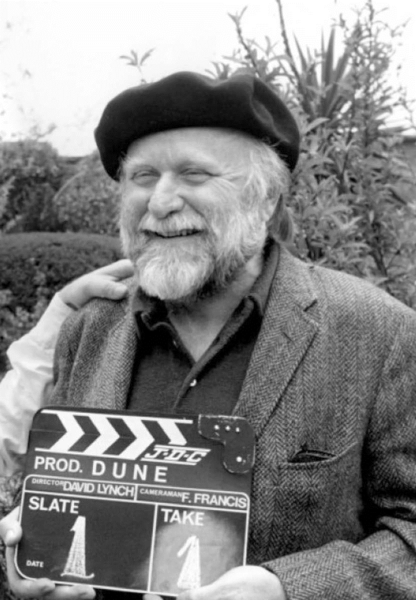















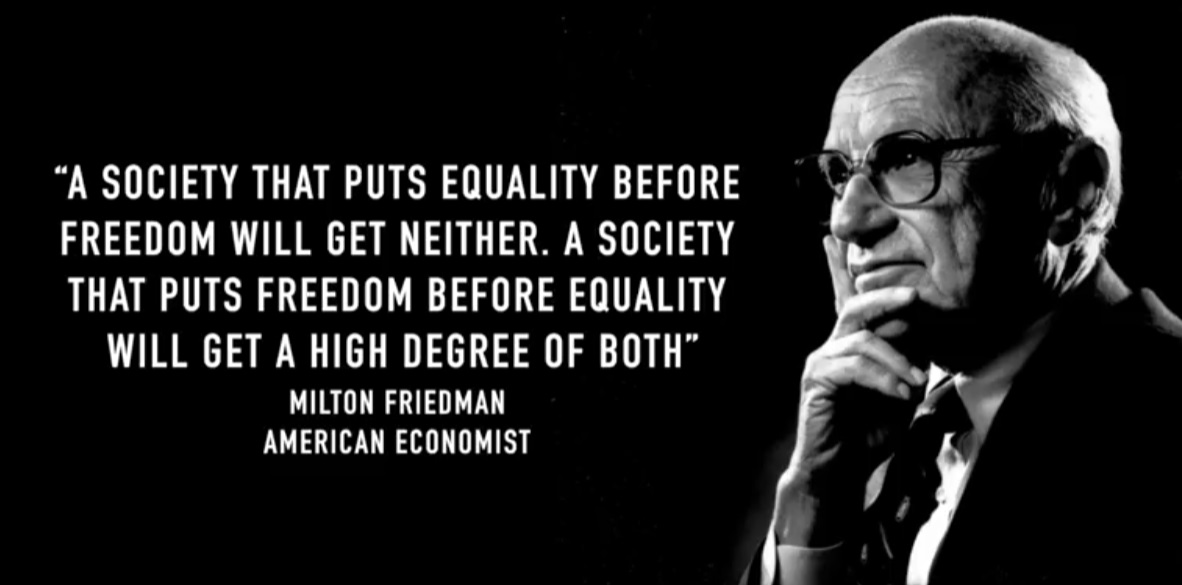

























.jpg)
_d%C3%A9but_des_ann%C3%A9es_70.jpeg)



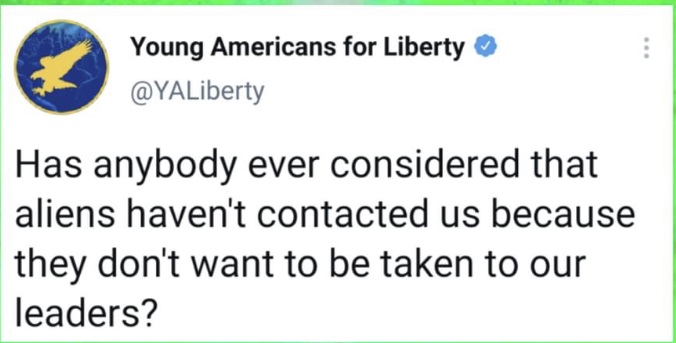










:no_upscale()/cdn.vox-cdn.com/uploads/chorus_image/image/69607892/AP20205603273979.0.jpg) Arkansas state Sen. Jason Rapert presides over a Senate committee at the state Capitol in Little Rock, Ark. in this March 14, 2018, file photo. Rapert’s National Association of Christian Lawmakers met recently to talk model legislation and pass resolutions. Kelly P. Kissel, Associated Press
Arkansas state Sen. Jason Rapert presides over a Senate committee at the state Capitol in Little Rock, Ark. in this March 14, 2018, file photo. Rapert’s National Association of Christian Lawmakers met recently to talk model legislation and pass resolutions. Kelly P. Kissel, Associated Press/cdn.vox-cdn.com/uploads/chorus_asset/file/22726922/AP898166992908.jpg) Texas state Rep. Bryan Hughes speaks during the opening session of the 2015 legislative session on Tuesday, Jan. 13, 2015, in Austin, Texas. Eric Gay, Associated Press
Texas state Rep. Bryan Hughes speaks during the opening session of the 2015 legislative session on Tuesday, Jan. 13, 2015, in Austin, Texas. Eric Gay, Associated Press/cdn.vox-cdn.com/uploads/chorus_asset/file/22726936/merlin_1112102.jpg) A anti-abortion supporter argues with those who attended a press conference and rally held by the Planned Parenthood Action Council of Utah outside of the Capitol in Salt Lake City on Aug. 25, 2015. Stacie Scott, Deseret News
A anti-abortion supporter argues with those who attended a press conference and rally held by the Planned Parenthood Action Council of Utah outside of the Capitol in Salt Lake City on Aug. 25, 2015. Stacie Scott, Deseret News





























 President Barack Obama announces the creation of an interagency task force for guns as as Vice President Joseph Biden listens on.Getty Images








 The Daily Hatch
.jpg)