It was good for workers since a lower rate means more investment, which translates to increased productivity and higher wages.
And it was good for U.S. competitiveness since the United States corporate tax rate no longer was the highest in the developed world.
Some critics downplayed those benefits and warned that a lower corporate tax rate would deprive the government of too much revenue.
Since I don’t want politicians to have more money, that was not a persuasive argument. Moreover, I argued during the debate in 2017 that a lower corporate tax rate would generate “revenue feedback.”
In other words, there would be a “Laffer Curve” effect as corporations responded to a lower tax rate by earning and reporting more income.
Based on the latest fiscal data from the Congressional Budget Office (CBO), I was right.
Corporate tax revenues for the 2021 fiscal year (which ended on September 30) were $370 billion. As shown in this chart, that’s only slightly below CBO’s estimate back in 2017 of how much revenue would be collected – $383 billion – if the rate stayed at 35 percent.
The chart also shows CBO’s 2018 estimate of what revenues would be in 2021 with a 21 percent rate (and if you want more data, the Joint Committee on Taxation estimated that the Trump tax reform would reduce corporate revenues in 2021 by $131 billion).
This leads me to ask two questions.
Is this a slam-dunk argument for the Laffer Curve?
Did the lower corporate tax revenue generate so much revenue feedback that it was almost self-financing?
The answer to the first question almost certainly is “yes” but “don’t exaggerate” is probably the prudent response to the second question.
Here are a few reasons to be cautious about making bold assertions.
CBO’s pre-TCJA estimate in 2017 may have been wrong for reasons that have nothing to do with the tax rate.
CBO’s post-TCJA estimate in 2018 may have been wrong for reasons that have nothing to do with the tax rate.
The surge of 2021 revenues may have been a one-time blip that will disappear or fade in the next few years.
The coronoavirus pandemic, or the policy response from Washington, may be distorting the numbers.
These are all legitimate caveats, so presumably it would be an exaggeration to simply look at the above chart and claim Trump’s reduction in the corporate tax rate almost “paid for itself.”
But we can look at the chart and state that there was a lot of revenue feedback, which shows that the lower corporate tax rate did producegood economic results.
Perhaps most important, we now have more evidence that Biden’s plan to increase the corporate tax rate is very misguided. Yes, it’s possible that the President’s plan may generate a bit of additional tax revenue, but at a very steep cost for workers, consumers, and shareholders.
P.S. If you want an example of tax cut that was self-financing, check out the IRS data on how much the rich paid before and after the Reagan tax cuts.
I enjoyed this article below because it demonstrates that the Laffer Curve has been working for almost 100 years now when it is put to the test in the USA. I actually got to hear Arthur Laffer speak in person in 1981 and he told us in advance what was going to happen the 1980’s and it all came about as he said it would when Ronald Reagan’s tax cuts took place. I wish we would lower taxes now instead of looking for more revenue through raised taxes. We have to grow the economy:
Mitt Romney repeatedly said last night that he would not allow tax cuts to add to the deficit. He repeatedly said it because over and over again Obama blathered the liberal talking point that cutting taxes necessarily increased deficits.
Romney’s exact words: “I want to underline that — no tax cut that adds to the deficit.”
The fact of the matter is that we can go back to Calvin Coolidge who said very nearly THE EXACT SAME THING to his treasury secretary: he too would not allow any tax cuts that added to the debt. Andrew Mellon – quite possibly the most brilliant economic mind of his day – did a great deal of research and determined what he believed was the best tax rate. And the Coolidge administration DID cut income taxes and MASSIVELY increased revenues. Coolidge and Mellon cut the income tax rate 67.12 percent (from 73 to 24 percent); and revenues not only did not go down, but they went UP by at least 42.86 percent (from $700 billion to over $1 billion).
That’s something called a documented fact. But that wasn’t all that happened: another incredible thing was that the taxes and percentage of taxes paid actually went UP for the rich. Because as they were allowed to keep more of the profits that they earned by investing in successful business, they significantly increased their investments and therefore paid more in taxes than they otherwise would have had they continued sheltering their money to protect themselves from the higher tax rates. Liberals ignore reality, but it is simply true. It is a fact. It happened.
Then FDR came along and raised the tax rates again and the opposite happened: we collected less and less revenue while the burden of taxation fell increasingly on the poor and middle class again. Which is exactly what Obama wants to do.
People don’t realize that John F. Kennedy, one of the greatest Democrat presidents, was a TAX CUTTERwho believed the conservative economic philosophy that cutting tax rates would in fact increase tax revenues. He too cut taxes, and he too increased tax revenues.
So we get to Ronald Reagan, who famously cut taxes. And again, we find that Reagan cut that godawful liberal tax rate during an incredibly godawful liberal-caused economic recession, and he increased tax revenue by 20.71 percent (with revenues increasing from $956 billion to $1.154 trillion). And again, the taxes were paid primarily by the rich:
“The share of the income tax burden borne by the top 10 percent of taxpayers increased from 48.0 percent in 1981 to 57.2 percent in 1988. Meanwhile, the share of income taxes paid by the bottom 50 percent of taxpayers dropped from 7.5 percent in 1981 to 5.7 percent in 1988.”
So we get to George Bush and the Bush tax cuts that liberals and in particular Obama have just demonized up one side and demagogued down the other. And I can simply quote the New York Times AT the time:
WASHINGTON, July 12 – For the first time since President Bush took office, an unexpected leap in tax revenue is about to shrink the federal budget deficit this year, by nearly $100 billion.
A Jump in Corporate Payments On Wednesday, White House officials plan to announce that the deficit for the 2005 fiscal year, which ends in September, will be far smaller than the $427 billion they estimated in February.
Mr. Bush plans to hail the improvement at a cabinet meeting and to cite it as validation of his argument that tax cuts would stimulate the economy and ultimately help pay for themselves.
Based on revenue and spending data through June, the budget deficit for the first nine months of the fiscal year was $251 billion, $76 billion lower than the $327 billion gap recorded at the corresponding point a year earlier.
The Congressional Budget Office estimated last week that the deficit for the full fiscal year, which reached $412 billion in 2004, could be “significantly less than $350 billion, perhaps below $325 billion.” The big surprise has been in tax revenue, which is running nearly 15 percent higher than in 2004. Corporate tax revenue has soared about 40 percent, after languishing for four years, and individual tax revenue is up as well.
And of course the New York Times, as reliable liberals, use the adjective whenever something good happens under conservative policies and whenever something bad happens under liberal policies: ”unexpected.” But it WASN’T ”unexpected.” It was EXACTLY what Republicans had said would happen and in fact it was exactly what HAD IN FACT HAPPENED every single time we’ve EVER cut income tax rates.
The truth is that conservative tax policy has a perfect track record: every single time it has ever been tried, we have INCREASED tax revenues while not only exploding economic activity and creating more jobs, but encouraging the wealthy to pay more in taxes as well. And liberals simply dishonestly refuse to acknowledge documented history.
Now let’s take a look at the utterly fallacious view that tax cuts in general create higher deficits.
Let’s take a trip back in time, starting with the 1920s. From Burton Folsom’s book, New Deal or Raw Deal?:
In 1921, President Harding asked the sixty-five-year-old [Andrew] Mellon to be secretary of the treasury; the national debt [resulting from WWI] had surpassed $20 billion and unemployment had reached 11.7 percent, one of the highest rates in U.S. history. Harding invited Mellon to tinker with tax rates to encourage investment without incurring more debt. Mellon studied the problem carefully; his solution was what is today called “supply side economics,” the idea of cutting taxes to stimulate investment. High income tax rates, Mellon argued, “inevitably put pressure upon the taxpayer to withdraw this capital from productive business and invest it in tax-exempt securities. . . . The result is that the sources of taxation are drying up, wealth is failing to carry its share of the tax burden; and capital is being diverted into channels which yield neither revenue to the Government nor profit to the people” (page 128).
Mellon wrote, “It seems difficult for some to understand that high rates of taxation do not necessarily mean large revenue to the Government, and that more revenue may often be obtained by lower taxes.” And he compared the government setting tax rates on incomes to a businessman setting prices on products: “If a price is fixed too high, sales drop off and with them profits.”
And what happened?
“As secretary of the treasury, Mellon promoted, and Harding and Coolidge backed, a plan that eventually cut taxes on large incomes from 73 to 24 percent and on smaller incomes from 4 to 1/2 of 1 percent. These tax cuts helped produce an outpouring of economic development – from air conditioning to refrigerators to zippers, Scotch tape to radios and talking movies. Investors took more risks when they were allowed to keep more of their gains. President Coolidge, during his six years in office, averaged only 3.3 percent unemployment and 1 percent inflation – the lowest misery index of any president in the twentieth century.
Furthermore, Mellon was also vindicated in his astonishing predictions that cutting taxes across the board would generate more revenue. In the early 1920s, when the highest tax rate was 73 percent, the total income tax revenue to the U.S. government was a little over $700 million. In 1928 and 1929, when the top tax rate was slashed to 25 and 24 percent, the total revenue topped the $1 billion mark. Also remarkable, as Table 3 indicates, is that the burden of paying these taxes fell increasingly upon the wealthy” (page 129-130).
Now, that is incredible upon its face, but it becomes even more incredible when contrasted with FDR’s antibusiness and confiscatory tax policies, which both dramatically shrunk in terms of actual income tax revenues (from $1.096 billion in 1929 to $527 million in 1935), and dramatically shifted the tax burden to the backs of the poor by imposing huge new excise taxes (from $540 million in 1929 to $1.364 billion in 1935). See Table 1 on page 125 of New Deal or Raw Deal for that information.
FDR both collected far less taxes from the rich, while imposing a far more onerous tax burden upon the poor.
It is simply a matter of empirical fact that tax cuts create increased revenue, and that those [Democrats] who have refused to pay attention to that fact have ended up reducing government revenues even as they increased the burdens on the poorest whom they falsely claim to help.
Let’s move on to John F. Kennedy, one of the most popular Democrat presidents ever. Few realize that he was also a supply-side tax cutter.
“It is a paradoxical truth that tax rates are too high and tax revenues are too low and the soundest way to raise the revenues in the long run is to cut the rates now … Cutting taxes now is not to incur a budget deficit, but to achieve the more prosperous, expanding economy which can bring a budget surplus.”
– John F. Kennedy, Nov. 20, 1962, president’s news conference
“Lower rates of taxation will stimulate economic activity and so raise the levels of personal and corporate income as to yield within a few years an increased – not a reduced – flow of revenues to the federal government.”
– John F. Kennedy, Jan. 17, 1963, annual budget message to the Congress, fiscal year 1964
“In today’s economy, fiscal prudence and responsibility call for tax reduction even if it temporarily enlarges the federal deficit – why reducing taxes is the best way open to us to increase revenues.”
– John F. Kennedy, Jan. 21, 1963, annual message to the Congress: “The Economic Report Of The President”
“It is no contradiction – the most important single thing we can do to stimulate investment in today’s economy is to raise consumption by major reduction of individual income tax rates.”
– John F. Kennedy, Jan. 21, 1963, annual message to the Congress: “The Economic Report Of The President”
“Our tax system still siphons out of the private economy too large a share of personal and business purchasing power and reduces the incentive for risk, investment and effort – thereby aborting our recoveries and stifling our national growth rate.”
– John F. Kennedy, Jan. 24, 1963, message to Congress on tax reduction and reform, House Doc. 43, 88th Congress, 1st Session.
“A tax cut means higher family income and higher business profits and a balanced federal budget. Every taxpayer and his family will have more money left over after taxes for a new car, a new home, new conveniences, education and investment. Every businessman can keep a higher percentage of his profits in his cash register or put it to work expanding or improving his business, and as the national income grows, the federal government will ultimately end up with more revenues.”
– John F. Kennedy, Sept. 18, 1963, radio and television address to the nation on tax-reduction bill
Which is to say that modern Democrats are essentially calling one of their greatest presidents a liar when they demonize tax cuts as a means of increasing government revenues.
So let’s move on to Ronald Reagan. Reagan had two major tax cutting policies implemented: the Economic Recovery Tax Act (ERTA) of 1981, which was retroactive to 1981, and the Tax Reform Act of 1986.
Did Reagan’s tax cuts decrease federal revenues? Hardly:
We find that 8 of the following 10 years there was a surplus of revenue from 1980, prior to the Reagan tax cuts. And, following the Tax Reform Act of 1986, there was a MASSIVE INCREASEof revenue.
So Reagan’s tax cuts increased revenue. But who paid the increased tax revenue? The poor? Opponents of the Reagan tax cuts argued that his policy was a giveaway to the rich (ever heard that one before?) because their tax payments would fall. But that was exactly wrong. In reality:
“The share of the income tax burden borne by the top 10 percent of taxpayers increased from 48.0 percent in 1981 to 57.2 percent in 1988. Meanwhile, the share of income taxes paid by the bottom 50 percent of taxpayers dropped from 7.5 percent in 1981 to 5.7 percent in 1988.”
So Ronald Reagan a) collected more total revenue, b) collected more revenue from the rich, while c) reducing revenue collected by the bottom half of taxpayers, and d) generated an economic powerhouse that lasted – with only minor hiccups – for nearly three decades. Pretty good achievement considering that his predecessor was forced to describe his own economy as a “malaise,” suffering due to a “crisis of confidence.” Pretty good considering that President Jimmy Carter responded to a reporter’s question as to what he would do about the problem of inflation by answering,“It would be misleading for me to tell any of you that there is a solution to it.”
Reagan whipped inflation. Just as he whipped that malaise and that crisis of confidence.
We have all the time in the world… to debate the relative merits of 50 years of James Bond music, as we do each time a new entry, like Billie Eilish’s “No Time to Die,” is added to the canon. And in the case of the film of that name, a long-distant Bond song has also been revived for the new soundtrack — Louis Armstrong’s “We Have All the Time in the World” — the impact of which may cause everyone to completely rethink where that love theme from “On Her Majesty’s Secret Service” ranks, now that it puts us in mind of sad Daniel Craig instead of sad George Lazenby.
What follows is an unassailable list of 26 Bond songs rated from worst to best. A caveat: I have at least a twinge of respect or affection for every tune in the catalog — even the Jack White and Madonna tracks, which kind of deserve the black eyes they get from the vast majority of Bond buffs, but which deserve at least a little credit… okay, a very little credit… for fearlessness in shaking up what can lean toward a rather algebraic formula. The fact is, we love our post-Shirley Bassey Bond music most when it adheres to tradition in some ways while upending it in others. That could be Paul McCartney juxtaposing a sinister strings break with a goofy reggae bridge in “Live and Let Die,” or it could be Eilish and Finneas working a subtle sliver of Monty Norman’s “James Bond Theme” into their otherwise somber entry before bringing it home with the “spy chord”… the E minor Major 9 that will mean “Bond, James Bond” for the rest of time.
26
Sam Smith, “Writing’s on the Wall” (from “Spectre,” 2015)
Spectre Opening Credits (HD)
Is it possible for a number that was only the second tune in Bond history to win the best song Oscar to be the worst entry in the series? Why, yes, since you ask, it is. It’s not even that it’s a terrible piece of songcraft or production; in the context of a Sam Smith album, it might even be a starkly melodramatic highlight. But it’s a falsetto-dawdling tune that’s deeply and self-consciously in love with its own moroseness, to a level unbecoming of a Bond movie — even a Bond movie as elegiac as the Daniel Craig entries can be. Yes, Adele and Eilish also went with somber ballads for the films that bookend this one, but they didn’t start draining allthe sex and danger out of those movies right at the beginning. The 007 franchise needed a sad song or two, but somebody did it better.
22 Madonna, “Die Another Day” (from “Die Another Day,” 2002)
The other nearly universally despised Bond song is certainly a product of its era — the great techno scare of the late ‘90s and early 2000s. I find myself not loathing it as much as I probably should, maybe because the hook works — even if there’s not a lot else to the song but that herky-jerky hook — and because combining proto-EDM with orchestral string-section stings was a kind of intriguing combo that few followed up on. But Madonna seemed just a bit too resistant to throwing in bits of the Bond-song conventions that would have made the number a bit more palatable, and compositionally it remains the thinnest tune in the canon. Also: What’s Freud got to do with it?
21 Matt Monro, “From Russia With Love” (from “From Russia With Love,” 1963)
You may intuit in these rankings a preference for the early stuff, but we’ll make an exception for this seminal entry, whose modest attributes tend to be overrated for reasons that have to come down mostly to nostalgia. As the first true pop song written for a Bond film, it merits credit for loosely establishing a tone that would follow in many of the tunes, setting out the spy as more of an inner romantic than his cavalier ways on screen might suggest. But really, it’s pretty colorless, pro forma pop — just the kind of tune that you’d expect to find favor a secret agent who mocked the Beatles in the following film. Monro’s vocal version was embedded within the film, while the opening credits featured an instrumental version made into a medley with two other themes. That was just as well — if this entire recording had introduced the film at the start, we might have a harder time remembering the movie as the classic it is.
20 Garbage, “The World is Not Enough” (from “The World is Not Enough,” 1999)
Big Garbage fan here, so it’s hard to pin down exactly why this doesn’t click the way it should, especially with such a promising hook. Maybe it’s because the song is not enough to contain everything that the overly busy and compressed arrangement throws at it. Orchestration and tremolo guitar, yes — but the programmed-sounding percussion, a boon to many other Garbage songs, just sounds loud, clangy and exhausting in a milieu that demands a subtler touch. Still, you’ve got to give Shirley Manson props for being one of the few lyricists to write a song from the point of view of a Bond villain.
19 Sheryl Crow, “Tomorrow Never Dies” (from “Tomorrow Never Dies,” 1997)
Crow is up in her “If It Makes You Happy” range as a vocalist, but imagining herself as a Bond girl, or maybe even fancying herself as Mrs. Bond, does not make her happy. “Darling you won / It’s no fun / Martinis, girls, and guns / It’s murder on our love affair,” she sings. The idea of Bond as an unsuitable domestic partner who must be spied upon himself is an interesting idea to pursue. But similar to the Garbage track, Crow’s song has a strong chorus melody somewhat undercut by an arrangement that favors bombast over brooding.
18 Rita Coolidge, “All Time High” (from “Octopussy,” 1983)
It’s easy to hear this song as a sort of successor to “Nobody Does It Better” and “For Your Eyes Only” in the completion of a romantic easy-listening trilogy. But this time it’s Bond mainstay John Barry saying “I can do that, too” after Marvin Hamlisch and Bill Conti stepped in to take his place on writing the melodies for those earlier hits in his absence. He succeeded, if not quite as wildly, as Coolidge’s song was a multi-week No. 1 hit at adult contemporary radio that didn’t fly quite as high on the pop chart. Each of these songs imagines Bond as a lady-pleaser, not a lady-killer. But because it’s Barry, there’s an intriguing hint of melancholy embedded in the sweet nothings that you didn’t get with the Carly Simon or Sheena Easton songs.
NO TIME TO DIE | Final US Trailer
007 : James Bond : Theme
Casino Royale – Chris Cornell – You Know My Name
Alicia Keys & Jack White – Another Way To Die [Official Video]
Goldfinger Theme Song – James Bond
Diamonds Are Forever Theme Song – James Bond
Moonraker Theme Song – James Bond
Adele – Skyfall (Lyric Video)
—-
Billie Eilish – No Time To Die
——
Sam Smith – Writing’s On The Wall (from Spectre) (Official Video)
—-
Thunderball Theme Song – James Bond
Nancy Sinatra – You Only Live Twice (HQ)
__
The Man with the Golden Gun Opening Title Sequence
—-
The spy who loved me (1977) INTRO HD
Sheena Easton • For Your Eyes Only – James Bond/007
British actor Daniel Craig poses during a photocall to promote the 24th James Bond film ‘Spectre’ on February 18, 2015 at Rome’s city hall. AFP PHOTO / TIZIANA FABI (Photo by VINCENZO PINTO and TIZIANA FABI / AFP)
Paris, France — Ever since the twanging guitar of John Barry’s theme song first appeared in “Dr No” in 1962, music has been crucial to the James Bond phenomenon.
The songs written for each title sequence have become a way of marking out the evolution of pop music through the past 60 years, from the classics of Shirley Bassey and Paul McCartney to Adele and Billie Eilish.
Nobody remembers Monty
Many assume the original theme was written by John Barry, in part because he became so closely associated with the Bond franchise, composing the soundtrack for 11 of the films.
In fact, Barry only arranged and performed the theme tune.
The famous dung-digger-dung-dung line was actually written by theater composer Monty Norman, developed from an unused Indian-themed score he had written for an adaptation of VS Naipaul’s “A House for Mr Biswas.”
It was Barry’s job to jazz it up, adding the blaring horns that made it so dramatic.
While Norman was given a one-off payment of just £250, Barry built a Hollywood career that has included five Oscars and classic soundtracks to “Midnight Cowboy,” “Out of Africa,” and many more.
Golden girl Shirley Bassey
Bassey became almost as closely linked to Bond as Barry — the only singer to deliver three title tracks: “Goldfinger” (1964), “Diamonds are Forever” (1971), and “Moonraker” (1979).
The first two are considered the most memorable in Bond history, the latter less so — Bassey later admitted she hated the “Moonraker” song and only did it as a favor to Barry.
“Goldfinger” made her a star, but the recording sessions were grueling, with Barry insisting that Bassey, then 27, hold the last belting note for seven full seconds.
“I was holding it and holding it — I was looking at John Barry and I was going blue in the face and he’s going — hold it just one more second. When it finished, I nearly passed out,” she later recalled.
A new Beatles beginning
The first Bond film without Barry on the baton was “Live and Let Die” in 1973.
For this, the producers turned to another famous “B” – The Beatles.
The group’s producer George Martin took over composing duties and brought in Paul McCartney and his band Wings for the theme song.
It became another classic and spawned a famous cover by Guns’N’Roses in later years.
From this point on, the Bond title song became its own mini-industry, without the involvement of the composer.
Big pop tie-ins followed, ranging from the not-so-successful (Lulu’s “The Man with the Golden Gun”) to classics like Carly Simon’s “Nobody Does it Better” and Duran Duran’s “A View to a Kill.”
FILE PHOTO: Auctioneer specialists hold a rare intact James Bond ‘Thunderball’ (1965) film poster (estimate £8,000-£12,000), featuring two panels of poster illustrations on the left by Frank McCarthy and two on the right by Robert McGinnis, at Ewbank’s Auctioneers, ahead of an upcoming sale, in Woking, Britain, April 7, 2021. REUTERS/Hannah McKay
The next generation
After a few desultory outings during the Pierce Brosnan years, the Bond genre got a shot of adrenaline with Adele’s “Skyfall” in 2012, which was the first to win an Oscar for best song.
The following year’s “Writing’s on the Wall” by Sam Smith also won an Oscar, though it got a more mixed critical reception.
The latest incarnation is pop princess Billie Eilish with “No Time to Die,” which she co-wrote with her brother Finneas.
It already has a thumbs-up from the doyenne of the Bond theme world, with Bassey telling The Big Issue: “She did a good job.”
The latest James Bond movie “Skyfall” stars Daniel Craig. 007 boozed so much that in all reality he would have had the tremulous hands of a chronic alcoholic, according to an offbeat study published by the British Medical Journal. PHOTO FROM FACEBOOK.COM/JAMESBONDOO7
Live And Let Die Theme Song – James Bond
Paul McCartney Uncle Albert Rare Studio Demo
Paul McCartney; Uncle AlbertAdmiral Halsey. (RAM 1971)
“Uncle Albert/Admiral Halsey” is a song by Paul and Linda McCartney from the album Ram. Released in the United States as a single on 2 August 1971,[1] but premiering on WLS the previous week (as a “Hit Parade Bound” (HPB)),[2] it reached number one on the Billboard Hot 100 on 4 September 1971,[3][4] making it the first of a string of post-Beatles, McCartney-penned singles to top the US pop chart during the 1970s and 1980s. Billboard ranked it number 22 on its Top Pop Singles of 1971 year-end chart.[5]
https://youtu.be/XI6C7L66zq8 “Uncle Albert/Admiral Halsey” is composed of several unfinished song fragments that McCartney stitched together similar to the medleys from the Beatles‘ album Abbey Road.[6] The song is noted for its sound effects, including the sounds of a thunderstorm, with rain, heard between the first and second stanza, the sound of a telephone ringing, and a message machine, heard after the second stanza, and a sound of chirping sea birds and wind by the seashore. Linda’s voice is heard in the harmonies as well as the bridge section of the “Admiral Halsey” portion of the song.
McCartney said “Uncle Albert” was based on his uncle. “He’s someone I recall fondly, and when the song was coming it was like a nostalgia thing.”[7] McCartney also said, “As for Admiral Halsey, he’s one of yours, an American admiral”, referring to Fleet AdmiralWilliam “Bull” Halsey (1882–1959).[7] McCartney has described the “Uncle Albert” section of the song as an apology from his generation to the older generation, and Admiral Halsey as an authoritarian figure who ought to be ignored.[8]
Despite the disparate elements that make up the song, author Andrew Grant Jackson discerns a coherent narrative to the lyrics, related to McCartney’s emotions in the aftermath of the Beatles’ breakup.[9] In this interpretation, the song begins with McCartney apologizing to his uncle for getting nothing done, and being easily distracted and perhaps depressed in the lethargic “Uncle Albert” section.[9] Then, after some sound effects reminiscent of “Yellow Submarine,” Admiral Halsey appears to him calling him to action, although McCartney remains more interested in “tea and butter pie.” McCartney stated that he put the butter in the pie so that it would not melt at all.[9] Jackson sees a possible sinister allusion in the use of Admiral Halsey as a character in the song, since Halsey was famous for fighting the Japanese in World War II and claiming that “after the war, the Japanese language will be spoken only in hell,” and McCartney’s ex-Beatle partner John Lennon had recently married a Japanese woman, Yoko Ono.[9] The “hands across the water” section which follows could be taken as evocative of the command “All hands on deck!”, rousing McCartney to action, perhaps to compete with Lennon.[9] The song then ends with the “gypsy” section, in which McCartney resolves to get back on the road and perform his music, now that he was on his own without his former bandmates who no longer wanted to tour.[9]
According to Allmusic critic Stewart Mason, fans of Paul McCartney’s music are divided in their opinions of this song.[13] Although some fans praise it as “one of his most playful and inventive songs” others criticize it for being “exactly the kind of cute self-indulgence that they find so annoying about his post-Beatles career.”[13] Mason himself considers it “churlish” to be annoyed by the song, given that song isn’t intended to be completely serious, and praises the “Hands across the water” section as being “lovably giddy.”[13]
On the US charts, the song set a songwriting milestone as the all-time songwriting record (at the time) for the most consecutive calendar years to write a #1 song. This gave McCartney eight consecutive years (starting with “I Want to Hold Your Hand“), leaving behind Lennon with only seven years.
“Uncle Albert/Admiral Halsey” also appears on Wings Greatest from 1978, even though Ram was not a Wings album, and again on the US version of McCartney’s 1987 compilation, All the Best!, as well as the 2001 compilation Wingspan: Hits and History.
Harry Shearer uses a looped sample of “Uncle Albert/Admiral Halsey” for the “Apologies of the Week” segment of Le Show, with emphasis on McCartney saying “sorry”.
The film Greenberg includes a scene in which the character Florence, drunk on champagne, sings along to the song which Greenberg included on a mix-CD for her.
Jump up^“Top Pop 100 Singles” Billboard December 25, 1971: TA-36
Jump up^Blaney, J. (2007). Lennon and McCartney: together alone: a critical discography of their solo work. Jawbone Press. pp. 46, 50. ISBN978-1-906002-02-2.
I’m Waiting for the Man sung by Nico in 1982 (about waiting for drug fix) __________ Nico Icon documentary part 3 Nico Icon documentary part 4 NICO – I’m Waiting For The Man – (1982, Warehouse, Preston, UK) One of the top 10 songs from The Velvet Underground and Nico is the song “I’m Waiting […]
Nico’s sad story of drugs and her interaction with Jim Morrison Nico – These Days The Doors (1991) – Movie Trailer / Best Parts The Doors Movie – Back Door Man/When The Music’s Over/Arrest of Jim Morrison Uploaded on Jul 30, 2009 A clip from “The Doors” movie with “Back Door Man”, “When The Music’s […]
Dennis Jernigan – You Are My All In All Uploaded on Oct 18, 2009 Dennis Jernigan – You Are My All In All __________________________________________ Christian Singer’s Controversial Journey Revealed in New Documentary: ‘I Placed Homosexuality on Jesus’ Shoulders’ Oct. 2, 2014 2:23pm Billy Hallowell Singer-songwriter Dennis Jernigan has been making Christian music for decades, recording […]
Cole Porter’s songs “De-Lovely” and “Let’s misbehave” ‘At Long Last Love’: Let’s Misbehave/De-Lovely Uploaded on Apr 1, 2009 Burt Reynolds and Cybil Shepherd give an extraordinarily charming performance of Cole Porter’s songs in Peter Bogdanovich’s absolutely wonderful tribute to the golden age of film musicals, ‘At Long Last Love’. _____________________ De-Lovely From Wikipedia, […]
________ _______ Cole Porter’s song’s “My Heart Belongs to Daddy” My Heart Belongs To Daddy Uploaded on Jun 20, 2010 Mary Martin became popular on Broadway and received attention in the national media singing “My Heart Belongs to Daddy”. “Mary stopped the show with “My Heart Belongs to Daddy”. With that one song in the […]
______________ Love For Sale (De-Lovely) Love for Sale (song) From Wikipedia, the free encyclopedia Jump to: navigation, search This article needs additional citations for verification. Please help improve this article by adding citations to reliable sources. Unsourced material may be challenged and removed. (September 2008) “Love for Sale“ Written by Cole Porter Published 1930 Form […]
Cole Porter’s song “Ev’ry Time We Say Goodbye” _________________ Natalie Cole – Ev’ry Time We Say Goodbye Ev’ry Time We Say Goodbye From Wikipedia, the free encyclopedia Jump to: navigation, search This article needs additional citations for verification. Please help improve this article by adding citations to reliable sources. Unsourced material may be […]
Cole Porter’s song “So in Love” __________________ So in love – De-lovely So in Love From Wikipedia, the free encyclopedia Jump to: navigation, search For the song by Orchestral Manoeuvres in the Dark, see So in Love (OMD song). For the song by Jill Scott, see So in Love (Jill Scott song). Not to be […]
____________________ Cole Porter’s song “Night and Day” Cole Porter´s Day and Night by Fred Astaire & Ginger Rogers Night and Day (song) From Wikipedia, the free encyclopedia Jump to: navigation, search This article includes a list of references, but its sources remain unclear because it has insufficient inline citations. Please help to improve this article […]
Johnny Cash – Big River Uploaded on Jan 16, 2008 Grand Ole Opry, 1962 _______________________________ John Lennon and Bob Dylan Conversation mention Johnny Cash and his song “Big River” _______________________ Big River (Johnny Cash song) From Wikipedia, the free encyclopedia Jump to: navigation, search This article may require cleanup to meet Wikipedia’s quality standards. No […]
TRY BORROWING AT A BANK WITH A FINANCIAL CONDITION LIKE THE USA HAS:
The problem in Washington is not lack of revenue but our lack of spending restraint. This video below makes that point. WASHINGTON IS A SPENDING ADDICT!!!
——-
—
The Honorable Ron Portman of Ohio
United States Senate
Washington, D.C. 20510
Dear Senator Portman,
On September 16, 2021 my post “46 REPUBLICAN SENATORS VOW NOT TO HELP DEMOCRATS RAISE THE DEBT CEILING (HERE WE GO AGAIN!!!!!)” and you were one of the 46 Senators who pledged not to raise the debt ceiling but you folded like a wet leaf just like I predicted:
I have written before about those heroes of mine that have resisted raising the debt ceiling but in the end I have always been disappointed and here we go again!
But first let me give you a taste of something I wrote about 10 years ago on this same issue!
What would happen if the debt ceiling was not increased? Yes President Obama would probably cancel White House tours and he would try to stop mail service or something else to get on our nerves but that is what the Republicans need to do.
All but four Republican senators have signed a pledge that they will not vote to raise the debt ceiling, sending another warning to Democrats that they are on their own on the pressing issue.
Sen. Ron Johnson (R-WI) circulated a letter during the chamber’s vote-a-rama on the $3.5 trillion budget resolution Wednesday, signing up a majority of his fellow Republicans in an effort to link the Democrats’ proposed spending package with the statutory debt limit imposed on the federal government by Congress, which covers spending that has already been approved and must be paid by the U.S. Treasury.
In the letter, which is addressed to “Our Fellow Americans,” the Republican signatories claim that Democrats are responsible for increased federal spending and so must be responsible for raising the debt limit. “We will not vote to increase the debt ceiling, whether that increase comes through a stand-alone bill, a continuing resolution, or any other vehicle,” the letter says. “Democrats, at any time, have the power through reconciliation to unilaterally raise the debt ceiling, and they should not be allowed to pretend otherwise.”
The Republicans who didn’t sign the letter are Sens. Susan Collins of Maine, John Kennedy of Louisiana, Lisa Murkowski of Alaska and Richard Shelby of Alabama.
Why now: A two-year suspension of the debt ceiling expired at the end of July, forcing the U.S. Treasury to begin taking “extraordinary measures” to keep paying its bills as it waits for Congress to either raise or suspend the limit before the country is forced to default. Democrats opted not to include an increase in the debt ceiling in their budget resolution, which would have made it possible to raise the limit without Republican support, though they still have the option of revising the resolution to include such a provision.
What Democrats say: Democrats point out that much of the increased debt in recent years was produced during former President Trump’s administration. “I cannot believe that Republicans would let the country default,” Senate Majority Leader Chuck Schumer (D-NY) said Wednesday. “It has always been bipartisan to deal with the debt ceiling. When Trump was president I believe the Democrats joined with him to raise it three times.”
President Biden told reporters Wednesday that trillions in debt were added “on the Republicans’ watch” but said he was confident that the GOP would act in time. “They are not going to let us default,” he said.
The bottom line: No one expects Congress to allow the U.S. to default, but it looks like we could be in for a high-stakes game of chicken in the coming weeks — and the markets are starting to notice. According to Reuters Wednesday, “Some U.S. Treasury bill yields are beginning to reflect concerns that lawmakers may wait until the last minute to increase or suspend the debt ceiling.”
Will you stand up against the Democrats in the future and make the Government ONLY SPEND WHAT IT BRINGS IN? We are becoming an entitlement society and we must stop this trend!!!!
PS: In 2010 we had a group of conservatives get elected in the House and many of them stood up to President Obama when he wanted to raise the debt limit and I praised these 66 heroes of mine on my blog in 2011 and Representative Dennis Ross of Florida was one of those. Here is what I wrote about him:
The Sixty Six who resisted “Sugar-coated Satan Sandwich” Debt Deal (Part 13)
This post today is a part of a series I am doing on the 66 Republican Tea Party favorites that resisted eating the “Sugar-coated Satan Sandwich” Debt Deal. Actually that name did not originate from a representative who agrees with the Tea Party, but from a liberal.
Rep. Emanuel Clever (D-Mo.) called the newly agreed-upon bipartisan compromise deal to raise the debt limit “a sugar-coated satan sandwich.”
“This deal is a sugar-coated satan sandwich. If you lift the bun, you will not like what you see,” Clever tweeted on August 1, 2011.
Press Release: Dennis Ross Statement on Debt Deal Vote Solving our Long Term Debt Crisis Will Require a Balanced Budget Amendment, Tax Reform, and a National Discussion on the Role of the Federal Government
Washington, Aug 1 –
Washington, DC – Congressman Dennis A. Ross (R-FL) released the following statement announcing his intention to vote NO on the “Debt Deal.” Congressman Ross released the following statement,
“America is nearly upside down on the national mortgage and this legislation is not a viable long term solution to put our fiscal house in order. No responsible bank would lend to a family in the financial condition our nation is in without a realistic and enforceable plan to get their spending under control. Without a Balanced Budget Amendment in place, this deal, as with dozens of others, will barely last through this election, let alone ten years. My kids and grandkids cannot afford trillions more in debt and I was not sent here to heel like a good puppy when the President or the Treasury Secretary says so. I was sent here to do what is right for my constituents and the nation, even if that makes me unpopular or costs me my seat.”
Congressman Ross continued, “The Speaker is up against the most liberal President since Jimmy Carter and a Senate that spends more time bloviating than legislating. I do not envy him that task. No one should mistake my differences with this legislation as an indication of any problem with my Speaker. Those of us who vote no on today’s legislation will send a message to the President that 75% of the American people want to tie Washington’s hands when it comes to spending with a Balanced Budget Amendment and we know our Speaker will be there when it happens.”
Dennis Ross, son of Bill and Loyola Ross, was born in 1959 and raised in Lakeland, Florida. He graduated from Auburn University and the Cumberland School of Law at Sanford University. He has served as in-house counsel to the Walt Disney Company and as an associate of the law firm of Holland & Knight. He previously served in the Florida Legislature from 2000 until being term limited in 2008. Dennis and his wife, Cindy Hartley, were married in 1983 and have two sons, Shane and Travis.
In April 2018, Ross announced that he would retire from Congress, and not run for re-election in 2018.[1]
Starting in 2018, Ross became a distinguished professor of political science at Southeastern University and launched the American Center for Political Leadership (ACPL) in the Jannetides College of Business and Entrepreneurial Leadership.[2]
Sixty Six who resisted “Sugar-coated Satan Sandwich” Debt Deal (Part 49) This post today is a part of a series I am doing on the 66 Republican Tea Party favorites that resisted eating the “Sugar-coated Satan Sandwich” Debt Deal. Actually that name did not originate from a representative who agrees with the Tea Party, but […]
Sixty Six who resisted “Sugar-coated Satan Sandwich” Debt Deal (Part 48) This post today is a part of a series I am doing on the 66 Republican Tea Party favorites that resisted eating the “Sugar-coated Satan Sandwich” Debt Deal. Actually that name did not originate from a representative who agrees with the Tea Party, but […]
Sixty Six who resisted “Sugar-coated Satan Sandwich” Debt Deal (Part 47) This post today is a part of a series I am doing on the 66 Republican Tea Party favorites that resisted eating the “Sugar-coated Satan Sandwich” Debt Deal. Actually that name did not originate from a representative who agrees with the Tea Party, but […]
Sixty Six who resisted “Sugar-coated Satan Sandwich” Debt Deal (Part 46) This post today is a part of a series I am doing on the 66 Republican Tea Party favorites that resisted eating the “Sugar-coated Satan Sandwich” Debt Deal. Actually that name did not originate from a representative who agrees with the Tea Party, […]
Sixty Six who resisted “Sugar-coated Satan Sandwich” Debt Deal (Part 45) This post today is a part of a series I am doing on the 66 Republican Tea Party favorites that resisted eating the “Sugar-coated Satan Sandwich” Debt Deal. Actually that name did not originate from a representative who agrees with the Tea Party, but […]
Sixty Six who resisted “Sugar-coated Satan Sandwich” Debt Deal (Part 44) This post today is a part of a series I am doing on the 66 Republican Tea Party favorites that resisted eating the “Sugar-coated Satan Sandwich” Debt Deal. Actually that name did not originate from a representative who agrees with the Tea Party, but […]
Sixty Six who resisted “Sugar-coated Satan Sandwich” Debt Deal (Part 43) This post today is a part of a series I am doing on the 66 Republican Tea Party favorites that resisted eating the “Sugar-coated Satan Sandwich” Debt Deal. Actually that name did not originate from a representative who agrees with the Tea Party, but […]
Sixty Six who resisted “Sugar-coated Satan Sandwich” Debt Deal (Part 42) This post today is a part of a series I am doing on the 66 Republican Tea Party favorites that resisted eating the “Sugar-coated Satan Sandwich” Debt Deal. Actually that name did not originate from a representative who agrees with the Tea Party, but […]
Sixty Six who resisted “Sugar-coated Satan Sandwich” Debt Deal (Part 41) This post today is a part of a series I am doing on the 66 Republican Tea Party favorites that resisted eating the “Sugar-coated Satan Sandwich” Debt Deal. Actually that name did not originate from a representative who agrees with the Tea Party, but […]
Sixty Six who resisted “Sugar-coated Satan Sandwich” Debt Deal (Part 40) This post today is a part of a series I am doing on the 66 Republican Tea Party favorites that resisted eating the “Sugar-coated Satan Sandwich” Debt Deal. Actually that name did not originate from a representative who agrees with the Tea Party, but […]
Sixty Six who resisted “Sugar-coated Satan Sandwich” Debt Deal (Part 39) This post today is a part of a series I am doing on the 66 Republican Tea Party favorites that resisted eating the “Sugar-coated Satan Sandwich” Debt Deal. Actually that name did not originate from a representative who agrees with the Tea Party, but […]
Sixty Six who resisted “Sugar-coated Satan Sandwich” Debt Deal (Part 38) This post today is a part of a series I am doing on the 66 Republican Tea Party favorites that resisted eating the “Sugar-coated Satan Sandwich” Debt Deal. Actually that name did not originate from a representative who agrees with the Tea Party, but […]
Sixty Six who resisted “Sugar-coated Satan Sandwich” Debt Deal (Part 37) This post today is a part of a series I am doing on the 66 Republican Tea Party favorites that resisted eating the “Sugar-coated Satan Sandwich” Debt Deal. Actually that name did not originate from a representative who agrees with the Tea Party, but […]
Sixty Six who resisted “Sugar-coated Satan Sandwich” Debt Deal (Part 36) This post today is a part of a series I am doing on the 66 Republican Tea Party favorites that resisted eating the “Sugar-coated Satan Sandwich” Debt Deal. Actually that name did not originate from a representative who agrees with the Tea Party, but […]
Sixty Six who resisted “Sugar-coated Satan Sandwich” Debt Deal (Part 35) This post today is a part of a series I am doing on the 66 Republican Tea Party favorites that resisted eating the “Sugar-coated Satan Sandwich” Debt Deal. Actually that name did not originate from a representative who agrees with the Tea Party, but […]
Sixty Six who resisted “Sugar-coated Satan Sandwich” Debt Deal (Part 34) This post today is a part of a series I am doing on the 66 Republican Tea Party favorites that resisted eating the “Sugar-coated Satan Sandwich” Debt Deal. Actually that name did not originate from a representative who agrees with the Tea Party, but […]
Sixty Six who resisted “Sugar-coated Satan Sandwich” Debt Deal (Part 33) This post today is a part of a series I am doing on the 66 Republican Tea Party favorites that resisted eating the “Sugar-coated Satan Sandwich” Debt Deal. Actually that name did not originate from a representative who agrees with the Tea Party, but […]
Sixty Six who resisted “Sugar-coated Satan Sandwich” Debt Deal (Part 32) This post today is a part of a series I am doing on the 66 Republican Tea Party favorites that resisted eating the “Sugar-coated Satan Sandwich” Debt Deal. Actually that name did not originate from a representative who agrees with the Tea Party, but […]
Congressmen Tim Huelskamp on the debt ceiling Sixty Six who resisted “Sugar-coated Satan Sandwich” Debt Deal (Part 31) This post today is a part of a series I am doing on the 66 Republican Tea Party favorites that resisted eating the “Sugar-coated Satan Sandwich” Debt Deal. Actually that name did not originate from a representative […]
Sixty Six who resisted “Sugar-coated Satan Sandwich” Debt Deal (Part 30) This post today is a part of a series I am doing on the 66 Republican Tea Party favorites that resisted eating the “Sugar-coated Satan Sandwich” Debt Deal. Actually that name did not originate from a representative who agrees with the Tea Party, but […]
Sixty Six who resisted “Sugar-coated Satan Sandwich” Debt Deal (Part 29) This post today is a part of a series I am doing on the 66 Republican Tea Party favorites that resisted eating the “Sugar-coated Satan Sandwich” Debt Deal. Actually that name did not originate from a representative who agrees with the Tea Party, but […]
The Sixty Six who resisted “Sugar-coated Satan Sandwich” Debt Deal (Part 28) This post today is a part of a series I am doing on the 66 Republican Tea Party favorites that resisted eating the “Sugar-coated Satan Sandwich” Debt Deal. Actually that name did not originate from a representative who agrees with the Tea Party, […]
The Sixty Six who resisted “Sugar-coated Satan Sandwich” Debt Deal (Part 27) This post today is a part of a series I am doing on the 66 Republican Tea Party favorites that resisted eating the “Sugar-coated Satan Sandwich” Debt Deal. Actually that name did not originate from a representative who agrees with the Tea Party, […]
The Sixty Six who resisted “Sugar-coated Satan Sandwich” Debt Deal (Part 26) This post today is a part of a series I am doing on the 66 Republican Tea Party favorites that resisted eating the “Sugar-coated Satan Sandwich” Debt Deal. Actually that name did not originate from a representative who agrees with the Tea Party, […]
Uploaded by RepJoeWalsh on Jun 14, 2011 Our country’s debt continues to grow — it’s eating away at the American Dream. We need to make real cuts now. We need Cut, Cap, and Balance. The Sixty Six who resisted “Sugar-coated Satan Sandwich” Debt Deal (Part 25) This post today is a part of a series […]
The Sixty Six who resisted “Sugar-coated Satan Sandwich” Debt Deal (Part 23) This post today is a part of a series I am doing on the 66 Republican Tea Party favorites that resisted eating the “Sugar-coated Satan Sandwich” Debt Deal. Actually that name did not originate from a representative who agrees with the Tea Party, […]
The Sixty Six who resisted “Sugar-coated Satan Sandwich” Debt Deal (Part 22) This post today is a part of a series I am doing on the 66 Republican Tea Party favorites that resisted eating the “Sugar-coated Satan Sandwich” Debt Deal. Actually that name did not originate from a representative who agrees with the Tea Party, […]
The Sixty Six who resisted “Sugar-coated Satan Sandwich” Debt Deal (Part 21) This post today is a part of a series I am doing on the 66 Republican Tea Party favorites that resisted eating the “Sugar-coated Satan Sandwich” Debt Deal. Actually that name did not originate from a representative who agrees with the Tea Party, […]
The Sixty Six who resisted “Sugar-coated Satan Sandwich” Debt Deal (Part 20) This post today is a part of a series I am doing on the 66 Republican Tea Party favorites that resisted eating the “Sugar-coated Satan Sandwich” Debt Deal. Actually that name did not originate from a representative who agrees with the Tea Party, […]
The Sixty Six who resisted “Sugar-coated Satan Sandwich” Debt Deal (Part 19) This post today is a part of a series I am doing on the 66 Republican Tea Party favorites that resisted eating the “Sugar-coated Satan Sandwich” Debt Deal. Actually that name did not originate from a representative who agrees with the Tea Party, […]
The Sixty Six who resisted “Sugar-coated Satan Sandwich” Debt Deal (Part 18) This post today is a part of a series I am doing on the 66 Republican Tea Party favorites that resisted eating the “Sugar-coated Satan Sandwich” Debt Deal. Actually that name did not originate from a representative who agrees with the Tea Party, […]
The Sixty Six who resisted “Sugar-coated Satan Sandwich” Debt Deal (Part 17) This post today is a part of a series I am doing on the 66 Republican Tea Party favorites that resisted eating the “Sugar-coated Satan Sandwich” Debt Deal. Actually that name did not originate from a representative who agrees with the Tea Party, […]
The Sixty Six who resisted “Sugar-coated Satan Sandwich” Debt Deal (Part 16) This post today is a part of a series I am doing on the 66 Republican Tea Party favorites that resisted eating the “Sugar-coated Satan Sandwich” Debt Deal. Actually that name did not originate from a representative who agrees with the Tea Party, […]
The Congressional Budget Office says it’s “unclear” when it will be able to estimate the cost of the spending bill. Pictured: Sen. Joe Manchin, D-W.Va., has expressed concerns over the price tag of the spending bill, calling it “fiscal insanity.” (Photo: Anna Moneymaker/Getty Images)
Capitol Hill staffers are working around the clock to hammer into some twisted shape a spending bill that warring factions of the Democratic Party will support in their goal to transform America.
The cradle-to-grave subsidies in the 2,448-page, $3.5 trillion spending bill that Democrats in Congress are crafting will create a welfare trap for millions more Americans, send inflation soaring, and drive our nation much deeper into debt.
Economic policy professor Chuck Blahous of the Mercatus Center at George Mason University analyzed the health benefit proposals in the spending bill. He wrote that expanding Medicare, Medicaid, and “so-called Obamacare” will “represent a major escalation of the fiscal irresponsibility lawmakers have practiced for the past several years.”
Former White House chief economist Casey Mulligan, now a professor at the University of Chicago, wrote that the spending bill would “implement the single largest permanent increase in work disincentives since the income tax came into its own during World War II.”
“The implicit employment and income taxes in [this legislation] would increase marginal tax rates on work by about 7 percentage points,” he wrote. “I expect that such a change in the disincentive would reduce full-time equivalent employment by about 4.5%, or about 7 million jobs.”
University of Chicago professor Charles Lipson wrote in “It’s Not the Top-Line Number—It’s the Bottom-Line Goal” that the spending bill would fundamentally transform the United States into a European social welfare state.
“Progressives know—and the whole country should understand—that piling on these vast new programs would be a major step in turning the United States into a European-style social democracy, along the lines of France, Germany, Spain, or Italy,” Lipson wrote. “Voters never elected [Joe] Biden to do that.”
The legislation is so huge and complex that even the Congressional Budget Office says “it is unclear” when it will be able to estimate the cost of the full spending bill, which is itself a moving target.
Congressional Budget Office Director Phillip Swagel wrote in a letter to Senate Minority Leader Mitch McConnell, R-Ky., last week, “The agency has not estimated how the entire package would affect direct spending, revenues, deficits, or spending that would be subject to appropriation. [The Congressional Budget Office] also has not completed its analysis of all of the mandates that the bill might impose on intergovernmental or private-sector entities.”
He says that instead of doing their primary job of estimating costs, Congressional Budget Office experts are spending time with congressional staff drafting the complex bill.
John Goodman, president of the Goodman Institute for Public Policy Research, wrote that the proposed bill is “throwing good money after bad” instead of focusing “on rational reform of existing programs.”
Because entitlements comprise so much of the new spending, Goodman wrote, “The Committee for a Responsible Federal Budget estimates that the full cost is not the $3.5 trillion that has been widely advertised, but at least $5 trillion and possibly as much as $5.5 trillion.”
Apart from direct federal spending, there are other huge costs to the private economy. It would cost about $171 billion in the first year just to provide the salaries and facility spaces to meet the demand for increased subsidized child care, according to an analysis by Tara O’Neill Hayes of American Action Forum.
In a dozen or so charts, Blahous shows how the spending blowout will influence the vast number of affected programs. “In practical terms, the current trend must stop,” he wrote. “No population will tolerate its discretionary income perpetually shrinking to support lawmakers’ addiction to promising bigger health benefits.”
Halloween is the new target date for passage. We should all be scared. When even the Congressional Budget Office is daunted in figuring out how much the monstrous bill would cost, it is way past time to press “pause,” as Sen. Joe Manchin, D-W.Va., pleads.
Have an opinion about this article? To sound off, please email letters@DailySignal.com and we’ll consider publishing your edited remarks in our regular “We Hear You” feature. Remember to include the URL or headline of the article plus your name and town and/or state.
House Democrats are moving ahead with a huge bill to raise taxes on businesses and individuals, increase welfare handouts, and micromanage numerous industries. It is a complex proposal that would increase taxes $2.1 trillion over 10 years with 66 provisions and would distribute tax breaks and spending with another 79 provisions.
The following table is my summary of the bill based on the official estimates. The bill would raise $2.073 trillion in taxes, distribute $1.202 trillion to infrastructure, green, and safety net programs, and leave $871 billion in higher taxes to be used for other spending in the overall Democratic agenda. Of the $1.202 trillion, 43 percent is tax cuts and 57 percent is spending through refundable tax credits.
Here is a brief summary of the Democratic tax plan:
Subtitle F, Infrastructure. The main provisions are subsidies for infrastructure bonds, building rehabilitation, and the low‐income housing tax credit (LIHTC). The LIHTC is an awful, fraud‐ridden program that mainly benefits developers. That the tax bill would expand it by $29 billion illustrates the absence of evidence‐based policymaking in Washington.
Subtitle G, Green Energy. The main provisions are subsidies for electric utilities, biofuels, energy efficiency, and electric vehicles. The subsidies are mainly in the form of tax credits, which are nearly always complex and difficult to administer.
Subtitle H, Safety Net. The main provisions would expand the child tax credit (CTC), the earned income tax credit (EITC), and the child and dependent care tax credit (CDCTC). The official scoreshows that three‐quarters of CTC and EITC benefits are spending, not tax cuts.
Subtitle I, Tax Increases. The $2.1 trillion in tax hikes include raising the corporate tax rate ($540 billion), raising taxes on business foreign operations ($424 billion), and raising income and capital gains taxes on individuals and small businesses ($1 trillion).
The Democratic tax plan would seize $2.1 trillion from the private economy and use it to micromanage industries and buy votes with handouts to favored interests. The actions of seizing, micromanaging, and handing out benefits would each distort the economy and reduce overall national income.
There would be other costs of the plan. The 145 provisions and the follow‐on regulations would generate large administrative and compliance costs, which would only benefit high‐paid lawyers and accountants. Another cost would be diverting the energies of the nation’s business leaders and entrepreneurs from making better products to dealing with all the new rules.
Below is a JCT table showing projected taxes by income level under present law and under the Democratic proposal in 2023. I circled the overall effective tax rates, meaning total federal income, payroll, and excise taxes as a percent of income. Under present law, the average tax rate at the top is 30 percent, which compares to 0–10 percent for groups at the bottom. If the tax plan passed, the average tax rate at the top would rise to 37 percent, while tax rates at the bottom would fall, going negative for some groups as CTC and EITC expansion wiped out all federal taxes for many additional households.
The reality is that President Biden, pictured at a ceremony where he signed a bill honoring law enforcement in the Rose Garden of the White House on Aug. 5, couldn’t go a year in office without pleading with oilocracies to hike production. (Photo: Win McNamee/Getty Images)
Last week, the U.N. Intergovernmental Panel on Climate Change ordered a “code red,” releasing a “landmark” report warning that global warming was an existential threat to humanity, “unequivocally” blaming humans for the problem, and demanding rapid action to cut greenhouse gas emissions.
“What the IPCC told us is what President [Joe] Biden has believed all along,” White House press secretary Jen Psaki noted last Tuesday. “Climate change is an urgent threat that requires bold action.”
The very next day, the Biden administration released a statement imploring the OPEC cartel to increase production of oil to help lower worldwide gas prices. “Higher gasoline costs,” the White House said, “if left unchecked, risk harming the ongoing global recovery.” The White House wants OPEC to go above the 400,000-barrels-per-day increase it already promised to implement, which doesn’t seem to jibe with the notion that we are on the precipice of the apocalypse.
As an economic matter, of course, the request makes total sense: By pressuring exporters to pump more oil, a fungible commodity, we lower costs worldwide.
Even though technology continues to create efficiencies that lower emissions, modernity relies heavily on affordable and reliable energy. Economies would collapse without it. And for emerging nations, affordable fossil fuel remains a prerequisite for lifting billions of people out of poverty.
As a political matter, it might seem odd, to say the least, that President Joe Biden is imploring foreign nations to increase supply. Firstly, such a position runs contrary to virtually every “green” plan in existence—almost all of which intentionally, through mandates or bans or taxes or contrived “markets,” exist to make fossil fuels more expensive and reduce use.
Clean energy advocates, including the president, argue that, in the aggregate, going green would be an economic plus. But if slightly higher prices threaten the world’s economic health, what would complete weaning from fossil fuels do to the economy? Biden has promised a “100% clean energy economy” with “net-zero emissions” in only a few decades. Without some technological miracle, this is a fantastical, not to mention suicidal, goal.
The reality is that Biden couldn’t go a year in office without pleading with oilocracies to hike production. In his defense, one assumes, people will point out that COVID-19 presents a historically unique situation. As far as the economics of recovery go, not really. In fact, this manmade downturn should be easier to mend than most. And this is certainly not the last recession or downturn or pandemic or world event that is going to affect the energy market.
Though it’s probably an unpopular position, I’d be content importing cheap oil, or allowing others to flood the market, while saving our own supply for a time when new drilling becomes more economically feasible. But the hypocrisy of all this is that Biden works to restrict energy trade only in North America.
Earlier this year, the president rescinded oil and gas lease sales from most of the nation’s massive state-owned lands and waters, citing climate change as the reason. He then shut down the Keystone XL pipeline, revoking a permit that was needed to build a 1,200-mile project that would have carried around 830,000 barrels per day of Alberta oil sands crude into the United States—probably more than enough to avoid begging OPEC for oil—again citing climate change as the reason.
At the same time, Biden lifted United States sanctions that would have blocked completion of the Nord Stream 2 natural gas pipeline that will transport fuel from Russia to Germany, which, like us, is a signee of the Paris Agreement.
Most European nations aren’t abiding by that agreement (well, without the help of an economy-paralyzing pandemic). Which is a reminder that to merely keep pace with the IPCC recommendations on carbon emissions, Americans, who use around 20 million barrels of petroleum every day, would be compelled to induce a pandemic-level shutdown of the economy every year for 30 years.
Americans, despite what they tell pollsters about climate change, demand affordable gas. You might recall that, despite his best efforts to undermine U.S. energy production, former President Barack Obama took credit for the domestic oil and gas boom. “That was me, people,” he told a crowd in 2018. Political pressure is also why the White House made sure its OPEC statement on gas prices was for public consumption, rather than simply making those requests of OPEC through diplomatic channels.
The Green New Deal, whatever iteration of the plan you care to support, is unfeasible. Biden’s request is just another reminder.
John Stossel: Through 50 years of reporting on scares, only COVID proved true
By John Stossel
Published November 17, 2020 at 7:06pm
I hear that climate change will destroy much of the world.
“There will be irreversible damage to the planet!” warns a CNN anchor.
Joe Biden says he’ll spend $500 billion a year to fight what his website calls an “existential threat to life.”
Really?
I’m a consumer reporter. Over the years, alarmed scientists have passionately warned me about many things they thought were about to kill Americans.
Asbestos in hair dryers, coffee, computer terminals, electric power lines, microwave ovens, cellphones (brain tumors!), electric blankets, herbicides, plastic residue, etc., are causing “America’s cancer epidemic”!
If those things don’t get us, “West Nile Virus will!” Or SARS, Bird Flu, Ebola, flesh-eating bacteria or “killer bees.”
Experts told me millions would die on Jan. 1, 2000, because computers couldn’t handle the switch from 1999. Machines would fail; planes would crash.
The scientists were well-informed specialists in their fields. They were sincerely alarmed. The more knowledge you have about a threat, the more alarmed you get.
Yet, mass death didn’t happen. COVID-19 has been the only time in my 50 years of reporting that a scare proved true.
Maybe you accepted the phrase I used above: “America’s cancer epidemic.” But there is no cancer epidemic. Cancer rates are down. We simply live long enough to get diseases like cancer. But people think there’s a cancer epidemic.
The opposite is true. As we’ve been exposed to more plastics, pesticides, mysterious chemicals, food additives and new technologies, we live longer than ever!
Advertisement – story continues below
That’s why I’m skeptical when I’m told: Climate change is a crisis!
Climate change is real. It’s a problem, but I doubt that it’s “an existential threat.”
Saying that makes alarmists mad.
When Marc Morano says it, activists try to prevent him from speaking.
“They do not want dissent,” says Morano, founder of ClimateDepot.com, a website that rebuts much of what climate activists teach in schools.
“It’s an indoctrination that’s so complete that by the time (kids) get to high school, they’re not even aware that there’s any scientific dissent.”
Morano’s new movie, “Climate Hustle 2,” presents that dissent. My new video this week features his movie.
Morano argues that politicians use fear of global warming to gain power.
“Climate Hustle 2” features Sen. Chuck Schumer shouting: “If we would do more on climate change, we’d have fewer of these hurricanes and other types of storms! Everyone knows that!”
But everyone doesn’t know that. Many scientists refute it. Congress’ own hearings include testimony about how our warmer climate has not caused increases in the number of hurricanes or tornadoes. “Climate Hustle 2” includes many examples like that.
“Why should we believe you?” I ask Morano. “You’re getting money from the fossil fuel industry.” After all, Daily Kos calls him “Evil Personified” and says ExxonMobil funds him.
“Not at all,” he replies. “I’m paid by about 90% individual contributions from around the country. Why would ExxonMobil give me money (when) they want to appear green?”
Morano’s movie frustrates climate activists by pointing out how hypocritical some are.
Actor Leonardo DiCaprio says he lives a “green lifestyle … (using) energy-efficient appliances. I drive a hybrid car.”
Then he flies to Europe to attend a party.
I like watching Morano point out celebrities’ hypocrisy, but think one claim in his movie goes too far.
“Stopping climate change is not about saving the planet,” says narrator Kevin Sorbo. “It’s about climate elites trying to convince us to accept a future where they call all the shots.”
I push back at Morano: “I think they are genuinely concerned, and they want to save us.”
“Their vision of saving us is putting them in charge,” he replies.
And if they’re in charge, he says, they will destroy capitalism.
—-
State of the Union 2013
Published on Feb 13, 2013
Cato Institute scholars Michael Tanner, Alex Nowrasteh, Julian Sanchez, Simon Lester, John Samples, Pat Michaels, Jagadeesh Gokhale, Michael F. Cannon, Jim Harper, Malou Innocent, Juan Carlos Hidalgo, Ilya Shapiro, Trevor Burrus and Neal McCluskey respond to President Obama’s 2013 State of the Union Address.
Video produced by Caleb O. Brown, Austin Bragg and Lester Romero.
Today I am taking a look at the response of the scholars of the Heritage Foundation and the Cato Institute scholars to the 2013 State of the Union Address.
Swept into office four years ago based, in part, on promises to slow sea-level rise, President Obama initiated a radical climate agenda. It seems we are seeing a rerun in 2013. It is worth asking what is different four years after his first State of the Union Address?
There have been four more years of no global warming. In 2010, there had been no significant world temperature increase for over a decade. The streak is now 16 years long. We have four years of costly lessons on the waste and inefficiency of green-energy subsidies.
The scientific basis for catastrophic climate change gets weaker and weaker. The economic argument for green subsidies has already collapsed. It is time for the administration to quit using both arguments to justify a regulatory and fiscal power grab.
– David W. Kreutzer, PhD, research fellow in energy economics and climate change, Center for Data Analysis
Is President Obama gutting the welfare reform that Bill Clinton signed into law? Morning Bell: Obama Denies Gutting Welfare Reform Amy Payne August 8, 2012 at 9:15 am The Obama Administration came out swinging against its critics on welfare reform yesterday, with Press Secretary Jay Carney saying the charge that the Administration gutted the successful […]
Senator Blunt Vows to Keep Pressure on President Obama Over Contraceptive Mandate Uploaded by HeritageFoundation on Feb 13, 2012 http://blog.heritage.org/2012/02/13/sen-blunt-vows-to-keep-pressure-on-obama-… | Sen. Roy Blunt (R-MO) introduced legislation to protect religious organizations from Obamacare’s overreach last summer. Now, as President Obama presses forward with his anti-conscience mandate, Blunt is prepared to keep the pressure on the […]
Max Brantley is wrong about Tom Cotton’s accusation concerning the rise of welfare spending under President Obama. Actually welfare spending has been increasing for the last 12 years and Obama did nothing during his first four years to slow down the rate of increase of welfare spending. Rachel Sheffield of the Heritage Foundation has noted: […]
Sen. Mitch McConnell: Americans Don’t Approve of Anything Obama Has Done Uploaded by HeritageFoundation on Dec 8, 2011 In an exclusive interview at The Heritage Foundation, Senate Minority Leader Mitch McConnell (R-KY) sharply criticized President Obama for engaging in class warfare and accused him of shifting the focus away from his own failed policies in […]
Obamanomics: A Legacy of Wasteful Spending Published on Aug 12, 2012 by CFPEcon101 This mini-documentary from the Center for Freedom and Prosperity Foundation highlights egregious examples of wasteful spending from the so-called stimulus legislation and explains why government spending hurts economic performance. **Links to additional reading material** Thomas Sowell, “Stimulus or Sedative?” http://www.realclearpolitics.com/articles/2010/03/09/stimulus_or_sedative_104… Veronique de […]
President Obama c/o The White House 1600 Pennsylvania Avenue NW Washington, DC 20500 Dear Mr. President, I know that you receive 20,000 letters a day and that you actually read 10 of them every day. I really do respect you for trying to get a pulse on what is going on out here. Is […]
President Obama c/o The White House 1600 Pennsylvania Avenue NW Washington, DC 20500 Dear Mr. President, I know that you receive 20,000 letters a day and that you actually read 10 of them every day. I really do respect you for trying to get a pulse on what is going on out here. The […]
Thomas Sowell (This letter was mailed before September 1, 2012) President Obama c/o The White House 1600 Pennsylvania Avenue NW Washington, DC 20500 Dear Mr. President, I know that you receive 20,000 letters a day and that you actually read 10 of them every day. I really do respect you for trying to get a […]
I have been writing letters to President Obama almost all of 2012. I have received several responses from the White House but none of the responses have been personal responses from the President. Below is a letter I wrote to the President and a form letter response that I got followed by links to other […]
We have all the time in the world… to debate the relative merits of 50 years of James Bond music, as we do each time a new entry, like Billie Eilish’s “No Time to Die,” is added to the canon. And in the case of the film of that name, a long-distant Bond song has also been revived for the new soundtrack — Louis Armstrong’s “We Have All the Time in the World” — the impact of which may cause everyone to completely rethink where that love theme from “On Her Majesty’s Secret Service” ranks, now that it puts us in mind of sad Daniel Craig instead of sad George Lazenby.
What follows is an unassailable list of 26 Bond songs rated from worst to best. A caveat: I have at least a twinge of respect or affection for every tune in the catalog — even the Jack White and Madonna tracks, which kind of deserve the black eyes they get from the vast majority of Bond buffs, but which deserve at least a little credit… okay, a very little credit… for fearlessness in shaking up what can lean toward a rather algebraic formula. The fact is, we love our post-Shirley Bassey Bond music most when it adheres to tradition in some ways while upending it in others. That could be Paul McCartney juxtaposing a sinister strings break with a goofy reggae bridge in “Live and Let Die,” or it could be Eilish and Finneas working a subtle sliver of Monty Norman’s “James Bond Theme” into their otherwise somber entry before bringing it home with the “spy chord”… the E minor Major 9 that will mean “Bond, James Bond” for the rest of time.
26
Sam Smith, “Writing’s on the Wall” (from “Spectre,” 2015)
Spectre Opening Credits (HD)
Is it possible for a number that was only the second tune in Bond history to win the best song Oscar to be the worst entry in the series? Why, yes, since you ask, it is. It’s not even that it’s a terrible piece of songcraft or production; in the context of a Sam Smith album, it might even be a starkly melodramatic highlight. But it’s a falsetto-dawdling tune that’s deeply and self-consciously in love with its own moroseness, to a level unbecoming of a Bond movie — even a Bond movie as elegiac as the Daniel Craig entries can be. Yes, Adele and Eilish also went with somber ballads for the films that bookend this one, but they didn’t start draining allthe sex and danger out of those movies right at the beginning. The 007 franchise needed a sad song or two, but somebody did it better.
24
24
A-ha, “The Living Daylights” (from “The Living Daylights,” 1987)
This was the last song the genius John Barry co-wrote for the series, but apparently it was no great meeting of the minds, as he didn’t take much of a shine to the “Take on Me” boys. What resulted was the most spectacular-sounding mediocre song in the Bond catalog. The orchestral arrangement is magnificent, yet there’s no personality coming from the band at the center, and the so-so hook dissipates before your very ears. If you’ve forgotten just one song in the Bond canon, chances are this is it — yet it’s still worth hearing, just to experience Barry bringing his A-game one last time.
23 Jack White and Alicia Keys, “Another Way to Die” (from “Quantum of Solace,” 2008)
It took Jack White to write the barely disputed black sheep of the Bond catalog. As a major fan of the man, I… don’t have much defense for it, because it’s hard to say whether a garage-rock-inflected Bond song is a worse idea in theory or execution. And as tantalizing as the idea of hearing Keys paired with White sounded when first announced, in the end, she doesn’t add much to the track except acting as a human shield for the inevitable onslaught of attacks this was destined to get. Hearing her sing the line “shoot ‘em up, bang bang” does not suggest that anyone involved approached this with an undue sense of reverence. And yet… the guitars sound great coming through a THX theater system, and the drums swing like mad, and the quotation of the Bond theme as a piano riff is clever, so…. Listen, at least no one can claim this ruined a great film.
NO TIME TO DIE | Final US Trailer
007 : James Bond : Theme
Casino Royale – Chris Cornell – You Know My Name
Alicia Keys & Jack White – Another Way To Die [Official Video]
Goldfinger Theme Song – James Bond
Diamonds Are Forever Theme Song – James Bond
Moonraker Theme Song – James Bond
Adele – Skyfall (Lyric Video)
—-
Billie Eilish – No Time To Die
——
Sam Smith – Writing’s On The Wall (from Spectre) (Official Video)
—-
Thunderball Theme Song – James Bond
Nancy Sinatra – You Only Live Twice (HQ)
__
The Man with the Golden Gun Opening Title Sequence
—-
The spy who loved me (1977) INTRO HD
Sheena Easton • For Your Eyes Only – James Bond/007
British actor Daniel Craig poses during a photocall to promote the 24th James Bond film ‘Spectre’ on February 18, 2015 at Rome’s city hall. AFP PHOTO / TIZIANA FABI (Photo by VINCENZO PINTO and TIZIANA FABI / AFP)
Paris, France — Ever since the twanging guitar of John Barry’s theme song first appeared in “Dr No” in 1962, music has been crucial to the James Bond phenomenon.
The songs written for each title sequence have become a way of marking out the evolution of pop music through the past 60 years, from the classics of Shirley Bassey and Paul McCartney to Adele and Billie Eilish.
Nobody remembers Monty
Many assume the original theme was written by John Barry, in part because he became so closely associated with the Bond franchise, composing the soundtrack for 11 of the films.
In fact, Barry only arranged and performed the theme tune.
The famous dung-digger-dung-dung line was actually written by theater composer Monty Norman, developed from an unused Indian-themed score he had written for an adaptation of VS Naipaul’s “A House for Mr Biswas.”
It was Barry’s job to jazz it up, adding the blaring horns that made it so dramatic.
While Norman was given a one-off payment of just £250, Barry built a Hollywood career that has included five Oscars and classic soundtracks to “Midnight Cowboy,” “Out of Africa,” and many more.
Golden girl Shirley Bassey
Bassey became almost as closely linked to Bond as Barry — the only singer to deliver three title tracks: “Goldfinger” (1964), “Diamonds are Forever” (1971), and “Moonraker” (1979).
The first two are considered the most memorable in Bond history, the latter less so — Bassey later admitted she hated the “Moonraker” song and only did it as a favor to Barry.
“Goldfinger” made her a star, but the recording sessions were grueling, with Barry insisting that Bassey, then 27, hold the last belting note for seven full seconds.
“I was holding it and holding it — I was looking at John Barry and I was going blue in the face and he’s going — hold it just one more second. When it finished, I nearly passed out,” she later recalled.
A new Beatles beginning
The first Bond film without Barry on the baton was “Live and Let Die” in 1973.
For this, the producers turned to another famous “B” – The Beatles.
The group’s producer George Martin took over composing duties and brought in Paul McCartney and his band Wings for the theme song.
It became another classic and spawned a famous cover by Guns’N’Roses in later years.
From this point on, the Bond title song became its own mini-industry, without the involvement of the composer.
Big pop tie-ins followed, ranging from the not-so-successful (Lulu’s “The Man with the Golden Gun”) to classics like Carly Simon’s “Nobody Does it Better” and Duran Duran’s “A View to a Kill.”
FILE PHOTO: Auctioneer specialists hold a rare intact James Bond ‘Thunderball’ (1965) film poster (estimate £8,000-£12,000), featuring two panels of poster illustrations on the left by Frank McCarthy and two on the right by Robert McGinnis, at Ewbank’s Auctioneers, ahead of an upcoming sale, in Woking, Britain, April 7, 2021. REUTERS/Hannah McKay
The next generation
After a few desultory outings during the Pierce Brosnan years, the Bond genre got a shot of adrenaline with Adele’s “Skyfall” in 2012, which was the first to win an Oscar for best song.
The following year’s “Writing’s on the Wall” by Sam Smith also won an Oscar, though it got a more mixed critical reception.
The latest incarnation is pop princess Billie Eilish with “No Time to Die,” which she co-wrote with her brother Finneas.
It already has a thumbs-up from the doyenne of the Bond theme world, with Bassey telling The Big Issue: “She did a good job.”
The latest James Bond movie “Skyfall” stars Daniel Craig. 007 boozed so much that in all reality he would have had the tremulous hands of a chronic alcoholic, according to an offbeat study published by the British Medical Journal. PHOTO FROM FACEBOOK.COM/JAMESBONDOO7
Live And Let Die Theme Song – James Bond
Paul McCartney Uncle Albert Rare Studio Demo
Paul McCartney; Uncle AlbertAdmiral Halsey. (RAM 1971)
“Uncle Albert/Admiral Halsey” is a song by Paul and Linda McCartney from the album Ram. Released in the United States as a single on 2 August 1971,[1] but premiering on WLS the previous week (as a “Hit Parade Bound” (HPB)),[2] it reached number one on the Billboard Hot 100 on 4 September 1971,[3][4] making it the first of a string of post-Beatles, McCartney-penned singles to top the US pop chart during the 1970s and 1980s. Billboard ranked it number 22 on its Top Pop Singles of 1971 year-end chart.[5]
https://youtu.be/XI6C7L66zq8 “Uncle Albert/Admiral Halsey” is composed of several unfinished song fragments that McCartney stitched together similar to the medleys from the Beatles‘ album Abbey Road.[6] The song is noted for its sound effects, including the sounds of a thunderstorm, with rain, heard between the first and second stanza, the sound of a telephone ringing, and a message machine, heard after the second stanza, and a sound of chirping sea birds and wind by the seashore. Linda’s voice is heard in the harmonies as well as the bridge section of the “Admiral Halsey” portion of the song.
McCartney said “Uncle Albert” was based on his uncle. “He’s someone I recall fondly, and when the song was coming it was like a nostalgia thing.”[7] McCartney also said, “As for Admiral Halsey, he’s one of yours, an American admiral”, referring to Fleet AdmiralWilliam “Bull” Halsey (1882–1959).[7] McCartney has described the “Uncle Albert” section of the song as an apology from his generation to the older generation, and Admiral Halsey as an authoritarian figure who ought to be ignored.[8]
Despite the disparate elements that make up the song, author Andrew Grant Jackson discerns a coherent narrative to the lyrics, related to McCartney’s emotions in the aftermath of the Beatles’ breakup.[9] In this interpretation, the song begins with McCartney apologizing to his uncle for getting nothing done, and being easily distracted and perhaps depressed in the lethargic “Uncle Albert” section.[9] Then, after some sound effects reminiscent of “Yellow Submarine,” Admiral Halsey appears to him calling him to action, although McCartney remains more interested in “tea and butter pie.” McCartney stated that he put the butter in the pie so that it would not melt at all.[9] Jackson sees a possible sinister allusion in the use of Admiral Halsey as a character in the song, since Halsey was famous for fighting the Japanese in World War II and claiming that “after the war, the Japanese language will be spoken only in hell,” and McCartney’s ex-Beatle partner John Lennon had recently married a Japanese woman, Yoko Ono.[9] The “hands across the water” section which follows could be taken as evocative of the command “All hands on deck!”, rousing McCartney to action, perhaps to compete with Lennon.[9] The song then ends with the “gypsy” section, in which McCartney resolves to get back on the road and perform his music, now that he was on his own without his former bandmates who no longer wanted to tour.[9]
According to Allmusic critic Stewart Mason, fans of Paul McCartney’s music are divided in their opinions of this song.[13] Although some fans praise it as “one of his most playful and inventive songs” others criticize it for being “exactly the kind of cute self-indulgence that they find so annoying about his post-Beatles career.”[13] Mason himself considers it “churlish” to be annoyed by the song, given that song isn’t intended to be completely serious, and praises the “Hands across the water” section as being “lovably giddy.”[13]
On the US charts, the song set a songwriting milestone as the all-time songwriting record (at the time) for the most consecutive calendar years to write a #1 song. This gave McCartney eight consecutive years (starting with “I Want to Hold Your Hand“), leaving behind Lennon with only seven years.
“Uncle Albert/Admiral Halsey” also appears on Wings Greatest from 1978, even though Ram was not a Wings album, and again on the US version of McCartney’s 1987 compilation, All the Best!, as well as the 2001 compilation Wingspan: Hits and History.
Harry Shearer uses a looped sample of “Uncle Albert/Admiral Halsey” for the “Apologies of the Week” segment of Le Show, with emphasis on McCartney saying “sorry”.
The film Greenberg includes a scene in which the character Florence, drunk on champagne, sings along to the song which Greenberg included on a mix-CD for her.
Jump up^“Top Pop 100 Singles” Billboard December 25, 1971: TA-36
Jump up^Blaney, J. (2007). Lennon and McCartney: together alone: a critical discography of their solo work. Jawbone Press. pp. 46, 50. ISBN978-1-906002-02-2.
I’m Waiting for the Man sung by Nico in 1982 (about waiting for drug fix) __________ Nico Icon documentary part 3 Nico Icon documentary part 4 NICO – I’m Waiting For The Man – (1982, Warehouse, Preston, UK) One of the top 10 songs from The Velvet Underground and Nico is the song “I’m Waiting […]
Nico’s sad story of drugs and her interaction with Jim Morrison Nico – These Days The Doors (1991) – Movie Trailer / Best Parts The Doors Movie – Back Door Man/When The Music’s Over/Arrest of Jim Morrison Uploaded on Jul 30, 2009 A clip from “The Doors” movie with “Back Door Man”, “When The Music’s […]
Dennis Jernigan – You Are My All In All Uploaded on Oct 18, 2009 Dennis Jernigan – You Are My All In All __________________________________________ Christian Singer’s Controversial Journey Revealed in New Documentary: ‘I Placed Homosexuality on Jesus’ Shoulders’ Oct. 2, 2014 2:23pm Billy Hallowell Singer-songwriter Dennis Jernigan has been making Christian music for decades, recording […]
Cole Porter’s songs “De-Lovely” and “Let’s misbehave” ‘At Long Last Love’: Let’s Misbehave/De-Lovely Uploaded on Apr 1, 2009 Burt Reynolds and Cybil Shepherd give an extraordinarily charming performance of Cole Porter’s songs in Peter Bogdanovich’s absolutely wonderful tribute to the golden age of film musicals, ‘At Long Last Love’. _____________________ De-Lovely From Wikipedia, […]
________ _______ Cole Porter’s song’s “My Heart Belongs to Daddy” My Heart Belongs To Daddy Uploaded on Jun 20, 2010 Mary Martin became popular on Broadway and received attention in the national media singing “My Heart Belongs to Daddy”. “Mary stopped the show with “My Heart Belongs to Daddy”. With that one song in the […]
______________ Love For Sale (De-Lovely) Love for Sale (song) From Wikipedia, the free encyclopedia Jump to: navigation, search This article needs additional citations for verification. Please help improve this article by adding citations to reliable sources. Unsourced material may be challenged and removed. (September 2008) “Love for Sale“ Written by Cole Porter Published 1930 Form […]
Cole Porter’s song “Ev’ry Time We Say Goodbye” _________________ Natalie Cole – Ev’ry Time We Say Goodbye Ev’ry Time We Say Goodbye From Wikipedia, the free encyclopedia Jump to: navigation, search This article needs additional citations for verification. Please help improve this article by adding citations to reliable sources. Unsourced material may be […]
Cole Porter’s song “So in Love” __________________ So in love – De-lovely So in Love From Wikipedia, the free encyclopedia Jump to: navigation, search For the song by Orchestral Manoeuvres in the Dark, see So in Love (OMD song). For the song by Jill Scott, see So in Love (Jill Scott song). Not to be […]
____________________ Cole Porter’s song “Night and Day” Cole Porter´s Day and Night by Fred Astaire & Ginger Rogers Night and Day (song) From Wikipedia, the free encyclopedia Jump to: navigation, search This article includes a list of references, but its sources remain unclear because it has insufficient inline citations. Please help to improve this article […]
Johnny Cash – Big River Uploaded on Jan 16, 2008 Grand Ole Opry, 1962 _______________________________ John Lennon and Bob Dylan Conversation mention Johnny Cash and his song “Big River” _______________________ Big River (Johnny Cash song) From Wikipedia, the free encyclopedia Jump to: navigation, search This article may require cleanup to meet Wikipedia’s quality standards. No […]
Dr. Francis schaeffer – The flow of Materialism(from Part 4 of Whatever happened to human race? Co-authored by Francis Schaeffer and Dr. C. Everett Koop)
Edith Schaeffer with her husband, Francis Schaeffer, in 1970 in Switzerland, where they founded L’Abri, a Christian commune.
________________
______________________
September 13, 2021
President Biden c/o The White House 1600 Pennsylvania Avenue NW Washington, DC 20500
Dear Mr. President,
I really do respect you for trying to get a pulse on what is going on out here. I know that you don’t agree with my pro-life views but I wanted to challenge you as a fellow Christian to re-examine your pro-choice view.
I truly believe that many of the problems we have today in the USA are due to the advancement of humanism in the last few decades in our society. Ronald Reagan appointed the evangelical Dr. C. Everett Koop to the position of Surgeon General in his administration. He partnered with Dr. Francis Schaeffer in making the video WHATEVER HAPPENED TO THE HUMAN RACE? which can be found on You Tube. It is very valuable information for Christians to have.
Today I want to respond to your letter to me on July 9, 2021. Here it is below:
THE WHITE HOUSE
WASHINGTON
July 9, 2021
Mr. Everette Hatcher III
Alexander, AR
Dear Mr. Hatcher,
Thank you for taking your time to share your thoughts on abortion. Hearing from passionate individuals like me inspires me every day, and I welcome the opportunity to respond to your letter
Our country faces many challenges, and the road we will travel together will be one of the most difficult in our history. Despite these tough times, I have never been more optimistic for the future of America. I believe we are better positioned than any country in the world to lead in the 21st century not just by the example of our power but by the power of our example.
As we move forward to address the complex issues of our time, I encourage you to remain an active participant in helping write the next great chapter of the American story. We need your courage and dedication at this critical time, and we must meet this moment together as the United States of America. If we do that, I believe that our best days still lie ahead.
Sincerely
Joe Biden
________________
During this pandemic with your encouragement many governors have shut down churches and their rights to freely assemble with GRACE COMMUNITY CHURCH in Los Angeles!!!!
Francis Schaeffer’s PREDICTION IN 1981 HAS MOSTLY COME TRUE: “I hope the window does not close. I hope those with a humanistic world view… cannot close the open window with all their efforts. But if they do… I wonder how many of us are aware of the cases that the churches have faced in the last ten years in various places. The things that have been brought into courts of law should make our hair stand on end. DO YOU THINK THAT IN SUCH A CASE AS I HAVE PORTRAYED THAT THE CHRISTIANS AND THE CHRISTIAN INSTITUTIONS WILL NOT BE EVEN FURTHER AFFECTED?”
I wanted to reach out to you because of some of the troubling moral issues coming out of your administration. Your administration uses terms your pastor would never approve of like the ones used in this article below:
Biden Administration Uses Term ‘Birthing Person’ Instead of ‘Mother’
The Biden administration has decided to bleep out the word “mother” and replace it with “birthing people,” but struggles to explain the change. (Photo: Dougal Waters/Getty Images)
Joe Biden ran on an absurdly radical platform for a “moderate,” but it looks like he saved a lot of his truly crazy ideas for the White House. Just when Americans think his policies can’t get any more deranged, he unleashes a budget that cancels moms.
In a bizarre attempt to transgender the English language, Biden has decided to bleep out the word “mother” and replace it with “birthing people”—a demeaning term that reduces women to some sort of utilitarian breeding center in another effort to eradicate gender. And yet, when Biden’s wokest leaders have been asked to explain the change, they can’t or won’t.
In Wednesday’s Senate committee meeting, Health and Human Services Secretary Xavier Becerra struggled to field questions on why the word “mom” is being treated like the world’s newest profanity. When Sen. James Lankford, R-Okla., pressed him, “Can you help me get a good definition of ‘birthing people?’” the secretary fumbled awkwardly for an answer.
When Sen. Mike Braun, R-Ind., asked if he was part of omitting the Hyde Amendment from the Health and Human Services Department portion of the budget, the secretary smugly answered, “Remember, senator, that President Biden, before he became president, he said that he was against maintaining the Hyde Amendment. The budget is a reflection of what the president has said in the past … “
But it’s not a reflection of most Americans’ values, Senate Minority Leader Mitch McConnell, R-Ky., was careful to point out on the floor. He’s keeping his radical campaign promise, McConnell said, “[and] shrug[ing] off a commonsense precedent upheld by administrations of both parties for more than 40 years … ”
That decision “aligns him with an increasingly radical consensus among elected Democrats. But it puts him way out of step with the clear majority of Americans who oppose taxpayer-funded abortion. Mr. President,” McConnell said, “the administration’s budget request continues to make headlines for all the wrong reasons. But its plan to sell out on longstanding protections for the most vulnerable Americans might just be the lowest of the low.”
John MacArthur gave a sermon in June of 2021 entitled “When Government Rewards Evil and Punishes Good” and in that sermon he makes the following points:
INTRODUCTION AND DISCUSSION OF ROMANS 13
GOVERNMENT CAN FORFEIT ITS AUTHORITY
THE WORLD IS THE ENEMY OF THE GOSPEL
ALL OF HUMAN HISTORY IS PROGRESSING TOWARD A GLOBAL KINGDOM UNDER THE POWER OF SATAN
ONE FALSE WORLD RELIGION IS FINAL PLAY BY SATAN
REAL PERSECUTION CAN ONLY BE DONE BY GOVERNMENT
PERSECUTION IN BOOK OF DANIEL
THE LAW IS KING AND NOT THE GOVERNOR OF CALIFORNIA
GOVERNMENT HAS BECOME PURVEYOR OF WICKEDNESS
THERE IS A PLACE FOR CIVIL DISOBEDIENCE
DOES GOVERNMENT WIN?
Let me just share a portion of that sermon with you and you can watch it on You Tube:
[Cantrell:] “G. K. Chesterton once made this . . . observation: ‘It is only by believing in God that we can ever criticize the government. Once abolish God, and the government becomes . . . God . . . . Wherever the people do not believe in something beyond the [government], they will worship [it]. . . . They will worship the strongest thing in the world.’”
Francis Schaeffer in CHRISTIAN MANIFESTO noted:
For myself I think we should not rule out the courts, and especially the Supreme Court, as being such an elite for these reasons:
They are already ruling on the basis of sociological, arbitrary law.
They are making much law, as well as ruling on law.
They dominate the two other parts of government.
They rule on what the other two branches of government can and cannot do, and they usually go unchallenged. It has been said that in the last couple of years the Supreme Court has tended to defer to the other two branches of government. However, while one could hope this will set a trend toward self-restraint away from an “Imperial Court,” the figures suggest otherwise. In the first 195 years of the existence of the United States the Supreme Court voided only ninety-one acts of Congress—that is, considerably less than one every two years. In the last ten years it has voided fifteen acts of Congress—that is, an average of one and a half acts of Congress have been voided each year.
At the same time I would stress the fact that the main point is not trying to choose at this moment what the elite might be. Instead we must realize the possibility of such an elite if the masses do not get their “economic numbers.” As I write this there are strikes in Britain—partially, at least, because of the price of rectifying fifty or so years of flagrant economic spending. The United States has also had its fifty years of spending, and this presents a painful problem. Indeed, the political price for solving the problem may be too high to make any solution possible.
I hope the window does not close. I hope those with a humanistic world view who have increasingly controlled our culture for the last twenty, thirty, forty years, something like this, cannot close the open window with all their efforts. But if they do, if they take over with increased power and control, will we be so foolish as to think that religion and religious institutions will not be even further affected than they have been so far? I wonder how many of us are aware of the cases that the churches have faced in the last ten years in various places. The things that have been brought into courts of law should make our hair stand on end. Do you think that in such a case as I have portrayed (and may it not happen!) that the Christians and the Christian institutions will not be even further affected?
Robert L. Toms, an attorney-at-law, lists the issues pending this year and which are up for final adjudication during the coming decade before the United States’ courts, administrative bodies, executive departments, and legislatures:
1. Is a minister of the gospel liable for malpractice to a counselee for using spiritual guidance rather than psychological or medical techniques?
2. Can a Christian residence house in a college have the same standing as a fraternity and sorority house for purposes of off-campus residency rules?
3. Can Christian high school students assemble on the public school campus for religious discussion?
4. Can Christian teachers in public schools meet before class for prayer?
5. Can Christian college students meet in groups on the state university campus?
6. Can HEW require a Bible college to admit drug addicts and alcoholics as “handicapped persons”? …
7. Can a church build a religious school or a daycare center in an area zoned residential?
8. Can parents who send their children to religious schools not approved by a state board of education be prosecuted under the truancy laws?
9. Is an independent, wholly religious school entitled to an exemption from unemployment taxes as are church-owned schools?
10. Will the State enforce antiemployment discrimination laws against a church which in accordance with its stated religious beliefs fires a practicing homosexual staff member?
11. Can seminary trustees refuse to graduate a practicing homosexual?
12. Can a city continue its forty-year practice of having a nativity scene in front of the city hall?
13. Can zoning laws be used to prevent small group Bible studies from meeting in homes?
14. Can a court decide which doctrinal group in a church split gets the sanctuary?
15. Must a religious school accept as a teacher an otherwise qualified practicing homosexual?
16. Can a church be fined by a court for exuberant noise in worship?
17. Can a state department of health close a church-run juvenile home for policies that include spanking?
18. Can religious solicitation in public places be confined to official booths?
19. Is an unborn fetus a “person” and entitled to Constitutional protection?
20. Can the Ten Commandments be posted in a public classroom?
21. Can students in public education have a period of silent meditation and prayer?
22. Can Christmas carols be sung in public schools?
23. Must an employee who believes he should worship on Saturday be permitted a work holiday on that day in order to worship?
24. Can the graduation ceremony of a public high school be held in a church?
25. Can a State official seize a church on allegations of misconduct by dissident members and run the church through a court-appointed receiver?
26. Can the State set minimum standards for private religious school curricula?
27. Is religious tax exemption a right or privilege, and, if it is a privilege, are the exemptions an unwarranted support of religion by the State?
28. Should churches be taxed like any other part of society?
29. Can Federal labor laws be used to enforce collective bargaining rights and unionization in religious enterprises?
30. Can the State require a license before a religious ministry may solicit funds for its work?
31. Are hospitals, schools, counseling groups, halfway houses, famine-relief organizations, youth organizations, homes for unwed mothers, orphanages, etc., run with religious motivations or are they secular and subject to all controls secular organizations are subject to?
He [attorney Robert L. Toms] further says:
… two U.S. trial courts have recently ruled that a group of college students who wish to discuss religion could not meet in the context of a public state university, that religious speech must go on elsewhere since it might “establish religion” on the campus….The State must screen out religious speech from the otherwise free speech practiced on a university campus.
We might differ as to what the ruling should be in some of these cases, but that does not change the weight of the whole. It should be said that it is not only Protestants who are facing the implications of the above list, but Roman Catholics and Jews as well.
And for Christians who are in the habit of drifting complacently, a case presently before the courts should be a loud-sounding alarm bell. As I write, Samuel E. Ericsson, an attorney-at-law, is defending Grace Community Church, the largest Protestant church in Los Angeles County, in a clergyman malpractice suit. This suit was brought by parents because the pastors of that church cared for their son (who had later committed suicide) instead of turning him over to professional psychiatric and psychological care. Obviously if the church lost this case, all religions would be greatly affected. In fact, anyone who tried to help someone with questions or fears could be sued if he or she did not fall under the category of professional psychiatric and psychological competence. And to make matters more complicated, no one has thought how to set standards acceptably for professional psychiatric and psychological competence!
Samuel Ericsson has put the case in the proper perspective when in a letter to me dated May 1, 1981, he wrote: “I believe that clergyman malpractice, or more accurately spiritual counseling malpractice, is going to present the secular courts with a head-on clash between the two competing world views, secularism and Christianity.”
Should not all of us be thinking what to do about it if the window does shut? The Christian theologians, the educators, the lawyers, the evangelical leadership, have not had a very good record in the past of seeing things as a whole. That is, they have not seen the contrast between the consensus which is based on there being a Law Giver and what that naturally brings forth, and the totally different material-energy, chance world view of reality and what that naturally brings forth. Now if we have not run very well in the past with the footmen when it has been so very easy, I wonder what is going to happen to us if we have to run with the horsemen? What will protect us from what is happening in most of the world today? Have we run with the footmen? Very, very poorly. What happens if we must run with the horsemen?
(END OF CHAPTER 6 page 466)
______________________________________
Thank you so much for your time. I know how valuable it is. I also appreciate the fine family that you have and your commitment as a father and a husband. Now I wanted to make some comments concerning our shared Christian faith. I respect you for putting your faith in Christ for your eternal life. I am pleading to you on the basis of the Bible to please review your religious views concerning abortion. It was the Bible that caused the abolition movement of the 1800’s and it also was the basis for Martin Luther King’s movement for civil rights and it also is the basis for recognizing the unborn children.
Sincerely,
Everette Hatcher III, 13900 Cottontail Lane, Alexander, AR 72002, ph 501-920-5733,
Francis Schaeffer: “Whatever Happened to the Human Race” (Episode 1) ABORTION OF THE HUMAN RACE Published on Oct 6, 2012 by AdamMetropolis ________________ Picture of Francis Schaeffer and his wife Edith from the 1930′s above. I was sad to read about Edith passing away on Easter weekend in 2013. I wanted to pass along this fine […]
ABORTION – THE SILENT SCREAM 1 / Extended, High-Resolution Version (with permission from APF). Republished with Permission from Roy Tidwell of American Portrait Films as long as the following credits are shown: VHS/DVDs Available American Portrait Films Call 1-800-736-4567 http://www.amport.com The Hand of God-Selected Quotes from Bernard N. Nathanson, M.D., Unjust laws exist. Shall we […]
I have been writing President Obama letters and have not received a personal response yet. (He reads 10 letters a day personally and responds to each of them.) However, I did receive a form letter in the form of an email on April 16, 2011. First you will see my letter to him which was mailed around April 9th(although […]
ABORTION – THE SILENT SCREAM 1 / Extended, High-Resolution Version (with permission from APF). Republished with Permission from Roy Tidwell of American Portrait Films as long as the following credits are shown: VHS/DVDs Available American Portrait Films Call 1-800-736-4567 http://www.amport.com The Hand of God-Selected Quotes from Bernard N. Nathanson, M.D., Unjust laws exist. Shall we […]
When I think of the things that make me sad concerning this country, the first thing that pops into my mind is our treatment of unborn children. Donald Trump is probably going to run for president of the United States. Tony Perkins of the Family Research Council recently had a conversation with him concerning the […]
I have gone back and forth and back and forth with many liberals on the Arkansas Times Blog on many issues such as abortion, human rights, welfare, poverty, gun control and issues dealing with popular culture. Here is another exchange I had with them a while back. My username at the Ark Times Blog is Saline […]
I have gone back and forth and back and forth with many liberals on the Arkansas Times Blog on many issues such as abortion, human rights, welfare, poverty, gun control and issues dealing with popular culture. Here is another exchange I had with them a while back. My username at the Ark Times Blog is Saline […]
It is truly sad to me that liberals will lie in order to attack good Christian people like state senator Jason Rapert of Conway, Arkansas because he headed a group of pro-life senators that got a pro-life bill through the Arkansas State Senate the last week of January in 2013. I have gone back and […]
I have gone back and forth and back and forth with many liberals on the Arkansas Times Blog on many issues such as abortion, human rights, welfare, poverty, gun control and issues dealing with popular culture. Here is another exchange I had with them a while back. My username at the Ark Times Blog is Saline […]
I have gone back and forth and back and forth with many liberals on the Arkansas Times Blog on many issues such as abortion, human rights, welfare, poverty, gun control and issues dealing with popular culture. Here is another exchange I had with them a while back. My username at the Ark Times Blog is Saline […]
I have gone back and forth and back and forth with many liberals on the Arkansas Times Blog on many issues such as abortion, human rights, welfare, poverty, gun control and issues dealing with popular culture. Here is another exchange I had with them a while back. My username at the Ark Times Blog is Saline […]
Sometimes you can see evidences in someone’s life of how content they really are. I saw something like that on 2-8-13 when I confronted a blogger that goes by the name “AngryOldWoman” on the Arkansas Times Blog. See below. Leadership Crisis in America Published on Jul 11, 2012 Picture of Adrian Rogers above from 1970′s […]
In the film series “WHATEVER HAPPENED TO THE HUMAN RACE?” the arguments are presented against abortion (Episode 1), infanticide (Episode 2), euthenasia (Episode 3), and then there is a discussion of the Christian versus Humanist worldview concerning the issue of “the basis for human dignity” in Episode 4 and then in the last episode a close […]
I have gone back and forth and back and forth with many liberals on the Arkansas Times Blog on many issues such as abortion, human rights, welfare, poverty, gun control and issues dealing with popular culture. Here is another exchange I had with them a while back. My username at the Ark Times Blog is Saline […]
I have gone back and forth and back and forth with many liberals on the Arkansas Times Blog on many issues such as abortion, human rights, welfare, poverty, gun control and issues dealing with popular culture. Here is another exchange I had with them a while back. My username at the Ark Times Blog is Saline […]
I have gone back and forth and back and forth with many liberals on the Arkansas Times Blog on many issues such as abortion, human rights, welfare, poverty, gun control and issues dealing with popular culture. Here is another exchange I had with them a while back. My username at the Ark Times Blog is Saline […]
E P I S O D E 1 0 Dr. Francis Schaeffer – Episode X – Final Choices 27 min FINAL CHOICES I. Authoritarianism the Only Humanistic Social Option One man or an elite giving authoritative arbitrary absolutes. A. Society is sole absolute in absence of other absolutes. B. But society has to be […]
E P I S O D E 9 Dr. Francis Schaeffer – Episode IX – The Age of Personal Peace and Affluence 27 min T h e Age of Personal Peace and Afflunce I. By the Early 1960s People Were Bombarded From Every Side by Modern Man’s Humanistic Thought II. Modern Form of Humanistic Thought Leads […]
E P I S O D E 8 Dr. Francis Schaeffer – Episode VIII – The Age of Fragmentation 27 min I saw this film series in 1979 and it had a major impact on me. T h e Age of FRAGMENTATION I. Art As a Vehicle Of Modern Thought A. Impressionism (Monet, Renoir, Pissarro, Sisley, […]
E P I S O D E 7 Dr. Francis Schaeffer – Episode VII – The Age of Non Reason I am thrilled to get this film series with you. I saw it first in 1979 and it had such a big impact on me. Today’s episode is where we see modern humanist man act […]
E P I S O D E 6 How Should We Then Live 6#1 Uploaded by NoMirrorHDDHrorriMoN on Oct 3, 2011 How Should We Then Live? Episode 6 of 12 ________ I am sharing with you a film series that I saw in 1979. In this film Francis Schaeffer asserted that was a shift in […]
E P I S O D E 5 How Should We Then Live? Episode 5: The Revolutionary Age I was impacted by this film series by Francis Schaeffer back in the 1970′s and I wanted to share it with you. Francis Schaeffer noted, “Reformation Did Not Bring Perfection. But gradually on basis of biblical teaching there […]
Dr. Francis Schaeffer – Episode IV – The Reformation 27 min I was impacted by this film series by Francis Schaeffer back in the 1970′s and I wanted to share it with you. Schaeffer makes three key points concerning the Reformation: “1. Erasmian Christian humanism rejected by Farel. 2. Bible gives needed answers not only as to […]
Francis Schaeffer’s “How should we then live?” Video and outline of episode 3 “The Renaissance” Francis Schaeffer: “How Should We Then Live?” (Episode 3) THE RENAISSANCE I was impacted by this film series by Francis Schaeffer back in the 1970′s and I wanted to share it with you. Schaeffer really shows why we have so […]
Francis Schaeffer: “How Should We Then Live?” (Episode 2) THE MIDDLE AGES I was impacted by this film series by Francis Schaeffer back in the 1970′s and I wanted to share it with you. Schaeffer points out that during this time period unfortunately we have the “Church’s deviation from early church’s teaching in regard […]
Francis Schaeffer: “How Should We Then Live?” (Episode 1) THE ROMAN AGE Today I am starting a series that really had a big impact on my life back in the 1970′s when I first saw it. There are ten parts and today is the first. Francis Schaeffer takes a look at Rome and why […]
Francis Schaeffer talked about popular culture and I have access to hundreds of his talks from the 1960’s and he commented in one of those recordings that Sean Connery had a villa close to where Schaeffer lived in Switzerland. In that same talk in 1966 Schaeffer went on said the following about the character James Bond:
The most famous of this kind of thing today in cinema is James Bond. Fortunately we have an expert
INTERVIEWER: But your style goes deeper than this. You have developed what I suppose we can best describe as the anti-hero, haven’t you? I don’t quite believe in the notion of the anti-hero…Since then something else has emerged , something very interesting . That is the James Bond kind of hero . I call this the consumergoods hero. This is the man who surrounds himself with all the things which are technique—with charms of super cars, super and expendable girls, with cigarette lighters that go off with a bang, with everything which in artistic terms replaces love or emotion.
(Schaeffer states ”Let me read it again.”) with everything which in artistic terms replaces love or emotion. (Schaeffer “There is no place in James Bond for love or emotion. John Le carrie is absolutely right in this.)
You could take James Bond on that magic carpet and, given the prerequisites of the affluent society, given above all an identifiable villain of whatever kind—and weak people need enemies—you could dump him in the middle of Moscow and you would get a ready-made Soviet agent. I find him in this sense extremely cosmopolitan. He is an Etonian and so on, but in fact he seems to me to correspond more to the kind of international manager type—the young rich fellow of thirty-eight or thirty-nine who has discovered that promiscuity is one of the privileges of wealth; who has developed a pretty hard-nosed cynicism towards any sense of moral obligation.
This article needs additional citations for verification.(December 2009)
“We Have All the Time in the World” is a James Bond theme and popular song sung by Louis Armstrong. Its music was composed by John Barryand the lyrics by Hal David. It is a secondary musical theme in the 1969 Bond film On Her Majesty’s Secret Service, the title theme being the instrumental “On Her Majesty’s Secret Service”, also composed by Barry. The song title is taken from Bond’s final words in both the novel and the film, spoken after the death of Tracy Bond, his wife. Armstrong was too ill to play his trumpet therefore it was played by another musician.[1] Barry chose Armstrong because he felt he could “deliver the title line with irony”.[2]
We Have All The Time In The World
Song by Louis Armstrong
We have all the time in the world Time enough for life to unfold All the precious things love has in store We have all the love in the world If that’s all we have, you will find We need nothing more
Every step of the way will find us With the cares of the world far behind us
We have all the time in the world Just for love Nothing more, nothing less Only love
Every step of the way will find us With the cares of the world far behind us, yes
We have all the time in the world Just for love Nothing more, nothing less Only love
Only Love
Louis Armstrong – We Have All The Time in The World – 007 At Her Majesty…
NO TIME TO DIE | Final US Trailer
(Daniel Craig starred as James Bond in NO TIME TO DIE)
When I watched latest James Bond movie it reminded me of my May 15, 1994 letter to Stephen Jay Gould in which I quote Francis Schaeffer: “Then came upon me a horror of great darkness because it suddenly occurred to me that although I could contemplate them [the sun and moon] and they could contemplate nothing yet they would continue to turn in ongoing cycles when I saw no more forever and I was crushed” (which Schaeffer said while quoting Solomon in Ecclesiastes).
When I entered the theater in Los Angeles on Friday October 9, 2021 to see the James Bond movie NO TIME TO DIE, I had two thoughts about the title. First, it occurred to me that James Bond and I were about the same age (I was born in 1961 and Bond was born in the movies in 1962).
(Bond in 1962 DR. NO)
Sean Connery as James Bond in Dr. No (1962)
Second, I thought that my recent heart problems in July of 2020 meant that surely James Bond would outlive me, and I was sad, and I thought of the words of King Solomon in
Ecclesiastes 1:2-11;3:18-19 (Living Bible): 2 In my opinion, nothing is worthwhile; everything is futile. 3-7 For what does a man get for all his hard work?Generations come and go, but it makes no difference.[b] The sun rises and sets and hurries around to rise again. The wind blows south and north, here and there, twisting back and forth, getting nowhere.* The rivers run into the sea, but the sea is never full, and the water returns again to the rivers and flows again to the sea . .everything is unutterably weary and tiresome. No matter how much we see, we are never satisfied; no matter how much we hear, we are not content. History merely repeats itself…For men and animals both breathe the same air, and both die. So mankind has no real advantage over the beasts; what an absurdity!
These words reminded of how Francis Schaeffer related them to his experience in 1930 as a 18 year old.
FRANCIS SCHAEFFER: There is no doubt in my mind that Solomon had the same experience in his life that I had as a younger man (at the age of 18 in 1930). I remember standing by the sea and the moon arose and it was copper and beauty. Then the moon did not look like a flat dish but a globe or a sphere since it was close to the horizon. One could feel the global shape of the earth too. Then it occurred to me that I could contemplate the interplay of the spheres and I was exalted because I thought I can look upon them with all their power, might, and size, but they could contempt nothing. Then came upon me a horror of great darkness because it suddenly occurred to me that although I could contemplate them and they could contemplate nothing yet they would continue to turn in ongoing cycles when I saw no more forever and I was crushed.
The Rolling Stones – (I Can’t Get No) Satisfaction (Official Lyric Video)
James Bond’s life reminds me of the Book of ECCLESIASTES and of the songs I CAN’T GET NO SATISFACTION by the Stones and DUST IN THE WIND by Kansas. This became apparent to me when in the late 1970’s when I started studying the Book of ECCLESIASTES after hearing a sermon by Adrian Rogers.
I have been bugging people at Bellevue Baptist tape library in Memphis for this following message for 29 years and it now has become available. In fact, I had to construct from my memory from 1976 what the outline from that sermon and I incorrectly said it was
HERE BELOW IS SOLOMON’S SEARCH IN THE AREA OF THE 6 “L” WORDS. He looked into learning (1:16-18), laughter, ladies, luxuries, and liquor (2:1-3, 8, 10, 11), and labor (2:4-6, 18-20).
In fact, now I have rediscovered that it actually was:
LEARNING, LAUGHING, LIQUOR, LUXURY, LUST, and finally he looked in the last chapter of ECCLESIASTES and stopped looking for meaning in life from other things and turned his attention to obeying the LORD!
My only mistakes in my memory was changing LUST to LADIES and the subject of LABOR was also covered in discussion on LUXURY. I also didn’t realize he added one more L word in with the LORD.
Here is the link to that message I heard in April of 1976 at Evangelical Christian School by Adrian Rogers:
I want to share a message that Adrian Rogers loved to share with young people and I had been able to access this message again until recently when my son and grandson pointed me to the OUT OF THE VAULT series and the APP which I added to my phone! Since I just discovered this I started working on this post and I have included the message THE QUEST FOR THE BEST at this link https://subsplash.com/loveworthfinding/lb/mi/+h3z74mr and the edited transcript below. But first let me give you a summary of what took place after I heard this message back in April of 1976 when I was 14 and in the 8th grade.
There are 5 events that took place from April of 1976 to May 15, 1994 that affected my blog (2011-present) more than any other events.
First, I heard a sermon THE QUEST FOR THE BEST by Adrian Rogers on Ecclesiastes at my Junior High Chapel that started my life long love of the Book of Ecclesiastes.
Second, the song DUST IN THE WIND by the rock group KANSAS was released in January of 1978 and I linked it’s message to that of Ecclesiastes.
Third, in 1981 on the 700 Club that both Kerry Livgren and Dave Hope of KANSAS had been born again and put their faith alone in Christ for their eternal salvation.
Fourth, in 1990 I heard a recorded message from the 1960’s by Francis Schaeffer on the Book of Ecclesiastes. It shows the 5 pessimist conclusions humanists must come to when looking at life UNDER THE SUN (without God in the picture).
Fifth, I sent out over 250 letters on Ecclesiastes and Evolution to prominent skeptics and scientists across the world with the song DUST IN THE WIND in the first 3 minutes on the audio tape followed by Adrian Rogers sermon FOUR BRIDGES THE EVOLUTIONIST CAN NOT CROSS.
Adrian Rogers: Evolution Fact or Fiction (#1914)
This message on Ecclesiastes was originally given by Adrian Rogers on June 20, 1973 under the title THE QUEST FOR THE BEST but I heard him give it to the Evangelical Christian School Junior High Chapel in April of 1976 when I was a 14 year old 8th grader. That started me on a journey of studying the Book of Ecclesiastes and on January 16, 1978 the song DUST IN THE WIND was released and the song peaked at No. 6 on the Billboard Hot 100 the week of April 22, 1978, That song told me that Kerry Livgren the writer of that song and a member of Kansas had come to the same conclusion that Solomon had. I remember mentioning to my friends at church that we may soon see some members of Kansas become Christians because their search for the meaning of life had obviously come up empty even though they had risen from being an unknown band to the top of the music business and had all the wealth and fame that came with that.
Livgren wrote:
“All we do, crumbles to the ground though we refuse to see, Dust in the Wind, All we are is dust in the wind, Don’t hang on, Nothing lasts forever but the Earth and Sky, It slips away, And all your money won’t another minute buy.”
Kansas – Dust in the Wind (Official Video)
Both Kerry Livgren and Dave Hope of Kansas became Christians eventually. Kerry Livgren first tried Eastern Religions and Dave Hope had to come out of a heavy drug addiction. I was shockedand elated to see their personal testimony on The 700 Club in 1981 and that same interview can be seen on youtube today. Livgren lives in Topeka, Kansas today where he teaches “Diggers,” a Sunday school class at Topeka Bible Church. Hope is the head of Worship, Evangelism and Outreach at Immanuel Anglican Church in Destin, Florida.
Kerry Livgren/Dave Hope: 700 Club Interview (Kansas) Part 1
Kerry Livgren/Dave Hope: 700 Club Interview (Kansas) Part 2
SOME MAY WONDER WHY I THINK JAMES BOND REMINDS ME OF ECCLESIASTES? READ THIS PORTION OF ADRIAN ROGERS SERMON BELOW AND I THINK YOU WILL SEE THE COMPARISON OF SOLOMON AND JAMES BOND’S FREE LOVE LIFESTYLE:
Next King Solomon tried LUST. Ecclesiastes 2:10 “And whatsoever mine eyes desired I kept not from them.” Solomon had 700 wives. He had the first Bunny Club. He believed for a while in Hugh Hefner’s philosophy and he thought maybe this was the answer to life. You see he is searching. He is trying to find what the true meaning of life is. Let me tell you young people that when it comes to the difference between love and lust you better know the difference.
Solomon happens to be talking to his son; that’s why he’s talking to his son about the girls. But I just want to say a word to some of you girls, also, about some of these guys. You know what a man will do? He’ll come to a girl and date a girl and take her out and wine her and dine her and then he’ll begin to say to her, I love you. I really love you. He’ll tell her that several times. He’ll just pour the sugar in her ear, and then he’ll say to her, Do you love me? And if she says, Yes, then he’ll say, Prove it. And what he means by that is he wants her to show her love, to prove her love by sexual immorality. If there’s one thing that doesn’t prove love, it’s that.
Do you know what proves love? Do you know what really proves love? You are able to appreciate and enjoy a person and that person’s character without having to sully their purity by doing it.
This guy says to this gal, Oh, I just can’t wait. I just can’t wait! I just can’t wait! The Bible says Jacob waited for Rachel seven years because of the love that he had for her, and it seemed as a few days. You see, lust can’t wait. Love can wait. Lust wants to get. Love wants to give. And when that guy says, I love you, I love you, I love you, what he really means is I love me, I love me, I love me. Oh, he loves you, but not with Bible love.
A man goes out here in an orange grove. He gets one of those big succulent oranges. He takes his pin knife and cuts a plug out of it, puts it up to his mouth, and squeezes all of the juice out of it. Then he throws it on the ground like a piece of garbage, wipes his mouth and says, Man, I just love oranges. Young lady, that’s the way he loves you! And when you’re left like a piece of garbage, he says, Boy, that was wonderful. Aren’t oranges good! But what he really means is, I love me.
____________
ADDITIONAL SCRIPTURES FROM ECCLESIASTES BELOW
Ecclesiastes 2:8-10The Message (MSG)
I piled up silver and gold, loot from kings and kingdoms. I gathered a chorus of singers to entertain me with song, and—most exquisite of all pleasures— voluptuous maidens for my bed.
9-10 Oh, how I prospered! I left all my predecessors in Jerusalem far behind, left them behind in the dust. What’s more, I kept a clear head through it all. Everything I wanted I took—I never said no to myself. I gave in to every impulse, held back nothing. I sucked the marrow of pleasure out of every task—my reward to myself for a hard day’s work!
1 Kings 11:1-3 English Standard Version (ESV)
11 Now King Solomon loved many foreign women, along with the daughter of Pharaoh: Moabite, Ammonite, Edomite, Sidonian, and Hittite women, 2 from the nations concerning which the Lord had said to the people of Israel, “You shall not enter into marriage with them, neither shall they with you, for surely they will turn away your heart after their gods.” Solomon clung to these in love. 3 He had 700 wives, who were princesses, and 300 concubines. And his wives turned away his heart.
(Francis Schaeffer observed concerning Solomon, “You can not know woman but knowing 1000 women.”)
King Solomon in Ecclesiastes 2:11 sums up his search for meaning in the area of the Sexual Revolution with these words, “…behold, all was vanity and a striving after wind, and there was nothing to be gained under the sun.”
————-
BACK TO ADRIAN ROGERS TRANSCRIPT
People say “Free Love.” If it is free then it is not love. Love is committment. People say, “You are just trying to keep me from having fun. I am trying to let you have fun. When God says “Don’t commit adultery” or “Flee Fornification” God is trying to keep sex for you. It is God’s most precious gift. Don’t defile it. You wait until you can have a sanctified and holy marriage. Because if you break God’s laws you will also break your heart.
God’s laws are for your welfare.
God is not a tyrant in heaven making a bunch of laws to make you squirm like a worm in hot ashes as you try to keep those laws. God loves you. Every time God says “Thou shalt not,” God is simply saying, “Don’t hurt yourself.” And every time God says, “Thou shalt,” God is saying, “Help yourself to happiness.” God has something so wonderful for you. If you obey God’s laws you will discover it is the way to happiness and peace.
King Solomon tried LUST and he found that was not the answer. He tried all of these other things and he looked everywhere he knew to look but then he discovered the meaning in his quest for the best. Do you know he tried last of all that really satisfied him?
The Answer is found in Ecclesiastes 12:13-14:
Let us hear the conclusion of the whole matter: Fear God, and keep his commandments: for this is the whole duty of man. For God shall bring every work into judgment, with every secret thing, whether it be good, or whether it be evil.
He tried the LORD. Let us hear the conclusion of the whole matter: Fear God.. He said take it from a man who tried everything and give your heart to the LORD. Not only is Solomon saying give your heart to the LORD but he is saying do it while you are young. I know what a lot of you are thinking which is “One of these days I will try the LORD when I get old and it is no more fun to go around and party then I will try the LORD when I get to be an old man like Solomon was.” Well, hear is what Solomon said in Ecclesiastes 12:1:
Remember now thy Creator in the days of thy youth, while the evil days come not, nor the years draw nigh, when thou shalt say, I have no pleasure in them;
God knew there would be preachers like Adrian Rogers talking to guys and gals like you. So God put this in the Bible. You don’t have to learn certain things by experience. You can learn some things from God’s word. You can simply take them by faith. People say “Young people just have to sew their wild oats.” No they don’t but if they do sew them then they have to reap them. But how better to learn from God’s word? Solomon is saying I wish someone had told me this when I was a teenager. Here is a man with a burned out life and he wrote in God’s inspired word I tried the rest of that and it doesn’t work and the conclusion of the whole matter is fear God. You say “Adrian Rogers you are a preacher so I would expect you to say that.” I loved the LORD as a highschool senior and I was president of my class and captain of the football team. The girl I dated knew the Lord Jesus. We ended our dates with prayer and I am married to her now. I tell you as I look back on my high school and my college I thank God that I knew the Lord.
I’d be a Christian if there were no Heaven or Hell, just to know the Lord Jesus Christ in this life. Don’t feel sorry for me because I know the Lord. I am not losing anything. Friends all around me are trying to find what the heart yearns for by sin undermine, I have the secret, I know where it is found, only true pleasures in Jesus abound. Jesus is all people need in this world today.
Blindly they strive, for sin darkens their way.
Oh to pull back the grim curtains of night,
One look at Jesus, and all will be light. (Harry D. Loes)
The most glorious fact in the world is that you can know God personally. The saddest fact is that so many fail to do it.
May God protect you and give you peace, joy and health and may your generation help us out the mess that my generation got us into. God bless you and we love you and thank God for you.
At 59 years of age I was not very excited to learn that my heart was giving out on me. A little over a year ago I was told by my heart doctor that I would have to go into the hospital and get a heart stent put in because my heart was too weak to have open heart surgery. . Next I knew it was 6 am on the morning of July 15, 2020, and I was lying on the operating table and the doctor was telling me that the anesthesia would start to work and that I would be falling to sleep soon and then he would start working on putting in my heart stent. Then mid-sentence (it seemed) the doctor announced that the operation was over and the operation to put in my stent did not work. It had appeared to me that I had several hours of me being asleep disappear from my life. Actually several hours had passed by with me not realizing it.Then the doctor told me that I would stay in the hospital (at Baptist Hospital in Little Rock pictured above) for a week till my open heart surgery would take place. (The danger of getting exposed to COVID-19 was too great to send me home.) That gave me a lot of time to think about my life and on July 22, 2020 (exactly one year from today) I went to the operating table. My thoughts leading up to this moment concentrated on my faith in Christ alone for my salvation and on the reliability of the Word of God. The constant thought I had that week was that the moment I laid on the operating table and went under the influence of anesthesia I would it seem wake up instantly and the operation would be over and I would either be in the recovery room or if the operation went poorly then I would be in my eternal home! Sure enough I fell asleep on the operating table at 6am and woke up immediately (it seemed) to find myself thrilled to be alive!!! I stayed awake for 35 hours in a row and finally got some rest after I was given some morphine. The happiest moment was when I saw my wife Jill come see me in the hospital. Seeing Jill inspired me to take my first walk and start my rehabilitation. 5 days later I was out of the hospital and soon after I would be walking 4 miles a day after a 5-bypass heart operation.We all are going to face a similar day in the future and it is best to think long and hard about our eternal destiny. Are you relying on your faith alone in Christ for your salvation? The Bible is true and can be trusted.Romans 6:23, “For the wages of sin is death; but the GIFT OF GOD IS ETERNAL LIFE THROUGH JESUS CHRIST OUR LORD.” The first part of this verse is about the judgment sinners must face if not pardoned, but the second part is about Christ who paid our sin debt!!! Did you know that Romans 6:23 is part of what we call the Roman Road to Christ. Here is how it goes:
Because of our sin, we are separated from God. For all have sinned and fall short of the glory of God. (Romans 3:23)
The Penalty for our sin is death. For the wages of sin is death, but the gift of God is eternal life in Jesus Christ our Lord.(Romans 6:23)
The penalty for our sin was paid by Jesus Christ! But God demonstrates His own love toward us, in that while we were yet sinners, Christ died for us. (Romans 5:8)
If we repent of our sin, then confess and trust Jesus Christ as our Lord and Savior, we will be saved from our sins! For whoever calls on the name of the Lord shall be saved. (Romans 10:13) …if you confess with your mouth the Lord Jesus and believe in your heart that God has raised Him from the dead, you will be saved. For with the heart one believes unto righteousness, and with the mouth confession is made unto salvation. (Romans 10:9,10)
“In Daniel Craig’s final outing as the suave superspy, James Bond finally gets a life,” Richard Trenholm said in CNET’s No Time to Die review, which is out now in the US and in Australia on Nov. 11. “The result is an epic, explosive and emotional swan song that throws everything it has against the wall for a genuinely unique entry in the series.” That’s especially true of the bold and unprecedented ending.
Bioterrorist Lyutsifer Safin (Rami Malek) drags Bond’s former lover Madeleine Swann (Lea Seydoux) and her daughter Mathilde to his classic villain lair on an old World War II island base between Japan and Russia. Earlier, Madeleine insisted Mathilde wasn’t Bond’s kid, but those striking blue eyes suggest otherwise.
Madeleine’s father, the late Mr. White, killed Safin’s family on behalf of terrorist group Spectre when Safin was just a wee lad, so he killed Madeleine’s mother to get back at Mr. White. Madeleine got trapped under ice as she tried to escape this attack, but Safin saved her and became obsessed like a big weirdo.
Safin already forced her to take part in his scheme to wipe out Spectre with Heracles, a DNA-based bioweapon containing nanobots that target specific people. Bond unwittingly completes her mission to kill captive Spectre boss Ernst Stavro Blofeld (Christoph Waltz), as part of Safin’s revenge (cue maniacal laughter). But there’s more: from his base, Safin intends to launch Heracles globally, infecting millions (laughter intensifies).
Newly reinstated as 007, Bond and fellow 00 agent Nomi (Lashana Lynch) infiltrate the island and seemingly succeed in opening the silo doors for a missile strike ordered by M (Ralph Fiennes) to wipe out Safin’s base. Nomi escapes with Madeleine and Mathilde, while Bond sticks around to make sure the base is destroyed.
Bond’s fate
The silo doors start to close, so Bond rushes back to reopen them. Could it be a trap? It definitely is.
Safin gets the drop on 007, shooting Bond several times and infecting him with nanobots coded to Madeleine’s DNA — meaning he can never touch her or Mathilde again without killing them. What a jerk.
Bond numbly executes Safin and re-opens the silo doors, but it’s clear he doesn’t have time to escape. Severely wounded, he climbs a ladder to the roof and calls Madeleine to tell her he loves her.
“You have all the time in the world,” he says
“She does have your eyes,” she responds, confirming that Mathilde is his daughter.
“I know,” he says, as the missiles come down on the base. “I know.”
With that, Bond is enveloped in the explosions.
Wait, James Bond dies?
Yes, for the first time in the character’s 59-year cinematic history (and 68-year literary one), 007 is killed. The movie’s title lied to us. It’s pretty definitive too; he’d been badly wounded by Safin and the missile strike wiped out the island. But the legendary spy also seemed at peace with his fate.
This comes after Bond became a father for the first time (that we know of) and seemed ready to settle down with Madeleine and Matilde, making it all the more devastating. Pardon me, I have something in my eye.
Daniel Craig’s James Bond: 2006-2021MGM
What happens after his death?
Nomi returns to MI6 headquarters in London and M gathers her, Moneypenny, Tanner and Q (Naomie Harris, Rory Kinnear and Ben Whishaw) in an emotional toast to their late colleague during which M reads a quote from author Jack London.
“The proper function of man is to live, not to exist,” he says. “I shall not waste my days in trying to prolong them. I shall use my time.”
This was previously used in Ian Fleming’s You Only Live Twice novel, appearing in Bond’s obituary when the world thought he’d died.
The final moments take us to the spectacular Italian mountainside city of Matera, where we met Madeleine and Bond at the start of the movie. This time, she’s driving with their daughter.
“Mathilde, I’m going to tell you a story about a man,” Madeleine says. “His name was Bond, James Bond.”
Longtime Bond fans will recognize that We Have All the Time in the World from 1969’s On Her Majesty’s Secret Service, the sixth movie in the franchise and George Lazenby‘s one and only outing in the role.
The title is darkly ironic — it’s taken from Bond’s final line after his new wife, Tracy, is fatally shot by Blofeld’s goon.
No Time To Die echoes On Her Majesty’s Secret Service in that it sees Bond growing as a person and apparently willing to leave spycraft behind to settle down. In both instances, fate intervenes — and something appears to have gotten in my eye again.
Is there a post-credits scene?
No Time To Die doesn’t have a post-credits scene, but if you stick around to the end you’ll see the classic words “James Bond will return.”
The phrase has never been more reassuring, but we don’t know yet who’ll be taking over from Craig.
The future 007
The search for the next Bond actor will begin in 2022, producer Barbara Broccoli told BBC Radio 4’s Today program, according to Deadline.
“We want Daniel to have his time of celebration,” she said. “Next year we’ll start thinking about the future.”
The Bond franchise has always been a bit fuzzy in terms of continuity — newer actors’ movies sometimes referred to events from a previous era, so it seemed like Sean Connery, Lazenby, Roger Moore, Timothy Dalton and Pierce Brosnan were all playing the same person.
However, Craig’s first movie, Casino Royale, rebooted the franchise in 2006. So his movies are a self-contained series, and the death of his version of the character closes the loop on that narrative. Goodbye, Mr. Bond.
If Broccoli and fellow producer Michael G. Wilson are feeling truly daring, Bond’s nephew appeared in 1991 cartoon James Bond Jr.Perhaps it’s time to bring young Bond out of obscurity?
Louis Armstrong – We Have All The Time in The World – 007 At Her Majesty…
On May 15, 1994 on the 10th anniversary of the passing of Francis Schaeffer I mailed the following letter to Stephen Jay Gould.
Could you take 3 minutes and attempt to refute the nihilistic message of the song (DUST IN THE WIND) which appears at the beginning of the enclosed audio tape followed by Adrian Rogers sermon FOUR BRIDGES THE EVOLUTIONIST CAN NOT CROSS.
Back in 1980 I watched the series COSMOS and on May 5, 1994 I again sat down to watch it again. In this letter today I will tell you of 3 GENTLEMEN who contemplated the world around them. The first one is an evolutionist by the name of Carl Sagan. Mr. Sagan is what I would call a humanist full of optimism.
The second man also sought to contemplate the world around him and this man was King Solomon of Israel. In the Book of Ecclesiastes, Solomon limits himself to the question of human life lived “under the sun” between birth and death and what answers this would give (that is exactly what Mr. Sagan has done in COSMOS).It is this belief that life is only between birth and death that eventually causes Solomon to embrace nihilism. In the first few words of Ecclesiastes he observes the continual cycles of the earth and makes some very interesting conclusions”…to search for understanding about everything in the universe.”
The third man I want to mention is Francis Schaeffer who I believe was the greatest Christian philosopher of the 20th century. However, when he was a young agnostic many years ago he also had an experience similar to King Solomon’s when he contemplated the world and universe around him.contemplated the world and the universe around him.CARL SAGAN:”Our contemplations of the Cosmos stir us. There is a tingling in the spine, a catch in the voice, a faint sensation as if a distant memory of falling from a great height. We know we are approaching the grandest of mysteries.”KING SOLOMON: Ecclesiastes 1:2-11;3:18-19 (Living Bible): 2 In my opinion, nothing is worthwhile; everything is futile. 3-7 For what does a man get for all his hard work?Generations come and go, but it makes no difference.[b] The sun rises and sets and hurries around to rise again. The wind blows south and north, here and there, twisting back and forth, getting nowhere.* The rivers run into the sea, but the sea is never full, and the water returns again to the rivers and flows again to the sea . .everything is unutterably weary and tiresome. No matter how much we see, we are never satisfied; no matter how much we hear, we are not content. History merely repeats itself…For men and animals both breathe the same air, and both die. So mankind has no real advantage over the beasts; what an absurdity!—-What Solomon said ties into this following statement by evolutionist Douglas Futuyma – “Whether people are explicitly religious or not they tend to imagine that humans are in some sense the center of the universe. And what evolution does is to remove humans from the center of the universe. We are just one product of a very long historical process that has given rise to an enormous amount of organisms, and we are just one of them. So in one sense there is nothing special about us.”
———-FRANCIS SCHAEFFER: There is no doubt in my mind that Solomon had the same experience in his life that I had as a younger man (at the age of 18 in 1930). I remember standing by the sea and the moon arose and it was copper and beauty. Then the moon did not look like a flat dish but a globe or a sphere since it was close to the horizon. One could feel the global shape of the earth too. Then it occurred to me that I could contemplate the interplay of the spheres and I was exalted because I thought I can look upon them with all their power, might, and size, but they could contempt nothing. Then came upon me a horror of great darkness because it suddenly occurred to me that although I could contemplate them and they could contemplate nothing yet they would continue to turn in ongoing cycles when I saw no more forever and I was crushed.
__________________PAGE 1 B
Solomon died 3000 years ago and Francis Schaeffer passed away on May 15, 1984 exactly 10 years ago.I firmly believe Solomon was correct when he said in Ecclesiastes 7:2 “It is better to spend your time at funerals than at festivals. For you are going to die, and it is a good thing to think about it while there is time.”Suppose that you to learn that you only had just one year to live—the number of your days would be 365. What would you do with the precious few days that remained to you? With death stalking you, you would have little interest in trivial subjects and would instead be concerned with essentials. I know that is what I did when I was bed ridden in a hospital in Memphis at age 15. I was told that I may not live. My thoughts turned to spiritual things. Thank you for your time.Sincerely,Everette Hatcher III, 13900 Cottontail lane, ALEXANDER, AR 72002, TIME MAGAZINE May 28, 1984:DIED, Francis Schaeffer, 72. Christian theologian and a leading scholar of evangelical Protestantism; of cancer; in Rochester, Minn. Schaeffer, a Philadelphia-born Presbyterian, and his wife in 1955 founded L’Abri (French for ‘the shelter’), a chalet in the Swiss Alps known among students and intellectuals for a reasoned rather than emotional approach to religious counseling. His 23 philosophical books include the bestseller How Should We Then Live? (1976).” (January 30, 1912-May 15, 1985)
Adrian Rogers is pictured below and Francis Schaeffer above.
Watching the film HOW SHOULD WE THEN LIVE? in 1979 impacted my life greatly
Francis Schaeffer in the film WHATEVER HAPPENED TO THE HUMAN RACE?
and you will hear what far smarter people than I have to say on this matter. I agree with them.
Harry Kroto
__
(Harry Kroto pictured below)
I have attempted to respond to all of Dr. Kroto’s friends arguments and I have posted my responses one per week for over a year now. Here are some of my earlier posts:
I never met Stephen Jay Gould, though I did attend a lecture he gave two years ago. Still, that hour explained many of the opinions I’d heard of him: love, hate, joy, envy, and respect. Like a lot of people who make a difference, Gould was a study in contrasts. You also had to wonder whether he ran according to a different clock than the rest of us. The campy cliché 24/7 didn’t apply to Gould—he could not have fit so much in a 24-hour day and a 60-year life. Gould was first and forem
Jun 10, 2002
BARRY PALEVITZ
1I never met Stephen Jay Gould, though I did attend a lecture he gave two years ago. Still, that hour explained many of the opinions I’d heard of him: love, hate, joy, envy, and respect. Like a lot of people who make a difference, Gould was a study in contrasts. You also had to wonder whether he ran according to a different clock than the rest of us. The campy cliché 24/7 didn’t apply to Gould—he could not have fit so much in a 24-hour day and a 60-year life.
Gould was first and foremost a scientist. His immediate research area, the evolution of land snails, might seem quaint to some, but his impact transcended those bounds. Most scientists, and others as well, knew him as a bold thinker and synthesizer unafraid to ruffle feathers, particularly with his Punctuated Equilibrium hypothesis. Together with Niles Eldredge of the American Museum of Natural History, Gould tried to explain why species suddenly change in the fossil record. The jumps were real rather than illusory, they argued, and not the product of poor preservation of intermediate forms. Searching for such forms was pointless because they don’t exist. Instead, much of evolution is characterized by static periods in which organisms don’t change, interspersed with rapid speciation events.
Published in 1972, the hypothesis pitted Gould against gradualists adhering to traditional Darwinian explanations. It may seem more like a molehill than a mountain now, but at the time debate over the idea was pretty heated. “It was shocking in ’72,” says evolutionary ecologist Massimo Pigliucci of the University of Tennessee in Knoxville. “It sparked a lot of papers,” and that’s why “it was one of the most important papers of the 20th century,” he concludes.
Whether change happens gradually or in fits depends on what you define as fast in geological terms. We now know that species can dramatically adapt to environmental changes in just a few years. Male guppies rapidly resume bright coloration for sexual display once predation pressure disappears and standing out is advantageous. By virtue of molecular genetics and developmental biology, we also know that one or a few mutations in major regulatory genes generate major changes in body form. It works in plants as well as animals—just one inactivated gene changes a bilaterally symmetrical flower into a radial one.
In a way, Gould prefaced such advances. You also see Gould’s insight on evolution and development in his books, The Panda’s Thumb and Ontogeny and Phylogeny. Pigliucci considers the latter Gould’s “most important contribution. It was one of those books that changes a field.” With Elizabeth Vrba, Gould coined the term exaptation to explain how evolution reuses parts and processes to invent new ones.
Like a lot of people who shake things up, Gould had his detractors, including evolutionary adaptationists and gradualists. Still, while “there are good reasons to question some of his contributions, several of my colleagues went overboard,” admits Pigliucci.
Just last March, Gould summed up what he’d learned about evolution—and synthesized still more—in The Structure of Evolutionary Theory. Despite flaws, Gould’s 1,433-page tome is “a magnificent summary of a quarter century of influential thinking and a major publishing event in evolutionary biology,” concluded Mark Ridley in a New York Times review.
Science Popularizer
Gould had another, very public side. Along with Carl Sagan, he was one of the 20th century’s leading spokespeople and popularizers of science. While Sagan often made The Johnny Carson Show his venue, Gould reached young people in cartoon form on The Simpsons. Over the course of 28 years, he authored 300 essays in Natural History, with assorted forays into Discover and elsewhere. Unlike Sagan, Gould made it into the National Academy of Sciences despite his public persona. “I was inspired by his popular writings,” says Pigliucci, who does his own share of communicating with the public about evolution. “How many scientists bother to do that stuff?”
Gould had many strengths as a writer, but what garnered so many fans was his impeccable prose and incredible mix of metaphor, baseball, art, and literature. In a forthcoming analysis of Gould’s 300 Natural History essays in the journal Social Studies of Science, Michael Shermer, publisher of Skeptic Magazine, documented 53 mentions of the Bible, 21 of Gilbert and Sullivan (a Gould favorite), 19 of Shakespeare, and eight of Alexander Pope. He also found 16 Latin phrases, nine in French, six in German, and one in Italian. Adds Shermer, “73% contain a significant historical element.” It’s no surprise that Gould was as much a favorite on the humanities side of American campuses as in science labs.
Gould’s writing was anthologized for freshmen English courses, notes Hugh Ruppersburg, professor of English and associate dean of Arts and Sciences at the University of Georgia in Athens. “His essays … were excellent examples of nonfiction prose.” Ruppersburg thinks Gould was better than science writers who aren’t professional scientists. “There was something about the way he expressed concepts that made it clear he learned them himself,” he says.
One of the people who anthologized Gould’s work is Penn State English professor John Selzer. “He was a very gifted individual, cosmopolitan in his allusions and metaphors—a lot of fun to read,” he says. Selzer picked Spandrels of San Marco, coauthored by Gould and Harvard colleague Richard Lewontin, as a prime example. Another reason Selzer thinks Gould was a hit in the humanities was his “strong argumentative edge and a real sense of voice” in taking sides on issues such as sociobiology.
Opinions are split, however, on how good a writer Gould really was, at least later in life. Pigliucci won’t argue about Gould’s early work, but thinks his writing style became “baroque.” There were so many metaphors and diversions, it was hard to follow where he was going. At one point in Gould’s Rocks of Ages, which elaborated on his nonoverlapping magisteria argument for distinguishing science and religion, I almost screamed, “No!” after reading what seemed like the hundredth use of the word exegesis.
From my point of view, Gould was at his best in explaining the history, philosophy, and methods of science to a public that, despite his best efforts, is still woefully ignorant of the subjects. “Half the book was history,” marvels Pigliucci of Ontogeny and Phylogeny. “Scientists have a stupid tendency to ignore history,” he says, but not Gould. Maybe his training in paleontology made history an obvious tool. Opines Shermer, “As a historian and philosopher of science, Gould was intensely interested in the interaction between individual scientists and their cultures.”
Creationism Wars
Perhaps nowhere save human cloning does science conflict with culture as does evolution with fundamentalist religion. Gould “was a public scientist,” says Barbara Forrest, a historian at Southeastern Louisiana University in Hammond who studies creationism. Forrest appreciated Gould’s willingness to stand up for evolution in public school science curricula. Unlike many of his evolutionist colleagues, Gould thought the battle worth fighting. He even testified in the famous McLean v. Arkansas Board of Education case. Federal judge William Overton in part used Gould’s testimony in 1982 to outlaw equal time for so-called scientific creationism in Arkansas schools. It wasn’t easy for Gould, whose words and ideas were often misrepresented by creationists. “He was prone to comments that can easily be extracted from text and taken to mean exactly the opposite of what he meant,” says Elizabeth Craig of Kansas Citizens for Science.
When creationism mutated into its latest incarnation, ‘intelligent design theory,’ about 10 years ago, Gould again pitched in, for example, with his book Rocks of Ages and a Time magazine commentary on the Kansas School Board decision to remove evolution from state science standards. Michigan State University philosopher Robert Pennock used two of Gould’s essays in a recent, mammoth point-counterpoint analysis of intelligent design. Says Forrest, “A person as important in science as he was thought it worthwhile to get involved. He lent his reputation to get the attention of the media. He did what I wish more scientists would do.”
Pugnacious, or Obnoxious?
Gould was a fascinating, complex character who had weaknesses as well as strengths, including a reputation for arrogance. Many scientists still resent the rough treatment Gould and Lewontin gave soft-spoken biologist E.O. Wilson, father of the sociobiology field, back in the 1970s. The word around Harvard Yard, at least among some students, was that Gould was arrogant. Still, his classes filled. In a touching letter to the New York Times on May 22, a student in Gould’s history of life class paid tribute, calling Gould’s teaching: “a tour de force that Harvard students may not see the likes of any time soon.”
My Two Cents
Will Rogers once said of an American president, “He puts his pants on one leg at a time,” meaning he’s only human. The question is, do we hold Gould’s personal failings so important that they distort the sum of his life in science and society? The answer is no. When all is said and done, Gould made a big difference. With the death of Carl Sagan in 1996, and now Stephen Jay Gould, science is much the poorer, given that so many of its practitioners shy away from making their work accessible to the public.
On the bright side, for the first time, more than 50% of Americans agree that humans evolved from simpler animals, according to a recent National Science Board survey. We still have great science popularizers, such as E.O. Wilson and Jared Diamond. And more have come out of the ivory closet, witness testimony and articles about biotechnology and cloning. Still, we’ll miss YOU, Steve.Barry A. Palevitz (palevitz@dogwood.botany.uga.edu) is a contributing editor.
1986: The internationally-acclaimed artist, Robert Rauschenberg, with paleontologist and evolutionary biologist, Stephen Jay Gould during the American Academy of Achievement’s 25th-anniversary Summit at historic Mount Vernon, Virginia; 1987: Awards Council member Dr. Stephen Jay Gould presents the Academy of Achievement’s Golden Plate Award to Dr. Jane Goodall at the Banquet of the Golden Plate gala ceremonies in Scottsdale, Arizona.
Stephen Jay Gould is the scholar I will look at today.In the third video below in the 147th clip in this series are his words “If I were a bacteria I would be quite satisfied that I was dominating the planet…I don’t know why consciousness should be seen as any state of higher being especially if you use the evolutionist primary criterion of success measured by duration” and I have responded directly to this quote in any earlier post.
50 Renowned Academics Speaking About God (Part 1)
Another 50 Renowned Academics Speaking About God (Part 2)
A Further 50 Renowned Academics Speaking About God (Part 3)
In 1978 I heard the song “Dust in the Wind” by Kansas when it rose to #6 on the charts. That song told me that Kerry Livgren the writer of that song and a member of Kansas had come to the same conclusion that Solomon had. I remember mentioning to my friends at church that we may soon see some members of Kansas become Christians because their search for the meaning of life had obviously come up empty even though they had risen from being an unknown band to the top of the music business and had all the wealth and fame that came with that. Furthermore, Solomon realized death comes to everyone and there must be something more.
(This is the reason I put the 3 minute song DUST IN THE WIND at the beginning of the audio cassette tape I sent to these atheists on May 15, 1994!!!)
Livgren wrote:
“All we do, crumbles to the ground though we refuse to see, Dust in the Wind, All we are is dust in the wind, Don’t hang on, Nothing lasts forever but the Earth and Sky, It slips away, And all your money won’t another minute buy.”
Take a minute and compare Kerry Livgren’s words to that of the late British humanist H.J. Blackham:
“On humanist assumptions, life leads to nothing, and every pretense that it does not is a deceit. If there is a bridge over a gorge which spans only half the distance and ends in mid-air, and if the bridge is crowded with human beings pressing on, one after the other they fall into the abyss. The bridge leads nowhere, and those who are pressing forward to cross it are going nowhere….It does not matter where they think they are going, what preparations for the journey they may have made, how much they may be enjoying it all. The objection merely points out objectively that such a situation is a model of futility“( H. J. Blackham, et al., Objections to Humanism (Riverside, Connecticut: Greenwood Press, 1967).
_____________________________________
Both Kerry Livgren and the bass player DAVE HOPE of Kansas became Christians eventually. Kerry Livgren first tried Eastern Religions and DAVE HOPE had to come out of a heavy drug addiction. I was shocked and elated to see their personal testimony on The 700 Club in 1981 and that same interview can be seen on youtube today. Livgren lives in Topeka, Kansas today where he teaches “Diggers,” a Sunday school class at Topeka Bible Church. DAVE HOPE is the head of Worship, Evangelism and Outreach at Immanuel Anglican Church in Destin, Florida.
_
Kerry Livgren/Dave Hope: 700 Club Interview (Kansas) Part 2
__________________ Beatles 1966 Last interview I have dedicated several posts to this series on the Beatles and I don’t know when this series will end because Francis Schaeffer spent a lot of time listening to the Beatles and talking and writing about them and their impact on the culture of the 1960’s. In this […]By Everette Hatcher III | Posted in Francis Schaeffer | Tagged George Harrison, John Lennon, Paul MacCartney, Peter Blake, Ringo Starr | Edit | Comments (1)
_______________ The Beatles documentary || A Long and Winding Road || Episode 5 (This video discusses Stg. Pepper’s creation I have dedicated several posts to this series on the Beatles and I don’t know when this series will end because Francis Schaeffer spent a lot of time listening to the Beatles and talking and writing about […]By Everette Hatcher III | Posted in Francis Schaeffer | Tagged Beatles, Mika Tajima | Edit|Comments (0)
_______________ Francis Schaeffer pictured below: _____________________ I have included the 27 minute episode THE AGE OF NONREASON by Francis Schaeffer. In that video Schaeffer noted, ” Sergeant Pepper’s Lonely Hearts Club Band…for a time it became the rallying cry for young people throughout the world. It expressed the essence of their lives, thoughts and their feelings.” How Should […]By Everette Hatcher III | Posted in Francis Schaeffer | Tagged Blow Up, David Hemmings,Michelangelo Antonioni, Nancy Holt, Sarah Miles., Vanessa Redgrave | Edit |Comments (0)
Crimes and Misdemeanors: A Discussion: Part 1 ___________________________________ Today I will answer the simple question: IS IT POSSIBLE TO BE AN OPTIMISTIC SECULAR HUMANIST THAT DOES NOT BELIEVE IN GOD OR AN AFTERLIFE? This question has been around for a long time and you can go back to the 19th century and read this same […]By Everette Hatcher III | Posted in Francis Schaeffer, Woody Allen | Tagged alan alda, Anjelica Huston, mia farrow, Sam Waterston | Edit | Comments (0)
Love and Death [Woody Allen] – What if there is no God? [PL] ___________ _______________ How Should We then Live Episode 7 small (Age of Nonreason) #02 How Should We Then Live? (Promo Clip) Dr. Francis Schaeffer 10 Worldview and Truth Two Minute Warning: How Then Should We Live?: Francis Schaeffer at 100 Francis Schaeffer […]By Everette Hatcher III | Posted in Francis Schaeffer, Woody Allen | Tagged Allora & Calzadilla |Edit| Comments (0)
___________________________________ Francis Schaeffer pictured below: ____________________________ Francis Schaeffer “BASIS FOR HUMAN DIGNITY” Whatever…HTTHR Dr. Francis schaeffer – The flow of Materialism(from Part 4 of Whatever happened to human race?) Dr. Francis Schaeffer – The Biblical flow of Truth & History (intro) Francis Schaeffer – The Biblical Flow of History & Truth (1) Dr. Francis Schaeffer […]By Everette Hatcher III | Posted in Francis Schaeffer | Tagged Trey McCarley | Edit | Comments (0)
Federal government debt is rising as politicians increase spending faster than tax revenues are coming in the door. With the economy growing, the government should be paying down debt, rather than increasing it at a rapid clip. Even without the infrastructure and entitlement bills currently being debated, the government will spend $3 trillion more this year than it will take in. House Speaker Nancy Pelosi says the new spending is “for the children,” but added debt will work against the children and drag down their standard of living.
Federal politicians have become increasingly irresponsible. They have not balanced the budget since 2001, and they have only balanced the budget 13 percent of the years since 1930. By contrast, politicians balanced the federal budget 68 percent of the years between 1791 and 1929. There was no legal requirement for them to do so, rather they did it because they correctly believed that limiting spending to revenues was the prudent and ethical way to budget.
Democrats and Republicans are currently battling over who will get blamed for raising the government’s statutory debt limit above $28 trillion. But both parties are to blame for the mountain of accumulated federal debt, which is roughly eight times larger than total state and local government debt of $3.2 trillion.
Since 2001, federal debt has risen 495 percent compared to just a 148 percent increase for state and local debt (page 7). Apparently, voters are sending politicians to Washington who are more irresponsible than the ones they send to state capitals. Or maybe there is something in the water in D.C. As governor of West Virginia, Joe Manchin received an “A” grade for sound fiscal management, but now in D.C. he is considering voting for a $1 trillion infrastructure bill and a $1.5 trillion entitlement bill, on top of trillions in other new spending passed since early 2020.
American politicians are more debt‐addicted than politicians in most other high‐income countries. Figure 1 shows the OECD estimate for combined federal, state, and local government gross debt in 2021. U.S debt at 141 percent of GDP is higher than the OECD average of 100 percent, and the 9th highest of 32 countries. Rather than squabbling over our useless statutory debt limit, our politicians should be implementing the apparently superior budgeting practices of countries such as Estonia, Luxembourg, Switzerland, Korea, and New Zealand.
U.S. debt has risen partly because of recessions and other crises in recent years, but other countries have also faced shocks. Figure 2 shows that debt has risen faster in the United States than in most OECD countries since before the Great Recession in 2007. U.S. debt has risen 76 percentage points of GDP since 2007 compared to the average OECD increase of 47 percentage points (U.S. debt rose from 64 to 141 percent, while average OECD debt rose from 53 to 100 percent).
Senator Manchin has “repeatedly raised the deficit as one of his major concerns,” and he says he’s “never been a liberal in any way, shape or form.” Just about every Republican would make the same claims. But somehow federal government debt has jumped $6 trillion over the past two years and keeps on rising.
More on government debt here, here, and here. The failures of federal spending are examined here, here, and here.
Data Notes. The OECD data from Table 36 is general government gross financial liabilities. OECD publishes the weighted average, but I calculated the simple average across countries.
President Biden’s push to spend another $1.9 trillion on economic relief is surreal given that government budgets are vastly ballooned already. Total federal, state, and local government spending soared from $6.8 trillion in 2019 to $8.8 trillion in 2020. That is $68,000 in government spending for every household in the nation.
We have already imposed $6 trillion in new debt on future taxpayers in just two years. More spending would be reckless and extremely unfair as young people will have their own costs and crises to deal with down the road. Vaccinate people, repeal shutdown mandates, and the economy will recover by itself. That’s what market economies do. The government has already spent far too much.
The chart shows federal, state, and local government spending, with estimates for 2020 and 2021. It includes the almost $900 billion in relief spending passed in December, but does not include Biden’s proposed $1.9 trillion in new aid. If Biden’s plan passes, spending will easily top $9 trillion in 2021. Data are for federal fiscal years.
The patterns of spending and revenues in the current downturn differ from the Great Recession a decade ago. Back then, state‐local government revenues dipped and federal revenues plunged. In the current downturn, overall government revenues are fairly stable.
During the Great Recession, total government spending rose about $1 trillion, and then flatlined for a few years before rising again. This time, spending jumped about $2 trillion.
Even without a Biden stimulus bill, spending will be about $8.2 trillion in 2021, up $1.4 trillion from 2019. Even if one believes that deficit spending helps the economy, there will already be about $2.6 trillion of it in 2021 without a Biden bill.
Data Notes
The data for 2005 to 2019 are from Table 14.1 and 14.2 here. Federal spending and revenues for 2020 are here. For 2021 federal spending, I assumed CBO’s baseline plus $875 billion from the December aid bill. For federal revenues, I assumed 2021 will be the same as 2020. State and local spending and revenues for 2020 are calculated from BEA quarterly data in Table 3.3 here, and 2021 is assumed to be the same.
—
Republican presidents besides Reagan have done a bad job of slowing the growth of spending.
President Obama wrote in his autobiography on page 415 in A PROMISED LAND:
There was a reason I told Valerie, why Republicans tended to do the opposite—why Ronald Reagan could preside over huge increases in the federal budget, and federal workforce and still be lionized by the GOP faithful as the guy who successfully shrank the federal government.
Take a look at Daniel Mitchell analysis of Presidents’ spending restraints!!!
—
Spending Restraint, Part I: Lessons from Ronald Reagan and Bill Clinton
Ronald Reagan and Bill Clinton both reduced the relative burden of government, largely because they were able to restrain the growth of domestic spending. The mini-documentary from the Center for Freedom and Prosperity uses data from the Historical Tables of the Budget to show how Reagan and Clinton succeeded and compares their record to the fiscal profligacy of the Bush-Obama years.
___________________
Ronald Reagan was my hero and he did slow the growth of federal spending. In this post I did want to admit that Republicans have spent way too much in the past too, but we do have some spending cut heroes too. I have a lot of respect for Tea Party heroes like Tim Huelskamp and Justin Amash who are willing to propose deep spending cuts so we can eventually balance our budget.
John Brummett wrote in the online addition of the Arkansas Democrat-Gazette on May 30, 2012:
Obama did indeed run up the deficit with a stimulus measure to keep the economy from collapsing as he entered office…But in regard to budgets that he actually has proposed as president, beginning with the one for the fiscal year starting nearly a year after his election, Obama has raised spending at a slower rate than Clinton…
Republicans simply are more effective than Democrats at declaring a simple untruth loudly and repetitively through a pliable and powerful echo chamber of talk radio and cable news, thus embedding that untruth beneath the superficial consciousness of people otherwise disengaged.
__________
Now the truth of the matter is that Obama has spent around 25% of GDP when Clinton and most of the other presidents spent 20% or less. This fact allow disproves Brummett’s assertions listed above, but I will admit the Republicans have been guilty of spending too much also.
Dan Mitchell of the Cato Institute sets the record straight concerning the Republican’s spending which has been excessive too at times:
In a post last week, I explained that Obama has been a big spender, but noted his profligacy is disguised because TARP outlays caused a spike in spending during Bush’s last fiscal year (FY2009, which began October 1, 2008). Meanwhile, repayments from banks in subsequent years count as “negative spending,” further hiding the underlying trend in outlays.
When you strip away those one-time factors, it turns out that Obama has allowed domestic spending to increase at the fastest rate since Richard Nixon.
President George W. Bush, for instance, scores below both Clinton and Jimmy Carter, regardless of whether defense outlays are included in the calculations. That’s not a fiscally conservative record, even if you’re grading on a generous curve.
Here’s a simple suggestion for Mitt Romney: Admit that the Democrats have a point. Right before the Memorial Day weekend, Washington was consumed by a debate over how much Barack Obama has spent as president, and it looks like it’s picking up again. …all of these numbers are a sideshow: Republicans in Washington helped create the problem, and Romney should concede the point. Focused on fighting a war, Bush — never a tightwad to begin with — handed the keys to the Treasury to Tom DeLay and Denny Hastert, and they spent enough money to burn a wet mule. On Bush’s watch, education spending more than doubled, the government enacted the biggest expansion in entitlements since the Great Society (Medicare Part D), and we created a vast new government agency (the Department of Homeland Security). …Nearly every problem with spending and debt associated with the Bush years was made far worse under Obama. The man campaigned as an outsider who was going to change course before we went over a fiscal cliff. Instead, when he got behind the wheel, as it were, he hit the gas instead of the brakes — and yet has the temerity to claim that all of the forward momentum is Bush’s fault. …Romney is under no obligation to defend the Republican performance during the Bush years. Indeed, if he’s serious about fixing what’s wrong with Washington, he has an obligation not to defend it. This is an argument that the Tea Party — which famously dealt Obama’s party a shellacking in 2010 — and independents alike are entirely open to. Voters don’t want a president to rein in runaway Democratic spending; they want one to rein in runaway Washington spending.
Jonah’s point about “fixing what’s wrong with Washington” is not a throwaway line. Romney has pledged to voters that he won’t raise taxes. He also has promised to bring the burden of federal spending down to 20 percent of GDP by the end of a first term.
But even those modest commitments will be difficult to achieve if he isn’t willing to gain credibility with the American people by admitting that Republicans helped create the fiscal mess in Washington. Especially since today’s GOP leaders in the House and Senate were all in office last decade and voted for Bush’s wasteful spending.
It actually doesn’t even take much to move fiscal policy in the right direction. All that’s required is to restrain spending so that is grows more slowly than the private sector (with the kind of humility you only find in Washington, I call this “Mitchell’s Golden Rule“). The entitlement reforms in the Ryan budget would be a good start, along with some much-needed pruning of discretionary spending.
Senate Majority Leader Chuck Schumer (D-NY) announced on Monday that he now seeks to pass the infrastructure bill before the end of October. This development is positive given that there are many harmful provisions that Congress should fix. Yet, despite the longer timeline, Congress has shown little interest in amending either the broker provision or the digital asset surveillance provision. As Congress moves toward the October 31 deadline, they should reverse course on these provisions before they radically alter this nascent industry.
The first item, commonly referred to as the “broker provision,” amends Section 6045(c)(1) of the Internal Revenue Code (IRC). In Section 80603 of the infrastructure bill, the term “broker” is redefined as including “any person who (for consideration) is responsible for regularly providing any service effectuating transfers of digital assets on behalf of another person” (see page 2,419). It then requires said brokers to report gross proceeds and personal information of any and all parties involved in transfers. Yet, such a task is impossible for many of the people who use blockchain technologies, and it does so all for the sake of what is largely already publicly available.
By mandating, for example, miners to collect information that they can’t possibly collect, Congress is setting a de facto ban on cryptocurrency mining in the United States. Worse yet, the information they do have is all publicly available on the blockchain. It would be far more efficient for the government to look at the blockchain themselves––like many law enforcement agencies already have––than require countless individuals to report transaction after transaction. One may make the case that miners should pay taxes on their income, but that case is wholly different from the case to uphold them to an impossible standard of surveillance.
Numerous amendments, some better and some worse, were offered to fix the broker provision, but the bill was ultimately unchanged when the Senate sent it to the House.
Unfortunately, the second item did not receive the same initial attention. It was not until Abe Sutherland, of the Proof of Stake Alliance, published a research report that it became clear that the digital asset surveillance provision (amending Section 6050I(d) of the IRC) within Section 80603 of the infrastructure bill was just as bad, if not worse, for cryptocurrencies.
As it stands, Section 6050I(d) of the IRC requires business transactions of $10,000 or more in cash to be reported to the government. These reports must include the name, address, and taxpayer identification number (i.e., social security number) of the payer. However, the infrastructure bill expands that requirement to include not just cash, but digital assets. This requirement is something that should be challenged and repealed, not “legitimized” through modernization. More so, it makes little sense to apply rules for cash on cryptocurrencies when one stops to observe that the record of their transfer is publicly available on the blockchain.
In his letter announcing the new timeline for the infrastructure bill, Senator Schumer wrote, “[At] the end of the day, we will pass legislation that will dramatically improve the lives of the American people.” If Congress wishes to keep these words true, they should amend the provisions affecting sections 6045 and 6050I of the IRC before they dramatically worsen the lives of the American people in the cryptocurrency industry.
Democratic leaders in Congress are moving ahead with a $1 trillion infrastructure bill and a $3.5 trillion reconciliation bill to expand entitlements. Both bills are fiscally reckless and fund activities that are the proper responsibility of the states and private sector. To hear most politicians tell it, though, you would think there are no downsides — and only tremendous benefits — attendant to federal‐budget expansion. But that is not the case.
Here are ten reasons to oppose the infrastructure and entitlement bills.
Federal Overload
With more than 2,300 programs, the federal government is already far too large for policy‐makers to oversee. As economist Milton Friedman once observed, “Because government is doing so many things it ought not to be doing, it performs the functions it ought to be performing badly.” The White House’s focus on expanding the welfare state in recent months may, for instance, have distracted it from properly planning the Afghanistan pullout.
Tax Hikes
The infrastructure and entitlement bills would be funded partly by damaging tax hikes. Proposed corporate‐tax increases would undermine business investment, thus reducing job opportunities and wages. Proposed capital‐gains‐tax increases would undermine investment in start‐ups, particularly in technology hubs such as Silicon Valley.
Rising Debt
Both bills would be funded partly by incurring more debt, which would result in higher taxes down the road. If both bills pass, federal debt per U.S. household would rise from $179,000 today to $288,000 by 2031. As debt rises, a larger share of worker pay will be taxed to pay interest costs, which will be very hard on tomorrow’s workers, who will have their own costs and crises to deal with.
Economic Crisis
Rising debt could trigger an economic crisis marked by soaring interest rates and falling output. Greece’s debt crisis a decade ago created long‐lasting damage — its real income per capita is still down one‐quarterfrom its pre‐crisis level. Our combined federal‐ and state‐government debt is already about the same size relative to the economy as was Greece’s before its crisis.
States Can Fund It
Most of the proposed spending is for activities that states can fund themselves. With infrastructure, more than half the states have raised their gas taxes to fund their own highways and transit since 2015. With entitlements, some states are already funding activities that the Democrats want to impose nationally, such as paid family leave. Expanding entitlements is a bad idea, but it is far more damaging when in the form of a top‐down scheme imposed by Congress. Besides, the federal government is running huge deficits while the states are enjoying budget surpluses with tax revenues up 11 percent over pre‐pandemic levels.
Democracy
One casualty of rising federal spending is democracy. When the feds hand out subsidies for state and local activities, decision‐making authority is moved from elected state and local officials to unelected and unknown officials in far‐away Washington. The infrastructure and entitlement bills would move control over activities such as preschool, child care, paid leave, housing and zoning, and the electric grid to federal bureaucrats. That is why former Senator James Buckley argued that “citizens are effectively disenfranchised” by federal subsidy programs. In his April address to Congress, President Joe Biden expressed his support for “democracy” 16 times, but his plans to expand federal power would do the opposite.
Diversity
Residents of each state have varying preferences for social programs and taxes. In our federal system, the states can maximize value by tailoring policies to the needs of their residents. But the proposed bills would undermine such beneficial diversity by imposing one‐size‐fits‐all programs for paid leave, preschool, energy, and other activities. In his April address, the president promised that he would bring the nation together, but trying to force conformity on Americans with top‐down programs would increase anger and division.
Corporate Welfare
Democratic leaders, such as Senators Elizabeth Warren and Bernie Sanders, often rail against corporate subsidies. Yet both bills include hundreds of billions in corporate subsidies for broadband, utilities, electric vehicles, manufacturing, research, renewable energy, and other items. If passed, the subsidies would be a boost to the corporate lobbyists in Washington, encouraging them to ask for even more, more, more …
Regulations
Federal subsidies come hand in hand with costly regulations imposed on the states, cities, and private groups administering the programs. The current federal education disabilities law, for example, is 94 pages long but has generated 1,700 pages of regulations and masses of litigation. Meanwhile, federal infrastructure subsidies come tied to labor and environmental rules that raise costs and delay projects. The proposed legislation would likely be accompanied by a mass of costly federal rules on education, energy, housing, college, child care, and other subsidized activities.
Fraud and Waste
Federal subsidy programs suffer from high levels of waste and fraud because state and local administrators have little incentive to restrain costs when the funds come “free” from Washington. Programs such as Medicaid and national school lunches have long had high fraud rates; we have seen massive fraud in the recent pandemic aid to the states, too. Meanwhile, federally funded local projects, such as light‐rail systems, often suffer from large cost overruns. The new hand‐out programs would suffer these same problems.
In sum, new infrastructure and entitlement spending would overload federal policy‐makers, who are already doing a lousy job of managing the vast array of current spending programs. All the proposed spending is for activities that should be instead handled by states, businesses, charities, and individuals. When it imposes national programs, Congress needlessly crushes diversity and local democratic choices. Americans would benefit more from a smaller, leaner federal government that balanced its budget and focused on its core missions.
But since I don’t expect the current crowd in Washington has any interest in getting rid of the Department of Transportation, perhaps we should have a more modest goal of eliminating subsidies for mass transit.
After all, there’s no reason why taxpayers across the nation should be subsidizing the cost of railway, bus, and subway travel in a handful of cities.
Getting rid of these handouts would save a decent chunk of money. Here’s a chart from Downsizing Government, which shows the history of pre-pandemic spending by the Federal Transit Administration.
But that chart is now out of date since politicians have used the pandemic as an excuse to dramatically increase the burden of federal spending. Including big handouts for mass transit.
And now they want to raid taxpayers for more transit money as part of a spending spree on infrastructure.
The Wall Street Journaleditorialized about this topic a couple of days ago.
Democrats are accusing Republicans of holding up the Senate infrastructure deal over funding for mass transit. Here’s what’s really going on: Republicans have bowed to most Democratic demands. But now Democrats are also insisting that they acquiesce to spending ever more to rescue broken rail and bus systems in big liberal cities. Mass transit typically receives $13 billion in federal funds each year, and Congress provided an additional $70 billion for urban transit last year in the myriad pandemic spending bills. That’s more than six times the normal transit budget and more than the annual operating and capital spending of every transit agency in the U.S. combined. …But most mass transit systems face a larger structural budget problem that pre-dated the pandemic: Ballooning operating costs from generous labor contracts and pension payments, which are siphoning off money from system improvements and repairs. Many systems have also been losing riders due to lousy service… So Democrats want Republicans to bail out those cities and their public unions. Republicans have agreed to a $48.5 billion supplemental appropriation for mass transit in the deal. But in addition Democrats are demanding that 20% of transportation spending from the highway trust fund—financed by gas tax revenues—go toward transit.
This is throwing good money after bad.
In a column for the Foundation for Economic Education back in 2019, Hans Bader explained that mass transit in an inefficient money pit.
Mass transit is largely a failure and continues to decline despite growing subsidies to many mass transit systems. Light rail systems are white elephants. …South Korea is abolishing its celebrated high-speed rail line from its capital, Seoul, to a nearby major city because it can’t cover even the marginal costs of keeping the trains running. Most people who ride trains don’t need maximum possible speed,and most of those who do will still take the plane to reach distant destinations. …most Japanese don’t take the bullet train either; they take buses because the bullet train is too expensive. Bullet trains do interfere with freight lines, so Japanese freight lines carry much less cargo than in the United States, where railroads—rather than trucks—carry most freight, thereby reducing pollution… California’s so-called bullet train is vastly behind schedule and over budget, and will likely never come close to covering its operating costs once it is built. …Just the first leg of this $77 billion project will cost billions more than budgeted. And the project is already at least 11 years behind schedule.
Government is a big reason why transit is so inefficient and expensive.
Industry expert Randal O’Toole wrote about the harmful impact of socialized systems back in 2018.
Public ownership of transit has significantly increased the cost of transit, creating another disadvantage for the transit industry relative to other modes of travel. Before 1964, transit systems in most American cities were private and profitable, albeit declining. In 1964, Congress gave cities and states incentives to take over transit systems, and within a decade nearly all had been municipalized …followed by a staggering decline in transit productivity. In the decade before 1964, transit systems carried an average of about 59,000 riders per operating employee. This plunged after 1964 and today averages fewer than 27,000 riders per employee… It is doubtful that any American industry has suffered a 54 percent decline in worker productivity over 30 years unless it was another industry taken over by the government and inflicted with all the inefficiencies associated with government control and management.
We’ll close with this chart from O’Toole’s study, which shows total taxpayer subsidies over time.
The bottom line is that government transit systems are a lot like government schools. More and more money gets spent over time with worse and worse results.
P.S. Click here and here to learn more about the boondoggle of government-funded rail.
P.P.S. Click here to learn more about the boondoggle of government-funded subways.
TRY BORROWING AT A BANK WITH A FINANCIAL CONDITION LIKE THE USA HAS:
The problem in Washington is not lack of revenue but our lack of spending restraint. This video below makes that point. WASHINGTON IS A SPENDING ADDICT!!!
I love reading this blog by Dan Mitchell. No two people agree on everything but I sure do agree with most everything Dan writes on this blog of his. However, I disagree silently with something he has written today. I think it is encouraging that the Republicans in the House have been able to accomplish some things in slowing down the growth in spending by Obama. I know Dan would agree that more needs to be done. For instance, why don’t they just vote no on the next increase to the debt ceiling limit. I have praised over and over and over the 66 House Republicans that voted no on that before. If they did not raise the debt ceiling then we would have a balanced budget instantly. I agree that the Tea Party has made a difference and I have personally posted 49 posts on my blog on different Tea Party heroes of mine.
What would happen if the debt ceiling was not increased? Yes President Obama would probably cancel White House tours and he would try to stop mail service or something else to get on our nerves but that is what the Republicans need to do.
In recent months, people have asked me why I’m acting all giddy and optimistic. Am I hooked on cocaine? Have I fallen in love? Did I inherit several million dollars?
…its liberal predecessor passed a trillion-dollar stimulus, enacted a government takeover of health care and institutionalized the power of Wall Street’s Too Big To Fail banks by passing the Dodd-Frank financial regulation law.
Then he explains that the new Tea Party Congress has changed the fiscal outlook.
…if you look at the hard numbers — if you look at the tax-and-spending trajectory that the United States was on before the 112th Congress was sworn into office, and then look at the path the U.S. is on now — you’d see that Republicans in Congress have made tremendous progress in shrinking the size and scope of the federal government.
But is there any proof?
Conn points out that the CBO “baselines” from early 2011 showed government growing very rapidly.
…the nonpartisan Congressional Budget Office released its annual Budget and Economic Outlook for fiscal years 2011 through 2021. That document showed the federal government was on track to spend…a total of almost $50 trillion ($49.8 trillion to be exact) through 2021. At the same time, tax revenues were set to rise from just 14.8 percent of GDP in 2011 to 20.8 percent in 2021.
The same estimates from early this year, by contrast, show government growing at a slower pace.
The CBO’s Budget and Economic Outlook for fiscal years 2013 through 2023 shows just how much House Republicans have actually accomplished. The federal government is now on track to spend just $46.2 trillion through 2021. That is a $3.6 trillion spending cut. And instead of taxes eating up 21 percent of the U.S. economy in 2021, now the government is set to take in just 18.9 percent.
Here are the respective baselines from those CBO publications. Let’s start by looking at how spending is projected to grow at a slower pace for the rest of the decade.
That’s $3.5 trillion of savings. Not genuine spending cuts, of course, but it’s real progress if government doesn’t grow as fast.
Here are the revenue numbers.
This data basically shows that the tax burden will be much smaller than projected because about 98 percent of the Bush tax cuts were made permanent as part of the fiscal cliff deal.
And if you believe in the Starve-the-Beast theory (and you should), this will make it harder for politicians to increase the burden of government spending in the future.
Conn also notes that the unemployment rate has fallen.
Despite all of this supposedly economy-killing “austerity,” unemployment has steadily fallen, too. When Republicans took control of the House in 2011, the nation’s unemployment rate was 9 percent. Today, it has fallen to 7.7 percent.
If this seems like a familiar point, it’s because I share his assessment. I wrote back in February of last year that gridlock was a positive thing for the economy since it reduced the likelihood of new bad policies.
What’s remarkable about these developments, as Conn notes, is that folks were expecting Obama to have momentum as his second term began.
Just three months ago, many in Washington were predicting Obama would steamroll Republicans into accepting higher taxes for millions of earners, undoing the sequester and maybe even passing new stimulus spending. Instead, Republicans have stayed unified, outfoxed Obama, preserved and made permanent most of last decade’s tax cuts (including permanent indexing of the Alternative Minimum Tax) and let the sequester cuts occur on schedule. As a result, Obama’s approval ratings have tumbled, and his entire second-term agenda is in jeopardy.
The final sentence in that excerpt explains why I’m feeling semi-optimistic. Obama’s agenda of more taxes and more spending is being thwarted.
Sixty Six who resisted “Sugar-coated Satan Sandwich” Debt Deal (Part 49) This post today is a part of a series I am doing on the 66 Republican Tea Party favorites that resisted eating the “Sugar-coated Satan Sandwich” Debt Deal. Actually that name did not originate from a representative who agrees with the Tea Party, but […]
Sixty Six who resisted “Sugar-coated Satan Sandwich” Debt Deal (Part 48) This post today is a part of a series I am doing on the 66 Republican Tea Party favorites that resisted eating the “Sugar-coated Satan Sandwich” Debt Deal. Actually that name did not originate from a representative who agrees with the Tea Party, but […]
Sixty Six who resisted “Sugar-coated Satan Sandwich” Debt Deal (Part 47) This post today is a part of a series I am doing on the 66 Republican Tea Party favorites that resisted eating the “Sugar-coated Satan Sandwich” Debt Deal. Actually that name did not originate from a representative who agrees with the Tea Party, but […]
Sixty Six who resisted “Sugar-coated Satan Sandwich” Debt Deal (Part 46) This post today is a part of a series I am doing on the 66 Republican Tea Party favorites that resisted eating the “Sugar-coated Satan Sandwich” Debt Deal. Actually that name did not originate from a representative who agrees with the Tea Party, […]
Sixty Six who resisted “Sugar-coated Satan Sandwich” Debt Deal (Part 45) This post today is a part of a series I am doing on the 66 Republican Tea Party favorites that resisted eating the “Sugar-coated Satan Sandwich” Debt Deal. Actually that name did not originate from a representative who agrees with the Tea Party, but […]
Sixty Six who resisted “Sugar-coated Satan Sandwich” Debt Deal (Part 44) This post today is a part of a series I am doing on the 66 Republican Tea Party favorites that resisted eating the “Sugar-coated Satan Sandwich” Debt Deal. Actually that name did not originate from a representative who agrees with the Tea Party, but […]
Sixty Six who resisted “Sugar-coated Satan Sandwich” Debt Deal (Part 43) This post today is a part of a series I am doing on the 66 Republican Tea Party favorites that resisted eating the “Sugar-coated Satan Sandwich” Debt Deal. Actually that name did not originate from a representative who agrees with the Tea Party, but […]
Sixty Six who resisted “Sugar-coated Satan Sandwich” Debt Deal (Part 42) This post today is a part of a series I am doing on the 66 Republican Tea Party favorites that resisted eating the “Sugar-coated Satan Sandwich” Debt Deal. Actually that name did not originate from a representative who agrees with the Tea Party, but […]
Sixty Six who resisted “Sugar-coated Satan Sandwich” Debt Deal (Part 41) This post today is a part of a series I am doing on the 66 Republican Tea Party favorites that resisted eating the “Sugar-coated Satan Sandwich” Debt Deal. Actually that name did not originate from a representative who agrees with the Tea Party, but […]
Sixty Six who resisted “Sugar-coated Satan Sandwich” Debt Deal (Part 40) This post today is a part of a series I am doing on the 66 Republican Tea Party favorites that resisted eating the “Sugar-coated Satan Sandwich” Debt Deal. Actually that name did not originate from a representative who agrees with the Tea Party, but […]
Sixty Six who resisted “Sugar-coated Satan Sandwich” Debt Deal (Part 39) This post today is a part of a series I am doing on the 66 Republican Tea Party favorites that resisted eating the “Sugar-coated Satan Sandwich” Debt Deal. Actually that name did not originate from a representative who agrees with the Tea Party, but […]
Sixty Six who resisted “Sugar-coated Satan Sandwich” Debt Deal (Part 38) This post today is a part of a series I am doing on the 66 Republican Tea Party favorites that resisted eating the “Sugar-coated Satan Sandwich” Debt Deal. Actually that name did not originate from a representative who agrees with the Tea Party, but […]
Sixty Six who resisted “Sugar-coated Satan Sandwich” Debt Deal (Part 37) This post today is a part of a series I am doing on the 66 Republican Tea Party favorites that resisted eating the “Sugar-coated Satan Sandwich” Debt Deal. Actually that name did not originate from a representative who agrees with the Tea Party, but […]
Sixty Six who resisted “Sugar-coated Satan Sandwich” Debt Deal (Part 36) This post today is a part of a series I am doing on the 66 Republican Tea Party favorites that resisted eating the “Sugar-coated Satan Sandwich” Debt Deal. Actually that name did not originate from a representative who agrees with the Tea Party, but […]
Sixty Six who resisted “Sugar-coated Satan Sandwich” Debt Deal (Part 35) This post today is a part of a series I am doing on the 66 Republican Tea Party favorites that resisted eating the “Sugar-coated Satan Sandwich” Debt Deal. Actually that name did not originate from a representative who agrees with the Tea Party, but […]
Sixty Six who resisted “Sugar-coated Satan Sandwich” Debt Deal (Part 34) This post today is a part of a series I am doing on the 66 Republican Tea Party favorites that resisted eating the “Sugar-coated Satan Sandwich” Debt Deal. Actually that name did not originate from a representative who agrees with the Tea Party, but […]
Sixty Six who resisted “Sugar-coated Satan Sandwich” Debt Deal (Part 33) This post today is a part of a series I am doing on the 66 Republican Tea Party favorites that resisted eating the “Sugar-coated Satan Sandwich” Debt Deal. Actually that name did not originate from a representative who agrees with the Tea Party, but […]
Sixty Six who resisted “Sugar-coated Satan Sandwich” Debt Deal (Part 32) This post today is a part of a series I am doing on the 66 Republican Tea Party favorites that resisted eating the “Sugar-coated Satan Sandwich” Debt Deal. Actually that name did not originate from a representative who agrees with the Tea Party, but […]
Congressmen Tim Huelskamp on the debt ceiling Sixty Six who resisted “Sugar-coated Satan Sandwich” Debt Deal (Part 31) This post today is a part of a series I am doing on the 66 Republican Tea Party favorites that resisted eating the “Sugar-coated Satan Sandwich” Debt Deal. Actually that name did not originate from a representative […]
Sixty Six who resisted “Sugar-coated Satan Sandwich” Debt Deal (Part 30) This post today is a part of a series I am doing on the 66 Republican Tea Party favorites that resisted eating the “Sugar-coated Satan Sandwich” Debt Deal. Actually that name did not originate from a representative who agrees with the Tea Party, but […]
Sixty Six who resisted “Sugar-coated Satan Sandwich” Debt Deal (Part 29) This post today is a part of a series I am doing on the 66 Republican Tea Party favorites that resisted eating the “Sugar-coated Satan Sandwich” Debt Deal. Actually that name did not originate from a representative who agrees with the Tea Party, but […]
The Sixty Six who resisted “Sugar-coated Satan Sandwich” Debt Deal (Part 28) This post today is a part of a series I am doing on the 66 Republican Tea Party favorites that resisted eating the “Sugar-coated Satan Sandwich” Debt Deal. Actually that name did not originate from a representative who agrees with the Tea Party, […]
The Sixty Six who resisted “Sugar-coated Satan Sandwich” Debt Deal (Part 27) This post today is a part of a series I am doing on the 66 Republican Tea Party favorites that resisted eating the “Sugar-coated Satan Sandwich” Debt Deal. Actually that name did not originate from a representative who agrees with the Tea Party, […]

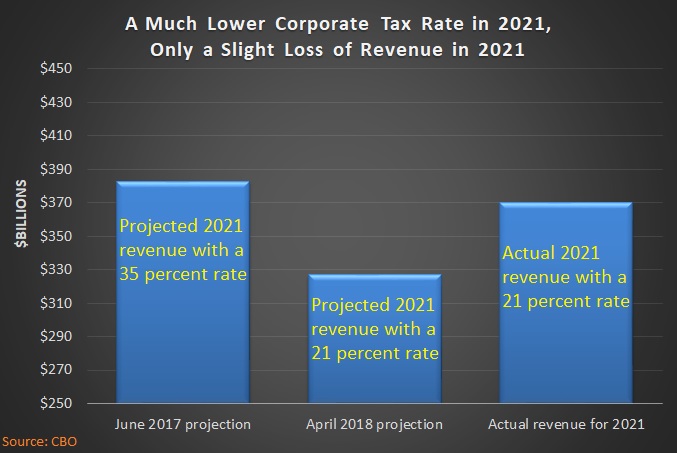
Now, that is incredible upon its face, but it becomes even more incredible when contrasted with FDR’s antibusiness and confiscatory tax policies, which both dramatically shrunk in terms of actual income tax revenues (from $1.096 billion in 1929 to $527 million in 1935), and dramatically shifted the tax burden to the backs of the poor by imposing huge new excise taxes (from $540 million in 1929 to $1.364 billion in 1935). See Table 1 on page 125 of New Deal or Raw Deal for that information.

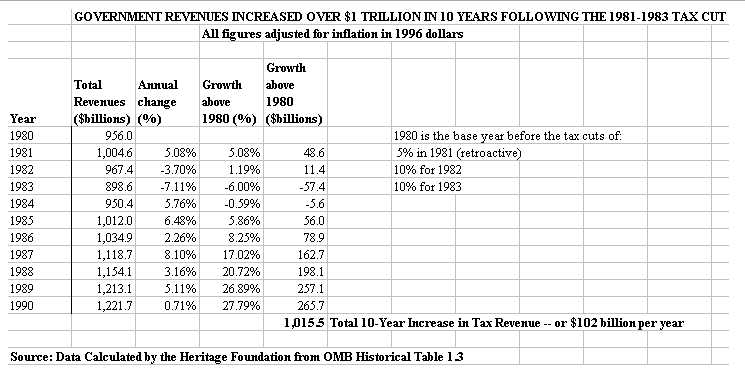


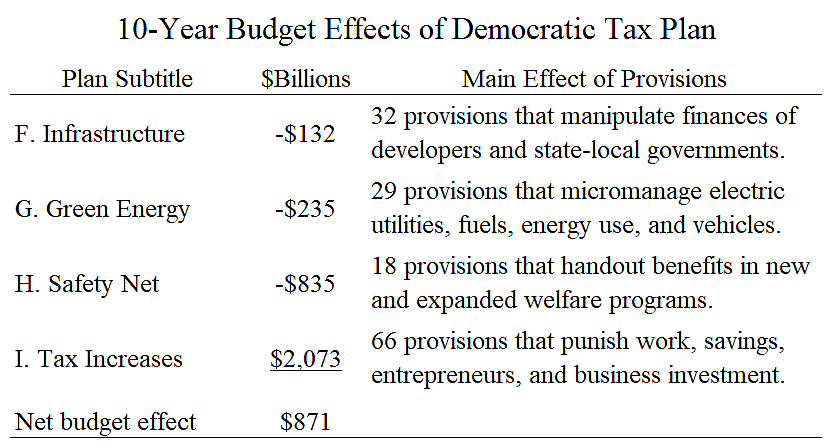
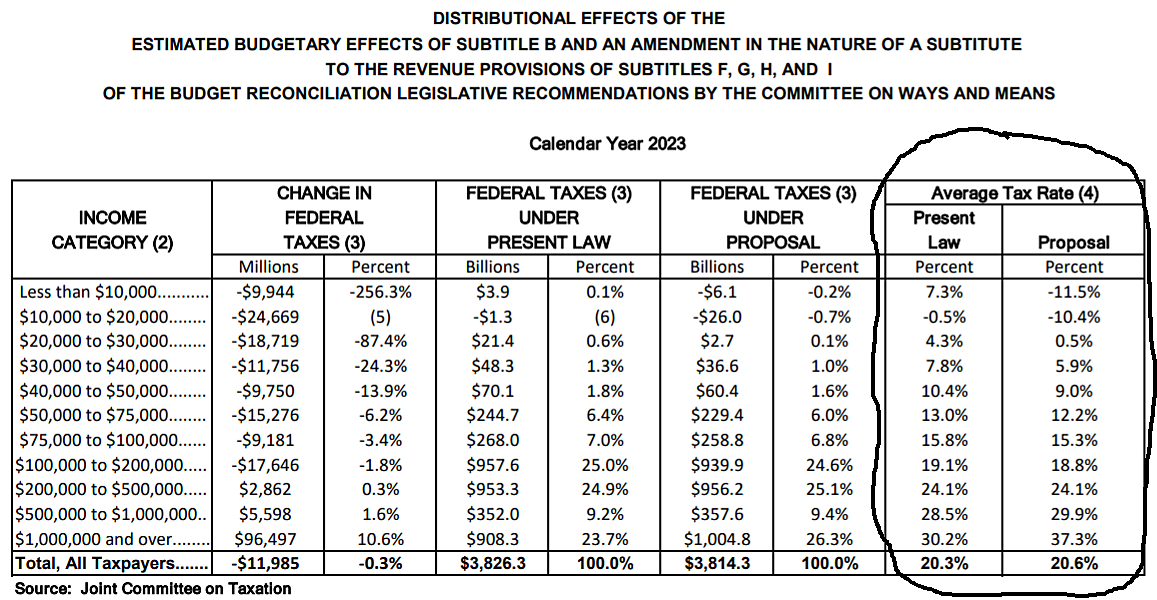




_(cropped).jpg)




:max_bytes(150000):strip_icc()/King-Solomon-GettyImages-537859698-57cd84f13df78c71b62edb3b.jpg)






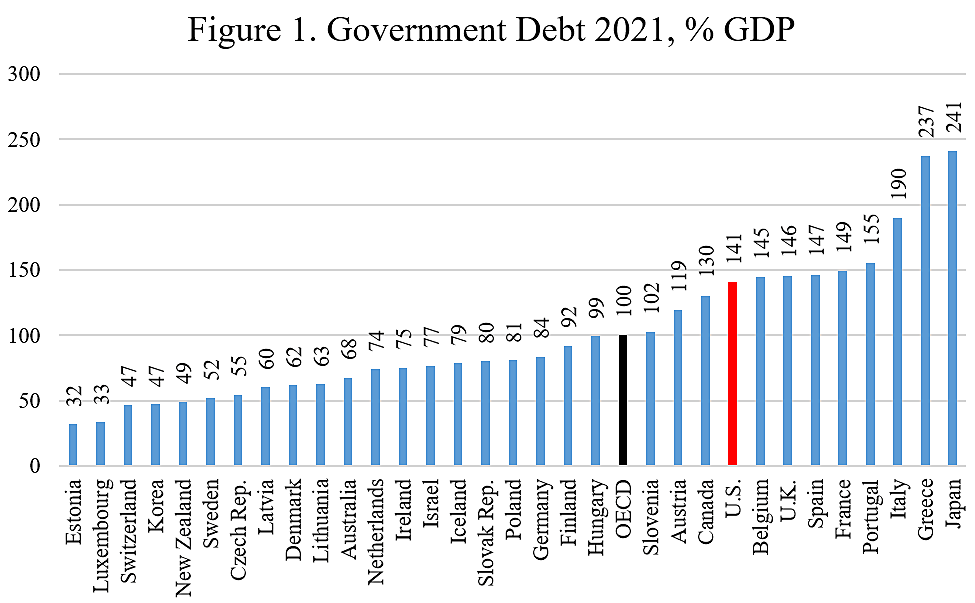
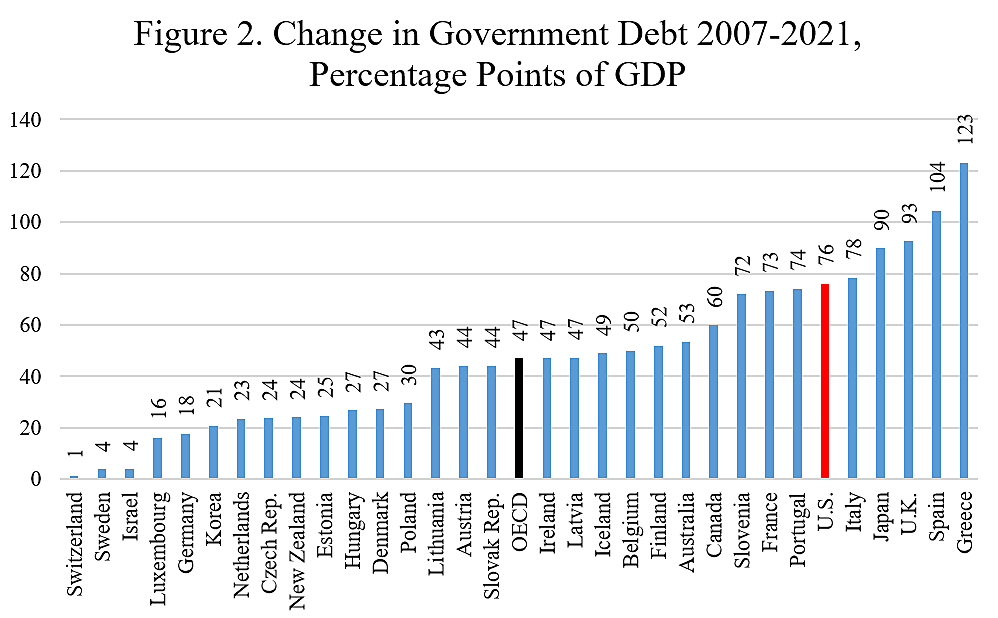
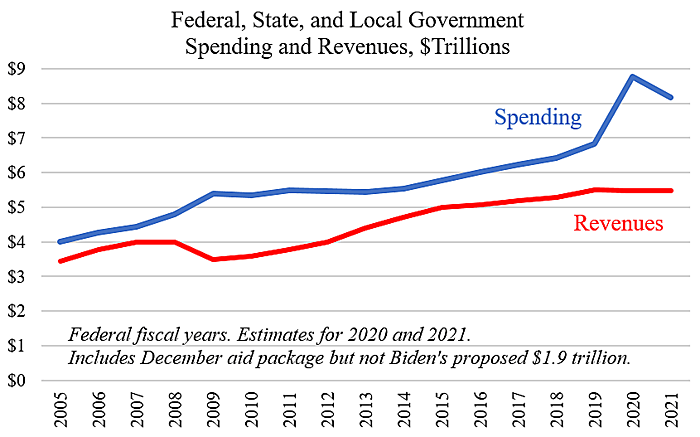


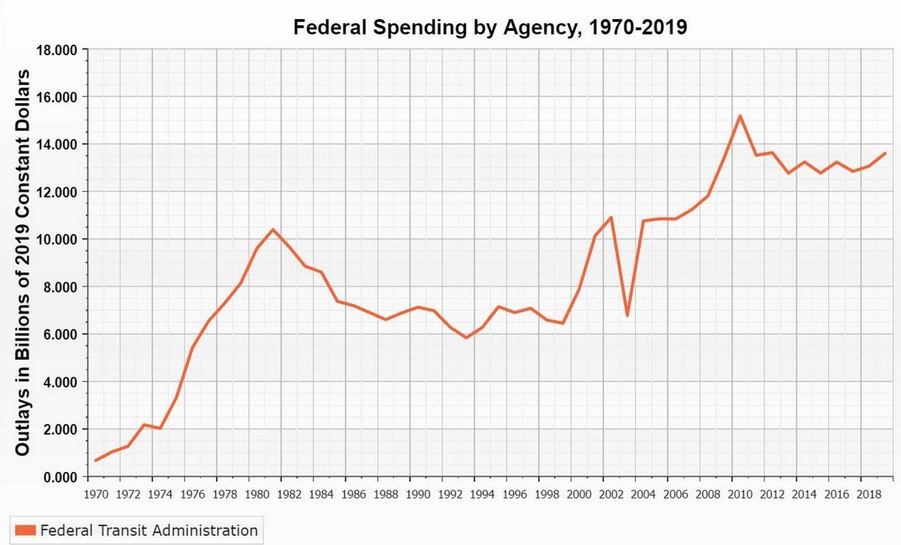



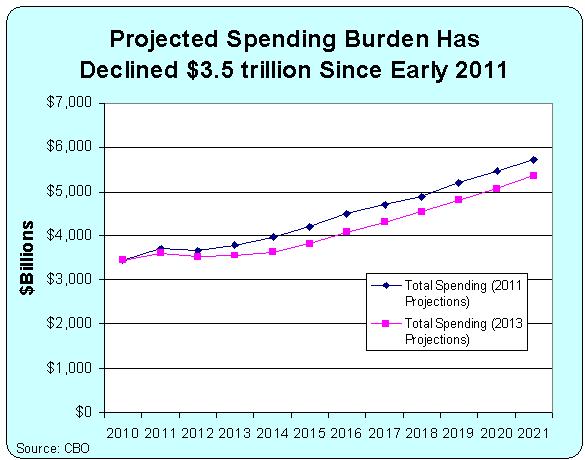
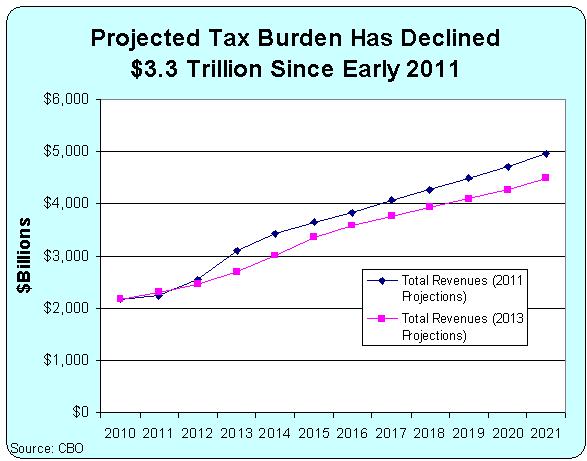


 The Daily Hatch