God’s eyes are always on us!!! You talk about this a great deal in your film Crimes and Misdemeanors!!!
Francis Schaeffer once wrote, “If there is no absolute beyond man’s ideas, then there is no final appeal to judge between individuals and groups whose moral judgments conflict. We are merely left with conflicting opinions.”__
Should we DO WANT WANT TO AS IF THERE IS FINAL JUDGE? That would lead to MIGHT MAKES RIGHT!!!!
Let me challenge those who doubt that logical conclusion to watch your film CRIMES AND MISDEMEANORS. But let me make an observation about the movie. It is your firm conviction that faith in God’s word, the Bible, is really blind faith with no facts to back it up.
Aunt May’s foil in the film is Ben (Sam Waterston), a pious rabbi who says that he couldn’t go on living “if I didn’t feel with all my heart a moral structure with real meaning and forgiveness and some kind of higher power. Otherwise there’s no basis to live…. Without the law, it’s all darkness.” Allen reveals his attitude toward the rabbi by subjecting him to a progressive loss of vision that ends in total blindness by the conclusion of the film — a blunt metaphor for the darkness induced by his own moral and religious faith.
We know that this was Allen’s intent because he’s said so. Ben, according to Allen, “doesn’t really understand the reality of life… and that’s why I wanted to make him blind. I feel that his faith is blind. It will work, but it requires closing your eyes to reality.” And what is reality? That “at best the universe is indifferent” to our lives and our various ways of construing right and wrong. This indifference is so awful that many of us feel driven to “create a fake world for ourselves, and we exist within that fake world.”
—-
Let me challenge you to take a closer look at the Bible and it’s accuracy.
Adrian Rogers noted:
The Bible is not primarily a history book, but it records history, and all the things we believe as Christians are historical fact. Historians have criticized the Bible as being filled with errors, but in our lifetime we have seen the history of the Scriptures proven right time after time. For example, linguists rejected the fact that Moses authored the Pentateuch, claiming that people didn’t know how to write during Moses’ day. But then the Tel Elarmona tablets were discovered in northern Egypt, containing business transactions of people in Palestine centuries before Moses was born. It turns out the Bible was correct–the people of Moses’ day did have a written language.
For years historians claimed Daniel’s story of King Belshazzar was a fake, that there was no record of that Babylonian king. They claimed the last Babylonian king was named Nabinitus, and that Belshazzar never existed. Then one day an archeologist uncovered a clay tablet describing the rule of Belshazzar, who was co-regent with his father, King Nabinitus. The Bible had been right all along.
Historians and archaeologists have dug into the history of both the Old and New Testaments, and each time the historical accuracy of Scripture has been upheld. That is one of the reasons we can trust the Bible.
—
In your film Crimes and Misdemeanors you constantly have the phrase “The eyes of God are always upon you!!
The Bible claims this is the case!!! As Christians, we would agree with Judah ‘s father that “The eyes of God are always upon us.” Proverbs 5:21 asserts, “For the ways of man are before the eyes of the Lord, and He ponders all his paths.” Revelation 20:12 states, “…And the dead were judged (sentenced) by what they had done (their whole way of feeling and acting, their aims and endeavors) in accordance with what was recorded in the books” (Amplified Version). The Bible is revealed truth from God. It is the basis for our morality. Judah inherited the Jewish ethical values of the Ten Commandments from his father, but, through years of life as a skeptic, his standards had been lowered. Finally, we discover that Judah ‘s secular version of morality does not resemble his father’s biblically-based morality.
Is there evidence that the Bible is true? We have seen this kind of evidence earlier in this letter.
There must be an enforcement factor in order to convince Judah not to resort to murder. Otherwise, it is fully to Judah ‘s advantage to remove this troublesome woman from his life.
The Bible tells us, “{God} has also set eternity in the hearts of men…” (Ecclesiastes 3:11 NIV). The secularist calls this an illusion, but the Bible tells us that the idea that we will survive the grave was planted in everyone’s heart by God Himself. Romans 1:19-21 tells us that God has instilled a conscience in everyone that points each of them to Him and tells them what is right and wrong (also Romans 2:14 -15).
It’s no wonder, then, that one of Allen’s fellow humanists would comment, “Certain moral truths — such as do not kill, do not steal, and do not lie — do have a special status of being not just ‘mere opinion’ but bulwarks of humanitarian action. I have no intention of saying, ‘I think Hitler was wrong.’ Hitler WAS wrong.” (Gloria Leitner, “A Perspective on Belief,” THE HUMANIST, May/June 1997, pp. 38-39)
Here Leitner is reasoning from her God-given conscience and not from humanist philosophy. It wasn’t long before she received criticism. Humanist Abigail Ann Martin responded, “Neither am I an advocate of Hitler; however, by whose criteria is he evil?” (THE HUMANIST, September/October 1997, p. 2)
Not a believer. (Pascal Le Segretain/Getty Images)February 4, 2014
I don’t know what did or did not happen between Woody Allen and Dylan Farrow more than 20 years ago, and neither does Nicholas Kristof. What I do know is that Allen is a moral nihilist. This should not be taken as evidence that he sexually molested Mia Farrow’s adopted daughter when she was 7 years old, or taken as a sign that he’d condone such behavior. But it does mean he espouses a philosophical outlook that renders him powerless to condemn it.
Let me be clear about two things right off the bat. First, I’m a great admirer of Allen’s filmmaking — and like Andrew Sullivan and Rod Dreher, I think the artistry of his films can and should be judged apart from his (perhaps substantial) moral failings. Second, I consider nihilism to be a viable, albeit false and ultimately chilling, philosophical and existential position. In describing Allen as a nihilist, I am not issuing an indictment — simply describing an outlook that he has elaborated in several films and interviews over the years.
Allen’s most thorough cinematic treatment of nihilism and its moral implications can be found in what may be his greatest film, Crimes and Misdemeanors (1989). The movie tells the story of an ophthalmologist named Judah Rosenthal (played by Martin Landau) who decides to kill off his lover Dolores (Angelica Houston) when she threatens to divulge their affair to Judah’s wife. (Allen’s Match Point (2005), an inferior film in almost every way, explores many similar themes.)
At first wracked with guilt over the murder, Judah eventually gets over his moral qualms. (As another character quips in the film, “comedy is tragedy plus time.”) In a shocking subversion of Hollywood-style happy endings as well as Dostoevsky’s Crime and Punishment — in which the character Raskolnikov is driven by unremitting guilt to confess a pair of murders to the authorities — the film ends with Judah seemingly at complete peace with himself and thriving in every way: Happy, wealthy, successful, adored by a beautiful wife and daughter, with the latter soon to be married.
The viewer is left to conclude that Judah got away with his crime scot-free — and that such an outcome is possible for anyone courageous enough to violate accepted moral customs and lucky or clever enough to avoid getting caught by the legal authorities.
The theme and its broader implications are reinforced throughout the film. In one of its most powerful scenes, Judah observes and interacts with a memory from his youth in which members of his family debate morality, God, and the Holocaust. Espousing the view endorsed by the film, Judah’s atheist aunt May (whom Judah’s religiously observant father dubs a “nihilist”) remarks that if National Socialist Germany had won World War II, then Hitler’s actions would have ended up being “right.” After all, in such a nightmarish, counterfactual world, the Nazis would be empowered to set and enforce the reigning moral standard — and there simply is no higher moral authority to appeal to against such a standard. In a nihilistic universe, the overarching moral truth is that might makes right.
The movie MIDNIGHT IN PARISoffers many of the same themes we see in Ecclesiastes. The second postlooked at the question: WAS THERE EVER A GOLDEN AGE AND DID THE MOST TALENTED UNIVERSAL MEN OF THAT TIME FIND TRUE SATISFACTION DURING IT?
In the third post in this series we discover in Ecclesiastes that man UNDER THE SUN finds himself caught in the never ending cycle of birth and death. The SURREALISTS make a leap into the area of nonreason in order to get out of this cycle and that is why the scene in MIDNIGHT IN PARIS with Salvador Dali, Man Ray, and Luis Bunuel works so well!!!! These surrealists look to the area of their dreams to find a meaning for their lives and their break with reality is only because they know that they can’t find a rational meaning in life without God in the picture.
The fourth post looks at the solution of WINE, WOMEN AND SONG and the fifthandsixth posts look at the solution T.S.Eliotfound in the Christian Faith and how he left his fragmented message of pessimism behind. In theseventh post the SURREALISTS say that time and chance is all we have but how can that explain love or art and the hunger for God? The eighth post looks at the subject of DEATH both in Ecclesiastes and MIDNIGHT IN PARIS. In the ninth post we look at the nihilistic worldview of Woody Allen and why he keeps putting suicides into his films.
In the tenth post I show how Woody Allen pokes fun at the brilliant thinkers of this world and how King Solomon did the same thing 3000 years ago. In theeleventh postI point out how many of Woody Allen’s liberal political views come a lack of understanding of the sinful nature of man and where it originated. In thetwelfth post I look at the mannishness of man and vacuum in his heart that can only be satisfied by a relationship with God.
In the thirteenth postwe look at the life of Ernest Hemingway as pictured in MIDNIGHT AND PARIS and relate it to the change of outlook he had on life as the years passed. In the fourteenth post we look at Hemingway’s idea of Paris being a movable feast. The fifteenth andsixteenth posts both compare Hemingway’s statement, “Happiness in intelligent people is the rarest thing I know…” with Ecclesiastes 2:18 “For in much wisdom is much vexation, and he who increases knowledge increases sorrow.” The seventeenth post looks at these words Woody Allen put into Hemingway’s mouth, “We fear death because we feel that we haven’t loved well enough or loved at all.”
In MIDNIGHT IN PARIS Hemingway and Gil Pender talk about their literary idol Mark Twain and the eighteenth post is summed up nicely by Kris Hemphill‘swords, “Both Twain and [King Solomon in the Book of Ecclesiastes] voice questions our souls long to have answered: Where does one find enduring meaning, life purpose, and sustainable joy, and why do so few seem to find it? The nineteenth postlooks at the tension felt both in the life of Gil Pender (written by Woody Allen) in the movie MIDNIGHT IN PARIS and in Mark Twain’s life and that is when an atheist says he wants to scoff at the idea THAT WE WERE PUT HERE FOR A PURPOSE but he must stay face the reality of Ecclesiastes 3:11 that says “God has planted eternity in the heart of men…” and THAT CHANGES EVERYTHING! Therefore, the secular view that there is no such thing as love or purpose looks implausible. The twentieth post examines how Mark Twain discovered just like King Solomon in the Book of Ecclesiastes that there is no explanation for the suffering and injustice that occurs in life UNDER THE SUN. Solomon actually brought God back into the picture in the last chapter and he looked ABOVE THE SUN for the books to be balanced and for the tears to be wiped away.
The twenty-first post looks at the words of King Solomon, Woody Allen and Mark Twain that without God in the picture our lives UNDER THE SUN will accomplish nothing that lasts. Thetwenty-second postlooks at King Solomon’s experiment 3000 years that proved that luxuries can’t bring satisfaction to one’s life but we have seen this proven over and over through the ages. Mark Twain lampooned the rich in his book “The Gilded Age” and he discussed get rich quick fever, but Sam Clemens loved money and the comfort and luxuries it could buy. Likewise Scott Fitzgerald was very successful in the 1920’s after his publication of THE GREAT GATSBY and lived a lavish lifestyle until his death in 1940 as a result of alcoholism.
In the twenty-third postwe look at Mark Twain’s statement that people should either commit suicide or stay drunk if they are “demonstrably wise” and want to “keep their reasoning faculties.” We actually see this play out in the film MIDNIGHT IN PARIS with the character Zelda Fitzgerald. In the twenty-fourth, twenty-fifth and twenty-sixth posts I look at Mark Twain and the issue of racism. In MIDNIGHT IN PARIS we see the difference between the attitudes concerning race in 1925 Paris and the rest of the world.
The twenty-seventh and twenty-eighth posts are summing up Mark Twain. In the 29th post we ask did MIDNIGHT IN PARIS accurately portray Hemingway’s personality and outlook on life? and in the 30th postthe life and views of Hemingway are summed up.
In the 31st post we will observe that just like Solomon Picasso slept with many women. Solomon actually slept with over 1000 women ( Eccl 2:8, I Kings 11:3), and both men ended their lives bitter against all women and in the 32nd post we look at what happened to these former lovers of Picasso. In the 33rd post we see that Picasso deliberately painted his secular worldview of fragmentation on his canvas but he could not live with the loss of humanness and he reverted back at crucial points and painted those he loved with all his genius and with all their humanness!!! In the 34th post we notice that both Solomon in Ecclesiastes and Picasso in his painting had an obsession with the issue of their impending death!!!
Woody Allen believes that we live in a cold, violent and meaningless universe and it seems that his main character (Gil Pender, played by Owen Wilson) in the movie MIDNIGHT IN PARIS shares that view. Pender’s meeting with the Surrealists is by far the best scene in the movie because they are ones who can […]
In the last post I pointed out how King Solomon in Ecclesiastes painted a dismal situation for modern man in life UNDER THE SUN and that Bertrand Russell, and T.S. Eliot and other modern writers had agreed with Solomon’s view. However, T.S. Eliot had found a solution to this problem and put his faith in […]
In MIDNIGHT IN PARIS Gil Pender ponders the advice he gets from his literary heroes from the 1920’s. King Solomon in Ecclesiastes painted a dismal situation for modern man in life UNDER THE SUN and many modern artists, poets, and philosophers have agreed. In the 1920’s T.S.Eliot and his house guest Bertrand Russell were two of […]
I wanted to comment on this article below that discusses your evolution as a film maker that has included more of an emphasis on serious subjects such as our own mortality since your earlier movies.
American filmmaker, Woody Allen, will be starring in an exclusive two-part documentary film beginning tonight. The “Annie Hall” director and actor is notorious for his privacy. However, this three-and-a-half hour film claims to be a right of entry into the life and art of Woody Allen.
The works of Allen have always been a peculiar one for most viewers throughout generations. He has a touch for making artful flicks with the just enough humor included. His films, sometimes controversial, have also been unique in that they are driven by his distinctive vision and artistry. Allen has never been an artist to succumb to altering a script so it would appeal to mainstream audiences.
Therefore, many have noted reoccurring themes throughout Allen’s work over the years. He often integrates pop culture and religion sub-textually into the content of his writing.
Allen, now 75, grew up in a Jewish household. Now, as an agnostic, many of his films including “Crimes and Misdemeanors” and “Match Point” have subject matters concerning forgiveness, how to handle sin, finding meaning in life without God, or religious figures.
Many evangelicals including Chuck Colston and Southern Baptist leader, Richard Land are devoted fans of Allen. Although the filmmaker remains disclosed, he continues to be one to speak openly about deep issues in life even outside of his films. Allen has always been honest enough to ask many questions about morality and religion, but never has any of the right answers, Land suggested.
In the archives of Woody Allen appearances, one can find an old talk show video (below) in the 1960’s in which he interviews Billy Graham. Of course, Graham, clearly anchored in his beliefs in God, shared completely different views on life compared to the wisecracking Allen.
The conversation sounds undoubtedly tense upon first hearing. However, both counter-parts handled their discussion with much composure and the heart to agree to disagree.
Allen: “If you come to one of my movies or something, I’ll go to one of your revival meetings.”
Graham: “Well now that is a deal.”
Allen: “You could probably convert me because I’m such a pushover. I have no convictions in any direction and if you make it appealing and promise me some sort of wonderful afterlife with a white robe and wings I would go for it.”
Graham: “I can’t promise you a white robe and wings, but I can promise you a very interesting, thrilling life.”
Allen: “One wing, maybe?”
The dialogue was both light and deep all at once. “I find Woody over the years, and of course this is true of people as they get older, there is more resignation,” Land said to the Washington Post.
“There is a light touch and a confidence in his earlier movies – I’m not dead, I won’t die for a long time so I have a long time to figure this all out. Some of his more recent movies, you can see he’s aware of his own mortality.”
Decades later, one would hope Allen would come around to considering the true answers to all of his moral questioning. Perhaps he would think back to some of the words Graham spoke many years ago. However, Allen remains with doubtful views. “Sooner or later,” he said in a 2010 interview. “…reality sets in, in a crushing way. As it does and will with everybody, including Billy Graham. But it’s nice if you can delude yourself for as long as possible.”
“Woody Allen: A Documentary,’’ directed by Robert B. Weide, will touch on the career of Allen more intimately. Many look forward to understanding the true man behind the art and humor.
—-
Not only did Schaeffer mention YOU in several of his books but about a year ago a video was posted on You Tube that showed that Schaeffer mentioned YOU in his last public speech. If you go to You Tube and type in FRANCIS SCHAEFFER KNOXVILLE then you can watch this special Q&A time with Francis and Edith Schaeffer at the 1984 L’Abri conference in Knoxville, filmed two months before Dr. Schaeffer’s passing (May 15, 1984.
Francis Schaeffer two months before he died said if he was talking to a gentleman he was sitting next to on an airplane about Christ he wouldn’t start off quoting Bible verses. Schaeffer asserted:
I would go back rather to their dilemma if they hold the modern worldview of the final reality only being energy, etc., I would start with that. I would begin as I stress in the book THE GOD WHO IS THERE about their own [humanist] prophets who really show where their view goes. For instance, Jacques Monod, Nobel Prize winner from France, in his book NECESSITY AND CHANCE said there is no way to tell the OUGHT from the IS. In other words, you live in a totally silent universe.
The men like Monod and Sartre or whoever the man might know that is his [humanist] prophet and they point out quite properly and conclusively what life is like, not just that there is no meaningfulness in life but everyone according to modern man is just living out some kind of game plan. It may be knocking 1/10th of a second off a downhill ski run or making one more million dollars. But all you are doing is making a game plan within the mix of a meaningless situation. WOODY ALLEN exploits this very strongly in his films. He really lives it. I feel for that man, and he has expressed it so thoroughly in ANNIE HALL and MANHATTAN and so on.
Woody you have made it clear in your talk with Billy Graham that you think that putting faith in the God of the Bible would be throwing your brain out the window. However, have you taken a close look at the scientific details in the Bible?
Skeptics seem to think that the Bible is full of scientific errors. However, before an individual can make that assertion, they had better make sure they know both science and Scripture. You see, I have heard unbelievers state that the Bible is not a book of science, but a book of religion, which is basically true. It is not written to teach us about science, but to teach us about God. But the God of salvation and the God of creation are the same. Science doesn’t take God by surprise. A close look at Scripture reveals that it is scientifically accurate.
Every now and then science may disagree with the Bible, but usually science just needs time to catch up. For example, in 1861 a French scientific academy printed a brochure offering 51 incontrovertible facts that proved the Bible in error. Today there is not a single reputable scientist who would support those supposed “facts,” because modern science has disproved them all!
The ancients believed the earth was held up by Atlas, or resting on pillars, or even seated on the backs of elephants. But today we know the earth is suspended in space, a fact the Word of God records in Job 26:7: “He . . . hangeth the earth upon nothing.” God revealed the facts of cosmology long before man had any idea of the truth.
For centuries man believed the earth was flat, but now we know the earth is a globe. The prophet Isaiah, writing 750 years before the birth of Christ, revealed that “God sitteth upon the circle of the earth” (Isaiah 40:22). The word translated here as “circle” was more commonly translated “sphere.” In other words, Isaiah explained that the earth was a globe centuries before science discovered it.
When Ptolemy charted the heavens, he counted 1026 stars in the sky. But with the invention of the telescope man discovered millions and millions of stars, something that Jeremiah 33:22 revealed nearly three thousand years ago: “The host of heaven cannot be numbered.” How did these men of God know the truth of science long before the rest of the world discovered it? They were moved by the Holy Spirit to write the truth. God’s Word is not filled with errors. It is filled with facts, even scientific facts.
When the black plague was killing one quarter of Europe’s population in the fourteenth century, it was the church, not science, that helped overcome the dread disease. The leaders in the church noticed the instructions given by the Lord to Moses in Leviticus 13:46: “All the days wherein the plague shall be in him he shall be defiled; he is unclean: he shall dwell alone; without the camp shall his habitation be.” These early believers did not know microbiology or understand what germs were, but they could understand a clear teaching to quarantine someone who was sick. So they followed the Biblical dictum, quarantined those sick with the plague, and stopped it from spreading. The Bible had its science correct even before man discovered the truth! Don’t accept the charge that the Bible is filled with scientific errors. Modern science seems determined to explain God away, and refuses to acknowledge any evidence of the supernatural. But the science of Scripture is one reason to accept the Bible as God’s Word.
The movie MIDNIGHT IN PARISoffers many of the same themes we see in Ecclesiastes. The second postlooked at the question: WAS THERE EVER A GOLDEN AGE AND DID THE MOST TALENTED UNIVERSAL MEN OF THAT TIME FIND TRUE SATISFACTION DURING IT?
In the third post in this series we discover in Ecclesiastes that man UNDER THE SUN finds himself caught in the never ending cycle of birth and death. The SURREALISTS make a leap into the area of nonreason in order to get out of this cycle and that is why the scene in MIDNIGHT IN PARIS with Salvador Dali, Man Ray, and Luis Bunuel works so well!!!! These surrealists look to the area of their dreams to find a meaning for their lives and their break with reality is only because they know that they can’t find a rational meaning in life without God in the picture.
The fourth post looks at the solution of WINE, WOMEN AND SONG and the fifthandsixth posts look at the solution T.S.Eliotfound in the Christian Faith and how he left his fragmented message of pessimism behind. In theseventh post the SURREALISTS say that time and chance is all we have but how can that explain love or art and the hunger for God? The eighth post looks at the subject of DEATH both in Ecclesiastes and MIDNIGHT IN PARIS. In the ninth post we look at the nihilistic worldview of Woody Allen and why he keeps putting suicides into his films.
In the tenth post I show how Woody Allen pokes fun at the brilliant thinkers of this world and how King Solomon did the same thing 3000 years ago. In theeleventh postI point out how many of Woody Allen’s liberal political views come a lack of understanding of the sinful nature of man and where it originated. In thetwelfth post I look at the mannishness of man and vacuum in his heart that can only be satisfied by a relationship with God.
In the thirteenth postwe look at the life of Ernest Hemingway as pictured in MIDNIGHT AND PARIS and relate it to the change of outlook he had on life as the years passed. In the fourteenth post we look at Hemingway’s idea of Paris being a movable feast. The fifteenth andsixteenth posts both compare Hemingway’s statement, “Happiness in intelligent people is the rarest thing I know…” with Ecclesiastes 2:18 “For in much wisdom is much vexation, and he who increases knowledge increases sorrow.” The seventeenth post looks at these words Woody Allen put into Hemingway’s mouth, “We fear death because we feel that we haven’t loved well enough or loved at all.”
In MIDNIGHT IN PARIS Hemingway and Gil Pender talk about their literary idol Mark Twain and the eighteenth post is summed up nicely by Kris Hemphill‘swords, “Both Twain and [King Solomon in the Book of Ecclesiastes] voice questions our souls long to have answered: Where does one find enduring meaning, life purpose, and sustainable joy, and why do so few seem to find it? The nineteenth postlooks at the tension felt both in the life of Gil Pender (written by Woody Allen) in the movie MIDNIGHT IN PARIS and in Mark Twain’s life and that is when an atheist says he wants to scoff at the idea THAT WE WERE PUT HERE FOR A PURPOSE but he must stay face the reality of Ecclesiastes 3:11 that says “God has planted eternity in the heart of men…” and THAT CHANGES EVERYTHING! Therefore, the secular view that there is no such thing as love or purpose looks implausible. The twentieth post examines how Mark Twain discovered just like King Solomon in the Book of Ecclesiastes that there is no explanation for the suffering and injustice that occurs in life UNDER THE SUN. Solomon actually brought God back into the picture in the last chapter and he looked ABOVE THE SUN for the books to be balanced and for the tears to be wiped away.
The twenty-first post looks at the words of King Solomon, Woody Allen and Mark Twain that without God in the picture our lives UNDER THE SUN will accomplish nothing that lasts. Thetwenty-second postlooks at King Solomon’s experiment 3000 years that proved that luxuries can’t bring satisfaction to one’s life but we have seen this proven over and over through the ages. Mark Twain lampooned the rich in his book “The Gilded Age” and he discussed get rich quick fever, but Sam Clemens loved money and the comfort and luxuries it could buy. Likewise Scott Fitzgerald was very successful in the 1920’s after his publication of THE GREAT GATSBY and lived a lavish lifestyle until his death in 1940 as a result of alcoholism.
In the twenty-third postwe look at Mark Twain’s statement that people should either commit suicide or stay drunk if they are “demonstrably wise” and want to “keep their reasoning faculties.” We actually see this play out in the film MIDNIGHT IN PARIS with the character Zelda Fitzgerald. In the twenty-fourth, twenty-fifth and twenty-sixth posts I look at Mark Twain and the issue of racism. In MIDNIGHT IN PARIS we see the difference between the attitudes concerning race in 1925 Paris and the rest of the world.
The twenty-seventh and twenty-eighth posts are summing up Mark Twain. In the 29th post we ask did MIDNIGHT IN PARIS accurately portray Hemingway’s personality and outlook on life? and in the 30th postthe life and views of Hemingway are summed up.
In the 31st post we will observe that just like Solomon Picasso slept with many women. Solomon actually slept with over 1000 women ( Eccl 2:8, I Kings 11:3), and both men ended their lives bitter against all women and in the 32nd post we look at what happened to these former lovers of Picasso. In the 33rd post we see that Picasso deliberately painted his secular worldview of fragmentation on his canvas but he could not live with the loss of humanness and he reverted back at crucial points and painted those he loved with all his genius and with all their humanness!!! In the 34th post we notice that both Solomon in Ecclesiastes and Picasso in his painting had an obsession with the issue of their impending death!!!
Woody Allen believes that we live in a cold, violent and meaningless universe and it seems that his main character (Gil Pender, played by Owen Wilson) in the movie MIDNIGHT IN PARIS shares that view. Pender’s meeting with the Surrealists is by far the best scene in the movie because they are ones who can […]
In the last post I pointed out how King Solomon in Ecclesiastes painted a dismal situation for modern man in life UNDER THE SUN and that Bertrand Russell, and T.S. Eliot and other modern writers had agreed with Solomon’s view. However, T.S. Eliot had found a solution to this problem and put his faith in […]
In MIDNIGHT IN PARIS Gil Pender ponders the advice he gets from his literary heroes from the 1920’s. King Solomon in Ecclesiastes painted a dismal situation for modern man in life UNDER THE SUN and many modern artists, poets, and philosophers have agreed. In the 1920’s T.S.Eliot and his house guest Bertrand Russell were two of […]
Woody Allen c/o Randon House, 1745 Broadway, New York,NY 10019
Dear Woody,
You ask the right questions but you have not looked closely at the answers that the infinite personal God of the Bible has given. Richard Land makes that very point in the below article:
By Nicola Menzie , Christian Post Reporter | Aug 23, 2013 4:51 PM
Prolific Hollywood filmmaker and religious skeptic Woody Allen maintains in a recent interview that human life on earth is “just an accident” filled with “silly little moments,” and the “best you can do to get through life is distraction.”
The filmmaker also has many diehard fans, surprisingly it seems, among evangelical Christians, according to a Washington Post “Under God” blog entry published in 2011 and titled “Woody Allen and evangelicals: A surprisingly romantic pair.”
“Many of Allen’s films wrestle in a complex way with core moral themes, such as the nature of forgiveness, what to do with sin, whether life can have any meaning without God. And he does this as an agnostic,” Michelle Boorstein writes in the blog post.
Richard Land, seminary president, former president of the Southern Baptist Convention’s Ethics & Religious Liberty Commission and executive editor of The Christian Post, is “a huge Allen fan and can rattle off an amazing amount of dialogue,” according to the article.
Land suggested that Allen had lost some of his “light touch” and “confidence,” and that his more recent movies expose an awareness of “his own mortality.”
The Southern Baptist leader said Allen “asks all the right questions, he just doesn’t have the right answers.”
—
Christianity is different than every other religion for two reasons according to Francis Schaeffer:
In every other religion we have to do something–everything from burning a joss stick to sacrificing our firstborn child to dropping a coin the collection plate–the whole spectrum. But with Christianity we do not do anything; God has done it all: He has created us and He has sent His Son; His Son died and because the Son is infinite, therefore He bears out total guilt. We do not need to bear our guilt, nor do we even have to merit the merit of Christ. He does it all. So in one way it is the easiest religion in the world….
In the book WHATEVER HAPPENED TO THE HUMAN RACE?, and especially in the extensive notes of fifth chapter [shows] the way the Bible measures up to history. Once we say that, this is very exciting. It is very exciting because other religions are not founded in history, they are “out there” somewhere, or you can think of them as inside your own head–whichever way you are looking at it. On the other hand, the Bible claims to rooted in history.
Taking a look at the holy books of Islam and Mormonism and you find many historical inaccuracies. For instance, the Book of Mormon was wrong about horses, cows, steel, honey bees and barley existing in North America 2000 years ago. Furthermore, in 2012 during the Presidential Race Harry Kroto also asked why no one seemed to ask Mitt Romney if he actually believed that Christ visited North America 2000 years ago as the Book of Mormon claimed.
Blaise Pascal asserted, “There is a God-shaped vacuum in the heart of every man which cannot be filled by any created thing, but only by God the Creator, made known through Jesus Christ.” In other words, the spiritual answers your heart is seeking can be found in putting your faith and trust in Jesus Christ. The Bible is true from cover to cover and can be trusted.
Let me close by talking to you about the ROMAN ROAD TO CHRIST.
Rom. 3:10, “As it is written, ‘There is none righteous, not even one . . . “
Rom. 3:23, “For all have sinned and fall short of the glory of God.”
Rom. 5:12, “Therefore, just as through one man sin entered into the world, and death through sin, and so death spread to all men, because all sinned.”
Rom. 6:23, “For the wages of sin is death, but the free gift of God is eternal life in Christ Jesus our Lord.”
Rom. 5:8, “But God demonstrates His own love toward us, in that while we were yet sinners, Christ died for us.”
Rom. 10:9-10, “if you confess with your mouth Jesus as Lord, and believe in your heart that God raised Him from the dead, you shall be saved; for with the heart man believes, resulting in righteousness, and with the mouth he confesses, resulting in salvation.”
Rom. 10:13, “For whoever will call upon the name of the Lord will be saved.”
The movie MIDNIGHT IN PARISoffers many of the same themes we see in Ecclesiastes. The second postlooked at the question: WAS THERE EVER A GOLDEN AGE AND DID THE MOST TALENTED UNIVERSAL MEN OF THAT TIME FIND TRUE SATISFACTION DURING IT?
In the third post in this series we discover in Ecclesiastes that man UNDER THE SUN finds himself caught in the never ending cycle of birth and death. The SURREALISTS make a leap into the area of nonreason in order to get out of this cycle and that is why the scene in MIDNIGHT IN PARIS with Salvador Dali, Man Ray, and Luis Bunuel works so well!!!! These surrealists look to the area of their dreams to find a meaning for their lives and their break with reality is only because they know that they can’t find a rational meaning in life without God in the picture.
The fourth post looks at the solution of WINE, WOMEN AND SONG and the fifthandsixth posts look at the solution T.S.Eliotfound in the Christian Faith and how he left his fragmented message of pessimism behind. In theseventh post the SURREALISTS say that time and chance is all we have but how can that explain love or art and the hunger for God? The eighth post looks at the subject of DEATH both in Ecclesiastes and MIDNIGHT IN PARIS. In the ninth post we look at the nihilistic worldview of Woody Allen and why he keeps putting suicides into his films.
In the tenth post I show how Woody Allen pokes fun at the brilliant thinkers of this world and how King Solomon did the same thing 3000 years ago. In theeleventh postI point out how many of Woody Allen’s liberal political views come a lack of understanding of the sinful nature of man and where it originated. In thetwelfth post I look at the mannishness of man and vacuum in his heart that can only be satisfied by a relationship with God.
In the thirteenth postwe look at the life of Ernest Hemingway as pictured in MIDNIGHT AND PARIS and relate it to the change of outlook he had on life as the years passed. In the fourteenth post we look at Hemingway’s idea of Paris being a movable feast. The fifteenth andsixteenth posts both compare Hemingway’s statement, “Happiness in intelligent people is the rarest thing I know…” with Ecclesiastes 2:18 “For in much wisdom is much vexation, and he who increases knowledge increases sorrow.” The seventeenth post looks at these words Woody Allen put into Hemingway’s mouth, “We fear death because we feel that we haven’t loved well enough or loved at all.”
In MIDNIGHT IN PARIS Hemingway and Gil Pender talk about their literary idol Mark Twain and the eighteenth post is summed up nicely by Kris Hemphill‘swords, “Both Twain and [King Solomon in the Book of Ecclesiastes] voice questions our souls long to have answered: Where does one find enduring meaning, life purpose, and sustainable joy, and why do so few seem to find it? The nineteenth postlooks at the tension felt both in the life of Gil Pender (written by Woody Allen) in the movie MIDNIGHT IN PARIS and in Mark Twain’s life and that is when an atheist says he wants to scoff at the idea THAT WE WERE PUT HERE FOR A PURPOSE but he must stay face the reality of Ecclesiastes 3:11 that says “God has planted eternity in the heart of men…” and THAT CHANGES EVERYTHING! Therefore, the secular view that there is no such thing as love or purpose looks implausible. The twentieth post examines how Mark Twain discovered just like King Solomon in the Book of Ecclesiastes that there is no explanation for the suffering and injustice that occurs in life UNDER THE SUN. Solomon actually brought God back into the picture in the last chapter and he looked ABOVE THE SUN for the books to be balanced and for the tears to be wiped away.
The twenty-first post looks at the words of King Solomon, Woody Allen and Mark Twain that without God in the picture our lives UNDER THE SUN will accomplish nothing that lasts. Thetwenty-second postlooks at King Solomon’s experiment 3000 years that proved that luxuries can’t bring satisfaction to one’s life but we have seen this proven over and over through the ages. Mark Twain lampooned the rich in his book “The Gilded Age” and he discussed get rich quick fever, but Sam Clemens loved money and the comfort and luxuries it could buy. Likewise Scott Fitzgerald was very successful in the 1920’s after his publication of THE GREAT GATSBY and lived a lavish lifestyle until his death in 1940 as a result of alcoholism.
In the twenty-third postwe look at Mark Twain’s statement that people should either commit suicide or stay drunk if they are “demonstrably wise” and want to “keep their reasoning faculties.” We actually see this play out in the film MIDNIGHT IN PARIS with the character Zelda Fitzgerald. In the twenty-fourth, twenty-fifth and twenty-sixth posts I look at Mark Twain and the issue of racism. In MIDNIGHT IN PARIS we see the difference between the attitudes concerning race in 1925 Paris and the rest of the world.
The twenty-seventh and twenty-eighth posts are summing up Mark Twain. In the 29th post we ask did MIDNIGHT IN PARIS accurately portray Hemingway’s personality and outlook on life? and in the 30th postthe life and views of Hemingway are summed up.
In the 31st post we will observe that just like Solomon Picasso slept with many women. Solomon actually slept with over 1000 women ( Eccl 2:8, I Kings 11:3), and both men ended their lives bitter against all women and in the 32nd post we look at what happened to these former lovers of Picasso. In the 33rd post we see that Picasso deliberately painted his secular worldview of fragmentation on his canvas but he could not live with the loss of humanness and he reverted back at crucial points and painted those he loved with all his genius and with all their humanness!!! In the 34th post we notice that both Solomon in Ecclesiastes and Picasso in his painting had an obsession with the issue of their impending death!!!
Woody Allen believes that we live in a cold, violent and meaningless universe and it seems that his main character (Gil Pender, played by Owen Wilson) in the movie MIDNIGHT IN PARIS shares that view. Pender’s meeting with the Surrealists is by far the best scene in the movie because they are ones who can […]
In the last post I pointed out how King Solomon in Ecclesiastes painted a dismal situation for modern man in life UNDER THE SUN and that Bertrand Russell, and T.S. Eliot and other modern writers had agreed with Solomon’s view. However, T.S. Eliot had found a solution to this problem and put his faith in […]
In MIDNIGHT IN PARIS Gil Pender ponders the advice he gets from his literary heroes from the 1920’s. King Solomon in Ecclesiastes painted a dismal situation for modern man in life UNDER THE SUN and many modern artists, poets, and philosophers have agreed. In the 1920’s T.S.Eliot and his house guest Bertrand Russell were two of […]
Woody Allen c/o Randon House, 1745 Broadway, New York,NY 10019
Dear Woody,
Many of your movies paint the picture of the hopelessness that life is filled with and “Blue Jasmine” is a perfect example. Below is an article that challenges your nihilistic worldview:
By Nicola Menzie , Christian Post Reporter | Aug 23, 2013 4:51 PM
Prolific Hollywood filmmaker and religious skeptic Woody Allen maintains in a recent interview that human life on earth is “just an accident” filled with “silly little moments,” and the “best you can do to get through life is distraction.”
Dr. Jack Graham, pastor of Prestonwood Baptist Church in Plano, Texas, and PowerPoint Ministries broadcaster, called Allen’s suggestions “sad” and “tragic” and “a hopeless state of mind.”
Allen, whose latest film “Blue Jasmine” is currently in theaters, is agnostic and grew up in a Jewish household. His worldview comes across strongly, and in some cases purposefully, in his four dozen films — which “often drip with pessimism (some would say nihilism),” one observer noted.
Allen also has talked openly on more than one occasion about what he believes is the futility of life — described in a 2006 Washington Post article as one of the few subjects about which the filmmaker is “evangelically passionate.” He doesn’t think the existence of God as plausible, and considers people who put their “faith in religion” as delusional.
“It’s just an accident that we happen to be on earth, enjoying our silly little moments, distracting ourselves as often as possible so we don’t have to really face up to the fact that, you know, we’re just temporary people with a very short time in a universe that will eventually be completely gone,” Allen, 77, says in the interview.
“And everything that you value, whether it’s Shakespeare, Beethoven, da Vinci, or whatever, will be gone. The earth will be gone. The sun will be gone. There’ll be nothing. The best you can do to get through life is distraction. Love works as a distraction. And work works as a distraction. You can distract yourself a billion different ways. But the key is to distract yourself.”
Graham was asked for a response to Allen’s comments during his Aug. 20 appearance on “The Janet Mefferd Show,” and the minister immediately brought up Jesus.
“What does it profit a man if he gains the whole world and loses his own soul?” Graham quoted Jesus from the Gospels. “The soul exists and we are not just an accident of time or matter or space. We are created by God for an eternal purpose, therefore we do matter.”
“You matter to God, we matter to God,” the former Southern Baptist Convention president went on. “Because not only were we created by God but in Christ we are recreated to have an eternal life with him.
“So how sad, how tragic that so many people like Woody Allen, whether they can express it like that or not, are just living for self, and living for pleasure and living for things.”
The megachurch pastor referenced Philippians 1:21: “For to me, to live is Christ and to die is gain.”
“To live is Christ means that Christ is the focus and the hero, the joy, the reason for living. Therefore, to die is gain,” Graham added. “But if you can’t say to live is Christ, then you have to say to die is loss. There’s no fun and games in a grave without Christ and a future without Christ.”
“That’s the sadness of the lostness of people all around us,” he concluded.
Graham suggested that Christians need to get more “aggressive” in building relationships with people who seem hopeless.
—-
How do people deal with the big issues in life if they see life as hopeless? Let us take a look at two historical characters from your film “Midnight in Paris.”
Woody Allen talking with Salvador Dali and Man Rayand Luis Bunuel.
This is the transcript of
DALI: We met, earlier tonight…At the party! Dali.
GIL: I remember!-
DALI: A bottle of red wine!
GIL: It can’t be… Yeah….So?
DALI: Another glass for this man, please. I love the language!The French! The waiters? No.You like the shape of the rhinoceros?
GIL: The rhinoceros? Uh…Haven’t really thought about it.I paint the rhinoceros.
DALI: I paint you. Your sad eyes.Your big lips, meltingover the hot sand,with one tear.Yes! And in your tear, another face.The Christ’s face!Yes, in the rhinoceros.
GIL: Yeah. I mean, I probably do look sad. I’m in…a very perplexing situation.
DALI: Diablo…Luis! Oye, Luis!(Damn. Luis! Hey, Luis!)My friends.This… is Luis Bunuel…and…Mr. Man Ray.-
GIL: Man Ray? My Gosh!- How ’bout that?
DALI: This is Pen-der. Pen-der. Pender!- Yes. And I am DalÃ!- DalÃ. Yes.You have to remember. Pender is in a perplexing situation.
GIL: It sounds so crazy to say.You guys are going tothink I’m drunk, but I have to tell someone. I’m…from a…a different time. Another era.The future. OK? I come…from the 2000th millenium to here.I get in a car, and I slide through time.
MAN RAY: Exactly correct.You inhabit two worlds.- So far, I see nothing strange.- Why?
GIL: Yeah, you’re surrealists!But I’m a normal guy. See, in one life,I‘m engaged to marry a woman I love.At least, I think I love her.Christ! I better love her! I’m marrying her!
DALI: The rhinoceros makes love by mounting the female.But…is there a difference in the beauty between two rhinoceroses?
MAN RAY: There is another woman?Adriana. Yes, and I’m…very drawn to her.I find her extremely alluring.The problem is that other men,great artists – geniuses- also find her alluring,and she finds them. So, there’s that…
MAN RAY: A man in love with a woman from a different era.I see a photograph.
LUIS BUNUEL: I see a film.I see an insurmountable problem.I see……a rhinoceros.
Let me make a few points here.
1. Surrealists like Salvador Dali, Man Ray and Luis Bunuel had accepted that life without God in the picture is absurd with no meaning or purpose.
2. In the movie MIDNIGHT IN PARIS Gil Pender is from the year 2010 but he is struck with love for Adriana who lives in 1925 and he asks the surrealists about this PERPLEXING PROBLEM. There are two elements to this perplexing problem.
A. God created us so we can’t deny that we are created for a purpose and when a person falls truly in love with another person then they have a hard time maintaining this is only just a product of evolution and has no lasting significance. Solomon wisely noted in Ecclesiastes 3:11 “God has planted eternity in the heart of men…” (Living Bible). No wonder Bertrand Russell wrote in his autobiography, “It is odd, isn’t it? I feel passionately for this worldand many things and people in it, and yet…what is it all? There must be something more important, one feels, though I don’t believe there is. I am haunted. Some ghosts, for some extra mundane regions, seem always trying to tell me something that I am to repeat to the world, but I cannot understand that message.”
B. Gil Pender explains that he has traveled through time and the Surrealists accept this because they are used to leaping into the area of nonreason in order to find a meaning for their lives. The Atheist can only come to the conclusion of despair according to Ecclesiastes,but humans many times try to go to the area of non-reason for meaning in their lives instead of turning to God!
Francis Schaeffer illustrates this problem well. He says that we live in a two story universe. On the first story the world is finite without God. This is what Sartre, Russell, and Nietzsche describe. Life here is absurd, with no meaning or purpose. On the second story life has meaning, value, and purpose. This is the story with God. Modern man resides on the first floor because he believes there is no God. But as we have shown, he cannot live there happily, so he makes a leap of faith to the second story where there is meaning and purpose. The problem is that this leap is unjustified because of his disbelief in God. Man cannot live consistently and happily knowing life is meaningless.
We can see that later in both the lives of Luis Bunuel and Salvador Dali that they struggled to find a rational source of values and purpose. Schaeffer noted that in Bunuel’s film BELLE DE JOUR (1967), Bunuel showed pictorially (and with great force) what it is like if man is a machine and also what it is like if man tries to live in the area of non-reason. In the area of non-reason man is left without categories. He has no way to distinguish between right and wrong, or even between what is objectively true as opposed to illusion or fantasy….One could view these films a hundred times and there still would be no way to be sure what was portrayed as objectively true and what was part of a character’s imagination. If people begin only from themselves and really live in a universe in which there is no personal God to speak, they have no final way to be sure of the difference between reality and fantasy or illusion (pp. 201-203).
PORTRAIT DE LUIS BUNUEL By Man Ray 1937
Belle de Jour Presentation
(You will notice in the last part of the 14 minute clip above, it shows how the movie “Belle de Jour” ends. Even though her husband has been shot three times which was the result of the horrible friends she had associated with, he is pictured in her dreams as recovering from his wheel chair and blindness and he gladly kisses her. Francis Schaeffer below in his film series shows how this film was appealing to “nonreason” to answer our problems.)
_______
On November 20th, 1972, George Cukor hosted a lunch in honor of Luis Buñuel. Attendees included Robert Mulligan, William Wyler, Robert Wise, Jean-Claude Carriere, Serge Silberman, Billy Wilder, George Stevens, Alfred Hitchcock,
Francis Schaeffer has correctly argued:
The universe was created by an infinite personal God and He brought it into existence by spoken word and made man in His own image. When man tries to reduce [philosophically in a materialistic point of view] himself to less than this [less than being made in the image of God] he will always fail and he will always be willing to make these impossible leaps into the area of nonreason even though they don’t give an answer simply because that isn’t what he is. He himself testifies that this infinite personal God, the God of the Old and New Testament is there.
Instead of making a leap into the area of nonreason the better choice would be to investigate the claims that the Bible is a historically accurate book and that God created the universe and reached out to humankind with the Bible. Below is a piece of that evidence given by Francis Schaeffer concerning the accuracy of the Bible.
TRUTH AND HISTORY (chapter 5 of WHATEVER HAPPENED TO THE HUMAN RACE?, under footnote #94)
If we take another hundred-year step backwards in time, we come to King Solomon, son of David. On his death the Jewish Kingdom was divided into two sections as a result of a civil revolt. Israel to the north with Jeroboam as king and Judah (as it was called subsequently) to the south under Rehoboam, Solomon’s son. In both the Book of Kings and Chronicles in the Bible we read how during Rehoboam’s reign: 25 In the fifth year of King Rehoboam, Shishak king of Egypt came up against Jerusalem. (I Kings 14:25; II Chronicles 12:2), and how Shishak stripped Rehoboam of the wealth accumulated by his able father, Solomon. The reality of this event is confirmed by archaeology to a remarkable degree.
Shishak subdued not only Rehoboam but Jeroboam as well. The proof of this comes first from a fragment in a victory monument erected by Shishak and discovered at Megiddo, a city in the land of Israel. So the Egyptian king’s force swept northwards, subdued the two Jewish kings, and then erected a victory monument to that effect. Traces of the destruction have also been discovered in such cities as Hazor, Gezer, and Megiddo. These confirm what was written in Second Chronicles:
4 And he took the fortified cities of Judah and came as far as Jerusalem. 5 Then Shemaiah the prophet came to Rehoboam and to the princes of Judah, who had gathered at Jerusalem because of Shishak, and said to them, “Thus says theLord, ‘You abandoned me, so I have abandoned you to the hand of Shishak.’”6 Then the princes of Israel and the king humbled themselves and said, “TheLord is righteous.” 7 When the Lord saw that they humbled themselves, the word of the Lordcame to Shemaiah: “They have humbled themselves. I will not destroy them, but I will grant them some deliverance, and my wrath shall not be poured out on Jerusalem by the hand of Shishak. 8 Nevertheless, they shall be servants to him, that they may know my service and the service of the kingdoms of the countries.”
9 So Shishak king of Egypt came up against Jerusalem. He took away the treasures of the house of the Lord and the treasures of the king’s house. He took away everything. He also took away the shields of gold that Solomon had made…( II Chronicles 12:4-9)
Further confirmation comes from the huge victory scene engraved on Shishak’s order at the Temple of Karnak in Egypt. The figure of the king is somewhat obscured, but he is clearly named and he is seen smiting Hebrew captives before the god Amon, and there are symbolic rows of names of conquered towns of Israel and Judah.
Solomon’s is remembered also for his great wealth. The Bible tells us:
14 Now the weight of gold that came to Solomon in one year was 666 talents of gold, 15 besides that which came from the explorers and from the business of the merchants, and from all the kings of the west and from the governors of the land. 16 King Solomon made 200 large shields of beaten gold; 600 shekels[a]of gold went into each shield. 17 And he made 300 shields of beaten gold; three minas[b] of gold went into each shield. And the king put them in the House of the Forest of Lebanon. (I Kings 10:14-17)
This wealth that the Bible speaks of has been challenged. Surely, some have said, these figures are an exaggeration. Excavations, however, have confirmed enormous quantities of precious metals, owned and distributed by kings during this period. For example, Shishak’s son Osorkon I (statuette of Osorkon I, Brooklyn Museum, New York), the one who stood to gain from the booty carried off from Rehoboam’s capital, is reported to have made donations to his god Amon totaling 470 tons of precious metal, gold, and silver, during only the first four years of his reign. This, of course, is much more than Solomon’s 66 talents which equals approximately twenty tons of gold per annum. We also have confirmation of the Bible’s reference to Solomon’s gold as coming from Ophir. The location of Ophir is still unknown, but an ostracon dated a little later than Solomon’s time actually mentions that thirty shekels of gold had come from Ophir for Beth-horon.
The movie MIDNIGHT IN PARISoffers many of the same themes we see in Ecclesiastes. The second postlooked at the question: WAS THERE EVER A GOLDEN AGE AND DID THE MOST TALENTED UNIVERSAL MEN OF THAT TIME FIND TRUE SATISFACTION DURING IT?
In the third post in this series we discover in Ecclesiastes that man UNDER THE SUN finds himself caught in the never ending cycle of birth and death. The SURREALISTS make a leap into the area of nonreason in order to get out of this cycle and that is why the scene in MIDNIGHT IN PARIS with Salvador Dali, Man Ray, and Luis Bunuel works so well!!!! These surrealists look to the area of their dreams to find a meaning for their lives and their break with reality is only because they know that they can’t find a rational meaning in life without God in the picture.
The fourth post looks at the solution of WINE, WOMEN AND SONG and the fifthandsixth posts look at the solution T.S.Eliotfound in the Christian Faith and how he left his fragmented message of pessimism behind. In theseventh post the SURREALISTS say that time and chance is all we have but how can that explain love or art and the hunger for God? The eighth post looks at the subject of DEATH both in Ecclesiastes and MIDNIGHT IN PARIS. In the ninth post we look at the nihilistic worldview of Woody Allen and why he keeps putting suicides into his films.
In the tenth post I show how Woody Allen pokes fun at the brilliant thinkers of this world and how King Solomon did the same thing 3000 years ago. In theeleventh postI point out how many of Woody Allen’s liberal political views come a lack of understanding of the sinful nature of man and where it originated. In thetwelfth post I look at the mannishness of man and vacuum in his heart that can only be satisfied by a relationship with God.
In the thirteenth postwe look at the life of Ernest Hemingway as pictured in MIDNIGHT AND PARIS and relate it to the change of outlook he had on life as the years passed. In the fourteenth post we look at Hemingway’s idea of Paris being a movable feast. The fifteenth andsixteenth posts both compare Hemingway’s statement, “Happiness in intelligent people is the rarest thing I know…” with Ecclesiastes 2:18 “For in much wisdom is much vexation, and he who increases knowledge increases sorrow.” The seventeenth post looks at these words Woody Allen put into Hemingway’s mouth, “We fear death because we feel that we haven’t loved well enough or loved at all.”
In MIDNIGHT IN PARIS Hemingway and Gil Pender talk about their literary idol Mark Twain and the eighteenth post is summed up nicely by Kris Hemphill‘swords, “Both Twain and [King Solomon in the Book of Ecclesiastes] voice questions our souls long to have answered: Where does one find enduring meaning, life purpose, and sustainable joy, and why do so few seem to find it? The nineteenth postlooks at the tension felt both in the life of Gil Pender (written by Woody Allen) in the movie MIDNIGHT IN PARIS and in Mark Twain’s life and that is when an atheist says he wants to scoff at the idea THAT WE WERE PUT HERE FOR A PURPOSE but he must stay face the reality of Ecclesiastes 3:11 that says “God has planted eternity in the heart of men…” and THAT CHANGES EVERYTHING! Therefore, the secular view that there is no such thing as love or purpose looks implausible. The twentieth post examines how Mark Twain discovered just like King Solomon in the Book of Ecclesiastes that there is no explanation for the suffering and injustice that occurs in life UNDER THE SUN. Solomon actually brought God back into the picture in the last chapter and he looked ABOVE THE SUN for the books to be balanced and for the tears to be wiped away.
The twenty-first post looks at the words of King Solomon, Woody Allen and Mark Twain that without God in the picture our lives UNDER THE SUN will accomplish nothing that lasts. Thetwenty-second postlooks at King Solomon’s experiment 3000 years that proved that luxuries can’t bring satisfaction to one’s life but we have seen this proven over and over through the ages. Mark Twain lampooned the rich in his book “The Gilded Age” and he discussed get rich quick fever, but Sam Clemens loved money and the comfort and luxuries it could buy. Likewise Scott Fitzgerald was very successful in the 1920’s after his publication of THE GREAT GATSBY and lived a lavish lifestyle until his death in 1940 as a result of alcoholism.
In the twenty-third postwe look at Mark Twain’s statement that people should either commit suicide or stay drunk if they are “demonstrably wise” and want to “keep their reasoning faculties.” We actually see this play out in the film MIDNIGHT IN PARIS with the character Zelda Fitzgerald. In the twenty-fourth, twenty-fifth and twenty-sixth posts I look at Mark Twain and the issue of racism. In MIDNIGHT IN PARIS we see the difference between the attitudes concerning race in 1925 Paris and the rest of the world.
The twenty-seventh and twenty-eighth posts are summing up Mark Twain. In the 29th post we ask did MIDNIGHT IN PARIS accurately portray Hemingway’s personality and outlook on life? and in the 30th postthe life and views of Hemingway are summed up.
In the 31st post we will observe that just like Solomon Picasso slept with many women. Solomon actually slept with over 1000 women ( Eccl 2:8, I Kings 11:3), and both men ended their lives bitter against all women and in the 32nd post we look at what happened to these former lovers of Picasso. In the 33rd post we see that Picasso deliberately painted his secular worldview of fragmentation on his canvas but he could not live with the loss of humanness and he reverted back at crucial points and painted those he loved with all his genius and with all their humanness!!! In the 34th post we notice that both Solomon in Ecclesiastes and Picasso in his painting had an obsession with the issue of their impending death!!!
Woody Allen believes that we live in a cold, violent and meaningless universe and it seems that his main character (Gil Pender, played by Owen Wilson) in the movie MIDNIGHT IN PARIS shares that view. Pender’s meeting with the Surrealists is by far the best scene in the movie because they are ones who can […]
In the last post I pointed out how King Solomon in Ecclesiastes painted a dismal situation for modern man in life UNDER THE SUN and that Bertrand Russell, and T.S. Eliot and other modern writers had agreed with Solomon’s view. However, T.S. Eliot had found a solution to this problem and put his faith in […]
In MIDNIGHT IN PARIS Gil Pender ponders the advice he gets from his literary heroes from the 1920’s. King Solomon in Ecclesiastes painted a dismal situation for modern man in life UNDER THE SUN and many modern artists, poets, and philosophers have agreed. In the 1920’s T.S.Eliot and his house guest Bertrand Russell were two of […]
I think it’s hilarious to hear Woody, in front of one of the most famous religious figures of his day, say that not having premarital sex is like “getting a driver’s license without a learner’s permit.” Or when Woody says that he doesn’t use any type of drug and Graham admits to drinking coffee and says he need’s Woody’s help, Allen can’t resist responding “Yes, if you have faith in me, I will lead you.” It’s one of the strangest pairings in all of television and it makes for some really compelling watching.
Billy was interviewed on TV over several decades, and even gave a TED talk. One of the many things we would do well to learn from Billy Graham is his winsomeness. This series of TV appearances which span decades, you see a man who doesn’t compromise his faith, but who speaks in such a winsome way that he even had Woody Allen agreeing to attend one of his Revival meetings despite the fact he states he disagrees with much of what Billy said. These videos are good examples of how we can give a witness whilst speaking the truth in love.
Billy Graham’s TED talk (1998)
My Notes: King David’s success was in part due to a technological innovation, the introduction of iron…a bit like the impact that the microchip has had on our generation. David found there were many problems technology cannot solve. They are still with us. Nobody has solved them. Here are three problems:
1. Human evil Where does it come from, how do we solve it? Something is wrong. The Bible says the problem is within us. We are separated from our Creator and we need to have our souls restored. David could not free himself from personal failure which included adultery and murder. He sought God to restore his soul.
2. Why do we suffer? I have never met a person in the world who didnt have a problem.
3. Death. This is the forbidden subject of our generation. Most people live as though they are never going to die. Death is inevitable. There is one thing that we all have in common: we are all going to die. It’s often difficult for young people to understand that. There is a time to be born and a time to die. I have stood at the death bed of several famous people. I have seen them when they were scared to death. A few years earlier death never crossed their mind. The greatest surprise in my life is the brevity of life. It passes so fast. How should one live in order not to feel regret when one is dying.
King David lived to be 70 yet he too had to face death and he wrote ‘even though I walk through he valley of the shadow of death I will fear no evil for you are with me.” This was David’s answer to the three dilemmas of evil, suffering and death. It can be yours too if you will seek the living God and allow him to fill your live and to give you hope for the future. I am ready when I hear that call to go into the presence of God.
Billy Graham’s 911 Cathedral Message (2001)
“God can be trusted, even when life seems at its darkest . . . I have to accept by faith that God is sovereign, and the God of love and mercy and compassion in the midst of suffering. The Bible says that God is NOT the author of evil . . . One of the things we desperately need is a spiritual renewal . . . As a Christian I have hope not just for this life, but for heaven and the life to come . . . I pray that you will have this hope in your heart . . . This event reminds us of the brevity and uncertainty of life . . . Each of us needs to face his own spiritual need and commit himself to God. . . The cross tells us God understands our sins and our sufferings. . . from the cross God tells us that I love you. . .Easter points beyond the cross to the empty tomb and points us to hope for eternal life. . . The older I get the more I cling to the hope I started with many years ago, which I proclaimed to many countries.”
—-
Francis Schaeffer has correctly argued:
The universe was created by an infinite personal God and He brought it into existence by spoken word and made man in His own image. When man tries to reduce [philosophically in a materialistic point of view] himself to less than this [less than being made in the image of God] he will always fail and he will always be willing to make these impossible leaps into the area of nonreason even though they don’t give an answer simply because that isn’t what he is. He himself testifies that this infinite personal God, the God of the Old and New Testament is there.
Instead of making a leap into the area of nonreason the better choice would be to investigate the claims that the Bible is a historically accurate book and that God created the universe and reached out to humankind with the Bible. Below is a piece of that evidence given by Francis Schaeffer concerning the accuracy of the Bible.
TRUTH AND HISTORY (chapter 5 of WHATEVER HAPPENED TO THE HUMAN RACE?, under footnote #94)
There is also a confirmation of what the Bible says concerning the Egyptian King Tirhakahwho came up to oppose the Assyrians. Confirmation of his reality is typified by a sphinx-ram in the British Museum (British Museum Ref. B.B.1779). The small figure between the legs of the ram is a representation of King Tirhakah. The Bible says that when Sennacherib heard that Tirhakah, king of Eqypt, was coming to fight against him, he sent messengers to tell Hezekiah that help from Egypt would be of no use to him.
2 Kings 19:9, 109 Now the king heard concerning Tirhakah king of Cush, “Behold, he has set out to fight against you.” So he sent messengers again to Hezekiah, saying,10 “Thus shall you speak to Hezekiah king of Judah: ‘Do not let your God in whom you trust deceive you by promising that Jerusalem will not be given into the hand of the king of Assyria. (Isaiah 37:9-10 also says about the same thing.)
The date of Sennacherib’s campaign in Palestine is 701 B.C., and something which has often puzzled historians is the role of Tirhakah, who was not king of Egypt and Ethiopia until 690 B.C. But the solution to this problem is simple. In 701 B.C. Tirhakah was only a prince at the side of his military brother, the new Pharaoh Shebitku, who sent Tirhakah with an army to help Hezekiah fend off the Assyrian advance. But the story in Kings and Isaiah does not end in 701 B.C. It carries right through to the death of Sennacherib in 681 B.C., which is nine years after Tirhakah had become king of Egypt and Ethiopia. In other words, the biblical narrative, from the standpoint of 681 B.C., mentions Tirhakah by the title he bore at that time (that is, 681 B.C.), not as he was in 701 B.C. This is still done today, using a man’s title as he is known at the time of writing even it one is speaking of a previous time in his personal history.
Unaware of the the importance of these facts, and falling into wrong interpretations of some of Tirhakah’s inscriptions, some Old Testament scholars have stumbled over each in their eagerness to diagnose historical errors in the Books of the Kings and Isaiah. But as the archaeological confirmation shows, they were quite mistaken. What is striking about these archaeological finds is the way they often converge; there is often not just one line of evidence but several in which the biblical account is confirmed. We do not have confirmation of every single detail in the biblical account, by any means. Nor do we need such total confirmation in view of the amount of evidence there is. To insist on confirmation at every point would be to treat the Bible in a prejudiced way, simply because it is the Bible. The fact that is a religious book does not mean that it cannot also be true when it deals with history.
Not all archaeological finds have a convergence of many different interrelated lines like these around the life of Hezekiah, but they are no less striking. For example, take the “ration tablets” discovered in the ruins of Bablyon. The Bible tells us that after the Assyrians had destroyed the nothern kingdom of Samaria (around 721 B.C.), the southern kingdom, Judah, survived for almost another 150 years until approximately 586 B.C. By this time Assyria, one of the greatest military powers of the ancient world, had been defeated by Bablyon, a neighboring state to the east. That was in 609 B.C. Four years later the Babylonian general, Nebuchadnezzar–then the crown prince–came west and completely defeated Necho II, king of Egypt, at the battle of Carchemish. As a result of this victory he laid claim to Judah, which had previously been in the sphere of influence of Egypt. King Jehoiakim of Judah thus now paid tribute to the Babylonians. The Bible tells us that Jehoiakim rebelled three years later: “During Jehoiakim’s reign Nebuchadnezzar king of Bablyon invaded the land, and Jehoiakim became his vassal for three years. But then he changed his mind and rebelled against Nebuchnezzar” (II Kings 24:1).
The political background for this step can be understood from the Babylonian Chronicles (British Museum, Ref. 21946, records events from 597 B.C. down to 594). These were a compressed chronological summary of the principal events from the Babylonian court. There had been a crucial battle in 601 B.C. between the Egyptians and the Babylonians. This had left both sides weakened, and Jehoiakim took this opportunity to declare his independence of the Babylonian king. His independence, or rather Judah’s independence, did not last long, for Jehoiakim himself died in 598 B.C., leaving his throne and the crisis to his son, Jehoiachin. Second Kings (II Kings 24:10-12, 17) tells us what happened:
10 At that time the servants of Nebuchadnezzar king of Babylon came up to Jerusalem, and the city was besieged. 11 And Nebuchadnezzar king of Babylon came to the city while his servants were besieging it, 12 and Jehoiachin the king of Judah gave himself up to the king of Babylon, himself and his mother and his servants and his officials and his palace officials. The king of Babylon took him prisoner in the eighth year of his reign. 17 And the king of Babylon made Mattaniah, Jehoiachin’s uncle, king in his place, and changed his name to Zedekiah.
The story of Jehoiachin does not end there, however. The royal family were kept at the court of Nebuchadnezzar, and the Bible says that they , like other royal captives, were provided for by the king with rations of grain and oil (II Kings 25:27-30):
27 And in the thirty-seventh year of the exile of Jehoiachin king of Judah, in the twelfth month, on the twenty-seventh day of the month, Evil-merodach king of Babylon, in the year that he began to reign, graciously freed[a]Jehoiachin king of Judah from prison. 28 And he spoke kindly to him and gave him a seat above the seats of the kings who were with him in Babylon. 29 So Jehoiachin put off his prison garments. And every day of his life he dined regularly at the king’s table, 30 and for his allowance, a regular allowance was given him by the king, according to his daily needs, as long as he lived.
The records of these allowances referred to in the Bible were unearthed in excavations in Babylon in basement storerooms of the royal palace (in Staat-Liches Museum, East Berlin, Vorderas Abteilung; Babylon 28122 and 28126). These are known as the “ration tablets” and they record who received such “rations.” In these, Jehoiachin is mentioned by name.
We also have confirmation of the Babylonian advance towards Judah in Nebuchadezzar’s first campaign. Among the ruins of Lachish were discovered a number of ostraca. Ostraca are broken pieces of earthenware called postherds, which were used for writing on in ink. (The Lachish ostraca are in the Palestinian Archaeological Museum, Jerusalem.) These brief letters reveal the increasing tensions within the growing state of Judah and tie in well with the picture given in the Bible by the Book of Jeremiah the Prophet. In Ostracon VI, the princes are accused of “weakening our hands” (that is, discouraging the writers), which is the very phraseology used in the Bible by the Judean princes against Jeremiah. Also, the use of fire beacons for signaling is found in both Ostracon IV and Jeremiah 6:1, each using the same terminology.
These events took place around the year 600 B.C. Events we considered earlier in relation to the capture of Lachish by Sennacherib during the reign of Hezekiah were around the year 700 B.C.
The movie MIDNIGHT IN PARISoffers many of the same themes we see in Ecclesiastes. The second postlooked at the question: WAS THERE EVER A GOLDEN AGE AND DID THE MOST TALENTED UNIVERSAL MEN OF THAT TIME FIND TRUE SATISFACTION DURING IT?
In the third post in this series we discover in Ecclesiastes that man UNDER THE SUN finds himself caught in the never ending cycle of birth and death. The SURREALISTS make a leap into the area of nonreason in order to get out of this cycle and that is why the scene in MIDNIGHT IN PARIS with Salvador Dali, Man Ray, and Luis Bunuel works so well!!!! These surrealists look to the area of their dreams to find a meaning for their lives and their break with reality is only because they know that they can’t find a rational meaning in life without God in the picture.
The fourth post looks at the solution of WINE, WOMEN AND SONG and the fifthandsixth posts look at the solution T.S.Eliotfound in the Christian Faith and how he left his fragmented message of pessimism behind. In theseventh post the SURREALISTS say that time and chance is all we have but how can that explain love or art and the hunger for God? The eighth post looks at the subject of DEATH both in Ecclesiastes and MIDNIGHT IN PARIS. In the ninth post we look at the nihilistic worldview of Woody Allen and why he keeps putting suicides into his films.
In the tenth post I show how Woody Allen pokes fun at the brilliant thinkers of this world and how King Solomon did the same thing 3000 years ago. In theeleventh postI point out how many of Woody Allen’s liberal political views come a lack of understanding of the sinful nature of man and where it originated. In thetwelfth post I look at the mannishness of man and vacuum in his heart that can only be satisfied by a relationship with God.
In the thirteenth postwe look at the life of Ernest Hemingway as pictured in MIDNIGHT AND PARIS and relate it to the change of outlook he had on life as the years passed. In the fourteenth post we look at Hemingway’s idea of Paris being a movable feast. The fifteenth andsixteenth posts both compare Hemingway’s statement, “Happiness in intelligent people is the rarest thing I know…” with Ecclesiastes 2:18 “For in much wisdom is much vexation, and he who increases knowledge increases sorrow.” The seventeenth post looks at these words Woody Allen put into Hemingway’s mouth, “We fear death because we feel that we haven’t loved well enough or loved at all.”
In MIDNIGHT IN PARIS Hemingway and Gil Pender talk about their literary idol Mark Twain and the eighteenth post is summed up nicely by Kris Hemphill‘swords, “Both Twain and [King Solomon in the Book of Ecclesiastes] voice questions our souls long to have answered: Where does one find enduring meaning, life purpose, and sustainable joy, and why do so few seem to find it? The nineteenth postlooks at the tension felt both in the life of Gil Pender (written by Woody Allen) in the movie MIDNIGHT IN PARIS and in Mark Twain’s life and that is when an atheist says he wants to scoff at the idea THAT WE WERE PUT HERE FOR A PURPOSE but he must stay face the reality of Ecclesiastes 3:11 that says “God has planted eternity in the heart of men…” and THAT CHANGES EVERYTHING! Therefore, the secular view that there is no such thing as love or purpose looks implausible. The twentieth post examines how Mark Twain discovered just like King Solomon in the Book of Ecclesiastes that there is no explanation for the suffering and injustice that occurs in life UNDER THE SUN. Solomon actually brought God back into the picture in the last chapter and he looked ABOVE THE SUN for the books to be balanced and for the tears to be wiped away.
The twenty-first post looks at the words of King Solomon, Woody Allen and Mark Twain that without God in the picture our lives UNDER THE SUN will accomplish nothing that lasts. Thetwenty-second postlooks at King Solomon’s experiment 3000 years that proved that luxuries can’t bring satisfaction to one’s life but we have seen this proven over and over through the ages. Mark Twain lampooned the rich in his book “The Gilded Age” and he discussed get rich quick fever, but Sam Clemens loved money and the comfort and luxuries it could buy. Likewise Scott Fitzgerald was very successful in the 1920’s after his publication of THE GREAT GATSBY and lived a lavish lifestyle until his death in 1940 as a result of alcoholism.
In the twenty-third postwe look at Mark Twain’s statement that people should either commit suicide or stay drunk if they are “demonstrably wise” and want to “keep their reasoning faculties.” We actually see this play out in the film MIDNIGHT IN PARIS with the character Zelda Fitzgerald. In the twenty-fourth, twenty-fifth and twenty-sixth posts I look at Mark Twain and the issue of racism. In MIDNIGHT IN PARIS we see the difference between the attitudes concerning race in 1925 Paris and the rest of the world.
The twenty-seventh and twenty-eighth posts are summing up Mark Twain. In the 29th post we ask did MIDNIGHT IN PARIS accurately portray Hemingway’s personality and outlook on life? and in the 30th postthe life and views of Hemingway are summed up.
In the 31st post we will observe that just like Solomon Picasso slept with many women. Solomon actually slept with over 1000 women ( Eccl 2:8, I Kings 11:3), and both men ended their lives bitter against all women and in the 32nd post we look at what happened to these former lovers of Picasso. In the 33rd post we see that Picasso deliberately painted his secular worldview of fragmentation on his canvas but he could not live with the loss of humanness and he reverted back at crucial points and painted those he loved with all his genius and with all their humanness!!! In the 34th post we notice that both Solomon in Ecclesiastes and Picasso in his painting had an obsession with the issue of their impending death!!!
Woody Allen believes that we live in a cold, violent and meaningless universe and it seems that his main character (Gil Pender, played by Owen Wilson) in the movie MIDNIGHT IN PARIS shares that view. Pender’s meeting with the Surrealists is by far the best scene in the movie because they are ones who can […]
In the last post I pointed out how King Solomon in Ecclesiastes painted a dismal situation for modern man in life UNDER THE SUN and that Bertrand Russell, and T.S. Eliot and other modern writers had agreed with Solomon’s view. However, T.S. Eliot had found a solution to this problem and put his faith in […]
In MIDNIGHT IN PARIS Gil Pender ponders the advice he gets from his literary heroes from the 1920’s. King Solomon in Ecclesiastes painted a dismal situation for modern man in life UNDER THE SUN and many modern artists, poets, and philosophers have agreed. In the 1920’s T.S.Eliot and his house guest Bertrand Russell were two of […]
Woody Allen c/o Randon House, 1745 Broadway, New York,NY 10019
Dear Woody,
I wanted to react to these words of yours said in You Tube in 2010:
You start to think, when you’re younger, how important everything is and how things have to go right—your job, your career, your life, your choices, and all of that. Then, after a while, you start to realise that – I’m talking the big picture here – eventually you die, and eventually the sun burns out and the earth is gone, and eventually all the stars and all the planets in the entire universe go, disappear, and nothing is left at all. Nothing – Shakespeare and Beethoven and Michelangelo gone. And you think to yourself that there’s a lot of noise and sound and fury – and where’s it going? It’s not going any place… Now, you can’t actually live your life like that, because if you do you just sit there and – why do anything? Why get up in the morning and do anything? So I think it’s the job of the artist to try and figure out why, given this terrible fact, you want to go on living.
Francis Schaeffer has noted that men like you Woody have come to this conclusion that life has no meaning but they can’t live that way and they have to jump into the area of non-reason to manufacture a meaning for their lives like the Surrealists did.
Schaeffer noted:
From the High (later) Renaissance to today we see an historical journey to despair. This is where men live today. Man is a machine in a universe of machines. But man cannot live like a machine! “But even people who believe they are machines cannot live like machines, and thus they must ‘leap upstairs’ against their reason and try to find something which gives meaning to life, even though to do so they have to deny their reason.” [page3 182] Those in the earlier Renaissance would never had settled for this; they would have considered it intellectual suicide to separate meaning and values from reason.
This reminds of a scene in Midnight in Paris because these three Surrealists are just looking for a way to cope with the Godless universe even though they feel deeply that there MUST be something more!!
Woody Allen talking with Salvador Dali and Man Ray and Luis Bunuel.
This is the transcript of
DALI: We met, earlier tonight…At the party! Dali.
GIL: I remember!-
DALI: A bottle of red wine!
GIL: It can’t be… Yeah….So?
DALI: Another glass for this man, please. I love the language!The French! The waiters? No.You like the shape of the rhinoceros?
GIL: The rhinoceros? Uh…Haven’t really thought about it.I paint the rhinoceros.
DALI: I paint you. Your sad eyes.Your big lips, meltingover the hot sand,with one tear.Yes! And in your tear, another face.The Christ’s face!Yes, in the rhinoceros.
GIL: Yeah. I mean, I probably do look sad. I’m in…a very perplexing situation.
DALI: Diablo…Luis! Oye, Luis!(Damn. Luis! Hey, Luis!)My friends.This… is Luis Bunuel…and…Mr. Man Ray.-
GIL: Man Ray? My Gosh!- How ’bout that?
DALI: This is Pen-der. Pen-der. Pender!- Yes. And I am DalÃ!- DalÃ. Yes.You have to remember. Pender is in a perplexing situation.
GIL: It sounds so crazy to say.You guys are going tothink I’m drunk, but I have to tell someone. I’m…from a…a different time. Another era.The future. OK? I come…from the 2000th millenium to here.I get in a car, and I slide through time.
MAN RAY: Exactly correct.You inhabit two worlds.- So far, I see nothing strange.- Why?
GIL: Yeah, you’re surrealists!But I’m a normal guy. See, in one life,I‘m engaged to marry a woman I love.At least, I think I love her.Christ! I better love her! I’m marrying her!
DALI: The rhinoceros makes love by mounting the female.But…is there a difference in the beauty between two rhinoceroses?
MAN RAY: There is another woman?Adriana. Yes, and I’m…very drawn to her.I find her extremely alluring.The problem is that other men,great artists – geniuses- also find her alluring,and she finds them. So, there’s that…
MAN RAY: A man in love with a woman from a different era.I see a photograph.
LUIS BUNUEL: I see a film.I see an insurmountable problem.I see……a rhinoceros.
Let me make a few points here.
1. Surrealists like Salvador Dali, Man Ray and Luis Bunuel had accepted that life without God in the picture is absurd with no meaning or purpose.
2. In the movie MIDNIGHT IN PARIS Gil Pender is from the year 2010 but he is struck with love for Adriana who lives in 1925 and he asks the surrealists about this PERPLEXING PROBLEM. There are two elements to this perplexing problem.
A. God created us so we can’t deny that we are created for a purpose and when a person falls truly in love with another person then they have a hard time maintaining this is only just a product of evolution and has no lasting significance. Solomon wisely noted in Ecclesiastes 3:11 “God has planted eternity in the heart of men…” (Living Bible). No wonder Bertrand Russellwrote in his autobiography, “It is odd, isn’t it? I feel passionately for this worldand many things and people in it, and yet…what is it all? There must be something more important, one feels, though I don’t believe there is. I am haunted. Some ghosts, for some extra mundane regions, seem always trying to tell me something that I am to repeat to the world, but I cannot understand that message.”
B. Gil Pender explains that he has traveled through time and the Surrealists accept this because they are used to leaping into the area of nonreason in order to find a meaning for their lives. The Atheist can only come to the conclusion of despair according to Ecclesiastes,but humans many times try to go to the area of non-reason for meaning in their lives instead of turning to God!
Francis Schaeffer illustrates this problem well. He says that we live in a two story universe. On the first story the world is finite without God. This is what Sartre, Russell, and Nietzsche describe. Life here is absurd, with no meaning or purpose. On the second story life has meaning, value, and purpose. This is the story with God. Modern man resides on the first floor because he believes there is no God. But as we have shown, he cannot live there happily, so he makes a leap of faith to the second story where there is meaning and purpose. The problem is that this leap is unjustified because of his disbelief in God. Man cannot live consistently and happily knowing life is meaningless.
We can see that later in the life of Salvador Dali that he struggled to find a rational source of values and purpose.
Hitchcock,
(Basket of Bread. Date: 1926 above)
From the book THE GOD WHO IS THERE written in 1968 by Francis Schaeffer pages 70-72.
In his earlier days Salvador Dali (1904-1989) was a surrealist. As such he united the teaching of Dada with the concept of the Freudian unconscious, because this is what surrealism is. But at a certain point he could stand this no longer, and so he changed.
One day he painted his wife and called the picture THE BASKET OF BREAD, final title was Portrait of Galarina (1940–45). It is obvious from looking at the picture that on the day he really loved her. It is the same kind of situation as when Picasso wrote on his canvas, “I love Eva.” Before I had heard of any change in Dali, I saw a reproduction of this picture, and it was obvious that there was something different being produced. It is significant that his wife has kept this painting in her private collection.
So on this particular day Dali gave up his surrealism and began his new series of mystical paintings. He had, in fact, already painted two other pictures with the title A BASKET OF BREAD, one in 1926 and one in 1945. These just showed baskets of coarse Spanish bread. But third picture, also painted in 1945, was of his wife Galarina, and shows her with one breast exposed. Her name is written on the picture, and the wedding ring is prominent on her finger.
The second painting in his new style was called CHRIST OF SAINT JOHN OF THE CROSS, painted in 1951, which now hangs in the Glasgow Art Gallery. Salvador Dali has written about this painting in a little folder on sale in the museum: “In artistic texture and technique I painted the CHRIST OF SAINT JOHN OF THE CROSS in the manner in which I had already painted my BASKET OF BREAD which even then, more or less unconsciously, represented the Eucharist to me.
What does he mean? He means that when he looks at his wife one day, really loving her, and paints here with one breast exposed, that is equated by him to the Eucharist, not in the sense that anything really happened back there in Palestine 2000 years ago, but his love jarred him into a modern type of mysticism.
In this painting he differed from Picasso’s J’aime Eva. As far as we know, Picasso never really went beyond the problems of his individual loves; but to Dali it became the key to mysticism. In order to express the leap that he felt forced to take, he picked up Christian symbols, not to express Christian concepts, but a non-rational mysticism.
After these two painting his next crucifixion was called CORPUS HYPEROULUS, now in the Metropolitan Museum of Art in NY and then later THE SACRAMENT OF THE LAST SUPPER, which is in the National Gallery of Art in Washington. This later painting expresses his thought vividly. As the viewer looks at Jesus he can see the background showing through him; he is a mist.
This is no Christ of history. Above him stands a great human figure with arms outspread, it’s head cut off by the top edge of the picture. No one is sure what this figure is. However, it is stranger reminiscent of the “Yakso” which in Hindu art and architecture often stands behind the “saviors” (“savior” here bearing no relation to the Christian idea). Yakes and Yaksi connect vegetable life with man on one side and the complete concept of pantheism on the other. I think this is what Dali is also saying by this cut-off figure in the painting. Whether this is so or not, the symbolism of the form of the “room” is clear because it is constructed by means of the ancient Greek symbol of the universe.
In an interview Dali connects this religious interest of his later life with science’s reduction of matter to energy. “…the discoveries in quantum physics of the nature of energy, that matter becomes energy, a state of dematerialization. I realized that science is moving toward a spiritual state. It is absolutely astonishing, the eminent scientists: the declaration of Max Planck and the views of Pierre Teilhard de Chardin (1881-1955), a great Jesuit scientist: that man in his constant evolution is coming closer to an oneness with God.”
Here he relates his own mysticism and the religious mysticism of Teilhard de Chardin to impersonal dematerialization rather than to anything personal. He is quite correct and need not have confined himself to modern liberal Roman Catholicism, but could also have included the Protestant forms of the new theology as well.
It is perfectly possible to pick up no defined Christian symbols on words and use them in this new mysticism, while giving them opposite meanings. Their use does not necessarily imply that they have Christian meanings. Dali’s secular mysticism, like the new theology, gives the philosophic other or impersonal “everything” a personal name in order to get relief by connotation from meaningless.
SALVADOR-DALI-AND-WIFE-GALA
__________
Matt Chandler in his sermon on ECCLESIASTES CHAPTER ONE finishes up with this paragraph:
So this circular silliness that we find ourselves caught up in, it needs someone from BEYOND THE SUN to come break it. So the Scriptures tell us that Christ comes, John 10:10 said, to give us life to the full. You want to hear a really good translation of what’s going on in John 10:10, “I came that they may have life and have it abundantly.” He’s basically saying this, “You’re living and you’re breathing, but you’re not alive. You’re just existing. In Me, there’s life. You’re existing, but you’re not living. I have come so that you might have life, what you were created for.” Now all of a sudden, these things do have meaning. Now all of a sudden, when this happens, money can just be money. Like, money no longer becomes our master. We don’t have to have to have some kind of social status. It just becomes money. So, we can give it away or buy a house and it doesn’t own us.Christ removes the futility and vanity from the soul and brings about the purpose that you and I are dying for. Everything else under the sun is running on a treadmill. My hope is that you’ll start to honestly evaluate life and that that might lead you to look BEYOND THE SUN.
Photo taken in 1944 after a reading of Picasso’s play El deseo pillado por la cola: Standing from left to right: Jacques Lacan, Cécile Éluard, Pierre Reverdy, Louise Leiris, Pablo Picasso, Zanie de Campan, Valentine Hugo, Simone de Beauvoir, Brassaï. Sitting, from left to right: Jean-Paul Sartre, Albert Camus, Michel Leiris, Jean Aubier. Photo by Brassaï. –
The movie MIDNIGHT IN PARISoffers many of the same themes we see in Ecclesiastes. The second postlooked at the question: WAS THERE EVER A GOLDEN AGE AND DID THE MOST TALENTED UNIVERSAL MEN OF THAT TIME FIND TRUE SATISFACTION DURING IT?
In the third post in this series we discover in Ecclesiastes that man UNDER THE SUN finds himself caught in the never ending cycle of birth and death. The SURREALISTS make a leap into the area of nonreason in order to get out of this cycle and that is why the scene in MIDNIGHT IN PARIS with Salvador Dali, Man Ray, and Luis Bunuel works so well!!!! These surrealists look to the area of their dreams to find a meaning for their lives and their break with reality is only because they know that they can’t find a rational meaning in life without God in the picture.
The fourth post looks at the solution of WINE, WOMEN AND SONG and the fifthandsixth posts look at the solution T.S.Eliotfound in the Christian Faith and how he left his fragmented message of pessimism behind. In theseventh post the SURREALISTS say that time and chance is all we have but how can that explain love or art and the hunger for God? The eighth post looks at the subject of DEATH both in Ecclesiastes and MIDNIGHT IN PARIS. In the ninth post we look at the nihilistic worldview of Woody Allen and why he keeps putting suicides into his films.
In the tenth post I show how Woody Allen pokes fun at the brilliant thinkers of this world and how King Solomon did the same thing 3000 years ago. In theeleventh postI point out how many of Woody Allen’s liberal political views come a lack of understanding of the sinful nature of man and where it originated. In thetwelfth post I look at the mannishness of man and vacuum in his heart that can only be satisfied by a relationship with God.
In the thirteenth postwe look at the life of Ernest Hemingway as pictured in MIDNIGHT AND PARIS and relate it to the change of outlook he had on life as the years passed. In the fourteenth post we look at Hemingway’s idea of Paris being a movable feast. The fifteenth andsixteenth posts both compare Hemingway’s statement, “Happiness in intelligent people is the rarest thing I know…” with Ecclesiastes 2:18 “For in much wisdom is much vexation, and he who increases knowledge increases sorrow.” The seventeenth post looks at these words Woody Allen put into Hemingway’s mouth, “We fear death because we feel that we haven’t loved well enough or loved at all.”
In MIDNIGHT IN PARIS Hemingway and Gil Pender talk about their literary idol Mark Twain and the eighteenth post is summed up nicely by Kris Hemphill‘swords, “Both Twain and [King Solomon in the Book of Ecclesiastes] voice questions our souls long to have answered: Where does one find enduring meaning, life purpose, and sustainable joy, and why do so few seem to find it? The nineteenth postlooks at the tension felt both in the life of Gil Pender (written by Woody Allen) in the movie MIDNIGHT IN PARIS and in Mark Twain’s life and that is when an atheist says he wants to scoff at the idea THAT WE WERE PUT HERE FOR A PURPOSE but he must stay face the reality of Ecclesiastes 3:11 that says “God has planted eternity in the heart of men…” and THAT CHANGES EVERYTHING! Therefore, the secular view that there is no such thing as love or purpose looks implausible. The twentieth post examines how Mark Twain discovered just like King Solomon in the Book of Ecclesiastes that there is no explanation for the suffering and injustice that occurs in life UNDER THE SUN. Solomon actually brought God back into the picture in the last chapter and he looked ABOVE THE SUN for the books to be balanced and for the tears to be wiped away.
The twenty-first post looks at the words of King Solomon, Woody Allen and Mark Twain that without God in the picture our lives UNDER THE SUN will accomplish nothing that lasts. Thetwenty-second postlooks at King Solomon’s experiment 3000 years that proved that luxuries can’t bring satisfaction to one’s life but we have seen this proven over and over through the ages. Mark Twain lampooned the rich in his book “The Gilded Age” and he discussed get rich quick fever, but Sam Clemens loved money and the comfort and luxuries it could buy. Likewise Scott Fitzgerald was very successful in the 1920’s after his publication of THE GREAT GATSBY and lived a lavish lifestyle until his death in 1940 as a result of alcoholism.
In the twenty-third postwe look at Mark Twain’s statement that people should either commit suicide or stay drunk if they are “demonstrably wise” and want to “keep their reasoning faculties.” We actually see this play out in the film MIDNIGHT IN PARIS with the character Zelda Fitzgerald. In the twenty-fourth, twenty-fifth and twenty-sixth posts I look at Mark Twain and the issue of racism. In MIDNIGHT IN PARIS we see the difference between the attitudes concerning race in 1925 Paris and the rest of the world.
The twenty-seventh and twenty-eighth posts are summing up Mark Twain. In the 29th post we ask did MIDNIGHT IN PARIS accurately portray Hemingway’s personality and outlook on life? and in the 30th postthe life and views of Hemingway are summed up.
In the 31st post we will observe that just like Solomon Picasso slept with many women. Solomon actually slept with over 1000 women ( Eccl 2:8, I Kings 11:3), and both men ended their lives bitter against all women and in the 32nd post we look at what happened to these former lovers of Picasso. In the 33rd post we see that Picasso deliberately painted his secular worldview of fragmentation on his canvas but he could not live with the loss of humanness and he reverted back at crucial points and painted those he loved with all his genius and with all their humanness!!! In the 34th post we notice that both Solomon in Ecclesiastes and Picasso in his painting had an obsession with the issue of their impending death!!!
Woody Allen believes that we live in a cold, violent and meaningless universe and it seems that his main character (Gil Pender, played by Owen Wilson) in the movie MIDNIGHT IN PARIS shares that view. Pender’s meeting with the Surrealists is by far the best scene in the movie because they are ones who can […]
In the last post I pointed out how King Solomon in Ecclesiastes painted a dismal situation for modern man in life UNDER THE SUN and that Bertrand Russell, and T.S. Eliot and other modern writers had agreed with Solomon’s view. However, T.S. Eliot had found a solution to this problem and put his faith in […]
In MIDNIGHT IN PARIS Gil Pender ponders the advice he gets from his literary heroes from the 1920’s. King Solomon in Ecclesiastes painted a dismal situation for modern man in life UNDER THE SUN and many modern artists, poets, and philosophers have agreed. In the 1920’s T.S.Eliot and his house guest Bertrand Russell were two of […]
I was saddened to learn of the passing of Dr. Riccardo Giacconi on 16 December 16, 2018, in La Jolla, CA, and I wanted to spend time on several posts concentrating on him.
Since cosmic X-ray radiation is absorbed by the Earth’s atmosphere, space-based telescopes are needed for X-ray astronomy. Applying himself to this problem, Giacconi worked on the instrumentation for X-ray astronomy; from rocket-borne detectors in the late 1950s and early 1960s, to Uhuru, the first orbiting X-ray astronomy satellite, in the 1970s. Giacconi’s pioneering research continued in 1978 with the Einstein Observatory, the first fully imaging X-ray telescope put into space, and later with the Chandra X-ray Observatory, which was launched in 1999 and is still in operation. Giacconi also applied his expertise to other fields of astronomy, becoming the first permanent director (1981-1993) of the Space Telescope Science Institute (the science operations center for the Hubble Space Telescope), followed by Director General of the European Southern Observatory (ESO) from 1993–1999, overseeing the construction of the Very Large Telescope, then President of Associated Universities, Inc. (1999-2004) managing the early years of the ALMA array.
Giacconi held the positions of professor of physics and astronomy (1982–1997) and research professor (from 1998 to his death in 2018) at Johns Hopkins University, and was a university professor. During the 2000s he was principal investigator for the major Chandra Deep Field-South project with NASA‘s Chandra X-ray Observatory. Giacconi died on December 9, 2018.[2][3][4]
and you will hear what far smarter people than I have to say on this matter. I agree with them.
Harry Kroto
Nick Gathergood, David-Birkett, Harry-Kroto
I have attempted to respond to all of Dr. Kroto’s friends arguments and I have posted my responses one per week for over a year now. Here are some of my earlier posts:
In the first video below in the 47th clip in this series are his words and will be responding to them in the next few weeks, but today I just wanted to pause and look at this life.
50 Renowned Academics Speaking About God (Part 1)
Another 50 Renowned Academics Speaking About God (Part 2)
A Further 50 Renowned Academics Speaking About God (Part 3)
__
Francis Schaeffer above
Charles Darwin
Adrian Rogers
Hamilton Smith above, and Craig Venter with Smith below
__
To Dr. Riccardo Giacconi, Concerning my personal interaction with Clinton, election of Trump and a movie recommendation, From Everette Hatcher of Little Rock on 11-10-16
I am currently the JUSTICE OF THE PEACE for District 2 of Saline County which is the 6th largest county in Arkansas and I just finished going through my 3rd election. I won my first election by 4 1/2% and my last two elections by double digit margins in probably the most Democratic leaning district in the whole county even though I am a Republican.
At the age of 21 in January of 1983 I moved from Memphis to Little Rock and I had never seen a politician in person. I suppose it was because Memphis is a large city and I lived in a suburb outside it. However, the first week I was in Little Rock I got to meet Governor Bill Clinton and I ran into both of our U.S. Senators and our Congressman in downtown Little Rock when I was dropping off a deposit at Worthen Bank and attending a meeting in a small meeting room at the State House Convention Center. In fact, I ran into them again and again often at restaurants, movie theaters and ballgames around town. After a while I didn’t really take notice anymore since it was so common. My uncle explained to me that Little Rock was a capitol city and since we worked downtown we could often run into politicians.
Our plant location was on 300 Industrial Road which is right next to the Arkansas River within a few hundred feet from where the Clinton Library stands today. In 1985 we moved to another part of Little Rock.
A quick couple of stories about my personal interaction with Bill Clinton. One of the first times I spoke with him was at the 1983 ARKANSAS INDEPENDENT GROCERY WHOLESALER MEETING and he came into our meeting tardy because he said there was a big emergency at the Capitol and that was Hillary wanted a private meeting with him. The amazing thing that day was that I noticed that he personally greeted the dozen or so elderly men that owned these grocery wholesale businesses and called them all by their first names. Since then the Krogers and large supermarkets of the world have completely run these wholesalers out of business in Arkansas.
A year later I was at a relative’s wedding and I was seated on the aisle and when the father of the bride began to escort her down the aisle I noticed that Bill Clinton was in the seat directly behind me. Being a politician he couldn’t resist shaking the father’s hand and Hillary promptly elbowed Bill and his face turned red. I am sure she has had to elbow him a few times since 1984!!!
I am an evangelical conservative so even though I was very upset that Donald Trump was the Republican Nominee, I did hold my noise and vote for him over Hillary Clinton. However, I DIDN’T HAVE A GOOD EXPLANATION WHY CLINTON LOST UNTIL I READ THESE WORDS A FEW DAYS AGO in the DAILY MAIL:
In the waning days of the presidential campaign, Bill and Hillary Clinton had a knock-down, drag-out fight about her effort to blame FBI Director James Comey for her slump in the polls and looming danger of defeat….[Bill Clinton] got so angry that he threw his phone off the roof of his penthouse apartment and toward the Arkansas River.’
Bill has a luxurious penthouse apartment with an outdoor garden at the Clinton Presidential Library and Museum in Little Rock.
During the campaign, Bill Clinton felt that he was ignored by Hillary’s top advisers when he urged them to make the economy the centerpiece of her campaign.
He repeatedly urged them to connect with the people who had been left behind by the revolutions in technology and globalization.
_________
Are you buying Bill’s explanation?
I just saw the movie GREATER about the life of Brandon Burlsworth and there was a secularist farmer played by Nick Searcy that reminded me of you and when the DVD is released on 12-20-16 I would like to send you a free one.
Yesterday while in my attic I ran across a cassette tape labeled “April 1999” and it has the recording of my 12 year old son calling into a local radio show where he got to talk to Brandon Burlsworth who had just been drafted by the Indianapolis Colts to play in the NFL. Just a few days later Burlsworth was on his way to his Harrison, Ark., home from Fayetteville, where he received an SEC West title ring along with the rest of the 1998 Razorbacks on April 28, 1999. Every Wednesday, he returned to take his mom, Barbara, to church. The drive was supposed to take about 90 minutes.
He never made it.
The 22-year-old Burlsworth, who had been drafted by the Colts 11 days earlier after earning first-team All-America honors as a fifth-year senior, was involved in a head-on crash with a tractor-trailer about 15 miles outside Harrison and was killed. He was in the prime of his life and football career, and then he was gone.
There’s a great deal of Christian content in this film. It can perhaps best be summarized by saying that Brandon’s unwavering faith deeply informs everything he does, while his brother’s faltering faith after Brandon’s death is something he grapples with mightily.
Brandon has deep trust in God. At every step along his journey, when naysayers rise up to tell him that he’s being unrealistic, Brandon keeps moving forward in faith. Marty is more pragmatic, asking his brother things like, “You think God would give you D I [Division 1] dreams and a D III (Division III) body?” To Marty, the answer to that rhetorical, spiritual question is self-evident. Brandon, however, soldiers on, refusing to give up. “Have faith, Marty,” he says elsewhere. “This is my road.”
For his part, Marty struggles to cling to his faith in the wake of his brother’s death. That internal battle is depicted in a dramatic way through ongoing dialogue with a doubter named the Farmer. Marty’s trying to summon the courage to go into Brandon’s memorial service at Harrison High School. And the Farmer (played by Nick Searcy), depicted very nearly as a Satan-like tempter, repeatedly delivers soliloquies about the utter foolishness of faith. In one scene, the man (who’s whittling a portrait of Marty into a block of wood, almost as if he’s creating a voodoo doll) says, “Brandon did have faith. He believed if he worked hard and did everything he was supposed to do, God would make everything turn out for the best. Did everything turn out for the best, Marty?”
Elsewhere, the Farmer taunts, “There is no loving God, Marty. That’s ridiculous. There’s just a howling void. And a real man, an honest man, doesn’t get down on his knees to pray to it for his mercy. He stands up to it, and he looks it right in his face and he howls right back.”
But Marty also talks with his godly mother about how to process the randomness of Brandon’s death. She tells him that it’s only random when looked at from an earthly perspective. “If you assume this is all there is, you’d have a point, Marty. But that’s not true. This life is a drop in the ocean. One tick of eternity’s clock, and we’ll all be together again, Marty. And every trouble we had here will recede away like a dream.”
__
It has been a pleasure to send you these letters in the past and I hope you take me up on this offer to see this inspirational true story about Brandon Burlsworth who was truly one of the greatest rags to richest stories in sports history. Also I would encourage you to google FRANCIS SCHAEFFER THE PROBLEM OF EVIL.
The John Lennon and the Beatles really were on a long search for meaning and fulfillment in their lives just like King Solomon did in the Book of Ecclesiastes. Solomon looked into learning (1:12-18, 2:12-17), laughter, ladies, luxuries, and liquor (2:1-2, 8, 10, 11), and labor (2:4-6, 18-20). He fount that without God in the picture all […]
______________ George Harrison Swears & Insults Paul and Yoko Lucy in the Sky with Diamonds- The Beatles The Beatles: I have dedicated several posts to this series on the Beatles and I don’t know when this series will end because Francis Schaeffer spent a lot of time listening to the Beatles and talking […]
The Beatles in a press conference after their Return from the USA Uploaded on Nov 29, 2010 The Beatles in a press conference after their Return from the USA. The Beatles: I have dedicated several posts to this series on the Beatles and I don’t know when this series will end because Francis […]
__________________ Beatles 1966 Last interview I have dedicated several posts to this series on the Beatles and I don’t know when this series will end because Francis Schaeffer spent a lot of time listening to the Beatles and talking and writing about them and their impact on the culture of the 1960’s. In this […]
_______________ The Beatles documentary || A Long and Winding Road || Episode 5 (This video discusses Stg. Pepper’s creation I have dedicated several posts to this series on the Beatles and I don’t know when this series will end because Francis Schaeffer spent a lot of time listening to the Beatles and talking and writing about […]
_______________ Francis Schaeffer pictured below: _____________________ I have included the 27 minute episode THE AGE OF NONREASON by Francis Schaeffer. In that video Schaeffer noted, ” Sergeant Pepper’s Lonely Hearts Club Band…for a time it became the rallying cry for young people throughout the world. It expressed the essence of their lives, thoughts and their feelings.” How Should […]
Crimes and Misdemeanors: A Discussion: Part 1 ___________________________________ Today I will answer the simple question: IS IT POSSIBLE TO BE AN OPTIMISTIC SECULAR HUMANIST THAT DOES NOT BELIEVE IN GOD OR AN AFTERLIFE? This question has been around for a long time and you can go back to the 19th century and read this same […]
____________________________________ Francis Schaeffer pictured below: __________ Francis Schaeffer has written extensively on art and culture spanning the last 2000years and here are some posts I have done on this subject before : Francis Schaeffer’s “How should we then live?” Video and outline of episode 10 “Final Choices” , episode 9 “The Age of Personal Peace and Affluence”, episode 8 […]
Love and Death [Woody Allen] – What if there is no God? [PL] ___________ _______________ How Should We then Live Episode 7 small (Age of Nonreason) #02 How Should We Then Live? (Promo Clip) Dr. Francis Schaeffer 10 Worldview and Truth Two Minute Warning: How Then Should We Live?: Francis Schaeffer at 100 Francis Schaeffer […]
___________________________________ Francis Schaeffer pictured below: ____________________________ Francis Schaeffer “BASIS FOR HUMAN DIGNITY” Whatever…HTTHR Dr. Francis schaeffer – The flow of Materialism(from Part 4 of Whatever happened to human race?) Dr. Francis Schaeffer – The Biblical flow of Truth & History (intro) Francis Schaeffer – The Biblical Flow of History & Truth (1) Dr. Francis Schaeffer […]
I have lots of young people and older ones come to us from the ends of the earth. And as they come to us, they have gone to the end of this logically and they are not living in a romantic setting. They realize what the situation is. They can’t find any meaning to life. It’s the meaning to the black poetry. It’s the meaning of the black plays. It’s the meaning of all this. It’s the meaning of the words “punk rock.”
–
Where did young people turn most often in the 1960’s and 1970’s when they looked to escape? Unfortunately they many times look for meaning in life through new sexual relationships. Take a look at the lyrics from the song Venus:
It was a tight toy night, streets so bright
The world was so thin between my bones and skin
There stood another person who was a little surprised
To be face to face with a world so alive
How I fell (did you feel low?)
No (huh?) I fell right into the arms of Venus De Milo
You know it’s all like some new kind of drug
My senses are sharp and my hands are like gloves
Broadway looked so medieval
It seemed to flap, like little pages
And I fell sideways laughing
With a friend from many stages
How we felt (did you feel low?)
Not at all (huh?)
I fell right into the arms of Venus De Milo
Suddenly my eyes went so soft and shaky
I knew there was pain but pain is not aching
Then Richie, Richie said
“Hey man, let’s dress up like cops, think of what we could do”
Something, something said “you better not”
And I fell (did you feel low?)
Nah (huh?)
I stood up, walked out of the arms of Venus De Milo
“They are the natural outcome of a change from a Christian World View to a Humanistic one…
The result is a relativistic value system. A lack of a final meaning to life — that’s first. Why does human life have any value at all, if that is all that reality is? Not only are you going to die individually, but the whole human race is going to die, someday. It may not take the falling of the atom bombs, but someday the world will grow too hot, too cold. That’s what we are told on this other final reality, and someday all you people not only will be individually dead, but the whole conscious life on this world will be dead, and nobody will see the birds fly. And there’s no meaning to life.
As you know, I don’t speak academically, shut off in some scholastic cubicle, as it were. I have lots of young people and older ones come to us from the ends of the earth. And as they come to us, they have gone to the end of this logically and they are not living in a romantic setting. They realize what the situation is. They can’t find any meaning to life. It’s the meaning to the black poetry. It’s the meaning of the black plays. It’s the meaning of all this. It’s the meaning of the words “punk rock.” And I must say, that on the basis of what they are being taught in school, that the final reality is only this material thing, they are not wrong. They’re right! On this other basis there is no meaning to life and not only is there no meaning to life, but there is no value system that is fixed, and we find that the law is based then only on a relativistic basis and that law becomes purely arbitrary.
—
OUTLINE OF ECCLESIATES BY SCHAEFFER
_______
William Lane Craig on Man’s predicament if God doesn’t exist
Read Waiting for Godot by Samuel Beckett. During this entire play two men carry on trivial conversation while waiting for a third man to arrive, who never does. Our lives are like that, Beckett is saying; we just kill time waiting—for what, we don’t know.
Thus, if there is no God, then life itself becomes meaningless. Man and the universe are without ultimate significance.
Francis Schaeffer looks at Nihilism of Solomon and the causes of it!!!
Notes on Ecclesiastes by Francis Schaeffer
Solomon is the author of Ecclesiastes and he is truly an universal man like Leonardo da Vinci.
Two men of the Renaissance stand above all others –Michelangelo and Leonardo da Vinci and it is in them that one can perhaps grasp a view of the ultimate conclusion of humanism for man. Michelangelo was unequaled as a sculptor in the Renaissance and arguably no one has ever matched his talents.
The other giant of the Renaissance period was Leonardo da Vinci – the perfect Renaissance Man, the man who could do almost anything and does it better than most anyone else. As an inventor, an engineer, an anatomist, an architect, an artist, a chemist, a mathematician, he was almost without equal. It was perhaps his mathematics that lead da Vinci to come to his understanding of the ultimate meaning of Humanism. Leonardo is generally accepted as the first modern mathematician. He not only knew mathematics abstractly but applied it in his Notebooks to all manner of engineering problems. He was one of the unique geniuses of history, and in his brilliance he perceived that beginning humanistically with mathematics one only had particulars. He understood that man beginning from himself would never be able to come to meaning on the basis of mathematics. And he knew that having only individual things, particulars, one never could come to universals or meaning and thus one only ends with mechanics. In this he saw ahead to where our generation has come: everything, including man, is the machine.
Leonardo da Vinci compares well to Solomon and they both were universal men searching for the meaning in life. Solomon was searching for a meaning in the midst of the details of life.His struggle was to find the meaning of life. Not just plans in life.Anybody can find plans in life. A child can fill up his time with plans of building tomorrow’s sand castle when today’s has been washed away. There is a difference between finding plans in life and purpose in life. Humanism since the Renaissance and onward has never found it and it has never found it since. Modern man has not found it and it has always got worse and darker in a very real way.
We have here the declaration of Solomon’s universality:
1 Kings 4:30-34
English Standard Version (ESV)
30 so that Solomon’s wisdom surpassed the wisdom of all the people of the east and all the wisdom of Egypt.31 For he was wiser than all other men, wiser than Ethan the Ezrahite, and Heman, Calcol, and Darda, the sons of Mahol, and his fame was in all the surrounding nations.32 He also spoke 3,000 proverbs, and his songs were 1,005.33 He spoke of trees, from the cedar that is in Lebanon to the hyssop that grows out of the wall. He spoke also of beasts, and of birds, and of reptiles, and of fish.34 And people of all nations came to hear the wisdom of Solomon, and from all the kings of the earth, who had heard of his wisdom.
_________________________
Here is the universal man and his genius. Solomon is the universal man with a empire at his disposal. Solomon had it all.
Ecclesiastes 1:3
English Standard Version (ESV)
3 What does man gain by all the toil at which he toils under the sun?
Schaeffer noted that Solomon took a look at the meaning of life on the basis of human life standing alone between birth and death “under the sun.” This phrase UNDER THE SUN appears over and over in Ecclesiastes.
(Added by me:The Christian Scholar Ravi Zacharias noted, “The key to understanding the Book of Ecclesiastes is the term UNDER THE SUN — What that literally means is you lock God out of a closed system and you are left with only this world of Time plus Chance plus matter.” )
Man is caught in the cycle
Ecclesiastes 1:1-7
English Standard Version (ESV)
All Is Vanity
1 The words of the Preacher, the son of David, king in Jerusalem.
2 Vanity of vanities, says the Preacher, vanity of vanities! All is vanity. 3 What does man gain by all the toil at which he toils under the sun? 4 A generation goes, and a generation comes, but the earth remains forever. 5 The sun rises, and the sun goes down, and hastens to the place where it rises. 6 The wind blows to the south and goes around to the north; around and around goes the wind, and on its circuits the wind returns. 7 All streams run to the sea, but the sea is not full; to the place where the streams flow, there they flow again.
8 All things are full of weariness; a man cannot utter it; the eye is not satisfied with seeing, nor the ear filled with hearing. 9 What has been is what will be, and what has been done is what will be done, and there is nothing new under the sun. 10 Is there a thing of which it is said, “See, this is new”? It has been already in the ages before us.
_____________
Solomon is showing a high degree of comprehension of evaporation and the results of it. Seeing also in reality nothing changes. There is change but always in a set framework and that is cycle. You can relate this to the concepts of modern man. Ecclesiastes is the only pessimistic book in the Bible and that is because of the place where Solomon limits himself. He limits himself to the question of human life, life under the sun between birth and death and the answers this would give.
Ecclesiastes 1:4
English Standard Version (ESV)
4 A generation goes, and a generation comes, but the earth remains forever.
___________________
Ecclesiastes 4:16
English Standard Version (ESV)
16 There was no end of all the people, all of whom he led. Yet those who come later will not rejoice in him. Surely this also is vanity and a striving after wind.
__________________________
In verses 1:4 and 4:16 Solomon places man in the cycle. He doesn’t place man outside of the cycle. Man doesn’t escape the cycle. Man is only cycle. Birth and death and youth and old age. With this in mind Solomon makes this statement.
Ecclesiastes 6:12
12 For who knows what is good for a man during his lifetime, during the few years of his futile life? He will spend them like a shadow. For who can tell a man what will be after him under the sun?
____________________
There is no doubt in my mind that Solomon had the same experience in his life that I had as a younger man. I remember standing by the sea and the moon arose and it was copper and beauty. Then the moon did not look like a flat dish but a globe or a sphere since it was close to the horizon. One could feel the global shape of the earth too. Then it occurred to me that I could contemplate the interplay of the spheres and I was exalted because I thought I can look upon them with all their power, might, and size, but they could contempt nothing and I felt as man as God. Then came upon me a horror of great darkness because it suddenly occurred to me that although I could contemplate them and they could contemplate nothing yet they would continue to turn in ongoing cycles when I saw no more forever and I was crushed.
THIS IS SOLOMON’S FEELING TOO. The universal man, Solomon, beyond our intelligence with an empire at his disposal with the opportunity of observation so he could recite these words here in Ecclesiastes 6:12, “For who knows what is good for a man during his lifetime, during the few years of his futile life? He will spend them like a shadow. For who can tell a man what will be after him under the sun?”
Lack of Satisfaction in life
In Ecclesiastes 1:8 he drives this home when he states, “All things are wearisome; Man is not able to tell it. The eye is not satisfied with seeing, Nor is the ear filled with hearing.” Solomon is stating here the fact that there is no final satisfaction because you don’t get to the end of the thing. THERE IS NO FINAL SATISFACTION. This is related to Leonardo da Vinci’s similar search for universals and then meaning in life.
In Ecclesiastes 5:11 Solomon again pursues this theme, “When good things increase, those who consume them increase. So what is the advantage to their owners except to look on?” Doesn’t that sound modern? It is as modern as this evening. Solomon here is stating the fact there is no reaching completion in anything and this is the reason there is no final satisfaction. There is simply no place to stop. It is impossible when laying up wealth for oneself when to stop. It is impossible to have the satisfaction of completion.
Pursuing Learning
Now let us look down the details of his searching.
In Ecclesiastes 1: 13a we have the details of the universal man’s procedure. “And I set my mind to seek and explore by wisdom concerning all that has been done under heaven.”
So like any sensible man the instrument that is used is INTELLECT, and RAITIONALITY, and LOGIC. It is to be noted that even men who despise these in their theories begin and use them or they could not speak. There is no other way to begin except in the way they which man is and that is rational and intellectual with movements of that is logical within him. As a Christian I must say gently in passing that is the way God made him.
So we find first of all Solomon turned to WISDOM and logic. Wisdom is not to be confused with knowledge. A man may have great knowledge and no wisdom. Wisdom is the use of rationality and logic. A man can be very wise and have limited knowledge. Here he turns to wisdom in all that implies and the total rationality of man.
Works of Men done Under the Sun
After wisdom Solomon comes to the great WORKS of men. Ecclesiastes 1:14, “I have seen all the works which have been done under the sun, and behold, all is [p]vanity and striving after wind.” Solomon is the man with an empire at this disposal that speaks. This is the man who has the copper refineries in Ezion-geber. This is the man who made the stables across his empire. This is the man who built the temple in Jerusalem. This is the man who stands on the world trade routes. He is not a provincial. He knew what was happening on the Phonetician coast and he knew what was happening in Egypt. There is no doubt he already knew something of building. This is Solomon and he pursues the greatness of his own construction and his conclusion is VANITY AND VEXATION OF SPIRIT.
Ecclesiastes 2:18-20
18 Thus I hated all the fruit of my labor for which I had labored under the sun, for I must leave it to the man who will come after me.19 And who knows whether he will be a wise man or a fool? Yet he will have control over all the fruit of my labor for which I have labored by acting wisely under the sun. This too is vanity.20 Therefore I completely despaired of all the fruit of my labor for which I had labored under the sun.
He looked at the works of his hands, great and multiplied by his wealth and his position and he shrugged his shoulders.
Ecclesiastes 2:22-23
22 For what does a man get in all his labor and in his striving with which he labors under the sun?23 Because all his days his task is painful and grievous; even at night his mind does not rest. This too is vanity.
Man can not rest and yet he is never done and yet the things which he builds will out live him. If one wants an ironical three phrases these are they. There is a Dutch saying, “The tailor makes many suits but one day he will make a suit that will outlast the tailor.”
God has put eternity in our hearts but we can not know the beginning or the end of the thing from a vantage point of UNDER THE SUN
Ecclesiastes 1:16-18
16 I said to myself, “Behold, I have magnified and increased wisdom more than all who were over Jerusalem before me; and my mind has observed a wealth of wisdom and knowledge.”17 And I set my mind to know wisdom and to know madness and folly; I realized that this also is striving after wind.18 Because in much wisdom there is much grief, and increasing knowledge results in increasing pain.
Solomon points out that you can not know the beginnings or what follows:
Ecclesiastes 3:11
11 He has made everything appropriate in its time. He has also set eternity in their heart, yet so that man will not find out the work which God has done from the beginning even to the end.
Ecclesiastes 1:11
11 There is no remembrance of earlier things; And also of the later things which will occur, There will be for them no remembrance among those who will come later still.
Ecclesiastes 2:16
16 For there is no lasting remembrance of the wise man as with the fool, inasmuch as in the coming days all will be forgotten. And how the wise man and the fool alike die!
You bring together here the factor of the beginning and you can’t know what immediately follows after your death and of course you can’t know the final ends. What do you do and the answer is to get drunk and this was not thought of in the RUBAIYAT OF OMAR KAHAYYAM:
Ecclesiastes 2:1-3
I said to myself, “Come now, I will test you with pleasure. So enjoy yourself.” And behold, it too was futility.2 I said of laughter, “It is madness,” and of pleasure, “What does it accomplish?”3 I explored with my mind how to stimulate my body with wine while my mind was guiding me wisely, and how to take hold of folly, until I could see what good there is for the sons of men to do under heaven the few years of their lives.
You know, my Friends, with what a brave Carouse
I made a Second Marriage in my house;
Divorced old barren Reason from my Bed,
And took the Daughter of the Vine to Spouse.
from the Rubaiyat of Omar Khayyam (Translation by Edward Fitzgerald)
A perfectly good philosophy coming out of Islam, but Solomon is not the first man that thought of it nor the last. In light of what has been presented by Solomon is the solution just to get intoxicated and black the think out? So many people have taken to alcohol and the dope which so often follows in our day. This approach is incomplete, temporary and immature. Papa Hemingway can find the champagne of Paris sufficient for a time, but one he left his youth he never found it sufficient again. He had a lifetime spent looking back to Paris and that champagne and never finding it enough. It is no solution and Solomon says so too.
Ecclesiastes 2:4-11
4 I enlarged my works: I built houses for myself, I planted vineyards for myself;5 I made gardens and parks for myself and I planted in them all kinds of fruit trees;6 I made ponds of water for myself from which to irrigate a forest of growing trees.7 I bought male and female slaves and I had homeborn slaves. Also I possessed flocks and herds larger than all who preceded me in Jerusalem.8 Also, I collected for myself silver and gold and the treasure of kings and provinces. I provided for myself MALE AND FEMALE SINGERS AND THE PLEASURES OF MEN–MANY CONCUBINES.
9 Then I became great and increased more than all who preceded me in Jerusalem. My wisdom also stood by me.10 All that my eyes desired I did not refuse them. I did not withhold my heart from any pleasure, for my heart was pleased because of all my labor and this was my reward for all my labor.11 Thus I considered all my activities which my hands had done and the labor which I had exerted, and behold all was vanity and striving after wind and there was no profit under the sun.
He doesn’t mean there is no temporary profit but there is no real profit. Nothing that lasts. The walls crumble if they are as old as the Pyramids. You only see a shell of the Pyramids and not the glory that they were. This is what Solomon is saying. Look upon Solomon’s wonder and consider the Cedars of Lebanon which were not in his domain but at his disposal.
Ecclesiastes 6:2
2 a man to whom God has given riches and wealth and honor so that his soul lacks nothing of all that he desires; yet God has not empowered him to eat from them, for a foreigner enjoys them. This is vanity and a severe affliction.
Can someone stuff himself with food he can’t digest? Solomon came to this place of strife and confusion when he went on in his search for meaning.
Oppressed have no comforter
Ecclesiastes 4:1
Then I looked again at all the acts of oppression which were being done under the sun. And behold I saw the tears of the oppressed and that they had no one to comfort them; and on the side of their oppressors was power, but they had no one to comfort them.
Between birth and death power rules. Solomon looked over his kingdom and also around the world and proclaimed that right does not rule but power rules.
Ecclesiastes 7:14-15
14 In the day of prosperity be happy, but in the day of adversity consider—God has made the one as well as the other so that man will not discover anything that will be after him.
15 I have seen everything during my lifetime of futility; there is a righteous man who perishes in his righteousness and there is a wicked man who prolongs his life in his wickedness.
Ecclesiastes 8:14
14 There is futility which is done on the earth, that is, there are righteous men to whom it happens according to the deeds of the wicked. On the other hand, there are evil men to whom it happens according to the deeds of the righteous. I say that this too is futility.
We could say it in 20th century language, “The books are not balanced in this life.”
Pursuing Ladies
If one would flee to alcohol, then surely one may choose sexual pursuits to flee to. Solomon looks in this area too.
Ecclesiastes 7:25-28
25 I directed my mind to know, to investigate and to seek wisdom and an explanation, and to know the evil of folly and the foolishness of madness.26 And I discovered more bitter than death the woman whose heart is snares and nets, whose hands are chains. One who is pleasing to God will escape from her, but the sinner will be captured by her.
27 “Behold, I have discovered this,” says the Preacher, “adding one thing to another to find an explanation,28 I have looked for other answers but have found none. I found one man in a thousand that I could respect, but not one woman. (Good News Translation on verse 28)
One can understand both Solomon’s expertness in this field and his bitterness.
I Kings 11:1-3 (New American Standard Bible)
11 Now King Solomon loved many foreign women along with the daughter of Pharaoh: Moabite, Ammonite, Edomite, Sidonian, and Hittite women,2 from the nations concerning which the Lord had said to the sons of Israel, “You shall not associate with them, nor shall they associate with you, for they will surely turn your heart away after their gods.” Solomon held fast to these in love.3 He had seven hundred wives, princesses, and three hundred concubines, and his wives turned his heart away.
An expert but also the reason for his bitterness. Certainly there have been many men over the centuries who have daydreamed of Solomon’s wealth in this area [of women], but at the end it was sorry, not only sorry but nothing and less than nothing. The simple fact is that one can not know woman in the real sense by pursuing 1000 women. It is not possible. Woman is not found this way. All that is left in this setting if one were to pursue the meaning of life in this direction is this most bitter word found in Ecclesiastes 7:28, “I have looked for other answers but have found none. I found one man in a thousand that I could respect, but not one woman.” (Good News Translation on verse 28) He was searching in the wrong way. He was searching for the answer to life in the limited circle of that which is beautiful in itself but not an answer finally in sexual life. More than that he finally tried to find it in variety and he didn’t even touch one woman at the end.
—-
Last letter I wrote to Hugh Hefner seen below:
Larry Joe Speaks (August 20, 1947 to April 7, 2017)
I started these series of letters on the meaning of it all on April 7, 2017 when my good friend Larry Speaks died. Larry’s favorite sermon was WHO IS JESUS? by Adrian Rogers and he gave hundreds of CD copies of that sermon away. I actually ran the copies off for him and since the sermon was only 37 minutes long and the CD went 60 minutes, I also put on there another sermon by Bill Elliff too called WHAT WILL HAPPEN AT THE END OF TIME? Later in this letter I want to share a portion of that message with you. All of these letters I have written you have dealt with what Solomon had to say concerning the search for satisfaction in life UNDER THE SUN (without God in the picture.) Probably his most disappointing discovery was that being a ladies man left him unsatisfied.
Ecclesiastes 2:8-10The Message (MSG)
I piled up silver and gold,
loot from kings and kingdoms.
I gathered a chorus of singers to entertain me with song,
and—most exquisite of all pleasures— voluptuous maidens for my bed.
9-10 Oh, how I prospered! I left all my predecessors in Jerusalem far behind, left them behind in the dust. What’s more, I kept a clear head through it all. Everything I wanted I took—I never said no to myself. I gave in to every impulse, held back nothing. I sucked the marrow of pleasure out of every task—my reward to myself for a hard day’s work!
1 Kings 11:1-3 English Standard Version (ESV)
11 Now King Solomon loved many foreign women, along with the daughter of Pharaoh: Moabite, Ammonite, Edomite, Sidonian, and Hittite women, 2 from the nations concerning which the Lord had said to the people of Israel, “You shall not enter into marriage with them, neither shall they with you, for surely they will turn away your heart after their gods.” Solomon clung to these in love. 3 He had 700 wives, who were princesses, and 300 concubines. And his wives turned away his heart.
Francis Schaeffer observed concerning Solomon, “You can not know woman but knowing 1000 women.”
King Solomon in Ecclesiastes 2:11 sums up his search for meaning in the area of the Sexual Revolution with these words, “…behold, all was vanity and a striving after wind, and there was nothing to be gained under the sun.”
__
In fact, the Book of Ecclesiastes shows that Solomon came to the conclusion that NOTHING in life gives true satisfaction without God including knowledge (1:16-18), LADIES and liquor (2:1-3, 8, 10, 11), and great building projects (2:4-6, 18-20). You can only find a lasting meaning to your life by looking above the sun and bring God back into the picture.
Solomon’s experiment was a search for meaning to life “under the sun.” Then in last few words in the Book of Ecclesiastes he looks above the sun and brings God back into the picture: “The conclusion, when all has been heard, is: Fear God and keep His commandments, because this applies to every person. For God will bring every act to judgment, everything which is hidden, whether it is good or evil.”
Keith Hefner and Hugh Hefner
According to the Bible God will bring every act to judgment!!! Below is a portion of Bill Elliff’s message that deals with this:
WHAT WILL HAPPEN AT THE END OF TIME? I want to look at this picture of what will happen to everyone of us at the end of time. Let’s read our scripture passage.
Luke 12:1-10 English Standard Version (ESV)
Beware of the Leaven of the Pharisees
12 In the meantime, when so many thousands of the people had gathered together that they were trampling one another, he began to say to his disciples first, “Beware of the leaven of the Pharisees, which is hypocrisy. 2 Nothing is covered up that will not be revealed, or hidden that will not be known. 3 Therefore whatever you have said in the dark shall be heard in the light, and what you have whispered in private rooms shall be proclaimed on the housetops.
Have No Fear
4 “I tell you, my friends, do not fear those who kill the body, and after that have nothing more that they can do. 5 But I will warn you whom to fear: fear him who, after he has killed, has authority to cast into hell. Yes, I tell you, fear him! 6 Are not five sparrows sold for two pennies?[b]And not one of them is forgotten before God. 7 Why, even the hairs of your head are all numbered. Fear not; you are of more value than many sparrows.
Acknowledge Christ Before Men
8 “And I tell you, everyone who acknowledges me before men, the Son of Man also will acknowledge before the angels of God, 9 but the one who denies me before men will be denied before the angels of God. 10 And everyone who speaks a word against the Son of Man will be forgiven, but the one who blasphemes against the Holy Spirit will not be forgiven.
___________
What will happen at the end of time?
FIRST OF ALL, Jesus says it will be a time of the revelation of the secrets of your life.
A great time of revealing and uncovering, when unknown things to some become known to all. There is coming a day when what you really are will be revealed.
There is something inside us that thinks we can hide things from each other and hide things from God. Have you ever played HIDE AND SEEK with a group of young children? They will hide in plain view but in their mind they are hidden. My smallest children will put their hands over their eyes and they think that since they can’t see me that they are hidden from my sight. But the truth of the matter is that I can see them so clearly and sometimes we think that because we can’t see God that He can’t see us. Last week we read Hebrews 4:13 that says, “And not a creature exists that is concealed from His sight, but all things are open and exposed, and revealed to the eyes of Him with whom we have to give account.” One day the secrets of our heart will be revealed. In the brief days of our life, 20, 30, 40, 50, 60, 70 years that God may give you, or maybe a few years beyond that, we may do a good job of hiding those secrets, but one day the secrets of our lives will be revealed before God.
NEXT after the revelation of the secrets of your life there will be a great revelation of God’s authority.
Do you know what a sovereign is? A sovereign is one who has complete authority. He has the authority and he has the authority to carry it out.
There are 3 kinds of authority. First, voluntary authority such as you choosing to work for an employer. Second,seized authority like a murderer. Third, God is an absolute authority and He is the sovereign and He is over everything. It is right for Him to be over everything because He made everything. He is a God of perfect love, a God of perfect mercy, a God of perfect grace, a God of perfect compassion, but He is a God of perfect righteousness. If He was any less than that then He wouldn’t be God. He is a God of perfect holiness and authority. He has wooed us and called us and given us every opportunity to come, but He is a God who one day who will reveal. He has absolute authority over your life.
Look again at verses 4 and 5:
4 “I tell you, my friends, do not fear those who kill the body, and after that have nothing more that they can do. 5 But I will warn you whom to fear: fear him who, after he has killed, has authority to cast into hell. Yes, I tell you, fear him!
God has the authority to do that. There is coming a day when there will be a great separation and a great dividing. It is all over the scriptures. God has given us the moment of grace to come and trust in Him and give our lives to Him, but one day the door will be closed and then the division will come. He will say to some come into my kingdom that I have prepared for you and he will say to others you are headed to an eternity separated. You have chosen your fate for all eternity. There will permanent separation from God in hell.
FINALLY, it will be a day of the revelation of the substance of your relationship to God.
Look at verses 8 and 9:8 “And I tell you, everyone who acknowledges me before men, the Son of Man also will acknowledge before the angels of God, 9 but the one who denies me before men will be denied before the angels of God.
The Pharisees said they had a relationship with God but they were hypocrites and there was no substance to their relationship. Jesus is saying that when the secrets of your heart are revealed God will determine the substance of your relationship to God and whether it is real or not.
In 1978 I heard the song “Dust in the Wind” by Kansas when it rose to #6 on the charts. That song told me thatKerry Livgren the writer of that song and a member of Kansas had come to the same conclusion that Solomon had. I remember mentioning to my friends at church that we may soon see some members of Kansas become Christians because their search for the meaning of life had obviously come up empty even though they had risen from being an unknown band to the top of the music business and had all the wealth and fame that came with that. Furthermore, like Solomon and Coldplay, they realized death comes to everyone and “there must be something more.”
Livgren wrote:
“All we do, crumbles to the ground though we refuse to see, Dust in the Wind, All we are is dust in the wind, Don’t hang on, Nothing lasts forever but the Earth and Sky, It slips away, And all your money won’t another minute buy.”
Both Kerry Livgren and Dave Hope of Kansas became Christians eventually. Kerry Livgren first tried Eastern Religions and Dave Hope had to come out of a heavy drug addiction. I was shocked and elated to see their personal testimony on The 700 Club in 1981 and that same interview can be seen on youtube today. Livgren lives in Topeka, Kansas today where he teaches “Diggers,” a Sunday school class at Topeka Bible Church. Hope is the head of Worship, Evangelism and Outreach at Immanuel Anglican Church in Destin, Florida.
The movie maker Woody Allen has embraced the nihilistic message of the song “Dust in the Wind” by Kansas. David Segal in his article, “Things are Looking Up for the Director Woody Allen. No?” (Washington Post, July 26, 2006), wrote, “Allen is evangelically passionate about a few subjects. None more so than the chilling emptiness of life…The 70-year-old writer and director has been musing about life, sex, work, death and his generally futile search for hope…the world according to Woody is so bereft of meaning, so godless and absurd, that the only proper response is to curl up on a sofa and howl for your mommy.”
The song “Dust in the Wind” recommends, “Don’t hang on.” Allen himself says, “It’s just an awful thing and in that context you’ve got to find an answer to the question: ‘Why go on?’ ” It is ironic that Chris Martin the leader of Coldplay regards Woody Allen as his favorite director.
Lets sum up the final conclusions of these gentlemen: Coldplay is still searching for that “something more.” Woody Allen has concluded the search is futile. Livgren and Hope of Kansas have become Christians and are involved in fulltime ministry. Solomon’s experiment was a search for meaning to life “under the sun.” Then in last few words in the Book of Ecclesiastes he looks above the sun and brings God back into the picture: “The conclusion, when all has been heard, is: Fear God and keep His commandments, because this applies to every person. For God will bring every act to judgment, everything which is hidden, whether it is good or evil.”
You can hear Kerry Livgren’s story from this youtube link:
(part 1 ten minutes)
(part 2 ten minutes)
Kansas – Dust In The Wind
Ecclesiastes 1
Published on Sep 4, 2012
Calvary Chapel Spring Valley | Sunday Evening | September 2, 2012 | Pastor Derek Neider


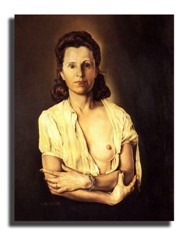

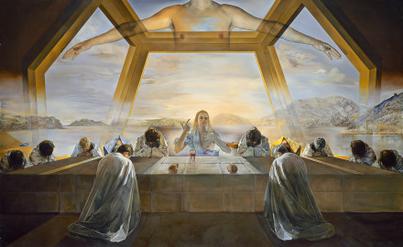
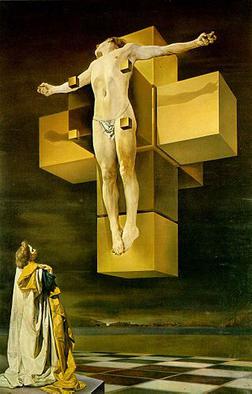


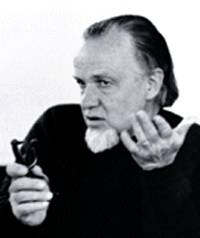







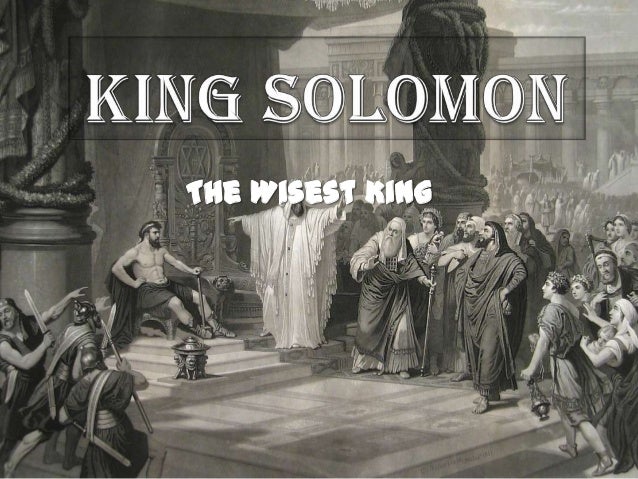


 The Daily Hatch


