Published: 11:12 EST, 2 August 2014 | Updated: 12:09 EST, 3 August 2014
At first glance it appears there’s a new couple in town as Emma Stone and Joaquin Phoenix share a lingering kiss.
But Emma’s boyfriend Andrew Garfield has nothing to worry about – the pair were making out for a movie role.
The actors were shooting romantic scenes for the as yet untitled new Woody Allen film on Thursday in Connecticut.
+12
Kiss: But Emma Stone and Joaquin Phoenix are just playing make believe
The Spiderman actress and her 39-year-old co-star spent the day in a leafy park in West Greenwich.
The pair relaxed between takes sitting on a lawn by a picturesque lake together chatting. At one point Emma, 25, rested in Joaquin’s arms as they waited for camera’s to role.
Both were dressed casually with Emma in pretty white gypsy top and beige shorts and the Puerto Ricon born star in brown pants, blue T-shirt underneath a plaid shirt.
+12
Convincing: Emma rests in her co-stars arms as they shoot scenes in Connecticut
+12
+12
Passion: But their show of affection is just for the cameras
+12
Park Life: The cast and crew descended on this leafy park for filming
This is Emma’s second role in a Woody Allen movie. Last year she shot scenes in France for the recently released Magic in Moonlight.
Woody – who was on set on Thursday – told the New York Observer last week that the starlet taught him how to text on his new iPhone.
‘I’m so untechnical. I don’t have a word processor. I still have my typewriter, the Olympia portable,’ the 78-year-old added.
+12
Chemistry: The on screen couple share a laugh during a break between takes
+12
And action: Woody Allen was on the set to watch his actors perform on Thursday
+12
Rehearsal: The pair goofed around as they waited for filming to begin
+12
Favourite: Emma appeared in Woody’s Magic in Moonlight filmed in France last year
And he spoke about his latest project.
‘Right now I’m shooting a picture with Emma and Joaquin Phoenix. I see them every day, we shoot and reshoot, it’s agonizing work, we edit and do the music and the mix, you don’t know …I don’t know if people are going to say, ‘Are you kidding? This is the worst thing I’ve ever seen.’’
It is Joaquin’s first role with the director and he has clearly impressed already.
‘He’s full of emotion and agony. If he says, ‘Pass the salt,’ it’s like the scene where Oedipus puts his eyes out.’
+12
+12
Costume change: Emma covered up her pretty gypsy top with what looked like a black sheet
+12
Lean on me: Most of the filming took place with Emma resting against a tree
______________ Published on Jun 2, 2014 Joaquin Phoenix and Emma Stone are set to star in the movie. _____________________ Plot Revealed for Woody Allen’s Latest Film Starring Joaquin Phoenix and Emma Stone No distributor has picked up the untitled project yet BY MIKE SHUTTNOV 5 2014 AT 2:00 PM I really love how Woody Allen […]
_________________________ Review and Pictures and Video Clips of Woody Allen’s movie “MAGIC IN THE MOONLIGHT” Part 15 Magic in the Moonlight Theatrical Review [Sony Pictures Classics; 2014] Director: Woody Allen Runtime: 97 minutes Written by Nick Newman, July 18, 2014 at 10:00 am Share7 Tweet24 0 Reddit0 Tumblr0 Email0 Magic in the Moonlight’s pending release […]
The Atheism Tapes – Steven Weinberg [2/6] Published on Sep 25, 2012 Jonathan Miller in conversation with American physicist and Nobel laureate Steven Weinberg ___________________________ I have posted many times in the past about Steven Weinberg on my blog and I have always found his works very engaging. It is true that he is a […]
Emma Stone and Colin Firth promoting Woody Allen’s ‘Magic in the Moonlight’ on Good Morning America Review and Pictures and Video Clips of Woody Allen’s movie “MAGIC IN THE MOONLIGHT” Part 14 Colin Firth looks handsome and happy in dark blue suit at Magic In The Moonlight screening… despite lukewarm reviews from critics By ELEANOR […]
Magic In The Moonlight: Hamish Linklater Exclusive Interview Review and Pictures and Video Clips of Woody Allen’s movie “MAGIC IN THE MOONLIGHT” Part 13 Film Review: Magic in the Moonlight JULY 21, 2014 tags: Colin Firth, Emma Stone, Magic in the Moonlight, Review,Woody Allen (Re-posted from LimitéMagazine.com) by Daniel Quitério Exotic locations. Defined characters. Sharp wit. […]
_____________________________________ Magic In The Moonlight: Hamish Linklater Exclusive Interview Review and Pictures and Video Clips of Woody Allen’s movie “MAGIC IN THE MOONLIGHT” Part 12 ‘Magic in the Moonlight’ (2014) Movie Review Fun, witty and charming, but loses steam in its final third BY: BRAD BREVET MONDAY, JUL 21, 2014 AT 10:11 AM Emma Stone […]
Academy Conversations: Magic in the Moonlight Published on Jul 21, 2014 Magic in the Moonlight discussion with actors Colin Firth and Hamish Linklater on July 20, 2014 at the Samuel Goldwyn Theater. ______________________________________ Review and Pictures and Video Clips of Woody Allen’s movie “MAGIC IN THE MOONLIGHT” Part 11 Woody Allen’s Magic in the Moonlight: […]
_________________ woody allen on life _____________________ Episode VII – The Age of Non Reason NoMirrorHDDHrorriMoN· Woody Allen about meaning and truth of life on Earth Francis Schaeffer pictured below: Francis Schaeffer has written extensively on art and culture spanning the last 2000 years and here are some posts I have […]
Magic In The Moonlight: Jacki Weaver Exclusive Interview Review and Pictures and Video Clips of Woody Allen’s movie “MAGIC IN THE MOONLIGHT” Part 9 Colin Firth and Emma Stone make magic together in Woody Allen’s breezily entertaining 1920s romance. Scott Foundas Chief Film Critic@foundasonfilm Romance blooms under the sun and the stars in Woody Allen’s […]
This series of posts entitled “FRANCIS SCHAEFFER ANALYZES ART AND CULTURE” touches things that affect our culture today. The first post took a look at the foundations of our modern society today that were set by the Roman Democracy 2000 years ago and then it related it to the art we see today. The […]
A Review of Stephen and Jane Hawking story THE THEORY OF EVERYTHING PART 1
The Theory of Everything Official Trailer #1 (2014) – Eddie Redmayne, Felicity Jones Movie HD
I saw this movie the other day and I enjoyed it very much. I have posted many things in the past that refer to Stephen Hawking and his works. This review below does a great job of giving a Christian perspective of the movie. My favorite quote from this review is this:
Much can be said about the brilliance of Stephen Hawking’s mind and how he has survived so many years with MND. Spiritually speaking, could it be that God is giving Stephen time? Time to come to know Him and that, beyond all Stephen’s theories, God is profoundly the Great I Am.
I wish Stephen Hawking to take time to read the work of Dr. Henry F. Schaefer. He speaks of Jane and Stephen in his work.
Starring: Eddie Redmayne, Felicity
Jones, Tom Prior, Sophie
Perry, Finlay Wright-Stephens,
Harry Lloyd, Christian McKay,
Charlie Cox, Emily Watson,
David Thewlis, Adam Godley,
Simon McBurney, Maxine Peake,
Charlotte Hope, Abigail
Cruttenden, Lucy Chappel
Genre: Drama/Biography
Audience: Teenagers to adults
Rating: PG-13
Runtime: 123 minutes
Distributor: Focus Features/Comcast
Director: James Marsh
Executive Producer: Amelia Granger, Liza Chasin,
David Kosse
Producer: Tim Bevan, Eric Fellner
Writer: Anthony McCarten
Address Comments To:
Brian L. Roberts, Chairman/CEO/President, Comcast Corp.
Peter Schlessel, CEO, Focus Features (a Division of NBC Universal and Comcast)
65 Bleecker St., 2nd Floor
New York, NY 10012
Phone: (212) 539-4000; Fax: (212) 539-4099
Website: http://www.focusfeatures.com
Content:
(HH, CC, BB, L, V, S, A, D, M) Strong atheist, humanist worldview where physicist protagonist develops theory to explain time and the universe apart from God, mitigated by strong Christian opposing worldview as wife cares for husband despite his crippling muscle disease so love and sacrifice are extolled even though things become hard for both her and husband; only one obscenity spoken, some adult themes shared with humor; man suffers from crippling disease and a tracheotomy is performed; adultery and female therapist lets patient look at porn magazine; no nudity; alcohol use; brief smoking; and, family becomes dysfunctional but they are reconciled somewhat.
Summary:
THE THEORY OF EVERYTHING follows the life of world-renowned, handicapped physicist Stephen Hawking and his wife Jane and how they overcome Stephen’s crippling muscle disease with love, humor, perseverance, and acceptance. THE THEORY OF EVERYTHING is a well told, engaging, inspiring love story, with comedic moments woven throughout, but it contains references to Stephen’s atheist leanings in opposition to his wife’s Christian faith.
Review:
THE THEORY OF EVERYTHING follows the life of world-renowned physicist Stephen Hawking (Eddie Redmayne) and his wife Jane Hawking (Felicity Jones).During the beginning of the movie Stephen is an active, comedic 21-year-old doctoral student who attends Cambridge University studying cosmology, but has yet to declare a major. It would seem that he is either a late-bloomer, or just not taking his academic future completely seriously. However, his professor soon begins to see beyond Stephen’s quirkiness, to Stephen’s brilliant genius. Stephen questions the existence of God, theorizes about black holes, and that there is a time before time that can be scientifically and mathematically deduced.
Stephen meets Jane, also a student at Cambridge, and they fall in love. Their romance begins to blossom and Stephen begins to work on the mathematics to establish before time existed. They debate and discuss about God’s existence, being that Jane, unlike Stephen, believes strongly in God. They accept one another’s differences and continue to grow closer.
As Stephen works on hours of mathematical equations, his fingers begin to draw up, but he continues. His work seems to just be taking off when Stephen loses control of his legs and falls onto the pavement as he’s walking on campus and is knocked unconscious. His doctor diagnoses him with debilitating motor neuron disease (MND), which will in time cause him to lose all sense of control of his motor skills. His brain, however, will continue to function normally, but, eventually, he wouldn’t be able to communicate his thoughts. The doctor gives him two years to live.
Jane is determined to stay with Stephen against all odds. After two years, Stephen is still alive, and he and Jane even have a child. Eventually, he and Jane have three children together as he defies the doctor’s diagnosis. As his mobility becomes less and less, Stephen becomes confined to a wheelchair. He and his children find humor in the various wheelchair upgrades over the years as he continues to work on his theory about time. Stephen’s success grows. However, in time, caring for Stephen and three active children begins to take their toll on Jane.
Jane has begun to feel overwhelmed and a sense of losing herself when her mother encourages her to join the church choir to lift her spirits. When she does, she reconnects with her love of music and meets choir director Jonathan, who becomes her friend and a great help to her and Stephen. However, as the two realize they have feelings for each other, and after a near fatal situation with Stephen, Jonathan respects Jane’s commitment to Stephen, and he and she go their separate ways. Eventually, Stephen moves to America with his new therapist, leaving Jane behind.
THE THEORY OF EVERYTHING is a well-shot, well-told love story with comedic moments woven throughout to keep the movie engaging as well as inspiring. There is a very strong positivistic scientism worldview in the movie as Stephen holds to the theory that everything in existence can be explained and proven by science. Thus, there isn’t a need for God. For the most part, Stephen seems to be atheistic in his belief of God, and he reasons that the beginning of the universe can be explained through science without God. However, there is a moment where he does acknowledge God’s existence, or the possibility of God’s existence. This is one of the underlying tensions within Stephen and Jane’s marriage as Jane was brought up as a devout Christian follower of God. Eventually, this tension plays out and after their years together in love, laughter, trials, and triumphs, Stephen and Jane separate.
Much can be said about the brilliance of Stephen Hawking’s mind and how he has survived so many years with MND. Spiritually speaking, could it be that God is giving Stephen time? Time to come to know Him and that, beyond all Stephen’s theories, God is profoundly the Great I Am.
THE THEORY OF EVERYTHING eloquently tells a story of unconditional love and humor between Jane and Stephen through pain, perseverance and sacrifice. In this case, the saying rings true that, “Behind every great man there’s a great woman.” As Stephen is knighted in England, he invites Jane and the children to meet the Queen of England, realizing that he couldn’t have done it without Jane’s unflinching servitude and love. That said, extreme caution is advised for the romantic view of atheism.
In Brief:
THE THEORY OF EVERYTHING follows the life of world-renowned physicist Stephen Hawking and his wife, Jane. It details how they overcome Stephen’s crippling muscle disease with love, humor, perseverance, and acceptance. As two doctoral students at Cambridge University, Stephen and Jane fall in love and even raise a family. However, Stephen becomes totally crippled by motor neuron disease. As his condition worsens, he continues to impact modern science.THE THEORY OF EVERYTHING is a well-told love story with frequent comical moments. It’s both engaging and inspiring. The movie has strong atheist elements as Stephen holds to the theory that everything can be explained and proven by science. Thus, there is no need for God. In contrast to this, Stephen’s wife displays a strong Christian faith, though the ordeal of caring for both Stephen and their three children begins to take its toll. Still, she relentlessly shows Stephen the love of Christ as she cares for him when he can no longer care for himself. THE THEORY OF EVERYTHING shows both Stephen and Jane as positive role models. MOVIEGUIDE® advises extreme caution.
The Theory of Everything Featurette – Eddie Redmayne’s Transformation (2014) – Movie HD
Eddie Redmayne gets critique from Stephen Hawking
Published on Nov 2, 2014
Rising British star Eddie Redmayne, who plays Stephen Hawking in the movie ‘The Theory of Everything’, recalls the nerve-racking meeting with Hawking himself and talks about the transformation he went through portraying the iconic physicist.
‘The Theory Of Everything’ Cast On Meeting Steven Hawking | TODAY
The Theory of Everything Movie Review – Beyond The Trailer
Published on Oct 18, 2014
The Theory of Everything movie review! Beyond The Trailer host Grace Randolph shares her review aka reaction today for this 2014 movie! http://bit.ly/subscribeBTT
The Theory of Everything Movie Review. Beyond The Trailer host Grace Randolph gives you her own review aka reaction to The Theory of Everything starring Eddie Redmayne as Stephen Hawking and Felicity Jones as his wife Jane! Will this movie be a big contender for nominations at the 2015 Oscars?! Would you be wise to factor it into your predictions?! Should you see the full movie? Enjoy The Theory of Everything in 2014, and make Beyond The Trailer your first stop for movie news, trailer and review on YouTube today!
The Theory of Everything Movie Review – Just Seen It
Published on Oct 27, 2014
Stephen Hawking is studying to be a physicist when he falls in love with a student named Jane. But when he is diagnosed with a debilitating illness, his life is forever altered. But the power of love unlocks one of the most brilliant minds of the twentieth century.
Starring Felicity Jones, Eddie Redmayne, and Charlie Cox.
Directed by James Marsh.
Written by Anthony McCarten and Jane Hawking.
Produced by Tim Bevan, Lisa Bruce, Eric Fellner, and Anthony McCarten.
Genre: Biography, Drama.
Aaron, Salim, and Leah discuss the new biopic that tells the story of the brilliant Stephen Hawking and his wife, Jane.
Starring Aaron Fink, Salim Lemelle, and Leah Aldridge.
Directed by Erik Howell.
Edited by Stephen Krystek.
Produced by David Freedman, Cooper Griggs, Kevin Taft, Amy Taylor, Pedro Lemos, and Aaron Fink.
Sound Design by Aaron Fink and Andrew Grossman.
The Theory of Everything (Starring Eddie Redmayne) Movie Review
Published on Nov 6, 2014
The Theory of Everything starring Eddie Redmayne, Felicity Jones, and David Thewlis is reviewed by Alonso Duralde (TheWrap and Linoleum Knife podcast), Christy Lemire (www.ChristyLemire.com), and William Bibbiani (Crave Online).
Starring Eddie Redmayne (“Les Misérables”) and Felicity Jones (“The Amazing Spider-Man 2”), this is the extraordinary story of one of the world’s greatest living minds, the renowned astrophysicist Stephen Hawking, who falls deeply in love with fellow Cambridge student Jane Wilde. Once a healthy, active young man, Hawking received an earth-shattering diagnosis at 21 years of age. With Jane fighting tirelessly by his side, Stephen embarks on his most ambitious scientific work, studying the very thing he now has precious little of – time. Together, they defy impossible odds, breaking new ground in medicine and science, and achieving more than they could ever have dreamed. The film is based on the memoir Travelling to Infinity: My Life with Stephen, by Jane Hawking, and is directed by Academy Award winner James Marsh (“Man on Wire”). (c) Focus
Kristian and special guest Alicia Malone discuss “The Theory of Everything”, the new Stephen Hawking biopic getting serious Oscar buzz for star Eddie Redmayne…how did the kids feel about the flick? Find out now and comment with your take!
___________
The Theory of Everything movie review
Published on Dec 8, 2014
The life of Stephen Hawking is brought to the big screen, and brought to life by a brilliant performance by Eddie Redmayne. Jeremy gives his review of “The Theory of Everything”!
In the book, THE DEMON-HAUNTED WORLD: Science as a Candle in the Dark by Carl Sagan. Sagan writes: The Committee for the Scientific Investigation of Claims of the Paranormal is an organization of scientists, academics, magicians, and others dedicated to skeptical scrutiny of emerging or full-blown pseudo-sciences. It was founded by the University of Buffalo philosopher Paul […]
_____________ THE DEMON-HAUNTED WORLD: Science as a Candle in the Dark by Carl Sagan. New York: Random House, 1995. 457 pages, extensive references, index. Hardcover; $25.95. PSCF 48 (December 1996): 263. Sagan is the David Duncan Professor of Astronomy and Space Sciences at Cornell University. He is author of many best sellers, including Cosmos, which […]
Richard Dawkins Interview Ricky Gervais About Atheism! _________ Antony Flew – World’s Most Famous Atheist Accepts Existence of God Uploaded on Nov 28, 2008 Has Science Discovered God? A half-century ago, in 1955, Professor Antony Flew set the agenda for modern atheism with his Theology and Falsification, a paper presented in a debate with C.S. […]
____________ Does God Exist? Thomas Warren vs. Antony Flew Published on Jan 2, 2014 Date: September 20-23, 1976 Location: North Texas State University Christian debater: Thomas B. Warren Atheist debater: Antony G.N. Flew For Thomas Warren: http://www.warrenapologeticscenter.org/ ______________________ Antony Flew and his conversion to theism Uploaded on Aug 12, 2011 Antony Flew, a well known spokesperson […]
____________ Jesus’ Resurrection: Atheist, Antony Flew, and Theist, Gary Habermas, Dialogue Published on Apr 7, 2012 http://www.veritas.org/talks – Did Jesus die, was he buried, and what happened afterward? Join legendary atheist Antony Flew and Christian historian and apologist Gary Habermas in a discussion about the facts surrounding the death and resurrection of Jesus Christ. Join […]
_________________ Antony Flew on God and Atheism Published on Feb 11, 2013 Lee Strobel interviews philosopher and scholar Antony Flew on his conversion from atheism to deism. Much of it has to do with intelligent design. Flew was considered one of the most influential and important thinker for atheism during his time before his […]
Ecclesiastes 1 Published on Sep 4, 2012 Calvary Chapel Spring Valley | Sunday Evening | September 2, 2012 | Pastor Derek Neider _____________________ I have written on the Book of Ecclesiastes and the subject of the meaning of our lives on several occasions on this blog. In this series on Ecclesiastes I hope to show how […]
Morality Presupposes Theism (1 of 4) Uploaded by philosophyreligion on Oct 15, 2010 Dr. Stephen C. Meyer argues that in order to make sense of morality you must presuppose the existence of God. Table of Contents:http://www.youtube.com/view_play_list?p=B324A88301858151____________________________ Below is more on the bio of Stephen C. Meyer: Dr. Stephen C. Meyer Stephen C. […]
RC Sproul Interviews Stephen Meyer, Part 1 of 5 Uploaded by LigonierMinistries on Mar 2, 2010 RC Sproul sits down with Stephen Meyer, author of the book, “Signature in the Cell”, and they discuss philosophy, evolution, education, Intelligent Design, and more. Below is more on the bio of Stephen C. Meyer: Dr. Stephen C. […]
__________ “God and Cosmology” William Lane Craig and Sean Carroll – 2014 Greer Heard Forum Published on Mar 3, 2014 For more resources visit:http://www.reasonablefaith.org On Friday, February 21st, 2014, philosopher and theologian, Dr William Lane Craig, was invited by the Greer Heard Forum to debate Dr Sean Carroll, an atheist theoretical physicist. The topic […]
__________ “God and Cosmology” William Lane Craig and Sean Carroll – 2014 Greer Heard Forum Published on Mar 3, 2014 For more resources visit:http://www.reasonablefaith.org On Friday, February 21st, 2014, philosopher and theologian, Dr William Lane Craig, was invited by the Greer Heard Forum to debate Dr Sean Carroll, an atheist theoretical physicist. The topic […]
_________ Jodie Foster’s mystical flight Contact Don’t read this review if you want to be surprised by the ending of the movie. My next sentence is discussing the end. Over and over in the movie Cooper (played by Matthew McConaghey) says “someone out there is helping us,” but instead of pointing to God who created […]
__________ “God and Cosmology” William Lane Craig and Sean Carroll – 2014 Greer Heard Forum Published on Mar 3, 2014 For more resources visit:http://www.reasonablefaith.org On Friday, February 21st, 2014, philosopher and theologian, Dr William Lane Craig, was invited by the Greer Heard Forum to debate Dr Sean Carroll, an atheist theoretical physicist. The topic […]
__________ “God and Cosmology” William Lane Craig and Sean Carroll – 2014 Greer Heard Forum Published on Mar 3, 2014 For more resources visit:http://www.reasonablefaith.org On Friday, February 21st, 2014, philosopher and theologian, Dr William Lane Craig, was invited by the Greer Heard Forum to debate Dr Sean Carroll, an atheist theoretical physicist. The topic […]
___ _________ Jesus’ Resurrection: Atheist, Antony Flew, and Theist, Gary Habermas, Dialogue Published on Apr 7, 2012 http://www.veritas.org/talks – Did Jesus die, was he buried, and what happened afterward? Join legendary atheist Antony Flew and Christian historian and apologist Gary Habermas in a discussion about the facts surrounding the death and resurrection of Jesus Christ. […]
____________________ Making Sense of Faith and Science Uploaded on May 16, 2008 Dr. H. Fritz Schaefer confronts the assertion that one cannot believe in God and be a credible scientist. He explains that the theistic world view of Bacon, Kepler, Pascal, Boyle, Newton, Faraday and Maxwell was instrumental in the rise of modern science itself. […]
and you will hear what far smarter people than I have to say on this matter. I agree with them.
Harry Kroto
__________________________
There are 3 videos in this series and they have statements by 150 academics and scientists and I hope to respond to all of them. The 7th clip in the first video is of Alan Guth. Below the videos I give the transcript of his complete quote.
50 Renowned Academics Speaking About God (Part 1)
Another 50 Renowned Academics Speaking About God (Part 2)
A Further 50 Renowned Academics Speaking About God (Part 3)
Alan Guth is an American theoretical physicist and cosmologist. Guth has researched elementary particle theory (and how particle theory is applicable to the early universe). Currently serving as Victor Weisskopf Professor of Physics at the Massachusetts Institute of Technology, he is the originator of the inflationary universe theory.
“My feeling about the word God is that I’m not sure if I know really what it means. I certainly have a big place in my philosophy for the unknown – I don’t think at this point we have any way of knowing where the laws of physics came from, we could hope that when we really understand the laws of physics that they will describe how the universe came into existence…
…I have never seen much in the idea that the universe was designed. My problem with the concept is that it always seems that the designer is more sophisticated and more complicated than the object being designed – that is certainly true with the way it works with cars, building, and trucks. So, if one needs a designer that is more complex than the thing being designed, the designer doesn’t help explain the design – it becomes an infinite regress.
So, I’ll freely admit that I have no idea why the laws of physics are what they are – and I also have no idea how to even go about approaching that question – but to me just saying that there is a designer doesn’t help at all.”
____________________
I have more articles posted on my blog about the last few years of Antony Flew’s life than any other website in the world probably. The reason is very simple. I had the opportunity to correspond with Antony Flew back in the middle 90’s and he said that he had the opportunity to listen to several of the cassette tapes that I sent him with messages from Adrian Rogers and he also responded to several of the points I put in my letters that I got from Francis Schaeffer’s materials. The ironic thing was that I purchased the sermon IS THE BIBLE TRUE? originally from the Bellevue Baptist Church Bookstore in 1992 and in the same bookstore in 2008 I bought the book THERE IS A GOD by Antony Flew. Back in 1993 I decided to contact some of the top secular thinkers of our time and I got my initial list of individuals from those scholars that were mentioned in the works of both Francis Schaeffer and Adrian Rogers. Schaeffer had quoted Flew in his book ESCAPE FROM REASON. It was my opinion after reviewing the evidence that Antony Flew was the most influential atheistic philosopher of the 20th century.
__________
The Fine Tuning Argument for the Existence of God from Antony Flew!
Imagine entering a hotel room on your next vacation. The CD player on the bedside table is softly playing a track from your favorite recording. The framed print over the bed is identical to the image that hangs over the fireplace at home. The room is scented with your favorite fragrance…You step over to the minibar, open the door, and stare in wonder at the contents. Your favorite beverage. Your favorite cookies and candy. Even the brand of bottled water you prefer…You notice the book on the desk: it’s the latest volume by your favorite author…
Chances are, with each new discovery about your hospitable new environment, you would be less inclined to think it has all a mere coincidence, right? You might wonder how the hotel managers acquired such detailed information about you. You might marvel at their meticulous preparation. You might even double-check what all this is going to cost you. But you would certainly be inclined to believe that someone knew you were coming. There Is A God (2007) p.113-4
In January of 2004, the atheist community was rocked by a major announcement. Antony Flew, probably the world’s most influential atheist of the last 50 years, publicly acknowledged his move from atheism to belief in God’s existence (he hasn’t embraced Christianity just yet, though). Let me give you some perspective. Flew’s announcement is equivalent to Billy Graham calling a press conference and telling the world he is leaving Christianity. Can you imagine the shockwaves throughout the Christian world?
So why did this life-long atheist ditch atheism? Flew said he “had to go where the evidence leads.” And what was that evidence? “I think that the most impressive arguments for God’s existence are those that are supported by recent scientific discoveries…I think the argument to Intelligent Design is enormously stronger than it was when I first met it.”
Whoa. Did you hear that? A really smart atheist was convinced by the scientific evidence for God’s existence. If only everyone could be as open-minded and honest as Flew. So what is Intelligent Design? And what evidence is he referring to?
Intelligent Design makes two basic claims: 1) Intelligent agents leave behind evidence or “fingerprints” and 2) in the natural world we have discovered those fingerprints. The first claim is uncontroversial.
Think about it. You’re an intelligent agent. Everywhere you go you leave behind evidence of your presence. It could be a note you wrote, clothes you left on the floor, or actual fingerprints you smudged on a sliding glass door. If someone enters a room after you and looks closely enough, they’ll find evidence you had been there. Likewise, when we investigate the natural world, we find Someone’s fingerprints. Here are two examples.
First, scientific discoveries of the last century provide strong evidence the universe exploded into existence in the Big Bang. Yes, I said the Big Bang. And no, if you accept the Big Bang it does not mean you accept evolution. This is an unfortunate myth Christians sometimes believe. If Big Bang evidence is persuasive to you, then you must also accept an old universe (approximately 12 billions years old). But some Christians think an old earth is necessarily connected to evolution. That’s nonsense. In fact, don’t get stuck on debates about the age of the earth. It’s more important that God created than when He created. Whether you think the earth is young or old, Christians on both sides can join forces against macroevolution.
The important thing about the Big Bang is it points to a beginning and therefore, to a Beginner or First Cause. If you heard a small bang in the room next door and asked your mom what caused it and she said it was nothing, would you be satisfied with her answer? Of course not. You’d check it out for yourself. You’d look for the cause of the small bang. Well, what’s true of small bangs is true of big bangs. The Big Bang implies a beginning and therefore, a Beginner. And no one fits that description better than God.
Second, recent scientific discoveries show our universe is finely tuned. This simply means there are certain details in the universe that had to be “just right” in order to produce life. For example, the gravitational force must be constant. The expansion rate of the universe must be constant. A life-sustaining solar system can have only one star. And on and on.
Scientists tell us there are more than 50 “just right” details in the universe that make life on planet earth possible. What are the chances of this happening? Really smart guys who calculate this stuff tell us there is a trillionth of a trillionth of a trillionth of a trillionth of a percent chance. In other words, there is no chance for chance. Instead, a finely tuned universe points to a Fine Tuner, God. These are just two examples of the evidence but we’ve got more. Biological information in DNA. Irreducible complexity at the molecular level. Earth’s special location in the universe. The more we discover about our universe, the more we see God’s fingerprints all around us.
Jesus’ Resurrection: Atheist, Antony Flew, and Theist, Gary Habermas, Dialogue
Published on Apr 7, 2012
http://www.veritas.org/talks – Did Jesus die, was he buried, and what happened afterward? Join legendary atheist Antony Flew and Christian historian and apologist Gary Habermas in a discussion about the facts surrounding the death and resurrection of Jesus Christ. Join the third and final debate between Flew and Habermas, one that took place shortly before Flew admitted there might be a God, just before his death.
Over the past two decades, The Veritas Forum has been hosting vibrant discussions on life’s hardest questions and engaging the world’s leading colleges and universities with Christian perspectives and the relevance of Jesus. Learn more at http://www.veritas.org, with upcoming events and over 600 pieces of media on topics including science, philosophy, music, business, medicine, and more!
_________________
The God Debate II: Harris vs. Craig
Uploaded on Apr 12, 2011
The second annual God Debate features atheist neuroscientist Sam Harris and Evangelical Christian apologist William Lane Craig as they debate the topic: “Is Good From God?” The debate was sponsored in large part by the Notre Dame College of Arts and Letters: The Henkels Lecturer Series, The Center for Philosophy of Religion and the Institute for Scholarship in the Liberal Arts.
Reggie “Fieldy” Arvizu of Korn and his Christian conversion and deliverance from drugs Part 1
Reggie “Fieldy” Arvizu of Korn Tells How He Found Jesus and Stayed With Korn!!
Uploaded on Nov 15, 2010
Reggie “Fieldy” Arvizu started drinking when he was 5 or 6, because his dad gave him the booze! His room was decorated with all sorts of beer symbols. After he began his rock music career, a lot of his life was women, with one night stands to groupies. He became really mean, and he could be triggered easy to become violent. See his story about how he came to know Jesus Christ as his Lord and Savior, and how it changed him totally! http://www.cbn.com/700club
800-759-0700 – Toll Free Prayer Line
If you would like to read my detailed Born Again Information, here is the link to the introductory message. The information is in a .pdf file, so you will need to have the FREE Adobe Reader installed on your computer.
I wrote of series of four posts on the conversion to Christ of Brian Walsh of the heavy metal band Korn and that was because my son Hunter told me about Walsh’s Christian testimony. Then I stumbled on the Christian testimony of Reggie “Fieldy” Arvizu of Korn. This subject has always interested me and I have written about Lou Graham of Foreigner, and Kerry Livgren and Dave Hope and their similar experiences. In all of these cases they convert to Christianity and give their lives totally to Christ and then they are delivered from drugs.
By Tim Branson with Zsa Zsa Palagyi The 700 Club 4 Comment(s)
CBN.com –Tim Branson [reporting]: His name is Reggie Arvizu, but most people know him as “Fieldy”, bass player for the multi-platinum rock band Korn.
Reggie “Fieldy” Arvizu: A lot of it was women. One night stands to groupies and all of that. I became really mean, and I was triggered easy to become violent. I could kill people.
Branson [reporting]: I recently talked with Fieldy about his rock’n’roll lifestyle and some of the more difficult choices he’s made in his life, including his decision to follow Christ and stay with the band.
Branson: You started drinking at a very early age. How did that happen?
Fieldy: I was probably 5 or 6. My parents would tuck me into bed, and my mom’d be like, “I love you,” and my dad would be like, “Dream about Budweisers.” That’s what he knew.
Branson: And that kind of set you up, didn’t it?
Fieldy: Had my big Budweiser pillows in my room. I was destined to be a partier, I guess.
Branson: So your parents both were partying all the time. How did that affect your family?
Fieldy: It starts out, they start drinking and partying. Towards the end of the night, it was always the same thing. There would be dishes flying, screaming, yelling to violence to abuse. It’s like they loved each other, [but] that’s what happens.
Branson: Alcohol and drugs has a way of doing that.
Fieldy: Yep, brings out that other side.
Branson [reporting]: When Fieldy’s parents divorced, that other side blew up. He was heartbroken. So he did what any teenager might do to block the pain — he shut down.
Fieldy: I was like, this is not going to hurt me. That’s what I told my dad. “I’m moving in with you. Let’s get a keg, and let’s throw a party and make music,” and I put a wall up to not feel the emotions. That’s when it became full-on drinking and a way that nobody’s going to hurt me. From that moment on, I never had a sober day.
Branson [reporting]: Fieldy formed the band Pierced with some high school friends. He started using speed.
Fieldy: When we were in these younger bands, they were like hair metal bands, you know? The whole image was to be really skinny, like a Q-Tip, big hair, little stick body, tight pants and all. If you take these speed pills right here, you won’t be hungry. So I started getting into that. I went to jail a few time, but looking back I should have been in jail like every day. I just didn’t get caught.
Branson [reporting]: Pierced fell apart, as did other bands that followed. Then, in 1993, Fieldy and friends came up with a new name, Korn. With a new sound and a new lead singer, the band took off and so did Fieldy’s party life.
Fieldy: I had my nights of being in hotel rooms and destroying them by myself, crying because I’d wake up in the morning feeling so bad from partying. I’d be shaking. I’d wake up and throw up in the morning. I’m like, “Man, I can’t handle this.” So I would just take some Xanax or Adavan and let that kick in and I’d just be wasted again. It’d bring you so down, then [I would] smoke weed after that. Then night would come, and I could start drinking.
Branson: The goal was basically to stay buzzed.
Fieldy: All day.
Branson [reporting]: Korn was huge, playing in sold-out arenas around the world. In the midst of it all, Fieldy married and divorced twice.
Branson: You had a very specific view about women. How did you see women in your life?
Fieldy: I would bash on them, say women are just sluts, no good. I was really mean to women to where I could make almost any woman cry, any time. I guess that’s what I did to keep from getting hurt.
Branson [reporting]: Fieldy was still dealing with the pain of his parents’ divorce.
Branson: You spent a lot of time and effort building up walls around your heart.
Fieldy: That was a full-time job for like 20 years. One heartbreak, 20 years. I mean, most people I think get over a heartbreak in a like a year. But 20 years destroying myself? It’s a vicious cycle. You’re living inside a tornado spinning. It’s fast, and it ends up killing you.
Branson: Did you ever come to a point and say this has gotta stop?
Fieldy: I don’t think I did. I always made a joke out of everything. If my hands are shaking and I’m throwing up, I’d make a joke. “Hey, everybody watch this.”
Branson [reporting]: It was no joke when Fieldy’s father was diagnosed with cancer.
Fieldy: To me, my dad was kind of like a superhero. There’s no way this could happen. Even to the point where he got sick and [I] had to move him over to the top doctors in the world, I’m like, “They’re going to fix it. I got money. They’re going to fix it. I got the best insurance in the world. He’s gonna be fine.”
Branson [reporting]: But he wasn’t. His father died with one last wish.
Fieldy: He wished that I’d be saved.
Branson [reporting]: That’s because years earlier Fieldy’s father had become a Christian and so had his wife. So, when she asked Fieldy to pray the salvation prayer at the hospital, he did.
Fieldy: I just did it, because everyone was freaking out. It didn’t mean much. I was so out of my mind at the moment. I came back to the house, and that’s when I went through a deep dark moment. I just started thinking about everything — from what I’m doing to myself to his death to what I’m leaving behind. I don’t know. I couldn’t take it anymore.
Branson [reporting]: That led Fieldy to a sincere prayer of commitment that changed his life.
Fieldy: I had chills throughout my whole body, almost like a coldness. I was crying. I tell a lot of people that you can do the prayer with your brain, but that’s not going to do anything. You have to do it with your heart. When I accepted Christ, now I’m like, “Okay, I’m going to pray for some of these things that I’m a slave to.” It went in steps. So that I was set free with no withdrawals. No craving. I stopped everything down to weed to the pills. I just stopped.
Branson [reporting]: Over time he became more aware of his need for God’s forgiveness.
Fieldy: I’d walk into the bathroom, put my face on the floor and just say, “Forgive me, man,” because some of the things I did were so bad. I just knew He said, “I forgive you, son.”
Branson [reporting]: Fieldy spent a year apologizing to everyone he could think of that he’d hurt. The hardest person to apologize to was his girlfriend at the time, Dena.
Fieldy: I was going to be heartbroken if she left me. I was like, I’ve really got to take a chance here of her leaving me after I tell her I’ve been cheating on her. I took the chance.
Branson [reporting]: Dena was furious, but she forgave him. The two married and started a family. As far as his career, he’s still with Korn. I asked him about his decision to stay with the band. He believes it’s for a good reason.
Fieldy: There’s just so much power of being used in Korn. I can reach so many people and know what I’m about, not what Korn’s about. I want to try to follow the Bible the best I can, because I know it’s going to give me the best life.
Branson [reporting]: Now that he’s “got the life” and has written a book about it. He says his message is really pretty simple.
Fieldy: People think, “I’m not good enough to have the Lord come into my life.” People have got to know all you’ve got to do is know what Jesus did for you. He died for your sins, died on the cross and came back three days later. If you ask Him into your heart, it’s for life. He’s going to be with you forever.
Jim Morrison’s sad drug death was followed by Pamela Courson’s sad story!!! pamela courson/ jim morrison interview Interview with Jim Morrison’s father and sister Uploaded on Aug 9, 2010 This interview is from “When You’re Strange” DVD bonus material. I do not own this video and own no rights to it! Pamela Courson Uploaded […]
__________ NICO – I’m Waiting For The Man – (1982, Warehouse, Preston, UK) One of the top 10 songs from The Velvet Underground and Nico is the song “I’m Waiting for the Man I’m Waiting for the Man From Wikipedia, the free encyclopedia Jump to: navigation, search “I’m Waiting for the Man” Song by […]
The life of Lou Reed (includes videos from 1960′s and 1970′s) ____________ Rock & Roll – Velvet Underground The Velvet Underground – Venus in Furs – Live 1) Lou Reed – Sweet Jane – live in Paris, 1974 Velvet Underground-”Sunday Morning” from “Velvet Underground and Nico” LP Lou Reed From Wikipedia, the free encyclopedia Jump […]
Jim Morrison’s relationship with Nico Nico Icon documentary part 1. Nico Icon documentary part 2. ______________ Jim Morrison at Andy Warhol’s Party.wmv (with Nico) Uploaded on Apr 26, 2010 From the Oliver Stone movie. The Doors. _______________________ nico discusses jim morrison. Uploaded on Jan 2, 2008 nico discusses jim, and how he impacted her […]
I really enjoyed the movie “Savannah Smiles” last night and afterwards I looked up what happened to Bridgette Andersen and where she is today. IMDB notes: Bridgette Andersen was born on July 11, 1975 to Frank Glass and Teresa Andersen in Inglewood, California and grew up in Malibu. She always considered it good luck to […]
Today I heard Tim Todd’s testimony about drugs. Related posts: Whitney Houston dead at 48, long history of drugs and alcohol February 11, 2012 – 8:31 pm Sad news about Whitney Houston’s death tonight. I have included some earlier posts about drugs and alcohol and rock stars. LOS ANGELES (AP) — Whitney Houston, who ruled as […]
I have written about the “27 Club” several times in the past and I have got a lot of hits in the last 30 days on these blog posts below that deal with Rock and Rollers and drugs. Keith Richards’ wife is a bible believing christian Pete de Freitas of Echo and the Bunnymen is a […]
I’m In A Rock ‘N’ Roll Band – The Singer (Part 1) Jim Morrison – books on tape – w subtitles Light My Fire – The Doors The Rolling Stones – Satisfaction ________________________ The Rolling Stones – The Breakthrough The Rolling Stones – Brian Jones The Rolling Stones- Paint it Black Nirvana – Smells Like […]
Amy Winehouse died last week and she joined the “27 club.” Pete de Freitas of Echo and the Bunnymen is also a member of the “27 Club.” This is group of rockers that have died at age 27. A tribute to the amazing drummer of one of our biggest influences, Echo & The Bunnymen. We […]
cc ‘Janis Joplin’ 2/5 from True Hollywood Story (Janis was having affair with Pigpen) Jerry Garcia (guitar, vocals), Ron “Pigpen” McKernan (vocals, harmonica), Bob Weir (guitar, vocals), Phil Lesh (bass), Mickey Hart (drums), Bill Kreutzman (drums). Grateful Dead “Don’t Ease Me In” Live @ Canadian National Exhibition Hall Toronto, CA June 27th, 1970 Grateful Dead […]
Amy Winehouse died last week and joined the “27 club” which is a group of rockers that died at age 27. Gary Thain also joined that same group long ago and I wanted to look at his life today. Uriah Heep – Wizard bb By Sean Nelson, Special to MSN Music , July 23, 2011 […]
Recently Amy Winehouse joined the “27 Club” when she died of a drug overdose. The “27 Club” is a group of rockers that died at age 27. Unfortunately Jimi Hendrix died at age 27 in 1970 and Janis Joplin did the same three weeks later. Today we are going to look at her life and […]
JIMI HENDRIX : FINAL INTERVIEW . The other day when Amy Winehouse died she joined the “27 Club” which includes other famous rockers who died at age 27. Most of them died because of drugs. Unfortunately Jimi Hendrix joined the club for the same reason. Something special for all music and Beat Club-Lovers on YouTube: […]
Amy Winehouse died at age 27 and unfornately joined the “27 club” which is made of famous rockers that died at age 27. Pete Ham was a member of Bad Finger which was one of my favorite groups that I followed. “Come and get it” was my favorite song of theirs. ___________________________________ Badfinger perform a […]
Brian’s Blues, Brian Jones on guitar in the early stones years. unreleased track Brian Jones died at age 27 just like Amy Winehouse did. I remember like yesterday when I first heard the song “I can’t get no satisfaction” by the Rolling Stones. I immediately thought about Solomon’s search for satisfaction in the Book of […]
The Rise And Rise Of Kurt Cobain part 1/3 Amy Winehouse joined the “Club 27 the other day with her early death. I am going through the others one by one. Today is Kurt Cobain. 7. Kurt Cobain very rarely does an artist come along and not just upset the “apple cart” but drops […]
Pictures and Videos of Edie Sedgwick and the story of her losing battle against drugs and alcohol Part 2 Drugs and alcohol have taken the life of many people and I have posted many times about their unfortunate deaths. Whitney Houston, Amy Winehouse, Gary Thain, Janis Joplin, Jimi Hendrix, Brian Jones, Kurt Cobain, and Jim […]
Pictures and Videos of Edie Sedgwick and the story of her losing battle against drugs and alcohol Part 1 Factory Girl – The Real Edie Uploaded on Aug 30, 2011 Friends and family of Edie Sedgwick discuss what the factory girl was really like, and the battles and relationships she went through _____________ Edie Sedgwick Excerpt […]
Around 4 years ago I was in Philadelphia and the local radio station had a talk show that was blasting Alice Walton for coming into town and buying the 1876 Thomas Eakins’ masterpiece “The Gross Clinic” which was hanging at the Jefferson Medical College. However, the people of Philadelphia were given 45 days to […]
The Bethinking National Apologetics Day Conference: “Countering the New Atheism” took place during the UK Reasonable Faith Tour in October 2011. Christian academics William Lane Craig, John Lennox, Peter J Williams and Gary Habermas lead 600 people in training on how to defend and proclaim the credibility of Christianity against the growing tide of secularism and New Atheist popular thought in western society.
In this session, William Lane Craig delivers his critique of Richard Dawkins’ objections to arguments for the existence of God, followed by questions and answers from the audience. In this clip, Dr Craig addresses a question about objective moral values and distinguishes them from absolute moral values.
Dr. Francis Schaeffer – The Biblical Flow of Truth & History (part 2)
I have discussed many subjects with my liberal friends over at the Ark Times Blog in the past and I have taken them on now on the subject of the absurdity of life without God in the picture. Most of my responses included quotes from William Lane Craig’s book THE ABSURDITY OF LIFE WITHOUT GOD. Here is the result of one of those encounters from June of 2013:
I will tell you why not and it is because if you are an atheist or a secularist then you are in a no win situation on the subject of finding lasting meaning for your life unless you let God into the picture. William Craig Lane related a conversation he had with a noted evolutionist that I thought you would be interested in:
While participating in a conference on Intelligent Design two years ago, I had the opportunity to have dinner with the agnostic philosopher of science MICHAEL RUSE one evening at an Atlanta steakhouse. During the course of the meal, Michael asked me, “Bill, are you satisfied with where you are in your career as a philosopher?’’ I was rather surprised by the question and said, “Well, yes, basically, I guess I am—how about you?” He then related to me that when he was just starting out as a philosopher of science, he was faced with the choice of vigorously pursuing his career or just taking it rather easy. He said that he then thought of the anguished words of the character played by Marlin Brando at the close of the film On the Waterfront: “I coulda been a contender!” Michael told me that he decided he didn’t want to reach the end of his life and look back in regret and say, “I coulda been a contender!” I was struck by those words. As a Christian I am commanded by the Lord “to contend for the faith that was once for all delivered to the saints” (Jude 3 ESV). BUT WHAT POINT IS THERE FOR AN ATHEIST OR AGNOSTIC TO BE A CONTENDER — A CONTENDER FOR WHAT? SINCE THERE IS NO OBJECTIVE PURPOSE IN LIFE, THE ONLY ANSWER CAN BE TO CONTEND FOR ONE’S OWN MADE-UP PURPOSES–ENCE, THE IRRESISTIBLE TENDENCY TO TREAT CAREER ADVANCEMENT AND fame as though they really were objectively important ends, when in fact they are nothing.
E P I S O D E 1 0 Dr. Francis Schaeffer – Episode X – Final Choices 27 min FINAL CHOICES I. Authoritarianism the Only Humanistic Social Option One man or an elite giving authoritative arbitrary absolutes. A. Society is sole absolute in absence of other absolutes. B. But society has to be […]
E P I S O D E 9 Dr. Francis Schaeffer – Episode IX – The Age of Personal Peace and Affluence 27 min T h e Age of Personal Peace and Afflunce I. By the Early 1960s People Were Bombarded From Every Side by Modern Man’s Humanistic Thought II. Modern Form of Humanistic Thought Leads […]
E P I S O D E 8 Dr. Francis Schaeffer – Episode VIII – The Age of Fragmentation 27 min I saw this film series in 1979 and it had a major impact on me. T h e Age of FRAGMENTATION I. Art As a Vehicle Of Modern Thought A. Impressionism (Monet, Renoir, Pissarro, Sisley, […]
E P I S O D E 7 Dr. Francis Schaeffer – Episode VII – The Age of Non Reason I am thrilled to get this film series with you. I saw it first in 1979 and it had such a big impact on me. Today’s episode is where we see modern humanist man act […]
E P I S O D E 6 How Should We Then Live 6#1 Uploaded by NoMirrorHDDHrorriMoN on Oct 3, 2011 How Should We Then Live? Episode 6 of 12 ________ I am sharing with you a film series that I saw in 1979. In this film Francis Schaeffer asserted that was a shift in […]
E P I S O D E 5 How Should We Then Live? Episode 5: The Revolutionary Age I was impacted by this film series by Francis Schaeffer back in the 1970′s and I wanted to share it with you. Francis Schaeffer noted, “Reformation Did Not Bring Perfection. But gradually on basis of biblical teaching there […]
Dr. Francis Schaeffer – Episode IV – The Reformation 27 min I was impacted by this film series by Francis Schaeffer back in the 1970′s and I wanted to share it with you. Schaeffer makes three key points concerning the Reformation: “1. Erasmian Christian humanism rejected by Farel. 2. Bible gives needed answers not only as to […]
Francis Schaeffer’s “How should we then live?” Video and outline of episode 3 “The Renaissance” Francis Schaeffer: “How Should We Then Live?” (Episode 3) THE RENAISSANCE I was impacted by this film series by Francis Schaeffer back in the 1970′s and I wanted to share it with you. Schaeffer really shows why we have so […]
Francis Schaeffer: “How Should We Then Live?” (Episode 2) THE MIDDLE AGES I was impacted by this film series by Francis Schaeffer back in the 1970′s and I wanted to share it with you. Schaeffer points out that during this time period unfortunately we have the “Church’s deviation from early church’s teaching in regard […]
Francis Schaeffer: “How Should We Then Live?” (Episode 1) THE ROMAN AGE Today I am starting a series that really had a big impact on my life back in the 1970′s when I first saw it. There are ten parts and today is the first. Francis Schaeffer takes a look at Rome and why […]
Francis Schaeffer: “Whatever Happened to the Human Race” (Episode 5) TRUTH AND HISTORY Published on Oct 7, 2012 by AdamMetropolis This crucial series is narrated by the late Dr. Francis Schaeffer and former Surgeon General Dr. C. Everett Koop. Today, choices are being made that undermine human rights at their most basic level. Practices once […]
The opening song at the beginning of this episode is very insightful. Francis Schaeffer: “Whatever Happened to the Human Race” (Episode 4) THE BASIS FOR HUMAN DIGNITY Published on Oct 7, 2012 by AdamMetropolis This crucial series is narrated by the late Dr. Francis Schaeffer and former Surgeon General Dr. C. Everett Koop. Today, choices […]
Francis Schaeffer: “Whatever Happened to the Human Race” (Episode 3) DEATH BY SOMEONE’S CHOICE Published on Oct 6, 2012 by AdamMetropolis This crucial series is narrated by the late Dr. Francis Schaeffer and former Surgeon General Dr. C. Everett Koop. Today, choices are being made that undermine human rights at their most basic level. Practices […]
Francis Schaeffer: “Whatever Happened to the Human Race?” (Episode 2) SLAUGHTER OF THE INNOCENTS Published on Oct 6, 2012 by AdamMetropolis This crucial series is narrated by the late Dr. Francis Schaeffer and former Surgeon General Dr. C. Everett Koop. Today, choices are being made that undermine human rights at their most basic level. Practices […]
It is not possible to know where the pro-life evangelicals are coming from unless you look at the work of the person who inspired them the most. That person was Francis Schaeffer. I do care about economic issues but the pro-life issue is the most important to me. Several years ago Adrian Rogers (past president of […]
Ecclesiastes 2-3 Published on Sep 19, 2012 Calvary Chapel Spring Valley | Sunday Evening | September 16, 2012 | Derek Neider _____________________________ I have written on the Book of Ecclesiastes and the subject of the meaning of our lives on several occasions on this blog. In this series on Ecclesiastes I hope to show how secular […]
Ecclesiastes 1 Published on Sep 4, 2012 Calvary Chapel Spring Valley | Sunday Evening | September 2, 2012 | Pastor Derek Neider _____________________ I have written on the Book of Ecclesiastes and the subject of the meaning of our lives on several occasions on this blog. In this series on Ecclesiastes I hope to show how […]
Ecclesiastes 8-10 | Still Searching After All These Years Published on Oct 9, 2012 Calvary Chapel Spring Valley | Sunday Evening | October 7, 2012 | Pastor Derek Neider _______________________ Ecclesiastes 11-12 | Solomon Finds His Way Published on Oct 30, 2012 Calvary Chapel Spring Valley | Sunday Evening | October 28, 2012 | Pastor Derek Neider […]
Ecclesiastes 6-8 | Solomon Turns Over a New Leaf Published on Oct 2, 2012 Calvary Chapel Spring Valley | Sunday Evening | September 30, 2012 | Pastor Derek Neider _____________________ I have written on the Book of Ecclesiastes and the subject of the meaning of our lives on several occasions on this blog. In this series […]
Ecclesiastes 4-6 | Solomon’s Dissatisfaction Published on Sep 24, 2012 Calvary Chapel Spring Valley | Sunday Evening | September 23, 2012 | Pastor Derek Neider ___________________ I have written on the Book of Ecclesiastes and the subject of the meaning of our lives on several occasions on this blog. In this series on Ecclesiastes I hope […]
Overview of the Book of Ecclesiastes Overview of the Book of EcclesiastesAuthor: Solomon or an unknown sage in the royal courtPurpose: To demonstrate that life viewed merely from a realistic human perspective must result in pessimism, and to offer hope through humble obedience and faithfulness to God until the final judgment.Date: 930-586 B.C. Ecclesiastes 2-3 Published on Sep 19, […]
Ecclesiastes 1 Published on Sep 4, 2012 Calvary Chapel Spring Valley | Sunday Evening | September 2, 2012 | Pastor Derek Neider _____________________ I have written on the Book of Ecclesiastes and the subject of the meaning of our lives on several occasions on this blog. In this series on Ecclesiastes I hope to show how […]
Ecclesiastes 8-10 | Still Searching After All These Years Published on Oct 9, 2012 Calvary Chapel Spring Valley | Sunday Evening | October 7, 2012 | Pastor Derek Neider _______________________ Ecclesiastes 11-12 | Solomon Finds His Way Published on Oct 30, 2012 Calvary Chapel Spring Valley | Sunday Evening | October 28, 2012 | Pastor Derek Neider […]
Scott Klusendorf Speaks at the 40 Days for Life in Dayton, OH
_________
___________________
Francis Schaeffer Whatever Happened to the Human Race (Episode 1) ABORTION
_____________________________________
Francis Schaeffer “BASIS FOR HUMAN DIGNITY” Whatever…HTTHR
Dr. Francis schaeffer – The flow of Materialism(from Part 4 of Whatever happened to human race?)
Dr. Francis Schaeffer – The Biblical flow of Truth & History (intro)
Francis Schaeffer – The Biblical Flow of History & Truth (1)
Dr. Francis Schaeffer – The Biblical Flow of Truth & History (part 2)
_____________________________
I have gone back and forth with Ark Times liberal bloggers on the issue of abortion, but I am going to try something new. I am going to respond with logical and rational reasons the pro-life view is true. All of this material is from a paper by Scott Klusendorf called FIVE BAD WAYS TO ARGUE ABOUT ABORTION .
You have the Saline idiocy which is life begins at conception. Well, on one level, that is true, but it is not a life, it is not a human so there is a point where, morally, abortion is not a problem.
Then there are the idiots and murderers who claim that a fetus is not a baby. If it is not a baby, it is not a Life worthy of consideration. To some of them, an elective abortion at the 8th month is no moral problem, which is a giant and repugnant LIE.
To say life begins at conception is a lie.
To say a fetus, even though eight months old, is not a life is another lie, too.
Steven E, you have written some very wise things on this blog many times before but I have differ with you on one short point from what you just said. These are your exact words:
“You have the Saline idiocy which is life begins at conception. Well, on one level, that is true, but it is not a life, it is not a human so there is a point where, morally, abortion is not a problem.”
Pro-life advocates contend that elective abortion unjustly takes the life of a defenseless human being. This simplifies the abortion controversy by focusing public attention on just one question: Is the unborn a member of the human family? If so, killing him or her to benefit others is a serious moral wrong. Conversely, if the unborn are not human, elective abortion requires no more justification than having a tooth pulled.
Scientifically, we know that from the earliest stages of development, the unborn are distinct, living, and whole human beings. Leading embryology textbooks confirm this.1 Prior to advocating elective abortion, former Planned Parenthood President Dr. Alan Guttmacher was perplexed that anyone, much less a medical doctor, would question these basic scientific facts. “This all seems so simple and evident that it is difficult to picture a time when it wasn’t part of the common knowledge,” he wrote in his bookLife in the Making.2
Philosophically, there is no morally significant difference between the embryo you once were and the adult you are today. Differences of size, level of development, environment, and degree of dependency are not relevant in the way that abortion advocates need them to be. The simple acronymSLEDcan be used to illustrate these non-essential differences:3
Size: True, embryos are smaller than newborns and adults, but why is that relevant? Do we really want to say that large people are more valuable than small ones? Men are generally larger than women, but that doesn’t mean they deserve more rights. Size doesn’t equal value.
Level of development: True, embryos and fetuses are less developed than you and I. But again, why is this relevant? Four year-old girls are less developed than 14 year-old ones. Should older children have more rights than their younger siblings? Some people say that the immediate capacity for self-awareness and a desire to go on living makes one valuable. But if that is true, newborns do not qualify as valuable human beings. Infants do not acquire distinct self-awareness and memory until several monthsafter birth.4(Best case scenario, infants acquire limited self-awareness three months after birth, when the synapse connections increase from 56 trillion to 1,000 trillion.) As abortion advocate and philosopher Dean Stretton writes, “Any plausible pro-choice theory will have to deny newborns a full right to life. That’s counterintuitive.”5
Environment: Where you are has no bearing onwhoyou are. Does your value change when you cross the street or roll over in bed? If not, how can a journey of eight inches down the birth-canal suddenly change the essential nature of the unborn from non-human to human? If the unborn are not already valuable human beings, merely changing their location can’t make them so.
Degree of Dependency: If viability bestows human value, then all those who depend on insulin or kidney medication are not valuable and we may kill them. Conjoined twins who share blood type and bodily systems also have no right to life.
In short, although humans differ immensely with respect to talents, accomplishments, and degrees of development, they are nonetheless equal (and valuable) because they all have the same human nature.
FOOTNOTES:
1 See T.W. Sadler, Langman’s Embryology, 5th ed. (Philadelphia: W.B. Saunders, 1993) p. 3; Keith L. Moore, The Developing Human: Clinically Oriented Embryology (Toronto: B.C. Decker, 1988) p. 2; O’Rahilly, Ronand and Muller, Pabiola, Human Embryology and Teratology, 2nd ed. (New York: Wiley-Liss, 1996) pp. 8, 29. See also Maureen L. Condic, “Life: Defining the Beginning by the End,” First Things, May 2003.
2 A. Guttmacher, Life in the Making: the Story of Human Procreation (New York: Viking Press, 1933) p. 3
3 SLED test initially developed by Stephen Schwarz but modified significantly and explained here by Scott Klusendorf. Stephen Schwarz, The Moral Question of Abortion (Chicago: Loyola University Press, 1990) pp. 17-18.
4 Conor Liston & Jerome Kagan, “Brain Development: Memory Enhancement in Early Childhood,” Nature 419, 896 (2002). See also O’Rahilly, Ronand and Muller, Pabiola, Human Embryology and Teratology, 2nd ed. (New York: Wiley-Liss, 1996) p. 8.
Saline, I appreciate the very informative answer, but the beginning stages of the embryo, even these decorated folks have to admit, cannot live outside the uterine wall. You can have a 3 month premature birth survive because it is, undeniably, a living person.
That undeniable scientific line kind of defeats the extremes of both sides.
I make no mistake. There is a time when the choice belongs exclusively to the pregnant woman. There is also a time when a contentious woman knows that she is killing a living being and should give it proper thought, rather than dismissing this living human life as ‘just’ a fetus.
Yes the unborn baby that is only 3 months along can not live outside the womb because this child must depend on the mother for food. Steven E you are correct about that but what about that logic being used on the 3 month old baby that is dependent on the mother and father to provide food? What if a child requires insulin to live? Should we say the child is not worthy of life because of the dependence on a drug to live?
Yes the younger unborn baby is smaller at 13 weeks than 39 weeks but is a 4 year old young girl not a child worthy of life because she is not mature in every way like a 18 year old girl is?
I have gone back and forth and back and forth with many liberals on the Arkansas Times Blog on many issues such as abortion, human rights, welfare, poverty, gun control and issues dealing with popular culture. Here is another exchange I had with them a while back. My username at the Ark Times Blog is Saline […]
I have gone back and forth and back and forth with many liberals on the Arkansas Times Blog on many issues such as abortion, human rights, welfare, poverty, gun control and issues dealing with popular culture. Here is another exchange I had with them a while back. My username at the Ark Times Blog is Saline […]
I have gone back and forth and back and forth with many liberals on the Arkansas Times Blog on many issues such as abortion, human rights, welfare, poverty, gun control and issues dealing with popular culture. Here is another exchange I had with them a while back. My username at the Ark Times Blog is Saline […]
I have gone back and forth and back and forth with many liberals on the Arkansas Times Blog on many issues such as abortion, human rights, welfare, poverty, gun control and issues dealing with popular culture. Here is another exchange I had with them a while back. My username at the Ark Times Blog is […]
I have gone back and forth and back and forth with many liberals on the Arkansas Times Blog on many issues such as abortion, human rights, welfare, poverty, gun control and issues dealing with popular culture. Here is another exchange I had with them a while back. My username at the Ark Times Blog is Saline […]
I have gone back and forth and back and forth with many liberals on the Arkansas Times Blog on many issues such as abortion, human rights, welfare, poverty, gun control and issues dealing with popular culture. Here is another exchange I had with them a while back. My username at the Ark Times Blog is Saline […]
I have gone back and forth and back and forth with many liberals on the Arkansas Times Blog on many issues such as abortion, human rights, welfare, poverty, gun control and issues dealing with popular culture. Here is another exchange I had with them a while back. My username at the Ark Times Blog is Saline […]
I have gone back and forth and back and forth with many liberals on the Arkansas Times Blog on many issues such as abortion, human rights, welfare, poverty, gun control and issues dealing with popular culture. Here is another exchange I had with them a while back. My username at the Ark Times Blog is […]
I have gone back and forth and back and forth with many liberals on the Arkansas Times Blog on many issues such as abortion, human rights, welfare, poverty, gun control and issues dealing with popular culture. Here is another exchange I had with them a while back. My username at the Ark Times Blog is Saline […]
I have gone back and forth and back and forth with many liberals on the Arkansas Times Blog on many issues such as abortion, human rights, welfare, poverty, gun control and issues dealing with popular culture. Here is another exchange I had with them a while back. My username at the Ark Times Blog is Saline […]
I have gone back and forth and back and forth with many liberals on the Arkansas Times Blog on many issues such as abortion, human rights, welfare, poverty, gun control and issues dealing with popular culture. Here is another exchange I had with them a while back. My username at the Ark Times Blog is Saline […]
I have gone back and forth and back and forth with many liberals on the Arkansas Times Blog on many issues such as abortion, human rights, welfare, poverty, gun control and issues dealing with popular culture. Here is another exchange I had with them a while back. My username at the Ark Times Blog is Saline […]
I have gone back and forth and back and forth with many liberals on the Arkansas Times Blog on many issues such as abortion, human rights, welfare, poverty, gun control and issues dealing with popular culture. Here is another exchange I had with them a while back. My username at the Ark Times Blog is Saline […]
I have gone back and forth and back and forth with many liberals on the Arkansas Times Blog on many issues such as abortion, human rights, welfare, poverty, gun control and issues dealing with popular culture. Here is another exchange I had with them a while back. My username at the Ark Times Blog is Saline […]
I have gone back and forth and back and forth with many liberals on the Arkansas Times Blog on many issues such as abortion, human rights, welfare, poverty, gun control and issues dealing with popular culture. Here is another exchange I had with them a while back. My username at the Ark Times Blog is Saline […]
I have gone back and forth and back and forth with many liberals on the Arkansas Times Blog on many issues such as abortion, human rights, welfare, poverty, gun control and issues dealing with popular culture. Here is another exchange I had with them a while back. My username at the Ark Times Blog is Saline […]
I have gone back and forth and back and forth with many liberals on the Arkansas Times Blog on many issues such as abortion, human rights, welfare, poverty, gun control and issues dealing with popular culture. Here is another exchange I had with them a while back. My username at the Ark Times Blog is Saline […]
I have gone back and forth and back and forth with many liberals on the Arkansas Times Blog on many issues such as abortion, human rights, welfare, poverty, gun control and issues dealing with popular culture. Here is another exchange I had with them a while back. My username at the Ark Times Blog is Saline […]
I have gone back and forth and back and forth with many liberals on the Arkansas Times Blog on many issues such as abortion, human rights, welfare, poverty, gun control and issues dealing with popular culture. Here is another exchange I had with them a while back. My username at the Ark Times Blog is Saline […]
I have gone back and forth and back and forth with many liberals on the Arkansas Times Blog on many issues such as abortion, human rights, welfare, poverty, gun control and issues dealing with popular culture. Here is another exchange I had with them a while back. My username at the Ark Times Blog is Saline […]
Max Brantley of the Arkansas Times Blog reprinted a story of a 38 year old later telling her story. She got an abortion when she was 23 for just selfish reasons. The lady identified herself as a Christian. As a response to this I posted the following on 2-8-13 on the Arkansas Times Blog: You […]
Dr Richard Land discusses abortion and slavery – 10/14/2004 – part 3 The best pro-life film I have ever seen below by Francis Schaeffer and Dr. C. Everett Koop “Whatever happened to the human race?” Over the years I have taken on the Ark Times liberal bloggers over and over and over concerning the issue […]
The best pro-life film I have ever seen below by Francis Schaeffer and Dr. C. Everett Koop “Whatever happened to the human race?” Francis Schaeffer pictured above._________ The 45 minute video above is from the film series created from Francis Schaeffer’s book “Whatever Happened to the Human Race?” with Dr. C. Everett Koop. This book really […]
The best pro-life film I have ever seen below by Francis Schaeffer and Dr. C. Everett Koop “Whatever happened to the human race?” Over the years I have taken on the Ark Times liberal bloggers over and over and over concerning the issue of abortion. I asked over and over again for one liberal blogger […]
Francis Schaeffer pictured above._________ The best pro-life film I have ever seen below by Francis Schaeffer and Dr. C. Everett Koop “Whatever happened to the human race?” Over the years I have taken on the Ark Times liberal bloggers over and over and over concerning the issue of abortion. I asked over and over again […]
The best pro-life film I have ever seen below by Francis Schaeffer and Dr. C. Everett Koop “Whatever happened to the human race?” On 1-24-13 I took on the child abuse argument put forth by Ark Times Blogger “Deathbyinches,” and the day before I pointed out that because the unborn baby has all the genetic code […]
PHOTO BY STATON BREIDENTHAL from Pro-life march in Little Rock on 1-20-13. Tim Tebow on pro-life super bowl commercial. Over the years I have taken on the Ark Times liberal bloggers over and over and over concerning the issue of abortion. Here is another encounter below. On January 22, 2013 (on the 40th anniversary of the […]
Dr Richard Land discusses abortion and slavery – 10/14/2004 – part 3 The best pro-life film I have ever seen below by Francis Schaeffer and Dr. C. Everett Koop “Whatever happened to the human race?” Over the years I have taken on the Ark Times liberal bloggers over and over and over concerning the issue […]
The Arkansas Times blogger going by the username “Sound Policy” asserted, “…you do know there is a slight difference between fetal tissue and babies, don’t you? Don’t you?” My response was taken from the material below: Science Matters: Former supermodel Kathy Ireland tells Mike Huckabee about how she became pro-life after reading what the science books […]
I wrote a response to an article on abortion on the Arkansas Times Blog and it generated more hate than enlightenment from the liberals on the blog. However, there was a few thoughtful responses. One is from spunkrat who really did identify the real issue. WHEN DOES A HUMAN LIFE BEGIN? _______________________________________ Posted by spunkrat […]
Superbowl commercial with Tim Tebow and Mom. The Arkansas Times article, “Putting the fetus first: Pro-lifers keep up attack on access, but pro-choice advocates fend off the end to abortion right” by Leslie Newell Peacock is very lengthy but I want to deal with all of it in this new series. click to enlarge ROSE MIMMS: […]
The Arkansas Times article, “Putting the fetus first: Pro-lifers keep up attack on access, but pro-choice advocates fend off the end to abortion right” by Leslie Newell Peacock is very lengthy but I want to deal with all of it in this new series. click to enlarge ROSE MIMMS: Arkansas Right to Life director unswayed by […]
I have gone back and forth with Ark Times liberal bloggers on the issue of abortion, but I am going to try something new. I am going to respond with logical and rational reasons the pro-life view is true. All of this material is from a paper by Scott Klusendorf called FIVE BAD WAYS TO ARGUE ABOUT ABORTION .
On 2-8-13 on the Ark Times Blog the person using the username “Venessa,” wrote, ” Well, Saline, I am NOT A CHRISTIAN and you don’t get to force your beliefs on me.”
and you will hear what far smarter people than I have to say on this matter. I agree with them.
Harry Kroto
__________________________
There are 3 videos in this series and they have statements by 150 academics and scientists and I hope to respond to all of them. The 23rd quote on the first video comes from Sir David Attenborough and it is below:
“I often get letters, quite frequently, from people who say how they like the programmes a lot, but I never give credit to the almighty power that created nature. To which I reply and say, “Well, it’s funny that the people, when they say that this is evidence of the Almighty, always quote beautiful things. They always quote orchids and hummingbirds and butterflies and roses.” But I always have to think too of a little boy sitting on the banks of a river in west Africa who has a worm boring through his eyeball, turning him blind before he’s five years old. And I reply and say, “Well, presumably the God you speak about created the worm as well,” and now, I find that baffling to credit a merciful God with that action. And therefore it seems to me safer to show things that I know to be truth, truthful and factual, and allow people to make up their own minds about the moralities of this thing, or indeed the theology of this thing.”
50 Renowned Academics Speaking About God (Part 1)
Another 50 Renowned Academics Speaking About God (Part 2)
A Further 50 Renowned Academics Speaking About God (Part 3)
Recently, we’ve been looking at what we’ve coined as The Stephen Fry syndrome – the idea of hiding behind the views of people more famous/clever/socially acceptable than yourself. Whatever our worldview, it’s easy to lazily hold up as truth things that the glitterati have said, rather than engage with the questions at hand. Below is a prime example of this. It’s one that gets plastered on Facebook and memed all over the internet in different ways. It was said by the wonderfully quintessential Englishman, David Attenborough. So, let’s have a look at what he says and then unpack it a bit.
“I often get letters from people who say I never give credit to the almighty power that created nature. To which I reply and say, well, it’s funny that the people, when they say that this is evidence of the Almighty, always quote beautiful things. But I always have to think too of a little boy sitting on the banks of a river in West Africa who has a worm boring through his eyeball, turning him blind before he’s five years old. And I reply and say, well, presumably the God you speak about created the worm as well. I find that baffling to credit a merciful God with that action. And therefore it seems to me safer to show things that I know to be truth, truthful and factual, and allow people to make up their own minds about the morality of this thing.”
Ok, so the main point seems to be that a ‘merciful God’ wouldn’t allow a small boy to suffer in this way. And therefore we’re looking at the classic question of ‘Why does God allow bad things to happen to good people?’
First of all, let’s acknowledge the horrendousness of what that small boy is going through. We don’t think it’s good – we don’t even think it’s acceptable. But nor do we think that God causes it to happen. Christians don’t believe that God created a broken world where life would be a bit crappy and then you’d die. It’s broken and crappy because of us.
So much human suffering is down, ironically, to human freedom. Could God remove all suffering? Yes, but he would have to remove all freedom. And you might think a world where we weren’t free to sin or suffer would be the obvious thing to create anyway. But think about it: the freedom that allows a man to slaughter innocent people is the same freedom that allows you to watch your 50″ plasma TV, or drive a sports car, or disbelieve in God. Seriously. There aren’t good people and bad people. There’s free people.
You want God to stop famine? Great – let’s give everything we have to Africa. What are you waiting for?
Furthermore, if you’re an atheist, the situation here for this young lad is bleak. Because for this little boy there is no ultimate hope. He will remain blind, suffer throughout his short life, die and turn to dust. He won’t ‘Rest In Peace’ as we glibly say. He won’t be ‘At Rest’. He will simply cease to exist.
Interestingly, there seems here to be a strange irony at work. Attenborough, who doesn’t believe in God, is blaming God for being unmerciful. But if there’s no God, then the only hope this young lad has is…us. It’s startling that we in the West would hold up this example as an example of a heartless God we don’t believe in, when the reason this lad has no hope is because we have raped the planet so we can have nice GTAV marathons and venti Chai Lattes.
He finished by talking about the morality of it. But on Atheism, by what standard is this situation morally wrong? If we’re just molecules bumping into one another and the only purpose is what we create for ourselves, then why should I care? We’ve talked about morality here, but you only get objective morality once you ground it in God. And once you do ground it in God, you realise that God isn’t cool with this situation either. We know this is wrong because He does.
However, for Christians, the situation is not so futile. We should indeed plough resources into situations like this (Jesus told the rich man to give everything he had to the poor), but we also believe that there is hope in this life for people like this young lad. Jesus changes lives, transforms, forgives, heals. And what isn’t fully redeemed in this life absolutely will be in the next. We believe that, through Jesus, a day will come where suffering is finished, and this young lad can sit on the river bank and drink a Chai Latte in peace.
God’s major hope for you isn’t to have a long, comfortable life. It’s simply to know the transforming and saving love of Jesus.
Sorry I missed recording the first few minutes of this but it is still worth watching. John Lennox is a mathematician who debated Richard Dawkins in “The God Delusion Debate”.
________________________
Some people have suggested that God was responsible for evil in the world and that meant that he was responsible for 9/11. However, I wanted to make the simple point today that there must be an absolute standard to judge evil by and most atheists do not have that. Of course, Christians have the Bible.
Today we have a growing number of atheists because of the secular humanism in the schools. The teaching of humanism in the area of moral choices has been the main reason for this. Our students are being taught that we all are a product of chance and there are no absolutes.
The Bible tells us, “{God} has also set eternity in the hearts of men…” (Ecclesiastes 3:11 NIV). The secularist calls this an illusion, but the Bible tells us that the idea that we will survive the grave was planted in everyone’s heart by God Himself. Romans 1:19-21 tells us that God has instilled a conscience in everyone that points each of them to Him and tells them what is right and wrong (also Romans 2:14 -15).
It’s no wonder, then, that a humanist would comment, “Certain moral truths — such as do not kill, do not steal, and do not lie — do have a special status of being not just ‘mere opinion’ but bulwarks of humanitarian action. I have no intention of saying, ‘I think Hitler was wrong.’ Hitler WAS wrong.” (Gloria Leitner, “A Perspective on Belief,” THE HUMANIST, May/June 1997, pp. 38-39)
Here Leitner is reasoning from her God-given conscience and not from humanist philosophy. However, I know how moral relativism works, and I expected that Mrs. Leitner would soon be challenged by her fellow humanists. It wasn’t long before she received criticism. Humanist Abigail Ann Martin responded, “Neither am I an advocate of Hitler; however, by whose criteria is he evil?” (THE HUMANIST, September/October 1997, p. 2)
Do you see where our moral relativism has taken us in the USA?
I had a chance back in 1996 to visit with a gentleman by the name of Robert Lester Mondale while he was retired in Missouri. He was born on May 28, 1904 and he died on August 19, 2003. He was an Unitarian minister and a humanist. In fact, he was the only person to sign all three of the Humanist Manifestos of 1933, 1973 and 2003. In my conversation with him he mentioned that he had the opportunity to correspond with John Dewey who was one of Mondale’s fellow signers of the 1933 Humanist Manifesto I.
I really believe that the influence of John Dewey’s humanistic philosophy has won the battle of the textbooks in the USA today (with evolution teaching being a key component). As a result, we have people like humanist Abigail Ann Martin who wrote, “Neither am I an advocate of Hitler; however, by whose criteria is he evil?” Check out this excellent article by Greg Koukl:
Bosnia, Rape and the Problem of Evil
Gregory Koukl
Greg responds to a letter to the editor in which the writer’s pain causes him to ask the age-old question of why God allows evil to exist.
I was reading the L.A. Times today in the letters to the editor section and there was a letter written by a gentleman in Newport Beach that was a response to a tragic story that the Times had carried a few days ago. Maybe some of you had seen that story or have read about it in the local papers about not just the rank and file tragedy in Bosnia- Hertzegovena, not about the general tragedy of war. The article was about the problems of the refugees and also a women being victimized by soldiers.
…we say, “Why, God? Why me? Why this pain? Why this difficulty?”
This respondent writes, “Glancing at your April 10 paper my eyes fell upon the tragic story ‘Ordeals Put Off Bosnia Rape Victim’s Healing.’ My heart ached for Amira, the 35 year old Muslim woman, mother of two children, suffering the loss of her husband, wandering about the countryside begging to survive. Placed in a detention camp, raped repeatedly by Serb soldiers acting as animal pigs rather than humans, the woman became another tragic victim of human wickedness. Where is mankind headed? My thoughts turn to God and ask, ‘Why, God? Why did you create such monsters? God, are you for real?’ If this is God’s way of teaching or testing my faith”, he continues, ” then my beliefs and faith are being shattered with contempt instead. Having just lost my wife to cancer, maybe my feelings are more prone and fragile to be torn apart and my feelings turn more intensely to those who are suffering also.” It’s signed Victor Jashinski in Newport Beach.There’s probably hardly a person listening to this account that does not feel the same emotion with him. First of all, we feel the sense of horror as we read about the kinds of things that other people do to each other. Just a couple of days ago was the last of a five part series of “The Holocaust” that was on the Family Channel which was re-aired for the first time in fifteen years. But in any event, seeing again in vivid portrayal what man is capable of doing, our hearts and our minds are taken with this situation. Not only that, but we are also touched by evil in the world ourselves as we look at circumstances and we’re horrified. We also look at pains in our own life as this man has reflected and we say, “Why, God? Why me? Why this pain? Why this difficulty?” And this is really one of the most thorny problems and one of the most complex problems that anyone, regardless of their philosophical avocations or persuasions, has to address.
There is no way that I’m going to resolve this in ten minutes because this problem in its fullness, in its entirety resists a thorough resolution. I think there’s some good responses, but for the most part it is something that we kind of have to live with . But I would like to give some thoughts that may provide a few guidelines for you in dealing with this yourself and people like this gentleman as they face these circumstances both outside of their life and inside of their life.
My policy in dealing with a difficult, tricky problem that defies a thorough-going solution is to work from the known to the unknown. There are some things I think we can know about this issue. We can draw some conclusions that will at least clear the deck a bit and help us to focus on those things that are less clear and less resolvable, and maybe demystify the question for us, and maybe make our hearts feel a little better about the issue.
One of the things I need to say at the outset, by the way, is that’s it’s very important to distinguish between the issue of evil and suffering as a philosophic problem and the problem of evil from a pastoral perspective. Actually, both were raised in this letter. Why does God allow evil in the world such that a female Bosnian refugee might be subjected to repeated rape by Serbian soldiers? Why does the problem happen out there (which is the philosophic question) but why does evil hurt me? That’s a different kind of question because that’s an emotional response. Even people who have resolved the issue of evil philosophically still shudder under its impact when it hits them. Even though their mind may have answers their heart still asks “Why?” when they become victimized by evil in the world. So we see both kinds here.
I’m going to start out by trying to deal with the philosophic problem and then make a comment about the pastoral problem. They are distinct questions.
By the way, when someone comes to you with the pastoral issue, you can’t resolve that by giving them a philosophic answer. It just doesn’t work . That’s not their need. Their need isn’t their mind at that point or their intellect; their need is their heart, the grief they are going through. There’s a different kind of approach there. I’m actually better at the first than the second. I’m better at the intellectual part than the pastoral part. That’s why I’m a radio talk show host and not a church shepherd as many pastors are. My gifts are different. In any event, let me try to deal with the philosophic problem first and then briefly address the pastoral issue.
So if there is no God, there can’t be any evil, only personal likes and dislikes–what I prefer morally and what I don’t prefer morally.
One thing to note, by the way, is that this man presumes that God made man this way (“Why, God, why did you create such monsters?”). Now if you are thinking from a Biblical perspective, you know that that is not the case. The Bible does not teach that God created monsters. It teaches that He created human beings that were not monsters at all but were good. They didn’t have this propensity and proclivity for evil. He didn’t make man with that. But He did make man with the possibility of going wrong and the writer’s response here is really a response questioning the character of God. “How could You do this? What kind of God are you? Are you for real?” are other questions which are the approach that most people usually take when struggling with evil. In other words, when they see this kind of thing they don’t question the character of man, which in my point of view would be a sensible response. (You’ll understand why I say that in just a moment.) Instead they attack the existence of God. In other words, they say since there is evil in the world then God can’t exist. This is not a reasonable response. It is not a rational response. It is not a fruitful answer to the philosophic problem of evil and I’m going to tell you why that just can’t work.
What doesn’t make sense is to look at the existence of evil and question the existence of God. The reason is that atheism turns out being a self-defeating philosophic solution to this problem of evil. Think of what evil is for a minute when we make this kind of objection. Evil is a value judgment that must be measured against a morally perfect standard in order to be meaningful. In other words, something is evil in that it departs from a perfect standard of good. C.S. Lewis made the point, “My argument against God was that the universe seemed so cruel and unjust. But how had I got this idea of just and unjust? A man does not call something crooked unless he has some idea of a straight line.”[ 1 ] He also goes on to point out that a portrait is a good or a bad likeness depending on how it compares with the “perfect” original. So to talk about evil, which is a departure from good, actually presumes something that exists that is absolutely good. If there is no God there’s no perfect standard, no absolute right or wrong, and therefore no departure from that standard. So if there is no God, there can’t be any evil, only personal likes and dislikes–what I prefer morally and what I don’t prefer morally.
This is the big problem with moral relativism as a moral point of view when talking about the problem of evil. If morality is ultimately a matter of personal taste–that’s what most people hold nowadays–then it’s just your opinion what’s good or bad, but it might not be my opinion. Everybody has their own view of morality and if it’s just a matter of personal taste–like preferring steak over broccoli or Brussels sprouts–the objection against the existence of God based on evil actually vanishes because the objection depends on the fact that some things are intrinsically evil–that evil isn’t just a matter of my personal taste, my personal definition. But that evil has absolute existence and the problem for most people today is that there is no thing that is absolutely wrong. Premarital sex? If it’s right for you. Abortion? It’s an individual choice. Killing? It depends on the circumstances. Stealing? Not if it’s from a corporation.
The fact is that most people are drowning in a sea of moral relativism. If everything is allowed then nothing is disallowed. Then nothing is wrong. Then nothing is ultimately evil. What I’m saying is that if moral relativism is true, which it seems like most people seem to believe–even those that object against evil in the world, then the talk of objective evil as a philosophical problem is nonsense. To put it another way, if there is no God, then morals are all relative. And if moral relativism is true, then something like true moral evil can’t exist because evil becomes a relative thing.
An excellent illustration of this point comes from the movie The Quarrel . In this movie, a rabbi and a Jewish secularist meet again after the Second World War after they had been separated. They had gotten into a quarrel as young men, separated on bad terms, and then had their village and their family and everything destroyed through the Second World War, both thinking the other was dead. They meet serendipitously in Toronto, Canada in a park and renew their friendship and renew their old quarrel.
To paraphrase the late Dr. Francis Schaeffer, the person who argues against the existence of God based on the existence of evil in the world has both feet firmly planted in mid-air.
Rabbi Hersch says to the secularist Jew Chiam, “If a person does not have the Almighty to turn to, if there’s nothing in the universe that’s higher than human beings, then what’s morality? Well, it’s a matter of opinion. I like milk; you like meat. Hitler likes to kill people; I like to save them. Who’s to say which is better? Do you begin to see the horror of this? If there is no Master of the universe then who’s to say that Hitler did anything wrong? If there is no God then the people that murdered your wife and kids did nothing wrong.”
That is a very, very compelling point coming from the rabbi. In other words, to argue against the existence of God based on the existence of evil forces us into saying something like this: Evil exists, therefore there is no God. If there is no God then good and evil are relative and not absolute, so true evil doesn’t exist, contradicting the first point. Simply put, there cannot be a world in which it makes any sense to say that evil is real and at the same time say that God doesn’t exist. If there is no God then nothing is ultimately bad, deplorable, tragic or worthy of blame. The converse, by the way, is also true. This is the other hard part about this, it cuts both ways. Nothing is ultimately good, honorable, noble or worthy of praise. Everything is ultimately lost in a twilight zone of moral nothingness. To paraphrase the late Dr. Francis Schaeffer, the person who argues against the existence of God based on the existence of evil in the world has both feet firmly planted in mid-air.
No, the existence of the problem forces us into some kind of theistic solution. This is a good thing, which brings me to my third point. If atheism is a self-defeating philosophic solution to the problem, and some kind of theism is necessary, then it seems to me that theism is one of the only satisfying pastoral solutions to the problem.
Let’s say for example that you are suffering with some kind of pain and evil in your life and you come to the conclusion that there is no God. What is the solution to the problem of your personal pain? The only solution I can think of is that your personal pain and suffering are meaningless. They are useless. They are helpless. And, in fact, it reminds me of Os Guiness in his fine book The Dust of Death , which has just been re-released, where he makes the point in regards to eastern religion that many eastern religions hold that the world is just an illusion–Hinduism characteristically. He quotes from a poet of the Eastern tradition who had just experienced tremendous tragedy in his life. He went to his avatar to get some comfort from his religious leader after his wife and children had been killed. His religious leader simply said to him in the face of this terrible anguish, “The world is dew.” His point was that it’s all an illusion anyway. The poet went back and he wrote this poem, a simple poem, only four lines : “The world is dew. The world is dew. And yet….And yet….” In other words the religious answer his religious leader was that the evil simply didn’t exist. But he knew personally that it wasn’t dew, that it wasn’t an illusion. It was there. It was real and it was impacting his life. But what comfort was there in that–nothing whatsoever.
If God wiped out all the evil in the world tonight at midnight, where would you and I be at 12:01?
If there is no God then there is no answer to the pastoral question of personal suffering and evil . It ‘s not there–your suffering is meaningless. But if there is a God, and if that God is the God of the Bible, then at least we have the potential of an answer. There’s some kind of comfort there. God is ultimately good and just, and one day the accounts will be perfectly balanced. We can place ourselves in the hands of a powerful Creator who, by all other evidence, loves us, cares for us and comforts the afflicted. One Who will not break off a bent reed and Who will not put out a smoldering wick. One Who will hold us close to Himself. There is at least the possibility that this suffering and pain can make sense because God can use it for good in our lives.
We might ask ourselves the question, Why does God put up with this kind of evil in the world? The rapes, the war in Bosnia Hertzegovena, for example? My response is that God puts up with that kind of evil for the same reason he puts up with your evil and with my evil for the time being. I’m not going to try to explain what that reason is now. The point I’m making is that this justice issue cuts both ways.
If God wiped out all the evil in the world tonight at midnight, where would you and I be at 12:01? See, the fact is that God’s going to do a complete job when he finally deals with evil. C.S. Lewis makes the point when he says, “I wonder whether people who ask God to interfere openly and directly in our world quite realize what it will be like when He does….When the author walks on the stage the play is over.”[ 2 ] Evil deeds can never be isolated from the evil doer. Our prints, yours and mine, are on the smoking gun.
What’s curious to me in dealing with this issue is that no one raises the issue of whether one ought to continue to believe in the goodness of man after these kinds of tragedies. We see things like the Holocaust, the crime level, the innocent suffering at the hands of other human beings more often than not, and instead of shaking our fists at humankind who perpetrate the action we shake our fists at God. I don’t get it.
Dennis Prager says, “Whenever I meet someone who claims to find faith in God impossible, but who persists in believing in the essential goodness of humanity, I know that I have met a person for whom evidence is irrelevant.” ( Ultimate Issues , July- September, 1989) I like that. I think that hits the nail on the head.
The last thought I will offer is just another curious one from my perspective as I hear these kinds of responses. We live our lives in rebellion to God, constantly disobeying Him, constantly disregarding him, refusing to live according to His precepts and according to His rules, and then we wonder where He is when things go wrong.
Let that one sink in a little bit.
1 Lewis, Clive Staples, Mere Christianity. 2 ibid.
Jim meets Sir David Attenborough | University of Surrey
Uploaded on Jan 31, 2011
Professor Jim Al-Khalili, Professor of Physics and Public Engagement in Science at the University of Surrey hosts an audience with Sir David Attenborough – live at University of Surrey, Guildford.
David Attenborough’s broadcasting career began in 1952, when he joined the BBC as a trainee producer. His early work involved producing live studio programmes on a range of non-fiction subjects: from ballet and knitting, to religious programmes and archaeological quizzes.
His first natural history series, The Pattern of Animals, covered camouflage, warnings and signals, and courtship displays and was presented by Sir Julian Huxley. The limited budget of the BBC confined the series to the studio and restricted the animals featured to those of London Zoo. However, as a result of the programme, David met Jack Lester, the curator of London Zoo’s reptile house, and the two joined forces to create a series about collecting animals for the Zoo. Zoo Quest allowed the pair to go travelling together to exotic places and combined footage of animals in the wild with live studio sequences. Jack Lester presented the first programme but then became ill and was unable to present the second – David stepped in at the last minute and the rest is history.
After completing the series Travellers’ Tales, David Attenborough became more and more interested in social anthropology. So much so, that he decided to devote more of his time to studying the subject at the London School of Economics, although he still managed to work for the BBC while doing his degree.
In 1964 BBC2 was launched, and David Attenborough was invited to become the Controller of the channel when it was less than a year old. He introduced colour broadcasting to Britain in 1967 and shortly after was made the Director of Programmes for both BBC1 and BBC2. However, in 1973 he resigned from management to make a return to programme production with the series Eastwards with Attenborough, set in southeast Asia.
Life on Earth was the first of David’s epic Life series, and told the story of the evolution of life on the planet within thirteen 50-minute programmes. At the time, it was the most ambitious series ever produced by the BBC’s Natural History Unit. Universally acclaimed by both press and public, it remains to this day the series that David is the most proud of and that has given him most satisfaction. In 1984, The Living Planet was screened, which surveyed the natural world from an ecological point of view and this was followed by the conclusion to the trilogy in 1990 – The Trials of Life, which dealt with animal behaviour.
In addition to these major series, he has also presented, written and narrated many shorter ones and one-offs and has more recently made several series dealing with sections of the natural world: The Private Life of Plants in 1995; The Life of Birds in 1998; The Life of Mammals in 2002; Life in the Undergrowth in 2005; and Life in Cold Blood in 2008.
In 1982, David Attenborough received the Panda Award for Outstanding Achievement at Wildscreen and was knighted for his services to broadcasting in 1985.
Sir David Attenborough On God
Published on May 8, 2012
Some wise and honest words from Sir David Attenborough on the subject of God, Creation, Genesis 1-3 and Richard Dawkins (from In Confidence: An Interview by Laurie Taylor)
In this episode “How to Stay Free” Friedman makes the statement “What we need is widespread public recognition that the central government should be limited to its basic functions: defending the nation against foreign enemies, preserving order at home, and mediating our disputes. We must come to recognize that voluntary cooperation through the market and in other ways is a far better way to solve our problems than turning them over to the government.”
When there is a high rate of taxation then you have people cheating on their taxes and you can see that in England today.
Pt 3
As Adam Smith wrote over 200 years ago, in the economic market people who intend to serve only their own private interests are led by an invisible hand to serve public interests where there was no part of their intention to promote. In the political market, there is an invisible hand operating as well. But unfortunately it operates in the opposite direction. People who intend only to serve the public interest are led by an invisible hand to serve private interests that was not part of their intention to promote. The reason is simple, as we have seen in case after case, the general interest is diffused among millions and millions of people with special interest its concentrated. When reformers get a measure through they go on to their next crusade leaving no one behind to protect the public interest. But they do leave behind some money and some power and the special interests that can benefit from that money and from that power are quick to gain it at the expense of most of the rest of us. By now, after 50 years of experience, it is clear that it doesn’t really matter who lives in that house. Government will continue to grow so long as the rest of us believe that the way to solve our problems is to turn them over to government.
Yet there are many people who want to solve their own problems, who want to use their own skills and energy and resources. We found such a person here in southern California.
John McCalm, a fireman, was planning his retirement. He decided to fulfill his life’s ambition, he built his own house with his own hands. He bought a site with a magnificent view, cleared the ground and realized that he was the first man who ever cultivated this land. It made him feel good. He pulled a trailer on to the edge of his plot and moved in with his wife to live there while they worked on the house. He made his own adobe bricks, he planted avocado trees, learned about carpentry and plumbing. It was going well when one day a local official arrived with a warning. It was alright to build a house he said, but it was against regulations to live in the trailer any longer. The McCalms thought that the rules were bureaucratic and foolish and they resented them. They decided to leave the trailer exactly where it was and defy the authorities.
Pat Brennan became something of a celebrity in 1978 because she was delivering mail in competition with the United States Post Office. With her husband she set up business in a basement in Rochester, NY. Soon it was thriving. They charged less than the post office and they guaranteed delivery the same day of parcels and letters in downtown Rochester. There is no doubt now that they were breaking the law as it stood. The post office took them to court. The case against them was simply that they should not be handling letters. The Brennan’s decided to fight and local businessmen provided the financial backing.
Pat Brennan: I think there’s going to be a quiet revolt and perhaps we’re the beginning of it. That you see people bucking the bureaucrats where years ago you wouldn’t dream of doing that because you’d be squelched. Now, with tax revolts and with what we’re doing, people are deciding that their fates are their own and not up to somebody in Washington who has no interest in them whatsoever. So, it’s not a question of anarchy, but it’s a questions of people rethinking the power of the bureaucrats and rejecting it.
Friedman: The Brennan customers were clear about one thing. After all, the Brennan’s service was cheaper than the regular mail.
Thomas O’Donaghue (storekeeper): We’re not sure that they have done anything illegal and I’d like to know more about this and I hope that this gets further into the courts than it has already. And someone will listen to their appeal because when we use the Brennan’s we know for a fact that same day delivery is going to be happening day after day after day, whereas with the other guy, you’re not sure and you’re sure what kind of shape it’s going to get there in. So I am behind the Brennan’s 100% and anything I can do to help them, I will.
Pat Brennan: Well, the questions of freedom comes up in any kind of a business. Whether you have the right to pursue it and the right to decide what you are going to do. There is also the question of the freedom of the consumers to utilize the service that they find is inexpensive and far superior. And according to the federal government and the body of laws called the Private Express Statutes, I don’t have a freedom to start a business and the consumer does not have the freedom to use it. Which seems very strange in a country like this that the entire context of the country is based on freedom and free enterprise.
Friedman: The post office won the case. It went all the way to the State Supreme Court and the Brennan’s were closed down. Put out of the business of delivering mail.
What we’ve been looking at is a natural human reaction to the attempt by other people to control your life when you think it’s none of their business. The first reaction is resentment. The second is to attempt to get around it. And finally there comes a decline in respect for law in general. There’s nothing especially American about this. It happens all over the world whenever some people try to control other people. For example, take a look at what’s happening to the British.
For most of the past century Britain was known throughout the world for the respect which its citizens gave to the law, but no longer. Graham Turner (Author “Business in Britain) Nothing is perfect that we have become in the course of the last ten or fifteen years, a nation of fiddlers. How do they do it? They do it in a colossal variety of ways. Lets take it right at the lowest level. Take a small grocer in a country area, say Devon. Very small turnover. How does he make money? He finds out that by buying through regular wholesalers he’s always got to use invoices. But if he goes to the cash and carry and buys his goods from there, and the profit margin on those goods can be untaxed because the tax inspector simply don’t know he’s had those goods. That’s the way he does it. Then if you take it to the top end, if you take a company director, well there’s all kinds of ways they can do it. They buy their food through the company, they have their holidays on the company, the put their wives as company directors even though they never visit the factory. They build their houses on the company by a very simple device of building a factory at the same time as a house, it goes absolutely right through the range from the ordinary person, the ordinary working class person, doing quite menial jobs right to the top end, businessmen, senior politicians, members of the Cabinet, members of the Shadow Cabinet, they all do it. I think almost everybody now feels the tax system is basically unfair. And, everybody who can tries to find a way around that tax system. Now, once that happens, once there is a consensus that the tax system is unfair, the country in effect becomes a kind of conspiracy. And everybody helps each other to fiddle. You’ve no difficulty fiddling in this country because other people actually want to help you. Now 15 years ago that would have been quite different. People would have said, hey, you know, this is not quite as it should be. So that’s the first reason. A very high level of taxation. But I think personally there’s another fact that comes into it. And that is that over the years we’ve had a huge growth in bureaucracy, government expenditure, cotton wool, if you like, to protect people from the slings and arrow of ordinary life, you know, health service, all kinds of benefits of one sort or another. And I think this comes into the consciousness of people almost a sort of new factor feeling that things don’t quite have the value that they did that money is not a thing of value, if your short you get it from some government body or other.
Milton Friedman The Power of the Market 1-5 How can we have personal freedom without economic freedom? That is why I don’t understand why socialists who value individual freedoms want to take away our economic freedoms. I wanted to share this info below with you from Milton Friedman who has influenced me greatly over the […]
Milton Friedman: Free To Choose – The Failure Of Socialism With Ronald Reagan (Full) Published on Mar 19, 2012 by NoNationalityNeeded Milton Friedman’s writings affected me greatly when I first discovered them and I wanted to share with you. We must not head down the path of socialism like Greece has done. Abstract: Ronald Reagan […]
Worse still, America’s depression was to become worldwide because of what lies behind these doors. This is the vault of the Federal Reserve Bank of New York. Inside is the largest horde of gold in the world. Because the world was on a gold standard in 1929, these vaults, where the U.S. gold was stored, […]
George Eccles: Well, then we called all our employees together. And we told them to be at the bank at their place at 8:00 a.m. and just act as if nothing was happening, just have a smile on their face, if they could, and me too. And we have four savings windows and we […]
Milton Friedman’s Free to Choose (1980), episode 3 – Anatomy of a Crisis. part 1 FREE TO CHOOSE: Anatomy of Crisis Friedman Delancy Street in New York’s lower east side, hardly one of the city’s best known sites, yet what happened in this street nearly 50 years ago continues to effect all of us today. […]
Friedman Friday” Free to Choose by Milton Friedman: Episode “What is wrong with our schools?” (Part 3 of transcript and video) Here is the video clip and transcript of the film series FREE TO CHOOSE episode “What is wrong with our schools?” Part 3 of 6. Volume 6 – What’s Wrong with our Schools Transcript: If it […]
Here is the video clip and transcript of the film series FREE TO CHOOSE episode “What is wrong with our schools?” Part 2 of 6. Volume 6 – What’s Wrong with our Schools Transcript: Groups of concerned parents and teachers decided to do something about it. They used private funds to take over empty stores and they […]
Here is the video clip and transcript of the film series FREE TO CHOOSE episode “What is wrong with our schools?” Part 1 of 6. Volume 6 – What’s Wrong with our Schools Transcript: Friedman: These youngsters are beginning another day at one of America’s public schools, Hyde Park High School in Boston. What happens when […]
Friedman Friday” Free to Choose by Milton Friedman: Episode “Created Equal” (Part 3 of transcript and video) Liberals like President Obama want to shoot for an equality of outcome. That system does not work. In fact, our free society allows for the closest gap between the wealthy and the poor. Unlike other countries where free enterprise and other […]
Free to Choose by Milton Friedman: Episode “Created Equal” (Part 2 of transcript and video) Liberals like President Obama want to shoot for an equality of outcome. That system does not work. In fact, our free society allows for the closest gap between the wealthy and the poor. Unlike other countries where free enterprise and other freedoms are […]
Milton Friedman and Ronald Reagan Liberals like President Obama (and John Brummett) want to shoot for an equality of outcome. That system does not work. In fact, our free society allows for the closest gap between the wealthy and the poor. Unlike other countries where free enterprise and other freedoms are not present. This is a seven part series. […]
I am currently going through his film series “Free to Choose” which is one the most powerful film series I have ever seen. PART 3 OF 7 Worse still, America’s depression was to become worldwide because of what lies behind these doors. This is the vault of the Federal Reserve Bank of New York. Inside […]
I am currently going through his film series “Free to Choose” which is one the most powerful film series I have ever seen. For the past 7 years Maureen Ramsey has had to buy food and clothes for her family out of a government handout. For the whole of that time, her husband, Steve, hasn’t […]
Friedman Friday:(“Free to Choose” episode 4 – From Cradle to Grave, Part 1 of 7) Volume 4 – From Cradle to Grave Abstract: Since the Depression years of the 1930s, there has been almost continuous expansion of governmental efforts to provide for people’s welfare. First, there was a tremendous expansion of public works. The Social Security Act […]
_________________________ Pt3 Nowadays there’s a considerable amount of traffic at this border. People cross a little more freely than they use to. Many people from Hong Kong trade in China and the market has helped bring the two countries closer together, but the barriers between them are still very real. On this side […]
Aside from its harbor, the only other important resource of Hong Kong is people __ over 4_ million of them. Like America a century ago, Hong Kong in the past few decades has been a haven for people who sought the freedom to make the most of their own abilities. Many of them are […]
“FREE TO CHOOSE” 1: The Power of the Market (Milton Friedman) Free to Choose ^ | 1980 | Milton Friedman Posted on Monday, July 17, 2006 4:20:46 PM by Choose Ye This Day FREE TO CHOOSE: The Power of the Market Friedman: Once all of this was a swamp, covered with forest. The Canarce Indians […]
Milton Friedman: Free To Choose – The Failure Of Socialism With Ronald Reagan (Full) Published on Mar 19, 2012 by NoNationalityNeeded Milton Friedman’s writings affected me greatly when I first discovered them and I wanted to share with you. We must not head down the path of socialism like Greece has done. Abstract: Ronald Reagan […]
J.I.PACKER WROTE OF SCHAEFFER, “His communicative style was not that of acautious academic who labors for exhaustive coverage and dispassionate objectivity. It was rather that of an impassioned thinker who paints his vision of eternal truth in bold strokes and stark contrasts.Yet it is a fact that MANY YOUNG THINKERS AND ARTISTS…HAVE FOUND SCHAEFFER’S ANALYSES A LIFELINE TO SANITY WITHOUT WHICH THEY COULD NOT HAVE GONE ON LIVING.”
Francis Schaeffer in Art and the Bible noted, “Many modern artists, it seems to me, have forgotten the value that art has in itself. Much modern art is far too intellectual to be great art. Many modern artists seem not to see the distinction between man and non-man, and it is a part of the lostness of modern man that they no longer see value in the work of art as a work of art.”
Many modern artists are left in this point of desperation that Schaeffer points out and it reminds me of the despair that Solomon speaks of in Ecclesiastes. Christian scholar Ravi Zacharias has noted, “The key to understanding the Book of Ecclesiastes is the term ‘under the sun.’ What that literally means is you lock God out of a closed system, and you are left with only this world of time plus chanceplus matter.” THIS IS EXACT POINT SCHAEFFER SAYS SECULAR ARTISTSARE PAINTING FROM TODAY BECAUSE THEY BELIEVED ARE A RESULTOF MINDLESS CHANCE.
___________
Julian Huxley wrote, “God does not in fact exist, but act as if He does!” Woody Allen addressed the same point in his movie CRIMES AND MISDEMEANORS and I have written this same subject over and over and over again on this blog.
In both the East and the West, however, there are attempts to relieve the tension of seeming to be nothing, while in fact being something very real – a person in a real world which has a definite form. On the materialist side, Sir Julian Huxley (1887-1975) has clarified the dilemma by acknowledging, though he was an atheist, that somehow or other – against all that one might expect – a person functions better if he acts as though God exists. “So,” the argument goes, “God does not in fact exist, but act as if He does!” As observed by the Norwegian playwright Henrik Ibsen (1828-1906) in The Wild Duck: “Rob the average man of his life-illusion, and you rob him of his happiness at the same stroke.” In other words, according to Huxley, you can function properly only if you live your whole life upon a lie. You act as if God exists, which to the materialist is false. At first this sounds like a feasible solution for relieving the tension produced by a materialist world-view. However, a moment’s reflection shows what a terrible solution it is. You will find no deeper despair than this for a sensitive person. This is no optimistic, happy, reasonable, brilliant answer. It is darkness and death. Another way the tension is relieved is through the theory of evolution, the idea that by chance there is an increasing advance. People are given an impression of progress – up from the primeval slime and the amoeba, up through the evolutionary chain, with life developing by chance from the simple carbon molecule to the complex, right up to the pinnacle, mankind. This is not the place to discuss evolutionary theory, but it surprises us how readily people accept it, even on the scientific side, as if it had no problems. There are problems, even if these are not commonly realized or discussed.89 The primary point we are interested in, however, is not evolution itself but the illusion of “progress” which has been granted by it. By chance, this amazing complexity called “man” has been generated out of the slime. So, of course, there is progress! By this argument people are led into imagining that the whole of reality does have purpose even if, as we have said, there is no way that it really can have purpose within the humanistic world-view. Evolution makes men and women feel superior and at the top of the pile, but in the materialistic framework, the whole of reality is meaningless; the concept of “higher” means nothing. Even if, within the humanist world-view, people are more complex than plants and animals, both “higher” and “lower” have no meanings. We are left with everything being sad and absurd. Thus, the concept of progress is an illusion. Only some form of mystical jump will allow us to accept that personality comes from impersonality.90 No one has offered to explain, let alone demonstrate it to be feasible, how the impersonal plus time plus chance can give personality. We are distracted by a flourish of words – and, lo, personality has appeared out of a hat. Imagine a universe made up of only liquids and solids, one containing no free gases. A fish is swimming in this universe. This fish, quite naturally, is conformed to its environment so that it is able to exist quite happily. Let us suppose, then, that by blind chance (as the evolutionists would have us believe) this fish developed lungs as it continued swimming in this universe without any gases. The fish would no longer be able to function and to fulfill its position as a fish. Would it then be “higher” or “lower” in its new state with lungs? Obviously it would be lower, for it would drown. In the same way, if a person has been kicked up from the impersonal by chance, those things that make him a person – hope of purpose and significance, love, notions of morality and rationality and beauty – are ultimately unfulfillable and are thus meaningless. In such a situation, is man higher or lower? Mankind would then be the lowest creature on the scale, the least conforming to what reality is. Thus we see how hopeless is the illusion of meaning or purpose as derived from evolutionary thought.
How Should We then Live Episode 7 small (Age of Nonreason)
#02 How Should We Then Live? (Promo Clip) Dr. Francis Schaeffer
10 Worldview and Truth
Two Minute Warning: How Then Should We Live?: Francis Schaeffer at 100
Francis Schaeffer Whatever Happened to the Human Race (Episode 1) ABORTION
Francis Schaeffer “BASIS FOR HUMAN DIGNITY” Whatever…HTTHR
Clark H. Pinnock was a close friend of Francis Schaeffer’s back in the 1960’s and early 1970’s when he wrote this article below:
by Clark H. Pinnock, Bibliotheca Sacra, April/June 1974
(reprinted with permission)
Many excellent arguments have been advanced throughout the years on behalf of Christian theism: the cosmological, the historical, the teleological, and so forth. One of them, the moral argument, by reason of its extreme relevance to the human situation, has a certain advantage over the others. Although like them it supplies grounds for believing in a transcendent, personal God, the moral argument goes further. It addresses itself to a most fundamental question which concerns humanists and Christians alike. Both groups are eager to sustain an ethic or moral obligation to our fellow man. But on what basis does such a noble commitment securely rest? How is it to be sustained, or even explained? The moral dimension of human experience raises very readily the question of God whom Christians believe constitutes the only ground that can support the kind of moral commitment which is needed today.
Naturalistic Ethics
In his convocation address to the Darwin Centennial celebration, Sir Julian Huxley put forward a naturalistic ethic based upon his evolutionary vision of the world. Man’s hope depends, he argued, upon his ability to generate human values and guide the course of his own development. How can this be done? Let us observe the direction we are developing, and from that decide in what direction we ought to be moving. In agreement with D.H. Waddington, Huxley defined what is right and ethical as activity which is in conformity to the evolutionary process.
There are three decisive weaknesses which, quite apart from Christian revelation, are immanent within this proposal. First, Huxley has committed the “naturalistic fallacy” as set out by G.E. Moore. Moore held that ethical concepts cannot be reduced to, or derived from, non-ethical concepts. It is not possible to derive an ought from an is. Although Huxley is anxious for us to believe that his ethics arise out of his science, they do not in fact do so. On the contrary, they were derived from elsewhere, and by a process of circular reasoning were read back into it. When we look at evolution, for example, we see the principle of the “survival of the fittest” which, if it were translated into ethical terms, could only justify an ethic of power and selfishness which Huxley could not endorse. Science by itself is incapable of generating values, and just because it is value-free stands in need of an axiology from the outside to direct its own work. Naturalistic ethics are parasitic. They are unconsciously imbibed out of the general heritage of Western civilization, and put forward as if they arose out of a description of the world. These prior commitments are what lead men like Huxley to accept certain aspects of evolution, and ignore others.
Second, once we see that the norms of naturalistic ethics do not spring from the world of nature, we can realize how very arbitrary this approach to ethics is. The only way to sustain a neighbor-oriented ethic on these terms is by arbitrarily positing the value of human personal life by an act of the will. There is no objective reason within a naturalistic framework for placing value on man’s life, the starting point of any ethical system. We can illustrate the problem from within the discussion between ethicists who operate in this framework.
Professor A.J. Ayer, a logical positivist, holds ethical statements to be emotive and non-cognitive. They represent a personal preference for a certain kind of behavior, rather than any objective ethical norms. We can no more criticize a person for liking to steal than we could condemn him for preferring coffee to tea. On the American scene, Miss Ayn Rand has attained some notoriety for espousing the virtue of selfishness. If the ego alone has value, as naturalism would seem to imply, self-interest is the final norm for human behavior. Man’s sole significant ethical obligation is to himself. Similarly Jean Paul Sartre, though he has given much thought to the subject, has been unable to develop reasons or norms for man’s moral responsibility towards his neighbor. We allude to Ayer, Rand, and Sartre, in order to show that there is a crisis of values in the naturalistic world view which deeply threatens the foundations of ethics. Though we are profoundly interested in attempts of humanists to develop an ethic of goodwill towards all men, we cannot see how this will be possible. Humanists can decide to recognize the worthwhileness of human life, but are unable to explain why we are obliged to.
Finally, naturalistic ethics consistently ignores one of the best attested facts about human nature, its moral obtuseness and perversity. At no point is the humanist creed which counts upon the goodness of man less convincing. Man’s sense of moral obligation is continually being frustrated because of his self-centeredness. Science has done much for us, but it has not made us good. Naturalistic ethics are deficient because they do not take into account this undoubted fact about human beings. In each of these three respects, naturalistic ethics show itself to be conceptually deficient.
Christian Theistic Ethics
In contrast with naturalistic ethics, the Christian system based upon belief in a personal God of righteousness makes excellent sense of the moral dimension of human experience and provides a firm foundation on which to build a neighbor-oriented ethic.
First of all, the Bible gives a sufficient explanation as to the origins of morality in human life. It is surely a striking thing that out of a universe composed of atoms and molecules there should arise personal, rational, and moral creatures such as men are. What can account for this extraordinary fact? According to naturalism, personality, rationality, and morality have all arisen by chance out of impersonal, nonrational, and amoral being. The evolutionary stream appears to have risen much higher, qualitatively speaking, than its source. But any such theory falls far short of full rationality. A cause does not produce an effect which contains in itself qualities altogether lacking in the cause. If the world contains personal, rational, and moral creatures, as it does, it can only be because the cause of the world is personal, rational, and moral.
Second, the Christian belief in God lays solid foundations for morality. The British language philosopher Stephen Toulmin has written a book which explores the principles which are implicit in our reasoning as moral agents (Stephen Toulmin, An Examination of the Place of Reason in Ethics, [Cambridge, 1950]). In the course of his analysis, Toulmin uncovered a fundamental commitment which, though generally unquestioned and even unrecognized, points beyond morality to something deeper. That commitment amounts to a profound confidence in the final worth of human life. If the confidence were not there, we would lack all motivation to keep faith and act responsibly toward others. Moral actions are existentially possible only because their roots reach down into an underlying confidence in the abiding worth of our lives. But how is such a prereflexive confidence to be accounted for, and on what basis does it securely rest? Certainly, naturalism cannot explain it, or supply any adequate foundation for it. If man is the chance product of an impersonal order, the final worth of his life is drastically undermined, and consequently the foundation of morality is threatened. Friedrich Nietzsche was perceptive when he saw that the death of God would bring about a transvaluation of values. Once man’s confidence in the worth of human life is cut away, the basis of the entire ethical enterprise is shaken. Only belief in God can provide the sound basis in reality for that confidence in the final worth of human life which ethics presupposes.
Third, Christian theistic belief accounts better for the nature of morality, in at least two respects. In the first place, in moral experience we find ourselves confronted by an unconditional claim, one that is sovereign over all the calculations of expediency. Various psychological and social factors may provide the occasion for making moral judgments , but they do not at all produce the unconditional dimension of the moral imperative. At Nuremberg not even the ethical relativists said, “The Nazi ethical code based upon the German psychology of the thirties allowed for genocide, but our particular criteria compel us to disapprove of it.” On the contrary, the consensus was one of unconditional condemnation. Genocide is objectively wrong, and those who practice it deserve to be punished. Indeed, no mundane penalty seemed adequate for the offense. Moral experience of this kind is familiar to us all, and it is difficult to account for within a nontheistic framework. In the second place, there is reason to believe that this awareness of unconditional moral obligation involves a uniquely personal constraint. We do not feel shame or pollution when we harm things, or transgress such impersonal laws as gravitation. But we do feel that way when we violate the moral law. The proper locus of that law must reside then in a superhuman mind. Even the way in which humanists display loyalty to truth and respect for moral standards only makes sense if there is One to whom they do not wish to be disloyal. In moral experience, we know ourselves to be responsible, not to an impersonal code, but to Him who upholds a moral universe.
Fourth, the Christian message is tailor-made to solve the problem of morality. The sense of moral failure is one of the best attested aspects of human experience. We consistently fall short of attaining the most elementary moral obligations. There seems to be a wide discrepancy between our inward inclinations and the moral law. What man obviously needs is divine redemption in which there is the possibility of a significant degree of righteousness in this world and a promise of perfect righteousness in the world to come. We desperately need a healing power from beyond ourselves. This condition is richly fulfilled in the Christian gospel: “For the grace of God has appeared for the salvation of all men” (Titus 2:11).
Finally, the Christian faith assures us that morality will attain its final end. Morality may be man’s finest endeavor, but it is not difficult to see that it can never be fulfilled in this life. In earthly life there are degrees of goodness that are never attained, and acts of wickedness that are never requited. If this life is the only sphere of moral experience we will know, then the world is a madhouse. The lower forms of life may attain their temporal ends, but man whose moral fulfillment requires divine justice and immortality is denied his nisus of fulfillment. The moral dimension is fated to be frustrated unless it can see fulfillment beyond the mundane realm. The Christian world view and eschatology supply precisely that understanding of reality in which morality will attain its proper ends.
Conclusion
It is our belief that naturalistic ethics can provide neither an exhaustive or satisfying account of all that is involved in moral experience. The more we reflect carefully upon this phenomenon the more we are drawn toward belief in God as the rational and intelligible goal of the moral pilgrimage. Moral experience, like human experience as a whole, is left puzzling and unclear unless rational belief in God is finally adopted.
We are not maintaining, let it be noted, that the moral law possesses no power in men’s lives apart from a religious sanction. What we do maintain is that only religious belief renders the existence of the moral dimension understandable. It alone can explain what transpires in that area of human experience. Apart from belief in God, the moral order is an impenetrable mystery.
Our essay began by observing how deeply relevant the moral argument for Christian theism is to the human situation. Almost everyone agrees that we need a greater degree of moral responsibility if mankind is to survive its own folly. But surely it is plain that humane values are not likely to persist if the naturalistic view of the world should become dominant. By leaving God out of the picture, secularism undermines the very foundation on which even its own ethical concerns must rest. It is totally self-stultifying. The Christian faith, on the other hand, supplies a superb basis for a truly ethical concern for other people. By all means let us dedicate ourselves to the good of all mankind. But let us do it within the framework which truly sustains so noble a commitment.
Julian Huxley was the grandson of T H Huxley (staunch supporter of Charles Darwin and creator of the term “agnostic”). He continued his grandfather’s valuable work – in 1927, he joined H G Wells and his son in producing a comprehensive book called The Science of Life, which helped to spread a general understanding of evolution and to promote Biology in the school curriculum. He believed that the study of evolution could help us to understand our own nature and behaviour. He was a professor at King’s College, London, and a pioneer in the study of animal behaviour (ethology) and conservation.
His wife wrote of him: “Julian had a gift of enhancing the moment, making a memorable event of an ordinary walk. He was intensely aware of the moods and treasures of the natural world, knew mountains and their geological structures, feeling their bones under the skin of earth and trees. I loved his all-embracing recognition – knitting together the earth and the animal world, including human beings…”
In 1935 he became one of the first directors of London Zoo. In the early sixties, he wrote articles about hunted and endangered species in Africa, which contributed to the founding of the World Wildlife Fund.
Huxley was dedicated to finding the way to a better life and to the wider access of all mankind to such a life. After World War II, when the United Nations was set up, Huxley was appointed the first Director-General of UNESCO, the UN Education, Scientific and Cultural Organisation. Here he was able to promote world-wide education, population control and conservation of nature.
He became the first President of the International Humanist and Ethical Union in 1952, and of the BHA in 1963. He saw Humanism as a replacement ‘religion’, and as such represented an important strand in post-war humanist thought. In a speech given to a conference in 1965 he spoke of the need for “a religiously and socially effective system of humanism.” And in his book Religion Without Revelation, he wrote:
“What the sciences discover about the natural world and about the origins, nature and destiny of man is the truth for religion. There is no other kind of valid knowledge. This natural knowledge, organized and applied to human fulfilment, is the basis of the new and permanent religion.” The book ends with the concept of “transhumanism”– “man remaining man, but transcending himself by realizing new possibilities of and for his human nature”.
In 1961 Julian Huxley brought together 25 distinguished people to present their view of existence in a book called The Humanist Frame. He wrote: “…the increase of knowledge is driving us towards the radically new type of idea-system which I have called Evolutionary Humanism…Humanism is seminal. We must learn what it means, then disseminate Humanist ideas, and finally inject them where possible into practical affairs as a guiding framework for policy and action.”
A Christian Manifesto Francis Schaeffer
Published on Dec 18, 2012
A video important to today. The man was very wise in the ways of God. And of government. Hope you enjoy a good solis teaching from the past. The truth never gets old.
The Roots of the Emergent Church by Francis Schaeffer
_______________
Artist featured today is Barry McGee
BOSTON — San Francisco artist Barry McGee has shown in museums and galleries for years, but he’s also widely known for his earlier work — on the streets.
You can still find remnants of McGee’s signature graffiti tags and paintings on tunnel walls and buildings around the world — even here in Boston. Now, a vast, 20-year survey of his work opens Saturday at the Institute of Contemporary Art. (Read our review here.)
Standing in the gallery earlier this week as thousands of pieces were being installed, McGee called out to a member of his team, “I have the vinyl over here! Yeah, have you seen it?” Then he turned to me, smiling, and said, “OK, I’m ready.” (He also commented on the look of my recorder, saying it seemed very “authoritative.”)
When asked about said vinyl McGee quietly explained how he wants the exhibition to feel inclusive.
“This is going to be like a community show situation over here,” he said referring to the large room we were in, meaning, “less museum feeling, more of like a show in a park and recs building.”
Among the old surfboards, skateboards and bright-colored op art surrounding us, the west coast artist is also highlighting images from the Boston chapter of his history — photographs of graffiti his friends made here in the 1990s.
“I couldn’t do anything any better than what they would bring to the table,” McGee mused sincerely. “I love that, just bringing the energy of something that hasn’t been seen in Boston for a while and presenting it in a museum format.”
McGee met the Boston graffiti writers when they were students together at the San Francisco Art Institute. He recalls visiting them here and hitting the streets and T lines.
“I remember being in those tunnels — running around in those — with some friends. And I remember rooftops in Cambridge,” he said.
“He did a lot of stuff in my neighborhood in Cambridgeport, and it totally changed my world to see some of that firsthand and up close,” Neelon said.
In his Cambridge home he pulled open file draws to show me a trove of photographs from those years. Back then Neelon wrote for a graffiti zine and said McGee was something of a cult figure for graffiti writers, himself included. Neelon especially admires the composition of McGee’s tags, which are basically unique signatures. The artist’s street name was “Twist.”
“All the little details of it, the little star, the little quote mark, the one little opportune drip,” Neelon described. “I know where there’s one where he did a tag in wet cement that’s still around. Well, I’ll even drop the location: It’s on Brookline Street in Cambridge if anybody wants to walk both sides with their head down.”
McGee made unsanctioned — a.k.a. illegal — tags here in the ’80s and ’90s, but at the same time the skilled draftsman, painter and installation artist had exhibitions at a Newbury street gallery and the Rose Art Museum.
Barry McGee’s art below:
Neelon credits McGee with leading the ascendance of graffiti as a respected art form in the U.S., even though he suspects saying so would make the artist cringe.
“There’s always that, you know, funny indoor/outdoor tension with graffiti and moving into galleries or whatever — it’s a pretty old question,” Neelon told me, “but what Barry did better than really anybody else was bring both realms into the other. He brought a lot of fine art techniques into the street, and he brought a lot of good street chaos and grit and energy and unpredictability into galleries.”
Fact is, back at the ICA McGee actually does cringe at this sort of talk.
“I don’t know about that,” the artist said. “I don’t want to do that; I’m not trying to do that, I guess.”
The 46-year-old said that while standing in a space filled with installations he created out of stuff he found on the streets. A 15-foot-tall tower of television sets blares a gritty soundtrack while streaming footage from surveillance cameras and people writing graffiti. McGee created the sculpture in the early 2000s, but these days he calls it “annoying.”
It’s kind of hard to tell if the soft-spoken artist is being serious, modest or coy. He swipes his angled bangs away from his eyes and paces a bit as we talk about his attraction to graffiti. McGee is definitely a provocateur, but a mild-mannered one. He’s also anti-establishment and anti-consumerism.
“If I live in an urban center — in a city — with constant advertising, I feel like I have every right to partake also. I don’t feel like it should be limited to corporations that can buy ad space. I just always assume that anything written on the wall was the authentic thing to me. The real voice.”
McGee grew up in South San Francisco where his Irish American father worked on cars and his Chinese-American mother was a secretary. A lot of the artist’s work is both an homage to and critique of the city’s Mission District. Some of his iconic illustrations feature characters you might find there: down-trodden male faces tinged with anguish cover a grouping of empty, clear-glass booze bottles McGee bought from homeless people in the neighborhood.
And graffiti is a common thread throughout the show. That said McGee adamantly stated he does not want to be called a “street artist.”
“It got wildly popular and there was a flood of horrible street art books that came out,” he explained, adding, “It all happened too fast, and people just saw an opportunity to make money, and worked on the street for a week and then jumped into the gallery and started making what is called street art, I guess. It’s horrible, those terms, when they happen. Artist is fine, you know?”
And McGee distances himself from his old graffiti tag, “Twist.”
“I don’t really identify with any of it that much anymore, as an adult.”
“A part of that is being a middle-aged man, which he admits all the time in a very self-deprecating, comical way,” said ICA senior curator Jenelle Porter. She coordinated McGee’s mid-career survey, which was organized by the University of California, Berkeley Art Museum and Pacific Rim Archive.
“And of course there’s a lot of truth to it, too,” Porter continued, then asked, “I mean, what? You’re going to go out in the middle of the night when your 12-year-old daughter is at home and make graffiti? It’s not interesting to him. That’s the kind of stuff that’s really fun to do when you’re young.”
Now that he’s a parent and older, McGee’s work can sell for $15,000 to $300,000 — although he told me, “it’s not flying off the gallery walls.”
Porter is a huge fan of McGee’s “lines.” She compares them to those drawn by another bay area artist, R. Crumb.
The curator also acknowledges the recurring argument of “graffiti art vs. gallery art,” and sympathizes with McGee’s reluctance to be categorized.
“For ages artists have wanted to very much not be one thing or the other. They absolutely want to straddle. They don’t want to be labeled — I mean, I get it,” she admitted with a little laugh.
And for that, McGee is grateful.
Then the artist asked me an interesting question that says a lot about how he sees the world and his work:
Are you into the magic of art? Just the magic of like, how did that happen? And if you’re standing in front of something and just don’t understand it, but you’re drawn to it? I think it’s one of the last things that still has a magic to it. It just appears.
As it happens some new graffiti has just appeared in this town. You can see it on the back wall of the House of Blues in Boston, overlooking the Mass Pike. It’s connected to McGee’s ICA exhibition, but the artist didn’t do it himself because he said it’s officially sanctioned.
Barry McGee: Tagging | “Exclusive” | Art21
Published on Apr 5, 2013
Episode #176: Filmed in 2012, this “Exclusive” follows artist Barry McGee through his self-titled retrospective exhibition at the Berkeley Art Museum and Pacific Film Archive (BAM/PFA). McGee, who became interested in tagging while growing up in San Francisco, describes the excitement of putting up new tags and the rush of getting away with it. Alongside his ongoing and intimate involvement with street culture, McGee has maintained an active studio practice, which he describes as being something “completely different.” These two disparate ways of making—and showing—work meet in “Barry McGee,” which was also shown at the ICA Boston.
A cult figure amongst skaters and graffiti artists, Barry McGee’s drawings, paintings, and mixed-media installations take their inspiration from contemporary urban culture, incorporating elements such as empty liquor bottles and spray-paint cans, tagged signs, wrenches, and scrap wood or metal. McGee is also a graffiti artist, known by the tag “Twist.”
CREDITS: Producer: Ian Forster. Consulting Producer: Wesley Miller & Nick Ravich. Interview: Bob Elfstrom. Camera: Bob Elfstrom. Sound: Doug Dunderdale. Editor: Morgan Riles. Artwork Courtesy: Barry McGee. Archival Footage Courtesy: Videograf Productions. Archival Images Courtesy: Barry McGee. Special Thanks: UC Berkeley Art Museum and Pacific Film Archive.
A lauded and much-respected cult figure in a bi-coastal subculture that comprises skaters, graffiti artists, and West Coast surfers, Barry McGee was born in 1966 in California, where he continues to live and work. In 1991, he received a BFA in painting and printmaking from the San Francisco Art Institute. His drawings, paintings, and mixed-media installations take their inspiration from contemporary urban culture, incorporating elements such as empty liquor bottles and spray-paint cans, tagged signs, wrenches, and scrap wood or metal. McGee is also a graffiti artist, working on the streets of America’s cities since the 1980s, where he is known by the tag name “Twist.” He views graffiti as a vital method of communication, one that keeps him in touch with a larger, more diverse audience than can be reached through the traditional spaces of a gallery or museum. His trademark icon, a male caricature with sagging eyes and a bemused expression, recalls the homeless people and transients who call the streets their home. McGee says, “Compelling art, to me, is a name carved into a tree.” His work has been shown at Walker Art Center, Minneapolis; San Francisco Museum of Modern Art; UCLA Hammer Museum, Los Angeles; and on streets and trains all over the United States. He and his daughter, Asha, live in San Francisco.
E P I S O D E 1 0 Dr. Francis Schaeffer – Episode X – Final Choices 27 min FINAL CHOICES I. Authoritarianism the Only Humanistic Social Option One man or an elite giving authoritative arbitrary absolutes. A. Society is sole absolute in absence of other absolutes. B. But society has to be […]
E P I S O D E 9 Dr. Francis Schaeffer – Episode IX – The Age of Personal Peace and Affluence 27 min T h e Age of Personal Peace and Afflunce I. By the Early 1960s People Were Bombarded From Every Side by Modern Man’s Humanistic Thought II. Modern Form of Humanistic Thought Leads […]
E P I S O D E 8 Dr. Francis Schaeffer – Episode VIII – The Age of Fragmentation 27 min I saw this film series in 1979 and it had a major impact on me. T h e Age of FRAGMENTATION I. Art As a Vehicle Of Modern Thought A. Impressionism (Monet, Renoir, Pissarro, Sisley, […]
E P I S O D E 7 Dr. Francis Schaeffer – Episode VII – The Age of Non Reason I am thrilled to get this film series with you. I saw it first in 1979 and it had such a big impact on me. Today’s episode is where we see modern humanist man act […]
E P I S O D E 6 How Should We Then Live 6#1 Uploaded by NoMirrorHDDHrorriMoN on Oct 3, 2011 How Should We Then Live? Episode 6 of 12 ________ I am sharing with you a film series that I saw in 1979. In this film Francis Schaeffer asserted that was a shift in […]
E P I S O D E 5 How Should We Then Live? Episode 5: The Revolutionary Age I was impacted by this film series by Francis Schaeffer back in the 1970′s and I wanted to share it with you. Francis Schaeffer noted, “Reformation Did Not Bring Perfection. But gradually on basis of biblical teaching there […]
Dr. Francis Schaeffer – Episode IV – The Reformation 27 min I was impacted by this film series by Francis Schaeffer back in the 1970′s and I wanted to share it with you. Schaeffer makes three key points concerning the Reformation: “1. Erasmian Christian humanism rejected by Farel. 2. Bible gives needed answers not only as to […]
Francis Schaeffer’s “How should we then live?” Video and outline of episode 3 “The Renaissance” Francis Schaeffer: “How Should We Then Live?” (Episode 3) THE RENAISSANCE I was impacted by this film series by Francis Schaeffer back in the 1970′s and I wanted to share it with you. Schaeffer really shows why we have so […]
Francis Schaeffer: “How Should We Then Live?” (Episode 2) THE MIDDLE AGES I was impacted by this film series by Francis Schaeffer back in the 1970′s and I wanted to share it with you. Schaeffer points out that during this time period unfortunately we have the “Church’s deviation from early church’s teaching in regard […]
Francis Schaeffer: “How Should We Then Live?” (Episode 1) THE ROMAN AGE Today I am starting a series that really had a big impact on my life back in the 1970′s when I first saw it. There are ten parts and today is the first. Francis Schaeffer takes a look at Rome and why […]
NEWPORT, R.I., July 31 (UPI) —Emma Stone and Joaquin Phoenix were spotted together on set earlier this week.
The 25-year-old actress and 39-year-old actor visited a park in Newport, R.I. to film scenes for Woody Allen‘s new, untitled movie. Stone sported a backpack and held what appeared to be a textbook and folder, suggesting her character may be a student. Phoenix may portray a professor, and was seen with a briefcase in mid-July when the film began production.
Little is known about the plot and characters, but executive producer Ron Chezid has said the movie is “a murder mystery, set on a college campus.” Parker Posey and Jamie Blackley are also attached to star.
Stone recently finished Allen’s Magic in the Moonlight, which opened in limited release July 25. The actress stars as the potentially fraudulent psychic Sophie, with Colin Firth as love interest and magician Stanley. She will next appear in Birdman on October 17.
The Atheism Tapes – Steven Weinberg [2/6] Published on Sep 25, 2012 Jonathan Miller in conversation with American physicist and Nobel laureate Steven Weinberg ___________________________ I have posted many times in the past about Steven Weinberg on my blog and I have always found his works very engaging. It is true that he is a […]
I have written about Woody Allen and the meaning of life several times before. King Solomon took a long look at this issue in the Book of Ecclesiastes and so did Kerry Livgren in his song “Dust in the Wind” for the rock band Kansas in 1978. He later put his faith in Christ. ___________________ […]
I have written about Woody Allen and the meaning of life several times before. King Solomon took a long look at this issue in the Book of Ecclesiastes and so did Kerry Livgren in his song “Dust in the Wind” for the rock band Kansas in 1978. He later put his faith in Christ. Love […]
I have written about Woody Allen and the meaning of life several times before. King Solomon took a long look at this issue in the Book of Ecclesiastes and so did Kerry Livgren in his song “Dust in the Wind” for the rock band Kansas in 1978. He later put his faith in Christ. […]
I have written about Woody Allen and the meaning of life several times before. King Solomon took a long look at this issue in the Book of Ecclesiastes and so did Kerry Livgren in his song “Dust in the Wind” for the rock band Kansas in 1978. He later put his faith in Christ. […]
A Documentary on Woody Allen and the meaning of life I have written about Woody Allen and the meaning of life several times before. King Solomon took a long look at this issue in the Book of Ecclesiastes and so did Kerry Livgren in his song “Dust in the Wind” for the rock band Kansas […]
Woody Allen’s funniest scene in “Play it again Sam” deals with the meaning of life I have written about Woody Allen and the meaning of life several times before. King Solomon took a long look at this issue in the Book of Ecclesiastes and so did Kerry Livgren in his song “Dust in the Wind” […]
Woody Allen on the meaning of life and why should we even go on I have written about Woody Allen and the meaning of life several times before. King Solomon took a long look at this issue in the Book of Ecclesiastes and so did Kerry Livgren in his song “Dust in the Wind” for […]
A Documentary on Woody Allen and the meaning of life I have written about Woody Allen and the meaning of life several times before. King Solomon took a long look at this issue in the Book of Ecclesiastes and so did Kerry Livgren in his song “Dust in the Wind” for the rock band Kansas […]
Woody Allen on the issue of the meaning of life and death I have written about Woody Allen and the meaning of life several times before. King Solomon took a long look at this issue in the Book of Ecclesiastes and so did Kerry Livgren in his song “Dust in the Wind” for the rock […]


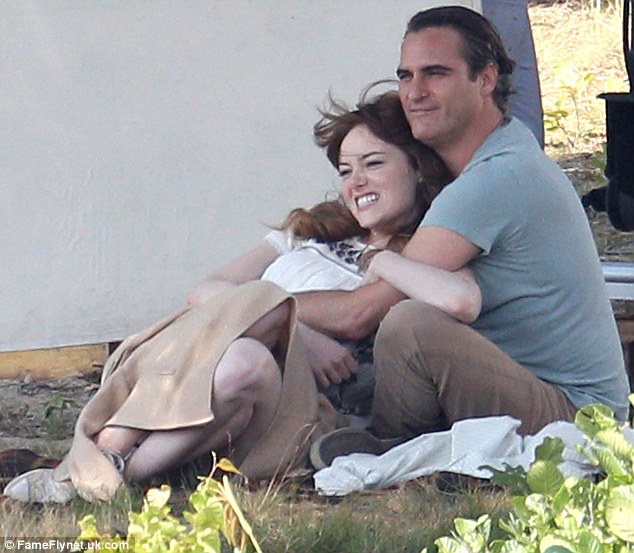


 There are three decisive weaknesses which, quite apart from Christian revelation, are immanent within this proposal. First, Huxley has committed the “naturalistic fallacy” as set out by G.E. Moore. Moore held that ethical concepts cannot be reduced to, or derived from, non-ethical concepts. It is not possible to derive an ought from an is. Although Huxley is anxious for us to believe that his ethics arise out of his science, they do not in fact do so. On the contrary, they were derived from elsewhere, and by a process of circular reasoning were read back into it. When we look at evolution, for example, we see the principle of the “survival of the fittest” which, if it were translated into ethical terms, could only justify an ethic of power and selfishness which Huxley could not endorse. Science by itself is incapable of generating values, and just because it is value-free stands in need of an axiology from the outside to direct its own work. Naturalistic ethics are parasitic. They are unconsciously imbibed out of the general heritage of Western civilization, and put forward as if they arose out of a description of the world. These prior commitments are what lead men like Huxley to accept certain aspects of evolution, and ignore others.
 Professor A.J. Ayer, a logical positivist, holds ethical statements to be emotive and non-cognitive. They represent a personal preference for a certain kind of behavior, rather than any objective ethical norms. We can no more criticize a person for liking to steal than we could condemn him for preferring coffee to tea. On the American scene, Miss Ayn Rand has attained some notoriety for espousing the virtue of selfishness. If the ego alone has value, as naturalism would seem to imply, self-interest is the final norm for human behavior. Man’s sole significant ethical obligation is to himself. Similarly Jean Paul Sartre, though he has given much thought to the subject, has been unable to develop reasons or norms for man’s moral responsibility towards his neighbor. We allude to Ayer, Rand, and Sartre, in order to show that there is a crisis of values in the naturalistic world view which deeply threatens the foundations of ethics. Though we are profoundly interested in attempts of humanists to develop an ethic of goodwill towards all men, we cannot see how this will be possible. Humanists can decide to recognize the worthwhileness of human life, but are unable to explain why we are obliged to.
 Finally, the Christian faith assures us that morality will attain its final end. Morality may be man’s finest endeavor, but it is not difficult to see that it can never be fulfilled in this life. In earthly life there are degrees of goodness that are never attained, and acts of wickedness that are never requited. If this life is the only sphere of moral experience we will know, then the world is a madhouse. The lower forms of life may attain their temporal ends, but man whose moral fulfillment requires divine justice and immortality is denied his nisus of fulfillment. The moral dimension is fated to be frustrated unless it can see fulfillment beyond the mundane realm. The Christian world view and eschatology supply precisely that understanding of reality in which morality will attain its proper ends.


 The Daily Hatch