“Sanctity of Life Saturday” Abortion debating with Ark Times Bloggers Part 3 “What size of crowd shows up at abortion marches in Arkansas?” (includes the film ABORTION OF THE HUMAN RACE and editorial cartoon)

I have debated with Ark Times Bloggers many times in the past on many different subjects. Abortion is probably the most often debated subject and I have noticed that many pro-life individuals are now surfacing on the Arkansas Times Blog.  Here are some examples. Arhogfan501 asserted: This is the beginning of the end for recreational abortion in Arkansas. Songbird777 noted: Babies have a right to live and not be chopped up for someone else’s convenience. The person using the username “baker” commented: Planned Parenthood (PPA) does not nor cannot provide mammograms, indeed no affiliate has the necessary license. PPA is an abortion provider and at some 900 plus killings a day rather prolific.

Here is another debate I got into recently on the Arkansas Times Blog and I go by the username “Saline Republican”:

On March 14, 2013 on the Ark Times Blog story “Stop the War on Women: March 23″   wrote:

Organizers of the “Protest at the State Capital” event are calling on women who are appalled at the treatment the Arkansas legislature has handed them this session to rally at the Capitol at 3 p.m. March 23, and so far more than 1,000 people (men and women) have indicated on the event”s Facebook page that they will attend.

Organizers Donna Shade and LeeWood Thomas issued a press release today about the event today and said a speaker line-up is being formed. (Press release on the jump.)

The rally will protest the newly-enacted laws unconstitutionally rescinding abortion rights and well as bills still under consideration to grant personhood to the embryo and defund Planned Parenthood.

I responded on 3-14-13 on the Ark Times Blog:

1000 PEOPLE ARE GOING TO SHOW UP FOR PRO-ABORTION EVENT IN ARKANSAS? I doubt that very much. (Actually 500 came out when the day came according to Ark Times Blog.) Of course there has been a lot of lies spread out there in the past about how many show up for pro-abortion events. Here is a post I did from 2011:
Go to Fox 16 website and you will read this story below and watch a video clip on both marches. What you will not read is the fact that only 150 people showed up for the pro-choice march on Jan 22, 2011 while over 5000 came out for the pro-life rally the following day. In fact, on the video the reporter notes, “A similar scene on Saturday..” The reporter summarizes, “Both pro-choice and pro-life rally organizers say they were pleased with the crowd their events drew.” In the article on the website are these words, “Both pro-life and pro-choice rally-goers came out strong, equally passionate about their beliefs.”

Read this info below from the Fox 16 website:

LITTLE ROCK, AR – Thousands of Arkansans marched near the Capitol this weekend to make their voices heard. Saturday it was those in favor of a woman’s right to choose. Sunday, pro-life supporters gathered for the 33rd Annual March for Life. Both pro-life and pro-choice rally-goers came out strong, equally passionate about their beliefs. Lauren Long is pro-life and says, “I’m 16 today because my mom chose life and I’m really proud of that.”Politicians, doctors, religious leaders and even the famous TV family from Arkansas, the Duggar’s, came out for the Right to Life March. Jill Duggar says her family is a prime example of what it means to be pro-life. “Life is precious and a lot of people don’t understand the significance of it. It’s not just a ball of tissue, it’s a baby from the very start.”

Dr. Matt Sellers is an OB/GYN with the Cornerstone Clinic for Woman. He says, “Every unborn life is a treasure that should be treated as such.”

Congressman Tim Griffin also attended Sunday’s pro-life rally. He says, “We need to respect life and all our policies in the way we treat other people, and the way we think about public policy, we need to think about life.”

Pro-choice rally-goers lined the steps of the Capitol on Saturday. Senator Joyce Elliott spoke to the crowd. “Trust women, show respect for women and the choices they make.” Senator Elliott also added, “It’s in our national and economic best interest to make sure women have the choice of good healthcare services.”

Stephanie Oshrin, with the National Organization for Women says, “We believe every person has a right to choose their family and plan their family. We advocate strong, healthy women, and happy children.” Oshrin also mentioned, “We’ve made monumental gains over the last decade, however we recognize with all the gains, we still have many struggles that we will continue to fight for.”

Both pro-life and pro-choice rally organizers say, they’re pleased with the crowd their events drew, and hope to continue to spread their messages long after these rallies are over. Both rallies were peaceful and respectful, and while police were present at both events, there have been no reports of any problems. Both crowds drew larger numbers than last year.

https://thedailyhatch.org/2011/01/24/fox-16…

_______________

The person using the username “DeathByInches” replied:

I’d like to see a picture of ole Saline. Judging from his views he must be in his late 110s…..

Jennifer Coates Johnson added:

Saline must also have lady parts — since he’s so interested in legislating them.

Ozarkrazo piled on with this:

Jennifer, saline has NO “parts”. He’s more of a platyhelminthes.

Plainjim came on and put in some great thoughts:

We should not denigrate salinerepublican personally here on the blog. We should simply denigrate his ideas. Unlike most trolls, he does not insult people or call them names; he simply provides opposing ideas. Unlike larock (a/k/a coolbeeze). Steven E., arhogfan, and the other obnoxious trollers on the blog, I would call him a positive troller, someone who throws out assertions that we can all disagree with. As far as I can tell from his posts, he has never gotten angry with people who disagree with him.

____________

I truly believe that many of the problems we have today in the USA are due to the advancement of humanism in the last few decades in our society. Ronald Reagan appointed the evangelical Dr. C. Everett Koop to the position of Surgeon General in his administration. He partnered with Dr. Francis Schaeffer in making the video below. It is very valuable information for Christians to have.  Actually I have included a video below that includes comments from him on this subject.

In the film series “WHATEVER HAPPENED TO THE HUMAN RACE?” the arguments are presented  against abortion (Episode 1),  infanticide (Episode 2),   euthenasia (Episode 3), and then there is a discussion of the Christian versus Humanist worldview concerning the issue of “the basis for human dignity” in Episode 4 and then in the last episode a close look at the truth claims of the Bible.

Many liberals actually truly do argue for abortion rights over human rights. Prochoice advocate Elizabeth Williams came out and said that on 1-23-13 in her article on Salon. We hear reasons for abortion such as poverty,and  child abuse,  but why not consider adoption? Instead, the political left will stop at nothing to push the pro-abortion agenda. Why not stop and take an honest look at when life begins for the unborn child and when she begins to feel pain?

Francis Schaeffer Whatever Happened to the Human Race (Episode 1) ABORTION

Francis Schaeffer: What Ever Happened to the Human Race? (Full-Length Documentary)


Part 1 on abortion runs from 00:00 to 39:50, Part 2 on Infanticide runs from 39:50 to 1:21:30, Part 3 on Youth Euthanasia runs from 1:21:30 to 1:45:40, Part 4 on the basis of human dignity runs from 1:45:40 to 2:24:45 and Part 5 on the basis of truth runs from 2:24:45 to 3:00:04


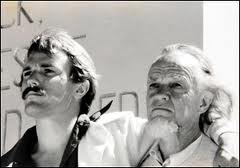
Dr. C. Everett Koop pictured above.

Great  quotes from “Whatever happened to the human race?”  by Francis Schaeffer and Dr. C. Everett Koop (from the shelter website):.

Summary


Francis Schaeffer and, former Surgeon General, C. Everette Koop deal directly with the devaluing of human life and its results in our society. It did not take place in a vacuum. It is a direct result of a worldview that has rejected the doctrine of man being created in the image of God. Man as a product of the impersonal, plus time and chance has no sufficient basis for worth.

For a while, Western culture — from sheer inertia — continued to live by the old Christian ethics while increasingly embracing the mechanistic, time-plus-chance view of people. People came more and more to hold that the universe is intrinsically and originally impersonal — as a stone is impersonal. Thus, by chance, life began on the earth and then, through long, long periods of time, by chance, life became more complex, until man with his special brain came into existence. By “chance” is meant that there was no reason for these things to occur; they just happened that way. No matter how loftily it is phrased, this view drastically reduces our view of self-worth as well as our estimation of the worth of others, for we are viewing ourselves as mere accidents of the universe.
(Francis A. Schaeffer and C. Everette Koop, Whatever Happened to the Human Race?, Ch. 1)

Ten Outstanding Pro-Life Articles

Posted by Matt on January 22, 2013

Today is the 40th anniversary of the tragic Roe v. Wade decision – as good a day as any to pass along some pro-life resources that I’ve found particularly insightful:

  1. Bad Pro-Choice Arguments (Neil Shenvi): Dr. Shenvi debunks a number of popular, yet seriously flawed, pro-choice arguments. Examples include “The unborn is not a human being, it is just a mass of cells” and “We should combat abortion by reducing poverty, not by making it illegal.”
  2. Questions for Pro-Choice People (Michael Pakaluk): Dr. Pakaluk poses some tough questions to those who support legalized abortion. This is a must-read for anyone who considers himself “pro-choice”, but nonetheless has a few inner qualms about the actual practice of abortion.
  3. A Future Like Ours (Clinton Wilcox): This summary of Don Marquis’s “Future Like Ours” argument appeared recently on the Secular Pro-Life Perspectives blog. The argument states that murder is wrong, in part, because it deprives the victim of future experiences. This “future value” of a living entity constitutes a sufficient reason to presume that killing is wrong. Abortion is thus tantamount to murder…even though the embryo or fetus is at an early developmental stage, and may lack some of the physical qualities that we otherwise associate with “humanness”.
  4. The Pro-Life Position and the Bible (J.W. Wartick): My friend J.W. demonstrates how Scripture compellingly supports a pro-life stance. He’s written extensively on the issue of abortion, and you can check out an index of his pro-life posts HERE.
  5. Why I Lost Faith in the Pro-Choice Movement (Jennifer Fulwiler): In this powerful narrative, Ms. Fulwiler explains how she came to abandon her support of “abortion rights”. In particular, she discusses the widespread fear of information within the pro-choice movement, as well as the startling lack of interest among many pro-choicers in defining when, exactly, we should start protecting life.
  6. Unstringing the Violinist (Gregory Koukl): The well-known “violinist argument” for abortion rights (sometimes formulated as the “parasite argument”) is widely regarded as one of the most persuasive pro-choice arguments. Mr. Koukl uncovers some serious flaws with this argument, however, and explains why its strength is only illusory. In addition to Mr. Koukl’s criticisms, I would also emphasize the issue of implicit consent to the possibility of pregnancy that comes with the act of sex – at least in the vast majority of abortion cases that don’t involve rape.
  7. Why Your Friends are ‘Pro-Choice’ (Scott Klusendorf): This article analyzes the common claim, “I don’t like abortion, but I don’t think the government should be involved in taking away a woman’s choice” (or, “Don’t like abortion? Don’t have one.”). Abortion is wrong not because pro-lifers find it distasteful, but because it violates rational moral principles.
  8. Responding to Pro-Choice Bumper Sticker Speak (Jennie Stone): This is a great response to some of the more common pro-choice ‘one-liners’. I also recommend checking out the articles she cites near the beginning (by Kristen Walker and Kristi Brown, respectively).
  9. Pro-Life or “Anti-Abortion”? Who Decides? (Richard Evans): Richard reflects on how terminology (“pro-life” vs. “anti-abortion”) is used to re-frame the debate. He also raises some important questions about what “choice” really means…and when it should take place.
  10. Guest Post on BadCatholic (Michael Frances): In the “pro-choice” vs. “pro-life” debate, which viewpoint is the scientific default, and which viewpoint must rely on philosophical or religious assumptions? The answer might surprise you.

As a bonus, I’ve listed below a few of my own previous articles on the issue of abortion:

  1. The Roots of the Abortion Debate: I explain why pro-life and pro-choice advocates both seem to genuinely believe they are acting ethically. The answer, I believe, often boils down to one’s philosophical views on the value of life.
  2. Abortion Methods: An Overview: I describe the various surgical and non-surgical methods used to terminate a pregnancy. I intentionally avoided using gory photographs, but the content is nonetheless quite disturbing. As it should be.
  3. Possibly the Worst New York Times Op-Ed in the History of New York Times Op-Eds: This was my response to a NY Times opinion piece by Thomas Friedman. I point out the hypocrisy of those who support a “woman’s right to choose” when it comes to killing her unborn child, but not when it comes to consuming “giant sugary drinks”.
  4. In Defense of the Pro-Life Movement: A Response to Greg Rubottom: In this post, I respond to attacks on the pro-life movement from a member of the “progressive Christian” community. In the comment section, you’ll see that this also involved some interaction with Frank Schaeffer (the son of Francis Schaeffer).
  5. This is a fine editorial cartoon on the issue of abortion.

    (This is a womb and not a tomb.)

  6. Related posts:

    Francis Schaeffer’s prayer for us in USA

     Francis Schaeffer: “Whatever Happened to the Human Race” (Episode 1) ABORTION OF THE HUMAN RACE Published on Oct 6, 2012 by AdamMetropolis The 45 minute video above is from the film series created from Francis Schaeffer’s book “Whatever Happened to the Human Race?” with Dr. C. Everett Koop. This book  really helped develop my political views […]

    Francis Schaeffer’s “How should we then live?” Video and outline of episode 10 “Final Choices” (Schaeffer Sundays)

    E P I S O D E 1 0   Dr. Francis Schaeffer – Episode X – Final Choices 27 min FINAL CHOICES I. Authoritarianism the Only Humanistic Social Option One man or an elite giving authoritative arbitrary absolutes. A. Society is sole absolute in absence of other absolutes. B. But society has to be […]

    Francis Schaeffer’s “How should we then live?” Video and outline of episode 9 “The Age of Personal Peace and Affluence” (Schaeffer Sundays)

    E P I S O D E 9 Dr. Francis Schaeffer – Episode IX – The Age of Personal Peace and Affluence 27 min T h e Age of Personal Peace and Afflunce I. By the Early 1960s People Were Bombarded From Every Side by Modern Man’s Humanistic Thought II. Modern Form of Humanistic Thought Leads […]

    Francis Schaeffer’s “How should we then live?” Video and outline of episode 8 “The Age of Fragmentation” (Schaeffer Sundays)

    E P I S O D E 8 Dr. Francis Schaeffer – Episode VIII – The Age of Fragmentation 27 min I saw this film series in 1979 and it had a major impact on me. T h e Age of FRAGMENTATION I. Art As a Vehicle Of Modern Thought A. Impressionism (Monet, Renoir, Pissarro, Sisley, […]

    Francis Schaeffer’s “How should we then live?” Video and outline of episode 7 “The Age of Non-Reason” (Schaeffer Sundays)

    E P I S O D E 7 Dr. Francis Schaeffer – Episode VII – The Age of Non Reason I am thrilled to get this film series with you. I saw it first in 1979 and it had such a big impact on me. Today’s episode is where we see modern humanist man act […]

    Francis Schaeffer’s “How should we then live?” Video and outline of episode 6 “The Scientific Age” (Schaeffer Sundays)

    E P I S O D E 6 How Should We Then Live 6#1 Uploaded by NoMirrorHDDHrorriMoN on Oct 3, 2011 How Should We Then Live? Episode 6 of 12 ________ I am sharing with you a film series that I saw in 1979. In this film Francis Schaeffer asserted that was a shift in […]

    Francis Schaeffer’s “How should we then live?” Video and outline of episode 5 “The Revolutionary Age” (Schaeffer Sundays)

    E P I S O D E 5 How Should We Then Live? Episode 5: The Revolutionary Age I was impacted by this film series by Francis Schaeffer back in the 1970′s and I wanted to share it with you. Francis Schaeffer noted, “Reformation Did Not Bring Perfection. But gradually on basis of biblical teaching there […]

    Francis Schaeffer’s “How should we then live?” Video and outline of episode 4 “The Reformation” (Schaeffer Sundays)

    Dr. Francis Schaeffer – Episode IV – The Reformation 27 min I was impacted by this film series by Francis Schaeffer back in the 1970′s and I wanted to share it with you. Schaeffer makes three key points concerning the Reformation: “1. Erasmian Christian humanism rejected by Farel. 2. Bible gives needed answers not only as to […]

    “Schaeffer Sundays” Francis Schaeffer’s “How should we then live?” Video and outline of episode 3 “The Renaissance”

    Francis Schaeffer’s “How should we then live?” Video and outline of episode 3 “The Renaissance” Francis Schaeffer: “How Should We Then Live?” (Episode 3) THE RENAISSANCE I was impacted by this film series by Francis Schaeffer back in the 1970′s and I wanted to share it with you. Schaeffer really shows why we have so […]

    Francis Schaeffer’s “How should we then live?” Video and outline of episode 2 “The Middle Ages” (Schaeffer Sundays)

      Francis Schaeffer: “How Should We Then Live?” (Episode 2) THE MIDDLE AGES I was impacted by this film series by Francis Schaeffer back in the 1970′s and I wanted to share it with you. Schaeffer points out that during this time period unfortunately we have the “Church’s deviation from early church’s teaching in regard […]

    Francis Schaeffer’s “How should we then live?” Video and outline of episode 1 “The Roman Age” (Schaeffer Sundays)

    Francis Schaeffer: “How Should We Then Live?” (Episode 1) THE ROMAN AGE   Today I am starting a series that really had a big impact on my life back in the 1970′s when I first saw it. There are ten parts and today is the first. Francis Schaeffer takes a look at Rome and why […]

    Francis Schaeffer: “Whatever Happened to the Human Race” (Episode 5) TRUTH AND HISTORY

    Francis Schaeffer: “Whatever Happened to the Human Race” (Episode 5) TRUTH AND HISTORY Published on Oct 7, 2012 by AdamMetropolis This crucial series is narrated by the late Dr. Francis Schaeffer and former Surgeon General Dr. C. Everett Koop. Today, choices are being made that undermine human rights at their most basic level. Practices once […]

    Francis Schaeffer: “Whatever Happened to the Human Race” (Episode 4) THE BASIS FOR HUMAN DIGNITY

    The opening song at the beginning of this episode is very insightful. Francis Schaeffer: “Whatever Happened to the Human Race” (Episode 4) THE BASIS FOR HUMAN DIGNITY Published on Oct 7, 2012 by AdamMetropolis This crucial series is narrated by the late Dr. Francis Schaeffer and former Surgeon General Dr. C. Everett Koop. Today, choices […]

    Francis Schaeffer: “Whatever Happened to the Human Race” (Episode 3) DEATH BY SOMEONE’S CHOICE

    Francis Schaeffer: “Whatever Happened to the Human Race” (Episode 3) DEATH BY SOMEONE’S CHOICE Published on Oct 6, 2012 by AdamMetropolis This crucial series is narrated by the late Dr. Francis Schaeffer and former Surgeon General Dr. C. Everett Koop. Today, choices are being made that undermine human rights at their most basic level. Practices […]

    Francis Schaeffer: “Whatever Happened to the Human Race?” (Episode 2) SLAUGHTER OF THE INNOCENTS

    Francis Schaeffer: “Whatever Happened to the Human Race?” (Episode 2) SLAUGHTER OF THE INNOCENTS Published on Oct 6, 2012 by AdamMetropolis This crucial series is narrated by the late Dr. Francis Schaeffer and former Surgeon General Dr. C. Everett Koop. Today, choices are being made that undermine human rights at their most basic level. Practices […]

    Francis Schaeffer: “Whatever Happened to the Human Race” (Episode 1) ABORTION OF THE HUMAN RACE

    It is not possible to know where the pro-life evangelicals are coming from unless you look at the work of the person who inspired them the most. That person was Francis Schaeffer.  I do care about economic issues but the pro-life issue is the most important to me. Several years ago Adrian Rogers (past president of […]

    The following essay explores the role that Francis Schaeffer played in the rise of the pro-life movement. It examines the place of How Should We Then Live?, Whatever Happened to the Human Race?, and A Christian Manifesto in that process.

    This essay below is worth the read. Schaeffer, Francis – “Francis Schaeffer and the Pro-Life Movement” [How Should We Then Live?, Whatever Happened to the Human Race?, A Christian Manifesto] Editor note: <p> </p> [The following essay explores the role that Francis Schaeffer played in the rise of the pro-life movement.  It examines the place of […]

    Who was Francis Schaeffer? by Udo Middelmann

    Great article on Schaeffer. Who was Dr. Francis A. Schaeffer? By Francis Schaeffer The unique contribution of Dr. Francis Schaeffer on a whole generation was the ability to communicate the truth of historic Biblical Christianity in a way that combined intellectual integrity with practical, loving care. This grew out of his extensive understanding of the Bible […]

FRANCIS SCHAEFFER ANALYZES ART AND CULTURE Part 13 Jacob Bronowski and Materialistic Humanism: The World-View of Our Era (Feature on artist Ellen Gallagher )

________

Today I am looking at Jacob Bronowski and his contribution to spreading the thought of Charles Darwin to a modern generation.  The artist Ellen Gallagher is one of those in today’s modern generation that talks about how evolution is pictured in her art works.

What are some of the observations that Francis Schaeffer makes concerning the evolution that both Bronowski and Gallagher hold so  dear? Here is a summary of some of the points Schaeffer makes in the paper below:

1. Materialists and humanists believe that men and women are not unique. 2. Humans do not have any final distinct value above that of an animal or of nonliving matter. 3. Schaeffer points out that this superior attitude towards Christianity–as if Christianity had all the problems and humanism had all the problems–is quite unjustified. 4. It is the humanist worldview that has brought us to the present devaluation of human life that we see today. 5. Therefore, we need a different worldview to drive out this inhumanity that the materialistic worldview brought down on us.

_______________

Francis Schaeffer “BASIS FOR HUMAN DIGNITY” Whatever…HTTHR

Materialistic Humanism: The World-View of Our Era
What has produced the inhumanity we have been considering in the previous chapters is that society in the West has adopted a world-view which says that all reality is made up only of matter…Those who hold such a view have argued that Christianity is unscientific, that it cannot be proved, that it belongs simply to the realm of “faith.” Christianity, they say, rests only on faith, while humanism rests on facts.
Professor Edmund R. Leach of Cambridge University expressed this view clearly, “Our idea of God is a product of history. What I now believe about the supernatural is derived from what I was taught by my parents, and what they taught me was derived from what they were taught, and so on…”
So some humanists act as if they have a great advantage over Christians. They act as if the advance of science and technology and a better understanding of history (through such concepts as the evolutionary theory) have all made the idea of God and Creation quite ridiculous.
This superior attitude, however, is strange because one of the most striking developments in the last half-century is the growth of a profound pessimism among both the well-educated and less-educated people. The thinkers in our society have been admitting for a long time that they have no final answers at all.
Take Woody Allen, for example. Most people know his as a comedian, but he has thought through where mankind stands after the “religious answers” have been abandoned. In an article in Esquire (May 1977), he says, “ It’s absolutely stupefying in its terror, and it renders anyone’s accomplishments meaningless.”
Allen sums up his view in his film Annie Hall with these words: “Life is divided into the horrible and the miserable.”
If there is no personal God, nothing beyond what our eyes can see and our hands can touch, then Woody Allen is right: life is both meaningless and terrifying.  The humanist H. J. Blackham has expressed this when he said, “On humanist assumptions, life leads to nothing, and every pretense that it does not is a deceit.”
One does not have to be highly educated to understand this. It follows directly from the starting point of the humanists’ position, namely, that everything is just matter. That is, that which has existed forever and ever is only some form of matter or energy, and everything in our world now is this and only this in a more or less complex form. Thus, Jacob Bronowski says in The Identity of Man (1965): “Man is a part of nature, in the same sense that a stone is, or a cactus, or a camel.” In this view, men and women are by chance more complex, but not unique.
Within this world-view there is no room for believing that a human being has any final distinct value above that of an animal or of nonliving matter. People are merely a different arrangement of molecules. There are two points, therefore, that need to be made about the humanist world-view. First, the superior attitude toward Christianity – as if Christianity had all the problems and humanism had all the answers – is quite unjustified. The humanists of the Enlightenment two centuries ago thought they were going to find all the answers, but as time has passed, this optimistic hope has been proved wrong. It is their own descendants, those who share their materialistic world-view, who have been saying louder and louder as the years have passed, “There are no final answers.”
Second, this humanist world-view has also brought us to the present devaluation of human life – not technology and not overcrowding, although these have played a part. And this same world-view has given us no limits to prevent us from sliding into an even worse devaluation of human life in the future.
So it is naive and irresponsible to imagine that this world-view will reverse the direction in the future. A well-meaning commitment to “do what is right” will not be sufficient. Without a firm set of principles that flows out of a world-view that gives adequate reason for a unique value to all human life, there cannot be and will not be any substantial resistance to the present evil brought on by the low view of human life we have been considering in previous chapters. It was the materialistic world-view that brought in the inhumanity; it must be a different world-view that drives it out.
An emotional uneasiness about abortion, infanticide, euthanasia, and the abuse of genetic knowledge is not enough. To stand against the present devaluation of human life, a significant percentage of people within our society must adopt and live by a world-view which not only hopes or intends to give a basis for human dignity but which really does. The radical movements of the sixties were right to hope for a better world; they were right to protest against the shallowness and falseness of our plastic society. But their radicalness lasted only during the life span of the adolescence of their members. Although these movements claimed to be radical, they lacked a sufficient root. Their world-view was incapable of giving life to the aspirations of its adherents. Why? Because it, too – like the society they were condemning – had no sufficient base. So protests are not enough. Having the right ideals is not enough. Even those with a very short memory, those who can look back only to the sixties, can see that there must be more than that. A truly radical alternative has to be found.
But where? And how?

_____

Jacob Bronowski

Article Free Pass

Jacob Bronowski,  (born January 18, 1908, Poland—died August 22, 1974, East Hampton, New York, U.S.), Polish-born British mathematician and man of letters who eloquently presented the case for the humanistic aspects of science.While Bronowski was still a child, his family immigrated to Germany and then to England, where he became a naturalized British subject. He won a scholarship to the University of Cambridge, where he studied mathematics. He not only achieved high honours in mathematics but also received critical acclaim for his poetry and prose. After receiving his Ph.D. (1933) from Cambridge, he taught mathematics (1934–42) at the University College of Hull. During World War II Bronowski pioneered in a field now known as operational research and worked to increase the effectiveness of Allied bombing. After the war he headed the projects division of UNESCO (1948) and then worked for Britain’s National Coal Board (1950–63).When Bronowski, on a scientific mission to Japan to study the effects of the atomic bombings (1945), saw firsthand the ruins of Nagasaki, he gave up military research. From that time on, he concentrated on the ethical as well as the technological aspects of science, and he shifted his attention from mathematics to the life sciences, the study of human nature, and the evolution of culture.Among his books are The Common Sense of Science (1951) and the highly praised Science and Human Values (1956; rev. ed. 1965). In these books Bronowski examined aspects of science in nontechnical language and made a case for his view that science needs an ethos in order to function. In The Identity of Man (1965) he sought to present a unifying philosophy of human nature. He also wrote William Blake, 1757–1827: A Man Without a Mask (1943), revised as William Blake and the Age of Revolution (1965), and four radio plays.From 1964 until his death Bronowski was a resident fellow of the Salk Institute of Biological Sciences (San Diego). His last major project was the authorship and narration of the BBC television series The Ascent of Man (1973), a luminous account of science, art, and philosophy in human history. The book was reissued in 2011, with a foreword by British biologist and writer Richard Dawkins.

_________

BBC. The Ascent of Man. Extra Interview with Sir David Attenborough.

Published on Jun 10, 2012

15 minute interview of Sir David Attenborough discussing his role in the ground-breaking documentary “The Ascent of Man” { Written and Presented by Dr Jacob Bronowski. }
This interview was filmed by the BBC. I also recommend Attenborough’s book ‘Life on Air’. It is brilliant.

________________

The Ascent of Man

From Wikipedia, the free encyclopedia
This article is about the documentary series. For the book “The Ascent of Man by Means of Natural Selection”, see Alfred Machin (writer).

The Ascent of Man is a thirteen-part documentary television series produced by the BBC and Time-Life Films first transmitted in 1973, written and presented by Jacob Bronowski. Intended as a series of “personal view” documentaries in the manner of Kenneth Clark‘s 1969 series Civilisation, the series received acclaim for Bronowski’s highly informed but eloquently simple analysis, his long unscripted monologues and its extensive location shoots.

Overview

The title alludes to The Descent of Man, the second book on evolution by Charles Darwin. Over the series’ thirteen episodes, Bronowski travelled around the world in order to trace the development of human society through its understanding of science. It was commissioned specifically to complement Kenneth Clark‘s Civilisation (1969), in which Clark argued that art reflected and was informed by the major driving forces in cultural evolution. Bronowski wrote in his 1951 book The Commonsense of Science: “It has been one of the most destructive modern prejudices that art and science are different and somehow incompatible interests”. Both series were commissioned by David Attenborough, then controller of BBC Two, whose colleague Aubrey Singer had been astonished by Attenborough prioritising an arts series given his science background.[1]

The 13-part series was shot on 16mm film. Executive Producer was Adrian Malone, film directors were Dick Gilling, Mick Jackson, David Kennard and David Paterson. Quotations were read by actors Roy Dotrice and Joss Ackland. Series music was by Dudley Simpson with Brian Hodgson and the BBC Radiophonic Workshop. Additional music includes, amongst others, music by Pink Floyd. Apart from Bronowski, the only other named person appearing is the sculptor Henry Moore.

Malone and Kennard later emigrated to Hollywood, where they produced Carl Sagan‘s Cosmos. Jackson followed them, and now directs feature films.

The book of the series, The Ascent of Man: A Personal View, is an almost word-for-word transcript from the television episodes, diverging from Bronowski’s original narration only where the lack of images might make its meaning unclear. A few details of the film version were omitted from the book, notably Episode 11, “Knowledge or Certainty.”

Series outline

  1. Lower than the Angels — Evolution of man from proto-ape to the modern form 400,000 years ago.
  2. The Harvest of the Seasons — Early human migration, agriculture and the first settlements, and war.
  3. The Grain in the Stone — Tools, and the development of architecture and sculpture.
  4. The Hidden Structure — Fire, metals and alchemy.
  5. Music of the Spheres — The language of numbers and mathematics.
  6. The Starry Messenger — Galileo’s universe—and the implications of his trial on the shift to “northern” science.
  7. The Majestic Clockwork — Explores Newton and Einstein’s laws.
  8. The Drive for Power — The Industrial Revolution and the effect on everyday life.
  9. The Ladder of Creation — Darwin and Wallace’s ideas on the origin of species.
  10. World within World — The story of the periodic table—and of the atom.
  11. Knowledge or Certainty — Physics and the clash of the pursuit of absolute vs. imperfect knowledge, and the misgivings of the scientists realizing the terrible outcome of the conflict. Auschwitz. Hiroshima and Nagasaki.
  12. Generation upon Generation — The joys of life, sex, and genetics—and the dark side of cloning.
  13. The Long Childhood — Bronowski’s treatise on the commitment of man.

Legacy

The Ascent of Man was placed 65th on a list of the 100 Greatest World Television Programmes voted for by industry professionals and drawn up by the British Film Institute in 2000.[2] Charlie Brooker praises Bronowski and The Ascent of Man on his BBC Four programme, Charlie Brooker’s Screenwipe.[3]

The complete series was released on DVD in 2007.

References

  1. Attenborough interview in The Ascent of Man DVD set
  2. “The BFI TV 100”. Retrieved 3 August 2009.
  3. “Charlie Brookers Screenwipe S1E1P1”. Retrieved 4 February 2010.

External links

___________
Page 12

Page 13

These are ones that everyone agrees are not pre-human intermediates between apes and humans.

  • Homo sapiens neanderthalensis (Neandertal man)-150 years ago Neandertal reconstructions were stooped and very much like an “ape-man’. It is now admitted that the supposedly stooped posture was due to disease and that Neandertal is just a variation of the human kind.
  • Ramapithecus-once widely regarded as the ancestor of humans, it has now been realised that it is merely an extinct type of orangutan (an ape).
  • Eoanthropus (Piltdown man)-a hoax based on a human skull cap and an orangutan’s jaw. It was widely publicized as the missing link for 40 years.
  • Hesperopithecus (Nebraska man)-based on a single tooth of a type of pig now only living in Paraguay.
  • Pithecanthropus (Java man)-now renamed to Homo erectus. See below.
  • Australopithecus africanus-this was at one time promoted as the missing link. It is no longer considered to be on the line from apes to humans. It is very ape-like.
  • Sinanthropus (Peking man) was once presented as an ape-man but has now been reclassified as Homo erectus (see below).

Currently fashionable ape-men

These are the ones that adorn the evolutionary trees of today that supposedly led to Homo sapiens from a chimpanzee-like creature.

  • Australopithecus-there are various species of these that have been at times proclaimed as human ancestors. One remains: Australopithecus afarensis, popularly known as the fossil “Lucy”. However, detailed studies of the inner ear, skulls and bones have suggested that “Lucy” and her like are not on the way to becoming human. For example, they may have walked more upright than most apes, but not in the human manner. Australopithecus afarensis is very similar to the pygmy chimpanzee.
  • Homo habilis-there is a growing consensus amongst most paleoanthropologists that this category actually includes bits and pieces of various other types-such as Australopithecus and Homo erectus. It is therefore an “invalid taxon”. That is, it never existed as such.
  • Homo erectus-many remains of this type have been found around the world. They are smaller than the average human today, with an appropriately smaller head (and brain size). However, the brain size is within the range of people today and studies of the middle ear have shown that Homo erectus was just like us. Remains have been found in the same strata and in close proximity to ordinary Homo sapiens, suggesting that they lived together.

Conclusion: There is no fossil evidence that man is the product of evolution. The missing links are still missing because they simply do not exist. The Bible clearly states, “then the Lord God formed man of the dust of the ground, and breathed into his nostrils the breath of life; and man became a living being.” (Genesis 2:7).

______

         What’s a Missing Link?

by John D. Morris, Ph.D.

Evolutionists often speak of missing links. They say that the bridge between man and the apes is the “missing link,” the hypothetical ape-like ancestor of both. But there are supposed missing links all over the evolutionary tree. For instance, dogs and bears are thought to be evolutionary cousins, related to each other through a missing link. The same could be said for every other stop on the tree. All of the animal types are thought to have arisen by the transformation of some other animal type, and at each branching node is a missing link, and between the node and the modern form are many more.

If you still don’t know what a missing link is, don’t worry. No one knows what a missing link is, because they are missing! We’ve never seen one. They’re still missing. Evolution depends on innumerable missing links, each of which lived in the unobserved past and have gone extinct, replaced by their evermore evolved descendants.

While we don’t really know what a missing link is (or was), we can know what they should be. As each type evolves into something else, there should be numerous in-between types, each stage gaining more and more traits of the descendant while losing traits of the ancestor.

If some type of fish evolved into some type of amphibian, there should have been distinct steps along the way of 90% fish/10% amphibian; then 80% fish/20% amphibian; etc., leading to the 100% amphibians we have today. You would suspect that unless evolution has completely stopped, there might even be some transitional links alive today, but certainly they lived and thrived for a while in the past before they were replaced.

Actually, evolutionists don’t mention missing links much anymore. With the introduction of “punctuated equilibrium” in the early 70s, they seem to have made their peace with the lack of transitional forms in the fossil record. Their claim is that basic animal types exhibited “stasis” (or equilibrium) for a long period, but they changed rapidly (punctuation) as the environment underwent rapid change, so rapidly they had little opportunity to leave fossils. Thus we wouldn’t expect to find transitional forms or missing links. Fair enough, but the fact is we don’t find them. Evolution says they did exist, but we have no record of them. Creation says they never existed, and agree that we have no record of them.

Some of these gaps which should be filled in by missing links are huge. Consider the gap between invertebrates and vertebrate fish. Which marine sea creature evolved into a fish with a backbone and internal skeleton? Fish fossils are even found in the lower Cambrian, and dated very early in the evolution scenario. But there are no missing links, no hint of ancestors. The missing links, which should be present in abundance, are still missing!

Both creation and evolution are views of history, ideas about the unobserved past, and both sides try to marshal evidence in their support. Creation says each basic category of life was created separately, thus there never were any “missing links.” Evolution says links existed whether or not we find them. The fact is we don’t find them. The question is: which historical idea is more scientific, and which is more likely correct?

* Dr. Morris is President of the Institute for Creation Research.

Cite this article: Morris, J. 2006. What’s a Missing Link? Acts & Facts. 35 (4).

_____________

Bill Nye Debates Ken Ham – HD

    Streamed live on Feb 4, 2014

Is creation a viable model of origins in today’s modern, scientific era? Leading creation apologist and bestselling Christian author Ken Ham is joined at the Creation Museum by Emmy Award-winning science educator and CEO of the Planetary Society Bill Nye. To see Bill Nye’s arguments debunked visit http://debatelive.org .

_

Dr. Francis schaeffer – The flow of Materialism(from Part 4 of Whatever happened to human race?)

 The Story of Francis and Edith Schaeffer

________


_______________________

Francis Schaeffer pictured below with some of his grand kids:

_________

Francis Schaeffer with his son Franky pictured below. Francis and Edith (who passed away in 2013) opened L’ Abri in 1955 in Switzerland.

Francis Schaeffer has written extensively on art and culture spanning the last 2000 years and here are some posts I have done on this subject before : Francis Schaeffer’s “How should we then live?” Video and outline of episode 10 “Final Choices” , episode 9 “The Age of Personal Peace and Affluence”, episode 8 “The Age of Fragmentation”, episode 7 “The Age of Non-Reason” , episode 6 “The Scientific Age” , episode 5 “The Revolutionary Age” ,  episode 4 “The Reformation”,  episode 3 “The Renaissance”, episode 2 “The Middle Ages,”, and  episode 1 “The Roman Age,” . My favorite episodes are number 7 and 8 since they deal with modern art and culture primarily.(Joe Carter rightly noted, “Schaeffer—who always claimed to be an evangelist and not a philosopher—was often criticized for the way his work oversimplified intellectual history and philosophy.” To those critics I say take a chill pill because Schaeffer was introducing millions into the fields of art and culture!!!! !!! More people need to read his works and blog about them because they show how people’s worldviews affect their lives!

J.I.PACKER WROTE OF SCHAEFFER, “His communicative style was not that of a cautious academic who labors for exhaustive coverage and dispassionate objectivity. It was rather that of an impassioned thinker who paints his vision of eternal truth in bold strokes and stark contrasts.Yet it is a fact that MANY YOUNG THINKERS AND ARTISTS…HAVE FOUND SCHAEFFER’S ANALYSES A LIFELINE TO SANITY WITHOUT WHICH THEY COULD NOT HAVE GONE ON LIVING.”

Francis Schaeffer’s works  are the basis for a large portion of my blog posts and they have stood the test of time. In fact, many people would say that many of the things he wrote in the 1960’s  were right on  in the sense he saw where our western society was heading and he knew that abortion, infanticide and youth enthansia were  moral boundaries we would be crossing  in the coming decades because of humanism and these are the discussions we are having now!)

There is evidence that points to the fact that the Bible is historically true as Schaeffer pointed out in episode 5 of WHATEVER HAPPENED TO THE HUMAN RACE? There is a basis then for faith in Christ alone for our eternal hope. This link shows how to do that.

Francis Schaeffer in Art and the Bible noted, “Many modern artists, it seems to me, have forgotten the value that art has in itself. Much modern art is far too intellectual to be great art. Many modern artists seem not to see the distinction between man and non-man, and it is a part of the lostness of modern man that they no longer see value in the work of art as a work of art.” 

Many modern artists are left in this point of desperation that Schaeffer points out and it reminds me of the despair that Solomon speaks of in Ecclesiastes.  Christian scholar Ravi Zacharias has noted, “The key to understanding the Book of Ecclesiastes is the term ‘under the sun.’ What that literally means is you lock God out of a closed system, and you are left with only this world of time plus chance plus matter.” THIS IS EXACT POINT SCHAEFFER SAYS SECULAR ARTISTS ARE PAINTING FROM TODAY BECAUSE THEY BELIEVED ARE A RESULT OF MINDLESS CHANCE.

___________

_____________

Today I featuring the artist Ellen Gallagher and she talks about Evolution in this video below. She asserts, “Matter is not fixed. It is always in motion. You are dealing with this idea of ecology, transformation and evolution into something different.”

Ellen Gallagher, Untitled, 2012.(Below)

Ellen Gallagher: “Osedax” | “Exclusive” | Art21

Published on Sep 6, 2013

Episode #188: Filmed in 2013, artist Ellen Gallagher discusses her large-scale installation “Osedax” (2010) at the New Museum in New York City. Made in collaboration with Dutch artist Edgar Cleijne, Osedax was inspired by and named after the bone-devouring worms recently discovered in an ocean canyon near Monterey, California. Drawn to scientists’ description of this discovery, Gallagher sees similarity between their account and how science fiction narratives unfold through the transformation and evolution of characters and physical matter.

Repetition and revision are central to Ellen Gallagher’s paintings, collages, and films. From afar, Gallagher’s work often appears abstract and minimal but, upon closer inspection, details reveal complex narratives that borrow from maritime history, science fiction, popular culture, and the experiences of African Americans. Although the work has often been interpreted as an examination of race, Gallagher also suggests a formal reading with respect to materials, processes, and formal structures.

Learn more about the artist at:
http://www.art21.org/artists/ellen-ga…

CREDITS: Producer: Ian Forster. Consulting Producer: Wesley Miller & Nick Ravich. Interview: Ian Forster. Camera: Rafael Salazar & Ava Wiland. Sound: Ava Wiland. Editor: Brad Kimbrough. Artwork Courtesy: Edgar Cleijne & Ellen Gallagher. Special Thanks: New Museum. Theme Music: Peter Foley.

“Ellen Gallagher: Don’t Axe Me” at the New Museum, New York
June 19–September 15, 2013
http://www.newmuseum.org/exhibitions/…

________________________
Watery abstraction: “Osedax,” a 2010 film installation by Ellen Gallagher and Edgar Cleijne, in a Gallagher retrospective at the New Museum.  (below)

Ellen Gallagher | Art21 | Preview from Season 3 of “Art in the Twenty-First Century” (2005)

Uploaded on May 28, 2008

Repetition and revision are central to Ellen Gallagher’s treatment of advertisements appropriated from popular magazines. Although her work has often been interpreted as an examination of race, Gallagher also suggests a more formal reading—from afar the work appears abstract and minimal, and employs grids as both structure and metaphors for experience.

Ellen Gallagher is featured in the Season 3 episode “Play” of the Art21 series “Art in the Twenty-First Century”.

Learn more about Ellen Gallagher: http://www.art21.org/artists/ellen-ga…

© 2005-2007 Art21, Inc. All Rights Reserved.

_______________________

Ellen Gallagher: Projections | Art21 “Exclusive”

Uploaded on Apr 30, 2009

Episode #054: Artist Ellen Gallagher recounts her childhood obsession with projecting films, paired with documentation of her work “Murmur” (2003-04) installed at Gagosian Gallery in New York.

Repetition and revision are central to Ellen Gallaghers treatment of advertisements appropriated from popular magazines. Initially, Gallagher was drawn to the wig advertisements because of their grid-like structure. Later she realized that it was the accompanying language that attracted her, and she began to bring these narratives into her paintings—making them function through the characters of the advertisements as a kind of chart of lost worlds. Upon closer inspection, googly eyes, reconfigured wigs, tongues, and lips of minstrel caricatures multiply in detail. Although her work has often been interpreted as an examination of race, Gallagher also suggests a more formal reading- from afar the work appears abstract and minimal, and employs grids as both structure and metaphors for experience.

Learn more about Ellen Gallagher: http://www.art21.org/artists/ellen-ga…

VIDEO | Producer: Wesley Miller & Nick Ravich. Interview: Susan Sollins. Camera & Sound: Tom Hurwitz, Eddie Marritz, Mark Mandler, and Roger Phenix. Editor: Jenny Chiurco and Mary Ann Toman. Artwork Courtesy: Ellen Gallagher & Edgar Cleijne. Special Thanks: Gagosian Gallery, New York and Two Palms Press, New York.

_________________

Ellen Gallagher: Master Printer Craig Zammiello | Art21 “Exclusive”

Uploaded on Jun 4, 2009

Episode #059: Master Printer Craig Zammiello and artist Ellen Gallagher discuss their working relationship during the process of creating “DeLuxe” (2004-05), a suite of 60 individual works employing both traditional and non-traditional printmaking techniques.

Repetition and revision are central to Ellen Gallaghers treatment of advertisements appropriated from popular magazines. Initially, Gallagher was drawn to the wig advertisements because of their grid-like structure. Later she realized that it was the accompanying language that attracted her, and she began to bring these narratives into her paintings—making them function through the characters of the advertisements as a kind of chart of lost worlds. Upon closer inspection, googly eyes, reconfigured wigs, tongues, and lips of minstrel caricatures multiply in detail. Although her work has often been interpreted as an examination of race, Gallagher also suggests a more formal reading- from afar the work appears abstract and minimal, and employs grids as both structure and metaphors for experience.

Learn more about Ellen Gallagher: http://www.art21.org/artists/ellen-ga…

VIDEO | Producer: Wesley Miller & Nick Ravich. Interview: Catherine Tatge. Camera & Sound: Mead Hunt and Mark Mandler. Editor: Mary Ann Toman. Artwork Courtesy: Ellen Gallagher. Special Thanks: Craig Zammiello of Two Palms Press, New York.

___________________________________

Travelling Lines Conference 2011: Ellen Gallagher in Conversation with Tanya Barson

Published on Mar 25, 2013

Travelling Lines brings together scholars, artists, curators and collectors to create an international forum to consider three key themes: itinerant modes of drawing by Latin America based artists that prioritise investigation and exploration; how the nomadic practices of artists necessitate conceptual and low-key strategies associated with drawing, an especially portable medium; and how itinerant and other modes of drawing circulate within the transnational circuits of the globalised art world. Focusing on one medium, speakers address how visual languages participate in, depend on, and travel across local as well as global territories.

The conference is organised by TrAIN in collaboration with the Drawing Room. It coincides with the exhibition at the Drawing Room entitled The Peripatetic School: Itinerant drawing from Latin America, curated by Tanya Barson, international curator, Tate Modern. Artists whose work is in the exhibition are among the speakers. The exhibition includes art by Brigida Baltar, Jose Tony Cruz, Andre Komatsu, Mateo López, Jorge Macchi, Gilda Mantilla and Raimond Chaves, Nicolas Paris, and Ishmael Randall Weeks.

_____________________________________

About Ellen Gallagher

Ellen Gallagher was born in Providence, Rhode Island, in 1965, and lives and works in New York and Rotterdam, Holland. She attended Oberlin College and the School of the Museum of Fine Arts, Boston. Repetition and revision are central to Gallagher’s treatment of advertisements that she appropriates from popular magazines like “Ebony,” “Our World,” and “Sepia” and uses in works like “eXelento” (2004) and “DeLuxe” (2004–05). Initially, Gallagher was drawn to the wig advertisements because of their grid-like structure. Later, she realized that it was the accompanying language that attracted her, and she began to bring these “narratives” into her paintings—making them function through the characters of the advertisements, as a kind of chart of lost worlds. Although the work has often been interpreted strictly as an examination of race, Gallagher also suggests a more formal reading with respect to materials, processes, and insistences. From afar, the work appears abstract and minimal; upon closer inspection, googly eyes, reconfigured wigs, tongues, and lips of minstrel caricatures multiply in detail. Gallagher has been influenced by the sublime aesthetics of Agnes Martin’s paintings, as well the subtle shifts and repetitions of Gertrude Stein’s writing. In her earlier works, Gallagher glued pages of penmanship paper onto stretched canvas and then drew and painted on it. In “Watery Ecstatic” (2002–04), she literally carved images into thick watercolor paper, in her own version of scrimshaw, from which emerge images of the sea creatures from Drexciya, a mythical underwater Black Atlantis. Gallagher received the American Academy Award in Art and a Joan Mitchell Foundation Fellowship. Solo exhibitions include Whitney Museum of American Art; Museum of Contemporary Art, North Miami; St. Louis Art Museum; Des Moines Art Center; Yerba Buena Center for the Arts, San Francisco; and the Institute of Contemporary Art, Boston.

___________

Charles Darwent on Ellen Gallagher: AxME – The dog ate my homework, Miss Gallagher

Why does this highly-rated American artist ask so much of us before we even look at her work?

Saturday 04 May 2013

JF (alarmed): “Uh, I’m not sure ‘like’ is a word that can be used in critical discourse these days.”

So it goes. Once upon a time, long, long ago, there was nothing wrong with work that pleased, in whatever way it contrived to. Then someone invented critical theory, art schools became university departments, and pleasure went out of the window. Good painting might do a whole  thesaurus of things — ironise, deconstruct, conceptualise, “reference its own process”, etcetera – but it must on no account be likeable.

I have no doubt, by these lights, that Ellen Gallagher is a very good painter. The 47-year-old American is best known for her canvases, although, this being 2013, she also makes films and sculptures: one, Jungle Gym/Preserve, is in the new show of her work, AxME, at Tate Modern. There is nothing wrong with making art in different mediums – see Michelangelo. But it is the idea of Gallagher as a painter, of the kind of painting she does, that bothers me.

Let’s start with Double Natural (2002). This vast, yellow canvas, perhaps 7ft high and 10ft wide, is Gallagher’s best known. On it are pasted, in a grid 33 squares wide and 12 high, advertisements and cuttings from American black lifestyle magazines. (Gallagher’s father’s family came from Cape Verde.) All of these offer perfectability of a kind, or at least an idea of self-improvement. One woman beams at us from under a headline that says, unconvincingly, “I Am Happy”. Another asks, “Do you want men to OBEY YOU?”, while a third advertises an Amazing Liquid That Removes Corns.

It is hair that is Gallagher’s particular focus, though, as it is of the small ads she uses. The majority of these are for hairstyles or hair products. To these the artist has added plasticine hairdos – straightened bangs, cornrows, dreadlocks, flicks – moulded by hand and painted yellow. Gallagher has also blanked out her subjects’ eyes, turning them into zombies. Her point seems clear. Black women are sold a dream of white womanly perfection. She has taken that process to its deadening extreme by turning her women blonde.

To say that Double Natural is dislikeable is to state the obvious.  Its subject – the exploitation of racial insecurity for commercial gain – is not a pretty one, and Gallagher’s image would have no business being pretty. But the problem is that it isn’t anything else, either. Other than an immediate hit of macabre glibness, Double Natural just doesn’t deliver. The longer you look at it, the less you get back. Vacuousness in art can be extraordinarily powerful: Andy Warhol made an entire career out of it. But Gallagher’s painting isn’t empty in a good way. It is just empty.

Let me see if I can be clearer. Another work in this vast, 11-room show is called Bird in Hand. It, too, is vast. Like many contemporary artists, Gallagher has created her own myth-world, one figure of which is a one-legged tap-dancer called Pegleg. (Pegleg actually existed — one of the ads in Double Natural is for his show.) In Bird in Hand, he mutates into a pirate, his hair and half-leg doodling out to fill the canvas in tendrils that might be seaweed.

Gallagher is part of her own mythology. Prior to being an artist she studied marine biology, and did research into pteropods. The many works in her Watery Ecstatic series, given a whole room in this exhibition, start from an interest in sea-life – eels, urchins, octopi. The pictures are largely in watercolour and cut paper, and, as compositions, appear less to evolve than to mutate. You can see the reasoning. Life starts at Point A and wanders off where Darwin takes it: so why not art? Bird in Hand grows, pictorially, out of Gallagher’s own history and interests.

But does that make it a good painting? The abstract works of the Jerwood painter I spoke to stood on their own as images: you didn’t need to know his life story or theories on art to respond to them. To get Gallagher, you have to have done your homework. Her art is about understanding, not seeing; when she paints, she paints incidentally. Any other medium might have done – actually, her films seem to me far better than her canvases (Murmur: Super Boo is annoyingly unforgettable). But then many people disagree with me, and you may well be one of them.


________

Related posts:

FRANCIS SCHAEFFER ANALYZES ART AND CULTURE Part 12 H.J.Blackham and Materialistic Humanism: The World-View of Our Era (Feature on artist Arturo Herrera)

  Today I am going to look at H.J. Blackham and the artist featured today is  Arturo Herrera. Herrera’s art interests me because it is based on the idea that accidental chance can bring about something beautiful and that is the same place that materialistic modern men like Blackham have turned to when they have concluded […]

FRANCIS SCHAEFFER ANALYZES ART AND CULTURE Part 11 Thomas Aquinas and his Effect on Art and HOW SHOULD WE THEN LIVE? Episode 2: THE MIDDLES AGES (Feature on artist Tony Oursler )

___________________________________ Francis Schaeffer pictured below: _______________- _________ _______________________ Size of this preview: 560 × 599 pixels. Other resolutions: 224 × 240 pixels | 449 × 480 pixels | 561 × 600 pixels | 718 × 768 pixels | 957 × 1,024 pixels | 2,024 × 2,165 pixels. Original file ‎(2,024 × 2,165 pixels, file size: 392 KB, MIME type: image/jpeg) This is a file from the Wikimedia Commons. Information from its description page […]

By Everette Hatcher III | Posted in Francis Schaeffer | Tagged , , , , , , , , ,, , , , , , ,  | Edit | Comments (0)

FRANCIS SCHAEFFER ANALYZES ART AND CULTURE Part 10 David Douglas Duncan (Feature on artist Georges Rouault )

___________________________________________________________________________________________________________________________ Francis Schaeffer: How Should We Then Live? (Full-Length Documentary) Francis Schaeffer has written extensively on art and culture spanning the last 2000 years and here are some posts I have done on this subject before : Francis Schaeffer’s “How should we then live?” Video and outline of episode 10 “Final Choices” , episode 9 “The Age of Personal Peace and Affluence”, episode 8 “The Age of Fragmentation”, episode 7 “The Age of Non-Reason” , episode 6 “The Scientific […]

By Everette Hatcher III | Posted in Francis Schaeffer | Tagged , , , , ,, , , , , , , , , , , , , , , , , , , ,, , , , , ,  | Edit | Comments (0)

FRANCIS SCHAEFFER ANALYZES ART AND CULTURE Part 9 Jasper Johns (Feature on artist Cai Guo-Qiang )

____________________________________ Episode 8: The Age Of Fragmentation Published on Jul 24, 2012 Dr. Schaeffer’s sweeping epic on the rise and decline of Western thought and Culture ___________________ In ART AND THE BIBLE  Francis Schaeffer observed, “Modern art often flattens man out and speaks in great abstractions; But as Christians, we see things otherwise. Because God […]

FRANCIS SCHAEFFER ANALYZES ART AND CULTURE Part 8 “The Last Year at Marienbad” by Alain Resnais (Feature on artist Richard Tuttle and his return to the faith of his youth)

__________________ Alain Resnais Interview 1 ______________ Last Year in Marienbad (1961) Trailer   ________________________ My Favorite Films: Last Year at Marienbad Movie Review – WillMLFilm Review ________________________ INTERVIEW: Lambert Wilson on working with Alain Resnais a… Published on Jan 5, 2014 INTERVIEW: Lambert Wilson on working with Alain Resnais at You Aint Seen Nothing Yet Interviews: […]

FRANCIS SCHAEFFER ANALYZES ART AND CULTURE Part 7 Jean Paul Sartre (Feature on artist David Hooker )

__________________ Today we are going to look at the philosopher Jean Paul Sartre and will feature the work of the artist David Hooker. Francis Schaeffer pictured below: _________________________________ Sunday, November 24, 2013 A Star to Steer By – Revised! The beautiful Portland Head Lighthouse on the Maine coast. It was the flash from this lighthouse I […]

FRANCIS SCHAEFFER ANALYZES ART AND CULTURE Part 6 The Adoration of the Lamb by Jan Van Eyck which was saved by MONUMENT MEN IN WW2 (Feature on artist Makoto Fujimura)

________________ How Should We Then Live? Episode 3: The Renaissance Published on Jul 24, 2012 Dr. Schaeffer’s sweeping epic on the rise and decline of Western thought and Culture _________________________ Christians used to be the ones who were responsible for the best art in the culture. Will there ever be a day that happens again? […]

FRANCIS SCHAEFFER ANALYZES ART AND CULTURE Part 5 John Cage (Feature on artist Gerhard Richter)

_________________ Francis Schaeffer has written extensively on art and culture spanning the last 2000 years and here are some posts I have done on this subject before : Francis Schaeffer’s “How should we then live?” Video and outline of episode 10 “Final Choices” , episode 9 “The Age of Personal Peace and Affluence”, episode 8 “The Age of Fragmentation”, episode 7 “The Age of Non-Reason” , episode 6 “The Scientific Age” , episode 5 “The Revolutionary Age” ,  episode 4 “The Reformation”,  episode 3 […]

FRANCIS SCHAEFFER ANALYZES ART AND CULTURE Part 4 ( Schaeffer and H.R. Rookmaaker worked together well!!! (Feature on artist Mike Kelley Part B )

FRANCIS SCHAEFFER ANALYZES ART AND CULTURE Part 4 ( Schaeffer and H.R. Rookmaaker worked together well!!! (Feature on artist Mike Kelley Part B ) [ARTS 410] William Dyrness: The Relationship of Art and Theology Published on Sep 14, 2013 Guest lecture in ARTS 410: Arts and the Bible. At the 30:00 mark William Dyrness talks […]

FRANCIS SCHAEFFER ANALYZES ART AND CULTURE Part 3 PAUL GAUGUIN’S 3 QUESTIONS: “Where do we come from? What art we? Where are we going? and his conclusion was a suicide attempt” (Feature on artist Mike Kelley Part A)

___________________ How Should we then live Part 7 Dr. Francis Schaeffer examines the Age of Non-Reason and he mentions the work of Paul Gauguin. Paul Gauguin October 12, 2012 by theempireoffilms Paul Gauguin was born in Paris, France, on June 7, 1848, to a French father, a journalist from Orléans, and a mother of Spanish Peruvian descent. When […]

FRANCIS SCHAEFFER ANALYZES ART AND CULTURE Part 2 “A look at how modern art was born by discussing Monet, Renoir, Pissaro, Sisley, Degas,Cezanne, Van Gogh, Gauguin, Seurat, and Picasso” (Feature on artist Peter Howson)

__________________________ Today I am posting my second post in this series that includes over 50 modern artists that have made a splash. Last time it was Tracey Emin of England and today it is Peter Howson of Scotland. Howson has overcome alcoholism in order to continue his painting. Many times in the past great painters […]

FRANCIS SCHAEFFER ANALYZES ART AND CULTURE Part 1 HOW SHOULD WE THEN LIVE? “The Roman Age” (Feature on artist Tracey Emin)

__________________ Francis Schaeffer pictured below: _______________- I want to make two points today. First, Greg Koukl has rightly noted that the nudity of a ten year old girl in the art of Robert Mapplethorpe is not defensible, and it demonstrates where our culture is  morally. It the same place morally where  Rome was 2000 years […]


Francis Schaeffer’s “How should we then live?” Video and outline of episode 10 “Final Choices” (Schaeffer Sundays)

E P I S O D E 1 0   Dr. Francis Schaeffer – Episode X – Final Choices 27 min FINAL CHOICES I. Authoritarianism the Only Humanistic Social Option One man or an elite giving authoritative arbitrary absolutes. A. Society is sole absolute in absence of other absolutes. B. But society has to be […]

Francis Schaeffer’s “How should we then live?” Video and outline of episode 9 “The Age of Personal Peace and Affluence” (Schaeffer Sundays)

E P I S O D E 9 Dr. Francis Schaeffer – Episode IX – The Age of Personal Peace and Affluence 27 min T h e Age of Personal Peace and Afflunce I. By the Early 1960s People Were Bombarded From Every Side by Modern Man’s Humanistic Thought II. Modern Form of Humanistic Thought Leads […]

Francis Schaeffer’s “How should we then live?” Video and outline of episode 8 “The Age of Fragmentation” (Schaeffer Sundays)

E P I S O D E 8 Dr. Francis Schaeffer – Episode VIII – The Age of Fragmentation 27 min I saw this film series in 1979 and it had a major impact on me. T h e Age of FRAGMENTATION I. Art As a Vehicle Of Modern Thought A. Impressionism (Monet, Renoir, Pissarro, Sisley, […]

Francis Schaeffer’s “How should we then live?” Video and outline of episode 7 “The Age of Non-Reason” (Schaeffer Sundays)

E P I S O D E 7 Dr. Francis Schaeffer – Episode VII – The Age of Non Reason I am thrilled to get this film series with you. I saw it first in 1979 and it had such a big impact on me. Today’s episode is where we see modern humanist man act […]

Francis Schaeffer’s “How should we then live?” Video and outline of episode 6 “The Scientific Age” (Schaeffer Sundays)

E P I S O D E 6 How Should We Then Live 6#1 Uploaded by NoMirrorHDDHrorriMoN on Oct 3, 2011 How Should We Then Live? Episode 6 of 12 ________ I am sharing with you a film series that I saw in 1979. In this film Francis Schaeffer asserted that was a shift in […]

Francis Schaeffer’s “How should we then live?” Video and outline of episode 5 “The Revolutionary Age” (Schaeffer Sundays)

E P I S O D E 5 How Should We Then Live? Episode 5: The Revolutionary Age I was impacted by this film series by Francis Schaeffer back in the 1970′s and I wanted to share it with you. Francis Schaeffer noted, “Reformation Did Not Bring Perfection. But gradually on basis of biblical teaching there […]

Francis Schaeffer’s “How should we then live?” Video and outline of episode 4 “The Reformation” (Schaeffer Sundays)

Dr. Francis Schaeffer – Episode IV – The Reformation 27 min I was impacted by this film series by Francis Schaeffer back in the 1970′s and I wanted to share it with you. Schaeffer makes three key points concerning the Reformation: “1. Erasmian Christian humanism rejected by Farel. 2. Bible gives needed answers not only as to […]

“Schaeffer Sundays” Francis Schaeffer’s “How should we then live?” Video and outline of episode 3 “The Renaissance”

Francis Schaeffer’s “How should we then live?” Video and outline of episode 3 “The Renaissance” Francis Schaeffer: “How Should We Then Live?” (Episode 3) THE RENAISSANCE I was impacted by this film series by Francis Schaeffer back in the 1970′s and I wanted to share it with you. Schaeffer really shows why we have so […]

Francis Schaeffer’s “How should we then live?” Video and outline of episode 2 “The Middle Ages” (Schaeffer Sundays)

  Francis Schaeffer: “How Should We Then Live?” (Episode 2) THE MIDDLE AGES I was impacted by this film series by Francis Schaeffer back in the 1970′s and I wanted to share it with you. Schaeffer points out that during this time period unfortunately we have the “Church’s deviation from early church’s teaching in regard […]

Francis Schaeffer’s “How should we then live?” Video and outline of episode 1 “The Roman Age” (Schaeffer Sundays)

Francis Schaeffer: “How Should We Then Live?” (Episode 1) THE ROMAN AGE   Today I am starting a series that really had a big impact on my life back in the 1970′s when I first saw it. There are ten parts and today is the first. Francis Schaeffer takes a look at Rome and why […]

By Everette Hatcher III | Posted in Francis Schaeffer | Edit | Comments (0)

____________

______

Former Atheist Antony Flew noted that Evolutionists failed to show “Where did a living, self-reproducing organism come from in the first place?”

____


Does God Exist? Thomas Warren vs. Antony Flew

Published on Jan 2, 2014

Date: September 20-23, 1976
Location: North Texas State University

Christian debater: Thomas B. Warren
Atheist debater: Antony G.N. Flew

For Thomas Warren: http://www.warrenapologeticscenter.org/

______________________

Antony Flew and his conversion to theism

Uploaded on Aug 12, 2011

Antony Flew, a well known spokesperson for atheism for several decades, changed his mind and turned from atheism to Deism. Professor Flew, who was Professor of Philosophy at the University of Reading, has given clear reasons why he made that transition. These reasons have been presented briefly in this compilation.

_________________________________

The Bible and Science (Part 01)

Discussion (1 of 3): Antony Flew, N.T. Wright, and Gary Habermas

Uploaded on Sep 22, 2010

A discussion with Antony Flew, N.T. Wright, and Gary Habermas. This was held at Westminster Chapel March, 2008

______________________

Moral Implications of Atheism – Kyle Butt

Quotes William Provine, Dan Barker, Charles Darwin,Peter Singer, James Rachels, Eric R. Pianka,  Richard Dawkins, and Sam Harris

______________

Ricky Gervais act outs atheist bewilderment and frustration in the face of nice Christian nonsense

Uploaded on Jan 20, 2010

Scene from Extras series one, “Kate Winslet”, in a conversation all atheists will recognise only too well.

____________________

Is There a God? William Lane Craig vs Victor J. Stenger (University of Hawaii, 2003)

Uploaded on Jul 31, 2011

http://reasonablefaith.org – University of Hawaii, 2003 – Is There a God? William Lane Craig vs Victor J. Stenger. A debate before a packed house at the University of Hawaii with Professor of Physics Victor Stenger in which Craig and Stenger square off on such issues as the Big Bang and the beginning of time, the odds of the fine-tuning of the constants and quantities requisite for life, evil and moral values, religious experience, and many more. This is William Lane Craig’s first debate with atheist Victor Stenger.

Craig’s second debate with Stenger: http://youtu.be/EjOs62PJciI

William Lane Craig and his arguments and evidence for God:

Contingency Argument for God (the Leibnizian Argument):

http://www.youtube.com/view_play_list…

Kalam Cosmological Argument for God:

http://www.youtube.com/view_play_list…

Teleological Argument for God:

http://www.youtube.com/view_play_list…

Ontological Argument for God:

http://www.youtube.com/view_play_list…

Moral Argument for God:

http://www.youtube.com/view_play_list…

Belief in God as Properly Basic:

http://www.youtube.com/playlist?p=PLE…

Links to videos of William Lane Craig:

http://drcraigvideos.blogspot.com

We welcome your comments in the Reasonable Faith forums:
http://www.reasonablefaith.org/forums/

Follow Reasonable Faith On Twitter: http://twitter.com/rfupdates

Add Reasonable Faith On Facebook:http://www.facebook.com/reasonablefai…

_______________

_________


___________

Why did the famous atheist Antony Flew leave atheism behind in 2004? Maybe one of the reasons was because he saw that evolutionists were not giving good answers to the most basic questions. For instance, Flew said they failed to adequately answer the question: “Where did a living, self-reproducing organism come from in the first place?”

Entertaining the notion of a place of wonder

British philosopher Antony Flew has been called the world’s most influential philosophical atheist. As far back as his debates with Christian apologist C. S. Lewis in 1950, he…

By Jonathan Witt

Special to The Times

British philosopher Antony Flew has been called the world’s most influential philosophical atheist. As far back as his debates with Christian apologist C.S. Lewis in 1950, he argued that there simply wasn’t enough evidence for a creator.

Now Flew has changed his mind.

Those who admired his intellect when he was an atheist should listen carefully to his reasoning now — for if a man suddenly becomes persona non grata for changing his mind, then the possibility of reasoned civil discourse withers.

That’s a tough warning to heed, however, because Flew takes issue with the bedrock of modern materialism: pre-biotic evolution.

In a recent interview (www.biola.edu/antonyflew), Flew points out that even if Charles Darwin’s theory of random variation and natural selection can explain how organisms evolved, the theory does not explain one crucial question: Where did a living, self-reproducing organism come from in the first place?

Flew insists that the scientific establishment has simply failed to answer this question persuasively, and he singles out Richard Dawkins, another influential British atheist and leading proponent of Darwinism:

“Richard Dawkins constantly overlooks the fact that Darwin himself, in the 14th chapter of ‘The Origin of Species,’ pointed out that his whole argument began with a being which already possessed reproductive powers.”

If we trace evolution backwards, we reach a primitive single cell from which nothing simpler could survive and reproduce. How did it come to be? This first cell must be produced by something other than natural selection — a point Darwin readily conceded.

Those eager to expunge God’s fingerprints from nature weren’t concerned by this shortcoming in Darwin’s material explanation for life, because Darwin and his contemporaries thought a single cell was a simple blob of protoplasm. How hard could it be for nature to randomly produce something so simple?

In those days the cell was a black box, a mystery. But in the 20th century, scientists were able to open that black box and peek inside. There they found not a simple blob, but a world of complex circuits, miniaturized motors and digital code.

We now know that even the simplest functional cell is almost unfathomably complex, containing at least 250 genes and their corresponding proteins.

Explains New Zealand geneticist Michael Denton, each cell “is in effect a veritable micro-miniaturized factory containing thousands of exquisitely designed pieces of intricate molecular machinery, made up altogether of one hundred thousand million atoms.”

The odds of a primordial soup randomly burping up even one protein strand of moderate length are dramatically less than one chance in 10 to the 150th power.

It’s hard to grasp how long these odds are — one followed by 150 zeros. We know that a lot of strange things can happen in a place as big and old as our universe, but as mathematician and philosopher William Dembski explains in the Cambridge University Press book “The Design Inference,” the universe isn’t remotely big enough, old enough, or fast enough to generate that much complexity.

Nor have attempts to explain this complexity as the natural outworking of the laws of nature proven successful. The best explanation? Intelligent design.

Most contemporary biologists will have none of this. Harvard geneticist Richard Lewontin is refreshingly open about their reason. He admits their prior commitment to see only material causes forces them to “produce material explanations, no matter how counterintuitive, no matter how mystifying to the uninitiated. Moreover, that Materialism is absolute, for we cannot allow a Divine Foot in the door.”

Lewontin’s approach isn’t science. It’s dogma. Flew’s method is more objective. He has decided to follow the evidence wherever it leads. “It now seems to me,” he says, “that the findings of more than 50 years of DNA research have provided materials for a new and enormously powerful argument to design.”

Such evidence has drawn Flew from atheism to a non-specific theism. He isn’t ready to accept the God of a particular religion, nor does he believe in an afterlife. The change is, nevertheless, significant. He no longer inhabits a worldview where the miraculous and the irrational are synonymous.

The amazing complexity of even the simplest cell; the information-bearing properties of DNA; the exquisite fine-tuning of the laws and constants of physics that make organic life possible; the Big Bang of the cosmos out of nothing — these signs of intelligence do not compel our belief in a God who thundered from Mount Sinai, lay in a manger or hung from a cross. But the evidence does have metaphysical implications, drawing us to a still place of wonder where such notions can be reasonably entertained.

Jonathan Witt is senior fellow and writer in residence at Discovery Institute’s Center for Science & Culture in Seattle.

Related posts:

Article from 2005 indicated Antony Flew abandoned atheism because of Law of Biogenesis!!!!

___________ Article from 2005 indicated Antony Flew abandoned atheism because of Law of Biogenesis!!!! Weighing the Evidence An Atheist Abandons Atheism By Chuck Colson|Published Date: January 10, 2005 Antony Flew, the 81-year-old British philosophy professor who taught at Oxford and other leading universities, became an atheist at age 15. Throughout his long career he argued […]

The Christian influence on society is real and that is one of the reasons Antony Flew left Atheism!!!

The Christian influence on society is real and that is one of the reasons Antony Flew left Atheism!!! Beggar to Beggar Saved by Increments By Chuck Colson|Published Date: January 11, 2005 A leading intellectual elaborates on why he abandoned atheism. But, surprisingly, he says his reasons were not entirely intellectual. British philosophy professor Dr. Antony […]

Antony Flew, George Wald and David Noebel on the Origin of Life

In the below comment section David Noebel stated the following: Since writing my article on the origin of life I have read two books that basically make the same point and I will quote briefly from them, but encourage anyone interested in the subject to read both books from cover to cover: (1) John C. […]

The Fine Tuning Argument for the Existence of God from Antony Flew!

___________ The Fine Tuning Argument for the Existence of God from Antony Flew! Imagine entering a hotel room on your next vacation. The CD player on the bedside table is softly playing a track from your favorite recording. The framed print over the bed is identical to the image that hangs over the fireplace at […]

By Everette Hatcher III | Posted in Current Events | Tagged  | Edit | Comments (0)

Mark Oppenheimer of Time Magazine claims Antony Flew was convinced by PSEUDOSCIENCE that God exists!!!

_____________ Mark Oppenheimer of Time Magazine claims Antony Flew was convinced by PSEUDOSCIENCE that God exists!!! Below you will read:  ”There Is a God” is perhaps the handiest primer ever written on the science (many would say pseudoscience) of religious belief. Regis Nicoll does a good job of refuting the claim that Flew was manipulated by […]

A review of “There is a God” by Antony Flew March 31, 2012

________ During the 1990′s I actually made it a practice to write famous atheists and scientists that were mentioned by Adrian Rogers and Francis Schaeffer and challenge them with the evidence for the Bible’s historicity and the claims of the gospel. Usually I would send them a cassette tape of Adrian Rogers’ messages “6 reasons I […]

Review of Antony Flew Book: THERE IS A GOD Article by R.C. Sproul May 2008

During the 1990′s I actually made it a practice to write famous atheists and scientists that were mentioned by Adrian Rogers and Francis Schaeffer and challenge them with the evidence for the Bible’s historicity and the claims of the gospel. Usually I would send them a cassette tape of Adrian Rogers’ messages “6 reasons I know […]

The Death of a (Former) Atheist — Antony Flew, 1923-2010 Antony Flew’s rejection of atheism is an encouragement, but his rejection of Christianity is a warning. Rejecting atheism is simply not enough, by Al Mohler

________________________________ Discussion (1 of 3): Antony Flew, N.T. Wright, and Gary Habermas Uploaded on Sep 22, 2010 A discussion with Antony Flew, N.T. Wright, and Gary Habermas. This was held at Westminster Chapel March, 2008 ______________________ During the 1990′s I actually made it a practice to write famous atheists and scientists that were mentioned by Adrian […]

By Everette Hatcher III | Posted in Francis Schaeffer | Tagged  | Edit | Comments (0)

Antony Flew’s journey from Atheism to Theism

During the 1990′s I actually made it a practice to write famous atheists and scientists that were mentioned by Adrian Rogers and Francis Schaeffer and challenge them with the evidence for the Bible’s historicity and the claims of the gospel. Usually I would send them a cassette tape of Adrian Rogers’ messages “6 reasons I […]

Will Science render supernatural answers unnecessary?

  Will Science render supernatural answers unnecessary?   ARGUMENT #2: The “gaps” in scientific knowledge have been closing due to scientific discovery. Eventually, supernatural explanations will be rendered unnecessary.       RESPONSE: In one sense, this statement is true. Modern science has been learning more and more about our world over the last several hundred years. […]

Open letter to President Obama (Part 544) The IRS has thuggish employees

Open letter to President Obama (Part 544)

(Emailed to White House on 6-10-13.)

President Obama c/o The White House 1600 Pennsylvania Avenue NW Washington, DC 20500

Dear Mr. President,

I know that you receive 20,000 letters a day and that you actually read 10 of them every day. I really do respect you for trying to get a pulse on what is going on out here.

The federal government debt is growing so much that it is endangering us because if things keep going like they are now we will not have any money left for the national defense because we are so far in debt as a nation. We have been spending so much on our welfare state through food stamps and other programs that I am worrying that many of our citizens are becoming more dependent on government and in many cases they are losing their incentive to work hard because of the welfare trap the government has put in place. Other nations in Europe have gone down this road and we see what mess this has gotten them in. People really are losing their faith in big government and they want more liberty back. It seems to me we have to get back to the founding  principles that made our country great.  We also need to realize that a big government will encourage waste and corruption. The recent scandals in our government have proved my point. In fact, the jokes you made at Ohio State about possibly auditing them are not so funny now that reality shows how the IRS was acting more like a monster out of control. Also raising taxes on the job creators is a very bad idea too. The Laffer Curve clearly demonstrates that when the tax rates are raised many individuals will move their investments to places where they will not get taxed as much.

______________________

The IRS has thuggish employees and you were right to condemn their latest actions.

Last week, while writing about the latest IRS scandal, I noted that the IRS has a long record of abusive actions.

So I wasn’t surprised to learn that it also has politically biased employees.

But some Americans probably are shocked. So I want to be the first to publicly thank President Obama for – at the very least – presiding over a culture that gave IRS bureaucrats the green light to engage in this kind of misbehavior.

Why am I thanking Obama? For the simple reason that this scandal means that more Americans now understand that the IRS is a venal agency. And that presumably means that more Americans now realize we should junk the internal revenue code and implement a simple and fair flat tax.

Since I’m in an expansive and sharing mood, I think we also owe some appreciation to some of the good people who are helping to publicize the IRS’s despicable behavior.

Let’s start with George Will, who is predictably – and bitingly – critical.

…the nature of Barack Obama’s administration is being clarified as revelations about IRS targeting of conservative groups merge with myriad Benghazi mendacities. …we are told that a few wayward souls in Cincinnati, with nary a trace of political purpose, targeted for harassment political groups with “tea party” and “patriot” in their titles.  …Jay Carney, whose unenviable job is not to explain but to explain away what his employers say, calls the IRS’s behavior “inappropriate.” No, using the salad fork for the entree is inappropriate. Using the Internal Revenue Service for political purposes is a criminal offense.

I also like that Will took the opportunity to criticize the worst (or at least close-to-worst) President in American history.

Time was, progressives like the president 100 years ago, Woodrow Wilson, had the virtue of candor: He explicitly rejected the Founders’ fears of government. Modern enlightenment, he said, made it safe to concentrate power in Washington, and especially in disinterested executive-branch agencies run by autonomous, high-minded experts. Today, however, progressivism’s insinuation is that Americans must be minutely regulated because they are so dimwitted they will swallow nonsense. Such as: There was no political motive in the IRS targeting political conservatives.

How painfully true. Sheep are not famous for their intelligence. And as the American people learn to be passively dependent on government, presumably we will acquire more sheep-like characteristics.

But the firestorm of protest leads me to think we’re not at that stage. At least not yet.

The lawless and abusive IRS even got Michael Gerson agitated.

…most Americans, myself included, become libertarians when a policeman is rude and swaggering during a traffic stop. Give me that badge number. It is precisely because police powers are essential to the public good that abusing them is so offensive. The same holds for overzealous or corrupt airport-security agents. And it is doubly true with IRS personnel who misuse their broad and intimidating powers. It is enough to bring out the Samuel Adams in anyone.

And here’s what my colleague Gene Healy wrote about the IRS’s history of political shenanigans.

Past presidents have found the IRS an extremely useful piece of federal machinery for that purpose. A lot of what we know about that sordid history comes from the Senate Select Committee on intelligence abuses, chaired by Sen. Frank Church, D-Idaho, in the mid-’70s. As Chris Hayes wrote in the Nation in 2006, “Church and many Democrats…soon found that presidents of both parties were culpable: “Secret documents obtained by the committee even revealed that the sainted FDR had ordered IRS audits of his political enemies.” In “The Lawless State,” his account of the Church Committee revelations, Morton Halperin noted that “the first organized political ‘strike force’ was formed within the IRS in 1961, and was directed against right-wing political groups.” In this case, I doubt there was ever a JFK or Nixon-style direct command from on high to harass the Tea Party. It’s more likely to be a case of “proactive” bureaucrats inspired by presidential railing against the Tea Party and Citizens United: “Will no one rid me of these meddlesome right-wing freaks?”

Let’s close with a couple of good cartoons.

The first one reminds me of the joke that “Service” is part of the IRS’s name, but only in the way that a bull services a cow.

IRS Tea Party Cartoon 1

The humor is a bit darker in this cartoon, but the message is the same.

IRS Tea Party Cartoon 2

P.S. Since I’m in such a good mood,  I’ll share some of my other IRS humor, including a new Obama 1040 form, a death tax cartoon, a list of tax day tips from David Letterman, a cartoon of how GPS would work if operated by the IRS, an IRS-designed pencil sharpener, two Obamacare/IRS cartoons (here and here), a sale on 1040-form toilet paper (a real product), a song about the tax agency, the IRS’s version of the quadratic formula, and (my favorite) a joke about a Rabbi and an IRS agent.

_____________

Thank you so much for your time. I know how valuable it is. I also appreciate the fine family that you have and your commitment as a father and a husband.

Sincerely,

Everette Hatcher III, 13900 Cottontail Lane, Alexander, AR 72002, ph 501-920-5733, lowcostsqueegees@yahoo.comRelated posts:

Dear Senator Pryor, why not pass the Balanced Budget Amendment? (“Thirsty Thursday”, Open letter to Senator Pryor)

Dear Senator Pryor, Why not pass the Balanced  Budget Amendment? As you know that federal deficit is at all time high (1.6 trillion deficit with revenues of 2.2 trillion and spending at 3.8 trillion). On my bloghttp://www.HaltingArkansasLiberalswithTruth.com I took you at your word and sent you over 100 emails with specific spending cut ideas. However, […]

“Woody Wednesday” First Look Image: Louis C.K. in Woody Allen’s Blue Jasmine

I have spent alot of time talking about Woody Allen films on this blog and looking at his worldview. He has a hopeless, meaningless, nihilistic worldview that believes we are going to turn to dust and there is no afterlife. Even though he has this view he has taken the opportunity to look at the weaknesses of his own secular view. I […]

First chapter of the book “Francis Schaeffer” by Colin Duriez

First chapter of the book “Francis Schaeffer” by Colin Duriez Episode VII – The Age of Non Reason ____________________ Episode 8: The Age Of Fragmentation Published on Jul 24, 2012 Dr. Schaeffer’s sweeping epic on the rise and decline of Western thought and Culture _______________________ I love the works of Francis Schaeffer and I have […]

Dear Senator Pryor, why not pass the Balanced Budget Amendment? (“Thirsty Thursday”, Open letter to Senator Pryor)

Dear Senator Pryor, Why not pass the Balanced  Budget amendment? As you know that federal deficit is at all time high (1.6 trillion deficit with revenues of 2.2 trillion and spending at 3.8 trillion). On my bloghttp://www.HaltingArkansasLiberalswithTruth.com I took you at your word and sent you over 100 emails with specific spending cut ideas. However, […]

Dear Senator Pryor, why not pass the Balanced Budget Amendment? (“Thirsty Thursday”, Open letter to Senator Pryor)

Dear Senator Pryor, Why not pass the Balanced  Budget amendment? As you know that federal deficit is at all time high (1.6 trillion deficit with revenues of 2.2 trillion and spending at 3.8 trillion). On my bloghttp://www.HaltingArkansasLiberalswithTruth.com I took you at your word and sent you over 100 emails with specific spending cut ideas. However, […]

Dear Senator Pryor, here are some spending cut suggestions (“Thirsty Thursday”, Open letter to Senator Pryor, cartoon included)

Senator Pryor pictured below: Why do I keep writing and email Senator Pryor suggestions on how to cut our budget? I gave him hundreds of ideas about how to cut spending and as far as I can tell he has taken none of my suggestions. You can find some of my suggestions here, here, here, […]

Conservatives win the first round in the medicaid expansion debate

  I was glad to see that the true Tea Party Conservatives won the first round in the medicaid expansion debate. According to AFP in the last 5 years Arkansas’ current Medicaid program has run a deficit of a billion dollars. Why expand it willingly with Obama? The “Do Nothing” expansion plan increases spending by […]

Dear Senator Pryor, here are some spending cut suggestions (“Thirsty Thursday”, Open letter to Senator Pryor, cartoons included)

Senator Pryor pictured below: Why do I keep writing and email Senator Pryor suggestions on how to cut our budget? I gave him hundreds of ideas about how to cut spending and as far as I can tell he has taken none of my suggestions. You can find some of my suggestions here, here, here, […]

Dear Senator Pryor, here are some spending cut suggestions (“Thirsty Thursday”, Open letter to Senator Pryor, cartoon included)

Senator Pryor pictured below:  Why do I keep writing and email Senator Pryor suggestions on how to cut our budget? I gave him hundreds of ideas about how to cut spending and as far as I can tell he has taken none of my suggestions. You can find some of my suggestions here, here, here, […]

Dear Senator Pryor, here are some spending cut suggestions (“Thirsty Thursday”, Open letter to Senator Pryor, cartoon included)

Senator Pryor pictured below:  Why do I keep writing and email Senator Pryor suggestions on how to cut our budget? I gave him hundreds of ideas about how to cut spending and as far as I can tell he has taken none of my suggestions. You can find some of my suggestions here, here, here, […]

FRIEDMAN FRIDAY “The Failure of Socialism” episode of Free to Choose in 1990 by Milton Friedman (Part 3)

Milton Friedman: Free To Choose – The Failure Of Socialism With Ronald Reagan (Full)

Published on Mar 19, 2012 by

Milton Friedman’s writings affected me greatly when I first discovered them and I wanted to share with you.

Ronald Reagan introduces this program, and traces a line from Adam Smith’s “The Wealth of Nations” to Milton Friedman’s work, describing Free to Choose as “a survival kit for you, for our nation and for freedom.” Dr. Friedman travels to Hungary and Czechoslovakia to learn how Eastern Europeans are rebuilding their collapsed economies. His conclusion: they must accept the verdict of history that governments create no wealth. Economic freedom is the only source of prosperity. That means free, private markets. Attempts to find a “third way” between socialism and free markets are doomed from the start. If the people of Eastern Europe are given the chance to make their own choices they will achieve a high level of prosperity. Friedman tells us individual stories about how small businesses struggle to survive against the remains of extensive government control. Friedman says, “Everybody knows what needs to be done. The property that is now in the hands of the state, needs to be gotten into the hands of private people who can use it in accordance with their own interests and values.” Eastern Europe has observed the history of free markets in the United States and wants to copy our success. After the documentary, Dr. Friedman talks further about government and the economy with Gary Becker of the University of Chicago and Samuel Bowles of the University of Massachusetts. In a wide-ranging discussion, they disagree about the results of economic controls in countries around the world, with Friedman defending his thesis that the best government role is the smallest one.
___________
Below is a portion of the transcript of the program and above you will find the complete video of the program:
 
 
 DISCUSSIONHello, I am Linda Chavez and welcome to Free to Choose. Joining Dr. Friedman for a discussion of the failure of socialism are Gary Becker from the University of Chicago and Samuel Bowles of the University of Massachusetts. Dr. Bowles, I think we can all agree that socialism has failed Eastern Europe. Dr. Friedman believes that the path out of that is the free market and I think he thinks there are lessons for the United States. What do you think?Chavez: I would like to bring this discussion back to the United States for a moment. What about socialism in the United States. There has been one area where we have tried to redistribute wealth. We have done that through our welfare policies and social security. Has that worked?

Bowles: Well, there is much to celebrate in Eastern Europe __ not only the elimination of dictatorial rule. I go back on that a long time. I was in the Soviet Union in the late 50’s (1958 and 1959) as a musician and I met many Russian musicians and made friends with a lot of Russian people who found themselves harassed and victimized by the police. In fact, my own musical group was prevented from singing a couple of times by the police. That is all on the way out and I hope it is gone for good. Equally welcome is the end of this myth of a centrally planned society. That is gone too and I hope that basically the lesson is learned. But Milton seems to think that we have to choose between either a centrally planned society or a society in which we have markets which are basically unregulated. So the choice is really between all or nothing.

I don’t think that is the choice. I think what Milton is posing for us is a model which is as unrealistic as a centrally planned model. It is outdated, it won’t work, it is extreme, and I think it is undemocratic. I think that we have choices in between, what Milton called the third way, a way that he said wouldn’t work, has been shown to work around the world. I think that Eastern Europe would be very ill-advised to take Milton’s advise on this. Yet, the last time anybody took Milton’s advise on economic policy was Ronald Reagan and Ronald Reagan has put the U.S. economy into a situation where it can’t pay its bills and is facing mounting economic instability and difficulties.

Chavez: Dr. Friedman, what about this midway path?

Friedman: First of all, I utterly reject what Sam says about the results of Ronald Reagan’s changes. We had a decade of extraordinary growth, increased employment in which inflation was brought down sharply. Ronald Reagan came into office at a period of very high inflation, and so on. But this program is not about the Reagan administration. This program is about Eastern Europe and I want to go to Eastern Europe.

I believe Sam is completely wrong in saying that the model I propose is outdated. I believe that what he calls obsolete is something very different. You have had the third way __ you have had it in the United States; you have had it in Sweden; you have had it in Britain; you’ve had it elsewhere. In every case it has been built on the foundation of a long period of what I call the first way. The United States had 150 years of essentially a free private market before it launched on this period of the welfare state. The same thing was true in Britain, the same thing was true in Sweden. I believe he will find it very difficult to site any example of a country which started from a very low level and immediately adopted that combination of policies.

Becker: Let me add something on that. I think the lesson that we learned from what happened in Eastern Europe goes beyond simply that central planning doesn’t work. I think we all agree that it doesn’t work. But it is more than that __ it is the role of private property in the system and the incentives provided by private property.

I don’t know what socialism means anymore, but I remember when I was in Poland I asked the head of the ideology department is private property consistent with socialism? He said, it may be. Then I asked him, well what is the difference between socialism and capitalism. His answer was, we are still working on that. I think what we have seen is a rejection of the ideas associated with traditional socialism which are suppression of private property, government ownership of property, and so on.

Now, how far should we move in the other direction? I think that is question you are asking Sam, and is there a middle way. I think the middle ways that have been successful have all been largely reliant on private property, private ownership, private incentives. The difficult question is one that Milton raised in the documentary. How far can you redistribute income and make it consistent with effective incentives?

I don’t think we know the boundary point, whether 30% of the income being redistributed is too much, 40%, 50% __ my own feeling is that we have gone much too far in Sweden and some of the other Scandinavian countries, and they are beginning to step back from this. They are lowering maximum tax rates to 50% now __ they were up to 80%. So I think there is a third way, but that third way is going to be a lot closer to unregulated market than toward a socialist organization of resources and a suppression of private property.

Bowles: Let’s get back to the particulars though. You talk about Sweden and you talk about the third way failing, and Milton says nobody has ever really gotten rich on the third way __ they have only benefited from that. Let’s talk about the United States. The period you described included a very long period in which the United States was a highly protectionist country in which our industrial base was developed from Alexander Hamilton on for some time, and then during the late 19th and early 20th century. To call that a free market solution would be against everything you have taught. Or, if one wants to go back into the 19th century, the huge subsidies of the railroads were, of course, an intervention in the market.

In the case of England that you talk about, the same is true. The role of the British Navy and for example the Parliament in actually establishing the private property which is what you favor. This was done by a government intervention. We talk about the other cases. Talk about Sweden or about Korea. These are two countries which I think are justly admired for their economic performance. Both countries have income distributions far more equal than the United States.

In Sweden, over the half the GNP is taxed. Now, people in this country would say that obviously they have gone too far. But let’s look at the test of the market. Sweden and Korea have been defeating the United States in world markets. Exports have grown five percent per year during the Reagan/Bush years in Sweden. In the United States, they have grown one percent per year. In Korea we know they have grown much better. If you want to go on to Norway, where much of the investing is done by the government, they have grown their exports even faster than Sweden. Meanwhile, we can’t compete in world markets.

So the lesson of these countries is if you look at the facts Milton, a combination of government regulation and the market works. I agree with Gary. I think private property is extremely important because the incentives associated with owning the results of your work is essential. But private property does not mean that we have to let the market go unregulated and all the evidence says that the countries that are beating us in the world market today don’t do it. They are not that dumb. Japan doesn’t do it; Korea doesn’t do it; Sweden doesn’t do it.

Friedman: Let’s not throw straw men around. Obviously I am not in favor of no government. Government has some very important roles to play. Those are very limited. You take the case of the United States during the 19th century and of Britain in the 19th century. At the time of Queen Victoria’s jubilee in 1899, total government spending in Britain was 10% of the national income. Up until 1929 in the United States, except for periods of great war, total government spending in the United States was about 10% of national income. Now that is a very far cry from a government which spends over half of the national income . . . . and a little less than half in the United States.

Bowles: You are opposed to capital controls. You are opposed to telling people they can’t move their money internationally. That is what Korea does. You are opposed to . . .

Friedman: I think Korea makes a mistake by doing it.

Bowles: Korea has beaten us by exactly the policies you are posing.

Friedman: So has Hong Kong. Hong Kong has beaten us by the policies I am proposing.

Bowles: . . . if Korea is not a middle way and if Sweden is not a middle way, then I would like to know what you call it.

Becker: Korea is a lot closer to a market-oriented economy than any of the economies we have been talking about.

Bowles: The government approves the heads of the banks in Korea. They have nationalized their steel industry and have one of the most efficient plants in the world at Palhang. If you call that a private economy . . .

Becker: What fraction of resources in Korea goes through the government?

Bowles: A tremendous fraction if you take account of the fact that the banks are centrally run and they control the credit allocations there and they don’t let people take their money out of the . . .


Richard Dawkins, Alister McGrath, D. James Kennedy. Francis Schaeffer and Ravi Zacharias (March 26, 1946- May 19, 2020) discuss the problem of evil!!!

______

115. Filosofia: Richard Dawkins Vs Alister McGrath

Published on Dec 21, 2012

Neste vídeo: Richard Dawkins Vs Alister McGrath
Curta nossa página no facebook:
https://www.facebook.com/multiversosp…

____________________

At the 40 minute mark Richard Dawkins and Alister McGrath discuss Deena Burnett’s assertion that her husband Tom was an instrument carrying out God’s will in stopping the plane from hitting the White House.

Wikipedia noted:

United Airlines Flight 93[edit]

On September 11, 2001, while on board United Airlines Flight 93, Burnett sat next to passenger Mark Bingham. Burnett called his wife, Deena, after hijackers took control of the plane. During his second call to her, she relayed to him that the Towers of the World Trade Center had collapsed.[7] Upon learning of the situation, Deena, a former flight attendant, recalled her training and urged Burnett to sit quietly and not draw attention to himself, but Burnett instead informed her that he and three other passengers, Mark Bingham, Todd Beamer and Jeremy Glick, were forming a plan to take the plane back from the hijackers, and leading other passengers in this effort.[5][6][8] He also told Deena not to worry.[9] Burnett and several other passengers stormed the cockpit, foiling the hijackers’ plan to crash the plane into the White House or Capitol Building,[5][10] and forced it to crash in a Pennsylvania field, killing all 44 people on board.[5][6]

________________

Let me make a few points here. I am told that Tom and Deena used to attend Fellowship Bible Church in Little Rock when they were visiting her parents in Little Rock. Deena actually grew up in a Southern Baptist Church like I did.  It is a common view in many evangelical circles that the problem of evil must be explained in light of the events of Genesis chapter 3 and the fall  of man. You can see this pointed out in the Evangelism Explosion leader’s guide written by Dr. D. James Kennedy. Francis Schaeffer and Ravi Zacharias  have written much on this subject too and some their work is below:

___________

So many tragic things happen in this world and many ask ” How can a good God allow evil and suffering?”

Their thinking is that either God is not powerful enough to prevent evil or else God is not good. He is often blamed for tragedy. “Where was God when I went through this, or when that happened.”  God is blamed for natural disasters, Even my insurance company describes them as “acts of God.” How to handle this one-  (O.N.E.)
a. Origin of evil— man’s choice- God created a perfect world…
b. Nature of God—He forgives, I John 1:9—He uses tragedy to bring us to Himself, C.S. Lewis, “God whispers to us in our pleasures, speaks in our conscience, but shouts in our pains:  it is His megaphone to arouse a deaf world.”
c. End of it all—Bible teaches that God will one day put an end to all evil, and pain and death. “God will wipe away every tear from their eyes; there shall be no more death, nor sorrow, nor crying.  There shall be no more pain, for the former things have passed away” (Rev. 21:4).As Christians we have this hope of Heaven and eternity. Share how it has made a tremendous difference in your life and that you know for sure that when you die you are going to spend eternity in Heaven. Ask the person, “May I ask you a question? Do you have this hope? Do you know for certain that when you die you are going to Heaven, or is that something you would say you’re still working on?”How could a loving God send people to Hell?
(O.N.E.)
a. Origin of hell—never intended for people. Created for Satan and his demons. Jesus said, “Depart from Me, you cursed, into everlasting fire prepared for the devil and his angels” (Matt 25:41). Man chooses to sin and ignore God. The penalty is death (eternal separation from God) and, yes, Hell. But God doesn’t send anyone to Hell, we choose it by refusing or ignoring God in attitude and action. b. Nature of God—“ God is not willing that any should perish, but that all should come to repentance” (2 Peter 3:9). He is so loving that He sent His own Son to die and pay the penalty for our sin so that we could avoid Hell and have the assurance of Heaven. No one in Hell will be able to blame God. He doesn’t send people there, it’s our own choice. We must choose to repent, to stop ignoring God in attitude and action, accepting His salvation and yielding to His leadership.c. End of it all—Bible teaches that God will one day put an end to all evil, pain, death, and penalty of Hell. “God will wipe away every tear from their eyes; there shall be no more death, nor sorrow, nor crying.  There shall be no more pain, for the former things have passed away” (Rev. 21:4).As Christians , we need not worry about Hell. The Bible says, “these things have been written . . . so that you may know you have eternal life” (1 John 5:13).  I have complete confidence that when I die, I’m going to Heaven.  May I ask you a question?___________________________-

Print E-mail


_________________________________________

In his article “A Conversation with an Atheist,” Rick Wade notes:

The problem of evil is a significant moral issue in the atheist’s arsenal. We talk about a God of goodness, but what we see around us is suffering, and a lot of it apparently unjustifiable. Stephanie said, “Disbelief in a personal, loving God as an explanation of the way the world works is reasonable–especially when one considers natural disasters that can’t be blamed on free will and sin.”{17}

One response to the problem of evil is that God sees our freedom to choose as a higher value than protecting people from harm; this is the freewill defense. Stephanie said, however, that natural disasters can’t be blamed on free will and sin. What about this? Is it true that natural disasters can’t be blamed on sin? I replied that they did come into existence because of sin (Genesis 3). We’re told in Romans 8 that creation will one day “be set free from its slavery to corruption,” that it “groans and suffers the pains of childbirth together until now.” The Fall caused the problem, and, in the consummation of the ages, the problem will be fixed.

Second, I noted that on a naturalistic basis, it’s hard to even know what evil is. But the reality of God explains it. As theologian Henri Blocher said,

The sense of evil requires the God of the Bible. In a novel by Joseph Heller, “While rejecting belief in God, the characters in the story find themselves compelled to postulate his existence in order to have an adequate object for their moral indignation.” . . . When you raise this standard objection against God, to whom do you say it, other than this God? Without this God who is sovereign and good, what is the rationale of our complaints? Can we even tell what is evil? Perhaps the late John Lennon understood: “God is a concept by which we measure our pain,” he sang. Might we be coming to the point where the sense of evil is a proof of the existence of God?{18}

So,… if there is no God, there really is no problem of evil. Does the atheist ever find herself shaking her fist at the sky after some catastrophe and demanding an explanation? If there is no God, no one is listening.

__________________

The Personal Origin of Man
The Scriptures tell us that the universe exists and has form and meaning because it was created purposefully by a personal Creator. This being the case, we see that, as we are personal, we are not something strange and out of line with an otherwise impersonal universe. Since we are made in the image of God, we are in line with God. There is continuity, in other words, between ourselves, though finite, and the infinite Creator who stands behind the universe as its Creator and its final source of meaning.
Unlike the evolutionary concept of an impersonal beginning plus time plus chance, the Bible gives an account of man’s origin as a finite person make in God’s image, that is, like God. We see then how man can have personality and dignity and value. Our uniqueness is guaranteed, something which is impossible in the materialistic system. If there is no qualitative distinction between man and other organic life (animals or plants), why should we feel greater concern over the death of a human being than over the death of a laboratory rat? Is man in the end any higher?
Though this is the logical end of the materialistic system, men and women still usually in practice assume that people have some real value. All the way back to the dawn of our investigations in history, we find that man is still man. Wherever we turn, to the caves of the Pyrenees, to the Sumerians in Mesopotamia, and even further back to Neanderthal man’s burying his dead in flower petals, it makes no difference: men everywhere show by their art and their accomplishments that they have been and have considered themselves to be unique. They were unique, and people today are unique. What is wrong is a world-view which fails to explain that uniqueness. All people are unique because they are made in the image of God.
The Bible tells us also, however, that man is flawed. We see this to be the case both within ourselves and in our societies throughout the world. People are noble and people are cruel; people have heights of moral achievement and depths of moral depravity.
But this is not simply an enigma, nor is it explained in terms of “the animal in man.” The Bible explains how man is flawed, without destroying the uniqueness and dignity of man. Man is evil and experiences the results of evil, not because man is non-man but because man is fallen and thus is abnormal.
This is the significance of the third chapter of Genesis. Some time after the original Creation (we do not know how long), man rebelled against God. Being made in the image of God as persons, Adam and Eve were able to make real choices. They had true creativity, not just in the area we call “art” but also in the area of choice. And they used this choice to turn from God as their true integration point. Their ability to choose would have been equally validated if they had chosen not to turn away from God, as their true integration point, but instead they used their choice to try to make themselves autonomous. In doing this, they were acting against the moral absolute of the universe, namely, God’s character – and thus evil among people was born.
The Fall brought not only moral evil but also the abnormality of (1) each person divided from himself or herself; (2) people divided from other people; (3) mankind divided from nature; and (4) nature divided from nature. This was the consequence of the choice made by Adam and Eve some time after the Creation. It was not any original deformity that made them choose in this way. God had not made them robots, and so they had real choice. It is man, therefore, and not God, who is responsible for evil.
We have to keep pointing out, because the idea is strange to a society by which the Bible has been neglected or distorted, that Christianity does not begin with a statement of Christ as Savior. That comes later in its proper setting. Genesis 1:1 says, “In the beginning God created….” Christianity begins with the personal and infinite God who is the Creator. It goes on to show that man is made in God’s image but then tells us that man is now fallen. It is the rebellion of man that has made the world abnormal. So there is a broken line as we look back to the creation of man by God. A chasm stands there near the beginning, the chasm which is the Fall, the choice to go against God and His Word.
What follows from this is that not everything that happens in the world is “natural.” Unlike modern materialistic thought on both sides of the Iron Curtain, Christianity does not see everything in history as equally “normal.” Because of the abnormality brought about by man, not everything which occurs in history should be there. Thus, not all that history brings forth is right just because it happens, and not all personal drives and motives are equally good. Here, then, is a marked difference between Christianity and almost all other philosophies. Most other philosophies do not have the concept of a present abnormality. Therefore, they hold that everything now is normal; things are now as they always have been.
By contrast, Christians do not see things as if they always have been this way. This is of immense importance in understanding evil in the world. It is possible for Christians to speak of things as absolutely wrong, for they are not original in human society. They are derived from the Fall; they are in that sense “abnormal.” It also means we can stand against what is wrong and cruel without standing against God, for He did not make the world as it now is.
This understanding of the chasm between what mankind and history are now and what they could have been – and should have been, from the way they were made – gives us a real moral framework for life, one which is compatible with our nature and aspirations. So there are “rules for life,’ like the signs on cliff tops which read: DANGER – KEEP OUT. The signs are there to help, not hinder us. God has put them there because to live in this way, according to His rules, is the way for both safety and fulfillment. The God who made us and knows what is for our best good is the same God who gives us His commands. When we break these, it is not only wrong, it is also not for our best good; it is not for our fulfillment as unique persons made in the image of God.

___________

  • Below is a transcript of the discussion between a student at Nottingham and Ravi Zacharias about evil and morality and it also discussed in the video clip above.

Student: There is too much evil in this world; therefore, there cannot be a God!
Speaker: Would you mind if I asked you something? You said, “God cannot exist because there is too much evil.” If there is such a thing as evil, aren’t you assuming that there is such a thing as good?
Student: I guess so.
Speaker: If there is such a thing as good, you must affirm a moral law on the basis of which to differentiate between good and evil.
Speaker: In a debate between the philosopher Frederick Copleston and the atheist Bertrand Russell, Copleston said, “Mr. Russell, you do believe in good and bad, don’t you?” Russell answered, “Yes, I do.” “How do you differentiate between good and bad?” challenged Copleston. Russell shrugged his shoulders and said, “On the basis of feeling – what else?” I must confess, Mr. Copleston was a kindlier gentleman than many others. The appropriate “logical kill” for the moment would have been, “Mr. Russell, in some cultures they love their neighbors; in other cultures they eat them, both on the basis of feeling. Do you have any preference?”
Speaker: When you say there is evil, aren’t you admitting there is good? When you accept the existence of goodness, you must affirm a moral law on the basis of which to differentiate between good and evil. But when you admit to a moral law, you must posit a moral lawgiver. That, however, is
who you are trying to disprove and not prove. For if there is no moral lawgiver, there is no moral law. If there is no moral law, there is no good. If there is no good, there is no evil. What, then, is your question?
Student: What, then, am I asking you?

__________

The Memphis Commercial Appeal reported on Sept 10:

When Deena Burnett Bailey spoke of the last time she heard her late husband’s voice, the rattle of silverware against china, the whispers and the general noise of a luncheon ceased.

Bailey is the widow of Tom E. Burnett, who led resistance efforts on United Flight 93 on Sept. 11, 2001.

Deena Burnett Bailey, widow of Tom Burnett who orchestrated the resistance against the terrorists aboard Flight 93, talks during the Salvation Army Women's Auxiliary's God Bless America Luncheon on Wednesday at the University of Memphis Holiday Inn.PHOTO BY JIM WEBER
BUY THIS PHOTO »Deena Burnett Bailey, widow of Tom Burnett who orchestrated the resistance against the terrorists aboard Flight 93, talks during the Salvation Army Women’s Auxiliary’s God Bless America Luncheon on Wednesday at the University of Memphis Holiday Inn.

The story of Burnett’s heroism is still a difficult one to tell, Bailey said, especially so close to the anniversary. But she wants to share it to inspire others, she said.

Bailey is the co-author of “Fighting Back: Living Life Beyond Ourselves,” a book about her husband and the others who took action against the terrorists who held the passengers hostage on Flight 93.

Bailey and former New York City police officer Jim Shepherd spoke Wednesday at a Salvation Army Women’s Auxiliary luncheon.

Bailey, now remarried and living in Little Rock, was living in California on Sept. 11. She was waiting with their three daughters for her husband to return from a business trip.

As Bailey watched the two terrorist-controlled planes collide with the World Trade Center in New York, Burnett called and told her he was on a third plane that had been hijacked, and that the hijackers had “already knifed a guy.” He told her to call the authorities.

Bailey called 911 and was eventually connected with the FBI.

Her husband called again, asking questions about the World Trade Center, and then a third time to tell her passengers were hatching a plan to overtake the plane.

He called one last time to say the passengers were waiting until the plane was over a rural area before moving in on the hijackers. While everyone on the airplane was ultimately killed, no one on the ground was injured when Flight 93 went down.

Now, Burnett is honored as an American hero. Bailey says it’s a word her husband felt was overused. She says he believed in making good choices and making a difference in the lives of others.

“Tom’s last words to me were ‘Do something.’ They ring true for each of us to stand up, fight back, do something,” she said.

For Shepherd, who now lives in Memphis, the fateful day began as he drank coffee at the gym. He saw the first airplane circle but assumed it was out of its flight pattern and looking for an airport.

“At the last moment I thought, ‘Oh my God I hope he misses the buildings,’” Shepherd said.

By the time he reached his precinct, the second plane had hit the South Tower.

Later, rescuers found three stories of the building compacted into a pile only 12 feet high, with easily distinguishable layers of concrete floor, carpet and debris, he said.

Shepherd thanked the Salvation Army, which marched quietly into New York and got to work.

“You really felt like you weren’t alone,” he said. “You had another army behind you to help.”

Tom Burnett: A Hero on Flight 93 | An interview with Deena Burnett, author (with Anthony Giombetti) of Fighting Back: Defining Moments in the Life of an American Hero, Tom Burnett 

 Print-friendly version 

Fighting Back is the timely and inspiring story of Thomas Burnett, the ringleader of the small group of courageous men that fought back against the terrorists on United Flight 93 on September 11, 2001, that crashed in the fields in Pennsylvania. His wife Deena tells about the incredible details ofthat horrific day, the now famous four cell phone calls her husband made to her from the plane, his quick assessment of the alarming suicidal flight plan, and his decision to “do something.” She tells about all that happened to her and her children in the days and months after that devastating day, and how the love, faith and strength of her departed husband helped her to fight back to find purpose and joy in her life again.

She also tells about Tom’s life story, showing how he was an ordinary American who was deeply patriotic, a very good athlete, a loving father and husband, a successful businessman, and a devout Catholic and daily communicant. This powerful book reveals the inspiring courage, character, faith and integrity that Tom Burnett showed in all the aspects of his life as a father, husband and businessman, and how his valor and leadership in that perilous plane were the result of how he lived his life every day. His story will strengthen and inspire all “ordinary” Americans, and Catholics, to imitate this man’s life of commitment to excellence, patriotism, devotion to family, and love of God. It is a story of suffering, sacrifice and of rebirth.

Carl E. Olson, editor of IgnatiusInsight.com, recently spoke with Deena Burnett about her late husband, the events of 9/11, and her faith in God.

IgnatiusInsight.com: When and how did you first decide to write Fighting Back?

Deena Burnett: I was approached right after Tom had died, and my first reaction was, “No, I don’t want to write anything.” But after a few months I realized that it would be important to write it down for my children. In January [of 2006], Anthony [Giombetti] and I got together and started writing. He would interview me and record the interviews, and then he would transcribe those interviews and then we would get together and edit it. That’s really when we started. And the idea was to chronicle Tom’s life and what had happened on September 11th, and talk about what he did and why he did it. In my mind, it was for my children, to record it, so that they would not forget. Then it evolved into something that I believe with inspire the reader to make a difference.

IgnatiusInsight.com: What do you hope readers will learn from reading the book?

Deena Burnett: Actually, just that; I hope that they are inspired to make a difference, that they see the value of having faith in God and know the importance of passing that faith on to their children.

IgnatiusInsight.com: A central theme of the book is that seemingly ordinary people can do extraordinary things. How did Tom exemplify that it in his ordinary life and in his extraordinary actions on Flight 93? 

Deena Burnett: I think that is found throughout the whole book. You certainly see that I try to stress that it wasn’t just what he did on September 11th, but that he lived his life with integrity, and I think that it was certainly his upbringing in the Faith that made him kind and attentive and concerned about other people. And I think that those are the values that he brought into the way that he lived, that helped him be a hero everyday of his life, and not just on September 11th.


Deena Burnett: Well, as early as the morning of September 11th, I was requesting to hear the cockpit voice recorder. I felt like it would just give me some answers as to what happened in those final moments. I didn’t know how to go about finding someone who could allow me to hear it. Anyone who had anything to do with the government, I’d just ask them, “Help me.” Very early on I met a lady, Ellen Tauscher, a representative from California, who really took me on as her project and helped me. She helped me go through the channels, writing the letters and making the phone calls and putting the pressure on different channels within the FBI and our government to release that cockpit voice recorder. I have told her so many times, “You know, Ellen, that you did this; it was you, but I’m getting all the credit for it.” And she would just laugh and say, “That’s okay, because I’m just here to help you.” She’s a great lady, absolutely a great lady. She guided me through the channels and made it happen.
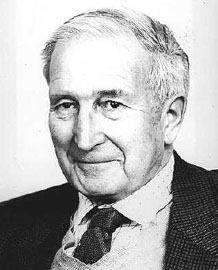
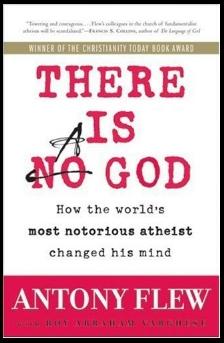
We went to New Jersey in April 2002. We were allowed four family members, each family. We went in to hear it and I went through it twice. They had a transcript on the wall that we were able to see and read in sequence with hearing the audio. And I heard Tom’s voice for the first time in several months, and it gave me this incredible sense of peace that I had not expected to find through listening to it. And the peace came because, I think, for the first time in months I knew exactly what had happened by hearing the sounds and being able to visualize what he experienced. After that, it just gave me the energy and the strength to keep moving forward, to keep doing the things that needed to be done, in raising my family and making sure that those responsible for September 11th came to justice.

IgnatiusInsight.com: In the months following 9/11 you gave numerous interviews on high profile televisions programs and dealt with the media quite often. What is your impression, in general of the mainstream media, and how do you think they’ve handled coverage of 9/11 and its aftermath? 

Deena Burnett: I think that almost immediately the press was very respectful, and I was incredibly grateful for that. I initially was very afraid of the media. I kind of laugh about that now because I had a degree in journalism, and yet I was scared to death. But they were very respectful. One thing that I have found during the five years is that they have been very interested in different family members — any family members, it doesn’t matter who they are — who had something to do with September 11th, and they have created this aura of casting 9/11 family members as authorities on different issues, whether it be political issues, or issues dealing with the war on terrorism. Anything happening with our government having to do with immigration laws, the transportation department, or the war on terrorism, the first thing they do is pull a 9/11 family member away and start interviewing them: “What do you think?”

They have cast them in roles of authority, and I think that is odd, that there would be so much interest in the opinion of 9/11 family members. You know, we have this one experience to fall back upon; I’m sure there are people who are far better qualified than we are to answer most of the questions the media asks concerning these issues.


_________________

Related posts:


We can fix the IRS problem by going to the flat tax and lowering the size of government

We can fix the IRS problem by going to the flat tax and lowering the size of government. Why the IRS Persecuted the Tea Party and How to Fix the Problem May 27, 2013 by Dan Mitchell Did President Obama and his team of Chicago cronies deliberately target the Tea Party in hopes of thwarting free speech […]

How can a loving God allow evil like the Boston Marathon explosions to happen?

How can a loving God allow evil like the Boston Marathon explosions to happen? Here are some of the details of the explosions: Boston Marathon Explosion 04/15/2013 Published on Apr 15, 2013 Prayers go out to the victims and their families! View this image › Via: @theoriginalwak The Boston Globe is reporting that at least a […]

Answers to historical problems in the Book of Daniel (Part 2)

The Bible and Archaeology (1/5) For many more archaeological evidences in support of the Bible, see Archaeology and the Bible . (There are some great posts on this too at the bottom of this post.)   Till Is Batting Around .250 on Daniel by Everette Hatcher III 1999 / March-April  Let me address three of the […]

Taking on Ark Times bloggers about abortion on the 40th anniversary date of Roe v. Wade (Part 6) For many pro-abortionists ” …the problem is not determining when actual human life begins, but when the value of that life begins to out weigh other considerations”

  Here are videos from the HOW SHOULD WE THEN LIVE? film series: Francis Schaeffer’s “How should we then live?” Video and outline of episode 10 “Final Choices” , episode 9 “The Age of Personal Peace and Affluence”, episode 8 “The Age of Fragmentation”, episode 7 “The Age of Non-Reason” , episode 6 “The Scientific Age” ,  episode 5 […]

Taking on liberal Ark Times Blogger about America’s debt problem

Is the USA endanger of going broke? The answer is yes, although liberals don’t want to admit it. Elwood from the Arkansas Times Blog objected, take a look below: How many paid attention to Cager Griffin on AETN debates using the familiar FEAR TACTIC of “AMERICA IS BROKE” in danger of becoming another “GREECE?”  …Fayetteville […]

The Founders believed national leaders should believe in a God that will punish evil

Crimes and Misdemeanors (1989)  Roger Ebert called this flick one of Allen’s best. The director, pictured with cinematographer Sven Nykvist on set, was nominated for three Academy Awards, including best director and writing. “Who else but Woody Allen could make a movie in which virtue is punished, evildoing is rewarded and there is a lot of […]

Humanist asserts: “Neither am I an advocate of Hitler; however, by whose criteria is he evil?” (Hitler’s letter from 1919 revealed)

  The Associated Press reported today:   The signature under the typewritten words on yellowing sheets of nearly century-old paper is unmistakable: Adolf Hitler, with the last few scribbled letters drooping downward. The date is 1919 and, decades before the Holocaust, the 30-year-old German soldier — born in Austria — penned what are believed to be […]


___________

Educated Scholars like Antony Flew can believe in God!!!

__________

Discussion (1 of 3): Antony Flew, N.T. Wright, and Gary Habermas

Uploaded on Sep 22, 2010

A discussion with Antony Flew, N.T. Wright, and Gary Habermas. This was held at Westminster Chapel March, 2008

Debate – William Lane Craig vs Christopher Hitchens – Does God Exist?

Uploaded on Jan 27, 2011

April 4, 2009 – Craig vs. Hitchens Debate from Biola University.

________________

The Bible and Science (Part 02)

When I think about the lessons we can take away from the Antony Flew episode I come back to two very obvious ones. Flew’s change from atheism to theism  completely negates the idea that only common people who are uneducated and haven’t done the research can believe in a God. Secondly, he must have known the incredible hatred that would be unleashed on him from the atheistic community if he betrayed their beliefs.

Wednesday, August 22, 2012

#17 Dr. Antony Flew

This proof is what I’m going to call a “piggyback proof”. I propose that you accept the word of a really smart person who searched for the truth about God for his whole life in a very unusual way.In 2004 after about 50 years as one of the world’s leading and best known atheists, Antony Flew, came to the conclusion that there must be a God.”After a lifetime of probing philosophical inquiry, this towering and courageous intellect has now concluded the evidence leads conclusively to God” [1]

“Antony Flew has been for most of his life a very well known philosophical champion of atheism.” [5]

Other atheists were quick to call him senile and said that he was manipulated in his old age by certain Christians. He denied it and came out with a book called,There Is A God, How The World’s Most Notorious Atheist Changed His Mind [9]. It tells his story and the arguments that convinced him. (There are videos on YouTube of his appearances if you search under Antony Flew.) [8]

“I now believe that the universe was brought into existence by an infinite Intelligence. I believe that this universe’s intricate laws manifest what scientists have called the Mind of God. I believe that life and reproduction originate in a divine Source.” [11]

“This is a fascinating and very readible account of how a distinguished philosopher who was a militant atheist for most of his working life came to believe in the intelligent design of the univers…” [2]

“A fascinating record of how one of our most prominent contemporary atheists was led to the conviction that God does exist.” [3]

“A stellar philosophical mind ponders the latest scientific results. The conclusion: a God stands behind the rationality of nature.” [4]

Flew was not your average atheist. He was considered a brilliant philosopher who at a very young age in 1950 published a paper called Theology and Falsification on atheism that is the most widely reprinted over the last 50 years and has been highly influencial in philosophy around the world.

He was always involved in the highest levels of the academic world, even having a professorship at Oxford. He kept up on the latest philosophical arguments for and against God as well as the latest scientific research into the origins of life and the universe.

One of his greatest virtues was his commitment to academic integrity and dedication to the Socratic Method of following the evidence wherever it might lead.

Ultimately, it was the developments in modern science that convinced him that there must be an intelligent source that designed and created the universe. TheBig Bang Theory, namely that the universe had a beginning something like 13 billions years ago, does not allow for enough time in order for the complexity of life that we observe to have developed according to evolution. Also, research discoveries in micro-biology and DNA led him to the same conclusion, namely that there must have been an intelligent cause.

This man was one of the greatest and most respected philosophical minds of the 20th century. He debated far and wide those who believed in a God. For him to finally change his mind after 50 years of debating, believing, and researching is a monumental change, certainly not done lightly or easily.

His change completely negates the idea that only common people who are uneducated and haven’t done the research can believe in a God.

Secondly, he must have known the incredible hatred that would be unleashed on him from the atheistic community if he betrayed their beliefs. He responded as ever with kindness and gentleness, which is all too evident in the book he wrote,There Is A God. In it he patiently spells out the philosophical journey he had taken in life and clearly what lead him to change his mind so all the world could know.

“When Antony Flew, in the spirit of free-thinking, followed the evidence where he thought it led, namely, to theism, he was roundly denounced by supposed free-thinkers in the severest of terms. He had, it seemed, committed the unpardonable sin.” [6]

“Perhaps what provides the deepest satisfaction in reading this philosophical memoir is the author’s transparent integrity, so habitual over a productive lifetime as to be, as Aristotle would have it, second nature. How shrill and self-absorbed are the opposing works of a Dawkins or a Dennett by comparison.” [7]

This man understood all the arguments for atheism inside and out. In fact, he created some of those arguments himself. He was the author of 30 books. All his life he wanted to follow the evidence to find the truth and he ended up accepting that there must be a God.

“In fact, my two main antitheological books were both written long before either the development of the big-bang cosmology or the introduction of the fine-tuning argument from physical constants. But since the early 1980’s, I had begun to reconsider. I confessed at that point that atheists have to be embarrassed by the contemporary cosmological consensus, for it seemed that the cosmologists were providing a scientific proof of what St. Thomas Aquinas contended could not be proved philosophically; namely, that the universe had a beginning.” [10]

In 2007, Flew was interviewed by Benjamin Wiker. He said again that his deism was the result of his “growing empathy with the insight of Einstein and other noted scientists that there had to be an Intelligence behind the integrated complexity of the physical Universe” and “my own insight that the integrated complexity of life itself – which is far more complex than the physical Universe – can only be explained in terms of an Intelligent Source.” [12]

You could do all the research yourself and study all the arguments for and against God. Or you could just take a short cut and check out what Antony Flew has to say. I enjoyed reading his book very much although at times the philosophy was over my head. He was clearly a brilliant thinker.

There must be a God.

____________________________________

[1] Francis S. Collins, author of The Language of God

[2] John Hick, professor and Fellow of the Institute for Advanced Research in Arts and Social Sciences, University of Birmingham

[3] Nicholas Wolterstorff, Noah Porter Professor Emeritus of Philosophical Theology, Yale University

[4] Michael Behe, author of Darwin’s Black Box and The Edge of Evolution

[5] Richard Swinburne, author of The Existence of God

[6] William Lane Craig, Research Professor, Talbot School of Theology

[7] Daniel N. Robinson, Philosophy Department, Oxford University

[8] YouTube video example: http://www.youtube.com/watch?v=X1e4FUhfHiU

[9] There Is A God, by Antony Flew, 2007, Harper Collins, New York, NY

[10] There Is A God, page 135.

[11] There Is A God, page 88

[12] Dr. Benjamin Wiker: Exclusive Flew Interview, 30 October 2007. http://www.tothesource.org/10_30_2007/10_30_2007.htm

Related posts:

Article from 2005 indicated Antony Flew abandoned atheism because of Law of Biogenesis!!!!

___________ Article from 2005 indicated Antony Flew abandoned atheism because of Law of Biogenesis!!!! Weighing the Evidence An Atheist Abandons Atheism By Chuck Colson|Published Date: January 10, 2005 Antony Flew, the 81-year-old British philosophy professor who taught at Oxford and other leading universities, became an atheist at age 15. Throughout his long career he argued […]

The Christian influence on society is real and that is one of the reasons Antony Flew left Atheism!!!

The Christian influence on society is real and that is one of the reasons Antony Flew left Atheism!!! Beggar to Beggar Saved by Increments By Chuck Colson|Published Date: January 11, 2005 A leading intellectual elaborates on why he abandoned atheism. But, surprisingly, he says his reasons were not entirely intellectual. British philosophy professor Dr. Antony […]

Antony Flew, George Wald and David Noebel on the Origin of Life

In the below comment section David Noebel stated the following: Since writing my article on the origin of life I have read two books that basically make the same point and I will quote briefly from them, but encourage anyone interested in the subject to read both books from cover to cover: (1) John C. […]

The Fine Tuning Argument for the Existence of God from Antony Flew!

___________ The Fine Tuning Argument for the Existence of God from Antony Flew! Imagine entering a hotel room on your next vacation. The CD player on the bedside table is softly playing a track from your favorite recording. The framed print over the bed is identical to the image that hangs over the fireplace at […]

By Everette Hatcher III | Posted in Current Events | Tagged  | Edit | Comments (0)

Mark Oppenheimer of Time Magazine claims Antony Flew was convinced by PSEUDOSCIENCE that God exists!!!

_____________ Mark Oppenheimer of Time Magazine claims Antony Flew was convinced by PSEUDOSCIENCE that God exists!!! Below you will read:  ”There Is a God” is perhaps the handiest primer ever written on the science (many would say pseudoscience) of religious belief. Regis Nicoll does a good job of refuting the claim that Flew was manipulated by […]

A review of “There is a God” by Antony Flew March 31, 2012

________ During the 1990′s I actually made it a practice to write famous atheists and scientists that were mentioned by Adrian Rogers and Francis Schaeffer and challenge them with the evidence for the Bible’s historicity and the claims of the gospel. Usually I would send them a cassette tape of Adrian Rogers’ messages “6 reasons I […]

Review of Antony Flew Book: THERE IS A GOD Article by R.C. Sproul May 2008

During the 1990′s I actually made it a practice to write famous atheists and scientists that were mentioned by Adrian Rogers and Francis Schaeffer and challenge them with the evidence for the Bible’s historicity and the claims of the gospel. Usually I would send them a cassette tape of Adrian Rogers’ messages “6 reasons I know […]

The Death of a (Former) Atheist — Antony Flew, 1923-2010 Antony Flew’s rejection of atheism is an encouragement, but his rejection of Christianity is a warning. Rejecting atheism is simply not enough, by Al Mohler

________________________________ Discussion (1 of 3): Antony Flew, N.T. Wright, and Gary Habermas Uploaded on Sep 22, 2010 A discussion with Antony Flew, N.T. Wright, and Gary Habermas. This was held at Westminster Chapel March, 2008 ______________________ During the 1990′s I actually made it a practice to write famous atheists and scientists that were mentioned by Adrian […]

By Everette Hatcher III | Posted in Francis Schaeffer | Tagged  | Edit | Comments (0)

Antony Flew’s journey from Atheism to Theism

During the 1990′s I actually made it a practice to write famous atheists and scientists that were mentioned by Adrian Rogers and Francis Schaeffer and challenge them with the evidence for the Bible’s historicity and the claims of the gospel. Usually I would send them a cassette tape of Adrian Rogers’ messages “6 reasons I […]

Will Science render supernatural answers unnecessary?

  Will Science render supernatural answers unnecessary?   ARGUMENT #2: The “gaps” in scientific knowledge have been closing due to scientific discovery. Eventually, supernatural explanations will be rendered unnecessary.       RESPONSE: In one sense, this statement is true. Modern science has been learning more and more about our world over the last several hundred years. […]

Open letter to President Obama (Part 543) Pro-Life Groups Elated After Abortion Doc Gosnell Convicted of Murder

Open letter to President Obama (Part 543)

(Emailed to White House on 5-17-13.)

President Obama c/o The White House 1600 Pennsylvania Avenue NW Washington, DC 20500

Dear Mr. President,

I know that you receive 20,000 letters a day and that you actually read 10 of them every day. I really do respect you for trying to get a pulse on what is going on out here. I know that you don’t agree with my pro-life views but I wanted to challenge you as a fellow Christian to re-examine your pro-choice view.

___________________

Francis Schaeffer Whatever Happened to the Human Race (Episode 1) ABORTION

Francis Schaeffer: What Ever Happened to the Human Race? (Full-Length Documentary)


Part 1 on abortion runs from 00:00 to 39:50, Part 2 on Infanticide runs from 39:50 to 1:21:30, Part 3 on Youth Euthanasia runs from 1:21:30 to 1:45:40, Part 4 on the basis of human dignity runs from 1:45:40 to 2:24:45 and Part 5 on the basis of truth runs from 2:24:45 to 3:00:04


_____________

Tony Perkins: Gosnell Trial – FOX News

Published on May 13, 2013

Tony Perkins: Gosnell Trial – FOX News

________________

Pro-Life Groups Elated After Abortion Doc Gosnell Convicted of Murder

by Steven Ertelt | Washington, DC | LifeNews.com | 5/13/13 4:08 PM

Leading pro-life groups are delighted abortion practitioner Kermit Gosnell was found guilty of killing three babies in horrific abortion-infanticide procedures.

LifeNews has chronicled various reactions from pro-life groups and activists and sampled them below:

“Kermit Gosnell was convicted of murder for severing the necks of just-born babies, but those babies would have died just as painfully if he had killed them inside the womb, as most late-term abortionists do,” commented National Right to Life President Carol Tobias.  “The result is the same for the baby whether it meets its end in a shabby clinic like Gosnell’s or a brand new Planned Parenthood facility — a painful death.”

“We are ecstatic about these verdicts. Justice was done. This could spell the end of Roe v. Wade,” said Troy Newman, President of Operation Rescue. “For the first time, America has gotten a long hard look at the horrors that go on inside abortion clinics. We see documentation of similar shoddy practices in other abortion clinics across our country. Gosnell is not alone by any means. Now it is time for America to do some real soul searching and decide whether the abortion cartel’s unaccountable and out-of-control abuses of vulnerable women are really how we want to treat each other. There are better ways to help women than to subject them to the kind of horrors found at abortion clinics in our nation. It’s time to end the inhumane and barbaric practice of abortion for good.”

Lila Rose of Live Action added: “Dr. Kermit Gosnell’s gruesome and inhuman crimes in Philadelphia cried out for justice, and now – for three of his four born and struggling victims, at least – justice has been served.  Even as we celebrate this verdict, we honor and mourn as well those innocents who did not receive ‘their day in court’ – and we must remember that Gosnell is not an outlier within the abortion industry.  We cannot allow these ‘guilty’ verdicts, welcome as they are, to make us complacent when it comes to the continuing abuses happening even now in abortion facilities throughout our nation. We call upon Congress to investigate all those participating in or willing to participate in this kind of brutality toward vulnerable women and children, and end it.”

Michael Ciccocioppo, executive director of the Pennsylvania Pro-Life Federation: “The Kermit Gosnell case is a tragedy on so many levels, not just for our Commonwealth but for our nation. Officials believe Gosnell actually killed hundreds of newborn babies and injured their mothers, but he destroyed most of the evidence.  These were heinous crimes and Gosnell had to be held accountable.”

“For the sake of all Gosnell’s victims, let us never forget the rampant disregard for life that was allowed to continue for decades in our state. We hope that in the future politics will not stand in the way of protecting the health and safety of women and newborns. In the wake of the Gosnell tragedy, Governor Tom Corbett and the state legislature took action to ensure that abortion facilities would be regularly inspected and would be subject to the same standards as outpatient surgery centers. This is really the most that can be done under the tragic U.S. Supreme Court decision Roe v. Wade, which brought us abortion on demand and the unspeakable tragedy of Gosnell.  It’s time to take a second look at Roe—in memory of Gosnell’s victims.”

Bryan Kemper of Stand True: Even if not on every count, I am thrilled today by the guilty verdict in the Gosnell murder trial; I have waited many years for justice to be served on behalf of babies being killed by abortionists. While this may be a small victory in the grand scheme of the abortion holocaust, it is an important victory for every baby who has ever been killed under the guise of choice. The ugliness of what abortion really is has had it’s mask peeled away and the truth about the violent and deadly abortion industry has been shown to the world. Gosnell was not a lone bad guy as so many in the abortion industry have tried to make him out to be: he is the face of abortion, the logical conclusion to the thought process that allows it in the first place. I wept as I realized that after 20 years of fighting abortion full time there is finally some legal justice for these precious babies and an abortionist is found guilty if killing children.

Charmaine Yoest of Americans United for Life: “The self-interested indifference of an unrepentant, unregulated, and unmonitored abortion industry stood front and center among the tragic events that led to the conviction of Kermit Gosnell. The legacy of Gosnell’s trial will be Big Abortion’s collusion in bringing about America’s ‘red-light district of medicine” – today’s back-alley abortion clinics and renegade abortion profiteers. Consistently pro-life Americans must fight Big Abortion as they attempt to block commonsense attempts to regulate and monitor abortion clinics where we know that some women and girls have suffered and even died. I applaud the vedict and thank all those who worked so hard to bring Gosnell to justice. We must now protect women and infants from an abortion industry that steadfastly refuses to police itself. How many women, girls, and infants must die before the abortion industry is held accountable?”

“Both the National Abortion Federation and local Planned Parenthood knew of Gosnell’s grisly business, but they stayed silent. Meanwhile, Gosnell’s clinic went almost two decades without inspection as women and girls were victimize and subjected to dangerous and inhumane conditions,” noted Dr. Yoest. “This case underscores why abortion clinics must be subjected to medically appropriate standards and regular inspections. And Kermit Gosnell is not the aberration that abortion advocates claim. Over the last three years at least 15 states have initiated investigations into the conditions and practices of abortion clinics. These investigations were triggered by women’s deaths, reports of dangerous and unsanitary practices that exposed women to injuries and infections, and infants born alive following attempted abortions.

Father Frank Pavone, National Director of Priests for Life: “The guilty verdict on charges of killing babies following abortion shows that the law recognizes a point at which the ‘right to choose’ must yield to the right to life, and also shows that abortionists don’t know where that point is. Such laws must be strengthened in every state.

“Gosnell’s guilty verdict in the death of Karnamaya Mongar is different. Gosnell didn’t slit her neck but he did create conditions that caused her death. And Mongar is not the only mother harmed or killed in the hundreds of dangerous, unregulated, legal abortion clinics across our country. There are hundreds of Gosnells and they have to be stopped. The lessons to be learned from this case, and the actions that should follow upon it, are largely independent of the verdict rendered today. Those lessons and actions are summarized in my public statement about the case.”

Anna Higgins, J.D., director of the Center for Human Dignity at the Family Research Council: “The jury’s verdict in the trial of abortionist Kermit Gosnell brings a just conclusion to a horrific case. The Gosnell case serves to highlight two major problems with the abortion industry in this country – its callous disregard for the health and safety of women and the inhumanity of abortion, especially late-term abortion.”

“The murders of babies and of at least one woman at the hands of Gosnell could have been prevented had the Pennsylvania health department inspected the Gosnell facility immediately after receiving numerous complaints. Instead, the department ignored the dangerous conditions for 17 years. In order to protect women like Karnamaya Mongar and prevent infanticide from being practiced in this country, Congress must work with states to require abortion clinics to apply the same safety standards as those followed by other medical facilities, including veterinary offices.

“The greatest tragedy is that Kermit Gosnell is not alone. Exploitation of women and complete disregard for their health and well-being are problems endemic to the entire abortion industry,” saidSBA List President Marjorie Dannenfelser. “There are numerous examples of negligence and even death in abortion facilities across the country. Now is the moment to realize that abortion is neither safe, nor rare. Abortion is a brutal, painful procedure, both for the child that it kills and the woman that it wounds. We must protect children both inside and outside the womb who experience unspeakable pain from abortion. Congress must address its role in protecting nationwide the human rights of children.”

Political Cartoons by Steve Breen

______________________

Thank you so much for your time. I know how valuable it is. I also appreciate the fine family that you have and your commitment as a father and a husband. I also respect you for putting your faith in Christ for your eternal life. I am pleading to you on the basis of the Bible to please review your religious views concerning abortion. It was the Bible that caused the abolition movement of the 1800’s and it also was the basis for Martin Luther King’s movement for civil rights and it also is the basis for recognizing the unborn children.

Sincerely,

Everette Hatcher III, 13900 Cottontail Lane, Alexander, AR 72002, ph 501-920-5733, lowcostsqueegees@yahoo.com

Related posts:

Francis Schaeffer’s “How should we then live?” Video and outline of episode 10 “Final Choices” (Schaeffer Sundays)

E P I S O D E 1 0   Dr. Francis Schaeffer – Episode X – Final Choices 27 min FINAL CHOICES I. Authoritarianism the Only Humanistic Social Option One man or an elite giving authoritative arbitrary absolutes. A. Society is sole absolute in absence of other absolutes. B. But society has to be […]

Francis Schaeffer’s “How should we then live?” Video and outline of episode 9 “The Age of Personal Peace and Affluence” (Schaeffer Sundays)

E P I S O D E 9 Dr. Francis Schaeffer – Episode IX – The Age of Personal Peace and Affluence 27 min T h e Age of Personal Peace and Afflunce I. By the Early 1960s People Were Bombarded From Every Side by Modern Man’s Humanistic Thought II. Modern Form of Humanistic Thought Leads […]

Francis Schaeffer’s “How should we then live?” Video and outline of episode 8 “The Age of Fragmentation” (Schaeffer Sundays)

E P I S O D E 8 Dr. Francis Schaeffer – Episode VIII – The Age of Fragmentation 27 min I saw this film series in 1979 and it had a major impact on me. T h e Age of FRAGMENTATION I. Art As a Vehicle Of Modern Thought A. Impressionism (Monet, Renoir, Pissarro, Sisley, […]

Francis Schaeffer’s “How should we then live?” Video and outline of episode 7 “The Age of Non-Reason” (Schaeffer Sundays)

E P I S O D E 7 Dr. Francis Schaeffer – Episode VII – The Age of Non Reason I am thrilled to get this film series with you. I saw it first in 1979 and it had such a big impact on me. Today’s episode is where we see modern humanist man act […]

Francis Schaeffer’s “How should we then live?” Video and outline of episode 6 “The Scientific Age” (Schaeffer Sundays)

E P I S O D E 6 How Should We Then Live 6#1 Uploaded by NoMirrorHDDHrorriMoN on Oct 3, 2011 How Should We Then Live? Episode 6 of 12 ________ I am sharing with you a film series that I saw in 1979. In this film Francis Schaeffer asserted that was a shift in […]

Francis Schaeffer’s “How should we then live?” Video and outline of episode 5 “The Revolutionary Age” (Schaeffer Sundays)

E P I S O D E 5 How Should We Then Live? Episode 5: The Revolutionary Age I was impacted by this film series by Francis Schaeffer back in the 1970′s and I wanted to share it with you. Francis Schaeffer noted, “Reformation Did Not Bring Perfection. But gradually on basis of biblical teaching there […]

Francis Schaeffer’s “How should we then live?” Video and outline of episode 4 “The Reformation” (Schaeffer Sundays)

Dr. Francis Schaeffer – Episode IV – The Reformation 27 min I was impacted by this film series by Francis Schaeffer back in the 1970′s and I wanted to share it with you. Schaeffer makes three key points concerning the Reformation: “1. Erasmian Christian humanism rejected by Farel. 2. Bible gives needed answers not only as to […]

“Schaeffer Sundays” Francis Schaeffer’s “How should we then live?” Video and outline of episode 3 “The Renaissance”

Francis Schaeffer’s “How should we then live?” Video and outline of episode 3 “The Renaissance” Francis Schaeffer: “How Should We Then Live?” (Episode 3) THE RENAISSANCE I was impacted by this film series by Francis Schaeffer back in the 1970′s and I wanted to share it with you. Schaeffer really shows why we have so […]

Francis Schaeffer’s “How should we then live?” Video and outline of episode 2 “The Middle Ages” (Schaeffer Sundays)

  Francis Schaeffer: “How Should We Then Live?” (Episode 2) THE MIDDLE AGES I was impacted by this film series by Francis Schaeffer back in the 1970′s and I wanted to share it with you. Schaeffer points out that during this time period unfortunately we have the “Church’s deviation from early church’s teaching in regard […]

Francis Schaeffer’s “How should we then live?” Video and outline of episode 1 “The Roman Age” (Schaeffer Sundays)

Francis Schaeffer: “How Should We Then Live?” (Episode 1) THE ROMAN AGE   Today I am starting a series that really had a big impact on my life back in the 1970′s when I first saw it. There are ten parts and today is the first. Francis Schaeffer takes a look at Rome and why […]

By Everette Hatcher III | Posted in Francis Schaeffer | Edit | Comments (0)

Dear Senator Pryor, here are some spending cut suggestions (“Thirsty Thursday”, Open letter to Senator Pryor)

Senator Pryor pictured below:

Why do I keep writing and email Senator Pryor suggestions on how to cut our budget? I gave him hundreds of ideas about how to cut spending and as far as I can tell he has taken none of my suggestions. You can find some of my suggestions here, here, here, here, here, here, here, here, here, here, here, here, here, here, here, here, here, here, here,  here, and  here, and they all were emailed to him. In fact, I have written 13 posts pointing out reasons why I believe Senator Pryor’s re-election attempt will be unsuccessful. HERE I GO AGAIN WITH ANOTHER EMAIL I JUST SENT TO SENATOR PRYOR!!!

Dear Senator Pryor,

Why not pass the Balanced  Budget amendment? As you know that federal deficit is at all time high (1.6 trillion deficit with revenues of 2.2 trillion and spending at 3.8 trillion).

On my blog www.thedailyhatch.org . I took you at your word and sent you over 100 emails with specific spending cut ideas. (Actually there were over 160 emails with specific spending cut suggestions.) However, I did not see any of them in the recent debt deal that Congress adopted although you did respond to me several times. Now I am trying another approach. Every week from now on I will send you an email explaining different reasons why we need the Balanced Budget Amendment. It will appear on my blog on “Thirsty Thursday” because the government is always thirsty for more money to spend. Today I actually have included a great article below from the Heritage Foundation concerning an area of our federal budget that needs to be cut down to size. The funny thing about the Sequester and the 2.4% of cuts in future increases is that President Obama set these up and then he acted like the sky was falling in as the cartoons indicate in the newspapers.

IF YOU TRULY WANT TO CUT THE BUDGET AND BALANCE THE BUDGET THEN SUBMIT THESE POTENTIAL BUDGET CUTS PRESENTED BELOW!!

___________

Lawmakers need to encourage self-sufficiency and work through food assistance programs and not laziness.

July 18, 2013 at 5:35 pm

Medicaid Food Stamps Waiting Room

Newscom

Nearly one-third of Americans received government-funded food aid in 2012, according to a new report from the U.S. Department of Agriculture (USDA).

As Heritage Foundation expert Robert Rector has explained, there are roughly a dozen federal food assistance programs operating today. The USDA reports that 59 percent of households that participated in one of the four largest food assistance programs—food stamps, school breakfasts, school lunches, and WIC—end up receiving benefits from “two or more programs.” This indicates significant duplication, “providing participants total benefits in excess of 100 percent of daily nutritional needs.”

The welfare system also operates many means-tested welfare programs beyond food assistance. The federal government funds roughly 80 welfare programs, including 12 providing social services, 12 educational assistance programs, and 11 housing assistance programs—at a cost of nearly $1 trillion a year.

The size of today’s welfare system demonstrates the need for both opportunity-based economic policies and critical reforms to promote self-sufficiency through work. For decades, the federal government has been pouring taxpayer dollars into an increasing number of welfare programs in an attempt to tackle poverty.

Yet this system has proven ineffective at helping individuals and families reach self-sufficiency. As Heritage expert Robert Rector writes, “Except in very limited cases, such as those involving serious malnutrition, welfare programs do not yield fewer problems and better life outcomes for children.” Welfare can even have harmful consequences for families, eroding personal responsibility across multiple generations. Heritage experts David Azerrad and Rea Hederman explain that welfare

takes away a crucial ingredient of happiness: the incentive to work, to save, to improve oneself.… It fosters dependence in welfare recipients, which in turn often carries over to children. Studies have shown—not surprisingly but nonetheless quite tragically—that welfare is increasingly intergenerational.

Lawmakers have a duty to American families and to the next generation. Policymakers should transform these programs into vehicles of self-sufficiency, personal responsibility, and human dignity through positive reforms that encourage work. Such reforms will begin lifting America from a welfare state where 101 million receive government support to the opportunity society envisioned by the men and women who founded this nation.

_______________

The Balanced Budget Amendment is the only thing I can think of that would force Washington to cut spending. We have only a handful of balanced budgets in the last 60 years, so obviously what we are doing is not working. We are passing along this debt to the next generation. YOUR APPROACH HAS BEEN TO REJECT THE BALANCED BUDGET “BECAUSE WE SHOULD CUT THE BUDGET OURSELF,” WELL THEN HERE IS YOUR CHANCE!!!! SUBMIT THESE CUTS!!!!

Thank you for this opportunity to share my ideas with you.

Sincerely,

Everette Hatcher, lowcostsqueegees@yahoo.com www.thedailyhatch.org, 13900 Cottontail Lane, Alexander, AR 72002, ph 501-920-5733

Related posts:

If increase in food stamps was just because of recession then why spending go from $19.8 billion in 2000 to $37.9 billion in 2007?

If the increase in food stamps was just because of the recession then why did the spending go from $19.8 billion in 2000 to $37.9 billion in 2007? The Facts about Food Stamps Everyone Should Hear Rachel Sheffield and T. Elliot Gaiser May 27, 2013 at 12:00 pm (7) Newscom A recent US News & […]

Tell the 48 million food stamps users to eat more broccoli!!!!

Welfare Can And Must Be Reformed             Uploaded on Jun 29, 2010 If America does not get welfare reform under control, it will bankrupt America. But the Heritage Foundation’s Robert Rector has a five-step plan to reform welfare while protecting our most vulnerable. __________________________ We got to slow down the growth of Food Stamps. One […]

Republicans for more food stamps?

Eight Reasons Why Big Government Hurts Economic Growth __________________ We got to cut spending and we must first start with food stamp program and we need some Senators that are willing to make the tough cuts. Food Stamp Republicans Posted by Chris Edwards Newt Gingrich had fun calling President Obama the “food stamp president,” but […]

Obama promotes food stamps but Milton Friedman had a better suggestion

Milton Friedman’s negative income tax explained by Friedman in 1968: We need to cut back on the Food Stamp program and not try to increase it. What really upsets me is that when the government gets involved in welfare there is a welfare trap created for those who become dependent on the program. Once they […]

400% increase in food stamps since 2000

Welfare Can And Must Be Reformed Uploaded by HeritageFoundation on Jun 29, 2010 If America does not get welfare reform under control, it will bankrupt America. But the Heritage Foundation’s Robert Rector has a five-step plan to reform welfare while protecting our most vulnerable. __________________________ If welfare increases as much as it has in the […]

Why can’t we cut the Food Stamp budget?

Why can’t we cut the Food Stamp budget? Should Food Stamps Be in Farm Bill? Congressman Seeks to Split Legislation Kelsey Harris June 17, 2013 at 10:38 pm Bill Clark/Roll Call Photos/Newscom Representative Marlin Stutzman (R-IN), a fourth-generation farmer, is asking his House colleagues to separate the food stamp program from the “farm” bill. Stutzman […]

Food stamp spending has doubled under the Obama Administration

The sad fact is that Food stamp spending has doubled under the Obama Administration. A Bumper Crop of Food Stamps Amy Payne May 21, 2013 at 7:01 am Tweet this Where do food stamps come from? They come from taxpayers—certainly not from family farms. Yet the “farm” bill, a recurring subsidy-fest in Congress, is actually […]

Which states are the leaders in food stamp consumption?

I am glad that my state of Arkansas is not the leader in food stamps!!! Mirror, Mirror, on the Wall, Which State Has the Highest Food Stamp Usage of All? March 19, 2013 by Dan Mitchell The food stamp program seems to be a breeding ground of waste, fraud, and abuse. Some of the horror stories […]

Why not cancel the foodstamp program and let the churches step in?

Government Must Cut Spending Uploaded by HeritageFoundation on Dec 2, 2010 The government can cut roughly $343 billion from the federal budget and they can do so immediately. __________ We are becoming a country filled with people that dependent on the federal government when we should be growing our economy by lowering taxes and putting […]

Food Stamp Program is constantly ripped off and should be discontinued

Uploaded by oversightandreform on Mar 6, 2012 Learn More at http://oversight.house.gov The Oversight Committee is examining reports of food stamp merchants previously disqualified who continue to defraud the program. According to a Scripps Howard News Service report, food stamp fraud costs taxpayers hundreds of millions every year. Watch the Oversight hearing live tomorrow at 930 […]

By Everette Hatcher III | Posted in spending out of control | Edit | Comments (0)

Antony Flew rightly noted that Richard Dawkins’ “monkey theorem was a load of rubbish”

________


William Lane Craig versus Eddie Tabash Debate

Uploaded on Feb 6, 2012

Secular Humanism versus Christianity, Lawyer versus Theologian. Evangelical Christian apologist William Lane Craig debates humanist atheist lawyer Eddie Tabash at Pepperdine University, February 8, 1999. Visit http://www.Infidels.org and http://www.WilliamLaneCraig.com

________________

Antony Flew on God and Atheism

Published on Feb 11, 2013

Lee Strobel interviews philosopher and scholar Antony Flew on his conversion from atheism to deism. Much of it has to do with intelligent design. Flew was considered one of the most influential and important thinker for atheism during his time before his death (he’s a much better thinker than Richard Dawkins too – even when he was an atheist). His conversion to God-belief has caused an uproar among atheists. They have done all they can to lessen the impact of his famous conversion by shamelessly suggesting he’s too old, senile and mentally deranged to understand logic and science anymore.

News on Antony Flew’s conversion:
http://www.youtube.com/watch?v=X1e4FU…

Interview and discussion with Antony Flew:
https://www.youtube.com/watch?v=53REH…

________________

Kalam Cosmological Argument – Douglas Groothuis, PhD

Published on Jul 13, 2012

Doug Groothuis gives a lecture on the Kalam Cosmological Argument. What’s interesting about this lecture is that Groothuis did not accept the Kalam Cosmological Argument at first but was later convinced by it.

Notes:

http://www.relyonchrist.com/Lecture/1…

Kalam Cosmological Argument

(Moreland, Scaling the Secular City; see also William Lane Craig, Reasonable Faith [Crossway, 1994]; Paul Copan and William Lane Craig, Creation from Nothing [Baker, 2004]; William Lane Craig and Walter Sinnott-Armstrong, God: A Debate Between a Christian and an Atheist [Oxford, 2004])

Preliminary: concepts of (a) the actual infinite and (b) the potential infinite

1. The universe had a beginning
2. The impossibility of the actual infinite (distinguish from potential infinite)
3. The impossibility of traversing an actual infinite (even if it exists); forming an actual infinite through successive addition, piece by piece…
4. Scientific confirmation from Big Bang cosmology (absolute origination). See also John Jefferson Davis, “Genesis 1:1 and Big Bang Cosmology,” in The Frontiers of Science and Faith (InterVarsity, 2002), 11 — 36; and Robert Jastrow, God and the Astronomers (revised ed., 1992).
5. Scientific confirmation from second law of thermodynamics.
6. Astronomer Fred Hoyle (who once advanced the steady state cosmology) argues against the universe being infinitely old in virtue of its hydrogen consumption. The argument can be stated as a modus tolens deduction (denying the consequent).
7. Can everything come from nothing without a cause? The “pop theory” (biting the metaphysical bullet)
8. Philosophical critique of everything from nothing…
9. God and time (see Greg Gansell, editor, God and Time: Four Views [InterVarsity, 2001])
10. Argument against an impersonal cause
11. Argument against God needing a cause (Bertrand Russell)
12. Quentin Smith’s acceptance of Big Bang cosmology and denial of God’s existence.
13. Unitary: Ockham’s razor
14. Incorrigible, inextinguishable (having existed, God cannot fail to exist)
15. Personal, volitional (“personal explanation”—R. Swinburne)
16. Omnipotent: nothing is a greater expenditure of power than exnihilating the entire cosmos. This is rational to hold, given the argument.
17. Supplies the necessary conditions for impeccable and omnipotent goodness: (1) – (4). Need (5) moral argument and (6) the Incarnation for the final necessary condition, which, with (1) – (4), make for necessary and sufficient conditions.

___________


__________

Antony Flew rightly noted that Richard Dawkins’  “monkey theorem was a load of rubbish.”

Sunday, 9 September 2012

Why Richard Dawkins’ typing monkey theorem is a load of nonsense

The infinite monkey theorem states that a monkey hitting keys at random on a typewriter keyboard for an infinite amount of time will almost surely type a given text, such as the complete works of William Shakespeare.

Evolutionary biologist Richard Dawkins employs the typing monkey concept in his book The Blind Watchmaker to demonstrate the ability of natural selection to produce biological complexity out of random mutations.

I have often heard this argument advanced by atheists in debates but in fact it does not survive deeper scrutiny.

Philosopher and former atheist Antony Flew, who became a theist in later life, explains how he changed his mind on whether the origin of life pointed to the activity of a creative Intelligence. It was in a debate in 2004 at New York University with Israeli scientist Gerald Schroeder that he announced he now accepted the existence of a God.

Flew explains his thinking in his book ‘There is a God’, which I finally got around to reading earlier this year. He argues on pp75-8 as follows:

‘I have embraced since the beginning of my philosophical life of following the argument no matter where it leads.

I was particularly impressed with Gerry Schroeders’s point-by-point refutation of what I call the “monkey theorem.” This idea, which has been presented in a number of forms and variations, defends the possibility of life arising by chance using the analogy of a multitude of monkeys banging away on computer keyboards and eventually ending up writing a Shakesparearean sonnet.

Schroeder first referred to an experiment conducted by the British National Council of Arts. A computer was placed in a cage with six monkeys. After one month of hammering away at it (as well as using it as a bathroom!), the monkeys produced fifty typed pages – but no a single word. Schroeder noted that this was the case even though the shortest work in the English language is one letter (a or I). A is a word only if there is a space on either side of it. If we take it that the keyboard has thirty characters (the 26 letters and other symbols), then the likelihood of getting a one-letter world is 30 x 30 x 30, which is 27,000. The likelihood of a getting a one-letter word is one chance of 27,000

Schroeder then applied the probabilities to the sonnet analogy. “What’s the chance of getting a Shakespearean sonnet?” he asked, He continued….

•All the sonnets are the same length. They’re by definition fourteen lines long. I picked the one I knew the opening line for, “Shall I compare thee to a summer’s day?” I counted the number of letters; there are 488 letters in the sonnet. What’s the likelihood of hammering away and getting 488 letters in exact sequence as in “Shall I campare thee to a summer’s day? What you end up with is 26 multiplied by itself 488 times – or 26 to the 488th power. Or, in other words, in base 10,10 to the 690th.

•Now the number of particles in the universe – not grains of sand, I’m talking about protons, electrons, and neutrons – is 10 to the 80th . Ten to the 80th is 1 with 80 zeros after it. Ten to 690th is 1 with 690 zeros after it. There are not enough particles in the universe to write down the trials; you’d be off by a factor of 10 to the 600th.

•If you took the entire universe and converted it to computer chips – forget the monkeys – each one weighing a millionth of a gram and had each computer chip able to spin out 288 trials at, say, a million times a second; if you turn the entire universe into these microcomputer chips and these chips were spinning a million times a second (producing) random letters, the number of trials you would get since the beginning of time would be 10 to the 90th trials. It would be off again by a factor of 10 to the 600th. You will never get a sonnet by chance. The universe would have to be 10 to the 600th time larger. Yet the world just thinks monkeys can do it every time.

After hearing Schroeder’s presentation, I told him that he had very satisfactorily and decisively established that the ‘monkey theorem’ was a load of rubbish, and that it was particularly good to do it with just a sonnet; the theorem is sometimes proposed using the works of Shakespeare or a single play, such as Hamlet. If the theorem won’t work for a single sonnet, then of course it’s simply absurd to suggest that the more elaborate feat of the origin of life could have been achieved by chance.’

Posted by at 09:14

Related posts:

Article from 2005 indicated Antony Flew abandoned atheism because of Law of Biogenesis!!!!

___________ Article from 2005 indicated Antony Flew abandoned atheism because of Law of Biogenesis!!!! Weighing the Evidence An Atheist Abandons Atheism By Chuck Colson|Published Date: January 10, 2005 Antony Flew, the 81-year-old British philosophy professor who taught at Oxford and other leading universities, became an atheist at age 15. Throughout his long career he argued […]

The Christian influence on society is real and that is one of the reasons Antony Flew left Atheism!!!

The Christian influence on society is real and that is one of the reasons Antony Flew left Atheism!!! Beggar to Beggar Saved by Increments By Chuck Colson|Published Date: January 11, 2005 A leading intellectual elaborates on why he abandoned atheism. But, surprisingly, he says his reasons were not entirely intellectual. British philosophy professor Dr. Antony […]

Antony Flew, George Wald and David Noebel on the Origin of Life

In the below comment section David Noebel stated the following: Since writing my article on the origin of life I have read two books that basically make the same point and I will quote briefly from them, but encourage anyone interested in the subject to read both books from cover to cover: (1) John C. […]

The Fine Tuning Argument for the Existence of God from Antony Flew!

___________ The Fine Tuning Argument for the Existence of God from Antony Flew! Imagine entering a hotel room on your next vacation. The CD player on the bedside table is softly playing a track from your favorite recording. The framed print over the bed is identical to the image that hangs over the fireplace at […]

By Everette Hatcher III | Posted in Current Events | Tagged  | Edit | Comments (0)

Mark Oppenheimer of Time Magazine claims Antony Flew was convinced by PSEUDOSCIENCE that God exists!!!

_____________ Mark Oppenheimer of Time Magazine claims Antony Flew was convinced by PSEUDOSCIENCE that God exists!!! Below you will read:  ”There Is a God” is perhaps the handiest primer ever written on the science (many would say pseudoscience) of religious belief. Regis Nicoll does a good job of refuting the claim that Flew was manipulated by […]

A review of “There is a God” by Antony Flew March 31, 2012

________ During the 1990′s I actually made it a practice to write famous atheists and scientists that were mentioned by Adrian Rogers and Francis Schaeffer and challenge them with the evidence for the Bible’s historicity and the claims of the gospel. Usually I would send them a cassette tape of Adrian Rogers’ messages “6 reasons I […]

Review of Antony Flew Book: THERE IS A GOD Article by R.C. Sproul May 2008

During the 1990′s I actually made it a practice to write famous atheists and scientists that were mentioned by Adrian Rogers and Francis Schaeffer and challenge them with the evidence for the Bible’s historicity and the claims of the gospel. Usually I would send them a cassette tape of Adrian Rogers’ messages “6 reasons I know […]

The Death of a (Former) Atheist — Antony Flew, 1923-2010 Antony Flew’s rejection of atheism is an encouragement, but his rejection of Christianity is a warning. Rejecting atheism is simply not enough, by Al Mohler

________________________________ Discussion (1 of 3): Antony Flew, N.T. Wright, and Gary Habermas Uploaded on Sep 22, 2010 A discussion with Antony Flew, N.T. Wright, and Gary Habermas. This was held at Westminster Chapel March, 2008 ______________________ During the 1990′s I actually made it a practice to write famous atheists and scientists that were mentioned by Adrian […]

By Everette Hatcher III | Posted in Francis Schaeffer | Tagged  | Edit | Comments (0)

Antony Flew’s journey from Atheism to Theism

During the 1990′s I actually made it a practice to write famous atheists and scientists that were mentioned by Adrian Rogers and Francis Schaeffer and challenge them with the evidence for the Bible’s historicity and the claims of the gospel. Usually I would send them a cassette tape of Adrian Rogers’ messages “6 reasons I […]

Will Science render supernatural answers unnecessary?

  Will Science render supernatural answers unnecessary?   ARGUMENT #2: The “gaps” in scientific knowledge have been closing due to scientific discovery. Eventually, supernatural explanations will be rendered unnecessary.       RESPONSE: In one sense, this statement is true. Modern science has been learning more and more about our world over the last several hundred years. […]