George Verwer pictured above and Francis Schaeffer below:
I got to take part in the Summer campaign of Operation Mobilization (OM) in 1979 in Manchester, England in an outreach to Muslims and Hindus, but before I went I spent a week in a similar campaign in Toronto, Canada and then I went to a OM conference in Belgium in June. We had some great speakers such as George Verwer, but I didn’t have an experience like Doug Nichols did in 1966.
It was a long time ago, in the summer of 1966, that Doug [Nichols] was working for Operation Mobilization and was stationed in London during their big annual conference. He was assigned to the clean-up crew. One night at around 12:30 AM he was sweeping the steps at the conference center when an older gentleman approached him and asked if this was where the conference was being held. Doug said that it was, but that just about everyone had already gone to bed. This man was dressed very simply and had just a small bag with him. He said that he was attending the conference. Doug replied he would try to find him a place to sleep and led him to a room where about 50 people were bunked down on the floor. The older gentleman had nothing to sleep on, so Doug laid down some padding and a blanket and offered a towel for a pillow. The man said that would be just fine and that he appreciated it very much.
Doug asked the man if he had been able to eat dinner. It turns out that he hadn’t eaten since he had been travelling all day. Doug took him to the dining room but it was locked. He soon jimmied the lock and found some cornflakes and milk and bread and jam. As the man ate, the two began to talk. The man said that he and his wife had been working in Switzerland for several years, where he had a small ministry that served hippies and travellers. He spoke about his work and spoke about some of the people he had seen turn to Christ. When he finished eating, both men turned in for the night.
Doug woke up the next morning only to find out that he was in big trouble. The conference leaders came to him and said, “Don’t you know who it was that you put on the floor last night? That’s Francis Schaeffer! He’s the speaker for this conference! We had a whole room set aside for him!”
Doug had no idea that he was sleeping on the floor next to a celebrity, that he had told a man to sleep on the floor who had a profoundly important ministry. He had no idea that this man had helped shape the Christian church of that day, and really, the church of our day. And Schaeffer never let on. In humility he had accepted his lot and been grateful for it.
The Beatles in a press conference after their Return from the USA Uploaded on Nov 29, 2010 The Beatles in a press conference after their Return from the USA. The Beatles: I have dedicated several posts to this series on the Beatles and I don’t know when this series will end because Francis […]
__________________ Beatles 1966 Last interview I have dedicated several posts to this series on the Beatles and I don’t know when this series will end because Francis Schaeffer spent a lot of time listening to the Beatles and talking and writing about them and their impact on the culture of the 1960’s. In this […]
_______________ The Beatles documentary || A Long and Winding Road || Episode 5 (This video discusses Stg. Pepper’s creation I have dedicated several posts to this series on the Beatles and I don’t know when this series will end because Francis Schaeffer spent a lot of time listening to the Beatles and talking and writing about […]
_______________ Francis Schaeffer pictured below: _____________________ Why am I doing this series FRANCIS SCHAEFFER ANALYZES ART AND CULTURE? John Fischer probably expressed it best when he noted: Schaeffer was the closest thing to a “man of sorrows” I have seen. He could not allow himself to be happy when most of the world was desperately lost […]
Crimes and Misdemeanors: A Discussion: Part 1 ___________________________________ Today I will answer the simple question: IS IT POSSIBLE TO BE AN OPTIMISTIC SECULAR HUMANIST THAT DOES NOT BELIEVE IN GOD OR AN AFTERLIFE? This question has been around for a long time and you can go back to the 19th century and read this same […]
____________________________________ Francis Schaeffer pictured below: ______________ Francis Schaeffer has written extensively on art and culture spanning the last 2000years and here are some posts I have done on this subject before : Francis Schaeffer’s “How should we then live?” Video and outline of episode 10 “Final Choices” , episode 9 “The Age of Personal Peace and Affluence”, episode 8 […]
Love and Death [Woody Allen] – What if there is no God? [PL] ___________ _______________ How Should We then Live Episode 7 small (Age of Nonreason) #02 How Should We Then Live? (Promo Clip) Dr. Francis Schaeffer 10 Worldview and Truth Two Minute Warning: How Then Should We Live?: Francis Schaeffer at 100 Francis Schaeffer […]
___________________________________ Francis Schaeffer pictured below: ____________________________ Francis Schaeffer “BASIS FOR HUMAN DIGNITY” Whatever…HTTHR Dr. Francis schaeffer – The flow of Materialism(from Part 4 of Whatever happened to human race?) Dr. Francis Schaeffer – The Biblical flow of Truth & History (intro) Francis Schaeffer – The Biblical Flow of History & Truth (1) Dr. Francis Schaeffer […]
________________ Francis Schaeffer “BASIS FOR HUMAN DIGNITY” Whatever…HTTHR Dr. Francis schaeffer – The flow of Materialism(from Part 4 of Whatever happened to human race?) Dr. Francis Schaeffer – The Biblical flow of Truth & History (intro) Francis Schaeffer – The Biblical Flow of History & Truth (1) Dr. Francis Schaeffer – The Biblical Flow of […]
_______________________________________________ Francis Schaeffer “BASIS FOR HUMAN DIGNITY” Whatever…HTTHR Dr. Francis schaeffer – The flow of Materialism(from Part 4 of Whatever happened to human race?) Dr. Francis Schaeffer – The Biblical flow of Truth & History (intro) Francis Schaeffer – The Biblical Flow of History & Truth (1) Dr. Francis Schaeffer – The Biblical Flow of […]
The Beatles were good friends of Allen Ginsberg and Terry Southern and many others who were involved in the FREE SPEECH MOVEMENT in Berkeley in the 1960’s. The movement started off just being about FREE SPEECH, but then it turned quickly to the New Left and the Marxist-Leninist point of view. It was in this atmosphere in the mid-sixties that caused KARL MARX to be a logical choice to be on the cover of Sgt. Pepper’s.
Beatles 1966 Last interview
69 THE BEATLES TWO OF US
As a university student, Karl Marx (1818-1883) joined a movement known as the Young Hegelians, who strongly criticized the political and cultural establishments of the day. He became a journalist, and the radical nature of his writings would eventually get him expelled by the governments of Germany, France and Belgium. In 1848, Marx and fellow German thinker Friedrich Engels published “The Communist Manifesto,” which introduced their concept of socialism as a natural result of the conflicts inherent in the capitalist system. Marx later moved to London, where he would live for the rest of his life. In 1867, he published the first volume of “Capital” (Das Kapital), in which he laid out his vision of capitalism and its inevitable tendencies toward self-destruction, and took part in a growing international workers’ movement based on his revolutionary theories.
#02 How Should We Then Live? (Promo Clip) Dr. Francis Schaeffer
1. Sri Yukteswar (Indian Guru)
2. Aleister Crowley (black magician)
3. Mae West
4. Lenny Bruce
5. Stockhausen (modern German composer)
6. W.C. Fields
7. Carl Jung (psychologist)
8. Edgar Allen Poe
9. Fred Astaire
10. Merkin (American artist)
12. Huntz Hall (Bowery Boy)
13. Simon Rodia (creater of Watts Towers)
14. Bob Dylan
15. Aubrey Beardsly (Victorian artist)
16. Sir Robert Peel (Police pioneer)
17. Aldous Huxley (philosopher)
18. Dylan Thomas (Welsh poet)
19. Terry Southern (author)
20. Dion (American pop singer)
21. Tony Curtis
22. Wallace Berman (Los Angeles artist)
23. Tommy Handley (wartime comedian)
24. Marilyn Monroe
25. William Buroughs (author)
26. Mahavatar Babaji (Indian Guru)
27. Stan Laurel
28. Richard Lindner (New York artist)
29. Oliver Hardy 30. Karl Marx
31. H.G. Wells
32. Paramhansa Yogananda (Indian Guru)
33. Stuart Sutcliffe
35. Max Muller
37. Marlon Brando
38. Tom Mix (cowboy film star)
39. Oscar Wilde
40. Tyrone Power
41. Larry Bell (modern painter)
42. Dr. Livingstone
43. Johnny Weissmuller (Tarzan)
44. Stephen Crane (American writer)
45. Issy Bonn (comedian)
46. George Bernard Shaw
47. Albert Stubbins (Liverpool footballer)
49. Lahiri Mahasaya (Indian Guru)
50. Lewis Carol
51. Sonny Liston (boxer)
52 – 55. The Beatles (in wax)
57. Marlene Dietrich
58. Diana Dors
59. Shirley Temple
60. Bobby Breen (singing prodigy)
61. T.E. Lawrence (Lawrence of Arabia)
In these pics from alternate shots of the cover photo, you can still see Leo Gorcey, who was removed because he requested a fee, next to his fellow Bowery Boy pal Huntz Hal, and Ghandi, who was removed because EMI felt his inclusion might offend record buyers in India. http://www.beatlesagain.com/btsgtppr.html
1969 was the year that John & Yoko intensified their long running campaign for World Peace.
They approached the task with the same entrepreneurial expertise as an advertising agency selling a brand of soap powder to the masses. John & Yoko’s product however was PEACE, not soft soap, and they were determined to use any slogan, event and gimmick in order to persuade the World to buy it.
BED PEACE (directed by Yoko & John and filmed by Nic Knowland) is a document of the Montreal events and features John & Yoko in conversation with, amongst others, The World Press, satirist Al Capp, activist Dick Gregory, comedian Tommy Smothers,
Featured songs are Plastic Ono Band’s GIVE PEACE A CHANCE & INSTANT KARMA, Yoko’s REMEMBER LOVE & WHO HAS SEEN THE WIND & John’s acoustic version of BECAUSE.
WHY WAS KARL MARX ON THE COVER? The answer is very simple. Back in Berkeley in 1964 there were the riots that broke out and the Free Speech Movement and this movement was encouraged later by John Lennon and Yoko as they spoke with the protesters by phone in the above video. Also Allen Ginsberg and Terry Southern were good friends with Paul McCartney and they were involved in the Free Speech Movement. The movement started off just being about FREE SPEECH, but then it turned quickly to the New Left and the Marxist-Leninist point of view. It was in this atmosphere in the mid-sixties that caused Karl Marx to be a logical choice to be on the cover.
Jean Genet, Allen Ginsberg, William Burroughs, Terry Southern
Chicago, 1968
_______________
John Lennon with Allen Ginsberg below:
Paul and Linda McCartney with Allen Ginsberg below:
___________
Francis Schaeffer asserted:
In some places the Marxist-Leninist line or the Maoist line took over…But the Marxist-Leninism is another leap into the area of nonreason-as idealistic as drug-taking was in the early days. The young followed Marxism in spite of clear evidence that oppression was not an excess of Stalin, but was and is an integral part of the system of communism.
First, the area of meaning. We saw that without God, life has no meaning. Yet philosophers continue to live as though life does have meaning. For example, Sartre argued that one may create meaning for his life by freely choosing to follow a certain course of action. Sartre himself chose Marxism.
Now this is utterly inconsistent. It is inconsistent to say that life is objectively absurd and then to say that one may create meaning for his life. If life is really absurd, then man is trapped in the lower story. To try to create meaning in life represents a leap to the upper story. But Sartre has no basis for this leap. Without God, there can be no objective meaning in life. Sartre’s program is actually an exercise in self-delusion. For the universe does not really acquire meaning just because I happen to give it one. This is easy to see: for suppose I give the universe one meaning, and you give it another. Who is right? The answer, of course, is neither one. For the universe without God remains objectively meaningless, no matter how we regard it. Sartre is really saying, “Let’s pretend the universe has meaning.” And this is just fooling ourselves.
The point is this: if God does not exist, then life is objectively meaningless; but man cannot live consistently and happily knowing that life is meaningless; so in order to be happy he pretends that life has meaning. But this is, of course, entirely inconsistent—for without God, man and the universe are without any real significance.
Sartre’s worldview is discussed in the film series “How should we then live?” by Francis Schaeffer below.
Transcript from “How Should we then live?”:
Humanist man beginning only from himself has concluded that he is only a machine. Humanist man has no place for a personal God, but there is also no place for man’s significance as man and no place for love, no place for freedom.
Man is only a machine, but the men who hold this position could not and can not live like machines. If they could then modern man would not have his tensions either in his intellectual position or in his life, but he can’t. So they leap away from reason to try to find something that gives meaning to their lives, to life itself, even though to do so they deny their reason.
Once this is done any type of thing could be put there. Because in the area of nonreason, reason gives no basis for a choice. This is the hallmark of modern man. How did it happen? It happened because proud humanist man, though he was finite, insisted in beginning only from himself and only from what he could learn and not from other knowledge, he did not succeed. Perhaps the best known of existentialist philosophers was Jean Paul Sartre. He used to spend much of his time here in Paris at the Les Deux Magots.
Sartre’s position is in the area of reason everything is absurd, but one can authenticate himself, that is give validity to his existence by an act of the will. In Sartre’s position one could equally help an old woman across the street or run her down.
Reason was not involved, and there was nothing to show the direction this authentication by an act of the will should take. But Sartre himself could live consistantly with his own position. At a certain point he signed the Algerian Manifesto which declared that the Algerian war was a dirty war. This action meant that man could use his reason to decide that some things were right and some things were wrong and so he destroyed his own system.
Berkeley’s Campus Free Speech Movement at 50
The Free Speech Movement: civil disobedience in Berkeley 1964
Mario Savio, leader of the Free Speech Movement at UC Berkeley (1964) – from THE EDUCATION ARCHIVE
I have dedicated several posts to this series on the Beatles and I don’t know when this series will end because Francis Schaeffer spent a lot of time listening to the Beatles and talking and writing about them and their impact on the culture of the 1960’s. In this series we have looked at several areas in life where the Beatles looked for meaning and hope but also we have examined some of the lives of those writers, artists, poets, painters, scientists, athletes, models, actors, religious leaders, musicians, comedians, and philosophers that were put on the cover of Sergeant Pepper’s Lonely Hearts Club Band album. We have discovered that many of these individuals on the cover have even taken a Kierkegaardian leap into the area of nonreason in order to find meaning for their lives and that is the reason I have included the 27 minute episode THE AGE OF NONREASON by Francis Schaeffer. In that video Schaeffer noted, ” Sergeant Pepper’s Lonely Hearts Club Band…for a time it became the rallying cry for young people throughout the world. It expressed the essence of their lives, thoughts and their feelings.”
Sergeant Pepper’s Lonely Hearts Club Band Albumreally did look at every potential answer to meaning in life and to as many people as the Beatles could imagine had the answers to life’s big questions. One of the persons on the cover did have access to those answers and I am saving that person for last in this series on the Beatles.
During this long series on the Beatles it has become quite evident that there were reasons why certain writers, artists, poets, painters, scientists, athletes, models, actors, religious leaders, musicians, comedians, and philosophers were put on the cover of Sergeant Pepper’s Lonely Hearts Club Band and that is the Beatles had made it to the top of the world but they were still searching for purpose and lasting meaning for their lives. They felt they were in the same boat as those pictured on the cover and so they called it appropriately Sergeant Pepper’s Lonely Hearts Club Band. In his article “Philosophy and its Effect on Society Robert A. Sungenis, notes that all these individuals “are all viewing the burial scene of the Beatles, which, in the framework we are using here, represents the passing of idealistic innocence and the failure to find a rational answer and meaning to life, an answer to love, purpose, significance and morals. They instead were leaping into the irrational, whether it was by drugs, the occult, suicide, or the bizarre.”
Communism catches the attention of the young at heart but it has always brought repression wherever it is tried. “True Communism has never been tried” is something I was told just a few months ago by a well meaning young person who was impressed with the ideas of Karl Marx. I responded that there are only 5 communist countries in the world today and they lack political, economic and religious freedom.
Hope in Marxism-Leninism is a leap in the area of nonreason. From the Russian Revolution until 1959 a total of 66 million prisoners died. This was deemed acceptable to the leaders because internal security was to be gained at any cost. The ends justified the means. The materialism of Marxism gives no basis for human dignity or rights. These hold to their philosophy against all reason and close their eyes to the oppression of the system.
WHY DOES COMMUNISM FAIL?
Communism has always failed because of its materialist base. Francis Schaeffer does a great job of showing that in this clip below. Also Schaeffer shows that there were lots of similar things about the basis for both the French and Russia revolutions and he exposes the materialist and humanist basis of both revolutions.
Schaeffer compares communism with French Revolution and Napoleon.
1. Lenin took charge in Russia much as Napoleon took charge in France – when people get desperate enough, they’ll take a dictator.
Other examples: Hitler, Julius Caesar. It could happen again.
2. Communism is very repressive, stifling political and artistic freedom. Even allies have to be coerced. (Poland).
Communists say repression is temporary until utopia can be reached – yet there is no evidence of progress in that direction. Dictatorship appears to be permanent.
3. No ultimate basis for morality (right and wrong) – materialist base of communism is just as humanistic as French. Only have “arbitrary absolutes” no final basis for right and wrong.
How is Christianity different from both French Revolution and Communism?
Contrast N.T. Christianity – very positive government reform and great strides against injustice. (especially under Wesleyan revival).
Bible gives absolutes – standards of right and wrong. It shows the problems and why they exist (man’s fall and rebellion against God).
WHY DOES THE IDEA OF COMMUNISM CATCH THE ATTENTION OF SO MANY IDEALISTIC YOUNG PEOPLE? The reason is very simple.
In HOW SHOULD WE THEN LIVE? The Rise and Decline of Western Thought and Culture, the late Francis A. Schaeffer wrote:
Materialism, the philosophic base for Marxist-Leninism, gives no basis for the dignity or rights of man. Where Marxist-Leninism is not in power it attracts and converts by talking much of dignity and rights, but its materialistic base gives no basis for the dignity or rights of man. Yet is attracts by its constant talk of idealism.
To understand this phenomenon we must understand that Marx reached over to that for which Christianity does give a base–the dignity of man–and took the words as words of his own. The only understanding of idealistic sounding Marxist-Leninism is that it is (in this sense) a Christian heresy. Not having the Christian base, until it comes to power it uses the words for which Christianity does give a base. But wherever Marxist-Leninism has had power, it has at no place in history shown where it has not brought forth oppression. As soon as they have had the power, the desire of the majority has become a concept without meaning.
Is Christianity at all like Communism?
Sometimes Communism sounds very “Christian” – desirable goals of equality, justice, etc but these terms are just borrowed from the New Testament. Schaeffer elsewhere explains by saying Marxism is a Christian heresy.
Below is a great article. Free-lance columnist Bradley R. Gitz, who lives and teaches in Batesville, received his Ph.D. in political science from the University of Illinois.
This article was published January 30, 2011 at 2:28 a.m. Here is a portion of that article below:
A final advantage is the mutation of socialism into so many variants over the past century or so. Precisely because Karl Marx was unclear as to how it would work in practice, socialism has always been something of an empty vessel into which would be revolutionaries seeking personal meaning and utopian causes to support can pour pretty much anything.
A desire to increase state power, soak the rich and expand the welfare state is about all that is left of the original vision. Socialism for young lefties these days means “social justice” and compassion for the poor, not the gulag and the NKVD.
In the end, the one argument that will never wash is that communismcan’t be said to have failed because it was never actually tried. This is a transparent intellectual dodge that ignores the fact that “people’s democracies” were established all over the place in the first three decades after World War II.
Such sophistry is resorted to only because communism in all of those places produced hell on earth rather than heaven.
That the attempts to build communism in a remarkable variety of different geographical regions led to only tyranny and mass bloodshed tells us only that it was never feasible in the first place, and that societies built on the socialist principle ironically suffer from the kind of “inner contradictions” that Marx mistakenly predicted would destroy capitalism.
Yes, all economies are mixed in nature, and one could plausibly argue that the socialist impulse took the rough edges off of capitalism by sponsoring the creation of welfare-state programs that command considerable public support.
But the fact remains that no society in history has been able to achieve sustained prosperity without respect for private property and market forces of supply and demand. Nations, therefore, retain their economic dynamism only to the extent that they resist the temptation to travel too far down the socialist road.
Francis Schaeffer notes:
At Berkeley the Free Speech Movement arose simultaneously with the hippie world of drugs. At first it was politically neither left nor right, but rather a call for the freedom to express any political views on Sproul Plaza. Then soon the Free Speech Movement became the Dirty Speech Movement, in which freedom was seen as shouting four-letter words into a mike. Soon after, it became the platform for the political New Left which followed the teaching of Herbert Marcuse. Marcuse was a German professor of philosophy related to the neo-Marxist teaching of the “Frankfurt School,” along with...Jurgen Habermas (1929-).
Herbert Marcuse, “Liberation from the Affluent Society” (1967)
Brannon Howse talks some about the Frankfurt School in some of his publications too.
During the 1960’s many young people were turning to the New Left fueled by Marcuse and Habermas but something happened to slow many young people’s enthusiasm for that movement.
1970 bombing took away righteous standing of Anti-War movement
Francis Schaeffer mentioned the 1970 bombing in his film series “How should we then live?” and I wanted to give some more history on it. Schaeffer asserted:
In the United States the New Left also slowly ground down,losing favor because of the excesses of the bombings, especially in the bombing of the University of Wisconsin lab in 1970, where a graduate student was killed. This was not the last bomb that was or will be planted in the United States. Hard-core groups of radicals still remain and are active, and could become more active, but the violence which the New Left produced as its natural heritage (as it also had in Europe) caused the majority of young people in the United States no longer to see it as a hope. So some young people began in 1964 to challenge the false values of personal peace and affluence, and we must admire them for this. Humanism, man beginning only from himself, had destroyed the old basis of values, and could find no way to generate with certainty any new values. In the resulting vacuum the impoverished values of personal peace and affluence had comes to stand supreme. And now, for the majority of the young people, after the passing of the false hopes of drugs as an ideology and the fading of the New Left, what remained? Only apathy was left. In the United States by the beginning of the seventies, apathy was almost complete. In contrast to the political activists of the sixties, not many of the young even went to the polls to vote, even though the national voting age was lowered to eighteen. Hope was gone.
After the turmoil of the sixties, many people thought that it was so much the better when the universities quieted down in the early seventies. I could have wept. The young people had been right in their analysis, though wrong in their solutions. How much worse when many gave up hope and simply accepted the same values as their parents–personal peace and affluence. (How Should We Then Live, pp. 209-210
Aug. 24 marked the 41st anniversary of the Sterling Hall bombing on the University of Wisconsin-Madison campus.
Four men planned the bomb at the height of the student protests over the Vietnam War. Back then, current Madison Mayor Paul Soglin was one of the leaders of those student protests in the capitol city. This weekend, Soglin recalled the unrest felt by UW-Madison students.
“The anti-war movement adopted a lot of its tactics and strategies from the civil rights movement which was about ten years older,” said Soglin. “It was one of picketing, demonstration, and passive resistance.”
The four men who planned the bombing focused on the Army Mathematics Research Center housed in Sterling Hall because it was funded by the U.S. Department of Defense and therefore, worked on weapons technology. Karl Armstrong was one of the four men and he recently spoke with CBS News in his first television interview detailing the moments right before the bomb was set off.
“He asked me, he says, ‘Should we go ahead? Are we gonna do this?’ I think I made a comment to him about something like, ‘Now, I know what war is about,'” remembered Armstrong. “And I told him to light it.”
The bomb killed one researcher and father of three, 33-year-old Robert Fassnacht, although Armstrong maintains they planned the attack thinking no one would get hurt. The four men heard about the death as they were in their getaway car after the bomb went off.
“I felt good about doing the bombing, the bombing per se, but not taking someone’s life,” recalled Armstrong.
The researcher’s wife told CBS News that she harbors no ill will toward Armstrong and the other bombers. Three of the four men were captured and served time in prison. Armstrong served eight years of a 23-year sentence.
The fourth man, Leo Burt, was last seen in the fall of 1970 in Ontario and is to this day, still wanted by the FBI, with a $150,000 reward for his capture.
E P I S O D E 9
T h e Age of Personal Peace and Affluence
I. By the Early 1960s People Were Bombarded From Every Side by Modern Man’s Humanistic Thought
II. Modern Form of Humanistic Thought Leads to Pessimism
Regarding a Meaning for Life and for Fixed Values
A. General acceptance of selfish values (personal peace and affluence) accompanied rejection of Christian consensus.
1. Personal peace means: I want to be left alone, and I don’t care what happens to the man across the street or across the world. I want my own life-style to be undisturbed regardless of what it will mean — even to my own children and grandchildren.
2. Affluence means things, things, things, always more things — and success is seen as an abundance of things.
B. Students wish to escape meaninglessness of much of adult society.
1. Watershed was Berkeley in 1964.
2. Drug Taking as an ideology: “turning on” the world.
3. Free Speech Movement on Sproul Plaza.
a) At first neither Left nor Right.
b) Soon became the New Left.
(1) Followed Marcuse and Habermas.
(2) Paris riots.
4. Student analysis of problem was right, but solution wrong.
5. Woodstock, Altamont, and the end of innocence.
6. Drug taking survives the death of ideology but as an escape.
7. Demise of New Left: radical bombings.
8. Apathy supreme. The young accept values of the older generation: their own idea of personal peace and affluence, even though adopting a different life-style.
C. Marxism and Maoism as pseudo-ideals.
1. Vogue for idealistic communism which is another form of leap into the area of non-reason.
2. Solzhenitsyn: violence and expediency as norms of communism.
3. Communist repression in Hungary and Czechoslovakia.
4. Communism has neither philosophic nor historic base for freedom. There is no base for “Communism with a human face.”
5. Utopian Marxism steals its talk of human dignity from Christianity.
6. But when it comes to power, the desire of majority has no meaning.
7. Two streams of communism.
a) Those who hold it as an idealistic leap.
b) Old-line communists who hold orthodox communist ideology and bureaucratic structure as it exists in Russia.
8. Many in West might accept communism if it seemed to give peace and affluence.
III. Legal and Political Results of Attempted Human Autonomy
A. Relativistic law.
1. Base for nonarbitrary law gone; only inertia allows a few principles to survive.
2. Holmes and sociological (variable) law.
3. Sociological law comes from failure of natural law (see evolution of existential from rationalistic theology).
4. Courts are now generating law.
5. Medical, legal, and historical arbitrariness of Supreme Court ruling on abortion and current abortion practice.
B. Sociological law opens door to racism, abrogation of freedoms, euthanasia, and so on.
IV. Social Alternatives After Death of Christian Consensus
A. Hedonism? But might is right when pleasures conflict.
B. Without external absolute, majority vote is absolute. But this justifies a Hitler.
V. Conclusion
A. If there is no absolute by which to judge society, then society is absolute.
B. Humanist thinking—making the individual and mankind the center of all things (autonomous) — has led to death in our culture and in our political life.
Note: Social alternatives after the death of Christian consensus are continued in Episode Ten.
Questions
1. What was the basic cause of campus unrest in the sixties? What has happened to the campus scene since, and why?
2. What elements — in the life and thought of the communist and noncommunist world alike — suggest a possible base for world agreement?
3. “To prophesy doom about Western society is premature. We are, like all others who have lived in times of great change, too close to the details to see the broader picture. One thing we do know:
Society has always gone on, and the most wonderful epochs have followed the greatest depressions. To suggest that our day is the exception says more about our headache than it does about our head.” Debate.
4. As Dr. Schaeffer shows, many apparently isolated events and options gain new meaning when seen in the context of the whole. How far does your own involvement in business, law, financing, and so on reveal an acquiescence to current values?
Key Events and Persons
Oliver Wendell Holmes: 1841-1935
Herbert Marcuse: 1898-1979
Jurgen Habermas 1929-
Alexander Solzhenitsyn: 1917-
Hungarian Revolution: 1956
Free Speech Movement: 1964
Czechoslovakian repression: 1968
Woodstock and Altamont: 1969
Radical bombings: 1970
Supreme Court abortion ruling: 1973
Solzhenitsyn’s The Gulag Archipelago: 1973-74
Further Study
Keeping one’s eyes and ears open is the most useful study project: the prevalence of pornographic films and books, more and more suggestive advertising and TV shows, and signs of arbitrary absolutes.
The following books will repay careful reading, and Solzhenitsyn, though long and horrifying, should not be skipped.
Os Guinness, The Dust of Death (1973).
Alexander Solzhenitsyn, The Gulag Archipelago: Parts I-II (1973), Parts III-IV (1974).
_____________
A Christian Manifesto Francis Schaeffer
Published on Dec 18, 2012
A video important to today. The man was very wise in the ways of God. And of government. Hope you enjoy a good solis teaching from the past. The truth never gets old.
The Roots of the Emergent Church by Francis Schaeffer
#02 How Should We Then Live? (Promo Clip) Dr. Francis Schaeffer
10 Worldview and Truth
Two Minute Warning: How Then Should We Live?: Francis Schaeffer at 100
Francis Schaeffer “BASIS FOR HUMAN DIGNITY” Whatever…HTTHR
_______________________
Karl Marx’s most important work was THE COMMUNIST MANIFESTO and ironically Francis Schaeffer’s most popular book was A CHRISTIAN MANIFESTO in 1981 and A.T.Coates in a review noted:
It’s more than a catchy title: A Christian Manifesto. On a flyleaf, Schaeffer names his book’s predecessors to mark his as a Christian political document: “The Communist Manifesto, 1848/ Humanist Manifesto I, 1933/ Humanist Manifesto II, 1973.” Keeping in mind that this book came out in 1981, it’s clear that this move serves two purposes: 1) it places Schaeffer’s book both in the tradition of and in opposition to these other manifestos, and 2) it posits a genealogical connection between communism and humanism—even in the capitalist world, Schaeffer implies, “humanism” springs from Marxism. For Schaeffer, Christianity and “humanism” are mutually incompatible “world views.” A “world view” describes “the overall way people think and view the world and life as a whole” (17). According to Schaeffer, humanism considers ultimate reality to be a random flux of energy and matter, our world to be nothing but the result of pure chance. In the period from 1933-1973, this world view took over American culture, which was founded on “Judeo-Christian” values (55).
_______
EARLIER IN THIS POST I NOTED THAT Francis Schaeffer asserted:
In some places the Marxist-Leninist line or the Maoist line took over…But the Marxist-Leninism is another leap into the area of nonreason-as idealistic as drug-taking was in the early days. The young followed Marxism in spite of clear evidence that oppression was not an excess of Stalin, but was and is an integral part of the system of communism….
The universe was created by an infinite personal God and He brought it into existence by spoken word and made man in His own image. When man tries to reduce [philosophically in a materialistic point of view] himself to less than this [less than being made in the image of God] he will always fail and he will always be willing to make these impossible leaps into the area of nonreason even though they don’t give an answer simply because that isn’t what he is. He himself testifies that this infinite personal God, the God of the Old and New Testament is there.
Instead of making a leap into the area of nonreason the better choice would be to investigate the claims that the Bible is a historically accurate book and that God created the universe and reached out to humankind with the Bible. Below is a piece of that evidence given by Francis Schaeffer concerning the accuracy of the Bible.
The Bible and Archaeology – Is the Bible from God? (Kyle Butt 42 min)
TRUTH AND HISTORY (chapter 5 of WHATEVER HAPPENED TO THE HUMAN RACE?, under footnote #94)
There is also a confirmation of what the Bible says concerning the Egyptian King Tirhakah who came up to oppose the Assyrians. Confirmation of his reality is typified by a sphinx-ram in the British Museum (British Museum Ref. B.B.1779). The small figure between the legs of the ram is a representation of King Tirhakah. The Bible says that when Sennacherib heard that Tirhakah, king of Eqypt, was coming to fight against him, he sent messengers to tell Hezekiah that help from Egypt would be of no use to him.
2 Kings 19:9, 109 Now the king heard concerning Tirhakah king of Cush, “Behold, he has set out to fight against you.” So he sent messengers again to Hezekiah, saying,10 “Thus shall you speak to Hezekiah king of Judah: ‘Do not let your God in whom you trust deceive you by promising that Jerusalem will not be given into the hand of the king of Assyria. (Isaiah 37:9-10 also says about the same thing.)
The date of Sennacherib’s campaign in Palestine is 701 B.C., and something which has often puzzled historians is the role of Tirhakah, who was not king of Egypt and Ethiopia until 690 B.C. But the solution to this problem is simple. In 701 B.C. Tirhakah was only a prince at the side of his military brother, the new Pharaoh Shebitku, who sent Tirhakah with an army to help Hezekiah fend off the Assyrian advance. But the story in Kings and Isaiah does not end in 701 B.C. It carries right through to the death of Sennacherib in 681 B.C., which is nine years after Tirhakah had become king of Egypt and Ethiopia. In other words, the biblical narrative, from the standpoint of 681 B.C., mentions Tirhakah by the title he bore at that time (that is, 681 B.C.), not as he was in 701 B.C. This is still done today, using a man’s title as he is known at the time of writing even it one is speaking of a previous time in his personal history.
Unaware of the the importance of these facts, and falling into wrong interpretations of some of Tirhakah’s inscriptions, some Old Testament scholars have stumbled over each in their eagerness to diagnose historical errors in the Books of the Kings and Isaiah. But as the archaeological confirmation shows, they were quite mistaken. What is striking about these archaeological finds is the way they often converge; there is often not just one line of evidence but several in which the biblical account is confirmed. We do not have confirmation of every single detail in the biblical account, by any means. Nor do we need such total confirmation in view of the amount of evidence there is. To insist on confirmation at every point would be to treat the Bible in a prejudiced way, simply because it is the Bible. The fact that is a religious book does not mean that it cannot also be true when it deals with history.
Not all archaeological finds have a convergence of many different interrelated lines like these around the life of Hezekiah, but they are no less striking. For example, take the “ration tablets” discovered in the ruins of Bablyon. The Bible tells us that after the Assyrians had destroyed the nothern kingdom of Samaria (around 721 B.C.), the southern kingdom, Judah, survived for almost another 150 years until approximately 586 B.C. By this time Assyria, one of the greatest military powers of the ancient world, had been defeated by Bablyon, a neighboring state to the east. That was in 609 B.C. Four years later the Babylonian general, Nebuchadnezzar–then the crown prince–came west and completely defeated Necho II, king of Egypt, at the battle of Carchemish. As a result of this victory he laid claim to Judah, which had previously been in the sphere of influence of Egypt. King Jehoiakim of Judah thus now paid tribute to the Babylonians. The Bible tells us that Jehoiakim rebelled three years later: “During Jehoiakim’s reign Nebuchadnezzar king of Bablyon invaded the land, and Jehoiakim became his vassal for three years. But then he changed his mind and rebelled against Nebuchnezzar” (II Kings 24:1).
The political background for this step can be understood from the Babylonian Chronicles (British Museum, Ref. 21946, records events from 597 B.C. down to 594). These were a compressed chronological summary of the principal events from the Babylonian court. There had been a crucial battle in 601 B.C. between the Egyptians and the Babylonians. This had left both sides weakened, and Jehoiakim took this opportunity to declare his independence of the Babylonian king. His independence, or rather Judah’s independence, did not last long, for Jehoiakim himself died in 598 B.C., leaving his throne and the crisis to his son, Jehoiachin. Second Kings (II Kings 24:10-12, 17) tells us what happened:
10 At that time the servants of Nebuchadnezzar king of Babylon came up to Jerusalem, and the city was besieged.11 And Nebuchadnezzar king of Babylon came to the city while his servants were besieging it,12 and Jehoiachin the king of Judah gave himself up to the king of Babylon, himself and his mother and his servants and his officials and his palace officials. The king of Babylon took him prisoner in the eighth year of his reign. 17 And the king of Babylon made Mattaniah, Jehoiachin’s uncle, king in his place, and changed his name to Zedekiah.
The story of Jehoiachin does not end there, however. The royal family were kept at the court of Nebuchadnezzar, and the Bible says that they , like other royal captives, were provided for by the king with rations of grain and oil (II Kings 25:27-30):
27 And in the thirty-seventh year of the exile of Jehoiachin king of Judah, in the twelfth month, on the twenty-seventh day of the month, Evil-merodach king of Babylon, in the year that he began to reign, graciously freed[a] Jehoiachin king of Judah from prison.28 And he spoke kindly to him and gave him a seat above the seats of the kings who were with him in Babylon.29 So Jehoiachin put off his prison garments. And every day of his life he dined regularly at the king’s table,30 and for his allowance, a regular allowance was given him by the king, according to his daily needs, as long as he lived.
The records of these allowances referred to in the Bible were unearthed in excavations in Babylon in basement storerooms of the royal palace (in Staat-Liches Museum, East Berlin, Vorderas Abteilung; Babylon 28122 and 28126). These are known as the “ration tablets” and they record who received such “rations.” In these, Jehoiachin is mentioned by name.
We also have confirmation of the Babylonian advance towards Judah in Nebuchadezzar’s first campaign. Among the ruins of Lachish were discovered a number of ostraca. Ostraca are broken pieces of earthenware called postherds, which were used for writing on in ink. (The Lachish ostraca are in the Palestinian Archaeological Museum, Jerusalem.) These brief letters reveal the increasing tensions within the growing state of Judah and tie in well with the picture given in the Bible by the Book of Jeremiah the Prophet. In Ostracon VI, the princes are accused of “weakening our hands” (that is, discouraging the writers), which is the very phraseology used in the Bible by the Judean princes against Jeremiah. Also, the use of fire beacons for signaling is found in both Ostracon IV and Jeremiah 6:1, each using the same terminology.
These events took place around the year 600 B.C. Events we considered earlier in relation to the capture of Lachish by Sennacherib during the reign of Hezekiah were around the year 700 B.C.
Owen Jarus reports in The Independent the discovery of a massive statue of Pharaoh Taharqa [English Bible: Tirhakah] deep in Sudan.
No statue of a pharaoh has ever been found further south of Egypt than this one. At the height of his reign, King Taharqa controlled an empire stretching from Sudan to the Levant.
A massive, one ton, statue of Taharqa that was found deep in Sudan. Taharqa was a pharaoh of the 25th dynasty of Egypt and came to power ca. 690 BC, controlling an empire stretching from Sudan to the Levant. The pharaohs of this dynasty were from Nubia – a territory located in modern day Sudan and southern Egypt.
The Nubian pharaohs tried to incorporate Egyptian culture into their own. They built pyramids in Sudan – even though pyramid building in Egypt hadn’t been practised in nearly 800 years. Taharqa’s rule was a high water mark for the 25th dynasty. By the end of his reign a conflict with the Assyrians had forced him to retreat south, back into Nubia – where he died in 664 BC. Egypt became an Assyrian vassal – eventually gaining independence during the 26th dynasty. Taharqa’s successors were never able to retake Egypt.
In addition to Taharqa’s statue, those of two of his successors – Senkamanisken and Aspelta – were found alongside. These two rulers controlled territory in Sudan, but not Egypt.
. . .
While this is the furthest south that a pharaoh’s statue has been found, it doesn’t necessarily mean that Dangeil is the southern border of Taharqa’s empire. It’s possible that he controlled territory further up the Nile.
The statue of Taharqa is truly monumental. “It’s a symbol of royal power,” said Dr. Anderson, an indicator that Dangeil was an “important royal city.”
It’s made of granite and weighs more than one ton. It stood about 2.6 meters (8.5 feet) when it had its head. In ancient times it was smashed into several pieces on purpose. This was also done to the two other statues. It’s not known who did this or why. It happened “a long time after Taharqa,” said Anderson.
. . .
The largest piece of Taharqa’s statue is the torso and base. This part of the statue is so heavy that the archaeological team had to use 18 men to move it onto a truck.
“We had trouble moving him a couple hundred meters,” said Anderson. The move was “extremely well planned,” with the team spending eight to nine days figuring out how to accomplish it without the statue (or the movers) getting damaged.
The full account from The Independent may be read here. A longer article by Jarus, with several photos, may be found in Heritage Key.
After the Assyrian king Sennacherib captured Lachish, he headed for Jerusalem. On the way he heard that King Tirhakah of Ethiopia (Cush) had come out to fight against him.
The king heard that King Tirhakah of Ethiopia was marching out to fight him. He again sent messengers to Hezekiah, ordering them: “Tell King Hezekiah of Judah this: ‘Don’t let your God in whom you trust mislead you when he says, “Jerusalem will not be handed over to the king of Assyria.” Certainly you have heard how the kings of Assyria have annihilated all lands. Do you really think you will be rescued? (2 Kings 19:9-11 NET; cf. Isaiah 37:9)
Hezekiah was king of Judah from 716/15 – 687/86 B.C. (Thiele). The events recorded in the Bible took place shortly before 700 B.C. Tirhakah evidently came to power before 690 B.C., was already a leading commander of the army, or there may be another solution to the problem.
My absolute favorite albums are Rubber Soul and Revolver. On both records you can hear references to other music — R&B, Dylan, psychedelia — but it’s not done in a way that is obvious or dates the records. When you picked up Revolver, you knew it was something different. Heck, they are wearing sunglasses indoors in the picture on the back of the cover and not even looking at the camera . . . and the music was so strange and yet so vivid. If I had to pick a favorite song from those albums, it would be “And Your Bird Can Sing” . . . no, “Girl” . . . no, “For No One” . . . and so on, and so on. . . .
Their breakup album, Let It Be, contains songs both gorgeous and jagged. I suppose ambition and human frailty creeps into every group, but they delivered some incredible performances. I remember going to Leicester Square and seeing the film of Let It Be in 1970. I left with a melancholy feeling.
PAUL McCARTNEY & WINGS – LIVE 1976 – “Lady Madonna”
86
‘Lady Madonna’
Michael Ochs Archives/Getty Images
Main Writer: McCartney Recorded: February 3 and 6, 1968 Released: March 18, 1968 11 weeks; No. 4
Like many of McCartney’s finest songs, “Lady Madonna” is a tribute to working-class womanhood, expressed through Irish-Catholic imagery. “‘Lady Madonna’ started off as the Virgin Mary, then it was a working-class woman, of which obviously there’s millions in Liverpool,” he later said. “There are a lot of Catholics in Liverpool because of the Irish connection.” The Madonna of the song is a long-suffering but indestructible matriarch, as tough as the title character of “Eleanor Rigby,” yet as comforting as Mother Mary from “Let It Be.”
Musically, “Lady Madonna” has an earthier inspiration: the New Orleans piano boogie of Fats Domino. McCartney called it “a Fats Domino impression,” composed while trying to play something bluesy on the piano. The recorded version is a full-on tribute to the New Orleans R&B sound, with tootling saxophones. Domino must have taken it as a compliment. A few months after the song came out, he released his own cover version, which became the last Top 100 hit of his career.
Appears On:Past Masters
Paul McCartney — Back In The USSR (Live in Kiev 2008)
Uploaded on Jun 15, 2008
Paul McCartney’s “Back In The USSR” in Kiev’s historic Independence Square
14.06.2008
Main Writer: McCartney Recorded: August 22 and 23, 1968 Released: November 25, 1968 Not released as a single
The witty opening track to the White Album got a helping hand from one of the American rock stars it parodied: In February 1968, McCartney played his variation on Chuck Berry’s “Back in the U.S.A.” for Beach Boys vocalist Mike Love while the two were visiting India. Love suggested that McCartney add a “California Girls”-style section about the women of the Soviet Union. McCartney then recorded a loose, jovial demo of the song in May.
By the time they started work on the album version on August 22nd, though, the Beatles were at each other’s throats. When McCartney criticized Starr’s drumming on “USSR,” Starr announced he was quitting the band, walked out and headed off for a Mediterranean vacation. The other three Beatles got back to work, recording the basic track with McCartney on drums and Lennon playing six-string bass. They finished it the next day with jet-airplane noise from a sound-effects collection. When Starr returned two weeks later, they covered his drum kit in flowers to welcome him back.
George Petty is most famous for his pin-up drawings that appeared in Esquire magazine in the 1930’s and the covers for many Ice Capades programs. There is an excellent 1997 book on him, Petty – The Classic Pin-Up Art of George Petty. It’s worth getting and I hereby credit it as my main source of information on Petty.
Petty was born in 1894 in Louisiana, the son of a photographer, also named George, who moved his family to the potentially more prosperous Chicago around 1900. George survived traditional schooling, though he thrived at evening classes at the Chicago Art Institute. He spent a great deal of time in his father’s photography studio where he mastered the airbrush, a tool invented around 1889 and used solely to retouch photographs (or their negatives). Petty would help change that.
Prior to World War I, study in Europe was de rigueur for the aspiring artist. After his graduation from high school, Petty’s mother took George and his sister to Paris where he was enrolled at the Académie Julian. This art school was quite famous and had such illustrious alumni as John Singer Sargent, Alfonse Mucha, Matisse, and, most significant to Petty, J.C. Leyendecker. George studied in Paris until 1916, then returned to Chicago. At the age of 18, he should have been prime fodder for the War, but shortly after Petty’s return from Europe, his father died, leaving George the head of the family and so exempt from service.
Not wanting to be a photographer or a photo-retoucher, he closed his father’s studio and went to work for an ad agency, where his first published work was a stylish ice skater on the cover of the 1920 Marshall Field catalog (at right). Ice skaters were to figure prominently in his future. At the agencies, Petty excelled at retouching and his skill with the airbrush was prodigious. He did lots and lots of retouching, all the while focusing his efforts on breaking into the illustration market. There were plenty of advertisements, but his few covers and magazine assignments led nowhere. He began using the airbrush in his drawings, not a common medium at the time, but the results were stunning, like the poster at left that won Petty first prize in the 1933 Chicago World’s Fair poster contest.
In the early Thirties, George opened his own studio and started to get more and more work that relied on pretty women. His daughter Marjorie Jule, born in 1919, was modeling for him and her body topped with an endless variety of faces would appear in many of these ads. In 1933, the depths of the depression, Esquire Magazine was started. At a time when The Saturday Evening Post was a nickel, The Ladies Home Journal a dime, and Good Housekeeping and Cosmopolitan a quarter, Esquiredebuted at 50 cents. Only Fortune, started in 1930, just three months after the stock market crash, was priced higher at $1. And just as Fortune had confounded the prophets by being successful, Esquire‘s first issue sold out – even with a print run of 100,000.
Petty’s work was in that first issue, a cartoon. He wasn’t a cartoonist, but that’s what the magazine needed and they were willing to supply him with situations and gags. The drawings he submitted were printed full page on good paper and the magazine’s 10″x14″ format was perfect for the slick, well-rendered images George was capable of. With his command of the airbrush, a strong foundation in drawing, plenty of practice drawing lissome women, and a willing model, Petty had assembled the components of a meteoric career. His cartoons appeared in seven of the first dozen issues and were thinly disguised excuses for rendering the female body. Even when they were fully clothed, his women looked like, if you’ll pardon the expression, their clothes were airbrushed on.Witness the “cartoon” at above right from a 1935 issue and also issued as part of a spiral-bound portfolio of Petty cartoons from 1937 titled aptly enough, Petty – A Portfolio. Click for larger image.
The exposure brought Petty to the attention of national ad agencies and within two years George was doing monthly ads for Old Gold Cigarettes and Jantzen Swim Wear as well as others, many of which appeared in the same issues of Esquire as his cartoons.The cartoons were a huge success. Quickly dubbed The Petty Girl, the public clamored for more of her and Esquire was more than happy to oblige. With its high production values, the magazine was able to add fold-outs as a design feature. In the Christmas, 1939 issue, one (of four) of these was devoted to the largest Petty Girl yet seen. That’s about 1/2 of her at the right. Fully 30″ long, the modern pin-up was born and Esquire‘s circulation soared yet again.
It’s rather difficult to convey just how famous Petty became – and how fast! This rather obscure Chicago commercial artist was suddenly thrust upon the national stage, literally, overnight. His signature was prominently displayed in all of his advertising work. Jantzen created the “Petty Girl” swimsuit in 1940. Old Gold offered prints of the Petty Girls in their ads. His hands, a brush, and Petty Girl appeared in a watch ad. He was given highly publicized commissions to paint posters for films. The aforementioned portfolio was released. In 1942, when 3700 Chicago high school art students cast their votes for most important artist from their three years of art studies, Petty won first place – as a write-in. He did a cover for Time in 1942 as well as the first in a line of covers for the annual Ice Capades revue. And it would be incorrect to attribute all the fame to the Esquire pin-ups. If anything, it was his national advertising images that got him the most attention – and money.
It was money that finally severed the Esquire relationship. The money Esquire paid bought less and less of Petty’s time as his advertising career soared. Alberto Vargas had been brought in as a replacement during negotiations and in 1942, after a year of uneasy coexistence, the Petty Girl made way for the Varga Girl in Esquire, anyway. Petty continued his high-profile commercial art and spent the war years doing ads and posters (see “It’s for YOU…” below). In 1945, he began a three year alliance with little-known True Magazine and helped them double their circulation. While many of the images still retained his trademark telephone, he was beginning to branch out into more lively poses as the True page above left and “The Panther Girl” (at right) done for the 1946 Ziegfield Follies clearly show.
Petty had always been a sharp businessman and insisted on retaining all secondary rights to his images as well as the return of his original paintings. He licensed their use on playing cards, on drinking glasses, and elsewhere. At left is from an ad I just found in a 1943 issue of The American Weeklywherein for $2 sent directly to Petty, you’d get a set of four 12″x18″ posters printed in six colors!
And he never ceased working. He did a calendar for Ridge Tools in 1953. He returned to Esquire with a 1955 calendar, designed the hood ornaments for the 1954 and 1955 Nash automobiles and in the early Sixties was back doing paintings for The Ice Capades. Petty died in 1975 after witnessing a minor revival of his work, including a new pin-up for the 40th anniversary issue of Esquire.
George Brown Petty IV (April 27, 1894 – July 21, 1975) was an American pin-up artist. His pin-up art appeared primarily in Esquire and Fawcett Publications’s True but was also in calendars marketed by Esquire,True and Ridgid Tool Company. Petty’s Esquire gatefolds originated and popularized the magazine device of centerfold spreads. Reproductions of his work were widely rendered by military artists as nose artdecorating warplanes during the Second World War, including the Memphis Belle, known as “Petty Girls”.
George Petty was born in Abbeville, the seat of Vermilion Parish in south Louisiana to George Brown Petty III and his wife, Sarah. George, IV, was the couple’s second child; his sister Elizabeth had been born in 1891. The Petty family moved to Chicago, Illinois, just before the turn of the century, where George, III, a photographer of some note, enjoyed considerable success with images of young women, madonnas, and nudes.
Petty was not a particularly good student in high school, spending a great deal of time on extracurricular activities instead of schoolwork. His artistic bent first became obvious in high school, where he was the staff artist for the school newspaper.
During his high school years, he enrolled in evening classes at Chicago Academy of Fine Arts under the tutoring of Ruth VanSickle Ford, where he taught his own art course, charging classmates $5.00 per session. He also worked in his father’s photo shop where he learned how to use an airbrush. Petty studied art at the Académie Julian with Jean-Paul Laurens and others until 1916, when World War I caused Joseph P. Herrick, ambassador at that time, to order all Americans to return home.
Petty returned to Chicago, and worked as an airbrush retoucher for a local printing company. He was able to establish himself as a freelance artist, painting calendar girls and magazine covers for The Household. By 1926, he was able to open his own studio.
George Petty never discussed in detail those artists who influenced him, other than J. C. Leyendecker (an artist for The Saturday Evening Post during George’s high school days) for his interpretation of men, Coles Phillips for his technique, and Maxfield Parrish for his use of light. However, it can be inferred from his later work that other influences included artists who were extremely popular in Paris at the time, such as Alfons Mucha, George Barbier and, in particular, the watercolor technique of England’sWilliam Russell Flint.
Petty is especially known for “the Petty Girl”, a series of pin-up paintings of women done for Esquire from the autumn of 1933 until 1956. Petty frequently depicted these women with the relative lengths of their legs being longer—and the relative sizes of their heads being smaller—than those of his actual models.
Petty appeared as a guest on the popular TV program What’s My Line.
Robert Cummings portrayed George Petty in the imaginary musical comedy The Petty Girl (Columbia, 1950), directed by Henry Levin and featuring the film debut of Tippi Hedren as one of the Petty Girls. Nat Perrin‘s screenplay was based on a story by Mary McCarthy. The film is also notable for several lilting, lighthearted songs composed by Harold Arlen (music) and Johnny Mercer (lyrics), including “Fancy Free” and “I Loves Ya”. The large production number at the finale is “The Petty Girl” by Arlen and Mercer, performed by Joan Caulfield (dubbed by Carole Richards), the Petty Girls and a male quartet.
Reid Stewart Austin (The Best of Gil Elvgren) examined the life and art of George Petty in the 192-page Petty: The Classic Pin-Up Art of George Petty. Published by Gramercy in 1997, the lavish volume features a foreword by Hugh Hefner and an introductory essay by Petty’s daughter, Marjorie Petty, who was his main model. In The New York Times Book Review, famed designer George Lois praised this collection of Petty’s creations, commenting:
Just as the cool, unapproachable Gibson Girl was the feminine ideal of young men at the turn of the century, the voluptuous Petty Girl became the ideal of their wide-eyed sons. I’m going on the record to swear that George Brown Petty IV consistently created better-designed women than God, and now I’ve got a big beautiful book to prove it.
BiblicalTraining is a not-for-profit, fully supported by donations. Would you consider making a donation to support the ongoing development of the library and the site?
SILOAM (sĭ-lō’ăm, Gr. Silōam). A reservoir located within the city walls of Jerusalem at the southern end of the Tyropoean Valley. 2Kgs.20.20 states that Hezekiah “made the pool and the tunnel by which he brought water into the city,” and 2Chr.32.30 says that he “blocked the upper outlet of the Gihon spring and channeled the water down to the west side of the City of David.” These words undoubtedly refer to the conduit leading from the intermittent Spring of Gihon (Jerusalem’s most important water supply) through the rock Ophel to the reservoir called the Pool of Siloam. The earliest knowledge of this tunnel dates back to a.d. 1838 when it was explored by the American traveler and scholar Edward Robinson and his missionary friend Eli Smith. They first attempted to crawl through the tunnel from the Siloam end, but soon found that they were not suitably dressed to crawl through the narrow passage. Three days later, dressed only in a wide pair of Arab drawers, they entered the tunnel from the Spring of Gihon end and, advancing much of the way on their hands and knees and sometimes flat on their stomachs, went the full distance. They measured the tunnel and found it to be 1,750 feet (547 m.) in length.
The tunnel has many twists and turns. The straight line distance from the Spring of Gihon to the Pool of Siloam is only 762 feet (238 m.), less than half the length of the tunnel. Why it follows such a circuitous route has never been adequately explained. Grollenberg suggests that it may have been “to avoid at all costs any interference with the royal tombs, which were quite deeply hewn into the rock on the eastern slope of Ophel” (Atlas of the Bible, 1956, p. 93).
In a.d. 1867 Captain Charles Warren also explored the tunnel, but neither he nor Robinson and Smith before him, noticed the inscription on the wall of the tunnel near the Siloam end. This was discovered in 1880 by a native boy who, while wading in the tunnel, slipped and fell into the water. When he looked he noticed the inscription. The boy reported his discovery to his teacher, Herr Conrad Schick, who made the information available to scholars. The inscription was deciphered by A. H. Sayce, with the help of others. It consists of six lines written in Old Hebrew (Canaanite) with pronglike characters. The first half of the inscription is missing, but what remains reads as follows: “[…when] (the tunnel) was driven through:—while […] (were) still […] axe(s), each man toward his fellow, and while there were still three cubits to be cut through, [there was heard] the voice of a man calling to his fellow, for there was an overlap in the rock on the right [and on the left]. And when the tunnel was driven through, the quarrymen hewed (the rock), each man toward his fellow, axe against axe; and the water flowed from the spring toward the reservoir for 1,200 cubits, and the height of the rock above the head(s) of the quarrymen was 100 cubits” (ANET, p. 321).
The importance of the Siloam inscription can scarcely be overestimated. Not only does it give a fascinating account of the building of the tunnel, but as G. Ernest Wright says, it “has for many years been the most important monumental piece of writing in Israelite Palestine, and other Hebrew inscriptions have been dated by comparing the shapes of letters with it” (Biblical Archaeology, 1957, p. 169).
In a.d. 1890 a vandal entered the tunnel and cut the inscription out of the rock. It was subsequently found in several pieces in the possession of a Greek in Jerusalem who claimed he had purchased it from an Arab. The Turkish officials seized the pieces and removed them to Istanbul where they are today.
The Siloam tunnel was not the only conduit that had been built to bring water from the Spring of Gihon into Jerusalem. At least two others preceded it, but neither was adequately protected against enemy attack. It was probably to one of these former conduits that Isaiah referred in the words “the flowing waters of Shiloah” (Isa.8.6).
It was to the Pool of Siloam that Jesus sent the blind man with the command, “Go,…wash” (John.9.7). He obeyed and came back seeing.——WWW
The Pool of Siloam.
Hezekiah’s water tunnel that goes from the Gihon Spring to the Pool of Siloam.
SILOAMsī lō’ əm (Σιλωάμ, G4978, sending). A pool and tower in Biblical Jerusalem. The term is also currently applied to the water tunnel that empties into the pool.
As a defense against the attacks by Assyria, which culminated in Sennacherib’s campaign of 701 b.c. (cf. 2 Chron 32:4), Hezekiah of Judah constructed the Siloam water tunnel from the Gihon spring, southwestward through the rocky core of Mt. Zion, and out into the central Tyropoeon Valley of Jerusalem, q.v., II, C (v. 30). The tunnel is square cut, averaging two ft. wide and six ft. high. It follows an S-shaped course, so that the direct distance of 1090 ft. involves 1750 ft. of actual tunneling. This may reflect attempts to avoid harder rock formations or deeply cut structures at higher levels, as tombs; certain of the turns were produced as the crews, working inward from both ends simultaneously, sought to contact each other. As it turned out, considerable additional construction became necessary in the S portion, namely, a lowering of the tunnel floor in order to allow a gravity flow of the water. An inscr. just inside the SW portal was discovered in 1880, which has now been cut out from the rock and removed to the Istanbul Museum. Literally tr. from the archaic Heb. (Phoen.) letters it reads: “The boring through [is completed]. And this is the story of the boring through: while yet [they plied] the drill, each toward his fellow, and while yet there were three cubits to be bored through; there was heard the voice of one calling unto another, for there was a crevice in the rock on the right hand. On the day of the boring through the stonecutters struck, each to meet his fellow, drill upon drill; and the water flowed from the source to the pool for a thousand and two hundred cubits, and a hundred cubits was the height of the rock above the head of the stone cutters” (E. Kautzsch, Gesenius’ Hebrew Grammar, frontispiece: photograph, tracing, and transcription into square character).
By Christian times the name Siloam had, understandably, become transferred to the newer pool; for Josephus refers to the πηγή, G4380, spring, fountain, by which he intended the water at the outlet of Hezekiah’s tunnel (War V. 4. 1, 2). The Tower of Siloam, which collapsed at the cost of eighteen lives (Luke 13:4), must have stood on the slope of Mt. Zion to its E. The NT thus designates this pool, to which Jesus sent the man who had been born blind, as the Pool of Siloam and appropriately interprets it to signify “sent” (John 9:7). Traces remain of a Herodian reservoir and bath structure, c. seventy ft. square, with steps on the W side. Here the man would have washed, and he miraculously received his sight (vv. 8, 10).
A commemorative Byzantine church was constructed just NW of the reservoir in c. a.d. 440 by the Empress Eudocia, together with elaborate porticoes about the pool. Only fragments remain visible, and the pool itself now rests eighteen ft. below the surrounding ground level. The surviving pool carries the title Birket Silwan, may be reached by a steep flight of stone steps, and measures 16X50 ft. A small mosque stands over the ruins of the church, and the name Silwan has become attached to the Arab village across the Kidron Valley to the E.
Bibliography
G. A. Smith, Jerusalem (1907), I: 91-98; H. Vincent and F.-M. Abel, Jérusalem Nouvelle, IV (1926), 860-864; J. Simons, Jerusalem in the OT (1952), 175-194; H. Vincent, Jérusalem de l’At, I (1954), 264-284, 289-297; IDB, IV: 352-355; K. Kenyon, Jerusalem, Excavating 3000 Years of History (1967), 69-77, 96-99.
(3) ten kolumbethran tou (or ton) Siloam, “the pool of Siloam” (Joh 9:7).
(4) ho purgos en to Siloam, “the tower in Siloam” (Lu 13:4).
1. The Modern Silwan:
Although the name is chiefly used in the Old Testament and Josephus as the name of certain “waters,” the surviving name today, Silwan, is that of a fairly prosperous village which extends along the steep east side of the Kidron valley from a little North of the “Virgin’s Fountain” as far as Bir Eyyub. The greater part of the village, the older and better built section, belongs to Moslem fellahin who cultivate the well-watered gardens in the valley and on the hill slopes opposite, but a southern part has recently been built in an extremely primitive manner by Yemen Jews, immigrants from South Arabia, and still farther South, in the commencement of the Wady en Nar, is the wretched settlement of the lepers. How long the site of Silwan has been occupied it is impossible to say. The village is mentioned in the 10th century by the Arab writer Muqaddasi. The numerous rock cuttings, steps, houses, caves, etc., some of which have at times served as chapels, show that the site has been much inhabited in the past, and at one period at least by hermits. The mention of “those eighteen, upon whom the tower in Siloam fell, and killed them” (Lu 13:4) certainly suggests that there was a settlement there in New Testament times, although some writers consider that this may have reference to some tower on the city walls near the Pool of Siloam.
2. The Siloam Aqueduct:
Opposite to the main part of Silwan is the “Virgin’s Fount,” ancient GIHON (which see), whose waters are practically monopolized by the villagers. It is the waters of this spring which are referred to in Isa 8:5,6: “Forasmuch as this people have refused the waters of Shiloah that go softly, …. now therefore, behold, the Lord bringeth up upon them the waters of the River.”
The contrast between the little stream flowing from the Gihon and the great Euphrates is used as a figure of the vast difference between the apparent strength of the little kingdom of Judah and the House of David on the one hand, and the might of “Rezin and Remaliah’s son” and “all his glory.” Although it is quite probable that in those days there was an open streamlet in the valley, yet the meaning of Shiloah, “sent” or “conducted,” rather implies some kind of artificial channel, and there is also archaeological evidence that some at least of the waters of Gihon were even at that time conducted by a rock-cut aqueduct along the side of the Kidron valley (see JERUSALEM, VII, 5). It was not, however, till the days of Hezekiah that the great tunnel aqueduct, Siloam’s most famous work, was made (2Ki 20:20): “Hezekiah also stopped the upper spring of the waters of Gihon, and brought them, straight down on the west side of the City of David” (2Ch 32:30); “They stopped all the fountains, and the brook (nachal) that flowed through the midst of the land, saying, Why should the kings of Assyria come, and find much water?” (2Ch 32:4; Ecclesiasticus 48:17). Probably the exit of the water at Gihon was entirely covered up and the water flowed through the 1,700 ft. of tunnel and merged in the pool made for it (now known as the Birket Silwan) near the mouth of the Tyropceon valley. This extraordinary winding aqueduct along which the waters of the “Virgin’s Fount” still flow is described in JERUSALEM, VII, 4 (which see). The lower end of this tunnel which now emerges under a modern arch has long been known as `Ain Silwan, the “Fountain of Siloam,” and indeed, until the rediscovery of the tunnel connecting this with the Virgin’s Fount (a fact known to some in the 13th century, but by no means generally known until the last century), it was thought this was simply a spring. So many springs all over Palestine issue from artificial tunnels–it is indeed the rule in Judea–that the mistake is natural. Josephus gives no hint that he knew of so great a work as this of Hezekiah’s, and in the 5th century a church was erected, probably by the empress Eudoxia, at this spot, with the high altar over the sacred “spring.” The only pilgrim who mentions this church is Antonius Martyr (circa 570), and after its destruction, probably by the Persians in 614, it was entirely lost sight of until excavated by Messrs. Bliss and Dickie. It is a church of extraordinary architectural features; the floor of the center aisle is still visible.
3. The “Pool of Siloam”:
The water from the Siloam aqueduct, emerging at `Ain Silwan, flows today into a narrow shallow pool, approached by a steep flight of modern steps; from the southern extremity of this pool the water crosses under the modern road by means of an aqueduct, and after traversing a deeply cut rock channel below the scarped cliffs on the north side of el-Wad, it crosses under the main road up the Kidron and enters a number of channels of irrigation distributed among the gardens of the people of Silwan. The water here, as at its origin, is brackish and impregnated with sewage.
The modern Birket es-Silwan is but a poor survivor of the fine pool which once was here. Bliss showed by his excavations at the site that once there was a great rock-cut pool, 71 ft. North and South, by 75 ft. East and West, which may, in part at least, have been the work of Hezekiah (2Ki 20:20), approached by a splendid flight of steps along its west side. The pool was surrounded by an arcade 12 ft. wide and 22 1/2 ft. high, and was divided by a central arcade, to make in all probability a pool for men and another for women. These buildings were probably Herodian, if not earlier, and therefore this, we may reasonably picture, was the condition of the pool at the time of the incident in Joh 9:7, when Jesus sent the blind man to “wash in the pool of Siloam.”
This pool is also probably the Pool of Shelah described in Ne 3:15 as lying between the Fountain Gate and the King’s Garden. It may also be the “king’s pool” of Ne 2:14. If we were in any doubt regarding the position of the pool of Siloam, the explicit statement of Josephus (BJ, V, iv, 1) that the fountain of Siloam, which he says was a plentiful spring of sweet water, was at the mouth of the Tyropoeon would make us sure.
4. The Birket el Chamra:
A little below this pool, at the very mouth of el-Wad, is a dry pool, now a vegetable garden, known as Birket el Chamra (“the red pool”). For many years the sewage of Jerusalem found its way to this spot, but when in 1904 an ancient city sewer was rediscovered (see PEFS, 1904, 392-94), the sewage was diverted and the site was sold to the Greek convent which surrounded it with a wall. Although this is no longer a pool, there is no doubt but that hereabouts there existed a pool because the great and massive dam which Bliss excavated here (see JERUSALEM, VI, 5) had clearly been made originally to support a large body of water. It is commonly supposed that the original pool here was older than the Birket Silwan, having been fed by an aqueduct which was constructed from Gihon along the side of the Kidron valley before Hezekiah’s great tunnel. If this is correct (and excavations are needed here to confirm this theory), then this may be the “lower pool” referred to in Isa 22:9, the waters of which Hezekiah “stopped,” and perhaps, too, that described in the same passage as the “old pool.”
5. The Siloam Aqueduct:
The earliest known Hebrew inscription of any length was accidentally discovered near the lower end of the Siloam aqueduct in 1880, and reported by Dr. Schick. It was inscribed upon a rock-smoothed surface about 27 in. square, some 15 ft. from the mouth of the aqueduct; it was about 3 ft. above the bottom of the channel on the east side. The inscription consisted of six lines in archaic Hebrew, and has been translated by Professor Sayce as follows:
(1) Behold the excavation. Now this (is) the history of the tunnel: while the excavators were still lifting up
(2) The pick toward each other, and while there were yet three cubits (to be broken through) …. the voice of the one called
(3) To his neighbor, for there was an (?) excess in the rock on the right. They rose up …. they struck on the west of the
(4) Excavation; the excavators struck, each to meet the other, pick to pick. And there flowed
(5) The waters from their outlet to the pool for a thousand, two hundred cubits; and (?)
(6) Of a cubit, was the height of the rock over the head of the excavators ….
It is only a roughly scratched inscription of the nature of a graffito; the flowing nature of the writing is fully explained by Dr. Reissner’s recent discovery of ostraca at Samaria written with pen and ink. It is not an official inscription, and consequently there is no kingly name and no date, but the prevalent view that it was made by the work people who carried out Hezekiah’s great work (2Ki 20:20) is now further confirmed by the character of the Hebrew in the ostraca which Reissner dates as of the time of Ahab.
Unfortunately this priceless monument of antiquity was violently removed from its place by some miscreants. The fragments have been collected and are now pieced together in the Constantinople museum. Fortunately several excellent “squeezes” as well as transcriptions were made before the inscription was broken up, so that the damage done is to be regretted rather on sentimental than on literary grounds.
___________
The Bible and Archaeology – Is the Bible from God? (Kyle Butt 42 min)
I have gone back and forth and back and forth with many liberals on the Arkansas Times Blog on many issues such as abortion, human rights, welfare, poverty, gun control and issues dealing with popular culture. Here is another exchange I had with them a while back. My username at the Ark Times Blog is Saline […]
I have posted many of the sermons by John MacArthur. He is a great bible teacher and this sermon below is another great message. His series on the Book of Proverbs was outstanding too. I also have posted several of the visits MacArthur made to Larry King’s Show. One of two most popular posts I […]
I have posted many of the sermons by John MacArthur. He is a great bible teacher and this sermon below is another great message. His series on the Book of Proverbs was outstanding too. I also have posted several of the visits MacArthur made to Larry King’s Show. One of two most popular posts I […]
Prophecy–The Biblical Prophesy About Tyre.mp4 Uploaded by TruthIsLife7 on Dec 5, 2010 A short summary of the prophecy about Tyre and it’s precise fulfillment. Go to this link and watch the whole series for the amazing fulfillment from secular sources. http://www.youtube.com/watch?v=qvt4mDZUefo ________________ John MacArthur on the amazing fulfilled prophecy on Tyre and how it was fulfilled […]
John MacArthur on the Bible and Science (Part 2) I have posted many of the sermons by John MacArthur. He is a great bible teacher and this sermon below is another great message. His series on the Book of Proverbs was outstanding too. I also have posted several of the visits MacArthur made to Larry […]
John MacArthur on the Bible and Science (Part 1) I have posted many of the sermons by John MacArthur. He is a great bible teacher and this sermon below is another great message. His series on the Book of Proverbs was outstanding too. I also have posted several of the visits MacArthur made to Larry […]
Adrian Rogers – How you can be certain the Bible is the word of God Great article by Adrian Rogers. What evidence is there that the Bible is in fact God’s Word? I want to give you five reasons to affirm the Bible is the Word of God. First, I believe the Bible is the […]
Is there any evidence the Bible is true? Articles By PleaseConvinceMe Apologetics Radio The Old Testament is Filled with Fulfilled Prophecy Jim Wallace A Simple Litmus Test There are many ways to verify the reliability of scripture from both internal evidences of transmission and agreement, to external confirmation through archeology and science. But perhaps the […]
I have gone back and forth and back and forth with many liberals on the Arkansas Times Blog on many issues such as abortion, human rights, welfare, poverty, gun control and issues dealing with popular culture. Here is another exchange I had with them a while back. My username at the Ark Times Blog is […]
Here is some very convincing evidence that points to the view that the Bible is historically accurate. Archaeological and External Evidence for the Bible Archeology consistently confirms the Bible! Archaeology and the Old Testament Ebla tablets—discovered in 1970s in Northern Syria. Documents written on clay tablets from around 2300 B.C. demonstrate that personal and place […]
Well this is odd/interesting/anodynely adverbial: Best-selling, “achingly tender” novelist Nicholas Sparks (author of Our Favorite Ryan Gosling Movie) is focusing on a new project about–wait for it–Black Mountain College! From, appropriately, Black Mountain News:
Sparks, writer of “Safe Haven,” “The Lucky One,” “The Notebook,” and “Nights in Rodanthe,” has turned his sights to the mountains for his latest novel, “The Longest Ride.”
Playing a key role in the parallel story of two couples is Black Mountain College, an experimental institution that from 1933-57 sought to push art and design to the forefront of American education.
A Sparks book and movie focusing on the college will remind the public of how the institution helped transform art and architecture, Alice Sebrell, Black Mountain College Museum + Arts Center program director, said.
“I think it’s exciting, because it is going to bring the story of Black Mountain College to a whole new audience,” Sebrell said.
The college had two campuses in Black Mountain. School officials rented the Blue Ridge Assembly conference center until 1941 then bought property just north of town. Now Camp Rockmont owns the land, on which some college buildings remain.
In the socially conservative 1940s and ‘50s, the college was a refuge for the American avant-garde, including artists and innovators such as Franz Kline, John Cage, Buckminster Fuller, Merce Cunningham, Robert Creeley, Jacob Lawrence, Willem de Kooning, Robert Rauschenberg, and M.C. Richards. During World War II, it was a haven for refugee European artists such as designers Josef and Anni Albers, who arrived from Germany.
Highly democratic and faculty-owned, the school considered the creative arts and practical responsibilities as equally important components to intellectual development.
In the Longest Ride, Sparks features two couples, one young and an older husband and wife, who visited the college annually for many years, said Sebrell, who read an advance electronic version of the book.
“They met and befriended some of the artists at the college. This is fictionalized, but it is loosely based on history. And they began buying art from those artists,” she said.
Author/Illustrator Vera B. Williams talks about her writing process.
Uploaded on Jul 30, 2009
Vera B. Williams discusses her writing process regarding her book, A Chair for my Mother. She also talks about her own mother and family and her influence on her writing. http://www.schoolwideblog.com
My first post in this serieswas on the composer John Cage and mysecond postwas on Susan Weil and Robert Rauschenberg who were good friend of Cage. The third post in this series was on Jorge Fick. Earlier we noted that Fick was a student at Black Mountain College and an artist that lived in New York and he lent a suit to the famous poet Dylan Thomas and Thomas died in that suit.
The fourth post in this seriesis on the artist Xanti Schawinsky and he had a great influence on John Cage who later taught at Black Mountain College. Schawinsky taught at Black Mountain College from 1936-1938 and Cage right after World War II. In the fifth post I discuss David Weinrib and his wife Karen Karnes who were good friends with John Cage and they all lived in the same community. In the 6th post I focus on Vera B. William and she attended Black Mountain College where she met her first husband Paul and they later co-founded the Gate Hill Cooperative Community and Vera served as a teacher for the community from 1953-70. John Cage and several others from Black Mountain College also lived in the Community with them during the 1950’s.
John Cage pictured below at Gate Hill Cooperative Community around 1955:
Vera Baker was born in Hollywood, California, on January 28, 1927. She and her family moved to New York City when she was quite young. Luckily for Vera, they lived near a studio space called Bronx House where she learned painting, writing, acting, and dance. When she was nine-years-old, one of her paintings, called “Yentas,” was put on exhibit at the Museum of Modern Art. She was filmed there explaining to First Lady Eleanor Roosevelt the meaning behind her work. The Movietone film reel ran before the regular features at the movies. This, Vera recalled, made her quite a big shot in the neighborhood!
She attended Black Mountain College in North Carolina. Black Mountain was a very unusual college, begun by teachers who had fled the Nazis in the 1930s. Looking for a peaceful way to learn and live together, students and faculty studied the arts and practical crafts needed to be self-sufficient. Vera learned to plant corn, make butter, work a printing press, and build her own house. She also graduated with a degree in graphic arts and married a fellow student, Paul Williams. They lived at Gate Hill Cooperative with other graduates of Black Mountain College from 1953 to 1970. Through the years, Vera became involved in politics and demonstrated for non-violence and the rights of women and children.
Vera and her husband raised three children at Gate Hill, and she taught in the community school. After her divorce in 1970, she moved to Canada and lived on a houseboat in Vancouver while working as a teacher and a baker. She loved the Yukon River and took a 500-mile trip down it. Vera later captured much of the joy of her travels in the children’s book, Three Days on a River in a Red Canoe, which combines how-to information with the story of an amazing family adventure. This book won a Parents’ Choice Award for Illustration.
Books about Rosa and Her Family
When Vera was growing up in Brooklyn, she and her family didn’t have a lot of money, especially nothing for any luxuries like nice furniture. A Chair for My Mother is based on the memory of her mother wishing for and wanting a new chair so much that it put the family finances in trouble as they struggled to pay for the chair in installments. In Vera’s book, she changed what happened to make it a warmer story. The mother, so tired from working all day, brings a big empty jar from the restaurant where she works. Over time, the jar fills up with little savings from here and there. When the chair is finally bought outright, Grandma, Rosa, and Mother all enjoy a rest on its plush and comforting cushions.
A Chair for My Mother won the Caldecott Honor in 1983. Vera has taken us back to visit Rosa and her family twice more. InSomething Special for Me, this time around the savings from the big jar will be used for something that Rosa wants. She finds the perfect gift, one that gives joy to herself and others. Music, Music for Everyone finds Rosa using her special gift to help raise money for her family when her grandmother is ill.
Stringbean’s Trip to the Shining Sea
When Stringbean and his older brother take off (with their parents’ permission) on a trip from their home in the Heartland to the California Coast, Stringbean faithfully sends back postcards from all the strange and exciting places they visit along the way. Like Three Days on a River in a Red Canoe, Stringbean’s trip recreates the wonders and hardships of a family trip. Along the way, Stringbean grows up quite a bit and learns important things about his family’s past.
Amber Was Brave, Essie Was Smart
This is another story pulled together from fragments of Vera’s childhood. Unlike her other writings, Vera has the sisters speak to us from simple poems. Plain and short, they carry the feelings and events of two young girls who need to look after each other. As in her Rosa books, the family is living through hard times.
Amber’s and Essie’s father has gone to jail, and their mother must work very hard to support them. Amber, the little sister, cannot really understand what has happened. Neither sister really knows whether or not life will ever be better or how they should feel about their father now. Amber Was Brave… has a lot of artistry to it. With only the barest of words which ring true to the thoughts of the young girls, the author manages to convey a world of hurt, love, and forgiving.
Scooter
When Elana Rose Rosen and her mother first move to an apartment in New York City, “Lanny” is lonely for her father, her cousin, and her grandparents back in California. But with her beautiful blue and silver scooter, she finds the courage to try to make new friends. This book is written in Lanny’s own words with great honesty, giving full expression to her joy, jealousy, anger, and outrage. Brave and resourceful, Elana Rose Rosen is a terrific kid to get to know.
We own many of Vera B. Williams’ books in our library. Click your CRRL Library Card to reserve a book to pick up at your favorite branch. If you wish, you can contact the author at this address: Vera B. Williams, c/o Author Mail, Greenwillow Books, 105 Madison Avenue, New York, NY 10016.
Vera B. Williams, born in 1927, didn’t illustrate her first picture book until 1975. But her path towards an artistic career began much earlier, when she was growing up in New York City in the 1930s and 40s. At the Bronx House, a local community center, she acted, danced, and painted. When Williams was 9 years old, one of her paintings was included in a WPA exhibit at the Museum of Modern Art. She later graduated from New York City’s High School of Music and Art, and then graduated from the Black Mountain School in North Carolina with a degree in graphic arts.
Williams has pursued a wide variety of personal and professional interests throughout her life. She raised three children; she helped found an alternative community and school in New York; she ran a bakery in Ontario, canoed down 500 miles of the Yukon River, and has contributed her talents and time to political organization and activism. Williams’ life experiences, love of children, and social conscience shine through her fine collection of books for young readers
Vera B. Williams (born January 28, 1927) is an American children’s writer and illustrator. Her best known work, A Chair for My Mother, has won multiple awards and was featured on the children’s television show Reading Rainbow.[2] For her lifetime contribution as a children’s illustrator she was U.S. nominee in 2004 for the biennial, international Hans Christian Andersen Award, the highest recognition available to creators of children’s books.[3] Additionally, she was awarded the 2009 NSK Neustadt Prize for Children’s Literature.[4]
Vera Baker was born January 28, 1927 in Hollywood, California. She has one sister, Naomi.[5] As a child, her family moved to the Bronx, New York, where her father was frequently absent during her early childhood. Encouraged by their parents to explore the arts, she studied at The High School of Music & Art[5] and Black Mountain College in North Carolina, where she received her BFA in Graphic Art in 1949.[1]
Williams was a co-founder of the Gate Hill Cooperative Community and served as a teacher for the community from 1953-70. She taught at alternative schools in New York and Ontario throughout the 1960s and early 1970s. Following her divorce, she emigrated to Canada, where she committed to becoming a children’s author and illustrator. In 1975 she was invited by Remy Charlip to illustrate Hooray For Me, which she did while living on a houseboat in Vancouver.[5] She established a publishing relationship with Greenwillow Books that continues to this day. Today, Ms. Williams lives in New York City and remains active in local issues such as The House of Elder Artists[6] and participated in the 2007 PEN World Voices literary festival.[7]
Ms. Williams has long supported nonviolent and nuclear disarmament causes. In 1981 she spent a month in Alderson Federal Prison Camp following arrest at a women’s peaceful blockade of the Pentagon.[8] She served on the executive committee of theWar Resisters League from 1984 to 1987.
Two young lovers with polarized passions and conflicting ideals come across an elderly man, whose memories of his own decades-long romance with his beloved wife deeply inspire them.
Directed by George Tillman Jr., “The Longest Ride” centers on the star-crossed love affair between Luke (played by Scott Eastwood), a former champion bull-rider looking to make a comeback, and Sophia (Britt Robertson), a college student who is about to embark upon her dream job in New York City’s art world.
Their world is shaken when they both rescue an elderly widower named Ira (Jack Huston), who has been seriously injured in a crash. They befriend the old man and discover the details about his fascinating life and long marriage.
“The Longest Ride” is based on the book of the same name by Nicholas Sparks.
‘The Longest Ride’ is something I’ve never done in film before,” Sparks said. “It’s really two stories in one. [The novel] has an epic quality that applies to both love stories. The love story between Ruth and Ira, which starts before World War II, is contrasted with the entirely different world of professional bull-riding.”
He said that what differentiated this film from the other adaptations of his work was its epic quality and the dual love story, of two stories coming together.
“When you meet the person with whom you fall in love, the feeling’s the same, whether you’re in the 1930s or in the present day,” he said. “Everybody goes through the same emotions. There’s universality to the way we feel, and that’s what I wanted to show. I think the fun of the film is trying to figure out how on earth these two stories are going to come together in the end.”
Sparks did more research for “The Longest Ride” than he had for any of his other novels.
“My explorations covered many areas I didn’t know anything about,” he explains. “I needed to find out what the art world was like in the ’30s and ’40s; what life was like for Jewish people in North Carolina in the 1930s; and the many facets of the Professional Bull Rider’s tour and its riders.”
Black Mountain College
Sparks research for the novel led him to Black Mountain College, which was the center of the modern art movement in the ’30s, ’40s and ’50s. Black Mountain College was founded in the ’30s as an experimental college, and came to define the Modern Art movement.
“Everyone from De Kooning to Rauschenberg was there,” Sparks said. “Robert De Niro’s father, another noted artist, attended Black Mountain College. There were very famous artists there, and if you look at the American modern art movement in the 1940s and 1950s, there were important intersections there with the great works of this century.”
“The Longest Ride” opens April 15 in cinemas nationwide, from 20th Century Fox, to be distributed by Warner Bros.
Before Woody Allen became the prolific director responsible for such classics as Manhattan and Annie Hall, he was a well-received stand-up. During his tenure as an in-demand touring comedian, he released three albums: 1964’s Woody Allen, 1965’s Volume 2, and 1968’s The Third Woody Allen Album.On January 13th, Allen’s entire discography is being reissued in a new commemorative box set. The Stand Up Years: 1964-1968 spans two discs and also includes exclusive material and bonus interviews taken from 2012’s Woody Allen: A Documentary.As a preview of the release, Allen has unveiled an exclusive audio excerpt from the film. In the clip, he fondly remembers his days as a comedian and offers up fascinating anecdotes about his longtime touring managers, Jack Rollins and Charles Joffe. Listen to the excerpt at EW.com.The Stand Up Years: 1964-1968 Tracklist:Disc 1 – Recorded Live at Mr. Kelly’s, Chicago, March 1964:
01. Private Life
02. Brooklyn
03. The Army
04. Pets
05. My Grandfather
06. My Marriage
07. Bullet In My Breast Pocket
08. N.Y.U.
09. A Love Story
10. The Police
11. Down South
12. Summing UpDisc 2 – Recorded Live at The Shadows, Washington D.C., April 1965:
13. The Moose
14. Kidnapped
15. Unhappy Childhood
16. The Science Fiction Film
17. Eggs Benedict
18. Oral Contraception
19. European Trip
20. The Lost GenerationDisc 2 – Recorded Live at Eugene’s, San Francisco, August 1968:
21. The Vodka Ad
22. Vegas
23. Second Marriage
24. The Great Renaldo
25. Mechanical Objects
26. Questions and AnswersBonus Material – A Decade of Stand Up: Audio excerpts from Woody Allen: A Documentary
27. Mort Sahl – Changed the History of Comedy
28. The Rolls Royce of Management
29. Loyalty
30. The New Comic
31. The Village_____________
Woody Allen Stand Up Comic 1964 1968 18 My Grandfather
I have spent alot of time talking about Woody Allen films on this blog and looking at his worldview. He has a hopeless, meaningless, nihilistic worldview that believes we are going to turn to dust and there is no afterlife. Even though he has this view he has taken the opportunity to look at the weaknesses of his own secular view. I salute him for doing that. That is why I have returned to his work over and over and presented my own Christian worldview as an alternative.
-INCLUDES ALL THREE LIVE STAND-UP ALBUMS RECORDED BETWEEN 1964-1968
-REMASTERED AND AVAILABLE ON CD AND DIGITALLY
-BONUS MATERIAL INCLUDES: AUDIENCE Q&A AND OVER 20 MINUTES OF AUDIO EXCERPTS FROM WOODY ALLEN: A DOCUMENTARY
____ Woody Allen’s past movies and the subject of the Meaning of Life examined!!! Out of the Past: Woody Allen, Nostalgia, the Meaning of Life, and Radio Days Kyle Turner Jul 25, 2014 Film, Twilight Time 1 Comment “I firmly believe, and I don’t say this as a criticism, that life is meaningless.” – Woody […]
Woody Allen Should Have Quoted Pascal: “Magic in the Moonlight” January 7, 2015 by Roger E. Olson 9 Comments Woody Allen Should Have Quoted Pascal: “Magic in the Moonlight” I am no Roger Ebert and don’t watch that many movies, but in my opinion, for what it’s worth, Woody Allen’s 2014 film “Magic in […]
______________ If anyone has read my blog for any length of time they know that I am the biggest Woody Allen fan of all time. No one except maybe Bergman has attacked the big questions in life as well as Woody Allen. Furthermore, Francis Schaeffer is my favorite Christian Philosopher and he spent a lot […]
___________ Woody Allen to make first TV series for Amazon Prime ‘I’m not sure where to begin,’ says 79-year-old Oscar-winner about his small screen debut, as streaming TV service seeks to gain march on rivals with exclusive content Comment: in signing Woody Allen, Amazon Prime has delivered a nuclear blast to the competition Woody […]
______________________ Woody Allen: “the whole thing is tragic” July 20, 2012 Mr. Allen, do you truly believe that happiness in life is impossible? This is my perspective and has always been my perspective on life. I have a very grim, pessimistic view of it. I always have since I was a little boy; it hasn’t […]
______________ Dr. Jack Graham Challenges Agnostic Woody Allen’s ‘Hopeless State of Mind’ BY NICOLA MENZIE , CHRISTIAN POST REPORTER August 23, 2013|4:51 pm Prolific Hollywood filmmaker and religious skeptic Woody Allen maintains in a recent interview that human life on earth is “just an accident” filled with “silly little moments,” and the “best you can […]
________ Woody Allen Should Have Quoted Pascal: “Magic in the Moonlight” January 7, 2015 by Roger E. Olson 9 Comments Woody Allen Should Have Quoted Pascal: “Magic in the Moonlight” I am no Roger Ebert and don’t watch that many movies, but in my opinion, for what it’s worth, Woody Allen’s 2014 film “Magic […]
___________ Woody Allen to make first TV series for Amazon Prime ‘I’m not sure where to begin,’ says 79-year-old Oscar-winner about his small screen debut, as streaming TV service seeks to gain march on rivals with exclusive content Comment: in signing Woody Allen, Amazon Prime has delivered a nuclear blast to the competition Woody Allen […]
If anyone has read my blog for any length of time they know that I am the biggest Woody Allen fan of all time. No one except maybe Bergman has attacked the big questions in life as well as Woody Allen. Furthermore, Francis Schaeffer is my favorite Christian Philosopher and he spent a lot of […]
_______ Woody Allen’s New Film Is Called ‘Irrational Man’ Posted on Friday, January 30th, 2015 by Angie Han 85 SHARES TwitterFacebook Woody Allen‘s latest film finally has a release date and a studio. Irrational Man will be distributed by Sony Pictures Classics, as were Allen’s last six films.Emma Stone, Joaquin Phoenix, Parker Posey, and Jamie […]
This article was first published in the Summer 2007 issue of Bible and Spade.
Nebo who? You mean you don’t remember Nebo-Sarsekim? No wonder, because if you consult your concordance, you will find that he is referred to but once in the Old Testament. Nebo-Sarsekim was a high Babylonian official named in Jeremiah 39:3. The mention of this individual in the Hebrew Bible is yet another example of an obscure “factoid” which demonstrates the historical accuracy and eyewitness nature of the Biblical record.
The time was the ninth day of the fourth month of the 11th year of the reign of Zedekiah (Jer 39:2), i.e., July 18, 587 BC. The place was Jerusalem. The event was the fall of Jerusalem and the Southern Kingdom of Judah to the Babylonians under Nebuchadnezzar after a siege of two and a half years, a very sad time in the history of God’s people. After the city wall was broken through,all the officials of the king of Babylon came and took seats in the Middle Gate: Nergal-Sharezer of Samgar, Nebo-Sarsekim a chief officer, Nergal-Sharezer a high official and all the other officials of the king of Babylon (Jer 39:3).
The tablet mentioning Nebo-Sarsekim was found in Sippar, an ancient Babylonian city 20 mi (32 km) southwest of modern Baghdad and 35 mi (57 km) north of Babylon. In the late 19th century, tens of thousands of cuneiform tablets were recovered from the site and brought to the British Museum (Gasche and Janssen 1997). Later, in 1920, the Nebo-Sarsekim tablet, only 2.13 in (5.5 cm) wide, from the same site, was acquired by the museum. Credit: Ian Jones/Telegraph
Michael Jursa, associate professor at the University of Vienna, made the discovery. Since 1991, he has been sifting through the approximately 130,000 inscribed tablets at the British Museum to ferret out data on Babylonian officials. On July 5, 2007, just another day in the tablet room, Jursa made the find of a lifetime when he discovered the Biblical name (Reynolds 2007). The tablet is so well preserved that it took him only minutes to decipher (Alberge 2007). It was a mundane receipt acknowledging Nebo-Sarsekim’s payment of 1.7 lb (0.75 kg) of gold to a temple in Babylon. Dated to the tenth year of Nebuchadnezzar (595 BC), eight years before the fall of Jerusalem, the tablet reads in full:
[Regarding] 1.5 minas [0.75 kg] of gold, the property of Nabu-sharrussu-ukin, the chief eunuch, which he sent via Arad-Banitu the eunuch to [the temple] Esangila: Arad-Banitu has delivered [it] to Esangila. In the presence of Bel-usat, son of Alpaya, the royal bodyguard, [and of ] Nadin, son of Marduk-zer-ibni, Month XI, day 18, year 10 [of] Nebuchadnezzar, king of Babylon (Reynolds 2007).
The Hebrew spelling of the name is slightly different from the cuneiform, but there is no question that it is the same person. Although the NIV translates Nebo-Sarsekim’s title as “chief officer,” the literal translation is “chief eunuch,” exactly the same as in the tablet.
Reflecting on his discovery, Jursa commented, “It is very exciting and very surprising. Finding something like this tablet, where we see a person named in the Bible making an everyday payment to the temple in Babylon and quoting the exact date is quite extraordinary” (Alberge 2007). Irving Finkel, Assistant Keeper in the Department of the Middle East at the British Museum, stated,
This is a fantastic discovery, a world-class find. If Nebo-Sarsekim existed, which other lesser figures in the Old Testament existed? A throwaway detail in the Old Testament turns out to be accurate and true. I think that it means that the whole of the narrative [of Jeremiah] takes on a new kind of power” (Reynolds 2007).
This is not the first archaeological discovery relating to the fall of Jerusalem. Nebuchadnezzar, king of Babylon at the time and leader of the invading force, is well known to us. His palace has been excavated in Babylon and many of his records recovered (Wiseman 1985; Klengel-Brandt 1997: 252–54). One such record, the Babylonian Chronicle for the years 605–595 BC, describes the fall of Jerusalem to Nebuchadnezzar in 597 BC, the so-called “second deportation,” the first being in 605 BC when Daniel and his companions were taken to Babylon (Dan 1:1–5). The tablet was found in Babylon and purchased by the British Museum in the 19th century. The section pertaining to the fall of Jerusalem reads,
Year 7 [597 BC] in Kislev the king of Babylonia [Nebuchadnezzar] called out his army and marched to Hattu [the west]. He set his camp against the city of Judah and on the second Adar [March 16] he took the city and captured the king [Jehoiachin]. He appointed a king of his choosing there [Zedekiah], took heavy tribute and returned to Babylon (Millard 1997: 468).
Babylonian Chronicle for the year 605–595 BC. First published by Donald J. Wiseman in 1956, it records the last (21st) year of the reign of Nabopolassar and the first 11 years of his son Nebuchadnezzar. Among Nebuchadnezzar’s accomplishments was the capture of Jerusalem, dated precisely to March 16, 597 BC. The document is on display in the British Museum, London. Credit: Michael Luddeni
The Bible describes the same events in some detail. When Nebuchadnezzar besieged and captured Jerusalem in 597 BC, Jehoiachin was on the throne. He took Jehoiachin, the royal family and important men in the kingdom to Babylon. He then placed Jehoiachin’s uncle, Mattaniah, on Judah’s throne and changed his name to Zedekiah (2 Kgs 24:11–17). Jehoiachin was a young man of 18 when he became king of Judah. He reigned but three months before being carried off to Babylon, where he lived out the rest of his days (2 Kgs 24:8, 12, 15; 25:27–30). Four tablets found in Nebuchadnezzar’s palace name Jehoiachin and his family as among those who were receiving rations from the king (Weidner 1939; Wiseman 1985: 81–82).
Ration record from Babylon mentioning Jehoiachin. During Robert Koldeway’s excavations at Babylon at the turn of the 20th century, he discovered what archaeologists call the “Northern Palace,” most likely the royal residence of King Nebuchadnezzar. Koldeway found there a number of cuneiform-inscribed clay tablets dating to the years 594–569 BC. They list kings captured from throughout the ancient Near East who were living in the palace and receiving rations of grain and oil from the king. Four of the tablets list rations for “Jehoiachin, king of Judah” and his family. These tablets are today in the Pergamum Museum, Berlin. Credit: Walter Pasedag
In his campaign against Jerusalem in 589–587 BC, Nebuchadnezzar laid waste all the fortified cities of Judah. While Jerusalem was being besieged, Jeremiah delivered a message to king Zedekiah concerning the fate that awaited him (Jer 34:1–7). The passage ends with the statement that the only fortified cities that were still holding out, apart from Jerusalem, were Lachish and Azekah (Jer 34:7). A group of 21 letters found at the site of Lachish date from this time period. They appear to be military communiqués sent to the military commander at Lachish from another outpost. The final words of Letter 4 echo those of Jeremiah 34:7: “we are watching the [fire] signals of Lachish…for we cannot see Azekah” (Pardee 2002: 80).
Lachish Letters 1 (left) and 2 (right), on display in the British Museum, London. A British expedition to Lachish under the direction of James Starkey in the 1930s discovered 21 letters in a chamber of the city gate written on flat, broken pieces of pottery (ostraca). The stratum where they were found and the shape of the script indicates that they date to the time of the Babylonian invasion of Judah, 589–587 BC. Their content reflects the turmoil that was taking place in Judah at that time. Credit: Michael Luddeni
Another official named in Jeremiah 39:3 is also known from cuneiform sources as Nergal-Sharezer. Jeremiah 39:13–14 goes on to say that he was instrumental in releasing Jeremiah from the Courtyard of the Guard where he was being held as prisoner. Nergal-Sharezer was married to Nebuchadnezzar’s daughter Kashshaia and later became king of Babylon (559–556 BC), the Neriglissar of the classical sources (Wiseman 1985: 10–12; Leick 1999: 122).
In addition to Nebo-Sarsekim, Nebuchadnezzar and Nergal-Sharezer, the name of yet another Babylonian official has turned up in a Babylonian text. His name is Nebuzaradan. He played a significant role in the events of 587 BC. Nebuzaradan was a high-ranking military official, called “Captain of the Guard” in the Biblical text, perhaps reporting directly to Nebuchadnezzar. He was responsible for supervising the burning of the city (2 Kgs 25:8–9; Jer 39:8a 52:12–13), tearing down the defenses (2 Kgs 25:10; Jer 39:8b 52:14), deporting 832 captives to Babylon (2 Kgs 25:11; Jer 39:9; 52:15, 29), plundering the Temple (2 Kgs 25:15; Jer 52:17–19), and rounding up Judean officials to appear before Nebuchadnezzar (2 Kgs 25:18–21; Jer 52:24–27).
Nebuchadnezzar gave Nebuzaradan specific instructions to deal kindly with Jeremiah (Jer 39:11–12). He released Jeremiah and gave him a choice of either going to Babylon or remaining in Judah (Jer 40:2–4). Jeremiah chose to remain in Judah, and joined the newly appointed Judean leader Gedaliah at Mizpah (Jer 39:14; 40:5–6). Five years later, Nebuzaradan returned to Jerusalem and deported another 745 people to Babylon (Jer 52:30). A clay prism found in Nebuchadnezzar’s palace, dating to ca. 570 BC, contains a list of court officials. Among them is Nebuzaradan, with the title “Chancellor” or “Chief Baker” (Wiseman 1985: 73–75).
We sometimes wonder why such mundane details as the names of Babylonian officials are recoded in God’s word. Yet, it is these seemingly insignificant bits of information that demonstrate the historical accuracy of the Biblical text and how that accuracy has been preserved through the centuries.
The Bible and Archaeology – Is the Bible from God? (Kyle Butt 42 min)
I have gone back and forth and back and forth with many liberals on the Arkansas Times Blog on many issues such as abortion, human rights, welfare, poverty, gun control and issues dealing with popular culture. Here is another exchange I had with them a while back. My username at the Ark Times Blog is Saline […]
I have posted many of the sermons by John MacArthur. He is a great bible teacher and this sermon below is another great message. His series on the Book of Proverbs was outstanding too. I also have posted several of the visits MacArthur made to Larry King’s Show. One of two most popular posts I […]
I have posted many of the sermons by John MacArthur. He is a great bible teacher and this sermon below is another great message. His series on the Book of Proverbs was outstanding too. I also have posted several of the visits MacArthur made to Larry King’s Show. One of two most popular posts I […]
Prophecy–The Biblical Prophesy About Tyre.mp4 Uploaded by TruthIsLife7 on Dec 5, 2010 A short summary of the prophecy about Tyre and it’s precise fulfillment. Go to this link and watch the whole series for the amazing fulfillment from secular sources. http://www.youtube.com/watch?v=qvt4mDZUefo ________________ John MacArthur on the amazing fulfilled prophecy on Tyre and how it was fulfilled […]
John MacArthur on the Bible and Science (Part 2) I have posted many of the sermons by John MacArthur. He is a great bible teacher and this sermon below is another great message. His series on the Book of Proverbs was outstanding too. I also have posted several of the visits MacArthur made to Larry […]
John MacArthur on the Bible and Science (Part 1) I have posted many of the sermons by John MacArthur. He is a great bible teacher and this sermon below is another great message. His series on the Book of Proverbs was outstanding too. I also have posted several of the visits MacArthur made to Larry […]
Adrian Rogers – How you can be certain the Bible is the word of God Great article by Adrian Rogers. What evidence is there that the Bible is in fact God’s Word? I want to give you five reasons to affirm the Bible is the Word of God. First, I believe the Bible is the […]
Is there any evidence the Bible is true? Articles By PleaseConvinceMe Apologetics Radio The Old Testament is Filled with Fulfilled Prophecy Jim Wallace A Simple Litmus Test There are many ways to verify the reliability of scripture from both internal evidences of transmission and agreement, to external confirmation through archeology and science. But perhaps the […]
I have gone back and forth and back and forth with many liberals on the Arkansas Times Blog on many issues such as abortion, human rights, welfare, poverty, gun control and issues dealing with popular culture. Here is another exchange I had with them a while back. My username at the Ark Times Blog is […]
Here is some very convincing evidence that points to the view that the Bible is historically accurate. Archaeological and External Evidence for the Bible Archeology consistently confirms the Bible! Archaeology and the Old Testament Ebla tablets—discovered in 1970s in Northern Syria. Documents written on clay tablets from around 2300 B.C. demonstrate that personal and place […]
In the liner notes for Woody Allen: The Stand-Up Years 1964-1968, longtime director and producer Robert B. Weide (Curb Your Enthusiasm) waxes nostalgic about the halcyon days of 1960s stand-up, a time when George Carlin, Joan Rivers and Bill Cosby all converged on the New York comedy scene. Weide himself had learned more about Allen’s stand-up career when he produced and directed the 2012 PBS special Woody Allen: A Documentary.
“Between sets,” Weide writes, “Woody and Bill Cosby would often stroll the neighborhood together until it was time for each of them to return to their respective venues for their next performance. Imagine that.”
As I listened to the three stand-up albums included in this collection, I did imagine that. I couldn’t help but imagine it given the recent volley of sexual abuse allegations lodged against Cosby and the ongoing conversation around Allen’salleged abuse of his then-partner Mia Farrow’s adopted daughter Dylan. And as I pictured Cosby and Allen peacefully traipsing through Greenwich Village—Cosby allegedly already assaulting women at the time, Allen still decades away from his own abuse allegations, not to mention his controversial marriage to Farrow’s adopted daughter Soon Yi-Previn—I wondered why Weide would choose this image to introduce Woody Allen’s illustrious stand-up career.
Then I remembered Weide’s all-too-vigorous defense of Allen’s gentlemanly honor last January and everything became clear. This collection is intended for a world where art can be separated from the artist and where craft trumps all else.
For those familiar with Allen’s craft, the excerpts from his stand-up career collected on The Stand-Up Years depict the incubation of his film persona. He starts his routine by saying that he wants to talk about his “private life” but his performances are anything but straightforwardly confessional. Instead, his act is equal parts carefully rehearsed neurotic anecdotes—he jokes that he “used to steal second base, and feel guilty and go back” when he was “captain of the latent paranoid softball team”—and laconic two-liners: “I was involved in an extremely good example of oral contraception two weeks ago. I asked a girl to go to bed with me, and she said ‘No.’” His middle-class Jewish background is also a recurring theme, as found in a rapidly escalating yarn about mistaking Klansmen for Halloween partygoers or in a quip about being hired as the “Show Jew” at a Madison Avenue advertising agency before being fired “because I took off too many Jewish holidays.” Woody Allen may have left stand-up behind but he took this nebbish persona with him.
His delivery, too, is classic Woody Allen. As he embarks on each new anecdote, he gulps with trepidation, as if oxygen is a liquid that must be swallowed down before he can venture to speak. Once he gets started, however, he delivers his stories as if they are poems, picking up the pace with the liberal use of enjambment: “I did not marry the first girl I fell in love with because there was a tremendous religious conflict / At the time. She was an atheist and I was an agnostic. We didn’t know which religion not to bring the children up in.” After listening to two hours of Allen’s stand-up, I can report that the throughlines between his classic routines and, say, his character Alvy Singer’s opening monologue in Annie Hall are remarkably clear.
But as generative as this character type would become for Allen, its earlier incarnation could be something of a bully in a way that resonates alarmingly with the barely disguised contempt he displayed for Mia Farrow in his New York Times op-ed last year. During his stand-up career, Allen joked so vociferously about his first ex-wife Harlene Rosen—whom he married when he was 19 and she was 16—that she once sued him for defamation of character. Yes, his joke about spending money on a divorce rather than a vacation because “the vacation in Bermuda’s over in two weeks but a divorce is something that you’d always have” produces one of the collection’s biggest laughs. But apart from that, Allen digs into Rosen with such relish that he quickly crosses the line from classic divorce schtick into genuine cruelty, as typified by this particularly egregious sexual assault joke:
“[My ex-wife] lives on the upper west side of Manhattan, and she was coming home late at night, and she was violated. That’s how they put it in the New York papers: ‘She was violated.’ And they asked me to comment on it, and I said ‘Knowing my ex-wife, it probably was not a moving violation.’”
When Allen performed this joke on The Dick Cavett Show, Cavett laughed enthusiastically and the audience erupted in unwavering applause. The joke is already uncomfortable in audio form but on television, the whole scene drips with the same sort of smug 1960s chauvinism that still lurks underneath the put-upon facades of many Allen protagonists.
And Allen’s frequent digs at the woman he terms “the dread Mrs. Allen” only compound the jarring effect of his fabricated stories about, for example, taking a moose to a costume party. These are classic zany 60s-style bits that, to ears like mine, which were raised on Silverman and Seinfeld, sound more like a friend narrating a Saturday Night Live skit than a performer on a stage. As Weide observes in the liner notes, they are “extremely visual stories” that put “a movie in your head.” In contrast to Allen’s flights of fancy, the heart of contemporary stand-up is its honesty or, at least, the pretension to it. We expect today’s comics to tell us stories that sound grounded, even if most or all of the details are embellished. For me, adjusting to the absurdism of Allen’s era would be less of an ask if I could still sense an underlying integrity. Weide calls Allen’s stories “roller coaster[s]” but roller coasters require a certain degree of trust in the ride operator. And after all that has happened in Allen’s life, it’s hard to return to that place of trust.
Fifty years ago as they rambled around Manhattan, Allen and Cosby were at the start of promising careers in comedy. Both men have since led tumultuous personal lives, one more privately than the other, but their respective careers are ending on different notes. Netflix recently cancelled Bill Cosby’s special while Amazon has justannounced a new Woody Allen series. The details of what happened between Allen and Dylan Farrow are still inconclusive and they seem as difficult to ascertain today as they did in the 90s. But, to me, Allen’s questionable reputation is more than just a footnote to a retroactive consideration of his stand-up career. His relentless bullying of his once-teenage bride hardly encourages me to do otherwise.
In 2015, it’s hard to stomach outrageous tall tales from a man who may have been telling them for most of his adult life. Here’s a sentence that was just as true during his stand-up career as it is today: When Woody Allen wants to talk to you about his “private life,” it’s impossible to know whether or not he is telling the truth.
Samantha Allen is the Internet’s premier alpaca enthusiast as well as a Daily Beast contributor. Follow her on Twitter.
____
Woody Allen Stand Up Comic 1964 1968 22 A Love Story
I have spent alot of time talking about Woody Allen films on this blog and looking at his worldview. He has a hopeless, meaningless, nihilistic worldview that believes we are going to turn to dust and there is no afterlife. Even though he has this view he has taken the opportunity to look at the weaknesses of his own secular view. I salute him for doing that. That is why I have returned to his work over and over and presented my own Christian worldview as an alternative.
-INCLUDES ALL THREE LIVE STAND-UP ALBUMS RECORDED BETWEEN 1964-1968
-REMASTERED AND AVAILABLE ON CD AND DIGITALLY
-BONUS MATERIAL INCLUDES: AUDIENCE Q&A AND OVER 20 MINUTES OF AUDIO EXCERPTS FROM WOODY ALLEN: A DOCUMENTARY
____ Woody Allen’s past movies and the subject of the Meaning of Life examined!!! Out of the Past: Woody Allen, Nostalgia, the Meaning of Life, and Radio Days Kyle Turner Jul 25, 2014 Film, Twilight Time 1 Comment “I firmly believe, and I don’t say this as a criticism, that life is meaningless.” – Woody […]
Woody Allen Should Have Quoted Pascal: “Magic in the Moonlight” January 7, 2015 by Roger E. Olson 9 Comments Woody Allen Should Have Quoted Pascal: “Magic in the Moonlight” I am no Roger Ebert and don’t watch that many movies, but in my opinion, for what it’s worth, Woody Allen’s 2014 film “Magic in […]
______________ If anyone has read my blog for any length of time they know that I am the biggest Woody Allen fan of all time. No one except maybe Bergman has attacked the big questions in life as well as Woody Allen. Furthermore, Francis Schaeffer is my favorite Christian Philosopher and he spent a lot […]
___________ Woody Allen to make first TV series for Amazon Prime ‘I’m not sure where to begin,’ says 79-year-old Oscar-winner about his small screen debut, as streaming TV service seeks to gain march on rivals with exclusive content Comment: in signing Woody Allen, Amazon Prime has delivered a nuclear blast to the competition Woody […]
______________________ Woody Allen: “the whole thing is tragic” July 20, 2012 Mr. Allen, do you truly believe that happiness in life is impossible? This is my perspective and has always been my perspective on life. I have a very grim, pessimistic view of it. I always have since I was a little boy; it hasn’t […]
______________ Dr. Jack Graham Challenges Agnostic Woody Allen’s ‘Hopeless State of Mind’ BY NICOLA MENZIE , CHRISTIAN POST REPORTER August 23, 2013|4:51 pm Prolific Hollywood filmmaker and religious skeptic Woody Allen maintains in a recent interview that human life on earth is “just an accident” filled with “silly little moments,” and the “best you can […]
________ Woody Allen Should Have Quoted Pascal: “Magic in the Moonlight” January 7, 2015 by Roger E. Olson 9 Comments Woody Allen Should Have Quoted Pascal: “Magic in the Moonlight” I am no Roger Ebert and don’t watch that many movies, but in my opinion, for what it’s worth, Woody Allen’s 2014 film “Magic […]
___________ Woody Allen to make first TV series for Amazon Prime ‘I’m not sure where to begin,’ says 79-year-old Oscar-winner about his small screen debut, as streaming TV service seeks to gain march on rivals with exclusive content Comment: in signing Woody Allen, Amazon Prime has delivered a nuclear blast to the competition Woody Allen […]
If anyone has read my blog for any length of time they know that I am the biggest Woody Allen fan of all time. No one except maybe Bergman has attacked the big questions in life as well as Woody Allen. Furthermore, Francis Schaeffer is my favorite Christian Philosopher and he spent a lot of […]
_______ Woody Allen’s New Film Is Called ‘Irrational Man’ Posted on Friday, January 30th, 2015 by Angie Han 85 SHARES TwitterFacebook Woody Allen‘s latest film finally has a release date and a studio. Irrational Man will be distributed by Sony Pictures Classics, as were Allen’s last six films.Emma Stone, Joaquin Phoenix, Parker Posey, and Jamie […]
and you will hear what far smarter people than I have to say on this matter. I agree with them.
Harry Kroto
__________________________
There are 3 videos in this series and they have statements by 150 academics and scientists and I hope to respond to all of them. Nobel Laureate Dr. Aaron Ciechanover is found in the 114th video clip in the third video below and his quote is found below in this post and my response is after that.
50 Renowned Academics Speaking About God (Part 1)
Another 50 Renowned Academics Speaking About God (Part 2)
A Further 50 Renowned Academics Speaking About God (Part 3)
What did Dr. Aaron Ciechanover say in this film series that Harry Kroto wanted me to watch?
______________________________
Quote from Dr. Aaron Ciechanover:
YOU DON’T THEN BELIEVE IN ANY KIND OF AFTERLIFE THEN OR CONSCIOUSNESS OR GOD? “My Israeli purse contains a certificate from the Israeli organ organization that says if I die they can take all the organs give them to whoever they want, I don’t believe in anything that is beyond life… Once we are born we are going to die. Nevertheless, I am a strong religious Jew. Maybe religious Jews will not accept what I am saying…Maybe they feel different about God and the services and prayer and obedience, For me it is a cultural thing.”
__________________________________
It is true that the view that there is no afterlife is very widespread today and in fact, many people have left the Christian worldview because they did not understand why God had created a place called HELL. My simple question to them would be does he think that HITLER GOT OFF HOOK OR NOT? :
On the popular show MODERN FAMILY Jay has a talk with his grandson Manny:
Manny: So you are not worried about getting in trouble you know with God ?
Jay:oh I think He has bigger things on his plate
Manny: so you are not worried about hell?
Jay : let me let you in on a little secret kid, there is no hell
Manny: seriously no hell!!! That is fantastic!!so everyone goes to heaven?
Jay: yep!! End of story!!
Manny: even bad people?
Jay: yeah they are in another section.
Manny: I was thinking about this heaven of yours that is filled with bad people.
Jay: it is not full, it is the tiniest fraction and they are walled in.
Manny: what if they break out?
Jay: they are surrounded by a lake of fire.
Manny: there are fiery lakes in heaven? This is turning into hell!!!——–
___________________
What do you do with Hitler? There are three posts I have done in the past that deal this subject in an emphatic way. On my blog I have two posts that thousands of people have read over the last 18 months and they are in my all-time top ten list of most viewed and the ironic thing is that both deal with hell and what do you do with a guy like Hitler if you don’t believe in hell.
The first one post dealt with Chris Martin of Coldplay and his life journey of being raised as an evangelical but leaving during his college years because of his rejection of the idea of hell. Then when he writes his best selling song of all-time “Viva La Vida” he writes that the evil king pictured in the song is “eternally damned,” and Saint Peter will not be calling his name.
In the second one Mike Huckabee caused quite a stir when he said that Osama bin Laden was in hell right now. In this post I include a portion of an article I wrote for our online church magazine back in 1999 that discusses this same subject. It goes like this:
___________________
Woody Allen’s movieCrimes and Misdemeanorsdoes a great job of showing thatif God does not exist then people like Stalin and Hitler were “home free” in that they were never going to be punished for what they did.
“Existential subjects to me are still the only subjects worth dealing with. I don’t think that one can aim more deeply than at the so-called existential themes, the spiritual themes.” WOODY ALLEN
Woody Allen’s 1989 movie, CRIMES AND MISDEMEANORS , is an excellent icebreaker concerning the need of God while making decisions in the area of personal morality.In this film, Allen attacks his own atheistic view of morality. Martin Landau plays a Jewish eye doctor named Judah Rosenthal raised by a religious father who always told him, “The eyes of God are always upon you.”However, Judah later concludes that God doesn’t exist.He has his mistress (played in the film by Anjelica Huston) murdered because she continually threatened to blow the whistle on his past questionable, probably illegal, business activities. She also attempted to break up Judah ‘s respectable marriage by going public with their two-year affair.Judah struggles with his conscience throughout the remainder of the movie. He continues to be haunted by his father’s words: “The eyes of God are always upon you.” This is a very scary phrase to a young boy, Judah observes. He often wondered how penetrating God’s eyes are.
Later in the film, Judah reflects on the conversation his religious father had with Judah ‘s unbelieving Aunt May at the dinner table many years ago:
“Come on Sol, open your eyes. Six million Jews burned to death by the Nazis, and they got away with it because might makes right,” says aunt May
Sol replies, “May, how did they get away with it?”
Judah asks, “If a man kills, then what?”
Sol responds to his son, “Then in one way or another he will be punished.”
Aunt May comments, “I say if he can do it and get away with it and he chooses not to be bothered by the ethics, then he is home free.”
Judah ‘s final conclusion was that might did make right. He observed that one day, because of this conclusion, he woke up and the cloud of guilt was gone. He was, as his aunt said, “home free.”
Woody Allen has exposed a weakness in his own humanistic view that God is not necessary as a basis for good ethics. There must be an enforcement factor in order to convince Judah not to resort to murder. Otherwise, it is fully to Judah ‘s advantage to remove this troublesome woman from his life.
The Bible tells us, “{God} has also set eternity in the hearts of men…” (Ecclesiastes 3:11 NIV). The secularist calls this an illusion, but the Bible tells us that the idea that we will survive the grave was planted in everyone’s heart by God Himself. Romans 1:19-21 tells us that God has instilled a conscience in everyone that points each of them to Him and tells them what is right and wrong (also Romans 2:14 -15).
It’s no wonder, then, that one of Allen’s fellow humanists would comment, “Certain moral truths — such as do not kill, do not steal, and do not lie — do have a special status of being not just ‘mere opinion’ but bulwarks of humanitarian action. I have no intention of saying, ‘I think Hitler was wrong.’ Hitler WAS wrong.” (Gloria Leitner, “A Perspective on Belief,” THE HUMANIST, May/June 1997, pp. 38-39)
Here Leitner is reasoning from her God-given conscience and not from humanist philosophy. It wasn’t long before she received criticism. Humanist Abigail Ann Martin responded, “Neither am I an advocate of Hitler; however, by whose criteria is he evil?” (THE HUMANIST, September/October 1997, p. 2)
The secularist can only give incomplete answers to these questions: How could you have convinced Judah not to kill? On what basis could you convince Judah it was wrong for him to murder?
As Christians, we would agree with Judah ‘s father that “The eyes of God are always upon us.” Proverbs 5:21 asserts, “For the ways of man are before the eyes of the Lord, and He ponders all his paths.” Revelation 20:12 states, “…And the dead were judged (sentenced) by what they had done (their whole way of feeling and acting, their aims and endeavors) in accordance with what was recorded in the books” (Amplified Version). The Bible is revealed truth from God. It is the basis for our morality. Judah inherited the Jewish ethical values of the Ten Commandments from his father, but, through years of life as a skeptic, his standards had been lowered. Finally, we discover that Judah ‘s secular version of morality does not resemble his father’s biblically-based morality.
Woody Allen’s CRIMES AND MISDEMEANORS forces unbelievers to grapple with the logical conclusions of a purely secular morality. It opens a door for Christians to find common ground with those whom they attempt to share Christ; we all have to deal with personal morality issues. However, the secularist has no basis for asserting that Judah is wrong.
Larry King actually mentioned on his show, LARRY KING LIVE, that Chuck Colson had discussed the movie CRIMES AND MISDEMEANORS with him. Colson asked King if life was just a Darwinian struggle where the ruthless come out on top. Colson continued, “When we do wrong, is that our only choice? Either live tormented by guilt, or else kill our conscience and live like beasts?” (BREAKPOINT COMMENTARY, “Finding Common Ground,” September 14, 1993)
Later, Colson noted that discussing the movie CRIMES AND MISDEMEANORS with King presented the perfect opportunity to tell him about Christ’s atoning work on the cross. Colson believes the Lord is working on Larry King.
(Caution: CRIMES AND MISDEMEANORS is rated PG-13. It does include some adult themes.)
___________________________
In the third post I mention that I had the unique opportunity to discuss this very issue with Robert Lester Mondale and his wife Rosemary on April 14, 1996 at his cabin in Fredricktown, Missouri , and my visit was very enjoyable and informative. Mr. Mondale had the distinction of being the only person to sign all three of the Humanist Manifestos in 1933, 1973 and 2003. I asked him which signers of Humanist Manifesto Number One did he know well and he said that Raymond B. Bragg, and Edwin H. Wilson and him were known as “the three young radicals of the group.” Harold P. Marley used to have a cabin near his and they used to take long walks together, but Marley’s wife got a job in Hot Springs, Arkansas and they moved down there.
Roy Wood Sellars was a popular professor of philosophy that he knew. I asked if he knew John Dewey and he said he did not, but Dewey did contact him one time to ask him some questions about an article he had written, but Mondale could not recall anything else about that.
Mondale told me some stories about his neighbors and we got to talking about some of his church members when he was an Unitarian pastor. Once during the 1930’s he was told by one of his wealthier Jewish members that he shouldn’t continue to be critical of the Nazis. This member had just come back from Germany and according to him Hitler had done a great job of getting the economy moving and things were good.
Of course, just a few years later after World War II was over Mondale discovered on a second hand basis what exactly had happened over there when he visited with a Lutheran pastor friend who had just returned from Germany. This Lutheran preacher was one of the first to be allowed in after the liberation of the concentration camps in 1945, and he told Mondale what level of devastation and destruction of innocent lives went on inside these camps. As Mondale listened to his friend he could feel his own face turning pale.
I asked, “If those Nazis escaped to Brazil or Argentina and lived out their lives in peace would they face judgment after they died?”
Mondale responded, “I don’t think there is anything after death.”
I told Mr. Mondale that there is sense in me that says justice will be given eventually and God will judge those Nazis even if they evade punishment here on earth. I did point out that in Ecclesiastes 4:1 Solomon did note that without God in the picture the scales may not be balanced in this life and power could reign, but at the same time the Bible teaches that all must face the ultimate Judge.
Then I asked him if he got to watch the O.J. Simpson trial and he said that he did and he thought that the prosecution had plenty of evidence too. Again I asked Mr. Mondale the same question concerning O.J. and he responded, “I don’t think there is a God that will intervene and I don’t believe in the afterlife.”
I’ve written before about the importance of recognizing the role of the Creator in determining life’s purpose, but as a non-believer, I had little problem determining the purpose of my life. As a man who rejected God’s existence, I was comfortable assigning meaning to my life. What was the purpose of life? Well, for me, it was to live nobly and enforce the laws as a police officer, to be a faithful husband to my wife and a good father for my kids. I had no problem answering the “what” question. I failed to recognize, however, that the more important questions did not begin with “what”. When it comes to the meaning of life, the most important questions begin with “why”.
Why is it noble to enforce the law and be a good husband and father? Why is my standard of good and evil the correct standard? Why do I think my ideas about purpose and meaning are important or honorable in the first place? Are my ideas about purpose and meaning simply a matter of opinion, or do I think I’m living a life that is objectively valuable and meaningful? I first discovered the importance of these “why” questions as I became saturated in the subcultures of our society. As a patrol officer, a member of the gang detail and then a member of the career criminal team, I found that the offenders I investigated had no problem assigning meaning to their lives; these folks lived contentedly within the purposes they had constructed for themselves. The gangsters I worked with for two years lived within a world of values and mores that were quite different from my own. Their goals and desires were influenced by their status within the gang and this status was achieved as they rejected much of what I valued in my own life. The more they misbehaved, the more stature they achieved within their own group. They definitely had their own ideas related to purpose and meaning, and they retained these values throughout their lives, both in and out of custody.
As a police officer, I rejected the values held by the people I arrested. I disagreed dramatically with their definitions related to the purpose of life. But why did I think my beliefs related to purpose were more valid than theirs? If everyone gets to assign their own meaning, who are we to judge those who select an evil (or even benignly contrary) purpose? Why should we even think anything is good or bad related to life’s meaning? There are gang neighborhoods in Los Angeles County in which people are living with an idea of purpose and meaning that is very different than my own. Are they wrong about the meaning of life? If so, why? Some would say it simply comes down to whether or not any harm is being done to others; if someone’s purpose in life involves harming others, we ought to be able to appropriately judge that purpose as misguided and wrong.
But I bet you would attempt to re-direct your son or daughter if they told you they decided the purpose of their life was to watch Hulu and Netflix all day. Even though this behavior would have no negative impact on the lives of others, I think you would invest some time trying to convince them to adopt a “better” or more productive purpose for their lives. But why should they listen to you? Why should they come to believe that your ideas about purpose and meaning are more valid than their own? Why isn’t the meaning they’ve chosen for themselves good enough? Why should they accept what you have to say in the first place? It’s a times like these, when we find ourselves evaluating two competing ideas about meaning and purpose that we confront the impotence of our subjective choices. If there is no transcendent, objective meaning to our lives, it’s all really a matter of opinion. If that’s the case, good luck trying to get your kids to stop watching videos. If, however, we have been designed by a Creator God for a purpose that transcends our own limited desire and perspective, we can begin to help our kids understand that we are arguing for more than an opinion. When we address the “why” questions, the “what” questions are much easier to answer and defend.
Ricky Gervais act outs atheist bewilderment and frustration in the face of nice Christian nonsense Carl Sagan – Parents Carl Sagan said that he missed his parents terribly and he wished he could believe in the afterlife but he was not convinced because of the lack of proof. I had the opportunity to correspond […]
________ Ernst Mayr 1904-2005 Bill Gates, John Grisham, James Michener, E. O. Wilson, Ernst Mayr, George Lucas… Published on May 19, 2012 Bill Gates, John Grisham, James Michener, E. O. Wilson, Ernst Mayr, George Lucas, James Cameron, Larry King, Ian Wilmut, Jane Goodall, Stephen Jay Gould, Tim D. White, Leon Lederman, Timothy Berners-Lee and Bill […]
In today’s news you will read about Kirk Cameron taking on the atheist Stephen Hawking over some recent assertions he made concerning the existence of heaven. Back in December of 1995 I had the opportunity to correspond with Carl Sagan about a year before his untimely death. Sarah Anne Hughes in her article,”Kirk Cameron criticizes […]
_____________ John J. Shea Professor Ph.D., Harvard University, 1991 2nd Annual Human Evolution Symposium PART ONE Uploaded on Nov 23, 2010 “Out of Africa: Who, Where, and When?” Sept. 27, 2005. Stony Brook University. Convened by Richard Leakey. 1. Welcome – Bob McGrath, Provost, Stony Brook University 2. Opening remarks – Richard Leakey, Stony […]
The 1st century AD Jewish writer Josephus recorded the ascension of King Herod to the throne of Judea. The Bible also refers to King Herod in such passages as Matthew 2:1, which reads, “…Jesus was born in Bethlehem in Judea, during the time of King Herod” (NIV). A quote from Josephus concerning Herod is as follows:
“As soon as Herod was established on the throne, he conferred honors on those in Jerusalem who had supported his cause, and punished the partisans of Antigonus. Converting his valuables into money, he sent large sums to Anthony and his friends.”
Quote taken from: Josephus, Josephus the Essential Works. Trans & Ed. by Maier, Paul L. Grand Rapids: Kregel, 2007. Print. P. 241.
The inscription on this piece of a wine jug refers to King Herod who is noted in the Bible as having killed the babies in Bethlehem near the time of Christ’s birth.
Click “Read more” below to see the museum placard that accompanies this artifact.
The first of the three Roman emperors mentioned in the Bible is Augustus who reigned from 27 BC – AD 14. He is referred to in Luke 2:1 and is a well documented historical figure. The photo here shows a marble bust located in the Istanbul Archaeological Museum, Turkey.
The second of the three Roman emperors mentioned in the Bible is Tiberius who reigned from 14-37 AD. He is referred to in Luke 3:1, and his reign is also discussed by other ancient authors (e.g. Tacitus, Suetonius, etc.). The photo here shows a bust located in the Ephesus Museum, Turkey.
The third of the three Roman emperors mentioned in the Bible is Claudius who reigned from 41-54 AD. He is noted in Acts 11:28 and 18:2. Ancient historians such as Tacitus, Suetonius and Cassius Dio also wrote about him. The photo here shows a model head located in the Museum of Roman Civilization, Rome.
In Luke 20:23-25 Jesus requested a coin and then asked the crowd, “Whose image and inscription are on it?” They replied that it was “Caesar’s.” Several types of coins were in circulation at that time that showed an image of Caesar, with the one displayed here being a typical example. It contains the image of Tiberius Caesar who reigned 14-37 AD, the time of the ministry of Christ. The text on the silver coin is written in Latin, and the coin itself is now in a private collection. Click on “Read more” below to see the reverse side of the coin.
This quote, from the 1st century AD Jewish writer Josephus, references the execution of John the Baptist, which is also recorded in the Bible (Matthew chapter 14).
“Now, to some of the Jews the destruction of Herod’s army seemed to come from God as a…punishment for what he did to John who was called the Baptist. For Herod had executed him…” (Jewish Antiquities).
Quote taken from: Josephus, Josephus the Essential Works. Trans & Ed. by Maier, Paul L. Grand Rapids: Kregel, 2007. Print. P. 271.
View of the Western Wall,* which is part of the Temple Mount in Jerusalem. Many people from around the world come here to place written prayers into the crevices between the building blocks. The lower portion of the wall displayed in the photo represents part of the Temple complex that was rebuilt by King Herod starting in c. 19 BC. Herod’s rebuilt Temple was the one visited by Christ. The Gospels record Christ at the Temple in such passages as John 2:12-25. Click “Read more” below to see an aerial photo of the Temple Mount.
This photo displays the location of a first-century AD house in the village of Capernaum that archaeological evidence indicates was quite likely the home of the Apostle Peter with whom Jesus may have lived (Mark 1 and 2). The miracle during which a paralyzed man was lowered through the roof likely occurred at this location. Excavations were carried out on the site between 1968 and 1998, and it was learned that it was used early in the Christian era as a church and as a place of pilgrimage. Also, inscriptions that refer to Jesus Christ were found. Today the structure is still visible under a larger modern church that was built over it to commemorate the site. To see a photo of this modern church, click “Read more” below.
In 2004 workers digging a sewer line in Jerusalem uncovered this terraced stone pool that was identified by archaeologists as the Pool of Siloam referred to in John’s Gospel. This pool is noted in John 9:7 as the place where Jesus sent a blind man to be healed. The approximate date the pool was originally constructed was indicated by coins placed in antiquity into the plaster pool lining. The pool, which is about 225 feet wide, is located near the end of Hezekiah’s tunnel (discussed above) and can be seen by visitors to the area.
This inscribed limestone slab was found in Caesarea Maritima, Israel in 1961. It was originally made in c. 30 AD. It is written in Latin and reads, “Tiberium Pontius Pilate Prefect of Judea.” Pontius Pilate is known from the Bible as the one who condemned Jesus to death (Matthew 27).The artifact is about 32 inches in height and is now housed in the Israel Museum.
PHOTO RELEASED TO THE PUBLIC DOMAIN: BRBurton (Thank you)
View of Mars Hill, also called the “Areopagus,” in Athens, Greece. The Bible reads, “Paul then stood up in the meeting of the Areopagus and said: “People of Athens! I see that in every way you are very religious….” (Acts 17:22 NIV). Mars Hill (the Areopagus) is located next to the Acropolis in the center of Athens, and it appears to have originally had a building on it in which the Areopagus council met (the building is now gone). Paul likely gave his speech before the Areopagus council in the building on this hill, or perhaps in another building in which the council met (e.g. Royal Stoa). Today there is a plaque on the side of the hill, and this plaque contains the text of Paul’s speech. The full plaque can be read in modern Greek by clicking “Read more” below and enlarging the photo.
The Bible refers to a proconsul in ancient Greece by the name of Gallio (Acts 18). The Greek language inscription shown to the left refers to the same Gallio noted in the Bible. It was written in the 1st century AD and was discovered in Delphi in 1905. It originally consisted of various fragments that were pieced together in 1967. The artifact is now in the Delphi museum, Greece. Click on “Read more” below to see the remains of the Temple of Apollo in Delphi.
The Bible records that the people involved in a riot in the city of Ephesus shouted, “Great is Artemis of the Ephesians!” (Acts 19:34 NIV). This photo displays a marble statue of the goddess known as the “Great Artemis.” It was discovered in the city and measures over nine feet in height. It was made in the 1st or early 2nd century BC and is now on display in the Ephesus museum. Ephesus was known in the ancient world as a center for the worship of Artemis, and the temple devoted to her in the city was considered to be one of the seven wonders of the ancient world.
The inscription shown in the photo was discovered in 1924 at the location of ancient Corinth in Greece. The text is in Latin and reads, “Erastus…bore the expense of this pavement.” This is probably a reference to the same “Erastus” referred to in Romans 16:23 as a city official. The inscription, with seven inch letters, dates to the 1st century AD. The limestone slab is in its original location in a field at the ruins of ancient Corinth.
The Roman historian Tacitus wrote his book, The Annals of Imperial Rome, in c. 110 AD, roughly a decade after the death of the last apostle, John. Tacitus is one of the earliest non-Christian sources to discuss Jesus and his crucifixion. The quote by Tacitus is shown below, and by clicking “Read more” at the bottom of this post additional quotes about Christ and the early Christians can be seen.
Tacitus (Roman historian, c. 110 AD): “Their originator, Christ, had been executed in Tiberius’ reign by the governor of Judea, Pontius Pilate” (Tacitus, The Annals of Imperial Rome. Rev. ed. Trans. Grant, Michael. New York: Penguin, 1971. Print. P. 365.)
The Bible and Archaeology – Is the Bible from God? (Kyle Butt 42 min)
I have gone back and forth and back and forth with many liberals on the Arkansas Times Blog on many issues such as abortion, human rights, welfare, poverty, gun control and issues dealing with popular culture. Here is another exchange I had with them a while back. My username at the Ark Times Blog is Saline […]
I have posted many of the sermons by John MacArthur. He is a great bible teacher and this sermon below is another great message. His series on the Book of Proverbs was outstanding too. I also have posted several of the visits MacArthur made to Larry King’s Show. One of two most popular posts I […]
I have posted many of the sermons by John MacArthur. He is a great bible teacher and this sermon below is another great message. His series on the Book of Proverbs was outstanding too. I also have posted several of the visits MacArthur made to Larry King’s Show. One of two most popular posts I […]
Prophecy–The Biblical Prophesy About Tyre.mp4 Uploaded by TruthIsLife7 on Dec 5, 2010 A short summary of the prophecy about Tyre and it’s precise fulfillment. Go to this link and watch the whole series for the amazing fulfillment from secular sources. http://www.youtube.com/watch?v=qvt4mDZUefo ________________ John MacArthur on the amazing fulfilled prophecy on Tyre and how it was fulfilled […]
John MacArthur on the Bible and Science (Part 2) I have posted many of the sermons by John MacArthur. He is a great bible teacher and this sermon below is another great message. His series on the Book of Proverbs was outstanding too. I also have posted several of the visits MacArthur made to Larry […]
John MacArthur on the Bible and Science (Part 1) I have posted many of the sermons by John MacArthur. He is a great bible teacher and this sermon below is another great message. His series on the Book of Proverbs was outstanding too. I also have posted several of the visits MacArthur made to Larry […]
Adrian Rogers – How you can be certain the Bible is the word of God Great article by Adrian Rogers. What evidence is there that the Bible is in fact God’s Word? I want to give you five reasons to affirm the Bible is the Word of God. First, I believe the Bible is the […]
Is there any evidence the Bible is true? Articles By PleaseConvinceMe Apologetics Radio The Old Testament is Filled with Fulfilled Prophecy Jim Wallace A Simple Litmus Test There are many ways to verify the reliability of scripture from both internal evidences of transmission and agreement, to external confirmation through archeology and science. But perhaps the […]
I have gone back and forth and back and forth with many liberals on the Arkansas Times Blog on many issues such as abortion, human rights, welfare, poverty, gun control and issues dealing with popular culture. Here is another exchange I had with them a while back. My username at the Ark Times Blog is […]
Here is some very convincing evidence that points to the view that the Bible is historically accurate. Archaeological and External Evidence for the Bible Archeology consistently confirms the Bible! Archaeology and the Old Testament Ebla tablets—discovered in 1970s in Northern Syria. Documents written on clay tablets from around 2300 B.C. demonstrate that personal and place […]
Esarhaddon was an Assyrian king noted in Biblical passages such as 2 Kings 19:37. He erected the monument shown in the picture to commemorate a military victory in Egypt. The dolerite monument is over ten feet high and was made in the 7th century BC. It was found in 1881 in the modern city of Zinjirli, Turkey, and the text is written in the Akkadian language using cuneiform script. Esarhaddon himself is depicted in the carving, which is now located in the Museum of the Ancient Near East, Pergamum Museum, Berlin.
This photo displays a bronze inscription recently found in southern Arabia (the land of Sheba) that refers to “the towns of Judah.” It indicates that there were trade relations between Israel and the homeland of the Queen of Sheba. The artifact is dated to the end of the 7th century BC, after the time of Solomon, though it shows the plausibility of the contact between Israel and the land of Sheba during Solomon’s era as portrayed in such passages as 1 Kings 10. The artifact was likely a memorial inscription displayed on a temple wall, and the text is written in the Sabaean language using the South Arabian alphabet. Click “Read more” below to see a map showing the location of Sheba at the southern end of Arabian peninsula.
This small scroll is one of the two Silver Scrolls, which contain the oldest known copies of Biblical passages. Written about 600 BC, they were discovered in 1979 in Jerusalem at a place outside the Old City known as Ketef Hinnom. The Hebrew language text on the scrolls is taken from Numbers 6:24-26, which reads, “May Yahweh bless you and keep you; May Yahweh cause his face to shine upon you and grant you peace.” The smaller of the two scrolls, which is the one pictured here, is about 1.5″ long, and the larger one is about 4″ long. Both scrolls are now located in the Israel Museum. Click “Read more” below to see a close-up of the location the Scrolls were discovered.
This ceramic brick is inscribed in cuneiform with the name of Nebuchadnezzar II, who is mentioned some 90 times in the Bible (e.g. Ezra 1:7). Ancient kings often used inscribed bricks in their building projects. This one was originally made in c. 604-562 BC and was found in the ruins of ancient Babylon during excavations in 1927. It reads, “Nebuchadnezzar, king of Babylon, Guardian of the temples of Esagila and Ezida, Firstborn son of Nabopolasser, king of Babylon.” It is now (2011) in The Metropolitan Museum of Art in New York on loan from Staatliche Museen zu Berlin, Vorderasiatisches Museum, Berlin.
This ceramic cylinder is inscribed in cuneiform script with the name of the Babylonian King Nebuchadnezzar II, who is referred to in the Bible more than any other foreign king (e.g. 2 Kings 24:1). The cylinder enumerates his building activities and was made in c. 604-562 BC. The artifact is 8.38 inches long. It is now (2011) locatedin The Metropolitan Museum of Art in New York on loan from the Yale Babylonian Collection.
This ancient Babylonian tablet is part of the Babylonian Chronicles, which, among other events, records the capture of Jerusalem by the Babylonians in 597 BC. The event is also recorded in the Bible in 2 Kings 24. The tablet was written in the 6th century BC, and is made of baked clay. It is a little over three inches in height and the writing is in the Akkadian language using cuneiform script. It was discovered in the late 1800s in Babylon and is now located in the British Museum.
This arrowhead was recently found in Jerusalem in material retrieved from the Temple Mount. It is of the type used by the Babylonian army that destroyed the Temple in Jerusalem in 586 BC. The attack is recorded in the Bible in 2 Kings 24:10.
The name inscribed in hieroglyphs on this artifact is “Haaibra,” the throne name of Pharaoh Hophra (Apries) who is referred to in the Bible in Jeremiah 44:30. The sandstone block was purchased in Cairo in 1919, and is now on display in the Oriental Institute Museum at the University of Chicago.
This clay cylinder was inscribed in Akkadian cuneiform in the 6th century BC by the Neo-Babylonian King Nabonidus. It refers to his son Belshazzar, who is also referred to in the Bible in Daniel 5 and 8. The cylinder was discovered in the 19th century in Ur and is now in the British Museum. It measures about four inches in length and is one of four such cylinders.
This standard weight is from Persepolis in ancient Persia and is inscribed in three languages with text that reads, “I am Darius, Great King…” Darius is also recorded in the Bible as a Persian king in passages such as Ezra 4:5. The stone dates to c. 500 BC and weighs about 10 lbs., 13 oz. It is made of diorite and is now located in the Oriental Institute Museum at the University of Chicago.
This alabaster jar comes from 5th century BC Egypt, and is inscribed with the name of the Persian King Xerxes–sometimes called Ahasuerus–who is referred to in the Bible in such passages as Ezra 4: 6. It is inscribed in both cuneiform and hieroglyphs, and is about ten inches high. It is now located in The Metropolitan Museum of Art, New York.
This silver bowl dates to the 5th century BC and comes from ancient Persia. It was used as a wine-drinking vessel, and it comes from the royal house of the Persian ruler Artaxerxes I. It is inscribed with the name of Artaxerxes himself, as well as his father Xerxes and his grandfather Darius. Of interest is the fact that the Biblical figure Nehemiah is listed as a cup-bearer to Artaxerxes in Nehemiah 2:1. Found before 1935,* it is nearly 12 inches in diameter and is one of four such bowls discovered so far. The inscription is in the Old Persian language using cuneiform script, and the bowl is on display in The Metropolitan Museum of Art, New York.
Both the Bible and the Greek historian Herodotus speak about the same Persian kings: Cyrus, Darius, Xerxes and Artaxerxes. In the brief quotes included here the Biblical text is given first, followed by four passages from Herodotus. BIBLE – …during the entire reign of Cyrus king of Persia and down to the reign of Darius king of Persia. At the beginning of the reign of Xerxes …And in the days of Artaxerxes king of Persia. (Ezra 4:5-7) NIV.
HERODOTUS – …we inquire further about Cyrus and the Persians… (The Histories 1.95).
HERODOTUS – …after giving these orders, Darius summoned into his presence… (The Histories 5.106).
HERODOTUS – …having appointed Xerxes as King of the Persians… (TheHistories7.4).
HERODOTUS – …during the reigns of… Xerxes, son of Darius, andArtaxerxes, son of Xerxes… (TheHistories 6.98).
Herodotus quotes taken from: Herodotus, The Landmark Herodotus: The Histories. Trans. Purvis, Andrea L., Ed. Strassler, Robert. New York: Pantheon, 2007. Print.
The Dead Sea Scrolls are the largest collection of ancient Biblical manuscripts ever found. Representing all books of the Hebrew Bible except Esther, they were found in Israel near the settlement of Qumran next to the Dead Sea between 1947 and 1956. In addition to copies of Biblical books, other texts such as Biblical commentaries are also included in the collection. (There is even a treasure map called the Copper Scroll, though no treasure has ever been found.) Originally written primarily in Hebrew* on parchment (animal skin) and on papyrus (a paper-like material) in c. 200 BC to AD 70, they are now for the most part located in the Shrine of the Book, a wing of the Israel Museum in Jerusalem.** The Psalms Scroll is shown above; to see a photo of the Copper Scroll, click “Read more” below. To go to the Dead Sea Scrolls online site click this link: Dead Sea Scrolls online .
*In addition to Hebrew, a smaller percentage are written in Aramaic and Greek.
**Various limited portions exist in different locations. For example, the Copper Scroll is located in the Archaeological Museum in Amman, Jordan.
PHOTO RELEASED TO THE PUBLIC DOMAIN: Israel Antiquities Authority (Thank you).
I have gone back and forth and back and forth with many liberals on the Arkansas Times Blog on many issues such as abortion, human rights, welfare, poverty, gun control and issues dealing with popular culture. Here is another exchange I had with them a while back. My username at the Ark Times Blog is Saline […]
I have posted many of the sermons by John MacArthur. He is a great bible teacher and this sermon below is another great message. His series on the Book of Proverbs was outstanding too. I also have posted several of the visits MacArthur made to Larry King’s Show. One of two most popular posts I […]
I have posted many of the sermons by John MacArthur. He is a great bible teacher and this sermon below is another great message. His series on the Book of Proverbs was outstanding too. I also have posted several of the visits MacArthur made to Larry King’s Show. One of two most popular posts I […]
Prophecy–The Biblical Prophesy About Tyre.mp4 Uploaded by TruthIsLife7 on Dec 5, 2010 A short summary of the prophecy about Tyre and it’s precise fulfillment. Go to this link and watch the whole series for the amazing fulfillment from secular sources. http://www.youtube.com/watch?v=qvt4mDZUefo ________________ John MacArthur on the amazing fulfilled prophecy on Tyre and how it was fulfilled […]
John MacArthur on the Bible and Science (Part 2) I have posted many of the sermons by John MacArthur. He is a great bible teacher and this sermon below is another great message. His series on the Book of Proverbs was outstanding too. I also have posted several of the visits MacArthur made to Larry […]
John MacArthur on the Bible and Science (Part 1) I have posted many of the sermons by John MacArthur. He is a great bible teacher and this sermon below is another great message. His series on the Book of Proverbs was outstanding too. I also have posted several of the visits MacArthur made to Larry […]
Adrian Rogers – How you can be certain the Bible is the word of God Great article by Adrian Rogers. What evidence is there that the Bible is in fact God’s Word? I want to give you five reasons to affirm the Bible is the Word of God. First, I believe the Bible is the […]
Is there any evidence the Bible is true? Articles By PleaseConvinceMe Apologetics Radio The Old Testament is Filled with Fulfilled Prophecy Jim Wallace A Simple Litmus Test There are many ways to verify the reliability of scripture from both internal evidences of transmission and agreement, to external confirmation through archeology and science. But perhaps the […]
I have gone back and forth and back and forth with many liberals on the Arkansas Times Blog on many issues such as abortion, human rights, welfare, poverty, gun control and issues dealing with popular culture. Here is another exchange I had with them a while back. My username at the Ark Times Blog is […]
Here is some very convincing evidence that points to the view that the Bible is historically accurate. Archaeological and External Evidence for the Bible Archeology consistently confirms the Bible! Archaeology and the Old Testament Ebla tablets—discovered in 1970s in Northern Syria. Documents written on clay tablets from around 2300 B.C. demonstrate that personal and place […]


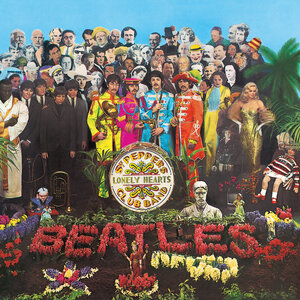


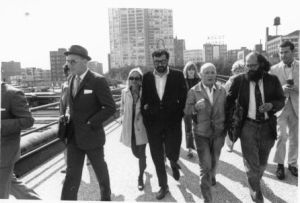


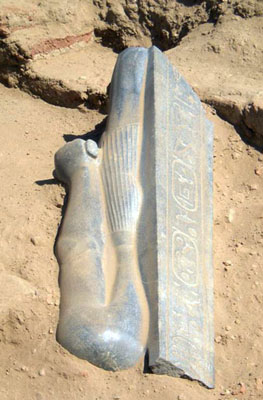


 It’s rather difficult to convey just how famous Petty became – and how fast! This rather obscure Chicago commercial artist was suddenly thrust upon the national stage, literally, overnight. His signature was prominently displayed in all of his advertising work. Jantzen created the “Petty Girl” swimsuit in 1940. Old Gold offered prints of the Petty Girls in their ads. His hands, a brush, and Petty Girl appeared in a watch ad. He was given highly publicized commissions to paint posters for films. The aforementioned portfolio was released. In 1942, when 3700 Chicago high school art students cast their votes for most important artist from their three years of art studies, Petty won first place – as a write-in. He did a cover for Time in 1942 as well as the first in a line of covers for the annual Ice Capades revue. And it would be incorrect to attribute all the fame to the Esquire pin-ups. If anything, it was his national advertising images that got him the most attention – and money.
 It was money that finally severed the Esquire relationship. The money Esquire paid bought less and less of Petty’s time as his advertising career soared.
  Petty had always been a sharp businessman and insisted on retaining all secondary rights to his images as well as the return of his original paintings. He licensed their use on playing cards, on drinking glasses, and elsewhere. At left is from an ad I just found in a 1943 issue of




 When Vera was growing up in Brooklyn, she and her family didn’t have a lot of money, especially nothing for any luxuries like nice furniture. A Chair for My Mother is based on the memory of her mother wishing for and wanting a new chair so much that it put the family finances in trouble as they struggled to pay for the chair in installments. In Vera’s book, she changed what happened to make it a warmer story. The mother, so tired from working all day, brings a big empty jar from the restaurant where she works. Over time, the jar fills up with little savings from here and there. When the chair is finally bought outright, Grandma, Rosa, and Mother all enjoy a rest on its plush and comforting cushions.
 This is
  @inquirerdotnet


_-_Nobel_Laureate_Aaron_Ciechanover.jpg)

 Print
Print  PDF
PDF I’ve written before about the importance of recognizing