Bob Burns Show Titled Easter Fashion With Spike Jones & His City Slickers. Bob Burns was an american film and radio comedian through 1930 and 1940. Original Air Date Was 04/22/1943.
Bob Burns was a well-known national radio and film personality during the 1930s and 1940s. He was known by a variety of titles that referenced his hillbilly origins, such as “The Arkansas Traveler” and “The Arkansas Philosopher.” Burns was a musician and an actor who wove tales of life in the Arkansas hills with his musical performances. He earned his nickname, “Bazooka,” from an instrument he invented and named as a young man in a plumbing shop in Van Buren (Crawford County). The instrument, which was a simple device made of spare gas fittings and a whiskey funnel, eventually lent its name to the World War II anti-tank weapon due to its similar looks and Burns’s popularity among the troops who employed it in combat.
Bob Burns was born Robin William Burn on August 2, 1890, to William Robert Burn, a civil engineer, and Emma Needham; he had one brother. Sources vary as to where he was born, with a few having his birthplace as Van Buren, while most have him born in Greenwood (Sebastian County) and moving with his family to Van Buren when he was three. As a young man, he learned to play brass instruments and, before the age of twelve, was playing with the Queen City Silver Cornet Band in Van Buren. By the age of thirteen, young Burns had formed his own string band and, during a practice session, put together the handcrafted instrument that gave him his nickname. His “bazooka” was a novelty instrument that made the sound of a “wounded moose,” and he practiced until eventually becoming skilled enough to play it in the Queen City Silver Cornet Band. The instrument had a very narrow range and peculiar tone by design. Burns used his simple invention to entertain audiences between yarns.
Eventually, Burns’s ambition led him to audition for the most popular radio station in Los Angeles, California, and he won a non-paying spot on the afternoon radio show The Gilmore Circus as the character “Soda Pop.” His popularity immediately grew along the West Coast.
In 1935, in New York City, Burns was able to persuade Paul Whiteman, a coast-to-coast radio host, to give him an audition on his show, and the young entertainer subsequently became a national celebrity. Before long, he was a regular guest with Rudy Vallee’s very popular radio program. He was compared by many to Will Rogers.
He returned to Los Angeles before the year was out and played with Bing Crosby on NBC’s Kraft Music Hall radio program, with which he remained until 1941. Though Burns had previously appeared in such movies as Quick Millions(1931)and Young As You Feel (1931), it was in 1936 that Burns really launched a motion-picture career with the release of the full-length film Rhythm on the Range, in which he starred along with Bing Crosby, who also enjoyed his first major role in the film. Among his other films were Waikiki Wedding and Mountain Music (1937) and I’m From Missouri (1939).
Though Burns appeared in many films, he is most well known for his radio programs. He continued his rise to fame between 1941 and 1947 with his own popular radio drama, The Arkansas Traveler. The show was based upon the character he had developed over his career and had played in a feature film in 1938 titled The Arkansas Traveler. During the long run of the program, which eventually became The Bob Burns Show, the music of Spike Jones was often included.
Burns’s first marriage was to Elizabeth Fisher on September 22, 1921; she died in 1936. He wed Harriet M. Foster on May 31, 1939, whom he remained married to until his death in 1956. Burns had one child from his first marriage and three from his second.
Burns died in Encino, California, on February 2, 1956, of kidney cancer. He is entombed with his wife at Forest Lawn Memorial Park in Glendale, California. His former house in Van Buren is now a museum.
Burns, Bob. “Bob Burns at Fort Smith Parade, 1946.” Video online at Butler Center AV/AR Audio Video Collection: Bob Burns—Fort Smith Parade (accessed May 7, 2012).
Smith, Ronald L. Who’s Who in Comedy. New York: Facts on File, 1992.
Williams, Nancy, ed. Arkansas Biography: A Collection of Notable Lives. Fayetteville: University of Arkansas Press, 2000.
Denny Elrod
Melbourne, Arkansas
Staff of the Encyclopedia of Arkansas History & Culture
“I have a friend — or had a friend, now dead — Abdus Salam, a very devout Muslim, who was trying to bring science into the universities in the Gulf states and he told me that he had a terrible time because, although they were very receptive to technology, they felt that science would be a corrosive to religious belief, and they were worried about it… and damn it, I think they were right. It is corrosive of religious belief, and it’s a good thing too.”
― Steven Weinberg
_____________
My first response is to recount my correspondence with the famous evolutionist Ernst Mayr (1904-2005) of Harvard. In his letter to me he basically said that there are many chemists and molecular biologists who find the story of gradual evolution of life totally convincing and that he is sticking with them. This is very similar to the approach by Dr. Weinberg and it is an appeal to authority in that they are suggesting that we just accept the brilliant scientists’ point of view because they are brilliant scientists and they are smarter than the rest of us.THERE IS A SIMPLE ANSWER THAT I COULD GIVE to both Dr. Mayr and Dr. Weinberg which is a quote from Adrian Rogers:
Did you know that all atheists are not atheists because of intellectual problems? They’re atheists because of moral problems. You say, “But I know some brilliant people who are atheists.” Well, that may be so, but I know some brilliant people who are not. You say, “I know some foolish people who believe in God.” Well, I know everyone who doesn’t believe in God is foolish.
In other words there are brilliant and stupid people on both sides of the fence and it is not an intellectual issue but a moral one. Let’s take a look at the history of science that was handled down to us from Western Europe and take a closer examination of those great men’s religious views and if their religious views were corrosive to their scientific pursuits? This is the accusation of many modern day evolutionists.
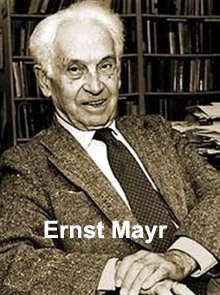
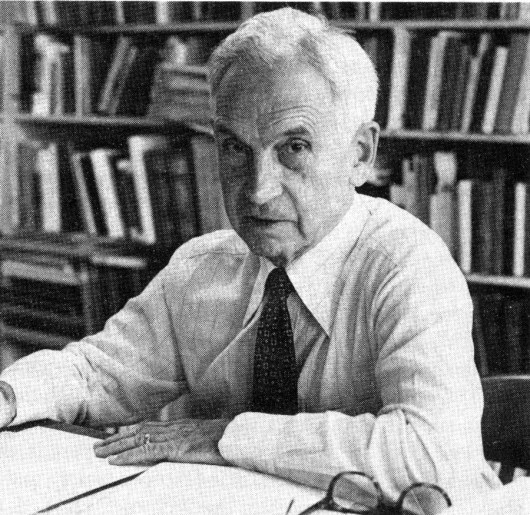
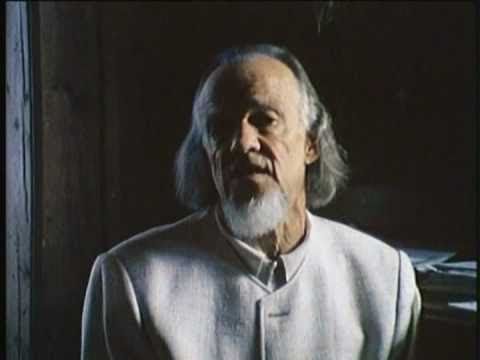
Ernst Mayr (pictured below with the beard)
Bill Gates, John Grisham, James Michener, E. O. Wilson, Ernst Mayr, George Lucas…
Published on May 19, 2012
Bill Gates, John Grisham, James Michener, E. O. Wilson, Ernst Mayr, George Lucas, James Cameron, Larry King, Ian Wilmut, Jane Goodall, Stephen Jay Gould, Tim D. White, Leon Lederman, Timothy Berners-Lee and Bill Gates. Complete and more interview go to websites “www.achievement.org”.
Mais entrevistas e completas no site “www.achievement.org”.
In 1994 and 1995 I had the opportunity to correspond with the famous evolutionist Dr. Ernst Mayr of Harvard. He stated in his letter of 10-3-94, “Owing to your ideological commitments, it is only natural that you cannot accept the cogency of the scientific evidence. However, to a person such as myself without such commitments, the story of the gradual evolution of life as reconstructed by chemists and molecular biologists is totally convincing.”
I responded by pointing out three points. First, Scientific Naturalism is atheistic by definition. Second, many great scientists of the past were Christians, and that did not disqualify their observations and discoveries. Third, the fact that evolution is true does not rule out God’s existence (Harvard’s own Owen Gingerich and many others such as Francis Collins hold to a Creator and evolution).
Let me just spend some time on my second point. Francis Schaeffer in his book “HOW SHOULD WE THEN LIVE?” stated that according to Alfred North Whitehead and J. Robert Oppenheimer, both renowned philosophers and scientists of our era (but not Christians themselves), modern science was born out of the Christian world view. Whitehead said that Christianity is the “mother of science” because of the insistence on the rationality of God. In the article, “Christianity and Technological Advance – The Astonishing Connection,” by T. V. Varughese, Ph.D, he observed:
Without question, “technology” has now become the new magic word in place of the word “science.” Since technology represents the practical applications of science, it is clearly consumer-oriented. Herein is bright economic promise to all who can provide technology.
In terms of technology, our present world can be divided into at least three groups: countries that are strong providers of technology, both original and improved; countries that are mass producers because of cheaper labor; and countries that are mostly consumers. Without a doubt, being in the position of “originating” superior technology should be a goal for any major country. The difficult question, however, is “how.”
An obvious place to start suggests itself. Why not begin with the countries that have established themselves as strong originators of technology and see if there is a common thread between them? The western nations, after the Renaissance and the Reformation of the 16th century, offer a ready example. Any book on the history of inventions, such as the Guinness Book of Answers, will reveal that the vast majority of scientific inventions have originated in Europe (including Britain) and the USA since the dawn of the 17th century. What led to the fast technological advances in the European countries and North America around that time?
The answer is that something happened which set the stage for science and technology to emerge with full force. Strange as it may seem, that event was the return to Biblical Christianity in these countries.
The Epistemological Foundation of Technology
According to Alfred North Whitehead and J. Robert Oppenheimer, both renowned philosophers and scientists of our era (but not Christians themselves), modern science was born out of the Christian world view. Whitehead said that Christianity is the “mother of science” because of the insistence on the rationality of God.[1] Entomologist Stanley Beck,though not a Christian himself, acknowledged the corner-stone premises of science which the Judeo-Christian world view offers: “The first of the unprovable premises on which science has been based is the belief that the world is real and the human mind is capable of knowing its real nature. The second and best-known postulate underlying the structure of scientific knowledge is that of cause and effect. The third basic scientific premise is that nature is unified.”[2] In other words, the epistemological foundation of technology has been the Judeo-Christian world view presented in the Bible…
Perhaps the most obvious affirmation that Biblical Christianity and science are friends and not foes comes from the fact that most of the early scientists after the Renaissance were also strong believers in the Bible as the authoritative source of knowledge concerning the origin of the universe and man’s place in it.[4] The book of Genesis, the opening book of the Bible, presents the distinctly Judeo-Christian world view of a personal Creator God behind the origin and sustenance of the universe (Genesis 1:1; Colossians 1:17; etc.).
Among the early scientists of note who held the Biblical creationist world view are Blaise Pascal (1623-1662), Sir Isaac Newton (1642-1727), and Samuel Morse (1791-1872) – what motivated them was a confidence in the “rationality” behind the universe and the “goodness” of the material world. The creation account in Genesis presents an intelligent, purposeful Creator, who, after completing the creation work, declared it to be very good (Genesis 1:31). That assures us that the physical universe operates under reliable laws which may be discovered by the intelligent mind and used in practical applications. The confidence in the divinely pronounced goodness of the material world removed any reluctance concerning the development of material things for the betterment of life in this world. The spiritual world and the material world can work together in harmony.
References –
Francis A. Schaeffer: How Should We Then Live (Revell, 1976), p. 132.
Henry M. Morris, Biblical Basis for Modern Science (Baker, 1991), p. 30.
Schaeffer, p. 131.
Henry M. Morris, Men of Science, Men of God (Master Books, CA, 1988), 107 pp.
Many of these great scientists of the past were before Darwin, but not all of them. However, all of them were acquainted with secular philosophies and some were in fact opponents of Darwinism (Agassiz, Pasteur, Lord Kelvin, Maxwell, Dawson, Virchow, Fabre, Fleming, etc). Many of them believed in the inspiration and authority of the Bible, as well as in the deity and saving work of Jesus Christ. They believed that God had supernaturally created all things, each with its own complex structure for its own unique purpose. They believed that, as scientists, they were “thinking God’s thoughts after Him,” learning to understand and control the laws and processes of nature for God’s glory and man’s good. They believed and practiced science in exactly the same way that modern creationist scientists do.
And somehow this attitude did not hinder them in their commitment to the “scientific method.” In fact one of them, Sir Francis Bacon, is credited with formulating and establishing the scientific method! They seem also to have been able to maintain a proper “scientific attitude,” for it was these men (Newton, Pasteur, Linnaeus, Faraday, Pascal, Lord Kelvin, Maxwell, Kepler, etc.) whose researches and analyses led to the very laws and concepts of science which brought about our modern scientific age….
To illustrate the caliber and significance of these great scientists of the past, Tables I and II have been prepared. These tabulations are not complete lists, of course, but at least are representative and they do point up the absurdity of modern assertions that no true scientist can be a creationist and Bible-believing Christian.
Table I lists the creationist “fathers” of many significant branches of modern science. Table II lists the creationist scientists responsible for various vital inventions, discoveries, and other contributions to mankind. These identifications are to some degree oversimplified, of course, for even in the early days of science every new development involved a number of other scientists, before and after. Nevertheless, in each instance, a strong case can be made for attributing the chief responsibility to the creationist scientist indicated. At the very least, his contribution was critically important and thus supports our contention that belief in creation and the Bible helps, rather than hinders, scientific discovery.
_______________
My relatives live 3 miles from Spring Hill, Tennessee. When the new General Motors plant opened there I got to go see it. What if I had said, “The assembly line created a beautiful Saturn automobile!” Hopefully, some would have corected me by responding, “The assembly line did not create the automobile. It was first designed by the General Motors engineers in Detroit.” ASSUMING EVOLUTION IS TRUE, IT WOULD STILL ONLY BE THE MECHANISM. DOES EVOLUTION ACCOUNT FOR THE DESIGNER?
NOTABLE INVENTIONS, DISCOVERIES
OR DEVELOPMENTS BY CREATIONIST SCIENTISTS
CONTRIBUTION
SCIENTIST
ABSOLUTE TEMPERATURE SCALE
LORD KELVIN (1824-1907)
ACTUARIAL TABLES
CHARLES BABBAGE (1792-1871)
BAROMETER
BLAISE PASCAL (1623-1662)
BIOGENESIS LAW
LOUIS PASTEUR (1822-1895)
CALCULATING MACHINE
CHARLES BABBAGE (1792-1871)
CHLOROFORM
JAMES SIMPSON (1811-1870)
CLASSIFICATION SYSTEM
CAROLUS LINNAEUS (1707-1778)
DOUBLE STARS
WILLIAM HERSCHEL (1738-1822)
ELECTRIC GENERATOR
MICHAEL FARADAY (1791-1867)
ELECTRIC MOTOR
JOSEPH HENRY (1797-1878)
EPHEMERIS TABLES
JOHANN KEPLER (1571-1630)
FERMENTATION CONTROL
LOUIS PASTEUR (1822-1895)
GALVANOMETER
JOSEPH HENRY (1797-1878)
GLOBAL STAR CATALOG
JOHN HERSCHEL (1792-1871)
INERT GASES
WILLIAM RAMSAY (1852-1916)
KALEIDOSCOPE
DAVID BREWSTER (1781-1868)
LAW OF GRAVITY
ISAAC NEWTON (1642-1727)
MINE SAFETY LAMP
HUMPHREY DAVY (1778-1829)
PASTEURIZATION
LOUIS PASTEUR (1822-1895)
REFLECTING TELESCOPE
ISAAC NEWTON (1642-1727)
SCIENTIFIC METHOD
FRANCIS BACON (1561-1626)
SELF-INDUCTION
JOSEPH HENRY (1797-1878)
TELEGRAPH
SAMUEL F.B. MORSE (1791-1872)
THERMIONIC VALVE
AMBROSE FLEMING (1849-1945)
TRANS-ATLANTIC CABLE
LORD KELVIN (1824-1907)
VACCINATION & IMMUNIZATION
LOUIS PASTEUR (1822-1895)
_______________
2000 Interview with Ernst Mayr, Harvard University
Uploaded on Jul 13, 2008
Interviews conducted in March 2000 at the annual meeting of the American Institute of Biological Sciences on the topic of Challenges for the New Millennium. Museum of Natural History, Smithsonian Institution, Washington DC. See http://www.aibs.org/media-library/ for additional AIBS conference recordings.
With the passing in recent years of the three most revered scientific spokesmen for evolution—Isaac Asimov, Carl Sagan, and now Stephen Jay Gould—Professor Ernst Mayr is left as the unquestioned dean of the modern evolutionary establishment.
Gould, Asimov, and Sagan were all three extremely prolific and brilliant writers. All three were atheistic professors at prestigious eastern universities (Gould at Harvard, Asimov at Boston University, Sagan at Cornell), and all three were effusive and vigorous anti-creationists. They were formidable opponents (but eminently quotable), and we miss them. All three died at relatively young ages.
But that leaves Ernst Mayr, long-time professor of biology at Harvard. Dr. Mayr was born in 1904 and is (at this writing) still very much alive, and nearing the century mark. Dr. Gould recently called him “the greatest living evolutionary biologist and a writer of extraordinary insight and clarity” (in a jacket blurb on Mayr’s latest book).
Mayr’s New Book
And that book is the subject of this article. Its title is intriguing—What Evolution Is (Basic Books, 2001, 318 pages),—for if anyone could speak authoritatively on such a subject, it should be Professor Mayr. In his adulatory foreword, Jared Diamond, another leading modern evolutionist, concludes: “There is no better book on evolution. There will never be another book like it” (p. xii).
That evaluation should give any reader very high expectations. Unfortunately, however, Dr. Mayr first shows his disdain for creationism, not even considering its arguments. He simply says:
It is now actually misleading to refer to evolution as a theory, considering the massive evidence that has been discovered over the last 140 years documenting its existence. Evolution is no longer a theory, it is simply a fact (p. 275).
He dismissed the evidence for creation as unworthy of further discussion. “The claims of the creationists” he says, “have been refuted so frequently and so thoroughly that there is no need to cover this subject once more” (p. 269).
Ignoring Creation Evidence
He himself, however, has apparently not bothered to read any creationist or secular anti-evolutionist scientific books or articles. Or at least that is what one would infer from the fact that none of them or their arguments and evidence are even mentioned in his book.
No mention is made by Mayr, for example, of creationist expositions of the amazing created designs in living systems, nor of the effects of God’s curse on the creation, or of the significance of the great flood in understanding the geologic record. He does not even acknowledge the significance of naturalistic catastrophism or of such scientific concepts as complexity or probability. Current ideas about “intelligent design” are never mentioned. The origins of all things are due to time, chance, and natural selection, no matter how complex and interdependent they may be, according to Professor Mayr, who had been (along with Julian Huxley, George Simpson, and a few others) primarily responsible for the so-called modern evolutionary synthesis (or neo-Darwinism) back in the 1930s and 1940s.
Neither does Mayr seem aware that there are now thousands of credentialed and knowledgeable scientists (including a great many biologists) who reject evolution, giving not even a nod to the Creation Research Society, or to ICR, or any other creationist organization. He does occasionally refer to God or to Christianity, but only in passing, and always in a context that indicates that he does not believe in either one. He, like his three younger colleagues, is an atheist, and this naturally constrains him to ignore any possible theological implications of the origins issues.
The Alleged Evidence for Evolution
Mayr’s new book is beautifully written and does contain much good material, but it will not convert many to evolutionism, even though he does devote a chapter to what he thinks are the evidences for evolution. These evidences are essentially the same as those used 140 years ago by Darwin in the Origin (fossils, comparative morphology, embryological similarities and recapitulation, vestigial structures, and geographical distribution). Mayr adds nothing new to these arguments, ignoring the fact that creationists (and even a number of evolutionists) have long since refuted all of them. He does devote a brief section to the more recent “evidence” from molecular biology. But that also has been vigorously disputed by a number of specialists in this field, especially the supposed evolutionary relationships implied by the molecules. Even Mayr admits that “molecular clocks are not nearly as constant as often believed” (p. 37), but he does not mention any of the numerous contradictory relationships implied by these biochemical studies (e.g., the well-known genomic similarities of humans and bananas).
As do most evolutionists, Mayr spends much time in discussing micro-evolution, whereas modern creationists only reject macroevolution. He devotes five chapters to microevolution and only one to macroevolution. This particular chapter is quite long, discussing many speculative theories about how macroevolutionary changes might be produced, but there is one vital deficiency. He gives no example of any macroevolutionary change known to have happened. In other words, macroevolution seems never to have occurred within the several thousand years of recorded history. Thus, real evolution (as distinct from variation, recombination, hybridization, and other such “horizontal” changes) does not happen at present. Where, we would ask Professor Mayr, are there any living forms in the process of evolutionary change? He gives no examples, of course, because there are none.
As far as pre-human history is concerned, Dr. Mayr does insist that the fossil record documents past evolution. He cites the usual claims—horses, Archaeopteryx, mammal-like reptiles, walking whales, etc.—which are very equivocal, at best, and have all been shown by creationists to be invalid as transitional forms. Instead of a handful of highly doubtful examples, there ought to be thousands of obvious transitional forms in the fossils if evolution had really been occurring. Yet Mayr admits,
Wherever we look at the living biota, . . . discontinuities are overwhelmingly frequent. . . . The discontinuities are even more striking in the fossil record. New species usually appear in the fossil record suddenly, not connected with their ancestors by a series of intermediates (p. 189).
Professor Mayr still says that the fossils are “the most convincing evidence for the occurrence of evolution” (p. 13). Yet he also says that “the fossil record remains woefully inadequate” (p. 69). Thus, as creationists have often pointed out, there is no real evidence of either present or past evolution.
We have repeatedly noted also that the scientific reason why this is so is because real evolution to any higher level of complexity is impossible by the law of entropy, which states the proven fact that every system of any kind “tends” to go toward lower complexity, unless constrained otherwise by some pre-designed external program and mechanism.
Yet Ernst Mayr seems either to ignore or misunderstand this key argument of the creationists. Here is what he says:
Actually there is no conflict, because the law of entropy is valid only for closed systems, whereas the evolution of a species of organisms takes place in an open system in which organisms can reduce entropy at the expense of the environment and the sun supplies a continuing input of energy (p. 8).
And that’s all he says about one of the key arguments against evolution. This ubiquitous dodge of the evolutionists has been discredited again and again by creationists, and one would think that this “greatest living evolutionary biologist” in this “best book on evolution” would at least take notice of our arguments! At least half of America’s population, according to many polls, are creationists, apparently agreeing more with us than with Mayr.
An open system and external energy are, indeed, necessary conditions for a system to grow in complexity, but most definitely are not sufficient conditions. The question is just how does the sun’s energy produce complexity in an open system? The fact is that the application of external heat energy to an open system (such as from the sun to the earth) will increase the entropy (that is, decrease the organized complexity) in any open system, if that’s all there is. This is a basic principle of thermodynamics, and neither Mayr nor any other evolutionist has answered this problem. Evolution seems to be impossible by the known laws of science.
Professor Mayr does not deal with the theological or Biblical evidences, of course. For those who believe in God and the Bible, on the other hand, creation—not evolution—is, to appropriate Mayr’s words, “simply a fact.” Evolution is merely a belief held by many who “willingly are ignorant” (II Peter 3:5) of the strong evidences and arguments for creation, and who don’t even bother to consider them. In the words of the apostle Paul: “Where is the disputer of this world? hath not God made foolish the wisdom of this world?” (I Corinthians 1:20).
When I first began examining the claims of the Book of Mormon, I was an atheist who had just become interested in the person of Jesus. As a skeptic, I understood the importance of corroborative evidence when trying to determine if a witness statement is reliable. I began looking for corroboration related to both the Christian and Mormon scripture. I was immediately struck by the stark contrast between what has been discovered related to Old Testament history and what has been not been discovered related to the alleged history recorded in the Book of Mormon. There’s a reason for the absence of maps in the Mormon collection of scripture. There are no archaeological discoveries of any cities described in the book of Mormon. Worse yet, there aren’t any discoveries of any of the names of characters mentioned in the 1,000 year span of American continental history chronicled in the Book of Mormon (from 600BC to 400AD). I don’t expect archaeology to verify everything recorded in an ancient book, but I do expect it to verify something.
Overarching Generalities Many of the Old Testament accounts bearing strong resemblances to other ancient accounts discovered through the efforts of historians and archaeologists. The Great Flood account in Genesis 6-9, for example, is very similar to Babylonian and Akkadian accounts discovered in the same region of the world. Some of these accounts may even pre-date the writings of Moses, but all describe a catastrophic flood event predating the generation of the authors. In addition, the Sumerian King List records kings who reigned for long periods of time. Following the great flood, this Babylonian document records much shorter reigns, mirroring the life expectancy patterns described in the Old Testament. The 11th tablet of the Babylonian Gilgamesh Epic speaks of an ark, animals taken on the ark, birds sent out during the course of the flood, the ark landing on a mountain, and a sacrifice offered after the ark landed.
In addition to the flood story, there are other non-Biblical accounts recording events found in the Old Testament. The Mesopotamian Story of Adapa tells of a test for immortality involving food, similar to the story of Adam and Eve in the Garden of Eden. Sumerian tablets record the confusion of language as we have in the Biblical account of the Tower of Babel (Genesis 11:1-9). This Sumerian account records a golden age when all mankind spoke the same language. Speech was then confused by the god Enki, lord of wisdom. The Babylonians had a similar account in which the gods destroyed a temple tower and “scattered them abroad and made strange their speech” (Stephen L. Caiger, Bible and Spade, 1936, p. 29). There are many points of agreement in overarching narrative generalities between the Old Testament and the surrounding ancient cultures.
Detailed Specificities
In addition to these generalities, many specific events and historical characters described in the Old Testament have now been confirmed by extra-Biblical sources. Consider the following examples (this list is abbreviated from the work of Dr. Bryant Wood):
The campaign into Israel by Pharaoh Shishak (1 Kings 14:25-26) is recorded on the walls of the Temple of Amun in Thebes, Egypt.
The revolt of Moab against Israel
(2 Kings 1:1; 3:4-27) is recorded on the Mesha Inscription.
The fall of Samaria
(2 Kings 17:3-6, 24; 18:9-11) to Sargon II, king of Assyria, is recorded on his palace walls.
The defeat of Ashdod by Sargon II
(Isaiah 20:1) is recorded on his palace walls.
The campaign of the Assyrian king Sennacherib against Judah
(2 Kings 18:13-16) is recorded on the Taylor Prism.
The siege of Lachish by Sennacherib
(2 Kings 18:14, 17) is recorded on the Lachish reliefs.
The assassination of Sennacherib by his own son
(2 Kings 19:37) is recorded in the annals of his son Esarhaddon.
The fall of Nineveh as predicted by the prophets Nahum and Zephaniah
(2 Kings 2:13-15) is recorded on the Tablet of Nabopolasar.
The fall of Jerusalem to Nebuchadnezzar, king of Babylon
(2 Kings 24:10-14) is recorded in the Babylonian Chronicles.
The captivity of Jehoiachin, king of Judah, in Babylon
(2 Kings 24:15-16) is recorded on the Babylonian Ration Records.
The fall of Babylon to the Medes and Persians
(Daniel 5:30-31) is recorded on the Cyrus Cylinder.
The freeing of captives in Babylon by Cyrus the Great
(Ezra 1:1-4; 6:3-4) is recorded on the Cyrus Cylinder.
The historical record of the Old Testament is not alone in the history it records. There are other ancient records affirming the overarching generalities and specific details of the Old Testament. There are no such corroborative ancient records providing similar verification for the history of the Book of Mormon. It is the singular lonely voice related to the historical narrative it describes. While archaeology continues to corroborate the Old and New Testament, archaeology only exposes the erroneous nature of the Mormon record.
Open letter to President Obama (Part 519) (Emailed to White House on 5-3-13.) President Obama c/o The White House 1600 Pennsylvania Avenue NW Washington, DC 20500 Dear Mr. President, I know that you receive 20,000 letters a day and that you actually read 10 of them every day. I really do respect you for trying to get […]
The Scientific Age Published on Jul 24, 2012 Dr. Schaeffer’s sweeping epic on the rise and decline of Western thought and Culture Francis Schaeffer rightly noted, “These two world views stand as totals in complete antithesis in content and also in their natural results….It is not just that they happen to bring forth different results, […]
The Way of Discovery: A Personal Journey of Faith Henry F. Schaefer III The Scientific Age Uploaded by NoMirrorHDDHrorriMoN on Oct 3, 2011 _______________ Episode VII – The Age of Non Reason ____________________ Episode 8: The Age Of Fragmentation Published on Jul 24, 2012 Dr. Schaeffer’s sweeping epic on the rise and decline of Western thought and […]
The Long War against God-Henry Morris, part 6 of 6 _______________ I have debated with Ark Times Bloggers many times in the past on many different subjects. Here are some of the subjects: communism, morality, origin of evil, and the Tea Party. I have always loved to post about evolution and I have had a chance […]
The Long War against God-Henry Morris, part 5 of 6 _______________ I have debated with Ark Times Bloggers many times in the past on many different subjects. Here are some of the subjects: communism, morality, origin of evil, and the Tea Party. I have always loved to post about evolution and I have had a chance […]
The Long War against God-Henry Morris, part 4 of 6 _______________ I have debated with Ark Times Bloggers many times in the past on many different subjects. Here are some of the subjects: communism, morality, origin of evil, and the Tea Party. I have always loved to post about evolution and I have had a chance […]
The Long War against God-Henry Morris, part 1 of 6 Uploaded by FLIPWORLDUPSIDEDOWN3 on Aug 30, 2010 _________ I have debated with Ark Times Bloggers many times in the past on many different subjects. Here are some of the subjects: communism, morality, origin of evil, and the Tea Party. I have always loved to post about evolution […]
2 Kings 20v20 states that Hezekiah ‘Made the Pool and the conduit and brought water into the city’
and in 2 Chronicles 32v30 that he closed the upper outlet of the waters of Gihon and directed them down to the West side of the City of David.
This refers to the tunnel which connects the ‘Spring of Gihon’, through the rock to the reservoir called the Pool of Siloam.
It was found in 1838 when it was explored by the American traveller, Edward Robinson, and his missionary friend Eli Smith.
They first attempted to crawl through the tunnel from the Siloam end but found that they were not suitably dressed to crawl through the narrow passage. Three days later and dressed in only a wide pair of Arab drawers, they entered the tunnel from the ‘Spring of Gihon’. And advanced much of the way on their hands and knees and sometimes flat on their stomachs, they went the full distance.
They measured the tunnel and found it to be 1750 ft in length. The tunnel was full of twists and turns. The straight line distance from the Spring of Gihon to the Pool of Siloam is only 762 ft, less than half the length of the tunnel.
In 1867 Captain Charles Warren also explored the tunnel. He also excavated ‘Warren’s Shaft. which was the earlier tunnel through which the people of Jerusalem were able to obtain water.
In 1880 a boy, in the tunnel noticed an inscription on the walls and reported it to his school teacher Herr Conrad Schick who made the information available to schollars. It was written in old Hebrew (Canaanite), and said “..when (the tunnel) was driven through, while ….were still…..axes. Each man towards his fellow, and while there were still three cubits to be cut through there was heard the voice of a man calling to his fellow for there was an overlap in the rock on the right. And when the tunnel was driven through, the quarrymen hewed each man towards his fellow, axe against axe, and the water flowed from the spring towards the reservoir for 1200 cubits’.(Ancient Near Eastern Text). In 1890 a vandal entered the tunnel and cut the inscription out of the rock, and it was found, later, in several pieces, in the possession of a Greek in Jerusalem who had bought it off an Arab. At least two other conduits were built from the Spring of Gihon into Jerusalem before the Siloam Tunnel.
There had been a tunnel at that place since David’s time, and possibly before the Israelites conquered the Promised Land, because when David wanted the City as his capital city, the Bible records that it was still in the possession of a tribe of Canaanites called the Jebusites, and David conquered the city from the Jebusites by taking his soldiers from the Spring, through the tunnel, under the walls and into the Jebusite City.
The Gihon Spring is not at the bottom of the valley but is on the Western slope, from the City walls down to the Brook Kidron. (The water comes out of the limestone a little way up the valley slope). This seems to suggest that there is an underground, natural watercourse which collects the rainwater which falls on Mount Moriah (Jerusalem), travels under the City, errupts at the spring Gihon, in the valley of Kidron, only to be taken back into the City through both the ancient and Hezekiah’s tunnel.
There are deep wells within the City, (Captain Warren had to block one of these off, for safety reasons, when he was excavating Hezekiah’s tunnel). These wells could have been one of the reasons why Jerusalem was built there in the first place, way back in antiquity.
Hezekiah’s works were two-fold.
1. To improve the access to the water from the Gihon.
2. To hide the spring Gihon from attackers.
Before Hezekiah, the people in Jerusalem used to walk about 30 yards to a shaft where they lifted up the water using a bucket. (see the OPHEL diagram).
Jerusalem is on a hill and the Siloam Pool is on the lower slope of the hill and is lower than the Gihon Spring.
This picture shows the elevation of Hezekiah’s Tunnel and Warren’s Shaft in relation to the Gihon Spring and the Pool at Siloam.
See this site
Hezekiahs Tunnel
Some accounts say that Edward Robinson discovered Hezehiah’s Tunnel in 1838.
Some accounts say that Sir Charles Warren found Hezekiah’s Tunnel in 1867.
There are THREE known tunnels from the Spring Gihon, and a very good, and scollarly account, which questions whether the tunnel was built by Hezekiah at all, is given at this site
The Biblical Archaeologist
In 1880, a boy found the ‘Siloam Inscription’ in the tunnel entrance to Hezekiah’s tunnel.
This photo of the Pool of Hezekiah was taken in approx 1937
This shows Hexzekiah’s tunnel at the Siloam Exit in 1937
This photo was taken in approx 1890 and shows the Pool of Siloam before the tunnel was discovered.
This shows the Pool of Siloam. The Bible gives the dimensions as 55ft square. In 1937 it measured18ft wide, 53 ft long and 19ft deep. The opening of the tunnel can be seen on the left. Its original height was increased by cutting done in the fifth century AD
If, as it has been confidently asserted, the Spring Gihon (or the Fount of the Virgin) is the only spring in the immediate vicinity of Jerusalem, then it would have been the one that was used by people before King David conquered the City from the Jebusites. That the Jebusies had access to this well or spring from within their walls is clear, but in the end it proved their undoing, for David’s men obtained possession of Jerusalem, (then called Jebus), by means of the ‘Zinnor’, (AV = gutter) i.e. the channel and shaft leading from the well to the City. The spring is intermittent, overflowing periodically, thus pointing to the existence of either a natural chasm or reservoir, or a man-made reservoir (made in antiquity), whose site is unknown. Possibly it is under mount Moriah itself. Tradition has much to say about a deep well within an unfailing water supply beneath the Temple area. It could have been one of the chief reasons why the City was built in that place originally. Somehow this well must have been forgotten and the people had to rely upon the Spring Gihon.
Before the time of Hezekiah, the City of David was dependant upon this source for its water supply in times of danger threatened from without in the same manner that the Jebusites were. The Jebusites were descended from Ophel by means of rock hewn passages with steps and slopes (still in existence) till they reached the top of ‘Warren’s Shaft’, and by means of buckets drew their water from the unfailing well spring some 40 to 50 feet below. At the top of this shaft is still to be seen the iron ring employed for this purpose.
The rock hewn conduit and tunnel discovered by Sir Charles Warren in 1867 conveyed the overflow water from the Spring to the Pool of Siloam. (Before Hezekiah’s time the overflow wate rmust have escaped from the Virgin’s fountain at a lower level than is now possible and flowed out and down the lower end of the Kidron Valley, past the King’s Garden, possibly being the feeder for Joab’s Well.)
Hezekiah, before the Assyrian invasion in 603 BC constructed the tunnel and brought the water from Gihon to a new pool that he had made for the purpose. (2 Kings 20v20). This pool henseforth became known as the King’s Pool (Neh 2v14). When the Assyrian Army approached, Hezekiah stopped the waters from the fountains that were without the City (he concealed their extra mural approaches and outlets.
The ‘Siloam Inscription’ discovered in 1880 on a stone on the right wall of the tunnel about 20ft from its exit into the Pool of Siloam is undoubtedly the work of Hezekiah. An interesting fact with regard to its inscription is that it giveds the length of the conduit in cubits which being compared to the modern measurement in English feet yield a cubit of 17½ inches.
Sir Charles Warren wrote “It is impossible that any of the plans of the aqueduct can be rigidly correct because the roof is so low that your head is horizontal in looking at the compass so that you can only squint at it. It is necessary to remember this warning coming from such a source. Never-the -less the figures as above shown are highly interesting.”
The Siloam Inscription is graven in ancient Hebrew characters similar to those of the Moabite Stone on occupies six lines the translation of which is given below.
Line 1. [Behold] the excavation. Now is the history of the breaking through. While the workmen were still lifting up
Line 2. The pickaxe, each towards his neighbour, and while three cubits still remained to [cut through, each heard] the voice of the other calling.
Line 3. To his neighbour, for there was an excess (or cleft) in the rock on the right.And on the day of the
Line 4. Breaking through the excavators struck, each to meet the other, pickaxe against pickaxe, and their flowed
Line 5. The waters from the spring to the pool over [a space of] one thousand and two hundred cubits. And…
Line 6. Of a cubit was the height of the rock above the heads of the excavators.
The Zondervan Pictoral Bible Dictionary has this
Through the Kidron Valley ran a winter torrent but was dry much of the year. The earliest knowledge of the tunnel dates from 1838 when it was explored by the American traveler and scholar Edward Robinson.and his missionary friend Eli Smith. They first attemped to crawl through the tunnel from the Siloam End but found that they were nt suitably dressed to crawl through the passages. Three days later dressed only in a wide pair of Arab drawers they entered the tunnel from the spring of Gihon and advancing much of the way on their hands and knees and sometimes flat on their stomachs they went the full distance. They measured the tunnel and found it to be 1750ft in length.
The tunnel is full of twists and turns. The straight-line distance from the Spring Gihon to the Pool of Siloam is only 762 feet, less than half the length of the tunnel. Why it follows such a circuitous route has never been adequately explained. Grollenberg suggests that it may have been “to avoid at all costs any interference with the royal tombs, which were quite deeply hewn into the rock on the eastern slope of Ophel” (Atlas of the Bible, New York: Nelson, 1956, p. 93).
In 1867 Captain Charles Warren also explored the tunnel, but neither he nor Robinson and Smith before him, noticed the inscription on the wall of the tunnel near the Siloam end. This was discovered in 1880 by a native boy who, while wading in the tunnel, slipped and fell into the water. When he looked up he noticed the inscription. The boy reported his discovery to his teacher, Herr Conrad Schick, who made the information available to scholars. The inscription was deciphered by A. H.
Sayce, with the help of others. It consists of six lines written in Old Hebrew (Canaanite) with prong-like characters. The first half of the inscription is missing, but what remains reads as follows:
“[… when] (the tunnel) was driven through: while [ . . . ] (were) still [ . . . ] axe(s), each man toward his fellow, and while there were still three cubits to be cut through, [there was heard] the voice of a man calling to his fellow, for there was an overlap in the rock on the right [and on the left]. And when the tunnel was driven through, the quarrymen hewed (the rock), each man toward his fellow, axe against axe; and the water flowed from the spring toward the reservoir for 1,200 cubits, and the height of the rock above the head(s) of the quarrymen was 100 cubits”
(Ancient Near Eastern Texts ed. James B. Prichard, Princeton ‘1 University Press, 1955, p. 321).
In 1890 a vandal entered the tunnel and cut the inscription out of the rock. It was subsequently found in several pieces in the possession of a Greek in Jerusalem who claimed he had purchased it from an Arab. The Turkish officials seized the pieces and removed them to Istanbul where they are today.
The Siloam tunnel was not the only conduit which had been built to bring water from the Spring of Gihon into Jerusalem. At least two others preceded it, but neither was adequately protected against enemy attack. It was probably to one of these former conduits that Isaiah referred in the words, “the waters of Shiloah that flow gently” (Isa. 8:6).
The New Bible Dictionary has this
SILOAM. One of the principal sources of water supply to Jerusalem was the intermittent pool of Gihon (‘Virgin’s Fountain’) below the Fountain Gate (Ne. iii. 15) and ESE of the city. It fed water along an open canal, which flowed slowly along the south-eastern slopes, called Siloah (Is. viii. 6). It followed the line of the later ‘second aqueduct’ which fell only ~ inch in 300 yards, discharging into the Lower or Old Pool (mod. Birket ei~!5Iamra) at the end of the central valley between the walls of the south-eastern and south-western hills. It thus ran below ‘the svall of the pool of Shiloah’ (Ne. iii. 15) and watered the ‘king’s garden’ on the adjacent slopes.
This Old Pool was probably the ‘Pool of Siloam’ in use in New Testament times for sick persons and others to wash (Jn. ix. 7—il). The ‘Tower of Siloam’ which fell and killed eighteen persons – a disaster well known in our Lord’s day (Lk. xiii. 4)—was probably sited on the Ophel ridge above the pool which, according to Josephus (BJ v. 4. 1), was near the bend of the old wall below Ophlas (Ophel). According to the Talmud (Sukkoth iv. 9), water was drawn from Siloam’s Pooi in a golden vessel to be carried in procession to the Temple on the Feast of Tabernacles. Though there are traces of a Herodian bath and open reservoir (about 58 feet x 18 feet, originally 71 feet x 71 feet with steps on the west side), there can be no certainty that this was the actual pool in question. It has been suggested that the part of the city round the Upper Pool (‘Am Silwdn) 100 yards above was called ‘Siloam’, the Lower being the King’s Pool (Ne. ii. 14) or Lower Gihon.
When Hezekiah was faced with the threat of invasion by the Assyrian army under Sennacherib he ‘stopped all the fountains’, that is, all the rivulets and subsidiary canals leading down into the Kedron ‘brook that ran through the midst of the land’ (2 Ch. xxxii. 4). Traces of canals blocked at about this time were found by the Parker Mission. The king then diverted the upper Gihon waters through a ‘conduit’ or tunnel into an upper cistern or pool (the normal method of storing water) on the west side of the city of David (2 Ki. xx. 20). Ben Sira tells how ‘Hezekiah fortified his city and brought the water into its midst; he pierced the rock with iron and enclosed the pool with mountains’ (Ecclus. xlviii. 17—19). Hezekiah clearly defended the new source of supply with a rampart (2 Ch. xxxii. 30). The digging of the reservoir may be referred to by Isaiah (xxii. 11).
In 1880 bathers in the upper pool (also called hirket siht’dn) found the entrance to a tunnel and about 15 feet inside a cursive Hebrew inscription, now in Istanbul, which reads:
” was being dug out. It was cut in the following manner . . . axes, each man towards his fellow, and while there were still three cubits to be cut through, the voice of one man calling to the other was heard, showing that he was deviating to the right. When the tunnel was driven through, the excavators met man to man, axe to axe, and the water flowed for 1,200 cubits from the spring to the reservoir. The height of the rock above the heads of the excavators was 100 cubits’ .
—————————————————————————-
(The Bible as History romances this story but gives an eye witness account of walking through the tunnel. It says…
Two Arab boys were playing there, one of them fell in. Paddling for all he was worth he landed on the other side where a rock wall rose above the pool. Suddenly it was pitch black all round him. He groped about anxiously and discovered a small passage. The name of the Arab boy was forgotten but not his story. It was followed up and a long underground tunnel was discovered. A narrow passage about 2ft wide and barely 5ft high had been cut through the limestone. It can only be negotiated with rubber boots and a slight stoop. Water, knee deep rushes to meet you. For about 500 yards the passage winds imperceptibly uphill. It ends at the Virgin’s fountain, Jerusalem’s Water supply since ancient times. In Biblical days it was called ‘The Fountain of Gihon’. As experts were examining the passage they noticed by the light of their torches old Hebrew letter on the wall. The inscription which was scratched on the rock only a few paces from the entrance at the pool of Siloam reads as follows….”The boring through is completed and this is the story of the boring. While yet they plied the pick each towards his fellow and while yet there were three cubits to be bored through there was heard the voice of one calling to the other that there was a hole in the rock on the right hand and on the left hand, And on the day of the boring the workers in the tunnel struck each to meet his fellow, pick upon pick. Then the water poured from the source to the pool twelve hundred cubits and a hundred cubits was the height of the rock above the heads of the workers in the tunnel.”
The Turkish Government had the inscription prized out before the First World War. It is now exhibited in the museum at Istanbul.
During a siege the number one problem is that of drinking water. The founders of Jerusalem, the Jebusites, had sunk a shaft through the rock to the Fountain of Gihon. Hezehiah directed its water, which would have otherwise flowed into the Kidron Valley through the mountain to the west side of the City. The Pool of Siloam lies inside the second perimeter wall which he constructed.
There was no time to lose. Assyrian troops could be at the gates of Jerusalem overnight. The workmen therefore tackled the tunnel from both ends. The marks of the pickaxes point to each other as the inscription describes.
Oddly enough the canal takes an ‘S’ shaped course through the rock. Why did the workmen not dig this underground tunnel the shortest way to meet each other, that is in a straight line. The wretched job would have been finished quicker. 700ft of hard work would have been saved out of a total of 1700ft.
Locally there is an old story which has been handed down which claims to explain why they had to go the long way round. Deep in the rock between the spring and the pool are supposed to lie the graves of David and Solomon. Archaeologists took this remarkable piece of folk-law seriously and systematically tapped the walls of the narrow damp tunnel. They sank shafts into the rock from the summit, but they found nothing.
———————————————-
When this remarkable Judean engineering feat was excavated the marks of the picks and deviations to effect a junction midway were traced. The tunnel traverses 1,777 feet (others 1,749 feet), twisting to avoid constructions or rock faults or to follow a fissure, to cover a direct line of 1,090 feet. It is about 6 feet high and in parts only 20 inches wide. It has been suggested that this or a similar tunnel was the gutter (sjnndr) up which David’s men climbed to capture the Jebusite city (2 Sa. v. 8). Modern buildings prevent any archaeological check that the upper pool is the ‘reservoir’ (bereicd) of Hezekiah or that from this the waters overflowed direct to the lower pool.
———————————————–
The New Bible dictionary has this…
Below the southern wall, in the bill opposite the village of Silwan (Siloam) where the old Jebusite stronghold stood that afterwards became the city of David, the famous Siloam inscription was found cut in Hebraic characters of the time of King Hezekiah on the rocky side of the water channel made by this monarch, when he “turned the upper water course of Gihon and brought it straight down to the west side of the city of David” The piece of rock bearing this inscription has recently been removed and broken, but was fortunately recovered, and now rests in the Ottoman Museum at Constantinople. Another inscription of almost equal importance was found at the north-west corner of the Haram enclosure, on a tablet that formerly served as a notice forbidding strangers to enter the Temple Courts on pain of death. Built in the wall over the Double Gate on the south side of the Temple Area, is a Latin inscription that originally belonged to a statue of Hadrian. On this, the south side of the city, but further west, below Neby Daud, where excavations are being carried on at the present time, old Jebusite houses have been brought to light. Other work is in contemplation that will probably settle the position of the city of David and open the tombs of the Kings of Judah.
The Kidron is the only stream of water in Jerusalem the people of Jerusalem ever see without setting out on a day’s journey. It appears at rare intervals of one or two years, and then only after a plentiful supply of rain. As soon as the water begins to flow the news spreads over the City and men women and children flock to see it, In their anxiety to see most of the wonder they picnic there all day long and hold a general holiday.
It now runs only from ‘Bir Eyub’ (Job’s Well) when this overflows; but in the days of old, when Hezekiah was King, and compelled to keep constant watch over his Assyrian enemy, Sennacherib, it ran all down the valley from Ain Umm ed Deraj (Spring of the Mother of Steps), the Virgin’s Fountain, and was known as ‘the brook that overflowed in the midst of the land’. (2 Chron 32v4).
Its course was, however, perverted by the primitive Jewish Engineers in order to provide for the wants of the City, and cut off the water supply of the besieging army. (see 2 Chron 32v30).
“The same Hezekiah also stopped up the upper watercourse of Gihon and brought it straight down to the west side of the City of David”.
The channels that were made for this purpose have since been found and one contained the famous Siloam inscription, one of the most valuable and interesting ever discovered. It has lately been removed and broken but a photograph of a squeeze with a translation is sold by the Palestine Exploration Fund. This practically settles the site of the ‘City of David’. ‘the stronghold of Zion’, the hill above the spring through which these channels were cut from the Virgin’s Fountain, (the upper watercourse of Gihon).in the Kedron Valley.on the East to the ‘King’s Pool.’ ‘The Pool of Hezekiah’ now the ‘Pool of Siloam’ in the Tyropean Valley on the ‘west side’.
The upper watercourse of Gihon that played such an important part in the reign of Hezekiahis an intermittent spring in the Kedron Valley below the southern wall of the City. It is now known to Europeans as the ‘Virgin’s Fountain. And to the natives as ‘Ain Umm ed Deraj’. The peasants call it also the ‘Dragon’s Well’ because they believe a dragon lives in the bottom who swallows up the water, which can only escape when he is asleap. This spring has been a subject of many a conroversy, and is still, but has fairly proven to be the ‘Upper Watercourse of Gihon’, and is claimed by some to be ‘En Rogel’. mentioned in Joshua 15v7.and again in 18v16 as well.
“And the border came down to the end of the mountain that lieth before the valley of the son of Hinnom to the side of Jebusi on the South and descended to En Rogel
The identification of the large stone near the ‘Virgin’s Fountain’ on the rocky side of the village of Silwan (Siloam) by M. Clermont-Gannneau now called in Arabic ‘Zehwele’ with the ‘stone of Zoheleth’ naturally assisted in identifying this as the mark of the tribal border of Judah and Benjamin.
But, unfortunately, its position does not answer the requirements of the text quoted above, “to the end of the mountain that lieth before the valley of Hinnom to the side of Jebusi on the south.” “The end of the mountain” is lower down the valley, below the Pool of Siloam, where the Tyropeon joins the Kedron, and near to this is “Bir Eyub” (Job’s Well), “before the valley of the son of Hinnom.”
Before the water of the “upper watercourse of Gihon” was turned by the Jewish king to the Pool of Siloam (the lower pool of Gihon’), itflowed straight down the valley to Job’s Well (En Rogel), and watered the King’s gardens that lay between, where now the best vegetables are grown for the Jerusalem market.
Job’s Well (Bir Eyub), or, as it is often termed, Joab’s Well, on account of its identification as En Rogel, has never been properly examined. It was opened by the Crusaders in 1184 A.D.,and during the 15th and 16th centuries was known as the well of Nehemiah. There can be no doubt that it is in some way connected with an intermittent spring, as the flow from it after heavy rains is more than enough to empty the well itself. The hillside on the east of this well has the same rocky character as that above the Virgin’s Fountain When Adonijah was making his feast (1 Kings 1v9), on being proclaimed King, the noise of the revellers was heard in the city. So Bathsheba, the mother of Solomon, went to the aged King David, and told him what was taking place, reminding him at the same time of his promise of the kingdom for her son. After seeing the prophet Nathan, he said: “Cause Solomon, my son, to ride upon mine own mule and bring him down to Gihon.” He was there anointed King, and the sound of rejoicing that went through the city was heard also by Adonijah and his adherents, but a bend in the valley hid the scene from view. Soon, however, the news was carried to him that Solomon had been anointed king in Gihon. This could very easily have been the lower Gihon if the En Rogel is the “Upper Gihon,” as one is on the eastern side of the hill, and the other on the “west side.”
(See 1 Kings 1.)
The most reasonable conclusion to be drawn is that Bir Eyub is En Rogel, and the spring further up the valley, Virgin’s Fountain, is the upper watercourse of Gihon, The pool on the “west side” of the hill, that separates the Kedron Valley from the Tyropeon, is the lower pool of Gihon, the pool of Hezekiah,’ “King’s Pool” (of Nehemiah), and the pooi of Siloam, in the time of our Saviour.
See (Joshua 15. 7 and 17v16, 2 Chron. 17v4-30, I. Kings 1)
The Brook Kedron (2 Sam. 15v23, 1. Kings 15v13, 2 Kings 23v6, 2. Chron. 29v16, Jer. 31v40, John 18v1)
is now a dry torrent bed, except what is seen in the picture, and that, as before mentioned, appears only once or twice in as many years. It runs along the eastern side of Jerusalem, commencing some distance to the north-east, broad and shallow at first, deepening only as it separates the city from the slope of the Mount of Olives. Between the south-east corner and the village of Silwan (Siloam) it becomes a deep ravine, widening out again towards the Virgin’s Fountain (Mn Umm ed Deraj) into the King’s gardens, where it is joined, after passing the Pool of Siloam on the west, by the Valley of Hinnom, close to Bir Eyub, and afterwards pursues its course towards the wilderness of the Dead Sea, as Wady en Nar, i.e., the Valley of Fire.
__________________
The Bible and Archaeology – Is the Bible from God? (Kyle Butt 42 min)
I have gone back and forth and back and forth with many liberals on the Arkansas Times Blog on many issues such as abortion, human rights, welfare, poverty, gun control and issues dealing with popular culture. Here is another exchange I had with them a while back. My username at the Ark Times Blog is Saline […]
I have posted many of the sermons by John MacArthur. He is a great bible teacher and this sermon below is another great message. His series on the Book of Proverbs was outstanding too. I also have posted several of the visits MacArthur made to Larry King’s Show. One of two most popular posts I […]
I have posted many of the sermons by John MacArthur. He is a great bible teacher and this sermon below is another great message. His series on the Book of Proverbs was outstanding too. I also have posted several of the visits MacArthur made to Larry King’s Show. One of two most popular posts I […]
Prophecy–The Biblical Prophesy About Tyre.mp4 Uploaded by TruthIsLife7 on Dec 5, 2010 A short summary of the prophecy about Tyre and it’s precise fulfillment. Go to this link and watch the whole series for the amazing fulfillment from secular sources. http://www.youtube.com/watch?v=qvt4mDZUefo ________________ John MacArthur on the amazing fulfilled prophecy on Tyre and how it was fulfilled […]
John MacArthur on the Bible and Science (Part 2) I have posted many of the sermons by John MacArthur. He is a great bible teacher and this sermon below is another great message. His series on the Book of Proverbs was outstanding too. I also have posted several of the visits MacArthur made to Larry […]
John MacArthur on the Bible and Science (Part 1) I have posted many of the sermons by John MacArthur. He is a great bible teacher and this sermon below is another great message. His series on the Book of Proverbs was outstanding too. I also have posted several of the visits MacArthur made to Larry […]
Adrian Rogers – How you can be certain the Bible is the word of God Great article by Adrian Rogers. What evidence is there that the Bible is in fact God’s Word? I want to give you five reasons to affirm the Bible is the Word of God. First, I believe the Bible is the […]
Is there any evidence the Bible is true? Articles By PleaseConvinceMe Apologetics Radio The Old Testament is Filled with Fulfilled Prophecy Jim Wallace A Simple Litmus Test There are many ways to verify the reliability of scripture from both internal evidences of transmission and agreement, to external confirmation through archeology and science. But perhaps the […]
I have gone back and forth and back and forth with many liberals on the Arkansas Times Blog on many issues such as abortion, human rights, welfare, poverty, gun control and issues dealing with popular culture. Here is another exchange I had with them a while back. My username at the Ark Times Blog is […]
Here is some very convincing evidence that points to the view that the Bible is historically accurate. Archaeological and External Evidence for the Bible Archeology consistently confirms the Bible! Archaeology and the Old Testament Ebla tablets—discovered in 1970s in Northern Syria. Documents written on clay tablets from around 2300 B.C. demonstrate that personal and place […]
“Ev’ry Time We Say Goodbye” is a song with lyrics and music by Cole Porter and published by Chappell & Company. It was introduced in 1944 in Billy Rose‘s musical revue Seven Lively Arts. In the phrase “change from major to minor”, Porter begins with an A♭ major chord and ends with an A♭ minor one, matching the words and music.[1] The song has since become a jazz standard after gaining popularity in the late 1950s and early 1960s. Many artists have replaced the apostrophe in “ev’ry” with an “e”.
Notable recordings
Dave Barbour Trio – The Very Thought of You: Decca Records 1951-57
Cole Porter “Let’s Do it, Let’s Fall in Love” in the movie MIDNIGHT IN PARIS Midnight in Paris – Let’s Do It Let’s do it : Cole Porter.( Midnight in Paris ) Celebrate Wikipedia Loves Libraries at your institution in October/November. Let’s Do It, Let’s Fall in Love From Wikipedia, the free encyclopedia Jump to: […]
The song used in “Midnight in Paris” I am going through the famous characters that Woody Allen presents in his excellent movie “Midnight in Paris.” By the way, I know that some of you are wondering how many posts I will have before I am finished. Right now I have plans to look at Fitzgerald, Heminingway, Juan […]
The scepter shall not depart from Judah
Nor the ruler’s staff from between his feet,
Until Shiloh comes,
And to him shall be the obedience of the peoples. (Genesis 49:10).
The promise of kingship from the line of Judah had a long tradition, going back all the way to the prophecy of Jacob. Reuben, the firstborn of Jacob, had sinned against his father and lost the birthright. Simeon and Levi had also disqualified themselves from leadership. This promise of leadership had come to Judah.
Judah was the tribe from which David had come. Because of this, when the other tribes split off and went their own way, Judah remained faithful to the lineage of David. Even though Jerusalem was thought of as a neutral city, it still lay within the boundaries of the lands of Judah. Furthermore, Judah had been exempted from the forced labor which Solomon demanded of the rest of Israel.
The land of Judah was geographically divided from the rest of Israel by the deep valley of Sorek. It was bordered in the east by the Dead Sea, on the west by the lands of the Philistines and in the south by Edom and the Sinai Desert.
The history of the northern and southern kingdoms would run in parallel courses. Though both of these kingdoms would see periods of rebellion against the Lord, Judah’s history would be marked by occasional periods of repentance and return.
SOUTHERN KINGDOM OF JUDAH
CATEGORY
NORTHERN KINGDOM OF ISRAEL
19 Kings, 1 Queen
Kings
19 Kings
Jerusalem
Capital
Samaria
1 Dynasty – the line of David
Dynasties
5 Dynasties and several independent kings.
Judah & Benjamin
Tribes
10 Northern Tribes.
Most were unstable; some were good & some were bad.
Character of the Kings
All were bad, but only Ahab and Ahaziah were Baal worshipers.
By Babylon in 586 B.C.
Conquered
By Assyria in 721 B.C.
Returned to the land.
Afterward
No return.
REHOBOAM OF JUDAH
Rehoboam was the son of Solomon who found himself ruling, not over Israel, but only over the southern kingdom of Judah.
1. Rehoboam.
Now Rehoboam the son of Solomon reigned in Judah. Rehoboam was forty-one years old when he became king, and he reigned seventeen years in Jerusalem, the city which the Lord had chosen from all the tribes of Israel to put His name there. And his mother’s name was Naamah the Ammonitess. (1 Kings 14:21).
Rehoboam was the son of Solomon. His mother was of the country of Ammon – presumably one of the 700 foreign wives which Solomon had married. Theirs had been a political marriage and it had produced this young man.
The parallel account in 2 Chronicles 11:17 tells us that the people of Judah served the Lord for three years. It was only after Rehoboam felt himself secure and established as king of Judah that he led the nation in forsaking the way of the Lord (2 Chronicles 12:1).
Rehoboam’s story is one of good beginnings but poor endings. It is a pattern which we shall see repeated in a number of the kings of Judah. It began with Solomon. And now it is seen in his son.
It is often seen in people today. The Christian life has been likened to a race. Paul said that we all run. But it is not a sprint. It is a marathon. We are in for the long haul. We are running for eternity. No one ever won only the first half of a race. You only win if you cross the finish line.
a. The Sins of Judah.
Judah did evil in the sight of the Lord, and they provoked Him to jealousy more than all that their fathers had done, with the sins which they committed.
For they also built for themselves high places and sacred pillars and Asherim on every high hill and beneath every luxuriant tree.
There were also male cult prostitutes in the land. They did according to all the abominations of the nations which the Lord dispossessed before the sons of Israel. (1 Kings 14:22-24).
Judah actually seems to have descended more readily into idolatry and the worship of false gods than did Israel. This process had begun with Solomon and the pagan practices of his foreign wives. It now returned with a vengeance.
High Places:
It was the custom throughout the entire fertile crescent to conduct worship in a “high place.” The origin of this practice may go back all the way to the Tower of Babel.
Sacred Pillars:
This is different from a support pillar or column. This is an obelisk. They were used by the Canaanites as fertility symbols.
Asherim:
An Asherah was a tree which was used for worship. Asherim (plural) were an entire grove of such trees.
Male Cult Prostitutes:
A part of the pagan worship involved homosexual acts within the places of worship. It was thought that participation in such actions would incite the various gods who ruled over the wind and the rain to participate and thus bring fertility to the land.
The people of Israel had been forbidden from participating in these pagan practices. But now they entered into them with a passion. As a result, the Lord soon brought judgment upon the land.
b. Invasion from Egypt.
Now it happened in the fifth year of King Rehoboam, that Shishak the king of Egypt came up against Jerusalem.
He took away the treasures of the house of the Lord and the treasures of the king’s house, and he took everything, even taking all the shields of gold which Solomon had made.
So King Rehoboam made shields of bronze in their place, and committed them to the care of the commanders of the guard who guarded the_doorway of the king’s house.
Then it happened as often as the king entered the house of the Lord, that the guards would carry them and would bring them back into the guards’ room. (1 Kings 14:25-28).
The 21st Dynasty of Egypt had been friendly to Israel to the point of Pharaoh’s daughter being wedded to King Solomon. However these good relations did not last past Solomon’s death.
Now there came a Libyan to the throne who founded a new ruling family – the 22nd Dynasty. He is known in historical records as Sheshonq (the Biblical Shishak). He was able to reunify the country which had been previously divided and brought a certain amount of stability to the crown. He then turned his attention to foreign policy, renewing an alliance with Byblos and regaining control of Nubia.
It is likely this same Sheshonq who had given refuge to such enemies of Israel as Jeroboam and Hadad the Edomite.
Now he marched into Judah. Archaeological records list 150 cities which he claimed to have taken in this campaign. Among the cities which were looted was Jerusalem and its temple.
Egyptian records list the thousands of pounds of gold and silver that the son of Shishak offered to the Egyptian gods following his raid into Canaan. This was the plunder which he had taken from Solomon’s Temple.
From this time on, the reign of Rehoboam would be only a shadow of its former glory. The golden shields of Solomon were replaced by shields of bronze, a less-valued commodity. The old forms continued, but they lost some of their luster.
2. Abijam (913-911 B.C.).
Rehoboam was followed by his son, Abijam. The reader should take care not to confuse Abijah, son of Jeroboam with Abijam, son of Rehoboam. Like his father before him, Abijam followed Yahweh sometimes and even showed a certain amount of faith when he was in trouble; but he worshiped other gods and was not consistent.
Judah and Israel went to war during his reign. At the Battle of Zemaraim, Israel ambushed the army of Judah in a pincer movement and with a force that outnumbered Judah by a factor of two to one.
In the midst of this situation, the Lord gave the victory to Judah. This ended the war as Jeroboam retreated back to Israel.
THE FIRST REFORMATION PERIOD
1. Asa (911-870 B.C.).
Abijam was succeeded by his son Asa. He was the first godly king of the Divided Monarchy. With his advent began a period of national reform in Judah.
a. Religious reform.
Asa did what was right in the sight of the Lord, like David his father. (1 Kings 15:11).
Throughout the rest of the book of Kings, we will read of each of the kings of Judah a summary statement of the way in which he conducted himself. This summary will say one of two things.
(1) He walked in the sins of his fathers.
Or…
(2) He walked right in the sight of the Lord like David.
Asa tore down all of the heathen temples and altars in Judah, leading the Jews back into the exclusive worship of Yahweh and renewing the covenant promises. He even removed his own mother from the office of queen because of her idol worship.
He also put away the male cult prostitutes from the land and removed all the idols which his fathers had made.
He also removed Maacah his mother from being queen mother, because she had made a horrid image as an Asherah; and Asa cut down her horrid image and burned it at the brook Kidron. (1 Kings 15:12-13).
The writer of Kings make no mention of the prophet Azariah (2 Chronicles 15:1-7) who was a moving influence in the life of Asa. There are times when God will use a man or a woman as an influence for good behind the scenes.
b. Military reform.
He guaranteed peace and security for Judah by building up his military machine. When an army of Ethiopians threatened to invade from the south, they were beaten off.
c. War with Israel.
The reforms which Asa brought about in Judah served as a beacon for the worship of the Lord to all Israelites. He gave an open invitation to members of every tribe of Israel to come and to worship in the Temple.
And he gathered all Judah and Benjamin and those from Ephraim, Manasseh and Simeon who resided with them, for many defected to him from Israel when they saw that the Lord was with him. (2 Chronicles 15:9).
This was seen as a threat to the continued security of the Northern Kingdom and the response was an embargo against all traffic coming from or going into Judah.
Now there was war between Asa and Baasha king of Israel all their days.
Baasha king of Israel went up against Judah and fortified Ramah in order to prevent anyone from going out or coming in to Asa king of Judah. (1 Kings 15:16-17).
Baasha was a usurper to the throne of Israel. He gained the throne by murdering all of the dynasty of Jeroboam. He invaded Judah and captured the city of Ramah, a scant 5 miles north of Jerusalem. There are several different cities in Palestine by this name. The name means “high place.” Those towns with this name were all built on top of a mountain.
The purpose of Baasha’s taking of this city was to prevent anyone from going out or coming in to Asa king of Judah. It was not enough for Baasha to walk in the path of idolatry. He also wanted to stop others from worshiping the Lord. Evil is like that. Evil always wants company.
d. Alliance with Aram.
Then Asa took all the silver and the gold which were left in the treasuries of the house of the Lord and the treasuries of the king’s house, and delivered them into the hand of his servants. And King Asa sent them to Ben-hadad the son of Tabrimmon, the son of Hezion, king of Aram, who lived in Damascus, saying, 19 “Let there be a treaty between you and me, as between my father and your father. Behold, I have sent you a present of silver and gold; go, break your treaty with Baasha king of Israel so that he will withdraw from me.”
So Ben-hadad listened to King Asa and sent the commanders of his armies against the cities of Israel, and conquered Ijon, Dan, Abel-beth-maacah and all Chinneroth, besides all the land of Naphtali. (1 Kings 15:18-20).
Instead of turning to the Lord for help, Asa responds to the incursion by soliciting assistance from the King of Aram (modern Syria), the country to the northeast of Israel.
The Aramaeans had been long-standing enemies of Israel. David had subdued the Aramaean tribes, occupying Damascus (2 Samuel 8:6), but in the days of Solomon, Rezon ben Eliada had retaken Damascus, being “Israel’s adversary as long as Solomon lived” (1 Kings 11:23-25).
Now there was a new dynasty in Damascus headed by Ben-Hadad (there will be several kings of Damascus with this name. Hadad was the name one of the pagan deities of that day).
Asa stripped the treasures of the Temple and used them to bribe Benhadad into invading Israel from the north.
For relying upon a Syrian alliance instead of upon Yahweh, Asa was rebuked by the prophet Hanani. Instead of repenting, Asa responded by throwing Hanani. into prison.
As a result, the Lord afflicted him with political unrest and with a disease which affected his feet. Even then, he refused to return to the Lord.
2. Jehoshaphat (870-848 B.C.).
Jehoshaphat became co-regent with his father as his health continued to fail. Once his father died, Jehoshaphat became king. He followed his father s early example in worshiping Yahweh.
a. Religious policy.
Jehoshaphat sent officials throughout Judah accompanied by Levites to teach the Law of the Lord to the people.
b. Military policy.
He had a strong military policy, fortifying the cities of Judah and even establishing garrisons within territories belonging to Ephraim. He was able to field an army of nearly a million men. Both the Philistines and the Arabians were vassal states to Judah during this period.
It was during his reign that Assyria was repulsed by a coalition of Israel, Aram and a number of other countries at Qarqar.
c. Alliance with Israel.
When Ahab approached him with the offer of an alliance, Jehoshaphat was agreeable. The alliance was sealed by the marriage of Ahab s daughter to Jehoshaphat’s son.
Later in the same year, Ahab and Jehoshaphat marched against Damascus and were defeated. Ahab was killed in the battle and Jehoshaphat barely escaped.
d. Repentance.
Returning to Judah, Jehoshaphat was rebuked by the prophet Jehu for having entered into the alliance with an enemy of Yahweh. Jehoshaphat repented of his sin and continued his religious reforms, establishing a judicial system invested in the Levites and priests.
3. Jehoram (848-841 B.C.).
Jehoshaphat had several sons. Jehoram, as the firstborn, was made co-regent for several years and then became king upon the death of his father.
a. Murder of his brothers.
The first thing that Jehoram did upon coming to the throne was to murder all of his brothers and other high-ranking nobles so that none might pose a threat to his authority.
b. Apostasy.
Jehoram had married Athaliah, daughter to Ahab and Jezebel. He followed after his wife in the Canaanite religious system. Shrines to Baal were set up in the high places around Judah.
c. Military defeats.
During his reign, Edom revolted and became an independent state. Perceiving this weakness, the Philistines and the Arabs raided Judah, murdering and pillaging. They even plundered the king’s own palace and put to death most of his sons.
Ultimately, the Lord judged Jehoram with a disease which caused his bowels to fall out. He died a terrible and painful death.
4. Ahaziah (841 B.C.).
The young son of Jehoram came to the throne at the death of his father. Like his father and mother, Ahaziah worshiped false gods and practiced the Canaanite cultic rituals.
He joined with his uncle Joram, king of Israel, in a war against Aram. The battle ended in defeat and Ahaziah was wounded. He was convalescing in Jezreel when a palace revolt broke out in Israel, led by Jehu. Ahaziah sought refuge in Samaria, but was captured, brought before Jehu, and put to death.
5. Athaliah (841-835 B.C.).
Athaliah, the queen mother used this opportunity to seize power, murdering all of her children and grandchildren. However, one of her daughters took her infant nephew and hid him in the temple, a building that had been all but deserted by the Jews. His name was Joash.
The young crown prince Joash was raised in the temple by Jehoida, a faithful priest. After six years, a conspiracy successfully placed the young prince upon the throne. Athaliah was put to death.
THE SECOND REFORMATION PERIOD
The Second Reformation Period was to see only a partial return from the paganism that was beginning to be entrenched in Judah.
1. Joash (835-796 B.C.).
Joash was only 7 years old when he came to the throne of Judah. For many years, Jehoida, the high priest who had raised him, was the ruling power of Judah.
a. Policies during Jehoida’s life.
As long as Jehoida lived to guide the young king, the nation prospered. Under his direction, the Temple was cleansed and restored. The sacrifices which had been abandoned were reinstated.
b. Policies after Jehoida’s death.
After the death of Jehoida, Joash was swayed by the opinion of the young liberal party and began to worship false gods.
He even went so far as to have Zechariah, the son of Jehoida, stoned when he spoke out against this idolatry.
c. Invasion from Aram.
The Arameans invaded Judah and Jerusalem, pillaging the city and killing many of the king’s officers. What was remarkable about this invasion is that the victorious invaders were vastly outnumbered by the military forces of Judah.
Indeed the army of the Arameans came with a small number of men; yet the Lord delivered a very great army into their hands, because they had forsaken the Lord, the God of their fathers. Thus they executed judgment on Joash. (2 Chronicles 24:24).
This military defeat was a judgment from the Lord against Judah and her wayward king. Joash was finally assassinated by his own servants.
2. Amaziah (796-767 B.C.).
Amaziah was 25 years old when he came to the throne, he was to rule Judah for the next 29 years.
a. Religious policies.
Amaziah was a good king, obeying all of the commands of Yahweh during the first part of his reign.
b. Spiritual failure.
After a successful expedition into Edom, he brought back the idols of the Edomites and set them up for display. It was not long before they were being worshiped.
c. Military defeat.
Soon after this, Amaziah was defeated in battle against the Israelites of the Northern Kingdom. The Israelites led Amaziah in chains back to Judah. They pillaged Jerusalem, tearing down a portion of the wall and looting the gold and silver in the Temple.
When a conspiracy was uncovered, Amaziah fled to Lachish to escape assassination. The conspirators followed him there and put him to death.
Apparently this was not considered to be a move against the Davidic Dynasty, but rather was designed to place a worshiper of Yahweh upon the throne (2 Chronicles 25:27).
3. Uzziah (767-740 B.C.).
Uzziah had already served as co-regent with his father for 23 years when he was crowned king of Judah.
a. Religious policy.
Like his father before him, Uzziah began his reign with a return to Yahweh.
b. Military policy.
Uzziah concentrated on building up a very strong, professional military. He used this to conquer the Philistines and the Arabians.
He also built up much of Jerusalem, adding towers, gates and war machines to protect the city.
c. The Beth-Yahweh Ostraca.
Ostraca is a piece of broken pottery. It was used as scrap paper. In this case, it served as a receipt. Dated between the 7th and 9th century B.C., it is not known where it was originally discovered, but it somehow made its way into the private collection of Shlomo Moussaieff (London, England).
Translation reads as follows: According to your order, Ashyahu the king, to give by the hand of [Z]echaryahu silver of Tarshish for the house of Yahweh 3 shekels.
Language
Hebrew
Medium
Ostracon (pottery)
Size
8.6 centimeters high
10.9 centimeters wide
5 lines of writingGenreTemple receiptDate7th-9th century B.C.Current LocationPrivate collection of Shlomo Moussaieff (London, England)
4. Jotham (740-732 B.C.).
Jotham followed his father’s example by obeying the Law of the Lord. However, it is notable that he never entered the Temple. There are several possible reasons for this.
He may have been showing respect for his father who had been judged for his sin in the Temple. Or he may have been superstitious about entering the Temple, thinking that he might also contract leprosy.
As a result of Jotham’s obedience, Judah prospered in both the areas of military strength as well as in the economy.
5. Ahaz (732-716 B.C.).
The name Ahaz is shortened from Jehoahaz, meaning Possession of Yahweh. Perhaps the reason that his name was shortened was that he was so rebellious to the Lord. Ahaz was the complete opposite of his father.
a. Religious policy.
As soon as he came to the throne, Ahaz began to follow the Canaanite religious practices, even sacrificing his own children to the false gods.
b. Military defeats.
Because of the sins of Ahaz, the Lord allowed the Philistines, the Edomites and the Syrians to invade and conquer the border cities of Judah. It was at this time that Judah lost the port of Elath on the Gulf of Aqaba.
c. Alliance with Assyria.
Because of these military threats, Ahaz made an alliance with the Assyrians, robbing the Temple to send money to bribe Tiglath-Pileser. In return, the Assyrians offered to attack Aram and Israel (they had been planning to do so anyway).
Isaiah confronted Ahaz and advised him to trust in the Lord instead of Assyria. He even offered to give Ahaz a sign from the Lord to prove the truth of his words. When Ahaz refused to choose a sign, the Lord Himself chose one, promising that a child world be born and that, before the child had reached a certain age, the kings of Aram and Israel would be overthrown.
It is in the midst of this prophecy that Isaiah tells of a Child whose name would be Immanuel, literally “God with us.”
d. Destruction of Samaria.
Tiglath-Pileser 3rd died in 727 B.C. and Israel took this opportunity to revolt, stopping payment of the annual tribute. Ahaz wisely continued to pay the required tribute as the Assyrians swept down from the north, laying siege to the capital city of Samaria. For three years, Samaria held out under the siege until famine and disease had decimated the population. When the city fell in 721 B.C., the surviving population was deported. The Northern Kingdom of Israel had ceased to exist.
The Jews of the Southern Kingdom were terrified as they watched the inhuman cruelties which the Assyrians inflicted upon their captives.
Now. the Assyrians began to eye the Southern Kingdom of Judah. It was only a matter of time before they attacked.
THE THIRD REFORMATION PERIOD
The Third Reformation Period took place at a time when Judah seemed to be on the verge of extinction. The power of the entire Assyrian Empire was poised about the tiny Kingdom.
1. Hezekiah (715-686 B.C.).
Hezekiah was 25 years old when he came to the throne. The prophet Isaiah had already been ministering for 35 years. With the advent of Hezekiah, a great revival began.
a. Religious reform.
Hezekiah began his reign by destroying all of the Canaanite idols and then repairing the Temple of God.
b. Envoys from Merodach-baladan.
Merodach-baladan had managed to snatch Babylon and hold it from the Assyrians. Looking for allies against Assyria, he sent envoys to Hezekiah, king of Judah. In a moment of pride, Hezekiah foolishly showed these envoys all of the treasures of the temple. As a result, the word got out of the great wealth that was stored up in Jerusalem.
c. Solicitations to rebellion.
Philistia, Egypt and Ethiopia sent envoys to Hezekiah, urging him to join in a rebellion. Isaiah warned him not to put his trust in Egypt.
And the Lord said, “Even as My servant Isaiah has gone naked and barefoot three years as a sign and token against Egypt and Cush, 4 so the king of Assyria will lead away the captives of Egypt and the exiles of Cush, young and old, naked and barefoot with buttocks uncovered, to the shame of Egypt.
“Then they shall be dismayed and ashamed because of Cush their hope and Egypt their boast.” (Isaiah 20:3-5).
Hezekiah listened to the warning of Isaiah and continued to pay homage to Assyria.
d. Revolt against Assyria.
When Assyria was drawn into an extended conflict with Merodach-baladan, Hezekiah was persuaded to join Egypt; in a revolt. The cities of Philistia also joined in, along with Tyre and Sidon.
In 701 B.C. Sennacherib conducted a massive campaign against this western alliance. The Phoenician cities each submitted or were destroyed. The Egyptians were routed and Judah was left to face Sennacherib alone.
Hezekiah offered to pay any tribute in return for peace. Sennacherib set the price at 300 talents of silver and 30 talents of gold (in that day even a single talent was considered to be a fortune).
And Hezekiah gave him all the silver which was found in the house of the Lord, and in the treasuries of the king’s house.
At that time Hezekiah cut off the gold from the doors of the temple of the Lord, and from the doorposts which Hezekiah king of Judah had overlaid, and gave it to the king of Assyria. (2 Kings 18:15-16).
Instead of keeping his agreement, Sennacherib changed his mind and decided to try to take Jerusalem.
e. Hezekiah’s Tunnel and the Siloam Inscription.
Now the rest of the acts of Hezekiah and all his might, and how he made the pool and the conduit, and brought water into the city, are they not written in the Book of the Chronicles of the Kings of Judah” (2 Kings 20:20).
Now when Hezekiah saw that Sennacherib had come, and that he intended to make war on Jerusalem, 3 he decided with his officers and his warriors to cut off the supply of water from the springs which were outside the city, and they helped him. (2 Chronicles 32:2-3).
It was Hezekiah who stopped the upper outlet of the waters of Gihon and directed them to the west side of the city of David. And Hezekiah prospered in all that he did. (2 Chronicles 32:30).
Hezekiah ordered a tunnel to be cut through the mountain on which Jerusalem rests. This tunnel served to bring water from the Gihon Spring down into the city. The tunnel can still be seen today. It winds its way 1900 feet under the city of Jerusalem.
This tunnel was explored by Edward Robinson when he arrived in Jerusalem in April of 1838. He made the first scientific study of this amazing engineering feat. The conduit, cut from solid rock in a rather circuitous route, was 1,750 feet long, with an average width of 2 feet, and an average height of six feet. Because the workmen’s chisel marks changed directions at about the half-way point, Robinson speculated that two crews had dug the tunnel, starting at opposite ends, finally meeting in the middle. His theory was later confirmed.
In 1880 a boy was wading in the pool of Siloam and entered Hezekiah’s Tunnel. Nineteen feet inside the entrance, he noticed marks on the wall of the tunnel. It was an inscription. It was later cut out and taken by the Turkish government to the Ottoman Museum in Constantinople. It related how a team cut through each end of the mountain to some together at a point in the middle.
“The boring through is completed. And this is the story of the boring through: while yet they plied the drill, each toward his fellow, and while yet there were three cubits to be bored through, there was heard the voice of one calling unto another, for there was a crevice in the rock on the right hand. And on the day of the boring through the stone cutters struck, each to meet his fellow, drill upon drill; and the water flowed from the source to the pool for a thousand and two hundred cubits, and a hundred cubits was the height of the rock above the heads of the stone cutters.”
While the Biblical narrative recounts Hezekiah’s part in the construction, this inscription tells the same story from the point of view of the workers who dug the tunnel.
f. Jerusalem delivered.
This time, Hezekiah turned to the Lord for help and was promised deliverance. In a single night, the Assyrian army was overthrown.
Then it happened that night that the angel of the Lord went out, and struck 185,000 in the camp of the Assyrians; and when men rose early in the morning, behold, all of them were dead.
So Sennacherib king of Assyria departed and returned home, and lived at Nineveh. (2 Kings 19:35-36).
The palace of Sennacherib was discovered in 1847 by the English archaeologist Austen Henry Layard at Kuyunjik. A total of 71 rooms were uncovered. Many of the walls were lined with sculptured slabs. One of Sennacherib’s campaigns is described on the Taylor Prism, a clay octagonal cylinder which today resides in the British Museum (an even better copy is on a prism at the Oriental Institute of the University of Chicago). It contains the following:
“As for Hezekiah, the Jew, who did not submit to my yoke, 46 of his strong walled cities, as well as the small cities in their neighborhood, which were without number, by escalade and bringing up siege engines, by attacking and storming on foot, by mines, tunnels and breaches, I besieged and took 200,150 people, great and small, male and female, horses, mules, asses, camels, cattle and sheep without number, I brought away from them and counted as spoil. Himself, like a caged bird, I shut up in Jerusalem, his royal city. Earthworks I threw up against him. The one coming out of his city gate I turned back to his misery. The cities of his which I had despoiled, I cut off from his land and gave them to Mitinti king of Ashdod, Padi king of Ekron, and Silili-bel king of Gaza. Thus I diminished his land. I added to the former tribute and laid upon him as their yearly payment a tax in the form of gifts for my majesty. As for Hezekiah, the terrifying splendor of my majesty overcame him and the Urbi and his mercenary troops which he had brought in to strengthen Jerusalem, his royal city, deserted him. In addition to 30 talents of gold and 800 talents of silver, there were gems, antimony, jewels, large sandu stones, couches of ivory, house chairs of ivory, elephant’s hide, ivory, maple, boxwood, all kinds of valuable treasures, as well as his daughters, his harem, his male and female musicians, which he had them bring after me to Nineveh, my royal city. To pay tribute and to accept servitude he dispatched his messengers.”
It is interesting to note Sennacherib’s description of this campaign. He brags about how he had besieged the city of Jerusalem, closing up Hezekiah as a bird in a cage, but makes no mention of the outcome of the battle.
The remaining years of Hezekiah’s life were peaceful and prosperous as the Lord continued to bless him.
2. Manasseh (686-642 B.C.).
Manasseh has the distinction of being one of the worst kings that Judah ever had.
a. Murder of Isaiah.
One of Manasseh’s first acts was the arrest and execution of the prophet Isaiah. The old prophet was placed inside a hollow tree trunk and then sawn apart.
b. Apostasy.
Manasseh was involved in all of the practices of the Canaanite religious system.
(1) Worship of false gods.
(2) Child sacrifice.
(3) Sorcery.
(4) Idols in the Temple of God.
c. Assyrian invasion.
Because of Manasseh’s sin, the Lord allowed the Assyrians to invade Judah. The Scriptures tell how Manasseh was captured and taken in chains to Babylon. At this time in history, Babylon was a part of the Assyrian Empire and Esarhaddon, the king of Assyria, used it as his southern palace.
d. Repentance.
In Babylon, Manasseh repented and turned back to God. Soon after this, he was released and allowed to return to Jerusalem. He now led Judah back to the Lord, tearing down the false idols in the land.
3. Amon (642-640 B.C.).
Amon was 22 years old when he came to the throne. He quickly undid much of what his father had accomplished, leading the Jews back into idolatry. He was murdered by his own servants after a short reign of only two years.
THE FOURTH REFORMATION PERIOD
The Fourth Reformation Period of Judah was to be the last before the nation disintegrated in the Babylonian Captivity.
1. Josiah (640-609 B.C.).
Josiah was only an 8 year old boy when he came to the throne. Even as a boy, he served Yahweh and began to bring a revival to Judah.
a. Religious reform.
As he grew older, Josiah began a program of reforms, breaking down the idols and executing the Canaanite priests. Then he began the work of rebuilding the Temple.
While the Temple was being restored, a copy of the Scriptures was located. It was brought to Josiah and read to him.
Moreover, Shaphan the scribe told the king saying, “Hilkiah the priest has given me a book.” And Shaphan read it in the presence of the king.
And it came about when the king heard the words of the hook of the law, that he tore his clothes. (2 Kings 22:10-11).
When Josiah heard the terms of the covenant of Yahweh read, he was struck with the realization that Judah had transgressed that covenant. Accordingly he now led the nation in a prayer of repentance. For this, he was informed by the prophetess Huldah that the nation would not be judged in his lifetime.
b. Fall of Assyria.
The final years of Josiah’s reign saw a great number of changes on the international scene. Nineveh, the capital of Assyria, fell to the combined assault of the Medes and the Chaldeans in 612 B.C.
A remnant of Assyrians escaped to Carchemish where they allied themselves to the Egyptians in an attempt to hold off the Medes and the Chaldeans.
c. Battle of Megiddo.
When Pharaoh Echo, the king of Egypt, began to march through Palestine toward Carchemish, Josiah tried to intercept him at Megiddo.
After all this, when Josiah had set the temple in order, Neco king of Egypt came up to make war at Carchemish on the Euphrates, and Josiah went out to engage him.
But Neco sent messengers to him, saying, “What have we to do with each other, O King of Judah? I am not coming against you today but against the house with which I am at war, and God has ordered me to hurry. Stop for your own sake from interfering with God who is with me, that He may not destroy you.”
However, Josiah would not turn away from him, hut disguised himself in order to make war with him; nor did he listen to the words of Neco from the mouth of God, but came to make war on the plain of Megiddo. (2 Chronicles 35:20-22).
In spite of the warning of Necho that he had been sent by God, Josiah met him in battle in the Valley of Megiddo. In the heat of the battle, Josiah was shot by a stray arrow and he ultimately died from his injury.
Josiah had left three sons and a grandson. Each one of them would sit for a time upon the throne of Judah. With Josiah dead, the people of Judah placed Joahaz upon the throne.
2. Joahaz (609 B.C.).
Joahaz remained on the throne for three months. At the end of that time, Pharaoh Necho came to Jerusalem and deposed Joahaz, placing a tribute on the land of Judah of 100 talents of silver and a talent of gold. Joahaz was taken to Egypt for the remainder of his life.
3. Jehoiakim (609-597 B.C.).
Necho now placed Eliakim upon the throne of Judah and changed his name to Jehoiakim. Jeremiah had been prophesying for nearly 20 years when Jehoiakim became king. The prophet denounced the wickedness of the leadership of Judah and warned that Jehoiakim would die and, instead of a royal burial, would be given that accorded to a beast of burden.
a. The Battle of Carchemish (605 B.C.).
Pharaoh Necho met Nebuchadnezzar at Carchemish on the Euphrates in 605 B.C. The Egyptians were defeated with enormous losses. They retreated south with Nebuchadnezzar hot on their heels.
b. Nebuchadnezzar in Palestine.
Prince Nebuchadnezzar pursued the Egyptian forces all the way down to Palestine, encountering no serious resistance along the way.
As Nebuchadnezzar arrived in Canaan, he called for Jehoiakim, king of Judah, to swear allegiance to him and pay a tribute. Jehoiakim complied and was permitted to retain his throne.
Nebuchadnezzar also took hostages from among the Hebrew nobility at this time. Among these hostages was Daniel.
c. The Chaldean/Egyptian War.
Nebuchadnezzar mounted an invasion into Egypt in 601 B.C. The outcome of this campaign was indecisive with each side inflicting heavy casualties upon the other. As a result, Nebuchadnezzar returned to Babylon to regroup and strengthen his forces.
d. Judah’s Rebellion (597 B.C.).
Jehoiakim saw this and interpreted it as a defeat for Nebuchadnezzar. He promptly rebelled and allied himself with the Egyptians. Retribution from Babylon was quick in coming.
Nebuchadnezzar captured Jerusalem and threw Jehoiakim into chains, and placed his 18 year old son Jehoiachin on the throne.
4. Jehoiachin (597 B.C.).
Jehoiachin, also known as Coniah, was only 18 years old when he became king of Judah. Nebuchadnezzar set him upon the throne and then moved down against Egypt. While he was in Egypt, young Jehoiachin foolishly rebelled, contrary to the advice of Jeremiah.
Nebuchadnezzar returned, recaptured Jerusalem, and took Jehoiachin, his family, servants and princes, threw them into chains, and marched them away to Babylon.
This second deportation was made up of about 10,000 of the nobles of Judah. Among them was the prophet Ezekiel.
5. Zedekiah (597-586 B.C.).
Having deposed Jehoiachin, Nebuchadnezzar now placed Zedekiah, uncle to Jehoiachin, upon the throne of Judah.
a. Intrigue with Egypt.
Zedekiah was constantly vacillating between Egypt and Babylon. In 593 B.C. when Pharaoh Necho died, representatives from the city-states of Edom, Moab, Ammon and Tyre met in Jerusalem, hoping that the new Egyptian ruler would join them in a new rebellion against Babylon.
However, the new pharaoh, Psammetichus 2nd, adopted a policy of non-interference. The plot against Babylon left Zedekiah on the spot and he had to travel to Babylon where he swore allegiance once again to Nebuchadnezzar.
b. Rebellion.
In 588 B.C. Psammetichus 2nd died and Pharaoh Hophra (Apries) came to the throne of Egypt. He immediately persuaded the countries of Palestine to join him in a revolt against Babylon.
c. Jerusalem under siege.
Nebuchadnezzar assembled his army and invaded Palestine, setting up his headquarters at Riblah on the Orontes River. From there, he launched simultaneous invasions of Judah, Ammon, Edom and Tyre with a small reconnaissance patrol to the Egyptian border.
Zedekiah sent messengers to Jeremiah, asking for help from the Lord. Jeremiah’s response was that the city of Jerusalem was doomed.
You shall also say to this people, “Thus says the Lord, Behold, I set before you the way of life and the way of death.
“He who dwells in this city will die by the sword and by famine and by pestilence; but he who goes out and falls away to the Chaldeans who are besieging you will live, and he will have his own life as booty.
“For I have set My face against this city for harm and not for good,’ declares the Lord. ‘It will be given into the hand of the king of Babylon, and he will burn it with fire.” (Jeremiah 21:8-10).
Judah was quickly overrun except for the cities of Jerusalem, Lachish and Eziekah. The siege of Jerusalem began on January 588 B.C. It would be another year and a half before the city was taken.
d. The siege lifted.
The siege of Jerusalem was temporarily interrupted when Pharaoh Hophra led the Egyptian army up into Palestine in an attempt to relieve Tyre and Sidon.
Meanwhile, Pharaoh’s army had set out from Egypt; and when the Chaldeans who had been besieging Jerusalem heard the report about them, they lifted the siege from Jerusalem (Jeremiah 37:5).
Many of the inhabitants of the city were heartened by this, thinking that it indicated a turn in their fortunes. Instead of heeding the warnings of Jeremiah, they strengthened their resolve to hold out against; Nebuchadnezzar.
As Pharaoh Hophra marched up along the Way of the Philistines, the Chaldeans who had been besieging Jerusalem pulled out and hit the Egyptians, driving them back into Egypt. Having defeated the Egyptian threat, they returned to Jerusalem.
e. The fall of Jerusalem.
The siege continued for many long months as the food ran out and disease and starvation spread through the city.
On July 10, 586 B.C. Nebuchadnezzar’s forces broke through the northern wall of Jerusalem. It would be another month before the southern wall could be taken.
On the ninth day of the fourth month the famine was so severe in the city that there was no food for the people of the land. Then the city was broken into, and all the men of war fled by night by way of the gate between the two walls beside the king s garden, though the Chaldeans were all around the city. And they went by way of the Arabah. But the army of the Chaldeans pursued the king and overtook him in the plains of Jericho and all his army was scattered from him. Then they captured the king and brought him to the king of Babylon at Riblah, and he passed sentence on him. During this siege, Zedekiah and the remnants of his army broke out of Jerusalem and fled east toward Jericho, only to be captured and brought to Riblah where Nebuchadnezzar still maintained his headquarters. When he was come. Nebuchadnezzar began to call him a wicked wretch and a covenant-breaker and one that had forgotten his former words, when he promised to keep the country for him. (Antiquities 10:8:2).
Zedekiah was forced to watch his sons being executed and then his eyes were put out. He was thrown into chains to be dragged back to Babylon where he would die in prison.
The Jewish survivors were hauled across the Syrian Desert to Babylon, many of them perishing en route. The Southern Kingdom of Judah had ceased to exist.
Jerusalem was burned and the walls of the city were torn down. All military, civil and religious leaders were either executed or carried away into captivity. Only the poorest of the peasants of Judah were allowed to remain in the land that was by now completely desolate.
6. The Lachish Letters.
Lachish was one of the city-forts in Judah at the time of the Babylonian Captivity. It lay about 20 miles to the southwest of Jerusalem. Tel Lachish was partially excavated from 1932 to 1938 by James L. Starkey who led a large-scale British expedition. This work ended abruptly when Starkey was murdered by Arab bandits while traveling from Lachish to Jerusalem.
Starkey uncovered massive fortifications built in the 17th century B.C. which extended down the entire slope of the tel, ending at the bottom in a dry moat (fosse). Subsequent digs uncovered more of the history of this city.
Level
History
7
Egyptian influences.
No fortifications discovered – possibly due to protection from Egypt.
Destroyed by fire, but soon rebuilt (See Joshua 10:31-32).
6
Another Canaanite city was built showing a marked architectural change from Level 7, but with a clear cultural continuity and having a marked Egyptian presence and influence.
Destroyed by fire after 1150 B.C., after which the site was abandoned and not rebuilt until the 10th century B.C.
No fortifications have been discovered.
5
Judean palace-fort in the days of Solomon.
4
Judean palace-fort in the days of the divided Kingdom.
There were two city walls and gates during this period.
3
The city appears to have been densely populated and fortified with two walls. An Assyrian siege ramp has been found along with a Judean counter-ramp.
City destroyed by Sennacherib in 721 B.C.
2
City was rebuilt in 701 B.C. as a fortified city.
This is the period from which the Lachish Letters were written.
The city was destroyed by Nebuchadnezzar in 588-586 B.C.
1
The city was rebuilt during the Persian period with a palace and a fortified city wall and gate. It continued into the Hellenistic period.
Archaeologists have not found walled fortifications at either Level 6 or Level 7, the two Canaanite occupations of the Late Bronze Age.
A cartouche was discovered bearing the name of Rameses 3rd at Level 6, indicating that the destruction of this level did not take place until after his period (Rameses 3rd is dated at 1182-151 B.C.).
In 1935, J. L. Starkey discovered an ostraca in what was thought to be a guard room adjoining the gate of Lachish. The ostraca was buried in a burnt layer of charcoal and ashes. There were 18 ostraca found here. Most of them were letters written by a man named Hoshaiah who was a military officer reporting to a higher commander at Lachish named Jaosh. They are written just prior to the final fall of Lachish in 588 B.C.
Letter #3 reads as follows:
“Your servant Hoshaiah has sent to inform my lord Yaosh. May Yahweh cause my lord to hear tidings of peace! And now you have sent a letter but my lord has not enlightened your servant concerning the letter which you sent to your servant yesterday evening, for the heart of your servant has been sick since you wrote to your servant. And as for what my lord has said, ‘You do not know it! Read any letter,’ as Yahweh lives no one has undertaken to read me a letter at any time, nor have I read any letter that may have come to me nor would I give anything for it! And it has been reported to your servant saying, ‘The commander of the host, Coniah son of Elnathan, has come down in order to go into Egypt and unto Hodaviah son of Ahijah and his men has he sent to obtains things from him.’ And as for the letter of Tobiah, servant of the king, which came to Shallum son of Yaddua through the prophet, saying ‘Beware,’ your servant has sent it to my lord.”
Is this the same Hoshaiah who is mentioned in Jeremiah 42:1? We have no way of knowing and this may have been a fairly common name.
Letter #6 contains the following message:
“Who is thy slave, a dog, that my lord has sent the letter of the king and the letter of the officers, saying, Read, I pray thee, and thou wilt see; THE WORDS OF THE (PROPHET) ARE NOT GOOD, TO LOOSEN THE HANDS, TO (MAKE) SINK THE HANDS OF THE COUNTRY AND CITY.”
This is remarkably similar to the words recorded in Jeremiah:
Thus saith the Lord, “This city shall surely be given into the hand of the king of Babylon’s army, which shall take it.” 4 Therefore the princes said unto the king, “We beseech thee, let this man be put to death: for thus HE WEAKENETH THE HANDS OF THE MEN OF WAR that remain in this city, and the hands of all the people in speaking such words unto them: for this man seeketh not the welfare of this people, but the hurt.” (Jeremiah 38:3-4).
7. Gedaliah (587-583 B.C.).
To maintain order over the desolate country, Nebuchadnezzar appointed a Jewish noble named Gedaliah. A seal which has been discovered at Lachish indicates that he had served as the chief minister on Zedekiah s cabinet. His family had evidently been pro-Chaldean and friendly to Jeremiah (Jeremiah 26:24). He was given command of a Babylonian garrison at Mizpah.
Nebuchadnezzar had underestimated the poor of Judah. Once again they rose up, killing Gedaliah and wiping out the Babylonian garrison. In 582 B.C. Nebuchadnezzar made another march to Palestine and another deportation left the land almost unpopulated. Refugees from this incident fled to Egypt. Jewish tradition has it that Jeremiah was taken along to Egypt at this time.
I have gone back and forth and back and forth with many liberals on the Arkansas Times Blog on many issues such as abortion, human rights, welfare, poverty, gun control and issues dealing with popular culture. Here is another exchange I had with them a while back. My username at the Ark Times Blog is Saline […]
I have posted many of the sermons by John MacArthur. He is a great bible teacher and this sermon below is another great message. His series on the Book of Proverbs was outstanding too. I also have posted several of the visits MacArthur made to Larry King’s Show. One of two most popular posts I […]
I have posted many of the sermons by John MacArthur. He is a great bible teacher and this sermon below is another great message. His series on the Book of Proverbs was outstanding too. I also have posted several of the visits MacArthur made to Larry King’s Show. One of two most popular posts I […]
Prophecy–The Biblical Prophesy About Tyre.mp4 Uploaded by TruthIsLife7 on Dec 5, 2010 A short summary of the prophecy about Tyre and it’s precise fulfillment. Go to this link and watch the whole series for the amazing fulfillment from secular sources. http://www.youtube.com/watch?v=qvt4mDZUefo ________________ John MacArthur on the amazing fulfilled prophecy on Tyre and how it was fulfilled […]
John MacArthur on the Bible and Science (Part 2) I have posted many of the sermons by John MacArthur. He is a great bible teacher and this sermon below is another great message. His series on the Book of Proverbs was outstanding too. I also have posted several of the visits MacArthur made to Larry […]
John MacArthur on the Bible and Science (Part 1) I have posted many of the sermons by John MacArthur. He is a great bible teacher and this sermon below is another great message. His series on the Book of Proverbs was outstanding too. I also have posted several of the visits MacArthur made to Larry […]
Adrian Rogers – How you can be certain the Bible is the word of God Great article by Adrian Rogers. What evidence is there that the Bible is in fact God’s Word? I want to give you five reasons to affirm the Bible is the Word of God. First, I believe the Bible is the […]
Is there any evidence the Bible is true? Articles By PleaseConvinceMe Apologetics Radio The Old Testament is Filled with Fulfilled Prophecy Jim Wallace A Simple Litmus Test There are many ways to verify the reliability of scripture from both internal evidences of transmission and agreement, to external confirmation through archeology and science. But perhaps the […]
I have gone back and forth and back and forth with many liberals on the Arkansas Times Blog on many issues such as abortion, human rights, welfare, poverty, gun control and issues dealing with popular culture. Here is another exchange I had with them a while back. My username at the Ark Times Blog is […]
Here is some very convincing evidence that points to the view that the Bible is historically accurate. Archaeological and External Evidence for the Bible Archeology consistently confirms the Bible! Archaeology and the Old Testament Ebla tablets—discovered in 1970s in Northern Syria. Documents written on clay tablets from around 2300 B.C. demonstrate that personal and place […]
Woody Allen on Ingmar Bergman. Interviewer: Mark Kermode.
_______________
Woody Allen on Ingmar Bergman (2/2)
Uploaded on Jul 30, 2008
Woody Allen on Ingmar Bergman. Interviewer: Mark Kermode.
_________________
Ingmar Bergman Rare television interview with Dick Cavett in 1971 – Part 1
Uploaded on Jan 31, 2009
Once described by Woody Allen as “probably the greatest film artist … since the invention of the motion picture camera the Director Ingmar Bergman appears on The Dick Cavett Show in an interview that originally aired August 2, 1971.
Ingmar Bergman Rare television interview with Dick Cavett in 1971 – Part 2
Uploaded on Jan 31, 2009
Once described by Woody Allen as “probably the greatest film artist … since the invention of the motion picture camera the Director Ingmar Bergman appears on The Dick Cavett Show in an interview that originally aired August 2, 1971.
___________ Woody Allen to make first TV series for Amazon Prime ‘I’m not sure where to begin,’ says 79-year-old Oscar-winner about his small screen debut, as streaming TV service seeks to gain march on rivals with exclusive content Comment: in signing Woody Allen, Amazon Prime has delivered a nuclear blast to the competition Woody […]
______________________ Woody Allen: “the whole thing is tragic” July 20, 2012 Mr. Allen, do you truly believe that happiness in life is impossible? This is my perspective and has always been my perspective on life. I have a very grim, pessimistic view of it. I always have since I was a little boy; it hasn’t […]
______________ Dr. Jack Graham Challenges Agnostic Woody Allen’s ‘Hopeless State of Mind’ BY NICOLA MENZIE , CHRISTIAN POST REPORTER August 23, 2013|4:51 pm Prolific Hollywood filmmaker and religious skeptic Woody Allen maintains in a recent interview that human life on earth is “just an accident” filled with “silly little moments,” and the “best you can […]
________ Woody Allen Should Have Quoted Pascal: “Magic in the Moonlight” January 7, 2015 by Roger E. Olson 9 Comments Woody Allen Should Have Quoted Pascal: “Magic in the Moonlight” I am no Roger Ebert and don’t watch that many movies, but in my opinion, for what it’s worth, Woody Allen’s 2014 film “Magic […]
___________ Woody Allen to make first TV series for Amazon Prime ‘I’m not sure where to begin,’ says 79-year-old Oscar-winner about his small screen debut, as streaming TV service seeks to gain march on rivals with exclusive content Comment: in signing Woody Allen, Amazon Prime has delivered a nuclear blast to the competition Woody Allen […]
If anyone has read my blog for any length of time they know that I am the biggest Woody Allen fan of all time. No one except maybe Bergman has attacked the big questions in life as well as Woody Allen. Furthermore, Francis Schaeffer is my favorite Christian Philosopher and he spent a lot of […]
_______ Woody Allen’s New Film Is Called ‘Irrational Man’ Posted on Friday, January 30th, 2015 by Angie Han 85 SHARES TwitterFacebook Woody Allen‘s latest film finally has a release date and a studio. Irrational Man will be distributed by Sony Pictures Classics, as were Allen’s last six films.Emma Stone, Joaquin Phoenix, Parker Posey, and Jamie […]
__________________ Top 5000 Irrational Man (2015) 24 July 2015 (USA) Not yet released (voting begins after release) On a small town college campus, a philosophy professor in existential crisis gives his life new purpose when he enters into a relationship with his student. Director: Woody Allen Writer: Woody Allen Stars: Emma Stone, Joaquin Phoenix, Jamie […]
___________ Sony Acquires Woody Allen’s IRRATIONAL MAN – AMCi Published on Feb 5, 2015 Sony Pictures Classics has acquired the North American rights to Woody Allen’s next film “Irrational Man”. This marks the eight collaboration between Allen and the studio. Few details are known about the film to date but it is said that it […]
Crimes and Misdemeanors: A Discussion: Part 1 ___________________________________ Today I will answer the simple question: IS IT POSSIBLE TO BE AN OPTIMISTIC SECULAR HUMANIST THAT DOES NOT BELIEVE IN GOD OR AN AFTERLIFE? This question has been around for a long time and you can go back to the 19th century and read this same […]
Francis Schaeffer rightly noted, “These two world views stand as totals in complete antithesis in content and also in their natural results….It is not just that they happen to bring forth different results, but it is absolutely inevitable that they will bring forth different results.”
Nearly every candidate for pastoral ordination has been challenged with the charge given by the Apostle Paul in 2 Timothy 4:2-3:
Preach the word; be instant in season, out of season; reprove, rebuke, exhort with all long suffering and doctrine. For the time will come when they will not endure sound doctrine; but after their own lusts shall they heap to themselves teachers, having itching ears.
So why will more than 10,000 pastors publically endorse evolutionary naturalism as “compatible” with Christianity during the month of February 2009?1 One word: Darwin.
On February 12, much of the world will be celebrating the 200th birthday of Charles Darwin, whose popularized notion of evolution has influenced science, education, and many other realms of society for the past 150 years since the publication of his book On the Origin of Species. The media will no doubt hail him as a hero for his contribution to science.
Sadly, many Christians will elevate the life and work of Charles Darwin on February 12. Aberrant hybrids of the biblical creation account, such as progressive creation, the day-age theory, and theistic evolution, are growing in popularity across church denominations and even among evangelicals, who “subscribe” to the inerrancy of the Scriptures.
“Oh, we absolutely do not believe in evolution,” these believers will tell ICR speakers at our seminars across the country. “We are committed to inspiration, but we don’t like to stir up dissension among our folks. A lot of our members hold to long ages, and we don’t think it’s necessary to choose between the ‘young earth’ and the ‘old earth’ positions. The Gospel is what’s important today, and we want to emphasize evangelism and godly living rather than controversial issues like origins.”
Oceans of Piffle
Thomas G. Barnes, a former ICR colleague and long-time Professor of Physics at the University of Texas at El Paso, concluded:
The inevitable consequence of evolutionary training is indoctrination in an inverted form of logic. Inverted logic begins at the wrong end and runs counter to the fundamental laws of science. Inverted logic is the type that would erroneously lead one to think he can lift himself up by his own bootstraps, with his feet still inside the boots.2
The “science falsely so called”3 is so full of inverted logic, empty promises, and unproven “facts” that it defies human reason why and how so many embrace its “piffle.”
Willingly Ignorant
Indeed, the major purveyors of this piffle know that it is nonsense! Richard Lewontin, a Harvard professor and a widely published, highly influential evolutionary geneticist, had this to say about the “scientific method” routinely used by him and his colleagues:
It is not that the methods and institutions of science somehow compel us to accept a material explanation of the phenomenal world, but, on the contrary, that we are forced by our a priori adherence to material causes to create an apparatus of investigation and a set of concepts that produce material explanations, no matter how counter-intuitive, no matter how mystifying to the uninitiated. Moreover that materialism is absolute for we cannot allow a Divine foot in the door.4
It is no wonder the Apostle Peter insists: “For this they willingly are ignorant of, that by the word of God the heavens were of old.”5 The “language” and “knowledge” of the creation speak every day and every night.6 That speech is so “clearly seen” that self-blinded, rebellious people who worship and serve “the creature more than the Creator” are “without excuse.”7
Deadly Compromise
That a majority of the world’s naturalistically-educated scientists believe in evolution is not a surprise. Jesus told us that “many” would follow the broad “way, that leadeth to destruction.”8 Much more disturbing, however, is the growing number of evangelical leaders who are willing–even passionate–to embrace some form of compromise with the atheistic theories of naturalism, causing them to subjugate the inerrant Word of God to “fit” with that which is alien to the text of Scripture.
Surely such leaders are aware that the evolutionary and creationist worldviews are in diametrical opposition to one another. Surely pastors know that “the backslider in heart shall be filled with his own ways” (Proverbs 14:14). Surely evangelically-trained Christian leaders are aware of the writings and warnings of Dr. Francis Schaeffer.
These two world views stand as totals in complete antithesis in content and also in their natural results….It is not just that they happen to bring forth different results, but it is absolutely inevitable that they will bring forth different results.9
One wonders if such leaders love “the praise of men more than the praise of God” (John 12:43).
“Progressive creationism” is not a modern interpretation developed to bring the Genesis record into harmony with modern science, but a very ancient concept devised to impose a theistic connotation upon the almost universal pagan evolutionary philosophies of antiquity. The primeval existence of the cosmos, with matter in some form present from eternity, was a dogma common to all ancient religions and philosophies, seeking as they were to function without an omnipotent, holy, eternal, personal, Creator God. Compromising monotheists, both in ancient Israel and in the early Christian church, repeatedly resorted to various allegorical interpretations of Scripture, involving some form of protracted creation, seeking to amalgamate creationist/redemptionist theology with pagan humanistic philosophy. Almost inevitably, however, such compromises ended in complete apostasy on the part of the compromisers.10
Charles Darwin began as a biblical creationist, but slid into total atheism as he accepted the “proof” of Lyellian uniformitarianism, the geological ages, and a form of the so-called progressive creationism. It was not long before he became a committed theistic evolutionist, and ultimately a full-fledged atheist.
After the infamous Scopes trial in which William Jennings Bryan embraced the compromised day-age theory during his “defense,” other creationist organizations failed to stand firm on the biblical account and quickly capitulated to theistic evolution or other such hybrids.
Exponential Decline
Those among the Lord’s family who are inclined to merge some portion of the evolutionary dogma with the biblical message are doomed to undermine their own faith, as well as those whom they influence. These two belief systems are diametrically opposed. It is not possible to “serve two masters” (Matthew 6:24). One or the other will dominate.
Ideas do have consequences. If one entertains an atheistically-founded doctrine, he or she will ultimately encounter conflict between the revelation that originates from the Creator God and the rebellious desires of godless humanity, which seeks to exclude God from its thinking.
The very reason for postulating an ancient cosmos is to escape from God–to push Him as far away in space and as far back in time as possible, hoping thereby eventually to escape His control altogether, letting Nature become “god.”
…Furthermore, if one must make a choice between a full-fledged theistic evolutionism and a compromising “progressive creationism,” with its “day/age” theory of Genesis one would have to judge the latter worse than the former, theologically speaking….Surely all those who really believe in the God of the Bible should see that any compromise with the geological-age system is theological chaos. Whether the compromise involves the day/age theory or the gap theory, the very concept of the geological ages implies divine confusion and cruelty, and the God of the Bible could not have been involved in such a thing as that at all.11
The decline of intellectual capability is frighteningly described in Romans 1. Once a person sees the evidence for God in the “things that are made” (Romans 1:20), and in spite of the speech and knowledge that presents itself every day to humanity everywhere (Psalm 19)–once a person rejects that knowledge in favor of a doctrine that changes “the glory of the uncorruptible God” and changes “the truth of God into a lie” (Romans 1:23, 25)–such a person becomes “vain in their imaginations” and their “foolish heart” becomes darkened (Romans 1:21). “Professing themselves to be wise, they became fools…. And even as they did not like to retain God in their knowledge, God gave them over to a reprobate mind.” (Romans 1:22, 28)
While the primary application of those warnings are directed toward godless men and women who “hold the truth in unrighteousness” (Romans 1:18), it is entirely possible for God’s own people to be plundered “through philosophy and vain deceit” (Colossians 2:8), and for those of the King’s children who do not grow in their faith to lose assurance of their salvation (2 Peter 1:9) or have their faith made “shipwreck” (1 Timothy 1:19).
Compromise with the “error of the wicked” can only end in a “fall from your own stedfastness” (2 Peter 3:17).
Contend for the Faith
Jude’s admonition to “earnestly contend for the faith which was once delivered unto the saints” (Jude 1:3) has never been more critical. Revivals in society have always been preceded by revivals among the saints. The promise for national healing is dependent on God’s people humbling themselves and turning from their sinful behavior (2 Chronicles 7:14). Once the repentance of that which is ungodly has been made, then prayer and seeking the face of our Creator will bring healing to the land. ICR’s founder phrased it this way some 20 years ago:
If it were not for the continued apathetic and compromising attitude of Christian theologians and other intellectuals on this vital doctrine of recent creation, evolutionary humanism would long since have been exposed and defeated. The world will never take the Biblical doctrine of the divine control and imminent consummation of all things very seriously until we ourselves take the Biblical doctrine of the recent creation of all things seriously. Neither in space nor in time is our great God of creation and consummation “very far from every one of us.”12
It is that understanding and the many challenges of God’s Word that drive the work of ICR today. All of us are committed to contend and to fight for the truth of God’s Word, at every level and in every opportunity that God opens up for us.
Become an unashamed “creation advocate” today and stand with ICR on the front lines of our battle for truth.
Dr. Francis schaeffer – The flow of Materialism(from Part 4 of Whatever happened to human race?)
Dr. Francis Schaeffer – The Biblical flow of Truth & History (intro)
Francis Schaeffer – The Biblical Flow of History & Truth (1)
Dr. Francis Schaeffer – The Biblical Flow of Truth & History (part 2)
__________
______________
Katha Pollitt gives it her best try to portray abortion in a positive light while Scott Klusendorf has pointed that “…when the pro-life debate has faltered, it’s because the focus has been shifted from the real issue: What is the unborn?”
Forty years after Roe v. Wade, even its supporters often feel a need to qualify their position on abortion. In her impassioned and eminently reasonable defense of a woman’s right to choose, Pollitt, The Nation’s award-winning “Subject to Debate” columnist, shows how this moral right is also a force for social good. (Picador)
Founded by Carla Cohen and Barbara Meade in 1984, Politics & Prose Bookstore is Washington, D.C.’s premier independent bookstore and cultural hub, a gathering place for people interested in reading and discussing books. Politics & Prose offers superior service, unusual book choices, and a haven for book lovers in the store and online. Visit them on the web at http://www.politics-prose.com/
Scott Klusendorf, the acclaimed author of The Case for Life and Stand for Life and founder of the Life Training Institute, taught the principles of pro-life apologetics at Redefine. To view the video mentioned in this speech, visit http://www.prolifetraining.com/aborti…
The past few years have witnessed a stunning development in the pro-life movement. Many pro-life leaders now think we can make abortion rare by downplaying the moral question, “Does abortion take the life of a defenseless human being?” They favor a new strategy that appeals to the self-interests of women rather than moral truth. One leader asserts that an emphasis on unborn babies will only drive women of childbearing age away from the pro-life movement. But this new strategy is dangerous because it leaves the pro-abortion culture largely unchallenged. At the same time, it unilaterally strips the pro-life movement of its most powerful tools of persuasion. If pro-life advocates are to make abortion unthinkable, they must speak frankly about the nature of abortion.
For the past 26 years, pro-life apologists have argued that elective abortion unjustly takes the life of a defenseless human being. The rationale for their argument is clear-cut and can be expressed in the following syllogism:
1. Intentionally killing an innocent person is a moral wrong.
2. Elective abortion is the intentional killing of an innocent human person.
3. Hence, elective abortion is a moral wrong.
Despite the clarity and soundness of this argument, some pro-life leaders now question its ability to persuade. They contend that although abortion is an objective moral evil, pro-life advocates should reconsider their arguments or risk alienating women of childbearing age.
Pro-Life Arguments- THE CHANGING PRO-LIFE FOCUS
Paul Swope, for example, calls it a “failure to communicate” when pro-lifers focus primarily on the fetus rather than the felt needs of women. “The pro-life movement,” he writes, “must show that abortion is not in a woman’s own self-interest, and that the choice of life offers hope and a positive, expanded sense of self.”1
Swope believes pro-life advocates have won the moral and philosophical debate over the status of the fetus, but have failed to address the needs of women. He cites research indicating that even “pro-choice” women agree that abortion is killing. “The women believe that abortion is wrong, an evil, and that God will punish a woman who makes that choice.” Yet, the choice of abortion becomes one of self-preservation (at least socially), and since the woman did not intend to get pregnant, she reasons that “God will ultimately forgive her.”2
Until recently, the pro-life response was to point out that hardship did not justify homicide, but Swope thinks that a focus on babies only makes matters worse. He writes, “The pro-life movement’s own self-chosen slogans and educational presentations have tended to exacerbate the problem, as they focus almost exclusively on the unborn child, not the mother.”3
Pro-life feminist Frederica Matthews-Green agrees, “Pro-Lifers will not be able to break through this deadlock by stressing the humanity of the unborn. [T]hat is a question nobody is asking. But there is a question they are asking. It is, ‘How can we live without it?’ The problem is not moral, but practical.”4
There is merit to what both say. Pro-lifers must do more than stress the humanity of the unborn, especially with those facing the terror of unplanned pregnancy. This is why crisis pregnancy centers are so important. It is also true that for some abortion-minded women, appeals to self-interest may dissuade them from killing their babies.
But Swope and Matthews-Green are not saying we should reframe the debate in the narrow context of crisis counseling. Rather, they are telling the pro-life movement in general to speak less of the fetus and more to the self- interested needs of women. Although both have made important contributions to our cause, I think they are mistaken for the following reasons.
1. It is simply not true that the pro-life movement has won the debate over the status of the fetus. Both authors rightly point out that a majority of Americans support legal abortion even though most say that it is morally wrong. They interpret these contradictory findings to mean that while pro-lifers have won the moral debate over the humanity of the fetus, practical considerations keep many Americans committed to abortion.
Swope and Matthews-Green are confusing what the public says with what it truly believes. People hold contradictory and incoherent views on abortion precisely because they don’t really believe that the unborn are filly human, despite their rhetoric to the contrary. As philosopher Francis Beckwith points out, why do women only kill their fetuses when confronted with practical difficulties, rather than their already born children, if they truly believe their fetuses are fully human?5
Put differently; is there any reasonable person in America today who would argue that while he personally opposed the enslavement of blacks, he wouldn’t oppose the legal right of his neighbor to won one if he so chose? In fact, when people tell me they personally oppose abortion but think it should be legal anyway, I ask a simple question to audit their core beliefs about the unborn. I ask why they personally oppose abortion. Nearly always, the response is, “I oppose it because it kills a baby,” at which point I merely repeat their own words. “Let me see if I’ve got this straight: You say you oppose abortion because it kills a baby, but you think it should be legal to kill babies?” Those who are intellectually honest respond with stunned silence before conceding, “Gee, I never thought of it like that.” But many others reply glibly, “Well, its not the same thing.”
People who talk like this cannot possibly have thought much about the status of the fetus, let alone have resolved the issue in our favor. When it comes to first trimester abortion, polling data suggests the public has indeed resolved the issue, but it hardly agrees with us. A whopping 62 percent support the practice precisely because they don’t think the unborn at that stage of development are human persons.6 This is not a practical problem, but a deeply moral and intellectual one.
2. A strategy centered primarily on the self-interest of the woman sets a dangerous precedent for the pro-life movement. As Dr. Beckwith points out, even if appeals to self-interest temporarily reduce the number of abortions, it does not follow that our culture is becoming pro-life.
Say, for example, that Planned Parenthood releases a study demonstrating that women who abort live on average 10 years longer than those who don’t. Or, take an exact case from Boston where the National Abortion Access Project is running ads (soon to be released nationally) depicting abortion as “the responsible choice” for women who don’t want to “pay the price and have the baby.”
What principled argument against abortion can Swope or Matthews-Green make in either case? Beckwith writes, “Nurturing an unprincipled, self-interested culture may have the unfortunate consequence of increasing the number of people who think that unless their needs are pacified they are perfectly justified in performing homicide on the most vulnerable of our population.”7
Swope replies that moral persuasion simply does not work with many women. Consequently, he produces pro-life television ads that speak to the self-interest of women rather than the morality of abortion. He claims to have data proving the ads not only save babies, but change public opinion as well. “A 30 second ad with the objective of reaching women of childbearing age is simply not the place to teach about abstract moral obligations,” he writes.8
Perhaps so, but we shouldn’t then claim that these ads genuinely convert people to the pro-life view. True conversion on any ethical issue requires moral and intellectual assent. How can there be moral and intellectual assent if nothing in the ads speaks to moral or intellectual issues? What you get in this case are not true converts to the pro-life position, but self-interested converts who may readily abandon their newly found pro-life views. As one abortion rights leader put it, “The overwhelming majority of Americans are against abortion except in cases of rape, incest, and their own personal circumstances.” That is the heart of the issue.
Data from the pregnancy care profession seems to confirm this. Pro-life crisis pregnancy centers (CPCs) outnumber abortion clinics nearly two to one, but there are still 1.3 million abortions annually. In fact Care Net, the nation’s largest affiliate of CPCs, reports that 80 percent of clients seen by its centers are not abortion minded.10 That means the vast majority of women considering abortion blow right by the local CPC on their way to Planned Parenthood. This is true despite Care Net’s laudable 1993 goal of making pregnancy care centers “so accessible and so effective in serving women that we put abortionists virtually out of business by the end of the decade.”11
Four years ago, I visited a well-funded midwestern CPC whose staff took me through comfortably furnished residential quarters that can house 40 pregnant women, most in their own private rooms. Residents enjoy impressive meals and round-the-clock medical care. The CPC also has a large, well-stocked library, classrooms in which clients pursue various courses of study, and an impressive list of services offered to women not in need of residency. The facility has the capacity to care for hundreds of nonresident clients as well. It’s hard to imagine a crisis pregnancy center that is more caring and more in tune with the self-interested needs of its clients.
Despite this CPC’s effective management and comprehensive services, it saved 80 babies that year in a metro area in which some ten thousand were killed! At times, the facility was less than half full. When pregnant women reject help from one of the best-run CPCs in the country, we don’t have practical problems; we have moral and philosophical problems. We struggle in the practical realm precisely because the culture does not agree with us that abortion is a serious moral wrong. But this center is hardly alone.
According to research presented by the Family Research Council (FRC) at a 1998 Focus on the Family conference for crisis pregnancy center staff the number of abortion-minded clients visiting CPCs is declining nationwide. For example, 10 CPCs, noted for their size and strong leadership, were asked to report their statistics for 1994 to 1996. The number of abortion-minded clients increased in four centers, but decreased in six. The number of “service on1y” clients (those coming in for diapers, clothing, etc., but not at risk for abortion) increased in seven, remained unchanged in one, and decreased in two. The FRC report warns that if these trends continue throughout the CPC movement, it could “threaten the primary mission of centers — to reach women at risk for abortion.”12
It’s not that women at risk are unaware that CPCs can help. According to a 1997 survey by the Wirthlin Group, 66 percent of American women were aware of crisis pregnancy centers and the services they provide, while 49 percent knew of their local center. Most important, 87 percent of those aware of CPCs believed they have a positive impact on the women they serve.13 Despite excellent services and high approval ratings, these centers are failing to reach the women most at risk.
Crisis pregnancy centers are vital to the pro-life movement, but even if there were one on every street corner in America, it would never “put abortionists virtually out of business,” much less by the end of the decade. “I’m glad that some women can be loved into loving their babies,” writes Gregg Cunningham of the Center for Bio-Ethical Reform. “But I won’t let that fact blind me to the reality that there are many others who will kill their babies if they are not made more horrified of abortion than they are terrified of their own crisis pregnancies.”14
3. Downplaying the truth about abortion patronizes the very women we are trying to help. Speaking of pro-choice women facing a crisis pregnancy, Swope writes, an “emphasis on babies, whether dismembered fetuses or happy newborns, will tend to deepen the woman’s sense of denial, isolation, and despair, the very emotions that will lead her to choose abortion.”15
Swope is right that pro-lifers must address the woman’s emotional concerns but wrong to say that we must downplay the truth about abortion in order to do this. Are we to conclude that women can’t look at abortion objectively? As feminist author and abortion advocate, Naomi Wolf, points out, this view is condescending to women:
The pro-choice movement often treats with contempt the pro-lifers’ practice of holding up to our faces their disturbing graphics….[But] how can we charge that it is vile and repulsive for pro-lifers to brandish vile and repulsive images if the images are real? To insist that truth is in poor taste is the very height of hypocrisy. Besides, if these images are often the facts of the matter, and if we then claim that it is offensive for pro-choice women to be confronted by them, then we are making a judgment that women are too inherently weak to face a truth about which they have to make a grave decision. This view is unworthy offeminism.16
Some (though thankfully not all) CPCs have a policy forbidding the use of abortion pictures in counseling sessions, even when the client may consent to viewing them. As unpleasant as it seems, breaking people’s hearts over abortion is often an indispensable predicate to changing their minds. Pictures change the way they feel, and facts change the way they think. Both are vital. “I wish it weren’t so, but whatever might be a CPCs reasons for categorically rejecting the use of graphic depictions of abortion, those reasons had better be more important than the lives of the babies who will die because of that policy,” writes Cunningham.17
Francis Schaeffer “BASIS FOR HUMAN DIGNITY” Whatever…HTTHR
_________
___________________
4. Downplaying the truth about abortion is totally unnecessary and strips the pro-life movement of its most powerful tools of persuasion. We can win if we force abortion advocates to defend killing babies. The national debate over partial-birth abortion (PBA) is a case in point. Though President Clinton has twice vetoed legislation banning the procedure, the debate has helped pro-lifers in at least five ways.
First, public opinion has shifted modestly in our favor. Although Swope disputes that this has anything to do with PBA, the evidence is compelling.18 Since the partial-birth issue was first raised in 1995, the percentage of those who think abortion should be legal under any circumstances has dropped on average from 33 percent to 22 percent.19 The trend among women 18 and over is also encouraging. According to a 1999 study by The Center for Gender Equity, more women oppose abortion than support it. Fifty-three percent now say abortion should be illegal altogether or allowed only in cases of rape, incest, or endangerment of the mother’s life.20 That’s an eight-percent shift away from abortion rights compared to a poll taken two years prior.
Why the shift? For the first time in 25 years, the debate is about the abortion act itself and how it affects the unborn.21 “When someone holds up a model of a six-month-old fetus and a pair of surgical scissors, we say ‘choice’ and we lose,” writes Naomi Wolf.22
At a National Abortion Federation meeting in 1996, Kathryn Kohlbert cautioned delegates that if the debate over partial-birth abortion focuses on what happens to the unborn, their side will get “creamed.” She urged focusing exclusively on the woman:
If the debate is whether or not the fetus feels pain, we lose. If the debate in the public arena is what’s the effect of anesthesia. [on the fetus], we’ll lose. If the debate is on whether or not women ought to be entitled to late abortion, we will probably lose. But if the debate is on the circumstances of individual women, and [how] the government shouldn’t be making those decisions, then I think we can win these fights.23
We have yet to convince many of the inhumanity of abortion in the first trimester. But graphic depictions of abortion have put our opponents on the defensive.
Second, the shift in public opinion has led to legislative progress. Despite recent setbacks in the states of Washington and Colorado, where ballot initiatives banning PBA suffered narrow defeats, the trend has been remarkably positive for the pro-life movement. For instance, New Jersey legislators — including many liberal Democrats — are supporting limits on abortion. According to The New York Times, the New Jersey experience is typical of the national trend where 31 states have now passed measures restricting access to abortion. Pro-lifers are forcing liberals to defend the abortion act itself. In New Jersey; lawmakers were actually shown videos of abortion procedures prior to a committee vote on PBA.24
Mary Balch, director of the National Right to Life State Legislative Department, explains her success with liberal lawmakers: “All we had done was to say to them, ‘Pro-abortionists support removing a large, living unborn baby almost entirely from her mother’s womb, stabbing her in the head with scissors, and sucking out her brains. Are you willing to support that?”25
Swope replies that his strategy does not necessarily apply to legislative or political change, but only to reaching the general public. This misses the point entirely. Politicians will restrict abortion precisely because public opinion demands it. Most legislators, especially those who are pro-abortion, are not going to support pro-life legislation in the absence of intense pressure from constituents. What changed the minds of constituents in this case was not concern for the self-interest of women, but the brutal reality of abortion.
Third, both the American Medical Association and the American College of Obstetrics and Gynecology have issued reports condemning partial-birth abortion.26 The AMA has gone even further, stating that late-term abortions are rarely, if ever, needed to save the mother’s life or physical health.27 Though abortion advocates within the AMA have protested that the reports were politically motivated, they’ve presented no evidence to challenge the fact that partial-birth abortion procedures are nearly always performed on healthy women carrying healthy babies. Both organizations have a history of supporting abortion-on-demand, yet the debate over PBA forced each to issue statements questioning the morality of some abortions.
Fourth, PBA legislation has raised the issue of fetal pain, further calling into question the morality of abortion. An editorial in the Journal of the American Medical Association states, “It is beyond ironic that the pain management practiced for an intact D&X on a human fetus would not meet the federal standards for the humane care of animals used in medical research.”28 Other medical journals have raised similar concerns.29
Fifth, the PBA debate has undermined the credibility of abortion advocates in general. Simply put they were caught lying, and even their staunchest supporters in the media felt cheated. Pro-abortion columnist Richard Cohen writes, “I was led to believe that these late-term abortions were extremely rare and performed only when the life of the mother was in danger or the fetus irreparably deformed. I was wrong.”30 A short time later, Ron Fitzimmons, executive director of the National Coalition of Abortion Providers, admitted that he and others intentionally lied to the public when they said only four-hundred of these grisly procedures were done each year. He confessed that thousands of these procedures are performed annually on perfectly healthy mothers carrying perfectly healthy babies.31
The partial birth debate damaged the pro-abortion side because it focused on what abortion does to the unborn. Pro-lifers did two things right. First, we forced abortion advocates to defend the indefensible. Second, we marshaled factual evidence to show that our opponents were lying. That’s the essence of effective pro-life apologetics as we approach the twenty-first century.
Pro-Life Arguments- CHANGING OUR BEHAVIOR, NOT OUR MESSAGE
The primary challenge confronting the pro-life movement is not persuading the public that our position is practical, but that our position is true. Public revulsion over partial-birth abortion has given us a rare opportunity to frame the debate in moral terms. But we are doing precious little to press our advantage.
This past January, I conducted a state-by-state survey of major pro-life events around the country. State pro-life groups were eager to send me their list of activities, as January is their most active month due to the anniversary of Roe. v. Wade. Listed were numerous banquets, rallies, Christian rock concerts, potluck suppers, golf tournaments, marches, candlelight vigils, prayer services, and religious events. Shocking was the fact that not one of the events I surveyed remotely related to impacting the culture at the idea level or equipping our people to think and defend their views persuasively.32
The American public is confused and holds contradictory positions on abortion because people think the issue is morally complex. This confusion can be cleared up if pro-life apologists frame the debate around one question, as Gregory Koukl, president of Stand to Reason, explains: “Imagine that your child walks up when your back is turned and asks, ‘Daddy, can I kill this? What is the first thing you must find out before you can answer him? You can never answer the question “Can I kill this?” unless you’ve answered a prior question: What is it?”33
The answer to the question “What is the unborn?” trumps all other considerations. It is key to answering virtually every objection to the pro-life view. The following dialogue illustrates why there is only one issue to resolve, not many:
Abortion Advocate: Abortion is a private choice between a woman and her doctor.
Pro-Lifer: Do we allow parents to mistreat their children if done in private?
Abortion Advocate: Of course not. Those children are human beings.
Pro-Lifer: Then the issue isn’t privacy. It’s “What is the unborn?”
Abortion Advocate: But many poor women cannot afford to raise another child.
Pro-Lifer: When human beings get expensive, may we kill them?
Abortion Advocate: Well, no, but aborting a fetus is not the same as killing a person.
Pro-Lifer: So, once again, the issue is “What is the unborn? Is the fetus a human person?”
Abortion Advocate: But you’re being too simplistic. This is a very complex issue involving women who must make agonizing decisions.
Pro-Lifer: The decision may be psychologically complex for the mother, but morally it is not complex at all. When blacks are mistreated in a certain society; do we spin a tale about complex, agonizing decisions for the whites in power or do we condemn the evil of racism?
Abortion Advocate: Aborting a fetus that is not a person is one thing, discriminating against black persons is quite another.
Pro-Lifer: So we’re agreed: If abortion kills a defenseless human being, then the issue wouldn’t be complex at all. The question is, “What is the unborn?”
Abortion Advocate: Enough with your abstract philosophy. Let’s talk about real life. Do you really think a woman should be forced to bring an unwanted child into the world?
Pro-Lifer: The homeless are unwanted, may we kill them?
Abortion Advocate: But it’s not the same.
Pro-Lifer: That’s the issue, isn’t it? Are they the same? If the unborn are human like the homeless, then we can’t kill them to get them out of the way. We’re back to my first question, “What is the unborn?”
Abortion Advocate: But you still shouldn’t force your morality on women.
Pro-Lifer: You don’t really believe what you just said. You’d feel very comfortable forcing your morality on a mother who was physically abusing her two-year-old, wouldn’t you?
Abortion Advocate: But the two cases are not the same.
Pro-Lifer: Oh? Why is that?
Abortion Advocate: Because you’re assuming the unborn are human, like the two-year-old.
Pro-Lifer: And you’re assuming they’re not. So the issue is quite simple, isn’t it? It’s not forcing morality; it’s not privacy; it’s not economic hardship; it’s not unwantedness; it’s “What is the unborn?”
What we must change is not our message, but our behavior. Babies are dying whose lives could be saved if pro-life advocates were equipped to argue their case persuasively. We can win if we force abortion advocates to defend killing babies. The battle over partial-birth abortion indicates this.
When the pro-life debate has faltered, it’s because the focus has been shifted from the real issue: What is the unborn? The reluctance of some pro-lifers to advance moral arguments is a tacit admission they either don’t have a moral case to offer or lack the courage to proclaim it. Either way, these pro-lifers have not merely failed to communicate, they’ve abandoned the fight altogether. This we cannot do.
notes
1. Paul Swope, “Abortion: A Failure to Communicate,” First Things, April 1998.
2. Ibid.
3. Ibid.
4. Frederica Matthews-Green, Real Choices (Sisters, OR: Multnomah, 1994), 32.
5. Francis J. Beckwith, letter to the editor, First Things (October, 1998).
6. Susan Yoachum, “California Pro-Choice — Early-on Poll Says Late-Term Abortions Opposed,” The San Francisco Chronicle, 10 March 1997, and The New York Times/CBS poll (January 1998).
7. Francis J. Beckwith, “Taking Abortion Seriously,” unpublished paper, 1999. This paper will be presented at the 51st Annual Meeting of the Evangelical Theological Society in Danvers, Massachusetts, 17-19 November 1999.
8. Reply to Francis J. Beckwith’s letter to the editor, First Things, October1998.
9. David Shaw, “Abortion Bias Seeps into News,” The Los Angeles Times, 1-4 July 1990.
10. Care Net Volunteer Training Manual, 1995, 24.
11. “Action Line” (the former newsletter of the Christian Action Council, the group now known as Care Net), January 1993; see also Kim Lawton, “20 Years after Roe, Christianity Today, 11 January 1993, 38.
12. Kurt Young, “Assessing Center Impact Increasing Center Effectiveness,” Family Outreach Council, February 1998. This paper was presented at a Focus on the Family conference specifically to address the decline in abortion-minded clients.
13. Poll cited in National Rights to Life News, 7 May 1998.
14. 12 April 1993 letter from Gregg Cunningham to Scott Klusendorf.
15. Swope.
16. Naomi Wolf, “Our Bodies, Our Souls,” The New Republic, 16 October 1996.
17. 12 April 1993 letter from Cunningham to Klusendorf. I have letters on file from CPCs that have responsibly used graphic visual aids to deter women from abortion.
18. Swope credits his ads (in states where they run) rather than PBA for the shift, but this flies in the face of nearly every opinion poll taken since 1997. Pollsters consistently cite PBA for the change in public attitudes. See also n. 21.
19. USA Today/CNN poll, 1997; cited in Ruth Padawer, “Partial Birth Battle Changing Public Views,” USA Today, 17 November 1997.
20. Study conducted by the Center for Gender Equality, January 1999. Cited in John Leo, “The Joy of Sexual Values,” U.S. News and World Report, 1 March 1999. Another sign of slippage in support for legal abortion is UCLA’s annual survey of college freshman, where in 1998 only 50.9 percent favored the practice, down front 65 percent in 1990.
21. Even pro-abortion feminists concede this. Faye Wattleton, Executive Director of the Center for Gender Equity said the debate over PBA has affected women’s overall views on abortion. “We’ve been seeing an erosion of support [for abortion], and that probably grows out of the late-term abortion debate.” (Cited in The Boston Herald, 4 February 1999.)
22. Naomi Wolf, “Pro-Choice and Pro-Life,” The New York Time’s, 3 April 1997.
23. Diane Gianelli, “Abortion Rights Leader Urges End to Half-Truths.” American Medical News, 3 March 1997.
24. Abby Goodnough, “Trenton Turning from Its longtime Support of Abortion Rights,” The New York Times, 22 February 1998.
25. “The Untold Story of Partial-Birth Abortion,” National Right to Life News, 15 March 1999.
26. On the AMA, see M. L. Sprang and M. G. Neerhof, “Rationale for Banning Abortions Late in Pregnancy,” Journal of the American Medical Association, 26 August 1998. On the ACOG, see Diane Gianelli, “AMA Report: Third Trimester Abortions Rarely Necessary” American Medical News, 26 May 1997.
27. Gianelli, “AMA Report.”
28. Sprang and Neerhof.
29. Xenophon Giannakoulopoulos, et al, “Fetal Plasma Cortisol and B-Endorphin Response to Intrauterine Needling,” The Lancet (July 9, 1994): See also Diane Gianelli, “Anesthesiologists Question Claims in Abortion Debate,” American Medical News, 1 January 1996.
30. Richard Cohen, “Late Abortions Can Transcend the Issue of Choice,” The New York Times, 26 September 1996.
31. David Stout, “An Abortion Advocate Says He Lied about Procedure,” The New York Times, 26 February 1997. See also Gianelli, “Abortion Rights Leader Urges End to Half-Truths.”
32. I am speaking here only of major events as advertised by pro-life groups. I do not mean to imply that local pro-life groups or individuals did nothing to persuade the public.
33. Gregory P. Koukl, Precious Human Unborn Persons (San Pedro, CA: Stand to Reason, 1997), 4-5.
__________ Real Time with Bill Maher: Ben Affleck, Sam Harris and Bill Maher Debate Radical Islam (HBO) Sam Harris rightly noted earlier this month on Bill Maher’s show that liberals are still getting “agitated over the abortion clinic bombings that happened in 1984″ but they are not upset at what is happening in the Muslim […]
Nat Hentoff is an atheist, but he became a pro-life activist because of the scientific evidence that shows that the unborn child is a distinct and separate human being and even has a separate DNA. His perspective is a very intriguing one that I thought you would be interested in. I have shared before many […]
Open letter to President Obama (Part 673) (Emailed to White House on 6-12-13.) President Obama c/o The White House 1600 Pennsylvania Avenue NW Washington, DC 20500 Dear Mr. President, I know that you receive 20,000 letters a day and that you actually read 10 of them every day. I really do respect you for trying to get […]
Open letter to President Obama (Part 663) (Emailed to White House on 6-5-13.) President Obama c/o The White House 1600 Pennsylvania Avenue NW Washington, DC 20500 Dear Mr. President, I know that you receive 20,000 letters a day and that you actually read 10 of them every day. I really do respect you for trying to get […]
Open letter to President Obama (Part 661) (Emailed to White House on 6-5-13.) President Obama c/o The White House 1600 Pennsylvania Avenue NW Washington, DC 20500 Dear Mr. President, I know that you receive 20,000 letters a day and that you actually read 10 of them every day. I really do respect you for trying to get […]
Pro-life Atheist Nat Hentoff: Mr. President, did you mean what you said at Notre Dame about “working together to reduce the number of women seeking abortions”? Nat Hentoff is an atheist, but he became a pro-life activist because of the scientific evidence that shows that the unborn child is a distinct and separate human being […]
Francis Schaeffer Whatever Happened to the Human Race (Episode 1) ABORTION _____________________________________ Francis Schaeffer “BASIS FOR HUMAN DIGNITY” Whatever…HTTHR Dr. Francis schaeffer – The flow of Materialism(from Part 4 of Whatever happened to human race?) Dr. Francis Schaeffer – The Biblical flow of Truth & History (intro) Francis Schaeffer – The Biblical Flow of […]
Pro-life atheist Nat Hentoff: With Obama you will get more abortions!!! Nat Hentoff is an atheist, but he became a pro-life activist because of the scientific evidence that shows that the unborn child is a distinct and separate human being and even has a separate DNA. His perspective is a very intriguing one that I […]
Open letter to President Obama (Part 641) (Emailed to White House on 6-12-13.) President Obama c/o The White House 1600 Pennsylvania Avenue NW Washington, DC 20500 Dear Mr. President, I know that you receive 20,000 letters a day and that you actually read 10 of them every day. I really do respect you for trying to get […]
I have debated with Ark Times Bloggers many times in the past on many different subjects. Abortion is probably the most often debated subject and I have noticed that many pro-life individuals are now surfacing on the Arkansas Times Blog. Here are some examples. Arhogfan501 asserted: This is the beginning of the end for recreational abortion […]
Have you ever wondered why, in a hypothetical match-up, the American people would elect Ronald Reagan over Barack Obama in a landslide?
And have you ever wondered why Americans rate Reagan as the best post-WWII President and put Obama in last place?
There are probably a couple of reasons for these polling numbers, but I suspect one reason for the gap is that Reaganomics generated much better results than Obamanomics.
He points out that both Reagan and Obama inherited very weak economies. But that’s where the similarity ends. Reagan pushed an agenda of free markets and small government while Obama doubled down on Bush’s statism.
The results, he explains, confirm that big government is the problem rather than solution.
Obama’s economic policy, with the help of a pliant Federal Reserve, has been built on the notion that massive deficit spending and easy money would bring the economy roaring back and “stimulate” job growth. The former strategy was tried during the 1930s. It only succeeded in lengthening the Great Depression, as the nation’s unemployment rate never fell below 12 percent. The fact that Team Obama insisted on making the same mistakes, while at the same time unleashing the federal government’s regulatory apparatus to harass the economy’s productive participants, is enough to make reasonable people question whether this president and his administration have ever truly wanted to see a genuine recovery occur. On the other hand, five years of strong, solid and uninterrupted economic performance following a serious recession is how you create a positive economic legacy. Ronald Reagan’s post-recession economy — an economy which faced arguably greater challenges when he took office, particularly double-digit inflation and a prime interest rate of 20 percent — did just that.
Those are strong words, but I think the accompanying graphics are even more persuasive.
Here’s a chart comparing post-recession growth for both Presidents.
And here’s the data on jobs, including breakdown of private-sector employment gains.
And here are the numbers for median household income. Once again, Obama is presiding over dismal numbers, particularly when compared to the Gipper.
What’s especially ironic, as I explained back in March, is that rich people are the only ones who have experienced income gains during the Obama years.
So Obama claims that his class-warfare policy is designed to hurt the wealthy, but the rest of us are the ones actually paying the price.
Let’s look at one final chart.
These poverty numbers weren’t included in the article, but I think they’re worth sharing because you can see that both the poverty rate and the number of Americans in poverty fell once Reagan’s policies took effect in the early 1980s. Under Obama, by contrast, the best we can say is that the numbers aren’t getting worse.
One final point, I imagine that some leftists will argue that Mr. Blumer is being unfair by looking only at Reagan’s post-1982-recession numbers.
That’s a fair point…but only if you think that the recession was caused by Reagan’s policies. Like most economists, I disagree with that accusation. The recession almost certainly was an unavoidable consequences of inflationary monetary policy in the 1970s.
President Reagan’s Remarks at The Annual National Prayer Breakfast on February 4, 1984 (discusses prayer) President Reagan’s Remarks at an Ecumenical Prayer Breakfast in Dallas, Texas on August 23, 1984 (Compares US founding to French Revolution and shows different results) Uploaded on Jan 4, 2011 President Reagan’s Remarks at an Ecumenical Prayer Breakfast in […]
Bob Chitester Discusses Milton Friedman and ‘Free to Choose’ Published on Jul 30, 2012 by LibertarianismDotOrg “There are very few people over the generations who have ideas that are sufficiently original to materially alter the direction of civilization. Milton is one of those very few people.” That is how former Federal Reserve Chairman Alan Greenspan […]
Some people doubt that Ronald Reagan conservatism still works today like it did in the 1980’s and that those kind of conservatives can still win today but they can!!!! Question of the Week: What’s My Take on “Reform Conservatism”? June 2, 2013 by Dan Mitchell Among the right-leaning policy wonks and intellectuals in Washington, there’s a lot […]
Ronald Reagan said, “We will never compromise our principles and standards.” Are the Republicans in Arkansas true Tea Party Ronald Reagan Republicans? According to Americans for Prosperity in the last 5 years Arkansas’ current Medicaid program has run a deficit of a billion dollars. Why expand it willingly with Obama? The “Do Nothing” expansion plan increases […]
Barack Obama would lose badly to Ronald Reagan!!! The Spirit of Reagan Is Still With Us: The Gipper Crushes Obama in Hypothetical Matchup April 13, 2013 by Dan Mitchell Barack Obama has stated that he wants to be like Reagan, at least in the sense of wanting to be a transformational figure. But almost certainly he has […]
Below is a discussion from Milton Friedman on Bill Clinton and Ronald Reagan. February 10, 1999 | Recorded on February 10, 1999 audio, video, and blogs » uncommon knowledge PRESIDENTIAL REPORT CARD: Milton Friedman on the State of the Union with guest Milton Friedman Milton Friedman, Senior Research Fellow, Hoover Institution and Nobel Laureate in […]
Below is a discussion from Milton Friedman on Bill Clinton and Ronald Reagan. February 10, 1999 | Recorded on February 10, 1999 audio, video, and blogs » uncommon knowledge PRESIDENTIAL REPORT CARD: Milton Friedman on the State of the Union with guest Milton Friedman Milton Friedman, Senior Research Fellow, Hoover Institution and Nobel Laureate in […]
I really enjoyed this article. A Constitutional President: Ronald Reagan and the Founding By Edwin Meese III , Lee Edwards, Ph.D. , James C. Miller III and Steven Hayward January 26, 2012 Abstract: Throughout his presidency, Ronald Reagan was guided by the principles of the American founding, especially the idea of ordered liberty. In the opening of his first inaugural address in 1981, […]
Ronald Reagan was the greatest pro-life president ever. He appointed Dr. C. Everett Koop to his administration and Dr. Koop was responsible for this outstanding pro-life film below: I was thinking about the March for Life that is coming up on Jan 20, 2013 in Little Rock and that is why I posted this today. […]
1/30/84 Part 1 of a speech to the National Religious Broadcasters. June 10, 2004, 10:30 a.m. Abortion and the Conscience of the Nation Ronald Reagan’s pro-life tract. EDITOR’S NOTE: While president, Ronald Reagan penned this article for The Human Life Review, unsolicited. It ran in the Review‘s Spring 1983, issue and is reprinted here with permission. The case […]
Frequently the Bible records the statements of various foreign rulers. One such record is that of the Assyrian king Sennacherib.
When he heard them say concerning Tirhakah king of Cush, “Behold, he has come out to fight against you,” he sent messengers again to Hezekiah saying, “Thus you shall say to Hezekiah king of Judah, ‘Do not let your God in whom you trust deceive you saying, “Jerusalem will not be given into the hand of the king of Assyria.” (2 Kings 19:9-10)
The Theological Wordbook of the Old Testament comments on the term Cush(Ethiopia) as it is used in several Old Testament prophecies.
In several cases, especially in the prophets, Ethiopia is used in parallel construction as a synonym of Egypt (Isa 20:3-5; Ezek 30:4; Nah 3:9). This probably represents the dominance of Ethiopia (or, more precisely, Nubia) over Egypt between 750 and 663 B.C. Terhakah was a notable Nubian pharaoh who tried, unsuccessfully, to block Sennacherib’s westward expansion (2Kings 19:9 ; Isa 37:9). After 663 B. C. Egypt was independent of Nubia (Jer 46:9; Ezek 25:4, 5, 9).
This colossal statue shows Tirhakah standing under the protection of the god Amun shown as a recumbent ram. The gray granite sculpture, dating to about 675 B.C., was found at Karnak. This granite is typical of the Aswan area.
Yesterday afternoon we visited a Nubian Village on the banks of the Nile River at the first cataract of the Nile at Aswan. The Nubians at the village originally lived south of Aswan in the ancient territory of Cush. When the new High Dam was built on the Nile the Nubians were moved to other settlements.
One of the interesting things I observed at the village was a shop of some sort called House of Kush (Cush). A sign on top of the building added “Welcome to Taharka Kingdom.”
This photo is especially for Mrs. Caldwell’s class at the Florida College Academy. I hope you are enjoying the photos of Egypt.
The Bible and Archaeology – Is the Bible from God? (Kyle Butt 42 min)
I have gone back and forth and back and forth with many liberals on the Arkansas Times Blog on many issues such as abortion, human rights, welfare, poverty, gun control and issues dealing with popular culture. Here is another exchange I had with them a while back. My username at the Ark Times Blog is Saline […]
I have posted many of the sermons by John MacArthur. He is a great bible teacher and this sermon below is another great message. His series on the Book of Proverbs was outstanding too. I also have posted several of the visits MacArthur made to Larry King’s Show. One of two most popular posts I […]
I have posted many of the sermons by John MacArthur. He is a great bible teacher and this sermon below is another great message. His series on the Book of Proverbs was outstanding too. I also have posted several of the visits MacArthur made to Larry King’s Show. One of two most popular posts I […]
Prophecy–The Biblical Prophesy About Tyre.mp4 Uploaded by TruthIsLife7 on Dec 5, 2010 A short summary of the prophecy about Tyre and it’s precise fulfillment. Go to this link and watch the whole series for the amazing fulfillment from secular sources. http://www.youtube.com/watch?v=qvt4mDZUefo ________________ John MacArthur on the amazing fulfilled prophecy on Tyre and how it was fulfilled […]
John MacArthur on the Bible and Science (Part 2) I have posted many of the sermons by John MacArthur. He is a great bible teacher and this sermon below is another great message. His series on the Book of Proverbs was outstanding too. I also have posted several of the visits MacArthur made to Larry […]
John MacArthur on the Bible and Science (Part 1) I have posted many of the sermons by John MacArthur. He is a great bible teacher and this sermon below is another great message. His series on the Book of Proverbs was outstanding too. I also have posted several of the visits MacArthur made to Larry […]
Adrian Rogers – How you can be certain the Bible is the word of God Great article by Adrian Rogers. What evidence is there that the Bible is in fact God’s Word? I want to give you five reasons to affirm the Bible is the Word of God. First, I believe the Bible is the […]
Is there any evidence the Bible is true? Articles By PleaseConvinceMe Apologetics Radio The Old Testament is Filled with Fulfilled Prophecy Jim Wallace A Simple Litmus Test There are many ways to verify the reliability of scripture from both internal evidences of transmission and agreement, to external confirmation through archeology and science. But perhaps the […]
I have gone back and forth and back and forth with many liberals on the Arkansas Times Blog on many issues such as abortion, human rights, welfare, poverty, gun control and issues dealing with popular culture. Here is another exchange I had with them a while back. My username at the Ark Times Blog is […]
Here is some very convincing evidence that points to the view that the Bible is historically accurate. Archaeological and External Evidence for the Bible Archeology consistently confirms the Bible! Archaeology and the Old Testament Ebla tablets—discovered in 1970s in Northern Syria. Documents written on clay tablets from around 2300 B.C. demonstrate that personal and place […]