icon The Daily Hatch

www.TheDailyHatch.org with Everette Hatcher

MUSIC MONDAY Avicii’s 10 Best Songs: Critics’ Picks Part 2

__

_

Avicii’s 10 Best Songs: Critics’ Picks

Avicii may have retired from touring, he may have just announced a break with his long-time manager who helped make him a superstar and he may be one of the most media-shy DJs on the planet Earth, but the 27-year-old Swede is and will always be one of the most recognizable and omnipotent electronic dance producers the genre has ever seen.

3. Avicii – “Fade Into Darkness”


Did you even realize “Fade Into Darkness” predates “Levels?” Sometimes we forget there was an Avicii before that song took over the whole world. Listening to this tune today, we can hear a lot of that country-western influence just begging to bubble up to the surface. Replace the piano with acoustic guitar and it could totally be one of those cross-genre hits.

2. Avicii – “Wake Me Up”

Avicii – Wake Me Up (Official Video)

Avicii

Published on Jul 29, 2013

SUBSCRIBE
Get the new EP here: https://lnk.to/AviciEPAvicii

Category

Music

License

Standard YouTube License

Music

“Wake Me Up” by Avicii Listen ad-free with YouTube Red

SHOW LESS

We will never forget the collective head-scratch moment that hit Ultra Music Festival in Miami when Avicii first debuted this song. No one had ever even conceived of melding country music with electronic dance until Avicii showed people the way.

1. Avicii – “Levels”

 Does this Avicii song really need an explanation? It’s quite possibly one of the biggest dance music songs ever recorded. It’s the modern-day equivalent of “Sandstorm” or “Kernkraft 400.” It’s immediately recognizable, and you will never get it out of your head until you are buried — and maybe not even then. It gave a new generation a reason to mourn the loss of Etta James, was a top ten hit in 15 countries and topped the charts in both Avicii’s homeland of Sweden and the United States. You could still drop it at any party and watch the place go off. “Levels” is timeless, it is universal, it is love.


_

__

September 8, 2018 – 12:35 am Categories: Current Events | Post a comment

FRIEDMAN FRIDAY Listing of transcripts and videos of Free to Choose by Milton Friedman: Episode “Created Equal” on www.theDailyHatch.org

 _
Image result for milton friedman free to choose
Milton Friedman in his series “Free to Choose” used a pencil as a simple example to should have the “invisible hand” of the freemarket works (phrase originally used by Adam Smith).
Milton Friedman congratulated by President Ronald Reagan. © 2008 Free To Choose Media, courtesy of the Power of Choice press kit

Here are some great quotes about Milton Friedman:

“Milton Friedman is a scholar of first rank whose original contributions to economic science have made him one of the greatest thinkers in modern history.”
—President Ronald Reagan

“How grateful I have been over the years for the cogency of Friedman’s ideas which have influenced me. Cherishers of freedom will be indebted to him for generations to come.”
—Alan Greenspan, former Chairman, Federal Reserve System

“Right at this moment there are people all over the land, I could put dots on the map, who are trying to prove Milton wrong. At some point, somebody else is trying to prove he’s right That’s what I call influence.”
—Paul Samuelson, Nobel Laureate in Economic Science

“Friedman’s influence reaches far beyond the academic community and the world of economics. Rather than lock himself in an ivory tower, he has joined the fray to fight for the survival of this great country of ours.”
—William E. Simon, former Secretary of the Treasury

“Milton Friedman is the most original social thinker of the era.”
—John Kenneth Galbraith, former Professor of Economics, Harvard University

Perhaps Friedman’s greatest success began in 1979 when he and his wife Rose authored the book, Free to Choose, based on the famous ten-part TV series for PBS by the same title. Both the TV program and the book were drawn from an earlier series of lectures presented by Friedman. Because it aired during a period of critical economic distress during the Carter Administration and in the aftermath of the Vietnam War, Watergate scandal, and Richard Nixon’s resignation as President, the program is widely regarded as being a major factor in shifting American public opinion toward appreciating the need to dismantle government largess. The series was shown in England, Japan, Italy, Australia, Germany, Canada, and many other countries, and the book was translated for distribution around the world, selling more than one million copies.

__________

No other issue is more misunderstood today than equality. President Obama has used class warfare over and over the last few months and according to him equality at the finish line is the equality that we should all be talking about. However, socialism has never worked and it has always killed incentive to produce more. Milton Friedman expressed the conversative’s best and I am glad that I had the chance to be studying his work for over 30 years now.

In 1980 when I first sat down and read the book “Free to Choose” I was involved in Ronald Reagan’s campaign for president and excited about the race. Milton Friedman’s books and film series really helped form my conservative views. Take a look at one of my favorite films of his:

Created Equal [1/7]. Milton Friedman’s Free to Choose (1980)

Uploaded by investbligurucom on May 30, 2010

In this program, Milton Friedman visits India, the U.S., and Britain, examining the question of equality. He points out that our society traditionally has embraced two kinds of equality: equality before God and equality of opportunity. The first of these implies that human beings enjoy a certain dignity simply because they are members of the human community. The second suggests societies should allow the talents and inclinations of individuals to unfold, free from arbitrary barriers. Both of these concepts of equality are consistent with the goal of personal freedom.

In recent years, there has been growing support for a third type of equality, which Dr. Friedman calls “equality of outcome.” This concept of equality assumes that justice demands a more equal distribution of the economic fruits of society. While admitting the good intentions of those supporting the idea of equality of outcome, Dr. Friedman points out that government policies undertaken in support of this objective are inconsistent with the ideal of personal freedom. Advocates of equality of outcome typically argue that consumers must be protected by government from the insensitivities of the free market place.

Dr. Friedman demonstrates that in countries where governments have pursued the goal of equality of outcome, the differences in wealth and well being between the top and the bottom are actually much greater than in countries that have relied on free markets to coordinate economic activity. Indeed, says Dr. Friedman, it is the ordinary citizen who benefits most from the free market system. Dr. Friedman concludes that any society that puts equality ahead of freedom will end up with neither. But the society that puts freedom before equality will end up with both greater freedom and great equality.

___________________________

FREE TO CHOOSE 5: “Created Equal” (Milton Friedman)
Free to Choose ^ | 1980 | Milton Friedman

Posted on Friday, July 21, 2006 3:58:44 PM by Choose Ye This Day

FREE TO CHOOSE: Created Equal

Friedman: From the Victorian novelists to modern reformers, a favorite device to stir our emotions is to contrast extremes of wealth and of poverty. We are expected to conclude that the rich are responsible for the deprivations of the poor __ that they are rich at the expense of the poor.

Whether it is in the slums of New Delhi or in the affluence of Las Vegas, it simply isn’t fair that there should be any losers. Life is unfair __ there is nothing fair about one man being born blind and another man being born with sight. There is nothing fair about one man being born of a wealthy parent and one of an indigenous parent. There is nothing fair about Mohammed Ali having been born with a skill that enables him to make millions of dollars one night. There is nothing fair about Marleena Detrich having great legs that we all want to watch. There is nothing fair about any of that. But on the other hand, don’t you think a lot of people who like to look at Marleena Detrich’s legs benefited from nature’s unfairness in producing a Marleena Detrich. What kind of a world would it be if everybody was an absolute identical duplicate of anybody else. You might as well destroy the whole world and just keep one specimen left for a museum. In the same way, it’s unfair that Muhammed Ali should be a great fighter and should be able to earn millions. But would it not be even more unfair to the people who like to watch him if you said that in the pursuit of some abstract idea of equality we’re not going to let Muhammed Ali get more for one nights fight than the lowest man on the totem pole can get for a days unskilled work on the docks. You can do that but the result of that would be to deny people the opportunity to watch Mohammad Ali. I doubt very much he would be willing to subject himself to the kind of fights he’s gone through if he were to get the pay of an unskilled docker.

This beautiful estate, its manicured lawns, its trees, its shrubs, was built by men and women who were taken by force in Africa and sold as slaves in America. These kitchen gardens were planted and tended by them to furnish food for themselves and their master, Thomas Jefferson, the Squire of Monticello. It was Jefferson who wrote these words: We hold these truths to be self-evident that all men are created equal. That they are endowed by their creator with certain inalienable rights, that among these are life, liberty and the pursuit of happiness. These words penned by Thomas Jefferson at the age of 33 when he wrote the Declaration of Independence, have served to define a basic ideal of the United States throughout its history.

Much of our history has revolved about the definition and redefinition of the concept of equality, about the intent to translate it into practice. What did Thomas Jefferson mean by the words all men are created equal? He surely did not mean that they were equal and/or identical in what they could do and what they believed. After all, he was himself a most remarkable person. At the age of 26, he designed this beautiful house of Monticello, supervised its construction and indeed is said to have worked on it with his own hands. He was an inventor, a scholar, an author, a statesman, governor of Virginia, President of the United States, minister to France, he helped shape and create the United States. What he meant by the word “equal” can be seen in the phrase “endowed by their creator”. To Thomas Jefferson, all men are equal in the eyes of God. They all must be treated as individuals who have each separately a right to life, liberty and the pursuit of happiness.

Of course, practice did not conform to the ideals. In Jefferson’s life or in ours as a nation, he agonized repeatedly during his lifetime about the conflict between the institution of slavery and the fine words of the declaration. Yet, during his whole life, he was a slave owner.

This is the City Palace in Jaipur, the capitol of the Indian state of Rajasthan, is just one of the elegant houses that were built here 150 years ago by the prince who ruled this land. There are no more princes, no more Maharajas in India today. All titles were swept away by the government of India in its quest for equality. But as you can see, there are still some people here who live a very privileged life. The descendants of the Maharajas financed this kind of life partly by using other palaces as hotels for tourists __ tourists who come to India to see how the other half lives. This side of India, the exotic glamorous side, is still very real. Everywhere in the world there are gross inequalities of income and wealth. They offend most of us.

A myth has grown up that free market capitalism increases such inequalities, that the rich benefit at the expense of the poor. Nothing could be further from the truth. Wherever the free market has been permitted to operate, the ordinary man has been able to attain levels of living never dreamed of before. Nowhere is the gap between rich and poor. Nowhere are the rich richer and the poor poorer than in those societies that do not permit the free market to operate, whether they be feudal societies where status determines position, or modern, centrally-planned economies where access to government determines position.

Central planning was introduced in India in considerable part in the name of equality. The tragedy is that after 30 years, it is hard to see any significant improvement in the lot of the ordinary person.

__________________

Other segments:

Free to Choose by Milton Friedman: Episode “Created Equal” (Part 7 of transcript and video)

November 11, 2011 – 12:32 am

Liberals like President Obama want to shoot for an equality of outcome. That system does not work. In fact, our free society allows for the closest gap between the wealthy and the poor. Unlike other countries where free enterprise and other freedoms are not present.  This is a seven part series. Created Equal [7/7]. Milton Friedman’s Free to Choose […]

By Everette Hatcher III | Posted in Milton Friedman | Edit | Comments (0)

Liberals’ solution for the poor is more welfare, but that will not work

November 8, 2011 – 9:10 pm

Milton Friedman’s solution to limiting poverty Liberals like Michael Cook just don’t get it. They should listen to Milton Friedman (who is quoted in this video below concerning the best way to limit poverty). New Video Shows the War on Poverty Is a Failure Posted by Daniel J. Mitchell The Center for Freedom and Prosperity has […]

By Everette Hatcher III | Posted in Cato Institute, Current Events, Milton Friedman | Tagged flypaper effect, hadley heath, income redistribution, war on poverty | Edit | Comments (0)

Free to Choose by Milton Friedman: Episode “Created Equal” (Part 6 of transcript and video)

November 4, 2011 – 12:31 am

Liberals like President Obama want to shoot for an equality of outcome. That system does not work. In fact, our free society allows for the closest gap between the wealthy and the poor. Unlike other countries where free enterprise and other freedoms are not present.  This is a seven part series. Created Equal [6/7]. Milton Friedman’s Free to Choose […]

By Everette Hatcher III | Posted in Milton Friedman | Edit | Comments (0)

“Friedman Friday” Free to Choose by Milton Friedman: Episode “Created Equal” (Part 5 of transcript and video)

October 28, 2011 – 12:30 am

Liberals like President Obama want to shoot for an equality of outcome. That system does not work. In fact, our free society allows for the closest gap between the wealthy and the poor. Unlike other countries where free enterprise and other freedoms are not present.  This is a seven part series. Created Equal [5/7]. Milton Friedman’s Free to Choose […]

By Everette Hatcher III | Posted in Milton Friedman | Edit | Comments (0)

Republican debate Oct 18, 2011 (last part) with video clips and transcript

October 20, 2011 – 10:00 am

Republican debate Oct 18, 2011 (last part) with video clips and transcript Below are video clips and the transcript. pt 5 pt 6 pt 7 COOPER: We’re going to move on to an issue very important here in the state of Nevada and throughout the West. We have a question from the hall. QUESTION: Yeah, […]

By Everette Hatcher III | Posted in 2012 Presidential candidates | Tagged governor romney, herman cain., joe manchin, real estate bubble, senator santorum | Edit | Comments (0)

Milton Friedman discusses Reagan and Reagan discusses Friedman

October 13, 2011 – 12:36 pm

Uploaded by YAFTV on Aug 19, 2009 Nobel Laureate Dr. Milton Friedman discusses the principles of Ronald Reagan during this talk for students at Young America’s Foundation’s 25th annual National Conservative Student Conference MILTON FRIEDMAN ON RONALD REAGAN In Friday’s WSJ, Milton Friedman reflectedon Ronald Reagan’s legacy. (The link should work for a few more […]

By Everette Hatcher III | Posted in Milton Friedman, Ronald Reagan | Edit | Comments (0)

Free to Choose by Milton Friedman: Episode “Created Equal” (Part 4 of transcript and video)

October 6, 2011 – 9:13 am

Liberals like President Obama want to shoot for an equality of outcome. That system does not work. In fact, our free society allows for the closest gap between the wealthy and the poor. Unlike other countries where free enterprise and other freedoms are not present.  This is a seven part series. Created Equal [4/7]. Milton Friedman’s Free to Choose […]

By Everette Hatcher III | Posted in Milton Friedman | Edit | Comments (0)

Friedman Friday” Free to Choose by Milton Friedman: Episode “Created Equal” (Part 3 of transcript and video)

September 30, 2011 – 7:46 am

Friedman Friday” Free to Choose by Milton Friedman: Episode “Created Equal” (Part 3 of transcript and video) Liberals like President Obama want to shoot for an equality of outcome. That system does not work. In fact, our free society allows for the closest gap between the wealthy and the poor. Unlike other countries where free enterprise and other […]

By Everette Hatcher III | Posted in Milton Friedman | Tagged containment devices, equality of outcome, oil spill, youtube | Edit | Comments (0)

Free to Choose by Milton Friedman: Episode “Created Equal” (Part 2 of transcript and video)

September 30, 2011 – 7:41 am

Free to Choose by Milton Friedman: Episode “Created Equal” (Part 2 of transcript and video) Liberals like President Obama want to shoot for an equality of outcome. That system does not work. In fact, our free society allows for the closest gap between the wealthy and the poor. Unlike other countries where free enterprise and other freedoms are […]

By Everette Hatcher III | Posted in Milton Friedman | Tagged equality of outcome, menuhin school, new millionaires, world war ii | Edit | Comments (0)

Free to Choose by Milton Friedman: Episode “Created Equal” (Part 1 of transcript and video)

September 20, 2011 – 11:58 am

 Milton Friedman and Ronald Reagan Liberals like President Obama (and John Brummett) want to shoot for an equality of outcome. That system does not work. In fact, our free society allows for the closest gap between the wealthy and the poor. Unlike other countries where free enterprise and other freedoms are not present.  This is a seven part series. […]

By Everette Hatcher III | Posted in John Brummett, Milton Friedman, Ronald Reagan | Tagged dr friedman, equality of opportunity, equality of outcome, freedom advocates, personal freedom. | Edit | Comments (0)
September 7, 2018 – 12:35 am Categories: Milton Friedman | Post a comment

FRANCIS SCHAEFFER ANALYZES ART AND CULTURE Part 231 J. Gresham Machen  (Feature on artist Raúl de Nieves )

__


Fighting the Good Fight: The Life and Legacy of J. Gresham Machen | Stephen Nichols, PhD

Published on Aug 23, 2015

Bethlehem Bible Church (2012) – Stephen J. Nichols is a professor and Bible and Theology department chair at Lancaster Bible College (PA) and Graduate School. Buy Nichols’ book J. Gresham Machen: A Guided Tour of His Life and Thought: http://www.amazon.com/J-Gresham-Mache…

John Gresham Machen

From Wikipedia, the free encyclopedia
John Gresham Machen
J.G.Machen.jpg
Born July 28, 1881
Baltimore, Maryland
Died January 1, 1937 (aged 55)
Bismarck, North Dakota
Occupation Theologian and church leader

John Gresham Machen (/ˈdʒɒn ˈɡrɛsəm ˈmeɪtʃən/; July 28, 1881 – January 1, 1937) was an American Presbyterian theologian in the early 20th century. He was the Professor of New Testament at Princeton Seminary between 1906 and 1929, and led a conservative revolt against modernist theology at Princeton and formed Westminster Theological Seminary as a more orthodox alternative. As the Northern Presbyterian Church continued to reject conservative attempts to enforce faithfulness to the Westminster Confession, Machen led a small group of conservatives out of the church to form the Orthodox Presbyterian Church. When the northern Presbyterian church (PCUSA) rejected his arguments during the mid-1920s and decided to reorganize Princeton Seminary to create a liberal school, Machen took the lead in founding Westminster Seminary in Philadelphia (1929) where he taught New Testament until his death. His continued opposition during the 1930s to liberalism in his denomination’s foreign missions agencies led to the creation of a new organization, the Independent Board for Presbyterian Foreign Missions (1933). The trial, conviction and suspension from the ministry of Independent Board members, including Machen, in 1935 and 1936 provided the rationale for the formation in 1936 of the OPC.

Machen is considered to be the last of the great Princeton theologians who had, since the formation of the college in the early 19th century, developed Princeton theology: a conservative and Calvinist form of Evangelical Christianity. Although Machen can be compared to the great Princeton theologians (Archibald Alexander, Charles Hodge, A. A. Hodge, and B. B. Warfield), he was neither a lecturer in theology (he was a New Testament scholar) nor did he ever become the seminary’s principal.

Machen’s influence can still be felt today through the existence of the institutions that he founded—Westminster Theological Seminary, The Independent Board for Presbyterian Foreign Missions, and the Orthodox Presbyterian Church. In addition, his textbook on basic New Testament Greek is still used today in many seminaries, including PCUSA schools.

Asked how to say his name, he told The Literary Digest, “The first syllable is pronounced like May, the name of the month. In the second syllable the ch is as in chin, with e as in pen: may’chen. In Gresham, the h is silent: gres’am.”[1]

Christianity and Liberalism (Part 1): Introduction | J. Gresham Machen

Contents

 [hide] 

  • 1Early life
  • 2Early Adulthood
    • 2.1American Student Life
    • 2.2Encountering German Liberalism
  • 3Pre War Period
    • 3.1Princeton 1906-1916
    • 3.2World War One
  • 4Post War Period
    • 4.1Controversies
    • 4.2Westminster Theological Seminary
    • 4.3The Orthodox Presbyterian Church
    • 4.4Religion and politics
  • 5Death
  • 6Works
  • 7Bibliography
  • 8Notes
  • 9External links

Who was J. Gresham Machen? | W. Robert Godfrey, PhD

Early life[edit]

Machen was born in Baltimore to Arthur Webster Machen and Mary Jones Gresham. Arthur, a Baltimore lawyer, was 45 and Mary was 24 when they married. While Arthur was an Episcopalian, Mary was a Presbyterian, and taught her son the Westminster Shorter Catechism from an early age. The family attended Franklin Street Presbyterian Church.

Machen’s upbringing was considered[who?] to be privileged. He attended a private college and received a classical education including Latin and Greek. He also learnt to play the piano.[citation needed]

Early Adulthood[edit]

American Student Life[edit]

In 1898, the 17-year-old Machen began studying at Johns Hopkins University for his undergraduate degree, and performed sufficiently well to gain a scholarship. He majored in classics and was a member of the Phi Kappa Psi Fraternity. Machen was a brilliant scholar and in 1901 was elected to the Phi Beta Kappa Society after graduation.

Despite having some indecisiveness about his future, in 1902 Machen opted to study theology at Princeton Seminary, while simultaneously studying a Master of Arts in Philosophy at Princeton University.

Encountering German Liberalism[edit]

He also pursued theological studies in Germany for a year in 1905. In a letter to his father, he admitted being thrown into confusion about his faith because of the liberalism taught by Professor Wilhelm Herrmann. Although he had an enormous respect for Herrmann, his time in Germany and his engagement with Modernist theologians led him to reject the movement and embrace conservative Reformed theology more firmly than before.

Pre War Period[edit]

Princeton 1906-1916[edit]

In 1906, Machen joined the Princeton Seminary as an instructor in the New Testament, after receiving an assurance that he would not have to sign a statement of faith. Among his Princeton influences were Francis Landey Patton, who had been the prosecutor in a nineteenth-century heresy trial, and B. B. Warfield, whom he described as the greatest man he had ever met. Warfield maintained that correct doctrine was the primary means by which Christians influenced the surrounding culture. He emphasised a high view of scripture and the defence of supernaturalism. It appears that under their influence Machen resolved his crisis of faith. In 1914, he was ordained and the next year he became an Assistant Professor of New Testament studies.

World War One[edit]

Machen did not serve “conventionally” during World War I, but instead went to France with the YMCA to do volunteer work near and at the front – a task he continued with for some time after the war. Though not a combatant, he witnessed first-hand the devastations of modern warfare. Suspicious of his family friend Woodrow Wilson‘s project of spreading democracy and of imperialism, he was staunchly opposed to the war, and upon returning to the U.S., he saw that many of the provisions of, “the Treaty of Versailles constituted an attack upon international and interracial peace….[W]ar will follow upon war in a wearisome progression.”[2]

J. Gresham Machen 1/6

Post War Period[edit]

Princeton 1918-1926

After returning from Europe, Machen continued his work as a New Testament scholar at Princeton. During this period he gained a reputation as one of the few true scholars who was able to debate the growing prevalence of Modernist theology whilst maintaining an evangelical stance. The Origin of Paul’s Religion (1921) is perhaps Machen’s best known scholarly work. This book was a successful attempt at critiquing the Modernist belief that Paul’s religion was based mainly upon Greek philosophy and was entirely different from the religion of Jesus. Christianity and Liberalism (1923) is another of Machen’s books that critiqued theological modernism. The book compared conservative and Protestant Christianity to the rising popularity of Modernist (or “Liberal”) theology. He concluded that “the chief modern rival of Christianity is Liberalism”. In What is Faith? (1925) he set before him the pastoral task of anchoring faith in the historical fact of Christ’s atonement. He found liberal theology anti-intellectual, insofar as it spiritualized Christianity and treated it as merely an expression of individual experience, thus emptying the Bible and creeds of all definitive meaning. These books, along with a number of others, placed Machen firmly in one theological camp within the Presbyterian Church. His work throughout the 1920s was divided between his time at Princeton and his political work with evangelical Presbyterians. Despite his conservative theological beliefs, Machen was never able to fully embrace popularist fundamentalism either. His refusal to accept premillennialism and other aspects of Fundamentalist belief was based upon his belief that Reformed Theology was the most biblical form of Christian belief – a theology that was generally missing from Fundamentalism at the time. Moreover, Machen’s scholarly work and ability to engage with modernist theology was at odds with Fundamentalism’s anti-intellectual attitude.[original research?]

Controversies[edit]

Between 1924 and 1925, relations among the Princeton faculty deteriorated when The Presbyterian questioned if there were two different parties on the faculty. In response Machen remarked that his differences with Charles Erdman related to the importance they attributed to doctrine. He noted that Erdman was tolerant of those in doctrinal error. Erdman wrote privately ‘he (Dwight L. Moody) knew that controversialists do not usually win followers for Christ.’

Westminster Theological Seminary[edit]

The 1929 General Assembly voted to reorganise Princeton Seminary and appointed two of the Auburn Affirmation signatories as trustees. The Auburn Affirmation was a response by liberals[3] within the Northern Presbyterian Church that condemned the General Assembly’s response to the controversy arising out of Harry Emerson Fosdick‘s May 1922 sermon “Shall the Fundamentalists Win?”. Machen and some colleagues withdrew and set up Westminster Theological Seminary to continue reformed orthodox theology.

The Orthodox Presbyterian Church[edit]

In 1933, Machen, concerned about liberalism tolerated by Presbyterians on the mission field, formed The Independent Board for Presbyterian Foreign Missions. The next Presbyterian General Assembly reaffirmed that Independent Board was unconstitutional and gave the associated clergy an ultimatum to break their links. When Machen and seven other clergy refused, they were suspended from the Presbyterian ministry. The controversy divided Machen from many of his fundamentalist friends including Clarence Macartney who dropped away at the prospect of schism. Ultimately, Machen withdrew from the Northern Presbyterian Church and formed what later came to be known as the Orthodox Presbyterian Church.

In his book The Great Evangelical Disaster, Francis Schaeffer details the theological shift in American Christianity from conservatism to liberalism. In that discussion, Schaeffer describes how Machen’s “defrocking” rightly became front page news in the secular media of the country. Schaeffer concludes: “A good case could be made that the news about Machen was the most significant U.S. news in the first half of the twentieth century. It was the culmination of a long trend toward liberalism within the Presbyterian Church and represented the same trend in most other denominations” (p 35).

Religion and politics[edit]

Machen was suspicious of mixing religion and politics. He found attempts to establish a Christian culture by political means insensitive to minorities.[4] He was even more concerned about the corrupting influence of politics on Christianity and saw the social gospel as a terrible warning. He opposed school prayer and Bible reading in public school[citation needed]. This position, however, implied that Christians should run their own schools.[5]

Historian George Marsden has described Machen as “radically libertarian. He opposed almost any extension of state power and took stands on a variety of issues. Like most libertarians, his stances violated usual categories of liberal or conservative.”[6] He opposed the establishment of a federal Department of Education, suggesting before a joint Congressional committee that government control of the children was the ultimate sacrifice of freedom.[7] He was not against locally operated public schools per se, but feared the influence of materialist ideology and opposition to higher human aspirations.[8] He also opposed Prohibition – a costly stance in an age when abstinence was almost a creed among Protestants.[6] He was opposed to a foreign policy of imperialism and militarism.[9]

Death[edit]

Much to the sadness of those who had been involved in the movements that he had led, Machen died in 1937 at the age of 55. Some commentators (notably Ned Stonehouse) point out that Machen’s “constitution” was not always strong, and that he was constantly “burdened” with his responsibilities at the time.[citation needed]

Machen had decided to honor some speaking engagements he had in North Dakota in December, 1936, but developed pleurisy in the exceptionally cold weather there. After Christmas, he was hospitalized for pneumonia and died on January 1, 1937. Just before his death, he dictated a telegram to long-time friend and colleague John Murray—the content of that telegram reflected deeply his lifelong faith: “I’m so thankful for active obedience of Christ. No hope without it.”[10] He is buried in Greenmount Cemetery in Baltimore, Maryland. The stone covering his grave bears, very simply, his name, degree, dates, and the phrase “Faithful Unto Death,” in Greek.

Machen’s grave

The Baltimore-born journalist, H. L. Mencken, wrote an editorial on Machen in December 1931[11] and later contributed an obituary entitled “Dr. Fundamentalis” which was published in the Baltimore Evening Sun on January 18, 1937. While disagreeing with Machen’s theology, Mencken nevertheless articulated a great respect and admiration for his intellectual ability. He noted that Machen “fell out with the reformers who have been trying, in late years, to convert the Presbyterian Church into a kind of literary and social club, devoted vaguely to good works,” and that “though he lost in the end and was forced out of Princeton, it must be manifest that he marched off to Philadelphia with all the honors of war.” Mencken also compared Machen to William Jennings Bryan, another well-known Presbyterian, with the statement, “Dr. Machen himself was to Bryan as the Matterhorn is to a wart.”[12]

Machen left half his considerable estate to Westminster Seminary in Philadelphia. Giving $10,000 outright to the seminary, Dr. Machen provided that half of the balance, after certain bequests to his brothers and others were cared for, should be placed in the hands of five trustees to be held for the benefit of Westminster Seminary. Ten per cent of the residuary estate was to go to the Independent Board. The will was drawn in 1935, before the establishing of The Presbyterian Guardian and before the organization of the new Church. The gross estate was estimated at $175,000.[13]

Works[edit]

In addition to those mentioned in the main article, Machen’s works include:

  • The Literature and History of New Testament Times (1915)
  • Recent criticism of the book of Acts (1919)
  • The Origin of Paul’s Religion (1921) online
  • Teaching the Teacher; A First Book in Teacher Training (1921) (Contributing author)
  • A Brief Bible History; a Survey of the Old and New Testaments (1922)
  • New Testament Greek for Beginners (1923)
  • Christianity and Liberalism (1923) ISBN 0-8028-1121-3
  • What is Faith? (1925)
  • The Virgin Birth of Christ (1930)
  • The Christian faith in the modern world (1936)
  • The Christian view of man (1937)
  • God Transcendent (1949) edited by Ned B. Stonehouse from Machen’s sermons, ISBN 0-85151-355-7.
  • What is Christianity? And Other Addresses (1951) edited by Ned B. Stonehouse
  • The New Testament : An Introduction to its Literature and History (1976) edited by W. John Cook from two sets of Machen’s course materials, ISBN 0-85151-240-2.

Bibliography[edit]

  • Coray, Henry W. (1981). J. Gresham Machen: A Silhouette. Grand Rapids 1981, Kregel Publications. ISBN 0-8254-2327-9.
  • Gatiss, L (2008). Christianity and the Tolerance of Liberalism: J.Gresham Machen and the Presbyterian Controversy of 1922-1937. London, Latimer Trust ISBN 978-0-946307-63-0
  • Hart, D. G. (2003). Defending the Faith: J. Gresham Machen and the Crisis of Conservative Protestantism in Modern America. P & R Publishing. ISBN 0-87552-563-6
  • Machen, J. Gresham (1923). Christianity and Liberalism. Wm. B. Eerdmans Publishing Company. ISBN 0-8028-1121-3
  • Marsden, George M.. “Understanding J. Gresham Machen.” In Understanding Fundamentalism and Evangelicalism p. 182-201. Grand Rapids 1991, Eerdmans. ISBN 0-8028-0539-6.
  • Noll, M. A. (1988). “John Gresham Machen”. In S. B. Ferguson, D. F. Wright, and J. I. Packer (Eds.), The New Dictionary of Theology. Inter-Varsity Press, Leicester. ISBN 0-8308-1400-0
  • Stonehouse, Ned B. (1987). J. Gresham Machen – A Biographical Memoir (3rd ed.). Banner of Truth Trust, Edinburgh. ISBN 0-85151-501-0. (Republished by the Committee for the Historian of the Orthodox Presbyterian Church. ISBN 0-934688-97-4.)

Notes[edit]

  1. Jump up^ Charles Earle Funk: What’s the Name, Please?, Funk & Wagnalls, 1936.
  2. Jump up^ Douglas M. Jones III: J. Gresham Machen Was Right About the Gulf Crisis ANTITHESIS January/February 1991 – Volume 2, Number 1.
  3. Jump up^ The Auburn Heresy at opc.org
  4. Jump up^ J. Gresham Machen: Christianity & Liberalism p. 149, 151. New York 1923, MacMillan.
  5. Jump up^ J. Gresham Machen: “The Necessity of the Christian School,” in What Is Christianity? And Other Essays by J. Gresham Machen, ed. by Ned B. Stonehouse. Grand Rapids, Mich. 1951
  6. ^ Jump up to:a b George M. Marsden: Understanding Fundamentalism and Evangelicalism p. 196. Grand Rapids 1991, Eerdmans.
  7. Jump up^ Testimony before the House & Senate Committees on the Proposed Department of Education February 25, 1926.
  8. Jump up^ J. Gresham Machen: Christianity & Liberalism pp. 13f. New York 1923, MacMillan.
  9. Jump up^ https://www.lewrockwell.com/2008/08/laurence-m-vance/soldier-worship/
  10. Jump up^ J. Gresham Machen’s Response to Modernism at http://www.desiringgod.org.
  11. Jump up^ H.L. Mencken, “The Impregnable Rock,” American Mercury, v. 24, no. 96 (December 1931) 411-412.
  12. Jump up^ H. L. Mencken, “Dr. Fundamentalis“, an obituary of Rev. J. Gresham Machen, Baltimore Evening Sun (January 18, 1937), 2nd Section, p. 15.
  13. Jump up^ “The Presbyterian”. 21 January 1937.

External links[edit]

  • Works by John Gresham Machen at Project Gutenberg
  • Works by or about John Gresham Machen at Internet Archive
  • The Origin of Paul’s Religion by Machen
  • Christianity and Liberalism by Machen
  • Christianity and Culture an essay by Machen. Princeton Theological Review. Vol. 11, 1913.
  • A Brief Bible History: A Survey of the Old and New Testaments by Machen and James Boyd
  • On the Deity of Christ by Machen
  • A Short History of the Life of J. G. Machen by Professor Craig S. Hawkins
  • Christianity, Liberalism, and the New Evangelicalism by Carl Trueman
  • J. Gresham Machen Sean Richardson’s links to articles by Machen on various sites.
  • Machen’s Warrior Children by John M. Frame
  • The Machen trial by an unidentified newspaper of the time.
  • John Gresham Machen at Find a Grave
  • J. Gresham Machen: A Forgotten Libertarian| The Foundation for Economic Education: The Freeman, Ideas on Liberty at http://www.fee.org J. Gresham Machen: A Forgotten Libertarian]
  • Machen and the OPC at opc.org Machen and the OPC
  • History & Faith

Categories:

  • 1881 births
  • 1937 deaths
  • 19th-century Presbyterians
  • 20th-century American writers
  • 20th-century Calvinist and Reformed theologians
  • 20th-century Presbyterians
  • American anti-war activists
  • American anti–World War I activists
  • American Calvinist and Reformed theologians
  • American Christian writers
  • American evangelicals
  • American libertarians
  • American male writers
  • American political writers
  • American Presbyterians
  • Christian libertarians
  • Conservatism in the United States
  • Deaths from pneumonia
  • Infectious disease deaths in North Dakota
  • Johns Hopkins University alumni
  • Non-interventionism
  • Orthodox Presbyterian Church ministers
  • Phi Beta Kappa members
  • Presidents of Calvinist and Reformed seminaries
  • Princeton Theological Seminary alumni
  • Princeton Theological Seminary faculty
  • Princeton University alumni
  • Religious leaders from Baltimore
  • University and college founders
  • Westminster Theological Seminary faculty

Francis Schaeffer

I remember like yesterday hearing my pastor Adrian Rogers in 1979 going through the amazing fulfilled prophecy of Ezekiel 26-28 and the story of the city of Tyre. In 1980 in my senior year (taught by Mark Brink) at Evangelical Christian High School, I watched the film series by Francis Schaeffer called WHATEVER HAPPENED TO THE HUMAN RACE? Later that same year I read the book by the same name and I was amazed at the historical accuracy of the Bible and the many examples from archaeology that Schaeffer gave and recently I have shared several of these in my current series on Schaeffer and the Beatles. The reason I did that was because many people in the 1960’s had taken non-rational leaps into such areas as communism, the occult, drugs, and eastern mysticism,  but sitting right there in front of them was the historical accurate Bible which contained sufficient evidence to warrant trust.

(Adrian Rogers met with Presidents Jimmy Carter and Ronald Reagan.)

____

(This was the average sanctuary crowd when I was growing up at Bellevue Baptist in Memphis)

______________________________________

Anyone who has read my blog for any length of time knows that politically Milton Friedman and Ronald Reagan were my heroes. Spiritually my heroes have been both Francis Schaeffer and Adrian Rogers. An interesting fact about both of these two men and that is they both believed the Bible is the inspired and inerrant word of God. Both men defended the historical accuracy of the Bible even though both of the religious denominations they belonged to started to shift to the liberal view that the Bible contains errors in it.

H. L. Mencken
H l mencken.jpg

J. Gresham Machen

J. Gresham Machen

Francis Schaeffer’s battle on this issue came in the 1930’s when he got to know Dr. J. Gresham Machen was involved in a battle with  the Presbyterian Church USA over their leftward shift in theology. Francis Schaeffer observed:

H.L. Mencken died when I was a young man and I read some of the stuff he wrote and he came at just the point of the total collapse of the American consensus back in the 1930’s or a little before. H.L.Mencken was very destructive to the American consensus and he was way out. It is he who said the famous thing about Dr. J. Gresham Machen. Dr. Machen was the man who was fighting the battle for historic Christianity against the liberals in the big denominations and expressly the Presbyterian denomination and the liberals were trying to laugh Machen out of court. But H.L. Mencken said a remarkable thing, “Well, if you really want to be a Christian there is only one kind of Christian to be and that is the Machen kind.” This is wonderful. This is exactly where the battlefield is. When you take Christianity and chip away at it like the liberals wanted to do then you don’t have anything left. This is no halfway war. If you are going to be a Christian you have to be a biblical Christian. Machen and Mencken understood this and this is my position too.  

Adrian Rogers also was that type of Christian too. Recently a relative told me that his Bible Study Teacher at the church he started attended recently started a series on Genesis and he said on the front end that evolution is true. I encouraged my relative to ask the simple question: DO YOU BELIEVE IN A LITERAL “ADAM AND EVE?” I sent him the sermon on Evolution by Adrian Rogers and here is a portion of it below:

H.G. Wells

H. G. Wells, the brilliant historian who wrote The Outlines of History, said this—and I quote: “If all animals and man evolved, then there were no first parents, and no Paradise, and no Fall. If there had been no Fall, then the entire historic fabric of Christianity, the story of the first sin, and the reason for the atonement, collapses like a house of cards.” H. G. Wells says—and, by the way, I don’t believe that he did believe in creation—but he said, “If there’s no creation, then you’ve ripped away the foundation of Christianity.”

Now, the Bible teaches that man was created by God and that he fell into sin. The evolutionist believes that he started in some primordial soup and has been coming up and up. And, these two ideas are diametrically opposed. What we call sin the evolutionist would just call a stumble up. And so, the evolutionist believes that all a man needs—he’s just going up and up, and better and better—he needs a boost from beneath. The Bible teaches he’s a sinner and needs a birth from above. And, these are both at heads, in collision.

What is evolution? Evolution is man’s way of hiding from God, because, if there’s no creation, there is no Creator. And, if you remove God from the equation, then sinful man has his biggest problem removed—and that is responsibility to a holy God. And, once you remove God from the equation, then man can think what he wants to think, do what he wants to do, be what he wants to be, and no holds barred, and he has no fear of future judgment.

Francis Schaeffer & the SBC

Actually Francis Schaeffer’s good friend Paige Patterson talked Adrian Rogers into running for President of the Southern Baptist Convention in 1979 and the liberal shift was halted. In the article “Francis Schaeffer ‘indispensable’ to SBC,” (Thursday, October 30, 2014,)  David Roach wrote:

The late Francis Schaeffer was known to pick up the phone during the early years of the Southern Baptist Convention’s conservative resurgence. Paige Patterson knew to expect a call from Schaeffer around Christmas with the question, “You’re not growing weary in well-doing are you?”

Patterson, a leader in the movement to return the SBC to a high view of Scripture, would reply, “No, Dr. Schaeffer. I’m under fire, but I’m doing fine. And I’m trusting the Lord and proceeding on.”

To some it may seem strange that an international Presbyterian apologist and analyst of pop culture would take such interest in a Baptist controversy over biblical inerrancy.

But to Schaeffer it made perfect sense.

He believed churches were acquiescing to the world, abandoning their belief that the Bible is without error in everything it said. A watered-down theology left the SBC with decreased power to battle cultural evils. To Schaeffer the convention was the last major American denomination with hope for reversing this “great evangelical disaster,” as he put it.

Thirty years after Schaeffer’s death, Baptist leaders still remember how he took time from his speaking, writing and filmmaking schedule to quietly encourage Patterson; Paul Pressler, a judge from Texas with whom Patterson worked closely during the conservative resurgence; Adrian Rogers, a Memphis pastor who served three terms SBC president; and others.

By the early 1990s, conservatives had elected an unbroken string of convention presidents and moved in position to shift the balance of power on all convention boards and committees from the theologically moderate establishment. But at the time of Schaeffer’s annual calls, the outcome of the controversy was still in doubt.

(Paige Patterson)

“I strongly suspect that he was afraid I would not hold strong,” Patterson, now president of Southwestern Baptist Theological Seminary in Texas, told Baptist Press. “He had seen so many people fold up under pressure that he assumed we probably would too. So he would call and ask for a report.”

Schaeffer’s interest in engaging culture made him particularly appealing to Southern Baptist conservatives. He helped provide them with a “battle plan” to fight cultural evils and what they perceived as theological drift in their denomination, Richard Land, president of Southern Evangelical Seminary, told BP.

Along with theologian Carl F.H. Henry, Schaeffer was the key intellectual influence on leaders of the conservative resurgence, Land said. When conservatives started to be elected as the executives of Baptist institutions, Henry spoke at Land’s inauguration at the Christian Life Commission (the ERLC’s precursor), R. Albert Mohler Jr.’s at Southern Baptist Theological Seminary in Kentucky and Timothy George’s at Beeson Divinity School in Alabama.

“If Schaeffer had still been alive, we would have had him come,” Land said. He noted that Schaeffer was “close” to Rogers and “admired” by Bailey Smith, two conservative SBC presidents. Edith Schaeffer and Patterson’s wife Dorothy were close friends and traveled together in the early 1980s speaking on the importance of the home.

Clark Pinnock, a former New Orleans Baptist Theological Seminary professor who mentored conservative resurgence leaders before taking a leftward theological turn in his own thinking, served on Schaeffer’s staff at L’Abri.

(ADRIAN ROGERS, chairman of the committee that drafted changes to the Baptist Faith & Message, joins Al Mohler, Chuck Kelley and Richard Land in a news conference shortly after the new statement of faith was adopted by messengers to the Southern Baptist Convention annual meeting in Orlando, Fla)

Mount Sinai is one of the most important sites of the entire Bible. It was here that the Hebrew people came shortly after their flight from Egypt. Here God spoke to them through Moses, giving them directions for their life as newly formed nation and making a covenant with them.

The thing to notice about this epochal moment for Israel is the emphasis on history which the Bible itself makes. Time and time again Moses reminds the people of what has happened on Mount Sinai:

Deuteronomy 4:11-12New International Version (NIV)

11 You came near and stood at the foot of the mountain while it blazed with fireto the very heavens, with black clouds and deep darkness. 12 Then the Lordspoke to you out of the fire. You heard the sound of words but saw no form;there was only a voice.

Moses emphasized that those alive at the time had actually heard God’s voice. They had received God’s direct communication  in words. They were eyewitnesses of what had occurred–they saw the cloud and the mountain burning with fire. They saw and they heard. Moses says, on the basis of what they themselves have seen and heard in their own lifetime, they are not to be afraid of their present or future enemies.

On the same basis too, Moses urges them to obey God: “Only be careful, and watch yourselves closely so that you do not forget the things your eyes have seen…” (Deuteronomy 4:9)

Thus the people’s confidence and trust in God and their obedience to Him are alike rooted in truth that is historical and open to observation…The relationship between God and His people was not based on an upward experience inside their own heads, but upon a reality which was seen and heard. They were called to obey God not because of a leap of faith, but because of God’s real acts in history. For God is the LIVING GOD….”Religious Truth” according to the Bible involves the same sort of truth which people operate on in their everyday lives. If something is true, then its opposite cannot also be true.

From the Bible’s viewpoint, all truth finally rests upon the fact that the infinite-personal God exists in contrast to His not existing. This means that God exists objectively. He exists whether or not people say He does. The Bible also teaches that God is personal.
Much of the Bible is in the sphere of normal existence and is observable. God communicated himself in language. This is not surprising for He  was the creator of people who use language in communicating with other people.
In the Hebrew (and biblical) view, truth is grounded ultimately in the existence and character of God and what has been given us by God in creation and revelation. Because people are finite, reality cannot be exhausted by human reason.
It is within this Judeo-Christian view of truth that, by its own insistence, we must understand the Bible. Moses could appeal to real historical events as the basis for Israel’s confidence and obedience into the future. He could even pass down to subsequent generations physical reminders of what God had done, so that the people could see them and remember.

________________

A 700 Club Special! ~ Francis Schaeffer 1982

Dr. Francis Schaeffer – Faith, Seeing & Believing

John 21:1-14New International Version (NIV)

Jesus and the Miraculous Catch of Fish

21 Afterward Jesus appeared again to his disciples, by the Sea of Galilee.[a] It happened this way: 2 Simon Peter, Thomas (also known as Didymus[b]), Nathanael from Cana in Galilee, the sons of Zebedee, and two other disciples were together. 3 “I’m going out to fish,” Simon Peter told them, and they said, “We’ll go with you.” So they went out and got into the boat, but that night they caught nothing.

4 Early in the morning, Jesus stood on the shore, but the disciples did not realize that it was Jesus.

5 He called out to them, “Friends, haven’t you any fish?”

“No,” they answered.

6 He said, “Throw your net on the right side of the boat and you will find some.”When they did, they were unable to haul the net in because of the large number of fish.

7 Then the disciple whom Jesus loved said to Peter, “It is the Lord!” As soon as Simon Peter heard him say, “It is the Lord,” he wrapped his outer garment around him (for he had taken it off) and jumped into the water. 8 The other disciples followed in the boat, towing the net full of fish, for they were not far from shore, about a hundred yards.[c] 9 When they landed, they saw a fire of burning coals there with fish on it, and some bread.

10 Jesus said to them, “Bring some of the fish you have just caught.” 11 So Simon Peter climbed back into the boat and dragged the net ashore. It was full of large fish, 153, but even with so many the net was not torn. 12 Jesus said to them, “Come and have breakfast.” None of the disciples dared ask him, “Who are you?” They knew it was the Lord. 13 Jesus came, took the bread and gave it to them, and did the same with the fish. 14 This was now the third time Jesus appeared to his disciples after he was raised from the dead.

__________

The resurrected Christ stood there on the beach of the Sea of Galilee. Before the disciples reached the shore, He had already prepared a fire with fish cooking on it for them to eat. It was a fire that could be seen and felt; the fire cooked the fish, and the fish and bread could be eaten for breakfast.

When the fire died down, it left ashes on the beach; the disciples were well fed with bread and fish and Christ’s footprints would have been visible on the beach…

Thomas, Christ tells us,  should have believed the ample evidence given to him of the physical evidence of the resurrection by the other apostles. Christ rebuked him for not accepting this evidence.He at that time and we today have the same sufficient witness of those who have seen and heard and were able to touch the resurrected Christ and were able to observe what He had done.

Because Thomas insisted on seeing and touching we have a more sure witness than we otherwise would have  had. In the testimony of those who saw and heard we have a sure witness and this includes Thomas’ doubt and his personal verification which removed that doubt. WE SHOULD BOW BEFORE THE TOTAL WITNESS OF THE RECORD WHICH WE HAVE  IN THE BIBLE, OF THE TESTIMONY OF THE EXISTENCE OF THE UNIVERSE AND IT’S FORM AND THE UNIQUENESS OF MAN. IT IS ENOUGH! BELIEVE HE HAS RISEN.

John 20:24-29New International Version (NIV)

Jesus Appears to Thomas

24 Now Thomas (also known as Didymus[a]), one of the Twelve, was not with the disciples when Jesus came. 25 So the other disciples told him, “We have seen the Lord!”

But he said to them, “Unless I see the nail marks in his hands and put my finger where the nails were, and put my hand into his side, I will not believe.”

26 A week later his disciples were in the house again, and Thomas was with them. Though the doors were locked, Jesus came and stood among them and said, “Peace be with you!” 27 Then he said to Thomas, “Put your finger here; see my hands. Reach out your hand and put it into my side. Stop doubting and believe.”

28 Thomas said to him, “My Lord and my God!”

29 Then Jesus told him, “Because you have seen me, you have believed;blessed are those who have not seen and yet have believed.”

_______________


Dr. Francis Schaeffer – The Biblical flow of Truth & History (intro)

Francis Schaeffer – The Biblical Flow of History & Truth (1)


Dr. Francis Schaeffer – The Biblical Flow of Truth & History (part 2)


Is Propositional Revelation Nonsense?

Tim Brister —  July 26, 2006 — 6 Comments

In the appendix of his book, He Is There and He Is Not Silent, Francis Schaeffer wrote a little piece called “Is Propositional Revelation Nonsense?” Schaeffer explains that, “To modern man, and much modern theology, the concept of propositional revelation and the historic Christian view of infallibility is not so much mistaken as meaningless” (345). The 20th century came with many challenges to theological formulation, not the least of which was the assault on propositional truth and revelation. Such camps as existentialists and logical positivists attempted to remove religious truth from the reason and revelation while others sought to justify meaning, reality, and truth with other criterion of verification such as experience and perception. However, center to the Christian faith is the belief that God has spoken and revealed himself in the written Word of God. In this revelation, God used language as the medium to carry and convey biblical truths and realities. This is not to say that God has revealed himself exhaustively, but it does mean that he has revealed himself truly and definitively. Schaeffer makes two points which I would like to mention here:

  1. Even communication between one created person and another is not exhaustive; but that does not mean that for that reason it is not true.
  1. If the uncreated Personal really cared for the created personal, it could not be thought unthinkable for him to tell the created personal things of a propositional nature; otherwise, as a finite being, the created personal would have numerous things he could not know if he just began with himself as a limited, finite reference point.

Schaffer makes some salient points here that deserve to be brought up in the 21stcentury. While we do not disagree that revelation is also personal, we cannot flinch on the assault on propositional revelation. God has revealed himself to us, his nature and his acts, through propositional revelation (i.e. the Bible), and the implications of this truth is that we do not have the rights to reinvent or rename the God Who Is There. If we do not begin with God and his revelation, Schaeffer is correct to conclude that there are many things we could not know about God based on such a limited, finite reference point as ourselves. It is no coincidence that, at the time of Schaeffer’s publishing of this book (1972), John Hick was advancing his pluralistic hypothesis which argued for the ineffability of the “Real” which argued that one cannot know anything about God as he is (ding an sich).Adapting the Kantian model of the noumenal and phenomenal worlds, Hick argues that God (“Real”) has not and cannot reveal himself truly and definitely; furthermore, it is impossible to know anything at all about the Real (except that it is ineffable and that it exists which is something he claims to know). The result when God is not the beginning, the reference point, the apriori grounds of knowledge and revelation, then knowing and defining God is a free-for-all to anyone who wants to postulate their phenomenological interpretations as religious truth. Schaeffer concludes his little article with this important paragraph in which he said:

“The importance of all this is that most people today (including some who still call themselves evangelical) who have given up the historical and biblical concept of revelation and infallibility have not done so because of the consideration of detailed problems objectively approached, but because they have accepted, either in analyzed fashion or blindly, the other set of presuppositions. Often this has taken place by means of cultural injection, without their realizing what has happened to them” (349, emphasis added).

In the days ahead, I hope to share how propositional truth is foundational to personal truth and give a few examples of the redefinition of revelation in contemporary contexts.

Long ago, at many times and in many ways, God spoke to our fathers by the prophets, but in these last days he has spoken to us by his Son, whom he appointed the heir of all things, through whom also he created the world.
Hebrews 1:1-2

_____________

The Bible and Archaeology – Is the Bible from God? (Kyle Butt 42 min)

You want some evidence that indicates that the Bible is true? Here is a good place to start and that is taking a closer look at the archaeology of the Old Testament times. Is the Bible historically accurate? Here are some of the posts I have done in the past on the subject: 1. The Babylonian Chronicle, of Nebuchadnezzars Siege of Jerusalem, 2. Hezekiah’s Siloam Tunnel Inscription. 3. Taylor Prism (Sennacherib Hexagonal Prism), 4. Biblical Cities Attested Archaeologically. 5. The Discovery of the Hittites, 6.Shishak Smiting His Captives, 7. Moabite Stone, 8. Black Obelisk of Shalmaneser III, 9A Verification of places in Gospel of John and Book of Acts., 9B Discovery of Ebla Tablets. 10. Cyrus Cylinder, 11. Puru “The lot of Yahali” 9th Century B.C.E., 12. The Uzziah Tablet Inscription, 13. The Pilate Inscription, 14. Caiaphas Ossuary, 14 B Pontius Pilate Part 2, 14c. Three greatest American Archaeologists moved to accept Bible’s accuracy through archaeology., 

Raúl de Nieves is an American Artist | Art21 “New York Close Up”

Featured artist is Raúl de Nieves

Raúl de Nieves

Raúl de Nieves was born in 1983 in Michoacán, Mexico and lives and works in New York. De Nieves, who works in sculpture and performance, attributes his art practice to his childhood education in Mexico, where he was taught to sew and crochet.

Originally planning to enroll in art school in San Francisco, de Nieves ultimately changed his mind and decided to study on his own, taking cues from his friends who were enrolled in classes, but leaving himself the liberty to follow his own instincts and interests—and allowing him to work for several years on the same pieces. De Nieves makes intricate sculptures using plastic beads that require intensive manual labor. He has gained recognition in both the art and fashion worlds, and has often worked with discarded shoes, resulting in pieces that are more fantastical than practical (though still possible) to wear. The expansive faux stained glass window and beaded sculptures he presented at the 2017 Whitney Biennial were among the exhibition’s most acclaimed works.

Related posts:

Taking on Ark Times Bloggers on various issues Part I “Old Testament Bible Prophecy” includes the film TRUTH AND HISTORY and article ” Jane Roe became pro-life”

April 12, 2013 – 5:45 am

I have gone back and forth and back and forth with many liberals on the Arkansas Times Blog on many issues such as abortion, human rights, welfare, poverty, gun control  and issues dealing with popular culture. Here is another exchange I had with them a while back. My username at the Ark Times Blog is Saline […]

By Everette Hatcher III | Posted in Biblical Archaeology, Francis Schaeffer, Prolife | Edit | Comments (0)

John MacArthur on fulfilled prophecy from the Bible Part 2

August 8, 2013 – 1:28 am

I have posted many of the sermons by John MacArthur. He is a great bible teacher and this sermon below is another great message. His series on the Book of Proverbs was outstanding too.  I also have posted several of the visits MacArthur made to Larry King’s Show. One of two most popular posts I […]

By Everette Hatcher III | Posted in Adrian Rogers, Current Events | Edit | Comments (0)

John MacArthur on fulfilled prophecy from the Bible Part 1

August 6, 2013 – 1:24 am

I have posted many of the sermons by John MacArthur. He is a great bible teacher and this sermon below is another great message. His series on the Book of Proverbs was outstanding too.  I also have posted several of the visits MacArthur made to Larry King’s Show. One of two most popular posts I […]

By Everette Hatcher III | Posted in Adrian Rogers, Current Events | Tagged Bible Prophecy, john macarthur | Edit | Comments (0)

John MacArthur: Fulfilled prophecy in the Bible? (Ezekiel 26-28 and the story of Tyre, video clips)

April 5, 2012 – 10:39 am

Prophecy–The Biblical Prophesy About Tyre.mp4 Uploaded by TruthIsLife7 on Dec 5, 2010 A short summary of the prophecy about Tyre and it’s precise fulfillment. Go to this link and watch the whole series for the amazing fulfillment from secular sources. http://www.youtube.com/watch?v=qvt4mDZUefo ________________ John MacArthur on the amazing fulfilled prophecy on Tyre and how it was fulfilled […]

By Everette Hatcher III | Posted in Biblical Archaeology | Edit | Comments (1)

John MacArthur on the Bible and Science (Part 2)

August 1, 2013 – 12:10 am

John MacArthur on the Bible and Science (Part 2) I have posted many of the sermons by John MacArthur. He is a great bible teacher and this sermon below is another great message. His series on the Book of Proverbs was outstanding too.  I also have posted several of the visits MacArthur made to Larry […]

By Everette Hatcher III | Posted in Current Events | Edit | Comments (0)

John MacArthur on the Bible and Science (Part 1)

July 30, 2013 – 1:32 am

John MacArthur on the Bible and Science (Part 1) I have posted many of the sermons by John MacArthur. He is a great bible teacher and this sermon below is another great message. His series on the Book of Proverbs was outstanding too.  I also have posted several of the visits MacArthur made to Larry […]

By Everette Hatcher III | Posted in Current Events | Edit | Comments (0)

Adrian Rogers: “Why I believe the Bible is true”

July 9, 2013 – 8:38 am

Adrian Rogers – How you can be certain the Bible is the word of God Great article by Adrian Rogers. What evidence is there that the Bible is in fact God’s Word? I want to give you five reasons to affirm the Bible is the Word of God. First, I believe the Bible is the […]

By Everette Hatcher III | Posted in Adrian Rogers, Biblical Archaeology | Edit | Comments (0)

The Old Testament is Filled with Fulfilled Prophecy by Jim Wallace

June 24, 2013 – 9:47 am

Is there any evidence the Bible is true? Articles By PleaseConvinceMe Apologetics Radio The Old Testament is Filled with Fulfilled Prophecy Jim Wallace A Simple Litmus Test There are many ways to verify the reliability of scripture from both internal evidences of transmission and agreement, to external confirmation through archeology and science. But perhaps the […]

By Everette Hatcher III | Posted in Biblical Archaeology, Current Events | Edit | Comments (0)

Taking on Ark Times Bloggers on various issues Part M “Old Testament prophecy fulfilled?”Part 3(includes film DEATH BY SOMEONE’S CHOICE)

April 19, 2013 – 1:52 am

  I have gone back and forth and back and forth with many liberals on the Arkansas Times Blog on many issues such as abortion, human rights, welfare, poverty, gun control  and issues dealing with popular culture. Here is another exchange I had with them a while back. My username at the Ark Times Blog is […]

By Everette Hatcher III | Posted in Francis Schaeffer, Prolife | Edit | Comments (0)

Evidence for the Bible

March 27, 2013 – 9:43 pm

Here is some very convincing evidence that points to the view that the Bible is historically accurate. Archaeological and External Evidence for the Bible Archeology consistently confirms the Bible! Archaeology and the Old Testament Ebla tablets—discovered in 1970s in Northern Syria. Documents written on clay tablets from around 2300 B.C. demonstrate that personal and place […]

By Everette Hatcher III | Posted in Biblical Archaeology | Edit | Comments (0)


__

September 6, 2018 – 12:53 am Categories: Francis Schaeffer | Post a comment

WOODY WEDNESDAY Dr. Jack Graham Challenges Agnostic Woody Allen’s ‘Hopeless State of Mind’ By Nicola Menzie , Christian Post Reporter

__

Dr. Jack Graham Challenges Agnostic Woody Allen’s ‘Hopeless State of Mind’

By Nicola Menzie , Christian Post Reporter | Aug 23, 2013 4:51 PM

Prolific Hollywood filmmaker and religious skeptic Woody Allen maintains in a recent interview that human life on earth is “just an accident” filled with “silly little moments,” and the “best you can do to get through life is distraction.”

Dr. Jack Graham, pastor of Prestonwood Baptist Church in Plano, Texas, and PowerPoint Ministries broadcaster, called Allen’s suggestions “sad” and “tragic” and “a hopeless state of mind.”

Allen, whose latest film “Blue Jasmine” is currently in theaters, is agnostic and grew up in a Jewish household. His worldview comes across strongly, and in some cases purposefully, in his four dozen films — which “often drip with pessimism (some would say nihilism),” one observer noted.

Allen also has talked openly on more than one occasion about what he believes is the futility of life — described in a 2006 Washington Post article as one of the few subjects about which the filmmaker is “evangelically passionate.” He doesn’t think the existence of God as plausible, and considers people who put their “faith in religion” as delusional.

The award-winning filmmaker reemphasizes those views in Esquire’s September 2013 issue.

“It’s just an accident that we happen to be on earth, enjoying our silly little moments, distracting ourselves as often as possible so we don’t have to really face up to the fact that, you know, we’re just temporary people with a very short time in a universe that will eventually be completely gone,” Allen, 77, says in the interview.

“And everything that you value, whether it’s Shakespeare, Beethoven, da Vinci, or whatever, will be gone. The earth will be gone. The sun will be gone. There’ll be nothing. The best you can do to get through life is distraction. Love works as a distraction. And work works as a distraction. You can distract yourself a billion different ways. But the key is to distract yourself.”

Graham was asked for a response to Allen’s comments during his Aug. 20 appearance on “The Janet Mefferd Show,” and the minister immediately brought up Jesus.

“What does it profit a man if he gains the whole world and loses his own soul?” Graham quoted Jesus from the Gospels. “The soul exists and we are not just an accident of time or matter or space. We are created by God for an eternal purpose, therefore we do matter.”

“You matter to God, we matter to God,” the former Southern Baptist Convention president went on. “Because not only were we created by God but in Christ we are recreated to have an eternal life with him.

“So how sad, how tragic that so many people like Woody Allen, whether they can express it like that or not, are just living for self, and living for pleasure and living for things.”

The megachurch pastor referenced Philippians 1:21: “For to me, to live is Christ and to die is gain.”

“To live is Christ means that Christ is the focus and the hero, the joy, the reason for living. Therefore, to die is gain,” Graham added. “But if you can’t say to live is Christ, then you have to say to die is loss. There’s no fun and games in a grave without Christ and a future without Christ.”

“That’s the sadness of the lostness of people all around us,” he concluded.

Graham suggested that Christians need to get more “aggressive” in building relationships with people who seem hopeless.

Allen discussed similar issues with Billy Graham in the ’60s for a television program and jokingly expressed his hope to convert the renowned evangelist to agnosticism by the end of their talk (watch part 1 and part 2).

The filmmaker also has many diehard fans, surprisingly it seems, among evangelical Christians, according to a Washington Post “Under God” blog entry published in 2011 and titled “Woody Allen and evangelicals: A surprisingly romantic pair.”

“Many of Allen’s films wrestle in a complex way with core moral themes, such as the nature of forgiveness, what to do with sin, whether life can have any meaning without God. And he does this as an agnostic,” Michelle Boorstein writes in the blog post.

Richard Land, seminary president, former president of the Southern Baptist Convention’s Ethics & Religious Liberty Commission and executive editor of The Christian Post, is “a huge Allen fan and can rattle off an amazing amount of dialogue,” according to the article.

Land suggested that Allen had lost some of his “light touch” and “confidence,” and that his more recent movies expose an awareness of “his own mortality.”

The Southern Baptist leader said Allen “asks all the right questions, he just doesn’t have the right answers.”

I have spent alot of time talking about Woody Allen films on this blog and looking at his worldview. He has a hopeless, meaningless, nihilistic worldview that believes we are going to turn to dust and there is no afterlife. Even though he has this view he has taken the opportunity to look at the weaknesses of his own secular view. I salute him for doing that. That is why I have returned to his work over and over and presented my own Christian worldview as an alternative.

My interest in Woody Allen is so great that I have a “Woody Wednesday” on my blog www.thedailyhatch.org every week. Also I have done over 30 posts on the historical characters mentioned in his film “Midnight in Paris.” (Salvador Dali, Ernest Hemingway,T.S.Elliot,  Cole Porter,Paul Gauguin,  Luis Bunuel, and Pablo Picasso were just a few of the characters.)

During the last 30 days here are the posts that have got the most hits on my blog on this subject of the “Meaning of Life”:

Francis Bacon: Humanist artist who believed life “is meaningless” (Part 1)

The movie “Les Miserables” and Francis Schaeffer
Danny Woodhead has found satisfaction in his Christian faith, Brady still looking for satisfaction despite 3 Super Bowl rings (Part 2)
2008 article on Woody Allen on the meaning of life

Nihilism can be seen in Woody Allen’s latest film “Midnight in Paris”

Dave Hope and Kerry Livgren of Kansas: Their story of deliverance from drugs jh16c

According to Woody Allen Life is meaningless (Woody Wednesday)

“Is God Enough?” Fellowship Bible sermon outline by Mark Henry July 8, 2012

Here are some posts on the movie “Midnight in Paris”:
The Characters referenced in Woody Allen’s “Midnight in Paris” (Part 15, Luis Bunuel)
The Characters referenced in Woody Allen’s “Midnight in Paris” (Part 9, Georges Braque)
The Characters referenced in Woody Allen’s “Midnight in Paris” (Part 5 Juan Belmonte)
The characters referenced in Woody Allen’s movie “Midnight in Paris” (Part 23,Adriana, fictional mistress of Picasso)
The characters referenced in Woody Allen’s “Midnight in Paris” (Part 11, Rodin)The Characters referenced in Woody Allen’s “Midnight in Paris” (Part 29, Pablo Picasso)

The Characters referenced in Woody Allen’s “Midnight in Paris” (Part 13, Amedeo Modigliani)

The Characters referenced in Woody Allen’s “Midnight in Paris” (Part 14, Henri Matisse)
Characters referenced in Woody Allen’s movie “Midnight in Paris” (Part 35, Recap of historical figures, Notre Dame Cathedral and Cult of Reason)

The Characters referenced in Woody Allen’s “Midnight in Paris” (Part 3 Scott and Zelda Fitzgerald)
The Characters referenced in Woody Allen’s “Midnight in Paris” (Part 10 Salvador Dali)

The characters referenced in Woody Allen’s “Midnight in Paris” (Part 12, Gabrielle “Coco” Chanel)

Related posts:

I love the movie “Midnight in Paris” by Woody Allen and I have done over 30 posts on the historical characters mentioned in the film. Take a look below:

All my posts on Woody Allen’s movie “Midnight in Paris” (Part 40), July 19, 2011 – 8:51 am

“Midnight in Paris” one of Woody Allen’s biggest movie hits in recent years, July 18, 2011 – 6:00 am

Woody Allen’s movie “Midnight in Paris” explores “golden age fallacy” (Part 39) July 17, 2011 – 5:59 am
(Part 38,Alcoholism and great writers and artists) July 16, 2011 – 5:47 am

Woody Allen’s search for God in the movie “Midnight in Paris”(Part 37) July 15, 2011 – 5:44 am

(Part 36, Alice B. Toklas, Woody Allen on the meaning of life) July 14, 2011 – 5:16 am

  (Part 35, Recap of historical figures, Notre Dame Cathedral and Cult of Reason)July 13, 2011 – 5:42 am

(Part 34, Simone de Beauvoir) July 12, 2011 – 6:03 am
(Part 33,Cezanne) July 11, 2011 – 6:15 am

(Part 32, Jean-Paul Sartre)July 10, 2011 – 5:53 am

(Part 31, Jean Cocteau) July 9, 2011 – 6:15 am
(Part 30, Albert Camus) July 8, 2011 – 5:48 am

 (Part 29, Pablo Picasso) July 7, 2011 – 4:33 am

(Part 28,Van Gogh) July 6, 2011 – 4:03 am

(Part 27, Man Ray) July 5, 2011 – 4:49 am

(Part 26,James Joyce) July 4, 2011 – 5:55 am

(Part 25, T.S.Elliot) July 3, 2011 – 4:46 am

(Part 24, Djuna Barnes) July 2, 2011 – 7:28 am

(Part 23,Adriana, fictional mistress of Picasso) July 1, 2011 – 12:28 am

(Part 22, Silvia Beach and the Shakespeare and Company Bookstore) June 30, 2011 – 12:58 am

(Part 21,Versailles and the French Revolution) June 29, 2011 – 5:34 am

(Part 20, King Louis XVI of France) June 28, 2011 – 5:44 am

(Part 19,Marie Antoinette) June 27, 2011 – 12:16 am

(Part 18, Claude Monet) June 26, 2011 – 5:41 am

(Part 17, J. M. W. Turner) June 25, 2011 – 5:44 am

(Part 16, Josephine Baker) June 24, 2011 – 5:18 am

(Part 15, Luis Bunuel) June 23, 2011 – 5:37 am

(Part 14, Henri Matisse) June 22, 2011 – 5:54 am

(Part 13, Amedeo Modigliani) June 21, 2011 – 5:29 am

(Part 12, Gabrielle “Coco” Chanel) June 20, 2011 – 5:58 am

(Part 11, Rodin)  June 19, 2011 – 9:50 am

(Part 10 Salvador Dali) June 18, 2011 – 2:57 pm

(Part 9, Georges Braque) June 18, 2011 – 2:55 pm

(Part 8, Henri Toulouse Lautrec) June 18, 2011 – 2:45 pm

(Part 7 Paul Gauguin) June 18, 2011 – 11:20 am

(Part 6 Gertrude Stein) June 16, 2011 – 11:01 am

(Part 5 Juan Belmonte) June 16, 2011 – 10:59 am

(Part 4 Ernest Heminingway) June 16, 2011 – 9:08 am

(Part 3 Scott and Zelda Fitzgerald) June 16, 2011 – 3:46 am

(Part 2 Cole Porter) June 15, 2011 – 7:40 am

(Part 1 William Faulkner) June 13, 2011 – 3:19 pm

I love Woody Allen’s latest movie “Midnight in Paris”, June 12, 2011 – 11:52 pm

“Woody Wednesday” A 2010 review of Woody Allen’s Annie Hall

February 27, 2013 – 7:34 am

I have spent alot of time talking about Woody Allen films on this blog and looking at his worldview. He has a hopeless, meaningless, nihilistic worldview that believes we are going to turn to dust and there is no afterlife. Even though he has this view he has taken the opportunity to look at the weaknesses of […]

By Everette Hatcher III | Posted in Current Events | Edit | Comments (0)

“Woody Wednesday” In 2009 interview Woody Allen talks about the lack of meaning of life and the allure of younger women

February 20, 2013 – 1:58 am

I have spent alot of time talking about Woody Allen films on this blog and looking at his worldview. He has a hopeless, meaningless, nihilistic worldview that believes we are going to turn to dust and there is no afterlife. Even though he has this view he has taken the opportunity to look at the weaknesses of […]

By Everette Hatcher III | Posted in Current Events | Edit | Comments (0)

Woody Allen video interview in France talk about making movies in Paris vs NY and other subjects like God, etc

February 20, 2013 – 12:49 am

Woody Allen video interview in France Related posts: “Woody Wednesdays” Woody Allen on God and Death June 6, 2012 – 6:00 am Good website on Woody Allen How can I believe in God when just last week I got my tongue caught in the roller of an electric typewriter? If Jesus Christ came back today and […]

By Everette Hatcher III | Posted in Current Events | Edit | Comments (0)

“Woody Wednesday” Woody Allen on the Emptiness of Life by Toby Simmons

February 13, 2013 – 7:48 am

I have spent alot of time talking about Woody Allen films on this blog and looking at his worldview. He has a hopeless, meaningless, nihilistic worldview that believes we are going to turn to dust and there is no afterlife. Even though he has this view he has taken the opportunity to look at the weaknesses of […]

By Everette Hatcher III | Posted in Current Events | Edit | Comments (0)

Woody Allen interviews Billy Graham (Woody Wednesday)

February 6, 2013 – 1:49 am

A surprisingly civil discussion between evangelical Billy Graham and agnostic comedian Woody Allen. Skip to 2:00 in the video to hear Graham discuss premarital sex, to 4:30 to hear him respond to Allen’s question about the worst sin and to 7:55 for the comparison between accepting Christ and taking LSD. ___________________ The Christian Post > […]

By Everette Hatcher III | Posted in Current Events | Edit | Comments (0)

“Woody Allen Wednesdays” can be seen on the www.thedailyhatch.org

February 4, 2013 – 4:54 am

Crimes and Misdemeanors: A Discussion: Part 1 If you like Woody Allen films as much as I do then join me every Wednesday for another look the man and his movies. Below are some of the posts from the past: “Woody Wednesday” How Allen’s film “Crimes and Misdemeanors makes the point that hell is necessary […]

By Everette Hatcher III | Posted in Current Events | Edit | Comments (0)

“Woody Wednesday” Great Documentary on Woody Allen

January 30, 2013 – 7:35 am

I really enjoyed this documentary on Woody Allen from PBS. Woody Allen: A Documentary, Part 1 Published on Mar 26, 2012 by NewVideoDigital Beginning with Allen’s childhood and his first professional gigs as a teen – furnishing jokes for comics and publicists – WOODY ALLEN: A DOCUMENTARY chronicles the trajectory and longevity of Allen’s career: […]

By Everette Hatcher III | Posted in Current Events | Edit | Comments (0)

“Woody Wednesday” Discussion of Woody Allen’s 1989 movie “Crimes and Misdemeanors” (Part 6)

January 23, 2013 – 12:36 am

Crimes and Misdemeanors: A Discussion: Part 3 Uploaded by camdiscussion on Sep 23, 2007 Part 3 of 3: ‘Is Woody Allen A Romantic Or A Realist?’ A discussion of Woody Allen’s 1989 movie, Crimes and Misdemeanors, perhaps his finest. By Anton Scamvougeras. http://camdiscussion.blogspot.com/ antons@mail.ubc.ca ______________ One of my favorite Woody Allen movies and I reviewed […]

By Everette Hatcher III | Posted in Uncategorized | Edit | Comments (0)

“Woody Wednesday” Discussion of Woody Allen’s 1989 movie “Crimes and Misdemeanors” (Part 5)

January 16, 2013 – 12:35 am

Crimes and Misdemeanors: A Discussion: Part 2 Uploaded by camdiscussion on Sep 23, 2007 Part 2 of 3: ‘What Does The Movie Tell Us About Ourselves?’ A discussion of Woody Allen’s 1989 movie, perhaps his finest. By Anton Scamvougeras. http://camdiscussion.blogspot.com/ antons@mail.ubc.ca _________________- One of my favorite Woody Allen movies and I reviewed it earlier but […]

By Everette Hatcher III | Posted in Current Events | Edit | Comments (0)

In 2009 interview Woody Allen talks about the lack of meaning of life and the allure of younger women

January 14, 2013 – 6:52 am

I have spent alot of time talking about Woody Allen films on this blog and looking at his worldview. He has a hopeless, meaningless, nihilistic worldview that believes we are going to turn to dust and there is no afterlife. Even though he has this view he has taken the opportunity to look at the weaknesses of […]

By Everette Hatcher III | Posted in Current Events | Edit | Comments (0)

“Woody Allen Wednesdays” can be seen on the www.thedailyhatch.org

January 13, 2013 – 4:55 am

Crimes and Misdemeanors: A Discussion: Part 1 If you like Woody Allen films as much as I do then join me every Wednesday for another look the man and his movies. Below are some of the posts from the past: “Woody Wednesday” How Allen’s film “Crimes and Misdemeanors makes the point that hell is necessary […]

By Everette Hatcher III | Posted in Current Events | Edit | Comments (0)

Woody Allen on the Emptiness of Life by Toby Simmons

January 10, 2013 – 2:48 pm

I have spent alot of time talking about Woody Allen films on this blog and looking at his worldview. He has a hopeless, meaningless, nihilistic worldview that believes we are going to turn to dust and there is no afterlife. Even though he has this view he has taken the opportunity to look at the weaknesses of […]

By Everette Hatcher III | Posted in Current Events | Edit | Comments (0)

“Woody Wednesday” Discussion of Woody Allen’s 1989 movie “Crimes and Misdemeanors” (Part 4)

January 9, 2013 – 12:32 am

Crimes and Misdemeanors: A Discussion: Part 1 Uploaded by camdiscussion on Sep 23, 2007 Part 1 of 3: ‘What Does Judah Believe?’ A discussion of Woody Allen’s 1989 movie, perhaps his finest. By Anton Scamvougeras. http://camdiscussion.blogspot.com/ antons@mail.ubc.ca _____________ One of my favorite films is this gem by Woody Allen “Crimes and Misdemeanors”: Film Review By […]

By Everette Hatcher III | Posted in Uncategorized | Edit | Comments (0)

“Woody Wednesday” Discussion of Woody Allen’s 1989 movie “Crimes and Misdemeanors” (Part 3)

January 2, 2013 – 12:30 am

Crimes and Misdemeanors: A Discussion: Part 3 Uploaded by camdiscussion on Sep 23, 2007 Part 3 of 3: ‘Is Woody Allen A Romantic Or A Realist?’ A discussion of Woody Allen’s 1989 movie, Crimes and Misdemeanors, perhaps his finest. By Anton Scamvougeras. http://camdiscussion.blogspot.com/ antons@mail.ubc.ca ______________ One of my favorite Woody Allen movies and I reviewed […]

By Everette Hatcher III | Posted in Current Events | Edit | Comments (0)

“Woody Wednesday” Discussion of Woody Allen’s 1989 movie “Crimes and Misdemeanors” (Part 2)

December 26, 2012 – 12:27 am

Crimes and Misdemeanors: A Discussion: Part 2 Uploaded by camdiscussion on Sep 23, 2007 Part 2 of 3: ‘What Does The Movie Tell Us About Ourselves?’ A discussion of Woody Allen’s 1989 movie, perhaps his finest. By Anton Scamvougeras. http://camdiscussion.blogspot.com/ antons@mail.ubc.ca _________________- One of my favorite Woody Allen movies and I reviewed it earlier but […]

By Everette Hatcher III | Posted in Current Events | Edit | Comments (0)

“Woody Wednesday” Discussion of Woody Allen’s 1989 movie “Crimes and Misdemeanors” (Part 1)

December 19, 2012 – 7:05 am

Crimes and Misdemeanors: A Discussion: Part 1 Uploaded by camdiscussion on Sep 23, 2007 Part 1 of 3: ‘What Does Judah Believe?’ A discussion of Woody Allen’s 1989 movie, perhaps his finest. By Anton Scamvougeras. http://camdiscussion.blogspot.com/ antons@mail.ubc.ca _____________ Today I am starting a discusssion of the movie “Crimes and Misdemeanors” by Woody Allen. This 1989 […]

By Everette Hatcher III | Posted in Current Events | Edit | Comments (0)


_

September 5, 2018 – 2:10 am Categories: Woody Allen | Post a comment

RESPONDING TO HARRY KROTO’S BRILLIANT RENOWNED ACADEMICS!! PART 149 OO Dr Frank Stootman – L’Abri Fellowship (Australia) comments on Schaeffer’s comments on Bertrand Russell


_

Image result for bertrand russell
157 × 217Images may be subject to copyright. Learn More

Image result for bertrand russell

On November 21, 2014 I received a letter from Nobel Laureate Harry Kroto and it said:

…Please click on this URL http://vimeo.com/26991975

and you will hear what far smarter people than I have to say on this matter. I agree with them.

Harry Kroto

__


Harold W. Kroto (left) receives the Nobel Prize in chemistry from Swedish King Carl XVI Gustaf in Stockholm, in 1996.

Soren Andersson/AP

Image result for harry kroto nobel prize


__

Image result for harry kroto

I have attempted to respond to all of Dr. Kroto’s friends arguments and I have posted my responses one per week for over a year now. Here are some of my earlier posts:

Arif Ahmed, Sir David Attenborough, Mark Balaguer, Horace Barlow, Michael Bate, Patricia Churchland, Aaron Ciechanover, Noam Chomsky,Alan Dershowitz, Hubert Dreyfus, Bart Ehrman, Stephan Feuchtwang, David Friend,  Riccardo Giacconi, Ivar Giaever , Roy Glauber, Rebecca Goldstein, David J. Gross,  Brian Greene, Susan Greenfield, Stephen F Gudeman,  Alan Guth, Jonathan Haidt, Theodor W. Hänsch, Brian Harrison,  Hermann Hauser, Roald Hoffmann,  Bruce Hood, Herbert Huppert,  Gareth Stedman Jones, Steve Jones, Shelly Kagan, Michio Kaku,  Stuart Kauffman,  Lawrence Krauss, Harry Kroto, George Lakoff, Elizabeth Loftus,  Alan Macfarlane, Peter Millican, Marvin Minsky, Leonard Mlodinow,  Yujin Nagasawa, Alva Noe, Douglas Osheroff,  Jonathan Parry,  Saul Perlmutter, Herman Philipse,  Carolyn Porco, Robert M. Price, Lisa Randall, Lord Martin Rees,  Oliver Sacks, John Searle, Marcus du Sautoy, Simon Schaffer, J. L. Schellenberg,   Lee Silver,  Peter Singer,  Walter Sinnott-Armstrong, Ronald de Sousa, Victor Stenger, Barry Supple,   Leonard Susskind, Raymond Tallis, Neil deGrasse Tyson,  .Alexander Vilenkin, Sir John Walker, Frank Wilczek, Steven Weinberg, and  Lewis Wolpert,

_


In  the first video below in the 14th clip in this series are his words and I will be responding to them in the next few weeks since Sir Bertrand Russell is probably the most quoted skeptic of our time, unless it was someone like Carl Sagan or Antony Flew.  

50 Renowned Academics Speaking About God (Part 1)

Another 50 Renowned Academics Speaking About God (Part 2)

A Further 50 Renowned Academics Speaking About God (Part 3)

__

Quote from Bertrand Russell:

Q: Why are you not a Christian?

Russell: Because I see no evidence whatever for any of the Christian dogmas. I’ve examined all the stock arguments in favor of the existence of God, and none of them seem to me to be logically valid.

Q: Do you think there’s a practical reason for having a religious belief, for many people?

Russell: Well, there can’t be a practical reason for believing what isn’t true. That’s quite… at least, I rule it out as impossible. Either the thing is true, or it isn’t. If it is true, you should believe it, and if it isn’t, you shouldn’t. And if you can’t find out whether it’s true or whether it isn’t, you should suspend judgment. But you can’t… it seems to me a fundamental dishonesty and a fundamental treachery to intellectual integrity to hold a belief because you think it’s useful, and not because you think it’s true._


—


I mailed this below to Frank Stootman who  I have a lot of respect for and asked a few questions and he gave me permission to post this response of his.


Image result for francis schaeffer

Pages 119 to 123 of THE GOD WHO IS THERE in chapter 5 (How Do We Know It Is True?) of section three (How Historic Christianity Differs from the New Theology).
All men on their own level face a problem. Confronted with the existence and form of the external universe and the “mannishness” of man, how does it fit together, and what sense does it make?
(Then Schaeffer goes on and talks about propositional communication from the personal God before us, not only the things of the cosmos and history match up… a moral absolute and morals; the universal point of reference and the particulars, and the emotional and aesthetic realities of man as well.)
The Nature of Proof
In dealing with the question of proof which has been raised by the illustration of the book, I want to suggest that scientific proof, philosophical proof and religious proof follow the same rules. We may have any problem before us which we wish to solve; it may concern a chemical reaction or the meaning of man. After the question has been defined, in each case proof consists of two steps:
A. The theory must be non-contradictory and must give an answer to the phenomenon in question.
B. We must be able to live consistently with our theory.
…Then there is the negative consideration. After a careful definition has weeded out the trivial, the other possible answers that do not involve a mystical leap of faith are of the following nature:
  1. That the impersonal plus time plus chance have produced a personal man. But this theory is against all experience and thus usually the advocates of this theory end with a leap of faith, often hidden by connotation words.
  2. That man is not personal, but dead;that he is in reality a machine, and therefore personality is an illusion. This theory could fit the first criterion of being non-contradictory, but it will not fit the second, for man simply cannot life as though he were a machine. This may be observed as far back in the history of man as we have evidence–for example, from the art and artifacts of the caves or from man’s burial rites….Although man may say that he is no more than a machine, his whole life denies it.
  3. That in the future man will find another reasonable answer. Firstly, this could be said about any answer to anything and would bring all thought and science to an end. It must be seen to be an evasion and an especially weak reply if the person using it applies it only to this one question. Secondly, no one can live with this answer, for it simply is not possible to hold one’s breath and wait until some solution is found in the future. Continually the individual makes moral judgments which affect himself and others, and he must be using some working hypothesis from which to start. Thus, if a person offers this seriously as an alternative theory, he should be prepared to go into deep freeze and stop making judgments which touch on the problem of man. Bertrand Russell, for example, should have stopped making sociological decisions which involved others. This position is only possible if one stops the clock.
  4.  That the scientific theory of relativity may in the future prove to be a sufficient answer for human life. But the scientific theory of relativity cannot be applied to human life in this way. The scientific theory is constantly being tested, both as a theory and by measurement. Therefore it does not mean that “anything goes,” as it does when relativity is applied to human values. Moreover, in science the speed of light in a vacuum is considered an absolute standard. Therefore, scientific relativity does not imply that all scientific laws are in a constant state of flux. To use scientific relativity to buttress the concept of relativity in regard to human life and human values is completely invalid.

Response from Stootman:

Francis A. Schaeffer (FAS) in your quote from “TGWIT” gets at the answer to your question. Here we are confronted with two issues: 1) the form of the universe: its laws, principles, structure, function and information. 2) the ‘manishness’ of man as FAS would call it. That is, what makes us so unique in the animal Kingdom. There is something exceptional to being human with all its psychological complexity, search for meaning and values, art, creativity, beauty, rationality and comprehension of the universe.

So, FAS would argue, what answers are there to the issues raised. Indeed he includes a third: Why is the world so broken? Why (as a physicist would say) is the entropy in the universe a net positive?

All these, he would claim, are answered by the existence of God’s personal communication to us in the Bible. Here  are the answers to 1) the form: the universe is created with its form by Someone, 2) the exceptional humanity: we are created in the image & likeness of God, and 3) we are in rebellion with God and he has imposed this characteristic on the universe (Romans 8:20ff).

What FAS also includes in ‘TGWIT’ are the counter arguments. Bertrand Russell lived with the despair of no answers to our existence. Here is an important quote  from Russell, I have often used in my talks:

    • In his essay ‘A Free Man’s Worship’, Bertrand Russell, an atheist, writes in almost despair about all heroism …
      • “That Man is the product of causes which had not prevision of the end they were achieving; are but the outcome of accidental collocation of atoms; that no fire, no heroism, no intensity of thought and feeling, can preserve an individual life beyond the grave; that all the labours of the age, all the devotion, all the inspiration, all the noonday brightness of human genius, are destined to extinction in the vast death of the solar system, and that the whole temple of Man’s achievement must inevitably be buried beneath the debris of a universe in ruins — all these things, if not quite beyond dispute, are yet so nearly certain, that no philosophy which rejects them can hope to stand.” Mysticism and Logic (London, 1918)

On this basis, Russell has no real reasons to make moral pronouncements since it is all meaningless anyway. Any attempt to constrain or advocate particular moral behaviour has no final basis and is  ‘sky hook’ into thin air. He has a philosophically poor basis from his own philosophy to talk as if there is any sociologically ‘right’ view on how to live and behave.

The relativity theory of Einstein has nothing to do with sociological relativism. His theory of special relativity was a synthesis of  Mechanical relativity and Electromagnetic relativity. The velocity of light and physics in all inertial frames of reference remain the same. Thus Einstein’s relativity led to new ontological absolutes and cannot be used to argue for the relativity of everything.

Please write some more if I have not explained your questions well enough.

Best wishes,

Frank

Dr Frank Stootman – L’Abri Fellowship (Australia)

(End of response from Stootman)

Francis Schaeffer noted concerning the IMPLICIT FAITH of Bertrand Russell:

I was lecturing at the University of St. Andrews one night and someone put forth the question, “If Christianity is so clear and reasonable then why doesn’t Bertrand Russell then become a Christian? Is it because he hasn’t discovered theology?”

It wasn’t a matter of studying theology that was involved but rather that he had too much faith. I was surrounded by humanists and you could hear the gasps. Bertrand Russell and faith; Isn’t this the man of reason? I pointed out that this is a man of high orthodoxy who will hold his IMPLICIT FAITH on the basis of his presuppositions no matter how many times he has to zig and zag because it doesn’t conform to the facts.

You must understand what the term IMPLICIT FAITH  means. In the old Roman Catholic Church when someone who became a Roman Catholic they had to promise implicit faith. That meant that you not only had to believe everything that Roman Catholic Church taught then but also everything it would teach in the future. It seems to me this is the kind of faith that these people have in the uniformity of natural causes in a closed system and they have accepted it no matter what it leads them into. 

I think that these men are men of a high level of IMPLICIT FAITH in their own set of presuppositions. Paul said (in Romans Chapter One) they won’t carry it to it’s logical conclusion even though they hold a great deal of the truth and they have revolted and they have set up a series of universals in themselves which they won’t transgress no matter if they conform to the facts or not.

Here below is the Romans passage that Schaeffer is referring to and verse 19 refers to what Schaeffer calls “the mannishness of man” and verse 20 refers to Schaeffer’s other point which is “the universe and it’s form.”

Romans 1:18-20 Amplified Bible :

18 For God’s [holy] wrath and indignation are revealed from heaven against all ungodliness and unrighteousness of men, who in their wickedness repress and hinder the truth and make it inoperative. 19 For that which is known about God is evident to them and made plain in their inner consciousness, because God [Himself] has shown it to them. 20 For ever since the creation of the world His invisible nature and attributes, that is, His eternal power and divinity, have been made intelligible and clearly discernible in and through the things that have been made (His handiworks). So [men] are without excuse [altogether without any defense or justification].

We can actually see the two points makes playing themselves out in Bertrand Russell’s own life.

Image result for bertrand russell

[From a letter dated August 11, 1918 to Miss Rinder when Russell was 46]

It is so with all who spend their lives in the quest of something elusive, and yet omnipresent, and at once subtle and infinite. One seeks it in music, and the sea, and sunsets; at times I have seemed very near it in crowds when I have been feeling strongly what they were feeling; one seeks it in love above all. But if one lets oneself imagine one has found it, some cruel irony is sure to come and show one that it is not really found.
The outcome is that one is a ghost, floating through the world without any real contact. Even when one feels nearest to other people, something in one seems obstinately to belong to God and to refuse to enter into any earthly communion—at least that is how I should express it if I thought there was a God. It is odd isn’t it? I care passionately for this world, and many things and people in it, and yet…what is it all? There must be something more important, one feels, though I don’t believe there is. I am haunted—some ghost, from some extra-mundane region, seems always trying to tell me something that I am to repeat to the world, but I cannot understand the message. 

There was evidence during Bertrand Russell’s own life that indicated that the Bible was true and could be trusted.

Here is some below:

TRUTH AND HISTORY (chapter 5 of WHATEVER HAPPENED TO THE HUMAN RACE?, under footnotes #97 and #98) written by Francis Schaeffer and C. Everett Koop

A common assumption among liberal scholars is that because the Gospels are theologically motivated writings–which they are–they cannot also be historically accurate. In other words, because Luke, say (when he wrote the Book of Luke and the Book of Acts), was convinced of the deity of Christ, this influenced his work to the point where it ceased to be reliable as a historical account. The assumption that a writing cannot be both historical and theological is false.

The experience of the famous classical archaeologist Sir William Ramsay illustrates this well. When he began his pioneer work of exploration in Asia Minor, he accepted the view then current among the Tubingen scholars of his day that the Book of Acts was written long after the events in Paul’s life and was therefore historically inaccurate. However, his travels and discoveries increasingly forced upon his mind a totally different picture, and he became convinced that Acts was minutely accurate in many details which could be checked.


Image result for bertrand russell

Bertrand Russell pictured above and Francis Schaeffer below:

Image result for francis schaeffer

Francis Schaeffer noted in his book HOW SHOULD WE THEN LIVE? (p. 182 in Vol 5 of Complete Works) in the chapter The Breakdown in Philosophy and Science:

In his lecture at Acapulco, George Wald finished with only one final value. It was the same one with which English philosopher Bertrand Russell (1872-1970) was left. For Wald and Russell and for many other modern thinkers, the final value is the biological continuity of the human race. If this is the only final value, one is left wondering why this then has importance. 

Now having traveled from the pride of man in the High Renaissance and the Enlightenment down to the present despair, we can understand where modern people are. They have no place for a personal God. But equally they have no place for man as man, or for love, or for freedom, or for significance. This brings a crucial problem. Beginning only from man himself, people affirm that man is only a machine. But those who hold this position cannot live like machines! If they could, there would have been no tensions in their intellectual position or in their lives. But even people who believe they are machines cannot live like machines, and thus they must “leap upstairs” against their reason and try to find something which gives meaning to life, even though to do so they have to deny their reason. 

Francis Schaeffer in another place worded it like this:

The universe was created by an infinite personal God and He brought it into existence by spoken word and made man in His own image. When man tries to reduce [philosophically in a materialistic point of view] himself to less than this [less than being made in the image of God] he will always fail and he will always be willing to make these impossible leaps into the area of nonreason even though they don’t give an answer simply because that isn’t what he is. He himself testifies that this infinite personal God, the God of the Old and New Testament is there. 

We all know deep down that God exists and even atheists have to grapple with that knowledge.

Solomon wisely noted in Ecclesiastes 3:11 “God has planted eternity in the heart of men…” (Living Bible). No wonder Bertrand Russell wrote in his autobiography, “It is odd, isn’t it? I feel passionately for this world and many things and people in it, and yet…what is it all? There must be something more important, one feels, though I don’t believe there is. I am haunted. Some ghosts, for some extra mundane regions, seem always trying to tell me something that I am to repeat to the world, but I cannot understand that message.”

Take a look at this 7th episode from Schaeffer’s series “HOW SHOULD WE THEN LIVE? The Age of Nonreason”:

How Should We Then Live – Episode Seven – 07 – Portuguese Subtitles

_

Instead of making a leap into the area of nonreason the better choice would be to investigate the claims that the Bible is a historically accurate book and that God created the universe and reached out to humankind with the Bible.

Schaeffer then points to the historical accuracy of the Bible in Chapter 5 of the book WHATEVER HAPPENED TO THE HUMAN RACE?

The Bible and Archaeology – Is the Bible from God? (Kyle Butt 42 min)

You want some evidence that indicates that the Bible is true? Here is a good place to start and that is taking a closer look at the archaeology of the Old Testament times. Is the Bible historically accurate? Here are some of the posts I have done in the past on the subject: 1. The Babylonian Chronicle, of Nebuchadnezzars Siege of Jerusalem, 2. Hezekiah’s Siloam Tunnel Inscription. 3. Taylor Prism (Sennacherib Hexagonal Prism), 4. Biblical Cities Attested Archaeologically. 5. The Discovery of the Hittites, 6.Shishak Smiting His Captives, 7. Moabite Stone, 8. Black Obelisk of Shalmaneser III, 9A Verification of places in Gospel of John and Book of Acts., 9B Discovery of Ebla Tablets. 10. Cyrus Cylinder, 11. Puru “The lot of Yahali” 9th Century B.C.E., 12. The Uzziah Tablet Inscription, 13. The Pilate Inscription, 14. Caiaphas Ossuary, 14 B Pontius Pilate Part 2, 14c. Three greatest American Archaeologists moved to accept Bible’s accuracy through archaeology., 

____


Related posts:


RESPONDING TO HARRY KROTO’S BRILLIANT RENOWNED ACADEMICS!! Pausing to take a look at the life of HARRY KROTO Part C (Kroto’s admiration of Bertrand Russell examined)

June 21, 2016 – 1:12 am

Today we look at the 3rd letter in the Kroto correspondence and his admiration of Bertrand Russell. (Below The Nobel chemistry laureates Harold Kroto, Robert Curl and Richard Smalley) It is with sadness that I write this post having learned of the death of Sir Harold Kroto on April 30, 2016 at the age of […]

By Everette Hatcher III | Posted in Atheists Confronted | Tagged .Alexander Vilenkin, Aaron Ciechanover, Alan Dershowitz, Alan Guth, Alan Macfarlane, Alison Richard, Alva Noe, Arif Ahmed, Barry Supple, Bart Ehrman, Brian Greene, Brian Harrison, Bruce Hood, C.J. van Rijsbergen, Carolyn Porco, David Friend, David J. Gross, Douglas Osheroff, Elizabeth Loftus, Frank Wilczek, Gareth Stedman Jones, George Lakoff, Haroon Ahmed, Harry Kroto, Herbert Huppert, Herman Philipse, Hermann Hauser, Horace Barlow, Hubert Dreyfus, Ivar Giaever, J. L. Schellenberg, John Searle, John Sulston, Jonathan Haidt, Jonathan Parry, Lawrence Krauss, Lee Silver, Leonard Mlodinow, Leonard Susskind, Lewis Wolpert, Lisa Randall, Lord Martin Rees, Marcus du Sautoy, Mark Balaguer, Marvin Minsky, Michael Bate, Michio Kaku, Neil deGrasse Tyson, Noam Chomsky, Oliver Sacks, Patricia Churchland, Peter Millican, Peter Singer, Raymond Tallis, Rebecca Goldstein, Riccardo Giacconi, Roald Hoffmann, Robert M. Price, Ronald de Sousa, Roy Glauber, Saul Perlmutter, Shelly Kagan, Simon Schaffer, Sir David Attenborough, Sir John Walker, Sir Patrick Bateson, Stephan Feuchtwang, Stephen F Gudeman, Steve Jones, Steven Weinberg, Stuart Kauffman, Susan Greenfield, Theodor W. Hänsch, Victor Stenger, Walter Sinnott-Armstrong, Yujin Nagasawa | Edit | Comments (0)

RESPONDING TO HARRY KROTO’S BRILLIANT RENOWNED ACADEMICS!! Part 52 The views of Hegel and Bertrand Russell influenced Gareth Stedman Jones of Cambridge!!

November 17, 2015 – 5:37 am

On November 21, 2014 I received a letter from Nobel Laureate Harry Kroto and it said: …Please click on this URL http://vimeo.com/26991975 and you will hear what far smarter people than I have to say on this matter. I agree with them. Harry Kroto _________________ Below you have picture of Dr. Harry Kroto:   Gareth Stedman […]

By Everette Hatcher III | Posted in Atheists Confronted | Tagged (Paul Kurtz (1925-2012), Alan Macfarlane (1941-), Albert Ellis (1913-2007), Archie J. Bahm (1907-1996), Aron S “Gil” Martin ( 1910-1997), Barbara Marie Tabler (1915-1996), Bette Chambers (1930-), Brian Charlesworth (1945-), Carl Sagan (1934-1996), Christopher C. French (1956-) Walter R. Rowe, Edward O. WIlson (1929-), Ernest Mayr (1904-2005), Francisco J. Ayala (1934-) Elliott Sober (1948-), Geoff Harcourt (1931-), George Wald (1906-1997), Gerald Holton (1922-), Glenn Branch, Gordon Stein (1941-1996), H. J. Eysenck (1916-1997), Harry Kroto (1939-), Herbert Kroemer (1928-), James Terry McCollum (1936-), John Hospers (1918-2011), John J. Shea (1969-), John R. Cole (1942-), Kevin Padian (1951-), Lewis Wolpert (1929), Lloyd Morain (1917-2010), Martin Rees (1942-), Marty E. Martin (1928-), Mary Morain (1911-1999), Matt Cartmill (1943-), Matthew I. Spetter (1921-2012), Michael A. Crawford (1938-), Michael Martin (1932-)., Milton Fingerman (1928-), Milton Friedman (1912-2006), Nicolaas Bloembergen (1920-), Paul Quincey, Ray T. Cragun (1976-)., Renate Vambery (1916-2005), Richard Rubenstein (1924-), Roald Hoffmann (1937-), Robert L. Erdmann (1929-2006), Robert Shapiro (1935-2011), Sol Gordon (1923-2008), Susan Blackmore (1951-), Thomas Gilovich (1954-), Thomas H. Jukes (1906-1999), Warren Allen Smith (1921-), Wolf Roder |Edit | Comments (0)

WOODY WEDNESDAY John Piippo makes the case that Bertrand Russell would have loved Woody Allen because they both were atheists who don’t deny the ramifications of atheism!!!

October 28, 2015 – 12:00 am

Top 10 Woody Allen Movies __________ John Piippo makes the case that Bertrand Russell would have loved Woody Allen because they both were  atheists who don’t deny the ramifications of atheism!!! Monday, August 06, 2012 (More On) Woody Allen’s Atheism As I wrote in a previous post, I like Woody Allen. I have long admired his […]

By Everette Hatcher III | Posted in Atheists Confronted, Woody Allen | Edit | Comments (0)

John Piippo makes the case that Bertrand Russell would have loved Woody Allen because they both were two atheists who don’t deny the ramifications of atheism!!!

September 24, 2015 – 12:55 am

______ Top 10 Woody Allen Movies PBS American Masters – Woody Allen A Documentary 01 PBS American Masters – Woody Allen A Documentary 02 __________ John Piippo makes the case that Bertrand Russell would have loved Woody Allen because they both were two atheists who don’t deny the ramifications of atheism!!! Monday, August 06, 2012 […]

By Everette Hatcher III | Posted in Woody Allen | Edit | Comments (0)

Bertrand Russell v. Frederick Copleston debate transcript (Part 4)

January 7, 2013 – 4:55 am

THE MORAL ARGUMENT     BERTRAND RUSSELL But aren’t you now saying in effect, I mean by God whatever is good or the sum total of what is good — the system of what is good, and, therefore, when a young man loves anything that is good he is loving God. Is that what you’re […]

By Everette Hatcher III | Posted in Current Events | Edit | Comments (0)

Bertrand Russell v. Frederick Copleston debate transcript (Part 3)

January 5, 2013 – 4:52 am

Great debate Fr. Frederick C. Copleston vs Bertrand Russell – Part 1 Uploaded by riversonthemoon on Jul 15, 2009 BBC Radio Third Programme Recording January 28, 1948. BBC Recording number T7324W. This is an excerpt from the full broadcast from cassette tape A303/5 Open University Course, Problems of Philosophy Units 7-8. Older than 50 years, […]

By Everette Hatcher III | Posted in Atheists Confronted, Current Events | Edit | Comments (0)

Bertrand Russell v. Frederick Copleston debate transcript and audio (Part 2)

January 3, 2013 – 4:48 am

Uploaded by riversonthemoon on Jul 15, 2009 BBC Radio Third Programme Recording January 28, 1948. BBC Recording number T7324W. This is an excerpt from the full broadcast from cassette tape A303/5 Open University Course, Problems of Philosophy Units 7-8. Older than 50 years, out of UK/BBC copyright. Pardon the hissy audio. It was recorded 51 […]

By Everette Hatcher III | Posted in Atheists Confronted, Current Events | Edit | Comments (0)

Bertrand Russell v. Frederick Copleston debate transcript and audio (Part 1)

January 1, 2013 – 4:43 am

Fr. Frederick C. Copleston vs Bertrand Russell – Part 1 Uploaded by riversonthemoon on Jul 15, 2009 BBC Radio Third Programme Recording January 28, 1948. BBC Recording number T7324W. This is an excerpt from the full broadcast from cassette tape A303/5 Open University Course, Problems of Philosophy Units 7-8. Older than 50 years, out of […]

By Everette Hatcher III | Posted in Atheists Confronted, Current Events | Edit | Comments (0)

Bertrand Russell v. Frederick Copleston debate transcript (Part 4)

June 21, 2012 – 7:12 am

THE MORAL ARGUMENT     BERTRAND RUSSELL But aren’t you now saying in effect, I mean by God whatever is good or the sum total of what is good — the system of what is good, and, therefore, when a young man loves anything that is good he is loving God. Is that what you’re […]

By Everette Hatcher III | Posted in Atheists Confronted, Current Events | Edit | Comments (0)

Bertrand Russell v. Frederick Copleston debate transcript (Part 3)

June 20, 2012 – 6:48 am

Fr. Frederick C. Copleston vs Bertrand Russell – Part 1 Uploaded by riversonthemoon on Jul 15, 2009 BBC Radio Third Programme Recording January 28, 1948. BBC Recording number T7324W. This is an excerpt from the full broadcast from cassette tape A303/5 Open University Course, Problems of Philosophy Units 7-8. Older than 50 years, out of […]

By Everette Hatcher III | Posted in Atheists Confronted, Current Events | Edit | Comments (0)
September 4, 2018 – 1:32 am Categories: Francis Schaeffer | Post a comment

Links to 2017 MUSIC MONDAYS

_

__

__


Links to 2017 MUSIC MONDAYS

I am moving the MUSIC MONDAY to a monthly feature on http://www.thedailyhatch.org. My passion has been in the recent years to emphasize the works of Francis Schaeffer in my apologetic efforts and most of those posts are either on Tuesdays or Thursdays.

MUSIC MONDAY “The Association”

December 25, 2017 – 1:20 am

 I am thinking about moving MUSIC MONDAYS  to a monthly feature on http://www.thedailyhatch.org. My passion has been in recent years to emphasize the works of Francis Schaeffer in my apologetic efforts and most of those posts are either on Tuesdays or Thursdays. I have already done so many ahead that MUSIC MONDAYS will remain weekly […]

By Everette Hatcher III | Posted in Current Events | Edit | Comments (0)

MUSIC MONDAY “The Small Faces”

December 18, 2017 – 1:19 am

 I am thinking about moving MUSIC MONDAYS  to a monthly feature on http://www.thedailyhatch.org. My passion has been recent years to emphasize the works of Francis Schaeffer in my apologetic efforts and most of those posts are either on Tuesdays or Thursdays. I have already done so many ahead that MUSIC MONDAYS will remain weekly for […]

By Everette Hatcher III | Posted in Current Events | Edit | Comments (0)

MUSIC MONDAY The Hollies!!!!!! Part 2

December 11, 2017 – 1:18 am

_ I am thinking about moving MUSIC MONDAYS  to a monthly feature on http://www.thedailyhatch.org. My passion has been in recent years to emphasize the works of Francis Schaeffer in my apologetic efforts and most of those posts are either on Tuesdays or Thursdays. I have already done so many ahead that MUSIC MONDAYS will remain […]

By Everette Hatcher III | Posted in Current Events | Edit | Comments (0)

MUSIC MONDAY The Hollies!!!!!! Part 1

December 4, 2017 – 1:17 am

I am thinking about moving MUSIC MONDAYS  to a monthly feature on http://www.thedailyhatch.org. My passion has been recent years to emphasize the works of Francis Schaeffer in my apologetic efforts and most of those posts are either on Tuesdays or Thursdays. I have already done so many ahead that MUSIC MONDAYS will remain weekly for […]

By Everette Hatcher III | Posted in Current Events | Edit | Comments (0)

MUSIC MONDAY Mamas and Papas

November 27, 2017 – 1:17 am

I am thinking about moving MUSIC MONDAYS  to a monthly feature on http://www.thedailyhatch.org. My passion has been recent years to emphasize the works of Francis Schaeffer in my apologetic efforts and most of those posts are either on Tuesdays or Thursdays. I have already done so many ahead that MUSIC MONDAYS will remain weekly for […]

By Everette Hatcher III | Posted in Current Events | Edit | Comments (0)

Music Monday THE LOVIN’ SPOONFUL Part 2

November 19, 2017 – 1:07 am

_ I am thinking about moving MUSIC MONDAYS  to a monthly feature on http://www.thedailyhatch.org. My passion has been recent years to emphasize the works of Francis Schaeffer in my apologetic efforts and most of those posts are either on Tuesdays or Thursdays. I have already done so many ahead that MUSIC MONDAYS will remain weekly […]

By Everette Hatcher III | Posted in Current Events | Edit | Comments (0)

Music Monday THE LOVIN’ SPOONFUL Part 1

November 13, 2017 – 1:00 am

__ The Lovin Spoonful – Daydream (HQ)   __   _ John Sebastian From Wikipedia, the free encyclopedia For the classical harmonica player and composer, see John Sebastian (classical harmonica player). For the similarly named Mexican pop singer, see Joan Sebastian. John Sebastian Sebastian performing in concert in East Lansing, Michigan, August 1970 Background information Birth name […]

By Everette Hatcher III | Posted in Current Events | Edit | Comments (0)

MUSIC MONDAY My 5th favorite song from WASHED OUT

November 6, 2017 – 12:00 am

My 5th favorite song from WASHED OUT is FLOATING BY Washed Out – Floating By Published on Jun 29, 2017 Washed Out – Floating By Off Mister Mellow Directed by Drew Tindell: http://drewtyndell.com/ Purchase Mister Mellow: http://www.stonesthrow.lnk.to/washedout Watch The Mister Mellow Show, Starring Kyle Mooney: http://mistermellow.tv Monday, Tuesday, Wednesday It’s all the same day I wake […]

By Everette Hatcher III | Posted in Current Events | Edit | Comments (0)

MUSIC MONDAY: WASHED OUT 3rd album MISTER MELLOW

October 30, 2017 – 12:41 am

_ Washed Out – Mister Mellow (Full Album) Continuous Mix Published on Aug 29, 2017 00:00 Title Card 00:44 Burn Out Blues 04:27 Time Off 05:28 Floating By 09:11 I’ve Been Daydreaming My Entire Life 11:19 Hard to Say Goodbye 15:33 Down and Out 16:40 Instant Calm 18:50 Zonked 19:59 Get Lost 24:05 Easy Does It 24:58 Million Miles Away Mister Mellow From Wikipedia, the free encyclopedia […]

By Everette Hatcher III | Posted in Current Events | Edit | Comments (0)

MUSIC MONDAY: WASHED OUT 2nd album PARACOSM

October 23, 2017 – 12:27 am

Washed Out – Paracosm (2013) – Full Album. Paracosm (album) From Wikipedia, the free encyclopedia Paracosm Studio album by Washed Out Released August 7, 2013 Studio Maze Studios (Atlanta, Georgia) Genre Synth-pop[1] soft rock[2] Length 41:00 Label Sub Pop Producer Ben H. Allen Ernest Greene Washed Out chronology Within and Without (2011) Paracosm (2013) Mister Mellow (2017) Singles from Paracosm “It All Feels Right” […]

By Everette Hatcher III | Posted in Current Events | Edit | Comments (0)

MUSIC MONDAY 1st album of WASHED OUT

October 16, 2017 – 12:22 am

_ Washed Out – Within and Without (Full Album) Published on Aug 16, 2013 Within and Without is the 2011 debut album by the artist Washed Out. Track List: 1. “Eyes Be Closed” 00:00 2. “Echoes” 4:48 3. “Amor Fati” 8:56 4. “Soft” 13:23 5. “Far Away” 18:54 6. “Before” 22:55 7. “You and I (Ft. Caroline Polachek)” 27:41 8. “Within and […]

By Everette Hatcher III | Posted in Current Events | Edit | Comments (0)

MUSIC MONDAY A look at WASHED OUT

October 9, 2017 – 12:19 am

Washed Out – It All Feels Right (Live on KEXP) Washed Out – Eyes Be Closed (Live on KEXP) Published on Feb 8, 2012 Washed Out performs “Eyes Be Closed” live in the KEXP studio. Recorded on 10/11/2011. Host: DJ El Toro Engineer: Kevin Suggs Cameras: Jim Beckmann, Shelly Corbett & Scott Holpainen Editing: Christopher […]

By Everette Hatcher III | Posted in Current Events | Edit | Comments (0)

MUSIC MONDAY the song FEEL IT ALL AROUND by WASHED OUT

October 2, 2017 – 12:08 am

_ Feel It All Around by Washed Out – Portlandia Theme Published on Dec 24, 2011 This is the song Feel It All Around used in the opening for the TV Series on IFC called Portlandia. I claim no rights to the song or any rights to the show. All rights go to IFC, the […]

By Everette Hatcher III | Posted in Current Events | Edit | Comments (0)

“Music Monday” The Thompson Twins and the song “If you were here” from the movie “16 Candles”

September 25, 2017 – 1:12 am

____________________ Sixteen Candles Final Scene Movie Ending Video if you were here i could deceive you and if you were here you would believe but would you suspect my emotion wandering, yeah do not want a part of this anymore The rain water drips through a crack in the ceiling and i’ll have to spend […]

By Everette Hatcher III | Posted in Current Events | Edit | Comments (0)

MUSIC MONDAY Elvis Presley and Ann Margret in scenes from “Viva Las Vegas”

September 18, 2017 – 12:51 am

________ Elvis Presley – Scene from “Viva Las Vegas” (MGM 1964) Elvis & Ann Margret Elvis Presley, Ann Margret – The Lady Loves Me – Viva Las Vegas Come On Everybody – Elvis and Ann-Margret HD. Hollywood Legend Ann-Margret on Faith, Love and Recovery Julie Blim – 700 Club Producer Scott Ross Ann-Margret interview on […]

By Everette Hatcher III | Posted in Current Events | Edit | Comments (0)

MUSIC MONDAY Barry McGuire Eve of Destruction [1965]

September 11, 2017 – 1:17 am

__ Barry McGuire – Eve Of Destruction Barry McGuire Eve of Destruction [1965] Eve of Destruction (song) From Wikipedia, the free encyclopedia This article needs additional citations for verification. Please help improve this article by adding citations to reliable sources. Unsourced material may be challenged and removed. (April 2010)(Learn how and when to remove this […]

By Everette Hatcher III | Posted in Current Events | Edit | Comments (0)

MUSIC MONDAY Vietnam War Protest Songs

September 4, 2017 – 1:14 am

Barry McGuire – Eve Of Destruction   Machine Gun by Jimi Hendrix Marvin Gaye ” What’s Going On ” Live 1972     Bob Dylan – Knockin’ On Heaven’s Door “Blowin’ in the Wind” – Bob Dylan | Vietnam War Montage Edwin Starr – War (Original Video – 1969) Uploaded on Dec 6, 2007 Original […]

By Everette Hatcher III | Posted in Current Events | Edit | Comments (0)

MUSIC MONDAY “Stay with Me” by THE FACES

August 28, 2017 – 1:07 am

__ Faces “Stay With Me” The

MUSIC MONDAY : Song IT IS ENOUGH by the band THE WAITING

August 21, 2017 – 1:38 am

__   It is Enough – The Waiting Published on Feb 26, 2014 John 3:16-17 King James Version (KJV) 16,For God so loved the world, that he gave his only begotten Son, that whosoever believeth in him should not perish, but have everlasting life. 17,For God sent not his Son into the world to condemn […]

By Everette Hatcher III | Posted in Current Events | Edit | Comments (0)

MUSIC MONDAY Religious Songs That Secular People Can Love: Bob Dylan, The Byrds, Sam Cooke, Johnny Cash & Your Favorites in Music, Religion| December 15th, 2015

August 14, 2017 – 12:41 am

__ Religious Songs That Secular People Can Love: Bob Dylan, The Byrds, Sam Cooke, Johnny Cash & Your Favorites in Music, Religion| December 15th, 2015 7 Comments There are good reasons to find the onslaught of religious music this time of year objectionable. And yet—though I want to do my part in the War on […]

By Everette Hatcher III | Posted in Current Events | Edit | Comments (0)

MUSIC MONDAY Beatles last song FREE AS A BIRD

August 7, 2017 – 12:35 am

_________________ The Beatles – Free As A Bird Published on Apr 5, 2016 The Beatles Now Streaming. Listen to the Come Together Playlist here: http://smarturl.it/BeatlesCT Download Anthology: http://smarturl.it/AnthologyBeatlesBuy Anthology: http://smarturl.it/AnthologyPhys The Beatles Anthology project was a huge undertaking and to complement the historical and archival material that was made available both on CD and […]

By Everette Hatcher III | Posted in Current Events | Edit | Comments (0)

MUSIC MONDAY Beatles 1995 song REAL LOVE

July 31, 2017 – 12:19 am

– ______ The Beatles – Real Love _______ Real Love (Beatles song) From Wikipedia, the free encyclopedia “Real Love” Song by John Lennon from the album Imagine: John Lennon Released 10 October 1988 Recorded New York City Length 2:48 Label Parlophone EMI Writer(s) John Lennon Producer(s) George Martin John Lennon Yoko Ono Phil Spector Jack […]

By Everette Hatcher III | Posted in Current Events | Edit | Comments (0)

MUSIC MONDAY George Harrison’s song “Dehra Dun” says MANY ROADS WILL GET YOU TO HEAVEN

July 24, 2017 – 12:46 am

__   George Harrison – “Dehra Dun” Uploaded on Mar 21, 2011 George Harrison “Dehra Dun” Dehra dehra dun, dehra dun dun Dehra dehra dun, dehra dun dun Dehra dehra dun, dehra dun dun Dehra dehra dun… Many roads can take you there, many different ways One direction takes you years, another takes you days […]

By Everette Hatcher III | Posted in Francis Schaeffer | Edit | Comments (0)

MUSIC MONDAY George Harrison – Isn’t It A Pity

July 17, 2017 – 1:24 am

__ George Harrison – Isn’t It A Pity [Remastered] Isn’t It a Pity From Wikipedia, the free encyclopedia For the song by George Gershwin, see Isn’t It a Pity? “Isn’t It a Pity” Single by George Harrison from the album All Things Must Pass A-side “My Sweet Lord” (double A-side) Released 23 November 1970 Format 7-inch […]

By Everette Hatcher III | Posted in Current Events | Edit | Comments (0)

MUSIC MONDAY George Harrison – Art Of Dying

July 10, 2017 – 12:12 am

__ George Harrison – Art Of Dying – Lyrics Francis Schaeffer pictured below: George Harrison is the only member of the Beatles who stuck with Hinduism while the other three abandoned it shortly after their one trip to India.  Francis Schaeffer noted, ” The younger people and the older ones tried drug taking but then turned […]

By Everette Hatcher III | Posted in Uncategorized | Edit | Comments (0)

MUSIC MONDAY George Harrison: Beware Of Darkness

July 3, 2017 – 12:50 am

__ George Harrison: Beware Of Darkness Beware of Darkness (song) From Wikipedia, the free encyclopedia “Beware of Darkness” Song by George Harrison from the album All Things Must Pass Published Harrisongs Released 27 November 1970 Genre Rock Length 3:48 Label Apple Writer(s) George Harrison Producer(s) George Harrison, Phil Spector All Things Must Pass track listing […]

By Everette Hatcher III | Posted in Current Events | Edit | Comments (0)

MUSIC MONDAY Commenting on George Harrison’s song HEAR ME LORD

June 26, 2017 – 12:31 am

__   If you listen to the song HEAR ME LORD you make think it is a great Christian song but actually in the context of Eastern Mysticism the words do not reach out to a personal God. Francis Schaeffer said concerning Harrison’s Eastern Mysticism,”Modern humanistic materialism is an impersonal system. The East is no […]

By Everette Hatcher III | Posted in Francis Schaeffer | Edit | Comments (0)

MUSIC MONDAY Commenting on George Harrison’s religious song AWAITING ON YOU ALL Part 3

June 19, 2017 – 12:05 am

MUSIC MONDAY Commenting on George Harrison’s religious song AWAITING ON YOU ALL Part 2

June 12, 2017 – 12:38 am

_   George Harrison – Awaiting On You All (Backing Track – Early Take) George Harrison – ‘Awaiting On You All’ – Original Audio Francis Schaeffer in his book HOW SHOULD WE THEN LIVE? gives us some insight into a possible answer to that question WHY WAS DRUG-TAKING AND EASTERN RELIGIONS SO POPULAR IN THE […]

By Everette Hatcher III | Posted in Francis Schaeffer | Edit | Comments (0)

MUSIC MONDAY Commenting on George Harrison’s religious song AWAITING ON YOU ALL Part 1

June 5, 2017 – 12:26 am

George Harrison – ‘Awaiting On You All’ – Original Audio George Harrison – Awaiting On You All – Lyrics ___ Awaiting on You All George Harrison You don’t need no love in You don’t need no bed pan You don’t need a horoscope or a microscope The see the mess that you’re in If you […]

By Everette Hatcher III | Posted in Francis Schaeffer | Edit | Comments (0)

MUSIC MONDAY George Harrison – What Is Life

May 29, 2017 – 12:58 am

__ George Harrison – What Is Life Published on Nov 29, 2016 Music video by George Harrison performing What Is Life. (C) 2002 G.H. Estate Ltd, under exclusive licence to Calderstone Productions Limited, a division of Universal Music Group http://vevo.ly/bcFeST George Harrison-US Tour 1974 (rare!) Uploaded on Oct 17, 2011 The North American Tour 1974 […]

By Everette Hatcher III | Posted in Current Events | Edit | Comments (0)

MUSIC MONDAY George Harrison – All Things Must Pass (SONG)

May 22, 2017 – 12:51 am

__ The Beatles – All Things Must Pass (Full Band Demo – 1969) Uploaded on Jun 16, 2011 The Beatles performing “All Things Must Pass”, the George Harrison classic in 1968 during the Get Back / Let It Be sessions, 1969. ____________ George Harrison – All Things Must Pass (Live – 1997 on VH1 – […]

By Everette Hatcher III | Posted in Current Events | Edit | Comments (0)

MUSIC MONDAY George Harrison – Behind That Locked Door

May 15, 2017 – 12:43 am

__ Behind That Locked Door – Olivia Newton-John (1973) Behind That Locked Door (George Harrison) – Emotional Version by Norah Jones Live on Conan George Harrison – Behind That Locked Door – Lyrics Behind That Locked Door From Wikipedia, the free encyclopedia “Behind That Locked Door” Song by George Harrison from the album All Things […]

By Everette Hatcher III | Posted in Current Events | Edit | Comments (0)

MUSIC MONDAY The song IF NOT FOR YOU written by Bob Dylan

May 8, 2017 – 12:34 am

__   Bob Dylan – If Not For You Uploaded on Oct 8, 2008 Subscribe and checkout my other dylan’s videos! JUST LIKE A WOMAN https://youtu.be/ymmRnKaTEr8George Harrison – If Not For You – Lyrics If Not for You From Wikipedia, the free encyclopedia For other uses, see If Not for You (disambiguation). “If Not […]

By Everette Hatcher III | Posted in Current Events | Edit | Comments (0)

MUSIC MONDAY George Harrison’s best album is possibly ALL THINGS MUST PASS

May 1, 2017 – 12:25 am

  George Harrison – ”All Things Must Pass” [Full Album] All Things Must Pass From Wikipedia, the free encyclopedia This article is about the album. For other uses, see All Things Must Pass (disambiguation). “Apple Jam” redirects here. For jam made from apples, see apple jam and apple sauce. All Things Must Pass Studio album […]

By Everette Hatcher III | Posted in Current Events | Edit | Comments (0)

MUSIC MONDAY George Harrison’s song MY SWEET LORD and what the word GOD actually means according to Francis Schaeffer

April 24, 2017 – 12:21 am

__ George Harrison is the only member of the Beatles who stuck with Hinduism while the other three abandoned it shortly after their one trip to India.  Francis Schaeffer noted, ” The younger people and the older ones tried drug taking but then turned to the eastern religions. Both drugs and the eastern religions seek truth […]

By Everette Hatcher III | Posted in Francis Schaeffer | Edit | Comments (0)

MUSIC MONDAY Rolling Stones 1972 Exile On Main Street full album

April 17, 2017 – 12:44 am

_ Rolling Stones 1972 Exile On Main Street full album Exile on Main St From Wikipedia, the free encyclopedia Exile on Main St Studio album by The Rolling Stones Released 12 May 1972 Recorded October 1970, June 1971 – March 1972 Studio Olympic Studios, London; Nellcôte, France; Sunset Sound Recorders, Los Angeles Genre Rock and […]

By Everette Hatcher III | Posted in Current Events | Edit | Comments (0)

MUSIC MONDAY Rolling Stones 1971 Sticky Fingers full album

April 10, 2017 – 12:40 am


MUSIC MONDAY 1st album of WASHED OUT

October 16, 2017 – 12:22 am

_ Washed Out – Within and Without (Full Album) Published on Aug 16, 2013 Within and Without is the 2011 debut album by the artist Washed Out. Track List: 1. “Eyes Be Closed” 00:00 2. “Echoes” 4:48 3. “Amor Fati” 8:56 4. “Soft” 13:23 5. “Far Away” 18:54 6. “Before” 22:55 7. “You and I (Ft. Caroline Polachek)” 27:41 8. “Within and […]

By Everette Hatcher III | Posted in Current Events | Edit | Comments (0)

MUSIC MONDAY A look at WASHED OUT

October 9, 2017 – 12:19 am

Washed Out – It All Feels Right (Live on KEXP) Washed Out – Eyes Be Closed (Live on KEXP) Published on Feb 8, 2012 Washed Out performs “Eyes Be Closed” live in the KEXP studio. Recorded on 10/11/2011. Host: DJ El Toro Engineer: Kevin Suggs Cameras: Jim Beckmann, Shelly Corbett & Scott Holpainen Editing: Christopher […]

By Everette Hatcher III | Posted in Current Events | Edit | Comments (0)

MUSIC MONDAY the song FEEL IT ALL AROUND by WASHED OUT

October 2, 2017 – 12:08 am

_ Feel It All Around by Washed Out – Portlandia Theme Published on Dec 24, 2011 This is the song Feel It All Around used in the opening for the TV Series on IFC called Portlandia. I claim no rights to the song or any rights to the show. All rights go to IFC, the […]

By Everette Hatcher III | Posted in Current Events | Edit | Comments (0)

“Music Monday” The Thompson Twins and the song “If you were here” from the movie “16 Candles”

September 25, 2017 – 1:12 am

____________________ Sixteen Candles Final Scene Movie Ending Video if you were here i could deceive you and if you were here you would believe but would you suspect my emotion wandering, yeah do not want a part of this anymore The rain water drips through a crack in the ceiling and i’ll have to spend […]

By Everette Hatcher III | Posted in Current Events | Edit | Comments (0)

MUSIC MONDAY Elvis Presley and Ann Margret in scenes from “Viva Las Vegas”

September 18, 2017 – 12:51 am

________ Elvis Presley – Scene from “Viva Las Vegas” (MGM 1964) Elvis & Ann Margret Elvis Presley, Ann Margret – The Lady Loves Me – Viva Las Vegas Come On Everybody – Elvis and Ann-Margret HD. Hollywood Legend Ann-Margret on Faith, Love and Recovery Julie Blim – 700 Club Producer Scott Ross Ann-Margret interview on […]

By Everette Hatcher III | Posted in Current Events | Edit | Comments (0)

MUSIC MONDAY Barry McGuire Eve of Destruction [1965]

September 11, 2017 – 1:17 am

__ Barry McGuire – Eve Of Destruction Barry McGuire Eve of Destruction [1965] Eve of Destruction (song) From Wikipedia, the free encyclopedia This article needs additional citations for verification. Please help improve this article by adding citations to reliable sources. Unsourced material may be challenged and removed. (April 2010)(Learn how and when to remove this […]

By Everette Hatcher III | Posted in Current Events | Edit | Comments (0)

MUSIC MONDAY Vietnam War Protest Songs

September 4, 2017 – 1:14 am

Barry McGuire – Eve Of Destruction   Machine Gun by Jimi Hendrix Marvin Gaye ” What’s Going On ” Live 1972     Bob Dylan – Knockin’ On Heaven’s Door “Blowin’ in the Wind” – Bob Dylan | Vietnam War Montage Edwin Starr – War (Original Video – 1969) Uploaded on Dec 6, 2007 Original […]

By Everette Hatcher III | Posted in Current Events | Edit | Comments (0)

MUSIC MONDAY “Stay with Me” by THE FACES

August 28, 2017 – 1:07 am

__ Faces “Stay With Me” The Faces – Had Me A Real Good Time Stay with Me (Faces song) From Wikipedia, the free encyclopedia “Stay with Me” Single by Faces from the album A Nod Is As Good As a Wink… to a Blind Horse B-side “You’re So Rude” (US) “Debris” (Intl.) Released December 1971 […]

By Everette Hatcher III | Posted in Current Events | Edit | Comments (0)

MUSIC MONDAY : Song IT IS ENOUGH by the band THE WAITING

August 21, 2017 – 1:38 am

__   It is Enough – The Waiting Published on Feb 26, 2014 John 3:16-17 King James Version (KJV) 16,For God so loved the world, that he gave his only begotten Son, that whosoever believeth in him should not perish, but have everlasting life. 17,For God sent not his Son into the world to condemn […]

By Everette Hatcher III | Posted in Current Events | Edit | Comments (0)

MUSIC MONDAY Religious Songs That Secular People Can Love: Bob Dylan, The Byrds, Sam Cooke, Johnny Cash & Your Favorites in Music, Religion| December 15th, 2015

August 14, 2017 – 12:41 am

__ Religious Songs That Secular People Can Love: Bob Dylan, The Byrds, Sam Cooke, Johnny Cash & Your Favorites in Music, Religion| December 15th, 2015 7 Comments There are good reasons to find the onslaught of religious music this time of year objectionable. And yet—though I want to do my part in the War on […]

By Everette Hatcher III | Posted in Current Events | Edit | Comments (0)

MUSIC MONDAY Rolling Stones 1969 Let It Bleed full album

April 3, 2017 – 12:38 am

_ Rolling Stones 1969 Let It Bleed full album Let It Bleed From Wikipedia, the free encyclopedia This article is about the 1969 album by The Rolling Stones. For other uses, see Let It Bleed (disambiguation). Let It Bleed Studio album by The Rolling Stones Released 5 December 1969 Recorded November 1968, February–July, October-November 1969 […]

By Everette Hatcher III | Posted in Current Events | Edit | Comments (0)

MUSIC MONDAY Rolling Stones 1968 Beggars Banquet full album

March 27, 2017 – 12:35 am

_ Rolling Stones 1968 Beggars Banquet full album Beggars Banquet From Wikipedia, the free encyclopedia This article is about the Rolling Stones album. For the record label, see Beggars Banquet Records. For the story collection by Ian Rankin, see Beggars Banquet (book). Beggars Banquet Studio album by The Rolling Stones Released 6 December 1968 Recorded […]

By Everette Hatcher III | Posted in Current Events | Edit | Comments (0)

MUSIC MONDAY Rolling Stones 1967 Between The Buttons US full album

March 20, 2017 – 12:52 am

_ Rolling Stones 1967 Between The Buttons US full album Between the Buttons From Wikipedia, the free encyclopedia Between the Buttons Studio album by The Rolling Stones Released 20 January 1967 Recorded 3–11 August, 8–26 November, and 13 December 1966 Genre Rock pop psychedelic rock Length 38:51 Language English Label Decca Producer Andrew Loog Oldham […]

By Everette Hatcher III | Posted in Current Events | Edit | Comments (0)

MUSIC MONDAY Aftermath (The Rolling Stones album)

March 13, 2017 – 12:47 am

_ Mother’s Little Helper The Rolling Stones Aftermath (The Rolling Stones album) From Wikipedia, the free encyclopedia Aftermath Studio album by The Rolling Stones Released 15 April 1966 Recorded 3–8 December 1965, 6–9 March 1966 Studio RCA Studios, Hollywood, California Genre Rock, pop Length 53:20 Label Decca (UK) Producer Andrew Loog Oldham The Rolling Stones British chronology […]

By Everette Hatcher III | Posted in Current Events | Edit | Comments (0)

MUSIC MONDAY Rolling Stones 1965 December’s Children And Everybody’s full album

March 6, 2017 – 1:59 am

Rolling Stones 1965 December’s Children And Everybody’s full album December’s Children (And Everybody’s) From Wikipedia, the free encyclopedia December’s Children (And Everybody’s) Studio album by The Rolling Stones Released 4 December 1965 (United States) Recorded 5–6 September 1965, except “You Better Move On”: 8 August 1963, “Look What You’ve Done”: 11 June 1964, “Route 66” […]

By Everette Hatcher III | Posted in Current Events | Edit | Comments (0)

MUSIC MONDAY Rolling Stones album “Out of Our Heads”

February 27, 2017 – 1:06 am

__ The Rolling Stones “Satisfaction” Live 1965 (Reelin’ In The Years Archives) Rolling Stones – Gotta Get Away I’m Free – The Rolling Stones Out of Our Heads From Wikipedia, the free encyclopedia For the Sheryl Crow song, see Out of Our Heads (song). Out of Our Heads Studio album by The Rolling Stones Released […]

By Everette Hatcher III | Posted in Current Events | Edit | Comments (0)

MUSIC MONDAY Rolling Stones 1965 album “The Rolling Stones, Now!”

February 20, 2017 – 1:52 am

  the rolling stones – what a shame – stereo edit Rolling Stones – Heart Of Stone   The Rolling Stones- Off the Hook (TAMI Show) Rolling Stones – “Little Red Rooster.” 1965 the rolling stones – down the road apiece – stereo edit The Rolling Stones, Now! From Wikipedia, the free encyclopedia The Rolling […]

By Everette Hatcher III | Posted in Current Events | Edit | Comments (0)

MUSIC MONDAY 1965 full album “The Rolling Stones No. 2”

February 13, 2017 – 12:58 am

The Rolling Stones – No. 2 [1965] Published on Apr 14, 2016 Support us : http://bit.ly/1NveQuH 0:00 Everybody Needs Somebody To Love (Version 1) 5:04 Down Home Girl 9:18 You Can’t Catch Me 12:58 Time Is On My Side (Version 2) 15:58 What A Shame 19:05 Grown Up Wrong 21:11 Down The Road Apiece 24:07 […]

By Everette Hatcher III | Posted in Current Events | Edit | Comments (0)

MUSIC MONDAY The Rolling Stones 2nd album “12 x 5”

February 6, 2017 – 12:55 am

__ Rolling Stones 1964 12×5 2006 Japan MiniLP Remastered full album 12 X 5 From Wikipedia, the free encyclopedia 12 X 5 Studio album by The Rolling Stones Released 17 October 1964 Recorded 25 February, 12 May, 10–11 and 24–26 June, 2 and 28–29 September 1964; Chess, Chicago, Illinois, United States and Regent Sound Studios, […]

By Everette Hatcher III | Posted in Current Events | Edit | Comments (0)

MUSIC MONDAY The Rolling Stones first album

January 30, 2017 – 12:23 am

__ The Rolling Stones Debut Alb

MUSIC MONDAY Rolling Stones New Album Part 8 Blue & Lonesome is the album any Rolling Stones fan would have wished for – review Neil McCormick, music critic

January 23, 2017 – 12:05 am

MUSIC MONDAY Rolling Stones New Album Part 8 Rolling Stones – Hoo Doo Blues Blue & Lonesome is the album any Rolling Stones fan would have wished for – review 9 Comments Evergreen: The Rolling Stones perform in Cuba earlier this year CREDIT: REX FEATURES Neil McCormick, music critic 22 NOVEMBER 2016 • 12:19PM The Rolling […]

By Everette Hatcher III | Posted in Current Events | Edit | Comments (0)

MUSIC MONDAY Rolling Stones New Album Part 7 The Rolling Stones Alexis Petridis’s album of the week The Rolling Stones: Blue & Lonesome review – more alive than they’ve sounded for years

January 16, 2017 – 12:01 am

MUSIC MONDAY Rolling Stones New Album Part 7 Rolling Stones – Everybody Knows About My Good Thing The Rolling Stones Alexis Petridis’s album of the week The Rolling Stones: Blue & Lonesome review – more alive than they’ve sounded for years 4/5stars Mick Jagger’s voice and harmonica drive an album of blues covers that returns […]

By Everette Hatcher III | Posted in Current Events | Edit | Comments (0)

MUSIC MONDAY Rolling Stones New Album Part 6 Music Review: ‘Blue & Lonesome’ by the Rolling Stones By Gregory Katz | AP November 29

January 9, 2017 – 12:59 am

MUSIC MONDAY Rolling Stones New Album Part 6 Rolling Stones – Just Like I Treat You   Music Review: ‘Blue & Lonesome’ by the Rolling Stones By Gregory Katz | AP November 29 The Rolling Stones, “Blue & Lonesome” (Interscope) It shouldn’t be a surprise, really, but still it’s a bit startling to hear just how well […]

By Everette Hatcher III | Posted in Current Events | Edit | Comments (0)

MUSIC MONDAY Rolling Stones New Album Part 5 Review: The Rolling Stones make blues magic on ‘Blue & Lonesome’ Maeve McDermott , USATODAY6:07 p.m. EST November 30, 2016

January 2, 2017 – 12:56 am

MUSIC MONDAY Rolling Stones New Album Part 5 Rolling Stones – Everybody Knows About My Good Thing Review: The Rolling Stones make blues magic on ‘Blue & Lonesome’ Maeve McDermott , USATODAY6:07 p.m. EST November 30, 2016 (Photo: Frazer Harrison, Getty Images) Before the Rolling Stones were rock icons, before its members turned into sex […]


________

September 3, 2018 – 1:32 am Categories: Current Events | Post a comment

FRANCIS SCHAEFFER ANALYZES ART AND CULTURE Part 230 John Osborne (Feature on artist Minerva Cuevas)

__________________

Brian Aldiss – John Osborne – successful but unhappy (42/79)

Web of Stories – Life Stories of Remarkable People

Published on May 17, 2017

SUBSCRIBE 7.5K
Writer Brian Aldiss (1925-2017) was best known for his science fiction novels and short stories. ‘Non-Stop’, his first science fiction novel, was published in 1958. His many award-winning titles include ‘Hothouse’, ‘The Saliva Tree’ and ‘Helliconia Spring’. [Listener: Christopher Sykes] TRANSCRIPT: So there was another writer at the same time as Colin whose name was John Osborne. And John Osborne… in what year was it? His play, ‘Look Back in Anger’, was performed and was an enormous success. He had struck, as a kind of… one of these mysterious… mysterious changes that happen in society – it must be slightly to do with the generation change, but, in thinking in some way. And so, ‘Look Back in Anger’ was wonderfully successful. And he went on to do other plays that were successful, if not quite as villianously so as the first one. And he wanted to do a play of a book of mine that I’d recently had published, but he never had any luck because of censorship rules. Anyhow, despite that, I got to know John and we became friendly. My memory suggests that he got married, but then became separated again, but certainly, at the end of his life, I went to see him. I can’t think why, but we had got to know each other and so it seemed to me at the time that it was natural to go and see John. And there we were. He had a rather muddy little lake in front of his house, and one could think he was really quite successful and had had a successful career, contrasting with what I have said about Colin’s career. Anyhow, I went home after that meeting, which I had greatly enjoyed, and some days later, I had a five-page letter from Osborne, saying how wretched his life had been, and how disappointed he’d been, and really, with nothing to say for it. What does one do about this? Well, there’s nothing much you can do. Of course, you can do what I did, you can write back and say, well, I’m sorry. Of course one was sorry. Shortly after that, he died, but he’s left with this kind of dilemma. Colin was not very successful, really, but nevertheless, running about on the Cornish shore he seemed very happy and was still published. And yet, John was quite different despite all his successes. This, of course, brings into question of what one should do – or fail to do – about one’s own career. But, it’s always haunted me that you can have a shadow in life that, apparently, nothing can cure, and that was the case with John, as I judge it.

JOHN HEILPERN on John Osborne (full episode)

FRANCIS SCHAEFFER

Francis Schaeffer comments on William Burroughs:

I am going to read first from Douglas M. Davis article, “The New Mood: An Obsession with the Absurd.” National Observer (February 1965), and then comment on it.

“William Burroughs, 50, is the most controversial of them all, former drug addict, he wrote an impressionistic intensely detailed account of his experience and published it in 1962 under the title NAKED LUNCH.”

If there is anything that guarantees to make you nauseated it is NAKED LUNCH, and that is anybody, not just Christians.

“The book provoked a lively debate that is still in progress filled with pages and pages of what seemed to be gratuitous pornography. Critic John Wayne labeled NAKED LUNCH the merest trash, not worth a second glance. Mary McCarthy  didn’t agree. She called it the most important novel of the age and the epic of the century.”

That is because Mary McCarthy really belongs in the same thing. I saw Mary McCarthy on the BBC-3 television program when we were in England coming back from my last lecture time in the States. It was a discussion on censorship with Kenneth Tynan on November 13, 1965 and suddenly while discussing censorship Tynan used the most famous of all four letter words on TV and Mary McCarthy just laughed. I was fascinated and I thought the BBC was further along than I thought it was. Then the war started in Parliament the next day, embarrassment and finally apologies for the use of the famous four letter word on the BBC. Why do these men smash things this way? Mary McCarthy would think NAKED LUNCH is a good book because she belongs in the same black bath.

“Mr. Burroughs new novel NOVA EXPRESS will hardly settle matters. Like NAKED LUNCH it is impressionistic although not filled with pornography but with rough brutal language. If ever a book was written with rage it is this one. One doesn’t have to be a psychologist to perceive the moralist behind the mask of William Burroughs. Indeed, it is puritanical anger in the man that both saves the books from the charge of depravity and makes them unreadable.”

Image result for John Osborne

I would say that is right. These men are not cabbages. These men are like John Osborne. They are idealists without an ideal. An idealist for which no ideal exist as far as they are concerned. So you can say they are puritanical in the sense they are furious simply because they want values and they can’t find them, so they are smashing. And again we ask why do they smash things so? I will say two things about these men. It is always the same. FIRST, aren’t they horrible? We are at war with these men. They are trying to destroy us. If I am a Christian and I’m reading in an uncritical way and naive fashion they will destroy us. They will destroy everything they touch. It is like a real breath from the devil and they are destructive and then SECONDLY, they are really seeking purpose and they are really seeking values. They are not nobody. You can say they are horrible, but you can’t say they are nobody. 


John Osborne 1957

___

John Osborne

From Wikipedia, the free encyclopedia
For other people named John Osborne, see John Osborne (disambiguation).
John Osborne
John Osborne 1971.jpg

John Osborne in 1971
Born 12 December 1929
Fulham, London, England
Died 24 December 1994 (aged 65)
Clun, Shropshire, England
Occupation
  • Playwright
  • Political activist
Nationality British
Period 1950–92
Genre
  • Social realism
  • Kitchen sink drama
Literary movement Angry Young Man
Notable works Look Back in Anger
The Entertainer
Inadmissible Evidence
Spouse Pamela Lane
Mary Ure
Penelope Gilliatt
Jill Bennett
Helen Dawson

John James Osborne (Fulham, London, 12 December 1929 – 24 December 1994) was an English playwright, screenwriter and actor, known for his excoriating prose and intense critical stance towards established social and political norms. The success of his 1956 play Look Back in Anger transformed English theatre.

In a productive life of more than 40 years, Osborne explored many themes and genres, writing for stage, film and TV. His personal life was extravagant and iconoclastic. He was notorious for the ornate violence of his language, not only on behalf of the political causes he supported but also against his own family, including his wives and children.

Osborne was one of the first writers to address Britain’s purpose in the post-imperial age. He was the first to question the point of the monarchy on a prominent public stage.[citation needed] During his peak (1956–1966), he helped make contempt an acceptable and now even cliched onstage emotion, argued for the cleansing wisdom of bad behaviour and bad taste, and combined unsparing truthfulness with devastating wit.[citation needed]

Contents

 [hide] 

  • 1Early life
  • 2Look Back in Anger
  • 3The Entertainer and into the 1960s
  • 41970s and later life
  • 5Critical responses, idols and effect
  • 6Personal life
    • 6.1Relationships
      • 6.1.1Pamela Lane (1951–57)[6]
      • 6.1.2Mary Ure (1957–63)
      • 6.1.3Penelope Gilliatt (1963–68)
      • 6.1.4Jill Bennett (1968–77)
      • 6.1.5Helen Dawson (1978–94)
    • 6.2Vegetarianism
  • 7Death
  • 8Archive
  • 9Works
    • 9.1Filmography
  • 10Notes
  • 11References
  • 12External links

Early life[edit]

Osborne was born on 12 December 1929[1] in London, the son of Thomas Godfrey Osborne, a commercial artist and advertising copywriter of South Welshextraction, and Nellie Beatrice, a Cockney barmaid.[2]

In 1935 the family moved to the north Surrey suburb of Stoneleigh, near Ewell, in search of a better life, though Osborne would regard it as a cultural desert – a schoolfriend declared subsequently that “he thought [we] were a lot of dull, uninteresting people, and probably a lot of us were. He was right.”[3] He adored his father and hated his mother, who he later wrote taught him “The fatality of hatred … She is my disease, an invitation to my sick room,” and described her as “hypocritical, self-absorbed, calculating and indifferent.”

Thomas Osborne died in 1941, leaving the young boy an insurance settlement which he used to finance a private education at Belmont College, a minor public school in Devon.[4] He entered the school in 1943, but was expelled in the summer term of 1945, after whacking the headmaster, who had struck him for listening to a forbidden broadcast by Frank Sinatra. A School Certificate was the only formal qualification he acquired, but he possessed a native intelligence.

After school, Osborne went home to his mother in London and briefly tried trade journalism. A job tutoring a touring company of junior actors introduced him to the theatre. He soon became involved as a stage manager and acting, joining Anthony Creighton‘s provincial touring company.[5] Osborne tried his hand at writing plays, co-writing his first, The Devil Inside Him, with his mentor Stella Linden, who then directed it at the Theatre Royal in Huddersfield in 1950. In June 1951 he also married Pamela Lane.[6] His second play Personal Enemy was written with Anthony Creighton (with whom he later wrote Epitaph for George Dillon staged at the Royal Court in 1958). Personal Enemy was staged in regional theatres before he submitted Look Back in Anger.

Look Back in Anger[edit]

Written in 17 days in a deck chair on Morecambe pier where Osborne was performing in a creaky rep show called Seagulls over Sorrento, Look Back in Angerwas largely autobiographical, based on his time living, and arguing, with Pamela Lane in cramped accommodation in Derby while she cuckolded him with a local dentist. It was submitted to agents all over London and returned with great rapidity. In his autobiography, Osborne writes: “The speed with which it had been returned was not surprising, but its aggressive dispatch did give me a kind of relief. It was like being grasped at the upper arm by a testy policeman and told to move on”. Finally it was sent to the newly formed English Stage Company at London’s Royal Court Theatre.

Formed by actor-manager and artistic director George Devine, the company had seen its first three productions flop and urgently needed a success if it was to survive. Devine was prepared to gamble on this play because he saw in it a ferocious and scowling articulation of a new post-war spirit. Osborne was living on a leaky houseboat on the River Thames at the time with Creighton, stewing up nettles from the riverbank to eat. So keen was Devine to contact Osborne that he rowed out to the boat to tell him he would like to make the play the fourth production to enter repertory. The play was directed by Tony Richardson and starred Kenneth Haigh, Mary Ure and Alan Bates. It was George Fearon, a part-time press officer at the theatre, who invented the phrase “angry young man“. Fearon told Osborne that he disliked the play and feared it would be impossible to market.[7]

In 1993, a year before his death, Osborne wrote that the opening night was “an occasion I only partly remember, but certainly with more accuracy than those who subsequently claimed to have been present and, if they are to be believed, would have filled the theatre several times over”. Reviews were mixed. Most of the critics who attended the first night felt it was a failure, and it looked as if the English Stage Company was going to go into liquidation.[8] The Evening Standard, for example, called the play “a failure” and “a self-pitying snivel”. But the following Sunday, Kenneth Tynan of The Observer – the most influential critic of the day – praised it to the skies: ‘I could not love anyone who did not wish to see Look Back in Anger,’ he wrote, “It is the best young play of its decade”. Harold Hobson of The Sunday Times called Osborne “a writer of outstanding promise”. During production, the married Osborne began a relationship with Mary Ure, and would divorce his wife, Pamela Lane, to marry Ure in 1957.

The play became an enormous commercial success, transferring to the West End and to Broadway, touring to Moscow and a film version was released in May 1959 with Richard Burton and Mary Ure in the leading roles. The play turned Osborne from a struggling playwright into a wealthy and famous angry young man and won him the Evening Standard Drama Award as the most promising playwright of 1956.

The Entertainer and into the 1960s[edit]

Osborne by Irish artist Reginald Gray, London (1957)

When he first saw Look Back in Anger, Laurence Olivier was dismissive, viewing the play as unpatriotic and bad theatre, “a travesty on England”.[9] At the time, Olivier was making a film of Rattigan’s The Prince and the Showgirl co-starring Marilyn Monroe, and she was accompanied to London by her then-husband Arthur Miller. Olivier asked the American dramatist what plays he might want to see in London. Based on its title, Miller suggested Osborne’s work; Olivier tried to dissuade him, but the playwright was insistent and the two of them saw it together.

Miller found the play revelatory, and they went backstage to meet Osborne. Olivier was impressed by the American’s reaction, and asked Osborne for a part in his next play. John Heilpern suggests the great actor’s about-face was due to a midlife crisis, Olivier seeking a new challenge after decades of success in Shakespeare and other classics, and fearful of losing his pre-eminence to this new kind of theatre. George Devine, artistic director of the Royal Court, sent Olivier the incomplete script of The Entertainer (1957, film version released in 1960) and Olivier initially wanted to play Billy Rice, the lead character’s decent elderly father. On seeing the finished script, he changed his mind and took the central role as failing music-hall performer Archie Rice, playing to great acclaim both at the Royal Court and then in the West End.[9]

The Entertainer uses the metaphor of the dying music hall tradition and its eclipse by early rock and roll to comment on the moribund state of the British Empire and its eclipse by the power of the United States, something flagrantly revealed during the Suez Crisis of November 1956 that elliptically forms the backdrop to the play. An experimental piece, The Entertainer was interspersed with music hall performances. Most critics praised the development of an exciting writing talent:

A real pro is a real man, all he needs is an old backcloth behind him and he can hold them on his own for half an hour. He’s like the general run of people, only he’s a lot more like them than they are themselves, if you understand me.

The words are Billy Rice’s, though as with much of Osborne’s work they could be said to represent his own sentiments, as with this quote from Look Back in Anger:

Oh, heavens, how I long for a little ordinary human enthusiasm. Just enthusiasm—that’s all. I want to hear a warm, thrilling voice cry out ‘Hallelujah! Hallelujah. I’m alive!’

Osborne followed The Entertainer with The World of Paul Slickey (1959) a musical that satirizes the tabloid press, the unusual television documentary play A Subject of Scandal and Concern (1960), and the double bill Plays for England, comprising “The Blood of the Bambergs” and “Under Plain Covers” (1962).

Luther, depicting the life of Martin Luther, the archetypal rebel of an earlier century, was first performed in 1961; it transferred to Broadway and won Osborne a Tony Award. Inadmissible Evidence was first performed in 1964. In between these plays, Osborne won an Oscar for his 1963 screenplay adaptation of Tom Jones. A Patriot for Me (1965) drawing on the Austrian Redl case, is a tale of turn-of-the-century homosexuality and espionage which helped to end (along with Saved by Edward Bond) the system of theatrical censorship under the Lord Chamberlain.

Both A Patriot For Me and The Hotel in Amsterdam (1968) won Evening Standard Best Play of the Year awards. The latter play features three showbiz couples in a hotel suite, having fled a tyrannical and unpleasant movie producer, referred to as “K.L”. John Heilpern[10] confirms the rumor that “K.L” was in fact a portrait of Tony Richardson, seen through Osborne’s eyes. Laurie, a screenwriter, a role created by Paul Scofield, is a self-portrait: Osborne at mid-career.

1970s and later life[edit]

John Osborne’s plays in the 1970s included West of Suez which starred Ralph Richardson, A Sense of Detachment, first produced at the Royal Court in 1972, and the disappointing Watch It Come Down, first produced at the National Theatre, starring Frank Finlay.

In this period, Osborne made his best-remembered acting appearance, lending gangster Cyril Kinnear a sense of civil menace in Get Carter (1971). Later, he appeared in Tomorrow Never Comes (1978), as an actor, and Flash Gordon (1980).[11]

Throughout the 1980s, Osborne played the role of Shropshire squire with great pleasure and a heavy dose of irony. He wrote a diary for The Spectator.[12] He opened his garden to raise money for the church roof, from which he threatened to withdraw covenant-funding unless the vicar restored the Book of Common Prayer (he had returned to the Church of England in about 1974).[13]

In his latter years, Osborne published two remarkably frank volumes of autobiography, A Better Class of Person (Osborne, 1981) and Almost a Gentleman(Osborne, 1991). A Better Class of Person (1985) was filmed by Thames Television featuring Eileen Atkins and Alan Howard as his parents and Gary Capelin and Neil McPherson as Osborne. It was nominated for the Prix Italia. At his memorial service in 1995, a playwright of the next generation, David Hare, said:

It is, if you like, the final irony that John’s governing love was for a country which is, to say the least, distrustful of those who seem to be both clever and passionate. There is in English public life an implicit assumption that the head and the heart are in some sort of opposition. If someone is clever, they get labelled cold. If they are emotional, they get labelled stupid. Nothing bewilders the English more than someone who exhibits great feeling and great intelligence. When, as in John’s case, a person is abundant in both, the English response is to take in the washing and bolt the back door.

His last play was Déjàvu (1991), a sequel to Look Back in Anger. Various newspaper and magazine writings appeared in a collection entitled Damn You, England (1994), while the two volumes of autobiography were reissued as “Looking Back – Never Explain, Never Apologise” (1999).

Critical responses, idols and effect[edit]

Osborne was a great fan of Max Miller[14] and saw parallels between them. ‘I love him, (Max Miller) because he embodied a kind of theatre I admire most. ‘Mary from the Dairy’ was an overture to the danger that (Max) might go too far. Whenever anyone tells me that a scene or a line in a play of mine goes too far in some way then I know my instinct has been functioning as it should. When such people tell you that a particular passage makes the audience uneasy or restless, then they seem (to me) as cautious and absurd as landladies and girls-who-won’t.’[15]

Osborne’s work transformed British theatre. He helped to make it artistically respected again, throwing off the formal constraints of the former generation, and turning our attention once more to language, theatrical rhetoric, and emotional intensity. He saw theatre as a weapon with which ordinary people could break down the class barriers and that he had a ‘beholden duty to kick against the pricks’. He wanted his plays to be a reminder of real pleasures and real pains. David Hare said in his memorial address:

John Osborne devoted his life to trying to forge some sort of connection between the acuteness of his mind and the extraordinary power of his heart.[16]

Osborne did change the world of theatre, influencing playwrights such as Edward Albee and Mike Leigh. However, work of his kind of authenticity and originality would remain the exception rather than the rule. This did not surprise Osborne; nobody understood the tackiness of the theatre better than the man who had played Hamlet on Hayling Island.[17] He was awarded a Lifetime Achievement Award from the Writer’s Guild of Great Britain.

Osborne joined the Campaign for Nuclear Disarmament in 1959. Later he drifted to the libertarian, unorganized right, considering himself “a radical who hates change”.

Personal life[edit]

Relationships[edit]

Osborne had many affairs over the course of his life and frequently mistreated his wives and lovers. He was married five times, with all except his final marriage being unhappy unions.

His wives and lovers were not always kept apart, either. In his 2006 biography,[18] John Heilpern describes at length a holiday in Valbonne,[19] France, in 1961, that Osborne shared with Tony Richardson, a distraught George Devine, and others. Feigning bafflement over the romantic entanglements of the time, Heilpern writes:

Let’s see: Osborne is on a besieged holiday with his aggrieved mistress[20] while having a passionate affair with his future third wife[21] as the founding artistic director of the Royal Court has a nervous breakdown and his current wife[22] gives birth to a son that isn’t his.[23]

Pamela Lane (1951–57)[6][edit]

In Volume 1 of his autobiography A Better Class of Person, Osborne describes feeling an immediate and intense attraction towards his first wife. The pair were both members of an acting troupe in Bridgwater.

She had just recently shorn her hair down to a defiant auburn stubble and I was impressed by the hostility she had created by this self-isolating act… her huge green eyes which mock or plead affection, preferably both, at least… She startled and confused me… There was no calculation in my instant obsession.

Though Alison Porter in Look Back in Anger was based on Pamela, Osborne describes Lane’s parents as “much coarser” and how at one point they hired a private detective to follow him after a fellow actor was seen ‘fumbling’ with his knee in a teashop. Though he admits that it was true at least that the actor in question did have a homosexual crush on him.

I began to feel surrounded and outflanked by hostility.. I had set off a crest of anger that had not been much more than drowsy before my arrival… It was scarcely important. Pamela was the battlement I was determined on.

Lane and Osborne married in secret in nearby Wells and then left Bridgwater the following Sunday amidst an uneasy truce with Lane’s parents (Osborne’s hated mother was not aware of the union until the couple were divorcing), spending their first night as a married couple together in the Cromwell Road in London.

I was unable to take my eyes off her. I watched her eating, walking, bathing, making-up, dressing, undressing, my curiosity was insatiable. Seeing her clothes lying around the floor (she was hopelessly untidy, in contrast to my own spinsterish habits). There was little doubt in my otherwise apprehensive spirit that I had carried off a unique prize…. Perhaps I interpreted what might have been bland complacency for the complaisance of a generous and loving heart.

The two lived a fairly itinerant and reasonably happy married existence at first, living at a number of digs around London and finding work in London at first, then touring, staying in Kidderminster in Osborne’s case. While Lane’s acting career flourished in Derby, Osborne’s floundered, and she began an affair with a rich dentist. It was an ironic situation as Osborne had been playing a dentist in the company’s production of Shaw‘s You Never Can Tell and that it was Osborne who had inadvertently introduced them by succumbing to a toothache he attributed to marital woes.

This was in the summer of 1955 and Osborne spent much of the next two years before their divorce hoping they would reconcile. In 1956, after Look Back in Anger had opened, Osborne met her at the railway station in York, at which meeting she told Osborne of her recent abortion and enquired after his relationship with Mary Ure, of which she was aware. In April 1957, Osborne was granted a divorce from Lane, on the grounds of his adultery.[24] It later emerged that in the 1980s, Lane and Osborne corresponded frequently and met in secret before he became angered by her request for a loan.[25]

Mary Ure (1957–63)[edit]

Osborne began a relationship with Ure shortly after meeting her when she was cast as Alison in Look Back in Anger in 1956. The affair swiftly progressed; and the two moved in together in Woodfall Road, Chelsea. He wrote later:

Mary was one of those unguarded souls who can make themselves understood by penguins or the wildest dervishes .. I was not in love. There was fondness and pleasure, but no groping expectations, just a feeling of fleeting heart’s ease. For the present we were both content enough.

Contentment, in Osborne’s case, grew into a jealousy and slight contempt for Ure’s stable family background and the banalities of her communication with them and a somewhat withering regard for her acting abilities.

I had stopped concealing from myself, if I ever had, that Mary was not much of an actress. She had a rather harsh voice and a tiny range. Her appearance was pleasing but without any personal sweep to it. Like most actors, she was hysterical when unemployed and resentful when appearing every night to full houses. She also entertained the common belief that a writer is only working when he can be seen head down at his desk. Why are you drinking/dreaming/farting/fornicating instead of making typewriter noises?

There was infidelity on both sides; and, after an affair with Robert Webber, Ure eventually left Osborne for Robert Shaw.

The fact that my coltish liaison with Francine had been pre-empted by Mary’s conduct with Webber explained her oddly restrained behaviour in New York… Betrayal might end in the bedroom but I found it naive to assume it necessarily began there.

Osborne described visiting her after she had left him and having sex with her while she was pregnant with the first of four children she would bear to Shaw. Of their divorce, Osborne wrote of being surprised that she repeatedly refused to return to him treasured postcards drawn for him by his father but is circumspect at her suicide in 1975.

Destiny dragged her so pointlessly from a life better contained by the softly lapping waters of the River Clyde.

This is in marked contrast to his later revelling in the suicide of fourth wife Jill Bennett.[26]

Penelope Gilliatt (1963–68)[edit]

Osborne met his third wife, writer Penelope Gilliatt, initially through social connections, and she then interviewed him.

From Osborne’s autobiography Almost a Gentleman:

It was not so much chastity that troubled me, but the withdrawal of feminine intimacy. And now, here I was, giving a routine interview to a young, animated woman, seemingly very informed and quick to laugh… I was already engaged in the prospect of mild and easy flirtation. I hadn’t marked Penelope down in any appraising way as a future sportive fancy, but I had always been addicted to flirtation as a game worth playing for itself.

One main attraction Penelope held for Osborne was her red hair: “I took red hair to be the mantle of goddesses”. Despite her being married and Osborne knowing her husband, Gilliatt set out to seduce Osborne and succeeded in doing so. “Penelope’s behaviour and my own during the weeks that followed were probably grotesquely indefensible”, he wrote.

Osborne details some of the brazen subterfuges he created in order to commit adultery with Gilliatt before they were married, which included inventing a film festival in Folkestone so they could go away together.[27] Osborne proposed marriage by asking Gilliatt: “Will you marry me? It’s risky, but you’d get fucked regularly.”

Osborne and Gilliatt were married for five years (together for seven), and became the parents of his only natural daughter, Nolan.[28] Osborne had an abusive relationship with his daughter: he cast her out of his house when she was 17; they never spoke again.[29] Osborne and Gilliatt’s marriage suffered through what Osborne perceived to be an unnecessary obsession on her part with her work, writing film reviews for The Observer. “I tried to point out that it seemed an inordinate amount of time and effort to expend on a thousand-word review to be read by a few thousand film addicts and forgotten almost at once.”

He also observed in her a growing pretentiousness. “She was to become increasingly obsessed with fripperies and titles … She took to calling herself ‘Professor Gilliatt’.”[30] Strains in the marriage, exacerbated by Gilliatt’s alcoholism and what Osborne felt was malignant behaviour, led to Osborne conducting an affair with Jill Bennett, soon followed by their marriage.

Jill Bennett (1968–77)[edit]

Osborne had a turbulent nine-year marriage to the actress Jill Bennett, whom he came to loathe. Their marriage degenerated into mutual abuse and insult with Bennett goading Osborne, calling him “impotent” and “homosexual” in public as early as 1971.[31] This was cruelty which Osborne reciprocated, turning his feelings of bitterness and resentment about his waning career onto his wife. Bennett’s suicide in 1990 is generally believed to have been a result of Osborne’s rejection of her. He said of Bennett, “She was the most evil woman I have come across”, and showed open contempt for her suicide.[32]

She was a woman so demoniacally possessed by Avarice that she died of it. How many people have died in such a manner, of Avarice? … This final, fumbled gesture, after a lifetime of glad-rags borrowings, theft and plagiarism, must have been one of the few original or spontaneous gestures in her loveless life… During the nine years I lived beneath the same roof with her, she spent half the day in bed. There was a short period when she took dressage lessons, that most intensive course in aids to severe narcissism.

Osborne seemed to relish reading through obituaries of Bennett and contradicting any points of merit journalists found in her and is scathing of her acting abilities. According to him, she had a voice

sounding like a puppy with a mouthful of lavatory paper. I did everything I could to scrub up her diction, but it never improved. Indeed after we separated and she was consigned to lesser parts it became even worse. During a television series… even by the pier-end standards of sit-com, she was quite incomprehensive and cried out for sub-titles.

Osborne signed off the chapter on Bennett with perhaps some of his most damning prose committed to print.

Adolf [Osborne’s nickname for her] has left half a million to Battersea Dogs’ Home. She never bought a bar of soap in all the time she lived with me. Always, she cried poverty… It is the most perfect act of misanthropy, judged with the tawdry, kindless theatricality she strove to achieve in life. She had no love in her heart for people and only a little more for dogs. Her brand of malignity, unlike Penelope‘s went beyond even the banality of ambition…. Her frigidity was almost total. She loathed men and pretended to love women, whom she hated even more. She was at ease only in the company of homosexuals, who she also despised but whose narcissism matched her own. I never heard her say an admiring thing of anyone… Everything about her life had been a pernicious confection, a sham.

He concluded by stating that his only regret is that he chose not to ‘flob’ (i.e., ‘spit’) in her open coffin.[33]

Helen Dawson (1978–94)[edit]

Helen Dawson (1939–2004) was a former arts journalist and critic for The Observer. This final marriage of Osborne’s, which lasted until his death, seems to have been Osborne’s first happy union. Until her death in 2004, Dawson worked tirelessly to preserve and promote Osborne’s legacy.[34]

Osborne died deeply in debt, his final word to Dawson was: Sorry.[35] After her death in 2004, Dawson was buried next to Osborne.

Vegetarianism[edit]
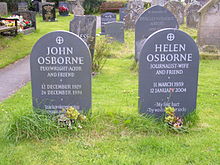
Graves of Osborne and his fifth wife in Clun churchyard

Around the time of Look Back in Anger, Osborne was a vegetarian, something which was considered unusual at the time. In Almost a Gentleman he gives some insight into this lifestyle choice:

My own vegetarianism had been prompted by self-interest. I wanted to confound my pitted complexion, implacable daily headaches, throbbing glands, dish-cloth hair and dandruff. That my appearance had marginally improved (though not the headaches) was no doubt due a little to less toxic input… Meat could be equated with inner squalor. Vegetarianism might banish that, too.[36]

Death[edit]

After a serious liver crisis in 1987, Osborne became diabetic, injecting insulin twice a day. He died in 1994 from complications from his diabetes at the age of 65 at his home in Clunton, near Craven Arms, Shropshire.[37] He is buried in St George’s churchyard, Clun, Shropshire, alongside his last wife, Helen Dawson, who died in 2004

Archive[edit]

Osborne began placing his papers at the Harry Ransom Center at the University of Texas in Austin in the 1960s, with additions made throughout his life and by relatives in the years after his death. The primary archive is over 50 boxes and includes typescripts and manuscripts for all of his works, correspondence, newspaper and magazine articles, scrapbooks, posters, programs, and business documents.[38]

In 2008, the Ransom Center purchased an additional archive of over 30 boxes that had been held by Helen Dawson Osborne. While largely focusing on the latter years of Osborne’s life, the collection also includes a series of notebooks that he had kept separately from his original archive.[39]

Works[edit]

Title Type Year Notes
The Devil Inside Him Theatre 1950 with Stella Linden
The Great Bear Theatre 1951 blank verse, never produced
Personal Enemy Theatre 1955 with Anthony Creighton
Look Back in Anger Theatre 1956
The Entertainer Theatre 1957
Epitaph for George Dillon Theatre 1958[40] with Anthony Creighton
The World Of Paul Slickey Theatre 1959 [41]
A Subject of Scandal and Concern TV 1960
Luther Theatre 1961
The Blood of the Bambergs Theatre 1962
Under Plain Cover Theatre 1962
Tom Jones Screenplay 1963
Inadmissible Evidence Theatre 1964
A Patriot for Me Theatre 1965
A Bond Honoured Theatre 1966 One-act adaptation of Lope de Vega’s La fianza satisfecha
The Hotel In Amsterdam Theatre 1968
Time Present Theatre 1968
The Charge of the Light Brigade Screenplay[42] 1968
The Parachute TV 1968
The Right Prospectus TV 1970
West of Suez Theatre 1971
A Sense Of Detachment Theatre 1972
The Gift Of Friendship TV 1972
Hedda Gabler Theatre 1972 Ibsen adaptation
A Place Calling Itself Rome Theatre (1973)’ Coriolanus adaptation, unproduced
Ms, Or Jill And Jack TV 1974
The End Of Me Old Cigar Theatre 1975
The Picture Of Dorian Gray Theatre 1975′ Wilde adaptation
Almost A Vision TV 1976
Watch It Come Down Theatre 1976
Try A Little Tenderness Theatre (1978)’ unproduced
Very Like A Whale TV 1980
You’re Not Watching Me, Mummy TV 1980
A Better Class of Person Book 1981 autobiography volume I
A Better Class of Person[43] TV 1985
God Rot Tunbridge Wells! TV 1985
The Father Theatre 1989 Strindberg adaptation
Almost a Gentleman Book 1991 autobiography volume II
Déjàvu Theatre 1992

Filmography[edit]

  • First Love (1970) – Maidanov
  • The Chairman’s Wife (1971) – Bernard Howe
  • Get Carter (1971) – Cyril Kinnear
  • Tomorrow Never Comes (1978) – Lyne
  • Flash Gordon (1980) – Arborian Priest

Notes[edit]

  1. Jump up^ Heilpern 2006, p. 23
  2. Jump up^ Heilpern 2006, p. 24
  3. Jump up^ Schoolfriend Hilda Berrington, speaking on Osborne: Angry Man, Channel Four.
  4. Jump up^ Heilpern 2006, p. 64
  5. Jump up^ Heilpern 2006, p. 90
  6. ^ Jump up to:a b John Heilpern (21 November 2010). “Pamela Lane [1930-2010] obituary”. Stalwart of British theatre and first wife of John Osborne. The Guardian, London. Retrieved 19 April 2018.
  7. Jump up^ Little & McLaughlin 2007, p. 25
  8. Jump up^ Little & McLaughlin 2007, p. 326, cite a letter from Stephen Daldry “I have in our archives letters from members of the audience from the original production of Look Back in Anger demanding their money back. Had we honoured every one of those requests, this theatre would not have been able to survive”
  9. ^ Jump up to:a b “‘It’s me, isn’t it?'”. The Guardian. 6 March 2007.
  10. Jump up^ Heilpern 2006, p. 359
  11. Jump up^ John Osborne at IMDB
  12. Jump up^ Times obituary, 27 December 1994
  13. Jump up^ Heilpern 2006, Chapter 45
  14. Jump up^ Heilpern 2006, p. 136
  15. Jump up^ Osborne 1991, pp. 39–40
  16. Jump up^ Heilpern 2006, p. 477
  17. Jump up^ Osborne 1991, p. 7
  18. Jump up^ Heilpern 2006, p. 267
  19. Jump up^ It was from Valbonne that Osborne wrote the infamous “Damn You, England” letter that was published in Tribune on 18 August 1961. (Heilpern 2006, p. 239)
  20. Jump up^ Costume designer Jocelyn Rickards
  21. Jump up^ Gilliatt
  22. Jump up^ Ure
  23. Jump up^ Colin, who took the name Osborne but was and is the spitting image of Robert Shaw, with whom Mary Ure was starring at the Royal Court when she became pregnant.
  24. Jump up^ Osborne, pp. 43–44
  25. Jump up^ Peter Whitebrook (ed.). 2018. Dearest Squirrel: The Intimate Letters of John Osborne and Pamela Lane. Oberon, pp.416.
  26. Jump up^ Osborne, pp. 255–9
  27. Jump up^ Osborne, pp. 181–3, for example
  28. Jump up^ The name was chosen in honour of Captain Nolan, who led the famous Charge of the Light Brigade in the Crimean War. At the time of her birth, Osborne was researching that war and writing the screenplay of the film his next wife would star in. (Osborne, p. 240)
  29. Jump up^ Heilpern 2006, pp. 421–2
  30. Jump up^ Osborne, p. 240
  31. Jump up^ Heilpern, John (29 April 2006). “A sense of failure”. The Guardian. London. Retrieved 7 May 2010.
  32. Jump up^ Heilpern writes (Heilpern 2006, p. 443) that the second volume of Osborne’s autobiography was ready to go to press at Faber & Faber. Bennett’s suicide freed Osborne from the restraining order arising from their bitter divorce. He sat down and wrote a new chapter for the book, specifically to excoriate his ex-wife.
  33. Jump up^ Osborne, p. 259
  34. Jump up^ “Helen Osborne”. The Independent. London. 19 January 2004. Retrieved 7 May 2010.
  35. Jump up^ Morrison, Blake (20 May 2006). “Stage-boor Johnny”. The Guardian. London. Retrieved 7 May 2010.
  36. Jump up^ Osborne, p. 2
  37. Jump up^ Heilpern 2006, pp. 470–479
  38. Jump up^ “John Osborne: A Preliminary Inventory of His Papers at the Harry Ransom Humanities Research Center”. norman.hrc.utexas.edu. Retrieved 2017-12-12.
  39. Jump up^ “John Osborne and Helen Dawson Osborne: A Preliminary Inventory of Their Papers at the Harry Ransom Center”. norman.hrc.utexas.edu. Retrieved 2017-12-12.
  40. Jump up^ Written before LBIA but not staged at the Royal Court Theatre until 2 years later.
  41. Jump up^ This musical, performed at the Palace Theatre, was an adaptation of Osborne’s own never-produced play, provisionally titled An Artificial Comedy or Love in a Myth, written in 1955 while he was waiting for Look Back in Anger to be staged. It was a critical and commercial disaster
  42. Jump up^ Uncredited, due to a script war with director Tony Richardson.
  43. Jump up^ This was a TV adaptation of the first volume of Osborne’s autobiography

References[edit]

  • Heilpern, John (2006). John Osborne: A Patriot for Us. Chatto & Windus. ISBN 978-0-7011-6780-6.
  • Osborne, John (1982). A Better Class of Person: An Autobiography, 1929–56 (paperback edition). Penguin Books Ltd. ISBN 978-0-14-006288-5.
  • Osborne, John (1991). Almost a Gentleman: An Autobiography, 1955–66 (paperback edition). Faber & Faber. ISBN 0-571-16635-0.
  • Little, Ruth; McLaughlin, Emily (2007). The Royal Court Theatre Inside Out. Oberon Books. ISBN 978-1-84002-763-1.
  • Doollee.com

External links[edit]

  • John Osborne Papers at the Harry Ransom Center
  • John Osborne and Helen Dawson Osborne Collection at the Harry Ransom Center
  • Select Papers of the English Stage Company at the University of Leeds
  •  Quotations related to John Osborne at Wikiquote
  • John Osborne at the British Film Institute‘s Screenonline
  • ‘A Poor Jonah’: John Osborne’s Roads to Freedom describing the discovery of John Osborne’s pre-Look Back in Anger plays at the British Library
  • Portraits of John Osborne at the National Portrait Gallery, London Edit this at Wikidata
[show]

  • v
  • t
  • e
The works of John Osborne
[show]

  • v
  • t
  • e
Angry young men
Authority control
  • WorldCat Identities
  • VIAF: 100954367
  • LCCN: n80037030
  • ISNI: 0000 0001 1031 8424
  • GND: 118747738
  • SELIBR: 81928
  • SUDOC: 027470628
  • BNF: cb12093206n (data)
  • BIBSYS: 90542900
  • NDL: 00451877
  • NKC: jn19990006288
  • BNE: XX932490
  • SNAC: w6t739n2

Categories:

  • 1929 births
  • 1994 deaths
  • BAFTA winners (people)
  • Best Adapted Screenplay Academy Award winners
  • English dramatists and playwrights
  • English Anglicans
  • Deaths from diabetes
  • People from Fulham
  • 20th-century British dramatists and playwrights
  • Male screenwriters
  • English male dramatists and playwrights
  • 20th-century male writers

____

Minerva Cuevas: Bridging Borders | Art21 “Exclusive”

Featured artist is Minerva Cuevas

Minerva Cuevas

Minerva Cuevas was born in Mexico City in 1975. She’s a conceptual and socially-engaged artist who creates sculptural installations and paintings in response to politically-charged events, such as the tension between world starvation and capitalistic excess. Cuevas documents community protests in a cartography of resistance while also creating mini-sabotages—altering grocery store bar codes and manufacturing student identity cards—as part of her non-profit Mejor Vida Corp / Better Life Corporation.

Several of the artist’s works take the form of re-branding campaigns—exhibited as murals and product designs—that question the role corporations play in food production, the management of natural resources, fair labor practices, and evolving forms of neo-colonialism. Cuevas finds provocative ways to intervene in public space, whether through the deployment of billboards and posters, or by hacking public utilities to provide discounted or free services. Cuevas addresses the negative impact that humans have on animals and the environment through sculptures coated in tar and tender paintings of animal rights activists, imagining a society that values all living beings.

Minerva Cuevas attended the Escuela Nacional de Artes Plásticas UNAM (1997). Cuevas’s awards and residencies include the Edith-Ruß-Haus für Medienkunst Stipend in Oldenberg (2004) DAAD Scholarship (2003), and The Banff Centre for the Arts (1998). Cuevas has had major exhibitions at Fundación Jumex Arte Contemporaneo (2013); Kunsthaus Bregenz (2013); Museo de la Ciudad de México (2012); Musée d’art Moderne de la Ville de Paris (2012); Liverpool Biennial (2010); Berlin Biennale (2010); Whitechapel Gallery (2010); KW Institute for Contemporary Art (2010); Centre Pompidou (2010); SFMoMA (2008); Van Abbemuseum (2008); Biennale de Lyon (2007); Kunsthalle Basel (2007); Bienal de São Paulo (2006); and the Istanbul Biennial (2003), among others. Minerva Cuevas lives and works in Mexico City, Mexico.

Links:
Artist’s website
Mejor Vida Corp (Better Life Corporation)

____

Related posts:

FRANCIS SCHAEFFER ANALYZES ART AND CULTURE Part 53 THE BEATLES (Part E, Stg. Pepper’s and John Lennon’s search in 1967 for truth was through drugs, money, laughter, etc & similar to King Solomon’s, LOTS OF PICTURES OF JOHN AND CYNTHIA) (Feature on artist Yoko Ono)

April 2, 2015 – 7:05 am

The John Lennon and the Beatles really were on a long search for meaning and fulfillment in their lives  just like King Solomon did in the Book of Ecclesiastes. Solomon looked into learning (1:12-18, 2:12-17), laughter, ladies, luxuries, and liquor (2:1-2, 8, 10, 11), and labor (2:4-6, 18-20). He fount that without God in the picture all […]

By Everette Hatcher III | Posted in Current Events, Francis Schaeffer | Edit | Comments (0)

FRANCIS SCHAEFFER ANALYZES ART AND CULTURE Part 52 THE BEATLES (Part D, There is evidence that the Beatles may have been exposed to Francis Schaeffer!!!) (Feature on artist Anna Margaret Rose Freeman )

March 22, 2015 – 12:30 am

______________   George Harrison Swears & Insults Paul and Yoko Lucy in the Sky with Diamonds- The Beatles The Beatles:   I have dedicated several posts to this series on the Beatles and I don’t know when this series will end because Francis Schaeffer spent a lot of time listening to the Beatles and talking […]

By Everette Hatcher III | Posted in Francis Schaeffer | Tagged Anna Margaret Rose Freeman, George Harrison, John Lennon, Paul MacCartney, Ringo Starr, Stg. Pepper’s Lonely Hearts Club Band | Edit| Comments (0)

FRANCIS SCHAEFFER ANALYZES ART AND CULTURE Part 51 THE BEATLES (Part C, List of those on cover of Stg.Pepper’s ) (Feature on artist Raqib Shaw )

March 19, 2015 – 12:21 am

  The Beatles in a press conference after their Return from the USA Uploaded on Nov 29, 2010 The Beatles in a press conference after their Return from the USA. The Beatles:   I have dedicated several posts to this series on the Beatles and I don’t know when this series will end because Francis […]

By Everette Hatcher III | Posted in Francis Schaeffer | Tagged George Harrison, John Lennon, Paul MacCartney, Raqib Shaw, Ringo Starr | Edit | Comments (0)

FRANCIS SCHAEFFER ANALYZES ART AND CULTURE Part 50 THE BEATLES (Part B, The Psychedelic Music of the Beatles) (Feature on artist Peter Blake )

March 12, 2015 – 12:16 am

__________________   Beatles 1966 Last interview I have dedicated several posts to this series on the Beatles and I don’t know when this series will end because Francis Schaeffer spent a lot of time listening to the Beatles and talking and writing about them and their impact on the culture of the 1960’s. In this […]

By Everette Hatcher III | Posted in Francis Schaeffer | Tagged George Harrison, John Lennon, Paul MacCartney, Peter Blake, Ringo Starr | Edit | Comments (1)

FRANCIS SCHAEFFER ANALYZES ART AND CULTURE Part 49 THE BEATLES (Part A, The Meaning of Stg. Pepper’s Cover) (Feature on artist Mika Tajima)

March 5, 2015 – 4:47 am

_______________ The Beatles documentary || A Long and Winding Road || Episode 5 (This video discusses Stg. Pepper’s creation I have dedicated several posts to this series on the Beatles and I don’t know when this series will end because Francis Schaeffer spent a lot of time listening to the Beatles and talking and writing about […]

By Everette Hatcher III | Posted in Francis Schaeffer | Tagged Beatles, Mika Tajima | Edit|Comments (0)

FRANCIS SCHAEFFER ANALYZES ART AND CULTURE PART 48 “BLOW UP” by Michelangelo Antonioni makes Philosophic Statement (Feature on artist Nancy Holt)

February 26, 2015 – 4:57 am

_______________ Francis Schaeffer pictured below: _____________________ I have included the 27 minute  episode THE AGE OF NONREASON by Francis Schaeffer. In that video Schaeffer noted,  ” Sergeant Pepper’s Lonely Hearts Club Band…for a time it became the rallying cry for young people throughout the world. It expressed the essence of their lives, thoughts and their feelings.” How Should […]

By Everette Hatcher III | Posted in Francis Schaeffer | Tagged Blow Up, David Hemmings,Michelangelo Antonioni, Nancy Holt, Sarah Miles., Vanessa Redgrave | Edit |Comments (0)

FRANCIS SCHAEFFER ANALYZES ART AND CULTURE Part 47 Woody Allen and Professor Levy and the death of “Optimistic Humanism” from the movie CRIMES AND MISDEMEANORS Plus Charles Darwin’s comments too!!! (Feature on artist Rodney Graham)

February 19, 2015 – 5:33 am

Crimes and Misdemeanors: A Discussion: Part 1 ___________________________________ Today I will answer the simple question: IS IT POSSIBLE TO BE AN OPTIMISTIC SECULAR HUMANIST THAT DOES NOT BELIEVE IN GOD OR AN AFTERLIFE? This question has been around for a long time and you can go back to the 19th century and read this same […]

By Everette Hatcher III | Posted in Francis Schaeffer, Woody Allen | Tagged alan alda, Anjelica Huston, mia farrow, Sam Waterston | Edit | Comments (0)

FRANCIS SCHAEFFER ANALYZES ART AND CULTURE PART 46 Friedrich Nietzsche (Featured artist is Thomas Schütte)

February 12, 2015 – 5:00 am

____________________________________ Francis Schaeffer pictured below: __________ Francis Schaeffer has written extensively on art and culture spanning the last 2000years and here are some posts I have done on this subject before : Francis Schaeffer’s “How should we then live?” Video and outline of episode 10 “Final Choices” , episode 9 “The Age of Personal Peace and Affluence”, episode 8 […]

By Everette Hatcher III | Posted in Francis Schaeffer | Tagged Bertrand Russell, Friedrich Nietzsche,H.G. Wells, jean paul sartre, Kai Nielsen, Richard Taylor, Richard Wurmbrand, Thomas Schütte | Edit| Comments (0)

FRANCIS SCHAEFFER ANALYZES ART AND CULTURE Part 45 Woody Allen “Reason is Dead” (Feature on artists Allora & Calzadilla )

February 5, 2015 – 4:31 am

Love and Death [Woody Allen] – What if there is no God? [PL] ___________ _______________ How Should We then Live Episode 7 small (Age of Nonreason) #02 How Should We Then Live? (Promo Clip) Dr. Francis Schaeffer 10 Worldview and Truth Two Minute Warning: How Then Should We Live?: Francis Schaeffer at 100 Francis Schaeffer […]

By Everette Hatcher III | Posted in Francis Schaeffer, Woody Allen | Tagged Allora & Calzadilla |Edit| Comments (0)

FRANCIS SCHAEFFER ANALYZES ART AND CULTURE Part 44 The Book of Genesis (Featured artist is Trey McCarley )

January 29, 2015 – 5:01 am

___________________________________ Francis Schaeffer pictured below: ____________________________ Francis Schaeffer “BASIS FOR HUMAN DIGNITY” Whatever…HTTHR Dr. Francis schaeffer – The flow of Materialism(from Part 4 of Whatever happened to human race?) Dr. Francis Schaeffer – The Biblical flow of Truth & History (intro) Francis Schaeffer – The Biblical Flow of History & Truth (1) Dr. Francis Schaeffer […]

By Everette Hatcher III | Posted in Francis Schaeffer | Tagged Trey McCarley | Edit | Comments (0)


_

____________

August 30, 2018 – 1:48 am Categories: Current Events | Post a comment

RESPONDING TO HARRY KROTO’S BRILLIANT RENOWNED ACADEMICS!! Part 149 NN Bertrand Russell and Carl Sagan discussed by Peter Singer!!!

_

Related image
763 × 1024Images may be subject to copyright. Learn More

British philosopher and social activist Bertrand Russell talking to actress Vanessa Redgrave at a literary luncheon Image result for bertrand russell Bertrand Russell as a child.Image result for bertrand russellOn November 21, 2014 I received a letter from Nobel Laureate Harry Kroto and it said:…Please click on this URL http://vimeo.com/26991975and you will hear what far smarter people than I have to say on this matter. I agree with them.Harry Kroto

Image result for harry kroto

I have attempted to respond to all of Dr. Kroto’s friends arguments and I have posted my responses one per week for over a year now. Here are some of my earlier posts:Arif Ahmed, Sir David Attenborough, Mark Balaguer, Horace Barlow, Michael Bate, Patricia Churchland, Aaron Ciechanover, Noam Chomsky,Alan Dershowitz, Hubert Dreyfus, Bart Ehrman, Stephan Feuchtwang, David Friend,  Riccardo Giacconi, Ivar Giaever , Roy Glauber, Rebecca Goldstein, David J. Gross,  Brian Greene, Susan Greenfield, Stephen F Gudeman,  Alan Guth, Jonathan Haidt, Theodor W. Hänsch, Brian Harrison,  Hermann Hauser, Roald Hoffmann,  Bruce Hood, Herbert Huppert,  Gareth Stedman Jones, Steve Jones, Shelly Kagan, Michio Kaku,  Stuart Kauffman,  Lawrence Krauss, Harry Kroto, George Lakoff, Elizabeth Loftus,  Alan Macfarlane, Peter Millican, Marvin Minsky, Leonard Mlodinow,  Yujin Nagasawa, Alva Noe, Douglas Osheroff,  Jonathan Parry,  Saul Perlmutter, Herman Philipse,  Carolyn Porco, Robert M. Price, Lisa Randall, Lord Martin Rees,  Oliver Sacks, John Searle, Marcus du Sautoy, Simon Schaffer, J. L. Schellenberg,   Lee Silver,  Peter Singer,  Walter Sinnott-Armstrong, Ronald de Sousa, Victor Stenger, Barry Supple,   Leonard Susskind, Raymond Tallis, Neil deGrasse Tyson,  .Alexander Vilenkin, Sir John Walker, Frank Wilczek, Steven Weinberg, and  Lewis Wolpert,In  the first video below in the 14th clip in this series are his words and I will be responding to them in the next few weeks since Sir Bertrand Russell is probably the most quoted skeptic of our time, unless it was someone like Carl Sagan or Antony Flew.  

50 Renowned Academics Speaking About God (Part 1)

Another 50 Renowned Academics Speaking About God (Part 2)

A Further 50 Renowned Academics Speaking About God (Part 3)

__

Quote from Bertrand Russell:

Q: Why are you not a Christian?Russell: Because I see no evidence whatever for any of the Christian dogmas. I’ve examined all the stock arguments in favor of the existence of God, and none of them seem to me to be logically valid.Q: Do you think there’s a practical reason for having a religious belief, for many people?Russell: Well, there can’t be a practical reason for believing what isn’t true. That’s quite… at least, I rule it out as impossible. Either the thing is true, or it isn’t. If it is true, you should believe it, and if it isn’t, you shouldn’t. And if you can’t find out whether it’s true or whether it isn’t, you should suspend judgment. But you can’t… it seems to me a fundamental dishonesty and a fundamental treachery to intellectual integrity to hold a belief because you think it’s useful, and not because you think it’s true.__ Image result for bertrand russell__

 Peter SingerImage result for peter singer

This article below by Peter Singer talks about Bertrand Russell and Carl Sagan grabbing unto optimistic humanism. Bertrand Russell did make some very nihilistic statements and it seems to me that logically lots of people have concluded that atheists should embrace nihilism. I would admit that Sagan has not made those type of statements though. Let me present Singer’s article in its entirety and then my response below it.

Author Carl Sagan and Wife Ann Druyan

Image result for peter singer carl sagan

The value of a pale blue dot

Peter Singer

In this, the International Year of Astronomy, we should embrace both the insignificance of Earth, and its vital importance
 @PeterSinger

Sun 17 May 2009 12.00 EDTFirst published on Sun 17 May 2009 12.00 EDT

The 18th-century German philosopher Immanuel Kant wrote: “Two things fill the heart with ever renewed and increasing awe and reverence, the more often and more steadily we meditate upon them: the starry firmament above and the moral law within.”

This year, the 400th anniversary of Galileo’s first use of a telescope, has been declared the International Year of Astronomy, so this seems a good time to ponder Kant’s first source of “awe and reverence”. Indeed, the goal of the commemoration – to help the world’s citizens “rediscover their place in the universe” – now has the incidental benefit of distracting us from nasty things nearer to home, like swine flu and the global financial crisis. So, what does astronomy tell us about “the starry firmament above”?

By expanding our grasp of the vastness of the universe, science has, if anything, increased the awe and reverence we feel when we look up on a starry night (assuming, that is, that we have got far enough away from air pollution and excessive street lighting to see the stars properly). But, at the same time, our greater knowledge surely forces us to acknowledge that our place in the universe is not particularly significant.

In his essay, Dreams and Facts, the philosopher Bertrand Russell wrote that our entire galaxy is a tiny fragment of the universe, and within this fragment our solar system is “an infinitesimal speck,” and within this speck “our planet is a microscopic dot.”

Today, we don’t need to rely on such verbal descriptions of our planet’s insignificance. The astronomer Carl Sagan suggested that the Voyager space probe capture an image of earth as it reached the outer reaches of our solar system. It did so, in 1990, and Earth shows up in a grainy image as a pale blue dot. If you go to YouTube and search for “Carl Sagan – pale blue dot” you can see it, and hear Sagan himself telling us that we must cherish our world because everything humans have ever valued exists only on that pale blue dot. That is a moving experience, but what should we learn from it?

Russell sometimes wrote as if the fact that we are a mere speck in a vast universe showed that we don’t really matter all that much: “On this dot, tiny lumps of impure carbon and water, of complicated structure, with somewhat unusual physical and chemical properties, crawl about for a few years, until they are dissolved again into the elements of which they are compounded.”

But no such nihilistic view of our existence follows from the size of our planetary home, and Russell himself was no nihilist. He thought that it was important to confront the fact of our insignificant place in the universe, because he did not want us to live under the illusory comfort of a belief that somehow the world had been created for our sake, and that we are under the benevolent care of an all-powerful creator. Dreams and Facts concludes with these stirring words: “No man is liberated from fear who dare not see his place in the world as it is; no man can achieve the greatness of which he is capable until he has allowed himself to see his own littleness.”

After the second world war, when the world was divided into nuclear-armed camps threatening each other with mutual destruction, Russell did not take the view that our insignificance, when considered against the vastness of the universe, meant that the end of life on Earth did not matter. On the contrary, he made nuclear disarmament the chief focus of his political activity for the remainder of his life.

Sagan took a similar view. While seeing the Earth as a whole diminishes the importance of divisions such as national boundaries, he said, it also “underscores our responsibility to deal more kindly with one another, and to preserve and cherish the pale blue dot, the only home we’ve ever known”. Al Gore used the “pale blue dot” image at the end of his film, An Inconvenient Truth, suggesting that if we wreck this planet, we have nowhere else to go.

That’s probably true, even though scientists are now discovering other planets outside our solar system. Perhaps one day we will find that we are not the only intelligent beings in the universe, and perhaps we will be able to discuss issues of inter-species ethics with such beings.

This brings us back to Kant’s other object of reverence and awe, the moral law within. What would beings with a completely different evolutionary origin from us – perhaps not even carbon-based life forms – think of our moral law?

Copyright: Project Syndicate, 2009

___

…

Kansas – Dust In The Wind “Live” HD

Rolling Stones: “Satisfaction!”

U2 Still Haven’t Found (with lyrics)

__________________________________________________

On December 5, 1995, I got a letter back from Carl Sagan and I was very impressed that he took time to answer several of my questions and to respond to some of the points that I had made in my previous letters. I had been reading lots of his books and watching him on TV since 1980 and my writing today is a result of that correspondence. It is my conclusion that Carl Sagan died an unfulfilled man on December 20, 1996 with many of the big questions he had going unanswered.

Much of Carl Sagan’s aspirations and thoughts were revealed to a mass audience of movie goers just a few months after his death. The movie “CONTACT” with Jodie Foster and Matthew McConaughey  is a fictional story written by Sagan  about the SEARCH FOR EXTRATERRESTRIAL INTELLIGENCE (SETI). Sagan visited the set while it was filming and it was released on July 11, 1997 after his unfortunate death.

The movie CONTACT got me thinking about Sagan’s life long hope to find a higher life form out in the universe and I was reminded of Dr. Donald E. Tarter of NASA who wrote me  in a letter a year or so earlier and stated, “I am not a theist. I simply and honestly do not know the answer to the great questions…This brings me to why I am interested in the SEARCH FOR EXTRATERRESTRIAL INTELLIGENCE (SETI)…Let me assure you, one of the first questions I would want to ask another intelligence if one were discovered is, DO YOU BELIEVE IN OR HAVE EVIDENCE OF A SUPREME INTELLIGENCE?”

Was Sagan ever satisfied with the answers he came up with in his life? It is my view that  true peace and satisfaction can come from a personal relationship with Christ and only in the Bible can we find absolute answers that touch this world we live in. The Apostle Paul was totally content when he wrote the book of Philippians from a jail in Rome right before he was beheaded (according to tradition). Paul observed, “Not that I am speaking of being in need, for I have learned in whatever situation I am to be content.  I know how to be brought low, and I know how to abound. In any and every circumstance, I have learned the secret of facing plenty and hunger, abundance and need.  I can do all things through him (Christ) who strengthens me” (Philippians 4:11-13). On March 11, 2012 my pastor Brandon Bernard at Fellowship Church Little Rock read that scripture and then commented:

Paul is reminding us that in every circumstance and in everything he has gone through that his satisfaction is found deeply in Christ. You think about this guy who is writing from prison. He is in this prison cell and it is a hardship in his life, but him of all people is saying that “I am writing to you but I am content and I am satisfied.” That is a statement you don’t hear from a lot of people these days… A lot of people are discontent and dissatisfied… Think about the poets from your generation or the generation before us. How about the deep theologians called “The Rolling Stones.” Remember them. They wrote this song “I can’t get no satisfaction.” And you know what they say after that phrase? “And I try and I try and I try.” I am not sure how deep most of their lyrics are, but they voice the cry of many people. “I can’t get no satisfaction and I try and I am trying and I am trying.”

What about one of those other poets by the name of Bono who wrote a song called, “I still haven’t found what I am looking for.” It is interesting. “I still haven’t found what I am looking for.” It has a nice melody to it but there is probably a reason why it is so popular because there is a lot of people deep down in their soul feel like they haven’t found what they are looking for.

It is true. What is so funny to me is that what is so desired is so elusive. 

Rice Broocks in his book GOD’S NOT DEAD noted:

Astronomer Carl Sagan was a prolific writer and trustee of the SETI Institute (Search for Extraterrestrial Intelligence) founded in 1984 to scan the universe for any signs of life beyond earth. Sagan’s best-selling work COSMOS also became an award-winning television series explaining the wonders of the universe and exporting the belief not in an intelligent Creator but in potential intelligent aliens. He believed somehow that by knowing who they are, we would discover who we as humans really are. “The very thought of there being other beings different from all of us can have a very useful cohering role for the human species” (quoted from you tube clip “Carl Sagan appears on CBC to discuss the importance of SETI [Carl Sagan Archives]” at the 7 minute mark, Oct 1988 ). Sagan reasoning? If aliens could have contacted us, knowing how impossible it is for us to reach them, they would have the answers we seek to our ultimate questions. This thought process shows the desperate need we have as humans for answers to the great questions of our existence. Does life have any ultimate meaning and purpose? Do we as humans have any more value than the other animals? Is there a purpose to the universe, or more specifically, to our individual lives?

____________

Carl Sagan had to live  in the world that God made with the conscience that God gave him. This created a tension. As you know the movie CONTACT was written by Carl Sagan and it was about Dr. Arroway’s SEARCH FOR EXTRATERRESTRIAL INTELLIGENCE (SETI) program and her desire to make contact with aliens and ask them questions. It is my view that Sagan should have examined more closely  the accuracy of the Bible and it’s fulfilled prophecies from the Old Testament in particular before chasing after aliens from other planets for answers. Sagan himself had written,”Plainly, there’s something within me that’s ready to believe in life after death…If some good evidence for life after death was announced, I’d be eager to examine it; but it would have to be real scientific data, not mere antedote”(pp 203-204, The DemonHaunted World, 1995).

Sagan said he had taken a look at Old Testament prophecy and it did not impress him because it was too vague. He had taken a look at Christ’s life in the gospels, but said it was unrealistic for God to send a man to communicate for God. Instead, Sagan suggested that God could have written a mathematical formula in the Bible or put a cross in the sky. However, what happens at the conclusion of the movie CONTACT?  This is Sagan’s last message to the world in the form of the movie that appeared shortly after his death. Dr Arroway (Jodie Foster) who is a young atheistic scientist who meets with an alien and this alien takes the form of Dr. Arroway’s father. The alien tells her that they thought this would make it easier for her. In fact, he meets her on a beach that resembles a beach that she grew up near so she would also be comfortable with the surroundings. Carl Sagan when writing this script chose to put the alien in human form so Dr. Arroway could relate to the alien. Christ chose to take our form and come into our world too and still many make up excuses for not believing.

Lastly, Carl Sagan could not rid himself of the “mannishness of man.” Those who have read Francis Schaeffer’s many books know exactly what I am talking about. We are made in God’s image and we are living in God’s world. Therefore, we can not totally suppress the objective truths of our unique humanity. In my letter of Jan 10, 1996 to Dr. Sagan, I really camped out on this point a long time because I had read Sagan’s  book SHADOWS OF FORGOTTON ANCESTORS  and in it  Sagan attempts to  totally debunk the idea that we are any way special. However, what does Dr. Sagan have Dr. Arroway say at the end of the movie CONTACT when she is testifying before Congress about the alien that  communicated with her? See if you can pick out the one illogical word in her statement: “I was given a vision how tiny, insignificant, rare and precious we all are. We belong to something that is greater than ourselves and none of us are alone.”

Dr Sagan deep down knows that we are special so he could not avoid putting the word “precious” in there. Francis Schaeffer said unbelievers are put in a place of tension when they have to live in the world that God has made because deep down they know they are special because God has put that knowledge in their hearts.We are not the result of survival of the fittest and headed back to the dirt forevermore. This is what Schaeffer calls “taking the roof off” of the unbeliever’s worldview and showing the inconsistency that exists.

In several of my letters to Sagan I quoted this passage below:

Romans 1:17-22 (Amplified Bible)

17For in the Gospel a righteousness which God ascribes is revealed, both springing from faith and leading to faith [disclosed through the way of faith that arouses to more faith]. As it is written, The man who through faith is just and upright shall live and shall live by faith.(A)

18For God’s [holy] wrath and indignation are revealed from heaven against all ungodliness and unrighteousness of men, who in their wickedness repress and hinder the truth and make it inoperative.

19For that which is known about God is evident to them and made plain in their inner consciousness, because God [Himself] has shown it to them.

20For ever since the creation of the world His invisible nature and attributes, that is, His eternal power and divinity, have been made intelligible and clearly discernible in and through the things that have been made (His handiworks). So [men] are without excuse [altogether without any defense or justification],(B)

21Because when they knew and recognized Him as God, they did not honor and glorify Him as God or give Him thanks. But instead they became futile and [a]godless in their thinking [with vain imaginings, foolish reasoning, and stupid speculations] and their senseless minds were darkened.

22Claiming to be wise, they became fools [professing to be smart, they made simpletons of themselves].

__________________________________________

Can a man  or a woman find lasting meaning without God? Three thousand years ago, Solomon took a look at life “under the sun” in his book of Ecclesiastes. Christian scholar Ravi Zacharias has noted, “The key to understanding the Book of Ecclesiastes is the term ‘under the sun.’ What that literally means is you lock God out of a closed system, and you are left with only this world of time plus chance plus matter.”

Let me show you some inescapable conclusions if you choose to live without God in the picture. Solomon came to these same conclusions when he looked at life “under the sun.”

  1. Death is the great equalizer (Eccl 3:20, “All go to the same place; all come from dust, and to dust all return.”)
  2. Chance and time have determined the past, and they will determine the future.  (Ecclesiastes 9:11-13 “I have seen something else under the sun:  The race is not to the swiftor the battle to the strong, nor does food come to the wise or wealth to the brilliant  or favor to the learned; but time and chance happen to them all.  Moreover, no one knows when their hour will come: As fish are caught in a cruel net, or birds are taken in a snare, so people are trapped by evil times  that fall unexpectedly upon them.”)
  3. Power reigns in this life, and the scales are not balanced(Eccl 4:1; “Again I looked and saw all the oppression that was taking place under the sun: I saw the tears of the oppressed—and they have no comforter; power was on the side of their oppressors—  and they have no comforter.” 7:15 “In this meaningless life of mine I have seen both of these: the righteous perishing in their righteousness,  and the wicked living long in their wickedness. ).
  4. Nothing in life gives true satisfaction without God including knowledge (1:16-18), ladies and liquor (2:1-3, 8, 10, 11), and great building projects (2:4-6, 18-20).
  5. There is no ultimate lasting meaning in life. (1:2)

By the way, the final chapter of Ecclesiastes finishes with Solomon emphasizing that serving God is the only proper response of man. Solomon looks above the sun and brings God back into the picture in the final chapter of the book in Ecclesiastes 12:13-14:

13 Now all has been heard;

here is the conclusion of the matter:

Fear God and keep his commandments,

for this is the whole duty of man.

 14 For God will bring every deed into judgment,

including every hidden thing,

whether it is good or evil

_______________

The answer to find meaning in life is found in putting your faith and trust in Jesus Christ. The Bible is true from cover to cover and can be trusted.

In 1978 I heard the song “Dust in the Wind” by Kansas when it rose to #6 on the charts. That song told me that Kerry Livgren the writer of that song and a member of Kansas had come to the same conclusion that Solomon had and that “all was meaningless.” I remember mentioning to my friends at church that we may soon see some members of Kansas become Christians because their search for the meaning of life had obviously come up empty even though they had risen from being an unknown band to the top of the music business and had all the wealth and fame that came with that.

Livgren wrote:

“All we do, crumbles to the ground though we refuse to see, Dust in the Wind, All we are is dust in the wind, Don’t hang on, Nothing lasts forever but the Earth and Sky, It slips away, And all your money won’t another minute buy.”

Both Kerry Livgren and Dave Hope of Kansas became Christians eventually. Kerry Livgren first tried Eastern Religions and Dave Hope had to come out of a heavy drug addiction. I was shocked and elated to see their personal testimony on The 700 Club in 1981 and that same  interview can be seen on youtube today. Livgren lives in Topeka, Kansas today where he teaches “Diggers,” a Sunday school class at Topeka Bible Church. Hope is the head of Worship, Evangelism and Outreach at Immanuel Anglican Church in Destin, Florida.

You can hear Kerry Livgren’s story from this youtube link:

(part 1 ten minutes)

(part 2 ten minutes)

Kansas – Dust In The Wind

__________________

Image result for bertrand russell

Bertrand Russell pictured above and Francis Schaeffer below:

Image result for francis schaeffer

Francis Schaeffer noted in his book HOW SHOULD WE THEN LIVE? (p. 182 in Vol 5 of Complete Works) in the chapter The Breakdown in Philosophy and Science:

In his lecture at Acapulco, George Wald finished with only one final value. It was the same one with which English philosopher Bertrand Russell (1872-1970) was left. For Wald and Russell and for many other modern thinkers, the final value is the biological continuity of the human race. If this is the only final value, one is left wondering why this then has importance. 

Now having traveled from the pride of man in the High Renaissance and the Enlightenment down to the present despair, we can understand where modern people are. They have no place for a personal God. But equally they have no place for man as man, or for love, or for freedom, or for significance. This brings a crucial problem. Beginning only from man himself, people affirm that man is only a machine. But those who hold this position cannot live like machines! If they could, there would have been no tensions in their intellectual position or in their lives. But even people who believe they are machines cannot live like machines, and thus they must “leap upstairs” against their reason and try to find something which gives meaning to life, even though to do so they have to deny their reason. 

Francis Schaeffer in another place worded it like this:

The universe was created by an infinite personal God and He brought it into existence by spoken word and made man in His own image. When man tries to reduce [philosophically in a materialistic point of view] himself to less than this [less than being made in the image of God] he will always fail and he will always be willing to make these impossible leaps into the area of nonreason even though they don’t give an answer simply because that isn’t what he is. He himself testifies that this infinite personal God, the God of the Old and New Testament is there. 

Instead of making a leap into the area of nonreason the better choice would be to investigate the claims that the Bible is a historically accurate book and that God created the universe and reached out to humankind with the Bible.

Schaeffer then points to the historical accuracy of the Bible in Chapter 5 of the book WHATEVER HAPPENED TO THE HUMAN RACE?

The Bible and Archaeology – Is the Bible from God? (Kyle Butt 42 min)

You want some evidence that indicates that the Bible is true? Here is a good place to start and that is taking a closer look at the archaeology of the Old Testament times. Is the Bible historically accurate? Here are some of the posts I have done in the past on the subject: 1. The Babylonian Chronicle, of Nebuchadnezzars Siege of Jerusalem, 2. Hezekiah’s Siloam Tunnel Inscription. 3. Taylor Prism (Sennacherib Hexagonal Prism), 4. Biblical Cities Attested Archaeologically. 5. The Discovery of the Hittites, 6.Shishak Smiting His Captives, 7. Moabite Stone, 8. Black Obelisk of Shalmaneser III, 9A Verification of places in Gospel of John and Book of Acts., 9B Discovery of Ebla Tablets. 10. Cyrus Cylinder, 11. Puru “The lot of Yahali” 9th Century B.C.E., 12. The Uzziah Tablet Inscription, 13. The Pilate Inscription, 14. Caiaphas Ossuary, 14 B Pontius Pilate Part 2, 14c. Three greatest American Archaeologists moved to accept Bible’s accuracy through archaeology., 

____

Related posts:

RESPONDING TO HARRY KROTO’S BRILLIANT RENOWNED ACADEMICS!! Pausing to take a look at the life of HARRY KROTO Part C (Kroto’s admiration of Bertrand Russell examined)

June 21, 2016 – 1:12 am

Today we look at the 3rd letter in the Kroto correspondence and his admiration of Bertrand Russell. (Below The Nobel chemistry laureates Harold Kroto, Robert Curl and Richard Smalley) It is with sadness that I write this post having learned of the death of Sir Harold Kroto on April 30, 2016 at the age of […]

By Everette Hatcher III | Posted in Atheists Confronted | Tagged .Alexander Vilenkin, Aaron Ciechanover, Alan Dershowitz, Alan Guth, Alan Macfarlane, Alison Richard, Alva Noe, Arif Ahmed, Barry Supple, Bart Ehrman, Brian Greene, Brian Harrison, Bruce Hood, C.J. van Rijsbergen, Carolyn Porco, David Friend, David J. Gross, Douglas Osheroff, Elizabeth Loftus, Frank Wilczek, Gareth Stedman Jones, George Lakoff, Haroon Ahmed, Harry Kroto, Herbert Huppert, Herman Philipse, Hermann Hauser, Horace Barlow, Hubert Dreyfus, Ivar Giaever, J. L. Schellenberg, John Searle, John Sulston, Jonathan Haidt, Jonathan Parry, Lawrence Krauss, Lee Silver, Leonard Mlodinow, Leonard Susskind, Lewis Wolpert, Lisa Randall, Lord Martin Rees, Marcus du Sautoy, Mark Balaguer, Marvin Minsky, Michael Bate, Michio Kaku, Neil deGrasse Tyson, Noam Chomsky, Oliver Sacks, Patricia Churchland, Peter Millican, Peter Singer, Raymond Tallis, Rebecca Goldstein, Riccardo Giacconi, Roald Hoffmann, Robert M. Price, Ronald de Sousa, Roy Glauber, Saul Perlmutter, Shelly Kagan, Simon Schaffer, Sir David Attenborough, Sir John Walker, Sir Patrick Bateson, Stephan Feuchtwang, Stephen F Gudeman, Steve Jones, Steven Weinberg, Stuart Kauffman, Susan Greenfield, Theodor W. Hänsch, Victor Stenger, Walter Sinnott-Armstrong, Yujin Nagasawa | Edit | Comments (0)

RESPONDING TO HARRY KROTO’S BRILLIANT RENOWNED ACADEMICS!! Part 52 The views of Hegel and Bertrand Russell influenced Gareth Stedman Jones of Cambridge!!

November 17, 2015 – 5:37 am

On November 21, 2014 I received a letter from Nobel Laureate Harry Kroto and it said: …Please click on this URL http://vimeo.com/26991975 and you will hear what far smarter people than I have to say on this matter. I agree with them. Harry Kroto _________________ Below you have picture of Dr. Harry Kroto:   Gareth Stedman […]

By Everette Hatcher III | Posted in Atheists Confronted | Tagged (Paul Kurtz (1925-2012), Alan Macfarlane (1941-), Albert Ellis (1913-2007), Archie J. Bahm (1907-1996), Aron S “Gil” Martin ( 1910-1997), Barbara Marie Tabler (1915-1996), Bette Chambers (1930-), Brian Charlesworth (1945-), Carl Sagan (1934-1996), Christopher C. French (1956-) Walter R. Rowe, Edward O. WIlson (1929-), Ernest Mayr (1904-2005), Francisco J. Ayala (1934-) Elliott Sober (1948-), Geoff Harcourt (1931-), George Wald (1906-1997), Gerald Holton (1922-), Glenn Branch, Gordon Stein (1941-1996), H. J. Eysenck (1916-1997), Harry Kroto (1939-), Herbert Kroemer (1928-), James Terry McCollum (1936-), John Hospers (1918-2011), John J. Shea (1969-), John R. Cole (1942-), Kevin Padian (1951-), Lewis Wolpert (1929), Lloyd Morain (1917-2010), Martin Rees (1942-), Marty E. Martin (1928-), Mary Morain (1911-1999), Matt Cartmill (1943-), Matthew I. Spetter (1921-2012), Michael A. Crawford (1938-), Michael Martin (1932-)., Milton Fingerman (1928-), Milton Friedman (1912-2006), Nicolaas Bloembergen (1920-), Paul Quincey, Ray T. Cragun (1976-)., Renate Vambery (1916-2005), Richard Rubenstein (1924-), Roald Hoffmann (1937-), Robert L. Erdmann (1929-2006), Robert Shapiro (1935-2011), Sol Gordon (1923-2008), Susan Blackmore (1951-), Thomas Gilovich (1954-), Thomas H. Jukes (1906-1999), Warren Allen Smith (1921-), Wolf Roder |Edit | Comments (0)

WOODY WEDNESDAY John Piippo makes the case that Bertrand Russell would have loved Woody Allen because they both were atheists who don’t deny the ramifications of atheism!!!

October 28, 2015 – 12:00 am

Top 10 Woody Allen Movies __________ John Piippo makes the case that Bertrand Russell would have loved Woody Allen because they both were  atheists who don’t deny the ramifications of atheism!!! Monday, August 06, 2012 (More On) Woody Allen’s Atheism As I wrote in a previous post, I like Woody Allen. I have long admired his […]

By Everette Hatcher III | Posted in Atheists Confronted, Woody Allen | Edit | Comments (0)

John Piippo makes the case that Bertrand Russell would have loved Woody Allen because they both were two atheists who don’t deny the ramifications of atheism!!!

September 24, 2015 – 12:55 am

______ Top 10 Woody Allen Movies PBS American Masters – Woody Allen A Documentary 01 PBS American Masters – Woody Allen A Documentary 02 __________ John Piippo makes the case that Bertrand Russell would have loved Woody Allen because they both were two atheists who don’t deny the ramifications of atheism!!! Monday, August 06, 2012 […]

By Everette Hatcher III | Posted in Woody Allen | Edit | Comments (0)

Bertrand Russell v. Frederick Copleston debate transcript (Part 4)

January 7, 2013 – 4:55 am

THE MORAL ARGUMENT     BERTRAND RUSSELL But aren’t you now saying in effect, I mean by God whatever is good or the sum total of what is good — the system of what is good, and, therefore, when a young man loves anything that is good he is loving God. Is that what you’re […]

By Everette Hatcher III | Posted in Current Events | Edit | Comments (0)

Bertrand Russell v. Frederick Copleston debate transcript (Part 3)

January 5, 2013 – 4:52 am

Great debate Fr. Frederick C. Copleston vs Bertrand Russell – Part 1 Uploaded by riversonthemoon on Jul 15, 2009 BBC Radio Third Programme Recording January 28, 1948. BBC Recording number T7324W. This is an excerpt from the full broadcast from cassette tape A303/5 Open University Course, Problems of Philosophy Units 7-8. Older than 50 years, […]

By Everette Hatcher III | Posted in Atheists Confronted, Current Events | Edit | Comments (0)

Bertrand Russell v. Frederick Copleston debate transcript and audio (Part 2)

January 3, 2013 – 4:48 am

Uploaded by riversonthemoon on Jul 15, 2009 BBC Radio Third Programme Recording January 28, 1948. BBC Recording number T7324W. This is an excerpt from the full broadcast from cassette tape A303/5 Open University Course, Problems of Philosophy Units 7-8. Older than 50 years, out of UK/BBC copyright. Pardon the hissy audio. It was recorded 51 […]

By Everette Hatcher III | Posted in Atheists Confronted, Current Events | Edit | Comments (0)

Bertrand Russell v. Frederick Copleston debate transcript and audio (Part 1)

January 1, 2013 – 4:43 am

Fr. Frederick C. Copleston vs Bertrand Russell – Part 1 Uploaded by riversonthemoon on Jul 15, 2009 BBC Radio Third Programme Recording January 28, 1948. BBC Recording number T7324W. This is an excerpt from the full broadcast from cassette tape A303/5 Open University Course, Problems of Philosophy Units 7-8. Older than 50 years, out of […]

By Everette Hatcher III | Posted in Atheists Confronted, Current Events | Edit | Comments (0)

Bertrand Russell v. Frederick Copleston debate transcript (Part 4)

June 21, 2012 – 7:12 am

THE MORAL ARGUMENT     BERTRAND RUSSELL But aren’t you now saying in effect, I mean by God whatever is good or the sum total of what is good — the system of what is good, and, therefore, when a young man loves anything that is good he is loving God. Is that what you’re […]

By Everette Hatcher III | Posted in Atheists Confronted, Current Events | Edit | Comments (0)

Bertrand Russell v. Frederick Copleston debate transcript (Part 3)

June 20, 2012 – 6:48 am

Fr. Frederick C. Copleston vs Bertrand Russell – Part 1 Uploaded by riversonthemoon on Jul 15, 2009 BBC Radio Third Programme Recording January 28, 1948. BBC Recording number T7324W. This is an excerpt from the full broadcast from cassette tape A303/5 Open University Course, Problems of Philosophy Units 7-8. Older than 50 years, out of […]

By Everette Hatcher III | Posted in Atheists Confronted, Current Events | Edit | Comments (0)
August 28, 2018 – 1:10 am Categories: Atheists Confronted | Post a comment

Tagged .Alexander Vilenkin, Aaron Ciechanover, Alan Dershowitz, Alan Guth, Alan Macfarlane, Alva Noe, Arif Ahmed, Barry Supple, Bart Ehrman, Brian Greene, Brian Harrison, Bruce Hood, Carolyn Porco, David Friend, David J. Gross, Douglas Osheroff, Elizabeth Loftus, Frank Wilczek, Gareth Stedman Jones, George Lakoff, Harry Kroto, Herbert Huppert, Herman Philipse, Hermann Hauser, Horace Barlow, Hubert Dreyfus, Ivar Giaever, J. L. Schellenberg, John Searle, Jonathan Haidt, Jonathan Parry, Lawrence Krauss, Lee Silver, Leonard Mlodinow, Leonard Susskind, Lewis Wolpert, Lisa Randall, Lord Martin Rees, Marcus du Sautoy, Mark Balaguer, Marvin Minsky, Michael Bate, Michio Kaku, Neil deGrasse Tyson, Noam Chomsky, Oliver Sacks, Patricia Churchland, Peter Millican, Peter Singer, Raymond Tallis, Rebecca Goldstein, Riccardo Giacconi, Roald Hoffmann, Robert M. Price, Ronald de Sousa, Roy Glauber, Saul Perlmutter, Shelly Kagan, Simon Schaffer, Sir David Attenborough, Sir John Walker, Stephan Feuchtwang, Stephen F Gudeman, Steve Jones, Steven Weinberg, Stuart Kauffman, Susan Greenfield, Theodor W. Hänsch, Victor Stenger, Walter Sinnott-Armstrong, Yujin Nagasawa |

MUSIC MONDAY Avicii’s 10 Best Songs: Critics’ Picks PART 1

__

Avicii’s 10 Best Songs: Critics’ Picks

Avicii may have retired from touring, he may have just announced a break with his long-time manager who helped make him a superstar and he may be one of the most media-shy DJs on the planet Earth, but the 27-year-old Swede is and will always be one of the most recognizable and omnipotent electronic dance producers the genre has ever seen.

Born Tim Bergling, Avicii is the only DJ who could mix Country-Western styles with EDM and not just get away with it but find smashing success. He took Etta James‘ already iconic “Something’s Got a Hold on Me” vocals on and turned them into a generational anthem for “Levels.” He’s released bunches of international hits, but even his deeper cuts resonate across the spectrum of listeners.

Even when he’s being cheesy, it’s the kind of cheese you wanna cover your fries in and just give yourself heartburn shoving down your own throat. You just can’t really knock the guy for anything (unless your deadmau5, but he knocks everyone).

Swedish House Mafia’s 8 Best Songs: Critic’s Picks

It’s hard to argue with great, catchy pop music and he’s made some of the dance world’s best. Here’s a list of the 10 best Avicii songs to date.

READ MORE

Avicii & Longtime Manager Ash Pournouri Part Ways

10. Avicii – “Street Dancer”


This 2011 tune isn’t as famous as some other Avicii songs. It only charted in the Netherlands, but it’s one of the producer’s most unique pieces to date. It’s got a harder edge than most of his compositions and a decidedly ’80s tropical tinge, like neon palm trees on a Miami Vice set. It samples Break Machine’s 1983 track “Street Dance,” which explains that retro flair. If you’ve never heard this deep cut, definitely give it a go.

8. Avicii – “My Feelings For You” feat. Sebastian Drums


This track is a super disco inferno, hunk of burning dance floor glory. It might not have charted as strong as some other Avicii songs, but it’s definitely a crowd favorite. Even hipster DJs were dropping this one every week when it came out. Maybe that’s because it’s technically a remix of a song from French band Cassius and, you know, hipsters love French music.

8. Avicii – “Without You” feat. Sandro Cavazza


“Without You” arrives on Avicii’s six-track EP Avīci (01) and sports a catchy melody with zippy synths reminiscent of his country-pop sound. The record features Swedish singer-songwriter Sandro Cavazza who Avicii also remixed and included on his EP.

10 Songs About Moving On & Letting Go

7. Avicii – “Hey Brother”


Avicii’s album True was really out to show the world just how inclusive dance music could be. You’ve never heard such glistening country pop as you have on True, and “Hey Brother” is one of the twangiest dance floor favorites to ever grace the festival circuit. Singer Dan Tyminski brings the heavy bluegrass element over Avicii’s four-on-the-floor and brightly glowing synths. Fair warning, the music video is liable to make you cry.

6. Tim Berg – “Seek Bromance”


This classic jam is so old school that Avicii wasn’t even called Avicii when it was released — he was still known as Tim Berg. Yet, we all remember “Seek Bromance” as one of the best songs in Avicii’s catalog. It charted in 20 countries and reached number one on the Billboard Dance Clubs Songs list. Now six years after its release, you can hear how influential its been to every damn feel-good house song that came after.

5. Avicii – “Silhouettes”

There’s something so undeniable about this pumping beat, this misty melody, and Swedish singer Salem Al Fakir’s smoky vocals. It just gives us a warm, cozy feeling listening to it. Maybe it’s also partially nostalgia for 2011 when everyone was first swept up in Avicii mania. This was one of those songs that, even if you acted like you didn’t like it at the time, you find yourself fist pumping to in no time.

Alan Walker’s 5 Best Songs: Critic’s Picks

4. Avicii – “I Could Be The One” feat. Nicky Romero


This hook became one of the most recognizable melodies of 2012 almost instantly. This song flickers between indulgently sweet and absolutely bangerific. Fun fact: the instrumental version once featured a sample of Justice‘s seminal anthem “D.A.N.C.E.,” though the sample was removed for the final version fans know and love. It was a total smash, charting in 22 countries and hitting four Billboard charts, peaking the US Dance Clubs list before it was finished.

3. Avicii – “Fade Into Darkness”


Did you even realize “Fade Into Darkness” predates “Levels?” Sometimes we forget there was an Avicii before that song took over the whole world. Listening to this tune today, we can hear a lot of that country-western influence just begging to bubble up to the surface. Replace the piano with acoustic guitar and it could totally be one of those cross-genre hits.

2. Avicii – “Wake Me Up”

Avicii – Wake Me Up (Official Video)

Avicii

Published on Jul 29, 2013

SUBSCRIBE
Get the new EP here: https://lnk.to/AviciEPAvicii

Category

Music

License

Standard YouTube License

Music

“Wake Me Up” by Avicii Listen ad-free with YouTube Red

SHOW LESS

We will never forget the collective head-scratch moment that hit Ultra Music Festival in Miami when Avicii first debuted this song. No one had ever even conceived of melding country music with electronic dance until Avicii showed people the way.

1. Avicii – “Levels”

 Does this Avicii song really need an explanation? It’s quite possibly one of the biggest dance music songs ever recorded. It’s the modern-day equivalent of “Sandstorm” or “Kernkraft 400.” It’s immediately recognizable, and you will never get it out of your head until you are buried — and maybe not even then. It gave a new generation a reason to mourn the loss of Etta James, was a top ten hit in 15 countries and topped the charts in both Avicii’s homeland of Sweden and the United States. You could still drop it at any party and watch the place go off. “Levels” is timeless, it is universal, it is love.


__

August 27, 2018 – 1:39 am Categories: Current Events | Post a comment

FRANCIS SCHAEFFER ANALYZES ART AND CULTURE PART 229 BEATLES, BREAKING DOWN THE SONG “BECAUSE” (Featured artist is Abraham Cruzvillegas)

____ John Lennon sings the lead on BECAUSE

Image result for john lennon

___


It is intriguing to me to compare Francis Schaeffer’s comments on Ecclesiastes chapter one to this song “Because,” and the comments in the song about the observations of the earth, sky and the wind. Schaeffer talks a lot about these following words of Solomon from Ecclesiastes:

3 What does man gain by all the toil
    at which he toils under the sun?
4 A generation goes, and a generation comes,
    but the earth remains forever.
5 The sun rises, and the sun goes down,
    and hastens to the place where it rises.
6 The wind blows to the south
    and goes around to the north;
around and around goes the wind,
    and on its circuits the wind returns.
7 All streams run to the sea,
    but the sea is not full;
to the place where the streams flow,
    there they flow again.

8 All things are full of weariness;
    a man cannot utter it;
the eye is not satisfied with seeing,
    nor the ear filled with hearing.
9 What has been is what will be,
    and what has been done is what will be done,
    and there is nothing new under the sun.

[Verse 1]
Because the world is round it turns me on
Because the world is round

[Verse 2]
Because the wind is high it blows my mind
Because the wind is high

[Bridge]
Love is old, love is new
Love is all, love is you

[Verse 3]
Because the sky is blue, it makes me cry
Because the sky is blue

Image result for king solomon

Francis Schaeffer said concerning Solomon:

Image result for francis schaeffer

Solomon is the author of Ecclesiastes and he is truly an universal man like Leonardo da Vinci.

Two men of the Renaissance stand above all others – Michelangelo and Leonardo da Vinci and it is in them that one can perhaps grasp a view of the ultimate conclusion of humanism for man. Michelangelo was unequaled as a sculptor in the Renaissance and arguably no one has ever matched his talents.

(Leonardo da Vinci below)

Image result for Leonardo da Vinci

(Michelangelo’s David seen below)

Image result for Michelangelo

The other giant of the Renaissance period was Leonardo da Vinci – the perfect Renaissance Man, the man who could do almost anything and does it better than most anyone else. As an inventor, an engineer, an anatomist, an architect, an artist, a chemist, a mathematician, he was almost without equal. It was perhaps his mathematics that lead da Vinci to come to his understanding of the ultimate meaning of Humanism. Leonardo is generally accepted as the first modern mathematician. He not only knew mathematics abstractly but applied it in his Notebooks to all manner of engineering problems. He was one of the unique geniuses of history, and in his brilliance he perceived that beginning humanistically with mathematics one only had particulars. He understood that man beginning from himself would never be able to come to meaning on the basis of mathematics. And he knew that having only individual things, particulars, one never could come to universals or meaning and thus one only ends with mechanics. In this he saw ahead to where our generation has come: everything, including man, is the machine.

Leonardo da Vinci compares well to Solomon and they  both were universal men searching for the meaning in life. Solomon was searching for a meaning in the midst of the details of life. His struggle was to find the meaning of life. Not just plans in life. Anybody can find plans in life. A child can fill up his time with plans of building tomorrow’s sand castle when today’s has been washed away. There is  a difference between finding plans in life and purpose in life. Humanism since the Renaissance and onward has never found it and it has never found it since. Modern man has not found it and it has always got worse and darker in a very real way.

We have here the declaration of Solomon’s universality:

1 Kings 4:30-34

English Standard Version (ESV)

30 so that Solomon’s wisdom surpassed the wisdom of all the people of the east and all the wisdom of Egypt. 31 For he was wiser than all other men, wiser than Ethan the Ezrahite, and Heman, Calcol, and Darda, the sons of Mahol, and his fame was in all the surrounding nations. 32 He also spoke 3,000 proverbs, and his songs were 1,005. 33 He spoke of trees, from the cedar that is in Lebanon to the hyssop that grows out of the wall. He spoke also of beasts, and of birds, and of reptiles, and of fish. 34 And people of all nations came to hear the wisdom of Solomon, and from all the kings of the earth, who had heard of his wisdom.

_________________________

Here is the universal man and his genius. Solomon is the universal man with a empire at his disposal. Solomon had it all.

Ecclesiastes 1:3

English Standard Version (ESV)

3 What does man gain by all the toil
    at which he toils under the sun?


Schaeffer noted that Solomon took a look at the meaning of life on the basis of human life standing alone between birth and death “under the sun.” This phrase UNDER THE SUN appears over and over in Ecclesiastes. The Christian Scholar Ravi Zacharias noted, “The key to understanding the Book of Ecclesiastes is the term UNDER THE SUN — What that literally means is you lock God out of a closed system and you are left with only this world of Time plus Chance plus matter.” 

Man is caught in the cycle XXXXXXXXX

Ecclesiastes 1:1-7

English Standard Version (ESV)

All Is Vanity

1 The words of the Preacher, the son of David, king in Jerusalem.

2 Vanity of vanities, says the Preacher,
    vanity of vanities! All is vanity.
3 What does man gain by all the toil
    at which he toils under the sun?
4 A generation goes, and a generation comes,
    but the earth remains forever.
5 The sun rises, and the sun goes down,
    and hastens to the place where it rises.
6 The wind blows to the south
    and goes around to the north;
around and around goes the wind,
    and on its circuits the wind returns.
7 All streams run to the sea,
    but the sea is not full;
to the place where the streams flow,
    there they flow again.

8 All things are full of weariness;
    a man cannot utter it;
the eye is not satisfied with seeing,
    nor the ear filled with hearing.
9 What has been is what will be,
    and what has been done is what will be done,
    and there is nothing new under the sun.
10 Is there a thing of which it is said,
    “See, this is new”?
It has been already
    in the ages before us.

_____________

Solomon is showing a high degree of comprehension of evaporation and the results of it. Seeing also in reality nothing changes. There is change but always in a set framework and that is cycle. You can relate this to the concepts of modern man. Ecclesiastes is the only pessimistic book in the Bible and that is because of the place where Solomon limits himself. He limits himself to the question of human life, life under the sun between birth and death and the answers this would give.

Ecclesiastes 1:4

English Standard Version (ESV)

4 A generation goes, and a generation comes,
    but the earth remains forever.

___________________

Ecclesiastes 4:16

English Standard Version (ESV)

16 There was no end of all the people, all of whom he led. Yet those who come later will not rejoice in him. Surely this also is vanity and a striving after wind.

__________________________

In verses 1:4 and 4:16 Solomon places man in the cycle. He doesn’t place man outside of the cycle. Man doesn’t escape the cycle. Man is only cycle. Birth and death and youth and old age. With this in mind Solomon makes this statement.

Ecclesiastes 6:12

12 For who knows what is good for a man during his lifetime, during the few years of his futile life? He will spend them like a shadow. For who can tell a man what will be after him under the sun?

____________________

There is no doubt in my mind that Solomon had the same experience in his life that I had as a younger man. I remember standing by the sea and the moon arose and it was copper and beauty. Then the moon did not look like a flat dish but a globe or a sphere since it was close to the horizon. One could feel the global shape of the earth too. Then it occurred to me that I could contemplate the interplay of the spheres and I was exalted because I thought I can look upon them with all their power, might, and size, but they could contempt nothing and I felt as man as God. Then came upon me a horror of great darkness because it suddenly occurred to me that although I could contemplate them and they could contemplate nothing yet they would continue to turn in ongoing cycles when I saw no more forever and I was crushed.

THIS IS SOLOMON’S FEELING TOO. The universal man, Solomon, beyond our intelligence with an empire at his disposal with the opportunity of observation so he could recite these words here in Ecclesiastes 6:12, “For who knows what is good for a man during his lifetime, during the few years of his futile life? He will spend them like a shadow. For who can tell a man what will be after him under the sun?”

Because (Beatles song)

From Wikipedia, the free encyclopedia
“Because”
Song by the Beatles from the album Abbey Road
Released 26 September 1969
Recorded 1–5 August 1969,
EMI Studios, London
Genre Psychedelic rock, progressive rock
Length 2:45
Label Apple Records
Writer Lennon–McCartney
Producer George Martin
Music sample
“Because”
0:00

“Because” is a song written by John Lennon[1] (credited to Lennon–McCartney) and recorded by the Beatles in 1969. It features a prominent three-part vocal harmony by Lennon, Paul McCartney, and George Harrison, overdubbed twice to make nine voices in all. It first appeared on Abbey Road (1969), immediately preceding the extended medley on side two of the record.

Contents

 [hide] 

  • 1Composition
  • 2Musical structure
  • 3Recording
  • 4Personnel
  • 5Cover versions
  • 6Notes
  • 7References
  • 8External links

Composition[edit]

An electric harpsichord similar to the one used for “Because”

The song begins with a distinctive electric harpsichord intro played by producer George Martin. The harpsichord is joined by Lennon’s guitar (mimicking the harpsichord line) played through aLeslie speaker. Then vocals and bass guitar enter.

“Because” was one of few Beatles recordings to feature a Moog synthesiser, played by George Harrison. It appears in what Alan Pollack refers to as the “mini-bridge”,[2] and then again at the end of the song.

According to Lennon, the song’s close musical resemblance to the first movement of Ludwig van Beethoven‘s Moonlight Sonata was no coincidence: “Yoko was playing Beethoven’s ‘Moonlight Sonata’ on the piano … I said, ‘Can you play those chords backwards?’, and wrote ‘Because’ around them. The lyrics speak for themselves … No imagery, no obscure references.”[1][3]

Musical structure[edit]

With regard to the controversy Lennon initiated by citing Beethoven’s “Moonlight Sonata” as an inspiration, musicologist Walter Everett notes that “both arpeggiate triads and seventh chords inC♯ minor in the baritone range of a keyboard instrument at a slow tempo, move through the submediant to ♭II and approach vii dim7/IV via a common tone.”[4] But while acknowledging the unusual shared harmonies, Dominic Pedler notes that the relationship is not the result of reversing the order of the chords as Lennon suggested.[5]

“Because” concludes with a vocal fade-out on D dim, which keeps listeners in suspense as they wait for the return to the home key of C♯ minor. Mellers states that: “causality is released and there is no before and no after: becausethat flat supertonic is a moment of revelation, it needs no resolution.”[6] The D dim chord (and its accompanying melodic F♮) lingers until they resolve into the opening Am7 chord of “You Never Give Me Your Money“.

Recording[edit]

George Martin on “Because”:[7]

Between us, we also created a backing track with John playing a riff on guitar, me duplicating every note on an electronic harpsichord, and Paul playing bass. Each note between the guitar and harpsichord had to be exactly together, and as I’m not the world’s greatest player in terms of timing, I would make more mistakes than John did, so we had Ringo playing a regular beat on hi-hat to us through our headphones.

The main recording session for “Because” was on 1 August 1969, with vocal overdubs on 4 August, and a double-tracked Moog synthesiser overdub by Harrison on 5 August.[8] As a result, this was the last song on the album to be committed to tape, although there were still overdubs for other incomplete songs. This approach took extensive rehearsal, and more than five hours of extremely focused recording, to capture correctly. McCartney and Harrison both said it was their favourite track on Abbey Road. “They knew they were doing something special,” said engineer Geoff Emerick, “and they were determined to get it right.” [9] Versions of the song without instrumentation can be found on 1996’s Anthology 3 and 2006’s Love. Both versions highlight the three-part harmony by Lennon, McCartney and Harrison, though the Love version is lengthened and includes overdubbed birdsong from “Across the Universe“.

Personnel[edit]

  • John Lennon – triple-tracked harmony vocals (middle register), guitar
  • Paul McCartney – triple-tracked harmony vocals (high register), bass
  • George Harrison – triple-tracked harmony vocals (low register), Moog synthesiser
  • George Martin – Baldwin electric spinet
Personnel per Ian MacDonald[10]

Cover versions[edit]

Year Artist Release Notes
1969 Gary McFarland Today
1971 John Williams Changes
1976 Lynsey De Paul All This and World War II
1977 Devo The Truth About De-Evolution (soundtrack) The song is performed (and distorted highly) during the film’s closing credits.
1978 Alice Cooper & The Bee Gees Sgt. Pepper’s Lonely Hearts Club Band (soundtrack)
1981 Shampoo In Naples 1980–81 Lyrics rewritten in Neapolitan.
1982 Pedro Aznar Pedro Aznar
1987 Mike Marshall Gator Strut
1994 The Nylons The Nylons
1998 Vanessa-Mae George Martin‘s In My Life She performed the song on a solo violin with a background choir singing the lyrics.
1999 Elliott Smith American Beauty (soundtrack)
2004 Alejandro Dolina Tangos del Bar del Infierno Also used as the opening theme for his radio show La Venganza Será Terrible.
2005 George Clinton How Late Do U Have 2BB4UR Absent?
2005 Negativland No Business A complete deconstruction of the song on “Old is New” and “New is Old”, adding voice effects and additional track overlaying
2005 Ná Ozzetti & André Mehmari Piano e Voz
2007 Solveig Slettahjell Domestic Songs
2007 Various artists Across the Universe The six main characters and three minor characters in the film combined to perform the nine vocal parts.
2009 Nyoy Volante
2009 Martin John Henry Abbey Road Now!
2009 Gerry Rafferty Life Goes On
2013 Al Di Meola All Your Life
2013 Rachel Zeffira

Notes[edit]

  1. ^ Jump up to:a b Sheff 2000, p. 191.
  2. Jump up^ Pollack.
  3. Jump up^ Snopes.com 2009, pp. 1.
  4. Jump up^ Walter Everett. The Beatles as Musicians: Revolver Through the Anthology Oxford University Press, Oxford 1999. pp. 259–260
  5. Jump up^ Dominic Pedler. The Songwriting Secrets of the Beatles. Music Sales Limited. Omnibus Press. NY. 2003. pp. 428–433
  6. Jump up^ Wilfred Mellers. Twilight of the Gods: The Music of the Beatles. Schirmer/Macmillan 1973. p. 118
  7. Jump up^ Buskin, Richard, insidetracks, p. 64-65
  8. Jump up^ Lewisohn 1988, pp. 184–185.
  9. Jump up^ “77 – ‘Because'”. 100 Greatest Beatles Songs. Rolling Stone. Retrieved 17 June 2012.
  10. Jump up^ MacDonald 2005, p. 365.

References[edit]

  • Lewisohn, Mark (1988). The Beatles Recording Sessions. New York: Harmony Books. ISBN 0-517-57066-1.
  • MacDonald, Ian (2005). Revolution in the Head: The Beatles’ Records and the Sixties (Second Revised ed.). London: Pimlico (Rand). ISBN 1-84413-828-3.
  • Miles, Barry (1997). Paul McCartney: Many Years From Now. New York: Henry Holt & Company. ISBN 0-8050-5249-6.
  • Pollack, Alan W. “Notes on “Because””. Notes on … Series.
  • Sheff, David (2000). All We Are Saying. New York: St. Martin’s Press. ISBN 0-312-25464-4.
  • “Because”. Snopes.com. 2009. Retrieved 6 June 2009.

External links[edit]
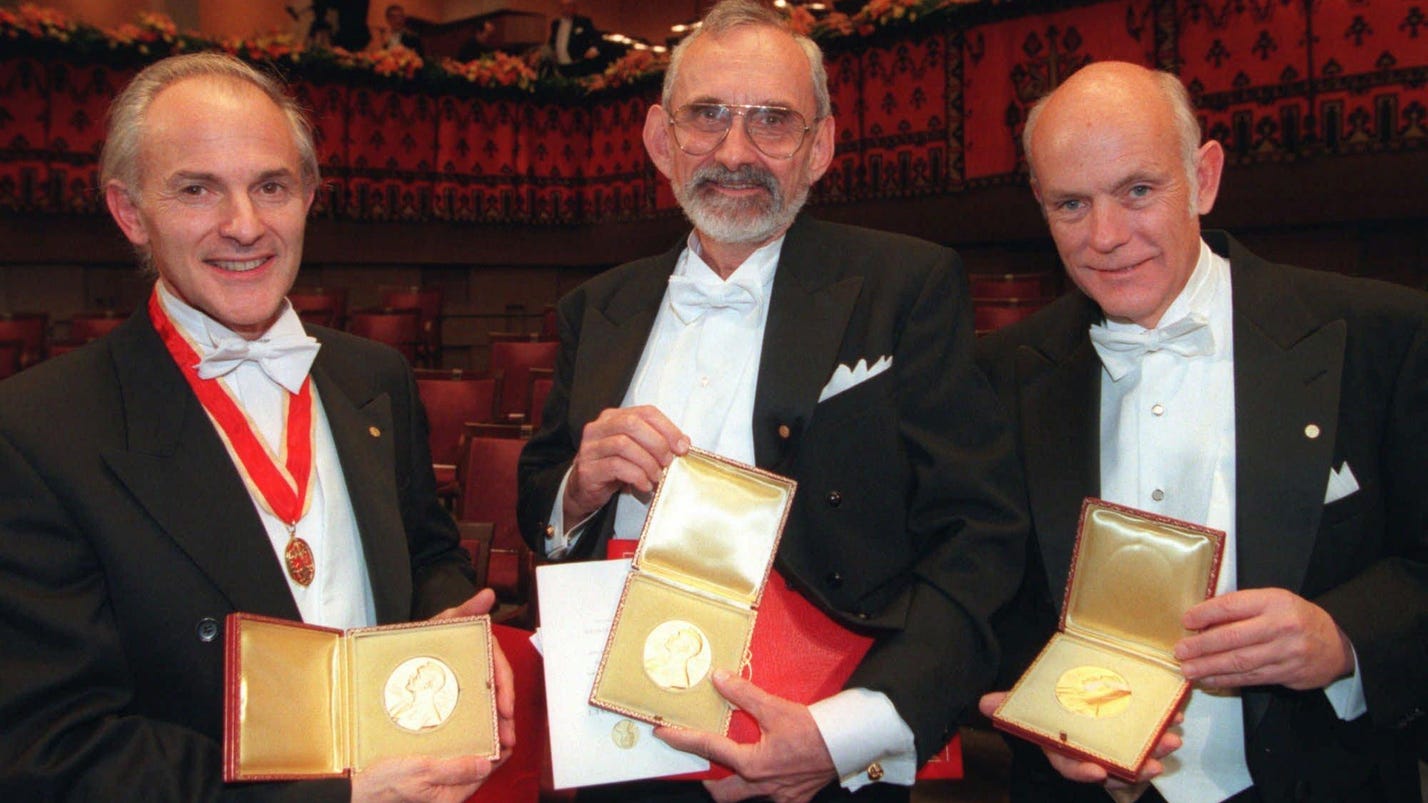
  • Lyrics of this song at MetroLyrics
[hide]

  • v
  • t
  • e
Abbey Road
Songs
Side one
  • “Come Together“
  • “Something“
  • “Maxwell’s Silver Hammer“
  • “Oh! Darling“
  • “Octopus’s Garden“
  • “I Want You (She’s So Heavy)“
Side two
  • “Here Comes the Sun“
  • “Because“
  • “You Never Give Me Your Money“
  • “Sun King“
  • “Mean Mr. Mustard“
  • “Polythene Pam“
  • “She Came In Through the Bathroom Window“
  • “Golden Slumbers“
  • “Carry That Weight“
  • “The End“
  • “Her Majesty“
Related articles
  • “The Ballad of John and Yoko“
  • “Old Brown Shoe“
  • The Beatles discography
  • Iain Macmillan
Tribute albums
  • McLemore Avenue
  • The Other Side of Abbey Road
  • Please Please Me
  • With the Beatles
  • A Hard Day’s Night
  • Beatles for Sale
  • Help!
  • Rubber Soul
  • Revolver
  • Sgt. Pepper’s Lonely Hearts Club Band
  • Magical Mystery Tour
  • The Beatles (White Album)
  • Yellow Submarine
  • Abbey Road
  • Let It Be

Categories:

  • The Beatles songs
  • 1969 songs
  • Song recordings produced by George Martin
  • Songs written by Lennon–McCartney
  • Alice Cooper songs
  • Elliott Smith songs
  • Negativland songs
  • George Clinton (musician) songs
  • Popular songs based on classical works
  • Psychedelic songs
  • Songs published by Northern Songs

The Beatles are featured in this episode below and Schaeffer noted,  ” Sergeant Pepper’s Lonely Hearts Club Band…for a time it became the rallying cry for young people throughout the world.”

How Should We then Live Episode 7 


The Beatles:

__

Abraham Cruzvillegas: Autoconstrucción | ART21 “Exclusive”

Art21

Published on Mar 4, 2016

SUBSCRIBE 65K
Episode #232: Abraham Cruzvillegas discusses his personal and artistic relationship to the concept of autoconstrucción from his childhood home in Mexico City. “Autoconstucción is about self-constructing or constructing your own house,” the artist explains, adding, “I like the term because it leads me to think about the construction of identity.” Cruzvillegas, who is shown assembling his large-scale installation “The Autoconstrucción Suites” at the Walker Art Center, is not illustrating autoconstrucción houses through his work, but instead is activating the method’s dynamic improvisation through the use of found materials. Inspired by the harsh landscape and living conditions of his childhood neighborhood, Abraham Cruzvillegas assembles sculptures and installations from found objects and disparate materials. Expanding on the intellectual investigation of his own paradoxical aesthetic concepts of “autoconstrucción” and “autodestrucción,” he likens his works to self-portraits of contradictory elements, exploring the effects of improvisation, transformation, and decay on his materials and work. In his experiments with video and performance, through the use of academic research and personal and family archives, he reveals the deep connection between his identity—born of the realities of his family’s life in Mexico—and his artistic practice. Learn more about the artist at: http://www.art21.org/artists/abraham-… ART21 “Exclusive” is supported, in part, by 21c Museum Hotel, and by individual contributors. CREDITS: Producer: Ian Forster. Interview: Susan Sollins. Editor: Morgan Riles. Camera: Mark Falstad, Kevin Galligan, David Howe & Joel Shapiro. Sound: Heidi Hesse & Mauricio Rodríguez. Artwork Courtesy: Abraham Cruzvillegas. Special Thanks: Walker Art Center

Featured artist is Abraham Cruzvillegas

Abraham Cruzvillegas

Abraham Cruzvillegas was born in Mexico City in 1968. Inspired by the harsh landscape and living conditions of Colonia Ajusco, his childhood neighborhood in Mexico City where houses were built on inhospitable land in ad hoc improvisations according to personal needs and economic resources, Cruzvillegas assembles sculptures and installations from found objects and disparate materials.

Expanding on the intellectual investigation of his own paradoxical aesthetic concepts of autoconstrucción and autodestrucción*, he likens his works to self-portraits of contradictory elements and explores the effects of improvisation, transformation, and decay on his materials and work. In his experiments with video, performance, personal and family archives, and academic research, he reveals the deep connection between his identity—born of the realities of his family’s life in Mexico—and his artistic practice.

Abraham Cruzvillegas studied at Universidad Nacional Autónoma de México (UNAM). He has been awarded residencies at DAAD (2010); Capp Street (2009); the Smithsonian Institution (2008); Cove Park (2008); Civitella Ranieri Foundation (2007); and Atelier Calder (2005). Other honors include the Yanghyun Prize (2012) and the Prix Altadis d’arts plastiques (2006). His work has appeared in major exhibitions at Haus der Kunst, Munich (2014); Walker Art Center (2013); Tate Modern (2012); Documenta (2012); Modern Art Oxford (2011); Istanbul Biennial (2011); Seoul Biennial (2010); CCA Wattis Institute for Contemporary Arts (2009); Havana Biennial (2009); the Centre for Contemporary Arts, Glasgow (2008); New Museum (2007); Museo de Arte Contemporáneo de Monterrey (2004); Contemporary Arts Museum Houston (2003); Venice Biennale (2003); Bienal de São Paulo (2002); and Museo Universitario de Ciencias y Artes (MUCA), Mexico (2001). Abraham Cruzvillegas lives and works in Mexico City, Mexico.

*The terms autoconstrucción and autodestrucción (translated literally as self-construction and self-destruction) refer to methods of building and eventual destruction that arise from the constraints of poverty, which require scavenging, recycling, and adaptation of materials.

__

Related posts:

FRANCIS SCHAEFFER ANALYZES ART AND CULTURE Part 53 THE BEATLES (Part E, Stg. Pepper’s and John Lennon’s search in 1967 for truth was through drugs, money, laughter, etc & similar to King Solomon’s, LOTS OF PICTURES OF JOHN AND CYNTHIA) (Feature on artist Yoko Ono)

April 2, 2015 – 7:05 am

The John Lennon and the Beatles really were on a long search for meaning and fulfillment in their lives  just like King Solomon did in the Book of Ecclesiastes. Solomon looked into learning (1:12-18, 2:12-17), laughter, ladies, luxuries, and liquor (2:1-2, 8, 10, 11), and labor (2:4-6, 18-20). He fount that without God in the picture all […]

By Everette Hatcher III | Posted in Current Events, Francis Schaeffer | Edit | Comments (0)

FRANCIS SCHAEFFER ANALYZES ART AND CULTURE Part 52 THE BEATLES (Part D, There is evidence that the Beatles may have been exposed to Francis Schaeffer!!!) (Feature on artist Anna Margaret Rose Freeman )

March 22, 2015 – 12:30 am

______________   George Harrison Swears & Insults Paul and Yoko Lucy in the Sky with Diamonds- The Beatles The Beatles:   I have dedicated several posts to this series on the Beatles and I don’t know when this series will end because Francis Schaeffer spent a lot of time listening to the Beatles and talking […]

By Everette Hatcher III | Posted in Francis Schaeffer | Tagged Anna Margaret Rose Freeman, George Harrison, John Lennon, Paul MacCartney, Ringo Starr, Stg. Pepper’s Lonely Hearts Club Band | Edit| Comments (0)

FRANCIS SCHAEFFER ANALYZES ART AND CULTURE Part 51 THE BEATLES (Part C, List of those on cover of Stg.Pepper’s ) (Feature on artist Raqib Shaw )

March 19, 2015 – 12:21 am

  The Beatles in a press conference after their Return from the USA Uploaded on Nov 29, 2010 The Beatles in a press conference after their Return from the USA. The Beatles:   I have dedicated several posts to this series on the Beatles and I don’t know when this series will end because Francis […]

By Everette Hatcher III | Posted in Francis Schaeffer | Tagged George Harrison, John Lennon, Paul MacCartney, Raqib Shaw, Ringo Starr | Edit | Comments (0)

FRANCIS SCHAEFFER ANALYZES ART AND CULTURE Part 50 THE BEATLES (Part B, The Psychedelic Music of the Beatles) (Feature on artist Peter Blake )

March 12, 2015 – 12:16 am

__________________   Beatles 1966 Last interview I have dedicated several posts to this series on the Beatles and I don’t know when this series will end because Francis Schaeffer spent a lot of time listening to the Beatles and talking and writing about them and their impact on the culture of the 1960’s. In this […]

By Everette Hatcher III | Posted in Francis Schaeffer | Tagged George Harrison, John Lennon, Paul MacCartney, Peter Blake, Ringo Starr | Edit | Comments (1)

FRANCIS SCHAEFFER ANALYZES ART AND CULTURE Part 49 THE BEATLES (Part A, The Meaning of Stg. Pepper’s Cover) (Feature on artist Mika Tajima)

March 5, 2015 – 4:47 am

_______________ The Beatles documentary || A Long and Winding Road || Episode 5 (This video discusses Stg. Pepper’s creation I have dedicated several posts to this series on the Beatles and I don’t know when this series will end because Francis Schaeffer spent a lot of time listening to the Beatles and talking and writing about […]

By Everette Hatcher III | Posted in Francis Schaeffer | Tagged Beatles, Mika Tajima | Edit|Comments (0)

FRANCIS SCHAEFFER ANALYZES ART AND CULTURE PART 48 “BLOW UP” by Michelangelo Antonioni makes Philosophic Statement (Feature on artist Nancy Holt)

February 26, 2015 – 4:57 am

_______________ Francis Schaeffer pictured below: _____________________ I have included the 27 minute  episode THE AGE OF NONREASON by Francis Schaeffer. In that video Schaeffer noted,  ” Sergeant Pepper’s Lonely Hearts Club Band…for a time it became the rallying cry for young people throughout the world. It expressed the essence of their lives, thoughts and their feelings.” How Should […]

By Everette Hatcher III | Posted in Francis Schaeffer | Tagged Blow Up, David Hemmings,Michelangelo Antonioni, Nancy Holt, Sarah Miles., Vanessa Redgrave | Edit |Comments (0)

FRANCIS SCHAEFFER ANALYZES ART AND CULTURE Part 47 Woody Allen and Professor Levy and the death of “Optimistic Humanism” from the movie CRIMES AND MISDEMEANORS Plus Charles Darwin’s comments too!!! (Feature on artist Rodney Graham)

February 19, 2015 – 5:33 am

Crimes and Misdemeanors: A Discussion: Part 1 ___________________________________ Today I will answer the simple question: IS IT POSSIBLE TO BE AN OPTIMISTIC SECULAR HUMANIST THAT DOES NOT BELIEVE IN GOD OR AN AFTERLIFE? This question has been around for a long time and you can go back to the 19th century and read this same […]

By Everette Hatcher III | Posted in Francis Schaeffer, Woody Allen | Tagged alan alda, Anjelica Huston, mia farrow, Sam Waterston | Edit | Comments (0)

FRANCIS SCHAEFFER ANALYZES ART AND CULTURE PART 46 Friedrich Nietzsche (Featured artist is Thomas Schütte)

February 12, 2015 – 5:00 am

____________________________________ Francis Schaeffer pictured below: __________ Francis Schaeffer has written extensively on art and culture spanning the last 2000years and here are some posts I have done on this subject before : Francis Schaeffer’s “How should we then live?” Video and outline of episode 10 “Final Choices” , episode 9 “The Age of Personal Peace and Affluence”, episode 8 […]

By Everette Hatcher III | Posted in Francis Schaeffer | Tagged Bertrand Russell, Friedrich Nietzsche,H.G. Wells, jean paul sartre, Kai Nielsen, Richard Taylor, Richard Wurmbrand, Thomas Schütte | Edit| Comments (0)

FRANCIS SCHAEFFER ANALYZES ART AND CULTURE Part 45 Woody Allen “Reason is Dead” (Feature on artists Allora & Calzadilla )

February 5, 2015 – 4:31 am

Love and Death [Woody Allen] – What if there is no God? [PL] ___________ _______________ How Should We then Live Episode 7 small (Age of Nonreason) #02 How Should We Then Live? (Promo Clip) Dr. Francis Schaeffer 10 Worldview and Truth Two Minute Warning: How Then Should We Live?: Francis Schaeffer at 100 Francis Schaeffer […]

By Everette Hatcher III | Posted in Francis Schaeffer, Woody Allen | Tagged Allora & Calzadilla |Edit| Comments (0)

FRANCIS SCHAEFFER ANALYZES ART AND CULTURE Part 44 The Book of Genesis (Featured artist is Trey McCarley )

January 29, 2015 – 5:01 am

___________________________________ Francis Schaeffer pictured below: ____________________________ Francis Schaeffer “BASIS FOR HUMAN DIGNITY” Whatever…HTTHR Dr. Francis schaeffer – The flow of Materialism(from Part 4 of Whatever happened to human race?) Dr. Francis Schaeffer – The Biblical flow of Truth & History (intro) Francis Schaeffer – The Biblical Flow of History & Truth (1) Dr. Francis Schaeffer […]

By Everette Hatcher III | Posted in Francis Schaeffer | Tagged Trey McCarley | Edit | Comments (0)


_

_______

August 23, 2018 – 2:21 am Categories: Current Events | Post a comment

« Older posts
Newer posts »
  • Recent Posts

    • FRIEDMAN FRIDAY Dan Mitchell: Milton Friedman was advocating what is sometimes referred to as “shareholder capitalism,” which is the notion that a company should strive to earn honest profits for its owners!
    • FRANCIS SCHAEFFER ANALYZES ART AND CULTURE Part 557 My March 13, 2016 Letter to Hugh Hefner with quote from Ben Parkinson: There are only two things worth putting your time and life into and that is the WORD OF GOD and the SOULS OF PEOPLE. (Featured artist is Debo Eilers)
    • FRANCIS SCHAEFFER ANALYZES ART AND CULTURE Part 556 Third letter I wrote to HUGH HEFNER (Where do we get our morals from?) Featured Artist is Stephanie Syjuco
    • FRANCIS SCHAEFFER ANALYZES ART AND CULTURE Part 555 LETTER TO HUGH HEFNER “What does it all mean — if it has any meaning at all? But how can it all exist if it doesn’t have some kind of meaning?” Featured Artist is Assume Vivid Astro Focus
    • FRANCIS SCHAEFFER ANALYZES ART AND CULTURE PART 554 My Correspondence with Edward O.Wilson from 1994 to 2021 My 4/21/17 letter to Dr.Wilson I quoted Francis Schaeffer: “Ecclesiastes is the only pessimistic book in the Bible and that is because of the place where Solomon limits himself.He limits himself to the question of human life, life UNDER THE SUN between birth and death and the answers this would give” FEATURED ARTIST IS DALÍ
  • Recent Comments

    SLIMJIM's avatarSLIMJIM on FRANCIS SCHAEFFER ANALYZES ART…
    moshe kerr's avatarmosckerr on RFK Jr: “If Trump is kep…
    moshe kerr's avatarmosckerr on “Now whether the 14th Am…
    Everette Hatcher III's avatarEverette Hatcher III on “Now whether the 14th Am…
    Everette Hatcher III's avatarEverette Hatcher III on RFK Jr: “If Trump is kep…
  • Archives

    • December 2024
    • November 2024
    • October 2024
    • September 2024
    • August 2024
    • July 2024
    • June 2024
    • May 2024
    • April 2024
    • March 2024
    • February 2024
    • January 2024
    • December 2023
    • November 2023
    • October 2023
    • September 2023
    • August 2023
    • July 2023
    • June 2023
    • May 2023
    • April 2023
    • March 2023
    • February 2023
    • January 2023
    • December 2022
    • November 2022
    • October 2022
    • September 2022
    • August 2022
    • July 2022
    • June 2022
    • May 2022
    • April 2022
    • March 2022
    • February 2022
    • January 2022
    • December 2021
    • November 2021
    • October 2021
    • September 2021
    • August 2021
    • July 2021
    • June 2021
    • May 2021
    • April 2021
    • March 2021
    • February 2021
    • January 2021
    • December 2020
    • November 2020
    • October 2020
    • September 2020
    • August 2020
    • July 2020
    • June 2020
    • May 2020
    • April 2020
    • March 2020
    • February 2020
    • January 2020
    • December 2019
    • November 2019
    • October 2019
    • September 2019
    • August 2019
    • July 2019
    • June 2019
    • May 2019
    • April 2019
    • March 2019
    • February 2019
    • January 2019
    • December 2018
    • November 2018
    • October 2018
    • September 2018
    • August 2018
    • July 2018
    • June 2018
    • May 2018
    • April 2018
    • March 2018
    • February 2018
    • January 2018
    • December 2017
    • November 2017
    • October 2017
    • September 2017
    • August 2017
    • July 2017
    • June 2017
    • May 2017
    • April 2017
    • March 2017
    • February 2017
    • January 2017
    • December 2016
    • November 2016
    • October 2016
    • September 2016
    • August 2016
    • July 2016
    • June 2016
    • May 2016
    • April 2016
    • March 2016
    • February 2016
    • January 2016
    • December 2015
    • November 2015
    • October 2015
    • September 2015
    • August 2015
    • July 2015
    • June 2015
    • May 2015
    • April 2015
    • March 2015
    • February 2015
    • January 2015
    • December 2014
    • November 2014
    • October 2014
    • September 2014
    • August 2014
    • July 2014
    • June 2014
    • May 2014
    • April 2014
    • March 2014
    • February 2014
    • January 2014
    • December 2013
    • November 2013
    • October 2013
    • September 2013
    • August 2013
    • July 2013
    • June 2013
    • May 2013
    • April 2013
    • March 2013
    • February 2013
    • January 2013
    • December 2012
    • November 2012
    • October 2012
    • September 2012
    • August 2012
    • July 2012
    • June 2012
    • May 2012
    • April 2012
    • March 2012
    • February 2012
    • January 2012
    • December 2011
    • November 2011
    • October 2011
    • September 2011
    • August 2011
    • July 2011
    • June 2011
    • May 2011
    • April 2011
    • March 2011
    • February 2011
    • January 2011
    • December 2010
  • Categories

    • Adrian Rogers
    • Atheists Confronted
    • Biblical Archaeology
    • Bill Clinton
    • Capital Punishment
    • Cato Institute
    • Current Events
    • David Barton
    • Economist Dan Mitchell
    • Famous Arkansans
    • Founding Fathers
    • Francis Schaeffer
    • Gun Control
    • Healthcare
    • Hillary Clinton
    • Jason Tolbert
    • Mike Huckabee
    • Milton Friedman
    • President Donald J. Trump
    • President Donald Trump
    • President Obama
    • Prolife
    • Ronald Reagan
    • Social Security
    • spending out of control
    • Taxes
    • Uncategorized
    • Unconfirmed Quotes of Founders
    • Vouchers
    • War Heroes
    • Woody Allen
  • Meta

    • Create account
    • Log in
    • Entries feed
    • Comments feed
    • WordPress.com
Blog at WordPress.com. | .
Privacy & Cookies: This site uses cookies. By continuing to use this website, you agree to their use.
To find out more, including how to control cookies, see here: Cookie Policy
  • Subscribe Subscribed
    • The Daily Hatch
    • Join 613 other subscribers
    • Already have a WordPress.com account? Log in now.
    • The Daily Hatch
    • Subscribe Subscribed
    • Sign up
    • Log in
    • Report this content
    • View site in Reader
    • Manage subscriptions
    • Collapse this bar

Loading Comments...