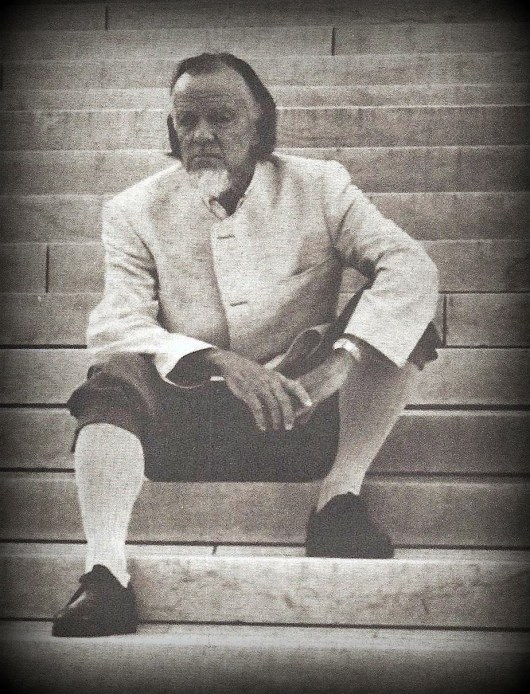
I recently read the book “I don’t have enough faith to be an atheist,” by Norman Geisler. I think of the title of that book when I think about what Francis Schaeffer said about the nature of Bertrand Russell’s faith discussed later in this blog post.
(William Ramsay pictured below and more about him later in this post)
and you will hear what far smarter people than I have to say on this matter. I agree with them.
Harry Kroto
__
Harold W. Kroto (left) receives the Nobel Prize in chemistry from Swedish King Carl XVI Gustaf in Stockholm, in 1996.
Soren Andersson/AP
__
I have attempted to respond to all of Dr. Kroto’s friends arguments and I have posted my responses one per week for over a year now. Here are some of my earlier posts:
In the first video below in the 14th clip in this series are his words and I will be responding to them in the next few weeks since Sir Bertrand Russell is probably the most quoted skeptic of our time, unless it was someone like Carl Sagan or Antony Flew.
50 Renowned Academics Speaking About God (Part 1)
Another 50 Renowned Academics Speaking About God (Part 2)
A Further 50 Renowned Academics Speaking About God (Part 3)
__
Quote from Bertrand Russell:
Q: Why are you not a Christian?
Russell: Because I see no evidence whatever for any of the Christian dogmas. I’ve examined all the stock arguments in favor of the existence of God, and none of them seem to me to be logically valid.
Q: Do you think there’s a practical reason for having a religious belief, for many people?
Russell: Well, there can’t be a practical reason for believing what isn’t true. That’s quite… at least, I rule it out as impossible. Either the thing is true, or it isn’t. If it is true, you should believe it, and if it isn’t, you shouldn’t. And if you can’t find out whether it’s true or whether it isn’t, you should suspend judgment. But you can’t… it seems to me a fundamental dishonesty and a fundamental treachery to intellectual integrity to hold a belief because you think it’s useful, and not because you think it’s true._
Bertrand Russell pictured above and Francis Schaeffer below:
Francis Schaeffer noted concerning the IMPLICIT FAITH of Bertrand Russell:
I was lecturing at the University of St. Andrews one night and someone put forth the question, “If Christianity is so clear and reasonable then why doesn’t Bertrand Russell then become a Christian? Is it because he hasn’t discovered theology?”
It wasn’t a matter of studying theology that was involved but rather that he had too much faith. I was surrounded by humanists and you could hear the gasps. Bertrand Russell and faith; Isn’t this the man of reason? I pointed out that this is a man of high orthodoxy who will hold his IMPLICIT FAITH on the basis of his presuppositions no matter how many times he has to zig and zag because it doesn’t conform to the facts.
You must understand what the term IMPLICIT FAITH means. In the old Roman Catholic Church when someone who became a Roman Catholic they had to promise implicit faith. That meant that you not only had to believe everything that Roman Catholic Church taught then but also everything it would teach in the future. It seems to me this is the kind of faith that these people have in the uniformity of natural causes in a closed system and they have accepted it no matter what it leads them into.
I think that these men are men of a high level of IMPLICIT FAITH in their own set of presuppositions. Paul said (in Romans Chapter One) they won’t carry it to it’s logical conclusion even though they hold a great deal of the truth and they have revolted and they have set up a series of universals in themselves which they won’t transgress no matter if they conform to the facts or not.
Here below is the Romans passage that Schaeffer is referring to and verse 19 refers to what Schaeffer calls “the mannishness of man” and verse 20 refers to Schaeffer’s other point which is “the universe and it’s form.”
Romans 1:18-20 Amplified Bible :
18 For God’s [holy] wrath and indignation are revealed from heaven against all ungodliness and unrighteousness of men, who in their wickedness repress and hinder the truth and make it inoperative. 19 For that which is known about God is evident to them and made plain in their inner consciousness, because God [Himself] has shown it to them. 20 For ever since the creation of the world His invisible nature and attributes, that is, His eternal power and divinity, have been made intelligible and clearly discernible in and through the things that have been made (His handiworks). So [men] are without excuse [altogether without any defense or justification].
We can actually see the two points makes playing themselves out in Bertrand Russell’s own life.
It is so with all who spend their lives in the quest of something elusive, and yet omnipresent, and at once subtle and infinite. One seeks it in music, and the sea, and sunsets; at times I have seemed very near it in crowds when I have been feeling strongly what they were feeling; one seeks it in love above all. But if one lets oneself imagine one has found it, some cruel irony is sure to come and show one that it is not really found. The outcome is that one is a ghost, floating through the world without any real contact. Even when one feels nearest to other people, something in one seems obstinately to belong to God and to refuse to enter into any earthly communion—at least that is how I should express it if I thought there was a God. It is odd isn’t it? I care passionately for this world, and many things and people in it, and yet…what is it all? There must be something more important, one feels, though I don’t believe there is. I am haunted—some ghost, from some extra-mundane region, seems always trying to tell me something that I am to repeat to the world, but I cannot understand the message.
There was evidence during Bertrand Russell’s own life that indicated that the Bible was true and could be trusted.
There was an archaeologist by the name of William Mitchell Ramsay and he had written extensively about the accuracy of the Bible. These books were available to Russell. Francis Schaeffer discusses William Ramsay’s life below:
TRUTH AND HISTORY (chapter 5 of WHATEVER HAPPENED TO THE HUMAN RACE?, under footnotes #97 and #98)
A common assumption among liberal scholars is that because the Gospels are theologically motivated writings–which they are–they cannot also be historically accurate. In other words, because Luke, say (when he wrote the Book of Luke and the Book of Acts), was convinced of the deity of Christ, this influenced his work to the point where it ceased to be reliable as a historical account. The assumption that a writing cannot be both historical and theological is false.
The experience of the famous classical archaeologist Sir William Ramsay illustrates this well. When he began his pioneer work of exploration in Asia Minor, he accepted the view then current among the Tubingen scholars of his day that the Book of Acts was written long after the events in Paul’s life and was therefore historically inaccurate. However, his travels and discoveries increasingly forced upon his mind a totally different picture, and he became convinced that Acts was minutely accurate in many details which could be checked.
(Under footnote #98)
Acts is a fairly full account of Paul’s journeys, starting in Pisidian Antioch and ending in Rome itself. The record is quite evidently that of an eyewitness of the events, in part at least. Throughout, however, it is the report of a meticulous historian. The narrative in the Book of Acts takes us back behind the missionary journeys to Paul’s famous conversion on the Damascus Road, and back further through the Day of Pentecost to the time when Jesus finally left His disciples and ascended to be with the Father.
But we must understand that the story begins earlier still, for Acts is quite explicitly the second part of a continuous narrative by the same author, Luke, which reaches back to the birth of Jesus.
Luke 2:1-7 New American Standard Bible (NASB)
2 Now in those days a decree went out from Caesar Augustus, that a census be taken of all [a]the inhabited earth.2 [b]This was the first census taken while[c]Quirinius was governor of Syria.3 And everyone was on his way to register for the census, each to his own city.4 Joseph also went up from Galilee, from the city of Nazareth, to Judea, to the city of David which is called Bethlehem, because he was of the house and family of David,5 in order to register along with Mary, who was engaged to him, and was with child.6 While they were there, the days were completed for her to give birth.7 And she gave birth to her firstborn son; and she wrapped Him in cloths, and laid Him in a [d]manger, because there was no room for them in the inn.
In the opening sentences of his Gospel, Luke states his reason for writing:
Luke 1:1-4 New American Standard Bible (NASB)
1 Inasmuch as many have undertaken to compile an account of the things[a]accomplished among us,2 just as they were handed down to us by those whofrom the beginning [b]were eyewitnesses and [c]servants of the [d]word,3 it seemed fitting for me as well, having [e]investigated everything carefully from the beginning, to write it out for you in consecutive order, most excellentTheophilus;4 so that you may know the exact truth about the things you have been[f]taught.
In Luke and Acts, therefore, we have something which purports to be an adequate history, something which Theophilus (or anyone) can rely on as its pages are read. This is not the language of “myths and fables,” and archaeological discoveries serve only to confirm this.
For example, it is now known that Luke’s references to the titles of officials encountered along the way are uniformly accurate. This was no mean achievement in those days, for they varied from place to place and from time to time in the same place. They were proconsuls in Corinth and Cyprus, asiarchs at Ephesus, politarchesat Thessalonica, and protosor “first man” in Malta. Back in Palestine, Luke was careful to give Herod Antipas the correct title of tetrarch of Galilee. And so one. The details are precise.
William Mitchell Ramsay was born on the 15th of March 1851. He was educated at the universities of Aberdden, Oxford and Gottingen, and was a fellow of Exeter College, Oxford (1882; honorary fellow 1898), and Lincoln College (1885; honorary 1899). In 1885 he was elected professor of classical art at Oxford, and in the next year professor of humanity at Aberdeen. From 1880 onwards he traveled widely in Asia Minor and rapidly became the recognized authority on all matters relating to the districts associated with St Paul’s missionary journeys and on Christianity in the early Roman Empire.
He received the honorary degrees of D.C.L. Oxford, LL.D. St Andrews and Glasgow, D.D. Edinburgh, and was knighted in 1906. He was elected a member of learned societies in Europe and America, and has been awarded medals by the Royal Geographical Society, the Royal Scottish Geographical Society and the University of Pennsylvania.
His numerous publications include: The Historical Geography of Asia Minor (1890); The Church in the Roman Empire (1893); The Cities and Bishoprics of Phrygia (2 vols., 1895, 1897); St Paul the Traveler and the Roman Citizen (1895; Germ. trans., 1898); Impressions of Turkey (1897); Was Christ born at Bethlehem? (1898); Historical Commentary on Galatians (1899); The Education of. Christ (1902); The Letters to the Seven Churches of Asia (1905); Pauline and other Studies in Early Christian History (1906); Studies in the History and Art of the Eastern Provinces of the Roman Empire (1906); The Cities of St Paul (1907); Lucan and Pauline Studies (1908); The Thousand and One Churches (with Miss Gertrude L. Bell, 1909); and articles in learned periodicals and the 9th, 10th and 11th editions of the Encyclopaedia Britannica. His wife, Lady Ramsay, granddaughter of Dr Andrew Marshall of Kirkintilloch, accompanied him in many of his journeys and is the author of Everyday Life Turkey (1897) and The Romance of Elisavet (1899) .
In the Book of Revelation, we find John’s letters to the seven churches of first century Asia Minor, written during the era of the Roman Empire. The seven churches correspond to the seven congregations found in these cities: Ephesus, City of Change; Smyrna, City of Life; Pergamum, City of Authority; Thyatira, City of Weakness Made Strong; Sardis, City of Death; Philadelphia, Missionary City; and Laodicea, City of Compromise. William Ramsay presents these letters to help readers better understand their content as well as the historical context surrounding their authorship.Letters to the Seven Churches of Asia is filled with facts regarding the general importance of letter writing in the Early Church, the mobility of letters during this time period, John’s intentions in writing the Seven Letters, and the influence of religion in the development of first century cities. John’s letters provide historical insight into Greco-Roman culture and geography. They also serve to guide Christians in their spiritual development. Ramsay’s book brings John’s letters into a useful contemporary light.
Ramsay wrote this book to tell the story of Paul’s life as it was documented in the Book of Acts. Before Ramsay begins his study of Paul’s life, he discusses the date, composition, and authorship of Acts. “The first and the essential quality of the great historian is truth,” says Ramsay. Of the four types of historical writing, namely, romance, legend, second rate history, and first rate history, Ramsay classifies the Book of Acts as first rate historical writing. The characterization of Paul found in Acts contains such individualized detail that the author could not have gathered this information by any means other than personal acquaintances and original sources. As such, Ramsay believes that the author of Acts has attained a superior mark of historical accuracy and literary trustworthiness.St. Paul the Traveler and the Roman Citizen contains an excellent study of the Book of Acts as well as of Paul’s life and travels in first century Asia, Greece, and Rome.
In 19th century schools of theology in Continental Europe, it had become fashionable to be skeptical about any traditional doctrine about the Bible. Many academic theologians denied the divinity of Christ, and others claimed that Paul’s letters were forgeries. Ramsay, while he used some of the same critical methods as his academic peers, was nevertheless able to counter their arguments effectively. Having spent years in Asia Minor studying the missionary journeys of Paul and the Apostles, Ramsay had become an expert on the New Testament’s historical documents. He argues that Luke, the author of the Acts of the Apostles and the Gospel of Luke, was as reliable an historian as any other in the first century. Thus in answer to the question, “Was Christ born in Bethlehem?” Ramsay answers: “Yes. We can trust Luke’s Gospel.”
Francis Schaeffer noted in his book HOW SHOULD WE THEN LIVE? (p. 182 in Vol 5 of Complete Works) in the chapter The Breakdown in Philosophy and Science:
In his lecture at Acapulco, George Wald finished with only one final value. It was the same one with which English philosopher Bertrand Russell (1872-1970) was left. For Wald and Russell and for many other modern thinkers, the final value is the biological continuity of the human race. If this is the only final value, one is left wondering why this then has importance.
Now having traveled from the pride of man in the High Renaissance and the Enlightenment down to the present despair, we can understand where modern people are. They have no place for a personal God. But equally they have no place for man as man, or for love, or for freedom, or for significance. This brings a crucial problem. Beginning only from man himself, people affirm that man is only a machine. But those who hold this position cannot live like machines! If they could, there would have been no tensions in their intellectual position or in their lives. But even people who believe they are machines cannot live like machines, and thus they must “leap upstairs” against their reason and try to find something which gives meaning to life, even though to do so they have to deny their reason.
Francis Schaeffer in another place worded it like this:
The universe was created by an infinite personal God and He brought it into existence by spoken word and made man in His own image. When man tries to reduce [philosophically in a materialistic point of view] himself to less than this [less than being made in the image of God] he will always fail and he will always be willing to make these impossible leaps into the area of nonreason even though they don’t give an answer simply because that isn’t what he is. He himself testifies that this infinite personal God, the God of the Old and New Testament is there.
We all know deep down that God exists and even atheists have to grapple with that knowledge.
Solomon wisely noted in Ecclesiastes 3:11 “God has planted eternity in the heart of men…” (Living Bible). No wonder Bertrand Russell wrote in his autobiography, “It is odd, isn’t it? I feel passionately for this world and many things and people in it, and yet…what is it all? There must be something more important, one feels, though I don’t believe there is. I am haunted. Some ghosts, for some extra mundane regions, seem always trying to tell me something that I am to repeat to the world, but I cannot understand that message.”
Take a look at this 7th episode from Schaeffer’s series “HOW SHOULD WE THEN LIVE? The Age of Nonreason”:
How Should We Then Live – Episode Seven – 07 – Portuguese Subtitles
_
Instead of making a leap into the area of nonreason the better choice would be to investigate the claims that the Bible is a historically accurate book and that God created the universe and reached out to humankind with the Bible.
Schaeffer then points to the historical accuracy of the Bible in Chapter 5 of the book WHATEVER HAPPENED TO THE HUMAN RACE?
The Bible and Archaeology – Is the Bible from God? (Kyle Butt 42 min)
Today we look at the 3rd letter in the Kroto correspondence and his admiration of Bertrand Russell. (Below The Nobel chemistry laureates Harold Kroto, Robert Curl and Richard Smalley) It is with sadness that I write this post having learned of the death of Sir Harold Kroto on April 30, 2016 at the age of […]
On November 21, 2014 I received a letter from Nobel Laureate Harry Kroto and it said: …Please click on this URL http://vimeo.com/26991975 and you will hear what far smarter people than I have to say on this matter. I agree with them. Harry Kroto _________________ Below you have picture of Dr. Harry Kroto: Gareth Stedman […]
Top 10 Woody Allen Movies __________ John Piippo makes the case that Bertrand Russell would have loved Woody Allen because they both were atheists who don’t deny the ramifications of atheism!!! Monday, August 06, 2012 (More On) Woody Allen’s Atheism As I wrote in a previous post, I like Woody Allen. I have long admired his […]
______ Top 10 Woody Allen Movies PBS American Masters – Woody Allen A Documentary 01 PBS American Masters – Woody Allen A Documentary 02 __________ John Piippo makes the case that Bertrand Russell would have loved Woody Allen because they both were two atheists who don’t deny the ramifications of atheism!!! Monday, August 06, 2012 […]
THE MORAL ARGUMENT BERTRAND RUSSELL But aren’t you now saying in effect, I mean by God whatever is good or the sum total of what is good — the system of what is good, and, therefore, when a young man loves anything that is good he is loving God. Is that what you’re […]
Great debate Fr. Frederick C. Copleston vs Bertrand Russell – Part 1 Uploaded by riversonthemoon on Jul 15, 2009 BBC Radio Third Programme Recording January 28, 1948. BBC Recording number T7324W. This is an excerpt from the full broadcast from cassette tape A303/5 Open University Course, Problems of Philosophy Units 7-8. Older than 50 years, […]
Uploaded by riversonthemoon on Jul 15, 2009 BBC Radio Third Programme Recording January 28, 1948. BBC Recording number T7324W. This is an excerpt from the full broadcast from cassette tape A303/5 Open University Course, Problems of Philosophy Units 7-8. Older than 50 years, out of UK/BBC copyright. Pardon the hissy audio. It was recorded 51 […]
Fr. Frederick C. Copleston vs Bertrand Russell – Part 1 Uploaded by riversonthemoon on Jul 15, 2009 BBC Radio Third Programme Recording January 28, 1948. BBC Recording number T7324W. This is an excerpt from the full broadcast from cassette tape A303/5 Open University Course, Problems of Philosophy Units 7-8. Older than 50 years, out of […]
THE MORAL ARGUMENT BERTRAND RUSSELL But aren’t you now saying in effect, I mean by God whatever is good or the sum total of what is good — the system of what is good, and, therefore, when a young man loves anything that is good he is loving God. Is that what you’re […]
Fr. Frederick C. Copleston vs Bertrand Russell – Part 1 Uploaded by riversonthemoon on Jul 15, 2009 BBC Radio Third Programme Recording January 28, 1948. BBC Recording number T7324W. This is an excerpt from the full broadcast from cassette tape A303/5 Open University Course, Problems of Philosophy Units 7-8. Older than 50 years, out of […]
David Archuleta – Crush Crush (David Archuleta song) From Wikipedia, the free encyclopedia “Crush” Single by David Archuleta from the album David Archuleta Released August 12, 2008 (See release history) Format CD single, digital download Recorded 2008 Genre Pop Length 3:33 Label Jive Writer(s) Jess Cates, David Hodges, Emanuel Kiriakou Producer Emanuel Kiriakou David Archuleta singles chronology “Crush“ (2008) “A Little Too Not Over You“ […]
Uploaded on May 11, 2011 “What About Now” is the seventh single from American rock band Daughtry’s eponymous debut album. The song is a ballad, that was written by Ben Moody, David Hodges (both former members of Evanescence), and Josh Hartzler, who is married to Amy Lee (the lead singer of Evanescence) It is one of […]
Evanescence – Bring Me To Life From David Hodges website: David Hodges is a Grammy award-winning writer/producer/artist hailing from Little Rock, AR. As the former writer and keyboardist of the band Evanescence, he and his band mates took home Best New Artist as well as the Best Hard Rock Performance trophy for their hit “Bring […]
Carrie Underwood | There’s A Place For Us | Music Video Uploaded on Dec 27, 2010 Music Video of Carrie Underwood – There’s A Place For Us – The Chronicles Of Narnia – Voyage Of The Dawn Treader Soundtrack This video is created using various trailers from the film The Chronicles Of Narnia – Voyage Of The […]
Evanescence – My Immortal From David Hodges website: David Hodges is a Grammy award-winning writer/producer/artist hailing from Little Rock, AR. As the former writer and keyboardist of the band Evanescence, he and his band mates took home Best New Artist as well as the Best Hard Rock Performance trophy for their hit “Bring Me To […]
Christina Perri- The Lonely (official music video) Distance (Christina Perri song) From Wikipedia, the free encyclopedia “Distance” Single by Christina Perri featuring Jason Mraz from the album lovestrong. Released March 20, 2012 Format Digital download Recorded 2011 Genre Pop Length 3:55 Label Atlantic Writer(s) Christina Perri, David Hodges Christina Perri singles chronology “A Thousand Years“ (2011) “Distance“ (2012) Jason Mraz singles chronology “I […]
Evanescence – Going Under From David Hodges website: David Hodges is a Grammy award-winning writer/producer/artist hailing from Little Rock, AR. As the former writer and keyboardist of the band Evanescence, he and his band mates took home Best New Artist as well as the Best Hard Rock Performance trophy for their hit “Bring Me To […]
Kelly Clarkson – Because Of You From David Hodges website: David Hodges is a Grammy award-winning writer/producer/artist hailing from Little Rock, AR. As the former writer and keyboardist of the band Evanescence, he and his band mates took home Best New Artist as well as the Best Hard Rock Performance trophy for their hit “Bring […]
On June 28, 2013 Underwood was back on top with a song that Little Rock native David Hodges who graduated at Arkansas Baptist High School help write. Carrie Underwood “Sees” No. 1 Again onTop 20 By Sarah Wyland | Leave a Comment Carrie Underwood photo courtesy of Sony Music Nashville. Carrie Underwood current single title is prophetic. She makes […]
Christina Perri ‘Safe Haven’ Interview- New Album Coming! Published on Feb 6, 2013 http://bit.ly/ClevverMusic – Subscribe to ClevverMusic! We caught up with “Jar of Hearts” singer Christina Perri at the Safe Haven movie premiere where her song “Arms” is featured on the soundtrack. We chatted with her on the red carpet about the song, and […]
David Hodges is a graduate of Arkansas Baptist High School in Little Rock and he co-wrote the song “A Thousand Years,”with Christina Perri. It was featured in the movie “Breaking Dawn Part 2.” David is one of the three founding members of Evanescence and he has written for Kelly Clarkson, Celine Dion, Reba McEntire, Carrie Underwood, […]
The “American Idol” contestant-turned-actress is getting positive reviews for her role in “Smash.” The singer plays an actress who is competing for the part of Marilyn Monroe in a Broadway show. The Hollywood Reporter calls it “‘Glee’ for grownups” and Entertainment Weekly calls McPhee “mediocre” but “very likable.” Great song: Uploaded by KatharineMcPheeVEVO on Nov […]
Little Rock native and Arkansas Baptist High School graduate David Hodges co-wrote a song for the blockbuster movie “Breaking Dawn” that comes out this Friday. Interview: Breaking Dawn’s Christina Perri Twi’s Hard, Dreams Big By Leah Collins, Dose.ca Nov 1, 2011 More Images » OMG. Christina Perri went from a […]
The Beatles are featured in this episode below and Schaeffer noted, ” Sergeant Pepper’s Lonely Hearts Club Band…for a time it became the rallying cry for young people throughout the world.”
Schaeffer talked about the young people of the 1960’s and their dissatisfaction with their parents values and he talked about also the proper reasons to confront the government. Unfortunately, John Lennon wrote some words in the song REVOLUTION that indicated that a revolution involving violence was a possible remedy.
The website Genius gives us some good insights into the song:
The version of this song that appears on The Beatles (The White Album) has a variant lyric indicating Lennon’s uncertainty about destructive change, with the phrase “count me out” recorded as “count me out, in”. “Revolution I” was recorded first, but released second. giving the false impression that he was becoming less sure of his pacifist views, when in it was in fact the opposite.
“Count me out if it’s for violence. Don’t expect me on the barricades unless it’s with flowers”
—John Lennon in 1980 about how “Revolution” still stood as an expression of his politics.
Photograph by Ted Streshinsky, “People’s Park Riots, National Guard and Protester”
John Lennon and The Beatles were synchronous with most of the pivotal points of my life in the sixties. They weren’t leaders, they weren’t my gurus, they were my companions, my spiritual allies on a magical and very mysterious trip. And John was the one I felt closest to. I could relate to his peace and love approach, but I also deeply felt his angrier side, his revolutionary spirit.
(The following is an edited excerpt from a rough draft of my memoirs)
The People’s Park situation had gotten out of control. Reagan declared Martial Law.
On May 29, 1969 John Lennon called the People’s Park protest organizers (UCB students) twice to offer his support. It was the day before a major march was to be held and there was a lot of tension in the air. The calls were broadcast on KPFA radio. Lennon’s exhortations to stay cool could be heard from radios perched on window sills throughout the city:
“There’s no cause worth losing your life for, there isn’t any path worth getting shot for and you can do better by moving on to another city. Don’t move about if it aggravates the pigs, and don’t get hassled by the cops, and don’t play their games. I know it’s hard, Christ you know it ain’t easy, you know how hard it can be man, so
what? Everything’s hard. It’s better to have it hard than to not have it at all.
Entice them, entice them! Con them-you’ve got the brains, you can do it. You can make it, man! We can make it together. We can get it together!”
It was almost two weeks after Bloody Thursday, but the streets were still crawling with National Guard, cops in riot gear, and military tanks. It looked like Prague 1968. I was in the middle of it all. I decided to leave town. I was a peacenik and didn’t want anything to do with the violence that was erupting all around me, most of it instigated by jackbooted cops from Oakland.
My girlfriend Vicki and I were walking down University Ave. toward a freeway onramp when a cop car, sirens wailing, screeched up along side us and a bunch of bulls spilled out wildly waving their nightsticks and knocked us to the ground. They ripped the backpacks off our bodies and tore them open, scattering our stuff all over the sidewalk. Instead of bombs or guns or whatever the fuck they were looking for, they ended up with a few bags of granola, dried fruit and brown rice. As the cops were piling back into their car, a van pulled up to the curb and its longhair driver shouted for us to “get in, get in!” We threw our backpacks and ourselves into the van and slammed the door shut. This infuriated the cops. They leaped back out of their car and started slamming billy clubs upside the van as we sped off. The cops were out of their fucking minds, rabid Keystone Kops gone mad with the smell of hippie blood.
I decided not to leave Berkeley but to stay and join my neighbors in protest of the cop riot and the occupation of our city by Reagan’s goon squads. This was happening on my turf and I had to be involved. It wasn’t going away. And avoiding it was a chickenshit approach that I couldn’t live with.
On May 30th over 30,000 people (one third of Berkeley’s population) marched to People’s Park to save it from destruction. Vicki and I were among them. The National Guard and the cops were out in full force. But, they were outnumbered and overwhelmed. Young girls slid flowers down the muzzles of bayoneted rifles and a small airplane flew over the city trailing a banner that read, “Let A Thousand Parks Bloom.”
The park was surrounded by a fence. Inside the fence were hundreds of young Guardsmen. Outside the fence were thousands of peaceful protesters. Some of the Guardsmen looked terrified; others were smiling and flashing peace symbols. Community leaders and organizers were making speeches from a couple of flatbed trucks. Music played. At one point a bunch of us jumped up on one of the flatbeds, took off our clothes and started dancing. We were chanting to the soldiers inside the fence to “join us, join us”. Most of them looked like they were ready to leap the fence and do exactly that. Seeing a bunch of cute hippie chicks naked and offering their bodies to them was mighty tempting to those horny young guys, some of whom were actually UCB students who had joined the guard to avoid going to Vietnam. They knew they were on the wrong side of the fence. I later read that several of them did end up joining the protesters and were severely punished for having done so. The following week, a picture of me dancing nude on that flatbed truck appeared on the cover of the Berkeley Barb. Rocking out with my cock out! Mao said “political power grows out of the barrel of a gun.” I had a different approach.
Two years later, People’s Park was resurrected. It exists to this day. Power to the people and their parks.
#02 How Should We Then Live? (Promo Clip) Dr. Francis Schaeffer
Berkeley’s Campus Free Speech Movement at 50
The Free Speech Movement: civil disobedience in Berkeley 1964
Mario Savio, leader of the Free Speech Movement at UC Berkeley (1964) – from THE EDUCATION ARCHIVE
I have dedicated several posts to this series on the Beatles and I don’t know when this series will end because Francis Schaeffer spent a lot of time listening to the Beatles and talking and writing about them and their impact on the culture of the 1960’s. In this series we have looked at several areas in life where the Beatles looked for meaning and hope but also we have examined some of the lives of those writers, artists, poets, painters, scientists, athletes, models, actors, religious leaders, musicians, comedians, and philosophers that were put on the cover of Sergeant Pepper’s Lonely Hearts Club Band album. We have discovered that many of these individuals on the cover have even taken a Kierkegaardian leap into the area of nonreason in order to find meaning for their lives and that is the reason I have included the 27 minute episode THE AGE OF NONREASON by Francis Schaeffer. In that video Schaeffer noted, ” Sergeant Pepper’s Lonely Hearts Club Band…for a time it became the rallying cry for young people throughout the world. It expressed the essence of their lives, thoughts and their feelings.”
Sergeant Pepper’s Lonely Hearts Club Band Albumreally did look at every potential answer to meaning in life and to as many people as the Beatles could imagine had the answers to life’s big questions. One of the persons on the cover did have access to those answers and I am saving that person for last in this series on the Beatles.
During this long series on the Beatles it has become quite evident that there were reasons why certain writers, artists, poets, painters, scientists, athletes, models, actors, religious leaders, musicians, comedians, and philosophers were put on the cover of Sergeant Pepper’s Lonely Hearts Club Band and that is the Beatles had made it to the top of the world but they were still searching for purpose and lasting meaning for their lives. They felt they were in the same boat as those pictured on the cover and so they called it appropriately Sergeant Pepper’s Lonely Hearts Club Band. In his article “Philosophy and its Effect on Society Robert A. Sungenis, notes that all these individuals “are all viewing the burial scene of the Beatles, which, in the framework we are using here, represents the passing of idealistic innocence and the failure to find a rational answer and meaning to life, an answer to love, purpose, significance and morals. They instead were leaping into the irrational, whether it was by drugs, the occult, suicide, or the bizarre.”
Communism catches the attention of the young at heart but it has always brought repression wherever it is tried. “True Communism has never been tried” is something I was told just a few months ago by a well meaning young person who was impressed with the ideas of Karl Marx. I responded that there are only 5 communist countries in the world today and they lack political, economic and religious freedom.
Hope in Marxism-Leninism is a leap in the area of nonreason. From the Russian Revolution until 1959 a total of 66 million prisoners died. This was deemed acceptable to the leaders because internal security was to be gained at any cost. The ends justified the means. The materialism of Marxism gives no basis for human dignity or rights. These hold to their philosophy against all reason and close their eyes to the oppression of the system.
#02 How Should We Then Live? (Promo Clip) Dr. Francis Schaeffer
WHY DOES COMMUNISM FAIL?
Communism has always failed because of its materialist base. Francis Schaeffer does a great job of showing that in this clip below. Also Schaeffer shows that there were lots of similar things about the basis for both the French and Russia revolutions and he exposes the materialist and humanist basis of both revolutions.
Schaeffer compares communism with French Revolution and Napoleon.
1. Lenin took charge in Russia much as Napoleon took charge in France – when people get desperate enough, they’ll take a dictator.
Other examples: Hitler, Julius Caesar. It could happen again.
2. Communism is very repressive, stifling political and artistic freedom. Even allies have to be coerced. (Poland).
Communists say repression is temporary until utopia can be reached – yet there is no evidence of progress in that direction. Dictatorship appears to be permanent.
3. No ultimate basis for morality (right and wrong) – materialist base of communism is just as humanistic as French. Only have “arbitrary absolutes” no final basis for right and wrong.
How is Christianity different from both French Revolution and Communism?
Contrast N.T. Christianity – very positive government reform and great strides against injustice. (especially under Wesleyan revival).
Bible gives absolutes – standards of right and wrong. It shows the problems and why they exist (man’s fall and rebellion against God).
WHY DOES THE IDEA OF COMMUNISM CATCH THE ATTENTION OF SO MANY IDEALISTIC YOUNG PEOPLE? The reason is very simple.
In HOW SHOULD WE THEN LIVE? The Rise and Decline of Western Thought and Culture, the late Francis A. Schaeffer wrote:
Materialism, the philosophic base for Marxist-Leninism, gives no basis for the dignity or rights of man. Where Marxist-Leninism is not in power it attracts and converts by talking much of dignity and rights, but its materialistic base gives no basis for the dignity or rights of man. Yet is attracts by its constant talk of idealism.
To understand this phenomenon we must understand that Marx reached over to that for which Christianity does give a base–the dignity of man–and took the words as words of his own. The only understanding of idealistic sounding Marxist-Leninism is that it is (in this sense) a Christian heresy. Not having the Christian base, until it comes to power it uses the words for which Christianity does give a base. But wherever Marxist-Leninism has had power, it has at no place in history shown where it has not brought forth oppression. As soon as they have had the power, the desire of the majority has become a concept without meaning.
Is Christianity at all like Communism?
Sometimes Communism sounds very “Christian” – desirable goals of equality, justice, etc but these terms are just borrowed from the New Testament. Schaeffer elsewhere explains by saying Marxism is a Christian heresy.
Below is a great article. Free-lance columnist Bradley R. Gitz, who lives and teaches in Batesville, received his Ph.D. in political science from the University of Illinois.
This article was published January 30, 2011 at 2:28 a.m. Here is a portion of that article below:
A final advantage is the mutation of socialism into so many variants over the past century or so. Precisely because Karl Marx was unclear as to how it would work in practice, socialism has always been something of an empty vessel into which would be revolutionaries seeking personal meaning and utopian causes to support can pour pretty much anything.
A desire to increase state power, soak the rich and expand the welfare state is about all that is left of the original vision. Socialism for young lefties these days means “social justice” and compassion for the poor, not the gulag and the NKVD.
In the end, the one argument that will never wash is that communismcan’t be said to have failed because it was never actually tried. This is a transparent intellectual dodge that ignores the fact that “people’s democracies” were established all over the place in the first three decades after World War II.
Such sophistry is resorted to only because communism in all of those places produced hell on earth rather than heaven.
That the attempts to build communism in a remarkable variety of different geographical regions led to only tyranny and mass bloodshed tells us only that it was never feasible in the first place, and that societies built on the socialist principle ironically suffer from the kind of “inner contradictions” that Marx mistakenly predicted would destroy capitalism.
Yes, all economies are mixed in nature, and one could plausibly argue that the socialist impulse took the rough edges off of capitalism by sponsoring the creation of welfare-state programs that command considerable public support.
But the fact remains that no society in history has been able to achieve sustained prosperity without respect for private property and market forces of supply and demand. Nations, therefore, retain their economic dynamism only to the extent that they resist the temptation to travel too far down the socialist road.
#02 How Should We Then Live? (Promo Clip) Dr. Francis Schaeffer
Francis Schaeffer notes:
At Berkeley the Free Speech Movement arose simultaneously with the hippie world of drugs. At first it was politically neither left nor right, but rather a call for the freedom to express any political views on Sproul Plaza. Then soon the Free Speech Movement became the Dirty Speech Movement, in which freedom was seen as shouting four-letter words into a mike. Soon after, it became the platform for the political New Left which followed the teaching of Herbert Marcuse. Marcuse was a German professor of philosophy related to the neo-Marxist teaching of the “Frankfurt School,” along with...Jurgen Habermas (1929-).
Herbert Marcuse, “Liberation from the Affluent Society” (1967)
Brannon Howse talks some about the Frankfurt School in some of his publications too.
During the 1960’s many young people were turning to the New Left fueled by Marcuse and Habermas but something happened to slow many young people’s enthusiasm for that movement.
1970 bombing took away righteous standing of Anti-War movement
Francis Schaeffer mentioned the 1970 bombing in his film series “How should we then live?” and I wanted to give some more history on it. Schaeffer asserted:
In the United States the New Left also slowly ground down,losing favor because of the excesses of the bombings, especially in the bombing of the University of Wisconsin lab in 1970, where a graduate student was killed. This was not the last bomb that was or will be planted in the United States. Hard-core groups of radicals still remain and are active, and could become more active, but the violence which the New Left produced as its natural heritage (as it also had in Europe) caused the majority of young people in the United States no longer to see it as a hope. So some young people began in 1964 to challenge the false values of personal peace and affluence, and we must admire them for this. Humanism, man beginning only from himself, had destroyed the old basis of values, and could find no way to generate with certainty any new values. In the resulting vacuum the impoverished values of personal peace and affluence had comes to stand supreme. And now, for the majority of the young people, after the passing of the false hopes of drugs as an ideology and the fading of the New Left, what remained? Only apathy was left. In the United States by the beginning of the seventies, apathy was almost complete. In contrast to the political activists of the sixties, not many of the young even went to the polls to vote, even though the national voting age was lowered to eighteen. Hope was gone.
After the turmoil of the sixties, many people thought that it was so much the better when the universities quieted down in the early seventies. I could have wept. The young people had been right in their analysis, though wrong in their solutions. How much worse when many gave up hope and simply accepted the same values as their parents–personal peace and affluence. (How Should We Then Live, pp. 209-210
Aug. 24 marked the 41st anniversary of the Sterling Hall bombing on the University of Wisconsin-Madison campus.
Four men planned the bomb at the height of the student protests over the Vietnam War. Back then, current Madison Mayor Paul Soglin was one of the leaders of those student protests in the capitol city. This weekend, Soglin recalled the unrest felt by UW-Madison students.
“The anti-war movement adopted a lot of its tactics and strategies from the civil rights movement which was about ten years older,” said Soglin. “It was one of picketing, demonstration, and passive resistance.”
The four men who planned the bombing focused on the Army Mathematics Research Center housed in Sterling Hall because it was funded by the U.S. Department of Defense and therefore, worked on weapons technology. Karl Armstrong was one of the four men and he recently spoke with CBS News in his first television interview detailing the moments right before the bomb was set off.
“He asked me, he says, ‘Should we go ahead? Are we gonna do this?’ I think I made a comment to him about something like, ‘Now, I know what war is about,'” remembered Armstrong. “And I told him to light it.”
The bomb killed one researcher and father of three, 33-year-old Robert Fassnacht, although Armstrong maintains they planned the attack thinking no one would get hurt. The four men heard about the death as they were in their getaway car after the bomb went off.
“I felt good about doing the bombing, the bombing per se, but not taking someone’s life,” recalled Armstrong.
The researcher’s wife told CBS News that she harbors no ill will toward Armstrong and the other bombers. Three of the four men were captured and served time in prison. Armstrong served eight years of a 23-year sentence.
The fourth man, Leo Burt, was last seen in the fall of 1970 in Ontario and is to this day, still wanted by the FBI, with a $150,000 reward for his capture.
When I grew up in the 60’s, young people rebelled against materialism and morality. We said “Enough!!” and fought back against the establishment – an establishment we regarded as corrupt and clueless. When it came to a war we thought unjust we chanted, “Hell no, we won’t go!!” When it came to materialism we said, “We don’t want it!!”, and walked about with no shoes and holes in our jeans. And when it came to traditional morality, we rejected it and gave ourselves to free sex, drugs and rock and roll. It had an enduring impact on our nation. And while the rejection of materialism was a positive reminder that there are more important things to life than possessions, the plunge into immorality has been devastating.
Today, four decades later, as I look at the Evangelical Christian Church (now as a pastor, husband, father and grandfather) I can’t help but believe we are in need of another revolution. This time, however, we need a revolution among Christian young people – those who will go against the narcissistic thinking of their unspiritual Christian parents, a thinking that only leads to selfishness, materialism and a high divorce rate.
Our Christian young people are being destroyed today by a culture of sexual impurity – a poisonous trend that is not taken seriously enough by their clueless parents. Our daughters rarely lay claim to being virgins on their wedding night and we have helped to produce an entire generation of young men who are porn addicts. Our divorce rates are skyrocketing and, as a result, our grandchildren are being traumatized.
Sadly, biblical illiteracy is at an all time high. As a result, most Christians are unaware that the Bible’s solution to sexual immorality among our young people is to simply encourage marriage (1 Cor 7). But rather than obey the Bible, we have been polluted by a pagan culture that has convinced us that young marriage is a terrible thing. Despite the fact that studies show the single greatest contributor to divorce is sexual activity before marriage, we foolishly ignore the dangers of sexual promiscuity and ignorantly treat it as no big deal. “Don’t worry, Jesus will forgive you later…” Rather than encourage purity, Christian parents encourage – no, they threaten their young people that if they marry too young they will punish them with all their strength: refuse to pay for college, refuse to pay for any wedding or even refuse to attend any such weddings. These corrupted guardians, having been sufficiently polluted by the poison of the lust of this world, deliberately insist that their children first obtain what the Bible clearly warns them against: money, things, and the cares of this life.
“Don’t you DARE marry too young!! You need an education first!! You need an established career first!” Despite what Jesus taught, “You need to secure the cares of this life first and at all costs!!”
Follow Biblical teachings? Ridiculous.
Make purity our highest priority? Foolishness.
Serve God?? No way!! Unless, of course, one considers money their true god. In which case we need our education first. Our careers first. Our insurance plans and 401Ks first. Our big house and flat screen TVs and BMWs first. After all, we don’t want to offend the god of money…
Many Christian parents today have virtually zero concept of encouraging their children to put God first in their lives. Are you kidding?! Most Christian parents don’t even tithe to their church. Good grief, if we can’t even give a decent percentage of our money to God, why would we encourage our kids to put any effort towards putting God first in any other area?
Mormons put Evangelical Christians to shame. Right out of high school, they encourage their young people to spend 2 years in service to God before pursuing their dreams. Can you imagine an Evangelical church doing that? Can you imagine the hell a pastor would pay if he encouraged the young people in his congregation to delay their plans and serve in the mission field first? Delay college?! Delay gratification?!! Actually put God first?!!! Outrageous!!!!
I fear most Christian parents today have been so poisoned – by the love of money, by the pride of life, by the cares of this world – that there is little hope of getting them to do the right thing concerning their young adults. Most, if they were to read this post, would dismiss these thoughts almost as quickly as they could read them. No, our hope does not lie in their potential enlightenment and eventual repentance. Our hope lies somewhere else. We need another revolution. We need a revolution from the young. But this time, rather than rebelling against materialism and morality, we need them to rebel against materialism and IMMorality.
This is not to say that earning a good income is not important. And a college education may be the right path for them. But the thinking must be God first, morality first, service first. Besides, if there is one lesson people should be learning in the present economy is that certain career, savings, investments, and 401Ks are an illusion. Better our young people pursue those things that can never be taken away from them or lost in a bad economy.
We need young people who will have enough of God in them to say “Hell no, we won’t go!” “We don’t need all this stuff!!” “We are going to take time and put God first.” “Instead of losing our virginity and becoming porn addicts, we are going to marry young.” “If you won’t pay for college, fine. You won’t pay for the wedding, so be it.” We need young people who will rise up and as respectfully as possible, tell their clueless Christian parents to “stick it”! (Again, as respectfully as possible.)
Jesus warned that on judgment day many would say “Lord, lord…”, but will be shocked when he responds, “Sorry, I don’t know you.” (Matt 7) I can’t help but think that at the very front of that line will be 21st Century, so-called Christian parents who are more concerned that their kids make money than stay pure and honor God.
Jesus asked the question, “When the Son of Man comes, will he find faith on the earth?” (Luke 18) He never answered the question.
Will there be faith when Jesus returns? I am not sure the answer will be yes. Unless our youth rebel against their spiritually cold, materialist and morally clueless parents, I fear the answer may well be ”no”.
My absolute favorite albums are Rubber Soul and Revolver. On both records you can hear references to other music — R&B, Dylan, psychedelia — but it’s not done in a way that is obvious or dates the records. When you picked up Revolver, you knew it was something different. Heck, they are wearing sunglasses indoors in the picture on the back of the cover and not even looking at the camera . . . and the music was so strange and yet so vivid. If I had to pick a favorite song from those albums, it would be “And Your Bird Can Sing” . . . no, “Girl” . . . no, “For No One” . . . and so on, and so on. . . .
Their breakup album, Let It Be, contains songs both gorgeous and jagged. I suppose ambition and human frailty creeps into every group, but they delivered some incredible performances. I remember going to Leicester Square and seeing the film of Let It Be in 1970. I left with a melancholy feeling.
13
‘Revolution’
George Stroud/Express/Getty Images
Main Writer: Lennon Recorded: July 10 and 11, 1968 Released: August 26, 1968 11 weeks; no. 12 (B side)
In the spring of 1968, the Vietnam War raged on, Martin Luther King Jr. was assassinated, and strikes and student protests in Paris brought the French government to its knees. When the Beatles — who had long been outspoken critics of the Vietnam War — hit Abbey Road Studios to make the White Album at the end of May, the first thing they recorded was “Revolution,” which was also the first explicitly political song the band ever released. “I wanted to put out what I felt about revolution,” Lennon told Rolling Stone in 1970. “I thought it was time we fuckin’ spoke about it. The same as we stopped not answering about the Vietnamese War [when we were] on tour with Brian [Epstein]. We had to tell him, ‘We’re going to talk about the war this time, and we’re not going to just waffle.'”
The first version of “Revolution” the Beatles recorded was a slow, bluesy shuffle that eventually became “Revolution 1.” (The last six minutes of the master take were a menacing jam that was sheared off and eventually became “Revolution 9.”) On July 10th, they returned to “Revolution” for a charged-up electric take — the best-known version of the song, which ended up as the B side of “Hey Jude.” It was the hardest-rocking performance the Beatles ever caught on tape, from Lennon’s scalding guitar introduction (a reference to Pee Wee Crayton’s 1954 blues single “Do Unto Others”) to the final howl. “John wanted a really distorted sound,” engineer Phil McDonald said. “The guitars were put through the recording console, which was technically not the thing to do. It completely overloaded the channel. Fortunately the technical people didn’t find out. They didn’t approve of ‘abuse of equipment.'”
The crucial lyric difference between the two versions was a single word. “Revolution 1” included the line “When you talk about destruction/Don’t you know that you can count me out . . . in.” (As McCartney noted, “John was just hedging his bets, covering all eventualities.”) But by the time the Beatles cut the single version, it was an unambiguous “count me out.” While the mainstream media praised Lennon’s stance — Time approved of the song’s criticism of “radical activists the world over” — the hard left was unimpressed. Ramparts magazine called its ambivalence a “betrayal.”
“The lyrics stand today,” Lennon said in 1980. “They’re still my feeling about politics: I want to see the plan. . . . I want to know what you’re going to do after you’ve knocked it all down. I mean, can’t we use some of it? What’s the point of bombing Wall Street? If you want to change the system, change the system. It’s no good shooting people.”
Appears On:Past Masters
Nasher Museum: “See it for yourself”- William Cordova
William Cordova was born 1971 in Lima, Peru, spent his childhood in Miami, and now lives and works in Lima, New York, and Miami. His multimedia practice includes installation, drawing, and sculpture, on which he has focused his attention in recent years.
Using found and discarded objects to examine ideas of transition and displacement, Cordova attributes this interest to his experiences growing up in both Lima and Miami and the complications of a bicultural childhood. With influences that range from architecture and Afro-Peruvian culture to Jean-Michel Basquiat and Robert Rauschenberg, Cordova’s expansive practice considers transformation, transcendence, time, and space. Cordova’s works at times integrate fragments of texts, creating coded political statements that expose often-invisible histories.
The John Lennon and the Beatles really were on a long search for meaning and fulfillment in their lives just like King Solomon did in the Book of Ecclesiastes. Solomon looked into learning (1:12-18, 2:12-17), laughter, ladies, luxuries, and liquor (2:1-2, 8, 10, 11), and labor (2:4-6, 18-20). He fount that without God in the picture all […]
______________ George Harrison Swears & Insults Paul and Yoko Lucy in the Sky with Diamonds- The Beatles The Beatles: I have dedicated several posts to this series on the Beatles and I don’t know when this series will end because Francis Schaeffer spent a lot of time listening to the Beatles and talking […]
The Beatles in a press conference after their Return from the USA Uploaded on Nov 29, 2010 The Beatles in a press conference after their Return from the USA. The Beatles: I have dedicated several posts to this series on the Beatles and I don’t know when this series will end because Francis […]
__________________ Beatles 1966 Last interview I have dedicated several posts to this series on the Beatles and I don’t know when this series will end because Francis Schaeffer spent a lot of time listening to the Beatles and talking and writing about them and their impact on the culture of the 1960’s. In this […]
_______________ The Beatles documentary || A Long and Winding Road || Episode 5 (This video discusses Stg. Pepper’s creation I have dedicated several posts to this series on the Beatles and I don’t know when this series will end because Francis Schaeffer spent a lot of time listening to the Beatles and talking and writing about […]
_______________ Francis Schaeffer pictured below: _____________________ I have included the 27 minute episode THE AGE OF NONREASON by Francis Schaeffer. In that video Schaeffer noted, ” Sergeant Pepper’s Lonely Hearts Club Band…for a time it became the rallying cry for young people throughout the world. It expressed the essence of their lives, thoughts and their feelings.” How Should […]
Crimes and Misdemeanors: A Discussion: Part 1 ___________________________________ Today I will answer the simple question: IS IT POSSIBLE TO BE AN OPTIMISTIC SECULAR HUMANIST THAT DOES NOT BELIEVE IN GOD OR AN AFTERLIFE? This question has been around for a long time and you can go back to the 19th century and read this same […]
____________________________________ Francis Schaeffer pictured below: __________ Francis Schaeffer has written extensively on art and culture spanning the last 2000years and here are some posts I have done on this subject before : Francis Schaeffer’s “How should we then live?” Video and outline of episode 10 “Final Choices” , episode 9 “The Age of Personal Peace and Affluence”, episode 8 […]
Love and Death [Woody Allen] – What if there is no God? [PL] ___________ _______________ How Should We then Live Episode 7 small (Age of Nonreason) #02 How Should We Then Live? (Promo Clip) Dr. Francis Schaeffer 10 Worldview and Truth Two Minute Warning: How Then Should We Live?: Francis Schaeffer at 100 Francis Schaeffer […]
___________________________________ Francis Schaeffer pictured below: ____________________________ Francis Schaeffer “BASIS FOR HUMAN DIGNITY” Whatever…HTTHR Dr. Francis schaeffer – The flow of Materialism(from Part 4 of Whatever happened to human race?) Dr. Francis Schaeffer – The Biblical flow of Truth & History (intro) Francis Schaeffer – The Biblical Flow of History & Truth (1) Dr. Francis Schaeffer […]
On November 21, 2014 I received a letter from Nobel Laureate Harry Kroto and it said:…Please click on this URL http://vimeo.com/26991975and you will hear what far smarter people than I have to say on this matter. I agree with them.Harry Kroto__
Harold W. Kroto (left) receives the Nobel Prize in chemistry from Swedish King Carl XVI Gustaf in Stockholm, in 1996.
Q: Why are you not a Christian?Russell: Because I see no evidence whatever for any of the Christian dogmas. I’ve examined all the stock arguments in favour of the existence of God, and none of them seem to me to be logically valid.Q: Do you think there’s a practical reason for having a religious belief, for many people?Russell: Well, there can’t be a practical reason for believing what isn’t true. That’s quite… at least, I rule it out as impossible. Either the thing is true, or it isn’t. If it is true, you should believe it, and if it isn’t, you shouldn’t. And if you can’t find out whether it’s true or whether it isn’t, you should suspend judgment. But you can’t… it seems to me a fundamental dishonesty and a fundamental treachery to intellectual integrity to hold a belief because you think it’s useful, and not because you think it’s true.Q: I was thinking of those people who find that some kind of religious code helps them to live their lives. It gives them a very strict set of rules, the rights and the wrongs.Russell: Yes, but those rules are generally quite mistaken. A great many of them do more harm than good. And they would probably be able to find arational morality that they could live by if they dropped this irrational traditional taboo morality that comes down from savage ages.Q: But are we, perhaps the ordinary person perhaps isn’t strong enough to find this own personal ethic. They have to have something imposed upon them from outside.Russell: Oh, I don’t think that’s true, and what is imposed on you from outside is of no value whatever. It doesn’t count.Q: Well, you were brought up, of course, as a Christian. When did you first decide that you did not want to remain a believer in the Christian ethic?Russell: I never decided that I didn’t want to remain a believer. I decided… between the ages of 15 and 18, I spent almost all my spare time thinking about Christian dogmas, and trying to find out whether there was any reason to believe them. And by the time I was 18, I’d discarded the last of them.Q: Do you think that that gave you an extra strength in your life?Russell: Oh, I don’t… no, I should’t have said so, neither extra strength nor the opposite. I mean, I was just engaged in the pursuit of knowledge.Q: As you approach the end of life, do you have any fear of some kind of afterlife, or do you feel that that is just…Russell: Oh, no, I think that’s nonsense.Q: There is no afterlife?Russell: None whatever.Q: Do you have any fear of something that is common amongst atheists and agnostics, who have been atheists or agnostics all their lives, who are converted just before they die, to a form of religion?Russell: Well, you know, it doesn’t happen nearly as often as religious people think it does. Because religious people, most of them, think that it’s a virtuous act to tell lies about the death beds of agnostics and such. As a matter of fact, it doesn’t happen very often. ____________ SUMMER 2011
It’s been fascinating to watch the very vocal and prolific new atheists, such as Christopher Hitchens, Sam Harris, Daniel Dennett and Richard Dawkins, make a case for objective morality. The phrase “objective morality” is a way of indicating that some behaviors are right (truth telling, kindness, tolerance) and some behaviors are wrong (rape, murder, racism) — for real. Morality is not just a matter of personal preference and choice (akin to liking peanuts better than almonds), but rather laws that are real and true and binding no matter what one thinks about them or whether one chooses to follow them.
The reason it has been fun to watch the new atheists defend this idea is because atheists of an earlier generation (such as J.L. Mackie and Bertrand Russell) thought it folly to do so. Classic atheists from the mid-20th century were very reluctant to grant that there was an objective moral law because they saw that it was just too compelling for believers to take the easy step from the moral law to God who was the “moral law giver.” Accepting a real objective moral law would be giving far, far too much ground to the Christians and other theists.
In my view, this shift in attitude toward moral values among the new atheists is an indicator that our work in Christian apologetics and philosophy has had an impact. I can’t count the times when in forums on various college campuses more traditional atheists and agnostics have had to squirm under the questioning from me or my colleagues about basic moral questions.
“Is it wrong to torture babies for fun?” “Is it wrong to treat a person as subhuman because she has darker skin?” As you can imagine, if an atheist were to answer “no,” or “well, it depends,” or “I prefer not to do these things, but how can I judge others,” to these questions he would be running into some real trouble with the audience. Whether the audience is filled with conservative Christians or radical unbelievers, people in our culture have an aversion to those who waffle or dodge on such fundamental and obvious moral values.
I think the new atheists got tired of being in such a public relations conundrum, so they began embracing basic morality as some sort of natural feature of the physical universe. They now tend to maintain that there are objective morals, but that these morals did not come from God. Is it wrong to torture babies for fun? Of course it’s wrong, says the new atheist. Goal accomplished. No more looking like an uncaring monster on stage in debates with Christians.
On the one hand, I think the new atheists have been helped in public discourse by their recent adoption of rudimentary moral values. One rarely feels now like one is being addressed by an amoral scoundrel when a new atheist is speaking in public. On the other hand, the new atheist now suffers from a problem that the old atheists would have quickly warned them about: How in the world are we going to explain where these objective moral values came from?
The primary technique the new atheists have adopted for dealing with the issue of the origin or grounding of the moral law is obfuscation. The new atheists are very fond of saying, “We don’t need God to be good.” Indeed, they often say that atheists, agnostics and skeptics often lead more wholesome lives than lifelong professing Christians. Now, theists should not be fooled by this. Our response should be, “Of course you don’t need God to be good — we’ve never claimed that you do.” You see, it is not knowledge (epistemology) of the moral law that is a problem — after all, the Bible teaches that this law is written on every human heart. Rather, the daunting problem for the new atheist is the nature and source (ontology) of the moral law. Here are some questions you can ask Richard Dawkins the next time you sit next to him on a bus:
• If everything ultimately must be explained by the laws of physics and chemistry, help me understand what a moral value is (does it have mass, occupy space, hold a charge, have wavelength)?
• How did matter, energy, time and chance result in a set of objective moral values? Did the big bang really spew forth “love your enemy?” If so, you have to help me understand that.
• What makes your moral standard more than a subjective opinion or personal preference? What makes it truly binding or obligatory? Why can’t I just ignore it? Won’t our end be the same (death and the grave) either way?
The old atheists did not want to have to face questions like these, so they simply denied the reality of objective moral values. The new atheists have thrown the door open. Let’s not make it easy for them. Let’s ask the hard questions in a winsome and engaging way.
Francis Schaeffer once wrote, “If there is no absolute beyond man’s ideas, then there is no final appeal to judge between individuals and groups whose moral judgments conflict. We are merely left with conflicting opinions.”_______________Let me challenge these NEW atheists to watch the film CRIMES AND MISDEMEANORS by Woody Allen.
“Existential subjects to me are still the only subjects worth dealing with. I don’t think that one can aim more deeply than at the so-called existential themes, the spiritual themes.” WOODY ALLENEvangelical Chuck Colson has observed that it used to be true that most Americans knew the Bible. Evangelists could simply call on them to repent and return. But today, most people lack understanding of biblical terms or concepts. Colson recommends that we first attempt to find common ground to engage people’s attention. That then may open a door to discuss spiritual matters.Woody Allen’s 1989 movie, CRIMES AND MISDEMEANORS , is an excellent icebreaker concerning the need of God while making decisions in the area of personal morality. In this film, Allen attacks his own atheistic view of morality. Martin Landau plays a Jewish eye doctor named Judah Rosenthal raised by a religious father who always told him, “The eyes of God are always upon you.” However, Judah later concludes that God doesn’t exist. He has his mistress (played in the film by Anjelica Huston) murdered because she continually threatened to blow the whistle on his past questionable, probably illegal, business activities. She also attempted to break up Judah ‘s respectable marriage by going public with their two-year affair. Judah struggles with his conscience throughout the remainder of the movie. He continues to be haunted by his father’s words: “The eyes of God are always upon you.” This is a very scary phrase to a young boy, Judah observes. He often wondered how penetrating God’s eyes are.Later in the film, Judah reflects on the conversation his religious father had with Judah ‘s unbelieving Aunt May at the dinner table many years ago:“Come on Sol, open your eyes. Six million Jews burned to death by the Nazis, and they got away with it because might makes right,” says aunt MaySol replies, “May, how did they get away with it?”Judah asks, “If a man kills, then what?”Sol responds to his son, “Then in one way or another he will be punished.”Aunt May comments, “I say if he can do it and get away with it and he chooses not to be bothered by the ethics, then he is home free.”Judah ‘s final conclusion was that might did make right. He observed that one day, because of this conclusion, he woke up and the cloud of guilt was gone. He was, as his aunt said, “home free.”Woody Allen has exposed a weakness in his own humanistic view that God is not necessary as a basis for good ethics. There must be an enforcement factor in order to convince Judah not to resort to murder. Otherwise, it is fully to Judah ‘s advantage to remove this troublesome woman from his life.The Bible tells us, “{God} has also set eternity in the hearts of men…” (Ecclesiastes 3:11 NIV). The secularist calls this an illusion, but the Bible tells us that the idea that we will survive the grave was planted in everyone’s heart by God Himself. Romans 1:19-21 tells us that God has instilled a conscience in everyone that points each of them to Him and tells them what is right and wrong (also Romans 2:14 -15).It’s no wonder, then, that one of Allen’s fellow humanists would comment, “Certain moral truths — such as do not kill, do not steal, and do not lie — do have a special status of being not just ‘mere opinion’ but bulwarks of humanitarian action. I have no intention of saying, ‘I think Hitler was wrong.’ Hitler WAS wrong.” (Gloria Leitner, “A Perspective on Belief,” THE HUMANIST, May/June 1997, pp. 38-39)Here Leitner is reasoning from her God-given conscience and not from humanist philosophy. It wasn’t long before she received criticism. Humanist Abigail Ann Martin responded, “Neither am I an advocate of Hitler; however, by whose criteria is he evil?” (THE HUMANIST, September/October 1997, p. 2)The secularist can only give incomplete answers to these questions: How could you have convinced Judah not to kill? On what basis could you convince Judah it was wrong for him to murder?As Christians, we would agree with Judah ‘s father that “The eyes of God are always upon us.” Proverbs 5:21 asserts, “For the ways of man are before the eyes of the Lord, and He ponders all his paths.” Revelation 20:12 states, “…And the dead were judged (sentenced) by what they had done (their whole way of feeling and acting, their aims and endeavors) in accordance with what was recorded in the books” (Amplified Version). The Bible is revealed truth from God. It is the basis for our morality. Judah inherited the Jewish ethical values of the Ten Commandments from his father, but, through years of life as a skeptic, his standards had been lowered. Finally, we discover that Judah ‘s secular version of morality does not resemble his father’s biblically-based morality.Woody Allen’s CRIMES AND MISDEMEANORS forces unbelievers to grapple with the logical conclusions of a purely secular morality. It opens a door for Christians to find common ground with those whom they attempt to share Christ; we all have to deal with personal morality issues. However, the secularist has no basis for asserting that Judah is wrong.Larry King actually mentioned on his show, LARRY KING LIVE, that Chuck Colson had discussed the movie CRIMES AND MISDEMEANORS with him. Colson asked King if life was just a Darwinian struggle where the ruthless come out on top. Colson continued, “When we do wrong, is that our only choice? Either live tormented by guilt, or else kill our conscience and live like beasts?” (BREAKPOINT COMMENTARY, “Finding Common Ground,” September 14, 1993)Later, Colson noted that discussing the movie CRIMES AND MISDEMEANORS with King presented the perfect opportunity to tell him about Christ’s atoning work on the cross. Colson believes the Lord is working on Larry King. How about your neighbors? Is there a way you can use a movie to find common ground with your lost friends and then talk to them about spiritual matters?
(Caution: CRIMES AND MISDEMEANORS is rated PG-13. It does include some adult themes.)
Access this on the web at www.excelstillmore.com/html/beinformed/article1.shtml .(Originally published in December 2003 edition of Excel Magazine)______________[From a letter dated August 11, 1918 to Miss Rinder when Russell was 46]It is quite true what you say, that you have never expressed yourself—but who has, that has anything to express? The things one says are all unsuccessful attempts to say something else—something that perhaps by its very nature cannot be said. I know that I have struggled all my life to say something that I never shall learn how to say. And it is the same with you. It is so with all who spend their lives in the quest of something elusive, and yet omnipresent, and at once subtle and infinite. One seeks it in music, and the sea, and sunsets; at times I have seemed very near it in crowds when I have been feeling strongly what they were feeling; one seeks it in love above all. But if one lets oneself imagine one has found it, some cruel irony is sure to come and show one that it is not really found.
The outcome is that one is a ghost, floating through the world without any real contact. Even when one feels nearest to other people, something in one seems obstinately to belong to God and to refuse to enter into any earthly communion—at least that is how I should express it if I thought there was a God. It is odd isn’t it? I care passionately for this world, and many things and people in it, and yet…what is it all? There must be something more important, one feels, though I don’t believe there is. I am haunted—some ghost, from some extra-mundane region, seems always trying to tell me something that I am to repeat to the world, but I cannot understand the message. But it is from listening to the ghost that one comes to feel oneself a ghost. I feel I shall find the truth on my deathbed and be surrounded by people too stupid to understand—fussing about medicines instead of searching for wisdom. Love and imagination mingled; that seems the main thing so far._________________
Bertrand Russell pictured above and Francis Schaeffer below:Francis Schaeffer noted in his book HOW SHOULD WE THEN LIVE? (p. 182 in Vol 5 of Complete Works) in the chapter The Breakdown in Philosophy and Science:In his lecture at Acapulco, George Wald finished with only one final value. It was the same one with which English philosopher Bertrand Russell (1872-1970) was left. For Wald and Russell and for many other modern thinkers, the final value is the biological continuity of the human race. If this is the only final value, one is left wondering why this then has importance. Now having traveled from the pride of man in the High Renaissance and the Enlightenment down to the present despair, we can understand where modern people are. They have no place for a personal God. But equally they have no place for man as man, or for love, or for freedom, or for significance. This brings a crucial problem. Beginning only from man himself, people affirm that man is only a machine. But those who hold this position cannot live like machines! If they could, there would have been no tensions in their intellectual position or in their lives. But even people who believe they are machines cannot live like machines, and thus they must “leap upstairs” against their reason and try to find something which gives meaning to life, even though to do so they have to deny their reason. Francis Schaeffer in another place worded it like this:The universe was created by an infinite personal God and He brought it into existence by spoken word and made man in His own image. When man tries to reduce [philosophically in a materialistic point of view] himself to less than this [less than being made in the image of God] he will always fail and he will always be willing to make these impossible leaps into the area of nonreason even though they don’t give an answer simply because that isn’t what he is. He himself testifies that this infinite personal God, the God of the Old and New Testament is there.We all know deep down that God exists and even atheists have to grapple with that knowledge.Solomon wisely noted in Ecclesiastes 3:11 “God has planted eternity in the heart of men…” (Living Bible). No wonder Bertrand Russell wrote in his autobiography, “It is odd, isn’t it? I feel passionately for this world and many things and people in it, and yet…what is it all? There must be something more important, one feels, though I don’t believe there is. I am haunted. Some ghosts, for some extra mundane regions, seem always trying to tell me something that I am to repeat to the world, but I cannot understand that message.”Take a look at this 7th episode from Schaeffer’s series “HOW SHOULD WE THEN LIVE? The Age of Nonreason”:
How Should We Then Live – Episode Seven – 07 – Portuguese Subtitles
_Instead of making a leap into the area of nonreason the better choice would be to investigate the claims that the Bible is a historically accurate book and that God created the universe and reached out to humankind with the Bible.
Schaeffer then points to the historical accuracy of the Bible in Chapter 5 of the book WHATEVER HAPPENED TO THE HUMAN RACE?
The Bible and Archaeology – Is the Bible from God? (Kyle Butt 42 min)
Today we look at the 3rd letter in the Kroto correspondence and his admiration of Bertrand Russell. (Below The Nobel chemistry laureates Harold Kroto, Robert Curl and Richard Smalley) It is with sadness that I write this post having learned of the death of Sir Harold Kroto on April 30, 2016 at the age of […]
On November 21, 2014 I received a letter from Nobel Laureate Harry Kroto and it said: …Please click on this URL http://vimeo.com/26991975 and you will hear what far smarter people than I have to say on this matter. I agree with them. Harry Kroto _________________ Below you have picture of Dr. Harry Kroto: Gareth Stedman […]
Top 10 Woody Allen Movies __________ John Piippo makes the case that Bertrand Russell would have loved Woody Allen because they both were atheists who don’t deny the ramifications of atheism!!! Monday, August 06, 2012 (More On) Woody Allen’s Atheism As I wrote in a previous post, I like Woody Allen. I have long admired his […]
______ Top 10 Woody Allen Movies PBS American Masters – Woody Allen A Documentary 01 PBS American Masters – Woody Allen A Documentary 02 __________ John Piippo makes the case that Bertrand Russell would have loved Woody Allen because they both were two atheists who don’t deny the ramifications of atheism!!! Monday, August 06, 2012 […]
THE MORAL ARGUMENT BERTRAND RUSSELL But aren’t you now saying in effect, I mean by God whatever is good or the sum total of what is good — the system of what is good, and, therefore, when a young man loves anything that is good he is loving God. Is that what you’re […]
Great debate Fr. Frederick C. Copleston vs Bertrand Russell – Part 1 Uploaded by riversonthemoon on Jul 15, 2009 BBC Radio Third Programme Recording January 28, 1948. BBC Recording number T7324W. This is an excerpt from the full broadcast from cassette tape A303/5 Open University Course, Problems of Philosophy Units 7-8. Older than 50 years, […]
Uploaded by riversonthemoon on Jul 15, 2009 BBC Radio Third Programme Recording January 28, 1948. BBC Recording number T7324W. This is an excerpt from the full broadcast from cassette tape A303/5 Open University Course, Problems of Philosophy Units 7-8. Older than 50 years, out of UK/BBC copyright. Pardon the hissy audio. It was recorded 51 […]
Fr. Frederick C. Copleston vs Bertrand Russell – Part 1 Uploaded by riversonthemoon on Jul 15, 2009 BBC Radio Third Programme Recording January 28, 1948. BBC Recording number T7324W. This is an excerpt from the full broadcast from cassette tape A303/5 Open University Course, Problems of Philosophy Units 7-8. Older than 50 years, out of […]
THE MORAL ARGUMENT BERTRAND RUSSELL But aren’t you now saying in effect, I mean by God whatever is good or the sum total of what is good — the system of what is good, and, therefore, when a young man loves anything that is good he is loving God. Is that what you’re […]
Fr. Frederick C. Copleston vs Bertrand Russell – Part 1 Uploaded by riversonthemoon on Jul 15, 2009 BBC Radio Third Programme Recording January 28, 1948. BBC Recording number T7324W. This is an excerpt from the full broadcast from cassette tape A303/5 Open University Course, Problems of Philosophy Units 7-8. Older than 50 years, out of […]
“Pieces of a Dream” is a song by American singer Anastacia from her first greatest hits album, Pieces of a Dream(2005). Written by Anastacia, Glen Ballard, and David Hodges, it was produced by Hodges and details a number of difficult issues the singer experienced while touring in 2005 such as the breakdown of her relationship and the death of her estranged father. The single was released as the album’s lead single in Europe on November 11, 2005. The single reached the top ten in Italy and the Netherlands, and the top twenty in Germany and Switzerland. It also peaked at number one in Spain three years after its original release.
The music video for “Pieces of a Dream” was directed by David Lippman and Charles Mehling, and was filmed in Los Angeles, California, between September 17–18, 2005. The video is notable for being shot entirely in black-and-white. It is mostly set in dark woods, and has no coherent storyline, featuring a series of mysterious images—perhaps to literally interpret the song’s title.
The video depicts Anastacia’s descent into madness, and the hallucinations she has, such as a frozen rose and images of herself burning. It is later revealed that Anastacia is being held in a padded cell, and that the video is actually a part of her dream.
David Archuleta – Crush Crush (David Archuleta song) From Wikipedia, the free encyclopedia “Crush” Single by David Archuleta from the album David Archuleta Released August 12, 2008 (See release history) Format CD single, digital download Recorded 2008 Genre Pop Length 3:33 Label Jive Writer(s) Jess Cates, David Hodges, Emanuel Kiriakou Producer Emanuel Kiriakou David Archuleta singles chronology “Crush“ (2008) “A Little Too Not Over You“ […]
Uploaded on May 11, 2011 “What About Now” is the seventh single from American rock band Daughtry’s eponymous debut album. The song is a ballad, that was written by Ben Moody, David Hodges (both former members of Evanescence), and Josh Hartzler, who is married to Amy Lee (the lead singer of Evanescence) It is one of […]
Evanescence – Bring Me To Life From David Hodges website: David Hodges is a Grammy award-winning writer/producer/artist hailing from Little Rock, AR. As the former writer and keyboardist of the band Evanescence, he and his band mates took home Best New Artist as well as the Best Hard Rock Performance trophy for their hit “Bring […]
Carrie Underwood | There’s A Place For Us | Music Video Uploaded on Dec 27, 2010 Music Video of Carrie Underwood – There’s A Place For Us – The Chronicles Of Narnia – Voyage Of The Dawn Treader Soundtrack This video is created using various trailers from the film The Chronicles Of Narnia – Voyage Of The […]
Evanescence – My Immortal From David Hodges website: David Hodges is a Grammy award-winning writer/producer/artist hailing from Little Rock, AR. As the former writer and keyboardist of the band Evanescence, he and his band mates took home Best New Artist as well as the Best Hard Rock Performance trophy for their hit “Bring Me To […]
Christina Perri- The Lonely (official music video) Distance (Christina Perri song) From Wikipedia, the free encyclopedia “Distance” Single by Christina Perri featuring Jason Mraz from the album lovestrong. Released March 20, 2012 Format Digital download Recorded 2011 Genre Pop Length 3:55 Label Atlantic Writer(s) Christina Perri, David Hodges Christina Perri singles chronology “A Thousand Years“ (2011) “Distance“ (2012) Jason Mraz singles chronology “I […]
Evanescence – Going Under From David Hodges website: David Hodges is a Grammy award-winning writer/producer/artist hailing from Little Rock, AR. As the former writer and keyboardist of the band Evanescence, he and his band mates took home Best New Artist as well as the Best Hard Rock Performance trophy for their hit “Bring Me To […]
Kelly Clarkson – Because Of You From David Hodges website: David Hodges is a Grammy award-winning writer/producer/artist hailing from Little Rock, AR. As the former writer and keyboardist of the band Evanescence, he and his band mates took home Best New Artist as well as the Best Hard Rock Performance trophy for their hit “Bring […]
On June 28, 2013 Underwood was back on top with a song that Little Rock native David Hodges who graduated at Arkansas Baptist High School help write. Carrie Underwood “Sees” No. 1 Again onTop 20 By Sarah Wyland | Leave a Comment Carrie Underwood photo courtesy of Sony Music Nashville. Carrie Underwood current single title is prophetic. She makes […]
Christina Perri ‘Safe Haven’ Interview- New Album Coming! Published on Feb 6, 2013 http://bit.ly/ClevverMusic – Subscribe to ClevverMusic! We caught up with “Jar of Hearts” singer Christina Perri at the Safe Haven movie premiere where her song “Arms” is featured on the soundtrack. We chatted with her on the red carpet about the song, and […]
David Hodges is a graduate of Arkansas Baptist High School in Little Rock and he co-wrote the song “A Thousand Years,”with Christina Perri. It was featured in the movie “Breaking Dawn Part 2.” David is one of the three founding members of Evanescence and he has written for Kelly Clarkson, Celine Dion, Reba McEntire, Carrie Underwood, […]
The “American Idol” contestant-turned-actress is getting positive reviews for her role in “Smash.” The singer plays an actress who is competing for the part of Marilyn Monroe in a Broadway show. The Hollywood Reporter calls it “‘Glee’ for grownups” and Entertainment Weekly calls McPhee “mediocre” but “very likable.” Great song: Uploaded by KatharineMcPheeVEVO on Nov […]
Little Rock native and Arkansas Baptist High School graduate David Hodges co-wrote a song for the blockbuster movie “Breaking Dawn” that comes out this Friday. Interview: Breaking Dawn’s Christina Perri Twi’s Hard, Dreams Big By Leah Collins, Dose.ca Nov 1, 2011 More Images » OMG. Christina Perri went from a […]
In the French Revolution, human reason was made supreme and christianity was pushed aside. In 1789, with the French Revolution at its height, the members of the National Assembly swore to establish a constitution: The Declaration of the Rights of Man. To make their outlook clear, the French changed the calendar and called 1792 the “year one,” and destroyed many of the things of the past, even suggesting the destruction of the cathedral at Chartres. They proclaimed the goddess of Reason in Notre-Dame Cathedral in Paris and in other churches in France, including Chartres. In Paris, the goddess was personified by an actress, Demoiselle Candeille, carried shoulder high into the cathedral by men dressed in Roman costumes. Like the humanists of the Renaissance, the men of the Enlightenment pushed aside the Christian base and heritage and looked back to the old pre-Christian times. When the French Revolution tried to reproduce the English conditions without the Reformation base, but rather on Voltaire’s humanistic base, the result was a bloodbath and a rapid breakdown into the authoritarian rule of Napoleon Bonaparte (1769-1821).
In Sept. 1792 began the massacre in which some 1,300 prisoners were killed. Before it was all over, the government and its agents killed 40,000 people, many of them peasants. Maximilien Robespierre (1758-1794), the revolutionary leader, was himself executed in July 1794. This destruction came not from outside the system; it was produced by the system. The influence of the Declaration of the Rights of Man, as seen within the context of the French Revolution, can hardly be overestimated. Within a period of two years, an extreme form of democracy had been established and all titles of privilege abolished. In subsequent decades, based on the achievements of the revolution, political theorists began suggesting even more dramatic changes in government–changes that in the 20th century are called socialism, Communism, and anarchism. It is no exaggeration to say that subsequent revolutions in Europe, especially the Russian Revolution of 1917, had their antecedent in the ideas and practices that were spawned by the French Revolution.
Welcome to the age of revolution! In this lesson, we will look at five of the most important revolutions in modern history through the lenses of the Renaissance and the Reformation. We have looked at both the Renaissance and the Reformation in our previous two session and now it is time to begin assessing the impact each has made on history. By looking at the results of the English “Bloodless Revolution,” the American Revolution, the French Revolution, the Russian Revolution and the Industrial Revolution we will briefly trace how the Renaissance and the Reformation and the world views formed by them have contributed to influence the development of the modern world.
One of the most significant impacts of the Reformation tends to be virtually unnoticed in our current view of the world. Political freedom in the modern world can be traced back to the biblical freedom which was a result of the Reformation. “The Reformation did not bring social or political perfection, but it did gradually bring forth a vast and unique improvement. What the Reformation’s return to biblical teaching gave society was the opportunity for tremendous freedom, but without chaos.” True individual freedom came about when a society or culture accepted the absolutes of the Bible as foundation of their government and law. These biblical values gave man freedom without that freedom leading to chaos.
Freedom is something that is not associated with the Bible. We are not taught that true freedom can only be achieved by the acceptance of biblical absolutes as governing principles. Many would claim that freedom was handed down to us from the Greeks or from Roman Law while ignoring the fact that no previous society came close to providing the world with what was produced by the Reformation. It was the Reformation that gave us “the basis for freedom without chaos.”
Francis Schaeffer cites the mural, Justice Lifts the Nations by Paul Robert, as an example of what the Reformation gave us. “Robert wanted to remind them that the place which the Reformation gave to the Bible provided a basis not only for morals but for law. Robert pictured many types of legal cases in the foreground and the judges in their black robes standing behind the judges’ bench. The problem is neatly posed: How shall the judges judge? On what basis shall they proceed so that their judgment will not be arbitrary? Above them Robert painted justice standing un-blindfolded, with her sword pointed not vertically upward but downward toward a book, and on the book is written – The Law of God. This painting expressed the sociological base, the legal base, in northern Europe after the Reformation. Paul Robert understood what the Reformation was all about in the area of law. It is the Bible which gives a base to law.” Schaeffer goes on to quote Alexandre Vinet (1797-1847) who was a leading representative of French Protestantism in his day as saying, “Christianity is the immortal seed of freedom of the world.” This is a thought that is hardly expressed today in Christian circles let alone in our culture.
The impact of the Bible on law is not limited to courtrooms but rather it impacts “the entire structure of a society, including the government.” The Bible’s influence on the governments of the Reformation countries is the greatest impact of the Reformation. What has come to be called the “constitutionalist model of government” was “implicit in Presbyterian church government” and highlighted the “principle of political limitation.” The principle of political limitation allowed Reformation countries, most noticeably England, and its citizens to enjoy freedom “from arbitrary governmental power in an age when in other countries the advance toward absolutist political options was restricting liberty of expression.”
It was the biblical concept of the responsibility of the people, including its kings and leaders, to be obedient to the laws of God, to laws that were established by a higher authority, laws that were absolute if you will, that came to separate the governments of the Reformation countries from those governments ruling by authoritarian control over its citizens. This was the principle of the Samuel Rutherford’s (1600-1661) book Lex Rex, Law is King. The book, published in 1644, based its concept of government on a biblical foundation “rather than of the arbitrary decisions of men – because the Bible as the final authority was there as the base. This went beyond the Conciliar Movement and early medieval parliaments, for these had no base beyond inconsistent church pronouncements and the changing winds of political events.” It was only where the Bible was the foundation of law that man was able to enjoy “freedom without chaos.”
Rutherford and his book, Rex Lex., had a great influence on the development of the United States Constitution. This influence came about through the personage of John Witherspoon and the writings of English philosopher John Locke. Witherspoon (1723-1794), a Presbyterian clergyman, President of Princeton University (then known as the College of New Jersey) was the only clergyman to sign the Declaration of Independence. He was instrumental in incorporating the principles of Rex Lex into the Constitution as he was an influential member of a number committees of the Continental Congress.
John Locke’s (1632-1704) writings, while “secularizing the Presbyterian tradition,” emphasized several of its key features. “He stressed inalienable rights, government by consent, separation of powers, and the right of revolution. But the biblical base for these is discovered in Rutherford’s work. Without this biblical background, the whole system would be without a foundation.” It was Thomas Jefferson who incorporated much of Locke’s secularized form of Rex Lex into the Constitution. It is worth noting that while Locke stated many of the results of which come from Christianity in his writings but he clearly never grasped the understanding of the Bible that produced them.
It is clear that the United States Constitution owes much to Reformation and to the basis, the authority of the Bible, upon which the Reformation was built. It is likely with the Constitution in mind that Schaeffer concludes “To whatever degree a society allows the teaching of the Bible to bring forth its natural conclusions, it is able to have form and freedom in society and government.”
The Reformation’s emphasis on the Bible brought to light two significant items that would provide a profound impact on society and government. The first was the idea that man does not need to be governed by consensus or by popular vote if the absolutes of the Bible provide the foundation for judgement. In the words of Schaeffer, “51 percent of the vote never becomes the final source of right and wrong in government because the absolutes of the Bible are available to judge a society. The ‘little man,’ the private citizen, can at any time stand up and, on the basis of biblical teaching, say that the majority is wrong.” By practicing biblical teaching “one can control the despotism of the majority vote or the despotism of one person or group.”
The second important item that Reformation thinking helped refine was that of the need for “checks and balances in government.” The reformer’s understanding that with the fall of man and all men are sinners the needs for a strong system of checks and balances in government, for the people in power. While the methods and types of checks and balances differed in each Reformation country, they all adopted a system of checks and balances. One only needs to look at the one that our founders developed for the United States as an example. “The White House covers the executive administration; Congress, in two balanced parts, is the legislature; the Supreme Court embodies the judiciary.”
These two items did much to provide a viable form of government that reduced or eliminated the chaos that comes with a society that is without absolutes, or the recognition of the corruptibility of man.
The Reformation made a significant contribution to political reform. Like Charles Dickens’ Tale of Two Cities (1859), most modern governments can trace their roots either to the Renaissance or the Reformation. Governments follow after either the Goddess of Reason as France did, or they adopt a form of government with Reformation roots.
If one does a Goggle search on the phrase “bloodless revolution,” one will find many hits for a popular book on vegetarianism. However, the true bloodless revolution was a term that historians have applied to the revolution that took place in England in 1688. It was at this time that Parliament and the English monarchy became equal partners. “This arrangement brought about the deliberate control of the monarchy within specific legal bounds.” Schaeffer, quoting the French Philosopher Voltaire, points to this event as the first time that a monarchy was constrained to do good and not evil by law and that a government was established with powers that delineated the role of the monarchy and the people. “The English are the only people upon earth who have been able to prescribe limits to the power of Kings by resisting them, and who, by a series of struggles, have at last established . . . that wise government where the prince is all powerful to do good, and at the same time is restrained from committing evil . . . and where the people share in the government without confusion.”
In contrast to England’s “bloodless revolution, France when it tried to bring about a similar change experienced a bloody revolution that resulted in the death of more than forty thousand of its citizens and ended with the authoritarian rule of Napoleon Bonaparte. France attempted to achieve political change along the lines of the English but it did so on an Enlightenment base rather than a Reformation base. The Enlightenment evolved from the Renaissance and rested on humanist elements from the Renaissance. “The humanistic elements which had risen during the Renaissance came to flood tide in the Enlightenment. Here was man starting from himself absolutely. And if the humanistic elements of the Renaissance stand in sharp contrast to the Reformation, the Enlightenment was in total antithesis to it. The two stood for and were based upon absolutely different things in an absolute way, and they produced absolutely different results.”
The world view of the Enlightenment thinkers was that “man and society were perfectible.” Ironically even with the period of the French Revolution known as the “Reign of Terror” leaders of the Enlightenment period clung to the “idea of the limitless perfectibility of the human species . . . ” As Schaeffer tells us: “The utopian dream of the Enlightenment can be summed up by five words: reason, nature, happiness, progress, and liberty. It was thoroughly secular in its thinking.” And unlike the English, the French without a Christian base could build only on man and that was not enough. The French Revolution brought about a bloodbath and another authoritarian leader. “How quickly all the humanist ideals came to grief. In September 1792 began the massacre in which some 1,300 prisoners were killed. Before it was all over, the government and its agents killed 40,000 people, many of them peasants. Maximilien Robespierre (1758-1794), the revolutionary leader, was himself executed in July 1794. This destruction came not from outside the system; it was produced by the system.”
The French Revolution, which came shortly on the heels of the American Revolution, has mistakenly been compared with it. In reality, there are more similarities between the American Revolution and the Bloodless Revolution of the English than there are between the American and French Revolutions. But there are strong parallels between the French revolution and the later Russian Revolution.
Even a cursory historical glance at the political fortunes of those countries that came under the influence of the biblically based Reformation shows a remarkable difference between those countries that did not. The results that were produced from the Reformation are in great contrast with those that have been produced from countries that have adopted a “humanist” world view. The humanist world view can best be identified, at least initially, with modern-day socialism or Communism.
The countries of the Reformation were able to experience freedom without chaos. The countries that fell under Communist influence were not as fortunate. “Marxist-Leninist Communists have a great liability in arguing their case because so far in no place have the Communists gained and continued in power, building on their materialistic base, without repressive policies. And they have not only stifled political freedom but freedom in every area of life, including the arts.”
The Russian writer Alexander Solzhenitsyn is quoted by Schaeffer as saying in Communism: A Legacy of Terror (1975), “I repeat, this was March 1918 – only four months after the October Revolution – all the representatives of the Petrograd factories were cursing the Communists, who had deceived them in all their promises. What is more, not only had they abandoned Petrograd to cold and hunger, themselves having fled from Petrograd to Moscow, but had given orders to machine gun the crowds of workers in the courtyards of the factories who were demanding the election of independent factory committees.” The Humanistic ideal of utopia and the perfectability of man and society, once again, ended in bloodshed and authoritarian rule.
“Communists speak about ‘socialism’ and ‘communism,’ maintaining that socialism is only the temporary stage, with a utopian communism ahead. . . . and not only have they not achieved the goal of ‘communism’ anywhere, they have not even come to a free socialism.” It is no accident that Socialism and Communism have led to government by dictatorship, by a ruling elite, that is not only not temporary, but that it is without freedom. One cannot find the freedom of the Reformation in any government built on the platform of humanism.
Has the world so quickly forgotten the millions of Russians that died by “internal repression?” Do we remember the repressions of Lenin, the purges of Stalin, “the Berlin Wall built in 1961 to confine the people of East Germany by force, or the disappearance of freedom in China?” If we can detect anything of the difference between the Reformation countries and the countries whose roots have been firmly planted in Humanism, how can we continue to “minimize the riches in government and society which came forth from the Reformation?” Granting the fact that countries with Reformation roots have not been perfect, how can we continue to deny the biblical basis of the Reformation has produced the only world view that has granted man the experience of Freedom without chaos or tyranny.
“Even in those places where the Reformation consensus was less consistent than it should have been, on the basis of the biblical view there were absolutes on which to combat injustice. Men like Shaftesbury, Wilberforce, and Wesley could say that the evils and injustices which they fought were absolutely wrong. And even if we must say with sorrow that all too often Christians were silent when they should have spoken out, especially in the areas of race and the compassionate use of accumulated wealth, the Christians who were silent were inconsistent with their position.”
Why do we continue to chase after the Goddess of Humanism, who says that there are no absolutes, that whether or not things are right or wrong is all relative? What is so attractive about an impersonal universe that leaves the determination of right or wrong, cruel or un cruel to each individual? Humanism without a way to provide absolutes can only lead man, ultimately to despondency and death.
Why can we not recognize and accept that it is only on a biblical basis, with its absolutes that man say “that certain things are right or wrong, including racial discrimination and social injustice?” Why can man not grasp that because “ . . . God exists and there are absolutes, justice can be seen as absolutely good and not as merely expedient.” When will man learn that freedom can only come from God, and that all our efforts to build the “tower of Babel,” to exert our own will always end in despondency and death? Not matter how romantically we paint the picture of man without God – man without God is a man without Freedom.
___________________
Martha Colburn Brings the War Home | “New York Close Up” | Art21
Martha Colburn was born in 1971 in Gettysburg, Pennsylvania, formerly lived and worked in New York, and currently lives between Amsterdam and Lisbon.
Colburn began working with film in the ’90s when she acquired a used projector and began splicing found footage into her works. Now, she works for years on a single project, and her films result from intensive research and meticulously rendered stop-motion animations that include photography, collage, and painting.
The artist’s vibrant imagery can belie the seriousness of the themes she addresses, which include America’s history of war and violence, and crystal-meth addiction in rural areas. While her work is viewed in both film and art contexts, she has said that the individual films are secondary to the ideas and images behind her work.
The John Lennon and the Beatles really were on a long search for meaning and fulfillment in their lives just like King Solomon did in the Book of Ecclesiastes. Solomon looked into learning (1:12-18, 2:12-17), laughter, ladies, luxuries, and liquor (2:1-2, 8, 10, 11), and labor (2:4-6, 18-20). He fount that without God in the picture all […]
______________ George Harrison Swears & Insults Paul and Yoko Lucy in the Sky with Diamonds- The Beatles The Beatles: I have dedicated several posts to this series on the Beatles and I don’t know when this series will end because Francis Schaeffer spent a lot of time listening to the Beatles and talking […]
The Beatles in a press conference after their Return from the USA Uploaded on Nov 29, 2010 The Beatles in a press conference after their Return from the USA. The Beatles: I have dedicated several posts to this series on the Beatles and I don’t know when this series will end because Francis […]
__________________ Beatles 1966 Last interview I have dedicated several posts to this series on the Beatles and I don’t know when this series will end because Francis Schaeffer spent a lot of time listening to the Beatles and talking and writing about them and their impact on the culture of the 1960’s. In this […]
_______________ The Beatles documentary || A Long and Winding Road || Episode 5 (This video discusses Stg. Pepper’s creation I have dedicated several posts to this series on the Beatles and I don’t know when this series will end because Francis Schaeffer spent a lot of time listening to the Beatles and talking and writing about […]
_______________ Francis Schaeffer pictured below: _____________________ I have included the 27 minute episode THE AGE OF NONREASON by Francis Schaeffer. In that video Schaeffer noted, ” Sergeant Pepper’s Lonely Hearts Club Band…for a time it became the rallying cry for young people throughout the world. It expressed the essence of their lives, thoughts and their feelings.” How Should […]
Crimes and Misdemeanors: A Discussion: Part 1 ___________________________________ Today I will answer the simple question: IS IT POSSIBLE TO BE AN OPTIMISTIC SECULAR HUMANIST THAT DOES NOT BELIEVE IN GOD OR AN AFTERLIFE? This question has been around for a long time and you can go back to the 19th century and read this same […]
____________________________________ Francis Schaeffer pictured below: __________ Francis Schaeffer has written extensively on art and culture spanning the last 2000years and here are some posts I have done on this subject before : Francis Schaeffer’s “How should we then live?” Video and outline of episode 10 “Final Choices” , episode 9 “The Age of Personal Peace and Affluence”, episode 8 […]
Love and Death [Woody Allen] – What if there is no God? [PL] ___________ _______________ How Should We then Live Episode 7 small (Age of Nonreason) #02 How Should We Then Live? (Promo Clip) Dr. Francis Schaeffer 10 Worldview and Truth Two Minute Warning: How Then Should We Live?: Francis Schaeffer at 100 Francis Schaeffer […]
___________________________________ Francis Schaeffer pictured below: ____________________________ Francis Schaeffer “BASIS FOR HUMAN DIGNITY” Whatever…HTTHR Dr. Francis schaeffer – The flow of Materialism(from Part 4 of Whatever happened to human race?) Dr. Francis Schaeffer – The Biblical flow of Truth & History (intro) Francis Schaeffer – The Biblical Flow of History & Truth (1) Dr. Francis Schaeffer […]
Another 50 Renowned Academics Speaking About God (Part 2)
A Further 50 Renowned Academics Speaking About God (Part 3)
__
Quote from Bertrand Russell:
Q: Why are you not a Christian?Russell: Because I see no evidence whatever for any of the Christian dogmas. I’ve examined all the stock arguments in favor of the existence of God, and none of them seem to me to be logically valid.Q: Do you think there’s a practical reason for having a religious belief, for many people?Russell: Well, there can’t be a practical reason for believing what isn’t true. That’s quite… at least, I rule it out as impossible. Either the thing is true, or it isn’t. If it is true, you should believe it, and if it isn’t, you shouldn’t. And if you can’t find out whether it’s true or whether it isn’t, you should suspend judgment. But you can’t… it seems to me a fundamental dishonesty and a fundamental treachery to intellectual integrity to hold a belief because you think it’s useful, and not because you think it’s true.Review below I got off the internet:“Why I am not a Christian”
A little background
Bertrand Russell died on the 2nd February, 1970, aged 97. He led a long and active life, often controversial
in his attachments and commitments, and he has had a profound effect on the way we think about truth. He
is famous for his work on mathematics and philosophy, and was a pioneer of ‘logical positivism’. He was a
man who was certainly consistent in the outworkings of his beliefs – he argued that human beings are not
monogamous, opposed the laws against homosexuality (at the time) as well as endorsing sexual relations
between unmarried people. He was married four times, and engaged in several extra-marital liaisons, including
one with T. S. Eliot’s wife Vivien Haigh-Wood. It is perhaps not altogether surprising that Eliot
wrote so critically of Russell’s famous 1927 public lecture, “Why I am not a Christian”.
So why critique what is, after all, a rather old and dated public lecture?
The first reason for this paper is that there has been a resurgence of reprints of such material in recent times.
The version I am referring to here was reprinted under Routledge Classics in 2005, and has a preface by Simon Blackburn, dated 2003 – it is very clear that as you read Blackburn’s introductory comments, and indeed
his attempted refutation of T. S. Eliot’s early criticism, that the atheist lobby regard this work as a significant
one.
The second reason occurred to me only as read through the lecture, having already become acquainted with
the writings of the ‘new atheists’ such as Richard Dawkins, Sam Harris, Christopher Hitchens and Dan Dennett.
These guys have clearly drunk deeply at the fountain of Bertrand Russell’s output – indeed one encounters
in their writings most of the ideas expressed in the 1927 lecture, albeit tweaked for a more modern
audience. Richard Dawkins’ insistence that religion is only perpetuated by beating it into the young minds
of children is a direct throwback to Russell who says, “Most people believe in God because they have been
taught from infancy to do it, and that is the main reason.”
So there is good reason for another look at Russell’s keynote speech. Because the ‘new atheists’ are running
out of new ideas, they are increasingly having recourse to the old ones – and you don’t get much more
trenchant than this example. And because the (flawed) new rhetoric for the new atheism is built upon the
(equally flawed) foundations laid by Russell, it surely is time for a fresh look.
And there is a third key reason for Christians to look at “Why I am not a Christian”. Many of us have lived
in awe of the great philosophers such as Bertrand Russell. Our default behaviour has often been to avoid
their writings, on the basis that these are going to be arguments that are too clever for us to engage with.
Our fear of these intellectuals probably does not go so far as to suspect that reading their writings might
damage our faith – but we certainly pull back from engaging with them on the assumption that we have little
to say in response. The reality is quite different. In Russell’s case, the brain capable of writing “Principia
Mathematica” is a daunting adversary to take on, but as you dig into his writings on faith and spirituality,
you suddenly realise that he is just like anyone else. Russell exhibits the same capacity for non-sequiturs, for
the substitution of sentiment or prejudice for logic, for fallacious argument as any other protagonist of a
keenly-held viewpoint.Methodology
It is impossible to reference page numbers in this critique – as it is quite likely that readers may not recognise
them, depending upon the reprint you may have access to. I have therefore taken steps to attach the complete
text of Russell’s public lecture, reproduced verbatim, at the rear of these notes. My intention is to reference
the relevant sections in my comment, and recommend that readers consult the original text. At the
very least you will be able to see that I am not treating Russell as he does the Bible – by wresting verses for
mistreatment out of their context, in order to present to us a parody of Christian truth that most of us would
rightly reject. You will therefore find my critique following the exact subject headings that appear in the
original lecture – hopefully this will help you marry up my comment with the original text. For any thoughtful
Christian, our engagement with this kind of material should be an absolute revelation – it opens the door
to understanding the thought-world and methodology of the writer, and this in turn lays bare his motivations
and intellectual honesty. Enjoy!
What is a Christian?
Russell’s comments here reveal quite a specific social context. Note his introductory phrase: “We have to be
a little more vague in our meaning of Christianity “ – he is writing at a time when the depredations of liberal
theology are beginning to exert their maximum critical effect on the public’s perception of Christianity. He
cannot bring himself to define his subject with the kind of objectivity that we might regard as essential – and
so he presents for our delectation a kind of watered-down, minimum requirement version of what it means
to be a Christian. Such ‘vagueness’ is a symptom of cultural conditioning.
There are two things we might say about this. Firstly, that Russell (like all of us) is to an extent a product of
his circumstances – it is not his fault that the established Christian church has succumbed to the ravages of
higher criticism, and clearly he cannot see into the future when more robust scholarship seeks to undo the
damage. It is therefore unfair to judge him too harshly on this point. But, more importantly (and secondly),
it is essential to understand that this famous speech of Bertrand Russell’s commences with his own, personal,
definition of what a Christian is. True Christians, who both know their Bibles, and also have a living
experience of Christ will be able to easily unpick Russell’s preliminary definition and find it lacking.
And, of course, it is worth pointing out the obvious: this is Russell’s starting point. If he manages to present
us with such a dodgy definition, upon which to base his successive arguments – then we can quite reasonably
question the validity of what follows. The Existence of God
This is a brief section in the original, and merely prefaces Russell’s attempt to deal with the various arguments
for the existence of God. He starts by accepting that this is “a large and serious question, and if I were
to attempt to deal with it in any adequate manner I should have to keep you here until Kingdom Come…”
All well and good, but note the mental envelope which frames his consideration – “…the Catholic Church has
laid it down as a dogma that the existence of God can be proved by unaided reason.” It is clear that his pespective is that of the Catholic Church, which presupposes that human reason is adequate to this task on its
own. Catholicism has long endorsed the a priori beliefs of humanism, namely that the human intellect is free
and capable on its own to reason its way to a position of truth – and whilst I appreciate that this is likely to
raise as many questions as it solves, this is not what the Bible teaches.
It is not central to our consideration here to go off into what is a secondary issue, namely the natural ability
of the non-christian mind to reason accurately when it comes to the abiding truths about God. A quick review
of world religious views ought to encourage us away from such a belief – and, indeed, the Bible is entirely
clear and specific about the matter. What is critical here is Russell’s assumption that human reason is enough. It is because of this that he now
engages in this brief review of a series of arguments which do, admittedly, often work in two directions at
once. And because it is all about unaided human reason, then he considers himself perfectly positioned to
trump these arguments – faith in God thereby becomes a casualty of the kinds of sleight of hand that subtle
words and rhetoric inflict upon us. Indeed, this is a common theme with the new atheists such as Hitchens –
where the clever sound-bite is designed to emasculate a more thoughtful consideration of the subject.
Again, as in the previous section, what is clear is that Russell’s target in this address is not that of biblical
Christianity. Readers would do well to recognise a straw man when it presented to us at the beginning of
this treatment. The First-Cause Argument
Firstly, let it be said that I’ve never been entirely persuaded by this argument, and certainly don’t think it
should be placed central stage. Neverless, it does feel here as if Russell is dispensing just a little to casually
with the idea that things or events have causes. Not so long ago, popularist scientific publications were full
of concepts such as ‘chaos theory’ – where seemingly random events in one part of the world have their primary
or secondary causes elsewhere. More recently, there have been reputable attempts to establish ‘cause’
for human behaviour or morbidity within the genome – but of course a working model is never going to be
that simplistic. It does seem here as if Russell is falling into the trap of attempting a simplistic demolition of
the argument he purports to be addressing – “There is no reason to suppose that the world had a beginning
at all”.
Is the ‘first cause’ argument to be disposed of on the basis that there are, in fact, no causes? That would be
childish, but Russell’s argument is hinting at it here. What, however, is more to the core of the issue is to be
found in “If everything must have a cause, then God must have a cause.” Is this, I wonder, where unaided
philosophy gets us? Of course, the Bible states quite clearly that not only was God the ‘first cause’, but also
that he Himself had no cause. The proposition is advanced, not to prove the existence of God, but merely to
state the dogmatic nature of the facts. Russell’s phrase “everything must have a cause” implies that God is,
somehow, made of the same stuff as the universe He created. He is, according to this viewpoint, part of
“everything” – and yet biblical revelation makes it quite clear that he is ‘other’ from created things. He is
defined as the creator, rather than as a function or part of the created order. Thus the ‘first cause’ argument
does not entirely succumb to Russell’s attack here.It is not too difficult to anticipate the atheist response to what I have just said – it appears repeatedly in the
writings of Dawkins, Hitchens et al. They express varying degrees of protestation against this argument –
the statement that “God is” (and therefore has no beginning) is an ‘unfair’ trump argument. Interestingly,
the more convolutedly cerebral members of their fraternity have in recent years attempted a similar kind of
solution of their own – the multiverse, or megaverse, or ‘landscape’ posits a myriad of parallel universes
which constantly recycle into each other, thus avoiding the need for any kind of first cause (or at least deferring
the problem to some remote, invisible point). This, of course, involves a step of faith that makes Christian
belief look positively pedestrian in comparison. So, atheists are capable of the profoundest leaps of faith,
when needs must. The Natural Law Argument
This is an intriguing section, as it is not at all clear whether Russell is simply engaging in a little humour,
simply to keep his audience entertained, rather than seriously engage with the subject. Again, this is not
that different to the ‘new atheists’ who frequently appear to be playing to the gallery (just watch Richard
Dawkins addressing the faithful). Sir Isaac Newton’s perspective on gravity is dispensed with somewhat
frivolously – “That was, of course, a convenient and simple explanation that saved them the trouble of looking
any further for explanations of the law of gravitation”. So trivially do we toy with past insights.
And indeed, the refutation of these ‘natural laws’ helps us to ignore that there are universal laws (such as
gravity), although our understanding of their complexity has altered over the years. Indeed, Russell in his
refutation takes us in a direction that I suspect would be shouted down by many modern neo-darwinists –
“…the laws at which you arrive are statistical averages of just the sort that would emerge from chance.” In
fact, he is so smitten by this exact phrase that he repeats it again for emphasis. Having participated in many
atheist forums over the years, I can only imagine the howls of outrage that would greet my interpretation of
natural selection (the new unquestionable mantra) that life evolved by chance. Many new atheists would
identify a high degree of determinism within the whole process of the evolution of life, which could not possibly
admit to ‘chance’. That is to say, they would argue that processes are deterministic and are governed,
effectively, by the very natural laws that Russell would deprecate. Just read the sneering reviews of Prof.
Stephen Meyer’s book “Signature in the cell” on Amazon or on atheist forums if you require further proof.
Russell’s approach with the ‘natural law argument’ is to seek to dig away at it, rather than demolish it entirely.
He raises a set of subsidiary quibbles (such as “Why did God issue just those natural laws and no
others?”), none of which are conclusive on their own, but when taken in the aggregate appear to negate the
argument. I would contend that this is dishonest strategy, as the implication is that he is well-aware that
each of these little digs are inadequate. Indeed, from a Christian perspective the one just cited in parentheses
is just such an argument. If God is creator and lawgiver, why should we deny Him the prerogative of
establishing only those laws that He wishes to? Why, as created beings, do we think we have the right to
suggest other laws that we think He should have included in the package? This is somewhat akin to a passenger
on a Boeing 747 criticising the designers for not including a nuclear-powered bidet in the washroom
(although this might be more capable of refreshing the mind than Russell’s rhetoric).Indeed, Russell’s migration towards this kind of bit-by-bit undermining strategy is persuasive proof of an
underlying intention to deceive, for we have already perceived, via his other writings, that he is clevererthan that. The critical reader would do well to read this section quite carefully, as it reveals a somewhat
fragmentary and intermittent use of logic – wherein the individual elements are far from naturally dependent
upon the preceding statements or arguments. We arrive at the astonishing conclusion that “…God Himself
was subject to law, and therefore you do not get any advantage by introducing God as an intermediary.”
One is left wondering, ‘Is this really the best that atheists can muster?” Perhaps it is, if one’s view of a Creator-God
is that he is small and insignificant enough to be entirely susceptible to finite human reason.
To Russell’s credit, it may be that he has become so used to dealing with the woolly liberalism of the established
church (at that time) that he has become lazy when constructing his arguments – “As we come to
modern times, they (intellectual arguments) become less respectable intellectually and more and more affected
by a kind of moralising vagueness.” What C. H. Spurgeon had described in the late 19th Century as
the ‘downgrade’ of Christian theology had led to an establishment that Russell could play with in this manner,
and convince himself that he was winning the argument.
The Argument from Design
As he addresses this issue, Russell says “It is an easy argument to parody”. And so he does. After all, it is
easy to do.
This section engages in a profound dishonesty with his listeners. His fundamental, underlying principle, is
that if something (in the natural world) looks designed, then it cannot be. The assumption is that the appearance
of design is merely that, an appearance. The argument against design presupposes that there cannot be
an intelligence behind it: it rests wholly on the a priori assumption of naturalism.
There is much we could say about this. We could say that, wherever else we look in the world, if something
looks designed, then it generally is. We could say that evolutionary theory does not yet provide us with a
scientific model of how organisms could evolve in the absolute sense to fit their (many, varied) environments
– merely that there is sufficient redundancy in our DNA to allow micro-adaptation to changes. We
could say that, at the molecular level, there is profound and convincing evidence of intelligent design (which
Russell did not have access to). What we can say, without much fear of contradiction, is that Russell’s confident
assertions are not justified by the state of the science at that time. This has been a constant theme with
the secularist establishment ever since Darwin – the public have the optimistic assumptions of future research
foisted on them as current fact.
And, we could say that Russell’s sneering view of the world (“Do you think that, if you were granted omnipotence
and omniscience and millions of years in which to perfect your world, you could produce nothing
better than the Ku Klux Klan or the Fascists?”) works both ways – given natural selection’s pseudointelligent
control of organisms’ adaptation, plus millions and millions of years, is that the best it can do? Of
course my response is as much a non-argument as Russell’s – there are better things than the Ku Klux Klan or
Fascists, and many of them are denied by atheists! And, of course, Russell is neatly sidestepping the Christian
contention that the ‘best’ of this world is far from being what it ought to be, by reason of human sin.
This section highlights Russell’s use of unsupported assumptions – that the moon, for instance, is an example
of what the earth will end up like (does he believe that the moon once supported life?), and it also lays bare
his ultimate nihilism. For his view is that intelligent life is, ultimately, a transient thing. He sees a futureuniverse where the products of human civilisation lay cold and lifeless with mankind in its permanent
grave. But none of this matters, he says, because it will be so far into the future that nobody will care, no-one
will worry about it. Business as usual. As long as the buses keep running, that’s OK then.
Apparently, none of us will concern ourselves about this. Apparently, the certainty of oblivion will not
change our behaviour, and we will carry on regardless. Well, clearly, Russell had not at that stage anticipated
Global Warming – this is something which motivates people enormously, regardless of the robustness
of the science. Indeed, belief in Global Warming is, to all intents and purposes, the new religion of the early 21st Century: disagreeing with the whole concept is becoming the modern equivalent of holocaust-denial.
There is, incidentally, another aspect to this argument. We could contend that Russell’s nihilism has affected
us. We live in an age of greater futility and powerlessness than ever before. An increasing proportion of our
western population lives as if there were no real purpose for their lives. The obsession with entertainment
and with instant gratification, fed by the mushrooming of personal debt prove that, in a secular world, our
response to Russell’s pointless existence is to simply ignore the future and pretend that we don’t have one.
Why, otherwise, would we mortgage our futures for shiny trinkets? The Moral Arguments for Deity
To my mind this is a relatively brief and insignificant section in the lecture. Certainly, Russell appears to
dispense with the issue with brevity and also with quite a bit of ambiguity. At root, this argument is about
our perception of ‘right and wrong’ – is there a difference between the two concepts? Russell keeps his own
counsel here, and goes on to consider the basis for discerning between right and wrong – but one is left with
the suspicion that, in practice, his solution was to either ignore such minor issues, or alternatively redefine
the concepts to suit whatever situation applied at the time.
And if there is a difference between right and wrong, then “..is that difference due to God’s fiat or not?” At
this point, the question forms the pivot between the two worldviews of the atheist and the theist. For the
former, if there is a difference, then it is of an entirely humanistic or situational nature. For the latter, such
concepts are rooted in the very being of a Creator God – and therefore at this juncture, Russell’s logic appears
to go hopelessly awry: “If it is due to God’s fiat, then for God Himself there is no difference between right
and wrong, and it is no longer a significant statement to say that God is good.” Why on earth should that
be?
How can Russell actually argue that if God defines what is right or wrong, then He Himself must somehow
be indifferent to, or independent of the concepts? I suppose that this is only possible if one regards God as a
bit like us – a limited being, who decides on a moral issue either by reference to some external benchmark or
by reference to His own arbitrary preferences at the time. In fact, from a biblical perspective, neither is true.
The standards of moral behaviour, which He expects from us, flow out of his own moral nature. If God is, as
the Bible posits, an infinite and sovereign being, why should He not erect standards for His creation which
reflect His own being – why should not He be the ultimate benchmark? There is a difference between us being
subject to God’s moral laws, and for Him to act consistently with His own moral nature. The issue of
morality, in part, flows out of the concept of us, as created beings, bearing the ‘image’ of God – and the moral
laws are a restatement of what it means to share that image.The Argument for the Remedying of Injustice
It is not easy to discern in this section where Russell’s logic is taking him. One has to admit the possibility
that it is because his line of reasoning simply escapes me, although it is not inappropriate to interrogate his
position when it appears to crystallise into something that is malleable to critique. Hence, towards the end
of this (brief) section, Russell begins to wrap up with, “…that is really what a scientific person would argue
about the universe. He would say, ‘Here we find in this world a great deal of injustice and so far as that
goes that is a reason for supposing that justice does not rule in the world; and therefore so far as it goes it
affords a moral argument against deity and not in favour of one’.”
This is an intriguingly perverse line of argument. He commences with the observation that injustice is widespread,
and that in fact, justice is not the prevailing principle. This in fact is precisely what the Bible tells us
about a world where men choose their own versions of ‘justice’ rather than abiding by God’s standards of
integrity and uprightness. But rather than conclude that his observation is consistent with the biblical
proposition, Russell then apparently turns the argument on its head.
What Russell therefore appears to be saying is that a ‘scientific person’ would choose to ignore the precise
corroboration between the (biblical) data and the real world, and somewhat arbitrarily arrive at an alternative
conclusion. He ignores the fact that justice (and indeed injustice) is important to us, and yet despite the
priority we apparently assign to it, that there is still a predominance of injustice around us. Instead he prefers
to resolve the issue, from a religious perspective, in some kind of forlorn hope in an afterlife to remediate the
injustice experienced during this life – yet that is not (again) a representation of the Christian hope, where we
seek to establish similar standards of uprightness in this world to what God has declared in the Bible. And
of course, in Russell’s worldview, there is no ultimate arbiter of justice – the Hitlers and Pol Pots of this world receive, in his eyes, exactly the same ultimate recompense as Mother Theresa or Thomas Barnardo. The writer of Ecclesiastes would rightly declare this position as ‘futile’.
However, before he leads us into more crass conclusions consistent with a blind, pitiless universe where the
cries for justice are ignored, Russell is careful to terminate his argument by reminding us that most people
are not, in any case, motivated by intellectual argument (presumably, he means when they adopt a faith position),
but rather believe in God because they’ve been brainwashed from childhood. He sees that as the
“main reason” for religious belief.
It is difficult to determine whether this is a culturally-influenced perspective, rather than a considered reason.
Perhaps people back in 1927 were generally rather more ‘churchy’ than they are now? Judging by the
statistics relating to church attendance in the West, that certainly appears likely – but how then are we to
treat with the more modern regurgitations of this contention, in the writings of the ‘new atheists’ such as
Richard Dawkins. The latter makes a big deal of this argument in his polemic, ‘The God Delusion’. Apparently,
whilst children are quite capable of unlearning fictions such as Father Christmas, they do not possess
the capacity to repeat the exercise when it comes to God. And, of course, the whole argument depends upon
the notion that myriads of youngsters in the West are having faith beaten into them from a very early age –
and this, we know, is far from being true (if it ever was). The argument seems to me to be a convenient,
dismissive and entirely simplistic explanation for why people choose to believe what they do.
Christian Heritage, Cambridge Critique of “Why I am not a Christian”
8
Indeed, this brief paragraph towards the end of this section does raise as big a question for Russell. If people
choose to believe in (or not believe in) God for emotional, or reasons other than intellectual conviction,
would that principle apply equally well to the devout secularist? Presumably, in his thought-world, the
only people capable of intellectual argument are atheists. The Character of Christ
Thus far we have seen that Russell’s rhetoric is very far from living up to all the hype. It is, predictably,
when he comes to more directly engage with the biblical data, that his treatment slips more ignominiously
into the mire. Firstly, he commits the vanity of concluding that he is more in agreement with Christ than
many Christians, and seeks to prove his point by mis-citing two sayings of Christ, using the a kind of preDawkinsian
disdain for context. Most Christians, who know their New Testaments will be able to interpret
Christ’s meaning simply by referencing the immediate context – and arrive at quite a different conclusion to
Russell. A little later, he seizes on the encounter between Christ and the ‘rich young ruler’ where our Lord encourages
the latter to sell all that he has, give it to the poor…and follow Him. Except, of course, Russell completely
excises the last little bit, showing that he has utterly and completely failed to understand the passage in context
– I wonder if he has picked this example in order to remind his audience of the fact that he gave away
his own inheritance? Is Russell suggesting to us that he was able to do the one thing which the rich young
ruler could not, and therefore is more deserving of merit? For a man whose antics were subject to considerable
moral comment, this might well have been an important motivation.
This, of course, is merely a brief preliminary in order to educate his audience in… Defects in Christ’s Teaching
Here we experience more of the same. There’s the odd little gem, such as “Historically, it’s quite doubtful
whether Christ ever existed at all, and if He did we do not know anything about Him…” Russell is something
of a victim of early higher criticism, which so confidently and with so little intellectual basis, excised
the significance of the historical content of the biblical narratives. Thankfully, we know a great deal more
now than we did in 1927, not that this prevents modern-day atheists from referencing the likes of Russell
when it suits them.
From this inauspicious start, he embarks on an exercise in obfuscation, seeking to interpret texts that Christ
uses of His resurrection, to apply to His second coming. Nobody denies how important it is to exegete such
passages carefully, but there’s not even a token effort here – thus Russell leaps to the conclusion that Christ is
simply wrong, or lacking in wisdom – if, of course, He even existed. Which He probably didn’t, because of
course there is no historical validity to the Gospel narratives…so why, then, is Russell even discussing the
wisdom of Christ’s teaching?
Yep, it beggars belief, doesn’t it? The very same sources which Russell would decry as being non-valid, are
the sources he uses to prove that there were defects in Christ’s teaching. This is the ‘penny and the bun’ method of argument, and one finds significant similarities between this and the writings of Christopher
Hitchens.
And, so we come to… The Moral Problem
Interesting, isn’t it, that Russell is happy to raise the issue of the ‘moral problem’ in relation to the person of
Christ, when in the earlier section dealing with moral issues, he seems to affect more than a slight degree of
ambivalence about the topic? Somehow, all becomes black and white when it comes to pronouncing largely
baseless verdicts on the incarnate Son of God!
This is probably not the place to get embroiled in a lengthy treatment of the nature of hell, or its moral validity.
It is worth starting by understanding where Russell is coming from – note the following statement: “I do
not myself feel that any person who is really profoundly humane can believe in eternal punishment.” There
is a magic word in there which I want to underscore – “feel”. Whilst our ‘feelings’ are no doubt valid, hitherto
Russell appears to have been at great pains to emphasise the superiority of intellectual argument over
emotion or other bases for belief. Here, however, when he comes to treat with what is admittedly a very
challenging topic, what appears to be important is what he ‘feels’ about it.
I am not seeking to diminish the importance of whatever Russell did or did not ‘feel’ about the subject, but
in the context of this discourse, it is important to understand what he is saying. I do not, for instance, ‘feel’
that the speeding ticket I received on a straight stretch of road, where there has never been an accident, is
‘fair’ – but my ‘feelings’ on the matter are unlikely to alter the end result. I will receive a fixed penalty and
see three points on my licence: my ‘feelings’ have absolutely no relevance to the ultimate truth of the matter.
But let’s move on. Because we pass from the debatable issue of Russell’s ‘feelings’ to his treatment of
Christ’s words about hell in the Gospels. He (correctly) acknowledges that our Lord does, in several places,
issue warnings to His listeners about hell, but then (quite incorrectly) gives us the following gloss: “ ..and
one does find repeatedly a vindictive fury against those people who would not listen to His preaching.”
Russell does not like the fact that Christ’s utterances about this subject are passionate, heartfelt, earnest and
brimming with conviction – he prefers the model of Socrates (who might not have existed by Russell’s own
standards) who is more “…bland and urbane towards the people who would not listen to him…”. He really
does not like the fact that Christ “…takes the line of indignation…”
This is really too much. If hell is real (and after all, if anyone would know the truth of the matter, it would
probably be the Son of God), then surely it needs to be spoken about with conviction and passion – not with
the kind of mealy-mouthed urbanity that Russell appears to applaud. He says, “I really do not think that a
person with a proper degree of kindliness in his nature would have put fears and terrors of that sort into the
world.” No, such a person, would presumably avoid warning people of their danger. Such a person, if he
was even aware of the existence of hell, would present the matter in the most neutral or non-alarmist way
possible. He would paint the moral options in pastel colours. And, of course, he would apply exactly the
same logic to every other danger that humanity might face – so no more road warnings, no more danger
signs on the railways or at electricity substations, no more government health warnings on ciggies – after all,
they might just engender fear and anxiety. And that would be wrong, right?
Christian Heritage, Cambridge Critique of “Why I am not a Christian”
1 0
Russell continues relentlessly with this kind of misrepresentation: “…and He goes on about the wailing and
gnashing of teeth. It comes in one verse after another, and it is quite manifest to the reader that there is a
certain pleasure in contemplating wailing and gnashing of teeth…” Well, it doesn’t occur to this reader! In
fact, when you read about Christ weeping over Jerusalem, the message is quite clear: Christ evinces no
pleasure in contemplating the end results of the moral choices we make for ourselves. Quite the reverse.
The repeated warnings are indeed a sign of great heartfelt concern and love towards a generation which
consistently, absolutely and irrevocably will not listen to Him.
Towards the end of this tortuous section, Russell parodies for us Christ’s encounter with the Gadarene
swine, when He sends the demons into the sea, and tops this feat with the judgment of the non-fruiting figtree.
Both parodies are heavily dependent upon a wholehearted disavowal of the role of either context of
cultural background. Just a little enquiry into the matter would have provided an entirely different insight
into the significance of the passages in question – I strongly suspect that Russell would be loathe to display
the same cavalier approach towards any other kind of literary source. The Emotional Factor
This is a brief section within the whole, and is largely dependent upon the argument previously advanced,
which is reiterated here: “…I do not think that the real reason why people accept religion has anything to do
with argumentation. They accept religion on emotional grounds…”
This is altogether too simplistic a view to treat with much respect. As we have already seen, Russell himself
is as prone to deciding issues of religious truth based upon what he feels, and the canon of atheist literature
is littered with similar examples. Indeed a number of modern-day atheists have actually been remarkably
open about the matter – they acknowledge that the stance they take on science is entirely influenced by what
they feel about the nature of reality and purpose.
It is this aspect of the simplistic diagnosis that is perhaps the most frustrating when, as a Christian, one seeks
to engage effectively with the proponents of Russell’s style of atheism – for he continues the trend towards
the end of this brief section where he attributes all barriers to improvement or progress as deriving from organised
Christianity. One does not, for one moment, minimise the significance of nominal religion as a hindrance
to progress, but the reality is that our hospitals, hospices, schools, colleges, orphanages etc owe a
fundamental debt to principled and convinced Christians. Thomas Barnado set up his orphanages despite
the opposition of secular authorities – and the same is true in respect of those engaged in the abolition of
slavery or child exploitation. No, the picture is not absolutely black and white – but we live in a messy
world where people’s motives and actions are at times confused and counterproductive. Unfortunately, Bertrand
Russell appears to wish to live in a world of simplistic caricatures. How Churches Have Retarded Progress
Russell’s explanation of how Christian belief may (or may not) have been an obstacle to progress again centres
on the Roman Catholic church. I really have no basis for determining the matter one way or another,
since my purpose here is not to defend the actions or inactions of the Roman Catholic approach to religion -as Russell would have been aware, culturally Protestantism is an entirely different animal, having formed
the intellectual basis for democracy in the West.
Of course, whether or not we wish to interpret Christianity solely from the perspective of Roman Catholic
dogma, is immaterial. What is more significant is the fact that Russell’s approach is to take an absolutely
worse-case scenario (the dilemma of an “inexperienced girl married to a syphilitic man”) in order to score
another one of his rather simplistic points. He justifies this in the following way: “It is not a pleasant fact,
but the churches compel one to mention facts that are not pleasant”. This is specious. No-one is compelling
him to mention anything, least of all a transparently-concocted case-study, warped in such a way to influence
a non-discriminating audience.
There are plenty of ‘difficult questions’ in life – for believers, atheists and agnostics – but these kinds of mindgames,
where the extreme severity of the example is clearly intended to ‘prove’ a somewhat debatable point,
are not a serious contribution. This simply smacks of the desire to ‘win’ the argument, irrespective of the
significance of the issue, and is in many ways simply symptomatic of a strategy which trivialises serious dilemmas
in order to rubbish the opposition. Fear, the Foundation of Religion
Russell believes that “Religion is based, I think, primarily and mainly upon fear”. To emphasise the point,
he repeats the word ‘fear’ time and time again in the next few sentences. In Russell’s mind, ‘fear’ is a bad
thing. He sees it as inappropriate that people should be motivated by it, so lets explore this concept for a
moment.
Why do I avoid changing lightbulbs with wet hands whilst the electricity is switched on? Probably a perfectly
justifiable fear of getting electrocuted may have something to do with it. Why do I not smoke, when
actually in the past I’ve quite enjoyed the odd cigar? Perhaps fear of the health consequences may have
something to do with it. You see, there are things about which it is perfectly reasonable and healthy to exercise
a degree of fear. Do I fear the oncoming juggernaut? I should do. Do I deliberately wind up the sevenfoot
thug employed as a bouncer at the local night-club? No, I have a healthy respect – or fear – of this person.The issue then is not fear itself, but rather whether or not it is misplaced. If God is the sovereign Creator of
the universe, who holds my puny life in His hands, should I at least respect Him? You bet!
Of course, for the Christian, his relationship with his God is based primarily on love not fear – so again, Russell’s
argument almost completely misses the mark. What We Must Do
And so we reach our conclusion. Where Russell ends up has been determined by (a) his opening gambit and
(b) his assumptions. He exhorts us to look at the world as it is – which is precisely the hard realism that the
Bible encourages us to adopt, but this is not the way he sees it at all. He comments upon people debasing
themselves in Church, reflecting some version of Christianity that thankfully I’ve never experienced. He
Christian Heritage, Cambridge Critique of “Why I am not a Christian”
1 2
suggests that “We ought to stand up and look the world frankly in the face.” as if this is something that only
atheists can do, and which Christians are incapable of. On the ground, the reality is far from conforming to
his viewpoint – we see Christians giving up well-paid, high-profile jobs in order to serve the homeless, or
work in leprosy missions and AIDS hospitals, rather than devote their lives to the somewhat arid and futile
arguments about God’s existence, or parroting Dawkins, which appear to swallow up disproportionate
amounts of time and space on the atheist webforums. Of course, it’s important to avoid the same kinds of
stereotypes that rejoice the hearts of Russell and his cohorts – we need to recognise that it’s not just Christians
who behave selflessly in the most challenging circumstances.
I do, however, want to close exactly where Russell does: “It needs hope for the future, not looking back all
the time towards a past that is dead…” Which is precisely where the New Testament leaves us. Paul exhorts
Christians not to be constantly looking behind them, but to focus on the future goal of the life of faith. John
anticipates a beautiful, remade world where the consequences of human sin and rebellion are finally dealt
with – one which fulfils the ultimate purpose of its Creator. Russell, by contrast (see earlier) shows us a future
which is cold and lifeless, where the products of intelligent life wither and decay, ultimately without
any lasting purpose. Christians believe in a bigger, better future, whereas Russell, for all his fine rhetoric,
can actually supply us with no real basis for optimism – in his future, the traffic lights continue to switch,
automatically, between green, amber and red, long after the cars have ceased to drive on the roads, as a dying
sun consigns our world to permafrost. In Closing
This speech is not the only item Bertrand Russell produced on the subject, but it is certainly the best known – and without
doubt it continues to be a core text that the modern atheist camp relies on and looks back to. You will, for instance,
find the text of the speech as a free download on the Secularist Society and other atheist websites. So many of Russell’s
themes and assumptions emerge later on in the writings of Richard Dawkins and his happy band.
In his recourse to the misuse and misrepresentation of Scripture, Russell demonstrates clearly that his dogma determines
the way he will treat the data and sets a standard that others will emulate.
In his use of fallacies and simplistic arguments, Russell demonstrates that purely humanistic philosophy does not necessarily
result in intellectually honest or dependable conclusions.
And, with his recourse to his own feelings as a basis for argument, Russell shows us that philosophy is ultimately dependent
upon the fickleness of our whims and emotions – and that therefore even the most strident declarations of intellectual
objectivity should be taken within context. Kevin Moss
January 2010 Why I Am Not A Christian by Bertrand Russell
Introductory note: Russell delivered this lecture on March 6, 1927 to the National Secular Society,
South London Branch, at Battersea Town Hall. Published in pamphlet form in that same year, the
essay subsequently achieved new fame with Paul Edwards’ edition of Russell’s book, Why I Am Not a
Christian and Other Essays … (1957).
As your Chairman has told you, the subject about which I am going to speak to you tonight is “Why I
Am Not a Christian.” Perhaps it would be as well, first of all, to try to make out what one means by
the word Christian. It is used these days in a very loose sense by a great many people. Some people
mean no more by it than a person who attempts to live a good life. In that sense I suppose there would
be Christians in all sects and creeds; but I do not think that that is the proper sense of the word, if only
because it would imply that all the people who are not Christians — all the Buddhists, Confucians,
Mohammedans, and so on — are not trying to live a good life. I do not mean by a Christian any person
who tries to live decently according to his lights. I think that you must have a certain amount of
definite belief before you have a right to call yourself a Christian. The word does not have quite such
a full-blooded meaning now as it had in the times of St. Augustine and St. Thomas Aquinas. In those
days, if a man said that he was a Christian it was known what he meant. You accepted a whole
collection of creeds which were set out with great precision, and every single syllable of those creeds
you believed with the whole strength of your convictions.
What Is a Christian?
Nowadays it is not quite that. We have to be a little more vague in our meaning of Christianity. I
think, however, that there are two different items which are quite essential to anybody calling himself
a Christian. The first is one of a dogmatic nature — namely, that you must believe in God and
immortality. If you do not believe in those two things, I do not think that you can properly call
yourself a Christian. Then, further than that, as the name implies, you must have some kind of belief
about Christ. The Mohammedans, for instance, also believe in God and in immortality, and yet they
would not call themselves Christians. I think you must have at the very lowest the belief that Christ
was, if not divine, at least the best and wisest of men. If you are not going to believe that much about
Christ, I do not think you have any right to call yourself a Christian. Of course, there is another sense,
which you find in Whitaker’s Almanack and in geography books, where the population of the world is
said to be divided into Christians, Mohammedans, Buddhists, fetish worshipers, and so on; and in that
sense we are all Christians. The geography books count us all in, but that is a purely geographical
sense, which I suppose we can ignore.Therefore I take it that when I tell you why I am not a Christian
I have to tell you two different things: first, why I do not believe in God and in immortality; and,
secondly, why I do not think that Christ was the best and wisest of men, although I grant him a very
high degree of moral goodness.
But for the successful efforts of unbelievers in the past, I could not take so elastic a definition of
Why I Am Not A Christian, by Bertrand Russell http://users.drew.edu/~jlenz/whynot.html
1 of 10 9/15/08 1:18 PM
Christianity as that. As I said before, in olden days it had a much more full-blooded sense. For
instance, it included he belief in hell. Belief in eternal hell-fire was an essential item of Christian
belief until pretty recent times. In this country, as you know, it ceased to be an essential item because
of a decision of the Privy Council, and from that decision the Archbishop of Canterbury and the
Archbishop of York dissented; but in this country our religion is settled by Act of Parliament, and
therefore the Privy Council was able to override their Graces and hell was no longer necessary to a
Christian. Consequently I shall not insist that a Christian must believe in hell.
The Existence of God
To come to this question of the existence of God: it is a large and serious question, and if I were to
attempt to deal with it in any adequate manner I should have to keep you here until Kingdom Come,
so that you will have to excuse me if I deal with it in a somewhat summary fashion. You know, of
course, that the Catholic Church has laid it down as a dogma that the existence of God can be proved
by the unaided reason. That is a somewhat curious dogma, but it is one of their dogmas. They had to
introduce it because at one time the freethinkers adopted the habit of saying that there were such and
such arguments which mere reason might urge against the existence of God, but of course they knew
as a matter of faith that God did exist. The arguments and the reasons were set out at great length, and
the Catholic Church felt that they must stop it. Therefore they laid it down that the existence of God
can be proved by the unaided reason and they had to set up what they considered were arguments to
prove it. There are, of course, a number of them, but I shall take only a few. The First-cause Argument
Perhaps the simplest and easiest to understand is the argument of the First Cause. (It is maintained
that everything we see in this world has a cause, and as you go back in the chain of causes further and
further you must come to a First Cause, and to that First Cause you give the name of God.) That
argument, I suppose, does not carry very much weight nowadays, because, in the first place, cause is
not quite what it used to be. The philosophers and the men of science have got going on cause, and it
has not anything like the vitality it used to have; but, apart from that, you can see that the argument
that there must be a First Cause is one that cannot have any validity. I may say that when I was a
young man and was debating these questions very seriously in my mind, I for a long time accepted the
argument of the First Cause, until one day, at the age of eighteen, I read John Stuart Mill’s
Autobiography, and I there found this sentence: “My father taught me that the question ‘Who made
me?’ cannot be answered, since it immediately suggests the further question `Who made god?'” That
very simple sentence showed me, as I still think, the fallacy in the argument of the First Cause. If
everything must have a cause, then God must have a cause. If there can be anything without a cause, it
may just as well be the world as God, so that there cannot be any validity in that argument. It is
exactly of the same nature as the Hindu’s view, that the world rested upon an elephant and the
elephant rested upon a tortoise; and when they said, “How about the tortoise?” the Indian said,
“Suppose we change the subject.” The argument is really no better than that. There is no reason why
the world could not have come into being without a cause; nor, on the other hand, is there any reason
why it should not have always existed. There is no reason to suppose that the world had a beginning at
Why I Am Not A Christian, by Bertrand Russell http://users.drew.edu/~jlenz/whynot.html
2 of 10 9/15/08 1:18 PM
all. The idea that things must have a beginning is really due to the poverty of our imagination.
Therefore, perhaps, I need not waste any more time upon the argument about the First Cause. The Natural-law Argument
Then there is a very common argument from natural law. That was a favorite argument all through the
eighteenth century, especially under the influence of Sir Isaac Newton and his cosmogony. People
observed the planets going around the sun according to the law of gravitation, and they thought that
God had given a behest to these planets to move in that particular fashion, and that was why they did
so. That was, of course, a convenient and simple explanation that saved them the trouble of looking
any further for explanations of the law of gravitation. Nowadays we explain the law of gravitation in a
somewhat complicated fashion that Einstein has introduced. I do not propose to give you a lecture on
the law of gravitation, as interpreted by Einstein, because that again would take some time; at any
rate, you no longer have the sort of natural law that you had in the Newtonian system, where, for
some reason that nobody could understand, nature behaved in a uniform fashion. We now find that a
great many things we thought were natural laws are really human conventions. You know that even in
the remotest depths of stellar space there are still three feet to a yard. That is, no doubt, a very
remarkable fact, but you would hardly call it a law of nature. And a great many things that have been
regarded as laws of nature are of that kind. On the other hand, where you can get down to any
knowledge of what atoms actually do, you will find they are much less subject to law than people
thought, and that the laws at which you arrive are statistical averages of just the sort that would
emerge from chance. There is, as we all know, a law that if you throw dice you will get double sixes
only about once in thirty-six times, and we do not regard that as evidence that the fall of the dice is
regulated by design; on the contrary, if the double sixes came every time we should think that there
was design. The laws of nature are of that sort as regards a great many of them. They are statistical
averages such as would emerge from the laws of chance; and that makes this whole business of
natural law much less impressive than it formerly was. Quite apart from that, which represents the
momentary state of science that may change tomorrow, the whole idea that natural laws imply a
lawgiver is due to a confusion between natural and human laws. Human laws are behests
commanding you to behave a certain way, in which you may choose to behave, or you may choose
not to behave; but natural laws are a description of how things do in fact behave, and being a mere
description of what they in fact do, you cannot argue that there must be somebody who told them to
do that, because even supposing that there were, you are then faced with the question “Why did God
issue just those natural laws and no others?” If you say that he did it simply from his own good
pleasure, and without any reason, you then find that there is something which is not subject to law,
and so your train of natural law is interrupted. If you say, as more orthodox theologians do, that in all
the laws which God issues he had a reason for giving those laws rather than others — the reason, of
course, being to create the best universe, although you would never think it to look at it — if there
were a reason for the laws which God gave, then God himself was subject to law, and therefore you
do not get any advantage by introducing God as an intermediary. You really have a law outside and
anterior to the divine edicts, and God does not serve your purpose, because he is not the ultimate
lawgiver. In short, this whole argument about natural law no longer has anything like the strength that
it used to have. I am traveling on in time in my review of the arguments. The arguments that are used
for the existence of God change their character as time goes on. They were at first hard intellectual
Why I Am Not A Christian, by Bertrand Russell http://users.drew.edu/~jlenz/whynot.html
3 of 10 9/15/08 1:18 PM
arguments embodying certain quite definite fallacies. As we come to modern times they become less
respectable intellectually and more and more affected by a kind of moralizing vagueness. The Argument from Design
The next step in the process brings us to the argument from design. You all know the argument from
design: everything in the world is made just so that we can manage to live in the world, and if the
world was ever so little different, we could not manage to live in it. That is the argument from design.
It sometimes takes a rather curious form; for instance, it is argued that rabbits have white tails in order
to be easy to shoot. I do not know how rabbits would view that application. It is an easy argument to
parody. You all know Voltaire’s remark, that obviously the nose was designed to be such as to fit
spectacles. That sort of parody has turned out to be not nearly so wide of the mark as it might have
seemed in the eighteenth century, because since the time of Darwin we understand much better why
living creatures are adapted to their environment. It is not that their environment was made to be
suitable to them but that they grew to be suitable to it, and that is the basis of adaptation. There is no
evidence of design about it.
When you come to look into this argument from design, it is a most astonishing thing that people can
believe that this world, with all the things that are in it, with all its defects, should be the best that
omnipotence and omniscience have been able to produce in millions of years. I really cannot believe
it. Do you think that, if you were granted omnipotence and omniscience and millions of years in
which to perfect your world, you could produce nothing better than the Ku Klux Klan or the Fascists?
Moreover, if you accept the ordinary laws of science, you have to suppose that human life and life in
general on this planet will die out in due course: it is a stage in the decay of the solar system; at a
certain stage of decay you get the sort of conditions of temperature and so forth which are suitable to
protoplasm, and there is life for a short time in the life of the whole solar system. You see in the moon
the sort of thing to which the earth is tending — something dead, cold, and lifeless.
I am told that that sort of view is depressing, and people will sometimes tell you that if they believed
that, they would not be able to go on living. Do not believe it; it is all nonsense. Nobody really
worries about much about what is going to happen millions of years hence. Even if they think they are
worrying much about that, they are really deceiving themselves. They are worried about something
much more mundane, or it may merely be a bad digestion; but nobody is really seriously rendered
unhappy by the thought of something that is going to happen to this world millions and millions of
years hence. Therefore, although it is of course a gloomy view to suppose that life will die out — at
least I suppose we may say so, although sometimes when I contemplate the things that people do with
their lives I think it is almost a consolation — it is not such as to render life miserable. It merely makes
you turn your attention to other things.
The Moral Arguments for Deity
Now we reach one stage further in what I shall call the intellectual descent that the Theists have made
in their argumentations, and we come to what are called the moral arguments for the existence of God.
You all know, of course, that there used to be in the old days three intellectual arguments for the
Why I Am Not A Christian, by Bertrand Russell http://users.drew.edu/~jlenz/whynot.html
4 of 10 9/15/08 1:18 PM
existence of God, all of which were disposed of by Immanuel Kant in the Critique of Pure Reason;
but no sooner had he disposed of those arguments than he invented a new one, a moral argument, and
that quite convinced him. He was like many people: in intellectual matters he was skeptical, but in
moral matters he believed implicitly in the maxims that he had imbibed at his mother’s knee. That
illustrates what the psychoanalysts so much emphasize — the immensely stronger hold upon us that
our very early associations have than those of later times.
Kant, as I say, invented a new moral argument for the existence of God, and that in varying forms
was extremely popular during the nineteenth century. It has all sorts of forms. One form is to say there
would be no right or wrong unless God existed. I am not for the moment concerned with whether
there is a difference between right and wrong, or whether there is not: that is another question. The
point I am concerned with is that, if you are quite sure there is a difference between right and wrong,
then you are in this situation: Is that difference due to God’s fiat or is it not? If it is due to God’s fiat,
then for God himself there is no difference between right and wrong, and it is no longer a significant
statement to say that God is good. If you are going to say, as theologians do, that God is good, you
must then say that right and wrong have some meaning which is independent of God’s fiat, because
God’s fiats are good and not bad independently of the mere fact that he made them. If you are going to
say that, you will then have to say that it is not only through God that right and wrong came into
being, but that they are in their essence logically anterior to God. You could, of course, if you liked,
say that there was a superior deity who gave orders to the God that made this world, or could take up
the line that some of the gnostics took up — a line which I often thought was a very plausible one —
that as a matter of fact this world that we know was made by the devil at a moment when God was not
looking. There is a good deal to be said for that, and I am not concerned to refute it. The Argument for the Remedying of Injustice
Then there is another very curious form of moral argument, which is this: they say that the existence
of God is required in order to bring justice into the world. In the part of this universe that we know
there is great injustice, and often the good suffer, and often the wicked prosper, and one hardly knows
which of those is the more annoying; but if you are going to have justice in the universe as a whole
you have to suppose a future life to redress the balance of life here on earth. So they say that there
must be a God, and there must be Heaven and Hell in order that in the long run there may be justice.
That is a very curious argument. If you looked at the matter from a scientific point of view, you would
say, “After all, I only know this world. I do not know about the rest of the universe, but so far as one
can argue at all on probabilities one would say that probably this world is a fair sample, and if there is
injustice here the odds are that there is injustice elsewhere also.” Supposing you got a crate of oranges
that you opened, and you found all the top layer of oranges bad, you would not argue, “The
underneath ones must be good, so as to redress the balance.” You would say, “Probably the whole lot
is a bad consignment”; and that is really what a scientific person would argue about the universe. He
would say, “Here we find in this world a great deal of injustice, and so far as that goes that is a reason
for supposing that justice does not rule in the world; and therefore so far as it goes it affords a moral
argument against deity and not in favor of one.” Of course I know that the sort of intellectual
arguments that I have been talking to you about are not what really moves people. What really moves
people to believe in God is not any intellectual argument at all. Most people believe in God because
they have been taught from early infancy to do it, and that is the main reason.
Why I Am Not A Christian, by Bertrand Russell http://users.drew.edu/~jlenz/whynot.html
5 of 10 9/15/08 1:18 PM
Then I think that the next most powerful reason is the wish for safety, a sort of feeling that there is a
big brother who will look after you. That plays a very profound part in influencing people’s desire for
a belief in God.
The Character of Christ
I now want to say a few words upon a topic which I often think is not quite sufficiently dealt with by
Rationalists, and that is the question whether Christ was the best and the wisest of men. It is generally
taken for granted that we should all agree that that was so. I do not myself. I think that there are a
good many points upon which I agree with Christ a great deal more than the professing Christians do.
I do not know that I could go with Him all the way, but I could go with Him much further than most
professing Christians can. You will remember that He said, “Resist not evil: but whosoever shall smite
thee on thy right cheek, turn to him the other also.” That is not a new precept or a new principle. It
was used by Lao-tse and Buddha some 500 or 600 years before Christ, but it is not a principle which
as a matter of fact Christians accept. I have no doubt that the present prime minister [Stanley
Baldwin], for instance, is a most sincere Christian, but I should not advise any of you to go and smite
him on one cheek. I think you might find that he thought this text was intended in a figurative sense.
Then there is another point which I consider excellent. You will remember that Christ said, “Judge
not lest ye be judged.” That principle I do not think you would find was popular in the law courts of
Christian countries. I have known in my time quite a number of judges who were very earnest
Christians, and none of them felt that they were acting contrary to Christian principles in what they
did. Then Christ says, “Give to him that asketh of thee, and from him that would borrow of thee turn
not thou away.” That is a very good principle. Your Chairman has reminded you that we are not here
to talk politics, but I cannot help observing that the last general election was fought on the question of
how desirable it was to turn away from him that would borrow of thee, so that one must assume that
the Liberals and Conservatives of this country are composed of people who do not agree with the
teaching of Christ, because they certainly did very emphatically turn away on that occasion.
Then there is one other maxim of Christ which I think has a great deal in it, but I do not find that it is
very popular among some of our Christian friends. He says, “If thou wilt be perfect, go and sell that
which thou hast, and give to the poor.” That is a very excellent maxim, but, as I say, it is not much
practised. All these, I think, are good maxims, although they are a little difficult to live up to. I do not
profess to live up to them myself; but then, after all, it is not quite the same thing as for a Christian.
Defects in Christ’s Teaching
Having granted the excellence of these maxims, I come to certain points in which I do not believe that
one can grant either the superlative wisdom or the superlative goodness of Christ as depicted in the
Gospels; and here I may say that one is not concerned with the historical question. Historically it is
quite doubtful whether Christ ever existed at all, and if He did we do not know anything about him, so
that I am not concerned with the historical question, which is a very difficult one. I am concerned with
Christ as He appears in the Gospels, taking the Gospel narrative as it stands, and there one does find
some things that do not seem to be very wise. For one thing, he certainly thought that His second
Why I Am Not A Christian, by Bertrand Russell http://users.drew.edu/~jlenz/whynot.html
6 of 10 9/15/08 1:18 PM
coming would occur in clouds of glory before the death of all the people who were living at that time.
There are a great many texts that prove that. He says, for instance, “Ye shall not have gone over the
cities of Israel till the Son of Man be come.” Then he says, “There are some standing here which shall
not taste death till the Son of Man comes into His kingdom”; and there are a lot of places where it is
quite clear that He believed that His second coming would happen during the lifetime of many then
living. That was the belief of His earlier followers, and it was the basis of a good deal of His moral
teaching. When He said, “Take no thought for the morrow,” and things of that sort, it was very largely
because He thought that the second coming was going to be very soon, and that all ordinary mundane
affairs did not count. I have, as a matter of fact, known some Christians who did believe that the
second coming was imminent. I knew a parson who frightened his congregation terribly by telling
them that the second coming was very imminent indeed, but they were much consoled when they
found that he was planting trees in his garden. The early Christians did really believe it, and they did
abstain from such things as planting trees in their gardens, because they did accept from Christ the
belief that the second coming was imminent. In that respect, clearly He was not so wise as some other
people have been, and He was certainly not superlatively wise.
The Moral Problem
Then you come to moral questions. There is one very serious defect to my mind in Christ’s moral
character, and that is that He believed in hell. I do not myself feel that any person who is really
profoundly humane can believe in everlasting punishment. Christ certainly as depicted in the Gospels
did believe in everlasting punishment, and one does find repeatedly a vindictive fury against those
people who would not listen to His preaching — an attitude which is not uncommon with preachers,
but which does somewhat detract from superlative excellence. You do not, for instance find that
attitude in Socrates. You find him quite bland and urbane toward the people who would not listen to
him; and it is, to my mind, far more worthy of a sage to take that line than to take the line of
indignation. You probably all remember the sorts of things that Socrates was saying when he was
dying, and the sort of things that he generally did say to people who did not agree with him.
You will find that in the Gospels Christ said, “Ye serpents, ye generation of vipers, how can ye escape
the damnation of Hell.” That was said to people who did not like His preaching. It is not really to my
mind quite the best tone, and there are a great many of these things about Hell. There is, of course, the
familiar text about the sin against the Holy Ghost: “Whosoever speaketh against the Holy Ghost it
shall not be forgiven him neither in this World nor in the world to come.” That text has caused an
unspeakable amount of misery in the world, for all sorts of people have imagined that they have
committed the sin against the Holy Ghost, and thought that it would not be forgiven them either in
this world or in the world to come. I really do not think that a person with a proper degree of
kindliness in his nature would have put fears and terrors of that sort into the world.
Then Christ says, “The Son of Man shall send forth his His angels, and they shall gather out of His
kingdom all things that offend, and them which do iniquity, and shall cast them into a furnace of fire;
there shall be wailing and gnashing of teeth”; and He goes on about the wailing and gnashing of teeth.
It comes in one verse after another, and it is quite manifest to the reader that there is a certain pleasure
in contemplating wailing and gnashing of teeth, or else it would not occur so often. Then you all, of
course, remember about the sheep and the goats; how at the second coming He is going to divide the
Why I Am Not A Christian, by Bertrand Russell http://users.drew.edu/~jlenz/whynot.html
7 of 10 9/15/08 1:18 PM
sheep from the goats, and He is going to say to the goats, “Depart from me, ye cursed, into everlasting
fire.” He continues, “And these shall go away into everlasting fire.” Then He says again, “If thy hand
offend thee, cut it off; it is better for thee to enter into life maimed, than having two hands to go into
Hell, into the fire that never shall be quenched; where the worm dieth not and the fire is not
quenched.” He repeats that again and again also. I must say that I think all this doctrine, that hell-fire
is a punishment for sin, is a doctrine of cruelty. It is a doctrine that put cruelty into the world and gave
the world generations of cruel torture; and the Christ of the Gospels, if you could take Him asHis
chroniclers represent Him, would certainly have to be considered partly responsible for that.
There are other things of less importance. There is the instance of the Gadarene swine, where it
certainly was not very kind to the pigs to put the devils into them and make them rush down the hill
into the sea. You must remember that He was omnipotent, and He could have made the devils simply
go away; but He chose to send them into the pigs. Then there is the curious story of the fig tree, which
always rather puzzled me. You remember what happened about the fig tree. “He was hungry; and
seeing a fig tree afar off having leaves, He came if haply He might find anything thereon; and when
He came to it He found nothing but leaves, for the time of figs was not yet. And Jesus answered and
said unto it: ‘No man eat fruit of thee hereafter for ever’ . . . and Peter . . . saith unto Him: ‘Master,
behold the fig tree which thou cursedst is withered away.'” This is a very curious story, because it was
not the right time of year for figs, and you really could not blame the tree. I cannot myself feel that
either in the matter of wisdom or in the matter of virtue Christ stands quite as high as some other
people known to history. I think I should put Buddha and Socrates above Him in those respects. The Emotional Factor
As I said before, I do not think that the real reason why people accept religion has anything to do with
argumentation. They accept religion on emotional grounds. One is often told that it is a very wrong
thing to attack religion, because religion makes men virtuous. So I am told; I have not noticed it. You
know, of course, the parody of that argument in Samuel Butler’s book, Erewhon Revisited. You will
remember that in Erewhon there is a certain Higgs who arrives in a remote country, and after spending
some time there he escapes from that country in a balloon. Twenty years later he comes back to that
country and finds a new religion in which he is worshiped under the name of the “Sun Child,” and it is
said that he ascended into heaven. He finds that the Feast of the Ascension is about to be celebrated,
and he hears Professors Hanky and Panky say to each other that they never set eyes on the man Higgs,
and they hope they never will; but they are the high priests of the religion of the Sun Child. He is very
indignant, and he comes up to them, and he says, “I am going to expose all this humbug and tell the
people of Erewhon that it was only I, the man Higgs, and I went up in a balloon.” He was told, “You
must not do that, because all the morals of this country are bound round this myth, and if they once
know that you did not ascend into Heaven they will all become wicked”; and so he is persuaded of
that and he goes quietly away.
That is the idea — that we should all be wicked if we did not hold to the Christian religion. It seems to
me that the people who have held to it have been for the most part extremely wicked. You find this
curious fact, that the more intense has been the religion of any period and the more profound has been
the dogmatic belief, the greater has been the cruelty and the worse has been the state of affairs. In the
so-called ages of faith, when men really did believe the Christian religion in all its completeness, there
Why I Am Not A Christian, by Bertrand Russell http://users.drew.edu/~jlenz/whynot.html
8 of 10 9/15/08 1:18 PM
was the Inquisition, with all its tortures; there were millions of unfortunate women burned as witches;
and there was every kind of cruelty practiced upon all sorts of people in the name of religion.
You find as you look around the world that every single bit of progress in humane feeling, every
improvement in the criminal law, every step toward the diminution of war, every step toward better
treatment of the colored races, or every mitigation of slavery, every moral progress that there has been
in the world, has been consistently opposed by the organized churches of the world. I say quite
deliberately that the Christian religion, as organized in its churches, has been and still is the principal
enemy of moral progress in the world.
How the Churches Have Retarded Progress
You may think that I am going too far when I say that that is still so. I do not think that I am. Take one
fact. You will bear with me if I mention it. It is not a pleasant fact, but the churches compel one to
mention facts that are not pleasant. Supposing that in this world that we live in today an inexperienced
girl is married to a syphilitic man; in that case the Catholic Church says, “This is an indissoluble
sacrament. You must endure celibacy or stay together. And if you stay together, you must not use birth
control to prevent the birth of syphilitic children.” Nobody whose natural sympathies have not been
warped by dogma, or whose moral nature was not absolutely dead to all sense of suffering, could
maintain that it is right and proper that that state of things should continue.
That is only an example. There are a great many ways in which, at the present moment, the church,
by its insistence upon what it chooses to call morality, inflicts upon all sorts of people undeserved and
unnecessary suffering. And of course, as we know, it is in its major part an opponent still of progress
and improvement in all the ways that diminish suffering in the world, because it has chosen to label as
morality a certain narrow set of rules of conduct which have nothing to do with human happiness; and
when you say that this or that ought to be done because it would make for human happiness, they
think that has nothing to do with the matter at all. “What has human happiness to do with morals? The
object of morals is not to make people happy.”
Fear, the Foundation of Religion
Religion is based, I think, primarily and mainly upon fear. It is partly the terror of the unknown and
partly, as I have said, the wish to feel that you have a kind of elder brother who will stand by you in
all your troubles and disputes. Fear is the basis of the whole thing — fear of the mysterious, fear of
defeat, fear of death. Fear is the parent of cruelty, and therefore it is no wonder if cruelty and religion
have gone hand in hand. It is because fear is at the basis of those two things. In this world we can now
begin a little to understand things, and a little to master them by help of science, which has forced its
way step by step against the Christian religion, against the churches, and against the opposition of all
the old precepts. Science can help us to get over this craven fear in which mankind has lived for so
many generations. Science can teach us, and I think our own hearts can teach us, no longer to look
around for imaginary supports, no longer to invent allies in the sky, but rather to look to our own
efforts here below to make this world a better place to live in, instead of the sort of place that the
churches in all these centuries have made it.
Why I Am Not A Christian, by Bertrand Russell http://users.drew.edu/~jlenz/whynot.html
9 of 10 9/15/08 1:18 PM What We Must Do
We want to stand upon our own feet and look fair and square at the world — its good facts, its bad
facts, its beauties, and its ugliness; see the world as it is and be not afraid of it. Conquer the world by
intelligence and not merely by being slavishly subdued by the terror that comes from it. The whole
conception of God is a conception derived from the ancient Oriental despotisms. It is a conception
quite unworthy of free men. When you hear people in church debasing themselves and saying that
they are miserable sinners, and all the rest of it, it seems contemptible and not worthy of
self-respecting human beings. We ought to stand up and look the world frankly in the face. We ought
to make the best we can of the world, and if it is not so good as we wish, after all it will still be better
than what these others have made of it in all these ages. A good world needs knowledge, kindliness,
and courage; it does not need a regretful hankering after the past or a fettering of the free intelligence
by the words uttered long ago by ignorant men. It needs a fearless outlook and a free intelligence. It
needs hope for the future, not looking back all the time toward a past that is dead, which we trust will
be far surpassed by the future that our intelligence can create.
Electronic colophon: This electronic edition of “Why I Am Not a Christian” was first made available
by Bruce MacLeod on his “Watchful Eye Russell Page.” It was newly corrected (from Edwards, NY
1957) in July 1996 by John R. Lenz for the Bertrand Russell Society.__Schaeffer noted:In his lecture at Acapulco, George Wald finished with only one final value. It was the same one with which English philosopher Bertrand Russell (1872-1970) was left. For Wald and Russell and for many other modern thinkers, the final value is the biological continuity of the human race. If this is the only final value, one is left wondering why this then has importance. _Related posts:
Today we look at the 3rd letter in the Kroto correspondence and his admiration of Bertrand Russell. (Below The Nobel chemistry laureates Harold Kroto, Robert Curl and Richard Smalley) It is with sadness that I write this post having learned of the death of Sir Harold Kroto on April 30, 2016 at the age of […]
On November 21, 2014 I received a letter from Nobel Laureate Harry Kroto and it said: …Please click on this URL http://vimeo.com/26991975 and you will hear what far smarter people than I have to say on this matter. I agree with them. Harry Kroto _________________ Below you have picture of Dr. Harry Kroto: Gareth Stedman […]
Top 10 Woody Allen Movies __________ John Piippo makes the case that Bertrand Russell would have loved Woody Allen because they both were atheists who don’t deny the ramifications of atheism!!! Monday, August 06, 2012 (More On) Woody Allen’s Atheism As I wrote in a previous post, I like Woody Allen. I have long admired his […]
______ Top 10 Woody Allen Movies PBS American Masters – Woody Allen A Documentary 01 PBS American Masters – Woody Allen A Documentary 02 __________ John Piippo makes the case that Bertrand Russell would have loved Woody Allen because they both were two atheists who don’t deny the ramifications of atheism!!! Monday, August 06, 2012 […]
THE MORAL ARGUMENT BERTRAND RUSSELL But aren’t you now saying in effect, I mean by God whatever is good or the sum total of what is good — the system of what is good, and, therefore, when a young man loves anything that is good he is loving God. Is that what you’re […]
Great debate Fr. Frederick C. Copleston vs Bertrand Russell – Part 1 Uploaded by riversonthemoon on Jul 15, 2009 BBC Radio Third Programme Recording January 28, 1948. BBC Recording number T7324W. This is an excerpt from the full broadcast from cassette tape A303/5 Open University Course, Problems of Philosophy Units 7-8. Older than 50 years, […]
Uploaded by riversonthemoon on Jul 15, 2009 BBC Radio Third Programme Recording January 28, 1948. BBC Recording number T7324W. This is an excerpt from the full broadcast from cassette tape A303/5 Open University Course, Problems of Philosophy Units 7-8. Older than 50 years, out of UK/BBC copyright. Pardon the hissy audio. It was recorded 51 […]
Fr. Frederick C. Copleston vs Bertrand Russell – Part 1 Uploaded by riversonthemoon on Jul 15, 2009 BBC Radio Third Programme Recording January 28, 1948. BBC Recording number T7324W. This is an excerpt from the full broadcast from cassette tape A303/5 Open University Course, Problems of Philosophy Units 7-8. Older than 50 years, out of […]
THE MORAL ARGUMENT BERTRAND RUSSELL But aren’t you now saying in effect, I mean by God whatever is good or the sum total of what is good — the system of what is good, and, therefore, when a young man loves anything that is good he is loving God. Is that what you’re […]
Fr. Frederick C. Copleston vs Bertrand Russell – Part 1 Uploaded by riversonthemoon on Jul 15, 2009 BBC Radio Third Programme Recording January 28, 1948. BBC Recording number T7324W. This is an excerpt from the full broadcast from cassette tape A303/5 Open University Course, Problems of Philosophy Units 7-8. Older than 50 years, out of […]
I am moving the MUSIC MONDAY to a monthly feature on http://www.thedailyhatch.org. My passion has been in the recent years to emphasize the works of Francis Schaeffer in my apologetic efforts and most of those posts are either on Tuesdays or Thursdays.
MUSIC MONDAY Rolling Stones New Album Part 4 Rolling Stones – Little Rain Rolling Stones, ‘Blue & Lonesome’: Album Review By Michael Gallucci November 30, 2016 1:34 PM Read More: Rolling Stones, ‘Blue & Lonesome’: Album Review | http://ultimateclassicrock.com/rolling-stones-blue-lonesome-review/?trackback=tsmclip The Rolling Stones were never really a thinking band. A shrewd one, for sure, […]
MUSIC MONDAY Rolling Stones New Album Part 3 The Rolling Stones Mick Jagger chats about new album “Blue & Lonesome” on BBC Breakfast 02 Dec 2016 Rolling Stones – I Gotta Go Rolling Stones – ‘Blue & Lonesome’ Review Barry Nicolson 12:52 pm – Dec 2, 2016 57shares The Stones sound their youngest […]
_____________ Carpenters Close To You Karen Carpenter’s tragic story Karen Carpenter’s velvet voice charmed millions in the 70s… but behind the wholesome image she was in turmoil. Desperate to look slim on stage – and above all desperate to please the domineering mother who preferred her brother – she became the first celebrity victim of […]
carpenters -We’ve Only Just Begun The Carpenters – Yesterday Once More (INCLUDES LYRICS) The Carpenters – There’s a kind of hush The Carpenters – Greatest Hits Related posts: MUSIC MONDAY Paul McCartney Mull Of Kintyre November 13, 2016 – 10:29 am Paul McCartney Mull Of Kintyre-Original Video-HQ Uploaded on Nov 25, 2011 Paul McCartney Mull Of […]
Paul McCartney Mull Of Kintyre-Original Video-HQ Uploaded on Nov 25, 2011 Paul McCartney Mull Of Kintyre Lyric Mull of kintyre Oh mist rolling in from the sea, My desire is always to be here Oh mull of kintyre Far have I traveled and much have I seen Dark distant mountains with valleys of green. Past […]
__ Paul McCartney – Wonderful Christmas Time Wonderful Christmastime From Wikipedia, the free encyclopedia “Wonderful Christmastime” Single by Paul McCartney B-side “Rudolph the Red-Nosed Reggae” Released 16 November 1979 Format 7-inch 45 rpm Recorded 30 August 1979, Lower Gate Farm, Sussex Genre Christmas pop rock synthrock Length 3:45 Label Parlophone Columbia Writer(s) Paul McCartney Producer(s) Paul […]
__ Bob Dylan Press Conference 1965 Part 2 This is a tribute to Keith Green who died 32 years ago today!!! On July 28, 1983 I was sitting by the radio when CBS radio news came on and gave the shocking news that Keith Green had been killed by an airplane crash in Texas with […]
Bob Dylan Press Conference 1965 Part 1 ___ Bob Dylan played on one of Keith Green’s last albums and on the 6:19 min mark of part 5 it shows Bob Dylan: The Keith Green Story pt 5/7 The Keith Green Story pt 3/7 Keith Green had a major impact on me back in 1978 […]
________ Quinton Aaron of “The Blindside” talks “Greater” and the faith and character of Brandon Burlsworth Published on Oct 28, 2015 Quinton Aaron, star of “The Blindside”, discusses why he is so proud to be a part of “Greater”, and talks about the faith and character of Brandon Burlsworth, the greatest walk-on in college football […]
MUSIC MONDAY “Foreigner Top 10 Songs” Part 3 Top 10 Foreigner Songs By Matt Wardlaw Elsa, Getty Images ‘Waiting for a Girl Like You’ From: ‘4’ (1981) Mick Jones calls “Waiting” the “song that wrote itself,” telling Classic Rock that he felt like the “conduit” for the track and that “something was coming down through […]
MUSIC MONDAY “Foreigner Top 10 Songs” Part 2 Top 10 Foreigner Songs By Matt Wardlaw Elsa, Getty Images 7 ‘Feels Like the First Time’ From: ‘Foreigner’ (1977) “Feels Like the First Time” is a pretty genius name for your first single, and it certainly paid plenty of dividends for Foreigner, striking the Top Five. For […]
__ MUSIC MONDAY “Foreigner Top 10 Songs” Part 1 Top 10 Foreigner Songs By Matt Wardlaw Elsa, Getty Images Read More: Top 10 Foreigner Songs | http://ultimateclassicrock.com/top-10-foreigner-songs/?trackback=tsmclipForeigner‘s lone remaining founding member, guitarist Mick Jones, has been at the helm of the legendary American rock group since 1976. But if you’ve seen the band […]
__ Glen Campbell’s Greatest Hits Compilation – Complete Set Related posts: MUSIC MONDAY Washed Out: ‘I wish I could have a 9 to 5 life’ Ernest Greene’s debut album confirms his place at the forefront of the chillwave scene. So why is he so worried? August 22, 2016 – 12:36 am _ Washed Out – Life […]
__ Washed Out – Within and Without (Full Album) Washed Out’s Ernest Greene Finds Fulfillment in 9-to-5 Grind, ‘Portlandia’ Fame Laura Ferreiro Live Nation•August 27, 2014 On Monday, Sept. 1 at 7:45 p.m. PT/10:45 p.m. ET, Yahoo Live will live stream Washed Out’s concert from First Avenue in Minneapolis. Tune in HERE to watch! Anyone […]
__ Washed Out – Feel it all around Washed Out From Wikipedia, the free encyclopedia “Ernest Greene” redirects here. For the member of the Little Rock Nine, see Ernest Green. This article is about the musician. For the film, see Washed Out (film). Washed Out Washed Out performing in October 2009 Background information Birth name […]
Jimi Hendrix & Cream – Sunshine Of Your Love Jimi Hendrix & Eric Clapton Jimi Hendrix & Mick Jagger Jimi Hendrix & Keith Richards Jimi Hendrix & Brian Jones Jimi Hendrix & Janis Joplin Jimi Hendrix with Cream & Pink Floyd Even “Legends” want to meet a “Legend” Jimi Hendrix: ‘You never told me he […]
JIMI HENDRIX : FINAL INTERVIEW . Uploaded on Feb 5, 2011 Jimi Hendrix being interviewed in England just seven days before his death . September 11th 1970 Hear Jimi Hendrix’s Final Interview from September 11, 1970 Posted 02/24/2015 by Damian Fanelli On September 11, 1970, NME’s Keith Allston interviewed Jimi Hendrix in England. The interview […]
Chas Chandler mentored Jimi Hendrix!!! The History of Jimi Hendrix and Chas Chandler’s Split By Dave Swanson December 2, 2015 10:24 AM Read More: The History of Jimi Hendrix and Chas Chandler’s Split | http://ultimateclassicrock.com/chas-chandler-leaves-jimi-hendrix/?trackback=tsmclip SHARE TWEET EMAIL EMAIL REDDIT Express, Hulton Archive, Getty Images After leaving the Animals in mid 1966, bassist Chas Chandler […]
Dan Peek -All Things Are Possible Dan Peek Testimony America – Lonely People Dan Peek From Wikipedia, the free encyclopedia Dan Peek Peek performs on the AVRO show TopPop in 1972. Background information Birth name Daniel Milton Peek Born November 1, 1950 Panama City, Florida Died July 24, 2011 (aged 60) Farmington, Missouri Genres Folk […]
______ Chuck Girard Band “Sometimes Alleluia” 1979 Published on Apr 24, 2015 Recently unearthed video of Chuck Girard Band performing the song “Sometimes Alleluia” from Chuck’s 1977 album, “Chuck Girard”. Performance is at Calvary Chapel, Costa Mesa, CA circa 1979. Personnel: Jon Linn, electric guit., Larry Myers, rhythm guit, , Terry Clark, keyboards, Jay Truax, […]
Calvin Harris – Feel So Close Related posts: MUSICC MONDAY My two favorite songs from Harry Nilsson!!! June 20, 2016 – 12:09 am Harry Nilsson – Everybody’s Talkin’ (1969) Harry Nilsson – Without You 1972 (HD) Harry Nilsson From Wikipedia, the free encyclopedia For the Swedish footballer, see Harry Nilsson (footballer). Harry Nilsson Nilsson in 1974 […]
Harry Nilsson – Everybody’s Talkin’ (1969) Harry Nilsson – Without You 1972 (HD) Harry Nilsson From Wikipedia, the free encyclopedia For the Swedish footballer, see Harry Nilsson (footballer). Harry Nilsson Nilsson in 1974 Background information Birth name Harry Edward Nilsson III Also known as Nilsson Born June 15, 1941 Brooklyn, New York, U.S. Died January […]
Christian Rock Pioneer Larry Norman’s Songs Part 10 more on Album “Only Visiting This Planet” I posted a lot in the past about my favorite Christian musicians such as Keith Green (I enjoyed reading Green’s monthly publications too), and 2nd Chapter of Acts and others. Today I wanted to talk about one of Larry Norman’s […]
Christian Rock Pioneer Larry Norman’s Songs Part 9 more on Album “Only Visiting This Planet” I posted a lot in the past about my favorite Christian musicians such as Keith Green (I enjoyed reading Green’s monthly publications too), and 2nd Chapter of Acts and others. Today I wanted to talk about one of Larry Norman’s […]
Christian Rock Pioneer Larry Norman’s Songs Part 8 Album “Only Visiting This Planet” I posted a lot in the past about my favorite Christian musicians such as Keith Green (I enjoyed reading Green’s monthly publications too), and 2nd Chapter of Acts and others. Today I wanted to talk about one of Larry Norman’s songs. David […]
Christian Rock Pioneer Larry Norman’s Songs Part 7 “I Wish We’d All Been Ready” I posted a lot in the past about my favorite Christian musicians such as Keith Green (I enjoyed reading Green’s monthly publications too), and 2nd Chapter of Acts and others. Today I wanted to talk about one of Larry Norman’s songs. David […]
Christian Rock Pioneer Larry Norman’s Songs Part 6 (Larry’s friend Steve Turner tells about John Lennon’s spiritual search) I posted a lot in the past about my favorite Christian musicians such as Keith Green (I enjoyed reading Green’s monthly publications too), and 2nd Chapter of Acts and others. Today I wanted to talk about one […]
Christian Rock Pioneer Larry Norman’s Songs Part 5 I posted a lot in the past about my favorite Christian musicians such as Keith Green (I enjoyed reading Green’s monthly publications too), and 2nd Chapter of Acts and others. Today I wanted to talk about one of Larry Norman’s songs. David Rogers introduced me to Larry […]
Christian Rock Pioneer Larry Norman’s Songs Part 4 I posted a lot in the past about my favorite Christian musicians such as Keith Green (I enjoyed reading Green’s monthly publications too), and 2nd Chapter of Acts and others. Today I wanted to talk about one of Larry Norman’s songs. David Rogers introduced me to Larry […]
Christian Rock Pioneer Larry Norman’s Songs Part 3 (Larry met Paul McCartney) I posted a lot in the past about my favorite Christian musicians such as Keith Green (I enjoyed reading Green’s monthly publications too), and 2nd Chapter of Acts and others. Today I wanted to talk about one of Larry Norman’s songs. David Rogers […]
Christian Rock Pioneer Larry Norman’s Songs Part 2 I posted a lot in the past about my favorite Christian musicians such as Keith Green (I enjoyed reading Green’s monthly publications too), and 2nd Chapter of Acts and others. Today I wanted to talk about one of Larry Norman’s songs. David Rogers introduced me to Larry […]
_______ Just One Of Those Things Gwyneth Paltrow . What Is This Thing Called Love? Uploaded on Mar 22, 2008 Gwyneth Paltrow & Sean Penn Music&Liric – Cole Porter – What Is This Thing Called Love Song- Gwyneth Paltrow & Mark Rubin Band The Painful Life of Cole Porter Howard Markel, MD, PhD Author […]
Biography of Cole Porter with videos of some of his best songs Part 3 __________ So In Love – Rachel York Uploaded on Jan 28, 2007 Rachel York sings Cole Porter’s song “So In Love” at the musical Kiss Me Kate. Lena Horne – At Long Last Love [Composed by Cole Porter] Uploaded on Sep […]
Everywhere school vouchers have been tried they have been met with great success. Why do you think President Obama got rid of them in Washington D.C.? It was a political disaster for him because the school unions had always opposed them and their success made Obama’s allies look bad.
In 1980 when I first sat down and read the book “Free to Choose” I was involved in Ronald Reagan’s campaign for president and excited about the race. Milton Friedman’s books and film series really helped form my conservative views. Take a look at one of my favorite films of his and this one deals with school vouchers:
Here is the video clip and transcript of the film series FREE TO CHOOSE episode “What is wrong with our schools?” Part 1 of 6.
Volume 6 – What’s Wrong with our Schools
Transcript:
Friedman: These youngsters are beginning another day at one of America’s public schools, Hyde Park High School in Boston. What happens when they pass through those doors is a vivid illustration of some of the problems facing America’s schools.
They have to pass through metal detectors. They are faced by security guards looking for hidden weapons. They are watched over by armed police. Isn’t that awful. What a way for kids to have to go to school, through metal detectors and to be searched. What can they conceivably learn under such circumstances. Nobody is happy with this kind of education. The taxpayers surely aren’t. This isn’t cheap education. After all, those uniformed policemen, those metal detectors have to be paid for.
What about the broken windows, the torn school books, and the smashed school equipment. The teachers who teach here don’t like this kind of situation. The students don’t like to come here to go to school, and most of all, the parents __ they are the ones who get the worst deal __ they pay taxes like the rest of us and they are just as concerned about the kind of education that their kids get as the rest of us are. They know their kids are getting a bad education but they feel trapped. Many of them can see no alternative but to continue sending their kids to schools like this.
To go back to the beginning, it all started with the fine idea that every child should have a chance to learn his three R’s. Sometimes in June when it gets hot, the kids come out in the yard to do their lessons, all 15 of them, ages 5 to 13, along with their teacher. This is the last one-room schoolhouse still operating in the state of Vermont. That is the way it used to be. Parental control, parents choosing the teacher, parents monitoring the schooling, parents even getting together and chipping in to paint the schoolhouse as they did here just a few weeks ago. Parental concern is still here as much in the slums of the big cities as in Bucolic, Vermont. But control by parents over the schooling of their children is today the exception, not the rule.
Increasingly, schools have come under the control of centralized administration, professional educators deciding what shall be taught, who shall do the teaching, and even what children shall go to what school. The people who lose most from this system are the poor and the disadvantaged in the large cities. They are simply stuck. They have no alternative.
Of course, if you are well off you do have a choice. You can send your child to a private school or you can move to an area where the public schools are excellent, as the parents of many of these students have done. These students are graduating from Weston High School in one of Boston’s wealthier suburbs. Their parents pay taxes instead of tuition and they certainly get better value for their money than do the parents in Hyde Park. That is partly because they have kept a good deal of control over the local schools, and in the process, they have managed to retain many of the virtues of the one-room schoolhouse.
Students here, like Barbara King, get the equivalent of a private education. They have excellent recreational facilities. They have a teaching staff that is dedicated and responsive to parents and students. There is an atmosphere which encourages learning, yet the cost per pupil here is no higher than in many of our inner city schools. The difference is that at Weston, it all goes for education that the parents still retain a good deal of control.
Unfortunately, most parents have lost control over how their tax money in spent. Avabelle goes to Hyde Park High. Her parents too want her to have a good education, but many of the students here are not interested in schooling, and the teachers, however dedicated, soon lose heart in an atmosphere like this. Avabelle’s parents are certainly not getting value for their tax money.
Caroline Bell, Parent: I think it is a shame, really, that parents are being ripped off like we are. I am talking about parents like me that work every day, scuffle to try to make ends meet. We send our kids to school hoping that they will receive something that will benefit them in the future for when they go out here and compete in the job market. Unfortunately, none of that is taking place at Hyde Park.
Friedman: Children like Ava are being shortchanged by a system that was designed to help. But there are ways to help give parents more say over their children’s schooling.
This is a fundraising evening for a school supported by a voluntary organization, New York’s Inner City Scholarship Fund. The prints that have brought people here have been loaned by wealthy Japanese industrialist. Events like this have helped raise two million dollars to finance Catholic parochial schools in New York. The people here are part of a long American tradition. The results of their private voluntary activities have been remarkable.
This is one of the poorest neighborhoods in New York City: the Bronx. Yet this parochial school, supported by the fund, is a joy to visit. The youngsters here from poor families are at Saint John Christians because their parents have picked this school and their parents are paying some of the costs from their own pockets. The children are well behaved, eager to learn, the teachers are dedicated. The cost per pupil here is far less than in the public schools, yet on the average the children are two grades ahead. That is because teachers and parents are free to choose how the children shall be taught. Private money has replaced the tax money and so control has been taken away from the bureaucrats and put back where it belongs.
This doesn’t work just for younger children. In the 60’s, Harlem was devastated by riots. It was a hot bed of trouble. Many teenagers dropped out of school.
“Milton Friedman is a scholar of first rank whose original contributions to economic science have made him one of the greatest thinkers in modern history.” —President Ronald Reagan
“How grateful I have been over the years for the cogency of Friedman’s ideas which have influenced me. Cherishers of freedom will be indebted to him for generations to come.” —Alan Greenspan, former Chairman, Federal Reserve System
“Right at this moment there are people all over the land, I could put dots on the map, who are trying to prove Milton wrong. At some point, somebody else is trying to prove he’s right That’s what I call influence.” —Paul Samuelson, Nobel Laureate in Economic Science
“Friedman’s influence reaches far beyond the academic community and the world of economics. Rather than lock himself in an ivory tower, he has joined the fray to fight for the survival of this great country of ours.” —William E. Simon, former Secretary of the Treasury
“Milton Friedman is the most original social thinker of the era.” —John Kenneth Galbraith, former Professor of Economics, Harvard University
Here is the video clip and transcript of the film series FREE TO CHOOSE episode “What is wrong with our schools?” Part 6 of 6. Volume 6 – What’s Wrong with our Schools Transcript: FRIEDMAN: But I personally think it’s a good thing. But I don’t see that any reason whatsoever why I shouldn’t have been required […]
Here is the video clip and transcript of the film series FREE TO CHOOSE episode “What is wrong with our schools?” Part 5 of 6. Volume 6 – What’s Wrong with our Schools Transcript: Are your voucher schools going to accept these tough children? COONS: You bet they are. (Several talking at once.) COONS: May I answer […]
Friedman Friday” Free to Choose by Milton Friedman: Episode “What is wrong with our schools?” (Part 3 of transcript and video) Here is the video clip and transcript of the film series FREE TO CHOOSE episode “What is wrong with our schools?” Part 3 of 6. Volume 6 – What’s Wrong with our Schools Transcript: If it […]
Here is the video clip and transcript of the film series FREE TO CHOOSE episode “What is wrong with our schools?” Part 2 of 6. Volume 6 – What’s Wrong with our Schools Transcript: Groups of concerned parents and teachers decided to do something about it. They used private funds to take over empty stores and they […]
Here is the video clip and transcript of the film series FREE TO CHOOSE episode “What is wrong with our schools?” Part 1 of 6. Volume 6 – What’s Wrong with our Schools Transcript: Friedman: These youngsters are beginning another day at one of America’s public schools, Hyde Park High School in Boston. What happens when […]
I am going to read first from Douglas M. Davis article, “The New Mood: An Obsession with the Absurd.” National Observer (February 1965), and then comment on it.
“William Burroughs, 50, is the most controversial of them all, former drug addict, he wrote an impressionistic intensely detailed account of his experience and published it in 1962 under the title NAKED LUNCH.”
If there is anything that guarantees to make you nauseated it is NAKED LUNCH, and that is anybody, not just Christians.
“The book provoked a lively debate that is still in progress filled with pages and pages of what seemed to be gratuitous pornography. Critic John Wayne labeled NAKED LUNCH the merest trash, not worth a second glance. Mary McCarthy didn’t agree. She called it the most important novel of the age and the epic of the century.”
That is because Mary McCarthy really belongs in the same thing. I saw Mary McCarthy on the BBC-3 television program when we were in England coming back from my last lecture time in the States. It was a discussion on censorship with Kenneth Tynan on November 13, 1965 and suddenly while discussing censorship Tynan used the most famous of all four letter words on TV and Mary McCarthy just laughed. I was fascinated and I thought the BBC was further along than I thought it was. Then the war started in Parliament the next day, embarrassment and finally apologies for the use of the famous four letter word on the BBC. Why do these men smash things this way? Mary McCarthy would think NAKED LUNCH is a good book because she belongs in the same black bath.
“Mr. Burroughs new novel NOVA EXPRESS will hardly settle matters. Like NAKED LUNCH it is impressionistic although not filled with pornography but with rough brutal language. If ever a book was written with rage it is this one. One doesn’t have to be a psychologist to perceive the moralist behind the mask of William Burroughs. Indeed, it is puritanical anger in the man that both saves the books from the charge of depravity and makes them unreadable.”
I would say that is right. These men are not cabbages. These men are like John Osborne. They are idealists without an ideal. An idealist for which no ideal exist as far as they are concerned. So you can say they are puritanical in the sense they are furious simply because they want values and they can’t find them, so they are smashing. And again we ask why do they smash things so? I will say two things about these men. It is always the same. FIRST, aren’t they horrible? We are at war with these men. They are trying to destroy us. If I am a Christian and I’m reading in an uncritical way and naive fashion they will destroy us. They will destroy everything they touch. It is like a real breath from the devil and they are destructive and then SECONDLY, they are really seeking purpose and they are really seeking values. They are not nobody. You can say they are horrible, but you can’t say they are nobody.
David Claerbout interview about Duration in his work.
David Claerbout was born in 1969, in Kortrijk, Belgium, and lives and works in Antwerp and Berlin. Using photography, video, and digital-editing tools, Claerbout creates large-scale installations that provoke questions of time, memory, and truth.
A natural draftsman, Claerbout was an adult before he realized that drawing could allow him to develop more complex concepts. Claerbout creates immersive installations that offer audiences alternative readings of a moment, and involve the manipulation of moving and still images. These works, which can take several years to complete, investigate the passage of time and the concept of the in-between state of duration.
The John Lennon and the Beatles really were on a long search for meaning and fulfillment in their lives just like King Solomon did in the Book of Ecclesiastes. Solomon looked into learning (1:12-18, 2:12-17), laughter, ladies, luxuries, and liquor (2:1-2, 8, 10, 11), and labor (2:4-6, 18-20). He fount that without God in the picture all […]
______________ George Harrison Swears & Insults Paul and Yoko Lucy in the Sky with Diamonds- The Beatles The Beatles: I have dedicated several posts to this series on the Beatles and I don’t know when this series will end because Francis Schaeffer spent a lot of time listening to the Beatles and talking […]
The Beatles in a press conference after their Return from the USA Uploaded on Nov 29, 2010 The Beatles in a press conference after their Return from the USA. The Beatles: I have dedicated several posts to this series on the Beatles and I don’t know when this series will end because Francis […]
__________________ Beatles 1966 Last interview I have dedicated several posts to this series on the Beatles and I don’t know when this series will end because Francis Schaeffer spent a lot of time listening to the Beatles and talking and writing about them and their impact on the culture of the 1960’s. In this […]
_______________ The Beatles documentary || A Long and Winding Road || Episode 5 (This video discusses Stg. Pepper’s creation I have dedicated several posts to this series on the Beatles and I don’t know when this series will end because Francis Schaeffer spent a lot of time listening to the Beatles and talking and writing about […]
_______________ Francis Schaeffer pictured below: _____________________ I have included the 27 minute episode THE AGE OF NONREASON by Francis Schaeffer. In that video Schaeffer noted, ” Sergeant Pepper’s Lonely Hearts Club Band…for a time it became the rallying cry for young people throughout the world. It expressed the essence of their lives, thoughts and their feelings.” How Should […]
Crimes and Misdemeanors: A Discussion: Part 1 ___________________________________ Today I will answer the simple question: IS IT POSSIBLE TO BE AN OPTIMISTIC SECULAR HUMANIST THAT DOES NOT BELIEVE IN GOD OR AN AFTERLIFE? This question has been around for a long time and you can go back to the 19th century and read this same […]
____________________________________ Francis Schaeffer pictured below: __________ Francis Schaeffer has written extensively on art and culture spanning the last 2000years and here are some posts I have done on this subject before : Francis Schaeffer’s “How should we then live?” Video and outline of episode 10 “Final Choices” , episode 9 “The Age of Personal Peace and Affluence”, episode 8 […]
Love and Death [Woody Allen] – What if there is no God? [PL] ___________ _______________ How Should We then Live Episode 7 small (Age of Nonreason) #02 How Should We Then Live? (Promo Clip) Dr. Francis Schaeffer 10 Worldview and Truth Two Minute Warning: How Then Should We Live?: Francis Schaeffer at 100 Francis Schaeffer […]
___________________________________ Francis Schaeffer pictured below: ____________________________ Francis Schaeffer “BASIS FOR HUMAN DIGNITY” Whatever…HTTHR Dr. Francis schaeffer – The flow of Materialism(from Part 4 of Whatever happened to human race?) Dr. Francis Schaeffer – The Biblical flow of Truth & History (intro) Francis Schaeffer – The Biblical Flow of History & Truth (1) Dr. Francis Schaeffer […]


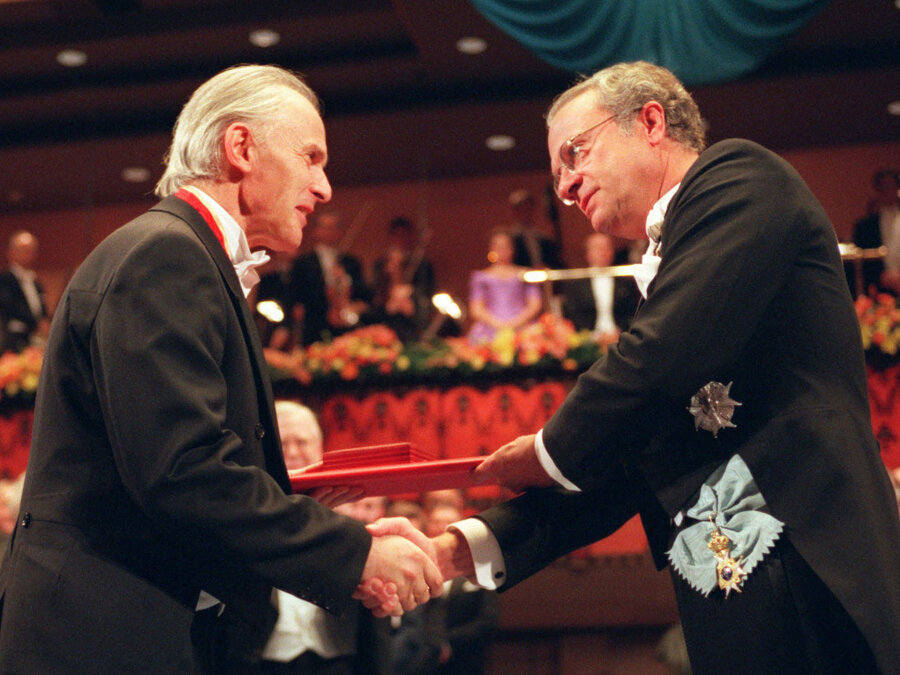
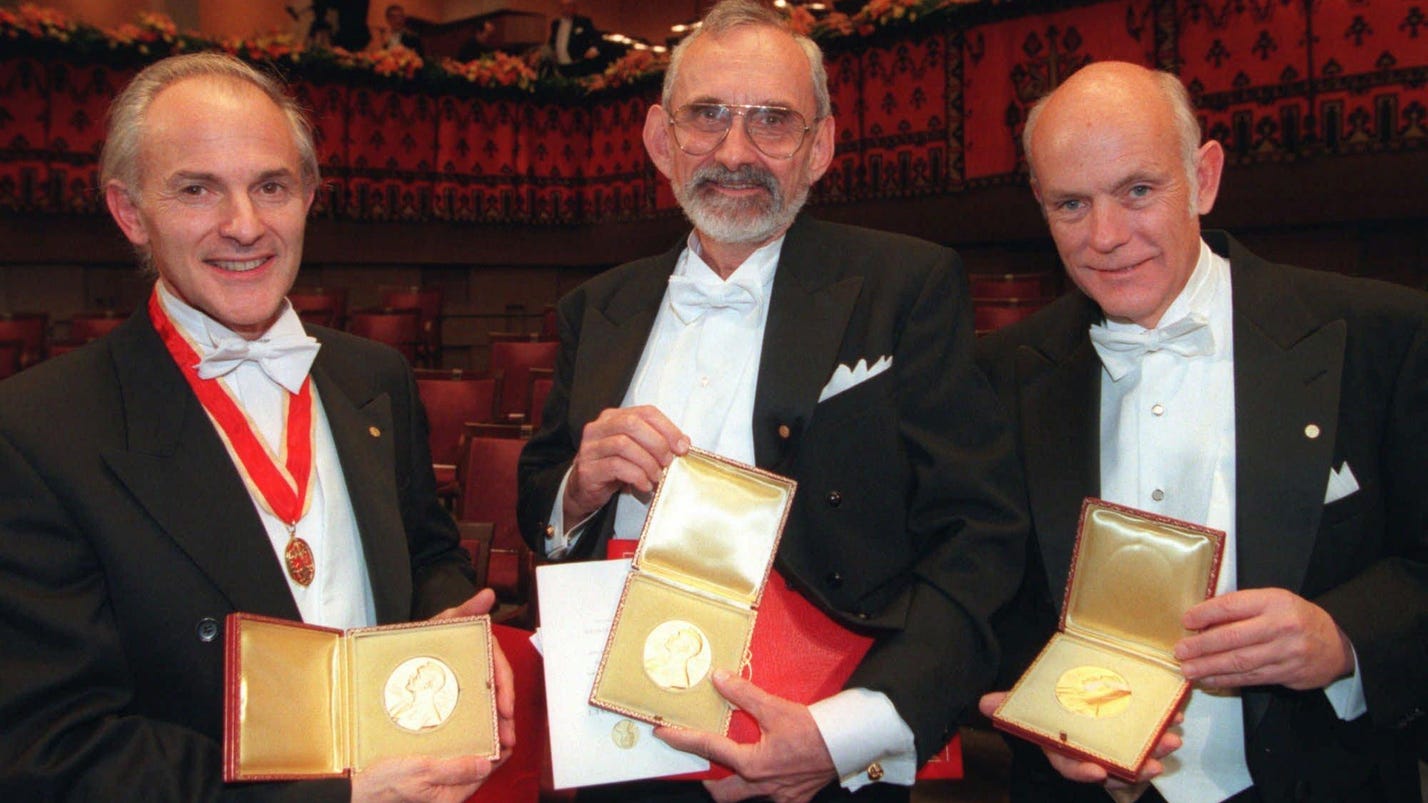
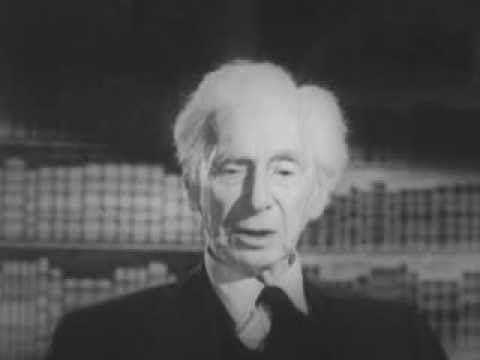
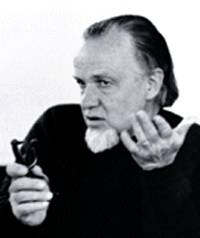




 Like the humanists of the Renaissance, the men of the Enlightenment pushed aside the Christian base and heritage and looked back to the old pre-Christian times. When the French Revolution tried to reproduce the English conditions without the Reformation base, but rather on Voltaire’s humanistic base, the result was a bloodbath and a rapid breakdown into the authoritarian rule of Napoleon Bonaparte (1769-1821).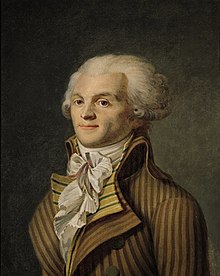


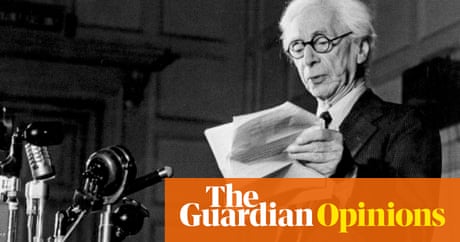
 On November 21, 2014 I received a letter from
  I have attempted to respond to all of Dr. Kroto’s friends arguments and I have posted my responses one per week for over a year now. Here are some of my earlier posts: