Nancy Pearcey’s bestselling and award-winning book Total Truth made quite a mark on my life. It was, to my memory, the first book I had ever read on worldview, and its explanation of the way our world divides the sacred and the secular has not only stuck with me, but has helped me better understand and explain the culture around me. Though Pearcey has written another book between then and now, I consider her new work, Finding Truth, the true sequel to Total Truth.
In Finding Truth, Pearcey offers 5 principles meant to unmask our culture’s endless worldview alternatives to Christianity—secularism, atheism, and the like. There are all kinds of books that make a similar promise, but this one has a noteworthy difference: Pearcey looks to Romans 1 to find a kind of apologetics training manual for identifying and challenging any other worldview.
At the start of Paul’s letter to the church in Rome, he claims that all humanity has access to evidence for God’s existence, and then describes what happens when people refuse to acknowledge him. As people turn away from God, they suppress the truth that God makes known to them through creation and through human nature. People hide from God by creating idols, God substitutes. These are not merely idols of wood and stone, but also ideas, any idea that provides an alternate explanation for the meaning and purpose of life. Idols have consequences, and God gives up those who worship them to a debased mind, so that they become futile in their thinking and dishonorable in their behavior. While most explanations of this text dwell on behavior, Pearcey focuses on the mind, showing the ways in which the unbelieving mind is affected by sin so that an entire worldview becomes completely opposed to God.
In Romans 1 she finds five strategic principles that “provide a basic game plan for making sense of any worldview across the board—even the cutting edge ideas of our day—and then to craft a compelling positive case for Christianity.” Here is a brief explanation of each.
Principle 1. Identify the Idol. Every non-biblical worldview begins with some kind of a God substitute—an idol. If human beings will not worship the God who created them, they will still worship something—something that provides an alternate explanation of the world’s origins or that provides an understanding of the meaning of life.
Principle 2. Identify the Idol’s Reductionism. Once we identify the idol, we need to look for its reductionism, the way in which it leads to a low view of human life. When one part of the creation is deified or idolized, every other part will necessarily be denigrated. Why? Because one part is always far too small to explain the whole thing. Reductionism is always dehumanizing.
Principle 3. Test the Worldview: Does It Contradict What We Know About the World?The third step is to test the worldview against the facts of experience, which is to say, the truths of general revelation. Though people will continue to suppress the evidence of God’s existence, what God has created continues to challenge them, because physical nature and human nature constantly provide evidence of a Creator. Therefore every idolatrous worldview will fail to fit the evidence and will, instead, contradict the facts of general revelation.
Principle 4. Test the Idol: Does it Contradict Itself? Every reductionistic worldview is, on some level, self-defeating. It commits suicide by reducing reason to something less than what is reasonable. We need to look for the way in which it contradicts itself and collapses internally. (An example is the relativistic claim that there is no universal truth even though this statement is, itself, meant to be a universal truth.)
Principle 5. Replace the Idol: Make the Case for Christianity. By focusing on the points where reductionistic worldviews fail, we can offer a better and more compelling alternative. We can do this by finding those inevitable places where other worldviews borrow from the Christian worldview and expose themselves to critique.
Finding Truth has many commendable strengths. For one, Pearcey shows again and again just how far people will go to suppress the knowledge of God. They will go to any length to deny what is right in front of their noses and—even closer—right within their own hearts and minds. She shows this in a broad range of alternative religions and philosophies, pointing always to the consistency of the Christian faith.
While she shows that all other worldviews are insufficient and illogical, she does not discard them altogether. Instead, she shows how they do contain some genuine insights, and then shows how their best insights are inevitably and illogically stolen from the Christian worldview.
She also provides a compelling intellectual argument for the Christian faith. I appreciate what Gregory Koukl says in his endorsement: “This is one of those books that not only challenges the critics; it also gives a huge dose of confidence to the Christian who will catch himself walking away from its pages saying, ‘Gosh, this stuff really is true.’”
Pearcey promises that the principles she lays out will “provide you with the tools to recognize what’s right and wrong with any worldview—and then to craft a biblically informed perspective that is both true and humane.” She makes the promise and she delivers on it. Finding Truth is, all-in-all, a worthy successor toTotal Truth.
In conjunction with WORLD Magazine, Patrick Henry College presents its interview with Nancy Pearcey as a part of the Newsmaker Interview Series with Marvin Olasky, editor-in-chief at WORLD and Distinguished Chair of Journalism and Public Policy at PHC. For more information on Patrick Henry College, visit our website here http://www.phc.edu.
“Finding Truth” by Nancy Pearcey
Published on Mar 6, 2015
Don’t think, just believe?
That’s the mantra in many circles today — whether the church, the classroom, the campus, or the voting booth.
Nancy Pearcey, best-selling and critically acclaimed author, offers fresh tools to break free from presumed certainties and test them against reality.
In Finding Truth, she explains five powerful principles that penetrate to the core of any worldview — secular or religious — to uncover its deepest motivations and weigh its claims.
A former agnostic, Pearcey demonstrates that a robust Christian worldview matches reality — that it is not only true but attractive, granting higher dignity to the human person than any alternative.
Finding Truth displays Pearcey’s well-earned reputation for clear and cogent writing. She brings themes to life with personal stories and real-world examples.
______________ I have dedicated several posts to this series on the Beatles and I don’t know when this series will end because Francis Schaeffer spent a lot of time talking and writing about them and their impact on the culture of the 1960’s. Lucy in the Sky with Diamonds- The Beatles The Beatles: The Beatles […]
________________ I have dedicated several posts to this series on the Beatles and I don’t know when this series will end because Francis Schaeffer spent a lot of time talking and writing about them and their impact on the culture of the 1960’s. The Beatles: The Beatles and their album St. Pepper’s Lonely Hearts Club […]
__________________ I have dedicated several posts to this series on the Beatles and I don’t know when this series will end because Francis Schaeffer spent a lot of time talking and writing about them and their impact on the culture of the 1960’s. The Beatles are featured in this episode below and Schaeffer noted, ” Sergeant Pepper’s […]
_______________ I have dedicated several posts to this series on the Beatles and I don’t know when this series will end because Francis Schaeffer spent a lot of time talking and writing about them and their impact on the culture of the 1960’s. Great Album The Beatles are featured in this episode below and Schaeffer […]
_______________ Francis Schaeffer pictured below: _____________________ Why am I doing this series FRANCIS SCHAEFFER ANALYZES ART AND CULTURE? John Fischer probably expressed it best when he noted: Schaeffer was the closest thing to a “man of sorrows” I have seen. He could not allow himself to be happy when most of the world was desperately lost […]
Crimes and Misdemeanors: A Discussion: Part 1 ___________________________________ Today I will answer the simple question: IS IT POSSIBLE TO BE AN OPTIMISTIC SECULAR HUMANIST THAT DOES NOT BELIEVE IN GOD OR AN AFTERLIFE? This question has been around for a long time and you can go back to the 19th century and read this same […]
____________________________________ Francis Schaeffer pictured below: ______________ Francis Schaeffer has written extensively on art and culture spanning the last 2000years and here are some posts I have done on this subject before : Francis Schaeffer’s “How should we then live?” Video and outline of episode 10 “Final Choices” , episode 9 “The Age of Personal Peace and Affluence”, episode 8 […]
Love and Death [Woody Allen] – What if there is no God? [PL] ___________ _______________ How Should We then Live Episode 7 small (Age of Nonreason) #02 How Should We Then Live? (Promo Clip) Dr. Francis Schaeffer 10 Worldview and Truth Two Minute Warning: How Then Should We Live?: Francis Schaeffer at 100 Francis […]
___________________________________ Francis Schaeffer pictured below: ____________________________ Francis Schaeffer “BASIS FOR HUMAN DIGNITY” Whatever…HTTHR Dr. Francis schaeffer – The flow of Materialism(from Part 4 of Whatever happened to human race?) Dr. Francis Schaeffer – The Biblical flow of Truth & History (intro) Francis Schaeffer – The Biblical Flow of History & Truth (1) Dr. Francis Schaeffer […]
________________ Francis Schaeffer “BASIS FOR HUMAN DIGNITY” Whatever…HTTHR Dr. Francis schaeffer – The flow of Materialism(from Part 4 of Whatever happened to human race?) Dr. Francis Schaeffer – The Biblical flow of Truth & History (intro) Francis Schaeffer – The Biblical Flow of History & Truth (1) Dr. Francis Schaeffer – The Biblical Flow of […]
Francis A. Schaeffer (transcribed from various texts)
“Logical positivism claims to lay the foundation for each step as it goes along, in a rational way. Yet in reality it puts forth no theoretical universal to validate its very first step. Positivists accept that, though they present no logical reason why this should be so, what reaches them from the ‘outside’ may be called ‘data’, i.e. has objective validity…At once I said, ‘How do you know, on the basis of logical positivism, that it is data?'”
“[I]n practice a man cannot totally reject the methodology of antithesis…unless he experiences the total alienation from himself caused by some form of mental breakdown.”
“Probably the best way to describe this concept of modern theology is to say that it is faith in faith, rather than faith directed to an object which is actually there.”
“[Leonardo da Vinci] understood that man beginning from himself would never be able to come to meaning on the basis of mathematics. And he knew that having only individual things, particulars, one could never come to universals or meaning and thus one only ends with mechanics…Everything, including man, is the machine.”
“What is despair? It arises from the abandonment of the hope of a unified answer for knowledge and life…Modern man has given up his hope of unity and lives in despair – the despair of no longer thinking that what has always been the aspiration of men is at all possible.”
“[T]he basis of [Marquis] de Sade’s sadism was his concept of determinism. De Sade’s position was that what is, is right.”
“The soul is not more important than the body. God made the whole man and the whole man is important.”
“People today are trying to hang on to the dignity of man, and they do not know how to because they have lost the truth that man is made in the image of God.”
“The result of seeking for a unity on the basis of the uniformity of natural causes in a closed system is that freedom does not exist.”
“At Berkeley the Free Speech Movement arose…At first it was politically neither left nor right, but rather a call for freedom to express any political views on Sproul Plaza. Then soon the Free Speech Movement becamse the Dirty Speech Movement, in which freedom was seen as shouting four-letter words [swear words] into a mike. Soon after, it became the platform for the political New Left…”
“[E]verything is not the result of the impersonal plus time plus chance, but…there is an infinite-personal God who is the Creator of the universe, the space-time continuum.”
“…no one has yet shown how man could have been brought forth from non-man solely by time plus chance.”
E P I S O D E 1 0 Dr. Francis Schaeffer – Episode X – Final Choices 27 min FINAL CHOICES I. Authoritarianism the Only Humanistic Social Option One man or an elite giving authoritative arbitrary absolutes. A. Society is sole absolute in absence of other absolutes. B. But society has to be […]
E P I S O D E 9 Dr. Francis Schaeffer – Episode IX – The Age of Personal Peace and Affluence 27 min T h e Age of Personal Peace and Afflunce I. By the Early 1960s People Were Bombarded From Every Side by Modern Man’s Humanistic Thought II. Modern Form of Humanistic Thought Leads […]
E P I S O D E 8 Dr. Francis Schaeffer – Episode VIII – The Age of Fragmentation 27 min I saw this film series in 1979 and it had a major impact on me. T h e Age of FRAGMENTATION I. Art As a Vehicle Of Modern Thought A. Impressionism (Monet, Renoir, Pissarro, Sisley, […]
E P I S O D E 7 Dr. Francis Schaeffer – Episode VII – The Age of Non Reason I am thrilled to get this film series with you. I saw it first in 1979 and it had such a big impact on me. Today’s episode is where we see modern humanist man act […]
E P I S O D E 6 How Should We Then Live 6#1 Uploaded by NoMirrorHDDHrorriMoN on Oct 3, 2011 How Should We Then Live? Episode 6 of 12 ________ I am sharing with you a film series that I saw in 1979. In this film Francis Schaeffer asserted that was a shift in […]
E P I S O D E 5 How Should We Then Live? Episode 5: The Revolutionary Age I was impacted by this film series by Francis Schaeffer back in the 1970′s and I wanted to share it with you. Francis Schaeffer noted, “Reformation Did Not Bring Perfection. But gradually on basis of biblical teaching there […]
Dr. Francis Schaeffer – Episode IV – The Reformation 27 min I was impacted by this film series by Francis Schaeffer back in the 1970′s and I wanted to share it with you. Schaeffer makes three key points concerning the Reformation: “1. Erasmian Christian humanism rejected by Farel. 2. Bible gives needed answers not only as to […]
Francis Schaeffer’s “How should we then live?” Video and outline of episode 3 “The Renaissance” Francis Schaeffer: “How Should We Then Live?” (Episode 3) THE RENAISSANCE I was impacted by this film series by Francis Schaeffer back in the 1970′s and I wanted to share it with you. Schaeffer really shows why we have so […]
Francis Schaeffer: “How Should We Then Live?” (Episode 2) THE MIDDLE AGES I was impacted by this film series by Francis Schaeffer back in the 1970′s and I wanted to share it with you. Schaeffer points out that during this time period unfortunately we have the “Church’s deviation from early church’s teaching in regard […]
Francis Schaeffer: “How Should We Then Live?” (Episode 1) THE ROMAN AGE Today I am starting a series that really had a big impact on my life back in the 1970′s when I first saw it. There are ten parts and today is the first. Francis Schaeffer takes a look at Rome and why […]
Francis Schaeffer: “Whatever Happened to the Human Race” (Episode 5) TRUTH AND HISTORY Published on Oct 7, 2012 by AdamMetropolis This crucial series is narrated by the late Dr. Francis Schaeffer and former Surgeon General Dr. C. Everett Koop. Today, choices are being made that undermine human rights at their most basic level. Practices once […]
The opening song at the beginning of this episode is very insightful. Francis Schaeffer: “Whatever Happened to the Human Race” (Episode 4) THE BASIS FOR HUMAN DIGNITY Published on Oct 7, 2012 by AdamMetropolis This crucial series is narrated by the late Dr. Francis Schaeffer and former Surgeon General Dr. C. Everett Koop. Today, choices […]
Francis Schaeffer: “Whatever Happened to the Human Race” (Episode 3) DEATH BY SOMEONE’S CHOICE Published on Oct 6, 2012 by AdamMetropolis This crucial series is narrated by the late Dr. Francis Schaeffer and former Surgeon General Dr. C. Everett Koop. Today, choices are being made that undermine human rights at their most basic level. Practices […]
Francis Schaeffer: “Whatever Happened to the Human Race?” (Episode 2) SLAUGHTER OF THE INNOCENTS Published on Oct 6, 2012 by AdamMetropolis This crucial series is narrated by the late Dr. Francis Schaeffer and former Surgeon General Dr. C. Everett Koop. Today, choices are being made that undermine human rights at their most basic level. Practices […]
It is not possible to know where the pro-life evangelicals are coming from unless you look at the work of the person who inspired them the most. That person was Francis Schaeffer. I do care about economic issues but the pro-life issue is the most important to me. Several years ago Adrian Rogers (past president of […]
This essay below is worth the read. Schaeffer, Francis – “Francis Schaeffer and the Pro-Life Movement” [How Should We Then Live?, Whatever Happened to the Human Race?, A Christian Manifesto] Editor note: <p> </p> [The following essay explores the role that Francis Schaeffer played in the rise of the pro-life movement. It examines the place of […]
“As students, we took all of this for granted, like oxygen in a lecture hall, and we heaped harsh judgment on the Christian West,” John recalled. “But we rarely asked, ‘Compared to what?’ The ‘what’ was always some form of utopian ideal. But utopian ideals have not fared so well. In the twentieth century, secular utopian idealists presided over the extermination of a hundred million people, killed for ‘a higher good’ by the apostles of Darwin, Marx, and Nietzsche. History has never produced a more efficient set of butchers.”
― Nancy Pearcey, Finding Truth: 5 Principles for Unmasking Atheism, Secularism, and Other God Substitutes
“Scientific evidence has shown that “built into the natural development of children’s minds [is] a predisposition to see the natural world as designed and purposeful and that some kind of intelligent being is behind that purpose.” Even if a group of children were put “on an island and they raised themselves,” Barrett adds, “I think they would believe in God.” 13 It appears that we have to be educated out of the knowledge of God by secular schools and media.”
― Nancy Pearcey, Finding Truth: 5 Principles for Unmasking Atheism, Secularism, and Other God Substitutes
“Only a God of love is fully personal. Thus the Trinity is crucial for maintaining a fully personal concept of God. As theologian Robert Letham writes, “Only a God who is triune can be personal.… A solitary monad cannot love and, since it cannot love, neither can it be a person.” Therefore it “has no way to explain or even to maintain human personhood.”
― Nancy Pearcey, Finding Truth: 5 Principles for Unmasking Atheism, Secularism, and Other God Substitutes
“If we do not cultivate the same confidence, the danger is that Christians will tend toward defensiveness and anger. In today’s grievance culture, it seems that some new group is always coming forward to complain that they are offended. It can be easy for Christians to pick up the same victim language. But our motivation for speaking out should not be only that we are offended. After all, we are called to share in the offense of the Cross. We are called to love the offender. Christians will be effective in reaching out to others only when they reflect biblical truth in their message, their method, and their manners.”
― Nancy Pearcey, Finding Truth: 5 Principles for Unmasking Atheism, Secularism, and Other God Substitutes
“When a worldview exchanges the Creator for something in creation, it will also exchange a high view of humans made in God’s image for a lower view of humans made in the image of something in creation. Humans are not self-existent, self-sufficient, or self-defining. They did not create themselves. They are finite, dependent, contingent beings. As a result, they will always look outside themselves for their ultimate identity and meaning. They will define human nature by its relationship to the divine—however they define divinity. Those who do not get their identity from a transcendent Creator will get it from something in creation.”
― Nancy Pearcey, Finding Truth: 5 Principles for Unmasking Atheism, Secularism, and Other God Substitutes
“Christianity agrees with Hamlet when he said to Horatio, “There are more things in heaven and earth than are dreamed of in your philosophy.” Reductionistic worldviews insist that there are fewer things in heaven and earth. Living according to these worldviews is like living in a concrete bunker with no windows. Communicating a Christian worldview should be like inviting people to open the door and come out. Our message ought to express the joy of leading captives out of a small, cramped world into one that is expansive and liberating.”
― Nancy Pearcey, Finding Truth: 5 Principles for Unmasking Atheism, Secularism, and Other God Substitutes
“philosopher Galen Strawson, the denial of consciousness “is surely the strangest thing that has ever happened in the whole history of human thought.” It shows “that the power of human credulity is unlimited, that the capacity of human minds to be gripped by theory, by faith, is truly unbounded.” It reveals “the deepest irrationality of the human mind.”
― Nancy Pearcey, Finding Truth: 5 Principles for Unmasking Atheism, Secularism, and Other God Substitutes
“Humans are not self-existent, self-sufficient, or self-defining. They did not create themselves. They are finite, dependent, contingent beings. As a result, they will always look outside themselves for their ultimate identity and meaning. They will define human nature by its relationship to the divine—however they define divinity. Those who do not get their identity from a transcendent Creator will get it from something in creation.”
― Nancy Pearcey, Finding Truth: 5 Principles for Unmasking Atheism, Secularism, and Other God Substitutes
“When a worldview fails to account for all of reality, what do adherents do? Do they say, “I guess my theory has been falsified; I’d better toss it out”? Most people do not give up that easily. Instead they suppress the things that their worldview cannot explain, walling them off into a conceptual area separate from reality—an upper story of useful fictions. Wish fulfillment. Illusions.”
― Nancy Pearcey, Finding Truth: 5 Principles for Unmasking Atheism, Secularism, and Other God Substitutes
“It is clear now why Christianity played a significant role in launching the scientific revolution in the first place. Only a biblical worldview provides an adequate epistemology for science. First, a rational God created the world with an intelligible structure, and second, he created humans in his image. In the words of historian Richard Cohen, science required the concept of a “rational creator of all things,” along with the corollary that “we lesser rational beings might, by virtue of that Godlike rationality, be able to decipher the laws of nature.” Theologian Christopher Kaiser states the same idea succinctly: the early scientists assumed that “the same Logos that is responsible for its ordering is also reflected in human reason.”
― Nancy Pearcey, Finding Truth: 5 Principles for Unmasking Atheism, Secularism, and Other God Substitutes
“Ancient Greek culture was permeated by philosophies such as Gnosticism and neo-Platonism that regarded the material realm as the realm of death, decay, and destruction. Gnosticism taught that the world was so evil that it could not be the creation of the highest, supreme deity but must be the handiwork of an evil sub-deity.”
― Nancy Pearcey, Finding Truth: 5 Principles for Unmasking Atheism, Secularism, and Other God Substitutes
_________________
Interview with Nancy Pearcey; 23 February 2015
Published on Feb 23, 2015
In conjunction with WORLD Magazine, Patrick Henry College presents its interview with Nancy Pearcey as a part of the Newsmaker Interview Series with Marvin Olasky, editor-in-chief at WORLD and Distinguished Chair of Journalism and Public Policy at PHC. For more information on Patrick Henry College, visit our website here http://www.phc.edu.
Saving Leonardo: A Call to Resist the Secular Assault on Mind, Morals, and Meaning (B&H Books, 2010) ISBN 978-1-4336-6927-9
Total Truth: Liberating Christianity from Its Cultural Captivity. Wheaton: Crossway Books. 2005. ISBN1-4335-0220-8. (ECPA Gold Medallion Book Award ‘Christianity and Society’ category winner[11])
______________ I have dedicated several posts to this series on the Beatles and I don’t know when this series will end because Francis Schaeffer spent a lot of time talking and writing about them and their impact on the culture of the 1960’s. Lucy in the Sky with Diamonds- The Beatles The Beatles: The Beatles […]
________________ I have dedicated several posts to this series on the Beatles and I don’t know when this series will end because Francis Schaeffer spent a lot of time talking and writing about them and their impact on the culture of the 1960’s. The Beatles: The Beatles and their album St. Pepper’s Lonely Hearts Club […]
__________________ I have dedicated several posts to this series on the Beatles and I don’t know when this series will end because Francis Schaeffer spent a lot of time talking and writing about them and their impact on the culture of the 1960’s. The Beatles are featured in this episode below and Schaeffer noted, ” Sergeant Pepper’s […]
_______________ I have dedicated several posts to this series on the Beatles and I don’t know when this series will end because Francis Schaeffer spent a lot of time talking and writing about them and their impact on the culture of the 1960’s. Great Album The Beatles are featured in this episode below and Schaeffer […]
_______________ Francis Schaeffer pictured below: _____________________ Why am I doing this series FRANCIS SCHAEFFER ANALYZES ART AND CULTURE? John Fischer probably expressed it best when he noted: Schaeffer was the closest thing to a “man of sorrows” I have seen. He could not allow himself to be happy when most of the world was desperately lost […]
Crimes and Misdemeanors: A Discussion: Part 1 ___________________________________ Today I will answer the simple question: IS IT POSSIBLE TO BE AN OPTIMISTIC SECULAR HUMANIST THAT DOES NOT BELIEVE IN GOD OR AN AFTERLIFE? This question has been around for a long time and you can go back to the 19th century and read this same […]
____________________________________ Francis Schaeffer pictured below: ______________ Francis Schaeffer has written extensively on art and culture spanning the last 2000years and here are some posts I have done on this subject before : Francis Schaeffer’s “How should we then live?” Video and outline of episode 10 “Final Choices” , episode 9 “The Age of Personal Peace and Affluence”, episode 8 […]
Love and Death [Woody Allen] – What if there is no God? [PL] ___________ _______________ How Should We then Live Episode 7 small (Age of Nonreason) #02 How Should We Then Live? (Promo Clip) Dr. Francis Schaeffer 10 Worldview and Truth Two Minute Warning: How Then Should We Live?: Francis Schaeffer at 100 Francis […]
___________________________________ Francis Schaeffer pictured below: ____________________________ Francis Schaeffer “BASIS FOR HUMAN DIGNITY” Whatever…HTTHR Dr. Francis schaeffer – The flow of Materialism(from Part 4 of Whatever happened to human race?) Dr. Francis Schaeffer – The Biblical flow of Truth & History (intro) Francis Schaeffer – The Biblical Flow of History & Truth (1) Dr. Francis Schaeffer […]
________________ Francis Schaeffer “BASIS FOR HUMAN DIGNITY” Whatever…HTTHR Dr. Francis schaeffer – The flow of Materialism(from Part 4 of Whatever happened to human race?) Dr. Francis Schaeffer – The Biblical flow of Truth & History (intro) Francis Schaeffer – The Biblical Flow of History & Truth (1) Dr. Francis Schaeffer – The Biblical Flow of […]
I truly believe that many of the problems we have today in the USA are due to the advancement of humanism in the last few decades in our society. Ronald Reagan appointed the evangelical Dr. C. Everett Koop to the position of Surgeon General in his administration. He partnered with Dr. Francis Schaeffer in making the video below. It is very valuable information for Christians to have. Actually I have included a video below that includes comments from him on this subject.
Francis Schaeffer: “Whatever Happened to the Human Race” (Episode 1) ABORTION OF THE HUMAN RACE
Couldn’t be better wrote, ” You won’t find one person on the blog who defends Gosnell..”
How about President Barack Obama.
Denny Burk shows the logical connection below:
Pro-abortion activists long ago took the position that granting human rights to survivors of abortion would present a threat to the regime of Roe v. Wade. Their position has not been a secret. That’s why a spokesperson for Planned Parenthood recently argued against a bill that would protect the live-born infants from being left to die.
That’s why our own PRESIDENT OBAMA–WHEN HE WAS AN ILLINOIS STATE SENATOR–VOTED FOUR TIMES AGAINST LEGISLATION THAT WOULD HAVE PROTECTED BABIES IN THE SAME SITUATION AS THE ONES IN GOSNELL’S CLINIC.
This was all well-known when President Obama was a candidate, and Americans seemed to be indifferent about it as they elected him twice to be their chief executive. The bottom line is this. The culture of death is mainstream. People are accustomed to the fact that killing unborn babies is legal. What’s the difference if some of them are killed right after they pass from their mother’s body?
Gosnell did not act alone. He had many who assisted him. I’m thinking about those clinic workers. How did they sleep at night when day after day, week after week, year after year they went to work and “ensured the fetal demise” of human babies? No matter how you euphemize it, it is what it is—cold-blooded murder. What kind of culture produces a clinic full of workers who went along with this atrocity for so long? I’ll tell you what kind of culture it is. It’s the culture of sexual revolutionaries and radical feminists who sold our country a bill of goods—that a woman’s right to be free from the consequences of her fertility is sacrosanct, even if it means that human infants have to die. It’s a culture that won’t speak about what abortion really is but that euphemizes murder with bromides about “reproductive rights” and “access to healthcare.” It’s the culture of death.
In this context, what is the real significance of the Gosnell trial? The Gosnell trial exposes the abortion license for what it is. It forces Americans to look square in the face at what they usually cover up in euphemism and indifference. Gosnell killed human beings. He regularly killed them inside the womb, and he regularly killed them outside the womb. Gosnell forces us to ask the questions that the pro-abortion activists desperately try to keep us from asking. Why was it legal to kill the one and not the other? Why is it normal and right to kill a baby in the birth canal but appalling and repugnant to kill that same baby moments later outside the womb? Gosnell exposes the farce that a baby’s location should determine his right to life.
At this point, what else can be said about the Gosnell verdict? Isn’t the point of it all as plain as the nose on one’s face? For me it is. Yet I am still astonished that for so many it isn’t. Planned Parenthood and NARAL both lauded Gosnell’s conviction as reminder of the importance of providing “safe” abortions for women. Neither group acknowledged the sanctity and the worth of the human babies who were killed at Gosnell’s hands. After all the pictures of murdered human babies and after all the testimony from witnesses who watched as these children were ruthlessly killed, how can Planned Parenthood and NARAL be so cold-hearted? Will we as a culture follow pro-abortion absolutists into moral bankruptcy? Will we follow the darkened logic that says that there are no lessons to be learned about the morality of abortion from all of this?
Melissa was formerly a College Outreach Speaker with Feminists for Life and former Patron of Real Choices Australia. She is the Founder and Director of For Olivia’s Sake, an organization which seeks to raise awareness of the intergenerational impact of abortion on men, women, children, families, and communities. The birth of Olivia, her first child, in 2008,who never would have existed if Melissa’s birthmother’s abortion would have succeeded in ending her life, prompted Melissa to create this organization that would positively raise awareness of the ripple effect of abortion across generations.
In 2012, Melissa founded The Abortion Survivors Network, www.theabortionsurvivors.com, after recognizing the number of abortion survivors and how most felt alone in this role, and after recognizing the need for the public to be educated about the reality of failed abortions and abortion survivors. Since ASN’s inception, Melissa has been in contact with over 130 survivors and she is working on a healing ministry curriculum and a retreat for survivors.
Melissa has been featured on television and radio programs including: The 700 Club, EWTN’s Life on the Rock and Defending Life, Fox News, Facing Life Head On, Focus on the Family, and American Family Radio, the Mike Huckabee show, and the Teresa Tomeo show. Her life and ministry is featured in the award winning pro-life documentary, A Voice for Life.
After years of searching for her biological family and offering them forgiveness for the decision that was made to end her life, Melissa’s story, and her life, is so much more than one of survival. Melissa’s life story is about the beauty of God’s grace in our lives, about the power of love, about the hope for joy and healing in the midst of grief and loss, and about the transformational power of forgiveness and in answering God’s call for your life.
Fulfilling the purpose that she believes God set out for her when He saved her from the certain death of the abortion attempt, Melissa is truly a voice for the voiceless.
For more information about hosting Melissa at an upcoming event, please see the “links” section on this site for more information on Ambassador Speaker’s Bureau, the oldest and most established faith-based talent agency in the United States, who Melissa is affiliated with, or visit the Ambassador Speaker’s Bureau website directly at ambassadorspeakers.com.
Many in the world today are taking a long look at the abortion industry because of the May 14, 2013 guilty verdict and life term penalty handed down by a jury (which included 9 out of 12 pro-choice jurors) to Dr. Kermit Gosnell. During this time of reflection I wanted to put forth some of the […]
Many in the world today are taking a long look at the abortion industry because of the May 14, 2013 guilty verdict and life term penalty handed down by a jury (which included 9 out of 12 pro-choice jurors) to Dr. Kermit Gosnell. During this time of reflection I wanted to put forth some of the […]
Many in the world today are taking a long look at the abortion industry because of the May 14, 2013 guilty verdict and life term penalty handed down by a jury (which included 9 out of 12 pro-choice jurors) to Dr. Kermit Gosnell. During this time of reflection I wanted to put forth some of the […]
Many in the world today are taking a long look at the abortion industry because of the May 14, 2013 guilty verdict and life term penalty handed down by a jury (which included 9 out of 12 pro-choice jurors) to Dr. Kermit Gosnell. During this time of reflection I wanted to put forth some of the […]
Many in the world today are taking a long look at the abortion industry because of the May 14, 2013 guilty verdict and life term penalty handed down by a jury (which included 9 out of 12 pro-choice jurors) to Dr. Kermit Gosnell. During this time of reflection I wanted to put forth some of the […]
Many in the world today are taking a long look at the abortion industry because of the May 14, 2013 guilty verdict and life term penalty handed down by a jury (which included 9 out of 12 pro-choice jurors) to Dr. Kermit Gosnell. During this time of reflection I wanted to put forth some of the […]
Many in the world today are taking a long look at the abortion industry because of the May 14, 2013 guilty verdict and life term penalty handed down by a jury (which included 9 out of 12 pro-choice jurors) to Dr. Kermit Gosnell. During this time of reflection I wanted to put forth some of the […]
Many in the world today are taking a long look at the abortion industry because of the May 14, 2013 guilty verdict and life term penalty handed down by a jury (which included 9 out of 12 pro-choice jurors) to Dr. Kermit Gosnell. During this time of reflection I wanted to put forth some of the […]
Many in the world today are taking a long look at the abortion industry because of the May 14, 2013 guilty verdict and life term penalty handed down by a jury (which included 9 out of 12 pro-choice jurors) to Dr. Kermit Gosnell. During this time of reflection I wanted to put forth some of the […]
Many in the world today are taking a long look at the abortion industry because of the May 14, 2013 guilty verdict and life term penalty handed down by a jury (which included 9 out of 12 pro-choice jurors) to Dr. Kermit Gosnell. During this time of reflection I wanted to put forth some of the […]
Many in the world today are taking a long look at the abortion industry because of the May 14, 2013 guilty verdict and life term penalty handed down by a jury (which included 9 out of 12 pro-choice jurors) to Dr. Kermit Gosnell. During this time of reflection I wanted to put forth some of the […]
Many in the world today are taking a long look at the abortion industry because of the May 14, 2013 guilty verdict and life term penalty handed down by a jury (which included 9 out of 12 pro-choice jurors) to Dr. Kermit Gosnell. During this time of reflection I wanted to put forth some of the […]
Many in the world today are taking a long look at the abortion industry because of the May 14, 2013 guilty verdict and life term penalty handed down by a jury (which included 9 out of 12 pro-choice jurors) to Dr. Kermit Gosnell. During this time of reflection I wanted to put forth some of the […]
Many in the world today are taking a long look at the abortion industry because of the May 14, 2013 guilty verdict and life term penalty handed down by a jury (which included 9 out of 12 pro-choice jurors) to Dr. Kermit Gosnell. During this time of reflection I wanted to put forth some of the […]
Many in the world today are taking a long look at the abortion industry because of the May 14, 2013 guilty verdict and life term penalty handed down by a jury (which included 9 out of 12 pro-choice jurors) to Dr. Kermit Gosnell. During this time of reflection I wanted to put forth some of the […]
Many in the world today are taking a long look at the abortion industry because of the May 14, 2013 guilty verdict and life term penalty handed down by a jury (which included 9 out of 12 pro-choice jurors) to Dr. Kermit Gosnell. During this time of reflection I wanted to put forth some of the […]
Francis Schaeffer: “Whatever Happened to the Human Race” (Episode 1) ABORTION OF THE HUMAN RACE Published on Oct 6, 2012 by AdamMetropolis ________________ What a great article below: Dr. Alveda King: Guilty Gosnell Verdict May Spark More Justice for Women and Babies Contact: Eugene Vigil, King for America, 470-244-3302 PHILADELPHIA, May 13, 2013 /Christian Newswire/ […]
Many in the world today are taking a long look at the abortion industry because of the May 14, 2013 guilty verdict and life term penalty handed down by a jury (which included 9 out of 12 pro-choice jurors) to Dr. Kermit Gosnell. During this time of reflection I wanted to put forth some of the […]
Francis Schaeffer: “Whatever Happened to the Human Race” (Episode 1) ABORTION OF THE HUMAN RACE Published on Oct 6, 2012 by AdamMetropolis ________________ May 14, 2013 Murdered Thousands, Convicted for Three: The Kermit Gosnell Verdict By Drew Belsky Read more: http://www.americanthinker.com/2013/05/murdered_thousands_convicted_for_three_the_kermit_gosnell_verdict.html#ixzz2TMstLk1c Follow us: @AmericanThinker on Twitter | AmericanThinker on FacebookPhiladelphia abortionist Kermit Gosnell was convicted […]
Many in the world today are taking a long look at the abortion industry because of the May 14, 2013 guilty verdict and life term penalty handed down by a jury (which included 9 out of 12 pro-choice jurors) to Dr. Kermit Gosnell. During this time of reflection I wanted to put forth some of the […]
Francis Schaeffer: “Whatever Happened to the Human Race” (Episode 1) ABORTION OF THE HUMAN RACE Published on Oct 6, 2012 by AdamMetropolis ________________ A Verdict Doesn’t End the Gosnell Story By: Chairman Reince Priebus (Diary) | May 13th, 2013 at 03:27 PM | 28 RESIZE: AAA The horrors that unfolded in the clinic of Dr. […]
Many in the world today are taking a long look at the abortion industry because of the May 14, 2013 guilty verdict and life term penalty handed down by a jury (which included 9 out of 12 pro-choice jurors) to Dr. Kermit Gosnell. During this time of reflection I wanted to put forth some of the […]
Francis Schaeffer: “Whatever Happened to the Human Race” (Episode 1) ABORTION OF THE HUMAN RACE Published on Oct 6, 2012 by AdamMetropolis ________________ All-American Horror Story: Top 10 Kermit Gosnell Trial Revelations by Kristan Hawkins | Washington, DC | LifeNews.com | 4/12/13 3:38 PM Since so many in the media have failed/refused to report on […]
Many in the world today are taking a long look at the abortion industry because of the May 14, 2013 guilty verdict and life term penalty handed down by a jury (which included 9 out of 12 pro-choice jurors) to Dr. Kermit Gosnell. During this time of reflection I wanted to put forth some of the […]
Francis Schaeffer: “Whatever Happened to the Human Race” (Episode 1) ABORTION OF THE HUMAN RACE Published on Oct 6, 2012 by AdamMetropolis _____________ Tony Perkins: Gosnell Trial – FOX News Published on May 13, 2013 Tony Perkins: Gosnell Trial – FOX News ________________ Hey Obama, Kermit Gosnell Is What a Real War on Women Looks Like […]
Many in the world today are taking a long look at the abortion industry because of the May 14, 2013 guilty verdict and life term penalty handed down by a jury (which included 9 out of 12 pro-choice jurors) to Dr. Kermit Gosnell. During this time of reflection I wanted to put forth some of the […]
Francis Schaeffer: “Whatever Happened to the Human Race” (Episode 1) ABORTION OF THE HUMAN RACE Published on Oct 6, 2012 by AdamMetropolis ___ _____________ Tony Perkins: Gosnell Trial – FOX News Published on May 13, 2013 Tony Perkins: Gosnell Trial – FOX News ________________ Family Research Council Praises Jury for Bringing Justice to Victims of Abortionist […]
Many in the world today are taking a long look at the abortion industry because of the May 14, 2013 guilty verdict and life term penalty handed down by a jury (which included 9 out of 12 pro-choice jurors) to Dr. Kermit Gosnell. During this time of reflection I wanted to put forth some of the […]
Many in the world today are taking a long look at the abortion industry because of the May 14, 2013 guilty verdict and life term penalty handed down by a jury (which included 9 out of 12 pro-choice jurors) to Dr. Kermit Gosnell. During this time of reflection I wanted to put forth some of the […]
Francis Schaeffer: “Whatever Happened to the Human Race” (Episode 1) ABORTION OF THE HUMAN RACE Published on Oct 6, 2012 by AdamMetropolis ________________ _____________ Tony Perkins: Gosnell Trial – FOX News Published on May 13, 2013 Tony Perkins: Gosnell Trial – FOX News ________________ Kermit Gosnell and the Logic of “Pro-Choice” by Matthew J. Franck within […]
Many in the world today are taking a long look at the abortion industry because of the May 14, 2013 guilty verdict and life term penalty handed down by a jury (which included 9 out of 12 pro-choice jurors) to Dr. Kermit Gosnell. During this time of reflection I wanted to put forth some of the […]
Many in the world today are taking a long look at the abortion industry because of the May 14, 2013 guilty verdict and life term penalty handed down by a jury (which included 9 out of 12 pro-choice jurors) to Dr. Kermit Gosnell. During this time of reflection I wanted to put forth some of the […]
Francis Schaeffer: “Whatever Happened to the Human Race” (Episode 1) ABORTION OF THE HUMAN RACE Published on Oct 6, 2012 by AdamMetropolis ________________ Fr. Pavone: Right to choose must yield to right to life STATEN ISLAND, NY — Father Frank Pavone, National Director of Priests for Life, had the following comment on the verdict in […]
Many in the world today are taking a long look at the abortion industry because of the May 14, 2013 guilty verdict and life term penalty handed down by a jury (which included 9 out of 12 pro-choice jurors) to Dr. Kermit Gosnell. During this time of reflection I wanted to put forth some of the […]
Francis Schaeffer: “Whatever Happened to the Human Race” (Episode 1) ABORTION OF THE HUMAN RACE Published on Oct 6, 2012 by AdamMetropolis ________________ The truth of abortion … the hope for Gosnell’s repentance A conviction in the murder trial of Philadelphia abortionist Kermit Gosnell has boosted the efforts of pro-lifers to demonstrate what abortion really […]
The Selfishness of Chris Evert Part 2 (Includes videos and Pictures) _________________________________ _____________________ _______________________ __________________________ Tennis – Wimbledon 1974 [ Official Film ] – 05/05 Published on May 1, 2012 John Newcombe, Ken Rosewall, Bjor Borg, Jimmy Connors, Cris Evert… ___________________ Jimmy Connors Reflects Published on May 13, 2013 Jimmy Connors visits “SportsCenter” to discuss his memoir, […]
Schaeffer indicates the reason eastern mysticism became so popular in the USA in the 1960’s:
The younger people and the older ones tried drug taking but then turned to the eastern religions. Both drugs and the eastern religions seek truth inside one’s own head, a negation of reason. The central reason of the popularity of eastern religions in the west is a hope for a nonrational meaning to life and values.
I have dedicated several posts to this series on the Beatles and I don’t know when this series will end because Francis Schaeffer spent a lot of time listening to the Beatles and talking and writing about them and their impact on the culture of the 1960’s. In this series we have looked at several areas in life where the Beatles looked for meaning and hope but also we have examined some of the lives of those writers, artists, poets, painters, scientists, athletes, models, actors, religious leaders, musicians, comedians, and philosophers that were put on the cover of Sergeant Pepper’s Lonely Hearts Club Band album. We have discovered that many of these individuals on the cover have even taken a Kierkegaardian leap into the area of nonreason in order to find meaning for their lives and that is the reason I have included the 27 minute episode THE AGE OF NONREASON by Francis Schaeffer. In that video Schaeffer noted, ” Sergeant Pepper’s Lonely Hearts Club Band…for a time it became the rallying cry for young people throughout the world.”
How Should We then Live Episode 7 small (Age of Nonreason)
In the film series HOW SHOULD WE THEN LIVE? Francis Schaeffer shows the Beatles visiting Maharishi Mahesh Yogi in India.
THE SONG “THE WALRUS” DOES A GREAT JOB OF PRESENTING HINDUISM TO THE WORLD IN THE OPENING LINE “I am he as you are he as you are me and we are all together.”
I am he as you are he as you are me and we are all together.
See how they run like pigs from a gun, see how they fly.
I’m crying.Sitting on a cornflake, waiting for the van to come.
Corporation tee-shirt, stupid bloody Tuesday.
Man, you been a naughty boy, you let your face grow long.
I am the egg man, they are the egg men.
I am the walrus, goo goo g’joob.Mister City Policeman sitting
Pretty little policemen in a row.
See how they fly like Lucy in the Sky, see how they run.
I’m crying, I’m crying.
I’m crying, I’m crying.Yellow matter custard, dripping from a dead dog’s eye.
Crabalocker fishwife, pornographic priestess,
Boy, you been a naughty girl you let your knickers down.
I am the eggman, they are the eggmen.
I am the walrus, goo goo g’joob.Sitting in an English garden waiting for the sun.
If the sun don’t come, you get a tan
From standing in the English rain.
I am the egg man, they are the egg men.
I am the walrus, goo goo g’joob g’goo goo g’joob.Expert text pert choking smokers,
Don’t you think the joker laughs at you?
See how they smile like pigs in a sty,
See how they snide.
I’m crying.Semolina pilchard, climbing up the Eiffel Tower.
Elementary penguin singing Hari Krishna.
Man, you should have seen them kicking Edgar Allan Poe.
I am the egg man, they are the egg men.
I am the walrus, goo goo g’joob g’goo goo g’joob.
Goo goo g’joob g’goo goo g’joob g’goo.
Songwriters: LENNON, JOHN WINSTON / MCCARTNEY, PAUL JAMES
Although the Beatles wouldn’t meet the Maharishi Mahesh Yogi until two months after Pepper’s release, Harrison was already showing an interest in meditation and other aspects of Indian philosophy. Yogananda, who helped bring these practices to the West through his Self-Realization Fellowship, was a disciple of both Giri and Babaji.
George Harrison’s cover subject choices were mostly Indian holy men, including this yogi and guru who was instrumental in bringing meditation and yoga to the West. Friend and sitar teacher Ravi Shankar had given Harrison a copy of Yogananda’s book Autobiography of a Yogi in 1966, and its influence on the spiritually searching Beatle was profound.
________
Paramahansa Yogananda (5 January 1893 – 7 March 1952) pictured below:
Together with the advent of the “drug Age” was the increased interest in the West in the religious experience of Hinduism and Buddhism. Schaeffer tells us that: “This grasping for a nonrational meaning to life and values is the central reason that these Eastern religions are so popular in the West today.” Drugs and Eastern religions came like a flood into the Western world. They became the way that people chose to find meaning and values in life. By themselves or together, drugs and Eastern religion became the way that people searched inside themselves for ultimate truth.
Along with drugs and Eastern religions there has been a remarkable increase “of the occult appearing as an upper-story hope.” As modern man searches for answers it “many moderns would rather have demons than be left with the idea that everything in the universe is only one big machine.” For many people having the “occult in the upper story of nonreason in the hope of having meaning” is better than leaving the upper story of nonreason empty. For them horror or the macabre are more acceptable than the idea that they are just a machine.
Francis Schaeffer in his book HOW SHOULD WE THEN LIVE? gives us some insight into a possible answer to that question WHY WAS DRUG-TAKING AND EASTERN RELIGIONS SO POPULAR IN THE 1960’s IN USA?
The younger people and the older ones tried drug taking but then turned to the eastern religions. Both drugs and the eastern religions seek truth inside one’s own head, a negation of reason. The central reason of the popularity of eastern religions in the west is a hope for a nonrational meaning to life and values. The reason the young people turn to eastern religion is simply the fact as we have said and that is that man having moved into the area of nonreason could put anything up there and the heart of the eastern religions is a denial of reason just exactly as the idealistic drug taking was. So the turning to the eastern religions today fits exactly into the modern existential methodology, the existential thinking of modern man, of trying to find some optimistic hope in the area of nonreason when he has given up hope on a humanistic basis of finding any kind of unifying answer to life, any meaning to life in the answer of reason.
An article called “Holy Wars” was based on Francis Schaeffer’s writings primarily and it noted:
Then came the Beatles. John Lennon had declared that his group was more popular than Jesus. But they weren’t willing to stop there. They sought to supplant the true God with everything false. After the rock icons returned from India they brought with them not only the music of the Hindu guruRavi Shankar, but also his religion as taught by the Maharishi Mahesh Yogi. They were so impressed with that guru’s Transcendental Meditation woo woo that they just had to convert the whole Western World to it. The counterculturalists took it all in, hook line and sinker.
The New Mysticism What about the spread of Eastern religions and techniques within the West – things like TM, Yoga, the cults? We have moved beyond the counterculture of the sixties, but where to? These elements from the East no longer influence just the beat generation and the dropouts. Now they are fashionable for the middle classes as well. They are everywhere.
What about those who take drugs as a means of “expanding their consciousness”? This, too, is in the same direction. Your mind is a hindrance to you: “Blow it”! As Timothy Leary put it in The Politics of Ecstasy (1968): “Our favorite concepts are standing in the way of a flood tide two billion years building up. The verbal dam is collapsing. Head for the hills or prepare your intellectual craft to flow with the current.” So we see again the rejection of the mind. The verbal dam, the concepts, the intellectual craft? These must be bypassed by the “new man.”
Wherever we look, this is what confronts us: irrational experience. We must be careful not to be bewildered by the surface differences between these movements. We are not saying they are all the same. Of course there are differences. The secular existentialists, for example, disagree with one another. Then, too, secular existentialists differ with religious existentialists; the former tend to be pessimistic, the latter optimistic. Some of the movements are serious and command our respect. Some are just bizarre. There are differences. Yet, all of them represent the new mysticism! The problem with mysticism of this sort is, interestingly enough, the same problem we considered earlier in relation to all humanistic systems. Who is going to say what is right?
As soon as one removes the checking mechanism of the mind by which to measure things, everything can then be “right” and everything can also be “wrong.” Eventually, anything and everything can be allowed! Take a simple example from life: If you are asking for directions in a city, you first listen to the directions your guide is giving and then you set off. Let us say the directions are: “Take the first turn on the right, called Twenty-fourth Street; then the next turn of the left, called Kennedy Drive; and then keep going till you come to the park where you will see the concert hall just past a big lake on your right.” Armed with there directions, you go along – checking up on what you have been told: “Yes, there is Twenty-fourth Street. Yes, there is Kennedy Drive,” and so on.
In other words, you are not just told words; you are able to see if these words relate to the outside world, the world you have to operate in if you are going to get from A to B. This is where your mind is essential. You can check to see if the information you have been given is true or false.
Imagine, on the other hand, that someone said, in answer to your request for directions, “I don’t know where or what B is. It is impossible to talk about a `concert hall.’ What is a `concert hall’ anyway? We can only say of it that it is the `Unknowable.'” How completely ridiculous for you to be told, “Go any way – because this is the way”!
The trick in all these positions is to argue first of all that the End – Final Reality – cannot be spoken of (because it cannot be known by the mind) and yet to give the directions to find it. We should notice, however, that in this setting we can never ask questions ahead of time about the directions we receive. They are directions only for blindfolded experience, the blind “leap of faith.”
We cannot ask, “How will I know that it is truth or that it is the divine I am experiencing?” The answer is always, “There is no way you can be told, for it is an answer beyond language, beyond categories, but take this path [or that one, or another one] anyway.”
Thus, modern man is bombarded from all sides by devotees of this or that experience. The media only compound the problem. So does the commercialism of our highly technological societies. The danger of manipulation from these alone is overwhelming. In the absence of a clear standard, they are a force for the control of people’s minds and behavior that is beyond anything in history. In fact, there are no clear standards in Western society now; and where there is an appearance of standards, very often there is insufficient motivation to lean against the enormous pressures. And why? In part, at least, because there is an inadequate basis for knowledge and for morality.
When we add to this that modern man has become a “mystic,” we soon realize the seriousness of the situation. For in all these mystical solutions no one can finally say anything about right and wrong. The East has had this problem for thousands of years. In a pantheistic system, whatever pious statements may be made along the way, ultimately good and evil are equal in God, the impersonal God. So we hear Yun-Men, a Zen master, saying, “If you want to get the plain truth, be not concerned with right and wrong. Conflict between right and wrong is the sickness of the mind.”
Society can have no stability on this Eastern world-view or its present Western counterpart. It just does not work. And so one finds a gravitation toward some form of authoritarian government, an individual tyrant or group of tyrants who takes the reins of power and rule. And the freedoms, the sorts of freedoms we have enjoyed in the West, are lost.
We are, then, brought back to our starting point. The inhumanities and the growing loss of freedoms in the West are the result of a world-view which as no place for “people.” Modern humanistic materialism is an impersonal system. The East is no different. Both begin and end with impersonality.
Francis Schaeffer has correctly argued:
The universe was created by an infinite personal God and He brought it into existence by spoken word and made man in His own image. When man tries to reduce [philosophically in a materialistic point of view] himself to less than this [less than being made in the image of God] he will always fail and he will always be willing to make these impossible leaps into the area of nonreason even though they don’t give an answer simply because that isn’t what he is. He himself testifies that this infinite personal God, the God of the Old and New Testament is there.
Instead of making a leap into the area of nonreason the better choice would be to investigate the claims that the Bible is a historically accurate book and that God created the universe and reached out to humankind with the Bible. Below is a piece of that evidence given by Francis Schaeffer concerning the accuracy of the Bible.
TRUTH AND HISTORY (chapter 5 of WHATEVER HAPPENED TO THE HUMAN RACE?, under footnote #94)
We looked earlier at the city of Lachish. Let us return to the same period in Israel’s history when Lachich was besieged and captured by the Assyrian King Sennacherib. The king of Judah at the time was Hezekiah.
Perhaps you remember the story of how Jesus healed a blind man and told him to go and wash in the Pool of Siloam. It is the same place known by King Hezekiah, approximately 700 years earlier. One of the remarkable things about the flow of the Bible is that historical events separated by hundreds of years took place in the same geographic spots, and standing in these places today, we can feel that flow of history about us. The crucial archaeological discovery which relates the Pool of Siloam is the tunnel which lies behind it.
One day in 1880 a small Arab boy was playing with his friend and fell into the pool. When he clambered out, he found a small opening about two feet wide and five feet high. On examination, it turned out to be a tunnel reaching back into the rock. But that was not all. On the side of the tunnel an inscribed stone (now kept in the museum in Istanbul) was discovered, which told how the tunnel had been built originally. The inscription in classical Hebrew reads as follows:
The boring through is completed. And this is the story of the boring: while yet they plied the pick, each toward his fellow, and while there were yet three cubits [4 14 feet] to be bored through, there was heard the voice of one calling to the other that there was a hole in the rock on the right hand and on the left hand. And on the day of the boring through the workers on the tunnel struck each to meet his fellow, pick upon pick. Then the water poured from the source to the Pool 1,200 cubits [about 600 yards] and a 100 cubits was the height of the rock above the heads of the workers in the tunnel.
We know this as Hezekiah’s Tunnel. The Bible tells us how Hezekiah made provision for a better water supply to the city:Now the rest of the acts of Hezekiah and all his might, and how he made the pool and the conduit and brought water into the city, are they not written in the Book of the Chronicles of the Kings of Judah?(II Kings 20:20). We know here three things: the biblical account, the tunnel itself of which the Bible speaks, and the original stone with its inscription in classical Hebrew.
From the Assyrian side, there is additional confirmation of the incidents mentioned in the Bible. There is a clay prism in the British Museum called the Taylor Prism (British Museum, Ref. 91032). It is only fifteen inches high and was discovered in the Assyrian palace at Nineveh. This particular prism dates from about 691 B.C. and tells about Sennacherib’s exploits. A section from the prism reads, “As for Hezekiah, the Jew, who did not submit to my yoke, forty-six of his strong walled cities, as well as small cities in their neighborhood I have besieged and took…himself like a caged bird, I shut up in Jerusalem, his royal city. Earthworks I threw up against him,” Thus, there is a three-way confirmation concerning Hezekiah’s tunnel from the Hebrew side and this amazing confirmation from the Assyrian side.
The Bible and Archaeology – Is the Bible from God? (Kyle Butt 42 min)
This post is a continuation of our Top Ten Biblical Discoveries in Archaeology series. To see the complete series please click here. A Tough Time to be AliveOur #7 biblically significant discovery in archaeology takes us back again to the time of the #10 discovery. If you haven’t read about the Assyrian Lachish Reliefs please click here to become more familiar with the events of 8th century BC Judah.The year is 701BC. Sennacherib, the King of Assyria, has destroyed nearly every prominent town in the southern kingdom of Judah. Israel lies in ruins. Sennacherib thrusts the power of the Assyrian army toward the all-important city of Jerusalem. Jerusalem houses the God of the Jews. The defeat of Jerusalem would be a large strategic and symbolic victory.The Assyrians employ the military strategy of the siege. The army surrounds the fortified walls of a city, cut off all water and food to the city, and then they wait. The term, “siege” derives from sedere, Latin for “to sit”. Attacking armies would wait weeks, months or even years. Assyria had recently besieged nearby Samaria, destroying it after waiting 3 years. As the people in the city grew sick and weak the healthy army would then advance to destroy the city. There are usually only three outcomes of a siege: survive by finding a way to get food and water, surrender or die.Jerusalem faces certain ruin. Hezekiah, one of the few godly kings, encourages his people to trust in God. God will deliver them from Sennacherib. 2 Kings 18:7 tells us, “He rebelled against the king of Assyria and would not serve him.” In 2 Kings 18 we learn the Assyrian commander tells the people of Jerusalem, “Do not listen to Hezekiah, for he is misleading you when he says, ‘The Lord will deliver us.’ Has the god of any nation ever delivered his land from the hand of the kind of Assyria?” The Assyrians first try to convince the people of Jerusalem to overthrow Hezekiah.The head Assyrian commander tells the people of Jerusalem, “Has my master sent me to speak these words to your master and to you, and not to the men sitting on the wall, who are doomed to with you to eat their own dung and to drink their own urine?” (2 Kings 18:27) If the people of Jerusalem don’t overthrow Hezekiah they, their wives and children will be forced to desperate measures just to stay alive. The people of Jerusalem had a secret. They had been involved in one of the greatest engineering feats of the ancient world. It’s amazing what humans can accomplish when their backs are against the wall. The inhabitants of Jerusalem, facing certain death, found a secret way to get a constant source of water into Jerusalem. The Bible, in three areas, briefly mentions our #7 discovery:
“And the rest of the acts of Hezekiah, and all his might, and how he made a pool, and a conduit, and brought water into the city, are they not written in the book of the chronicles of the kings of Judah?” 2 Kings 20:20
“And when Hezekiah saw that Sennacherib was come, and that he was purposed to fight against Jerusalem, He took counsel with his princes and his mighty men to stop the waters of the fountains which were without the city: and they did help him. So there was gathered much people together, who stopped all the fountains, and the brook that ran through the midst of the land, saying, Why should the kings of Assyria come, and find much water?” 2 Chronicles 32:2-4
“This same Hezekiah also stopped the upper watercourse of Gihon, and brought it straight down to the west side of the city of David. And Hezekiah prospered in all his works.” 2 Chronicles 32:30
Hezekiah trusted in the supernatural power of God to deliver him AND he also employed immense hard work and ingenuity to keep his people alive. The Bible tells us he hid the Jerusalem water supply from the Assyrians and brought it underground into Jerusalem. This is all we know from Scripture.
Discovery
In 1838 American biblical scholar Edward Robinson shook up the archaeological world by discovering Hezekiah’s Tunnel. The tunnel was far more spectacular than anyone could have imagined. Two other tunnels had been dug in Israel out of soft chalky rock. The tunnel in Hazor is 82 feet long. The tunnel in Megiddo is 262 feet long. Hezekiah’s tunnel, in comparison, was dug through solid bed rock. What is the length of his tunnel? 1,750 feet!
The tunnel provides a constant stream of water through the city of Jerusalem. The tunnel takes water from the Gihon Spring and empties out at a place called the Pool of Siloam. The tunnel, surprisingly, does not follow the most direct route from the spring to the pool. The tunnel travels in an s-shape. If the tunnel was straight it would have only needed to have been 1070 feet, or 40% shorter. While the tunnel is far underground (appx 131 feet underground), the slope of the tunnel is precise. The tunnel slopes at a steady 0.6% grade. Once inside the tunnel another surprise is apparent. The head room within the tunnel varies considerably. The tunnel is always about as wide as a man’s shoulders. At the beginning of the tunnel the head room is pretty tight causing people to have to walk through it a bit hunched over. The last 160 feet of the tunnel, however, the ceiling soars up to 17 feet tall.
Toward one end of the tunnel, amazingly, an ancient Hebrew inscription was found on the wall. The inscription commemorates the point when two teams, digging from each end, finally met in the middle. The inscription reads:
“[…when] (the tunnel) was driven through. And this was the way in which it was cut through: While […] (were) still […] axe(s), each man toward his fellow, and while there were still three cubits to be cut through, [there was heard] the voice of a man calling to his fellows, for there was an overlap in the rock on the right [and on the left]. And when the tunnel was driven through, the quarrymen hewed (the rock), each man toward his fellow, axe against axe; and the water flowed from the spring toward the reservoir for 1200 cubits, and the height of the rock above the head(s) of the quarrymen was 100 cubits.”
Scientists have used several techniques to confirm the 8th century date of the tunnel. Some, especially those who claim the Jewish people did not have a sovereign kingdom in Jerusalem, claim the tunnel must have been created substantially more recent than 2,700 years ago. Analysis of the ancient writing; Carbon 14 dating of the plant life disrupted by the tunnel; uranium-thorium dating of the stalactites and stalagmites that grew after completion of the tunnel have all supported a date of around 700BC, the date given in the Bible for these events.
Construction of the Tunnel
How was Hezekiah’s Tunnel constructed without modern day equipment? How could two teams 131 feet underground, without GPS, meet in the middle connecting the two tunnels? How were the workers and subsequent users of the tunnel able to breathe oxygen? Why was the tunnel S-shaped and not straight? How were the workers able to maintain a precise 0.6% grade slope underground for 1,750 feet? These questions, ultimately, remain a mystery.
Over the past 150 years many theories have been offered to explain all these questions. Room is not available in this post to go into all of the theories. The wonder of it all is that the tunnel stands today, undisputed, still carrying water from the Gihon Spring to the Pool of Siloam.
Visiting the Tunnel Today
If you ever get the chance to visit Jerusalem I highly recommend you take the time, walk down the steep hill from the temple mount and walk through Hezekiah’s Tunnel. Most famous archaeological discoveries are only observable behind the glass of a museum. Hezekiah’s Tunnel is the equivalent of an amusement park. Many tours to Israel, unfortunately, do not include in the itinerary a walk through the tunnel. Others make the tunnel an optional part of the trip. Yes, if you are claustrophobic you might not like some of the portions of the tunnel. Yes, your feet may become numb as you walk through the cold spring water. Remember what was on the line for the people constructing the tunnel. Be successful or your friends, your parents, your kids, your wife may all be dead soon. Step into Hezekiah’s day and walk through the tunnel with the absolute awe of people who trusted in God and worked their heart out.
Significance
Hezekiah’s Tunnel brings to living color an amazing engineering feat at a desperate time in the history of Jerusalem. If the tunnel was 10 feet long and 5 feet underground it would still be a valuable discovery. The grandeur of Hezekiah’s Tunnel propels it to the front of the line. Few significant artifacts exist from the 8th century BC. The interaction we can have today with Hezekiah’s Tunnel is stunning.
What do you think? Join the conversation by posting a comment to this post. Do you consider Hezekiah’s Tunnel one of the Top Ten discoveries?
The Beatles are featured in this episode below and Schaeffer noted, ” Sergeant Pepper’s Lonely Hearts Club Band…for a time it became the rallying cry for young people throughout the world.”
How Should We then Live Episode 7 small (Age of Nonreason)
The Beatles – Within You Without You
Sgt. Pepper’s Lonely Hearts Club Band – 1967
Lyrics:
We were talking, about the space between us all
And the people, who hide themselves behind a wall of illusion
Never glimpse of truth, then it’s far too late, when they pass away
We were talking, about the love we could all share, when we find it
To try our best to hold it there, with our love
With our love, we could save the world, if they only knew
Try to realize it’s all within yourself no-one else can make you change
And to see you’re really only very small,
And life flows on within and without you
We were talking, about the love that’s gone so cold and the people,
Who gain the world and lose their soul
Then you may find, peace of mind, is waiting there
And the time will come when you see we’re all one,
And life flows on within and without you.
The basic tracks for “Within You Without You” featured only Harrison and a group of uncredited Indian musiciansbased in London. Producer George Martin then arranged a string section, and Harrison and assistant Neil Aspinall overdubbed the tambura. According to Prema Music, dilruba player Amrit Gajjar played on the track.[1]Hunter Davies wrote that Harrison “trained himself to write down his song in Indian script so that the Indian musicians can play them.”[2] With “Within You Without You”, Harrison became the second Beatle to record a song credited to The Beatles but featuring no other members of the group (Paul McCartney had previously done so with “Yesterday“).
“Within You Without You” is the second of Harrison’s songs to be explicitly influenced by Indian classical music (the first being “Love You To“, released on Revolver the previous year). Harrison said “I was continually playing Indian [sitar exercises] called Sargam, which are the bases of the different Ragas. That’s why around this time I couldn’t help writing tunes like this which were based on unusual scales.”[3] The song is Harrison’s only composition on Sgt. Pepper after “Only a Northern Song” was omitted from the album. Harrison wrote “Within You Without You” on a harmonium at the house of long-time Beatles’ associate Klaus Voormann (“We were talking about the space between us all, And the people who hide themselves behind a wall of illusion— never glimpse the truth”).[4]
“Within You Without You” was heavily influenced by George Harrison‘s interest in Indian music andVedanta philosophy.
The song, in the tonic (I) key of C (sped up to C# on the finished recording), is structured around an exotic Mixolydian melody over a constant C-G ‘root-fifth’ drone that is neither obviously major nor minor.[7] It opens with a very short alap played by the tambouras (0:00-0:04), then dilruba (from 0:04) while a swarmandal is gently stroked to announce the pentatonic portion of the scale.[3][8] A tabla then begins (at 0:23) playing a 16-beat tintal in a Madhya laya (medium tempo) and the dilruba plaintively backs the opening line of the verse (Bandish) or gat: “We were talking about the space between us all.” [3][8] The opening words “We were talking” are sung to an E-F-G-B♭ melody tritone interval (E to B♭) that enhances the spiritual dissonance sought to be evoked.[9] Soon an 11-piece string section plays a series of unusual slides to match the Indian music idiom where the melody is often “played legato rounded in microtones, rather than staccato as in Western music.”[8] The instrumental after the second verse and chorus involves the tabla switching from the 16 beat tintal to a 10 beat jhaptal cycle.[10] As a pointed counterpoint to the verse echoes of ancient Vedantic philosophy (“wall of illusion” “When you’ve seen beyond yourself, then you may find peace of mind is waiting there”) a sawal-jawab (musical dialogue) begins in 5/4 time between first the dilruba and Harrison’s sitar, then between the full Western string section and Harrison’s sitar, this tellingly resolving into a melody in unison and together stating the tihai that closes the middle segment.[10] Gould describes Martin’s strings as here making “their way through the bustle and drone of the Indian instruments with the slightly shaky dignity of a procession of sahibs in sedan chairs.”[11] After this, the drone is again prominent and the swarmandal plays an ascending scale, followed by a lone cello in descending scale that leads to the final verse in 16-beat tintal (“And the time will come when you see we’re all one, and life flows on within you and without you”) ending with the notes of the dilruba left hanging, until the tonal and spiritual tension is relieved by a muted use ofcanned laughter.[10]
Pollack considers that there two likely interpretations of the use of canned laughter. The first is that the presumably xenophobic Victorian/Edwardian-era audience implicit in the Sgt. Pepper band and concert concept “is letting off a little tension of this perceived confrontation with pagan elements.” The second holds that the composer is engaging in “an endearingly sincere nanosecond of acknowledgement of the apparent existential absurdity of the son-of-a-Liverpudlian bus driver espousing such other-worldly beliefs and sentiments”.[12] Two slightly different laugh tracks were used for the mono and stereo mixes. The laughter is slightly quieter than the instrumental track in the stereo version. However, it comes in more sudden and louder in the mono version.
Recording began on 15 March 1967 at Abbey Road studio 2 with Indian musicians from the Asian Music Circle, London,[13] sitting on a carpet with lights low and incense burning.[3] On 3 April 1967 George Martin’s score for eight violins and three cellos was added, attempting to imitate the slides and bends of the dilrubas.[3] The recording released on the album was sped up enough to raise the key from C to C#; an instrumental version of the song at the original speed and in the original key (and without the laugh track) appears on the Anthology 2 album.
The song was also included on the 2006 remix album Love. For this album, George Harrison’s vocal and sitar parts were mixed over McCartney’s bass and Ringo’s drum parts from “Tomorrow Never Knows,” although the opening lyric, “Turn off your mind … Relax and float downstream … It is not dying … it is not dying,” come from “Tomorrow Never Knows,” as does the set of reversed sound effects utilised in the mashup. During part of the second verse of the mashup version, the drums and bass of “Tomorrow Never Knows” are silenced, replaced by the tabla percussion parts of “Within You Without You.” Also, Harrison’s vocals are heard in the song’s intended key of C major. The blending of these two songs is considered the most effective form ofmashup on the album.[14] All of the music for Love was remixed and remastered by The Beatles’ producer Sir George Martin and his son Giles. The Love remix is one of the songs in The Beatles: Rock Band.[15] The original version has also been released as downloadable content along with the rest of the Sgt. Pepper’s Lonely Hearts Club Band album in November 2009.
Stephen Stills was so impressed with the lyrics that he had them carved on a stonemonument in his yard.[16] John Lennon declared “Within You Without You” “one of George’s best songs.”[17]
In 1996, Dead Can Dance released Spiritchaser that includes “Indus”, a song with a melody very similar to “Within You Without You”. After the similarity was discovered, they obtained Harrison’s permission to use it and gave him partial songwriting credit after pressure from the record company.[19]
My absolute favorite albums are Rubber Soul and Revolver. On both records you can hear references to other music — R&B, Dylan, psychedelia — but it’s not done in a way that is obvious or dates the records. When you picked up Revolver, you knew it was something different. Heck, they are wearing sunglasses indoors in the picture on the back of the cover and not even looking at the camera . . . and the music was so strange and yet so vivid. If I had to pick a favorite song from those albums, it would be “And Your Bird Can Sing” . . . no, “Girl” . . . no, “For No One” . . . and so on, and so on. . . .
Their breakup album, Let It Be, contains songs both gorgeous and jagged. I suppose ambition and human frailty creeps into every group, but they delivered some incredible performances. I remember going to Leicester Square and seeing the film of Let It Be in 1970. I left with a melancholy feeling.
96
‘Within You Without You’
Michael Ochs Archives/Getty Images
Main Writer: Harrison Recorded: March 15 and 22, April 3 and 4, 1967 Released: June 2, 1967 Not released as a single
Harrison had been obsessed with the sitar since he saw one on the set of Help! in 1965. But it wasn’t until he went to India in 1966 to study with sitar master Ravi Shankar that he became truly skilled at it. Harrison often practiced eight hours a day while in India. “George’s passion for the music amazed me,” Shankar said.
“Within You Without You” was the first fruit of Harrison’s studies. Augmenting his sitar with an 11-piece string section and Indian instrumentation, it was a magnetic sermon on spirituality. “It’s one of my favorite [songs] of his,” Lennon said. “His mind and music are clear. . . . He brought that sound together.”
Harrison’s devotion to the sound and spirit of India lingered, blooming over his solo masterwork, All Things Must Pass. “Till the day I die,” Harrison told Rolling Stone in 1968, “I believe [Indian music] is the greatest music ever on our level of existence.”
Appears On:Sgt. Pepper’s Lonely Hearts Club Band
95
‘Any Time at All’
Harry Hammond/V&A Images/Getty Images
Main Writer: Lennon Recorded: June 2, 1964 Released: July 20, 1964 Not released as a single
“Any Time at All” shows how much the Beatles learned from their hero Buddy Holly. The song has all the Holly trademarks — the jangling guitars, the openhearted generosity of the lyric, the urgent emotion in the voices. It’s a pledge of 24-hour devotion to a girl, with Lennon speaking his mind in a brash way (“Call me tonight, and I’ll come to you”) that would have made Holly proud — even though Lennon himself wasn’t thrilled with the results. (He dismissed the song as my “effort at [re]writing ‘It Won’t Be Long.'”)
If the Beatles play the song like they’re in a hurry, it’s because they were — this was recorded on the last day of the sessions for A Hard Day’s Night, before they departed for a monthlong tour. (Unfortunately, the morning after they cut “Any Time at All,” Ringo collapsed with tonsillitis and pharyngitis, so they went to Denmark with a replacement drummer.) “Any Time at All” reprises a George Martin trick from “A Hard Day’s Night” by using a piano solo echoed lightly note-for-note on guitar by Harrison. Never a hit, “Any Time” became a fan favorite.
Appears On:A Hard Day’s Night
94
‘You Won’t See Me’
Stephan C. Archetti/Keystone Features/Getty Images
Main Writer: McCartney Recorded: November 11, 1965 Released: December 6, 1965 Not released as a single
On the night of November 11th, 1965, the Beatles were in a bind. The deadline for completing Rubber Soul was upon them, and they needed to record three songs that evening to wrap up the album. On top of that, McCartney was having problems with his girlfriend, Jane Asher: He was upset that the actress had moved to Bristol to join the Old Vic theater company. Out of McCartney’s anger came “You Won’t See Me,” which finds him spitting out, albeit in his nice-guy way, some of his most bitter lyrics: “Time after time, you refuse to even listen/I wouldn’t mind if I knew what I was missing,” he grouses. As cranky as the lyrics are, the music behind them is positively bouncy, buoyed by Starr’s inventive drumming and a melody and bass line that are an obvious homage to Four Tops singles such as “I Can’t Help Myself.” “To me, it was very Motown-flavored,” said McCartney later. “It’s got a James Jamerson feel.” The Beatles were in such a rush to get the song over with that they cut it in only two takes.
Appears On:Rubber Soul
93
‘Sexy Sadie’
Cummings Archives/Redferns
Main Writer: Lennon Recorded: July 19 and 24, August 13 and 21, 1968 Released: November 25, 1968 Not released as a single
Lennon left India abruptly after hearing stories about the Maharishi Mahesh Yogi’s sexual impropriety with female students. While he and Harrison were waiting for a ride out of Rishikesh, Lennon composed this biting denunciation of his guru. He later told Rolling Stone that when the Maharishi asked why the pair were leaving, he replied, “Well, if you’re so cosmic, you’ll know why.”
The initial version of “Maharishi,” as the song was originally called, was even nastier (“You little twat/Who the fuck do you think you are?”); at Harrison’s suggestion, Lennon changed the title to “Sexy Sadie.” The other Beatles were nowhere near as vehement about repudiating the Maharishi. “It’s really funny, John’s reaction to this sexual thing,” McCartney said. “It seemed a little prudish to me.” Harrison, who swore the gossip about the Maharishi’s sexual misconduct was not true, was even more sanguine: “There were a lot of flakes [in Rishikesh]. Some of them were us.”
Main Writer: Lennon Recorded: January 22, 24, 28 and 30, February 5, 1969 Released: May 18, 1970 Not released as a single
This witty jumble of words was recorded at the Beatles’ rooftop performance, with an assistant holding up Lennon’s lyrics for him as a cue. “I roll a stoney/Well, you can imitate everyone you know,” Lennon sings. It might simply be an agreeable bit of nonsense (in 1980, Lennon dismissed “Dig a Pony” as “another piece of garbage”), or it might be a dart hurled at the Beatles’ chief rivals in English rock & roll, the Rolling Stones. Lennon and McCartney wrote the Stones’ second single, 1964’s “I Wanna Be Your Man” (Lennon later wryly noted, “We weren’t going to give them anything great“), and Keith Richards had played with Lennon on the Stones’ Rock and Roll Circus in late 1968. But in an interview with Rolling Stone in 1970, Lennon’s resentment spilled out: “I would like to just list what we did and what the Stones did two months after on every fuckin’ album. Every fuckin’ thing we did, Mick does exactly the same. They are not in the same class, musicwise or powerwise — never were.”
Main Writer: McCartney Recorded: September 29 and 30, 1964 Released: June 14, 1965 Not released as a single
The fond but self-centered lyrics of “Every Little Thing” celebrate the affections of McCartney’s girlfriend, Jane Asher, alternating between vows of love and bragging about “the things she does.” McCartney wrote the song while staying with Asher and her family in London; he and Lennon added finishing touches on tour in Atlantic City. McCartney said later that he thought “Every Little Thing” was “very catchy” but not what he hoped it would be. “Like most of the stuff I did, it was my attempt at the next single,” McCartney said. “But it became an album filler.”
Recording involved nine takes over the course of two days, including one outtake that dissolved into laughter. The finished track — a heartfelt, midtempo song, with a gorgeous melodic leap in the chorus — pulls switcheroos on a couple of the usual early Beatles routines. The main writer isn’t the lead singer; Lennon’s voice dominates. And Starr reached beyond his drum kit to play the booming timpani that jumps out midchorus.
Appears On:Beatles for Sale
Richard Lindner was featured on the cover of
Sgt. Pepper’s Lonely Hearts Club Band so today’s featured artist is Richard Lindner:
Moon over Alabama 1963 Richard Lindner 1901-1978 Thyssen-Bornemisza Museum Madrid
Well, I did a little looking around and found a site that identifiesall of the individuals in the Sgt. Pepper illustration. Here’s Richard Lindner between Stan Laurel and Oliver Hardy. Directly in front of him is George Bernard Shaw.Other visual artists included in the picture are: Simon Rodia creator of the Watt’s Towers (top row just to the left of Bob Dylan), Wallace Bergman (six heads to the left of Lindner), and Larry Bell (between and slightly above John and Ringo in uniform).
Richard Lindner was born in Hamburg, Germany. His mother Mina Lindner was American and born in New York as daughter of German parents. In 1905 the family moved to Nuremberg, where Lindners mother was owner of a custom-fitting corset business and Richard Lindner grew up and studied at the Kunstgewerbeschule (Arts and Crafts School since 1940 Academy of Fine Arts). From 1924 to 1927 he lived inMunich and studied there from 1925 at the Kunstakademie. In 1927 he moved to Berlin and stayed there until 1928, when he returned to Munich to become art director of a publishing firm. He remained there until 1933, when he was forced to flee to Paris, where he became politically engaged, sought contact with French artists and earned his living as a commercial artist. He was interned when the war broke out in 1939 and later served in the French Army.
In 1941 he went to the United States and worked in New York City as an illustrator of books and magazines, making contact with New York artists and German emigrants (Albert Einstein, Marlene Dietrich, Saul Steinberg). In 1948 he became an American citizen. From 1952 he taught at the Pratt Institute, Brooklyn, from 1967 at Yale UniversitySchool of Art and Architecture, New Haven. In 1957 Lindner got the William and Norma Copley Foundation-Award. In 1965 he became Guest Professor at the Akademie für Bildende Künste, Hamburg. His paintings at this time used the sexual symbolism of advertising and investigated definitions of gender roles in the media. Richard Lindner died in 1978. He was buried at Westchester Hills Cemetery in Hastings-on-Hudson, New York.
“The artistic universe of Richard Lindner is unique: he is highly genuine, he is full of urban energy, and he is driven by weird eroticism…Richard Lindner started his career as an artist eventually at the age of 40 in New York. In this metropolitain jungle Lindner created his oeuvre: exciting and powerful images of robot like figures, amazons and heroines, harlequins of self-styled heroes – his artistic panorama of the unruly 60s and 70s of the 20th century” (sic) (Claus Clement quoted in: Richard Lindner – Paintings, Works on Paper, Graphic – Nuremberg 2001). One of Lindner’s paintings, “Boy With Machine,” 1954, appears on the cover-leaf of Deleuze’sAnti-Oedipus, and thus the image has formed part of many readers’ introduction to Deleuze’s later and more accessible philosophy.
“Who?” you say. So did I, at first. (Left:”Hit”, by Richard Lindner. 1971) I settled on writing a few lines about Richard Lindner after considering first Egon Schiele (too porny and horny for a family blog), then Lucian Freud (nudes can get so boring), and finally found something of interest in Mr. Lindner’s artwork. Investigating examples via Google Image, the style seemed kind of familiar. It had a general “feel” of The Beatles about it – think of those Yellow Submarine images. Lindner’s style seems reminiscent of much from the early 70s, even though some of his work was painted well outside that time span – perhaps it provided the inspiration for later artists.My feeling of a link to the Beatles was triumhantly justified when I happened upon some websites showing the famous cover of their Sergeant Pepper album.Richard Lindner is one of the numerous faces featured there, the cover was said to be a kind of homage to people they admired…..Lindner’s face is behind George Harrison – not immediately behind, but the next one up, and below a female face.Back to the astrology of artist du jour: Richard Lindner. He was born in Hamburg, Germany on 11 November 1901. His family moved to Nuremburg , later Lindberg studied in Munich but at the rise of Hitler and the Nazis he escaped to Paris, then in 1941 traveled to New York, where he worked as illustrator for various glossy magazines. He became an American citizen in 1948. He later taught at the Pratt Institute and Yale University.His natal chart is set for 12 noon as no time of birth is available.It’s another of those distinctive-looking charts, with all personal planets clustered within just 3 zodiac signs: Scorpio, Sagittarius and Capricorn. Two outer planets Pluto and Neptune lie roughly opposite. Some astrologers class this type of configuration as a fan or bucket pattern, the “odd” planets form the handle. In this case, because the handle planets are outer, slow-movers which relate to whole age groups, I’m not so sure this applies.What we can say about his personal planets is that though they are clustered close together, they still present a fairly well-balanced picture, element-wise and mode-wise. In a nutshell Lindner’s Sun, and Moon (whatever time of birth) in Scorpio indicate an intense character, one with the ability to see through pretense and get to the core of things. A spot of Sagittarian exaggeration from Mars seeps into all of his art – it’s his trademark in fact, along with the bright garish colors, as can be seen below. Venus Jupiter and Saturn all in Capricorn reflect a basically practical, rather than whimsical nature – and perhaps the strange flatness of his paintings comes from the Capricorn and Saturn in his nature, both link to limitation and structure. He lets himself go on color and content but limits himself in depth and perspective.In this quote his art is described as “erotically drawn” (Scorpio) “highly defined”, “mechanistic”(Capricorn/Saturn):
His work has been described by art critics as “mechanistic cubism.” Infused with personal imagination, his style has overtones of the “Cabaret-Berlin” culture of the 30’s, with flat areas of often garish colors, separated by highly defined edges. His subjects, too, seem to come from that era. His women, archetypal in this respect, are often corseted, erotically drawn in a garish and generic, rather than individuated way. Streetwalkers, continental circus women, and men in uniforms populate the Lindner landscape
E P I S O D E 1 0 Dr. Francis Schaeffer – Episode X – Final Choices 27 min FINAL CHOICES I. Authoritarianism the Only Humanistic Social Option One man or an elite giving authoritative arbitrary absolutes. A. Society is sole absolute in absence of other absolutes. B. But society has to be […]
E P I S O D E 9 Dr. Francis Schaeffer – Episode IX – The Age of Personal Peace and Affluence 27 min T h e Age of Personal Peace and Afflunce I. By the Early 1960s People Were Bombarded From Every Side by Modern Man’s Humanistic Thought II. Modern Form of Humanistic Thought Leads […]
E P I S O D E 8 Dr. Francis Schaeffer – Episode VIII – The Age of Fragmentation 27 min I saw this film series in 1979 and it had a major impact on me. T h e Age of FRAGMENTATION I. Art As a Vehicle Of Modern Thought A. Impressionism (Monet, Renoir, Pissarro, Sisley, […]
Finding Truth is the latest book from Nancy Pearcey, author of a number of books on worldviews such as Total Truth andSaving Leonardo. Pearcey has a knack for explaining theological and philosophical ideas in terms that are understandable for those without degrees in those subject areas. In Finding Truth, she presents five principles that will help Christians unmask the errors of other worldviews: 1.) “identify the idol,” 2.) “identify the reductionism,” 3.) “test the worldview against the facts of experience,” 4.) “show that every reductionistic worldview is self-defeating,” and 5.) “make the case for a Christian worldview” (pp. 256-257). She derives these principles from the book of Romans, referring to Romans 1 as “Paul’s apologetics training manual” (p. 24).
Pearcey walks us through each principle with specific examples from different worldviews, demonstrating where they lack coherence. I suspect that many of those who read Finding Truthwill be surprised as they recognize widely held beliefs then follow Pearcey’s skillful dismantling of their intellectual underpinnings.
Pearcey does this using language and images that are easy to grasp. For example, when she talks about reductionism, Pearcey shows how non-Christian worldviews have to reduce their view of man or reality to fit their philosophy, yet something always ends up “sticking out of the box” because their worldview cannot account for everything. When she discusses the fifth principle she uses the term “free-loading atheists” to describe those who reject Christianity, yet borrow ideas that are premised upon a Christian worldview to justify their actions or beliefs. We all get the ideas of free loaders! Pearcey uses clear examples to demonstrate what she’s saying. In relation to the free-loading atheists and morality, she reminds us that atheists will, like those with a Christian worldview, insist that if someone cheats or steals from them that this is morally wrong. Yet, they have to “free load” on the Christian worldview to come up with a sustainable defense of moral right and wrong.
I found the section on the self-defeating nature of most worldviews one of the most interesting. An example from her treatment of the beliefs of evolutionists demonstrates her approach. On page 193, referring to the conundrum evolutionists confront regarding truth itself, she says,
Of course, the sheer pressure to survive is likely to produce some correct ideas. A zebra that thinks lions are friendly will not live long. But false ideas may be useful for survival. Evolutionists admit as much: Eric Baum says, “Sometimes you are more likely to survive and propagate if you believe a falsehood than if you believe the truth.”
Steven Pinker writes, “Our brains were shaped for fitness, not for truth. Sometimes the truth is adaptive, but sometimes it is not.” The upshot is that survival is no guarantee of truth. If survival is the only standard, we can never know which ideas are true and which are adaptive but false.
Pearcey frequently quotes directly from those holding other worldviews to accurately reflect their beliefs. The book is heavily footnoted in case you want to investigate sources yourself. (You might find some of the quotes so astonishing that you will want to check them out yourself—especially those where atheists and others admit the fallacies of their own worldviews.)
A forty-page study guide at the back of the book poses questions for each section and presents a sample test. The questions are challenging, requiring a significant amount of reflection and writing. For example, one of the shorter questions asks: “Explain the concept of common grace. What are the implications for apologetics?” (p. 333). The questions can easily be used to create a complete college course based on the book, so you might use them more selectively in other situations or skip them altogether.
The book is relatively easy to read although the study guide seems targeted at a college-level audience. In the book itself, Pearcey often repeats the key ideas within different contexts, so it is easy to follow her line of thinking. What we gain from it are principles that are broadly applicable rather than specific arguments against every worldview. If we can learn to ask the right questions—the ones that get to the very heart of whatever worldview someone holds—we can challenge worldviews on the level of, “Does that even make sense?” Of course, as Pearcey shows in her book, many people hold to their worldviews for emotional rather than logical reasons, and that can make people resistant to even discussing the important questions that shape their worldviews. Nevertheless, arming yourself with these principles will make it much easier to discuss worldviews and philosophies, and to defend a Christian worldview as the only option that truly reflects reality.
Pricing
List Price $22.99
All prices are provided for comparison only and are subject to change. Click on prices to verify their accuracy.
Finding Truth: 5 Principles for Unmasking Atheism, Secularism, and Other God Substitutes
In conjunction with WORLD Magazine, Patrick Henry College presents its interview with Nancy Pearcey as a part of the Newsmaker Interview Series with Marvin Olasky, editor-in-chief at WORLD and Distinguished Chair of Journalism and Public Policy at PHC. For more information on Patrick Henry College, visit our website here http://www.phc.edu.
______________ I have dedicated several posts to this series on the Beatles and I don’t know when this series will end because Francis Schaeffer spent a lot of time talking and writing about them and their impact on the culture of the 1960’s. Lucy in the Sky with Diamonds- The Beatles The Beatles: The Beatles […]
________________ I have dedicated several posts to this series on the Beatles and I don’t know when this series will end because Francis Schaeffer spent a lot of time talking and writing about them and their impact on the culture of the 1960’s. The Beatles: The Beatles and their album St. Pepper’s Lonely Hearts Club […]
__________________ I have dedicated several posts to this series on the Beatles and I don’t know when this series will end because Francis Schaeffer spent a lot of time talking and writing about them and their impact on the culture of the 1960’s. The Beatles are featured in this episode below and Schaeffer noted, ” Sergeant Pepper’s […]
_______________ I have dedicated several posts to this series on the Beatles and I don’t know when this series will end because Francis Schaeffer spent a lot of time talking and writing about them and their impact on the culture of the 1960’s. Great Album The Beatles are featured in this episode below and Schaeffer […]
_______________ Francis Schaeffer pictured below: _____________________ Why am I doing this series FRANCIS SCHAEFFER ANALYZES ART AND CULTURE? John Fischer probably expressed it best when he noted: Schaeffer was the closest thing to a “man of sorrows” I have seen. He could not allow himself to be happy when most of the world was desperately lost […]
Crimes and Misdemeanors: A Discussion: Part 1 ___________________________________ Today I will answer the simple question: IS IT POSSIBLE TO BE AN OPTIMISTIC SECULAR HUMANIST THAT DOES NOT BELIEVE IN GOD OR AN AFTERLIFE? This question has been around for a long time and you can go back to the 19th century and read this same […]
____________________________________ Francis Schaeffer pictured below: ______________ Francis Schaeffer has written extensively on art and culture spanning the last 2000years and here are some posts I have done on this subject before : Francis Schaeffer’s “How should we then live?” Video and outline of episode 10 “Final Choices” , episode 9 “The Age of Personal Peace and Affluence”, episode 8 […]
Love and Death [Woody Allen] – What if there is no God? [PL] ___________ _______________ How Should We then Live Episode 7 small (Age of Nonreason) #02 How Should We Then Live? (Promo Clip) Dr. Francis Schaeffer 10 Worldview and Truth Two Minute Warning: How Then Should We Live?: Francis Schaeffer at 100 Francis […]
___________________________________ Francis Schaeffer pictured below: ____________________________ Francis Schaeffer “BASIS FOR HUMAN DIGNITY” Whatever…HTTHR Dr. Francis schaeffer – The flow of Materialism(from Part 4 of Whatever happened to human race?) Dr. Francis Schaeffer – The Biblical flow of Truth & History (intro) Francis Schaeffer – The Biblical Flow of History & Truth (1) Dr. Francis Schaeffer […]
________________ Francis Schaeffer “BASIS FOR HUMAN DIGNITY” Whatever…HTTHR Dr. Francis schaeffer – The flow of Materialism(from Part 4 of Whatever happened to human race?) Dr. Francis Schaeffer – The Biblical flow of Truth & History (intro) Francis Schaeffer – The Biblical Flow of History & Truth (1) Dr. Francis Schaeffer – The Biblical Flow of […]
A major way to test a philosophy or worldview is to ask: Is it logically consistent? Internal contradictions are fatal to any worldview because contradictory statements are necessarily false. “This circle is square” is contradictory, so it has to be false. An especially damaging form of contradiction is self-referential absurdity — which means a theory sets up a definition of truth that it itself fails to meet. Therefore it refutes itself….
An example of self-referential absurdity is a theory called evolutionary epistemology, a naturalistic approach that applies evolution to the process of knowing. The theory proposes that the human mind is a product of natural selection. The implication is that the ideas in our minds were selected for their survival value, not for their truth-value.
But what if we apply that theory to itself? Then it, too, was selected for survival, not truth — which discredits its own claim to truth. Evolutionary epistemology commits suicide.
Astonishingly, many prominent thinkers have embraced the theory without detecting the logical contradiction. Philosopher John Gray writes, “If Darwin’s theory of natural selection is true,… the human mind serves evolutionary success, not truth.” What is the contradiction in that statement?
Gray has essentially said, if Darwin’s theory is true, then it “serves evolutionary success, not truth.” In other words, if Darwin’s theory is true, then it is not true.
Self-referential absurdity is akin to the well-known liar’s paradox: “This statement is a lie.” If the statement is true, then (as it says) it is not true, but a lie.
But, of course, no intellectual consideration matters once the naturalists can hear the giant maw of the school system sucking it down. After a while, everyone believes what doesn’t make sense, and no one knows why or cares.
In conjunction with WORLD Magazine, Patrick Henry College presents its interview with Nancy Pearcey as a part of the Newsmaker Interview Series with Marvin Olasky, editor-in-chief at WORLD and Distinguished Chair of Journalism and Public Policy at PHC. For more information on Patrick Henry College, visit our website here http://www.phc.edu.
______________ I have dedicated several posts to this series on the Beatles and I don’t know when this series will end because Francis Schaeffer spent a lot of time talking and writing about them and their impact on the culture of the 1960’s. Lucy in the Sky with Diamonds- The Beatles The Beatles: The Beatles […]
________________ I have dedicated several posts to this series on the Beatles and I don’t know when this series will end because Francis Schaeffer spent a lot of time talking and writing about them and their impact on the culture of the 1960’s. The Beatles: The Beatles and their album St. Pepper’s Lonely Hearts Club […]
__________________ I have dedicated several posts to this series on the Beatles and I don’t know when this series will end because Francis Schaeffer spent a lot of time talking and writing about them and their impact on the culture of the 1960’s. The Beatles are featured in this episode below and Schaeffer noted, ” Sergeant Pepper’s […]
_______________ I have dedicated several posts to this series on the Beatles and I don’t know when this series will end because Francis Schaeffer spent a lot of time talking and writing about them and their impact on the culture of the 1960’s. Great Album The Beatles are featured in this episode below and Schaeffer […]
_______________ Francis Schaeffer pictured below: _____________________ Why am I doing this series FRANCIS SCHAEFFER ANALYZES ART AND CULTURE? John Fischer probably expressed it best when he noted: Schaeffer was the closest thing to a “man of sorrows” I have seen. He could not allow himself to be happy when most of the world was desperately lost […]
Crimes and Misdemeanors: A Discussion: Part 1 ___________________________________ Today I will answer the simple question: IS IT POSSIBLE TO BE AN OPTIMISTIC SECULAR HUMANIST THAT DOES NOT BELIEVE IN GOD OR AN AFTERLIFE? This question has been around for a long time and you can go back to the 19th century and read this same […]
____________________________________ Francis Schaeffer pictured below: ______________ Francis Schaeffer has written extensively on art and culture spanning the last 2000years and here are some posts I have done on this subject before : Francis Schaeffer’s “How should we then live?” Video and outline of episode 10 “Final Choices” , episode 9 “The Age of Personal Peace and Affluence”, episode 8 […]
Love and Death [Woody Allen] – What if there is no God? [PL] ___________ _______________ How Should We then Live Episode 7 small (Age of Nonreason) #02 How Should We Then Live? (Promo Clip) Dr. Francis Schaeffer 10 Worldview and Truth Two Minute Warning: How Then Should We Live?: Francis Schaeffer at 100 Francis […]
___________________________________ Francis Schaeffer pictured below: ____________________________ Francis Schaeffer “BASIS FOR HUMAN DIGNITY” Whatever…HTTHR Dr. Francis schaeffer – The flow of Materialism(from Part 4 of Whatever happened to human race?) Dr. Francis Schaeffer – The Biblical flow of Truth & History (intro) Francis Schaeffer – The Biblical Flow of History & Truth (1) Dr. Francis Schaeffer […]
________________ Francis Schaeffer “BASIS FOR HUMAN DIGNITY” Whatever…HTTHR Dr. Francis schaeffer – The flow of Materialism(from Part 4 of Whatever happened to human race?) Dr. Francis Schaeffer – The Biblical flow of Truth & History (intro) Francis Schaeffer – The Biblical Flow of History & Truth (1) Dr. Francis Schaeffer – The Biblical Flow of […]
Beyond Belief: Carolyn Porco On Science & Religion, Part 1
Uploaded on Dec 4, 2006
At the Beyond Belief conference, astronomer Carolyn Porco describes the spirituality inherent in the scientific view of the Universe.
________________
Dr. Carolyn Porco is the leader of the Cassini Imaging Science team and the Director of the Cassini Imaging Central Laboratory for Operations (CICLOPS) at the Space Science Institute in Boulder,
and you will hear what far smarter people than I have to say on this matter. I agree with them.
Harry Kroto
__________________________
There are 3 videos in this series and they have statements by 150 academics and scientists and I hope to respond to all of them. Wikipedia notes Carolyn C. Porco (born March 6, 1953) is an American planetary scientist known for her work in the exploration of the outer solar system, beginning with her imaging work on the Voyager missions to Jupiter,Saturn, Uranus, and Neptune in the 1980s. She leads the imaging science team on the Cassini mission currently in orbit around Saturn.[1] She is also an imaging scientist on the New Horizons[2] mission launched to Pluto on January 19, 2006. She is an expert on planetary rings and the Saturnian moon, Enceladus.
She has co-authored more than 110 scientific papers on subjects ranging from the spectroscopy of Uranus and Neptune, the interstellar medium, the photometry of planetary rings, satellite/ring interactions, computer simulations of planetary rings, the thermal balance of Triton’s polar caps, heat flow in the interior of Jupiter, and a suite of results on the atmosphere, satellites, and rings of Saturn from the Cassini imaging experiment.[3] In 2013, Cassini data[4] confirmed a 1993 prediction[5] by Porco and Mark Marley that acoustic oscillations within the body of Saturn are responsible for creating particular features in the rings of Saturn.
A frequent public speaker, Porco has given two popular lectures at TED[8][9] as well as the opening speech for Pangea Day, a May 2008 global broadcast coordinated from six cities around the world, in which she described the cosmic context for human existence.[10] Porco has also won a number of awards and honors for her contributions to science and the public sphere; for instance, in 2009, New Statesman named her as one of ‘The 50 People Who Matter Today.’[11] In 2010 she was awarded the Carl Sagan Medal, presented by the American Astronomical Society for Excellence in the Communication of Science to the Public.[12] And in 2012, she was named one of the 25 most influential people in space by Time magazine.[13]
Porco speaks frequently on the Cassini mission and planetary exploration in general, and has appeared at renowned conferences such as PopTech 2005[32] and TED (2007, 2009).[8][9] She attended and was a speaker at the Beyond Belief symposium on November 2006.[33][34]
Porco’s 2007 TED talk, “The Human Journey,” detailed two major areas of discovery made by the Cassini mission: the exploration of the Saturnian moons Titan and Enceladus. In her introductory remarks, Porco explained:
So the journey back to Saturn is really part of, and is also a metaphor for, a much larger human voyage.
In describing the environment of Titan, with its molecular nitrogen atmosphere suffused with organic compounds, Porco invited her audience to imagine the scene on the moon’s surface:
Stop and think for a minute. Try to imagine what the surface of Titan might look like. It’s dark: high noon on Titan is as dark as deep Earth twilight on the Earth. It’s cold, it’s eerie, it’s misty, it might be raining, and you are standing on the shores of Lake Michigan brimming with paint thinner.
That is the view that we had of the surface of Titan before we got there with Cassini. And I can tell you that what we have found on Titan, though not the same in detail, is every bit as fascinating as that story is, and for us, for Cassini people, it has been like a Jules Verne adventure come true.
After describing various features discovered on Titan by Cassini, and presenting the historic first photograph of Titan’s surface by the Huygens lander, Porco went on to describe Enceladus and the jets of “fine icy particles” which erupt from the moon’s southern pole:
…we have arrived at the conclusion that these jets may, they may, be erupting from pockets of liquid water near, under the surface of Enceladus. So we have, possibly, liquid water, organic materials and excess heat. In other words we have possibly stumbled upon the holy grail of modern-day planetary exploration, or in other words an environment that is potentially suitable for living organisms. And I don’t think I need to tell you that the discovery of life elsewhere in our Solar system, whether it be on Enceladus or elsewhere, would have enormous cultural and scientific implications. Because if we could demonstrate that genesis had occurred – not once but twice, independently, in our Solar system – then that means by inference it has occurred a staggering number of times throughout our Universe in its 13.7 billion year history.
_______________
Porco is fascinated by the 1960s and The Beatles and has, at times, incorporated references to The Beatles and their music into her presentations, writings, and press releases. The first color image released by Cassini to the public was an image of Jupiter, taken during Cassini’s approach to the giant planet and released on October 9, 2000 to honor John Lennon’s 60th birthday.[59] In 2006, she produced and directed a brief 8-minute movie of 64 of Cassini’s most spectacular images,[60] put to the music of the Beatles, in honor of Paul McCartney’s 64th birthday. And in 2007, she produced a poster showing 64 scenes from Saturn.[61][62]
Porco is also interested in dance and fascinated with Michael Jackson. In August 2010, she won a Michael Jackson costume/dance contest held in Boulder, Colorado.[63]
Quotes of Porco’s were used in the production of “The Poetry of Reality (An Anthem for Science)”, “A Wave of Reason”, “Children of Africa (The Story of Us)”, and “Onward to the Edge!” by Symphony of Science.
Carolyn (at right) re-enacting the famous Beatles photograph at Abbey Road with the other members of the Cassini Imaging Team.
The Beatles are featured in this episode below and Schaeffer noted, ” Sergeant Pepper’s Lonely Hearts Club Band…for a time it became the rallying cry for young people throughout the world.”
How Should We then Live Episode 7 small (Age of Nonreason)
________________
Her comments can be found on the 2nd video and the 100th clip in this series. Below the videos you will find her words.
50 Renowned Academics Speaking About God (Part 1)
Another 50 Renowned Academics Speaking About God (Part 2)
A Further 50 Renowned Academics Speaking About God (Part 3)
“It seemed to me, if there were any answers to be found at all, they were going to be found in the facts, and understanding the greater theater in which human life has unfolded. And I was right about that. Being a scientist, and staring immensity and eternity in the face every day is about as meaningful I think, and grand and awe-inspiring as it gets. We, especially we astronomers, confront the big questions of wonder every day and the answers to these questions in the aggregate have produced, and this is absolutely with no hype,…the greatest story every told. And there isn’t a religion, I think, that can offer anything better. And as Jules Verne said, reality provides us with facts so romantic that imagination itself could add nothing to them.”
Below is a letter I recently wrote to Dr. Porco challenging her views on evolution while including a lot of details about her favorite rock group.
________________________________
Francis Schaeffer 1912-1984
__________
March 26, 2015
Dear Dr. Porco,
YOU HAVE SAID that religions use the conceptional device “that people need to feel connected to something greater than they are and this is the idea that God is omnipotent, omniscient and immortal and He made me in his image and through that connection to find meaning and purpose and ultimately to find they too will be immortal and the issue is that people fear death. I THINK THE SAME SPIRITUAL FULFILLMENT THAT PEOPLE FIND IN RELIGION CAN BE FOUND IN SCIENCE.”
There are many ways to respond to that but I am going to do it in a very lengthy but entertainingly way I hope. I read a lot of your material and wanted to talk to about two passions in your life. Francis Schaeffer talked about the views of the Beatles and Charles Darwin a lot and since you have taken an interest in music and science I thought you would be interested in these thoughts of Schaeffer. Another interesting thing about Charles Darwin is that he left the Christian faith of his youth just like you did.
“Sgt. Pepper’s” became my personal sound track of liberation back then…Genie, my wife of 44 years… grew up in the Bay Area and as a teen had the distinction of seeing the Beatles three times (!) live and the Rolling Stones four times (!) live.
Meanwhile, I was growing up in Switzerland in a mission(L’Abri Fellowship), and my “almost famous” rock-n-roll high point came when I got a job helping with theLed Zeppelin’slight show at the Montreux Jazz/rock festival.I met Jimmy Page and noticed he was reading one of my dad’s first books, ESCAPE FROM REASON. (No kidding.)
This was back in the days when Dad was a sort of hippie guru for Jesus catering to Beats, hippies and dropouts hitching across Europe.Eric Claptonhad given Page the book as it turned out. I was trying to be “cool” that day on the light show crew… and I wasn’t too pleased to find my brief escape into the rock world from the world of my Dad’s evangelical mission was no escape from my God-world at all. He’d been giving lectures on Bob Dylan, and drug guru Timothy Leary had been a guest at L’Abri. And now I got to briefly “hang out with the band” and Dad got there first, or at least one of his books did! Sheesh! It’s hard to be cool!
On the front cover are all the famous “Lonely Hearts” of the world who also could not find answers to life with reason and rationality, resorting to the existential leap into the dark (e.g ., Marlene Dietrich, Carl Jung, W.C. Fields, Bob Dylan, Marilyn Monroe, Sigmund Freud, Aleister Crowley, Edgar Allan Poe, Karl Marx, Oscar Wilde, Marlon Brando, Stan Laurel and Oliver Hardy, Lenny Bruce). They are all viewing the burial scene of the Beatles, which, in the framework we are using here, represents the passing of idealistic innocence and the failure to find a rational answer and meaning to life, an answer to love, purpose, significance and morals.They instead were leaping into the irrational, whether it was by drugs, the occult, suicide, or the bizarre.
William Lane Craig observed that BERTRAND RUSSELL wrotethat we must build our lives upon “the firm foundation of unyielding despair.” and also that Francis Schaeffer noted:
Modern man resides in a two-story universe. In the lower story is the finite world without God; here life is absurd, as we have seen. In the upper story are meaning, value, and purpose. Now modern man lives in the lower story because he believes there is no God.But he cannot live happily in such an absurd world; therefore, he continually makes leaps of faith into the upper story to affirm meaning, value, and purpose, even though he has no right to, since he does not believe in God. Modern man is totally inconsistent when he makes this leap, because these values cannot exist without God, and man in his lower story does not have God.
Charles Darwin had a very interesting reaction late in his life to the possibility that we live in an absurd universe and that was he blamed science for causing him to lose his aesthetic tastes and I read that in his biography ( Charles Darwin: his life told in an autobiographical chapter, and in a selected series of his published letters.). I am going to quote some of Charles Darwin’s own words and then include the comments of Francis Schaeffer on those words. I have also enclosed a CD with two messages from Adrian Rogers and Bill Elliff concerning Darwinism.
“I have said that in one respect my mind has changed during the last twenty or thirty years. Up to the age of thirty, or beyond it, poetry of many kinds, such as the works of Milton, Gray, Byron, Wordsworth, Coleridge, and Shelley, gave me great pleasure, I have also said that formerly pictures gave me considerable, and music very great delight. But now for many years I cannot endure to read a line of poetry: I have tried lately to read Shakespeare, and found it so intolerably dull that it nauseated me. I have also almost lost my taste for pictures or music. Music generally sets me thinking too energetically on what I have been at work on, instead of giving me pleasure. I retain some taste for fine scenery, but it does not cause me the exquisite delight which it formerly did….My mind seems to have become a kind of machine for grinding general laws out of large collections of facts, but why this should have caused the atrophy of that part of the brain alone, on which the higher tastes depend, I cannot conceive….The loss of these tastes is a loss of happiness, and may possibly be injurious to the intellect, and more probably to the moral character, by enfeebling the emotional part of our nature.”
Francis Schaeffer commented:
This is the old man Darwin writing at the end of his life.What he is saying here is the further he has gone on with his studies the more he has seen himself reduced to a machine as far as aesthetic things are concerned.I think this is crucial because as we go through this we find that his struggles and my sincere conviction is that he never came to the logical conclusion of his own position, but he nevertheless in the death of the higher qualities as he calls them, art, music, poetry, and so on, what he had happen to him was his own theory was producing this in his own self just as his theories a hundred years later have produced this in our culture.
Unlike Darwin many people today still hang on to their love of music and the arts. Schaeffer points out in his book The God Who Is There, pages 68-69, “The very ‘mannishness’ of man refuses to live in the logic of the position to which his humanism and rationalism have brought him. To say that I am only a machine is one thing; to live consistently as if this were true is quite another…Every truly modern man is forced to accept some sort of leap in theory or practice, because the pressure of his own humanity demands it. He can say what he will concerning what he himself is; but no matter what he says he is, he is still a man.”
YOU SAID that “I think we can replace the God concept…it is just a matter of developing a socially appealing way to get the word out to everybody. That brings me to religion and whether or not if anything doing with scientific inquiry could ever offer the social embrace that religious organizations do.” At this point you suggested showing the young people what “Awe and Wonder” knowledge of the universe can give. That reminds me of this next letter from Charles Darwin.
Francis Schaeffer noted thatin Darwin’s 1876 Autobiography that Darwin he is going to set forth two arguments for God in this and again you will find when he comes to the end of this that he is in tremendous tension. Darwin wrote,
“At the present day the most usual argument for the existence of an intelligent God is drawn from the deep inward conviction and feelings which are experienced by most persons.Formerly I was led by feelings such as those just referred to, …to the firm conviction of the existence of God and of the immortality of the soul. In my Journal I wrote that whilst standing in the midst of the grandeur of a Brazilian forest, ‘it is not possible to give an adequate idea of the higher feelings of wonder, admiration, and devotion which fill and elevate the mind.’ I well remember my conviction that there is more in man than the mere breath of his body; but now the grandest scenes would not cause any such convictions and feelings to rise in my mind. It may be truly said that I am like a man who has become COLOUR-BLIND.”
Francis Schaeffer remarked:
Now Darwin says when I look back andwhen I look at nature I came to the conclusion that man can not be just a fly!But now Darwin has moved from being a younger man to an older man and he has allowed his presuppositions to enter in to block his logic, these things at the end of his life he had no intellectual answer for. To block them out in favor of his theory. Remember the letter of his that said he had lost all aesthetic senses when he had got older and he had become a clod himself. Now interesting he says just the same thing, but not in relation to the arts, namely music, pictures, etc, but to nature itself. Darwin said,“But now the grandest scenes would not cause any such convictions and feelings to rise in my mind. It may be truly said that I am like a man who has become colour-blind…”So now you see that Darwin‘s presuppositions have not only robbed him of the beauty of man’s creation in art, but now the universe. He can’t look at it now and see the beauty.The reason he can’t see the beauty is for a very, very , very simple reason:THE BEAUTY DRIVES HIM TO DISTRACTION. THIS IS WHERE MODERN MAN IS AND IT IS HELL. The art is hell because it reminds him of man and how great man is, and where does it fit in his system? It doesn’t. When he looks at nature and it’s beauty he is driven to the same distraction and so consequently you find what has built up inside him is a real death, not only the beauty of the artistic but the beauty of nature. He has no answer in his logic and he is left in tension. He dies and has become less than human because thesetwo great things (such as any kind of art and the beauty of nature)that would make him human stand against his theory.
Schaeffer later asserted, “We cannot deal with people like human beings, we cannot deal with them on the high level of true humanity, unless we really know their origin-who they are. God tells man who he is. God tells us that He created man in His image. So man is something wonderful.” (Escape from Reason: A Penetrating Analysis of Trends in Modern Thought)
Many young people turned to Eastern Religions in the 1960’s and 1970’s. Francis Schaeffer asserted, “But this finally brings them to the place where the word GOD merely becomes the word GOD, and no certain content can be put into it. In this many of the established theologians are in the same position asGeorge Harrison (1943-) (the former Beatles guitarist)when he wrote MY SWEET LORD (1970). Many people thought he had come to Christianity. But listen to the words in the background: “Krishna, Krishna, Krishna.” Krishna is one Hindu name for God. This song expressed no content, just a feeling of religious experience. To Harrison, the words were equal: Christ or Krishna. Actually, neither the word used nor its content was of importance,” HOW SHOULD WE THEN LIVE? (page 191 Vol 5).
________
In the film series HOW SHOULD WE THEN LIVE? Francis Schaeffer shows the Beatles visiting Maharishi Mahesh Yogi in India.
“Mr. Darwin…considers that the theory of Evolution is quite compatible with the belief in a God; but that you must remember that different persons have different definitions of what they mean by God.”
Francis Schaeffer commented:
You find a great confusion in Darwin‘s writings although there is a general structure in them. Here he says the word “God” is alright but you find later what he doesn’t take is a personal God. Of course, what you open is the whole modern linguistics concerning the word “God.” is God a pantheistic God? What kind of God is God? Darwin says there is nothing incompatible with the word “God.”
Besides looking to Eastern Religions the Beatles tried to escape from reason by turning to drugs.In the book HOW SHOULD WE THEN LIVE?, Schaeffer observed,“This emphasis onhallucinogenic drugsbrought with it many rock groups–for example, Cream, Jefferson Airplane, Grateful Dead, Incredible String Band, Pink Floyd, and Jimi Hendrix. Most of their work was from 1965-1968.The Beatles’ SERGEANT PEPPER’S LONELY HEART S CLUB BAND (1967) also fits here.This disc is a total unity, not just an isolated series of individual songs, and for a time it became the rallying cry for young people throughout the world. As a whole, this music was the vehicle to carry the drug culture and the mentality which went with it across frontiers which were almost impassible by other means of communication.”
When the Beatles released their album Sgt. Pepper’s Lonely Hearts Club Band in the late spring of 1967,fans and critics alike were quick to find references to drugs throughout the LP. The album’s deliriously decorated jacket featured marijuana plants in the garden behind which the Beatles stood. The lyrics of With a Little Help from My Friends, Lovely Rita, and A Day in the Life all referred to marijuana, mentioning getting “high” and taking “some tea,” as well a desire to “turn you on.” And tuned-in listeners easily connected the feelings, sensations, and visions people typically experience while on hallucinogenic drugs to the dreamlike imagery of Lucy in the Sky with Diamonds. Some clever listeners even pointed out that the song’s title shares the initials of the hallucinogen LSD (lysergic acid diethylamide).
The Beatles had no doubt contributed to the perception that Sgt. Pepper was indeed a piece of hippie propaganda for hallucinogenic partying. Around the time the album was released, Paul McCartney revealed in a Life magazine interview that he had been using marijuana and LSD. McCartney even went on to extol the virtues of LSD, claiming that it had brought him closer to God and would yield world peace if only politicians would try it. Soon after, John Lennon, George Harrison, and the Beatles’ manager Brian Epstein also admitted that they had used LSD. Later that summer, the Beatles endorsed the legalization of marijuana by signing their names to a full-page advertisement in the London Times.
Despite these public proclamations about his drug use, John Lennon steadfastly denied that Lucy in the Sky with Diamonds was about drugs. Lennon instead consistently claimed that the song was a response to a picture painted by his almost four-year-old son Julian. The oft-repeated story goes that Julian had brought the picture home from school and told his father that it was of his friend, Lucy, who was up in the sky with diamonds. Lennon’s mind had then wandered toward the Lewis Carroll books Alice in Wonderland and Through the Looking-Glass that he had long admired and recently been re-reading. Lucy in the Sky with Diamonds was born when Lennon took images from Julian’s picture and combined them with elements of Carroll’s stories and poems.
A third explanation for the song’s meaning and origin was provided by Lennon many years after it was written, just a few weeks before he was killed. While reflecting on each of the songs in his discography, Lennon said this about Lucy in the Sky with Diamonds:
“There was also the image of the female who would someday come save me—a “girl with kaleidoscope eyes” who would come out of the sky. It turned out to be Yoko, though I hadn’t met Yoko yet. . . . The imagery was Alice in the boat. And also the image of this female who would come and save me—this secret love that was going to come one day. So it turned out to be Yoko, though, and I hadn’t met Yoko then. But she was my imaginary girl that we all have.”
Despite the fact that some people do not think that LUCY IN THE SKY WITH DIAMONDS was about drugs, the fact remains that it was probably considered so through the years by most drug users!!!!!!
SERGEANT PEPPER’S LONELY HEART S CLUB BAND not only dealt with drugs but also with death. In the TELEGRAPH in Nicky Browne’s obit it was noted that “Paul McCartney told interviewers that he took LSD for the first time with Tara Browne.” Wikipedia records, “The HonourableTara Browne (4 March 1945 – 18 December 1966) was a young Londonsocialite and heir to the Guinness fortune and was the son of Dominick Browne, 4th Baron Oranmore and Browne, a member of the House of Lords since 1927 who later became famous for having served in that house longer than any other peer…According to some sources, Tara was the inspiration for the Beatles song “A Day in the Life“. He sat in on the making of the Beatles record ‘Revolver’.
On 17 January 1967 John Lennon, a friend of Browne’s, was composing music at his piano whilst idly reading London’s Daily Mail and happened upon the news of the coroner’s verdict into Browne’s death. He worked the story into the song “A Day in the Life“, later released on the album Sgt. Pepper’s Lonely Hearts Club Band. The second verse features the following lines:
He blew his mind out in a car, He didn’t notice that the lights had changed, A crowd of people stood and stared, They’d seen his face before, Nobody was really sure, If he was from the House of Lords.
According to Lennon, in his 1980 interview with Playboy magazine, “I was reading the paper one day and I noticed two stories. One was the Guinness heir who killed himself in a car. That was the main headline story. He died in London in a car crash.”
A side note about Tara Browne is that in Paris his social circle was the likes of Samuel Beckett, Salvador Dali, and Jean Cocteau. Samuel Beckett had a lot to say on this issue of man’s significance as William Lane Craig has noted:
If each individual person passes out of existence when he dies, then what ultimate meaning can be given to his life? Does it really matter whether he ever existed at all? It might be said that his life was important because it influenced others or affected the course of history. But this shows only a relative significance to his life, not an ultimate significance. His life may be important relative to certain other events, but what is the ultimate significance of any of those events? If all the events are meaningless, then what can be the ultimate significance of influencing any of them? Ultimately it makes no difference.
This is the horror of modern man: because he ends in nothing, he is nothing.
Twentieth-century man came to understand this. Read WAITING FOR GODOT bySamuel Beckett. During this entire play two men carry on trivial conversation while waiting for a third man to arrive, who never does. Our lives are like that, BECKETT IS SAYING: WE JUST KILL TIME WAITING–FOR WHAT, WE DON’T KNOW. In a tragic portrayal of man, Beckett wrote another play in which the curtain opens revealing a stage littered with junk. For thirty long seconds, the audience sits and stares in silence at that junk. Then the curtain closes. That’s all.
French existentialistsJean-Paul SartreandAlbert Camusunderstood this, too. Sartre portrayed life in his play No Exit as hell—the final line of the play are the words of resignation, “Well, let’s get on with it.” Hence, Sartre writes elsewhere of the “nausea” of existence. Man, he says, is adrift in a boat without a rudder on an endless sea. Camus, too, saw life as absurd. At the end of his brief novel The Stranger, Camus’s hero discovers in a flash of insight that the universe has no meaning and there is no God to give it one. The French biochemistJacques Monodseemed to echo those sentiments when he wrote in his work Chance and Necessity, “Man finally knows he is alone in the indifferent immensity of the universe.”
Thus, if there is no God, then life itself becomes meaningless. Man and the universe are without ultimate significance.
IN LIGHT OF THESE STATEMENTS BY SARTRE, CAMUS, BECKETT, and MONAD HOW CAN YOU STILL ASSERT THE FOLLOWING:
“It is possible to regard death as a natural event and even perhaps a wondrous state that takes place in the wonderful story in what we see around us in the universe. That can be taught to be a comforting thought. We know exactly what it is like to be dead because it is exactly the same state we were in before we were born.”
IN SPITE OF ALL THIS MANY SECULARISTS HAVE ADOPTED WHAT I CALL “EVOLUTIONARY OPTIMISTIC HUMANISM” and even in the 19th century Charles Darwin in his autobiography was touting THE SAME PRODUCT AS I SEE YOU ARE TODAY!!!
“It seemed to me, if there were any answers to be found at all, they were going to be found in the facts, and understanding the greater theater in which human life has unfolded. And I was right about that. Being a scientist, and staring immensity and eternity in the face every day is about as meaningful I think, and grand and awe-inspiring as it gets. We, especially we astronomers, confront the big questions of wonder every day and the answers to these questions in the aggregate have produced, and this is absolutely with no hype,…the greatest story every told. And there isn’t a religion, I think, that can offer anything better. And as Jules Verne said, reality provides us with facts so romantic that imagination itself could add nothing to them.”
YOUR QUOTE DEMONSTRATES WHAT I CALL “OPTIMISTIC HUMANISM.” It is truly a “romantic” point of view of secularism.
“Believing as I do that man in the distant future will be a far more perfect creature than he now is,”
FRANCIS SCHAEFFER COMMENTED:
Now you have now the birth of Julian Huxley’s evolutionary optimistic humanism already stated by Darwin. Darwin now has a theory that man is going to be better. If you had lived at 1860 or 1890 and you said to Darwin, “By 1970 will man be better?” He certainly would have the hope that man would be better as Julian Huxley does today. Of course, I wonder what he would say if he lived in our day and saw what has been made of his own views in the direction of (the mass murder) Richard Speck (and deterministic thinking of today’s philosophers). I wonder what he would say. So you have the factor, already the dilemma in Darwin that I pointed out in Julian Huxley and that is evolutionary optimistic humanism rests always on tomorrow. You never have an argument from the present or the past for evolutionary optimistic humanism.
You can have evolutionary nihilism on the basis of the present and the past. Every time you have someone bringing in evolutionary optimistic humanism it is always based on what is going to be produced tomorrow. When is it coming? The years pass and is it coming? Arthur Koestler doesn’t think it is coming. He sees lots of problems here and puts forth for another solution.
WHAT EVOLUTIONISTS LIKE YOURSELF ARE LEFT WITH IS ONLY THE HOPE OF “biological continuity and increased biological complexity” AS DARWIN AND SCHAEFFER POINT OUT BELOW. YOU HAVE SAID CONCERNING “Enceladus, “That was tremendously exciting to find, because not only do we think there’s liquid water there, not only is there an enormous amount of excess heat, but we also have organic materials. That, I mean, that is the trifecta that we’re looking for, the three main ingredients for a habitable zone.”
Why are you searching so hard for intelligent life? The answer is pretty clear. We were created in God’s image and we will feel empty until we reunite with him. YOU SAID IT YOURSELF AND I QUOTED IT IN THIS LETTER ALREADY and that is you as a secularist are competing with this view that God created in his own image for a special purpose. The message of the movie CONTACT is basically about mankind trying to reach out to other beings so we can ask them the big questions. The scientist Blaise Pascal summarized it up best when he said, “There is a God shaped vacuum in the heart of every man which cannot be filled by any created thing, but only by God, the Creator, made known through Jesus.” Just today I heard this radio commentary from Eric Metaxas on the SETI PROGRAM.
It’s been fifty years and E.T. still hasn’t called. So maybe it’s time we give him a call? Although some don’t think that’s such a great idea.
When we step out at night and look up at the stars, we can’t help wondering: Is there someone else out there? And if there is, would these extraterrestrials be benign and curious like the musical aliens in “Close Encounters of the Third Kind,” or would they be malicious and hostile like the Klingons of “Star Trek”?
Well, ever since stargazer Frank Drake conducted his first scan of the heavens in 1960, that’s the question he and other scientists have been asking. Drake, the chairman emeritus of the Search for Extraterrestrial Intelligence or SETI, was one of the first to point a radio telescope toward space and listen for the tell-tale signals of intelligent life.
Like astronomer and “Cosmos” host Carl Sagan, Drake developed an equation for estimating the number of civilizations on other planets in our galaxy. And like Sagan’s estimates, his were astronomical: Billions of planets should have life, he reasoned, and of those, millions ought to have evolved intelligent beings. And so the researchers at SETI turned their radio dishes skyward, and listened.
Of course, as I write in my book “Miracles,”Carl Sagan (and hence Drake) got it wrong. The probability for life is astronomical all right—astronomically IM-probable, since we now know there are more than 150 absolutely-necessary and rare conditions that must be met to sustain life. So it’s no wonder that instead of a cacophony of radio signals from intelligent life somewhere out there, all we’re hearing is the silence of the stars.
But some scientists insist that just because we haven’t heard from E.T. doesn’t mean he’s not out there. So now they’re proposing a radical new strategy. It’s called “Active SETI,” and as Joel Achenbach explains in The Washington Post, its goal would be to “boldly announce our presence and try to get the conversation started.”
Rather than just listening for signals from space, scientists would beam messages at stars that they considered good candidates for life and they’d wait for potential civilizations orbiting those stars to respond. Maybe within a few hundred years, we would finally discover we aren’t alone in the universe.
But not everyone likes that idea. A petition signed by 28 influential scientists warns of the potential danger of Active SETI. They’ve seen the movie, or the movies, I should say, and they know it doesn’t end well for us earthlings. Their concern is whether these ETI’s will be benign or hostile: good point.
Frank Drake himself thinks Active SETI is a waste of time. We’ve been leaking radio signals into space since before the days of “I Love Lucy,” he points out. Anyone in our galactic neighborhood with an antenna already knows we’re here.
Hearing all of this talk of aliens, I can’t help but think of Walker Percey’s brilliant book, “Lost in the Cosmos.” In it, he observes that the more we learn about the universe, the lonelier we become. And he’s right. Even the most rational scientists have poured untold treasure, time, and talent into the hunt for extraterrestrial neighbors—with nothing to reward their efforts.
One thing we do know, we humans long to know we’re not alone. And the good news, as Christians know, is that we’re not! We aren’t “lost in the cosmos,” but we are the centerpiece of a grand plan that culminated in a visitation by Someone from beyond our universe.
“…it is an intolerable thought that he and all other sentient beings are doomed to complete annihilation after such long-continued slow progress. To those who fully admit the immortality of the human soul, the destruction of our world will not appear so dreadful.”
Francis Schaeffer commented:
Here you feel Marcel Proust and the dust of death is on everything today because the dust of death is on everything tomorrow. Here you have the dilemma of Nevil Shute’sON THE BEACH.If it is true that all we have left is biological continuity and increased biological complexity, which is all we have left in Darwinism here, or with many of the modern philosophers, then you can’t stand Shute’sON THE BEACH.Maybe tomorrow at noon human life may be wiped out. Darwin already feels the tension, because if human life is going to be wiped out tomorrow, what is it worth today? Darwin can’t stand the thought of death of all men.Charlie Chaplinwhen he heard there was no life on Mars said, “I’m lonely.”
You think of the Swedish Opera (ANIARA) that is pictured inside a spaceship. There was a group of men and women going into outer space and they had come to another planet and the singing inside the spaceship was normal opera music. Suddenly there was a big explosion and the world had blown up and these were the last people left, the only conscious people left, and the last scene is the spaceship is off course and it will never land, but will just sail out into outer space and that is the end of the plot. They say when it was shown in Stockholm the first time, the tough Swedes with all their modern mannishness, came out (after the opera was over) with hardly a word said, just complete silence.
Darwin already with his own position says he CAN’T STAND IT!! You can say, “Why can’t you stand it?” We would say to Darwin, “You were not made for this kind of thing. Man was made in the image of God. Your CAN’T- STAND- IT- NESS is screaming at you that your position is wrong. Why can’t you listen to yourself?”
You find all he is left here is biological continuity, and thus his feeling as well as his reason now is against his own theory, yet he holds it against the conclusions of his reason. Reason doesn’t make it hard to be a Christian. Darwin shows us the other way. He is holding his position against his reason.
These words of Darwin ring in my ear, “…it is an intolerable thought that he and all other sentient beings are doomed to complete annihilation after such long-continued slow progress…” . Schaeffer rightly noted, “Maybe tomorrow at noon human life may be wiped out. Darwin already feels the tension, because if human life is going to be wiped out tomorrow, what is it worth today? Darwin can’t stand the thought of death of all men.”IN OTHER WORDS ALL WE ARE IS DUST IN THE WIND. I sent you a CD that starts off with the song DUST IN THE WIND by Kerry Livgren of the group KANSAS which was a hit song in 1978 when it rose to #6 on the charts because so many people connected with the message of the song. It included these words, “All we do, crumbles to the ground though we refuse to see, Dust in the Wind, All we are is dust in the wind, Don’t hang on, Nothing lasts forever but the Earth and Sky, It slips away, And all your money won’t another minute buy.”
Kerry Livgren himself said that he wrote the song because he saw where man was without a personal God in the picture. Solomon pointed out in the Book of Ecclesiastes that those who believe that God doesn’t exist must accept three things. FIRST, death is the end. SECOND, chance and time are the only guiding forces in this life. FINALLY, power reigns in this life and the scales are never balanced. The Christian can face death and also confront the world knowing that it is not determined by chance and time alone and finally there is a judge who will balance the scales.
_____________
Kansas, circa 1973 (Phil Ehart, Kerry Livgren, Steve Walsh, Rich Williams, Robby Steinhardt, Dave Hope) (photo credit: DON HUNSTEIN)
____________________________________________
BothKerry Livgren and the bass player Dave Hope of Kansas became Christians eventually. Kerry Livgren first tried Eastern Religions and Dave Hope had to come out of a heavy drug addiction. I was shocked and elated to see their personal testimony on The 700 Club in 1981 and that same interview can be seen on You Tube today. Livgren lives in Topeka, Kansas today where he teaches “Diggers,” a Sunday school class at Topeka Bible Church. DAVE HOPE is the head of Worship, Evangelism and Outreach at Immanuel Anglican Church in Destin, Florida.
(Aldous Huxley, pictured above, was an English literary author who is renowned for his novel,Brave New World, which was published in 1931. Apart from writing novels, he also wrote a few travel books, poems, plays and several essays on religion, art and sociology)
HOW DID THE BEATLES SEARCH END UP AND WHY WAS ALDOUS HUXLEY PUT ON THE COVER OF “SERGEANT PEPPER’S LONELY HEART S CLUB BAND”? Below is an excerpt from Francis A. Schaeffer‘s 1972 paper on the trends seen in secular society concerning drug use:
The philosophic basis for the drug scene came from ALDOUS HUXLEY'S
concept that, since, for the rationalist, reason is not
taking us anywhere, we should look for a final experience, one
that can be produced "on call," one that we do not need to
wait for. The drug scene, in other words, was at first an ideol-
ogy, an ideology that had very practical consequences. Some of
us at L'Abri have cried over the young people who have blown
their minds. But many of them thought, like Alan Watts, Gary
Snyder, Alan Ginsberg and Timothy Leary, that if you could
simply turn everyone on, there would be an answer to man's
longings. It wasn't just the far-out freaks who suggested that
you could put drugs in the drinking water and turn on a whole
city so that the "pigs" and the kids would all have flowers in
their hair. In those days it really was an optimistic ideological
concept...
The Beatles are a sort of test case.First they were just a
rock group, then they took to drugs and expressed that in such
songs as Sergeant Pepper's Lonely Hearts Club Band. When
drugs didn't pan out, when they saw what was happening in
Haight-Ashbury, they turned to the psychedelic sounds of
Straivberry Fields, and then went further into Eastern religiousexperiences. But that, too, did not work out, and they wound
up their career as a group by making The Yellow Submarine.
When they made this movie, some people said, "The Beatles
are coming back." But of course that was not the case. It was
really 'the sad end of their ideological search as a group. It's
interesting that Erich Segal, the man who wrote the film script
for THE YELLOW SUBMARINE, then wrote LOVE STORY.
About the film:
In 1973, six guys in a local band from America’s heartland began a journey that surpassed even their own wildest expectations, by achieving worldwide superstardom… watch the story unfold as the incredible story of the band KANSAS is told for the first time in the DVD Miracles Out of Nowhere.
_____________________________ Crimes and Misdemeanors: A Discussion: Part 3 Uploaded by camdiscussion on Sep 23, 2007 Part 3 of 3: ‘Is Woody Allen A Romantic Or A Realist?’ A discussion of Woody Allen’s 1989 movie, Crimes and Misdemeanors, perhaps his finest. By Anton Scamvougeras.http://camdiscussion.blogspot.com/antons@mail.ubc.ca ______________ I have gone back and forth and back and forth with many liberals on the Arkansas Times […]
Friendly Fire with John Whitehead—Rob Boston (Part 1) Uploaded by RutherfordInstitute on Aug 20, 2007 An interview with Rob Boston, Assistant Director of Communications, Americans United for Separation of Church and State, Part 1. ____________ Above you see Rob Boston discuss the teaching of intelligent design in the class room. He was against it. Obama’s […]
_____________________________ Crimes and Misdemeanors: A Discussion: Part 3 Uploaded by camdiscussion on Sep 23, 2007 Part 3 of 3: ‘Is Woody Allen A Romantic Or A Realist?’ A discussion of Woody Allen’s 1989 movie, Crimes and Misdemeanors, perhaps his finest. By Anton Scamvougeras.http://camdiscussion.blogspot.com/antons@mail.ubc.ca ______________ I have gone back and forth and back and forth with many liberals on the Arkansas Times […]
________________ Kansas – Dust In The Wind “Live” HD Rolling Stones: “Satisfaction!” U2 Still Haven’t Found (with lyrics) Carl Sagan appears on CBC to discuss the importance of SETI [Carl Sagan Archives] __________________________________________________ On December 5, 1995, I got a letter back from Carl Sagan and I was very impressed that he took time to answer […]
I have gone back and forth and back and forth with many liberals on the Arkansas Times Blog on many issues such as abortion, human rights, welfare, poverty, gun control and issues dealing with popular culture. Here is another exchange I had with them a while back. My username at the Ark Times Blog is Saline […]
On March 17, 2013 at our worship service at Fellowship Bible Church, Ben Parkinson who is one of our teaching pastors spoke on Genesis 1. He spoke about an issue that I was very interested in. Ben started the sermon by reading the following scripture: Genesis 1-2:3 English Standard Version (ESV) The Creation of the […]
At the end of this post is a message by RC Sproul in which he discusses Sagan. Over the years I have confronted many atheists. Here is one story below: I really believe Hebrews 4:12 when it asserts: For the word of God is living and active and sharper than any two-edged sword, and piercing as far as the […]
In today’s news you will read about Kirk Cameron taking on the atheist Stephen Hawking over some recent assertions he made concerning the existence of heaven. Back in December of 1995 I had the opportunity to correspond with Carl Sagan about a year before his untimely death. Sarah Anne Hughes in her article,”Kirk Cameron criticizes […]
Nancy Pearcey is professor of apologetics at Houston Baptist University, where she directs the Center for Christian Worldview. Her books include Total Truth,Saving Leonardo, The Soul of Science (with Charles Thaxton), and several she authored with Chuck Colson. On March 1, David C. Cook published her new book, Finding Truth: 5 Principles for Unmasking Atheism, Secularism, and Other God Substitutes.
You studied the violin in Germany and went to Iowa State on a music scholarship. How did playing the violin help you to find truth? People think apologetics is for a stereotypical, intellectually oriented person, but Francis Schaeffer showed that ideas permeate culture through art, literature, movies, and music. Cultural apologetics appeals to the whole person.
Did you have a teenage rebellion? I gave up my Christian background when I was in high school. We were regular churchgoers, but I wanted to know whether Christianity is true. None of the adults in my life could answer that question. A Christian professor told me, “It works for me!” A seminary dean said, “Don’t worry, we all have doubts sometimes.”
Your rebellion was going to the library and reading widely. I literally started pulling books off the philosophy shelf—because I thought if Christians can’t answer my questions, maybe the philosophers can. Because I had a strong Christian background, when I gave it up I understood immediately there is no purpose to life, no foundation for ethics or knowledge. I even fell into skepticism, moral relativism: I was the one in my group of friends in high school arguing there is no right or wrong.
I’ve read that when you were in college, your parents were visiting Francis Schaeffer’s haven in Switzerland, L’Abri, and you went there just to meet them. It was very clear from the questions I asked that I was not a Christian, and for L’Abri staffers that was an appeal, so they invited me to stay. The form of Christianity I had known was anti-intellectual, anti-cultural, cold, and impersonal. L’Abri was the opposite. After a month I fled because I was afraid I would make a decision out of less than genuine conviction. I continued reading on my own and eventually became intellectually convinced that Christianity is true. A year and a half later I went back and got grounded in my understanding of the Christian worldview. It’s where I got the more personal/practical side of being a Christian.
How would students today have an experience like that? It’s hard. In Finding Truth I cite a survey done at evangelical schools: Only half of the professors said they could give a Christian perspective in their field. Most of them get their higher degrees at secular graduate schools where they don’t have a realistic opportunity to develop a Christian worldview. They probably had to fly under the radar screen because if they did express a Christian perspective, they might be penalized.
Where should students start? The first step is find the idol: What’s in place of God as the ultimate reality? In Romans, Paul says we all have evidence of God from the created order, but we suppress that evidence by creating God substitutes. Our personal idols might be things like success or relationships, but reason can also be an idol. The philosophy of materialism says matter is the ultimate reality, the source and cause of everything else.
‘An idol is something in creation, something lower than God, it will always lead to a lower view of the human person.’
Once we identify the idol, what then? Spell out some of the negative consequences—because an idol is something in creation, something lower than God, it will always lead to a lower view of the human person. For example, MIT robotics professor emeritus Rodney Brooks calls a human being “a big bag of skin full of biomolecules” interacting by the laws of physics and chemistry. He is a materialist. Can Rodney Brooks live with that? He doesn’t treat his children as machines. He says, “They have my unconditional love, the furthest one might be able to get from rational analysis.” If rationality is defined by a materialist worldview, then it is irrational to love your own children—so Brooks is admitting that his own worldview is too small.
But couldn’t an evolutionist say Rodney Brooks’ love for his daughter makes enormous sense in terms of the genetic imperative: He’ll protect his daughter, and his genes will advance through the millennia. Many thinkers don’t take that step. Francis Schaeffer used the metaphor of two stories in a building; materialists say the lower story is real, but they have an upper story where they put things they can’t deny in their personal experience: free will, their love for their children, consciousness.
Compartmentalizing? Steven Pinker said when he’s in the laboratory he treats people as complex data processing machines, but when he goes home “we go back to talking about each other as free and dignified human beings.”
After we find the idol, what then? Test the idol against the real world. A low view of humanity is a form of reductionism, which means reducing something from a higher level of complexity and value to a lower level of complexity, like saying religion is just an expression of emotional need, or love is just a chemical reaction, or human beings are just complex biochemical machines—some things won’t fit in its box.
Let me ask about a current idol: How would you respond if you were running for president and a reporter asked, “Do you believe in evolution?” I’d say sure I do—depending on what you mean by evolution. Most textbooks define it as “change over time.” Who doesn’t believe living things change over time? Where people disagree is the cause of the change—is all of it due to natural processes, like natural selection? In public schools you should teach the scientific reasons for and against, and critical thinking: To be truly liberal would be to teach all of the potential answers so students can think critically.
The BioLogos Foundation is the new kid on the block in the Darwinist debate. What do you think of its work? When people accept evolution, it almost always ends up affecting their theology, their view of the human person. Generally they end up giving up the Fall and the reality of sin, because after all we are moving upward, we are advancing. Sin means we just aren’t evolved enough and haven’t quite transcended the biological instincts that drive us. And what happens then? How do you define salvation? If we are not truly fallen and if our sin is redefined as “just not evolved enough,” is it a matter of moral evil or just metaphysical limitation?
Any reason for hope? Those who are truly Christian are becoming much more committed. In most of America, you can no longer sit on the fence. More people are saying, If I’m a Christian then I’m going to be a committed Christian. I’ll know what I believe and why I believe it.
Marvin Olasky
Marvin is editor in chief of WORLD News Group and the author of more than 20 books, including The Tragedy of American Compassion. Follow Marvin on Twitter @MarvinOlasky.
_________________
Interview with Nancy Pearcey; 23 February 2015
Published on Feb 23, 2015
In conjunction with WORLD Magazine, Patrick Henry College presents its interview with Nancy Pearcey as a part of the Newsmaker Interview Series with Marvin Olasky, editor-in-chief at WORLD and Distinguished Chair of Journalism and Public Policy at PHC. For more information on Patrick Henry College, visit our website here http://www.phc.edu.
______________ I have dedicated several posts to this series on the Beatles and I don’t know when this series will end because Francis Schaeffer spent a lot of time talking and writing about them and their impact on the culture of the 1960’s. Lucy in the Sky with Diamonds- The Beatles The Beatles: The Beatles […]
________________ I have dedicated several posts to this series on the Beatles and I don’t know when this series will end because Francis Schaeffer spent a lot of time talking and writing about them and their impact on the culture of the 1960’s. The Beatles: The Beatles and their album St. Pepper’s Lonely Hearts Club […]
__________________ I have dedicated several posts to this series on the Beatles and I don’t know when this series will end because Francis Schaeffer spent a lot of time talking and writing about them and their impact on the culture of the 1960’s. The Beatles are featured in this episode below and Schaeffer noted, ” Sergeant Pepper’s […]
_______________ I have dedicated several posts to this series on the Beatles and I don’t know when this series will end because Francis Schaeffer spent a lot of time talking and writing about them and their impact on the culture of the 1960’s. Great Album The Beatles are featured in this episode below and Schaeffer […]
_______________ Francis Schaeffer pictured below: _____________________ Why am I doing this series FRANCIS SCHAEFFER ANALYZES ART AND CULTURE? John Fischer probably expressed it best when he noted: Schaeffer was the closest thing to a “man of sorrows” I have seen. He could not allow himself to be happy when most of the world was desperately lost […]
Crimes and Misdemeanors: A Discussion: Part 1 ___________________________________ Today I will answer the simple question: IS IT POSSIBLE TO BE AN OPTIMISTIC SECULAR HUMANIST THAT DOES NOT BELIEVE IN GOD OR AN AFTERLIFE? This question has been around for a long time and you can go back to the 19th century and read this same […]
____________________________________ Francis Schaeffer pictured below: ______________ Francis Schaeffer has written extensively on art and culture spanning the last 2000years and here are some posts I have done on this subject before : Francis Schaeffer’s “How should we then live?” Video and outline of episode 10 “Final Choices” , episode 9 “The Age of Personal Peace and Affluence”, episode 8 […]
Love and Death [Woody Allen] – What if there is no God? [PL] ___________ _______________ How Should We then Live Episode 7 small (Age of Nonreason) #02 How Should We Then Live? (Promo Clip) Dr. Francis Schaeffer 10 Worldview and Truth Two Minute Warning: How Then Should We Live?: Francis Schaeffer at 100 Francis […]
___________________________________ Francis Schaeffer pictured below: ____________________________ Francis Schaeffer “BASIS FOR HUMAN DIGNITY” Whatever…HTTHR Dr. Francis schaeffer – The flow of Materialism(from Part 4 of Whatever happened to human race?) Dr. Francis Schaeffer – The Biblical flow of Truth & History (intro) Francis Schaeffer – The Biblical Flow of History & Truth (1) Dr. Francis Schaeffer […]
________________ Francis Schaeffer “BASIS FOR HUMAN DIGNITY” Whatever…HTTHR Dr. Francis schaeffer – The flow of Materialism(from Part 4 of Whatever happened to human race?) Dr. Francis Schaeffer – The Biblical flow of Truth & History (intro) Francis Schaeffer – The Biblical Flow of History & Truth (1) Dr. Francis Schaeffer – The Biblical Flow of […]
“The present chasm between the generations has been brought about almost entirely by a change in the concept of truth. Wherever you look today the new concept holds the field. The consensus about us is almost monolithic, whether you review the arts, literature or just simply read the newspapers and magazines…. On every side you can feel the stranglehold of this new methodology—and by ‘methodology’ we mean the way we approach truth and knowing. … And just as fog cannot be kept out by walls or doors, so this consensus comes in around us, till the room we live in is no longer distinct, and yet we hardly realise what has happened….
“Young people from Christian homes are brought up in the old framework of truth. Then they are subjected to the modern framework. In time they become confused because they do not understand the alternatives with which they are being presented. Confusion becomes bewilderment, and before long they are overwhelmed. This is unhappily true not only of young people, but of many pastors, Christian educators, evangelists and missionaries as well. So this change in the concept of the way we come to knowledge and truth is the most crucial problem, as I understand it, facing Christianity today.”13
If you had lived in … the United States before about 1935, you would not have had to spend much time, in practice, in thinking about your presuppositions. … What were these presuppositions? The basic one was that there really are such things as absolutes. They accepted the possibility of an absolute in the area of Being (or knowledge), and in the area of morals. Therefore, because they accepted the possibility of absolutes, though men might disagree as to what these were, nevertheless they could reason together…. So if anything was true, the opposite was false. In morality, if one thing was right, its opposite was wrong…. 14
The shift has been tremendous. Thirty or more years ago you could have said such things as ‘This is true’ or ‘This is right’, and you would have been on everybody’s wavelength. …Thus in evangelism, in spiritual matters and in Christian education, you could have begun with the certainty that your audience understood you.”14
TENDENCY TOWARDS A UNIFORM CULTURE
…the world-spirit does not always take the same form. So the Christian must resist the spirit of the world in the form it takes in his own generation. If he does not do this he is not resisting the spirit of the world at all. … It is our generation of Christians more than any other who need to heed these words which are attributed to Martin Luther:
“If I profess with the loudest voice and clearest exposition every portion of the truth of God except precisely that little point which the world and the devil are at that moment attacking, I am not confessing Christ, however boldly I may be professing Christ. Where the battle rages, there the loyalty of the soldier is proved, and to be steady on all the battlefield besides, is mere fight and disgrace if he flinches at that point.”18
HEGEL, THE DOORWAY
It was the German philosopher Hegel (1770—1831) who became the first man to open the door into the line of despair. Before his time truth was conceived on the basis of antithesis, not for any adequate reason but because man romantically acted upon it. Truth, in the sense of antithesis, is related to the idea of cause and effect. Cause and effect produces a chain reaction which goes straight on in a horizontal line. With the coming of Hegel all this changed….
What Hegel taught arrived at just the right moment of history for his thinking to have its maximum effect.’ Imagine that Hegel … said, ‘I have a new idea. From now on let us think in this way; instead of thinking in terms of cause and effect, what we really have is a thesis, and opposite is an antithesis, and the answer to their relationship is not in the horizontal movement of cause and effect, but the answer is always synthesis.’ … It has never been the same since. If one understands the development of philosophy, or morals, or political thought from that day to this, one knows that Hegel and synthesis have won. In other words, Hegel has removed the straight line of previous thought and in its place he has substituted a triangle. Instead of antithesis we have, as modem man’s approach to truth, synthesis.20
KIERKEGAARD, THE FIRST MAN BELOW
“It is often said that Søren Kierkegaard, the Dane (1813-55)… is the father of modern secular thinking and of the new theological thinking…. Why is it that Kierkegaard can so aptly be thought of as the father of both? What proposition did he add to Hegel’s thought that made the difference? Kierkegaard came to the conclusion that you could notarrive at synthesis by reason. Instead, you achieved everything of real importance by a leap of faith. So he separated absolutely the rational and logical from faith…. 21
“…from that time on, if rationalistic man wants to deal with the real things of human life (such as purpose, significance, the validity of love) he must discard rational thought about them and make a gigantic, non-rational leap of faith. The rationalistic framework had failed to produce an answer on the basis of reason, and so all hope of a uniform field of knowledge had to be abandoned.”22
[C. S. Lewis illustrates this new thinking: Truth + myth = understanding of evolving truths. See Surprised by Joy]
“…the evolutionary humanism as a whole, which is current today, is in the same plight. Anyone can assert with all the persuasion at his command that man is due for a rosy future. But this again is a leap of faith, if there is no point of observation, either clinically or sociologically, to demonstrate that man will be better tomorrow than he was yesterday or is today.
“Sir Julian Huxley has taken such a purely optimistic answer one step further by stating that man will only be improved by accepting a new mystique. Thus he suggests that society will function better if it has a religion, even though no god really exists. For example, he says:
“From the specifically religious point of view, the desirable direction of evolution might be defined as the divinisation of existence—but for this to have operative significance we must frame a new definition of ‘the divine’ free from all connotations of external supernatural beings.
“Religion today is imprisoned in a theistic frame of ideas, compelled to operate in the unrealities of the dualistic world. In the unitary humanist frame it acquires a new look and new freedom. With the aid of our new vision it has the opportunity of escaping from the theistic impasse and of playing its proper role in the real world of unitary existence.”26-27
“Now it may be true that it can be shown by observation that society copes better with life through believing that there is a god. But, in that case, surely optimistic humanism … shows exactly the same irrational leap of faith… if in order to be optimistic, it rests upon the necessity of mankind believing and functioning on a lie.”27
THEOLOGY AND SEMANTIC MYSTICISM
“Neo-orthodoxy at first glance seems to have an advantage over secular existentialism, in that it appears to have more substance in its optimistic expressions than its secular counterpart. … But in the new theology, use is made of certain religious words which have a connotation of… meaning to those who hear them. Real communication is not in fact established, but an illusion of communication is given by employing words rich in connotations.”56
THE USE OF WORDS AND SYMBOLS
“Every word has two parts. There is the dictionary definition and there is the connotation. Words may be synonymous by definition but have completely different connotations. Therefore we find that when such a symbol as the cross is used, whether in writing or painting, a certain connotation stirs the mind of people brought up in a Christian culture, even if they have rejected Christianity. So when the new theology uses such words, without definition, an illusion of meaning is given which is pragmatically useful in arousing deep motivations….
“An illusion of communication and content is given so that, when a word is used in this deliberately undefined way, the hearer ‘thinks’ he knows what it means.” 57
“To the new theology, the usefulness of a symbol is in direct proportion to its obscurity. There is connotation, as in the word god, but there is no definition. The secret of the strength of neo-orthodoxy is that these religious symbols… give an illusion of meaning. …
“At first acquaintance this concept gives the feeling of spirituality. ‘I do not ask for answers, I just believe.’ This sounds sharply spiritual and it deceives many fine people….. The new theology sounds spiritual and vibrant and they are trapped….
“Whenever men say they are looking for greater reality, we must show them at once the reality of true Christianity. This is real because it is concerned with the God who is there and who has spoken to us about Himself, not just the use of the symbol ‘god’ or ‘christ’ which sounds spiritual but is not. The men who merely use the symbol ought to be pessimists, for the mere word god or the idea god is not a sufficient base for the optimism they display….
“This is the kind of ‘beievism’ which is demanded by this theology…. It is no more than a jump into an undefinable, irrational, semantic mysticism.”58
TODAY’S OPPORTUNITY FOR THE NEW THEOLOGY
“Men are facing a society without structure and they want to fill the void that has appeared. For a long time Reformation ideas formed the basis of North European culture, and this extended to include that of America and English-speaking Canada, etc. But today that has been destroyed by the relativism both inside [82] and outside the churches. Hence historic Christianity is now a minority group…. “Society cannot function without form and motivation. As the old sociological forms have been swept away, new ones must be found or society breaks down altogether. Sir Julian Huxley has stepped in at this point with his suggestion that religion has a real place in modern society. But, he would contend, it must be understood that religion is always evolving and that it needs to come under the control of society.
“This suggestion is not as ridiculous as it sounds, even coming from a convinced humanist, if one understands the mentality of our age. The prevailing dialectical methodology fits itself easily into religious forms…. “Teilhard de Chardin… illustrates that the progressive Roman Catholic theologians are further away from historic Reformation Christianity than classical Roman Catholicism, because they are also dialectical thinkers.
“The orthodox Roman Catholic would tell me that I am bound for hell because I reject the true Church. He is dealing with a concept of absolute truth. But the new Roman Catholic who sits at my fireside says, ‘You are all right, Dr. Schaeffer, because you are so sincere.’ In the new Roman Catholicism such a statement usually means that the dialectical method has taken over.
Therefore we are not surprised to find that … others such as Hans KUng have been strongly influenced by neo-orthodoxy. It is important to note that the position on Scripture by the Vatican Council has shifted in the same-direction and men such as Raymond Panikkar, Dom Bede Griffiths[close friend of C. S. Lewis]… are proclaiming a synthesis between Roman Catholicism and Hinduism.” 83
“The time, therefore, does seem right for this new theology to give the needed sociological forms and motivations. It is true, of course, that society could look elsewhere amongst the secular mysticisms for a new evolving religion, but the new theology has some strong advantages. “Firstly, the undefined connotation words that they are using are deeply rooted in our Western culture. This is much easier and more powerful than using new and untraditional words. “Secondly, these men control almost every large denomination in Protestantism…. This gives them the advantage of functioning within the organisational stream of the Church, and thus both its organisation and linguistic continuity is at their disposal. “Thirdly, people in our culture in general are already in process of being accustomed to accept non-defined, contentless religious words and symbols, without any rational or historical control. Such words and symbols are ready to be filled with the content of the moment. The words ‘Jesus’ or ‘Christ’ are the most ready for the manipulator. The phrase ‘Jesus Christ’ has become a contentless banner which can be carried in any direction for sociological purposes.
“…because the phrase ‘Jesus Christ’ has been separated from true history and the content of Scripture, it can be used to trigger religiously motivated sociological actions directly contrary to the teaching of Christ…. It is against such manipulated semantic mysticism that we do very well to prepare ourselves, our children and our spiritual children.” 84
E P I S O D E 1 0 Dr. Francis Schaeffer – Episode X – Final Choices 27 min FINAL CHOICES I. Authoritarianism the Only Humanistic Social Option One man or an elite giving authoritative arbitrary absolutes. A. Society is sole absolute in absence of other absolutes. B. But society has to be […]
E P I S O D E 9 Dr. Francis Schaeffer – Episode IX – The Age of Personal Peace and Affluence 27 min T h e Age of Personal Peace and Afflunce I. By the Early 1960s People Were Bombarded From Every Side by Modern Man’s Humanistic Thought II. Modern Form of Humanistic Thought Leads […]
E P I S O D E 8 Dr. Francis Schaeffer – Episode VIII – The Age of Fragmentation 27 min I saw this film series in 1979 and it had a major impact on me. T h e Age of FRAGMENTATION I. Art As a Vehicle Of Modern Thought A. Impressionism (Monet, Renoir, Pissarro, Sisley, […]
E P I S O D E 7 Dr. Francis Schaeffer – Episode VII – The Age of Non Reason I am thrilled to get this film series with you. I saw it first in 1979 and it had such a big impact on me. Today’s episode is where we see modern humanist man act […]
E P I S O D E 6 How Should We Then Live 6#1 Uploaded by NoMirrorHDDHrorriMoN on Oct 3, 2011 How Should We Then Live? Episode 6 of 12 ________ I am sharing with you a film series that I saw in 1979. In this film Francis Schaeffer asserted that was a shift in […]
E P I S O D E 5 How Should We Then Live? Episode 5: The Revolutionary Age I was impacted by this film series by Francis Schaeffer back in the 1970′s and I wanted to share it with you. Francis Schaeffer noted, “Reformation Did Not Bring Perfection. But gradually on basis of biblical teaching there […]
Dr. Francis Schaeffer – Episode IV – The Reformation 27 min I was impacted by this film series by Francis Schaeffer back in the 1970′s and I wanted to share it with you. Schaeffer makes three key points concerning the Reformation: “1. Erasmian Christian humanism rejected by Farel. 2. Bible gives needed answers not only as to […]
Francis Schaeffer’s “How should we then live?” Video and outline of episode 3 “The Renaissance” Francis Schaeffer: “How Should We Then Live?” (Episode 3) THE RENAISSANCE I was impacted by this film series by Francis Schaeffer back in the 1970′s and I wanted to share it with you. Schaeffer really shows why we have so […]
Francis Schaeffer: “How Should We Then Live?” (Episode 2) THE MIDDLE AGES I was impacted by this film series by Francis Schaeffer back in the 1970′s and I wanted to share it with you. Schaeffer points out that during this time period unfortunately we have the “Church’s deviation from early church’s teaching in regard […]
Francis Schaeffer: “How Should We Then Live?” (Episode 1) THE ROMAN AGE Today I am starting a series that really had a big impact on my life back in the 1970′s when I first saw it. There are ten parts and today is the first. Francis Schaeffer takes a look at Rome and why […]
Francis Schaeffer: “Whatever Happened to the Human Race” (Episode 5) TRUTH AND HISTORY Published on Oct 7, 2012 by AdamMetropolis This crucial series is narrated by the late Dr. Francis Schaeffer and former Surgeon General Dr. C. Everett Koop. Today, choices are being made that undermine human rights at their most basic level. Practices once […]
The opening song at the beginning of this episode is very insightful. Francis Schaeffer: “Whatever Happened to the Human Race” (Episode 4) THE BASIS FOR HUMAN DIGNITY Published on Oct 7, 2012 by AdamMetropolis This crucial series is narrated by the late Dr. Francis Schaeffer and former Surgeon General Dr. C. Everett Koop. Today, choices […]
Francis Schaeffer: “Whatever Happened to the Human Race” (Episode 3) DEATH BY SOMEONE’S CHOICE Published on Oct 6, 2012 by AdamMetropolis This crucial series is narrated by the late Dr. Francis Schaeffer and former Surgeon General Dr. C. Everett Koop. Today, choices are being made that undermine human rights at their most basic level. Practices […]
Francis Schaeffer: “Whatever Happened to the Human Race?” (Episode 2) SLAUGHTER OF THE INNOCENTS Published on Oct 6, 2012 by AdamMetropolis This crucial series is narrated by the late Dr. Francis Schaeffer and former Surgeon General Dr. C. Everett Koop. Today, choices are being made that undermine human rights at their most basic level. Practices […]
It is not possible to know where the pro-life evangelicals are coming from unless you look at the work of the person who inspired them the most. That person was Francis Schaeffer. I do care about economic issues but the pro-life issue is the most important to me. Several years ago Adrian Rogers (past president of […]
This essay below is worth the read. Schaeffer, Francis – “Francis Schaeffer and the Pro-Life Movement” [How Should We Then Live?, Whatever Happened to the Human Race?, A Christian Manifesto] Editor note: <p> </p> [The following essay explores the role that Francis Schaeffer played in the rise of the pro-life movement. It examines the place of […]


 Despite the initial concerns regarding Melissa’s future after surviving the attempt to end her life and being born alive at approximately seven months gestation, she has not only survived but thrived. With a Master’s Degree in Social Work, she has worked in the fields of substance abuse, mental health, domestic violence/sexual assault counseling, and child welfare. Melissa and her husband Ryan have a daughter, Olivia, whose birth at the same hospital where Melissa’s life was supposed to end, has significantly shaped Melissa’s ministry.


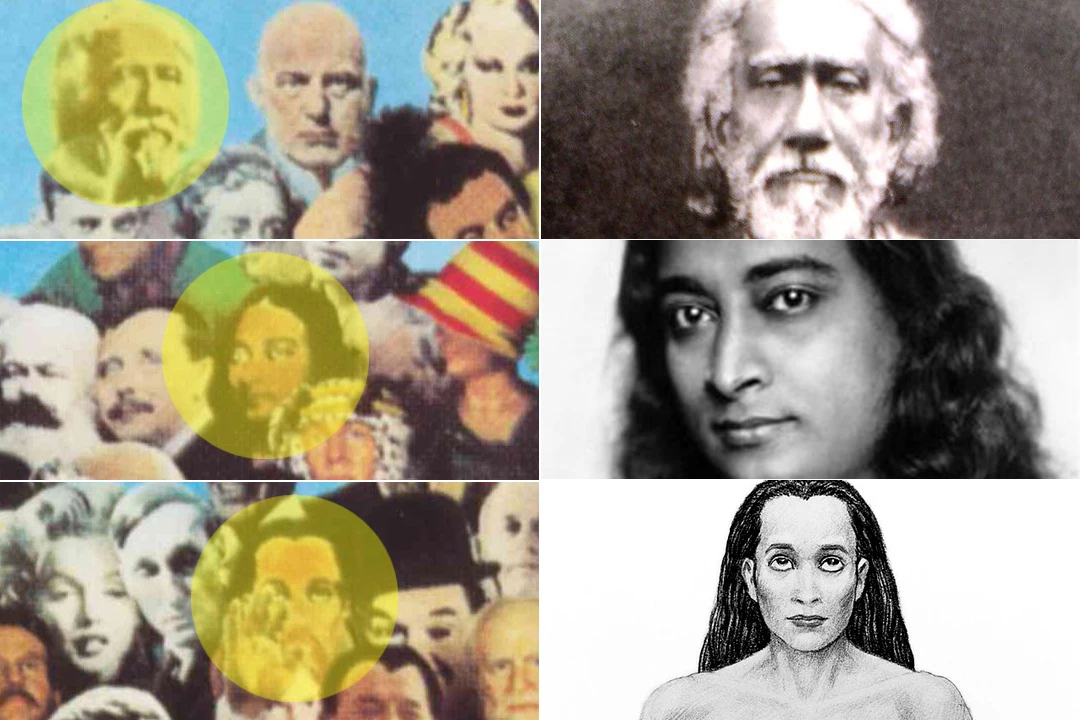


 This post is a continuation of our Top Ten Biblical Discoveries in Archaeology series. To see the complete series please
  The year is 701BC. Sennacherib, the King of Assyria, has destroyed nearly every prominent town in the southern kingdom of Judah. Israel lies in ruins. Sennacherib thrusts the power of the Assyrian army toward the all-important city of Jerusalem. Jerusalem houses the God of the Jews. The defeat of Jerusalem would be a large strategic and symbolic victory.The Assyrians employ the military strategy of the siege. The army surrounds the fortified walls of a city, cut off all water and food to the city, and then they wait. The term, “siege” derives from sedere, Latin for “to sit”. Attacking armies would wait weeks, months or even years. Assyria had recently besieged nearby Samaria, destroying it after waiting 3 years. As the people in the city grew sick and weak the healthy army would then advance to destroy the city. There are usually only three outcomes of a siege: survive by finding a way to get food and water, surrender or die.Jerusalem faces certain ruin. Hezekiah, one of the few godly kings, encourages his people to trust in God. God will deliver them from Sennacherib. 2 Kings 18:7 tells us, “He rebelled against the king of Assyria and would not serve him.” In 2 Kings 18 we learn the Assyrian commander tells the people of Jerusalem, “Do not listen to Hezekiah, for he is misleading you when he says, ‘The Lord will deliver us.’ Has the god of any nation ever delivered his land from the hand of the kind of Assyria?” The Assyrians first try to convince the people of Jerusalem to overthrow Hezekiah.The head Assyrian commander tells the people of Jerusalem, “Has my master sent me to speak these words to your master and to you, and not to the men sitting on the wall, who are doomed to with you to eat their own dung and to drink their own urine?” (2 Kings 18:27) If the people of Jerusalem don’t overthrow Hezekiah they, their wives and children will be forced to desperate measures just to stay alive.
 The people of Jerusalem had a secret. They had been involved in one of the greatest engineering feats of the ancient world. It’s amazing what humans can accomplish when their backs are against the wall. The inhabitants of Jerusalem, facing certain death, found a secret way to get a constant source of water into Jerusalem. The Bible, in three areas, briefly mentions our #7 discovery:

 The tunnel provides a constant stream of water through the city of Jerusalem. The tunnel takes water from the Gihon Spring and empties out at a place called the Pool of Siloam. The tunnel, surprisingly, does not follow the most direct route from the spring to the pool. The tunnel travels in an s-shape. If the tunnel was straight it would have only needed to have been 1070 feet, or 40% shorter. While the tunnel is far underground (appx 131 feet underground), the slope of the tunnel is precise. The tunnel slopes at a steady 0.6% grade. Once inside the tunnel another surprise is apparent. The head room within the tunnel varies considerably. The tunnel is always about as wide as a man’s shoulders. At the beginning of the tunnel the head room is pretty tight causing people to have to walk through it a bit hunched over. The last 160 feet of the tunnel, however, the ceiling soars up to 17 feet tall.
 Toward one end of the tunnel, amazingly, an ancient Hebrew inscription was found on the wall. The inscription commemorates the point when two teams, digging from each end, finally met in the middle. The inscription reads:
 If you ever get the chance to visit Jerusalem I highly recommend you take the time, walk down the steep hill from the temple mount and walk through Hezekiah’s Tunnel. Most famous archaeological discoveries are only observable behind the glass of a museum. Hezekiah’s Tunnel is the equivalent of an amusement park. Many tours to Israel, unfortunately, do not include in the itinerary a walk through the tunnel. Others make the tunnel an optional part of the trip. Yes, if you are claustrophobic you might not like some of the portions of the tunnel. Yes, your feet may become numb as you walk through the cold spring water. Remember what was on the line for the people constructing the tunnel. Be successful or your friends, your parents, your kids, your wife may all be dead soon. Step into Hezekiah’s day and walk through the tunnel with the absolute awe of people who trusted in God and worked their heart out.
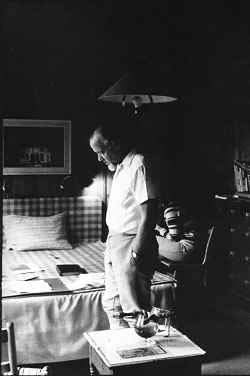
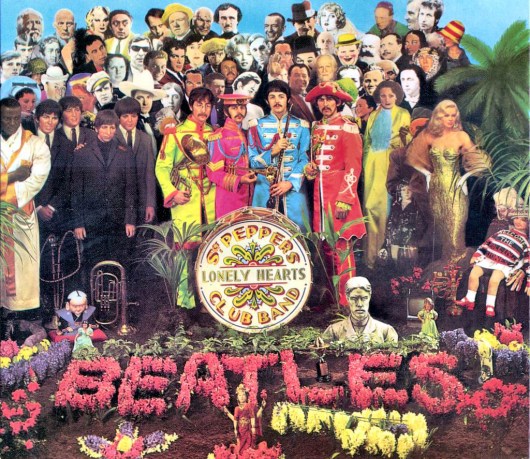


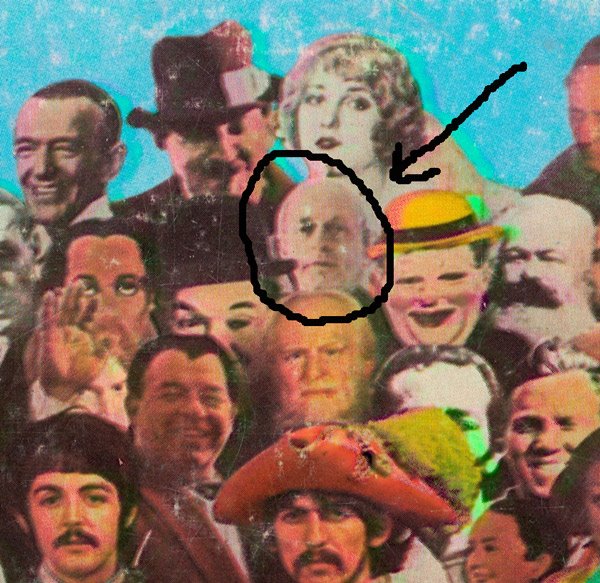

.png)



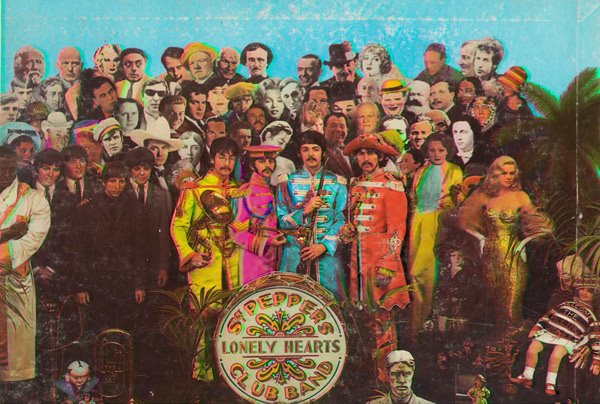





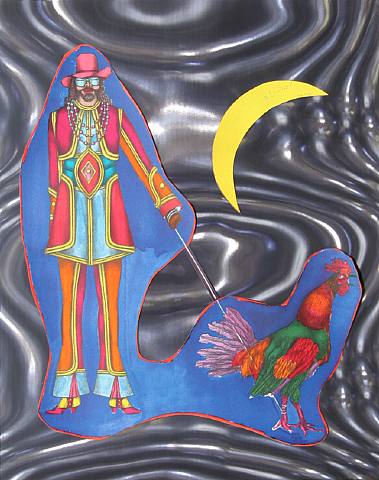

 Nancy Pearcey


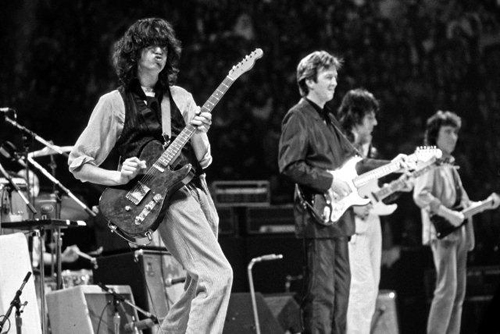


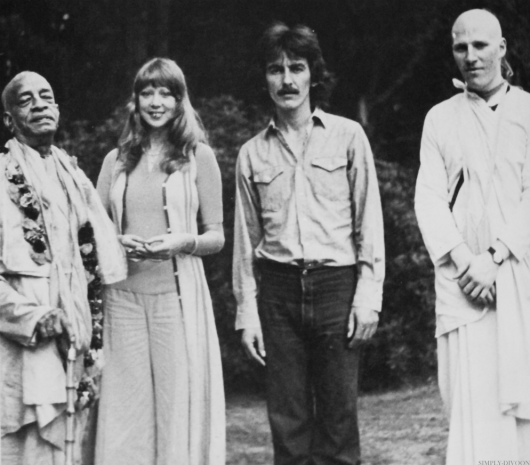


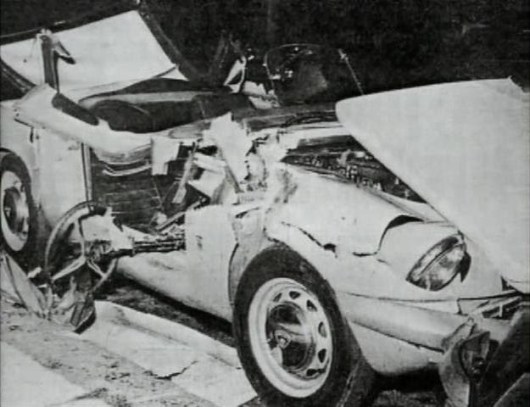


 The Daily Hatch